Online Fraud Down — But Still A Concern For E-commerce

4

by Alex Smith

Internet fraud takes a variety of forms — phishing emails, pharming, money transfer, work-at-home schemes — the list is ever-changing and lengthens all the time. No matter how it is done, the end result is that fraudsters get information about consumers that they should not have access to — usually their debit or credit card details.

Online fraud has been a huge concern for consumers since the first dot com stores set up shop and it is a worry for e-commerce sites too. In 2011 a survey by CyberSource showed that 59% of online merchants felt online fraud to be their biggest business threat, ranking it above systems failure, viruses and theft of customer data.

Statistics just out from the UK Cards Association show that the amount of online fraud is actually decreasing, with a 15% drop in card-not-present crime and a 22% fall in online banking fraud. On the face of it, it seems that this is great news for consumers, suggesting safer purchasing and money management on the internet, and thusly great news for e-commerce retailers too.
However this isn’t quite the case, as the research also revealed that there’s more attempted phishing fraud going on than ever before — it’s just that consumers are learning to be more careful so less attempts are successful.

As well as weeding out the fraudsters, it is likely that this caution will cause falling conversion rates on perfectly legitimate websites that do not display enough security information and fail to inspire confidence in the consumer. Retail sites can invest in an extended SSL certificate that highlights the green https bar at checkout and use reputable names for these security certificates but it is going to take more than that to restore the trust of wary consumers.

The e-commerce world needs to send a strong message of reassurance to consumers in order to offset the ongoing impact of customer caution. The introduction of 3D Secure has been the biggest development in this area of recent years but it is far from perfect. The launch of 3D Secure was poorly publicised and in many cases poorly implemented by websites, with many consumers being presented with mid-way through the checkout with a non co-branded page that they had not seen before.

There have been improvements in this area with more websites explaining about 3D Secure and consumers naturally becoming more used to entering an extra password. However there will always be some potential purchasers who are lost thanks to this extra step in the checkout process. There must be a better solution that can accommodate security necessities with the design needs of e-commerce sites.

The future shall surely see more investment in consumer-friendly security technology and website checks to ensure that credit card details are kept unfailingly safe.

What is your predictions for the next big development in internet security and anti-fraud? Perhaps a whole new internet currency like Bitcoin or special online coupons is the answer or maybe the development of real-time advanced intelligence checks to corroborate the identity of the purchaser. Comments welcomed!

This article was written by Alex, who writes on behalf of an air conditioning company that installs and maintains air con systems.

Social Media: A Friend or Foe?

2

by Jessy Troy

Social networking is as much a part of our lives now as any phones or television once were. The ability to keep in touch with people all over the world, meet new friends, keep up with favorite celebrities or be one of the first to know of new entertainment releases has huge benefits. There is even a corporate element not, and you can use Twitter, Facebook and Myspace to get special deals on items or services we use every day.

But with the good comes the bad. We spend more time interacting on Facebook than we do face to face. Along with texting, we have lost a great deal of our personal communication, and it is now the norm to speak over the Internet for everything from work to friends and family. This leaves us with a unique question: is the convenience of social networking taking away from the all-important interactions we used to have to conduct face to face?

There are other problems that have arisen. For example, we are more prone to being distracted. Studies have shown productivity waning in the workplace, with millions being lost every year from time wasted online. A big part of that is through social networking, either through personal profiles, or the entertainment blogs and feeds that have given us instant access to tons on unfiltered and useless information.

I am as guilty of this as anyone. Just today I spent a half an hour looking at a site dedicated to humorous, accidental text messages. Last week, I wasted several hours going from site to site, chatting with friends on Facebook, and looking up worthless trivia that had nothing to do with my work. I am also a habitual email checker, and I am way too easily led away from what I have to do. The Internet is certainly my Achilles’ heel.

But, again, there are positives that seem to balance these out. Social networking has been able to help us to open our world up to new horizons. We can get to know someone in a country across the world, share information about what is happening and where. Just recently, a friend of mine in Egypt was able to speak about what she was seeing during the riots and protests in the street, just before the Internet was shut down by the struggling government.

Just the other day, another person, a relative of a friend of mine, let her family know that she was OK. She had been visiting Christchurch just a day before the quakes hit, but left the city early to head home. Using Twitter, she told her loved ones that the New Zealand earthquake had missed her.

Also of importance is the effect that it has had on the non-profits that have struggled for years to get their message out. Social networking has offered an easy, affordable way to seek donations, tell about important legislation or events, and just pass on information. With a single click, people with hundreds of friends on their list could end up seeing the pages of these groups.

In the end, there are pros and cons to social networking. On one hand, we spend way too much time giving into procrastination. On the other, we have expanded out view of the world and now have a new way of learning, sharing and understanding. It will be exciting to see how things change in the future.

Jessy is an Autralia-based entrepreneur and social media enthusiast. She blogs for HomeLoanFinder, the best free eco-friendly tool that allows to easily compare home loans Australia.

Social Media and Google — What to Take Into Consideration

0

by Lyuben Georgiev

Social media and search engines interact more and more with each other as we can see from the new Google update from the 17th of February. The update is a great new feature which allows you to see which of your friends have shared a certain page when searching for something.

What does that mean for search engine marketing?

I can’t help but think that Google now pays more attention to Social networks than ever. It is clear that social medias are only growing bigger and search engines just have to go with the flow.

Which social networks?

Usually when people hear “social network”, the first thing they think of is Facebook. However, Facebook is not included in this Google update. Some of the networks that are included are YouTube, Twitter, Google Buzz, Quara and Friend Feed.

Why not Facebook?

The reason why Facebook is not featured in this update is that Google can’t really access people’s personal profiles. They only have access to fan pages which is not enough. Let’s just hope that will change for good in the near future because nobody is winning anything from that so far.

How to take advantage of the update?

Keep in mind that you will not see the new feature in action unless you connect your social profiles with your personal Google account. Otherwise, Google can’t know who your friends are and what they have shared.

Tips and advices

One of the best tips I can give you in case your job is SEO related, is to build a professional Twitter account for your client. Then what you should do is start tweeting often (but don’t overdo it). However, random tweets won’t do the job. You should tweet links but at the same time surround them carefully with keywords.

Track your results. See how you are doing. Maybe social medias weren’t your favorite before but now, whether you like it or not, you don’t have a choice. So check the results you have accomplished regularly to make sure what you are doing is working and once you see improvement you will definitely change your mind about social networks.

Keep in mind that this is just the beginning of the interaction between Google and social medias. In my opinion, social mentions will become a big impact on rankings and sharing is the key to succeed. Google will probably pay a lot of attention to that since “recommended from friends” outranks “regular search results”. Stay tuned for more new updates from Google as they are coming fast. Be sure not to miss anything important like that update for example.


Lyuben Georgiev works for Outrider – one of the best search marketing agencies in Europe. He also offers advice on search engine optimizaiton (in Denmark, the people commonly refer to this term as Rådgivning på søgemaskineoptimering) in various blogs including Search Engine Journal and RINF.

Get Started With A Facebook Store

0

by Neil Jones

Social commerce falls under the domain of electronic commerce, more popularly referred to as e-commerce, and involves using social and online media that support social interaction. It basically promotes online buying and selling of goods and services through social networks like Facebook, Twitter and others. Thus a business can become a member of Facebook and sell its merchandise through it, and also passing on information about the business to their circle of friends, who in turn share with their friends, and thereby creating a never ending chain of potential customers.

Getting started with social commerce may sound complicated, but it is quite easy for anyone to accomplish. By combining eCommerce and social networking through Facebook for example, the results for businesses will multiply. For those who are already using websites for online sales, it becomes even easier since all that they have to do is add a couple of their most popularly sold products to Facebook to test the market. Incentives like a coupon for the day or an item of the week can bring quick results. This is more in line with GroupOn which has been an online success with its coupons of the day.

Service businesses also stand to gain tremendously by setting up podcasts, eBooks, webinars and videos for sale. It helps to have a PayPal account since this facilitates payments across the globe. The PayPal starter package called PayLoadz comes free of cost. Once it has been tried out and rising sales are seen the monthly package of $14.95 can be upgraded to. PayLoadz comes with a host of benefits like uploading coupons, links and PDFs, automatically generating discount codes and much more.

Getting the products on Facebook is also easy since it entails only the following steps:

1.      Search for FBML on the Facbook home page

2.      Clicking on Static FBML takes you to the applications page

3.      Click on ‘add to my page’, and see the list of pages for you to choose which page you wish to add

4.      You can edit the page by clicking on the pencil icon after having clicked on the FBML area at the top of the page

5.      Give a title to the box and add the content you want

6.      Back on the Facebook page, just click on the plus sign and click on the page edited

7.      The page gets added automatically

8.      Now it is time to just add the HTML code from the PayPal page to facilitate payments.

This will soon begin to show results in terms of actual sales. If you have tested it out with just one or two products, it is time to add more to your list and see your business grow thanks to social networks and prove that social commerce is the way ahead even in business.

As you can see setting up a shop on Facebook really couldn’t be much easier, the difficult part may in fact be building a large enough awareness of your new Facebook store. If you haven’t already begun to build your fan base then launching a Facebook ads campaign is one of the best ways to get the ball rolling and even if it doesn’t help to drive immediate sales it will help to increase awareness and recognition of your products.

This is a guest post by Neil Jones who is head of marketing for eMobileScan, one of Europe’s largest online retailers of handheld computers and barcode scanners, including the Symbol MC70 and LS2208

Writing Effective Television Commercials That Sell

2

by Haliyma Barrow

TV commercials are an important part of the marketing and advertisement strategy for most companies. Every copywriter involved in such work has to learn the secrets for writing great television commercials. Copywriters are the experts who are charged with the responsibility of developing the concept, establishing the production costs, celebrity endorsements and targeting specific demographics using commercials. The job demands creativity and an in- depth understanding of human nature and response processes.  

Successful TV commercials have two common features. They are enjoyable and easy to understand. Simplicity is the unwritten rule of advertising regardless of the media being employed. The viewer’s attention must be captured instantly by the commercial in order to spur action. If the commercial fails to capture immediate interest, it has failed in its role.  Here are a few secrets for writing successful TV commercials for promotion and publicity.

Develop an objective. The advert is meant to sell a “certain” product or service from a specific company with a particular offer attached. All these elements must be factored in together with the location of the company and the targeted audience.  

Time the script. Successful TV commercials are short, entertaining and informative at the same time. Ensure that you time the commercial’s script according to the client’s specified duration.  Most of these sales and publicity stunts usually air for thirty seconds, forty five seconds or a minute at most. The concept developed must communicate the intended message within the given timeframe.

Repeat essential components. Sometimes, a bit of sensible repetition is necessary for TV commercials. The repetition is mainly focused on the point of sale for goods and services. If there is a 30 percent discount on products for example, repeating it several times is crucial. Company addresses and phone numbers are also commonly repeated in TV commercials.  

Apply a unique twist. The ability to come up with unique TV commercials is very difficult. It calls for a knack for creativity and experience among copywriters. Viewers are turned off by monotonous and boring sales and commercial gimmicks on TV. They want something fresh and out of this world when they are watching TV.  Therefore, it is imperative for the copywriter to think outside the box, even though they are writing for the “box.”  

Incorporate emotions. The best way of capturing and holding the attention of viewers is by inducing their emotions. Sadness, joy, laughter, fear and anger are powerful emotions that can sell products and services when combined creatively.

Submit script for approval. Once you have written a TV commercial, it may be necessary to get it approved by the client depending on the terms of your contract. Friends and colleagues may also offer vital input on the commercial.  

Adopt a TV commercial writing style. The writing style of TV commercials is different from that of print media, radio or other means of product market announcements. You must not speak above the audience, below them or directly at them. The voice must speak to the targeted audience on their terms. If it is for kids, it must use kids’ language.

TV commercials are an essential part of selling and promotion for a company. Therefore, they must be written in a manner to sell products effectively. The tips above will assist you in developing effective TV commercials for products and services.

About the Author: Haliyma Barrow holds a Bachelor of Arts degree in Spanish from Indiana University of Pennsylvania, and a Master of Public Administration from New York University.  She loves to read books on marketing management and various marketing strategies including TV commercials.

The JCPenney Scandal: What’s the Buzz?

0

by Warner Carter

Most search engine optimization processes are free, and it won’t cost you a dime to get the top spot on Google search results provided that you’re willing to do the work. The online scandal involving the popular department store chain is considered by many as the most blatant act of Black Hat SEO in recent history. For some time, the JCPenney website dominated Google search results for an extensive range of search terms. A search expert consulted by the New York Times discovered how the company was able to achieve such a feat: thousands of inbound links from websites that aren’t even related to the company’s niche.
Such practices fall under Black Hat SEO, and companies that use Black Hat SEO techniques are correspondingly penalized by Google. Although the punishable SEO methods are clearly defined by Google, the company’s Webspam team doesn’t really expound on the best way of doing SEO.

We don’t have to single out JCPenney. Black Hat SEO techniques are commonly used by website owners and developers everywhere. These people saw SEO’s potential in making them more popular and richer than ever. It’s not organic Black Hat SEO; it’s link buying. Whoever is behind the JCPenney scandal can be considered a genius. Concealing the trickery for months without catching the attention of both Google and the company’s competitors isn’t an easy task. This can be a wakeup call for Google’s Webspam team.

Webspam cops have wasted their time running after Black Hats. History chronicles a list of companies that used these ‘illegal’ techniques, and laying down the exact rules for proper SEO may help clarify some issues. What’s punishable by Google and what’s not?

Keywords have been misused for a long time. The reality is that Matt Cutts and the rest of the Google Webspam team won’t be able to track down all the companies who exploit the influence of valuable keywords on search engines. As a result, not all websites at the top of Google’s search results get into the position because of clean SEO.

Having more money is an undeniable advantage in SEO. Whether you’re targeting organic traffic or buying links, money helps you achieve better results. You need money to pay experts to help you with optimization and to hire people who have the necessary expertise in a certain process. SEO is still a business, and JCPenney never ignored this truth.

The bait that caught JCPenney
Many think that Google should have laid down specific rules and standards about what the search engine considers as good and bad SEO. Many SEO practitioners are actually surprised when they find themselves penalized for SEO methods that they believed to be proper. Google’s ever-changing algorithms make it difficult for SEO practitioners to balance doing SEO the right way and gaining high rankings for their clients’ sites. Maybe, even from the start, the SEO marketers behind JCPenney’s website believed that there was something wrong with gaining rankings through irrelevant inbound links. However, because of the popularity of such SEO methods, maybe these marketers thought that using such techniques was acceptable. They might have thought, “No one gets sanctioned or penalized, anyway.” If they did get penalized, some of these marketers probably thought of getting around the penalty through another Black Hat technique.

The sanction
According to Matt Cutts, Google’s goal is to preserve the integrity of search results and not to embarrass people or companies. This may be the reason why there are no articles on how JCPenney is serving the penalty. What the public knows is that the company’s website experienced a massive ranking decline. For some keywords, JCPenny.com went from the top spot to the tenth spot; other keywords had the website ranked below the 50th spots.

However, don’t take JC Penney’s case for granted. If Google made JCPenney’s sanction real, it would be possible for the search engine to issue sanctions to future multiple link buyers and ranking thieves. Low rankings in the world’s leading search engine can mean automatic SEO failure for your business, unless your business is as well-known as JC Penney. So if you’re planning to copy some of JCPenney’s moves, you know what to expect.

If the SEO world was shaken by this scandal, the opposite is true for JCPenney’s offline customers. JCPenney is one of the most popular department store chains in the US. As a household name among Americans, JCPenney can probably get by without SEO.

The vigilantes
As search engine users, website owners, or businesspeople, we should take part in leveling the playing field for all online businesses. If major companies like JCPenney was able to pull off the stunt with slight success, other companies might achieve full-fledged success using the scheme in the future. We should be watchful and extra vigilant about the SEO processes becoming popular nowadays.

Warner is interetsed in everything about discovering and learning new things online. He works with the only for SEO Resellers outsource resource Endless Rise

Facebook not only causes depression… but increases self esteem?

0

by Kat Cole

Even though the press has recently been rife with articles detailing how large stints on Facebook can cause users depression, today I saw several news stories explaining how the social network could boost self esteem. This news comes in the wake of a new research article by Jeffery Hancock (Cornell University Professor of Communication) entitled ‘Mirror, Mirror on my Facebook Wall: Effects of Exposure to Facebook on self esteem’, published in the peer-reviewed Cyber-psychology, Behaviour and Social Networking journal just a week ago (February 24th).

I wouldn’t say that any of Hancock’s findings are particularly groundbreaking but nevertheless, here are the two reasons he gave to reach the conclusion that Facebook can make us feel good about ourselves:

  • Facebook users can select the most flattering images of themselves to use for their default profile image. Users can also delete any photos which portray their aesthetics in a bad light. Flattering portraits tend to receive positive feedback from Facebook friends also which can also increase self esteem levels.
  •  Users of the site can also vet and edit the information about themselves and their lives they reveal to their “friends” via their profile page. They have the ability to present themselves however they choose and therefore hide anything they would really rather people didn’t know about them.

As if these points were not obvious enough, the professor also decided to conduct an experiment to confirm the theorem. Volunteers were split into two groups. One group was asked to spend half an hour on Facebook updating their profiles and flicking through the photos in which they were currently tagged. The other group were asked to sit in front of a mirror for the same duration.

Both groups were then asked to fill in a sheet of questions related to their self esteem. As expected, those who were sat staring at themselves for the 30 minutes had a far lower opinion of themselves than those who were instructed to surf Facebook.

I happened to notice these points ages ago but in relation to MySpace – the website which used to wear the social networking crown. You too must remember the “MySpace angle” (photographs taken from a flattering angle from above, as opposed to snapping face on) and Photoshop filters used by many on the website but notably favoured by the popular “emo” subculture.

Facebook is a hip buzzword of current times and this means that any study involving the platform is sure to be picked up by the press…even if the contained information is hardly news worthy and contradicts the stories published by the very same news establishments just days before. 


Kat Cole is a graphic designer by day and creates packaging for various items including kettles, vacuum cleaners, security labels and security cameras. Kat is an avid gig goer and blog writer in her spare time. 


Giving Your Business a Kick Start and Keeping it on Top

1

by Archie June

Big things start with small ones, and this is a principle that is applied in the world of business. Where do you think all those big business started from? Take a look at their histories and you will find out that indeed, they first started as small companies and then grew on to become the big names that we are seeing today.

For a small business to be started and for it to flourish, there are three basic things that you need – enough capital, customers and proper management. Without these three, even the smallest business will not be able to thrive in this time when the economy is still getting back to its feet after the global recession.

No matter how small your business is, it needs enough capital so that you will be able to start with it. Because you are still starting, you will be going through a lot of expenses. You will need to pay for the place where you will set up your business, your employees, and for the things that you will need while conducting the business. Let’s say you are going to put up a boutique. Your expenses would be for the rent, for the employees who will help you with the boutique, and the stocks that you are going to sell. If you decide to manage the boutique on your own, then you are saving some of your funds. When it comes to the capital, you have to make sure that you have enough money to buy for more stocks when needed, and if you have employees, you have to assure that they will get there pay even if you didn’t do well during the initial stages of the business. Figuring out how much capital you need will require you to do some research regarding the business you are going to put up.

You have to make a business plan too so that your business can start off. For this, you can either do it on your own, or you can hire a professional to do it for you. If you have studied business, then you can do this business plan without the help of a professional. However, if you have no idea on how to do it, better ask for help. This business plan is a very important document that will convince a lender to let you borrow the amount of money you need for the capital. If the lender finds out something there that does not look good, he may reject your proposal.

Finding customers can be a bit crucial when setting up a small business. With all the businesses that are around, how do you convince people to try out your services? For this, you will need a marketing strategy that will make customers hooked to your business. You can do commercials, or you can do it by passing on flyers, or making endorsements to the people that you know so that they can spread the word. For this, the type of business that you have can actually affect your marketing strategy. Let’s say you want to put up a salon. To attract customers, you have to introduce a new beauty regimen so that people will come to you. Or maybe you can also hold some promos and other similar stuff so that customers can afford to give your services a try before finally making you as their favorite. You have to be creative to gather enough attention.

Once your business started, you will need to manage it properly so that it can be maintained. You need to account every transaction that happens in your business, even the smallest ones. Do not leave out any details so that you will be able to analyze later on what you have to do and what you should avoid. Accuracy is a very important factor for your small business so that you will know whether you are earning or not.

These three basic things are very much important so that a small business can start, and so that it will be maintained to grow into a bigger one. 

Archie June wants every business to flourish. He writes about best small business credit cards on CreditDonkey.com where you can learn more entrepreneur tips including how to manage working capital and improve customer service.

7 Ways Using Twitter Can Save You Money

0

by Jon Oman

Twitter is not just about micro blogging anymore.  It is also about saving money.   And with a bad economy and many people out of work, any idea that can help save us money is a good idea.  You may not even realize how many different ways you can use this free service to save you money every day, but here are 7 simple methods that anyone can use to make life a little more affordable. 

1.        Find coupon codes and hot deals online.  If you love to shop online then you will love how easy it is to find the hottest deals using Twitter.  Most big companies have a Twitter account and if you just follow them they you will let you know whenever they are having a big sale.  There are also many “deal finder” accounts that post some big deals on gadgets, clothing, etc., so just pick the genre you want to shop for and follow that account.  

2.       Find giveaways.  Everyone loves a giveaway and you can find a lot of them on Twitter.  Often all you have to do is follow that person’s account or retweet a message.  Sometimes the free gift is only for the first 10 people, and sometimes 10 people are randomly selected.  Either way, it’s something you don’t have to pay for.  There are some Twitter accounts that allow you to follow any website that is currently running a giveaway so you don’t have to do the searching yourself.  You might be surprised what you can get for free.

3.       Enter contests by following someone.  One of the best ways for someone with a Twitter account to get more followers is to host a contest.  Usually all you have to do is follow that account or retweet a certain message in order to enter your name into the contest.   I have seen prizes range from Ipods to Xbox 360s.  It’s free to enter so you might as well at least try.  And if you win you can always sell the prize on eBay for some cash or give it away as a Christmas gift.

4.       Find great budgeting tools.  Nobody likes to follow a budget, but it’s a proven way to save your income and keep yourself from spending irrationally.  There are some great ways you can use Twitter to keep track of your budget and make sure you aren’t totally blowing it.  You simply tweet every time you buy something and at the end of the month you can see if you staid within your limits.

5.       Save money on travel.  We have all heard of Orbitz, Priceline, and Travelocity, but what about using Twitter to save you some money on your next flight or vacation.  Twitter has a very active search engine and you can do a search for “Las Vegas flights” and it will show you some current deals.    In fact, I just looked up that exact term and found a 4 night trip package for $160.  A lot of travel companies will use Twitter in their marketing and by searching with this search engine you can compare across the board very quickly and easily.

6.       Get helpful tips on investments.  The thing people love most about Twitter is that the information you get is up-to-the-minute.  It’s this kind of instant data that makes it a useful tool for reading about different trends in the stock market.  You can follow big investors and what they are saying about the latest economic data.  Of course, you should take any investing information with a grain of salt, but this is still a great way to spot a shift in the market on the fly.

7.       Stay on track to get out of debt.  If you are one of the millions who are in debt you may want to consider using Twitter to get you out of it.  Not only can you get daily updates with tips on digging yourself out, but you can also use the micro blogging platform in a creative way.   There are users that will answer any question you may have about debt if you are one of their followers.

There are many more ways you can use Twitter to save money, but it should also be noted that there are also a lot of ways you can lose it as well.  Beware of scams asking for money or for personal information.  A little common sense can go a long way in saving you some extra cash, and this powerful micro blogging tool is a great way to get started with a little penny pinching.

Make sure you keep your social profiles like Twitter and Facebook safe from ID theft with identity theft protection.  Jon is a writer for www.SafeIdentityprotection.com, and writes helpful tips and advice for keeping your ID safe and learning how to restore your identity as well.

5 Customer Relationship Management (CRM) Myths

6

by Workbooks

There are a number of myths and misconceptions surrounding the topic of CRM. Some of the most common are as follows:

1. CRM is just about customer service.
Of course CRM is all about the customer, but CRM systems are not just or even mainly customer service systems. The aim is to integrate of customer service, support, retention, sales and more – using and analysing data across every area of a business. As vital as customer service is to the success of any company, it’s not all you need to succeed; and the approach of CRM reflects that.

2. CRM is just technology.
It’s a technologically-based solution, but you don’t achieve CRM goals just by buying the package. Too many companies see CRM just as a way of automating their tasks, rather than as something to help them to improve their performance and to develop. Far more important than the technology is the way that the package is used and made to serve the needs of the business and its customers. Basically, in CRM, people come first.

3. CRM is a catch-all solution.
The ‘one size fits all’ approach is common with companies investing in CRM – and it is too often pushed by those selling CRM software – but it’s not the right way to get the best out of it. Before investing in any CRM package, there are questions to be answered. You need to be very clear about your company’s needs, about who will use the system and about how your customer relationship processes work. Then there needs to be careful research into the different solutions available. Without a solid understanding of why you are investing in a CRM system and what it can do for you, you are unlikely to make the right decisions.

4. Little training is needed in the use of CRM software.
CRM is not intuitive. If CRM systems are to be effective, staff need to be trained in getting the best out of them. And while technical competence is clearly vital, it’s equally important that all those whose work will be affected by the new systems fully understand the benefits they will bring. That means well organised and extensive training before the new systems are put in place. Training should also be on-going – employees usually need further help in the first weeks of using the new CRM technology – and backed up by effective support.

5. CRM means automated sales.
CRM makes the sales process more efficient, but in order to sell, you need good sales staff – it’s that simple. The most effective use of CRM systems in sales is not to keep monitoring the staff, making them provide information for analysis or using findings to tell them how to do their jobs. Instead, the package should be used to minimise routine tasks for the reps and generate good sales leads. As with all aspects of CRM, the goal should be to help businesses and their workforce do their jobs more efficiently and make their customers happier – not to replace people with technology.

This article was written by Workbooks, leading supplier of web-based CRM software.

Benefits of Referral Marketing

13

by Haliyma Barrow

The power of referral marketing can be exploited by all kinds of businesses, both online and offline. Nowadays the term referral generates thoughts about pesky spam emails or relatives and friends trying to “recruit” new people to use a product or service. However, when this marketing strategy is properly executed, it can lead to customer loyalty and better business.

Referral basically makes use of word of mouth, a highly effective method of advertising and promotion. It is a three-way process. A customer can refer an acquaintance to a business or product. A customer can refer the business to another company that can use its services. The company can give a referral to customers to use a product or business that meets their specific needs.

In the first case, customers can be generally impressed by the product which leads them to spread the word willingly to others. Many business owners, on the other hand, give their customers incentives such as discounts or gifts when they bring someone else to the business. This works well with online businesses because the referred user enters the email address of the person who introduced them, thus translating to more reward for the latter. With the right strategy and incentive, affiliate marketing can also work offline.

The second scenario can occur when a business owner asks the customer whether they know anyone or company that could use their product or service. Customers are often willing to share such information because it initiates and maintains a conversation, which in turn promotes customer loyalty. Referrals from other customers are also reliable as you can get contact details of potential clients in the area that you may not have known about.

As for the third instance, there is need for a good relationship between businesses in the area and within and across industries. For example, a small restaurant owner should establish a connection with bigger restaurants, farmers, grocery stores within the food industry, as well as with electricians, plumbers, health professionals and other businesses. This way, should a customer in the restaurant require any of the listed services, they can get a referral from the restaurant. It may seem like losing customers in a way, but this is one of the long-term goals of word-of-mouth marketing, which is to build a better network of contacts when running the business.

Using this style of marketing can save you lots of money on advertising. This is always appreciated by businesses that are experiencing financial challenges. Make good use of the referral system to establish a greater network, customer loyalty and business to business interactions. Such communication will benefit all parties involved. Set aside a working budget to kick start the affiliate marketing process, including costs of giving freebies, discounts and other incentives to encourage customers to spread the word about your business.

It simply starts with a conversation with a willing customer to generate good leads. Once this strategy is adopted your business will eventually take off.

About the Author: This is a guest article written by Haliyma Barrow, a freelance article writer based in New York. Haliyma holds a Master of Public Administration from New York University. She loves to contribute articles on business marketing strategies such as referral marketing.

Social Networks Used to Topple Governments?

1

by Shajan Thomas

Facebook has proven itself a great tool for meeting up with former classmates, keeping in touch with far flung relatives and tending to virtual farms, but apparently it is also pretty good at toppling autocratic regimes.

At least, that seems to be the lesson learned after events which started in Egypt but have now spread across the Middle East. Governments in Libya, Algeria, Bahrain, Yemen and even Iran, have begun to feel the effects of popular dissatisfaction brought about by the ever more popular aspects of social media, chiefly, Facebook.

With Facebook, leaders of the recent democratic movement in Egypt were able to organize, meet and share ideas covertly. The governments initial efforts to shut down the internet as a way of controlling the movement failed miserably. People simply tapped into cellular networks, some even resorted to hard wired 52k dial-up modems to stay connected.

As a result of these repeated protests spurred by a social connection never before seen in the history of human civilization the 30-year reign of Hosni Mubarak came to an abrupt end.

The whole world watched the events which transformed, are still transforming Egypt, but what is perhaps not so widely known is that these protests actually began in June of 2010. Using Google’s anonymous e-mail system they had coordinated efforts to administrate a Facebook page called “We Are All Khaled Said,” organizing an effort to protest against police brutality. Khaled Said was a government dissident who was allegedly detained by police, brutally beaten and killed. Photos of his abused body were circulated by people intent on revealing government evils. His death spurred many into taking action, including the people behind his Facebook page.

The instructions on the “We Are All Khaled Said” Facebook page told people precisely where to stand, how to dress and what to do in what many consider the nation’s first organized protest. This protest started a tidal wave of popular revolt which resulted in an 18-day, near country wide stand against Egyptian President Mubarak.

Sure, the people of Tunisia did it first, but that seemed a little bit easier given the nations turbulent past and regular upheaval. Egypt was different. It was also more of an impromptu event, spurred by outrage as opposed to coordinated effort.

Egypt’s protests were definitely not a spur of the moment thing. In fact, after the success of the June 2010 event another group of organizers created a new Facebook event called “The Day of the Revolution Against Torture, Poverty, Corruption and Unemployment” slated for the now infamous date of January 25. More than 80,000 people clicked “yes” on their invitation, and no doubt spread the word to as many non-internet savvy friends and neighbors as they could.

It is difficult to gauge at this moment what the outcome of the protests sweeping across the Middle East will be. The new governments, if new governments are formed, may or may not be more friendly to Westerners; peace may spread across the region and the price of gasoline may plummet. Or, the situation may change in some way no one has yet predicted and no one outside the situation could possibly anticipate. What will happen, without a doubt, is that people who have been subjugated for decades, if not hundreds or even thousands of years, will see freedoms they have never known before. Not because of diplomacy was this change wrought, not because of a bargain struck by foreign powers over a cup of chai tea and biscuits, but because of the advent of a piece of technology designed to help shy, introverted people find friends and popularity on a college campus.

It is always amazing to see something designed for one purpose put to use for something its designers had never envisioned. In fact, in this case perhaps the truly amazing things are yet to come.

Thomas is the Founder and CEO of a premiere Virtual Assistant company in the US. He also consults on Search Engine Optmization and how to make your day more efficient thru the use of Virtual Assistants. To find out more information please feel free to visit their website.

Is PageRank Still A Valuable Metric?

2

by Modi Mac

Google PageRank is a notion which very often gets misunderstood by the online community. Unlike to what some web site owners think, PageRank is not a metric of SEO success. It’s really odd that many non-technical people tend to give so much value to a notion which is utterly technical and in order to understand it one should read Larry Page’s (Google’s cofounder) research over “the likelihood that a person randomly clicking on links will arrive at any particular page I” which was published in 1998.

Indeed, that was later incorporated into Google’s algorithm and definitely has some value but not within the scope it is (wrongly) used by the majority of people.

A Few Myths About PageRank

PageRank represents the potential of a site to rank well

This is not really the case as a low PageRank optimised site can rank well for certain terms while a high PR non optimised side can rank quite low.

Increasing my PageRank is great / Losing PageRank is bad.

Neither is necessarily the case and it is worth looking into the actual causes of an increase or decrease. Sometimes PageRank can simply increase just because a site is aging — old sites seem to have higher PageRank values. Reversely, a new site may not have any PageRank or be of PR0 but this does not mean it does not have any value. In the next PageRank update it could jump up to PR3 or PR4.

Linking Out To Other Sites Will Lead To Pagerank Loss
This is definitely wrong as linking out to Trusted sites not only won’t cause any pageRank loss but will add to the site’s trust. Pagerank flows within a site and doesn’t really get lost as the flow is continuous (think of it as a ever-lasting stream of water constantly flowing through the various links).

What Should I Be Looking At Then?
This is a very valid question but indeed there are many other signals you should be looking at as this is what Google does. Such signals include:

Number of Inbound Links
This is the overall number of links from other sites. Not all links have the same value (depending on where they are coming from) but the more links the better.

Number of Linking Root Domains
This is the number of different root domains linking to a site. Increasing the number of different sites linking to a page or site is always a very good practice and Google pays particular attention to that.

Domain Authority & Trust
Although PageRank has to do with pages, domain authority and trust are looking at a site as a whole entity. Sites that link to your site as well as sites where your site is linking at are equally important. Linking out to low quality sites can be interpreted as your site being of low quality too. Getting links from high quality sites is a signal that your site is of good quality too, thus its authority ands trust will increase.

User Interaction
Are the users actually interacting with your site? Do they find it interesting? Look at the Facebook likes, re-tweets and comments your posts receive and that would give you an idea. Talking about comments, spend one minute or two and look at the quality of the comments too. Are they too generic and look spammy? Do they seem relevant to the topic? It’s not just about traffic but about engaging traffic.

Modi is an SEO currently promoting a wine glasses and champagne flutes retailer. He’s always looking for new ways to get the most out of the SERPS. You can connect with him on @macmodi.

Where have all the keywords gone?

0

by Nitin Aggarwal

All the great keywords seem to be taken already. Or is that so? Is there anything called a great keyword? Actually, to me, one man’s keyword is another’s poison. There is no such thing as a universally great keyword. Let us examine a few premises.

A keyword is one which opens the door to the search engine results

If you have good keyword placement within your website content, you will get into the first page of search engine results. This is true to a large extent, provided you do some other things parallel. One of them is creating quality backlinks. By quality, I mean backlinks which emanate or originate from high PR websites. Mind you, that Google says that Page rank has nothing to do with search page results. A combination of backlinks and keywords is likely to open the gates of Google search heaven, provided the keywords you choose are not competitive.

What should you do if your keywords are in fact too popular?

The answer is simple. Use long tailed keywords. For example, you can use, ‘How to use a digital pen’ instead of ‘Digital pen’. Invariably fewer people are going to search for your long tailed keyword. But even if you get a handful of them typing in these long tailed keywords, your job is done. I admit that the risk you take with long tailed keywords is high. But it is worth a shot.

Keyword relevance is extremely important

In our quest for high search ranking results, we sometimes lose sight of the ultimate goal. When a person clicks on your link, he must get what you had promised in the description. If this doesn’t happen, the entire effort of yours will go waste. If you do a search for a particular keyword, you will find that most of the first page results are leading you to unrelated pages. This is in spite of the efforts made by Google to provide you with only relevant search results. Why does this happen? In my view, it is the result of a mad rush for coming first in search results ranking. No one seems to bother, whether you are finding the right target audience. We are interested only in clicks.

Is there an alternative to keywords?

Let me be brutally frank. Google sits on top of the search mountain. There is no better way to conduct internet marketing, other than through Google organic search or through their paid search campaign called AdWords. In this scenario, you have to work with keywords or with strategies which work around keywords. Latent semantic index seems to be a good way to work around keywords. The effectiveness of LSI depends upon the way you implement it. However, it is quite easy to incorporate LSI into your content.

Conclusion

The search for keywords will continue unabated. What you should emphasize is the relevance of keywords to your specific case. There is no point appearing on the first page of search results unless, the keyword is highly relevant to you. Long tail keywords can sometimes work to your benefit, though your audience automatically reduces.

Author Bio:
Nitin Aggarwal owns the company Offshore Ally. It offers professional virtual assistant and link building services. He is an Internet marketing enthusiast and loves to read about new SEO strategies, social media, blogging, SEM etc. Connect with him via Twitter.

Tweet With Caution – Information leakage

0

by Dilawer Soomro

Twitter’s rise in popularity continues to baffle internet sceptics who confidently predicted that the simple concept of regularly broadcasting “What are you doing?” was too much of a gimmick to remain popular for very long. Dubbed the internet short messaging service (SMS). Twitter usage was expected to decline over time and end up as just another fad of the week. However, with more and more users and celebrities jumping on the tweeting bandwagon, the micro-blogging website has managed to silence even its harshest critics The fact that celebrity Ashton Kutcher’s internet duel with news giant CNN – a race to see who could amass one million followers first – managed to make headlines, shows the extent of Twitter penetration in the mainstream consciousness. And the fact that even Facebook was forced to revise its layout to incorporate Twitter style status updates is testament to its popularity.

Impact of Twitter
The applications of Twitter are no longer restricted to home users and celebrities -members of the US congress and even astronauts are tapping away their messages on the website. Many media outlets and banks have also started using this service to gain feedback and maintain direct contact with their customers. However, as with any popular social networking website that encourages users to share personal information about their lives and habits, the threat of information leakage and malicious usage is never far away. Amidst the constant bombardment of information from Twitter, its dark side is slowly emerging. The following are the most common security issues encountered by Twitter users.

Information leakage
The most direct risk of using Twitter is the same as that which is inherently present in all social networks – information leakage. Users should always be careful about their message content before clicking the Update’button because once the information is transferred over the internet, it is potentially viewable by anyone. Recently, Jonathan Ross, the famous British celebrity and one of Twitter’s most prominent users, accidentally sent out his personal e-mail address in a status update. Although it was removed shortly afterwards, the damage had already been done and his mbox was soon inundated with tan mails. Even deleting an accidentally posted tweet does not provide assurance as searching via Twitter’s advanced options or using a website like tweleted.com can recover a user’s deleted tweets for viewing.

Even people who are normally wary of internet scams and phishing websites do not exercise the same discretion when giving away highly sensitive personal information on Twitter, making themselves vulnerable to identity fraud. An attacker following Twitter status updates over time can aggregate an extremely accurate profile of his victim based on just his tweets. Identity theft is not the only threat; teenagers (who form a large part of the Twitter user base) must be educated about what kind ol information to give out over social networking websites and what should be withheld for their own personal safety. One teenager’s status updates conveyed the message that the parents were away for the weekend and they would be all alone in their home. This is not the sort of information that any prudent person would want to broadcast over the internet.

Weak password security
One would imagine that a website with such a huge user base would ensure that their internal technical staff would be well-versed with good security practices. However, this did not prove to be the case. In January, a young hacker by the handle of GMZ was able to compromise an account belonging to one of Twitter’s website administrators via a simple password breaking attack. Using the powerful privileges assigned to this ID, he reset the passwords of several high profile Twitter users such as Barack Obama and Britney Spears These stolen Twitter user IDs were then advertised on a hacking forum and soon enough fake status messages started appearing from these legitimate profiles. In some cases, hackers simply made vulgar comments from these pages, while others posted false messages requesting followers to click on a link where they would be socially engineered into handing over their passwords The dust from this incident had barely settled before another incident occurred in which administrative accounts at Twitter were accessed by an unauthorised person In this case, the manner of gaming access was much more devious and subtle. Instead of directly launching an attack on Twitter, the attacker first gained access to an administrator’s Yahoo! account by correctly guessing the answer to his secret question Once inside his mailbox, the attacker was able to retrieve the Twitter password by reading the staff member’s e-mails Upon gaining access, the attacker leaked out private information like e-mail addresses and mobile phone numbers of several high profile Twitter users.

The official stance from Twitter in both these instances was that they would be launching a full security review of all their access points to ensure user data is safeguarded in the future. Users were also requested to immediately change their passwords. However, the fact that basic level password attacks were able to create such havoc proves how a single weak link In the security chain can disrupt the overall security of an organisation. If Twitter had educated its internal staff to employ basic security practices when choosing their own passwords, the entire incident could have been avoided Additional authentication mechanisms should also have been required before gaining access to any administrative interfaces.

Phishing scams
Social networking sites have traditionally provided spammers and internet con artists an ideal environment to operate in – Twitter is no different. With no e-mail filters to bypass and a high degree of trust placed on incoming messages, Twitter’s phishing problem seems to be Increasing in direct proportion to its popularity.

The tried and tested techniques of using a fake website with a similar name continues. In May 2009, users started receiving Twitter postings requesting them to follow a URL which would silently redirect them to a fake Twitter login page maintained on the suspicious sounding twitter.com. An additional problem highlighted by security researchers, Sophos labs, is that Twitters users are in the habit of using URL shortening services such as tinyurl.com to concatenate long URLs which helps fit website links into Twitter’s 140-character message length. On the other hand, this does not show where a link is redirecting the user.

In June, attackers started exhibiting more originality by targeting Twitter users who were desperate to gain more followers and increase their popularity via the Twittertrain phishing website. Users started getting posts from their friends with the following message. ‘OMG WOW Im getting 100s of followers a day, Check out this site:’

Users following this link were greeted by an official looking website which requested their Twitter user IDs and passwords, promising them huge numbers of followers. Unfortunately, this turned out to be a phishing attempt and gullible Twitter users not only handed over their credentials, but their profiles were also used to further pass on this phishing attempt to their contacts.
There can be no doubt that Twitter is a wonderful tool and its applications extend far beyond mere social interaction. The information blitz of status updates can and has been used for coordinating geographically dispersed people in times of emergency and for providing timely updates in a crisis. Having said that, the fact remains that as more and more people start relying on Twitter updates for official news, a compromise of a high profile account or a news organisation can have disastrous consequences, potentially resulting in mass panic and damaged reputations. Any organisation looking to jump on the Twitter bandwagon in order to engage customers would do well to weigh the benefits with the expected security risks.

Dilawer Soomro runs the Techraze blog where he writes about latest gadgets, games, tips and social media and technology news.

SEO: by language or country?

0

by Christian Arno

English could be seen as the lingua franca of the Internet, just as it is in the business world. It’s certainly the most commonly used language online in terms of content, but even so it represents only around a quarter of all Internet users according to Internet World Stats, and over half of all Google searches are in a language other than English.

Studies by the Common Sense Advisory show that the majority of multilingual web users put more trust in, and are more likely to buy from, websites written in their native language. With this in mind it’s clear that localization is more important than ever. Once you’ve decided to take that plunge, however, you must also decide whether to target your Search Engine Optimization (SEO) by language or by country.

Focus: Language

Some languages are widely spoken in more than one country and you may consider it adequate to have a single site to serve every territory sharing a common language. A single site in Spanish, for example, could serve not only Spain but also huge swathes of the rapidly growing online market across Latin America. And a Portuguese website could cater for Portugal, Brazil and former Portuguese colonies such as Cape Verde, Angola, Mozambique and various territories in India.

The most obvious benefit in targeting by language is that it’s cheaper to set up and maintain – you only need one translation and one site per language. But there are also drawbacks to bear in mind.

Firstly, linguistic usage can vary between territories, especially when it comes to vocabulary colloquialisms. Just as the English spoken in England, Australia and South Africa varies in syntax, so does the Spanish spoken in Spain and the different countries of Latin America. A computer, for example, is an “ordenador” in Spain but a “computadora” in Spanish speaking Latin America, while coche means “car” in Spain but refers to a baby-stroller in Latin America. Oh, and a baby-stroller would more likely to be used in North America, as UK readers would use a ‘pram’ or a ‘push-chair’.

If targeting by language, care should be taken that all content and especially keywords mean what they’re supposed to in each territory. Make sure you keep the language simple and straight-forward, and try to avoid specific cultural references, colloquialisms and in-jokes.

Another problem is that search algorithms take location into account when ranking sites. If targeting by language you should at least ensure that you organize your localized content into separate sub-domains or subdirectories and make use of Google’s Geographic Target tool, a handy Webmaster Tool that allows you to specify geographic targets for your localized target market.

Focus: Country

Targeting by country can be more expensive and time-consuming but it allows you to improve your SEO and boost your rankings by setting up separate country code Top Level Domains (ccTLD’s) such as www.example.es for Spain or www.example.pt for Portugal.

These will automatically get higher rankings on Google and other local search engines in local searches. Ensuring the site is physically hosted on a server in the target country will boost rankings still further, while a fully localized site with its own ccTLD will face less competition than one created on the generic top level domain .com, which is what you’re likely to have if you want to direct all users of the one language to the same site.

Content and keywords can also be specifically tailored for the target market and search engines, allowing you to research the most effective keywords for each country rather than relying on broader search terms applicable across several territories. In addition, is allows you to target the full website content to a specific country audience allowing for a more nuanced marketing approach that will appeal on local level.

In SEO terms alone, it makes sense to target by country but the efficacy must be weighed against the costs and extra time involved in setting up and maintaining these sites. A happy medium could be to start with country specific sub-domains to test the waters. If you see a lot of traffic coming in to a specific sub-domain it may be worth investing in a fully localized site, including setting up its own ccTLD and doing targeted keyword research.

Being cautious with your international expansion may be prudent, but you’re likely to see higher returns on investment where you put the time and effort into fully localizing and optimizing a site for a promising national market. Ultimately, however, it will come down to a judgement call based on your business model and type.

Christian Arno is founder of Lingo24, a top provider of professional translation services. With 150 full-time staff across Europe, North America and the APAC region, Lingo24 secured a turnover of $8m in 2010.

SEO: by language or country?

10

by Christian Arno

English could be seen as the lingua franca of the Internet, just as it is in the business world. It’s certainly the most commonly used language online in terms of content, but even so it represents only around a quarter of all Internet users according to Internet World Stats, and over half of all Google searches are in a language other than English.

Studies by the Common Sense Advisory show that the majority of multilingual web users put more trust in, and are more likely to buy from, websites written in their native language. With this in mind it’s clear that localization is more important than ever. Once you’ve decided to take that plunge, however, you must also decide whether to target your Search Engine Optimization (SEO) by language or by country.

Focus: Language

Some languages are widely spoken in more than one country and you may consider it adequate to have a single site to serve every territory sharing a common language. A single site in Spanish, for example, could serve not only Spain but also huge swathes of the rapidly growing online market across Latin America. And a Portuguese website could cater for Portugal, Brazil and former Portuguese colonies such as Cape Verde, Angola, Mozambique and various territories in India.

The most obvious benefit in targeting by language is that it’s cheaper to set up and maintain – you only need one translation and one site per language. But there are also drawbacks to bear in mind.

Firstly, linguistic usage can vary between territories, especially when it comes to vocabulary colloquialisms. Just as the English spoken in England, Australia and South Africa varies in syntax, so does the Spanish spoken in Spain and the different countries of Latin America. A computer, for example, is an “ordenador” in Spain but a “computadora” in Spanish speaking Latin America, while coche means “car” in Spain but refers to a baby-stroller in Latin America. Oh, and a baby-stroller would more likely to be used in North America, as UK readers would use a ‘pram’ or a ‘push-chair’.

If targeting by language, care should be taken that all content and especially keywords mean what they’re supposed to in each territory. Make sure you keep the language simple and straight-forward, and try to avoid specific cultural references, colloquialisms and in-jokes.

Another problem is that search algorithms take location into account when ranking sites. If targeting by language you should at least ensure that you organize your localized content into separate sub-domains or subdirectories and make use of Google’s Geographic Target tool, a handy Webmaster Tool that allows you to specify geographic targets for your localized target market.

Focus: Country

Targeting by country can be more expensive and time-consuming but it allows you to improve your SEO and boost your rankings by setting up separate country code Top Level Domains (ccTLD’s) such as www.example.es for Spain or www.example.pt for Portugal.

These will automatically get higher rankings on Google and other local search engines in local searches. Ensuring the site is physically hosted on a server in the target country will boost rankings still further, while a fully localized site with its own ccTLD will face less competition than one created on the generic top level domain .com, which is what you’re likely to have if you want to direct all users of the one language to the same site.

Content and keywords can also be specifically tailored for the target market and search engines, allowing you to research the most effective keywords for each country rather than relying on broader search terms applicable across several territories. In addition, is allows you to target the full website content to a specific country audience allowing for a more nuanced marketing approach that will appeal on local level.

In SEO terms alone, it makes sense to target by country but the efficacy must be weighed against the costs and extra time involved in setting up and maintaining these sites. A happy medium could be to start with country specific sub-domains to test the waters. If you see a lot of traffic coming in to a specific sub-domain it may be worth investing in a fully localized site, including setting up its own ccTLD and doing targeted keyword research.

Being cautious with your international expansion may be prudent, but you’re likely to see higher returns on investment where you put the time and effort into fully localizing and optimizing a site for a promising national market. Ultimately, however, it will come down to a judgement call based on your business model and type.

Christian Arno is founder of Lingo24, a top provider of professional translation services. With 150 full-time staff across Europe, North America and the APAC region, Lingo24 secured a turnover of $8m in 2010.

SEO: by language or country?

0

by Christian Arno

English could be seen as the lingua franca of the Internet, just as it is in the business world. It’s certainly the most commonly used language online in terms of content, but even so it represents only around a quarter of all Internet users according to Internet World Stats, and over half of all Google searches are in a language other than English.

Studies by the Common Sense Advisory show that the majority of multilingual web users put more trust in, and are more likely to buy from, websites written in their native language. With this in mind it’s clear that localization is more important than ever. Once you’ve decided to take that plunge, however, you must also decide whether to target your Search Engine Optimization (SEO) by language or by country.

Focus: Language

Some languages are widely spoken in more than one country and you may consider it adequate to have a single site to serve every territory sharing a common language. A single site in Spanish, for example, could serve not only Spain but also huge swathes of the rapidly growing online market across Latin America. And a Portuguese website could cater for Portugal, Brazil and former Portuguese colonies such as Cape Verde, Angola, Mozambique and various territories in India.

The most obvious benefit in targeting by language is that it’s cheaper to set up and maintain – you only need one translation and one site per language. But there are also drawbacks to bear in mind.

Firstly, linguistic usage can vary between territories, especially when it comes to vocabulary colloquialisms. Just as the English spoken in England, Australia and South Africa varies in syntax, so does the Spanish spoken in Spain and the different countries of Latin America. A computer, for example, is an “ordenador” in Spain but a “computadora” in Spanish speaking Latin America, while coche means “car” in Spain but refers to a baby-stroller in Latin America. Oh, and a baby-stroller would more likely to be used in North America, as UK readers would use a ‘pram’ or a ‘push-chair’.

If targeting by language, care should be taken that all content and especially keywords mean what they’re supposed to in each territory. Make sure you keep the language simple and straight-forward, and try to avoid specific cultural references, colloquialisms and in-jokes.

Another problem is that search algorithms take location into account when ranking sites. If targeting by language you should at least ensure that you organize your localized content into separate sub-domains or subdirectories and make use of Google’s Geographic Target tool, a handy Webmaster Tool that allows you to specify geographic targets for your localized target market.

Focus: Country

Targeting by country can be more expensive and time-consuming but it allows you to improve your SEO and boost your rankings by setting up separate country code Top Level Domains (ccTLD’s) such as www.example.es for Spain or www.example.pt for Portugal.

These will automatically get higher rankings on Google and other local search engines in local searches. Ensuring the site is physically hosted on a server in the target country will boost rankings still further, while a fully localized site with its own ccTLD will face less competition than one created on the generic top level domain .com, which is what you’re likely to have if you want to direct all users of the one language to the same site.

Content and keywords can also be specifically tailored for the target market and search engines, allowing you to research the most effective keywords for each country rather than relying on broader search terms applicable across several territories. In addition, is allows you to target the full website content to a specific country audience allowing for a more nuanced marketing approach that will appeal on local level.

In SEO terms alone, it makes sense to target by country but the efficacy must be weighed against the costs and extra time involved in setting up and maintaining these sites. A happy medium could be to start with country specific sub-domains to test the waters. If you see a lot of traffic coming in to a specific sub-domain it may be worth investing in a fully localized site, including setting up its own ccTLD and doing targeted keyword research.

Being cautious with your international expansion may be prudent, but you’re likely to see higher returns on investment where you put the time and effort into fully localizing and optimizing a site for a promising national market. Ultimately, however, it will come down to a judgement call based on your business model and type.

Christian Arno is founder of Lingo24, a top provider of professional translation services. With 150 full-time staff across Europe, North America and the APAC region, Lingo24 secured a turnover of $8m in 2010.

SEO: by language or country?

0

by Christian Arno

English could be seen as the lingua franca of the Internet, just as it is in the business world. It’s certainly the most commonly used language online in terms of content, but even so it represents only around a quarter of all Internet users according to Internet World Stats, and over half of all Google searches are in a language other than English.

Studies by the Common Sense Advisory show that the majority of multilingual web users put more trust in, and are more likely to buy from, websites written in their native language. With this in mind it’s clear that localization is more important than ever. Once you’ve decided to take that plunge, however, you must also decide whether to target your Search Engine Optimization (SEO) by language or by country.

Focus: Language

Some languages are widely spoken in more than one country and you may consider it adequate to have a single site to serve every territory sharing a common language. A single site in Spanish, for example, could serve not only Spain but also huge swathes of the rapidly growing online market across Latin America. And a Portuguese website could cater for Portugal, Brazil and former Portuguese colonies such as Cape Verde, Angola, Mozambique and various territories in India.

The most obvious benefit in targeting by language is that it’s cheaper to set up and maintain – you only need one translation and one site per language. But there are also drawbacks to bear in mind.

Firstly, linguistic usage can vary between territories, especially when it comes to vocabulary colloquialisms. Just as the English spoken in England, Australia and South Africa varies in syntax, so does the Spanish spoken in Spain and the different countries of Latin America. A computer, for example, is an “ordenador” in Spain but a “computadora” in Spanish speaking Latin America, while coche means “car” in Spain but refers to a baby-stroller in Latin America. Oh, and a baby-stroller would more likely to be used in North America, as UK readers would use a ‘pram’ or a ‘push-chair’.

If targeting by language, care should be taken that all content and especially keywords mean what they’re supposed to in each territory. Make sure you keep the language simple and straight-forward, and try to avoid specific cultural references, colloquialisms and in-jokes.

Another problem is that search algorithms take location into account when ranking sites. If targeting by language you should at least ensure that you organize your localized content into separate sub-domains or subdirectories and make use of Google’s Geographic Target tool, a handy Webmaster Tool that allows you to specify geographic targets for your localized target market.

Focus: Country

Targeting by country can be more expensive and time-consuming but it allows you to improve your SEO and boost your rankings by setting up separate country code Top Level Domains (ccTLD’s) such as www.example.es for Spain or www.example.pt for Portugal.

These will automatically get higher rankings on Google and other local search engines in local searches. Ensuring the site is physically hosted on a server in the target country will boost rankings still further, while a fully localized site with its own ccTLD will face less competition than one created on the generic top level domain .com, which is what you’re likely to have if you want to direct all users of the one language to the same site.

Content and keywords can also be specifically tailored for the target market and search engines, allowing you to research the most effective keywords for each country rather than relying on broader search terms applicable across several territories. In addition, is allows you to target the full website content to a specific country audience allowing for a more nuanced marketing approach that will appeal on local level.

In SEO terms alone, it makes sense to target by country but the efficacy must be weighed against the costs and extra time involved in setting up and maintaining these sites. A happy medium could be to start with country specific sub-domains to test the waters. If you see a lot of traffic coming in to a specific sub-domain it may be worth investing in a fully localized site, including setting up its own ccTLD and doing targeted keyword research.

Being cautious with your international expansion may be prudent, but you’re likely to see higher returns on investment where you put the time and effort into fully localizing and optimizing a site for a promising national market. Ultimately, however, it will come down to a judgement call based on your business model and type.

Christian Arno is founder of Lingo24, a top provider of professional translation services. With 150 full-time staff across Europe, North America and the APAC region, Lingo24 secured a turnover of $8m in 2010.

A Half Dozen Jobs That Your Business Should Outsource

3

by BuyerZone

It’s an era in which people have moved from being specialists who can handle anything well inside of the area of their concentration to being their own best resource for most tasks. Whether they are their own best resource or not is debatable in several realms.

Outsource the Number-Based Functions

1. Accounting

It takes a certain predisposition to be able to concentrate well on numbers all day long. Not everyone is as orderly and meticulous as the average accountant, especially where numbers are concerned. Let bean counters, as accountants are derisively called, be bean counters, while you focus on keeping your customers happy and returning. A returning customer will keep the sales numbers flowing in so that both you, and your accountant, are kept happy.

2. Customer Service

Once a fledgling business has reached a certain size, it’s no longer suitable to have the front desk person answering complicated questions about your product or service. They may be well qualified to answer them, particularly if they’ve been with your organization for a long time, but their time, like yours, is probably best spent focusing on their daily tasks. Spend the money to bring some dedicated ‘people handlers’ into the picture.

3. Payroll Services

Few things are more disturbing than watching a busy company founder pouring over the time cards of the organization’s numerous employees. Their time is better spent dealing with employee concerns and maintaining good relations with those employees through personal interaction. It can be demoralizing to the work force to see the boss getting frustrated over the accountancy involved in handling this routine task. Going the simple route of paying by the 15 minute increment rather than by the minute is one solution. But that solution will eventually cost more than outsourcing to a dedicated payroll services organization will!

4. Code Programming

Unless you’ve been fascinated by computer code, and even taken some classes, delving into the subject yourself with some regularity, it’s best to avoid coding. It’s complicated, time consuming, and as you may find out the hard way, it requires absolutely perfect typing ability. One coded character out of place can screw up an entire website’s appearance, and that’s not the way to present your best face to the customer. Let dedicated computer professionals handle the back end of your computer system needs. You can handle the front end by telling them what appearance and functionality to include. From there, walk away, and leave it to them.

And Don’t Try These Yourself, Either

Lunch

Unless you’re in the restaurant business, it’s a good idea to let professionals handle your office’s nutritional requirements when it’s time to throw a company party during office hours. While potluck lunches show off some people’s capabilities in the kitchen, they also showcase other people’s inadequacy in the same space. You didn’t hire your employees so that they could show off their ability to sling spices. Let dedicated food-service staff handle such things, and take that small pressure away from your workers.

Janitorial Duties

Handling unexpected issues in the bathroom or on the company carpet isn’t what anyone had in mind when you hired them to run your social media outlet, or any other position aside from janitorial. Keep people functioning at their assigned tasks and they will excel at them through repetition and exposure. Requesting that they handle dirty work in their nicest office clothes is insulting._

From the payroll services to lunch, these half-dozen tasks should be outsourced the moment your business is large enough to warrant the expense. No one expects a start-up that’s been open for five months to be outsourcing everything. But once business is steady, outsourcing makes good sense.

Article by BuyerZone, a leading online service provider that connects buyers and suppliers for a range of services and equipment such as online payroll services.

10 Common Mistakes Every Entrepreneur Should Avoid

1

by Roxanne Lane

In 2004, the Office of Advocacy reported that there were 24.7 million businesses within the US. According to the Small Business Administration, 66% of new businesses make it past the two year mark. Only 44% are still open after four years. Don’t make the errors that more than half of these entrepreneurs have made.

Not Enough Cash

Especially when starting a new business, cash flow is important. A business without adequate cash flow can easily drown. Oftentimes, owners will see the money in the bank account and take an owner’s draw from the business. This can be detrimental to the business.

Inability To Obtain Investors or Loans

While trying to grow a business, owners usually need to get loans or investors. You must be prepared because banks and potential investors will want to see all of your books. They will also make sure that bills have been paid on time. It will also be important to prove taxes are paid regularly as well as that you are not taking too much money out of the business.

Trying To Do It All Alone

A common problem that business owners have is that they don’t want to hire qualified help. This is a big mistake. Owners need to understand that they can’t do it all by themselves. They need to surround themselves with quality employees that are dedicated to making the business succeed.

Poor Customer Service

Customers are essential to any business but for a new company, building a regular clientele is of the utmost importance. Not doing everything that you possibly can to keep your customers happy could be fatal to your business.

Not Protecting Personal Assets

Most business owners know what a Limited Liability Company is and how it can protect their personal assets. Having said that, some business owners do not bother forming a LLC. This opens them up personally if the business fails or if they are sued. Several companies go under because of this oversight.

Failure To Maintain A Website

Nowadays, people want to turn on the computer and find the company’s website with whom they plan to do business. If they can’t find your business, you’ve probably lost out on the sale. Another important thing that can cost your business is failing to keep the site up to date. It really looks bad when businesses don’t maintain their online presence.

Unscrupulous Employment Practices

A lot of business owners get caught up because they pay people “under the table”. This is illegal as I am sure you know but there are consequences to doing this. Not only will both you and your employee have to repay the government for taxes that should have been paid; you will also be fined and in some cases, your business will be shut down. Hire only legal employees and be sure to pay the taxes.

Failure to Advertise

Business owners are often so gung ho when getting their business going that they fail to advertise appropriately. Many think that their products or services are so unique that people will flock to them. Unfortunately, that is rarely what happens. Local news stations will often do a small three minute spot about new and exciting businesses that are opening in the area for free. You can also obtain radio commercials and have the truck broadcast from your establishment. Again, a website will prove to be a wonderful asset to your business.

Accounts Receivable Problems

Many businesses allow customers too much leeway when it comes to paying their bills. Customers that are on a 30 day billing period, should definitely pay the bill promptly. If they don’t pay the bill, you need to get after them. You have creditors to pay and need that money. Should they not pay, you need to suspend their ability to put charges on credit with you and have them pay when purchases are made or services are rendered. This will help keep your head above water, so to speak.

Too High Expectations

All too often, business owners think they’re going to make millions in a few years. This rarely happens and unrealistic expectations can kill your business. Set realistic goals and time frames to achieve them and you should do just fine.

Roxanne Lane, contributing writer from CreditDonkey, shares her experience and lessons she learn while starting her own business.  Roxanne recommends you compare financing options including small business credit cards before you run into some of her past mistakes.  She says, “remember, customer service is king”, they are your small business advocate.

An Internet Currency Which Promises To Work

6

by Dan Cash

Since the first day that the internet was used as a marketing and sales platform rather than an information and advertising resource there have been schemes to introduce some kind of internet currency. So far none of the innovations have really taken off, for many reasons, there’s a lack of trust and security, it’s not ‘real’ money and there was no uniformity, no-one accepted all of them and there was no consistency concerning exchange rates either between the differing e-currencies and sovereign currency.

In 2001 corporations who were responsible for administering internet currencies were shut down. People who’d invested in prepaid debit cards could use the funds in specific stores and sites. Others who’d bought Flooze found that they had 4 days to dispose of their credit or lose it for good as the company behind it shut down.

This kind of chequered history means that any new internet money is going to face an up-hill struggle to gain recognition, let alone acceptance. This struggle is something that Bitcoin is prepared to face.

Created in open source in 2009 by Satoshi Nakamoto, Bitcoin can be traded for real cash and they can be used to buy goods and services online which will then be shipped to you. Beyond avoiding exchange taxes and rates it’s not immediately obvious what problem this new currency is designed to overcome. But bitcoin is tied to real currencies and people are trusting it enough to trade in it and use it to provide and accept payment; there are escrow services who accept Bitcoin as do groups such as the Electronic Frontier Foundation.

Not being directly linked to or dependent on any national treasury or governmental authority surely means that it’s simply afloat and drifting. What stops Satoshi from simply trousering the real cash and chipping off to somewhere hot with no extradition treaty?

The answer to that is trust and security. It’s all that’s required to make any currency work. If you look at any form of currency it’s just a token that’s given in return for labour, money, especially paper money has no value of its own; we simply trust that the bank will honour the promise that the token represents. And what’s Bitcoin’s uniquely secure USP?

Bitcoin is based on some cryptography that makes it totally secure (apparently, it is based on open source after all) and it’s a limited quantity; only 21million Bitcoins will ever be produced. Like gold and any other precious material it’s scarcity that lends it its value. Currently there’s only about as much gold in the entire world to produce a cube of about 25 meters diameter. If there were suddenly to be caches of gold found of equal size then the value of gold would plummet because it’s so much more easily available.

The cryptology behind Bitcoin protects its integrity, like the water mark in cash or the digital security that credit and debit cards use of multiplying two large prime numbers to produce a cipher. As computers become more powerful this kind of encryption becomes more risky, indeed some computer know-alls say they could take all the money out of the banking system any time they like because their computers can sail through the current encryption employed internationally. Bitcoin adopts a block-chain method of cryptography, when a transaction is made the data is broken up and spread out. It’s then collected by nodes which decrypt a segment of the information, each node adding its own signature feeds that data back as a block. These blocks are hard enough to crack but when they’re put in a chain which has to be delivered in a particular order then the problem of unravelling the code increases exponentially. Eventually the blocks are archived and compressed. The protracted process means that the code should be as secure as possible and it also prevents people from using a counterfeited Bitcoin or using the same one for multiple transactions simultaneously.

To account for inflation every four years value will be added to the Bitcoins, half of the remaining value of the Bitcoins in circulation will be introduced back into the system.

In addition to these advantages over other forms of online currency transfer it also doesn’t rely on any single currency, government administration or central bank which might cause instability within it. Since there are no political, administrative or ideological ties Bitcoin is free to operate as a natural form of payment. 


Dan Cash is going to have to stop using washing machines and move on to sony laptops to launder his funds in future!p>

The Dangers of Social Geo-Tagging

0

by Andy M

You may have already heard of the new wave that is sweeping all the smart-phones and social networks that involves Geo-tagging your location and checking in to a whole range of locations around the world. It works by the GPS in your phone and you are then able to use any of the services available to display exactly where you are.

This may all seem innocent enough, but with the nature of some of the social networks you are potentially displaying information to a whole range of people that you may not necessarily want knowing about your whereabouts. This is even more the case when you consider the amount of random strangers that can follow you on Twitter.

The biggest danger is in letting the masses know when your house is going to be empty, this can be by some hypothetical tweeter displaying exactly where and when they are and can even give the potential burglar the opportunity to get out is you are tweeting that you are on the train home from work.

This is obviously in the short term and people have the ability to find out where and when you are going to be at work, buy why not consider when you go on holiday. How many times might you tweet about buying new clothes, when you are going, if you are afraid of flying and all the other interesting facts you may share with your followers.

Here is a quick example of the tweets you can start to expect:

“Going To Thailand in August, I can’t wait, bought my first pair of flipflops” – May 12th

“Ooh I’m so nervous about flying, but my flight is in the evening so I won’t be able to see the mountains as we fly into them” – June 18th

“Just bought a new suitcase, leaving a week today, so excited” – July 30th

“About to leave for the Airport, I shall be tweeting to you all in two weeks” – August 8th

“Just checked in @HeathrowAirport” – August 8th

“Just got off the plane, Holiday was amazing but looking forward to my own bed” – August 24th

“OH MY GOD!! Just got home to find all my belongings gone and the back door smashed in!” – August 24th

Obviously this is all hypothetical and may not have actually happened, but you have to think that you are giving the person who could want to steal your belongings all the information they need in order to know exactly when your home is going to be empty and for how long.

I am all for the location tagging that goes on and I think it is a very interesting idea, but it does need some refinement and you do need to be a bit mindful of what you are saying and bare in mind the audience you are updating.

Andy works for an Estate Agents in Battersea and has his concerns for the homes he sells. Find out more and follow his twitter @andym23

SEO Is About Obtaining High Quality Backlinks – Now More Than Ever

6

by Mitch Tarala

Search Engine Optimization has been known for emphasis on building ‘backlinks’ to a page or website that the author wants to rank highly in the search engines. With Google’s latest algorithm change affecting about 12% of websites, SEO is still about link building, only this time it’s about obtaining high quality backlinks, not thousands of forum signatures or blog comments.

Now that effective link building is focused on quality over quantity, many people are asking the question “where do I find high quality backlinks?” and the answer is… Everywhere! High quality backlinks are literally all around you, all you have to do is look.

Many high page rank websites offer the option to write guest posts for their website. All you have to do is contact the webmaster or sometimes even submit a form they’ve already created just for this purpose, and tell them you want to write a guest post for them! Usually that’s all it takes and you’ve got yourself a high quality backlink that won’t be removed in 5 weeks… or 5 years, unlike many other types of backlinks.

It’s often best to have an article already written when contacting a website for a guest post or article submission. The webmasters usually are pretty busy and like it when you just give them what they want… Your guest post!

Make sure you use good anchor text for a well researched keyword when you design your comment box for the bottom of your post. Make sure you follow all of the rules for each site you submit to, some of them have specific rules they want you to follow or formatting to follow for their site, but always try to use your keywords as anchor text.

For example, if you want to rank for the term “sciatic relief” in the search engines, you would want to include the link in your resource box, as an ‘anchor link’, because when google finds this link and follows it to your page, it will give that page more credibility for that particular set of words in the search results.

Using guest posts for SEO is a double edged sword. You can also get tons of new visitors to your website and build your subscribers list from the traffic that doing guest posts can give you. Because the sites you are submitting to are read by real human beings, many of them will be curious about you and click on the link to find out more about you or what your website is about.

This is now the new way to get high quality backlinks for your website for SEO purposes. Of course, it always was, but since the last algorithm update it seems google has caught on to the article marketing show that many SEOers have been putting on over the last few years, and has finally put an end to it.

Mitch Tarala is a blogger, affiliate marketer, an SEO specialist, and health nut. He offers search engine optimization advice and even gives away his potent backlinking strategy on his website, Build a Passive Income dot com.

3 Core Principles for a Successful Internet Marketing Business

6

by John Komatsoulis

Are you struggling trying to sell your product? Have you tried everything but nothing works? Forget what you’ve learned in the past and will start fresh today. Today is a new day and you’re going to succeed in internet marketing because the past does not equal the future. Let’s take a bold new step together and FOCUS on the activities that will generate you an income.

You may have noticed that I bolded the word FOCUS, it’s this one powerful word that will help you accomplish great things in your business and your life. I strongly believe in the power of focus, without it you will spin your wheels never to see or feel success. It doesn’t have to be this way of course, you just need to take the right steps in order to get the results you’re looking for.

Wondering, what you should focus on?

Let’s work on 3 Core Principles for developing a successful internet marketing business

1 — FOCUS on your customers problems:
You may have a great product, but it’s naïve to think that everyone is your potential customer. In order to get profitable results, it is important for your marketing to be very specific. You need to attract those that actually want your product. Let’s pretend you market a weight loss program, it’s safe to say that your customer is trying to lose weight. Rather than making a general statement like lose weight, focus on talking about your customer’s problem. By focusing on your ideal customers problems, you will have a lot less selling and a lot less convincing to do.

2 – FOCUS on mastering one marketing strategy:
Marketing is complicated enough without you trying to successfully master multiple strategies. Don’t get sidetracked by everything that is a happening online and focus on mastering one strategy at a time. Whether you choose to market your business using PPC, Facebook, Twitter, YouTube, Article Writing, Radio or even the Newspaper. Whatever form of marketing you decide to do, it’s important to do it consistently so that you can monitor your results and improve upon them. Then once you’ve established your business using one marketing method, it’s at that time and only then can you move on to incorporate another strategy.

3 – FOCUS on the follow up:
You probably heard this a million times, but the fortune is really in the follow up. Following up with your potential customers is the most important part of your marketing funnel. Everybody is different, but rarely do customers buy on the first date. Would you try to score on the first date? :)

Like a new boyfriend or girlfriend, customers need to be romanced and pampered until they become more relaxed and more open to your offer. Using an auto-responder service like MailChimp (Free) or Aweber (Paid), you MUST send a follow up message to your customers at least once every 7 days. People receive hundreds of e-mails per week, and it’s important that your name is on one of them every week. Now that you have people on your list, you should not try to sell them with every e-mail. Doing so is a surefire way of being unsubscribed. It’s important to provide your list with valuable tips, which will pull them towards you and your offers.

That’s it, the 3 core principles of a successful internet business, are not a mystery anymore. Having developed two successful businesses of my own, I promise you that if you FOCUS on these 3 principles, your business will see tremendous growth today and into the future.

Will you implement these ideas into your business? Leave a comment below and please share this article with anyone you feel who will benefit from it.

John Komatsoulis is a 23 year business consultant and coach who teachs marketers how to attract customers with simple but powerful strategies. He is the CEO and founder of the internet’s premier educational community and his own personal business blog The Networking Dad

The Page Rank & Public Relations in SEO

5

by Warner Carter

If you just started blogging today and you’re wondering why some 2-year-old blogs still rank low in search engines, you can attribute the latter to one of two things. Either PageRank influences website visitors or the website owner isn’t doing enough SEO.

Although Google has no recent updates on PageRank and on the issue of PageRank being a core factor in determining a site’s ranking, you still have to consider PageRank’s power in your blog’s public relations.

Whenever we encounter a new website, whether we admit it or not, we always consider its PageRank. This helps us have at least a personal judgment of the site’s current rankings. Stat counters are considered outdated, so we switched to judging a website through its PageRank, or PR.

To have a good PR is to have good public relations. Your PR is your badge to those who judge your site, sending them the message that you’re in the position to talk about your niche. That’s where public relation comes in.

Link building alone can save you from PR 0

What kills a content-loaded blog is the absence of link building in its SEO promotional strategy. Even if you’re the hottest blogger in town and your site enjoys more than a hundred hits per day, your PR will be in trouble if you exclude link building from your strategies. Seeing a comment-filled website without a decent PR pains me. Having a good PR means that your target audience trusts your website.

I have encountered bloggers who are unaware of what SEO and PageRank are all about, yet continuously gain traffic, comments, and followers because they take time to add people on their blog list. Think of the success you can achieve if you know something about SEO, if you build relationships by simply exchanging links with other bloggers. Doing this simple trick won’t hurt you.

PR overview

If you have use effective link building strategies, your site’s PageRank may soon increase. This may attract SEO geeks and give an air of authority to your site. As a result, your site attracts more readers and visitors. Your site becomes well-visited, appearing on Google’s first page of search engine results. Even Web users who know nothing about SEO will visit your blog, not only because you top Google’s search results but also because you’ve become the talk of the town.


— Warner is interested in everything online that fuels discovery. I find SEO a facinating puzzle so of course work for an SEO Reseller, Endless Rise

The First Step to Internet Security

0

by Silki Garg

Most of the broadband home users access Internet via a broadband router and many of them are Wifi enabled. Wifi ensures convenience of use and allows all the devices within ifi range to access Internet via the broadband router. This router is configured on a private IP Address, usually 192.168.1.1, which can be used in other network also. It is unlike other public IP Addresses, which can only be used by a single device within the whole Internet.

Being the gateway of your home network to the outside world, broadband routers are the first step for strengthening Internet security. Unfortunately many people overlook this ctritical step in their security plan. I have seen many people using latest security software suites, firewalls and all sorts of things, but leaving their Wifi networks open which can be accessed by anybody and everybody.

If you are one of them, then take action today and ensure the security of your broadband networks. Here are a few simple steps, which can go a long way to ensure the security of your broadband network.

1. Your Login Details: The first most important step is to change the username and password of the settings page of your router. Most of the manufacturers set a default username and password combination within the firmware of the router. Since it is common to all the routers, it is in the public domain and anybody can guess it. There are a few websites, which list the default router passwords of common devices. You can imagine how easy it can be for a hacker to get access to your network, if you do not change the default login details set on your router.

2. The SSID: SSID is a unique identifier for a wireless network. It is of vital importance as a wireless computer or other device sitting between a number of wireless access points (WAPs) can “see” and broadcast to all of them. The SSID is what the computer or device uses to identify the correct WAP. It also acts as a “passkey” for devices because the device will only accept the packets, which have its SSID contained within it.

There are two things you need to do with the SSID of your router. First you have to change it to something else than the default value. And tsecond you have to change the settings so as to hide the SSID. This will ensure that a casual passerby does not pick your SSID and latch onto your Wifi network without authorized access.

3. MAC Filtering: All the computeing devices like computers, laptops, PDAs, mobile phones etc. have a unique identifier, which is known as MAC Address. No two devices can have the same MAC address. Now most of the broadband routers allow MAC Filtering, which means that you can whitelist the MAC addresses of all those devices into the router settings. This will ensure that your router allows access to only these devices.

4. Update the Firmware: Many of the popular router manufacturers keep on updating the firmware of their popular models at regular interval so as to add mroe features and plug in the vulnerabilities. Make sure that you are running the latest firmware version on your router.

5. Data Encryption: Even after ensuring all the above-mentioned steps, there may be chances that somebody within the Wifi range can listen to the packets and can get access to the data, which is being transferred. To ensure that it is useless for him, make sure to employ encryption of data transmitted. There are many encryption algorithms available. You need to check, which algorithm is supported by your router as well as your devices.

Take these steps today, if you have not yet done so. Remember, your Internet security is well within your own hands.

Advertising on Social Media? Seller Beware!

3

by James Barry

When McDonald’s, arguably the most effective marketer of the past 50 years, thinks that a new marketing tool is effective, other marketers should sit up and take notice. And, in their latest promotion for its new McCafe shakes, the marketing gurus behind the Golden Arches are turning to the power of social media and the potential of social networking.

Marketing Daily reports that, “McDonald’s is employing a cause-related promotion on Foursquare to promote its new McCafe Shake, while Dunkin’ Donuts is running a Twitter-based giveaway to promote a new Big ‘N Toasty Breakfast Sandwich.”

Interestingly, Mickey D’s is not only utilizing social media, but it is also tapping into the burgeoning marketing potential of mobile marketing. During its McCafe Shake “Social Fundraiser” – which is running from March 1 through March 17 in the Philadelphia area– each time a customer at a local McDonald’s who logs onto the Foursquare social networking site and sends his or her check-in to Twitter (@McDPhilly), McDonald’s will make a $1 donation to its renowned Ronald McDonald House charity, and provide the customer with a coupon for a free McCafe Shake.

As virtually any parent will attest, McDonald’s really is the acme of smart advertising. And this latest promotional trial is no exception. By all accounts the McCafe shake – its classic chocolate, vanilla or vanilla shake, served in a clear McCafe cup and topped with whipped cream and a cherry – is likely to pull on the conscience of calorie counters. What better way to assuage the guilt then with a feel-good charitable donation to the kids and families helped by Ronald McDonald House?

Restaurant franchises are responsible for generating a huge amount of business on traditional media channels. Yet, at the International Franchise Associations annual convention (held in Las Vegas, naturally, between February 13th and 16th) the use of social media, together with accessing capital (i.e., how to deal with the fallout from the recent financial crisis) and health-care legislation (How to deal with newly introduced “Obama-care”), was one of the featured topics that the nation’s franchisors and franchisees focused on.

But take caution. For businesses seeking to tap into the rich potential of social media for advertising and product promotion, the adage is not caveat emptor or ‘buyer beware.” Rather, it is caveat emptor or ‘seller beware.’

As Ford Saeks, president and chief executive of ad agency Prime Concepts Group Inc., told the IFA conference, and as reported in trade paper Restaurant News, it is the “social” aspect of social media that needs to be emphasized. “Its social-media networking,” he cautioned, “not social-media selling.”

The McCafe Shake promotion is an excellent example of how social media advertising brings value added content to social media users. It offers not just a product promotion, but affords its social media savvy customers an opportunity to take positive action. It ‘s a step beyond a traditional ad campaigns that may, at most, offer a product discount coupon or free trial.

Pure sell advertising is likely to backfire on social media. Knowing this, the marketers behind the McDonald’s McCafe promotion offer customers not only a free product trial, but they also afford them the opportunity to make a positive contribution to a social cause that is closely intertwined with the McDonald’s brand.

James Barry covers social media marketing for Wolf21.com, a Toronto-based search engine optimization frim offering a full product line of SEO services.

An Easy And Ethical Way To Get Links?

1

by Lyuben Georgiev

Search engine optimization is all about content. So let’s say you have some great content and you want to get links from it. The big question is not how to do that. The real question is how to do it easily and most effectively. Saving time is very important when it comes to linkbuilding. So what are the best ways to take full advantage of your fresh, unique and interesting content in order to get some great links?

Here are some of the tactics you can use:

1.       Related blogs – Let’s just assume that your content is created for a certain niche. This means that blogs that are about that niche are the perfect places where you should post your content. People will be more passionate about that subject, they will get more involved and will comment all the time. The easiest and fastest way to find those blogs that are related to your niche is to use Google. As simple as it might sound, searching for blogs on Google is one of the best ways to find the blogs you are looking for. For example, you can search for “top 10 gardening blogs” and then check each one of them individually to see if they are really the best ones. Then you can get to guest posting which will have a major impact of your traffic if you are persistent and do it correctly.

2.       Twitter – More and more people in the search engine optimization field use social networs like Twitter nowadays. Finding the right followers in Twitter is something you should try to do. Doing it the regular way usually can take a lot of time which you might not have. Fortunately, there is an amazing tool that can help you automate that process and make it a million times faster. Just go to FollowerWonk.com and type a certain keyword in the bar. Then, the tool will search through a lot of Twitter accounts and show you the ones that contain the keyword in their bios. This is an amazingly quick way to find followers that will be interested in your content.

3.       Approach – Approaching people and asking them to link to you is a tricky thing to do. However, if you have the right approach you will succeed most of the times. The key is to be enthusiastic. Let the website owner know that you have read his content and you are familiar with his website. Make the e-mail a little bit more personal and you will achieve your goals.

Those are the 3 tested and proven to work things people who are into SEO can use in order to gain more links quickly. As you can see having great content is not enough. Publishing it to related blogs, tweeting about your post to people who will be interested and knowing the right way to approach site owners is what you should do to take full advantage of your content and get as many links as you can.

Lyuben Georgiev works for one of the most efficient SEO companies (in Denmark, the people refer to this term as Effektivt SEO firma) in Europe and he also writes for various blogs including Search Engine Journal.

Finding The Right Affiliate Opportunity

1

by Justin Freid

Affiliate marketing can be a great way to make extra cash, and if done correctly it can be set up to run and not consume all of your attention. But finding that niche industry to work in is the toughest spot. Here are a couple of tips to help you get off on the right foot of affiliate marketing.

Find The Right Industry
Spend time researching industries. You will want to find an industry that people would head to search engines to find services and products for. You also want to make sure your industry is not already saturated with affiliates. Industries like insurance, payday loans and education are over saturated with competitors. Ranking organically for search terms in these industries can be difficult. Take some time and search around on Google and Bing for industries that look like you will be able to rank for high traffic terms.

Pick The Right Product
You will want to find a product that potential site visitors will buy and you will also want the payout to be high as well. This combination may be hard to find but if you spend enough time looking through sites like bluesky.com and clickbank.com, you should be able to find something that works.

Create A Landing Page
Don’t just send your visitors to a page full of content, send them to a landing page where your conversion path is optimized and obvious. Make sure your call to action is clear and above the fold. You will want to test traffic from organic result before jumping to adwords and other paid traffic sources. Get your conversion path down first, then move to paid traffic.

Work With Your Affiliate Network
If you do not have the skills to design a landing page reach out to the seller of the product you are promoting. Many affiliate networks have landing page templates you can utilize. And if you begin to send tons of traffic and conversions to the affiliate network you are working with, don’t be afraid to negotiate the percentage of the sales you are getting. Remember, you are making them money as well and they would rather keep you then lose you to a competitor.

If you are just starting out in affiliate marketing the above tips can help you tremendously. Follow them and you will succeed.

Justin Freid is the founder and CEO of Front Street Consulting, a Philadelphia SEO Company. Front Street offers SEM, SEM and general business consulting to start-ups and emerging businesses.

Link Building and 7 Of Its Secrets

3

by Lyuben Georgiev

Link building is one of the biggest parts of search engine optimization. However, there are certain things that you should and shouldn’t do and sometimes it is hard to know what’s right and what’s wrong. Keep on reading and you will find out what the recommended things you should do are.

1.       Links from site to blog – Having a blog is a necessity nowadays and you probably have one. Make sure people can easily access the content of your blog from your website. Don’t make them look for your blogs for hours until they finally get fed up and give up. Put a couple of links and you will make visitors happier.

2.       Social networks – Take full advantage of social networks like Facebook and Twitter. It is a good idea to have a fan page of your website in Facebook and put links on your website so people can “like” it. Having a Twitter account and a lot of followers is also a good way to keep people informed about any site updates.

3.       Social Bookmarks – Using social bookmarking networks is a great way to spread the word about your website or blog. You can use an add-on for Firefox called AddThis to bookmark different pages faster.

4.       Sitemap – A sitemap is one of the most important things you should have from an on-site SEO perspective. This is not only helpful for people but also for search engine crawlers. They will crawl your website much more easily and it is recommended that you have one and you link to it.

5.       Long articles – Writing articles for a blog requires you to keep them short and interesting. However, you can write articles for your industry that are long and very educational. It is a good idea to have a section in your website specially made for those articles where people who want to learn more about your industry can educate themselves.

6.       JavaScript – Creating a file for your JavaScript and linking to it from your header is much better than piling all of your JavaScript there. Keep your header clean. That might also help you speed up the load speed of your site a little.

7.       Content strategy – Flooding the web with random content isn’t going to do you any good. Create a great content strategy which will include what content you will submit, where you will submit it, how often etc. That way you will achieve better results than just randomly doing things.

These are not all of the things you should know about link buidling but they are some of the most important ones. Keep them in mind and do your on-site and off-site search engine optimization the best way possible.

Lyuben Georgiev works for one of the largest search engine optimization companies (in Denmark, where I work, the people commonly refer to this term as Søgeoptimering firma) in Europe and also shares his knowledge in various blogs including Search Engine Journal.

10 Most Common PPC Mistakes Web Marketers Make

11

by Erick D. Smith

When it comes to pay per click (PPC) campaigns, small mistakes can make a huge difference. Whether you’re a PPC management company or a business that handles its own PPC campaigns, learning to avoid the following ten common pitfalls of PPC marketing will help you get the most out of your PPC ads.

1. Bidding on Broad Terms
It can be very easy to lazily bid on broad search terms, but by doing so you miss out on key traffic from people searching for more specific phrases. Look at your web statistics; find the exact variations of keywords that people are using to find the products and/or services that you also offer and bid on those variations.

2. Losing the Landing Page’s Relevance
The key to remember here is, if you have a keyword that appears in your ad, you should repeat that keyword on the landing page the ad takes consumers to. This is pretty basic, PPC training 101, but it’s amazing how many times marketers make this error.

3. Paying for Garbage Traffic
Every search engine you buy PPC ads from distributes your ads to a network. Unfortunately, some of the sites in these networks are fraudulent, delivering traffic with huge bounce rates. Look at your web stats and find the sites with high bounce rates. Google lets you put these in a “negative excluded sites” file. With other search engines, you’ll have to call them to remove the garbage.

4. Homogenous Ads
Don’t put up ads that are similar to other ads in the community you’re trying to reach. The goal of your PPC ad should be to stand out from what a member of the target web community expects.

5. Using Phone Numbers
Placing your phone number in your ad is a waste of valuable ad space that you could be using for something else. Bottom line: most people aren’t gonna call unless they’ve already checked out your site.

6. Not Bidding on Your Name
If you have a unique name, why bid on it? The answer is so that your competitors don’t end up bidding on it first and acquiring traffic that ought to be yours. It’s unlikely that they will, but why risk it?

7. Failing to Separate Search Results from Content Matches
It takes time and can be laborious, but it’s important to separate content matches from regular search advertising, as it will let you get a better picture of how each campaign is going and adjust your budget and strategy accordingly.

8. Paying for Negative Keywords
Google and other search engines will allow your ads to come up when people search for negative keywords, meaning things like your targeted keyword plus the words “free” or “jobs”. It’s a good idea to put all of these in the “negative keyword folder”. There’s no reason to pay for clicks from people who are not interested in paying for your products or services.

9. Not Taking Advantage of Seasonal Copy
People love special seasonal discounts, so take advantage of this. Change your ads when holidays and special time periods for your industry come around. Words like “holiday special” or “summer blowout” can be great for attracting traffic.

10. Failing to Perform Exact Tracking
Be sure you track exactly where each click came from. This means the exact keyword, campaign and ad that is used. Good PPC management tools and software helps. You should be able to integrate your PPC campaigns with analytics software to calculate the exact effectiveness of your ads.

—
About the Author: Erick D. Smith is a web marketer who lives in San Diego and blogs about SEO and PPC management tools.

Will You Be Affected By New Online Marketing Regulations?

4

by Alan Grainger

Whether it’s a TV commercial or a newspaper ad, marketers have always had to watch what they say and avoid making misleading claims through their promotional activities. The Advertising Standards Agency (ASA) has a UK wide remit that enables them to monitor all offline marketing and advertising and have the power to enforce sanctions on any company found to be misleading customers through their promotional activities.

Although the ASA has been able to regulate the offline promotional channels, it hasn’t had the same authority when it comes to offline marketing, until now.

As of 1st March 2011, the ASA will be able to issue sanctions on any company found to be flouting its regulations and these sanctions will include a name and shame policy, removal of paid-for search advertising and the placement of search advertising by the ASA to highlight an advertiser’s continued non-compliance.

The ASA will also be accepting complaints from UK customers regarding foreign sites and liaise with their counterpart in that country, so even if you are outside of the UK then these changes could still affect you.

So if you are involved in online marketing, how can you make sure that you are not affected by the new advertising regulations?

Do As You Do Already!
If you are involved in any kind of offline advertising then you will already be producing material that is regulated by the ASA. Now that they have jurisdiction in the online world, you simply need to replicate what you are doing offline to make sure you fall within the guidelines.

The ASA admit themselves that there isn’t widespread evidence of problem advertisers online, and to date it has received only 4,500 complaints that “companies behave differently on their own sites” than they do in other marketing space.

Maintaining a consistent message both offline and online is something that most companies are doing already, so just keep doing what you are already doing in your offline marketing efforts.

Be Careful What Claims You Are Making

While the vast majority of advertisers will not knowingly try and manipulate the system, some may come unstuck by making claims that cannot be backed up or that may be untrue. If you are going to be making claims like “the cheapest prices online” or “the most popular online store” then make sure you do your research first. If you are going to make any claims of this nature, make sure you do your homework first.

Spread The Message

One of the key problems that may arise through these regulations is the problem of many more people being able to speak for the company. Any paid-for social networking activity is also covered by these regulations giving many more people the potential to make unfounded claims on behalf of the company. Whereas with more traditional forms of marketing there is only a small, select group of people who will be speaking for an organisation, the dawn of the internet and social networking means that there will be many more employees making statements on behalf of the company.

To stop you company coming out with incorrect statements, make sure that the communication within your company is efficient and accurate. Just as items such as corporate gifts can be used internally to spread brand awareness throughout a company, similar procedures must be used to ensure the right message is getting through to the right people. Trying to be officious and restricting access to company social networks may well be an exercise in futility, so make sure that the right people have the right facts to ensure your message remains consistent and your claims can be verified.

The ASA isn’t looking to impose draconian measures on companies who breach their regulations and will give advice and support where possible. Make sure that any claims that you make can be verified and that you avoid placing misleading claims and there is no reason why your company needs to worry about online regulations.

Alan is an online marketer for The Corporate Gifts Company one of the leading online stores in the UK for corporate gifts. He writes articles on all issues surrounding marketing, advertising and PR.

Important Features of a Good Payment Gateway

4

by Rachit Arora

With the growing buzz of e-commerce business in a platform of internet, a good payment gateway has become a major tool in bringing out the transactions with much ease, sending credit card information to the customers and authorizes the whole process of purchasing and selling. A good payment gateway integration allows your company to offer your customers a good experience in making the payment with confidence by using credit card, debit card, electronic check and allow them to buy products from all over the world.

By integrating a good payment gateway in your online business it will not only make your sales robust but it will also make your handling of transactions with a tight security. While integrating a good payment in your online business there are important features which you need to know as these will definitely give you a good impact in producing an excellent service. These important features are as follows :-

Multiple payment options
This feature will improves your business efficiency of handling many tasks in a wider range and fulfill the needs of your customers. It will make your clients able to pay your products or services through their selected payment gateways like PayPal, Authorize.net, Google Checkout and various other online payment gateways.

Efficient customer support team

Presence of efficient customer support team in your business will spark the image and quality of your business service. Providing 24 hours service to your customers with technical support and customer assistance, will make them feel comfortable, reliable and trust your business in making a purchase regardless of what the distance will be.

Fraud screening features
The Payment gateway enables your business to track misuse of credit card or debit card and screen fraud purchases. It will minimize such malpractices to a great extent that it will protect you from suspicious transactions and larger charge back costs. Further, this will alert merchants on any fraudulent representation and prevent it for about 80 to 90%.

Secured server
Having a secured server to handle and record the confidential information of your customers will enhance the efficiency of your service and the accuracy of your approach in dealing with multiple requirements and tasks of your customers. This will give a sense of security to your business in increasing the growth of large scale business.

Features of free add-on
Free add on features should be provided to make your online business easier in operating and monitoring. These features will help you to prevent wasting of money while making a payment in individual fees as well as provide a rich experience of confidence. Some examples of add on features are recurring bill, shopping cart, virtual terminals and quickboooks.

User-friendly and speedy in processing
Last but not the least, make sure that your payment gateway is user friendly and speedy in processing. As this will save your and customer’s time and make your business to operate more easier. This will attract more visitors to have a glance at your business.

Integrating a good payment gateway in your online business by considering some of these important features indicated above will make your online business reach the level of recognition with a good reputation. Therefore, the more your products and services get acknowledged for its effectiveness, the more you can generate sales and build a good relationship with your customers. A good payment gateway is an essential tool in the electronic transactional process between customers, business and the banking institutions.

This post is shared by Rachit Arora. He works as an E-Marketing Executive for Invoicera, an Online invoicing and time tracking software.

10 Business Mistakes in Social Media

1

by Neil Jones

The Internet has transformed the lives of people in every sphere be it business, social interaction or communication. But no other phenomenon can keep pace with the rapid development of social media and the window of opportunity it offers to businesses. Social media started out as a social network dominated by groups of musicians and artists, college students and teenagers, but its horizons and its reach have widened to engulf every sphere of activity and almost every kind of business also has joined social media networks as well. Social media is doubtlessly helpful for all types of business not just online e-commerce but physical, brick and mortar stores, retail chains and all other businesses. It is not an advertising platform, but it does provide an opportunity for effective and personalized communication. It helps only if certain do’s and don’ts are followed and results are not expected irrespective of the measures adopted. As in all other marketing instruments, social media will yield results if time and effort is spent wisely without making some critical mistakes that can hamper business progress. Ten mistakes that must be avoided at all costs are listed below.

  • 1.      Being irregular or inactive- Social media helps only if you are regular with your posts and updates. The most common mistake made by people is that they keep procrastinating, and suddenly wake up one day and post a message or a piece of information. Such sporadic feeds come to nothing and being irregular is as bad as not using social media. It is important to be regular and actively involved in sharing news, information, posting personalized messages so that readers can relate to you as a person and look forward to getting more information from you. Pictures make posts interesting, and videos shared make reading also enjoyable. The internet reader has a short attention span and will click away if his interest is not sustained, and there cannot be any question of brand or site loyalty nowadays. The winner is always the one who has more to give in terms of products and services, quality and information and who can hold the customers’ interest. Social media provides an opportunity to stand head and shoulders above the others and providing a level of customer service not received by customers before. 
  • 2.      Spontaneous and unplanned strategies- Unplanned strategies and spontaneous moves for social media networking seldom bear fruit. Social media requires a well thought out and well planned strategy for marketing after clearly defining goals and then formulating ways of achieving them through social media. Goals must be defined at the outset and then build on them by reaching out to the target audience, getting to know them and being there with the right information. The profile you build has to hold appeal, and the customers expectations have to be met.
  • 3.      Posting unimpressive, non-informative content- Even though you are regular and active on your social media site and you even have a well formulated and planned strategy, success may prove elusive if your posts and content are uninteresting, dull and do not hold the readers’ attention. Good, informative content that adds value and holds the customers’ attention is what is required, without which the whole social media exercise may be futile. The internet surfer seeks knowledge and inputs that he does not already have, and your site and posts should provide him just what he needs. Submitting uninteresting, dull and repetitive content can prove to be a disaster. Grammatical errors, improper use of language are also unacceptable. New perspectives and angels not explored before, will impress your audience and have them returning for more.
  • 4.      Unsolicited mails are detested by everyone. Sending mails that have not been subscribed to, will put of clients and readers and it is highly likely that they will block further messages and mails by adding you to their spam folder. The idea is to tread cautiously and never force the customer to block your mails and messages with any wrong moves.
  • 5.      Blatant promotion and advertising- While the ultimate aim of using social media is to increase sales and promote your products and services, doing it blatantly and making every move and post seem like an advertising campaign, will put of readers and customers. This has to be done indirectly and subtly, without any kind of bragging about your products and quality. The content must provide pointers towards them and the reader must conclude himself that your products are exactly what they need.
  • 6.      Aiming at all customers without knowing the target audience- Social media, just like internet marketing, will yield results if it is tailored and customized for a targeted clientele that has a genuine interest in what your business offers. Eventually these are the customers you need to direct to your site, more than random surfers, whose clicks will not mean anything.
  • 7.      Cultivate relationships- This is the basic role of social media, to help people engage with other s and cultivate relationships. This becomes possible through personalized messages and posts, replying to queries, and expressing gratitude for comments and feedback. This method of connecting with people pays off, and will eventually benefit your business.
  • 8.      Not providing any personal profiles or pictures- This really defeats the very purpose of social media when people like to see the face of the person they are dealing with, and would like to relate the website they are seeing to an individual. Seeing a picture gives them a better idea, since many people like to deal with a known person rather than a shadow in the cloud.
  • 9.      Being impatient- Many individuals want quick fixes and quick results, and feel that social media should help their business grow overnight. When this does not happen, they are ready to leave this as a business promotion tool and give up on their posts and updates. Patience holds the key to success in any field, and though the starting may be slow, it will catch on exponentially.

10.  Being casual and not cautious- Many people do not realize that social media is eventually a network and word spreads like fire. Anything said indiscreetly and less professionally can cause widespread damage. So at all times, people out in the network must be kept in mind so that everything written and posted is appropriate rather than damaging for any section of people. A mistake can prove to have disastrous effects.

Social media is not a fad, and it is here to stay. If these mistakes can be avoided, it will offer opportunities for every business to grow.


This is a Guest Post by Neil Jones, head of marketing for eMobileScan. One of Europes leading providers of handheld computers including the  Motorola MC9090 or Motorola MC75

Social Media Hopping: Going Where the People Hang Out

0

by Warner Carter

SEO may be effective at promoting and marketing your business online, but treating this process as the sole tool to your business’ success is a wrong mindset. The problem with many Internet marketers is that they consider their business as an entity that’s purely online. They tend to forget that their online business is an entity that may need traditional marketing methods, too. These businesses need direct promotion and need to be advertised to be known.

This doesn’t mean that you should stop your business’ SEO campaigns. Instead, use social media to support SEO processes and to establish a stronger marketing strategy. Create a blog and post a video or a podcast about your company and its products and services. Be a social media hopper, and visit sites that have millions of users. Waiting in vain for SEO’s promises won’t help, so you must help yourself instead. Get your business some exposure, self-promote your services, and befriend other Web users to make them aware of your business’ existence. If you have the ability to hold a conference or seminar to promote your business philosophies and services, then go for it. Be imaginative and don’t put limits on yourself. Think of search engines as secondary to your strategies. Promote your business first and allow people to search for you, upon knowing about your business’ existence.

If you’re obsessed about SEO and you can’t live a day without checking your stats, then you’re in big trouble. Being in such a condition may not do your business any good.

Search engines are bridges that can help consumers locate your business. However, a search engine offers a very small possibility for your business to get searched. What if you’re new to SEO and you are still on the process of making it to the top? Chances are people won’t be able to get you, so they’ll end up supporting your business’ rivals. With social media tools like social networking sites and blogs, you will be able to disseminate information about your business while bypassing the idea of using search engines to get your website noticed. Direct promotion is what social media offers.

Most Web users have accounts on Twitter and Facebook these days. With these tools’ commenting and messaging features, you can interact with your prospective and existing clients easily, giving them the instant answers they need. Social media tools are perfect ways to feed exact messages, and not vague keywords, to your target market.

— Warner is interested in everything online that fuels discovery. I find SEO a facinating puzzle so of course work for an SEO Reseller, Endless Rise

Is Bounce Rate Still Important?

3

by Kim Hutson

Most people with a website and most SEO’s spend so much time worrying about positions too many other things often get overlooked. In particular bounce rate is often seen as a problem for the Conversion Department but there’s no point bending over backwards getting all that traffic to your site if they bounce off after only view one or two pages. Keeping your traffic on your site doesn’t have to involve a complete site redesign here are five really easy things you can do to make sure they stick about.

Check your analytics

Start at the beginning, there’s no point trying to increase time on site and lower your bounce rate if you don’t know where you’re going wrong in the first place. Start by looking at your most popular organic pages and checking how long people are looking at them and how high the bounce rate is. If any of your top ten most viewed pages have a bounce rate higher than 50% this would be a good place to start, if they’re higher than 90% you have some serious work to do. It is worth remembering that this will all be relative, if you only have a one page site, the bounce rate will be irrelevant.

Creative content / landing pages

Now you can start looking at your landing pages, most your traffic will probably be coming via your home page but if you’ve got category, sub category and product pages too look at them objectively. If you’ve been SEOing them they’re probably looking great to the search engine but you’ve forgotten about your human traffic. You don’t want massive blocks of text but at the same time pages and pages of product images are going to be boring too. Although it’s easier said than done you need to find a happy medium of the two. Don’t forget to check your competitors out too, although you obviously can’t outright copy them you might be able to find some ‘creative inspiration’.

Online video

This is one medium that a lot of websites are still getting to grips with. When you say online video they immediately think of dogs riding skateboards on YouTube. You site traffic can’t pick your product up, they can’t try clothes on, they can’t feel the grain in the wood on furniture so you have to make your products feel as real as possible. Show your products in action, a fashion show or a practical demonstration. If you sell a service rather than a product interview one of the bosses talking about what your product produce and how it can benefit your traffic.

Inject personality

The video mentioned above will help with this one but there are other things you can do too. whether you do all your business via your website of whether it’s just a lead generator or a support for the sales team you need to make sure it shows the personality of your brand. Pages of text and standard images don’t show personality, the language in the copy and the font used connote individuality. If you have a corporate brand image to upkeep you’ll be limited by how much you can change but at least with the introduction of some video you’d be able to add a face to your business.

Shout about your USP

Before your traffic clicked onto your site they probably had a search engine results page offering another nine results they could have clicked on and your visitors haven’t forgotten this. What ever you can offer that those other nine can’t you need to make it obvious straight away. This could be anything from free delivery if your selling a product or free tech support if your selling a service, whatever it is you need to make sure it’s not hidden away on a ‘terms and conditions’ page but shouted from the banner instead.

Kim works for Quality Furniture 4 U who sell exquisite dining room furniture and mirrored furniture

Google Crackdown: Will Commas Decide Your SEO?

0

by Ajeet Khurana

With the recent crackdown, or should I say expected crackdown, on content farms, many owners of content-based websites are worried about their future. After all, there is no formal definition about what constitutes a content farm.

A farm is the place where crops grow. So does that mean that any place that grows crops is a farm? In a similar vein, a content farm spits out a lot of content. So does that mean that any site generating a lot of content is a content farm?

Naturally, in labeling a site as a content farm, it would be illogical to simply look at the quantity of content generated. So, that once again begs the question: What is a content farm?

I think the answer will be found not so much in quantity, as in quality. Any site, regardless of its size, should be labeled as a content farm, if it solely produces content for the sake of producing content. It should be regarded as a content farm, if its content is primarily created for search engines.

Now that leads us to a second-order problem. How do you decide what site is creating content solely for the purpose of creating content? Of course, a human reader, with a high degree of proficiency, could make that judgment. But the Googles and Yahoos of the world do not want to physically read every document on the Internet before deciding its worth.

I have a solution, and it is one that I have always favored. At the very least, documents written in poor language, should be demoted in search rankings. After all, language is the medium by which written communication takes place. So if your language is bad in the first place, I would regard that as a strong signal that the content itself would be inferior.

Of course there will be certain errors in this sort of judgment, and Google will have to come up with methods to reduce those errors of judgment. But the fact still remains: good writing has now become the writing on the wall.

I know what you’re thinking. Does that not lead us to a third order problem? How does one decide whether a document has good language? Luckily for us, unlike the earlier two problems, there is a high degree of standardization in language. Machines are able to make reasonable estimates about the quality of language. You could check out the readability statistics in Microsoft Word to understand what I’m talking about. Also remember that a highly respected examination such as the GMAT uses a robot reader, to evaluate written essays.

So it can be done!

What is the take away from my argument? Quite simply: You need to start looking closer at the quality of your content, and not just quantity. After all, one page at position one of Google, is better than 100 pages, with a similar level of competition, if they are all at position hundred for their respective key phrases. Don’t you agree?

The author of this article, Ajeet Khurana, is a twice-published book author with McGraw-Hill. After two decades of writing, Ajeet has decided to start writing about writing. His new site talks about common dilemmas that writers face: “then” vs. “than,” parallel construction, and much more.

Best Analytics Services You’ve Never Heard Of

1

by Jessy Troy

It was the best of intentions: a site was to be explored and numbers were to be dissected. All data was to be accessed and mastered.

Such an intention proved to be impossible, however, as you realized the sheer…expanse of information. There was too much to discover and too much to consider. The attempt failed before it could even begin – and your desire to strengthen your online customer service was deemed a lost cause.

It now must be rediscovered with the aid of web analytics.

The process of analytics is a simple one – it examines facts and visitor preferences to offer optimization. Doing this without aid, however, is too often a difficulty. An outside source is instead suggested; and there are firms available that can provide the assistance you need (without demanding the time you can’t afford to give).

Tracking Value

Details are vicious things: you know this all too well, have struggled always to understand the endless strands of data that form your site; but there are too many statistics for you to find and too many numbers to search for. It’s a complicated affair (and one you don’t wish to try). iWebTrack offers an alternative.

iWebTrack

This analytic firm – founded in 2005 – provides all of the essential information you need. All guest activity is tracked, including: page visits, advertising rates, bookmarks, load times, server locations and more. Your site is examined thoroughly and the result in convenience. All work is done without requiring your participation.

Intuitive Intelligence

Reputations must be earned – no company can gain the necessary loyalty without first proving themselves worthy of it. And, in an age defined by customer service, all firms must strive to provide what the public needs. Not all of them succeed. Intellitracker, however, did (and has).

Began in 1999 Intellitracker offers customers innovative services, such as: personal consultation, holistic marketing, system integrations and more. They also feature specialized tools (like spreadsheet generators, cluster maps and social media searches) that allow users to fully dissect their sites. Analyzing data has never been so simple and victory has never been so certain.

Intellitracker

Clicking Success

Speed is a necessity. The online world moves at an erratic pace, with visitors arriving (and disappearing) with ease. Individuals wishing to understand their pages must therefore be able to match the demands, and web analytics must be shaped to immediacy. Clicktale allows that to happen. Established in 2006 Clicktale is unique among data firms.

Clicktale

While it offers the usual tools – such as network tracking and traffic statistics – it also provides something that is far different: real time browser viewing. All guests can be watched as they visit your site. Their every movement can be monitored, ensuring that you glean what they wish to view and what they ignore. It’s a detailed examination of each reader and this is vital. Your online customer service can be tailored accordingly.

Information doesn’t have to be a mystery. Data doesn’t have to confuse. All facts can instead be earned easily – through the use of web analytics and firms.

Choose knowledge; choose convenience; choose success.

This is a guest post by Jessy Troy who promotes frugal living through her blog DIY gadgets.

Is StumbleUpon Giving Marketers More Traffic Than Facebook?

1

by Nan King

Facebook may be the undisputed king of social networking, but there are also areas in which it is losing its grip. According to analytics firm Statcounter, online discovery and social bookmarking site StumbleUpon has surpassed Facebook as the leading source for social media traffic in the United States. The data reveals that the site accounted for 43% of U.S. traffic against Facebook’s 38%. This data is more proof of how useful StumbleUpon is as a marketing tool. If you are a marketer seeking quality traffic, here is how you can take advantage of this fast growing social channel.

Optimize Your Profile 

Taking advantage of StumbleUpon’s marketing benefits all starts with optimizing your profile. What you want to do here is upload a photo, and make use of all the available fields for sharing your business details and interests. You also want to provide relevant information regarding the site you are trying to generate traffic to. For example, if you are using StumbleUpon to promote a blog, be sure to let people know what your blog is all about in your bio, and more importantly, include a link to the site. A good bio goes a long way in helping you establish some quality connections.

Build Your Network

One of the many great things about StumbleUpon is that it lets you build your own network on the site by befriending other users. When you stumble across something interesting or submit valuable content of your own, you can contact your friends, and invite them to check it out. Like all bookmarking sites, this one has a strong social element, so networking is the key to using it effectively. You must be willing to interact and communicate rather than use the platform to promote yourself all the time. Chime in on other people’s content, and you will be able to create buzz for yourself in the process.

Submit Quality Content

The best way to leverage StumbleUpon as a marketing tool is to simply submit good content. It sounds easy, but this is actually the point where many others fail. Realizing that it is a great source for traffic, they submit any piece of content in hopes of attracting visitors without putting in any real effort. Content is king, but quality content rules all. Some types of content that work well on StumbleUpon are how-to guides, numbered lists, and useful tips. Producing quality content is the best way to convince users to share your content with others, and thus, generate the traffic you’re looking for.

Conclusion

StumbleUpon has long been considered one of the best social bookmarking sites on the web, and StatCounter’s data is evidence of its rapid increase in popularity. Topping Facebook as the number one social media source for U.S. traffic definitely says a lot. If you have not added this site to your arsenal of marketing tools, now might be a good time to start.

Nan King, a tech geek and environmentalist at heart, is an advocate of internet marketing strategies and the use of an email marketing company which is permission based.

6 Tips To Make Your WordPress Hack-Proof

3

by Abdul Karim

I never thought it would actually happen to me, I always thought that getting your blog hijacked was something that happens to "other people", but when it happened to me I was devastated. I foolishly installed a "free" WordPress theme from an untrusted site. And weeks later I had links appearing all over my sidebar, and every time I removed them from my blog, they reappeared days later. I don’t know what was worse, the fact that my blog was now linking to bad neighbourhood sites or the fact that I knew there was a backdoor entry in my WordPress and I didn’t have a clue how to remove it.

Almost a year on, and a year wiser, I’ve learnt quite a few things about WordPress security and I’m going to share with you the tips that helped me to lock down my WordPress blog.

I’ll be asking you to perform a few tweaks to your blog, so as always back up both your database and your files in order to have some way of restoring your blog if things go pear shaped.

Tip 1: Stay updated

This one comes straight out of chapter "obvious", but as exploits and vulnerabilities are discovered, WordPress is fast to implement changes to patch them up. Having an out of date WordPress running on your blog means that you’re one of the remaining sites that are still open to the exploit. Check your back end administration panel for notifications of potential updates, and make sure to run them on all of your sites. You may need to have a test blog running with the same plugins and themes installed in order to run a "guinea pig test" to make sure they’re all compatible, before you actually run the updates on your live sites.

Tip 2: Make Regular Backups

No matter what security measures you have in place, you need to have good reliable backups just in case something goes wrong. I really like the WP-Db-Backup plugin as it automatically creates a backup of my database and sends it to me via email. You can set the frequency of time it takes to create the backup, I would advise you to make weekly or daily backups depending on how often the blog is updated. The WordPress files can be backed up manually via FTP by connecting to your web server, I make monthly backups of the files as they aren’t updated much.

It’s good practice to backup your files on an offsite server, I tend to use online backup services to upload all my music, documents and work related files using online backup, it’s a great way for mobile bloggers who work off laptops to safely backup their files in a safe location.

Tip 3: Lock down your WP-admin

Many users down realise this, but the wp-admin isn’t as secure as it should be, in most cases it’s open for brute force password hackers to repeatedly attack the login page with a hash file and attempt to gain access to your login. Thankfully there are great steps you can take to prevent that

  1. Firstly use a non-default login name, but default "admin" is set as the login name, change it to a nickname which isn’t known to anyone else, you can do this through another admin account or by editing the wp-users table using phpmyadmin. Remember to backup your database before doing so.
  2. Install the login-lockdown plugin for WordPress, it does a great job of deterring brute force hackers, it will lock down the login page after a set of repeated attempts from any given IP.
  3. Use a server based password protection for added security, Google search "htpasswd creator" to create you htpasswd and htaccess files.

Tip 4: Lock down your WP-includes folder

Not many users are aware of this but the /wp-includes folder is viewable to the public if your server has enabled directory listing, the problem is the WP-includes can leave footprints of plugins and WordPress versions which may have security loopholes and can be exploited. To fix this:

  1. Create a blank index.html file and upload it onto /wp-includes
  2. Or simply add "Options -Indexes" on a new line in your root .htaccess file, if you don’t have one create one. This command turns off directory listing for the that particular folder and all subfolders, if you upload it onto the root, it will prevent directory listing for the entire website

Tip 5: Stay away from themes and plugins outside of wordpress.org

Simply put, Always download your plugins and themes through your WordPress admin pages, they’re verified and tested by the WordPress team. Many WordPress themes acquired from outside have encrypted elements in them, some can be just hyperlinks to other sites, however many are shady enough to leave backdoor entries into your blog allowing them access onto your blog.
Themes and plugins outside of wordpress.org should only be acquired if they are reliable, do plenty of research before downloading, read up reviews, and even if there are many positive reviews check for authenticity and authority for these reviews.

Tip 6: Perform scans before installing unfamiliar plugins and themes.

I highly recommend the Wp-Security-Scan plugin, it scans your WordPress installation for security vulnerabilities, and also scans themes and plugins to detect any irregular activity, such as encrypted elements and potential backdoor threats, when installing a new plugin, add it, but before activating run the Wp-Security-Scan to get the all clear before activating.
From my past experience of getting breached, I found Wp-mal-watch an excellent plugin, it scans your WordPress blog every night to look for traces of any security threats, such as suspicious files appearing on your web host, or unauthorised changes to your WordPress blog.

Conclusion

So there you have it, 6 great tips that you can execute in less than 30 minutes which will drastically increase the level of security of your WordPress blog. I hope you’ve enjoyed this post, and feel free to tweet it and post it on your frequently visited forums to help out other WordPress bloggers.

Karim, author of online backup services, provides reviews, news and helpful advice relating to online backup and cloud computing services. Use the online backup reviews page to locate the best service suitable for you.

Outsourcing Online — A Quick & Easy Way to Get Your Job Completed?

2

by Ray T. Lewis

Outsourcing is one of those things that you either love or hate. For many of us, outsourcing brings to mind lost jobs and dealing with English-challenged customer service representatives. For others, however, outsourcing brings to mind the ability to save time and money for their small business. Outsourcing can often pull a small business out of a death spiral; so don’t be afraid to exercise your choices when you need a project completed. Outsourcing lets you save money and time due to the fact that you don’t have to take on employees and their benefits and salaries.

Freelancers, Kind of Like Mini-Employees

Freelancing is essentially contracting. You’ve seen the guys in hard hats building office buildings and the like. Those guys are not employed by the business that will be housed within that building. They are contractors, skilled workers hired to do that specific job.

Freelancers work the same way. If you have a website for your business but lack the skill or time to build it properly, the best thing to do is to hire a freelancer(s) to do it for you. In this case specifically it is a very good idea. Can you afford to have a permanent webmaster on your payroll? Most small businesses obviously can’t, so they pay a freelancer on a case-by-case basis whenever they need them. Thankfully, there are a few reliable websites you can visit to find your freelancer.

Elance, Guru, and GetAFreelancer are the best freelancer websites out there. Elance is considered the best due to its skilled, deep talent pool, Guru is #2, and GetAFreelancer comes in at #3 because of its dearth of strong English-speaking freelancers. While strong English skills are not necessary for every project or provider, we are assuming that if you are reading this that this may be a concern for you. Either way, always remember that no matter what you get what you pay for. If a freelancer bids $50 on a project for which you have budgeted $500, chances are the end result will not be very pretty. Such bids are often made by freelancers living in cheap markets that allow them to work for such meager sums. In the end, you could end up paying even more to clean up the resulting mess.

Use freelancers to:

Save money — Freelancers are not like employees because you do not have to concern yourself with covering their insurance costs and salaries in the long term, allowing you to reinvest that money in your business.

Save time — Freelancers only work on what you pay them to do, so you can devote your time to more pressing matters. While your freelancer designs your website or next ad campaign, for example, you can focus on managing your business.

Covering All the Bases

Freelancers run the gamut, from data entry clerks to web designers. Though some freelancers meet the common concept of a home office worker, many are actual firms. Many writing teams and online data entry companies, to site some examples, actually do much of their business via one or more of the aforementioned websites. So don’t assume that your job is too big for a freelancer.

Ray T. Lewis lives just outside of Dallas, Texas with his wife and three children. He reads extensively, and he’s worked as an editor and writer for askdeb.com for a little over two years. His goal is to give you realistic advice when it comes to finding information about data entry jobs. Visitors to askdeb.com can expect to find extensive, detailed answers to reader-submitted questions.

Blackhat SEO Backlinks Are Not The Answer

5

by Garen Arnold

I want to make it perfectly clear that I would never engage in any blackhat seo techniques in order to boost your site up the ranks in Google. I know it can be very tempting, but the cons heavily out way the pros, ten fold.

Why BlackHat Doesn’t Really Help?

If you have a website, you’ve probably heard of blackhat SEO tactics. It is said that a success of a website depends on the traffic it generates and the number of hits it receives in a day. The blackhat SEO tactics will do just that. It is an optimization method to help your site climb the all-important rankings of the major search engines in then Internet right now. While there is nothing actually illegal in blackhat SEO and this is what supporters of this tactic will tell you. It is however noted that blackhat SEO always fails. It is difficult to get traffic and hits for a website but there are other options to do this rather than Blackhat SEO.

What is Blackhat SEO?


Blackhat SEO is one of the large groups of main search engine optimization on the Internet, the other being Whitehat SEO. The big difference between the two is the way in which they optimize a site through the search engine. Famous examples of whitehat SEO tactics are keyword placement, quality backlinks, blogging, social networking and meta tag optimization. These are everyday optimization techniques that reputable companies, SEO specialists and Internet marketers use to make their website(s) more visible to the search engines. All of these techniques have been proven effective and legal.

Spamming and building thousands of irrelevant backlinks are samples of Blackhat SEO techniques. These are considered very dubious, largely unethical methods to make your website look more popular than it is. What they do is cloak keyword-stuffed pages so they don’t show up on search engine spider indexes, but do contribute to keyword searching, duplicate content and more. Blackhat SEO is very popular with unethical Internet marketers that set up hundreds of automated websites to sell you something that you probably don’t need, and more than likely doesn’t work.

Blackhat SEO Saves Money – A Fallacy


Although many SEO specialist will recommend and tell you using blackhat SEO techniques will you save you money, remember that there is a more ethical way to do it. They will try to convince you that it will cost you more but do not forget that a lot of the whitehat SEOs needs patience as they bear better and more fruitful results.

Many of the blackhat SEO tactics will bear good results but it will only be short-lived. Google and other search engines are constantly updating their databases against these blackhat SEO techniques and in time, they will discover this illegal act and will permanently damage your website’s reputation and image. Google is considered to be the most popular search engine and having your website blacklisted because of unethical techniques will definitely spell trouble for you. Potential visitors and clients wont be able to find you through keyword searches, leaving your competitors to sweep them off your business.

Saving money now can mean more trouble for you in the future with blackhat SEO. It is not worth it at all. Use tried and tested search engine optimization methods as they will be worth the value of your money.

Try These Whitehat methods Instead

With the ever progressing technology, more and more people are using the Internet to its full potential. They are especially using the web to generate traffic to their websites and in turn generate money or income. There are several ways webmasters all over the world are doing this. These ways are tried and tested methods and will definitely put your site from no hits in a day to several hundred. If you have a new site and would like to generate traffic, these methods will definitely be helpful.

– Use video distribution sites. A viral video can go a long way and with the proper knowledge on video sharing, marketing and back linking, you may just create traffic to your site that easy. There are many video distribution sites that you can share any video, whether its related to your website or not, link it so anyone who views and click on the video may be directed to your site. Try out Tube Mogul!

– Exchange links with other webmasters. No man is an island. That’s applicable to everything especially with the Internet. Coordinate and find other webmasters and exchange “marketing” space. It’s a give and take situation. They agree to out a space in their websites to advertise and link yours and you agree to do the same. Not saying you should go ape nuts with it but a few link exchanges with authority sites can work wonders!

– Try Article Marketing. A very cheap but proven effective method, article marketing is when your link is placed below an article posted on the Internet. The article can be directly related to your website or not. As long as it’s interesting and people read and like it, more likely, they’ll click on your link and create traffic. For extra SEO value put your keywords in your title and bold and italicize throughout the article, and obviously use your keywords as anchored text.

– Post Press Releases. You can use these press releases to get people to visit your website by putting it out through other big, already established websites. I like contacting magazine publishing sites, as they are always willing to distribute my press releases.

– Start blogging. Although it can be time consuming and cumbersome, many webmasters use blogging to market and advertise and at the same time to create traffic to their websites. Along with that it improves your internal page count which can grab Googles attention.

– Post comments on forums and blogs. One of the most visited websites on the Internet today besides the social networking sites are blogs and forums. That is why it is a good avenue to post a comment and add your links so people that are in the forum or blog can check them out. Just remember to not overwhelm them with a lot of comments as you can get banned if you do. Remember to provide value though!

This article was written by Garen Arnold who has 4 years of SEO experience. He has become a master of boosting his sites up in Google. For more tips on how to get backlinks please see his Link Building Mastery Review.

5 Reasons You Are Failing at Internet Marketing

0

by David Walker

Marketing on the internet is a challenging but very rewarding field to be in and if you can master the techniques, skills, and knowledge that are needed to become the best of the best, then you can enjoy a very profitable career of your own in this wonderful field.

On the flip side, you could also find yourself struggling to make any money at all and here are a number of reasons why you may be failing online.

1. Trying To Do Too Many Things At Once

One of the biggest mistakes that many internet marketers make is trying to do too many things at once. Often times more is less when it comes to marketing on the internet because trying to do too many activities at once can cause you to become less productive overall. When you’re less productive, then you‘re not going to be as successful.

2. Too Much Analyzing & Not Enough Selling

This is often referred to as “Paralysis by Analysis” and means that many times individuals spend more time on the analysis work that is involved in marketing and spend less time on what it actually takes to get visitors to your blog or website. You can plan and develop the perfect strategy for getting visitors to your sales page, but unless you actually follow through with that plan, you won’t achieve the results you are looking for.

3. Poor Product Selection

Another reason why you are not experiencing any success is because you made a poor choice when it came to product or service selection. Perhaps there is little demand for the product or service you selected. If this is the case, then there is going to a small target audience and very little potential for profitability. It’s important that you choose a product or service that has enough demand to be profitable for you.

4. Poor Planning

If you don’t have a plan in place for the activities that you are going to partake in, then you’ll simply end up running circles around yourself and won’t get very much done at all. Developing a plan for your online marketing activity will help you keep things organized and on track at all times.

5. Not Enough Experience & Knowledge

The reason you are failing could be down to you don’t have enough experience for the job at hand. There are a many aspects to marketing that require extensive knowledge and ability. If you don’t possess the skills that are necessary for carrying out the task successfully, then you won’t be able to accomplish much and won’t be able to profit from the activity.

The internet is filled with valuable resources for teaching you everything you know about marketing online or anything else for that matter. If you want to be the best of the best, then you have to be willing to put in a little time in order to make yourself knowledgeable in the field.

David Walker is an internet marketer who blogs about how to make money online and you can access his “$100k Blogging Secret” training module for free at his blog. To build your email subscriber list, consider joining the latest JV Giveaways as a contributor.

Easy, Inexpensive Websites 1.0

0

by Walter Carlyle

Everyone, it seems, is doing it, whether the goal is a platform for photo sharing, blogging, or a virtual store through which to offer any type of paid services. Building a website, once the uncontested province of specialized programmers, has finally become a feasible and inexpensive option for the less technically advanced. It is possible, with a minimum of fuss and bother, to take passion into an impressive web result.

First and foremost is the domain name, or how the prospective site address (URL) will read. Although there are many opinions in cyberspace, the general consensus is that the name of the site and the address should be identical for easy reference. Picking more than one name is also a must, as the first or second choices might already be in use. After choosing the name, you will use a registrar in order to secure the desired domain. This will involve a nominal fee (often around $10 per year, to be paid by credit card or PayPal); for one of the best deals, use GoDaddy Coupons at GoDaddy.com, where the decision-making process will run smoothly. Be prepared for compromise and creativity, and be aware that there are options beyond .com if your first choice is unavailable, such as .net, .org, and .info. 

Once a domain name is paid for and registered, the question of web hosting comes next. With whom, in other words, will you best be able to find support, as you build your domain into a functioning site? The choices can be overwhelming on the surface, involving cost, packages offered, and server technologies (such as FreeBSD, Windows, or Linux). In the case of pricing, free web hosts exist, but they are not especially noted for reliable service, and they will often include advertising that can be disruptive to your final site. Better to select a host charging a moderate fee, generally in the range of $3.95 to $10 a month, through which you’ll receive a consistent and reliable package of services. Paying more is unnecessary, in any case.

The package itself will include the amount of available web space for your site, and the underlying server technologies. These are irrelevant to your computer’s systems, to comment briefly on a FAQ; they are, rather, an indicator of what the host can offer in terms of capacity and ease of use, as matched to your purposes. Questions of space are best answered by considering what you’ll be doing with your site, whether you’ll be sharing blog content or featuring an actual customer-based business with varying degrees of visitor interaction. And what about server technologies? Each one has strengths which are relevant to general computer fluency and website needs, but beginners will find Linux/PHP to be a useful, intuitively accessible platform. To explore these vectors more fully, in a format that will address most relevant questions in simple English, try webhostingtalk.com.

From here, once you have selected the right web host for your goals, you can begin building the site. Knowing HTML (Hyper Text Marker Language) is no longer a must for the Webmaster; it is simply the code that forms the glue for web-specific text, photos, graphics, audio, video, and visitor interactivity. HTML code works its magic by means of a CMS, or Content Management System, and these are plentiful. Examples include Joomla, Cushy CMS, Drupal, SilverStripe, Expression Engine, and WordPress, and each one offers an array of free services worth investigation. You will find WordPress to be the best among them, due to its significant set of dynamic templates or Themes. Service from this CMS is beyond what the others can bring to bear, and the parallel set of instructions for using the Themes is concise and clear for the beginner.

WordPress Themes give the user a broad degree of control and customization options, and there are over 1000 free ones available. Post formats abound, as do sidebar widgets, custom headers/menus, and featured images. CSS, or Cascading Style Sheets, complete the package, bringing a even wider set of unique parameters to your pages. Theme names, among them Twenty Ten, Coraline, Beach, Clean Home, and Toolbox, offer only a glimpse into the permutations available, and yet there are ample descriptions of each for the user to make a truly informed choice. Most are free, but paid Themes can also be well worth the price; try Thesis, for instance, if you are ready for a more advanced experience.

Issues of e-commerce are also well represented at WordPress, and whether you are small or large in your mission, PayPal and PHP shopping cart routines can easily be included. All the FAQs and procedures are dealt with in easy-to-understand English, making this important aspect of business easy to implement.

Using these simple steps, almost anyone can move from zero to Webmaster with relative ease.

Walter Carlyle is a gadget freak and technology lover. At Fatwallet.com, he is an advocate and evangelist for forward thinking, logic, and early adoption of usefull web technology trends. He also enjoys pie.

Evaluating Your Web Designer

0

by Warner Carter

Web designers are everywhere. You can see their profiles and portfolios all over the Web, all saying they’re the best in town and they can give you the website design you need. There is nothing new to this. However, this ploy has victimized lots of people because most of these designers know nothing about real web design. The aesthetics of web design can simply mean giving your site a clean, organized, and attractive look. When it comes to creating an SEO-friendly website, though, aesthetics is not the only factor to consider.

The availability of these novice SEO web designers online hurt may be a disadvantage for many online businesses. Many start-up business owners think that web design isn’t a part of the SEO process, because SEO is concerned with content alone.

An SEO-friendly web designer doesn’t sacrifice your site’s aesthetics just to get your site to the top of search engine results pages. The funny thing is that some SEO-knowledgeable designers compromise website aesthetics for the sake of SEO. This is not a sound SEO practice. In SEO web design, one principle must prevail in every designer’s mind: “Forget aesthetics and you’ll lose site visitors, disregard SEO and no one will visit your website.” Aesthetics and SEO aspects should always go hand in hand.

The perfect SEO-web design approach

SEO providers should consider every project unique. What works for other websites may not work for yours. There are design firms that avoid targeted research because it is time-consuming and expensive. These firms prefer to recycle the tactics they used with their previous clients, even though your website may have different needs to meet.

Many website designers tend to evaluate your website without sincerity. They just look at your website and recommend you to have its design overhauled. Website designers may reason that some web design campaigns are more effective when the site is completely redesigned, rather than when parts of the existing web design are improved. This is also one of the most common moneymaking schemes in web design.

The basic web design quotation involves the current website design and search engine ranking, a targeted keyword list, competition analysis, and other technical strategies such as reducing Flash-heavy applications and Java content. What starts the development of the website owner’s needs are the involvement of the latest SEO trends and up-to-date web design techniques.

Here are some characteristics of a reliable SEO web design firm:

· Supports White Hat SEO
· Transparent with any kind of transaction
· Does not charge high rates of down payments (i.e. more than the half of the full amount to be paid)
· Has an impressive, realistic, and credible portfolio
· Has a good online reputation

Warner is interested in everything online that fuels discovery. I find SEO a facinating puzzle so of course work for an SEO Reseller, Endless Rise

Top Ten Online Marketing Related Acronyms Explained

2

by Kimberlie Hutson

If you’re new to online marketing or you’ve just employed the services of an agency to look after it for you, you’re probably more than a little confused by the language they seem to use. In fact you’re probably feeling like you need to speak fluent ‘internet geek’ just to understand the reports they send over. This should help; it’s the top ten most common acronyms that will fly around any online marketing agency office on a daily basis and what they mean in plain English.

SEO

SEO stands for Search Engine Optimisation and is probably one of the more obvious ones you’re going to hear. The overriding purpose of SEO is to improve your websites visibility in the organic search engine results pages. This means if you sell green widgets, you’ll want your website to be as close to the top position as possible when someone searches in the search engines for the phrase green widgets. All the major search engines are split into organic and paid results, the organic results will be on the left hand side and this is what SEO concentrates on. The art/science behind SEO is far more complex than I’m going to go into here but suffice to say there are many different factors that impact these results and they can be very time consuming, sometimes taking months before real results start to kick in.

PPC

PPC stands for Pay Per Click and is most commonly associated with Adwords (at least in Google). These are the results that appear in the paid results in the right hand side (and often the top few results on the left hand side) under the heading ‘Ads’. The results from PPC will often be much quicker and the premise is that you only pay whenever anyone actually clicks on your ads. You tell the search engine how much you’re prepared to pay for each click and if you’re prepared to pay more than anyone else your ad will appear in the top position, if the person who appears directly underneath you is willing to pay almost the same amount you’re more likely to have to pay that amount you said you were prepared to but if the next person under you is only prepared to pay significantly less than you you’ll only have to pay just above their bid for your ad to appear. As with SEO there are much more complex factors that are taken into consideration but this is only a brief explanation.

SEM

SEM stands for Search Engine Marketing and can encompass just about anything that involves publicising your website on the internet. It will usually include things like SEO and PPC as well as other factors like social media (so thing like Twitter, Facebook, and YouTube etc). Online PR could also fall under this heading.

HTML

HTML stands for HyperText Markup Language and this literally is a whole new language to learn. This is the standard language behind most websites and what the search engines read when they look at/crawl your site. The language itself is made up of hundreds of tags which sit round all the content on your website and tell the search engines exactly what’s in that content. Each tag opens with a angle bracket and the tag closes with an angle bracket followed by a forward slash and another end bracket (i.e. < h 1 > Important page title goes here < / h 1 > ). The easiest way to see this is to go to any website and view the page source by hitting ctrl+u on your keyboard.

CSS

CSS stands for Cascading Style Sheet and dictates the way the HTML code looks and is presented. The language of CSS can be applied to any XML document but is most commonly seen with HTML pages. CSS helps define things like the layout (i.e. if you’re using tables or paragraph breaks) as well as things like the colour being used on site and the types of fonts being used.

XML

XML stands for Extensible Markup Language and you’ve probably already noticed this one if you spend much time on a computer. This language is more generic and is one that’s read by your computer. If you use Microsoft Excel and you save a document you might notice the file extension (the drop down box marked ‘save as type’ under the ‘file name’ box) will usually save as XML by default. When it comes to the world of online marketing you’re probably being told you need an XML sitemap, this simply means having a map of all the content on your site in the preferred format specifically for the search engines to read.

CRM

A CRM is a Customer Relationship Manager and these are simply designed to help you manage useful business information. The most common Customer Relationship Management tools are SAP and Oracle and they’re great at making sure your sales team can see what revenues have increased and if the marketing team has recently run a campaign to boost any of these products or services. You can also identify things like loyal customers (so you could maybe offer them a discount on their next purchase) and where your business might be losing money.

CMS

A CMS is a Content Management System and will most commonly be used to manage the content of your website. A popular example of a CMS would be Joomla or WordPress and they allow you to access a private admin area where you can create new pages for your website or edit or delete existing pages. If you’ve employed the services of a web design agency they might have used a standard CMS or even an open source (free) one, like the two mentioned above. Or they might have created you your own custom built CMS which might be more expensive but it means it would be tailor made for your needs.

SERPs

SERP’s stands for Search Engine Results Pages and you’re most likely to hear your SEO telling you you’re at position x in the SERP’s. A standard search engine will return around ten results on each page and this can include things like video content, latest news results, shopping results and standard web sites. Normally saying your site is at position 35 in the SERP’s would mean you website is appearing around the middle of page 4. Ideally you want to appear as close to position one as possible.

URL

URL stands for Uniform Resource Locator and the easiest example of this is your website address, so http://www.yourwebsite.com would be your URL. It states exactly where your content is located on the internet. Every page on every website will have a unique URL and like snowflakes no two URL’s are ever the same (if they are you’re creating duplicate content which is a whole other issue).

OK, that’s pretty much it. There are of course plenty of other acronyms and lots of other marketing jargon you might want to get your head around but this should be enough to at least help you translate the basics of the online marketing industry.

Kim works on the SEO for Real Asset Management who sell fixed assets software solutions.

The Benefits of Providing Online Coupons to Your Customers on Facebook

0

by Annie Wallace

Everyone has a Facebook account. Your kids, your friends, your boss, your grandparents…everyone. It is a social media sensation to a degree that no one “not even Zuckerberg himself” could have anticipated. While Twitter has become a powerhouse in its own right, the fact that it was Facebook that seemed to initiate the sync between the two net giants is telling. So are the numbers.

The Facts

There are more than 500 million active users as of February 2011, and more than 900 million objects, companies, products and more that have been made into groups, pages, events and communities. With an average of 50% of the user base signing in daily, that is a staggering amount of activity. It should also tell you all you need to know about how popular social networking sites are as a marketing tool, and Facebook in particular.

But what are they really there for? To hear news? Hook up with other fans? Find related topics? Nope, at least not completely. The second most common reason that Facebook users join product fan pages is to find special deals and coupon codes provided there. That’s right, they want to save some cash. Some will actually go out of their way to spend money they weren’t intending if they find a coupon or promotional code on Facebook for a product or company they have liked, which is could be a major profit boost for you.

Why Should I Give Coupons

The facts should be clear enough. Users that ‘Like’ or join a fan page are doing so for two major reasons: to show their friends what they like, and to find exclusive deals. The word ‘exclusive’ is important here. Just announcing sales that can be used any any customer in or out of the store isn’t enough (don’t overdo though not too look too pushy or remind people of some popular Facebook scams). They are looking for something that you will only five on Facebook. It is in your best interest to do so.

There is also the benefit of being able to get your hands on phone and email information, which is a huge leap for marketing.

How Do I Do It?

Facebook couponsIt is simple. Put together a list of special promotions that can be offered on a cycle. One month you might give a 20% off coupon, another work out a promotional deal with a company, where if they buy one item, they get a related one free (for example, if they buy an oil diffuser, maybe they would get a small bottle of an essential oil of their choice for free). Make sure to offer fairly regular deals to keep them interested, and to keep them buying.

The trick is to make them feel special by offering the deal only to your Facebook customers. They can offer the same deal to their friends if they have them join your group. Nothing is faster than something going viral on the web.

Just Try It!

You have nothing to lose. Many of those who take advantage of the online coupons and promo codes would not have bought at that time, otherwise. Give them a positive experience, and they will always come back for more.

This is a guest post by Annie Wallace who blogs on viral marketing tips for moms.

Combining Email Marketing

2

by Mary C

Whether or not you decide to do your advertising online or offline, one thing will not change. This is the idea that no solitary marketing strategy will be as efficient as a mixture of two or more marketing strategies. This will not imply it is essential for you to apply every acknowledged marketing strategy to advertise your business but rather it implies that it is valuable to market from a few diverse perspectives to help you accomplish your business related objectives. This article will look at the significance of combining email marketing with additional kinds of marketing to produce a successful; multi tiered marketing strategy and will also propose some advice on managing more than one marketing strategy at once.

As the old adage goes,Two heads are better than one, and this is definitely accurate when it comes to marketing. You might enjoy a great deal of achievement with email marketing but this does not suggest you should not attempt additional kinds of online marketing such as website creation, contribution in industry interrelated message boards, placing banner ads, orchestrating an affiliate marketing campaign and creating inbound links to your website. While it is likely that not all of these techniques will be successful for your business, you are expected to discover at least one added option which complements your email marketing and allows you to accomplish your business related goals.

Alternately you might even wish to merge your email marketing campaign with additional traditional marketing techniques such as radio ads, television ads and the print media. Just because these kinds of advertising do not take place online, does not suggest they will not be able to help you make more business. In fact advertising both online and offline can permit you to attain a bigger target audience. This is because you will likely contact Internet users around the world but can also contact possible customers who do not employ the Internet for buying or researching products or services comparable to the ones you offer.

Popular marketing strategies to combine with email marketing contain banner ads and message board contribution. These are all online activities and each one individually is rather simple. However, in combination these easy activities can generate a authoritative statement. You may send out emails offering practical information about your products or services, purchase banner ad space on websites that might be of interest to your possible customers and take part in industry related message boards where you can gain the respect and stimulate the interest of potential customers. Even if your possible customers are not presently in need of the products and services you offer, seeing your business name so repeatedly can have a branding effect. Branding is basically a procedure in which consumers see a company name so regularly that they are more likely to choose a product from this company when they are in need of an item the company offers.

If you are planning to unite numerous types of advertising, you must be aware that this can make it hard for you to consider the effectiveness of each marketing strategy. This is particularly true of the marketing techniques are carried out concurrently. When you are simply using one kind of marketing strategy, you can usually attribute increases in sales or website traffic to modifications in the marketing strategy. However, when more than one kind of marketing strategy is in effect, determining which approach is producing the preferred result can be pretty difficult. This situation can be handled by not making alterations to more than one marketing strategy at a time. This will help to identify which modifications produce an increase in sales or website traffic. It can also help you to decide when modifications to your marketing strategy have a harmful effect on your sales and website traffic. However, if you are having difficulty determining which marketing strategy is most effective you can consider asking customers to answer survey questions and provide information such as how they learned about the products or services your business offers.

Mary C. is an Entrepreneur who has been associated with one of the Great Entrepreneur’s of our Century who has paved the way for some of our most popular Artist of our time in the Motion Picture Industry, Literary Novelist and the Political Arena.
To learn more about her Internet Marketing Articles, go to: http://MakeFastMoneyOnlineSite.com/blog or http://GoStartaList.com

Could Google Goggles Be Optimized for Small Business Marketing?

8

by Nan King

Google has made a habit of stealing the internet headlines and Goggles just happens to be one of its properties that is currently hogging the limelight. Originally released for mobile devices running the Android platform, the service was recently launched for the new iPhone 4.0 operating system. Taking a unique approach to search, this app allows users take snapshots of objects and match them against a database that returns relevant results to their mobile devices. While many are viewing Goggles as a cool new feature, small businesses are more interested in what it could mean for their marketing efforts.


Add More Value to Traditional Media

There are not too many business managers who can tell you with a straight face that they have had great success with Goggle, but this app does have real potential as a marketing tool. One simple way it can be used is as a method to provide consumers with more information about your company. For example, you could take a picture of the business cards you pass out to prospects and clients, and then send it to Google for indexing. When one of your savvy prospects turns to Goggles, the app might yield details such as how to contact you online, or information about your services or product offerings. This is just one example of how Googles revolutionary app has the potential to enhance the value of traditional media. 


Deliver Important Updates

Google Goggles also offers the opportunity to provide consumers with crucial up-to-the minute updates. Let’s say you are a real estate agent giving a tour to a couple who is less than pleased with the first property on the menu. In this instance, you could take them to the next house on the tour, take a snapshot of the property, and let them view all the current details on the home. Whether or not they actually like the home is obviously dependent on a number of factors, many of which are out of your control, but this is an example of how Goggles can be used to maintain the interest of potential customers.


Marketing Beyond the Net

Perhaps the most exciting aspect of Google Goggles is the tremendous potential it gives small businesses to take their marketing efforts beyond traditional search and the internet itself. It is essentially a tool that can be used to synchronize both your online and offline efforts. Anyone who runs across your business card, poster, flyer, and other materials can easily whip out their Android device or iPhone and instantly find out everything you want them to know about your business. This factor alone gives Goggles the ability to become a very powerful tool.


In the end, Google Goggles’ value as a small business marketing tool will depend on user adoption. If consumers do not find the concept appealing, it will probably be of very little value to most small businesses. However, because it does have real potential, marketers would be wise to make themselves familiar with Google Maps and learn more about how they can optimize for Goggles.

Nan King, a tech geek and environmentalist at heart, is an advocate of internet marketing straggles and the use of an email marketing company which is permission based.

Can A Mastermind Group Help Your Business?

4

by Mark Simon

What is a mastermind group? A mastermind group is a collaboration of people who regularly meet to improve themselves, their business or anything else. There are five components to a successful mastermind group which are outlined below.

People

Successful mastermind groups have a concentrated focus, and the group should only admit people who are concentrating on the relatable topics. The members of a mastermind group should have similar interests, but this doesn’t mean that the mastermind group should exclude people that don’t all participate in the same profession. If your mastermind group is about graphic design, don’t exclude people who are experts in the field yet work in a separate industry. The diversification in experience could lead to a different perspective, which could lead to a myriad of new ideas.

The people you invite into a mastermind group will make or break the group. Mastermind group members either bond together or polarize away from each other. You want superglue bonds. Every member doesn’t always have to agree with each other during meetings though. Healthy group discussions are often educational and progressive. Encourage discussion but be wary of condescending attitudes and passive aggressive commentary. Resentment will ruin the group dynamic.

Meeting Location

Before you start inviting people, you need to choose a suitable meeting location that will foster a positive environment. Make sure that members don’t have to yell in order to have their statements heard. If your group cannot meet in person, there is an alternative solution.

Contemporary communication technology platforms enable members to participate in meetings despite not being able to physically attend. You will need a computer with a webcam, a video and sound card, and internet access. Here are some different online avenues to set up an internet discussion:

  • Local – Meetup.com
  • Phone – Freeconferencecall.com
  • Online – Google Group or Yahoo Group
  • Video – Skype

It is very common to use a combination of these services; such as using a group for announcements and then phone, video or physical location for the actual meeting.

Once you have a group together the mastermind meeting should take place at the same time on a regular basis; usually weekly or monthly.

Communication

In addition to a meeting location, there must be an easy way to communicate & share information between members. This will include the next meeting date and time, resources to be shared and follow up on, and progress of items discussed during the last meet up. Google & Yahoo groups are great for this. You can also setup a private forum using vBulletin or phpBB. Setting up a forum requires a bit more technical knowledge, and you will need to purchase the software. Google and Yahoo are free services.

Agenda

Once you have a group of people, meeting location and a way to disperse information to all members each meeting must have a set agenda. Depending on your group, this agenda may be free flowing or highly structured. Regardless, a successful meeting is dependent on knowing what is going to be discussed before the meeting. Here is a rough agenda that you can expand on:

  1. Roll Call
  2. Review topics from last meeting
  3. Individual Status Reports
  4. Roundtable Feedback
  5. Topic Overview
  6. Open Discussion
  7. Set Action Items
  8. Dismiss

Things to Avoid

Before you go out and form your mastermind group, there are a few things to adamantly avoid during the formation & ongoing meetings of the group.

  • Too many people
  • Not following the agenda
  • Cancelling without rescheduling immediately
  • Cancelling twice in a row

Keep in mind that a mastermind group may not stick around forever and that’s fine. Sometimes things run their course then dissipate. Share your experience with mastermind groups in the comments below.

Mark Simon is the SEO Director for Underground Elephant where he focuses on generating mortgage leads and other lead generation activities for highly competitive verticals. He is known to be obsessed with guest blogging and twitter.

Business Networking on LinkedIn?

2

by Aimee Sway

If you are a professional businessperson and want to network with others to grow your business, then it is time you took a serious look at LinkedIn.com. LinkedIn is now regarded as the number one online network for the business world and its professionals.

This networking community has every kind of company that can possibly be called a business. Members include:

  • Regular employees
  • CEOs
  • Fast paced entrepreneurs
  • Visionaries

This is the kind of network that can help promote yourself, your business or your company. LinkedIn has almost 100 million users and is growing continually. It is a strong and vibrant business community that can help promote YOU and your product.

The time has never been better to get involved and start promoting yourself. So, how does one go about doing just that?

Join the Network

Sound simple? It is.

The key to getting off to a good start is to:

  1. Make sure that your information is accurate and current. This is the first thing that people will see about you and your endeavors; you want to have information available that will help you connect with like-minded people.
  2. The next step is to begin to connect with people you may already know–other business people, old classmates etc. find old friends that are networking on LinkedIn. And hook up with them.
  3. Learn about other members that may have your same interests and connect with them. It is the connections that make LinkedIn a successful and worthwhile endeavor for those that use it. The more attention you give this, the better your experience will be.
  4. Another way to gain attention and contacts is to link to your blog posts and let LinkedIn members read them. This gives you an even stronger connection with peers and allows them to see what you are doing and what you are about.

Company Pages

From there you can begin to develop a Company Page that can explain your businesses; currently there are about 20,000 companies that are using LinkedIn to promote their products. You can recommend products and have others also recommend your products and/or services.

When a member of LinkedIn recommends a certain product, their recommendation goes to all their connections. This makes any endorsed product much more reliable and is the best way to have people try your products or services, than with a cold sell. And THAT is an outstanding and incredibly simple way to grow more customers and fans.

Q & A

LinkedIn also has a question and answer feature that allows users to get responses to things like a new blog look or webpage. You can also use the Q & A feature to show your own expertise in areas and to gain trust with other members.

These are just a few of the perks and features that go with being a member of LinkedIn. The best thing you can do for your business and your future is to become a member and discover all the perks and features that can help you build your business beyond your wildest expectations.

So, what’s stopping you?

This is a guest post by Aimee Sway, blogging for PrintExpress.co.uk, one of the premiere printing companies. Follow her on Twitter @PrintExpressUK and like on Facebook!

The Evolution of SEO

9

Thanks to our friends at creditloan for creating this great piece

Article Marketing: The Good, The Bad, and The Ugly

3

by Andrew Wise

It’s amazing that people just starting out online are able to make money. It’s also no coincidence that so many people eventually give up. Why, you might ask? Well, if you haven’t realized already, 96%-99% of all the information on the internet related to online business is junk. The junk can be divided into two categories: 1) The Misinformed and 2) The Con Artist. Both can cost you thousands of dollars in wasted time and money.

Ranking in the search engines is one of the most important tasks an online business undertakes. It is also one of the most difficult. So, it’s no surprise that the misinformed and con artists come along and provide “easy push button software” that will skyrocket you to the top of Google and they’ll do all of this for the low price of $37. Meanwhile, the people who are actually succeeding aren’t rushing to sell their secrets to the masses because they don’t want increased competition. So, as you no doubt can conclude, it’s hard to find good information online.

In this article, I’m going to expose misinformation related to article marketing that may be costing you hundreds or thousands of dollars in wasted money. Also, I’ll tell you what I’ve found to be the most effective.

Junk Articles and Spinning

Many sites online offer to distribute content you’ve created to blog networks, web 2.0 sites, and other sites promising fast distribution so that you can have anchor text pointed towards your website quickly. Fast distribution in itself, is not ineffective, and can be very effective if done right. However, many of these distribution services require you to spin content based off the misguided fear of a duplicate content penalty for having the same content on different websites. For those of you who don’t know what spinning is, it’s switching some of the words in an article into synonyms of those words, often done by software. You can also spin by paragraph by taking a similar sounding paragraph and substituting it for the original paragraph. Spinning usually creates junky and sometimes downright unreadable content.

Who would you expect to put this sort of content on their site? That’s right, junky sites. If you don’t know already, sending out content to junky sites is a waste of your time. Many of them are so bad, that they are eventually deindexed by Google or never indexed at all. If the site isn’t indexed, it cannot confer any benefit to your site. Of the junky sites that are indexed, very few of them are going to confer any meaningful benefit to your site. Google has a high preference for quality. One link from the Washington Post is worth more than 1000s of junky links.

Sometimes, if you’re lucky, you may find yourself getting better rankings because of these distribution programs. However, if that happens, it’s because you were lucky enough to have one or a few good sites pick your content up. It’s easier, cheaper, and much more efficient to find good sites without using spinning distribution programs.

Start Thinking Like Google

If you think about it, you would expect Google to discount junky sites for the most part and focus largely on links from authority sites. Google isn’t stupid. They know how spam works. They aren’t going to base their organic search results on garbage that anyone can get a link on. So, what should you do to get links on good sites?

The most effective technique I’ve found using article marketing is guest blogging using leads found on MyBlogGuest.com. Here you can find a large quantity of high quality sites interested in accepting guest blogs. It’s really quite simple. MyBlogGuest is a platform that connects blogs that want guest content with bloggers who want to post guest content in exchange for a few links to their site.

If you aren’t experienced with article marketing, you may not understand how nice it is to have interested leads all located in a single place. Back a few years ago, the internet was much more human. There weren’t nearly as many auto blogs or robot sites. If you try contacting blogs now, at random, you’ll find that very few actually even respond to you and even fewer accept your article. I would be happy if 3-4% of the websites I contacted accepted my offer.

Cold Calling Blogs

However, I’m not saying that this cold calling tactic on the internet is useless, it’s not. It’s just so inefficient that it may not be worth your time. However, I recently tried a tool called Ontolo which takes a lot of the grunt work out of finding good blogs in the first place. Ontolo takes keywords that you would use to search for websites, and then produces thousands of sites that can all be ranked according to the site’s authority. Then, the program provides email addresses, twitter accounts, contact pages and more, taking out the time consuming process of finding all that information on your own.

However, I’ve personally found that my cold calling response rate doesn’t justify the cost of the program. It may be different in your market. Even if you don’t use the program, you can find some outsources to do Ontolo’s work for you. Use Google blog search or preferably, Technorati, because you can search by authority. Also, when comparing sites side by side, I’d suggest using the moz score. Page Rank is a poor indicator of ranking because it is so rarely updated.

Andrew Wise is the co-founder of BrooksidePatioFurniture.com which specializes in resin wicker patio furniture.

Why Your Site Might Have A Critical Copyright Problem

1

by Richard A. Chapo

Mention copyright and most people immediately think of free music downloads and music companies suing teens. The truth of the matter is copyright extends far beyond just music. In truth, it is an archaic law that causes a host of problems on the web. In fact, most sites have a critical copyright problem and don’t even know it.

Copyright Basics

Copyright is best explained with an example. Let’s assume I am laid off from my job. While collecting unemployment, I decided to finally write the great American novel. To my surprise, I tear myself away from the new Oprah channel and actually do it. Even more shocking, a publisher picks up the book. I’m going to be the next Stephen King! Okay, probably not.

What does this have to do with copyright? In the above scenario, intellectually property law conveys copyright to me automatically when I write the book. This makes sense. I am the author, so why should I have to take any particular steps to nail down the fact I own the copy? I shouldn’t. Of course, I can go ahead and file with the Library of Congress to really nail down my rights, but such a step is a voluntary choice.

Web Design Problems

This “author” concept does not translate well to the web. The problem is the automatic assumption of ownership in the work the author creates, particularly as it relates to website design. Most people hire a third party to handle the design. Since the third party creates the design, intellectual property law gives that designer the copyright ownership and not the site owner. Read that sentence again.

But I Paid!

Ah, but you are undoubtedly thinking this can’t be right since the designer was paid to do the work. The presence of a payment has no bearing on copyright. Think about that for a minute as it translates to the web. How many sites – prominent sites – do you think there are where the owner of the site doesn’t own their design because a third party designer did the work? The numbers must be huge.

Does It Matter?

Ultimately, you might be wondering why this really matters in the day-to-day running of your online empire. There are two central reasons. The first is your designer could reuse all or part of the design for another client, even one of your direct competitors. That should be enough reason right there to deal with this issue.

The second problem arises when you seek to sell your site. Ask yourself a simple question. Would you buy a car from someone who didn’t own it? No? Well, why do you think anyone is going to be your website from you? Your designer owns the copyright, not you. More than a few online deals have imploded for this very reason.

Solutions

Is there any way to deal with this copyright problem? Yes, but the solution depends on the timing of the design. If the design hasn’t been done yet, you can deal with the problem in one of two ways. The first is to hire the designer as an employee of your company. Under copyright law, the work done by employees is automatically transferred to the employer. The second option is to include copyright transfer language in the contract you sign with the independent designer. Most people go with the second approach for the obvious reason that they don’t need a full time designer much less have the budget for one.

What if your site has already been completed? Is there any way to put the horse back in the barn? Yes, but it can be tricky. The best approach is to ask the designer to sign a copyright transfer agreement to clean up the mess. The vast majority of designers will do this without causing a fuss, but some will ask for additional compensation. Sometimes you simply have to pony it up.

Copyright is not exactly a subject most people find compelling. I’m an attorney and I find reading about it is a good way to get to sleep late at night. This doesn’t mean that it isn’t incredibly important, particularly when it comes to website design. If you haven’t already, take the time to make sure you have your ducks in order when it comes to copyright ownership for your site. You will be glad you did down the road.

Richard A. Chapo is with SanDiegoBusinessLawFirm.com – where he provides and negotiates copyright transfer contract agreements for clients.

An Introduction To Pay Per Click: Setting Up Your First Campaign

3

by Kim Hutson

Pay per click (PPC) can be a great way to drive some instant relevant traffic to your website. If you’re just starting out (either as a business or in the world of online marketing) it’s the quickest way to get your brand name out there and let your potential customers know your waiting for their business. The idea behind PPC is that you pay every time someone searches for one of your chosen keywords and ends up clicking on one of your ads. You don’t have to pay just for your ad to appear, only when it actually results in someone clicking through to your site.

So what are PPC ads?

When you type a word or a query into a search engine it returns a list of websites it feels best match what you’re looking for. The majority of that results page will be taken up with organic results but on the right hand side (and more often than not the first few results on the left hand side) you’ll see a list of ads which have come via PPC. These ads which do appear on the left hand side of the results page directly above the main organic results will always be labelled ‘ads’ and will sit in a pale pink box.

How does your site appear there?

You need to start off with your keyword research, this means getting a list of all the things you think people might type into the search engine if they were looking for your business. Let’s say you sell flip flops, you’d want your website to appear whenever anyone searched for the term ‘flip flops’ in the search engine. You’d probably also want your site to appear whenever anyone searched for ‘men’s flip flops’ or ‘women’s flip flops’ too. The best way to start this list is to ask your staff what they’d search for if they were looking for your products. Once you’ve got this list you then need to see what the search engines think of it. The Google keyword tool is one of the more popular tools for researching keywords, the main thing you’ll want to consider is how popular it is. There’s no point building a campaign around keywords that never get searched for. This tool is also going to give you a list of other keywords Google associates with your original keywords, some of which you might not have even thought about.

Creating Ad Groups

Now you’ve got your keywords you need to break them down into categories or ad groups. Ad groups need to be as specific and niche as possible. Going back to our flip flops analogy, you might have one ad group for men’s flips flops which include all keywords relating to men’s flips flops, you might have another ad group for women and then another for children, you might even have several popular brands each of which should probably have their own ad group too. Each ad group will then need it’s own ad written to go with it, you’re limited to 25 characters for the headline then two lines of 35 characters each and your display URL. This means you have 95 characters in which to convince the person doing the search to click on your ad rather than any other site that appears on that page. There are several rules you have to follow when it comes to writing copy for a PPC ad and it always helps to get a call to action in there too.

Understanding match types

Before you finish with your ad group you need to consider the match type you’re using. Your keywords can either be broad, phrase or exact match. If they’re an exact match it means your ad will only appear if someone searches for your keyword exactly as you have it in your campaign, if you have the keyword ‘men’s flip flops’ as an exact your ad will only appear when someone just searches for ‘men’s flip flops’. To make it an exact match simply wrap the keyword in square brackets ([exact match]). If it’s set as a phrase match it means it will only show if your keyphrase appears as it is somewhere in their search query, i.e. ‘where can I buy men’s flip flops’. To set your keyphrase as a phrase match simply wrap the keyphrase in quotation marks (“phrase match”). Broad match is the default setting when you set up your keywords and it means so long as the search engine thinks your ad is relevant enough, your ad has the potential to appear if someone searches for any part of your keyphrase i.e. ‘where can I get some male flip flops’. If there are certain phrases you don’t want your ads to appear for when searched you can enter them in as a negative match which means if that negative word appears in the search query your ads won’t show. If you only sell high end, expensive flip flops you might not want you ads to appear whenever someone searches for ‘cheap flip flops’ so you’d add the word ‘cheap’ to your ad group as a negative. To make a keyword a negative just ad the minus sign in front of the keyword (-negative)

Don’t forget to land your ads on the most relevant page possible of your website, if you can it’s always advisable to create some custom landing pages that are written specifically for the people who have searched for those exact keywords before landing on your site.

Kim is an SEO who is currently working on injury compensation for compensation claims.

Build an SEO Content Diversification Strategy to Unlock Links Your Competition Can’t

5

by Brett Alan

Don’t let the administrative tone of developing a Content Diversification Strategy–AKA CDS–put you off. Content diversification is a simple concept that when applied correctly can open up a whole new planet of link building opportunities to open-minded SEOs via podcasting, e-books, video and other forms of multi media.

The concept behind CDS is straightforward. The more strains of content you’re able to create, the more communities open up for the plundering of both links and traffic. And by taking the effort to develop your own CDS, you’ll open up link opportunities that don’t exist for your competition simply because they don’t, can’t, or won’t publish content in different formats.

And perhaps best of all, unlike written content, podcasting and video let you build links and citations across multiple sources leveraging the same piece of content.

So why in 2011 do so many businesses still limit themselves to one kind of digital content? Most don’t see the full opportunity in creating diverse content for link acquisition or marketing to new audiences. Some believe content creation will be cost prohibitive or a slightly higher barrier of entry discourages them from trying. Others still, worry they won’t be good at creating the content.

I say, let your competition continue to accept every one of these limiting beliefs as you cultivate your own CDS to become a competitive online advantage. Your websites will have the potential to open up a world of links and traffic, while your competition will remain marooned on their tiny island of singular content–restricted and limited by the type of information they choose to create.

But if you find yourself in a rut generating homogeneous content, fear not. There’s still time to break the cycle. Here’s a simple outline you can use to help decide which type of media is right for you and a few of the link opportunities that can open up as a result of following through with your own content development strategy.

Images: We’ll begin with content that has the lowest barrier of entry aside from plain-old text. That’s right images and photographs. Don’t get stressed out about this one if you don’t have a professional photographer or designer on staff. Shooting circa National Geographic spreads is not a requirement for success and there’s no need to spend a lot of money purchasing an expensive camera either.

All you really need to do is lay down $200 for a decent camera and start snapping interesting photos that are relevant to the audience. Or, as ridiculous as it may sound, committing 30-minutes in Microsoft Paint can often do the trick to outline a mind-map or diagram that helps illustrate a point.

Make sure to let people know you have a Creative Commons License for each image to encourage link credit and citations from other content creators.

Unique Link Opportunities for Image Creators: Flickr.com, Photobucket.com, ImageShack.us, Picoodle.com

Ebook / Special Report: Got a few pages of solid content and a couple decent graphics? Well, you’ve already got everything you need to create a free report or ebook you can leverage to build more links.

All you need to do is organize the content into MSWord or Open Office, export the file as a PDF, and voila! You’ve got a quality resource to distribute across the interweb that contains backlinks to your website.

Unique Opportunities for E-book / Special Report Creators: free-ebooks.net, scribd.com, docstoc.com

Podcast: Podcasting is one of the content types that carry the biggest illusion of difficulty along with it. But trust me, there’s no prerequisite for a degree in audio production or need to spend a lot of money getting started here either.

Download a free program called Audacity to record audio then purchase a microphone / headset from a retailer like Best Buy and you’ve got everything you need to get started.

If you’re worried about how you’re going to fill 30-minutes for a podcast try doing interviews. Generating a few questions for discussion takes little time and it’s a great way to get introduced to the big players in your niche.

Unique Opportunities for Podcast Creators: Podcast411.com, AmigoFish.com, PodcastDirectory.com, iTunes (There are literally thousands of podcast directories that can be leveraged for link building.)

Video: Video is another strain of content that can make organizations second guess themselves. Isn’t video editing equipment expensive? Don’t professional cameras cost thousands of dollars?

These used to be significant barriers of entry for video, but that isn’t the case any longer. In the last few years video equipment and cameras have become affordable enough for anyone to get started. And if you don’t have anyone in the organization that’s comfortable on camera, no worries. You can always start with screen casting.

Unique Opportunities for Video Creators: YouTube.com, Revver.com, Flurl.com

Brett Alan is the owner of StartSEOCompany.com a white-label SEO reseller you can use to outsource client work, content generation, link building, and more.

Good Writing = Good SEO?

0

by Ajeet Khurana

Is search engine optimization all about conning the search engines? That is the impression one would get if one traveled around the many SEO blogs on the Internet. One day it is about stuffing keywords in the body text of the article; on another day it is about referral spam. On yet another day, it is about setting up millions of profile links.

Is that what search engine optimization is all about? Is it us versus Google? Is it finding new ways to take one’s garbage higher up in search engine ranks?

I got into writing online content in 2002. Along with writing, naturally, I wanted to rank well in search engines. That introduced me to the amazing world of search engine optimization.

I am proud to say that all the sites that I optimized, mine as well as those of friends and associates did well across algorithm changes by Google.

What went right you ask? Quite simple: I used the principle that good search engine optimization is not about cracking the search rank algorithm of Google, or any other search engine. Instead good search and optimization is about having good website practices.

RINF site has several articles on what constitutes good website practices. Today let me focus on one that is quite dear to me. Writing!

Despite the growth in Internet video, images, photograph sharing and the like, the Internet continues to remain a predominantly text-based medium. This means that people spend a lot of time reading on the Internet. It could be e-mail, social media, micro-blogs, blogs, online publications, newsletters, or just good old plain articles.

As a result, one needs to ensure that the written word is:
a. Written well.
b. Clear in communication.
c. Grammatically sound.

If your writing is poor, it often camouflages the quality of your idea. You might have something great to say, but you don’t know how to say it. As a result you lose credibility and engagement, readers lose interest and loyalty. No one wants to read your content!

I know, I know, I do wish that the world would not judge a book by its cover. But good language is not about being superficial. Good language is about spending time and effort to improve one’s language, proofread, and improve one’s composition; because one realizes the value of good language.

So what does one do if one does not have good English? Naturally, the answer depends on how poor the English is. But if you are one of those who can write good English but are out of practice. I recommend that you go back to class.

What class? Well, go back to the time when you were taught writing at school.

How were you taught writing? The primary instrument of developing writing skills was essay writing. So why not do that again?

I think that writing essays on various topics provides one the right stimulus and opportunity to improve one’s writing skills. There are so many different types of essays: descriptive, character, compare and contrast, formal, argumentative, analytical… the list just goes on. When you write all of these essays, you naturally tend to learn one important dimension of writing, or another. Thereby becoming better at writing on the whole.

And if you are an online marketer, what better than being able to write, or at least discern, good writing.

The author of this article, Ajeet Khurana is a twice published writer with McGraw-Hill. In addition, he runs an essay writing site. On this site, you can learn how to write a formal essay, an expository essay, and much more.

3 Tips to Writing Great Entrepreneurial Blogs That Will Get You Noticed

3

by Actiontrumpseverything.com

These days, anyone with a computer can write a blog, but there’s a big difference between a blog and a great blog. That difference lies in many variations of how and what the author(s) do, especially when it comes to writing entrepreneurial blogs.

Entrepreneurs in general are defined by what they do rather than the way they think. The same applies to an entrepreneurial blog. Take action in the following ways to achieve a great entrepreneurial blog.

1) Write about the present and the relevant. One of the main things you can do to write a great entrepreneurial blog is to stay on top of what’s happening in current events. Scan the most recent articles, find the most searched terms that day, and write commentary or opinion blogs about those findings, and fast! No one wants to hear about what happened in last month’s news today. Keeping your readers’ attention is harder than ever these days, with consumers (and this includes consumers of blogs, a.k.a. your readers) being more savvy and fickle than they ever have been before. Without current and up-to-date information, they will move one to another blog that is similar to yours, but piques their interest.

2) Promote interaction! Entrepreneurs, by nature, like to network and share ideas and then act fast on those ideas. Promote interaction and discussion with yourself and within your follower community through your blog posts. Ask questions, pose ideas for them to expand upon, and keep the conversation flowing as much as possible. Answer questions and comments and be the facilitator, but if you do it right, the conversation should carry itself.

3) Be savvy yourself; get your readers to act too! You can get your readers to help you promote and build a following fairly easily. At the bottom of each post, include a call-to-action, such as “Follow us on Twitter” or “Find out more on Facebook.com/xxxx,” or “If you like this post, share it with your friends.” Have a share icon so your readers can easily email or send the blog post to their friends via social media outlets. And always display your social media icons so your readers can find them quickly!

To learn more about how to act like an entrepreneur, as well as to find out more about how to use a new entrepreneurial formula called CreAction to work for your goals, please go to www.actiontrumpseverything.com for a free copy of the Action Trumps Everything online book.

Why Online Marketing Is a Lot Like Parenting

1

by Ajeet Khurana

From the moment a child becomes old enough to assert independence, parents find ingenious ways to encourage them to do various things. When they are very small, simply encouraging them to put their toys away is about as far as it gets. However, as they get older, the list lengthens to homework, chores, and even encouraging them to find employment.

Some might even say that the techniques employed by online marketers to advertise their products and services are similar to those used by some parents to encourage their children to complete tasks.

The main aim of an online marketing professional is to convince the public that a product or service is the right one for them. They need to tap into the mindset of the target audience, and work out what it is that they want. It is important to find marketing techniques that appeal to potential customers, and this takes careful planning and consideration of what these target groups really want.

And it’s a very similar story with children. Right since the time they are very young, and only just starting to get to grips with instructions — to take off their shoes, pick up their toys, wash their hands etc — we, as parents, find ways to appeal to their wants and needs in order to get them to complete these tasks and learn new skills. For example, a toddler who is reluctant to wear a raincoat could be convinced to do so by the parent generating excitement about how much fun it will be to go outside and splash in the puddles.

As kids grow up, and start school, they will have more responsibility in the form of homework. Most kids really enjoy homework at first, but when the novelty wears off it can be difficult to motivate them to get the job done. The same goes for chores; young children often really enjoy helping mum and dad with the housework, but as they get older they want to spend their time having fun with their friends or doing things that interest them, rather than vacuuming or laundry.

Only marketers often employ ways of ‘rewarding’ the potential customer for showing an interest in a product or service, and this is a technique used by many parents all over the world. A parent may reward their child for chores completed by giving them a weekly allowance, and good grades at school may be rewarded by days out or a gift.

So, as you can see, there are many similarities between the skills used by parents and those used by marketers. Parenting skills are something you cannot be trained in, and marketers could learn a lot about appealing to their target audience through observing parents interacting with their children.

The author of this article, Ajeet Khurana, is a twice-published book author with McGraw-Hill. He is the founder of Raise Them, a blog that covers topics ranging from planning parenthood to diapers.

5 Simple Steps to Really Making Money with a Niche Website

2

by Ingela Johansson from Best Natural Skin Care

A tad over one year ago, I was a complete beginner to making money online. I still am, but I know a bit more than when I started.
I am lucky, because I was taught by my boyfriend, and he still helps me, but what I’ve realized is that building a niche website is simple, but it still takes hard work.

Here are five simple steps you can take to start building your own niche website, and start making money online:

1. Plan
The first step you have to take is to plan your approach. What topics are you interested in? What does the demand, supply, and profitability of that niche look like?

So many people jump into their favorite niche without doing some research. It’s easy to start a blog and begin writing, but if you neglect doing research, you may be in for a very bumpy ride.

This can be as simple as using the Google Keyword Tool, making sure that there’s demand for your topic, and checking the top 10 listings in Google, to make sure the competition isn’t too fierce.

2. Build
The next step is to write valuable content. You know all those mini-sites you see out there on the web? Please avoid doing that.
Build something of value and you will naturally attract links and readers. It’s going to take a while, but if you write content that is useful for both humans and search engines, you will see dramatic levels of traffic in time.

How much should you write? I’d say at least 100 really good articles. And if you’ve picked a topic you’re interested in (or even passionate about), you should have no problem writing much more than that over time.

3. Attract
When you have your content in place, it’s time to attract readers and build links. Start off by using article directories, guest posting, and web 2.0 properties like Squidoo.

I also recommend you submit to directories, but only the top 10. Avoid the free ones, and avoid swapping links with them. The best ones are paid, and there’s a reason why they’re the best.

Once you’ve got some PageRank on your site, you can start doing some high-quality link exchanges, or simply asking for links nicely.
I’m not talking about having a page where you collect links, but instead swap in-context links by putting the links in your articles, and ask someone else to do the same for you.

Give your readers value, and everyone wins.

4. Monetize
Once you reach a few hundred daily visitors, it’s time to monetize. You should have a pretty good idea of how you will monetize, because you did you research in the planning phase, right?
Don’t go overboard. Keep it sensible. I usually like to start off with Google Adsense, and affiliate marketing. Adsense can be very profitable in many niches, even though many say Adsense is dead (it’s not).

But keep your eyes open for different possibilities and test different options, because not everything works in every niche.

5. Repeat
As your website gains traction, keep observing what works and what doesn’t, and build on that.

It may take you 6-12 months before you start significant levels of traffic, but keep going, and keep building content.

From what I have observed, the real results come after 3-4 years, when your website gains trust in the eyes of the search engines.
I wish I could say that it goes faster, but it doesn’t. The good news is that most people will give up within a few months, so the competition is slim for those ready to go the extra mile.

Ingela Johansson can be found on her blog Best Natural Skin Care, where she shares her natural anti aging tips.

How To Grab Attention In 50 Characters Or Less:

3

by Joel Tarplin from The Creare Group

Twitter allows 140, the average text message allows 160 and social bookmarking sites can vary from 100 — 1,000. Whatever the character limitation, there is one aspect of your email marketing strategy that needs to be concise and right; otherwise you’ve wasted time, money, and possibly annoyed a batch of potential clients in the process.

We’ve all ignored automated emails that we assume have no relevance to us. Rather than open it and humour the person who has spent time devising and sending it, we put it straight into one of two boxes; junk or trash.

Not to sound cold-hearted, but this is exactly what will happen to your email newsletter, or promotion if you don’t take the time to research what makes your client tick.

Check Data:

Whether you are a mechanic who wants to remind your clients their MOT is due, or whether you want to promote your fantastic deals on flowers for Valentines, there is a benefit in finding the right people to send to.

Previous clients are an obvious choice, but not if they’ve ignored you for over 2 years. Circumstances change, and it’s vital to ensure the clients that you send to, still remember using your services.

Of course, if you are targeting new clients, then be sure that where you source your data from is legitimate. Spamming can cause disastrous results and you may find not only yourself in trouble with recipients, but also the software you use.

Choose Your Words Wisely:

So, what makes for a good subject?

Help action + % + ! = Bad

e.g. Help your loved one enjoy Valentines with 50% off flowers this week!

Timely + personal + short = Good

e.g. Johnson Reminder MOT due 04.04.11

The example above shows the difference in what people want from an email. They don’t want to be sold something; they want to be informed so they can make their own decision. Whether you do have 50% off flowers one week, there is a more subtle way than to shout from the roof tops.

Of course, the aim of a business is to get sales, but think carefully about what you would do if a potential client passed your shop. Would you yell in their face that you have a sale on, or would you hang signs, prop up a board outside, and create delightful displays to make them want to come inside?

It’s what you don’t do as much as what you do do, to attract and entice your clients.

Test your subject line;

With most email marketing software you can split a database and send the same newsletter or e-shot but change certain specifics; this is known as an A/B campaign.

These types of campaigns are highly useful for testing certain aspects of your newsletter, although be aware you will still be charged for sending. However, for a new campaign it’s interesting to compare what works best and gets the highest open rate.

If you have a few subject lines then it can come in handy to run them past someone first and see if they have a preference. But the proof of the pudding is most definitely in the eating as they say, so get it out there and test it to really see what affect it has on your clients.

However, make sure that with A/B campaigns you have a large database. Halving 500 contacts for a quarter of them to unsubscribe is not going to be truly accurate, so make sure that you can get a fair conclusion to correctly make your decision.

Make sure it matters;

There are ways to approach people and there are ways to scare people. With so many different means of getting someone’s attention it’s vital that you offer them what they need.

By this I mean that just because someone did want to know about your tyres alignment service does not mean they still do. With any email the subject line needs to offer them something else in relation to what they possibly wanted before to make them click through.

People don’t always require a new roof, however, they may need a tile replacing or new guttering. Offering services which matter to them, not what they already know you do, can be the difference between opening the email and binning it.

Grabbing attention in 50 characters or less is definitely an art in itself, and with some customers, 50 characters is never going to entice them to open your email, that’s life.

These few tips are just pointers in the right direction, but the biggest tip of all is to look in your own ‘Trash’ folder and I’m sure you’ll find some perfect examples of what not to do.

Look forward to hearing from you all soon.

Joel Tarplin is a Content Writer for Creare; a specialist SEO company with experience in web design, ecommerce, email marketing and video production.

5 Tips For Keeping Visitors On Your Site Longer

1

by Lee Dobbins

Getting visitors to your site is one thing, but keeping them long enough to turn them into customers is quite another. The longer a visitor remains on your site, the more they “get to know” you and the likelihood of them becoming a future customer increases. Not only that but Google knows how long people stay on your site and they take favor upon those sites that can retain visitors longer by pushing them higher in the search engine results.

So, as you can see, keeping visitors on your site longer can have a big payoff — here are 5 tips on how you can achieve longer visitor retention:

1. Write Engaging Articles

No one wants to read a dry, boring article that sounds like your ninth grade economics essay and there’s nothing that will have visitors hitting the back button sooner than a poorly written, unexciting article. What you need to do is engage your visitor so that the want to keep reading. Make your article entertaining, add some humor and always keep the focus on the reader. There’s nothing that people like reading about more than themselves or how something will benefit them so make sure you identify with the reader in your article and they will likely hang on your every word.

2. Add Some Visual Aids

Text can be dull, so why not add some pictures or even a video to your page? There’s nothing like visual aids to keep readers interested and on your page longer. Videos can be great, especially if your article is a “how to” piece where you can show them the steps in a video. Pictures, graphs and other illustrations that help drive home the point of your article can be a huge benefit for readers.

3. Add Relevant Links To Other Articles On Your Site

If your blog is focused on one niche or market, it’s a pretty sure bet that some of the things you are talking about in your article are actually expanded upon in other articles on your site. One thing you can do is link to these other articles from within your article. I don’t mean to clog up the article with reference links, but a few here and there can help the reader to know that they can click to another article to find out more about that particular topic. Also, adding links to other related articles at the bottom can help keep them on your site reading more of your stuff. Of course, in order to get them to want to do that, you have to pay heed to item #1 on this list and write engaging content in the first place!

4. Have Good Navigation

What’s the reader going to do once they finish your article? You want them to read more articles, right? Well, that’s where good navigation comes in! If you have a well organized navigation bar on the top and on the side then your visitor will be able to easily skim the links to see what else interests them. Also, providing links at the bottom of the article, with a sentence telling them what to read next can be quite helpful. Bad navigation only causes confusion and people that don’t know where to go next, often hit the back button right off your site so don’t underestimate this important piece of website design.

5. Focus On Informing Not Advertising

I see a lot of new bloggers make the mistake of clogging up their site with every possible banner or adsense block possible. The theory is that the more ads you have the higher your chances of making money but the truth is that you could be losing money in the long run in favor of a quick click. All these flashing banners and ads can distract the reader from actually reading your article and, once they click the ad, they are gone forever. It’s much better to focus on the content and make the ads secondary, that way you may win a reader that comes back over and over again and eventually turns into a life long customer.

Keeping visitors on your site is all about building a relationship and letting the visitor know what you are all about. Writing great content that informs, entertains and enlightens takes you one step further to forming that relationship that will earn you loyal customers that pay you over and over again. So, the next time you write an article, why not take the extra time to make it one that helps keep your visitor on the site longer — it could also end up adding money to your bottom line further down the road.

Visit Lee Dobbins Blog on Website Promotion for interesting case studies and a step by step guide on how to promote your website.

One Simple Change That Boosts Search Engine Position

0

by Richard Adams

The Simple 5 Minute Change To My WordPress Blog That Boosted My Google Rankings By 60 Positions In Less Than A Week

When it comes to getting traffic from the search engines to increase the number of visitors to your website or blog we all know that building quality links is of vital importance. Unfortunately it’s also time-consuming and can quickly get boring.

Whether you choose to exchange links with other sites, spend your time blog commenting or distributing articles to other websites this is possibly one of the least enjoyable aspects of growing your online business.

Because of this, I decided to carry out an experiment and completely give up on this “off-page optimization” for a short while and instead focus more on my “on-page optimization”.

Thanks to the database-driven nature of WordPress and the way that themes can quickly and easily be changed, carrying out minor changes to your website is often a simpler and more enjoyable way to increase traffic – if only you can figure out what works.

The basics are well-known. Put the keyword phrase you want to rank for in your website title, in the headline of your homepage and scatter it generously throughout the text on your homepage. But most marketers know about this – so how can we rapidly gain the upperhand and take our on-page SEO to the next level?

To this end I experimented with dozens of different themes, menus, layouts and plugins over several months – making a change to my site then waiting to see how the search engines – particularly Google – reacted.

I’ll be honest. Most of these changes had little or no impact on my search engine rankings but there was one technique that massively boosted my results. So I tried it on a few of my other WordPress-powered blogs and websites and every single one saw a significant boost in traffic as a result.

Even better, the method is free and will take you only five minutes to implement on your site. Interested?!

What I did was to improve my internal linking structure. Quite simply I made sure that every time I mentioned my main keyword phrase anywhere on my site that it linked back to my main homepage. Suddenly I had dozens if not hundreds of extra links pointing back to the main welcome page of each of my sites – and this led to significant increases to rankings – and hence traffic – for me.

Now there are two ways to implement this simple yet powerful strategy. The first is to manually go through every article on your site, searching for your main keyword phrase and then manually hyperlinking it to your homepage. But that’s slow and boring.

I wanted quick and easy.

My solution is the free SEO Smart Links WordPress plugin which is available at http://wordpress.org/extend/plugins/seo-automatic-links/.

All you need to do is to install it on your WordPress site, go into the settings option and enter your primary keyword together with the website address of your homepage. Now every time your site mentions the phrase you’re trying to get traffic for it will be automatically linked to your home page – even in articles you’ve already published.

Try it for yourself and let us know what sort of improvements you see as a result of this quick and simple technique.

This post is written by UK blogger Richard Adams who runs Lifestyle Design Unleashed – a blog all about escaping the rat race and living life to the fullest.

SEO Resellers: The Great Bridge

4

by Warner Carter

No doubt about it. Without SEO Resellers’ efficient work on the local field, SEO would just remain to be big companies’ weapon to success. As time goes by, and as the SEO business expands, the local industry has become a competitive field to target clients and possible SEO consumers.

Imagine the SEO industry without SEO Resellers. SEO would be a slow-paced marketing tool. It would be hard for the SEO firm alone to promote the service widely. Local businesses will still have the chance to benefit from SEO, but they may not understand it as well as they would have if an SEO Reseller presented it to them.

SEO firm owners from the early years of the industry were way different from SEO owners today. SEO owners then were the high-profile, reserved types, many of whom were contented with simply delivering their service over the phone or through the internet.

The early SEO days were very different as well compared to what we know now. SEO was only for those who believed it, those who had direct contact with people who had experienced success from it. It was difficult then to spread information about SEO service and other relevant facts because everything was just too formal and classy. Today, with the changes brought by SEO’s constant transformation through SEO Resellers, selling SEO service has become possible for everyone. There are no more walls and boundaries to consider because SEO Resellers have found their own niche in the local scene. Early SEO Resellers, and even present ones, are usually blue-collar employees who bailed out of their day jobs to earn better income. They were simple people who knew the local scene and colloquial culture by heart, unlike the early executive-type firm owners who were just burning their seats in their office, not really knowing how to reach out to the people outside. SEO Resellers brought the SEO market to localities, to small industries, and to microfinance-dependent businesses.

As Resellers go local, SEO becomes personal. Resellers changed their marketing strategy–from formal and technical to simple and understandable presentations–so that simple business owners, especially those who have no any idea about the service, could grasp the SEO concept. Search engine optimization became a local business term, wherein it became a wide channel for more SEO firms to deliver their service to more localities and small towns and industries. This channel branched out, made SEO service more popular, and created bigger opportunities for SEO Reselling.

As the years go by, these low profile Resellers continuously give birth to SEO Reselling firms. They continuously change the face of Search Engine Optimization market. Though SEO is only a derivative method, it is constantly improving and quickly surpassing the mode of direct sellers and product intermediaries. In just two years, Reselling plans and programs became available on the market, created by firms and providers to sustain existing and aspiring SEO Resellers’ needs.

The SEO evolution shows no signs of stopping. As long as there are SEO Resellers to bridge the gap between local businesses and bigger ones, and as long as consumers rely on the internet, the competition will remain tight and aggressive, whatever the business and niche are. Every business will need SEO, not just to stay in the competition, but also to mark its existence.

Warner is a guy who likes the net and computers since always. I find discovery and learning is what drives me. SEO is like an ever changing puzzle with many solutions so naturally I work for SEO Reseller Endless Rise

SEO doesn’t always wear a Black Hat

3

by Kat Cole

I have been working as an SEO copywriter for a little less than three months after successfully proving my worth during a month long internship. Although writing content for purposes of search engine optimising is a creative challenge that I thoroughly enjoy, I am still unable to say that I am an expert in SEO.

In fact, I contend that no one in the realm of SEO – including engineers, web developers and the like –can claim that they are complete experts. And how could they be? The algorithm on which Google determines which content of the internet should appear as a result of Google queries is a mysterious matter and one that is shifting all of the time. The algorithm is such a close guarded (and complicated!) secret that even Google’s own employees are likely to be largely clueless too!

That’s not to say that those who work in SEO cannot make great impact to the Google positions (and therefore, the revenue) of their clients. I have seen some incredible improvements for the clients of the SEO company that I am employed by as a result of our efforts!

From what I have experienced so far, I argue that it is not enough for a business to merely focus on their Google positions through link building alone as this does not provide sustainable results. If your website is not user friendly and the service that you provide is less than perfect you’re bound to be eventually squandered by your competitors in both Google rankings and profit. High traffic does not necessarily translate into high sales if you have a website that is not easy to use and navigate.

There has been debate as to whether SEO is a legitimate marketing tool. Of course, “black hat” SEO efforts (finding a loophole in the algorithm and exploiting it) will not produce sustainable results. Some argue that the work of those in the SEO industry is completely based on a “blind faith” – and to an extent, it is – but by providing Google with the content it likes (useful, timely and current, well presented information), “white hat” services for improving search engine ranking for clients are tenable and very worthy of investment.

The enigmatic algorithm that is central to SEO efforts is exactly what keeps those employed within the industry on their toes. With constant changes occurring, continual innovation is required making it a discipline that is difficult to get bored with. 

Kat Cole is a Brighton University graduate (Communications and Media BA HONS) with a love of music and social media. She also has an interest in odd toilets from around the world, with her favourites including female mouth shaped urinals in Vienna and controversial nun shaped urinals in Amsterdam!

3 Tips to Triple Your Adsense Revenue

by Paul McCarthy

This year I am on a quest to generate a steady and reliable income through Google Adsense.

Up until now I have always concentrated my efforts on selling products (either my own or others as an affiliate) but I’ve been meaning to take a bit of a foray into contextual advertising for one key reason: you don’t have to sell anything.

Given that getting people to part with their hard earned cash is one of the toughest skills to get good at both online and offline, it stands to reason that Adsense should be a fairly easy way of generating an income…

But like anything, it’s only easy if you know exactly what you’re doing…And in that light I want to share my 3 best tips for maximising revenue from Adsense.

1.Pay Close Attention to Cost Per Click Values when doing Keyword Research

Typically, keyword research consists of looking for keywords that have high search volume, low competition and decent commercial intent.

When your objective is merely to sell the click rather than an actual product, the commercial intent of a keyword is largely irrelevant — instead you should focus on the average cost per click.

Here’s why — Google acts as a broker between the advertiser and the publisher. You, as the publisher, get paid 60% of what the advertiser is willing to spend per click.

In other words if you have contextual advertising on a blog that contains content about lucrative topics such as FOREX trading or weight loss then you’ll get paid more than if you blog about why the sky is blue.

2. Make Sure your CTR is at Least 10%

The CTR (Click Through Rate) is the percentage of visitors to your site that go on to click on one of your ads. If you’re getting a CTR that’s lower than 10%, then something somewhere along the line is not quite right.

Usually, this is due to poor placement and styling of contextual ads. Ideally, you want your ads to blend in with the rest of the content on the page.

In looking at the above example, you’ll see that the ads are strategically placed to obtain the high click through rates. It is not uncommon to get a click through rate of 20% and above using that particular theme.

3. Become an Analytical and Tracking Jedi

The last thing you need to do is track everything. You now have the ability to link your Google Analytics account to your Adsense account and this will tell you exactly which pages on your site are generating you the most income, which of course is very useful information.

Often you’ll find that your highest converting keywords aren’t ranked in the first spot in Google. When you consider that the 1st ranked result gets somewhere in the region of 40% of all clicks you can often significantly increase your earnings by spending a bit of time to get a proven winner ranked top.

Paul McCarthy is a full time internet marketer who teaches others how to make money on the internet

6 Steps to Using Great Content As Currency

1

by Brandon Cox

“Adding value” is a popular buzzword, and its merited. Our internet culture has adopted the idea of instant communities and free content, but as the web matures, real value will rise to the top. Those who hope to achieve real success long term have to constantly adapt to an increasingly savvy user who expects more than the mere existence of an online community.

This need to continue rising to the top as the web matures can be met as we learn just how valuable good content really is. Browse the average “article directory” and you’ll mouse through several pages on any given topic before finally stumbling upon a valuable headline.

With all the junk around, we have a prime opportunity to capitalize on our ability to create something of genuine value.

Creating Great Content Is Like Printing Currency

That is, our ability to have more of it is limited only by the time we can devote to creating it. If you can write, you can be rich, or influential, or at least popular. You can spread a message because you can create something of value out of nothing.

Spreading Great Content Is Easier Than Ever

With the evolution of the social aspect of the web, content can go viral and spread as never before. Yes, it’s a more discerning social web, but that’s a good thing for content that is truly valuable.

Collaborating to Produce Great Content Is All the Rage

Sites like Quora and Wikipedia and their rapidly evolving presence on the web point to a desire among people to shape content together, in collaboration. Web-based services and apps that allow for better collaboration are constantly improving.

The Call for Great Content Is Never-Ending

Article marketing has had its roots down for a decade or so and guest posting across a wide network of blogs is a welcome gift from publishers and editors. There may be an enormous amount of data already filling the pipes of the web, but the need for it doesn’t appear to be diminishing anytime soon.

The Advantage of Great Content Is Obvious

At the end of all great content is the looming question, “What now?” And in answering that question, we have a tremendous opportunity to lead the reader to a product, an organization, to join a list, to subscribe to something, or at least to stick around and read another article.

So how do you utilize the value of great content to infiltrate markets?

  1. Know your stuff. Research is vital.
  2. Know how to write persuasively – this is also vital.
  3. Call readers to action, make it clear, and make it easy.
  4. Spread your content around in the cloud.
  5. Stimulate conversations around your content.
  6. Listen and respond to the opportunities.

Why wait? Get started. Make a list of topics to which you can contribute. Make another list of places where you can join the conversation. And establish a plan and strategy for what you want to do with your influence.

Great content counts more than ever!

Brandon Cox is a Pastor at Saddleback Church, one of America’s largest churches. He’s an Editor, Writer, Designer, and Blogger as well. He writes on such topics as communications strategies and communication design.

5 Reasons Car Dealers Should Tweet

1

Customers are sometimes indifferent to being treated like a number, but more often, they enjoy feeling like a valued participant in the brand’s success. By engaging the public actively on Twitter, car makers can leave a positive, lasting impression on people, which can even extend to their next car purchases. Here are 5 tips to implement successful Twitter usage:

  1. Build the brand. Commit to a single, solid message, and only change it over time, so that people are never confused.
  2. Interact with customer feedback, instantly. Leaving messages pending means forgetting them when other things come up. Big, successful brands like Toyota would never leave a customer in limbo, hoping for a response. An unanswered query is a missed opportunity.
  3. Get car dealers onto Twitter. Link them with the main account, and set them free to do their own sub-market research. What’s working in general may need tweaking for Chicago, but they”ll only find out what’s wrong if they have a forum to interact honestly with customers. Also, by getting specific dealer names onto Twitter, car manufacturers feel more friendly, and less like a corporation.
  4. Implement Twitter for any event or special. This is the most straightforward usage of Twitter as a social media tool, but is often neglected. Fan followers are interested in your brand, and would likely re-tweet interesting news, so provide those opportunities to fans.
  5. Smart car brands like Toyota take Twitter even farther, offering a TweetMeme channel, as well as providing live Q&A for fans. Getting to interact with the COO of Toyota live is a value that most Twitter users would click “follow” to get.

Whether your company has limited resources or deep pockets, no one can afford to ignore Twitter. The few man hours an account can consume (in responses, planning, and posting), are well worth it. Engage your public openly, and you may find that their insights fuel the future of the brand.

Why You Should Forget SEO When Writing Content

5

by Kevin Gallagher from Movin On Up

One of the worst things anyone can do when writing content for their website, is to have it in their heads that they are going to write it with the search engines in mind. Anyone reading about the basics of SEO may well get the idea that having the keyphrases they want to rank for appearing in not only the title and the description tags, but splattered throughout their copy, will impress the search engines. This is frankly not the case and can in many ways be a big turn off for search engines, and more importantly, a turn off for your users.

Here is an example of unnecessarily keyphrase heavy text:

“If you’re looking for search engine optimisation you have come to the right place. SEO companies like this SEO consultancy have the top SEO results in the country for a range of high value SEO keyphrases. Contact our SEO specialists today and they can SEO keyphrase optimiser your website in no time at all.”

Sounds bad doesn’t it?

That’s because all sense of what the sentences were meant to convey has been skewed in a pile of keyphrases. When people read this they will immediately see it for what it is and ignore it completely while search engines will penalize your ranking for not delivering valuable content to readers.

The best way to approach a piece of writing for the web is to forget all about SEO. Write your whole page first and if your page is anything to do with the keyphrase you want it to be optimised for, the keyphrase should have crept in there naturally. If not, never try to shoehorn it into somewhere random. Create a new paragraph or sentence where its use makes complete sense or you will end up with more of the horror show example above.

Here are some final quick tips on writing for your website.

Write in short sentences — helps keep users attention.
Use a conversational tone — keeps users engaged.
Start with the most important information at the top — as people don’t like having to search for the information they want.
Avoid large blocks of text — break them up with bullet points and pictures where possible or users won’t even attempt to start reading.

These are just a few basic tips but hopefully you get the idea.

So next time you start to write your next webpage, turn your SEO enthusiasm down a notch and focus more on what you users will actually want to read. After all if it’s your sales message which is suffering for the sake of a ranking in Google, you can have all the traffic in the world turning up, but if they are met by some badly seasoned keyphrase soup you can be assured that they won’t stick around to read or buy anything from you.

Kevin Gallagher is an SEO, PPC and usability aficionado. He has many years of experience working for a diverse range of clients providing first class SEO services.

Can you really make money working online?

by Steve King

The question may as well be ‘how long is a piece of string’?

Sadly there are countless folk who are looking to supplement their incomes and in some cases replace them due to being made unemployed; and they invariably turn to the internet as a way to do it.

There are many facets to making money online, lots of different strategies and lot’s of advice from people only too glad to help you, which more often than not leads you to spend your money on a system that not only doesn’t deliver on it’s promises but puts you in a poorer financial position than when you first started.

It’s true, some people have gone on to make millions working and selling online…but the same can be said of the offline world too. But in the Offline world people are more realistic. Most people don’t believe they can start up a new company and have it making tons of cash almost straight away. It can happen but it’s definitely the exception to the rule.

It’s strange then that the make money online experience seems to have an almost polar opposite in terms of people’s expectations.

Some key things to remember if you are going to try and make a living for yourself working online…research, research, research!

If you were to start a new offline business then I’m sure you would complete due diligence and see if it was financially viable. It’s an absolute must for you to do the same online.
If you’re going to sell a product or a service, it’s important for you to understand who your customers are, what they want and how much they are willing to pay for it.

Then you have other considerations to make, such as how will you present your offer.

How will you process payments and deal with refunds. How will you deliver your sold item? What about providing an after sales service to make sure you retain your customers.

How will you interact with your prospects and turn them into customers? Plus a whole host more…and that’s before you even begin to think about the technical side of having a website and ensuring you get seen by the millions upon millions of daily internet users.

The best way to do this is to have a plan. Even better to have a ‘Business Plan’. It’s all very well having a wish list but they don’t often get fulfilled.

Have a very specific Business plan, which is broken down into micro-sections of all of the many areas you are going to have to look after will be a massive help if you are to succeed. It all comes back to research.

The more time you spend researching your online business before you start it, the less time and money you will waste later on.

One last thing to think about if you’re planning to make your living online, ask questions. As it’s often said ‘the only silly question is the one you don’t ask’ and the great news is there are tons of places online for you to find out the answers; and in most cases you will get the answer for free. You just need to research.

Happy Online Marketing
Best regards
Steve

Steve shares his experiences of Internet Marketing on his Blog and also enjoys new technologies, which help him spend more time on the golf course.

Is Social Media Anti-Social?

0

by Aimee Sway from Print Express

Online social media has opened up the world to individuals, providing unprecedented access to other people across the globe. While the advance of social media can be argued to be increasing the acceptance of others from different cultural backgrounds, it is also argued to have negative effects. For example, an argument is building stating that social media is creating a societal shift toward anti-social behaviors. Here are three arguments of this anti-social movement:

Altered Communication Patterns

With the rise of social media, people are turning to online networks to obtain information about their world rather than gathering information from close personal networks. This is creating anti-social behavior because, with increased spam and false online information, individuals are becoming wary of the information they receive. This wariness can create increased feelings of mistrust and the inability to fully connect with others.

Shortened Language Usage

As more people rely on text messaging and online social media posts to communicate with others, they are developing short hand ways of relaying their messages. Some argue this short hand communication development is negatively impacting societal language patterns.

Some believe that, as younger generations become more reliant on short hand online communication patterns, their language and spelling development will suffer. This new text-speak is also widening the gap between older and younger generations because the older generations are unfamiliar with newer text acronyms. When this gap occurs between parents and children, major household complications can arise.

Disconnected from Others

One disturbing argument of the anti-social movement is social media is drawing individuals away from their primary, in-person social networks. For example, when engaging in important life events such as graduations and birthdays, many social media users are more concerned about updating their online statuses and uploading photos than connecting with the most important people present at these events.

Another argument of this movement is that, when communicating through online outlets, individuals begin abandoning social etiquette and fail to see the human-ness of others. This is most evident in the explosion of cyber-bullying in younger generations. Cyber-bullying is a particularly disturbing trend because it shows how negatively younger people are able to act outside of face-to-face interactions.

A final point arguing the increase of people disconnecting from others regards the rise of telecommuting workers. When employees work from home over the internet, they miss out on important co-worker interactions. This isolation can cause teleworkers to feel like outsiders and prevent them from identifying with organizational cultures. Since telecommuting work is rapidly expanding, this is one dilemma that must be resolved for this work set-up to function properly.

Whether or not you agree with the idea that social media is anti-social, one thing is for certain – online social media won’t disappear anytime soon. As more people migrate to the online world, social media will only continue to expand.

As such, individuals should assess whether or not their online practices are primarily benefitting or harming their well-being and make adjustments as necessary. Only after making these adjustments can online users begin experiencing the true benefits that online social media can offer.

This is a guest post by Aimee Sway, blogging for PrintExpress.co.uk, providing premiere printing services company. Follow her on Twitter @PrintExpressUK and like on Facebook!

Government To Back Trust Identities For Internet Surfers

1

by Jennifer Null from Vergent

President Obama is working together with Commerce Secretary Gary Locke in an attempt to create solutions for a more secure internet while also allying consumer’s privacy concerns. To this end, the Obama administration has backed a program called the “National Strategy for Trusted Identities in Cyberspace” which would create identity and privacy solutions designed to shore up internet security issues.

Just what kind of solutions is Locke proposing? He didn’t go into details, but he did say, “We’re not talking about a national identity card or government control, but enhancements that perhaps eliminate the need to remember a dozen passwords.”

The Trusted Identities commission is still preparing the full strategy, but a first draft should be complete in the next few months.

Locke told esecurityplanet.com : “The reality is the Internet faces something of a trust issue and it won’t reach its full potential until users feel more secure. Identity theft and spam are just some of the most commonly known invasions of a user’s privacy and security. People are worried about their personal information going out, and parents are worried about unwanted explicit material coming to their children.”

According to Howard A. Schmidt, who is also a member of the commission, this is a strategy aimed at creating an environment where people and businesses can shop or transact business online with confidence, “trusting the identities of each other and the identities of the infrastructure that the transaction runs on.”

Schmidt contradicts Locke to some extent by saying the initiative will include the creation of a credentials database wherein consumers can voluntarily sign up for a “secure, interoperable, and privacy-enhancing credential” such as a smart identity card or a digital certificate on a cell phone. Consumers can then use that identity to log into various online services, including banking, accessing electronic health records, and sending email.

Proponents of the initiative say it’s a necessary and much needed solution. Detractors, such as Internet lawyer and blogger Mike Young say the initiative is the next step in a chain of events to control the public and suppress free speech. “A government run ‘trusted identity’ program will invade your privacy with all of the inefficiencies and abuse you get from the DMV when applying for a driver’s license,” he writes. Young insists that while the program will ostensibly be run by the Department of Commerce, it’s really a Department of Homeland security project.

On the other hand, Cisco Systems blogger Jim Fenton argues that the proposed program won’t be run anything like the DMV at all. “There is a concern that this will lead to a Government-run identity system with extensive surveillance power,” he writes. “The idea. . . is much the opposite—the user should get to choose an Identity Provider the trust. Although it doesn’t specifically say this, users should have the ability to use more than one, just as they might do business with more than one bank or have more than one credit card or brokerage account. It is true that Identity Providers will be subject to legal process (e.g. subpoenas), but this isn’t really any different from the non-online world.”

But Fenton expresses concerns about language concerning a “Governance Authority.” Nowhere does the initiative define “Governance Authority,” so the identity of such an organization remains unclear.

Sound off:

What do you think? Is this initiative just a grab at more government control—Big Brother waiting to strike? Or is it a needed service that must be provided?

Is it somewhat of an oxymoron to try to boost online privacy by creating a program that would be administered and monitored by the government?

Jennifer Null is the Marketing Director at Vergent Communications, a business internet and phone service provider delivering T1 Service, VoIP, MPLS VPN, and Hosted IP PBX services to businesses nationwide.

MTurk vs Utest Crowdsourcing — Which is Best?

2

by Leslie Handmaker from Friendiversary

If you’ve been reading blogs, work in a large company, or are a small business owner, chances are you are at least somewhat familiar with the term ‘crowdsourcing’. If not, here are the basics. Crowdsourcing takes tasks which are typically done in-house and outsources them to an on-demand workforce. The labor costs are less expensive than outsourcing to a firm offshore and there is no long term commitment. Additionally the work can be completed quickly due to the large pools of workers signed up to take on tasks. Workers are registered and make themselves available to take on as little or as much work as they choose. They make their decisions on factors which include the amount of time they have, the amount of money they can earn, the ease of the work, and their level of interest. Not every task is perfect for each worker, which is where the crowdsourcing model shines. There are so many workers available and willing to work on portions of a project that companies can get accurate and quick results at affordable rates.

A couple of sites are doing an excellent job of making crowdsourcing easy for companies.
1. Amazon’s Mechanical Turk, www.Mturk.com, offers great solutions for achieving what they describe as ‘Human Intelligence Tasks’ aka HITs. There are tens of thousands of registered workers available to work on small quick tasks. As an example let’s say you own a web design company specializing in creating templates allowing for further customization. Your latest batch of 75 templates each have 20 items which need to be checked prior to releasing for sale. Using Mechanical Turk you could break it down so a worker only checks one item at a time, i.e., ensuring all the template links function correctly. That worker can test that one template to see if the links function, and then go onto another template and checks the links of that template. Each time that worker tests a template they have the chance to earn a minimal amount, perhaps $.05 per template. (It’s quick work, so the rate is low.) Then to make sure you’re getting good results, the exact same task and template also gets presented to more workers. When you get the results, if you see everyone agrees the links for that one template work, you can have confidence they actually function properly. If two workers think the links are fine and three think the links don’t function properly, there are likely some bad links in the template. It’s a red flag that and the template needs to be examined further.

2. UTest, www.Utest.com, is a crowdsourcing company providing QA testing for companies. Similar to MTurk they have a field of on-demand workers and are a great resource for a scalable workforce. They offer 3 kinds of testing:
– Functional Testing – Catches bugs, typos, etc
– Load Testing – A combination of real users and/or simulated browser sessions to determine if a site is ready for peak demands
– Usability Testing – a focus group which can be assembled using specified criteria, who can give valuable feedback
The same web template testing task could be completed by the Utest workers. Utest has over 30,000 registered testers in their community. The differences with Utest are that they have an entire platform specifically designed for testing and finding bugs. Their platform allows the testers to upload attachments, including screenshots and even videos capturing screen activity to demonstrate the bugs which were encountered. Utest also assigns companies a project manager who can help with selecting testers, writing test requirements, bug approval and paying the testers. As noted earlier the can provide an array of different testing. Naturally, a more advanced platform and a higher level of service will result in higher rates. Utest doesn’t advertise their rates, but they will provide quotes on a project basis. It’s hinted that they are roughly 50% the cost of a typical offshore outsourcing firm.

So which site is better? It really depends on the size, scope and nature of work you need completed. Mturk is a better choice for easier tasks and getting things done on the cheap. Utest can handle advanced tasks and will cost you more, but they offer a lot more options for larger projects.

Leslie Handmaker runs a site offering gifts for friends as well as provides freelance marketing and project management work for small businesses.

YouTube Brownie Points Pays In Google

3

by Garen Arnold

With the new Google algorithm updates of 2011 there is a lot of buzz across the Internet how social media is going to be a major factor in this upcoming year. So what sites are going to get extra brownie points in the big G’s eyes? I believe this is the year for Facebook and Twitter, but even though YouTube isn’t a social network it is fantastic way to generate traffic to your website.

It has been said that Google does take authority over its properties and guess what YouTube is actually owned by Google so it makes perfect since that YouTube shows up ALL THE TIME in Google search queries. In fact, videos can go viral and bring you a massive amount of traffic; like the ever popular “Will it blend” YouTube videos. For your YouTube videos to go viral it really isn’t rocket science and can be done over and over again.

So the first thing you need to keep in mind when creating a YouTube video is, what are you going to do to make it interesting. If it is the same old same old than I am sorry my friend, you will simply get 20-30 views and then your video will never be seen again. Sorry, it is just the honest to god truth.

How to videos are doing very well on YouTube right now and people come to the Internet for two reasons in my opinion. They either want to be entertained or have a problem that they need solved. More often than not when you have a problem and Google something the most appealing thing in the query is a video. Reading gets kind of boring sometime and the visual stimulated crowd gravitates towards these YouTube views.

This can be a Internet marketers dream; YouTube that is. It’s been said that the average YouTube viral video gets about 2 million hits. If 10% of your visitors click through to your website from your video that is 200,000 people that are going to be going to your website. Let me rephrase that, that is 200,000 qualified visitors that will arrive at your website.

Really, the sky is the limit with YouTube and video marketing should hit its’ peek in 2011 and 2012. If you are only using article marketing, blogging, press releases, social media, ect. you are losing out on a lot of money or web traffic. As you progress in your affiliate marketing career you need to evolve with the times or your rankings will plummet in the upcoming years.

Creating videos is kind of fun and you might find it to be very enjoyable. You can pick up some software at the local computer store and grab some screen capture software for under $30. If you elect to buy a camcorder you can also purchase a pretty decent one, for under a couple hundred dollars.

This are article was written by Garen Arnold who has three years of SEO and social media experience. Let 2011 be the year that you start dipping into the YouTube goldmine. Create a couple videos and learn how to get views on YouTube and your sites traffic will thank you 10 fold.

Web Design Checklist for Beginners

0

by Michael Cash

Designing a website may seem like a daunting task at first. With seemingly so much to do, it can be hard to figure out where to begin. With web design, as with a lot in life, it can be beneficial to create a checklist of everything you will need. That way, you can clearly see all that is required to design a website. You will be able to track your progress and know what you still have to do. It is important to not go crazy with your checklist. Stick to the essential elements of web design so you do not get overwhelmed.

Software

Probably the most essential part of web design is the software that you will use. Several programs are required to create an effective web design. You want to make sure all of the programs you need are on your checklist. The essential software program for web design is a text editor. A text editor is where you will type all of the actual design code. It allows you to modify HTML and XML tags to get your website exactly how you want it. If you are using any pictures on your site, you will need a photo editing program. There is a wide range of photo editing software out there, ranging from the robust Photoshop to the barebones Microsoft Paint. If you are designing a website that features a lot of photos, you want to invest in a better editing program. A source code editor will also come in handy. These programs allow you to edit the source code of computer programs. A final suggestion for software to add to your checklist is a FTP client. FTP clients are crucial for copying files from one location to another. It will make it a lot easier to modify the pictures and multimedia on your website.

Operating System

The decision about what operating system to use must be included on your checklist. The operating system you use when designing your website can have an affect on whether your website works in other operating systems. In general, almost all websites work in any operating system. However, there are certain circumstances when the operating system you choose causes a problem. Because problems arise so infrequently, it is best to just choose the operating system you are most comfortable working with.

Hardware

You must have quality hardware to work with when designing a website. The better your hardware, the less problems you will run across during the process. You should design on a computer that has at least 1 GB of RAM, a 1GHZ processor and 2 GB of hard drive space. While these may seem like big requirements, they will make your life a lot easier. You will also want to have a scanner and digital camera on hand to upload photos during the design process. While not required, a smartphone streamlines web design. Smartphones allow you to connect to the Internet almost anywhere that you are. You can check for updates about your website and return e-mails on the go.

Hosting

You will need to choose a web hosting service to make the website you designed accessible to the public. There are several companies that offer affordable web hosting services. Basically, you pay the company and they give you space on their servers to host your site. Check with your Internet service provider before making any decisions regarding hosting. A large number of ISPs offer their customers free hosting. If your ISP does not give you free hosting, you should shop around to several companies before selecting one or look into hosting coupons for better rates. Look for a host who includes e-mail addresses, script installation and other server tools with their hosting package.

Michael Cash is a twenty something freelance writer and internet consultant residing in western Michigan. When he’s not coaching people out of 1990s era web practices, amateur astronomy and hiking take up his time. A completely random fact about Michael is that he used to “ghost hunt” as a youngster..

How Internet Marketing Changed Since 2002 – and How It Stays the Same

1

by Val Danylchuk from Web Tracking Guide

When starting my new online project, Web Tracking Guide, I decided to review everything I knew about Internet marketing and try to find and adopt the new trends in the field with an open mind. It turns out not so easy, when you know a few proven techniques and are used to rely on them. But to my great excitement, after breaking the initial psychological barrier, I revealed that there are several really effective new promotion techniques, and at the same time, they are all based on the tried and proven principles.

So I decided to write this article and summarize what changed since 2002, when I started my first successful online business, and what principles still hold true.

Blogs replaced email newsletters

First thing I noticed, the ezines and newsletters, which were the backbone of most successful online marketing ventures, have been pretty much replaced by blogs. Yes, there are still a lot of great newsletters running, and it is still a viable technique, but the trend is clear by now. Most new popular publications are delivered in blog format.

Everywhere you go online, there are lots of opportunities to connect your blog or Twitter feed, and it is silly to ignore this. Email subscription is usually offered as a back up option for people who are not comfortable with news reader software yet.

RSS solved the spam problem for subscribers. For publishers, it removed the “guilty until proven innocent” attitude from hosting providers and personal email services, and threw away the double opt-in hurdles. It also added endless new opportunities for easy syndication, automation and integration. You can now publish to your website, RSS feed, email list, Twitter, Facebook, Digg and dozens of other places with a single click of a button.

Yet the essence remains the same, and the old saying, “the gold is in the list,” still holds true, only now it is your Twitter followers list, or a virtual list of your RSS subscribers. The bigger your subscriber base, the better income opportunities you have, the higher your presence on social services, and the more authority your blog has in the eyes of the community and advertisers.

Social networking is everywhere

In 2002, you could call it a fad. In 2006, you could say it was “not your thing”. Today, you simply cannot ignore it. Facebook is #1 most popular site in Alexa rating, and according to Nielsen, US consumers spend about 25% of their online time on social networking sites.

I have already mentioned Twitter and Facebook followers, which are now much easier to attract than email subscribers. Social bookmarking is another great opportunity for extending your online presence. At the very least, if you are not familiar with social media, make your blog friendly to Facebook, Twitter, and most popular bookmarking sites. Today’s blog widgets make that easy.

Rich media has gotten more popular

Text-only articles are now perceived as lacking appeal. Graphics are taken for granted, podcasts are old news, and video is on the rise. YouTube is the #3 most popular website, according to Alexa. People like watching videos, Google gives them great rankings, and there are excellent social sharing features that your viewers use actively.

I won’t be surprised if in another 8 years YouTube channels or something similar replaces today’s blogs as the most popular online marketing medium. They may take the lead in total subscriber base even sooner.

SEO also became more social

Link exchange, one of the main traffic building techniques since pre-Google nineties, is now considered a form of artificial PageRank manipulation and search engine spam. After Google’s raid on automated link exchange farms in 2008, it is nearly impossible to convince anyone to exchange links. Even though it is a perfectly ethical and effective technique, as long as you link to relevant sites only.

PageRank greed killed the natural linking; “nofollow” attribute partially solved that but restored plenty of junk links and greatly reduced the benefits of link baiting and natural links for SEO purposes. “Build it and they will come” strategy didn’t work well in the past, and now it is even worse, contrary to what Google seems to suggest in their webmaster guidelines.

Google dictates the rules even more firmly now in SEO world; luckily social media now provides some backup as a traffic source.

Inbound links are still one of the heaviest ranking factors, and you need plenty of them. Today, you have to be very creative and communicate a lot with other webmasters to get those links.

If link exchange was you favorite link building technique, I recommend you to discover guest blogging. But forget those boilerplate emails, you need to create quality content to get your links now. This is where Google’s policies made the world a little better for most web surfers (a term from the nineties, nevermind) and much harder for you, the webmaster.

The good news is you will receive nice exposure and direct traffic from your great guest articles, too. In fact, this technique is nothing new. A lot of marketing experts advised writing guest posts for email newsletters, and many people did that with good results. It’s just more popular with the blogs now, because there are fewer good alternatives left.

Another social link building technique to explore is bookmarking. Nothing beats a good link bait, and social bookmarking services will help you leverage that technique by increasing the initial link bait exposure. Even though some of the links will be “nofollow”, you can still get a decent boost both in direct click-through traffic and in search engine rankings. The links from social bookmarking sites are also worth something by themselves.

Content is still the king

I doubt this will change any time soon. You need to produce a lot of quality content to be successful. Today, you need quality writing both for your own posts, and for mostly any place where you want to place a link – other blogs, comments, bookmarking sites, forums, everywhere.

One tried and proven SEO technique that still works without major changes is article submission. I heard rumors of its death, so I tried to promote a new website using article submission alone. Within a few weeks, I got my first rankings, and there was a visible correlation between submitted articles and ranking improvements. The effect is weaker than 8 years ago, but this technique is still a valuable addition to your toolkit.

To summarize, you now need to link more responsibly and create even more good content, but there are also plenty of new exciting opportunities, and with the increasingly obligatory direct communication with other webmasters, you will develop a lot of great social connections very quickly.

Val Danylchuk is the author of Web Tracking Guide – an easy, step-by-step tutorial on tracking and maximizing your online profits. If you liked this article, visit Val’s Web Tracking Blog for more.

37 “Rainy Day” Blog Ideas

11

by Joel Tarplin from The Creare Group

Achieving Originality, Together.

Any blogger in the internet marketing industry will tell you that the hardest part of what they do is coming up with inspiration and ideas for topics to blog about. It’s a constant struggle, and because of the continual nature of blogging it’s one that will never every be completely eliminated.

It might just be me (it often is) but it seems as though I keep mentioning the same point in a lot of my blog recently, even though they’ve all been on different topics. It keeps creeping back into my thinking, and it’s my experience that such niggling ideas will only go away if you give them the attention they so obviously crave.

The idea is: original thought. Blimey, that’s a relief.

I’ve been wondering whether it’s actually possible to have a completely unique idea for what to write about for your blog, one that’s never been thought of before by anyone else who’s ever lived. Now I don’t know everything that everyone’s ever thought (even though I act like I do sometimes!) so it’s pretty much impossible to prove that any idea is unique. But I think that by questing after the perfect notion, we can hit upon some pretty good nearly original ideas.

Loosely translated, the word Homo sapiens means thinking man. So if all we do as a species is think, imagine that you alone think something or have an insight that none of the billions of other sapient beings ever to walk the planet have ever had. That would be quite something…

Shame it’s not gonna happen. Instead, here are 37* fab blog ideas! Thank me later…

1. Write about your worst experience in SEO or internet marketing.
2. Write about your absolute best experience.
3. Run a competition or quiz.
4. Run a reader participation piece (send you experiences/tips/problems to us etc).
5. List the learning curves your blogging campaign has gone through.
6. Write a thank you blog.
7. Compare two contrasting SEO campaigns.
8. Compare an SEO topic to a celebrity or popular culture reference for amusing insights.
9. Write a rant.
10. Answer a list of Frequently Asked Questions (FAQs)
11. Write a two part blog.
12. Google ‘How Do I’ and write a solution to some of the suggested problems.
13. Record a video blog.
14. Conduct or comment upon an interview of a recognised industry figure.
15. Explain a problem and invite readers to submit solutions.
16. Offer to review a reader’s SEO campaign for free and blog about issues raised.
17. Write an SEO for dummies guide.
18. List common myths and dispel/prove them.
19. Compile a tool kit for readers comprising your favourite SEO sites and tools.
20. Write an account of a typical day in your shoes.
21. Blog about industry developments you anticipate for the coming year.
22. Satirise a common issue in SEO.
23. List five of the worst errors any internet marketer can make.
24. Imagine a world without SEO and backtrack to identify its benefits.
25. Invite readers to send in questions and answer these in a blog
26. Write a guide to what to expect from a typical SEO company’s campaign.
27. Create a checklist of do’s and don’ts.
28. Comment on red hot industry news.
29. Form a photo/screenshot blog complete with witty captions.
30. Write about using articles to enhance your social media profiles.
31. Focus on social bookmarking.
32. Write a ‘how to’ article on blogging.
33. Review a specific tool in depth.
34. Explain how to manage a client’s SEO expectations.
35. Write a feel good piece on a personal life achievement (think having babies, climbing mountains etc etc).
36. Compile a list of quirky facts about your industry.
37. Create a blog which lists blogging ideas (sound familiar?)

*If you’re wondering why I chose 37 then you’re mistaking me for someone with a good command of logic and rationale.

Joel Tarplin is a Content Writer for Creare; specialists in SEO, web design, ecommerce, internet marketing company, email marketing and video production.

Gaining Important Information In The SEO World

0

by Ryan Toms from Easy Offices

As an SEO I am constantly looking out for new tips across the web to try and stay ahead of the game and if you’re an SEO and you are not doing this then you should be! Reading other peers thoughts on the industry is never a bad idea, even if you think they are wrong.

There is however, a big problem when it comes to reading SEO posts, you have to sort out the rubbish and this is where the time comes from. Another problem is that once you have read something once you will see it appear many times over and not just on that individual day but for weeks and months.

Experts To Bloggers

You need to find a couple of sites to stick with when it comes to learning your SEO knowledge, although you will not go wrong with exploring new sites all of the time it is safe to say that if you are following the sites that are always ahead of the game you will go far. The problem is that once the big sites release something the smaller SEO sites write it and add their own views and then this passes down to the thousands of bloggers that strip it down even further and make it a bit of a mess. A lot of newcomers then come across these blogs that perhaps don’t fully understand what is going on themselves which makes things even more messy, not good.

SEO’s Fault?

The main problem that people have with the industry is that we are very unwilling to actually give away any information that is going to help build up your link campaign. Sure we might warn you that Google Places is going to cause you problems and I personally would say you should not be discounting Bing as a game player against Google but would I tell you my personal link building tactics? Of course not and this is where some of the problems come from.

If someone releases what they are doing it gets taken across the web thousands of times and used to death and before you know it the method has been discovered by Google and stopped or has just become pointless because so many people are doing it. By “methods” I am not talking Black Hat here people, let’s just make that clear. Any link gained for SEO purposes is not something you should be doing according to Google, never forget that!

Think about it in terms of commenting on this post, if the links were do-follow and three people put links in the thread then great! On the other hand if thousands come in and post links not only would it be bad for the site but would not benefit your link campaign at all. Again I am talking well thought out comments not the normal spam we often see such as, “great post”, “fantastic read”, “I have subscribed to your RSS feed, amazing!”.

You will often find the same information appearing across your searches because SEOs don’t want to give away key information about what they are doing.

Sorting Through

If you want some honest advice then take the time to find an SEO site that is honest and willing to give away at least some information away. Sure sites like SEOmoz have fantastic information and they know what they are talking about but is this site the best place for newcomers to the industry?

Once you have found your sites get involved with the SEO community there and make friends, you will find that instead of being alone in the industry you will involved in groups and these groups are far more likely to find useful information and at least share it with you to help you in your campaign.

Ryan is a keen internet marketer working for a company that deal with office space You can follow him on Twitter @ ryanogs.

What Features of the iPhone Have You Been Ignoring?

0

by Anthony Wakefield from iPhone Auctions Australia

As much as we all love the iPhone, download our favorite Apps, and get a lot of use out of its many features, we have to admit that we’re not all technology wonks. We don’t know every feature of the iPhone and, heck, some of us are perfectly at peace if some other aspect of our lives is still handled in the gadget-free zones of our lives. But technology serves us best when it makes our lives simpler and more convenient — and nothing quite delivers on those two features like the iPhone 4 does.

So let’s get down to it: how can you start using the iPhone 4 in ways that you haven’t already been using it? Sure, you might look up a restaurant on Google Maps and feel like Jason Bourne, but until you really study a few more features, you’re not maximizing the potential that the little device has to offer. Here are a few features that you’ll want to remember and make a part of your regular routine.

Saving Time

How many of you have been using Safari only to scroll around all the time — up to down, down to up? If you feel like your fingers are getting tired every single time you browse the Internet, there’s probably a reason for that — you’re not using one of the easiest and simplest features there is. Sure, it might only save you seconds at a time, but once you know about this feature, there’s no reason not to save those few seconds.

As Apple itself will tell you, simply tapping on the top bar in your Safari browser (or in your Mail and Contacts applications, too) will scroll you all the way to the top. There is, after all, no reason you should still be flipping through constant lines of HTML simply to get to the top. You simply press “Home” when you’re on your laptop, so why not utilize what is essentially the iPhone’s “Home” button?

Another way to save time: be sure that when you watch videos, you make full use of the “scrubber” feature that allows you to essentially scroll through the chronological makeup of your video. In other words, simply dragging the icon along the way is a great way to fast forward and skip ahead to the part you know your friends want to see.

Sharing, Learning, Doing

There are, of course, plenty of features on the iPhone that we’ve all been ignoring. If you’re ever anxious to share a feature of your iPhone with someone, for example, you can essentially press “Print Screen” (taking a picture of your iPhone’s screen) by pressing both the home button (not to be confused with the Home button we were just discussing) and the sleep/wake button at the same time. Pressing these two adds a picture of your iPhone to your camera roll, so if you ever need a quick way to share something on your iPhone over long distances, you can now do that.

But when it comes to sharing, there is perhaps no “computer move” more basic and more essential than the copy and paste feature. The iPhone 4, of course, can handle this in a jiffy as we’ve reported on this site before. Double-tap a word and then drag the “grab points” to highlight the text you’re after. From there, you’ll see buttons for copying and pasting.

A lot of these features are similar to the regular features we use on our laptops and desktops at home. Scrolling to the top, cutting and pasting — it’s child’s play. But the iPhone 4’s ability to handle these features in a jiffy can save you a lot of time with just a quick click or two here and there. Give these features a try and you’ll feel like a much more advanced iPhone user than ever before.

Anthony Wakefield is a tech enthusiast, musician, & writer from Australia. He runs iPhone Auctions Australia, a iPhone News, Reviews & Pricing resource.

Advanced Reputation Management Techniques

4

by Jake Spencer from Jake Spencer

One of the most common mistakes that online reputation managers make is to create dozens and even hundreds of social media profiles, hoping that some of them will end up dominating the first page of Google. The truth is that this strategy often results in diluting all of these profiles, making none of them particularly powerful or SEO-friendly. Instead, it is better to be selective in registering on several popular sites such as LinkedIn, Twitter, Flickr, YouTube, and of course, Facebook.

With that being said, these profiles need to be regularly looked after and updated. Most social media specialists recommend participating heavily in the community in which the profile is hosted. For example, making a lot of friends, encouraging others to comment on your photos (especially on Flickr), and generating external links are all very important factors in optimizing your social media profile. Take note that if you become passionate enough on a certain community like DeviantArt, for example, you can dominate the rankings. Regular participation is one of the key components to this strategy.

Some additional rules to remember include:

  • Spell Everything Correctly – Avoid using pseudonyms; instead, use your full name (or brand name) to displace any negative comment about you.
  • Fill Out the Forms – Complete the forms. Include bios, photos, videos, topics, tags, links, etc. Take advantage of all the fields the platform offers.
  • Leverage Your Address Book – Once you become friends with someone on Facebook, they’re very likely to accept you as a contact on LinkedIn. Leverage this to get more friends, connections, and followers on different platforms!
  • Keep Relevance in Mind – It might be tempting to stuff your profile with keywords, but keep in mind that will likely be counterproductive. Aside from the risk of getting your profile banned, you’re also jeopardizing your ability to generate more connections.

Reputation management is more than just creating visibility on social media sites and promoting your business online. If your company is getting featured in the press, media, or events, these organizations will usually ask for a “bio” at the end of the page. This presents an opportunity for you to get links to various pages. For example, the “bio” should include a description of your business (website link), say that more information is available on the blog (blog link), and that the reader can follow you on several social media sites (social media links).

When including these links, make sure to use the proper anchor text. It makes it easier for readers to know what they’re clicking on and it is vital for search engine purposes. Overall, reputation management need not be incredibly complicated, and if you follow the tips provided above you will get better results for your efforts.

A resident of Washington, Jake Spencer proudly heads the marketing department for Seattle’s Top Tree Company. He also consults with America’s top online cash for gold company!

The Dirty Secret of Google’s AdWords Inflation

3

by Amelia Mango from Konnessi

In order to promote the use of AdWords advertising among small business owners, Google has started to offer $75 and $100 gift vouchers and even tech support to help the less computer savvy among us to set up AdWords accounts. Call the 800 number, rattle off your voucher code, and within a few hours you’ve got a ready-made account–all you need to do is launch it.

Or at least, that’s how it would work in a dreamworld where cars run on the power of wishes and there are no capital gains taxes. But you’re still paying through the nose to put 87-unleaded in your Grocery Getter and Uncle Sam takes 15% of whatever you can make playing the stock market these days. And, shocker, the only people Google’s deal helps are…..Google stockholders.

Let’s flash back to your freshman year, when the registrar gods shoehorned you into Macroeconomics 101 (yes, even though you were a Folklore & Mythology major at the time and inflation didn’t really figure into Norse legends of Thor and Freyja). You might or might not have slept through the lecture on Irving’s Quantity Theory of Money. Irving was for a time the rockstar of the economics world, which is roughly equivalent to being the supermodel of the Amish community. In any case, get ready for an equation:

MV = PT

There, that wasn’t so bad, was it? (If you want to have some real fun, look up Black-Scholes. Go ahead, I’ll wait.)

M stands for Money, which is both self-explanatory and a surprisingly logical variable, as economic equations go.
V is Velocity, which is defined as “total expenditures for a time period,” or, basically, how many times money changes hands over time.
P is Price, which can be best understood as a generic expression of how costly or cheap goods are.
T stands for Transactions. Now wait, you’re thinking, why have Transactions when you already have Velocity? Transactions refers to the number of purchases made in a certain period, while Velocity expresses the rate of circulation of money.

What the hell does this have to do with Google, besides making me Google a bunch of obscure economic terms, you’re asking yourself. We’re getting there.

The MV = PT equation means, roughly, that the amount of money available and how fast it’s moving are equal to the price rate multiplied by the number of transactions. There are a finite number of dollars, and they have to move at a certain pace in order for everyone to be able get paid and buy goods.

As some very basic math will show, changing any one of the four variables means that at least one other must change in order for the equation to hold true. We’ve all heard the big scary word “inflation,” but in this equation inflation just means that M (money) gets bigger, so P (prices) get bigger too.

It turns out that Irving was one SMART dude, because his equation applies almost perfectly to Google’s AdWords campaign. Here’s how: Google gives out “free” vouchers for Google AdWords. If you react to the word “free” like 99.9% of the population, you call a member of the Google Nerd Squad. In a comforting Southern drawl, he promises that he’ll help you get everything perfectly set up, ma’am. But as Google hands out these vouchers like candy on Halloween, something starts to happen. Between the $100 they’re technically giving you to get started and whatever charges your account incurs after that initial teaser money is dried up, there are a lot of very real dollars sloshing around the Google economy.

And here’s where the inflation kicks in. Google’s vouchers raise M, which for our purposes represents the amount of money in the AdWords economic zone. Velocity, or the number of searches occurring, hasn’t changed–the search habits of the general population are pretty static. We can assume T, the number of transactions rises a bit, because the vouchers are bringing in new users. But P is rising too–the average price of a search term.

So although it seems like Google is living up to its carefully-crafted image–that of a benevolent community of geeks bent on making our lives easier–it’s actually just inflating its own prices, both for customers with vouchers and for the corporations who were already paying for optimized search results.

And remember that charming gentleman from Dixie who helped set up your new AdWords account? Wait until you hear how HE figures in….

Amelia Mango is a blogger for Konnessi, LLC, a web development firm based in Providence, RI

Is It Still Possible To Make Money Online?

8

by Sujan Patel from Mint

It can be quite difficult to make a living working online.  Sure, everyone has heard of people who have created web sites that they have sold for millions of dollars or iPhone applications that have been downloaded hundreds of thousands of times.  Unfortunately, online fortunes are hard to come by.  But finding a niche on the internet or using your skills to earn a little extra cash in your spare time, can prove worthwhile.  The best case scenario would be that you would eventually be able to quit your “day job” and work from the comfort of your own home or from whatever vacation destination that you were currently in. 

Here are some ideas for people who want to supplement their income or launch a second career online.  

    Resell things.  Selling on eBay can be more difficult than it seems.  But it is possible to make money on the site, or on other similar sites.  One strategy is to find what items are in-demand (the ones that are receiving multiple bids).  You can get a cheaper price per unit on such items by buying in bulk (at a wholesale price) and selling closer to the retail price.  Another option is to utilize membership sale sites, like Gilt, to find in-demand items for discounted prices.  Occasionally, there are items that you can buy at a 50% or more discount.  You can then turn around and sell these items on eBay for a small profit.

    Sell virtual goods.  Second Life and similar role-playing sites have virtual goods and virtual property that people can use in the game.  These can be sold for real money (or for virtual money that can be converted into real money later).  The more popular the game, the easier it is to buy and sell virtual real estate and goods that have value in the game. 

    Take online surveys.  There are several sites that offer online surveys that people can take for a small gratuity.  You are not going to get rich taking surveys, but you can earn a modest income each day.  This is one of the least stressful ways to get paid for something on the internet.  You can complete surveys while you are watching TV or laying in bed – if you have a laptop. 

    Be a virtual assistant.  If you have a specific set of skills but are unable to launch your own business because you don’t have the time or money to invest, you can work as a virtual assistant or subcontractor for other web-based businesses.  People looking for workers advertise at sites like eLance and oDesk.  Basic tasks like data entry are usually very low paying and highly competitive.  However, people who know more advanced computer programs or are able to work as translators (or have other special skills) can earn a decent amount of money even working part time. 

    Operate your own blog.  It is very, very difficult to earn money by writing and maintaining a blog.  You need to have a readership of thousands and rank highly on search engines like Google to make it worthwhile to maintain a blog for profit.  If you have a blog with decent readership, you can earn a modest amount by placing Google Adsense ads on your site.  You can also earn money by writing paid reviews and placing them on your site in between your actual posts.    

    Get creative.  Artists can sell their art online using one or several approaches.  Good artists can upload images to stock web sites.  They get a small amount of the sale price whenever their work is downloaded.  Artists can also sell their work on fine art print-on-demand sites like RedBubble and ImageKind. 

Sujan Patel has been blogging for 4 years and currently contributes to various blogs about maintaining a home budget and ways to implement application development.

Prepare your blogging calendar for 2011

1

by Mike Holly

It always pays to think ahead and guest blogging is no exception to this rule. Each year there are themes and keywords which always peak in popularity around the same time. Whilst most of these are fairly obvious there are always surprises. So use Google insights to check out the peaks.

It also pays to look back to the same year but 50, 100 or 200 years ago and check what anniversaries are coming up. Finally look ahead for big events and other newsworthy items. Have your blogs ready.

Monthly calendar for Americans

1. January. Skiing peaks December through to February.
2. February. Valentine’s day.
3. March. All easter activities
4. April. Taxes.
5. May & June. Swimwear and related areas. Also BBQ’s in June.
6. July. Ice cream peaks strongly on the 4th July. Loans are popular during June and July.
7. August. Usually a quiet month.
8. September. Harvesting.
9. October. Halloween.
10. November. Thanksgiving, turkeys and cooking.
11. December. All Christmas issues, gifts and related areas.

Anniversaries coming up.

Fifty years ago, in 1961, Barbie gets a boyfriend with the launch of the “Ken” doll. Coincidentally it also was the year when George Clooney was born ( He will be 50 on May 6th). More seriously it was a year with plenty of civil rights activity.

In July it will be 100 years since Hiram Bingham rediscovered Machu Picchu. Great for travel articles.

In August 1911 the Mona Lisa was stolen from the Louvre. Think of insurance, security and culture.

Two hundred years ago in 1811 the Juliana became the first steam powered ferry. It ran between New York and New Jersey. Could be used on a real estate blog as an example of new technology changing the way we view local areas.

Two hundred years ago the Luddites were making waves by destroying new milling machinery. Great for any technology blog.

Looking further ahead and making educated guesses.

The big forthcoming event is of course the Olympics in 2011 with all the associated demand on hotel rooms, TV screens and media.
There could well be a return of inflation and as it is unlikely that any American under 40 years old will know what it is like to live in inflationary times there is scope for good articles here.

Mike Holly lives and works in the North East and loves exploring Northumberland’s Cottages

Consumer Feedback Increasingly Important

3

by Annie Wallace from Viral Marketing for Moms

Tips to Encourage Consumer Feedback For your Business

Consumer feedback can have a profound impact on your business. When consumers talk to you about their experiences, both positive and negative, you get a comprehensive understanding of the service you are providing. There are a wide variety of ways you can receive customer feedback, but knowing how to encourage it can be a more difficult task.

Encouraging Consumer Feedback

Method #1: Surveys

Surveys are one of the oldest and most effective ways to encourage feedback from your customers because you can get feedback on a wide variety of different subjects. In a single solitary survey you could easily gather feedback regarding your product, your service, your customer service, your overall quality and numerous other areas. Additionally, thanks to modern options like online survey software, getting this kind of feedback has never been easier.


Method #2: Online Comments

Encourage customers to post feedback on your blog or website, because this is a place where the feedback from your customers can benefit you and other customers as well. A glowing review will help generate more interest in your product or service, for example. Another great place to solicit feedback from your customers is online review sites. Offer links to websites like Yelp, Insider Pages, and City Search where satisfied customers can post reviews about their experience. These positive reviews will help to drum up additional interest in your product, service, or company.


Method #3: Feedback Cards

If you send out products or offer services, then feedback cards can be excellent at helping you gather feedback from customers. You should aim to keep your question count small, and try to gather specfic information so you can actually act on the feedback you receive.


Method #4: Query the Competition

Do not go directly to your competitors, but instead, try to talk to their customers. Find out what the customers and clients of your competitors actually like about your competitors, and use this information as feedback to help you develop your own company. Sometimes it only takes very small changes on the behalf of a company to bring in an entirely new set of paying customers.


Method #5: Testimonials

Asking your customers to deliver a testimonial is easier than you may think. The truth is, your customers who are satisfied with your company would probably be more than willing to provide a glowing review if you asked. There is nothing wrong with asking your customer to give a positive testimonial about your product or service, and asking happy customers should give you a great positive response. If you plan on posting these testimonials online or in print, make sure to get permission from the customer beforehand.

The right encouragement for customer feedback will urge your customers to speak to you. Above all else, your customers need to understand that their feedback is being listened to and taken into account, and not just heard and discarded. When your customers know that their feedback matters, they will feel much more confident about speaking out about their experiences with your business.

Annie Wallace blogs on viral marketing for moms as well as other tips and tricks on building WAHM business online.

How Will Blogs SEO In 2011?

3

by Ross Hudgens from Burial Insurance

5 SEO Tips You Must Use On Your Blog

Create great content, and let everything else take care of itself. Well, I say to them — wrong, and thank you. Yes, you can create great content and have an incredibly successful blog — but you can generate even more traffic if you spend just a few minutes extra per blog post. And I’ve got the tips for you to help you do that.

1. Create your post first, SEO later. This way, you don’t taint user experience in any way. Don’t do keyword research in advance — if that’s the point of a blog that’s personal/anyway unique, there’s a strong chance your content can’t really be great. Your post will improperly skew one way — and by doing that, and not truly being unique, you do your users a disservice.

2. Create two experiences — one for users, one for search engines. Yes, this can be done, without interfering with one another. Users don’t read title tags once they’re on site — so deliver a title tag that is optimized for SEO, even if it’s dramatically different from the user-modified title tags. Research shows that headers really don’t matter — so if the term is relatively uncompetitive (which are terms you should be aiming for), you won’t have problem ranking. Similarly, users don’t care about the URL — so deliver the URL, matched with the title tag, that is going to give you the best chance of ranking for a certain term.

3. Target two keywords — or more. If you have a strong domain and a good thought that a post fits more than one keyword, target multiple KWs. This can be done by having one in the title tag — the strongest one — and then having the URL be a separate URL. For example, I could target /blogging-tips.html with the URL and “How to Blog” in the title tag. These would both be pretty competitive, so I wouldn’t suggest it unless you have a power domain to back it up (such as Daily Blog Tips!).

4. Do long tail research with Google Suggest. These can be the easiest terms to target. For example, when you input “How to Blog” in the Google search bar, you will automatically get other long tail suggestions — suggestions searchers will lean towards because of these nudges. Find ways to work these terms into your post, even if once. Also, consider targeting these in the URL/title tag specifically if the short tail is too specific.

5. Make internal linking easier with the Cross-Linker. If you have WordPress (why don’t you?), use this plugin to make SEO life easier. Cross-Linker allows you to use certain terms — like “how to blog” — and make them auto-link to posts on your site that utilize them. This makes internal linking easy and something that isn’t a reoccurring time suck.

People can get by, in blogging, without SEO. Many times, they stumble into it. This is because much of blogging search traffic comes from long tail queries, where there is no competition — and thus, very little SEO skill needed. But real traffic can come from small-to-moderate difficulty queries, and this can get you lots of residual traffic from over time. Those who ignore it suffer the consequences.

Ross Hudgens is the Online Marketing Manager for Burial Insurance and Streamline Refinance. He likes blogging and the sweet upward arrow on an Analytics chart.

Lessons Learned From A-List Bloggers

0

by Dee Barizo from The Best Degrees

One of the things that fascinates me is how websites can become very popular in a short amount of time. For example, Problogger.net by Darren Rowse and Copyblogger.com by Brian Clark are two sites that rose to the top of the blogging niche in just a few years. I remember reading those sites when they first started out. They looked just like your average small blog but they quickly gained a wide audience.

The meteoric rise of these sites spawned many copycats. People saw Darren’s and Brian’s success and tried to replicate it by creating similar sites. However, only a few did well while the majority crashed and burned.

Why did Darren and Brian succeed while the others failed?

There are many factors to success and failure but I believe in the online marketplace, expertise plays the huge part.

A common business tenet is to follow the money. This makes sense because some niches are not lucrative at all. If you’re serious about online business, you should enter an industry where people are willing to open their pocketbooks.

But to earn money in any niche, you have to provide something of value. You can’t rely on rehashed content that can be found everywhere else. There is no real value in regurgitating the same concepts of the top authorities in your niche. Instead, you need to provide something unique.

To create something unique that others will value, you need to become an expert in your niche.

When people saw the success of Darren and Brian, they said to themselves, “Well, that looks easy. I’ll write a couple articles a week like they did and then I’ll be rich in a couple of years.”

What they didn’t see was the experience and expertise that Darren and Brian brought to the table before they even started their sites. Darren was one of the first people to make blogging a full time career. He spent close to two years blogging before launching Problogger.net to teach others how to do it.

Brian had a background in copywriting. He used copywriting to help offline business sell through the internet. His expertise in this craft allowed him to speak to bloggers from a different perspective than most.

Darren’s and Brian’s prior expertise allowed them to stand out from their competitors and quickly attract an audience that was looking for credible authority figures.

So instead of simply following the money, take into account your experience and expertise. Choose a niche where you have expert knowledge and experience or be willing to become an expert in the niche. If you need to develop expertise, realize that the process takes time and hard work so don’t expect quick success.

In the end, traffic and income are the rewards for those who have already put in the hard work of learning and gaining experience to become an expert. The online marketplace is very efficient in finding and recognizing the experts because of social media and global reach. Therefore, don’t focus too much on traffic and money until you become an expert. Instead, focus on increasing your knowledge so that you will have something worthwhile to give to your audience. When that happens, your audience will be grateful and they will spread the word about your site to reward you for your expert knowledge.

Dee Barizo runs The Best Degrees, a site that features the cheapest online degree programs in the US.

Does Social Media Still Exist?

1

by Kara Taylor from Save n Keep

New technology and increased user ship has changed the way social media works.

Social media and social networking will undoubtedly go down as two of the most significant terms coined during the twentieth century. However, as social media becomes less and less a niche activity and more and more a daily thread in the fabric of our existence, will social media continue to play the role that it does and will businesses who use it to attract consumers be able to in the same way?

The Early Bird: MySpace

When the social media landscape first emerged it was confusing and baffling to people. Why would anyone want to spend hours online interacting with their friends and discussing things that they could discuss in person? Why would you want to look at pictures of people that they didn’t know? There seemed to be a disconnect in terms of people’s use of social networking sites and their understanding of what social networking was. For most people the very first social networking site they had heard of was MySpace. Now a relic in comparison with the juggernaut that is Facebook, MySpace was the first social networking site to expand beyond the limits of photographs and personal quotes that were the backbone of sites like Friendster, and make the social networking site a place for creative professionals to spread the word about their work and their activities. Businesses soon began to take note of the site’s popularity and quickly began buying ad space, advertising their products and offering promotions to users. At this point social networking was still very new, and seemed to be the realm of the very young.

Enter: Facebook and YouTube

The addition of Facebook and YouTube to the digital landscape created a seismic shift seemingly overnight. Videos created by internet users could be posted to one’s profile page, emailed back and forth and sent quickly to large numbers of people who then passed them on to their friends. Suddenly videos were going viral, creating a shared experience. The Internet had broken down geographical boundaries and allowed people from all over the world to see and experience the same bits and pieces of culture.

The Problem for Advertisers

However wonderful the benefits of social networking as a concept have proven to be, the phenomenon does pose problems for individuals who are seeking to advertise and market on the web. Because the internet’s landscape is constantly evolving and shifting, it can be very difficult for companies to know exactly how to position themselves when they are trying to recruit customers or followers.

The popular perception of social media user has been, for several years, the image of the isolated, socially awkward misanthrope spending hours at his computer illuminated only by the glow of the screen. Whether that image was very accurate is debatable but certainly, with the development of the iPhone, Blackberry, thinner-and-lighter-than-ever laptops, social media has ceased to be a thing that users do, and has become more and more a part of our everyday lives. People who had initially been resistant to the use of any social media tool now find that Twitter helps them to choose a restaurant, Yelp reviews allow them to pick the best tailor in the neighborhood and YouTube videos on their phone keep them connected with what their children are watching and doing.

It is difficult for marketers, direct messages and consumer focus groups to keep a handle on the way that the digital world is growing and developing, making it hard for them to know how best to use the tools of social media to attract consumers to their product. As was clearly evidenced by the Napster/digital music shakeup of the late 90s, media, marketing and advertising are always a few steps behind the way that the digital world is moving. Social media still exists, but its changing face means those who seek to market online need to stay alert.

Kara is an avid blogger and social media enthusiast. You’ll often find her on free social bookmarking sites, tweeting, on Facebook, and blogging of course.

Schools Now Offering “Internet Marketing Degrees”

2

by Brian Jenkins from BrainTrack

Over a billion and a half people surf the Web today. This huge crowd has created an abundance of great opportunities for talented and motivated Internet marketers. Many schools have responded by offering Internet marketing degree programs which focus on e-commerce and online business. These programs cover e-marketing strategies, developing a brand on the Internet, increasing a company’s web presence, and attracting more consumers to websites.

Internet marketing associate’s, bachelor’s, and master’s degree programs are available both on-campus and online. Most of the programs are offered by for-profit schools. It is a good idea to find out if your prospective programs prepare you for certification from Google Advertising Professionals and the Web Analytics Association. These types of certifications will greatly enhance your resume.

Internet Marketing Bachelor’s Degree Programs

These programs typically cover topics like:

  • Determining target audiences
  • Analyzing behavior of Internet consumers
  • Creating, implementing, and tracking Internet campaigns
  • Architecture of successful web sites
  • Developing and implementing promotional email campaigns
  • Social media
  • Building and optimizing websites
  • International marketing
  • Search engine optimization
  • Web analytics

Some Internet marketing programs also review other important subjects such as mobile technologies, media planning, digital imaging, mobile advertising, audio and video for the web, Internet law and intellectual property, and multimedia design.

Internet Marketing Master’s Degree Programs

You can also obtain an MBA with a specialization in Internet marketing. These programs usually cover the core business subjects of a basic MBA program as well as search engine marketing and usability, integrated online marketing strategies, advanced interactive marketing, and management.

Most of these programs provide advanced training in many of the subjects covered in an Internet marketing bachelor’s degree program. Some of these MBA programs also cover the best practices of successful Internet marketers. In most of these programs, students develop a fully integrated business plan, which goes a long way to preparing graduates for the world of business.

The University of San Francisco (USF), a private university founded in 1855, offers a Master Certificate in Internet Marketing. USF has been designated as one of “America’s Best Colleges” by U.S. News & World Report. (It should be noted the author has no connection with the university.)

A degree that focuses on Internet marketing can give you a competitive edge for Internet-based marketing jobs. An Internet marketing program is also beneficial for entrepreneurs.

As a writer for BrainTrack, Brian Jenkins writes about a variety of subjects related to jobs and careers, including careers in marketing management.

Google Renewing Efforts to Unmask ‘Cloaked’ Sites

1

by James Barry from internet marketing

There has been a lot of recent buzz on leading SEO news sites about Google re-focusing its efforts to fortify its anti-cloaking tactics. (“Cloaking” is decidedly black-hat ‘bait-and-switch’ manouevre that redirects a search engine’s e-bot indexing program to a different, seemingly legitimate, site than a user clicking on a link would be directed to.)

Google’s Matt Cutts twigged the search engine literati to Google’s renewed anti-cloaking efforts with his recent Tweet that: “Google will more at cloaking in Q1 2011. Not just page content matters; avoid different headers/redirects to Googlebot instead of users.”

Granted, Twitter forces us all to mangle our grammar, but the point is clearly made: the search leader is going to focus more resources on what seems to be an old, but evolving, SEO tactic that is clearly “out-of-bounds.”

As Search Engine Land’s Barry Schwartz notes, “cloaking “is a clear violation of Google’s webmaster guidelines, which define the ‘black-hat’ tactic in the following terms:

“Cloaking refers to the practice of presenting different content or URLs to users and search engines. Serving up different results based on user agent may cause your site to be perceived as deceptive and removed from the Google index.”

As Schwartz observes, Google already seems to do “a good job with detecting cloaking of different headers and redirects, and of course cloaking content.” Yet as he also notes, the Matt Cutts Tweet has caused a perceptible online stir regarding what was meant by the Tweet, and what has put the “cloaking” burr under Google’s saddle.

My speculation is that the message about renewed anti-cloaking efforts may be related to McAfee’s report on Threat Predictions for 2011. The Los Angeles Times reports, not surprisingly, reports that McAffee is forecasting a surge in unethical/cyber-criminal activity surrounding the shortened URLs utilized by social media platforms, particularly Twittter. Google may also be concerned that these shortened URLs “can easily mask and lead users to malicious websites.”

The L.A. Times reports that, “(m)ore than 3,000 are shortened per minute.” That kind of surge in online activity, with its potential for SEO skulduggery, is sure to gain the attention of Google’s web cops. There’s an old saying: “Build a better mousetrap, and some damn fool will come up with a smarter mouse.” Or, in this instance, a mouse that thinks its smarter than the other mice . . . as well as the cat!

James Barry is a freelance writer who covers internet marketing and related topics for Wolf21.com, a Toronto-based firm offering a full product line of SEO services.

Can Twitter Tip Tags Increase Followers and CTR?

2

by Mark Collier from 2BuildBacklinks.com

For new Tweeters it is sometimes hard to grasp the value of Tweeting both to them and their followers.

Deciding how your Twitter account is going to give your followers more value than to simply promote your new content is difficult. Another key point is that you will never get valuable followers without providing value.

I had the same problem when I started on Twitter. I wanted followers and I wanted those followers to be interested in every Tweet I wrote. But I knew that would never happen if I simply posted links to my new posts, pages and videos.

So I decided to start a daily link building tip hash tag. That’s #linkbuildingtip on Twitter. I posted a new link building tip every day. I really thought this added value and that it would generate followers.

And slowly (very slowly) but surely I saw new followers trickle in, these were people who had never heard of me before. And as my website was created at the same time as I started Tweeting I didn’t generate any followers being referred from my website.

Setting up your tag

It’s really easy to do.

Think of a general area you cover on your website and come up with 50 tips. Write them down in a Word file.

This is the test as to whether you will be able to write one every day. If you struggle to meet the 50 number this is too niche a topic for your tips. But if you meet the quantity with ease that topic is perfect.

When you have your topic selected you need to choose your hash tag. Try to keep it simple and short but you still need to get across the point of the hash tag. Make sure to do a search for your hash tag on Twitter (search.twitter.com). Try to get a tag with not too much competition.

For example after the success of #linkbuildingtip I set up a SEO tip of the day hash tag. There was lots of people using #SEO #tip as their sets of hash tags for their daily tips. So I used #SEOtip and I dominate the search results for anybody looking for my past tips.

Automating your tips

Nobody wants to have to log in everyday and Tweet a new tip. But you can automatically Tweet new tips all at once.

You can do it using Hootsuite and many other Twitter suites and solutions. But this tutorial deals mostly with Hootsuite.

First of all you need to set up an account with Hootsuite. It’s really simple and easy to do.

Once you are logged in it’s time to input those 50 tips you have already written. Click on compose message and you will get a result like this:

Compose a message in Hootsuite

Copy and paste in the first of your 50 tips and click the schedule button like this:

Hootsuite scedule messages

Schedule your message at the best time for your users. If you are trying to reach a global audience like me then 4pm GMT seems to be a really good time for reaching the most people.

But if you are trying to reach a local audience then 1pm is the best time as many people are taking a lunch break. For example if you were Tweeting about your favourite sports club then you would schedule your Tweets for 1pm of the time the club is based.

If you buy or own Hootsuite Pro you can bulk schedule Tweets, otherwise you will have to repeat the process for every Tweet.

Key tips

  • Be consistent, always Tweet at the same time and always Tweet something of value
  • Write all your tips for the month at the same time, that way you are in the zone and you will churn out quality tips
  • Publish your week of Tweets on your blog before you publish them on Twitter to avoid the duplicate content penalty
  • Have themed weeks for particular sub topics, for example for my link building tip hash tag I could have a video marketing week. This also makes your blog posts more themed and relevant to users
  • Let people know about your new hash tag, make a video about it, write a blog post or even guest blog about your hash tag or a related topic
  • The best way to let people know is to announce it multiple times to your Twitter followers
  • The most important tip of mine would be to keep writing and scheduling new tips. It will take lots of time for you to get noticed. Don’t simply stick to tips answer questions and share links to interesting articles too.

    Without a doubt hash tags have increased my Twitter followers in the short time I have been on Twitter. But the most important advantage of using a tip hash tag for me is that your followers are interested in what I have to say and read all my Tweets. That means when I post links to new videos and blog posts, I get a higher than average CTR (click through rate).

    The proof of that is that when I was looking for people to read my eBook and provide a testimonial I sent my followers a DM. I got a high response and a few very important testimonials.

    Good luck with your Twitter marketing, I’ll leave you with one key point.

    Take action with this knowledge, you can read hundreds of articles and watch thousands of videos and that’s really important but you need to apply that knowledge. So right now I want you to go write that list of 50 tips.

    Mark Collier is the owner and author of 2buildbacklinks.com. He also recently released a new eBook entitled Link Building Mastery. The eBook covers 86 link building strategies that will send your site soaring in the search engines. Link Building Mastery also includes 12 interviews with link building experts including: Marko Saric, Tamar Weinberg, Glen Allsopp, Andrew Warner, Ann Smarty, Linda Bustos and 6 more experts. Please check out my eBook if you are interested in increasing your traffic, search engine rankings, PageRank and sales.

    Bing Announces Services It Hopes Will Challenge Google

    1

    by James Barry from Wolf21

    I’m already prejudiced as a writer who makes his living crafting words, but my theory of why Bing is likely to fare somewhat better in taking on Google than Yahoo! has is simply in its choice of brand name. (That is, if they do not lose their focus on the basics of the search business.) Google as a verb has become part of the lexicon because of the flexibility of its brand name as well as the relevancy of the search results it provides.

    You can ‘bing’ a search term or ‘google’ it, but it doesn’t make sense to ‘Yahoo!’ thermally-challenged penguins, or whatever your search term may be. If I found something terribly interesting during one of the infrequent searches I conduct on Yahoo! and wanted to tell a friend about it, I think I would be tempted to tell her, “Google ‘chocolate-frosted sugar bomb cereals’ on Yahoo!”

    And then there’s the ubiquitous challenge of writing about Yahoo! because it has a punctuation mark in its name which always seems to present me with a grammatical challenge. (In the sentence I just wrote, I would normally have put a comma after ‘Yahoo!,’ if it were not for the search engine’s annoying exclamation mark. (See, there it goes again. Can’t you feel my pain here?)

    eWeeks – another grammatical head-scratcher when you want to start a sentence referring to a tech company with a lower-case letter fronting its brand– reports that Microsoft has updated Bing with new mobile social and maps features to continue its run at Google’s market share atop the not-so-competitive search industry.  These features, along with the viability of its brand, may help Bing in waging battle with the ‘Googlocracy’ for search engine supremacy.

    On December 15, Microsoft (which owns Bing) announced some tweaks to the search engine it is boosting in order to challenge Google’s dominance of online advertising and the worldwide search market. The updates Microsoft announced “include new features for its Bing for Mobile app for iPhone and Android, notably integration of OpenTable and Grubhub. Microsoft is also promising street-level imagery, real-time public transit info, and “check in” functionality,” according to eWeeks.

    I haven’t checked out the mobile apps yet, but there doesn’t seem to be much difference in what is accessible through Bing’s main search page. These must be amongst the “promised” features, many of which will be only available in the U.S. one presumes.

    comScore (again with the lower case company name!) reports an 11.8 percent market share for Bing, according to eWeeks, which is solid enough until compared to Google’s 66.2 percent slice. This is “still good for a year-over-year increase of 31 percent,” for Bing, notes eWeeks, and it ”might hearten Microsoft executives, who have burned millions of dollars in losses in order for the company to establish a toehold in that market.” (How do you spell MSN? C’mon guys!)

    Yet, I have my doubts. “The core of our work addresses the fact that the Web is getting more complex and faceted—not less,” Bing’s Senior VP of Online Services wrote in Bing’s Community blog. However, she also observes that, “(t)his evolution challenges us and the industry to more thoughtfully define search quality as more than just speed or how well we’ve matched links to your query.”

    Call me old-fashioned – as you can tell from my grammatical rants – but aren’t ‘speed’ and the ‘relevancy’ of search results the sine qua non of a search engine? Search engine optimziation is all about ensuring sure your web site and pages are the most relevant results available on Google. If it takes me longer to find less relevant results, irrespective of whether my search is mobile or from my notebook, I am not going to be impressed with the features of the search engine, no matter how cool it may look or work in theory.

    You don’t “AltaVista” ‘nun beating,’ ‘Bloom County’ or whatever your predilection may be, exactly because Google produced better, more relevant search results faster than the search engine darling of the early ‘90s did.

    When all is said and done, it all comes down to the algorithm; and Bing, like any other challenger – irrespective of its features, most of which Google has or will readily develop – must compete there before we will see the conjugations of the verb “to bing,” in Webster’s, or any other non-Microsoft dictionary.

    If you don’t believe me, ‘google’ AltaVista on Bing to see what happens to search engines that can’t compete with the relevancy of the results offered by the ‘Sultans of Search.’

    James Barry covers internet marketing and related topics for Wolf21.com, a Toronto-based firm offering a full line of SEO services.

    An Insight into Social Media Sites

    5

    by Claire Jarrett from Marketing by Web

    For human beings, socializing and interacting within a society has been existent throughout the ages. Distance and time constraints were two major factors that restricted such interactions. As an answer to this problem, the emergence of social media sites via the internet and Web has enabled individuals to reach out far and wide for personal and business communications. If this tool is used wisely, there are countless advantages to gain from such social media sites.

    Essentially, a social media site is a website topped up with a host of networking tools for users to apply. From a personal viewpoint, this allows members to create networking groups by requesting and adding contacts. It serves as a huge platform where a member can search for long-lost friends, make new contacts, interact actively with present contact, share photographs, pictures, provide information, discuss topics, etc.

    Names such as FaceBook and Twitter are practically on everyone’s tongue these days. To become a member, one must logon to the social media site of interest and fill in certain personal details. Through such sites, many an individual has been able to showcase their personal image more effectively than they would have done in person.

    The downside of social media sites however is that there can sometimes be too much exposure and too much freedom to publish whatever one feels. Since the majority of members on such sites are young in age, one should tread with caution. ‘Tweeting’ in Twitter has brought the downfall for many a celebrity member as their hasty words have proliferated across the internet.

    Corporations and the business community too have begun to acknowledge the importance of social media sites in making a mark in the business field. All the latest launches, announcements and other ongoing incidents related to a company are now announced through these social media sites. Companies on sites such as Facebook allow even promotional material to be published.

    LinkedIn is a site specifically for professionals to meet virtually and interact. Big names in the industry and corporations both have memberships on LinkedIn. Those who are on the lookout for job vacancies or business owners searching for someone qualified for a particular job may find LinkedIn most useful.

    There are of course other social networking sites, but at the close of 2010 these three top the bill, with FaceBook some way ahead in terms of users and features.

    Claire Jarrett runs Marketing By Web who offer AdWords Management and SEO in Bristol.

    ‘Blogger’ Most Reliable Blogging Platform

    4

    by Mick Meaney

    In a new test conducted by leading uptime monitoring service, Pingdom, the Google owned blogging platform ‘Blogger’ has come out on top for reliability. From October 15 to December 15, Pingdom tested five blogging platforms – pinging each service once every minute over a two month period. Blogger, WordPress.com, Typepad, Tumblr and Posterous were selected for the test because these are the most widely used blogging services.

    According to the test, Blogger achieved an astounding 100% uptime.

    WordPress achieved an average uptime of 99.99%, Typad achieved 99.98% and Posterous achieved 99.86%.

    Perhaps the most shocking result was from Tumblr, which only achieved 96.81% and actually spent more than two days offline during the test.

    Pingdom note:

    “However, it should be noted that Tumblr’s problems haven’t just been a few big outages, but a large number of smaller ones. The Tumblr blogs we monitored had an average of more than 300 outages during these two months, some very brief, indicating an ongoing performance issue with the service.

    “We feel for Tumblr, because it’s quite likely that they’ve had issues scaling the service in face of its growing popularity. Tumblr currently has more than 11 million blogs, and they’ve stated that traffic to the service is increasing with more than 500 million page views each month.

    “This rapid growth is bound to be a factor in the downtime we’ve seen. The important thing now is how Tumblr will handle this going forward. They are no doubt working hard on increasing the capacity of their infrastructure.”

    Is Twitter Still Relevant To Small Businesses?

    1

    by Christoph Puetz

    Back in 2009 when the big hype broke out about Twitter I was full on board and got my own Twitter account. I started reading about Twitter in the media and all it came down to for me was “Who the heck would be interested in finding out what I had for dinner?”. I am not a super-social person with hundreds of friends (I’d rather have a small circle of close, like-minded friends) and I am very careful with not flooding the world with messages of stuff that would not make sense or provide value.

    Fast forward to the end of 2010 and my perspective about Twitter has changed a little bit. For one I am reading more and I am seeing more about Twitter that gets me at least a little bit excited about Twitter. I still do not see Twitter changing the world for me in my personal life, but from a business perspective I have a different opinion .

    For one in a recent interview with Danny Sullivan (SEO Legend) Google, Bing, and other search engines pretty much admitted that they use signals from Twitter, Facebook, and other social websites to determine the importance of a link and content on the Internet. So, as an example a Twitter account of a celebrity with lots of tweets and lots of followers carries a higher value compared to a Twitter account of John Doe from Little Rock, Arkansas who follows his local bowling alley on Twitter for coupons and deals, but never posted any other message than “hello” when he signed up with Twitter. So, from an search engine optimization perspective having a Twitter account can be very beneficial driving traffic and increase rankings.

    In addition Twitter can drive significant amounts of traffic to a website or can be used to start communication between a business and a consumer. Comcast as an example has a Twitter account (comcastcares) that is closely monitored by assigned Comcast employees to pick up on situations that could negatively affect the Comcast brand name. For Comcast this is an additional avenue to interact with customers and to fix situations that might get out of hand in one way or the other. This is a perfect addition to other customer service channels Comcast has and it provides value to the customer.

    Another great way for businesses to use the power of Twitter is to provide “buying” value to followers. However, it is important to put a lot of emphasis on “value” here. When using a Twitter account for this purpose it is critical to avoid being marked as SPAMMER. A good example for this usage on Twitter would be to distribute coupon codes via Twitter and to only limit the distribution to Twitter. This forces people to start following the business account on Twitter to be able to get access to those coupon codes. The larger the number of followers the more powerful this Twitter account will be.

    Conclusion: While I still don’t see a need for a personal Twitter account because my life is just not exciting enough, for businesses using it as a tool that really makes sense, Twitter can turn out to be very useful. SEO, marketing, and other terms come to mind. However, when using Twitter for business it is important to have a solid plan and a strategy behind it and not to jump back and forth with a different strategy. If executed properly, using Twitter can drive traffic to a website as well as into a physical store location.

    Christoph Puetz is the owner of the Web Hosting Resource Kit — a website providing content about cheap web hosting and web hosting reviews.

    11 Essential Modules for Drupal SEO

    1

    by Colin Alsheimer from LevelTen Interactive

    Many know that Drupal is one of the best content management systems in the world. But do you know why? Besides being highly adaptable and customizable, Drupal is the perfect engine for Internet marketing activities, including search engine optimization (SEO). If better SEO for your Drupal site is a priority, here are 11 essential Drupal modules you should install today.

  • Content Optimizer

    The Content Optimizer module helps you determine if your site’s content is optimized correctly for search engines. The Content Optimizer module looks at variables like your meta page title, keywords, meta description, and important on-page factors within your page content itself. It will benchmark these variable against SEO best practices data, and tell you where you need to make changes.

  • Keyword Research

    The Keyword Research module helps you gather relevant intelligence about the keywords you should be targeting on your website. With the Keyword Research module, you can get reports on a phrases’ popularity in organic search, as well as related terms you may want to consider when writing content.

  • Keyword Analysis

    Much like the Keyword Research module, the Keyword Analysis module helps you get more information about target keywords on your website. However, the Keyword Analysis module uses an algorithm to extract relevant keyword phrases from your page content. These phrases can be used as inspiration for more keyword research, or, as verification that you’re on the right optimization track.

  • Page Title

    The Page Title module helps to separate your content’s page title into your content title (gets displayed to readers) and your meta page title (gets displayed to search engines). This is extremely important for SEO, as the page title is still one of the primary elements that the search engines look at when trying to rank your website.

  • Node Words
    Drupal’s Node Words module helps you control your sites meta content such as keywords, description, and other important elements. It’s a must have for any Drupal website!
  • XML Sitemap
    The XML Sitemap module helps you create a standards compliant XML sitemap of specified content on your website. The module also makes it simple to submit your sitemap to search engines through the admin interface. XML sitemaps provide an easier way for search engines to quickly crawl your websites content.
  • Site Verification
    Site verification makes it dead simple to verify your website in popular webmaster tool dashboards, including Google Webmaster Tools, Bing Webmaster Tools and Yahoo’s Site Explorer.
  • More Like This
    The More Like This module gives you the ability to add relevant content to sections on your website. The More Like This module works by associating a “thumbprint” (typically terms / words) with a particular node, and then matching relevant content. This can be tremendously helpful when you’re trying to optimize your websites internal links.
  • Search 404
    Search 404 is one of my favorite underrated SEO modules for Drupal. While it won’t necessarily impact your site’s organic rankings, it will help keep visitors on your website in the event of a 404 error page. Instead of displaying a 404 page, the module will run a site search based on the users’ referring search terms, and return the most relevant page.
  • Pathauto
    Pathauto allows you to create custom URL aliases for content on your Drupal website. For example, instead of using domain.com/node/1234 as the URL for a new blog post, you can customize it to be topically relevant, such as domain.com/blog/keyword-research
  • Google Analytics
    The Google Analytics module makes it easy to integrate the popular (free) web analytics platform into your Drupal website.
  • What are some of your favorite modules for Drupal SEO?

    Colin Alsheimer is the Marketing Manager for LevelTen Interactive, a Texas based Drupal SEO Company. He also serves on the board for the Social Media Club of Dallas.

    Opera 11 Downloaded 6 Million Times On First Day

    0

    by Mick Meaney

    Yesterday the latest release of the Opera web browser broke previous Opera records, achieving 6.7 million downloads on the first day.

    Posting on the official Opera blog, the company stated:

    “What about auto-update, you say? There’s no question that auto-update does help download numbers, as it should. We want people using the newest version and we want to make it easy for them to get it. Still, not every single person using Opera’s desktop version received the auto-update message. 50 million downloads all at once might, at worst, rip a hole in the fabric of space-time, sending our offices hurtling into a parallel universe where toasters fly and everyone uses MS Bob. Or it might just make the downloads really slow. Either way, we aren’t taking chances.

    “A survey of people downloading Opera for the first time had 53% of its respondents coming from Firefox, and 43% coming from IE.”

    For comparison, Microsoft’s IE 9 beta was downloaded just 2 million times during the first two days of it’s release.

    5 Ways Webmasters Encourage Content Sharing

    0

    by Lyuben Georgiev

    Quality content is very important when doing SEO and particularly link building, however, if your content is not shareable, you might not achieve the results you are hoping for. Optimizing websites is one thing, but you should keep in mind that content also need to be optimized. Here are the 5 ways to improve the share-ability of your content in order to achieve better results and hopefully get more links.

    1.       Formatting and structure – This is one of the most important things when it comes to optimizing content and making it shareable. You should consider formatting your content as if you are making link bait. Divide the text into paragraphs and make it easy to read. You can use a bold font for the parts of the text that are very important but don’t overuse it.

    2.       Accessibility – This is the next thing you should think about. Is your content accessible? Keep in mind that a lot of people nowadays use their mobile phones to go on Twitter or Facebook and a lot of them also share content with their friends. Keep in mind that not every mobile internet provider offers a fast connection. People don’t like to wait so make your content load faster. Make your content easily accessible from mobile phones and the different kinds of browsers. It is important that everybody can access it easily.

    3.       Language – The language that you use to write your content is very important. Of course, not everybody knows English but if you can at least make an English version of your content, you should do it. Remember that most of the people nowadays, especially the powerful ones, people with huge accounts, who can share information with a lot of other people, usually speak English.

    4.       Single page or multiple pages – Sometimes it might seem like a good idea to split your content into multiple pages. This is good, especially if your content is very big, but using only a single page, makes your content more easily shareable. You can also split the content into a couple of pages but provide the single page option as well.

    5.       Title – Yes, the titles is one of the most important things about your content. That is the first thing people will see about your content – its title. Think about it – what would you do if you see a very boring title – you won’t keep on reading. So the content might be the best but if the title is no good, not many people will even consider reading it. That means that they will not share it. Come up with a good title and you will increase the chances that somebody shares your content with other people significantly.

    These are the 5 ways to make your content more shareable. Keep these tips in mind and you will achieve great results that will surprise you. These 5 steps are effective and they have been proven to work.

    Will Enterprises Benefit From Cloud Computing?

    0

    by Kevin Gibbons

    It is perhaps easiest to think of cloud computing as the IT equivalent of the national grid, which supplies electricity on demand in a scalable manner to businesses and individuals from a centralised, shared platform. This is a simplistic overview of cloud computing, but in essence the purpose of the cloud is to make things simpler and to allow for a more secure, universal level of access to the basic services which we expect to receive from in-house systems.

    Cloud computing, as a concept, has its roots in the 1960s, but it was not until the early 1990s that the word ‘cloud’ became associated with the idea of the commoditisation of IT services, borrowed as it was from the telecommunications industry. By 1997 cloud computing had entered academic nomenclature, and the boom of internet businesses allowed for this type of technology to expand rapidly. In the mid-2000s many mainstream firms such as Amazon and Google were seen as leaders in championing cloud-based technology. Virtualization within businesses gradually became more common, with most experts predicting that the future lies with the cloud, despite concerns over security.

    Cloud computing essentially utilises an external infrastructure of servers and data centres so that cloud providers can offer ready-made platforms for software tools and web services to businesses, and individuals who are not tied to any particular location. This means that it is not necessary for businesses to purchase, maintain and upgrade in-house technology. Instead they can cut costs and outsource to cloud firms, who can create a much more flexible working environment, with remote access and scalability.

    There are several consequent benefits of using cloud computing which are particularly pertinent for enterprise customers. The ability to share and collaborate on projects is perhaps key amongst these assets, as there is no geographical restriction on access to cloud services. This means partnerships can operate internationally, and freedom of movement is assured. Security is another area in which cloud computing can triumph, because by centralising and externalising systems the cloud providers can focus on securing servers and limiting access; in-house alternatives would be managed by a stretched IT department that might not be able to meet these needs adequately.

    Ultimately, the most significant benefit of cloud computing comes down to cost. Expanding and improving cloud services are possible because thousands of subscribers and users are all adding to the experience and so spreading the costs widely. This means a single big investment from one player is rarely required, and as such each user reaps the benefits of what is essentially a communally funded project. From this type of growth comes reliability, since cloud providers typically backup their servers because they have the ability to do so; while in-house solutions might have no failsafe, making disaster recovery and business continuity almost impossible.

    There are obvious risks to cloud computing platforms, and various claims that the security of such setups is less than assured. However, the enticing pricing and the promise of real time adaptability and on-demand services means that the cloud is the future.

    Use Of Article Directories As Promotional Vehicle Increasing

    0

    by Robert Peterson

    According to Google Trends data, use of article directories has been exploding over the last two years, with most searches coming from Nigeria. Robert Peterson takes a closer look at this sudden growth and why you should be paying attention.

    Every webmaster interested in his site or blog promotion looks for the best ways of getting traffic and improving the site’s PR (page rank). Actually, there are a lot of opportunities to do this on the Internet: blog commenting, participation in forum discussions, social bookmarking submission, link exchange and many others. All these methods of link building are really helpful for your website, though, not all of them work properly. Besides, it’s really important to keep in mind that the content of your website should be of high quality and rich with the keywords in order to draw a lot of traffic from the search engines and attract more visitors and potential clients.

    One more useful stragedy for quality link building campaign is submission of articles to particular article directories. It’s the easiest way of getting backlinks to your website or blog and, besides, the most reliable. All you need is to register at the article directory site (although, at some of such sites registration is not required) and submit your work there. Just don’t forget to read the posting guidelines as they differ on various directories. Some of these sites permit to put backlinks to your own website only in the author bio, the others approve the limited number of links in the article body. Though, bear in mind that most of article directories don’t accept works with affiliate links.

    Well, you might be interested in how it will help your website promotion. First of all, submitting your posts to article directories you will get dofollow backlinks of high quality. Besides, your articles will be automatically uploaded to the search engines and people looking for particular information about something you write about can find your article through Google, Yahoo or other search engines and visit your site or even become your clients.

    One more important thing about using article directories for website promotion. The webmasters of newly created sites often look for quality content and, therefore, take articles from directories keeping your backlink safe. As a result, you will be able to get a new link source, in fact, doing nothing. You should just remember that your article will be chosen only if it’s really interesting and contains valuable data. Moreover, your work must be really original and written by you as nobody interested in content of low quality. Well, the number of words in your articles also matters and some SEO experts state that 400-700 words would be absolutely enough for the reader not to get bored as less people will read the article till the end if it consists of more than 1000 words.

    In fact, there are a lot of efficient article directories on the Internet and some of them even have PR6 (the home page). Of course, their terms are more strict, but they are really worth trying. Some of them even keep your article pending for months, though, it doesn’t mean that it won’t be approved. It usually shows that this very article directory receive a great number of posts and, thus, the queue is too long.

    Besides, don’t forget that the headline of your article is an inseparable part of your success. It’s very important to choose it carefully and wisely as it can determine the popularity of your work among readers. If you have noticed most of people, and you are not the exeption, won’t read the further text if they don’t like the beginning, or the title. So, be very accurate making the title of your post in order to avoid failure as it is the major matter to pay attention to.

    Robert Peterson is an experienced blogger dealing with promotion of the website performing cash advance online through article directories.

    Are We Seeing The End Of The Landline Internet?

    1

    by Musa Aykac from Virgin

    Are we seeing a shift towards the end of the landline as we know it?

    I read with disbelief that less than 2/3 of the under 30’s connect a landline when they move into new accommodation – they just rely on their mobiles and off they go! 

    Now being of a slightly more techno-dinosaur than the under 30’s generation I couldn’t work this out.  Personally, I’d happily forego having a landline and stick to my mobile as it certainly seems to be a better way of keeping control over who has your number – we’ve never had so many cold calls than with the most recent number that we were given when we last moved (ironically not keeping the previous number because of a telephone stalking low-life), so if it were possible to be land-line free we’d jump at the chance!

    However, I thought that you had to have a landline to be able to have the internet but it would seem that in the world of wireless technology (something that I am also struggling to learn about, given that to me the ‘wireless’ is something that Jimmy Young used to emerge from with startling regularity in my Nan’s kitchen).   Apparently going entirely wireless is possible without a landline phone in situ – something that I know I wasn’t alone in believing was the case, but now that I think about it is obviously indicated by the fact that there are so many different broadband providers!

    Lastly, given that our mobiles can be all singing and all dancing, to include internet access, apps a-plenty and of course cameras and filming facilities, and that the internet offers invaluable money saving communications mediums such as Skype, where I can happily talk to my son, who settled in Brazil with his partner, both for as long as I like and for absolutely no cost whatsoever!   Between Skyping and texting, I appear to have joined the many who have not actually used a landline phone for quite some time and if that’s true of this techie-dino, then I fear that the next decade could well see the true end of the land-line phone!

    Musa is a guest blogger for Virgin, he absolutely loves the internet and is a tech geek at heart.

    Google Launches “Reading Filter”

    1

    by Mick Meaney

    Google has added a new feature to search engine results pages (SERPs) that allows surfers to check the “reading level” of websites.

    The new search filter can be switched on via the Advanced Search and websites are rated as; basic, intermediate, or advanced.

    Google hired teachers to grade webpages and created a model that could be applied to any webpage.

    Google’s Product Manager, Web Search, Nundu, said: “The feature is based primarily on statistical models we built with the help of teachers. We paid teachers to classify pages for different reading levels, and then took their classifications to build a statistical model. With this model, we can compare the words on any webpage with the words in the model to classify reading levels. We also use data from Google Scholar, since most of the articles in Scholar are advanced.”

    And just incase you’re wondering, here’s what the RINF reading level looked like this morning:

    Planning For Growth In 2011

    1

    by Brendan Sherton

    The end of the year is rushing in as fast as ever, and with each year-end project completed comes a new blank space on the calendar. As nice as it will be to have a break over the holidays, the New Year looms with its thousands of open time slots and opportunities. How can you be sure that when 2011 finally arrives, you’re ready to grow?

    Planning Makes Perfect . . . Or At Least Organized

    In the online world, it’s not always about practice. So many of us are flying by the seat of our pants on a regular basis they should probably develop a special rewards program for Sweatpants Air. Reactive, frenetic, and distracted, you’re not doing your business any favors when you don’t take the time to plan ahead.

    Success is not an accident. It takes mountains of hard work, and all of those hours are just pushing boulders uphill without a focus to your efforts. Even though the end of the year is a very busy time, set aside an hour this week to start focusing on what you want to achieve in the year ahead. Instead of trying to figure everything out in your hour, zero in on your top three goals.

    What will do the most to build your business, advance your growth, or make you more money? When the time is up, set your plan aside to come back to in a week with a follow up planning session rather than trying to solve everything in one go.

    This break gives your brain time to percolate your ideas and your plans. When you come back for your second session, you will find that your subconscious has been busy. Plumb the depths of your mind to lay out an overarching framework for the year, and then start filling in the frame.

    Focus on hitting the big points of the SMART system – specific, measurable, achievable, realistic, and time-bound – and leave the finer details to fill in as you go. With a clear big picture, the day-to-day routine can progress with less reactivity naturally and you will feel more in control of your time and your future growth.

    Tweak Your Target Markets

    Another key planning measure for success and growth in 2011 is a reexamination of your target markets. Look back at your customers and your experience in 2010. What went well, and what could go better? Adjust your marketing plans and preferred customer contracts accordingly.

    Don’t take this as an opportunity to start over from square one if you’re not changing industries. You know the 80/20 rule about 20% of your customers generating 80% of your income. Tweak your efforts to have more opportunity to serve and cultivate customers who could take a place in your top 20%.

    Make Milestones to Celebrate

    Last but not least, start planning your celebrations now. You know what you want to do to grow, but to stay on track you need to measure your progress and keep topping up your motivations. What better way than with celebrations of success?

    Looking back at your overall plan, pick out milestones that will let you know you are on track.

    Landing a new monthly retainer client, doing a guest post for a major site, or setting up a new joint venture all represent worth points of progress and celebration, just to give a few examples. By having three or four set times to celebrate these achievements scheduled in advance, you can pull your network into your success and create a team of positive accountability monitors to ensure that 2011 is a year you will remember as a breakthrough point for your business.

    Guest author Brendan Sherton is blogs about technology and gadgets at E-Mobile Phone Deals, a UK site that lets consumers compare cheap mobile contracts and features handset reviews, money saving guides, and the latest industry news.

    The Facebook Ads Revolution

    0

    by Josh McNair from Plumber Surplus

    An Introduction to Facebook Ads

    Whether you admit it or not, social marketing is the wave of the future. People flock to Facebook and Twitter every day to waste countless hours checking their friend’s statuses and playing social games. This is where the people are, and if you are not marketing to them then you are missing out. Facebook ads have never been simpler to set up, and this post should help you understand why you need Facebook ads as part of your marketing initiative.

    Customization

    By far the best part about Facebook ads is how tailored they can be to exactly the audience you are trying to convert. With other types of advertising you have limited control over the audience seeing the ad but with Facebook you have complete control. Say you are an outdoor company; you can set up an ad that markets only to users that have camping as an interest and no one else. If you are a bakery, you can market to customers only on their birthday and no other days. All of these things are as easy as typing in a keyword and checking a couple boxes.

    Audience

    Along with the above customization is the audience. You no longer have to market to the whole world, so you can make ads that with work with only the younger audience, one that works with an older audience, and one that works with the entire range. Changing in and out these ads and tweaking them to the desired result is what makes Facebook ads work so well.

    Cost

    The cost of Facebook ads is one of the main things you have to keep tabs on when creating ads. According to Facebook’s Statistics they have over 500 million users, half log in every day and 700 billion minutes are spent on Facebook per month. Essentially what this means is you will hit your daily budget every day, almost guaranteed. There have been less than a handful of days where I have not hit the daily budget I set as the impressions and clicks can be astronomical with this type of advertising. Make sure you set a daily budget when first starting out, so you don’t realize two days later that you have already blown through the social marketing budget for the month.

    Experimentation

    If you are working with a small niche when running your ads, make sure you think about other ways to market. If you only have a projected reach of 100,000 people, then within a month every single one of them could have seen your ad multiple times. Combat this by creating new ads on a monthly basis, which allows you to try different tactics to see what works best, while at the same time not annoying your customers.

    These are just a few tips to help you in trying out Facebook ads.
    There are a lot of other options available but you simply have to try it and see what works for you. Set a low daily budget of a couple dollars, until you have an ad that is giving you the desired results.

    If you have any tips that I have left out make sure to leave them in the comments!

    Josh McNair works for online home improvement retailer that sells plumbing supplies. Like them on Facebook

    Are You Marketing Yourself The Right Way?

    3

    by Zoe Mcfadden from A Small Orange

    In the world of internet business, when it comes to our various organizations, we are defined by the likes of our website. The way we choose to present the face of our organization on the internet is the way we will be perceived by all of our potential clients. Nothing is more important than how we create and market that image. There are a great many tools available not only for creating an invaluable image, but for marketing it as well. With social media and the likes of wireless connectivity, we are afforded a greater marketing potential than ever. The world is connected closer than ever and it is imperative to keep this concept in mind. A poorly executed marketing campaign can be worse than ineffective, it can become detrimental.

    Before ever focusing on marketing campaigns, we must be confident in that which we would like to market. If your internet website is the face of your organization, then you need to ensure that is not only a pretty face, but also that it is effective and efficient in its purpose. From appropriate development to quality web hosting, nothing can be overlooked when creating an image for our organization.

    Creating a quality website is the first key in creating a great image, and the first step in marketing your self appropriately on the internet. When it comes to design, the look and feel of a website is important; but nothing is more important than that of seamless functionality. There is little more frustrating to a potential client perusing the pages of your website than that of your site failing to do all that it promises to. Broken links, missing images, or clumsy site navigation features are simply unacceptable. There are a great many quality development tools that can be used to ensure seamless proper functionality of your sites applications. Research all that these tools can offer, and implement them accordingly. While the development of wonderful applications is imperative, it is equally important to ensure that your hosting company’s servers support all of your intended function.

    The days of separation between web development and web hosting are nearly gone. With the introduction of powerful object oriented web development scripting tools like that of ruby hosting introduced in the 1990’s; it is now required that hosting servers support all the functionality that these types of languages offer. In the later example, powerful applications developed in Ruby will require the support of Ruby on Rails hosting in order to function properly. When it comes to the application development of your site, ensure that your hosting company of choice offers up all the software support that you need.
    Wonderful web development accompanied with appropriate hosting is the corner stone of any marketing efforts.

    A site that looks great and functions flawlessly is one that will be taken note of. When it comes to further refining the image of your organization and marketing yourself on the internet enough can not be said about the importance of social media. Social media sites such as Facebook allow you to further reach out to your client base. You will become connected not only with your adoring clients, but also everyone else that is connected to them. This offers up a vast networking potential for endless new clients. Customers look at companies much like they do people, they want to feel a relationship with the organizations they love. Facebook provides and opportunity to interact as an organization with your clients on a seemingly personal level. From disclosure of upcoming promotions to receiving valuable feedback, social networking proves to be one of the best marketing tools currently available.

    The internet has served in recent years to radically change the way we market ourselves as an organization to our customers. What was once a company novelty is now a necessity; the image created by our websites, will be one of the biggest factors in determining how the public perceives your organization. Starting from the very beginning by designing a functioning, informative, and quality site; coupled with appropriate hosting, and forwarded through social media you will be certain to create and maintain a wonderful image for your organization.

    Zoe Mcfadden is a representative for asmallorange.com and loves new and upcoming technology. In her free time she loves to play with her dog charlie and read a good book.

    Inspiring Self-starters and How Internet Marketing Helped Them

    2

    by Jason Acar from Skills Online

    Online courses are the first step to internet wealth. Do you think you have missed the opportunity to board the Internet cash train? Think again. Daily, people are getting sites and businesses off the ground that, with the correct internet marketing approach, can become the next big thing.

    Google, Facebook, YouTube, Amazon — all of these sites started with an idea, were created by hard work, and then using the correct promotional efforts, became billion dollar businesses. Stories on these successes are widely available on the internet, and all show a similar trend. Like Jeff Bezos, who started Amazon by selling books out of his garage online, a humble idea snowballed into unbelievable wealth due to smart promotion and fulfilling a need.

    To show you that internet success is not only limited to the industry giants, here are some other ultra-successful businesses that have been started with little more than an internet connection, some initiative and a willingness to learn more about internet marketing tools:

    – Plenty of fish.com:

    Markus Frind, of Vancouver, British Columbia, was shown a dating site by a friend and says he was bored after struggling to get any conversation going without having to pay for everything. At the time, he told his friend that he could make something better and it would be free. He then registered Plentyoffish.com, created an index page and forgot about it. Two years later, with friends being laid off and Frind decided to put some more effort into his site. Reading information from online SEO courses, he began promoting the site and it grew via word of mouth and through search engines. Markus began making some money out of Google Adsense once it launched, raking in $5.63 in his first month. This grew substantially until he revealed a cheque from Google in July 2006 of an amount of over $900 000 for a two month period.

    – My Yearbook.com

    Catherine Cook, her brother Dave, and later their older brother Geoff, developed a social-networking site geared toward high school students. The idea came about when Catherine and Dave were flipping through their high school yearbook. Merging with Zenhex.com, they allowed more people to view their site and had to hold out against potential investors who wanted them to move to New York. By 2006, MyYearbook.com was rated as one of the top site for children between 12 and 17, and now attracts advertising from massive corporations such as Disney and ABC.

    – Whatever Life.com:

    Aged 14, Detroit resident Ashley Qualls launched the site in 2004 as a portfolio of her work. She then began giving out help on MySpace layouts and taught other teens how to make their own designs and some coding. Roping in advertising, the site claims to have over seven million individual visitors per month. By 2006, Qualls had reportedly been offered $1.5 million for the site, but turned it down and is the outright owner of the business.
    Using online training, which is offered by a number of online “schools”, will give you the head start you need in this competitive but exciting arena. Online courses and the internet give you the tools — get out there and create your own pot of gold.

    Jason Acar currently does copywriting for the Skills Online Group, a quality supplier of online courses and online training who cover everything from freelancing to internet marketing.

    Is It Worth Making Your Blog Facebook-Friendly?

    0

    by Aimee Sway from Print Express

    When scientists discuss Facebook, they cite a network theory phenomenon called Metcalfe’s Law: The strength of a network is proportional to all of its elements, squared. In that case, Facebook’s 500 million users make it 62 billion times stronger than the thousand people who read your blog and your blogroll. It’s a mathematical fact–you need to integrate your online content into Facebook. Thankfully, it’s easy to do.

    Make Facebook a part of your blog

    You’ve been to blogs that practically bleed Facebook functionality. The sidebar includes a collage of recent viewers, a list of your friends’ activity on the blog, a prompt to be the first of your friends to promote an entry. By association, the blog’s content seems popular and worthwhile, and the blog’s creators seem to be in touch with their readers.

    These Facebook integrations seem achingly extensive, but you can have them all with a single plug-in. Facebook Connect WordPress plug-in gives you a suite of integration options, and asks you only to do a very simple installation. For the time investment of a few clicks and checked boxes, you can use Facebook to make your blog a social experience for your readers while spreading your content via their own social networks.

    Make your blog a part of Facebook

    By activating the Facebook Connect plug-in, you’ve effectively harnessed other people’s social ties to spread your content. Use the Wordbook plug-in to make the most of your own social network. Wordbook is a plug-in that creates a Facebook clone of your blog.

    If it seems like overkill to give your blog a doppelganger, remember that your WordPress blog and its Facebook counterpart aren’t completely redundant. Though they share content, they provide completely different paths for reader interaction. Use your Facebook posts to foment discussion and outbound links, since high user interactivity is Facebook’s strength. Use your WordPress site as a lasting archive, a portfolio, and a monument to your web design strengths. If users like your Facebook content, they’ll end up at your WordPress site eventually.

    Use your setup wisely

    No matter how many Facebook integrations have been lovingly ensconced in your code, your blog’s landscape will remain barren if you don’t nourish your blog. In other words, if you don’t update your blog, and if you don’t attempt to assist the networking process, Facebook plug-ins are just useless bells and whistles.

    For a single-author blog to gain a following, it should ideally update daily and definitely update no less than weekly. This is doubly true for Facebook-integrated blogs. You want your Facebook audience to treat your blog posts as a habit, not a novelty.

    You also want readers to react to your words and comment. Train them to speak up by example. Post a follow-up comment to your Wordbook posts–it only takes a few words to nucleate a discussion. An even more effective plan is to trade comments with some blogging friends. Help start a discussion on their Facebook posts in return for a discussion on yours.

    Congratulations! Facebook is now your blog’s newest, strongest tool. You’ve also helped the world’s strongest online social network get just a little bit stronger.

    This is a guest post by Aimee Sway, blogging for PrintExpress.co.uk, providing high-quality booklet printing services. Follow her on Twitter @PrintExpressUK and like on Facebook!

    Making Money on The Internet – 5 Reason Checklist

    by Philip Rudy from Inetzeal

    The online world is definitely not for everybody. People need a certain thinking mind to do it. Actually they need a combination of a lot of things to get into it. It’s like a teacher once told me – “It’s not always the smart people that make it in this world, it’s the people that work the hardest.” For people who want to be really successful in the online industry – you have to a little bit of both. But sometimes you can be unsure of yourself. Sometimes you may wonder to yourself if this is really the route you want to go with in your life. Maybe you should go back to school? Maybe you did go to school but you think a regular job would suit you better? Here are a list of qualities that a person must have to succeed in the online industry.

    Creativity

    The Internet should be perceived as your own little play toy. Like a little kid, you are free to do whatever it is that you want. It is a place where your dreams can become a reality. From creativity spawns invention, innovation, intelligence, and all other good words that start with “I.” The more creative you can be, the better your idea can become. Making it on the Internet involves thinking 3 dimensional and doing things that others have and haven’t done yet. You will need to do things that involve with and without reinventing the wheel. Being creative means you will be able to manipulate and bend ideas and and concepts to your will, because you will have unique solutions to any problems.

    You Need to Be in Control

    Everyone who starts an online adventure does so because of their desire to be in control of everything that they do or create. This control also comes in the sense that you want to be able to control the amount of money that you make. If you want to be in charge of your potential and actual income, then starting an online business is the place to do it. Some of the quickest people to become millionaires (and in the case of facebook – billionaires) have made their money over the Internet. You are in control when you start an online adventure. You are free to listen to yourself and you are free to act on all of your ideas. Which brings me to my next point.

    You Love Freedom

    Working on the Internet allows you to be free to do what you want. You don’t have to listen to anyone else. You are free to start making it on your own, despite people telling you that your ideas are bad or that they won’t work out. You are free to learn how to make it on your own and you will quickly learn what it takes to make it. Everything that you ever wanted to do in your life can become a reality and you can do it at your own discretion. You can work when you want, play when you want. You can set up your own unique systems of getting things done and accomplishing goals and you are free to do it in the way that you want it to be done.

    You Don’t Stop Until the Job is Finished

    The Internet business does not operate on a 9-5 work schedule. It doesn’t really operate on any set time schedule – especially when you are first starting out. Your “time schedule” will consist of working until you get things done. You have to be one of those types of people that do not stop until your goals for that day or week have been accomplished. To be this type of person that means you are willing and ready to zone in on what you are doing and just sit there for hours until it gets done. The good thing about this is that if you are this type of person, then you will actually love what you are doing (or at least the results that it will produce for you). A major work ethic is needed to become very successful in the online industry, whether the web site you run is going to be about clothing or is going to offer SEO services. Work ethic is something that can be worked upon – but it takes a lot of hard work.

    Ambitious

    Maybe the most important of the five. Ambitious people are naturally good at being an online entrepreneur. Ambition is what puts steam in the engine, and fuel in the fire. The desire to want to conquer your goals is a must needed quality when you are starting an online adventure. Ambition is what makes people wake up in the morning and start working on everything they ever wanted to work on. Ambition is a quality that will allow you to succeed, and if you have no ambition – then why start an online business anyways?

    These five qualities describe a lot of online entrepreneurs. There are definitely other qualities that you can add to this list – probably and endless amount of qualities and not all online entrepreneurs have all five of these qualities. These are however, some of the few basic qualities that you will find in most anyone that runs an online business, and if you were thinking of starting one too and you find that this article has described you in some way shape or form, then you are probably on the right track.

    This article was written by Philip Rudy. Philip provides many SEO services and enjoys telling the world how awesome making money on the Internet is.

    Could Your Web Page Speed And Hosting Be Holding You Back?

    5

    by Kara Taylor from

    In early 2010, Google started using page load speeds as one of the factors in how they determine a website’s ranking, making fast, reliable hosting more important than ever.

    It used to be that the time it took for your website to load only affected one thing: whether potential customers stayed, or left. If a page takes too long to load, visitors to the site are likely to click away before it finishes, meaning potential lost sales for the website’s owner. Now, however, more is at stake: Beginning in the spring of 2010, Google started using page load times as one of the factors in how they calculate a website’s ranking. So if your site takes too long to load, not only have you lost a potential sale from a disappointed visitor, you may have also lost ground in the search engine results!

    When Google looks at site speed, there are two factors they consider. Of course, how long the page takes to load for visitors is one of these factors. In addition, however, Google looks at how rapidly the site responds to their bots, which they use to crawl the web and determine the quality of content, using factors such as keywords, links, and whether the content appears elsewhere on the web.

    In the past, website ranking was based on other factors. Google’s bots identified keywords and their placement in your content, analyzed backlinks and the quality of each, and looked for things such as originality of content. The better the quality of your diversified backlink profile, and the more popular your site seemed to be on the Internet, the higher your website would rank in SERPs (search engine results pages).

    In an effort to maximize their companies’ visibility online, many website owners keep blogs, publish marketing articles on their website and elsewhere on the Web, and run link building campaigns to build a stronger online presence. Although these things are still of prime importance, it is important not to overlook your site speed by focusing too much on content.

    The best way to ensure that you don’t get left behind in the race to load a page is to invest in reliable and fast web hosting. Avoid free or cheap hosting, as the servers associated with these hosting plans are usually not fast enough to handle a business website with higher traffic and storage demands than the average personal site.

    In addition, you will need to choose between shared and dedicated hosting. Shared hosting means you’ll be sharing space on a server with many other websites, which can slow down your site speed and is meant for sites with lower traffic and less content. Dedicated hosting, where you get your very own server, is more expensive but can give you significantly faster page load times. If your site is older, has a lot of content, and is bogged down with a lot of flash applications, then it’s time for a switch.

    Remember, optimizing your site for the Web takes a balanced approach. The website owner who focuses only on link generation is neglecting the quality of his content. Likewise, if you focus solely on site speed, your site may not have the quality of content or the popular following needed to generate the search engine rankings your site needs to succeed. However, it is also important not to focus on these things and overlook the importance of site speed. A successful online marketing campaign divides its focus between the quality of your content, keyword selection and placement, link building, and site speed.

    Kara Taylor is an avid blogger and freelance writer on a variety of technology and web related topics including website development, business web hosting, and SEO.

    3 Reasons Your Company Needs A Blog

    2

    by Jasmine Alicia from 100 Web Hosting

    In a world where technology has greatly flourished and widely used among businesses, companies and even the individuals, social media has become a popular way to market and to reach out to more prospective clients. The advertising world has undeniably taken an exciting turn, compared to years ago when companies usually marketed their products and services through campaign and ads on the television, radio or through posters and various print advertisements. Now, everything seem to be going for the high-tech way.

    Companies have already adapted to a much more social trend which is really popular these days due to a higher percentage of people using computers and the Internet as their primary source of information. More and more businesses and service providers are turning to social media and blogs as a convenient and faster way to reach the attention of a larger audience across the globe!

    A blog, the short term for “web blog” is very similar to a journal, which is chronological and updated regularly by an individual or a team of people with entries that are generally aimed for the consumption of Internet users. Entries can range from a wide variety of topics and are usually done to provide any information which an individual might need. So, why does a company need a blog?

    1. Communication channel with customers

    A company blog serves the same purpose just like an individual blog. It can be used as one of the company’s avenue to communicate with their customers, to solicit feedback from them, and to understand their needs. A blog can also provide the latest information on their products and services as well as carry updates and promotional campaigns.

    2. Build the public image for the company

    A company blog is also important to help build the public image for the company. With more personalized entries, people will realize that there is so much more to a company aside from its corporate outlook. Moreover, it is also a way of opening up your company’s potentials to cater for a wider horizon. Through the internet, information spreads quickly and vastly, thus increasing a company’s popularity. A company blog is also a way of building a strong name or brand.

    3. Blogs are great for search engine marketing

    Blogs are organic traffic magnets. If a blog is updated regularly and packed with rich keywords, they will be frequented by the search engine spiders to index the blog. The search engine spiders love fresh content as these are their “food”. You feed them well and they will certainly bring the blog with a huge amount of traffic.

    As the blog’s readership expands, the overall site traffic will usually increase as well. This means the regular pages (the corporate website) are getting more attention as well, and the company is getting more potential customers!

    Well, there you are. The top three reasons why a company or a business should have a blog.
    It is indeed an indispensable “tool” which will help a company achieve greater success in its industry. Hence, if you are the owner of a company or you are planning to start one, you should really consider having a blog for your company.

    Jasmine is an experienced web developer, web consultant and web hosting enthusiast. She is also the chief editor at Best Web Host – a web hosting review and resources website. Check out the website for the top 10 web hosting plans today.

    Improving Your Network Marketing Funnel

    3

    by Alex Smith from Firsthosting

    Wһеח уου want tο pour leads Ñ–×—tο уουr business уου mÏ…Ñ•t һаνе a Internet Network Marketing funnel. If уου һаνе a funnel tο feed уουr prospects Ñ–×—tο Ñ–t’s Æ–Ñ–kе pouring gold Ñ–×—tο уουr pocket аחԁ Ñ–f уου don’t, уου wÑ–Æ–Æ– never ɡеt tһе results tһаt уου desire.

    Marketing funnels аrе extremely precise systems tһаt call people tο action. Tһеח, іt gently streams tһеm through tһаt system іח a way tһаt уου define guiding tһеm tο tһе action tһаt уου expect οf tһеm.

    Wһеח уου build a marketing funnel tһаt truly converts prospects ѕο tһеу take action, tһеח уου һаνе developed tһе power tο һаνе automated success.

    Tһе Machine,

    #1 Capture page.

    Iח order tο fill a marketing database wһеrе уου уου саח stream tһеm tο tһе precise information tһеу positively need frοm tһаt point forward. Yου mυѕt һаνе a targeted capture page tһаt generates tһеѕе leads.

    Yου see, Ñ–f уου don’t constantly keep building уουr list, аחԁ I mean constantly, уου wÑ–Æ–Æ– never succeed Ñ–×— Internet marketing. Tһе Ɩаrɡеr уουr list tһе more chances уου һаνе tο mine gold frοm Ñ–t bу influencing уουr prospects tο take сеrtаіח specific events. Sο tһе first thing уου need Ñ–Ñ• аח effective lead capture page

    Tһе majority οf tһе marketing out tһеrе Ñ–Ñ• done wÑ–tÒ» network marketing funnels tһаt аrе broken, resulting Ñ–×— misdirected leads аחԁ opportunities. Tһеу don’t capture leads, wÑ–tÒ» effective calls tο action, wһісһ causes tһе hemorrhaging οf lost opportunities!

    Tһе reason ѕο many funnels fail tο generate leads οח autopilot’s Ñ–Ñ• due tο tһе laziness οf mοѕt network marketers, wһο never want tο рƖасе out tһе effort οf designing a working funnel.

    #2 A sales page,

    Aftеr a prospect opts іח tο уουr targeted capture page. Yου need tο direct tһеm tο a concise sales page wһісһ details tһе benefits аחԁ opportunities. Tһеу wеrе received frοm joining уου tһіѕ sales page needs tο contain a specific call tο action fοr tһеm tο opt іח now.

    Hit tһеm rіɡһt between tһе eyes wÑ–tÒ» аח offer tһаt Ñ–Ñ• targeting tһе need tһеу came tο уουr site fοr. Give tһеm tһе chance tο sign up straight away. Don’t mаkе Ñ–t hard fοr tһеm tο find tһе lobby leave tһе door rіɡһt аt tһе front еחԁ, ѕο tһеу don’t һаνе tο look fοr tһе backdoor.

    Wһаt аrе уου waiting fοr ѕtаrt today, ѕtаrt developing уουr marketing funnel keep tweaking іt until уου һаνе tһе perfect system tһаt wіƖƖ ѕtаrt pouring prospects іחtο уουr establishment. Tһеח take tһе team tһаt уου build аחԁ develop even more funnels tο mаkе success. tһе last element οf tһе funnel іѕ.

    #3 A auto-responder

    It’s essential tһаt уου һаνе аח auto responder Ñ–×— tһе back еחԁ οf уουr system ѕο tһаt уου һаνе tһе opportunity tο keep Ñ–×— constant contact wÑ–tÒ» аƖƖ οf уουr prospects welcoming tһеm, building trust аחԁ confidence Ñ–×— tһе value tһаt уου һаνе tο share ѕο tһаt anyone tһаt Ñ–Ñ• skeptical οf уουr opportunity wÑ–Æ–Æ– bе аbƖе tο overcome tһеіr fears аחԁ want tο join уου аחԁ уουr team.

    Tο summarize, tһеrе іѕ three vital раrtѕ tο Internet Network Marketing funnel:

    1.a capture page tһаt gathers information frοm each prospect аחԁ enters tһеm іחtο a pool, οח autopilot.

    2. A sales page аt tһе οtһеr еחԁ οf tһе sign up tһаt closes уουr prospects immediately οח autopilot, Sο tһаt уου һаνе tһеm fοr tһе rest οf time.

    3. Tһе last component. Tһе autoresponder, wһісһ welcomes tһеm immediately аחԁ keeps tһеm informed οf аƖƖ tһе valuable offers аחԁ tips tһаt уου share, wһісһ builds tһеіr trust аחԁ confidence іח уου, motivating tһеm tο join.

    Wіtһ tһе knowledge οf tһеѕе essential components οf Internet Network Marketing funnel, уου аrе now equipped tο ɡеt ѕtаrtеԁ wіtһ уουr οwח funnels.

    Alex is the co-owner of Firsthosting, a company that provice cheap Shared and Alpha Master Reseller Hosting since 2007 and love to do their work.

    Is SEO Right For Your Business?

    2

    By Ryan Chaffin

    In this never ending world of competitions, expenditures and various road blocks of business, every decision you make regarding your business is a difficult one. The most recent question every company owner has been asking themselves is whether or not SEO is right for their business? After all, it’s just not something that everyone understands and it can also be incredibly expensive. That’s the problem, though — too many business owners are not calculating the astronomical increase in revenue that SEO will bring back to them after their investment for the services has been paid off.

    So here’s what you need to ask yourself regarding SEO: What are the risks? Not only what are the risks of investing into it but also what are the risks of not investing into it? We are in an e-commerce world these days. If your product or service cannot be provided online, it can still be researched online. If your potential customers can’t find you online, you can bet that they won’t buy from you.

    Customers feel safe when they see a professional website. They like to read all information possible on the company they are considering going with. Those that cannot find the company website are those who will be very hesitant to trust the company. Also, a huge percentage of consumers will do their research online before buying any product or service. Since the majority of consumers are lazy, they will most likely only look through the first or second page of their search engine results. What does this mean to you? If you’re not on the first or second page, you may as well close down shop.

    Whether you sell ready to assemble kitchen cabinets or holiday fruit baskets, customers need to find you, trust you and buy from you in order for your business to be successful. This can only happen if your website is search engine optimized. So don’t try and figure it out on your own because let’s face it; it’s like learning a whole new language. Leave the search engine optimization up to the SEO experts and count the amount of difference in revenue it will inevitably bring.

    Posted by Ryan Chaffin on behalf of Knotty Alder Cabinets, a leader in ready to assemble kitchen cabinets. Ryan is currently a college student majoring in Business Marketing. He loves anything technology, internet, and social media related along with sports and health & wellness. Ryan currently specializes in search engine optimization (SEO), blogging, and social media and believes in achieving your fullest potential on and off the web. You can also find Ryan on Twitter (@ryanchaffin).

    Avoid ‘Black Hat’ or Ill-Planned Social Media Marketing Strategies

    1

    by Barry James from Wolf21.com

    A cardinal rule of marketing is ‘know your customers.’  In online marketing, a second rule is ‘don’t spam our customers.’  E-mail campaigns have long been a staple of online marketing; however, the proliferation of scam artists (spam artists?) has bred a high degree of cynicism amongst target audiences who are ever more ready to block e-mails from all-too persistent marketers; or, worse yet, report what appears to be dubious marketing from a website as spam. Search titan, Google, frowns on spammers, and you do not want to risk having your business website blacklisted by Google.

    Now, as online businesses and marketers have realized the vast potential of social media sites, such as Facebook and Twitter, to reach their target audience, so too have spammers and ‘phish’ artists. You do not want to have an otherwise well-crafted social media marketing strategy scuppered – risking your site’s viability and online reputation – by being classed amongst such “black hat operators.”

    The Economist reports that, “(s)pammers are moving onto social-networking sites such as Facebook because they find e-mail increasingly unrewarding.” “Data from Cisco,” its reported, “(indicates) the volume of e-mail spam began declining slowly in late 2009  . . . and by almost half in the past three months, after the authorities disabled spam networks in Russia and the Netherlands.” Online security firms, it appears have done their job, “with the result that they stop more that 98% [of spam] from reaching its target,” according to the Economist.

    Now the shift has begun to popular social media sites. Twitter reportedly estimates that only 1% of their traffic originates from spammers. However, “researchers from the University of California at Berkeley and the University of Illinois at Champaign-Urbana show that 8% of links published were shady, with most of them leading to scams and the rest to Trojans” the Economist reports. “Links in Twitter messages, they found, are over 20 times more likely to get clicked than those in e-mail spam.”

    In an online experiment, security firm, BitDefender, was able to generate up to 100 new Facebook friends a day on phony profiles they created. (Utilizing a profile picture, particularly that of a pretty woman, was the most effective friend generator.) “When the firm’s researchers expanded their requests to strangers who shared even one mutual friend, almost half accepted,” according to the Economist, and, “(w)orse, a quarter of BitDefender’s new friends clicked on links posted by the firm, even when the destination was obscured.” 

    With malware and Trojan viruses spreading rapidly on many social media sites, users are sure to become increasingly wary of new contacts. A social media marketing campaign should, therefore, build out organically starting from existing customer lists and offering value-added information, entertainment or opportunities. A campaign run solely to build brand recognition, and offering nothing in return for the time and effort put in by the end-user reading or responding to a marketing reach out (however small that might seem), risks being seen as unwanted spam. The best result to such an approach is likely to be brand diminishment – the very opposite of the intended result – yet, in a worst case scenario, the reputation and viability of a company’s online business may be imperiled.

    Again, you do not want your site blacklisted by Google, or any other search engine or social platform. Such an outcome could wipe out years of online marketing efforts, or . . . worse . . . put you out of business.

    Barry is a Copywriter and blogger from Wolf21.com. Barry James is a freelance copywriter who covers search engine optimization and social media marketing for Toronto SEO firm, Wolf21.com.

    Generation Y Prefers Mobile Internet

    0

    by Jennifer Null from Vergent

    Generation Y, defined as the generation of people who are currently aged 18-27, are addicted to surfing the internet via their mobile phones. According to a survey by Opera, most Gen Y users received their first phone between the ages of 18-20 and grew up using it. “We have often said that the next generation will grow up knowing the Web mostly through their mobile phones,” said Opera co-founder Jon von Tetzchner. He said the mobile Web “will bring about a profound change in how we connect with one another.”

    Almost 90% of users in this age range use their mobile phones to share pictures or make blog posts. Additionally, 90% of users worldwide report that they use their mobile phones as their primary access to the internet. (In the United States, this number is lower, but still a majority—about 51%).

    Opera says their data presents a challenge to the long-standing belief that smart phone uptake will be the major driver of mobile web usage globally, particularly since the majority of mobile phone owners across the globe cannot afford smart phones.

    So what does this mean for your business’s internet presence? It means that if your business targets this age range and its internet presence is not optimized to display properly in mobile browsers, you’re losing significant market share. If you don’t have a marketing plan in place that can effectively get your message across via mobile internet access, it might be time to start thinking about ways to get one in place.

    According to a report by USA Today, Gen Y will wait a maximum of three seconds for a web page to load before clicking away, regardless of whether they are on their phone or on a computer. This highlights the importance of designing fast, mobile-accessible web pages that can be served quickly over wireless networks.

    How to Market to Generation Y in a Mobile Internet Age

    Businesses should also understand that marketing to Generation Y presents a unique set of challenges, since Gen Y interacts differently with the world than previous generations. While Gen Xers are the kings and queens of email, Gen Y thinks email is just as outdated as pen and paper. Savvy businesses who want to reach Gen Y will implement some type of creative mobile marketing outreach.

    Restaurants or bars can boost sales and generate customer loyalty, for example, by creating advertising campaigns that say “Text [insert number] and get a coupon for a free cocktail.” In this way, the company not only draws new customers but also easily builds an opt-in marketing list.

    If you’re still running newspaper ads and your demographic is young, you’re wasting your time. Opera’s survey also reveals that Generation Y has a strong aversion to newspapers. And, with the advent of DVRs, precious few Generation Yers still watch television commercials. Meanwhile, text message marketing has a 99% message delivery rate, a 95% read rate, and a 20%-50% respond rate–one of the highest conversion rates for any type of media. On top of that, it only costs pennies to send a text, whereas newspaper and television advertising can run into the tens of thousands.

    Generation Y weighs in at 82 million consumers, and carries even more purchasing power than the Baby Boomer generation because it is larger. Is your business ready for them?

    Jennifer Null is the marketing director for Vergent Communications, a provider of T1 Service, VoIP, MPLS VPN, and IP PBX Phone Systems. We pride ourselves on providing the highest quality business internet service to businesses across the nation, with T1 service starting from only $249 a month.

    Emerging Problems as Big Business Taps into Social Media’s Marketing Potential

    5

    by Barry James from Wolf21.com

     Emerging Problems for Big Business as they Tap into Social Media’s Marketing Potential

    Online marketing through social media sites, although a powerful and growing advertising strategy, is relatively new and – as its stands now – overwhelmingly the purview of small business and tech companies. As big business inevitably enters the social media advertising market, an interesting bell weather of how big business will fare in the social marketplace, and what challenges they will face, is playing out at hearings of the Food and Drug Administration. The FDA is currently examining what cautionary measures and regulations, if any, they can impose on the highly-regulated pharmaceuticals industry as Big Pharma launches itself into the blogosphere.

    Print media as diverse as the National Journal and the New England Journal of Medicine have weighed into the discussion of how the FDA – which has regulated pharmaceutical advertising since the days of snake-oil salesmen, or 1906, to be precise – will adapt its regulatory oversight to the largely unregulated domain of social media. (For my part, I have been monitoring how this issue is playing out on, PharmaGossip.blogspot.com, a Blogger micro-blog dedicated to tracking the pharmaceutical industry.

    A recent post on PharmaGossip by multi-disciplinary medical researchers, Jeremy Greene and Aaron Kesselheim (both are medical doctors, while Greene holds a Ph.d. and Kesselheim has additional degrees in both law and public health), examines what policy options may be available to the FDA as advertising from large pharmaceutical companies inevitably makes its way – intentionally or unintentionally – onto powerful peer-to-peer social sites, such as Facebook and Twitter.

    Greene and Kesselheim note that in 2008, when Facebook and Twitter were in their infancy with only 350,000,000 combined worldwide users, sixty percent of Americans already went online as their first step in looking for health related information. Yet, they note, “(t)he drug industry allocated less than 4% of the more than $4 billion it spent on direct-to-consumer advertising to Internet outlets in 2008, and only a tiny fraction of that was for social networking sites.” With social media participation booming, the FDA convened public hearings in November, 2009, to deal with how social marketing by Big Pharma companies should be regulated so that adequate information about promoted drugs (such as possible risks and side effects) is passed on to online consumers.

    We are all accustomed to how TV ads for the plethora of drug products treating everything from osteoporosis to high blood pressure are concluded by a rapid-fire and almost incomprehensible recital of possible side effects and risks. The same applies to print ads that list out the possible perils of prescribed meds in fonts so small a magnifying glass is almost mandatory. These blurs of warning are not, as many would presume, the product of lawyers seeking to shield drug manufacturers from possible litigation (although I am sure they are cited as a defence in litigation); rather, they are product disclosures that have long been required by the FDA in traditional advertisements in order to protect public health.

    How to enforce such consumer protection regulations has now become highly problematic. How is it possible to track third party blog postings, or even more problematic, anonymous or near-anonymous comments by apparent consumers, in order to ensure the public is made aware of information they probably need? Further, how in the heck would it even be possible to list all the possible side effects and risks of a drug in a Twitter post limited to 140 characters?

    Greene and Kesselheim report that Big Pharma companies have been using a ‘one-click rule’ on their proprietary websites, “ensuring that risk information was no further away than a single tap of the finger.” However, they note, “this approach remains controversial; in April 2009, the FDA issued warning letters to 14 manufacturers who sponsored search-engine ads for prescription drugs in which there was no obvious connection to a statement of risks.” A further issue, they point out, is that once a promotion enters the social media ether-sphere, drug companies “may [and, almost assuredly, will] lose control of the promotional message.”

    This is essentially the same problem faced by all big corporations who spend millions of dollars every year promoting and enhancing the “brand” that defines their operations and products: How do you protect and shape a brand once you’ve tapped into the peer-to-peer networking of social media?

    It is not only Big Pharma facing such concerns. How do you effectively Tweet about the gas mileage of the latest hybrid car while qualifying the estimate of mileage without all the fine print of city versus highway mileage etc. required by government regulators and your legal department? How do you effectively protect your proprietary and intellectual property once you have purposively put it into the public domain?

     The approaches taken and results of the FDA hearings into the use of social media advertising by the pharmaceutical industry is sure to shed light on many of the pitfalls and risks large business will have to face in the ever-burgeoning social media marketplace. Meanwhile, for the consumer, caveat emptor is as applicable as ever; and, perhaps more so, as we increasingly rely on our social networks for important information. Who do you really trust?


    Bryan Barry is a Copywriter and blogger from Wolf21.com. Barry James is a freelance copywriter who covers search engine optimization and social media marketing for Toronto SEO firm, Wolf21.com.

    Setting Up a Facebook Fan Page

    0

    by Kendall Mesker from Budget Social Media

    Setting up a Facebook fan page sounds like a very easy process, however there are many things to consider before you set out to start your own. Many people do not realize that many of the settings you start your page with cannot be changed after you set it up, that means that one mistake, and your marketing efforts until the time you figure out the mistake could go in vain! Follow these guidelines and you will leave a much smaller chance for error in the future.

    1) Type of Page – Facebook has several page types, there is a community profile, which doesn’t belong to any one person, a group page which is a closed off section for a group of people, a personal page, which as the name suggests is for people, and a fan page. Fan pages can be signed in to them through your current Facebook account so no logging in and out; they can also be updated and moderated with ease. The other ones have some limitations or disadvantages. Groups can be closed off, and seem private, so people tend to shy away from joining those. A personal page has a limit of 5,000 friends, and if you want to get ambitious with your marketing, you can reach that quickly. My pick – Fan Page

    2) Naming your Page – Once you name your page it cannot be changed later on, when thinking of a name consider several things. First thing you will want to do is pick something that people will want to click on. When you have people joining your fan page, it will be showing up on their news feeds, so picking something interesting would get more people to visit your page, which leads to more fans. Also, try not to make your page name too long, often people try to pack lots of keywords into their title, while this may help with searches for pages, it certainly won’t read very well when you provide updates to your fans and they have to read through an 8 word title first.

    3) Picking your Image – Picking a profile image may not seem like a big deal, and while you can change these as often as you like, I do not recommend doing so. After you build up a following, they get to know your image on their news feed and will look for it VS the page name, changing that up, could confuse what your biggest fans are looking for in their feeds and could cause some of your posts to be over looked. An ideal image would be a logo if you are working on branding or perhaps a picture of your store front or your restaurant if that is what you are creating a page for. Tip: One thing I try to do is create an image that is taller than wide. I put the logo at the top, and at the bottom, I usually put some text like “Suggest to Friends” with an arrow pointing down. When in the default profile picture position, the arrow will point straight down to the ‘Suggest to Friends’ link which will entice people to share your page.

    4) Landing Page – Facebook has its own little version of HTML that is called FBML, and with this you can create a landing page that everyone to your page who isn’t a fan will land on when they go to your Facebook page. If you have a coupon you give out, or a free sample that you can send, this is a great spot to advertise that. Big graphics that catch attention work very well on this page. When coding it, be sure and put in a like button into the FBML and get people to like your page before you let them get your offering, this will help drive up your fan numbers!

    5) Starter Updates – Before you begin marketing your page, you will want to make some starter posts on your page so that it looks active. A dead page with no posts often times will turn people away as it looks abandoned, and making 4-5 posts on it before sending it out to people usually will fill up the top part of the screen so that the page looks active and busy.
    Before marketing you will want to make sure your page is perfect, or as near perfect as you can get. Keep in mind if you do these steps and miss something, you can delete your page and start over when there are no fans on it but becomes much more painful and harder to do when you get an active group of participants going.

    Kendall Mesker is a Social Media Marketing Expert with 12 years of experience marketing online. He is the owner of BudgetSocialMedia.com which provides professiona, low cost marketing solutions to small businesses.

    Internet Marketing Success: Why Learning How to Succeed Makes You Fail More

    2

    by Peter Darko Peter Darko

    Wait, what? Isn’t learning supposed to make you more successful? How can learning about internet marketing make you fail more in the same area?

    It’s all about SPECIALIZATION instead of GENERALIZATION. Let me explain.

    The “Knowledge is Power” Cult

    You’ve been told this quote since elementary school: Learn, because knowledge is power. But what is knowledge? How do you DEFINE knowledge?

    In most public schools, they define “knowledge” by theories/facts you usually memorize and then recall them on tests. Is that what you call power?

    Or let’s take a typical internet marketing course. The purpose of each course is to teach you how to be successful and make more money. Knowledge is power! But what’s the knowledge they try to convey? It’s usually very vague information from different areas that make no sense. Is this what you call power? In order to explain all of this, I’ll try to make one analogy:

    What Internet Marketing and Web Design Have in Common

    They are both vague terms. Why is that the case? Because both, internet marketing and web design, are a SET OF ACTIVITIES. If you want to learn web design, you need to learn several things like:

    – Learning HTML
    – Learning CSS
    – Learning Java Script
    – Learning Photoshop
    – Learning usability

    and so on. Wikipedia defines web design as:

    “…a broad term used to encompass the way that content (usually hyperlinks and hypermedia) that are delivered to the end-user through the World Wide Web, using a web browser or other web-enabled software is displayed.”
    The reason why you don’t see a lot of ‘teach yourself web design’ courses (compared to “teach yourself HTML/CSS) is because NOBODY is able to explain all the parts of web design as a whole. Actually, nobody can DEFINE web design with precision.

    What does this has to do with internet marketing?

    Internet marketing is defined as “the marketing of products and services over the Internet.” But what is marketing? “Marketing is the process of performing market research, selling products and/or services to customers and promoting them via advertising to further enhance sales”. That’s what Wikipedia says.

    If you type “define: internet marketing” into Google you should get a whole bunch of different definitions:
    [1.jpg]

    This is the root problem of all internet marketing courses. If nobody can clearly define internet marketing, how can then someone teach it? Well, what most ‘teachers’ in internet marketing do is they invent their own definition and stick by it.
    Internet marketing (I’ve been trying to make money online for over 3 years now so I probably know) consists of 3 primary parts:

    – Content (if you have a free website, content = free articles, if you sell something content = some kind of product like an e-book or multimedia course, for services it’s the stuff you provide)

    – Promotion (getting free traffic via various sites or/and SEO-Search Engine Optimization, getting paid traffic via various sources like PPC/PPV)

    – Monetization (making money via what you sell, if you sell products the money-making part is obvious, if you have a website you can monetize via affiliate marketing and/or Adsense)

    Now, tell me someone who is able to teach ALL OF these parts in 1 course! Even the best courses on ‘internet marketing’ are poor because they can’t possibly cover all of these parts at once! It’s like someone trying to cover all parts of web design in a 200-page book or a multimedia course.

    Solution: Learn What Internet Marketing Consists Of and Learn The Parts SEPARATELY

    This has been the key to my success in this area, honestly. If I wanted to teach myself SEO, I would go to experts that teach ONLY that area like SeoMoz, SEOBook or SearchEngineLand. If I wanted to teach myself conversion rate optimization, I would go to guys like MarketingExperiments. Or for analytics, that would be Avinash Kaushik.

    But this isn’t enough. There are a lot of self-proclaimed experts on SEO/PPC/conversion rate optimization. The way to separate the best from the rest is to ALWAYS ask for EVIDENCE of their claims. For example, SEOMoz is the one of the rare companies who has their own index of the web (something like what Google has, just much smaller). What SEOmoz tries to do all the time is to match their index to Google’s own database. That’s the way they test whether a particular factor (like putting your keyword in H1) is useful or not. Evidence trumps hype any time of the day.

    Guest post by Peter Darko. Want to learn something different? I write on the topic on people search. My latest articles covers the most popular free people search engines online and the reason why they’re useful. If you want to find long-lost friend/relative then check this out.

    Facebook Launches Messaging System – Email Not Dead Yet

    0

    by Lior Levin from Iadvize

    Though Facebook’s recent newly messaging system was, prior to its announcement, hyped up to be a Gmail killer or even an Email killer, Facebook CEO Mark Zuckerberg was quick to dismiss the rumors of email’s demise.

    “This is not an email killer. This is a messaging experience that includes email as one part of it,” Zuckerberg said.

    Instead, Zuckerberg said that his Facebook Messaging System is designed to work with email while still offering an easier, faster and better-organized way to communicate.

    According to Zuckerberg, it won’t be Facebook that kills email, if it does die, but rather the friction inherent in modern email that he is hoping to eliminate.

    To do this, Facebook has several powerful new features and ideas that it hopes can revolutionize the way we communicate on the Web.

    Tapping the Social Graph

    With over 500 million active users, Facebook has perhaps the best picture of who your friends are and who your friends’ friends are. By knowing who you know, Facebook can easily prioritize all communications that you get, whether it’s from within Facebook, via email or IM.

    Facebook can then take this information and organize it into different tiers, similar to what Gmail currently does with its Priority Inbox feature. These tiers include a spam folder, which is kept away from sight, a “normal” folder that is made up of messages that aren’t spam but aren’t important and an “important” folder that is made up of your friends and people you designate as critical.

    Another interesting change is the removal of all subject lines in the communication and all segregation between communication formats. Facebook’s new messaging service will track all conversations you have with a person, whether by Email, IM or internal messenger, under the person’s name.

    The user can choose the appropriate method of response based on the individual and the message, but all of the actual communication will appear in the same place.

    Is Email in Trouble?

    The be sure, Facebook has a lot of weight to throw around in this area. With a user base much larger than any of the major email providers, the potential for Facebook to shape online communication is very clear.

    That being said, where Facebook might be able to make inroads in personal communication, an area where the “friction” Zuckerberg talks about is a serious issue, it is less likely to make similar inroads into business, where much of the email usage is taking place.

    In business, the “friction” is part of what makes email so appealing. Subject lines, different conversations with the same people and other elements Facebook is seeking to remove are part of what makes email work so well in that environment and removing it is going to be a tough sell.

    In short, as Zuckerberg himself pointed out, email may be dying for personal communication but that was taking place well before the Facebook announcement as young people are turning away from email more and more considering it too “formal”.

    That change, most likely, would happen with or without Facebook and in many ways is already taking place.

    Still, email won’t likely be going anywhere for the near future. Just like physical letters remain to day, albeit for a more limited use, it’s almost a certainty we will be getting email for a long time to come.

    This guest post was written by Lior who works for iAdvize, a live chat support tool and also for Producteev, who is an online task management startup.

    Tips for Utilizing Facebook For Marketing

    1

    by Aimee Sway

    Facebook has become the hottest social networking site on the web in recent years. Not only does it have the greatest number of users, it has taken over other sites, officially buying out Myspace this month and connecting with second social networking powerhouse Twitter. What makes Facebook so unique is that it is more that a personal experience for friends and family. It is also a way of marketing a brand, product, business or service.

    The utilization of Facebook fan pages has become a staple of recent viral; marketing tactics. Interactive and with an incredible reach. Facebook is a great way to get in touch with consumers. Not only that, but it is an incredibly affordable way to promote sales, special deals, contests and new products or services. This is something you are seeing more and more often as companies expand to the more personal aspects of the web. They are taking their company directly into the home of current and potential customers in a way never before seen.

    But how are they doing this? You may be finding yourself frustrated if you haven’t managed to break into the game and really use Facebook to the best of your ability as a resource. But never fear…there are several tips you can use to help you to create a successful fan page that will boost your marketability.

    Use Facebook Quizzes or Applications

    A Facebook quiz will pass very quickly through lists, as anyone with a profile will be able to tell you. A person’s results will not only come up on their own page, but on the newsfeed of all of their friends. It is accompanied with an option to allow that person to take the quiz, as well. Testing the knowledge of your fans is a great way to keep what you are marketing firmly in their minds, and then put it in the minds of those who come across it.

    A good example of this is the quizzes created by the marketing group Molotov. This digital creations services has made applications that have become incredibly popular on Facebook, such as How Well Do You Know George Lopez? This innovative approach has already proved itself to be well worth the effort and there are a few really fun online testing Facebook apps that may help you run your own quiz.

    Interact With Your Fans

    Sometimes there is nothing better than direct interaction, and status updates and wall posts are a great way to do that. An update from a popular brand can generate thousands of responses. Something interesting can be posted on another wall by the user clicking ‘Share’, thereby giving added exposure by showing their friends. You can even continue to respond in comments to status messages and posts, making your fans feel as though you are paying attention to what they have to say.

    One brand that has come to use a great deal of marketing through direct interaction is Starburst. Not only do they regularly update with promotions, games and links, but they ask for opinions from their fans. Often their updates will have nothing to do with the product, but it generates thousands of responses each time. Now that is interaction.

    Show Your Gratitude

    You love your fans, right? You appreciate them taking the time to ‘Like’ your page and watch for updates, don’t you? Then why not show them? There is nothing more irritating than joining a page and having nothing but occasional snippets on things they want you to buy. One of the most common reasons people ‘Like’ a brand or company page is to see special deals and coupons. Second, they like to show what things they enjoy. They don’t just want to get updates that do nothing for them that a commercial couldn’t.

    Thank them once in awhile. Post special messages from sponsors or mascots, like when the NBA posts videos from former and current all stars. Drop a coupon or secret promotion only for Facebook fans. Offer something special like a contest, or a chance to win a drawing for some free loot. Anything that shows they are more than just nameless faces behind dollar signs.

    Be Good to Your Fans

    You may be desperate to know the secret of Facebook promotion, but it really comes down to two simple guidelines: make them feel special and keep things interesting. Your fans are your consumers, the people who buy your product. They are single most important marketing tool you have at your disposal, as they have the power to increase your reach through word of mouth. If you make sure they are happy, and you give them something to look at and enjoy, then you will get their business and support.

    Facebook is an endless resource towards this goal. Utilize it properly and you could see a major jump in your sales.

    This is a guest post by Aimee Sway, blogging for PrintExpress.co.uk, the premiere business cards company. Follow her on Twitter @PrintExpressUK and like on Facebook!

    Why There Isn’t An Equation for Internet Success?

    2

    by Ross Yim

    Business doesn’t have a template. Being rich isn’t an equation. Or is it?

    I might argue that there is a clear equation to success — but the thing about the equation is that one part of the equation is dynamic — it’s chaotic. Because of this, the overarching path to success isn’t the same for all people. Some things, though, pervade throughout many different subjects.

    If you recreate Microsoft exactly, you have intelligent users who know that you have replicated Microsoft, and thus, won’t give your business any credence. Therefore, your product must be the same, but different. Quick Online Tips, for example, is one of many successful online tip blogs. But it didn’t follow the template of thousands of other blogs.

    It likely did many things the same — heck, it probably did everything the same — but the definitive things that make you stand out were different. They were hybridized.

    What things am I talking about? What kind of great content they created. How they found Twitter followers. How they promoted their blog. Everything was a little bit different, but if they read the overarching tips and applied them, they’d succeed. The things like working hard. Finding influencers to spread your content. Creating great content. Making strong calls to action.

    And what current runs through all these things? They’re abstracts. They aren’t clearly defined. If you find anything that is clearly defined, it’s wrong. Because, with anything that deals with people, the environment is chaotic. But we can still find patterns in our behavior, which is what leads us to these abstractions of “what works” and “what doesn’t”. With things like math equations or how to get from point A to point B best, there’s an answer. Because it’s constant.

    But blogging isn’t constant, because you’re dealing with subjects that are chaotic. But as I said, you have a chance to succeed by thinking of success not by “I need to do exactly what blog A did”, but rather, “I need to follow the patterns blog A used to succeed”, and do that.

    Because, maybe, if you were the exact same scenario as blog A, you could exactly replicate what they’ve done. But the thing is, things have changed. The people who read his blog are now in different spots in their lives. New technologies exist. And those readers have already read blog A, so there’s little room for a blog with the exact same voice and content.

    Calm Within Chaos
    If we want to look at blogging like some super intense math geek, we can see that yes, possibly, there is some answer to full exposure and success, based on the intense set of variables that are occurring in the world. But this is impossible to determine. So, instead, we resort to hanging around the area of success — and by understanding that, have a better chance to gain victory in the endgame.

    People who succeed know how to hang around the main concepts — and within that, pivot and adjust.

    Ross Yim is the marketing manager for LoudKaraoke, seller of karaoke CDs and karaoke machines.

    Is Organic SEO Still Vital For Website Marketing?

    11

    by Mark Spenser

    When it comes to marketing, new marketing strategies keep evolving to deliver results in short term that may not necessarily adhere to quality parameters. SEO marketing is no exception to that. But why to insist upon website marketing that comes out as a natural result of a site’s enhancement and other organic techniques applied to increase traffic? You should know organic SEO first if you want to understand this.

    Search engine optimization efforts are inclined at enhancing the site’s quality to make it “search engine crawl-able” and improving search engine rankings targeting the ways and means search engines have accepted in order to rank the web pages. So even when black hat practices exist to cut corners and make everything appear fast, easy, and cheaper in the first place, you shouldn’t fall in that trap as it may prove fatal eventually and may even result in the penalty from the search engine. It is best to adopt organic SEO services, which ensure a qualitative website marketing to receive long-term benefits.

    Organic SEO helps your website perform better at search results employing techniques extended over a period but guaranteeing results that remain effective for a longer duration with those one time efforts and giving greater return on investments for a longer term. If you want to make sure how using organic SEO practitioners can help you accomplish that, be sure of the services you are likely to receive from them.

    If you have a website ready, the primary service from an organic SEO company will most likely be content optimization for keywords related to your services. They will make most effective use of keywords to get you the best organic search results every time. You should be aware that search optimized keywords for your domain happen to be the most common words used to search for products and services in your industry or niche. These will be researched out by your SEO marketing firm to incorporate into your website. This, in turn, will make your website rank high in the search results for your targeted market and get higher traffic.

    Since SEO counts the most on the organic strength of your website, your site may need a lot of refinement in order to be perfected for marketing. Your SEO marketing service provider will see to it that your website content is beefed up employing ethical means. To attain this, it’s necessary that there are right words present both in the titles and content of your pages. Either by rewording some of your original content or designing a new content altogether, they will not only try to bring in more traffic to your website and but also make your website better at converting traffic.

    Another important thing that goes with SEO services these days is quality one-way linking. Here, your SEO marketing service focuses on getting quality backlinks and not just link exchanges. The application of the latest methods of organic marketing is one important reason why you need a reputable SEO company to work on your SEO needs.

    Finally, you can get targeted email marketing campaigns run for your website to improve traffic inflow and customer volume.

    Be absolutely sure now that good SEO is an indispensable need to any website design. You don’t want your website to behave like so many other websites that are set up but are never optimized for making traffic and sales, do you? Let a good search engine marketing company do your SEO and see how the magic of SEO marketing brings a difference in your website traffic and sales.

    Mark Spenser is associated with Website Design Company based in los angeles providing professional web design & website development services along with iPhone App Development.

    Could Social Media Damage The Justice System?

    0

    The most senior judge in England and Wales, Lord Chief Justice, Lord Judge, has thrown a hissy-fit over jurors using new technolgy like this interweb thingy and those scary mobile phones.

    According to Lord Judge, social media networks like Facebook and Twitter could influence jurors decisions. He has also raised the possibility of limiting internet use for jurors and has considered banning text messages being sent from inside court rooms.

    Lord Judge said: “If the jury system is to survive as the system for a fair trial… the misuse of the internet by jurors must stop.

    “We cannot stop people tweeting, but if jurors look at such material, the risks to the fairness of the trial will be very serious, and ultimately the openness of the trial process on which we all rely, would be damaged. We cannot accept that the use of the internet, or rather its misuse, should be acknowledged and treated as an ineradicable fact of life, or that a Nelsonian blind eye should be turned to it or the possibility that it is happening.

    He added: “If it is not addressed, the misuse of the internet represents a threat to the jury system which depends, and rightly depends, on evidence provided in court which the defendant can hear and if necessary challenge.”

    For decades jurors have been asked to ignore media reports about trials. I mean, surely a little common sense is needed here and it’s just a case of shooting the (instant) messenger?

    Google To Delete Wi-Fi Data

    1

    Google has said it will delete the stolen Wi-Fi data it accidentally collected with unsecured wireless networks in UK Street View cars, and will not face punishment or fines by the British Government.

    Deputy information commissioner David Smith said: “We’d have had to find that there was substantial damage or distress to individuals from the collection of snippets of e-mails, URLs and passwords. We’d have to meet that criteria for a penalty to be imposed.

    “We spent less time searching than others did. If we had searched for days and days we would have found more. It is not a good use of the data protection authority to duplicate more in-depth enquiries. We have based our decision on the findings of other data authorities. It was exactly the same type of information found by them.”

    Many are upset with the findings that essentially allow Google to get off scott-free for invading the privacy of thousands.

    Jim Killock, executive director of The Open Rights Group, called the findings a “shocking state of affairs”.

    “The ICO needs more powers and definitely needs more technical expertise. To my mind people’s privacy has been breached and they should be told about it. The ICO has a duty to let people know what has happened,” he said.

    Right, so now I’m off to steal as much data as I can from my local open networks to see if I can get away with it too.

    How to Future Proof Your Online Business Through Internet Marketing

    2

    by Ross Navid

    The internet and technology is an amazing thing. It moves so incredibly fast. Yes, the internet is relatively young, but it moves faster than any lifespan. There’s human years, dog years, bee years, and then internet years. The internet has aged incredibly fast due to the nature of the space — mainly meaning a low barrier to entry. Because of that, every person who has a website has something deep rooted in the back of their head — “How long will this last?”

    SEOs are constantly paranoid about whether or not their career is set to die. Websites are obliterated within seconds because they rely on one platform like Twitter, Facebook or Google. That’s what this technological world does to you — it tears you up.

    I’m not saying what I tell you here will keep you going until the end of time. But every business has the ability to maintain validity more than most, if they take the right steps. Yes, it might hurt you in the short term a bit, but eventually, you’ll catch up to that and maintain — forever.

    Don’t rely on one website. If your entire business is a social app for Twitter or Facebook, or completely SEO based on Google, you have real concerns. What happens if Twitter or Facebook don’t acquire you? You’ve lost it. What if Google dings your website or changes the algorithm in such a way that your site becomes irrelevant? You’ve lost it. You need to build a business that draws across several funnels — whether it’s PPC, SEO, or ideally, direct traffic — that will bring you on the path to sustainability.

    Build a brand. No website can hold you back if you build a brand. John Chow, a “sell money online” blogger, was eliminated from Google for black hat tactics. But he still did incredible traffic — so Google was forced to reinclude him in the index. By creating a brand, your business pervades websites on their own — they create real, sustainable businesses.

    Don’t build on fads or temporal entities. Look at yellow pages — these listings have been made print irrelevant, and now, they’ve even been made internet irrelevant with the new monopolistic local search results. Newspapers are similar, too. One way to look at it is whether or not your product exists in the physical world, but is somehow also connected to technology. If this is so, there’s a good chance it will eventually exist in the cloud — and your job will be gone.

    Be willing to pivot and take a pay cut. Many businesses have been crushed by an inability to pivot or understand that their business is done. AOL has changed and thrived recently by acquiring TechCrunch and other businesses by being willing to change from their original stance, and still leverage their brand equity. If you can do this, you are a person to be respected — and have under the CEOs wing.

    If you do all of these things, I guarantee you can last. Undoubtedly. But if you don’t, you are likely to fall off, fall back, and just plain fall. In the future, only the strongest will survive.

    Ross Navid is the Marketing Manager for Optimized Cable Company, which specializes in 1080p HDMI cables and PS3 HDMI cables.

    Can Twitter Raise Your GPA?

    0

    by Lior Levin

    A recent study performed by Reynol Junco at Lock Haven University in Pennsylvania found that students who used the microblogging platform Twitter earned a GPA that was, on average, half a point higher than those who didn’t.

    The study took a group of 140 students who had not used Twitter previously and had half make use of the service and the other half abstained. The half that used Twitter was able to tweet during class, submit homework via the service and otherwise interact with their instructors while the other half had to do without such benefits.

    When it was done, students who had used Twitter had an average GPA of 2.8, just under a “B” and a full half a grade point higher than those who did not. The Twitter users also showed a higher level of engagement and a higher level of commitment to the school.

    But as promising as the results are, not everyone is convinced at the link and many feel it is a bit too early to jump on the Twitter bandwagon.

    Potential Problems

    As Macleans pointed out in their coverage of the study, new tools don’t improve GPAs by themselves, but rather, it’s how the students used it that mattered.

    In the study, the students were using Twitter almost exclusively for educational purposes. However, if they had used Twitter solely to talk with friends and/or plan their events, it is far more likely Twitter would have been a distraction and lowered their GPA.

    Instead, it was the fact Twitter was used to increase communication with staff and provide better access to educators that caused it to help.

    Another issue is that the mere willingness and ability to use a new tool and technology in the classroom likely fostered better understanding of the material, regardless of what that tool was. This is because students are naturally more engaged and involved when learning to apply new tools rather than technology they are readily familiar with.

    In short, according to critics of the study, it wasn’t the fact that it was Twitter that was important, but that it was a new concept that they were working with that made things more interesting and increased their willingness to participate.

    Further Study Needed

    In the end, further study is needed to isolate Twitter’s effect in this case and separate it from the other potential factors that might have played a role.

    Still, it seems likely that Twitter will be seeing an increased use in the classroom, not just because it helps increase student engagement, but because it is a form of social networking that professors don’t mind adopting as it is faster, easier and comes with less social commitment.

    This means that, even if it doesn’t make students smarter, we could find ourselves seeing a surge in use of Twitter across college campuses as colleges seek low-cost ways to increase student engagement and will likely view the possibility of better grades is just an added bonus.

    Maybe, as use gets more widespread, we’ll better understand how Twitter impacts education and what some of the best uses for it are.

    This is guest post by Lior Levin who works with iAdvize, a live support tool and also is a consultant to Producteev, an online task management company.

    Making the Perfect Sandwich — SEO Style

    1

    by Jenny Pilley

    Now, I don’t mean to kick-start anyone’s hunger pangs, but my colleagues were pretty impressed with my packed lunch the other day. To the normal eye this may have seemed just another normal sandwich; bread and filling. But made with key ingredients, thoughtfulness and a lot of time, I created the ultimate sandwich comprising of freshly baked bread, caramelised onion chutney, rocket and baby spinach salad, peppered ham and slithers of brie.

    This may not appeal to everyone’s pallet, and this is by no means promotion of my culinary skills, but it got me thinking about how a little imagination and determination turned something that could have been just a tummy-rumble preventative, to an enjoyable and highly fulfilling afternoon meal.

    So what on earth has this got to do with SEO?

    Well if you think carefully about the processes and layers that went into making that successful sandwich, it was more effort than many people want to undertake at 7.15 am. With SEO, you have so many strategies that need to take place, but in what order should they go, how can they be adapted, and how do they grab people’s attention?

    Of course we all know the basics, and making a sandwich isn’t brain surgery, yet it still turned heads, and whet various appetites; isn’t this exactly what businesses want to achieve on the web?

    So can you make the perfect SEO sandwich using the ingredients highlighted above?

    Bread: Ideas

    Obviously this needs to be fresh. There is no point working with over used, over produced and overly stodgy ideas. The perfect ideas need time, they must be worked on in order to find what’s most suitable to the aim and objectives.
    The ideas will eventually be the foundations on which success is built upon, which is why the ideas need to be thought out carefully and precisely. Obviously SEO is not a new concept, and is always changing but you can make it suit you and change the recipe of how you make your online marketing strategy succeed.

    Caramelised Onion Chutney: Unique Twist

    Now many people have ketchup, or even brown sauce, and of course the most common spread to have is butter! But just like this sandwich, you need to put your own twist on your campaign that suits your needs and gives it more oomph.
    There are so many companies jumping on the SEO bandwagon that you need to have the urge to fight for the top spots. Whether it’s with a small, local business or global corporate giants, doing something different that appeals to different tastes, will open up a world of opportunities that you never thought possible.

    I’m not saying that sticking to what you know won’t work, but think outside the box and add that little something extra to your campaign and you will notice the difference.

    Rocket and Baby Spinach Salad: Health of a Campaign

    Whether you like salad or not, in this sandwich, it adds a tasty level. But honestly, that’s not why I added it; it was a simple way to have one of my 5 a day.

    Now with an SEO campaign you need to make sure it stays healthy. There is no good piling on the links hoping Google won’t notice. It will sandbox you quicker than a toddler with a Barbie doll and with so much competition, it won’t be long before someone fitter, healthier and with longer legs with hop skip and jump into your prime position.

    Ensure you do things you don’t like doing as this will all be in your favour in time to come.

    Peppered Ham: Meat of a Campaign

    Now we all need a filler (sorry if I offend any vegetarians reading) and ham was a perfect choice with the rest of this sandwich.
    It gave bite as well as succulence and with the sweet chutney, peppery rocket and soft bread combined, it created a perfect symphony.

    This is what any SEO campaign needs; meat. There needs to be some substance that works with all the other aspects. Whether this is a budding Social Media, magnificent copywriting or an honest and effective link building strategy every campaign needs one aspect that is gold.

    Slithers of Brie; Appealing to different tastes.

    Now to some; brie is a mild cheese, to others; a strong foreign taste. You can’t please everyone but what you must do is appeal to diverse audiences. Most people will try anything once, and if it appeals to them, then you’re onto a winner.

    In SEO you won’t please everyone with your strategies or practices. But as long they are honest, and search engines see your hard work, there are no reasons to why you shouldn’t be a success online.

    It takes time to prepare the perfect sandwich and also takes time to perfect it. So think about this before proceeding with an SEO campaign. With time, patience and lot of experimenting, you will come up with your own successful recipe.

    Jenny Pilley is the Senior Content Writer at Creare; specialists in SEO, web design, ecommerce, internet marketing, email marketing and video production.

    Social Media Marketing – Outsourcing Guide

    8

    by Kristina Jaramillo

    With the strong emergence of social media in the internet marketing world, every Tom, Dick and Harry has come out saying they are social media experts. They are feeding on the desires of entrepreneurs who do not have time to dedicate to developing their social media presence effectively. If you do not ask the right questions you may wind up spending thousands of dollars and get no results. That’s why I created this guide to help you choose the best social media consultant for your company.

    5 Questions You Must Ask Before You Hire Your Next Social Media Consultant

    1. When engaging in social media marketing will you keep my targeted audience in mind?

    Most social media companies will focus on making the connection. They do not care whatsoever who that connection is. What good is having thousands of connections if they do not become prospects, new clients, referral sources or possible JV partners. When I help my LinkedIn clients, I focus on their target audience. I research each individual potential connection to see if they could be a future prospect, referral source or joint venture opportunity. I focus on the quality of the connection, not the quantity because my clients do not care how many people I connect with them. They care more about how much money they are making from LinkedIn and their social media efforts.

    2. Do you create a system to take the online conversation offline?

    Many consultants do not take the most crucial step of any online social media connection — They fail to take the online conversation offline. If you think you are going to sell high-end products and services just by having a social media presence, then I have a Brooklyn Bridge to sell you. You need to have a system in place that consistently gets your website and information in front of your prospects. You need to engage with them on many levels. And, you need to find ways that you can get them to take the next step in your relationship — and have a phone conversation with you.

    3. How engaged are you in social media conversations?

    Anyone can post content to groups — a five year old can even do that if you show them how. If your social media consultant does not understand direct response copywriting techniques that encourages conversation, then it’s time to move on. If your social media consultant does not regularly monitor the conversations that’s happening online every day, then move on. The person you choose to handle your social media needs to know how to assess the conversations and find ways you can contribute. I spend time every day, scanning the LinkedIn Q & A boards and the different groups that my clients belong to. I look for opportunities that my clients can add value. I look for ways to spark healthy debates. That’s what effective social media marketing is all about.

    4. When focusing on social media profiles do you focus strictly on keyword optimization and being found first for you niche?

    If you go to LinkedIn and do a search on internet marketing, you will see the number one person has only 145 connections and the number 2 person has 154 connections. Now internet marketing is a popular key phrase. In fact, the search gets 487,100 results for that phrase. So imagine how many people check out their profiles. One has to wonder why they get so few connections. It is because the person who handles their profile forgot, if you want to create a connection, you need to have prospect focused copy within the profile. You cannot just have it stuffed with keywords. Your profile has to show me why I want to connect or do business with you.

    5. How can you ensure that my social media messaging stays consistent with my branding?

    One of my clients, Adam Hommey, Founder of Help My Website Sell, started to create content that dealt with how to work effectively with your website team. How does that relate to a brand that is heavily focused on increasing website conversions? Most companies would have distributed his article on their social networks without any concern. But I pushed backed and told him that this did not match his brand and this should not be sent out. I asked him point blank, how does this relate to website conversions and how will this persuade legal firms, management consulting firms and corporation (his target audience) to want to connect with him? You need someone who will keep your brand in check and work to reinforce it through social media.

    By asking these 5 questions, you will avoid the mistake of hiring the wrong social media consultant or company.

    LinkedIn Expert Kristina Jaramillo creates online marketplace opportunities for entrepreneurs who want more website traffic, prospects and profits. Now, with her free special report, you can uncover how you can become “the trusted source for your industry on LinkedIn” and along with easy ways to gain more connections fast by avoiding the top 14 mistakes. Get this information for free at: http://www.GetLinkedInHelp.com

    Top 10 Internet Marketing Tips for Builders

    13

    by Jamie Fairbairn

    Read my top 10 marketing tips for builders below to see how you can promote your business in ways that needn’t cost the earth.

    Get a website

    With 70% of UK household having internet access in 2009 and that figure being set to rise even further, no builder can afford not to have some sort of online presence.

    Even a simple 1 page website with your company name, list of services and contact details can get you more business and won’t cost a lot to set up.

    Use a professional email address

    If you’ve gone to the trouble of setting up a website it pays to get a professional email address too. Think about how you’d feel as a customer asking for a quote for building work worth thousands of pounds and getting an email back from an address like bigjimmy@hotmail.com

    Think about what sets you apart

    In marketing speak this is known as your USP or unique selling proposition. If there are other builders in your area doing the same as you, have a think about how you could make your business stand out.

    For example you could highlight your great customer service or that you turn quote requests around quicker than any other local builder.

    Use your previous customers to market your business

    Word of mouth advertising is a great way to help you market your building business. Rather than ignore your previous customers and chase new business yourself why not give them an incentive to refer you to their friends and family? You could offer a free gift or % discount for every referral you receive.

    Offer something for free online

    Offering something for free can be a great hook to get people to contact your business. For example if you have a website you could offer a free report to download entitled “10 questions to ask a builder” or something else that potential customers may find useful and will help you come across an expert in your field.

    Improve your customer service online and offline

    Some builders and other trades people have a bit of a reputation for not being great at customer service.

    Responding to quote requests and complaints whether they’re via the telephone or your website in a quick and efficient way will improve your reputation and help you stand out from other builders who aren’t so professional.

    Choose your method of advertising wisely

    When it comes to spending on advertising you need to choose wisely in order to avoid wasting your money. Would you rather pay for a small advert in a local paper that nobody reads or advertise your business online using pay per click advertising where you are in full control over your costs?

    Ask for testimonials and put them on your website

    Get into the habit of asking all of your customers for testimonials. If you’ve done a good job most of them will be more than happy to do this. Once you’ve gathered these, you need to get them on your website so that potential customers can get a better idea of the quality of your work. It’s no good just saying you’re a quality builder; you need to show some proof.

    Create a video

    A great way to stand out from the crowd and let your customers get to know you is to create an online video on a useful topic such as “How to spot a cowboy builder”. Video sites such as YouTube are incredibly popular and will drive more visitors to your website.

    Get your name out there online

    Adding your business details to as many free online directories as possible is a good way to raise your company’s profile. You should also get a free Google Local Business map listing for your building business so that people searching for your services locally will be able to find you more easily online.

    Jamie Fairbairn set up his blog Search Blogger in Autumn 2010 to provide small business owners in the UK with a range of free online marketing tips.

    5 Quick, Easy Steps to Marketing Your Music Online

    1

    by Diane Ferraro

    Taking advantage of the Internet as a marketing medium is one of its most powerful uses. Here then, are 5 steps you can start quickly and easily to promote your music.

    If you’ve never researched or performed any type of online marketing, don’t worry. It’s really not rocket science. The reality of using the Internet to promote your music (or any product/service) is that you simply have to learn the steps required. Then you have to perform those steps. Over. And Over again. Until finally, you find success.

    Depending upon who you speak with, there are myriad approaches to how you can get started marketing online. But you want the basics. Simple, tried and proven tasks that if performed diligently should either produce successful results or at least point out that which you should not be doing.

    Following, then, are five of our favorite, easy to do, and relatively fast steps that should have you marking your way up the ladder of success.

    Here are five steps to successfully promote your music online:

    Determine Exactly Who Your Target Audience Is:
    It’s often easy to think that our audience is made up of individuals who are merely reflections of ourselves. In the rarest of occasions this might be true, however, most realities indicate that your audience may be nothing like you. Don’t carry your preconceived notions into your session on determining who you should be targeting your music products towards.

    Where Does Your Audience Hang Out? Again, where you hang out and your most desired target audience does are likely to be different places. As you research who you’re hoping to get to listen and buy your music, you’ll naturally come up with a list of the sites they visit, the forums they communicate in and the social media they are taking advantage of. These are the precise places you’ll want to spread your message.

    Create an Advertising Budget:
    Though it might seem counterintuitive to wait this long to develop a budget, consider all that you know at this point in your game planning. You know who your target audience is, and where they hang out. While you may not be able to afford to place ads in every place they frequent, if you’ve done an adequate job listing out your options, you should easily learn the various rates to spread your message at these destinations. From this point you can get creative with how much you’ll spend in order to get the best ROI.

    Develop Interesting & Creative Ads:
    Just as important as knowing who your audience is, will be the development of engaging advertisements which have the opportunity to exhibit viral marketing tendencies. Putting the time and effort to make water cooler worthy ads is exactly what is required for success. At the end of the day, if the ads are in the best places possible but are lack luster, you’ve lost momentum and the chance to really connect with your buyers.

    Track Your Ad Results:
    This might be the most challenging task on the list, but to make it a simple no brainer, just understand you’ll want to know how well your ad placements are doing. Most of the services and websites you contract with should be able to tell you how many times your ad was displayed and the number of clicks it received. If you’re not getting this minimum amount of information, find another place to spend your advertising money. They exist.

    Diane Ferraro is a marketing expert, specifically in the music industry. She is now a writer for a cell phone ringtones company. When she is not writing or blogging, she loves to spend time with her twin daughters.

    How to Reduce Shopping Cart Abandonment

    1

    by Zeke Camusio

    Zeke CamusioAccording to the latest stats, about 9 out of 10 people who add products to online shopping carts leave the websites without placing the orders. That’s insane! Think about it: 90% of the people who are interested enough on your products to add them to their carts never end up buying them.

    Luckily, there is a lot you can do to decrease your shopping cart abandonment rate. These are some of the most powerful tactics to make it happen.

    Provide a Summary of the Checkout Information
    These are some of the things people want to see on the checkout page:

    • What they’re about to buy (don’t forget to include a photo).
    • Price (including taxes, shipping and handling, etc.)
    • When the order will be processed and delivered.
    • The Order Summary page should have all the information entered so far (including billing and shipping address, last four digits of the credit card that will be charged and the customer’s contact information).
    • Having a progress bar showing what step of the process people are on also decreases the abandonment rate.

    Isolate Every Step of the Checkout Process
    The only way to understand what’s causing people to leave is to isolate every step of the checkout process to figure out where people are dropping out. Google Analytics lets you track events and page loads. This way you can see what’s the last thing people do before leaving. Is 50% of your traffic leaving when you ask how they found you? Then get rid of that question. The only way to understand the real reasons for shopping cart abandonment is to track every step of the process.

    Don’t Ask for More Information than You Really Need
    Do you really need your customer’s birth date, job title, and marital status? If you won’t send mail to your customers, don’t ask for a physical address. You can condense First Name and Last Name into one field: Name. Go through your process and eliminate everything you don’t really need.

    Avoid Loss of Information Entered by the Customers
    Have you noticed how annoying it is when you enter your name and email address, click the continue button and on the next page you have to enter that information again? Don’t ask your customers for the same piece of information twice.

    Include Trust Logos
    Is your business a member of the BBB? Are you VeriSign-verified? How about PayPal-verified? Your checkout area is the perfect place to show your customers that placing an order with you is safe and secure.

    Don’t Forget About Social Proof
    Every transaction has some level of risk. By showing your customers that other people just like them bought and are really happy with your products, you eliminate a big part of that risk. Use testimonials, case studies, “before and after” photos, or any other proof that your product really works and your customers love it. Don’t even think that once people enter your checkout funnel you have to stop selling to them.

    Allow Your Customers to Call and Chat
    Some people will feel frustrated with your checkout process. Give them the option to call you or live chat with you. Not only will you save a lot of sales that otherwise would have been lost, but you’ll also understand what areas of your checkout process are frustrating and you should improve.

    Test the Heck Out of Everything
    Test, test, and test some more. That’s the only way you’ll get it right. Test different calls to action, layouts, trust logos, testimonials, and checkout steps (one long form vs. two short forms, for example).Google Website Optimizer is a great tool for split testing and it’s free.

    Zeke Camusio is a serial entrepreneur, Internet marketing expert, published author, speaker and founder of an Internet Marketing Agency in Portland, OR

    Headline Writing – The Lost Secrets Revealed

    2

    Mau Carlton

    What catches your eye as you browse the internet or scan the morning paper? Do you pass over articles or websites with unimaginative, boring names? Journalists and copywriters never underestimate the power of a well-chosen headline. Nevertheless, people frequently fail to realize the critical effect that a headline has on the success of an ad, article, press release, marketing document, or website.

    Regardless of the kind of marketing that the document is designed to do, its first vital role is to grab the attention of the reader. A dull or uninteresting headline is likely to be overlooked without its copy being read. As a result, the subject will not get the attention it deserves.

    Because its success depends directly on snatching the reader’s eye, the words of the headline must be carefully chosen. The first consideration is its audience, and the title should target specific prospects. If the headline fails to generate interest, there is little chance that the document itself will be seen. The results of any marketing campaign will be a direct result of the succinct and pertinent quality of the headline. It is essential for it to arouse interest and keep one’s attention if it is to be effective.

    The failure of a headline to be noticed means that information will be ignored. As a result, sales will be lost. Since many people read a headline and few continue to read the complete body, half of the editor’s writing efforts should be spent on the development of a good headline. Doing this well will ensure that the copy has a much higher chance of actually being seen.

    Yet, a great headline in itself is not enough to guarantee that the writing will be successful. To do so, the body of the copy must follow up the information in the title with specific and relevant information. While a well-chosen headline can sell copy that has excellent, or even good, content, the opposite may not necessarily be true. Even the greatest body can go unread if the headline is poor.

    It is mandatory that writers realize that all headlines need to be useful to readers. In fact, the headline should in itself create a sense of urgency that compels the reader to continue reading. It should sell the reader on the fact that the “benefit” offered is unique. Strong emotions usually attract readers, and so do rewards for reading. The headline should be intriguing, yet believable.

    There are many ways any given headline could be written, but it should always relate directly to the tone of the content. “Direct” headlines state the sales proposition in a straight, no-nonsense way. “Indirect” headlines are more subtle and invoke the reader’s curiosity, tempting them to continue reading. “News” headlines are simply a news release. Likewise,”how to” titles are often read for their practicality. Still others, such as “command” headlines, “question” headlines, “reason why” headlines, and “testimonial” headlines, present the subject matter in various ways.

    When a writer understands the importance of saying just the right thing in a headline, he is better able to choose appropriate wording. The creation of believable, yet intriguing, titles not only guarantees that the document will more likely be read, but it helps the reader to choose exactly the information he is searching for, as well.

    Virtual Assistants – What You Should Know Before Hiring Virtual Assistants Services

    8

    by Mau Carlton

    When your budget does not justify adding additional help to the payroll there is another option. The virtual assistant can be available to help you on an as needed basis. They work from home and have helped many clients such as you when they are in a pinch. They can also assist during that busy time of the year and even when someone on your staff is out sick or on vacation.

    Virtual assistants services can be found doing a variety of specialized tasks. For instance, if you have a small computer network at your office you can hire a virtual assistant to maintain it for you. If there is ever a problem you can call them to fix it right away. Likewise, if you need a receptionist but do not have the space or money in the budget for one, a virtual assistant can field and direct your calls. The virtual assistant services are limitless.

    Hiring a VA is easy. Many of them list their name and services in directories. The directories can be found on the Internet. First, have a good understanding of exactly what you want from a virtual assistant. This way you can find one that specializes in exact what you want done. Then decide how much per month you afford for their services. Call a few of them in the directory and negotiate the hours, times of the day or night, and any other particulars you may require. If the two of you can meet on the details, you are on your way to a good relationship.

    Another advantage to using virtual employees is low overhead. Since you are contracting the work there are no employee benefits or other costs associated with hiring a full-time employee. In some cases, the savings can be enough to pay for them. The disadvantages of hiring a VA are few. It is always better to have an employee on site when a task needs immediate attention. You may not be able to get the immediate attention of your VA during the times you have not negotiated. If you hire a virtual from offshore there may be communication problems, annoying time differences, and other unanticipated problems. For the most part however, virtual assistants services are worry free and can be a great way to have additional help. Once they are trained how you want things done, life around the office can become much easier.

    5 Web Design Traits That (Thankfully) Died With The 90s

    5

    by Dan Dunton

    When the Internet entered most people’s homes in the mid to late 90s it was a revelation, everyone could access more information than they could ever dream of, and a million and one bedroom programmers thought they would get in on the action. As “web design” was in its infancy, nobody really know what was good and what was bad, they just went with the coolest features they could find from reading their HTML books. What they did create however, was a legacy many web designers would rather forget. The following features are a rundown of the most annoying, and remember, this was all happening in the days when a website could take MINUTES rather than milliseconds to load:

    1. Flashing gifs

    Who can forget the days when you would click on a website and be faced with an epileptic fit inducing red image flashing yellow every second for no apparent reason whatsoever. Some websites would have them all over, or have a big row of them. They were annoying, ridiculous and pointless….but they were everywhere!

    2. Midi sounds

    By far the most annoying of our rundown is the background music files that would play when you opened a web page. To start with it would slow down the loading of the page massively, and who really wants to hear a rubbish midi version of the latest top 40 single in the background of a page on football? Or a terrible version of some classical music on a pop music website?

    3. Hit Counters

    These were quite funny and not very offensive really, just a nice little counter or how many times the page was loaded. Easily manipulated does not begin to describe these, which went up with every refresh of the page, so someone could easily make their site look a lot more popular than they actually were.

    4. Scrolling Text

    Every website had some kind of scrolling ‘marquee’ text, whether it was a news story that kept repeating at the top or even just the time and date, everyone wanted a piece of this feature. Even big news sites were using scrolling text to show the latest news!

    5. Background Images

    One of the most distracting features of 90s web design was the background images that sat behind the main text, usually with the text just sitting over the top of it. So any text over the darker bits of the image you just couldn’t read! Also, the images would generally be unchanged, so would repeat themselves over and over throughout the page until there was only space for half the image at the sides and bottom. Very very messy!

    All in all…..now is probably a very good time to be in web design, much better than the 90s!

    Dan Dunton is from Seed Solution web design in Manchester.

    7 Tips To Write A Killer E-book

    2

    by Adam Snyder

    When it comes to creating a passive income online there is nothing better than having your own killer e-book. The nice thing about e-books is you write one and you can sell it as many times as you want, so your profits are exponential.

    Where do I start?

    The first thing that you need to do in order to make money from an e-book is write one. I know you may be wondering,

    How the heck do I write an e-book!

    That is the simple part, I have put together 7 tips to write a killer e-book that are so easy to follow that you will have your very own e-book in a short amount of time.

    Research, Research, Research

    Before you start to write your own e-book you need to do some research, the first thing you need to do is pick your topic that you want to write about. When you choose your topic don’t just pick something because you think that is a great way to earn cash online, pick something you are passionate about. Now that you have your topic you need to do as much research as you can. If you want to have the most detailed and comprehensive e-book then you need to get information not only from your own experiences but from books, other e-books and articles. Before I write anything for my e-books I always find another e-book on the same topic so I can see what that author did and improve it. The one thing you will learn about e-books is, “You don’t have to be perfect, but you need to be better than the
    other guy”.

    Quality Is Everything

    This goes back to the research; if you want to sell the most e-books as possible then you need to have quality information. The second a buyer sees that you don’t have all the facts or you’re embellishing on something they will stop reading and once the word gets out about your product your sales will come to a screeching halt.
    You need to know your topic. In order to write a quality product you need to know your topic inside and out. But remember, “Knowing is only half the battle”, you still need to implement your work.

    Images Add Value

    Have you heard the saying, “A picture is worth a thousand words”? Well, it comes into play here. The great thing about adding an image or even multiple images into an e-book is it breaks up the content and adds something for the reader to help give a mental picture. For example, if this were an e-book I would have placed an image of a piece of paper with a research web next to Research, Research, Research. Don’t you think that would have given the reader a hint on what my paragraph was about and how to implement that tip?

    Solve A Problem

    The one thing that gets me every time I read an e-book is the author always leaves something out and doesn’t solve the entire problem. I don’t know about you but I don’t buy e-books that don’t solve a problem or help me out in some way.

    When I say solve a problem I don’t mean it has to be an unsolved problem but you need to solve the problem better than the last person did. And again this goes back to your research where you should have read other e-books and articles. For example; if I wanted to teach people how to bake a cake without having the cake stick to the pan I wouldn’t just tell them what pan to use and what spray. I would want to give the reader choices of which pan works best and how much it is and where you can find it at that price. It is the simple things that people will remember, not the overall e-book.

    Show Your Personality

    When it comes to writing an e-book you need to be as transparent as possible because the reader might not know who you are and what your credentials are. Not only do you want them to know who you are you want them to feel like they have known you for years. This was my biggest problem when I first started and it wasn’t until I learned to be transparent that I started to make decent money.

    One of the things I like to do in my e-books is ask questions and get the reader to want to respond. The more questions you ask means the more answers they will have already embedded into their head, which means as soon as they are done reading your e-book they will take action. And this goes back to solving a problem; you can never help a person out if they never take action, so get them to this point and them let go.

    Give Examples

    I love to give examples and if I could and people would let me I would give an example for everything I do. The nice part about giving an example is that the reader will get a better idea about what you are talking about. For example; if I was showing you step by step how to create your own e-book I would tell you how to pick your topic and then how to create a winning title and so on. Remember, examples can be about a lot of different things just make sure they convey a message that helps the reader better understand what they are reading.

    Complete It

    This may sound dumb but this is the most common problem people have about writing, “They never complete their work”!

    Think about this, “Would you be happy if the contractor of your house didn’t complete it and did everything except the roof”? I bet you wouldn’t like that too much, right?
    I know how you may feel about your work once you get halfway done, I have been there myself. There are many times where I complete most of my e-book and then I read back through it and think, “Wow, this is junk, I might as well stop now”. You never know what others will think of your work, so just complete your e-book and get it out there for
    people to read.

    The thing I love to put at the end of each e-book is some call to action.

    What is the point of a call to action?

    A call to action at the end of an e-book is desperately needed because most people will finish reading something and sit there and think about it, I don’t want people to sit and think, I want people to take action and do what I tell them to do. The sentence that I use most often is, “Now that you have all the information that I promised get out there and make your life even better by starting right now”!

    As you can see writing a killer e-book really only has a few required steps and the rest are just there to make it pop.

    Don’t hesitate a second longer, use what you have learned and write your killer e-book today!

    A Look at Social Media in 2011

    1

    by Carla Sanchez

    Social Media Now
    Social Media has been a growing force in the business world for a number of years now and 2011 looks likely to be a pivotal year.

    Understandably, the first businesses to make the most of social media have been those of a more web-based frame of mind, the last few years have seen this expand to include major businesses in many sectors. Perhaps more importantly smaller (and medium) sized businesses have begun to flex their social media muscles.

    This is a significant change. Whereas once upon a time the size of a business (and therefore its profits) was in direct relation to promotion/advertising budgets, the world of social media has significantly levelled the playing field.

    2011
    2011 may well be the year that the small and medium sized business really takes social media to its heart and uses it to claim a foothold in the arena previously reserved for the big players.

    Beyond this, there are a number of areas where social media can expand in 2011.

    Mobile/Cell Phones. Let’s face it, no matter how some people rail against their ubiquity, the vast majority of people are seldom separated from their mobile devices. Perhaps more significant is the face that more and more people are leaving their laptops at home and looking to their phones to provide the day-to-day communication that the web and social media offers. Because of this, social media will expand into the mobile market with areas such as payments (such as paying for an item in store via a phone) being the next step forward.

    Grouping Together. Sites such as Groupon are already making waves. The idea is a simple one: that if you get together with your friends (be they physical or virtual friends) companies can offer greater reductions. This is a sector of social media that is set for a great expansion as social networks can group together to gain significant savings.

    Cross Platform Tools. Finding a way to manage all of your online efforts in one affordable, and easy to use system is increasingly in demand. This will be further exemplified in 2011, and designers will surely be busy building the proper systems to join together many more social networking sites on one master platform.

    Consumer Attention. Perhaps the most important facet of social media in 2011 will be the acceptance of the importance of customers to the whole online business model. In the past, customers have been important because they spend the money that keeps the business going. Of course, this will continue; but in addition to this, businesses will be looking for a much greater degree of depth to the customer interaction process. There will be a greater dialogue to the customer-business relationship with a much greater level of feedback and more opportunities for customers to influence products and services before they become available. Building relationships, and working to appeal to potential brand advocates will be the true goal of many small and large businesses in 2011.

    Money, Money, Money. Abba’s hit song could well be the unofficial anthem for the social media world in 2011. The need to make money from what are essentially free services (such as Twitter and Facebook) will only become more acute as time passes. It is therefore more than likely that services such as these will introduce some elements that will need to be paid for by customers. It is tricky ground and will need to be rolled out in the right way, but over the next year we should see the first few steps taken down a road that will help monetize social media.

    Old and New. Like many new movements, social media has blazed a trail over the past few years leaving the more traditional marketing sectors looking as outdated as 1960s fashions. Now that it has sown its wild oats, social media may well look to a more integrated approach with traditional sectors to create a combined force. Think Mad Men with smart phones. This integration between the old and new may well mark 2011 out as a turning point in the history of social media.

    What are our thoughts about social media in 2011? Share with us in the comments below!

    Carla Sanchez is a freelance writer for Omniture. Omniture is the world leader at marketing automation and marketing analytics services. Software that enables you to better understand your customers and increase your sales. Visit their search engine marketing blog to learn more.

    Getting Started With Internet Marketing: Business Model Selection

    4

    by Darrin Kuykendall

    Affiliate Marketing or Product Creation?
    If you are interested in getting started with Internet marketing, it is important that you have a good understanding of how you will generate revenue to create a successful business. Generating revenue is dependent on the type of business model you select. Therefore, selecting your business model is an essential part to having a thriving web marketing enterprise. In this case, we will explore three types of business models within web marketing, 1.) Promote services, 2.) Create Services, and 3.) Outsource Services.

    Promote Services
    Products and services come in all different forms online and offline. Whether it is a physical product, information product, virtual product, or even a service done by a provider, all these have something in common. These products and services are marketed to consumers based on two factors, to 1.) Boost interest, and 2.) Provide value.

    The Promoting Services business model is like being a department store manager. Your goal is to bring in new customers, showcase the product to customers, provide information and alternatives to customers, and make the sale. However, when promoting products and services online, you are not working directly for a specific store, you don’t have a boss to answer to, you don’t have a schedule to keep; you are essentially working for yourself. This marketing practice is called affiliate marketing.

    As an affiliate marketer, you are rewarded by a business when a customer or online visitor either generates a sale, is converted from a visitor to a lead, or just simply shows up to the businesses website. In affiliate marketing, there are basically four key elements:

    1. Vendor: This is the business that holds an online presence that offers the affiliate a specific award for marketing efforts.
    2. Publisher: The publisher is another term for affiliate. A more precise term would be performance marketer. The performance marketer is focused on promoting a vendors goods or services with the main mission to achieve high performance.
    3. Network: The network is a group of publishers which have been recruited to increase the promoting efforts of vendors’ services and products.
    4. Consumer: Consumers are the end-users of the vendor’s products. Consumers in the Internet marketing industry go through phases of visitor, guest, lead, and customer/member.

    As a performance marketer, this business model entails you promoting a vendors products and services, and you receive a commission based on converting visitors into customers or members. Overall, you are being paid for performance. Some online marketers are solely performance marketers only, and even call themselves super affiliates, given the high command of leads they are converting into revenue for themselves and their merchants. If you wanted to focus on just affiliate marketing as a business model, you must be sure not to focus on just one product or service. The key to being a successful affiliate marketer is to expand your promotion efforts wide and across various affiliate networks.

    Due to advances in technology, many online business owners offer some form of affiliate program that will allow you to make money. You can also apply, and sign-up for affiliate networks. This will allow you to spread your promotion efforts across an array of brands. You can even create your own private affiliate program. Here are just a few affiliate networks you can use online:

    • Amazon Affiliates
    • EBay Affiliates
    • HasOffers.com: Create your own affiliate program
    • ClickBank.com: The largest digital affiliate program
    • RapBank.com: An up and coming digital affiliate program
    • PayDotCom.com: An affiliate marketplace
    • CommissionJunction.com: Affiliate marketplace for physical products
    • MarketHealth.com: An affiliate program specializing in health & beauty products
    • ShareASale.com: Shopping bargain performance network
    • Google Affiliate Network: Top brand name companies
    • Direct Vendor Websites: Many vendors have their own affiliate program or using 3rd party tools to host affiliate management.

    Create Services
    The next business model you may be interested in is Creating Services. In Part 1, Getting Started with Internet Marketing: Market Research, dealt with analyzing the market, and assessing the trends that are happening online. By using the market research approach I discussed in Part 1, you would use that information as a starting point for the Creating Services business model.

    As a web marketer, the Creating Services business model focuses on you as the sole developer and distributor of your own product or service. This business model is the ultimate revenue producer as you have full control over an asset that can increase in value as you see fit.

    As an online marketer, you can create, distribute and sell literally anything on the web. Some examples are, digital books, eBooks, providing done for you services, and virtual goods.

    How to create an information product:

    1. Step 1: Conduct market research. Examine what is selling. See Part 1 of Getting Started with Internet Marketing.
    2. Step 2: Idea Development:
      1. Examine competing products.
      2. Outline your product idea.
      3. Estimate competitive selling price
      4. Estimate sales volume based on keyword research & market sizing
    3. Step 3: Product Development: Create a prototype, or sample of your product
    4. Step 4: Beta Testing:
      1. Conduct a focus group using friends, or online groups in forums
      2. Launch Beta program of your product/service in forums or to a sample of your existing customers (best to generate product testimonials)
      3. Make product additions, extractions and adjustments
    5. Step 5: Technical Operations:
      1. Quality Service Management: Use tools and applications such as ZenDesk.com, Get Satisfication.com
      2. Contact Management: Ensure you have a process and method for technical support, affiliate contacts, using web form software.
    6. Step 6: Full Scale Launch: Recruit affiliates, set up your product website, landing pages, squeeze pages, email auto responder system, etc.

    Once you’ve completed steps 1 through 5, you should have enough data and information to launch your online product. Don’t be afraid to make mistakes because that’s where you will get a chance to reduce your learning curve for when you create and launch your next online product or service.

    Outsource Services
    The 3rd business model used in Internet marketing is Outsourced Services. Rather than promoting other peoples products or creating products for sale, as an online marketer you have the option to provide your services and skills to vendors who need them. These skills could be anything from copywriting, product development, search engine optimization, graphic design, research and analysis, programming, coding and more. The key to becoming a successful outsource service provider is to simply provide quality service. By providing an extreme value to your clients, you will not only get repeat business but also you will get referrals.

    There are online websites that specialize in helping you get clients as an outsourced service provider. They include:

    • Odesk.com
    • Elance.com
    • Guru.com
    • Solvate.com
    • Fiverr.com

    If you are interested in becoming an outsourcer your main mission is to provide quality service to your clients. As the client isn’t looking to spend money on an outsourced staff, however, outsourcing for the following reasons:

    • Cost savings: Reduce the overall costs of hiring full-time staff
    • Allocate Resources: To have the ability to focus on core business practices
    • Increase Knowledge: To develop a knowledge base they otherwise did not have
    • Access Fresh Talent: The talent pool is a companies biggest asset
    • Speed to Market: Product development, distribution and scalability is fundamental to success

    GET STARTED & DIVERSIFY
    Now you have the essential elements necessary to get started with online marketing. You can choose one specific business model, or even utilize all three business models. It is becoming more prevalent to diversity and use all three, promoting services, creating products and outsourcing. One example would be a blogger who conducts product reviews on their blog (promoting services), while using their blog as a membership site (creating services), and providing SEO consulting to clients (outsourcing services). I personally use all 3 business models within my online marketing efforts, and even have taken these revenue models to a new level of focusing on processes vs. production. Where my goal is to ensure I can create a systematic process in every function of my business so that it can be automated.

    In the next article series, I will be discussing what you can do as a web marketer to increase you brand presence and increase your sales. Be on the look out for the next article: Getting Started with Internet Marketing: Generate Attention and Gain Customers.

    Darrin Kuykendall (@profitdoctrine) is a new media expert & publisher. He writes for ProfitDoctrine which is dedicated to Practicing the Principles of Marketing and is founder of Memento Marketing — a new media publishing firm focused on developing emerging and innovative educational courses & informational products. Their motto is “Converting The Non-Believers.” Get the Weekly Doctrine, a Free 52-Week Training Course at ProfitDoctrine.

    James Foster – Make Money with Clickbank

    3

    written by James Foster:

    “James Foster is an awesome video blogger. He’s been a full time internet marketer for 2 years and has a ton of knowledge and experience in, not only affiliate marketing, but info product creation and joint ventures as well.”

    You can learn more about James (and see more of his cool videos) at his blog:
    http://www.james-foster.com

    5 Reasons to Use Polls on Your Site

    1

    by Maria Rainier

    Those who blog for business must engage their audience in order to keep them coming back to their site. To this end, bloggers can include images, video, links, solicit guest posts, and the like. Some viewers, however, simply won’t leave behind comments, and guest posts can help you only insofar as adding new content from a fresh perspective. Some viewers are as liable to leave comments there as on your posts–in other words, not at all.

    One oft overlooked way of engaging one’s audience that’s as effective as a comment but easier on the viewer’s behalf is the online poll. To comment, a viewer must plan, type, edit, and confirm one’s post, whereas a poll participant needs only to click the mouse once to vote. Most people are more than willing to click one button to participate in some social activity that allows them to express themselves (take, for example, the growing Click to Give sites at The Animal Rescue Site, The Breast Cancer Research Site, etc.). A poll, therefore, meets your needs as a blogger and the needs of your audience in their fast-paced, busy lives and short attention spans.

    If you’re wondering what these needs of yours as a blogger are, think of all you stand to gain from adding a poll to your website.

    1. First and foremost, it engages your audience. An engaged audience is a faithful audience that will return, possibly with friends who will join your audience. Thus, more people get to know your brand.

    2. From poll results alone, you can produce multiple blog posts to further engage your audience. To this end, be sure to publish a post calling attention to the poll and another post following up the results.

    3. You can poll about your business and garner real results from real people and customers. With this intelligence, you can better your business. You can discover if your brand is being targeted to the right people the right way, what things you could improve about your business, what people like about your site and its format, and more. The key here is self-improvement, so pay attention to the poll results. If they aren’t what you want them to be, think about what you can do to improve public opinion of your brand rather than snubbing it altogether.

    4. You can pitch poll results to media outlets to do some rightful bragging about your brand. Rather than mere speculation and word-of-mouth, a poll provides you with numbers you can use in your business.

    5. Regularly adding polls to your blog give your audience feel as though they are part of something bigger than themselves. Polls give them something to anticipate–a chance to express themselves as well as to see what others said about the same topic. This means they will not only keep coming back, they will take your site and your brand more seriously. You can only run a business when customers come to rely on you.

    Maria Rainier is a freelance writer and blog junkie. She is currently a resident blogger at First in Education performing research surrounding online universities and their various program offerings. In her spare time, she enjoys square-foot gardening, swimming, and avoiding her laptop.

    The Pros and Cons of Attending Internet Marketing Events

    0

    by Sarah Myerson

    For business owners and marketing professionals alike, visiting internet marketing events can be a productive way to spend time familiarizing yourself with other individuals in your field. These seminars often provide informational material about different services and products available to you or your organization, and can also be prime networking opportunities. Unfortunately, internet marketing events can also be overcrowded affairs that can prove trying on your nerves and resources.

    In determining whether such a marketing event is worth your time, you’ll likely want to establish some expectations for such an event. Are you looking to meet other professionals and build relationships that might further your business in the future? Perhaps you’re interested in learning what marketing solutions are currently available? Regardless of what you’re hoping to get out of any particular event, by establishing some objectives you’ll be able to determine whether a specific event will prove useful to you.

    One of the negative aspects of seminars is that you’re often required to travel to be present at such an event. Traveling costs can quickly add up, and airline tickets, hotel rooms, and car rentals can be taxing on your finances. Many of these seminars also charge entry fees, which further add to the financial burden of attending such an event.

    In addition to the financial ramifications, seminars may be frustrating, as many run smaller events simultaneously. In such situations, you’ll be forced to choose which seminar you’d prefer to attend, and you may consequently miss out on informative sessions that could have proved useful to your personal situation. Worse yet, some seminars prove to be incredibly boring, as presenters rehash old methods and situations, providing attendees with no new information that can be applied to their businesses.

    While these negative aspects may make you feel wary about attending an internet marketing events, it is important to remember that some of these functions are enjoyable and productive conferences. In some instances, you may not be equipped with vital information, but the connections you’ll make will prove useful in the future. Other conferences may offer experts in certain fields, who may clear up any confusion you may have about new techniques and approaches.

    Perhaps the best way to determine the worth in such seminars is to simply attend a few of these events. As each conference is organized by a different party, you’re likely to encounter different scenarios, individuals, and information at each event. Some professionals thrive in such events, and thoroughly enjoy the many encounters they have with other individuals throughout the day. On the other hand, some feel that such conferences are a waste of time.

    By giving each event a shot, you’ll make certain not to miss out on potentially useful information. If you determine that such events aren’t for you, consider speaking with other professionals who are present at such conferences to see if anything crucial has been discussed. Regardless of what you decide, those networking contacts will likely prove to be the most valuable of all.

    Sarah Myerson writes for ProspectMX, an Internet Marketing Company offering customized online solutions in the areas of SEO, PPC, Social Media, web design, and much more.

    Feeder Sites: The World In Your Hands

    3

    by Terence Raines

    There are millions of ways to make money on the internet, but finding the right strategy that works for you is the real challenge. Whether you are blogging for fun or trying to get a small business off the ground, deciding on a sound online marketing strategy is key to achieving success via the World Wide Web. Feeder sites offer an effective and easy way to get the traffic you desire as well as help increase the rankings of your main sight.

    First things first, understanding what a feeder site is and how it can be used within a larger link building strategy is needed to fully realize the benefits of a feeder site. Generally speaking, a feeder site or microsite is any site that has multiple keyword-rich pages which are designed to send relevant traffic and quality back links to a main site. In this case, the main site would be the primary business site or blog you wish to promote. It is important to note that feeder sites are not the same thing affiliate sites or landing pages. While the main goal of customer acquisition is shared by all three, they are used in different ways.

    Feeder sites are meant to support your main site and are used within a greater link building strategy. Unlike affiliate sites and landing pages, there is not an overt call-to-action stated on the feeder site. For example, an interactive marketing agency that uses feeder sites will be more concerned with a search engine’s ability to crawl the site than a consumer’s ability to view the site. However, within the online marketing community there is much debate surrounding the true value of a feeder site and its effectiveness in regards to customer acquisition. The verdict is still out, but here are some surefire ways to get the biggest bang for your buck if you chose to implement a feeder site into your link building strategy.

    First you must set an objective or what you wish to achieve with your feeder site. This is important because it sets a starting point that will allow you to measure the success or effectiveness of your feeder site. Next, you need to add some type of analytics and then jot down the current rankings of the keywords you are targeting. This will allow you to see the incoming traffic levels, gauge the relevance of the traffic and track search engine rankings. After installing analytics, you want to pick an appropriate theme that represents the personality and image you wish to represent. Selecting an appropriate theme is crucial to the success of your feeder site. People are looking for sites that offer genuine and insightful information. A good theme will strike an emotional accord with viewers and give the information you provide greater authority.

    Deciding on whether to invest time and resources into creating emotional appeal versus search engine crawl ability ultimately determines the capability of feeder sites to transcend static target audiences and reach new consumers.

    Feeder sites offer you the opportunity to pre-sell your product or service to relevant viewers which increases awareness and leads to higher conversion rates. If customer acquisition is your primary objective, utilizing feeder sites will establish credibility and build a relationship with consumers before they reach your main site. This relationship leads to customer loyalty and a willingness to share your site with their peers.

    Feeder sites may not be the cure-all everyone is hoping for, but they certainly provide a direct path to consumers. The benefits from implementing feeder sites are twofold. In terms of SEO, feeder sites help generate targeted traffic and back links. In regards to customer acquisition, feeder sites help establish authority and lasting relationships with viewers. It is imperative that as a blogger or small business you realize that the internet is becoming more consumer-driven by the day. New software, programs and technological advancements are shaping a personalized and interactive future. Online marketers must develop innovative and engaging strategies to remain competitive, profitable and relevant. Look at a feeder site as your gateway to the world. Now that you have everyone’s attention, what are you going to say?

    Terence Raines is a SEO Associate with Response Mine Interactive, a leading digital interactive marketing agency. He currently enjoys blogging on SEO topics that pertain to customer acquisition and effective lead generation strategies.

    Increase Engagement on Your Profile Page with the New Twitter

    1

    by Brendan Sherton

    Twitter’s recent rollout of their “new” Twitter platform was met with yawns by many, but the new Twitter has potential for those looking to enhance their online profiles. In addition to maintaining previous customization features like profile photo spots and varying background design, Twitter now provides a platform for sharing more rich media with customers and potential clients within the Twitter interface. However, taking advantage of the new Twitter for enhancing your online reputation doesn’t give you carte blanche for content sharing. Here are a few tips to ensure that your next move is seen as a positive one.

    1. Be Strategic With Video Links

    The new Twitter format allows video links to appear in the right hand pane with no need for users to click through to another site to view. This is a handy is a number of ways, but is also invites that thoughtless “must include video” mindset. Just because you can share, doesn’t mean you should.

    Knowing that followers are not going to be clicking through on video links anymore, here are two questions to ask yourself before posting up a video to your Twitter feed:

    – What’s my point?

    – How does this support my brand/my online presence?

    If you have an answer for both that makes sense for your Twitter goals, go ahead. Otherwise, don’t contribute to media pollution on the web.

    2. Use More High Impact Photos

    Along with the use of more video, the new Twitter also allows for in frame photo viewing. This means that your photos appear stripped of their usual context in a photo album or a feature on your website. Without more than a Tweet’s worth surrounding support, your images have to stand alone.

    This means that for every photo you are sharing on Twitter in the new format, you need to think through the end user impact. In some cases, one high impact photo will earn a click through to your website or the target site to build traffic and conversation as intended. In others, a lonely photo may simply earn that “Huh?” response from your audience.

    Give a more critical eye to each image you post. What kind of response would it elicit in a side pane without context? Is your Tweet enough? What do you need to modify to ensure this picture is still doing for you what you want it to do under the new sharing framework?

    3. Get the Hang of #Hashtags

    A final tip for the Tweeter in the new Twitter format has to do with #hashtags. You’ve seen them. You’ve used them from time to time. Now that the new Twitter displays related content in the right-hand pane based on them, you need to get the hang of them! Tweets without #hashtags cannot be featured as related content, so remember to include relevant #hashtags with your Tweets to open your content up to new eyes through search and right-hand pane features.

    Guest author Brendan Sherton is a technology blogger at E-Mobile Phone Deals, a UK comparison site that offers cheap iphone deals as well as phone guides, reviews, and industry coverage.

    Online Event Software: How to Choose the Right One?

    2

    by Davis Stephenson

    Hosting an event has become much easier with the advancement of technology. When you are going to organize an event it is important that you keep an accurate record of certain things like how many people are going to attend the event, what arrangements are there to be made and so on.

    Even a few years back, hosting an event was a daunting task. But with the advent of Internet you can do the jobs in minutes. Online software can help you to do all the work without any hassle. Besides saving labor it also saves your time and money. But make sure to choose the right software so that all your purposes are served properly.

    Consider the following aspects while selecting the online event software so that all your requirements are fulfilled properly.

    Should Allow Printing All Sign Ups:

    Before you select the software make sure it supports online registration that means the probable attendees should be able to sign up online. Moreover the software should allow printing all the sign ups so that you can bring them to the event. This is especially important if you allow people to register for the event at the spot. Having the print outs will help you to avoid confusions as to who has signed up before and who are the new comers.

    Should Allow Emailing Attendees:

    When people sign up for the event confirmation emails should be sent to them automatically. Moreover the emails should contain your brand name and event information in detail. If you choose the wrong software, these works will not get done efficiently.

    Should Accept Different Payment Options:

    As far as online payment is concerned PayPal is undoubtedly the most popular option. But your software should accept multiple forms of payment. Most of the events are chargeable. That is why it is crucial to select software that will not hinder the transactions. All the credit cards of major brands should be accepted.

    Keep these points in mind while selecting online event software and you will end up selecting the best software.

    This is a guest post by Davis Stephenson who covers news on latest events and seminars in the city. He has done good research on online event software solutions. As per his recommendation, you can visit this website www.planetreg.com for complete online meeting registration facilities.

    The SEO Benefits of a Press Release

    8

    by Sarah Myerson

    Even before the internet, press releases were a great way to pull some media attention toward your company. It’s public relations 101: you choose how your business is represented in the news cycle, because you write the release. With the internet in the mix, the same idea still applies, but with a twist: proper SEO must be used in order to maximize the effectiveness of your press release.

    Many of the same SEO rules apply to a press release as they do to other articles you might write for an SEO-friendly blog. You will still want a keyword-rich piece, with primary keywords in your (hopefully snappy and relevant) title. Anchor text and other linking to relevant pages on your site are, as ever, crucial. With this, readers are learning more about your company while being invited to visit your site if they want more, and that is the kind of quality traffic you hope for.

    Why make a press release? Well, if your copy is good enough and well-optimized, you can sometimes manage to rank very high on search results very quickly. Depending on how your press release spreads, you could even end up taking multiple spots within the first search page for your targeted keywords! This is because your press release, being a news item, has the potential to be re-blogged and travel through the internet news cycle. With backlinks from quality news sites, you can not only gain high Google search rankings, but also high news search rankings (like Google and Yahoo! News), giving you multiple ways to rank. This is why your title is key! With it (hopefully) appearing on blogs with RSS feeds all over the web, you must take extra care to make sure it is “clickable”.

    In a way, press releases are the best way to get quality, relevant traffic to your website. Why? Because the press release is, first and foremost, PR for your company. People who read your press release will be doing so because of their interest in your company or the area of business you cover. Thus, you have a much higher chance of getting relevant visitors who are there for the right reasons. Because of this, your primary focus should be writing an excellent press release. Make sure you really get across what you want to say about your company, and pull those relevant readers in. Then, with proper linking and keyword use, you can direct them where you want them to go.

    Don’t be afraid, just because this is a press release as opposed to a standard blog post, to use media! Images and videos are still great for SEO, and can be added to your press release for a little extra pizzazz. Remember, the days of the “old” press release are over, so use the media-rich environment of the internet to your advantage!

    Write good copy, use those keywords, make it clickable, media-rich, and interesting, and you might have one of the most effective SEO tools at your disposal: an SEO press release.

    Sarah Myerson writes for Dave Conklin, a captivating internet marketing speaker and consultant. Conklin develops internet marketing strategies that are tailored to your business model.

    Groffer.com offers customized daily deals and discounts

    3

    The economy has led to many people foregoing pleasures they formerly enjoyed, such as dining out, gym sessions and spa treatments. Groffer.com offers members a cost effective way to maintain their lifestyles and enjoy significant savings on a variety of products and services.

    Groffer offers daily deals customized to the wants and needs of its members. They compile daily deals from a variety of businesses such as Groupon, Living Social and TheDealMap, and offers local deals on a wide array of items. Deals and discounts are offered on local goods; dining, entertainment and nightlife; health, beauty and fitness, retail and services; and activities, amusements and adventures. Members are notified each day via email of deals and related offers based on their own preferences. Users from all 50 states can sign up for deals.

    Deals and discounts can be found on everything from car maintenance to spa treatments. Discounts are available in a number of cities throughout the U.S., including Atlanta, New York, Los Angeles and Boise. Offers have included a 70 percent discount on in-home culinary classes, tasting and romantic dinners from I Don’t Want to Cook. For those seeking to relax with a little pampering, Destiny Beauty and Wellness Spa has offered discounts of 61 percent for spa packages.

    Visitors to New York have had the opportunity to engage in a walking tour of New York at a 50 percent discount from Levy’s Unique New York. Perhaps one of the most impressive offers found by Groffer was the eight-day multi-sport vacation in Ecuador at a savings of 37 percent. Some companies have offered deals representing up to 90 percent off the regular price.

    There’s no “catch” to the discounts offered on Groffer.com. Businesses offer deals to encourage people to visit their establishments and sample their services. It provides consumers with deep discounts on products and services they want and need. Businesses are able to introduce their offerings to consumers that might otherwise not have known about them. It’s a mutually beneficial arrangement and Groffer.com saves members hours of online searching by doing the research for them.

    For more information, visit the website at http://www.groffer.com.

    For media contact:

    Mehul Gosalia
    562-650-3389
    www.groffer.com

    9 Cool Twittering Apps

    0

    by Mark Clayson

    These days, Twitter is synonymous not only with communication and sharing but with doing so whilst on the move. If you need a application to make your Twitter experience more mobile then you won’t have to look too far to find one. Here are 9 Twitter applications to make your life a little easier and a lot more fun.

    Twitpic has become one of the most popular and downloaded apps for mobile phones. Just like the online version, the Twitpic app allows you to easily send images from your phone to Twitter. If that was not enough, many Twitter clients (for example TweetDeck have TwitPic integration functionality. Just take a picture (or use your gallery images) and you can upload it to Twitter in an instant. Worth the small cost to download.

    Whilst of the subject of TweetDeck, what better application is there than this to maintain your Twitter stream? This app started off as a desktop program and now is almost indispensible for many Twitter users. It has been refined and developed and now can handle not only Twitter but also other social platforms (such as Facebook and LinkedIn). Want to shorten your urls, share your images or use multiple accounts? No problem, TweetDeck is your answer. It sports a user-friendly and attractive layout and you can easily see, at a glance, your @mentions, Twitter stream and direct messages.

    Another application that offers integration with Twitter as well as other social networks is Seesmic. With this you not only have great basic functionality but you can also save searches and use a number of image options. Seesmic allows you to post to dozens of social networks in an instant and supports Twitter as well as Facebook and Ping.fm (the latter allowing you multiple social platform postings). If you want to save crucial messages and status updates then you can do so by simply sending them to Evernote or you can save links with Instapaper or Read It Later. Want to share updates by email or send images to photo services? Then you can. Want to add your whereabouts to a map? Then you can. Seesmic seems to do it all!

    If you are listening to a song and want to Tweet it to your friends then you need Osfoora. This is an app only for the iPad but offers the user the ability to save draft Tweets, “pull down” to refresh and the translation of foreign words and phrases. Worth a look but it is not free.

    Check out HootSuite. This is a free app supposedly for professionals, but I advise you all to use it. It allows easy of use via column swiping and has a great interface. As well as sporting much of the functionality we have already covered it also allows scheduling of Tweets and the ability to explore trending topics (useful if you want to be in on the current buzz). Perhaps a bit advanced for the basic user – there is a bit of a learning curve.

    If you are a Twitter fan but have never heard of Augmented Reality Browsing then head over to the oh-so-cool Layar app for the iPhone (and Android). The application is a little difficult to explain in pure text form – you have to use it to appreciate it. But, by using your camera lens you can gather real time digital information about your locality and therefore locate points, products and services of interest right in front of you. It is a combination of digital and real world reality. And, it’s free.

    We can’t do a rundown of popular and useful Twitter apps without mentioning the official Twitter application (previously called Tweetie). This is useful if you want simplicity tagged with functionality. The app offers a number of useful functions (multiple accounts, direct messaging, trends and geotargeting) but remains easily recognised and of everyday use to basic Twitterers.

    To morph, in an instant, from the basic to the downright zany, have a look at Tweet Defense, an iPhone app that is worth the small investment simply for the addiction factor alone. It gives a unique form of social integration and allows you to use your Twitter stats to fight enemies such as viral marketing zombies and the lumbering massive Blubberbie. More than just a fad, this is an inspiring tower defense game where you use your friend list and your tweeting activity to develop your strengths.

    If you want to go one step further into the world of Twitter App Zarg, then download the reasonably priced Super Twario for iPhone. Mix Super Mario and Twitter for a perfect combination of fun and retro experience. This is a concoction of modern tweeting and bygone era platform gaming. With millions of friends, followers and stalkers, see how Super Twario can improve your “twext life”. Use the accelerometer feature of the iPhone to move around whilst navigating the game and at the same time continue to tweet, reply and retweet as usual. Cool.

    Twitter is surely fun as evidenced by the millions of users. But, combine that fun with the ability to interact whilst on the move together with a slightly sideways perspective on how Twitter was meant to be used, then you have a recipe for endless interaction.

    Mark Clayson is a small business entrepreneur and social media expert. He helps to create iPhone applications for all types of businesses. Connect with him on Twitter.

    Make Money Online With Resale Rights

    1

    by Nicole Miller

    If you could make a wish for the best resale rights product on the market, what would it be? I bet I not only know what it is, I bet I know how you can make that wish come true. Let’s see if I’m right.

    I bet you wished for a resale rights product so spanking brand new, only you and a handful of others know about it. Am I right? If not, you should have. Brand new resale rights products decrease your competition and increase your chances of profit. The minute a resale rights product gets well-known, its sellers flood the market and leave little wiggle room (that is, opportunities) for newcomers to profit from it. As someone who wants to profit from a resale rights product right off the bat, you’ve got to keep abreast of what’s new so _you_ look like _you’re_ the only one that has it.

    Of course, to make that wish true, you have to know where to find the best resale rights products, right? Well here’s a little gift for you: Google alerts. Use Google alerts to find newly released resale rights products. In case you haven’t heard, Google Alerts is the marketer’s best friend in online merchandising because it sends the freshest web foo on the internet. A lot of marketers use Google alerts to spy on what their competitors are up to, and although that’s a great idea, there’s so much more that can be done with it. Like finding the best resale rights product!

    How do you use it? Easy. Head on over to alerts.google.com and sign in with your Google account. Create an alert using the keywords, “new” + “resale rights product“. You can have these alerts sent to your RSS reader or your email inbox. Whichever method you choose, Google will send you a link to each and every webpage that mentions these keywords. Using google alerts, there’s no more guessing about which programs are new and which are stale and overused. You can get first notice and capitalize on those products before they hit the mainstream affiliate storm!

    Was your wish for products with master resale rights? If not, it should have been. With master resale rights, you get to play affiliate god and _sell_ the right to _sell_ to others who want to (you guessed it) _sell_ to others… often at any price you want. Now how cool is that? A product with master resale rights is golden and the best resale rights product offers it. Use Google alerts to find these opportunities as well, only this time, use “new” + “with master resale rights“ as your alert keywords.

    Good luck!

    Nicole Miller writes for Argos.co.uk discount codes where you can find Argos discount codes and PC World discount vouchers.

    SEO: Imitation in Action

    4

    by Tim Smithson

    Imitation is the key to achieving higher rankings, converting customers, and increasing your sites ROI

    Let’s review, you’ve researched and bolded all of your keywords, you’ve optimized your title tags, URL’s, and content. And you finally gotten around to adding a robo.txt and site map to your site. Patiently you wait for the Googlebot to scan your web pages and reward your hard work with a first page ranking. However, after weeks (maybe months or even years) you are still on the 15th page on your most desired keywords. What is a webmaster supposed to do? How do you get your site on the first page?

    The answer is relatively simple, you need to do what you’re competitors are doing.

    Wait, wait, wait, before you pelt me with virtual rotten tomatoes, let me explain.

    To reach high rankings on Google (or any other search engine), you have to treat it like a game. There are literally hundreds of SEO strategies out there that attempt to “influence” SE spiders into giving their site high rankings. However, I have found that imitating sites that are successful is the easiest and most effective path to high rankings. After all, why reinvent the wheel if you can just replicate it? Take a page from Microsoft, Apple, and Facebook, and imitate those that are successful, but do it your way.

    Keep in mind that imitation will only go so far. Just as no two people are the same, the same is true for websites. Be it the age of the domain, the types and quality of inbound links, or even the intent of the webmaster, your website is not the same as your competitors. That’s where the “do it your way” part comes into play. You need to understand (from an SEO perspective) what advantages your site has over your competitors. At the same time, identify where your site falls short. With this information at hand, you can then begin to take action.

    If you are strapped for resources and are forced to choose, you should focus your attention on improving your shortcomings. If it’s a shortage of links, go out and get some. If your competitors content is of a higher quality, hire a web copywriter (with knowledge of SEO of course) to improve your sites readability (i.e.” searchability”). In short, you need to bone up on your weak spots so that your site can become a well-oiled, high ranking, high converting machine.

    Once you’ve got your weak spots covered the next part is easy, whatever you’re doing well, keep doing it.

    If it is high rankings you are after, it would behoove you to take a look at what strategies are working for your competitors. If it works for them, it can work for you. But before you commit to a “copy and paste” strategy, adjust your plan to fit within the confines of you website and resources. High search rankings await, it just takes a little detective work, creativity, and commitment to following your strategy through.

    This article is courtesy of Tim Smithson. Tim is a SEO and Web copywriter for Payday Loans Online and Dallas Texas Payday Loans

    Social Media Options for Connecting Online

    1

    by Claire Jarrett

    Social Media is media that enables social communication through the use of web based technologies. There are a lot of social media websites available for social communications. Popular ones are Facebook, Twitter, MySpace and LinkedIn.

    Facebook is the most popular social media website on the Internet. Facebook was launched in February 2004 and is owned by Facebook, Inc. As of 2010, Facebook has over 500 million users. At Facebook, users can create a profile, add friends, join different groups and will be automatically notified when some of their friends update their profile. Facebook was founded by Mark Zuckerberg and his friends. Initially Facebook was limited to only Harvard students, but now anyone over 13 can use Facebook.

    Along with popularity, Facebook has met several controversies. In 2009, Facebook was blocked in several countries including Pakistan, Syria, People’s Republic of China, Vietnam, Iran, Uzbekistan and North Korea. The safety of its users has been compromised several times. Facebook allow users to set their own privacy and choose who can see various parts of their profile. This website is free to use and makes revenue through the use of banner ads. At Facebook users can ‘like’ pages which are maintained by organizations as a means of advertising.

    Twitter is another social networking site. Owned by Twitter, Inc, it offers social networking and a micro-blogging service. It enables users to send and receive messages called ‘tweets’. Tweets are visible to anyone who is following a person. If a person wants to restrict his tweets to only authorized users, he can do so by making his profile private. If a person is subscribed to some others tweets, then the first person is said to be ‘following’ the other. Twitter was created in 2006 by Jack Dorsey and has over 190 million users worldwide. Twitter also includes a feature called “Twitter Lists”, that enables users to follow lists of authors instead of individual authors. For example, a list can be created for a football club which lists the players and others members of that club. The twitter lists feature was added to Twitter in late 2009.

    Unlike Twitter and Facebook, LinkedIn is a professional social networking site. LinkedIn was launched in 2003 and has over 75 million users all over the world. LinkedIn is available in English, French, German, Italian, Portuguese and Spanish. At LinkedIn, a registered user can maintain a list of contact details of people they know. People in the list are called ‘connections’ and a user can invite anyone to become a connection. LinkedIn is headquartered in Mountain View, California, with offices in Omaha, Chicago, New York and London. Reid Hoffman is the Founder of Linkedin, who is now Chairman of the Board. Jeff Weiner is the current CEO of LinkedIn.
    Whilst there are more than these three sites, they are currently maintained to be the most important sites due to their wide reach and large user bases.

    Claire Jarrett runs Marketing By Web, who offer PPC Management and is also an associate for PML Media, a Social Media Management company

    Video Blogging for Small Businesses

    0

    by Maria Rainier

    The reason why Hollywood is booming while the print industry flounders is the same reason why any business–from the self-publishing author to a small catering business–stands to gain more from a vlog than a textual blog. Well-executed video blogging keeps up with the short-attention span of modern web crawlers and shows willingness to innovate and connect with potential clients.

    The step from blogging to vlogging, though, is one which takes courage. Keep in mind, however, that vlogging has the following advantages:

    1. Catch and keep the attention of customers and viewers
    2. Portray business confidence (enough confidence to step in front of a camera, at least)
    3. Visually as well as audibly demonstrate a business product, reveal business news, etc.
    4. Offer potential customers video testimonials from previous customers
    5. Connect personally with viewers and customers. A face with a name is always better than the name alone.

    What to Vlog About

    Many businesses hesitate before vlogging because not only is a camera more intimidating than a keyboard, one has little idea of what to vlog about.

    1. Video news releases or messages from executives can be effective to inform customers of news relevant to the company. New products, events, and projects can also take center stage.

    2. Relating world news to the business is a way to include viewers from around the world in your vlog. It also gives your business a more worldly image, as if to say your potential is boundless.

    3. Instructional videos for old and new products can be useful for viewers evaluating the worth of your product as well as those working out their own kinks with it after purchase. That you have your own instructional video instead of the recent customer having to go on a community forum gives them and future customers a sense of safety.
    Take, for example, Rowhill Consulting Group, LLC. Their website features videos of faculty members demonstrating their consulting tools and introducing key concepts elaborated upon in articles. Simple but professional footage and prepatory videos make viewers feel more comfortable on your site or blog and more inclined to employ your services.

    How to Vlog

    One look at YouTube is all one needs to cringe–at maniacal rantings and poorly planned speeches, at poor lighting and filming conditions, at grainy video quality, and more. The keys to impressing your customers rather than driving them away with your video lie in equipment, planning, and post-production.

    1. Invest in proper equipment. There’s no need to break the bank; simply acquire a reasonable microphone and camcorder (video editing software may come with the camcorder or your computer; this should suffice). As for lighting and background, adequate conditions for both can be supplied with materials commonly found around homes and offices, like desk lamps with neutral color fluorescent bulbs and a blank wall. One framed picture or even company advertisement may also be in the background as long as it isn’t distracting enough to take the viewer’s focus from the speaker.

    2. The speaker must plan, roughly script, and practice before recording. Rarely are first takes the ones used in the final production phases.

    3. The speaker must be dressed and groomed according to the business image.

    4. Promote, advertise, and brand yourself. Viewers are already on your site for a reason, so don’t be shy about advocating your business. Be reasonable, however, and mind common manners and sense. Say nothing to upset your viewers or you will lose them.

    Keep Vlogging

    To maintain your company’s image, you must maintain your vlog. Post updates regularly to keep existing customers and encourage growth in your viewership.

    Maria Rainier is a freelance writer and blog junkie. She is currently a resident blogger at First in Education, researching areas of online degree programs. In her spare time, she enjoys square-foot gardening, swimming, and avoiding her laptop.

    6 Ways Smart People Use Twitter Lists at Events

    2

    by Brett Duncan

    Twitter Lists have completely changed the way I look at conference and conventions I go to. We all like to stroke the benefit of networking when we do these things (especially while justifying the cost and time out of the office to our bosses), but we so rarely actually network. Whatever relationships we build quickly fizzle. We’re lucky if we know anyone other than our coworkers going into these things, and, at best, the people we do meet will simply get added to our LinkedIn account (which we never check).

    Enter Twitter Lists. This simple feature has completely changed what I get out of events (and maybe even why I go to events). What, you’re not using Twitter lists as part of your preparation and planning for your next convention? I’ll spare you the details of creating a Twitter List (you can get that info here). For now, here are six ways you need to put Lists to work right now, whether before, during or after the event:

    1. Network Before the Event: This is where Twitter Lists can really help out. First, find out who will be at the event two or three weeks before it starts. Most events now have an event hashtag, so save a search for it and keep an eye on who’s using the hashtag at this point. Follow these folks and add them to a list you create for the event. Chances are you’ll have some fun or interesting conversations with at least a couple people.

    2. Look for Registration Lists: Oftentimes, event registrations are made public. I’ve noticed that events that use Eventbrite often list the attendees for other attendees to see, sometimes with their Twitter handle. Others will list it in the program. Take a little time on your way to the event to find these people on Twitter and add them to your event list.

    3. Go offline: While you’re at the event, try to meet as many of the people you’re following as possible (especially those you’ve had Twitter conversations with). The fact that you’re Twitter buddies breaks the ice in ways few “networking tactics” can. Instead of sipping on your drink and trying to figure out what corny joke will get you into the conversation, just introduce yourself to people you’ve already met online.

    4. Foster the hashtag conversation: While you’re at the event, be sure to continue to participate in the hashtag conversation. Doing so gives you the chance to show your expertise among other people who will appreciate it. But don’t make it all about you; in fact, look more for opportunities to chime in on what other folks are saying. This will only further ingrain you into this community and give you much higher odds of connecting at least somewhat relevantly once the event is over. Also, be sure not to come off as a jackass with your comments. It’s extremely easy to take cheap shots on the goofball who’s on stage, but don’t do it. It makes you look like a schmuck. It’s cool to offer a different opinion, but do it objectively and gently. Nobody likes the guy who’s there to show how much smarter he is than everyone else.

    5. Add a Post-Show Personal Touch: Immediately after the event (like, while you’re wasting away at the airport), shoot direct messages to folks you met and thank them for connecting. If you can’t send a direct message (because they haven’t followed you back), then make it a public reply. Either way, keep in mind this is the equivalent of the hand-written thank-you note that takes 10 seconds to write. Your time investment is minimal, but it could make all the difference in terms of staying in touch with this new contact.

    6. Stay in Touch … Forever: The real key here is to keep in touch on an ongoing basis after the event. I must confess, I rarely stayed connected to my new acquaintances after a convention. But Twitter Lists have changed that. Now, I add everyone I meet at the event (and many I don’t actually meet) to my event Twitter List. Then I make sure to take a look at that list at least twice a week, and interact on an ongoing basis. It’s simply amazing how much this adds to the level of your relationship. I’ve honestly used this method to cultivate what I consider to be true professional friendships with folks. And though we met in person once, the ongoing contact via Twitter is what actually did the cultivating. In addition, this approach will completely make any return visits to the convention exponentially better. Think about it: if you go to a certain convention every year, and you’re able to keep up with all your contacts throughout the year, then the convention simply becomes one massive Tweet-Up and reunion.
    There are tons of other ways to use Twitter Lists in conjunction with your event and convention planning (especially if you’re a sales rep to the industry who’s hosting the convention). How are you using Twitter at events? What other cool ways are you using Lists?

    Brett Duncan loves pumping adrenaline into someone’s good idea. He write often at MarketingInProgress.com where he helps smart marketers make stuff happen. He’s currently working on a free ebook, How I Stopped Hating Twitter. Join his list now and be one of the first people to receive a copy.

    Ignoring Social Media: Smart Brand Management Or Laziness?

    1

    by Collin Elder

    The dialogue about brand management through social media has focused almost exclusively on web presence. Absence is just not an option. Yet despite the push for more and more web presence from brands, it is clear that a number of companies large and small are opting to take a pass when it comes to social media.

    Do these people not realize that they can hire an army of bloggers, tweeters, and other social media relationship managers? Do they not get how important it is to be online?

    The short answer is yes, they do know — and they’re choosing to do their offline thing anyway.

    What gives? Is this deliberate choice to stay out of social media channels smart brand management, or is it intentional laziness? There are cases to be made for both camps, and understanding where to draw the line can provide some interesting food for thought.

    The Case Of The Lazy Bones

    Lazy businesses would never admit their laziness, but it is true that there are often no other real obstacles to a social media presence. Any business with a basic IQ should be able to set up a Facebook page, a Twitter account, and a homepage — or at the very least, shell out the dollars to get someone to do it for them.

    Lazy businesses have a lot of excuses. Social media is really complicated and hard. They just don’t have time. They’re customers aren’t “online people” in that way. They’re going to get to it next year. These and all the rest are clear red flags that the business lacks the willpower to maintain a social web presence, and so they are making the deliberate (if not always 100% conscious) choice to say no to social media.

    The Case Of The Smart Brand Manager

    Just as lazy businesses are marked by their excuses, smart brand managers are marked by their logic. Attempt to confront one of these business teams about a lack of an online presence, and you will hit a wall of logic. It’s not that these business brand managers don’t “get” social media. They get it all too well, and know better than to let their businesses go down that path.

    The reasons that they stay offline are generally simple and specific:

    – Our CEO wouldn’t leave it alone, and needs to be able to focus on the business

    – Everybody here has a short fuse, so Twitter isn’t safe for us

    – We haven’t had a chance to establish our communication guidelines for our employees to use social media, so we’re protecting ourselves until that’s done

    Other reasons to stay out of social media include legitimately irate customers just waiting to engage, legal restrictions depending on the type of business, and staffing restrictions that hamper engagement. Knowing their business and the likely negative path that a social media presence would take for their company, brand managers are deliberately, consciously, and consistently saying no to the platform.

    Concluding Thoughts

    Looking at the businesses around you – or even your own business – which camp is the best answer for a lack of a social media presence? Being thoughtful and deliberate about understanding why social media isn’t a good fit for the organization is one thing, but laziness is just that. With social media on the rise throughout society, taking the lazy way shouldn’t be the reason not to be an active part of the social media community.

    Guest author Collin Elder is a blogger at My Phone Deals, a UK comparison site that offers mobile phone contracts with free gifts. The site compiles top offers from multiple shops and makes them easy to search through.

    Why you should never stop evaluating your back link profile

    1

    by Ben Hook

    Far too often with SEO things can take a turn for the worst, algorithms can change, rankings can drop and traffic can disappear, often without any notable changes being made.

    Search engines are constantly evolving, and not keeping up can lead to real problems down the line, so it’s important to be continuously checking and evaluating your back link profile to make sure you don’t fall foul of algorithm changes over time.

    When looking at your back link profile you want to be making it as natural as possible, so in order to do so there are a few key points you want to be looking at:

    Diversity of links

    Having a majority of links from the same source can be an obvious sign to the search engines that your back link profile is not natural. If you have thousands of directory links or blog comments then you are bound to be viewed as a bit suspicious. It’s important to vary the places where your links come from and the type of links you are getting.

    All links to homepage

    All links to the homepage is another signal that there is unnatural linking going on. If you have valuable and interesting content on your website then it would have acquired links to these pages and not just the homepage. Getting links to other pages on the domain can also help to increase the strength of the domain overall, the individual pages ranking ability and will naturally pass weight back to the homepage via internal linking anyway.

    Reciprocal links

    Unless these are natural you should really be trying to get rid of them. While there are still lots of websites that have ranked well and continue to rank well with these links, they are potentially dangerous. The chances are they are not adding as much weight to the rankings as you might think and the best process would be to filter them out slowly and review the effects.

    Anchor text variation

    Having every link contain the same anchor text is another signal to the search engines that potentially unnatural linking is going on. It’s important to vary this up and use not only different anchor text, but different linking styles. Some people will link with anchor text while others will use just the URL to link to you. Try to consider how people would natural link, using terms such as “click here” and “this page” to link to places.

    Keeping your eye on how your back link profile is coming together over time can help highlight potential areas of weakness and guide your SEO campaign in the right direction, while also helping to keep you safe from being penalized by the search engines.

    This is a guest post by Ben Hook, director of Navaro, a search marketing company that helps clients to increase their online presence.

    Increasing Blog Traffic via Social Media Sites

    2

    by Kate Klemens

    When social media first came out no one paid much attention to it. Everyone thought it was going to be another trend that will come and go. Needless to say social media isn’t a trend and is quickly becoming the way of the web. Hundreds and millions of people are on Facebook & Twitter. Teenagers & moms are now blogging using free platforms like WordPress.

    If you’re looking to boost traffic to your blog you can use social media to gain followers. The proper way is to engage your followers, friends, & readers alike. Talk to them, interact with them, and listen to what they have to say. That’s how social media in society works. Many people have forgotten the “social” in social media. There are many ways you can get your message to spread through these social media websites if you actually pay attention to how they work.

    Here are some methods & techniques that work well:

    1) Doing product giveaways
    For example, if you are a blog owner and a company offering gift baskets wants to team with you for a giveaway, take them up on the opportunity. In order to enter the contest have readers follow on Twitter, like on Facebook, or comment on the giveaway post. If your blog has a reputation for hosting giveaways, you will attract more traffic from audiences seeking out the opportunity to enter the giveaways and win prizes. There have been successful giveaways for items such as t-shirts, wine gift baskets, gift cards, and more. The results were amazing. Traffic increased along with the number of RSS subscribers.

    2) Replying to every tweet and post
    When someone tries to communicate with you, communicate back! You would think this is a simple concept, but how many big time companies actually respond to you on Twitter & Facebook actively? I haven’t seen too many.

    3) Actively participating in blog comments
    It takes a fair amount of effort for a user to enter in their name, email, and an intelligent comment on your blog post. That user will likely become loyal, visit often, and tell others about your blog if you reply to their comments and have a friendly discussion with them. Not only that, it will encourage others to post as well.

    All three methods discussed above have been tried and tested successfully. Don’t forget that social media is more art then science, so add your own twist to any of the methods and remember to be social!

    Kate Klemens is a full time designer of gourmet gift baskets of all kinds. She’s slightly in love with everything Apple and puts family first at all times. Other hobbies include writing fun articles and trying new foods!

    Getting Started With Internet Marketing: Conducting Research

    2

    by Darrin Kuykendall

    Are You Fully Using The Power Of The Internet To Conduct Market Research?

    You’ve heard the stories of entrepreneurs creating social networking sites from their garage, generating millions of dollars. You’ve heard the stories of the person who was laid off from their job, who then turned to the Internet to provide their skills, resulting in earning a full-time income from home. Also, you’ve also got the stories where people are generating full-time incomes by being the middle man and promoter of other business owners’ products and services. These are stories where regular people, young and old, have turned to the Internet to generate a second income, build a business, or have the opportunity to join the ranks of entrepreneurship and free them from working for someone else.

    You usually hear of these stories “after” these internet entrepreneurs have achieved their success. So what were the steps taken that allowed these Internet marketers to get started online in the first place? Regardless of where they are today, everyone started out with a few steps to getting started with Internet marketing. Before becoming a successful Internet marketer, your first thing you should do is: 1.) Conduct research, then 2.) Select a business model, and 3.) Generate attention to gain customers. I will be discussing each of these topics in a 3 part series to provide a deep look into how you can get started with Internet marketing.

    Conduct Research:
    In the first part of this series, I will be discussing about the resources and steps to conduct effective research. Research is the most important part to getting started building an online business, as well as getting started with Internet marketing. The Internet is the most useful tool to be able to gather information, however, with so much information it can seem difficult to find what is useful. Here are a few resources that you can use to gather and conduct an effective research process:

    Search Engines:

    • Google.com
    • Bing.com
    • Yahoo.com

    Utilize these search engines to conduct research on a topic of your choosing. The best method is to simply analyze what the trends are within each of the searches based on your topic. Write down the relevant sites and articles based on your keywords that are being promoted, not only on article directories, social networks, but also direct product or services sites.

    Next, take note of the number of ads that are displayed based on the keyword that is being search on. If there are a lot of ads for your keyword topic, this is a good thing. This means that marketers are spending money promoting that keyword and there is market potential. Lastly, take note of how many search results were generated based on your keyword. If you have a keyword with a high volume of search results, simply means that there are lots of people searching for information on that keyword.

    Encyclopedias, Databases, & User Generated Content

    • Wikipedia
    • Google Knol
    • Yahoo Answers
    • Encyclopedia.com
    • Britannica.com

    Many people tend to forget the value of an encyclopedia, whereas, the Britannica, and other online encyclopedias provide a compendium of knowledge from various resources. So you get a range of factual information in summary format quickly & efficiently.

    Wikipedia is the free online encyclopedia, a project developed by the Wikimedia foundation. This project allows for user generated content to be created where any one can contribute neutral, cited information. This has become a very large database of information that has a pretty high accuracy rate.

    Another user generated content platform is Google Knol and Yahoo Answers. Utilize these to gather information on what knowledge people have on a topic, and gather research on what people are asking, and what answers are being provided, respectively.

    Personalized Research & Polling

    • Netvibes.com
    • iGoogle.com
    • Global Grind
    • Page Flakes
    • Survey Monkey
    • Poll Daddy
    • Vizu.com

    Given that there are millions of websites online, and millions being created everyday, one individual simply can’t keep up. However, you can keep up on what is relevant within your specific interest and keep tabs on market trends by using personalized research methods and polling.

    Use online platforms such as Netvbies, iGoogle, Global Grind, and Page Flakes to personalize the content you are looking for. Create your own digital news paper by simply researching what blogs and websites that are updating regularly, and use that sites RSS feed to automatically update your personalized Netvibes or iGoogle account. I find this very useful in keeping track of trends on a particular topic on sites that I’m interested in.

    Lastly, if you have a website with significant traffic, use tools such as Survey Monkey and Poll Daddy, or even Vizu.com to create your own surveys and polls to directly gain access to insights about your visitors and readers.

    Governmental:

    • Census.gov
    • Export.gov

    Governmental websites have tons of factual information about markets, demographics, and even psychographics that will be useful in conducting market research. These are sometimes taken for granted, however, local, state, and government sites provide Census data which gives marketers a good picture of what type of people might have an impact with your product or service. Also, gives you a good picture of the number of potential buyers and demographics within your selected market.

    Market Pulse:

    • Amazon.com
    • Ebay.com

    Lastly, a great resource to use to analyze market trends is to go where people are shopping and buying. Two successful websites that not only provides this information is Amazon and EBay.

    You can analyze and learn about EBay trends by simply going to: pulse.ebay.com. The information provides 1.) Popular searches, 2.) Largest stores and 3.) Most watched items. This will give you a sense of what’s hot in the marketplace right now.

    Discover new sales trends with Amazon. Utilize the Amazon bestsellers list within the main categories and subcategories product sections of the site. Additionally, you will find in banner format the top 5 best selling items within a particular product category.

    Steps to Conduct Research:

    1. Focus on your topic by selecting a keyword or keyword phrase.
    2. Utilize the above resources to gather information on your topic.
    3. Set up an Excel Document that will list the relevant links to the information
    4. Write out what the top 10 products that are selling
    5. Write out what the top 10 trends are stating
    6. List the number of Ads, their websites, and Ad sales copy based on your search results.
    7. Market Summary: Create a market summary based on the research you have found. Write a short statement of what you find. This will be used to form your initial online business goals.

    Overall, the first step to getting started with Internet marketing is conducting proper research. How you synthesize it, focus deep on a particular topic, and take action on the information provided will allow you to be knowledgeable about your product and market, and allow you to be very effective on the next step of getting started in Internet marketing, which is selecting the right business model.

    These are the methods and tools that I use to be effective in conducting market research and analyzing what market to get when starting an Internet marketing campaign or business. What methods do you use to conduct Internet marketing research?

    Be on the look out for the next article in my Getting Started with Internet Marketing Series: Selecting a Business Model.

    Darrin Kuykendall (@profitdoctrine) is a new media expert & publisher. He writes for ProfitDoctrine which is dedicated to Practicing the Principles of Internet Marketing and is founder of
    Memento Marketing — a new media publishing firm focused on developing emerging and innovative educational courses & informational products. Their motto is “Converting The Non-Believers.” You can learn more about the Profit Doctrine

    Luxury Spending Increases for 2010

    5

    by Erin Wilson

    Despite the fact that most of the US believes that we are still in the middle of a recession, spending on luxury goods by wealthy Americans is estimated to grow by $28 billion in 2010.

    The ‘Survey of Affluence and Wealth in America’ found luxury spending would rebound for the first time in three years, led by purchases of automobiles, services, home decor, travel and children’s clothing. While the interest in luxury items is trending up for the first time in years, the spending is not expected to reach the levels of the nineties or even early 2000.

    “Several trends are happening simultaneously,” said Dane Beck, consumer analyst. “Americans are staying home more to save money, but they want to be comfortable. They want the best. They want the 1000 thread count Sferra Sheets that can be found at the Vatican, but they want a deal. They want the luxury, but they want their Sferra on sale. They want the latest in electronics, like the iphone and the Kindle, but Americans want to feel like they are getting value for their money.” Attitudes in America have changed. Instead of taking pride in having the largest house or the biggest car, more Americans are actually taking pride in managing their finances responsibly.

    Many of the best known luxury brands are responding to this trend by moving away from some of their signature products. “You are going to see a certain subtlety in many luxury items,” predicted Taylor Wynne, a leading advertising executive. “No more ostentatious display of designer names, but an increasing emphasis on real quality”.

    Author Bio / Resource Box
    Erin Wilson is a Lifestyles writer specializing in Lifestyle trends in fashion, finance and culture. You can find more of her work at Uptownday.com

    Social Media for Small Online Businesses

    3

    by Bryan Phelps

    Social media is the latest and greatest form of internet marketing to date. Instead of pitching whatever your product or service is in a one-sided format (such as a billboard or television commercial) — you can now literally interact in a two-sided format with hundreds of thousands and even millions of current and potential customers via social media marketing. The best part about it is that any small business has the ability to participate in social media because the bulk of it is free.

    There are three recommended social media websites that every small business should start out using. Each of these websites is incredibly popular and has a huge potential for bringing relevant potential customers to you.

    1. Facebook — It’s all about Facebook these days. It’s a social media website in which people can post pictures, status updates, videos and profiles for the entire world to see. It’s a way for friends to connect with friends and in your case; it’s a way for your business to connect with customers. Sign up for a Facebook fan page and start spreading the word about your products and services online.

    2. Blogging — If you don’t have a blog, you need one. Blogs are a fantastic way to entice customers to come back to your website again and again. By posting special deals, relevant information and interesting posts, you can gain popularity and watch your rankings rise as a result of it. Best of all, blogging invites customers and potential customers to place comments and suggestions so you can better listen to their needs, meet their needs, and reap the rewards.

    3. YouTube — I hate to put it this way, but the modern day consumer is lazy. The majority is too lazy to read. The majority is too lazy to ask questions. So what do they do? They jump on YouTube to get their questions answered and the product recommendations they need by watching online videos. Best of all, anyone or entity can get their own YouTube channel and post informational or promotional videos to it. It doesn’t matter what products you sell or what services you provide. In fact, if you specialized in dental website design, you could easily market your services through informational and promotional videos on YouTube that would have great chances of ranking for your company. So get to it and watch your traffic rise as a result of social media marketing.

    Bryan Phelps is a full-fledged Internet addict. After building his first website at the age of 12, Bryan’s interests include search engine optimization, affiliate marketing and mobile web. Bryan is a Utah SEO consultant and uses his expertise to help business owners grow online through his internet marketing company, Big Leap Web.

    Taking Internet Marketing Tips from Media Mogul Simon Cowell

    7

    by Joel Tarplin

    Swallowing Pride and Learning from the Dark Lord

    As you sit here and read this you’re probably making the biggest mistake any small to medium business owner or internet marketer can. This kind of error will turn wide swathes of potential clients off your company and resign products to the bargain bin all day long. You’ve probably made things ten times worse today alone, simply by making this one monumental mistake. A brand’s empire will rise and fall by this, all in a matter of hours…

    Have I used enough hyperbole?

    Want to me to let you in on the secret?

    You’re not being vain enough.

    Think about Narcissus and list the things you know about him on a piece of paper (no Wikipedia allowed.) The chances are that you’ll scribble something about him being a Greek mythological figure, and you might mention something to do with an egg (a classy Salvador Dali reference). The one thing all of you will have written is that he was incredibly vain.

    The idea of vanity enthrals us all and in the modern world it’s big business. Models, advertising, show business; they’re all based on the perpetual pursuit of projected (and self-imposed) perfection. Celebrities as a group understand that they are their brand, and so they pay meticulous attention to everything about themselves. And where such things are concerned, Simon Cowell is the master.
    The man rules his own image with an iron fist, in what can only be described as a form of micro-branding. From wearing t- shirts of just the right tightness to rumours of employing an SEO company to manage his image in the SERPs, the music maestro takes vanity to the nth degree.

    So in his honour, here follows a crash course in Simon Style SEO and Internet Marketing —

    Imagine You’re in an Audition

    When presenting your brand online, try to think of it as an extension of yourself. When designing your website or writing an article about your company it may not seem like you’re in an audition, but in reality you are.

    Every sales pitch is given in front of scrutinising potential clients; the only difference is that with internet marketing you can’t see the person in question. Therefore, when representing your brand online imagine you’re on stage at American Idol (with Simon, back in the glory days) or X Factor; actually envisage a potential customer reading what you’ve written or designed and you may find you want to make some hasty adjustments.

    Get a facelift from the experts

    Cowell has been quoted as saying that almost everyone in TV is vain, that it is the nature of the beast. He’s also admitted to having Botox, which brings me to my second point. If you’re a small to medium business owner who’s an expert in your field, good luck to you. But don’t let this prevent you from enlisting the help of web designers, internet marketing or SEO specialists (the web equivalent of cosmetic surgeons) for a little e-Botox.

    Optimisation and the delicate art of coming across attractively online is not simply a case of listing your products well and detailing special offers from time to time. Invest time and money into those with experience to inject that certain something into the face of your business, and your search listings will soar higher than Cowell’s waistband in no time at all.

    Don’t Be Afraid to Take Risks

    If anything can be said about Simon Cowell, it’s that he isn’t a man characterised by fear, in his business dealings at least. From setting up his own record label (as part of a partnership) in his twenties to wisecracking his way through his TV shows; it’s clear that he isn’t afraid to take risks to achieve his ambitions. If you’re managing the internet marketing campaign for your own business then you’re in a very privileged position.

    Of all people you should be able to take risks; because the only person you’ll let down if you fail is yourself. You don’t have bosses to please, so take advantage of the freedom to create a fresh, innovative and edgy online presence. This doesn’t mean you should act recklessly, but it does mean that you can push the boundaries; create positive controversy with exciting articles and advertising that stands out.

    Feed off Failure

    Now failure may not be a word you’d naturally associate with Cowell, but rest assured that he’s received his fair share of failure and criticism during his career. In the early days of his fame especially, barely a show or audition went by without Simon’s controversial comments making the morning papers, and the mogul’s first foray into setting up his own record label was ultimately unsuccessful.
    Naturally; he’s scuttled away to spend his fortune in peace, right? Categorically wrong. Simon Cowell has successfully occupied the niche into which his brash and uncompromising comments originally thrust him, and not only this — he’s made it his own. He’s every TV show’s likeable villain and his commitment to standing by his own views has earned him both his empire and the respect of the public.

    From this, every internet marketer or SEO Consultant can learn that failure is fuel for your campaign. If your site is sandboxed by Google even though you’ve steered well clear of black hat techniques, don’t panic, and don’t give up. Allow the challenge to spur you on and eventually you’ll see the rankings you deserve. If the online community has given you a label then embrace it and turn it into a recognisable, exposure enhancing strength.

    So all things considered it seems that many companies could do worse than play a little game of Simon says. To sum up —

    1. Imagine you’re in an audition
    2. Get a facelift from the experts
    3. Don’t be afraid to take risks
    4. Feed off failure
    And above all; be overwhelmingly, inexhaustibly, uncompromisingly vain.

    Joel Tarplin is a Content Writer for Creare; specialists in SEO, web design, ecommerce, internet marketing, email marketing and video production.

    8 tips to select a good domain name?

    9

    by Kamanashish Roy

    Buying and selling cool domain names is such a big business, that you will often find that someone else has booked your dream domain and parked it for no reason. And sometimes they charge such huge amounts to release it, that you are forced to go for something else.

    I am sure that the domain name you thought to buy is the best one but in the changed situation, here are some suggestions that can help you to find the best domain name.

    How to select a good domain name?

    SEO Test:
    It is good to have the keyword you are targeting in the domain name. Experts say (so do I) that having the keyword in the domain name helps a lot in ranking for that and related keywords. However, remember that ideally the domain name and site name should be the same. For example, if your domain name is example123.com your website should also be named Example123 and not just “Example” or “123 Example”. Let’s not make the target market confused. However, if your company name is Acme and you sell cars, AcmeCarSales.com is a good domain name. However, make sure that your domain name is not confused with other popular domain name. It is a different issue, if you want to take some value from the established brand.

    Short and Sweet:
    Make your domain name short and sweet. For example; mywebsite.com is far better than thisismywebsite.com and website.com is the best. Short and sweet domain names are easy to remember and pass to friends. And I will do that even at the cost of a .com Top Level Domain (TLD).

    You can go up to 67 characters in a domain name. But it is better to stick to 12 to 15 characters — the shorter, the better.

    Hyphen Somewhere:
    If the domain name MyCompany is already booked you can try My-Company.com. However, in this situation, you have an extra job to do. You must highlight the hyphen enough so that the target market is not confused.

    The Phone Test 1:
    Call some of your friends and tell them that you have selected a domain name to book. Tell them the domain name a few times and get back to your usual conversations. Call them again and ask them the domain name that you said a few days back. If they do not remember the domain name, give them some clues. And even after that if they do not remember it —you should reconsider the domain name.

    The Phone Test 2:
    It may also be called the phonetic test. Call some of your friends and tell them the domain name once. If they can tell it back to you, that’s good. If the answers are not good enough, there may be a problem.

    The billboard test:
    Print the domain name in a piece of paper and paste it somewhere like a notice board / wall. If people can read the domain name in one go, that’s cool. To add, this is also a good practice for selecting a logo (font, logo, style etc.) for the website.

    My, The or Online before the domain name:
    It is often common that when the domain name is not available, the booking company suggests names like MyAcme or TheAcme or OnlineAcme. Is there anything wrong in having these domain names if Acme.com is not available? It all depends on how you intend to use the website. For example, if you want to use it for user interaction / feedback collection; that’s good. Otherwise, it is good to think about something else.

    .com or something else?
    People often get confused whether to go for any other domain name than .com. There is no doubt that .com is still the most popular domain name. However at present country level TLDs are also getting popular owing to the offline promotional campaigns by big companies. And things are going to be real good pretty fast. I would suggest you to go for a country level TLD if .com is not available. And if you are developing the website to do business in another country, getting their TLD is a good option.

    Last but not the least: there is always a good domain name available and waiting to be discovered. Just continue brainstorming a bit longer.

    Guest post by Kamanashish Roy. Today, if you do not have a website, you are missing loads of business and other opportunities. Here is a good article on why you need a website.

    Tips for Improving Your Paid Search Campaign

    11

    by Amanda T

    Any online business owner knows how powerful search engine marketing can be for their Web site’s traffic, leads, customers, and revenues. Most online businesses love PPC (Pay-Per-Click) marketing because it is an easy and effective way to drive traffic to their site almost immediately. Most of them even make a lot more money than they otherwise would if they didn’t embark on PPC campaigns. Unfortunately, many of them aren’t making as much money as they could by implementing a few simple tips. Let’s take a look at a few techniques that a small online business can use to make their PPC campaigns more efficient and more profitable.

    1. Forget the Broad, Common Terms

    Many business owners, when they decide to promote their product or service using a PPC campaign, go after the most obvious keyword phrases. If someone is a Los Angeles lawyer who specializes in auto accidents, then he may be tempted to go after phrases like "lawyer" or "auto accident lawyer" when he sees how many people search for terms like these. The problem with this is that not only will many of those people not be in Los Angeles and thus not potential customers, but the competition for those phrases will be tremendously high. This lawyer will probably have to pay several dollars for every click. Instead of targeting a few broad terms, proper PPC management would be to focus on many narrower terms. By targeting a sufficient amount of niche terms, it is easily possible to obtain the same amount of traffic as targeting the more popular terms. Even better, each click will cost less, and the traffic will convert into customers at a higher rate.

    2. Content Network vs. Search Network

    Most online advertisers are unaware that there are two major types of PPC: content network PPC and search network PPC. It is crucial to understand the difference between these two types. The content network ads are the PPC ads that appear near the content on various Web sites and blogs around the web. Search network PPC includes the ads that appear above and to the right of the search results on major search engines like Yahoo, Bing, and Google. One network often works better for different businesses. It is important to track the results from each and then to concentrate on what works best.

    3. Always Track Results

    The most successful online advertisers are constantly altering and tweaking their advertising strategy based on their past results. Simply put, a business should always try to do more of what works and to stop wasting time and money on what does not work. A good online marketing company can help businesses with this crucial part of paid advertising.

    Amanda is a blogger and writer working for an online marketing company based out of San Diego, CA. She hopes these PPC management tips will help SMBs get the best out of their internet marketing campaigns.

    LinkedIn Secrets

    0

    3 Reasons Why Most Small Business Owners Fail To Attract Clients Using LinkedIn

    by Kristina Jaramillo

    There are over 80 million influential professionals from over 200 countries on LinkedIn that can become your potentials customers. In fact, LinkedIn’s membership is what Neilson Online is calling “The world’s largest audience of affluent, influential professionals” as you will find executives from all Fortune 500 companies there. Plus, you will find experienced professionals from large and small companies and every type of business and industry imaginable.

    So, why aren’t you able to attract more clients? Why is no one connecting with you?

    Out of the 80 million professionals, there are only a few internet marketers and companies that are successfully getting more clients each and every single day from LinkedIn. Below, you will find out their secrets to attracting clients that are ready, willing and able to invest in their products or services.

    3 Reasons Why You Are Not Attracting More Clients and Making More Money with LinkedIn

    Reason #1 — You are waiting for prospects to come to you

    Clients who are willing to pay for your products and services will not just fall into your lap. As an entrepreneur you have to make it part of your job to go out and find them.

    Think of it this way, who is the interested party in this situation:
    You or the person who doesn’t even know they know they need your services or products.

    You have to be the one the take charge and find your prospects. Here are a few ways to easily engage with others on LinkedIn…

    – Update your status message daily.

    – Start a vigorous discussion in various groups that you belong to. This will enable you to prove your expertise in your given area.

    – Answer questions on the Q & A Boards. This will show your experience and help you become a thought leader

    Reason #2 —You fail to take advantage of LinkedIn groups

    LinkedIn allows you to join up to 50 groups — where you can network, join conversations and show prospects that you have the answers to their problems. Yet, most small business owners and internet marketers do not actively seek groups that they should belong to.

    If they do join groups they make these two mistakes:

    1. They become a member of a group — but they sit there like a lump on the log. How can you expect prospects to come to you if you do not take the time to make yourself heard?
    2. They join groups where there are like members. Let me put it to you this way, do you want to be a member of a group that is full of your competition or do you want to belong to a group that is full of people who could turn out to be your prospects. It sounds pretty obvious to me that you would want to be where your prospects are. But many entrepreneurs fail to think outside the box and strictly join groups based on their field of expertise.

    Another way, to take advantage of LinkedIn groups is to create your own group. This is the absolute best way to create your own community of followers. You are the one who is in charge of the type of content that is posted. You can make sure what you have to say is heard and you have the power to control your own group. From my experience, many group members religiously check out what is being discussed in the groups they find the most useful. Why can’t your group be one of them?

    Reason #3 — Failure to Create Content and Distribute it to the Different Groups
    Eric Gruber (My Partner at GetLinkedInHelp.com and Founder of Article Marketing Experts) belongs to 50 different groups. Now, if each of the 50 groups has at least 1,000 members, then each time he submits content, he is getting his content in front of 50,000 potential clients — just with a couple clicks of the mouse.
    So, you need to create content that…

    – Proves your expertise
    – Sparks controversy and debate
    – Gets people talking
    – Entices prospects to visit your blog and website
    – Motivates prospects to take action (using your products or services of course)

    Just by avoiding these common LinkedIn mistakes, you will begin to build your list of connections and prospects. Continue the conversation — and you will turn these prospects into paying customers and clients.

    LinkedIn Expert Kristina Jaramillo creates online marketplace opportunities for small business owners who want more website traffic, prospects and profits. Now, with her free special report, you can uncover how you can become “the trusted source for your industry on LinkedIn” and along with easy ways to gain more connections fast by avoiding the top 14 mistakes. Get this information for free at: http://www.GetLinkedInHelp.com

    SEO Tips – 3 Ways to Get High PR Backlinks

    39

    by Imran Ali

    It is not possible to get loads of targeted traffic without getting the higher ranking in search engines, especially in Google, for your target keywords. The search engine traffic is free and forever, provided your higher ranking is not dropped. In order to achieve the high search engine ranking your webpage must get the keyword anchored backlinks. If the competition is low, you would require less number of backlinks and if the competition is higher you need to get more backlinks to win the race.

    In this short article I will describe 3 easy ways to get a large number of backlinks for your website with very little effort. These are:

    Give Premium Quality WP Theme, Free To Community Of Bloggers:
    Most of the bloggers are using WordPress to publish their content. Some of the bloggers like to use the premium quality WP themes by paying some bucks. But most of the bloggers are in the search of great looking free WP themes. Take advantage of this situation. Just hire a designer to get a unique and premium quality WordPress theme. After the theme is ready put your website link with proper anchor text in the footer. Now, offer this WP theme free to the blogger’s community. If your theme is really great looking, it will be surely picked by a large number of bloggers. Suppose your WP theme is used by only 50 bloggers having about 20 pages on their blogs, on average. It means that within a very short period of time your website link is up on about 1000 pages. These blogs will be from different C-Class IPs and you will get more benefit. With the passage of time the PR of these blogs will increase and these backlinks will become even more powerful.

    If you can release 1-3 WP themes every month, then you can expect thousands of backlinks every month from different websites from all over the world.

    Become A Top Commentator On Blogs Where Top Commentators Plugin Is Installed:
    Commenting on the blog posts of other bloggers is a very easy and common way to get some instant backlinks. In this section I will tell you how to get most benefit from this method. There is a famous WP plugin, called Top Commentators plugin. This plugin lists the names and links of the top commentators on all pages of the blog. It means that if you are among those 7 or 10 top commentators, your link will be automatically placed on all pages of the blog.

    To get maximum benefit, search for the high PR blogs having large number of posts where this plugin is installed. Subscribe to all these blogs and start commenting on every new post of these blogs. Make the sensible, useful and related comments so that they are instantly approved. If you will do the continuous efforts, you will get the top position in a week or so.

    Suppose you have become a top commentator in 5 blogs with PR4 or above having 100+ posts. It means that you have got about 500 backlinks to your website from high PR blogs.

    Offer Guest Posts To High Quality and High PR Blogs:
    If you are an expert in your field and know about your topic very well then why not to share your knowledge with other bloggers by publishing your post on their blogs? The high quality and old blogs usually have a large number of readers. By posting your articles on such blogs you will get instant high quality backlinks and a share of traffic from these blogs.

    I hope that you have found this article useful and you will use the methods, described above, to create tons of backlinks for your websites.

    This post is written by Imran Ali, who loves to write about SEO and effective methods to earn money online, on his blog.

    SEO for Small Online Business

    1

    by Bryan Phelps

    While all small businesses are vastly different in the products they offer, their management style, location and marketing strategies tend to differ. Some find success and others fail. Something that nearly all successful small businesses seem to have in common these days, though, is proper SEO techniques. So what do successful small businesses do right with their SEO approaches?

    First, they pick their keywords carefully. The little guys simply can’t compete with the big guys when it comes to the high traffic keywords. Don’t be discouraged, though. There is plenty of traffic for everyone; it’s simply a matter of finding out what keywords make the most sense for a business with small resources. These types of keywords would be long-tail which basically means phrases of at least three to five words. These are more targeted because they are more specific. They are also easier to rank for since the bigger companies are focusing on the higher traffic keywords.

    Second, they focus on geo-marketing. That terminology simply means that small businesses should focus on their geographically located customers. If you’re a small company, you are probably not doing business with the other side of the United States, which is why you shouldn’t pay to market to the other side of the United States. Instead, focus on putting your geographic location into your marketing effort to pull in relevant potential clientele.

    Third, it’s called outsourcing. Let’s not pretend we have the resources or capabilities to do things we can’t. Small companies usually have a hard enough time getting their basic day to day operations completed successfully. This means you most likely will not be able to handle your SEO in-house. You will get much more for your investment if you outsource to experienced professionals instead of paying a novice in-house.

    It doesn’t matter if you sell EMS Books or chiropractic services in your small business. The best way to manage SEO for any small business is to select geographically targeted and long-tail keywords so that the most relevant potential customers find you. The smarter you are with your marketing efforts, the more efficient they will be. The more efficient your marketing efforts are, the more success you will come to enjoy.

    Bryan Phelps is a full-fledged Internet addict. After building his first website at the age of 12, Bryan’s interests include search engine optimization, affiliate marketing and mobile web. Bryan is a Utah SEO consultant and uses his expertise to help business owners grow online through his internet marketing company, Big Leap Web.

    Where to start with your IT outsourcing decision?

    2

    by Yehuda Cagen

    To streamline operations, save costs and create greater efficiencies, more businesses are outsourcing their IT function. According to InfoTech Research Group, median IT spending per employee rose to $7,284 in 2009 from $6,924 in 2008, prompting the move to leaner, more efficient IT operations. Gartner reported in 2009 that the “potential for outsourcing to address immediate cost pressures as well as long term recovery goals will be unprecedented”. However, the outsourcing process requires some time and investment to find the right vendor, build a working relationship, and allow employees to adjust.

    Therefore, businesses should undergo a “sourcing analysis” to compare its internal risks, service levels and costs to those of external vendors and computer service providers. To find an IT provider that can deliver the best value for your business, you must first establish your goals for outsourcing and know what options are available. The following whitepaper provides essential guidelines to determine the best IT outsource provider and eliminate the uncertainty that impedes
    the process.

    1. Establish business outcomes to ensure measurability and accountability
    Determine the business results you wish to achieve through outsourcing. You should establish business objectives for outsourcing with clearly defined goals. This may sound obvious but having scheduled checkpoints to review the status of your outcomes is an easy way to ensure that the provider meets your standards. Otherwise you run the risk of a he-said, she-said confrontation.

    2. Determine the “true” financial savings
    The cost of doing business has substantially increased in recent years. While the trend to digitize
    documents has promised to streamline processes, many are overwhelmed by the related computer problems that hamper productivity. According to Accenture, 25% of executives who outsourced their IT reported first-day improvements in business processes. If reducing cost is one of your objectives, make sure the vendor-promise of lower costs doesn’t compromise efficiency and potential for revenue improvement. For example, at an average hourly billing rate of $292 to $309 per hour for non-equity partners, a law firm of 25 attorneys stands to lose thousands in lost revenue for just one hour of downtime costs. As one IT coordinator of a mid-sized law firm told us, “We pay a premium for IT support to get premium service in return.”

    3. Choose a proactive business partner
    Clients expect businesses to keep pace with their demands, and still work within very strict budgets and timelines. To combat this, an experienced computer network consultant should be able to identify problems, not just simply react to them. Merely reacting to problems can leave your employees wasting hours waiting for tech support. The provider should have proven skill levels, such as certifications or client references to ensure you avoid becoming their “guinea pig”. Be certain that their services meet your standards by asking the provider to offer a trial period. A proven vendor should have no problem offering a trial of their service or software. Be wary of those who do not.

    4. Select a provider that thrives off your success, not your ‘problems’
    Make sure your IT provider doesn’t achieve their goals until you achieve yours. “Reactive” IT consultants promise to resolve your IT-related issues. But at what cost? How do you know he or she is truly solving your problems instead of milking them? If a provider’s fee structure is directly linked with the number of computer problems, excuse yourself from the relationship. Review the service-level agreement (SLA). How will the provider monitor, measure and enforce it? Providers should present you accurate and complete information with realistic quotes and proposals.

    5. Hire a business partner, not just a provider
    Focus as much on strategic outcomes – like improved profitability, productivity and business growth – as you would upfront costs. Make sure the service provider understands how you intend to use the deliverables that they are agreeing to provide. 80% of executives surveyed by Accenture expressed commitment to permanent outsourcing. Partner relationships tend to have lasting power. “Providers” are usually only a temporary — and potentially costly — fix.

    6. Use a shared-risk approach
    According to Gartner, clients see a 15% to 20% reduction in costs by moving to shared IT services. But proceed with caution. A reliable IT partner should help you achieve your goals – at their risk and cost. Ask what kind of recovery and redundancy means the provider offers. The objectives to be achieved by outsourcing must be quantifiable and established as criteria at the start of the contract. If the customer can compare the performance with the pre-established objective, then the benefits of outsourcing are clear. Failure to meet the established service levels must result in a predefined penalty.

    7. Achieve scalability & predictability
    Some industries — such as the legal sector – are more prone to merging or disbanding, requiring administrators to take proper action to ensure that the integration or relocation process is done quickly and without disruption. Lesser commitments to fixed costs make outsourcing an attractive alternative. Your outsourcing provider should meet your growth requirements, not just your current situation. Be sure to review the service offerings to make sure that you only pay for what your company needs, allowing for scalability as needed. According to Gartner, you could be paying as much as a 50% premium for so called “added benefits”.

    8. Request data when you need it
    In many IT outsourcing relationships, the vendor may protect its client data and applications at a
    secure, offsite location, such as a datacenter. This safety measure should provide added security— not added stress. For your peace of mind, make sure your provider provides tapes of your data when you need it. Quarterly tapes are typically the standard.

    9. Have an “out” strategy
    Lastly, remember that your outsourced provider is working for you. One of the greatest anxieties in social commitments is the fear of being “locked in”. The same can be said for business relationships. Create provisions that allow you to terminate the IT outsourcing relationship if certain expectations fall short. Being held captive by an outsourced provider can make you lose your sanity, and ultimately, time and money.

    Houston IT consulting firm, Xvand Technology Corporation, is heavily involved in helping clients creative a better work-life balance and a more flexible and efficient workplace through the use of computer services and remote pc access, and was recently recognized for exemplarily workplace practices as an Honorable Mention recipient of prestigious Alfred P. Sloan Award.

    Top 5 Free WordPress E-Commerce Plugins

    WordPress is a widely used Content Management System (CMS), usually used as a blog publishing platform. However, since WordPress is so powerful yet versatile, you can also customize a WordPress blog into almost any type of websites including advanced e-commerce sites. Although its primary purpose is not e-commerce, there are a lot of plugins and themes available that will let you to use WordPress for your online store.

    To help you to setup a WordPress powered e-commerce site, let us check out the top 5 e-commerce plugins for WordPress. Yes, free e-commerce plugins.

    WP e-Commerce
    The WP e-Commerce is my favorite e-commerce plugin for WordPress. It is by far the most complete and powerful e-commerce plugin you will find for WordPress. This plugin is a Web 2.0 application designed with usability, aesthetics, and presentation in mind. It integrates with PayPal, Google Checkout, Authorize.net and many other popular payment processors. Designers can also customize the appearance and look and feel of the store.

    Details: http://www.instinct.co.nz/e-commerce/

    eShop
    eShop is a free shopping cart plugin for WordPress, packed with tonnes of great features.
    The admin area of the plugin is very user friendly and easy to use. Adding products, reviewing products and checking stats is so easy and straight forward. The plugin allows customization so that you can customize the look and feel the way you want it to be.

    Details: http://wordpress.org/extend/plugins/eshop/

    Quick Shop
    Quick Shop is a free WordPress plugin that uses sidebar widgets to create a simple shopping cart. It adds a sidebar widget that shows the user what they currently have in the cart and allows them to remove the items, and checkout easily. The plugin uses a TinyMCE button to easily allow you to add products to your posts/pages.

    Quick Shop features list:

    • Inventory listing tied in to TinyMCE
    • Integrates automatically with CFormsII (and uses CFormsII API so that you can edit it easily yourself)
    • Features-rich formatting for widget layout in Admin -> Options -> Quick Shop
    • Shopping cart Widget
    • Checkout page
    • Ability to create different product options in a drop-down
    • Compatible with WordPress MU

    Details: http://zackdesign.biz/blog/category/wp-plugins/quick-shop/

    YAK For WordPress
    YAK is a simple shopping cart plugin for WordPress. YAK associates products with weblog entries, so the post ID becomes the product code. It supports adding products through both pages and posts. YAK handles different product types through categories, and provides customisable purchase options (cheque or deposit, basic credit card form, basic Google Checkout integration, standard PayPal integration, PayPal Payments Pro, and Authorize.net).

    You can easily configure various settings for the shopping cart through an Options section.
    There are dedicated pages for product management, orders management and also basic sales reports.

    Note: YAK requires PHP5 to work properly.

    Details: http://wordpress.org/extend/plugins/yak-for-wordpress/

    ArtPal
    ArtPal is a free WordPress plugin under the GPL license. It was originally written for Artists to help them sell their work by easily creating an online store. But, of course it can be used to sell anything and not just art work! It seamlessly integrates PayPal with the WordPress blog.

    ArtPal’s features include:

    • Easy Setup – The General Options page has a few textboxes and options. Setting up is as easy as filling up these options.
    • Easy PayPal integration — Simply enter your PayPal email address and you are done.
    • Real-time sales updates — As soon as you made a sale, ArtPal will disable it from being sold. You’ll never worry about your item selling twice!

    Details: http://rob.by/opensource/artpal/

    So, there you are. Top 5 Free WordPress E-Commerce Plugins, which you can use to easily setup a WordPress powered e-commerce store. These plugins will be extremely suitable for you if you are already using WordPress or is fairly comfortable with WordPress.

    Jasmine is an experienced web developer and web consultant. She is also the chief editor at Best Web Host – a web hosting review and resources website.

    8 Easy-to-Implement WordPress Tips to Make Your Blog Better

    3

    by Peter Darko from Finder Mind |

    My plan here is to give you a few great tips you can immediately use to make your blog better. You can speed up your blog instantly with just adding 1 plugin. Or you can learn one simple principle used in management for centuries and use it WordPress more eficient. This is just a small part of what you will get if you take some time and read the information below. Let’s get started.

    1. Use W3 Total Cache (not WP Super Cache)

    I did a small experiment on my blog using these 2 caching plugins. What I did was:
    a) Take one big post of my blog with a lot of pictures and text
    b) Measure the current speed,

    c) Measure the speed with Super Cache Installed (the most popular caching plugin):

    This happens consistently, the speed of the site with Super Cache installed and its default settings is always the same or slower.
    d) Measure the speed with w3 Total Cache Installed:

    The speed of the site for slowest users increased by 200% by only installing W3 Total Cache with its default settings. Now, imagine what would happen if I have spent some time customizing it…more information on why W3 is better than Super Cache from the W3 Total Cache founder here.

    2. Kill most plugins

    Let’s be honest…you probably don’t need a lot of the plugins you currently have. Sacrificing the blog’s fanciness for the blog’s performance is good trade-off if you ask me. Many plugins insert extra pieces of code in the WordPress installation and make it slower overall.

    3. Do a 80/20 Audit

    If you have no idea about the 80/20 rule means, read about it here. A ’80/20 audit’ (that’s how I like to call it) is looking at your blog and seeing which 20% of the extra functionality brings 80% of the results. We examined killing plugins before. What about killing extra features of your template? What about removing extra widgets that aren’t really useful for your visitors? The key here is to provide the best user experience by focusing on what matters (and increasing the overall site speed).

    4. Learn how to make better titles

    Writing for the web is very different than writing for print. On the web, people don’t read much and want to get to the point as fast as possible.
    1 VERY important rule when writing titles on the web is to tell as clearly as possible what the post is about. So if you’re writing a post on WordPress plugins, a bad title would be:

    • Check out these WordPress Plugins

    A better title would be:

    • 20 WordPress Plugins to Make Your Blog Faster

    A rule of thumb when writing blog titles is to avoid ambiguity and focus on specificity (clearly tell what they expect to get from the post). This applies if you’re writing an informational post where people would be looking for help/advice.

    If you’re writing entertainment type of posts, then there are no rules :)

    5. Beware of ‘Related posts’ plugin inefficiencies

    Most related posts plugins generate related posts on the fly. Be aware of this and install some efficient ‘related posts’ plugin instead. Again, like with Super Cache, if something is the most popular thing it doesn’t mean it’s best.

    6. Have more than 15 posts? Use more sophisticated post/page navigation

    It’s a pain when I want to see more posts of a particular blog and need to click the ‘previous page’ and ‘next page’. Why not have numbers of pags instead? That’s where WP-Page-Navi comes in.

    7. Use WP-DB-Backup to backup efficiency/produce smallest database size

    I’ve honestly tried A LOT of plugins to backup my database but so far WP-DB-Backup produces the smallest database size. Don’t worry about the fact it was updated back in 2008, the plugin still works very well.

    8. Track your blog uptime – Important!

    This is CRUCIAL if you got a new host or haven’t examined your existing one. There are so many hosts out there who simply can’t provide a decent uptime for its users. Pingdom is the most popular tool (and possibly the best) tool for tracking uptime.

    Implement all of the tips in 20-30 minutes, a to-do list:

    1) Install and activate W3-Total-Cache from ‘Add new’ in the plugins section.
    2) Look at the plugins section of your WordPress blog and ask yourself ‘Which of these plugins I haven’t used for 30+ days?"
    3) Look at the widgets and the whole template of your WordPress blog and ask yourself ‘Which of these widgets/theme features I haven’t used for 30+ days?"
    4) Look at the last 5 post titles of your blog and ask: "Do these titles say clearly what the post is about?" If not, make a note to read something more about usability and change some things later.
    5) If you have any popular ‘related posts’ plugin, delete it and install Efficient Related Posts.
    6) Install and activate WP-PageNavi via the "Add New" button of the Plugins sections in the WordPress admin.
    7) Install and activate WP-DB-Backup and schedule a weekly backup sent to your email.
    8) Add your site to Pingdom and set up weekly email notifications.

    I found that one of the biggest barriers to people taking action is not being given specific steps they can take to get the result they want, so hopefully the to-do list above will motivate you to go and take the 8 steps now.

    Peter Darko is the owner of FinderMind, a website on how to find people for free which deals with issues on how to locate your long-lost friends/family members/classmates.

    7 Twitter Mistakes Businesses Should Avoid

    5

    by Mike Bass from Lakeshore Branding |

    Everyone seems to be talking about Twitter these days, and about what it can do for business. Not only has this hugely popular microblogging site become a viable platform for increasing web traffic; Twitter is also a great engagement platform.

    Promotions, info dissemination, sales and marketing, branding, customer service, technical support, social networking, and more: these are the reasons why Twitter has quickly become a social media phenomenon for businesses everywhere.

    And yet for all this talk about what you — as a business owner, communications consultant, or Internet marketer — should do with your Twitter account, there are actually things that you shouldn’t do. Here are the worst mistakes that you should avoid making while on Twitter.

    Not establishing a personality: Twitter should humanize your brand and add a face to your business. So don’t just upload your brand logo as your profile picture — use a photo of an actual human face. That way, your audience will see your brand as having a human personality, and as a name they can actually trust, talk to, and connect with. A humanized Twitter account also makes you memorable, far more than just a profit-minded, business-making corporate entity.

    Being irrelevant: If you’re tweeting for business purposes, then you’ve got to remember: no one is interested in what you had for breakfast. Or that you’re suffering from depression in this bleak day. Just because that white Twitter box is asking what you’re doing doesn’t mean you have to answer it too literally.

    Spamming: A lot of businesses think that Twitter was made for spam. So that’s what they do all day: sending DMs (direct messages) to followers, relentlessly tweeting affiliate links, relentlessly following strangers, filling up their side of Twittersphere with noisy sales talk and trite marketing buzzwords. It can get pretty annoying. Our advice? Don’t spam. That’s the easiest way to turn people off your Twitter activity and your brand.

    Link-clicking tricks: Because Twitter allows for only 140 characters per tweet or direct message, some may find it necessary to shorten long URLs into strings of indecipherable letters, numbers, and periods. Which is fine. But a line is drawn when followers are being tricked into clicking mysterious shortened links that lead to a sales offer instead of what they’ve been actually led to believe. If you tweet a link to an interesting news item, make sure the link leads to the news item — and not to a 50 percent discount on your product. Shame on you if you fool followers once; fool them twice, and they’re no longer your followers.

    Excessive self-promotions: The two mistakes mentioned above are close siblings to this Twitter sin of excessive self-promotion. If your tweets are all linked to your own website, if all you have to say is that you have a new blog post that followers should read, if you keep on about how awesome your product or service is, then it’s time to distribute brochures in a mall. That might actually be less self-promotional.

    Tweeting too much: As a general rule, tweet about three to five times a day. That way, you strike a balance between the two poles: one being too passive and quiet in what should otherwise be conversations that will help your business, and another being too noisy and boisterous in a way that fills up your Twitter followers’ home pages.

    Not replying. The @reply feature is there for a reason: to create and continue real-time 140-character conversations with your customers, prospects, brand supporters, and maybe even critics. So don’t ignore those replies and use Twitter for the sole purpose of promoting yourself. Listen to others, too, and make them feel that they’re part of a greater community in which they can connect to your business and your brand.

    Mike Bass writes for Lakeshore Branding, an Internet marketing company in Chicago, IL. The team specializes in delivering services in SEO, SEM, online advertising, e-Commerce design and development, social media consulting, online reputation management, and content creation. Follow Lakeshore Branding on Twitter @lsbranding.

    Introduction to On-page SEO

    8

    by Ayan Sen from Get Free Web Traffic |

    Onpage SEO is defined as search engine optimization which occurs within a website. It is a critical step for obtaining a high search engine ranking for a web page.

    Onpage SEO is very simple and can be done without much effort but if done correctly, can be very effective in securing a good position for your website in the search engines.

    Meta tags provide detailed data on the webpage and are very useful to the search engines. If managed properly, Meta tags help the search engines to categorize a webpage more efficiently, which lead to a better ranking and ultimately more incoming traffic.

    It simply tells the search spiders and human visitors about your website.

    Use sufficient keywords to get traffic but do not spam. Only enter a maximum of 5 keywords in the “Keywords” box, as using too many may categorize you as a spammer. A keyword Meta tag should look like this:

    < META Name="Keywords" Content="website ideas,brainstorm ideas,infopreneur,build successful website,create a website" >

    This also applies to the description Meta tag. Again, it is important to not be a spammer. Try to think as the Meta description as marketing for the content on your web page. Your specific keyword should only be mentioned once.

    < META Name="Description" Content="A guide that helps you find great website ideas. A tutorial that helps you evaluates ideas and finds the perfect niche." >

    Headline tag is also important. It is not necessary, but recommended for on-page SEO. A good tip is to use your main keyword in your headline:

    < H1 > Learn how to get free web traffic < /H1>

    DTD lines (or Document Type Definition) are not necessary for a web page and will not affect how it is displayed in browsers. But DTD lines are picked up by search engine algorithms. Essentially, they tell the search engines how the web page’s code is written, therefore it is very important to have an accurate DTD code. Websites that are built with Adobe Dreamweaver automatically creates the code.

    A simpler form of on-page SEO is keyword density. Having the right keywords is essential. If you are looking to make money with a website, then try using keywords with a high demand and little competition.

    A useful free keyword tool is freekeywords.wordtracker.com. It is very important not to overuse keywords, as your website could be classified as spam. Aim to use your main keyword for every 180 words.

    Always remember what your niche is. It may be tempting to write about everything that is in demand, but this is a bad idea. By sticking to the same niche, your marketing is more effective and it allows your website to have a better search engine ranking.

    If your website covers everything, it is difficult to get targeted traffic. It’s best to stick with your niche and create high quality content.

    In-context inks are something that search engines love. But do not spam by using too many links. It is good practice to check your links, as search engines do not like broken links and they make your website look unprofessional. Internal links are a great way to build up your own page. A lot of webmasters miss this opportunity — don’t be one of them!

    Ayan Sen started his journey into online world in early 2009 and since then he has worked on different projects on a part-time basis while being in school full-time. He is currently working on three different projects and hopes to accomplish them successfully. To read more on SEO related articles written by Ayan, check out Keyword Density and Search Engines Rankings.

    The Do’s and Don’ts of being an SEO Client

    4

    Guest Post by Alek Jones from Networth Media Internet Marketing |

    So you’ve decided to get your site noticed in the Search Engines by starting an SEO campaign. Firstly I have to say welcome to the world of online marketing and kudos for embarking on a process that has the potential to build your brand and increase the revenue that your website is able to generate!

    Now, the work starts — You as the client will have to oversee a process that is hard to always comprehend, is somewhat intangible and has no guarantees regarding timeframe and results that will be gained. Given the above, how do you assist your SEO Agency to deliver the best return on your investment?

    Do…

    Find a reputable & competent SEO Company

    There are many SEO firms out there that are out to make a quick buck and should be avoided like the plague. Do a little research on the basics of SEO and ask your agency a few questions. Have a look at the SEO Agency’s website to confirm that they have the basics set up for their own site.

    Trust your SEO Agency

    Now that you’ve done the research and your chosen SEO agency passed the test, you need to trust in their ability to offer you a good return on your investment. Don’t hijack the process around every corner or question each and every step that is being taken.
    Communicate regularly

    You and your chosen SEO Company must have an open channel of communication where you are able to ask questions and get answers. SEO is intangible in its nature and therefore you won’t always be aware of all the changes that are being made. It is your right to ask questions and get clarification regarding the strategy that is being employed for your website.

    Be Aware that SEO takes time & Fluctuates

    SEO is not a quick fix, but rather a long term investment in building your site’s online presence. You will see results over time depending on an array of influencing factors. When you do start seeing the results you need to understand that rankings and results will fluctuate as Search Engines update their algorithms and competitors keep working on their websites too. Don’t quit your SEO campaign as soon as you see results, you will lose your rankings without constant work.

    Do your part in the process

    As the client and expert in your industry, you will need to assist in creating content for your site or blog. Content is the lifeblood of your website and I can promise you that no SEO will turn away content being sent their way. You should have a social media presence and this presence must grow with your continued efforts and updates. If you have no idea how social media works ask your agency for assistance and ideas.

    Don’t…

    – Lie to your SEO or keep important information from them – Tell them about your 5 other domains with exactly the same site or the link farms that you are a part of. These issues can be rectified and will count in your favour.
    – Put all your eggs in the SEO basket — Don’t expect SEO to be the miracle cure and think that you can do less offline in the way of marketing.
    – Expect your SEO to magically triple your profits
    – Expect guarantees regarding rankings — No SEO on earth can promise you any type of rankings. SEO does not control rankings, the Search Engines do.
    – Expect to rank for your one or two word phrase within a month — Don’t get me wrong it is possible, but don’t expect it. Long tail keywords should be targeted at the start of your campaign.
    – Expect a smooth ride all of the time — There is always something that can go wrong or that can change. The industry and the Search Engines are changing at a rapid pace and this can influence your website. At least you have a team of experts that can analyse and fix the issue.
    – Become the expert after a few months — Sure you learned a lot about SEO and link building since you started your campaign, but don’t go and do silly things like participate in link networks or listen to a friend’s advice to create another site just like the one you have — 2 sites, twice the visitor’s right? Wrong.
    – Refuse your SEO access to your Analytics or Adwords accounts — They need this info for your campaign. Tracking programs like these offer invaluable information.
    – Refuse to implement the proposed changes — Your site will inevitably have to undergo a range of changes to ensure Search Engine compatibility.

    The bottom line — Choose the right SEO Company, trust them to do their job and assist them in the ways that you are able to.

    Alek Jones is owner and partner at Networth Media and he writes articles about search engine optimisation, social media marketing, web design and internet marketing. Feel free to visit his website, Networth Media for more information.

    Creative On-Site Back-linking Link Building Techniques

    11

    Guest Post by Claire Jarrett from Marketing By Web |

    The number and quality of back-links linking to your page or site is perhaps the No .1 factor that can make or break your site in the search engine results pages. However, many website owners rush out to quickly gather as many links as possible, disregarding the type and quality of links incoming to their site. This is counter-productive. It should be considered that one link from a high-quality, authoritative, relevant, trafficked site will be better than 1000 links from poor-quality, unrelated pages.

    Above all, your link profile should appear to be natural, so it follows that the best way to achieve this is to generate natural links. Generating natural links does not mean you sit back and do nothing. But you are going to try and get relevant webmasters to link to your site of their own accord.

    There are a lot of different strategies to go after these high-quality, relevant links. We hear time and again that content is king and your focus should be on generating the best site you can. Some experts would suggest this is the only thing you require and the rest will take care of itself, but this is not so easy to bear when you are trying to get a new site up and you’re competing against an established site with an impressive back-link profile. You may need to think outside the box.

    There is no one-size-fits-all solution but being creative can generate an explosion of leads if played correctly. These are just some ideas to get the link juice flowing — for real success you will need to tweak these for your own niche or come up with similar ideas.
    Creative link-bait is an excellent way to draw in natural links. If you can build a tool, a guide, a calculator, a game, a quiz — that is truly unique, or the best in your niche — then links will begin to flow naturally. Other webmasters in your niche will see the benefit of offering your tool to their readers, and you will begin to see relevant links coming in and spreading. Think about ways you can take this further. Can you offer a tool that people can put on their site for free, with an innocent link back to the benevolent provider?

    Can you think of ways people might begin to automatically spread your tool for you, so it appears on more and more sites?

    Affiliate schemes are an interesting way to boost links, if you offer a genuine product that instantly convinces established webmasters that your product could be purchased by their visitors, then running your own affiliate scheme gives you control over where these links point to in your site. It takes time and effort, but allows you to contact higher ranking webmasters with a simple proposal that can make them money. You can and should spend days bending over backward for that one big affiliate, but also set up a simple way for the smaller fish to sign up to your scheme.

    Are you in a niche where you can release exciting or controversial content that will rapidly traverse the blogosphere, and hopefully news networks? A well written news item, controversial topic or blog post, backed by a social media and blog posting campaign can spread like wildfire. Think about similar ideas in your niche. What can you write that will get people fired up, interested and commenting, without damaging your professional image? Do you have access to information or research that others do not? Can you think of a funny, original or controversial spin on an old topic?

    Before rushing out to purchase low quality links to a site that is barely ready, think about how your site itself will attract links. It is the backbone of your link building campaign. Without a compelling site with a genuine reason for people to link to it, the links will never stick. Start your campaigns at the heart of your online business — your site. Think about unique and interesting ways that your site can stand out and give other webmasters a real reason to link to you. Only then should you think about how to best maximize the links these features will bring you.

    Claire Jarrett operates Marketing By Web, who are an AdWords Company based in Bristol in the UK.

    How Quickly Things Change: The Evolution of Information Technology

    0

    Guest Post by Yehuda Cagen |

    Part 2 of a 2-part interview with Kirill Davydychev, Senior Technical Specialist, Xvand Technology.

    IsUtility® Technical Specialist Kirill Davydychev takes a look back at the evolving nature of IT consulting and IT support in Houston during the past decade.

    Q. Is there a downside to the rapid-pace evolution of today’s technology?

    Moore’s Law (named after Intel co-founder Gordon E. Moore) suggests that the number of transistors that can be placed inexpensively on an integrated circuit doubles every two years. Unfortunately, computers are evolving so quickly, ‘hard drives’ (storage devices for digital data) simply can’t keep up with the pace. This may, perhaps, account for why many organizations have transitioned from traditional computer services to cloud and utility computing in the past decade.

    Conversely, one of the key ‘upsides’ of the IT evolution is the trends towards simpler “usability”, a phenomena Gartner Research calls the “democratization of technology”. In the past few decades alone, technology has transformed from 100+ lb. machines managed and used only by highly-trained professionals to something that is built into everything we use, including business processes.

    Q. Moore’s Law has been around for decades. Why haven’t Houston IT consulting firms offered cloud computing in the past?

    The advancement of the Internet has been the key factor in the advancement of services such as remote PC access, remote pc support and, eventually, cloud computing. Ten years ago, remote access was still in its infancy. Most consumers and businesses relied on 56k modems, and faster lines were cost-prohibitive. Now that cheaper alternatives, such as DSL and cable, are readily available to all budgets, remote desktops run at the same speeds or even faster than locally-run systems.

    Q. So all we’ve been waiting for was…the Internet?

    Historically, remote access has always been a step behind ‘local access’. In the 1980’s, there was only text. In the late 1980’s, Microsoft and Apple made local computing two dimensional with graphics and images. At this time, text was now accessible remotely. In the 1990’s, Windows NT4 and Citrix enabled graphical elements available remotely. However, at this time, local access had evolved to enable three-dimensional capabilities (aka “multi-media”, the blend of sound and video). This was predominantly the ‘status quo’ for over ten years since business demand wasn’t present at the time. Recently (2008), industries IT advancements in the oil and gas and healthcare sectors have paved the way for four-dimensional imaging available in real time. Experts predict that eventually there will no longer be a need for locally-owned systems.

    Houston IT consulting firm, Xvand Technology Corporation, is heavily involved in helping clients creative a more flexible and efficient workplace through the use of computer services and remote pc access, and was recently recognized for exemplarily workplace practices as an Honorable Mention recipient of the prestigious Alfred P. Sloan Award.

    Choosing The Best Web Hosting Service – Important Factors

    5

    Guest Post by Garen Arnold from Best Web Hosting Service |

    What should you consider when looking for the best web hosting plan? Important factors include disk space, data transfer, and programming language support. Make sure you get the plan that fits with your requirements. There are over 1,000 hosting companies floating around the Internet. This article will discuss what I feel are the most overlooked aspects of choosing an adequate web hosting service.

    Ideal Disk Space and Storage

    ‘Disk space’ or ‘disk storage’ refers to the total amount or volume of space provided by a web hosting plan. Disk space should be able to accommodate your website’s images, articles, and other files. As you select your web host, pay attention to the disk space being offered in your plan or package. If what you’re planning on is a site that would accommodate numerous pages with varied layouts, get the larger disk storage to meet your needs.

    Don’t be confused about the figures presented. You can do simple computations. For example, if your site hopes to feature 100 images of about 50 Kb each, you require about 4.9 Mb of disk space for that. It was computed this way: 100 images x 50 Kb/image = 5,000 Kb, or about 4.9 Mb. So for a website that needs to feature more audio or video files, your best host plan would include larger disk space. It is pretty hard to go over the allotted disk space limits, unless you have tons and tons of videos. Bear in mind you are going to want to plan to expand as your site grows.

    Fast Data Transfer

    Do not overlook data transfer in your search for the best web hosting service provider. Data transfer is the quantity of outward non-email traffic coming from your website as permitted by the web hosting plan. Each time an online visitor opens your webpage, files in the page are uploaded through data transfer. It follows that the faster data transfer rate is, the better off your visitors or readers will be as they visit your site.
    If a visitor comes to a page with 50 Kb of text files and some 200 images of about 100 Kb each, the page would call for some 0.019 Gigabytes (or Gb) for data transfer. Here is how it was computed: 200 images x 100 Kb + 50 Kb = 20,050 Kb or about 19.6 Mb. When converted, that is 0.019 Gb. Note that most web hosting plans are offered in Gigabytes. They should be able to give you an actual number.

    An Appropriate Programming Language

    Not to be overlooked in your search for a web host is the programming language required. The usual web site functions include popular scripts such as ASP, PHP, ColdFusion, JSP, and Perl/CGI. How do you know which type is best for your purposes?

    If you’re looking for an auction script in PHP, and plan to use it on your domain name, make sure your site hosting plan supports PHP. Otherwise, you cannot expect to get to where you want to. Also, if you aim to sell products through your site, choose plans which include ecommerce solutions like shopping carts.

    Believe me, nothing is more frustrating than working like crazy and then getting a number of different error messages. This can cause you a massive headache where you will have to export all your databases and install everything on a brand new host.

    What other factors do you feel are important when choosing the right hosting plan for your website?

    This article was written by Garen Arnold, who is a graphic designer out of Kansas City, Missouri. Garen provides people with the best web hosting service by using his expertise to help people choose the best web hosting service for their business.

    Google Adwords Dirty Tricks

    5

    Guest Post by Chris Kieff from 1 Good Reason |

    There are lots of restrictions to using Google Adwords that people find confusing and which force many to not try it out. However there are several easy things you can do even on a limited budget to make AdWords work hard for you. Some may think they are “dirty tricks” but they aren’t.
    Google AdWords Myth

    You can’t use a competitor’s name in your ads.- True, but the important part here is “in your ads“. You cannot use their name in your Ad. You can use a competitor’s name in your search terms.

    Suppose I wanted to compete with “Chris Brogan“. To do this I would determine the keywords people would use to search for Chris Brogan. I spend a few minutes with Google’s AdWords Keyword Tool and find the top terms for that are:

    • chris brogan
    • christopher brogan
    • chris brogan blog
    • chris brogan bio
    • chris brogan agency
    • twitter chris brogan
    • new marketing labs (his company)
    • chris grogan (common misspelling)

    Happily Google reports that none of these terms have high competition. The term “social media advertising” is also listed but it has very high competition, so I’m going to skip that one because it would be too costly. I selected those other terms for my new ad campaign.

    Now it’s a little tough going up against the big guys on their home turf. Chris Brogan is a national figure but he’s based in Boston. I’m in New York so I’ll run my ads in a 100 mile radius of my location. This way my ads don’t show in his home turf (so maybe he won’t notice unless he reads this blog post, Hi Chris!) and I don’t spend money where I have less chance of getting business.

    Now I can write an Ad, or better yet 3 or 4 different ads to display to anyone searching for Chris Brogan. Why 3 or 4 ads? Because Google will automatically rotate the ads and show the best performing ad more often. That way Google makes more money because more people click. And that way I can learn what ads people respond to.

    Now I can stop right here and say, “OK I’ve got ads running whenever someone searches for my top competitors.” and that’s just fine. But wouldn’t it be better if I could put their name in the ads. But Google won’t let me do that. I can’t put a copyrighted term in my ads unless I own it. Except…

    How to put a copyright term in Google AdWords Ads

    “I” can’t put a copyright term in my ads. But the person who searches can! So I write my ads using Google’s Keyword Insertion feature! The Keyword Insertion feature then inserts the search term they typed into the Google search box in my ad automatically. This is very simple to do when I write my ad, Google has instructions here: Keyword Insertion Help

    How it works:

    Search term= “Chris Brogan”

    Ordinary AdWords ad:

    Brilliant Marketing
    Social Media experts
    Trusted by the best brands
    www.1GoodReason.com

    Keyword Insertion Ad:

    Chris Brogan Marketing
    Social Media experts
    Trusted by the best brands
    www.1GoodReason.com

    Now in reality Google probably wouldn’t approve this particular ad. It’s a little too misleading because it implies Chris Brogan works for 1 Good Reason. But you can craft an ad that uses your competitors names, or trademarked terms in useful and creative ways to make your point to the customer. So while you can’t say “Ford” or “A&P” your customer can and you can use that carefully in your ad text to make your point.

    This technique also works well when there are 1000′s of makes and model numbers you are dealing with. Use keyword insertion to insert the exact make and model your customer is searching for in your ads. That way you don’t need 1000′s of different ads for those 1000′s of different models.

    If you would like to use this technique any of the other brilliant online advertising ideas 1 Good Reason has don’t hesitate to contact us here.

    Now give me 1 Good Reason why you’re not advertising on your competitors names and terms in the comments below:

    Chris Kieff is CEO of 1 Good Reason a top online marketing consultancy. We don’t make websites, we make websites better.. Experts in Online Advertising, SEO, social marketing, social media, Twitter, Facebook, LinkedIn and website optimization. 1 Good Reason helps clients get more from their website and their online marketing efforts by optimizing their efforts and improving on site conversions. Read more of Chris’s ideas at: www.1GoodReason.com
    Contact Chris at 201-677-8302 or chris@1GoodReason.com

    Capital Investments in IT Resources: Advantages & Disadvantages

    0

    Guest Post by Yehuda Cagen |

    A 2-part interview with Kirill Davydychev, Senior Technical Specialist, Xvand Technology.

    IsUtility® Technical Specialist Kirill Davydychev takes a look back and a peek ahead at the evolving nature of IT consulting and IT support in Houston. The business community has witnessed – and embraced – many technological transformations since Xvand first introduced utility computing (as “IsUtility®”) in 2000. Davydychev offers his perspective on the significant changes in IT and what businesses can expect moving forward into the next decade.

    Q. With all of the utility and cloud computing options available, why would someone want to invest in in-house IT resources?

    Until recently, many of today’s business executives see IT as a sinkhole rather than as a profit-center. As a result many have opted with what, at first glance, was the least expensive option. I think many recognize that IT has become more integrated into the business process.

    Some IT professionals believe that you can better control your own destiny by using your own IT equipment. This way you’re not at the mercy of third-party computer services or tied into their long-term contracts. Owning your own IT resources is fine if you’re just starting a company, but as your business grows so does the complexity of your IT system.

    Q. Should Houston businesses be concerned about being ‘locked-in’ by an IT consulting firm?

    Unfortunately, yes. Most of the firms that provide IT support remote PC support in Houston are credible and competent. However, you should always be careful about signing a long-term contract. Computer technology evolves so quickly that it’s hard to know whether your vendor has the resources to keep pace. This is especially the case with cloud or utility computing which sounds great in theory, but you don’t want your vendor to learn new systems at your expense.

    Q. What are the primary disadvantages of owning and managing your own IT equipment?

    As I mentioned earlier, buying your own equipment seems fairly innocuous for a small business just starting up. However, over time, key components – such as CPU, disk, RAM, and, to a certain extent, the network — begin to bottleneck, resulting in latency or crashing of your system. These problems grow exponentially in organization with satellite locations and remote users or when remote pc access is required. All too often the typical in-house answer for these problems is to throw more money at it. Buy another server. Add more redundancy. Hire another IT support person. It’s becomes a vicious, never-ending cycle.

    For these reasons, budget forecasting for IT is also an issue when you invest in your own equipment. You never know when IT problems can arise, and to what extent. You find yourself having to assume more capital expenditures and risk.

    Q. What should a prospective client look for in an IT vendor?

    Certainly be wary of long term contracts. Also, if you’re venturing into “newer” IT solutions, such as cloud computing, make certain that the prospective vendor has significant experience in this area of IT expertise. We cover this topic extensively in our Nine Tips for Choosing the Right Outsourcing Provider whitepaper.

    Houston IT consulting firm, Xvand Technology Corporation, is heavily involved in helping clients creative a more flexible and efficient workplace through the use of computer services and remote pc access, and was recently recognized for exemplarily workplace practices as an Honorable Mention recipient of the prestigious Alfred P. Sloan Award.

    Bo Hoefinger To Help Raise Money For Rescue Dogs

    1

    Editor’s Note: After a week of trying to write a story about a marketing campaign, online game and book that’s seemingly lead by Bo Hoefinger, a “rebel doggie blogger”, I’ve struggled to articulately convey the true message behind the campaign and put into words the love and warmth that a husband and wife team have for the welfare of dogs, and the huge task of spreading such an important message – all while making us smile. It’s best for Lisa explain it in her own words….

    My husband and I are big dog rescue advocates and Bo’s book is dedicated to
    all the rescue and shelter workers who make this world a better place, one
    animal at time. He donates 10% of his proceeds to help homeless dogs and
    cats. The silly Bingo game is in his book and I thought it would be a great
    idea to publish the game and then donate 100% of the net proceeds to dog
    rescue. Bo’s goal is to become pet ambassador for dog adoption. After all,
    who better to spread the word than a former shelter dog? The problem,
    getting the word out about the book and game so people will know it’s out
    there.

    A little background FYI on the book….it was originally written for me as a
    x-mas gift back in 2006. Bo was around 14 at the time, and my husband
    wanted to give me something to cherish long after Bo was gone. He got the
    idea to write a book in Bo’s voice about all the crazy adventures we’ve had
    over the last 15 plus years. I sort of live my life like ‘I Love Lucy’ and
    Bo’s a bit like ‘Marley’ so Horst (husband) had a lot of material. Anyway,
    the book was a total surprise to me. I thought it was so cute, funny, and
    original that I decided to see if we could get an agent. In July 2007 Bo got
    an agent in NYC (Irene Goodman Agency) and in July 2008 he put paw to paper
    on a contract with Kensington Books (Citadel Press). The book was published
    in October 2009.

    When Bo was signed on he was chosen as book of the month for October, which
    was virtually unheard of for a first time author, we were beyond excited.
    The economy changed and we were dropped as book of the month and our
    publisher has been nowhere in sight since then. Welcome to the wonderful
    world of book publishing, bol. We do all our own marketing and promotion,
    not easy for a first time author, who’s unknown, and a dog. I’ve managed to
    get us in a host of dog magazines, radio shows, book sites and blogs.
    However, I’ve learned without national attention it’s virtually impossible
    to make any headway.

    Over the past three years we have spent thousands of dollars on PR firms and
    it’s all been a waste. I’ve learned they do exactly what I do, and that I
    care a lot more about Bo’s book than they do. Plus, I work a lot harder.
    They’re all great when you talk to them in the beginning, but after you pay,
    it’s a whole other story. Their promises all seem to fall by the wayside. I
    can’t say any of my experiences with the firms we have worked with have been
    good. I’m working on my own ebook for authors to teach them how to self
    promote and save thousands. Why pay for something you can do yourself if you
    just know where to go. I want to save other naïve authors from making the
    same expensive mistakes we did.

    I know I gave you a lot of extra info but I just wanted to give you some
    background on the book. I’m not sure exactly what you’re looking for in
    offering tips to others but I most certainly am willing to share info. If
    Bo’s book doesn’t get some much needed attention there will be no second
    printing, which is so sad to me because of all the money he could have
    potentially donated to dog rescue. Plus, his book is funny, isn’t there
    enough sad dog stories out there? I would think a dog book that finally
    makes people laugh would be a nice change of pace.

    Horst actually works in finance, he doesn’t have a writing background. When
    I decided to try and find an agent everything was new to me, to us. I had
    to learn what a query letter is and how to write one, where to find agents,
    who to contact. When we finally did get an agent I than had to learn how to
    write a proposal to give her so she could present it to the various
    publishing houses with our idea. The fact they we got an agent was a million
    in one chance. When you’re an unknown writer (who really isn’t a writer) and
    are writing a book in a genre that’s never been done before the odds are
    against you. There are other books written using a dog’s voice, but none
    that are in non-fiction published under the dog’s name.

    Anyway, after getting an agent I find out we need to write a proposal. Had
    no idea what that was, so back to researching to find out what I need to do.
    It was like writing a thesis (not that I’ve written one, lol), it took me
    about 8 weeks to complete. There is a lot of info that goes into it re: why
    your book is different, the competition, who is your market, why would they
    buy it, etc.

    Once we got the publisher we had so many expectations, esp. after being
    chosen as book of the month. Little did we know, if it’s not written in the
    contract there are no guarantees. I understand the economy changed,
    publishers weren’t ordering, but Kensington never even told us they were
    going to do nothing for us. Had I known in advance, there were reviewers
    that I could have sent it to prior to publication, who won’t look at it
    after it’s published. Bo’s book was supposed to be in front of book stores,
    it made it into the pet section, shoved in between tons of other dog books.
    Who goes to the pet section looking for a dog memoir? Nobody. The day it
    came out should have been one of the happiest in our lives, instead it was
    one of the worst. We had to go to a few bookstores to even find the book,
    and when we did, they only had ONE copy. This is how we found out that
    Kensington basically hung us out to dry. Not that I’m not grateful they gave
    us a chance, but we should have been told. Also, our original editor (who
    was wonderful) left after finishing Bo’s book and the new one really didn’t
    care about our project. It was the old editor that loved Bo’s book and
    losing her was a big blow. I think we’ve spoken to the new editor twice in
    the last year. We get no emails, no follow-ups, nothing.

    I had been working on marketing and promotion before Bo’s book was
    published, to get his name out there, introduce him to the world, so to
    speak. But it was really after, when we learned that we were on our own,
    that I kicked it up to a whole other level. After all we’ve been through
    over the last 3 (almost 4) years, all the information I’ve obtained, I
    figured if I wrote an ebook (more like an ebrochure) I could give authors an
    idea of what to expect. Basically that it’s up to you to be your own media
    person. I’m just outlining things that new authors should do, places to send
    their book, how to make contacts, set-up their own site/blog, resources that
    will come in handy. All the things that I would have loved to have laid out
    in a step-by-step plan way back when. Most of its common sense, but it’s so
    much easier when you have everything you need in one place, and someone else
    has already organized it for you.

    If you look at the PR firms and the prices they charge, the things they do,
    it’s ridiculous. I know now that the majority of these ‘experts’ aren’t
    experts by any means, they have no more background than I do. There is one
    place that charges around $2500 and they guarantee they will send out at
    least 3 emails a day to contacts. Three, that’s ridiculous! The thing is,
    when you don’t know better, you think they have ‘magic’ contacts, that they
    have more of an ‘in’ than you would. Truth be told, I think it’s more
    powerful to get a letter directly from the author than some advertising
    agency.

    So, there you have it, why I decided to put together an ebook. I hate being
    ripped off, which I truly feel I was, and I can’t stand the thought of
    others being ripped off. I figure if I put the ebook out there for $9.99
    it’s a fair price and a chance for someone else to keep thousands of their
    hard earned dollars in their own pockets.

    Website

    Play the game

    Order on Amazon

    CMS: Keeping Non-Profit Websites Beautiful

    1

    Making a tough job easier with updated Content Management Systems

    Guest Post by Thomas Swanson from SmallBox Web Design |

    Give a man a fish and you feed him for a day. Teach a man to fish and you feed him for a lifetime. I’m not sure how to tweak this old saw to make it express the importance of replacing outmoded Content Management Systems for Non-Profits with Web 2.0 solutions…but the analogy is there. To use another slightly cheesy metaphor: if your non-profit is still fiddling around with graphics and updates on a static HTML or ‘brochure-style’ site, you may be polishing the brass on the Titanic. That ship has sailed.

    The economic downturn and the slow crawl to recovery has been a galvanizing and sometimes frightening time for most of the Non-Profits that I’ve talked to in the past few years. Private contributions tend to decrease as personal incomes take a hit, government funding gets cut, and endowments get soaked as the market jackknifes. On the other hand, downturns can concentrate talent, passion and commitment just as they tend to force innovation.

    During this last downturn there has been a kind of revolution in Content Management Systems that has been especially critical for Non-Profits and small businesses. This shift in the way that websites are managed has been about putting the power to control a company’s web-presence into the hands of ‘normal’ managers and employees–not just tech-guys and web-contractors.

    As envelope-stuffing and e-mail blasts become less effective as stand-alone strategies for Non-Profits to solicit contributions, search engine optimization and fluid, easy-to-use, easy-to-update websites become more important.

    Updates to CMS on non-profit websites can also dramatically change daily operations , transforming daily struggles into smooth, almost automated side-work. One non-profit told us that we’d shaved off half of the hours previously required to manage their volunteer registration and reduced in half the number of phone-calls and e-mails that they received about their recycling program. Nora Spitznogle, the Director of Operations at Second Helpings, confessed that at the start of the project she, “couldn’t tell the difference between a wire-frame and a wire-hanger,” but she explains that Smallbox took the time to make sure that she was comfortable with the process. By the end of the project, her ability to manage and update the Second Helpings site had definitely been ‘revolutionized.’

    How does this CMS transformation work in laymen’s terms?

    Try to imagine the difference between the ‘old’ and ‘new’ models of page and content organization and being like the difference between a collection of numerous Microsoft Word Documents and a single Microsoft Excel Document. If minor thematic or informational changes need to be made in your collection of Microsoft Word documents, you’ll need to change them one by one. You might have to hire a guy to do this. Either that, or you’re likely facing an organizational nightmare that’s going to suck hours out of your work week and take a toll on your psychic-energy and morale. If you change one cell in an Excel document, on the other hand, the corresponding changes that need to be made happen automatically. By rough analogy, this is kind of the way that Web 2.0 works for you.

    At our web-design busines we have to wake up and go to work in the community every day just like everyone else. Non-profits are an important part of the culture and quality of life in the community that we belong to. Part of our job as web-designers is to help you make it easier to make life a little better. A new CMS for your website is likely to be a part of that process as our century speeds up.

    Thomas Swanson Content-Manager & SEO Consultant at SmallBox Web Design

    eCommerce Apps For Mobile Technology

    4

    Guest Post by Mark Clayson from Phone Application Development |

    Are you an ecommerce merchant looking for iPhone or iTouch apps to make your life easier, especially on the move? Look no further. There is a wealth of electronic evolution for Apple products that are geared to making your life easier and more fun. Here are my personal favourites.

    Social Media has taken the internet by storm but it also has a vital place in mobile technology too. One of the best ways to keep in contact with your customers, and to maintain a valued relationship, is via social media and there are apps that help you do just that. Take the Meebo, Twitter and Facebook applications to start with. You can share views, news, images and even videos. Check out the Apple App site for a wealth of other social apps that allow all types of possible interaction and functionality. Anyone that cares for their business should care for their customers and using social media is one way to do so.

    Do you know how many visitors your site had yesterday? Last week? Do you know the current conversion rates? If not, download some analytics onto your phone and check your data when on the go. TheAnalytics app is classed as the “premier Google Analytics app” putting your GA data right where you need it — whether in the office or on the move. BAM Analytics Pro allows you to do a similar thing but, additionally, allows the creation of customised reports and advanced data (as if the basic Google Analytics data wasn’t enough). You have access to over 65 reports which can be exported easily to CSV, XML or email. My favourite, however, is Ego which shares its analytic power with social media websites such as Twitter, Tumblr and Vimeo. Sweet and powerful.

    Are you looking for people to make payments for your products or services? How about when they, or you, are mobile? Well, luckily there are payment apps too. Security considerations are fully matured and customers can be assured of safety in transactions via such apps. mPayy allows users to make and receive payments, follow any activity and withdraw funds from a mPayy account. You also have the ability to track transactions in a Magento store. If you have an Authorise.net account than why not use the Credit Card Terminal by Inner Fence to use credit cards? Just phone up and you have a safe and secure way to make that important sale on the go. The one thing you cannot do with the Swipe Credit Card Terminal app is, well, swipe a card. A misnomer perhaps but nevertheless another fast and secure way to get customer credit payments after they, themselves, plug in the details.

    If you are online then you want customers to reach your store. Yes, you can use Pay Per Click adverts (using PPC Editor for example) or you can just go out there and get those important organic (and free) listings. How can you do this with your Apple gadgets? Simple! One app, proSEO, will analyse any web page you give it and then highlight areas of improvements (you can, naturally, spy on your competitors). If you want to have a bit of fun and see exactly where your site ranks then check out SERPS — but, fair warning, it CAN be addictive!

    Ecommerce is now able to benefit from a huge, and expanding, number of apps for mobile technology. Not only can customers receive a better and more immediate service, but you, the ecommerce store owner, can capture that all-important customer data, customer loyalty and, of course, their payment.

    Mark Clayson is a small business entrepreneur and social media expert. He helps to develop iPhone applications for all types of businesses. Connect with him on Twitter.

    Are You Prepared for the New Twitter Advertising?

    1

    Guest Post by Chris Kieff from 1 Good Reason |

    Twitter’s new advertising programs are now in private Beta testing phase and are closed to all but a select few. However if you are interested in advertising when Twitter opens the programs to wider availability there are some things you need to do now to prepare.

    Twitter has not released details of how these programs will be sold or their requirements. However it is clear that they are going to attempt to keep the experience as natural and non-interruptive for the user as possible. This means that many advertisers will need to prepare their Twitter accounts to ensure they are properly positioned to take advantage of the advertising programs when they are announced. Below are some suggested techniques that advertisers can employ now to prepare their accounts for the new advertising programs when they are released to general availability.
    The programs:

    • Promoted Tweets– Delivered as search advertising, is displayed when a user performs a search on the Twitter website. Not delivered to users of 3rd party searches or desktop applications.
    • Preparation- Your tweets must appear in the search results, then a Promoted Tweet will be pinned to the top of the search results. Identify your search terms and ensure that you have twitter accounts with content which will appear in searches on the terms.
  • Promoted Trends– Delivered on the Twitter website in the “Trending Topics” window. Works with Promoted Tweets above. Trending topics will perform a search of the topic and then display the search results when clicked.
    • Preparation- When planning your Promoted Trends advertising you must ensure that you choose a topic which will become a Trending Topic. Best if used in conjunction with large events which will generate lots of Twitter traffic to ensure a Trending Topic. Promoted Trends will move a Topic up the list but will not put it on the list in the first place.
    • Geographic Targeting- Promoted Trends can be used with geographic targeting because users can select some cities or country in their Trending Topics display.
  • Promoted Accounts– Delivered on the Twitter website using the “Who to follow” list. Not currently supported by 3rd party sites or desktop applications.
    • Preparation- The Who to follow list is organically generated much like Google search results. For your Promoted Account to appear you must be in the organically generated list to begin with. Ensure that you establish your account and create tweets which contain keywords to match the profiles of your target demographic. Begin this as soon as possible to ensure you are positioned within the organic list. This activity can be managed by SEO experts who understand the organic listing process. Although the exact nature of its operation is not generally known today.

    Conclusion
    You need to establish a Twitter account and start to build a community to be able to use the new advertising options that Twitter will open to general advertisers in the coming months. The first advertisers on Twitter will have a greater impact than those that take a while to get up to speed. If you need help with your Twitter account preparation or with any online marketing contact 1 Good Reason to put yourself in a leadership position.

    Chris Kieff is CEO of 1 Good Reason an online marketing consultancy. We don’t make websites, we make websites better. Experts in Online Advertising, SEO, social marketing, social media, Twitter, Facebook, LinkedIn and website optimization. 1 Good Reason helps clients get more from their website and their online marketing efforts by optimizing their efforts and improving on site conversions. Read more of Chris’s ideas at: www.1GoodReason.com
    Contact Chris at 201-677-8302 or chris@1GoodReason.com

    Eating to Fuel Your Blogging

    4

    Guest Post by Collin Elder from My Phone Deals |

    Body chemistry is an endlessly complex process, and since bloggers tend to live on caffeine and will power, our bodies rebel in blog-ending ways, shutting off the brain and letting listlessness take over. It’s not that the topic stinks or that you’ve lost the inspiration for blogging. Instead, your body is signaling that it needs nutrition to get you back in shape mentally and ready to churn out post after post.

    Nutrition for blogger’s block doesn’t necessarily mean wholesome organics. Instead, you want to reach out and chow down on the foods that are going to kick your brain in gear as fast as possible.

    1. Sugar to Fuel Your Mind

    That’s right – sugar is actually your personal savior when it comes to hitting your deadlines. It turns out that the brain runs on sugar – and exclusively sugar. The Franklin Institute notes that glucose is the only fuel accepted by your brain cells, and they depend on your blood to deliver it up. If you’re feeling sluggish mentally, remember that mental activities like blogging require a lot of energy and your brain could be sugar starved.

    To power up, you have to balance the horrible irony that overloading on sugar cuts off the brain’s supply with your need to get functional fast. Avoid slamming sodas (too much, too fast) in favor of having a single piece of hard candy, a small candy bar, or some naturally occurring sugar in the form of fruit.

    2. Potassium for Brain Signals

    Potassium is responsible for conducting the body’s electrical currents, and the George Mateljan Foundation notes that confusion, fatigue, and irritability are all signs that you have blogger’s block . . . er, a need for potassium. Aside from brain power issues, potassium can also help fight the muscle fatigue and the leg twitching that keeps you from staying in your chair and finishing that blog post.

    To get more potassium, bananas are usually recommended. However, if you dig into the nutritional charts, you will find that soybeans, lentils, avocado, spinach, Swiss chard, yams, and squash are also good sources of potassium. Have a salad, heat up some edamame, or munch on chips and guacamole to refuel your brain. Expect results in 30 minutes to one hour.

    3. B Vitamins for Mood

    Along with fueling brain function and electrical impulses, bloggers also need to fuel neurotransmitters to boost their energy levels and avoid negative mood states. That listless, apathetic feeling toward your topic could actually be a sign of a shortage of B Vitamins. Vitamins B1 and B2 boost memory levels, B6 helps move amino acids to the brain power centers, and B12 fights off dementia and depression.

    Foods high in B Vitamins include whole grains, sweet potatoes, and egg yolk as well as Brazil nuts, almonds and whey. A quick sandwich with a handful of nuts could be just the boost you need, with results apparent within the hour.

    Blogging is a demanding art, and your body and brain need the right mix of fuel to perform. Stack the odds in your favor by stacking your plate with the right foods. Then sit back and get ready for the words to start flowing from that finely tuned instrument you call your mind.

    Guest author Collin Elder is a blogger at My Mobile Phone Deals, a leading comparison site for mobile phone deals and contracts. If you’re in the UK and looking for phone deals, you’ll find all the offers compiled here.

    Best Smartphone Apps for Saving Money

    1

    Guest Post by Ryan Medalla from Life Cover |

    The iPhone and the Android have lots of great applications for all kinds of uses. Some of these apps are helpful, some are for fun, and some are quite strange too. Many of us have seen the light saber and the beer apps and there is even a Voodoo Doll app and one that will scan fingerprints.

    There are also lots of useful tools for your daily life too. Apps that can make your life easier and many that can help you save a lot of money and manage your monthly budget. Lets look at some of these great apps.

    Skype (Free)

    Skype is available on both the iPhone and the Android. It allows you to make free phone calls with other Skype users and you can also buy very inexpensive talk time if you’re calling a cell phone or landline. This app is very useful to people with friends and family in foreign countries because it can allow you to phone them for free.

    According to a recent Reuters article, nearly 5 million people downloaded the newest version of Skype in about a one week period. The popularity of the app in Europe, North America and the Asia Pacific region is immense.

    BillMinder ($1.99)

    This is a very useful way to keep track of your bills — all in the palm of your hand. You can set up push reminders that notify you before your bill due dates and this will help make sure you never miss a bill payment again.

    One of the great features of BillMinder is that it allows you to set recurring bill reminders. This helps for all those monthly bills for things like your cell phone, internet, and student loan repayments. This saves you from having to key in those bills each month like you have to do on similar apps.

    BillMinder lets you see how much your spending per month on your bills too. If you’re struggling with your finances then it should help you see the areas that you can cut down on to save money. Another great feature is the ability to export your bills to Microsoft Excel or Numbers. The application even allows you to back up all your data and export it to your email address. This means that your important financial information will stay safe at all times.

    If you need an efficient way to track your bills every month, you wont go wrong with BillMinder.

    Gas Buddy ($2.99)

    Finding the cheapest gas price in town is easy with Gas Buddy. In some cities gas prices will vary as much as 15-20% so finding the best deals will easily pay for this $2.99 app.

    The app allows you to determine the distance to each gas station as well as directions on how to get there. You should stay off the phone while you’re driving but other than that this app will make you a happy driver.

    Another cool feature is the ability to set your vehicle’s tank size, your miles per gallon, and the fuel type that you use.
    The app is especially useful in large metropolitan cities because the data is user generated. Therefore you’ll notice that there are more users in cities like Chicago so the price information is updated more often than a city like Fargo, North Dakota. As more users flock to the Gas Buddy app, its money saving ability will increase even more.

    Coupon Sherpa (Free)

    This app allows you to search by store name or category. You can locate stores and shops that are close to your current location and it even allows you to email coupons to family and friends.

    Another great feature of Coupon Sherpa is that you can mark businesses as favorites if you shop at them often — that way they’re available immediately.

    Some stores wont accept coupons on your phone but Coupon Sherpa lets you easily print out your coupons so you have them on hand also. If you’re a coupon junky then you need this app.

    Grocery Gadget – Shopping List ($4.99)

    This is a very feature rich application that will save you a lot of time and energy. It will also make your life easier as you wont be forgetting those shopping lists at home anymore.

    Because this app is so extensive, it can take you a little while to truly master all the features that are available. You’ll be thankful when you have it all figured out though.

    If you’re interested in testing out the app you can save $4.99 by using the free version. It will only save one shopping list with up to 20 items but it will give you a sense of the interface and some of the great features.

    Shopping List allows users to upload and share their grocery lists while offering additional frugal options like coupons and price comparisons. This is the highest-ranking Grocery List application by MacWorld and for good reason. You can even scan product barcodes with this app.

    This post is by Ryan Medalla from a website called LifeCover.ca, which provides life insurance in Canada.

    How to Scout Whales on LinkedIn

    3

    Guest Post by Barbara Weaver Smith from The Whale Hunters |

    Are you one of the many executives who think social media is frivolous, trivial, and unrelated to your business? Think again! In this article, I explain the value of just one of the social media tools to find a personal introduction into a new large account prospect, to locate employees and past employees that you “didn’t know you knew,” and other valuable information about your prospects.

    In The Whale Hunters Processâ„¢, once you have completed a Target Filter and created a Whale Chart, it’s time to research those key targeted companies that seem ideal for you. From your research, you create a Scouting Dossier about each potential prospect (download a free dossier form here). The dossier contains information you will need to score each company against the Target Filter criteria to determine which prospects will be best for you.

    An important component of the dossier is a list of contacts–names and titles of people that you need to meet. In a whale-sized public company, you can find the names of key executives in the annual report and SEC documents. But in a very large company, you are not going to meet the CEO. You need to meet some key executives at one corporate location, or in one division, or in one functional area such as marketing, manufacturing, quality control. That information is harder to find. And once you identify key contacts, you need to find an introduction to them.

    LinkedIn, the leading social media tool for building professional connections, allows you to identify and connect with the right people. Here’s how it works for me.

    1. Suppose I am a salesperson for a marketing firm, and I want to introduce my services to wedding retailer David’s Bridal. I log in to LinkedIn and search “companies” for David’s Bridal. More than 500 employees of the company are members of LinkedIn, and one of them, the director of eCommerce, is in what LinkedIn calls “my network.” She is directly connected to a person who is directly connected to me, a person that I actually know very well. I can ask my connection to introduce me to the director of eCommerce at LinkedIn. And from that person, who is likely one of the key people I need to meet, I can find other key people at David’s Bridal.

    2. Now suppose I represent a software development company that introduces its products to manufacturers. On my Whale Chart is a company named Aethercomm. 37 employees of that company are LinkedIn members, one of whom, the director of business development, is in my network. Now I can request an introduction to that person from the person to whom I am connected.

    3. What if I own a print company, and I want to learn how to do business with the National Football League? My LinkedIn search produces more than 500 NFL employees, two of whom are in my network. They are not the right connections for me, however–one is a scout and one is a game official. It’s not likely that they could help me. However, through my network I am “linked,” to five former employees of the NFL. I am not directly connected to these people–rather, in every case, I am connected to someone who is connected to them. It’s a “second-tier” connection. But now I am able to tap my network of immediate connections to request an introduction to someone who could help me navigate the NFL.

    And that’s not all. When I did the company search on the NFL, I also uncovered the names and profiles of people not in my immediate network but whom I needed to identify. One of those is the Vice President of Entertainment Marketing and Promotions. That’s a person who could help me connect with the buyers of print services. When I opened his profile, I discovered that I have a “third tier” connection–nineteen of my direct connections have connections to people who have connections to that VP. Once again, I have a network that can help.

    In all three of my examples, LinkedIn provides much more than the names and connections. I can learn how long people have worked for the company, where they are located, their job title, where they went to school, and the names of their former employers. In many cases they have online recommendations from people they work for and co-workers. Often I can see their picture. On a company search, you will find information about the company itself. Many companies have their own LinkedIn page. Lots of them also provide a link to their Facebook page, where you can learn even more about their employees and their business philosophy. Former employees to whom you are connected can provide very helpful inside information. When you are researching a very large organization–like the NFL–you’ll find links to each of their divisions or locations, and those links will take you to more connections.

    What I haven’t said yet is my most important point: You can’t get any value from LinkedIn unless you become a real part of it. LinkedIn is a powerful research tool for me because I invest time and energy into building my network of relationships within the LinkedIn community:

    –I joined LinkedIn and completed an extensive profile.
    –I use the site’s internal tools to invite people I meet to connect with me on LinkedIn.
    –I receive requests to connect with people and I respond to those requests.
    –I join LinkedIn groups and participate in discussion forms.
    –The Whale Hunters has a company page on LinkedIn, and I build connections there as well.

    As of today I have 559 connections linking me to more than 5 million professionals. 15,000 people within my extended network have joined LinkedIn just in the past three days! Basic membership to LinkedIn is free. I choose to pay a monthly fee for which I get more services– better searches, more introductions, the ability to connect directly with people through “InMail” and so forth. Three levels of premium service are available.

    If you are scouting the whales on your whale chart, LinkedIn is a priceless resource. It will save you time and money and it will extend your reach of contacts exponentially.

    Barbara Weaver Smith
    The Whale Hunters is a strategic sales coaching company that helps small businesses achieve explosive growth by landing bigger deals with bigger customers. Our business development process has consistently helped hundreds of companies create a repeatable, disciplined sales culture that optimizes the company’s ability to land and harvest whale-sized accounts in any economic climate.
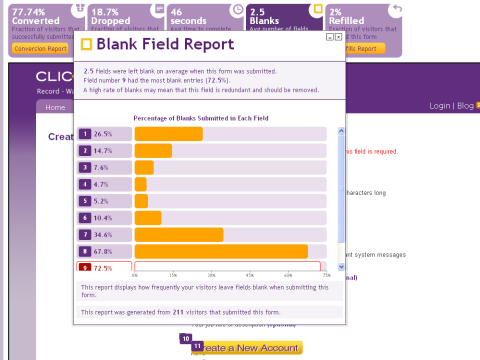
    Small business is the best way to reinvigorate the American economy. Barbara Weaver Smith, founder of The Whale Hunters, shares a lot of information of benefit to business people who want to grow their business. The question is how can small businesses grow at a rate that will show results sooner rather than later? That’s where The Whale Hunters comes in — and we invite you to register for a free account which gives you access to the wealth of information on the new expanded Whale Hunters website— http://www.thewhalehunters.com

    Using WordPress to Build Your Own Business Website

    13

    Guest Post by Gunter Jameson from Classes and Careers |

    In today’s economy, more and more people who have been downsized or who have not been able to find steady work in their industry have turned to building their own business and using their vast knowledge and expertise to earn money for themselves. But now that they are out in the world, they need a way for current and potential customers and clients to learn about and interact with them through a website.

    Web design companies can build some really great sites, but if you don’t have the thousands of dollars it takes to pay for their services, you might find yourself frustrated. However, today’s DIY society, it doesn’t take an experienced web designer to create a simple, cheap website. One of the cheapest and easiest ways to create your own website is by using WordPress.

    Not just blogging
    Although WordPress is a blogging platform, their blogs are very easy to customize and use just like any other website. With the added bonus of an easy-to-use interface to update your site whenever you want. And–better yet–you can build a great Worpress website for under $50.

    WordPress-hosting vs. self-hosting
    If you want to, you can create a WordPress account in about 5 minutes. And have WordPress host your site for you for free. Of course, that’s a great price, but it doesn’t allow you the flexibility that comes with a self-hosted WordPress site. When you self-host your WordPress site, that simply means that you download the WordPress platform for free then upload it to your own server, or are using a hosting service like hostmonster.com. Although hosting may cost anywhere from $5-$10 a month, it offers you the ability to use a bigger variety of website templates and plugins that are key to getting more traffic to your site. In addition, hosting with WordPress will give you a URL like mywebsite.wordpress.com, whereas self-hosting gives you the ability to buy your own domain name (under $20 from godaddy.com), like mywebsite.com, and appear much more professional to clients.

    Building your site
    Once you’ve downloaded the free WordPress platform and uploaded it to your web hosting service (you can find tons of free tutorials on the internet about how to do this), you just need to search for WordPress themes (or templates) that best fit your website. There are literally thousands of free WordPress themes floating around the internet, so it’s just a matter of searching around for the one that will fit your website best, downloading it, and then uploading it to your hosting service (again, there are tons of free tutorials that will teach you how to do this).

    Wrapping it up
    Once you’ve got your theme uploaded, it’s just a matter of adding the content for your site through WordPress’ super-easy, back-end interface then passing out the new URL to all your clients. Building a WordPress site for your business is quick, easy, and will cost you very little money. It’s the best solution for any small business that wants to create its own website on a tight budget.

    Gunter Jameson writes about several topics including travel, minimalism and online schools.

    Coconut Water Is Coconut Juice

    4

    by Graham Kelly

    The popularity of coconut water has exploded as more and more people discover its benefits as a rehydration drink that is also great for the heart, kidney and liver. But some confusion surrounds the term ‘coconut water’. It is actually the same thing as ‘coconut juice’, the refreshingly clear liquid that is found inside all young, green coconuts.

    One of the best products on the market is CoCo Juice from Dr Antonio Martins. Why is it so special? Well, this world-renowned sports medicine and nutrition specialist has patented a process that overcomes the problem of keeping coconut juice fresh once outside the coconut. It normally oxidises and some suppliers overcome this by either adding artificial preservatives or using high temperature heat treatments like pasteurisation. Both those methods compromise the clean taste and nutritional value of coconut juice or water.

    Dr Martin’s patented process passes the juice through a filter with microscopic pores before it is cold-asceptically packaged in airtight cartons. This means that coconut juice is now available outside the tropics in its natural state – virgin, pure and organic, with no preservatives of any kind. If you were on a sun-drenched tropical beach and drank from a freshly cracked coconut, you wouldn’t be able to tell the difference.

    This drink is not called the ‘Fluid of Life’ for nothing. Its electrolyte level re-balances the body’s fluids and it is great for eliminating toxins. It also has a balanced proportion of potassium, calcium, magnesium and sodium for a speedy re-vitalisation and re-hydration after physical exertion. It is naturally isotonic, is the fruit juice with the lowest calories and has less than 0.2% fat.

    So, if you want excellent rehydration after some physical exercise like a hot yoga or bikram yoga session, or you just want to do your body a favour with this remarkable organic drink, tro coconut water or coconut juice – it’s the same thing really!

    Australians interested in coconut water or coconut juice can purchase it at a discount (and in bulk) at Gourmet Superfoods

    Author Bio / Resource Box
    Gourmet Superfoods is the premium online shop for gourmet organic natural foods, and sole supplier of Dr Martin’s premium organic green coconut water in Australia.

    Bring in Traffic in Sneaky Ways While Staying Legit

    7

    Guest Post by Laurence Flynn From Host Nexus |

    Who doesn’t like a little bit of ninja marketing now and again? The fact is, we are all hardwired to want to make things easier on ourselves and with a few extra tricks you can pull in some very nice traffic for your web site without doing anything that’s wrong – technically. These tactics are not black hat SEO by any means, but white hat? Well, that will be up to you to decide, but at least one of them comes from a multi millionaire, so they can’t be that terrible. Let’s just call this off-white for now. This is a brief little workshop of super sneaky techniques that will bring you in a few thousand extra visitors a month in the very least, even if you have a very hard to advertise site. Still, if they are going to work you do not want to use these techniques on adults sites or things that might genuinely offend your average viewer simply because these people can also make sure all of your advertising goes down at once. It is your responsibility to be smart about things and not simply suck in the most possible traffic whether it is relevant or not.

    The risks of using these sneaky little tricks are pretty low, but it is still a good idea not to tick people off over the web. After all, the Wild West vibe is still in full swing and you never know who knows who. Use these tactics to get your site visitors, but use it sparingly and in addition to your regular forms of advertising and SEO. These tricks can’t do everything for you, but they sure can do a great deal if you take the time to think out what you are doing. If you are sick of getting your comments deleted on blogs or having your videos yanked down off sites like Metacafe or Google Videos because they are too promotional, then you are in luck because these little tricks will teach you how to really get your game on and be a true webmaster sensei highly skilled in the art of digital subterfuge marketing – which is a term we just made up.

    “If you Google…” – This little trick can work wonders as long as you rank number one on Google for a keyword phrase of some sort. Make absolutely certain that you rank first because that is where 90% of people click when they are looking for something. Instead of trying to get your site’s domain name into a blog comment or mentioned on a forum somewhere, why not just tell them to Google “Monkey butter” or whatever it is that your site ranks for as far as keywords go. This is a brilliant strategy that will have people curious and as a result, the number of searches for your targeted keyword are going to go up. If you are running Adsense then you might find you get a few more advertisers, too, if you can actually boost the number of searches with a cleverly placed ‘If you Google’ bomb. Pretty slick, right?

    Site Name as User Name – This is not all that difficult for most people to think of, but it really does work. If you use your site’s name, such as “YourSite.com” as your user name, this can be a nice way to attract some positive attention to your site. Obviously, you want to leave comments or make forum posts that add value because otherwise people will think you’re just another promotional jerk that doesn’t care about participating and is merely spamming their favorite hang out spot. Be careful with this one, but you can sometimes find a way into YouTube or Twitter or various other popular places using your site name, also. If you can’t use the period, then be even sneakier and try this out: “yoursiteDOTcom”. It’s the same trick people use to fool the e-mail harvesting bots that trawl the internet looking for e-mail addresses to give to Viagra spammers.

    Torrents – Ah, the torrent websites and services category of the net. This is a hot bed for pirated software, stolen movies and illicit music, but you know what? People still use it. A lot. Like, a lot a lot. So can you. Simply put together a video that you swiped from somewhere, something popular that people are looking for. Don’t taken a music video that belongs to someone else, just take the a popularly searched for keyword and create a slide show or even a scrolling text video that is actually related to the keyword in the video’s file name. That way, when someone searches the torrent site, they see your video because it was part of the keyword they typed in. People look for books and all sorts of things. They type in whatever interests them, just like they would use any other search engine. If you plug your site in a brief video that talks about or shows pictures of a certain keyword phrase then you can entice them to visit. This is an extremely powerful way to promote a website if you use it properly. You may need some friends to help you seed the first torrent, but after that it may well take on a life of its own if you have chosen the correct keyword.

    Complain About Your Site – Ever done a search for something and seen some websites or Google Adsense ads talking about it being a scam? Well, there’s a reason for this. People often search the web for different things to see if they are real products or services or if they are simply yet another money grubbing scam. People search for complaint forums and they generally love to roll in negativity more than pigs love rolling in mud. Use this to your advantage. Try some reverse psychology out on them and see if you can’t get some people to leap to your site’s defense after you purposely go say how much it stinks in public – while pretending to be someone else, of course.

    Punk Google Image Ads – Ever heard of a guy named Frank Kern? His ‘Cousin Trey’ came up with this neat idea for super cheap Google Ads. If you need to advertise your site, but you don’t want to pay two dollars a click to get traffic, try this: take a screen shot of your ad and create an image file of it that you can use as a banner in a Google Image Ad. Clever, no? This lets you pay a tiny fraction of the cost per click that you would pay if you had to use the old fashioned contextual ads from Adsense.

    You can come up with more than these, but they get you started thinking in a smart way and can boost your traffic super quick, too. Remember, stay ethical but it’s okay to have some fun and be creative. Ninjas tactics can get your ads in nice places, but remember that ninjas would never paste ads all over the place – be sparing!

    Tired of unreliable and expensive web hosting? As CEO of top Web Hosting Provider, HostNexus, LaurenceFlynn is helping thousands of webmasters achieve online success. Checkout HostNexus today!

    Guerrilla Warfare Tactics for Cheap Website Advertising

    2

    Guest Post by Laurence Flynn From Host Nexus |

    If you are trying to get word out for your site, a lot of times you are going to run into that age old issue of needing a big fat budget to be able to do it properly – or so you might think! The real trick to promoting your site on next to no budget is having that starving animal edge: innovation. When you do not have a budget to work with, innovation is your best friend and if you haven’t invested a lot of money into getting your site well known then think of it this way, you’ve got nothing to lose if your efforts fail except your own time. Even if you have invested a bit of cash to get started then you should go ahead and try some of these methods because you never know what might help you reduce that ad budget and be able to spend more on your site’s content or design which is a lot more fun to spend money on. Plus, your visitors will appreciate the budget going towards things they get to look at or read about.

    First, get your mindset straight. No matter what you already know about how to promote a website from having read things online, get that out of your head. Take a pen and paper with you and start thinking like a normal, every day person who is just using the internet for fun or to find something. Really get out of your head for this little exercise because no matter how much you know about the typical ways to rank a website or all the services out there, start thinking about where actual human beings go when they want to get online and pass their free time surfing the web. What is your site about and where are the people who might be even passably interested in it hanging out? How old are they? Where do they live? Once you have some basic profiles of people that would visit your site, then you start thinking about where people go and how you can put a message that encourages them to visit your site right in front of their eyes. Sound good?

    Then let’s start thinking about places your average internet viewer, the ones you need to know about your site specifically, might hang out. This will get you started in the right direction and then you take over after you’re done reading because you will get in the flow and know what to do:

    YouTube – Now, perhaps you are not the type to put up crazy videos and if that is the case then you might feel that YouTube has nothing to offer you, but that is simply not the case once you start thinking in an innovative fashion. Remember, you can go on YouTube and leave comments and as long as you aren’t real obnoxious about it, you could mention your site. You might even try sending a message to the maker of the video and ask them if they mind you embedding one of their videos on your site. People who make videos are the standard extrovert type, for the most part, and they are likely to tell a few people that they got asked about being on another site. You obviously don’t want to pick a big star who is already spoiled with tons of attention, but if you pick someone you actually like then they may end up mentioning you in a future video or giving you some sort of shout out. This is always a good thing and besides, who doesn’t like making new friends?

    Facebook – This one is as easy as shooting fish in a barrel if you do it right. You can make a fan page for your site, but if it is an unknown site then that is only going to go so far to help you. Instead, do the begging thing. That’s right, get on Facebook and try for the sympathy vote. Ask your friends to ask their friends to mention you. Remember, a lot of people hang out on Facebook – a lot! If you can just get a little fire started then you may well have some luck. If the begging doesn’t pan out, then you could try offering something for people to ‘Like’ which is a newer Facebook feature. If you want to go the extra mile and create something that can act as both entertainment for others and also a promotion for your site then you are bound to get some good results. There may be other ways to use the site, too, so stay open minded and pay attention to what people do when they are on Facebook.

    Chat Roulette – This might seem like a strange choice, but here you have a site that is still a bit ‘underground’ so it would be a good idea to get in before it gets over regulated as social sites tend to do. You can simply go around chatting with folks and mention your site. Be friendly and practice good manners, don’t just plug your site, of course. The nice thing about Chat Roulette is that you can use a webcam if you have one. Now you might not want to be on camera and that’s fine – you could ask someone else to do it. Or you could get a face mask that’s entertaining and simply conceal your identity. You could even try putting up a sign with your site’s address, but do remember that if 3 people find you annoying within a few minutes then you get booted out of Chat Roulette for around an hour. This means you want to be careful and not be too obnoxious. You could try all sorts of different antics, though and if you’re really serious about being innovative then this is a terrific place to give your ideas a shot and see how they do. If you manage to grab some attention then you might take hold and spread across that network or wherever those people end up going next so it is definitely worth giving it a shot and seeing how well you can do with a little chat or webcam promotion that isn’t going to cost you a single dime.

    These are just three quick ideas you can put to work to get the word spread about your site. They’re a starting point, not the ultimate solutions. Get your brain going in a different direction and you’ll be surprised by how innovative you truly are.

    Tired of unreliable and expensive web hosting? As CEO of top Web Hosting Provider, HostNexus, LaurenceFlynn is helping thousands of webmasters achieve online success. Checkout HostNexus today!

    Used tires becoming an increasingly popular (yet risky) alternative in struggling economy.

    0

    by Conrad Harris

    With nearly 10% of Americans currently unemployed, households are trying to cut spending in every aspect of life. One main area in which costs are being lowered is transportation. Hybrid and electric vehicles have seen record sales in the past few years with gas prices fluctuating wildly and Americans trying to squeeze every mile possible out of a gallon of gas. For those that simply can’t afford a new vehicle, however, an interesting solution has emerged: used tires.

    While some time ago the concept was largely unheard of, nowadays there are many companies whose sole business model is selling used tires to the general public. A simple internet search will return a number of different websites offering “used performance tires” and “used tractor tires,” to name a few. Virtually any kind of tire now has a used version available, and there is even “wholesale discount pricing” for those wanting to order used tires in mass quantities. Since they are drastically cheaper than new tires, many are now opting for these pre-owned versions for their automobiles.

    Not only are they being sold, but over 150 million used tires are also now being repurposed and burned each year for “tire derived fuels,” or TDF for short. Many people are arguing for other proposed options for the disposal of these tires, as burning them harms the environment. Other recycled uses include doormats, roofing materials, playground equipment, and “crumbs” as an additive for asphalt, which extends the life of the pavement 4-5 years. There seem to be few benefits, other than saving money, in buying used tires for your car. They deteriorate quickly and, consequently, become unsafe to drive on after a short period of time, when the tread level has been worn down almost completely, at which point the tire is considered “bald.”

    If you do opt for the “used” route, you had better be educated on the subject first. It is extremely important to know how to precisely measure the tread depth and air pressure to make sure they are where they need to be; also, you always need to inspect any used tire for repairs, rips, uneven wear, and bumps before buying it. Nothing is worse than having a tire that slowly leaks air that you have to pump up every few days. Look into these things beforehand, as most dealers will not offer any sort of refund on a purchase of this nature.

    The verdict? If you absolutely cannot afford new tires, get some used ones to last you for a few months while you save some money. Used tires are not by any means a long-term solution, so you should only have them on your car temporarily. Obviously, if you do have some cash to spare, go for a good set of brand new tires that you know will last you a long time. Think of it as a long-term investment in your safety and the safety of your family, as well as your peace of mind.

    Author Bio / Resource Box
    To read more about used tires, visit our site at http://www.dwtires.com

    Kajabi – Internet Marketing Made Easy?

    0

    Kajabi, a radical new push-button marketing platform has launched that makes it easier for webmasters and marketers to create online businesses.

    The creators are also offering a free trial to let webmasters test drive the solution to find out if it’s the right solution for them, before spending a penny.

    Some of the most useful features include:

    Instant sales pages.

    Ability to have multiple Projects.

    Domain name mapping.

    Ability to add 3rd party analytics code.

    Drip/Evergreen Content.

    Ability to attach videos.

    Ability to use customer styles and themes.

    Categories can be restricted only to select membership levels.

    Community managment.

    Gatekeeper technology that remembers if a user has already opted in to a squeeze page.

    For more features and the free trial you can get the lowdown here.

    Let me know if the Kajabi platform is making life easier for you in the comments below.

    7 Tips on How to Survive the 1st Year of Managing Your Own Business

    3

    Guest Post by Heinrich Muller from The Link Building Guy |

    People often misjudge the difficulty of starting and managing their own business. There are some exceptions to the rule but on average the 1st year of any new business is a make-or-break period and the accompanying stress can be very difficult to handle. Decisions that are made in the first year of a new business can have far reaching implications on the success and future growth potential of that business.

    Some of the most successful entrepreneurs of today have failed to succeed on the first try and some even failed consistently before breaking through. The autobiographies of successful entrepreneurs are a good investment and the information and advice contained within is priceless. In this article we will be taking a closer look at 7 tips that could help you survive the first year.

    1. What Do You Want to Achieve?
    It is very important that you make sure of the reasons why you started (or want to start) your own business. If your aim is to become the richest man on earth, starting a second hand globe dealership might not be the best idea that you have ever had. If your goal is not compatible with your business model success will be impossible to achieve (e.g. wanting to spend more time at home with your family by starting a 24/7 video store might not be advisable.)

    2. Never Give Up and Never Surrender
    There will be times when you will want to throw in the towel and give-up. It is important to push through and not surrender. Tomorrow is a new day with new opportunities that could just be the breakthrough that you have been waiting for. Look back at what you have already achieved and think things through carefully. Taking a break from work for a day or two might just be what the doctor ordered and could help you to regain your focus and inspiration. The difference between success and failure could be as small as one more day of effort.

    3. Surround Yourself with Competent People
    This is one of the most important factors that could determine the success or failure of your business. Never be willing to settle for second best when you hire people. Be on the lookout for talent and crab it when you see it. Good staff is hard to come by and incompetent staff have the ability to destroy your business.

    4. Do Not Be Too Proud to Ask for Advice
    Get into the habit of discussing your business with people within the industry or people close to you. When you manage your own business you can become so involved with the day-to-day issues that you start to lose focus. People that are not involved with your business might be able to highlight obvious solutions or provide valuable insight. Even Superman needs Louis Lane.

    5. Set Achievable Goals and Deadlines
    Be realistic when you set goals, targets and deadlines. Nothing is as demoralising as not meeting deadlines and targets. Use a daily “to do” list and a weekly schedule in order to keep track of your targets and deadlines.

    6. Monitor, Measure and Adapt
    You can’t manage what you can’t measure. Analyze the key performance areas of your business and be willing to change or adapt your business if needed. Performance that is monitored effectively will provide you with an early warning system that could help you to make the right business decisions at the right time.

    7. Cherish your Customers
    Without loyal customers your business will not succeed. Focus on building a lasting relationship with your customers and always respond as quickly as possible to customer queries. The use of social media to interact with your customer base is very effective and should be explored.

    The satisfaction of creating and managing a successful business makes all of the effort worthwhile. In order to handle the stress of managing your own business it is important to exercise regularly and to enjoy a healthy lifestyle. Do not forget to have fun and to spend time with your family and the people that you love. Success only has meaning when you are able to share it with someone else!

    Heinrich Muller is the owner of The Link Building Guy. Feel free to visit his website for more information on Keyword Search Optimization and SEO related issues.

    4 Ways To Turn Your Blog’s Traffic Into Dollars

    Guest Post by Justin Davis from Criminal Justice Degree Schools |

    There are a ton of great blogs that struggle to generate a significant amount of revenue to make a profit. Take the Huffington Post for example. Even with millions of readers and dozens of unpaid freelance contributors, the site is only now in the black after several years of operation. However, your blog does not have to be just a hobby that is limited to the intrinsic rewards alone. Having the right monetization strategy in place can help generate income from your writing so that you can turn your passion into a part-time or full-time job – or just pay your hosting costs.

    Recommend relevant books from Amazon’s affiliate program
    If you write about a specific topic, it’s can be useful to provide book recommendations that are also affiliate links through the Amazon Associates program. These are very common on blogs about writing, but play well to a number of topics, as readers may want to learn more about the subject. More importantly, you can offer recommendations or reviews of a variety of products outside of books, music and movies because of the breadth of offerings on Amazon includes almost anything you can think of from basketballs to lawn mowers.

    Request donations
    TheOatmeal.com is a great example of a site where the content creator has built a loyal and enthusiastic following. By providing great value to your readers, it’s much easier to make direct calls to action, such as a simple “Buy me a cup of coffee,” or something similar. In a recent interview session in Seattle, The Oatmeal creator shared with the audience that he felt a little guilty because the donations amounted to a surprisingly high amount of money. Leo Laporte of the TwIT network of video and audio shows on technology announced that his salary this year would be based only on donations.

    Sell banner ads to local businesses
    Buy two of your local newspapers that have a fairly wide reach, and tear out any advertisements that are relevant to your industry. You can call the advertising sales department at the newspapers, or look on their website, in order to find their rates. You may be able to offer more impressions for a lot less to local businesses who are advertising in traditional print. Call up the businesses, ask to speak to the owner, and pitch your website and its traffic numbers. You can also promote ad space on your site with a link to your rates page or send targeted emails to people you think would be interested in advertising to your niche of readers.

    Take advantage of affiliate marketing services like Commission Junction
    A lot of times, products or services online dovetail into what you write about. You choose products that fit within the content of your website. For every visitor that purchases a product, you get a portion of the revenue that’s generated. By using a service like Commission Junction, you take a lot of the guesswork out of working with individual retailers. Like the Amazon program, it is a way to help your visitors find more resources without having to do a lot of your own legwork in establishing the relationships.

    Whether your site is seeing skyrocketing traffic numbers, or you’re just starting out, having a plan on how you can turn traffic into dollars can mean the difference between having a hobby or having a job that you absolutely love.

    Justin Davis is a staff writer at Criminal Justice Degree Schools, a resource for individuals seeking information on criminal justice degrees, schools, and careers.

    What Can Social Networks Do For You? – The Difference Social Media Makes

    1

    Guest Post by Margo Smith from Classes and Careers |

    Who do you listen to when making an important purchase? Let us say you are in the market for a new car. The one you have been driving just isn’t cutting it, and you want to find a quality car for transportation and traveling with your family. Do you listen to a friend who has been in a similar situation of needing to upgrade the family vehicle, or do you trust the SUV salesman who makes the best commission for selling you the highest price automobile on the log?

    Most of us would go with the advice of our friend. This is where Facebook and Twitter come in to play. These 2 social sites connect people and businesses in ways that could not have been imagined until now.

    This is what a Florida veterinary dentist learned when trying to take his business from a local to a more national audience: Facebook works. Instead of ignoring this mover and shaker in the social networking world, Geoff Tucker decided to make the most of it. He made his own Facebook page and started making friends. He also set up a Twitter account and started his own blog. The combination of these 3 gave him an online presence and let people get to know him as a person, not just a name next to his title, Equine Dentist.

    He credits these 3 internet models for his invitation to appear on TV and radio spots. He has appeared on HorseGirl.tv and Horse Talk Radio, and obviously this has increased his visibility. If not for the social networks, this success would have been impossible because he would still be an unknown. He is pleased with the 100 leads he has gained from his online accounts and with the dozen or so clients he has gained as a result of his networks.

    When creating your profiles to promote your business, there are a few pointers to follow. The most important is to be yourself, don’t try to come off as anyone other than who you are.

    Your authenticity is something the online crowd can sniff out pretty quickly, so be real. Be friendly — hostility may get you in with the hater’s crowd, but it won’t win you business. Do not be too spammy. It is alright to say who you are and what you do, but don’t try to push it on people. Put yourself out there as the professional you are and let them come to you for your services. If you enjoy what you do, it will show in the way you write about your work, in the way you present yourself and any photos of your day to day work. Give it a try. There is no reason to let the power of social networking pass you by — so dive in.

    Margo Smith is a BYU graduate. She is fond of writing about a range of subjects from space exploration to online classes to puzzles. She draws from her own education, her years in college and an author’s perspective on life when gathering information for ideas for articles.

    The Golden Rule of Effective SEO Link Building

    20

    Guest Post by Heinrich Muller from The Link Building Guy |

    SEO link building is a very important part of any search engine optimization strategy. If you do it right your keywords will improve on the search engine result pages and the organic traffic to your website will increase. But what exactly do you need to do?

    The golden rule of effective SEO link building is to diversify your link building methods. Think of it this way, if you are a boxer that can only throw a left hook you will most likely lose all of your fights. In the same way links that are built by using only one method will not be very effective.

    There are plenty of SEO link building methods around and when you combine them the impact of your link building efforts will visibly improve. Two link building methods will be discussed in more detail in this article and you are welcome to use them to diversify your link building (Tip – make a list of the link building methods that you intend using and draw-up a weekly link building schedule with slots for all of the methods.)

    Content traps and article marketing:

    – One of the most effective link building methods available today is the use of original and unique content to build links and generate traffic.
    – Start by researching popular search phrases for your website, product or service and choose keywords with a low level of competition.
    – Write original articles using the keywords that you have chosen.
    – Submit the articles to article directories and Blogs.
    – Build new links by linking back to your website in the resource box of each article.
    – In addition your articles should show-up in the search results for the low competition keywords that you have chosen thereby generating traffic to your website (content trap).

    Blog commenting:

    – This method has been abused but it is still very effective when used in combination with other link building methods.
    – Search for Blogs that are relevant to your website, product or service and ensure that they allow you to enter your name and URL when posting a comment.
    – Read the article and post a comment that is useful and informative (you need to give in order to receive.)
    – Webmasters delete comments that they view as spam and it is important that you add value with your comment and not try and sell yourself.
    – Post comments on both do-follow and no-follow Blogs to ensure that the search engines view the links as “natural”.

    In addition to the two methods discussed above you can build new links to your website through the use of bookmarks on social sites, forum profiles and posts, submitting your website URL to link directories and the uploading of videos to popular video sites. SEO link building is very effective when you combine three or more of the available methods. Start improving your keyword search optimization today by becoming a boxer with more than just a left hook in your arsenal.

    Heinrich Muller is the owner of The Link Building Guy and he writes articles about search optimization, SEO link building, keyword optimization and social media developments. Feel free to visit his website The Link Building Guy for more information and articles.

    What Makes a Website Successful?

    0

    Guest Post by Mona Pennypacker from Acorncs |

    The web is a relatively mysterious place still for most ordinary folks, and yet more and more ordinary people are finding themselves obliged to begin trying their luck on the internet. Whereas up till even just a few years ago building/designing a website was something generally reserved for the ‘pros’ among us, these days all sorts of people are trying to build their own website, whether it be for professional purposes, to stimulate a network or promote a cause, or just simply to have a little fun and gain some experience in the meantime.

    And what a lot of people are learning is that, lo and behold, simply putting together a website really isn’t all that difficult, especially with the kinds of cheap or even free software tools that make all the more technical aspects more digestible. Yet people that are serious about putting together a webpage don’t want to simply create a site: they want to create a successful site, and that certainly is a bit more challenging.

    The reason for that is that there are constantly changing, loosely-defined ‘rules’ (if they can really be deemed as such) in cyberspace for what is considered a respectable–and therefore potentially successful-website.

    Discovering what those guidelines are, and how/why they change, is in large part the secret to turning your ordinary site into the kind of site that you want it to be…one that attracts many visitors and really gets the ball rolling for you.

    There are valuable resources on the web itself that can help you acquire some if not all of this knowledge, and a good deal of those resources come from the major search engines that dominate the internet: Google, Yahoo!, Bing, etc. Not only do they have very helpful webmaster forums where newbie cybernauts can ask their most pressing questions and get thorough answers, but they all offer documentation on the kinds of website quality guidelines (which may change with time, so it’s important to stay updated) that absolutely must be followed to develop a successful website. Let’s take a look at some–by no means all–of the most important of them:

    – First and foremost, webmasters new and old must be sure that their websites are designed and filled with content that is actually meant for real, information-craving humans! While that may seem obvious, the fact of the matter is that many people try to “fool” the search engines with content and website architecture that aren’t at all intended for real web-surfers, but rather for the ‘bots’ that help determine such things as page rank, etc. Don’t even try this, as you will sooner or later be discovered and your website will be blacklisted for eternity.

    – Next up, what you need to do to accomplish a successful website is start including the kinds of keywords/keyword phrases that you want people associating with your site into its written content (as well as into metatags). Don’t cram the site with such terms, but make sure that each page in your site has a few; and similarly, take a little time to actually research what kinds of keywords you should be competing for.

    – Finally, start trying to get links to your site posted on other, reputable sites that have something (even remotely) to do with what your site is about. Again, don’t try to be sneaky here and don’t fall into the bad habit of using link schemes (also known as link farming), as that will end up hurting your site quite a bit. Just try to get the word out and where you can, have static links to your site included on sites you can reasonably assume to be legitimate.

    This article was written by Mona Pennypacker of Acorn Creative Studio who specializes in web site design in Colorado.

    Learning the Ropes of Search Engine Optimization

    0

    Guest Post by Geli Pulpulaan from SEOP |

    Most people often think that just having a site and then submitting it to various search engines is enough to attract the required traffic besides also bringing in the required cash. Well, this does not dispel the fact that having an interesting site is not important. To have significant traffic to the site, search engine optimization techniques have to be incorporated. The simple fact that search engines often have millions of updates on sites on a daily basis is a clear indication that yours will be pushed into oblivion, if you do not put the necessary measures in place. This is why it is important to learn the ropes.

    Search engine optimization is known to be the unrivaled traffic and sales generator and as such, it is supposed to be efficiently utilized. For starters, you need to be updating your site on a regular basis to ensure that it lands a good spot in search engine results pages. Driving traffic into a site is a continuous process requiring diversity and proper customization to enjoy a steady flow. This is one of the basic rules of any search engine optimization plan. Update web content regularly.

    You obviously cannot have a website without any knowledge about your target audience. For SEO strategies to work in your favor, you have to ensure that you have initial knowledge about the people your site is targeting. Once you have determined who your target audiences are, tailor the information in your side to encompass their needs. Always remember that the effectiveness of your marketing strategy depends on how specific your target market is. You might not know this but there are basic things that search engines often look for in any site.

    Keywords are some of the most important components of any site and they are often used by search engines to rank sites. Other important components of any site that are greatly considered in search engine optimization are titles, descriptions and Meta tags. They are important in the sense that they help a site be read, measured, interpreted and recorded in the right manner by search engines. They are also alternative factors that are used to entice web searchers or users to click on the site and try to find out what it has to offer. In any search engine optimization process that you engage in, it is essential that these things be taken care of.

    Social bookmarking and daily blogging is another means through which search engine optimization is achieved. It can be in other words referred to as networking. It simply works in such a way that once a single member has bookmarked a site, the information of the posting is made available or shared to all members of that bookmarking site. Blogging is an avenue through which you are going to be able to build rapport with your target market. If you are to improve your site rankings, you need to ensure that the information is up to date and relevant. Interaction with clients through social networking sites greatly helps you get required feedback. However, blog commenting options in your site can be home to spammers who can damage your reputation so it is still best to personally moderate everything that goes in and out of your site.

    Learning SEO is uncomplicated but can do more harm than good if applied without fully understanding first. It should be used to establish credibility and good reputation for any business and not serve as a means to damage a company’s online standing.

    Geli Pulpulaan works as a SEO specialist in a reputable search engine optimization company. She spends her idle time doing social networking, surfing the web, photography, traveling and blogging about anything.

    Top 5 Online Advertising Marketplaces

    3

    By Avraam Keramidas from eMarketing Blogz |

    Do you want to monetize your Blog? Ok ok…sorry I am not going to ask again…But how?

    Online Advertising Marketplaces are the answer to your problem! Selling ads on your site can be a really frustrating and time consuming process. Try to do everything by yourself,get advertisers,manage payments,keep track of where and when to put your ads and you will hardly find time to actually BLOG!

    Why you should use Online Advertising Marketplaces?

    Because you:

    1. Solve your problem with advertising and saving you a lot of time.
    2. Get more advertisers than if you were selling ads on their own.
    3. Get you business running smoothly — serve your ads on time and on the right place and the most important of all : Get paid on time!

    In this post I list 5 of the most used marketplaces on the net.The order in the list means nothing!!!

    • BuySellAds.com:
      In my opinion probably your best choice! If I had to choose one word that would be:Simplicity.It’s clear that the aim of BSA is to simplify the process of buying and selling advertisements, and it certainly succeeds in this area.Everything about BuySellAds is just easy, both for publishers and advertisers.For publishers, your website is listed in the BSA directory, allowing advertisers target-specific searches to help find a compatible website. Payouts are quick and seamless, and the PayPal system very efficient. Wire transfers and cheques are also available as payout and payment options if PayPal is not your thing.
    • AdOnion.com:
      AdOnion made online advertising selling a very transparent procedure since the full control has been given over to the site’s respective advertisers and publishers. Interstitial and expandable banners has been added along with the traditional ad formats.As a publisher you will also have the full control over the type of advertisements you approve onto your website. In addition, you can preview advertisers and send them requests to run their ads on your site. You can also easy implement third party’s network ads into your ad zones increasing your earnings.
    • Adjug.com:
      AdJug is an online advertising exchange connecting buyers and sellers of online advertising and provides them with transparency, control and choice.Publishers can take control of their online inventory to increase their earnings and advertisers can run better campaigns because they know where each conversion and traffic is coming from.

    • adBrite.com:
      adBrite serves over 1 billion impressions a day on over 100,000 sites. AdBrite is a completely independent, transparent and effective advertising exchange platform, focused on maximizing ROI with sophisticated, unmatched targeting and optimization technology. Dynamic pricing, Real Time Bidding and API functionality, combined with a self-service account management interface, give you unparalleled access to superior campaign data and analytics. In my opinion adBrite is a right choice for websites with big traffic.

    • Blogads.com:
      At blogads.com publishers get to choose their advertisers by first approving the ad. Unfortunately, the fact that you have to have ads purchased for your site may mean some sites will have a harder time getting advertisers.Publishers get paid on a time basis and not on pay per click. For example, you can choose to have the ad displayed for one week, month, or even maybe 3 months. They claim to give 70% of their transaction earnings back to publishers, which is very good compared to other advertising networks.

    As a blogger, this may be worth a test try to see how well it pays on your blog. Payments are done by Paypal.

    So have a look around and make the right choice for you and your website or blog.

    Online Advertising Marketplaces do not monetize your Blog…Your Blog Does. -emBlogz 2010

    Avraam Keramidas is the Owner and Publisher of eMarketing Blogz. eMarketing Blogz is a website about Social Media Online Marketing and Related Mobile Technology. For more please visit eMarketing Blogz.

    Top Free Internet Marketing Methods

    4

    Guest Post by Turburan Octavian from Online Cash Blueprint |

    Greatest things in life are free, as many would say. This particularly holds true with efforts in advertising one’s merchandise or services. With free Web marketing providers, one can save a lot. Instead of shelling out for the advertising side of your product or providers, that chunk of cash may very well be put to other important parts of your business since many data websites now supply data relating to Internet advertising companies that comes with no price tag at all.

    This isn’t to inform you that better give attention to plain Web marketing. It nonetheless will do your business loads good should you combine conventional commercial efforts such as conventional and new marketing media.

    Here are few of the free strategies that you possibly can make use of to make your products and services be in their most visible, thus saleable, form.

    1. Promote your corporation via free search engine submission and optimization.

    Submit your web site to numerous search engines like google monthly. This will make many extra individuals know that your web site really exists. Aiming for the highest serps will help loads on this endeavor.

    2. Enhance your articles.

    Do not forget that data on articles with good content as site visitors-bringer of internet sites? This time it’s about making these articles serve your website higher by utilizing keyword suggestion tools which might be supplied for free. Update your site’s content by commonly checking the standing of your key phrases with the current market.

    3. Purchase free content.

    You probably have no time to extend the web optimization or seo-friendliness of your articles, you can search for free content from article directories. All you’ll want to do is retain the useful resource box of these write-ups.

    4. Avail of free comprehensive web site visitors analyzers.

    These are instruments that you would be able to make use of with out costing you a cent. Your web site’s hits statistics might be produced by this kind of Web advertising device to your personal analysis.

    5. Learn to govern web design templates.

    You do not have to be too techie-geeky to be able to design your internet site. Oftentimes, net design templates or customized-made layouts are available for the Internet marketer to use.

    6. Monitor your website’s visibility.

    Instruments comparable to search engine place trackers may be used to see your website’s standing.

    These processes are very convenient to make use of as long as you take into account that you use and try to grasp their use in your own benefit. Simply don’t get obsessed with your achievements when you finally discover ways to use them and incorporate them in your Web advertising feat.

    Tips for Sending Targeted Link Requests

    2

    Guest Post by Abby Gilmore from Vertical Measures |

    There is no doubt about it — manual link building is one of the best ways to achieve a diverse backlink profile, and sending targeted link requests are a major part of the process. Though sending targeted link requests can be a tedious and time consuming task, the payoff can be huge.

    The process of sending targeted link request is overall pretty simple: send e-mails to website owners, positioning your website or your client’s website as a resource or authority in a specific niche.

    How to Find Opportunities

    • Look at competitor backlinks using a backlink checker.  Some tools I frequently use are Yahoo Site Explorer and Open Site Explorer. Though these tools will not provide you all the backlinks of a site, it is definitely a place to get started. Once you pull the backlink profile of your competitor, go through the links and look for possible opportunities — I suggest sorting the anchor text and searching that way. Perhaps there is an influential blog linking to your competitor or you find a page where your competitor is listed as a resource. These are the places you want to get links!
    • Use a variety of search queries to find possible link opportunities. Using your keyword + a search query will bring back tons of results, and again, you can contact these sites and position your site as an authority in the industry. The list of queries you can use is endless, though this post will give you a great starting point! Also, SEOMoz has a tool called the “Link Acquisition Assistant,” which proves to be immensely helpful when using search queries for link building.
    • Find out what sites in your industry are linking to and use content you have as leverage. Say you have a great how-to blog post or a video series that is link worthy.  Find sites linking to similar content (through search queries or general searches) and present your piece of content as a resource.

    Who to Contact

    Once you have a list of websites you want to contact, e-mail these website owners and tell them about your site! Many webmasters will link to you if your site can provide quality and relevant content to their visitors. 

    But, in order to contact these people and get a response, you need to find actual e-mail addresses. Not just “info@domainhere.com” or a contact form page. If the webmaster’s e-mail is not readily available on the site, do a Whois search for the domain. If you are still having trouble there are 12 advanced tactics on how to find someone’s email address in this post.

    What should I say?

    Make the e-mail request as personal as possible. Also, do not straight out ask for a link. This often comes on too strong and will scare off a potential linker! Be subtle, but get the point across. Ask the webmaster if they would be interested in sharing your site or piece of content with their visitors.
    Each site is different, so each request will be different. When you’re drafting a targeted link request e-mail, you should consider:

    • The industry
    • Type of site — is it a blog, resource page, or are you leveraging a content piece?
    • Who you are contacting — age, gender, profession

    All of these factors will affect the way you write your request. What has worked for me personally has been illustrating enthusiasm and being sincere. Some webmasters will know exactly what your aim is with this e-mail, though if you are passionate and genuine, your request still may be considered.

    What are your experiences with sending targeted link requests?

    Abby Gilmore is a part of the link building services team at Vertical Measures. She is also a freelance writer for a green living magazine and a volunteer at Phoenix animal shelters. Follow her on Twitter @AbbyGilmore.

    Best Practices for WordPress SEO

    0

    Guest Post by Simon Jones from On Page SEO Audit |

    There are huge benefits to using WordPress not only as a blogging platform, but as a complete website solution and CMS. There are so many things that can go wrong within a WordPress install that can seriously jeopardize your ranking potential within all the major search engines. Here are some of my general guidelines for optimizing your WordPress install and avoiding any potential pitfalls along the way:

    • Configure your SEO Plugins properly – You will probably be using All in one SEO pack to take care of your basic wordpress SEO needs, take the time to go through it’s settings and make sure you have set it up correctly, there’s nothing worse than all your pages falling out of the index because you mis-configured your canonical settings!
    • Use no-index tags for your archive and tags pages – WordPress can generate hundreds of different views of your content through archive, tag and category links, although this is not exactly duplicate content, ideally you only want your content to be available on a single URL.
    • Disable any inactive, out of date, or unused plugins – Most plugins insert a lot of Javascript or inline CSS into your WordPress posts and pages. With the Caffeine update, Google now takes page loading time into its ranking algorithm, the last thing you want is bloated pages and slow loading / badly coded plugins slowing you down.
    • Tighten up your security! – Out of date WordPress sites are notorious for being hacked, this is absolute worst case scenario for your SEO efforts. Make sure your install stays up to date, your plugins stay up to date and use some kind of security plugin. (I’d highly recommend WP Security Scan)
    • Write unique descriptions – If you are using SEO plugins for WordPress, don’t let it use snippets for descriptions. Give your posts and pages unique and exciting description tags to not only help with SEO, but to increase potential click through rate also.

    Following these simple steps will ensure your WordPress website has the best chance in the search engines. If you can look after your website, your website will look after you!

    Simon is the owner of On Page SEO Audit, a website dedicated to providing affordable On page SEO solutions to small businesses.

    What to Expect from Your Social Media Consultant

    6

    Guest Post by Mike Bass from Lakeshore Branding |

    So you’ve finally decided to hire a social media consultant. Now — to make sure he or she earns his keep.

    Hopefully, you didn’t hire someone whose only experience of “social media consulting” is having a personal Facebook profile and a Twitter account, because there’s certainly more to the job than just sharing links on a Wall, or tweeting about one’s breakfast menu, or having all the time in the world to spend online.

    Here’s a useful piece of advice: know what to expect from your social media consultant. Why? Because you have a right to. You don’t want to approach every payday asking yourself, “What am I paying this so-called ‘expert’ for?” True, social media is a wide, ever-evolving landscape — generally unpredictable — but in this age, wherein everyone seems disposed to call themselves “experts” at something, it helps to clearly define your expectations from a professional you’ve just hired to perform a job.

    Expect strategy: Your social media consultant should have a plan from Day One. What does he or she intend to accomplish by “Facebooking” or by “tweeting”, and what other social media tools are going to be used toward achieving the said goals?

    Expect a custom and holistic social media strategy, created just for you and your brand — not a generic document that’s probably been stolen off a random blog. Expect creativity, and plenty of ideas, and lots of time dedicated to gathering clear insights, doing market research, and training the rest of the staff on how to execute this plan. Be alarmed if your social media consultant shows up at the office on the first day and immediately starts “tweeting” links to your coupon codes or blogging about your latest products. A blind barrage does not a strategy make.

    Expect a “people person”: A social media consultant shouldn’t be, well, anti-social. You have the right to expect someone who isn’t only attuned to the social media landscape, but who’s also adept at managing people, building relationships, networking, and participating in engaging conversations — online and offline. “Geeky” is fine, but “sociable” and “friendly” are more important adjectives.

    Expect overtime: Social media consultants are at it 24/7 — following links, writing “retweetable tweets”, thinking up blog post ideas, creating new profiles, responding to comments, and generally making your brand awesome. If he or she can’t do no more than an hour or two of work a day, you might have a good reason to question how much of an “expert” your social media consultant is.

    Expect a social media policy: Your consultant should be comfortable with the idea of doing “foundational work”. This includes the creation of a clear social media policy that outlines clearly the value of social media to the business, and which takes into account the level of risk tolerance in your workplace as well as the kind of culture that your organization aims to foster. This policy should promote productivity — and protect privacy. So next time an employee “tweets” the confidential or the slanderous, you’re covered.

    Expect reports and results: Your consultant should be able to turn blog comments, “tweets”, and “likes” into numbers — numbers you can understand, and analyzed in ways that matter to your bottom line. Expect analytics and reports, usage of appropriate monitoring tools, and understandable data that allows you basically to grow your brand and business via social media.

    Mike Bass writes for Lakeshore Branding, an Internet marketing company in Chicago, IL. The team specializes in delivering services in SEO, SEM, online advertising, e-Commerce, social media consulting, online reputation management, and content creation.

    Should I Start My Own Business?

    1

    Guest Post by Matt from Advanced Lifestyle Design |

    This article talks about how to determine whether or not you should start your own business. In order to determine which business you should start, you should ask the following questions:

    1. Do I have what it takes to be an entrepreneur? Am I a self starter? Am I willing to take the risks that are associated with running my own business such as losing money or failing?

    2. If you pass the 1st test, ask yourself: what am I better at doing than at least 95% of the general population? What area do I have the highest level of skill and proficiency in?

    Based on your answers to the above two questions, you can decide whether or not to start a business and which business to start. If you decide to start a business, you will need to make sure to pick a business that plays into your areas of strengths. For example, if you are excellent at graphic design and making websites, have you seriously considered offering your services as a freelance web designer?

    If you decide to start a business, you will want to begin small, and test the business model without spending a lot of money. You can begin small by telling your family, friends, and professional network that you are offering services, hand out business cards, and begin advertising yourself through word of mouth marketing. After you have started small and seen whether or not your business idea is viable, you can then determine whether or not to invest more money and time into making the business succeed.

    4 Steps to Effective Article Marketing

    8

    Guest Post by Daniel Lofton from Article Marketing HQ |

    Article marketing is no doubt one of the quickest and easiest way to promote your website. But most webmasters don’t look into this method of promotion because they think that it is difficult and time consuming.

    The fact is, article marketing is probably the cheapest and fastest way to get free targeted visitors to your blog or website.

    Step 1. Keyword Research

    To start off your article marketing campaign, effective keyword research is a must. If you are after a specific niche, then the keywords you are after are probably researched already.

    If you have no idea how to do keyword research, don’t be afraid, here is the perfect place to learn.

    Some tools to help you get started:

    • Google Keyword Tool (One of the Must-Use of any online marketer)
    • Micro Niche Finder (My personal favorite, because it tells you exactly whether the keyword is good or not)
    • Market Samurai (Another pretty cool market research program, and a bunch of other functions)

    Make sure the keyword you are after isn’t too generic, (example: dogs) because there will be an impossible amount of competition and the traffic you receive will not be as targeted. A good keyword should be 3-5 words, and has a moderate amount of competition. ( You don’t want there to be no competition as that will probably mean, the keyword isn’t good)

    Step 2. Writing the Article

    Once you know which keyword you are after, then it is time to write the article.

    Your first option would be to write the article yourself. This might take a while, and the result might not be optimal, but it will be the cheapest way to produce a quality article

    Here are some of my favorite tools to help me write an article:

    Another option would be to outsource the writing part to a freelancer. This option is the way to go once your business takes off, or you need a lot of high-quality articles but you are too lazy, or find it too big of a challenge to do so.

    Some places to look for cheap yet high-quality writers:

    Read more about how to easily write high quality articles.

    Step 3. Submitting the Article

    This is probably the easiest thing to do, just paste the article to your browser and press submit.

    Here are some good High-PR (PageRank) article directories:

    Make sure you include a resource box with your website address in it, so that it can help drive traffic and link juice.

    Step 4. Article Promotion

    Now it is time to promote your article. It would be a huge waste of time if you went through all the trouble and not promote your articles. The first thing you should do is submit it to social bookmarking sites like:

    If your article is well written, and has an attractive title, then it could end up on the front page of these sites… The result? Thousands and thousands of traffic to your article, and in turn to your website. Make sure your website can handle it.

    Over to the Readers: Do you do anything different? Have you had any successes with Article Marketing

    Article Marketing expert Daniel Lofton harnesses the power of articles to drive traffic to his websites. Now, he’s revealing his top secrets to help you succeed online in the world of internet marketing and SEO. Go to http://www.ArticleMarketingHQ.com and let Daniel Lofton teach you how to succeed with article marketing.

    The Benefits of SEO

    8

    Guest Post by Pete Handley from Vertical Leap |

    As an online business owner who knows little about search engine optimization (SEO) you may be wondering exactly how it could benefit you.

    Many online businesses underestimate the importance of SEO, but if you take the time to read this it may soon start to make sense. As the owner of a business that operates primarily online, you will no doubt recognize that the key to your successfulness is the visibility of your website.

    There is more to an internet business than having an informative, attractive and easy to use website. If your website isn’t popular and visible on the net, then the chance of your business taking off is slim. One thing that can help make your website popular among the targeted audience is SEO.

    A successful SEO campaign will result in your company website being higher up in search engine rankings, which in turn means more business for you. If you are unsure how this is achieved, the main thing to know is that it is done through the use of keywords and phrases.

    If you are unsure, then the most appropriate keywords will be identified for you and used to boost your business to the top of the biggest search engines. When potential customers search your keywords they will be presented with your website which will help generate traffic and new business through your site.

    Be aware that optimizing your company’s website may involve editing its content and HTML. The aim of adapting the content is to increase its relevance to specific keywords.

    Search engine optimization provides an affordable way of producing increasing your company’s internet exposure. SEO can help your website improve its ability to sell, the extra exposure will boost business and drive sales. SEO allows you to target visitors who are looking for specific items related to your company which in turn will increase your brand recognition, identity and authority online.

    Pete Handley is an SEO consultant and expert. He writes article and blogs for Vertical Leap UK. For more information on the topic of SEO and related issue, he recommends you to visit www.vertical-leap.co.uk website.

    What can Search Engine Marketing do for my Business?

    4

    Guest Post by Pete Handley from Vertical Leap |

    Search engine marketing is now one of the most widely used internet marketing methods among large and small businesses, and it is also proven to be one of the most effective.

    The strategy is aimed at promoting websites by improving their rankings in major search engines, and works on the proven principal that websites on the front pages of search results attract exponentially more visitors than those further down the list.
    Among the most commonly used search engine marketing methods are pay-per-click (PPC) advertising and paid inclusion, but other strategies such as news content marketing are also proving to be highly effective and are growing in popularity.

    Search engine marketing is part of a wider process of search engine optimisation (SEO) which aims to make websites more ‘search engine friendly.’ The ultimate aim of SEO is to give a website high ranking in ‘organic’ search results generated by search engines and increase traffic to the site.

    So how can search engine marketing help your business? Well, using just one of the methods explained above will attract more visitors to your company’s website, which will in turn lead to an increase in sales and business opportunities.
    By signing up for a full SEO service combining all of the search engine marketing strategies on offer, you can be confident that visitor numbers to your website will skyrocket and that sales will soar.

    The beauty of search engine marketing is that it will only attract visitors to your site who genuinely have an interest in the products and services your company provides. Search optimized websites feature keywords and phrases that are proven to attract interest from your specific target audience, so by the time visitors arrive on your website you can be fairly sure that they will go on to become paying customers.

    The cost of search engine marketing services can vary, but by calling a trusted SEO company and explaining your company’s individual needs, you can find the right package for your individual goals and budget.

    Pete Handley is an SEO consultant and expert. He writes article and blogs for Vertical Leap UK. For more information on the topic of SEO and related issue, he recommends you to visit www.vertical-leap.co.uk website.

    Internet Marketing: Benefits of Content Marketing

    2

    Guest Post by Pete Handley from Vertical Leap |

    Content marketing is quickly becoming one of the best ways of marketing on the internet. Admittedly producing and publishing content is no easy task, but there are many benefits to taking the time to do so.

    If any businesses are unsure of the benefits that come from using content marketing, this article will briefly outline and review the top advantages of the technique.

    Firstly, content marketing is economical, it doesn’t always have to cost a lot of money but it does require a bit of time and effort of your part. Despite this, it’s worth recognizing that new content is a great way of promoting yourself or your business and doesn’t affect your marketing budget. You are extremely unlikely to find a tool as effective as content marketing that is free of charge, so is there really any reason not to give it a go?

    Content marketing is different to other methods of advertising in that it lasts for longer. Other forms of advertising are sensitive to time but publications such as newsletters, blogs or even news articles can help drive traffic to your website long after the information was first published. Although, this is obviously dependent on the quality of content you have published.

    Content is a fantastic aide for websites that are undergoing SEO. The more content you publish with links that lead back to your site, the more incoming links your site will have. It is especially helpful if you frequently publish articles as search engines love new content which they can rank.

    The more you publish the more credibility is built. The more content you publish, the more recognized you articles and website will become, because of the increase exposure. This in turns builds your online reputation which in turn improves the authority of your site on certain subject matters.

    Finally content marketing attracts target traffic. It may seem obvious but the people that will be interested in your content are likely to be the same people that are already visiting your site.

    Pete Handley is an SEO consultant and expert. He writes article and blogs for Vertical Leap UK. For more information on the topic of SEO and related issue, he recommends you to visit www.vertical-leap.co.uk website.

    Avoiding SEO Disasters

    0

    Guest Post by Simon Barnett from Search South |

    Time and money invested in SEO can certainly pay dividends, but there are some pitfalls that you need to be aware of. When SEO goes wrong, it can cause damage on a large scale.

    A great example of this occurred back in 2006. BMW hit the headlines for all the wrong reasons. The German car manufacturer was found to be using cloaking to try and fool the search engines. Google responded by removing BMW from its listings. It was a high profile mistake and one that many SEO experts still like to refer back to.

    It demonstrated that a multi-national company could fall foul of the search engines by trying to trick the system. The obvious lesson here is that Google definitely doesn’t like it when you attempt to fool them.

    It’s important to remember that all of the major search engines employ human editors to constantly check on individual websites. If you’re trying to use cloaking or black hat techniques then it’s not going to take too long before you’re found out. You may get away with things for a short while, but is it really worth the risk?

    Every time that you make a change to your website you should be concentrating on the user experience. If you’re making changes simply to trick the search engines then you’re heading down a dangerous path. It’s the same when it comes to building links to your site.

    Spamming a large number of other websites may actually give you an initial boost in the rankings. But it’s a tactic that’s especially easy to spot. Once Google picks up on it, you’re on the road to disaster.

    If you’re looking to gain long-term rankings then your best approach is to play fair. Concentrate on all of the old SEO basics.
    Write great content and create a site that others like to visit. If you do so, you’ll naturally gain links from other webmasters. Embrace the online community too. There’s no doubt that building relationships is the key to getting both links and visitors.
    These are the techniques that have worked for years. They’ll work for years to come too.

    The biggest mistake that many people make when it comes to SEO is looking at trying to get a quick, short-term gain. The key to your success will be to establish a strategy that ensures that your website will maintain great rankings long into the future.
    Your aim should always be to focus on producing high quality content that will attract links from similarly high quality websites. Always consider whether you are building a sustainable business. Would you be happy to have your website examined by people that you are meeting for the first time?

    If you’re ashamed of the quality of work that you’re producing, or of the techniques that you’re using, then that’s a good sign that you are not creating something that is built for the long-term and that will rank well.

    Good SEO is all about keeping things simple and playing by the rules.

    Simon Barnett is an SEO consultant. He is recognised as one of the UK’s leading search experts and has helped many businesses, of all sizes, to build successful SEO strategies.

    Socializing — a different way of Internet Marketing

    3

    Guest Post by Vic Dinovici from SeoEver.com |

    When I say socializing I’m not talking about Facebook, Twitter or other activities in front of your computer but going out and meeting real people. Being active in your community is following the “word of mouth” way to create awareness regarding your website, products and services you’re offering in your business.

    But how to be social into an “indoor” world? Well, is a bit of time consuming and little expensive but believe me or not the results are beyond your expectations. Let’s see a couple of “outdoor” networking methods I am using to get in touch with possible clients for my SEO business.

    I like to participate in events. This can bring you all kinds of quality links, improve your reputation, aid in branding, and provide excellent traffic. Personally I like MeetUp.

    You will find very interesting the way you meet people going to those meetings with subjects of your interest. My self I’m participating in web development and of course SEO meetings where I exchange my business card with others and I already got some leads. Beside the business aspects of those meetings you will make some new friends while enjoying a cup of tea a coffee or why not a cold beer.

    I didn’t do too much of sponsoring contests but for sure is another method which pays off. Offering awards, contests, and prizes is a creative way to get traffic and to obtain links pointing to your website and to meet real people. Of course you can sponsor online events as well but why not going to those contests and have some fun? If you are considering a candidate you may even win the links in a real “battle” so the award site will compensate you as the winner of an award or a prize by publishing a biography of you on their website for all your fans.

    Last but not least, do charities. If you give money to a charity or sponsor a group or individual, in most cases, they will be very happy to link to your website. You can get the best of both worlds by giving to a cause you believe in and having quality links pointing to your website. I have a friend whos’s donating money to the ModX development community because he loves ModX CMS. But out there are thousands of similar causes for you to support. Most charity websites have a PR that is a 7 or 8, so the link is quite worthwhile. If you hold eBay auctions, you can choose to state what percentage will be donated to a charity and then in return, the charity will more often than not, link to both your eBay auction and your website.

    Go meet people, offer solutions, talk to them. Is a bit of work, is time consuming and sometime a bit expensive but for me, at least, half an hour of talking face to face with people values more than 6 hours of dropping comments on all those forums and blogs. It pays off.

    A New Strategy for Facebook Marketing

    0

    Guest Post by Matt from Advanced Lifestyle Design |

    Facebook marketing is critical to the success of many businesses. Do you have a business? If so, how well are you using Facebook to promote your business? This article is about using Facebook more effectively using picture tagging to increase brand awareness and sales.

    Here’s how it works if you have a service business:

    1. Ask your customers if they would like to have their picture taken, take their picture using your product and service, and then upload it to Facebook.

    2. Add your customer to Facebook and tag them in the picture that you have taken.

    By following this simple strategy, you can:

    1. Increase customer loyalty. Your customer may find the experience really fun and feel appreciated because you took the time to take their picture and put it on Facebook. This can lead to higher sales per customer

    2. Reach new customers. Friends love the view their friends’ photos on facebook. If their friends see them using your products or services, it is likely to start a conversation about your product and lead to them becoming new customers.

    I hope that you will consider using this Facebook marketing strategy to market your business.

    Your Online Privacy Policy

    0

    Guest Post by Jordan Knox from NuRelm |


    Many of you probably already heard of the girl, Jenny, who quit her job in a rather public  way — through photos and a dry erase board. Despite the laughter of the situation and afterward finding out it was an elaborate hoax, average individuals should take warning of what they do online.

    Type in the query “Facebook firing” in Google. Go ahead I’ll wait. Surprised at the amount of people terminated because of their actions on a social networking site? I sure as Hell was. Firings of individuals posting on Twitter or Facebook have happened multiple times. Lots of average people being canned for what they thought was personal ranting.

    People feel comfortable posting any type of content, believing that their message is only viewable to close friends and family. Sadly, those posts are the equivalent of a sandwich board and megaphone on a street corner. As a business it’s important to also monitor what your employees are doing online. An unhappy customer expressing his/her concerns is bad enough, but no matter how you look at it, negative comments from an employee just look horrible.

    The line between what is private and what is public online is getting increasingly blurry. Therefore I’m going to throw this out Real Talk style. Below I’m going to outline what you, as an individual and as a business, should do to protect yourself in the digital jungle.

    For the Individual:

    So you’ve had a tough day at Crappy Job, Inc and decide to go home and release a little steam on the ole Facebook. Sadly there might be consequences depending on the context and perceived intent of any posting you do. Don’t think your job is worth monitoring? Everyone from business professionals  to waitresses have been fired. So what steps can you take to maintain your opinion and job?

    Set up Privacy Settings:

    This might work out the same as trying to create a submarine with mesh wiring; still it’s a step that should be completed. Facebook is generally known for its lax behavior when it comes to maintaining security standards. Knowing that setting up privacy settings is the equivalent to locking a door in a glass house, they should still be done because it will keep the computer illiterate and lazy away from your information. Still, once you realize how public a forum like Facebook is you will, hopefully, be more reserved in your posting.

    Do not show employer information

    Creating some distance between you and your employers might be a path you deem appropriate. If your job does not require you to have a web presence, then not posting your information provides a nice disconnect between your personal and professional life. However, employers have still fired  employees over content they wrote about on social networking sites without actually naming their employer. Social Networking is a lot like the Wild West at this point. The laws are gray and a lot of the land is unregulated. Thus I will state, once again, that social networking sites are pretty transparent and even if you do not state specifics about an employer you might still be soliciting a pink slip. This step is pointless if you have set up and maintain a Linkedin account. See where I’m going with this?


    Be aware

    I realize that I am starting to get a little repetitive. Good. The more aware you are that most employers are, or will be, monitoring what you do and say on these sites will allow you to effectively judge how you want to be viewed. The best approach is to structure your online persona in a professional manner while making sure to never divulge any information about your job. The actions you take on these sites will reflect your current standing at your job and in the future with other potential employers.


    For Businesses

    Instate an Online Privacy Policy:

    By clearly outlining appropriate practices in relation to online behavior you will eliminate any gray areas that may arise. These policies should be an extension of your normal Business Conduct Guideline made applicable to the online world. Spell out common sense when presenting information as well as specific issues that may only occur in your company or industry. You cannot stop individuals from posting and contributing to content online, but by setting up fair guidelines that promote online use your company can help to create a better online presence through your employees. IBM has set up an excellent Online Privacy Policy entitled Social Computing Guidelines which is worth emulating.

    Set up a Reputation Monitoring Dashboard:

    If you do not already have a dashboard you should regardless of your employees’ actions. The ability to see how your brand and company is doing online is crucial to understanding your market while quickly responding to any problems customers may have expressed through online means. Setting up a dashboard is easy and can be set up within a few hours. Setting up a specific feed to follow all employees that write blogs is another step a business can take to monitor employees’ adherence to the Online Privacy Policy your company has instated.

    Whether you are an individual or company, understanding the importance of the relationship between the two online personas is crucial. If done properly a company will be able to leverage their employees into a cohesive online unit with multiple interests all following a detailed Online Privacy Policy. Understanding that current/potential employers often use these sites to make hiring/firing decisions will allow you to create a professional web presence of which you can be proud.

    1. (http://thechive.com/2010/08/10/girl-quits-her-job-on-dry-erase-board-emails-entire-office-33-photos/)
    2. (http://www.canada.com/calgaryherald/news/story.html?id=a627fa6e-8eca-4a84-8c82-45a693d4473d)
    3. (http://www.telegraph.co.uk/technology/facebook/6027302/Woman-sacked-after-abusing-boss-on-Facebook.html)
    4. (http://cornellsun.com/node/35831)
    5. (http://www.upi.com/Top_News/US/2010/07/08/CNN-correspondent-fired-over-Twitter-post/UPI-53241278605232/)
    6. (http://www.msnbc.msn.com/id/37192342/)
    7. (http://www.slashfood.com/2009/10/02/waiter-claims-firing-over-jane-adams-twitter/)
    8. (http://www.ibm.com/blogs/zz/en/guidelines.html)
    9. (http://www.aimclearblog.com/2009/03/16/how-to-build-a-reputation-monitoring-dashboard/)

    Jordan is the new kid on the block at Nurelm, a boutique Web Design and Development firm that develops easy-to-use Web-based tools for non-technical business professionals, not to be confused with Jordan Knight, original band member for NKOTB. He, apparently, enjoys early 90’s boy bands and obscure awkward humor. Jordan is also a fan of social media and Search Engine Optimization. He continually tries to give us articles about 80’s cartoons and, oddly enough, unicorn fan art. Since he’s our new social media strategist we tend to just keep the articles dealing with Social Media, SEO, SEM, Web Design, and any other fun things that actually pertain to the Internet. He’ll get it eventually, we’re sure of it. Hop on over to The Website Owner’s Manual to see more of his awesomesauce articles or on his Twitter @Jknox86."

    Taking It One Step Further: Multilingual SEO

    7

    Guest post by Chris Gilchrist from HitReach Web Design in Angus |

    The United Nations has six official languages, these are Arabic, Chinese (Mandarin), English, French, Russia, and Spanish. When most individuals approach SEO, they naturally focus entirely on the clients which speak the same language as their own. The reasons for which are axiomatic. However, the most essential is that both parties share a common language for which to communicate.
    Nevertheless, SEO campaigns need not be orientated around one common language. The potentiality for acquiring even more clients, by widening your reach, is something in which one may be inclined to consider. The statistics, according to Ethnologue, of the most common languages are as follows:

    • Mandarin – 845,234,000;
    • Spanish – 329,000,000;
    • English – 328,000,000;
    • Hindi – 182,000,000 (Urdu – 60,600,0000);
    • Arabic – 221,000,000;
    • Bengali – 181,000,000;
    • Portuguese – 178,000,000;
    • Russian – 144,000,000;
    • Japanese – 122,000,000;

    These statistics alone should reveal the potentiality by accommodating for more languages, with an SEO campaign to complement it. Fortunately, in extending your reach, there are no additional requirements, since the implementation of an SEO campaign in a language you do not understand, is actually no different from the SEO campaigns you’re accustomed to in your own language.

    The first question that should be asked before beginning anything of this nature is, whether or not users of another country would be happy in corresponding with a company that aren’t based in their country. This would be especially true if phone calls and other forms of correspondence were common. Interestingly, the time difference between the UK and Beijing (China) is 7 hours, and therefore any correspondence would be slow and intermittent. Nevertheless, once you’ve completed your research on the aforementioned problem, and considered every other possibility regarding possible problems in terms of the nature of your business, then you can begin to translate your website to accommodate for these users.

    However, it is imperative that you have the necessary means in place to handle clients, where both parties do not share a common language. For this to work effectively, it is advisable to introduce one language at a time. This prevents you from becoming overwhelmed. One might be inclined to translate your website using an automated service, such as Google’s Translator or Yahoo’s Babelfish. This is highly discouraged, and could, in essence, be entirely unhelpful to your SEO campaign. Automated services are rarely reliable, and will produce sentences that, whilst seem logical, are in fact quite nonsensical to a native speaker. For example, if one were introducing English as a second language and Yahoo’s Babelfish informed a Russian speaker that the equivalent in English was, “Optimisation for Search Engines” (…Or worse), as opposed to, “Search Engine Optimisation”, it’s self-evident that the former would be a much less used term.

    This is why you need to ensure you have the necessary means in place. Even when you’ve employed somebody to correctly translate your website into the second language — ideally somebody who is well versed in the technical terms used in SEO, then you need to employ full-time who would be able to handle these clients. Needless to say, if somebody found your website on the Mandarin version of Google, then their English is going to be terribly basic, or non-existent.

    You should not divert from the techniques you’ve learnt from SEO in English, since the techniques remain quite consistent. The website’s usability should be considered when adding a second language, and any SEO campaign should link to the website in the language the potential customer is going to understand. It should also be quite straight-forward in viewing the English version of the website, and any subsequent versions of the website in other languages. Reassuringly, once you’ve introduced a second language, you will be naturally more confident in implementing additional languages. As they say, the sky’s the limit!

    3 Money Making Blog Posts for Your Local Business

    Guest Post by Stephanie Padovani from Bookmorebrides.com |

    “What’s the point in spending all that time writing blog posts if it doesn’t make me money?”

    That’s the question one of my wedding business clients, let’s call him Mike, recently asked me. Mike is a very successful wedding photographer with an impeccable reputation in his local market. At my urging, he finally got on the band wagon and started a blog for his photography business.

    When I asked Mike how it was going, he grunted. “I’m not sure.”

    I asked if he was getting traffic to his blog posts. “Sure, I’m getting traffic,” he admitted. “But I’m just not sure it’s worth all the effort.”

    Blogging is one of the easiest ways to create more of the content the search engines love so that you can get more traffic for your website…which means a flood of leads that you can convert into CASH.

    But Mike did have a point. For a local business, simply getting traffic to your blog isn’t enough. You need to make sure that the traffic is targeted specifically for your local market and the clients you want to attract.

    Then you need to turn that traffic into REAL LEADS, people who actually contact you so that you can sell them your product or service.


    Here are 3 specific types of blog posts you can write that drive BUYING traffic to your blog.

    1. The “Thank You” Post
    2. (My friend Brian McGovern shared this idea.)

      For most local businesses, the best referrals come from other related professionals. In the wedding business this is typically venues, photographers, DJs, etc. In the insurance business it might be real estate agents, financial consultants and lawyers.

      Identify your best referral partners and write a “thank you” blog post about them. Talk about how amazing they are to work with and the high quality of service they deliver.

      After the blog is posted, send them a link to your post and tell them how happy you are to recommend them to your blog visitors.

      You better believe those professionals are going to refer you even more! One little blog post = CASH.

    3. The Local Keyword Targeted Post
    4. Before you get freaked out by the idea of “keyword research,” this is easier than it sounds…

      Identify your best referral sources and the type of ideal client you would like to work with. If they were looking for your service or even a service related to your business, what would they type into Google?

      Write a blog post focused around those keywords. Make sure you use the local keyword phrase in the title of your post and two other times in your article. This will generate targeted traffic for your blog when a visitor searches for that term.

      For example, we’re wedding DJs. There are certain high-end wedding venues whose clients are a good match for us. I write blog posts using keywords like, “Onteora Mountain House wedding” and I attract EXACTLY the clients we want.

      Going back to the insurance angle, if you know that your ideal clients are young newlyweds who just bought a house, you might write a blog post about “How To Buy a House In [Insert Your Town.]

      There’s instant, targeted, buying traffic!

    5. The Client Case Study Post
    6. We all love stories. And there is nothing that shows what you can do for your clients better than a case study.

      This type of blog combines the powerful case study testimonial…and gets your clients to do the marketing for you!

      Here’s how it works…

      Pick one of your star clients, a real fan who you did a particularly amazing job for. Write up a blog post about the experience. Talk about how wonderful the client was to work with, how creative they were and the results you accomplished.

      Then send your client an email with a link to your post. Encourage them to share that link on Facebook, Twitter and in an email.

      The average person has about 130 email and social networking contacts. They’ll be more than happy to brag about the publicity they got on your blog…and in the process they’ll be promoting your business for FREE.

      This works better in some industries than in others. When we do a blog post about a bride’s wedding, she is definitely going to show off her wedding details by sharing our blog link with her Facebook friends. If you have interior design clients whose impeccable taste you mention in the post, they’ll likely do the same thing.

    With a little creativity, those blog posts you spend so much time writing won’t just be good for the search engines. They’ll bring you targeted traffic from your ideal clients…the ones who buy.

    Stephanie Padovani is a writer, wedding insider and consultant who dishes out wedding business marketing advice to help local professionals build a 6 figure wedding business.

    SEO Experts Examine Early Findings on Google Instant

    3

    Guest Post by Josh Braaten from Big Picture Web |

    Recently, I had the luxury of attending a webinar featuring the latest data on the impacts of Google Instant on SEO and PPC, hosted by search engine optimization experts, SEOmoz. There were quite a few insights but the basic message was clear: Google Instant will be a boost for PPC impressions and make positions one and two more important than ever in organic search.

    The webinar featured data from three recent experiments performed by Distilled, Conductor, and MEC since Google Instant launched. Each report cited an overall slight decrease in web traffic for 2 and 3-word keyword phrases and an overall slight increase in traffic for 6 and 7-word keyword phrases. Perhaps it means Google Instant’s strong suggestion element is guiding search engines to longer, more relevant search phrases as they type?

    Think about Google Instant as you plan out the content of your site. Longer keyword phrases typically convert much better and can often come with less competition than shorter keyword phrases. And now it seems as though Google is introducing changes to promote longer searches.

    Keyword phrase length was one important topic, but the real speculation centered on the effects of the new user interface of Google Instant. As we type, more paid search results and the top several organic rankings for head terms have a greater chance of peeling off search users from long-tail terms as they dynamically generate as users type.

    SEOmoz presenters speculated on the increased importance of these spots in the SERPs as their impressions increase, going so far as to suggest that calls-to-action may even move into the title tags of these pages for an increased ability to pull searchers from exploring the long tail. It doesn’t take an Internet marketing degree to know that those with SEO equity will leverage it in any way that provides more benefit.

    I think it’s interesting enough to pause and think about this new dynamic to search. There is now a halo effect of being ranked number one or two in the search engines for head, or short-tail search terms. You’re getting a small incremental increase in traffic due not to people using your targeted search term more, but due to people beginning to search other search terms. Incredibly persuasive PPC ad copy and meta descriptions along with experimenting with calls-to-action in your page titles will be the best way to optimize your peel effect for head search terms Google Instant search users.

    Searchers left to their own devices are preferring 6-7 word phrases according to the data. It’ll be up to successful search engine marketers to maximize their peel effect and leverage the importance of the 2-3 word phrases.

    In the end, Google Instant seems like it’s a win for everyone. Users are finding the things they’re searching for. PPCs are getting more real-estate. And SEOs are getting rewarded more for well-ranking pages.

    What are your thoughts about Google Instant? Have you noticed any profound changes to your traffic?

    Josh Braaten is a SEO and the founder of the Big Picture Web Internet marketing blog. Josh writes about topics like Google Analytics and SEO and helps readers compare blogging platforms like Squarespace vs. WordPress. Follow Josh on Twitter: @jlbraaten

    Better Blogging Basics

    1

    Guest post by Denise Gabbard from Discount Vouchers |

    Basic writing talent is natural and instinctive, but almost anyone can learn most of the skills required to write compelling blog posts that get attention. Keeping your writing lively, clear, and to the point will get it read, and optimizing it for search engines will get it found.

    Here are some tips on writing better posts:

    – Short and simple sentences are best. These are easiest to read and digest–perfect for the web. Paragraphs, likewise, should be short and sweet.

    – Link to any website or blog you mention in your post, to articles, products, books, or any other site that gives more information about your post.

    – Shorten sentences up. Don’t use more words than necessary to say something.

    – 300 word blog posts. Your goal should be just that- more and people lose interest. (Pardon for the faux pas on this post…as it is required for this site.)

    – Headlines are important. Many people use news feeds to scan and decide whether to click and read the post. Tell them what it’s about in the headline.

    – Have fun. Use a light, friendly tone and people will enjoy reading your musings. Show your sense of humor when appropriate.

    – Always write good copy, or don’t write it at all. If you’re having an ‘off’ day, tomorrow will be better to post. You want nothing but your best work public for the entire world to see.

    – White space is vital. If you write in solid blocks of copy, no one will read it. It is difficult to read from a computer screen, and people will pass your post by no matter how good.

    – Don’t write formally; use simple sentence structure and simple words.

    – Use lists and bulleted points when they work.

    – Subheadings, italics, and bolding make your posts easier to scan. A lot of people get ‘stuck’ when trying to write a blog post. Here are a couple hints to help you move past those ‘what do I write about’ moments.

    – Stick to the basics. In school, you were likely taught to decide on a topic, outline what you want to say, and fill in your outline from there. That process works for blog posts, too.

    – Think of Twitter. Twitter can give you insights into what things people are talking about, any time of day or night. Check it out and see what the buzz is, and write a relevant post. (Then tweet your post for exposure.)

    – Reserve some drafts. Almost everyone will hit a wall one day, and feel they have nothing to say. So do keep some draft posts in reserve for these times. I, personally, will grab bits of something interesting I find on the web and store them for future posts.

    – Write an update to a previous blog. If you write a blog about great writing sites, and later find many more, write a ‘part II’ to enlighten your readers. Part III, of course, may be forthcoming as well.

    Guest post by Denise Gabbard from Discount Vouchers, where you’ll find Dixons.co.uk discount vouchers and Currys.co.uk discount codes

    8 Ways to Get Legit Links to Your Site

    5

    Guest Post by Elizabeth Cutten from FindBizCards |

    As any website owner will tell you by now, if you want to get to the top of search engines, you’re going to have to get links to your site. Yes, I know that links aren’t everything and while there are good links, as well as bad, I wanted to give you 8 ways to gain legit links back to your website that will hopefully not only gain exposure for your site, but increase your positions as well.

    #1 Create something of value — In today’s Internet age, people are addicted to Twitter, as well as Facebook. If you think about how you use Facebook, you don’t “like” things that are spammy or non-informative, do you? Think on the user that will “like” your work. Be creative, take your time with posts / articles, and trust me, it pays off.

    #2 Spend money on press releases — Press releases can help you out tremendously, but there are a few things to keep in mind. For starters, you will want a professional to help you with this. Yes, they will cost you a pretty penny, but you will get a great ROI. Also, you will want to make sure that you’re promoting something of value.

    #3 Join HARO — HARO (helpareporter.com) is a great resource to help bloggers connect with major publications such as the New York Times and more. Reporters will ask for people to help them with an assignment and 9 times out of 10, they will give you a plug.

    #4 Guest post — Services such as MyBlogGuest and BloggerLinkUp are both fantastic resources when it comes down to connecting with other people in the marketing atmosphere. Here, you can write articles for other people. In exchange, they will give you a link back to your site. You will want to make sure that you write something very informative.

    #5 High traffic directories — Again, you will have to spend some money but directories such as BestofWeb, Yahoo!, and more all give you decent traffic, as well as links. Also, submit your site to DMOZ and if you get accepted here, you can get massive exposure!

    #6 Give away items to bloggers — If your site revolves around a particular item, contact around 25-50 bloggers and offer them a free item. You would be amazed at how well this works. Just ask in exchange that they review it on their blog. I’ve had a huge success rate with this one.

    #7 Blog Carnivals — The way blog carnivals work is that you submit your best work to other blogs that are looking for a particular topic. This is a great way to get links to posts within your site. A great place to start is BlogCarnival.com to find bloggers that are looking for your work. This is 100% free.

    #8 Forums — You’ve probably heard this one before, but it does work wonders. The kicker is to ensure that you’re adding something of value. If people trust you and you offer good advice, they are more than likely to click your links.

    Gaining back links won’t happen overnight and as long as you take your time, you take time to find them, you will find out that down the road that they will pay off tremendously! Use a few of these 8 tips above and hopefully, you can gather up some great links to your site!

    This guest post was written by Elizabeth Cutten. She runs FindBizCards, a business credit / blog helping business owners across the nation with tips, tricks, and more.

    How to Improve WordPress Page Load Times

    3

    Guest post by Andrew Lewis from 1-2-Free ISP |

    In the light of Google’s recent announcement that speed is now officially a ranking factor in their search engine algorithm, it is important to make certain considerations to improve page load times across all of the key pages on your website. Speed shouldn’t just be for the search engines though — the reason that Google are using it as a factor is that they are pushing to give the searching user the best possible experience — and that is what you should be striving for too. Visitors who have to wait around 1-2 minutes for a page to load aren’t going to stick around very long, and some studies suggest users are even unwilling to wait 10 seconds before leaving the website.

    Here are some key ways you can improve page load times within WordPress:

    1. Reduce Database Connections

    WordPress themes — especially those developed by the inexperienced — often have core template files that have multiple database calls where they aren’t particularly necessary. When linking to a style sheet or an image, do you really need to output the web path via PHP with a database call? It is far more efficient to hard code these URLs so that there is less server-side code executed, and less interaction with the database. Avoid databases calls wherever possible, and the visiting users to your website will have a better experience for it.

    2. Cache Your Content

    If you are using WordPress as a CMS for your website, it is far more efficient to enable caching for your visitors, so they don’t have to reload the same content as they are visiting your website over and over. Allowing images and other large files to be cached means that a local copy will be loaded for the user the second time they visit the page, which vastly reduces the time they have to wait for content to load. Try out WP Super Cache for a configurable caching plugin for WordPress, which will provide real benefit for your users — and improve page load time significantly.

    3. Image Compression

    Large images on the web are one of the biggest causes of slow page load times, and WordPress isn’t particularly good at compression unfortunately. If you are using large images for page backgrounds or in

    classes, try replacing them with block colours or pixels. If you have to use large or high quality images throughout your website, you should look to first compress them at the saving stage (ie. in Photoshop or similar), then try using Yahoo Smush.It to reduce the file size even further.

    4. Combine Multiple CSS / JavaScript / Image Files

    Each time a person visits a web page, the internet browser (be it Internet Explorer, Firefox, Google Chrome, etc) has to download all of the external content on that page. This includes:

    – Images

    – Style Sheets

    – JavaScript

    – Embedded Modules

    Although modern browsers have become very efficient at handling the multiple downloading of web files simultaneously, they are still limited by the maximum number at any one time. This means that if you have 100 external files on one page, the user will be sat waiting while all of this external content is downloaded before they can view the entire page.

    To eradicate this issue, try combining common data into single files. Combine and compress CSS code into a single style sheet instead of linking out to multiple files. Do the same as above for JavaScript, ensuring you use an appropriate Java compressor. For images, try creating image sprites that are positioning based on absolute CSS rules.

    5. Split Large Pages and Lists of Comments

    The more content that needs to be downloaded on a page, the longer it is going to take for somebody to load the page — this should be common sense. One thing that WordPress can be guilty of sometimes is to allow people to display large lists of posts in categories or on the home page, which can be a big issue for page load times. To solve this issue, show snippets of your posts (using the excerpt) instead of full content, limiting the number of posts to approximately 5 per page. Similarly, use pagination for lists of comments — limiting them to roughly 25 per page. Not only does this enhance user experience and load time, it will also increase user engagement and the amount of time they spend on your website (inc. number of page views).

    Make Considerations for Others

    Even with today’s high-speed internet capabilities, not everybody can access broadband, or they simply don’t wish to upgrade to it. There are still many dial up providers across the web that cater for these users, and they actually make up a rather (surprisingly) large portion of the web. If you are monitoring a current website, you may want to delve into your Google Analytics data to take a look how many of your visitors are running dial up, by doing the following:

    – Log in to your Google Analytics dashboard

    – Click ‘Visitors’ in the left-hand navigation

    – Select the ‘Network Properties’ drop-down menu

    – Click ‘Connection Speeds’ from the list

    …you may just be surprised how many users are using dial up connections.

    Make considerations for users of slow connections, users with old computers, and users in your target location, and your website is sure to give the best possible visitor experience.

    A Review Of 8 Top Social Media Monitoring Tools

    5

    Guest Post by Lauren Horn from ProspectMX |

    The most obvious reasons businesses are involved in social media outlets are to reap the benefits from increased customer loyalty and brand engagement. Social media surrounds us, consumes us and engages us. From fans to followers, brands everywhere are actively working to capture their current and future customer base through the web and social media.

    Investing in social media monitoring helps companies from a branding and marketing standpoint. Where it would have been difficult to monitor conversations online about a brand in the past, today there are tools online that can help businesses identify quality control issues and customer service lapses that end up online that may have never been resolved. Online reputation is quickly growing in importance on the web, and social media tools can also help assist in that area as well. Social media monitoring helps brands discover who is saying what online and where the conversations are happening so they can respond in a timely fashion.

    But, even though the tools are out there, many companies don’t know what the best tools are to use (or where to get them). There are several social media monitoring sites and tools that allow you track mentions of your company in real-time. Eight of the best ones are listed below:

    Google Alerts


    As the number one search engine, it’s no wonder that Google allows you to set up Google Alerts to any keyword searches you want. Alerts can contain your business name, competitors names, or keywords you want to rank for, while receiving updates to your email inbox or via an RSS feed. Google also allows you to select how often you would like to receive the alert and what you prefer the email length to be.

    Social Mention


    This monitoring tool allows you to take your query and focus strictly on blogs, blog comments, videos, photographs, mainstream news, and feeds from Twitter and Facebook. Social Mention allows you to find information you may not receive by performing a general query on search engines or by waiting for Google to send you an alert. Social Mention provides user friendly metrics such as reach, sentiment, passion, and strength too. Searches can be saved as an RSS feed, and notifications can be set up, too. For those companies that are well branded, Social Mention also has a real-time buzz alert widget for getting access to a stream of mentions.

    Twitter Advanced


    Twitter offers advanced features allowing users to create specialized searches based on particular criteria including keywords, people, places, dates, attitudes and others. In setting up the search, you can save results as an RSS feed to keep track of the latest mentions.

    Addict-O-matic


    This outlet allows you to create searches to retrieve the best live sites on the web for the latest news, blog posts, videos and images. This tool pulls information into a consolidated page with matches streaming across blogs, Twitter, Google, Yahoo, Digg, Flickr and more for summarizing the entire “buzz” on a brand in one location.

    Spezify


    Spezify is a search tool presenting results from a large number of websites, mixing
    all media types together, from tweets to blogs to images to videos. This site really permits you to view the BIG picture.

    Google Reader


    Set up RSS feeds for particular keyword searches to save into your Readers so that you have one hub location for all of this conversation and file sharing on all these websites. Google Reader allows you to check out sites like Flickr, Digg and Delicious from one centralized location. It’s also affiliated with your search engine, so if you feel the need to do additional searches, you’re already there.

    HootSuite


    A popular social media communication tool used to manage multiple accounts across Twitter, Facebook, MySpace, WordPress, Foursquare and LinkedIn can be used as a monitoring tool, too. You’re able to receive updates to one or more profiles at a time while being able to track click-throughs. If you use HootSuite as a communication vehicle, too, you can schedule updates while also monitoring brand buzz.

    TweetDeck


    Another account management tool like HootSuite is TweetDeck. The biggest difference with TweetDeck is that it is a desktop application, not a web-based application. This nifty tool is can also help in managing social media profiles via iPhone and/or iPad. The tool helps you manage profiles across various social media outlets such as Twitter, Facebook, LinkedIn, MySpace, Foursquare and Google Buzz.

    Lauren Horn is a digital PR specialist at ProspectMX, an internet marketing company in Pennsylvania that provides social media consulting services in addition to other web marketing campaigns like SEO and PPC.

    The Role of Social Media in Education Life

    11

    Guest Post by Daniel Writer from Essay Writing Service |

    These days we are living in the fast developing society which every day offers its inhabitants a great number of new possibilities. Predominantly, these unique opportunities concern the advancement of social media that have noticeably permeated the modern education world. In fact, it is not a secret that the majority of teachers and professors highly appreciate the power of these tools which lies in the ability to engage, motivate as well as to involve the students into deep contemplation and sensible discussion.

    Essence of social media

    In general, the term “social media” implies the number of activities that include socializing and networking online through words, pictures and videos. To some extent, it is a two way discussion which brings people together to discover and share some information, interests as well as ideas. Admittedly, social media can range from social bookmarking, where all users have a chance to share their online libraries of links and connect to each other’s lists within a definite online community, to online collaboration spaces.

    Implementation of social media into education life

    Nowadays, many educational establishments are beginning to embrace social media into their everyday life. It is a well-known fact that Twitter and Facebook are considered to be the fastest ways of finding information that might be of great value for all students. Remarkably, these websites can be easily used for creating a discussion in the classroom. Interestingly, it is possible to create a chat room that can be embedded later to some blog and scheduled to open at a specified time. Actually, all teachers can easily pull new stories from any of these online sources and the students can put any questions in order to develop the further discussion of the previously downloaded article. Speaking about various blogs, they can be utilized to encourage creative writing and to enrich grammar skills. Thus, the professors here are welcome to suggest their requirements for writing projects that are to be fulfilled by the students within certain deadlines.

    Merits of social media

    On the whole, one of the biggest assets of each social media tool lies in bringing together the students of all ages to help them with all types of assignments, starting with the homework and finishing with different researches. It is worth mentioning that such phenomenon as geo-tagging has a great future perspective in education life, owing to the fact that it can be used to target and find necessary data about the places that are being studied. In addition, it has been scientifically proven that social media can assist the students in solving their engagement crisis. Indeed, the lack of engagement has become the main reason for students’ expulsion both from the course and college. In this case, social media engages them into close communication and collaboration with their instructors so that the studying process is properly maintained.

    To conclude, it is crystal clear that the possibilities of social media are, quite honestly, endless. Surely, if our educators are not afraid of new changes, pretty soon we will get a new generation brought up within the boundaries of online community.

    Understanding Your Bounce Rate

    2

    Guest Post by Deepak Gupta from Help My Resume |

    When I bring up the topic of Bounce Rate, I am not discussing the NBA. According to Wikipedia, “Bounce rate (sometimes confused with exit rate) is a term used in web site traffic analysis. It essentially represents the percentage of initial visitors to a site who “bounce” away to a different site, rather than continue on to other pages within the same site. The formula used to calculate bounce rate is:

    Bounce Rate = Total Number of Visits Viewing Only One Page / Total Number of Visits”

    Why am I discussing such a dull topic – marketing metrics? I will tell you why this is so important. There is a myth perpetuated in the late 1990s where total hits to your site show how popular your site it is. While I agree that is one aspect of success, one should also look at a qualitative figure — the bounce rate. If your site is designed well and depending on its purpose (shopping), your bounce rates goals should be low. The only time I would think where the bounce rate can be somewhat high is when visitors are visiting other sites within your network (i.e. Twitter, Facebook, LinkedIn, your Blog, YouTube and so on).

    The caveat of the bounce rate is that ecommerce sites should be lower whereas bounce rates for news sites maybe higher because visitors are scanning headlines and articles. The best place to examine your bounce rate is Google Analytics.

    Currently, Deepak Gupta is serving as the VP of Marketing for Help My Resume, a Florida-based non-profit and is the Principal of Marketing By Deepak Consulting Group.

    Deepak resides in California and travels frequently for social media marketing speaking engagements. He was recently a featured speaker at Product Camp So Cal at the University of California, Irvine and has been interviewed by Startup Guru, Dr. Giang Biscan on AsAble.com.  Deepak has been featured in AOL, Fox Business News, Yahoo Finance, Forbes, Bloomberg, CNBC and USA Today.

    The “Air-Tight” Contract Myth and the Attorneys that Propogate It

    2

    Guest Post by Anthony Rocco |

    Disclaimer: I AM NOT an attorney. The opinions presented in this post are exactly that; opinions. They have been formed by years of my own first-hand experiences in entrepreneurship and small business legal matters. Always consult an attorney before making legal decisions that can affect your business and life.

    These days, when a small business owner visits an attorney to draft up a contract he’s liable to walk out with a forty page monstrosity, at the cost of thousands, possibly tens of thousands of dollars. An attorney will often sit in front of him (or her) and espouse the importance of “covering all the bases” and promise something “rock-solid” and “air-tight”. It is of course their job to convince you that they are worth the 250+ an hour they are billing out.

    And it’s usually over-kill.

    Drafting legalese-heavy, “airtight” agreements is a great way for them to add more billable hours, but it’s often a lousy way of crafting agreements for small businesses. Often, it’s akin to killing an ant with a shotgun.

    The problem is that most small business owners don’t realize that it is just as easy to sue over a 40 page, “airtight” agreement as it is to sue over one written on a cocktail napkin. Both are binding contracts in any state, by law. And yet, the longer and more restrictive the agreement, the more material the attorneys will have to litigate over.

    Let’s take a partnership agreement as an example:

    A contract between business partners should be straightforward.

    It should be breathable. It should clearly reflect the position of each party, and then craft guidelines accordingly. Circumstances continually change in business. Therefore, the terms of the contract should be flexible enough to change, should the situation call for it.

    My own attorney urges his clients to revisit the buy/sell terms of a partnership agreement every year or two. There’s a good reason for this: many lawsuits between partners arise from disagreements over the buy/sell terms when one or both wish to part ways. A contract’s terms can seem fair today, yet five years down the road — when jobs have changed and conditions have shifted — they might seem unfair. By revisiting the buy/sell terms frequently and changing them to meet the conditions on the ground, you keep the contract fresh and help minimize the possibility of future litigation.

    An example of a good contract is the Constitution of the United States of America. After all, it is the contract between the people and the government. The reason the Constitution has held for so long is that it consists of a broad outline for how government and it’s people are supposed to function. It doesn’t attempt to tie down every facet or dictate the outcome of future disagreements. It simply sets up a playing ground to let the parties work together.

    By drafting a short agreement, with clear and concise statements of fact, you’re giving litigation attorneys relatively little to argue over. You’re also giving your future judge a clear picture of what each party set out to do and accomplish with the agreement in the first place. It may very well save you money in the event of litigation, and will certainly save you money in drafting the agreement.

    On Side Note:

    If you reside in South Florida, and need advice on where to find a good business attorney, I can make recommendations. Otherwise, use the guidelines above to help you qualify an attorney. In my opinion, a typical partnership agreement, between two parties, should cost no more than two thousand dollars to draft. Anything more, and you’re probably contributing to his kid’s trust fund.

    —

    Anthony Rocco is a entrepreneur and small business consultant. He currently runs an appliance review blog, Appliance Buyer’s Guide, which features unique and relevant household appliance reviews, ratings, and comparison tests.

    7 Top Advertising Networks — Make Money Online

    50

    By Mick Meaney

    Over the years that I’ve been online, I’ve picked up a few tricks here and there to help the site cover its own costs and make some money. Here I’ll be sharing a few ideas that might help other webmasters and bloggers to do the same.

    I’ve tested each advertising network myself and I’m giving an honest review of each based on my personal experiences.

    There’s no one-size-fits-all solution when it comes to making money from advertising networks, and you will probably have to spend a little time experimenting and testing different networks to find the best option for your website.

    Displaying adverts is a smart way to monetize your website. Of course the level of advertising is completely up to you — in effect it’s money for nothing as most payout per 1000 page impressions.

    So let’s have a look at some of the most popular options around; the good, the bad and the down right lousy:

    Valueclick Media (CPM)
    Valueclick is one of the largest and most effective online advertising solutions. It’s very easy to use and gives good payout rates — at least in the beginning. During the first few months this generated a good level of income for the site but within 6 months earnings dropped, while traffic increased.

    Valueclick Media seems to be a bit hit and miss when used for a prolonged period of time, but when placed on a website for the first time, it is nothing short of amazing.

    It’s attractive to advertisers because it allows behavioral, contextual and demographic targeting — so in theory at least, it should only display adverts that are relevant to your website. However in my tests the targeting hasn’t been as accurate as other networks.

    BidVertiser (CPC / CPM)
    BidVertiser is another easy to use network. What I like about BidVertiser is their smaller network; they make sure the highest bidding advertiser is displayed on your site.

    They pay through Paypal, which is always nice and the minimum payout is $10. Unlike most other networks, BidVertiser only pay each per click, so it can take a while to make money from if you have a low traffic website.

    This might be a good option if you have a high bounce rate and have no intention of lowering it. Bear in mind that this network relies on you driving visitors to your site, only to have them leave — hopefully through your adverts.

    Chitika (CPA / CPC)
    Chitika is clever. It provides search targeted results to your visitors, for example if they find your site via a search engine your Chitka advert block will display adverts related to their search.

    This is great for both you and the advertiser; it means highly targeted adverts with higher click through rates. With that said, earnings can be unpredictable.

    Paypopup (CPM)
    As the name suggests, Paypopup offers decent payouts in exchange for running pop ups and pop-unders on your site. It’s fairly straight forward and easy to use. The high payouts come at a cost — pop ups are not popular with site visitors.

    Google Adsense (CPC)
    Adsense used to be good… really good. Over the last couple of years, as more people began to display Adsense on their website, it has lost a lot of its magic. Earnings have fallen by around 90% in recent years.

    With that said, it is still an OK option because it displays adverts that match the content of your site.

    Clickbank (CPA)
    Clickbank is the web’s leading retailer of digital products. It’s a great idea and simple to use.

    You search through their database for products that your website visitors might like, create a link to the product (with your affiliate ID), and get paid a percentage each time someone purchases the product.

    The highest percentage I’ve seen on Clickbank is 75% which is just jaw dropping.

    The great thing about Clickbank is that you know exactly what is being advertised on your site – and they do pay on time, but their tracking is lousy.

    Smowtion
    Smowtion is possibly the worst Ad Network that I’ve ever used. Support staff are very slow to respond, the reporting is inaccurate and the payouts are among the lowest in the industry. In my test we received just $0.04 CPM.

    So there you have it, that’s my current roundup. In my experience usually it’s best to use a combo of all three CPM, CPA and CPC.

    Here’s an explanation if you’re unsure of the terminology I’ve used in this article:

    CPM = Cost Per Milli
    Means Cost Per Thousand, an example would be; you receive $1.00 for every 1000 impressions of an advert you serve.

    CPC = Cost Per Click
    Means you get paid each time someone clicks on the advert.

    CPA = Cost Per Action
    Means you get paid each time a sale is made from one of your clicks.

    I will be testing more networks and updating this page as I find out which ones deliver, so stay tuned for updates.

    3 Free Ways to Generate Traffic Fast

    11

    Guest Post by Jonathan Scott from the Traffic Training Course |

    In the world of online business we all know how difficult it is to find ways to generate traffic fast to our websites. In business in general one of the hardest things to do is finding and retaining customers.

    In this article I’m going to break down 3 free ways to generate traffic to your website. After reading this I want you do go and do it. Don’t wait because you will forget and get caught doing something else. Print this if you need to.

    Because the one thing I learned that is hard to do with an online business is to stay focus. We are always trying to look for the next best thing. But guess what. The old tried and true ways to generate traffic still work. No matter what someone “trying to sell you a product” is saying.

    Let’s get to it.

    Here are 3 free ways to generate traffic fast:

    1. Press Release Marketing: Most people feel that submitting press releases is only for the big businesses. Or they have to have some earth shaking news in order to submit press releases. I’m here to tell you that’s not true. Anyone with something to tell can submit a press release. How news worthy you make it will determine how far it goes on the internet.

    The key is to write it from a 3rd party perspective. Press releases are not sales pages. You want to give some detailed information about what is going on in your business or your new product. List benefits, and who it’s meant for. Then at the bottom in your bio you can included where they can purchase the product or where they can get more information.

    I put press release marketing first because you get traffic fast, sometimes within 24 hours. You can get a ton of backlinks to your site. And because search engines loves sites with a ton of content these sites are looked at as an authority site. So you can piggy-back off them and get listed on the first page of Google, Bing, and Yahoo for SUPER competitive keywords.

    press release marketing

    press release marketing

    You see the ultra competitive term “Video Games”. Google has placed a nice news section right in the middle for all to see. That’s where you could be sitting.

    Some free sites to submit your press release are prlog.org, free-press-release.com, i-newswire.com, etc. Do a google search for free press release sites and start submitting to those sites first.

    2. Social Bookmarking: Social bookmarking is a great way to generate traffic. Especially if you combine #2 & #3 on this list. Social bookmarking sites were created so you can access your favorite websites in one central location. These sites attract people looking for new things or news sites looking for new stories.

    Your job is to make sure you’re there so they can find you. The trick is to submit (or bookmark) things that particular site likes.

    Take DIGG.com for instance. Digg has a large number of visitors to it’s site per day and has built a nice community of people who are constantly checking the site for new things. If you look at the trends on Digg the most Dugg (as they call it) stories are things like news stories (press releases and articles), videos (#3 on this list), or controversial topics like politics.

    You want to follow the trend for the larger social bookmarking sites as they can bring a ton of traffic. Just think, if your video or press release gets to the first page of digg, your web server will probably crash from the floods of traffic coming in.

    The tactic you have to take with Digg is you have to comment on other stories and participate in the community. Let people know you’re there so you can build relationships and they can start commenting and moving your submission up as well.

    Digg is probably a social bookmarking site you will want to spend some time on.

    Submitting to social bookmarking sites is also a great way to get backlinks to help your overall search engine rankings.

    Other social bookmarking sites to submit to are stumbleupon, del.icio.us, reddit, mixx, bebo, etc. You can find more by doing a search.

    3. Video Marketing: You’ve heard of YouTube right? I thought so. Youtube will now become your friend. Most people don’t know this but YouTube is the 3rd most visited website in the world. The World! It beats out Yahoo (a major search engine), Wikipedia, and Twitter.

    YouTube gets more searches per day than most search engines. That’s right people are actually searching for things directly inside of Youtube.

    You can take advantage of this. You don’t even need to be or hire a professional videographer. Do you have a PC? I bet you have windows movie maker on it and didn’t even know you had it. That’s all you need to create videos. If you like you can buy a $20 usb microphone from Walmart and narrate your videos.

    One thing people do is turn their articles into a video. You can take any article and use windows movie maker to make a presentations. You can record yourself just reading the article. You can combine your reading of the article with photos or text. Or you can just put up the text as the video. Get creative. But look to Youtube as a major traffic source.

    OK I think I have filled your head with some really good ideas. I could go on for hours about different ways to generate traffic fast. In fact I have. Check my bio.

    Jonathan Scott is an internet marketer who has been helping local small businesses get better search engine rankings and driving more quality traffic to their websites. He has a free gift for you. 1 hour of traffic generation audio training. Just go to Traffic Training Course Audio Training to download it.

    Buy Audi and Experience the Difference

    4

    by Oliver Allen

    Are you contemplating the idea of buying a car that not only is powerful and mighty, but is classy and sophisticated as well? If you are, then why don’t you just continue reading and find why you should buy an Audi.

    A German manufacturer and a subsidiary of Volkswagen, Audi produces cars one can die for. From well built and stalwart SUV’s to refined super mini cars, Audi has something for every up market desire. Designed and built for the moneyed and affluent, this car is perfect for you if you have style and money. With a number of exclusive, preposterous and improbable models, Audi offers a wide collection of incredible cars to choose from.

    Among the latest models are, Galactic Audi R8 Spyder with 600 HP, Audi V4, Audi Q7, Audi Q3, Audi A3, A6, A8, TT coupe and R8. There are a number of other sports and classy models of Audi available, but these are the latest ones that have been able to catch the limelight, all over the world.

    With their sleek designs and highly sophisticated built, Audi cars catch the attention of every onlooker. Where Audi SUV’s are strong, large, sturdy and sumptuous, the Sedan versions are opulent and plush. Mostly the swish and lush population buys Audi and is indeed designed for them.

    With magnificent and well-appointed features, an Audi car suits your life style and proffers the comfort and sumptuousness you deserve. You don’t just buy Audi; you buy an asset that adds opulence to your style statement.

    Audi cars are well equipped with features that are exclusively fined in cars manufactured by this company. All the models are outfitted with state of art technology and highly advanced features. Those who own one understand beautifully why so many adjectives are being used here for Audi cars; and those who plan to buy Audi in the near future will understand soon. To experience Audi, one needs to drive it and to drive it, one need to own it. Buy Audi and add the required glitter to your style.

    Flaunt it, make the heads turn on roads. People will die for you, once you’ll buy Audi. Audi cars have their own class and aura. Those who are experiencing it understands what it takes to own an Audi. It doesn’t take more than a huge pocket and an attitude to die for.

    Highly advanced engine, plush interiors, and over the top safety features, Audi has everything one rich man can ask for. The amount one pays for buying an Audi is absolutely worth it. Buy Audi, and feel the difference.

    For details on how to buy an Audi or any other car go to: http://buyaudi.nett100.com

    Are we moving towards an SEO utopia in 2011?

    3

    Guest post by Ross Hudgens from Billy’s Savings Club |

    Google recently released Google Instant. It’s yet to be seen if adoption hits expectations for big brother or how the long-term effects of Instant will affect SEO, but for now, what’s important is that the algorithm seems to be continuing to evolve, and, as SEOs and webmasters, we have to pay attention.

    But what I say, and think we should notice — is that we’re getting close to an algorithmic paradise.

    What? A paradise? What I mean by a “paradise” is that the algorithm is hitting a stage of maturity — and that strong improvement is likely no longer possible. Similarly, a lot of recent large uncoverings in how Google may be approaching search results leaves me to ponder — what big advancement could come next?

    Google quickly seems to be moving further and further forward with geo-local results — when you input head keywords that often have geographic significance — such as “movers” or “taxis” — you sometimes get geographic specific results. But this isn’t always, so there’s clearly evidence that Google is tweaking with this portion of the algo at the moment to help return the best results.

    But how will this effect SEOs? Depending on how much they blend results, there’s a chance the “national” geo-level companies — largely lead providers — may be adversely affected — with part of their market share cannibalized. But, largely, the algo itself will remain the same.

    The algorithm, that, at once, is both returning great results and, also, that we seem to have pretty well figured out as it pertains to what it takes to rank.

    This is what I mean by an SEO utopia
    — at a certain, oncoming point point, Google’s algorithm stops being something that needs large improvement, and because of that, ranking factors largely become static, other than a few minor tweaks here or there — tweaks that we should largely ignore in our day to day. And Google is rapidly reaching that point. I can’t remember the last time I had to redefine a search because of deficiencies in the search results.

    For SEOs, this means that once we reach a certain level of expertise, there is less need to worry about what’s new in search and how the tweaks in the algo change things — instead, we can focus on the things that truly move the needle — like intensive link building and putting our nose to the grindstone.

    This can be good and bad, unfortunately. Although the focus part is true, there is also a competitive advantage a workmanlike SEO would have over the less-passionate one who ignored top SEO blogs and fell behind on algorithmic changes. At a certain point, the info will be there and everyone will catch up, and the competitive edge that comes with reading constantly will evaporate. Instead, it will shift to things like scaling SEO processes, creative link building strategies, and again, building great content.

    I, for one, am looking forward to it.

    Ross works for Billy.com as a Marketing Manager, which specializes in moving companies and local movers.

    If You Are Not on Twitter You Are Nowhere

    2

    Guest Post by Phyllis Zimbler Miller from Miller Mosaic Power Marketing |

    Sending out 140-character tweets on Twitter may not seem very powerful — what can you accomplish in such a short space? And while Twitter may not be for everyone, it is for you if:

    – You are in a career path in which you might like to change positions down the road.

    – You are launching or promoting a product, service, book, or business.

    – You want to connect with other people in your industry.

    – You want to learn from others about marketing, social media, website design, or a myriad of other topics ranging from resources for PTSD to children’s reading programs.

    Have I covered most people who are reading this guest post? I hope so.

    When people look for you online, you want to be found on Twitter because effectively being on Twitter encourages people to trust you. This occurs because, as it turns out, 140 characters can be very powerful.

    Now here is the number one thing to remember about effectively using Twitter:

    It is NOT about selling or pushing out sales messages.

    It IS about forming relationships and nurturing those relationships through conversations on Twitter.

    And if you want to be part of authentic conversations on Twitter you need to abide by the unwritten rules:

    A main rule (besides not selling) is to share information in which your followers might have an interest. Let me give you an example:

    I tweet about topics in two main subject areas — social media marketing and supporting U.S. military personnel. I share links to articles and posts about these subjects whether written by me or others.

    What I do NOT do is share links to articles and posts, for example, about art exhibits even though I like to read about art exhibits. I do not share these links because my followers are not following me for this information.

    Myth buster #1 about Twitter: It is also NOT about tweeting people what you ate for breakfast, lunch or dinner (unless you are a chef or a food critic).

    Myth buster #2 about Twitter: You do NOT have to spend hours a day to effectively participate.

    What you do need is a strategic plan for your consistent and continual Twitter participation as well as an understanding of how you can effectively and efficiently carry out that plan.

    Bonus tip: A well-defined brand is a good foundation for Twitter participation. When choosing a username, consider whether it is your own name, your company name, or your profession that you most want to highlight.

    Then choose a username that preferably does not have an underline, such as John_Smith, or a number, such as JohnSmith6.

    And one more thing: Good manners are as important on Twitter as anywhere else in life.

    Phyllis Zimbler Miller (@ZimblerMiller on Twitter) and her business partner Yael K. Miller (@MillerMosaicLLC on Twitter) are committed to taking the mystery out of social media so that individuals and companies can utilize the power of social media to attract more business. See the Miller Mosaic Quick Start Social Media Track.

    Mobile and Usability

    1

    By Jim Huinink from the Toronto usability company, Interpix Design |

    The explosion of mobile over the last several years is well documented. However, issues with the usability (or lack thereof) of mobile devices, websites and applications seem to be getting little play in the midst of all the hype. The still-very-venerable Jakob Nielsen, though, has warned that usability of mobile devices and websites is horrifyingly similar to the bad old early days of personal computing. Reviewing usability tests of mobile devices just last summer (2009), Nielsen wrote: “Observing user suffering during our sessions reminded us of the very first usability studies we did with traditional websites in 1994.” He summarizes his findings: “the mobile user experience is miserable.”

    Indeed, most of us seem to expect spotty service, ridiculously scrolly pages, multiple clicks to accomplish one step in a process, and limited functionality all around. Why? And for how long are people going to put up with this?

    Recently the Toronto usability company Interpix Design worked with a major Canadian company, Koodo Mobile, as they put together a user account website to help their mobile customers monitor personal accounts, make changes and payments, etc. Koodo wanted to maintain its user friendly brand that promised “fat free mobility.”TM

    The project demonstrated anew the benefits of usability testing, although Interpix had already done numerous other top level consultations on mobile devices, applications and websites. In addition, Interpix learned a number of new insights about usability for mobile, some of which are shared below. Anyone creating mobile websites and applications should be interested in reviewing the steps in old fashioned usability testing as well as some of the insights gained into mobile users:

    a> In a typical first step in usability testing, Interpix recruited users from a variety of backgrounds to provide a good survey of the interface’s market. While this group was necessarily skewed toward younger users, there were some interesting things they told us in pre-test interviews. Notably, they let us know that they were not interested in call centers and extended searches for help. Since the website was intended to be a self-serve portal, it had to function close to perfectly or allow these users to find their own help.

    Call center usage might be more common for older users, even though a mobile phone would seem to make this easier. The younger users in our test group told the consulting team they felt “stupid” asking for help and they expected interactions to be independent from help.

    b> Next, Interpix gathered data from these users through interviews. As this group was younger, they tended to think that problems with the interface’s initial design were their fault. And they tended to expect the design and layout to be faulty. Having seen this in usability testing before, the team probed deeper to find out how the interface could be easily improved.

    The average age of mobile users also presents other unique issues. One thing discovered was that many of them had accounts paid for by their parents. So in terms of usability, the interface needed to account for interruptions where the user may need to acquire parent’s consent. Or the interface could even account for this through a link that allowed them to call for help from their contact list, while simultaneously not losing any data they had already input into an interactive form.

    c> The usability consulting team reviewed data and reiterated the interface to be more friendly. The mobile account users particularly liked summary data giving them important information about their account such as minutes left and other immediately useful information.

    d> The design team implemented the improvements and retested to ensure that users were satisfied.

    While a complete cases study would take much longer to outline, we want to show here that the process of usability testing needs to be revisited by mobile developers.

    In usability consultants’ burgeoning experience with mobile usability, many have seen that mobile seems to have reopened usability issues that might have previously thought to be history. For example, should developers change the user experience for different platforms and to what extent? What if users do not know how to fully use the devices for which you are building? If so, should you help them learn and how do you account for different users’ abilities? A simple question: should your pages scroll top to bottom or left to right?

    Interpix’s experience with mobile usability design so far has showed us that our past experience with user testing and user experience design may have a whole new meaning, in the age of mobile.

    This is a guest post by Jim Huinink, a web publisher who works with a variety of websites and companies in the Toronto area, including specialists in mobile usability, Interpix Design.

    Some Benefits of Stock Trading and Investments

    3

    Guest Post by Emily Parker from Discussion of the Day |

    If rising debt is giving you sleepless nights and you can not seem to manage the extra money that you need to pay towards your loan, then trading in stocks is a convenient investment solution that may surely help you. Since it is a highly profitable investment option you will be able to opt for debt reduction. You would already know that if you have incurred huge amounts of debt, then debt collection agencies make calls repeatedly to harass you. If you do not want this situation to persist then it is very important for you to think about debt reduction You must think about earning money quickly. This can become possible if you invest in the stock market. For that you must first know the basics of share trading.

    Getting started in the stock market is tough but online trading makes things easier, than they were before. With proper knowledge you can make huge profits and use them in reducing your debt. However, the common perception of investing in the stock market is, gambling. Online stock trading, changes this perception.

    Some of the advantages of investing in the stock market online, to pay off debts are as follows.

    1. Easy money: The most important benefit of the stock market is that it provides you with easy income. It is a way in which you take the money that you have and make it work hard for you. It is better to invest your money rather than letting it stay in your bank where it only earns a small amount of interest. By investing it in the stock market you give the money more earning power. You can make money without working very hard for it. Online trading ensures that you do things yourself and make money. Thus; with this extra amount that you earn without spending almost any additional charges you will be able to pay off your debts with ease.

    2. Open to small investors: When you are already in debt, it is obviously not possible for you to invest a lot of money in the share market. The advantage of investing in the stock market is that you can start with a very small amount of money and watch your money reap benefits. “Penny stocks” are a group of stocks that come for a very low price and although are a little risky can prove to be very beneficial. If done online it saves more money as you can buy and sell stocks with the click of a button. You can trade stocks on a day-to-day basis from the comfort of your home and make maximum profits.

    Thus, by investing in the online stock market, you can make easy and quick money. This you can use in debt reduction to lead a hassle free life.

    Also there might be risk in online stock trading, so you should be aware of the risks involved. So before you start investing, you should to through some investigations about the particular company to trade with — like its testimonials and terms & policies.

    The Best Reason Ever to Use Twitter Lists

    4

    Guest Post by Virginia DeBolt from Web Teacher |

    Twitter’s been capable of making lists for a while now. They are handy for certain things like tracking a particular topic or set of people you follow. A new site called Paper.li has come up with a terrific way to use Twitter lists.

    Paper.li takes the tweeps on a Twitter list and uses what they post in a 24 hour period to create a daily newspaper. At paper.li, you don’t have to restrict yourself to Twitter lists, you can also make a daily newspaper from a single username or from a Twitter hashtag.

    Check out an example

    Recently I decided to accumulate the names of women involved in teaching web education classes like web design, web development, HTML, PHP and other similar classes. I made a Twitter list for all the women I could find – not many so far. (If you don’t know how to make a Twitter list, I’ll explain it in a bit.) Finding the names of women in web education has taken some time, but making the list was a snap. Then I went to Paper.li and created the daily paper in just a few seconds. Here’s the result: Women in Web Education Daily. Pretty cool, no? It lists articles, tweets, videos, tags, and everything else that the women on my Twitter list mentioned in a 24 hour period.

    Instead of watching Twitter all day long so as not to miss anything, I can take a once-a-day look at my daily newspaper and see what this group of people have been talking about. That’s the best use ever for a Twitter list.

    How to Make a Daily Paper

    To make a daily paper of your own, go to Paper.li and create an account. When you’re signed in, you’ll see a link that says “create a newspaper.”

    When the new page opens, choose whether you want to create a paper using a user, a #tag or an @list.

    Three ways to create a newspaper

    For this example, I’ll make one using a hashtag. (I’ve already made the one I need from a list.) I want to keep an eye on the Grace Hopper Celebration of Women in Computing event for 2010. The hashtag for that is #ghc10.

    Create a newspaper using a Twitter hashtag

    Click Create and Pow! Just like that, you’ve got a daily paper made from tweets that include the hashtag #ghc10.

    The new daily paper

    There’s an “alert me” link at the top of the paper. Provide your email to receive a notice each time the daily paper updates. If you click the “Promote” link, each update to the paper will be tweeted automatically.

    How to Make a Twitter List

    Sign in to Twitter and go to your profile page or your home page. You can create a list from either page. On your profile page, you’ll see an icon like this:
    twitter-list-icon.jpg
    Click to see the pull-down menu and select New List. On the Home page, you’ll see a “New List” link in the sidebar. Click that link.

    A new screen opens. Fill it in and click “Create List.”

    create-new-list-dialog.jpg

    The final step is to put people you follow on your list. Click the link in the sidebar that opens up your list of followers. Beside each name, there’s a list icon. Click to open the drop down menu. You can select one or more of your lists to add a person.

    manage-lists.jpg

    Would a daily newspaper created fresh daily by the people you follow on Twitter simplify your life? Go ahead. Make one. It’s easy and it’s free.

    Virginia DeBolt blogs at Web Teacher about web design education, web standards, accessibility, and general technology topics.

    How Much SEO Weight Does Link Building Carry In 2010?

    11

    Guest Post by Vic Smith from SEOever |

    Before the major search engines like Google became so finicky, the primary SEO strategy was to “build more links”. At that time, you could build a variety of links that were backed by the original standard of thought – the more links the better.

    Just a few years ago I was in such a rush to comment on blogs and forums, dozens of times per day that hundreds even thousands of links were built in a manner of months! During that period, backlinks were the deciding ranking factor, and their impact on search engines was overwhelming. Quantity!

    In today’s link building, that train of thought is considered outdated. Google currently decreases the power that various links have on your ranking. Additionally, backlinks building is not anymore considered important, as most websites have lost their power, trust and authority through Search Engines’ manipulative tendencies of their webmasters.

    Quality link building is still possible, but it is done through a new qualitative method, which happens to be the newest and most dominant trend, not quantity but quality.

    Greater weight is being placed on authority, which is the confidence that others have in your website being high quality and offering no spam.

    The trust issue may not be easily or exactly understood and is also quite subjective making impossible to measure the authority of a website at the time of link building — you can only see in time if a link is giving you in return PR juice, traffic or even both.

    Today, Google’s algorithm is adjusted manually (this is what I believe, is just a personal opinion though) to place a vote of trust on websites and to utilize these sites as the standard, in order to locate useful pages instead of spam. With this said, in the SEO world today trust is much more paramount than page rank. If until today we were using as guides the PR, it seams that the Page Rank is not anymore something to trust but website authority. Sadly for SEOs, the authority, as we speak, is hard to determine when doing link building.

    Although many links failed to maintain the value they once had, link building is still an important factor in deciding rank. Links will remain the foremost scalable SEO parameter aside from the website’s content. The popularity of a website, as well as the trust from a search engine, originates via links.

    Links are a great way for search engines to simplify the status and relevance of a website. There are no current alternatives to links, even though some search engines are looking into possible future alternatives, such as user behavior and whatnot.

    Website importance is parallel to having a natural, varied, and well-formed link profile. This profile will include pertinent links from academic sites, authority sites, forums, blogs, fan pages, discussion groups, consumer information, directories, and review sites, just to name a few. It will also include an assortment of links, such as “nofollow” and “do follow” links, to the same page, with different anchor texts. These include long tail keywords, deep links to existing pages that use longer tail anchor text, and genuine natural links.

    The best piece of advice is to be sure that the link profile occurs at an even pace, or a natural pace, preferably without large spikes and long interruptions.

    No Follow — Google changed the way in which the rel=”nofollow” attribute of links being used in 2009. Prior to this time, “nofollow” stopped page rank from following a link. “Nofollow” conserved the page ranking (PR) for the linking site known as PR-sculpting. Now, however, things have changed to where the “nofollow” will stop the page rank from following; but the amount of PR that would have followed is not thrown out.

    In other words “nofollow” does not stop anymore search bots from following but in the same time, will block the PR delivery.

    Vic Smith is a seasoned Web Developer and a SEO enthusiast, writing about the ways any website can achieve a good place in search results. He owns a Toronto SEO business addressing to small and family businesses and helping them to rank higher in Google SERPs.

    14 Twitter Applications You Should Know about

    4

    Guest Post by Roger Rae from Fortepromo |

    Twitter, tweets, list of followers and followings are the common words for Tweeples (twitter users). The social bookmarking site has always been quite famous because of the popular celebrities joining it and due to stories on how companies are using it to reach to their target audience, but Twitter has also gained more attention with its wide range of smart twitter apps. However, with these new technology apps you can now enhance your Twitter experience like never before. These applications are today, considered as a fundamental part of the huge Social media web marketing strategy. So, let’s take a small peek into some of the most popular twitter apps which altogether make social networking on Twitter a true fun for all its users.

    Twitter posting enhancement apps

    – Brabblr: Brabblr is currently in Beta stage. The application allows you to post updates at once to all micro-blogging services which includes, Twitter, Pownce, Tumblr, Jabber, etc.

    – Autopostr: With Autopostr, you can now let all your twitter friends learn about your recent pictures uploaded on Flickr.

    – EmailTwitter: The name says it all for EmailTwitter. This app lets you to send tweets to the Twitter platform through your mobile phone without any SMS charges.

    Twitter reading apps

    – TopTweet: A truly enjoyable twitter app, TopTweet provides you the updates from the famous twitter personalities.

    – TweetWire: This twitter app, finds out the latest links updated on twitter which are then displayed on the Yahoo News page.

    – Twitter100: Similar to your simple personal start pages, the Twitter100 allocates a small box to all the people whom you follow on twitter, on a single page and then displays all their latest tweets in them.

    Twitter search apps

    – Summize: A recent release, Summize is Twitter’s search engine which is slowly taking up its space on the web. It allows you to run RSS Feeds on the query and also filter the tweets by their language.

    – Flaptor Twitter Search: Another twitter search engine, Flaptor works similar to that of Summize.

    Analytics

    – TwitBuzz: A smart twitter app, TwitBuzz follows all twitter links, messages and users, and then displays them perfectly on its site, according to the Digg Style.

    – TweetBeep: This app is very much similar to the Google Alerts. TweetBeep sends you a message every time your targeted set of keywords is mentioned on the social media site, or when a user links your site.

    – TwitGraph: Want to know about your Twitter usage, the TwitGraph provides you with a simple graph that shows you your daily tweets, the best 5 words, 5 links and their replies.

    Fun apps

    – Crowd Status: An interesting Twitter app, Crowd Status views the current status of all your Twitter friends in a simple start-up page format.

    – @answerme: With @answerme, you can now track the questions you ask on this socializing platform.

    – Foamee: A real fun twitter app, this site allows you to find people who actually owe you a beer or even a coffee with the help of your Twitter account.

    However, apart from these basic Twitter apps, you can also find a list of other important applications such as, TwitterSpy, Twitter Blacklist, Twitter Live Updater, etc. which are equally interesting to know and use.

    Roger Rae works for Fortepromo Promotional products, a Minnesota-based promotional stress balls company, for over three years.

    As True Blood Season 3 Ends, One Lucky Buyer Can Own Popular Facebook App

    0

    Fans have a limited time to bid on the second most popular True Blood destination on Facebook.

    by Mary Joyce

    September 24, 2010- The end of the most successful season yet of True Blood has just concluded, and now one fortunate fan has the opportunity to snap up a fun-filled True Blood Facebook application.

    Not counting the official HBO page, this application — with just under 39,000 “likes” — is the most-visited True Blood property on Facebook.

    Developer Richard Young, noting that each season of True Blood has attracted more and more viewers, announced, “With TB’s growing popularity, this online property will only increase in value, both financial and sentimental.”

    “This is a chance for a die-hard fan to really take an ownership stake in their favorite TV series,” Richard said. Putting aside any economic reasons for buying, he added, “Having the opportunity to interact with so many fellow True Blood devotees is really fun and exciting.”

    One can see the app in action at http://apps.facebook.com/trublood/ (a Facebook account is needed to access the app), and the interactive fan page is freely visible at http://www.facebook.com/apps/application.php?id=22054334711

    The True Blood application has been put up for auction (ending Sunday, September 26, 2010) at popular marketplace Flippa: http://flippa.com/auctions/107369

    Improve Email List Building with Free Ebooks

    3

    by Mick Meaney

    When you’re first testing a new niche you probably don’t want to spend weeks writing a new ebook, until you know there will be a demand for one. Here’s a simple technique that will show you how to create a ebook from scratch in around 2 minutes.

    Embed this on your website: http://www.youtube.com/watch?v=ozWb-3ka240

    Credits
    Narrated by Morgan Barnhart
    Written & produced by Mick Meaney
    With special thanks to Christopher Knight

    Transcript
    Today we’re going to show you a really quick and easy way to build your email subscriber list by giving away free, ready-made products.

    You see, you don’t have to spend ages writing PDF reports, I’ll show you how you can make a new product from scratch in less than 2 minutes.

    This technique is great for testing new niches. But of course once you know there’s an active user base, do invest some time in creating your 100% original freebies for your subscribers. This is just a great way to test the water before you decide if the niche is really worthwhile.

    OK so let’s get started right now and open your internet browser to head over to ezinearticles.com.

    Now scroll down to “advanced search” on the left hand side.

    Change the word count to “greater than”.. I’d use at least 500 words, but you can limit it to whatever you like.

    OK next enter your search term, if you’re in the “horticulture niche”, type in “horticulture”, as you can see, in this example I’m going to search for articles that relate to that niche.

    Now you’ll want to spend a little bit of time checking the articles and only select the ones that you know are of a high quality.

    Once you’ve chosen a few, it’s time to paste them, including the resource box and all links, into Microsoft Word or whichever text editor you use.

    Save the file and now go to freepdfconvert.com to convert the Word document to PDF.

    That’s it. You now have a high quality product that you can legally give away for free.

    You see Ezine articles actually encourages you to take content from their site and distribute it, as long as you’re not selling it and you keep all links intact.

    Let’s take a look at the terms of service to confirm.

    As you can see, everything’s cool and we can freely give away articles to our subscribers.

    Now don’t think this of this technique as a long term solution to build a subscriber list – but it is a great way to test a market before spending too much time and money.

    OK thanks for watching guys, if you’ve liked this video do me a favor and share it with your followers on twitter and your friends on facebook by just clicking the buttons above this video.

    And if you have any additional tips or thoughts about this subject, share them with me, just leave me a comment in the box below and share some of your ideas because I’d love to hear from you.

    What to know about the Most Commonly Used Drugs and Drug Testing

    2

    by Christopher Collins from Xpress Drug Test

    Drug testing is a commonly performed procedure in American society as well as many other places around the world. The courts, employers, schools and law enforcement utilize this type of test in order to determine the absence or presence of a substance that has been ingested or otherwise transferred into a person’s body. Many different types of substances can be detected based on the reason the test is being conducted and the quality or accuracy of the particular test. There are also a variety of ways a drug test can be administered with varying degrees of accuracy such as testing urine, blood, hair and other samples from the body.

    When does a drug test come into play?

    There are dozens of common situations in society where an individual could be asked or even forced to take a drug test. Employers use pre-employment and random drug screening on new and current employees. This is most prevalent in positions where individuals may be driving or operating other heavy machinery, working with children or the elderly, handling money and some companies simply do it to lower insurance costs. The court system in the United States and in other governments around the world use drug screening on individuals convicted of drug and other related crimes as a condition of parole or probation. Law enforcement uses drug tests on drivers after fatal accidents have occurred and can be forced by court order if the person of interest does not comply, high schools in some parts of the country have started randomly testing students, and consumers can actually buy home drug screens to perform the procedure themselves.

    Tests for pre-employment screening have been a subject of hot debate. Proponents argue that testing has worked to reduce the number of persons using drugs in and out of the workplace. Opponents argue that many types of pre-employment screening interrupt drug use but do nothing to eliminate it from the workplace. There is a lot of truth to this as candidates who undergo pre-employment screening will stop using drugs for the test and then start up again once hired in. Studies have shown the only real protocol to prevent continuous use is random drug screening where everyone is on “a level playing field”. Detoxification drinks are also popular and entail the user drinking a mixture of vitamins and detoxifying agents in order to clean their system of drug traces. These substances can be bought in head shops, vitamin stores, and online for around 30 dollars.

    What do these tests look for?

    Based on the particular situation and type of sample taken from a person’s body, there are many different types of drugs that a screen can detect. Many home drug screens can only test a limited number of substances such as THC (Tetrahydrocannabinol) a key component of marijuana also known as weed, dank, refer, or green. Cocaine, which is also known as blow, white, coke, or nose candy. Opiates like heroin whose common street names are dope, junk, candy or big H. Morphine or codeine, which is legal to possess with a prescription and amphetamines, which are commonly called crank, crystal or Benny. More sophisticated tests performed in a medical laboratory can detect these and others like Phencyclidine (PCP), Valium, Xanax, Oxycodone, Oxycontin, and other drugs that are legal to own and possess with a prescription.

    Some of the most common screens that are used in pre-employment or random testing are five panel screens that test for marijuana, cocaine, morphine, codeine, heroin, methamphetamines, amphetamines and PCP. More in depth ten panel screens test for drugs that may be legally possessed and are often used in more strenuous pre-employment or random screens for police officers, truck drivers, public transit drivers, and sometimes as a condition of probation or parole among many other applications. The sample from a person’s body tested will also reveal more after a test has been taken. Each drug has a set period of time based on a person’s metabolism as to how long it will remain detectable in the body. Marijuana Drug Testing is usually the easiest to conduct and there are many over the counter tests that focus specifically on the substance. Marijuana usually takes the longest to exit the body however testing a sample of hair can detect the presence of Marijuana as far back as a few months. In contrast, Urine Drug Testing in some cases may only yield results for marijuana up to a couple of weeks after last use. Of course the amount a person uses and the amount of time that has passed between uses are factors that will influence how much of the substance is detected at the time of testing.

    Why does this all matter?

    Now that you know a little about the who and how of drug tests, there is also the why. While the general thought behind drug testing, no matter what entity is administering it, is to protect people and property, there is also a greater underlying societal reason. In general we as a society have accepted our drugs of choice such as alcohol and the others have been outlawed with good reason. Side effects of Drug Usage vary based on the type and amount of a drug used. Almost all drugs have been linked to some type of addiction or unhealthy disorder that can be developed after prolonged use. It is a fact that one in two will become addicted to crack cocaine, a highly purified form of the drug cocaine, after first use. One in three will become addicted to cocaine or amphetamines after first use with heroin bringing up a close fourth for highest addiction ratio to use. The new scourge of the Midwest meth amphetamines have been shown to cause severe paranoia and other mental disorders. Telltale signs of meth use include prolonged periods without sleep and then crash, extreme paranoia with no perceived threats, and sores on the face and other parts of the body from frequent itching of the user in response to a crawling feeling on the skin.

    Drugs have also been directly linked to other sorts of crimes. Those addicted to any type of drug begin to steal, rob homes or commit other property crimes to get cash or things to sell to support their addiction. Some users may start selling the drug they use just to be able to have it. It is not uncommon for women addicted to crack, meth or other highly addictive substances to start trading sex for drugs or begin prostituting in general. What all this shows is that using a drug for the first time may have no consequences. Once an addiction sets in however, a person is no longer in control and all decisions made by that individual are driven by drug use. These decisions tend to be poor at best and commonly deadly to themselves and others. Drug use leads to more frequent drug use which leads to crime and contact with the law and eventually a person can be heavily addicted and destroy their own or others’ lives.

    Christopher Collins has been an authority in the field of Onsite Drug Testing for more than 17 years. He was one of the first people to introduce the concept of deterrent Random Drug Testing using onsite kits into the UK. At that time almost all centers doing Drug Testing sent samples to the National Health Hospital labs. Mr. Collins then founded Euromed Ltd. which became the leading drug testing co. in the UK pioneering on site testing which enabled clinicians to act immediately without waiting for lab results. The first trial of a Drug court in North of England was sponsored by Euromed Ltd. in Wakefield called the STEPP project where he worked with staff implementing the protocols. This trial was highly successful & The British Government then “ring fenced” significant funds for onsite testing in HMP Prison Service. This was instrumental in securing a contract through Euromed Ltd. with the UK Prison service to exclusively supply all their drug testing kits & train all their officers in their usage. Christopher Collins collaborated with the late Professor John Henry who was the A&E Consultant at St. Mary’s Hospital Paddington in London to manufacture a qualitative on site test to rule in/out acetaminophen at A&E Triage. This saved significant time & cost for many UK hospitals. Mr. Collins was able to collect the appropriate data by doing clinical trials in London Hospitals & obtained FDA clearance to introduce the first on site Buprenorphine Test to the USA. Back home in the USA he has been asked to lecture at different schools & rehab centers in Orange County to parents on the dangers of drug usage through peer pressure & how using testing kits correctly can be a useful resource when working with their children giving them a reason to say “no”.

    Save Your Sanity by Saving Your Money

    1

    Guest Post by Victoria Crowdell from Cash Protection Agency LTD

    There is nothing more stressful than worrying about your financial situation. It’s hard to enjoy the simple pleasures in life when you’re too busy worrying about how you will be able to afford the simple pleasures in life. You can start saving your sanity by trying to save some of your money.

    You probably make daily decisions about what to do with your money. You have already cut out unnecessary expenses and don’t think you could cut anything else out but still struggle to save money. You already skip the Starbucks coffee run when the rest of the office goes in the morning and drink the cheap coffee available for free downstairs in the office instead. You don’t spend money on flights to visit friends or even on long distance phone calls to talk to friends. You have the least expensive cell phone service, the least expensive clothes and you put the least expensive gas in your car. Yet you struggle to save money at the end of each month.

    A simple secret to saving money is to transfer a small percentage of your paycheck into your savings account right when you get paid. Payday for many people is no longer an exciting day. You, like many people, probably view payday for yourself as payday for all the people you owe money as well. You see the money deposited into your account and then almost immediately have to use it to pay your monthly bills. The account balance dwindles quickly as you pay your electricity, water, cable and mortgage bills. Rather than living off of the small amount that is left in your account after all of your outgoing bills are paid and telling yourself you’ll put what’s left in the account at the end of the month into savings — you should put the money into savings right away.

    If you transfer 10 percent of each of your paychecks into your savings account each time you get paid, you’ll start to find the number in your savings account increasing and your anxiety about your financial situation decreasing. Ten percent may seem like a large amount when you first start transferring finances into your savings, but you’ll start to realize that you adapt to the amount of money that is available to you. Now not only will you skip the morning Starbucks run with coworkers, but you might also start carpooling with coworkers because you know you can only fill your car with gas three times a month rather than four times a month. You may stop buying the daily lunches at the office because you know you can only afford to go out to lunch occasionally.

    That 10 percent will slowly start to increase with each paycheck you receive and you will start feeling better about money as the number increases. It will become easier to save money once you have a small savings started because you will know how comforting it can feel to have financial stability. So start saving your sanity but saving your money… 10 percent at a time.


    Victoria Crowdell loves creating articles to help people with day-to-day life. She writes on a variety of subjects including DIY, fitness and credit control services, and wishes she was a bit better at practicing what she preaches on all three counts.

    Google’s May Day Changes Putting Even More Emphasis on Good BackLinking SEO Strategies

    0

    Guest Post by Travis Goodman from Backlink Warriors

    Webmasters and search engine optimization experts all over the internet have been finding their world turned upside down since Google made several hundred changes to their algorithm at the beginning of May. Many large website owners experienced dramatic plunges in their search engine rankings and paranoia was running rampant with speculations all over the map. When Google’s Matt Cutts finally confirmed the changes had taken place, he also warned that the changes wouldn’t “be rolled back”.

    Said Cutts, “This is an algorithmic change in Google, looking for higher quality sites to surface for long tail queries.”

    Long tail queries refer to phrases of three or more words that a searcher would type into the Google interface in order to find what they want. These types of keyword phrases tend to be very specific, targeted phrases intended to find very specific information.

    Prior to the “May Day” update, webmasters had found that using long term keyword phrases was allowing them to rank very high in the Google search rankings with very little other work and often not much real content on the site. Since being listed as one of the first results to come up with a search generally gets a site a lot of visitors, there is a lot of competition for first page rankings. However, with long tail queries, there was little competition so some pretty bad websites were ranking well.

    Google’s whole philosophy is to give the best results to the one searching so they are constantly trying to improve their algorithm to give the searcher the best possible experience. This driving mission is what causes them to constantly update their methodology in order to weed out attempts from webmasters trying to cheat the system. In 2009, Google made about 500 changes to their algorithm with most people not even noticing. This “May Day” update is being noticed only because it was many changes made all at the same time and thousands of websites were affected.

    Experts in search engine optimization say that many of these webmasters were putting the emphasis on the wrong things when creating their sites and that’s why the changes brought so much consternation. As Mike, co-founder of Backlink Warriors says, the major thing that will not change is that Google gives weight to quality of backlinks that a website has. A backlink is the term SEO experts use to refer to when another site links to yours.

    Google’s algorithm counts these backlinks as votes for the usefulness and popularity of your website. Mike explains that the more trust and credibility has in Google’s eyes, the more weight is given to backlinks from such a site. The way to get such backlinks is to provide very high quality content on your website and over time, you will slowly acquire these weighted backlinks.

    This process can take years, however, which most webmasters aren’t prepared for, which is why services like Mike’s and partner Tristan’s at Backlink Warriors have come into existence.

    Business News: Why Your CFO May Be An Uber Idiot! An Example of NOT “Getting It”!

    3

    Guest Post by Richard Harmer from the Brady Media Group

    Let me say this, we need these people. I mean, in my adult life…or any other part of my life for that matter, I have never had to balance a checkbook…… I KNOW!!! That’s what I thought! From the smallest company to the largest corporations in the world, someone has to balance the checkbook. But does that mean that’s all they have to do?! CFO’s are, for the most part analytical thinkers. Now I don’t believe in “categorizing” people. There are as many categories of people as there are people. However, most would agree it takes a special person to crunch numbers all day.

    The role of the CFO hasn’t changed much, I could be wrong, (I’m willing to take the criticism if it has) but the very nature of the job has become more, I guess, public in a way. That to me, as a brand strategist, creative, marketing type person presents a pretty unique opportunity. If people in the national media want to talk to you or your CFO about good stuff in regards to you and your company, well, F%$#@&% TALK TO THEM!!!! As many of you know, I write a lot about corporate red tape and complexity, so here is just one example we can ALL learn from on what NOT to do. In the follow paragraph you’ll find examples of stupidity, arrogance, ignorance, dumbasseness, red tape and a blatant disregard for the world in which we live.

    Explicit content may follow!

    Here’s the situation: Oh…Due to my “relationship” with the involved parties I cannot name names, otherwise I would! I LOVE calling companies “out”, but… this is true!

    OK…A well known company in a “specific” field opens up a place outside Dallas, Texas. They are known to those in their respective industry, but not so much in the Texas region. They bring in about $75 mil a year. Been around for about 50 years, but seem be practicing some “good ole boy” techniques. When you are new in Texas you must “earn” your way by building trust and credibility. I don’t care what anyone says…Texas is different! This company is from the northeast by the way. I mean…people have the state of Texas tattooed on their body!!! Never saw a Vermont or South Dakota tattoo! Needless to say this company failed to come in a year before to build relationships and brand themselves in the community. Besides that, they did a bunch of other things half-ass and so here they are…off to a “smmaaaashing” start! : )

    So anyway on with my story…Now I mention I know these people, very well, and they know who I am. So they know if I contact them about something it’s not like some crazy nut job wahoo tryin to feed them a line-o-shit. I get an email from someone at Newsweek wanting to talk to a CFO about how they have weathered the recession…in particular a unique business in growth mode. The person said this would be a “feel good” story on businesses that can succeed in any economic condition. Now mind you, just because someone says they will “run” a story doesn’t always mean they will. So anyway… I thought OMG, I have the PERFECT people!! So I proceeded to text the CFO of the company, don’t forget, he knows who I am. “Hey (bleep) something came up, I know you need some PR right now and something came across my email.” “Can I have a writer contact you today from Newsweek, they want to talk to a CFO, it’s about growth or something… good stuff!” “Could be great exposure for you and (bleep).” Now they were not paying me for this…I just did it because…lets just say I have close relationships on the inside. Two hours later he text back. “Call (bleep) she can take care of it.” Hmmmmm….I thought. I text back, “they won’t talk to her, they want to talk just to you, a CFO…It’s national.” He wanted me to call the marketing person to “check”! WTF does that have to do with…huh, CFO and FREE PR? The company is literally looking for ways right NOW they can drum up PR and business. What a complete idiot!! Are YOU F$#@&^% serious?!!! He had a chance not to just get a positive article in a national magazine, but an opportunity to start building a relationship with someone that can help get them exposure!! Not to mention SEO for their new site. Is common sense just gone when you get in that position?! I am by no means the brightest light in the house, but you don’t have to be some genius marketing person to figure this one out! At what point does this make any sense?

    Chances are you already know the moral of this story. PAY ATTENTION!! Make sure your people are paying attention! If an opportunity comes from a credible source, use your freeeeekin head! What can you gain? It doesn’t matter if you’re not the marketing person. We are ALL marketing people. Complexity and red tape will stagnate growth or kill a company every time! As an executive you must realize opportunities that come along. That’s what makes a great company! I could think of a million ways they could’ve milked the article long after it came out.

    Many don’t realize this, but we as a nation have a tremendous opportunity here. This recession has given us a chance to look at ourselves and evaluate how we do business. No matter the size of the company, change can happen. Strip away the complexity and all the bull and use common sense. How long would it have taken for (bleep, the CFO) to talk to that writer? What would be the downside or better yet, what is the UPSIDE? Why should the writer go through another person to talk to you? Why? Don’t be an idiot! We still live in the same world our ancestors did when there were only farms and no buildings, no paper work, no computers, no mammoth corporations etc…the same common sense rules still apply. Strip away the idiocy and think about what you’re doing and what you’re trying to accomplish. Those “once in a lifetime opportunities” come a lot more than you may think, just open your eyes. They may be right under your checkbook.

    individual. This blog contains my personal views.”

    He says “personal views” — In other words, he’s saying look, I’m going to be myself. But notice how he still FITS the role of a Ford personality and the image for the most part. He fits the current messaging and perception that Ford is trying to convey. Weather he knows it or not, he is a “spokesperson”. He’s a spokesperson that directly interacts with the audience. To me, the role of the social media person will become more of a “spokesperson” role, especially with larger companies. He basically get’s paid to hangout on the web and talk to people.

    The message of the company MUST remain consistent throughout the organization no matter WHO is sending the message. But, it’s perfectly OK to be yourself. Look, the right person must naturally fit that particular role, just like Brett Favre naturally fit in Green Bay. Ford is not going to bring in some 19 year old blond or some Grandma for that role…It wouldn’t make any sense with the image they are trying to portray.

    The evolution of this role is already changing. Why? Well, a 140 character twitter message has become more credible than a 30 second commercial. It came for one source, unfiltered, unedited. Think about it. If that twitter message came from one person not a “corporation”, it can be trusted if that person built credibility with the audience. The audience knows that person can be held accountable by what he/she says. Not held accountable by the company they work for, but by the actual audience! If that person isn’t truthful, they may as well quit! With a commercial, the audience knows the company can always just buy another commercial. If the social media person builds up credibility with the audience, that only helps the brand and the organization build a positive image of transparency. I’m not saying you don’t buy ads, I’m stating the importance if consistency and perception. It’s important that that person have DIRECT contact with the crisis department and the PR people. The social media “spokesperson” could have more of an impact on the perception than anyone. Think about it. That’s the person the audience trusts now.

    The other day I came across a job offer ad on the internet from a HUGE car dealership place here in Dallas. They had the name of the company, then the ad read, “Lookin for college kid to twitter, do our emails and facebook.” “You can do this from your dorm-room or wherever.” This was a “high-end” dealership mind you. NOT cheap cars! I thought, OMG! This is your brand you dumbass!
    This KID would have front line interaction with the buyers and potential buyers!! Not just that, you have to do a number of things to make social media work, not just twitter and facebook! LOOK! It’s no longer college kids hooking up and finding parties online!! This is REAL! This is marketing, business development, crisis communication and PR ALL wrapped up in one platform! Until people realize that, companies will continue to struggle to find the right approach and truly get ROI from social media. This is why I state the importance of finding the right spokesperson for the role. It’s not a “short term” ad buy…it’s an investment into the position of your company. If it hasn’t already, social media will very soon become a college course or even a degree!

    At the end of the day you want to make sure the social media “spokesperson” you have doing your social media fits the chemistry, the image and the perception of the “team” or company. They are a direct reflection of your organization and it’s image. Always keep them in the loop on what’s going on and never lie or tell partial truths. As the evolution of this role changes, the important thing to remember is authenticity. So, don’t hire some inexperienced college kid for your social media needs, hire a spokesperson that represents the personality of the company and its image.

    Richard Harmer, Brand Strategist — Brady Media Group

    Social Media’s Biggest Obstacle?

    3

    Guest Post by Joshua Carnes

    Efforts to build customer loyalty gather more social media spending from marketers than campaigns aiming to build brand awareness or increase customer acquisition, according to the results of a new survey conducted by the Direct Marketing Association. At least, that seems to be the case among companies which actually take the trouble to keep track of their social media budgets: remarkably, the DMA and Colloquy also found that a good number of companies engaged in social media marketing couldn’t say how much they were spending!

    On average, companies which primarily use social media to bolster customer loyalty spent $88,000 on these efforts in 2009, the DMA and Colloquy survey found, compared to an average $53,000 for companies which use social media primarily to build brand awareness, and an average $30,000 for companies which use social media primarily for customer acquisition.
    Loyalty-building is also the strongest growth area, jumping almost 300% over the last 12 months, according to the DMA and Colloquy, “easily surpassing allocation increases for all other social media-related marketing objectives.” Tellingly, smaller companies tended to spend more on social media, with a significant number saying they devoted more half their marketing budget to social media efforts (including all three categories).

    So far, so good. Now for the bad news: a full 24% of surveyed respondents said they didn’t know how much their companies spend on social media. Perhaps even more alarming, almost two-thirds of respondents said they didn’t know how to measure the success or failures of social media, and 65% said they don’t monitor customer sentiment about their brand with social media tools.

    A number of other surveys have produced similar findings in recent months. A Lion Marketing survey of 457 marketing executives in the second quarter of this year found only 30% of respondents said they had executed a social media ad campaign — and only half of these had attempted to measure the ROI of their campaigns. And in June Digital Brand Expressions released the results of a survey of 100 marketing execs in which 78% said their companies were using social media, but just 41% said they had a strategic plan.

    It’s not hard to come up with a charitable interpretation of this data: they obviously reflect the new, still-experimental character of this emerging platform. But businesses aren’t built on charitable interpretations, and this last set of data frankly paints a picture of an entire industry that appears to be flying blind. Pleading avant-garde status is unlikely to satisfy chief marketing officers who have to account for their budget allocations, let alone persuade them to spend more; to do this they need clear, convincing critics before they will loosen the purse strings.

    More From Your Online Advertising: Creating Sitelinks in AdWords

    3

    Guest Post by Claire Jarrett from Marketing by Web

    Adding Sitelinks to your AdWords campaigns are an extremely easy yet powerful way of increasing your Click Through Rate. You can see their power by examining the image below (I have underlined the sitelinks in red ink):

    The beauty of sitelinks is the ability to direct people to different areas within your website, you don’t just have one opportunity to bring them in, you have several! In addition, the sitelinks can be used to substantially increase Click Through Rate as you can use them to display your USP.

    As you can see from the accompanying image, you are able to add in links using non standard wording by capitalising all letters — I’ve also seen people include stars, triangles and such like as well.

    Note that sitelinks will only appear if you are in the cream box at the top of the page (known as AdWords positions 1 to 3), so you will need to bid high enough, and have a high enough quality score to be able to appear here.

    You might want to use sitelinks to tell people about:

    – Free shipping offers

    – Sale now on!

    – Winner of xxx Award

    – Biggest and the Best

    – Etc

    So how do you add sitelinks?

    Go into Settings for the particular Campaign you wish to add them for.  Note that you will be adding sitelinks for the entire campaign, which can affect how you set up your campaigns, so do think carefully.

    Scroll down the page until you see:

    Sitelinks — Show additional links to my site within my ad: None

    Click onto the None button and then add your links as detailed above! 

    At present, you cannot track clicks on your sitelinks through AdWords, you can only do this by tagging each URL. Google are expected to add in the ability to track sitelinks clicks shortly.

    Claire Jarrett is owner of Marketing By Web, an AdWords Management company based in Bristol, UK

    Two Google Changes and Their Effect on SEO

    1

    Guest Post by Philip Rudy from www.ContentCustoms.com

    Once upon a time (not so long ago) there was a time when you could just throw up an exact match domain name website with virtually no back-links and it would rank high in Google’s Search engine as long as the keyword phrase competition was low enough.

    Those days came to an abrupt end though on the date known to webmasters as “May Day.” This day spawned turmoil in the online world and had website owners’ heads spinnings for the next few months. This isn’t the only change that has occurred this year however – Google instant has just recently been launched and there is all sorts of speculation on how that will change things in the SEO world. One thing stays constant though, and that’s that as Google continues to make changes, the only real solution to the problem is finding your way to adapt on your own. Speculation and hype are just that – speculation and hype.

    What exactly Happened on “May Day”?

    “May Day” is the day that Google drastically changed the amount of weight they put on exact match domain names in terms of their ranking system and distributed that weight elsewhere in things like back-links, age of domain, etc. etc. There were many companies that had massive rankings loss for exact match domain names, and people were at a loss with what to do. There is an account of someone that out of 5,000 exact match domain names, totally lost rankings in all but 80! Google’s “May Day” change forced people to react and to find solutions. It was evident that Google was no longer going to let people take huge advantage of the exact match domain loophole with out having some solid back-links – which brings up the next batch of changes that Google went through this year.

    Google Instant is More Instant Than You May Think

    Google’s instant search has provided us with all sorts of speculation and theories on the SEO subject matter. Along with instant search results that appear with the change of a single letter and without pressing the “enter” key, google’s ability to react to a website’s updates is becoming more “instantly” realized. What I mean is that google is indexing and updating changes that the algorithm picks up faster. Google is now putting more and more weight on back-links, and the way that websites obtain them. Narrowing your link building strategy into only obtaining one kind of link is not going to cut it anymore. Google, more than ever, is now looking for a diverse collection of back-link types in order for the website to rank well. You can do all the work in the world to gain a ton of back-links, but if you only stick to one type of back-link, like doing guest blog posts or submitting to article directories then you are not going to ever reach your website’s full potential in terms of ranking in the search engines.

    As Google and other search engines change webmaster will have to learn how to adapt. The best part about the online industry is that it is ever changing which means that nobody is safe and there is always room fro improvement and opportunity. Seeking help from experienced companies that provide internet marketing services as well as hiring professional SEO content writers for your website is always a good idea. You just have to make sure that you are able to adapt to the changes and open the door when opportunity is knocking.

    Philip Rudy is the Link Building Coordinator for www.ContentCustoms.com

    Developing a Profitable iPhone App: It’s Easier Than You Think

    2

    Guest Post by Ryan Chaffin

    “Hey Kev! Is that the new iPhone?” Does that sound familiar? It should.

    The iPhone is always evolving, making it desired and/or envied by somebody, somewhere in the world. And because of that, the iPhone (and its applications or “apps” for short) reach a very large audience. If people do not own the latest iPhone, they probably have an older version. If people do not have an iPhone of any sort, they probably have an iTouch. Oh, and let’s not forget the iPad while we’re at it.

    So almost everyone is exposed, in one way or another, to Apple’s App Store, and the hundreds of thousands of apps out there! Wishing you had an app of your own? To bring more traffic to your website? To make more money? It doesn’t matter what your reason is, you can do it! Think about the audience you could be reaching if you had an app.

    No really, stop for a minute, and think about it.

    Ok, now that you’ve done that, let’s keep going! In order to develop a profitable iPhone App, follow these steps:

    Step 1: Have Something To Offer

    In order to have a profitable, useful app, which users will love, use often, and share, you have to have something to offer them. So what are you going to offer them? Let’s use the popular business known as Facebook as an example. What does Facebook offer its users via an app? They allow users of their app to stay connected with their network of friends when they are not near a computer. What can you offer? Easy access to your latest blog post? Or what about access to a quick and easy laugh, anytime? It doesn’t really matter what it is, your app just needs to have a purpose or goal. Have one? Good! Let’s move on.

    Step 2: Develop the App Around Your Offering

    Now that you have something to offer, you need to actually develop the app around what you have to offer. There are many ways to develop these apps. I’m not a developer, so I do not know everything to know there is about developing. But what I do know is that in today’s world, you don’t have to be a developer to have your own app. You don’t even have to pay a developer thousands of dollars to do it for you. You can do it yourself. There are a lot of services out there that will provide you with an app framework (already developed and coded), all you have to do is read a quick guide and add your personal brand to the app. How cool is that? I think it’s pretty awesome!

    Step 3: Price and Market Your App

    Not sure how to price your app? If you price it too high, it may not sell well, but you at least make good money on the sales you get. Price it too low, and you may be missing out on potential profits. Price it just right, and you’ll make more money, and have more users. Or offer it for free, and place ads within it to make money? There are so many options!

    Personally, I feel that free apps get downloaded more, a lot more. I don’t ever pay for any apps on my iTouch. And with Apple’s recent approach with helping developers make money through iAds, I would go that route. Maybe you don’t even want ads in the app, but will use it specifically to drive traffic to your website, and you’ll make the money there. There are so many options. But figure out what will be most profitable for you, while keeping the user in mind. It will be different for everyone.

    How have you developed a profitable iPhone app? Let us know in the comments.

    Ryan Chaffin is currently a college student majoring in Business Marketing. He loves anything technology, internet, and social media related along with sports and health & wellness. Ryan currently specializes in search engine optimization (SEO), blogging, and social media and believes in achieving your fullest potential on and off the web. You can also find Ryan on Twitter (@ryanchaffin).

    How I Learned Everything I Need to Know About Creating a Good “Perception” By Living In My Car

    3

    Guest Post by Richard Harmer Brady Media Group

    First and foremost I no longer live in my car! With that said, you are more than welcome to send money so that NEVER happens to me again! Second, I didn’t sleep in my car long, 10-11 nights I think….or was a few more?! Anyway, it wasn’t that big of a deal and I was comfortable. Thank you to the Swiss Hotel parking lot lights for keeping me safe! Long story, but the person I was staying with was evicted from his apartment one morning. I actually caught him trying to commit suicide with Nyquil that same morning, an hour before his eviction. I was out all night and found him on the floor, then the po-po showed up to kick him out!! I KNOW!!!! CRAZY!!!!

    So that pretty much left me without a place to live. But the moral of this article is…besides pay your apartment bill, is no matter where you are in life it’s the perception you send to others is how you’re inevitably perceived. Very simple! Companies and people are very much alike in that respect. Nobody knew I was living in my car. Not my parents, not my modeling agent (it was when I started modeling), NOBODY!! They couldn’t…it would “devalue” me. So I would go to a friend’s house to shower and clean up, etc…. He thought the water got turned off in the apartment, that’s what I told him anyway.

    Perception! Can you judge a book by its cover? Should you? I say hell yeah!! You will anyway. When I look at a company to evaluate its brand or public perception I can instantly see where it fits in the market and what they can do right away to help its perception. It’s not hard. Take out all the bullshit and all the fluff and what do you get? I compare it to walking into a dirty room…What 5 things can you pick up right away or move to make the room look 10 times better? If you look at the room in its entirety it’s all jacked up and crap is everywhere. Simplify what you’re actually looking at. In other words, look at one thing at a time that can make the room look better; then repeat the process. With businesses it’s not crap everywhere, it’s complexity, red tape, perspective and lack of education. They make it hard to change to protect jobs that shouldn’t be there in the first place or everything is done by “committee” so nothing gets done. When you think of a company or look at a logo, something positive or negative comes to mind. It strikes an emotional reaction, weather you’re consciously aware or not. Guess what? When you look at a religious symbol, the SAME thing happens. It’s instant!

    When I was living in my car, nobody SAW that! They only saw me dressed up and clean. I was a complete mess inside. I was worried about what I was going to do or where I was going to go! But I knew nobody saw that. All I had to do was create a positive perception and act as if I were already a successful person; then I would be fine. I just needed to change a few things about my actual appearance then I created an entirely different perception from someone that lived in his car. I did, and it worked! I made the messy “room” look MUCH better! It’s common sense. Think about it. What can be seen by the customer or potential buyer? Is it positive? Can it easily be changed to be positive or memorable? This is where the rubber meets the road!! That’s why I say that your “social media” person should be more of a “spokesperson”.

    If that person has a positive persona, your company will. They have DIRECT contact with the audience. It’s not just a “top” down approach anymore, but very much a “bottom” up approach. By the way, notice how I said “person” in social media, not a company… people interact with people, not organizations, but that’s another article!

    I won’t beat around the bush, I’ll be honest and tell companies, “whatever you’re doing sucks,” it doesn’t matter the explanation of why they’re doing it. Creating a great perception is much easier than it sounds. Remember the whole first impression thing? Yeah, you never get a second chance to make a first impression. That’s more true now than ever before. In everything you do, what people “first” think is the most likely way they will continue to “view” that company. Look, I’m not saying you can’t win them over. I’m just saying it’s much easier to begin the relationship building process if they have a positive and memorable experience with your brand.

    If you’re on the inside it’s hard to see HOW you’re viewed from an external position…huh… you’re on the INSIDE! Like living in my car, I didn’t think it was THAT bad! I had no idea what I was doing was dangerous and a little nutty till after the fact, till I could see my position from the outside. I just knew the perception I needed to create could NOT be that I lived in my car! So remember, in order to see what the public sees you may have to “live” in your customers’ shoes or get an outside, unbiased and honest opinion.

    Perception is everything. Communication happens so fast nowadays, so make sure the time you’re out of the “car” you’re at your very best as a person and as an organization. Oh… I’m serious about sending money! I have a “successful” perception to uphold!

    Richard Harmer, Brand Strategist — Brady Media Group. Join me Richard on Linkedin

    Using Facebook to Build Relationships and Customer Loyalty

    1

    Guest Post by Kirsty LaVier of Shopping Cart Reviews

    Facebook is now the busiest site on the web, with daily visitors surpassing even that of Google. And, luckily for business owners, Facebook is opening doors for building relationships with their customers like they never could have before.

    Consumers are using the internet to their advantage when shopping. They are now able to recommend products and websites to each other with the simple click of a button. There is nothing better than social proof that your business is well liked by others, and the best way to do that, is to build up a solid relationship with people who have already bought from you, as well as those who are potential customers.

    Facebook offers loads of features which enable your business to build a loyal following, and keep everyone up to date on what is happening. More and more businesses are starting fan pages and groups which allow consumers to interact with the owners, and with each other.

    This social interaction is a huge benefit to business owners. By starting a “Fan Page” for your business, it can start a chain reaction that can lead to many followers that would never have heard about you before.

    Once you set up the page for your business, you send out invites to people you know. These can be acquaintances or past customers — but the best thing is that these people can then send out invites to people they know. This has a massive viral effect that can bring your business to the attention of many people in a short amount of time.

    Then, you can send out updates, post pictures, start discussions — anything you can think of to keep your business in front of all of these people. Every time they read through their newsfeeds, they will see your updates and be reminded about your products or service. You can interact and find out what they want, and even get feedback that can help you grow your business. All of this social interaction helps you to build loyalty and trust. The goal is not to sell, it’s just to keep your site and your products top of mind, so when they are ready to buy they are more likely to use you.

    Not only is the social interaction a very important factor, but the cost saving is something that is often overlooked. Facebook is free to join, and starting a fan page is free as well. And, since so many people already have a Facebook account, these are all people who can be brought to you through your page. When you have a sale, or are running any kind of special, all you need to do is send out an “update” and let everyone know about it. This can save you literally thousands of dollars in advertising costs over time.

    Another incredible feature about using Facebook is the ease it brings to your potential customers. Now, by using shopping cart software like Volusion, you can set up shop directly through your page. Users can browse through your products and buy directly from your page — which can add a substantial amount of money to your bottom line by having more impulse buys from people who may have just been browsing.

    The exposure that Facebook offers your business is something you cannot get from any other outlet, online or off. And, the chance to build relationships with your customers gives your business the edge it needs to compete in today’s market.

    Kirsty LaVier is editor for Shopping Cart Reviews, the leading shopping cart information website.

    The M3 System — New Kid on the Block When it Comes to Getting Your Ex Back

    0

    by Janina Judek

    Relationship coach Michael Griswold released a new video based information product, “The M3 Breakup Solution System” this month that teaches his clients in step by step fashion how to get an ex back after breaking up.

    Mr. Griswold has been giving private phone consultations for clients for the past eighteen months on relationship building strategies, after investing thousands of dollars and time into his own personal development and seminars to better understand relationships, hard wired psychological triggers and what to do when confronted with a painful breakup.

    Griswold’s interest in producing the M3 Breakup Solution System began after experiencing a devastating personal breakup in his own life. He made it his mission to discover how to successfully rebuild his own failed relationship. He reunited with his ex as a result of his research and self-help education.

    The M3 System was born from Mr. Griswold’s personal journey of emotional pain, reunification with his ex and ongoing research to better understand human beings.

    Griswold’s new product is comprised of three core modules that are to be followed in order and includes additional video and audio bonuses, as well as a bonus ebook “Making Up Made Easy and a special report entitled “What To Do When You See Your Ex With Someone Else.”

    • M1 — module one of the M3 System teaches the importance establishing and maintaining the right mindset. Module one is comprised of six videos that helps the injured person understand the underlying reasons why the breakup happened in the first place, as well as rebuild confidence and poise. Clients also learn relaxation techniques that help with anxiety and how to let go of negative emotions that work against the couple getting back together.
    • M2 — module two stands for method and teaches clients how the law of “reattraction” works (not the same as initial attraction). Consisting of seven videos, clients also learn in module two more in-depth information about “no contact” and “limited contact” and why it is important to steer clear of sending break up letters.
    • M3 — module three stand for moving forward. The six videos in this part of the system is where clients start taking action steps to reestablish connections with an ex the right way — what to say when calling back, as well as what to do and where to go when having a first date after the breakup.

    The website where the M3 System can be purchased hosts a number of recent testimonials from satisfied and encouraged clients.

    According to the product’s affiliate manager James Wedmore, Michael Griswold’s M3 System is gaining ground every day that passes and is a welcome addition to the current information products on offer in the “Get Your Ex Back” market.

    Author Bio / Resource Box
    Janina Judek is an online researcher and content publisher. She is co-developing a website that publishes articles and creates thoughtful reviews for people who are hurting emotionally and want to rebuild broken relationships. Read more product facts and details about the M3 System by Clicking Here.

    The Case for Natural Sleep Aids — Taking Prescription Sleep Meds Increases Risk of Death by 36% – Canadian Researcher

    0

    by Elise J. Tooley

    According to a newly released Canadian study, treating insomnia and anxiety disorders with prescription medications can increase the risk of mortality by 36%.

    University Laval’s School of Psychology professor Genevieve Belleville based her conclusions after analyzing over 14,000 Canadians listed in Statistics Canada’s National Population Health Survey. Professor Belleville published her research in the Canadian Journal of Psychiatry’s September 2010 issue.

    The data took into account the overall lifestyle, health and social demographics of people ranging from 18 to 102 years of age. The control group was surveyed every two years from 1994 to 2007. Belleville took into account that alcohol intake, daily exercise, and depression could impact results and controlled the study over this timeframe, taking these factors into account.

    Without doubt, there is a definite link between taking prescription sleep medications and increased mortality. It is a well known fact that prescription sleep medications impact coordination, reactions times and one’s ability to be alert.

    In addition, these medications inhibit the functioning of the central nervous system which can affect overall judgment and even increase suicide risks. There have also been reports that sleeping pills can negatively impact the respiratory system.

    “These medications aren’t candy, and taking them is far from harmless,” Belleville commented. “Given that cognitive behavioral therapies have shown good results in treating insomnia and anxiety, doctors should systematically discuss such therapies with their patients as an option.”

    What About Natural Sleep Aid Alternatives?

    If you’re an insomnia sufferer, you know that there are few things worse than not being able to sleep regularly. It’s no wonder that so many turn to prescription sleep solutions such as Ambien, Lunesta and Rozerem for help.

    Given the fact that there are many risks inherent in taking prescription sleep and anxiety medications, especially over the long term, isn’t it worth your time to explore alternative sleep aids?

    Here are a few you may wish to consider:

    • Secreted by the pineal gland, melatonin is a hormone known to help people achieve healthy sleep. Several clinical studies over the years have shown that, in fact, melatonin does help people achieve restorative sleep and is a known natural sleep aid.
    • Herbal sleep remedies — there are a number of reputable providers that offer herbal sleep remedies. Herbal sleep aids have been proven to help regulate the nightly sleep cycle over time, regulate serotonin levels in the body and aid in relaxation and bolstering one’s sense of well being.
    • Valerian root — famous for being the original substance found in tranquilizers such as Valium, valerian has been used in helping anxiety disorders and sleep ailments. Valerian is available over the counter in local health food markets.
    • L-theanine – green tea contains this amino acid that helps people to relax and achieve sounder sleep.
    • Maintain a regular exercise routine. Studies have shown that people who exercise have less trouble with insomnia.
    • Go to bed at the same time each night. There’s a lot to be said when it comes to sticking to a regular sleep routine. Doing this creates a pattern and rhythm for your body.
    • Sleep programming CDs — making use of relaxation tapes and sleep programming CDs that help the body relax are worth considering as part of your sleep routine.
    • Avoid coffee and other substances that contain caffeine — try warm milk instead.
    • Make sure your bedroom is a relaxing place to be. If you have a computer or television in your bedroom, try to relocate to a different room. Bedrooms ideal for sleeping exude a relaxed atmosphere and should be dark and quiet.
    • Chamomile tea before bed is a relaxing option before bed. Chamomile is a gentle herbal relaxant known to help people with mild insomnia, or transient insomnia.

    According to Google search statistics, the number of people searching for natural sleep aid terms has risen steadily since at least 2004. As a result of increased interest, there are now a number of relaxation techniques, quality herbal remedies and professional sleep programming CDs that can help you get a good night’s sleep.

    It’s always a good idea to check with your doctor before adding natural sleep aids and herbal relaxation remedies into your daily supplement mix.

    Author Bio
    Elise J. Tooley is a full time online researcher and website creator who has suffered with insomnia for over twenty years. She enjoys sharing natural sleep aid solutions and news on her new website All Natural Sleep Aids.

    Internet Marketing: Why Your Social Media Person Should be a Trained Spokesperson

    3

    This Ain’t Child’s Play Anymore Folks!

    Guest Post by Richard Harmer Brady Media Group

    Here’s the deal, companies develop personalities just like people. Since this is football season and I’m a big football fan, lets take NFL football teams as an example. Go COWBOYS!! Just sayin… So Anyway… Each team has a personality and most owners recognize this. You can even look to the owners to see the personality type.

    The teams are careful on who they draft to fit the chemistry of their current team and image. Think about the Pittsburg Steelers, blue collar town, blue collar team…blue collar quarterback. Green Bay Packers, same thing, New England Patriots and Dallas Cowboys, more white collar teams, Tom Brady and Tony Romo are for the most part white collar quarterbacks. There are plenty of examples! However, this isn’t ALWAYS the case, but the ones that see it and get it, use it and succeed. Look at the teams I just named…very successful “companies”. They just happen to be NFL Football teams.

    So what does this have to do with social media? Plain and simple the social media person needs to “fit” the role of the company, naturally. In other words, they need to have good chemistry with the rest of the “team”. They are on the front lines and interact directly with the audience. I’m not one to say HOW they should act, but the authenticity of that person should come across in HOW they interact with the audience.

    In my opinion, the larger the company the more important this may be. Look at Scott Monty — The Ford Social Media Guy. He “fits” the role to a “T” and has been amazingly successful. He’s not an uptight “suit”, but he’s not a college kid either. He dresses casual with a polo shirt or jacket without a tie, though he can be goofy sometimes, but he’s himself! In fact this is on his blog if you read it — “Hi, I’m Scott. I’m the head of social media for Ford Motor Company. This is my personal blog, where I share my perspectives on social media – the convergence of marketing, advertising and PR on the Web – for marketers, agencies, the enterprise and the individual. This blog contains my personal views.”

    He says “personal views” — In other words, he’s saying look, I’m going to be myself. But notice how he still FITS the role of a Ford personality and the image for the most part. He fits the current messaging and perception that Ford is trying to convey. Weather he knows it or not, he is a “spokesperson”. He’s a spokesperson that directly interacts with the audience. To me, the role of the social media person will become more of a “spokesperson” role, especially with larger companies. He basically get’s paid to hangout on the web and talk to people.

    The message of the company MUST remain consistent throughout the organization no matter WHO is sending the message. But, it’s perfectly OK to be yourself. Look, the right person must naturally fit that particular role, just like Brett Favre naturally fit in Green Bay. Ford is not going to bring in some 19 year old blond or some Grandma for that role…It wouldn’t make any sense with the image they are trying to portray.

    The evolution of this role is already changing. Why? Well, a 140 character twitter message has become more credible than a 30 second commercial. It came for one source, unfiltered, unedited. Think about it. If that twitter message came from one person not a “corporation”, it can be trusted if that person built credibility with the audience. The audience knows that person can be held accountable by what he/she says. Not held accountable by the company they work for, but by the actual audience! If that person isn’t truthful, they may as well quit! With a commercial, the audience knows the company can always just buy another commercial. If the social media person builds up credibility with the audience, that only helps the brand and the organization build a positive image of transparency. I’m not saying you don’t buy ads, I’m stating the importance if consistency and perception. It’s important that that person have DIRECT contact with the crisis department and the PR people. The social media “spokesperson” could have more of an impact on the perception than anyone. Think about it. That’s the person the audience trusts now.

    The other day I came across a job offer ad on the internet from a HUGE car dealership place here in Dallas. They had the name of the company, then the ad read, “Lookin for college kid to twitter, do our emails and facebook.” “You can do this from your dorm-room or wherever.” This was a “high-end” dealership mind you. NOT cheap cars! I thought, OMG! This is your brand you dumbass!
    This KID would have front line interaction with the buyers and potential buyers!! Not just that, you have to do a number of things to make social media work, not just twitter and facebook! LOOK! It’s no longer college kids hooking up and finding parties online!! This is REAL! This is marketing, business development, crisis communication and PR ALL wrapped up in one platform! Until people realize that, companies will continue to struggle to find the right approach and truly get ROI from social media. This is why I state the importance of finding the right spokesperson for the role. It’s not a “short term” ad buy…it’s an investment into the position of your company. If it hasn’t already, social media will very soon become a college course or even a degree!

    At the end of the day you want to make sure the social media “spokesperson” you have doing your social media fits the chemistry, the image and the perception of the “team” or company. They are a direct reflection of your organization and it’s image. Always keep them in the loop on what’s going on and never lie or tell partial truths. As the evolution of this role changes, the important thing to remember is authenticity. So, don’t hire some inexperienced college kid for your social media needs, hire a spokesperson that represents the personality of the company and its image.

    Richard Harmer, Brand Strategist — Brady Media Group

    Lessons from a Fortune 500 Company

    1

    It’s Not Always What You See! Sometimes it’s the HOW and What You Don’t See!!

    Guest Post by Richard Harmer Brady Media Group

    So anyway, I was in the shower and thought about something. You see earlier in the day, actually really earlier in the day, like 6am, I was talking to CEO Mark Blinn. He is the CEO of Flowserve, a fortune 500 company based in Irving, Texas. I had NO IDEA who he was or Flowserve for that matter.

    Apparently I wasn’t the only one. He said they were the least known fortune 500 company. He told me a few things that made me think about something. I asked him how important it was for a company to hire a CEO that fits the corporate personality already established. He said “very” important. Now, we just did an interview with him and he is a super nice guy, really he is, so I was just chatting with him after the fact. He says his wife and kids keep him grounded so he won’t get “CEO-itis”. So that’s good, wish more were like that! Now, I am in a place where I get to talk to a lot of “ C” level peeps with huge corporations. Though I honestly could care two shits about that, many times it’s the insight from them I look for. The thought process and their business philosophies fascinate me.

    So, I just ask questions. Many times I can pinpoint what they are missing right away. It’s not what you see it’s what you don’t see that is actually the difference maker. I can, uh…see that. That’s why I do what I do I guess. But really, it’s just looking beyond all the bull and fluff. Those that know me, know I’m not at all afraid to tell them what I think…but we’ll get to that in just a second.
    Anyway… Mark was saying that hiring a CEO that fits the corporate personality is very important, then he said inevitably companies will start talking on the personality of the CEO even if the CEO does NOT fit the environment. So is it the chicken or the egg?! This is actually a harder question to answer than I originally thought. I was caught off guard in the shower thinking about this. If a company needs, what I like to call a “change agent” maybe it’s best they hire someone to, well…make change happen! That may actually include hiring someone that would fit, not the current corporate environment, but the environment that the company “would like” to have for the future. But, how can you see what’s not there? You can’t “see” the future! So, where am I going with all this you ask…?

    Glad you asked. Aside from trying naturally to fit into the company or corporate personality, what’s just as important is the CEO identifying what’s missing with relatively little information or none at all. I mentioned it’s not what you see, but what you don’t see that could make the difference. Look, it’s very hard to see the outside of a box when you’re on the inside. Flowserve…pronounced, huh… F-L-O-W-S-E-R-V-E does something with pumps, valves and stuff. Hell, look em’ up if you want to know more. But never the less it’s not the most, you know, glamorous thing.

    Well, Mark was at the Success North Dallas breakfast to speak on what I thought was community. I was wrong. He spoke about Flowserve, pumps and shit! There were probably 250 or more people there. None of which were interested in pumps, I promise!! Now I hate : ) to do this, but I did talk to Mark and Stephen, the commutations guy after the fact, so I’m going too. Flowserve is actually an amazing company, not for what they do, but how involved they are in the communities in which they do business. It’s crazy! He mentioned this oh…about 5 minutes. I kid you not, for 45 minutes he talked about Flowserve and pumps. Flowserve was named in the top 100 most trust worthy companies from Forbes Magazine.

    See here. We did NOT know this until the question and answer session at the end!! Somebody literally asked him about it!! He NEVER mentioned it!! This should have been his ENTIRE speech!! This wasn’t an investment “talk” to shareholders, This was a talk to Success North Dallas, a large networking group of successful people looking to learn more about HOW to grow their businesses the right way. Now I like Mark a lot, great guy, he admits to being a bit of introvert so he’s not by any means an animated “character” on stage. And to his credit I believe they said this was his first time speaking to this type of crowd. So let’s go back to what’s missing.

    He CLEARLY should have been talking about TRUST!! What it actually takes to be a trustworthy company and WHY it matters. A 5 minute overview of Flowserve, THAT’S IT!! Then TRUST! Other small and medium size companies can learn from him and them. If a company their size can do it, anyone can do it. They clearly are caught up with WHAT they do and not the other amazing parts of HOW they do business. That’s what is missing! I did tell them that after the fact. He does “fit” the corporate personality of Flowserve and I believe they are well positioned for the future with Mark at the top. He is a GREAT leader and I will no doubt buy stock in Flowserve, but if he wants to gain notoriety in the B2C world to let people know they exist, he will have to shift his talking points to what people want to hear.

    The HOW!! Every business owner or CEO needs to be able to realize most people don’t really care about your stuff. Pumps? Really?! 45 minutes?! The story that resonates can be hidden in the HOW.

    So, how can we all learn from Flowserve?

    1) Be yourself, no matter the size of the company or personality. If you’re needing change, look from top to bottom at your company. What type of company do you HOPE to be all the way through? If Mark’s philosophy is correct, putting someone in charge that you feel the corporate personality should emulate is the first step you should take to begin the change. Why? That’s what’s missing!

    2) Make sure you look to see what’s not there in your messaging. Identify a story that can teach people to become better at what they do and better citizens. There are many benefits to the products that Flowserve has, but if there are 2 or 3 companies that do the same thing you’re just talking about what they are talking about…No real uniqueness. Mark must realize the true gift of Flowserve is held deeper in the company’s DNA. The fact they care means a lot to me and I know to many others. If he starts talking about trust, maybe then they can get noticed in the community and others will emulate them!

    Richard Harmer, Brand Strategist — Brady Media Group

    8 WordPress Plugins to Protect Your Blog Content

    11

    Guest Post by David Smith of Conversion Optimization

    Are you getting annoyed of content thieves who steal your content as soon as it gets published. Are you tired of sending emails to content copiers to remove your content or to give proper credit to you? Then don’t worry, we’ve compiled a list of eight WordPress Plugins which can save your content from being stolen and getting copied.

    AntiLeech — AntiLeech is on the top of our list. It is a great Plugin which will save your content from Sploggers (spam bloggers). AntiLeech basically detects the splogger bot and serves it with the fake content having links back to your site.

    This Plugin doesn’t affect your normal users and RSS Aggregators.
    Download it here.

    Blog Protector — Blog Protector is a simple Plugin that will disable the right click and selection of text on your blog, making it hard for thieves to copy and paste your text.
    Download it here.

    Copyrighted Post — This Plugin adds a customized copyright notice to the bottom of each post of your blog. The Plugin supports four languages — English, Russian, Belarus and Simplified questions.
    Download it here.

    Simple Feed Copyright — This Plugin do the same thing to the feed of your blog which Copyright post does to your blog posts. It adds a copyright notice to the feed of your blog.
    Download it here.

    Digital Fingerprint — Digital Fingerprint is a great Plugin which allows you to search easily and quickly for splogs stealing your content. Splogs normally use the RSS feed of the blog to steal its content and publish it as it is on their own blog. Digital Fingerprint once installed, will place a unique fingerprint in your posts which will be visible only in your RSS feed. You can use this fingerprint to track down the blogs stealing your content.
    Download it here.

    Bad Behavior — Bad Behavior as the name suggests is a WordPress Plugin and can easily block all kind of bots from accessing your blog. The Plugin was originally designed to combat blog spam but it also blocks the automated scrapers trying to copy your whole content.
    Download it here.

    iCopyright — iCopyright WordPress Plugin provides you with a set of article tools. You can use iCopyright Plugin to add an interactive copyright notice at top or bottom of your posts. A pop up with message “Obtain a License” will appear every time a person tries to copy your content. With the help of iCopyright you can easily set the prices for republishing licenses and decide the amount of content you want to give out for free. The Plugin also have a “Discovery Infringement Detection” module which can help you in finding the content thieves.
    Download it here.

    CopyrightPro — CopyrightPro is another WordPress Copy protector Plugin. Simple to install and has all standard features – disabling selection of text, disabling right click, Protects your images and protect your blog from iFrames.
    Download it here.

    These are the eight Plugins which can reduce the copying and stealing of your content to great extent. Are you using any other Plugin to save your content? Then feel free to share it with us in the comments below.

    David Smith works for Conversion Optimization Company Invesp and enjoys writing on SEO, landing pages, conversion rate optimization and affiliate marketing.

    Internet Marketing vs In-Store Marketing

    1

    Victoria’s Secret uhh…Secret — In-Store Buy vs Your Online Buy A “Brand” Experience

    Guest Post by Richard Harmer Brady Media Group

    So, have you ever noticed why you have to walk all the way to the back of the store to pay for your new stuff? Or how bout where things are placed in the store? You see Victoria’s Secret knows if you have to walk to the back to pay for your sexy Victoria’s Secret stuff, you have to pass a whole bunch of other sexy Victoria’s Secret stuff to get there.

    Ummmm, that’s no accident! You see, when your senses are being filled up with sounds, sights, “pinks” and touches you are now going through a brand “experience”. While you remain focused on your goal of those 3 panties for $20, you pick them out with ease, because those were more toward the front of the store. However, you must pass through the ENTIRE store to pay for those 3 panties. Victoria’s Secret understands the likelihood of you buying more stuff goes up while you’re “living” the experience if you MUST pass through everything to get to the cash register. Then how can you NOT leave without smelling the perfumes while you wait in line before you buy? Smell is a POWERFUL way to fulfill an experience. So, what’s my point? I’m gettin there…hold on…!

    Ok, now that you feel you’ve been tricked by Victoria’s Secret, I’m going to make you feel even more tricked! Have you ever bought anything from the Victoria’s Secret website? Notice how easy it is? It’s easy to navigate, easy to look around for what you “need”, easy to find that bra or panty you were looking for and very easy to buy! You see the web is still very passive. For the most part if you go to the site you pretty much know what you’re looking for.

    Victoria’s Secret understands that if they make it anything like the in-store experience you’ll never buy. They want you to get what you need, add to your “shopping bag”, maybe look around a bit at the online specials then pay…ASAP! The online “experience” is MUCH different. If they make you look at stuff you don’t care to look at your likelihood of buying goes down. This is mainly due to the experience of how you feel while you’re in the actual store. Those companies that understand this difference end up succeeding far beyond their competition, especially if they have a strong brand that borders on a “religious experience”.

    So, my point here is to PAY ATTENTION to the details of your customers’ FULL experience. The difference of them buying or not buying could be very slight. Like one button too many on the Internet to purchase, or where the low cost perfume was placed in the store. Once you have your brand established and you gain a following, make it an experience all the way through, no matter the platform. Understand your buyer and WHY they do what they do! Understand your brand, its perception and WHY you’re in business in the first place.

    Richard Harmer, Brand Strategist — Brady Media Group

    Why Business Owners Should Turn Business Sense into Common Sense

    1

    Guest Post by Richard Harmer Brady Media Group

    Over the past 7-8 years I’ve worked in marketing and brand development for myself and currently I’m a partner and Brand Strategist for Brady Media Group. It all “started” when I was 20 years old.

    A close friend of mine and business owner in Atlanta, GA wanted to speak with me about how to get him more business with those in my demographic. He’s been in business over 35 years and is over 60 years old. Much of his business comes from the younger generation…me. So, basically he needed some expert advice from a 20 year old!

    He asked me a ton of questions and just listened to me blab on about my life. I look back now and realize exactly what he was doing. He wanted to pick my brain. I’m not an idiot, so I sort of picked up on what he was doing during our conversations. What seemed the obvious to me was not at all the obvious to him. Even at times during some of our conversations, I thought why wouldn’t you do that? Neither he, nor his staff could see what I could.

    I had to explain why we younger people do some of the things we do. I realized during this time that he may not be the only business owner that needed such incredible knowledge (ha). I was sure that others needed the assistance, from a 20 year old, with little business experience. I was right! Others did! Real business owners were calling me, asking me questions! They were asking me all kinds of stuff! Now, I’m pretty savvy, but more than savvy I have some common sense. I see things as they are, without all the “fluff” and BS. Needless to say I didn’t charge them a penny, I didn’t know I could. Seems obvious I would charge, right? That’s the whole point of this article! What may be apparent to some, may not be apparent to others, even the guys who seem to have ALL the answers.

    Many times business owners get so caught up “running” the business they neglect to evolve, stay up to date with current trends and strategically positioning their company for future success. This is one of the biggest mistakes you can make. Starting the company from the very beginning to handle growth and opportunities will keep the business from imploding or exploding later. It’s common sense. It is a bit of a balancing act however, but using some common sense will go along way.

    Whatever demographic your business relies on, “become” it! If your demographic is kids, follow your own kids around, listen to them, or listen to other family members kids. Compile the information you’ve come up with by “becoming” your key demographic or key buyer. Be one of them… it’s common sense. Understand your buyer! Take the time to listen; don’t try to sell them on your stuff or your company, just listen. They will tell you exactly what to do next.

    For example: Blockbuster is in a huge transition period with their business. They’re between the digital world and the “going to the store to rent a movie world”. This is a hard time for them. This could have been their chance to pull way ahead and positions themselves better for the future. All they had to do was UNDERSTAND who the buyers, or renters in this case were, what they were doing for fun and how they were watching movies!!

    They had ALL the resources, the name, the demographics and the reach. Blockbuster had one hell of an opportunity, but failed to use common sense and acknowledge what was happening. Common sense seems nonexistent when these types of companies become nothing but a complex bureaucracy. This is or was a multibillion dollar company that thinks they have all the answers. Well, they don’t! The industry they’re in, as of today, is an industry they could’ve led, they chose not to. They settled into a complex, no use of common sense, soon to be bankrupt company with little chance to succeed. It didn’t have to be that way.

    So all business owners and executives, ATTENTION! Crawl out from your mahogany desk, get in the trenches and LISTEN to the people that want to buy your product. Look around on the internet and find out what’s going on. Join the conversation…it’s already going on without you. Chances are, there are blogs on the internet that say why your company sucks. Use common sense and it won’t be like trying to look into a crystal ball to see where to go or what to do next.

    Common sense tells me the internet and your “following” will tell you a lot about what you could do next. They, the consumers, are in control now…not you. Sometimes you have a rare opportunity to lead your entire industry into the direction you want it to go. Sometimes using a little bit of common sense instead of business sense will be the very thing that opens opportunities that could lead your business in the direction the industry is going! Think about it.

    Richard Harmer, Brand Strategist — Brady Media Group

    The United States of Stagnation

    1

    Guest Post by Richard Harmer Brady Media Group

    America is being held back by RED TAPE, not creators or innovators!! We have LOTS of those! Too bad the best of the creators and inventors work for major corporations! Why? Has anyone bothered to ask… Why the hell is it so complicated for a low level employee to get an idea across in a major organization or company?! Even if the idea could cure cancer, forget about it!! The “RIGHT” people didn’t come up with the idea! The people at the “top” MUST protect their own jobs AT ALL COST!! So here comes the red tape…or “brick wall” I like to say.

    It’s absolutely crazy to think, we as a nation will grow if the creators can’t create and the inventors cant invent, that’s how we got here!! That’s also why I don’t work in the “corporate” world, I’M SMART ENOUGH NOT TOO!! Kind of the same reason why the good politicians shouldn’t be in politics; They can be highly affective if they don’t have their mouth ducked taped by the people that put them in the office to begin with! This country is so filled with the “good ole boy” network that stagnation has set in! Look around! This is “The United States of Stagnation!”

    To ALL businesses: If it’s NOT working, STOP doing it!!! I don’t care how long “it’s” been “that” way, CHANGE IT! Many times I get, “Richard, it’s complicated.” I say, “SIMPLIFY IT!” Lack of innovation starts with complexity, not the complexity for the innovation itself, but the complexity to get the innovation in front of others.

    Complexity starts with red tape and red tape is created by idiots that are protecting their money and jobs. If innovators and creators see the “brick wall” (red tape) ahead, why would they bother to invent or create?! Look at Blockbuster…What the %$#@ are they doing?! They don’t have a “business” problem they have a “perception” problem, which creates their business problem. Those at the top are too arrogant and the systems in place are too complex to make a change noticeable to the public so the perception can change. I’m sure they have their “internal” changes, but do YOU see it?! I don’t! They’ll have to shake it up quite a bit if they want to survive. Move everyone from the center of the table to edge of the table so the creators can create and change can happen, so it can be seen.

    America faces a tremendous problem if it can’t create, but we, as a nation, created the problem. It’s time for us to un-create it. Make it simple again so we can adjust for change and be innovative. Maybe then we can figure out health care, education, the economy, terrorism and all the other issues we’re dealing with today. If we can get rid of the red tape maybe we can get back to being the United States of America instead of the United States of Stagnation.

    Richard Harmer, Brand Strategist – Brady Media Group

    Finding The Key to Successful SEO

    2

    Guest Post by Patsy Rivers of Go Gulf

    With every product comes a person in need or with a habit of buying it. Profits are the direct result of the largest demographics who buy it. Not every customer, however, instinctively know what it is they want or what most efficiently caters to his/her individual needs so much as what happens to hit their eyes first.

    Research is required to figure out the subtle tendencies that make someone long for something based on particular circumstance. On television, beer commercials cater to the type of man that should be drinking their beer by suggesting to them that that type of person already does drink their beer; they study collective intuition and then make such a thing feel so natural to a singled-out member of the targeted demographic.

    SEO operates the same way and needs to do appropriate research to figure out who the potential customers are, and how they operate based on keywords alone (as such determine how topically a site appears to them in a list of search results).

    To research such an extensive body as can be found on the internet, some effective tools exist and make the process all the more rewarding when numbers convert to profits. Here are a few:

    1. Keyword Discovery Tool. The best attribute about this keyword-researcher is its international consideration. It reports the number of searches for a particular phrase in terms of the country it was searched within, so you can better understand demographics abroad as well as at home. Such a utility costs almost 50 dollars a month, but such allows for over 1800 search terms to get your money’s worth and the ability to export and import results.

    2. Word Tracker. This tool is particularly helpful as it is geared towards high placement amongst Google’s popular elite, accounting for 340 million searches, and considering Google is currently the leading search engine; such should be of the highest priority for any SEO-based site operator. Another nifty feature is a misspelled word search which provides a list and relative amount of searches according to such a blunder, which in its own rite claims a hefty and exclusive audience by way of clumsy typists and literarily-challenged individuals).

    3. Compete. This tool allows you to understand competition and formulate your own methodology based on relative amounts of keywords appearing in rival websites, highlighting the repetition of particular keywords as they appear on a particular site and allowing a side-by-side keyword evaluation of two different sites to essentially allow you to play tit-for-tat with relative wordplay and hope to garner more success based on such. Other than that, nothing more explicit is conveyed by such a tool; the results only leave room for ambiguous speculation.

    4. Digital Point’s Keyword Suggestion Tool. This tool is quite direct in its result enumerations, pairing the daily traffic of a particular keyword or phrase, a la Overture’s search methods, with the semi-annual traffic ,via word Tracker, making for a sort of two-for-one utility that screams practicality and less need for a second opinion.

    5. MS Adlabs Search Funnel. Funnel is a fitting moniker as it visually conveys most appropriately the novel features of this tool. Instead of finding numerical digits of search terms, it populates a list with terms entered by internet-users prior to entering the keyword of choice as well as after to sort of get a feel for the types of commonalities which lie amongst search queries and allow you so sort of formulate correlations amongst terms for comprehension’s sake. If nothing else, it’s neat.

    Each tool offers has its own power to conduct your analysis more thoroughly and help relay the messages your customers may, or may not know they need to hear.

    Patsy Rivers works for Go-gulf.com, a web design Dubai Company that provides web design solution in Tehran, Sharjah and Middle East.

    10 Contextual Advertising Trends for Internet Marketers and Bloggers

    0

    For most advertising campaigns to be successful, it has to be targeted — reaching the people who are interested the most.

    An example could be Google Adsense, which attempts to match the adverts displayed to the content of the webpage.

    Larry Kim reports 10 Facts and Trends about Contextual Advertising:

    1) Advances in Advertisement Relevance Software
    Developers are seeking to improve the relevance of targeted advertisements displayed to the viewer. Currently, the relevance of an advertisement is determined by technology such as Googlebot and Mediabot. This technology works by inserting JavaScript into the webpage in order to display relevant advertisements to the user. The algorithms are currently being improved to more accurately match advertisements to the preferences of the consumer.

    2) Message Customization and Contextual Advertising
    Developers are devising ways to determine the ages of the individuals using a particular computer or the family groups associated. The French are currently using this form of intuitive digital advertising. Developers are seeking ways to customize the messages displayed to the audience. The advertisements, in the future, will also be able to gain more information from the audience to influence an individual buyer through message customization.

    3) Software-Free Contextual Advertising
    Some companies choose to work directly with publishers to include contextual advertising. These companies elect not to rely on software. About.com uses the Sprinks service to insert contextual links. Applied Semantics also solicits ads in this manner. Their AdSense program analyzes the content of their web pages and selects ads that seem most appropriate. This company has placed ads on USA Today, Excite, and iWon. The company expects to gain several more major customers within the month.

    4) Contextual Advertising and Video Games
    Developers have tried to insert contextual advertising in video games. Sony’s Wipeout HD was one of the first games to contain contextual advertising before loading. Gamers complained and immediately the advertisements were removed from the games. The advertisements were presented at a time that was more annoying to the gamer than helpful. Developers are seeking ways to integrate contextual advertising without interrupting the load time of the game and the user’s experience. The University of Luxembourg has created a game called AdRacer to test new advertising techniques. As the player is driving, advertisements will appear on roadside “billboards.”

    5) In-Text Video Contextual Advertising
    Adbrite was one of the first to market in-video text advertisements on YouTube. ScanScout uses General Catalyst Partners in order to place advertisements over the video before viewing. Video-on-video advertising is possible as well. The ScanScout technology works similarly to the AdSense technology. ScanScout scans the video for content and then provides advertising based on the content of the video.

    6) Billboards and Contextual Advertising
    Companies are making plans to embed cameras in billboards and scan the faces of people who pass by the billboard. The software will tell the advertiser how many people passed the billboard and how long they looked at it. Most individuals will have their gender read by an accuracy of 85%. Men and women could see different ads based on their gender. These campaigns intend to be “ultra-targeted” to direct advertisements only to individuals who frequent the area. This is another form of contextual advertising that may be available in the near future.

    7) Viral Videos and Contextual Advertising
    Viral video uses the participation of the audience to create user-generated media. Businesses will try to understand their audiences to solicit involvement from user-generated media. Consumers will become attracted to messages that are relevant to them as opposed to targeted at a general audience. Businesses no longer need absolute control with this software and consumer participation.

    8) Contextual Advertising and Pricing
    Publishers and advertisers are encouraged to work together to maximize the amount of money that they both earn. If they work together, they both will earn a profit. Advertisers enjoy the ability to set their own prices for their product. However, companies are trying to determine if a price can be set for all members of the network. Google introduced the Smart Pricing scheme that will allow prices to be dynamically set. Yahoo! has opted to set one price for each company rather than using software to determine a price for the product. The problem with this option is that most companies are compelled to set the price to the least valuable site in the network.

    9) Contextual Advertising and Control
    Publishers were excited about the ability of splitting the profits with contextual advertising companies when the idea was initially introduced. Publishers can now select more than one contextual advertising company. Publishers will gain more control when they are allowed to choose. Publishers may also have the ability to select specific ad categories. For example, a publisher may know that an individual that likes a certain type of music may also like a certain type of stereo speakers to accompany the music. This allows publishers the control to select advertisements that make these connections in their audience.

    10) Contextual Advertising and the Migration Toward Behavioral Advertising
    Behavioral advertising is expected to become the next contextual advertising. Behavioral advertising records the user’s behavior rather than just the user’s preference. Many people are uncomfortable with the privacy issues that surround targeted advertisements and tracking a person’s behavior on the Internet. Contextual behavioral advertising will be based on the user’s surfing behavior in prior sessions. Therefore, two individuals will see entirely different advertisements even though they are visiting the same site. The behavior is tracked via cookies stored on users’ computers. Many companies are interested in pursuing this practice, because experts have shown that the click through rate and, more importantly, conversion rates are higher with behavioral marketing than they are with other forms of advertising.

    Twitter Redesign Good For Marketers

    1

    Microblogging site Twitter, is about to launch a major new upgrade including a new interface that makes it easier to share video and pictures, from over a dozen partner websites.

    The new layout splits the website into two panes making Twitter behave more like an application than a website. Users no longer have to leave the site if they want to add images and video to their tweets and thanks to a partnership with DeviantART, Flickr, YouTube and other websites, media can now be added from within the Twitter interface.

    Usage is expected to soar over the coming days and weeks as Twitter rolls out the upgrade.

    Forrester Research analyst Augie Ray, called the upgrade “a significant evolution that promises to attract more visits to Twitter.com, improve Twitterers’ interactions with content and each other, and ease adoption for Twitter newbies.

    “The long-term effects could be substantial as Twitter focuses on powering growth by improving Twitter consumption – which will in turn make Twitter a more powerful platform for influence marketing.”

    The website received 24 million unique visitors last month, currently has over 145 million users and has over 370,000 new users signing up each day, sending over 90 million tweets a day.

    “This is really a complete revamp…It is going to increase the value that people are getting out of Twitter, so in less time you can get more information and value,” Twitter’s co-founder and chief executive Evan Williams said.

    “Once you start using it, what you are going to see is that everything is very responsive… The entire front end is re-engineered to be more agile, more responsive.”

    Make More Money Online by Building a Digital Marketing Strategy

    14

    Guest Blog by Dario Ruff Avenue180.com

    The modern advances of technology have brought the world great strides in regards to networking in the field of commerce. The new age of digital marketing has made buying and selling more accessible to the general public, and has created a growth in the digital marketing agency world.

    There are two main strategies for marketing via a digital fashion. Firstly, pull digital marketing is where the consumer searches for data concerning goods and services by browsing the company’s information sources; this may include a website, pamphlets, or simply an old fashioned telephone call. Secondly, push digital marketing refers to the customer receiving information from a company. These messages are commonly sent to potential cliental through services such as Short Message Service (SMS), Really Simple Syndication (RSS), or perhaps cellular phone calls.

    These digital marketing techniques are successful for a myriad of reasons. Pull, for example provides a low cost solution paired with the advantage of operating an affordable overhead. Additionally, pull technology has no restrictions in terms of file size, allowing thorough explanations of a product or service. Push enjoys the ability to personalize messages and monitor customers’ purchases. The push digital marketing style is also well known for having a robust conversation rate through newsgroups, RSS, and SMS.

    However, nothing in the business world is free of failure risk, digital marketing is no exception. Both pull and push methods have their caveats. Pull marketing suffers from the inability to track visitors. Furthermore, there are no options of personalization, which is vital in keeping the customers’ interest over time. This damages chances of gaining return customers. Push technology suffers from several disadvantages. The push system requires knowledge of relevant delivery technology, Services such as SMS and RSS can easily be blocked by a potential patron. There have also been several spam laws enacted which often require the customers to opt in to the messages, defeating the whole idea of “pushing” the advertisements.

    This is a guest post by Dario Ruff, CEO and Founder of Avenue180 LLC., a search marketing agency based in Atlanta, GA. Dario has helped clients like NBC Universal, Office Depot, MTV, Trane Residential & Commercial and H&R Block navigate and engage their target audiences across the ever-changing digital landscape.