The Top 12 Signs That The U.S. Economy Is Heading Toward Another Recession

0

12 SignsIs the U.S. economy steamrolling toward another recession? Will 2014 turn out to be a major “turning point” when we look back on it? Before we get to the evidence, it is important to note that there are many economists that believe that the United States never actually got out of the last recession. For example, data compiled by John Williams of shadowstats.com show that the U.S. economy has continually been in recession since 2005. So if anyone out there would like to argue that America is experiencing a recession right now, I certainly would not have a problem with that. In fact, that would fit with the daily reality of tens of millions of Americans that are deeply suffering in this harsh economic environment. But no matter whether we are in a “recession” at the moment or not, there are an increasing number of indications that we are rapidly plunging into another major economic slowdown. The following are the top 12 signs that the U.S. economy is heading toward another recession…

#1 We recently learned that the number of new mortgage applications in the United States had fallen to the lowest level that we have seen in nearly 20 years.

#2 Radio Shack has announced that it is going to close more than 1,000 stores. This is just another sign that we are in the midst of a “retail apocalypse“.

#3 The ISM Services index just fell to its lowest level in 4 years, and ISM Services Employment just experienced its largest decline since the collapse of Lehman Brothers.

#4 Obamacare is really starting to hammer the U.S. health care industry…

“The Affordable Care Act is creating significant financial uncertainty to health care organizations,” said a survey respondent from the health care and social assistance industry.

“With little warning, the negative impact on revenue has been unprecedented.”

#5 Trading revenue at the “too big to fail” banks on Wall Street is way down…

Citigroup Inc. (C) and JPMorgan Chase & Co. (JPM) are bracing investors for a fourth straight drop in first-quarter trading, a period of the year when the largest investment banks typically earn the most from that business.

Citigroup finance chief John Gerspach said yesterday his firm expects trading revenue to drop by a “high mid-teens” percentage, less than a week after JPMorgan Chief Executive Officer Jamie Dimon said revenue from equities and fixed income was down about 15 percent. If trading at the nine largest firms slumps that much, it would extend the slide from 2010’s first quarter to 36 percent.

#6 One of the “too big to fail” banks, JPMorgan, is planning to fire “thousands” more workers.

#7 Moody’s has downgraded the credit rating of the city of Chicago again. Now it is just three notches above junk status.

#8 The U.S. economy actually lost 2.87 million jobs during the month of January according to the unadjusted numbers. Over the past decade, the only time the U.S. economy has lost more jobs during the month of January was in 2009 at the peak of the last recession.

#9 In January, real disposable income in the U.S. experienced the largest year over year decline that we have seen since 1974.

#10 Only 35 percent of all Americans say that they are better off financially than they were a year ago.

#11 Global retail sales for machinery giant Caterpillar have fallen for 14 months in a row.

#12 The economic data show that virtually all of the largest economies on the planet are slowing down right now. The following is from a recent Zero Hedge article…

The last 3 weeks have seen the macro fundamentals of the G-10 major economies collapse at the fastest pace in almost 4 years and almost the biggest slump since Lehman. Despite a plethora of data showing that ‘weather’ is not to blame, US strategists, ‘economists’, and asset-gatherers are sticking to the meme that this is all because of the cold on the east coast of the US (and that means wondrous pent-up demand to come). However, as the New York Times reports, for the earth, it was the 4th warmest January on record.

For much more on how the rest of the global economy is also slowing down, please see my recent article entitled “20 Signs That The Global Economic Crisis Is Starting To Catch Fire“.

Meanwhile, things in Ukraine continue to become even more tense, and the Russian government continues to debate how it will respond if the U.S. does end up deciding to hit Russia with economic sanctions.

According to one Russian news source, the Russian parliament is actually considering the confiscation of the property and assets of U.S. businesses in Russia if the U.S. decides to go ahead with economic sanctions against Russia…

The upper house of Russia’s parliament is mulling measures allowing property and assets of European and US companies to be confiscated in the event of sanctions being adopted against Russia over its threatened military intervention in Ukraine.

We are talking about banks, retail chains, mining operations, etc.

U.S. companies have billions invested in Russia, and all of that could be gone in an instant.

So let us certainly hope that economic war between the United States and Russia is averted. Our economy is hurting enough as it is.

But no matter how things with this crisis in Ukraine play out, it looks like hard times are ahead for the U.S. economy.

Unfortunately, most Americans never learned the lessons that they should have learned back in 2008.

They just assume that the federal government and the Federal Reserve have fixed our problems and have everything under control, so they are not preparing for the next great crisis.

In the end, tens of millions of Americans will be absolutely devastated when they get absolutely blindsided by what is coming.

Time Is Running Out

US threatens Russia as Ukraine Crisis Escalates

0

Chris Marsden 
RINF Alternative News

US President Barack Obama and Secretary of State John Kerry issued bellicose statements directed against Russia on Tuesday, one week after a right-wing putsch backed by the US and the European powers brought down the Ukrainian government.

Responding to Russian actions in Crimea, Kerry–on a visit to Kiev, Ukraine’s capital–said Moscow was lying. “Russia has been working hard to create a pretext for Russia to invade further,” he said. If Russia does not de-escalate, “then our partners will have absolutely no choice but to join us” in measures to isolate Russia politically and economically.

Kerry added that Russia’s moves were a “brazen act of aggression.”

From Washington, Obama declared that Russia was “seeking to exert force on a neighbouring country.” He added, “There is a strong belief that Russia’s action is violating international law.”

Earlier, the Pentagon announced that it was suspending “all military-to-military engagements between the United States and Russia.”

In Russian President Vladimir Putin’s first public statement on the Ukraine crisis, he said there is no need yet to send troops into Ukraine. He ordered Russian troops holding military exercises near the Ukrainian border back to their bases, commenting: “We aren’t going to fight the Ukrainian people. The use of the military is an extreme case.”

However, Putin said that if Russian-speaking people in eastern Ukraine asked for Russia’s help, or if there were signs of anarchy, “we reserve the right to use all means.” He denied that Russian armed forces were directly engaged in Crimea, saying the uniformed troops without national insignia were “local self-defence forces.”

Kerry’s official remit in Kiev was to meet with interim President Olexander Turchynov, Prime Minister Arseniy Yatsenyuk and others figures put in power by an alliance of oligarchs and fascists backed by the US. He brought an offer of $1 billion to avert a financial implosion of Ukraine and to stabilise European markets, which fell heavily on Monday before recovering yesterday.

This is itself a poisoned chalice, with US Treasury Secretary Jack Lew stating that US money would “supplement IMF support in order to… cushion the impact of needed reforms on vulnerable Ukrainians.” In short the US and European powers want to begin imposing savage austerity measures (including cuts in subsidies to basic necessities) and privatisations, without provoking an immediate social explosion that would cut across efforts to portray Ukraine as “united” against Russia.

Behind the scenes, talks will have been about precisely how to isolate and destabilise Russia.

Kerry and Obama have spent the past days consolidating a strategic alliance of imperialist and regional powers against Moscow–insisting above all that the European powers, led by Germany, take a hard line on Ukraine and on economic sanctions. In addition, Washington has repeatedly met with the leaders of Georgia and Moldova, encouraging both to make a high profile stand against Russia to encourage others to do the same.

On February 26, Kerry spoke to the US-Georgia Strategic Partnership Commission, announcing additional US assistance “to help support Georgia’s European and Euro-Atlantic vision,” while denouncing Russia’s continued military presence in the breakaway Georgian territories of Abkhazia and South Ossetia.

Kerry said the US continues “to object to Russia’s occupation, militarisation and borderisation of Georgian territory.”

Georgian Prime Minister Irakli Garibashvili, after meeting with Obama at the White House, called on NATO to speed up its approval of Georgia’s membership. Georgia has sought NATO membership for years, but this has in the past been opposed by Germany and France for fear of angering Russia. Garibashvili stressed that Georgia attached “critical importance to our strategic partnership with the United States.”

The day before Kerry travelled to Ukraine, he met with Moldovan Prime Minister Iurie Leanca, promising to give $7.5 million to the country of 3.5 million people to help facilitate closer links with the European Union. Moldova borders Ukraine and is seeking membership in the EU. “I regret to say Russia, in some of the challenges that we are seeing right now in Ukraine, has put pressure on Moldova,” Kerry declared.

Obama “re-affirmed the United States’ strong support for Moldovan sovereignty and territorial integrity within its internationally recognized borders,” the White House said in a statement, prompting Leanca to cite how Moldova had to suffer Russian backing for the separatist Moldovan region of Transnistria.

“The United States also supports the professionalization of Moldova’s military,” the statement continued. “US assistance enhances Moldova’s capabilities to become a force provider for peacekeeping and stability operations and to promote regional security.”

Stung by criticism of Obama’s supposed indecisiveness from Republican sources, Peter Beinart, a senior fellow at the New America Foundation, gave a concise summary of a US policy of encircling and encroaching on Russia in The Atlantic .

Noting how the push against Russia began with German reunification, he continued, “In 1995, NATO went to war against Serbia, and then sent peacekeepers to Bosnia to enforce the peace agreement that followed. This new, Eastern-European mission paved the way for further expansion. By 1997, it was clear Poland, Hungary, and the Czech Republic would enter the alliance.

“In 2004, NATO admitted another seven former Soviet bloc countries, three of which–Lithuania, Latvia, and Estonia–had been part of the USSR. In 2009, Croatia and Albania joined the club. Six former Soviet republics–Ukraine, Georgia, Moldova, Kazakhstan, Armenia, and Azerbaijan–now link their militaries to NATO’s via the ‘Partnership for Peace’ program. All five former Soviet republics in Central Asia–Kyrgyzstan, Tajikistan, Turkmenistan, Kazakhstan, and Uzbekistan–provide NATO countries with some basing, transit, refueling, or overflight rights for use in the Afghan war.”

“From Putin’s perspective,” he concludes, “the United States hardly looks in retreat. To the contrary, the post-Cold War period has brought one long march by America and its allies closer and closer to the border of Russia itself.”

On Tuesday, Poland secured a meeting of NATO’s North Atlantic Council on the basis that it felt threatened by Moscow’s moves in the region. NATO pledged that it would review “the measures to be taken to safeguard the security interests of the Allies.”

Though it is difficult to predict precisely how events will unfold in the Ukraine over the coming days, the trajectory of developments is clear. The US is making a political, economic and military push against Russia that has brought Ukraine to the brink of civil war and which threatens a far broader conflict.

Reprinted with permission from World Socialist Web Site.

Part I: The Wolves of Psycho Street: America’s Economic Enslavement by the Psychopathic Corporate Elite

6

Richard Gale & Gary Null
RINF Alternative News

Is it only me or is there something fundamentally flawed with the people who are running our government? This includes the thousands of policymakers, opinion leaders, oligarchs, autocrats and technocrats, the hundreds of thousands of bureaucrats and their loyal underlings, including millions within the corporatocracy who facilitate the maintenance of power. Does it bother you that the Wall Street banks and major corporations, many of our academic and religious institutions as well as our medical, military and intelligence gathering complexes, have their needs met at the expense of everyone else?

They control our government. We don’t. Instead, we fear our government. They tell us, “Trust us. We know what to do and how to fix all of our crises.” Okay, we trust you. They say we are for peace, democracy and freedom but everywhere we look, they are colonizing and militarizing foreign countries with over 960 military bases with a budget of 1.6 trillion going to numerous corporations to keep American imperialism afloat. At the same time, there have been massive home foreclosures, repossessions, for-profit prisons stuffed to the brim with inmates for minor crimes, and the now reappearance of debtor prisons in 27 states. We are graduating students who are functionally illiterate.

They say trust us, unemployment has decreased to 6.7 percent. And we say that the real number is 24 percent due to the millions who no longer receive compensation and have stopped looking for work.

They say lower taxes. We say why don’t you pay what you owe instead of getting accountants to fudge the numbers in order to pay no taxes? They say that the economy is booming and the stock market is reaching record numbers. We say is that because you are loaning to small businesses? Is that because you are helping new companies to jumpstart manufacturing again in the US, or is it because you can go to the fed to be bailed out at zero interest?

They say trust us, we need more law and order. And yet, private banks and corporations have been fined tens of billions of dollars for engaging in criminal activity repeatedly and never go to jail. On the other hand the average person gets caught jaywalking and can be thrown into the slammer.

They say they are uncertain whether or not global warming is real. And we say we have had 120,000 extreme weather events globally in the past year and the scientific consensus around the world is that global warming is very real and a global threat to humanity’s future.

They say they believe in protecting our rights for our freedom of speech, but then our government monitors anyone who is critical of Washington policy and major corporations. They say we need Obamacare. We say there is nothing in Obamacare to prevent disease nor any provisions to enhance a person’s survival if they have a disease. The US is the sickest developed nation in the world and the pharmaceutical giants and insurance companies are perfectly happy to keep it that way.

They say we should not have rules that limit globalization nor hinder free market casino capitalism. And we say look at NAFTA, the outsourcing of jobs overseas, which collapsed American industry, and the ghettoization of America’s cities like Detroit, Compton and Camden. They say we should not give welfare to the lazy and nothing should be socialized. We say major corporations reap 200-300 billion a year in corporate welfare. When they succeed, citizens don’t share in the profits. When they fail, we are forced to pay for their ineptitude.

They encourage us to watch television and shop because it is good for people and the economy. And we say our life is more substantial than a reality show. And why is there no honest effort by the media to know what it means to be a person suffering today. They say, we are doing everything for your benefit; however, when whistleblowers come forward they are immediately demonized and prosecuted.

We are bothered by this and much more, because behind all the corruption, lies and deception there is no viable solution to the nation’s increasing economic disparity and the rise in unemployment, poverty and depression.

Our education policy makers welcome us to their institutions. They convince us they will help our children master the art of critical thinking so they will be more empowered to live authentic, constructive and meaningful lives. Yet to the contrary, their expertise has been limited solely to teaching children how to take exams and behave as programmed robots. Many of our educational leaders refuse to join protests over the takeover of schools by immoral business privatizers, which goes to show academia is nothing more than a handmaiden of the corporate industrial complex.

Our leaders tell us that they want the nation to be energy independent and this can be done safely and efficiently while also addressing the increasing challenges of climate change and global warming. And we trust them. But to the contrary their cards have been stacked to abet the fossil fuel moguls and hydrofrackers who without remorse contaminate and destroy the environment while depleting precious water resources upon which communities depend. And then, even in the aftermath of Fukushima, we are told believe that nuclear power is a clean, safe and green alternative.

We constantly hear from our politicians that the US is the greatest democracy in the world and they are fully devoted to keep it as a “shining light on a hill.” But then, as we have learned from Edward Snowden and other courageous whistleblowers, none of the politicians trust the American people. Otherwise there would be no incentive or reason to conduct massive covert spying and surveillance on every aspect of our lives.  As well as militarize the police to assure that demonstrators are dealt with the needs of Big Business and Big Government

They tell us we have medical freedom of choice. But if we don’t want to treat our children who suffer from cancer with their toxic chemotherapy drugs and radiation, they take the children away. And where is the choice in declining a vaccine when state governments mandate vaccination in our school systems?

After they tell us we have a Bill of Rights and our Constitutional rights are protected, they then turn around and take away habeas corpus which allows them to search and seize anything they want. In addition, they can harass and arrest those who they fear.

The media repeatedly claims it is fair and balanced, yet all of their guests and so-called experts are corporate propagandists whether from think tanks, foundations or academia.

They tell us we are the wealthiest and most financially stable country in the world. The nation has a $15 trillion GDP. However, against that there are exponential amounts of debt including $17 trillion to the federal debt, $6 trillion for state debt, $25 trillion for corporate debt, $10-15 trillion for personal debt, about a trillion each for credit card and student loan debt as well as unfunded liabilities at over $128 trillion. So our real total debt is over $193 trillion. In effect, the US is worse off than Greece or Spain. In fact, the US is virtually bankrupt as the most indebted nation on the planet

We were repeatedly being told that an Obama presidency would be the most open, transparent administration in presidential history. However, everything in this White House has been the exact opposite, with more documents being classified secret than any other administration. Increasingly the administration has stripped away government from the people and handed it over to a corporate oligarchy.

Is the problem, therefore, we the people? Are we at fault for having been seduced by those in power to sell us blank bill of goods, drugs, products and policies that are more harmful than beneficial? Are we at fault for having deceived ourselves to believe that their illusion is the truth? Or is the elite, the best and brightest in Wall Street, Washington and the top stories of the multinational corporate networks, the real obstacle to a promising future for all? Are the oligarchic elite, including corporate Democrats and corporate Republicans in all branches of government, not in fact a special breed of psychopath with no moral compass, striving solely to maintain their power, control and wealth? In this article we explore this phenomena with two leading experts on the psychopathic nature of our CEOs, business leaders and politicians who rule America from their residences on Psycho Street.

Several decades ago, finding an individual with strong psychopathic characteristics serving in an executive function at a major Wall Street bank or multinational corporation would have been almost unheard of. During the Great Generation following the Second World War, most people’s entire careers were often with a single company or firm. They climbed through the ranks based upon seniority and time spent at the firm. Because corporations and banks were more stable then, it was therefore incumbent that business leaders be psychological stable as well.

Today that has all changed. Given the dramatic deviations within high finance and large corporations, the business culture and ethics have degenerated and given way to a landscape of classical psychological derangement. The advent of radical deregulation, the rise of our present free market and the neoliberal capitalist paradigm has made way for a new dominant economic system that is fundamentally amoral, as Jerry Mander has elaborated upon in The Capitalism Papers: Fatal Flaws of an Obsolete System. Within an amoral system we would expect to find chairmen, CEOs and executives who are also amoral and callous about the financial decisions and policies they make and that consequently have a profound deleterious impact on the lives of others.

Several studies investigating the psychopathic nature of our private industrial and financial systems and the executives leading these institutions have shed light on the underlying causes of our national economic woes during the past five presidential administrations. Percentage estimates of high level corporate executives who can be clinically diagnosed as psychopathic vary. Psychopathology for the general population is approximately one percent. However, among the wealthy and power elites, estimates range between four percent (Dr. Robert Hare, an expert in criminal psychology at the University of British Columbia) to ten percent (Sherri DeCoveny, a former investment banker now researching psychological disturbances in the finance community).  Welsh journalist Jon Ronson, author of the bestseller The Psychopath Test, claims the percentage is even higher. Psychologist Clive Boddy at the Nottingham University has devoted his research to studying corporate psychopaths. In his bookCorporate Psychopaths As Organizational Destroyers, Boddy argues that it was the psychopathic behavior of the financial elite that brought about the economic collapse in 2008. His research also indicates that those with the most psychopathic tendencies are promoted fastest through the corporate ranks. And it is well known that the risks for crime and illegal activity is far greater among psychopaths than the general population.

Investigations into many companies, such as Enron, Goldman Sachs, Lehman Brothers, AIG, JP Morgan, Freddie and Fannie, MF Global, HSBC Bank and others have uncovered widespread, systemic crime. In a survey of 500 senior executives in the US and UK, 26 percent observed firsthand wrongdoing in the workplace, and one in four believed it was necessary for professionals in the financial sector to engage in unethical and illegal conduct in order to be successful. Sixteen percent stated they would commit insider trading if they were certain they could get away with it, and 30 percent said that the pressures to maximize on compensation plans were an incentive to break the law. These statistics provide evidence to just how deeply ingrained psychopathic qualities have become institutionalized in our financial industry. They validate the former Goldman Sachs employee, Greg Smith, who has written and spoken publicly about the disturbing psychological characteristics among his colleagues. And wasn’t it Goldman Sachs’ Chairman Lloyd Blankfein who rhetorically asked an interviewer with the London Times, “Is it possible to have too much ambition? Is it possible to be too successful?” Blankfein has publicly stated he doesn’t believe there are or should be caps on either personal ambition or compensation and reward for personal ambition.

So when a study conducted by Vanderbilt University finds that psychopaths frequently have an abnormality in their neurochemical dopamine levels, which contributes to a narcissistic drive for personal reward at any cost and to engage willingly in risky behavior that benefits themselves while injuring others, we can better understand why unlawful conduct is commonplace among high powered traders, fund managers and their executive bosses

Dr. Christopher Bayer is a psychoanalyst who has earned the title of the Wall Street Psychologist after thirty years counseling and treating financial executives, CEOs, venture capitalists, hedge fund execs, traders, Wall Street lawyers and their families in Manhattan. He is intimately aware of the self-destructive and devastating psychological damage being caused by those deeply immersed in high finance culture, and is blunt about the epidemic of psychopathic personalities running throughout America’s corporations and firms.  During a conversation with Dr. Bayer, he noted that psychopaths lack the capacity to experience empathy. “They don’t experience guilt. They don’t experience anxiety. They are driven, hyper vigilant and on Wall Street most of it is about power and control.” He estimates that among his Wall Street clients, this is the norm. “It’s about seduction. Show me the money. It’s the opiate of western culture and this is what I glean from my patients.”

“The people I work with basically say to me, “Let them catch us if they can. We have enough money to legally draw out for ten or twenty years anything the government does to us.’ It’s a war of attrition, and the Bernie Madoff caper is a good example.”

“The 2008 subprime crisis, based on the people I work with, was totally predictable. John Paulson made 15 billion dollars because of that crisis. Totally predictable and it’s all self-serving. The issue of sustainability, righteousness and virtue is not considered.”

The Vice President of the National Association of Chiefs of Police, Jim Corey, collected data on personality traits common to specific professions, primarily looking at superficial charm, an exaggerated sense of self-worth, glibness and lying, lack of remorse, and manipulation of others. These are common traits of psychopathic killers, but Corey also found them common among many politicians. The problem that arises is whether or not the entire system within which private corporate industries and our federal government function and progress is now programmed to be psychopathic. Has corporate culture now de-evolved to such a degree where psychopathology has been legalized and above the law?

Russia To Propose Freezing US Assets And Confiscate Foreign Owned Property!!!!

0

By Susan Duclos

A Russian lawmaker is drafting a bill that would freeze the assets of European and American companies operating within Russia in the latest volley between the West and Russia as tensions continue to rise with rhetoric and outright threats.

Via RT:

The chairman of the upper house committee for constitutional law, Andrey Klishas, is sure that Russia must have an enough leverage to deal with the threat of sanctions coming from foreign countries.A team of lawyers are currently preparing a separate federal bill that would allow the Russian president and government to confiscate foreign owned property in Russia, including assets belonging to private companies, the senator told the RIA Novosti news agency.

The bill is in response to the major political crisis in Ukraine and the threat of sanctions against Russia coming from the USA and other countries.

“All sanctions must be mutual,” Klishas stated.

A move like this, if approved would spark what many have feared since the knowledge that the West spent $5 billion to destabilize the Ukraine and overthrow the elected pro-Moscow president, an all-out cold war that could even go hot with one wrong threat from either side.

Whether people want to admit it or not, we are at war with Russia right now and we can only hope it doesn’t turn nuclear.

Cross posted at Before It’s News

Currency War Could Collapse US Economy (Video)

0

By Susan Duclos

A war just as devastating as a military war without destroyed cities and states from bombs dropping as a result, but instead a currency war destroys from within, which will result in chaos on the street, martial law, food riots…etc..

The Money GPS – Author Exposing the Truth gives a great break down of what a currency war is, how it is fought and shows clearly how it works, all in a clear concise manner that is easily understandable to those of us who are not financial wizards, accountants or gurus.

One of the examples used is how China wants oil from Russia, so they exchange their currency, the Yuan, for US Dollars (USD) , then pay those USD to Russia and Russia delivers their oil.

The currency war would take out the middle man, cutting the USD out of the equation, and they would simply use just their own currencies, which would cause a major global shift of power away from the United States

As is explained, other countries have already started doing this and in the end, this war, without a shot fired, could be the catalyst that completely collapses the US economy.

Cross posted at Before It’s News

Manning: Barack Obama Is Satan’s Son! (Must-See Video)

0

By Susan Duclos

Dr. James David Manning, in a video titled “The Ukraine: Gog And Magog, Wars And Rumors Of Wars,” first interviews Dr. Orly Taitz about what is being seen in the Ukraine and how the EU and European banks are looting the whole continent, but it is Manning’s statements after that interview (2:25 minute mark) that are enlightening.

According to Manning it is Satan’s intent to create a New World Order. Manning asserts that Satan has sent his son into the realm of the kingdom and that son is Barack Hussein Obama.

This is a must-see video!

Cross posted at Before It’s News

Israel’s War on Facebook

2

Richard Silverstein 
RINF Alternative News

I mean the title of this article in two ways: first, the Shabak is at war with Palestinians using social media in order to express their nationalist political views. Second, the Israeli far-right is using Facebook as a potent means to advance its own genocidal views against Palestinians. If that sounds like a double standard…well, welcome to Israel, the land of hypocrisy and double standards.

For example, last week the Shabak hauled a Palestinian in for interrogationbecause he called Jerusalem mayor Nir Barkat, the “mayor of Occupation.”Haaretz notes that four months ago, the police arrested 13 young East Jerusalem bloggers who complained about the “politics of Occupation” and damage to Al Aqsa Mosque. Their lawyer pointed out that charges were filed against eight of them, but none of the charges involved anything they’d posted. All charges were dredged up in the subsequent interrogation and applied post facto.

Another Palestinian social media activist was jailed on charges that his Twitter and Facebook postings supported a “terror organization.” His detention was extended by the court with the claim that his alleged crimes were “serious” and if he was released he would likely endanger the public peace and security and damage the investigation. All this due to a tweet!! Who’d have thought they could be so subversive as to threaten an entire nation?

After his release, his lawyer discovered that the posts the police grilled him about were anywhere from a year to two years old. Which raises the question: if they were so dangerous why hadn’t the police investigated them at the time they were published? Did they become dangerous only after the police discovered them? One of the gravest charges raised by the police was his publication of a song by the Lebanese singer, Julia Boutrous, which speaks of the Palestinian longing for homeland. Apparently, only Jews can long for their homeland as they do when they sing the HaTikva. Another aspect of the questioning involved the victim’s call to protest against the Prawer Plan. Apparently, Palestinians are not allowed to have opinions freely granted to hundreds of thousands of Israeli citizens who opposed this travesty perpetrated against Israeli Bedouin. The coup de grace is that the police deemed this man so dangerous that they conducted the investigation in secret and allowed his attorney to have no contact with him.

As for Israeli right-wing social media activists: they may treat the web as the Devil’s Playground. It’s a veritable online refuge of hate. In a separate article,Haaretz notes (Hebrew) two of the worst examples of such hatemongering are the Facebook pages for “Revenge of the Jews” and “Death to Terrorists”(61,000 likes). The first is replete with pictures of beaten up Palestinians with blood pouring from their head wounds as they lay in hospital beds after throwing stones or trying to seduce Jewish girls. The crimes are assumed and guilt is certain. There is no such thing as “allegedly” when Palestinians are concerned.

There are multiple trophy photos of price tag attacks showing damage caused to Palestinian cars and property likely by the photographers themselves. There’s a picture of a Molotov cocktail thrown by a pogromist at a Palestinian home which caused fire damage. There is a photo of a brutal attack by Jews on a Sudanese refugees assaulted after a protest in which the refugees demanded their rights. There are paeans to the holy memory of homicidal maniacs like Baruch Goldstein (“How happy we are and how good our portion [in life] to have had a Baruch such as this!”).

The forte of Death to Terrorists seems to be celebrating the murder of Palestinian “terrorists.” They’re accompanied by the jovial statement: “Can you ‘like’ [Israeli] killers [of terrorists]?” There are photos of those who’ve been executed by Israel security forces, and huzzahs all around for the brave boys of Tzahal who save us from these ruthless killers. The moral is “the only good Palestinian is a dead Palestinian.” There’s a photo of two proud settler extremists violating security regulations by infiltrating the Temple Mount. They each have huge smiles on their faces in the knowledge that they are fomenting tension and conflict with the Waqf which administers the site.

Some members are willing to go far afield to satisfy their Muslim-hatred. One posts a Hebrew article about the Uighur attack on a Chinese railway station in which 29 were killed:

Muslims savagely slaughtered (as only they know how) 29 residents on a train. Suspicion: Muslim terror.

Never mind that Islam has nothing to do with Uighur grievances against Chinese authorities. That’s far too much nuance for these haters to grasp.

Let’s call this what it is: Jewish terrorism flagrantly flouting Israeli law by promoting and inciting hate and violence against Palestinians. But don’t be surprised. The Israeli state is complicit in this terrorism not only by not combating it; but also through its own enabling behavior. All a settler has to do is see his fellow settlers serving in the Border Police executing an unarmed Palestinian inside his home to know that their own genocidal views are ratified by the State itself. They know either they can get away with murder (literally) or that if they’re arrested they receive nothing more than a pat on the back and encouragement to go out there and commit more mayhem and mischief. The Israeli police and security services aren’t being incompetent or lax in not combatting this patently illegal activity. Many of the members of these groups are the very same police and security personnel who are supposed to uphold laws against racial and religious incitement. They are the foxes inside the hen house, even running it!

Richard Silverstein has been writing Tikun Olam, one of the earliest liberal Jewish blogs, since February 2003. It focuses on exposing the excesses of the Israeli national security state. He also created the Israel Palestine Forum, a discussion forum for progressives about the I-P conflict. Visit Richard’s website.

How to Defuse the Ukraine Crisis

0

Steve Weissman 
RINF Alternative News

If “generals always fight the last war,” longtime critics of U.S. foreign policy too often fight past interventions, as many of my progressive colleagues are now doing with the escalating conflict in Ukraine. As one who wrote extensively on American and European promotion of Ukraine’s Orange Revolution in 2004 and Georgia’s war with Russia in 2008, I suffer from the same syndrome.

(For my earlier symptoms, see “Uncle Santa and Ukraine’s Orange-Colored Elves,” “How Uncle Santa Diddles Democrats from Ukraine to Venezuela,” “Big Bad Russkies and Nasty Neocons,” and “Russian Jerks Meet Western Knee-Jerks.”)

It’s hard to blame us. Incriminating footprints in Ukraine look all too familiar, from Secretary of State John Kerry’s complete lack of credibility on international law to phony democrats like the National Endowment of Democracy, conservative warmongers like John McCain, and neocon interventionists like Robert Kagan and his wife Victoria Nuland, the U.S. Assistant Secretary of State for European Affairs, who recently immortalized herself by declaring “f*ck the E.U.”

We have so much to say on how Washington helped create the current mess. But, gotcha gets us nowhere. The question is how do we clean up the mess and defuse the crisis.

The beginning of wisdom is to move beyond the neocons. As toxic as they remain, Washington will only make the situation in the Ukraine worse unless progressives can help inoculate President Obama and his fellow Democrats against any lingering desire to bring Ukraine (and Georgia) into the NATO alliance. Nothing was more certain to bring thousands of Russian ground forces into the Crimea — and to keep them there — than the idea that Washington wants to have NATO troops right on the Russian border and in spitting distance of the country’s historic Black Sea naval base in the Crimean port of Sebastopol.

Many neocons know this and have systematically tried to promote a new Cold War. How better to guarantee new procurement contracts for their longtime allies in the military-industrial complex? How more timely to sidetrack Defense Secretary Chuck Hagel’s proposal to cut back Pentagon spending?

It’s unlikely that Obama was playing the same game, not with his dependence on the Russians to curb chemical weapons in Syria and reach a nuclear agreement with Iran. But how could the president and his national security team have failed to realize the provocation of covertly promoting regime change in the Ukraine and helping bring to power a new government that proclaims its desire to join NATO? What the hell were they thinking? Were they thinking at all?

The immediate need is for Obama, Kerry, Hagel, and NATO officials to undo the provocation and reject — both publicly and privately — any prospect of Ukraine (or Georgia) ever joining NATO. Period.

Congenital nay-sayers will insist with their inbred certainty that this could never happen. I suggest they look at Zbigniew Brzezinski’s recent article in the Financial Times and his March 2nd appearance on Fareed Zakaria’s GPS. Formerly National Security Adviser to President Jimmy Carter, the Polish-born Brzezinski is a vintage Cold Warrior who urged arming the Mujihadeen in Afghanistan, even though he expected it to provoke a Russian invasion, which it did. Unreformed, he is now urging NATO to deploy forces in Central Europe, including U.S. airborne units.

But even this bear-baiting hardass understands the need to give Putin “options to avoid conflict,” and the top of his list remains what he calls a “Finland Option,” which is a guarantee that Ukraine not participate in any military alliance. If Zbig can see the logic, so can Barack.

The second step is to shush all the talk of punishing the Russians for responding to our provocation. Yes, Putin can be a real thug, but the need is to cut back the confrontation and work with him diplomatically to eliminate an extremely dangerous situation. The more Obama and the Democrats try to look McCain tough, the more likely the situation on the ground will get worse, from the movement of Russian troops into the rest of Eastern Ukraine and an open civil war to a new Cold War that — as AIPAC and the neocons want — will sink any hope of cooperation on Syria and Iran.

The Europeans are beginning to understand this and look unlikely to back Obama and Kerry in their call for economic sanctions. “f*ck Who?” This lack of support alone should cool Washington’s ardor to look tough.

Via RSN. 


A veteran of the Berkeley Free Speech Movement and the New Left monthly Ramparts, Steve Weissman lived for many years in London, working as a magazine writer and television producer. He now lives and works in France, where he is researching a new book, “Big Money and the Corporate State: How Global Banks, Corporations, and Speculators Rule and How to Nonviolently Break Their Hold.” 

Leaked Telephone Conversation: Ukraine Sniper Killings of “Opposition Protesters” Ordered by “Opposition Leaders”, Blamed on Yanukovych

0

Neo-Nazi Svoboda Party militants

Based on the release of a controversial leaked telephone conversation, we are now in a position to confirm that the Kiev Maidan Independence Square February 20 sniper shootings directed against innocent civilians were ordered by opposition leaders integrated by Neo-Nazi elements.

Acknowledged in a leaked telephone conversation between EU foreign affairs chief Catherine Ashton and the Estonian foreign minister Urmas Paet, the Maidan opposition rather than president Yanukovych was behind the sniper killings on February 20.

These shooting were directed against both opposition protesters and police.

The telephone file was apparently uploaded by officers of the Security Service of Ukraine (SBU) loyal to president Viktor Yanukovych indicating that the power structures of the coalition government are fragile, to say the least.

Below is the excerpt of the transcript of the leaked telephone conversation (emphasis added):

Urmas Paet: “There is now stronger and stronger understanding that behind the snipers, it was not Yanukovich, but it was somebody from the new coalition,”

Catherine Ashton: “I think we do want to investigate. I mean, I didn’t pick that up, that’s interesting. Gosh,”

According to RT: The telephone call “took place after Estonia’s Foreign Minister Urmas Paet visited Kiev on February 25 at the peak of clashes between the pro-EU protesters and security forces in the Ukrainian capital. Paet also recalled his conversation with a doctor who treated those shot by snipers in Kiev. She said that both protesters and police were shot at by the same people.”

Urmas Paet “And second, what was quite disturbing, this same Olga [Bogomolets] told as well that all the evidence shows that the people who were killed by snipers from both sides, among policemen and then people from the streets, that they were the same snipers killing people from both sides,” the Estonian FM stressed.

Catherine Ashton; “Well, yeah…that’s, that’s terrible.”

Urmas Paet: So that she then also showed me some photos she said that as a medical doctor she can say that it is the same handwriting, the same type of bullets, and it’s really disturbing that now the new coalition, that they don’t want to investigate what exactly happened,”

While the EU’s High Representative for Foreign Affairs and Security Policy Catherine Ashton does not have “blood on her hands”, she has had frequent meetings with Oleh Tyahnybok, leader of the Neo-Nazi Svoboda Party, who in all likelihood was involved in the sniper killings.

“Well, yeah…that’s, that’s terrible.” says Catherine Ashton. But what is the followup? Will the matter be debated by the EU Commission or will it be hushed up?

(Catherine Ashton center with Svoboda Leader Oleh Tyahnybok, left)

The February 20th Sniper Killings: What Happened? 

Acknowledged by media reports, more than twenty opposition Maidan protesters were killed by professional snipers on February 20. This was not a spontaneous event resulting from clashes between protesters and riot police, nor was it marked by an exchange of gunfire between the police and the Neo-Nazi militia.

The sniper killings had the hallmarks of a carefully planned operation. They happened within ‘the space of a few hours”. They were carefully timed. The killings coincided with the meetings of President Viktor Yanukovych with a high level EU delegation.

In a bitter irony, these targeted killings were used as a pretext to topple the government and issue an arrest warrant directed against president Yanukovych on charges of “mass murder” of Maidan protesters.

Now confirmed by the leaked telephone conversation, the purpose of the sniper killings was to provide a pretext for “regime change”.

Read more

CIA Accused of Spying on Senate Panel Investigating Torture

0

Lawmakers who ok’d NSA spying now crying foul about CIA monitoring of their activities

Lauren McCauley
RINF Alternative News

In an ironic turn, the congressional authorities who have staunchly defended the National Security Agency’s widespread spying operations are now crying foul after having been spied on by another branch of U.S. intelligence.

News reporting on Tuesday revealed that the Inspector General’s office, the agency tasked with CIA oversight, has asked the Department of Justice to investigate claims that the spy agency monitored computers used by Senate aides preparing what is believed to be a “searing indictment” on the CIA’s secret detention and interrogation program.

In what McClatchy news characterized as an “unprecedented breakdown in relations between the CIA and its congressional overseers,” members of the Senate Intelligence Committee are saying the alleged CIA spying violates provisions of the Federal Computer Fraud and Abuse Act.

McClatchy continues:

The committee determined earlier this year that the CIA monitored computers — in possible violation of an agreement against doing so — that the agency had provided to intelligence committee staff in a secure room at CIA headquarters that the agency insisted they use to review millions of pages of top-secret reports, cables and other documents, according to people with knowledge.

In response to the news, Jameel Jaffer, Deputy Legal Director of the ACLU, and independent journalist Glenn Greenwald noted the irony of the investigation:

Ironic: Senate Intel Comm – which endorses vast NSA spying on ordinary citizens – gets angry when they’re spied on http://www.nytimes.com/2014/03/05/us/new-inquiry-into-cia-employees-amid-clashes-over-interrogation-program.html?hp&_r=0 …

Chairwoman of the Intelligence Committee, Senator Dianne Feinstein (D-Calif.)–who hasopenly supported the NSA’s spy program–acknowledged the internal review Tuesday, saying, “There is an I.G. investigation.” Without providing any details on the dispute, spy allegations or torture report, she added, “Our oversight role will prevail.”

Intelligence Committee member Sen. Mark Udall (D-Colo.)–who has previously gone against the grain in asking for more transparency regarding NSA surveillance–issued a letter to President Barack Obama on Tuesday.

“As you are aware, the CIA has recently taken unprecedented action against the committee in relation to the internal CIA review and I find these actions to be incredibly troubling for the committee’s oversight responsibilities and for our democracy,” Udall wrote. “It is essential that the committee be able to do its oversight work — consistent with our constitutional principle of the separation of powers — without the CIA posing impediments or obstacles as it is today.”

The Udall letter also calls for the President to “declassify as much as possible” of the 6,300-page report “for the American people.”

The report remains classified nearly 15 months after the Senate panel completed the document and turned it over to the CIA for vetting.

“It is my belief that the declassification of the Committee Study is of paramount importance and that decisions about what should or should not be declassified regarding this issue should not be delegated to the CIA, but directly handled by the White House,” Udall continued.

According to members of the committee, the report details how the CIA misled the Bush administration and Congress about the use of interrogation techniques, which many believe constitute torture, such as waterboarding. It also demonstrates that the interrogation techniques did not provide the intelligence that led the CIA to the hideout in Pakistan where Osama bin Laden was killed in a 2011 raid by Navy SEALs.

This work is licensed under a Creative Commons Attribution-Share Alike 3.0 License. 
Reprinted with permission from Common Dreams.

The Feds Are Deleting Our Freedoms

0

Thomas Sowell 
RINF Alternative News 

There may be something to the claim that all people want to be free. But it is a demonstrable fact that freedom has been under attack, usually successfully, for thousands of years.

The Federal Communications Commission’s recent plan to have a “study” of how editorial decisions are made in the media, placing FCC bureaucrats in editorial offices across the country, was one of the boldest assaults on freedom of the press. Fortunately, there was enough backlash to force the FCC to back off.

With all the sweeping powers available to government, displeasing FCC bureaucrats in editorial offices could have brought on armies of “safety” inspectors from OSHA, audits from the Internal Revenue Service and many other harassments from many other government agencies.

Such tactics have become especially common in this administration, which has the morals of thugs and the agenda of totalitarians. They may not be consciously aiming at creating a totalitarian state, but shameless use of government power to crush those who get in their way can produce totalitarian end results.

The prosecution of Dinesh D’Souza for contributing $20,000 to a political candidate, supposedly in violation of the many campaign finance laws, is a classic case of selective prosecution.

Thugs who stationed themselves outside a polling place in Philadelphia to intimidate white voters were given a pass, and others accused of campaign finance violations were charged with misdemeanors, but Dinesh D’Souza has been charged with felonies that carry penalties of years in federal prison.

All of this is over a campaign contribution that is chicken feed, compared to what can be raised inside of an hour at a political fundraising breakfast or lunch.

Could this singling out of D’Souza for prosecution have something to do with the fact that he made a documentary movie with devastating exposures of Barack Obama’s ideologies and policies? That movie, incidentally, is titled “2016: Obama’s America,” and every American should get a copy of it on a DVD. It will be the best $10 investment you are ever likely to make.

It doesn’t matter what rights you have under the Constitution of the United States, if the government can punish you for exercising those rights.

And it doesn’t matter what limits the Constitution puts on government officials’ power, if they can exceed those limits without any adverse consequences.

In other words, the Constitution cannot protect you, if you don’t protect the Constitution with your votes against anyone who violates it. Those government officials who want more power are not going to stop unless they get stopped.

As long as millions of Americans vote on the basis of who gives them free stuff, look for their freedom – and all our freedom – to be eroded away, bit by bit. Our children and grandchildren may yet come to see the Constitution as just some quaint words from the past that people once took seriously.

The arrogance of arbitrary power is not confined to the federal government. An egregious case in Massachusetts involves a teenage girl from Connecticut named Justina Pelletier, who was being treated for a rare disease by doctors at Tufts University in Medford, Massachusetts.

When her parents brought this 15-year-old girl to an emergency room in Boston, the doctors there decided that her problem was not medical but psychological. When the parents objected, and sought to take her back to the doctors who had been treating her at Tufts University, the Massachusetts Department of Children and Families charged the parents with “medical child abuse,” and were granted legal custody of the teenager.

Once given arbitrary power over Justina, the DCF bureaucrats kept her all but isolated from her parents for more than a year. To add insult to injury, a judge issued a gag order, forbidding the parents from discussing the case publicly.

Only after Megyn Kelly on the Fox News Channel brought this case to national attention did the Massachusetts bureaucrats back off and turn the teenager’s medical care back to the doctors at Tufts University. Whether her parents will get to see their daughter freely again is still up in the air.

Arbitrary power is ugly and vicious, regardless of what pious rhetoric goes with it. Freedom is not free. You have to fight for it or lose it. But is our generation up to fighting for it?

Thomas Sowell is a senior fellow at the Hoover Institution at Stanford University. His Web site is www.tsowell.com. To find out more about Thomas Sowell and read features by other Creators Syndicate columnists and cartoonists, visit the Creators Syndicate web page.

Through the Watching Glass: On privacy, etiquette, and the ever-expanding Glasshole

0

When my partner Billy Agan first told me the story, he called them “Google Goggles.”

“Matt Hunt keeps coming in to Telegraph wearing those Google Goggles and he won’t take them off. It’s like if someone came in holding a camera at eye level – I’d tell them to put that away, too. But he won’t do it.”

“I would normally avoid someone with them, but I’m at work, he’s staring right at me, and I can’t go anywhere.” Billy has worked in Oakland bars and restaurants since 2009.

“I saw other people getting creeped out by it. And because he was a regular, I thought I could tell him to take them off while he was in there. I didn’t think it was going to be that big of a deal.”

On three occasions before requiring Hunt to leave, Billy had asked him directly. I once witnessed this: Hunt walked in donning Glass, Billy asked that he remove it, Hunt laughed, walked behind the bar, and poured himself a beer. Matt ran Telegraph’s social media accounts in exchange for free food and drink, and took the same liberties afforded to actual employees.

Billy just sighed. Matt later told me, “I thought he was joking.”

A few days later, Billy had had enough. He tells it this way: Matt walked up to the bar to order a beer on a busy Friday night. Billy demanded he remove the Glass or leave. Billy yelled. He stood on top of a box and yelled some more. Matt ignored him until Billy grabbed him by the arm and delivered him to restaurant security, who escorted him out.

Later Matt said that Billy, as staff and not owner, had no right to ask him to remove the Glass or leave, and that while, yes, he was ejected for wearing Glass, Billy assaulted him and called him a “faggot.” Witnesses don’t support the claim, and the police report Matt filed against Billy later that night is essentially blank, but he maintains his version of events.

“I didn’t use any slurs,” says Billy. “I called him an ‘asshole.’”

Two witnesses do recall Matt telling Billy, though, just before he was escorted out: “I’d be jealous too if I couldn’t afford one.”

Over the last year, much has been written about the changes coming to the Bay Area through an influx of new money and influence from a once-again burgeoning technology sector. Symbols of a new, disruptive, tech-driven wealth have come in the unlikely form of, among other things, luxury buses and head-mounted computers.

It would be fair to say that lately, urban techies and their attendant trappings have come under attack. When PR writer Sarah Slocum’s Google Glass sparked an altercation in San Francisco bar Molotov’s last week, her supporters and detractors fell along familiar and well-worn battle lines: “Cyborgs” vs. “Luddites;” “techies” vs. the rest of us.

Slocum went so far as to call the incident a “hate crime” against her. She didn’t start this fire, but Slocum reveled in the resulting attention, and despite claiming not to use her Glass to film unsuspecting bar patrons and staff, then revealed a video of her doing exactly that.

But despite recent tensions, these relations are not strictly new. This has always been a tale of two cities, of with and without. Someone has always felt entitled, someone has always feltaggrieved. And one form or another of an intellectual, “creative” class has always thought its labor and cause a higher kind than that of others.

In the days after Billy asked Matt to leave the bar, he fretted over the potential loss of his job. Matt had taken the restaurant’s social accounts hostage, and Billy’s boss was receiving hate mail.

“I had to dance with the devil to get my accounts back. I told him whatever he wanted to hear – that I’d fire Billy, that I’d do whatever,” Telegraph owner John Mardikian tells me. “I tell my employees that if someone or something is making them uncomfortable, they should do what they feel is appropriate. I didn’t have an issue with Google Glass before, but I wasn’t there. I investigated this myself. I wasn’t going to fire Billy just because Matt was embarrassed.”

Tech still thinks it’s the scrappy rebel when it’s looking more like the ruling class: A white man with a $1,500 face computer trying to cost a brown man his minimum wage job.

When Google Glass first became available last spring, the publicity was positive, but the public reaction was mixed. Some said that even despite its apparent usability or its creepy spy capacity, it just looked too aggressively goofy for the broader public to embrace.

“To be fair, there’s every possibility that Google Glass will change society just as deeply and profoundly as did the Segway, a technologically nifty machine that now serves primarily to identify its owner as a complete dork with far too much money,” Chris Clarke wrote at KCET last year.

Google readily admits that Glass is in a beta stage. While users aren’t trading in their hardware regularly, there are monthly software updates, and the company hopes that a new prescription eyeglass interface will make the technology look more, well, normal.

And if they’re not hoping, they’re politicking. Last week Reuters revealed that Google had hired lobbyists to fight distracted driving legislation in several states that are attempting to ban Glass on the road.

“While Glass is currently in the hands of a small group of Explorers, we find that when people try it for themselves they better understand the underlying principle that it’s not meant to distract but rather connect people more with the world around them,” Google told Reuters.

(This was, word-for-word, the same prepared statement I received from a Google spokesperson when I asked about the technology’s unexpected social consequences.)

To say nothing of their alleged incompetence behind the wheel, Glass “Explorers” have undoubtedly become connected to one another. The devices are still rare, and can’t be readily bought (though purchase codes now go for as low as $25 on Craigslist); that exclusivity binds the Explorers together into an exclusive community. Explorers not only use the devices, but develop software and hardware improvements for them, solving one anothers problems. But this specialness also promotes the idea that each user is an ambassador for the product, the kind of relationship one wouldn’t usually expect – or perhaps want – with the manufacturer of one’s consumer technology.

To this end, Google recently released suggested “do’s and don’ts” aimed at, well, connecting those Explorers a little more to the world around them, a world that is still largely bereft of face computers projecting an augmented experience of reality.

Read more

Unchecked Mass Surveillance of an Entire City is Not OK

0

Dear Honorable Members of the Oakland City Council,

The American Civil Liberties Union of Northern California writes in regard to Item 14 on the March 4, 2014 Agenda of the City Council, pertaining to the Oakland Domain Awareness Center. Once again, we urge you not to approve the resolution proposed by staff. We reiterate our previously expressed grave concerns about the DAC and its enormous potential for abuse.

In this letter, we address three further points:

First, while we urge you not to grant the DAC any further approvals at this time, numerous City Council members at the last Council meeting expressed interest in a Port-only approach. The proposed resolution fails to implement that approach.

Second, the City Council expressly instructed staff to provide additional information about the component systems of the DAC so that the Council could decide which systems are and are not Port related. Yet the staff report (filed February 27, 2014) once again fails to provide the Council with the basic factual information it needs to engage in oversight. This omission allows staff to usurp what is fundamentally the Council’s policy-making prerogative of deciding what systems to include in the DAC. Unfortunately, rather than providing a balanced or complete factual account, the staff report omits essential factual and legal issues.

Third, both the public and members of the City Council have expressed reservations about the potential for federal access to information collected and retained by the DAC. The staff report suggests that any such concerns are unfounded because “information sharing would be limited unless there is a written agreement for information sharing.” (Staff Report at page 14.) The staff reports entirely fails to mention that the federal government under the Patriot Act can obtain a wide array of information without such niceties as a voluntary information sharing agreement.

The resolution does not reflect the views of City Councilmembers
Numerous City Councilmembers expressed the view at the last City Council meeting that the DAC should include only those systems that are related to the Port. The proposed resolution does not reflect that perspective.

A new City Council resolution is necessary to implement a Port-only approach because Resolution 84593, enacted last summer, authorized the inclusion of various City-based surveillance systems (such as Automated Licensed Plate Readers and City-owned cameras). If the City Council wishes to authorize a Port-only system, new resolution language is required to make clear that the previously authorized City-based systems are now not authorized for inclusion.

In addition, a new City Council resolution should specify the systems and capabilities that are authorized for inclusion and that no additional systems or capabilities may be added without express City Council authorization. The determination whether a particular system or capability is or is not Port-related reflects a policy choice. That choice should be made by the Council, not staff.

Missing key facts interfere with meaningful oversight by the Council
Despite the Council’s express instruction to staff to provide information on the component systems already included in Phase 1 and slated for inclusion in Phase 2, the staff report continues to provide insufficient information for the City Council to make an informed decision about what systems to include in the DAC. The descriptions of each component systems leaves open many unanswered questions. For example:

Shot spotter (Phase 1). The staff report’s description states that Shot Spotter “detects gunfire in the City and quickly locates the incident on a map.” (Staff Report at page 3.) It does not explain how Shot Spotter does so. While the staff report fails to explain this, Shot Spotter’s website states that it detects gunshots through “[w]ide-area acoustic surveillance,” which consists of “the deployment of multiple collaborative acoustic sensors through a coverage area to create a robust, redundant coverage array stretch from a single square mile up to 20 or more square miles.”What type of information is recorded through this “wide-area acoustic surveillance”? How does wide-area acoustic surveillance (as distinct from the location of gun shots) help further Port security and why should it be included in the DAC? The staff report states that “seeing the entire picture is critical to responder safety and effective response” (page 3), but this “justification” would also justify including cameras in schools and other systems that the City Council has decided to exclude from the DAC.

Traffic cameras (Phase 1). The staff report states that “Traffic cameras are focused on important traffic areas in the City.” (Staff Report at page 4.) But what information do traffic cameras capture and record? Do they capture a wide swath of information that sweeps up pedestrians? Do they record information at sufficient resolution to capture the images of individuals in vehicles, record license plates, and other information that would allow identification of individuals? How does each of these capabilities further Port security?

Police and Fire CAD Data (Phase 2). TheStaff Report states that the “[s]ystem … tracks incidents/dispatches and includes all incident records and details.” (Staff Report at page 6.) This sentence provides so little information that it is difficult to understand what the system is. What is an “incident”? How does the system “track” it? And what is included in the universe of “all incident records and details”? How does access to each type of information tracked by the CAD system further Port security? The staff report states that access to this information would allow “EOC staff to keep updated on specific incidents without tying up dispatcher’s time” but this rationale is so broad (keeping EOC staff “updated”) as to justify collection of all kinds of information, including information that the City Council has already decided should not be included in the DAC (such as surveillance feeds from Oakland schools).

Police and Fire Records Management System (Phase 2). The Staff Report states that the Records Management System “tracks and includes case records for OPD and OFD.” (Staff Report at page 6.) Again, this sentence provides so little information that it is entirely unclear what this system is and how it differs from the CAD system. What is a “case record” within this system? Does it include all arrest records, including records of arrests that did not lead to charge or conviction? How does this system “track” such records? How does access to each type of record tracked by the RMS system (such as records of arrests that did not lead to charge or conviction) further Port security? Does DAC access to OPD arrest records comport with state law restrictions on access to criminal history information? To the extent that the RMS includes all of OPD’s arrest reports, access to this information would amount to access to comprehensive criminal history information — in effect, a “rap sheet” — about thousands of individuals, including information about arrests that did not lead to charge or conviction. State law places strict limitations on the distribution of protected rap sheet information. See Penal Code §13300; International Federation of Professional and Technical Engineers, Local 21 v. Superior Court, 42 Cal.4th 319, 339 (2007) (“Penal Code section 13300 . . . generally prohibits a local criminal justice agency, including a court, from distributing information that relates a person’s criminal history”); Ops.Cal.Atty.Gen. 06-203, 12 (2006) (prosecutor may not produce in response to Public Record Act request the criminal history of an individual in the county, including all arrests and case dispositions, because the information is protected rap sheet information pursuant to Penal Code §§13300-13305). Depending on who would have access to this information through the DAC, inclusion of the RMS within the DAC may violate state law provisions governing rap sheet information.

Various News Feeds & Alerts (Phase 2). The Staff Report states that alerts “may come in via email, web feed, RSS, or other means.” (Staff Report at page 8, emphasis added.) What “other means” would feed into this system? Would it include social media feeds? National Public Radio recently aired a story about new investigative tools that monitor social media feeds.See Martin Kaste, “As Police Monitor Social Media, Legal Lines Become Blurred,” NPR (Feb. 28, 2014).As Vernon Keenan, the director the Georgia Bureau of Investigation stated, “For law enforcement to be there and to take photographs of all the participants [of a political protest] – monitoring – is not against the law, but it’s not acceptable.” Id. As a result, “Keenan requires his agents to get permission from a supervisor before they scan social media. They have to explain what they’re monitoring and why.” Id. Law enforcement monitoring of social media, especially through sophisticated new technology, raises cutting edge legal and public policy questions that need to be aired thoroughly. In December 2012, the San Francisco District Attorney issued a subpoena to Twitter seeking “tweets” of several individuals who had been arrested at a political protest. After the ACLU and Electronic Frontier Foundation filed an amicus brief urging the court to quash the subpoena, the District Attorney — in a tacit acknowledgment of the complex legal issues implicated by the subpoena — voluntarily withdrew the subpoena.SeeXeni Jardin, “SF District Attorney withdraws subpoenas seeking Twitter users’ account data,” BoingBoing (Jan. 2, 2013).

The City Council should not inadvertently authorize the DAC to include social media monitoring without first examining and debating the issues, and allow the public to present all perspectives. If the City Council is inclined to include this system in the DAC, it should expressly clarify that only the feeds listed in the Staff Report (US Coast Guard notifications, State Warning Center, Homeland Security Information Alerts, Cal Fire Alerts, FEMA News releases, and California Dept. of Fish and Game) are included and that all other email and web feeds, including social media, are excluded.

The Staff Report also states that “[t]hese feeds will allow creation of automatic alerts of events that meet thresholds. Alerts can signal EOC staff to execute pre-written action plans specific to the event. The pre-written action plans will be embedded into the system.” (Staff Report at page 8.)What kinds of “thresholds” will the automatic alerts trigger? What are the “pre-written action plans” that will be executed?

Federal access to DAC data under the Patriot Act

Various City Councilmembers and the public have repeatedly expressed concerns about the DAC in light of the Snowden revelations of pervasive NSA spying. The Staff Report suggests that concerns about federal access to information aggregated by the DAC are unfounded because “information sharing would be limited unless there is a written agreement for sharing information collected and stored by the DAC” and “information received in the DAC is considered third party information and the City of Oakland cannot provide the information unless it is the owner of the video and data.” (Staff Report at 14). It is unclear why the City of Oakland would not be considered the “owner” of video or data from, for example, City Shot Spotter, City traffic cameras, or records of the City police and fire departments, all either already included in Phase 1 or slated for inclusion in Phase 2. More significantly, the Staff Report fails to acknowledge that the federal government can demand information without any information sharing agreement, a warrant, or a subpoena. Under Section 215 of the Patriot Act (codified at 50 U.S.C. §1861), the FBI can obtain secret court orders from the Foreign Intelligence Surveillance Court compelling third parties to produce “any tangible thing” that is “relevant” to foreign intelligence or terrorism investigations. Section 215 includes a “gag order” provision, such that the recipient of an order is generally prohibited from disclosing it. See 50 U.S.C. §1861(d). Unfortunately, involvement of the Foreign Intelligence Surveillance Court provides little assurance that the government will not use Section 215 to engage in dragnet and intrusive sweeps for information. The government has relied on Section 215 in obtaining metadata of all domestic telephone calls from Verizon, as revealed by Edward Snowden last summer.See Glenn Greenwald, “NSA collecting phone records of millions of Verizon customers daily,” The Guardian (June 5, 2013).While the ACLU is currently challenging the constitutionality of Section 215, the statute currently remains in force.

For the foregoing reasons, we urge you not to approve the proposed resolution.

Sincerely,
Linda Lye

Linda Lye is a staff attorney with the ACLU of Northern California.

Israel faces Int’l Sanctions over “Permanent Occupation of West Bank”

0

Juan Cole 
RINF Alternative News

Prime Minister Binyamin Netanyahu’s visit to Washington, D.C., this week was even more of a disaster for him than might have been expected.

It did not help that the Crimea crisis had broken out, which rather cast a bad light on one country militarily occupying parts of another. Most observers in Europe and even some in the US could see the hypocrisy of the US denouncing Russian troops in Crimea but supporting Israeli troops in Hebron.

Netanyahu’s government has doubled housing starts for Israeli squatters on Palestinian land in the West Bank in the past year, while pretending to negotiate peace with the Palestine Liberation Organization (there is no such process with the Hamas government in Gaza).

He came to Washington to blame the Palestinians for his bad faith, and to demand that they recognize Israel as a Jewish state (which is sort of like Obama demanding that Israel recognize the US as a White Christian state). Netanyahu said that this demand (the Jewishness of Israel) is similar to the Palestinian quest for a Palestinian state. But a Palestinian state is envisaged as being pluralistic— it would not be Islamic but for Muslims, Christians, Druze and (in the view of Saeb Erekat) even possibly any Jews willing to take Palestinian citizenship. The category “Palestinian” is not analogous to what Netanyahu means by “Jewish”— it is far less narrow, less religiously and racially exclusive.

This demand is just smokescreen for Netanyahu’s obstruction of the peace process. He is demanding that Palestinians recognize the official marginalization of the growing Palestinian-Israeli population of Israel (now 20% of the population and heading toward 30% over the next 15 years) (if Israel is a “Jewish” state, then Palestinian-Israelis are what, chopped liver? Will it be all right for Avigdor Lieberman to ethnically cleanse them then?)

Obama, who has been ambushed repeatedly by Netanyahu during their joint press conferences, this time ambushed Netanyahu instead, with an interview with the fanatically pro-Israel former Israeli prison guard at a notorious prison camp for Palestinians, Jeffrey Goldberg. Obama said,

“There comes a point where you can’t manage this anymore, and then you start having to make very difficult choices . . . Do you resign yourself to what amounts to a permanent occupation of the West Bank? Is that the character of Israel as a state for a long period of time? Do you perpetuate, over the course of a decade or two decades, more and more restrictive policies in terms of Palestinian movement? Do you place restrictions on Arab-Israelis in ways that run counter to Israel’s traditions?”

Obama’s phrase “manage this” the referent is the Israeli occupation of the West Bank, which has been going on since 1967 and has now taken on an illegal character (you’re not allowed in military occupation to flood your population into the occupied territory, nor to systematically confiscate property from the occupied population, nor to target civilians among them for punitive policies).

By pretending to be involved in a ‘peace process’ since the early 1990s (a process Netanyahu opposed and which he boasted privately in Hebrew of having destroyed), the Israeli Right has maintained to the world that its policies in the West Bank are somehow temporary (a whole new generation of Palestinians was born and has lived under the boot since 1993).

Map4_WB_Closures_2

Obama is trying to tell Netanyahu that we can see him, and he isn’t invisible any more. He is telling him that the world is deciding that the Israelis intend to keep the Palestinians stateless and to constrain their lives with checkpoints and arbitrary arrest and property theft virtually forever. And this policy is no more acceptable than a revival of plantation slavery for African-Americans in the Old South would be. Stateless people like the Palestinians have many resemblances to slaves— both lack the right to have rights.

The members of the European Union, and the Union itself, are trying as hard as they can to signal to Netanyahu that permanent Occupation is not an option and will attract sanctions. Over a third of Israeli trade is with Europe and it deeply depends on EU countries for technology transfers.

Netanyahu and most Israelis on the Right just cannot see the future. They cannot see what they are doing to the Palestinians (Netanyahu thinks the latter would be satisfied with statelessness and indignity if only their economy improved). They cannot see how unacceptable is their economic siege of the Palestinians in Gaza, illegally targeting non-combatants, and warping children’s lives. They think people who complain about these policies just don’t like Jews, using their grievances about anti-Semitism in old Christian Europe to hide from themselves that they have themselves now become a colonial power, that they are dominant, and that pretending to be downtrodden victims of prejudice under these circumstances is absurd.

The Zionist Right, living in its fantasy land, responds to criticisms of Israeli policy with Nixon-style ‘enemies lists’ intended to promote aggressive harassment of critics on US campuses. I’m proud to say that I am among those so targeted. These essentially fascist tactics have helped cow the mainstream US media into pussy-footing around subjects like Netanyahu and the Likud Party’s Iron Wall policies.

Obama’s words were more candid than those of any sitting president since the 1970s. But even he did not advert to the Gaza siege (in which the US is complicit), and which has caused widespread anemia and some stunting among Palestinian children.

Goldberg speculated that Obama was issuing a veiled threat when he warned that the US cannot protect Israel from growing sanctions if Netanyahu continues down his present path. I don’t think so. Obama could just have Samantha Powers decline to veto UN Security Council sanctions on Israel any time he liked. He won’t do it, because the Israel lobbies would cause trouble for him with Congress if he did.

What Obama was more likely saying was that the boycott, divestment and sanctions movement to respond to Israeli colonialism against the Palestinians is unfolding in other venues where the US government doesn’t have a veto. The US cannot force the European Union states to disregard EU law. It cannot forestall lawsuits by Palestinian concerns in Europe against European companies involved in helping occupy them. Moreover, now that Palestine is a non-member observer state at the UN (as a result of a UN general assembly vote that the US could not prevent), it could take Israel to the International Criminal Court over criminal Israel actions in the Occupied territories. Obama was simply observing that as the scales fall from the world’s eyes, Israel will be subject to sanctions, and the US government cannot do anything about it.

Netanyahu and his right wing political coalition are in denial. They are addicted to occupation. Obama tried to stage an intervention. But addicts are not easy to persuade.

Via  

US media escalates propaganda offensive on Ukraine

2

Joseph Kishore and David North 
RINF Alternative News

In the wake of the right-wing coup in Ukraine organized by the United States and the European powers, the American media is responding with a torrent of inflammatory war propaganda directed against Russia.

In the newspapers and on the airwaves, the demonization of Russia is unrelenting. The coverage of events follows a single simplistic story line. The actions of Russia are portrayed as the epitome of evil. Its president, Vladimir Putin, is the devil incarnate.

The historical background, the economic interests, the political context and the geo-strategic calculations that underlie Russia’s actions are ignored. No facts are allowed to get in the way of the programmed message. No lie is too absurd or ridiculous. The purpose of the propaganda campaign is not to convince public opinion, but to intimidate it.

Monday’s lead editorial (“Russia’s Aggression”) in the New York Times does not contain a trace of analysis. It consists entirely of denunciations, saber-rattling and limitless hypocrisy.

The Times begins by denouncing “Putin’s cynical and outrageous exploitation of the Ukrainian crisis to seize control of Crimea.” Reality is stood on its head. The United States supported right-wing and fascistic forces in Ukraine to bring about regime-change in a country on Russia’s border. These operations were exposed to the world in a telephone conversation leaked last month in which the US ambassador to Ukraine and the US assistant secretary of state discussed the composition of a new Washington-backed government. Of course, the Times makes no reference to this episode.

With breathtaking cynicism, the Times demands that Obama tell Putin that Russia “has stepped far outside the bounds of civilized behavior, and that this carries a steep price in international standing and in economic relations.”

Who is outside the bounds of “civilized behavior?” The United States has intervened in country after country–from Panama, Grenada and Vietnam to Afghanistan, Iraq, Libya and Syria. Its military operations over the past quarter-century have resulted in the deaths of at least a million people.

The Times also published a column (“Putin’s Crimean Crime”) by Roger Cohen, who postures as an intellectual and foreign policy specialist. He has over the years championed every manner of US military aggression, from the Balkans to Syria. He counted as a close personal friend the late US Ambassador to Libya Christopher Stevens, who was killed at the US consulate in Benghazi after helping organize the operation to overthrow the government of Muammar Gaddafi.

Cohen’s Times column consists of a string of insults and epithets. Ukraine’s deposed leader Yanukovych is described as a “bungling, sybaritic, trigger-happy president,” and Putin as being “obsessed” with Russia’s “imperium.”

Putin’s actions are portrayed as incomprehensible. Why should he feel threatened by “NATO’s expansion into the Baltic states;” “the European Union’s embrace of the likes of Poland and Romania;” “the humbling by NATO of Serbia;” or “the West’s perceived manipulation of a United Nations mandate to have its way in Libya?” Clearly, Putin is mad!

In a brief and repugnant foray into history, Cohen refers in passing to the crimes of the Nazis in Ukraine during World War II, but does so in a manner that suggests they were only a continuation of Stalin’s crimes. “The Nazis later [after Stalin] did their worst,” he writes blithely, stating that “more millions died.” Here Cohen joins a growing list of right-wing historians who are relativizing Nazi crimes as part of an effort to justify German remilitarization today.

Cohen then refers without explanation to the “corpse-filled ravine of Babi Yar.” Readers unfamiliar with history might assume that Cohen is referring to a Stalinist atrocity. He does not inform his readers that the Babi Yar ravine in the Ukrainian capital of Kiev was the site of the horrific massacre of 33,000 Jews by the Nazis on September 29—30, 1941.

This event occurred just three months after the start of the Nazi “war of extermination” [Vernichtungskrieg] against the Soviet Union. The operations of German imperialism included the murder of six million European Jews. Approximately 27 million Soviet soldiers and civilians died in the struggle to defeat the onslaught of Germany’s fascist regime.

Significantly, Cohen refers to Babi Yar without mentioning the political pedigree of the forces in Ukraine with which the United States and Germany are currently working. The opposition is dominated by virulent anti-Semites.

The Svoboda party is the major political force in the protests that overthrew Yanukovych. It was formed in 2004 as part of a rebranding effort by its predecessor organization, the Social National Party of Ukraine (SNPU). This party, whose members wore insignias that had been used by the Waffen SS, was compelled to change its name because its close association with fascism complicated the US effort to integrate it into the “Orange Revolution,” which was finally carried out in 2005.

Oleh Tyahnybok is the long-time leader of Svoboda and participated in the meetings with US and EU officials that prepared last month’s regime-change. In 2004, Tyahnybok gave a speech on Mount Yavoryna in which he lauded the Ukrainian Insurgent Army of the World War II era. The UIA (Ukrainian Insurgent Army) “fought against the Russkies, fought against the Germans, fought against the Yids [Jews] and other filth that wanted to take from us our Ukrainian state,” he said. Tyahnybok praised his listeners as the force most feared by “the Russkie-Yid mafia that controls Ukraine.” In 2005, Tyahnybok signed a petition demanding the banning of Jewish organizations in Ukraine.

Roger Cohen studiously avoids any reference to the fascistic and anti-Semitic forces with whom the US is allied in the Ukraine. In this, however, Cohen is not alone. The subject is all but taboo in the US press.

The line of the New York Times is identical to that of the Wall Street Journal (which editorializes that Russia’s “brazen aggression brings the threat of war to the heart of Europe for the first time since the end of the Cold War”), the Washington Post (which insists that the Obama administration “spell out the consequences for Russia’s invasion of Ukraine”) and the Nation magazine (whose chief foreign policy correspondent and ex-Larouchite Robert Dreyfuss writes that “Vladimir Putin must back down.”)

The coordinated character of the US media response makes clear that one is not dealing with the writings of individuals, but rather the unfolding of a quite deliberate plan aimed at indoctrinating the public to accept actions previously considered unthinkable.

Influential policy experts are calling for military action. Andrew Kuchins of the Center for Strategic and International Studies writes that Russian military intervention beyond Crimea “is a red line that will mean war with Ukrainian and NATO forces if it is crossed.” He adds, “US and NATO forces need to be deployed to the Black Sea in close proximity to the Ukrainian Coast.”

Such a war would have catastrophic consequences. The fight against war requires an unrelenting struggle to expose the lies of the media. We urge our readers to build up the following of the World Socialist Web Site among workers and youth. Share and distribute our articles. The people of the world must be alerted to the grave danger that exists.

Reprinted with permission from WSWS. 

Propaganda Rules The News

3

Paul Craig Roberts 
RINF Alternative News

Gerald Celente calls the Western media “presstitutes,” an ingenuous term that I often use. Presstitutes sell themselves to Washington for access and government sources and to keep their jobs. Ever since the corrupt Clinton regime permitted the concentration of the US media, there has been no journalistic independence in the United States except for some Internet sites.

Glenn Greenwald points out the independence that RT, a Russian media organization, permits Abby Martin who denounced Russia’s alleged invasion of Ukraine, compared to the fates of Phil Donahue (MSNBC) and Peter Arnett (NBC), both of whom were fired for expressing opposition to the Bush regime’s illegal attack on Iraq. The fact that Donahue had NBC’s highest rated program did not give him journalistic independence. Anyone who speaks the truth in the American print or TV media or on NPR is immediately fired.

Russia’s RT seems actually to believe and observe the values that Americans profess but do not honor.

I agree with Greenwald. You can read his article here. Greenwald is entirely admirable. He has intelligence, integrity, and courage. He is one of the brave to whom my just published book, How America Was Lost, is dedicated. As for RT’s Abby Martin, I admire her and have been a guest on her program a number of times.

My criticism of Greenwald and Martin has nothing to do with their integrity or their character. I doubt the claims that Abby Martin grandstanded on “Russia’s invasion of Ukraine” in order to boost her chances of moving into the more lucrative “mainstream media.” My point is quite different. Even Abby Martin and Greenwald, both of whom bring us much light, cannot fully escape Western propaganda.

For example, Martin’s denunciation of Russia for “invading” Ukraine is based on Western propaganda that Russia sent 16,000 troops to occupy Crimea. The fact of the matter is that those 16,000 Russian troops have been in Crimea since the 1990s. Under the Russian-Ukrainian agreement, Russia has the right to base 25,000 troops in Crimea.

Apparently, neither Abby Martin nor Glenn Greenwald, two intelligent and aware people, knew this fact. Washington’s propaganda is so pervasive that two of our best reporters were victimized by it.

As I have written several times in my columns, Washington organized the coup in Ukraine in order to promote its world hegemony by capturing Ukraine for NATO and putting US missile bases on Russia’s border in order to degrade Russia’s nuclear deterrent and force Russia to accept Washington’s hegemony.

Russia has done nothing but respond in a very low-key way to a major strategic threat orchestrated by Washington.

It is not only Martin and Greenwald who have fallen under Washington’s propaganda. They are joined by Patrick J. Buchanan. Pat’s columncalling on readers to “resist the war party on Crimea” opens with Washington’s propagandistic claim: “With Vladimir Putin’s dispatch of Russian Troops into Crimea.”

No such dispatch has occurred. Putin has been granted authority by the Russian Duma to send troops to Ukraine, but Putin has stated publicly that sending troops would be a last resort to protect Crimean Russians from invasions by the ultra-nationalist neo-nazis who stole Washington’s coup and established themselves as the power in Kiev and western Ukraine.

So, here we have three of the smartest and most independent journalists of our time, and all three are under the impression created by Western propaganda that Russia has invaded Ukraine.

It appears that the power of Washington’s propaganda is so great that not even the best and most independent journalists can escape its influence.

What chance does truth have when Abby Martin gets kudos from Glenn Greenwald for denouncing Russia for an alleged “invasion” that has not taken place, and when independent Pat Buchanan opens his column dissenting from the blame-Russia-crowd by accepting that an invasion has taken place?

The entire story that the presstitutes have told about the Ukraine is a propaganda production. The presstitutes told us that the deposed president, Viktor Yanukovych, ordered snipers to shoot protesters. On the basis of these false reports, Washington’s stooges, who comprise the existing non-government in Kiev, have issued arrest orders for Yanukovych and intend for him to be tried in an international court.

In an intercepted telephone call between EU foreign affairs minister Catherine Ashton and Estonian foreign affairs minister Urmas Paet who had just returned from Kiev, Paet reports: “There is now stronger and stronger understanding that behind the snipers, it was not Yanukovych, but it was somebody from the new coalition.” Paet goes on to report that “all the evidence shows that the people who were killed by snipers from both sides, among policemen and then people from the streets, that they were the same snipers killing people from both sides . . . and it’s really disturbing that now the new coalition, that they don’t want to investigate what exactly happened.”

Ashton, absorbed with EU plans to guide reforms in Ukraine and to prepare the way for the IMF to gain control over economic policy, was not particularly pleased to hear Paet’s report that the killings were an orchestrated provocation. You can listen to the conversation between Paet and Ashton here.

What has happened in Ukraine is that Washington plotted against and overthrew an elected legitimate government and then lost control to neo-nazis who are threatening the large Russian population in southern and eastern Ukraine, provinces that formerly were part of Russia. These threatened Russians have appealed for Russia’s help, and just like the Russians in South Ossetia, they will receive Russia’s help.

The Obama regime and its presstitutes will continue to lie about everything.

The Well-Read Anarchist #004 — “What is Property?” by Pierre-Joseph Proudhon — Chapter Two

0

The Well-Read Anarchist podcast continuation its exploration of the works of Pierre-Joseph Proudhon with a reading of his first major work, “What is Property?” published in 1840. Today we read Chapter Two of the book, “Property Considered as a Natural Right.”

SHOW NOTES:

The Well-Read Anarchist RSS feed

“What is Property?” e-book at Gutenberg.org

Irish government preparing army to break strike by airport workers

1

Jordan Shilton
RINF Alternative News

Following an overwhelming vote by workers at Ireland’s three main airports in favour of strike action to defend their pension entitlements, plans have been revealed showing that the government is preparing to use the army as strikebreakers.

According to reports, Ireland’s air corps has rented six fire trucks, which have been painted in civilian colours and stored at a military aerodrome near Dublin in preparation for strike action scheduled for March 14. The plan proposes that flights would be diverted to Dublin from Cork and Shannon airports so that services could be kept running. The new fire engines have been rented to prevent any attempt by airport workers to block access to the existing fleet during the strike.

Armed forces personnel are not trained to deal with aircraft emergencies.

Talks broke down between the Dublin Airport Authority (DAA), Aer Lingus and the trade unions. Workers, including ground crew and air traffic controllers, voted to strike over a €780 million deficit in the Irish Airlines Superannuation Scheme (IASS), a joint pension fund provided by Aer Lingus and the airport authorities. To fill the gap, massive cuts of 10-20 percent of pensions for current retirees and those still working, have been proposed.

The employers have indicated they are willing to fund little more than 25 percent of the deficit.

Choreographed outrage against the workers in the press and from government officials centred on the fact that the first date for planned strike action falls on the beginning of the St. Patrick’s Day holiday weekend. David Fitzsimons, head of the industry group Retail Excellence Ireland, denounced workers for being irresponsible. “The scheduling of the strike action at the start of St Patrick’s weekend will undermine a festival which is worth over €120 million to the local economy. In 2013, 225,000 passengers used Dublin airport over the St Patrick’s Day weekend and the scheduling of this strike on such an important day is in effect holding the country to ransom,” he blustered.

The government has made no secret of its hostility to the workers’ demands. Transport Minister Leo Varadkar, who has just announced attacks on the salaries of railway workers at state-owned Irish Rail, stated bluntly, “I think the strike should be called off.”

The plan to involve the military marks an intensification of the assault on any section of workers seeking to defend their jobs and living conditions. It is in line with similar measures taken across Europe, such as in Greece, where striking workers have been placed under military discipline and forced back to work on several occasions over the past year.

In December, energy workers at the state-owned Energy Supply Board (ESB) came under sustained attack for weeks for their opposition to attempts to make them pay for a €1.7 billion deficit in their pension scheme. The threat of strike action provoked discussions in Ireland’s upper house of parliament on the need for anti-strike legislation against workers containing criminal penalties. Such demands will now be revived.

Two months previously, in October, the government imposed an agreement on workers at Dublin Bus who had refused to back a cost-cutting package agreed by management. Arrived at through a government-appointed committee of experts that included trade union officials, it contained all of management’s demands in spite of their repeated rejection by the workforce.

Last summer, as part of the Haddington Road Agreement between the unions and government covering the entire public sector, the government was granted sweeping powers to unilaterally change the pay and working conditions of workers. A public sector strike ban in place since 2010 was extended until 2016.

The increasingly aggressive approach to those workers resisting the devastating attacks has been facilitated by the trade unions, who have sided with the government on every occasion to force through unpopular measures against the opposition of their members. Despite a firm rejection of the first public sector agreement with the government by union members last summer, the unions returned to the negotiating table with the government and accepted all of their demands, including the increased powers for ministers to unilaterally impose cuts to pay and attacks on working conditions.

At ESB, the unions delayed a strike call for a week after an overwhelming vote in favour of industrial action, before entering talks with management and agreeing to a deal which guarantees the energy workers nothing. They made no appeal to other sections of workers to come to the defence of ESB employees in the face of the vicious witch-hunt in the media, and the threat of anti-strike legislation being introduced.

There has been no response from the union leaders to the threat to utilise armed personnel to break the strike. Instead, the Irish Congress of Trade Unions (ICTU) has stepped in to take over negotiations and reach a compromise with management prior to March 14. Talks held so far with the DAA on February 26 and Aer Lingus on February 27 passed without progress. The DAA criticised the unions for having shown “no meaningful engagement” in the process.

The strike sanctioned by the unions is designed to limit the protest as much as possible, while allowing the workforce to let off steam. There will be a four-hour stoppage from 5 a.m. to 9 a.m., with no further dates announced.

The extent of agreement between the union leadership and management was illustrated by SIPTU’s (Services, Industrial, Professional and Technical Union) pensions spokesman Dermot O’Loughlin, who asked merely that the airport authority increase its proposed €50 million payment to the new defined contributions pension scheme. This was necessary because the figure was based on the financial position of the fund in December 2013, not December 2014 when the deal is now to be implemented. The unions have in effect fully come to terms with the elimination of the defined benefits scheme currently in existence, which will mean a drastic decline in the value of workers’ pensions.

Past experiences show that the only way to lead a genuine struggle against the pension attacks is through the formation of action committees entirely independent of the union bureaucracy. SIPTU did not lift a finger in January this year when a subsidiary of German airline Lufthansa shut down a jet engine maintenance plant near Dublin with the loss of over 400 highly skilled jobs. They accepted the closure before it was even official, appealing merely for a few additional weeks of redundancy pay for each year served by the workforce.

At Aer Lingus, which has been implementing a programme of budget cuts since 2009, the unions have collaborated with management throughout. Early in 2010, all 1,200 cabin crew were removed from the payroll before 970 were reinstated on reduced wages. (See: “Ireland: Trade unions paved way for mass sackings at Aer Lingus”)

In 2011, both cabin crew and pilots sought to oppose increases to working hours by voting for strikes, but each time the unions stepped in to refer the dispute to the Labour Relations Commission, before agreeing to deals which contained all of the company’s demands.

Reprinted with permission from WSWS. 

China treads cautiously after pro-US coup in Ukraine

0

James Cogan 
RINF Alternative News

The response of China to the US- and European Union-backed coup in Ukraine, and Russia’s subsequent intervention to maintain control over the Crimean peninsula, is being closely monitored by political leaders and strategic analysts around the world. Any decision by Beijing to openly support Moscow’s actions would dramatically escalate the global tensions that now exist.

To this point, the Chinese government has engaged in a diplomatic balancing act, refusing to condemn either the pro-Western coup or Russia’s response. At a press conference in Beijing on Sunday, Chinese foreign ministry spokesperson Qin Gang stressed “China’s long-standing position not to interfere in others’ internal affairs” and voiced support for Ukraine’s “independence, sovereignty and territorial integrity”–without indicating who China believed had violated it. At a press conference the next day, Gang refused to voice support for Russia’s actions, but equally refused to state whether China recognised the legitimacy of the coup-installed government in Kiev or to condemn the Russian incursion into Crimea.

In Russia, the Putin government and loyal media outlets portrayed China’s stance as supportive. The Russian foreign ministry declared on Monday that Moscow and Beijing had “broadly coinciding views… in connection to the situation in Ukraine and around it.” In the United States, by contrast, the Wall Street Journal highlighted the “noncommittal remarks” coming from the Chinese government.

China’s manoeuvring continued yesterday in the United Nations Security Council. As American and European representatives issued bellicose denunciations of Russia and threatened unspecified retaliation, the Chinese ambassador Liu Jieyi repeated the pro forma statement of China’s support for “the principle of non-interference in the internal affairs of another country” and “respect for Ukraine’s independence, sovereignty and territorial integrity.”

Immense Chinese strategic and economic interests are threatened by the developments in Ukraine. For well over a decade-and-a-half, Beijing has carefully cultivated economic ties and military relations with Russia, embodied in the Shanghai Cooperation Organisation (SCO), initially to counter US interventions in Central Asia. As well as Russia, the SCO includes the former Soviet Central Asian republics of Kazakhstan, Kyrgyzstan, Tajikistan and Uzbekistan, and has been the vehicle for China to pursue access to land-transported energy and raw materials, independent of the US-controlled sea lanes from the Middle East and Africa.

In recent years, China has extended its access to Eurasian resources further west. It has particularly sought to secure agricultural commodities from Ukraine to reduce its dependence on the US and close US allies such as Australia. In 2012, the Export-Import Bank of China lent $US3 billion to Ukraine for agricultural development, with the loan to be repaid by exports of corn, rather than currency. In June 2013, a major Chinese state-owned corporation signed an estimated $2.6 billion, 50-year contract to lease as much as three million square hectares of Ukrainian farmland–the largest foreign land deal ever made by Chinese concerns. Produce is to be sold to Chinese buyers at fixed prices. The first 100,000 hectares of farmland, in the central Dnipropetrovsk region, is under production.

At the same time, China has made significant arms purchases from Ukraine, including its first aircraft carrier, now operational as the Liaoning.

Ukrainian-Chinese economic relations appeared set to massively expand after Victor Yanukovych’s government announced on November 21 last year that it was abandoning a proposed “association agreement” with the European Union and would instead seek closer cooperation with Russia.

From December 3 to 6, as fascistic and right-wing organisations held pro-US, pro-EU and anti-government protests in Kiev, Yanukovych travelled to Beijing to sign more than 20 agreements that would bring tens of billions of dollars of Chinese investment into Ukraine.

As early as 2015, Chinese state banks were to start lending $15 billion for housing construction. Some $13 billion was to be invested on the construction of a new deep-sea port, grain export terminals and an associated industrial park in Crimea. The National Bank of Ukraine was to be provided with $5 billion in Chinese renminbi, so trade could be carried out directly in the Chinese currency. Other projects included the construction of a gas-refining plant and further agricultural investments. In exchange, Ukraine committed to using Chinese construction companies, equipment and building materials, and significantly increasingly agricultural exports to China.

The agreements signed with China would have been a factor in the decisions taken by the Obama administration and its European allies to step up their support for their proxy forces in Ukraine seeking to bring down Yanukovych’s government.

US strategy, since the dissolution of the Soviet Union in 1991, has been aimed at enforcing American dominance over the vast Eurasian landmass. This agenda has been pursued through a succession of wars, proxy wars and interventions, most notably Iraq (1991), the Balkans (1994—96), Serbia (1999), Afghanistan (2001), Iraq (2003), the Ukraine “Orange Revolution” (2004) and the Georgia crisis (2008), as well as war scares on the Korean peninsula and with Iran.

As part of an agenda to weaken Russia, the US has actively sought the installation of a government in Ukraine that would orient toward the European Union and could potentially be brought into NATO.

In Asia, the Obama administration is pursuing a naked policy of undermining Chinese interests across the region. It has provocatively encouraged the Philippines and Japan to assert claims over disputed territories in the South and East China seas, to the point that the prospect of war between Japan and China is being openly discussed by both sides. The US “pivot” to Asia includes concentrating 60 percent of American naval and air forces in Asia, and strengthening its military alliances with Japan and Australia, and its relations with India, in preparation for all-out war.

All the dilemmas that confront the Chinese ruling elite are brought into stark focus by the Ukraine crisis. Its interests and ambitions are being blocked and thwarted by US imperialism in every part of the world.

The Beijing regime has historically opposed the dismemberment of existing national states, due to its concerns that separatism among its own ethnic minorities could be stoked by the US to provoke internal instability or even to break away entire swathes of territory from China. At the very centre of its foreign policy is the insistence that, regardless of the views of the population in Taiwan, the island is an inseparable part of China that must be reunified with the mainland.

Beijing is acutely conscious that if it gave any support to referendums on the separation of Crimea or other Russian-controlled areas from Ukraine, it would provide grist to the mill for agitation that Taiwan, Tibet, the western Uighur-populated province of Xinjiang and potentially even Hong Kong be given votes on independence. It would also effectively guarantee that the new regime installed in Kiev would repudiate the agreements that China signed with Yanukovych just three months ago–though that may well take place on the dictates of Washington and the EU anyway.

At the same time, the aggressive US stance in Asia has made the Chinese ruling elite even more dependent on Russia as its only potential ally and supplier of energy and raw materials in the event of conflict. Chinese leaders now face a concerted drive by the US and EU to not just install a puppet government in Kiev, but to isolate, weaken and ultimately collapse Putin’s regime and reduce Russia to a semi-colonial status. China, they are well aware, would be next.

The relentless, reckless and ruthless pressure being brought to bear by US imperialism and its allies on the increasingly desperate Russian and Chinese ruling elites poses the danger of triggering military confrontations that escalate into nuclear war. It is a direct threat to the lives of hundreds of millions of workers and youth around the world that must be answered by the development of an international anti-war movement, based on a socialist perspective.

Reprinted with permission from WSWS. 

Extending the Surveillance State

0

Binoy Kampmark
RINF Alternative News

If the government can’t do it, they get the teachers to. It’s an old trick of state regulation, and it only works if the teaching class prefers compliancy over independence. In the British sense, the latest round of co-opting teachers into monitoring students and their immigration credentials has brought the issue to a head.

On Monday, more than 160 academics wrote to The Guardian1, claiming that, “A pernicious new turn took place in 2012 when London Metropolitan University lost its ‘highly trusted sponsor’ status, to catastrophic effect for students in the middle of their courses.” According to the letter, British academics since 2012 have become, effectively, “preoccupied with managing accountability demanded by UK Visas and Immigration (formerly the UK Border Agency), and, in effect, have become its proxy.”

Under the Cameron government, over 700 colleges have been banned from taking in students from outside the EU. A range of measures have been further introduced, be it through testing in the English language or means testing.

Various techniques are encouraged in the policy of using teachers as immigration shock troops, be it overtly or by stealth. Mechanisms of “pastoral care” are employed, which stress the monitoring of student attendance and meetings with tutors. On the surface, this all seems fairly innocuous, but they are hardly designed for the welfare of students. Non-EU students, which have become a sub-category to be monitored with greater vigilance, are the target of this policy.

Other mechanisms have become standard fare: the use of biometric scanning and electronic means of signing in, again a special favour afforded non-EU students. Universities are also being granted the task of keeping tabs on “behaviours that may be unrelated to academic endeavour”, data will is then “used by UKVI in determining the supposed legitimacy of non-EU students.”

The letter finally urges Universities UK, the vice-chancellors’ body, to “oppose the discriminatory treatment of non-EU students in all forms.” Students should be “treated equally regarding their attendance of classes”, and their “right to privacy […] respected, irrespective of their nationality.” Which way the UUK bends is anybody’s punt, given that body’s tendency to bat against academics as often as it does for them.

Some of the comments and observations in the letter are well meant, but it is also worth pointing out that foreign students have become the global milch cow for universities, a seemingly endless supply of finance that does not necessarily encourage innovation let alone quality. Services often do not match the heft that comes with the price. Students’ wallets are there to be stretched. This effect has been compounded by the scorched earth policy being waged against universities by the coalition government.

For David Cameron and company, students are also a tricky bunch, seeking to violate the sovereignty of the Queen’s realm via an ingenious market of evasions. Last month, the Home Secretary, Theresa May, was confronted by a terrifying spectacle: the prospects of fraud in the student visa system which allowed “200 foreigners2 into Britain each year.” Much of this came on the heels of a BBC Panorama investigation which found flaws in the system. Nothing new came out of it. The program simply demonstrated that students are big business, and those with the cash will bypass formal rules. For May, what was “shown is that people effectively go into a situation where [the entry requirements] are being faked for them and that is a matter of grave concern.”

Added to this is the Cameron government’s insistence on broadening the surveillance tentacles on all immigrants. This again involves conscripting others to do its dirty work. Making private landlords undertake immigration checks is another example of this, and is the red rag to the bull of discrimination. The Common home affairs committee3 condemned the moves last November, noting that landlords would have to consider anywhere in the order of 400 “legitimate European identity documents alone” to make a decision. “There is a possibility that landlords will discriminate against all immigrants regardless of their status rather than take the risk of housing a person without right to remain.”

Such policies are the hallmark of meanness tinged by a lack of imagination. They even consume their architects. Mark Harper4, the immigration minister who ever so brightly suggested that “go home” advertisements be placed on vans to compel illegal immigrants to flee Britain, had to resign himself. The reason: his private cleaner of seven years did not have permission to work in the UK.

For a government looking for ways to earn more cash in a shrinking economy, targeting students and immigrants seems more than a touch daft. As the Home Secretary had to concede over Harper’s “go home” advertisements, they simply proved “too much of a blunt instrument.”

Dr. Binoy Kampmark was a Commonwealth Scholar at Selwyn College, Cambridge. He lectures at RMIT University, Melbourne.  

Weighing in on the Crisis in Ukraine – Infographic and Polls

0

By

The explosive regional divide in Ukraine between the pro-European Union west and the pro-Russian east and Crimean regions that caused Ukraine’s President Viktor Yanukovych to flee the country to Russia is only widening.

weighRussia has pushed troops into the Crimean region of Ukraine, with the future possibility of either an indefinite presence or outright military invasion into Ukraine to restore Yanukovych to power.

Over the past week, as events in Ukraine have intensified, the 1World community hotly debated who was responsible for the growing tensions in East Ukraine, Odessa and Crimea. According to the 1World survey, 56% thought that Russia was provoking the tension, 30% thought the new government and their rush to create new legislations was at fault, 8% thought people in these regions are overreacting, and 6% said they didn’t know who was at fault.

Vladimir Putin and Russia play a major factor in the development of the Ukrainian unrest and a push for Crimean independence from Ukraine is much more likely with Russia’s visible presence. Ukraine heavyweight and resistance leader, Vitali Klitschko, has given orders to mobilize troops against Russia, but one of the warships has already defected to the Russian side.

The remnants of the Ukrainian Parliament have demanded that Yanukovych and other government officials stand trial for their part in the mass killings of the protesters, but Yanukovych has denounced the protestors under the protection of Putin.

In voting since March 1, among 1World voters responding to the question, “What you think about Russian troops entering Ukraine?”, 34% said it was the right decision, 62% said they opposed the war, and 4% said they didn’t care.

And, in the past three weeks of voting, 41 percent said they believe the unrest in Ukraine would escalate into civil war, while 59 percent said they thought it would be avoided.

Add your voice to the growing debate by voting here.

What does Russia have to gain from Crimean independence? The Crimean portion of Ukraine is hardly self-sufficient–most of its power and food come from the mainland and the region gets very little rainfall, which essentially makes the region a negative asset. A bid for Crimean independence would make certain that Crimea would ultimately fail and quite possibly annex to Russia.

Since Feb. 24, based on more than 2,700 votes, 68 percent of 1World voters said they Crimea remain a part of Ukraine, while a quarter say the region should separate with the change of government. Five percent said they didn’t know, and 2 percent said they didn’t care.

See the map for a look at how voters in Russia and Eastern Europe voted on the issue:
1World Crimea vote map1
1World Crimea map close

If Russia pushes further into Ukraine, it will only be to see how far they can go before any direct action is taken. Putin may be aggressive, but he is also smart, and he knows that none of the superpowers wants to begin a full-fledged military conflict. Unfortunately, Putin has a better poker face than the rest of the table at the G8.

After President Obama has failed to enforce multiple political ‘red lines’ in situations like Syria, the bark of the G8’s top dog has proven to be much worse than its bite. To top it off, United States troop morale is quite low after the deterioration of the political situation in Iraq, and the troops shuffling home from a long tour in Afghanistan probably weren’t looking forward to another urban warfare redeployment.

Regardless, someone needs to do something or we may face an age of neo-imperialism. If Russia manages to successfully annex Crimea without repercussion, it will bolster other nations to solve their territorial disputes without global oversight.

Read the Story, Take the 1World Online Poll – Weighing in on the Crisis in Ukraine

Can Wall Street Buy Redemption?

1

Jim Hightower
RINF Alternative News

Goldman Sachs churns out enormous profits from its high-rolling, casino investment schemes, while also churning out fat paychecks for its top executives. They literally sack up the gold, even as their speculative gambles have wreaked havoc on our real economy.

But, finally recognizing that their public approval rating has sunk lower than mad-cow disease, Goldman’s banking barons now want you to know that they feel your pain and are eager to “give back” to the people. So – ta-da! – they’ve transformed themselves into philanthropists, having goosed up the bank’s foundation in order to flash their “charitable side.” Goldman’s chief of staff noted that “people said we weren’t doing enough” to address the gross inequities created by Wall Streeters, so they’ve turned their foundation into the fourth largest corporate charity in America. In an orchestrated show that the New York Times dubbed “reputation redemption,” the bank’s charitable arm doled out $241 million last year, including grants to women in developing nations and small business projects here in the U.S.

That sum would be impressive, except for a couple of ugly hickies on it. First, the foundation spends an unseemly amount on slick videos and PR efforts to extoll Goldman’s new “generosity,” diverting philanthropic funds from altruism to corporate promotion. One Goldman banker, who’s appalled at the self-congratulatory splashiness, said of the charity: “It’s run as if it’s a Broadway show.”

Second, $241 million sounds like a lot – until you see that the financial empire’s income last year topped $34 billion. Do the math, and it turns out these “bankers with a heart of gold” actually allocated less than one percent of Goldman’s income to its widely ballyhooed beneficence.

How pathetic. Even poor people put these multimillionaires to shame, regularly donating 3.2 percent of their meager incomes to charity. Trying to buy redemption on the cheap is just another banker scam, but why aren’t we surprised that they would even view charity as a self-serving hustle? After all, on Wall Street, it’s assumed that anything can be bought and sold – from fraudulent investment packages to congress critters.

It’s no surprise, then, that the wizards of Goldman Sachs assumed they could purchase an image make-over, convincing us gullible rubes that they’re not just a pack of malicious, money-grubbing narcissists, but at heart, are huggable bankers who want nothing more than to serve humanity.

Hence, the Goldman Sachs Foundation spreading a few of its millions hither, tither and yon in a flashy show of charity designed to mask the bank’s voracious ethic of greed.

But whom do the Goldman-Sachers think they’re fooling? By putting a pittance of their billions into charity, they’re merely updating the old PR shtick attempted a century ago by the billionaire robber baron, John D. Rockefeller, who went around in public parsing out dimes to a few children in the vain hope of buffing up his sour public image. But, worse, Goldman’s sly executives are not even donating their own dimes! It’s the shareholders’ money that these bankers are doling out. Worse yet, it’s also our money. By ours, I mean that Goldman’s so-called “gifts” are deducted from the income taxes the bank owes, thus, shorting America’s public treasury of funds that We The People need for schools, roads, parks, clean water and other essentials to advance our society’s common good.

Also, what is “charitable” about funneling $375,000 into one of Bill Clinton’s show-and-tell PR events? This donation by Goldman’s foundation went to Clinton’s Global Initiative conference in September, allowing the banking giant to plaster its brand on the event, including being the “host” of a panel moderated by Chelsea Clinton. Come on, that’s not charity – it’s advertising.

The more Wall Street bankers try to purchase morality, the less they have. We don’t want their false “charity” – we want honest accountability for their destructive greed, and we want a restructured, decentralized and ethical banking system based on fairness and common decency.

© 2014 Creators
National radio commentator, writer, public speaker, and author of the book, Swim Against The Current: Even A Dead Fish Can Go With The Flow, Jim Hightower has spent three decades battling the Powers That Be on behalf of the Powers That Ought To Be – consumers, working families, environmentalists, small businesses, and just-plain-folks.

US Imperialism, Ukraine and the Danger of World War III

4

Barry Grey and David North 
RINF Alternative News

Are we standing on the brink of a nuclear war? That is the question that everyone should be asking.

The US-backed coup in Ukraine has triggered the most dangerous international crisis since the Cuban missile crisis of October 1962. American and European officials are denouncing Russia for sending troops into Crimea in response to the installation of an anti-Russian regime in Ukraine that has seized power through a coup d’état staged by fascist militia.

The Obama administration appears determined to escalate the confrontation with Moscow. Demanding a withdrawal of all Russian forces from Crimea and the Kremlin’s total acceptance of the new US-NATO puppet regime in Kiev, the US is calling for sanctions aimed at the complete economic isolation of Russia.

On Tuesday, Secretary of State John Kerry threatened at a press conference in Kiev that the US is seeking to “isolate Russia politically, diplomatically and economically.” His statements were echoed by bellicose threats from leading American politicians.

Senator John McCain delivered an anti-Russian rant from the well of the Senate in which he again expressed regret that the United States had not intervened in the 2008 war between Russia and Georgia. He accused Putin of engaging in “the old Russian, Soviet doublespeak” and called for a “quick path for Moldova and Georgia to move into NATO.”

The Obama administration feigns shock and horror over the Russian response to the Ukrainian coup. This is nothing but deceitful and cynical posturing. It knew full well that the imposition of an anti-Russian puppet regime in Kiev, controlled by the US and NATO, would be viewed by Putin and the Russian military as a massive change in the geo-strategic environment in Eastern Europe and an existential threat to Russia.

It is inconceivable that the White House, the Pentagon and the CIA did not foresee that Putin would respond to the coup in Kiev. Can anyone seriously believe that Washington did not expect that Russia, at the very minimum, would deploy military forces to secure control of Crimea–a part of Russia until 1954, the home of Russia’s Black Sea fleet and its sole access point into the Mediterranean? Or that Washington knew Russia would not simply turn the other cheek as the installation of an extreme rightwing government in Ukraine, in which xenophobic nationalists exert immense influence, transformed the country into the new forward base for NATO forces, armed with missiles, on the very border of Russia?

The real reasons for the current drive against Russia have nothing to do with the “national sovereignty” of Ukraine or the sanctity of international law. US-Russian tensions have grown more intense in recent years as American efforts to expand Washington’s control over the Middle East, Eastern Europe and Asia have met with limited resistance from Moscow.

In Syria, Russian support for the Assad regime forced the United States to carry out a temporary retreat last September and put on hold its plans for direct military intervention. The American ruling class cannot abide any interference with its imperialist operations. US imperialism’s plans for the restructuring of the entire world in its interests include the carving up of Russia into smaller and more easily digestible pieces.

US foreign policy concerns not only external aims, but also internal pressures. The social and political structure of the country is so fragile and so loaded with explosive contradictions that the ruling class requires endless military interventions and wars to distract and disorient the American people.

More than five years into a massive economic crisis, the US ruling elite is well aware of widespread restlessness and discontent within the country. There is growing popular recognition of and anger over the staggering level of social inequality. The unending series of wars are aimed at providing an external release of internal social pressures.

Has the toxic interaction of unrestrained imperialist ambitions and fear of domestic unrest produced a situation where the US ruling elite is prepared to risk nuclear war? The actions of the United States government provide the answer.

But whatever the immediate intentions of the Obama administration, the dynamic of imperialism has a logic of its own. The US has provoked a situation in Ukraine in which any one of countless actions on the ground could, whether intentionally or not, trigger a chain of events that spiral out of control.

Even if this particular crisis is resolved, it will not take long before another one emerges. Sooner or later, one of these crises will trigger a nuclear catastrophe.

The voice of the workers, youth, and all those opposed to war must be heard! The history of the twentieth century, whose lessons are so profoundly relevant to the conditions that exist in the twenty-first, proves that war can only be stopped through the unified action of the international working class, based on a program of international socialism.

Reprinted with permission from World Socialist Web Site. 

Propaganda Rules The News —Paul Craig Roberts

0

Propaganda Rules The News

Paul Craig Roberts

Gerald Celente calls the Western media “presstitutes,” an ingenuous term that I often use. Presstitutes sell themselves to Washington for access and government sources and to keep their jobs. Ever since the corrupt Clinton regime permitted the concentration of the US media, there has been no journalistic independence in the United States except for some Internet sites.

Glenn Greenwald points out the independence that RT, a Russian media organization, permits Abby Martin who denounced Russia’s alleged invasion of Ukraine, compared to the fates of Phil Donahue (MSNBC) and Peter Arnett (NBC), both of whom were fired for expressing opposition to the Bush regime’s illegal attack on Iraq. The fact that Donahue had NBC’s highest rated program did not give him journalistic independence. Anyone who speaks the truth in the American print or TV media or on NPR is immediately fired.

Russia’s RT seems actually to believe and observe the values that Americans profess but do not honor.

I agree with Greenwald. You can read his article here: http://www.informationclearinghouse.info/article37842.htm Greenwald is entirely admirable. He has intelligence, integrity, and courage. He is one of the brave to whom my just published book, How America Was Lost, is dedicated. As for RT’s Abby Martin, I admire her and have been a guest on her program a number of times.

My criticism of Greenwald and Martin has nothing to do with their integrity or their character. I doubt the claims that Abby Martin grandstanded on “Russia’s invasion of Ukraine” in order to boost her chances of moving into the more lucrative “mainstream media.” My point is quite different. Even Abby Martin and Greenwald, both of whom bring us much light, cannot fully escape Western propaganda.

For example, Martin’s denunciation of Russia for “invading” Ukraine is based on Western propaganda that Russia sent 16,000 troops to occupy Crimea. The fact of the matter is that those 16,000 Russian troops have been in Crimea since the 1990s. Under the Russian-Ukrainian agreement, Russia has the right to base 25,000 troops in Crimea.

Apparently, neither Abby Martin nor Glenn Greenwald, two intelligent and aware people, knew this fact. Washington’s propaganda is so pervasive that two of our best reporters were victimized by it.

As I have written several times in my columns, Washington organized the coup in Ukraine in order to promote its world hegemony by capturing Ukraine for NATO and putting US missile bases on Russia’s border in order to degrade Russia’s nuclear deterrent and force Russia to accept Washington’s hegemony.

Russia has done nothing but respond in a very low-key way to a major strategic threat orchestrated by Washington.

It is not only Martin and Greenwald who have fallen under Washington’s propaganda. They are joined by Patrick J. Buchanan. Pat’s column calling on readers to “resist the war party on Crimea” opens with Washington’s propagandistic claim: “With Vladimir Putin’s dispatch of Russian Troops into Crimea.” http://www.informationclearinghouse.info/article37847.htm
No such dispatch has occurred. Putin has been granted authority by the Russian Duma to send troops to Ukraine, but Putin has stated publicly that sending troops would be a last resort to protect Crimean Russians from invasions by the ultra-nationalist neo-nazis who stole Washington’s coup and established themselves as the power in Kiev and western Ukraine.

So, here we have three of the smartest and most independent journalists of our time, and all three are under the impression created by Western propaganda that Russia has invaded Ukraine.

It appears that the power of Washington’s propaganda is so great that not even the best and most independent journalists can escape its influence.

What chance does truth have when Abby Martin gets kudos from Glenn Greenwald for denouncing Russia for an alleged “invasion” that has not taken place, and when independent Pat Buchanan opens his column dissenting from the blame-Russia-crowd by accepting that an invasion has taken place?

The entire story that the presstitutes have told about the Ukraine is a propaganda production. The presstitutes told us that the deposed president, Viktor Yanukovych, ordered snipers to shoot protesters. On the basis of these false reports, Washington’s stooges, who comprise the existing non-government in Kiev, have issued arrest orders for Yanukovych and intend for him to be tried in an international court. In an intercepted telephone call between EU foreign affairs minister Catherine Ashton and Estonian foreign affairs minister Urmas Paet who had just returned from Kiev, Paet reports: “There is now stronger and stronger understanding that behind the snipers, it was not Yanukovych, but it was somebody from the new coalition.” Paet goes on to report that “all the evidence shows that the people who were killed by snipers from both sides, among policemen and then people from the streets, that they were the same snipers killing people from both sides . . . and it’s really disturbing that now the new coalition, that they don’t want to investigate what exactly happened.” Ashton, absorbed with EU plans to guide reforms in Ukraine and to prepare the way for the IMF to gain control over economic policy, was not particularly pleased to hear Paet’s report that the killings were an orchestrated provocation. You can listen to the conversation between Paet and Ashton here: http://rt.com/news/ashton-maidan-snipers-estonia-946/

What has happened in Ukraine is that Washington plotted against and overthrew an elected legitimate government and then lost control to neo-nazis who are threatening the large Russian population in southern and eastern Ukraine, provinces that formerly were part of Russia. These threatened Russians have appealed for Russia’s help, and just like the Russians in South Ossetia, they will receive Russia’s help.

The Obama regime and its presstitutes will continue to lie about everything.

The post Propaganda Rules The News –Paul Craig Roberts appeared first on PaulCraigRoberts.org.

Forbes 400 List of World’s Richest People Highlights Growth of Social Inequality

1

Ed Hightower 
RINF Alternative News

Forbes magazine published its 28th annual list of the world’s wealthiest individuals and families on Monday. In all, the research team behind the Forbes Billionaires list found a total of 1,645 billionaires worldwide as of February 12, with a combined net worth of $6.4 trillion, an increase of $1 trillion from 2013. The number of new billionaires, at 268, was the highest figure in the report’s history.

A surge in equity markets resulting from the ultra-loose money policies of the US Federal Reserve pushed the total number of American billionaires to 492, the highest of any nation. China, the foremost cheap labor platform in the global economy, boasts the second highest number of billionaires at 152. The Russian Federation, politically dominated by a narrow layer of compradors who liquidated the USSR and plundered its state assets in 1990-91, rounded out the top three nations, with 111 billionaires.

Around 100 people lost billionaire status, including 19 in Turkey, where a reversal of foreign investment flows has dashed the stock indexes and the currency, as have eight individuals in Indonesia due to the same global financial imbalances caused by the US Federal Reserve’s policies. Algeria, Lithuania, Tanzania and Uganda all saw their first appearances on the Forbes list, and Nigeria’s Aliko Dangote became the first African to make the top 25, with a fortune of $25 billion.

Microsoft founder and charter school champion Bill Gates has become the wealthiest individual in the world once again, with a yearly growth in his personal fortune of $9 billion and a total net worth of $76 billion, a sum more than four times larger than the entire municipal debt of the city of Detroit, or, stated another way, enough money to pay for four years of state college tuition in the US for 2.1 million students.

Other Internet-related persons featured prominently on the Forbes list, including Facebook CEO Mark Zuckerburg, whose fortune nearly doubled this year from $15.2 billion to $28.5 billion. Zuckerberg was the year’s biggest dollar gainer thanks to the soaring value of Facebook shares, which increased over 130 percent in the last 12 months. Facebook’s COO Sheryl Sandberg made the list as well, as did the company’s vice president Jeff Rothschild.

The year 2013 saw windfall compensation for executives of top private equity firms, cashing in on record share values and awarding generous dividends to their investors and to themselves. A Wall Street Journal article this week, headlined “Blowout Haul for Buyout Tycoons , ” examined public filings for Apollo Global Management LLC, Blackstone Group LP, KKR and Co., and the Carlyle Group LP. The article reports that the nine founders of these firms took in a total of $2.6 billion in 2013, a year-on-year increase of more than 100 percent. This amount averages over $160 million for each of the executives in question, enough to pay the starting salary of nearly 3,500 public school teachers in New York City for one year.

Of this elite, parasitic group, Leon Black, the co-founder and chief executive of Apollo Global Management, raked in the most at $546.3 million, followed by Blackstone Group’s Stephen Swarzman with $465.4 million. The three co-founders of Washington, DC-based Carlyle Group pocketed a total of nearly $750 million, more money than was spent on all of the district’s capital outlays for public schools between 2005 and 2008. Unlike the corporate giants of a previous era, which at least built railroads, factories and infrastructure, the highly profitable private equity funds that nourish today’s robber barons excel in the wholesale dismantling of entire sections of industry, buying companies or public entities, laying off the bulk of their workers, and then selling them at a profit as “competitive” enterprises.

The exploding fortunes of the world’s richest people in the last decade and a half are a consequence of a deliberate assault on the living standards of working people, including the slashing of social spending, declining real wages and almost unprecedented layoffs. A number of striking figures illustrate this fact:

* The world’s 85 richest people have more wealth than the poorer half of the world’s population combined. Some 2.4 billion people live on less than $2 per day.

* In the United States, 95 percent of all income gains between 2009 and 2012 went to the wealthiest 1 percent of the population. The proportion of income held by this layer has grown by nearly 150 percent since 1980. New records for unemployment, inequality and social misery are set on a regular basis.

To juxtapose the enormous and growing opulence at the top of society on the one hand, with the increasingly wretched, untenable position of most of the world’s population on the other, is to pose the necessity of socialism. Plainly said, society cannot afford the financial aristocrats, who make the feudal monarchs of the past look modest by comparison.

Reprinted with permission from World Socialist Web Site.

Foreign Intervention and the Ukraine Crisis

0

by James Corbett
GRTV.ca
March 5, 2014

In late 2004, protests erupted after Viktor Yanukovych won the 2004 Ukrainian Presidential election, with protestors claiming that the vote had been rigged. The protests forced a revote, in which Yanukovych’s rival, Viktor Yuschenko, was elected president. This movement, dubbed the Orange Revolution for the orange ribbons and clothing sported by its members, was one of a series of so-called colour revolutions which swept the former Soviet Republics in the last decade.

The two events are not unrelated. As The Guardian noted at the time of the protests:

“[…]the campaign [Orange Revolution] is an American creation, a sophisticated and brilliantly conceived exercise in western branding and mass marketing that, in four countries in four years, has been used to try to salvage rigged elections and topple unsavoury regimes.[…]The Democratic parrty’s National Democratic Institute, the Republican party’s International Republican Institute, the US state department and USAid are the main agencies involved in these grassroots campaigns.”

So it is not without reason that seasoned political observers looked for outside connections to the recent protests in Ukraine that has, in an almost exact repeat of the 2004 protests, sought to overthrow the elected government of Viktor Yanukovych in order to install Viktor Yuschenko’s political allies. Those connections have not been difficult to find.

Audio of Assistant Secretary of State Victoria Nuland apparently dictating who the US wanted “in” and “out” of the supposedly grassroots-supported interim government only came as a surprise to those who did not believe Washington or its allies in the Washington Consensus were actively involved with the ongoing protests in the country. As did the revelation of her admission last December that the US had already pumped $5 billion into the funding of the Ukrainian opposition.

As did the appearance of confirmed terrorist supporter John McCain at a rally with the leader of the Ukrainian neo-Nazi Svoboda party leader. As did the appointment of a central banker as the interim Prime Minister and his immediate announcement that the country was in talks with the US, EU, and IMF for emergency loans. As did the appearance of a slick new viral propaganda video in English promoting the supposedly grassroots uprising which was immediately exposed as finding its “inspiration” in Council on Foreign Relations member Larry Diamond, who has worked closely with the same N.E.D. and USAid that were linked to the 2004 Orange Revolution.

In the latest startling revelation, Pando.com has published documents implicating the Omidyar Network in the funding of the current Ukrainian protest movement. The Omidyar Network is the NGO of billionaire Ebay co-founder Pierre Omidyar, who recently set up “First Look” as an outlet for (among others) Glenn Greenwald, Jeremy Scahill and Laura Poitras to selectively publish some of the Snowden document archive, 99% of which continues to be withheld from the public.

As geopolitical analysts from across the board explain, the Ukrainian coup has been deliberately provoked by outside agents to promote a combination of US, EU, NATO and IMF interests.

Perhaps more worrying than the interference itself are its potential implications. As Russia’s every move is now being scrutinized for a possible military response to the ongoing crisis, the specter of a larger military operation now hangs over Eastern Europe. Part of the decade-long encirclement of Russia by NATO and deliberate provocations on Russia’s doorstep, this process of brinksmanship now threatens to plunge the region into a war the consequences of which cannot be foreseen, let alone contained.

As supposedly “progressive” outlets once again scramble to throw their support behind the billionaire oligarchs and NGOs that have helped to destabilize the country, and as neocons unite with neoliberals in their agenda to carve up Ukraine for western interests, it remains to be seen what genuine alternative outlets will stand up against this blatant interference and stand up for the principle that it is up to the Ukrainian people, and no one else, to decide what happens in their country.

Crisis in Ukraine

0
Crisis in Ukraine
by Stephen Lendman
Crisis conditions in Ukraine are potentially the most dangerous since Nazism’s scourge terrorized Europe. 
Washington bears full responsibility. European partners share it. Obama claimed another imperial trophy. Whether he’ll keep it is another matter entirely.
Vladimir Putin supports resolving conflict conditions responsibly. Western officials irresponsibly criticize him. Media scoundrels bash him mercilessly.
He’s the only world leader challenging US imperial lawlessness responsibly. He deserves worldwide support.
At a March 4 news conference, he said Moscow supports peace, not war. He’ll deploy troops only to protect Russian nationals. 
Ukraine’s legitimate President Viktor Yanukovych requested he do so. He asked him to help restore law and order.
He cited Western-influenced “terror and violence.” He asked Putin to send Russian forces “to establish legitimacy, peace, law and order, stability and defend the people of Ukraine.”
Russian nationals are endangered. He acted responsibly. He called what happened in Kiev a coup d’etat. 
Viktor Yanokovych remains Ukraine’s legitimate president. US-supported fascist extremists have no legitimacy.
“If we see this lawlessness starting in eastern regions, if the people ask us for help – in addition to a plea from a legitimate president, which we already have – then we reserve the right to use all the means we possess to protect those citizens,” he said. 
“And we consider it quite legitimate,” he stressed. It’s the right thing to do.
“We are not going to a war against the Ukrainian people. I want you to understand it unambiguously.” 
“If we do take a decision, it would only be to protect Ukrainian citizens. Let anybody in the military dare, and they’d be shooting their own people, who would stand up in front of us.” 
“Shoot at women and children. I’d like to see anyone try and order such a thing in Ukraine.”
He said uniformed Crimean defense forces without insignias aren’t Russian soldiers.
Moscow acted responsibly, he stressed. It acted legitimately. No international laws were breached. Claims otherwise are false. They’re irresponsible.
At the same time, he pointed fingers the right way. Washington illegitimately uses military force repeatedly, he stressed.
“When I ask them: ‘Do you believe you do everything legitimately,’ they say ‘Yes.’ “
“And I have to remind them about the US actions in Afghanistan, Iraq and Libya, where they acted either without any UN Security Council mandate or through perverting a mandate, as was the case in Libya,” he explained.
“Our partners, especially in the United States, always clearly and formulate for themselves their geopolitical and national interests, pursue them relentlessly, and then drag the rest of the world in, using the principle ‘You are either with us or against us.”
“And they harass those who refuse to be dragged in.”
Putin advisor Sergei Glazyev warned Washington against imposing sanctions. He’ll advise Kremlin officials to dump US bonds in response.
“We would find a way not just to reduce our dependency on the United States to zero, but to emerge from those sanctions with great benefits for ourselves, he stressed. 
“We hold a decent amount of treasury bonds – more than $200 billion – and if the United States dares to freeze accounts of Russian businesses and citizens, we can no longer view America as a reliable partner.” 
“We will encourage everybody to dump US Treasury bonds, get rid of dollars as an unreliable currency, and leave the US market.”
Putin called Western threatened sanctions and other harsh measures counterproductive. Consequences cut both ways.
He wants normalized relations with Ukraine. He has no legitimate counterpart in Kiev.
Resistance in eastern and southern Ukraine shows Kiev has no mandate to govern.
Coup d’etat leadership runs things. Moscow rejects it. Mob rule has no legitimacy. Western leaders calling what happened a revolution doesn’t wash.
US Trade Representative Michael Froman suspended forthcoming trade and investment talks with Moscow.
“We have suspended upcoming bilateral trade and investment engagement with the government of Russia that were part of a move toward deeper commercial and trade ties,” he said.
On Monday, Pentagon spokesman Rear Admiral John Kirby announced a hold on US/Russia “military engagements.” They include joint exercises and port visits.
An anonymous White House source said administration officials could “reinforce that the Russians still have an opportunity to take immediate steps to de-escalate the situation or they face further political and economic repercussions from the international community.”
State Department spokeswoman Jen Psaki said Washington “has a broad range of option available” against Russia should things escalate.
Previous articles said Obama’s planned direct intervention in Syria wasn’t cancelled. It was postponed. On March 4, Voice of Russia said:
“President Barack Obama officially asked the Congress for permission to conduct a military operation in Syria.”
On February 25, Press TV headlined “US planning for cyber attacks on Syria.” Days earlier, Obama’s National Security Council (NSC) met.
It explored what an unnamed US official called “old and new options…It would essentially turn the lights out for Assad.” 
NSC spokeswoman Caitlin Hayden declined to discuss “the details of our interagency deliberations.”
“But we have been clear that there are a range of tools we have at our disposal to protect our national security, including cyber” ones, she said.
In 2012, Obama signed a classified presidential directive. It relates to cyberoperations. 
It “establishes principles and processes so that cybertools are integrated with the full array of national security tools,” she added.
America wages cyberwar. In 2010, Washington and Israel collaborated against Iran. Their Stuxnet virus infected Tehran’s Bushehr nuclear facility.
Had the facility gone online infected, Iran’s entire electrical power grid could have been shut down.
More powerful tools are being developed. All US enemies are vulnerable.
The Atlantic Council is NATO-linked. It’s headquartered in Washington. It supports Washington’s global agenda. Past and current members include a rogue’s gallery of reliable American imperial supporters. 
They include Henry Kissinger, George Schultz, James Schlesinger, James Baker, Zbigniew Brzezinski, James Jones, Condoleezza Rice, Richard Holbrooke, Susan Rice, an array of current and former top military officials, and Defense Secretary Chuck Hagel.
Jason Healy heads the Atlantic Council’s Cyber Statecraft Initiative. He claims cyberoperations can be humanitarian. How he didn’t explain.
He said Washington was “caught using Stuxnet to conduct a covert cybercampaign against Iran, as well as trawling the Internet with the massive Prism collection operation.”
“The world is increasingly seeing US cyberpower as a force for evil in the world,” he added.
He claims attacking Syria this way “might help to reverse this view.” Again he didn’t explain further. Doing so covertly would be hard to keep secret.
It’s unclear what Obama plans. Maybe he has cyber and military attacks in mind. No further information is available at this time.
Obama opened a can of worms in Ukraine. He’s got his hands full. Russia can respond in kind to whatever he may have in mind.
What he’ll risk going forward remains to be seen. Whether he plans attacking Syria now isn’t known.
Professor Yelena Mulkumian believes threatening Moscow with isolation and sanctions impacts Damascus. It could give Washington a pretext to attack.
Its grand scheme calls for regional destabilization. Weakening and isolating Russia is planned. Incorporating Ukraine in NATO furthers it.
Putin justifiably won’t tolerate Western nuclear armed missiles targeting Russia’s heartland. A previous article called Ukraine his red line. He’ll defend Moscow’s interests responsibly.
A rogue’s gallery of US-supported fascist extremists usurped power in Kiev. Putin knows what he’s up against. He won’t roll over for Obama. He’s too resolute to back down. The stakes are too high to do so.
Russia’s Defense Minister Anatoly Antonov “took notice” of Washington irresponsibly freezing military ties with Moscow.
“We proceed from the assumption that any collaboration – and the one between defense departments in particular – can only be based on the principles of mutuality and strictest parity, because this approach is the only one assuring the absence of winners and losers,” he said.
Trust, clarity and respect for Russia’s security are lacking. Putin, Antonov and other top Kremlin officials aren’t cowed. They’ll defend Moscow’s interests responsibly.
Leonid Kalashnikov is Russia’s lower house Duma deputy international affairs committee head.
Moscow shouldn’t make concessions under threat of sanctions, he said.
Doing so “under pressure…will be taken negatively not only” internally but worldwide, he stressed.
“The damage from that will be catastrophic.” Principles aren’t to be bargained away, he added. Nor lives of Russian nationals.
At the same time, Russia’s Foreign Ministry called threats of US sanctions unacceptable.
“By ignoring any attempts to study difficult processes in the Ukrainian society and to assess the situation, which continues to deteriorate after radicals seized power in Kiev by force, the US Secretary of State uses the Cold War cliches and proposes to punish the Russian Federation and not who committed a coup d’etat,” it said.
Moscow’s position remains clear, open and consistent. 
“If Ukraine is only a territory of geopolitical games for certain Western politicians, this is the brotherly country for us,” the statement added.
Russia wants Ukraine kept strong, stable, independent and democratically governed.
It rejects radicalized putschists in charge. It wants resolution based on the February 21 agreement. 
It calls for forming a legitimate national unity government. It wants all Ukrainians represented fairly. Washington has other ideas.
Crimeans brace for what’s coming. They fear clashes with Western-backed extremists.
They’re concerned about Euromaidan violence erupting. Self-defense forces man checkpoint to prevent it. Disbanded Berkut security forces joined them.
A potential clash of civilizations looms. Global war could erupt. The damn fool in the White House risks it. 
So do other damn fool administration officials. Neocon extremists run things. Anything ahead is possible.
America is the real evil empire. Its hegemonic ambitions risk armageddon.
Stephen Lendman lives in Chicago. He can be reached at lendmanstephen@sbcglobal.net. 
His new book is titled “Banker Occupation: Waging Financial War on Humanity.”
http://www.claritypress.com/LendmanII.html
Visit his blog site at sjlendman.blogspot.com. 
Listen to cutting-edge discussions with distinguished guests on the Progressive Radio News Hour on the Progressive Radio Network.
It airs Fridays at 10AM US Central time and Saturdays and Sundays at noon. All programs are archived for easy listening.

http://www.progressiveradionetwork.com/the-progressive-news-hour

Media Scoundrels on the Wrong Side of History

0
Media Scoundrels on the Wrong Side of History
by Stephen Lendman
Famed journalist George Seldes (1890 – 1995) called them “prostitutes of the press.” Paul Craig Roberts calls them “presstitutes.”
They’re that and much more. They’re propagandists, not journalists. They’re charlatans. They’re scam artists. They’re blackguards. 
They’re scoundrels in the worst sense of the term. They make street whores look respectable by comparison.
They’re paid to lie, distort, misinform, and blame imperial victims for horrendous crimes committed against them.
They support powerful monied interests. They ignore popular ones. They march in lockstep with imperial lawlessness.
AJ Liebling (1904 – 1963) once said: “Freedom of the press is guaranteed only to those who own one.”
He added: “People everywhere confuse what they read in newspapers with news.”
Western television is worst of all. It’s a wasteland. Educator/media critic Neil Postman (1931 – 2003) called Americans “the most entertained and least informed people in the world.”
In 1950, Boston University President Daniel Marsh said: “If the (television) craze continues…we are destined to have a nation of morons.”
Comedian Ernie Kovacks (1919 – 1962) once said he knew why television is called a medium – “because it’s neither rare or well done.”
Media critic George Gerbner said mainstream media “have everything to sell and nothing to tell.”
Investigative journalist IF Stone (1907 – 1989) once said: “All governments are run by liars and nothing they say should be believed.”
The same holds for media scoundrels. Integrity isn’t their long suit.
Media scholar/critic Robert McChesney said “the corporate media system…generates a depoliticized society.” 
People are misinformed. They deliberately deceived. They’re told what powerful interests want them to believe. They’re fed a pack of lies, distortion and falsified rubbish.
“The corruption of journalistic integrity is always bad,” McChesney added. Today it’s “obscene under conditions of extreme media concentration…”
When America seeks another imperial trophy, it’s worst of all. Media scoundrels march in lockstep with lawlessness. 
They carpet bomb readers and viewers with managed news misinformation garbage. The New York Times stands out. It does so disgracefully.
It’s the closest thing in America to an official ministry of information and propaganda. It misreporting masquerades as real news, commentary and analysis.
It has global clout. Its main stories get worldwide attention. The so-called Paper of Record has a long, deplorable history.
It supports what demands condemnation. It does so consistently. It backs wrong over right.
A January 2013 open letter to Times editors was this writer’s most widely ever read article by far. It touched a raw nerve.
It confronted Times editors head-on. It did so over why they consistently back wrong over right. It challenged them to report responsibly. 
It said doing so is its own reward. It offered a checklist of responsible policies. It urged they support:
  • putting money back in public hands where it belongs;
  • progressive policies;
  • social justice;
  • curbing corporate power;
  • full compliance with rule of law principles;
  • getting money entirely out of politics;
  • aiding impoverished millions;
  • running free, fair and open elections;
  • letting independent candidates compete freely;
  • ecological sanity over financial gain;
  • strengthening the disappearing middle class;
  • universal healthcare;
  • public education;
  • organized labor rights;
  • protecting human and civil rights;
  • shutting down predatory banks;
  • prosecuting corporate crooks; 
  • prosecuting government ones to the highest levels; and
  • ending corporate personhood.
It urged condemning bipartisan, anti-democratic policies. It called for denouncing imperial lawlessness.
Does it bother you, it asked? Does human suffering matter? Is business as usual OK? What about backing what growing millions call a pariah state?
Is this the America you support? Dare you call it beautiful? It’s by far the worst human and civil rights abuser in world history.
It’s the most corrupt. It’s the most lawless. It’s the most unprincipled. It’s the most dismissive of what matters most.
It’s the real evil empire. It threatens world peace. It threatens humanity’s survival. Resisting it is a moral imperative.
Why don’t Times editors support right over wrong? Why don’t they publish “All the News That’s Fit to Print” for real?
Why do they violate their own journalistic ethics? Why do they do so consistently? Why do they willfully misinform?
Why does their reporting lack credibility, accuracy, fairness, integrity, independence and accountability?
Why does it support imperial lawlessness? Why does it promote war over peace? Why doesn’t serving readers responsibly matter most? 
Why doesn’t reporting the truth, the whole truth, and nothing but the truth without exception every time?
Throughout months of conflict in Ukraine, Times editors, contributors, commentators and correspondents one-sidedly supported fascist street thugs.
They outrageously consider mob rule democratic governance. They oppose Vladimir Putin’s principled position. They bash him mercilessly. They do it irresponsibly. They do it repeatedly.
A previous article discussed their March 2 editorial. They headlined “Russia’s Aggression.” They lied. They distorted. They misinformed.
They suppressed vital information. They ignored clear facts refuting their arguments. They back Washington’s orchestrated imperial lawlessness.
They do it every time. They twist facts to fit their position. They turn truth on its head doing so. 
They betray their readers in the process. Their columnists and contributors operate the same way. 
David Brooks’ columns aren’t fit to read. They’re biased. They lack journalistic integrity. They support what demands denunciation.
“On March 3, he headlined “Putin Can’t Stop.” He outrageously accused him of “throwing his weight around the world.”
He forthrightly seeks peace. He wants conflicts resolved equitably. He respects rule of law principles. He believes obeying them is fundamental.
He calls national sovereignty inviolable. He opposes imperial lawlessness. Not Brooks. He nonsensically calls Ukraine’s US-backed fascist coup “a dispute.”
“Western policymakers..may not be dealing with a ‘normal’ regime’ ” in Moscow, he claims. It’s led by a “cynical and cold-eyed host” he added.
He irresponsibly bashed the one world leader challenging imperial America responsibly. He’s our best chance for world peace. Don’t expect Brooks to explain.
Roger Cohen is no different. He’s shameless. He’s one of many Times imperial apologists. BDS co-founder Omar Barghouti calls him a bigot.
On March 3, he headlined “Putin’s Crimean Crime,” saying:
“The Russian seizure of control of the Crimean Peninsula, a clear violation of the very international law Putin likes to invoke, has turned Ukraine into a European tinderbox.”
He called his reason for responsibly wanting to protect Russian nationals “baloney, a trumped-up Russian case.”
He lied saying so. He did so willfully. He did it maliciously. He supports US-backed fascist coup plotters. He ignores clear facts.
Ukraine’s legitimate President Viktor Yanukovych wrote Putin. He requested help. He did so to restore law and order.
“Under the influence of Western countries, there are open acts of terror and violence” ongoing, he said.
“People are being persecuted for language and political reasons. So in this regard I would call on the President of Russia, Mr. Putin, asking him to use the armed forces of the Russian Federation to establish legitimacy, peace, law and order, stability and defend the people of Ukraine,” he added.
At the same time, the safety and security of Russian nationals are threatened. Their lives are in danger. Putin wants them protected.
He didn’t invade Crimea. He seized nothing. Obama bears full responsibility for “turn(ing) Ukraine into a European tinderbox.” Complicit EU partners share it.
Cohen turned truth on its head. He willfully lied. He did it deceitfully. He turned a blind eye to Washington’s imperial lawlessness. He continued, saying:
“Putin’s obsession with a (Soviet Russia) 20th-century order..blinds him to the passionate attachment to their nationhood of states liberated from stifling Soviet subjection.”
“There is a grotesque amnesia to Russia’s Ukrainian gambit.”
Fact check
Real democratic governance in so-called liberated states is a convenient illusion. The worst of neoliberal harshness is policy. 
Mass impoverishment, unemployment and extreme deprivation harm millions. Cohen’s best of all possible worlds are dystopian wastelands. They’re unfit to live in. Don’t expect him to explain.
He urges hardline US policy. “Pivot to Asia cannot mean abandonment of Ukraine,” he said.
“Every form of diplomatic, trade and economic pressure should now be mustered by Obama to isolate Putin,” he added.
He wants “every political means used to buttress the Kiev government; and NATO’s readiness to defend its members should be ostentatiously underscored.”
He represents the lunatic fringe. He practically endorsed war. He supports fascist mob rule in Ukraine. 
He ignored US-supported neo-Nazis toppling a democratically elected government. He turned a blind eye to their lawless power grab.
He’s mindless of rule of law principles. So are Times editors. Their position shocks the conscience of everyone valuing fundamental freedoms.
They’re disappearing in America. They’re eroding across Europe. Ukrainian fascists abolished them altogether. 
Don’t expect Times editors to explain. Or wealth and power supporters like Brooks, Cohen, and likeminded Times contributors.
Challenging them responsibly more than ever is needed. Humanity’s fate hangs in the balance.
Stephen Lendman lives in Chicago. He can be reached at lendmanstephen@sbcglobal.net. 
His new book is titled “Banker Occupation: Waging Financial War on Humanity.”
http://www.claritypress.com/LendmanII.html
Visit his blog site at sjlendman.blogspot.com. 
Listen to cutting-edge discussions with distinguished guests on the Progressive Radio News Hour on the Progressive Radio Network.
It airs Fridays at 10AM US Central time and Saturdays and Sundays at noon. All programs are archived for easy listening.

http://www.progressiveradionetwork.com/the-progressive-news-hour

Guns, schools, mind control, revolution

0

Guns, schools, mind control, revolution

by Jon Rappoport

March 4, 2014

www.nomorefakenews.com

“Padre, these are subtleties. We’re not concerned with motives, with the higher ethics. We are concerned only with cutting down crime–and. . .with relieving the ghastly congestion in our prisons. He will be your true Christian: ready to turn the other cheek, ready to be crucified rather than crucify, sick to the very heart at the thought even of killing a fly! Reclamation! Joy before the angels of God! The point is that it works.” — A Clockwork Orange, Anthony Burgess, 1962.

Fingers pointed like a gun. A pop tart chewed into the shape of a gun. A toy gun.

All over America, schools are exercising what they call zero tolerance policy to suspend young children packing “suggestions of guns.”

Behind this practice is the idea that populations can be conditioned against owning real guns. Start early, indoctrinate the kids, and society will change.

In turn, such thinking rests on the premise that human beings are Pavlovian dogs. Programmed biological machines. If the program currently running is faulty, and fails to obey the mandate of “greatest good for the greatest number,” change the program.

If the brain reveals a chemical imbalance (although no research has even established a baseline for normal balance), insert psychiatric drugs and correct the problem.

Maintain surveillance on the entire population, thus convincing millions they may be potential law-breakers…and they will modify their behavior, they will toe the line, they will march straight ahead and keep their mouths shut.

As this sort of flawed reasoning expands and spreads, people begin to believe that a model of radical reconstruction is viable and good.

For instance, how many people would now respond favorably to the idea that “everyone can be programmed to forget guns even exist”?

How many people would agree to a program that “guaranteed” racial prejudice would be wiped from human memory?

How many people would happily respond to the notion that environmental destruction, as an impulse, could be removed from the brain?

How many of these people would even notice that such programs were eliminating freedom? And if they did notice, how many would care?

Operant conditioning and mind control could have side effects? What does that mean, if freedom was never real in the first place?

A recent opinion piece in the Harvard Crimson, by student Sandra YL Korn, was subtitled: “Let’s give up on academic freedom in favor of justice.” Korn asserted that academic research promoting “oppression” should be stopped. Perhaps you can imagine what a university council, convened to define and rule on “justice,” would look and sound like.

(Question for consideration by the Committee: should University funds for African-American left-handed lesbians supersede monies devoted to correcting unequal treatment of differently-abled wheelchair-bound Hispanic immigrants whose parents descend from bloodlines of Spanish conquistadors in the New World?)

The idea that you can obliterate “bad parts” of the brain and preserve the good parts is now embedded in standard science. It is childish, absurd, and dangerous to the extreme.

Brain researchers are, on the whole, disinterested in the law. They aim to create a new species for whom no laws will be needed. People will do the right thing, because their upgraded brains tell them to.

If these researchers and their allies succeed, what we are now calling revolutions will be as pop tarts are to ICBMs. We’ll have mass uprisings that will shake the Earth.

Because when freedom is slipping away, is actually being drained away, and when people know it, in their bones, when they can no longer deny it or sleep through it, they will show exactly how important they think it is.

They will no longer believe that all this programming and brain research are aimed at curing illness. They will understand the madness being visited on them.

Jon Rappoport

The author of two explosive collections, THE MATRIX REVEALED and EXIT FROM THE MATRIX, Jon was a candidate for a US Congressional seat in the 29th District of California. He maintains a consulting practice for private clients, the purpose of which is the expansion of personal creative power. Nominated for a Pulitzer Prize, he has worked as an investigative reporter for 30 years, writing articles on politics, medicine, and health for CBS Healthwatch, LA Weekly, Spin Magazine, Stern, and other newspapers and magazines in the US and Europe. Jon has delivered lectures and seminars on global politics, health, logic, and creative power to audiences around the world. You can sign up for his free emails at www.nomorefakenews.com

Filed under: Uncategorized

Time to Obey the Law Against War

1

JanStephen Cavanaugh

To: Honorable Barack Hussein Obama, President of the United States of America

Fr: JanStephen Cavanaugh, Ph.D., President, Global Human Development, Inc.

Re: Time to Live Up to Your Full Name, Time to Obey the Law against War

If ever there was a time in human history when a man could articulate a vision for the Age of Peace, you are that man. You were given a Nobel Prize for Peace in the hope of this long-held dream and prayer.

Now is the time for your grand gesture to history. With no political agenda other than to do what is best for the United States of America, God gave you your name for a good reason as east and west, north and south reach out in unity for justice. We are either going the confront the great challenges ahead, made worse by the wild card of rapid climate change, by choosing either the rule of war or the rule of law, the sword of war or the sword of justice. The sword we choose is the sword we live or die by. It is the time to put the sword of war to rest; it time for the sword of justice to rule. God made you a lawyer with this grand plan in mind.

Given the global and international legal development already in place and evolving, in due time the Age of Peace is a reachable goal.

I imagine you going to the United Nations and announcing that going forward the United States of America’s foreign policy is a Doctrine of Peace as spelled out in the Kellogg Briand Pact. With this pact already signed, the United States of America extends a hand of peace to help build the third level of global justice: rallying humanity to transform the United Nations into a World of Nations, with the hand-off from a United Nations to a World of Nations on September 21, 2020. And, seeing a “vision of the future and all the wonder that would be” (Tennyson’s “Locksley Hall”), help us set our sights on the Age of Peace, September 21, 2050, and a World of Peoples. Humanity committed to nonviolent resolution of the issues big and small.

A hundred and fifty years after the start of “The War to End All Wars”, humanity will have done it; humanity’s prayer for peace on earth will have come true.

You have at your doorstep the possibility of surpassing Alexander the Great in the legends of history, not in war but in law. A Doctrine of Peace, a World of Nations and a World of Peoples living in the Age of Peace, humanity will sing your praises through the ages. We are not talking utopia ” just a world without and beyond war ” probably as close to heaven on earth as we will get.

Read more

Narcotics Cop Allegedly Forces Woman to Buy Him Drugs and Have Sex With Him

0

A San Luis Obispo police detective forced a woman to buy and sell drugs for him and forced her to have sex with him under threat of arrest, the woman and her boyfriend claim in court.

Kip Holland and his “Jane Roe” girlfriend sued former San Obispo police Det. Cory Pierce, and the City and County of San Luis Obispo, in Federal Court.

The tale told by the 15-page lawsuit resembles a script for a Grade B noir detective flick from the 1930s.

Roe and Holland claim that Pierce threatened to arrest them both unless they got heroin and prescription drugs for him. They claim that Pierce told them he would make them “disappear” if they did not comply with his demands.

Pierce told them which drug houses to avoid, to elude arrest, and gave them information about investigations so they would not get caught working for him, they say in the lawsuit.

Roe also claims that Pierce, who worked with narcotics task force, threatened Roe with arrest unless she had sex with him.

The couple say they first encountered Pierce in March 2011 after Grover Beach police officers arrested Holland for heroin possession.

According to the lawsuit, Pierce asked for Roe’s phone number after she returned to pick up her boyfriend’s wallet from the San Luis Obispo Police Department, where Holland had been booked.

Pierce later called her to ask her to get prescription painkillers for him, the couple claim. After Holland learned of the relationship, the detective asked Holland to buy him heroin too, according to the complaint.

After Holland spent 20 days in jail on the possession charge, the couple claim, Pierce picked up Holland from jail. Pierce told Holland not to report for probation, assuring him he could take care of it, the couple say in the lawsuit.

“As a result, Holland had almost no contact with his assigned probation officer and did not participate in drug testing or treatment,” the complaint states.

Pierce told Roe to trade placebo oxycodone pills with drug dealers for drugs, and had her feign illness to get opiate addiction prescriptions from emergency rooms, according to the complaint.

Read more

Russia Threatens To Abandon The U.S. Dollar And Start Dumping U.S. Debt

0

The Kremlin - Photo by Pavel KazachkovThe Obama administration and the hotheads in Congress are threatening to hit Russia with “economic sanctions” for moving troops into Crimea. Yes, those sanctions would sting a little bit, but what our politicians should be made aware of is the fact that Russian officials are promising “to respond” if economic sanctions are imposed on them. As you will read about below, one top Kremlin adviser is even suggesting that Russia could abandon the U.S. dollar and start dumping U.S. debt. In addition, he is also suggesting that if sanctions are imposed that Russian companies would not repay the debts that they owe U.S. banks. Needless to say, Russia could do far more economic damage to the United States than the United States could do to Russia. The U.S. financial system relies on the fact that the rest of the planet is going to use our currency to trade with one another and lend gigantic piles of it back to us at super low interest rates. If the rest of the world starts changing their behavior, we are going to be in a massive amount of trouble. Those that believe that the United States is “economically independent” are being quite delusional.

In order for U.S. economic sanctions against Russia to be effective, Europe would also have to get on board.

But that simply is not going to happen.

As I noted yesterday, Russia is the largest exporter of natural gas on the planet. And Russia is also Europe’s largest supplier of energy.

There is no way that Europe could risk having Russia cut off the gas, especially considering the economic condition that Europe is currently in.

To get an idea of just how incredibly dependent the rest of Europe is on Russian natural gas, check out the chart in this article. A whole bunch of European nations get more than half their natural gas from Russia.

And according to the Telegraph, even the UK has already completely ruled out economic sanctions…

Europe would be pushed back into recession, Russia into financial meltdown. This is not the sort of self harm Europe is prepared to contemplate right now. Indeed, thanks to the indiscretion of a UK official, who was snapped going into Downing Street with his briefing documents on display for all the world to see, we know this to be the case. Trade and financial sanctions have already been ruled out.

So the U.S. can do whatever it wants, but Europe is not going to be any help. Perhaps Canada will stand with the U.S., but that will be about it.

On the flip side, the Russian Foreign Ministry is promising “to respond” if the United States does impose economic sanctions…

Russia said on Tuesday that it would retaliate if the United States imposed sanctions over Moscow’s actions in Ukraine.

“We will have to respond,” Foreign Ministry spokesman Alexander Lukashevich said in a statement. “As always in such situations, provoked by rash and irresponsible actions by Washington, we stress: this is not our choice.”

So what would the response look like?

Lukashevich did not say, but top Kremlin adviser Sergei Glazyev is suggesting that Russia could abandon the U.S. dollar and refuse to pay back loans to U.S. banks…

“In the instance of sanctions being applied to stated institutions, we will have to declare the impossibility of returning those loans which were given to Russian institutions by U.S. banks,” RIA quoted Glazyev as saying.

“We will have to move into other currencies, create our own settlement system.”

He added: “We have excellent trade and economic relations with our partners in the east and south and we will find a way to reduce to nothing our financial dependence on the United States but even get out of the sanctions with a big profit to ourselves.”

Glazyev also stated that Russia could start dumping U.S. debt and encourage other nations to start doing the same. The following comes from a Russian news source…

“We hold a decent amount of treasury bonds — more than $200 billion — and if the United States dares to freeze accounts of Russian businesses and citizens, we can no longer view America as a reliable partner,” he said. “We will encourage everybody to dump US Treasury bonds, get rid of dollars as an unreliable currency and leave the US market.“

Clearly Russian officials understand the economic leverage that they potentially have. In fact, Glazyev seems fully convinced that Russia could cause “a crash for the financial system of the United States”…

“An attempt to announce sanctions would end in a crash for the financial system of the United States, which would cause the end of the domination of the United States in the global financial system.”

On that last point Glazyev is perhaps overstating things.

On their own, the Russians could do a considerable amount of damage to the U.S. financial system, but I doubt that they could completely crash it.

However, if much of the rest of the world started following Russia’s lead, then things could get very interesting.

Just yesterday, I wrote about how China has chosen to publicly stand in agreement with Russia on the Ukrainian crisis.

If China also decided to abandon the U.S. dollar and start dumping U.S. debt, it would be an absolute nightmare for the U.S. financial system.

And keep in mind that the Chinese were already starting to dump a bit of U.S. debt even before this latest crisis. In fact, China dumped nearly 50 billion dollars of U.S. debt in December alone.

The only way that the current bubble of debt-fueled false prosperity in the U.S. can continue is if the rest of the world continues to lend us trillions of dollars at ridiculously low interest rates that are way below the real rate of inflation.

If the rest of the world stops behaving in such an irrational manner, interest rates on U.S. government debt would rise dramatically and that would also mean that interest rates on virtually all other loans throughout our financial system would rise dramatically.

And if that happened, it would be a complete and utter nightmare for our economy.

Unfortunately, most Americans have no understanding of these things. They just assume that we are “the greatest economy in the world” and that nothing is ever going to threaten that.

Well, the truth is that we are rapidly approaching a “turning point”, and after this bubble of false prosperity pops things will never be the same in the United States again.

The Kremlin - Photo by Pavel Kazachkov

7 Numbers that Show How Most Americans Were Robbed of a Comfortable Retirement

2

Paul Buchheit

The dream of a comfortable retirement is dying for many Americans. It’s being extracted as a form of tribute to the very rich, a redistribution of our nation’s wealth, a “tax” imposed on the middle and lower classes and paid for with their retirement savings.

1. A $6.8 Trillion Retirement Deficit in America. But $8 Trillion in New U.S. Wealth Was Created in 2013.

The problem is that most of the new financial wealth went to the richest 10% (almost  90 percent of all stocks excluding fast-disappearing pensions). Basically you already had to be rich to share in the new wealth, and the people taking the wealth can defer taxes as long as they want, and then pay a smaller rate than income earners. Meanwhile, according to the  National Institute on Retirement Security, Americans are at least $6.8 trillion short of what they need for a comfortable retirement.

2. $6,500 is the Median Retirement Fund for Upper-Middle-Class 50- to 64-Year-Olds

That’s based on an analysis of the second-highest quartile of Americans by the  Schwartz Center for Economic Policy Analysis. It may get worse before it gets any better. The percentage of 75- to 84-year-old seniors falling into povertydoubled from 2005 to 2009. That was BEFORE the recession. And the number of elderly Americans, notes the Administration on Aging, is steadily rising, likely by 75 percent between 2010 and 2030, to almost 70 million people.

3. ZERO Wealth Gained among 93% of Us, While the Richest 12,000 Families Made $100,000 EVERY Day

It’s estimated that the richest .01% each made at least $40 million last year. A work day for many of them consists of logging in to their portfolio to see how many tens of thousands of dollars were added in the previous 24 hours. A stunning  93 percent of Americans LOST wealth, on average, in the post-recession “recovery.”

4. TWICE the Cost of Pensions — That’s What Ten States Pay in Corporate Subsidies

This comes from a study by  Good Jobs First of ten states with severe pension issues. The study found that “in all 10 states, the total annual cost of corporate subsidies, tax breaks and loopholes exceeds the total current annual pension costs.”

Americans who have worked all their lives, dutifully paying for their retirement years, continue to be accused of greed and threatened with pension cutbacks.  David Cay Johnston calls it “nothing short of theft.”

Read more

Ukraine in crisis – say no to imperialist war games

1

The arrival of Russian troops on the streets of Crimea is producing an ­ever?­escalating war of words from global political leaders.

What began as a battle of competing ­oligarchs in Ukraine saw thousands take to the streets and a president fall. The protests left a slightly different group of criminal bosses in charge. But the ­weakness of the left also meant the ­fascists increased their influence.

Instead of ordinary people gaining from the revolt, local politicians are stoking up regional and ethnic divisions.

This already grim situation has now been overtaken by international rivalry. The big imperial powers want to pull Ukraine into their spheres of influence.

Russian president Vladimir Putin claims there has been an “unconstitutional ­takeover” of Ukraine by the West.

US president Barack Obama claims Russia is on the “wrong side of history”. But his rhetoric disguises the West’s own struggle for influence.

So, as the Russian Gazprom firm announced an end to gas price discounts for Ukraine, the US hailed the coming of IMF aid–and austerity.

Ordinary Ukrainian people gain nothing from either Russian intervention or from further expansion of US and European Union influence. It’s a cruel and crude power struggle and the guaranteed losers are the people of the region.

Reprinted with permission from Socialist Worker. 

Kerry’s Flight to the Ukraine – Greed, Not Stupidity

3

Michael Collins 
RINF Alternative News

Kerry’s flight to the Ukraine is not male hysteria, it’s a front for pure greed – justifying future defense spending.

Those who occupy the federal government make so many stupid decisions; it becomes habit to presume stupidity behind all of their decisions. This reasoning is fallacious.

This was the case when I read this New York Times headline on March 2:

Kerry Plans to Visit Ukraine in Show of Support and Warns Russia of Penalties

What a fool, I thought. How pathetic! Kerry thinks that showing up in the Ukraine will actually make a difference. Have he and Obama so fully embraced their narcissism that it has become delusional thinking? Don’t they understand Russia’s reaction to seeing neo Nazis take over a nation critical to Russian security? After all, the gas pipelines that carry Russian natural gas to Europe run across the entire territory of the Ukraine.

Then it struck me: Kerry’s flight isn’t about helping the Ukraine. Both Kerry and Obama know that. The flight and the histrionics that will follow over the next few weeks are about one thing – justifying increased defense spending to meet the “Russian threat.”

From now on, when our leaders make a decision that seems particularly stupid, I will start my analysis with this foolproof command: Show me the money.  

Creative Commons 3.0


Intelligence Gathering and the Threat It Poses to Free Press

0

The latest Snowden revelations – including Julian Assange figuring on a manhunting timeline and a possible classification of WikiLeaks as a malicious foreign actor – clearly demonstrate the National Security State’s conflation of journalism and whistleblowing with terrorism.

If you have ever searched for “WikiLeaks” on the internet, then British Intelligence (and the NSA) probably knows who you are.

Last week, documents disclosed by whistleblower Edward Snowden and published by The Intercept reveal that the Government Communications Headquarters (GCHQ) – the British equivalent to the National Security Agency (NSA) – collected the IP addresses of people who searched for or visited WikiLeaks as part of the agency’s effort to gather information on the “human network” that supports the publisher’s site. But the documents also expose some serious potential repercussions for freedom of the press as a whole.

It all starts with WikiLeaks publisher – and my client – Julian Assange. The documents revealed last week show that the NSA designated Assange as a target on a level with members of al-Qaeda, that the agency attempted to pressure foreign allies to pursue criminal prosecution of Assange, and that the NSA considered designating WikiLeaks as a “malicious foreign actor,” which would expose anyone in contact with the site – from passive readers to volunteers, including United States citizens – to surveillance. Such tactics make it clear that Assange was right in petitioning for asylum and that Ecuador was justified in granting his request.

The NSA placed Assange on what the agency calls a “manhunting timeline.” People on these lists are targets that the NSA seeks to locate, prosecute, capture or kill, and include members of al-Qaeda. The fact that Assange, an individual who published information by whistleblowers, is on such a list shows that the NSA isn’t afraid to use its intelligence gathering authority to hinder the free flow of information.

In Assange’s case, the document released last week details how the Obama administration urged allies – including Australia, the United Kingdom, Iceland and Germany – to prosecute Assange for publishing the Afghanistan War Logs. And that was before WikiLeaks released the Iraq War Logs and the series of diplomatic cables that came to be known as Cablegate. It does not strain credulity to think that such efforts would have escalated following the series of high-profile publications that came after 2010 (when the document released last week was dated), and that the United States would have continued to abuse its power to pressure other countries into targeting Assange to stop him from publishing.

Read more

How Can the US Accuse Russia of Violating International Law?

1

Dave Lindorff 
RINF Alternative News

If you want to make moral or legal pronouncements, or to condemn bad behavior, you have to be a moral, law-abiding person yourself. It is laughable when we see someone like Rush Limbaugh criticizing drug addicts or a corrupt politician like former Sen. John Ensign (R-NV) voting for more prisons, more cops, and tougher rules against appeals of sentences.

The same thing applies to nations.

And when it comes to hypocritical nations that make pious criticisms of other countries about the “rule of law” and the sanctity of “international law,” it’s hard to find a better laughing stock than the United States of America.

After invading Iraq illegally in 2003, with no sanction from the UN, and no imminent threat being posed by that country to either the US or to any of Iraq’s neighbors, after years of launching bombing raids, special forces assaults and drone-firing missiles into countries like Yemen, Pakistan and Somalia, and killing hundreds of innocent men, women and children, after illegally capturing and holding, without charge or trial, hundreds of people it accuses of being terrorists and illegal combatants, after torturing thousands of captives, the US now accuses Russia of violating international law by sending troops into Crimea to protect a Russian population threatened by a violently anti-Russian Ukrainian government just installed in a coup.

How many times has the US sent troops into neighboring countries based upon the claim that it had to protect American citizens during a time of turmoil? We have Grenada in 1983, Panama in 1989, the Dominican Republic in 1965, and Haiti in 2003, for starters. Would the US hesitate for even a moment to send troops into Mexico if the Mexican government were overthrown in an anti-American coup, and if demonstrators who had led to that overthrow were attacking Americans? Of course not.

The Panama invasion, and the overthrow and arrest and removal to the US of Panama’s elected President Manuel Noriega, is particularly instructive, as it involved protecting a strategic US overseas base — the US Canal Zone — much as Russia is protecting its naval bases in Crimea, operated under a long-term lease from Ukraine but threatened by the recent Ukrainian coup. The US, headed at the time by President George H.W. Bush, invaded Panama under the pretext of protecting Americans in that country, but the attack (which had been planned well in advance of any threats to Americans) quickly morphed into an overthrow of the Panamanian government, the arrest of its leader, and the installation of a US puppet leader.

But the US trashing of international law goes far beyond all these examples.

“Fair Harvard” Lacks Fairness

0
“Fair Harvard” Lacks Fairness
by Stephen Lendman
“Fair Harvard” is the university’s alma matter. Reverend Samuel Gilman (class of 1811) wrote it. He did so for Harvard’s 200th anniversary.
It’s sung to a traditional Irish air. Alumni recall it well. Little about today’s Harvard is fair. Glorifying what demands condemnation deserves shame.
“VERITAS (truth)” is Harvard’s motto. It appears on its Seal. It’s on student rings. On geopolitical issues mattering most, it’s nowhere in sight.
On March 4, The Harvard Crimson student newspaper headlined “Harvard Faculty, Researchers Voice Concerns about Ukrainian Crisis,” saying:
“…Harvard affiliates have voiced concern over what one professor called Russia’s ‘naked aggression…’ “
“…(M)any remain optimistic about possible US intervention.”
Crimson contributors dismissively said Ukraine’s legitimate President Viktor Yanukovych was “removed from office” after months of protests.
Not a word about US-supported fascists usurping power. No explanation about one of history’s most brazen coup d’etats. 
Nothing about Obama’s full responsibility. Silence on what’s potentially the most serious crisis since Nazism reigned terror across Europe.
Ukrainian History Professor Serhii Plokhii heads Harvard’s Ukrainian Research Institute. Events surprised him, he said.
“The mood earlier in the week was that Russia could help stabilize Ukraine,” he added. 
He lied saying: “What we got instead was Russian occupation and intervention.” Imagine the distorted history students get in his classroom. They’d be wise to seek knowledge elsewhere.
Professor George Grabowicz teaches Ukrainian literature. He lied calling Russia’s response “naked aggression.” He turned truth on its head claiming it’s “an attempt to preserve the Soviet Union.”
He’s right believing things may potentially worsen. He left unexplained where blame lies.
“The worst possible scenario is outright war between Russia and Ukraine,” he said. 
“No state wants to be treated as an administration that has no control over its own territory,” he added. 
“Ukraine does have an army, and they have said they will not retreat from their border posts.”
Nadiya Kravets is a Ukrainian Research Institute post-doctoral fellow. Her comments suggest support for power grabbing fascists.
She nonsensically hopes stronger democracy will emerge from crisis conditions. How can it with mob rule in charge?
Ukraine transitioned uneasily since 1991 independence, she said. “I now hope (it) will be a state that allows people to determine their own lives.”
How can it after neo-Nazi thugs abolished all freedoms? State terror is policy. The worst of neoliberal harshness is planned.
Western support assures harder than ever hard times ahead. Millions of Ukrainians will be ruthlessly exploited. Crackdowns against nonbelievers will be severe.
Crimson contributors are students. They’re young. They’re naive. They ignored hard facts. They didn’t research them.
They’re mindless about what’s ongoing. They cited wrong sources. They ignored credible ones.
They citing unnamed “Harvard affiliates” nonsensically claiming Washington can help resolve crisis conditions.
Obama bears full responsibility for causing them. He did so lawlessly. He created the most dangerous potential disaster in post-war Europe.
He risks WW III. Grabowicz remains optimistic. He claimed promised US aid will help. 
“I very much favor the notion of an aid package because it’s a strategic investment,” he claimed.
“If we mean what we say about supporting democracy and the rule of law, then this is an investment that will eventually pay for itself.”
On Tuesday, damn fool Secretary of State John Kerry arrived in Kiev. He did so supportively. He met with America’s new friends. With ones like these, who needs enemies!
He offered what media scoundrels call aid. He promised $1 billion.
It’s not aid. It’s a thinly veiled bribe. It supplements whatever Washington gave coup plotters earlier. 
It’s with strings. It demands payback. Expect harsh IMF and EU demands.
Grabowicz may know Ukrainian literature. He knows nothing about realpolitik. He’s geopolitically ignorant. His comments show it.
Naive Crimson contributors featured them. They displayed their own ignorance doing so. 
Perhaps they support imperial lawlessness. Fairness isn’t Harvard’s long suit. Or VERITAS. 
Or supporting right over wrong. Or denouncing what demands doing so.
Students are on their own to seek truth. Classroom help isn’t forthcoming. 
Harvard taught students like this one to think. It taught us to learn. 
It’s our responsibility to do it on our own. It’s more than ever crucial to seek truth. It’s vital to tell others. It’s essential we all spread the word.
We’re our own last line of defense. Things are more dangerous now than at any time since Nazism’s scourge existed. 
It didn’t die. It flourishes in America. It endangers Europe. It risks WW III. It bears repeating what previous articles stressed.
Resisting tyranny is a universal right. It’s an obligation. We have a choice. Resist or perish! There’s no in between!
Stephen Lendman lives in Chicago. He can be reached at lendmanstephen@sbcglobal.net. 
His new book is titled “Banker Occupation: Waging Financial War on Humanity.”
http://www.claritypress.com/LendmanII.html
Visit his blog site at sjlendman.blogspot.com. 
Listen to cutting-edge discussions with distinguished guests on the Progressive Radio News Hour on the Progressive Radio Network.
It airs Fridays at 10AM US Central time and Saturdays and Sundays at noon. All programs are archived for easy listening.

http://www.progressiveradionetwork.com/the-progressive-news-hour

More Lies From the Military

0

Ron Paul 
RINF Alternative News

Last week Defense Secretary Chuck Hagel proposed an additional 40,000 reduction in active duty US Army personnel, down to 450,000 soldiers. As US troops are being withdrawn from the recent wars in Afghanistan and Iraq, it might make sense to reduce not only the active duty military but the entire military budget. However, from the interventionists’ reaction to Hagel’s announcement you might think President Obama announced he was shutting down the Pentagon!

Rep. Michael McCaul, Chairman of the House Homeland Security Committee, claimed that this slight reduction in personnel would hurt our military readiness. He blamed the exploding spending on welfare entitlements for the proposed military cuts, stating, “It’s all being sacrificed … on the altar of entitlements. This president cannot take on mandatory spending, so all we’ve done in the Congress – and this president – is basically cut discretionary spending.”

McCaul is partly right. Welfare spending is bankrupting the country. But military spending is also welfare: it is welfare for the well-connected military-industrial complex, which enriches itself manufacturing useless boondoggles like the F-35 fighter. We should never confuse legitimate defense spending — which I support — with military spending, which promotes interventionism overseas and actually undermines our national security.

Neoconservative Senators Lindsey Graham and John McCain were also quick to criticize Hagel’s announcement. They said the cuts were dead on arrival in the US Senate. “We are going to kill it, not let it happen,” said Graham. McCain added, “We live in an ever-increasingly dangerous world and this budget is out of touch with reality.”

What McCain and Graham won’t admit is that much of the reason we are in an increasingly-dangerous world is that the neocons keep inviting blowback with the interventions they are constantly pushing. If we minded our own business we would live in a far less dangerous world.

Nevertheless, although the neocons make a big deal about this small cut in military personnel, in reality these are not military cuts at all. These are token proposed cuts in troop levels which Congress won’t allow the administration to do anyway. What Hagel proposes is not cuts, but instead a shift in spending away from personnel and toward new high-tech weapons which are favored by and profitable to the military-industrial complex.

The F-35, for example, will continue in production according to Hagel’s plan, despite the numerous cost over-runs and design flaws. This is likely because the F-35 is built in 46 US states and nine foreign countries! That makes it particularly popular in Congress, regardless of its flaws and expense.

We do need real cuts in military spending, not just moving spending around from troops to new weapons systems. But what we really need is for the president to downsize US foreign policy. Maintaining a military presence in 140 countries while continuing to stir up trouble can lead to problems when the military is downsized. So, it’s our intervention that needs downsizing.

A proper foreign policy would mean a strong national defense, but a huge reduction in interventions and commitments overseas. Why are we stirring up trouble in Ukraine? In Syria? In Africa? Why are we defending South Korea and Japan when they are wealthy enough to defend themselves? A proper sized foreign policy would defend the United States instead of provoking the rest of the world.

Rome at risk of Detroit-style bankruptcy

0

Marc Wells
RINF Alternative News

The newly appointed, unelected government of Democrat prime minister Matteo Renzi has approved a decree last Friday, the so-called Salva-Roma ter (Rescue Rome 3), which provides a temporary relief of €570 million (US$786 million) for Italy’s capital in the form of an advance on future revenues on the backdrop of a budget hole worth €816 million (US$1.12 billion). Additional tax increases on basic services are left to the city council’s discretion.

The rescue decree temporarily staves off the city’ s bankruptcy, allowing it to briefly continue its operations and pay salaries to some 25,000 employees. Comparisons with Detroit have become common in the last few days. The day before the decree passed, the Wall Street Journal commented, “The Eternal City [is] now teetering on the brink of a Detroit-style bankruptcy.” International Business Times headlined a column, “Rome on the Brink as Detroit-Style Bankruptcy Meltdown Looms.”

The comparisons are certainly apt. Like Detroit’s federal bankruptcy proceedings, the decree unequivocally prepares the framework for an unprecedented and devastating assault on public workers and services as well as the potential sell-off of its invaluable assets, while only postponing an even larger crisis and possible default.

The implications of this savage attack will go well beyond the territorial confines of the city of Rome, serving as an example for the rest of Italy and the European Union (EU). The head of Rome’s city council, Mirko Coratti, admitted, “A default of Italy’s capital city would trigger a chain reaction that could sweep across the national economy.”

Two previous Salva-Roma bills didn’t pass–one in December, one earlier in February–as the political elite sought to increasingly create a climate of phony emergency that prepared the field for more drastic measures.

The approved decree specifically sets draconian conditions that resemble the diktats imposed by the Troika on Greece last year. Rome’s mayor, Ignazio Marino, also a Democrat and a US-trained transplant surgeon, is tasked with presenting a budget plan that would effectively close the financial black hole that’s swallowing the city.

Importantly, the decree imposes a “reconnaissance of the personnel requirements in the companies” affiliated to the municipality. The language spells out redundancies, layoffs and speedups. The two major service companies being immediately targeted are Atac, which provides public transportation, and Ama, which ensures waste management services.

The two companies have been targeted by a relentless campaign of vilification aimed at placing responsibility for the city’s budget crisis on them, or, more correctly, on their workers, often portrayed as inefficient, lazy and guilty of absenteeism on the job.

Under the guise of “adopting innovative models for service management,” including “resorting to liberalization,” the measure will launch the privatization of crucial social services such as transport and garbage collection.

Other city services will undergo “disposal or liquidation,” with consequent layoffs. Among these, culture is being directly targeted. Zetema, a company operating on about a US$40-million-a-year budget for cultural activities and services, will be downsized, if not shut down.

Significantly, the diktat threatens Rome’s immense historical and cultural heritage, as it establishes terms to sell off some of the city’s precious real estate, a move that greatly resembles the sale of art planned for the Detroit Institute of Arts by Detroit’s emergency manager, Kevyn Orr.

Since the onset of the 2008 world financial crisis, the city of Rome has been faced with increasing challenges. Its administrators have either sought to find short-term solutions or been involved in shady financial derivative transactions that have further deepened the Eternal City’s budgetary crisis.

Contrary to the common mantra echoed by the servile media that workers as well as inept administrators are the main cause of Rome’s budget imbalances, the role of finance capital and derivative schemes is emerging as the main component of the crisis.

Two years ago, evidence surfaced that many Italian municipalities had acquired derivatives and similar financial instruments, greatly destabilizing public accounts. Rome is no exception. A preliminary investigation by congresswoman Carla Ruocco (Five-Star Movement or M5S, Beppe Grillo’s organization) found that in 2008 the city reported losses of €147 million from nine derivatives it had contracted.

In 2012, Special Commissioner Massimo Varazzani had terminated seven out of the nine. His office was probed by the inquiry and rejected on two occasions any release of information, considering the inquiry “an inadmissible monitoring on the administration’s performance.” The language shows a striking contempt for democratic rule.

It must be noted, Carla Ruocco’s intention is to corroborate her party’s position that the city’s finances must not be rescued, since any such maneuver would only protect “the caste,” referring to the political elite. In particular, M5S focuses on various privileges, such as the so-called golden rents and other perks enjoyed by politicians.

While M5S presents itself as a champion against corruption, the true aim of its policies is to throw 25,000 workers into misery. Grillo’s group continues to campaign in favor of cutting “waste” and for the abolition of local municipalities and provinces, thereby wiping tens of thousands of jobs considered by Grillo to be “parasitic” (see “The political significance of Beppe Grillo’s Five-Star Movement”).

But workers have no friends whatsoever in the political establishment. Renzi’s undemocratic nomination has enjoyed the support of trade unions and the entire pseudo-left.

Fully aware of Renzi’s destructive Jobs Act, a policy that will effectively obliterate basic workers’ rights such as a contract, benefits and salary protection, the ex-Stalinist CGIL president Susanna Camusso confirmed her support for a recent agreement with Confindustria, the industrialists’ association, which essentially provides sanctions against workers not complying with regressive clauses such as the avoidance of strikes.

Every organization of the pseudo-left supports trade unions and their open collaboration with governments and bosses. What remains of Franco Turigliatto’s Anti-Capitalist Left, a Pabloite conglomerate of political opportunists, acknowledges the betrayals of unions like CGIL. It nonetheless maintains that workers must form a “united front” with all those forces of the “left,” from within the very union that is proving instrumental in every attack against them.

Left, Ecology and Liberty’s (SEL’s) leader Nichi Vendola is more blatant in his zig-zags. Until about the time Renzi took power, Vendola had been one of his staunchest supporters, declaring, “A turn is needed with Renzi’s Democratic Party,” or “Renzi has broken all old patterns,” or even “With Renzi we must work to build an alternative coalition.” Then, in an attempt to fake a leftist posture, Vendola’s party voted no confidence to Renzi’s government on February 24-25.

Rifondazione Comunista (PRC) poses as a defender of Rome against privatizations and layoffs on the basis of Renzi’s decree. In reality, the party is openly negotiating with the prime minister. PRC’s local administrators Maurizio Acerbo and Francesco Marola signed an appeal supporting Renzi’s “intervening in this [public education] emergency which is a product of the disproportionate cuts voted by his party.” In other words, they agree on the need to cut social programs.

Roman and Italian workers must assimilate the lessons of their brothers and sisters in Detroit. The SEP-sponsored Detroit Inquiry must serve as the opening shot for a political international mobilization against any and all agents of capital.

Marc Wells is a writer for WSWS. 

Amid White House Secrecy, Suspected US Drone Strikes Pound Yemen

0

Sarah Lazare 
RINF Alternative News

Suspected U.S. drone strikes pounded Yemen Monday, killing at least four people.

Residents of the southern Shabwa province said that a U.S. drone strike hit a vehicle traveling in the area, killing at least two of its passengers. The Yemeni state news agency Sabareports that an earlier ambush against soldiers by unidentified attackers left six soldiers dead and 14 wounded.

Two more people were killed in a suspected U.S. drone strike in the central province of Maarib.

A military intelligence officer anonymously told Xinhua anonymously that another U.S. drone strike hit the southern Abyan province.

While Yemeni officials claim that the dead were Al-Qaeda “militants,” it was not possible to verify these claims.

U.S. President Barack Obama claims that drone attacks do not target civilians, yet he has repeatedly declined to release public information about who is killed by strikes. This includes a refusal to account for a December 2013 drone attack against a wedding procession near the city of Rad’a that left 12 people dead and at least 15 wounded.

The Obama administration remains silent amid mounting evidence of the high civilian death toll of U.S. drone strikes in Yemen, as well as in Pakistan, Somalia, and Afghanistan that has sparked protests–and fear–across these countries.

_____________________

Via Common Dreams
This work is licensed under a Creative Commons Attribution-Share Alike 3.0 License.

Annie’s natural foods, Carlyle Group: same top shareholders

0

Annie’s natural foods, Carlyle Group: same top shareholders

by Jon Rappoport

March 4, 2014

www.nomorefakenews.com

The images of these companies couldn’t be connected in your wildest dreams.

One, a natural foods outfit. The other a shadowy elite with big front men like George HW Bush and James Baker and John Major.

One company started in a garden and a home kitchen. The other started behind the curtain of global economics.

With Annie’s you get organic bunny fruit snacks. With Carlyle you get a business relationship with the bin Laden family. You get a major defense contractor, because Carlyle invested in defense corporations at a time when Bush Sr. was its PR star, and his son, in the White House, was jacking up the Pentagon budget.

The catch is, Annie’s and Carlyle are both publicly traded companies.

The second top shareholder, at the moment, in Annie’s is FMR, LLC, an investment fund. FMR holds 1,281,588 shares of Annie’s.

FMR is also the second top shareholder in Carlyle. It holds 4,081,247 shares.

The fourth top shareholder in Carlyle is Times Square Capital Management, LLC. It holds 2,195,000 shares.

Times Square Capital is the number-one shareholder in Annie’s:1,661,070 shares.

(Source on stats: Yahoo Finance)

What does this mean? What are the implications?

As I explained, when I published an article showing identical major shareholders in Monsanto and Whole Foods, it means big investment money travels far and wide.

It means investment funds cover the waterfront of companies.

http://jonrappoport.wordpress.com/2014/02/25/top-shareholders-in-whole-foods-and-monsanto-identical/

http://jonrappoport.wordpress.com/2014/02/26/what-the-whole-foods-monsanto-connection-really-means/

These funds don’t climb down from their perch and suddenly start giving orders to the CEOs of Annie’s and Carlyle. They just buy and sell stock. They look to make profit.

Investment funds use algorithms and computer models and, based on the results, they buy stocks.

But…if they want to, if they perceive “something is wrong and needs correcting,” they can cast proxy votes and affect companies’ policies and actions. They can exert compelling influence.

These giant investment funds float like clouds over the financial landscape. They move, they drift. But they can coalesce and make it rain. If they want to. They have that ability.

They have that power. They manage and control enormous sums of money, which they invest.

Here are eye-popping figures. According to the 2013 Investment Company Fact Book, published by the Investment Company Institute, the “total worldwide assets invested in mutual funds” is:

$26.8 trillion.

“US investment company [investment funds] total net assets”: $14.7 trillion.

“US investment companies share of US corporate equity”: 28%.

US investment companies share of US municipal securities? 28%. Share of commercial paper? 42%. Share of US government securities? 12%.

Investment funds get their money from individuals, families, communities, governments, corporations, foundations, and they invest it.

In a crisis, in a “situation” where these funds deem a publicly traded company has “gone too far,” has “wandered off the reservation,” has, for example, developed a product which would “unsettle the economy”—like a new cheaper energy source—these funds could choose to descend from their thrones and crack the whip.

If tomorrow, the CEO of Annie’s woke up and decided that labeling GMOs was not enough, and what America really and urgently needed was a ban on all GMO crops, its investment fund shareholders could take out the whip and beat down Annie’s stock price.

If tomorrow, the bosses at Carlyle found a way to secure a greater stake in Russian natural resources, or further a US war against yet another foreign nation, its investment fund shareholders could smile and gobble up more Carlyle stock, driving up the price, and forwarding those imperial goals and objectives.

This is called a controlled economy. When it counts.

Jon Rappoport

The author of two explosive collections, THE MATRIX REVEALED and EXIT FROM THE MATRIX, Jon was a candidate for a US Congressional seat in the 29th District of California. He maintains a consulting practice for private clients, the purpose of which is the expansion of personal creative power. Nominated for a Pulitzer Prize, he has worked as an investigative reporter for 30 years, writing articles on politics, medicine, and health for CBS Healthwatch, LA Weekly, Spin Magazine, Stern, and other newspapers and magazines in the US and Europe. Jon has delivered lectures and seminars on global politics, health, logic, and creative power to audiences around the world. You can sign up for his free emails at www.nomorefakenews.com

Filed under: YesOn37

Did The US Just Attack Russia’s Oil Refinery? (Video)

0

By Susan Duclos – Originally posted at Before It’s News


If any proof comes to light that the US or the US via an ally, struck at Europe’s largest oil refinery, which just happens to be located in Tatarstan, Russia, then we will have a full-scale world war on our hands and heaven help us all.


Videos from Russia have been released showing the Neftekamskneftehim, which is the largest oil refinery in Europe, located in Russia, is ablaze, with firetrucks rushing to the scene.


This comes after the ouster of the pro-Moscow president of the Ukraine, to which we now know the west, including the US, spend over $5 billion to overthrow the elected president, and Russia military forces took over the Crimea region of the Ukraine and obtained permission to expand the operation, then the US threatened to “isolate” Russia and impose sanction.


Following those recent events, it was just reported that the Russian controlled Gazprom threatened to disrupt the gas supply to Europe and now we have a “coincidental” major fire inside of Russia at their oil refinery.


Anyone else think this is all part of the lead-in to World War III?


The first video is mine, showing the photos of the fire at the refinery and discussing whether this was an attack against Russia by the US or US allies and the two below that are from within Russia of the blaze and the last video is DAHBOO7, who also notices the incredible timing of this event.


What the US Media Won’t Tell You About Ukraine

4

Ted Rall 
RINF Alternative News

As usual, America’s foreign correspondents are falling down on the job.

Stories devoid of historical context cast Russia’s invasion of Ukraine as a naked act of neo-Soviet aggression. Considering that the relevant history begins a mere two decades ago, its omission is inexcusable.

The spark that led to the takeover of Crimea was not the overthrow of President Viktor Yanukovich. It is what happened the day after.

A 2012 law gave the Russian language official status in regions where Russians comprise more than 10% of the population. This is the case in most of eastern Ukraine and particularly in Crimea, where 59% are ethnic Russians.

One week ago, Ukraine’s rump parliament (members of Yanukovich’s party, hiding from opposition forces and in fear for their lives, didn’t show up) took advantage of Yanukovich’s downfall to overturn the language law. Americans didn’t notice, but Russians did.

“Attack on the Russian language in Ukraine is a brutal violation of ethnic minority rights,”Konstantin Dolgov, the Russian Foreign Ministry’s commissioner for human rights, tweetedthat day.

Seems a little over-the-top, right?

Sure, but only if you don’t know that millions of ethnic Russians in former Soviet Republics have suffered widespread discrimination and harassment since the 1991 collapse – and that their troubles began with laws eliminating Russian as an official language.

Laws like the one passed last week in Ukraine.

The demise of the Soviet Union left 25 million Russians stranded in 14 newly independent states, in such countries as Belarus, Azerbaijan, Turkmenistan and Ukraine. These new countries had to scramble in order to create the trappings of national identity virtually overnight. They designed new flags, composed national anthems and printed new currency.

To instill a sense of loyalty and patriotism, the governments of many of the freshly-minted republics resorted to rank nationalism.

Nationalism isn’t just about what your country is. It’s also about what it isn’t. This requires defining some things – some people – as outsiders. Unwanted. Scapegoats. Enemies of the state.

Turkmenistan, a Central Asian dictatorship and former Soviet republic in Central Asia, is one example. It instituted a policy of “Turkmenization” after 1991. Russians, a privileged group before independence, were now refused work permits. A 2000 decree banned the use of the Russian language in official business; since Turkmenistan is a totalitarian state and all business is legally governmental, this reduced Russians who didn’t speak Turkmen to poverty and low-status jobs.

The Turkmen government abolished dual Turkmen-Russian citizenship, leading to the mass exodus of panicked Russians in 2003. Denaturalization – the stripping away of citizenship – followed. “Many people…were having to sell houses and apartments at far below market values in order to leave by the deadline,” reported the UN. Hundreds of thousands of people lost everything they owned.

“Over the past decade Russians have been systematically discriminated against, and currently hold no positions in Turkmenistan’s government or state institutions,” says the report.

Russians who remained behind after 2003 fared poorly. “On the streets of the eastern city of Turkmenabat, Russians appear to be rapidly becoming an underclass in a nation mired in poverty. Many scrape a living as taxi drivers, waitresses or in other low paying, insecure jobs.”

Harassment of Russians is rife throughout the former USSR. Every other Commonwealth of Independent States nation has abolished dual citizenship.

In the former Soviet Union, everyone knows that the road to statelessness, unpersonhood and poverty begins with the official elimination of Russian as an official language.

National language statutes targeted against Russian speakers are analogous to Nazi Germany’s Nuremberg Laws, which prevented Jews from holding jobs or even owning a radio: the beginning of the end. At the end of the Soviet period in 1989, the Tajik SSR passed a law establishing Tajik as the sole official language. Less than two decades later, 85% of ethnic Russians had left the country.

“The linguistic nationalization carried out in each republic provided a strong impetus to emigrate…Even if schools systematically introduce children to the official language today, the [former Soviet] states have established no programs to train adults,” Seymour Peyrouse noted in a 2008 report for the Woodrow Wilson Institute about the Central Asian republics. “It seems that the principal cause of emigration remains the absence of a future, or the perception of such, for the younger generations.”

Given recent history, it shouldn’t surprise anyone that ethnic Russians freaked out when one of the first official acts of Ukraine’s parliament was a linguistic nationalization law.

As for Russia’s response, you need to know two facts. First, Ukraine isn’t as independent of Russia as, say, Poland. None of the former Soviet republics are. “Kiev is an ancient Russian city,” Masha Gessen writes in Vanity Fair. “It is an overnight train ride from Moscow – closer than 90% of Russia is to the Russian capital. Russian citizens haven’t needed visas or even foreign-travel passports to go to Ukraine – the way U.S. citizens can enter Canada with only a driver’s license. Every store clerk, waiter, and taxi driver in Kiev speaks Russian.” And of course there’s the Black Sea Fleet. Really really independent countries don’t have 11,000 foreign troops stationed on their soil.

Had it been possible for rational diplomats and demographers to manage the Soviet collapse, Crimea probably would have wound up in Russia.

Until half a century ago, after all, Crimea was Russian. Nikita Khrushchev “gifted Crimea to Ukraine as a gesture of goodwill to mark the 300th anniversary of Ukraine’s merger with tsarist Russia. Not surprisingly, at the time, it did not occur to anyone that one day the Soviet Union might collapse and that Ukraine would again be an independent country,” writes The Moscow Times.

It’s easy to see why Vladimir Putin would invade, why Russian public opinion would supporthim, and why neither cares what America thinks. Back in September, after all, most Russians told pollsters Crimea is part of Russia.

Why are American reporters covering Crimea ignoring the big picture, and instead so focused on secondary distractions like how it makes Obama look and whether there’s a chance of a new Cold War?

Four horsemen of the journalism apocalypse afflict overseas reporting:

Journalistic stenography, in which attending a government press conference constitutes research.

Kneejerk patriotism, where reporters identify with their government and are therefore less likely to question its actions, while reflexively assuming that rivals of the U.S. are ill-intentioned.

Jack-of-all-trades journalism, in which the same writers cover too many different beats. A few decades ago, there would have been a bureau chief, or at least a stringer, who knew Ukraine and/or the former Soviet Union because he or she lived there.

American ahistoricism, the widespread and widely acceptable ignorance of politics and history – especially those of other countries.

Via Common Dreams.

Ted Rall is the author of the new books “Silk Road to Ruin: Is Central Asia the New Middle East?,” and “The Anti-American Manifesto” . His website is tedrall.com.

Washington Seeks Regime Change in Venezuela

1

Garry Leech
RINF Alternative News

Both the ongoing protests in Venezuela and the economic problems that the demonstrators are protesting against appear to have been orchestrated by the opposition in order to destabilize the country and bring down the government. Unable to gain power through the ballot box, the Venezuelan opposition has turned to unconstitutional means to oust President Nicolas Maduro. With only limited support among Venezuelans, the opposition has been dependent on outside aid from the United States and Colombia, Washington’s closest ally in Latin America. The current protests appear to represent the latest tactic in a destabilization campaign that Washington has been waging against Venezuela for more than a decade, initially to overthrow former president Hugo Chávez, and now to oust his successor Maduro.

For the past month, demonstrators in several Venezuelan cities have been protesting against electricity blackouts and shortages of basic food products. More than a dozen people have died during the unrest. While the protests are being portrayed in the mainstream media as spontaneous outbursts resulting from growing frustration at government mismanagement of the economy, a strategy document that recently came to light suggests the unrest is the latest tactic in a long-running destabilization effort orchestrated by the opposition and outside forces.

The strategy document, which was obtained and published by lawyer Eva Gollinger, illustrates how the current unrest in Venezuela has been orchestrated by the country’s opposition and foreign actors. The document was drawn up by US-based FTI Consulting and two Colombian organizations (The Centre for Thought Foundation of Colombia First and The Democratic Internationalism Foundation) in a June 2013 meeting. Mark Feierstein, head of the Latin American operations of the US Agency for International Development (USAID) and leaders of the Venezuelan opposition including Maria Corina Machado, Julio Borges and Ramon Guillermo Avelado participated in the meeting.

The document calls for the re-establishment of democracy in Latin America by targeting Venezuela’s “pseudo-progressive” political leaders. According to the text, “The plan, agreed by consensus with worthy representatives of the opposition to the government of Nicolas Maduro, focuses on these objectives with the continued strong support of several global personalities, with the function of returning to Venezuela true democracy and independence, which have been kidnapped over 14 years.” It then proposes fifteen actions, including one that states, “Maintain and increase the sabotage that affect the population’s services, particularly the electricity system, which puts blame on the government for assumed inefficiencies and negligence.” Another action seeks to “increase the problems with scarcity of basic products of the food basket.”

The document goes on to specify violent actions of destabilization, suggesting, “Whenever possible, the violence should cause deaths and injuries. Encourage hunger strikes of numerous days, massive mobilizations, problems in the universities and other sectors of society now identified with government institutions.” The plan also calls for the recruitment of “Venezuelan and international journalists and reporters such as: CNN, The New York Times, The New York Post, Reuters, AP, EFE, The Miami Herald, Time, BBC, El Pais, Clarin, ABC among others.”

Ultimately, the plan calls on members of the opposition to “Create situations of crisis in the streets that facilitate the intervention of North America and the forces of NATO, with support of the government of Colombia.” The strategy document proposed a six-month timeline for carrying out the proposed actions. Interestingly, the current protests began seven months after the plan was drawn up.

Venezuela’s President Maduro, like his predecessor Chávez, has repeatedly claimed that economic elites in the opposition who control private sector food production have deliberately created shortages in basics by cutting back production, stockpiling inventory and exporting goods to neighboring Colombia to create the impression that the government is mismanaging the economy in order to generate civil unrest. The strategy plan clearly suggests that the opposition has indeed played a role in creating food shortages and electricity blackouts, both of which it has publicly blamed on government mismanagement.

The three entities that appear on the header of the document have close ties to Washington. FTI Consulting is a global risk management firm based in the Washington, DC area, while the Bogotá-based Centre for Thought Foundation of Colombia First and the Democratic Internationalism Foundation are both organizations that prominently feature former Colombian president Alvaro Uribe, a hardliner who was Washington’s closest Latin American ally during his eight years in office (2002-2010).

While the strategy document doesn’t refer to the US government directly, it raises questions about the possibility of a US consulting firm and Colombian organizations operating as covert operatives for the US government. Such a strategy would be in accordance with Washington’s long-running campaign to destabilize Venezuela in order to achieve regime change. This campaign involved US support for the April 2002 military coup that overthrew President Chavez. The plan failed when massive popular support for Chávez forced the Venezuelan military to re-instate the democratically-elected leader three days later.

Following the coup debacle, Washington intensified its efforts to destabilize Venezuela by expanding its support for opposition forces under the guise of “democracy promotion.” Shortly after the failed coup, Maria Corina Machado, a leading Venezuelan opposition member involved in the coup, formed the non-governmental organization Súmate to organize and promote a recall referendum to oust Chávez from office. The US government funded Súmate through both the USAID and the National Endowment for Democracy (NED).

Súmate was a natural fit for the NED, which was established in 1983 in order to promote “democracy” and “civil society” organizations overseas. In actuality, the NED’s objectives have been to provide funding and support to pro-US political forces in Latin America, Africa and Asia in an effort to undermine governments that challenge US interests. To this end, the NED assumed the destabilization role previously played by the CIA in such places as Chile during the 1970s. Alan Weinstein, one of the founders of the NED, stated in 1991: “A lot of what we [NED] do was done 25 years ago covertly by the CIA.”

After the recall referendum also failed to remove Chávez from power in 2004, the United States further expanded both its support for the opposition and efforts to undermine the Venezuelan government. A classified cable sent from the US Embassy in Venezuela to Washington that was published by Wikileaks refers to the role of the USAID’s Office of Transition Initiatives (OTI). According to the cable, “Ambassador outlined the country team’s 5 point strategy to guide embassy activities in Venezuela for the period 2004-2006 … The strategy’s focus is: 1) Strengthening Democratic Institutions, 2) Penetrating Chavez’ Political Base, 3) Dividing Chavismo, 4) Protecting Vital US business, and 5) Isolating Chavez internationally.” The cable goes on to note, “This strategic objective represents the majority of USAID/OTI work in Venezuela. … OTI partners are training NGOs to be activists and become more involved in advocacy … 39 organizations focused on advocacy have been formed since the arrival of OTI; many of these organizations as a direct result of OTI programs and funding.”

The cable highlights how US strategy intended to infiltrate then-president Chávez’s primary support base among the poor: “One effective Chavista mechanism of control applies democratic vocabulary to support revolutionary Bolivarian ideology. OTI has been working to counter this through a civic education program called ‘Democracy Among Us.’ This interactive education program works through NGOs in low income communities. … OTI supports local NGOs who work in Chavista strongholds and with Chavista leaders … with the desired effect of pulling them slowly away from Chavismo.”

Between 2006 and 2010, USAID spent some $15 million in Venezuela with a significant portion of the money used to fund university programs and workshops for youth, no doubt with the objective of “pulling them slowly away from Chavismo.” The prominent role of university students in the current protests suggests that the US strategy has paid off. Viewing US aid to opposition members as a violation of Venezuelan sovereignty, the country’s National Assembly passed a law in December 2010 prohibiting foreign funding of political activities–activities that, ironically, are also illegal in the United States. Following the passing of the new Venezuelan law, USAID/OTI shifted its Venezuela operations to Miami.

The USAID’s Office of Transition Initiatives (OTI) division was created in 1994 and its objectives are clear: to achieve regime change. According to USAID, “OTI’s programs serve as catalysts for positive political change. … Seizing critical windows of opportunity, OTI works in select conflict-prone countries to provide fast, flexible, short-term assistance targeted at key political transition and stabilization needs. … OTI’s programs are individually designed to address a country’s most pressing transition needs, focusing attention on the ‘make-or-break’ issues that will decide the country’s future. … OTI looks for partners and projects that will provide the spark for social transformation.”

The US government has not relied solely on USAID and the NED to undermine the Venezuelan government. A 2007 National Security Agency (NSA) document made public last year by whistleblower Edward Snowdon described the “agency’s priorities in 2007 for the next 12 to 18 months in terms of signals intelligence (SIGINT) or electronic eavesdropping.” The document lists six “enduring targets,” consisting of six countries that the NSA believes it needs to “target holistically because of their strategic importance.” Venezuela is mentioned as one of the six “enduring targets,” along with China, North Korea, Iran, Iraq, and Russia. The NSA’s objective with Venezuela was to aid US “policymakers in preventing Venezuela from achieving its regional leadership objective and pursuing policies that negatively impact US global interests.”

From its offices in Miami, the USAID has continued to support the activities of the Venezuelan opposition and its foreign allies. The Solidarity Centre office in Bogotá received an unusually large two-year grant of $3 million in 2012 for unspecified operations in the Andean Region, including Venezuela. The Solidarity Centre receives 90 percent of its funding from the US State Department, USAID and the NED. The Solidarity Centre shifted its Venezuelan operations from Caracas to its Bogotá office following the failed coup against Chávez in 2002. The Centre’s activities inside Venezuela had become untenable after it was revealed that it had funded the anti-Chávez Confederation of Venezuelan Workers (CTV), which played an instrumental role in the failed coup. According to sociologist Kim Scipes, the Solidarity Centre’s office in Bogotá is managed by Rhett Doumitt, who headed the organization’s Venezuela office during the coup. Meanwhile, the NED also continues to fund Venezuelan “civil society,” providing local organizations more than $1.5 million in 2012.

Not surprisingly, US Secretary of State John Kerry has criticized the Venezuelan government for the violence related to the protests and has suggested that the United States is considering imposing sanctions. He also recently announced an initiative to convince other leaders in the region to join the United States in mediating the crisis. Clearly, the objective is to force the Venezuelan government to negotiate with an opposition that cannot win at the ballot box in free and fair elections.

In all likelihood, any US-led mediation process will result in a call for President Maduro to resign and an interim government to be installed. It is a textbook strategy that the United States has used elsewhere: provide support to opposition movements that will destabilize a country to the degree that regime change can be justified. Among Washington’s previous successful destabilization campaigns that brought down democratically-elected governments were the ouster of President Jean Bertrand Aristide in Haiti in 2004 and the removal of Viktor Yanukovich in the Ukraine two weeks ago.

The opposition figure at the forefront of the current protests in Venezuela is Harvard-educated Leopoldo López, who was also instrumental in organizing the street protests in April 2002 that were part of the failed coup. He is also the former mayor of the richest municipality in Venezuela and a scion of one of the country’s wealthiest families. López has received funding from the NED despite the fact that a 2009 diplomatic cable dispatched from the US Embassy in Venezuela and published by Wikileaks called him “a divisive figure in the opposition” who is “often described as arrogant, vindictive, and power-hungry.” López dropped out of the 2012 presidential race when it became clear that he would not garner enough votes in the primary to become the opposition coalition’s candidate. The opposition leader recently turned himself in to the authorities to face charges of instigating arson and violence while the Maduro government expelled three US diplomats it claims met with protesters in the two months leading up to the outbreak of unrest.

As the aforementioned documents make clear, US policy has long sought to destabilize the Venezuelan government in order to achieve regime change. It has backed a military coup, funded the opposition’s electoral efforts and supported opposition groups that are intent on destabilizing the country. The current protests constitute the culmination of more than a decade of policies intended to undermine the Venezuelan government. And while much of the US strategy has been implemented under the rubric of “democracy promotion,” in actuality its objective has been the unconstitutional overthrow of a democratically-elected government and the installation in power of an opposition that has repeatedly failed to win at the ballot box in free and fair elections.

Via Counterpunch. 

Garry Leech is an independent journalist and author of numerous books including Capitalism: A Structural Genocide (Zed Books, 2012); Beyond Bogota: Diary of a Drug War Journalist in Colombia (Beacon Press, 2009); and Crude Interventions: The United States Oil and the New World Disorder (Zed Books, 2006). ). He is also a lecturer in the Department of Political Science at Cape Breton University in Canada.

Vladimir Putin, the world’s last true statesman

23

John Chuckman 
RINF Alternative News

Everywhere you look in the West, you find political pygmies rather than statesmen. In France, we see a pathetic man whose own people intensely dislike him, François Hollande, attempt to speak as though he were something other than a dry, pompous school teacher-like purveyor of American views. Almost forgotten are the strong, independent voices of a de Gaulle or a Chirac. In Britain, the Prime Minister, David Cameron, is wishy-washy man of little integrity and less ability, again a purveyor of American views, and I’m sure he goes to sleep every night fantasizing about the last Prime Minister who faithfully served American interests, Tony Blair, being showered with gold, resembling something from the Arabian Nights, every year since his retirement. The United States is represented by a man of not one achievement, unless you count instituting an industrial-scale system of extrajudicial killing, sending missiles against women and children and mere suspects, a man who serves the American military-intelligence complex as doggedly as George Bush, surely the most ignorant and cowardly man ever to be called President. Germany has a leader of considerable ability in Angela Merkel, but, as few people understand, Germany acts only under the most onerous secret agreements imposed by America after World War II, its independence still heavily constrained nearly three-quarters of a century later.

No, Putin stands out, for his independence of mind, keen intelligence, ability to make decisions, and his readiness to act in proportion to the threat of a situation. In Syria he blunted America’s effort to bomb its government into submission, a la Libya. In Ukraine, he has acted appropriately and without excess, quietly taking steps to secure a region whose population includes a majority of Russians and where Russia has a major naval base and longstanding interests and relationships. The bellowing we hear from the United States about “Russia is committing a breach of international law,” or “You just don’t invade a country on phony pretext in order to assert your interest!” should amuse the world rather than arouse it. These words come from the folks who slaughtered 3 million Vietnamese, precipitated the deaths of more than a million Cambodians through de-stabilizing secret invasions, killed a million Iraqis, killed tens of thousands in Afghanistan, invaded Grenada, invaded Haiti, invaded Panama, overturned democratic governments in Chile, Iran, and Guatemala, fought a years-long secret terror war against Cuba, supported the 1965 genocide in Indonesia with lists of names of communist suspects for killing after the fall of Sukarno, and today finds itself murdering strangers by the thousands in Yemen, Somalia, Afghanistan, and Pakistan. It tolerates brutal suppression in Israel, Egypt, Saudi Arabia, and other places. The establishment in Washington, publically lecturing Russia despite its own blood-soaked record, apparently has utter contempt for the public’s intelligence, viewing them much as 1984’s Inner Party viewed Plebs.

Going back to that Russian naval base on the Black Sea, I am reminded of Guantanamo, Cuba. In case Americans forget, Guantanamo is Cuban territory. Decades ago, America’s long-term lease — extracted after the Spanish-American War, another American-engineered war used to grab desirable territory — ran out, and the government of Cuba asked that the territory be returned. America refused and still it keeps this military base against the wishes of the Cuban government, having used it over the last decade for its infamous torture camp for people captured after 9/11 and proved guilty of nothing.

To hear Obama and the droning, tiresome John Kerry talk, you’d think Putin had recklessly hurled the world into danger. Of course, what their strained rhetoric really is telling us is that, just after a round of champagne toasts and patting themselves on the back over the presumed success of having secretly de-stabilized Ukraine for Western interests, they are seriously annoyed by Putin acting swiftly and decisively to secure an insecure situation. Most people don’t like being shown up in public, but when you get to the level of a Kerry or an Obama, being shown up in public is plainly infuriating. And, of course, it makes so much sense to be cutting off avenues of discussion, such as Russia’s G-8 meeting, talking of “going to the hilt” as Kerry has foolishly done, and threatening serious reprisals if Russia fails to do as Washington wishes

The “revolution” in Ukraine is the product of years of effort by the CIA to exploit weaknesses there and gain a major foothold on Russia’s border. Whether you like the man’s views or not, Viktor Yanukovich, a democratically-elected president was ousted, and some extremely unpleasant people have re-entered the national spotlight, including Yulia Tymoshenko — a founder of the right wing outfit, The Fatherland Party, once one of the wealthiest people in Ukraine, someone who had charges of bribery and embezzlement swirling about her and her husband, and someone who served 3 years in prison for abuse of office. Tymoshenko’s public image, with heavy (bleached) blond braids wrapped around her head as a crown, reminds me of nothing so much as 1930s images of Germanic womanhood promoted by the Nazis in books and films. And then there’s Oleh Tyahnybok, leader of the All Ukrainian Union Svoboda Party, an unapologetically fascist organization. There are still other extreme right wing groups at work too, including The Right Sector Party, again a genuinely fascist organization. There is, and has long been, a strong streak of fascism in Ukraine. Ukraine, much as Baltic states such as Latvia, was at the forefront of supporting Hitler’s invasion of the Soviet Union and violence against Jews, the infamous massacre at Babi Yar having been committed in part by Ukrainian police. Ukraine provided the infamous Galicia Division to serve as a unit of the Waffen-SS.

During “the revolution” right wingers provided most of the street thugs and snipers, and there is considerable evidence that they continue some of their violence against peaceful protesters. Already, many unpleasant legislative acts are being considered by those now running Ukraine, including a law offering a penalty of ten years in prison for dual-nationality Ukrainians who insist on holding Russian passports. One of the first acts of the new government was to repeal a law allowing minorities to conduct business and education in their own languages. The coup has thrown the country into serious economic uncertainty, leaving it unable to pay many sizeable debts. “We’ll regain our status as a nuclear power and that’ll change the conversation. Ukraine has all the technological means needed to create a nuclear arsenal — which would take us about three to six months,” threatened Svoboda Party MP, Mikhail Golovko.  Can you just imagine the reaction in Washington were such activities underway in Mexico or Canada? An invasion in force with no pause for diplomatic niceties would be swift.

It is not the slightest exaggeration to say that Putin’s prompt and low-key action stands in sharp contrast to the shrill, hypocritical voices coming from Washington and being echoed in Paris and London. We all know that Washington’s readiness to threaten or bomb those who disagree with it is exceeded only by the monstrousness of its hypocrisy when speaking about law or rights or democratic values. It is perfectly represented by that genuine American Gothic, Senator John McCain, a fossilized, corrupt old reprobate who flies off here and there, sticking his nose into other people’s countries, trying to stoke up the fires of war in every difficult place he thinks an American advantage is to be had, a much diminished version of what he once did in Vietnam where he flew jets to bomb civilians.

We cannot know what Ukraine is going to experience given America’s support of extremists and cutthroats to overturn an elected government, a situation somewhat resembling what was intended for Syria through support of extremists and terrorists there, including the supply even of small quantities of Sarin gas used to produce atrocities inviting American intervention. The Syrian effort has collapsed into a hellish situation for which the United States takes no responsibility. So too the situation in Libya, another American-manufactured disaster, but I am confident in the ability of Mr. Putin to outplay the current crop of uninspired politicians in the West at geopolitical chess, especially where Russia’s vital interests are at stake, and we should all wish him well to prevent anything like Syria or Libya being repeated in Ukraine.

The fact is that we will have a better world where there are independent actors able enough to thwart a world bully from kicking sand into everyone’s eyes, an activity which appears now to have become a favorite American pastime. How is a world dictator-nation any less contemptible and dangerous than a country dictator-leader? It’s not.

Dancing Around the Collapsing Edges of Industrial Civilization

0

Michael Donnelly 
RINF Alternative News

“It has never been our job to create solutions to these environmental problems, and we were never very good at it anyway. Why, in 1986 I spent four months in jail for demanding scrubbers for coal fired power plants, the very scrubbers responsible for these mountains of coal ash all over the place. There are plenty of people who want to propose alternatives, but most of them simply want to preserve the level of comfort they now enjoy. The environmental movement has lost its voice in this crowd. Boldness has vanished, truth is hidden and we seem to be moving about like ducks in a pen when a hawk flies over. The only possible solutions, and we all know this, involve sacrifice. That is a hard sell, but then again we are not merchants”

– Mike Roselle, Climate Ground Zero

Kim and I rode our bikes in the rain over to the Student Union building; locked them along with the hundreds of other bikes clogging the racks. We went to the stairway to the Ballroom where the Keynote Speaker presentation was about to happen. We were intercepted and told we had to check our packs to gain entry. I wanted to get some photos, so we balked. Kim knew the back stairs and elevator entrances to the second floor ballroom, so we checked them out as a way to gain entry with my camera. At every door, stair and elevator, there were “No Entry” signs and a guard. Outside on the rooftop, there were guards; as if someone was going to rappel down to the balcony and crash through the windows a la Bruce Willis.

Who was I hoping to photograph speaking? Henry Kissinger? Angelina Jolie? No, it was Lierre Keith of the group Deep Green Resistance (DGR) who was about to speak. Her appearance was being hotly protested by a loose-knit group of green transsexuals and their supporters who set up a wet vigil outside. The cult-like DGR has been relentless in denouncing male-to-female trans women. DGR claims to be “Radical Feminists” and that Genitalia is Destiny — that being born with a penis somehow locks one in the Man Box and men just can’t help themselves from being dicks — a bit of misandry insulting to all men. But that’s their reasoning behind their exclusionary view that male-to-female women just aren’t welcome in activist circles. While I don’t want to give this bizarre distraction much more energy, both sides’ arguments can be seen here: and, here.

The setting is the 32nd Public Interest Environmental Law Conference, commonly known as E-LAW. This year’s conference — themed “Running into Running Out” — got off to this surreal start and just kept getting weirder given our existential crisis and the fact that this, the first such conference, started as a place where grassroots activists rubbed up with policy wonks, attorneys, laws students, scientists, bureaucrats…to examine the state of the planet and what was being done about it and who as doing it. Of course, a major part of it was/is always employment opportunities for graduating baby lawyers.

As portrayed in John Sayles short story The Anarchists’ Convention, it’s a truism that if you assemble a lot of activists; activism — often silly — will occur. That still happens at E-LAW, but on a far more minor scale. Some of what passed for this year’s actions were decidedly lame — like the ossified non-profit Oregon Wild (Mild) organizing a forty-person march to the Eugene branch offices of Rep. Peter DeFazio and Sens. Ron Wyden and Jeff Merkley — all (D-Big Timber) — to protest their recent Bills that greatly expand logging on Public lands in Oregon under the rubric of using chainsaws to remove Biomass and that somehow will bring the forests to better “health.” These are the very same offices where Oregon Mild first met with the same phony “progressive” career politicians to sell the concept of “Restoration Forestry” – THE “Forest Health” justification for the timber plans the same “activists,” err, paid staffers now oppose. The politicians were thousands of miles away, a la Obama during 350.org’s mortifying invite-only White House Feb. 2013 “our Lunch Counter Moment” vanity protest. (The main protest activism was Anti-Nuclear this year. I’ll get into that later.)

The Consumption Elephant, err, Mammoth in the Room

Let’s get back to this year’s theme: “Running into Running Out.” Perhaps the first clue that this wasn’t going to lead to what I thought it would was that the hourglass used as logo with the theme was upside-down — 95% of the sand was still in the top chamber.

I perused the agenda for panels and Keynote addresses on just what strategies and sacrifices we were going to have to commit to in order to effectively address that “Running Out.” Out of 138 panels, just one was on Population and Consumption — the underlying cause of it all: “Advocacy in the Anthropocene: How to Talk about Population to Save the Environment.” The excellent presentation was organized by the Center for Biological Diversity’s (CBD) Population and Sustainability wing. And, there is no denying just how needed their population program is, especially when the other big greens studiously avoid this elephant. CBD has given away over 500,000 condoms tying it directly to species conservation, using info on the packaging to sell the link. Alan Weisman, author of the fine thought experiment book “The World without Us” was on the panel. His new book “Countdown” examines population reduction efforts around the world. (The shocker? Iran has achieved a birth rate lower than replacement…due to religious edicts, however.) Stephanie Feldstein, CBD’s Population and Sustainability Director, took on Consumption, noting that if all 7.2 billion Clever Apes lived the same life-style as the typical North American, we’d need 4.5 Earth’s worth of resources.

{Though the organization has many very good people doing very worthy work like this, I have never been a fan of CBD, ever since they were one of the collaborating groups behind the flawed Restoration/Forest Health model and how they demeaned others (yes, myself included) who opposed the concept from the beginning. I also take issue with CBD’s non-democratic/no voting membership closely-held corporate organizational model. While PIELC prefers that nomenclature over E-LAW, CBD staffers hubristically self-reference as “The Center.”}

One panel was on “Federal Forest Litigation in the Context of Collaboration” and another one was “New Science on Fire, Water and Forests” which looked into how the actual results of Collaborative Restoration Forestry’s chainsaw surgery does far more harm than good for forest ecosystems. As with Oregon Wild, no groundswell of grassroots membership ever directed any of these groups to “collaborate” with industrial forestry on yet another excuse for stump-creation. That directive came directly from their funders and Democrat Party allies. That hoodwinked CBD, like duped Oregon Wild, is also now opposing huge Southwest timber sales that the Forest Service claims are based on Restoration precepts bodes well. (Though it does remind me of when the 1940s Vichy French “collaborators” whined when the Nazis arrested 11 of their top leaders AFTER said leaders had “collaborated” and sent 65,000 Jews to Germany.)

Anything at all, but Sacrifice

I heard a lot over the weekend on what’s wrong. Yet, every “solution” I heard proposed all weekend was as bad, or worse, as the one I heard before it. Trees converted to jet fuel!!; Nukes, small-scale Nukes, Carbon fees and dividends, Sabotage, Forest Health/Restoration logging “collaborations,” Cascadian Secession, Socially Responsible Investing, all sorts of minor policy tweaks, “We the People against Corporate Personhood,” multiple panels on “Crushing Patriarchy” “Misogyny & Ecocide,” Revolution,…it was surreal. Cascadian Secession was the sole pipedream “solution” I could get behind, though there may be hope for yet another Teamsters and Turtles coalition with labor.

Yet, there was nothing at all about sacrifice…about drastic reductions in consumption. NOTHING!

Also conspicuously missing were presentations on the on-going poisoning of Appalachia for coal, though Appalachian-based Mountain Justice did have an info table amongst the hallways lined with group presentations. Being the West Coast, coal issues addressed were about mining coal in Wyoming and sending it overseas to China and other nations via rail and barge hauling to export docks; and the shipping and building of such dock facilities were focused on.

Mike Roselle of Climate Ground Zero was supposed to come and get recognition for CGZ. But, Mike was scheduled to be arraigned in West “by coal” Virginia on the 3rd for his Thanksgiving Day taking of a sealed jar of toxic coal-blasting dust to the Governor and demanding it be tested. He was arrested and jailed for it and awaits trial; which is being pushed back, understandably, by the authorities given the unending toxic news from WV of late.

Deadly Energy

Of course, the main indicators that we are “Running Out” of time is Carbon Pollution and resultant Climate Chaos and Extinctions. So, also of course, one would expect that that and strategies on how to combat it would be THE major focus of the conference and indeed a large presence was climate scientist Dr. James Hansen, who appeared on various panels and gave a Keynote address.

I arrived early for his first panel “Merging Climate Science with the Law and Communication” figuring it’d be packed. It was. Anti-nuke activists were handing out info at the doors on Hansen’s pro-Nukes position.

A very good reporter for the good local Eugene Weekly asked what she should ask Hansen a few days ago before he arrived. I asked her in the hall before the panel if she had asked my question “what is your personal carbon footprint and where does it come from?”

In a great irony, after flying into Beijing, Hansen was hospitalized in China two days before flying to PIELC due to foul air quality and couldn’t respond to any of her list of questions!

Hansen delved into the science and then trotted out a cockamamie “solution” he and fellow scientists (and funders, no doubt) concocted. It would have a Carbon Fee collected on carbon at its source. Some sort of new bureaucracy would be set up to collect the fees and instead of the fees going into the Federal Treasury; they would then be redistributed as Dividends to consumers. This preposterously unworkable idea then purports to be the driver behind lowering carbon use and pollution; so much so that the increase in planetary temperature would be then kept below 1.5 degrees Centigrade before 2080, instead of a more disastrous 2 degrees or more.

It wasn’t long before the crowd got dazed and confused by that line of thought and someone brought up Nukes. Hansen responded with “No one has ever died from a nuclear accident.”

“That’s not true” rang out from the crowd and it was on. The rest of the time was a debate on the merits of Nukes. Hansen noted that “one million people die from coal in China every year.” Others countered with deaths from radiation.

As soon as the panel ended, a group of his questioners approached Hansen and started in on the topic. I went up to get a photo. As I snapped the shot, Hansen told the stunned group, ”More people have died installing solar panels on roofs than have died in nuclear accidents.”

One wag said, “I’ve said it all along; this is the epicenter of Greenwashing in North America this weekend.”

Dr. James Hansen tells a group of mind-blown anti-Nukes activists, “More people have died installing solar panels on roofs than have died in nuclear accidents.” That’s Oregon hero Lloyd Marbet in the plaid shirt. And, Chuck Johnson is next to him. They doggedly/successfully fought for the end of the Trojan Nuke Plant. 

False Solutions squared

Mind blown myself, I rode off to another part of campus to attend a panel with a title right up my alley: “False Solutions: The Flaws of Green Energy.” Two guys from something called the Fertile Ground Environmental Institute had the facts down as to how “Renewable” Energy is really reconstituted fossil fuel and , thus, more inefficient than just burning the fossil fuel for electrons in the first place. They examined the vast amounts of coal that go into making solar panels, wind towers, steel, cement, etc. They had photos of massive mines, including the huge Rare Earth metals mine in China that provides batteries/magnets for 80% of our iPhones, iPads, wind power generators, Pius batteries, etc. — the basis for this form of industrial energy. They claimed that 1.2 million Tibetans have died in the forced labor (slavery) of the mines — 20% of all Tibetans alive! (Yes. I’m checking into that.)

I’ve been waiting for a solid analysis of “Renewable Energy” and this was the first time I’ve seen such a panel discussion on it at a green event. Even with massive subsidies to wind and solar, these provide fewer than 2% of overall power in the US grid and even that is unusable without base-load steam-generated power — coal, nukes, Biomass or natural gas. What really passes for “renewable” under the odious “25 x 25 renewable portfolio” plans adopted by most states is Biomass — the burning of trees for electrons. Getting those trees to the steam plants is the real underlying purpose of the many new logging plans that Oregon Wild and others now oppose.

As my buddy Jeff notes, “And since 90% of “clean energy” is the biomassacre, every time I hear someone want to deal with “climate” I hear the march of the bio-suicides: Bio-char, bio-mass, bio-fuel.  Therefore, I despair every time I hear anyone talking about climate, because I see it as a symbol of the environmental movement, if there ever really was one, having lost its mind, and its way, and only being comfortable with nothing that will make any difference at all, as intended.

Right now from Michigan to Vermont to Wisconsin to California THAT is the suicide of the planet being most ramped up, and despite the lies of those pushing renewable energy, is going to double, triple, ten times more as we promote “getting off fossil fuels” to save the climate; thereby assassinating nature in the name of green.

So for me, when I hear “climate” concern, I hear the trees and orangutans and tigers and wolves and life I love being slaughtered even faster.  The planet and the climate are being destroyed even faster in the name of preventing climate change.”

Sabotage, then what?

Well, the False Solutions panel devolved quickly enough. Admitting their ties to DGR, the panelists then trotted out their “solution.” It was Sabotage! Take down the grid! They praised efforts that have damaged the grid and other energy supply routes. No talk at all of how, if that succeeded, then what? As the Population and Consumption panel noted; 60% of our food is grown with natural gas-derived fertilizers, it’s delivered via fossil fuels…cutting off fossil fuels cold turkey means genocide. The great irony of Industrial Civilization is that we cannot live much longer with it and billions cannot/will not live without it.

Best Things about PIELC

There has always been a commitment to Indigenous Peoples at E-LAW. The UofO Student Longhouse is right behind the Law School and a full slate of activities happen there during the conference. In addition to the annual honoring of elders; this year, most of it was about the 1000 Yellowstone Buffalo that are being killed right now — over 300 already down.

Native people from around the world always are given Keynote slots to present their plight. E-LAW sets out how to interact with Native people, especially revered elders, in the brochure. The event is quite multi-cultural. I see more people in traditional clothing than I see all year combined.

Ecological Social Justice is always on the agenda.

Upon registration, people are asked about how they traveled to the conference in an attempt to calculate the event’s carbon footprint. Paper coffee cups are banned.

Activists attend for free. Lawyers pay a fee.

Gender balance on panels is a goal.

Best Things this Year

The top event for me was the honoring of my friend, the great activist attorney Lauren Regan and her superb, skilled group — the Civil Liberties Defense Center on CLDC’s Tenth Anniversary. In those ten years, CLDC has represented 900 activists of all causes, though mainly Native and Eco-activists, for free. Lauren and her allies are indispensible to the movements. CLDC is my top activist group…they are my “The Center!”

Regan is also part of a new effort — the Global Climate Convergence, which is another Teamsters and Turtles attempt to ally Greens and Labor in conservation and social justice efforts. She, 2012 Green Party presidential candidate Jill Stein, sociologist Dr. Jamil Jonna and labor organizer Richard Monje made several presentations on GCC. After the Teamsters and Turtles experience, no one could blame Eco-activists for being shy about any new such efforts — it foundered when the “Teamsters” felt the need to cut the trees for jobs when the “Turtles” sought to protect them for habitat.

This time I have some hope. Monje isn’t some Pollyanna and Regan and Jonna certainly are not; and Stein impresses me more and more. Monje knows full well the tough sell on either end. He’s a veteran of the bi-lingual education efforts and citizen safety campaigns in his native East LA neighborhood. He was shot by the police at an anti-Vietnam War protest. As someone who grew up in Flint, MI and joined the UAW and worked for GM starting at age 18 and who later worked in NW lumber mills before becoming a forest protection advocate, this effort strikes close to home with me.

Regan gave a lunch Keynote and noted Population and Consumption as a root cause of every issue being addressed at the conference. And, then at the end of Saturday, after Hansen gave a stodgy Keynote address, Prof. Mary Wood of the Law School, followed and gave the long-awaited speech that finally seriously addressed Consumption.

Another, more inclusive group organized a Trans and Womyn’s Action Camp and made a presentation at the conference about it.

Dancing on the Ruins of Industrial Civilization

Speaking of Industrial Civilization, the annual Earth First! OutLAW Party was held in a run-down warehouse district, outdoors, in the rain amongst a vast array of the debris of industry. The bands were quite good this year. The rain never stopped. Mud and cracked cement was the dance floor. The traditional effigy burn went well and even the ten-person naked pyramid next to the fire held up…the big guys on the bottom getting only a little muddy.

But as I looked around the 250-person crowd, I saw but a couple dozen of the “old guard.” It was a passing of the torch, so to speak, event this year, as long-time EF! pyro master Mick Garvin is recovering from yet another eye operation and wasn’t in attendance.

Mick recently came up with a proposal to hold an Earth First! Rendezvous in an abandoned Detroit factory and actually dance on said ruins (and to lend support to the many young urban pioneers now resettling Detroit.)

As David Brower used to say, the real action at these events takes place in the halls and bars and any effective actions that come out of it are concocted there — the camaraderie is one of the best, if not the best, part of it.

Where DO We Go from Here?

One activist declared that despite all the distractions and buffoonery, “at least they are talking about the Climate Crisis.” It’s a start.

As Mike Roselle points out, we aren’t merchants and our job is not to sell windmills (or Nukes, rare earth-derived solar panels or “Forest Health” logging schemes)…it is to lower our planet-destroying habits — to Power Down this Industrial experiment and People Down before it’s too late. Our job is to resist extinctions caused by 7.2 billion Clever Apes consuming the life support system. It’s how to provide for Gaia to carry on with Her full complement of species.  It’s how to humanely get the population of us primates down to a number that begins with an “M,” not a “B,” so that those other species — and ultimately we — can thrive in harmony with this beautiful, magical planet we are blessed to occupy.

THIS is what Running into Running Out really means. We may already be beyond the critical tipping points. 600 species went extinct over the course of the conference! Ignoring consumption and focusing on techno-policy tweaks around the edges and an array of false “solutions” may well provide full employment for Eco-attorneys and Eco-collaborators…but not for long.

MICHAEL DONNELLY has attended 30 E-LAW Conferences. He has presented panels on activism and forest protection over the years. He was Plaintiff in the first successful Old Growth lawsuit.

Via Counterpunch. 

Is Ukraine Crisis Neocon Payback To Putin For Syria and Iran Interventions?

0

Rob Kall

Like cockroaches, neocons are everywhere, especially when there’s a chance for the US to flex its military power and especially when it comes to Israel.

Robert Parry has written a must-read article, What Neocons Want from Ukraine Crisis, in which he describes the neocon connection to Ukrainian events.

First, Parry reports how neocon organizations, like ” National Endowment for Democracy and other U.S. sources, played key roles in destabilizing and overthrowing the democratically elected president.” Parry describes:

NED, a $100 million-a-year agency created by the Reagan administration in 1983 to promote political action and psychological warfare against targeted states, lists 65 projects that it supports financially inside Ukraine, including training activists, supporting “journalists” and promoting business groups, effectively creating a full-service structure primed and ready to destabilize a government in the name of promoting “democracy.” [See Consortiumnews.com’s “A Shadow US Foreign Policy.”]

State Department neocons also put their shoulders into shoving Ukraine away from Russia. Assistant Secretary of State for European Affairs Victoria Nuland, the wife of prominent neocon Robert Kagan and the sister-in-law of the Gates-Petraeus adviser Frederick Kagan, advocated strenuously for Ukraine’s reorientation toward Europe.

Last December, Nuland reminded Ukrainian business leaders that, to help Ukraine achieve “its European aspirations, we have invested more than $5 billion.” She said the U.S. goal was to take “Ukraine into the future that it deserves,” by which she meant into the West’s orbit and away from Russia’s.

… Nuland was soon at work planning for “regime change,” encouraging disruptive street protests by personally passing out cookies to the anti-government demonstrators. She didn’t seem to notice or mind that the protesters in Kiev’s Maidan square had hoisted a large banner honoring Stepan Bandera, a Ukrainian nationalist who collaborated with the German Nazis during World War II and whose militias participated in atrocities against Jews and Poles.

By late January, Nuland was discussing with U.S. Ambassador to Ukraine Geoffrey Pyatt who should be allowed in the new government.

“Yats is the guy,” Nuland said in a phone call to Pyatt that was intercepted and posted online. “He’s got the economic experience, the governing experience. He’s the guy you know.” By “Yats,” Nuland was referring to Arseniy Yatsenyuk, who had served as head of the central bank, foreign minister and economic minister — and who was committed to harsh austerity.

As Assistant Secretary Nuland and Sen. McCain cheered the demonstrators on, the street protests turned violent. Police clashed with neo-Nazi bands, the ideological descendants of Bandera’s anti-Russian Ukrainians who collaborated with the Nazi SS during World War II.”

Parry observes that Obama has actually had a very positive, productive relationship with Putin in spite of having made the massive mistake of building his “team of rivals,” which included way too many neoncon high level members of his administration, including Robert Gates, David Petraeus, necon-lite Hillary Clinton,.

These neocon Obama appointees have, as I interpret Parry’s article, expended major efforts to sabotage Obama’s relationship with Putin, especially since Putin effectively slammed the neocon supported efforts to start the USA’s next big war after Afghanistan and Iraq– in Syria and helped broker the deal with Iran that outraged Israel’s Netanyahu and AIPAC.

Parry observes,

” Obama developed and implemented much of his approach to the world outside the view of his secretaries of State and Defense (except when Panetta moved briefly to the Pentagon)”

and worse,

Even after the eventual departures of Gates in 2011, Petraeus as CIA director after a sex scandal in late 2012, and Clinton in early 2013, Obama’s peculiar approach didn’t particularly change. I’m told that he has a distant relationship with Secretary of State John Kerry, who never joined Obama’s inner foreign policy circle.

Though Obama’s taciturn protectiveness of his “real” foreign policy may be understandable given the continued neocon “tough-guy-ism” that dominates Official Washington, Obama’s freelancing approach gave space to hawkish elements of his own administration.

For instance, Secretary of State Kerry came close to announcing a U.S. war against Syria in a bellicose speech on Aug. 30, 2013, only to see Obama pull the rug out from under him as the President worked with Putin to defuse the crisis sparked by a disputed chemical weapons attack outside Damascus. [See Consortiumnews.com’s ” How War on Syria Lost Its Way .”]

Similarly, Obama and Putin hammered out the structure for an interim deal with Iran on how to constrain its nuclear program. But when Kerry was sent to seal that agreement in Geneva, he instead inserted new demands from the French (who were carrying water for the Saudis) and nearly screwed it all up. After getting called on the carpet by the White House, Kerry returned to Geneva and finalized the arrangements.[See Consortiumnews.com’s ” A Saudi-Israel Defeat on Iran Deal .”]


Parry reports that neocons on the ground in Ukraine repeatedly ignored neo-nazi right wing extremists while gleefully supporting the protests.

Paul Pillar, now a visiting professor at Georgetown University for security studies, who in his 28 years at the Central Intelligence Agency, rose to be one of the agency’s top analysts,  writes in the online publication National Interest that neocons and their ilk have been wallowing in ” the theme that the United States is in retreat, that it is insufficiently assertive, and that this lack of assertiveness is having awful consequences around the world.”

Pillar ties the Ukraine/Crimea situation to Israel and Iran and neocons:

The global, indiscriminate hard-line approach lends itself to exploitation for other purposes that also do not advance U.S. interests. The theme about American retreat is, of course, an old stand-by for politically attacking Barack Obama.

An example of another kind of exploitation is Elliott Abrams arguing that the Crimean crisis is somehow a reason for passing the Kirk-Menendez bill to slap more sanctions on Iran. Never mind that his argument shows no cognizance of what is most needed at this juncture to keep the Iranians negotiating seriously. In fact, never mind the argument at all, because it is delivered not to improve the chance of reaching an acceptable agreement with Iran but instead to prevent any such agreement.

Just savor the inventiveness necessary to contend that a proper response to a Russian military move in Crimea is to bash Iran with more sanctions. That makes about as much sense — unsurprisingly, given the neocon source — as saying that a proper response to a terrorist act by an Afghanistan-based group is to launch a war against Iraq.

Now, neocons, including neocon newspaper, the Washington Post, using the situation in Ukraine, are aiming for Putin, as Parry describes:

” The madness of the neocons has long been indicated by their extraordinary arrogance and their contempt for other nations’ interests. They assume that U.S. military might and other coercive means must be brought to bear on any nation that doesn’t bow before U.S. ultimatums or that resists U.S.-orchestrated coups.Whenever the neocons meet resistance, they don’t rethink their strategy; they simply take it to the next level. Angered by Russia’s role in heading off U.S. military attacks against Syria and Iran, the neocons escalated their geopolitical conflict by taking it to Russia’s own border, by egging on the violent ouster of Ukraine’s elected president.

The idea was to give Putin an embarrassing black eye as punishment for his interference in the neocons’ dream of “regime change” across the Middle East. Now, with Putin’s countermove, his dispatch of Russian troops to secure control of the Crimea, the neocons want Obama to further escalate the crisis by going after Putin.

Fear & Paranoia Are Good Because – Why?

2

Richard Turcotte
RINF Alternative News

[I]f you feel good about yourself, you’ll listen — and if you feel insecure or threatened, you won’t. This would also explain why demagogues benefit from keeping people agitated. The more threatened people feel, the less likely they are to listen to dissenting opinions, and the more easily controlled they are.

I continue to be amazed at the inclination of those on the far Right to find outrage at just about every policy proposal offered by President Obama. Having social and economic merit; founded on a rational basis; addresses a majority preference, working for the common good – each and all of those considerations (and more) remain entirely irrelevant in the world occupied by a sizable number of citizens who must surely be exhausted by the constant expressions of fear and paranoia which seem to dominate their every waking moment.

They seem to scurry from one battleground enforcement to another in this fierce conflict they wage largely in their own minds. It’s a phenomenon which has been observed and reported on for decades. That conservatives prefer the known to the unknown, order and hierarchy more than the meanderings of broadly-inclusive liberal inclinations is not a Breaking News story.

These GOP voters desperately want to be able to live in a predictable world so they can feel some sense of control over their own little piece of that world: their families and friends, their homes, workplaces and neighborhoods. They feel robbed of their sense of security by huge forces that seem to know no restraint, that burst all boundaries and thus threaten to erase all the structures that could provide at least some degree of predictability and control.

And they feel powerless to do anything about all this except to “join in mutual outrage against a common enemy” and go on battling “on behalf of the victimized.” Voting Republican is their way of joining together, fighting back, and thus creating an illusion of control regained.

As with most traits and characteristics more typically associated with one political group versus another, in and of themselves they usually don’t merit immediate condemnation. As with most traits and characteristics, however, what groups do in pursuit of their various principles and beliefs matters a great deal.

Just how many times must they insist on imminent eventualities which still have not materialized–despite their most passionate displays of paranoia–before they come to terms with the fact that their great fears are baseless?

Imagine what just a portion of that energy, re-channeled to more productive pursuits, might accomplish for them–and us!

Equally amazing to me is the noise machine of Rush Limbaugh et al, who reap untold financial rewards for keeping their rabid followers stirred and shaken by the latest coming-soon-to-a-government-near-you takeover, with a bonus of abolishing all Constitutional rights?

As Ira Chernus noted in that same article quoted from above:

Republican politicians have brilliantly offered them an endless array of enemies to resist: communists and now terrorists abroad; hedonists, feminists, secular humanists, and pleasure-seeking liberals of every kind at home. All are portrayed as explosive forces, threatening to burst every boundary, destroy every restraint and overwhelm us.

Hasn’t it ever occurred to these paranoia-driven followers to ” think for themselves; chat with godless liberal scumbags once in a while; and wonder why their “leaders” continue to reap awe-inspiring financial riches decade after decade despite the fact that government takeovers or heterosexual-marriage-destroying gay agendas are about as assured of happening as is an upcoming ten-city tour by Elvis?

Wouldn’t it be interesting if followers realized that progressives actually love this country just as much as they do, and strive to just make it better for more citizens?

Is that really just a difficult concept? Does it justify so much needless paranoia?

What if we actually worked toward that same goal–together?

Rich Turcotte is a retired attorney, former financial advisor, and now a writer. A lifelong Massachusetts resident, he also serves as Co-Chair of his Town’s Transportation Advisory Committee. In addition to the two blogs he maintains at his new website (www.richardturcotte.com), Rich blogs about energy/Peak Oil at www.PeakOilMatters.com.

Update! Russia Threatens Gas Supply To Europe (Video)

0

By Susan Duclos


[Update] Now the largest oil refinery in Russia is on fire….. did the US attack Russia?


Putin is playing hardball now directly following US officials, such as John Kerry, threatening to impose sanctions on Russia after Russia troops took control of Crimea following the western backed ouster of the elected pro-Moscow president of Ukraine.


Natural gas giant Gazprom, which Russia holds controlling shares in, has announced that due to political tensions in Ukraine and “inadequate” economic conditions, there may be “disruptions to gas supplies to Europe.


Via InfoWars:


Although the monopoly said it would attempt to reduce export risks, Gazprom’s chief financial officer Andrei Kruglov cautioned that Ukraine had failed to fulfil its debt obligations. This followed Gazprom spokesperson Sergai Kupriyanov’s warning on Saturday that Ukraine would see its account with Gazprom canceled as a result of an overdue tab of $1.5 billion dollars. 

Although the warning of a gas disruption to Europe is not being characterized as political payback, it would be naive to think otherwise. The Financial Times describes Gazprom’s monopoly as a “formidable weapon to deploy against Ukraine,” noting that, “conflict with Russia would imperil one of the transit routes for gas to Europe” and lead to higher prices.

In the first video below, David Knight explains how war is the “lifeblood of the state” and how the Ukraine situation has brought about wars on three levels, trade war, with the gas supply, cold war with the US and what has been known in the past as MAD aka Mutually Assured Destruction, which is a “doctrine of military strategy and national security policy in which a full-scale use of nuclear weapons by two opposing sides would effectively result in the destruction of both the attacker and the defender,” and hot war, which is where Russia and Ukraine are heading in the direction of right now and other countries are preparing to involve themselves in.


In the second video below, from Bloomberg News, we see five ways the Russians can crush the Ukraine in an all-out war.


Cross posted at Before It’s News

VLADIMIR PUTIN, THE WORLD’S LAST TRUE STATESMAN

0


VLADIMIR PUTIN, THE WORLD’S LAST TRUE STATESMAN

John Chuckman

Everywhere you look in the West, you find political pygmies rather than statesmen. In France, we see a pathetic man whose own people intensely dislike him, François Hollande, attempt to speak as though he were something other than a dry, pompous school teacher-like purveyor of American views. Almost forgotten are the strong, independent voices of a de Gaulle or a Chirac. In Britain, the Prime Minister, David Cameron, is a wishy-washy man of little integrity and less ability, again a purveyor of American views, and I’m sure he goes to sleep every night fantasizing about the last Prime Minister who faithfully served American interests, Tony Blair, being showered with gold, resembling something from the Arabian Nights, every year since his retirement. The United States is represented by a man of not one achievement, unless you count instituting an industrial-scale system of extrajudicial killing, sending missiles against women and children and mere suspects, a man who serves the American military-intelligence complex as doggedly as George Bush, surely the most ignorant and cowardly man ever to be called President. Germany has a leader of considerable ability in Angela Merkel, but, as few people understand, Germany acts only under the most onerous secret agreements imposed by America after World War II, its independence still heavily constrained nearly three-quarters of a century later.

No, Putin stands out, for his independence of mind, keen intelligence, ability to make decisions, and his readiness to act in proportion to the threat of a situation. In Syria he blunted America’s effort to bomb its government into submission, a la Libya. In Ukraine, he has acted appropriately and without excess, quietly taking steps to secure a region whose population includes a majority of Russians and where Russia has a major naval base and longstanding interests and relationships. The bellowing we hear from the United States about “Russia is committing a breach of international law,” or “You just don’t invade a country on phony pretext in order to assert your interest!” should amuse the world rather than arouse it. These words come from the folks who slaughtered 3 million Vietnamese, precipitated the deaths of more than a million Cambodians through de-stabilizing secret invasions, killed a million Iraqis, killed tens of thousands in Afghanistan, invaded Grenada, invaded Haiti, invaded Panama, overturned democratic governments in Chile, Iran, and Guatemala, fought a years-long secret terror war against Cuba, supported the 1965 genocide in Indonesia with lists of names of communist suspects for killing after the fall of Sukarno, and today finds itself murdering strangers by the thousands in Yemen, Somalia, Afghanistan, and Pakistan. It tolerates brutal suppression in Israel, Egypt, Saudi Arabia, and other places. The establishment in Washington, publically lecturing Russia despite its own blood-soaked record, apparently has utter contempt for the public’s intelligence, viewing them much as 1984’s Inner Party viewed Plebs.

Going back to that Russian naval base on the Black Sea, I am reminded of Guantanamo, Cuba. In case Americans forget, Guantanamo is Cuban territory. Decades ago, America’s long-term lease – extracted after the Spanish-American War, another American-engineered war used to grab desirable territory – ran out, and the government of Cuba asked that the territory be returned. America refused and still it keeps this military base against the wishes of the Cuban government, having used it over the last decade for its infamous torture camp for people captured after 9/11 and proved guilty of nothing.

To hear Obama and the droning, tiresome John Kerry talk, you’d think Putin had recklessly hurled the world into danger. Of course, what their strained rhetoric really is telling us is that, just after a round of champagne toasts and patting themselves on the back over the presumed success of having secretly de-stabilized Ukraine for Western interests, they are seriously annoyed by Putin acting swiftly and decisively to secure an insecure situation. Most people don’t like being shown up in public, but when you get to the level of a Kerry or an Obama, being shown up in public is plainly infuriating. And, of course, it makes so much sense to be cutting off avenues of discussion, such as Russia’s G-8 meeting, talking of “going to the hilt” as Kerry has foolishly done, and threatening serious reprisals if Russia fails to do as Washington wishes

The “revolution” in Ukraine is the product of years of effort by the CIA to exploit weaknesses there and gain a major foothold on Russia’s border. Whether you like the man’s views or not, Viktor Yanukovich, a democratically-elected president was ousted, and some extremely unpleasant people have re-entered the national spotlight, including Yulia Tymoshenko – a founder of the right wing outfit, The Fatherland Party, once one of the wealthiest people in Ukraine, someone who had charges of bribery and embezzlement swirling about her and her husband, and someone who served 3 years in prison for abuse of office. Tymoshenko’s public image, with heavy (bleached) blond braids wrapped around her head as a crown, reminds me of nothing so much as 1930s images of Germanic womanhood promoted by the Nazis in books and films. And then there’s Oleh Tyahnybok, leader of the All Ukrainian Union Svoboda Party, an unapologetically fascist organization. There are still other extreme right wing groups at work too, including The Right Sector Party, again a genuinely fascist organization. There is, and has long been, a strong streak of fascism in Ukraine. Ukraine, much as Baltic states such as Latvia, was at the forefront of supporting Hitler’s invasion of the Soviet Union and violence against Jews, the infamous massacre at Babi Yar having been committed in part by Ukrainian police. Ukraine provided the infamous Galicia Division to serve as a unit of the Waffen-SS.

During “the revolution” right wingers provided most of the street thugs and snipers, and there is considerable evidence that they continue some of their violence against peaceful protesters. Already, many unpleasant legislative acts are being considered by those now running Ukraine, including a law offering a penalty of ten years in prison for dual-nationality Ukrainians who insist on holding Russian passports. One of the first acts of the new government was to repeal a law allowing minorities to conduct business and education in their own languages. The coup has thrown the country into serious economic uncertainty, leaving it unable to pay many sizeable debts. “We’ll regain our status as a nuclear power and that’ll change the conversation. Ukraine has all the technological means needed to create a nuclear arsenal — which would take us about three to six months,” threatened Svoboda Party MP, Mikhail Golovko.  Can you just imagine the reaction in Washington were such activities underway in Mexico or Canada? An invasion in force with no pause for diplomatic niceties would be swift.

It is not the slightest exaggeration to say that Putin’s prompt and low-key action stands in sharp contrast to the shrill, hypocritical voices coming from Washington and being echoed in Paris and London. We all know that Washington’s readiness to threaten or bomb those who disagree with it is exceeded only by the monstrousness of its hypocrisy when speaking about law or rights or democratic values. It is perfectly represented by that genuine American Gothic, Senator John McCain, a fossilized, corrupt old reprobate who flies off here and there, sticking his nose into other people’s countries, trying to stoke up the fires of war in every difficult place he thinks an American advantage is to be had, a much diminished version of what he once did in Vietnam where he flew jets to bomb civilians.

We cannot know what Ukraine is going to experience given America’s support of extremists and cutthroats to overturn an elected government, a situation somewhat resembling what was intended for Syria through support of extremists and terrorists there, including the supply even of small quantities of Sarin gas used to produce atrocities inviting American intervention. The Syrian effort has collapsed into a hellish situation for which the United States takes no responsibility. So too the situation in Libya, another American-manufactured disaster, but I am confident in the ability of Mr. Putin to outplay the current crop of uninspired politicians in the West at geopolitical chess, especially where Russia’s vital interests are at stake, and we should all wish him well to prevent anything like Syria or Libya being repeated in Ukraine.

The fact is that we will have a better world where there are independent actors able enough to thwart a world bully from kicking sand into everyone’s eyes, an activity which appears now to have become a favorite American pastime. How is a world dictator-nation any less contemptible and dangerous than a country dictator-leader? It’s not.

21 States that Placed Politics Before People…And the Devastating Consequences

0

The Affordable Care Act (Obamacare) allowed states to expand Medicaid to help lower-income people and the working poor gain access to medical insurance, many for the first time in their lives. 21 states have refused that money, largely because politicians are playing politics, and it’s costing human lives. Like Israel, who you’re about to meet.

So, what is the politics being play here? Opponents of Obamacare are seeking to create a crisis, either in the provision of care, or within state economies, by refusing federal government financial support to pay for the expansion of healthcare. As the Reid Wilson writes, in the Washington Post:

The Affordable Care Act requires the federal government to pay 100 percent of the costs of expanding Medicaid for three years. After that period, the law mandates the federal government pay 90 percent of the costs of expansion.

The 10 percent investment that would be left to the states, the study’s authors conclude, would be justified by the huge investments from the federal government.

“States that choose to participate in the Medicaid expansion will gain considerable new federal funds,” the study’s authors write. “States often seek to increase their share of federal funds, lobbying for military bases, …read more

Threat of Military Confrontation Grows in Ukraine

0

Unless the country embraces the ideal of cultural pluralism within one nation, crises like this one will continue to erupt.

Nicolai Petro
RINF Alternative News

There is now a real and growing danger of military confrontation or war in Ukraine.

Political authority in Ukraine, already weakened by months of confrontation between an irreconcilable political opposition and an irresolute president, seems to be disintegrating before our eyes. The country can be compared to a patient who in the attempt to cure one ailment has unleashed a host of others. In this case, the effort to rid the country of corruption and nepotism has led to a highly questionable transition of power, economic collapse, a rash of vandalism and vigilante justice all across Ukraine, the rise of radical nationalism and even the possible loss of Crimea, accompanied by Russian military intervention on Ukrainian soil.

Things seemed benign enough last November, when people gathered spontaneously on the Maidan to protest the government’s decision to delay the signing of the EU Association Agreement. Their protest was belatedly joined by leaders from the parliamentary opposition parties, who sought new elections. But it was the uncompromising stance of the radical alliance known as The Right Sector that actually led to Yanukovych’s ouster. Without the latter’s willingness to use violence to overthrow the old regime, both the amnesty agreement of February 17, and the political accord witnessed by the foreign ministers of Poland, Germany and France on February 21, would be in place today. Had that accord been implemented, the country would have first established a new constitutional framework and then preceded to hold presidential and parliamentary elections under it. Instead, having staged a classic coup d’etat that “self-removed” the president, the political opposition parties now find themselves beholden to those that brought them to power–the radical nationalists.

Given the hopes of so many in the West regarding this latest Ukrainian revolution, it is important to clearly understand the radical nationalist agenda. Within the parliament they are represented by the Svoboda Party, which received just over 10 percent of the vote in the last parliamentary elections. Citing Svoboda’s “racist, anti-Semitic and xenophobic views,” the European Parliament issued a resolution on December 13, 2012, that called upon on all pro-democratic parties in Ukraine “not to associate with, endorse or form coalitions with this party.” Today Svoboda holds key leadership positions in the parliament and law enforcement, four ministerial portfolios in the new government and several appointed governorships.

On the Maidan, meanwhile, it is the Right Sector that wields authority. It answers to no one and continues to view the National Revolution as incomplete. As described on its official website, its members are critical of party politics and skeptical of the “imperial ambitions” of both Moscow and the West. The former are easy to identify, but the latter are no less dangerous to the awakening Ukrainian national spirit. With its sweet talk of “dialogue” and “compromise” Right Sector authors say the West is sapping the will of the nation. Ultimately, however, the people will see through these deceptions “and, hardened by the flames of National Revolution, rise up in opposition to the ‘democratizers’ and their local lackeys.”

Calls by the new speaker/acting president for the Maidan to disband have been ignored. In recognition of its own weakness, the parliament gave in to demands that the new government be ratified by the Maidan. This, in effect, creates two centers of governmental authority, a sure recipe for paralysis and demagogic populism. It is hard to imagine, for example, that austerity measures proposed by the government will be approved by the Maidan.

Because of the influence wielded by the nationalists in both centers of power–the parliament and the Maidan–a true government of national unity, as was proposed under the accords of February 21, was never considered. Instead of trying to convince the population in the east and the south of Ukraine that their interests would be taken into account, the parliament has moved in the opposite direction:

- One of its first acts was to repeal the 2012 law allowing Russian and other minority languages to be used locally. While this has now been reversed, its passage was one of the main irritants between the predominantly Russia and the predominantly Ukrainian speaking regions of the country.

- It introduced a resolution to outlaw the Communist Party of Ukraine, which received 13 percent of the vote in 2012, and which, after the collapse of the Party of Regions, is the country’s last major political opposition party. Both the Party of Regions and the Communist Party have already been declared illegal in several Western regions by local legislatures that continue to function independently of Kiev.

- It consolidated the powers of speaker of parliament and president in one man, amassing greater powers in a single individual than is allowed under any Ukrainian constitution. It recently went even further, dismissing several justices of the Constitutional Court, and asking the newly appointed prosecutor general, a member of the Svoboda party, to bring charges against them.

- Finally, it created a new Lustration Committee to prevent those who supported the previous government from ever assuming political office again. Lustration, from the Latin term for purification, refers to mass disqualification of those who served under previous communist or Nazi regimes. They were highly controversial in Eastern Europe because of the propensity of political authorities to target potential political rivals. Judging from this interview with the chairman, it is likely to prove no less so in Ukraine.

In effect, the parliament now rules without any constraints on its power.

Many had hoped for some signs of compromise in the new interim government, now headed by Arseny Yatseniuk, and it does indeed contain several ministers without party affiliation. Alas, of nineteen ministerial appointments, only two hail from the east (both from Kharkov) and none from the south, severely limiting the government’s geographic appeal.

Meanwhile, on the verge of economic collapse and with at least 140 billion dollars innexternal debt, Ukraine has appealed for urgent financial support. The IMF and the EU, however, are in no rush to offer it, demanding a comprehensive package of reforms first. This combination of delay and austerity is likely to further undermine the new regime’s popularity on the eve of presidential elections, set for May 25. Will those elections be fair? Considering that the government is insolvent, that vigilante militias continue to disperse public gatherings they disapprove of, and that party headquarters all across the country (both pro and anti-Maidan) have been looted and burned, many Ukrainians are deeply skeptical.

At this point, many in the east and south feel excluded from the political process, and this has brought the situation in Crimea, Kharkov, Donetsk and elsewhere to a boiling point. Their representatives in parliament seem to be excluded from meaningful participation. Given what they have seen of the West’s diplomatic intervention, they are also completely cynical about receiving any sympathy from that quarter. Some now hope for direct Russian intervention, and Russia has responded by reinforcing its military presence in Crimea in response to what it calls “the threat to the lives” of military personnel and Russian citizens in Crimea. It says it intends to keep its forces ready to intervene “until the social and political situation in that country is normalized.”

Many see this as a prelude to broader intervention, but supporting a collapsing economy in a sharply divided Ukraine is something that not even a relatively prosperous Russia can afford to do. Even more importantly, the regions in the south and east that oppose the Maidan are not demanding to leave Ukraine. Faced with turmoil in Kiev, they seek a more formal recognition of their rights within Ukraine. A popular slogan at a recent anti-Maidan meeting in Kharkov was “We are not separatists. We are federalists.”

Even in Crimea, the government recently put in place by local “self-defense forces” has asked only for a referendum, citing the need to guarantee its autonomy “under any changes in central authority or the Constitution of Ukraine.” The referendum question in fact stipulates that Crimea “is part of Ukraine on the basis of agreements and accords.” In this context being “pro-Russian” does not mean joining Russia. It means speaking, worshiping, and going to school in your own language, in your own country–Ukraine.

There is little that any external power can do for Ukraine until it resolves this fundamental internal dilemma. And it will not be resolved by any discussion that takes place in New York, Brussels or Moscow. The partners that need to resolve their differences are all inside Ukraine, and the issue they need to address is full equality between the two major cultural components of Ukrainian identity, Ukrainian and Russian. Only this can provide the basis for a common vision for the future shared across the entire land.

Ironically, in Crimea the Ukrainian parliament now faces the same choice that president Yanukovych faced before his ouster: to use force against those whom it considers criminals and separatists, or to enter into negotiations to cede some amount of political authority to the protestors. God willing, the current situation can be resolved with less bloodshed.

But unless the country embraces the ideal of cultural pluralism within one nation, similar political crises will continue to erupt periodically, until the day that each side despises the other so much that they can no longer stand to be together.

This work is licensed under a Creative Commons Attribution-Share Alike 3.0 License.
Nicolai Petro is a professor of political science at the University of Rhode Island and Fulbright Research Scholar in Ukraine. His views do not reflect the views of the Fulbright Program or the US Departent of State.

The voice of mind control

0

The voice of mind control

by Jon Rappoport

March 4, 2014

www.nomorefakenews.com

Every civilization and every generation has their defining voices.

The voice does two things. It tells the story of the times; and it injects the telltale emotions, moods, and attitudes of that story.

The public swallows the tale with all its lies and omissions, and accepts the way in which the whole act is spooled out by the sound of the narrative voice.

The tone of the story creates a trance.

Different societies are vulnerable to different styles of story-telling.

Americans on this side of the Atlantic, listening to the radio speeches of Hitler delivered with staccato militant force, thought the German people were clearly crazy to go along.

It never occurred to the Americans, glued to their radios listening to President Roosevelt, that many Germans would think the sing-song pseudo-British style of the aristocratic FDR was a transparent joke.

“I’ll take my hypnosis on rye with mustard.” “I’ll have mine on a bun with mayo.”

It’s assumed that, because Hitler and Mussolini were cementing their control through mass arrests and overt shows of force, they could get away with vocal displays of shouting and intimidation. Otherwise, the people would have turned away from them in disgust.

That’s not the whole picture, by any means. Large numbers of people in Germany and Italy responded enthusiastically to the voices of Hitler and Mussolini.

The trance they entered, as a result, wasn’t a passive narcosis. It was a kind of hysteria that demanded action.

If, down the road, America is put under an openly declared state of martial law, with all the bells and whistles attached, elite television anchors, like Brian Williams and Scott Pelley, will tell that story—not as Mussolini would—but as our anchors always do; in measured, “responsible, objective” tones. It will be “grave and sober.” The voices will suggest a dollop of alarm, but…everything is under control.

That’s the way modern Americans want to hear The Voice narrate the story of the times.

And the president of the moment? He will deploy those same tones. He won’t be standing on the balcony of a building shouting and waving his arms.

But the result will be the same.

In the wake of post-WW2 America, as the feisty combative Harry Truman exited the White House, the bland-egg Eisenhower took up residency. He was always calm and under control. He was the modest hero. He was what you’d call, in his speeches, a Grade B anchor. Not good, but not the worst.

At the same time, American television news was coming into being. Douglas Edwards, one of the first elite anchors, was a smoother, better-trained-for-television Eisenhower. Ed Murrow, who had been narrating the war from London, added his “pregnant-with-meaning” ominous tone to US news broadcasting.

The narrative style of the American voice was under construction.

Chet Huntley and David Brinkley, along with Walter Cronkite, moved in to put their ineradicable stamp on the sound of our civilization. They were a step up from Doug Edwards. They could crystallize a tight range of repressed feelings in every sentence they uttered. They were coming out of literary traditions: Hemingway, Raymond Chandler, Dashiell Hammett.

Tough guy with a warm edge.

America loved it. Those new voices enabled every kind of con, six ways from Sunday, to be visited on an adoring public.

Flash forward to 1968. Despite the revolution of the 60s, more than half of voting America still wanted the whitebread, big-bullshit, used-car-salesman nostalgia of the previous decade. So Richard Nixon, a man who couldn’t open his lips without lying on several simultaneous levels, waltzed into the White House.

After the hopeless Gerald Ford stood in for Nixon, a cartoon of a cartoon was needed; a peacemaker; a man “of the cloth.” Sold out to David Rockefeller down to his jockstrap, Jimmy Carter came to the presidency to heal the nation from Watergate. He was the new voice silkily twanging the American story, a respite from Nixon.

Then, out of Hollywood, appeared an actor who, despite a wretched history in films, could sell a cartoon of “the shining city on the hill.” Ronald Reagan. America wanted a redux of the freedom story, and he supplied it, as the invasive federal government nevertheless continue to burgeon from its every rotting pore.

And on it went. Presidents and anchors on television conspired to deliver a two-dimensional fairy tale, in a country where an accelerated androidal conformity was beginning to dominate the landscape.

Television was the mutual electronic feeding trough for the Great Voices and the public. They mixed and matched and swam in convenient concert, through gray offal.

Talent spotters at the networks and inside the major political parties knew what to look for. They knew how the voices needed to sound. They knew the game.

Slightly more progressive and hip for the boomers? Bill Clinton.

Shit-kicker John Wayne retro? GW Bush.

A new interplanetary sun-god messiah? Obama.

A Hemingway knockoff with an edge in his voice? Dan Rather.

Smooth-groomed high IQ macaque? Brian Williams.

Might turn in his mother to the cops? Scott Pelley.

Drooling sad-eyed swan imported from the Morning Show? Diane Sawyer.

Sacrifice the mind on the altar of cosmically oozing sentimentality, tricked out as New Age news? Oprah.

Floating blithely in an ocean of high-level corporate-government-banking crimes, Americans can choose their favorite voice to obscure the truth and tell a very, very tall tale.

That’s what people want, and that’s what they get.

Will any of these elite voices ever upset a serious apple cart? Not on your life.

If America really wanted a Hitler to stand in the middle of the Rose Bowl, surrounded by perfect columns of ramrod soldiers, and lay out the next hundred years of triumph of the will, do you think the television networks would find one?

Are you kidding? In a New York minute.

But Americans want their fascism soft-boiled. Americans want gradualism. They don’t want a coup in the middle of the night. They want to watch the leaves fall off the tree of freedom one branch at a time.

When the Republicans ran Mitt Romney against Barack Obama, they were banking on the premise that somehow, somewhere, the majority of the public desired a retro Wonder Bread hero. But that voice and that tone and that mood didn’t fit. It didn’t carry the day.

Interestingly, there was an enormous groundswell for a man who had no voice at all, in the media sense.

But the Republican door was firmly closed to him, because of his ideas, but also because he wasn’t a typical anchor.

Ron Paul.

You can take this to the bank. If Ron Paul ever became the voice of our times, reality itself as most people accept it would crack under their feet, and they would fall into black space screaming.

One reason? Paul isn’t spinning a story with the impressive rhythms and tones and segueways of a media pro. Therefore, you actually have to pay attention to the content of his words. That alone is enough to give most people strokes, blood clots, and titanic neurological chaos.

The US government is loathe to legislate mandatory television-news-watching to every American. It leaves that aspect of the fascist agenda to its corporate partners and their advertising agencies.

And little boys and girls dream of growing up and becoming finely coiffed and perfumed anchors and pundits.

A precious few will make it. They’ll tell tales of the adored Matrix. They’ll carve their names in the fake book of chords and melodies. They’ll stir the appropriate sentiments. They’ll deliver the news every night. They’ll present every half-cocked limited hangout and define every outrageous set of straitjacket parameters to a prepared audience.

You’re an aspiring anchor? Come on down. Some day you might be the chosen one. You might become the messenger, the talent turned out by the royal court, to ring the bells and sing the songs. If you’re lucky, and you sing on key, you may have five or 10 years before the next up-and-coming voice edges you out.

You might be assigned to bring mind control to your generation. You might be the one to obscure and conceal the real Fed Reserve, the crimes of the medical cartel, the Globalist agenda, the theft of trillions of dollars, the Collectivist framework, and the death of individual freedom.

Doesn’t that sound like a great job? And you can call it responsible journalism.

Jon Rappoport

The author of two explosive collections, THE MATRIX REVEALED and EXIT FROM THE MATRIX, Jon was a candidate for a US Congressional seat in the 29th District of California. He maintains a consulting practice for private clients, the purpose of which is the expansion of personal creative power. Nominated for a Pulitzer Prize, he has worked as an investigative reporter for 30 years, writing articles on politics, medicine, and health for CBS Healthwatch, LA Weekly, Spin Magazine, Stern, and other newspapers and magazines in the US and Europe. Jon has delivered lectures and seminars on global politics, health, logic, and creative power to audiences around the world. You can sign up for his free emails at www.nomorefakenews.com

Filed under: Exit From the Matrix, Press Fraud

Free Speech, RIP: A Relic of the American Past

0

“The First Amendment was intended to secure something more than an exercise in futility.”–Justice John Paul Stevens, dissenting in Minnesota Board for Community Colleges v. Knight (1984)

Living in a representative republic means that each person has the right to take a stand for what they think is right, whether that means marching outside the halls of government, wearing clothing with provocative statements, or simply holding up a sign. That’s what the First Amendment is supposed to be about.

Unfortunately, as I show in my book A Government of Wolves: The Emerging American Police State, through a series of carefully crafted legislative steps and politically expedient court rulings, government officials have managed to disembowel this fundamental freedom, rendering it with little more meaning than the right to file a lawsuit against government officials. In fact, if the court rulings handed down in the last week of February 2014 are anything to go by, the First Amendment has, for all intents and purposes, become an exercise in futility.

On February 26, the U.S. Supreme Court in a 9-0 ruling, held that anti-nuclear activist John Denis Apel could be prosecuted for staging a protest on a public road at an Air Force base, free speech claims notwithstanding, because the public road is technically government property.

Insisting that it’s not safe to display an American flag in an American public school, on February 27, the Ninth Circuit Court of Appeals ruled that school officials were justified when they ordered three students at a California public high school to cover up their patriotic apparel emblazoned with American flags or be sent home on the Mexican holiday Cinco de Mayo, allegedly out of a concern that it might offend Hispanic students.

On February 28, a federal court dismissed Marine veteran Brandon Raub’s case. Despite the fact that Raub was interrogated by Secret Service agents, handcuffed, arrested, subjected to a kangaroo court, and locked up in a mental facility for posting song lyrics and statements on Facebook critical of the government–a clear violation of his free speech rights–the court ruled that Raub’s concerns about the government were far-fetched and merited such treatment.

There you have it: three rulings in three days, from three different levels of the American judicial system, and all of them aimed at suppressing free speech. Yet what most people fail to understand is that these cases are not merely about the citizenry’s right to freely express themselves. Rather, these cases speak to the citizenry’s right to express their concerns about their government to their government, in a time, place and manner best suited to ensuring that those concerns are heard.

The First Amendment gives every American the right to “petition his government for a redress of grievances.” This amounts to so much more than filing a lawsuit against the government. It works hand in hand with free speech to ensure, as Adam Newton and Ronald K.L. Collins report for the Five Freedoms Project, “that our leaders hear, even if they don’t listen to, the electorate. Though public officials may be indifferent, contrary, or silent participants in democratic discourse, at least the First Amendment commands their audience.”

The challenge we face today, however, is that government officials have succeeded in insulating themselves from their constituents, making it increasingly difficult for average Americans to make themselves seen or heard by those who most need to hear what “we the people” have to say. Indeed, while lobbyists mill in and out of the White House and the homes and offices of Congressmen, the American people are kept at a distance through free speech zones, electronic town hall meetings, and security barriers. And those who dare to breach the gap–even through silent forms of protest–are arrested for making their voices heard.

This right to speak freely, assemble, protest and petition one’s government officials for a redress of grievances is front and center right now, with the U.S. Supreme Court set to decide five free speech cases this term, the first of which, U.S. v. Apel, was just handed down. The case was based upon claims brought by John Denis Apel, an anti-war activist who holds monthly protests at Vandenburg Air Force Base near Lompoc, California. While the Court did not uphold his conviction for trespassing on military property, they doubled down on the notion that the public is subject to the whims of military commanders in matters relating to use military property, even when it intersects with public property. The Court refused to rule on Apel’s First Amendment claims.

The Supreme Court is also set to decide McCullen v. Coakley, which will determine whether or not a Massachusetts law which restricts protests on public sidewalks near the entrances, exits, and driveways of abortion clinics in the state is constitutional. The facts of the case indicate that the law does not abide by a reasonable time, place, and manner restriction, and places an undue burden on protestors. However, it’s unclear which way the Court will rule, especially with their refusal to clarify matters in Apel.

Free speech can certainly not be considered “free” when expressive activities across the nation are being increasingly limited, restricted to so-called free speech zones, or altogether blocked, including in front of the Supreme Court’s own plaza. If citizens cannot stand out in the open on a public road and voice their disapproval of their government, its representatives and its policies, without fearing prosecution, then the First Amendment with all its robust protections for free speech, assembly and the right to petition one’s government for a redress of grievances is little more than window-dressing on a store window–pretty to look at but serving little real purpose.

The case of Harold Hodge is a particularly telling illustration of the way in which the political elite in America have sheltered themselves from all correspondence and criticism.

On a snowy morning in January 2011, Harold Hodge quietly and peacefully stood in the plaza area near the steps leading to the United States Supreme Court Building, wearing a 3’ X 2’ sign around his neck that proclaimed: “The U.S. Gov. Allows Police To Illegally Murder And Brutalize African Americans And Hispanic People.” There weren’t many passersby, and he wasn’t blocking anyone’s way. However, after a few minutes, a police officer informed Hodge that he was violating a federal law that makes it unlawful to display any flag, banner or device designed to bring into public notice a party, organization, or movement while on the grounds of the U.S. Supreme Court and issued him three warnings to leave the plaza. Hodge refused, was handcuffed, placed under arrest, moved to a holding cell, and then was transported to U.S. Capitol Police Headquarters where he was booked and given a citation.

According to the federal law Hodge is accused of violating, “It is unlawful to parade, stand, or move in processions or assemblages in the Supreme Court Building or grounds, or to display in the Building and grounds a flag, banner, or device designed or adapted to bring into public notice a party, organization, or movement.” The penalty for violating this law is a fine of up to $5,000 and/or up to 60 days in jail.

With the help of The Rutherford Institute, in January 2012, Hodge challenged the constitutionality of the statute barring silent expressive activity in front of the Supreme Court. A year later, in a strongly worded opinion, District Court Judge Beryl L. Howell struck down the federal law, declaring that the “the absolute prohibition on expressive activity [on the Supreme Court plaza] in the statute is unreasonable, substantially overbroad, and irreconcilable with the First Amendment.”

Incredibly, one day later, the marshal for the Supreme Court–with the approval of Chief Justice John Roberts–issued even more strident regulations outlawing expressive activity on the grounds of the high court, including the plaza. Hodge’s case, along with a companion case challenging the new regulations on behalf of a broad coalition of protesters, is now making its way through the appeals process. Ironically, it will be the justices of the U.S. Supreme Court who will eventually be asked to decide the constitutionality of their own statute, yet they have already made their views on the subject quite clear.

This desire to insulate government officials from those exercising their First Amendment rights stems from an elitist mindset which views “we the people” as different, set apart somehow, from the citizens they have been appointed to serve and represent. It is nothing new. In fact, the law under which Harold Hodge was prosecuted was enacted by Congress in 1949. In the decades since, interactions with politicians have become increasingly manufactured and distant. Press conferences, ticketed luncheons, televised speeches and one-sided town hall meetings held over the phone now largely take the place of face-to-face interaction with constituents.

Additionally, there has been an increased use of so-called “free speech zones,” designated areas for expressive activity used to corral and block protestors at political events from interacting with public officials. Both the Democratic and Republican parties have used these “free speech zones,” some located within chain-link cages, at various conventions to mute any and all criticism of their policies.

Clearly, the government has no interest in hearing what “we the people” have to say. Yet if Americans are not able to peacefully assemble for expressive activity outside of the halls of government or on public roads on which government officials must pass, the First Amendment has lost all meaning. If we cannot stand silently outside of the Supreme Court or the Capitol or the White House, our ability to hold the government accountable for its actions is threatened, and so are the rights and liberties that we cherish as Americans. And if we cannot proclaim our feelings about the government, no matter how controversial, on our clothing, or to passersby, or to the users of the world wide web, then the First Amendment really has become an exercise in futility.

George Orwell, always relevant to our present age, warned against this intolerance for free speech in 1945. As he noted:

The point is that the relative freedom which we enjoy depends of public opinion. The law is no protection. Governments make laws, but whether they are carried out, and how the police behave, depends on the general temper in the country. If large numbers of people are interested in freedom of speech, there will be freedom of speech, even if the law forbids it; if public opinion is sluggish, inconvenient minorities will be persecuted, even if laws exist to protect them… The notion that certain opinions cannot safely be allowed a hearing is growing. It is given currency by intellectuals who confuse the issue by not distinguishing between democratic opposition and open rebellion, and it is reflected in our growing indifference to tyranny and injustice abroad. And even those who declare themselves to be in favour of freedom of opinion generally drop their claim when it is their own adversaries who are being prosecuted.

America’s Staggering Hypocrisy

1

Robert Parry

Since World War II — and extending well into the Twenty-first Century — the United States has invaded or otherwise intervened in so many countries that it would be challenging to compile a complete list. Just last decade, there were full-scale U.S. invasions of Afghanistan and Iraq, plus American bombing operations from Pakistan to Yemen to Libya.

So, what is one to make of Secretary of State John Kerry’s pronouncement that Russia’s military intervention in the Crimea section of Ukraine — at the behest of the country’s deposed president — is a violation of international law that the United States would never countenance?

Kerry decried the Russian intervention as “a Nineteenth Century act in the Twenty-first Century.” However, if memory serves, Sen. Kerry in 2002 voted along with most other members of the U.S. Congress to authorize President George W. Bush’s invasion of Iraq in 2003, which was also part of the Twenty-first Century. And, Kerry is a member of the Obama administration, which like its Bush predecessor, has been sending drones into the national territory of other nations to blow up various “enemy combatants.”

Are Kerry and pretty much everyone else in Official Washington so lacking in self-awareness that they don’t realize that they are condemning actions by Russian President Vladimir Putin that are far less egregious than what they themselves have done?

If Putin is violating international law by sending Russian troops into the Crimea after a violent coup spearheaded by neo-Nazi militias ousted Ukraine’s democratically elected president — and after he requested protection for the ethnic Russians living in the country’s south and east — then why hasn’t the U.S. government turned over George W. Bush, Dick Cheney and indeed John Kerry to the International Criminal Court for their far more criminal invasion of Iraq?

In 2003, when the Bush-Cheney administration dispatched troops halfway around the world to invade Iraq under the false pretense of seizing its non-existent weapons of mass destruction, the U.S. touched off a devastating war that killed hundreds of thousands of Iraqis and left their country a bitterly divided mess. But there has been virtually no accountability.

And, why haven’t many of the leading Washington journalists who pimped for those false WMD claims at least been fired from their prestigious jobs, if not also trundled off to The Hague for prosecution as propagandists for aggressive war?

Remarkably, many of these same “journalists” are propagandizing for more U.S. wars today, such as attacks on Syria and Iran, even as they demand harsh penalties for Russia over its intervention in the Crimea, which incidentally was an historic part of Russia dating back centuries.

The WPost’s Double Standards

A stunning example of the U.S. media’s double standards is the Washington Post’s editorial-page editor Fred Hiatt, who pushed for the U.S. invasion of Iraq in 2003 by treating the existence of Iraq’s non-existent WMD as “flat fact,” not an allegation in dispute. After the U.S. invasion and months of fruitless searching for the promised WMD caches, Hiatt finally acknowledged that the Post should have been more circumspect in its claims about the WMD.

“If you look at the editorials we write running up [to the war], we state as flat fact that he [Saddam Hussein] has weapons of mass destruction,” Hiatt said in an interview with the Columbia Journalism Review. “If that’s not true, it would have been better not to say it.” [CJR, March/April 2004]

Yes, that is a principle of journalism, if something isn’t true, we’re not supposed to say that it is. Yet, despite the enormous cost in blood and treasure from the Iraq War — and despite the undeniable fact that the U.S. invasion of Iraq was a clear violation of international law — nothing happened to Hiatt. He remains in the same job today, more than a decade later.

His editorials also continue to state dubious points as “flat fact.” For instance, the Post’sbelligerent editorial on Monday, entitled online as “President Obama’s foreign policy is based on fantasy,” resurfaces the discredited claim that the Syrian government was responsible for a chemical weapons attack outside Damascus on Aug. 21, 2013.

The Post wrote, “Since the Syrian dictator crossed Mr. Obama’s red line with a chemical weapons attack that killed 1,400 civilians, the dictator’s military and diplomatic position has steadily strengthened.”

Note how there is no attribution or doubt expressed regarding either the guilt of the Syrian government or the number of casualties. Just “flat fact.” The reality, however, is that the U.S. government assertions blaming the Syrian regime of Bashar al-Assad for the poison gas attack and the death tally of 1,400 have both crumbled under examination.

The U.S. casualty figure of “1,429” always was regarded as a wild exaggeration, since doctors on the scene cited a much lower death toll of a few hundred, and the Wall Street Journal later reported that the strangely precise number was ascertained by the CIA applying facial recognition software to images of dead bodies posted on YouTube and then subtracting duplicates and those in bloody shrouds.

The problems with this “methodology” were obvious, since there was no way to know the dates when the YouTube videos were taken and the absence of bloody shrouds did not prove that the cause of death was poison gas.

More significantly, the U.S. claims about where the missiles were launched — more than nine kilometers from the impact site — turned out to be false, since expert analysis of the one missile that was found to carry Sarin gas had a maximum range of around two kilometers. That meant that the launch site was within territory controlled by the Syrian opposition, not the government. [See Consortiumnews.com’s “The Mistaken Guns of Last August.”]

Though it remains unclear which side was to blame for the chemical attack, the Syrian government’s guilt surely was not a “slam dunk” anymore than the Iraqi government’s possession of WMD in 2003. In such a case — especially on sensitive matters of war or peace — responsible journalists reflect the uncertainty, not simply assert an allegation as “flat fact.”

However, since Hiatt was never punished for his earlier journalistic violation — even though it contributed to the deaths of hundreds of thousands of people, including some 4,500 U.S. soldiers — he is still around to commit the same offenses again, in an even more dangerous context, i.e., a confrontation between the United States and Russia, two nuclear-armed states.

Pushing for a New Cold War

And, what do Hiatt and other neocons at the Washington Post say about confronting the Russians over the Ukraine crisis, which was stoked by neocon holdovers in the U.S. State Department, such as Assistant Secretary of State Victoria Nuland,  and the U.S.-funded National Endowment for Democracy, which was founded in 1983 to replace the CIA in the business of destabilizing targeted governments? [See Consortiumnews.com’s “What Neocons Want from Ukraine Crisis.”]

The Post is demanding a new Cold War with Russia in retaliation for its relatively non-violent interventions to protect pro-Russian provinces of two countries that were carved out of the old Soviet Union: Georgia where Russian troops have protected South Ossetia and Abkhazia since 2008 and in Ukraine where Russian soldiers have taken control of Crimea. In both cases, the pro-Russian areas felt threatened from their central governments and sought Moscow’s assistance.

In the case of Ukraine, a neo-Nazi-led putsch — representing the interests of the western part of the country — overthrew the democratically elected president, Viktor Yanukovych, who came from the eastern region. Then, under the watchful eye of the neo-Nazi storm troopers in Kiev, a rump parliament voted unanimously or near unanimously to enact a series of draconian laws offensive to the ethnic Russian areas in the east and south.

Having fled Kiev for his life, Yanukovych asked Russia for help, which led to Putin’s request to the Russian parliament for the authority to deploy troops inside Ukraine, essentially taking control of Crimea in the south, an area that has been part of Russia for centuries.

Though the Russian case for intervention in both Georgia and Ukraine is much stronger than the excuses often used by the United States to intervene in other countries, the Washington Post was apoplectic about Russia’s “violation” of suddenly sacred international law.

The Post wrote, “as long as some leaders play by what Mr. Kerry dismisses as 19th-century rules, the United States can’t pretend that the only game is in another arena altogether. Military strength, trustworthiness as an ally, staying power in difficult corners of the world such as Afghanistan – these still matter, much as we might wish they did not.”

The Post also laments what it sees as a “receding” tide of democracy around the world, but it is worth noting that the U.S. government has a long and sorry record of overthrowing democratic governments. Just a partial list since World War II would include: Mossadegh in Iran in 1953, Arbenz in Guatemala in 1954, Allende in Chile in 1973, Aristide in Haiti twice, Chavez in Venezuela briefly in 2002, Zelaya in Honduras in 2009, Morsi in Egypt in 2013, and now Yanukovych in Ukraine in 2014. The next target of a U.S.-embraced “democratic” coup looks to be Nicolas Maduro of Venezuela.

Perhaps the closest U.S. parallel to the Russian intervention in Ukraine was President Bill Clinton’s decision to invade Haiti in 1994 to reinstall Haiti’s elected president Jean-Bertrand Aristide to office, though Russia has not gone nearly that far regarding Yanukovych in Ukraine. Russia has only intervened to prevent the fascist-spearheaded coup regime in Kiev from imposing its will on the country’s ethnic Russian provinces.

Also, in the case of Aristide, the U.S. role wasn’t as pro-democratic as Clinton’s invasion on his behalf might suggest. Clinton ordered the action to reverse a 1991 military coup that ousted President Aristide with the support of President George H.W. Bush. Aristide was deposed a second time in 2004 in a coup partly engineered by the administration of President George W. Bush.

In other words, Clinton’s intervention on behalf of a popularly elected leader in Haiti was the anomaly to the more typical U.S. pattern of collaborating with right-wing military officers in the overthrow of elected leaders who don’t comply with Washington’s wishes.

Thus, the overriding hypocrisy of the Washington Post, Secretary Kerry and indeed nearly all of Official Washington is their insistence that the United States actually promotes the principle of democracy or, for that matter, the rule of international law. Those are at best situational ethics when it comes to advancing U.S. interests around the world.

Via consortiumnews.com

Investigative reporter Robert Parry broke many of the Iran-Contra stories for The Associated Press and Newsweek in the 1980s. You can buy his new book, America’s Stolen Narrative, either in print here or as an e-book (from Amazon and barnesandnoble.com). 

US Media Escalates Propaganda Offensive on Ukraine

1

Joseph Kishore and David North
RINF Alternative News

In the wake of the right-wing coup in Ukraine organized by the United States and the European powers, the American media is responding with a torrent of inflammatory war propaganda directed against Russia.

In the newspapers and on the airwaves, the demonization of Russia is unrelenting. The coverage of events follows a single simplistic story line. The actions of Russia are portrayed as the epitome of evil. Its president, Vladimir Putin, is the devil incarnate.

The historical background, the economic interests, the political context and the geo-strategic calculations that underlie Russia’s actions are ignored. No facts are allowed to get in the way of the programmed message. No lie is too absurd or ridiculous. The purpose of the propaganda campaign is not to convince public opinion, but to intimidate it.

Monday’s lead editorial (“Russia’s Aggression”) in the New York Times does not contain a trace of analysis. It consists entirely of denunciations, saber-rattling and limitless hypocrisy.

The Times begins by denouncing “Putin’s cynical and outrageous exploitation of the Ukrainian crisis to seize control of Crimea.” Reality is stood on its head. The United States supported right-wing and fascistic forces in Ukraine to bring about regime-change in a country on Russia’s border. These operations were exposed to the world in a telephone conversation leaked last month in which the US ambassador to Ukraine and the US assistant secretary of state discussed the composition of a new Washington-backed government. Of course, the Times makes no reference to this episode.

With breathtaking cynicism, the Times demands that Obama tell Putin that Russia “has stepped far outside the bounds of civilized behavior, and that this carries a steep price in international standing and in economic relations.”

Who is outside the bounds of “civilized behavior?” The United States has intervened in country after country–from Panama, Grenada and Vietnam to Afghanistan, Iraq, Libya and Syria. Its military operations over the past quarter-century have resulted in the deaths of at least a million people.

The Times also published a column (“Putin’s Crimean Crime”) by Roger Cohen, who postures as an intellectual and foreign policy specialist. He has over the years championed every manner of US military aggression, from the Balkans to Syria. He counted as a close personal friend the late US Ambassador to Libya Christopher Stevens, who was killed at the US consulate in Benghazi after helping organize the operation to overthrow the government of Muammar Gaddafi.

Cohen’s Times column consists of a string of insults and epithets. Ukraine’s deposed leader Yanukovych is described as a “bungling, sybaritic, trigger-happy president,” and Putin as being “obsessed” with Russia’s “imperium.”

Putin’s actions are portrayed as incomprehensible. Why should he feel threatened by “NATO’s expansion into the Baltic states;” “the European Union’s embrace of the likes of Poland and Romania;” “the humbling by NATO of Serbia;” or “the West’s perceived manipulation of a United Nations mandate to have its way in Libya?” Clearly, Putin is mad!

In a brief and repugnant foray into history, Cohen refers in passing to the crimes of the Nazis in Ukraine during World War II, but does so in a manner that suggests they were only a continuation of Stalin’s crimes. “The Nazis later [after Stalin] did their worst,” he writes blithely, stating that “more millions died.” Here Cohen joins a growing list of right-wing historians who are relativizing Nazi crimes as part of an effort to justify German remilitarization today.

Cohen then refers without explanation to the “corpse-filled ravine of Babi Yar.” Readers unfamiliar with history might assume that Cohen is referring to a Stalinist atrocity. He does not inform his readers that the Babi Yar ravine in the Ukrainian capital of Kiev was the site of the horrific massacre of 33,000 Jews by the Nazis on September 29—30, 1941.

This event occurred just three months after the start of the Nazi “war of extermination” [Vernichtungskrieg] against the Soviet Union. The operations of German imperialism included the murder of six million European Jews. Approximately 27 million Soviet soldiers and civilians died in the struggle to defeat the onslaught of Germany’s fascist regime.

Significantly, Cohen refers to Babi Yar without mentioning the political pedigree of the forces in Ukraine with which the United States and Germany are currently working. The opposition is dominated by virulent anti-Semites.

The Svoboda party is the major political force in the protests that overthrew Yanukovych. It was formed in 2004 as part of a rebranding effort by its predecessor organization, the Social National Party of Ukraine (SNPU). This party, whose members wore insignias that had been used by the Waffen SS, was compelled to change its name because its close association with fascism complicated the US effort to integrate it into the “Orange Revolution,” which was finally carried out in 2005.

Oleh Tyahnybok is the long-time leader of Svoboda and participated in the meetings with US and EU officials that prepared last month’s regime-change. In 2004, Tyahnybok gave a speech on Mount Yavoryna in which he lauded the Ukrainian Insurgent Army of the World War II era. The UIA (Ukrainian Insurgent Army) “fought against the Russkies, fought against the Germans, fought against the Yids [Jews] and other filth that wanted to take from us our Ukrainian state,” he said. Tyahnybok praised his listeners as the force most feared by “the Russkie-Yid mafia that controls Ukraine.” In 2005, Tyahnybok signed a petition demanding the banning of Jewish organizations in Ukraine.

Roger Cohen studiously avoids any reference to the fascistic and anti-Semitic forces with whom the US is allied in the Ukraine. In this, however, Cohen is not alone. The subject is all but taboo in the US press.

The line of the New York Times is identical to that of the Wall Street Journal(which editorializes that Russia’s “brazen aggression brings the threat of war to the heart of Europe for the first time since the end of the Cold War”), theWashington Post (which insists that the Obama administration “spell out the consequences for Russia’s invasion of Ukraine”) and the Nation magazine (whose chief foreign policy correspondent and ex-Larouchite Robert Dreyfuss writes that “Vladimir Putin must back down.”)

The coordinated character of the US media response makes clear that one is not dealing with the writings of individuals, but rather the unfolding of a quite deliberate plan aimed at indoctrinating the public to accept actions previously considered unthinkable.

Influential policy experts are calling for military action. Andrew Kuchins of the Center for Strategic and International Studies writes that Russian military intervention beyond Crimea “is a red line that will mean war with Ukrainian and NATO forces if it is crossed.” He adds, “US and NATO forces need to be deployed to the Black Sea in close proximity to the Ukrainian Coast.”

Such a war would have catastrophic consequences. The fight against war requires an unrelenting struggle to expose the lies of the media. We urge our readers to build up the following of the World Socialist Web Site among workers and youth. Share and distribute our articles. The people of the world must be alerted to the grave danger that exists.

Reprinted with permission from World Socialist Web Site.

US hypocrisy over ‘Russian aggression’ in Ukraine

0

As divisions deepen between the eastern and western regions of Ukraine, the backers of the putsch regime in Kiev portray Russia as a reckless aggressor to absolve their own responsibility for engineering the crisis.

While denunciations of Moscow have streamed out of western capitals in recent days over the standoff in Crimea, it should be understood that the political crisis currently unfolding in Ukraine could have been wholly avoided. In attempts to defuse unrest and maintain legal and societal order, ousted President Yanukovich offered remarkable concessions in his proposal to install opposition leaders in top posts in a reshaped government, which was rejected.

Russia expressed readiness to engage in tripartite negotiations with Ukraine and the European Union with the hope that both Moscow and Brussels could play a positive role in Ukraine’s economic recovery, but the EU was unwilling to accept such a proposal. The February-21 agreement was mediated by Russia, France, Germany and Poland and aimed to end the bloodshed in Kiev by reducing presidential powers and establishing a framework for a national unity government, in addition to electoral reform, constitutional changes, and early elections.

There was clearly no shortage of opportunities to ease the polarization of the Ukrainian state through an inclusive political solution, and yet the opposition failed to uphold its responsibilities, resulting in the ouster of Ukraine’s democratically elected leader to the detriment of the country’s political, economic, and societal stability.

As the new self-appointed authorities in Kiev dictate terms and push legislation through a rump parliament, the reluctance of western capitals to address the clearly dubious legitimacy of the new regime suggests that the US and EU condone what is effectively a coup d’état with no constitutional validity.

Read the full story on RT.com

Nile Bowie is a Malaysia-based political analyst and a columnist with Russia Today. He can be reached at nilebowie@gmail.com.

Corporate Moles In High Places: India Is Capitulating To The GM Biotech Industry

0

Global Research and Countercurrents 4/3/2014, Deccan Herald 6/3/2014 and The Nation (Sri Lanka) 9/3/2014

Can genetically modified (GM) food crops be kept out of India? Things seemed positive when, as Environment Minister, Jairam Ramesh put a moratorium on GM eggplant (BT Brinjal). However, he has now been replaced. Veerappa Moily, India’s Oil Minister, is now also India’s new Environment Minister. Oily has approved field trials of 200 GM food crops on behalf of companies like Monsanto, Mahyco, Bayer and BASF. Monsanto’s shares surged by 77 percent as soon as Moily’s decision was announced.


For his efforts, Oily has been called a “corporate mole,” (1) and the Coalition for a GM Free India and Greenpeace condemned Moily’s action as “unscientific, anti-people and reeking of vested interests.”

Rajesh Krishnan, convener, Coalition for a GM Free India said:

“The writing on the wall is clear now. The UPA government is against the interest of the citizens, our farmers and the welfare of the nation. It is hand in glove with the multi-national GM seed industry that stands to gain immensely from the numerous open field trails of GM crops.” 

Environmentalist Vandana Shiva argues that there are no detailed protocols that cover all dimensions of the ecological, health, and socio-economic impact of GM organisms (2) and that it was precisely to evolve such protocols and strengthen India’s Bio-safety regulatory process that the Supreme Court appointed a Technical Expert Committee (TEC). The Committee recommended a ten-year moratorium on GM organism approvals till scientifically robust protocols, independent and competent institutions to assess risks and a strong regulatory system were developed.

Despite the TEC recommendations pertaining to risks, protocols and regulations, the trials will involve a deliberate release of GM organisms in the open environment. A ban on open field trials would however not constitute a block to research because, as Vandana Shiva says, scientific research is done in laboratories and greenhouses and open field trials are not in any case a methodology for assessing toxicity or carcinogenicity.

Last November, hundreds of scientists raised serious concerns about open air field trials of GM crops in India by writing a letter to the Prime Minister. Their letter coincided with the release of a compilation of 440 scientific research studies on the impact of GM crops on the environment and health (3). The scientists demanded that the recommendations of the TEC be accepted. In their letter, they said that the final report of the TEC has recommended against the deployment of Bt food crops in India until their safety is established, and recommended avoiding Herbicide Tolerant GM crops.

Like Shiva, the scientists are not saying that trials have to be stopped, as trials can happen in a glasshouse environment. However, they warned against open field trials as the impact of such food crops must be established. As there is no code of practice and no infrastructure to conduct large scale open field trials, the scientists suggested that open field trials should not take place. 

Open field planting and the release of GM organisms into the environment are part of a deliberate ploy to contaminate non-GM crops and eventually render the GM/non-GM debate obsolete. This is not a wild claim: one only has to look at the widespread contamination of wheat and rice in the US due to hundreds of open field trials carried out by the biotech sector and similar concerns about contamination in India (4).

And, in this respect, current developments in Australia are further cause for concern.

A recent report (5) that appeared in The Australian newspaper notes that most Australian farmers grow GM-free food. The current non-binding recommendation guidelines for managing GM canola cultivation in 
Western Australia are very weak and only recommend a minimum of five-metre separation between a GM and non-GM canola field. Such a small buffer zone cannot prevent GM contamination.
A landmark trial is now under way in the Western Australia Supreme Court. It began when farmer Steve Marsh lost his organic certification on 70 percent of his farm and most of his livelihood after his land was contaminated by GM canola patented by Monsanto and grown in the adjacent property.
This is a global issue, and GM industry ‘corporate moles’ who are forwarding the GM biotech agenda are not unique to India (6,7). However, it is reasonable to assume that India remains more susceptible than most, not least because the story of open air trials of GM crops in India has thus far been a story of blatant violations of bio-safety norms, hasty approvals, a lack of monitoring abilities, general apathy towards the hazards of contamination and a lack of institutional oversight mechanisms (8,9,10). Similar concerns exist elsewhere, of course, but the situation in India appears to be worse than most. 

Open field testing is part of the GM sector’s plan to win the battle to dominate and control the food chain by any means possible. It cannot win the scientific debate (11). It cannot convince people to freely choose its products (12). But it seeks to win by various insidious means, not least by infiltrating official bodies and contamination – by all means necessary (13).

Notes

Scoundrel Media War on Russia

0
Scoundrel Media War on Russia
by Stephen Lendman
Scoundrel media editors find new ways to embarrass themselves. They mock legitimate news and opinion. 
They suppress it. They violate fundamental journalistic standards doing so.
They suck up to power. They support monied interests. They deplore popular ones. They endorse Western aggression. They do it repeatedly.
They blame victims for horrific US crimes committed against them. They condemn Putin for responsibly defending the safety and security of endangered Russian nationals.
Thank heavens he’s around. He’s the one world leader challenging the damn fool in the White House responsibly.
He’s our best hope for world peace. He deserves worldwide support. His best efforts may not be enough.
Neocons infest Washington. They threaten everyone. The damn fool in the White House risks starting WW III.
His damn fool Secretary of State John Kerry said “we’re now discussing all of the options.”
He outrageously accused Russia of “aggression.” No nation commits it more often against more nonbelligerent nations than America.
It wages one lawless war after another. It ravages and destroys countries doing so. Kerry is an unindicted war criminal. So is the damn fool in the White House.
They threaten world peace. They risk potential armageddon. Media scoundrels cheerlead what demands condemnation.
They denounce what demands praise. When America goes to war or plans one, they march in lockstep. They do it disgracefully.
New York Times editors stand out. They masquerade as legitimate journalists. They feature managed news misinformation rubbish. 
They endorsed Ukrainian putschists. They ousted a democratically elected government. They did so with well-planned US help. 
Stop NATO’s Rick Rozoff called their coup the most overt one since Mussolini’s 1922 march on Rome. It’s no exaggeration. Nothing in recent memory matches their brazenness. 
Times editors are mindless of mob rule governance. Fanatical putschists run things. They scare hell out of everyone paying attention.
Times editors turn a blind eye. Journalism the way it’s supposed to be is verboten. On March 2, they headlined “Russia’s Aggression.” 
They outrageously accused Putin of “exploit(ing) the Ukrainian crisis to seize control of Crimea (as well as) any other power grab he may be hatching.”
They ludicrously claimed “an immediate threat to Ukrainian Russians is empty.” Crimean self-defense volunteers already put down an attempt by Kiev infiltrators to seize government buildings.
Times editors ignore what refutes their arguments. They lied claiming Ukrainians in Crimea are endangered. 
They have nothing to fear from responsible governance. Democrats in charge prioritize public safety.
Times editors wrongfully accused ousted President Viktor Yanukovych of coup plotter killings. 
They murdered civilians in cold blood. They gunned down Kiev security forces. They did so in Independence Square. 
Neo-Nazi snipers fired from rooftops. They operated from windows in nearby buildings. Everything that happened was well choreographed in advance. 
Washington’s dirty hands manipulated things. Obama bears full responsibility. He partnered with fascist thugs. He’s got another imperial trophy. 
Keeping it is another matter entirely. Ukrainians nationwide won’t likely tolerate what’s planned for them. Perhaps real revolutionary fervor will erupt.
Times editors are consistent. They’re on the wrong side of history. They ignore facts. They bury them. 
They make stuff up. They lie for power. They do it to defend the indefensible.
They lied claiming Putin wants “control over Crimea.” He wants to “humiliate Ukraine,” they said.
They want Obama, NATO and EU leaders challenging Putin “if (he) escalates his intervention in Ukraine.”
He supports its sovereign independence. He opposes Washington’s direct role in replacing democratic Ukrainian governance with mob rule fascists. Don’t expect Times editors to explain.
Neocon Washington Post editors want more direct US intervention. They support ousting Syria’s Assad forcibly. They endorse fascists usurping power in Ukraine.
They headlined “President Obama’s foreign policy is based on fantasy.” They bashed Assad, China’s Xi Jinping and Putin.
They want Obama confronting them more aggressively. If he “doesn’t make the case for global engagement, no one else” will for him, they said.
They claimed “the tide of democracy in the world” is “retrenching.” They ignored Washington’s direct role in subverting it at home and abroad. 
In previous editorials, they barely stopped short of urging direct US intervention. They support Ukrainian fascists retaining power.
David Ignatius is one of many WaPo neocon columnists. He has longstanding close US intelligence ties. He’s no journalist. He’s a propagandist.
He openly favors arming anti-Assad death squads. He reports what Washington bullies want stressed. 
Inconvenient facts are dismissed. Lies, damn lies and misinformation substitute. On March 2, he headlined “Putin’s error in Ukraine is the kind that leads to catastrophe.”
He lied claiming he “invad(ed) Crimea.” He did no such thing. He’ll deploy military forces to protect Russian nationals if needed. Any responsible leader would do the same thing.
Ignatius turned facts on their head. He claimed “former Soviet satellites” are “prosperous” EU members. 
He ignored deepening poverty, unemployment and deprivation throughout its member states.
He ludicrously claimed countries making up the former Yugoslavia “emerged as strong democracies.” Pro-Western puppet governments run them.
He blamed Yanukovych for fascist street thug crimes. They “courageous(ly) braved the cold and police brutality to protest,” he said.
They committed cold-blooded murder. They ousted Ukraine’s democratically elected government. They rule by brutal force. Don’t expect Ignatius to explain.
He ludicrously envisions “a cascading chain of error that brings Russian troops deeper into Ukraine and sets the stage for civil war.”
Putin wants it avoided. He’s going all-out for stability and security. Fascist coup plotters will bear full responsibility if internal conflict erupts.
Ignatius is militantly hawkish. Obama “would be wise to seek to deter Russian aggression without specifying too clearly what the US ladder of escalation might be,” he urged.
His commentary excluded what’s most important for readers to know. Truth was systematically suppressed.
Wall Street Journal editors match the worst of outrageous opinion writers. Rupert Murdoch rules apply. On March 2, they headlined “Putin Declares War.”
They lied saying he “seized Ukraine’s Crimean peninsula by force (and) now has his sights on the rest of his Slavic neighbor.”
“(B)razen aggression,” they screamed. War threatens Europe’s heartland “for the first time since the end of the Cold War,” they claimed.
Post-WW II, it never once did until now. Washington’s orchestrated coup ups the stakes. Obama threatens world peace.
Putin is the world’s best chance to preserve it. Whether he’s able deter possible US aggression remains to be seen.
Journal editors turned truth on its head. It’s hard imagining more convoluted rubbish. They accused Putin of “moving to carve up Ukraine…”
They claim “a popular democratic uprising” toppled Yanukovych. They ignored a US-orchestrated fascist coup d’etat.
They called Russia’s parliament “rubber-stamp.” They lied accusing its members  of “approv(ing) military intervention anywhere in Ukraine, which is nothing less than a declaration of war.”
They called Obama’s full responsibility for crisis conditions in Ukraine “made entirely in Moscow.”
Putin and Foreign Minister Sergei Lavrov are world class diplomats. They’re democrats. They’re polar opposite Western fascists. 
They’re worthy Nobel Peace Prize nominees. They’re more deserving than any other world leaders. 
Nobel Committee members have their own system. They honor war criminals. Peacemakers needn’t apply.
Journal editors write what responsible ones wouldn’t touch. They claimed Putin seeks “entrench(ed) authoritarianism in client states.”
He wants them “prevent(ed) from joining free Europe,” they said. Freedoms in Western dominated areas are fast disappearing. 
Neoliberal harshness is official policy. Ordinary people are ruthlessly exploited. Don’t expect Journal editors to explain.
They lied claiming Russia’s upper house Federation Council “approved (a) declaration of war.”
They lied again calling Kiev’s coup d’etat parliament democratic. They quoted Obama lying. He called Moscow’s legitimate defense of Russian nationals a “breach of international law.”
Journal editors urge aggressive anti-Russian measures. They want their officials targeted. They want Sixth Fleet warships patrolling Black waters close to Crimea.
Imagine their howls if Russian naval vessels entered the Gulf of Mexico. Imagine likely Washington countermeasures. 
They want other NATO countries confronting Moscow. “Mr. Obama and the West must act,” they said. They must do more “than merely threaten…”
They absurdly called Ukraine “a casualty of Mr. Obama’s failure to enforce his ‘red line’ on Syria.”
“Ukrainians can’t be left alone to face Russia, and the Kremlin’s annexation of Crimea can’t be allowed to stand,” they said.
They called Putin “the leading edge of what could quickly become a new world disorder.”
Journal editors and commentators specialize in reinventing history. Their rubbish doesn’t wash. They consistently turn truth on its head. 
They suppress what readers most need to know. They disgrace themselves in the process.
A previous article quoted former Chicago columnist Mike Royko (1932 – 1997) saying: “No respectable fish would (want to) be wrapped in” a Murdoch paper. It’s more than ever true now.
Ongoing crisis conditions persist. War winds threaten to become gale force. Potential East/West conflict is real. 
Obama bears full responsibility if it erupts. Bellowing scoundrel media liars share it.
Stephen Lendman lives in Chicago. He can be reached at lendmanstephen@sbcglobal.net. 
His new book is titled “Banker Occupation: Waging Financial War on Humanity.”
http://www.claritypress.com/LendmanII.html
Visit his blog site at sjlendman.blogspot.com. 
Listen to cutting-edge discussions with distinguished guests on the Progressive Radio News Hour on the Progressive Radio Network.
It airs Fridays at 10AM US Central time and Saturdays and Sundays at noon. All programs are archived for easy listening.

http://www.progressiveradionetwork.com/the-progressive-news-hour

East/West Confrontation Looms

0
East/West Confrontation Looms
by Stephen Lendman
Ousting Ukraine’s democratically government was planned long before violence erupted last November. Obama’s dirty hands bear full responsibility.
The damn fool in the White House targeted four countries at the same time for regime change. 
Libya was ravaged and destroyed. Gaddafi’s murder followed. Syria was targeted at the same time. 
Imported death squads are involved. Dozens die daily. No end of conflict looms. Obama manipulated so-called peace talks to fail. Direct US intervention looks likely.
Venezuelan violence continues. Obama wants Bolivarian fairness crushed. He wants neoliberal harshness replacing it. He’s got other targets in mind.
Plundering Ukraine is planned. Conditions remain incendiary. The damn fool in the White House may have bitten off more than he can chew.
Ordinary Ukrainians won’t tolerate what’s planned. Perhaps eastern Russian nationals will revolt.
Over the weekend, thousands rallied in Kharkov, Donetsk and other cities. They did so against Kiev putschists. They reject them.
Ukrainian flags were removed from government buildings. Russian ones replaced them.
On Friday, Ukraine’s navy commander resigned. Illegitimate coup d’etat president Aleksandr Turchinov appointed Rear Admiral Denis Berezovksy to replace him.
Straightaway he switched sides. He swore allegiance to Crimea’s people. He pledged to protect them.
Crimean Prime Minister Sergey Aksyonov appointed him head of the Autonomous Republic’s newly created naval forces.
“The Republic will have its own navy, which will be commanded by Rear Admiral Berezovsky,” he said.
“Subsequently, this day will be considered the birthday of the naval forces of the Autonomous Republic of Crimea,” he added.
“All Navy troops dislocated in Sevastopol are ordered to disregard any commands coming from Ukraine’s new self-proclaimed authorities.” 
“Do not take any orders of using arms till my personal instructions.”
“(A)ll soldiers (swearing) allegiance to the Crimean people will retain their allowance, health, social benefits, military rank and position.”
Those unwilling may “retire.” They “won’t be prosecuted.” They’re free to do what they wish.
On Sunday, reports said Crimean-based Ukrainian military units rejected Kiev authority. They did so en masse. 
They sided with pro-Russian forces. They turned in their weapons. They did so peacefully.
Anti-Kiev sentiment is real. It’s growing. It’s spreading. Serious East/West divide conditions exist. Ukrainians for democratic governance reveal it.
What’s ongoing is the most serious world crisis since the 1962 missiles of October. Jack Kennedy was president. He later said he had no intention of confronting Cuba or Russia belligerently.
The damn fool in the White House is no JFK. Neocons infest his administration. His scheme risks global war.
Stephen Cohen is a longtime Russian expert. On Saturday, CNN interviewed him. He was blunt, saying:
“We are witnessing as we talk the making possibly of the worst history of our lifetime.” 
“We are watching the descending of a new Cold War divide between west and east.” 
“Only this time, it is not in far away Berlin. It’s right on Russia’s borders through the historical civilization in Ukraine.” 
“It’s a crisis of historic magnitude.” 
“If you ask how we got in it (and how) we get out, it is time to stop asking why Putin – why Putin is doing this or that, but ask about the American policy, and the European Union policy that led to this moment.”
Western officials and suck up media scoundrels wrongfully blame Putin for policy made in Washington. 
Go-along Western partners concurred. They created a horrendous mess. Civilizations may clash. Global war could erupt.
Encircling the Russian Federation with NATO bases risks it. Ukraine shares a 1,400 kilometer border with Russia.
Imagine nearby US nuclear-armed long-range missiles aimed at its heartland. Imagine what Putin won’t tolerate. Or any other responsible leader.
The so-called EU agreement Yanukovych rejected had a clause he couldn’t accept.
Doing so meant “abid(ing) by NATO military policy,” said Cohen. It reflects an “ongoing march towards post-Soviet Russia,” he added.
Putin had no choice. He had to act. He did so defensively. He did responsibly.
“(I)f you put him in a corner, you are going to see worse,” said Cohen. 
Washington’s Cold War never ended. At issue is eliminating a major rival. Imagine risking war to do it. Imagine with the damn fool in the White House in charge.
Russia is going all-out to avoid confrontation. Foreign Minister Sergei Lavrov “urge(d) the West to show a responsible approach and set aside geopolitical interests and (respect) the interests of the Ukrainian people.”
He knows what he’s up against. He knows Washington’s real intentions. He knows targeting Ukraine is prelude to what’s planned for Russia.
“There are reports that a series of new provocations are being prepared in Crimea, including against the Russian Black Sea Fleet,” he added.
Boycotts, sanctions and other measures are threatened. Piling on assures escalated tensions. Russia will defend its interests vigorously. It’ll do it responsibly.
Ukrainians must “dissociate themselves from (fascist) extremists who are tying to bring the situation under control through illegal means without shunning violence and open terror,” said Lavrov.
Combustible conditions risk open confrontation. The damn fool in the White House makes it more likely.
What’s ongoing stems from GHW Bush’s broken promise. In 1989, he told then Soviet leader Mikhail Gorbachev NATO wouldn’t expand east.
It wouldn’t do it to Russia’s borders provided Moscow let its former republics become independent and abandoned its Warsaw Pact.
Former Russian republics Estonia, Latvia, and Lithuania are NATO members.
Other Eastern European ones include Albania, Bulgaria, Croatia, the Czech Republic, Hungary, Poland, Romania and Slovenia.
Washington wants all remaining Eastern European nations co-opted. Especially Ukraine. It wants them part of NATO.
US bases encircle Russian and Chinese borders. They do so  menacingly. 
So-called missile defense systems intended for offense target them. Neither country threatens America. 
Positioning strategic weapons near their borders shows Washington’s real intentions. Imagine risking global conflict doing so.
Imagine if Russia or China positioned nuclear armed missiles on America’s northern and/or southern borders.
Imagine if their warships patrolled off its east and/or west coasts. Imagine if they entered Gulf of Mexico waters. 
Imagine if their strategy called for ravaging and destroying one country after another. Imagine if they wanted all pro-Western governments toppled. 
Imagine if they wanted subservient puppet regimes replacing them. Imagine if they prioritized permanent wars to achieve objectives.
Imagine a potential WW III scenario. Imagine potential armageddon. The damn fool in the White House risks what no responsible leader would dare.
Confronting him matters most. Doing so is crucial. It’s the only way to stop his turning one country after another into dystopian wastelands. 
He plans it for America. His administration includes a rogue’s gallery of scoundrels. They’re waging war on humanity.
John Kerry is no diplomat. He’s an unindicted war criminal. He belongs in prison, not high office.
He’s a billionaire. He wants more countries plundered. He wants his wealth increased. 
His outbursts reflect bullying, bluster and imperial arrogance. He disgraces the office he holds. He’s indifferent to human suffering. He shamelessly supports wrong over right.
He made the Sunday talk show rounds. He was on CBS, NBC and ABC. He regurgitated one lie after another. Scoundrel media hosts didn’t challenge him.
On Saturday, his press statement discussed the situation in Ukraine. It turned truth on its head doing so.
It ignored well planned US crimes. It shamelessly “condemn(ed) the Russian Federation’s invasion and occupation of Ukrainian territory (in) full contravention of” its international law obligations.
Russia did nothing of the sort. It acted responsibly. It did so to protect the safety and security of its nationals.
It did so lawfully. In 1997, Russia and Ukraine agreed on Partition Treaty terms. Two independent national fleets were established.
Sevastopol, Crimean-based Black Sea Fleet leasing arrangements were agreed on until 2017. 
In 2010, renegotiated terms extended them until 2042. Moscow got an additional option until 2047. 
Ukraine and Russia maintain joint military control. Moscow’s forces have a legal right to be there. It’s especially important to protect public safety and security. Kiev fascists threaten it.
Don’t expect Kerry to explain. He supports them. He ignores their worst crimes. He won’t intimidate Putin to back down. 
Claiming he “violate(d) Ukraine’s sovereignty and territorial integrity” doesn’t wash. Washington does it aggressively. It does it repeatedly. It targets one country after another.
It spurns international law principles. It operates by its own rules. It demands subservience or else. It’s by far the worst civil and human violator in world history.
Its rap sheet reflects tyranny writ large. It permanent war policy threatens humanity’s survival.
Kerry’s bombast doesn’t cow Putin. He obeys international law. He calls independent sovereignty inviolable. 
He doesn’t invade other states. He doesn’t threaten neighboring ones. He forthrightly opposes Washington’s imperial rampaging. 
He supports right over wrong. He’s geopolitically polar opposite the damn fool in the White House.
His Foreign Ministry issued a damning statement. It condemned US policy. It did so justifiably. 
It called for legitimate national unity governance representing all Ukrainians equitably, justly and lawfully. It denounced Washington and rogue EU partners. 
They “turned a blind eye to the atrocities the Maidan militants were committing, their bullying of political opponents and ordinary citizens, their anti-Semitism and aggressive Russophobia, their desecration of the memory of heroes of the Great Patriotic War,” it said.
“The West is now allying with unconcealed neo-Nazis, who sack both Orthodox churches and synagogues.”
Foreign Minister Sergei Lavrov is a consummate diplomat. He goes all-out for peaceful conflict resolution. He couldn’t hold back on Ukraine. He forthrightly said:
“Those who try to interpret the situation as an act of aggression and threaten us with all sorts of sanctions and boycotts are the same (ones) who persistently encouraged political forces close to them to deliver an ultimatum and refuse to negotiate, to ignore concerns of southern and eastern parts of Ukraine and as result it led to the polarization of Ukrainians.”
He condemned Kerry’s “unacceptable threats.” He blames Washington and Western powers for neo-Nazis usurping power.
He forthrightly opposes them. So does Putin. So should everyone cherishing freedom.
They menace everyone they control. They’re consolidating power ruthlessly. They’re doing so lawlessly. 
They’re doling out spoils to complicit allies. They appointed two unelected oligarch billionaires governors of Donetsk and Dnepropretrovsk Regions.
Igor Kolormoysky is Ukraine’s third richest figure. He made money the old-fashioned way. He didn’t do it honestly. 
He’s got lucrative business interests in banking, oil, ferroalloys, agribusiness and transport. He’s worth an estimated $2.4 billion. He’s in a position to increase his wealth substantially.
So is new Donetsk Region governor Sergey Taruta. He’s worth about $2 billion of ill-gotten wealth. He has mining and smelting interests. He owns Donetsk’s Metallurg Football Club.
Eastern regions want the right to elect their own officials. They reject Kiev appointees. It remains to be seen how they’ll react to Kolormoysky and Taruta.
Perhaps they’ll hold independence referenda. Ukraine may divide east and west. Crimea may choose its own self-governance.
Ukraine’s military remains a wild card. Crimean forces switched sides en masse. On Monday, Ukraine’s Sevastopol area-based air force 240th tactical aviation brigade pledged allegiance to Crimean authorities.
Its forces number around 800. It has 50 aircraft. Most aren’t operational. A spokesman said:
“Today the command of the 204th base in Belbek has declared that it stands with the people of Crimea.” Its force strength numbers about 6,000.
On Monday, RT.com reported large supplies of grenades, rifles, other arms and 400 kilos of explosives seized from vehicles with Kiev license plates on Crimea’s border.
Shotguns, hunting rifles, axes and ammunition were confiscated from cars at self-defense established checkpoints.
A guard said they’re in place to make “sure that everything is in order here” so Crimea isn’t transformed into “another Maidan.”
Coup plotters won’t stop. Washington provides active support. Crimea faces an existential threat. So does Russia.
The damn fool in the White threatens world peace. Whether Putin can preserve it remains to be seen. 
If past is prologue, expect full scale US intervention on Syria coming. At the same time, destabilizing Venezuela continues. 
Replacing Bolivarianism with neoliberal harshness is planned. Targeting Iran comes next. Russia turn awaits. 
Putin knows what he faces. Ukraine appears his red line. Defending it aggressively is vital. Doing it lawfully. 
Beating the damn fool in the White House responsibly. Stopping his imperial rampaging. Besting him at his own game.
Doing it decisively. Now’s the time to act. Second chances won’t come easily. Humanity depends on the outcome. Its future hangs in the balance.
Stephen Lendman lives in Chicago. He can be reached at lendmanstephen@sbcglobal.net. 
His new book is titled “Banker Occupation: Waging Financial War on Humanity.”
http://www.claritypress.com/LendmanII.html
Visit his blog site at sjlendman.blogspot.com. 
Listen to cutting-edge discussions with distinguished guests on the Progressive Radio News Hour on the Progressive Radio Network.
It airs Fridays at 10AM US Central time and Saturdays and Sundays at noon. All programs are archived for easy listening.

http://www.progressiveradionetwork.com/the-progressive-news-hour

The end could be nearer than you think – Paul Craig Roberts

0

March 3, 2014

The end could be nearer than you think

Readers:

We are having trouble today with the website. I do not know if it is problems caused by the typical incompetence of US business enterprises, including those who host websites and have offshored American jobs to foreign countries, or whether it is National Stasi Agency induced. Certainly, the propagandistic US government does not want any truth available to compete with Washington’s systematic lies. Washington is desperate to control the explanation of the situation in Ukraine that, as a result of Washington’s incompetence, has resulted in Ukraine falling under control of neo-nazi elements, whose rabid anti-semitic and Russophobic actions and rhetoric have caused Ukraine to split in half. If you were unable to access my column today, use this URL: http://www.paulcraigroberts.org/2014/03/03/washingtons-arrogance-hubris-evil-set-stage-war/

Eastern and southern Ukraine are Russian-speaking former Russian territories added to Ukraine in the 1950s by the Communist Party leadership of the Soviet Union. These provinces are agitating to be returned to Mother Russia where they certainly belong. They are determined not to be part of a neo-nazi regime that will be looted by Western bankers and corporations and be forced to host US missile bases that will make western Ukraine a target for nuclear annihilation, like Poland and Czech Republic.

The propagandistic rhetoric issuing from the mouths of the White House Fool and the excrement that the Fool placed in charge of the Department of State is designed to cover up the abject failure of the Obama regime’s plot to install its puppets as Ukraine’s new rulers. The Obama regime is too stupid to comprehend that its rhetoric is preparing the gullible and ignorant American population for war with Russia. The neoconservative ideologues, who have been lusting for war with Russia ever since the 1980s when I was a member of the Committee on the Present Danger, will take advantage of the war preparation, which the White House Fool and his State Department excrement are creating with their rhetoric, to start a war that will destroy life on earth.

The neoconservatives are insane. They believe that nuclear war can be won, and that the US has the advantage to destroy Russia in a first strike.

Americans are so ignorant and gullible that they do not realize that their very existence is on the line, and that the insane neoconservatives who control the weak Obama puppet are determined to cross the line.

If any are still so gullible as to believe that the illegal deposing of the elected government of Ukraine was a “sincere indigenous revolt against a corrupt government,” the delusional should watch this video of the neo-nazi intimidating the US stooge who is a member of what Washington pretends is the government of Ukraine. https://www.youtube.com/watch?v=BV5Wm3qXfy4

Here is a video of the same nazi thug intimidating another collection of US stooges that Washington pretends is a government: https://www.youtube.com/watch?v=1oVsgJMqHNY

God help the American people. Their ignorance and gullibility make them an enormous threat to life on earth.

Yes, I know. I have readers who have escaped The Matrix. But the majority of the American population is lost.

War will be the result of the ignorance, gullibility, and stupidity of the American population, its prostitute media, and the hegemonic ambitions of the evil neoconservatives. The corrupt rulers of Europe will sell out their peoples for American money until they are all vaporized in nuclear explosions.

The total corruption of truth, integrity, and morality that Washington has imposed on the Western world has aligned the West with the powers of Darkness and death. No greater evil exists than the government of the United States.

The post The end could be nearer than you think — Paul Craig Roberts appeared first on PaulCraigRoberts.org.

Talk Nation Radio: Ann Wright on the State of War and Peace

0

https://soundcloud.com/davidcnswanson/talk-nation-radio-ann-wright

Ann Wright has been a leading peace activist for years. Her bio is here http://voicesofconscience.com/authorbio.php And her schedule of upcoming events is here http://voicesofconscience.com/events.php

Total run time: 29:00

Host: David Swanson.
Producer: David Swanson.
Music by Duke Ellington.

Download from Archive or LetsTryDemocracy.

Pacifica stations can also download from AudioPort.

Syndicated by Pacifica Network.

Please encourage your local radio stations to carry this program every week!

Please embed the SoundCloud audio on your own website!

Past Talk Nation Radio shows are all available free and complete at
http://davidswanson.org/talknationradio

read more

Why Is The Mainstream Media Ignoring The Rabid Anti-Semitism In The New Ukraine Government?

0

Svoboda Party In Ukraine

In World War II, the United States fought against rabidly anti-Semitic fascists. In 2014, the United States helps them overthrow democratically-elected governments. And the sick thing is that the mainstream media is acting an an accomplice because it is purposely ignoring or greatly playing down the rabid anti-Semitism in Ukraine. The anti-Semitism of many of the “reformers” that have seized power in Kiev does not fit with the narrative that the U.S. government is trying to push, so the mainstream media conveniently turns a blind eye to the fact that the United States is essentially helping neo-Nazis take power. In fact, leaders of the Svoboda Party have been appointed to numerous important positions throughout the new government. As you will read about below, the head of the Svoboda Party has denounced the “criminal activities” of “organized Jewry”, another top Svoboda official regularly quotes Joseph Goebbels, and the Party itself was known as “the Social-National Party” (in reference to National Socialists) until 2004. There is a long history of anti-Semitism in Ukraine, but our politicians in Washington D.C. don’t seem to care about that. All they seem to care about is making sure that there is not a pro-Russian government in Ukraine no matter what the cost.

There is a reason why Russian President Vladimir Putin cited “ultranationalists” as one of the reasons why Russian troops had to intervene in Ukraine. What we are seeing in Ukraine right now is eerily reminiscent of what we saw in Nazi Germany before World War II. The following comes from a recent Gawker article…

Earlier this week, a synagogue in the country’s southeast was firebombed. There have been multiple reported beatings of Jews and acts of vandalism at Kiev synagogues. A leading rabbi in Kiev has called for Jews to leave the city and the country, if possible–though he later said he was stressing that it’s dangerous for everyone out there–and the Israeli embassy has reportedly advised members of the Jewish community to stay off the streets.

Some people are dismissing these as “isolated incidents”. Well, then how do you explain the white power flags and other neo-Nazi symbols that have been going up all around Kiev? In the video posted below, you can see a white power flag that has been erected in a city government building in Kiev…

The truth is that it is not a good time to be a Jewish person living in Ukraine. Just like in so many other nations around the planet, anti-Semitism is on the rise. The following is from an article about the rising anti-Semitism in Ukraine that comes from a news source in Israel…

“We are aware of a terrible situation unfolding there,” Frenkel noted. She receives updates on the crisis from a friend of her son’s; the contact has described attacks and accusations being leveled at Jews on a regular basis. Among other things, Frankel has been notified that a grenade has been lobbed into a synagogue, a hareidi man assaulted on his way home from synagogue on Shabbat, and anti-Semitic graffiti has cropped up in several places.

Earlier I mentioned the Svoboda Party. It is one of the primary political parties that make up the new governing coalition in Ukraine. Unfortunately, this party has historical roots in Nazism and nobody disputes this.

According to Slate Magazine, the Svoboda Party was even called “the Social-National Party” until 2004…

The party traces its roots to a Nazi-allied partisan army during World War II  and was known as the Social-National Party–in reference to National Socialism–until 2004.

And the current leader of the Svoboda Party, Oleh Tyahnybok, is quite a piece of work. The following is what Stephen Lendman had to say about him…

“Washington openly backs fascist Svoboda party leader Oleh Tyahnybok…In 2004, Tyahnybok was expelled from former President Viktor Yushchenko’s parliamentary faction. He was condemned for urging Ukrainians to fight against a “Muscovite-Jewish mafia.”

In 2005, he denounced “criminal activities” of “organized Jewry.” He outrageously claimed they plan “genocide” against Ukrainians.”…

Tyahnybok extremism didn’t deter Assistant Secretary of State for European and Eurasian Affairs Victoria Nuland. On February 6, she met openly with him and other anti-government leaders.

In early January, 15,000 ultranationalists held a torchlight march through Kiev. They did so to honor Nazi-era collaborator/mass murderer Stepan Bandera. Some wore uniforms a Wehrmacht Ukrainian division used in WW II. Others chanted “Ukraine above all” and “Bandera, come and bring order.”

Isn’t that lovely?

And another top Svoboda Party official loves to quote Joseph Goebbels and other top Nazis from the World War II era…

Another top Svoboda member, Yuriy Mykhalchyshyn, a deputy in parliament, often quotes Nazi Propaganda Minister Joseph Goebbels, as well as other Third Reich luminaries like Ernst Rohm and Gregor Strasser.

You would think that the U.S. government would want nothing to do with such people.

But instead, the U.S. government has actively aided their rise to power, and now members of the Svoboda Party have been appointed to very important positions throughout the new government in Ukraine…

As the fires die down from the turmoil in Kiev, a political party that has been accused of promoting anti-Semitism and xenophobia is set to reap the benefits of the new government arrangement.

The Svoboda Party will take control of not one, but three ministries in the interim government.

These posts include the deputy prime minister and the heads of the agriculture and environmental ministries. In addition to these positions, a Svoboda lawmaker was appointed the new prosecutor general in the interim government.

Are you disgusted yet?

You should be.

If I was a Jewish person living in Ukraine, I would be trying to get out as fast as I could.

Fortunately, there are some people that are seeking to help them. In fact, they will soon receive a million dollars from one organization to help with security…

Ukrainian Jews are slated to receive $1 million to increase security against possible upticks in anti-Semitic behavior in the wake of the country’s massive political upheaval.

The money is coming from the International Fellowship of Christians and Jews, the Jewish Week reported, and is going toward protection for places where Jews gather, as well as for the elderly and poverty-stricken.

“From the many conversations I’ve conducted this week with Jewish leaders in the Ukraine, we understood that the situation on the ground is critical,” organization founder and president Rabbi Yechiel Eckstein said. “Rabbis and communal leaders feel under threat.”

Hopefully as word gets out about the extreme anti-Semitism of some of these Ukrainian politicians, our politicians in Washington D.C. will start to change their tune.

But we have seen this kind of thing before. The Obama administration helped al-Qaeda take power in Libya, it is helping al-Qaeda try to overthrow the Syrian government, and now it is helping neo-Nazis rise to power in Ukraine.

It is almost as if a case of collective insanity has gripped the people running things in Washington.

I truly fear for what is ahead.

About the author: Michael T. Snyder is a former Washington D.C. attorney who now publishes The Truth. His new thriller entitled “The Beginning Of The End” is now available on Amazon.com.

Russia And China Stand In Agreement On Ukraine — And That Is Very Bad News For The United States

0

Vladimir_Putin_with_Zhang_DeguangSo much for “isolating” Russia. The Chinese government is publicly siding with Russia on the crisis in Ukraine, and that is very bad news for the United States. Not only does it mean that the U.S. is essentially powerless to do anything about the situation in Ukraine, it also means that Russia and China are starting to understand how much economic leverage that they really have. Yes, the Obama administration can threaten to slap “sanctions” on Russia or threaten to kick Russia “out of the G8“, but those actions would not actually hurt too much. On the other hand, Russia and China hold approximately 25 percent of all foreign-owned U.S. debt, and if they started massively dumping U.S. debt it could rapidly create a nightmare scenario. In addition, it is important to remember that Russia is the largest exporter of natural gas and the second largest exporter of oil in the world. And China now imports more oil than anyone else on the planet does, including the United States. If Russia and China got together and decided to kill the petrodollar, they could do it almost overnight. So when it comes to Ukraine, it is definitely not the United States that has the leverage.

If China and the rest of the world abandoned Russia over Ukraine, that would be one thing. But that is not happening at all. In fact, China has chosen to publicly stand with Russia on this issue. The following is from a Sky News article entitled “Russia And China ‘In Agreement’ Over Ukraine“…

Russian foreign minister Sergei Lavrov discussed Ukraine by telephone with his Chinese counterpart, Wang Yi, on Monday, and claimed they had “broadly coinciding points of view” on the situation there, according to a ministry statement.

And Chinese state news agency Xinhua is publicly rebuking the West for their handling of the Ukrainian crisis…

China’s state news agency Xinhua accused western powers of adopting a Cold War- like mindset towards Russia, trying to isolate Moscow at a time when much needed mediation is need to reach a diplomatic solution to the crisis in Crimea.

“Based on the fact that Russia and Ukraine have deep cultural, historical and economic connections, it is time for Western powers to abandon their Cold War thinking. Stop trying to exclude Russia from the political crisis they failed to mediate, and respect Russia’s unique role in mapping out the future of Ukraine,” Xinhua wrote in an opinion piece.

Apparently clueless as to how the geopolitical chips are falling, the Obama administration is busy planning all sorts of ways that it can punish Russia…

Behind the scenes, Obama administration officials are preparing a series of possible battle plans for a potential economic assault on Russia in response to its invasion of Ukraine, an administration source close to the issue told The Daily Beast. Among the possible targets for these financial attacks: everyone from high-ranking Russian military officials to government leaders to top businessmen to Russian-speaking separatists in Ukraine. It’s all part of the work to prepare an executive order now under consideration at the Obama administration’s highest levels.

Does the Obama administration really want to start an “economic war” with Russia and potentially against China as well?

Considering how much money we owe them, and considering the fact that we desperately need them to continue to use the petrodollar, we stand to lose far more than they do.

This is one of the reasons why I have always insisted that the national debt was a national security issue. By going into so much debt, we have given other nations such as Russia and China a tremendous amount of leverage over us.

Unfortunately, the debtmongers in Washington D.C. never have listened to common sense.

When it comes to Ukraine, there are other economic considerations as well.

For example, about 25 percent of the natural gas that Europe uses comes from Russia, and Ukraine only has about four months of natural gas supplies stockpiled.

If Russia cut off the natural gas, that would create some huge problems. Fortunately, winter is just about over or the Russians would have even more leverage.

In addition, Ukraine is one of the leading exporters of wheat and corn on the planet, and a disruption in the growing of those crops could make the emerging global food crisis even worse.

But of course the biggest concern is that the Ukraine crisis could ultimately spark a global war.

Unfortunately, there is a treaty that requires the United States to defend Ukraine if it is attacked…

President Bill Clinton, along with the British, signed in 1994 a nearly forgotten agreement to protect Ukraine’s borders. Ukraine now is appealing to the countries that signed the agreement.

As the British Daily Mail points out, it means that, technically, if Russia were to invade Ukraine, it would be difficult for the U.S. and Britain to avoid going to war.

Given that the late Russian president, Boris Yeltsin also signed it, it was apparent that it wasn’t expected that the Russians would take the action that Putin now is undertaking.

And top Ukrainian politicians are now asking western nations to come to the aid of Ukraine militarily…

Ukraine’s former prime minister Yulia Tymoshenko has appealed for the West to adopt ‘strongest means’ to intervene in Russia’s occupation of Crimea if diplomacy fails.

In an interview with CNN’s Christiane Amanpour, Tymoshenko, freed last week after the riots throughout the nation, said if Russia is allowed to ‘take away’ Crimea, life will change ‘practically everywhere in the world.’

She added: ‘Then we have to accept… an aggressor, can violate all the international agreements, take away territories, whenever she likes.’

On the other side, deposed Ukrainian President Viktor Yanukovych has formally requested that Russia militarily intervene in his nation…

Russia’s U.N. envoy said Monday that ousted Ukrainian President Viktor Yanukovych asked Russia to send troops to “establish legitimacy, peace, law and order, stability, and defending the people of Ukraine.” Russian Ambassador Vitaly Churkin read a letter from Yanukovych at the U.N. Security Council meeting.

“Ukraine is on the brink of civil war. In the country, there is chaos and anarchy. The life, the security and the rights of people, particularly in the southeast part in Crimea are being threatened. So under the influence of Western countries, there are open acts of terrorism and violence. People are being persecuted for language and political reasons,” the letter said. “So in this regard, I would call on the President of Russia, Mr. Putin, asking him to use the armed forces of the Russian Federation to establish legitimacy, peace, law and order, stability, and defending the people of Ukraine.”

And it is very important to note that Yanukovych would have never issued this letter if the Russian government has not asked him to.

So the stage is set.

Russia has already grabbed Crimea, and it is eyeing other territories in eastern Ukraine.

China is publicly backing Russia, and collectively they have a tremendous amount of economic leverage.

The Obama administration is barking loudly about what Russia has done, but the reality is that the U.S. has very little economic leverage at this point.

What the U.S. does have is the strongest military on the entire planet, but let us hope and pray that Obama does not decide to get the U.S. military involved in Ukraine. That would be absolutely disastrous.

In the end, the U.S. has no good options in Ukraine. The Obama administration helped aid and organize the violent revolution that overthrew the Ukrainian government, and now we have a giant mess.

Nobody is quite sure what comes next, but one thing is certain…

The relationship between the United States and Russia will never, ever be the same again.

Interview 833 — The BFP Roundtable Asks Why People Believe Stupid Things

0

From the official story of 9/11 to the drug war narrative to Omidyar’s hope and change, people allow themselves to believe the most transparent lies and propaganda. But why? On this edition of the BFP roundtable, James Corbett, Guillermo Jimenez and Sibel Edmonds ask (and attempt to answer) the question of why people believe stupid things.

Interview 832 — Ukraine and the Shadow of War on The Jack Blood Show

0

James and Jack join forces on The Jack Blood Show to discuss the latest from Ukraine, from foreign intervention to the specter of war. We also discuss the terror attack in Kunming, China, and the worries on the economic horizon.

Postcard from the End of America: Joliet

0

Linh Dinh
RINF Alternative News

The story of Joliet is familiar enough. With its industries gone, a city turns to the casino as a last ditch salvation, but cannot reverse its decline. The details of this disintegration, though, can be interesting. Take two recent crimes. In one, four people, two men and two women, invited two male friends over for some partying, which in America nearly always involves alcohol and/or drugs and the promise of sex, but the two guests ended up being strangled to death, with their corpses serving as an uneven mattress for some macabre screwing. Yes, you read that right, two of their killers ended up fornicating on top of the cadavers, though, to be fair, the revelers were sensitive enough to place a dirty sheet between the live and dead bodies. Done, they tried to saw up their victims, but without the right tools, the process turned tiresome and messy, so one of the women went out to get a chainsaw or two, and that’s how the story leaked, oozed and splattered. When cops came, they discovered the dead dudes in one room, while in the adjacent one, three ensouled and sentient beings, fastidiously and exactly made in the image of God, no less, were playing video games.

The perpetrators are all white, and the victims black, but they had also been friends before the incident. One of the white women had a child with a black man, and a black victim had a white fiancé. It’s not clear, then, to what degree race was a factor. Another question to ask is why didn’t this bizarre double murder and abuse of corpse case make more of a splash nationally? Granted, we live in a culture where the media can suppress (or inflate) anything, where a Honey Boo Boo’s fart resonates much more loudly than the bomb that killed Michael Hastings, and information flow rests in the hands of a remarkably homogeneous group that also dominates our feeble protest zone, but one would think more people would know about such an iconic crime that illustrates all too perfectly our remarkable degeneracy and blood splattered ennui. Mentally and spiritually voided, let’s kill even our buddies, not to rob them, but just for the hell of it, then why not, let’s fuck for a while on top of Eric and Terrance, then dismember them, and when that doesn’t quite work, let’s play some cool video games for an eternity. Also, when a crime is committed by a group, be it four, ten or an army, it is even more of an indictment of the culture.

Extremely violent, always farcical but draped in a thin coat of kitsch, that’s who we have become in 2014. The other day, John Kerry, liberal darling and anti-war activist, delivered this straight faced howler, “You just don’t in the 21st century behave in 19th century fashion by invading another country on completely trumped up pre-text,” and Kerry wasn’t talking about the vicious American attacks on Iraq, Afghanistan or Libya, but Russia’s bloodless entry into the Crimea.

The second recent Joliet crime of note also involves a corpse, but no murder. A homeless couple checked into a Joliet motel to stay warm and to, well, party. They gulped so much vodka, she died, but that didn’t stop the boyfriend from continuing. Why stop, he reasoned, when there was still money left on her debit card, so he whooped it up for two more days lying next to his serene and, finally, easygoing girlfriend, and only called an ambulance when there was no more cash left to withdraw. To avoid any penalty or unpleasantness from management, he did beat the noon checkout time by over by an hour, and though the putrefaction had admittedly befouled the sheet a bit, it wasn’t like it had been that clean anyway. Hell, he wouldn’t be surprised if they kept it as is for the next guest. Now, the theme of living next to a deceased loved one is as old as the earth, and turns up in folklore, literature and the movies. Just think of Faulkner’s “A Rose for Emily” or Hitchcock’s Psycho, for example. The judge was not impressed by Derek Tanke’s cultural awareness or performance art skills, however, and so slapped him with a 1 ½ year prison sentence.

Already in Chicago for two college readings, I decided to visit Joliet also. I had thought about staying at the Bel-Aire, since it was likely super cheap, but there was no information about it online. Further, the logistics for my week-long trip were already complicated and taxing enough, what with four nights of sleeping on a Greyhound bus, so I decided to play it safe and book a room at the Harrah’s Casino Hotel. At check in, I wouldn’t yield my debit card since I knew it had less money on it than a corpse’s, so the unsmiling clerk said a cash deposit would do, but I firmly refused this also, “Don’t worry, I won’t order any room service or porn!” Stiffly, he gave me my key. All other Harrah’s employees were as chirpy as could be, however, for each had apparently been well instructed to shout out greetings to every guest. At only $53, my room turned out to be quite palatial, at least by my gutter standards. There was even an upholstered couch. Smiling, I peeled the layers of clothes from my filthy carcass. Such a deal, but Joliet in the dead of winter is hardly a vacation destination.

I’ve written a story about haunted hotel rooms, and before I fell asleep that night, I also thought about the corpse in the Bel-Aire, across the Des Plaines River. Composed primarily of a bed and bathroom, each hotel room is so intimate yet so public, and in each, so many tragedies and farces have occurred. Opening an eye, I half expected to see a drunken ghost standing by the bed. Come, you can lie down next to me, and though I have nothing for you to drink tonight, I’ll buy you a beer first thing in the morning.

In any small American city or town, the most beautiful and dignified buildings are invariably the oldest, built before World War II, at least, before car culture and the growth of the suburbs gutted every small downtown. The ugliest buildings are from the 70s, when Modernism’s worst concepts have been disseminated to even the most provincial of outposts. Postmodernism is a jokey attempt to reverse this blunder, but its very mixed success doesn’t reach small and depressed, post-industrial places like Joliet, for which the Rialto Theater, built in 1926, remains the undisputed architectural gem. It’s appalling to think that it was almost torn down in the 70s.

Done with ogling the ornate façade of the Rialto, I ducked into the Route 66 Diner, nearby. Inside I saw a black cop sitting at a table, and two other people who appeared to be office workers. Settling down at the counter, I noticed a large poster of badass Johnny Cash, with “I walk the line” beneath his name. Built in 1926, Route 66 was one of this country’s very first highways, and the song “Get Your Kicks on Route 66,” first recorded by Nat King Cole in 1946, is another romance of the open road, that most American of traditions. Like Cash’s hit, “I’ve Been Everywhere,” it ticks off places along the way, not so much to be seen as to be counted.

I’ve been everywhere, man. Crossed the deserts bare, man. I’ve breathed the mountain air, man. Of travel I’ve had my share, man. I’ve been everywhere. I’ve been to Dull Knife, Big Hole, Milk Creek, Tampico, Matamoros, Manila, Okinawa, Mogadishu, Baghdad, Kandahar, Tripoli and Kiev. I’m a killer!

The Joliet sex on corpses crew are Juggalos, by the way. That is, they’re fans of the Insane Clown Posse, a group whose music veers from revenge fantasies to kitsch, and whose stage tactics employ elements of the carnival. Your average Juggalo is white and of the lowest class. Working for minimum wage at, say, Jack in the Box, he must grin and sweat for more than four hours to pay for a single ICP baseball cap, and a full day’s work won’t even bag him an ICP hoodie, and yet he is impassioned about this music, and will spend his scarce cash to declare his allegiance to it, to show that he is indeed a Juggalo, for the ICP expresses not just his anger and frustration, but also his softer side, that is, his sodium citrate, whey and annato-infused American cheesiness.

Dark tendencies have long existed in American music, with Mamie Smith already belting in 1920, “I’m gonna do like a Chinaman, go and get some hop / Get myself a gun, and shoot myself a cop,” and Cash himself kicked open a mental door with his “But I shot a man in Reno just to watch him die.” Now, though, with the Insane Clown Posse, M.O.P., Gravediggaz, Natural Born Killaz and so many more, we’re entering a new psychotic territory, and gleefully too, even as the corpses pile up.

My breakfast consisted of two eggs, over easy, plus two link sausages, home fries and wheat toasts. The waitress, a Mexican lady, kept my coffee cup full with frequent refills. “More, hon?” she would ask. Soon, a man sat next to me, so I struck up a conversation. After I told him I was visiting from Philly, he filled me in on Joliet, “Yes, the steel mills are long gone, and Caterpillar has cut back too. It’s all these free trade agreements, you see, starting with NAFTA. We do have a new trucking hub that keeps some people employed, but over all, it’s not looking too good.”

“So there’s no recovery?”

“Of course, there’s no recovery,” he laughed.

“Everywhere I go, I hear the same story, and yet the media keep telling us we’re well into a recovery.”

“It’s their job to lie. There’s no recovery. I used to have five employees working for me. I had to let them all go.”

“What kind of business are you in?”

“I make these rip saw machines. They cut up lumber real fast,” and he took out his cell phone to show me a photo of a large, box-like contraption.

“So now it’s just you working?”

“Yes, I’m a one-man factory. I’m trying to build my business back up. Hopefully, I can sell it in three years to a young person.”

“Then retire?”

“No, I’ll just go work for my brother. He has a machine shop.”

“You haven’t thought about moving away?”

“No, I’m too much of a Joliet person. I was born here. Even in college, I stayed at home. And my wife’s also from Joliet. She’s not doing too well. She’s in a nursing home.”

“Hmmm. Do you have kids?”

“I have no kids, and you know something, that’s a good thing, too, because I wouldn’t want to be a young person in this economy.”

“I agree.”

“Isn’t that right, Anna?” He shouted to the waitress. “It’s not easy to be young nowadays, right?”

“What are you talking about?” She smiled. “I’m not young.”

Returning to me, he continued, “Anna is a great person. She has a good kid. He likes to box.”

“There’s a boxing gym here?”

“Yes, we have a really good boxing gym. It’s run by this fellow from Ghana.”

“This town must have changed so much from when you were a kid.”

“Yes, it used to be mostly farmland around here. Most of my relatives were farmers. Some of them still are.”

“How are they doing?”

“They’re doing OK, I guess. It’s not easy, though.”

“What do you mean?”

“OK, how do I explain this. In the past, farming required a lot of labor, but with the improved mechanized processes, you don’t need as much manpower. With these new machines, you don’t have to go over a piece of land as many times,” and here he paused to give me time to digest, and I did appreciate his effort at making his explanation as simple as possible. “With these new machines and techniques, they only need a fraction of the people they used to, and they also save on fuel.”

“Maybe soon,” I exclaimed. “they’ll have all of these machines run by themselves. Then they can fire all the workers!”

“I’m sure they’re working on it.”

All this time, my new friend had managed to talk and chew at the same time, unlike my monomaniac and uncoordinated self. Seeing that my food had barely been touched, he said, “I should let you eat. That food is going cold!”

We each turned to our portion. Every now and then, though, he would say something to the cashier or the waitress, who both knew him well. When he recounted that he had recently gotten a speeding ticket, only the second in his lifetime, with the first going back to 1974, Anna blurted, “1974! I don’t born yet!” Interesting, I thought, since up to this point, her English had been very convincing, but nearly all her phrases had been lifted directly from the common diner catechism.

Catechism?! WTF! Did I just make a mistake there? You decide. In any case, as also a foreign-born mofo, I know all too well the innumerable linguistic trap, pot hole, sink hole or wrong turn that can, at any moment, sabotage my social carriage.

Before I left the diner, something curious happened. A rather shabbily dressed old man said to the cashier as he was paying for his coffee, “Can I have an application.”

“What?”

“An application.”

“For what?”

“For a job, just in case you’re hiring.”

“No, no, we’re not hiring.”

“I just figured I’d ask,” and he meekly walked out.

Turning to me, the still baffled cashier said, “He lives in the Plaza Hotel right next door. He comes in here all the time.”

Leaving the diner, I decided to get away from downtown, so I crossed the river, but my progress was slow, thanks to the abundant snow on the sidewalks. After trudging for nearly a mile, I found O’Charley’s and marched right in for an open-ended pit stop. It was still morning, so I half expected to find a few old men nursing cheap beers, but instead encountered a handful of neatly dressed customers, including a businessman on an early lunch break. There was a clock with the map of Ireland, but the time was neither local nor Irish. I pointed this out to the bartender, Marianne.

“Yeah, I know. There’s something wrong with the battery.”

After stating that I was only visiting, I asked Marianne if there is a large Irish community in Joliet. “No, not really,” she answered. “We’re, like, the only Irish bar here, and I’m not even Irish. I just work here.”

“It seems like a very pleasant place,” and from what I had seen, it was.

“Yeah, but we’re getting more crimes, though. We have gangs here. There are black and Mexican gangs. They mostly just shoot their own kinds, but sometimes we get hit in the cross fire, and sometimes they also rob us.”

“In this neighborhood, too?”

“Yeah, in this neighborhood! It’s not safe to walk around here after dark.”

O’Charley’s was pleasant enough, but a little later, I would really get comfortable in a place called Vela’s. A cheap bar and Mexican restaurant, it’s run by a native son, Dan Gutierrez. Rotund, bespectacled, with a salt and pepper mustache and in a gray, long sleeved sweat shirt, Dan appeared as a Santa Claus chillaxing at home, during the offseason. Also born in Joliet, Dan’s dad opened a market there in 1953, “We used to go to the Haymarket in Chicago to pick up stuff to sell. Some of the farmers would bring their produce to the market in horse and buggies!”

From his dad, Dan learnt how to run a business, but his work experience has extended way beyond that. He’s been employed as an electrical inspector of natural gas pipelines, and in factories making shingles, caustic soda, sucrose and aspartame. “Hey, isn’t that that evil shit that will give you cancer?”

“Not unless you drink a million gallons of it!”

“But many people do!”

“I wouldn’t worry about it. When I was working, that aspartame dust was always in the air, and we all breathed it in.”

Currently, Dan’s day job is as a Senior Pipe Designer and Project Manager for AMS Mechanical Systems.

“Isn’t it enough just to run this bar?” I asked.

“No way,” Dan laughed. “It’s almost four, right, and you see how empty it is.”

“But it will fill up soon with the after work crowd?”

“Yes, people will trickle in, but it’s not enough. Plus, I need my day job for the health insurance. They like me there. I keep my own hours.”

“I walked all over town today and didn’t see too many bars. I would think a cheap neighborhood joint like this would pack them in.”

“Yes, but people are drinking less. I’ve noticed it. And you know what else? More of them are paying with credit cards instead of cash.”

“So they’re out drinking even when they can’t afford to drink?”

“Yes, I think so. Like my ma said, ‘People will always find a way to drink.’ Some of them come in here and try to sell me their Link cards.”

“That’s the food stamps?”

“Yes, that’s the food stamps. They would try to sell me their Link cards for half price, but I won’t buy it, since I don’t want them to drink away the money they should spend on their kids for food!”

“You know, Dan, I’ve talked to many bartenders and they all tell me that people are drinking less, and even putting less money into the jukebox,” and Vela’s had been silent for a while, with the last song being “Pistoleros Famosos,” Los Cadetes de Linares’ celebration of Mexican outlaws, “En los pueblitos de norte / Siempre ha corrido la sangre…” Yes, Mexicans also often sing of blood and shootings, but these ballads are so sweetly sung, they don’t quite incite.

OK, OK, back to Joliet. Dan also refuses to sell lottery tickets, but there are two gambling machines in Vela’s, Mega Winner and Hot New Game. When a woman of at least 50 marched in, Dan greeted her, “Good evening, young lady!”

“You know what I want.”

“Miller?”

“That’s right!”

After he gave her the tall yellow can, she asked, “How much is it?”

“$2.50.”

“Thank you, darling!”

“Thank you, baby.”

She then went over to one of the gambling machines and grimly got down to business. I said to Dan, “It’s funny that she expects you to remember what she wants, but then pretends to not know how much it costs.”

“She always does that.”

“How often does she come in here?”

“Not that often, maybe only twice a month. She always comes around this time, and she always sits at the machine. She’ll spend about a hundred bucks before she leaves.”

“Wow, that’s ridiculous! And she doesn’t look like she can afford it. What does she do, do you know?”

“She clean houses.”

I laughed, shook my head, “If she doesn’t waste that money, she can drink and eat better.”

“Or buy clothes for her kids, take them out to dinner, but if she wants to throw her money away, that’s her choice! You can’t win with those machines,” Dan smiled. “It involves no skill whatsoever. It takes your money, but once in a while, it will give you back a little, but when someone does win, it makes these loud noises. At night, I have to turn up the volume on these machines so everyone can hear the winning sounds!”

“These gamblers are like kids, man. They like cartoon figures and happy noises!”

“But they’re very serious about it.” Dan smiled. “If you go to the casino and see one of these old people at a slot machine, you better not sit next to him, because he might be playing three machines at the same time. Grandpa will get pissed off if you sit next to him!”

Dan is likely a grandpa himself, I thought, but one never sees oneself as old, or at least nowhere nearly as old as how is seen by everyone else. “I stayed in the casino hotel last night,” I said. “I don’t think it’s doing too well.”

“No, it’s not, and it’s not doing much for the city either. Before it opened, they said that it would bring business to the city, but the people who go there, stay there. They don’t come out to the bars and restaurants in the rest of Joliet.”

“There was nothing in my room about Joliet, no guide book, no restaurant guide. Nothing!”

“Yes, of course, they want you to keep your money inside Harrah’s.”

“So this casino hires a few people, but it also rips off a bunch of locals who lose their money gambling!”

“Yeah, well, the city also gets tax revenues, but I know of people here who’ve lost their houses gambling.”

“That’s incredible!”

“You know, they’ll give you credit if you run out of cash, so you may have to sell your house to pay off your debts.”

By this time, more people have arrived, mostly for the pool tournament that night. As should be clear by now, Dan is very resourceful, and though he certainly knows how to make money, he also cares enough to give back some. Once a year, Dan stages an eating contest. For 35 bucks, each contestant gets a five-pound burrito, and from the photo he showed me, it looks like a murdered homunculus wrapped in an old sheet. The first pig who can stuff all this into his maw wins $100, and once, a young man managed to do so in an astounding 16 minutes. Dan sells around 40 of these a year, with $15 from each going to a charity. Of course, Dan also makes a bundle from all those who crowd in to gawk at this messy spectacle.

Leaving Vela’s, I walked to the train station and on the way, passed a mural ofBill Sudakis. Playing eight years in the Majors, Sudakis managed to bat just .234, but did hit 14, 14 and 15 home runs in three separate seasons. If he’s remembered at all these days by anybody, it’s for a hotel brawl with a Yankee teammate. Early in his career, Sudakis was switched from third base to catcher, a decision which may have wrecked his knees, so he was probably misused and ruined, but that’s just life, kid. Suck it!

Not every town can produce a hall-of-famer, so Joliet’s baseball hero is merely Bill Sudakis, but even there he’s barely seen, for his likeness is shoved under an overpass, behind some columns and, to make matters worse, someone has drawn a huge phallus jutting from his crotch, so there Bill stands, erect yet forgotten, showing cracks and peeling, like Joliet itself, like so many other wrecked and neglected places in this insane clown posse nation.

Linh Dinh is the author of two books of stories, five of poems, and a just released novel, Love Like Hate. He’s tracking our deteriorating socialscape through his frequently updated photo blog, State of the Union.Read other articles by Linh.

Barrett Brown’s Case Could Destroy Online Journalism

0

It seems the more the public learns about the Barrett Brown case the more confusion and anger there is at the misuse of the justice system. Which is likely why prosecutors successfully sought a gag order against Brown — the more people learn the less they support the government’s case.

The government is pressing charges that carry up to 100 years in prison against Brown mostly for the “crime” of doing journalism. Which seems to be a pattern as the Obama Administration targets reportersalong with whistleblowers. Only journalism that flatters the powerful is legal, journalism that brings truth to power is suspect. Leaks of classified information are fine if they are approved, treason if unapproved. Brown’s journalism was not only not state approved, it embarrassed the powerful and now he’s in jail.

The majority of the time Brown faces is for sharing one hyperlink. In a chat room, he posted a link to the customer database of Stratfor Global Intelligence hacked by Anonymous. That’s it.

Links are important; they are the fabric of the World Wide Web. In 2011, a State Dept. diplomat lost his top-secret clearance because he linked to WikiLeaks. (It’s worth mentioning that Quentin Tarantino is now suing Gawker for sharing a link to a leaked script.) Brown’s case could establish a chilling precedent in the U.S., one where technology reporters are even more afraid of linking to data dumps released by hackers than they already are.

It’s information warfare against journalism, against the public. The state now wants to make sharing unapproved information a crime. Which is to say the stakes in the Barrett Brown case could not be higher.

Yet, as of now, the corporate/mainstream media are essentially ignoring the case. Instead of shining a spotlight on such an open attack against a free press there is a practical blackout of information. Passing references to the case appear in elite media as if the case is irrelevant to the future of journalism, just some exotic happening in fly-over country that involves a nobody.

Brown is a controversial figure, and the group Anonymous more controversial still, but if the precedent being set by this case stands all journalists — including mainstream ones — will be subject to more restrictive rules on sharing information online. They will need lawyers to use the internet, they will have to constantly consider the possibility of indictment if they send a tweet. It will paralyze reporting in the digital realm — a realm only expanding as time goes by.

By remaining silent the American media is turning its back on the future.

FDL

Ukraine Is About Death Of The Dollar (Videos)

0

By Susan Duclos – Originally posted at Before It’s News

“Those wild and crazy Mayans put down their marker that the end of the world would occur on Dec. 21, 2012 – about two months from now. There is, of course, some small chance that they might be right. On the other hand, there is a very large probability that the real end of the world will occur around March 4, 2014.

The doomsday clock will ring then because the U.S. economy may fully crash around that date, which will, in turn, bring down all world economies and all hope of any recovery for the foreseeable future – certainly over the course of most of our lifetimes.” – Grady Means, October 2012

It is March 2014 and before detractors claim that March 4, 2014 is the predicted date, please note that in the quote it says “around that date” in the quote above, not predicting the actual date.


Which leads to an excellent article over at OmegaShock, who notes as I show in the first video below, that in 2011 and Obama official made it clear the goal was to “kill the dollar,” and just over a year ago, Doug Hagmann of the Hagmann and Hagmann Report also connected the dots about the killing of the US dollar.


Both those videos will be shown below mine so everyone can see how everything that is happening today was planned and orchestrated.


Before they ever started down this road, the US State Department and the alphabet agencies of North America and Europe knew that nothing of long term significance would occur in Kiev. They knew that any pro-EU coup would be temporary. They knew that Russia would move to solidify her presence in Crimea. They knew that far-right groups would muscle their way into this Ukrainian Revolution. They knew that Ukraine would be thrown into turmoil and cause further damage to an already damaged country. And… They knew that there would be no strategic gain to the EU or the US.

So, why did they do this?

Why did they invest several billion dollars in an activity that could only fail?

The answer is that it’s not going to fail because Ukraine is only a diversion — a misdirection. To quote Penn & Teller, it’s purpose is to lead attention away from a secret move. The next question is… 

What is this ‘secret move’ that they do not want us to see?

The answer? 


Killing the US dollar… total, imminent, economic collapse.


All eyes are on Ukraine, the US destabilizing the Ukraine, Russia moving to protect their interests in the Crimea region and by the time all eyes start looking around again, the dollar will be dead, the economy near total collapse and Obama will have everything in place to declare martial law.


Watch all three videos and see if you agree.


Details from the video below:


From Doug Hagmann of Canada Free Press comes a chilling account of what’s in store for us if we continue to ignore the bare-faced warnings of the central power base..

Here: http://canadafreepress.com/index.php/…

Some might be surprised to learn that the fate of America’s economy has already been determined, verified and announced by the Obama White House. Yet, it has received scant attention from the corporate media. In 2011, economist Kyle Bass interviewed a senior member of the Obama administration about its planned solutions for fixing the US economy and trade deficit[ia].

Among the questions he asked was about U.S. exports and wages, but the question itself was not nearly as important as the response he received from this senior administration official. In fact, this single, seven word response clarifies everything, explains everything, and leaves little else to discuss: “We’re just going to kill


Lawmakers scathing on plans to expand citizenship-stripping powers

1

Patrick Galey

Parliamentarians have launched a scathing attack on plans laid out by the Home Secretary that would allow her to render people stateless.

In January, May inserted a last-minute clause into the Immigration Bill that would expand her current powers to remove the citizenship of terrorism suspects. The Joint Committee on Human Rights, which includes both peers and MPs, today released its second report on the Immigration Bill, including strong criticism of the proposed measures.

The report questioned the timing of Theresa May’s amendment on statelessness and said that the new power ran a ‘very great risk of breaching the UK’s obligations’ to other nations if Britons were to be made stateless while overseas.

May inserted the clause into the Immigration Bill allowing her to strip the UK citizenship of British nationals who hold no other nationality a matter of hours before it reached its parliamentary report stage on January 30.

But her intention to do so appeared in the press several months previously, shortly after the Supreme Court ruled the Home Office had illegally revoked the UK citizenship of an Iraqi-born man, Hilal al-Jedda, because he held no other nationality.

‘We note that the possibility of introducing a power such as this was being publicly floated by the Home Secretary in media interviews… as long ago as November last year,’ the committee found. ‘[The clause] was not preceded by any consultation and the Government has not explained the urgency which requires it to be added to the Bill at such a late stage in the Commons.’

Read more

In Iraq, Legacy of US Occupation Continues

0

Mounting deaths of Iraqis offer somber reminder of what US intervention has brought

Andrea Germanos 
RINF Alternative News

Iraq, a country “wrecked” by U.S. invasion and occupation, continues to experience yet another month with hundreds of civilian casualties.

According to a statement issued Saturday by the United Nations mission to Iraq, 703 Iraqis were killed in February, and 564 of those were civilians. There were also 1,381 Iraqis injured last month. Those figures follow a month in which 733 Iraqis were killed, including 618 civilians. The figures for both months leave off deaths in Anbar province, because the UN stated it could not validate those numbers.

2013 also marked a somber record for Iraq–the highest number of civilian casualties since 2008.

The U.S. has recently poured Hellfire missiles and surveillance drones into the country, purportedly to help Prime Minister Nouri al-Maliki fight al Qaeda.

“The political, social and religious leaders of Iraq have an urgent responsibility to come together in the face of the terrorist threat that the country is facing,” Nickolay Mladenov, Special Representative of the United Nations Secretary-General for Iraq, stated Monday.

Yet Raed Jarrar, an Arab-American blogger and political analyst, explained to Common Dreams that “what is causing violence and casualties in Iraq today has little to do with terrorism. It’s caused by corruption, sectarian politics, and other legacies of the U.S. occupation in Iraq.”

“What started last year as a legitimate nonviolent movement was crushed by Iraqi government tanks in late December,” Jarrar continued. “It has since turned into an armed uprising against the Iraqi government. The U.S. continues to interfere in Iraq by sending weapons and providing political support to its allies in the country.”

Other critics of military intervention have also charged that the ongoing violence gripping Iraq has “everything to do with the aftermath of the U.S. invasion and occupation.”

____________________

This work is licensed under a Creative Commons Attribution-Share Alike 3.0 License.
Reprinted with permission from Common Dreams. 

Oakland neighbors increasingly use surveillance for security

0

Will Kane

The motion-activated surveillance camera outside Jesper Jurcenoks’ home in the Oakland hills takes some 12,000 pictures a day.

Every car, motorcycle, delivery truck, police car, bicyclist, pedestrian and deer that enters his isolated street off Skyline Boulevard gets photographed. Four times a second. Day and night. When they arrive and when they leave, time-stamped and stored on a server for 60 days.

The two cameras, one at each entrance of Jurcenoks’ looping street, form a virtual wall around the neighborhood, he said.

For years, Oakland residents have built fences or installed security cameras on their homes because they were fed up with burglaries and auto break-ins. Some neighborhoods hired private security guards to patrol their streets. Now they’re becoming more aggressive in their efforts to fight back.

In growing numbers, residents are forming neighborhood groups and spending thousands of dollars on cameras that can monitor the perimeter of entire blocks.

They don’t merely want to protect their homes. They want to catch anyone intent on criminal behavior.

“We will not a let a criminal enter or leave our neighborhood undetected,” Jurcenoks said. “We’re not saying we can stop the crime. We want to make sure we have a photograph.”

Trying to avoid abuse

Seven areas across the city have signed up for a neighborhood-wide surveillance system, and dozens more are interested, said Jurcenoks, the founder of Neighborhood Guard, a nonprofit that helps owners set up and install such systems. He installed his neighborhood’s system in 2012, costing the neighborhood association $2,000 for each camera, a $1,500 one-time fee and $100 a year to continue using the service. He said the two cameras cover 88 homes. Smaller neighborhoods pay less money.

“The trick is that you’re not putting one on every house,” said Jurcenoks, who puts them at the street entrances to neighborhoods. Although no one in the neighborhoods has picked a fight about a lack of privacy, digital snooping or even the potential for neighborhood gossip, those using the security cameras say the issue is of constant concern, and they’re careful to avoid abuse.

“Most people are ambivalent” about the surveillance, said Jean Thompson, 51, whose Glenview neighborhood installed surveillance cameras a month ago. “But we’re so creeped out by what is going on (in terms of crime) that we feel we don’t have a choice.”

It is legal to photograph public spaces, like roads or intersections. But these images live on an online server accessible to anyone with the proper log-in, which means there is the potential for neighbors to see who visits a husband while his wife is away on vacation, or check who doesn’t clean up their dog doo.

Individual communities decide for themselves who has access to tens of thousands of pictures, how long they’re stored online, and under what circumstances they can be released to the police.

Read more

Ukraine: War on the Horizon?

0
As I wrote elsewhere (http://mltoday.com/tragedy-in-ukraine), Ukraine is a great tragedy for the people. Caught in the web of imperial powers, many Ukrainians were seduced by the European Union and the US into collaborating in the overthrow of the elected government. While the US and European media depicted events as reflecting a yearning for Western values and culture, they conveniently sidestepped the questions of constitutionality and electoral legitimation. The fact that the former leaders of Ukraine came to power through mechanisms worshiped in the West as the foundations of civility and the rule of law counts for nothing in the carving up of spheres of influence.
Even at the last moment, when the Ukraine government struck a deal with the opposition favorable to the anti-government insurgents and guaranteed by the EU, the Western media ignored the blatant betrayal of that agreement and the complicity of the guarantors. Shamefully, the media masked the critical role of the hyper-nationalist, Jew-baiting fascists in the front lines of the opposition’s street fighters.
In the US, the intellectual courtiers– the obsequious academics– dutifully filled the airwaves and newsprint with tributes to the heroic, democracy-loving opposition. They assured us that the opposition represented exactly what the US State Department said they were. How convenient!
Before the coup against Yanukovych, the Washington Post‘s Anne Applebaum wrote a column (Ukrainian smears and stereotypes, 2-20-14) promising to explain the Ukrainian “crisis” to those who might foolishly believe an illegal coup was brewing (“the Ukrainian crisis can seem murky”). She mocks the language of those questioning the legitimacy of the opposition in Ukraine and paints the Russians with vulgar Cold War invective and Russo-phobia: “At the same time, those who throw these terms [“fascist” or “Nazi”] around should remember that the strongest anti-Semitic, homophobic and xenophobic rhetoric in this region is not coming from the Ukrainian far right but from the Russian press, and ultimately the Russian regime.” So if the Ukrainian right are fascists, we should overlook it because the Russians are worse. Tu quoque!
It is a measure of our times that the Washington Post, on whose editorial board she serves, fails to reveal that Applebaum is married to the Polish foreign minister and is herself a Polish national, relationships that link her with the regime most ardently supportive of the opposition.
Others will know her as the Pulitzer prize-winning author of numerous “histories” of the Soviet era, all marked by an unconcealed hostility towards socialism. Her zeal for damning every aspect of the Soviet experience has earned her a place in the hearts of old Cold Warriors and on the pages of such rabid anti-Communist publications as The New York Review of Books. Her newly found status as a major media gas bag of the Bill O’Reilly school of historiography has apparently not tarnished her intellectual reputation among liberals.
Reaching for the same stature, her colleague, Timothy Snyder, is equally notorious with his histrionic and unfortunately celebrated book, Bloodlands, another victim-counting effort meant to equate Hitler and Stalin. Like Applebaum, Snyder is among a newer generation of offspring of Robert Conquest, the Cold War hack who gathered anecdotes and inflated them into millions of deaths at the hands of “blood-thirsty Bolsheviks.” We now know from Soviet archives that Conquest’s numbers were vastly exaggerated. We now know from further revelations that Conquest enjoyed sponsorship from US security agents in his efforts to rally gullible minds in the West. Unfortunately, no one with sufficient credentials and major media access will today counter the similarly inflated horror stories of Applebaum and Snyder.
But we can wonder why Amy Goodman would invite Snyder on her radio/TV show, Democracy Now! (2-24-14) for his opinion of events in Ukraine. From a promising beginning as a Left media voice, Goodman has too often given credence to those fawning after US imperial posture in her coverage of Eastern Europe, Libya, Syria and other imperialist ventures.
Predictably, Snyder mounts a vigorous defense of the opposition:
It [the opposition] included people from–included Muslims. It included Jews. It included professionals. It included working-class people. And the main demand of the movement the entire time was something like normality, the rule of law.
Strange that Snyder could paint such a diverse, liberal picture of the opposition from his perch at Yale University, particularly when Goodman’s other guest, Professor Petro, reporting from his vantage point in Ukraine, depicted an opposition welded together by fervent Ukrainian nationalism. Interestingly, the opposition-in-power’s first acts, as reported by Professor Petro, were to restrict local use of the Russian language and a resolution to outlaw the Communist Party– hardly an endorsement of diversity or liberalism. Snyder did not dispute this claim.
And Snyder demonizes Yanukovych:
And the reason why this demand [for the rule of law] could bring together such people of different political orientations, such different regional backgrounds, is that they were faced up against someone, the previous president, Yanukovych, whose game was to monopolize both financial and political as well as violent power in one place. The constitution, the legitimacy of which is now contested, was violated by him multiple times, and most of the protesters agree to that.
What a tangled argument! Snyder charges the former Ukrainian president with seriously violating his constitution which is immediately dismissed as “contested”! Which is it? Inviolable or not?
Nor does his concern for constitutionality and the rule of law lead him to condemn the opposition for ignoring the constitutionally sanctioned mechanisms for removing a president. Yanukovych’s alleged “monopoly” on violence fails to account for the street violence conceded by Western media through lurid pictures of masked “protesters” throwing fire bombs and attacking police. Snyder treats Goodman’s listeners to a dose of propaganda rather than a truthful commentary.
Professor Petro gently challenged Snyder’s account, returning again and again to the fanatical Ukrainian nationalism of the opposition. Snyder responded patronizingly:
Yeah, I mean, as Professor Petro probably knows, that’s the subject of my specialization. And, of course, I share his concern. Svoboda takes its example from the history of the Organization of Ukrainian Nationalists, an interwar, extreme-right party which I would not hesitate to call fascist. The Pravi sector also refers to the same historical symbolism. Both of them speak of the necessity for a national revolution, especially Pravi sector. They are significant.
An honest “specialist” would note that the OUN was not merely extreme-right or even fascist, but made up of Nazi collaborators responsible for the deaths of thousands upon thousands of innocent Soviet civilians including much of the Jewish population. The OUN’s equation of Judaism and Bolshevism invited its identification with the Nazi occupiers. One would think that Snyder’s “specialization” in Eastern European history would demand that he call out the opposition on this point. At the very least, he should issue a demand to purge the coup-installed government of such elements. One would think, as well, that Amy Goodman would call out Snyder on this failing.
As Ukraine moves towards becoming the flash point of a regional or even broader war, my colleagues remind my of the similarities with Europe in 1914, with imperial powers elevating threats and demands, with a reckless empowering of forces beyond anyone’s control, and with nativist sentiments rabidly unleashed.
Unfortunately, we lack a significant anti-imperialist front in most European countries and the US. Even Samuel Gompers, the reactionary leader of the AFL at the turn of the last century joined US writer Mark Twain and numerous other luminaries in founding a US Anti-Imperialist League. Today, our labor movement leaders are complicit in or silent on US meddling in Ukraine and numerous other countries. And US liberals, in all too great numbers, endorse US imperialism as a crusade for democracy and the vaunted “rule of law.” With peace so desperately needed, we lack a vibrant peace movement to counter the threat of war.

We must aggressively act to change this confusion and complacency before it is too late.

Zoltan Zigedy

Inside the Pentagon: Preparing for War with Russia?

3

Bruce Gagnon
RINF Alternative News

I’ve been writing for many years about US-NATO efforts to militarily surround Russia. 

The oil-i-garchy wants to get a hold of the natural gas (the world’s largest supply) that sits on Russian territory. It also wants full control of the Arctic region now that climate change will make it possible to drill for oil there. Russia has a huge northern coastal border with the Arctic and thus stands in the way of western oil control.

Already the war drums are sounding after Russia moved more troops into Crimea to protect its Navy base and the large pro-Russian population in the region. [map: pro-Russian vs. pro-European regions]

Writing yesterday in Foreign Policy Admiral James Stavridis (Ret) called for NATO to immediately increase” all intelligence-gathering functions through satellite, Predator unmanned vehicles, and especially cyber” and to sail “NATO maritime forces into the Black Sea and setting up contingency plans for their use.” This is full-blown war talk — with Russia. Admiral Stavridis was Supreme Allied Commander at NATO from 2009 to 2013. He is currently dean of the Fletcher School of Law and Diplomacy at Tufts University.

If Stavridis is saying these things you can just imagine what plans are underway inside the Pentagon and at NATO HQ in Europe.

The Russians know that they are being set up. Reporting for Asia Times, Pepe Escobar wrote,

” Even before neo-con Victoria ‘fuck the EU’ Nuland’s intercept, [Russian intelligence] had already identified the wider mechanics of the CIA-style coup — including Turkish intelligence financing Tatars in Crimea… And what will the Tatars in Crimea do? Stage a jihad? Wait: the “West” will surely try to FINANCE THIS JIHAD.”

It’s Syria all over again, this time right on the Russian border.

Except this time the US-NATO are messing with a country that has the capability to fight back. This is how world wars get started. The Russians are not going to idly sit by and watch US-NATO set up a right-wing fascist state right on their border.  Hitler tried that during WW II and at least 20 million died defending the Soviet Union. Ever since then the Russian people have been ‘sensitive’ about defending their immediate borders.

The decision adopted on March 1, by the Federation Council, upper house of the Russian parliament, which allows Putin to send troops to Crimea, an autonomy within neighboring Ukraine, aims to protect life and security, Irina Yarovaya, chair of the Security and Anti-Corruption Committee in the State Duma (lower house of parliament), said.

“Terrorism is the most dangerous crime around the world. But it is fascism and terrorism that have proclaimed their power in Ukraine and pose a real threat to the life and security of Russian citizens living in Ukraine and undoubtedly to the brotherly people of Ukraine,” she said.

“We have repeatedly warned the international community and the US against interfering in the internal affairs of Ukraine,” she said, adding “some European and US politicians bear direct responsibility for the crisis in Ukraine, for the bloodshed and for the coup.”

She believes that Obama’s latest statement on Russia “has fully exposed the US policy of brutal interference in the sovereign rights of other countries and aggressive imposition of its interests.”

Of course the Obama administration is saying that Russia is violating international law by moving more troops into Crimea. Obama is threatening Russia with “severe consequences”. And now you can be sure that NATO is indeed preparing ‘contingency plans’.

The open question is how will the American people react to all of this. They rightly opposed Obama’s desired cruise missile attack on Syria. Will they be as wise about planting the cancerous NATO flag on Crimean soil?

Clearly Putin and Russia have been thoroughly demonized in the passive minds of most American citizens. But will they shake the cobwebs from their brains and see the absurdity and sheer recklessness of US-NATO saber rattling on the doorstep of Mother Russia?

Now is the time for all peaceful people to speak out. Before the real shooting starts.

Bruce K. Gagnon
Coordinator
Global Network Against Weapons & Nuclear Power in Space
PO Box 652
Brunswick, ME 04011
globalnet@mindspring.com
www.space4peace.org
http://space4peace.blogspot.com/ (blog)

Double-Think over Ukraine

0

Norman Solomon
RINF Alternative News

International law is suddenly very popular in Washington. President Obama responded to Russian military intervention in the Crimea by accusing Russia of a “breach of international law.” Secretary of State John Kerry followed up by declaring that Russia is “in direct, overt violation of international law.”

Unfortunately, during the last five years, no world leader has done more to undermine international law than Barack Obama. He treats it with rhetorical adulation and behavioral contempt, helping to further normalize a might-makes-right approach to global affairs that is the antithesis of international law.

Fifty years ago, another former law professor, Sen. Wayne Morse, condemned such arrogance of power. “I don’t know why we think, just because we’re mighty, that we have the right to try to substitute might for right,” Morse said on national TV in 1964. “And that’s the American policy in Southeast Asia – just as unsound when we do it as when Russia does it.”

Today, Uncle Sam continues to preen as the globe’s big sheriff on the side of international law even while functioning as the world’s biggest outlaw. Rather than striving for an evenhanded assessment of how “international law” has become so much coin of the hypocrisy realm, mainline U.S. media are now transfixed with Kremlin villainy.

On Sunday night, the top of the New York Times home page reported: “Russian President Vladimir V. Putin has pursued his strategy with subterfuge, propaganda and brazen military threat, taking aim as much at the United States and Europe as Ukraine itself.” That was news coverage.

Following close behind, a Times editorial appeared in print Monday morning, headlined “Russia’s Aggression,” condemning “Putin’s cynical and outrageous exploitation of the Ukrainian crisis to seize control of Crimea.” The liberal newspaper’s editorial board said that the United States and the European Union “must make clear to him that he has stepped far outside the bounds of civilized behavior.”

Such demands are righteous – but lack integrity and credibility when the same standards are not applied to President Obama, whose continuation of the Bush “war on terror” under revamped rhetoric has bypassed international law as well as “civilized behavior.”

In these circumstances, major U.S. media coverage rarely extends to delving into deviational irony or spotlighting White House hypocrisy. Yet it’s not as if large media outlets have entirely excluded key information and tough criticism.

For instance, last October the McClatchy news service reported that “the Obama administration violated international law with top-secret targeted-killing operations that claimed dozens of civilian lives in Yemen and Pakistan,” according to reports released by Amnesty International and Human Rights Watch.

Last week, just before Obama leapt to high dudgeon with condemnation of Putin for his “breach of international law,” the Los Angeles Times published an op-ed piece that provided illuminating context for such presidential righteousness.

“Despite the president’s insistence on placing limits on war, and on the defense budget, his brand of warfare has helped lay the basis for a permanent state of global warfare via ‘low footprint’ drone campaigns and special forces operations aimed at an ever-morphing enemy usually identified as some form of Al Qaeda,” wrote Karen J. Greenberg, director of the Center on National Security at Fordham University’s law school.

Greenberg went on to indicate the scope of the U.S. government’s ongoing contempt for international law: “According to Senator Lindsey Graham (R-S.C.), the Obama administration has killed 4,700 individuals in numerous countries, including Pakistan, Yemen and Somalia. Obama has successfully embedded the process of drone killings into the executive branch in such a way that any future president will inherit it, along with the White House ‘kill list’ and its ‘terror Tuesday’ meetings. Unbounded global war is now part of what it means to be president.”

But especially in times of crisis, as with the current Ukraine situation, such inconvenient contradictions go out the mass-media window. What remains is an Orwellian baseline, melding conformist ideology and nationalism into red-white-and-blue doublethink.

Norman Solomon is co-founder of RootsAction.org and founding director of the Institute for Public Accuracy. His books include War Made Easy: How Presidents and Pundits Keep Spinning Us to Death. Information about the documentary based on the book is at www.WarMadeEasyTheMovie.org. He also writes for consortiumnews.com.

Ukraine: Woeful Ignorance or Wilful Malevolence?

0

Sam Nejad 
RINF Alternative News

Much has been said about the current problems in Ukraine. But most of it has not been publicized by the western media. It hasn’t been broadcast in the West because the news organs of the EU & the United States need to self-censor and toe the party line; that The Russian Bear, that supposed monolithic totalitarian beast, is breaking out of its cage and will cause mayhem and destruction throughout the ‘Free World’.

That is the mindset of imperialist, hegemonic powers. They neither respect nor appreciate the alternative views of other cultures, other people, who have had thriving civilizations for hundreds, even thousands of years. So they set about their subterfuge with a fable that they merely want to bring “Freedom and Democracy” …. to those who never asked for it. And since those ‘barbarians’ never asked for such gifts, then all the more reason to see them as in desperate need of salvation and enlightenment.

The Americans pride themselves in having a professional, pragmatic attitude to politics and world affairs. To this end, they have scores of think-tanks and high flying academic advisors. Is it haughty obduracy or calculated mischief that leads those ‘learned’ advisors to mislead their government departments whom they are supposed to inform? Or is the US government so immersed in blind ambition that it has actually received fair counsel, but chooses repeatedly to ignore it?

And what role does the mass media play in all this? Does it have no responsibility to reveal what is going on behind the scenes? Is it no longer the fourth pillar of democracy? Has it been for many years simply a slave to the manipulations of despotic government and vested interests? A mere mouthpiece of propaganda?

Prelude to the present

Russia as a nation has existed for some 1,200 years [1], since about 850 AD. It was at that time that there was mention of the “Rus” people and the “Kievan” State. In other words, Russians have a strong emotional bond to the Ukraine area, which they see as a major part of their origins, their identity.

A reference to their early history is that of the “Kievan Rus”. Their first capital was actually Kiev, from 850 AD to 1250 AD [2]. For about 400 years the main administrative and national centre of Russia was Kiev. It is only later, in 1328, that Moscow became the capital. [3]

Since the Middle Ages Ukraine has been a part of Russia. It was part of the Soviet Union until 1990, and even now has almost 20% ethnic Russians. The two nations have strong cultural bonds, in religion, music, arts, literature and language. Both nations speak variants of the Slavic language group. Ukrainian contains fully 84% Belarusian and 62% Russian words. [4] The two, in form and structure, may even be considered as dialects of one another, the divergence starting only 500 years ago.

During the Second World War, Russia had over 20 million military and civilians killed and many more injured and dispossessed. The Russians have painful memories of what it means to confront Nazism. The regime that has now been installed by western powers tolerates Nazism and fascism. This is clearly seen in the tearing down of the memorial statue to the Russian fallen’s sacrifice in wresting Ukraine from German and Ukrainian fascists during WW2. [5], and with rebellion leaders giving Nazi salutes and using the fascist Ukrainian flag from that war period. [6] & [7].

The bonds with the Crimea are even closer. It was totally Russian until 1954, when Khrushchev gifted it to Ukraine in order to balance the still remaining fascist elements of Ukraine, and its current Russian population is some 60%.

And now we have the admitted US funding, to the tune of 5 Billion dollars, to cause rebellion and insurgency for the past two decades, plus further amounts shunted in from European countries and private interests [8]. The result of which is what we now see; a duly elected government ousted by violent insurrection, with such things as Molotov cocktails and firearms, until finally the Ukrainian government agreed to have early elections in May. But even that agreement was broken by the violent protesters, with President Yanukovich forced to flee under assassination threats on him and his family. [9]

Walking in the other man’s shoes

The strategy of propaganda entails telling the lie, the whole lie, and nothing but the lie, and saying it often enough that people are gulled into submission. The propagandist doesn’t care if some people, such as the informed readers of Global Research, know that in strategic matters the mass media is scattering hefty doses of deceit. It is enough that most of the people are fooled most of the time. Those who have investigated the facts, and know the truth of any issue can simply be ignored, or branded as conspiracy theorists and ridiculed as tin-foil hatters. If push comes to shove they can even be disgraced, arrested and dealt with however the administration wants.

One current lie is that Russia is back to her old tricks of expansionism. But the fact is that it is the United States that runs several hundred military bases around the world, and has a dozen airfields from which it launches predator drones for criminal summary execution of those it does not like…. including entire families, weddings, and funeral processions. It is the United States and NATO who are in perpetual war with one country after another, or even concurrently.

As to this Ukraine crisis. When the Soviet Union was dissolved, there was a tacit agreement that NATO would not infringe close to the Russian border. But since then, over the past 25 years, not only has NATO (a.k.a, the United States) breached that understanding, it has invited the old Warsaw Pact countries to become members. It has even placed, or tries to place, missiles right up against Russia, pretending all the while that they are defences against Iran!

Is it any wonder that the Russians realise that they’re treated as fools? That they see an encroaching tide of hegemony threatening to drown them, even to the extent that their 20 million who perished, did so in vain? That they will lose unhindered access to the open seas? That first strike missiles are being placed within a few hundred kilometres of Moscow and other major cities, so that the possibility of reprisal (MAD; Mutually Assured Destruction) is removed? Isn’t it curious that the western media does not mention anything about the close bonds between the peoples of that entire area, including Russia, Ukraine, and the Crimea?

That is why the Russian government, not just President Putin, but the Russian parliament, has reacted so urgently and justifiably, to this latest threat to their very existence. Their history has taught them full well what happens to the conquered and dispossessed. They know full well that America and NATO do not run a charity shop, and that once there is no more viable opposition to the powers that deem themselves to be the “Masters of the Universe”, then the amiable mask will come off, and their constant threat of, “All options are on the table” will be actualised. And the vanquished will be treated as superfluous disposable encumbrances, without fear of legal retribution. With historians instructed to sanitize their books with excuses, such as; “it was regrettable but unavoidable, and a necessary measure”.

NOTES

[1]  http://www.britannica.com/EBchecked/topic/513251/Russia/38647/Media-and-publishing#toc213966
[2]  http://en.wikipedia.org/wiki/History_of_Russia#Kievan_Rus.27_.28882.E2.80.931283.29
[3]  http://www.waytorussia.net/Moscow/History.html
[4]  http://en.wikipedia.org/wiki/Ukrainian_language
[5]  http://rt.com/news/war-monument-toppled-ukraine-351/
[6]  http://grahamwphillips.com/2013/04/14/stepan-bandera-nazi-loser/
[7]  http://america.aljazeera.com/opinions/2014/2/ukraine-nationalistantisemitismneonaziviolence.html
[8]  http://www.globalresearch.ca/american-conquest-by-subversion-victoria-nulands-admits-washington-has-spent-5-billion-to-subvert-ukraine/5367782
[9]  http://www.npr.org/blogs/thetwo-way/2014/02/28/283878194/ousted-president-is-ready-to-fight-for-the-future-of-ukraine

Organic Farmers Pay the Price of GMO Contamination

0

Organic farmer: ‘All the big boys care about is their bottom line. They have to be held accountable if their [GMO seed] contaminates my crop!’

Lauren McCauley 
RINF Alternative News

Organic farmers and others who do not use GMOs are increasingly under assault by GMO contamination and often left holding the bag, a survey released Monday reveals.

“The risks and effects of GMO contamination have unfairly burdened organic and non-GMO farmers with extra work, longer hours and financial insecurity,” according to research done by watchdog group Food & Water Watch in conjunction with the Organic Farmers’ Agency for Relationship Marketing (OFARM).

The survey comes as the USDA wraps up its public comment period on the feasibility of coexistence between GMO and non-GMO crops.

However, according to Food & Water Watch, USDA policy recommendations have been based on protocols written by the USDA Advisory Committee on Biotechnology and 21st Century Agriculture (AC21)–which is “heavily weighted with biotech proponents”–without proper data on the the cost and other impacts of coexistence on organic and non-GMO growers.

“If USDA really wanted to know if contamination was happening, all they had to do was ask organic grain producers who take great pains to keep their crops from being contaminated,”said Wenonah Hauter, executive director of Food & Water Watch. “Now USDA can no longer claim ignorance about this problem.”

As quoted in a summary of the survey of 1,500 farmers across 17 primarily Midwestern states, the findings include:

  • Nearly half of respondents are skeptical that GMO and non-GMO crop production can coexist.
  • Over two-thirds do not think good stewardship alone is enough to protect organic and non-GMO farmers from contamination.
  • Five out of six responding farmers are concerned about GMO contamination impacting their farm, with 60 percent saying they are extremely concerned.
  • One out of three responding farmers have dealt with GMO contamination on their farm. Of those contaminated farmers, over half have been rejected by their buyers for that reason. They reported a median cost of a rejected semi load (approximately 1,000 bushels) of $4,500.

As one farmer wrote in response: “Monsanto and allies are spending millions buying votes to vote against GMO labeling in the stores! They should pay for insurance for GMO contamination on organic land. All the big boys care about is their bottom line. They have to be held accountable if their [GMO seed] contaminates my crop!”

Contamination can occur through one of two ways: Gene flow is a result of cross-pollination, which is driven by wind or pollinators’ dispersal of GMO seeds; and the co-mingling of GMO seeds can occur through handling, transport, storage or processing.

“Instead of an extended discussion of coexistence,” the report notes, “the USDA must recognize the harm that is already being done to organic and non-GMO farmers and prioritize ways to prevent contamination.”

Other recommendations from the researchers include: placing the burden of responsibility on biotech and seed companies holding GMO seed patents for “all losses associated with GMO contamination,” including paying into a compensation fund for farmers impacted by contamination; and creating and enforcing mandatory stewardship requirements for GMO crop production.

_____________________

This work is licensed under a Creative Commons Attribution-Share Alike 3.0 License.
Reprinted with permission from Common Dreams.

Economic Collapse – Deja-vu (2008) All Over Again

0

Will Hart 
RINF Alternative News

Beware the Russian stock index fell by 12% today. Also, the central bank raised interest rates as the Ruble fell to a new low. These are very negative signals for the international financial indexes.

Markets also fell in Europe. Germany’s DAX sank 3 percent, to 9,424. Britain’s FTSE 100 dropped 1.4 percent, to 6,720. At the same time, the price of gold gained $31.20, or 2.4 percent, to $1,352.60. The yield on the 10-year Treasury note fell to 2.62 percent from 2.65 percent late Friday.

The US stock market is also down, as of mid-day trading by 200 points today, March 3, 2014. In fact, many investors have been waiting for something to trigger a sell-off.

In reality, the Big Money moved to gold at the end of last week when it moved up $30. The financial Elite buy gold in times of increasing tension and international conflict. The global Power-Elite always uses the threat of — or actual outbreak of war — to reshuffle the monopoly money, clear the board and start the (same) game over, though it appears like a new one.

The pretext is here for a 2008-style collapse of the financial markets including the US Stock Market. Since we all have short memories these days, let us bring to mind the 2007-’08 era for a moment. Tensions mounted between Georgia and Russia throughout the summer coming to a head, in a brief war in August, 2008.

Predictably, oil prices rose $2.62 today, or 2.5 percent, to $104.64 a barrel following warnings by Washington and other governments that Russia, a major oil exporter, might be hit with sanctions after it seized control of Ukraine’s Crimean Peninsula. At least that is the spin that the western corporate-media puts on the situation.

In fact, the US and Europe need a pretext, any plausible reason, to distract their disgruntled populations away from stagnant economies; and the growing awareness that too few people have too much power and money. (Isn’t that the goal of Monopoly?)

The captains of the NWO, that financed the coup in Kiev, are not turning the screws on Russia financially. But since we have a global economy, which they actually created; but what goes around, comes around. The entire world will feel jolts, ripples and potentially a lot more, as long as the conflict in the Ukraine goes on.

Watch for major currency realignments, sharp stock losses, a gold surge and moves by the FED like we see with the Russian Central Bank. Keep your fingers crossed for a quick resolution to the Ukraine situation as happened in 2008 with Georgia.

Ukraine & Egypt: A tale of two coups

0

Eric Walberg
RINF Alternative News

In the latest color revolution, it was not an army but a rump parliament that pulled the plug on the elected president on a wave of protest, pushing out Ukraine’s Viktor Yanukovich on 22 February. He apologized from exile in the Russian city of Rostov-on-the-Don for his weakness during the uprising, but his fate was sealed when he was disowned by his own Party of the Regions, the largest party in the fractious parliament. The rump parliament unsurprisingly ordered the release of Yanukovich’s arch rival, ex-Prime Minister Yulia Tymoshenko from prison, a condition for Ukraine’s signing a European Union Association Agreement.

The collapse of authority in Ukraine led to what appears to be the breakaway of an already autonomous Crimea, now to be aligned with Russia. The frigate Hetman Sahaydachniy (the flagship of the Ukrainian Navy), on NATO maneuvers in the Gulf of Aden, refused to take orders from Kiev and raised the Russian naval flag as it returned to Simferopol. Simultaneously, Russian troops blocked three Crimean bases, demanding Ukrainian forces surrender. Residents have announced they are going to hold a referendum on 30 March to determine the fate of Crimea.

High ranking Ukrainian military and security officials swore their allegiance to the Autonomous Republic of Crimea, rejecting the new government in Kiev as illegitimate. Acting Ukrainian President Oleksandr Turchynov dismissed his newly appointed Navy commander Denis Berezovsky when he took the oath of allegiance to “Crimean people”, accusing him of treason. “This is actually a declaration of war to my country,” exclaimed the outraged Ukrainian interim PM Arseniy Yatsenyuk. Oh really? Is this a case of Russian aggression, or the new humanitarian justification for intervention R2P (right to protect)? Or is it something much simpler?

Russia modern, Ukraine postmodern

The post-Soviet New World Order that the West is trying to impose in Afghanistan, Iraq, Egypt, Ukraine, etc. requires obedient “postmodern states”, open to “free trade” (in US dollars) and “free” elections (preferably with short terms making for weak presidents), the whole process monitored by a “free” media (read: privately controlled) and western NGOs. It’s a very expensive racket–the winner is generally the best-funded and most widely advertised in the “free” media. Sometimes it’s even a military dictator, as long as he can arrange to be elected.

Occasionally things go awry–a populist like Venezuela’s Hugo Chavez gets elected and re-re-elected, and must be subverted through media and NGO targeting, or a country like Iran opts out of the whole circus and survives to tell the tale. But the immense power and prestige of the empire usually asserts itself after chipping away at the offender long enough to bring the renegade’s supporters to their knees.

However, this scenario is still not the order of the day when it comes to Russia. “Foul!” cry President Obama and western politicians, unanimously buttressed by screaming media headlines, at various anti-empire moves by the Russian bear. This is the case now, with Russia’s move to fill the dangerous vacuum in Ukraine and assure its continued control of the strategic Crimean peninsula, which has for centuries been Russia’s main Black Sea outlet and is populated largely by Russians.

Ukraine has always been Russia’s twin. Long ago it was the elder twin, as in Kievan Rus, the federation of Belarus, Ukraine, and Russia in the 9th–13th cc. The next seven centuries were messy ones, with the Tatar invasions, and Poland and Russia battling it out on the Ukraine’s fertile black earth. Catherine the Great put an end to the Cossack “Ukraine’ in 1764 (and to the Crimean Khanate in 1776), though it could hardly be called a state. “Ukraine’ can really only claim “independence’ as a modern state for a few months following the collapse of the Russian Empire in 1917. In the Polish-Soviet Peace of Riga in 1921, it was shorn of its western and northern regions to Poland and Russia, and became a Soviet republic.

Ukraine’s very spotty experience as an state since is hardly much better–Stalin’s reincorporation of a very unreceptive western Ukraine following WWII, and Khrushchev’s thoughtless gift of Crimea in 1954, when Soviet borders were of no importance. The “independence’ “won’ in 1991, when Soviet-era leaders in Ukraine, Belarus and Russia secretly agreed to abandon the Soviet Union, precipitating its collapse, was a faux independence within the US-dominated “peaceful’ world order.

This finally reached a breaking point when President Yankovitch was given an ultimatum by the EU last year. The choice was to submit to the EU proposed association agreement (and face drastic disruption to its economic relations with Russia), or reestablish itself as part of the Russian “near abroad’, now being reorganized as a Eurasian customs union (where it would arguably have more real “independence’ than it would under the EU’s highly integrated economic, political and legal system).

EU accession–as a prelude to NATO membership–is vital to securing the rather shaky empire, which has recently suffered a string of debacles, notably in the Muslim world. The problem is that Ukrainians are evenly split on the EU vs Russia as chief partner. A Johns Hopkins Center for Transatlantic Relations study concluded, “The main obstacle” to Ukraine’s joining the organization “is not Russian opposition but low public support for membership in Ukraine itself.”

Freedom and Fatherland

So to overcome this hurdle, a coalition that would embrace right wing nationalists and Europhiles was necessary to defeat the pro-Russians, a repeat of the 2004 color revolution that brought the Europhiles to power but left Ukraine in even worse shape than it was. And because a repeat performance of 2004 would not get the same response from a jaded populus, it was necessary to allow the neo-Nazis to be at the forefront of the resistance, given their enthusiasm for violent confrontation in the name of the fatherland. Ironically, they gather under the misnomer Freedom Party, while their Europhile allies-of-convenience (ex-PM Tymoshenko and current PM Yatsenyuk) gather under the equally misnamed Fatherland Party.

Neofascists and neoliberals are joined in an unholy alliance for “freedom’ and “fatherland’ against a weak, waffling government less pretentiously merely trying to placate conflicting groups, with the US finding itself on the side of the neofascists. Does this sound like Egypt, Syria, Libya? Writes Israel Shamir, “Liberals do not have to support democracy. They can join forces with al-Qaeda as now in Syria, with Islamic extremists as in Libya, with the army as in Egypt, or with neo-Nazis, as now in Russia and the Ukraine.”

Even if we could believe the opposition’s rousing rhetoric of “freedom’ and “fatherland’, there is no room anymore for either in the empire. EU President Herman Van Rompuy confirmed this when he said that “the time of the homogenous nation state is over. The belief that countries can stand alone is a lie and an illusion.”

Belarus (or Belorussia, meaning white Russia) under its stern populist Alexandr Lukashenko realized the illusory nature of the Euro offerings long ago, negotiating an unprecedented voluntary commonwealth with Russia in 1996, though putting the Eurasian Humpty Dumpty together again is proving to be as hard as the fairytale suggests, even for the stalwart Lukashenko.

This Ukraine is not the one the EU bargained for. The new government includes Freedom (read: neofascist) Party officials in control of the armed forces, national security, the economy, justice and education. They include the “kommandant” of the EuroMaidan movement Andriy Parubiy as the new secretary of the National Security and National Defense Committee, Oleh Makhnitsky as the new prosecutor-general of Ukraine, Serhiy Kvit as the new education minister, to name a few. This no doubt gives heart to neofascists in western Europe, who are itching to join similar governing coalitions.

It is not the Ukraine Russia bargained for either. It certainly looks like Ukraine will be pulled into the EU now, and despite support for closer relations with Russia by half the population, it will be officially firmly anti-Russian (unless it splits apart).

Russian hardball

Early fantasies by Russian liberals of joining the empire as an obedient postmodern EU member-state evaporated as the empire’s plans became clear in the 1990s, and mutual EU-Russian hostility became entrenched. Russia’s reassertion of control of Chechnya and refusal to abandon allies in Ossetia and Abkhazia, and its newly assertive policy in the Middle East and elsewhere are further proof that it will not join the empire as a subservient member.

On the contrary, apart from Ukraine, it faces off against the West in Syria and now in Egypt. It is reestablishing a military presence in the world distinct from the empire’s, a presence which includes its traditional base in Crimea, the Syrian port at Tartus, and–the week before Ukrainian president’s resignation–a $2b arms deal with Egypt’s junta.

Russia’s gentlemanly agreement with the previous Ukrainian government for use of Simferopol till 2042 was voided by the recent coup. Unless Russia plans to join NATO itself, the prospect of paying rent to NATO to use its own Black Sea docking facilities doesn’t make much sense. Simferopol and Tartus are stepping stones to allow Russia an international naval presence, as Russian Defense Minister Sergei Shoigu alluded to last week when he announced the military was engaged in talks with Cuba, Venezuela, Nicaragua, Algeria, Cyprus, the Seychelles, Vietnam and Singapore for use of naval facilities.

It looks now as if the EU will have its cake–minus Crimea, but it is bound to be inedible. It has no money to spare for the gargantuan task of incorporating Ukraine as it did the neighborhood Latvias. Britain has already given the EU notice after the Polish invasion. There will be no stomach for tens of thousands of desperate Ukrainians selling their labor or whatever. Already the coup is unraveling, an unstable mix of neofascist xenophobes and neoliberal Europhiles. Rebel leader Aleksadndr Muzychko has threatened to assassinate the new interior minister after his pledge to investigate Muzychko for some of his recent actions. Sound like Libya?

Compare this “populist coup’ with another carried out on a wave of US-cheerled anger–in Egypt last July. There, it was by the army. In Ukraine, it was by the parliament (Ukraine doesn’t have much of an army). Both featured the standard occupation of the main square in the capital. However, in the Ukrainian protest center, western Ukraine’s Lviv, the mayor assisted demonstrators to take control of the local police station and distribute arms to create a citizen militia to replace the police. In Egypt, in contrast, the police and army actively conspired with the demonstrators to overthrow the president, making the coup a walk-over. In both cases, the demonstrators were a coalition of liberals and right-wing nationalists.

Both coups succeeded because they were backed by the empire, but will be faced with unsolvable economic problems and a fractured, weakened state, in desperate need of handouts. The Russian response to both was neither aggression nor R2P, but rather calculatedrealpolitik–salvage the Crimea in Ukraine (albeit full of loyal Russians), try to wean the coup makers in Egypt from their total reliance on what is clearly a fickle US. Not a pretty picture, but there it is. Save the collapse of the EU or the empire itself, the writing is on the wall. Welcome to the world of postmodern imperialism.

Eric writes for Al-Ahram Weekly and PressTV. He specializes in Russian and Eurasian affairs. His “Postmodern Imperialism: Geopolitics and the Great Games” and “From Postmodernism to Postsecularism: Re-emerging Islamic Civilization” are available at www.claritypress.com/

Millions at the Mercy of Bank Interest Rates: UK Facing Housing Costs Time Bomb

0

Dennis Moore
RINF Alternative News

Millions of people across Britain have serious concerns as to whether they will be able to afford to keep their homes, according to the housing charity Shelter.

A survey of 4,000 people by the charity, organised via YouGov, revealed the disturbing trend, as many said they feared they would not be able to meet housing bills. One in five of those surveyed said they were so anxious they did not open their post if they thought it could be a late payment reminder.

Families are the worst affected, with currently over 70 percent of mortgage or rental payers with children struggling compared to 63 percent of the general population. The small gap, however, testifies to the economic insecurity affecting the broad mass of the population.

Campbell Robb, chief executive of Shelter, explained, “Despite recent discussion of an economic recovery, we know that a combination of high housing costs, wage freezes, and rising food and energy bills has created a nightmare scenario for many families that’s pushing them to breaking point.”

He went on, “It’s a worrying sign of the times that so many are starting the New Year worried about how they’ll pay their rent or mortgage in 2014. Unless they get help, some of the families struggling now could face the very real prospect of losing their home this year.”

According to earlier findings from Shelter, it is estimated that 1 in every 105 households in Britain are at risk of repossession. This figure is much higher in “repossession hotspots” that are spread across the UK. These include Salford in Greater Manchester, where 1 in 60 homes are at risk, and Newham in London, where 1 in 35 homes are at risk.

Declining wages as a result of pay cuts and freezes that have been implemented almost across the board, combined with rising unemployment and insecure employment, mean that many have to go heavily into debt to pay their rent or mortgage payments.

A recent survey of more than 3,500 people found that increasing numbers of people are taking on risky loans and one in five reported having to borrow money to meet housing costs. Of those surveyed, it was found that 19 percent had used a loan, unauthorised overdraft, or credit cards, or had borrowed money from someone they knew to pay their rent/mortgage in the last 12 months.

Of these, 2 percent had to resort to extortionate Pay Day loans to pay their housing bills. These are short-term loans taken out by those with no other access to credit. Most are in work, but have run out of money before payday–hence the name.

With annual percentage rates of between 1,500 to 4,000 percent–sometimes even as high as 5,000 percent–these loans push people even further into debt. The total amount payable on a £300 loan (taken out for 30 days) at 1,737 percent Annual Percentage Rate, for example, works out at £375. If the loan is not repaid on the due date, it is often rolled over for another month, subject to another 30 days’ interest plus the interest already accrued.

Pay Day loan companies have grown exponentially over the last period, as more and more people struggle to pay for the basic necessaries of life–unable to meet their financial outgoings each month and often living a hand-to-mouth existence between pay packets.

Shelter has reported that the calls to its service for help from people struggling to pay rent/mortgages was up by a third from last year–from 6,797 in 2012 to 8,995 in 2013. The charity estimates that this figure disguises many who have not asked for help, attempting to hide their financial problems from their families and friends.

The fact that many people are still struggling to repay mortgage payments, even though interest payments are low, disguises a potential financial time bomb that is looming for millions of people across Britain.

The Resolution Foundation think tank carried out a study using the latest five-year growth projections from the Office of Budget Responsibility to model how the number of households that are described as being in “debt peril” could rise, dependent on interest rates and household incomes. At present, the fact that interest rates are low prevents many people from losing their homes.

The number of families currently spending more than half their disposable income on mortgage repayments could treble by 2018 if interest rates were to rise.

Even the most optimistic scenario, whereby interest rates rise slowly to 3 percent by 2018 and economic growth is strong, puts 1.2 million home owners still spending in excess of 50 percent of their take-home pay on mortgage repayments. This figure is accepted as an indicator of over-indebtedness.

If the Bank of England were to raise interest rates more quickly, to 5 percent by 2018, and growth continues to be slow, up to 2 million homes would face financial difficulties–half with families with children. It is worth noting that the markets believe the base rate (interest) will rise to 5 percent by 2018.

This points to future higher levels of precarious household debt than those experienced in 2007, prior to the financial crisis. Then, 870,000 households were spending more than half their net income on debt repayments. This fell to 600,000 by 2011, in line with falling interest rates.

Currently, one in six households are mortgaged to the hilt, servicing home loans that are at least four times the size of their annual salary, leaving many people vulnerable to interest rate hikes.

The fact that millions of people are at the mercy of bank interest rates in relation to a basic human need–housing–is socially criminal. The solution to this looming crisis requires a major redistribution of wealth, away from the rich to working people, and the nationalisation of the major construction firms under democratic workers’ control.

Reprinted with permission from World Socialist Web Site.

Glenn Greenwald and the Myth of Income Inequality

0

Douglas Valentine 
RINF Alternative News

Quite righteously, Glenn Greenwald and his sidekick Jeremy Scahill see nothing wrong with Pierre Omidyar having $8 billion, and not using it to house, feed, clothe and heal the poor.  No harm, no foul.

Omidyar’s “political views and donations are of no special interest to me,” Greenwald explained.

Those views and “donations” (apart from those that pay his salary) have “no affect whatsoever on my journalism or the journalism of The Intercept,” he added humbly, from the heart.

Noting that Omidyar worked hard for every cent in his piggy bank, Greenwald recently assured his nervous followers that the Omidyar Network’s political views and activities “have no effect whatsoever(italics added) on what he and his recycled mainstream media cohorts atThe Intercept report, how they report it, or what they say.

But do Greenwald and Scahill really have editorial freedom? Could they, for example, investigate and write a story on something as farfetched as income inequality in America?

I hear you laughing, and wondering why a winner of the Polk Award and a guy who’d been on the Bill Maher Show would risk their reputations by treading into such a dubious arena.

For those few who are unaware of it, “income inequality” is a favorite subject of conspiracy theorists like Noam Chomsky, the aging radical who recently tested the patience of respected journalists everywhere by hinting at the existence of a mystical “plutonomy,” composed of rich people like Pierre Omidyar, that secretly imprisons millions of human beings worldwide in a low wage “precariat” hell.

Referring to a sophisticated system of psychological destabilization established and maintained by this so-called plutonomy, Chomsky theorized that “if workers are insecure they won’t ask for wages, they won’t go on strike, they won’t call for benefits; they’ll serve the masters gladly and passively.”

Greenwald acknowledged that he and Scahill feel the same insecurities of the working classes, and that they gladly and passively serve Omidyar only because “it’s virtually (italics added) impossible to do sustained, broad-scale investigative journalism aimed at large and powerful entities without such funding.”

(It’s that kind of empathy for the average man and woman that attracts so many followers to them.)

But unlike flake-o Chomsky, Greenwald and Scahill find no evidence that some secret cabal of wealthy people has any evil intentions to rule society or oppress the poor. They utterly reject Chomsky’s X-files belief that “by keeping people hanging on a limb than can be sawed off at any time,” the plutonomy forces people to “shut up, take tiny salaries, and do their work; and if they get the gift of being allowed to serve under miserable conditions for another year, they should welcome it and not ask for any more.”

Greenwald, quire properly, portrays his big time benefactor as “altruistic,” while Scahill characterizes Omidyar as a “visionary.”

The theory that only the charitable superrich can sustain the poor is substantiated by Milton Friedman’s success in Chile in 1973, and the IMF’s successes in a hundred indebted nations around the world. The eminent capitalist economist Ralph Nader has also appealed to “moderately enlightened” billionaires like Omidyar to save the American political system itself.

As an example of Omidyar’s concern for the humanity, Greenwald pointed out that the billionaire philanthropist recently parceled out portions of his fortune to help poor people overthrow the oppressive government of Ukraine, where democracy had utterly failed.

Greenwald is aware of the whisper campaign designed to smear him by suggesting that some of Omidyar’s donations were used by the CIA to arm neo-Nazis. But if CIA mercenaries were slithering around Kiev, Jeremy Scahill certainly would have heard about it and reported it. The mere fact that Scahill didn’t report on it puts those libels to rest.

And even if Omidyar’s donations fell into the hands of neo-Nazis and helped create the current international crisis that portends the kind of military conflict Greenwald and Scahill abhor, it certainly isn’t their fault. Mistakes happen. Anyway, what happens in the Ukraine has nothing to do with America.

As Greenwald and Scahill are fully aware, if Americans felt they were being denied the bare essentials of life by some “plutonomy,” they have the inalienable right to vote to eliminate tax right-offs and other systematic inequalities in the system. The unwillingness of Americans to exercise these freedoms is proof that no income inequality exists. So why go looking for the Bermuda Triangle?

I, for one, am always glad to give Greenwald and Scahill a free pass, simply because they risk their lives daily while exposing the assassination tactics of the NSA. To me, they are like a real life Batman and Robin, helping all the poor slobs who wallow beneath them in noble anonymity, in low paying jobs, on assembly lines and in warehouses, in construction jobs and sweatshops. Their empathy for such little people is profoundly evident in everything they do.

Batman and Robin give us hope that we are not being victimized by unprincipled conmen running a scam as part of the greatest covert psywar operation ever mounted, a scam that perpetually separates the National Security State from the racist classist “plutonomy” it serves, at the expense of the working classes.

By their example, Greenwald and Scahill let the poor of the world know that hoarding $8 billion is not a crime. And for that we thank them.

Douglas Valentine is the author of five books, including The Phoenix Program. See www.douglasvalentine.com or write to him at dougvalentine77@gmail.com

Washington’s Arrogance, Hubris, and Evil Have Set the Stage for War

0

Washington’s Arrogance, Hubris, and Evil Have Set the Stage for War

Paul Craig Roberts

In some quarters public awareness is catching up with Stephen Lendman, Michel Chossudovsky, Rick Rozoff, myself and a few others in realizing the grave danger in the crisis that Washington has created in Ukraine.

The puppet politicians who Washington intended to put in charge of Ukraine have lost control to organized and armed neo-nazis, who are attacking Jews, Russians, and intimidating Ukrainian politicians. The government of Crimea, a Russian province that Khrushchev transferred to the Ukraine Soviet Republic in the 1950s, has disavowed the illegitimate government that illegally seized power in Kiev and requested Russian protection. The Ukrainian military forces in Crimea have gone over to Russia. The Russian government has announced that it will also protect the former Russian provinces in eastern Ukraine as well.

As Aleksandr Solzhenitsyn pointed out, it was folly for the Communist Party of the Soviet Union to transfer historic provinces of Russia into Ukraine. At the time it seemed to the Soviet leadership like a good thing to do. Ukraine was part of the Soviet Union and had been ruled by Russia since the 18th century. Adding Russian territory to Ukraine served to water down the nazi elements in western Ukraine that had fought for Hitler during World War 2. Perhaps another factor in the enlargement of Ukraine was the fact of Khrushchev’s Ukrainian heritage.

Regardless, it did not matter until the Soviet Union and then the former Russian empire itself fell apart. Under Washington’s pressure, Ukraine became a separate country retaining the Russian provinces, but Russia retained its Black Sea naval base in Crimea.

Washington tried, but failed, to take Ukraine in 2004 with the Washington-financed “Orange Revolution.” According to Assistant Secretary of State Victoria Nuland, since this failure Washington has “invested” $5 billion in Ukraine in order to foment agitation for EU membership for Ukraine. EU membership would open Ukraine to looting by Western bankers and corporations, but Washington’s main goal is to establish US missile bases on Russia’s border with Ukraine and to deprive Russia of its Black Sea naval base and military industries in eastern Ukraine. EU membership for Ukraine means NATO membership.

Washington wants missile bases in Ukraine in order to degrade Russia’s nuclear deterrent, thus reducing Russia’s ability to resist US hegemony. Only three countries stand in the way of Washington’s hegemony over the world, Russia, China, and Iran.

Iran is surrounded by US military bases and has US fleets off its coast. The “Pivot to Asia” announced by the warmonger Obama regime is ringing China with air and naval bases. Washington is surrounding Russia with US missile and NATO bases. The corrupt Polish and Czech governments were paid to accept US missile and radar bases, which makes the Polish and Czech puppet states prime targets for nuclear annihilation. Washington has purchased the former Russian and Soviet province of Georgia, birthplace of Joseph Stalin, and is in the process of putting this puppet into NATO.

Washington’s Western European puppets are too greedy for Washington’s money to take cognizance of the fact that these highly provocative moves are a direct strategic threat to Russia. The attitude of European governments seems to be, “after me, the deluge.”

Russia has been slow to react to the many years of Washington’s provocations, hoping for some sign of good sense and good will to emerge in the West. Instead, Russia has experienced rising demonization from Washington and European capitals and foaming at the mouth vicious denunciations by the West’s media whores. The bulk of the American and European populations are being brainwashed to see the problem that Washington’s meddling has caused in Ukraine to be Russia’s fault. Yesterday, I heard on National Public Radio a presstitute from the New Republic describe Putin as the problem.

The ignorance, absence of integrity, and lack of independence of the US media greatly enhances the prospect for war. The picture being drawn for insouciant Americans is totally false. An informed people would have burst out laughing when US Secretary of State John Kerry denounced Russia for “invading Ukraine” in “violation of international law.” Kerry is the foreign minister of a country that has illegally invaded Iraq, Afghanistan, Somalia, organized the overthrow of the government in Libya, tried to overthrow the government in Syria, attacks the civilian populations of Pakistan and Yemen with drones and missiles, constantly threatens Iran with attack, unleashed the US and Israeli trained Georgian army on the Russian population of South Ossetia, and now threatens Russia with sanctions for standing up for Russians and Russian strategic interests. The Russian government noted that Kerry has raised hypocrisy to a new level.

Kerry has no answer to the question: “Since when does the United States government genuinely subscribe and defend the concept of sovereignty and territorial integrity?”

Kerry, as is always the case, is lying through his teeth. Russia hasn’t invaded Ukraine. Russia sent a few more troops to join those at its Black Sea base in view of the violent anti-Russian statements and actions emanating from Kiev. As the Ukrainian military in Crimea defected to Russia, the additional Russian troops were hardly necessary.

The stupid Kerry, wallowing in his arrogance, hubris, and evil, has issued direct threats to Russia. The Russian foreign minister has dismissed Kerry’s threats as “unacceptable.” The stage is set for war.

Note the absurdity of the situation. Kiev has been taken over by ultra-nationalist neo-nazis. A band of ultra-nationalist thugs is the last thing the European Union wants or needs as a member state. The EU is centralizing power and suppressing the sovereignty of the member states. Note the alignment of the neoconservative Obama regime with anti-semitic neo-nazis. The neoconservative clique that has dominated the US government since the Clinton regime is heavily Jewish, many of whom are dual Israeli/US citizens. The Jewish neoconservatives, Assistant Secretary of State Victoria Nuland and National Security Adviser Susan Rice, have lost control of their coup to neo-Nazis who preach “death to the Jews.”

The Israeli newspaper Haaretz reported on February 24 that Ukrainian Rabbi Moshe Reuven Azman advised “Kiev’s Jews to leave the city and even the country.” Edward Dolinsky, head of an umbrella organization of Ukrainian Jews, described the situation for Ukrainian Jews as “dire” and requested Israel’s help.

This is the situation that Washington created and defends, while accusing Russia of stifling Ukrainian democracy. An elected democracy is what Ukraine had before Washington overthrew it.

At this time there is no legitimate Ukrainian government.

Everyone needs to understand that Washington is lying about Ukraine just as Washington lied about Saddam Hussein and weapons of mass destruction in Iraq, just as Washington lied about Iranian nukes, just as Washington lied about Syrian president Assad using chemical weapons, just as Washington lied about Afghanistan, Libya, NSA spying, torture. What hasn’t Washington lied about?

Washington is comprised of three elements: Arrogance, Hubris, and Evil. There is nothing else there.

The post Washington’s Arrogance, Hubris, and Evil Have Set the Stage for War appeared first on PaulCraigRoberts.org.

Cutting through Fukushima Fog: Radiation in U.S.?

0

Bernard Weiner 
RINF Alternative News

Governments cite “national security” concerns and “official secrets” as their justification for withholding information from the public. Corporations rationalize their secrecy behind concerns about “patent infringement,” shielding their trademarked “proprietary” secrets from competitors. But most of the time, such obfuscation is really derived from the time-honored villains of systemic corruption and what is politely known as CYA in military and bureaucratic slang.

Which brings us to Fukushima.

From the very beginning of this catastrophic emergency – the earthquake/tsunami off the Japanese coast in March of 2011, when nuclear reactors at a power plant were flooded and then exploded and began their meltdowns – the public in Japan and around the world have not been told the full story of what’s been happening at the Dai-ichi nuclear-power plant in Fukushima province.

The utility that runs the plant, TEPCO (Tokyo Electric Power Company), is notoriously close-mouthed about its operation. To this day, aided by a recently passed “government secrets” act in Japan, we have no confirmable idea of the extent of the damage: how much radiation is really leaking out into the Pacific Ocean and where the currents are taking it, the density and direction of the radioactive plumes carried by the wind, the radioactive effects up and down the marine food-chain. Not only is there precious little data-reporting released to the public – journalists who violate the “state secrets” law can be thrown into prison for 10 years – but what little information that does appear, both in Japan and in the U.S., seems to be hidden inside a different language, with a vocabulary(“bequerelles,” “millisieverts,” “millirems,” the difference between “radiation,” “radioactive” and “radiation dose,” and so on) that is utterly confusing to most non-nuclear scientists.

Beware the Hyperbole

Each side of the argument tends to go hyperbolic when presenting its version of the Fukushima catastrophe. TEPCO officials regularly suggest that all is proceeding well at Dai-ichi, and that the radiation effects are mostly localized and things should go back to normal in the foreseeable future. But other scientists and journalists have concluded that the situation is critical, getting worse and is increasingly dangerous to humanity.

The issue of radiation on the loose is a scary one, and has an economic component as well as a social-psychological one that could convince governments to tone down news that carries with it the possibility of instigating mass panic and anxiety-induced mass migrations. A lot is at stake – economic stability, the U.S.-Japan alliance, cancer clusters, etc. – so it’s not surprising that each side is passionately trying to capture and control the narrative.

TEPCO, for example, often dispenses flat-out lies, whoppers that have to be “corrected” much later; for example, earlier this month, TEPCO admitted that the strontium-per-liter level leaking from Dai-ichi reactor #1 was five times higher than its earlier estimate. (Note: Strontium-90′s half-life is around 29 years. It mimics calcium and goes to our bones.)

And here’s an example from the Fukushima-as-immediate-danger side: There’s a going-viral You Tube video of an unidentified guy with a hand-held geiger counter walking around a beach just south of San Francisco, watching the clicking numbers going up, presumably because of Fukushima radiation. There is no context presented in this video, no base level of radiation at that location, no consideration of naturally occurring radiation, etc. But this video is cited as “evidence” of wind- or ocean-born radiation from Japan. Millions watch the video on YouTube and ratchet up the fear level. Belatedly, scientific tests were done recently at this same beach, which established that what was registering on the handheld geiger-counter were naturally occurring fluctuations as a result of existing minerals in the sand.

A News Blackout

As a San Franciscan quite familiar with large earthquakes, I have been curious about what was happening in Japan since the 2011 reactor explosions. Up until the past several months, there was virtually no news about Fukushima published by respectable U.S. news outlets. We did hear that several villages near the Dai-chi plant had been evacuated after the reactor meltdown started, but Tokyo was OK and the emergency measures didn’t seem bad enough to take matters much beyond that.

Like most people busy with their own lives and with local concerns, and because the mainstream and many alternative news services in the U.S. by and large were ignoring Fukushima, my attention went elsewhere. I assumed that no news was good news.

Deficient thinking. TEPCO is a for-profit company. Bad news would hurt the corporation. No news is better for the bottom line. It became evident even in the early hours and days of the meltdown that the utility spokesmen and their government supporters were telling lies, withholding key facts about nuclear dangers and radiation leakages, putting the best face on a momentously dangerous situation. But even from a distance, and still true today, the meager information that was gleanable from Dai-ichi seemed to indicate an ad hoc, chaotic and incompetently-managed plan to contain the crisis. At the very least, public safety concerns cry out for an international (United Nations? IAEA?) body of radiation experts and engineers to run the dangerously-damaged power plant, but there is little action, or even a sense of urgency expressed, for such a solution.

To stem any such public anxiety, TEPCO and Japanese government officials minimized the damage at Dai-ichi and assured its population that the situation was certainly not another Chernobyl. Untrue. In important ways, the Japan situation is worse: the Chernobyl reactors were housed inland and eventually were buried within a cement sarcophagus; Dai-ichi, with its reactors melting down, is still actively releasing radiation into the air and into the bay/ocean (and probably the aquifer) where it sits, and there is no reported plan for how the leaking reactors might be encased. In addition, thousands of spent fuel rods at Dai-ichi, still highly radioactive, are being moved, one by one over several years, to a “safer location,” in a project never before tried anywhere on earth. One bad accident and/or another major earthquake in the vicinity, and a radiological cataclysm could occur.

U.S. Sailors Radiated

Japan (a buffer to China’s ambitions in Asia) is a key ally of the United States, and the U.S. has exercised a hands-off approach to Fukushima matters for most of the past three years. In the days right after the earthquake/tsunami in 2011, the U.S. Navy provided humanitarian and logistics help, including observations and damage reports to the Japanese government from helicopters over the wrecked reactors and nearby farms and villages. The U.S. offered to provide more on site help, an offer that was rejected by TEPCO. Other countries offered on site help as well, with the same response. Clearly, TEPCO did not want its citizens and stockholders to know how bad things really were at Dai-ichi.

But some news did get out in public. According to  recently revealed U.S. Navy documents, more than 70 sailors on the Navy helicopters or among those who serviced those copters on the aircraft carrier USS Reagan suffered major radiation exposure, even after the ship was moved 100 miles away from Fukushima. The sailors’ health complaints are consistent with victims who have suffered major radiation exposure. Neither the Japanese nor South Korean nor Guam governments would permit the Reagan to dock as it was radioactively “hot.” The affected members of the crew have an ongoing civil suit for one-billion-dollar damages pending against TEPCO.

For the past three years, those interested in getting updated news from Fukushima have had to rely on bits and pieces of information in search of a coherent puzzle-picture. Just a few examples where further research would be required.

** There was reporting about a massive die-off of starfish all across the Pacific. Was this weird event because of the warming of global oceans or was this possibly related to the reported 300,000 gallons of radioactive water pouring daily into the Pacific from the leaking reactor pools? Or was it a rare virus? There also were reports of Pacific dead zones in what were traditionally rich fishing areas; could this be connected to Fukushima?

** There were reports of bluefish tuna from the Fukushima area caught in the waters off San Diego in Southern California with high levels of radiation. A connection? (See the study published in the Proceedings of the National Academy of Sciences of the United States of America, which concludes: “We report unequivocal evidence that Pacific bluefish tuna, Thunnus orientalis, transported Fukushima-derived radionuclides across the entire North Pacific Ocean…Other large, highly migratory marine animals make extensive use of waters around Japan, and these animals may also be transport vectors of Fukushima-derived radionuclides to distant regions of the North and South Pacific Oceans.”

** According to Oceanus Magazine, the total amount of cesium-137 that wasreleased into the Pacific Ocean from Fukushima is 10,000 to 100,000 times greater than the amount that found its way into the oceans from the Chernobyl disaster and by the atmospheric nuclear-weapons tests from the 1950s-’60s.

** Fukushima radiation could affect seafood for many generations, because of the food chain of fish and other marine fauna: plankton and vegetation are eaten by small fish, which are eaten by slightly larger fish, which are eaten by larger fish, and so on. One study reports: “Even if only one-hundredth of the radioactivity…were to enter the recirculation pattern, the collective whole body ingestion dose over many generations would…be sufficient to kill more than 1,000,000 people.”

Since no institutional body is in charge at Dai-ichi other than the utility company that has a clear conflict of interest, how to sort out the scary truths from the scary fictions?

Effects on U.S. West Coast

Since most of my family and friends reside in the American West, my immediate worry-focus was on how the West Coast of North America was faring when it came to radiation by air and water. In the days immediately following the March 2011 explosions at Dai-ichi, there were scattered reports of higher-than-normal radiation in the air and grasses and cows milk of Western North America, but after that early period, it’s been mostly a blank.

Willy nilly, those of us trying to follow the Fukushima story were forced to become freelance investigative reporters because, so far as we could tell, there were no news outlets or governmental agencies that were passing on any ongoing, reliable information about Fukushima’s possible effects on the West Coast of America and Canada; certainly no agency was taking a holistic view of what might be happening in the air and water. (Experts can’t even agree on the existence of radiation monitoring. A Woods Hole scientist and a nuclear engineering professor at UC-Berkeley both concluded that there is no systematic radiation testing in the U.S. for air, food and water. But local and state public-health officials point to something called “RadNet,” a system of air monitors at 11 California locations.)

I started my information-hunt in October of last year in San Francisco. At that time, I wrote a four-page citizen letter to our local Public Health Department as well as to the Public Utilities Commission, the governmental body responsible for public health and safety with regard to drinking water. I made no accusations and provided no definitive subjective opinions; my goal was to ask questions, to find out if there were ongoing monitoring and testing and, if so, what the results were. In short, was there anybody at the monitoring switch? At the bottom of the letter, I cc’d copies sent to a variety of local, statewide and federal politicians and governmental bodies.

Two months went by with – surprise! – no response at all.

Working with a number of friends and fellow activists, calling ourselves the Bay Area Radiation Group, we then rewrote the original letter in December of 2013 to make it tighter and more focused, and sent it off to named members of the Public Utilities Commission, and to various environmental institutions (the federal EPA, Sierra Club, etc.). Further, instead of just my name, I included under my signature that I was co-editor of a website, as a way of alerting these officials that the story could make its way into internet conversation.

The Art of Bureaucratic Deflection

Well, lo and behold, the S.F. Public Utilities Commission on January of 2014 finally responded to the original letter, with a narrow, highly-spun reply, which can be summed up roughly as: “All is in order. We’re monitoring the water. RadNet monitors the air. We’ve got it covered. Nothing to see here, folks. Move along, please.”

Shortly thereafter, the California Department of Public Health, on my cc list, responded with the first real information about ongoing monitoring relating to Fukushima radiation. Their PDF press release, they indicated, came about due to a number of inquiries by California citizens on this issue. I took that to mean that perhaps questioning from ordinary citizens like our activist group was getting through to the point where some answers had to be provided. Their findings – that all was in order, with nothing to worry about, but they’d keep on top of things – dealt mostly with monitoring from March 2011 to March 2012. Apparently, there was little if any follow-up monitoring.

Thankfully, a few days ago, the San Francisco Chronicle provided an updated time-line when it finally published its first self-generated article on the Japanese disaster and the expectation of radiation levels rising in the Bay Area in the next few months when radioactive Fukushima plumes make their way to the West Coast:

Radiation from the Fukushima nuclear disaster has not yet reached ocean waters along the Pacific coast, but low levels of radioactive cesium from the stricken Japanese power plant could arrive by April, scientists reported Monday….

Ken Buesseler, a chemical oceanographer at the Wood Hole Oceanographic Institution on Cape Cod, Mass., reported (at the meeting of the American Geophysical Union) that four coastal monitoring sites in California and Washington have detected no traces of radiation from the Fukushima Dai-ichi nuclear plant destruction – ‘not yet,’ he said during a telephone press briefing.

Buesseler said no federal or international agencies are monitoring ocean waters from Fukushima on this side of the Pacific, so he has organized volunteer monitors at 16 sites along the California and Washington coasts and two in Hawaii to collect seawater in 20-liter specialized plastic containers and ship them by UPS to his Woods Hole laboratory.

Good News/Bad News

The good news is that there is some movement as citizens, news media and public officials are starting to demand answers about Fukushima radiation. The bad news is that it’s difficult to pry out documented facts from TEPCO and/or the Japanese government as both continue to stonewall requests for information. (And Japan’s government is talking about re-opening more than 30 nuclear reactors across Japan.)

Despite the informational blackout, the following admission came five months ago from TEPCO executive-level fellow Kazuhiko Yamashsita: “I’m sorry, but we consider the situation is not under control.” Another Japanese nuclear engineer, Yastel Yamada, said that TEPCO is way over its head: “The cleanup job is too large for their capability.”

One would hope that such statements might convince the Obama Administration and the international community in general to move toward a united front in demanding accurate information, and that a world body of nuclear experts be given the responsibility to take operational control of the melting-down reactors at Dai-ichi.

What the U.S. could do

It’s possible that the situation is not as dire and immediate as all that at Dai-ichi and that the radioactive meltdowns will turn out to be a localized disaster – bad for the Japanese, better for those of us geographically distant – with radiation levels going down as the radionuclides are diffused over the coming years in the vast ocean waters between Japan and the West Coast of North America. A Los Angeles Times article concluded that “radiation detected off the U.S. West Coast from the Fukushima Dai-ichi nuclear plant in Japan has declined since the 2011 tsunami disaster and never approached levels that could pose a risk to human health, seafood or wildlife, scientists say,” and a recent Alaska survey reported that Pacific seafood is registering no levels of radiation from Fukushima “that are of a public health concern.”

But it’s also possible, indeed maybe even more likely given the active earthquake zone off the Japanese islands, that there will be a large or medium-size earthquake near Fukushima that could help complete the meltdown at Dai-ichi. “If that were to happen,” said Dr. David Suzuki, one of Canada’s leading environmental scientists, “It’s bye-bye Japan, and everybody on the West Coast of North America should evacuate. Now, if that’s isn’t terrifying, I don’t know what is.” Nuclear engineer Arnie Gundersen has called the Fukushima disaster “the biggest industrial catastrophe in the history of mankind.” Nuclear physicist Michio Kaku calls Dai-ichi “a ticking time bomb.” These dire descriptions and prognostications are echoed by Paul Gunter, a nuclear power-industry watchdog at Beyond Nuclear: “We have opened a door to hell that cannot be easily closed – if ever.”

Given the diametrically conflicting views of the Fukushima disaster, it’s way beyond time for a full-court-press approach by the U.S. and global community to challenge what may be a whitewashed cover-up, and with intensified scientific research and accurate figures and diagnosis, to get to the bottom of what’s happening at the Fukushima Dai-ichi power plant. Doing nothing is not an option.

Bernard Weiner has a Ph.D. in government & international relations, and has taught at universities in California and Washington, worked as a writer-editor with the San Francisco Chronicle, and currently is co-editor of The Crisis Papers. He can be reached at: crisispapers@comcast.net. Visit Bernard’s website.

The Stone that Brings Down Goliath? Richmond and Eminent Domain

0

In a nearly $13 billion settlement with the US Justice Department in November 2013, JPMorganChase admitted that it, along with every other large US bank, had engaged in mortgage fraud as a routine business practice, sowing the seeds of the mortgage meltdown. JPMorgan and other megabanks have now been caught in over a dozen major frauds, including LIBOR-rigging and bid-rigging; yet no prominent banker has gone to jail. Meanwhile, nearly a quarter of all mortgages nationally remain underwater (meaning the balance owed exceeds the current value of the home), sapping homeowners’ budgets, the housing market and the economy. Since the banks, the courts and the federal government have failed to give adequate relief to homeowners, some cities are taking matters into their own hands.

Gayle McLaughlin, the bold mayor of Richmond, California, has gone where no woman dared go before, threatening to take underwater mortgages by eminent domain from Wall Street banks and renegotiate them on behalf of beleaguered homeowners. A member of the Green Party, which takes no corporate campaign money, she proved her mettle standing up to Chevron, which dominates the Richmond landscape. But the banks have signaled that if Richmond or another city tries the eminent domain gambit, they will rush to court seeking an injunction. Their grounds: an unconstitutional taking of private property and breach of contract.

How to refute those charges? There is a way; but to understand it, you first need to grasp the massive fraud perpetrated on homeowners. It is how you were duped into paying more than your house was worth; why you should not just turn in your keys or short-sell your underwater property away; why you should urge Congress not to legalize the MERS scheme; and why you should insist that your local government help you acquire title to your home at a fair price if the banks won’t. That is exactly what Richmond and other city councils are attempting to do through the tool of eminent domain.

The Securitization Fraud That Collapsed the Housing Market

One settlement after another has now been reached with investors and government agencies for the sale of “faulty mortgage bonds,” including a suit brought by Fannie and Freddie that settled in October 2013 for $5.1 billion. “Faulty” is a euphemism for “fraudulent.” It means that mortgages subject to securitization have “clouded” or “defective” titles. And that means the banks and real estate trusts claiming title as owners or nominees don’t actually have title — or have standing to enjoin the city from proceeding with eminent domain. They can’t claim an unconstitutional taking of property because they can’t prove they own the property, and they can’t claim breach of contract because they weren’t the real parties in interest to the mortgages (the parties putting up the money).

“Securitization” involves bundling mortgages into a pool, selling them to a non-bank vehicle called a “real estate trust,” and then selling “securities” (bonds) to investors (called “mortgage-backed securities” or “collateralized debt obligations”). By 2007, 75% of all mortgage originations were securitized. According to investment banker and financial analyst Christopher Whalen, the purpose of securitization was to allow banks to avoid capitalization requirements, enabling them to borrow at unregulated levels.

Since the real estate trusts were “off-balance sheet,” they did not count in the banks’ capital requirements. But under applicable accounting rules, that was true only if they were “true sales.” According to Whalen, “most of the securitizations done by banks over the past two decades were in fact secured borrowings, not true sales, and thus potential frauds on insured depositories.” He concludes, “bank abuses of non-bank vehicles to pretend to sell assets and thereby lower required capital levels was a major cause of the subprime financial crisis.”

In 1997, the FDIC gave the banks a pass on these disguised borrowings by granting them “safe harbor” status. This proved to be a colossal mistake, which led to the implosion of the housing market and the economy at large. Safe harbor status was finally withdrawn in 2011; but in the meantime, “financings” were disguised as “true sales,” permitting banks to grossly over-borrow and over-leverage. Over-leveraging allowed credit to be pumped up to bubble levels, driving up home prices. When the bubble collapsed, homeowners had to pick up the tab by paying on mortgages that far exceeded the market value of their homes. According to Whalen:

[T]he largest commercial banks became “too big to fail” in large part because they used non-bank vehicles to increase leverage without disclosure or capital backing. . . .

The failure of Lehman Brothers, Bear Stearns and most notably Citigroup all were largely attributable to deliberate acts of securities fraud whereby assets were “sold” to investors via non-bank financial vehicles. These transactions were styled as “sales” in an effort to meet applicable accounting rules, but were in fact bank frauds that must, by GAAP and law applicable to non-banks since 1997, be reported as secured borrowings. Under legal tests stretching from 16th Century UK law to the Uniform Fraudulent Transfer Act of the 1980s, virtually none of the mortgage backed securities deals of the 2000s met the test of a true sale.

. . . When the crisis hit, it suddenly became clear that the banks’ capital was insufficient.

Today . . . hundreds of billions in claims against banks arising from these purported “sales” of assets remain pending before the courts.

Eminent Domain as a Negotiating Tool

Investors can afford high-powered attorneys to bring investor class actions, but underwater and defaulting homeowners usually cannot; and that is where local government comes in. Eminent domain is a way to bring banks and investors to the bargaining table.

Professor Robert Hockett of Cornell University Law School is the author of the plan to use eminent domain to take underwater loans and write them down for homeowners. He writes on NewYorkFed.org:

[In] the case of privately securitized mortgages, [principal] write-downs are almost impossible to carry out, since loan modifications on the scale necessitated by the housing market crash would require collective action by a multitude of geographically dispersed security holders. The solution . . . Is for state and municipal governments to use their eminent domain powers to buy up and restructure underwater mortgages, thereby sidestepping the need to coordinate action across large numbers of security holders.

The problem is blowback from the banks, but it can be blocked by requiring them to prove title to the properties. Securities are governed by federal law, but real estate law is the domain of the states. Counties have a mandate to maintain clean title records; and legally, clean title requires a chain of “wet” signatures, from A to B to C to D. If the chain is broken, title is clouded. Properties for which title cannot be established escheat (or revert) to the state by law, allowing the government to start fresh with clean title.

New York State law governs most of the trusts involved in securitization. Under it, transfers of mortgages into a trust after the cutoff date specified in the Pooling and Servicing Agreement (PSA) governing the trust are void.

For obscure reasons, the REMICs (Real Estate Mortgage Investment Conduits) claiming to own the properties routinely received them after the closing date specified in the PSAs. The late transfers were done throu gh the fraudulent signatures-after-the-fact called “robo-signing,” which occurred so regularly that they were the basis of a $25 billion settlement between a coalition of state attorneys general and the five biggest mortgage servicers in February 2012. (Why all the robo-signing? Good question. See my earlier article here.)

Until recently, courts have precluded homeowners from raising the late transfers into the trust as a defense to foreclosure, because the homeowners were not parties to the PSAs. But in August 2013, in Glaski v. Bank of America, N.A., 218 Cal. App. 4th 1079 (July 31, 2013), a California appellate court ruled that the question whether the loan ever made it into the asset pool could be raised in determining the proper party to initiate foreclosure. And whether or not the homeowner was a party to the PSA, the city and county have a clear legal interest in seeing that the PSA’s terms were complied with, since the job of the county recorder is to maintain records establishing clean title.

Before the rise of mortgage securitization, any transfer of a note and deed needed to be recorded as a public record, to give notice of ownership and establish a “priority of liens.” With securitization, a private database called MERS (Mortgage Electronic Registration Systems) circumvented this procedure by keeping the deeds as “nominee for the beneficiary,” obscuring the property’s legal owner and avoiding the expense of recording the transfer (usually about $30 each). Estimates are that untraceable property assignments concealed behind MERS may have cost counties nationwide billions of dollars in recording fees. (See my earlier article here.)

Counties thus have not only a fiduciary but a financial interest in establishing clean title to the properties in their jurisdictions. If no one can establish title, the properties escheat and can be claimed free and clear. Eminent domain can be a powerful tool for negotiating loan modifications on underwater mortgages; and if the banks cannot prove title, they have no standing to complain.

The End of “Too Big to Fail”?

Richmond’s city council is only one vote short of the supermajority needed to pursue the eminent domain plan, and it is seeking partners in a Joint Powers Authority that will make the push much stronger. Grassroots efforts to pursue eminent domain are also underway in a number of other cities around the country. If Richmond pulls it off successfully, others will rush to follow.

The result could be costly for some very large banks, but they have brought it on themselves with shady dealings. Christopher Whalen predicts that the FDIC’s withdrawal of “safe harbor” status for the securitization model may herald the end of “too big to fail” for those banks, which will no longer have the power to grossly over-leverage and may have to keep their loans on their books.

Wall Street banks are deemed “too big to fail” only because there is no viable alternative — but there could be. Local governments could form their own publicly-owned banks, on the model of the state-owned Bank of North Dakota. They could then put their revenues, their savings, and their newly-acquired real estate into those public utilities, to be used to generate interest-free credit for the local government (since it would own the bank) and low-cost credit for the local community. For more on this promising option, which has been or is being explored in almost half the state legislatures in the US, see here.

_____________

Ellen Brown is an attorney, president of the Public Banking Institute, and a candidate for California State Treasurer running on a state bank platform. She is the author of twelve books including the best-selling Web of Debt and her latest book, The Public Bank Solution, which explores successful public banking models historically and globally.

US Army to Replace Human Soldiers with “Humanoid Robots”

0
What will a robot army look like? Or more important, how will it behave?
These questions are timely ones given the Army general who in January announced to a symposium in Arlington, Virginia, that he had “clear guidance” to explore the replacement of human forces with robot ones.

General Robert Cone, Commander of the Army Training and Doctrine Command, told the audience his team is researching the feasibility of shrinking the size of the brigade combat team from about 4,000 soldiers to 3,000 over the coming years, filling the gap with robots.

Cone’s comments come at a time when the Secretary of Defense is already planning other ways to shrink the Army to its smallest size since before World War II.

While the military’s interest in a robotic force is hardly new, and ground robots that crawl or roll are already being deployed, an army of humanoid robots seems inevitable.

The Department of Defense issued a Directive in 2013 titled “Autonomy in Weapons Systems”–another sign of how seriously the military is taking this. Among other things, it “Establishes guidelines designed to minimize [emphasis added] the probability and consequences of failures in autonomous and semi-autonomous weapon systems that could lead to unintended engagements.” But the directive also requires that the robots will “Function as anticipated in realistic operational environments against adaptive adversaries.”

Coping with “adaptive adversaries” implies at least a degree of autonomy–and that is a discomforting notion for some. Opponents of these looming “soldiers” have already formed an online campaign, the “Campaign to Stop Killer Robots,” which argues that “Giving machines the power to decide who lives and dies on the battlefield is an unacceptable application of technology.”

Read more

Budget Realignment Reflects Pentagon’s Vision of Covert and Endless War

0

Brian J. Trautman 
RINF Alternative News

The Pentagon’s budget proposal for next year was announced last week by Secretary of Defense Chuck Hagel. In an interview with the New York Times, Hagel argued that to meet today’s national security needs, the Department of Defense (DoD) must shift its focus and capabilities away from “fighting grinding ground conflicts” and towards “new arenas of combat.” To achieve these ends, the budget calls for a realignment of the military that would reduce the total number of ground troops to its lowest level since 1940 and discontinue some military equipment deemed obsolete or unnecessary. According to Hagel, current levels of both assets are “larger than we can afford to modernize and keep ready.” The proposed budget also includes reductions in personnel benefits and base services, as well as base closings. The targeted cuts, however, are only one aspect of the budget. The other involves the new sources of priority spending.

The budget plan includes a call for greater expenditures on computer-based technologies and special operations. The Nation‘s Bob Dreyfuss reports that the “cuts would fund new projects including cyberwarfare capabilities, $1 billion for a more fuel-efficient jet engine, and plans for a new Navy surface ship.” Despite the cuts to traditional aspects of the military, the DoD has no plans to shrink or limit programs that would undermine America’s ever-growing hegemonic objectives. Dreyfuss writes, “Major weapons systems that might have been cut were sustained, the US special forces units are being increased substantially from already high levels” and “the US Navy would maintain all eleven of its aircraft carriers.”

According to National Priorities Project, a nonprofit, non-partisan federal budget research organization, even as Hagel is requesting “cutbacks in a number of military programs, the Pentagon isn’t planning any major reductions in spending any time soon.” While the cuts translate to savings in specific areas, “the new Pentagon budget does not project a commensurate decline in spending.” In fact, the United States will continue to carry a defense budget which exceeds that of the next 10 countries combined.

In a blog post titled “New War Budget and Strategy Announced by Obama team,” Bruce Gagnon, coordinator of the Global Network Against Weapons & Nuclear Power in Space, points out that the Pentagon’s approach “actually calls for an increase of more than $115 billion for war making” and “for ‘sustaining’ the Pentagon’s nuclear triad — air, ground, and sea delivery systems of nuclear weapons.” Furthermore, this budget would bring about “an increase in drones and robotic forces as well as significant expansion in cyber warfare capabilities.” Gagnon warns that “We will see an expansion of US ‘hidden’ wars in the near future and the Obama budget reflects this reality.”

Hagel’s proposal is already receiving pushback from Congress. Most of the criticism has come from lawmakers who financially benefit from the business-as-usual paradigm of the military-industrial complex. Many of these politicians represent districts in which a military base is housed, and therefore both they and their districts could be negatively impacted by the cuts. Few lawmakers, though, are directing their criticism at the fundamental reason the budget is unreasonable and unacceptable; it will facilitate many more clandestine missions across the globe, effectively allowing the DoD and the Executive branch to be less transparent and accountable to the American people and the international community.

The Pentagon’s decision to shift attention to the latest and most deadly technologies should come as no surprise. It is a move that has been in the pipeline for some time, and is already reflected in the deployment of unmanned armed aerial vehicles (e.g., predator drones) and Special Forces or “kill teams.”  Why and how these tactics have been implemented over the past decade has been the subject of scrutiny. Among those who have raised moral and legal questions and warned about the implications of these operations is investigative journalist and best-selling author Jeremy Scahill. His most recent book, Dirty Wars: The World Is A Battlefield, which was made into a now-Oscar-nominated documentary film, tells the hidden truth behind America’s increasingly covert, privatized, borderless, permanent war machine. With this budget, we should expect much greater use of this machine moving forward.

Make no mistake. The Pentagon’s proposal to transform the military is a smoke and mirrors plan. It does not represent a dismantling of the military-industrial complex but a chilling morphing of it, and will advance American imperial power and further enrich war profiteers even as it cuts out the troops. Anti-war and peace activists who have long demanded meaningful cuts in the bloated military budget have little to celebrate after Hagel’s deceptive announcement. This budget does not signal a change in U.S. foreign policy or the nation’s perceived or actual role in the world. The justification and implications of the new military budget reveal the frightening reality of the government’s intention to continue its quest for global domination. It once again exposes the true face of American Empire as it develops and employs new ways to control governments and natural resources under the veil of counter-terrorism and national security.

Brian J. Trautman is a military veteran and an instructor of peace studies at Berkshire Community College in Pittsfield, MA. He is also a peace activist involved with a number of groups, including Veterans for Peace and Berkshire Citizens for Peace and Justice. On Twitter @BriTraut

British Man Prepares for 10,000th Day in US Prison Despite Compelling Evidence of Innocence

0

RINF Alternative News

Krishna ‘Kris’ Maharaj, a British businessman sentenced to death in 1987, will tomorrow (March 4th) spend his 10,000th day in a US prison, despite compelling evidence of his innocence.

Now 75 years old, Mr Maharaj was handed a death sentence three decades ago in Miami for the murders of Derrick and Duane Moo Young. Over the years, evidence suppressed by the US government has leaked, showing the Moo Youngs were laundering up to US$5bn for the Colombian drug cartels. Recently, former cartel operatives admitted that the murders were carried out by the Medellín drug cartel on the orders of drug lord Pablo Escobar.

In a January 22nd 2014 letter, the Florida Parole Commission informed Mr Maharaj that his eligibility for parole will be considered in April 2042, by which time he will be 103 years old. In order to qualify for parole in that year, the letter adds, Mr Maharaj must stay “discipline free” for at least 90 days beforehand (as well as staying alive for another 28 years).

In recent weeks, Florida prosecutors have blocked the release of fingerprint evidence that could further demonstrate Mr Maharaj’s innocence. The Florida prosecutors also rely on a US Supreme Court precedent to argue that mere ‘innocence’ cannot be a reason to set a prisoner free if the trial was otherwise fair.

In 2002, Maharaj’s lawyer, Reprieve director Clive Stafford Smith, succeeded in commuting Mr Maharaj’s death sentence to a life term after serous misconduct by the judge and prosecution came to light.

Reprieve director and Mr Maharaj’s lawyer Clive Stafford Smith said: “It is unfathomable to most rational people that the US Supreme Court says that innocence is not a reason to set a prisoner free. That Kris has spent 10,000 days in prison for a crime he did not commit is little more than legal kidnapping. That the State of Florida now taunts him with the possibility of parole at the age of 103 borders on sadism. We desperately need help to win him justice.”
Kris’ wife Marita Maharaj, who has stood by him throughout his imprisonment, said: “When will this ordeal ever be over? Kris is very unwell, and he means everything to me. He has been bankrupt for twenty years, and the British Government has reneged on its promise to lend us the money to pay for experts that can prove his innocence. Surely Kris’ British passport means more than that?”

###

Reprieve is a UK-based human rights organization that uses the law to enforce the human rights of prisoners, from death row to Guantánamo Bay.

The United States Must Cease its Hypocrisy

1

Jim Turnage
RINF Alternative News

This Sunday morning I watched Secretary of State John Kerry on Face the Nation. He was condemning Vladimir Putin for invading a sovereign country in violation of the United Nations Charter.

Putin is a criminal in more ways than I can say. The people of the Ukraine have every right to choose their form of government and who leads them.

However, every word Kerry uttered was exactly what the United States did when it invaded Iraq. And Bush did it by lying to the American people about the status of that nation’s military capabilities.

Governments of the world must begin to listen to those who elected them. We know that ours has failed us. It’s evident by Congress’ approval rating, or rather their lack of it. Egypt, the Ukraine, and Turkey have set examples for the rest of the world’s people. As I was growing up after WWII, the world was filled with dictators. They were expected to act in a manner that was less than beneficial to the citizens of their countries. However, when a country’s leader is an elected official, and chooses to become a despot, it is both the right and an obligation for that nation’s people to depose him. The people of these three countries are demonstrating to the world what a democratic form of government is all about.

Our own elected officials need to take note of the actions of people in other parts of the world. With every election we find those we put into office less interested in performing the tasks expected of them, and more interested in their own material advancement.

Although the present administration was not a part of the invasion of Iraq, they also have no right to interfere in the affairs of any sovereign nation. We have hopefully learned from our mistakes.

But, knowing the Imperialistic tendency of the government of the United States, I have little faith that the will do the right thing.

James TurnageForced to retire in 2008, I turned to my passion, writing. I published my first novel, “A Little Murder in the Biggest Little City” in October, 2012.

Free Speech, RIP: A Relic of the American Past

0

John Whitehead 
RINF Alternative News

“The First Amendment was intended to secure something more than an exercise in futility.”–Justice John Paul Stevens, dissenting in Minnesota Board for Community Colleges v. Knight (1984)

Living in a representative republic means that each person has the right to take a stand for what they think is right, whether that means marching outside the halls of government, wearing clothing with provocative statements, or simply holding up a sign. That’s what the First Amendment is supposed to be about.

Unfortunately, as I show in my book A Government of Wolves: The Emerging American Police State, through a series of carefully crafted legislative steps and politically expedient court rulings, government officials have managed to disembowel this fundamental freedom, rendering it with little more meaning than the right to file a lawsuit against government officials. In fact, if the court rulings handed down in the last week of February 2014 are anything to go by, the First Amendment has, for all intents and purposes, become an exercise in futility.

On February 26, the U.S. Supreme Court in a 9-0 ruling, held that anti-nuclear activist John Denis Apel could be prosecuted for staging a protest on a public road at an Air Force base, free speech claims notwithstanding, because the public road is technically government property.

Insisting that it’s not safe to display an American flag in an American public school, on February 27, the Ninth Circuit Court of Appeals ruled that school officials were justified when they ordered three students at a California public high school to cover up their patriotic apparel emblazoned with American flags or be sent home on the Mexican holiday Cinco de Mayo, allegedly out of a concern that it might offend Hispanic students.

On February 28, a federal court dismissed Marine veteran Brandon Raub’s case. Despite the fact that Raub was interrogated by Secret Service agents, handcuffed, arrested, subjected to a kangaroo court, and locked up in a mental facility for posting song lyrics and statements on Facebook critical of the government–a clear violation of his free speech rights–the court ruled that Raub’s concerns about the government were far-fetched and merited such treatment.

There you have it: three rulings in three days, from three different levels of the American judicial system, and all of them aimed at suppressing free speech. Yet what most people fail to understand is that these cases are not merely about the citizenry’s right to freely express themselves. Rather, these cases speak to the citizenry’s right to express their concerns abouttheir government to their government, in a time, place and manner best suited to ensuring that those concerns are heard.

The First Amendment gives every American the right to “petition his government for a redress of grievances.” This amounts to so much more than filing a lawsuit against the government. It works hand in hand with free speech to ensure, as Adam Newton and Ronald K.L. Collins report for the Five Freedoms Project, “that our leaders hear, even if they don’t listen to, the electorate. Though public officials may be indifferent, contrary, or silent participants in democratic discourse, at least the First Amendment commands their audience.”

The challenge we face today, however, is that government officials have succeeded in insulating themselves from their constituents, making it increasingly difficult for average Americans to make themselves seen or heard by those who most need to hear what “we the people” have to say. Indeed, while lobbyists mill in and out of the White House and the homes and offices of Congressmen, the American people are kept at a distance through free speech zones, electronic town hall meetings, and security barriers. And those who dare to breach the gap–even through silent forms of protest–are arrested for making their voices heard.

This right to speak freely, assemble, protest and petition one’s government officials for a redress of grievances is front and center right now, with the U.S. Supreme Court set to decide five free speech cases this term, the first of which, U.S. v. Apel, was just handed down. The case was based upon claims brought by John Denis Apel, an anti-war activist who holds monthly protests at Vandenburg Air Force Base near Lompoc, California. While the Court did not uphold his conviction for trespassing on military property, they doubled down on the notion that the public is subject to the whims of military commanders in matters relating to use military property, even when it intersects with public property. The Court refused to rule on Apel’s First Amendment claims.

The Supreme Court is also set to decide McCullen v. Coakley, which will determine whether or not a Massachusetts law which restricts protests on public sidewalks near the entrances, exits, and driveways of abortion clinics in the state is constitutional. The facts of the case indicate that the law does not abide by a reasonable time, place, and manner restriction, and places an undue burden on protestors. However, it’s unclear which way the Court will rule, especially with their refusal to clarify matters in Apel.

Free speech can certainly not be considered “free” when expressive activities across the nation are being increasingly limited, restricted to so-called free speech zones, or altogether blocked, including in front of the Supreme Court’s own plaza. If citizens cannot stand out in the open on a public road and voice their disapproval of their government, its representatives and its policies, without fearing prosecution, then the First Amendment with all its robust protections for free speech, assembly and the right to petition one’s government for a redress of grievances is little more than window-dressing on a store window–pretty to look at but serving little real purpose.

The case of Harold Hodge is a particularly telling illustration of the way in which the political elite in America have sheltered themselves from all correspondence and criticism.

On a snowy morning in January 2011, Harold Hodge quietly and peacefully stood in the plaza area near the steps leading to the United States Supreme Court Building, wearing a 3′ X 2′ sign around his neck that proclaimed: “The U.S. Gov. Allows Police To Illegally Murder And Brutalize African Americans And Hispanic People.” There weren’t many passersby, and he wasn’t blocking anyone’s way. However, after a few minutes, a police officer informed Hodge that he was violating a federal law that makes it unlawful to display any flag, banner or device designed to bring into public notice a party, organization, or movement while on the grounds of the U.S. Supreme Court and issued him three warnings to leave the plaza. Hodge refused, was handcuffed, placed under arrest, moved to a holding cell, and then was transported to U.S. Capitol Police Headquarters where he was booked and given a citation.

According to the federal law Hodge is accused of violating, “It is unlawful to parade, stand, or move in processions or assemblages in the Supreme Court Building or grounds, or to display in the Building and grounds a flag, banner, or device designed or adapted to bring into public notice a party, organization, or movement.” The penalty for violating this law is a fine of up to $5,000 and/or up to 60 days in jail.

With the help of The Rutherford Institute, in January 2012, Hodge challenged the constitutionality of the statute barring silent expressive activity in front of the Supreme Court. A year later, in a strongly worded opinion, District Court Judge Beryl L. Howell struck down the federal law, declaring that the “the absolute prohibition on expressive activity [on the Supreme Court plaza] in the statute is unreasonable, substantially overbroad, and irreconcilable with the First Amendment.”

Incredibly, one day later, the marshal for the Supreme Court–with the approval of Chief Justice John Roberts–issued even more strident regulations outlawing expressive activity on the grounds of the high court, including the plaza. Hodge’s case, along with a companion case challenging the new regulations on behalf of a broad coalition of protesters, is now making its way through the appeals process. Ironically, it will be the justices of the U.S. Supreme Court who will eventually be asked to decide the constitutionality of their own statute, yet they have already made their views on the subject quite clear.

This desire to insulate government officials from those exercising their First Amendment rights stems from an elitist mindset which views “we the people” as different, set apart somehow, from the citizens they have been appointed to serve and represent. It is nothing new. In fact, the law under which Harold Hodge was prosecuted was enacted by Congress in 1949. In the decades since, interactions with politicians have become increasingly manufactured and distant. Press conferences, ticketed luncheons, televised speeches and one-sided town hall meetings held over the phone now largely take the place of face-to-face interaction with constituents.

Additionally, there has been an increased use of so-called “free speech zones,” designated areas for expressive activity used to corral and block protestors at political events from interacting with public officials. Both the Democratic and Republican parties have used these “free speech zones,” some located within chain-link cages, at various conventions to mute any and all criticism of their policies.

Clearly, the government has no interest in hearing what “we the people” have to say. Yet if Americans are not able to peacefully assemble for expressive activity outside of the halls of government or on public roads on which government officials must pass, the First Amendment has lost all meaning. If we cannot stand silently outside of the Supreme Court or the Capitol or the White House, our ability to hold the government accountable for its actions is threatened, and so are the rights and liberties that we cherish as Americans. And if we cannot proclaim our feelings about the government, no matter how controversial, on our clothing, or to passersby, or to the users of the world wide web, then the First Amendment really has become an exercise in futility.

George Orwell, always relevant to our present age, warned against this intolerance for free speech in 1945. As he noted:

The point is that the relative freedom which we enjoy depends of public opinion. The law is no protection. Governments make laws, but whether they are carried out, and how the police behave, depends on the general temper in the country. If large numbers of people are interested in freedom of speech, there will be freedom of speech, even if the law forbids it; if public opinion is sluggish, inconvenient minorities will be persecuted, even if laws exist to protect them… The notion that certain opinions cannot safely be allowed a hearing is growing. It is given currency by intellectuals who confuse the issue by not distinguishing between democratic opposition and open rebellion, and it is reflected in our growing indifference to tyranny and injustice abroad. And even those who declare themselves to be in favour of freedom of opinion generally drop their claim when it is their own adversaries who are being prosecuted.

John W. Whitehead is an attorney and author who has written, debated and practiced widely in the area of constitutional law and human rights.

The Giant Lie About Fukushima

0

Karl Grossman
RINF Alternative News

With the third anniversary of the start of the Fukushima Daiichi nuclear catastrophe coming next week, the attempted Giant Lie about the disaster continues–a suppression of information, an effort at dishonesty of historical dimensions.

It involves international entities, especially the International Atomic Energy Agency, national governmental bodies–led in Japan by its current prime minister, the powerful nuclear industry and a “nuclear establishment” of scientists and others with a vested interest in atomic energy.

Deception was integral to the push for nuclear power from its start. Indeed, I opened my first book on nuclear technology, Cover Up: What You Are Not Supposed to Know About Nuclear Power, with:  “You have not been informed about nuclear power. You have not been told. And that has been done on purpose. Keeping the public in the dark was deemed necessary by the promoters of nuclear power if it was to succeed. Those in government, science and private industry who have been pushing nuclear power realized that if people were given the facts, if they knew the consequences of nuclear power, they would not stand for it.”

Published in 1980, the book led to my giving many presentations on nuclear power at which I’ve often heard the comment that only when catastrophic nuclear accidents happened would people fully realize the deadliness of atomic energy.

Well, massive nuclear accidents have occurred–the 1986 Chernobyl disaster and the Fukushima catastrophe that began on March 11, 2011 and is ongoing with large discharges of radioactive poisons continuing to be discharged into the environment.

Meanwhile, the posture of the nuclear promoters is denial–insisting the impacts of the Fukushima catastrophe are essentially non-existent. A massive nuclear accident has occurred and they would make believe it hasn’t.

“Fukushima is an eerie replay of the denial and controversy that began with the atomic bombings of Hiroshima and Nagasaki,” wrote Yale University Professor Emeritus Charles Perrow in the Bulletin of the Atomic Scientists last year. “This is the same nuclear denial that also greeted nuclear bomb tests, plutonium plant disasters at Windscale in northern England and Chelyabinsk in the Ural Mountains, and the nuclear power plant accidents at Three Mile Island in the United States and Chernobyl in what is now Ukraine.”

The difference with Fukushima is the scale of disaster. With Fukushima were multiple meltdowns at the six-nuclear plant site. There’s been continuing pollution of a major part of Japan, with radioactivity going into the air, carried by the winds to fall out around the world, and gigantic amounts of radioactivity going into the Pacific Ocean moving with the currents and carried by marine life that ingests the nuclear toxins.

Leading the Fukushima cover-up globally is the International Atomic Energy Agency, formed by the United Nations in 1957 with the mission to “seek to accelerate and enlarge the contribution of atomic energy to peace, health and prosperity throughout the world.”  

Of the consequences of the Fukushima disaster, “To date no health effects have been reported in any person as a result of radiation exposure from the accident,” declared the IAEA in 2011, a claim it holds to today.

Working with the IAEA is the World Health Organization. WHO was captured on issues of radioactivity and nuclear power early on by IAEA. In 1959, the IAEA and WHO, also established by the UN, entered into an agreement–that continues to this day–providing that IAEA and WHO “act in close co-operation with each other” and “whenever either organization proposes to initiate a program or activity on a subject in which the other organization has or may have a substantial interest, the first party shall consult the other with a view to adjusting the matter by mutual agreement.”

The IAEA-WHO deal has meant that “WHO cannot undertake any research, cannot disseminate any information, cannot come to the assistance of any population without the prior approval of the IAEA…WHO, in practice, in reality, is subservient to the IAEA within the United Nations family,” explained Alison Katz who for 18 years worked for WHO, on Libbe HaLevy’s “Nuclear Hotseat” podcast last year.

On nuclear issues “there has been a very high level, institutional and international cover-up which includes governments, national authorities, but also, regrettably the World Health Organization,” said Katz on the program titled, “The WHO/IAEA–Unholy Alliance and Its Lies About Int’l Nuclear Health Stats.” Katz is now with an organization called IndependentWHO which works for “the complete independence of the WHO from the nuclear lobby and in particular from its mouthpiece which is the International Atomic Energy Agency. We are demanding that independence,” she said, “so that the WHO may fulfill its constitutional mandate in the area of radiation and health.”

“We are absolutely convinced,” said Katz on “Nuclear Hotseat,” “that if the health and environmental consequences of all nuclear activities were known to the public, the debate about nuclear power would end tomorrow. In fact, the public would probably exclude it immediately as an energy option.”

WHO last year issued a report on the impacts of the Fukushima disaster claiming that “for the general population inside and outside of Japan, the predicted risks are low and no observable increases in cancer rates above baseline rates are anticipated.”

Then there is the new prime minister of Japan, Shinzo Abe, who last year insisted before the International Olympic Committee as he successfully pushed to have the 2020 Summer Olympics in Tokyo (180 miles from Fukushima): “There are no health-related problems until now, nor will there be in the future, I make the statement to you in the most emphatic and unequivocal way.”  Abe has been driving hard for a restart of Japan’s 54 nuclear power plants, all shut down in the wake of the Fukushima catastrophe.

His is a totally different view than that of his predecessor, Naoto Kan, prime minister when the disaster began. Kan told a conference in New York City last year of how he had been a supporter of nuclear power but after the Fukushima accident “I changed my thinking 180-degrees, completely.” He declared that at one point it looked like an “area that included Tokyo” and populated by 50 million people might have to be evacuated. “We do have accidents such as an airplane crash and so on,” Kan said, “but no other accident or disaster” other than a nuclear plant disaster can “affect 50 million people… no other accident could cause such a tragedy.” Moreover, said Kan, “without nuclear power plants we can absolutely provide the energy to meet our demands.” Japan since the accident began has tripled its use of solar energy, he said, and pointed to Germany as a model with its post-Fukushima commitment to shutting down all its nuclear power plants and having “all its power supplied by renewable power” by 2050. The entire world could do this, said Kan. “If humanity really would work together… we could generate all our energy through renewable energy.”

A major factor in Abe’s stance is Japan having become a global player in the nuclear industry. General Electric (the manufacturer of the Fukushima plants) and Westinghouse have been the Coke and Pepsi of nuclear power plants worldwide, historically building or designing 80 percent of them. In 2006, Toshiba bought Westinghouse’s nuclear division and Hitachi entered into a partnership with GE in its nuclear division. Thus the two major nuclear power plant manufacturers worldwide are now Japanese brands. Abe has been busy traveling the world seeking to peddle Toshiba-Westinghouse and Hitachi-GE nuclear plants to try to lift Japan’s depressed economy.

As for the nuclear industry, the “Fukushima accident has caused no deaths,” declares the World Nuclear Association in its statement “Safety of Nuclear Power Reactors…Updated October 2013.” The group, “representing the people and organizations of the global nuclear profession,” adds: “The Fukushima accident resulted in some radiation exposure of workers at the plant, but not such as to threaten their health.”

What will the consequences of the Fukushima Daiichi nuclear disaster be?

It is impossible to know exactly now. But considering the gargantuan amount of radioactive poisons that have been discharged and what will continue to be released, the impacts will inevitably be great. The claim of there being no consequences to life and the prediction that there won’t be in the future from the Fukushima catastrophe is an outrageous falsehood.

That’s because it is now widely understood that there is no “safe” level of radioactivity. Any amount can kill. The more radioactivity, the greater the impacts. As the National Council on Radiation Protection has declared: “Every increment of radiation exposure produces an incremental increase in the risk of cancer.”

There was once the notion of there being a “threshold dose” of radioactivity below which there would be no harm. That’s because when nuclear technology began and  people were exposed to radioactivity, they didn’t promptly fall down dead. But as the years went by, it was realized that lower levels of radioactivity take time to result in cancer and other illnesses–that there is a five-to-40-year “incubation” period

Projecting a death toll of more than a million from the radioactivity released from Fukushima is Dr. Chris Busby, scientific secretary of the European Committee on Radiation Risk who has been a professor at a number of universities. . “Fukushima is still boiling radionuclides all over Japan,” he said. “Chernobyl went up in one go. So Fukushima is worse.” 

Indeed, a report by the Institute for Science in Society, based in the U.K., has concluded: “State-of-the-art analysis based on the most inclusive datasets available reveals that radioactive fallout from the Fukushima meltdown is at least as big as Chernobyl and more global in reach.”

A death toll of up to 600,000 is estimated in a study conducted for the Nordic Probabilistic Safety Assessment Group which is run by the nuclear utilities of Finland and Sweden.

Dr. Helen Caldicott, a founder of Physicians for Social Responsibility, told a symposium on “The Medical Implications of Fukushima” held last year in Japan: “The accident is enormous in its medical implications. It will induce an epidemic of cancer as people inhale the radioactive elements, eat radioactive vegetables, rice and meat, and drink radioactive milk and teas. As radiation from ocean contamination bio-accumulates up the food chain…radioactive fish will be caught thousands of miles from Japanese shores. As they are consumed, they will continue the the cycle of contamination, proving that no matter where you are, all major nuclear accidents become local.”

Dr. Caldicott, whose books on nuclear power include Nuclear Madness,also stated:  “The Fukushima disaster is not over and will never end. The radioactive fallout which remains toxic for hundreds to thousands of years covers large swaths of Japan will never be ‘cleaned up’ and will contaminate food, humans and animals virtually forever.”

Arnie Gundersen, a former nuclear industry senior vice president, has said: “The health impacts to the Japanese will begin to be felt in several years and out to 30 or 40 years from cancers. And I believe we’re going to see as many as a million cancers over the next 30 years because of the Fukushima incident in Japan.” 

At Fukushima, “We have opened a door to hell that cannot be easily closed–if ever,” said Paul Gunter, director of the Reactor Oversight Project at the U.S.-based group Beyond Nuclear last year.

Already an excessive number of cases of thyroid cancers have appeared in Japan, an early sign of the impacts of radioactivity.  A study last year by Joseph Mangano and Dr. Janette Sherman of the Radiation and Public Health Project, and Dr. Chris Busby, determined that radioactive iodine fall-out from Fukushima damaged the thyroid glands of children in California.  And the biggest wave of radioactivity in the Pacific Ocean from Fukushima is slated to hit the west coast of North America in the next several months.

Meanwhile, every bluefin tuna caught in the waters off California in a Stanford University study was found to be contaminated with cesium-137, a radioactive poison emitted on a large scale by Fukushima. The tuna migrate from off Japan to California waters. Daniel Madigan, who led the study, commented: “The tuna packaged it up [the radiation] and brought it across the world’s largest ocean. We were definitely surprised to see it at all and even more surprised to see it in every one we measured.” 

There is, of course, the enormous damage to property. The Environmental Health Policy Institute of Physicians for Social Responsibility (PSR) in its summary of the “Costs and Consequences of the Fukushima Daiichi Disaster” cites estimates of economic loss of between $250 billion and $500 billion. Some 800 square kilometers are “exclusion” zones of “abandoned cities, towns, agricultural land, homes and properties” and from which 159,128 people have been “evicted,” relates PSR senior scientist Steven Starr. Further, “about a month after the disaster, on April 19, 2011, Japan chose to dramatically increase its official ‘safe’ radiation exposure levels from 1 mSv [millisievert, a measure of radiation dose] to 20 mSv per year–20 times higher than the U.S. exposure limit. This allowed the Japanese government to downplay the dangers of the fallout and avoid evacuation of many badly contaminated areas.”

And last year the Japanese government enacted a new State Secrets Act which can restrict–with a penalty of 10 years in jail–reporting on Fukushima. “”It’s the cancerous mark of a nuclear regime bound to control all knowledge of a lethal global catastrophe now ceaselessly escalating,” wrote Harvey Wasserman, co-author of Killing Our Own, in a piece aptly titled “Japan’s New ‘Fukushima Fascism’.”

Meanwhile, back in the U.S., the nation’s Nuclear Regulatory Commission has over the past three years consistently refused to apply “lessons learned” from Fukushima. Its chairman, Dr. Gregory Jaczko, was forced out after an assault led by the nuclear industry after trying to press this issue and opposing an NRC licensing of two new nuclear plants in Georgia “as if Fukushima had never happened.”

Rosalie Bertell, a Catholic nun, in her book No Immediate Danger, wrote about the decades of suppression of the impacts of nuclear power and the reason behind it: “Should the public discover the true health cost of nuclear pollution, a cry would rise from all parts of the world and people would refuse to cooperative passively with their own death.”

Thus the desperate drive–in which a largely compliant mainstream media have been complicit–to deny the Fukushima catastrophe, a disaster deeply affecting life on Earth.

Karl Grossman, professor of journalism at the State University of New York/College of New York, is the author of the book, The Wrong Stuff: The Space’s Program’s Nuclear Threat to Our Planet. Grossman is an associate of the media watch group Fairness and Accuracy in Reporting (FAIR). He is a contributor to Hopeless: Barack Obama and the Politics of Illusion.

Exposed: the Nazi roots of the European Union

0

Exposed: the Nazi roots of the European Union

by Jon Rappoport

March 3, 2014

www.nomorefakenews.com

Once upon a time, there was an industrial combine in Nazi Germany called IG Farben. It was the largest chemical/pharmaceutical octopus in the world. It owned companies, and it had favorable business agreements with companies from England to Central America to Japan.

As I mentioned in a recent article, the author of The Devil’s Chemists, Josiah DuBois, traveled to Guatemala in the early days of World War 2, and returned with the comment that, as far as he could tell, Guatemala was “a wholly owned subsidiary of Farben.”

The pharmaceutical empire was and is one of the major forces behind the European Union (EU). It is no accident that these drug corporations wield such power. They aren’t only involved in controlling the medical cartel; they are political planners.

This is how and why Big Pharma fits so closely with what is loosely referred to as the New World Order. The aim of enrolling every human in a cradle-to-grave system of disease diagnosis and toxic drug treatment has a larger purpose: to debilitate, to weaken populations.

This is a political goal. It facilitates control.

IG Farben’s component companies, at the outbreak of World War 2, were Bayer, BASF, and Hoechst. They were chemical and drug companies. Farben put Hitler over the top in Germany, and the war was designed to lead to a united Europe that would be dominated by the Farben nexus.

The loss of the war didn’t derail that plan. It was shifted into an economic blueprint, which became, eventually, the European Union.

The European Commission’s first president was Walter Hallstein, the Nazi lawyer who, during the war, had been in charge of post-war legal planning for the new Europe.

As the Rath Foundation reports: In 1939, on the brink of the war, Hallstein had stated, “The creation of the New Law [of the Nazis] is ONLY the task of the law-makers!”

In 1957, with his reputation sanitized, Hallstein spoke the words in this manner: “The European Commission has full and unlimited power for all decisions related to the architecture of this European community.”

Post-war, IG Farben was broken up into separate companies, but those companies were following a common agenda. If, for example, you want to know why the endless debate over labeling GMO food rivals the real issue—banning GMO crops altogether—you can look to these Farben allies: Bayer, BASF, and Sanofi, among others.

They are among the leaders in GMO research and production. BASF cooperates with Monsanto on research projects. Sanofi is a leader in GM vaccine research.

The original IG Farben had a dream. Its executives and scientists believed they could eventually produce, synthetically, any compound in a laboratory. They could dominate world industry in this fashion.

The dream never died. Today, they see gene-manipulation as the route to that goal.

I refer you to the explosive book, The Nazi Roots of the Brussels EU, by Paul Anthony Taylor, Aleksandra Niedzwiecki, Dr. Matthias Rath, and August Kowalczyk. You can read it at relay-of-life.com. It is a dagger in the heart of the EU.

At the Rath Foundation, you can also read Joseph Borkin’s classic, “The Crime and Punishment of IG Farben.”

In 1992, I was deeply engaged in researching the specific devastating effects of medical drugs. Eventually, I concluded that, at the highest levels of power, these drugs weren’t destructive by accident. They were intended to cause harm. This was covert chemical warfare against the population of the planet. The Rockefeller-Standard Oil-Farben connection was a primary piece of the puzzle.

It was, of course, Rockefeller (and Carnegie) power that forced the birth of pharmaceutical medicine in America, with the publication of the 1910 Flexner Report. The Report was used to excoriate and marginalize Chiropractic, Homeopathy, Naturopathy, and other forms of traditional natural practice, in favor of what would become the modern juggernaut of drug-based treatment.

In an article about the FDA, “Medical Murder in the Matrix,” I point out the fact that this federal agency has permitted at least 100,000 deaths of Americans, per year, from the direct effects of drugs it, the FDA, has certified as safe.

The FDA knows these death figures. “Unintended” and “accidental” can no longer be applied to this ongoing holocaust.

The same can be held true for the pharmaceutical industry itself.

People are exceedingly reluctant to come to this obvious conclusion. They prefer to hem and haw and invent excuses or deny the facts.

To understand the dimensions and history of the ongoing chemical warfare against the population, in the form of medical drugs (and of course pesticides), one must factor in the original octopus, IG Farben.

World War 2 never ended. It simply shifted its strategies.

And just as one can trace extensive collaboration between major American corporations and the Nazi war machine, during the military phase of the war, today you see American corporations wreaking destructive havoc on the American people, as Dow, DuPont, Monsanto and others “work their magic for a better life.”

In any fascist system, the bulk of the people working inside the system, including scientists, refuse to believe the evidence of what is happening before their own eyes. They insist they are doing good. They believe they are on the right side. They see greater top-down control as necessary and correct. They adduce reasonable explanations for inflicted harm and death.

This is how and why conspiracies can exist. Only a few people, at the very top, need to know the true motives.

Everyone else tells themselves fairy tales. This deep-seated obsession is an integral part of mind control, and ultimately it is self-inflicted.

The self-created victim calculates: “I would rather stay in my dream than wake up to a nightmare.”

Yes, but acknowledging the nightmare is a step on the road to liberation.

In centuries past, empires conquered foreign lands and made colonies out of them. When that era ended, a less overt style of military and economic conquest was initiated. But there is something most people don’t realize.

When richer nations now go into poorer nations, the so-called incidental goal of bringing “life-saving” medical care with them is a front and a pose.

One of the chief goals of the conquerors is, in fact, pharmaceutical. Changing the habits of populations, so they come to rely on these drugs is high on the to-do list. It rings up profit, of course, for the pharmaceutical empire, and it also poisons the poor into even greater desolation than they are already experiencing. They become even easier to control.

On top of that, the actual untreated causes of the routine desolation—starvation, generation-to-generation malnutrition, contaminated water supplies, lack of general sanitation, overcrowding, and previously stolen agricultural land—are shoved on the back burner of the global media.

Suddenly, we learn that various germ-caused diseases are the real scourges of these countries, and help is coming (slowly), in the form of drugs that kill the germs, along with the medical heroes who will deliver these drugs.

This is a cover story. It’s a preposterous lie. In the conditions of desolation mentioned above, it doesn’t matter what germs are present, and trying to attack them is futile and absurd.

The general desolation weakens and destroys immune systems. At that point, what would normally be completely harmless germs, any germs, can sweep through an area and cause death and severe illness, because the routine processes of the immune system, which would immediately neutralize the germs, are disabled.

The “medical intervention” is meant to defer, for yet another day, the remedying of the actual problems that keep causing disease—and the medical drugs create new and lethal toxicity, leading to more deaths.

This is the standard op of the modern pharmaceutical empire. To know it is proceeding apace, all you have to do is see foreign doctors getting off planes in Third World countries, or read about some drug giant that is undertaking a humanitarian program of supplying medicines and vaccines to “people in desperate need of them.”

Jon Rappoport

The author of two explosive collections, THE MATRIX REVEALED and EXIT FROM THE MATRIX, Jon was a candidate for a US Congressional seat in the 29th District of California. He maintains a consulting practice for private clients, the purpose of which is the expansion of personal creative power. Nominated for a Pulitzer Prize, he has worked as an investigative reporter for 30 years, writing articles on politics, medicine, and health for CBS Healthwatch, LA Weekly, Spin Magazine, Stern, and other newspapers and magazines in the US and Europe. Jon has delivered lectures and seminars on global politics, health, logic, and creative power to audiences around the world. You can sign up for his free emails at www.nomorefakenews.com

Filed under: Globalist

‘West Ignited Ukraine’s Fire, Now Wants To Pin Crisis On Us’: Russian Senator (Video)

0

By Susan Duclos – Originally posted at Before It’s News

RT is joined by Andrey Klimov, Russian senator, and member of the foreign affairs committee, who explains the ongoing crisis in Ukraine, specifically what is happening in the Crimea region, and asserts that the West has intervened to destabilize the whole of Ukraine and now that Russia has stepped in, is pinning the blame for the whole affair on Russia.


His words  and assertions have the ring of truth when we look at what happened in Egypt where Barack Obama sided with the Muslim Brotherhood to overthrow and destabilize the country, only to see the Muslim Brotherhood removed later. Also in Syria, the US under Obama’s direction, supported, financially and with weapons, the al-Qaeda linked Syrian rebels in a failed attempt to replace Syrian president Bashar Assad.


When we step back and look at it all together, it lends credence to Senator Klimov’s accusations.


This time the US might have bitten off more than it can chew because Vladimir Putin is not the type to sit back and allow this type of interference from the US in his own backyard.


Video details will be shown below the video.


Details:


Ukraine is on a brink of humanitarian catastrophe. Ultranationalists are in the lead in Kiev after a coup d’etat saw the overthrow of the President. Crimea along with half of the country refuses to accept the new authorities. And now, Russian senators decided to give the President the right to move troops in the region to protect the Russian speakers threatened by the rise of Nazis. What will tomorrow hold for Ukraine? What role will Russia play in the drama? Will it be necessary to use force? To find out, Sophie is joined by Andrey Klimov, Russian senator, and member of the foreign affairs committee.

FULL TRANSCRIPT: http://on.rt.com/gufthj

LaRouche: Obama’s Nuclear War Plan With Russia Exposed (Video)

0

By Susan Duclos


Lyndon LaRouche, in an early release, shows how LaRouchePAC Policy Committee member Dave Christie challenged Obama publicly while Obama was speaking in from of the DNC Winter meeting audience, by yelling out “Tell us about your plan for nuclear war with Russia,” heard loud and clear in the beginning of the video clip below.


LaRouche has been warning about the countdown for thermonuclear war, and right on time, the US and EU destabilize Ukraine and ousting the pro-Moscow Democratically elected president, forcing Vladimir Putin to move to protect Russia’s interests, then threatening Russia about the “costs” of military intervention.


As LaRouche points out, the whole scenario has been carefully crafted and organized. 


It is all about the collapse of the dollar, we were warned and the chaos we are seeing now is playing out exactly as predicted weeks, if not months, ago.


LaRouch is not the only one that asserts this has been Obama’s plan the whole time as a political analyst tells Press TV:


In a Friday interview, Mike Billington warned that as a result of Washington’s provocations regarding the Ukrainian crisis, the international community is “on the brink of a global thermonuclear war.” 

He argued that the US and its NATO allies “are trying to provoke Russia into taking some sort of action to justify what they plan as a nuclear assault against Russia and potentially also against China.” 

“It is not the Russians who are intervening in the internal affairs of Ukraine. It was the US and NATO,” the analyst pointed out.

Cross posted at Before It’s News

The Stench Of Hypocrisy: Ukraine And The West’s Selective Morality

0

Global Research and Countercurrents 3/2/2014

The propaganda strategy is always the same. We saw it with Gaddafi and Libya, Assad and Syria, Saddam and Iraq, Milosevic and Serbia, and now we are witnessing it again, this time with Putin and Russia. With banner headlines in the Western mainstream press claiming that Russia has ‘invaded’ Ukraine and that Putin is intent on clamping down on democracy and extending his ‘empire’, the ongoing demonisation of Russia is reaching new heights. The Western corporate media is once again acting as prime cheerleader for Pentagon and White House policies.
Claims about Russian aggression and violations are coming from the mouths of Western officials and are presented as fact by much of the corporate media. There is little or no mention of the West’s role of fomenting the coup that has put ultra nationalists into power in Kiev, which is misleadingly presented as a spontaneous democratic uprising, when it was anything but. How convenient for the media not to mention the billions spent by the US in promoting agitation and instability (1). How convenient to ignore the fact that what is happening in Ukraine has involved a carefully thought out strategy to destabilize that country with the ultimate aim of targeting Russia (2). And how convenient to seldom mention the fact that neo-Nazis in Ukraine have overthrown a democratically elected leader, regardless of how bad he may have been.   
Leaders of the Group of Seven (G7) industrialized nations have attacked Russia‘s “clear violation” of Ukrainian sovereignty and territorial integrity. A joint statement released by the leaders of the US, Britain, Canada, France, Germany, Italy and Japan  and the presidents of the European Council and the European Commission says they are  suspending preparations for the upcoming Group of Eight (G8) summit in the Russian city of Sochi.
These leaders said that Russia should address security or human-rights concerns it has with Ukraine through “direct negotiations and/or via international observation or mediation under the auspices of the UN or the Organization for Security and Cooperation in Europe” and stated that “We stand ready to assist with these efforts.”
Russia says it retains right to protect its interests and Russian speakers living in Ukraine. With claims by US officials that Russia has moved 6,000 airborne and ground troops into the Crimean peninsula, the G7 leaders called on all parties to behave with the greatest extent of self-restraint and responsibility.
Their statement says:

“We are united in supporting Ukraine‘s sovereignty and territorial integrity, and its right to choose its own future… We commit ourselves to support Ukraine in its efforts to restore unity, stability, and political and economic health to the country.”


German Chancellor Angela Merkel has reportedly told Russian President Vladimir Putin that Russia has broke international law with its intervention in Crimea. US Defence Secretary Chuck Hagel has called for a diplomatic approach to resolve what he described as a “dangerous situation” in Ukraine. NATO has condemned Russia‘s “military escalation” in Crimeaand expressed “grave concern” regarding the authorization by the Russian Parliament to use armed forces on the territory of Ukraine.
A statement released by NATO says:

“Military action against Ukraine by forces of the Russian Federation is a breach of international law and contravenes the principles of the NATO-Russia Council and the Partnership for Peace.”


NATO Secretary General Anders Fogh Rasmussen accused Russia of “threatening peace and security in Europe.” He says that what Russia is doing now in Ukraine violates the principles of the United Nations Charter and that Russia must stop its military activities and its threats.
With so much talk of Russia creating a dangerous situation, of violating international laws and principles, of escalating the situation, of invading a sovereign state and of the Western powers wanting to ‘assist’ in restoring stability, unity and political and economic health to Ukraine, it might be easy to get swept along in the tide of mock concern and selective morality.
All the things the West is accusing Russia of doing it has done time and again by direct, illegal military attacks on Libya, Afghanistan, Iraq; by funding proxy armies in the former Yugoslavia, Syria and in Africa; and by destabilizing countries across the globe from Venezuela and Iran to Ukraine.
Who in their right mind would allow the US to ‘assist’ in restoring stability, unity and political and economic health? It has set out to do destabilize, divide and cripple Libya, Syria and Iraq by military means and continues to terrorize civilian populations with drone attacks in Pakistan and Afghanistan. It has been responsible for millions of deaths as a result of its military escapes. Time and again, the US-led alliance has violated international laws and demonstrated no respect whatsoever for any notion of national sovereignty or territorial integrity with its invasions as well as its illegal mass surveillance courtesy of the NSA and Britain’s GCHQ.  
NATO’s Secretary General talks about Russia threatening peace and security and violating the UN Charter. Washington and NATO have become the biggest threat to world peace of all and in recent years the biggest violators of UN principles.
As Washington continues to embark on a quest for global domination (aka the Project for a New American Century) and as it continues its war on working people across the planet via its wealth-plundering ‘globalisation’ agenda (3) or any nation that challenges its interests, it enslaves us all. It plunges us ever closer to nuclear confrontation (4). The stench of hypocrisy is palpable.
Notes

Overthrowing other people’s governments: The Master List

6

William Blum 
RINF Alternative News

Instances of the United States overthrowing, or attempting to overthrow, a foreign government since the Second World War. (* indicates successful ouster of a government)

  • China 1949 to early 1960s
  • Albania 1949-53
  • East Germany 1950s
  • Iran 1953 *
  • Guatemala 1954 *
  • Costa Rica mid-1950s
  • Syria 1956-7
  • Egypt 1957
  • Indonesia 1957-8
  • British Guiana 1953-64 *
  • Iraq 1963 *
  • North Vietnam 1945-73
  • Cambodia 1955-70 *
  • Laos 1958 *, 1959 *, 1960 *
  • Ecuador 1960-63 *
  • Congo 1960 *
  • France 1965
  • Brazil 1962-64 *
  • Dominican Republic 1963 *
  • Cuba 1959 to present
  • Bolivia 1964 *
  • Indonesia 1965 *
  • Ghana 1966 *
  • Chile 1964-73 *
  • Greece 1967 *
  • Costa Rica 1970-71
  • Bolivia 1971 *
  • Australia 1973-75 *
  • Angola 1975, 1980s
  • Zaire 1975
  • Portugal 1974-76 *
  • Jamaica 1976-80 *
  • Seychelles 1979-81
  • Chad 1981-82 *
  • Grenada 1983 *
  • South Yemen 1982-84
  • Suriname 1982-84
  • Fiji 1987 *
  • Libya 1980s
  • Nicaragua 1981-90 *
  • Panama 1989 *
  • Bulgaria 1990 *
  • Albania 1991 *
  • Iraq 1991
  • Afghanistan 1980s *
  • Somalia 1993
  • Yugoslavia 1999-2000 *
  • Ecuador 2000 *
  • Afghanistan 2001 *
  • Venezuela 2002 *
  • Iraq 2003 *
  • Haiti 2004 *
  • Somalia 2007 to present
  • Libya 2011*
  • Syria 2012

Q: Why will there never be a coup d’état in Washington?

A: Because there’s no American embassy there.

William Blum is an author, historian, and renowned critic of U.S. foreign policy. He is the author of Killing Hope: U.S. Military and CIA Interventions Since World War II and Rogue State: A Guide to the World’s Only Superpower, among others. Visit his blog.

Ukraine, Intervention, and America’s Doublethink

2

Eric Draitser 
RINF Alternative News

With the deployment of Russian forces into Crimea and eastern Ukraine, the US-NATO propaganda machine has kicked into high gear. Putin has been portrayed as a tyrannical aggressor, while the Obama administration and its European allies have attempted to stake out the moral high ground, declaring that peace, respect for sovereignty and international law should be the guiding principles. Naturally, such rhetoric warrants closer analysis.

The deployment of a small contingent of Russian forces into the autonomous region of Crimea is an important development in the continuing conflict in Ukraine. Because of the majority Russian population of Crimea, the seizure of power by vehemently anti-Russian Nazis and their Western-friendly neoliberal collaborators has sent a chill throughout Crimea and eastern Ukraine more broadly, leading tomassive protests in a number of major cities in the region, and calls for support and protection from Moscow. This should come as no surprise considering the political, economic, cultural, and military ties between Crimea and the Russian Federation.

Russia maintains a naval base and other support facilities in the Crimean city of Sevastopol, home to the Russian Navy’s Black Sea fleet. Additionally, the region’s industry is heavily dependent both on Russian energy and the Russian market for its economic survival. Moreover, Crimea was in fact part of Russia proper until it was ceded to Ukraine by the Soviet Union in 1954 under then Premier Khruschev. However, despite becoming nominally part of Ukraine, Crimea (and most of the East and South of Ukraine) maintained close ties with “Mother Russia,” continuing to identify with Russia linguistically and politically, and governing itself with autonomous status within greater Ukraine.

In addition, it should be noted that the majority of Crimea and eastern Ukraine identify with Russia and the Moscow patriarchate of the Eastern Orthodox Church, unlike the west of Ukraine which, like its Polish neighbor, is traditionally aligned with the Western Church. This point should not be understated considering the fact that it is precisely these cultural ties that bind Ukrainian Crimea to Russia, and create the sense of community and shared experience that lead to the appeals for Russian protection against the putsch government in Kiev and its Nazi paramilitaries.

The Politics on the Ground

Some international observers question why the Crimea is calling on Putin to intervene on their behalf, portraying the move by Moscow as pure opportunism. This is far from the truth, as the political climate in Kiev seems to be the motivating factor. As I, and many others, have documented throughout the conflict in Ukraine, Nazi elements played, and continue to play, a key role in the overthrow of the democratically elected, though utterly corrupt and incompetent, Ukrainian President Yanukovich.

Avowed Nazi groups such as Right Sector, Trizub, Svoboda and others constituted the muscle of the putsch in Maidan and around the country. It was they who attacked riot police, stormed government buildings, threw petrol bombs and Molotov cocktails, and generally instigated the violence and unrest. Consequently, the so called “interim government” led by Victoria Nuland’s handpicked neoliberal puppet Arseniy Yatsenyuk, has been forced to cede control of the national security forces to the openly Nazi leaders of these organizations.

In particular, Andriy Parubiy, a co-founder of the Nazi Svoboda Party, has been made Secretary of the Security and National Defense Committee, with Dmitry Yarosh, leader of the Nazi paramilitary Right Sector group, as Parubiy’s deputy. These appointments, along with a number of other troubling power sharing arrangements, have created a putsch government that is essentially a collaboration between pro-EU liberals and right wing ultra-nationalists whose expressed aim, aside from seizing power for themselves, is to cleanse Ukraine of Jews and Russians.

As part of this ideology of “cleansing” Ukraine of Russian influence, one of the first actions of the occupying government in Kiev was to officially repeal a previous law that guaranteed the legal right of minorities in Ukraine to conduct business and education in their own languages. This move was seen by international observers, including representatives of governments sympathetic to Kiev’s new rulers, as a direct assault not only on minorities in general, but on the Russian-speaking population specifically. So much for democracy and human rights.

It is precisely these developments that have created a grave sense of fear and impending danger in Crimea and led to the calls for Russian protection. However it is not merely average civilians who have expressed their skepticism and trepidation at the putsch government in Kiev and sided with Russia.

In fact, recent days have seen a number of key defections within the military and bureaucracy of Crimea. The newly appointed head of Ukraine’s Navy has officially “defected” from the putsch government in Kiev, instead swearing loyalty to the pro-Russian Prime Minister of Crimea. Other high ranking and influential figures within the military and bureaucratic structures have also refused to recognize the authority of Kiev, choosing instead to remain loyal to Crimea and, de facto, to Russia. In addition, reports have surfaced that Ukraine’s flagship naval vessel, the Hetman Sahaidachny has also defected to the Russian side. These and other defections demonstrate a growing trend in Crimea: de facto independence from Ukraine and a move towards full integration with Russia.

However, beyond defections and political developments, one must also recognize the security situation for ordinary citizens on the ground in Crimea. Eyewitness accounts confirm that ethnic Tatars have attacked peaceful, pro-Russian demonstrators throughout the region in an attempt to intimidate them into silence. As one eyewitness at a major protest recounts:

The radical Tatars, together with the people wearing the symbols of “Maidan,” started throwing bottles (some with “Molotov Cocktails”) and attacking the peaceful demonstration of Russian-speaking protesters with sticks, knives, aerosol and gas. Unarmed Russian protesters, numbering twice as many as the opposite demonstrators, were fiercely smashed by the aggressive crowd of radicals and extremists together with Crimean Tatars. About 30 people were injured…two people died…After that the group of aggressive Tatars rushed into the administrative building, crushed the furniture, but was pushed away by the militia officers.

Such stories are numerous throughout the major cities of Crimea, and the east of the country more generally. Today, the Russian flag can be seen flying above a number of important cities in the region, including Simferopol, Crimea’s capital, as well as Odessa, Dnepropetrovsk, and other cities outside Crimea. It is against this backdrop that one must ask the most pressing question: Is Russia’s military presence a violation of Ukrainian sovereignty? Or, is it rather a moral obligation to protect their people and their interests against a growing fascist menace along their border?

Intervention and “Democracy”

The movement of Russian troops into Crimea has caused an international outcry. Western leaders have been quick to condemn the move as an “invasion”, and assault on “democracy” and international law. However, there are a number of points that must first be examined. First and foremost is the fact that the Russia-Ukraine Friendship Treatyestablishes that Crimea, and Sevastopol specifically, represents a strategic national interest for Russia. Moreover, it codifies the fact that the protection of the rights of the people of Crimea is the responsibility of the Ukrainian government. However, what happens when a so called government in Kiev is openly hostile to the region? Who then is responsible for the Russians living there? With Kiev’s putsch government having the backing of the US, NATO and Europe, it seems that no one other than Russia could possibly guarantee the security of Crimea.

Second is the fact that Russia’s naval facilities are undoubtedly of vital national security interest to Moscow. Considering the openly hostile attitude expressed by the new Security and National Defense Committee leadership in Kiev, it seems clear that Russia’s national security interests would be under threat. There is ample precedent in international law justifying Russia moving to protect its forces in Crimea. Moreover, with Ukraine falling into the hands of Nazi elements, a sound argument could be made that, beyond the Crimea, Ukraine poses a danger to the security of Russia proper. Naturally, all of these nuances are left completely out of the narrative of Western corporate media.

Third, and perhaps most important, is the fact that the putsch government in Kiev is absolutely illegal under international law. Yanukovich, whatever negative things could be said about him and his government (and there are many), was never defeated in a democratic election. Rather, he was chased out of the country by a violent mob that has now been consecrated by the much touted “international community” (read US-EU-NATO) as the recognized government. This is a blatant violation of Ukraine’s Constitution, not to mention international law and the accepted principles of modern democracy. With Yanukovich having taken refuge in Russia, and still being the legal President of Ukraine, isn’t it fair to say that Russia is acting as the guarantor of international law, rather than its enemy?

Now it would be easy to dismiss this is as simple apologism for the actions of Putin and the Russian government. However, this is far too simplistic because one must consider, what would be the alternative? With international institutions such as the United Nations and International Criminal Court firmly under the “influence” (read control) of the United States, what other institution could possibly enforce international law in Ukraine? Surely not NATO, the alliance that has been angling to bring Ukraine into the fold since the fall of the Soviet Union. And so, it would seem that Ukraine’s fate, and that of Crimea specifically, rests on the shoulders of Russia and Putin.

Of course, the United States has taken the lead in blasting Russia for its intervention in Ukraine. On Sunday March 2nd, US Secretary of State John Kerry made the rounds of the major political talk shows. He stated, “You don’t just invade another country on a phony pretext in order to assert your own interests.” The Orwellian doublethink required to make such a statement is palpable. The United States has invaded or, as the political Thought Police would say, “intervened,” all over the world countless times, each time violating those principles of sovereignty and territorial integrity that Kerry and the Obama administration seem to hold so dear today.

In Libya, US-NATO used its own phony pretext to coax the United Nations Security Council into passing Resolution 1973 which authorized a No-Fly Zone that NATO immediately transformed into an authorization for war, including bombing and aerial support to an insurgent army seeking to topple the legal authority in that country. The NATO mission led to the illegal assassination of Gaddafi, ethnic cleansing of black Libyans, the destruction of the country’s infrastructure and economy, and unleashed a continuing political and social nightmare that is tearing that country, or what used to be called a country, apart.

In Iraq, the United States skirted international law and all norms of international relations, unleashing a brutal war and occupation that has led to the deaths of more than a million Iraqis and the destruction of that country which continues to this day. The war on Iraq, universally recognized as having been waged under the phoniest of pretexts, is an ongoing war crime of the highest order.

One could cite many other examples of US-led “interventions” based on, as Kerry termed them, “phony pretexts,” including the bombing and destruction of Yugoslavia, the continued merciless drone bombings of Yemen, Somalia, and Pakistan, as well as the vicious wars in Central America which, for decades, were supported by the United States in the name of “peace” and “stability”. At what point does the hypocrisy of the United States become too much to bear?

Of course, the fundamental question with regard to all these conflicts is the question of US interests. Were there Americans directly under threat by the Gaddafi government? Certainly not. Was the US Navy in danger of being seized by hostile forces in Somalia or Nicaragua? Of course not. Were the American people under threat from Saddam Hussein or Slobodan Milosevic? Undeniably no. And yet, somehow these “interventions” were deemed acceptable, but Russia’s attempt to protect its own people and military installations in the face of a clear and present danger is a crime and breach of international law?

George Orwell wrote that doublethink was:

To know and not to know, to be conscious of complete truthfulness while telling carefully constructed lies, to hold simultaneously two opinions which cancelled out, knowing them to be contradictory and believing in both of them, to use logic against logic, to repudiate morality while laying claim to it, to believe that democracy was impossible and that the Party was the guardian of democracy, to forget, whatever it was necessary to forget, then to draw it back into memory again at the moment when it was needed, and then promptly to forget it again, and above all, to apply the same process to the process…

Doesn’t this aptly describe US foreign policy and its attitudes? When examining the current situation in Ukraine and the Russian response to the conflict, let us recall Mr. Orwell’s prophetic words. Let us recall the principles of modern democracy and international law. And let us reject the Empire’s propaganda and double standards.

Eric Draitser is the founder of StopImperialism.com. He is an independent geopolitical analyst based in New York City. You can reach him at ericdraitser@gmail.com.

Audio: War no More: Ending the Culture of War

0

Tonight we focus on the book War No More. Our guest and author of
the book David Swanson speaks to us from the United States about why the
US should stay out of the Syrian war, the US invasion of Iraq and Afghan
and breaking the American military-industrial complex.

Source: CII Broadcasting

read more

Heard the One About Obama Denouncing a Breach of International Law?

0

Norman Solomon 
RINF Alternative News

International law is suddenly very popular in Washington. President Obama responded to Russian military intervention in the Crimea by accusing Russia of a “breach of international law.” Secretary of State John Kerry followed up by declaring that Russia is “in direct, overt violation of international law.”

Unfortunately, during the last five years, no world leader has done more to undermine international law than Barack Obama. He treats it with rhetorical adulation and behavioral contempt, helping to further normalize a might-makes-right approach to global affairs that is the antithesis of international law.

Fifty years ago, another former law professor, Senator Wayne Morse, condemned such arrogance of power. “I don’t know why we think, just because we’re mighty, that we have the right to try to substitute might for right,” Morse said on national TV in 1964. “And that’s the American policy in Southeast Asia–just as unsound when we do it as when Russia does it.”

Today, Uncle Sam continues to preen as the globe’s big sheriff on the side of international law even while functioning as the world’s biggest outlaw.

Rather than striving for an evenhanded assessment of how “international law” has become so much coin of the hypocrisy realm, mainline U.S. media are now transfixed with Kremlin villainy.

On Sunday night, the top of the New York Times home page reported: “Russian President Vladimir V. Putin has pursued his strategy with subterfuge, propaganda and brazen military threat, taking aim as much at the United States and Europe as Ukraine itself.” That was newscoverage.

Following close behind, a Times editorial appeared in print Monday morning, headlined “Russia’s Aggression,” condemning “Putin’s cynical and outrageous exploitation of the Ukrainian crisis to seize control of Crimea.” The liberal newspaper’s editorial board said that the United States and the European Union “must make clear to him that he has stepped far outside the bounds of civilized behavior.”

Such demands are righteous–but lack integrity and credibility when the same standards are not applied to President Obama, whose continuation of the Bush “war on terror” under revamped rhetoric has bypassed international law as well as “civilized behavior.”

In these circumstances, major U.S. media coverage rarely extends to delving into deviational irony or spotlighting White House hypocrisy. Yet it’s not as if large media outlets have entirely excluded key information and tough criticism.

For instance, last October the McClatchy news service reported that “the Obama administration violated international law with top-secret targeted-killing operations that claimed dozens of civilian lives in Yemen and Pakistan,” according to reports released by Amnesty International and Human Rights Watch.

Last week, just before Obama leapt to high dudgeon with condemnation of Putin for his “breach of international law,” the Los Angeles Times published an op-ed piece that provided illuminating context for such presidential righteousness.

“Despite the president’s insistence on placing limits on war, and on the defense budget, his brand of warfare has helped lay the basis for a permanent state of global warfare via ‘low footprint’ drone campaigns and special forces operations aimed at an ever-morphing enemy usually identified as some form of Al Qaeda,” wrote Karen J. Greenberg, director of the Center on National Security at Fordham University’s law school.

Greenberg went on to indicate the scope of the U.S. government’s ongoing contempt for international law: “According to Senator Lindsey Graham(R-S.C.), the Obama administration has killed 4,700 individuals in numerous countries, including Pakistan, Yemen and Somalia. Obama has successfully embedded the process of drone killings into the executive branch in such a way that any future president will inherit it, along with the White House ‘kill list’ and its ‘terror Tuesday’ meetings. Unbounded global war is now part of what it means to be president.”

But especially in times of crisis, as with the current Ukraine situation, such inconvenient contradictions go out the mass-media window. What remains is an Orwellian baseline, melding conformist ideology and nationalism into red-white-and-blue doublethink.

This work is licensed under a Creative Commons Attribution-Share Alike 3.0 License.

Norman Solomon is co-founder of RootsAction.org and founding director of the Institute for Public Accuracy. His books include “War Made Easy: How Presidents and Pundits Keep Spinning Us to Death” and “Made Love, Got War: Close Encounters with America’s Warfare State“.

Reprinted with permission from Common Dreams. 

GCHQ – The Damocles Principle

0

Lenin Nightingale 
RINF Alternative News

The detail of how modern government agencies spy on people is not important, for such detail only informs of the latest technology involved. Spying is a constant of history. Every attempt of British workers to ‘combine’ in the early 19th. century resulted in their organisations being infiltrated by spies, their communications being intercepted; their leaders’ reputations being blackened. Nothing has changed, other than the technical capacity of spy agencies.

So, when NBC News ‘exclusively’ obtains documents ‘taken from the National Security Agency by Edward Snowden’, which report that the Uk’s Government Communications Headquarters (GCHQ) has a dirty tricks unit called Joint Threat Research Intelligence Group (JTRIG), which works closely with America’s National Security Agency (NSA), it should not surprise.

Likewise, what is surprising about GCHQ’s JTRIG manual?, ‘The Art of Deception: Training for Online Covert Operations’, which is the textbook of GCHQ’s ‘Human Science Operations Cell’, which tracks ‘online human intelligence’, and implements ‘strategic influence and disruption’. In short, GCHQ uses an analytical program called XKEYSCORE that indexes email addresses, file names, IP addresses, cookies, phone numbers and metadata. They know which websites you visit, just as they knew who visited the radical leaders of workers’ movements in the 19th. century.

Should GCHQ’s ‘false flag’ operations cause suprise?, by which GCHQ posts lies on the internet about whoever it deems a threat, and, under countless pseudonyms, posts in forums and blogs so as to influence discussion. It should also not surprise that GCHQ uses a computer virus – ‘Ambassador’s Reception’ – ‘in a variety of different areas’, which it describes as ‘very effective’. The virus can ‘delete all emails, encrypt all files, and make the screen shake’. It can can also block a user from logging on to their computer.

The point is this – it would be remarkable if GCHQ did not employ such tactics, for they are only developments in the technology of control, spawned of the internet age, added to modern concepts of psychological manipulation. The underlying theme is constant – governments have always used a perceived threat of revolution or terrorism as fear cards used to justify spying and control. The vast majority of information collected by the British government in the 19th. century was never intended to be used, its wider purpose was (and is) to act as a ‘sword of Damocles’ – a threat hanging over people. The intimidated in any era are less likely to be critical of government.

The ruling class have always ruled by fear. The main reason for allowing people to know that they are being spied on is to induce fear. When is a ‘leak’ not a ‘leak’? – when it is authorised by government. There is little point in GCHQ’s OPTIC NERVE program capturing millions of pics from Yahoo! Messenger webcams – up to 11% of which contained ‘undesirable nudity’ – if webcam ‘performers’ do not know about it. Similarly, XKEYSCORE and ‘Ambassador’s Reception’ have no ‘Damocles’ value if not known.

When NBC News ‘exclusively’ obtains documents, it should be asked, who, then, are they? NBC News is owned by NBC Universal, which is owned by the cable company Comcast, whose major shareholders include large investment trusts. Comcast generally supports Obama, and its leadership has strong ties to his administration. First Lady Michelle Obama has made several cameo appearances (not via webcam) on NBC shows.

It is what you are not told that is important.

lenin nightingal on Twitter

When You Give Bush/Cheney a Pass, You Can’t Lecture Putin

0

Pat LaMarche
RINF Alternative News

Russia’s Federation Council believes sending forces to the Ukraine will help “stabilize” that country and has voted unanimously to allow President Putin to do just that. President Obama’s not pleased. Seems the U.S. president doesn’t believe that boots on the ground have a stabilizing effect. It seems President Obama sees this act of aggression as nothing more than a territorial power grab and as such, has condemned the action.

President Obama has even promised “costs” for military action by Russia in the Ukraine. The problem is, the United States of America lacks the moral high ground necessary to lecture Russian officials about wars of invasion. With any luck, this means the U.S. will just sit back and watch while Russians start pouring Coke products into the sewers and rejecting the Big Mac. Seems those are the types of consequences the U.S. heaped on the rest of the world when they condemned the 2003 invasion of Iraq: French wine in the sewers and freedom fries for all!

And while the rest of the world continued to condemn American intervention until nearly every sentient American caught on, nobody, not even the Russians punished the U.S. in any meaningful way for the war crime of a non-provoked invasion in the Middle East.

It appears President Putin read his Mideast history book though, because he used U.S. foreign policy rhetoric against President Obama. President Putin pushed back on President Obama explaining that Russia has a right to protect its “interests in the region.” After all, the Ukraine has weapons of mass destruction–or at least the material necessary to create them–and no self-respecting demagogue could allow a bunch of small-time non-superpower autonomous people to assure the safety of the world.

Democracy: It’s really way too quaint for common folks who don’t understand the potential for harm when they start all that adorable self-governing.

Honestly, if the Canadian government collapsed and the new leadership started waffling and wavering on where their allegiances lay–looking to President Putin for help, for example–is it all that hard to believe that imminent warnings wouldn’t be issued to Congress and the American people that Canadian nuclear power plants and airports could be overtaken by Al-Qaeda and the U.S. must move in to “help” stabilize the situation while those charming Canadians get their act together?

President Obama has forgotten his U.S. history if he forgets our actions in Chile, Guatemala or at Wounded Knee. But surely he remembers the events of his own tenure as president of the United States. President Obama–currently outraged by Russia’s criminal invasion of Ukraine–sought no justice for the criminal invasion of Iraq perpetrated by his predecessors.

While Pres. Obama clearly sees potential blood on President Putin’s hands, he’s blind to the gore drenched hands of President Bush. While President Obama believes President Putin should be sanctioned for his and his Federation’s actions, he sees no need to demand payment from Vice President Cheney or Secretary of Defense Rumsfeld. While President Obama rattles super power-sized sabers that frighten by-standing nations and individuals all across the globe, he doesn’t see that he has lost all moral footing from which to demand decency by any other would be invader.

If President Obama would like to lecture President Putin on the evils of invasion then he must direct Attorney General Holder to issue arrest warrants for his invading predecessors. If President Obama lacks the stomach to seek justice at home, he’s ill-equipped to wag his overly powerful finger in anyone else’s direction. Because when you ignore the murder of hundreds of thousands of Iraqis, the lies told to the American people to wage a war of invasion, the crippling of the U.S. economy and the death and devastation of your own military personnel, you don’t stand qualified to criticize aggression in others, you set precedence for it.

© 2014 Pat LaMarche
Pat LaMarche is host of the The Pulse Morning Show, which broadcasts in Maine and is available on the web at zoneradio.com. She is the author of “Left Out In America: The State of Homelessness in the United States.” She was the Green Party’s vice-presidential candidate in the 2004 U.S. presidential election, with David Cobb as its presidential candidate. Pat may be reached at PatLaMarche@hotmail.com – Source

The Damn Fool in the White House

0
The Damn Fool in the White House
by Stephen Lendman
Geopolitical conditions today are incendiary. Obama’s war on Syria rages. No end in sight looms. 
Washington manipulated peace talks to fail. Odds favor full scale US intervention. Doing so risks regional war.
In late February, Israel bombed Hezbollah targets. It did so along Lebanon’s border with Syria.
Hezbollah vowed to respond “at the appropriate time.” It justifiably denounced “blatant” Israeli “aggression.”
Washington and Israel partner in regional adventurism. Do Obama and Netanyahu want war on Lebanon? Are they planning regional conflict? 
Will Iran be targeted? Will US-orchestrated Venezuelan violence continue? Will other nations be targeted for regime change?
The damn fool in the White House risks global war. Ukraine is a major flashpoint. Conditions today are the most dangerous since the 1962 missiles of October crisis.
Jack Kennedy was president. Early in his administration he changed from cold warrior to peacemaker. 
He wanted all nuclear weapons abolished. He favored “general and complete disarmament.” He wanted all US forces out of Vietnam by December 1965.
He wanted to “splinter the CIA in a thousand pieces and scatter it to the winds.”
After resolving the 1962 crisis, he said he “never had the slightest intention” of confronting Cuba or Soviet Russia aggressively.
The damn fool in the White House is no Jack Kennedy. Neocons infest his administration. Rogue elements make policy.
Ousting Ukraine’s democratically elected government was planned long before violence erupted last November.
Obama partnered with neo-Nazis extremists. He’s got a tiger by the tail. Millions of Ukrainians reject them. Expect millions more to join them once their agenda becomes apparent.
Eastern Ukraine is largely pro-Russian. Crimeans may choose independence. East/West tensions keep escalating.
The damn fool in the White House risks war. He outrageously warned Putin against intervening.
On Saturday, Russia’s upper house Federation Council authorized use of military forces in Crimea.
Putin requested deployment permission to protect the safety of Russian nationals.
On Sunday, RIA Novosti reported “(l)arge movements of Russian troops…around the (Crimean) peninsula…”
Western media headlines lied. They screamed Russian invasion. The CIA-linked Washington Post claimed “Russian forces seize(d) Crimea.”
Neo-Nazi coup d’etat interim Ukraine president Oleksandr Turchynov accused Russia of “direct aggression against the sovereignty of Ukraine.”
Neocon WaPo editors headlined “Condemnation isn’t enough for Russian actions in Crimea.”
“Invasion,” they screamed. They outrageously accused Putin of “provoking a separatist rebellion…”
Obama and EU partners “must act quickly to prevent Ukraine’s dismemberment,” they said.
They support Ukraine’s illegitimate xenophobic, ultranationalist, anti-Semitic, neo-Nazi coup plotters. They demand Moscow recognize them.
They demand Obama order a “heavy price” otherwise. They want Western monied interests given a free hand to rape and pillage Ukraine. They barely stopped short of urging war.
On Saturday, Obama and Putin spoke for 90 minutes. The damn fool in the White House wrongfully accused him of breaching international law. 
He threatened unspecified “costs.” Washington won’t participate in upcoming preparatory G-8 talks, he said. Russia risks political and economic isolation, he added.
Ukrainians have the right to determine their own future, he claimed. His orchestrated coup denies them entirely.
Putin won’t be bullied. He won’t roll over for Washington. He’ll responsibly defend Russian interests. 
He’ll do so, he told Obama. He’ll protect the safety and security of Crimean Russian nationals, he said. He’ll do so in other eastern areas if needed.
Real threats exist. He’ll address them responsibly. If violence threatens Russian nationals, he’ll take “all necessary measures” against it.
He’ll do so “within the framework of international law.” He stressed the need to prevent crisis conditions from escalating. He expressed concern about Kiev ultranationalist putschists usurping power.
Security Council members held an emergency Saturday session. Vitaly Churkin is Russia’s UN ambassador.
Crimean authorities requested Russian help, he said. Claims about invading Russian forces are false.
“In the eastern part of Ukraine and Crimea in particular, we have seen the emergence of people from Kiev with a clear intention of repeating what has been happening in the Western part of Ukraine,” he said.
Coup plotters “want to replace regional governments,” he stressed.
Radicalized elements control Kiev, he added. They replaced what remains of legitimate Ukrainian governance. 
Churkin called on Security Council members to act responsibly. He wants them to tell Kiev elements to refrain from violence.
Gunmen attempts to seize control of Crimean government buildings were foiled, he explained.
Russia’s Federation Council authorized limited stabilizing military forces “on the territory of Ukraine” until “socio-political” conditions “normal(ize).”
Putin hasn’t yet ordered it, he said. Claims otherwise are false. Or that Russia intends using military force against Ukraine.
Churkin urged all sides act “with cool heads.” He wants Security Council members to order reinstitution of the February 21 agreement.
He wants Ukraine’s legitimate government respected. He recommended establishing national unity governance.
Events in Ukraine remain fluid. Voice of Russia (VOR) reported mass defections from Ukraine’s military serving in Crimea.
Deployed units are joining local self-defense forces. Soldiers doing so reject Kiev putschists. They resigned from Ukraine’s military. Key is what its commanders do ahead.
At the same time, thousands of pro-Moscow supporters rallied in eastern Ukrainian cities. They back Russia’s anti-Kiev position.
On Saturday, RT.com headlined “Ukrainian Navy flagship takes Russia’s side – report.”
The Hetman Sahaidachny reportedly refused to follow Kiev orders. It hoisted the Russian flag.
Federation Council member Igor Morozov said it “c(ame) over to our side today.” The move came after Ukraine’s “Navy command resigned Friday,” said RT.
Coup d’etat president Aleksandr Turchinov appointed Rear Admiral Denis Berezovsky new navy chief.
He defected straightaway. “I, Berezovksy Denis, swear allegiance to the Crimean people and pledge to protect them, as required by (military) regulations.,” he said.
The Hetman Sahaidachny headed home to Sevastopol after taking part in a Yanukovych authorized counter-piracy operation with NATO and the EU.
On Saturday, Russian Prime Minister Dmitry Medvedev spoke to his illegitimate Ukrainian counterpart, Arseniy Yatsenyuk. He urged both sides prioritize stability.
He said Russia reserves the right to protect “the lawful interests of citizens and servicemen deployed in the territory of the Autonomous Republic of Crimea.”
If needed, Russian forces “have the right to act in the framework of the mandate issued by the Federation Council to the president,” he added.
Ukrainian officials act irresponsibly “if they make unlawful decisions on the use of force against Russian citizens,” he stressed.
On Sunday, Ukraine’s coup d’etat parliament held an emergency closed-door session. Reports suggest martial law may be imposed.
Neo-Nazis operate this way. Rule of law principles don’t matter. Imposed tyranny ups the stakes further. 
It remains to be seen how western Ukrainians react. Expect eastern ones to ignore Kiev diktats. What happens then is up for grabs.
On Sunday, Crimean Prime Minister Vladimir Konstantinov told Kiev to stay out of Crimea’s business.
“You in Kiev sort it out between yourselves, and we will deal with the republic’s problems,” he said.
Most Crimean law enforcement and military officials feel the same way, he added. They support local defense forces.
They want protection from anti-Russian elements. Konstantinov warned Kiev against forcefully trying to usurp control in Crimea as well as other areas resisting its authority.
On March 2, Ukraine’s Belgorod Governor Yevgeny Savchenko said three pro-Russian regions reported increasing refugee flows.
Thousands from southern, eastern and central Ukraine came to Belgorod. They reject Kiev authority. They’re concerned for their safety.
Rostov Region Governor Vasily Golubev said Ukrainians no longer feel safe in their country. Bryansk Region Governor Nikolay Denin said the same thing.
Russia’s Federal Border Guard Service estimates around 675,000 Ukrainians sought refuge in Russia in January and February.
Expect many thousands more to join them. Chaotic conditions drive them to seek safety.
On Saturday, Russian immigration authorities reported 143,000 asylum requests in a two week period. They promised expedited processing of their requests.
According to Federal Migration Service citizenship department head Valentina Kazakova:
“The tragic events in Ukraine have sharply increased the number of applications to regional migration authorities.”
“People are bewildered, frightened and despondent, she added.
Increasing numbers of Ukrainians living in Russia are applying for citizenship.
The neocon infested Project for the New American Century (PNAC) renamed itself the Foreign Policy Initiative (FPI). 
Its directors and staff include a rogue’s gallery of hard-right extremists. They deplore peace. They crave war. On March 1, they issued a statement on Russia’s so-called “intervention in Ukraine.”
They lied claiming “Putin has violated Ukrainian sovereignty…” Obama ‘warned’ him, they said. ‘(T)here will be costs for any military intervention in Ukraine,’ he said.
FPI rogues want Obama to “lead the world (in) impos(ing) (them) and to ensure his bullying fails.”
They demand Putin renege on his promise to protect Crimean Russian nationals.
They want John Kerry and Chuck Hagel to visit Kiev. They want them to “show solidarity” with its neo-Nazi coup d’etat government.
They want bilateral US/Russian discussions suspended unrelated to ongoing events.
They want financial sanctions imposed on Russian officials.
They want NATO member states having the option of abandoning NATO-Russia Founding Act of 1997 provisions. 
They include prohibiting NATO force deployments in former Warsaw Pact countries. Ten, including former Soviet republics, are NATO member nations.
“It is critical that the United States and the international community make clear to President Putin that his military intervention in Ukraine is unacceptable, and will isolate the Russian government diplomatically, politically and economically,” said FPI.  
“Failure to do so will only reward President Putin’s indefensible and dangerous actions, and could embolden him to take further actions towards Ukraine and its neighbors.”
Obama’s administration is infested with FPI type extremists. How he’ll respond to events remains to be determined. 
At stake is world peace. Will the damn fool in the White House undermine it further? His track record isn’t encouraging.
Stephen Lendman lives in Chicago. He can be reached at lendmanstephen@sbcglobal.net. 
His new book is titled “Banker Occupation: Waging Financial War on Humanity.”
http://www.claritypress.com/LendmanII.html
Visit his blog site at sjlendman.blogspot.com. 
Listen to cutting-edge discussions with distinguished guests on the Progressive Radio News Hour on the Progressive Radio Network.
It airs Fridays at 10AM US Central time and Saturdays and Sundays at noon. All programs are archived for easy listening.

http://www.progressiveradionetwork.com/the-progressive-news-hour

Ukrainian Neo-Nazis Mobilize for War

0
Ukrainian Neo-Nazis Mobilize for War
by Stephen Lendman
When inmates run the asylum, anything is possible. Chaos is likely.
Obama’s Ukrainian allies include a rogue’s gallery of societal misfits. They’re militant fascists. They’re thugs. They’re criminals.
They’re illegitimate putschists. They’re hate-mongering anti-Semites. Combined they represent mob rule. 
They make mafia bosses look saintly by comparison. They threaten world peace. They vowed to fight. 
Illegitimate prime minister/Washington favorite Arseny Yatseniuk said “(m)ilitary intervention would be the beginning of war and the end of any relations between Ukraine and Russia.”
Illegitimate president Olexander Turchynov ordered Ukrainian military forces mobilized. Reserve forces were activated.
Full combat alert was ordered. Yatseniuk said: “This is not a threat. This is actually the declaration of war to my country.”
“If President Putin wants to be the president who started the war between two neighboring and friendly countries, between Ukraine and Russia…he has reached this target within a few inches. We are on the brink of disaster.”
Ukraine putschists want NATO intervention. Secretary-General Anders Fogh Rasmussen’s rap sheet includes numerous high crimes.
He disgracefully accused Russia of threatening European peace and security.
Poland’s President Bronislaw Komorowski nonsensically said his country “could feel threatened by a potential Russian military intervention.”
Canada’s right-wing Prime Minister Stephen Harper recalled his ambassador to Russia.
“We call on President Putin to immediately withdraw his forces to their bases and refrain from further provocative and dangerous actions,” he said.
He warned about “negative” Canadian/Russian relations.
On March 1, Canadian cabinet ministers discussed ongoing Ukrainian events. They issued a statement, saying:
“We join our allies in condemning in the strongest terms President Putin’s military intervention in Ukraine.” 
“These actions are a clear violation of Ukraine’s sovereignty and territorial integrity. They are also in violation of Russia’s obligations under international law.”
On Saturday, Obama and Harper spoke by phone. They agreed to “coordinate closely.”
On June 4 and 5, plans call for holding the 40th G-8 summit in Sochi, Russia. Whether it’s held remains in doubt.
Canada pulled out. So did Britain and France. On Sunday, UK Foreign Minister William Hague issued a statement, saying:
“The UK will join other G8 countries this week in suspending our cooperation under the G8, which Russia chairs this year, including meetings this week for the preparation of the G8 summit.”
US news media said Obama’s preparing to cancel his participation. Washington already suspended involvement in preparatory meetings.
John Kerry is an unindicted war criminal. He said Russia risks losing its G-8 status if its Crimean policy remains unchanged. He threatened measures to isolate Moscow.
Russia’s lower house Duma Committee for International Affairs head, Alexei Pushkov, said Western attempts to do so won’t work.
It’s “impossible,” he stressed. Attempted isolation is a “doomed” strategy, he said.
On Sunday, AP reported “(h)undreds of armed men in trucks and armored vehicles surround(ing) a Ukrainian military base in Crimea…”
Soldiers inside are prevented from leaving. Many Ukraine Crimean-based forces shifted sides. They reject Kiev putschists. 
On Sunday, Russia’s media reported rallies supporting Russian-speaking Ukrainians in Moscow, St. Petersburg and other cities.
Demonstrators carried Russian flags. They chanted “Russia and Ukraine are brothers forever” and “Crimea, Russia is with you.”
Rally organizers expressed concern for their Ukrainian compatriots. “We don’t abandon our people,” they said. They endorsed sending Russian military forces to protect them.
On March 2, RT.com said “Ukrainian radical activists are conducting organized searches of residences of former government officials…”
They’re handing over so-called documents found to America’s military. A Russian citizen identified only as Vladislav said he spent three days with neo-Nazi Right Sector extremists.
He took part in raids.”They load buses with the self-defense troops and go to MPs’ dachas in the suburbs, to their apartments, and break down their doors,” he said.
“They take (so-called) documents and hand them over to special people who check them.”
He saw men he called American military. They were in uniform. Germans were involved. They took what was found.
Right Sector radicals stole valuables. They were “handed over to intendants to be sold.”
Money raised would be used to buy weapons, he said. He mentioned “foreign mercenaries” involved in earlier Kiev violence.
On March 2, RT.com headlined “Ukraine nationalist leader calls on ‘most wanted’ terrorist Umarov ‘to act against Russia.’ “
Caucasus Emirate group head Doku Umarov is Russia’s most wanted criminal. He’s charged with murder, kidnappings and treason. 
He’s a Chechen Salafist. He’s linked to Al Qaeda. He’s called Russia’s bin Laden. He threatened terrorist attacks during Sochi’s Winter Olympics.
He claimed responsibility for attacking Domodedovo airport in 2011 as well as Moscow’s 2010 metro bomb incident.
He supports efforts to topple Syria’s Assad. He self-appointed himself Russian North Caucasus emir.
He was involved against Russia in both Chechen wars. It’s unclear if he’s still alive. 
In mid-January, Chechen leader Ramzan Kadyrov said Russian forces killed him. Whether true or false isn’t known.
At the time, Russian Prime Minister Dmitry Medvedev said:
“I think that until proof of death is presented for certain terrorists, the special services must list them as alive.”
“When such proof is presented, (their names will) be taken off the list of the living.”
Umarov last appeared alive in a summer 2013 video. He hasn’t appeared in others since then.
Neo-Nazi Right Sector leader Dmytry Yarosh wants Umarov’s help against Russia. He posted his message on the Right Sector’s VKontakte social network page.
He said “many Ukrainians with arms in their hands” supported Chechens against Russia. It’s “time to support Ukraine now.”
He called on Umarov “to activate his fight…” He wants him to “take a unique chance to win” against Russia.
He’s openly fascist. “I’ll be fighting Jews and Russians till I die,” he said earlier. 
He calls Russia Ukraine’s “eternal foe.” He said war between both countries is inevitable.
He openly supports Chechen militants. He backed Georgia’s 2008 aggression against South Ossetia.
Aliy Totorkulov chairs the Russian Congress of Peoples of the Caucasus. He calls Yarosh wanting Umarov’s help the “guts of the so-called new Ukrainian authorities.”
“Extremists, nationalists of all stripes, flooded the peaceful republic threatening it with chaos and violence,” he added.
Yarosh’s “hands are stained with blood.” Radicalized “Maidan sponsors” and forces supporting Caucasus instability reflect “single-center” extremism.
“We strongly support the the deployment of Russian troops to resolve the situation in Crimea as well as provide assistance to other Ukrainian regions, where the population rejects nationalism and asks (Moscow) for help and protection,” he stressed.
Right Sector officials are the worst of a bad lot of rogue elements running things in Ukraine.
They’re gun-toting, radicalized terrorists. Imagine them and likeminded extremists in charge of Ukraine’s government.
Imagine the damn fool in the White House embracing them. Next thing you know he’ll be calling them freedom fighters.
They’re cold-blooded killers. State terrorism reflects neo-Nazi Ukrainian governance. Democracy is verboten. Fascist criminals run things.
They belong in prison. They’re valued US allies. Obama bears full responsibility for elevating them to power. Perhaps we’ll all end up paying for his lawlessness.
Stephen Lendman lives in Chicago. He can be reached at lendmanstephen@sbcglobal.net. 
His new book is titled “Banker Occupation: Waging Financial War on Humanity.”
http://www.claritypress.com/LendmanII.html
Visit his blog site at sjlendman.blogspot.com. 
Listen to cutting-edge discussions with distinguished guests on the Progressive Radio News Hour on the Progressive Radio Network.
It airs Fridays at 10AM US Central time and Saturdays and Sundays at noon. All programs are archived for easy listening.

http://www.progressiveradionetwork.com/the-progressive-news-hour

Obama’s Far Right Foreign Policy

0

“Show me who your friends are, and I will tell you who you are.”
– ancient proverb

The conflicts in Ukraine, Venezuela, and Syria have one thing in common: the U.S. government is in favor of the groups who aspire to topple – or who have toppled – the government in power. Thus, U.S. politicians are giving either political, financial, or military support to these “opposition” movements.

But in all three cases there are leading groups steering the “opposition” that want absolutely nothing to do with democracy – these groups are as far-right as politics gets: European-style fascism in Ukraine, Islamic extremism in Syria, and in Venezuela the elite-favored tradition of military dictatorships.

But there has been a virtual U.S. media blackout as to the leadership of the movements in Ukraine, Syria, and Venezuela, and for good reason; if these groups come to power, the country will be far worse off than it is now. The American public would give zero support to these groups if they knew the truth, which is why the level of U.S. media misinformation about these groups is as Orwellian as the workings of Obama’s NSA.

Take Ukraine for example. The day after democratically elected government forces fled from the capital Kiev, the successful opposition political leaders sucked the enthusiasm out of the “revolution” when they informed the public that they would be presiding over a “doomed” transitional government, because they “have to make some unpopular decisions.” The new nominee for Prime Minister called his new cabinet a “Kamikaze government.”

The government is suicidal because they are seeking loans from western financial institutions – like the IMF and European Commission – that come at a heavy price; in exchange for money Ukraine will have to implement a massive austerity program where the living standards of Ukrainians will be destroyed in Greek-like fashion.

This was the original reason why the now-ousted Ukrainian President Viktor Yanukovych began to lean towards Russia, since Putin agreed to give Ukraine the money with no strings attached. Of course, this background information – which is crucial to understanding the events in Ukraine – was simply ignored in the western media, which misleadingly referred to the protests as “pro-EU protests.” It’s true that the suppression of a small pro-EU protest helped ignite wider sections of the population against the Ukrainian government, but the average Ukrainian would of course, not risk life and limb only to be torn asunder by a pro-EU austerity program.

The U.S. media also ignored the motor force of the Ukrainian protesters: the Ukrainian fascist party Svoboda, whose already-large presence in the Ukrainian parliament has been empowered because of the protests. There was yet another U.S. media blackout about the role of Svoboda in the protests, whose members or sympathizers acted as the shock troops against the democratically elected government. As writer Mike Whitney recently noted:

“The United States helped defeat Nazism in World War 2. Obama helped bring it back.”

It’s possible that once the current transitional government completes its austerity-suicide mission, the Svoboda party could then take total power and seek to funnel the immense anger of the austerity programs into anti-Russia and anti-Jewish sentiment. Svoboda was already rewarded for its role in the protests and given six ministerial posts in the transitional government, including the deputy prime minister and the powerful Secretary of the Security and National Defense Committee. But once the transitional government discredits itself with austerity, Svoboda will blame the senior member of the coalition, the “Fatherland” party, and seek to boost itself into total power.

This nightmarish scenario seems entirely possible now, and if it happens, Svoboda will undoubtedly be indebted to President Obama and the U.S. media for their role in giving the protests political cover, not to mention the critical role played by the U.S. in helping strategize the overthrow of Yanukovych – the audio recording of U.S. Assistant Secretary of State Victoria Nuland goes into Machiavellian detail about how the U.S. was working to bring about the coup; and the significance of this incredible recording was ignored by the U.S. media, which reduced the story to how “rude” Nuland had acted by uttering an expletive about the European Union.

In Syria, Obama has consistently relied on the right-wing extremists as the leaders of the opposition against the Assad government. The role of these al-Qaeda style Islamic extremists has been ignored by the media, even as their atrocities pile up on Youtube.

Syria was one of the most modern, cosmopolitan countries in the Middle East and is now being dragged back to the Dark Ages by Obama’s “allies” on the ground, who would like Syria to look like Saudi Arabia, another “close ally” of the U.S., where there is no such thing as political, religious, or labor-related freedoms.

The Islam of Saudi Arabia is the far-right type favored by the dictatorial monarchy that rule the country. Like its fascist friends of Ukraine, the U.S. is relying on another ultra-right ideology in Syria in order to bring a pro-U.S. government to power.

The newest coalition of Syrian opposition ground forces calls itself the Islamic Front. The U.S. media portrays this group as the “good rebels,” versus the al-Qaeda rebels who are also fighting the Syrian Government. But of course, the U.S. media kept quiet when the most powerful militia inside the Islamic Front, Ahrar al Sham, declared itself to be the “real” representative of al-Qaeda in Syria (U.S. politicians had long known that Ahrar al Sham was ideologically linked to al-Qaeda).

If Obama gets his way and the Islamic Front comes to power, Syria will experience a cultural devolution along similar lines of the Taliban-era Afghanistan. In the meantime, Obama and the U.S. media will continue to give crucial political support to an opposition that deserves none.

Venezuela, too, has recently been in the news, with far-right led opposition protests that the Obama administration is backing 100 percent. An excellent article in The Guardian by Mark Weisbrot outlined the subtle and more direct ways that the Obama administration was giving political and financial support to the Venezuela opposition protests.

In dutiful fashion the U.S. media stayed on message. In a recent pro-opposition op-ed in The New York Times, it was nonchalantly declared, “Clearly, Venezuela is sliding toward dictatorship,” even though there were municipal elections that were just completed across the country, and in the previous year presidential elections occurred, which by all standards were “free and fair.”

If the Venezuelan opposition comes to power, we know exactly what they will do. When they took power briefly in a U.S.-backed military coup in 2002 they immediately disbanded all the democratic institutions that governed the country, since they prefer the type of political system that served them well during their hundreds of years of pre-Chavez dictatorships.

Of course, anybody who sympathizes with the above “opposition” movements are not automatically members of the far-right. One of the successes in this political strategy is the far-right movement’s attempt to tap into existing frustrations, and when the political flames are stoked, the energy is quickly exploited by those leading the movement in an attempt to violently overthrow the government.

Why does the Obama administration choose this type of foreign policy? The main reason is that the above-targeted countries had slid out of the U.S. orbit of control, and only these far-right groups are interested in getting their country back into the U.S. orbit. Ultimately, U.S. capitalists gain mountains of profit when a country is dependent on U.S. loans, U.S.-made weapons, manufactured goods, foodstuffs, etc.

This is why the U.S. establishment – now represented by the Obama administration – will not simply leave Latin America, the Middle East, or Eastern Europe to be independent or fall into the orbit of a competing regional power like Russia. There is simply too much profit at stake. Peace is not an option.

In order to stop the never-ending warmongering of U.S. foreign policy, the U.S. government itself must be fundamentally transformed. The U.S. establishment that favors the capitalist economic system will endlessly provoke wars for profit, while an economic system without a profit-motive will have no need for foreign wars.


School Principal Says She’s Too Busy To File Police Report on Rape of Autistic Child

0

An elementary school in El Paso, Texas has begun to take action in the suspected rape of one of their special needs students, posting officers in the school and launching a full investigation.

“I assure our parents, students, employees, and community members that we are doing everything possible to investigate the matter and will not rest until the issue is resolved,” Socorro Independent School District Superintendent Jose Espinoza said in an online letter to parents on the district website.

But those words would ring more true, if the school had done something about the incident earlier. Instead, the district waited days to report the incident to police and that was only after the victim’s parents continually drove to the school demanding that an investigation take place.

Police reports say a “fat man without a mustache” (unfortunately, that is the only description they have) is suspected of sexually assaulted the 9-year-old autistic boy while he was at school in early February. When the mother suspected something, she confronted the administrators at the school and questioned the teachers. The principal told her she would start looking into it. The mother then took her child to a local hospital where a nurse confirmed that her son had been sexually assaulted.

The father, driving back to the school to see what the administrators had done, discovered to his horror that the school had simply dropped all pretense of an investigation. No police had been contacted, no teachers had been questioned by staff. When confronted, the principal said a report had not been filed because, “she had a very busy day and had not had time.”

Parents with students at the school are left shaken by the incident, but also at the response. It’s impossible to know what kind of crucial evidence may have been lost given the school’s indifference towards looking for it.

The school Superintendent is trying to allay fears and has scheduled a community meeting to discuss the school’s response:

“Any area for our continued improvement identified in the investigation will be immediately corrected, and if any employee was involved in wrongdoing we will pursue prosecution to the full extent of the law,” Espinoza said.

Read more

Why Should I Care About the Situation in the Ukraine?

0

By Clark Hay

Why should I care about the situation in the Ukraine? Good question! Glad you asked.
Here’s a quick overview:
Although the Ukraine used to be under the control of Russia, the rather internally divided multi-ethnic country broke away and achieved its tenuous independence in 1990. Since that time there have been 5 president (including today’s interim president Oleksandr Turchynov), and 15 Prime Ministers (including today’s incumbent Arseniy Yatsenyuk).
While a treaty (“The Budapest Memorandum”) signed in 1994 by the US and Britain has a remote chance of pulling the UK and the US into the regional ongoing conflict of the Ukraine, it is doubtful that things would escalate that far without a direct assault on the U.K. or the U.S.
The EU has relied upon 25% of its oil and natural gas coming through the Ukraine — so in many ways it has wanted to tread lightly in that country and has been working towards pulling it into the EU as a partner with many incentives by the IMF which has offered financial assistance in the face of mounting economic woes. Without that oil and gas, Europe will suffer. The problem is, however, the same is true for Russia. If the Ukraine becomes allied with the EU then Russia would become a paying importer of oil rather than an exporter. In addition, the Ukraine is a virtual breadbasket for Russia — with fertile farm lands producing much needed food supplies.
On top of that is the involvement of the international banking cartel (IMF/BIS) and groups working with the CIA to stir up anti-Russian sentiments in the Ukraine and bolster support for the globalists of the E.U.
From 2005 to 2010 Viktor Yushchenko was Ukraine’s pro-EU President who in 1993 was appointed Chairman of the National Bank of Ukraine (Ukraine’s central bank), which pleased the globalist central bankers.
Pro Russian Viktor Yanukovych replaced Yushchenko, and he recently rejected a bid by the EU’s IMF to help bail out the country’s flagging economy in favor of a Russian bailout. This pleased Russia, but Yushchenko’s corruption and theft of government money helped sway public opinion against him — assisted by CIA operatives help to stir up anti-Russian sentiments. Over the last week he appears to have fled the country and has been replaced by an interim “president”.
The current interim president is Oleksandr Turchynov, another pro-European pawn in this lethal game of regional chess. The new prime minister of the Ukraine is millionaire and former banker Arseniy Yatsenyuk who is all but in the hip pocket of the IMF and the Central Bankers. So both of the men in charge are pro-European stooges of the Western globalists and that connection is a perceived and likely very real threat to Russia’s interests. Rumors of neo-Nazi affiliations are spreading and may likely be true.
Another Russian interest in the Ukraine is the very strategic Russian naval base in Crimea — a peninsula of the Ukraine in the Black Sea. Anything or anyone who might threaten access to the services rendered by that port would be viewed by Russia as a very real threat! The CIA, and related pro-Western covert forces, have very much been meddling in the Ukraine to stir up anti-Russian sentiments in those areas not so heavily dominated by a Russian populace. Russia, of course, is not taking this lying down and has sent in troops and stationed more along the borders.
But it is more than even that. Russia and China both have different ideas from the Western powers about what constitutes the best globalist vision of a New World Order. Russia and China both believe they should be free to either reign supreme or at least be equal yet independent partners in this Brave New World Order. They really don’t like the idea of yet another form of UN, G20, G8 or even G6 form of global governance, or of being subservient or accountable to anyone else.
The Bible presents a similar picture of the Western EU powers allied with the coming antichrist, having opposition both from a power from far the North (Russia), and a very sizable group allied with the Rulers of the East (China — said to have a standing army of at least 200,000,000 soldiers — which was achieved and exceeded by China many years ago).
Don’t be surprised if all of this further alienates Russia from the Western powers and becomes yet another bone of contention. Also, do not be surprised if it results in a civil war that bleeds into the EU itself — and into other countries via terrorist activities from any and all sides.
War and conflicts and chaos, I must remind you, are a great way to rally the people of every faction to their particular causes and it takes our eyes off who the real criminals are in all of this. Conflicts such as this are a great money making deal for the corporate war machines and investors of both sides of the conflict, it is also a distraction of the masses from all the other ills we face, and it furthers the neo-eugenic program of the űber elite to eliminate more “useless eaters”. A win-win situation for those who have globalist goals of managing the ignorant masses.
Big oil and big money during harsh winters and fragile economies can bring about surprising things. Sabotage seems a popular way to make a point. Economic sanctions have ways of blowing up — sometimes literally. Political divides and animosities generally increase as do socio-economic problems and ethnic violence.
Interconnected economies are perhaps at their most fragile stage right now. A downturn in any area could have a cascading effect — and the same is true of random terrorist or para-military actions or state military actions. And, the return of the cold-war era is always a threat — with Russian vessels already off our coast and docked in Cuba.
The economic and political landscape hinted at in the Bible is one where America is not even mentioned (for whatever reason), Russia and China somewhat oppose the European globalists, and hostilities in the Middle East escalate.
In a world of extremists and globally interconnected volatile/fragile economies with multiple flash points, the events of Crimea and Ukraine become just another trigger for continued global unrest and suffering.
Historically, whenever economies take a serious downturn, unrest conflict and war magically seem to follow. There are many powerful people/corporations/movements who love to meddle and take advantage of such times. A global economic reset/”correction”/collapse is inevitable, so political and civil unrest and regional unrest cannot be far behind.
The “big boys” behind the scenes are already licking their chops — they smell blood in the water and can almost taste the sweet success of bringing their New World Order out of the ensuing chaos. Argentina, Venezuela, Greece, Cyprus, Libya, Egypt, Syria, Iraq, Afghanistan (etc.) have merely been trial runs for what is ahead.
In the States it has been even easier for them, no real violence or public protests to worry with — even with their trial run of a complete military shut down (imposition of martial law) in Boston, with door to door searches for just 2 handpicked stooges.
What happens to America in the interim is anybody’s guess.

  • ·         A retreat to protectionism and disengagement from being the world’s policeman?
  • ·         Economic collapse and civil war and martial law?
  • ·         Major terrorist attacks (foreign or domestic) on nuclear facilities or power grids?
  • ·         Major catastrophes like an EMP, or pandemic, or earthquakes, volcanic eruption (as may be the case in Yellowstone)?
  • ·         Or perhaps a total political collapse as states rebel and leaders exposed lose public trust and we fragment into troubled regions? …

Your guess is as good as mine, but I suspect a combination of the above could turn us into a banana republic almost overnight. We seem to have been headed in that direction for some time now.
So, will there be any US military involvement in the Ukraine? … Mmmmm, I doubt it. Maybe an ineffectual presence of NATO or UN troops in the region, and much empty rhetoric and sword rattling, and the drawing meaningless lines in the sand, but actual intervention? I truly doubt it. I think we’re saving up all that conflict for the coup de grâce of a Middle Eastern Armageddon — probably less than a decade down the road.
Between now and then, don’t forget to start stocking up on food and water and necessary supplies, just in case things start unraveling much sooner than most people think. Too many triggers are in the hands of too many sociopaths to think we live in a safe or sane world — we don’t.
Should we care what is happening in the Ukraine? Absolutely! What happens there will have a profound impact of US/EU/Soviet relations — and the chaos there can have dire ripple effects across the board. Don’t think we are immune from the fall out here in the U.S. — we’re not immune at all. 9-11 should have proven that to you, and it looks like chaos and uncertainties and instability will become the new norm for a while — at least until the powers that be divide up their realms and prepare for the coming Armageddon.
Even so, come Lord Jesus.
Stay alert, informed, prepared, and safe.
Best regards,
Clark
P.S. A variety of news reports and commentaries have been used to piece this little report together. My apologies for not footnoting anything, but I’m sure you can find the sources and quotes with a few quick searches (just like I did). Views expressed here are solely my own and I’ve done my best to vet the sources of this info to the best of my ability.


What Neocons Want from Ukraine Crisis

3

Robert Parry 
RINF Alternative News

President Barack Obama has been trying, mostly in secret, to craft a new foreign policy that relies heavily on cooperation with Russian President Vladimir Putin to tamp down confrontations in hotspots such as Iran and Syria. But Obama’s timidity about publicly explaining this strategy has left it open to attack from powerful elements of Official Washington, including well-placed neocons and people in his own administration.

The gravest threat to this Obama-Putin collaboration has now emerged in Ukraine, where a coalition of U.S. neocon operatives and neocon holdovers within the State Department fanned the flames of unrest in Ukraine, contributing to the violent overthrow of democratically elected President Viktor Yanukovych and now to a military intervention by Russian troops in the Crimea, a region in southern Ukraine that historically was part of Russia.

Though I’m told the Ukraine crisis caught both Obama and Putin by surprise, the neocon determination to drive a wedge between the two leaders has been apparent for months, especially after Putin brokered a deal to head off U.S. military strikes against Syria last summer and helped get Iran to negotiate concessions on its nuclear program.

Putin also is reported to have verbally dressed down Israel’s Prime Minister Benjamin Netanyahu and then-Saudi intelligence chief Prince Bandar bin Sultan over what Putin considered their provocative actions regarding the Syrian civil war.

American neocons — along with Israel and Saudi Arabia — had hoped that Obama would launch military strikes on Syria and Iran that could open the door to more “regime change” across the Middle East, a dream at the center of neocon geopolitical strategy since the 1990s.

This neocon strategy took shape after the display of U.S. high-tech warfare against Iraq in 1991 and the collapse of the Soviet Union later that year. U.S. neocons began believing in a new paradigm of a uni-polar world where U.S. edicts were law.

The neocons felt this paradigm shift also meant that Israel would no longer need to put up with frustrating negotiations with the Palestinians. Rather than haggling over a two-state solution, U.S. neocons simply pressed for “regime change” in hostile Muslim countries that were assisting the Palestinians or Lebanon’s Hezbollah.

Iraq was first on the neocon hit list, but next came Syria and Iran. The overriding idea was that once the regimes assisting the Palestinians and Hezbollah were removed or neutralized, then Israel could dictate peace terms to the Palestinians who would have no choice but to accept what was on the table.

U.S. neocons working on Netanyahu’s campaign team in 1996, including Richard Perle and Douglas Feith, even formalized their bold new plan, which they outlined in a strategy paper, called “A Clean Break: A New Strategy for Securing the Realm.” The paper argued that only “regime change” in hostile Muslim countries could achieve the necessary “clean break” from the diplomatic standoffs that had followed inconclusive Israeli-Palestinian peace talks.

In 1998, the neocon Project for the New American Century called for a U.S. invasion of Iraq, but President Bill Clinton refused to go along. The situation changed, however, when President George W. Bush took office and after the 9/11 attacks. Suddenly, the neocons had a Commander in Chief who agreed with the need to eliminate Iraq’s Saddam Hussein – and a stunned and angry U.S. public could be easily persuaded. [See Consortiumnews.com’s “The Mysterious Why of the Iraq War.”]

So, Bush invaded Iraq, ousting Hussein but failing to subdue the country. The U.S. death toll of nearly 4,500 soldiers and the staggering costs, estimated to exceed $1 trillion, made the American people and even Bush unwilling to fulfill the full-scale neocon vision, which was expressed in one of their favorite jokes of 2003 about where to attack next, Iran or Syria, with the punch line: “Real men go to Tehran!”

Though hawks like Vice President Dick Cheney pushed the neocon/Israeli case for having the U.S. military bomb Iran’s nuclear facilities — with the hope that the attacks also might spark a “regime change” in Tehran — Bush decided that he couldn’t risk the move, especially after the U.S. intelligence community assessed in 2007 that Iran had stopped work on a bomb four years earlier.

The Rise of Obama

The neocons were dealt another setback in 2008 when Barack Obama defeated a neocon favorite, Sen. John McCain. But Obama then made one of the fateful decisions of his presidency, deciding to staff key foreign-policy positions with “a team of rivals,” i.e. keeping Republican operative Robert Gates at the Defense Department and recruiting Hillary Clinton, a neocon-lite, to head the State Department.

Obama also retained Bush’s high command, most significantly the media-darling Gen. David Petraeus. That meant that Obama didn’t take control over his own foreign policy.

Gates and Petraeus were themselves deeply influenced by the neocons, particularly Frederick Kagan, who had been a major advocate for the 2007 “surge” escalation in Iraq, which was hailed by the U.S. mainstream media as a great “success” but never achieved its principal goal of a unified Iraq. At the cost of nearly 1,000 U.S. dead, it only bought time for an orderly withdrawal that spared Bush and the neocons the embarrassment of an obvious defeat.

So, instead of a major personnel shakeup in the wake of the catastrophic Iraq War, Obama presided over what looked more like continuity with the Bush war policies, albeit with a firmer commitment to draw down troops in Iraq and eventually in Afghanistan.

From the start, however, Obama was opposed by key elements of his own administration, especially at State and Defense, and by the still-influential neocons of Official Washington. According to various accounts, including Gates’s new memoir Duty, Obama was maneuvered into supporting a troop “surge” in Afghanistan, as advocated by neocon Frederick Kagan and pushed by Gates, Petraeus and Clinton.

Gates wrote that Kagan persuaded him to recommend the Afghan “surge” and that Obama grudgingly went along although Gates concluded that Obama didn’t believe in the “mission” and wanted to reverse course more quickly than Gates, Petraeus and their side wanted.

Faced with this resistance from his own bureaucracy, Obama began to rely on a small inner circle built around Vice President Joe Biden and a few White House advisers with the analytical support of some CIA officials, including CIA Director Leon Panetta.

Obama also found a surprising ally in Putin after he regained the Russian presidency in 2012. A Putin adviser told me that the Russian president personally liked Obama and genuinely wanted to help him resolve dangerous disputes, especially crises with Iran and Syria.

In other words, what evolved out of Obama’s early “team of rivals” misjudgment was an extraordinary presidential foreign policy style, in which Obama developed and implemented much of his approach to the world outside the view of his secretaries of State and Defense (except when Panetta moved briefly to the Pentagon).

Even after the eventual departures of Gates in 2011, Petraeus as CIA director after a sex scandal in late 2012, and Clinton in early 2013, Obama’s peculiar approach didn’t particularly change. I’m told that he has a distant relationship with Secretary of State John Kerry, who never joined Obama’s inner foreign policy circle.

Though Obama’s taciturn protectiveness of his “real” foreign policy may be understandable given the continued neocon “tough-guy-ism” that dominates Official Washington, Obama’s freelancing approach gave space to hawkish elements of his own administration.

For instance, Secretary of State Kerry came close to announcing a U.S. war against Syria in a bellicose speech on Aug. 30, 2013, only to see Obama pull the rug out from under him as the President worked with Putin to defuse the crisis sparked by a disputed chemical weapons attack outside Damascus. [See Consortiumnews.com’s “How War on Syria Lost Its Way.”]

Similarly, Obama and Putin hammered out the structure for an interim deal with Iran on how to constrain its nuclear program. But when Kerry was sent to seal that agreement in Geneva, he instead inserted new demands from the French (who were carrying water for the Saudis) and nearly screwed it all up. After getting called on the carpet by the White House, Kerry returned to Geneva and finalized the arrangements.[See Consortiumnews.com’s “A Saudi-Israel Defeat on Iran Deal.”]

Unorthodox Foreign Policy

Obama’s unorthodox foreign policy — essentially working in tandem with the Russian president and sometimes at odds with his own foreign policy bureaucracy — has forced Obama into faux outrage when he’s faced with some perceived affront from Russia, such as its agreement to give temporary asylum to National Security Agency whistleblower Edward Snowden.

For the record, Obama had to express strong disapproval of Snowden’s asylum, though in many ways Putin was doing Obama a favor by sparing Obama from having to prosecute Snowden with the attendant complications for U.S. national security and the damaging political repercussions from Obama’s liberal base.

Putin’s unforced errors also complicated the relationship, such as when he defended Russian hostility toward gays and cracked down on dissent before the Sochi Olympics. Putin became an easy target for U.S. commentators and comedians.

But Obama’s hesitancy to explain the degree of his strategic cooperation with Putin has enabled Official Washington’s still influential neocons, including holdovers within the State Department bureaucracy, to drive more substantive wedges between Obama and Putin. The neocons came to recognize that the Obama-Putin tandem had become a major impediment to their strategic vision.

Without doubt, the neocons’ most dramatic — and potentially most dangerous — counter-move has been Ukraine, where they have lent their political and financial support to opposition forces who sought to break Ukraine away from its Russian neighbor.

Though this crisis also stems from the historical division of Ukraine — between its more European-oriented west and the Russian-ethnic east and south — neocon operatives, with financing from the U.S.-funded National Endowment for Democracy and other U.S. sources, played key roles in destabilizing and overthrowing the democratically elected president.

NED, a $100 million-a-year agency created by the Reagan administration in 1983 to promote political action and psychological warfare against targeted states, lists 65 projects that it supports financially inside Ukraine, including training activists, supporting “journalists” and promoting business groups, effectively creating a full-service structure primed and ready to destabilize a government in the name of promoting “democracy.” [See Consortiumnews.com’s “A Shadow US Foreign Policy.”]

State Department neocons also put their shoulders into shoving Ukraine away from Russia. Assistant Secretary of State for European Affairs Victoria Nuland, the wife of prominent neocon Robert Kagan and the sister-in-law of the Gates-Petraeus adviser Frederick Kagan, advocated strenuously for Ukraine’s reorientation toward Europe.

Last December, Nuland reminded Ukrainian business leaders that, to help Ukraine achieve “its European aspirations, we have invested more than $5 billion.” She said the U.S. goal was to take “Ukraine into the future that it deserves,” by which she meant into the West’s orbit and away from Russia’s.

But President Yanukovych rejected a European Union plan that would have imposed harsh austerity on the already impoverished Ukraine. He accepted a more generous $15 billion loan from Russia, which also has propped up Ukraine’s economy with discounted natural gas. Yanukovych’s decision sparked anti-Russian street protests in Kiev, located in the country’s western and more pro-European region.

Nuland was soon at work planning for “regime change,” encouraging disruptive street protests by personally passing out cookies to the anti-government demonstrators. She didn’t seem to notice or mind that the protesters in Kiev’s Maidan square had hoisted a large banner honoring Stepan Bandera, a Ukrainian nationalist who collaborated with the German Nazis during World War II and whose militias participated in atrocities against Jews and Poles.

By late January, Nuland was discussing with U.S. Ambassador to Ukraine Geoffrey Pyatt who should be allowed in the new government.

“Yats is the guy,” Nuland said in a phone call to Pyatt that was intercepted and posted online. “He’s got the economic experience, the governing experience. He’s the guy you know.” By “Yats,” Nuland was referring to Arseniy Yatsenyuk, who had served as head of the central bank, foreign minister and economic minister – and who was committed to harsh austerity.

As Assistant Secretary Nuland and Sen. McCain cheered the demonstrators on, the street protests turned violent. Police clashed with neo-Nazi bands, the ideological descendants of Bandera’s anti-Russian Ukrainians who collaborated with the Nazi SS during World War II.

With the crisis escalating and scores of people killed in the street fighting, Yanukovych agreed to a E.U.-brokered deal that called for moving up scheduled elections and having the police stand down. The neo-Nazi storm troopers then seized the opening to occupy government buildings and force Yanukovych and many of his aides to flee for their lives.

With these neo-Nazis providing “security,” the remaining parliamentarians agreed in a series of unanimous or near unanimous votes to establish a new government and seek Yanukovych’s arrest for mass murder. Nuland’s choice, Yatsenyuk, emerged as interim prime minister.

Yet, the violent ouster of Yanukovych provoked popular resistance to the coup from the Russian-ethnic south and east. After seeking refuge in Russia, Yanukovych appealed to Putin for help. Putin then dispatched Russian troops to secure control of the Crimea. [For more on this history, see Consortiumnews.com’s “Cheering a ‘Democratic’ Coup in Ukraine.”]

Separating Obama from Putin

The Ukraine crisis has given Official Washington’s neocons another wedge to drive between Obama and Putin. For instance, the neocon flagship Washington Post editorialized on Saturday that Obama was responding “with phone calls” when something much more threatening than “condemnation” was needed.

It’s always stunning when the Post, which so energetically lobbied for the U.S. invasion of Iraq under the false pretense of eliminating its (non-existent) weapons of mass destruction, gets its ire up about another country acting in response to a genuine security threat on its own borders, not half a world away.

But the Post’s editors have never been deterred by their own hypocrisy. They wrote, “Mr. Putin’s likely objective was not difficult to figure. He appears to be responding to Ukraine’s overthrow of a pro-Kremlin government last week with an old and ugly Russian tactic: provoking a separatist rebellion in a neighboring state, using its own troops when necessary.”

The reality, however, appears to have been that neocon elements from within the U.S. government encouraged the overthrow of the elected president of Ukraine via a coup spearheaded by neo-Nazi storm troopers who then terrorized lawmakers as the parliament passed draconian laws, including some intended to punish the Russian-oriented regions which favor Yanukovych.

Yet, besides baiting Obama over his tempered words about the crisis, the Post declared that “Mr. Obama and European leaders must act quickly to prevent Ukraine’s dismemberment. Missing from the president’s statement was a necessary first step: a demand that all Russian forces — regular and irregular — be withdrawn … and that Moscow recognize the authority of the new Kiev government. … If Mr. Putin does not comply, Western leaders should make clear that Russia will pay a heavy price.”

The Post editors are fond of calling for ultimatums against various countries, especially Syria and Iran, with the implication that if they don’t comply with some U.S. demand that harsh actions, including military reprisals, will follow.

But now the neocons, in their single-minded pursuit of endless “regime change” in countries that get in their way, have taken their ambitions to a dangerous new level, confronting nuclear-armed Russia with ultimatums.

By Sunday, the Post’s neocon editors were “spelling out the consequences” for Putin and Russia, essentially proposing a new Cold War. The Post mocked Obama for alleged softness toward Russia and suggested that the next “regime change” must come in Moscow.

“Many in the West did not believe Mr. Putin would dare attempt a military intervention in Ukraine because of the steep potential consequences,” the Post wrote. “That the Russian ruler plunged ahead shows that he doubts Western leaders will respond forcefully. If he does not quickly retreat, the United States must prove him wrong.”

The madness of the neocons has long been indicated by their extraordinary arrogance and their contempt for other nations’ interests. They assume that U.S. military might and other coercive means must be brought to bear on any nation that doesn’t bow before U.S. ultimatums or that resists U.S.-orchestrated coups.

Whenever the neocons meet resistance, they don’t rethink their strategy; they simply take it to the next level. Angered by Russia’s role in heading off U.S. military attacks against Syria and Iran, the neocons escalated their geopolitical conflict by taking it to Russia’s own border, by egging on the violent ouster of Ukraine’s elected president.

The idea was to give Putin an embarrassing black eye as punishment for his interference in the neocons’ dream of “regime change” across the Middle East. Now, with Putin’s countermove, his dispatch of Russian troops to secure control of the Crimea, the neocons want Obama to further escalate the crisis by going after Putin.

Some leading neocons even see ousting Putin as a crucial step toward reestablishing the preeminence of their agenda. NED president Carl Gershman wrote in the Washington Post, “Ukraine’s choice to join Europe will accelerate the demise of the ideology of Russian imperialism that Putin represents.  … Russians, too, face a choice, and Putin may find himself on the losing end not just in the near abroad but within Russia itself.”

At minimum, the neocons hope that they can neutralize Putin as Obama’s ally in trying to tamp down tensions with Syria and Iran — and thus put American military strikes against those two countries back under active consideration.

As events spin out of control, it appears way past time for President Obama to explain to the American people why he has collaborated with President Putin in trying to resolve some of the world’s thorniest problems.

That, however, would require him to belatedly take control of his own administration, to purge the neocon holdovers who have worked to sabotage his actual foreign policy, and to put an end to neocon-controlled organizations, like the National Endowment for Democracy, that use U.S. taxpayers’ money to stir up trouble abroad. That would require real political courage.

Investigative reporter Robert Parry broke many of the Iran-Contra stories for The Associated Press and Newsweek in the 1980s. You can buy his new book, America’s Stolen Narrative, either in print here or as an e-book (from Amazon andbarnesandnoble.com). For a limited time, you also can order Robert Parry’s trilogy on the Bush Family and its connections to various right-wing operatives for only $34. The trilogy includes America’s Stolen Narrative. For details on this offer, click here.

Israel Accused of War Crimes in West Bank

0
Israel Accused of War Crimes in West Bank
by Stephen Lendman
Amnesty International’s (AI) new report is blunt. It’s titled “Trigger-Happy: Israel’s Use of Excessive Force in the West Bank.” It begins saying:
“Out of nowhere many soldiers jumped out and ambushed Samir. They shot him first in the leg, yet he managed to run away towards the village.” 
“But how far can an injured child run? Twenty, maybe 30, metres? They could have easily arrested him, especially when he was injured, but instead they shot him in the back with live ammunition.”
“To me, this is premeditated murder.” Killing 16-year old Samir was no isolated incident. Israel’s entire history is blood-drenched.
It includes multiple crimes of war, against humanity and genocide. It’s been ongoing since 1948. It shows no signs of ending. Israeli viciousness knows no limits.
Samir tried fleeing from where Israeli soldiers ambushed peaceful Palestinian children. They were protesting against Israel’s illegal apartheid wall.
They posed no threat. Soldiers used live fire. They remain unaccountable. They’re licensed to kill. They do so with impunity.
They’re promoted. They’re decorated. They’re honored for committing cold-blooded murder. AI reflected on disturbing circumstances regarding Samir’s assassination. 
They’re “reminiscent of other killings of Palestinians during demonstrations against Israel’s continued military occupation in the West Bank that have occurred in recent years,” said AI.
In 2013, Israel murdered at least two dozen other nonviolent Palestinians. Four were young children. They were shot in cold blood. Some in the back.
Thousands of Palestinians are wounded annually. Thousands more are lawlessly arrested and detained. Many get long prison terms.
Their crime is wanting to live free in peace on their own land in their own country. They want it free from Israeli occupation.
Persecution, deaths and injuries are part of daily Palestinian life. Media scoundrels report virtually nothing about it. 
According to the UN Office for the Coordination of Humanitarian Affairs (OCHA), Israeli forces killed 27 Palestinians in 2013. Live fire or rubber-coated metal bullets claimed them.
Killing Samir followed a familiar pattern. Mostly children and youths protest Israel’s occupation. They’re justifiably outraged about policies underpinning it.
They include lawless settlements, land theft, dispossessions, arrests, kangaroo court justice, detentions, torture, closures, checkpoints, curfews, exploiting Palestinian resources, denying the right of return, calling Jerusalem Israel’s exclusive capital, holding an entire population hostage, and denying them fundamental civil and human rights.
At most, Palestinians throw stones. Virtually never is a soldier injured. They respond violently. They use tear gas, pepper spray, stun grenades, skunk water, batons, rubber bullets and live fire.
They’re unrestrained. They do whatever they damn please. They’re brainwashed from pre-school through higher education and military service. They’re taught to hate Muslims.
Anything goes against them is OK. Collective punishment is official policy. Severe amounts are dispensed multiple times daily.
The right to peacefully assemble and protest is enshrined in international law. America’s Constitution affirms them. So do international treaties. 
They’re fundamental. Not in Israel. Not in Occupied Palestine. Excessive force against non-threatening Palestinian protesters is longstanding Israeli practice. 
Documented evidence is extensive. It’s incontrovertible. It reveals lawlessness. It’s indefensible. It persists multiple times daily without end.
Young boys and girls are as vulnerable as adults. Hundreds of military orders control daily life. They cover virtually everything.
Freedom of expression and assembly are denied. Gatherings of 10 or more people publicly or privately are prohibited “for a political purpose or for a matter that could be interpreted as political.”
Doing so requires advance permit authority. Military commanders have sole authority. Violators face up to 10 years imprisonment and/or stiff fines.
Palestinians are forbidden from entering Israeli-declared closed military zones or areas for Jews only. Palestinians caught doing so can be shot.
Investigations when conducted are whitewashed. Almost never are soldiers prosecuted. Rare convictions when occur are meaningless wrist slaps.
AI’s report shows how “Israeli forces have repeatedly violated their obligations under international human rights law by using excessive force to stifle dissent and freedom of expression,” it said.
It “result(s) in a pattern of unlawful killings and injuries of (nonviolent) civilians…”
They include young children. Israel acts with impunity. It’s “in no small part” because authorities fail “to conduct thorough, impartial and independent investigations,” said AI.
“Such arbitrary and abusive use of force contravenes policing standards that protect the right of life and other human rights, and they also violate international humanitarian law applicable in territories under foreign military occupation, including in the West Bank.”
AI said some cases it documented showed “willful killings.”  Innocent victims were murdered in cold blood. Doing so constitutes “war crimes.”
Lawless Israeli actions need urgent addressing and correcting, AI stresses. It wants independent, impartial, transparent, prompt investigation of all incidents involving Israeli forces killing or injuring Palestinians.
It wants those responsible held fully accountable. AI focused on lawless Israeli force since 2011. It detailed numerous violations. They’re too egregious to ignore.
Israeli policy of settling its population on occupied Palestinian land alone “is considered a war crime.” Fourth Geneva and other international laws say so.
AI’s report came days before Netanyahu meets Obama. He’ll address this year’s AIPAC conference. 
It’s in Washington. It begins Sunday, March 2. It runs through Tuesday, March 4.
“Instead of giving (him) standing ovations, (congressional members) must hold him accountable during his visit to Washington,” said Sunjeev Bery.
He’s AI Middle East/North Africa advocacy director.
“Israeli soldiers have repeatedly opened fire on peaceful Palestinian protestors in the occupied West Bank,” he added. 
“This trip is an opportunity for President Obama to decisively address Israeli security force violations in the occupied West Bank by suspending all US arms shipments to Israel.”
Philip Luther heads AI’s Middle East/North Africa program.
AI’s “report presents a body of evidence that shows a harrowing pattern of unlawful killings and unwarranted injuries of Palestinian civilians by Israeli forces in the West Bank,” he said.
“The frequency and persistence of arbitrary and abusive force against peaceful protesters in the West Bank by Israeli soldiers and police officers – and the impunity enjoyed by perpetrators – suggests that it is carried out as a matter of policy.”
“The staggering numbers of (killed and wounded Palestinians) provide a sobering reminder of the relentless daily danger” they face.
Israel does nothing to address egregious crimes. They persist. They repeat with disturbing regularity. Without international community action, there’s no stopping them.
AI didn’t reveal what’s already known. Many reports document Israeli crimes. Reputable independent human rights groups prepare them.
AI’s commitment to human rights often falls short. According to Francis Boyle:
AI is primarily motivated not by human rights but by publicity. Second comes money. Third comes getting more members. Fourth, internal turf battles. And then finally, human rights, genuine human rights concerns.” 
To be sure, if you are dealing with a human rights situation in a country that is at odds with the United States or Britain, it gets an awful lot of attention, resources, man and woman power, publicity, you name it. They can throw whatever they want at that.” 
“But if it’s dealing with violations of human rights by the United States, Britain, Israel, then it’s like pulling teeth to get them to really do something on the situation.” 
“They might, very reluctantly and after an enormous amount of internal fightings and battles and pressures, you name it. But you know, it’s not like the official enemies list.”
AI loosened up on Israel. Maybe pressure brought to bear paid off. Try getting AI to address US war crimes. Try getting it to report accurately on US enemies.
“Trigger Happy” departs from usual AI reporting. It’s a refreshing exception. Maybe more reports like it will follow. Maybe enough pressure will force them.
Stephen Lendman lives in Chicago. He can be reached at lendmanstephen@sbcglobal.net. 
His new book is titled “Banker Occupation: Waging Financial War on Humanity.”
http://www.claritypress.com/LendmanII.html
Visit his blog site at sjlendman.blogspot.com. 
Listen to cutting-edge discussions with distinguished guests on the Progressive Radio News Hour on the Progressive Radio Network.
It airs Fridays at 10AM US Central time and Saturdays and Sundays at noon. All programs are archived for easy listening.

http://www.progressiveradionetwork.com/the-progressive-news-hour

WW3 To Cover Up Dollar Collapse! X22Report

0

By Susan Duclos


Dave from the X22Report explains the reasoning behind the US and EU spending over 5 billion dollars to fund destabilization and coup in Ukraine is for no other reason than to cover up the collapse of the US dollar. As other financial gurus, like Trend Journal forecaster Gerald Celente, have explained previously, only a war can prop up the US dollar at this point, so the risk of World War III and resulting mass casualties is considered acceptable to hide the total economic collapse.


Dave breaks it all down, but this is information everyone should know especially Americans that do not appreciate Obama not only getting us involved in yet another civil war, but possibly starting WW3 by provoking Russia, then ordering military action against Russia which will end with nothing short of a nuclear attack against the US.


Cross posted at Before It’s News

Obama Warns Russia

0
Obama Warns Russia
by Stephen Lendman
The damn fool in the White House risks a potentially serious East/West confrontation. 
He bears full responsibility for toppling Ukraine’s democratically elected government. He’s criminally in league with fascist coup plotters.
He outrageously warned Russia, saying:
“We are now deeply concerned by reports of military movements taken by the Russian Federation inside of Ukraine.”
“The United States will stand with the international community in affirming that there will be costs for any military intervention in Ukraine.”
“(A)ny violation of Ukraine’s sovereignty and territorial integrity would be “deeply destabilizing…” 
John Kerry aims to exceed the worst of his predecessors. He’s well on his way to becoming Washington worst ever Secretary of State. 
He shames the office he holds. He added his own remarks, saying:
“The United States totally supports the Ukraine’s territorial integrity and (its) sovereignty, and we expect other nations to do the same.”
Washington deplores independent sovereign nations. It goes all-out to eliminate them. It ravages and destroys one after another.
Samantha Power is Obama’s UN ambassador from hell. She’s one of many neocons infesting his administration. She calls genocidal war humanitarian intervention.
“The United States stands with the Ukrainian people in determining their own destiny,” she said.
“The United States calls upon Russia to pull back the military forces that are being built up in the region, to stand down, and to allow the Ukrainian people the opportunity to pursue their own government, create their own destiny and to do so freely without intimidation or fear.”
She urged “peace dialogue (to prevent) further violence.” Obama bears full responsibility for stoking it.
His grand scheme calls for destabilizing, weakening and isolating Russia. He wants it balkanized into multiple mini-states. He wants new NATO bases bordering its territory. 
He wants Ukraine raped and pillaged. It wants its crown jewels plundered. They’re largely in Russian-speaking eastern Ukraine. 
He wants its people exploited. He wants onerous IMF debt bondage. 
In return, it demands huge social benefits cuts. Predatory Western capitalism wants favored monied interests alone benefitting.
Obama wants Russia eliminated as a major US rival. He wants control over its territory. He wants its vast resources exploited. His grand scheme risks WW III.
On March 1, Voice of Russia (VOR) headlined “Unidentified armed people try to seize Crimean Interior Ministry – Russian FM.” 
According to Moscow’s Foreign Ministry, unidentified gunmen from Kiev were involved. Injuries were reported. Crimean “self-defense units” acted decisively. The scheme failed.
“Russia is gravely concerned about the latest development in Crimea,” its Foreign Ministry said. Further escalation is irresponsible, it added.
Western-linked Kiev fascists want Crimea destabilized. They want total control. More details to follow when known.
Crimea’s new Russian Unity party Prime Minister, Sergei Aksyonov, took control of area security forces. He appealed to Putin for help. He issued a statement, saying:
“Considering my responsibility for the life and security of people, I am turning to Russian President Vladimir Putin to request assistance to preserve peace and calm on the territory of the Autonomous Crimean Republic.”
Voice of Russia (VOR) said his request won’t be “disregard(ed).” Areas around eastern and southern parts of the Crimean Council of Ministers were cordoned off.
No one gets closer than 300 meters. Police and Road Traffic Police keep vehicles and pedestrians out. Simferopol streets are half-empty.
Crimean authorities planned holding an autonomy referendum on May 25. On March 1, Prime Minister Aksyonov said:
“The situation has prompted us to…set March 30” instead. Crimeans will vote on whether to assert independence. 
Odds strongly favor them doing so. Expect a typical Western reaction in response.
Mark Ames is a one-time ex-pat US journalist. He spent time in Moscow. He’s back home. 
On February 28, he headlined “Pierre Omidyar co-funded Ukraine revolution groups with US government, documents show.”
USAID was involved, said Ames. It played a major role in funding putschists. Considerable funding came from billionaire Pierre Omidyar.
He “previously worked closely with US government agencies to further his own business interests,” said Ames.
He partnered with Washington’s regime change scheme. He funded, founded and publishes Glenn Greenwald’s The Intercept blog. His deep pockets are a force to be reckoned with.
So are Washington linked NGOs. George Soros is a new world order confidence man.
His Open Society Foundations masquerade as liberal. Their claimed mission is to “work to build vibrant and tolerant democracies whose governments are accountable to their citizens.”
Soros is a notorious global predator. He profits at the expense of others. He deplores democratic values. 
He promotes marketplace sovereignty. He wants government enterprises privatized at fire sale prices.
He wants social spending eliminated. He wages no-holds-barred class war.
Oleksandr Yefremov is former ruling Party of Regions deputy head.
In April 2011, RT.com headlined “Leading party says Soros prepares ‘Libyan scenario’ for Ukraine.” 
RT.com quoted Yefremov, saying:
“I have information that Soros has allocated certain funds in order to prepare a certain group of young boys here in Ukraine who could launch any existing projects based on the North Africa examples.”
His rogue investing is notorious. In 1992, he made a billion dollars sabotaging European monetary policy. 
He attacked the European Rate Mechanism (ERM). He did so through a highly leveraged speculative assault on the British pound. He forced its devaluation and ERM breakup.
He’s been fined for insider trading. When asked once about the turmoil he causes, he dismissively responded:
“As a market participant, I don’t need to be concerned with the consequences of my actions.” 
He profits handsomely from imperial wars. He operates quietly. He wants his activities little noticed. 
He was involved in Soviet Russia’s dissolution. He funded dissident groups in its former republics. He did so in Poland, Czechoslovakia and Hungary.
He takes credit for “Americanizing Eastern Europe.” He funded anti-Milosevic elements in Yugoslavia. 
His Pax Americana strategy differs only from Washington’s in subtlety. It matches its viciousness.
He’s involved in Obama’s plan to topple Assad in Syria. He once said “(w)e need a global sheriff.” Perhaps he has himself in mind.
He sees ripe pickings in Ukraine. He wants a piece of its plundered resources. He’s mindless of the harm he causes.
On February 28, RIA Novosti headlined “Russian Lawmakers Push to Simplify Annexing New Territories,” saying:
On Friday, legislation was introduced. Moscow “may be planning to gain control over Ukraine’s mainly ethnic Russian-populated region of Crimea.”
Legislative language calls for doing so through referendum authority.
“There have been cases in international practice when a part of a state joined another state without an international treaty being signed,” Russian lawmakers said. 
“Moreover, international law does not require the conclusion of such a treaty with a foreign state.”
Lawmakers said Moscow is obligated to Ukraine under its treaty of friendship, cooperation and partnership between the Russian Federation and Ukraine.
Its agreed on provisions include: 
“Article 1
High contracting parties as the friendly, equal in rights and sovereign states base the relations on mutual respect and trust, strategic partnership and cooperation.
Article 2
High contracting parties according to provisions of the Charter of the United Nations and obligations under the Final act of Meeting on safety and cooperation in Europe respect territorial integrity of each other and confirm inviolability of borders existing between them.
Article 3
High contracting parties build the relations with each other on the basis of principles of mutual respect, sovereign equality, territorial integrity, inviolability of borders, peaceful settlement of disputes, the nonuse of force or threat by force, including economic and different ways of pressure, the rights of the people freely to dispose of the destiny, non-interference to internal affairs, observance of human rights and fundamental freedoms, cooperation between the states, fair accomplishment of the taken international obligations, and also other universally recognized norms of international law.”
A so-called 1994 Budapest Memorandum affirms a US/Russia/UK/Northern Ireland commitment “to respect the Independence and Sovereignty and the existing borders of Ukraine.”
These nations “reaffirm their obligation to refrain from the threat or use of force against the territorial integrity or political independence of Ukraine…” 
They’ll “refrain from economic coercion” to benefit at its expense.
They’ll assist Ukraine “should it become a victim of an act of aggression…”
Interim president/parliament speaker Oleksandr Turchynov is fascist Batkivshchyna (Fatherland) party first deputy chairman.
He warned that “any movements of troops, especially with troops outside that territory will be considered military aggression.”
On February 28, his special Crimean representative, Sergei Kunitsyn said:
“Thirteen Russian aircraft landed at the airport of Gvardeyskoye (near Simferopol) with 150 people in each one.” He described what he called an “armed invasion.”
A previous article called Ukraine a potential flashpoint for global war. A possible East/West confrontation is very much up for grabs.
Ukraine may be Putin’s red line. He once called Soviet Russia’s dissolution modern history’s greatest tragedy.
He’s most concerned about Ukraine. It’s the most important former Soviet republic. It was part of Russia’s heartland. 
It’s been its breadbasket and gateway to the West. Crimea is home to its Black Sea Fleet. It’s too strategically important to lose.
If Crimea declares independence, expect Putin to support it. He’ll try doing so diplomatically.
He calls sovereign independence inviolable. He’s been mostly quiet so far. He’s too outspoken to remains so for long.
Stephen Lendman lives in Chicago. He can be reached at lendmanstephen@sbcglobal.net. 
His new book is titled “Banker Occupation: Waging Financial War on Humanity.”
http://www.claritypress.com/LendmanII.html
Visit his blog site at sjlendman.blogspot.com. 
Listen to cutting-edge discussions with distinguished guests on the Progressive Radio News Hour on the Progressive Radio Network.
It airs Fridays at 10AM US Central time and Saturdays and Sundays at noon. All programs are archived for easy listening.

http://www.progressiveradionetwork.com/the-progressive-news-hour

Turmoil in Ukraine

0
Turmoil in Ukraine
by Stephen Lendman
Ongoing events are scary. Everyone should be worried. Reports reveal heightened tensions. Conditions resemble nations preparing for war.
On March 1, Voice of Russia (VOR) said Ukraine’s border guard ships are on “battle alarm” at sea. “(E)xtreme measures (are being taken) to avert the seizure of a territory in Sevastopol.”
Valentina Matviyenko is Russia’s highest ranking female politician. She chairs its upper parliamentary Federation Council.
Under ongoing “circumstances,” she said, “we might send a limited contingent of troops to ensure security of the Black Sea Fleet and Russian national residing in Crimea.”
“Surely, it’s up to the president to decide as he is commander-in-chief, but we don’t rule out such a scenario. We must protect our compatriots.”
Russian senators visited Crimea. They briefed their colleagues. Moscow can’t be indifferent to the security and safety of its nationals, she added.
Lower house State Duma speaker Sergei Naryshkin asked Putin “to take measures to stabilize the situation in Crimea and use all available possibilities to protect the population of Crimea from lawlessness and violence.”
Interim Ukraine coup d’etat defense minister Igor Tenyukh formerly headed Ukraine’s navy. 
In 2010, Yanukovych sacked him. He did so for initiating hostile action against Russia’s Black Sea Fleet.
During Georgia’s 2008 aggression against South Ossetia, he ordered Ukrainian ships to block Sevastopol waters. Russia’s Black Sea Fleet was involved in “forcing Georgia to come to peace.”
On Friday, Tenyukh accused Russia of invading Ukraine. Interim coup d’etat prime minister Arseny Yatseniuk said the country won’t be “drawn into a military conflict by Russian provocations in the Crimea region.”
On the one hand, his words ring hollow. Ukraine’s military is no match against Russia’s. It’s unclear which side its commanders favor. They could intervene to impose their own authority.
Vladimir Chizhov is Russia’s EU ambassador. He responded to Ukrainian accusations, saying:
“There are no troops whatsoever (in Crimea), no Russian troops at least.”
Asked why “self-defense” groups were formed, he added:
“They have been hearing threats that so-called ‘friendship trains’ loaded with armed supporters of the Kiev Maidan were on their way to Crimea. Naturally the local population is worried.”
He dismissed John Kerry’s bluster, saying: 
“The US with its tradition of interfering in other countries and sending troops overseas, may be acting according to its own mentality, I would say.” 
“But this is not a case of Russian interference. Actually many people in Russia are asking questions about why is the Russian government keeping such a low profile.”
Russia’s UN ambassador Vitaly Churkin said:
“We have an agreement with Ukraine on the presence of Russia’s Black Sea Fleet in Sevastopol, and we have been acting within the framework of” its provisions.
It’s dated April 21, 2010. Presidents of both countries signed it. It permits the presence of Russia’s Black Sea Fleet in Crimea.
Throughout Ukraine’s crisis, Putin remained uncharacteristically quiet. On Saturday, he asked Russia’s Federation Council to authorize use of armed forces in Ukraine.
He issued a statement, saying:
“Due to the emergency situation in Ukraine and a threat being posed to the lives of Russian nationals, our compatriots, and the Russian military contingent stationed in Ukraine (the Autonomous Republic of Crimea) in compliance with international agreements, I ask the Federation Council for permit to use Russian armed forces on the territory of Ukraine until social and political situation in the country stabilizes.”
Under Article 102 of Russia’s Constitution, Federation Council members are responsible for deciding whether to deploy government troops externally.
On Saturday, at 11:23 EST, they voted unanimously to do so. More on this below.
America’s Sixth Fleet ships were detected in the Black Sea heading for Crimean waters.
At the same time, unconfirmed reports suggest NATO forces arrived in western Ukraine’s Lviv region. They came to protect the US-installed coup d’etat government.
It’s unclear how Ukraine’s military will respond. NATO’s presence suggests concern about whether its commanders remain loyal to Yanukovych.
What’s ongoing raises the stakes for a dangerous East/West confrontation. Perhaps it makes Crimean independence more likely. Perhaps eastern and southern Ukraine will break away.
The Security Council met on Saturday. Members “discuss(ed) the situation in Ukraine,” according to an informed source.
They met on Friday. Ukrainian permanent representative, Yuri Sergeyev, urged its members to consider the Crimean situation “most seriously.”
EU ambassadors are meeting in Brussels. They’re discussing Ukraine ahead of an emergency Monday Foreign Affairs Council meeting.
NATO called an emergency Monday meeting. At issue is Ukraine’s deteriorating situation.
Russia’s Federation Council asked for Russia’s US ambassador to be recalled. Russian Federation Council Deputy Chair Yuri Vorobyov called Obama a “direct threat” to the Russian Republic.
He crossed a “red line,” he said. He “insulted the Russian people…We know that Maidan fighters were trained in Lithuania and Poland,” he added.
“Now they want to take their activities to eastern regions of Ukraine and Crimea.”
Federation Council member Vyacheslav Shtyrov expressed similar sentiments. “(E)vents occurring in Ukraine are the upshot of the extensive work that was done with the participation of foreign countries,” he said.
“The US played a major role.” Strings are pulled in Washington. Plans were made well before violence erupted last November.
Federation Council chair Valentina Matviyenko instructed the Committee on International Relations “to prepare an appeal to (Putin) without delay and send it to (him). (He’ll) consider it and make the decision,” she said.
The damn fool in the White House governs by Washington rules. Monied interests control him. They benefit hugely.
He opened a can or worms. He’s getting more than he bargained for. 
How he’ll respond remains to be seen. Putin won’t roll over for him. He’ll defend vital Russian interests.
A previous article suggested Ukraine may be his red line. For sure, in Crimea to protect Russia’s Black Sea Fleet.
On Saturday, thousands of Crimeans marched through Simferopol streets. They displayed large Russian tricolor flags.
They chanted pro-Russian slogans. They carried posters reading “No to fascism.” “No to Nazism.”
Russian flags were raised in Odessa, Kharkov and other Ukrainian cities. Battle lines increasingly are drawn.
Will the damn fool in the White House blunder into more mistakes than already? Will he challenge Russia more irresponsibly than what’s he’s foolishly done?
An email to a valued ally suggested he may make Custer look brilliant by comparison. He only had his forces routed. 
Obama risks humanity. The damn fool in the White House may dare go where angels fear to tread. 
A previous article said impeaching him is a national imperative. It’s more urgent now than ever. He’s guilty of multiple high crimes. They’re too grave to ignore.
He’s beholden to interests risking armageddon. He’s heading America for possible WW III. 
Stopping him at all costs matters most. The only solution is nonviolent revolution. US citizens are constitutionally empowered to resist.
They’re entitled to challenged their government responsibly.  Francis Boyle calls civil resisters our “sheriffs.” Washington’s criminal element are “outlaws.”
They “disobeyed fundamental principles of international law as well as US criminal law, and thus committed international crimes and US domestic crimes as well as impeachable violations of the United States Constitution,” said Boyle.
“The American people must insist upon the impeachment, dismissal, resignation, indictment, conviction, and long-term incarceration of all US government officials guilty of such heinous international and domestic crimes.”
Accountability goes straight to the top. No one remains unaccountable. Those highest up are most culpable. Chop off the head and the snake dies.
We the people must act. Institutionalized tyranny threatens everyone. Humanity may not survive Obama’s second term.
The damn fool in the White House isn’t savvy enough to get it. He doesn’t understand the irresponsible risks he’s taking. He’s manipulated by dark forces controlling him.
It bears repeating what previous article stressed. Today is the most perilous time in world history. 
Imagine the worst of all possible outcomes. If that’s not motivation enough to resist, what is?
Stephen Lendman lives in Chicago. He can be reached at lendmanstephen@sbcglobal.net. 
His new book is titled “Banker Occupation: Waging Financial War on Humanity.”
http://www.claritypress.com/LendmanII.html
Visit his blog site at sjlendman.blogspot.com. 
Listen to cutting-edge discussions with distinguished guests on the Progressive Radio News Hour on the Progressive Radio Network.
It airs Fridays at 10AM US Central time and Saturdays and Sundays at noon. All programs are archived for easy listening.

http://www.progressiveradionetwork.com/the-progressive-news-hour

Video Flashback: Palin and Romney on Ukraine

0

From The Blacksphere: Guess who predicted Putin would invade Ukraine? 

The internet is forever Independent Journal Review: Remember Obama Mocking Romney

Ten Years After the Coup in Haiti, Democracy is Still Under Siege

0

Dan Beeton 
RINF Alternative News

It has been 10 years since the February 29, 2004 coup d’etat that ousted the democratically-elected government of Jean-Bertrand Aristide in Haiti. Paramilitary groups — including many former members of Haiti’s disbanded army and/or CIA-funded death squads — had engaged in a campaign of violence directed against supporters of the government, and the Haitian National Police (HNP), for years before. Supported by the Dominican government and advised by groups based in Washington, they unleashed a wave of terror, killing innocent civilians including children and women, assaulting and brutalizing others, and burning down police stations and other government buildings. In the end, however, these groups seem to have realized they could not mount a successful incursion into Port-au-Prince, and it was a U.S. plane that flew Aristide out of the country.

As CEPR Co-Director Mark Weisbrot wrote after the coup, Washington also directed international financial institutions to withhold funds from the Aristide government (some of which were designated for potable water — their being withheld helping to create the conditions for the cholera epidemic several years later):

[T]he Administration has been working on toppling Aristide for the past three years, plunging the country into chaos in the process.

The major international financial institutions (IFI’s) — including the IMF, World Bank and the Inter-American Development Bank, supported the administration’s destabilization efforts by cutting off hundreds of millions of dollars in credit to one of the most desperately poor countries in the world.

The pretext was a dispute over the election of seven senators of Aristide’s party in 2001. Aristide offered every possible solution but it didn’t matter. With Washington and the IFI’s backing them, the opposition refused any agreement short of Aristide’s resignation.

In the end, Aristide did not resign — although the Bush administration claimed he did. Aristide himself claimed instead that he was the victim of a “kidnapping in the service of a coup d’etat.” His account is verified by witnesses, as Randall Robinson has pointed out in his account of events related to the coup. Bundled onto a plane, he and First Lady Mildred Aristide were flown to an unknown destination, what turned out to be the Central African Republic.

The coup took place amidst what can only be seen as a massive disinformation campaign against Haiti’s popular and democratic government. Scholars such as Jeb Sprague and Peter Hallward have combed through previously classified U.S. government documents and conducted countless interviews with people involved. Often the perpetrators of the destabilization of the Aristide government have been open in discussing their activities and who supported them. Accounts of grave human rights abuses by the Aristide government — often promoted by Haitian organizations that had essentially been bought off — have now beenshown to be false, but at the time they were carried in the domestic and international media and did much to harm Aristide’s reputation. They also served as a pretext for the political persecution of members of Aristide’s government, including Prime Minister Yvon Neptune, Interior Minister Jocelerme Privert,  and leaders and prominent supporters of the Fanmi Lavalas party such as Annette Auguste and the late Father Gerard Jean-Juste.

In the coup’s wake, the people of Haiti experienced one of the country’s worst human rights disasters in recent times. Human rights researchers estimate that some 4,000 people were killed for political reasons, with killings targeting members of Fanmi Lavalas and opponents of the coup and of the interim government imposed on the country; some massacres carried out in broad daylight. Others were falsely imprisoned, or forcibly disappeared. Some 35,000 women and girls reported having been the victim of sexual assault; of these “officers from the Haitian National Police accounted for 13·8% and armed anti-Lavalas groups accounted for 10·6% of identified perpetrators” according to a study in The Lancet. Some of the same paramilitaries who had rampaged through Haiti from 2000 up to the coup carried out the violence while the interim government and international community stood by. (Many of them would be integrated into the HNP, as Sprague explains in detail.) Other atrocities were committed by the HNP, sometimes with the involvement or tacit support of MINUSTAH (U.N. mission) troops. At the urging of Haiti’s powerful elite, HNP officers and MINUSTAH troops carried out deadly raids into slums in order to eliminate “gang” leaders, often killing bystanders in the process.

International human rights organizations paid little attention to what was almost certainly the largest human rights crisis in the hemisphere at the time, and the international media even less. A few brave journalists — usually independent — documented some of these events.

While the intensity of the post-coup human rights crisis may have been greater, this period of political persecution and repression never really ended. Fanmi Lavalas leaders and supporters have continued to find themselves targeted. In 2007, when René Préval was president, human rights activist and Fanmi Lavalas supporter Lovinsky Pierre-Antoine was kidnapped and disappeared. International cries of alarm were met with rumors that it was a “fake” kidnapping, and that Lovinsky was trying to get attention. He has never been found. More recently, leading human rights activist Daniel Dorsainvil and his wife Girldy Lareche were murdered, and a new round of bogus accusations have been leveled against Annette Auguste, Mirlande Libérus Pavert and others relating to the still-unsolved murder of journalist Jean Dominique in 2000, while some of the individuals that evidence links most closely to the crime are ignored. More well-known is that Fanmi Lavalas as a party has been arbitrarily excluded from elections since the coup.

Aristide’s return to Haiti from forced exile in 2011 — against the U.S. government’s wishes andefforts to convince the South African government to stop him — has undermined the various false accusations leveled at him and Fanmi Lavalas. For years, we heard that Aristide would likely face charges of corruption and human rights crimes if he ever returned to Haiti. Nearly three years later, he has yet to be charged with anything. As Aristide’s attorney Ira Kurzbanwrote before Aristide’s return to Haiti — and as still holds true, he is “charged with no crime” and “The New York Times noted during his first exile (1991-1994), [Aristide] ‘won Haiti’s first and only democratic election overwhelmingly,’ followed by a “seven-month tenure [that] was marked by fewer human-rights violations and fewer boat people than any comparable period in modern Haitian history.’”

The coup and the events after also are part of a pattern of foreign intervention in Haiti going back centuries, and such interference continues today as well, as the U.S. government seeks to “manage Haiti” through the ongoing MINUSTAH presence and other means. Along with the U.S. government, France and Canada also overtly supported the undermining and removal of the Aristide government (France motivated in part by Aristide’s call for it to pay back the ransom it demanded Haiti hand over as a price for its independence). This intervention has continued, notably — as recently recounted by former Organization of American States (OAS) Special Representative to Haiti Ricardo Seitenfus — in the 2010 threatened removal of then-President Préval (via airplane, a la Aristide) and the blatant intervention by the OAS — led by the U.S., Canada and France — in Haiti’s elections, resulting in the arbitrary replacement of governing party candidate Jude Célestin with Michel Martelly in the run-off. Martelly would go on to win the presidency despite receiving votes from less than 17 percent of the electorate in the second round.

In order for Haiti to be able to move beyond the 2004 coup and the subsequent political and human rights crisis, this foreign intervention must end. Fanmi Lavalas and other political parties must be allowed to participate in elections, and the Haitian people’s will freely expressed in choosing its government and its own path forward. This is called national sovereignty and democracy, and it is unfortunately what powerful outside interests have been trying to impede in Haiti for over 210 years.

Dan Beeton is International Communications Director at the Center for Economic and Policy Research in Washington, D.C.

Interviewing myself on imagination and art

0

Interviewing myself on art and imagination

by Jon Rappoport

March 1, 2014

www.nomorefakenews.com

Q: So what’s the problem with imagination?

A: People are obsessed with harmony, balance, symmetry. The classical versions. They don’t know they’ve programmed themselves to want it. They think it’s some kind of eternal Form. That’s complete nonsense. It’s just one way of looking at things.

Q: A collage, for example, chops up ordinary reality and reassembles it.

A: And what’s so threatening about that? The threat is that the mind of the viewer might take a jump into the unknown, where the rules of how things appear and fit together don’t apply anymore.

Q: Perception might be challenged.

A: Momentarily unhinged. You see, people are quite sure they understand the connections between things, the transitions. The space-time hoax, I would call it.

Q: Are there spiritual systems that remedy this hoax?

A: Just about of all them might refer to the hoax, by stating there is a higher reality, but you see that higher reality is imagined as a more classical painting, with better harmony and balance. So it’s a con. The higher reality turns out to be a tighter version of what we already have. It looks like ancient Greece.

Q: You’re talking about the literal mind, aren’t you?

A: That’s a mind that holds on to the straight-ahead way of thinking no matter what. It can’t conceive of any other kind of reality. It holds on for dear life. In the physical world, we have logic. Without logic, a person is an idiot in the physical world. But there are other worlds where logic doesn’t apply. Imagination invents worlds, and there is no reason to apply logic to the process. You can, but you don’t have to.

Q: You’re saying the world as most people accept it is a con.

A: The news is a good analogy. The television anchor transitions seamlessly from one story to another. A plane crash in the jungle. A new cheaper car. A murder in Chicago. A politician sleeping with a hooker. And so on. This is actually quite surreal, all these juxtapositions. But the anchor does the transitions with tone of voice and so on, and makes it seem as if everything is quite normal. But it’s really a collage.

Q: But the viewer doesn’t see it that way.

A: If he did, the news would go away. No one would watch it, except for an occasional amusement.

Q: The viewer thinks the news is quite real.

A: That’s the point. He thinks he’s seeing harmony and symmetry, because he wants to see that. He wants it badly. So he goes along with the hoax.

Q: Take a painting like Picasso’s Guernica.

A: If you look at it for a few minutes, and get past the anti-war statement, you start seeing multiple spaces floating behind, in front of, and along side each other. The viewer instantly decides this is ugly. He says, “Modern painting is ugly.” Why? Because he’s married to the classical harmony and geometry and balance. Just as he’s married to the space-time hoax. He wants that marriage. He says it’s some kind of ultimate, but it’s his own projection. It’s his road and his car and he built them and he’s driving on the road.

Q: He doesn’t want his own seamless perception to break down.

A: He doesn’t want to use his own imagination and make something with it. He’ll sign up for a thousand different “spiritual ideas” that preach symmetry. That’s his jones, his addiction.

Q: Is harmony real?

A: Of course. You can make a trillion paintings, and in a few of them you can insert classical harmony. Why not? But it’s just one mode, one way of seeing and inventing. Here’s the catch. For a mind that’s little more than aggression and fear, the classical reality is a step up. It’s a way of controlling his impulses to engage in arbitrary destruction. But it’s not the end-all and be-all.

Q: Here’s a statement. “The universe gives us what we need.”

A: People believe whatever they want to. I can believe my big toe is the source of all wisdom. So what? “The universe” is a modern religious replacement for God, a benevolent being. Think of a huge store. You walk into the store and you can buy any belief you want to. Some are on sale. But when you check out and pay, they hit you with some kind of pulse. And then you think the belief you just bought is actually true. You don’t remember you bought it.

Q: And imagination?

A: You invent. You make your invention fact. You paint. You write. You build a house. You dream up a social or political cause and you get behind it and push. You invent a marriage every day. When it becomes a habit, you stop and reinvent it.

Q: But not according to some predetermined pattern.

A: There is no predetermination. That’s a default setting. That’s what you go for when you give up on imagination. You pretend there is some preferred pattern in things or in your mind, and you adhere to it.

Q: If large numbers of people accepted what you just said, would there be chaos?

A: Fertile chaos. Freedom. Huge diversity. The whole machine of habit would break down.

Q: Take a painter like Soutine.

A: Many people would say he painted hideous things. Buildings curving and wobbling in the wind. Distorted faces. Yes, contrasted with rigid orderly predilections. “Well, that’s not geometric. That’s ugly. That’s horrible.” Yes, sacred geometry. There is nothing sacred about it. To find out certain patterns are repeated in snails and galaxies, or whatever, is that really a revelation? Repeating patterns are everywhere. So what? This universe is a work of art, just one, and there are repetitions in it. That’s no more important than discovering that an Italian painter of the 15th century employed certain mathematical principles to achieve balance and perspective. It’s interesting, but it isn’t astonishing.

Q: So you’re wiping out technology in one stroke?

A: Not at all. Technology isn’t going anywhere. But even there you see the important inventions came about with a gap, a jump. The innovator wasn’t just building on what had come before. He was making a leap of imagination. Always. He was getting out ahead of the game. The human drones believe the history of science is one smooth road. That’s ridiculous.

Q: You’re saying mass solutions don’t work?

A: In the long, long run, nothing works. Except the individual. It keeps coming back to him. You can fight off the destructive forces and you can win, but then what? The group? If you look deeply enough, all destruction is aimed at the individual.

Q: There is more than one space-time?

A: There are an infinite number and variety of spaces and times. But the abiding fact is: fitting into any one of them is a retreat. Experiencing them? Yes. Inventing them? Yes. But fitting into them and accepting them as the end-all? Absurd.

Q: And what about a cosmic consciousness in which we are all together as One?

A: Oneness is one state of mind you can enter. There are endless numbers of others. The “ultimate answer” isn’t any particular state of consciousness.

Q: You’ve written about the Spanish architect, Gaudi.

A: In Barcelona. He was quite an “eccentric” builder. His version of symmetry was quite beyond the norm. He was getting lots of commissions to build in the city, and at some point, because he was so prolific, the city fathers stepped back and said, “Well, if we let him keep going, he’ll take over all of Barcelona.” So the commissions dried up. And they were right, Gaudi would have taken over. He would have built a new city. He should have. This is what art does. This is what imagination does. It’s endless.

Q: So now they celebrate Gaudi.

A: Yes. They call him a “playful genius.” Or something. They look back at him as a dead figure from the past “who enhanced public life.” That’s nonsense. He was an artist and he had his own unique ideas and he, for a time, was unleashed, until he was cut off.

Q: Every city in the world could be quite different.

A: If the artists designed and built them. The world would be so diverse, much more so than now. The space-time unity and hoax would be exposed. It would wither on the vine, like the rank obsession it is. The major religions would collapse and blow away. The major political systems would change into a vast variety of decentralized experiments, and succeed and fail.

Q: Freedom.

A: Freedom is the platform and imagination is the multistage multidimensional rocket.

Q: What about people who say, “A rock is a rock. An idea is an idea. There’s just this one space-time continuum.”

A: They have only a theoretical abstract idea about what imagination is. They’ve never lived it to the hilt. They invent subconsciously what everyone else is inventing and they try to become proficient at living inside that group painting.

Jon Rappoport

The author of two explosive collections, THE MATRIX REVEALED and EXIT FROM THE MATRIX, Jon was a candidate for a US Congressional seat in the 29th District of California. He maintains a consulting practice for private clients, the purpose of which is the expansion of personal creative power. Nominated for a Pulitzer Prize, he has worked as an investigative reporter for 30 years, writing articles on politics, medicine, and health for CBS Healthwatch, LA Weekly, Spin Magazine, Stern, and other newspapers and magazines in the US and Europe. Jon has delivered lectures and seminars on global politics, health, logic, and creative power to audiences around the world. You can sign up for his free emails at www.nomorefakenews.com

Filed under: Energy & Imagination, Exit From the Matrix

Contamination, Bio-pollution And Duplicity: GM Sector Criminality

0

Global Research 1/3/2014, Countercurrents 2/3/2014 and GreenMedInfo 2/3/2013

There is currently a battle waging across the planet over genetically modified (GM) crops. It seems like not a month goes by when a new report is released on the health, environmental or productivity aspects of GM organisms. The GM biotech industry tries to assure governments and the public about the safety and efficacy of their products, while study after study calls into question its claims.

The industry has succeeded in getting its GM foods onto the commercial market in the US largely due to its political leverage within government and regulatory authorities (1). However, Europe and elsewhere have so far not been the pushovers that the industry and the US State Department, which actively promotes the US GM biotech sector courtesy of the taxpayer (2), thought they would. The sector continues to push at the doors of Europe and India but is meeting stiff resistance.
And there is good reason for this resistance; one reason (among many) being that the introduction of GM crops leads to an increase in the use of the herbicide gyphosate (3).  This is of concern because gylphosate could be linked to a range of health problems and diseases, including Parkinson’s, infertility and cancers, according to a peer-reviewed report from 2013, published in the scientific journal Entropy. The study concluded that residues of glyphosate have been found in food, and these residues enhance the damaging effects of other food-borne chemical residues and toxins in the environment and disrupt normal body functions and induce disease (4). Other evidence from Argentina shows that as GM crops have become more prevalent, the use of gyphosate has spiralled as have cancer rates and birth defects (5).
The GM debate may ultimately not be decided by scientific debate or on the pages of journals, however. The battle could be lost for those opposing GM crops by default, or to be more specific, by the flagrant contamination of our food supply — and our air and water as well.
Contamination by all means necessary
Don Westfall, biotech industry consultant and vice-president of Promar International some 13 years ago, was quoted by the Toronto Star on 9 January 2001 as saying that the hope of the GM industry is that over time the market is so flooded with GM organisms that there’s nothing you can do about it; you just sort of surrender. However, Westfall did not go far enough. It is not just a vague hope. It’s a deliberate strategy by the industry.
Genetically engineered wheat is not approved to be grown for commercial use in the US or anywhere else in the world. Yet last year the US Department of Agriculture (USDA) announced that unapproved GE wheat had been found growing in an Oregon wheat field. Since 1994, Monsanto has conducted 279 field trials of RoundUp Ready wheat over more than 4,000 acres of land in 16 US states (6). The USDA has admitted that Monsanto’s GMO experiments from 1998 to 2005 were held in open wheat fields. The genetically engineered wheat escaped and found its way into commercial wheat fields in Oregon (and possibly 15 other states), causing self-replicating genetic pollution that now taints the entire US wheat industry.
Prior to this, in 2006 the USDA granted marketing approval of genetically-engineered Liberty Link 601 of Bayer CropScience. (GE) rice variety following its illegal contamination of the food supply and rice exports (7). The USDA effectively sanctioned an ‘approval-by-contamination’ policy.
In India, back in 2005, biologist Pushpa Bhargava alleged that there were reports that unapproved varieties of several genetically modified crops were being sold to farmers. And Arun Shrivasatava wrote in 2008 that illegal genetically modified okra had been planted in Indiaand that poor farmers had been offered lucrative deals to plant ‘special seed’ of all sorts of vegetables (7). He asked: who knows at how many places illegal genetically engineered rice have been planted? It’s a valid concern given that the story of open air trials of GM crops in India is a story of blatant violations of biosafety norms, hasty approvals, a lack of monitoring abilities, general apathy towards the hazards of contamination and a lack of institutional oversight mechanisms (8). Concerns have also been expressed in Europe over the contamination of basmati rice exported by India(9).
Without doubt, though, the most alarming findings associated with contamination pertaining to GM crops come from new research. It shows that we do not have to eat GM food in order to be adversely affected by it. The findings have been released on the GreenMedInfo website, where it is argued that the GM farming system has made exposure to Monsanto’s Roundup herbicide (gylphosate) a daily fact of people’s existence in the US (10).
This new study from the US Geological Survey, accepted for publication online ahead of print in the journal Enviromental Toxicology and Chemistry, reveals that Roundup and its toxic degradation byproduct AMPA were found in over 75% of the air and rain samples tested from Mississippiin 2007.  
The study highlights the extent to which GM farming has altered daily exposure to chemicals – even the rain and air people in the US now breath contains physiologically relevant and potentially health damaging levels of glyphosate ‘fall out’ from what Sayer Ji of GreenMedInfo calls “the war against any plant not part of the monocultured, genetically engineered system of production.”
Regardless of the contamination of non-GM crops by GM crops, Ji argues that findings like these reveal just how illusory the perception of choice and health freedom is when it comes to the GM/non-GM debate and people’s right to avoid harm from GM organisms by refusing to buy or consume them. Ji says that the environment is becoming so saturated with the ‘fall out’ from ever-expanding GM agricultural/agrichemical farming that even if we find a way to avoid eating GM-contaminated food, we will still have to deal with its adverse health effects.
If we are to believe Don Westfall, at this point we simply accept things and surrender. But that depends on how much you value your live and health, your children’s lives and health and the environment around you. Be informed and take action:
Notes

Breaking News on Ukraine

0
On March 1, Russian President Vladimir Putin asked Russia’s upper house Federation Council to authorize use of armed forces in Ukraine.
He issued a statement, saying:
“Due to the emergency situation in Ukraine and a threat being posed to the lives of Russian nationals, our compatriots, and the Russian military contingent stationed in Ukraine (the Autonomous Republic of Crimea) in compliance with international agreements, I ask the Federation Council for permit to use Russian armed forces on the territory of Ukraine until social and political situation in the country stabilizes.”
Under Article 102 of Russia’s Constitution, Federation Council members are responsible for deciding whether to deploy government troops externally.
On Saturday, at 11:23 EST, they voted unanimously to do so. This development and much more will be discussed in forthcoming articles.

No, the Pentagon Is NOT Cutting Army Budget to 1930s Levels: Media’s Latest Big Lie Debunked

0

Steven Rosenfeld 
RINF Alternative News

On Monday, Secretary of Defense Chuck Hagel unveiled his 2015 Pentagon budget in a detailed speech where he proposed spending $496 billion–about $45 billion less than the White House, retiring a tank-shooting aircraft and spy plane, cutting the army’s size from 520,000 to 450,000 troops, and trimming subsidies for military housing and health care.

The rationale was that after America’s longest overseas war, 11 years in Afghanistan and Iraq, the military had to balance downsizing and modernizing. The coverage that ensued was anything but rational. “Pentagon set to Slash Military to Pre-World War II Levels,” blared NBCNews.com. The New York Times, Reuters, NewsMax.com, FoxNews, Time, CNN all had headlines that the Army reduction was to “pre-World War II levels.”

Following the media’s lead, Republican congressmen and ex-generals on prime time TV, predictably vented. The Army was being “cut to the bone,” said Retired Gen. Jack Keane on Fox. “This is not the time for us to begin to retreat,” said Rep. Michael Turner, R-OH. “It’s all being sacrificed… on the altar of entitlements,” said House Homeland Security Committee Chairman Rep. Michael McCaul, R-TX.

Even experts that sought to defend a trend that has follow every big American war recited the “pre-World War II levels” trope. “The news that Secretary of Defense Chuck Hagel will propose to cut the U.S. Army to pre-World War II levels is sure to generate much controversy,” wrote the WaPo’s David Edelstein, “despite the fact that the United States spends nearly five times as much on defense as the next country on the list.”

The problem is that the “pre-WW II” claim is false. It’s not just sloppy headline writing. It’s not true–and not by a wide margin. The Atlantic’s Conor Friedersdorf was among the first writers to notice.

“So… will our national defense be roughly as strong as it was right before we fought Germany and Japan, as a casual reader might assume? Not even close,” he wrote. “What about the Army taken in isolation? No, that isn’t accurate either. If these accounts were trying to maximize confusion or alarm at proposed cuts, then mission accomplished.”

To fully grasp how absurd and filled with historical amnesia this “pre-World War II” claim is, just look at how the United States Army War College’s Strategic Studies Institute (SSI) characterized the challenge facing General George C. Marshall in 1939–before Germany invaded its first country and then-President Fraklin D. Roosevelt pretended that the U.S. was neutral while sending old Army planes to England.

“The U.S. Army in 1939 ranked 17th in the world in size, consisting of slightly more than 200,000 Regular Army soldiers and slightly less than 200,000 National Guardsmen–all organized in woefully understrength and undertrained formations,” a SSI paper by Col. John T. Nelson said. “The Army possessed ony 329 crude light tanks and only a handful of truly modern combat aircraft with a total inventory of just over 1,800 planes.”

It’s beyond an error in characterization to suggest that Hagel’s proposed Pentagon cuts will leave the Army in position that is weaker or even comparable to the late 1930s. It’s ludicrous. Looking beyond the troop totals, the training and the weaponry is night and day. The Air Force wasn’t created until after World War II. Still, the Army today has more than 4,000 active duty helicopters and the Air Force has thousands of planes.

Moreover, there are so many other differences between America’s military might before WW2 and today, starting with more than 5,000 nuclear weapons, more than 7,000 drones, nearly a dozen aircraft carriers, nuclear submarines, and on and on.

Peace Dividend?

While mainstream media’s headline writers are wringing their hands about an imaginary loss of military might, there’s a related topic that not getting covered at all: the perennial promise of a “peace dividend,” or redirecting Pentagon funds to domestic needs.

After every big American war has wound down since World War II, politicians have said it is now possible to invest in a peacetime economy. President Obama made this pledge as he accepted the Democratic Party’s 2012 presidential nomination.

“I’ll use the money that we’re no longer spending on war to pay down our debt and put more people back to work–rebuilding roads and bridges, schools and runways,” Obama said. “After two wars that have cost us thousands of lives and over a trillion dollars, it’s time we do some nation-building right here at home.”

So where’s the dividend, or at least press coverage about it, as official Washington puts together its first newest post-war budget? It’s MIA–missing in action. Sadly, as anyone who has seen this discussion before may recall, such as after the Cold War ended, there’s really is no such thing as a peace dividend. That’s because the Pentagon and ever-fearful members of Congress always find a threat to sustain America’s war footing.

After Obama made his peace dividend pledge, the Associated Press “fact check” called it “phantom savings.” The AP’s Calvin Woodward wrote, “The idea of taking war savings to pay for other programs is budgetary sleight of hand, given that the wars were paid for with increased debt. Obama can essentially ‘pay down our debt,’ as he said, by borrowing less now that war is ending. But he still must borrow to do the extra ‘nation-building’ he envisions.”

Another big American war is ending and military contractors, ex-generals and Congress’s hawk are all fretting about American weakness and in some case lobbying to protect wartime profiteering. Meanwhile, there is no peace dividend to be had, as America’s longest war was paid for with borrowed cash. And hardly anyone in the mainstream media is asking, ‘What’s wrong with this picture?”

Steven Rosenfeld covers democracy issues for AlterNet and is the author of “Count My Vote: A Citizen’s Guide to Voting” (AlterNet Books, 2008).

Remember When We Toppled SOPA/PIPA in Just 24 Hours? How the People Can Still Win on Net Neutrality

0

When it comes to limiting digital rights, big companies are in cahoots with governments like never before. But the belief that everyone deserves safe, affordable, and private access to the Internet is taking off.

Josh Levy and Hannah Sassaman 
RINF Alternative News

2014 is already shaping up as a defining year for digital rights. A federal court just killed Net Neutrality. The U.S. government is spying on millions of individuals as well as organizations, companies, and governments, provoking an outcry from both newer organizers and communities that have long labored under government and corporate surveillance. Congress is poised to rubber-stamp a trade agreement that could threaten Internet freedom worldwide. And we’re still mourning the loss of the inspirational Aaron Swartz, who fought for free and universal access to information.

The idea that the Internet is a space where all voices have the same right to be heard is common sense to millions. The principle that we should be free to access information online–and in private–without the interference of companies or governments resonates across the political spectrum.

But in the last two years, telecom companies, content providers, and politicians have worked together to say that their voices matter most. They’ve pushed regressive policy after regressive policy to try to turn the Internet from a vibrant global square into a pay-to-play walled garden.

But the belief that everyone deserves safe, affordable, and private access to the Internet–that this is, in fact, a human right–is resonating with more and more people.

In the last two years, we’ve moved from one-off displays of grassroots power to more sustained bottom-up activism.

The 2012 fight to stop the SOPA/PIPA Web-censorship bills was just the beginning. Since then, we’ve seen collaborations connecting Internet freedom advocates of all political stripes (see the Declaration of Internet Freedom), an international campaign to cast light on destructive global trade pacts (see the push to stop the Trans-Pacific Partnership) and the building of the Stop Watching Us coalition and the broader movement to end government surveillance.

It may seem that each issue features a different opponent: Internet service providers like Comcast and Verizon, federal agencies like the NSA, multinational corporations and their government friends. But when it comes to Internet freedom, big companies are in cahoots with government actors like never before.

Take Verizon: Before it was the company that got rid of the Net Neutrality rules, it was the company that voluntarily gave the NSA data about the who, where and when of our phone calls. This is the same company that, thanks to weak rules that didn’t hold up in a federal court, is now free to turn the Internet into a private fiefdom where it can charge us extra for every site, app, and device we use. And it’s the same company that remained silent as we reacted to news about its involvement in the biggest privacy scandal in decades.

Meanwhile, Congress continues to do the bidding of giant corporations–valuing entertainment conglomerates’ protection of copyrights over collateral damage to their own constituents and shielding the NSA as companies collecting our private data create the greatest mechanism for surveillance ever known.

But now, millions of Internet users are coordinating to build political, legal, and tech solutions to take the Internet back. While Congress considers bills to ratify NSA surveillance, fast-track a draconian trade agreement, or kill Net Neutrality for good, it should remember what happened when it tried to railroad the SOPA/PIPA legislation through.

Two years ago this winter, those twin bills fell apart in 24 hours thanks to the organic uprising of millions of Internet users across the country.

This will–and must–happen again. Only next time there will be much more at stake, and many millions more at the ready.

_____________________

Josh Levy and Hannah Sassaman wrote this article for Education Uprising: The New Rebels Taking Back Our Public Schools, the Spring 2014 issue of YES! Magazine. J

This work is licensed under a Creative Commons Attribution-Share Alike 3.0 License.
Josh Levy is associate campaign director for Free Press. He was formerly the managing editor of Change.org, a social action site, and was a frequent commentator on the use of technology in the 2008 election as associate editor of techPresident and the Personal Democracy Forum.

Turning the World Right Side Up

0
Turning the World Right Side Up
by Stephen Lendman
Lawless imperial rampaging turns it upside down. America is the main world belligerent. War on humanity is longstanding policy. 
So is replacing all sovereign independent governments with pro-US vassal ones. Obama’s war on Syria rages. Conditions in Ukraine remain incendiary.
Obama wants regime change in Venezuela. He stoked weeks of violence pursuing it. He’s waging war on freedom at home.
Imagine championing democratic freedoms while going all-out to destroy them. Obama wants them extinguished globally.
Today is the most perilous time in world history. Daily events should scare everyone. At stake is humanity’s survival. 
Conditions go from bad to worse. Peacemakers are vilified. Warmakers win peace prizes. 
Propagandists glorify war in the name of peace. Nations are destroyed to free them. Monied interests alone benefit.
Obama exceeds the worst of George Bush. He heads a ruthless police state apparatus. He seeks unchallenged global dominance.
He wants it over world markets, resources and cheap labor. He wants it at the expense of fundamental freedoms and social justice.
Fundamental rights don’t matter. Upside reality conceals things. Mass action more than ever is needed.
Nuclear war by miscalculation is possible. Planetary life is threatened. Conditions in countries America destroys reveal what’s heading everywhere unless stopped. 
They include mass impoverishment, unemployment and underemployment. Expect homeless and hunger to increase.
Social benefits will disappear entirely. Nations will be left unfit to live in. Bilderberg objectives will be achieved. They include:
  • one size fits all global rules;
  • one set of universal values benefitting them exclusively;
  • unchallenged control of world populations; 
  • achieving it by mind control and coercion;
  • transforming NATO into a global police force;
  • eliminating democracy entirely;
  • destroying middle class societies;
  • replacing them with a ruler/serf one; and
  • benefitting monied interests at the expense of all others.
Longstanding rule of law principles will be discarded. Civil and human rights won’t matter. 
America will emerge the sole superpower. Outliers are being destroyed one by one. China and Russia alone are challengers.
Plans are to weaken and neutralize them. They’re preparing for global war. America threatens them. They’re allied defensively.
They’re readying for scenarios they hope to avoid. Washington plays hardball. Imagine potential calamity ahead.
Russia and China represent our last line of defense. Media scoundrels vilify them unfairly. Putin bashing is relentless.
Murdoch publications are relentless. On February 28, the Wall Street Journal headlined “Russia Fosters Ukraine Discord.”
Claiming it turns truth on its head. Crimea installed a pro-Russian leader. Journal writers worry about the autonomous province becoming the epicenter of anti-Kiev resistance.
“A separatist Crimea could wind up like other Moscow-backed breakaway regions across the former Soviet Union,” they said.
The Journal calls them “contested territories that Russia’s neighbors accuse the Kremlin of using as levers to pressure them.”
Putin and Obama are geopolitical opposites. Putin prioritizes peace and stability. Obama thrives on violence. He wages one imperial war after another.
Putin believes nation-state sovereignty is inviolable. Obama believes he’s granted the divine right to intervene.
Putin affirms fundamental rule of law principles. Obama spurns them. He considers them quaint, old fashioned and obstacles to unchallenged global dominance.
Putin won’t roll over for America. An inevitable confrontation looms. Ukraine could become a key flashpoint.
John Kerry warned Russian Foreign Minister Sergei Lavrov. Washington will be watching, he said. The fullness of time may tell what he means.
Vladimir Konstantinov chairs Crimea’s parliament. His people will defend their autonomy, he said.
He convened a special legislative emergency session. Sergei Aksyonov was named new prime minister. 
He heads the Russian Unity party. It promotes joint Crimean/Russian interests.
Journal editors want none of that. On February 27, they headlined “Crimean War Games. Putin moves to carve up Ukraine if he can get away with it.”
Washington and EU partners “can’t harbor any more doubts about (his) intention to provoke violent conflict in Europe,” they said.
They blamed Putin for what Crimeans did on their own defensively. They want their autonomy respected. 
They reject fascist Kiev authority. They have every right to do so. Journal editors didn’t explain.
They’re furious about Moscow granting Ukraine’s legitimate president protection. Viktor Yanukovych is safe in southern Russia. He’s in Rostov-on-Don.
He held a Friday news conference. He was outspoken. He placed blame where it belongs, saying:
“Now I place the entire responsibility on those who led our country to the crisis, I would say to the chaos and disaster. They are to blame for that.” 
“Both those who came to power today and those who command them on Maidan, both visibly and invisibly.” 
“Including representatives of the West, the United States who patronized Maidan.”
“They bear responsibility before the Ukrainian people.” They broke the February 21 agreement. They never intended to go along. Saying otherwise was pretense.
He justifiably called coup d’etat Rada delagates illegitimate. He urged Russia to “put an end to the chaos and terror that exists in Ukraine today.”
He “categorically (opposes) any invasion…and breach of the integrity of what was a sovereign state.”
“Russia cannot stay indifferent. It cannot distance itself from what is going to happen to such a large partner, a neighbor.”
He’ll meet face-to-face with Putin. He’s a strategic partner. He’ll learn more about his intentions.
Putin spoke to Britain’s David Cameron, Germany’s Angela Merkel and European Council President Herman Van Rompuy.
No escalated violence should be permitted, he said. Lavrov spoke to John Kerry. 
He stressed the urgency to return Kiev to “the legal framework (under) the February 21 agreement…”
He knows Washington subverted it. Agreements are made to be broken. Endorsements aren’t worth the paper they’re written on.
Journal editors wrongfully blamed Yanukovych for murders US-supported street thugs committed.
“Mr. Putin isn’t picky about his company,” they said. 
Washington backs some of the world’s worst despots. It deplores independent democrats. It goes all-out to topple them.
“Mr. Yanukovych may be a pawn-in-exile in the Russian’s game of destabilizing Crimea, and perhaps also the eastern, Russian-speaking regions of Ukraine that were the ousted leader’s political base,” said Journal editors.
They lied saying he used “live ammunition (on protesters) at Moscow’s behest and with direct help from Russian military advisers.”
Putin and Lavrov went all-out to resolve months of conflict diplomatically. Washington bears full responsibility for escalating it.
Violent destabilization furthers US regime change policy. Diplomacy and stability defeat it. Don’t expect Journal editors explain.
They called Putin “unpredictable…A tweet from NATO headquarters won’t change things,” they added. Nor anything Kerry tells Lavrov.
They pretend Ukraine’s coup d’etat government is democratic. It’s “on the line,” they said. So is peace in Europe potentially, they claim.
“The alarm is ringing in Crimea,” they stressed. Indeed so. Not for what Journal editors endorse.
They support unchallenged imperial dominance. They want it anyway Washington can get it.
They deplore democratic freedoms. They want beneficial social justice denied. 
They want monied interests alone served. They want ordinary people exploited for profit. 
They want societies made unfit to live in. Imagine the worst of all possible worlds if they get their way.
Stephen Lendman lives in Chicago. He can be reached at lendmanstephen@sbcglobal.net. 
His new book is titled “Banker Occupation: Waging Financial War on Humanity.”
http://www.claritypress.com/LendmanII.html
Visit his blog site at sjlendman.blogspot.com. 
Listen to cutting-edge discussions with distinguished guests on the Progressive Radio News Hour on the Progressive Radio Network.
It airs Fridays at 10AM US Central time and Saturdays and Sundays at noon. All programs are archived for easy listening.

http://www.progressiveradionetwork.com/the-progressive-news-hour

Ukraine: Potential Flashpoint for Global War

0
Ukraine: Potential Flashpoint for Global War
by Stephen Lendman
Obama heads the most recklessly dangerous regime in world history. It’s ruthless. It’s lawless. It’s out-of-control. It’s reincarnated Nazism writ large. 
War on humanity is the new normal. Crazed hegemonic ambitions drive policy. A potential devastating East/West confrontation looms. Will Ukraine be the flashpoint igniting it?
US-supported neo-Nazis usurped power. Anyone opposing them risks arrest, physical harm or death.
Democracy is a dead letter. Fascists rule solely by diktats. Elections when held will be farcical. 
Ukrainians haven’t yet awakened to nightmarish conditions they face. How they’ll react remains to be seen. Civil war may erupt.
Most eastern and southern Ukrainians favor close ties to Russia. They reject neo-Nazi coup d’etat Kiev governance. It has no legitimacy.
Conditions remain incendiary. Obama bears full responsibility for what’s ongoing. Corrupt EU partners share it. 
Neocons run US policy. Unchallenged global dominance ambitions drive them. One war after another is waged. 
Peace is a convenient illusion. Media scoundrels cheerlead what demands condemnation. Ordinary people able to resist do nothing.
The Cold War never ended. An inevitable showdown seems possible. Washington wants Russia eliminated as a rival. It wants it neutralized. It wants it balkanized into powerless mini-states.
Imagine the unimaginable. Imagine possible global war. Waging it risks the unthinkable. Crazed US policymakers ignore the risk of armageddon. 
Events in Ukraine remain fluid. They’re fast-moving. Overnight, dozens of armed men in military uniforms raided Crimea’s Simferopol International Airport.
They left but still patrol outside. According to an airport spokesman, they searched for Ukrainian airborne troops. They pulled back after finding none.
They set up a perimeter around Simferopol’s Belbek civilian/military airport. One man told BBC: “I’m with the People’s Militia of Crimea. We’re simple people, volunteers.”
“We’re here at the airport to maintain order. We’ll meet the planes with a nice smile. The airport is working as normal.”
New Interior Minister Arsen Avakov is one of many fascist thugs in charge. In 2012, he was placed on an Interpol wanted list. He was charged with illegally transferring land.
He was detained in Italy. He was placed under house arrest. He managed to avoid imprisonment. 
He holds a powerful position in Ukraine’s coup d’etat government. He enjoy’s Washington’s support.
He wrongfully accused Moscow of blockading Sevastopol’s airport. He called it an “armed provocation,” adding:
“I consider what happened to be a military invasion and occupation in violation of all international agreements and norms.”
Russia denied involvement. A statement issued said: “No units of the Black Sea fleet were deployed in the area of Belbek nor did they take place in blockading it.”
From Brussels, US Defense Secretary Chuck Hagel warned Russia against involvement in Ukrainian affairs.
“We expect other nations to respect Ukraine’s sovereignty and avoid provocative action,” he said.
“That’s why I’m closely watching Russia’s military exercises along the Ukrainian border…”
NATO secretary general Fogh Rasmussen Twittered his own warning, saying:
“I urge Russia not to take any action that can escalate tension or create misunderstanding. I’m concerned about developments in Crimea.”
At a news conference, he called them “dangerous and irresponsible.”
NATO ministers in Brussels issued similar warnings. A statement said they’ll “continue to support Ukrainian sovereignty and independence, territorial integrity, democratic development and the principle of inviolability of frontiers, as key factors of stability and security in Central and Eastern Europe and on the continent as a whole.”
US-led NATO is a killing machine. It threatens world peace. It’s responsible for turning peaceful countries into dystopian wastelands. 
It wants them plundered for profit. It wants their people ruthlessly exploited. Moscow urged NATO to stop issuing provocative statements.
Russia’s Foreign Ministry said “(w)hen NATO starts giving a consideration of the situation in Ukraine, it sends out the wrong signal.”
In 1992, six former Soviet republics formed the Commonwealth of Independent States (CIS). They include Russia, Armenia, Kazakhstan, Kyrgyzstan, Tajikistan and Uzbekistan.
They belong to the Collective Security Treaty Organization (CSTO). Its Secretary General Nikolai Bordyuzha expressed alarm over events in Ukraine, saying:
“(D)estabilization and social chaos” remains ongoing. Militants said they’ll take over every region of the country.
Physical reprisal threats are made. Memorials are vandalized. “There is a growth in extreme manifestations of (ultra)nationalism, Russophobia and anti-Semitism,” said Bordyuzha.
“All this is happening against the backdrop of a forcible regime change and violations of the Ukrainian settlement deal concluded by the president and the opposition on February 21.” 
“The foreign ministers of France, Germany and Poland who certified the deal and supported the US have actually disavowed and breached the deal and denied recognition of the legitimacy of the lawfully elected Ukrainian president to whom they gave their firm assurances.”
“We urge every side to stop the confrontation and anti-constitutional actions, to take the path of dialogue and start working on the restoration of stability and the provision of security.”
“The lack of a constructive attitude and account of interests of third states in the Ukrainian settlement process will lead to further deteriorat(ing) (conditions) and will be fraught with a sharp aggravation of the situation in Europe.”
On Friday, Ukraine’s parliament called for a Security Council session. It wants it to discuss internal crisis conditions. 
Under a 1993 agreement, major powers agreed to guarantee Ukraine’s territorial integrity. It stipulates nothing about recognizing coup d’etat authority.
Moscow accused Washington and EU partners of blatant hypocrisy. Earlier in Munich, Foreign Minister Sergei Lavrov accused Western politicians of inciting Ukraine violence. 
They support the worst of what’s ongoing, he said. They back hooliganism over responsible law and order.
“Why (did) no one condemn (the seizure of) administrative buildings, attack(s) (on) policemen (and) racist and anti-Semitic  (chants and) slogans,” asked Lavrov? 
“Why (did) prominent European (and US) politicians actually encourag(e) the moves in question, although in their own countries they immediately clamp down on any encroachments on the letter of the law?”
“How would the European Union (and America) react if the Russian government openly supported street riots in (Washington), London, Paris or Hamburg, and sent its ministers to these cities to encourage the protesters?”
“What (do violent riots) have to do with promoting democratic principles?”
Coup d’etat governance prevents it entirely.
On February 27, Stop NATO headlined “Russian Combat Planes Redeploy to Emergency Airfields in West.” 
“Advanced groups of aviation specialists” are involved. Special ground-based equipment was delivered. What’s ongoing relates to events in Ukraine.
Its coup d’etat government said Russian military forces outside stipulated areas would be considered acts of aggression.
Ukrainian interim president/Rada speaker Oleksandr Turchynov said “Ukrainian enemies should not try to destabilize the situation, should not encroach on our independence, sovereignty and territory.”
“Any attempts to seize (Crimean) administrative buildings will be viewed as a crime against the Ukrainian state,” he added.
At the same time, Crimea’s parliament rejected the autonomous republic’s government. Its Supreme Council passed an overwhelmingly supported no confidence motion.
It called work done by the Council of Ministers in Crimea in 2013 unsatisfactory. It terminated its powers. It dismissed its chairman.
Crimea’s parliament rejects Kiev authority. A May 25 referendum will determine the autonomous republic’s future. Ironically on the same day as Kiev’s planned rigged election.
Odds favor Crimean independence declared. Doing so is entirely legal. According to the General Assembly Declaration of Principles of International Law in accordance with UN Charter provisions:
If government officials don’t “conduct themselves in compliance with the principle of equal rights and self-determination of peoples and possess a government representing the whole people, belonging to the territory without distinction as to race, creed or color,” it’s grounds for secession.
Crimea may join Commonwealth of Independent States (CIS). 
Doing so means confrontation. Will Russia defend its new member? Diplomatically for sure. Militarily if necessary.
CSTO provisions consider aggression against one member affecting them all. Signatories agreed to defend their collective security.
Ukrainian thugs are no match against well-trained troops. Key is what US-led NATO will do. Therein lies a key potential flashpoint. 
Anything could follow an East/West confrontation. By no means can it be ruled out.
Wars follow incidents. Things can easily spiral out-of-control. America’s entire history is belligerent. One war follows others. 
Peace doesn’t have a chance. Will Ukrainian events trigger war with Russia? Will the world’s two most powerful nuclear states collide? 
Does diplomacy have a chance to defuse things? Will cooler heads prevail? What happens going forward demands close watching.
Crimean militias were formed. They include thousands of volunteers. They control key roads. They looking for potential western Ukrainian and other hostile “visitors.”
Senior Russian parliamentarians visited Crimea. They did so to express support. They met with local authorities.
Kharkov’s Governor Mikhail Dobkin visited Moscow. On return, he resigned. He did so to run for Ukraine’s presidency. 
He’s doing it more to challenge neo-Nazis than win. Whether he could legitimately succeed isn’t clear. At most he can cry foul after losing.
What’s planned is rigged to defeat regime challengers. The electoral outcome is a foregone conclusion. 
A potential East/West military confrontation is very much up for grabs. Imagine if a country most Americans never heard of sparks it. Imagine what hopefully won’t happen.
Stephen Lendman lives in Chicago. He can be reached at lendmanstephen@sbcglobal.net. 
His new book is titled “Banker Occupation: Waging Financial War on Humanity.”
http://www.claritypress.com/LendmanII.html
Visit his blog site at sjlendman.blogspot.com. 
Listen to cutting-edge discussions with distinguished guests on the Progressive Radio News Hour on the Progressive Radio Network.
It airs Fridays at 10AM US Central time and Saturdays and Sundays at noon. All programs are archived for easy listening.

http://www.progressiveradionetwork.com/the-progressive-news-hour

Video Report: Russian Military Enters Ukraine – Special Report

0

By Susan Duclos


Via The Mass Tea Party YouTube channel, a special report on the military response by Russia to the ousting of the Ukraine president and Barack Obama’s threat about the “costs” to any military actions, after reports and videos were shown of Russian troops moving enmasse.


It is an in depth 11 minute plus report and well worth watching to see what is happening at the moment as tensions between the US and Russia hit new levels.


Cross posted at Before It’s News

Shocking Videos Of Russian Troops And Helicopters Moving Through Crimea

0

Russian Mi-24 Hind

Russian troops and pro-Russian militia forces now have full military control of Crimea without a shot being fired, and Russian troops and helicopters continue to pour into the region. Not that there really was ever any doubt about what was going to happen in Crimea. As I wrote about yesterday, Russia will never, ever let Crimea go without a fight. The Russian Black Sea fleet’s base at Sevastopol is simply way too strategically important. But it is still shocking to see video of dozens of Russian attack helicopters and dozens of Russian armored personnel carriers heading toward Sevastopol. The acting president of Ukraine says that Russia “has invaded Ukraine” and is attempting to “annex Crimea”. The former president, Viktor Yanukovych, insists that he is still the rightful democratically-elected president of Ukraine and he is calling on Russia to intervene militarily in his nation. Meanwhile, Russia is calling on the new government in Kiev to honor “the peace deal signed last Friday, Feb. 21, by Yanukovych and the opposition, notarized by the Foreign Ministers of France, Germany and Poland and approved by the US.”

But Russia is not just sitting around and waiting for the new government in Kiev to honor the peace agreement that was made.

Rather, Russia has been very busy moving their chess pieces around the board.

The following are some shocking videos of Russian troops and helicopters moving through Crimea…

#1 Russian military helicopters heading toward Sevastopol…

#2 More Russian helicopters heading toward Sevastopol…

#3 A convoy of Russian armored personnel carriers moving through Crimea…

#4 Another video of Russian armored personnel carriers moving through Crimea…

#5 A Russian frigate blockading the Crimean port of Balaklava…

#6 Video of armed pro-Russian militia blocking the road to one of the main airports in Crimea…

Pro-Russian militia are also manning checkpoints on both of the major highways that connect the Crimean peninsula with the rest of Ukraine. The following comes from the Wall Street Journal…

Crimean special forces and local militiamen with Kalashnikovs and masks have hoisted Russian flags and set up checkpoints on the only two highways that connect the Black Sea peninsula to mainland Ukraine.

The men are checking cars traveling in and out of Crimea, a region in Ukraine’s south that was once part of Russia and has become the epicenter of a backlash against the pro-Western uprising in Kiev that has toppled President Viktor Yanukovych.

And according to NBC News, pro-Russian militia also have full control of the major airports in Crimea…

Ukraine’s interior minister accused Moscow’s military of blockading an airport near a Russian naval base on Friday and armed men took control of another airport in Ukraine’s Crimean capital of Simferopol.

In a Facebook post, Arsen Avakov called the seizure of the Belbek international airport in the Black Sea port of Sevastopol a “military invasion and occupation.” He added: “It is a breach of all international agreements and norms.”

The Interfax news agency quoted Russian military sources as saying the incident at Belbek airport was intended to stop “fighters” flying in. However, Interfax later quoted a Russian official as saying that no units had approached the airport or blockaded it. NBC News was unable to independently verify either account.

Russian officials acknowledge that Russian armored vehicles have been moving around Crimea, but they deny being involved with the taking of the airports and they insist that there have been no “provocative acts”…

The Russia Foreign Ministry confirmed that armored vehicles from its naval base in Crimea were moving around Crimea for “security” reasons, “which is happening in full accordance with the Russian-Ukrainian agreement on the Black Sea Fleet.” Russia’s defense ministry told the Interfax news agency that there had been “no provocative acts in relation to units and divisions” from Russian forces.

On the other hand, there are rumors that a Russian vice-admiral has declared that war with Ukraine has begun. The following is translated from a foreign source…

In Crimea, Black Sea Fleet commander of Russian Federation Alexander Vitko announced the beginning of the war with Ukraine. Such information TSN confirmed MP from the “homeland”, the former chairman of the Mejlis of Crimean Tatar people Mustafa Cemil

According to him, on Thursday, February 27 in Sevastopol Vice Admiral Vitko gathered all the generals and said, “We start war with Ukraine. ”

About the Jemilev meeting only became known today, February 28.

In addition, according to the deputy, the morning without permission border of Ukraine, trying to bypass finders crossed four helicopters from Anapa. Moreover, he noted that Ukraine is now Russia does not oppose, and Ukrainians are on the verge of very dramatic events.

“The only way out here, I think that we have the strength to impose emergency rule, bring our troops and take control of all state institutions,” – said Cemil.

So what is going to happen next?

That is a very good question.

The new government in Ukraine is certainly not strong enough to fight a war with Russia. If it tried, Russia would win in just a matter of days.

I don’t believe that Russia actually wants a shooting war either. They just want to make sure that they do not lose control of Crimea and their base at Sevastopol under any circumstances.

And the United States and the EU certainly do not want a war. If war does erupt in Ukraine, the U.S. and the EU would probably be very hesitant to get militarily involved.

So let us hope for a peaceful resolution. But without a doubt, things in Ukraine will never go back to the way that they were. Way too much has changed.

And one things seems clear. Whether Crimea officially stays a part of Ukraine or not, it now belongs to Russia and most of the people living there seem to like it that way. Just consider what happened when Vladimir Zhirinovsky visited Sevastopol on Friday…

In recent days large pro-Moscow rallies in Sevastopol have drawn thousands of jubilant supporters waving the Russian tricolor flag, while the Ukrainian national yellow and blue banner is a rare sight in the city.

On Friday, Vladimir Zhirinovsky, one of Russia’s most outspoken ultranationalist politicians, paid a surprise visit to the city and gave a speech in front of the city’s administration building.

“All the roads, all the ports, all the communications are under the control of the provincial Crimean government,” he declared to thunderous applause of hundreds of people. “I don’t want you to worry whether anything bad will happen tomorrow — let’s welcome the Russian flag that is flying over government buildings.“

What are your thoughts on the conflict in Ukraine?

Please share what you think by posting a comment below…

About the author: Michael T. Snyder is a former Washington D.C. attorney who now publishes The Truth. His new thriller entitled “The Beginning Of The End” is now available on Amazon.com.

US Lacks Moral Authority to Judge on Human Rights

2

Following US report criticizing human rights abuses in countries around the world, China hits back

Jacob Chamberlain 
RINF Alternative News

The United States is hardly a bastion of human rights standards and is on poor footing to judge other nations, the government of China stated Friday. The comments were in response to a human rights report released by the U.S. which criticized China amongst other countries for their human rights abuses.

The combination of the U.S. drone assassination programs, a National Security Agency under increasing global scrutiny for its dragnet surveillance practices, rampant gun violence, poor labor standards, and use of solitary confinement in jails shows that the U.S. is hardly without its own human rights abuses, a report released by China, “The Human Rights Record of the United States in 2013,” points out.

Acting as “the world judge of human rights,” the report states, the U.S. “made arbitrary attacks and irresponsible remarks” in the State Department’s “Country Reports on Human Rights Practices for 2013.”

In that report, the U.S. said China has taken part in a continued crackdown on activists and political dissent: “China continued its crackdown on human rights activists, increased repression in ethnic Tibetan and Uighur areas, and continued to severely restrict the freedoms of expression, religion, association, and assembly.”

“The United States always wants to gossip and remark about other countries’ situations, but ignores its own issues,” Chinese Foreign Ministry spokesman Qin Gang told a news briefing. “This is a classic double standard.”

Jacob Chamberlain is a writer for Common Dreams. 

UN Special Rapporteur releases final report on drone strikes

0
BE_UN_final_cover

click to download report

Ben Emmerson, the UN Special Rapporteur on human rights and countering terrorism has issued his final report into the impact of drone strikes on civilians. Briefly, as I have only just seen it, the report looks at recent civilian casualty rates from drone strikes and examines 30 case studies of drone strikes in which there were reports or indications of civilian casualties

Most importantly the report specifically recommends the UK, the US and Israel release more information about these strikes and calls for panel of experts to further investigate the issue. More soon.

Monsanto’s Roundup Found in 75% of Air and Rain Samples

1

John Deike 
RINF Alternative News

In recent years, Roundup was found to be even more toxic than it was when first approved for agricultural use, though that discovery has not led to any changes in regulation of the pesticide.

A new U.S. Geological Survey has concluded that pesticides can be found in, well, just about anything.

Roundup herbicide, Monsanto’s flagship weed killer, was present in 75 percent of air and rainfall test samples, according to the study, which focused on Mississippi’s highly fertile Delta agricultural region.

GreenMedInfo reports new research, soon to be published by Environmental Toxicology and Chemistry journal, discovered the traces over a 12-year span from 1995-2007.

In recent years, Roundup was found to be even more toxic than it was when first approved for agricultural use, though that discovery has not led to any changes in regulation of the pesticide. Moreover, Roundup’s overuse has enabled weeds and insects to build an immunity to its harsh toxins.

To deal with the immunity issue, Monsanto’s solution has been to spray more and stronger pesticides to eliminate the problem.

The health effects of Roundup are also hard to ignore as research has linked exposure to the pesticide to Parkinson’s disease and various cancers.

For instance, children in Argentina, where Roundup is used in high concentrations, struggle with health problems, with 80 percent showing signs of the toxins in their bloodstreams.

However, Roundup isn’t the only widespread threat to public health. The U.S. Geological Survey, along with others, have identified additional pesticides in the air and water that become more toxic as they mix and come in contact with people.

Spraying Roundup may have short-term economic benefits for Monsanto, but the potential long-term risks could present significant challenges to people in affected regions of the country.

Ecowatch

Hardened Racism in Israel

0
Hardened Racism in Israel
by Stephen Lendman
Israeli racism already is institutionalized. On February 24, it got meaner. Fascist Knesset members approved legislation distinguishing between Muslim and Christian Arab citizens.
At issue is separate and less equal than before. It’s divide and conquer policy. Critics slammed the law. They did so justifiably. 
It institutes what at first glance seems minor. It changes the number of public advisory council members appointed under the 1988 Equal Employment Opportunities Law.
Five members increase to 10. Currently Christians, Muslims, Druze and Circassian representatives are included.
New legislation gives Muslim and Christian Arab citizens separate representation. New ones are added for ultra-Orthodox Jews, reserve duty soldiers, women, immigrants (virtually all Jews) and the elderly.
PLO executive committee member Hanan Ashrawi said:
“This law aims to create a new reality among our people based on religion and not national identity.”
Hardline Likudnik sponsor Yariv Levin is unapologetically racist. “We and the Christians have a lot in common,” he said.
“They’re our natural allies, a counterweight to the Muslims who want to destroy the country from within.”
Racist legislation passed overwhelmingly. Equal Employment Opportunity commissioner Tziona Koenig-Yair opposed it.
She does so “in the same way (she) wouldn’t be interested in separate representation for Lithuanian Haredim and (Sephardi) Haredim,” she said.
“Furthermore, there are no groups promoting employment for different sectors in the Arab population per se, only for the Arab population as a whole.”
The law came up for debate weeks earlier. Heated committee discussion followed. 
On February 24, Knesset Labor, Welfare and Health Committee chairman Haim Katz introduced the law in the plenum. He lied saying:
“The aim is to look after populations that have a hard time in the labor market and to give them a representation on the advisory committee.”
Israel’s Knesset is its most hardline in history. Racist fascist  dominate it. Opposition members are few. 
They’re way outnumbered. They have no power. The few Arab MKs have no say whatever. They’re little more than potted plants.
They’re shouted down when expressing justifiable criticism of unfair legislation. Some Knesset hardliners want them banned altogether.
Perhaps they’ll try excluding all MKs opposing their views. Meretz chairwoman Zahava Gal-On is one.
She opposes racist legislation. “Perhaps we should also divide the Jewish population into Poles, Yemenites and Moroccans,” she said.
“We are essentially in a situation where an effort is being made to try to define the state according to religions.”
“Here they are trying to say that there’s a difference between Muslim Arabs and Christian Arabs.”
Balad party chairman Jamal Zahalka criticized Levin. “Arab rights don’t interest him,” he said.
“There’s no specific Christian or Druze employment problem, only (one for) the general Arab population.”
“Levin is interested in cruelly dividing the Arab public, which is oppressed as is. We will not be his lackeys.”
Levin is overtly racist. Weeks earlier, he said:
“My legislation will provide separate representation and separate attention to the Christian public, separate from the Muslim Arabs.” 
“This is a historic and important move that could help balance the State of Israel, and connect us and the Christians, and I’m being careful about not calling them Arabs because they aren’t Arabs.”
“Christians can be directors of government companies. They will get separate representation in the local authorities. They will get equal employment opportunities.” 
“The first law I will pass will give Christians representation on the advisory council of the Equal Employment Opportunity Commission.”
“We and the Christians have a lot in common.” He wants Jews allied with them against Muslims. 
“On the other hand,” he said, “there’s a message here. We will use an iron hand and demonstrate zero tolerance of Arabs who are liable to identify with the terror of the Palestinian state.”
Nominally, the law aims to increase employment opportunities among Israeli minorities. Implementing it will do nothing of the sort. 
It’ll do much more harm than good. It’s marginalize Muslim citizens more than already.
Levin said similar bills will follow this one. They’ll benefit Christian Arabs at the expense of Muslim majority ones. They’ll harden Israeli racism more than already.
Reserve Lt. Shadi Halul heads the Christian IDF Officers Forum. He was present during weeks earlier debate. He disgracefully called Arab MKs “racists.”
“I’m proud to be Christian,” he said. “We have a right to self-definition as well. We are entitled to recognition.”
“We are supporting this bill. It makes justice for Christian needs and solves discrimination against them with the Arab community that the state has falsely put them for 65 years.”
“Christians have their own historical identity and heritage with a destiny different from Arabs and Muslims.” 
“If something happened to our beloved country Israel, we as Christians will have a harmful destiny, as we see now in Syria, with massacres, rape, church destruction, like what happened in Lebanon and Iraq before.” 
“We deserve the right to self-representation and identity with legal Christian representatives that understand our needs, to stop discrimination.”
Over 160,000 Christians are Israeli citizens. Nearly 80% are Arabs. Others largely emigrated from former Soviet states. Most live in majority Muslim towns and villages.
Israeli Christian Arabs increasingly called for recognizing their separate identity. Last July, some formed the Sons of the New Testament political party.
It encourages IDF enlistment. It wants full integration into Israeli society. Around 1.6 million Muslim citizens deserve no less. 
All Israeli citizens deserve equal rights. Favoring some over others is discriminatory. Israel favors Jews alone. Arab rights are consistently denied. 
Levin’s bill delivers another body blow. If he follows through with more racist legislation, Muslim citizens will experience greater hardships.
Racist laws pass for that purpose. They punish unwanted Arabs. They represent back door ethnic cleansing. They want Muslims discouraged enough to leave.
On February 26, Haaretz editors headlined “Israel’s distinguishing between Christian and Muslim Arabs is racism,” saying:
Levin’s “bill threatens to erode even further the concept of citizenship in Israel.” Its nominal purpose belies its real one.
Levin wants Christian Arabs benefitting at the expense of Muslim ones. According to Haaretz editors:
“The widespread support for the bill in the Knesset shows that crazy ideas like these aren’t the province of an extremist, borderline-loony MK. 
“They’re part of the national consensus.” It reveals Israel’s true character. It does so more than ever.
It’s no fit place to live in. For Arabs, it’s dangerous. Palestinians are ruthlessly persecuted. 
Muslim citizens are considered fifth column threats. Israel wants them gone. Granting fewer rights it hopes will encourage growing numbers to leave.
Levin’s bill distinguishes between good (Christian) and bad (Muslim) Arabs. Racists think this way.
Doing so does “great injustice to members of both religions,” said Haaretz editors. “(A)s minorities, (they’re) not treated properly by the state.”
Defining citizenship by “religion, color or gender,” defiles it altogether. Doing so “pushes Israel into the ranks of the darkest states.”
What if racist MKs distinguished between good and bad Jews.
Haaretz editors urged Knesset members to reverse what no legitimate state should tolerate. Racist legislation “does not reflect love of one’s country,” they said. 
It more than ever reveals Israel’s true face. With or without this legislation, its dark side is plain to see.
Stephen Lendman lives in Chicago. He can be reached at lendmanstephen@sbcglobal.net. 
His new book is titled “Banker Occupation: Waging Financial War on Humanity.”
http://www.claritypress.com/LendmanII.html
Visit his blog site at sjlendman.blogspot.com. 
Listen to cutting-edge discussions with distinguished guests on the Progressive Radio News Hour on the Progressive Radio Network.
It airs Fridays at 10AM US Central time and Saturdays and Sundays at noon. All programs are archived for easy listening.

http://www.progressiveradionetwork.com/the-progressive-news-hour

Covert chemical warfare/a time bomb in the Ukraine

0

Covert chemical warfare / and a time bomb in the Ukraine

by Jon Rappoport

February 28, 2014

www.nomorefakenews.com

In the entirely justified blow-up over the poisonous effects of Monsanto’s Roundup, recent history has been pushed to the side.

There are, of course, other companies and other poisons (herbicides, pesticides).

For example, read this from “Transport and Trade,” published by the Pesticide Action Network: “…US [companies] shipped nearly 1.7 billion pounds of pesticide products to other countries from 2001-2003…

“more than 32 tons per hour…

“Nearly 28 million pounds of these pesticides are banned for use in the US.”

Consider this broad 1997 indictment: “…large international corporations are able to sell pesticides abroad that cannot be sold in the U.S. These corporations sell pesticides that are classified as so harmful to human health and the environment, that their use cannot be justified for any purpose.” (Jefferson D Reynolds, Journal of Land Use and Environmental Law, “International Pesticide Trade”)

A case in point: Propargite. Writing in the Albion Monitor (May 5, 1996, “US Firm Exports Hazardous Pesticide”), Haider Rizvi describes the chemical as “a widely used pesticide for control of mites on a range of fruit, grain, vegetable, nut and fiber crops.”

Here are quotes from the Monitor article:

“The US-based Uniroyal Corp. will continue selling a hazardous pesticide to farmers overseas even though the product has been withdrawn from domestic markets for ‘health and safety reasons.’”

“In a recent agreement with the U.S. Environmental Protection Agency (EPA), the company canceled nearly a dozen uses of the pesticide Propargite in the United States. But, the accord does not affect sales of the suspected carcinogen in other countries.”

“Its recent agreement with EPA prohibits Uniroyal from selling propargite for use on nearly a dozen [US] crops — including apricots, apples, peaches, pears, plums, figs, strawberries, and green beans — because of its cancer-causing potential.”

“Both independent and EPA scientists say infants and children are especially vulnerable to the potential dangers of exposure to Propargite-treated food products, which include damage to the nervous system, as well as cancer.”


The Matrix Revealed


Here’s the capper:

“Despite banning a dozen uses, the EPA-Uniroyal agreement still allows the company to continue production and distribution of Propargite for use on nearly 30 other [US] crops, including grapes, cotton, grapes, watermelon, and potatoes.”

And remember, along with destruction wreaked on people in countries to which the US exports these chemicals, the food grown and sprayed in those countries is shipped back to the US for sale. This route was called “the circle of poison.” That phrase has dropped out of popular usage.

Monsanto, Dow, DuPont, Bayer, and other mega-corporations don’t let up. They continue in the tradition of the infamous IG Farben—chemicals for destruction.


Exit From the Matrix


In 2009, I researched the problem of pesticides in the Ukraine. Use is not the only issue; so is storage. And the scope and danger are huge.

Tamara Gurzhiy, “Expired and prohibited pesticides problem in Ukraine,” Independent Agency for Ecological Information, Kharkiv, Ukraine (English translation):

“Twenty thousand to 25,000 t [tons] of expired or prohibited pesticides are stored on 4,000 Ukrainian depots. This is a serious threat for people and environment. Arsenic compounds are highly toxic for cattle. Death comes within several hours…Majority of pesticide depots were not designed for long-term usage. Chemicals are stolen and illegally sold to people. Depots’ roofs collapsed over the time, pesticides’ wrapping gets [out of] of order, pesticides of different nature may become [a] catalyst of spontaneous chemical reactions with unpredictable results. Spontaneous fire may spread toxins on a wide area. Utilization of expired and prohibited pesticides is Ukrainian national problem.”

Indeed, there was a fire in 2009.

Simferopol, October 17 (Interfax-Ukraine): “A storehouse with pesticide in Dzhankoi (Crimea) is on fire…around 200 tonnes of pesticide and magnesium chloride…around 40 tonnes of pesticide was taken from the storehouse…” How extensive were the toxic clouds? Is this the real reason for 2009 reports of a million people ill in the Ukraine with Swine Flu?

“BRNO, Czech Republic, Sept. 23 /CNW/ — According to Milieukontakts Partner IHPA (the International HCH and Pesticides Association) the health of at least 7 million inhabitants in Moldavia and Ukraine is seriously threatened by a stock of old pesticides. IHPA calls for fast EU action to disarm this ‘biggest chemical time bomb of Europe’.

“…[in] the former Kalush factory in the west of Ukraine there is a stock of no less than 10,000 tonnes of superfluous Hexachlorobenzene (HCB). It’s particularly the positioning along the Dniester river that makes the situation extremely hazardous: a single flood and the high concentrations of poison would pollute the natural habitat of some 7 million people in the west of Ukraine and Moldavia.

“In total, tens of millions of inhabitants in Europe, Central Asia and the former Soviet Union are being threatened by pesticides. In Ukraine alone there are 4,500 storage locations with more than 30,000 tonnes of old pesticides, a legacy from the Soviet era. The substances have been prohibited since 2001. As a rule the packaging only lasts five to ten years. If nothing happens in that time, then the substances could simply end up in the soil or in the water…”

Jon Rappoport

The author of two explosive collections, THE MATRIX REVEALED and EXIT FROM THE MATRIX, Jon was a candidate for a US Congressional seat in the 29th District of California. He maintains a consulting practice for private clients, the purpose of which is the expansion of personal creative power. Nominated for a Pulitzer Prize, he has worked as an investigative reporter for 30 years, writing articles on politics, medicine, and health for CBS Healthwatch, LA Weekly, Spin Magazine, Stern, and other newspapers and magazines in the US and Europe. Jon has delivered lectures and seminars on global politics, health, logic, and creative power to audiences around the world. You can sign up for his free emails at www.nomorefakenews.com

Filed under: Corporate Fraud, Globalist, YesOn37

Israel’s Army Accused of War Crimes

1

César Chelala
RINF Alternative News

In a new Amnesty International (AI) report titled “Trigger Happy: Israel’s Use of Excessive Force in the West Bank,” the human rights organization accuses Israel of using excessive, reckless violence against civilians in the occupied West Bank. The killings of dozens of Palestinians might constitute a war crime. The Israeli army dismissed the accusations, and stated that Amnesty International had shown a “complete lack of understanding” about the difficulties faced by the Israeli soldiers.

According to the U.N. Office for the Coordination of Humanitarian affairs (OCHA), at least 41 Palestinians were killed as a result of the shooting of live ammunition by Israeli soldiers between January 2011 and December 2013, while hundreds of others were injured, some of them seriously. Those killed included both protesters and bystanders, and at least four children.

“Out of nowhere many soldiers jumped out and ambushed Samir. They shot him first in the leg, yet he managed to run away towards the village. But how far can an injured child run? Twenty, maybe 30 metres? They could have easily arrested him, especially when he was injured, but instead they shot him in the back with live ammunition…To me this is premeditated murder,” stated Malek Murrar, 16, in the report. He had been interviewed on September 20, 2013, at the site where he had witnessed his friend Samir Awad being shot earlier in the year.

Together with a group of other Palestinian children, Samir Awad, 16, was protesting against Israel’s construction of a fence/wall which cuts across the village of Bodrus, near Ramallah, in the Occupied Palestinian Territories (OPT) where they lived. They were ambushed by Israeli soldiers who shot and killed Samir.

The shooting and killing of Samir Awad follows a familiar pattern in which Palestinian children and adults gather to protest the Israeli occupation as well as the means the Israeli army used to quell the protests which in many cases ends with the death of some protesters. The use of brutal force against protesters (who are defending what is rightfully theirs) is often unnecessary, arbitrary and abusive. At other times, the Israeli army stands by not taking any action when Palestinians who are protesting the occupation of their land are being attacked by Israeli settlers.

The Israeli army actions have been extensively investigated by UN agencies and international and Israeli human rights organizations who agree that many of those actions constitute a pattern of war crimes and serious violations of international humanitarian law and international human rights law. The Israeli government failure to conduct fair investigations and take appropriate action undermines the rule of law and denies justice to the victims.

Ahmad Amarin, whose 15-year-old-son, Saleh, was shot dead by an Israeli soldier told to Amnesty International researchers, “I demand that the Minister of Defence himself is put on trial as well as those who give the orders to shoot and kill kids. It is not only the soldier who should go on trial. The soldier doesn’t take the decision by himself. There are orders and there must be some kind of way to prevent this from happening again and again.”

The release of the Amnesty International report comes three days after Richard Falk, the U.N. Special Rapporteur on Human Rights in the Palestinian Territories, released his final report after six years in that position. In his report, which covers both the situation in the West Bank and in Gaza, Falk accuses Israel of “systematic oppression” of the Palestinian people in both locations, in what appears to constitute the “inhuman” practice of “apartheid.”

Falk also stated that, “Through prolonged occupation, with practices and policies which appear to constitute apartheid and segregation, ongoing expansion of settlements and continual construction of the Wall arguably amounting to de facto annexation of parts of the occupied Palestinian territory, the denial by Israel of the right of self-determination of the Palestinian people is evident.”

In addition to urging the cessation of trade with settlements and lifting the blockade on Gaza, Falk calls for the International Court of Justice to “assess allegations that the prolonged occupation possesses legally unacceptable characteristics of ‘colonialism’, ‘apartheid’ and ‘ethnic cleansing.’”  It is time that Israel’s occupation of the West Bank and Gaza end, and that the Palestinians receive the dignity, respect, and land that has so long been their due.

This work is licensed under a Creative Commons Attribution-Share Alike 3.0 License.
 César Chelala, MD, PhD, is a co-winner of an Overseas Press Club of America award. He is also the foreign correspondent for Middle East Times International (Australia).

Vets Outraged by Political Gamesmanship Over Veterans Healthcare Bill

1

Yesterday members of Iraq Veterans Against the War (IVAW) were disgusted to witness the Republican party engage in acts of cynical political maneuvering. A historic veterans omnibus bill (S.1982) that would have increased the quality of life for millions of veterans instead became a political stunt designed to push through dangerous and diplomatically irresponsible sanctions on Iran. When that stunt didn’t work the GOP blocked the passage of a bill that would have opened up 27 new VA health clinics, strengthened one of many health programs like sexual trauma care and gone far in reducing the benefits backlog. These are just a few of the many opportunities to improve the lives of veterans that political gamesmanship squandered.

“Why would Congressional members put Iran sanctions into a bill meant to care for veterans when they created so many of them needlessly? The answer is that in the end members of Congress like Mitch McConnell don’t actually care about healing veterans.” said Matt Howard, Marine veteran and Communications Director of IVAW.

As an organization that includes many of its members in the 2.5 million veterans that have served in Iraq and Afghanistan, IVAW is acutely aware of the challenges that have beset our generation. We are also familiar with the gap between rhetoric and action in supporting our troops and service members and unfortunately this is yet another example. The costs of our most recent wars have been high on both sides and will continue to be so as veterans come home to grapple with high rates of PTSD, military sexual trauma, and traumatic brain injury. Thanks to the leadership of Senator Bernie Sanders this bill would have gone far in addressing these challenges and, by being fully funded, was fiscally responsible.

The fact that this bill would have paid for itself from funds originally designed to be used in Iraq and Afghanistan is vitally important because taking care of those who fight the nation’s wars is part of the wars’ total cost. This could have been an opportunity to divert funds from wars of choice and an opportunity to reinvest them in healing, education and reparations for all people impacted by these recent wars.

###

Iraq Veterans Against the War (IVAW) was founded by Iraq war veterans in July 2004 at the annual convention of Veterans for Peace (VFP) in Boston to give a voice to the large number of active duty service people and veterans who are against this war, but are under various pressures to remain silent. From its inception, IVAW has called for: Immediate withdrawal of all occupying forces in Iraq; Reparations for the human and structural damages Iraq has suffered, and stopping the corporate pillaging of Iraq so that their people can control their own lives and future; and Full benefits, adequate healthcare (including mental health), and other supports for returning servicemen and women.

How International Financial Elites Change Governments to Implement Austerity

2

Ismael Hossein-zadeh 
RINF Alternative News

Many countries around the world are plagued by all kinds of armed rebellions, economic sanctions, civil wars, “democratic” coup d’états and/or wars of “regime change.” These include Ukraine, Venezuela, Syria, Thailand, Iran, Afghanistan, Iraq, Egypt, Yemen, Somalia and Lebanon. Even in the core capitalist countries the overwhelming majority of citizens are subjected to brutal wars of economic austerity.

While not new, social convulsions seem to have become more numerous in recent years. They have become especially more frequent since the mysterious 9-11 attacks on the World Trade Center in 2001 and the 2008 financial collapse in the United States, which soon led to similar financial implosions and economic crises in Europe and beyond.

Despite their many differences, these social turbulences share two common features. The first is that they are largely induced, nurtured and orchestrated from outside, that is, by the Unites States and its allies–of course, in collaboration with their class allies from inside. And the second is that, contrary to the long-established historical pattern of social revolutions, where the desperate and disenfranchised masses rebelled against the ruing elites, in most of the recent struggles it is the elites that have insigated insurgencies and civil wars against the masses. The two features are, of course, integrally intertwined: essentially reflecting the shared interests and collaborative schemes of the international plutocracies against the global 99%.

Fighting to Make Austerity Economics Universal

The official rationale (offered by the U.S. and its allies) that the goal of supporting anti-government opposition forces in places such as Syria, Ukraine and Venezuela is to spread democracy no longer holds any validity; it can easily be dismissed as a harebrained pretext to export neoliberalism and spread austerity economics. Abundant and irrefutable evidence shows that in places where the majority of citizens voted for and elected governments that were not to the liking of Western powers, these powers mobilized their local allies and hired all kinds of mercenary forces in order to overthrow the duly elected governments, thereby quashing the majority vote.

Such blatant interventions to overturn the elections that resulted from the majority vote include the promotion of the Orange Revolution in Ukraine (2004 and 2014), Rose Revolution in Georgia (2003), Cedar Revolution in Lebanon (2005), Tulip Revolution in Kyrgyzstan (2005) and the Green Revolution in Iran (2009). They also include the relentless agitation against the duly elected governments of the late Hugo Chavez and now his successor Nicolás Maduro in Venezuela, as well as the rejection (and effective annulment) of the duly elected Hamas government in Palestine.

So, the real driving forces behind wars of regime change need to be sought elsewhere; specifically, in the imperatives of expansion and accumulation of capital on a global level. Socialist, social-democratic, populist or nationalist leaders who do not embrace neoliberal economic policies, and who may be wary of having their markets wide open to unbridled foreign capital, would be targeted for replacement with pliant leaders, or client states. This is, of course, not a new explanation of economic imperialism; it is as old as the internationalization of trade and investment.

What is relatively new, and seems to be the main driving force behind the recent wars of regime change, is that, as the U.S. and other major capitalist powers have lately embarked on austerity economic policies at home they also expect and, indeed, demand that other countries follow suit. In other words, it is no longer enough for a country to open its markets to investment and trade with Western economic powers. It seems equally important to these powers that that country also dismantle its public welfare programs and implement austerity measures of neoliberalism.

For example, after resisting imperialist pressures for years, the late Libyan leader Muammar al-Gaddafi eventually relented in 1993, and granted major oil and other transnational corporations of Western powers lucrative investment and trade deals. Under pressure, he even dismantled his country’s nuclear technology altogether in the hope that this would please them to “leave him” alone, so to speak. None of the concessions he made, however, proved satisfactory to the U.S. and its allies, as his regime was violently overthrown in 2011and he was literally butchered by the thuggish gangs that were trained and armed by Western powers.

Why? Because the U.S. and its allies expected more; they wanted him to follow the economic guidelines of the “experts” of global finance, that is, of the U.S. and European economic “advisors,” of the International Monetary Fund and of the World Trade Organization–in short, to dismantle his country’s rather robust state welfare programs and to restructure its economy after the model of neoliberalism.

The criminal treatment of al-Gaddafi can help explain why imperialist powers have also been scheming to overthrow the populist/socialist regimes of the late Hugo Chavez and his successor in Venezuela, of the Castro brothers in Cuba, of Rafael Correa Delgado in Ecuador, of Bashar Al-assad in Syria and of Evo Morales in Bolivia. It also helps explain why they overthrew the popularly elected nationalist governments of Mohammad Mossadeq in Iran, of Jacobo Arbenz in Guatemala, of Kusno Sukarno in Indonesia, of Salvador Allende in Chile, of Sandinistas in Nicaragua, of Jean-Bertrand Aristide in Haiti and of Manuel Zelaya in Honduras.

The imperialist agenda of overthrowing al-Gaddafi and other “insubordinate” proponents of welfare state programs abroad is essentially part of the same evil agenda of dismantling such programs at home. While the form, the context and the means of destruction maybe different, the thrust of the relentless attacks on the living conditions of the Libyan, Iranian, Venezuelan or Cuban peoples are essentially the same as the equally brutal attacks on the living conditions of the poor and working people in the US, UK, France and other degenerate capitalist countries. In a subtle way they are all part of an ongoing unilateral class warfare on a global scale. Whether they are carried out by military means and bombardments or through the apparently “non-violent” processes of judicial or legislative means does not make a substantial difference as far as their impact on people’s lives and livelihoods is concerned.

The powerful plutocratic establishment in the core capitalist countries does not seem to feel comfortable to dismantle New Deal economics, Social Democratic reforms and welfare state programs in these countries while people in smaller, less-developed countries such as (al-Gaddafi’s) Libya, Venezuela or Cuba enjoy strong, state-sponsored social safety net programs. Plutocracy’s intolerance of “regimented” economies stems from a fear that strong state-sponsored economic safely net programs elsewhere may serve as “bad” models that could be demanded by citizens in the core capitalist countries.

In a moment of honesty, former U.S. President Harry Truman is reported as having expressed (in 1947) the unstated mission of the United States to globalize its economic system in the following words: “The whole world should adopt the American system. The American system can survive in America only if it becomes a world system” [1].

In a similar fashion, Lord Cecil Rhodes, who conquered much of Africa for the British Empire, is reported to have suggested during the heydays of the Empire that the simplest way to achieve peace was for England to convert and add the rest of the world (except the United States, Germany and few other Western powers of the time) to its colonies.

The Mafia equivalent of Truman’s or Rhodes’ statements would be something like this: “You do it our way, or we break your leg.”

The mindset behind Truman’s blunt statement that the rest of the world “should adopt the American system” has indeed served as something akin to a sacred mission that has guided the foreign policy of the United States ever since it supplanted the British authority as the major world power.

It explains, for example, the real and the main reason behind the Cold War hostilities between the U.S. and its allies, on the one side, and the Soviet Union and its allies, on the other. While the “threat of communism” has been the official rationale for the start and escalation of those hostilities, there is convincing evidence that not only Joseph Stalin and his successors in the Soviet Union had no plans to wage war against the United States or its allies but that, in fact, they played a restraining role to contain independent revolutionary movements worldwide. “It is often forgotten,” points out Sidney Lens, “that for a few years after the war, he [Stalin] assumed an exceedingly moderate posture. . . . His nation had lost 25 million people in the war, was desperately in need of aid for rebuilding, and continued for a long time to nurture hopes of coexistence. Far from being revolutionary, Stalin in those years put the damper on revolution wherever he could” [2].To accommodate the United States and other Western powers in the hope of peaceful coexistence, Stalin often advised, and sometimes ordered, the pro-Moscow communist/leftist parties in Europe and elsewhere in the world to refrain from revolutionary policies that might jeopardize the hoped-for chances of coexistence.

The goal or mission of converting other economies to the U.S.-style capitalism also helps  explains why the United States has engaged in so many military operations and engineered so many coup d’états and regime changes around the world. The Federation of American Scientists has recorded a list of U.S. foreign military engagements which shows that in the first decade after the collapse of the Berlin Wall (1989-99) the U.S. engaged in 134 such operations, the majority of which are altogether unknown to the American public [3].

Global financial elites change “unaccommodating” regimes not only in the less developed countries but also in the core capitalist countries. They accomplish this not so much by military means as by utilizing two very subtle but powerful means: (a) artificial, money-driven elections, peddled as “democracy in action”; and (b) powerful financial institutions and think tanks such as the International Monetary Fund (IMF), central banks and bond/credit rating agencies like Moody’s, Standard & Poor’s and Fitch Group. An unfavorable rating report by these agencies on the credit status of a country can create havoc on that country’s economic, financial and currency position in world markets, thereby dooming its government to collapse and replacement. This is how during the ongoing financial turbulence of recent years a number of governments have been changed in places like Greece and Italy–no need for the traditional or military style regime change, the “soft-power” financial coup d’état engineered by the IMF and/or rating agencies would serve the purpose even more effectively.

Class War on a Global Scale

As noted, all the schemes and wars of regime change, whether by the traditional military means or by the “soft” power of the global financial juggernaut, essentially represent one thing: a disguised class war on a global level, a relentless worldwide economic war by the one percent financial-economic oligarchy against the rest of the world population.

Class struggle in an economically-tiered society is of course not new. What is relatively new in the recent years’ war of the 1% against the 99% is its escalated pace, its widespread scale and its globally orchestrated character. While neoliberal austerity attacks on the living conditions of the public in the core capitalist countries began (formally) with the supply-side economics of President Ronald Reagan and Prime Minister Margaret Thatcher more than three decades ago, the brutality of such attacks have become much more severe in the context of the current financial/economic crisis, which began with the 2008 financial crash in the United States.

Taking advantage of the crash (as an economic shock therapy, as Naomi Klein put it), the financial oligarchy and their proxies in the governments of the core capitalist countries have been carrying out a systematic economic coup d’état against the people the ravages of which include the following:

– Transfer of tens of trillions of dollars from the public to the financial oligar­chy through merciless austerity cuts;

– Extensive privatization of public assets and services, including irreplaceable historical monuments, priceless cultural landmarks, and vital social services such as healthcare, education and water supply;

– Substitution of corporate/banking welfare policies for people’s welfare programs;

– Allocation of the lion’s share of government’s monetary largesse (and of credit creation in general) to speculative investment instead of real investment;

– Systematic undermining of the retirement security of millions of workers (both white and blue collar) and civil servants;

– Ever more blatant control of economic and/or financial policies by the rep­resentatives of the financial oligarchy.

Combined, these policies have significantly aggravated the already lopsided income/wealth distribution in these countries. The massive cuts in social spending have resulted in an enormous transfer of economic resources from the bottom up. The transfer has, indeed, more than made up for the 2008 losses of the financial speculators. In the U.S., for example, the wealthiest one percent now own 40 percent of the entire country’s wealth; while the bottom 80 percent own only seven percent. Likewise, the richest one percent now take home 24 percent of the country’s total income, compared to only nine percent four decades ago [4].

This shows that, as pointed out earlier, while neoliberal attacks on the 99% in the core capitalist countries may not seem as violent as those raging, for example, in Venezuela, Syria or Ukraine, the financial impact of such attacks on the living conditions of the 99% is not any less devastating.

Plutocrats of the World Are United

Policies of regime change are usually designed and carried out as collaborative schemes by cross-border plutocracies, that is, by the financial oligarchies of the imperialist countries in partnership with their native counterparts in the less-developed countries.

In addition to constant behind-the-scenes strategizing, representatives of transnational capital and their proxies in capitalist governments also routinely meet at international conferences in order to synchronize their cross-border business and financial policies–a major focus of which in recent years has been to implement global austerity measures and entrench neoliberal policies worldwide. These include the World Economic Forum in Davos, Switzerland, the World Bank and IMF annual meetings, the Periodic G20 meetings, the Aspen Institutes Ideas Festival, The Bilderberg Group annual geopolitics forum, and the Herb Allen’s Sun Valley gathering of media moguls–to name only a handful of the many such international policy gatherings.

Through its global strategies and operations, transnational capital has broken free from national constraints and commitments at home and successfully shifted the correlation of class forces and social alliances worldwide. Today’s elites of global capitalism “are becoming a trans-global community of peers who have more in common with one another than with their countrymen back home,” writes Chrystia Freeland, Global Editor of Reuters, who travels with the elites to many parts of the world. “Whether they maintain primary residences in New York or Hong Kong, Moscow or Mumbai, today’s super-rich are increasingly a nation unto themselves,” she adds [5].

Implications for Globalization from Below

What conclusions can the 99% draw from this? What can the working people and other grassroots do to protect their jobs, their sources of livelihood, their communities and their environment? What can communities of ordinary people do to undermine the strategies of the global 1% that block life-sustaining progressive social and economic reforms?

In the same fashion that, in their fight against the working people, the elites of the international capitalist class are not bound by territoriality or national boundaries, so does the working class need to coordinate its response internationally.

A logical, first step deterrent to transnational capital’s strategy of blackmailing labor and communities through threats such as destroying or exporting jobs by moving their business elsewhere would be to remove the lures that induce plant relocation, capital flight or outsourcing. Making labor costs of production comparable on an international level would be crucial for this purpose. This would entail taking the necessary steps toward the international establishment of wage and benefits, that is, of labor cost parity within the same company and the same trade, subject to (a) the cost of living, and (b) productivity in each country.

A strategy of this sort would replace the current downward competition between workers in various countries with coordinated bargaining and joint policies for mutual interests and problem-solving on a global level. While this may sound radical, it is not any more radical than what the transnational 1% is doing: coordinating their anti-99% strategies on a global scale. If at an earlier stage of capitalist development “workers of the world unite” seemed an outlandish dream of the leading labor champion Karl Marx, internationalization of capital, the abundance of material resources and developments in technology, which has greatly facilitated cross-border organizing and coordination of actions by the 99%,  has now made that dream an urgent necessity.

As capital and labor are the cornerstones of capitalist production, their respective organizations and institutions evolve more or less apace, over time and space. Thus, when production was local, so was labor: carpenters, shoemakers, bricklayers, and other craftsmen organized primarily in their local communities. But as capitalist production became national, so did trade unions. Now that capitalist production has become global, labor organizations too need to become international in order to safeguard their and their communities’ rights against the profit-driven whims of the footloose and fancy-free transnational capital.

Many would argue that these are not propitious times to speak of radical alternatives to capitalism. The present state of the sociopolitical landscape of our societies appears to support such feelings of pessimism. The high levels of unemployment in most countries of the world and the resulting international labor rivalry, combined with the austerity offensive of neoliberalism on a global level, have thrown the working class and other grassroots on the defensive. The steady drift of the European socialist, Social Democratic, and labor parties/governments toward the U.S.—style market economies and the erosion of their traditional ideology, power, and prestige have led to workers’ confusion there. The collapse of the Soviet Union, however much some socialists have always distanced themselves from that system, haunts the specter of socialism, and is likely to do so for some time to come. These developments have understandably led to workers’ and other grassroots’ confusion and disorientation globally.

None of these, however, mean that there is no way out of the status quo. Capitalism is not only “destructive,” it is also “regenerative,” as Karl Marx put. As it captures world markets, universalizes the reign of capital, and disrupts the living conditions for many, it simultaneously sows the seeds of its own transformation. On the one hand, it creates common problems and shared concerns for the majority of the world population; on the other, it creates the material conditions and the technology that facilitate communication and cooperation among this majority of world citizens for joint actions and alternative solutions.

When the majority of world population, the global 99%, will come to the realization and determination to actually appropriate and utilize the existing technology and material resources for a better organization and management of the world economy, no one can tell. But the potential and the long term trajectory of global socioeconomic developments point in that direction. The distance between now and then, between our immediate frustrations and the superior but elusive civilization of our desire, can be traversed only if we take the necessary steps toward that end [6].

Ismael Hossein-zadeh is Professor Emeritus of Economics, Drake University, Des Moines, Iowa. He is the author of The Political Economy of U.S. Militarism (Palgrave — Macmillan 2007), the Soviet Non-capitalist Development: The Case of Nasser’s Egypt (Praeger Publishers 1989), and most recently, Beyond Mainstream Explanations of the Financial Crisis (forthcoming from Routledge, April 29, 2014). He is a contributor to Hopeless: Barack Obama and the Politics of Illusion(AK Press 2012).


References:

[1] As cited in Jan Nederveen Pieterse, Globalization or Empire. New York and London: Routledge 2004, P. 131.

[2] The Military-Industrial Complex, Kansas City, MO: Pilgrim Press and the National Catholic Reporter 1970, p. 19.

[3] See Ismael Hossein-zadeh, The Political Economy of U.S. Militarism, Palgrave-Macmillan 2006, p. 88.

[4] Henry Blodget, “America Today: 3 Million Overlords and 300 Million Serfs,” Business Insider, April 10, 2013, available at: <http://www.businessinsider.com/wealth-and-income-inequality-in-america-2013-4?op=1>.

[5] “The Rise of the New Global Elite,” The Atlantic, January—February 2011, available at: < http://www.theatlantic.com/magazine/archive/2011/01/the-rise-of-the-new-global-elite/308343/>.

[6] For a detailed discussion of this issue see Ismael Hossein-zadeh,Beyond Mainstream Explanations of the Financial Crisis, Routledge (forthcoming, April 29, 2014), Chapter 8.

Ukrainian Democracy: A Barrier to Washington’s Goals

1

Nick Alexandrov 
RINF Alternative News

When Ukraine is the topic, the major U.S. media outlets agree: “Europe and the United States have made a priority of fostering democracy in the former Soviet republics,” David M. Herszenhorn wrote in the New York Times. The Washington Post asserted that Ukraine is “a country that has been struggling to become a genuine democracy” with help from Western powers, who keep it “from becoming an autocratic Kremlin colony, like neighboring Belarus.” “Ukraine is the crossroads between a free and an authoritarian Europe,” the Wall Street Journal concurred, while Yale professor Timothy Snyder urged, in a CNN piece, Europe and America to back the Ukrainian protesters–“a chance to support democracy,” he emphasized. Marvelous. But in the real world, Ukrainian democracy is not merely something Washington has failed to support, but is actually incompatible with U.S. governmental aims.

U.S. officials are quite open about their opposition to Ukrainian self-determination and well-aware how unpopular Washington’s preferred policies are. Nearly a decade ago, for example, the U.S. House of Representatives’ Subcommittee on Europe met for a hearing on “Ukraine’s Future and U.S. Interests.” Rep. Doug Bereuter (R-NE) opened the session, noting that “a recent survey conducted by a center for economic and political research suggests that up to 40 percent of Ukrainians believe that relations with Russia should be a priority.” Meanwhile, “28 percent gave preference to the EU,” and “2 percent said that relations with the U.S. should be a foreign policy priority. Another survey suggested that almost two-thirds of the population would consider supporting a political union with Russia,” Bereuter concluded. “So,” he went on, “I think that United States policy must remain focused” on incorporating Ukraine “into European and Euro-Atlantic structures.” Rep. Robert Wexler (D-FL) spoke next, reiterating that U.S. policy should “further Ukraine’s integration in Euro-Atlantic institutions;” Steven Pifer, the former Ambassador to Ukraine, drove the point home, outlining “the United States Government’s vision for Ukraine”: “increasingly close ties to Europe and Euro-Atlantic institutions.” This vision persisted over the following decade. The Atlantic Council’s Damon Wilson, speaking before the U.S. Senate’s Subcommittee on European Affairs–the topic was “Ukraine at a Crossroads”–in February 2012, explained that “Ukraine’s genuine European integration” remained a major objective.

And recent commentary and news coverage depicts European integration as something most Ukrainians desire. In early February, Secretary of State Kerry, at the Munich Security Conference, remarked that Ukrainians should be permitted “to associate with partners who will help them realize their aspirations”–Europe and the U.S. obviously being the partners, integration to be deepened via what the Times’Herszenhorn referred to as “sweeping political and trade agreements” that Ukrainian President Viktor Yanukovych “refused to sign” last November, resulting in “a broken promise between a leader and his citizens,” and then the uprisings. Now Al Jazeera reports that the acting president, Oleksander Turchinov, has “made clear that Kiev’s European integration would be a priority,” thereby giving Ukrainians what we’re told they want.

But British and U.S. governmental studies reveal the Ukrainian public is ambivalent about European integration. Britain’s Foreign and Commonwealth Office, for example, funded a “scoping study” through the British Embassy in Kyiv a year ago, titled “A blueprint for enhancing understanding of and support for the EU-Ukraine Association Agreement [AA] including DCFTA [Deep and Comprehensive Free Trade Area] in Ukraine.” The AA was one of the key “sweeping political and trade agreements” Yanukovych refused to sign. British officials, in their report, stressed that “support for the AA is not overwhelming amongst the population at large,” observing that “opinion polls show that about 30% of respondents are in favour of European integration, 30% for the Customs Union [Moscow-led integration], and about 30% are undecided.” This bleak situation called for a propaganda offensive, or “a national public awareness ‘Campaign of Arguments,’” as the British dubbed it, which was to “be aimed at the general public as its primary target audience.” British advisers urged PR teams “to formulate advertising slogans, global and targeted messages,” and to play up “the European civilizational model” and other benefits the AA allegedly would bring. This “civilizational model” today entails “massive attacks on public services, wages, pensions, trade unions, and social rights” under imposed “draconian austerity policies,” Asbjørn Wahl wrote in January’sMonthly Review–a reality the British indoctrination scheme’s outline studiously avoided, it’s hardly worth mentioning.

The propaganda barrage may have been successful to some extent. But as the year progressed, the U.S. government had a hard time finding evidence of overwhelming Ukrainian support for European integration. The International Republican Institute (IRI), for example, polledUkrainians last September: “If Ukraine was able to enter only one international economic union, with whom should it be?” Forty-two percent of respondents chose the EU, while 37% preferred the Russian Customs Union. IRI then asked, “How would you evaluate your attitude towards the following entities?” Fifty percent of respondents felt “warm” towards Russia; 41% felt “warm” towards Europe–and just 26% were fond of the U.S. IRI figures resembled those USAID published in a December 2013 report. Its authors found it “interesting to note that Ukrainians are split on whether the country should join the European Union or the Customs Union. Thirty-seven percent would like Ukraine to take steps to join the European Union, 33% prefer the Customs Union and 15% say Ukraine should join neither of these blocs.” Furthermore, “34% say that Ukraine should have closer economic relations with Russia, 35% say it should have closer economic relations with Europe and 17% say it should have good relations with both.” A Kyiv International Institute of Sociology poll reinforced these findings: “Ukraine is split practically 50/50 over the accession to the European Union or the Customs Union,” Interfax-Ukraine summarized the study’s conclusions.

Reviewing this data forces us to ask: Who is Washington’s chief enemy in Ukraine? Is it Russia, bent on killing Ukraine’s budding democracy? Is it the tyrant Yanukovych? The U.S. policy record points to a different conclusion, one a Johns Hopkins Center for Transatlantic Relations study–included in the official transcription of the Senate’s 2012 “Ukraine at a Crossroads” hearing–discusses in the context of Ukraine’s potential NATO membership. “The main obstacle” to Ukraine’s joining the organization “is not Russian opposition,” its authors emphasized, “but low public support for membership in Ukraine itself.” Again: on this and other issues, the Ukrainian people are “the main obstacle” to U.S. foreign policy aims. We should bear this fact in mind as the crisis deepens in Eastern Europe.

Nick Alexandrov lives in Washington, DC.

Teaching Hate: Border Patrol Instructs Teenagers to Shoot at Cut-Out Targets that Look Like Migrant Children

0

Aaron Cantú 
RINF Alternative News

On the eve of World War II, the Nazis began to describe the European Jews as “Untermenschen.” The word literally means “subhumans”–a creature that resembles a person, but is nevertheless a bestial humanoid aberration.

This was a way to dehumanize them in preparation for a statewide programm of mass extermination. Since the Holocaust, scholars have recognized the process of dehumanization as a central part of genocidal campaigns, one that erases the moral dilemmas normally associated with hurting others by sanding down innate empathic capacities.
In any campaign of hatred, dehumanization is not the final endpoint; rather, it is a milestone that must be reached in order to enable a desired degree of violence. Dehumanization doesn’t always end in ethnic cleansing. It can take other forms, which, while they may be less extreme, are equally sordid, like teaching children how to shoot at effigies of people who are different from them.
At a community event to honor fallen agents in San Diego last year, the local Customs and Border Patrol outfit facilitated an activity in which children were given less-than-lethal rifles and shotguns and instructed by agents on how to fire at cut-out targets resembling adolescent migrants. One of the targets is even wearing a “Tapout” t-shirt, a common article of clothing donned by young people on either side of the border. In one of the images, a youth seems to be aiming his gun at the target’s head.
For its part, CBP San Diego absurdly justified the event as a part of a community-wide expo meant to “build relationships and increase awareness about law enforcement.” The agency has reportedly claimed that they will continue to host the event in the future, but will use neutral targets to assuage public outrage.
It’s bad enough that the CBP fails to connect the dots between its showy display of mock violence and the renewed controversy in the media over its agents’ slaying of migrants. But even worse, the fact that CBP defended the activity as a community-building event indicates they see an aggressive disdain for migrants as a way to strengthen communal bonds. United in dehumanization we stand.
Activist Pedro Ríos of the American Friends Service Committee said that the incident is indicative of how border communities have become areas of low intensity conflict, where the specter of violence is something expected and even sanctioned. “When violence becomes normalized to the extent that civil society stops questioning it, you stop seeing how wrong it is,” he said. He mentions how the Border Patrol in San Diego possess a coveted space as leaders in the community, even visiting elementary schools to hand out good citizenship awards. “Could be that one day, a Border Patrol agent gives out a [citizenship] certificate to a kid, while next day he might be involved in a beating?”
Since 2004, the number of Border Patrol agents has doubled, and with such a rapid expansion the quality of recruits has suffered. Agents with less training are more likely to employ crude means of handling people they view as problematic. At least twenty unarmed have been shot and killed along the border by the Border Patrol since 2010, some of them in the back. None of the agents implicated in the murders have faced any form of retribution.
Green shirts are even allowed to fire on migrants who throw rocks at them, whereas such excessive retaliation would be completely reprehensible if committed by a domestic law enforcement group. There is a reason for this discrepancy: Migrants are viewed as less than human. Instead, they are imagined as desperate, free-moving hordes infiltrating from a strange land, shouting and chattering in foreign tongues; subhumans, Untermenschen.
Agents operate in a broader society that automatically presumes the criminality of undocumented people. Their most doltish opponents freely call them “aliens,” but even mainstream sources describe them with the slippery term “illegal.” As if all of that didn’t make it difficult enough to attain value in the eyes of society, undocumented people are mostly relegated to bottom rung jobs with low pay and respectability. Although Americans value hard work, we don’t necessarily value the work of the lower class. We are a nation of aspirers, holding up the livelihoods of the super rich as ideals for which to strive, while giving little consideration–let alone respect–to the men and women who package our food and stich together our clothes.
The subhuman characterization of undocumented people becomes even more dangerous as the prospect of a hyper-militarized border grows inevitable. The immigration bill sitting in Congress would nearly double the number of border patrol agents to 40,000–the size of Serbia’s entire army–and create “the most militarized border since the fall of the Berlin Wall,” as Senator John McCain boasted last year. Even if the bill doesn’t end up passing, defense and surveillance corporations have such a vested interest in a dumping their war technology from overseas onto the southern border that any future iteration of the bill will likely look much the same.
It’s in the context of enhanced militarization and an already dehumanized perception of Latin American migrants that the San Diego’s obtuseness about their “community event” is so worrisome. It doesn’t matter their intention; history has shown, again and again, what happens when you simultaneously strip a person of their humanity and promote fatalistic solutions to social problems.
It’s unfortunate that any armed, aggressive agency can rise to such prominent civic stature in a community, but at the very least, the Border Patrol in San Diego and everywhere else could avoid teaching children how to violently dispense with people who are different from them.
Even that might be too much to ask for. Just last week, another unarmed migrant was shot dead across the border from San Diego.
Aaron Cantú is an investigator for the Marijuana Arrest Research Project and an independent journalist based in Brooklyn. Follow him on Twitter @aaronmiguel_

Mysterious Break-Ins At Whistleblower Organizations. J. Radack Targeted

0

Jeff Stein reports @ Newsweek on this very interesting story:

It’s probably nothing, but the office of a major Washington, DC national security whistleblowers organization was broken into last week.The intruder or intruders left dozens of computers and other valuable office equipment untouched but jimmied open a file cabinet at the Project on Government Oversight, a private organization that has conducted several sensitive investigations in recent months, including a critical report on a controversial Pentagon leak investigation.

The Washington Metropolitan District Police report on the Feb. 11-12 overnight incident listed its probable cause as “occupation,” which means that it was “related to the kind of business” POGO conducts, not ordinary theft, an MPD spokeswoman told Newsweek.


‘Probably nothing’ is not exactly what I would consider the break in to be, especially considering the type of work done by these organizations.

POGO:

believes in transparency and accountability throughout the federal government. We work with whistleblowers and other inside sources, and access information through the Freedom of Information Act (FOIA), to shed light on the government’s activities. Our goal is not only to expose problems, but also to propose solutions and work toward their implementation.Founded in 1981, the Project On Government Oversight (POGO) is a nonpartisan independent watchdog that champions good government reforms. POGO’s investigations into corruption, misconduct, and conflicts of interest achieve a more effective, accountable, open, and ethical federal government.

Stein reports on another break in:

Three years ago, in another heretofore unreported incident, burglars broke into the Washington offices of the Government Accountability Project, which offers legal support to whistleblowers–including, since last summer, NSA leaker Edward Snowden. In the Jan. 6, 2011 incident, the burglars seemed interested in just a few of the computers among the dozen or so in the office. Of the six stolen, two belonged to GAP’s national security attorneys, and one to its legal director, according to GAP President Louis Clark. No culprits have been arrested.

The GAP may be familiar to DKOS 1)because we are all really smart and 2) our very own and very awesome Jesselyn Radack is their National Security & Human Rights Director.Marcy Wheeler has already posted on the Stein article at her blog and talks about the timing in conjunction with the Wikileaks investigation as well as the revelation that someone seems to be trying to get them to accept illegal documents:

This was the period when the WikiLeaks investigation was heating up, as was the Jeffrey Sterling prosecution. Several months later, Thomas Drake would get his plea deal.In addition, in recent months, someone has been trying to deal GAP classified documents.

In the months since the group’s association with the fugitive leaker began, Clark said, “We have had a highly suspicious person twice try to give us so-called ‘classified’ documents.” Because the group is not a news organization, accepting classified documents could leave it open to prosecution.

It’s not surprising that weird stuff is happening to Raddack’s organization as she assist Snowden. But this does seem like a setup. Troubling.

‘Troubling’ does indeed seem more appropriate than ‘probably nothing’.
1:47 AM PT: A pattern seems to emerge:

A Texas law firm representing the State Department whistleblower behind recent federal complaints fell victim to a daring break-in last week, in which the suspects reportedly made off with computers but left behind other valuables.
A report by Fox affiliate KDFW shows security camera footage of two individuals entering a large office building in Dallas. Once inside, the duo reportedly made a bee-line for the offices of Schulman & Mathias. The firm represents Aurelia Fedenisn, the former investigator at the State Department’s Office of the Inspector General who last month released documents accusing top officials at the department of covering up allegations that their colleagues had engaged in sexual assault, drug use and solicitation of underage prostitutes.

While numerous other office suites were accessible at the time, the burglars appeared to be interested only in the Schulman & Mathias law offices. They entered through a vacant suite by punching a large hole in a conjoining wall. Once inside, they broke into filing cabinets and eventually made off with three laptop computers, leaving behind other expensive electronic devices and valuables.

3:13 AM PT: Jesselyn Radack has tweeted more. Hopefully she will post a diary about this.

Jesselyn Radack ‏@JesselynRadack 8h
In break-in at my office, @GovAcctProj, my & @Kath_McClellan’s computers taken during height of @Thomas_Drake1 case.

3:36 AM PT: Radack is also being targeted for questioning @ airports:

A lawyer who represents National Security Agency whistleblower Edward Snowden and has spoken on his behalf numerous times was detained while going through customs at Heathrow airport in London.
Jesselyn Radack told Firedoglake she was directed to a specific Heathrow Border Force agent. He “didn’t seem interested” in her passport. She was then subjected to “very hostile questioning.”

She also mentions being put on a ‘inhibited persons’ list. Human Rights lawyer Jen Robinson has also been subject to this abuse.

Meantime, lawyers, activists… hell, let’s call them what they are, troublemakers – get harassed without anyone with any authority having to front up and accept responsibility. It’s all part of the constant process of delegitimising dissent.

ORIGINALLY POSTED TO LIEPARDESTIN ON SAT FEB 22, 2014 AT 01:06 AM PST.

Celente: Global Wake Up Call

0

By Susan Duclos – Originally posted at Before It’s News


ABC Australia’s Ian Henschke is joined by Gerald Celente to discuss world events. They start with the massively high unemployment as Celente asserts that college degrees these days are degrees in “worthlessness.”


The headlined topic though is the situation in Ukraine and how in the February 5, edition of the Winter Trends Journal, Celente predicted, and has been proven correct, how the revolution in the Ukraine would intensify to the point where it is now.

Celente makes the point that the whole fiasco in the Ukraine is the US and EU’s attempt to weaken Russia. He expands on the point and how this is a fact not conspiracy theory, and provides the evidence backing his belief, so please listen to the entire segment, which starts at the 4:45 mark for those that do not want to hear the unemployment portion.

Watch the Celente Interview at Before It’s News

WW3 On Our Doorstep? Russia Spy Ship In Cuba As Tensions Rise Between US And Russia (Video)

0

By Susan Duclos


The Obama administration is playing a very dangerous game with Russia, destabilizing the Ukraine, helping oust a Moscow-backed president from power to insert a pro-western puppet, then threatening Russia’s President Vladimir Putin when it becomes apparent that he may involve the Russian military.


The Obama administration warned Russian President Vladimir Putin on Sunday not to react too aggressively to the fast-moving developments in Ukraine, where pro-Western demonstrators forced the nation’s Moscow-backed president from power over the weekend. 

National Security Adviser Susan E. Rice said the situation unfolding in Kiev “reflects the will of the Ukrainian people and the interests of the United States and Europe,” and that Russia would be making a “grave mistake” if it sends in military forces to try to reverse the developments – or to seize control of pro-Moscow eastern Ukraine.

In response, a Russian spy ship, with electronic eavesdropping equipment and weaponry, including AK-630 rapid-fire cannons and surface-to-air missiles, parks itself within firing distance to the US, in Havana Cuba.


We already know from previous reports that Russian troops have trained on US soil for the first time, in 2012. Arrangements have been made to have Russians “help” in emergency situations on US soil, meaning they have to be close enough to be part of the first response teams and that is public knowledge.


Consider how open our borders are and we truly have no idea how many private, covert operatives are in the US just waiting for orders should a war start between the US and Russia.


We also do not know what their battle plans are and how they have changed after our interference and likely our help in destabilizing the Ukraine, as we did in Syria and Egypt.


Will the Ukraine be the match that lights the powder keg just waiting to blow?


Cross posted at Before It’s News

Why did Canada help overthrow Haiti’s government?

0

This is the last in a four part series leading up to the 10th anniversary of the February 29 2004 overthrow of Jean-Bertrand Aristide’s government in Haiti.

Why did Canada help overthrow Haiti’s elected government? That’s a question I heard over and over when speaking about Canada in Haiti: Waging War on the Poor Majority, a book I co-authored with Anthony Fenton. Most people had difficulty understanding why their country – and the U.S. to some extent – would intervene in a country so poor, so seemingly marginal to world affairs. Why would they bother?

I would answer that Canada participated in the coup as a way to make good with Washington, especially after (officially) declining the Bush administration’s invitation (order) to join the “coalition of the willing” that invaded Iraq in 2003. Former Foreign Affairs Minister Bill Graham explained: “Foreign Affairs view was there is a limit to how much we can constantly say no to the political masters in Washington. All we had was Afghanistan to wave. On every other file we were offside. Eventually we came on side on Haiti, so we got another arrow in our quiver.”

It is also worth noting that at the start of 2003 the Haitian minimum wage was 36 gourdes ($1) a day, which was nearly doubled to 70 gourdes by the Aristide government. Of course, this was opposed by domestic and international capital, which used Haiti’s lowest wages in the hemisphere as a way to beat back workers’ demands in other countries. Canadian capital was especially hostile to raising the minimum wage. One of the largest blank T-shirt maker in the world, Montréal-based Gildan Activewear was the country’s largest employer after the state, employing up to 8,000 Haitians (directly and indirectly) in Port-au-Prince’s assembly sector by 2007. Most of Gildan’s work was subcontracted to Andy Apaid, who led the Group 184 domestic “civil society” that opposed Aristide’s government. Coincidentally, two days after the coup, Foreign Affairs stated “some Canadian companies are looking to shift garment production to Haiti.”

It is also clear that some Canadian mining companies saw better opportunities with a post-Aristide government. In 2007, reported the Toronto Star, “Another Canadian-backed company recently resumed prospecting in Haiti after abandoning its claims a decade ago. Steve Lachapelle – a Québec lawyer who is now chair of the board of the company, called St. Genevieve Haiti – says employees were threatened at gunpoint by partisans of ex-president Jean-Bertrand Aristide.”

Another reason for the intervention came out of the contempt, heightened during the country’s 200-year anniversary of independence, directed at Haiti ever since the country’s 1791-1804 revolution dealt a crushing blow to slavery, colonialism and white supremacy. The threat of a good example – particularly worrisome for the powers that be, since Haiti is so poor – contributed to the motivation for the coup. Aristide was perceived as a barrier to a thorough implementation of the free market agenda, particularly because of his opposition to the privatization of the country’s five remaining state-owned companies. The attitude seems to have been, “if we can’t force our way in Haiti, where can we?”

But one must look at the history of Canadian foreign policy to fully understand why Canada helped overthrow the elected Haitian government.

The Canadian government, from its beginning, was part of the command and control apparatus of the world economic system. At first Canada served as an arm of the British Empire, but given the country’s location as well as racial and economic makeup, it quickly became intertwined with the USA. Canada’s role over the past six decades, as assigned by the dominant power, has typically been some sort of “policing” operation, usually called peacekeeping. Since Canada has primarily been a “policing” rather than “military” power one must look to the language of policing to discover the motivations for our Haitian policy.

Over the past decade there has been much discussion of something called “pulling our weight” in external affairs. In laymen’s terms this means spending more of the country’s resources on defending and expanding the ability of Canadian capitalists in particular, but also for the system in general, to make a profit around the world. While the less sophisticated neoconservatives simply call for more military spending and a pro-U.S. foreign policy, the more liberal Canadian supporters of capitalism have been busy creating an ideological mask, called the “responsibility to protect” that will accomplish the same end.

The “responsibility to protect” is essentially a justification for imperialism using the dialect of policing instead of the old language of empire and militarism. It says there are “failed states” that must be overthrown because they do not provide adequately for their own citizens and because they threaten world order. This is the international equivalent of the “zero tolerance” (also called the “broken window”) strategy of the New York City police department. The policy is to aggressively police petty crimes in order to create an environment that discourages more serious law breaking. In the same fashion, the international community should go after “failed states” not because they threaten other countries with invasion but since they create an environment where “crime” may thrive. (Noam Chomsky has used the Mafia analogy to explain the less sophisticated, older imperialist version of this policy. Any and all challenges, even minor ones, must be met with violence until “order” is established. The “responsibility to protect” differs in form but not in substance.)

The coup in Haiti was a Canadian-managed experiment in the use of the “responsibility to protect” doctrine. Aristide was overthrown precisely because Haiti is so unimportant to the world economic system and because cracking down on it is the international economic equivalent of the New York City police cracking down on graffiti writers. Once again Haiti was an example to the rest of the world, a message from the world’s rich and powerful: “We, the 0.01%, run the world in our interests and you better listen to what we say.”

Israel is Killing Palestinian Civilians With Impunity: Amnesty International

4

Human rights group calls for the international community to halt arms shipments to Israel, citing possible war crimes

Sarah Lazare 
RINF Alternative News

Israeli forces are killing Palestinian civilians in the West Bank – including children – with “callous disregard for human life,” enjoying near impunity for likely war crimes, and should be immediately cut off from arms shipments by the international community, declares a damning report released by Amnesty International on Thursday.

“This is a hugely significant development,” says Mike Coogan of the U.S. Campaign to End the Israeli Occupation in an interview with Common Dreams. “This report is unequivocal. It clearly points to the perpetrator of crimes – the Israeli military.”

Entitled Trigger-Happy: Israel’s Use of Excessive Force in the West Bank, the 87-page report documents mounting violence and human rights violations due to Israeli use of “unnecessary, arbitrary and brutal force,” as summarized in an Amnesty statement. The study traces the chilling trail of death and injury this leaves behind.

In the past three years, at least 261 Palestinians in the West Bank – 67 of them children – have been seriously injured by live gunshots fired by Israeli forces. In this same time frame, over 8,000 Palestinians in the West Bank – 1,500 of them children – have been wounded by other weapons wielded by Israeli forces in the West Bank, including rubber-coated metal bullets and tear gas, with some dying from their wounds.

The report highlights the murder of 22 Palestinian civilians in the West Bank last year, four of whom were children, and 14 of whom were killed at protests. In some of these cases, Amnesty found evidence of “willful killings, which would amount to war crimes,” according to the summary.

Sixteen-year-old school boy Samir Awad, from Bodrus, numbers among the dead. He was shot by Israeli forces in January 2013 while protesting Israel’s separation barrier that slices through his village. Bullets hit the back of his head, leg, and shoulder as attempted to flee an ambush. Multiple eye-witnesses testify that he and other young protesters did not pose a danger to the Israeli forces who fired.

“Out of nowhere many soldiers jumped out and ambushed Samir,” said 16-year-old Malik Murar, a friend of Samir and eye-witness to his killing, in an interview with Amnesty. They shot him first in the leg, yet he managed to run away towards the village. But how far can an injured child run? Twenty, maybe 30, meters? They could have easily arrested him, especially when he was injured, but instead they shot him in the back with live ammunition… To me this is premeditated murder.”

One year later, “authorities have failed to ensure any accountability for his death,” the report states.

Samir’s murder is one of many that may constitute extrajudicial execution – a war crime under international law – the report reveals.

Others have also been shot in the back, and protests against expanding settlements, the separation wall that annexes Palestinian land, evictions, checkpoints, and restriction of movement are often met with deadly force, the report reveals. These killings are not transparently investigated, leading to an over-all permissive climate for arbitrary violence.

“The frequency and persistence of arbitrary and abusive force against peaceful protesters in the West Bank by Israeli soldiers and police officers — and the impunity enjoyed by perpetrators — suggests that it is carried out as a matter of policy,” said Philip Luther, Middle East and North Africa Director at Amnesty.

The report urges an immediate halt to use of deadly force by Israeli forces and calls for the international community – including the United States – to halt all arms shipments.

“Amnesty’s courageous call for cutting all transfer of weapons to Israel is a very significant first step towards a full embargo,” said Omar Barghouti – Palestinian campaigner for boycott, divestment, and sanction of Israel – as quoted in Mondoweiss. “Israel should not get away with what Amnesty rightly characterizes as ‘war crimes’ and ‘willful killings’ of Palestinian civilians.”

The Israeli Army swiftly released a statement and tweet dismissing the report as demonstrating a “complete lack of understanding as to operational challenges the IDF faces.” Yet the statements did not directly answer to the specific killings highlighted by Amnesty, including that of Samir.

Coogan said in response, “There is absolutely no excuse for Israel’s continued and flagrant misuse of weapons against civilians. Entire families have been affected by this. There is a very clear pattern, including clear video evidence.”

He added, “It’s about time that Israel is held accountable for this.”

This work is licensed under a Creative Commons Attribution-Share Alike 3.0 License.
Sarah Lazare is a writer for Common Dreams. 

The Strategy of Global Corporate Imperialism

0

Gilbert Mercier 
RINF Alternative News

Once upon a time, national entities and cultures aspired to build empires. The impulse was the erroneous assumption of being a superior civilization. It was about exporting an extensive set of aspirations, a culture, and a value system. Romans thought that bringing water through aqueducts and paved roads to the “savages” of the north were the selfless gift of a superior civilization. Much more recently, France’s empire built its colonial towns, such as Saigon and Algier, following exactly the architectural model of French towns of the XIX century. In what could be an indication that history is on an accelerated course, the life span of empires is getting shorter. For example, the Egyptian empire lasted more than 3,000 years; the Mayan empire survived 2,900; the Chinese empire more than 1,600; the Roman empire itself, as a united empire, remained for 500 years while the Eastern Roman empire or Byzantine empire lasted an extra 1,000 after the split from the Western Roman empire.

Empire strategy: destroy, rebuild, occupy and exploit Closer to the modern era, and following the progress of technology in weapons and transport, Great Britain or France, during the rule of Napoleon, and even more recently Nazi Germany and its Japanese ally, had the lofty borderline-psychotic goal of complete world domination. In the ruins of World War II emerged the two winning empires, the United States and the Union of the Soviet Socialist Republics (USSR). To the winners belong the spoils of war, and in 1945 the world was de facto split in two. The two parts of Germany were rebuilt from complete wreckage in the image of their new respective masters; the US Marshall plan was the remedy prescribed to deal with West Germany’s ruins. In Japan, General MacArthur took charge of the mass murder, demolition and later reconstruction for the US empire. Germany and Japan were not rebuilt as free national entities but occupied vassals on a short leash. Almost 70 years after the end of World War II, US military boots are still on the ground in both countries. According to data from the US Department of Defense (DoD), more than 50,000 US troops were still in Germany and almost 40,000 were still occupying Japan in 2011. Overall, according to the DoD, the US military has troops stationed in almost 150 countries.

Global Corporate Empire: Sovereign Nations are the Only Obstacle

Imperialism has long been a collective disease for humanity. In its current perverse capitalist incarnation, imperialism’s methods have become even more brutal and ruthless. If the physical destruction of a country’s infrastucture is still in the foreground, this is used in conjunction with the creation or revival of civil wars, ethnic or bloody sectarian conflicts in previously stable national entities. Corporate imperialism aims to break the national spirit. The few remaining sovereign nations are the final obstacles to the looming threat of a global transnational corporate empire. Corporate imperialism’s only concern is the bottom line: it is on a permanent quest to maximize profit. It is not about bringing the supposed gift of civilization to savages anymore, unlike the old-fashioned imperialist adventures. In this context, why bother to rebuild the shattered countries when the only goal is to plunder resources, either natural or human? Public resources are allocated to reconstruction, but these resources usually disappear in black holes of corporate war profiteers such as Halliburton in the US. Wrecked countries are never rebuilt because they are easier to exploit while they are in a shambles.

Why bother with regime-change policy when failed states are so convenient? The model for transnational corporate imperialism was set up in Iraq, then applied to Libya. This global imperialist strategy is in the works in Syria, the Ukraine, Mali, Central African Republic, and Venezuela. The North Atlantic Treaty Organization (NATO) usually acts as the armed fist for this process, but sponsored proxy agents such as Jihadists in Syria or fascist factions in the Ukraine and Venezuela are also used to destabilize governments. In Venezuela on February 7, 2014, before the not so spontaneous protests started, Japanese car giant Toyota abruptly announced it was closing a plant employing 1,700 people. Is this pure coincidence or part of an overall ploy to crash Venezuela’s economy? There is a saying in Lebanon, that the country is “always five minutes away from civil war.” This tragic Lebanese reality has spread to the entire Middle East, Africa and is gaining ground in Eastern Europe. The old imperialist adage “divide and rule” is obsolete, the new motto seems to be “divide and steal from those divided.” The new strategy is to fuel ethnic or sectarian conflicts as much and as long as possible, and ideally maintain a permanent state of low-intensity civil war. In the Central African Republic, the clashes between the majority Christian population and the 15 percent Muslims gave France the perfect opportunity to send 2,000 troops. French troops are still in Mali to protect mining interests. In Iraq, the low-level sectarian warfare is a disaster for Iraqis but has worked well for corporate interests. The oil is flowing, and of course, just like in Syria, weapons dealers, mercenaries, and “reconstruction” contractors are making a killing.

Corporate Imperialism’s Legal Framework

In the disastrous case that they would be ratified, the Trans-Pacific Partnership (TPP) and the Transatlantic Trade and Investment Partnership (TTIP) would provide the legal framework for the global corporate empire. When top elected officials travel abroad, they are supposed to represent and defend the national interests of their people; however, they function mostly as sale representatives of mega-corporations. For example, French President Francois Hollande travelled to Qatar, Saudi Arabia or Brazil to sell the fighter jets “Rafale.” One of the main goal of his recent trip to the US was to indicate to top technology executives from Google, Twitter and Facebook that, despite the misleading socialist label and such, France’s best friends are corporations, not people.

Opponents of the TPP have rightly called the agreement NAFTA on steroids, but they rarely talk of its Atlantic counterpart, the TTIP. If the agreements ever see the light of day, most people would end up working for slave wages. Like the wealth of ancient empires that was built on slavery, the fortunes of today’s masters of transnational corporations are being made principally by breaking the backs of people who work for slave wages. The princes of Qatar are building their world cup stadiums with slave labor from Nepal. Global corporate imperialism does not only aim to dismantle the few sovereign nations left, but also to cripple regions and towns. A microcosm of this is Detroit, Michigan. The Motor City is in ruins, a failed town, and a symbol of what corporatism can do. With the TPP and the TTIP in place, we will have hundreds of Detroits. Large sections of Detroit have become ghost towns. In 1984, the independent non-aligned nation of Yugoslavia was able to organize Olympic games in Sarajevo. Thirty years later, and after the dismantlement of Yugoslavia by Clinton and his Western vassals in the mid 1990s, Bosnia has more than 40 percent of its people unemployed.

Putin: Standing for National Sovereignty

At the peak of the Syrian crisis in 2013, Russian president Vladimir Putin stood his ground and got NATO to back off from attacking Bashar al-Assad. Many awful things have been said about the former KGB Colonel, but nobody can claim that he is not the man at the helm of Russia. One might like it or not, but Putin is clearly in charge of his country, which, if nothing else, at least gives people a sense of clarity. Unlike the so-called “leader of the free world,” there are no puppet masters behind Putin. Fidel Castro was the same, although he ruled a smaller island state. Putin also understood, that in order to maintain Russia’s national sovereignty against the United States and the European Union, he had to forge strategic and economic alliances, especially with China; BRICS was created in this context and for this reason.

But the BRICS nations and Putin must remain ever vigilant. The engineering of a failed state in the Ukraine cannot be allowed to happen. Likewise, BRICS’ member Brazil must also closely monitor the situation in Venezuela. President Nicolas Maduro is less charismatic than his predecessor, the late Hugo Chavez, and what global corporate imperialism abhor the most is “resource nationalism,” i.e. the nationalization of prime resources such as oil by sovereign states, as is currently the case in Venezuela. National sovereignty is not about nationalism; it is instead an expression of different cultural identities. National and cultural specificity are getting in the way of the end game of corporate imperialism. We must, as diverse people, unite and fight to stop this abomination. The United Nations is a failed institution at best, but it could be worse if it should ever become the United Corporations.

Gilbert Mercier writes for the News Junkie, where this essay originally appeared.

Meet the Seven People Who Hold the Keys to Worldwide Internet Security

0

It sounds like the stuff of science fiction: seven keys, held by individuals from all over the world, that together control security at the core of the web. The reality is rather closer to The Office than The Matrix

James Ball

In a nondescript industrial estate in El Segundo, a boxy suburb in northern Los Angeles just a mile or two from LAX international airport, 20 people wait in a windowless canteen for a ceremony to begin. Outside, the sun is shining on an unseasonably warm February day; inside, the only light comes from the glare of halogen bulbs.

There is a strange mix of accents — predominantly American, but smatterings of Swedish, Russian, Spanish and Portuguese can be heard around the room, as men and women (but mostly men) chat over pepperoni pizza and 75-cent vending machine soda. In the corner, an Asteroids arcade machine blares out tinny music and flashing lights.

It might be a fairly typical office scene, were it not for the extraordinary security procedures that everyone in this room has had to complete just to get here, the sort of measures normally reserved for nuclear launch codes or presidential visits. The reason we are all here sounds like the stuff of science fiction, or the plot of a new Tom Cruise franchise: the ceremony we are about to witness sees the coming together of a group of people, from all over the world, who each hold a key to theinternet. Together, their keys create a master key, which in turn controls one of the central security measures at the core of the web. Rumours about the power of these keyholders abound: could their key switch off the internet? Or, if someone somehow managed to bring the whole system down, could they turn it on again?

The keyholders have been meeting four times a year, twice on the east coast of the US and twice here on the west, since 2010. Gaining access to their inner sanctum isn’t easy, but last month I was invited along to watch the ceremony and meet some of the keyholders — a select group of security experts from around the world. All have long backgrounds in internet security and work for various international institutions. They were chosen for their geographical spread as well as their experience — no one country is allowed to have too many keyholders. They travel to the ceremony at their own, or their employer’s, expense.

What these men and women control is the system at the heart of the web: the domain name system, or DNS. This is the internet’s version of a telephone directory — a series of registers linking web addresses to a series of numbers, called IP addresses. Without these addresses, you would need to know a long sequence of numbers for every site you wanted to visit. To get to the Guardian, for instance, you’d have to enter “77.91.251.10” instead of theguardian.com.

The master key is part of a new global effort to make the whole domain name system secure and the internet safer: every time the keyholders meet, they are verifying that each entry in these online “phone books” is authentic. This prevents a proliferation of fake web addresses which could lead people to malicious sites, used to hack computers or steal credit card details.

The east and west coast ceremonies each have seven keyholders, with a further seven people around the world who could access a last-resort measure to reconstruct the system if something calamitous were to happen. Each of the 14 primary keyholders owns a traditional metal key to a safety deposit box, which in turn contains a smartcard, which in turn activates a machine that creates a new master key. The backup keyholders have something a bit different: smartcards that contain a fragment of code needed to build a replacement key-generating machine. Once a year, these shadow holders send the organisation that runs the system — the Internet Corporation for Assigned Names and Numbers (Icann) — a photograph of themselves with that day’s newspaper and their key, to verify that all is well.

The fact that the US-based, not-for-profit organisation Icann — rather than a government or an international body — has one of the biggest jobs in maintaining global internet security has inevitably come in for criticism. Today’s occasionally over-the-top ceremony (streamed live on Icann’s website) is intended to prove how seriously they are taking this responsibility. It’s one part The Matrix (the tech and security stuff) to two parts The Office (pretty much everything else).

Read the full article at the Guardian.

The War on Democracy: Art Pope and the Rich Bullies

0

Bob Burnett 
RINF Alternative News

Out here on the Left Coast, we’re not opposed to capitalism. But we believe it needs constraints. You’ll hear two arguments for curbing capitalism. One focuses on poor kids and the other on rich bullies, such as North Carolina’s Art Pope.

Americans share the myth of the “rugged individual” who pulls him, or herself, up by their bootstraps and becomes a success. What undergirds this myth is the notion of the level playing field; belief that all American children start with the same resources and, therefore, whether they succeed depends upon their character.

Sadly, most of recognize that poor children are not offered a level playing field. For a variety of reasons they have inadequate nutrition, housing, education, and health care. While there are stories of poor children becoming very successful, most do not. In my life I’ve seen that poor kids have a different experience with the police and the court system than rich kids do; if you’re a poor kid caught with a joint, you’re much more likely to go to jail than a rich kid. If you are a poor kid, you’re much more likely to grow up in a home where no one reads and there is no one to encourage you to do your schoolwork.

As important as the plight of poor kids is, the problem of rich bullies has become more disturbing. Of course, there have always been wealthy folks in America. Thomas Jefferson was rich, as was Franklin Delano Roosevelt and John F. Kennedy. Most Americans would like to be wealthy, but don’t actually know any rich people. Nowadays, most member of the one percent live segregated secluded lives.

There have always been a few rich Americans who used their wealth in an attempt to subvert democracy. We saw this with the 19 th century robber barons and in the 1930’s with the “liberty league.” Each generation has had to deal with these bullies. In the modern era, they are the Koch brothers and their wealthy allies, including North Carolina’s Art Pope.

Spending millions of dollars, America’s 21 st century bullies have reshaped the Republican Party and are threatening representative democracy. The Koch brothers and their allies have four objectives: replace all elected officials with those amenable to their program (the “Tea Party”); shrink the size of government; reduce taxes and regulations; and, advocate the conservative Christian agenda de jour.

Behind each of their objectives is an ideological and a personal rationale. The capitalist bullies want to replace Democrats and moderate Republicans with politicians that will support their agenda; in 2012, radical Texas Republican, Ted Cruz, supplanted moderate Republican senator, Kay Bailey Hutchison. Since 2010, in North Carolina, conservative businessman Art Pope has spent millions moving the state government to the right. Now, for the first time since reconstruction, Republicans control the governorship and the legislature. One observer noted, “Democrats running for office in North Carolina are running against Art Pope.”

In order to increase the power of conservative Republicans, Pope-sponsored groups led the movement to gerrymander North Carolina congressional districts and suppress Democratic turnout by limiting early voting and requiring display of government-issued voter ids.

Pope and the other capitalist bullies want to dramatically reduce the size of government. Their lobbyist, Grover Norquist, famously quipped, “We want to shrink government to the size where we can drown it in the bathtub.”  (Typically, however, they don’t want to diminish the military or the national security establishment.) Ultra-conservative Republicans seek to eliminate Federal domestic agencies and the social safety net. In North Carolina, Art Pope has led the push to lower taxes and to reduce funds for public education — particularly higher education, which he regards as a “boondoggle.”

Less government inevitably means fewer regulations and looser enforcement of existing laws. The Koch brothers want less government oversight of Koch Industries because that would increase the profitability of their fossil fuel and chemical companies. Art Pope’s family business, Variety Wholesalers, is a discount retail chain with thin profit margins; therefore Pope is opposed to measures such as the Affordable Care Act and an increase in the minimum wage.

While capitalist bullies are not necessarily conservative Christians, they embrace them as allies and, therefore, support their radical agenda including homophobia (opposition to gay marriage), misogyny (opposition to women’s rights), and racial segregation (voting rights restrictions and opposition to school integration).

Since 2010, the Koch brothers and their rich allies, such as Art Pope, have waged a stealth war on American democracy. Through a variety of channels, they’ve used their millions to alter the government of state after state. In Washington DC, they’ve tilted the House of Representatives far to the right. In 2014, they’re spending more millions to seize control of the Senate. In North Carolina, Art Pope and friends have already spent more than $7 million to defeat centrist Democratic Senator Kay Hagan.

Where’s the outrage? When are Americans going to wake up to the capitalist bullies’ war on democracy?

Bob Burnett is a Berkeley writer. In a previous life he was one of the executive founders of Cisco Systems.

For Services Rendered? Wall Street’s Big Paydays For Trade Negotiators

0

Richard Eskow 
RINF Alternative News

If you take the king’s shilling, says the old saying, then you do the king’s bidding. So what happens when you take 100 million of them?

Here’s one possible answer: You negotiate trade deals like NAFTA and the Trans-Pacific Partnership (TPP), the new pact that the administration is currently trying to ram through Congress.  A recent report confirms that some of the officials crafting this latest agreement were paid handsomely by the Wall Street institutions that stand to benefit from it.

As the United States trade representative, Michael Froman has primary responsibility for the TPP. A new investigation from Republic Report reveals that Froman received more than $4 million in payouts from his then-employer Citigroup as he was leaving to join the Obama administration.

Citigroup, as an ever-decreasing number of Americans seems to recall, is the mega-institution created through the largesse of the Clinton administration, working with Republicans on the Hill. It later required a massive bailout, after its corrupt mismanagement inflicted widespread damage on the economy.

Is it any surprise to learn that Citigroup, like many other Wall Street institutions, pays large bonuses to encourage its executives to take high-level government positions? Without friends in high places, after all, Citigroup would have never come into being — and would never have continued to exist after the 2008 crisis.

Many observers agree that Citigroup should have been broken up after 2008, which only goes to show: it’s not what you know, it’s who you know.

The New York Times reports that Froman also had a half-million dollars in a Cayman Island account managed by Citigroup, which used the infamous Ugland House tax dodge. This modest building houses more than 18,000 legal entities. Republican Sen. Charles Grassley (R-Iowa) called Ugland House “the biggest tax scam in the world.”

Froman also reportedly invested in funds that took advantage of the “carried interest” loophole. It’s a political embarrassment for an administration appointee to profit from tax deals that the White House opposes. Perhaps that’s why Citigroup also paid him a multimillion-dollar bonus to cash out of these funds.

Consider the sequence of events. First, the taxpayers created Citigroup, then it shafted the taxpayers. And meanwhile, its CEO has been trying to convince Americans that their government can’t afford to pay Social Security benefits or pay for other important programs, through his membership in the Wall Street front group known as “Fix the Debt.”

We’re going to need a new word for “chutzpah.”

How did the United States Senate feel about nominating a former Citigroup executive to negotiate trade deals that could benefit the financial industry, and that have in the past? Froman was confirmed by a vote of 93 to 4.

Who says Republicans and Democrats can’t agree on anything?

Republic Report also notes that “Stefan Selig, a Bank of America investment banker nominated to become the Under Secretary for International Trade at the Department of Commerce, received more than $9 million in bonus pay as he was nominated to join the administration in November.”

Bank of America was arguably the worst offender — a title for which there was extremely stiff competition — in the foreclosure fraud scandal. America’s megabanks robbed Americans to the tune of hundreds of billions of dollars or more.

What does it mean when a banker accepts a multimillion-dollar payout just before he takes a government job — or, as they used to say in a more innocent time, “enters public service”? One pictures a police detective sitting face-to-face with a local crime boss in some small-town restaurant. An envelope is slipped across the table. And when it’s picked up, an understanding is reached.

There are those who will argue that this is an unfair analogy. After all, criminal and the detective are engaged in an illegal exchange. A bonus for “government service” is perfectly legal. But don’t we know what the money’s for? These treaties can forcefully promote Wall Street’s interests by ensuring that private finance flows easily across international borders.

What’s more, the parties in question are frequently the people who decide what’s legal and what isn’t. That’s certainly true of the Trans Pacific Partnership, which would create an “investor-state dispute resolution system” allowing corporations to bring sovereign governments before business-friendly “courts” when they feel they’ve been wronged by that government’s actions.

Under these circumstances it’s hard to see these payouts as anything other than a transaction between two equally cynical parties, under the indifferent eye of elected officials from both parties.

But who are these people? How do they justify their own actions? Theirs is an insular world, known only to a privileged few. In their world, none of this is particularly immoral or unethical. It’s just the way things are done. (We’ve sometimes described it as the “147 people” problem.)

A kind of bonding phenomenon may also take place when there is a sharing of secrets. The public may or may not ever know about the payments, but the parties in question do. The “envelope” binds them in a silent covenant.

Sociologist Erving Goffman helped develop the concept of “total institutions,” places like prisons or sanitariums where individuals are grouped together for every aspect of their lives. Their work, their leisure, and their activities of daily living are all guided by a central authority from whom they have no secrets.

Wall Street may be the most privileged “total institution” on the planet. But it is nevertheless, in Goffman’s words, “a forcing house for changing persons … a natural experiment on what can be done to the self.” Success on the Street depends on conformity to strict and unusually aggressive social rules — about how to treat competitors, colleagues, and your own clients. (“I ripped his face off!” Morgan Stanley’s traders reportedly used to boast after selling their clients inferior but lucrative financial products.)

That’s the mentality that these individuals bring to public service. That — and some very big payouts.

There’s a lot of money in being a former trade representative, too. Mickey Kantor, who had the job during the Clinton administration, is now a partner at the Mayer Brown law firm and a senior advisor to Morgan Stanley Dean Witter Discover & Co. His list of board positions and clients reads like a Who’s Who of firms (pharmaceutical and otherwise) that have benefited from these international trade deals.

Each of these people probably considers himself an ethical human being. But the perception of ethics becomes warped when one is absorbed into the “total institution” of the banking-government complex, that world of marble vaults and revolving doors.  What is spoken, what is left silent, and what is the reflection of something Disraeli called a “conspiracy of shared values”? We may never know for sure. Here’s what we do know: Stefan Selig’s nomination has yet to be acted upon.

The Wall Street Journal fretted that Selig’s $165,000 government salary, should he be confirmed, is “hardly a princely sum by Wall Street standards.” It should know better. If history is any guide, Selig will be handsomely rewarded on both ends of his government service.

The Senate could send a strong message to Wall Street, Washington and the nation by rejecting his nomination — and telling the world that U.S. trade policy is no longer for sale.

This work is licensed under a Creative Commons Attribution-Share Alike 3.0 License.

Richard (RJ) Eskow is a well-known blogger and writer, a former Wall Street executive, an experienced consultant, and a former musician. He has experience in health insurance and economics, occupational health, benefits, risk management, finance, and information technology. Richard has consulting experience in the US and over 20 countries.

Finally Cuts to the Military, but not the Right Ones

1

Jim Turnage 
RINF Alternative News

The news services were buzzing today, 2/24/2014 about cuts in military spending. I have been advocating this for years. The U.S. spends five times more than any other nation on its military. We all now know that much of it is in the form of waste and lack of oversight by the Pentagon regarding its defense industries. However, these cuts are not the ones that the Pentagon should make.

The majority of the deductions will be from those who serve, and who have actually served in wars for our nation. Benefits and pay cuts for soldiers simply emphasize the fact that they are only appreciated during the wars in which they served. Once they come home, they become unimportant to our government, while many of them became wealthy because of defense industry investments. (Just ask Vietnam veterans.)

I have been campaigning for years to close obsolete bases in dozens of countries.  Virtually none of them are critical to our national defense. I featured the fact that we continue to maintain bases in such countries as the United Kingdom, Germany, France, and Japan. Why?

Our military signs off on billions of dollars of waste. I worked for a company in my twenties that was supported entirely by the military and space programs. I remember the cost of many items in our warehouse. It was not uncommon for a single screw to cost 38 dollars each. And that was in 1965. Imagine what our military pays for the same screw today.

The Department of Defense is lowering our military forces by 90,000. That is understandable because modern wars will never be won on the ground. However, cutting pay increases and benefits for our existing military is equal to cutting benefits for the Nation’s poorest and in need the most. That’s what our government does.  Those who live comfortable lives, with no worry about maintaining a home, feeding their families, health care, and an opportunity to provide a good education for their children will continue to benefit from the proposed budget. A soldier returning from one of our illegal wars with a debilitating injury, and expected his country to care for him and his family after his return, will find that “necessary funds have been cut from the budget.’

Lowering our military budget is the right thing to do. But let’s do it correctly. A complete audit of Pentagon spending would find hundreds if not thousands of areas that could be eliminated, saving hundreds of millions of dollars. Our government should do the right thing at least once.

Forced to retire in 2008, I turned to my passion, writing. I published my first novel, “A Little Murder in the Biggest Little City” in October, 2012.

Nixon, Rockefeller, IG Farben, and global control

0

Nixon, Rockefeller, IG Farben, and global control

by Jon Rappoport

February 28, 2014

www.nomorefakenews.com

To learn why Richard Nixon was really blown out of the White House, you could begin with the infamous Nazi chemical/pharmaceutical cartel, IG Farben. The cartel that pushed Hitler over the top into power in Germany.

One of its lasting legacies is the multinational corporation expanded to titanic proportions. Farben didn’t just buy smaller companies, it forged favorable agreements with huge corporations all over the world: Standard Oil (Rockefeller); Rhone-Poulenc; Imperial Chemical Industries; Du Pont; Dow.

During World War 2, Josiah Du Bois, representing the US federal government, was sent on a fact-finding mission to Guatemala. His comment: “As far as I can tell the country is a wholly owned subsidiary of Farben.”

What Farben stood for was an attempt to remake the planet in terms of power.

Farben held important cards. It employed brilliant chemists who, in some ways, were far ahead of its competitors. Farben was all about synthetics. Rubber, oil, dyes, pharmaceuticals.

Farben saw itself as a modern version of the old alchemists. Transforming one substance into another. It came to believe that, with enough time, it would be able to make anything from anything. It envisioned labs in which basic chemical facts would be changed so that, in practice, elements would be virtually interchangeable.

This paralleled the Nazi obsession to discover the lost secrets of the mythical Aryan race and then reconstitute it with selective breeding, genetic engineering, and of course the mass murder of “lesser peoples.”

On one level, there was the idea of chemical transformations, and on another level, the transformation of the human species.

Farben had prisoners shipped from Auschwitz to its nearby facility, where horrendous medical/pharmaceutical experiments were carried out on them.

At the end of World War 2, the Farben executives were put on trial and, despite the efforts of Telford Taylor, the chief US prosecutor, the sentences handed out were light.

There was a reason for this. A new world was coming into being, and mega-corporations and cartels were at the heart of it. They would be the engines driving the global economy and pillaging the natural resources of the planet. It was colonialism with a different face, the East India company running on technology and industry and a planetary reach beyond anything ever attempted.

So the Farben moguls, and those like them, were seen by many as designers of the new “peace.”

Consider the total volume of international trade of goods today—the largest 300 corporations in the world are responsible for an unbelievable percentage of it…as high as 25%.

So now you see the reason why these treaties like GATT and NAFTA and CAFTA have been launched. Mega-corporations want to roam free. They want to be able to inject money into any entity in the world and suddenly remove it at will. They certainly want to be able to ship goods from one nation to another without paying tariffs, which otherwise would cost them an extraordinary amount of money. For these corporations, nations and borders don’t really exist anymore—they are inconvenient fictions. These corporations don’t want any restrictions on their plundering of the Global Village.

Farben envisioned and planned for this kind of licentious freedom. It saw itself as more than a German cartel. It was already international, and it was moving toward domination.

It is in the arena of pharmaceutical domination that one of Farben’s goals has endured. Two of its original components, Bayer and Hoechst, have survived and prospered. And many other drug companies have copied the basic model.

For a number of years, I’ve researched and published on this subject: death, maiming, destruction, poisoning—the overall effects of drug-based medicine. Judging solely by these effects, one could say that war by other means has continued after 1945. And the waves of devastation have spread.

On the mega-corporate front, the plan for world control remains the Rockefeller template. “Free trade.” This plan was advanced, ceaselessly, for 40 years until, on January 1, 1995, the World Trade Organization was fully formed and took charge of the criminal rules of global commerce: the crowning moment.

However, back in the early 1970s, the whole operation developed a kink. One man, a crook, a president, a liar, an insecure parody of a head of state, Richard Nixon, went off script. He REALLY went off script.

In an effort to bolster US companies and protect them from foreign competition inside the United States, Nixon began erecting tariffs on a range of goods imported into the US.

If this Nixon economic plan spread to other countries, the entire global program to install “free trade” and mega-corporate emperors on their thrones for a thousand years could crash and burn.

Nixon was a Rockefeller man. He was owned by them. He’d been rescued from financial ruin by The Family, and now he was in the White House sticking pins in their greatest dream. You can’t overstate the degree of the betrayal, from the Rockefeller point of view. You simply can’t.

Something had to be done. The president had to go. This was the real motivation behind Watergate. This was the real op. Yes, there were sub-motives and smaller contexts, as in any major op, but the prime mover was: get Free Trade back on track: get suitable revenge on the puppet in the White House who went off the script.

Whether the Watergate break-in was planned to serve the higher goal or was pounced upon, after the fact, as the grand opportunity, is beside the point. It was there, and it was used. It became the starting point for the Washington Post, its publisher, veteran editor, and two cub reporters to break Richard Nixon into pieces.

And if the Rockefeller people needed an inside man to report on the deteriorating mental state of the president as he heated up in the pressure cooker, they had Henry Kissinger, who was another Rockefeller operative.

The Washington Post was owned by Katharine Graham, who was herself a very close friend of the Rockefeller Family. Years later, she would be awarded a medal of honor by the University of Chicago, a an institution founded by John D. Rockefeller. On her death, a paid heartfelt obituary was inserted in the NY Times by the trustees, faculty, and staff of Rockefeller University, where she had served on the University Council.

And she and Nixon already hated each other by the early 1970s.

The managing editor of the Washington Post, Ben Bradlee, was an old hand at writing promotional material, having worked in Europe crafting releases for a CIA front group. A former Naval intelligence man, he liked one of his cub reporters, Bob Woodward, who had also worked for the Navy in intelligence.

When Woodward came to Bradlee with a story about a man in a parking garage who was passing secrets from the White House/FBI about Watergate, we are supposed to believe that Bradlee naturally responded by giving the green light to a major investigation. Woodward and Carl Bernstein, another cub, would undertake it—with nothing more than Bradlee’s reputation and the future survival of the Post and Katharine Graham’s empire on the line if the cubs got it wrong.

We are supposed to believe Bradlee gave the green light, without knowing who the man in the garage was, without knowing whether Woodward could be trusted, without even getting permission from Graham to move ahead.

Bradlee, a grizzled veteran of Washington, understanding exactly what Washington could do to people who told secrets out of school, just said to Woodward and Bernstein, “You’d better be damned sure you’re right, because otherwise we’re all in trouble.”

Two untested cub reporters set loose in a cage with tigers.

The odds of that happening were nil.

Bradlee had to know a great deal from the beginning, and he had to have Katharine Graham’s signal to move. The series of breaking stories would be spoon-fed to the two unsuspecting young reporters. They would be consumed by their ambition to advance their careers. Bradlee was confident because he had the essentials of the scandal in hand—all the way up to Nixon, the target—well in advance of his two reporters.

To have proceeded otherwise—Bradlee was simply not that kind of fool. Whatever Deep Throat, the man in the garage, was dishing out to Woodward, Bradlee already had it in his pocket. Deep Throat was merely a contrivance to allow the story to expand and grow by steps, and to permit Woodward and Bernstein to believe they were peeling layers from an onion.

The man behind the curtain was David Rockefeller.

After the whole scandal had been exposed and Nixon had flown away, in disgrace, from the White House for the last time, Rockefeller addressed a meeting of the Chamber of Commerce of the European Community (October, 1975). He was there to allay their fears about Nixon’s betrayal of the new economic world order. There was really very little he needed to say. David had already created (1973) the free-trade Trilateral Commission. And a new puppet, Gerald Ford was in the White House, and Ford had appointed David’s brother, Nelson Rockefeller, as his vice president.

David told the European attendees, “Fortunately, there are no signs that these anti-[free] trade measures [of Nixon] are supported by the [Ford] Administration.”

And that was that. The global mega-corporate colossus was back on track.

The temporary rip in the Matrix had been repaired.

On a far lower level of power politics, everyone and his brother was consumed with the contrails of the scandal that had driven away Nixon and his colleagues. People were congratulating each other on the expunging of a corrupt conspiracy from public life.

The real players, of course, were still in place, more powerful than ever. David Rockefeller and his aides were preparing for an even greater coup. They had chosen an obscure man with zero name recognition to be the next president of the United States. Jimmy Carter. Carter would function to forward the goals of the Trilateral Commission in bold view of anyone who knew the score.

And every president since Carter, regardless of party affiliation, has supported and extended those Globalist-corporate goals. No questions asked. Obama, who fatuously remarked during his 2008 election campaign that NAFTA “needs to be revisited,” has taken his cues like any other puppet.

When, from this perspective, you examine the global takeover of land and resources by GMO agribusiness, the destruction of small family farms, the plundering of natural resources in the Third World, the use of “peacekeepers” and “humanitarian groups” and intelligence agencies to create a wedge, for corporations, into these areas, you see the hand of the Rockefeller plan.

When you see the destruction of currencies and the escalation of insupportable debt, you see the plan.

You can see that the trashing of Nixon, who like every president since, was put in place to serve his masters, was a Globalist piece of “highway repair.”

Jon Rappoport

The author of two explosive collections, THE MATRIX REVEALED and EXIT FROM THE MATRIX, Jon was a candidate for a US Congressional seat in the 29th District of California. He maintains a consulting practice for private clients, the purpose of which is the expansion of personal creative power. Nominated for a Pulitzer Prize, he has worked as an investigative reporter for 30 years, writing articles on politics, medicine, and health for CBS Healthwatch, LA Weekly, Spin Magazine, Stern, and other newspapers and magazines in the US and Europe. Jon has delivered lectures and seminars on global politics, health, logic, and creative power to audiences around the world. You can sign up for his free emails at www.nomorefakenews.com

Filed under: Globalist

Ukraine: The Lies Of Empire And The Smokescreen of Democracy

0
Countercurrents 28/2/2014, Global Research 1/3/2014 and The 4th Media 3/3/2014

John Herbst, US ambassador to Ukraine from 2003 to 2006, this week gave an interview to the RT television channel about current developments in Ukraine. According to Herbst, what we are witnessing is a peaceful uprising against an authoritarian, oppressive regime. He is unequivocal about this. He said that the protests and protesters are being smeared and discredited, and the only ones wanting to portray the opposition in Ukraine as being ultra nationalist, neo Nazis and violent are those who fear democracy on their own doorstep (i.e. Russia).
Herbst says the protests are a reaction to four years of oppressive government. While admitting that Yanokovych won a free and fair election in 2010, Herbst argues since that time he has put increasingly authoritarian strictures on the opposition and asserts that Yanokovych authorised the use of armed snipers against unarmed protesters.
In response to certain reports that state it was the opposition that first started any firing, Herbst says that such a claim is simply a lie. Herbst quotes Orwell to imply that people and sections of the media are not only lying, but are propagandising by using smear words about the protesters, such as ‘ultra nationalists’ or ‘anti-Semitic’
As far as an attack on a Jewish synagogue in Ukraine is concerned, he merely asks who attacked it and answers his own question with “Nobody knows” and that it is quite likely the attackers were “provocateurs.” Despite ‘nobody knowing’ he immediately implies it was carried out by former government forces to discredit the opposition.
For a man who refers to Orwell, his words flow easily with doublespeak and hypocrisy. While he doesn’t appear to know who attacked the synagogue, not wanting to apportion any wrong doings to the people the US has supported in Kiev, he is conveniently adamant that government snipers gunned down protesters, which is highly debatable, if not totally untrue (1).
Fine for him to make his unfounded claims that suit US goals and smear Yanokovych, but when others make claims he doesn’t like to hear, backed up with evidence, they are merely looking for a reason to tarnish the US-backed protesters.
During the interview with RT, he was asked how would it be perceived if Occupy protesters were to take over government buildings or a city hall in the US, as the people he supports in Ukraine have done: would it be labelled as a peaceful protest?
Of course it wouldn’t. The US state has long been involved in the illegal monitoring and subversion of perfectly legitimate democratic groups on home soil. Its security and intelligence agencies have been used to crush genuine democracy. From Martin Luther King and the Occupy Movement to Veterans for Peace, the US state has used the full panoply of resources to infiltrate, monitor or subvert. Today, democratic movements that seek to legitimately question the influence of Wall Street, US military policy abroad and a range of other policies that have serve elite interests are spied on and ‘neutralised’ (2).
But this is not up for debate. Best to move swiftly along, as indeed Herbst did. In order to prevent further analysis of how the US might or does treat dissent on its own soil, the former ambassador continued with his rhetoric (seemingly in the belief that if you keep on repeating something, people will eventually believe it) and went on to state during the interview:

“But let’s acknowledge something… The policies of Yanukovych were authoritarian and oppressive, and it’s natural that people will respond forcibly against oppressive and authoritarian policies. People were finally fed up with the restrictions as well as the massive corruption. … One side was brutal, slaughtering scores of people. The other was merely seizing buildings… You talk about a new election was scheduled for 2015. We all knew Yanukovic was preparing to steal that election.”

By this reasoning, it would mean that we should have pre-emptive action prior to any election based on fears about who might win and the reason for why they might win. Democracy works the other way around. You have an election and then you protest, if you feel it was discredited in some way, for example like when Bush stole the 2004 election.
And, of course, Herbst would not for one moment contemplate that the US authorities are oppressive, authoritarian and corrupt. For him, such traits are only prevalent in places like Ukraine. Don’t expect the likes of Herbst to be lining up in support of Occupy protestors at home who are demanding similar things that he is supporting in Ukraine (or at least says he is supporting). His moralistic bleatings only apply to other countries.
Although Herbst strived to portray the US as a neutral observer concerning events in Ukraine, it is clearly based on a lie (3,4). It is patently obvious that the US has a definite geo-political agenda aimed at weakening Russia (5). When asked about US Assistant Secretary of State for European Affairs Victoria Nulan appearing inKiev handing out cookies, according to Herbst she was just expressing support for peaceful protest, and it did not imply that the US was taking sides in the situation.
How would that look in the US? How would Herbst feel about Russia’s foreign minister doing that in US at Occupy Wall Street?
In response to such questions, Herbst continued to repeat and deflect by saying:

“I think you have trouble understanding there is a repressive government inUkraine. There is not a repressive government in Washington…. Your problem is that you are a newscaster in a country that is undemocratic and you therefore do not want to see democracy in a country on your doorstep”
 

When the interviewer said that she does live in a democratic country (Russia), Herbst retorted:

“You have to say you live in a democratic country. Just like in the Soviet era journalists had to say that. It was not true then and it’s not true now.”

This comment and many others made by Herbst, displayed all of the arrogance associated with the ideology of US ‘exceptionalism’ in terms of that country being qualitatively different from other states, being a beacon of freedom and democracy and having the right to act in any way as and when it deems fit (6). He also displayed the complete contempt that people like him have for the public with his falsehoods, misleading claims, warped logic and attempts to deceive. Herbst should have realised that he was not talking (down) to a Fox news audience in the US. But, given the US’s role in events in Ukraine, maybe this was the best performance that could have been expected by someone in his shoes whose sole aim is to deliberately mislead.
Herbst, Nulan and others would do well to contemplate their country’s post-1945 record of war mongering and destabilisations of democratic governments (7) and which has led to millions of deaths (8), its global surveillance network exposed by Edward Snowdon that illegally spies on individuals and governments alike and its ongoing plundering of resources and countries supported by militarism, ‘free trade’ or the outright manipulation of markets (for example: 9,10,11).
Such ‘champions of democracy’ would also do well to contemplate the debasement of democracy at home and the US’s transformation into what increasingly appears to be a police state (12).
But, of course, they are already well aware of this. And they know full well that what the US is doing in Ukraine represents more of the same: the brutality and lies of Empire attempting to hide behind the smokescreen of democracy.   
Notes

Escalating East/West Tensions

0
Escalating East/West Tensions
by Stephen Lendman
Ukraine is ground zero. It’s the most important former Soviet republic. It’s a geopolitical prize. The struggle for its soul continues.
US-supported fascists usurped power in Kiev. Most eastern Ukrainians reject them. So do many western ones. 
Government by coup d’etat has no legitimacy. Armed men seized Crimea’s parliament. More on this below.
On Wednesday, coup plotters addressed thousands assembled in Kiev’s Independence Square. They announced an unelected interim government. It has no legitimacy.
Washington favorite Arseniy Yatsenyuk is proposed acting prime minister. Around 20 cabinet ministers were named.
Andriy Deshchytsya is new foreign minister. Former economy minister/deputy central bank head Oleksander Shlapak was named new finance minister.
Arsen Avakov is interior minister. Andrey Parubiy was named national security/ defense council head. Other usurpers got ministerial posts.
Coup d’etat parliament members have final say on officials named. Expect likely rubber-stamp approval.
Cheers and jeers greeted announced names. Acting president/parliament speaker Oleksander Turchinov was loudly booed. One Kiev resident perhaps spoke for others, saying: 
“We need to change these faces. I wouldn’t like to see (Yatsenyuk) even temporarily. No one from current political parties” should be appointed.
Billionaire/mega-thief Yulia Tymoshenko was lawlessly released from prison days earlier. Criminal elements take care of their own.
She addressed Kiev residents in Independence Square. She’ll run for president in May elections. She’s gotten a lukewarm reception at best. She represents what many Ukrainians deplore.
Turchinov said government officials will have to make unpopular decisions to head off default. 
In other words, paying Western investors matters more than serving Ukrainians. Millions are impoverished. 
Expect millions more to join them. Expect greater deprivation overall. Expect most Ukrainians to experience harder than ever hard times. 
Expect growing numbers discovering they were deceived. How they’ll react remains to be seen.
Public anger is visceral in Crimea. It borders the Black Sea. It’s home to Russia’s Black Sea Fleet. 
It’s headquartered in Sevastopol. Its naval facilities are leased from Ukraine through 2042. Joint military control is maintained.
In the 18th century, Crimea became Russian territory. Former Soviet leader Nikita Khrushchev was an ethnic Ukrainian.
In 1954, he transferred authority to the Ukrainian Soviet Socialist Republic. Doing so separated it from Russia.
It’s an autonomous Ukrainian parliamentary republic. It’s governed by its own constitution. Simferopol is its capital and administrative seat.
Ukrainian population numbers around 46 million. Crimea has about 2.4 million. In 1948, Sevastopol was separated from the surrounding area. Moscow controls it.
In the 1990s, it got “state significance” status in Ukraine. Russian-speaking area residents consider Sevastopol part of Russia.
Most Crimean residents are ethnic Russians. Around 97% consider Russian their mother tongue.
Many Crimeans want the region returned to its 1992 constitution. They want their own president and foreign policy.
Crimea’s parliament may declare its official position toward Kiev’s coup d’etat government. Doing so could happen any time.
Most ethnic Russians reject reject it. They want referendum authority to decide Crimea’s future. 
At issue is remaining an autonomous Ukrainian region, declaring independence, or becoming part of Russia again.
How Kiev fascists respond remains to be seen. Earlier they threatened to send so-called “trains of friendship” (aka armed thugs) to crush opposition elements.
Russia conditionally respects Crimean territory as part of Ukraine. Its Federation Council (upper parliamentary house) speaker, Valentina Matvienko, said:
“Russia is not taking any provocative actions, especially on the state level. Today we consider it a fact that Crimea is part of Ukraine.”
“But is it is also a fact that currently we are witnessing certain moods that have emerged after no one asked the Crimeans’ opinions about the decisions that are being taken in Kiev.”
Matvienko met with Vladimir Konstantinov. He chairs Crimea’s legislature. He said its people will defend their autonomy. 
Millions more in eastern Ukraine feel the same way. They reject Kiev’s coup d’etat government. What follows remains to be seen.
Days earlier, Russian MPs introduced legislation granting Russian citizenship within six months to applicants proving their Russian ethnicity. At issue mainly is protecting the rights of Russian-speaking Ukrainians.
On Thursday pre-dawn, dozens of armed men seized control of Crimea’s parliament and government buildings.
They wore black and orange ribbons. They symbolize Soviet Russia’s victory over Nazi Germany.
They called for “unification with Russia.” They barricaded themselves inside. They raised the Russian flag atop the Council of Ministers. 
Security forces are on high alert. Crimean Prime Minister Anatoly Mogilyov said:
“I will participate in the negotiations. We will swiftly inform Crimeans of the current developments today.”
“Everything is under control. The negotiating process is under way.”
On Wednesday, pro-Russian crowds assembled in Sevastopol. They denounced Kiev coup plotters. They chanted “Crimea is Russian!” “Russia, save us!”
Two trucks with Russian troops and an armored personnel carrier made a rare public appearance. Doing so demonstrates Moscow concern for its interests.
Since last weekend, other pro-Russian protesters assembled in other Crimean cities. One said “(o)nly Russia will be able to protect the Crimea.”
Another shouted “(b)andits have come to power. I’m ready to take up arms to fight the fascists who seized power in Kiev.”
One other one hopes for a South Ossetian solution. In August 2008, Russian forces intervened against Georgia’s lawless aggression. They did so to protect Russian citizens.
Moscow’s Duma (lower house) Committee on International Affairs chairman Leonid Slutsky told Simferopol residents:
“If lives and health of our compatriots are in danger, we won’t stay aside.”
On February 27, Itar Tass said “(t)he Russian Foreign Ministry will give a tough and uncompromised response to violations of compatriot’ rights by foreign states.”
Concern was expressed about “massive violations of human rights in Ukraine, the flouting of the right to use the mother tongue, ethnic and national discrimination, (as well as) attacks and vandalism directed at objects of historic and cultural heritage and religious cults.”
On February 27, Voice of Russia (VOR) said ousted Ukrainian President Viktor Yanukovych issued a statement. He reasserted his legitimacy as democratically elected head of state. In part, it said:
“I, Viktor Fedorovych Yanukovych, address the people of Ukraine. I still consider myself to be the legitimate leader of the Ukrainian state, elected on the basis of Ukrainian citizen’s free will.” 
“I cannot remain indifferent to tragic events in my home country. I consider the Agreement on the Settlement of Crisis in Ukraine, signed on February 21, 2014, by myself and Ukrainian opposition leaders, not fulfilled.” 
“There is rampant extremism on the streets of our country. My supporters and I receive threats of inflicting bodily harm.”
“I have to ask the Russian authorities to provide personal security from extremists for me. Unfortunately, everything that is going on in the Verkhovna Rada of Ukraine has no legitimate grounds.” 
“The decisions taken by the parliament in absence of many members of the Party of Regions faction, other factions, are illegitimate.”
Opposition party members “fear for their safety, some of them were subjected to physical violence and were forced to leave the territory of Ukraine.”
“In such a situation, I officially declare my readiness to fight for fulfilling important compromise agreements on leading Ukraine out of the deep political crisis.” 
“I call for immediately bringing the situation in our country back to the constitutional field.”
VOR said Russian authorities agreed to protect his safety. According to an official government source:
“Considering that President Yanukovych has appealed to the Russian authorities to ensure his personal security, I am informing you that this request has been granted on the territory of the Russian Federation.”
On Thursday, Ukrainian coup d’etat prime minister designee Yatsenyuk said a coalition government agreement was signed in parliament. Approving if would happen straightaway.
Fascist Batkivschchyna, Svoboda and UDAR parties intend running things. Opposition elements won’t be tolerated. 
Police states operate this way. Western Ukraine is neo-Nazi controlled. Expect efforts to solidify power nationwide to follow. What happens remains to be seen.
On February 26, South Assetia’s Justice Labor Development (JLD) party issued a statement headlined: “Hitler’s Fascism Is Reincarnated in Ukraine.”
Its emergence contradicts a “whole set of fundamental articles of the Ukrainian Constitution…”
JLD called it necessary to “recognize fascism as one of the key threats to international security, along with international terrorism.”
Russia views ongoing developments with alarm. On February 27, Itar Tass headlined “Western and Central commands start massive redeployment.”
About 150,000 Russian troops are participating in large-scale military exercises. Combat readiness is being tested.
Black Sea security is stressed. Hundreds of tanks, up to 90 aircraft, over 120 helicopters, dozens of ships and other defense related equipment are involved.
Defense Minister Sergei Shoigu said maneuvers are intended to “check the troops’ readiness for action in crisis situations that threaten the nation’s military security.”
They’ll continue until March 3 in two stages. NATO was notified in advance. Last year, similar military exercises took place in central Russia for the first time in 20 years.
Black Sea maneuvers followed. So did others months later. In July, around 160,000 troops, 1,000 tanks and armored vehicles, 130 aircraft and 70 ships were involved.
As head of state, Putin is Russia’s Supreme Commander-in-Chief. He said surprise exercises will continue. 
Current ones include maneuvers on Russia’s borders. Protecting them is prioritized. So is what’s ongoing in Ukraine.
Fascists in charge threaten Russia’s security. East/West tensions are high. John Kerry warned Moscow against intervening militarily in Ukraine.
Anonymous Russian sources said if Crimea secedes, Moscow will be “compelled” to provide military support if needed.
Imagine a possible East/West confrontation. Imagine it between two nations possessing well over 90% of the world’s nuclear weapons. And sophisticated delivery systems able to strike targets worldwide with precision.
Imagine Ukraine becoming a flashpoint for possible global war. Imagine what hopefully cooler heads won’t let happen.
Stephen Lendman lives in Chicago. He can be reached at lendmanstephen@sbcglobal.net. 
His new book is titled “Banker Occupation: Waging Financial War on Humanity.”
http://www.claritypress.com/LendmanII.html
Visit his blog site at sjlendman.blogspot.com. 
Listen to cutting-edge discussions with distinguished guests on the Progressive Radio News Hour on the Progressive Radio Network.
It airs Fridays at 10AM US Central time and Saturdays and Sundays at noon. All programs are archived for easy listening.

http://www.progressiveradionetwork.com/the-progressive-news-hour

Obama’s Dirty Hands Manipulating Venezuelan Violence

0
Obama’s Dirty Hands Manipulating Venezuelan Violence
by Stephen Lendman
He wants Venezuela looking like Ukraine. He wants fascists replacing democrats. He wants Washington dictating Venezuelan policy.
He’s mindless of what most Venezuelans cherish. Bolivarian fairness is polar opposite neoliberal contempt for social justice.
It’s too precious to lose. Venezuelans remember. February 27 marked the 25th anniversary of what’s called “El Caracazo (meaning Caracas with the suffix ‘azo’).” 
A popular rebellion confronted former President Carlos Andres Perez’s hated government. It lasted days. Security forces killed hundreds. Some estimates said thousands. Many others were injured.
Protests followed so-called economic reforms. IMF diktats were imposed. Neoliberal harshness punished ordinary Venezuelans.
Perez broke his campaign promise. He called the IMF “a neutron bomb that only kills people.” He about-faced in office. He bowed to Washington Consensus demands.
February 27, 1989 was a Monday. Over the weekend, he doubled consumer gasoline prices. Commuters were enraged. They responded angrily.
Many refused to pay. Protests erupted. Revolutionary ferment united students, workers, and activists for change.
Anger over doubled gasoline prices became rebellion. Perez’s entire neoliberal package was challenged. 
Martial law followed. Perez authorized live ammunition against protesters.
Caracazo was pivotal.  It represented the eventual death knell of business as usual. Rebellion created Hugo Chavez. In 1999, Bolivarianism followed.
Perez was Venezuela’s president from 1974 – 1979. He served again from February 1989 – May 1993. In 1992, he survived two coup attempts. 
Chavez led one that failed. His activism catapulted him to prominence. He got national television air time. He called on remaining resistance elements to cease hostilities.
At the same time, he said he only failed “por ahora (for now).” Later success proved him right.
Perez became Venezuela’s first president forced from office by the Supreme Court. He was impeached for embezzling 250 million bolivars.
Senate members stripped his immunity. He refused to resign. Venezuela’s National Congress ended his tenure permanently.
In May 1996, he was sentenced to 28 months in prison. In 1998, he was prosecuted again. He ended up self-exiled in Miami. He was a vehement anti-Chavista.
A 2003 stroke partially disabled him. In December 2010, he died. He’s gone. He remains reviled. Venezuelans remember. They deplore someone like him returning.
Maduro declared February 27 and 28 non-working days. He did “so that our people will massively (commemorate) the historical events of that (time) that marked the lives of all (in) the life of the country,” he said.
Conditions are polar opposite now than then. Venezuelans benefit hugely from Bolivarian fairness. Fascist elements in league with Washington want them ended.
In late January, opposition extremists demanded “La Salida (the ousting or departure).” Fascist politician Leopoldo Lopez called for regime change. 
He and likeminded extremists get generous Washington funding. CIA operatives help them. So do State Department-funded insurrectionist groups.
Lopez is now detained on multiple serious charges. At the time, he said:
“There should be a complete change of those in power. It’s clear now that the problem isn’t just Maduro.”
“It’s all the heads of the public powers who have kidnapped the state.” Change requires “getting the people into the streets.”
Tachira state borders Columbia. Venezuelan authorities accused former Colombian president Alvaro Uribe for involvement in ongoing street violence.
He’s a notorious hard-right thug. State terror defined his tenure. Extrajudicial assassinations characterized it. So did murdering thousands in cold blood. 
He was a valued US imperial ally. He continues performing services for Washington. 
Communications Minister Delcy Rodriguez accused him, Venezuela’s Chamber of Commerce, and the American-Venezuelan Chamber of Commerce and Industry of involvement in what’s ongoing.
National Assembly (NA) President Diosdado Cabello revealed alleged emails between political advisor Juan Jose Rendon and opposition party member Ricardo Koesling.
Uribe’s role was discussed in supplying “resources and sub-contracts” pertaining to ending “this cancer of a regime.”
Fascist anti-government NA member Maria Corina Machado allegedly emailed lawyer Gustavo Tarre on February 20, saying:
“We’re going to continue the example of Tachira (disruptiveness) but we shouldn’t for a minute abandon the call to the street and for peace…” 
“(T)his is the advice…of our friends in the (State) Department, as it shouldn’t be the regime that kidnaps this word to be used as its flag.”
Murduro said US-supported fascist extremists want  “imperial coup” violence ending Venezuelan democracy.
In early February, street thugs attacked Tachira state Governor Vielma Mora’s residence. They did so with molotov cocktails, rocks and bottles. 
They broke through the main gate. They injured 12 guards. They threatened Mora’s wife. Separately, Cuban baseball players were attacked.
Near daily violence continues in Caracas and elsewhere. The Center for Democracy in the Americas promotes responsible US relations with Venezuela and Cuba.
It calls ongoing street violence provocative. It blames it on elements opposing Maduro’s government.
The vast majority of Venezuelans deplore it. Anti-Bolivarian extremists can’t win democratically.
Since 1998, they lost 18 of 19 elections. In the last 16 months, they lost four. They lost twice since Chavez died.
Venezuelans won’t vote against their own self-interest. Opposition fascists hope destabilizing street violence and other disruptive actions can achieve what legitimate activities can’t accomplish.
Around four million signatures are needed for a presidential recall election. The earliest date possible is in 2016.
Fascist elements aren’t waiting. They want Maduro toppled now. They’ve used violence and other destabilizing tactics before.
Security forces are wrongfully blamed for their disruptiveness. Maduro has every right to challenge it.
Venezuelans expect no less. He’s responsible for their security. He’s going all-out to provide it.
At least 15 deaths so far were reported. More ahead are likely. Government supporters are targeted.
So are public buildings, power stations, transportation facilities, Attorney General Luisa Ortega Diaz’s headquarters, public television channel 8, the state-owned Bank of Venezuela, health centers, public universities, and trucks carrying subsidized food.
Weapons seized include grenades, automatic weapons, rifles and pistols.
Others discovered included 360 petrol bombs, 420 weapons with protruding nails, and 16 kilograms of gunpowder.
Chavista activists worry justifiably. What’s ongoing may try to replicate what happened ahead of the aborted April 2002 coop.
Opposition orchestrated killings preceded it. Chavez was wrongfully blamed. Media propaganda was vicious. 
Fake video images were used. Dark forces took full advantage. Washington manipulated events covertly.
Disruptive 2002 Venezuelan elements are involved in what’s now ongoing. Tactics used then are repeated.
Fake video clips, photographs, and other images circulate via social media. Maduro is wrongfully blamed. Street violence shown happened earlier in Chile, Argentina and Bulgaria.
One widely distributed image shows Venezuela’s Policia Metropolitana arresting student protesters. In 2011, the unit was disbanded.
Violence so far doesn’t approach what Ukrainians experienced. Plans perhaps intend escalating it exponentially.
Reports suggest it’s largely in a handful of municipalities. Most others are calm.
Venezuela’s population numbers 30 million. Home Secretary Miguel Rodriguez Torrez estimates fewer than 2,000 people involved in what’s ongoing.
Caracas is Venezuela’s capital. It’s the largest city. Barrios with its poor majority are calm.
San Cristobal borders Colombia. It’s an opposition stronghold. So is Merida. Both areas experienced considerable violence.
Obama bears full responsibility. Internal fascist allies share it. In mid-February, John Kerry claimed US-supported street thugs “express their grievances peacefully.”
He wrongfully blamed Maduro for their violence. Venezuela “has an obligation to protect fundamental freedoms and the safety of its citizens,” he said. For sure, with tongue in cheek.
Neocon Rep. Ileana Ros-Lehtinen (R. FL) reflects the worst of Washington’s criminal element.
She supports violent anti-Chavista protesters. She blames Maduro for their crimes.
She’s sponsoring congressional legislation voicing support for rioting protesters. America has a “moral obligation” to do so, she said.
“I urge the administration to keep up the pressure on the leaders of Venezuela to end the violence and respect their citizens’ dignity, and I urge my colleagues in Congress to support me in this fight.”
She’s consistently on the wrong side of history. She supports what responsible officials condemn.
Washington is infested with extremists like her. They want regime change. They want Venezuelan democracy destroyed. 
They want Bolivarian fairness ended. They want Venezuela plundered for profit. They’ll stop at nothing to achieve imperial goals. 
Rogue states operate this way. America is by far the worst. None match its viciousness. It’s persists globally.
Stephen Lendman lives in Chicago. He can be reached at lendmanstephen@sbcglobal.net. 
His new book is titled “Banker Occupation: Waging Financial War on Humanity.”
http://www.claritypress.com/LendmanII.html
Visit his blog site at sjlendman.blogspot.com. 
Listen to cutting-edge discussions with distinguished guests on the Progressive Radio News Hour on the Progressive Radio Network.
It airs Fridays at 10AM US Central time and Saturdays and Sundays at noon. All programs are archived for easy listening.

http://www.progressiveradionetwork.com/the-progressive-news-hour

Peace Philosophy and Public Life

0

The following is the foreword by David Swanson to a new book called Peace Philosophy and Public Life: Commitments, Crises, and Concepts for Engaged Thinking edited by Greg Moses and Gail Presbey, available from the publisher or amazon or your local bookstore.

This book makes a compelling case that if we are to rid the world of war, we will want to employ not only the usual tools–organization, education, activism, lobbying, nonviolent resistance, art, entertainment, and the creation of alternative structures that lead away from war–but we will also want to employ a healthy dose of philosophizing. By that I do not mean attempting to arrive at extra-human, divine, pure, or objective viewpoints on anything, but rather, attempting to bring into focus how much of our view of things is optional, and to propose preferable options.

In these pages, you will likely grasp the utility, not just the curiosity, of reconsidering any number of ways in which we speak and think, including what we mean by “we” when discussing foreign affairs, what we mean by “nationalism,” by “terrorism,” or by “humanitarianism.” Why do we assume that forgiveness has no place in public policy while overlooking those cases in which we unwittingly demand and expect it? We reject arguments from authority as consumers and voters but not–this book suggests–when we listen to law enforcement. Why?

Any number of contradictions in our labeling of practices should be examined. Can the prison and war industries really be described as creating jobs? Can we have a corrections institution that corrects nothing, or a counter-terrorism policy that increases terrorism? Are there other approaches to our public life that we haven’t properly considered? Or, rather, given the endless variety of alternative approaches that we have not considered, what provocative proposals can we bring ourselves to invent for consideration?

This is why we need philosophers and books like this one.

A couple of years ago, science writer John Horgan made a lengthy argument for the possibility of eliminating war from the world. He debunked the claim that war is in our genes, the claim that war is driven by population changes, the claim that a handful of sociopaths inevitably leads a nation to war, the claim that resource scarcity or inequality or stockpiles of weaponry make war unavoidable. After mountains of research, Horgan concluded that war exists only in those societies that accept or celebrate the idea of war. Therefore, we are free to choose to reject the idea of war and with it the practice, as others have done before.

Jean Paul Sartre, of course, arrived at this same conclusion without a speck of research. I actually think it is important that we arrive at the conclusion that we can end war without the research. We should not get into the habit of imagining that we must wait for authorities to prove to us that something has been done before, before we attempt to do it. Nothing could be more limiting. If we cannot have a world government until someone has demonstrated that world governments have existed before, we will never have one, and the idea of having one will strike us as absurd. Maybe it is absurd. Maybe it’s a horrible idea. But we should not write it off as such simply because it has not yet been tried.

This is not, of course, to suggest that empirical research is of no value. We could hardly survive or thrive without it. We could not speak intelligently about the world we want to change without it. It is hardly a condemnation of facts and data to deny them the role of limiting our imagination. No research to prove that slavery could be abolished existed prior to its abolition. Yet there was willingness by some to accept what is, after all, obvious: slavery would end if people chose to stop utilizing slavery, if they envisioned and constructed a society that lacked it.

People invest great effort in creating wars. They could choose not to do so. Transforming those glaringly obvious observations into a scientific study of whether enough people have rejected war in the past to reject it in the future is both helpful and harmful to the cause. It helps those who need to see that what they want to do has been done before. It hurts the habit we need to develop of imagining innovations.

This book in your hands is full of facts, but it is not fact driven. It is imagination driven. In these pages, you will be led to imagine various conceptions of nationalism and countryism. Is there a benevolent variation on the theme? Is there one with enough good in it to outweigh the harm? Here you will find that material to ponder.

Can we imagine nations with anti-terrorism policies? To do so, we will have to stop assuming we already have them. During the Cold War, the “balance of terror” was perfectly respectable. “Shock and awe” is a terrorist argument. Drone aircraft buzzing over villages are unmanned terrorists. What would a non-terrorist anti-terrorist policy look like?

We are helped along in our thinking by examples throughout the book of how some remarkable people have proposed paths that have not yet been taken. Dorothy Day proposed a response to Pearl Harbor that included forgiveness of the Japanese. Told that hers was an outrageous expectation, Day pointed out that African Americans were regularly lynched or assaulted in the United States and that their loved ones were expected to forgive.

Following 11 September 2001, Shirin Ebadi proposed building schools in Afghanistan named for the victims of the attacks of that day. Such a proposal will still sound crazy to most people when next it is made following some future disaster. But there is little doubt looking back that it would have done far more good than the approach actually taken–the natural, normal, acceptable, mainstream approach of bombing people to punish a crime most of them had never heard of and still have not. When the clearly preferable approach still sounds crazy, that’s a good sign we need to change our perspective.

The contributors to this volume propose shifts in perspective in several interlocking areas. These include immigration, ethics in economics, problems of consumerism, and wealth and poverty. Should we be tolerant of immigrants or welcome them with gratitude? Should we engage in charity or in solidarity? And what impact would these choices have on our acceptance of so-called “humanitarian” wars?

Nick Braune encourages us to think past arguments from authority so far as to radically shift the motivation for police interrogations. Instead of aiming for confessions, interrogators could aim to protect and inform the person being interrogated. If that sounds nonsensical, come back to this foreword after reading the book and maybe it will then seem normal. It is very hard for us to see anything as other than normal, even when it seemed crazy an hour before. But seeing choices, seeing multiple “normals,” is a skill we should practice, because we need to become capable of altering our vision.

The majority of people selling illegal drugs in the United States are white, but only people of color “look like” drug dealers to some police officers. Anyone accused of a crime “looks” guilty to many people employed in the criminal justice system. A “war” on drugs that has been used to generate real wars looks justified by those wars. Surely we would not legalize something we fight wars over!

Our “corrections” industry is not educating prisoners, but it is educating the rest of us to accept mass incarceration. The prison and war industries are promoted as jobs programs, as life-giving, as pro-peace. But we are perfectly capable of a coherent worldview in which that sort of nonsense sounds like nonsense. We should strive to develop that perspective.

Nuclear weapons are sometimes imagined as keeping us safe, but Day and Sartre and Albert Camus responded with appropriate horror immediately upon their creation. It turns out that horror is an appropriate response to all sorts of developments announced as progress or not announced at all. We are filling the skies with killer drones these days and suffering a corresponding deficit of horror.

What new horrors await us? This book warns of some of what we can expect: resource crises, climate catastrophe, mass immigration, refugees, and minority societies existing within hostile larger ones. These problems have solutions and means of prevention, and we should be thinking our way through them now.

Our politicians are largely ignoring Syrian refugees at the moment in which I write, while supporting violence in Syria for the supposed benefit of Syrians. If we had a better understanding of refugee crises in the world, could they get away with this?

We cannot know what all the problems will be. The unknown unknowns await us. But we can know for certain that the unknown knowns–the products of human thought that some people in places of power choose to avoid awareness of–will dominate many a future Donald Rumsfeld.

War is not only the product of the idea of war. It is a product of irrational madness and willful ignorance. It does not hold up on its own terms. The cakewalks are never cakewalks. The liberated are never grateful. The resources slip through the fingers of the plunderers. The bombs persistently fail to generate popular democracies. The freedoms we kill for are inevitably sacrificed to support the killing.

David Swanson Charlottesville, Virginia

read more

12 Signs That Russia Is Ready To Fight A War Over Crimea

0

Russian Military VehiclesRussia will never, ever give up Crimea without a fight. Anyone that thinks otherwise is just being delusional. The Russian Black Sea fleet’s main base at Sevastopol is far too strategically important. In addition, ethnic Russians make up approximately 60 percent of the population of Crimea, and most of the population is rabidly pro-Russian. In fact, many prominent Crimean politicians are already calling for reunification with Russia. So if you have been thinking that Russia is just going to fold up shop and go home now that pro-European protesters have violently seized power in Kiev, you can quit holding your breath. The truth is that Russia is more than willing to fight a war over Crimea. And considering the fact that vitally important pipelines that pump natural gas from Russia to the rest of Europe go right through Ukraine, it is not likely that Russia will just willingly hand the rest of Ukraine over to the U.S. and the EU either. If the U.S. and the EU push too hard in Ukraine, a major regional war may erupt which could ultimately lead to something much larger.

Russia and Ukraine have very deep historical ties. Most Americans may not think that Ukraine is very important, but the Russians consider Ukraine to be of the utmost strategic importance.

As an American, how would you feel if another nation funded and organized the violent overthrow of the democratically-elected Canadian government and replaced it with a government that was virulently anti-American?

By doing this to Ukraine, the United States and the EU are essentially sticking a pin in Russia’s eye. Needless to say, Russia is extremely angry at this point and they are gearing up for war.

The following are 12 signs that Russia is ready to fight a war over Crimea…

#1 More Russian military vehicles continue to pour into Crimea. Just check out this video.

#2 Russian military vehicles have been photographed in the main square of Sevastopol.

#3 Russian military jets near the border with Ukraine have been put on combat alert.

#4 Russia has ordered “surprise military exercises” along the Ukrainian border.

#5 In connection with those “exercises”, it is being reported that Russia has deployed 150,000 troops along the border with Ukraine.

#6 Russia already has approximately 26,000 troops stationed at their naval base in Sevastopol.

#7 Russian ships carrying additional soldiers have been spotted off the coast of Crimea…

Russia’s large landing ship Nikolai Filchenkov has arrived near the Russia Black Sea Fleet’s base at Sevastopol, which Russia has leased from Ukraine since the fall of the Soviet Union in 1991.

The ship is reported to be carrying as many as 200 soldiers and has joined four additional ships carrying an unknown amount of Special Forces troops. Flot.com also reported over the weekend that personnel from the 45th Airborne Special Forces unit and additional divisions had been airlifted into Anapa, a city on Russia’s Black Sea coastline.

#8 Russian Defense Minister Sergei Shoigu made the following statement to reporters on Wednesday…

“Measures are taken to guarantee the security of our facilities.”

#9 An unidentified Russian official has told the Financial Times that Russia is willing to use military force to protect Crimea…

Moscow earlier revealed that it would be ready to go for war over the Crimea region in order to protect the large population and army installations.

“If Ukraine breaks apart, it will trigger a war. They will lose Crimea first [because] we will go in and protect [it], just as we did in Georgia,” an unidentified Russian official told the Financial Times.

#10 Officials in Sevastopol have “installed” a Russian citizen as mayor of the city.

#11 Approximately 120 pro-Russian gunmen have seized the Crimean parliament building and have raised the Russian flag.

#12 There are rumors that Russian authorities have offered protection to ousted Ukrainian president Viktor Yanukovych…

Viktor F. Yanukovych, the ousted president of Ukraine, declared on Thursday that he remained the lawful president of the country and appealed to Russia to “secure my personal safety from the actions of extremists.” Russian news agencies reported that he had already arrived in Russia, but officials did not immediately confirm that.

No matter what the “new government” in Kiev says, and no matter how hard the U.S. and the EU push, Russia will never give up Crimea. The following is what a recent Debka article had to say about the matter…

There is no way that President Vladimir Putin will relinquish Russian control of the Crimean peninsula and its military bases there – or more particularly the big Black Sea naval base at Sevastopol. This military stronghold is the key to Russia’s Middle East policy. If it is imperiled, so too are Russia’s military posture in Syria and its strategic understandings with Iran.

And you know what?

The people of Crimea do not want Russia to leave either. In fact, they overwhelmingly want Russia to help defend them against the “new government” in Kiev.

As you read this, militia groups are being formed in Crimea to fight back against the “nationalist invasion” that they are anticipating. Just check out the following excerpt from a recent Time Magazine article…

Many of the people at the rally in Sevastopol were not just ready to believe. They were convinced of the imminent nationalist invasion. What scared them most were the right-wing political parties and militant groups that have played a role in Ukraine’s revolution. “What do you think they’re going to do with all those weapons they seized from police in Kiev? They’re going to come here and make war,” said Sergei Bochenko, who identified himself as the commander of a local militia group in Sevastopol called the Southern Russian Cossack Battalion.

In preparation, he said, his group of several hundred men had armed themselves with assault rifles and begun to train for battle. “There’s not a chance in hell we’re going to accept the rule of that fascist scum running around in Kiev with swastikas,” he said. That may be overstating the case. Nowhere in Ukraine has the uprising involved neo-Nazi groups, and no swastikas have appeared on the revolution’s insignia. But every one of the dozen or so people TIME spoke to in Sevastopol was certain that the revolt was run by fascists, most likely on the payroll of the U.S. State Department.

And just remember what happened back in 2008 in South Ossetia and Abkhazia. The Russians have already shown that they are not afraid to militarily intervene in order to protect Russian citizens.

So what would the U.S. and the EU do if a war erupts between Russia and Ukraine?

Would they risk a direct military confrontation with Russia in order to help Ukraine?

I am very concerned about where all of this could be heading.

What about you?

What do you think?

Please feel free to share your thoughts by posting a comment below…

Oscar, We Know Where You Lunch

0

By Greg Palast

By the age of fifteen, Rick Rowley was doomed – born in the middle of Nowhere, Michigan, a wasteland of rust and snow so awful we let autoworkers have it.

As a kid, Rick would put his head down on the railroad track and wait for the rare vibration of a train on the move far away. He was fifteen years old on the day he got up and followed the hum down the track. He walked for over two hundred miles, surviving on peanut butter and Wonder Bread all the way to Motor City: Detroit.

Rick wasn’t running away; his parents were OK. He was running to something; who knows what the hell it was.

Rick never made it back to Nowhere. He listened. He looked. And he found that other people’s stories were more important than his own. Along the way, he picked up a small camera that listened and looked with him.

He found more stories in Argentina documenting the IMF riots followed by six months in the Yucatan jungle, learning Spanish with the Zapatista guerrillas, who named him Ricardo. Somewhere along the way, there was a stretch at Princeton University, then several stints with his tiny camera in Iraq, in Afghanistan, and in Lebanon, with Hezbollah.

He held the little thing, that digital camera, weirdly, cradled like an infant. The first time he filmed for BBC News, at my insistence, that bastard Jones said, “What’s that? Some kind of toy camera?”

No, it’s my gun.

Ricardo doesn’t like to talk about himself. It took three deadly potent drinks at a bar in West Africa to find out about the railroad track, Hezbollah, Princeton.

He’s off now, un-embedded.

Ignoring Jones’s advice, he made it back to Iraq to catch warlord Abu Musa’s last arrogant words before Abu was blown into small wet pieces. Rick’s a lucky guy.

So far.*   * *
This Sunday, March 2, unless God is a scoundrel, Rick Rowley will win the Academy Award for Best Documentary, as Director and Cinematographer of Dirty Wars, his stunning collaboration with investigative reporter Jeremy Scahill.

Rowley – the Ricardo of Vultures’ Picnic, excerpted above – is not part of the Palast Investigative Team: he is the team. All I do is step in front of his savvy lens.

This week, to celebrate Rowley’s long-overdue Academy Award, the Palast Investigative Fund is offering the Rick-o-rama Pack: three DVDs filled with Rowley’s global-spanning reports for BBC Television, Democracy Now and Al Jazeera. For a tax-deductible donation of $90, you get…

❏ Vultures and Vote Rustlers  (just released)
Rowley and Palast from Bosnia to the Congo to darkest New York, going after billionaires who would buy and burn our planet.

❏ The Assassination of Hugo Chavez
Rowley and Palast in Caracas with Hugo and under the volcano in Mexico City. The no-BS story of Latin America you won’t get on CNN.

❏ Dispatches #06 —
From Rowley’s own production company, Big Noise Films, a compendium of his best stuff, including his jaw-dropping short, White Power, from inside a skinhead organization. And there’s the footage of our dawn stake-out of a financier that would make a vampire blush.

Or, just pick up a signed copy of the DVD Vultures and Vote Rustlers for a minimum donation of $40. Available only from the Palast Investigative Fund.

Congratulations, Ricardo. And to the Hollywood moguls in the Academy who did not vote for Rowley’s and Scahill’s Oscar, let me remind you: we know where you lunch.

* * * * * *

Greg Palast’s new film, Vultures and Vote Rustlers, based on his reports for BBC Television and Democracy Now, is available on DVD and as a download.

Greg Palast is the author of the New York Times bestsellers Billionaires & Ballot Bandits, The Best Democracy Money Can Buy, Armed Madhouse and the highly acclaimed Vultures’ Picnic.

HELP US FOLLOW THE MONEY. Visit the Palast Investigative Fund’s store or simply make a tax-deductible contribution to keep our work alive!

Subscribe to Palast’s Newsletter and podcasts.
Follow Palast on Facebook and Twitter.

www.GregPalast.com

ShareThis

‘Yoga Mat’ Chemical Found in nearly 500 Foods

0

The controversial “yoga mat” chemical that Vani Hari, creator of FoodBabe.com, campaigned to remove from Subway sandwich bread has turned up in nearly 500 items and more than 130 brands of bread, stuffing, pre-made sandwiches and snacks, according to an analysis by the Environmental Working Group.

According to ingredient data obtained for a new food database project that is due out later this year, EWG researchers found azodicarbonamide, an industrial “chemical foaming agent,” on the labels of many well-known brands, including Pillsbury, Sara Lee, Shoprite, Safeway, Smucker’s, Fleischman’s, Jimmy Dean, Kroger, Little Debbie, Tyson, Nature’s Own and Wonder.

Click here to see the full list of foods that contain ADA.

“It’s unacceptable that major food companies are using an unnecessary and potentially harmful chemical in their products, when it’s clear they can make food without it,” said Hari. “These questionable additives are not supposed to be food or even eaten for that matter, but they do end up in the U.S. food supply and are consumed by millions of people, including children, every day.”

The information detailed in the EWG analysis is based on data from FoodEssentials, a company that compiles the ingredients and claims made on foods sold in American supermarkets. It was gathered before Feb. 11 and represents a snapshot of the foods recently on the market.

ADA is a synthetic substance used by plastics makers to generate tiny bubbles that make materials light, spongy and strong.  These materials show up in flip-flops, yoga mats and many types of foam packing and insulation. In 1956, a New Jersey pharmaceutical and engineering firm discovered that ADA could be used as a “dough conditioner” to make bread that would rise higher, stay soft and resilient and form an attractive crust.  The federal Food and Drug Administration approved its use as a food additive six years later.

The World Health Organization has linked ADA to increased risk of respiratory problems and skin irritation in workers handling large volumes of the chemical. The additive has not undergone extensive testing to determine its health effects on humans.

“ADA is just one example of an American food supply awash in chemical additives that can be mixed into foods with little oversight or safety review,” said David Andrews, Ph.D., EWG senior scientist and co-author for the analysis. “Americans have regularly eaten this chemical along with hundreds of other questionable food additives for years. That is why we are putting together an online database that will enable consumers to make more informed decisions about the foods they eat and feed to their family.”

The FDA allows ADA in U.S. food in concentrations up to 45 parts per million. It is not approved for use as a food additive in either the European Union or Australia.

EWG is calling on food manufacturers to immediately end its use of ADA in food. The organization will launch an online campaign to raise public awareness of the widespread use of this chemical in food and to urge companies that have been using it to drop it from their ingredients immediately.

Earlier this month, Hari spearheaded an online petition that collected more than 92,000 signatures urging Subway to remove ADA from its sandwich bread. Soon after, Subway announced that the restaurant chain had already started phasing out the ingredient and that its removal from Subway bread “will be completed in the coming weeks.”

“As my campaign has shown, social media and grassroots advocacy can shake up the food industry and produce real change on behalf of consumers,” Hari said. “I will continue to work with EWG and others to keep the pressure on to get these industrial chemicals out of our food.”

In the meantime, EWG recommends shoppers consult the list of products made available today and read labels to find out if ADA or other chemical additives are in their food and to take steps to reduce exposure to them.

###
The mission of the Environmental Working Group (EWG) is to use the power of public information to protect public health and the environment. EWG is a 501(c)(3) non-profit organization, founded in 1993 by Ken Cook and Richard Wiles.

Oppose Force to Save Starving Syrians

0

I’ve been asked to debate Danny Postel on the question of Syria, and so have read the op-ed he co-authored with Nader Hashemi, “Use Force to Save Starving Syrians.”  Excellent responses have been published by Coleen Rowley and Rob Prince and probably others.  And my basic thinking on Syria has not changed fundamentally since I wrote down my top 10 reasons not to attack Syria and lots and lots of other writing on Syria over the years. But replying to Postel’s op-ed might be helpful to people who’ve read it and found it convincing or at least disturbing. It might also allow Postel to most efficiently find out where I’m coming from prior to our debate.

So, here’s where I’m coming from. Postel’s op-ed proposes the use of force as if force hadn’t been tried yet, as if force were not in fact the very problem waiting to be solved. What he is proposing is increased force.  The arming and funding and training of one side in Syria by the CIA, Saudi Arabia, et al, and the other side by Russia, et al, is not enough; more is needed, Postel believes. But “force” is a very non-descriptive term, as are all the other terms Postel uses to refer to what he wants: “air cover,” “coercive measures,” “Mr. Assad … [should] be left behind.”

I find it hard to imagine people on the ground while NATO dropped thousands of bombs on Libya pointing to the sky and remarking “Check out the air cover!”

Or this: “What happened to your children, Ma’am?” “They experienced some coercive measures.”

Or this: “What became of Gadaffi?” “Oh, him? He was left behind.”

When people who experience modern wars that wealthy nations launch against poor ones talk about them, they describe detailed horror, terror, and trauma.  They recount what it’s like to try to hold a loved one’s guts into their mutilated body as they gasp their last. Even the accounts of recovering and regretful drone pilots in the U.S. have much more humanity and reality in them than do Postel’s euphemisms.

I’m not questioning the sincerity of Postel’s belief that, despite it’s long record of abysmal failure, humanitarian war would find success in a nation as divided as Syria, of all unlikely places. But Postel should trust his readers to share his conclusion after being presented with the full facts of the case.  If Postel believes that the people whose lives would be ended or devastated by “air cover” are out-weighed by the people who he believes would be thereby saved from starvation, he should say so. He should at the very least acknowledge that people would be killed in the process and guesstimate how many they would be.

Postel claims Somalia as a past example of a “humanitarian intervention,” without dwelling on the chaos and violence aggravated and ongoing there. This seems another shortcoming to me. If you are going to make a moral decision, not only should it include the negative side of the ledger, but it should include the likely medium-term and long-term results, good and bad.  Looking at Somalia with a broader view hurts Postel’s case, but so does looking at Libya, Afghanistan, or Iraq.  Studies by Erica Chenoweth and others have documented that violent solutions to oppression and tyranny are not only less likely to succeed, but if they succeed their success is shorter lived.  Violence breeds violence. “Force,” translated into the reality of killing people’s loved ones, breeds resentment, not reconciliation.

So, I think Postel’s case for dropping tons of deadly “coercive measures” on Syria would be a weak one even were it likely to resemble his outline. Sadly, it isn’t. The war on Libya three years ago was sold as an emergency use of “force” to protect supposedly threatened people in Benghazi. It was immediately, illegally, predictably, cynically, and disastrously turned into a campaign of bombing the nation to overthrow its government — a government that, like Syria’s, had long been on a Pentagon list to be overthrown for anything but humanitarian reasons.  Postel presents a quick and antiseptic “leaving behind” operation to provide food to the starving, but surely he knows that is not what it would remain for any longer than it takes to say “R2P.”  Why else does Postel refer so vaguely to leaving Assad behind?

It may be worth noting that it’s not aid workers advocating for “coercion” strikes on Syria. I spoke with a U.S. government aid worker in Syria some months back who had this to say:

“Before we contemplate military strikes against the Syrian regime, we would do well to carefully consider what impact such strikes would have on our ongoing humanitarian programs, both those funded by the U.S. and by other countries and international organizations. These programs currently reach hundreds of thousands of vulnerable people throughout Syria, in areas controlled both by the regime and the opposition. We know from past military interventions, such as in Yugoslavia and Iraq, that airstrikes launched for humanitarian reasons often result in the unintended deaths of many civilians. The destruction of roads, bridges, and other infrastructure, which such airstrikes may entail, would significantly hamper the delivery of humanitarian aid in Syria.

“The provision of this assistance in regime controlled areas requires the agreement, and in many cases the cooperation, of the Asad government. Were the Asad regime, in response to U.S. military operations, to suspend this cooperation, and prohibit the UN and Nongovernmental Organizations from operating in territory under its control, hundreds of thousands of Syrian civilians would be denied access to food, shelter, and medical care. In such a scenario, we would be sacrificing programs of proven effectiveness in helping the people of Syria, in favor of ill considered actions that may or may not prevent the future use of chemical weapons, or otherwise contribute to U.S. objectives in any meaningful way.”

Let’s grant that the crisis has continued for months and worsened. It remains the fact that it is advocates of war advocating war, not aid workers advocating war.  The option of ceasing to arm both sides, and of pursuing a negotiated settlement, is simply ignored by the war advocates.  The option of nonviolent efforts to deliver aid is avoided entirely. The failure to provide adequate aid to refugees who where that can be reached seems far less pressing than the failure to provide aid where that failure can become a justification for an escalated war. 

“Humanitarian interventions,” Postel writes, “typically occur when moral principles overlap with political interests.”  This seems to be an acknowledgment that political interests are something other than moral.  So, there’s no cry for “humanitarian intervention” in Bahrain or Palestine or Egypt because it doesn’t fit “political interests.”  That seems like an accurate analysis.  And presumably some interventions that do fit political interests are not moral and humanitarian.  The question is which are which.  Postel believes there have been enough humanitarian interventions to describe something as being typical of them, but he doesn’t list them. In fact, the record of U.S. military and CIA interventions is a unbroken string of anti-humanitarian horrors. And in most cases, if not every case, actual aid would have served humanity better than guns and bombs, and so would have ceasing pre-existing involvement rather than escalating it and calling that an intervention.

But once you’ve accepted that the tool of war should be encouraged in certain cases, even though it’s misused in other cases, then something else has to be added to your moral calculation, namely the propagation of war and preparations for war.  Those of us who cannot find a single war worth supporting differ only slightly perhaps from those who find one war in a hundred worth backing.  But it’s a difference that shifts opposition to support for an investment that costs the world some $2 trillion a year.  The United Nations believes that $30 billion a year could end serious starvation around the world.  Imagine what, say, $300 billion could do for food, water, medicine, education, and green energy.  Imagine if the United States were to offer that kind of aid to every nation able to peacefully and democratically accept it. Would polls continue to find the U.S. viewed as the greatest threat to peace on earth? Would the title of most beloved nation on earth begin to look plausible?

Members of the nonviolent peaceforce, Nobel peace laureate Mairead Maguire, and other advocates of de-escalation in Syria traveled freely around Syria some months back. How were they able to do that?  What might trainers in creative nonviolent action offer Syria that CIA and military trainers aren’t offering?  The alternative is never even considered by advocates of war-or-nothing.  Postel wants to back “democratically oriented” rebel groups, but is violence clearly democratically oriented?  Turning our eyes back on ourselves suggests a rather disturbing answer. In September 2013, President Obama gave us the hard sell. Watch these videos of suffering children, he said, and support striking their nation with missiles or support their ongoing suffering.  And a huge majority in the U.S. rejected the idea that those were the only two choices.  A majority opposed the strikes. An even larger majority opposed arming the rebels. And a large majority favored humanitarian aid. There is a case to be made that democracy would be better spread by example than by defying the will of the U.S. people in order to bomb yet another nation in democracy’s name.

Postel, to his credit, calls the “Responsibility to Protect” a “principle.” Some have called it a “law.” But it cannot undo the U.N. Charter. War being illegal, its use damages the rule of law. That result must also be factored into a full moral calculation of how to act.  Act we must, as Postel says repeatedly. The question is how.  Rob Prince presents a useful plan of action in the article linked above.

Postel’s most persuasive argument is probably, for many readers, his contention that only threatening to act will save the day.  He claims that Syria has responded positively to threats of force.  But this is not true.  Syria was always willing to give up its chemical weapons and had long since proposed a WMD-free Middle East — a proposal that ran up against the lack of “political interest” in eliminating Israel’s illegal weapons.  Also false, of course, were claims by the Obama administration to know that Assad had used chemical weapons.  See Coleen Rowley’s summary of how that case has collapsed in the article linked above.

Granted, there can be a good honest case for an action for which misguided, false, and fraudulent cases have been offered. But I haven’t seen such a case yet for taking an action in Syria that would, to be sure, dramatically declare that action was being taken, release a lot of pent-up tension, and enrich Raytheon’s owners, but almost certainly leave Syrians, Americans, and the world worse off.

read more

The Geopolitical Dimensions of the Coup in Ukraine — A Struggle for Power and Influence

0

Peter Schwarz 
RINF Alternative News

“When the Soviet Union was collapsing in late 1991, Dick wanted to see the dismantlement not only of the Soviet Union and the Russian empire but of Russia itself, so it could never again be a threat to the rest of the world,” wrote former US Secretary of Defense Robert Gates in his recently published memoirs. Gates was referring to the then-Secretary of Defense, and later US Vice President, Dick Cheney.

The statement sheds light on the geopolitical dimensions of the recent putsch in Ukraine. What is at stake is not so much domestic issues–and not at all the fight against corruption and democracy–but rather an international struggle for power and influence that stretches back a quarter of a century.

The Financial Times places the recent events in Ukraine in the same light. In an editorial on February 23, it wrote: “For a quarter of a century this huge territory perched precariously between the EU and Russia has been the object of a geopolitical contest between the Kremlin and the west.” In 2008, a clumsy attempt by President George W. Bush failed to draw the former Soviet republics of Ukraine and Georgia into NATO, “But the Maidan revolution now offers a second chance for all parties to reconsider the status of Ukraine on the fault line of Europe.”

The dissolution of the Soviet Union in December 1991 was an unexpected gift to the imperialist powers. The October Revolution in 1917 had removed a considerable part of the world’s surface from the sphere of capitalist exploitation. This was regarded as a threat by the international bourgeoisie, even long after the Stalinist bureaucracy betrayed the goal of world socialist revolution and murdered an entire generation of Marxist revolutionaries. In addition, the economic and military strength of the Soviet Union presented an obstacle to US world hegemony.

The dissolution of the Soviet Union and the introduction of the capitalist market created conditions for the social wealth created by generations of workers to be plundered by a handful of oligarchs and international finance. The social gains made in the field of education, health care, culture and infrastructure were smashed and left to decline.

This was not enough, however, for the US and the major European powers. They were intent on ensuring that Russia could never again threaten their global hegemony, as is made clear in the above cited statement of Dick Cheney.

By 2009 the US-dominated NATO military alliance had absorbed into its ranks almost all of the East European countries that had once belonged to the sphere of influence of the Soviet Union. But attempts to incorporate former Soviet republics into NATO failed–with the exception of the three Baltic states Estonia, Latvia and Lithuania–due to resistance from Moscow. Ukraine, with its 46 million inhabitants and its strategic location situated between Russia, Europe, the Black Sea and the Caucasus, invariably was at the centre of these attempts.

As far back as 1997, former US National Security Advisor Zbigniew Brzezinski wrote that without Ukraine, any attempt by Moscow to rebuild its influence on the territory of the former Soviet Union was doomed to fail. The core thesis of his book The Grand Chessboard is that America’s capacity to exercise global primacy depends on whether America can prevent the emergence of a dominant and antagonistic power on the Eurasian landmass. (See: “The power struggle in Ukraine and America’s strategy of domination”)

In 2004 the US and the European powers supported and financed the “Orange Revolution” in Ukraine that brought a pro-western government to power. The regime rapidly broke apart, however, due to internal strife. The attempt in 2008 to draw Georgia into NATO by provoking a military confrontation with Russia also failed.

Now the US and its European allies are intent to use the putsch in Ukraine to once again destabilize other former Soviet republics as well and draw them into their own sphere of influence. In so doing they risk an open armed conflict with Russia.

Under the headline “After Ukraine, the West Makes Its Move for the Russian Periphery,” the Stratfor think tank, which has close links to the US secret services, writes: “The West wants to parlay the success of supporting Ukraine’s anti-government protesters into a broader, region-wide campaign.”

“A Georgian delegation is currently visiting Washington, and the country’s prime minister, Irakli Garibashvili, is scheduled to meet with U.S. President Barack Obama, Vice President Joe Biden and Secretary of State John Kerry this week,” Stratfor reports. Moldovan Prime Minister Iurie Leanca is also scheduled to visit the White House for a meeting with US Vice President Joe Biden on March 3. “High on the agenda of both visits are the countries’ prospects for Western integration–in other words, how to bring them closer to the United States and the European Union and further from Russia.”

Lilia Shetsova from the US foundation Carnegie Endowment for International Peace (sic) in Moscow, also argues that the coup in Ukraine be extended to other countries and Russia itself. “Ukraine has become the weakest link in the post-Soviet chain,” she writes in a comment for the Süddeutsche Zeitung. “We should keep in mind that similar upheavals in other countries are possible.”

Shetsova stresses a feature of the Ukrainian revolution that she wants to retain at all costs: the mobilization of militant fascist forces. “Yanukovych’s downfall is essentially due to the ‘radical elements’ on the Maidan, including among others, the Right Sector, which have become a serious political force.” She continues: “Ukraine’s future will depend on whether the Ukrainians can maintain the Maidan.”

The “radical elements” which Shetsova wants to retain at all costs are armed fascist militias, which base themselves on the vilest traditions of Ukrainian history: the pogroms and mass murder of Jews and Communists carried out during the Second World War. The future role of these fascist militias will be to terrorize and intimidate the working class.

It took just a few hours for the reactionary social content of the upheaval in Ukraine to become clear. The “European values ” allegedly brought to the country by overthrow of the old regime consist of massive attacks on the already impoverished working class. As a condition for loans the country urgently needs to prevent impending bankruptcy, the IMF is demanding the floating of the exchange rate of the hryvna, a brutal austerity program and a six-fold increase in the price of household gas prices.

The floating of the country’s currency will lead to raging inflation, a corresponding increase in the cost of living, and the destruction of any remaining savings by ordinary Ukrainians. The austerity program will be primarily directed against pensions and social spending and the increase in gas prices will mean that many families cannot heat their homes.

Ukraine is to be reduced to a country where well-trained workers and professionals earn wages far below those currently paid in China. This is of especial interest for Germany, Ukraine’s second largest trading partner (after Russia) and, with a volume of $7.4 billion, the second largest investor in the country.

While for the United States the isolation of Russia stands in the foreground, Germany is interested in the economic benefits of Ukraine, which it has already militarily occupied twice, in 1918 and 1941. It wants to exploit the country as a cheap labor platform and use it to drive down wages in Eastern Europe and Germany even further.

According to statistics compiled by the German Economic Institute, labor costs in Ukraine are at the low end of the international scale. At €2.50 per hour worked, average labor costs (gross wages plus other costs) for workers and clerical employees are already well below those of China (€3.17), Poland (€6.46) and Spain (€21.88). In Germany, an hour of labor costs €35.66, i.e 14 times as much.

The Ukrainian Statistical Office estimates the average monthly wage at 3,073 hryvna (€220). Academics are also very poorly paid.

Former President Yanukovych himself was a representative of Ukrainian oligarchs. He only turned down the Association Agreement with the EU because he feared he would not politically survive the social consequences. Now his downfall serves as a pretext to introduce a level of poverty and exploitation totally incompatible with democratic norms and will lead to new social uprisings. It is precisely in order to suppress future social unrest that the fascist militias are to be retained.

Peter Schwarz is a writer for WSWS.

Protest Coverage in Haiti and Venezuela Reveals U.S. Media Hypocrisy

0

Kevin Edmonds 
RINF Alternative News

The media coverage of the events unfolding in Venezuela provides a troubling example of how the imperial ambitions of the United States can magnify crises — especially when contrasted with the current political situation in Haiti.

Both Venezuela and Haiti have been facing anti-government protests, with the respective oppositions citing poor leadership, corruption, electoral fraud, and a deteriorating economy as their primary motivations in calling for change. However, the international media’s escalation of the Venezuelan crisis and their complete silence when it comes to Haiti, raises some important questions about the United States’ inconsistency in upholding the values of human rights and democracy.

Haiti has been enduring a political crisis since the highly controversial election of President Michel Martelly, who received his mandate from only 16.7% of registered voters, and has been running the country without a fully functioning government in order to avoid dealing with constitutionally mandated checks and balances. For the third year in a row, Martelly has promised to hold elections to fill legislative and local seats without yet following through.

As evidence of Martelly’s unbridled commitment to democracy, instead of holding elections for mayors whose terms expired in 2012, he personally handpicked the representatives, appointing them as “municipal agents.” As a result of Martelly’s political inaction on the national level, one third of the seats in the Haitian Senate remain empty. This congressional inability to establish quorum on issues of national importance has been particularly convenient for the President. In September 2013, the Senate put forward a resolution to indict President Martelly, Prime Minister Laurent Lamothe, and the Minister of Justice Jean Renel Sanon for high treason, lying to the public, and playing a harmful role in the death of Judge Jean Serge Joseph.

Earlier in 2013, Judge Joseph had been given the task of overseeing a high profile corruption investigation against President Michel Martelly’s wife Sophia and their son Olivier. Judge Joseph had reported receiving threats to dismiss the corruption case during a meeting with Martelly, the Prime Minister, and the Minister of Justice and Public Security. Joseph refused, and two days later he died undersuspicious circumstances.

Because the Haitian Senate has only 16 of 30 members currently active, the impeachment vote was not passed on a technicality. This was in spite of the decision, which saw 7 of the 16 members vote in favor of Martelly’s impeachment, with 9 abstentions and 0 voting against the motion. According to the Haitian Constitution, abstentions do not count as votes — with Article 117 stating that “All acts of the Legislature must be approved by a majority of the members present [emphasis added].” Thus, in regular circumstances the decision by the Senate would move forward with the impeachment. Therefore, this purposefully fragmented political system does a great deal to serve the interests of impunity.

This political crisis is especially worrying when the murder of opposition leaders in Haiti has gone largely unreported in the international press. Most recently, on Feb. 8, Daniel Dorsainvil, one of Haiti’s leading human rights activists, and his wife Girldy Larêche were gunned down in Port-au-Prince. While conflicted motives for the shooting have emerged, Haiti’s human rights community fears that the murders were politically motivated. Dorsainvil was the Coordinator of the Platform for Haitian Organizations for the Defense of Human Rights (POHDH). POHDH was established after the coup d’état against Jean-Bertrand Aristide in 1991. According to POHDH’swebsite, “The systematic suppression of the military against the democratic and popular movement, which followed this event, and the mass amount of human rights violations in general, was the motivation for social and community development organizations to regroup with the purpose of initiating actions specifically in the field of human rights.”

A civil engineer by training, Dorsainvil had been a tireless advocate for justice, routinely speaking out against the Martelly government for its disregard of human rights, political scandals, and the consistent delaying of elections. Dorsainvil’s latest initiative was the establishment of the Patriotic People’s Democratic Movement (MPDP), a group of thirty political and social organizations openly standing in opposition to Martelly’s government. While this attack is tragic on its own, it comes after numerous threats against Haitian human rights defenders such as Patrice Florvilus, Mario Joseph, and André Michel.

In May 2013, Patrice Florvilus, the Executive Director of Defenders of the Oppressed, was subjected to numerous death threats. Margaret Satterthwaite, Director of the Global Justice Clinic at New York University School of Law, remarked: “The targeting of Patrice Florvilus and other attorneys demonstrates a troubling pattern of state obstruction of legitimate human rights work in Haiti…The government’s use of state institutions such as law enforcement, and its failure to address judicial and extra-legal threats leave human rights defenders dangerously exposed. All sectors of the government, from the police to the courts, are responsible for safeguarding human rights.”

Due to the neglect and failure of the Haitian government to protect Florvilus and his family from attacks, he has had to relocate to Montreal in December 2013.

In October 2013, human rights lawyer André Michel was arrested by the Haitian National Police due to his initiation of legal proceedings against Martelly’s wife and son related to charges of corruption, which Judge Joseph oversaw before his death. Haitian human rights organizations condemned the arrest as an arbitrary and politically motivated attempt to intimidate human rights activists and members of the opposition.

Thus, while Martelly was praised by President Obama in early February for his leadership, Haiti has also seen a slew of anti-government protests due to the political crisis, human rights abuses, and economic decline. The lack of media attention regarding Martelly’s consistent attacks on popular organizations and human rights defenders in Haiti, in contrast to Venezuela is a stark reminder of how abuses of power can be marginalized if one has influential friends in the right places.

The media bias facing Venezuela — be it due to Venezuela’s fervent anti-U.S. policy and rhetoric, or the fact that it sits on the largest oil reserves in the hemisphere — allows the United States to shape public perception toward the country on its own strategic terms. In the absence of this insistence on sovereignty, human rights abuses and the suspension of political liberties can continue indefinitely in Haiti — as long as the government is set on accommodating the interests of the United States instead of challenging them.

Kevin Edmonds is a NACLA blogger focusing on the Caribbean. For more from his blog, “The Other Side of Paradise,” visit nacla.org/blog/other-side-paradise. Edmonds is a former NACLA research associated an a current PhD student at the University of Toronto, where he is studying the impact of neoliberalism on the St. Lucian banana trade. Follow him on twitter @kevin_edmonds.

The Evolving Global Economic Crisis

0

Jack Rasmus 
RINF Alternative News

Much like a perfect storm at sea is the consequence of three converging bad weather fronts, three significant global economic trends have begun to intensify and converge in recent months: (1) a slowing of the China economy and a parallel growing financial instability in its shadow banking system; (2) a collapse in emerging markets currencies (India, Brazil, Turkey, South Africa, Indonesia, etc.) and their economic slowdown; (3) a continued drift toward deflation in the Eurozone economies, led by growing problems in Italy and economic stagnation now spreading to France, the Eurozone’s second largest economy. The problems in these three critical areas of the global economy, moreover, have begun to feed off of each other.

Despite tens of trillions of dollars injected into the global economy since 2008 by central banks in the US, UK, Europe, and, most recently Japan, real job creating investment is slowing everywhere globally. The massive liquidity (money) injections by central banks have either flowed into global financial markets speculation (stocks, bonds, derivatives, futures, options, foreign exchange, funds and financial instruments of various kinds), hoarded as cash on bank and non-bank corporate balance sheets, hidden away in dozens of offshore tax shelters from Cayman islands to the Seychelles, or invested in emerging markets like China, India, Brazil, Indonesia, Turkey, and elsewhere.

The primary beneficiaries of these central bank money creation policies have been global very high net worth investors, their financial institutions, and global corporations in general. According to a study in 2013 by Capgemini, a global business consultancy, Very High Net Worth Investors increased their investable wealth by $4 trillion in 2012 alone, with projected further asset growth of $4 trillion a year in the coming decade. The primary financial institutions which invest on their behalf, what are called ‘shadow banks’ (i.e. hedge funds, private equity firms, asset management companies, and dozens of other globally unregulated financial institutions) more than doubled their total assets from 2008 to 2013, and now hold more than $71 trillion in investible assets globally.

This massive accrual of wealth by global finance capitalists and their institutions occurred in speculating and investing in offshore financial and emerging market opportunities–made possible in the final analysis by the trillions of dollars, pounds, Euros, and Yen provided at little or no cost by central banks’ policies since 2008. That is, until 2014.

That massive tens of trillions of dollars, diverted from the US, Europe and Japan to the so-called ‘Emerging Markets’ and China is now beginning to flow back from the emerging markets to the ‘west’.

Consequently in turn, the locus of the global crisis that first erupted in 2008 in the U.S., then shifted to Europe between 2010-early 2013, is now shifting again, a third time. Financial and economic instability is now emerging and deepening in offshore markets and economies–and growing increasingly likely in China as well.

(The following analysis of China today is an excerpt from the author’s forthcoming article “The Emerging Global Economic Perfect Storm”, that will appear in the March print issue of ‘Z’ Magazine, where the Eurozone and Emerging Markets’ economies are assessed as well. For the complete article, see Z Magazine or the author’s website,www.kyklosproductions.com/articles/html.)

China’s Growing Financial and Economic Instability

Prior to the 2008 global financial crisis and recession, China’s economy was growing at an annual rate of 14 percent. Today that rate is 7.5 percent, with the strong possibility of a still much slower rate of growth in 2014.
China initially slowed economically in 2008 but quickly recovered and grew more rapidly by 2009–unlike the U.S. and Europe. A massive fiscal stimulus of about 15 percent of its GDP, or 3 times the size of the comparable U.S. stimulus of 2009, was responsible for China’s quick recovery. That fiscal stimulus focused on government-direct investment in infrastructure, unlike the U.S. 2009 stimulus that largely focused on subsidies to states and tax cuts for business and investors. In 2007-08 China also had no shadow banking problem to speak of. So the expansionary monetary policies it introduced, along with its stimulus, further aided its rapid recovery by 2010. Since 2012, however, China has been encountering a growing problem with global shadow banks that have been destabilizing its housing and local government debt markets. At the same time, beginning in 2012, the China non-financial economy, including its manufacturing and export sectors, has been showing distinct signs of slowing as well.

On the financial side, total debt (government and private) in China has risen from 130 percent of GDP in 2008 to 230 percent of GDP, with shadow banks share rising from 25 percent in 2008 to 90 percent of the totals by 2013. So shadow banks share of total debt has almost quadrupled and represents nearly all the debt as share of GDP increase since 2008. Shadow banks have thus been the driving force behind China’s growing local debt problem and emerging financial fragility.

Much of that debt increase has been directed into a local housing bubble and an accompanying local government debt bubble, as local governments have pushed housing, new enterprise lending, and local infrastructure projects to the limit. Local government debt was estimated in 2011 by China central government at $1.7 trillion. It has grown in just 2 years to more than $5 trillion by some estimates. Much of that debt is also short term. It is thus highly unstable, subject to unpredictable defaults, and could spread and destabilize a broader segment of the financial system in China–much like subprime mortgages did in the U.S. before.

A run-up in private sector debt is now approaching critical proportions in China. A major global instability event could easily erupt there, in the event of a default of a bank or a financial product. In some ways, China’s situation today increasingly appears like the U.S. housing and U.S. state and local government debt markets circa 2006. China may, in other words, be approaching its own Lehman Moment. That, in fact, almost occurred a few months ago with financial trusts in China. Fearing a potential default by the China Credit Trust, and its spread, investors were bailed out at the last moment by China central government. According to the Wall St. Journal, the event “exposes the weakness of the shadow banking system that has sprung up since 2009.

Growing financial instability in China in its local markets is thus a major potential problem for China, and for the global economy as well, as both China and the world economy begin to slow in 2014.

Early in 2013, China policymakers recognized the growing problem of shadow banks and bubbles in its local housing and investment markets. Speculators had driven housing prices up by more than 20 percent in its major cities by 2013, from a more or less stable 3-5 percent annual housing market inflation rate in 2010. China leaders therefore attempted to rein in the shadow banks in May-June 2013 by reducing credit throughout the economy. But that provoked a serious slowdown of the rest of the economy in the spring of 2013. Politicians then returned on the money spigot quickly again by summer 2013 and added another mini-fiscal stimulus package to boost the faltering economy. That stimulus targeted government spending on transport infrastructure, on reducing costs of exports for businesses, and reducing taxes for smaller businesses. The economy recovered in the second half of 2013.

By early 2014, the housing bubble has again appeared to gather steam, while the real economy shows signs once again of slowing as well. In early 2014 it appears once again that China policymakers intend to go after its shadow bank-housing bubble this spring 2014. That will most likely mean another policy-initiated slowing of the China economy, as occurred in the spring of 2013 a year earlier. But that’s not all. Overlaid on the financial instability, and the economic slowdown that confronting that instability will provoke, are a number of other factors contributing to still further slowing of the China economy in 2014.

Apart from the economy’s recent fiscal stimulus and its overheated housing markets, China’s other major source of economic growth is its manufacturing sector, and manufacturing exports in particular. And that, too, is slowing. The reasons for the slowing in manufacturing and exports lie in both internal developments within the Chinese economy as well as problems growing in the Euro and Emerging market economies.

China is experiencing rising wages and a worsening exchange rate for its currency, the Yuan. Both are raising its manufacturing costs of production and in turn making its exports less competitive. Rising costs of production are even leading to an exodus of global multinational corporations from China, headed for even cheaper cost economies like Vietnam, Thailand, and elsewhere.

The majority of China’s exports go to Europe and to emerging markets, not just to the U.S. And as emerging market economies slow, their demand for China manufactured goods and exports declines. Conversely, as China itself slows economically, it reduces its imports of commodities, semi-finished goods, and raw materials from the emerging market world (as well as from key markets like Australia and Korea).

Similar trade-related effects exist between China and the Eurozone. China in fact is Germany’s largest source for its exports, larger even than German exports to the rest of Europe. So if China slows, it will require fewer exports from Europe, which will slow the already stagnant Eurozone economies even further. Similarly, as Europe stagnates, it means less demand for China goods–and thus a further slowing of China’s manufacturing. In other words, China’s internal slowdown will exacerbate stagnation and deflation in Europe, as well as contribute to an even faster economic slowing now underway in the emerging market world.

Slowing will result as well from government policies designed to structurally shift the economy to a more consumption driven focus. That shift to consumption will begin in earnest following the Community Party’s March 2014 meeting. But consumption in China represents only 35% percent of the economy (unlike 70 percent in the U.S.), while China government investment is well over 40 percent of GDP. And it is not likely that consumption can grow faster enough to offset the reduction in investment, at least not initially.

So a long list of imminent major developments and trends in China point to a slowing of growth in that key global economy of almost $10 trillion a year. What happens in China, the second largest economy in the world, has and will continue to have a major negative impact on an already slowing Emerging Markets and a chronically stagnant Eurozone.

How the U.S. economy responds to the emerging global perfect storm will prove interesting, to say the least. But with evidence of US slowing in housing, manufacturing, job creation, auto and other retail sales, and with real family median income in decline and the real likelihood of further spikes in food and gasoline prices in the months immediately ahead, the ‘perfect storm’ emerging offshore do not portend well for the still fragile US economy now in its fifth year of below average, ‘stop-go’ economic recovery.

Jack Rasmus is the author of the book, ‘Obama’s Economy: Recovery for the Few’, Pluto press, 2012 and ‘Epic Recession: Prelude to Global Depression’, Pluto, 2010. He is the host of the weekly radio show, ‘Alternative Visions’, on the Progressive Radio Network. His website is www.kyklosproductions.com, his blog, jackrasmus.com, and twitter handle, @drjackrasmus.

Yahoo webcam images from millions of users intercepted by GCHQ

0

– Optic Nerve program collected Yahoo webcam images in bulk
– 1.8m users targeted by UK agency in six-month period alone
– Yahoo: ‘A whole new level of violation of our users’ privacy’
– Material included large quantity of sexually explicit images

Spencer Ackerman and James Ball

Britain’s surveillance agency GCHQ, with aid from the US National Security Agency, intercepted and stored the webcam images of millions of internet users not suspected of wrongdoing, secret documents reveal.

GCHQ files dating between 2008 and 2010 explicitly state that a surveillance program codenamed Optic Nerve collected still images of Yahoo webcam chats in bulk and saved them to agency databases, regardless of whether individual users were an intelligence target or not.

In one six-month period in 2008 alone, the agency collected webcam imagery — including substantial quantities of sexually explicit communications — from more than 1.8 million Yahoo user accounts globally.

Yahoo reacted furiously to the webcam interception when approached by the Guardian. The company denied any prior knowledge of the program, accusing the agencies of “a whole new level of violation of our users’ privacy”.

GCHQ does not have the technical means to make sure no images of UK or US citizens are collected and stored by the system, and there are no restrictions under UK law to prevent Americans’ images being accessed by British analysts without an individual warrant.

The documents also chronicle GCHQ’s sustained struggle to keep the large store of sexually explicit imagery collected by Optic Nerve away from the eyes of its staff, though there is little discussion about the privacy implications of storing this material in the first place.

Optic Nerve, the documents provided by NSA whistleblower Edward Snowden show, began as a prototype in 2008 and was still active in 2012, according to an internal GCHQ wiki page accessed that year.

The system, eerily reminiscent of the telescreens evoked in George Orwell’s 1984, was used for experiments in automated facial recognition, to monitor GCHQ’s existing targets, and to discover new targets of interest. Such searches could be used to try to find terror suspects or criminals making use of multiple, anonymous user IDs.

Rather than collecting webcam chats in their entirety, the program saved one image every five minutes from the users’ feeds, partly to comply with human rights legislation, and also to avoid overloading GCHQ’s servers. The documents describe these users as “unselected” — intelligence agency parlance for bulk rather than targeted collection.

One document even likened the program’s “bulk access to Yahoo webcam images/events” to a massive digital police mugbook of previously arrested individuals.

“Face detection has the potential to aid selection of useful images for ‘mugshots’ or even for face recognition by assessing the angle of the face,” it reads. “The best images are ones where the person is facing the camera with their face upright.”

The agency did make efforts to limit analysts’ ability to see webcam images, restricting bulk searches to metadata only.

However, analysts were shown the faces of people with similar usernames to surveillance targets, potentially dragging in large numbers of innocent people. One document tells agency staff they were allowed to display “webcam images associated with similar Yahoo identifiers to your known target”.

Optic Nerve was based on collecting information from GCHQ’s huge network of internet cable taps, which was then processed and fed into systems provided by the NSA. Webcam information was fed into NSA’s XKeyscore search tool, and NSA research was used to build the tool which identified Yahoo’s webcam traffic.

Bulk surveillance on Yahoo users was begun, the documents said, because “Yahoo webcam is known to be used by GCHQ targets”.

Read more

US Supreme Court backs police on warrantless searches

3

Patrick Martin 
RINF Alternative News

In a 6-3 decision issued Tuesday, the US Supreme Court further narrowed the application of the Fourth Amendment of the Constitution, which prohibits police searches without a judicial warrant.

The decision in Fernandez v. California significantly curtailed the effect of an earlier ruling, in the 2007 case of Georgia v. Randolph, where the court barred the use of evidence recovered by police who searched an apartment after one of the two residents objected, while the other gave permission.

In the California case, Walter Fernandez vociferously objected to the police entering the apartment he shared with Roxanne Rojas, standing in the doorway and declaring, “You don’t have any right to come in here. I know my rights.”

The police then arrested him on suspicion of domestic violence against Rojas, took him away, and came back an hour later. After 20 minutes of bullying, including a suggestion that her children could be taken away if she continued to resist, Rojas agreed orally and in writing to a search. This produced evidence that was used to convict Fernandez of several gang-related crimes and send him to prison for 14 years.

The majority decision upholding the police search is a mass of contradictions papered over with cynical doubletalk, of the kind that gives rise to the phrase “lawyers’ arguments.”

The two most reactionary justices, Antonin Scalia and Clarence Thomas, dissented in Georgia v. Randolph and wanted to overturn it outright, giving the police the right to enter a home without a warrant in the face of a resident’s objection, so long as at least one other resident consented.

They nonetheless signed off on the Fernandez decision, which upholdsRandolph, since it further narrows the constitutional restriction on police powers to search without a warrant, the goal they sought to accomplish.

The other four justices in the Fernandez majority included conservatives Samuel Alito, who wrote the opinion, Chief Justice John Roberts and Anthony Kennedy, as well as Stephen Breyer, one of the four moderate liberals.

Alito’s opinion acknowledged a “dictum” in the Randolph case, which noted that while a resident must be physically present to assert his objection to a police search, a search might still be barred if “there is evidence that the police have removed the potentially objecting tenant from the entrance for the sake of avoiding a possible objection.”

While this clearly applied to the California case–police arrested Fernandez after he objected to the search, took him to the station, then immediately returned to his apartment and browbeat his partner into permitting the search–the majority opinion held that as long as the arrest itself was legal, the police motivation was irrelevant.

“We first consider the argument that the presence of the objecting occupant is not necessary when the police are responsible for his absence,” the majority opinion declares, concluding, “We do not believe the statement should be read to suggest that improper motive may invalidate objectively justified removal.”

The dissenting opinion, written by Justice Ruth Bader Ginsburg, argued that such reasoning gives a license to police to manipulate those targeted for an illegal search. “Instead of adhering to the warrant requirement,” she wrote, “today’s decision tells the police they may dodge it, never mind ample time to secure the approval of a neutral magistrate.”

Having arrested Fernandez, there was no urgency to dispense with the usual procedure of obtaining a judicial warrant, she noted, since “with the objector in custody, there was scant danger to persons on the premises, or risk that evidence might be destroyed or concealed, pending request for, and receipt of, a warrant.”

The dissent pointed to the far-reaching constitutional implications of the ruling, and the threat to democratic rights, citing the famous statement of Justice Robert Jackson–who also served as chief prosecutor at the Nuremberg trial of Nazi war criminals–that the Fourth Amendment’s requirement of a judicial warrant for a police search is one of the “fundamental distinctions between our form of government, where officers are under the law, and the police-state where they are the law.”

Remarkably, the court majority never acknowledges the constitutional presumption that a warrantless police search should be an exception, permitted only under special circumstances. Instead, the majority opinion treats the requirement of a warrant as an undesirable imposition that “may interfere with law enforcement strategies.”

“The warrant procedure imposes burdens on the officers who wish to search, the magistrate who must review the warrant application, and the party willing to give consent,” their opinion claims.

Patrick Martin is a writer for WSWS. 

Snowden documents show US, UK spy agencies infiltrate online groups

0

Nick Barrickman 
RINF Alternative News

British and US intelligence agencies are systematically employing deceptive tactics to monitor, manipulate and subvert the activities of individuals in various online activist organizations who have never been charged with crimes, according to a report on Glenn Greenwald’s website, the Intercept.

The report is based on a 50-page presentation by the British spy agency GCHQ to the NSA and other agencies, entitled “The Art of Deception: Training for a New Generation of Online Covert Operations.” The document expands on details of methods used by GCHQ and its previously secret unit, the Joint Threat Research Intelligence Group (JTRIG), reported in previous leaks from Snowden.

Greenwald notes that JTRIG is engaged in “online covert action” (OCA) against individuals and groups in an effort “to inject all sorts of false material onto the internet in order to destroy the reputation of its targets,” as well as “to use social sciences and other techniques to manipulate online discourse and activism to generate outcomes it considers desirable.”

The aim of these operations, as with the basic mission of the NSA and its partners, is not to combat “terrorism,” but to target anyone considered a threat to the internal and geopolitical interests of the British and American ruling class.

Greenwald notes that the targets “extend far beyond the customary roster of normal spycraft: hostile nations and their leaders, military agencies, and intelligence services.” They are primarily directed against “people suspected (but not charged or convicted) of ordinary crimes or, more broadly still, ‘hacktivism,’ meaning those who use online protest activity for political ends.”

One slide, headlined “Disruption Operation Playbook” lists a number of tactics, including “infiltration operation,” “ruse operation,” “false flag operation” and “false rescue operation.” Another, under the headline “Discredit a target,” lists suggestions including “set up a honey-trap,” “change their photos on social networking sites,” “write a blog purporting to be one of their victims” and “email/text their colleagues, neighbours, friends etc.”

“Claims that government agencies are infiltrating online communities and engaging in false flag operations to discredit targets are often dismissed as conspiracy theories, but these documents leave no doubt they are doing precisely that,” Greenwald writes.

Also discussed in the document is the infiltration of online groups with the intent to undermine and disrupt them. The use of a “Human Science Operations Cell, devoted to online human intelligence and strategic influence and disruption,” is intended to disrupt groups through the manipulation of ideological differences, competition, personal power, and other such conflicts.

As a member of the “Five Eyes” alliance with other English-speaking countries, the GCHQ has developed its methods in close collaboration with intelligence counterparts in the US and elsewhere. Covert actions are implemented with the assistance of local authorities, the report notes.

The report comes on the heels of another detailing a “dirty tricks” campaign used by JTRIG to lure targets into compromising situations via the promise of sexual acts, also known as “honey traps.”

The methods employed by JTRIG echo the campaign used to attack and discredit organizations such as WikiLeaks founder Julian Assange, who is currently seeking refuge from British and US authorities in the embassy of Ecuador in Britain. Members of the Swedish parliament leveled claims of rape against Assange in an attempt to discredit him as well as his organization, with the ultimate goal of silencing the whistleblower.

The report exposes the phony efforts of the Obama administration to enact so-called “reforms” of the NSA. Greenwald mentions Harvard law professor Cass Sunstein, previously the head of the White House’s Office of Information and Regulatory Affairs, as an early advocate of covert online activity to target activist groups. Sunstein was later appointed by Obama to a NSA review panel that proposed minor, cosmetic reforms aimed at ensuring that the agencies illegal activities continued.

Nick Barrickman is a writer for WSWS. 

Korean Atrocities

0

Lenin  Nightingale
RINF Alternative News

The Korean people have been subjected to atrocities. This is a fact, and to disbelieve this is akin to Holocaust denial.

Korea endured 40 years of brutal Japanese occupation prior to 1945. As reported by F. A. McKenzie, Koreans in China sent a petition to the American Minister in Peking that mentioned sexual exploitation under Japanese rule. It stated: ‘The Japanese encourage, as a source of revenue, the sale of Korean prostitutes in Chinese cities. Many of these prostitutes are only fourteen and fifteen years old. It is part of the Japanese policy of race extermination by which they hope to destroy all Koreans’.

‘Japan forced 200,000 women into sex slavery, luring them to “comfort stations” set up throughout East Asia by the Japanese military from 1932 until the end of the war’, according to Washington Coalition for Comfort Women Issues. ‘Mostly Korean, the women were lied to and told they would get jobs if they went to the brothels … One such woman reported to the train station where she was packed into a Japanese military train carrying about fifty girls per car, and taken to a troop station. There she was repeatedly raped for two weeks. Then she was installed in a commodified rape center, euphemistically misnomered a ‘comfort station,’ where she served thirty to forty soldiers on the average day. She was also beaten daily’.

Koreans formed Local Democratic Peoples’ Committees the day after Japan announced its surrender in 1945, the American response being to arbitrarily dividing Korea along the 38th parallel, with the the capital city of Seoul and two thirds of the population placed in the ‘American’ south. On September 8, the first contingent of 72,000 American troops arrived to back-up a brutal occupation of the south, which resulted in the dismantling of the Peoples’ Committees, and the mass murder of their supporters.

The South Korean puppet regime was guided by American military advisors, and was supported by American artillery and air-forces. On Cheju Island, some 60,000 of its residents were murdered. Over 230 of the Island’s 400 villages were incinerated, and 100,000 people, who had seen the burnt skin of their screaming children peeling off, were herded into concentration camps. Throughout South Korea, regime opponents were hunted down , tortured, then shot and flung into mass graves. Why are war crimes prosecutions not held retrospectively in this case? Are murdered Koreans who opposed American policy of less value than those found in the mass graves of Kosovo? – murdered by those America and its allies opposed, who were prosecuted amidst much fanfare.

The ensuing Korean War destroyed by incendiary bombing most cities and villages in North Korea, and many in the south. Estimates suggest that three million of the north’s residents, and one million of those living in the south, were murdered. 10 million Korean families were seperated.

In words which Hitler’s propaganda minister would have been proud of, North Korea was labelled a part of an “axis of evil” by George W. Bush, fellow members of this ‘club’ being Iraq and Iran. The former country was subject to Korean-scale bombings that murdered more than 1 million, leaving 5 million orphans.

The term ‘murder’, which I use throughout this article, is appropriate, I suggest, as it encompasses the concepts of ‘unlawful’, and ‘premeditated’, with its synonyms – ‘extermination’, ‘slaughter’, ‘butchery’, and ‘massacre’ – being particularly applicable to the genocide visited on the faction of Iraqis that fell foul of American foreign (grab-the-oil) policy. America’s former ally, Saddam Hussein, was brutally murdered, as was another former bedfellow, the Libyan leader, Moammar Gadhafi, who made the same mistake as Hussein, in abandoning a program to develop a nuclear deterrent. The North Korean government does not wish to repeat this mistake, and views Iran as foolish for doing so.

North Korea is the subject of a propaganda bombardment. No mention is made of South Koreans who protest against the expansion of American bases, or their rallies being banned. No mention of joint South Korean and American ‘war games’ focusing on pre-emptive bombing of the north. The endgame is regime change, to which purpose President Obama is ordering 60% of American naval forces to be stationed in Asia, with Jeju Island, the site of mass atrocities committed by an American-backed regime, being earmarked for a massive naval base, despite fierce local opposition.

North Korea is nothing more than a strategic pawn in America’s proxy war with China and Russia, a strategy that includes American allies (Australia, Japan, and those within NATO), pump-feeding their mass media with unsubstantiated stories about ‘atrocities’ committed by the North Korean government. The latest UN ‘report’ on such ‘atrocities’ is 4, 000 pages long, a much emphasised figure, which surely adds to its credibility, it is claimed. This is like saying the Bible is a bookof so many words, we all must descend from Adam and Eve.

Tiny North Korea does not threaten anyone with its low-tech missiles, which do nothing more than make a pre-emptive strike a more costly option than was the case in Iraq. North Korea is but an excuse for American expansionism in Asia. It is nothing more than a collective ‘bogeyman’ – an imaginary evil character of supernatural powers – with which to frighten the gullible. Its leader is portrayed as the epitomy of this character. This is not to infer that North Korea is a Utopia, rather that unsubstantiated reports of atrocities committed by the North Korean government are probably false, whilst accounts of atrocities committed on Koreans by the Japanese, then by an American-backed South Korean regime, are certainly not.

Through its control over international financial institutions, America dictates the economic policies of many ‘captive’ countries, and is able to impose crippling sanctions against ‘rogue’ nations, which certainly violate Principle vi. of the UN’s ‘Crimes Against Humanity’ charter, which prohibits “inhuman acts done against any civilian population”. The American Government is prostituted to a corporate and banking elite, which orders its media subsiduaries to subvert the truth about American intentions, by blocking news, and spreading misinformation.

The general tactic is to support one faction in a country against another, with an ensuing conflict being deliberately ratchetted up, resulting in an American Puppets Alliance (APA) invasion to ‘liberate the people’, not to mention, in many cases, ‘liberating’ their oil. Slick-suited European Foreign Ministers parrot the words of their American masters when justifying invasions. They are without intrinsic potency, being nothing more than small dogs licking the big dog’s balls.

The North Koreans are a proud people, who do not choose to immitate such acts of servitude. They do not have to be indoctrinated with false accounts of their nation’s history. The atrocities they suffered are kept alive by each generation informing the next.

Who, then, are the brainwashed?

lenin nightingale 2014

The War on Crypto-Currencies

0

Paul Rosenberg 

I read a story recently about a group of dandies who want to “help regulate Bitcoin, for its own good.” The thing about these guys is that they don’t really care about Bitcoin as a beautiful, disruptive technology or even for the great benefit it brings to mankind. Instead, they see Bitcoin as their ticket into the halls of the elite.

These people are not the agents of a new age. Rather, they’re trying to get into the upper levels of the old, hierarchical system.

When Charlie Shrem of BitInstant was arrested, these people jumped in on the side of the ruling elite, saying things like:

We were only passive investors in BitInstant, and we’ll do everything we can to help law enforcement. We fully support any and all governmental efforts. We want to ensure that money laundering requirements are enforced, and look forward to clear regulation being implemented on the purchase and sale of bitcoins.

First of all, none of these people — Bitcoin investors or government regulators — care anything about money laundering. When HSBC and Wachovia were caught red-handed, laundering hundreds of billions of dollars for violent drug cartels, no one was arrested. No one even lost their job! This talk about money laundering is nothing but theater for suckers.

Yet now, after holding no one accountable for laundering half a trillion dollars for the cartels, they found themselves with a chance to hurt Bitcoin — over a few million dollars of drug sales to peaceful users. So, they sent their goons to arrest poor Charlie Shrem (very publicly), who was positioned a full two steps away from the drug transactions in question.

And then, these elite wannabes — supposedly pro-Bitcoin — sucked up to the hypocritical ‘enforcers’ with everything they had. And I quote:

There are certainly a handful of folks that are hardcore libertarians (some anarchists) that believe that bitcoin should be completely unregulated, but I believe they are in the minority and, as a percentage of bitcoin believers, is shrinking very quickly.

In other words, “Please don’t think of us as anything but your faithful companions, our overlords.” It’s disgusting.

New or Old?

The people who are grasping for prestige from the old system are making themselves enemies of the new. This is not about money, you understand — the people I’m talking about are already wealthy. This is about their desire to stand in the highest levels of the ruling hierarchy. Once their heart has gone there, anything that threatens the old system threatens them, and they will end up fighting it.

What these people are trying to do, as best I can tell, is to form a new “smart wing” of the hierarchical elite, then to enlighten the world from that position. It seems like they still imagine themselves to be libertarians. But to get their new “smart wing of the elite” way, they have to minimize, discourage, or fight the authentic new way.

In an email, one of these dandies said that the crypto-anarchists who dominated Bitcoin were “getting left behind.” In fact, however, I think the truth will be just the opposite.

Read the rest of the article

What if Americans Demanded the Ouster of This Government?

0

Dave Lindorff 
RINF Alternative News

Ukraine’s new rulers, in one of their first acts, have disbanded that country’s riot police.

Now without getting into the complex politics of the ongoing struggles in that country, or into the question of the covert role of the US in backing the protests that brought down the old government in Kiev, this elimination of a brutal paramilitary police organization got me to thinking: If Ukraine, which has just gone through a spasm of deadly violence, and which is still in a very dangerous and politically unsettled situation, can get along without riot police, why can’t the United States?

Lately, with political struggles occurring in the streets of Venezuela, Thailand, Ukraine and a number of other places, the US government has been declaring over and over that the governments being challenged should not resort to violence against their own people.

Here’s US State Department spokeswoman Jen Psaki on Venezuela:

“We support human rights and fundamental freedoms — including freedom of expression and of peaceful assembly — in Venezuela as we do in countries around the world.” 

And here is President Obama, speaking about the police violence in Ukraine:

“We hold the Ukrainian government primarily responsible for making sure that it is dealing with peaceful protesters in an appropriate way, that the Ukrainian people are able to assemble and speak freely about their interests without fear of repression.”

Even in Thailand where, unlike in Venezuela or Ukraine, the US is backing the government against protesters seeking new elections, with State Department spokeswoman Marie Harf still insisted that the US supports:

“…a democratic process to resolve the ongoing political tensions in Thailand…We also continue to urge all sides to refrain from violence, exercise restraint and respect the rule of law…and we do, I would note, applaud the restraint shown thus far by government authorities in this regard.”

Now let’s compare those fine, high-minded scoldings and warnings – and remember, we’re talking about three countries where the protesters have been seeking the overthrow of their existing governments, not just for reforms in the system, and protesters, particularly in Ukraine and Venezuela, who have themselves resorted to violence and especially to property damage – to how our own government these days responds to peaceful public protest.

We need only look back just a little over two years to the brief and numerically rather small Occupy Movement that, beginning in September of 2011, swept the country from Wall Street in lower Manhattan to Los Angeles, Portland and Seattle and from Chicago to Miami. Within weeks of the inception of that protest against the power of the financial industry, against the destruction of ordinary working class and middle class people, and against the rank corruption of the US government, police in almost every jurisdiction where there was some occupation protest began using deliberate, amped-up violence, often quite brutal, to drive protesters from the public spaces they were occupying. We witnessed the random spraying of mace into faces, the firing of tear gas and potentially lethal concussion grenades, the firing of rubber bullets and bean-bag projectiles, often at close range, the widespread use of truncheons, and there were mass arrests.

It turned out, based upon communications obtained through various Freedom of Information requests, that this violent police crackdown in city after city was no coincidence. Rather, it was orchestrated by federal authorities at the FBI, the US “Justice” Department and the Department of Homeland Security, which were passing instructions, guidance, and tactical lessons from one city to others – for example the idea applied first in Oakland Calif. to raid occupiers at night, using maximum force, while excluding the media – an approach which was later adopted in most other cities.

We learned that in Houston, the FBI actually knew of, and did nothing about, an apparent plot, possibly by some unidentified government agency or by corporate security units, fortunately never activated, to use “suppressed sniper rifles” to kill “the leaders of the Occupy Movement” in Houston. The Bureau never prosecuted anyone for that plot, which one FBI memo suggests is still active but perhaps on hold.

In some cities, undercover police “joined” occupiers and assisted them, in some cases providing needed crucial equipment and leading ideas about tactics, to engage in obstructive tactics such one where a group of Houston occupiers chained themselves to the entrance to the Houston port in an effort to close it. During the trial of those protesters, it came out through the legal discovery process that undercover police had provided the specialized, hard-to-cut, PVC-covered chains used in the action, and charges had to be dropped.

Significantly, the federal government documents show that the Occupy Movement protests were all classified by the FBI and Homeland Security as “terrorist” actions, not as First Amendment-protected public assemblies. (One of the “recommended” actions communicated to all cities where there were occupation actions, was to simply deny any requests by protesters for permits to occupy public spaces – a strategy designed to give police the authority to then drive protesters from public squares and to brutalize and arrest those who wouldn’t leave.)

More generally, police across the US are being supplied with riot gear, including dangerous high-decibel sound generators, microwave beam “canons” that cause the body to feel intense pain from internal heating, military assault rifles, and surplus armed and armored personnel carriers, making them functionally into a domestic military force, rather than simply police. These paramilitary cops have been on display and in action for years now at public demonstrations like quadrennial political party conventions, and at anti-war and other protests. Federal agencies from Homeland Security to the Social Security Administration have been getting supplied with hundreds of millions of rounds of deadly hollow-point bullets, with the government refusing to explain why even departments with no police function would need such ammunition.

Where demonstrations are planned, police, encouraged by the federal government, or actually working for the federal government, have with some predictability used undercover personnel to lure naive young people into actions that they are later arrested for on trumped-up terrorism charges, as just happened recently in Chicago.

What all this boils down to is the the US government, while talking in a high-minded manner about the importance of the right to protest and criticizing governments that use police in a repressive manner, is actually doing the same thing here at home. Making the US government all the more hypocritical is the fact that most protests here in the US are tame compared to those that the US government is defending abroad. Where protesters in Ukraine, Venezuela and Thailand, for example, have been seeking the overthrow of their governments, Occupy protesters in the US, protesters at US drone bases, and protesters opposing the Keystone XL Pipeline, as well as most other protest actions, are not seeking the overthrow of the government in Washington at all. They generally have specific government actions that they are demanding be halted, but that is hardly an existential threat. Nonetheless, the US, beginning with the Bush/Cheney Administration, and moving on to the Obama Administration, is proving to be in full repression mode against any form of protest against the government or its policies or even against the banking, munitions, oil or agribusiness industry.

The massive spying of the National Security Agency has to be seen in this light. The sweeping collection of all kinds of electronic communications, and the total monitoring of the actions, relationships and travel of all Americans, is the ultimate repressive act, unmatched in the long history of repressive regimes. This police-state espionage against the American public has nothing to do with the stated objective of “combatting terrorism” and “keeping Americans safe,” and everything to do with intimidating and subverting all forms of protest. It is the East German Stasi or the Soviet KGB but with 21st-Century technology.

Instead of taking this government’s empty words in support of democratic rights for protesters abroad seriously, we Americans need to start studying and emulating the actions of those protesters abroad who have shown the courage to face down their paramilitary police, and to demand the ouster of regimes that they consider repressive. If we wait too long here to demand a halt to the growing US police state, when we finally do act, given all the paramilitary training and the surplus military gear being provided to our $100-billion-a-year local police, and given the growing power of our federal police agencies, we will find that this government’s response will make Ukraine’s now disbanded riot police look like amateurs.

Dave Lindorff is a founding member of ThisCantBeHappening!, an online newspaper collective.

“The NSA May Enable a Police State”: Former Counter-Terror Czar

0

“Once You Give Up Your Rights, You Can Never Get Them Back. Once You Turn On That Police State, You Can Never Turn It Off.”

Washington’s Blog
Reprinted with permission.

Richard Clarke is one of the four White House panelists on NSA spying, and the former top counter-terror czar in the Clinton and Bush administrations.

Clarke has previously said that mass surveillance isn’t needed to keep us safe. And see this.

As Tech Target reports:

Revelations about NSA monitoring activities over the last year show the potential for a police state mechanism, according to the former U.S. cybersecurity czar, but there is still time to avoid the dire consequences.

***

“[T]hey have created, with the growth of technologies, the potential for a police state.”

***

“Once you give up your rights, you can never get them back. Once you turn on that police state, you can never turn it off.”

Indeed, top American officials have warned for decades of a police state enabled by the NSA.

And a former top NSA official said that we’ve already got a police state. He told Washington’s Blog:

I am glad he [Clarke] also understands the threat to democracy.

The only reason I recognized that in 2001 is because I worked the Soviet problem for close to 30 years … and what NSA was doing was exactly what the Soviet’s tried to do (as well as the Stasi and the Gestapo/SS).

And see this.

Security Experts Call on Tech Companies to Defend Against Surveillance

1

Open Letter to Tech Companies Includes 10 Principles to Protect Users From NSA Sabotage

Yan Zhu 
RINF Alternative News

In the past nine months, our trust in technology companies has been badly shaken. Today, in collaboration with prominent security researchers and technologists, EFF presents an open letter to technology companies, urging them to protect users from NSA backdoors and earn back the trust that has been lost.

From the Snowden revelations emerge stories of collusion between government spy agencies and the companies whose services are integral to our everyday lives. There have been disturbing allegations published by Reuters indicating that RSA, an influential information security firm, accepted a $10 million contract from NSA that included, among other items, an agreement to use what we now know to be an intentionally compromised random number generator as the default for its BSAFE cryptographic library.

A future where we cannot trust the very technologies meant to secure our communications is fundamentally unsustainable. It’s time for technology companies to start helping users regain trust, with transparency and active opposition to illegal surveillance. Implementing the requisite changes in technical infrastructure and business practices may have short-term costs; however, the long-term cost of keeping users in perpetual fear of NSA sabotage is far greater.

How to Protect Your Users from NSA Backdoors: An Open Letter to Technology Companies

As security researchers, technologists, and digital rights advocates, we are deeply concerned about collaboration between government agencies and technology companies in undermining users’ security. Among other examples, we are alarmed by recent allegations that RSA, Inc. accepted $10 million from NSA to keep a compromised algorithm in the default setting of a security product long after its faults were revealed. We believe that covert collusion with spy agencies poses a grave threat to users and must be mitigated with commitment to the following best practices to protect users from illegal surveillance:

  1. Provide public access to source code whenever possible, and adopt a reproducible build process so that others can verify the integrity of pre-compiled binaries. Both open and closed source software should be distributed with verifiable signatures from a trusted party and a path for users to verify that their copy of the software is functionally identical to every other copy (a property known as “binary transparency”).
  2. Explain choices of cryptographic algorithms and parameters. Make best efforts to fix or discontinue the use of cryptographic libraries, algorithms, or primitives with known vulnerabilities and disclose to customers immediately when a vulnerability is discovered.
  3. Hold an open and productive dialogue with the security and privacy communities. This includes facilitating review and responding to productive criticism from researchers.
  4. Provide a clear and secure pathway for security researchers to report vulnerabilities. Fix security bugs promptly.
  5. Publish government request reports regularly (often these are called “Transparency Reports”). Include the most granular reporting allowed by law.
  6. Invest in secure UX engineering to make it as easy as possible for users to use the system securely and as hard as possible for users to use the system unsafely.
  7. Publicly oppose mass surveillance and all efforts to mandate the insertion of backdoors or intentional weaknesses into security tools.
  8. Fight in court any attempt by the government or any third party to compromise users’ security.
  9. Adopt a principle of discarding user data after it is no longer necessary for the operation of the business.
  10. Always protect data-in-transit with strong encryption in order to prevent dragnet surveillance. Follow best practices for setting up SSL/TLS on servers whenever applicable.

Sincerely,
The Electronic Frontier Foundation in collaboration with*:

  • Stephen Checkoway, Assistant Research Professor, Department of Computer Science, Johns Hopkins University
  • Roger Dingledine, Project Leader, Tor Project
  • Brendan Eich, CTO, Mozilla Corporation
  • Matthew Green, Assistant Research Professor, Department of Computer Science, Johns Hopkins University
  • Nadia Heninger, Assistant Professor, Department of Computer and Information Science, University of Pennsylvania
  • Tanja Lange, Professor, Department of Mathematics and Computer Science, Technische Universiteit Eindhoven
  • Nick Mathewson, Chief Architect, Tor Project
  • Eleanor Saitta, OpenITP / IMMI
  • Bruce Schneier, Security Technologist
  • Christopher Soghoian, Principal Technologist, Speech, Privacy and Technology Project, American Civil Liberties Union
  • Ashkan Soltani, Independent Researcher and Consultant
  • Jon A. Solworth, Associate Professor, Department of Computer Science, University of Illinois at Chicago
  • Brian Warner, Tahoe-LAFS Project
  • Zooko Wilcox-O’Hearn, Founder and CEO, LeastAuthority.com

*Affiliations listed for identification purposes only.

This work is licensed under a Creative Commons Attribution-Share Alike 3.0 License.

Yan Zhu is a Staff Technologist at the Electronic Frontier Foundation, specializing in projects to protect Internet users’ privacy and maximize the use of encryption on the web.

The elite television anchor: imitation of life

0

The elite television anchor: imitation of life

by Jon Rappoport

February 27, 2014

www.nomorefakenews.com

In a country in which art has little or no perceived value, there’s a sucker born every millisecond. Why? Because when consciousness of art is nil, people accept official art, which is always present, as the guiding and only reality. And of course, they don’t see it as art.

“Things can’t be any other way. This is it.”

Nowhere is this more true than in television news.

It’s not only the content of news that is embraced, it’s the style, the manner of presentation—and in the long run, the presentation is far more corrosive, far more deadly than the content.

The imitations of life called anchors are the arbiters of style. How they speak, how they look, how they themselves experience emotion—all this is planted deep in the brains of the viewers.

Most of America can’t imagine the evening news could look and sound any other way.

That’s how solid the long-term brainwashing is.

The elite anchors, from John Daly, in the early days of television, all the way to Brian Williams and Scott Pelley, have set the style. They define the genre.

The elite anchor is not a person filled with passion or curiosity. Therefore, the audience doesn’t have to be passionate or filled with curiosity, either.

The anchor is not a demanding voice on the air; therefore, the audience doesn’t have to be demanding.

The anchor isn’t hell-bent on uncovering the truth. For this he substitutes a false dignity. Therefore, the audience can surrender its need to wrestle with the truth and replace that with a false dignity of its own.

The anchor takes propriety to an extreme: it’s unmannerly to look below the surface of things. Therefore, the audience adopts those manners.

The anchor inserts an actor’s style into what should instead be a relentless reporter’s forward motion. Therefore, the audience can remain content in its own related role: watching the actor.

The anchor taps into, and mimics, that part of the audience’s psyche that wants smooth delivery of superficial cause and effect.

Night after night, the anchor, working from a long tradition, confirms that he is delivering the news as it should be delivered, in both style and substance. The audience bows before the tradition and before him.

The television anchors are, indeed, a different breed.

From their perch, they can deign to allow a trickle of sympathy here, a slice of compassion there.

But they let the audience know that objectivity is their central mission. “We have to get the story right.” “You can rely on us for that.”

This is the great PR arch of national network news. “These facts are what’s really happening and we’re giving them to you.” The networks spend untold millions to convey that false assurance.

The elite anchor must believe the narrow parameters and boundaries and context of a story are all there is. There is no deeper meaning. There is no abyss waiting to swallow whole a story and reveal it as a cardboard facade. No. Never.

With this conviction in tow, the anchor can fiddle and diddle with details.

The network anchor is the wizard of Is. He keeps explaining what is. “Here’s something that is, and then over here we have something else that is, and now, just in, a new thing that is.” He lays down miles of “is-concrete” to pave over deeper, uncomfortable, unimaginable truth.

The anchor is quite satisfied to obtain all his information from “reputable sources.” This mainly means government and corporate spokespeople. Not a problem.

Every other source, for the anchor, is murky and unreliable. He doesn’t have to worry his pretty little head about whether his sources are, indeed, trustworthy. He calculates it this way: if government and corporations are releasing information, that fact alone means there is news to report.

What the FBI director has to say is news whether it’s true or false, because the director said it. So why not blur over the mile-wide distinction between “he spoke the truth” and “he spoke”?

Therefore, as night follows the day, the anchor is a mouthpiece for government and corporations.

On air, the anchor is neutral, a castratus, a eunuch.

This is a time-honored ancient tradition. The eunuch, by his diminished condition, has the trust of the ruler. He guards the emperor’s inner sanctum. He acts as a buffer between his master and the people. He applies the royal seal to official documents.

Essentially, the anchor is saying, “See, I’m ascetic in the service of truth. Why would I hamstring myself this way unless my mission is sincere objectivity?” And the public buys it.

All expressed shades of emotion occur and are managed within that persona of the dependable court eunuch. The anchor who can move the closest to the line of being human without actually arriving there is the champion. These days, it’s Brian Williams.

The vibrating string between eunuch and human is the frequency that makes an anchor great. Think Cronkite, Chet Huntley, Edward R Murrow. Huntley was a just a touch too masculine, so they teamed him up with David Brinkley, a medium-boiled egg. Brinkley supplied twinkles of comic relief.

The public expects to hear that vibrating string. It’s been conditioned by many hard nights at the tube, watching the news. When Diane Sawyer goes too far and begins dribbling (alcohol? tranqs?) on her collar, a danger light blinks on and a mark is entered against her in the book.

The cable news networks don’t really have anyone who qualifies as an elite anchor. Wolf Blitzer of CNN made his bones during the first Iraq war only because his name fit the bombing action so well. Brit Hume of FOX has more anchor authority than anyone now working in network television, but he’s semi-retired, content to play the role of contributor, because he knows the news is a scam on wheels.

There are other reasons for “voice-neutrality” of the anchor. Neutrality conveys a sense of science. “We did the experiment in the lab and this is how it turned out.”

Neutrality gives assurance that everything is under control. And neutrality implies: the nation is so powerful we don’t need to trumpet our facts; we don’t need to become excited; our strength is that secure.

Neutrality implies: this is a democracy; an anchor is no more important than the next person (and yet he is–another contradiction, swallowed).

Neutrality implies: we, the news division, don’t have to make money (a lie); we’re not like the soaps and the cop shows; we’re on a higher plane; we’re performing a public service; we’re like a responsible charity.

The anchor is the answer to the age-old question about the people. Do the people really want to suck in superficial cause and effect and surface detail, or do they want deeper truth? Do the people want comfortable gigantic lies, or do they want to look behind the curtain?

The anchor, of course, goes for surface only.

The anchor is so accustomed to lying and so accustomed to believing the lies are true that he wouldn’t know how to shift gears.

“Well, folks, our top story tonight…it turns out that IG Farben, a famous chemical and pharmaceutical octopus that put Hitler over the top in Germany, was instrumental in planning what became the EU, the European Union. In other words, today’s United Europe is World War Two by other means.”

I don’t think Williams, Pelley, or Sawyer could deliver that line without going into a terminal paroxysm.

At the end of the Roman Empire, when the whole structure was coming apart, a brilliant and devious decision was made at the top. The Empire would proceed according to a completely different plan. Instead of continuing to stretch its resources to the breaking point with military conquests, it would attack the mind.

It would establish the Roman Church and write new spiritual law. These laws and an overriding cosmology would be dispensed, in land after land, by official “eunuchs.” Men who, distanced from the usual human appetites, would automatically gain the trust of the people.

These priests would “deliver the news.” They would be the elite anchors, who would translate God’s orders and revelations to the public.

By edict, no one would be able to communicate with God, except through these “trusted ones.” Therefore, in a sense, the priest was actually higher on the ladder of power than God Himself.

In fact, it would fall to the new Church to reinterpret all of history, writing it as a series of symbolic clues that revealed and confirmed Church doctrine (story line).

For example, the famous event wherein King Solomon received the Queen of Sheba, would now officially be conceived as illustrative of The Arrival, a Church “headline” category, covering many disparate bits of the past.

Reinterpreted, Sheba and Solomon were nothing more and nothing less than the Church’s precise copyrighted and fully owned story of the entrance of Jesus into this world. One arrival became another arrival.

If this seems absurd, unbelievable, grossly puerile, and illogical to us today, it was very serious business for the Roman Church. Recasting history was an essential function of its news division, its universally trusted eunuchs, priests, bishops, cardinals, Popes, the elite anchors, weaving their Matrix.

Today, you could ask, how can people believe the popular stories of wars, when we know powerful financiers and corporations support both sides, for their own devious objectives?

People believe because the popular stories are delivered by contemporary castrati, every night on the evening news.

Jon Rappoport

The author of two explosive collections, THE MATRIX REVEALED and EXIT FROM THE MATRIX, Jon was a candidate for a US Congressional seat in the 29th District of California. He maintains a consulting practice for private clients, the purpose of which is the expansion of personal creative power. Nominated for a Pulitzer Prize, he has worked as an investigative reporter for 30 years, writing articles on politics, medicine, and health for CBS Healthwatch, LA Weekly, Spin Magazine, Stern, and other newspapers and magazines in the US and Europe. Jon has delivered lectures and seminars on global politics, health, logic, and creative power to audiences around the world. You can sign up for his free emails at www.nomorefakenews.com

Filed under: Press Fraud

Groups: Investigation Shows ‘Dirty Dealings’ Just Business as Usual for Oil Industry

0

Inspector General’s report over conflict of interest has ‘flawed from the start’ and Obama still has no reason not to reject Keystone XL pipeline

Jon Queally

The findings of a State Department investigation into the conflict of interest between contractors hired to perform the environmental review of the controversial Keystone XL pipeline reveal the inherent flaws of the process, say environmental campaigners, who add that nothing in the Inspector General’s report negate the fact that President Obama has all the information he needs to reject the tar sands pipeline project once and for all.

Conducted by the office of the Inspector General, the report–released late Wednesday–found that that the firm hired to carry out the review, London-based Environmental Resources Management (ERM) and a dues-paying member of the American Petroleum Institute (API), followed all the necessary guidelines as it won and carried out the contract to review the pipeline project proposed by Transcanada on behalf of the State Department.

To the extent that’s true, said climate campaigners and opponents of the pipeline, the IG’s findings simply show how dysfunctional this kind of privatized review process has become.

“Far from exonerating the State Department of wrongdoing, the Inspector General report simply concludes that such dirty dealings are business as usual,” said 350.org Policy Director Jason Kowalski. “While allowing a member of the American Petroleum Institute to review a tar sands oil pipeline may technically be legal, it’s by no means responsible.”

Co-founder of the group, Bill McKibben, added: “The real scandal in Washington is how much is legal. This process has stunk start to finish.”

And Erich Pica, president of Friends of the Earth, which filed suit over the review process, says the Inspector General’s report “reveals serious errors in the State Department’s process for vetting conflicts of interest.”

Among the notable failures in the process, said Pica is the fact that “ERM only disclosed its relationship with TransCanada after they were awarded the contract; even though conflicts of interest were supposed to be one of the criteria. This is not reassuring.”

Despite their critiques of the overall review process and the findings of the Inspector General, the groups say that nothing contained in either change the fact that the Keystone XL pipeline, if built, would be a “carbon bomb” that would be disastrous for the ecosystems, communities, and the planet’s climate.

The campaigners continued to express hope that President Obama and Secretary of State John Kerry would stick to their commitments to judge the project on its climate impacts which would give them no choice but reject its construction.

“Secretary Kerry and President Obama can let their climate legacies be tarred by this dirty process or they can do the right thing and reject the Keystone XL pipeline once and for all,” said Kowalski.

And Pica added, “President Obama has more than enough information to deny the pipeline, and we remain confident that he will do so.”

Together, 350.org and Friends of the Earth, released this graphic to explain the sinister conflicts of interests they perceive between ERM, TransCanada, and the flawed process that has allowed for the tacit influence of the oil industry’s lobbying arm to help push through the Keystone XL pipeline:


____

Common Dreams

Nigeria: Twenty nine students murdered..does anybody notice?

0

That ‘religion of peace’ strikes again.

From CBS:

February 25, 2014

Boko Haram Islamic militants storm Nigeria boarding school, kill 29 children

DAMATURU, Nigeria — Gunmen from Islamist group Boko Haram stormed a boarding school in northeast Nigeria overnight and killed 29 pupils, many of whom died in flames as the school was burned to the ground, police and the military said on Tuesday.

Some of the students bodies were burned to ashes,” Police Commissioner Sanusi Rufai said of the attack on the Federal Government college of Buni Yadi, a secondary school in Yobe state, near the state’s capital city of Damaturu.

Female students were spared in the attack, said spokesman Abdullahi Bego. The attackers went to the female dormitories and told the young women to go home, get married and abandon the Western education they said is anathema to Islam, he said. He was relating to The Associated Press what survivors and community leaders told Gov. Ibrahim Gaidam when he visited the now-deserted and destroyed Federal Government College at Buni Yadi, a secondary school 45 miles south of the state capital, Damaturu..

Soldiers guarding a checkpoint near the government school were mysteriously withdrawn hours before the attack, said Abdullahi Bego, the spokesman for the governor of Yobe state….


Go here for more gruesome details.

Allen West says this:

 Some may read this story and ask who cares?

 I’m not advocating the United States police the world but if we refuse to comprehend the global threat of Islamic totalitarianism, we are only fooling ourselves. 

This is not about occupation warfare but strike operations against these non-state, non-uniform belligerents, and we must interdict their flow of financial and materiel support. Along with that we must stop the PC mantra of not attacking their ideology, stop calling them extremists and refer to them as who they are, jihadists, Islamic terrorists. 

I am waiting to hear condemnation from President Obama. Not holding my breath.


No, me neither.  Go read Allen West here.

 From Jihad Watch:

Nigerian students trying to escape college attack were “slaughtered like sheep” by Islamic jihadists who slit their throats
 February 25, 2014

Remember: when you hear Leftists and Islamic supremacists going on about “Islamophobia,” demonizing those who call attention to atrocities like this, this is what they are enabling: students burned alive, and having their throats slit when they tried to escape. This is, apparently, what the “Islamophobia” industry – the real one that pushes the concept, not the counter-jihad one that Hamas-linked CAIR imagines to exist – wants to see: heaps of dead Infidel bodies….

[…]

Adamu Garba said he and other teachers who ran away through the bush estimate 40 students died in the assault that began around 2 a.m. Tuesday at the Federal Government College at Buni Yadi.

It is a co-ed school about 70 kilometres south of Damaturu, the capital of Yobe state, and difficult to communicate with because extremists last year destroyed the cellphone tower there.


Soldiers still are gathering corpses so he could not give an exact number of dead, said military spokesman Capt. Eli Lazarus….

 
Much more here. 

What happens ‘over there’ has nothing to do with us.  Right?

New report details ‘brutal’ Israeli policies

0

Al-Jazeera — 27 February 2014

The first bullet struck 16-year-old Samir Awad in his left leg. He staggered away as fast as he could, but was too slow. A second round slammed into his left shoulder, exiting from the right side of his chest. Then, moments later, a third bullet penetrated the back of his skull and exited from his forehead.

The live rounds were fired by a group of Israeli soldiers guarding a section of Israel’s separation barrier built on the lands of Samir’s village in the occupied West Bank. The wall has been used by Israel to make large areas of the town of Budrus’ farmland inaccessible to the villagers.

On the day he died in January 2013, Samir and his friends had celebrated the end of the school term by walking into the hills along a path close to the steel barrier, said Ayed Murrar, head of Budrus’ popular struggle committee. An army patrol, laying in wait, ambushed them. Samir was grabbed as his friends fled. When moments later he managed to break free, the soldiers opened fire.

Samir’s friend, Malik Murrar, who witnessed the shooting, said: “How far can an injured child run? They could easily have arrested him. Instead they shot him in the back with live ammunition.”

Samir’s story is one of several harrowing accounts of killings of Palestinian civilians told in a report “Trigger-happy“, published Thursday by Amnesty International.

The international human rights organisation said the evidence suggests Samir’s death was an extra-judicial execution, which constitutes a war crime under international law.

“It’s hard to believe that an unarmed child could be perceived as posing imminent danger to a well-equipped soldier,” said Philip Luther, Amnesty’s director for the Middle East and North Africa.

Dozens killed, hundreds wounded

The report identifies a pattern of behaviour by Israeli soldiers of shooting live ammunition at unarmed Palestinians, sometimes as they are fleeing. Over the past three years of Amnesty’s study, dozens of Palestinians have been shot dead in the West Bank and hundreds seriously wounded. Thousands more have sustained injuries from rubber-coated bullets and tear gas.

The number of casualties rose dramatically last year, with 25 Palestinians in the West Bank, four of them children, killed by live rounds — more than the total in the previous two years of the study combined.

Many were targeted during largely non-violent weekly demonstrations in more than a dozen Palestinian villages in the West Bank against the separation barrier Israel has built on their land. The wall has entailed the confiscation of hundreds of hectares of farmland on which the inhabitants depend.

Ayed Murrar attributed the rise in killings to a fear in the army that unrest is growing in the occupied territories and may lead to a new intifada, or popular uprising, against the occupation.

“They want to make an example of us to stop others from adopting our way of mass protest against the occupation. They want to keep us submissive and passive.”

Last summer Nitzan Alon, the Israeli commander in charge of the West Bank, warned that Israel was facing a wave of unrest unless peace talks were revived.

‘All kinds of resistance’

But as the recent US-brokered negotiations have faltered, senior Palestinian officials in the West Bank have called for a return to “all kinds of resistance” against Israel, including popular protests. Last Friday dozens of Palestinians were reported to have been injured by Israeli soldiers firing rubber-coated bullets and tear gas canisters against demonstrators opposed to Israel’s wall.

Other kinds of popular protest have also emerged over the past year, including Palestinian groups setting up encampments to reclaim land Jewish settlers have grabbed in Israeli-controlled parts of the West Bank.

In the latest example this month, soldiers beat and arrested protesters as they removed a camp named Ein Hijleh in the Jordan Valley, which had been established to highlight Israeli efforts to annex the valley as part of the peace talks.

And 13 Palestinians in Hebron were injured in clashes with Israeli soldiers last week when 2,000 demonstrators marched down Shuhada Street, the city’s main street, which Israel has closed to Palestinians for the past 20 years.

The Amnesty study did not include Gaza, where Israel usually claims Palestinian civilians killed by its forces were “collateral damage” during military operations. The report notes that this context of armed conflict does not apply to the casualties in the West Bank.

In many West Bank locations, said Amnesty, Palestinian residents face “collective punishment”, with Israeli forces declaring areas to be “closed military zones”, blocking access roads, launching night raids where sweeping arrests are made, using excessive force against protesters and bystanders, and damaging residents’ property.

Amnesty says Israeli soldiers’ decision to fire live ammunition, rubber bullets and tear gas canisters at Palestinian civilians who pose little or no immediate threat to them raises troubling questions about the army’s undeclared rules of engagement.

Stone-throwing

The report dismisses claims by the Israeli military justifying its harsh actions on the grounds that Palestinians have thrown stones at soldiers. It said “stone-throwing poses little or no serious risk to Israeli soldiers”, and chiefly serves as an “irritant”. The stones are thrown from too far away to harm the soldiers, who in any case are usually too well-protected to suffer injury.

Israeli human rights groups have long criticised the army’s repressive methods towards Palestinian protests against the occupation. In the late 1980s, during the first popular uprising, Israel’s defence minister at the time, Yitzhak Rabin, publicly urged soldiers to “break the bones” of any Palestinians they caught.

During the early stages of the second intifada, beginning in late 2000, the Israeli army again resorted to massive use of force. In three weeks during October 2000, before Palestinian factions started taking up arms, Israeli military records show soldiers fired one million live rounds.

Amnesty describes the Israeli army’s use of force against Palestinians in its three-year study as “unnecessary, arbitrary and brutal”. It adds that in all the cases it examined, including Samir’s death, there was no evidence the Israeli soldiers’ lives were under threat.

“The frequency and persistence of arbitrary and abusive force against peaceful protesters in the West Bank by Israeli soldiers and police officers — and the impunity enjoyed by perpetrators — suggests that it is carried out as a matter of policy,” Luther said.

Shot in the back

In addition to 45 unarmed Palestinians shot dead with live ammunition over the past three years, many of them at protests, another 261 have been seriously injured, including 67 children. Several were shot in the back, indicating they had been targeted as they were fleeing.

Many more civilians have been injured by means other than live rounds. Amnesty cites as “astonishing” the fact that in three years Israeli soldiers have wounded 8,500 Palestinians with rubber-coated steel bullets and tear gas. Among that number were 1,500 children.

Sarit Michaeli of B’Tselem, an Israeli group monitoring abuses in the occupied territories, said her organisation had been distributing video cameras to Palestinians as a way to help document the use of violence by soldiers and settlers. In December, B’Tselem released video footage shot by Muhammad Awad, a Palestinian in the village of Beit Ummar, showing a soldier firing a tear gas canister into his chest. He had to be treated in hospital.

Amnesty criticises the lack of proper investigations by the army of the many incidents it records, calling the response “woefully inadequate” and lacking in “independence and impartiality”. The human rights group says it cannot identify a single case of a member of the Israeli security forces being convicted of “wilfully killing” a Palestinian in the occupied territories for the past 25 years.

According to figures compiled by Yesh Din, another Israeli human rights group, only four soldiers have been convicted of negligent manslaughter and another of negligence in the past 13 years. None was discharged from the army or received a prison sentence of more than a few months.

Michaeli was herself injured last July when a police officer fired a rubber-coated bullet at her from close range while she was filming a demonstration in Nabi Saleh.

“It’s clear there is a policy from the commanders of turning a blind eye when open-fire regulations are violated. When I recently spoke to the officer investigating my case, he said that there had been no developments — that was six months after the events happened. When the security services know the policy is to do nothing, there is no deterrence.”

Requests by Amnesty to meet army officials to discuss the cases in its report were rejected. The Israeli defence ministry was unavailable for comment when approached by Al Jazeera.

An Israeli army statement said: “The IDF [Israeli Defense Forces] holds itself to the highest of professional standards and trains and equips itself as such. When there is any suspicion of wrong doing, or breach of discipline, the IDF reviews, investigates and takes action where appropriate.”

Numbed to aggression?

A recent academic study of Israeli soldiers’ testimonies suggested their operational routines quickly numbed them into treating harassment and aggression towards Palestinians as normal. The young soldiers came to enjoy a sense of power and their ability to impose “corrective punishment”.

Avner Gvarayahu of Breaking the Silence, a group of former soldiers who compile testimonies of soldiers’ abuses, agreed. He said the real rules of engagement issued by commanders were “flexible” and allowed soldiers to open fire on civilians.

“Soldiers are educated by the army to see the conflict as a zero-sum game: It’s either us or them. Then every Palestinian comes to be seen as a threat, as a potential terrorist, whether they are young or old, man or woman, able-bodied or disabled. They are all the enemy.”

Gvarayahu, who once commanded a special operations unit, said the army command also approved of what he called “revenge attacks”, raids on random Palestinian communities in retaliation for the deaths of Israelis. “There is no way these kinds of attacks can be carried out by ordinary soldiers without authorisation from the very top. I think the decision even comes from the political level.”

He said political and military leaders established the norms of behaviour within the army.

“Remember that the current defence minister, Moshe Yaalon, when he was the chief of staff [in 2002], said the army’s job was to ‘burn into the consciousness’ of the Palestinians their defeat. The only aim one can infer from that is that the army’s role is to use force to make the Palestinians weak and compliant.”

Pollster Warns ‘It’s Coming’ To America – RE: Kiev-Style Revolt

0

By Susan Duclos


In a panel discussion on Fox News, shown in the video below, pollster and former presidential advisor Pat Caddell warns that a Kiev-style revolt is “coming to America.” 

Transcript quotes from InfoWars:


– What we’re seeing in the world… in Kiev… is American values at work. These people and the rest of the world are saying ‘we’re not putting up with this and we’ll put our lives on it.

– “In this country a populace equally dissatisfied with its political class and its leadership. We don’t have the same overt oppression, but we have a very soft oppression of complacency and corruption.

– And the American people… what you’re seeing there… they need their own outlet for that… it is a warning… because it’s coming.

Caddell is not the only one talking about Americans revolting, a possible second American revolution or civil war, and if the government is aware of the level of dissatisfaction by Americans over how the US is being run, and they have to be aware of it, then it would explain the preparatons we have been seeing the government make with weapons, ammunition, the military purge, etc….


It’s Coming.


Cross posted at Before It’s News

Scoundrel Media Putin Bashing

0
Scoundrel Media Putin Bashing
by Stephen Lendman
It’s relentless. It never quits. It’s for any reason or none at all. Cold War geopolitics never ended.
Since Soviet Russia’s 1991 dissolution, Western policy remained hard-wired in place. 
Putin defends Russian sovereignty. He opposes US imperial lawlessness. Washington considers him public enemy number one. At stake is world peace. 
A previous article discussed Stephen Cohen. He’s a Russian expert. He discussed scoundrel media practice. It’s longstanding. It’s “pervasive,” said Cohen. It’s reprehensible.
“(E)ssential facts and context” are suppressed. Managed news misinformation substitutes. It’s no less ideologically driven than during the Cold War days, Cohen explained.
Putin is viciously demonized. Facts are conveniently twisted. Truth is nowhere in sight.
Cohen sees a “new Cold War divide between West and East” unfolding. Imagine a possible hot one following. 
Imagine what could imperil humanity. Imagine the damn fool in the White House risking it.
Washington Post editors are neocon extremists. They endorse confrontation. They bash Putin relentlessly. They invent reasons to do so.
On February 25, they headlined “In Russia, the Games are over and the repression returns.”
They discussed a Moscow court sentencing seven May 6, 2012 Bolotnaya Square hooligans. 
Eight were charged. One got a suspended sentence. More on WaPo’s Putin bashing below.
Rioters disrupted a peaceful march. Video evidence showed what happened.
Troublemakers threw rocks. They attacked police officers. They did it provocatively. They acted disruptively. 
They did so ahead of Putin’s inauguration. They got sentences ranging from two and a half to four years.
Several hundred protesters were initially detained. They challenged police violently. They tried preventing their most radical members from being arrested.
Over 80 police officers were injured. Property damage was estimated at around $900,000.
Imagine how US law enforcement officials would react to this type violence. Imagine sentences US courts would hand down. 
Imagine much harsher treatment. Federal courts are especially unforgiving. They’re one-sided. Guilt by accusation suffices. 
Thousands of innocent victims languish in America’s gulag. It’s the world’s largest by far. It’s one of the most ruthless. Judicial fairness isn’t America’s long suit.
Central Moscow’s Bolotnaya Square rioting wasn’t happenstance. It was well planned. In October 2012, Russia’s Investigative Committee law enforcement body discovered what happened.
Evidence revealed anti-government Left Front leader Sergey Udaltsov’s involvement. He was caught planning street violence with Givi Targmadze.
He’s a former Georgian MP. He’s a color revolution expert. His involvement perhaps showed agitators want Putin toppled.
Udaltsov was detained. So was one of his aides. They were charged. They face up to 10 years in prison.
Opposition ally Konstantin Lebedev was involved. He accepted a plea bargain. He got two and half years for plotting mass disorder.
Udaltsov, his aide Leonid Razvozzhayev, Targamadze (in absentia), and Lebedev were charged with organizing violent anti-government demonstrations.
Investigators said they “aimed at destabilizing the social-political situation” in Russia. Moscow’s Prosecutor General’s Office (PGO) said they planned inciting further unrest nationwide.
A PGO statement said: 
“For that purpose, the accomplices were organizing the so-called training camps in (several Russian cities) as well as in the republic of Lithuania.”
“They were also recruiting participants for planned riots.”
Suspects planned street rioting with Georgian officials. In June 2012, they met in Minsk, Belarus. They allegedly got foreign financial backing.
Georgia’s Targamadze remains charged in absentia. He’s outside Russia. He’s on a wanted list. He remains free. Trial proceedings for Udaltsov and his aide Razvozzhayev remain ongoing.
The Bolotnaya Square case remains controversial. Opinion is split. Anti-government elements called sentencing defendants intimidating.
Law and order supporters urged harsher punishment. Rioting had regime change in mind. Insurrection is serious business. 
US courts would be unforgiving. They’d hand down long sentences. In some cases perhaps life without parole.
Hundreds of innocent US defendants are treated this way. Many guiltless victims receive capital punishment. 
State-sponsored murder claims many lives unjustly. People of color are harmed most.
Since Bolotnaya Square defendants were charged, public demonstrations supported them. At times disruptively. 
On February 24, Moscow police detained about 200 demonstrators. They blocked traffic. They tried breaking through police cordons.
Pussy Riot members Nadezhda Tolokonnikova and Maria Alyokhina were involved. So were Putin opponents Ilya Yashin, Aleksey Navalny and Boris Nemtsov.
On February 25, Moscow’s Tverskoy District Court sentenced Navalny to seven days in jail. Nemtsov and Yashin got 10 days each.
They were charged with violating police orders against acting disruptively in Manezh Square. 
In response, Nemtzov Twittered: “Ruled guilty. Arrest – 10 days. Russia will be free! See you!”
Anti-Putin protesters Nikolai Lyaskin and Nadezhda Mityushkina also got 10 days each. Others still detained may get short sentences. Most held earlier were released.
On February 26, Michael McFaul ended is US ambassadorship to Russia. He won’t be missed. 
He actively supports anti-Putin opponents. He’s a neocon connected to Stanford University’s Hoover Institution.
He’s a former Freedom House board of directors member. Neocons infest its leadership.
On February 25, ahead of his departure, he Twittered it’s “discouraging to see hundreds of detentions of those trying to exercise their constitutional rights of freedom of speech and expression.”
They don’t permit violent rioting. Late Monday, Russia’s human rights ombudsman Vladimir Lukin arrived in Manezh Square.
He monitored events. He had “no particular reprimands about the actions of police,” he said.
“We witnessed no obviously brutal or disrespectful treatment of demonstrators by police,” he stressed.
Late Monday, EU foreign policy chief Catherine Ashton called sentences given the Bolotnaya Square defendants “disproportionate in light of the nature of the events and the offenses they are accused of.”
They could have been charged with plotting insurrection. Ashton didn’t explain.
Washington weighed in as expected. State Department spokeswoman Jen Psaki said:
“The United States is deeply disappointed by the sentences handed down by a Moscow court in the cases of eight individuals arrested after the Bolotnaya Square protests in Moscow in May 2012.”
She called their trial “politically motivated.” She claimed it lacked “due process.”
She called sentences “another example of punish(ing) Russians for exercising their constitutionally guaranteed freedoms of speech and assembly.”
She called on Moscow “to demonstrate its commitment to the rule of law by correcting this injustice.”
She ignored longstanding Western abuses. She said nothing about egregious US civil and human rights violations. 
She was silent about Washington funding anti-Russian organizations. She ignored US efforts to prevent Putin’s reelection. 
She turned a blind eye to thousands of political prisoners languishing in America’s gulag.
She bashed Russia unjustifiably. It’s common Western practice. It’s more-so in America. It bears repeating. Putin’s geopolitical independence makes him Washington’s public enemy number one.
He’s US media scoundrels’ main punching bag. Putin bashing continues like sport. WaPo editors take full advantage.
They claimed Bolotnaya Square protesters “face imprisonment for the crime of expressing their opinions.”
They ignored provocative street violence. Attacking police constitutes physical assault. Try in America and see what happens.
Try it most anywhere in Western society and see harsh punishment following. According to WaPo editors, constitutional rights are “fraying under Mr. Putin’s rule.”
Violent rioting doesn’t matter. WaPo editors dismissed it out of hand. They claimed some accused protesters were “picked at random.” They cited no evidence proving it.
They call Putin’s courts “czarist” ones. They seize every opportunity to bash him. Their likeminded counterparts do the same thing.
They ignore longstanding egregious US injustice. Guilt by accusation is commonplace. 
Prosecutorial unfairness targets America’s most disadvantaged. Jurors are intimidated to convict. Long prison terms await many unjustly. 
Hanging judges are part of a dirty system. Nothing like America’s race to incarcerate exists anywhere else in the world.
Many victims are commodified for profit. Injustice is endemic. Cruel and unusual treatment is commonplace. 
Rule of law principles don’t matter. Police states operate this way. America is a model of unfairness. Don’t expect scoundrel media editors to explain.
Stephen Lendman lives in Chicago. He can be reached at lendmanstephen@sbcglobal.net. 
His new book is titled “Banker Occupation: Waging Financial War on Humanity.”
http://www.claritypress.com/LendmanII.html
Visit his blog site at sjlendman.blogspot.com. 
Listen to cutting-edge discussions with distinguished guests on the Progressive Radio News Hour on the Progressive Radio Network.
It airs Fridays at 10AM US Central time and Saturdays and Sundays at noon. All programs are archived for easy listening.

http://www.progressiveradionetwork.com/the-progressive-news-hour

Cheerleading Ukrainian Fascism

0
Cheerleading Ukrainian Fascism
by Stephen Lendman
Major media scoundrels praise what demands condemnation. They reinvent history doing it. Managed news misinformation substitutes for legitimate journalism. More on this below.
Ukraine’s fascist coup against its democratically elected government was made in the USA. 
Washington’s dirty hands manipulated things. Billions of dollars were spent doing it. Obama got another imperial trophy – if he can keep it.
Events remain fluid. It’s uncertain how they’ll play out. For now, neo-Nazis control western Ukraine. Eastern areas reject them. Internal conflict may follow.
Kiev fascists are consolidating power. They ordered dozens of former ruling Party of Regions’ officials arrested.
They have a growing enemies list. Anti-neo-Nazi Ukrainians are being attacked. They’re stoned and beaten. Some are lynched.
Intimidation is widespread. Police states operate this way. Opposition isn’t tolerated. Eliminating it is prioritized.
Natalia Vitrenko is a Progressive Socialist Party of Ukraine leader. She’s fiercely populist. 
She’s strongly anti-Western. She condemns predatory monied interests. She does so for good reason. In late 2009, she predicted something similar to what unfolded.
On February 23, she headlined “USA and EU Are Erecting a Nazi Regime on Ukrainian Territory.”
Fascist coup plotters “us(ed) armed force” to seize power, she said. They “committed criminal acts.”
“Washington and Brussels” lied. They “told the world and all mankind that Euromaidan (was) a nonviolent action of the Ukrainian people, to make a European choice and protect democracy and European values…”
The instituted “a Nazi coup.” They enlisted “insurgents” and “terrorists…” At issue is “serv(ing) the geopolitical interests of the West.”
“Indisputable evidence” proves it, she said. Government by coup d’etat is “unconstitution(al).”
So is exceeding “the powers of the Parliament…” Democratically elected President Viktor Yanukovych “was deprived of his constitutional powers in gross violation of the Constitution.”
Parliamentary coup plotters defend the indefensible. They’re “militants and terrorists.” They usurped power lawlessly.
They’re “carry(ing) out lynchings or exercise blackmail and kidnapping(s).”
“…(N)eo-Nazi repressive state machinery” runs things.  Washington and Brussels express support.
Fundamental freedoms are disappearing in plain sight. Coup plotters “are massively burning the offices of political parties they do not like…”
They “publicly announced” criminal prosecutions against anyone opposing their ideology and goals.
“On behalf of the Progressive Socialist Party of Ukraine, we declare that we do not recognize the legitimacy of this coup (or its) authorities.”
“We appeal to the European Parliament and the UN Security Council” for “immediate intervention” against what happened.
European leaders support Ukraine’s coup. They helped instigate it. They partnered with Washington. 
They allied with fascist extremists. They called violent street thugs heroes. So did Washington.
On February 25, Deputy Secretary of State William Burns called it “an honor to pay tribute, on behalf of President Obama and the American people, to the many brave Ukrainians who gave their lives in the pursuit of a just and democratic Ukraine.”
He lied calling fascist street thugs “peaceful protesters.”
“All of us are inspired by the acts of genuine heroism, and selflessness, and sacrifice that we have seen here,” he added.
Ukrainians “can count on the strong and continued support of the United States.”
On February 24, White House press secretary Jay Carney expressed similar views.
He said parliament coup plotters acted lawfully. Yanukovych “undermined his legitimacy,” he claimed.
Washington supports the new coup d’etat regime. It backs a similar one in Egypt.
It endorses some of the world’s worst despots. It turns a blind eye to their ruthlessness.
It’s longstanding US practice. Independent democratic governments are deplored. They’re targeted for regime change.
Ukraine is Washington’s newest victim. Other independent leaders await similar treatment.
Media scoundrels cheerlead lawlessness. They endorse Ukrainian fascists. They turn a blind eye to their extremism. Imperial priorities matter most.
A previous article discussed New York Times editors’ support for Ukrainian coup plotters. They lied claiming Washington and EU partners aren’t “promoting a government dominated by (ultra)nationalists.”
They accused Putin of inventing “Western conspiracies behind all challenges to his will.” 
They falsely claim Ukrainians “believe their future is with the values and practices of the West.”
Tens of millions of Ukrainians feel otherwise. Expect many more to join them once events further take shape. 
Once they realize they were had. Once they taste IMF-mandated neoliberal harshness. Once freedoms they cherish end. Once reality replaces illusions.
Slawomir Sierakowski masquerades as a left-of-center political observer. His opinions reveal otherwise. 
Times editors gave him featured op-ed space. He took full advantage headlining “Has the West Already Lost Ukraine?”
He called toppling Yanukovych the right thing to do. EU membership “is an attractive economic arrangement” for Ukraine, he claimed.
It makes Ukraine low-hanging fruit for plunder. It assures the worst of neoliberal harshness. 
It includes mass layoffs, deregulation, deep social spending cuts, wage freezes or cuts, unrestricted free market access for EU corporations, corporate friendly tax cuts, marginalizing trade unionism, and harsh crackdowns on nonbelievers.
Sierakowski one-sidedly supports Western interests. At the same time, he bashed Putin.
He’s concerned that Russia and China may “outbid” their Western counterparts. 
He ludicrously claimed “neither the European Union nor America can resort to the same type of brutality (these) nondemocratic regimes” employ.
He called Western power “soft.” He turned a blind eye to its imperial ravaging.
“Thanks to Ukrainians,” he said, “the new situation offers an opportunity to reverse the West’s drift.”
Washington and EU partners “must make clear to Russia that it will not abide further meddling in Kiev’s political course,” he said.
On the one hand, he turned a blind eye to neo-Nazis usurping power. On the other, he urged strong Western support for their lawlessness. 
Times editors shamelessly feature what no respectable counterparts would touch. Doing so is longstanding NYT practice.
Washington Post editors are neocon propagandists. New WaPo owner Jeff Bezos has CIA ties. He’s in bed with the devil.
He has a disturbing history currying favor with national security officials. His CIA connection mocks free press reporting and opinion.
It shows in one-sided editorials. On February 24, WaPo editors headlined “Ukraine’s next chapter,” saying:
Ukraine’s “corrupt president” is gone. So is “the immediate prospect of domination by Russia.”
“Kiev is now controlled by pro-Western parties…” They’ll join the EU, they say. Further trouble is possible.
Ukraine needs bailout help. Without it, sovereign debt default looms. In 2001, Argentina faced the same dilemma.
It made the right choice. In December, it halted all debt payments to domestic and foreign creditors. Earlier IMF debt bondage didn’t help.
Nearly $100 billion in debt was restructured. It was done on a take-it-or-leave-it basis. Bondholders agreeing to terms took stiff haircuts.
They had no other choice. It was better than losing everything. In 2010, most holdouts capitulated on similar terms.
From 2003 – 2007, sustained economic growth followed. Debt restructuring and currency devaluation helped enormously.
Ukraine can benefit by adopting a similar policy. Not with pro-Western fascists in charge. 
Expect ordinary Ukrainians to bear the burden of debt bondage. IMF structural adjustment harshness will impoverish them more than already.
Don’t expect WaPo editors to explain. They want Western interests served. They want popular ones sacrificed in the process.
They’re concerned about a possible “split along geographic lines as Russian speakers in the east of the country, perhaps supported by Moscow, reject the new political order.”
They want Western leaders telling Putin “not to obstruct Ukraine’s change.”
“What’s not clear is whether” he’ll agree, they said. First signs aren’t encouraging, they believe.
“A foreign ministry statement Monday alleged that ‘a course has been set to use dictatorial and sometimes terrorist methods to suppress dissenters in various regions.”
WaPo editors disagree. They turned a blind eye to neo-Nazi extremism. Doing so shows support. Their scoundrel media counterparts do the same thing.
Wall Street Journal editors endorsed Ukrainian coup plotters. Bret Stephens is deputy editorial page editor. On February 24, he headlined “Ukraine vs. Homo Sovieticus.”
The revolution was televised, he said. “Will it now be squandered,” he asked?
On the one hand, he acknowledged the legitimacy of Yanukovych’s 2010 electoral victory. He quoted international observers calling it an “impressive display of democracy.”
On the other hand, he claimed his presidency was “brutal and venal.” In other words, toppling him lawlessly was OK.
Stephens exchanged emails with Ukrainian friends, he said. “It was encouraging,” he added.
One said: “Bringing back to power people who already were accused of corruption would be a betrayal to (dozens of) people who died.”
Another said: “Maidan is not ready to compromise for what we were fighting (for) – freedom, responsibility for action and honesty.”
One more added: “What I can say for sure (is that) Ukrainians started to identify themselves as a nation. And we don’t want ‘new’ politicians…acting in the same way – corruption, nepotism, impunity.”
According to Stephens, these voices are “authentic ones – the winning ones.”
He’ll maintain “faith with (his) brave and idealistic friends who risked their necks at the barricades.”
He reflects virtually universal scoundrel media opinion. On the one hand, lawless coup plotting is ignored. Rule of law principles don’t matter.
On the other, toppling a democratically elected independent government is OK as long as a subservient pro-Western one replaces it.
Other Western editors and commentators expressed similar views. Los Angeles Times contributor David Horsey headlined “Ukrainians steal their future back from Yanukovych and Putin.”
Ukrainians “yearning to be free have spoken loud and clear,” he said. Like other scoundrel media commentators, he ignored what readers most need to know – the truth.
Chicago Tribune editors said “(e)lected governments that trample freedom forfeit their legitimacy.”
They endorsed Egypt’s illegitimately toppling democratically elected Mohammed Morsi.
They wrongfully blame Venezuelan President Nicolas Maduro for US-manipulated street violence.
They blame Yanukovych the same way. They hold him responsible for fascist thug street rioting. Toppling him was OK, they believe.
Leaders they dislike “may be evicted by popular (or any other kind of) movements,” they said.
“(O)nly people who deserve to be trusted with power” should have it, they added.
They ignored US police state lawlessness. They turned a blind eye to Obama and likeminded congressional members trampling on fundamental freedoms.
They’re mindless of their intent to destroy them altogether. No nation causes more harm to more people than America. 
None abuse power more egregiously. None more reprehensibly ignore rule of law principles. None more imperil humanity’s survival.
Don’t expect Tribune editors to explain. Or their scoundrel media counterparts.
Stephen Lendman lives in Chicago. He can be reached at lendmanstephen@sbcglobal.net. 
His new book is titled “Banker Occupation: Waging Financial War on Humanity.”
http://www.claritypress.com/LendmanII.html
Visit his blog site at sjlendman.blogspot.com. 
Listen to cutting-edge discussions with distinguished guests on the Progressive Radio News Hour on the Progressive Radio Network.
It airs Fridays at 10AM US Central time and Saturdays and Sundays at noon. All programs are archived for easy listening.

http://www.progressiveradionetwork.com/the-progressive-news-hour

Ukrainian Neo-Nazis Declare that Power Comes Out of the Barrels of their Guns

0

Ukrainian Neo-Nazis Declare that Power Comes Out of the Barrels of their Guns

Paul Craig Roberts

Reality on the ground in Ukraine contradicts the incompetent and immoral Obama regime’s portrait of Ukrainian democracy on the march.

To the extent that government exists in post-coup Ukraine, it is laws dictated by gun and threat wielding thugs of the neo-Nazi, Russophobic, ultra-nationalist, right-wing parties. Watch the video of the armed thug, Aleksandr Muzychko, who boosts of killing Russian soldiers in Chechnya, dictating to the Rovno regional parliament a grant of apartments to families of protesters. http://rt.com/news/radical-opposition-intimidating-techniques-882/

Read about the neo-nazis intimidating the Central Election Commission in order to secure rule and personnel changes in order to favor the ultra-right in the forthcoming elections. Thug Aleksandr Shevchenko informed the CEC that armed activists will remain in CEC offices in order to make certain that the election is not rigged against the neo-nazis. What he means, of course, is the armed thugs will make sure the neo-nazis win. If the neo-nazis don’t win, the chances are high that they will take power regardless.

Members of President Yanukovich’s ruling party, the Party of Regions, have been shot, had arrest warrants issued for them, have experienced home invasions and physical threats, and are resigning in droves in hopes of saving the lives of themselves and their families. The prosecutor’s office in the Volyn region (western Ukraine) has been ordered by ultra-nationalists to resign en masse .

Jewish synagogs and Eastern Orthodox Christian churches are being attacked.

To toot my own horn, I might have been the first and only to predict that Washington’s organization of pro-EU Ukrainian politicians into a coup against the elected government of Ukraine would destroy democracy and establish the precedent that force prevails over elections, thereby empowering the organized and armed extreme right-wing.

This is precisely what has happened. Note that there was no one in the Obama regime who had enough sense to see the obvious result of their smug, self-satisfied interference in the internal affairs of Ukraine.

If a democratically elected president and ruling party are so easily driven from power by armed neo-nazis, what chance do Washington’s paid stooges among the so-called “moderates” have of forming a government? These are the corrupt people who wanted President Yanukovich out of office so that they could take the money instead. The corruption charge against Yanukovich was cover for the disloyal, undemocratic “moderate” schemers to seize power and be paid millions of dollars by Washington for taking Ukraine into the EU and NATO.

The Washington-paid schemers are now reaping their just reward as they sit in craven silence while neo-nazi Muzychko wielding an Ak-47 challenges government officials to their face: “I dare you take my gun!”

Only Obama, Susan Rice, Victoria Nuland, Washington’s European puppets, and the Western prostitute media can describe the brutal reality of post-coup Ukraine as “the forward march of democracy.”

The West now faces a real mess, and so does Russia. The presstitutes will keep the American public from ever knowing what has happened, and the Obama regime will never admit it. It is not always clear that even the Russians want to admit it. The intelligent, reasonable, and humane Russian Foreign Minister, a person 100 cuts above the despicable John Kerry, keeps speaking as if this is all a mistake and appealing to the Western governments to stand behind the agreement that they pressured President Yanukovich to sign.

Yanukovich is history, as are Washington’s “moderates.” The moderates are not only corrupt; they are stupid. The fools even disbanded the Riot Police, leaving themselves at the mercy of the armed right-wing nazi thugs.

Ukraine is out of control. This is what happens when an arrogant, but stupid, Assistant Secretary of State (Victoria Nuland) plots with an equally arrogant and stupid US ambassador (Pyatt) to put their candidates in power once their coup against the elected president succeeds. The ignorant and deluded who deny any such plotting occurred can listen to the conversation between Nuland and Pyatt here:
http://www.youtube.com/watch?v=MSxaa-67yGM&feature=player_embedded

The situation will almost certainly lead to war. Only Putin’s diplomatic skills could prevent it. However, Putin has been demonized by Washington and the whores who comprise the US print and TV media. European and British politicians would have their Washington paychecks cut off if they aligned with Putin.

War is unavoidable, because the Western public is out to lunch. The more facts and information I provide, the more emails I receive defending the “sincere [and well paid] protesters’ honest protests against corruption,” as if corruption were the issue. I hear from Ukrainians and from those of Ukrainian ethnicity in Canada and the US that it is natural for Ukrainians to hate Russians because Ukrainians suffered under communism, as if suffering under communism, which disappeared in 1991, is unique to Ukrainians and has anything to do with the US coup that has fallen into neo-nazi hands,

No doubt. Many suffered under communism, including Russians. But was the suffering greater than the suffering of Japanese civilians twice nuked by the “Indispensable people,” or the suffering by German civilians whose cities were firebombed, like Tokyo, by the “exceptional people”?

Today Japan and Germany are Washington’s puppet states. In contrast, Ukraine was an independent country with a working relationship with Russia. It was this relationship that Washington wished to destroy.

Now that a reckless and incompetent Washington has opened Pandora’s Box, more evil has been released upon the world. The suffering will not be confined to Ukraine.

There are a number of reasons why the situation is likely to develop in a very bad way. One is that most people are unable to deal with reality even when reality directly confronts them. When I provide the facts as they are known, here are some of the responses I receive: “You are a Putin agent;” “you hate Ukrainians;” “you are defending corruption;” “you must not know how Ukrainians suffered at the hands of Stalin.”

Of course, having done Russian studies in graduate school, having been a member of the US-USSR student exchange program in 1961, having traveled in Russia, Georgia, Ukraine, and Uzbekistan, having published in scholarly journals of Slavic and Russian studies, having twice addressed the Soviet Academy of Sciences, having been invited to explain to the CIA why the Soviet economic collapse occurred despite the CIA’s predictions to the contrary, I wouldn’t know anything about how people suffered under communism. The willingness of readers to display to me their utter ignorance and stupidity is astonishing. There is a large number of people who think reality consists of their delusions.

Reality is simply too much for mentally and emotionally weak people who are capable of holding on to their delusions in the face of all evidence to the contrary. The masses of deluded people and the total inability of Washington, wallowing it its hubris, to admit a mistake, mean that Washington’s destabilization of Ukraine is a problem for us all.

RT reports that “Russian President Vladimir Putin has ordered an urgent military drill to test combat readiness of the armed forces across western and central Russia.” According to Russia’s Defense Minister, the surprise drill tested ground troops, Air Force, airborne troops and aerospace defense. http://rt.com/news/putin-drill-combat-army-864/

The Defense Minister said: “The drills are not connected with events in Ukraine at all.”

Yes, of course. The Defense Minister says this, because Putin still hopes that the EU will come to its senses. In my opinion, and I hope I am wrong, the European “leaders” are too corrupted by Washington’s money to have any sense. They are bought-and-paid-for. Nothing is important to them but money.

Ask yourself, why does Russia need at this time an urgent readiness test unrelated to Ukraine? Anyone familiar with geography knows that western and central Russia sit atop Ukraine.

Let us all cross our fingers that another war is not the consequence of the insouciant American public, the craven cowardice of the presstitute media, Washington’s corrupt European puppets, and the utter mendacity of the criminals who rule in Washington.

The post Ukrainian Neo-Nazis Declare that Power Comes Out of the Barrels of their Guns appeared first on PaulCraigRoberts.org.

31 Percent Of All Food In America Is Wasted — And Why That Is About To End

0

Burger And Fries - Photo by Ewan MunroAccording to a stunning new report from the U.S. Department of Agriculture, nearly a third of all food produced in the United States gets wasted. We are probably the most wasteful society in the history of the planet, and we are also one of the most gluttonous. More than 35 percent of all Americans are considered to be officially “obese” by the Centers for Disease Control and Prevention. Unfortunately, this era of gluttony and taking food for granted will soon be coming to an end. Thanks to crippling drought in key growing areas and other extremely bizarre weather patterns, a massive food crisis is beginning to emerge all over the planet. If you don’t think that this is going to affect you, then you simply are not paying attention. Approximately half of all produce grown in the United States comes from the state of California, and right now California is suffering through the worst stretch of drought on record. Food prices are going to start soaring, and that is going to affect the household budget of every family in America.

Needless to say, a time is coming when Americans will not waste food so recklessly. But for the moment, we still have a tremendous amount of disrespect for the value of food. According to the U.S. Department of Agriculture, we waste a staggering 133 billion pounds of food each year…

Nearly a third of the 430 billion pounds of food produced for Americans to eat is wasted, a potential catastrophe for landfills and a wake-up call to officials scrambling to feed the hungry, according to a stunning new report from the Department of Agriculture.

The just-issued report revealed that in 2010, 31 percent, or 133 billion pounds, of food produced for Americans to eat was wasted, either molded or improperly cooked, suffered “natural shrinkage” due to moisture loss, or because people became disinterested in what they purchased.

Not that we need to stuff any more food into our mouths. As I mentioned above, we have an epidemic of obesity in this nation. In fact, the CDC says that 35 percent of the entire population is “obese”…

Meanwhile, according to the Centers for Disease Control and Prevention, more than one-third of US adults (35.7 percent) are obese, which is perhaps the best argument that Americans can offset a large part of the food waste problem by simply eating less. The estimated annual medical cost of obesity in the US was $147 billion in 2008; the costs of providing medical assistance for individuals who are obese were $1,429 higher than those of normal weight, thereby placing an enormous strain on healthcare costs.

Since we are such gluttons and we are so incredibly wasteful, we should have plenty of food to share with those in need, right?

Unfortunately, we are also extremely greedy and greatly lacking in compassion.

As I have written about previously, feeding the homeless has been banned in cities all over the nation, and other cities have passed regulations that greatly discourage the feeding of the homeless…

Feeding the homeless is about to get harder as a new policy is set to begin this Saturday, Feb. 15, in Columbia, SC. Charities and non-profits will be required to pay a fee and obtain a permit 15 days in advance in order to feed the homeless in parks.

One impacted charity that was interviewed by the Free Times, Food Not Bombs, has been serving food to the homeless in Finlay Park every Sunday for 12 years. The group’s organizer, Judith Turnipseed, noted that the group has an impeccable track record and always tidies up after the meal. But with the new crackdown, Food Not Bombs will have to pay at least $120 per week for the right to feed the homeless.

Since the Columbia City Council approved its exile plan in August, the city has been trying to herd its homeless people to a shelter on the outskirts of town and keep them away from downtown. If charities continue to provide food in downtown parks, the thinking goes, it will allow homeless people to continue to live downtown, rather than being forced to leave.

What is wrong with us?

While we stuff our faces with more french fries and chicken wings, we have an appalling lack of compassion for those that are not able to take care of themselves.

Perhaps we deserve what is coming.

The horrible drought that never seems to end is rapidly turning much of the western half of the country into a barren wasteland.

You can see some incredible before and after photos of the drought in California right here.

If a miracle does not happen, the upcoming growing season is going to be absolutely disastrous. As I have written about previously, California farmers have already decided to allow half a million acres of farmland to sit idle this year because of the extremely dry conditions.

And it certainly does not help that the government has decided to cut off water supplies to many of the farmers. The following is an excerpt from a recent article by Holly Deyo…

Government has lost its mind. It is no more evident than their decision last week to cut off water to America’s food basket. Squeezed by the worst-ever drought in the state’s history, California is dying of thirst. Crushing news was delivered to farmer’s that no water would be coming from the Federal government. This dreaded decision was compounded by the Sierra Mountains getting just 25% of normal snowpack. There is no water to replenish already dangerously low reservoirs, so no water for farmers.

Needless to say, there are a lot of farmers that are going to be absolutely crippled by this. The following is from Fox News…

A federal agency’s recent announcement that the California’s Central Valley will get zero percent water allocation this year was devastating for farmers already dealing with the worst drought seen in decades.

One of the world’s most productive agricultural regions, the enormous valley is reeling after the driest year in more than a century. But last week, the Department of Interior’s Bureau of Reclamation, which supplies water to a third of the irrigated farmland in California through a 500-mile network of canals and tunnel, said it won’t be able to deliver any of the water sought by farmers.

“It goes beyond devastation, you’re going to see farms that have been in business 30 and 40 years, they do not have any water, they are out of business,” said Dennis Falaschi, general manager of the Panoche Water District.

If California produces much less food than it normally does, that means that food prices are going to start skyrocketing. Here is more from Holly Deyo…

As one Millennium-Ark reader pointed out in an email last week, after the jump in beef prices, people will look to chicken, pork, fish and turkey. Chicken is already up though not as much as beef.  This will, in turn, drive up their costs and affect availability of these other meats. Keep in mind that California also produces all of these proteins plus lamb. Then consider this: Ag Specialists Warn of Higher Wheat Prices Due to Drought. It’s not just beef, weather is clobbering food from all angles.

And please keep in mind that the total size of the U.S. cattle herd has already been shrinking for seven years in a row, and that it is now the smallest that it has been since 1951.

But back in 1951, the size of the U.S. population was less than half of what it is today.

For much more on the emerging food crisis, please see this video.

Let us certainly hope and pray that the drought in California ends soon and that things get back to normal.

But I wouldn’t count on that.

According to National Geographic, the scientific experts that have studied these things tell us that it has been quite common throughout history for that region of North America to suffer through extended droughts that last for a decade or more.

One drought even lasted for about 200 years.

So the current drought in California might end next year.

Or it might last for the rest of our lifetimes.

We simply do not know.

But what does seem clear is that the days of taking our food for granted will soon be coming to an end.

In-N-Out_triple_cheeseburger_fries -  Photo by Christian Razukas

“Not one case of harm from GMOs”

0

“Not one case of harm from GMOs”

by Jon Rappoport

February 26, 2014

www.nomorefakenews.com

Here are two GMO quotes. I’ll let them speak for themselves, and then make a few comments.

QUOTE ONE: “This compilation is a sample of the scientific references including over 1200 studies, surveys, and analyses that suggest various adverse impacts and potential adverse impacts of genetically engineered (GE/GMO) crops, foods and related pesticides. This list contains references regarding health impacts, environmental impacts, including impact of non-target organisms (NTOs), resistance of target organisms, genetic drift and drift of pesticides, horizontal gene transfer, unintended effects, as well as references regarding yields, social impact, ethics, economics and regulations. In most cases, links are provided to the abstracts for the references.” (See gmofreeusa.org, “GMO Science,” for the list of 1237 specific references.)

QUOTE TWO: “If we look at evidence from [more than] 15 years of growing and consuming GMO foods globally, then there is no substantiated case of any adverse impact on human health, animal health or environmental health, so that’s pretty robust evidence, and I would be confident in saying that there is no more risk in eating GMO food than eating conventionally farmed food…The bottom line for me is that there is no more risk in GMO food than conventionally farmed food, it has nothing to do with genetic engineering…” (Statement of Anne Glover, CHIEF SCIENTIFIC ADVISOR TO THE EUROPEAN COMMISSION, in a July 24, 2012, interview with EurActiv.)

No problem, nothing to see here, no harm, no foul.

The existence of 1237 references that contradict Anne “the science is settled” Glover (twitter: @EU_SceinceChief) doesn’t automatically prove GMOs are harmful, but it does prove she’s a parrot. She’s just mouthing the talking point that all GMO advocates deploy.

And she hasn’t studied these 1237 (and more) references to see what’s there.

Instead, she herself is a study in studied ignorance.

* Abdo E. M., et al. Chemical Analysis of BT corn “Mon- 810: Ajeeb-YG®” and its counterpart non-Bt corn “Ajeeb”. IOSR Journal of Applied Chemistry (IOSR-JAC) e-ISSN: 2278—5736. Volume 4, Issue 1 (Mar.—Apr. 2013), PP 55—60

* S. L. Abidi, G. R. List, K. A. Rennick (1999) Effect of genetic modification on the distribution of minor constituents in canola oil. Journal of the American Oil Chemists’ Society, Volume 76, Issue 4, pp 463-467

* Accinelli, C.; Screpanti, C.; Vicari, A. & Catizone, P. (2004) Influence of insecticidal toxins from Bacillus thuringiensis subsp.kurstaki on the degradation of glyphosate and glufosinate-ammonium in soil samples. Agriculture, Ecosystems and Environment,103, 497-507

* Achiorno, C. L., C. de Villalobos, and L. Ferrari. (2008) Toxicity of the Herbicide Glyphosate to Chordodes Nobilii (Gordiida, Nematomorpha). Chemosphere 71, no. 10 (May): 1816-22.

* Acquavella JF, Alexander BH, Mandel JS, Gustin C, Baker B, Chapman P, Bleeke M. (2004) Glyphosate biomonitoring for farmers and their families: results from the Farm Family Exposure Study. Environ Health Perspect. Mar;112(3):321-6.

* Adam A, Marzuki A, Abdul Rahman H, Abdul Aziz M. (1997) The oral and intratracheal toxicities of ROUNDUP and its components to rats. Vet Hum Toxicol. Jun;39(3):147-51

* Adugna A, Bekele E: (2013) Geographical distribution and phenotypic diversity in wild sorghum [Sorghum bicolor (L.)] in Ethiopia: implications for germplasm conservation and crop-wild flow. Plant Genet Resour , 11:68—76

* Asfaw Adugna (2013) Ecotypic variation for seed dormancy, longevity and germination requirements in wild/weedy Sorghum bicolor in Ethiopia: implications for seed mediated transgene dispersal and persistence SpringerPlus May, 2:248

* Adugna, A., & Bekele, E. (2013) Morphology and fitness components of wild 3 crop F1 hybrids of Sorghum bi- color (L.) in Ethiopia: implications for survival and introgression of crop genes in the wild pool. Plant Genetic Resources: Characterization and Utilization: 1-10

Only 1228 more references to go, Anne.

Jon Rappoport

The author of two explosive collections, THE MATRIX REVEALED and EXIT FROM THE MATRIX, Jon was a candidate for a US Congressional seat in the 29th District of California. He maintains a consulting practice for private clients, the purpose of which is the expansion of personal creative power. Nominated for a Pulitzer Prize, he has worked as an investigative reporter for 30 years, writing articles on politics, medicine, and health for CBS Healthwatch, LA Weekly, Spin Magazine, Stern, and other newspapers and magazines in the US and Europe. Jon has delivered lectures and seminars on global politics, health, logic, and creative power to audiences around the world. You can sign up for his free emails at www.nomorefakenews.com

Filed under: Corporate Fraud, YesOn37

Why We Need an Outright Ban on Fracking

4

Convicted on Monday after supergluing herself to a fellow anti-fracking protester at Balcombe in the UK, activist says more people should stand up against the risks

Natalie Hynde 
RINF Alternative News

Getting arrested for taking part in direct action at Balcombe was the most liberating experience I’ve ever had. Nothing I’ve ever done in my life has made me feel so empowered and alive.

Anyone can Google the “List of the Harmed” or look at the Shalefield Stories detailing what’s happened to people in the US as a result of fracking — the nosebleeds, the cancers, the spontaneous abortions in livestock, the seizures and silicosis in the worker’s lungs. Not to mention the farming revenue lost from sick and dying cattle. When you have exhausted all other channels of democratic process — written letters, gone on marches and signed petitions — direct action seems the only way left to get your voice heard.

In the US, this industry has buried people’s stories and threatened their livelihoods if they dare to speak out. Researchers from the Colorado School of Public Health have found that a number of toxic, and carcinogenic, petroleum hydrocarbons in the air near fracking wells include benzene, ethylbenzene, toluene and xylene, which cause acute and chronic health problems for those living nearby.

In the UK we are told that it will bring energy prices down. Most people do not understand that the exploration wells that we are seeing at the moment are just the start. Unconventional gas will require tens of thousands of wells over huge areas of the country. Production will require pipelines, compressor stations and waste disposal on a massive scale. The tiny exploration companies will be replaced by massive firms when they sell the information and licences they have gathered.

Fracking releases methane into the Earth’s atmosphere which is a much more potent greenhouse gas, between 20 and 100 times more so, than CO2. This is a time when we should be meeting our climate change obligations, not worsening the situation by injecting a chemical cocktail of carcinogens into the earth’s crust.

A lot of us want the moratorium that was lifted in 2012 to be reinstated — due to new evidence and significant Royal Society/RIE recommendations not having been followed. We’ve already had two earthquakes in Blackpool and the property market in the town has tanked as a result of the fracking. In the exploratory drilling process, the range of chemicals, including hydrochloric acid, pose a massive threat if they escape from the well. All wells leak eventually — 6% of gas wells leak immediately and 50% of all gas wells leak within 15 years.

Following on from the Lock the Gate protest in Australia, communities are being inspired to spread information and prepare for when fracking is introduced to their area. Taking part in nonviolent direct action will cause the investors to think twice — we need more people to get involved, even at the risk of getting arrested.

Nothing is in place in the UK at the moment to deal with all the radioactive toxic waste water that we’re left with after the land has been fracked. In other words, they’ve said yes to fracking without having all of the necessary waste water treatment procedures in place. Some believe it won’t be possible to treat it at all, in which case they will end up dumping it in estuaries and elsewhere. Once that water is contaminated it can’t be reversed — it is in the water cycle forever.

Many people think UK shale gas would provide us with energy security, but what does that mean? People don’t realise the Chinese have already invested in iGas and Cuadrilla. The environment is not considered at all. Do we want to leave this mess for the next generation? Why hasn’t the public been informed of the risks? Why are they rushing it through? Why are they offering bribes to local communities? Why has France banned fracking? Why is theFrench company Total investing in fracking in the UK? Why is the French-owned EDF allowed to build nuclear power stations in the UK? We need an outright ban on fracking — or at the very least, a moratorium.

Natalie Hynde took part in the anti-fracking protest in Balcombe, West Sussex. She volunteers in a bookshop and homeless shelter.

Legal Petition Urges EPA to Ban Dumping of Fracking Chemicals Into California’s Ocean

0

The Center for Biological Diversity today filed a legal petition urging the Environmental Protection Agency to stop oil and gas companies from dumping toxic chemicals from fracking directly into ocean waters off California.

About half the oil platforms in the Santa Barbara Channel discharge some or all of their wastewater into the sea. The oil industry has federal permission to dump more than 9 billion gallons of wastewater a year directly into the ocean off California’s coast.“It’s disgusting that oil companies dump wastewater into California’s ocean,” said Miyoko Sakashita, oceans director at the Center. “You can see the rigs from shore, but the contaminated waters are hidden from view. Our goal is to make sure toxic fracking chemicals don’t poison wildlife or end up in the food chain.”

Today’s petition urges the EPA to modify an existing federal permit that allows offshore oil and gas operations to pollute the ocean with dangerous wastewater. Such wastewater may contain fracking chemicals used in offshore wells. The petition also calls on the EPA to develop national guidelines for offshore fracking pollution.

Oil companies have hydraulically fractured more than a dozen wells in recent years in federal waters off California, where the EPA permits wastewater discharge. At least 200 wells in state waters have also been fracked.

A recent Center analysis of 12 frack jobs in state waters found that at least one-third of chemicals used in these fracking operations are suspected ecological hazards. Drawing on data disclosed by oil companies, the Center also found that more than a third of these chemicals are suspected of affecting human developmental and nervous systems.

“It came as a complete surprise to learn that oil companies are fracking in waters off the coast where I let my kids swim and play,” said Sakashita. “The toxic chemicals used for offshore fracking don’t belong in the ocean, and the best way to protect our coast is to ban fracking altogether.”

Staff experts with the California Coastal Commission recently recommended an end to ocean discharges, citing concerns about the danger to California’s coastal environment from dumping of fracking and acidizing chemicals from offshore oil wells into federal waters.

The EPA must review the petition and make a determination about whether to modify the water pollution permit. For more on the Center’s offshore fracking campaign:http://www.biologicaldiversity.org/campaigns/offshore_fracking/index.html

The Center for Biological Diversity is a national, nonprofit conservation organization with more than 675,000 members and online activists dedicated to the protection of endangered species and wild places.

Obama Includes Iranian Missiles in Nuclear Talks

0
Obama Includes Iranian Missiles in Nuclear Talks
by Stephen Lendman
Netanyahu obsesses over a nonexistent Iranian nuclear threat. At his Sunday cabinet meeting, he railed again saying:
“Iran will practically realize its plan to become a nuclear threshold state, with enrichment (capability), and the ability to develop intercontinental missiles.” 
“This combination of enrichment, weapons, and the ability to launch missiles creates a situation where Iran gets everything and gives nothing.”
Reality is polar opposite his rant. Tehran’s program is entirely peaceful. It has no military component.
Washington knows it. So do EU partners. Netanyahu manufactures threats. He claims an ballistic missile one. Doing so serves his agenda.
Tehran has missiles able “to target Europe and the US (with) a nuclear payload,” he railed.
He replicates Obama. Both leaders are serial liars. Nothing they say has credibility. They know Iran poses no existential threat.
They know its nuclear program is entirely peaceful. It doesn’t stop them from lying. 
Israel wants unchallenged regional dominance. Iran is its major rival. It’s gaining influence at Israel’s expense. 
Netanyahu wants things reversed. He got Obama to include Iranian missiles in nuclear talks.
Doing so violates agreed on Joint Plan of Action (JPA) terms. Obama already violated them twice. Demanding missiles be discussed is a third time.
It remains to be seen how Iran reacts. Its government has gone all-out to negotiate responsibly. It’s put up with more US abuse than most others ever would.
It’ll take so much and no more. It wants genuine rapprochement. It won’t sacrifice its sovereign rights pursuing it.
Odds favor it rejecting this demand. Or others violating JPA agreed on terms. Obama has other ideas. 
White House press secretary Jay Carney said Iranians “have to deal with matters related to their ballistic missile program.”
He claimed Security Council Resolution 1929 authority. On June 9, 2010, it imposed new sanctions. It prohibits nuclear weapons ballistic missile capability.
It forbids Iran from “undertak(Ing) any activity related to ballistic missiles capable of delivering nuclear weapons, including launches using ballistic missile technology, and that States shall take all necessary measures to prevent the transfer of technology or technical assistance to Iran related to such activities.”
Carney lied claiming Iran agreed in JPA terms. Not according to Iranian Foreign Minister Mohammad Javad Zarif.
Tehran’s missile program is excluded from nuclear talks. Demanding it be included is provocative. It violates an Iranian red line.
“Nothing except Iran’s nuclear activities will be discussed” in P5 + 1 talks, Zarif stressed. Both sides mutually agreed in Geneva.
Changing procedure in mid-negotiations won’t be tolerated. Doing so shows Washington’t real intentions.
Obama doesn’t want longstanding Iranian hostility ended. He could have done so straightaway when entering office.
In May 2009, he promised “hope,” “change,” peace, and “a new era of openness” among other pledges.
His June 2009 Cairo speech promised a “new beginning” in US/Muslim global relations. He called it one “based on mutual interest and mutual respect…”
“(B)ased upon the truth that America and Islam are not exclusive, or need be in competition.”
“Indeed, they…share common principles…of justice and progress; tolerance and the dignity of all human beings.” 
His comments were demagogic boilerplate. Straightaway in office, he declared war on Islam. He waged it ever since. He continues it today. He does so at home and abroad.
Muslims are public enemies number one. Obama exterminated millions in office. His comment about “support(ing) reform throughout the region” was code language for business as usual.
His “historic opportunity” for change belied waging war on humanity. It continues unabated.
His Cairo speech concealed his scheme to exploit this resource-rich part of the world. Iran ranks third in global oil reserves. 
It’s second to Russia in gas resources. It’s a prize Big Oil predators covet. Ongoing nuclear talks may be more subterfuge than real.
Demanding Iranian missiles be included may end up subverting them. JPA provisions refer only to “addressing the UN Security Council resolutions with a view toward bringing to a satisfactory conclusion (its) consideration of this matter.”
They call for forming a “Joint Commission (to) work with the IAEA to facilitate resolution of past and present issues of concern.”
They say nothing about Iran’s missile program. Or any other weapons system. At issue only are “possible military dimensions” of Iran’s nuclear program.”
Its Panchin facility activities are mentioned with respect to any potential nuclear connection. No evidence suggests it. 
Israel demands Iran’s missile program be included in nuclear talks. On February 20, Haaretz said:
“One of the main issues to be determined is the question of whether to include Iran’s ballistic missile program in list of topics to be discussed during the final-status negotiations.” 
“While the world powers demand the inclusion of the missile program, saying this falls under the implementation of UN Security Council resolutions, the Iranians insist on excluding the missile program as an area unrelated to the nuclear issue.”
Under Secretary of State for Political Affairs Wendy Sherman heads US negotiations with Iran.
On Friday, she briefed Israeli officials. She met with Intelligence Minister Yuval Steinitz, Security Advisor Yossi Cohen and Foreign Ministry Deputy General in charge of arms control, Jeremy Issacharoff.
Before talks began, she spoke with French and British representatives. They coordinated their positions.
They stressed issues Israel calls most important. Steinitz said Iran’s missile program must be part of final status (permanent agreement) talks.
He stressed Israel’s opposition to any nuclear enrichment on Iranian soil. He demands what JPA provisions don’t stipulate.
So do anti-Iranian congressional hardliners. Robert Corker (R. TN) is Senate Republican ranking Foreign Relations Committee member.
On February 4, he challenged Sherman, asking:
“Why did you not…address (Iran’s) delivery mechanisms, the militarizing of nuclear arms?” 
“Why was that left off since (Tehran, he baselessly claims,) breached a threshold everyone acknowledges?”
Sherman accepted his lie saying final agreement discussions will include what he wishes. It “has to be addressed as part of a comprehensive agreement,” she stressed.
At the same time, she admitted that preventing an Iranian nuclear weapon “makes delivery systems almost…irrelevant.”
Is Washington trying to sabotage final agreement talks? Will EU partners go along.
Russia’s Deputy Foreign Minister Sergei Rybakov said Moscow “considers that a comprehensive agreement must concern only and exclusively with the restoration of trust in a purely peaceful intention of Iran’s nuclear program.”
In other words, he suggested Russia won’t support efforts to include discussions on Iran’s missile program. It’s not part of JPA. It can’t be included belatedly.
In the 1990s, General Uzi Rubin headed Israel’s Missile Defense Organization. He remains active at the Begin-Sadat Center for Strategic Studies.
He says claims about Iran’s missile program are wrong. Conventional ones are prioritized. They aim to destroy specific targets.
Nothing indicates an Iranian missile program designed to deliver nuclear weapons. Claims otherwise are fabricated. 
Expect lots more from Israel and Washington. Expect Iran to defend its rights. Whether it’s enough to agree on final status terms remains to be seen.
Expect Israel to go all-out to prevent it. Obama may have the same objective in mind. By around mid-year, we’ll know one way or another.
Stephen Lendman lives in Chicago. He can be reached at lendmanstephen@sbcglobal.net. 
His new book is titled “Banker Occupation: Waging Financial War on Humanity.”
http://www.claritypress.com/LendmanII.html
Visit his blog site at sjlendman.blogspot.com. 
Listen to cutting-edge discussions with distinguished guests on the Progressive Radio News Hour on the Progressive Radio Network.
It airs Fridays at 10AM US Central time and Saturdays and Sundays at noon. All programs are archived for easy listening.

http://www.progressiveradionetwork.com/the-progressive-news-hour

Obama Drones On: The Slaughter of Pakistani Civilians

0

William Boardman 
RINF Alternative News

In 2009, my home was attacked by a drone. My brother and son were martyred. My son’s name was Hafiz Zahinullah. My brother’s name was Asif Iqbal. There was a third person who was a stone mason. He was a Pakistani. His name was Khaliq Dad…. Their bodies were covered with wounds. Later, I found some of their fingers in the rubble.” — Kareem Khan, a Pakistani journalist, speaking of his personal experience with civilians killed by Americans, in the documentary “Wounds of Waziristan,” 2013

“…it is a hard fact that U.S. strikes have resulted in civilian casualties, a risk that exists in every war. And for the families of those civilians, no words or legal construct can justify their loss. For me and those in my chain of command, those deaths will haunt us as long as we live, just as we are haunted by the civilian casualties that have occurred throughout conventional fighting in Afghanistan and Iraq.” — President Obama, May 23, 2013, at the National Defense University

President Obama should be justly haunted by the slaughter of innocents, especially the ones he haspersonally condemned to death on untested evidence. But it’s hard to imagine him actually being haunted by any of his lethal failures, perhaps least of all by innocents condemned by the mere turning down of his imperial thumb in these or any other circumstances. The Nobel Peace Prize winner hardly sounds haunted when he’s quoted saying, “Turns out I’m really good at killing people. Didn’t know that was gonna be a strong suit of mine.”

 Such sadistic preening, regardless of possibly ironic intent, helps explain why his haunting, real or imagined, has mostly led his administration to deny the killings and to refuse any succor to the innocent victims’ innocent families. It is as if Obama plays Macbeth and says to the Banquo’s ghost of drone murder, “Thou canst not say I did it: never shake thy gory locks at me” — a deluded and specious lawyer’s argument even then, and still false to its deepest moral roots.

Presumably Kareem Khan would like to see Obama haunted much more vigorously by the living. For more than four years Kahn has been doing what he could to bring at least some Americans to justice for killing his son and brother. As of February 19, he was in Europe as part of a campaign against the CIA drone assassination program, scheduled to visit with political leaders in Germany, the Netherlands, and UK. Khan is a freelance journalist and now an anti-drone activist. He once lived near Mir Ali in North Waziristan until the Americans destroyed his house and its occupants. Khan, who is in his fifties, now lives in Rawalpindi with his wife and his other, younger children, who were present when he was kidnapped by apparent secret police in the early hours of February 5.

 “When a person is blindfolded […] they feel very bad, and when you are being treated this way, you feel like you are going crazy.” — Kareem Khan describing his captivity toAl Jazeera

For the next five days, local police refused to file a report on the event, much less acknowledge that that Khan had been disappeared in classic totalitarian style. On February 10, a local court ordered police to make a report, which then dryly noted that a kidnapping case was filed against “unidentified persons,” adding that those persons were not local police. According to witnesses, these unidentified persons numbered as many as 20, eight of whom wore some sort of police uniforms, perhaps Punjab Police. Some police state agency had taken Khan.

 Khan’s lawyer, Shahzad Akbar, also filed a habeus corpus request with the Rawalpindi bench of Lahore High Court. The court responded by ordering the Ministry of the Interior, which oversees Pakistani intelligence agencies (ISI), either to produce Khan by February 20, or to explain to the court, in writing, why Khan was seized and held. Presently, there are more than 900 open cases of missing Pakistanis allegedly disappeared by their government. The ISI did not respond to the court about Khan. But in the early hours of February 14, unidentified persons threw Khan, still blindfolded, from a van onto a public street in a neighborhood of Rawalpindi

 Before releasing him, Khan’s captors had warned him not to talk to the media. Later the same day, Khan issued a statement and talked to the media about his experience of being kept blindfolded and handcuffed for eight days in a basement where he and perhaps a dozen other prisoners were held in cells and periodically tortured.

 “There were different types of torture. There was mental torture — they would abuse me using very harsh and dirty curse words. Physically, they would punch me and slap me, on the face and shoulder. I was hit with a stick, on my arms and legs. They hit me on my open palms…. they would hang me upside down, and then one of them would hit the soles of my feet with a leather strap so that it did not leave a mark. But it was very painful.”— Kareem Khan, in Al Jazeera, February 14, 2014

 Within hours of his release, Khan travelled to Europe in a delegation sponsored by Reprieve, the British human rights charity that has supported Khan’s efforts since 2010 as part of its program against abuses in counter-terrorism (“Reprieve investigates extra-judicial killing and detention around the world and reunites ‘disappeared’ prisoners with their legal rights”). The Reprieve delegation to Europe included, in addition to Kareem Khan:

Noor Behram, 42, is a photo-journalist from North Waziristan who started documenting drone atrocities in 2008. In his experience, he said: “For every 10 to 15 people killed, maybe they get one militant. I don’t go to count how many Taliban are killed. I go to count how many children, women, innocent people, are killed…. The youth in the area surrounding a strike gets crazed. Hatred builds up inside those who have seen a drone attack. The Americans think it is working, but the damage they’re doing is far greater.” He is president of the Tribal Union of Journalists, the representative body of journalists in the region.

 Shazad Akbar, 50ish, an attorney who represents Kareem Khan, is a human rights lawyer in Islamabad, where he founded and runs the human rights organization Foundation for Fundamental Rights (FFR). He currently holds a Legal Fellowship from Reprieve. Shahzad qualified as a Barrister from Lincolns Inn and also holds a LLM from University of Newcastle. In November 2010, Shahzad Akbar filed a lawsuit against the CIA on behalf of Kareem Khan for the wrongful deaths of his son and brother. The lawyer later said publicly: “If the US believes in the rule of law, it should not be hindering my advocacy of claims against the CIA for wrongful death and injury.”  The U.S. government barred him from the country in May 2011 when he was invited to speak at Columbia University. Shahzad Akbar filed another lawsuit on behalf of drone victims in May 2012, this time demanding that the Pakistani government take action against the U.S. for war crimes, but also bring the issue of drone assassinations before the United Nations Security Council, the United Nations Human Rights Council and the International Court of Justice to stop them. The U.S. again barred the lawyer from entering the country, then relented in the face of public outcry, and he spoke at the first international Drone Summit in April 2013 in Washington. The U.S. barred him yet again in the fall, keeping him away when his clients testified before Congress in another case.

 Jennifer Gibson, 32ish, is a U.S. lawyer based in the UK, a staff attorney who leads Reprieve’s work on drones in Pakistan. She has a doctorate in international studies from the University of Cambridge and a law degree from Stanford. While at Stanford, she was part of a research team that visited Pakistan and she is a co-author of “Living Under Drones” — a 2012 project that reaches devastating conclusions about American aerial murder: (1) “In addition to killing and maiming, the presence of drones exacts a high toll on civilian life in northwest Pakistan;” (2) “Evidence gathered in the report casts doubt on the legality of drone strikes in northwest Pakistan;” (3) “Drone strikes foster anti-American sentiment and undermine the rule of law.” Soon after the report’s release, Gibson wrote: “Unfortunately, many commentators missed the report’s key message: drones are terrorising an entire civilian population…. because no one knows who the informants are, people are reluctant to invite neighbours into their homes. The entire community withdraws from the public square, afraid to venture out, but equally afraid to bring the outside in. This is what it means to live under drones. It has turned North Waziristan into the world’s largest prison.” When the U.S. barred Shahzad Akbar from accompanying his clients before Congress, Jennifer Gibson appeared in his place and told the lawmakers that “every child who loses life or limb persuades dozens more tribes in Pakistan that the United States does not distinguish friend from foe.”

“The CIA killer drones programme is the death penalty without trial, and the new face of state lawlessness in the name of counter-terrorism. Reprieve is assisting victims’ families to seek legal accountability for drone attacks, with the goal of exposing the programme to scrutiny and restoring the rule of law.”

— Reprieve statement on American drones in Pakistan

 “America does not take strikes to punish individuals; we act against terrorists who pose a continuing and imminent threat to the American people, and when there are no other governments capable of effectively addressing the threat. And before any strike is taken, there must be near-certainty that no civilians will be killed or injured – thehighest standard we can set….”— President Obama, May 23, 2013, at the National Defense University

Obama’s use of “near certainty” is about as deceitful as it gets. In the first place, the government hasno honest idea of the actual identities of the men, women, and children they’ve killed beyond 10 per cent or, generously, maybe 30. In the second place, the government refuses to tell the truth about what it does or doesn’t know. In the third place, the government defines “militants” as any male of military age, a flexible category that the president may expand to include women and children as exigency demands (as when the U.S. killed American citizen Abdulrahman Awlaki who was 16). The critical evidence of a person’s guilt is that the U.S. killed that person.

In other words, every published report of drone strikes killing “militants” is unverifiable and probably false, yet media everywhere report the government version uncritically, with few exceptions. The argument over the number of civilian casualties is ridiculous at its unknowable heart. The number of identified executed civilians can be only a minimum measure of American-inflicted carnage.

The New America Foundation is a somewhat paranoid, threat-obsessed Washington think tankdevoted to “appropriate methods to secure the homeland.” Without providing meaningful context, the foundation reports that the number of “jihadist extremists” in the U.S. “has continued to decline from its peak in 2009,” which is similar to the trend for icebergs in the South Atlantic. The foundation has gone to great pains to try to rationalize the irrational, creating databases for drone strikes in Pakistan and other countries, citing “the Bureau of Investigative Journalism, the Stanford International Human Rights and Conflict Resolution Clinic, the Global Justice Clinic at NYU School of Law, and the Columbia University Law School for their valuable work on this subject.”

For all its manifest bias in favor of a security state with a siege mentality that allows the U.S. to kill anyone for any imagined reason, the foundation does offer a more rational way of assessing the usefulness of America’s drone crimes war. Tucked in the middle of its “Key Findings,” the foundation states: “Only 58 known militant leaders have been killed in drone strikes in Pakistan, representing just 2% of the total deaths.” [emphasis added] That represents an American moral calculus in which one “known militant leader” (whatever that means) is worth another 49 dead Pakistanis who are not “known” to have been anything but previously alive, whether they were grunts or civilians.

“Under the Constitution of Pakistan, 1973 particularly Article 199 thereof put this Court under tremendous obligation to safeguard & protect the life & property of the citizen of Pakistan and any person for the time being in Pakistan, being fundamental rights, hence, this Court is constrained to hold as follows:

i.              That the drone strikes, carried out in the tribal areas (FATA) particularly North & South Waziristan by the CIA & US Authorities, are blatant violation of Basic Human Rights and are against the UN Charter, the UN General Assembly Resolution, adopted unanimously, the provision of Geneva Conventions thus, it is held to be a War Crime, cognizable by the International Court of Justice or Special Tribunal for War Crimes, constituted or to be constituted by the UNO for this purpose.

ii.            That the drone strikes carried out against a handful of alleged militants, who are not engaged in combat with the US Authorities or Forces, amounts to breach of International Law and Conventions on the subject matter, therefore, it is held that these are absolutely illegal & blatant violation of the Sovereignty of the State of Pakistan because frequent intrusion is made on its territory / airspace without its consent rather against its wishes as despite of the protests lodged by the Government of Pakistan with USA on the subject matter, these are being carried out with impunity.

 iii.          That the civilians casualties, as discussed above, including considerable damage to properties, livestock, wildlife & killing of infants/ suckling babies, women and preteen children, is an uncondonable crime on the part of US Authorities including CIA and it is held so.”

— Judgment of Peshawar High Court [excerpt] on petition #1551-P/2012 and two other cases, issuedMay 9, 2013

 “So it is in this context that the United States has taken lethal, targeted action against al Qaeda and its associated forces, including with remotely piloted aircraft commonly referred to as drones.” — President Obama, May 23, 2013, at the National Defense University

The two most familiar U.S. serial-killing drones are appropriately named Reaper and Predator, with a wingspan of about 65 feet, almost twice as long as the body. A drone’s payload of almost two tons can include a mix-to-taste array of air-to-ground missiles, air-to-air missiles, and laser-guided bombs with explosive power in the 500-2000 pound range. Drones have flown hundreds o missions over Pakistan since 2004, bombing a country with which the U.S. is not at war, a country which has officially demanded that the U.S. stop violating Pakistani sovereignty while simultaneously doing nothing about it.

 The Pakistani government has done nothing to enforce the Peshawar High Court’s order of May 2013. Even suggesting that the government act to protect its people creates controversy. An uncertain number of other cases are still pending in Pakistani courts. One of those is Kareem Khan’s 2010 wrongful death suit against the CIA for killing innocent people in his house in 2009.

On New Year’s Eve in 2009, Kareem Khan was a respected working reporter in Islamabad, Pakistan, perhaps wishing he could be home that night. At 9 pm on December 31, 2009, an American drone controlled by the CIA attacked Kareem Khan’s house in North Waziristan, killing all three civilians inside: Khaliq Dad, a visiting stone mason; Asif Iqbal, a secondary school teacher and Kareem Khan’s brother; and Zahin Ullah Khan, a government security employee and the reporter’s 18 year old son.

None of these three had any connection to militants in the region, nor did Kareem Khan, other than sometimes reporting on them.

Attorney Shahzad Akbar, working with Reprieve, filed Kareem Khan’s wrongful death suit in late 2010, seeking $500 million from the CIA. The case is still pending. In the interim, another 35 Pakistanis have joined the suit, seeking justice for the wrongful deaths of members of their families.

Will the International Criminal Court act on war crimes?

On February 19, Kareem Khan and Attorney Akbar were at The Hague, where they filed a complaint against NATO countries for committing war crimes by aiding and abetting U.S. drone assassinations. A press release from Reprieve announcing the filing said: “It has been revealed in recent months that the UK, Germany, Australia, and other NATO partners support US drone strikes through intelligence-sharing. Because all these countries are signatories to the Rome Statute, they fall under The ICC’s jurisdiction and can therefore be investigated for war crimes. Kareem Khan… is at The Hague with his lawyers from the human rights charity Reprieve and the Foundation for Fundamental Rights who have filed the complaint on his behalf.”

[Last fall, a group of Egyptian lawyers filed a complaint with the International Criminal Court, charging President Obama with crimes against humanity in connection with U.S. support for the Muslim Brotherhood. In June 2013, in South Africa, the Muslim Lawyers Association there petitioned the court to arrest and try President Obama for war crimes and crimes against humanity resulting from the American drone killing program.]

 Accused of murder, the United States has offered no explanation, no defense, no information whatsoever to justify this extrajudicial execution campaign in which President Obama functions as judge, jury, and executioner, although he sometimes delegates some of these activities to underlings. The United States has become a rogue state and a state sponsor of terrorism and apparently the best justification the president has to offer for a decade-long killing spree in Pakistan and wanton lawless executions elsewhere is that — they do it too!

 Never mind that the countries the U.S. is “protecting” are tired of the American protection racket. What’s important, according to the president in his May 23, 2013 speech is to keep in mind that crimes against humanity justify other crimes against humanity, although he put it somewhat more obliquely:

“Remember that the terrorists we are after target civilians, and the death toll from their acts of terrorism against Muslims dwarfs any estimate of civilian casualties from drone strikes. So doing nothing is not an option.”

 How is that any different from the Hellfire missile victim who says: “If God gives me the chance of getting to Obama, I will. He is not only the killer of my son and brother, but he is the killer of many Muslims. The punishment or killing is to be killed. I would kill [Obama].”

Or are we facing another, grimmer parallel from Macbeth as he approaches the endgame and observes:

“All causes shall give way. I am in blood

“Stepped in so far that, should I wade no more,

“Returning were as tedious as go o’er.”

Reader Supported News

The Secret Playbook of Social Media Censors — The “Counter Reset”

0

Glenn Greenwald’s piece on manipulation of the Internet by intelligence agencies gives examples — based upon documents leaked by Edward Snowden — of how governments disrupt social media websites.

Other whistleblowers have provided very specific information about how agents disrupt social media news sites.

This essay will focus one specific technique: the “Counter Reset”.

To explain the Counter Reset technique, we have to understand the concepts of “momentum” and “social proof”.

Specifically, the government spends a great deal of manpower and money to monitor which stories, memes and social movements are developing the momentum to actually pose a threat to the status quo. For example, the Federal Reserve, Pentagon, Department of Homeland Security, and other agencies all monitor social media for stories critical of their agencies … or the government in general.  Other governments — and private corporations — do the same thing.

Why?

Because a story gaining momentum ranks high on social media sites. So it has a high probability of bursting into popular awareness, destroying the secrecy which allows corruption, and becoming a real challenge to the powers-that-be.

“Social proof” is a related concept. Social proof is the well-known principle stating that people will believe something if most other people believe it. And see this. In other words, most people have a herd instinct, so if a story ranks highly, more people are likely to believe it and be influenced by it.

That is why vested interests go to great lengths — using computer power and human resources — to monitor social media momentum.  If a story critical of one of these powerful entities is gaining momentum, they will go to great lengths to kill its momentum, and destroy the social proof which comes with alot of upvotes, likes or recommendations in social media.

They may choose to flood social media with comments supporting the entities, using armies of sock puppets, i.e. fake social media identities. See this, this, this, this and this. Or moderators at the social media sites themselves can just censor the stories.

Or they can be more sneaky … and do a Counter Reset to destroy momentum.

Read more

Cheering a ‘Democratic’ Coup in Ukraine

2

Robert Parry 
RINF Alternative News

There was always a measure of hypocrisy but Official Washington used to at least pretend to stand for “democracy,” rather than taking such obvious pleasure in destabilizing elected governments, encouraging riots, overturning constitutional systems and then praising violent putsches.

But events in Ukraine and Venezuela suggest that the idea of respecting the results of elections and working within legal, albeit flawed, political systems is no longer in vogue, unless the “U.S. side” happens to win, of course. If the “U.S. side” loses, then it’s time for some “shock doctrine.” And, of course, the usual demonizing of the “enemy” leader.

Ukraine’s ousted President Viktor Yanukovych was surely no one’s idea of a pristine politician, though it looks like there are few to none of those in Ukraine, a country essentially controlled by a collection of billionaire oligarchs who jockey for power and shift their allegiances among corrupt politicians.

But Yanukovych was elected in what was regarded as a reasonably fair election in 2010. Indeed, some international observers called the election an important step toward establishing an orderly political process in Ukraine.

But Yanukovych sought to maintain cordial relations with neighboring Russia, which apparently rubbed American neocons the wrong way. Official Washington’s still-influential neocons have been livid with Russia’s President Vladimir Putin because he cooperated with U.S. President Barack Obama in averting U.S. wars against Iran and Syria.

In both cases, the neocons thought they had maneuvered Obama into confrontations that could have advanced their long-term strategy of “regime change” across the Middle East, a process that started in 2003 with the U.S. invasion of Iraq but stalled with that disastrous war.

However, last year, prospects for more U.S. military interventions in two other target countries — Iran and Syria — were looking up, as Israel joined with Saudi Arabia in stoking regional crises that would give Obama no choice but to launch American air strikes, against Iran’s nuclear facilities and against Syrian government targets.

Putin’s Interference

That strategy was going swimmingly until Putin helped bring Iran to the negotiating table over guarantees that its nuclear program would not lead to a nuclear weapon. Putin also brokered a deal to avert threatened U.S. air strikes on Syria over disputed evidence regarding who launched a chemical attack on civilians outside Damascus. Putin got the Syrian government to agree to eliminate its chemical weapons arsenal.

So, Putin found himself in the center of the neocons’ bulls-eye and — given some of his own unforced errors such as defending Russia’s intolerance toward gays and spending excessively on the Sochi Olympics — he became the latest “designated villain,” denounced and ridiculed across the neocon-dominated op-ed pages of the Washington Post and other major news outlets.

Even NBC, from its treasured spot as the network of the Olympic Games, felt it had no choice but to denounce Putin in an extraordinary commentary delivered by anchor Bob Costas. Once the demonizing ball gets rolling everyone has to join in or risk getting run over, too.

All of which set the stage for Ukraine. The issue at hand was whether Yanukovych should accept a closer relationship with the European Union, which was demanding substantial economic “reforms” from Ukraine, including an austerity plan from the International Monetary Fund. Yanukovych balked at the harsh terms and turned to Ukraine’s neighbor Russia, which was offering a $15 billion loan and was keeping Ukraine’s economy afloat with discounted natural gas.

Reasonable people can disagree about whether the EU was driving too hard a bargain or whether Ukraine should undertake such painful economic “reforms” — or how Yanukovych should have balanced the interests of his divided country, with the east dominated by ethnic Russians and the west leaning toward Europe.

But protesters from western Ukraine, including far-right nationalists, sought to turn this policy dispute into a means for overthrowing the elected government. Police efforts to quell the disturbances turned violent, with the police not the only culprits. Police faced armed neo-Nazi storm troopers who attacked with firebombs and other weapons.

Though the U.S. news media did show scenes of these violent melees, the U.S. press almost universally blamed Yanukovych — and took almost gleeful pleasure as his elected government collapsed and was replaced by thuggish right-wing militias “guarding” government buildings.

With Yanukovych and many of his supporters fleeing for their lives, the opposition parties seized control of parliament and began passing draconian new laws often unanimously, as neo-Nazi thugs patrolled the scene. Amazingly, the U.S. news media treated all this as uplifting, a popular uprising against a tyrant, not a case of a coup government operating in collusion with violent extremists.

In the upside-down world that has become the U.S. news media, the democratically elected president was a dictator and the coup makers who overthrew the popularly chosen leader were “pro-democracy” activists.

A Curious History

There’s also a curious history to U.S. attitudes toward ethnically divided Ukraine. During Ronald Reagan’s presidency — as he escalated Cold War tensions with the Soviet Union — one of his propaganda services, Radio Liberty, began airing commentaries into Ukraine from right-wing exiles.

Some of the commentaries praised Ukrainian nationalists who had sided with the Nazis in World War II as the SS waged its “final solution” against European Jews. The propaganda broadcasts provoked outrage from Jewish organizations, such as B’nai B’rith, and individuals including academic Richard Pipes.

According to an internal memo dated May 4, 1984, and written by James Critchlow, a research officer at the Board of International Broadcasting, which managed Radio Liberty and Radio Free Europe, one RL broadcast in particular was viewed as “defending Ukrainians who fought in the ranks of the SS.”

Critchlow wrote, “An RL Ukrainian broadcast of Feb. 12, 1984 contains references to the Nazi-oriented Ukrainian-manned SS ‘Galicia’ Division of World War II which may have damaged RL’s reputation with Soviet listeners. The memoirs of a German diplomat are quoted in a way that seems to constitute endorsement by RL of praise for Ukrainian volunteers in the SS division, which during its existence fought side by side with the Germans against the Red Army.”

Harvard Professor Pipes, a conservative academic, also inveighed against the RL broadcasts, writing — on Dec. 3, 1984 — “the Russian and Ukrainian services of RL have been transmitting this year blatantly anti-Semitic material to the Soviet Union which may cause the whole enterprise irreparable harm.”

Though the Reagan administration publicly defended RL against some of the public criticism, privately some senior officials agreed with the criticism, according to documents in the archives of the Reagan Presidential Library in Simi Valley, California. For instance, in a Jan. 4, 1985, memo, Walter Raymond Jr., a top official on the National Security Council, told his boss, National Security Adviser Robert McFarlane, that “I would believe much of what Dick [Pipes] says is right.”

This three-decade-old dispute over U.S.-sponsored radio broadcasts underscores the troubling political reality of Ukraine, which straddles a dividing line between people with cultural ties oriented toward the West and those with a cultural heritage more attuned to Russia. Though the capital Kiev sits in a region dominated by the western Ukrainians, the Russian-allied Ukrainians represent most of the population, explaining Yanukovych’s electoral victory.

Loving a Putsch

Now, right-wing militias, representing historical resentments toward the Russians and hostility toward the Jews, have seized control of many government buildings in Kiev. Faced with this intimidation, the often-unanimous decisions by the remaining legislators would normally be viewed with extreme skepticism, including their demands for the capture and likely execution of Yanukovych.

But the U.S. press corps can’t get beyond its demonization of Putin and Yanukovych. The neocon Washington Post has been almost euphoric over the coup, as expressed in a Feb. 24 editorial:

“Ukraine has shaken off its corrupt president and the immediate prospect of domination by Russia – but at the risk of further conflict. The decision by Viktor Yanukovych to flee Kiev over the weekend triggered the disintegration of his administration and prompted parliament to replace him and schedule elections for May.

“The moves were democratic – members of Mr. Yanukovych’s party joined in the parliamentary votes – but they had the effect of nullifying an accord between the former government and opposition that had been brokered by the European Union and tacitly supported by Russia.

“Kiev is now controlled by pro-Western parties that say they will implement the association agreement with the European Union that Mr. Yanukovych turned away from three months ago, triggering the political crisis.

“There remain two big threats to this positive outcome. One is that Ukraine’s finances will collapse in the absence of a bailout from Russia or the West. The other is that the country will split along geographic lines as Russian speakers in the east of the country, perhaps supported by Moscow, reject the new political order.”

The Post continued, “What’s not clear is whether Mr. Putin would accept a Ukraine that is not under the Kremlin’s thumb. The first indications are not good: Though Mr. Putin has been publicly silent about Ukraine since Friday, the rhetoric emanating from his government has been angry and belligerent. A foreign ministry statement Monday alleged that ‘a course has been set to use dictatorial and sometimes terrorist methods to suppress dissenters in various regions.’”

So, the Washington Post’s editors consider the violent overthrow of a democratically elected president to be “democratic” and take comfort in “democratic” actions by a legislature, despite the curious lack of any no votes and the fact that this balloting has occurred under the watchful eye of neo-Nazi storm troopers patrolling government offices. And, according to the Post, the Russian government is unhinged to detect “dictatorial and sometimes terrorist methods.”

The New York Times editorial page was only slightly less celebratory, proclaiming: “The venal president of Ukraine is on the run and the bloodshed has stopped, but it is far too early to celebrate or to claim that the West has ‘won’ or that Russia has ‘lost.’ One incontrovertible lesson from the events in Kiev, Ukraine’s capital, is that the deeply divided country will have to contend with dangerous problems that could reverberate beyond its borders.”

There has been, of course, a long and inglorious history of the U.S. government supporting the overthrow of elected governments: Mossadegh in Iran in 1953, Arbenz in Guatemala in 1954, Allende in Chile in 1973, Aristide in Haiti twice, Chavez in Venezuela briefly in 2002, Zelaya in Honduras in 2009, Morsi in Egypt in 2013, and others. After Yanukovych, the next target of these U.S.-embraced “democratic” coups looks to be Nicolas Maduro of Venezuela.

In these cases, it is typical for the mainstream U.S. news media to obsess over perceived flaws in the ousted leaders. On Wednesday, for instance, the New York Times made much of an unfinished presidential palace in Ukraine, calling it “a fugitive leader’s folly.” The idea seems to be to cement in the minds of impressionable Americans that it is okay for the U.S. government to support the overthrow of democratically elected presidents if they have flaws.

The outcomes for the people of these countries that are “saved” from their imperfect leaders, however, often tend to be quite ugly. Usually, they experience long periods of brutal repression at the hands of dictators, but that typically happens outside the frame of the U.S. news media’s focus or interest. Those unhappy countries fade from view almost as quickly as they were thrust to center stage, next to the demonization of their elected leaders.

[For more on Ukraine, see Consortiumnews.com’s “Neocons and the Ukraine Coup.”]

Investigative reporter Robert Parry broke many of the Iran-Contra stories for The Associated Press and Newsweek in the 1980s. You can buy his new book, America’s Stolen Narrative (from Amazon). For a limited time, you also can order Robert Parry’s trilogy on the Bush Family and its connections to various right-wing operatives for only $34.

Patient Front Groups Loot Medicare Dollars for Big Pharma

0

Martha Rosenberg 
RINF Alternative News

The Obama administration is finally addressing the expensive, dangerous and usually unnecessary psychiatric drugs that are footed by taxpayers in federal entitlement programs. It has proposed that insurers may limit Medicare coverage of certain classes of drugs that include Wellbutrin, Paxil and Prozac for depression and Abilify and Seroquel for schizophrenia.

How expensive are these drugs? 100 middle dose pills of the widely marketed Abilify cost as much as $1,644. 100 pills of Geodon are $958, Invega, $1,789, Risperdal, $953, Seroquel, $2,000 and Zyprexa, $1,680, if the brand name drugs are used, which drug company  lobbyists hope. Thanks to their lobbying, insurers have to pay “all or substantially all” of such depression and schizophrenia drug costs because the drugs enjoy “protected status” in the Medicare program. Such protected pills account for as much as 33 percent of total outpatient drug spending under Part D of Medicare, says the New York Times.

Not surprisingly, Big Pharma and its patient front groups are livid that the heisting of US taxpayers dollars could be curtailed. Abilify alone has earned over $4 billion a year! “The proposal undermines a key protection for some of the sickest, most vulnerable Medicare beneficiaries,” said Andrew Sperling, a lobbyist at the National Alliance on Mental Illness (NAMI) which is fighting the Obama proposal.

As much as 75 percent of NAMI’s donations come from drug companies says the New York Times and it has been investigated by Congress. Portraying itself as “patients,” NAMI also successfully fights states’ efforts to limit use of the most pricey Medicaid psychiatric drugs, in parallel lobbying. “Some of these medicines routinely top the list of the most expensive drugs that states buy for their poorest patients,” says the Times. NAMI is “hugely influential in many state capitols,” it adds.

The heart of Big Pharma and NAMI lobbying is making sure expensive drugs are on Medicare and Medicaid formularies and that doctors prescribe them first—before and instead of lower priced drugs. The expensive-drugs-first marketing is couched as “patient choice” or another “treatment option” by Pharma lobbyists as if there’s no difference between a $45 prescription and $450 prescription. Antipsychotic drugs work in different ways in the body explains Sperling and “You get much better outcomes when a doctor can work with patients to figure out which medications will work best for them.” Ka-ching.

The problem is newer, more expensive drugs are not necessarily better than older, less expensive drugs and they are often more dangerous. One chilling example is an estimated 15,000 elderly people die innursing homes a year from inappropriately given antipsychotic medications, according to FDA drug reviewer David Graham, MD. Pharma is aware of the profiteering and “laughing all the way to the bank,” Graham speculated.

Antipsychotics like Seroquel carry warnings that they cause death in elderly people who have dementia but are nevertheless in wide use in many geriatric, federally-supported facilities. So much for NAMI’s concern for “the sickest, most vulnerable Medicare beneficiaries.”

NAMI is not the only group to play on the public’s heart strings to keep drug revenues flowing. Pharma’s aggressive opioid lobby says patients with legitimate pain will suffer if drugs like Oxycontin, killing 17,000 Americans a year, are regulated. Similarly, if Abilify and Seroquel are regulated within Medicare, someone will suffer—Big Pharma.

Martha Rosenberg is an investigative health reporter. She is the author of  Born With A Junk Food Deficiency: How Flaks, Quacks and Hacks Pimp The Public Health (Prometheus).

America vs. the World — Invasion, Occupation, Disruption: U.S. Imperialism is Alive and Well

2

Margaret Kimberley 
RINF Alternative News

President Obama has placed whole nations on his Kill List. Syria and Venezuela are to join Libya and Iraq as states that have been made to fail, while Ukraine is snatched into the NATO-EU orbit. “The neo-conservative project for a new American century has reached full fruition under a Democratic president, who now has many notches on his gun.”

The word imperialism fell into disuse in recent decades. If it seems slightly retro, that is only because there aren’t enough Americans committed to telling the ugly truth about their government.

During the cold war era we were told that communism increased in influence via a domino effect, knocking down nations one by one and forcing them into Moscow’s or Beijing’s orbit. In the 21st century there is a new domino theory which puts every part of the world into America’s cross hairs.

Barack Obama has succeeded in expanding America’s influence in ways that George W. Bush and Dick Cheney could only dream about. The neo-conservative project for a new American century has reached full fruition under a Democratic president, who now has many notches on his gun. He and the rest of the NATO leaders began the trail of destruction with Libya, tearing that country asunder under the guise of saving it.

Using lies and their servants in the corporate media, they constructed a tale of a tyrant and a people yearning for protection. That evil success emboldened them and their gulf monarchy allies further and they decided that Syria would be the next domino.

That plan didn’t work quite as well as Obama and the rest of murder incorporated team thought it would. When the British parliament said no to new military adventures Obama was left sputtering on national television. He was forced to back down from an adamant position he had taken just days earlier.

The semi-comedic setback was only temporary because the monster must be fed at all cost. The system can no longer sustain itself and brute force is the only out. There is nothing old fashioned about imperialism. This malevolent force is still alive and well.

George W. Bush made efforts to overthrow the democratically elected Bolivarian revolution in Venezuela when he plotted with the opposition against the late Hugo Chavez. Obama is clearly more committed to violence than his predecessor and has helped to stir up right wing Venezuelans who want to rid themselves of Nicolas Maduro. Maduro has been weakened by the ginned up protests and is now forced into talks with an opposition that won’t be satisfied until he is dead and gone too.

The Venezuelan people have voted for their revolution numerous times. The U.S., a country that never ceases to call itself a democracy, has thwarted their clearly expressed will time and time again. But that is the essence of empire after all.

While armed force against Syria was temporarily blocked, the West, the Persian gulf monarchies, Israel, and jihadists have not given up their effort to topple the Bashar al-Assad government in Syria. The savage war has made thousands of Syrians homeless and starving refugees, all because the empire needs its next domino.

Not only does United States meddles in its own backyard, it also relentlessly interferes on the other side of the world in far away Ukraine. Popular discontent against that country’s president became a successful effort to bring that country into the western sphere of economic influence but with the awful strings of austerity attached. Ukraine has the choice of going bankrupt or being bailed out and dying a slow death a la Greece.

While the machinations were afoot, president Obama warned Vladimir Putin away with threats of sanctions. The scenes of sometimes violent street protests in Ukraine made a fortuitous tableau for the United States which claimed the infamous “responsibility to protect” which never protects anyone who actually needs help and which has brought so much suffering to people around the world. Every invasion, occupation and disruption in recent years can be laid at the feet of the United States and its allies. Iraq has been destroyed quite literally, Iran has been destroyed economically. Libya was taken out and Syria is on the brink.

The United States quite openly makes it clear that it wants to have its way in the world. If Russia attempts to use its influence then it is vilified and caricatured as a cruel dictatorship controlled by a tyrant. No matter how many elections Chavez and now Maduro won, they are called dictators by American talking heads.

A superpower can foment conflict anywhere it wants to at anytime it chooses. Venezuelans must knuckle under or face the prospect of more turmoil and violence. Ukraine must sign onto economic policies which have already proven disastrous. The United States leaves its fingerprints in these and many other places and that is the essence of imperialism. It is all about control with the rawest brute force available.

The United States hasn’t officially made Venezuela or any other a colony but it doesn’t have to do that. It just has to show that it is boss and the dominos will fall wherever it chooses.

Margaret Kimberley‘s Freedom Rider column appears weekly in BAR, and is widely reprinted elsewhere. She maintains a frequently updated blog as well as at http://freedomrider.blogspot.com. 

Margaret Kimberley is a writer for Black Agenda Report.

Standing Up to Militarism

0

Gary G. Kohls 
RINF Alternative News

On Feb. 18, 1943, three idealist anti-fascist whistleblowing students at the University of Munich were arrested and imprisoned by the Gestapo for protesting their war-mongering German government. They had published and distributed a series of anti-Hitler leaflets in Munich and other German cities.

“Why do you not bestir yourselves, why do you allow these men who are in power to rob you step by step, openly and in secret,” their third leaflet asked Germans. “At all points we must oppose fascism, wherever it is open to attack. We must soon bring this monster of a state to an end. A victory of fascism in this war would have immeasurable, frightful consequences.”

These courageous protesters, fully aware that their acts of civil disobedience could have severe consequences (long prison terms or even the death penalty), were members of a resistance group that was code-named the White Rose. The students had seen their fascist nation commit international war crimes and crimes against humanity that would later be defined as such at the Nuremberg Trials in 1947. Knowing that something had to be done, they organized the movement to try to raise the consciousness of their cowardly grown-ups about Germany’s pro-war criminal leadership.

The three that were arrested on Feb. 18, 1943, included two medical students, Christoph Probst and Hans Scholl (both of whom had recently returned from the Eastern Front where they worked in field hospitals serving injured German soldiers), and Hans Scholl’s sister Sophie. They were part of a larger group of students who had published and/or distributed the leaflets, hoping to stimulate a resistance movement against German militarism, war-mongering, mass imprisonments, anti-Semitism, secret prisons, torture, disappearances and extrajudicial assassinations.

For their efforts, these truly patriotic, homeland-loving students were tried and convicted of treason (within five days after their arrests) in a brief show trial (in which neither defense witnesses nor effective defense attorneys were permitted) that was rapidly convened on Feb. 23, 1943. The results of the “trial” had obviously been pre-determined by the diabolical Ministry of Justice that wanted the maximum punishment allowed by law, death.

This so-called People’s Court that tried and convicted the White Rose members was presided over by the infamous, shrieking, foul-mouthed, right-wing hanging judge, Roland Freisler, who two years later, in what many regarded as an act of divine justice, was killed in an Allied bombing raid on Berlin.

A Modern Echo

On Feb. 18, 2014, exactly 71 years from the date of the arrests of the White Rose group, three harmless (unless you are an entity that is preparing to commit crimes against humanity), mild-mannered, non-violent whistleblowers — motivated by their Christian faith — were sentenced in a Tennessee federal court to prison terms ranging from 3 to 5 years for committing a symbolic act of civil disobedience against their own war-mongering nation, which has been developing and stockpiling nuclear weapons of mass destruction at the Highly Enriched Uranium Materials Facility at Oak Ridge, Tennessee.

The HEUMF is a facility for the storage of weapons-grade uranium. The development and storage of weapons of mass destruction or their precursors (and the implied intent to use them) is widely regarded by ethical people as an international war crime and a crime against humanity. (Indeed, President George W. Bush cited his belief that Iraq possessed far less dangerous WMDs as justification for invading and occupying Iraq in 2003 — a war that killed hundreds of thousands of Iraqis even as the world learned that Bush’s WMD claims were false.)   

Regarding the Oak Ridge case, it is important to know that the 1968 Nuclear Non-proliferation Treaty commits the United States and other declared nuclear-weapons states to work toward eliminating their arsenals, though they remain intact more than four decades later.

The United States also is a signatory to the 1972 Convention on the Prohibition of the Development, Production and Stockpiling of Biological and Toxin Weapons. The spirit of that agreement is to make “progress toward general and complete disarmament, including the prohibition and elimination of all types of weapons of mass destruction” and to prohibit the “development, production and stockpiling” of such weapons.

Transform Now Plowshares 

The group of Catholic workers who call themselves the Transform Now Plowshares movementtakes its name from Isaiah 2:4: “They shall beat swords into plowshares and their spears into pruning hooks; nation shall not lift up sword against nation, now shall they learn war anymore.”

This small group of experienced peacemakers who pose no threat to any sentient being on the planet was profoundly inspired by the clear ethical teachings of Jesus of Nazareth (summarized so well in the Sermon on the Mount) and the examples of Henry David Thoreau, Leo Tolstoy, Mohandas Gandhi, Dorothy Day, Thomas Merton, the Berrigan brothers, Martin Luther King Jr. and a whole host of other courageous conscientious objectors to war and killing, including the White Rose martyrs.

The three imprisoned Plowshares members are Greg Boertje-Obed, a widely respected long-term resident of the Loaves and Fishes Catholic Worker community in Duluth, Minnesota (and a member of Veterans for Peace Chapter 80); Michael Walli; and a gentle, elderly Roman Catholic nun, sister Megan Rice (who, because of the sensitivity of U.S. District Court Judge Amul R. Thapar, will “only” be in prison for the next three years). This altruistic group was — and still is — hoping to raise citizen awareness of and stimulate resistance to America’s aggressive militarism, war-mongering, mass imprisonments.

The members of Transform Now Plowshares are among the many Catholic workers and assorted other peacemakers who have been protesting America’s drone program and the Unmanned Aerial Vehicles (UAVs), which are appropriately named the Reaper and the Predator. These drones, since George W. Bush’s administration, have been increasingly engaged in extrajudicial assassinations, with many innocent deaths resulting (euphemistically called “collateral damage”).

Heroism of White Rose and Plowshares

The Nazis thought that the influence of the White Rose ended with their arrest, trial and immediate beheadings. Very little press coverage was allowed by Hitler, probably out of fear that citizen outrage would be generated (which was the goal of the White Rose actions).

Similarly, there has been very little coverage of the Transform Now Plowshares action in the mainstream media. I would suspect that only a tiny minority of Americans are aware of the issues involved, just as most “good Germans,” like the famous three monkeys, “saw no evil, heard no evil and spoke no truth” out of fear of what might happen to them if they did (no matter what was happening to the victims of their government, military, police or security apparatus).

The powerful story of the White Rose, the police interrogation, the trial and the punitive nature of a fascist judicial system was nicely portrayed in the powerful movie about the White Rose, “Sophie Scholl: The Final Days” (Click here to see the trailer and assorted clips.)

The White Rose movement (like the Plowshares group) saw clearly the loss of liberty and freedom, the shredding of human rights and the reality that modern wars are not just evil, but also futile and unwinnable. By the summer of 1942, these well-educated White Rose members became aware of the existence of secret prisons, torture and concentration camps. They also knew that hundreds of thousands of Jews had already been murdered in the camps.

The White Rose members knew, too, that despite extensive press censorship of the mainstream German media, atrocities were being committed in Nazi-occupied Poland. Polish intellectuals were being disappeared, military-age Polish men were being murdered and young Polish women were being forced into prostitution to “service” German soldiers in Norway. The legendary “rape and pillage” engaged in by soldiers is not just a metaphor. It was true in the world wars and has been true in every war, even those involving American boys.

The White Rose student groups, dozens of which were scattered around Germany, knew that Hitler’s aggressive war-mongering and state-sponsored terrorism was making Germany the most hated nation in the world. So, being true patriots who loved their homeland enough to have an argument with it, they knew they could no longer be passive.

After the end of the Great War (1914-1918), millions of wounded, demoralized, combat-traumatized war veterans, among them Adolf Hitler and many other Nazis-to-be, came home crazy, angry, disabled, unemployable and looked for someone to blame for their plight. Many of these angry veterans formed into armed, street-fighting militia groups all over Germany, including the infamous Brown Shirts who eventually became beholden to Hitler and the Nazi Party. The Brown Shirts obediently followed any and all orders to harass Jews, socialists, labor unionists, homosexuals, intellectuals and assorted leftists who had liberal, democratic or socialist beliefs.

These well-armed militias established their power and influence through fear, not by the strength of their ideas but by intimidating others with their guns and willingness to commit violent acts, while the conservative police and the conservative courts looked the other way.

Embarrassing the Authorities

Although the “crime” that the White Rose members were convicted of was simply circulating the “subversive” leaflets, the real infraction may have been the act of embarrassing the Gestapo and humiliating the Nazis by successfully evading detection for so many months.

The same could be said of the American Plowshares group. They embarrassed the Y-12 nuclear bomb-making facility at Oak Ridge by breaking into it so easily; and they embarrassed the U.S. government by bringing attention to its nuclear weapons while it was having a tantrum over the alleged possibility that Iran might someday build one nuclear bomb, though Iranian officials say they have no intention of doing so.

And so the U.S. government continues to punish and marginalize America’s truth-tellers, whistleblowers and prophetic voices like Edward Snowden, Chelsea (formerly Bradley) Manning and WikiLeaks. Now added to the long list of Americans who have been made prisoners of conscience are the Plowshares protesters.

It seems that most governments fail to realize that the punishment of people of conscience usually backfires. Rather than eliminating them from the pages of history, martyrdom actually makes popular models of them so that their spirits live on, inspiring future nonviolent resistance efforts.

Surely the Transform Now Plowshares, inspired as they were by the White Rose, will inspire others. Their imprisonment also offers an opportunity for other Americans to raise their voices in a demand for clemency.

Dr. Kohls is involved in peace and justice and writes a regular column for the Duluth Reader, the alternative newsweekly that serves the greater Duluth, Minnesota area. He critiques fascism, corporatism, militarism, racism and other movements that are anti-democratic.

Officers Who Shot a Homeless Man 11 Times Over a Stolen Cup of Coffee Won’t be Charged

5

Saginaw, Michigan police officers who shot a man 11 times, and fired a total of 47 bullets, have been given the all clear by the U.S. Department of Justice.

The incident began when officers responded to reports that a man had stolen a cup of coffee from a convenience store. When police arrived they saw that the man, identified as Milton Hall, had a knife. As is far too often the case with the homeless, he also had a history of mental illness. Rather than talk him down, police dropped him with a hail of bullets. The incident was recorded on the cellphones of several stunned witnesses.

Hall’s family has filed a wrongful death lawsuit against the nine officers involved in the shooting. The attorney representing the family, Hugh Davis, alleged the officers’ actions “amounted to an execution by firing squad.”

Photos taken at the time of the incident certainly illicit scenes of execution. In a screenshot taken from a police cruisers camera, at least six officers can be seen in a semi-circle all aiming at the man some distance away.

“The acts of the individual officers on the scene were intentional, malicious, reckless, grossly negligent, and undertaken with deliberate indifference to and callous disregard for Hall’s health and well being, entitling his estate to punitive damages,” Davis writes.

Hall’s death was marked by police incompetence as much as malicious intent. While copious amount of video is recorded, what words were exchanged between officers and suspect are missing because the cops’ microphones weren’t working. Now that Hall is dead, we only have the officers’ version of what transpired.

There is also the matter of why Hall wasn’t disarmed using non-lethal measures. The standoff lasted upwards of 20 minutes before ending in the shooting, why weren’t other means tried? According to police, when officers requested a “bean bag gun,” their lieutenant at the station did not have access to the room where it was locked. What is the point of having non-lethal options if they are in a place where police can’t use them?

Read more

Venezuela: A People’s Uprising, or a US Backed, Violent Coup?

0

According to the majority media reports in the West, Venezuela is witnessing a wave of popular protest against its totalitarian government, by students and citizens tired of crime, corruption and food shortages. However, a closer look the history of US imperialism in Venezuela and Latin America, reports from independent journalists and activists on the ground, and the US State Department cables released by Wikileaks, a wholly darker and more complex picture emerges.

The Bolivarian Republic of Venezuela sits on the Northern Coast of South America. It has a population of just over 29 million people, a GDP of $382bn a year and a land mass roughly the size of Germany and England combined. It borders Colombia to the West, Guyana to the East, Brazil to the South and has a long Caribbean coastline across the North.

The nation became a republic in the early 19th century, with the revolution of Bolivarian revolution that threw out the Spanish imperialists. Ever since, there has been a power struggle between the small elite and middle class of Venezuela and the mass working class. The former are fully backed by the US, with funds and arms.

The US has a long history of Latin American imperialism, much of it centred on Venezuela. I cannot detail that in full here, but Noam Chomsky does a great job of detailing the history and intent of US imperialism in Latin America here.

Throughout the latter half of the 20th century the Venezuelan democratic system was dominated by two political parties that handed power between themselves, while implementing essentially the same policies. AsJohn Pilger writes:

“When Chávez was first elected in 1998, Venezuela was not an archetypical Latin American tyranny, but a liberal democracy with certain freedoms, run by and for its elite, which had plundered the oil revenue and let crumbs fall to the invisible millions in the barrios. A pact between the two main parties, known aspuntofijismo, resembled the convergence of new Labour and the Tories in Britain and Republicans and Democrats in the US. For them, the idea of popular sovereignty was anathema, and still is.”

[product id=”” sku=”js07″]Hugo Chavez promised to bring an end to this corruption, open up the political system, and reduce poverty. He won the 1998 presidential election with 56% of the vote — against a hostile media owned by the pro-US elite.  This made him a marked man, Pilger continues:

“With Colombia as its front line, the war on democracy in Latin America has Chávez as its main target. It is not difficult to understand why. One of Chávez’s first acts was to revitalise the oil producers’ organisation Opec and force the oil price to record levels. At the same time he reduced the price of oil for the poorest countries in the Caribbean region and central America, and used Venezuela’s new wealth to pay off debt, notably Argentina’s, and, in effect, expelled the International Monetary Fund from a continent over which it once ruled. He has cut poverty by half — while GDP has risen dramatically. Above all, he gave poor people the confidence to believe that their lives would improve.”

In 2002, members of the Opposition, funded and supported by the United States, launched a failed coup on the democratically elected Chavez government, in efforts to oust him and protect their privilege.

As expert on US imperialism in Latin America Ed Vulliamy wrote for The Observer at the time:

Officials at the Organisation of American States and other diplomatic sources, talking to The Observer, assert that the US administration was not only aware the coup was about to take place, but had sanctioned it, presuming it to be destined for success.

The visits by Venezuelans plotting a coup, including Carmona himself, began, say sources, ‘several months ago’, and continued until weeks before the putsch last weekend. The visitors were received at the White House by the man President George Bush tasked to be his key policy-maker for Latin America, Otto Reich.

It remains the conviction of current President Nicolas Maduro and other Latin America observers that Chavez’s untimely death from cancer, was likely a case of assassination by the CIA, the US State Department of through Opposition forces. This theory gained favour when Chavez ally, Argentinian president Cristina Fernandez de Kirchner has also had a series of health scares. The US has attempted to assassinate no fewer than 50 foreign leaders in efforts to impose regimes more favourable to US interests. Does that mean they assassinated Chavez? No. Does it mean it is possible that they tried? Yes.

Nicolas Maduro succeeded Chavez in two subsequent elections (2012, and December 2013) endorsed as free and fair by the National Electoral Council of Venezuela.

Read more

Oops! Maryland Police Chief Cites Fake News Story While Testifying Against Pot Legalization

9

Nicole Flatow 
RINF Alternative News

Testifying against bills that would legalize or decriminalize marijuana, the police chief for Annapolis, Md.,  cited a fake news story that reported 37 people died on the first day Colorado’s recreational marijuana law went into effect.

“The first day of legalization, that’s when Colorado experienced 37 deaths that day from overdose on marijuana,” Annapolis Police Chief Michael Pristoop said Tuesday at a committee hearing, according to the Capital Gazette. “I remember the first day it was decriminalized there were 37 deaths.”

Maryland Sen. Jamie Raskin (D) immediately corrected Pristoop and pointed out that he seemed to be citing a  fake story by the satirical news site, The Daily Currant, the Gazette reported.

“Unless you have some other source for this, I’m afraid I’ve got to spoil the party here,” Raskin said.

But Pristoop wasn’t ready to back down, saying, “If it was a misquote, then I’ll stand behind the mistake. But I’m holding on to information I was provided.”

He later conceded to the Gazette that he had made a mistake, saying, “I’m guilty of being a human being. I tried really hard to present verified facts.” He nonetheless stood by his position that  kids aren’t fully informed about how dangerous marijuana is, and it should therefore remain illegal.

Not only was The Daily Currant story a hoax; it is virtually impossible to overdose on marijuana (unless you consume 20,000 times as much THC as there is in a joint) and there are no known cases. That the police chief of Maryland’s capital city doesn’t know that “underscores why we should not be treating drug issues with a law enforcement approach,” said Marijuana Majority’s Tom Angell.

The bills pending before the Maryland legislature  take two approaches to reducing marijuana penalties. One “light” bill – a decriminalization measure – makes possession of less than 10 grams a civil offense subject only to a citation and a fine. Another  legalization bill would create a tax and regulate system similar to those in Colorado and Washington.

 Nicole Flatow is the Deputy Editor of ThinkProgress Justice. Previously, she was Associate Director of Communications for the American Constitution Society. Nicole has also worked for several legal and general circulation newspapers, including The Daily Record and The New York Law Journal, and was a legal fellow at Bread for the City, where she represented low-income D.C. residents in housing and public benefits matters. She received her J.D. from the University of Virginia School of Law, and her B.A. in Philosophy, Politics and Law from Binghamton University, where she was editor in chief of her campus newspaper.

Bill Moyers Discussion Calls Out Our Unelected, “Deep State,” Shadow Government

0

Richard Clark 
RINF Alternative News

What follows here is a synopsis of a discussion between Bill Moyers and Mike Lofgren, a disillusioned government insider who now says in his book and article that the Deep State is the red thread that runs through the history of the last three decades. Here then are insights about how we came to have too much deregulation, a harmful “financialization” of the economy, the Wall Street & bankster rip-offs, the erosion of our civil liberties, and perpetual warfare. Here too described are the derivative forces, methods and people that now surreptitiously guide and control our government, so that billions can be cleverly if not criminally extracted from our economy, no matter the party in power.

If you’ve read the espionage novels of John le Carré, you know that no other writer today has so brilliantly evoked the subterranean workings of government, perhaps because he himself was once a British spy. Le Carré gave a name to that invisible labyrinth of power. He dubbed it the “Deep State.” And now Mike Lofgren has seized on that concept to describe the forces he has seen controlling our government, no matter the party in power.

While not an intelligence agent himself, Lofgren had a top secret security clearance. He was a Congressional staff member for 28 years with the powerful House and Senate Budget Committees. Over those years, the budgetary numbers he saw allowed him a good view of America’s own Deep State within which elected and unelected figures collude to protect and serve powerful vested interests.   And he was so disgusted with what he discovered that he not only left Capitol Hill, he left the Republican Party and wrote this book , “The Party Is Over:  How Republicans Went Crazy, Democrats Became Useless and the Middle Class Got Shafted.” He has also written a great article, “Anatomy of the Deep State.”

The “Deep State” is not some cabal that was hatched in the dark of night. Rather, it is something that hides in plain sight. It’s something almost all of us know about, superficially, yet most of us still don’t connect most of the dots that are right in front of us. The Deep State inconspicuously grew out of the fact that so much money and political control came to be at play in the most powerful country in the world. Essentially it is an evolved hybridization of corporate America and the national security state.

Everyone knows about the military-industrial complex that Eisenhower described it in his farewell address:  “We must guard against the acquisition of unwarranted influence whether sought or unsought by the military-industrial complex. The potential for the disastrous rise of misplaced power exists and will persist. We must never let the weight of this combination endanger our liberties or democratic processes.”

Everyone also knows about Wall Street and its depredations, and about how corporate America acts:  It’s about sucking as much money out of the nation’s economy as possible. And to do that most effectively, they need to have behind-the-scenes political control. Thus the opportunistic evolution of the Deep State, i.e. the shadow government operating behind the scenes that gives Wall Street and corporate America the political and financial control that this unprecedented wealth extraction requires.

The Deep State transcends congressional gridlock

The commonly understood narrative of the last five years is that government is broken. It’s dysfunctional. It’s gridlocked. This is the visible government, the constitutional government we learn about in Civics 101. And yet, in spite of the limits on presidential power that we learn about in Civics 101, Obama can somehow go into Libya without congressional approval, can order the assassination of US citizens, and can, through the NSA, collect all our phone and Internet records without permission from anyone. He can even force down a jet airliner carrying a president of a sovereign country without asking anyone’s permission. And no one seems to connect this failure of our visible constitutional government and this shadow government, or Deep State, within it, which operates according to no constitutional rules or any constraint by the governed.

But it’s not just the executive branch that is at the heart of the Deep State. Also at its heart are all the national security functions of our government, i.e. the Pentagon, Homeland Security, the State Department, and even the Treasury Department, which all have a symbiotic relationship with Wall Street, another Deep State constituent.

Wall Street and the Treasury Department (in conjunction with the Federal Reserve) not only control the flow of money;  there is a constant exchange of personnel between them. In addition, there’s also involvement by a small portion of the judiciary, the so-called Foreign Intelligence Surveillance Courts;  yet most of Congress doesn’t fully know how all this operates.

The flow of money and personnel between Wall Street and the national security state

What kind of money are we talking about? Consider the New York restaurant that will sell you a truffle for $95,000. Or the painting by Francis Bacon that Christie’s sold at auction for $142 million. Who buys this stuff? Wall Streeters, banksters and the CEOs of big corporations mostly.

Meanwhile, the NSA spends $1.7 billion of our tax money to build a facility in Utah that will annually collect one yottabyte of our personal information. That’s as much information as has ever been written in the history of the world. Then too, a gallon of gasoline costs $400 by the time the Pentagon finishes paying contractors to haul it into Afghanistan and get it into some vehicle’s tank. And we’ve been using many thousands of gallons over there annually, for nearly a decade. Another example is the development of the new F-35 fighter jet which iscosting us billions, and the government is planning to build more than 2400 of them. So boththe national security state and the corporate state, are sucking money out of the US economy at rates most people do not comprehend. The Deep State is at the heart of this and it is flourishing.

Meanwhile, our infrastructure collapses. We have a Tinkertoy power grid that goes out every time there’s inclement weather. Tens of millions of people are on food stamps. We incarcerate more people than dictatorial China, an authoritarian state with four times our population. But how many of us clearly see this enormous and growing disparity between Deep State extravagance and the penury that is being forced on much of the rest of the country? This isn’t the result of any kind of natural or apolitical evolution. This happened by way of political decisions and collusion taking place behind the scenes.

The result is a situation where the Deep State is essentially out of control, unconstrained. Since 9/11 we have built the equivalent of three Pentagons around the DC metropolitan area, providing office space to defense contractors, intelligence contractors, and government civilians involved in the military-industrial complex. There are over 400,000 contractors — private citizens — who have top-secret security clearances!

And they are heart and soul of the Deep State, which is being privatized. This means that power is gradually shifting from supposedly accountable government officials to definitely unaccountable contractors. About 70 percent of the intelligence budget now goes to contracts managed by these contractors.

Back in 2010, the Washington Post published a stunning investigation of what the editors called “Top-secret America.” Here are some of the findings of that investigation:

* Some 1,271 government organizations and 1,931 private companies work on programs related to counterterrorism, homeland security and intelligence in about 10,000 locations across the United States.

* An estimated 854,000 people — nearly 1.5 times as many people as live in Washington, D.C. — hold top-secret security clearances.

* In Washington and the surrounding area, 33 building complexes for top-secret intelligence work are under construction or have been built since September 2001. Together they occupy the equivalent of almost three Pentagons or 22 U.S. Capitol buildings — about 17 million square feet of space.

* Many security and intelligence agencies do the same work, creating redundancy and waste. For example, 51 federal organizations and military commands, operating in 15 U.S. cities, track the flow of money to and from terrorist networks.

* Analysts who make sense of documents and conversations obtained by foreign and domestic spying share their judgment by publishing 50,000 intelligence reports each year — a volume so large that many are routinely ignored.

Problem is, the intelligence functions of the government are too important to outsource in the manner we have been doing. It’s something where absolute discretion is needed along with absolute trust that they are not violating civil liberties. And to put this kind of a burden on private-contract employees is a colossal mistake.

At the end of 2001, our government appropriated a lot of money for operations in Afghanistan, the alleged source of the 9/11 attacks, but all that money didn’t seem to be going there. Instead most of it ended up in the Persian Gulf region, even though Saddam Hussein didn’t bring down the twin towers (as many Americans were led to believe).

Washington is clearly and obviously the headquarters of the Deep State. But Wall Street is the ultimate backstop to the whole operation. How so? It generates so much money that it can provide second careers for a lot of the Deep State operatives. In this second career of theirs, these operatives are very richly rewarded for their loyalty and unquestioning service to the Deep State. A good example of this is the most celebrated soldier of the last decade, David Petraeus. He was warmly and richly welcomed into the fold at Kohlberg Kravis Roberts, a Wall Street buyout firm with $90 billion in assets under management. In fact, the vast majority of generals seem to end up on the boards of defense contractors where they are all very amply rewarded.

And then there is the role of Silicon Valley. The National Security Agency could not do what it does, the CIA could not do what it does, without Silicon Valley, which mostly sells to private individuals and companies. It’s not a big government vendor. However, its services are absolutely essential to the operations of the Deep State. And of course they have also become a very important part of the NSA’s operations, especially the gathering of the personal information of unknowing citizens. And of course this has been going on for quite a while. So now, like Inspector Renault, Valley CEOs are “shocked, shocked” to find out. Yet these Silicon Valley moguls, when asked, pass themselves off as libertarians. They make a big pretense about believing in rugged individualism, personal responsibility and so forth. But they’ve been every bit as willing to be as intrusive as the NSA has been, in terms of violating our right to privacy, by taking our personal data to sell for commercial purposes as well as for “national security” purposes. And — surprise, surprise — they then “somehow’ manage to get the intellectual property laws rigged so that you are theoretically subject to a fine of up to $500,000 for “jail-breaking” your phone — which means that if you don’t like the carrier on your phone that the manufacturer dictates you shall have, and you change it without authorization, you no longer have the right to something you bought.

In short, this symbiotic relationship between Silicon Valley and the Deep State explains the indulgence Washington has shown Silicon Valley on matters of intellectual property. Therefore, people no longer really and completely own their property if it comes from Silicon Valley. They only have a kind of lease on it.

The ideology of the Deep State is neither democrat nor republican, neither left nor right, for the actors in this drama tend to steer clear of social issues. They pretend to be merrily neutral servants of the state, giving the best advice possible on national security or financial matters. But they do hold to the very deep ideology of the Washington consensus, which encompasses deregulation, outsourcing, de-industrialization and financialization. Plus, they believe in American exceptionalism abroad, which refers to our national right to put boots on the ground anywhere and everywhere it might be necessary, in order to guard our strategic/national interests. In other words, it’s now our national right to meddle anywhere and everywhere in the world. And the sorry result of this is perpetual warfare, and millions of dead and injured, which results in ever more jihadists who are ready to harm or kill Americans, which in turn results, quite insanely, in ever more spending on the effort to “combat’ (in reality, stimulate) terrorism. And so it is that the cycle accelerates, becoming ever more costly for all of us.

So this is more than simply implicating Wall Street or the military-industrial complex, or Silicon Valley, or the corporations. What we’re talking about instead is an increasingly diabolical and deadly symbiosis of all four. Therefore, as long as appropriation bills get passed on time, promotion lists get confirmed, black or secret budgets get rubber stamped, special tax subsidies for certain corporations are approved without controversy, and as long as too many awkward questions are not publicly asked, the gears of this nightmare hybrid state will mesh noiselessly — at enormous expense and peril for all of us.

Essentially we are talking about a government within a government, one that operates surreptitiously from within its visible host government, yet by way of the taxpayers who unknowingly pay its bills. Problem is, it’s not constrained in a constitutional sense by said taxpayers and their government representatives.

Is there a remedy for the way this diabolical system works?

Fortunately we’re starting to see some discord in the ideology of the factions that make up the Deep State. We’re seeing Silicon Valley starting to jump ship. They are beginning to protest against the NSA. We’re also seeing the Tea Party beginning to bail out and talk against the Deep State. (They may be wrong on many economic issues, but not about this one.)

Also, state legislators are beginning to protest against NSA spying:  “Pull their plugs, shut off their water!”

So some portion of the public seems to be gradually waking up to what’s going on. There’s a much more vivid debate going on in the country about surveillance ever since the revelations by Edward Snowden, who may very well go down in history as the man who precipitated the turnaround that put an end to the Deep State.

Several years after receiving my M.A. in social science (interdisciplinary studies) I was an instructor at S.F. State University for a year, but then went back to designing automated machinery, and then tech writing, in Silicon Valley.

Documents Say Navy Knew Fukushima Dangerously Contaminated the USS Reagan

0

Harvey Wasserman 
RINF Alternative News

A stunning new report indicates the U.S. Navy knew that sailors from the nuclear-powered USS Ronald Reagan took major radiation hits from the Fukushima atomic power plant after its meltdowns and explosions nearly three years ago.

If true, the revelations cast new light on the $1 billion lawsuit filed by the sailors against Tokyo Electric Power. Many of the sailors are already suffering devastating health impacts, but are being stonewalled by Tepco and the Navy.

The Reagan had joined several other U.S. ships in Operation Tomodachi (“Friendship”) to aid victims of the March 11, 2011 quake and tsunami. Photographic evidence and first-person testimony confirms that on March 12, 2011 the ship was within two miles of Fukushima Dai’ichi as the reactors there began to melt and explode.

In the midst of a snow storm, deck hands were enveloped in a warm cloud that came with a metallic taste. Sailors testify that the Reagan’s 5,500-member crew was told over the ship’s intercom to avoid drinking or bathing in desalinized water drawn from a radioactive sea. The huge carrier quickly ceased its humanitarian efforts and sailed 100 miles out to sea, where newly published internal Navy communications confirm it was still taking serious doses of radioactive fallout.

Scores of sailors from the Reagan and other ships stationed nearby now report a wide range of ailments reminiscent of those documented downwind from atomic bomb tests in the Pacific and Nevada, and at Three Mile Island and Chernobyl. A similar metallic taste was described by pilotswho dropped the atomic bomb on Hiroshima, and by central Pennsylvanians downwind of Three Mile Island. Some parts of the atolls downwind from the South Pacific bomb tests remain uninhabitable six decades later.

[product id=”” sku=”js05″]Among the 81 plaintiffs in the federal class action are a sailor who was pregnant during the mission, and her “Baby A.G.,” born that October with multiple genetic mutations.

Officially, Tepco and the Navy say the dose levels were safe.

But a stunning new report by an American scholar based in Tokyo confirms that Naval officers communicated about what they knew to be the serious irradiation of the Reagan. Written by Kyle Cunningham and published in Japan Focus, “Mobilizing Nuclear Bias” describes the interplay between the U.S. and Japanese governments as Fukushima devolved into disaster.

Cunningham writes that transcribed conversations obtained through the Freedom of Information Act feature naval officials who acknowledge that even while 100 miles away from Fukushima, the Reagan’s readings “compared to just normal background [are] about 30 times what you would detect just on a normal air sample out to sea.”

On the nuclear-powered carrier “all of our continuous monitors alarmed at the same level, at this value. And then we took portable air samples on the flight deck and got the same value,” the transcript says.

Serious fallout was also apparently found on helicopters coming back from relief missions. One unnamed U.S. government expert is quoted in the Japan Focus article as saying:

At 100 meters away it (the helicopter) was reading 4 sieverts per hour. That is an astronomical number and it told me, what that number means to me, a trained person, is there is no water on the reactor cores and they are just melting down, there is nothing containing the release of radioactivity. It is an unmitigated, unshielded number. (Confidential communication, Sept. 17, 2012).

The transcript then contains discussion of health impacts that could come within a matter of “10 hours. It’s a thyroid issue.”

Tepco and the Navy contend the Reagan did not receive a high enough dose to warrant serious concern. But Japan, South Korea and Guam deemed the carrier too radioactive to enter their ports. Stock photographs show sailors working en masse to scrub the ship down.

The $4.3 billion boat is now docked in San Diego. Critics question whether it belongs there at all. Attempts to decontaminate U.S. ships irradiated during the Pacific nuclear bombs tests from 1946-1963 proved fruitless. Hundreds of sailors were exposed to heavy doses of radiation, but some ships had to be sunk anyway.
Leaks at the Fukushima site continue to worsen. Despite its denials, Tepco recently admitted it had underestimated certain radiation releases by a factor of 500 percent. A new report indicates that particles of radioactive Cesium 134 from Fukushima have been detected in the ocean off the west coast of North America.
Global concerns continue to rise about Fukushima’s on-going crises with liquid leaks, the troubled removal of radioactive fuel rods, the search for three missing melted cores, organized crime influence at the site and much more. The flow of information has been seriously darkened by the pro-nuclear Abe Administration’s State Secrets Act, which imposes major penalties on those who might report what happens at Fukushima.
But if this new evidence holds true, it means that the Navy knew the Ronald Reagan was being plastered with serious radioactive fallout and it casts the accident in a light even more sinister than previously believed.
The stricken sailors are barred from suing the Navy, and their case against Tepco will depend on a series of complex international challenges.
But one thing is certain: neither they nor the global community have been getting anything near the full truth about Fukushima.
Harvey Wasserman edits  www.nukefree.org . His SOLARTOPIA! OUR GREEN-POWERED EARTH is at  www.solartopia.org . The Solartopia Green Power & Wellness Show airs at www.progressiveradionetwork.com. 

Did Somebody Say Fascism?

1

Joshua Sperber  
RINF Alternative News

Yale historian Timothy Snyder recently warned concerned readers and listeners to refrain from assuming that Ukraine’s ongoing tumult signals the growth of fascism. Notwithstanding the widespread presence of fascist symbols and anti-Semitic violence in the Ukraine, Snyder emphasizes the diversity of Ukraine’s anti-government protestors as well as the fact that other European countries such as France and Austria are currently facing graver ultra-right threats. Conceding that Ukrainian fascists should nonetheless be taken seriously, Snyder asserts that the Ukrainian democratic process needs to be re-legitimized, a conclusion that notably reverses cause and effect as it ignores the fundamental global economic crisis that precipitated the ongoing political one.

This reversal of cause and effect is unsurprising given that Snyder’s discussion, as well as Stephen Cohen’s far more critical account, does little to describe fascism and nothing to explain it. The substitution of description for explanation in fact resembles much of the historical debate on fascism, with predominantly liberal scholars characterizing fascism as a nebulous phenomenon that is best defined negatively. Thus, fascism can be seen as anti-communist, anti-Semitic, anti-clerical (with exceptions depending on whether you consider Franco fascist, etc.), anti-democratic, anti-liberal, and so on. Meanwhile, writers mostly but not only (for instance Hannah Arendt) on the right have eschewed the concept of fascism altogether, instead suggesting that what has been termed fascist is in fact merely totalitarian. Reflecting the Cold War era goal of distancing Nazism from Western capitalism while comparing it to the Soviet Union instead, totalitarianism’s emphasis on an all-intrusive dictatorship, and not economics, struggled to explain the timing, and thereby the causes and implications, of fascism’s rise.

And it is this factor of historical timing that provides the greatest indication of what fascism in fact is. As Karl Polanyi noted in The Great Transformation:

In reality, the part played by fascism was determined by one factor: the condition of the market system. During the period 1917-23 governments occasionally sought fascist help to restore law and order: no more was needed to set the market system going. Fascism remained undeveloped. In the period 1924-29, when the restoration of the market system seemed ensured, fascism faded out as a political force altogether. After 1930 market economy was in a general crisis. Within a few years fascism was a world power.

That is, as Marxist historians of fascism have long argued, fascism at its essence is an outcome of capitalism in crisis. The quintessential counterrevolutionary movement, fascism responds to capitalism’s invariable crises by redirecting potentially revolutionary threats to capitalism to nationalist, (relatedly) racist (or within Europe’s right today, “culturalist”), and militarist violence that preserves the basic material conditions of class society. However, unable or uninterested in merely returning to what existed before, the defense of private property and profit amidst capitalist crisis frequently entails imperialist expansion abroad and the racially (or “culturally”) justified appropriation of wealth at home, as the maintenance of a status quo in crisis perforce requires its own radicalization.

In this regard, the Nazis’ rise is emblematic. Although Weimar Germany experienced recurrent crises throughout much of the 1920s — from the punitive Versailles Treaty to the failed Munich Soviet to the Beer Hall Putsch and hyperinflation — the Nazis did not escape electoral irrelevance until the global economic collapse of 1929.

While Henry Ashby Turner Jr. argues that big business was not responsible for installing Hitler into power, Turner nonetheless notes that Weimar’s system of social programs (Socialpolitik) had “despite employers’ objections, expanded through the 1920s…. (And in) the virtually unanimous opinion of the country’s capitalists, the burgeoning Socialpolitik of the Republic amounted to a burdensome, even, crippling, intrusion of state power into economic affairs that contravened all sound principles and imperiled the country’s recovery.”

Complaining that their profits were being “confiscated” due to the intractable political power of Germany’s unions, big business threatened to stop investing altogether unless the government, increasingly impotent amidst the intensifying crisis, weakened labor’s hand. Indeed, late Weimar was characterized by vicious street-fighting between communists and fascists, united in their shared hatred of the collapsing center but attempting to resolve the crisis in diametrically opposed ways. Notably, only the former were aggressively persecuted by the state, as state leaders, Junkers, and industrialists increasingly understood that only the fascists did not fundamentally threaten the capitalist order but could in fact be used to preserve it (albeit not always on the old guard’s terms) via fascism’s mass appeal. While the Comintern’s description of Hitler as the mere “puppet” of capital has been long rejected as a crude oversimplification, Turner notes that Franz von Papen, the principal politician in orchestrating Hitler’s appointment, indeed “had come to enjoy the virtually unanimous and enthusiastic support of big business.”

And whereas some observers were misled by the inclusion of “Socialist” in the Nazi moniker, this only reflected a cynical device to attract members of the massive German left — that is, those rejecting capitalism and nationalism (whatever sincere anti-capitalist Nazis there were would be eliminated by the 1934 “Night of the Long Knives”). Indeed, the combined Socialist and Communist (SPD/KPD) vote surpassed the Nazi vote in 1932, and as the Nazi vote declined in the November 1932 election it appeared to most observers that Hitler had missed his opening.

It was here, in January 1933, that Hitler was finally appointed chancellor, whereupon he immediately banned independent unions, froze wages, sent socialists and communists to concentration camps, and resolved the ongoing business-labor arbitration crisis to the exclusive benefit of business. Resolving Germany’s domestic capitalist crisis by weakening labor, confiscating wealth, and destroying obstacles to accumulation while replacing class consciousness with national-racial consciousness, the Nazis’ driving geopolitical aim was the destruction of the “Judeobolshevist” Soviet Union. And the Nazis indeed ultimately murdered over 20 million Soviets, including 3.3 million out of 5.7 million POWs, destroyed 70,000 villages, 30,000 factories, and the USSR’s 20 largest cities in what Arno Mayer describes as a “crusade.”

To be sure, Europe is different today from what it had been in the 1930s. Not least, there is no powerful organized opposition to capitalism, let alone a perceived communist alternative governing the biggest country in the world. While counterrevolutionary movements, as Corey Robin hasnoted, often despise the ruling regime — which they decry as decadent and inept — as much as they fear revolution, a ruling regime is unlikely to employ fascism — which has little regard for the rule of law — as a bulwark to revolution if there is no revolution at hand.

Notwithstanding Polanyi’s description of how fascism waited in the wings during periods of market stability, growing fascist movements today will likely wait in the economically depressed wings (Svoboda occupies eight percent of Parliament, while Golden Dawn occupies six percent of Greece’s Parliament, not mentioning the movements in Hungary, Austria, France, and the Netherlands) until they are called upon to destroy a serious political threat from the anti-capitalist left should one arise (which is not to discount the preemptive, radicalizing, and unpredictable character of the opposition to anti-capitalism).

This hardly suggests that we should spend our time fearing a fascist future that is far worse than today (whatever the future will bring, it will be natural and our own, as Raoul Vaneigem has written), but only that we should recognize that the fascism we fear tomorrow is merely the unmasked savagery of the capitalism we know today.

Joshua Sperber lives in New York City.

Was the Ukraine Coup America’s Main Event at the Sochi Olympics?

2

Peter Lee 
RINF Alternative News

In my previous essay on events in Ukraine, I speculated that the US and EU orchestrated the climax of the Ukraine crisis to occur while Vlad was preoccupied with presiding over his beloved Olympics, and unwilling or unable to destroy the soft power vibe by intervening forcefully in the Ukraine, or even giving the matter his more complete attention.

Clever, clever America, if this was the case.

Of course, with what we know now about the aggressive Western destabilization effort in Ukraine–which included subversion, coercion, and even comfort and aid to violent insurrectionists against Yanukovich’s hapless elected government–it is rather ironic that the Western media anointed Putin History’s Greatest Monster February 2014 Edition.

You remember that, don’t you? The mean, anti-democratic, gay-hating, Pussy-Riot whipping autocrat who might unleash tyrannical Russian might against the freedom fighters in Maidan Square?

Well, it is also ironic that Putin preached non-intervention and let Ukraine (and Yanukovich, obviously not his BFF) stew, while it was the West and the ever-reliable Western media that engaged in active cheerleading and more, intervening in Ukraine to facilitate the overthrow of an elected government on Russia’s borders.

Wait a minute. Maybe that’s too ironic. Maybe it was intentional. Maybe the Western campaign against Putin and Sochi was part of the pre-emptive framing effort to depict events in Ukraine as a struggle of freedom-loving Euro-Ukrainians against the Evil Empire.

I always thought the ostensible reason for the near universal boycott of the Sochi opening ceremonies by President Obama and the EU states always smelled a little fishy. As I recall, the guy who runs Belgium was the only Atlantic leader who showed up.

Of course, nobody said We’re boycotting. It was just, we’re too busy, (F*ck you Vladimir).

There was considerable rumbling in the Western press, I recall, that the forces of freedom were dumping on Putin and Sochi because of the anti-gay propaganda law, a justification that has a few holes in it, considering that the legal position of LGBTs is more protected in Russia than it is in several US states. And let’s not forget the brutal oppression of stray dogs–cute, cuddly puppies!–by the heartless Russian bear.

Maybe the Sochi-time hostility was more a matter of making sure that Putin and Russia were on the wrong side of global opinion–and less likely to risk spoiling the optics of the Games by throwing themselves into a regional crisis–when Ukraine finally blew up.

As to why the United States was so keen to hand Russia a geopolitical loss, maybe it has to do with support for the EU’s long-standing desire to wrench Ukraine into the Western column.

I hope so.

Because an alternate possibility is that the United States did it for revenge, to punish Putin for not going along with the US program on Syria.

That’s not great because, if so, the decision might have been made out of short-sighted spite, and the West might have taken sole custody of the Ukrainian tar baby just as its finances are teetering to collapse and the split between eastern and western Ukrainians threatens to turn into a permanent rift.

It would be…ironic! There’s that word again!–if punishing Putin over Syria turned Ukraine into another Syria.

I don’t think this revenge scenario is too outlandish. President Obama seems to be a man who likes his revenge served cold–icy cold–and maybe underneath that controlled façade he was itching to show Putin that Russia could not lightly defy US demands to withdraw support from Assad and collapse the Syrian government. I believe personal disdain and the need to assert his credentials as world’s numero uno big boss drives President Obama’s foreign policy with regard to Putin, with the Chinese leadership (ever since he was subjected to a finger-wagging tirade by China’s chief climate negotiator for America’s botched outing at the Copenhagen summit in 2010), and of course, his counterproductive crusade–now in its third dismal year with a promise of further escalation— to destroy Syria and further destabilize the Middle East in order to punish Bashar Assad for refusing to go when Obama told him to go.

One hopes that twelve-dimensional chess is guiding US moves in the Ukraine. But if that policy is in the hands of a crude neo-con like “Fuck the EU” Victoria Nuland, maybe we’re looking at another one of those “nobody could have foreseen” bloody foreign policy botches that the US seems to specialize in nowadays.

And Putin might have the last laugh, withholding Russia’s promised contribution of $15 billion while the EU scrambles to come up with the $30 billion Ukraine needs to get through the year (amazingly, the US has to date made no commitment to provide financial aid, something the EU is probably noticing; and thinking Thanks a Billion! Not! Vicky Nuland, since the aggressive US strategy blew up the transitional government negotiated by the EU that might have kept Russia in the game and on the hook).

A year from now it might be Vladimir Putin who’s saying Thanks! Victoria Nuland. Thanks to you I was spared the cost and trouble of propping up a dysfunctional pro-Russian government in the Ukraine. I saved $15 billion bucks…turned a nice profit since I could drop concessional pricing in the new gas contracts…and I picked up east and south Ukraine as new Russian provinces for free!

Clever, clever…maybe too clever America.

Peter Lee edits China Matters. His ground-breaking investigation into the NSA, The NSA and Its Enablers, appears in the October issue of CounterPunch magazine.

Homeless population in US capital up 135 percent from last year

0

Adam Soroka 
RINF Alternative News

The number of homeless families seeking shelter in the Washington, DC has risen by 135 percent from the same time last year, surging past earlier official expectations of a 10 percent increase, according to various news sources. The growing rate of homeless families seeking shelter is almost unprecedented, bringing the entire family shelter system to maximum capacity by late January.

Nearly 300 individuals fill DC General, a former hospital-turned-family shelter, with another 125 families filling up the District’s only other family shelter. In fact, the city has had to put an additional 436 families with a combined 849 children in motels in the District and in the neighboring Maryland suburbs. The epidemic has been termed “a crisis” by the District’s director of the Department of Human Services (DHS), David Berns.

At a February 3 public hearing at the former hospital, shelter residents blasted the city government for the abysmal conditions in which they were living. The hearing was attended by Council member Jim Graham, who chairs the Committee on Human Services. One complaint was raised in regard to a pile of dirty diapers that had been allowed to accumulate next to the cafeteria, where residents took their meals.

Washington, DC is one of the few cities in the US with a “right to shelter” law that goes into effect every winter when the temperatures reach dangerously cold levels. With the recent cold snap in January, homeless families from the District have come to rely on the law to protect them from the threat of deadly hypothermia.

Democratic Mayor Vincent Gray has attributed the rise in homelessness to non-residents flocking to the District with intent to “take advantage” of the law. This is an attempt to deflect attention away from the city’s miserly allocation of resources for dealing with the victims of the social catastrophe wrought by gentrification, budget cuts, and a general decline in the living standards of the city population.

The current crisis fully exposes the social reality of the Washington Metropolitan region, often cited by pundits and politicians as having a “recession-proof” economy. According to the DC Fiscal Policy Institute (DCFPI), the District has shed over 50 percent of its low-cost rental units and 72 percent of its low-value homes. In addition to that, 40 percent of DC households have not seen their incomes increase since 2000.

As in many other cities throughout the US, official responses to the decline in living standards have been limited to populist calls to raise the minimum wage. In the case of DC, last December saw the DC Council vote unanimously to raise the minimum wage from $8.25 an hour to $11.50 over the next three years. This was after an earlier attempt to raise the minimum wage to $12.50 was vetoed by Gray last summer.

At $11.50 an hour, a full-time worker would see a yearly income of $22,080 before taxes. A report put out by the Economic Policy Institute (EPI) found that a family of four would need a combined income of $88,000 yearly to live decently in the District of Columbia.

For the top layers of DC, business has been brisk. According to a report by the Wall Street Journal, government spending on local contractors went from $29.3 billion a year in 2000 to $83.5 billion a year in 2010. In 2013 the sale of million-dollar homes went up by 32 percent over 2012. In 2013, Market Watch rated the Washington-Arlington-Alexandria area the second richest region in the US, with a median household income of $88,223. The District has a city budget surplus of $1.75 billion.

Gray, who is running for re-election as mayor, first won office in 2010 by making appeals to the city’s homeless advocates with pledges of support, but it was not long after winning office that he began to hatch proposals to defund essential social services, which he contemptuously refers to as the District’s “handout” culture.

During his tenure, Gray and the DC Council have cut $20 million from a trust fund for affordable housing units and imposed stricter measures on the Temporary Assistance for Needy Families (TANF) Act in the name of fiscal responsibility. Last year, on the local level, nonprofits saw their funding for homeless prevention and family counseling cut by as much as 18 percent, in addition to the loss of federal homeless prevention grants as a result of the sequester.

DHS Director David Berns has stated that without additional funding, he may need to close shelters for homeless singles in order to shift resources to caring for families.

City officials have offered up the “Rapid Rehousing” program as a solution to the crisis. Under Rapid Rehousing, sheltered families agree to sign an apartment lease for which the city government will pay the first four months of rent, with an additional two years of possible extensions. The program is being presented as a means of clearing families out of overflowing shelters in order to make space for others in need.

Yet, according to the Washington Post, the absence of affordable housing is bottlenecking Rapid Rehousing. Whereas official predictions put the monthly number of families relocated with the program at 60, the actual numbers are 27 to 35. This is because many sheltered families are resisting the city’s efforts to put them into the program. According to one sheltered resident interviewed by the Post, Cartrice Haynesworth, “A lot of families that tried Rapid Rehousing are back at DC General, so families are afraid to try it.” Another resident who testified at the February 3 hearing called it “a revolving door of homelessness.”

In pushing for Rapid Rehousing, DC officials seek to claw back even more savings by eliminating more costly programs like permanent subsidy vouchers or rent-controlled public housing units. To highlight this, Gray recently amended a law that would allow officials to kick out sheltered families who have refused at least two Rapid Rehousing offers.

Adam Soroka is a writer for WSWS. 

The David Miranda ruling and the attack on press freedom

0

Julie Hyland 
RINF Alternative News

To appreciate in full the deeply reactionary import of the ruling that David Miranda was detained lawfully at Heathrow airport last August, one need only cite some of the arguments marshalled by the High Court in London.

The formulations employed by Lord Justice Laws, Mr. Justice Ouseley and Mr. Justice Openshaw in their judgement last Wednesday go far beyond this one incident–itself an unprecedented assault on journalistic freedom. They point to the outlawing of any notion of a “free press.” On the spurious grounds of “anti-terrorism” and “national security”, no one is safe from the reach of a British state determined to cover up its crimes and legitimise those yet to come.

Miranda is the partner of Glenn Greenwald, a former Guardian journalist and close associate of National Security Agency (NSA) whistle-blower Edward Snowden. He had been in Berlin with filmmaker Laura Poitras, who collaborated with Greenwald on his disclosures of mass spying by the NSA and Britain’s Government Communications Headquarters (GCHQ). He was en route to Brazil when he was detained by the Metropolitan Police for nine hours and his laptop, phone and encrypted storage devices were seized under the Terrorism Act 2000.

This legislation was enacted by the Labour government of Tony Blair. It permits police to detain any individual at UK borders and confiscate their possessions, even if there is no suspicion of criminal activity. Miranda’s detention marks the first time the Act’s provisions have been used to seize journalistic material.

Miranda challenged this as unlawful on the grounds that the Act was used improperly and the actions of the police constituted disproportionate interference with his right to freedom of expression, as defined by the European Convention on Human Rights (ECHR).

The High Court acknowledged his arrest “constituted an indirect interference with press freedom,” but ruled that this was warranted by “very pressing” interests of national security.

[product id=”” sku=”js07″]The subordination of fundamental democratic rights to an omnipotent state runs as a constant thread through the ruling.

Greenwald had submitted that “not to publish material simply because a government official has said such publication may be damaging to national security is antithetical to the most important traditions of responsible journalism.”

Lord Laws dismissed this as “true but trivial.” Journalists have no “constitutional responsibility” as regards matters of national security, he ruled, and could not know the whole “jigsaw” of intelligence information. They are therefore unable to judge whether disclosure of certain information could endanger “life or security.”

Making clear that only the state could make such a judgement, the High Court deferred to the submissions of British cabinet minister Oliver Robbins, deputy national security adviser, and the police.

As regards improper use of the Terrorism Act, the court stated that Miranda was “not a journalist” and that “the stolen GCHQ intelligence material he was carrying was not ‘journalistic material’, or if it was, only in the weakest sense.”

This was only one of numerous references to “stolen” material, which in the Orwellian world of modern-day Britain refers not to the material illegally gathered and hoarded by the NSA/GCHQ, but to Snowden’s exposure of such activities.

Laws stated as regards press freedoms and national security that in “this case, the balance is plainly in favour of the latter.”

In addition, the High Court ruled that it was not necessary for the police to suspect someone as a terrorist to detain and confiscate his possessions, only to decide that he “appears to be”. According to Justice Ouseley, under the Terrorism Act a police officer can act, for example, on “no more than hunch or intuition.”

Laws accepted that the real purpose of Miranda’s detention was to “ascertain the nature” of the material he was carrying and “to neutralise the effects of its release (or further release) or dissemination”, and that this “fell properly” under the 2000 Act.

No “hunch” was involved in the decision to detain Miranda. The High Court heard evidence that the security services had been monitoring both Miranda and Greenwald before the arrest and had sent three requests to border police over several days to ensure Miranda was detained. The final request stated chillingly that the planned disclosure of the material Miranda was thought to be carrying “ is designed to influence a government, and is made for the purpose of promoting a political or ideological cause. This therefore falls within the definition of terrorism…”

The High Court ruling effectively criminalises not only investigative journalism and whistle-blowing, but also anyone who receives such information–in this case the Guardian newspaper. It means that security services responsible for falsifying “intelligence” to justify a pre-emptive war on Iraq, involved in extraordinary rendition and torture, and caught carrying out mass illegal surveillance can brand someone about to expose their criminal actions as a “terrorist,” to be held by police and have their possessions seized.

There are no exceptions and the police do not have to justify their actions. All it requires is the say-so of a government minister and the security services. There is no defence of holding journalistic material or freedom of expression.

Lord Laws dismissed the need to place “any reliance on the jurisprudence of the European Court of Human Rights,” declaring that English common law was sufficient. It should be noted that it was also Lord Laws who ruled in 2004 that there was no “principle [that] prohibits the Secretary of State from relying” on evidence obtained by torture overseas.

It is for good reason that Greenwald drew the comparison between the UK’s assertion that the release of the Snowden documents is tantamount to “terrorism” and the way the same argument is “now being used by the Egyptian military regime to prosecute Al Jazeera journalists as terrorists.”

In Britain, as in Egypt, the bourgeoisie recognises that its economic order, based on pervasive and growing social inequality, is unviable and faces massive popular opposition. Just the day before the High Court ruling on Miranda, students at the University of Glasgow in Scotland voted to elect Snowden as rector of the University.

The High Court arguments make plain that Miranda’s detention was not a “misuse” of the Terrorism Act. Rather, the Terrorism Act was conceived as an instrument of state intimidation, with the purpose of waging war on democratic rights and repressing political opposition.

The historical implications are far-reaching. The Gestapo had such powers. Under the guise of the “war on terror”, Britain’s ruling elite have established their own political police force, equivalent to that of Nazi Germany.

Pharma Firms Must Put In Place Execution Drug Controls As US States Push Ahead With New ‘Cocktail’

0

RINF Alternative News

Two pharmaceutical companies, one of which describes itself as “one of the biggest…in the UK,” are facing urgent calls to put in place new controls on drugs which could be used in executions.

Akorn, headquartered in Illinois, produces midazolam, a sedative which is currently being used by Florida and Ohio to carry out lethal injections.

Teva, a global company which “suppl[ies] more packs of medicines to the NHS than anyone else,” produces two paralytic agents — rocuronium bromide and vecuronium bromide — which are used by Virginia and Florida respectively as part of their three-drug execution ‘cocktails.’
Although it is not certain that any US state has yet procured the relevant drugs from either of the companies, both have so far failed to put in place distribution controls which would prevent this from happening. This failure stands in contrast to the other US manufacturers of the drugs in question, which have taken simple and effective steps to prevent their medicines being used to fuel executions.

Florida is today [Wednesday] due to carry out its fifth execution using midazolam as part of a three-drug cocktail that was first used on William Happ in October last year; Happ reportedly took twice as long to die as is normal.

Problems with the previously-untested lethal injection drug have been widespread — when Ohio first used midazolam as part of a two-drug combination in January, eyewitnesses reported that the prisoner took nearly half an hour to die.

Just last week, Virginia joined Florida and Ohio, announcing that it too would make midazolam one of the drugs available for use in executions.

Legal charity Reprieve has raised with both Akorn and Teva the need for them to move urgently to put in place effective controls in order to ensure they do not become involved in the death penalty process, but has yet to receive a satisfactory response.

Teva has previously acted to put in place controls on an anaesthetic, propofol, after it emerged that executioners were planning to use it to kill, but has yet to take the same positive action on the two paralysing agents.

Maya Foa, Director of Reprieve’s Death Penalty team said: “Executioners are increasingly turning to these new drugs in order to kill. If Akorn and Teva fail to take swift, decisive action, they face the very real threat of becoming the go-to suppliers of execution drugs across the USA. If Teva and Akorn wish to preserve their reputation as responsible pharmaceutical companies, they must ensure their drugs can only be used to save lives, not end them in executions.”

European Complicity in US Drone Strikes Must Be Stopped, MEPs to Warn

0

RINF Alternative News

MEPs will this week vote on a resolution condemning EU Member States’ complicity in the covert US drones programme.

A draft resolution sponsored by the Green group of MEPs and enjoying cross-party support will be debated today (Wednesday) and voted on tomorrow (Thursday) between 12 and 2pm.

The resolution condemns the extrajudicial killings resulting from drones strikes, notes an increase in strikes in recent years in places like Pakistan, Yemen and Somalia, and demands full transparency from those Member States that possess drones technology (such as the UK).

The strikes represent both a violation of the sovereignty of targeted countries and spread terror among the civilian population, says the resolution; they are therefore illegal under international law. The text further criticises the “opaque and unaccountable” nature of drone strikes, concluding that they pose a grave threat to global peace and security.

Today’s move comes amid growing calls for greater scrutiny of the covert US programme, including the use of US bases in countries such as Germany and the UK to support the strikes. Last week, legal charity Reprieve lodged a complaint with the International Criminal Court (ICC) concerning NATO member states’ role in facilitating the drone programme in Pakistan. The complaint, which followed recent revelations that the UK and Germany support the drone strikes through intelligence-sharing, highlighted the case of Kareem Khan, whose civilian brother and son were killed in a 2009 strike in the Waziristan area of Pakistan.

Mr Khan has in recent days met with MEPs such as Sajjad Karim (Con) as well as UK, German and Dutch parliamentarians to discuss the impact of drone strikes on North Waziristan. The CIA campaign in the area is estimated to have killed thousands of people, many of them civilians including children.

Reprieve Legal Director Kat Craig said:

“Today’s debate is a welcome step towards greater accountability in the illegal drone war that is currently being waged by the US, with the full complicity of its European partners. The drone programme has killed thousands of civilians, and terrorised many more – in absolute secrecy and with a total lack of accountability, both at the international and domestic level. We hope that tomorrow, MEPs will recognise this wrong, and do what they can to right it.”

Kareem Khan said:

“The US’ secret drones programme has killed hundreds of innocent civilians in Pakistan alone — including my own son and brother — and continues to terrorise many more. Visiting Europe to tell MPs and MEPs about my experiences, I’ve been heartened by the understanding and sympathy of many. I urge MEPs voting tomorrow to think about the devastating impact of strikes in places like Waziristan, and recognise that Europe has real power to stop them.”

What the Whole Foods-Monsanto connection really means

0

What the Whole Foods-Monsanto connection really means

by Jon Rappoport

February 26, 2014

www.nomorefakenews.com

Yesterday, I wrote and posted an article, “Top shareholders in Whole Foods and Monsanto: identical.” I laid out the five investment funds that hold huge numbers of shares of both companies.

http://jonrappoport.wordpress.com/2014/02/25/top-shareholders-in-whole-foods-and-monsanto-identical/

This means very little to Monsanto. But to Whole Foods—that’s a very different story.

Suppose, for example, Whole Foods executives suddenly decided the best and most ethical approach to GMO crops is to ban them altogether. Not label them. (I know, it’s a fantasy, but just suppose.)

And suppose Whole Foods led such a movement.

Now, the investment funds that own all that Whole Foods stock could decide Whole Foods was going too far, and needed to be taught a lesson. The lesson could come in the form of unloading WF shares and sending the company’s stock price plummeting.

The message would be: “Look, if you want to label GMOs, it won’t make Monsanto and Dow and the other ag-bio-tech giants very happy, but they can handle the fallout from labeling. If you start to get serious, though, and go for an outright ban on GMO crops in counties across America…that’s a no-no. That’s a violation of the existing order, and we will punish you.”

In other words, if a company is playing in the field of the big boys, the money boys, who buy and sell shares in the millions and billions without blinking an eye, the game changes. The rules tighten. The options dwindle.

The men who came up with the money to back those GMO-labeling ballot initiatives in California and Washington? They were doing anti-GMO Lite. That’s the soft approach. That still leaves the majority of farm acreage in America with GMO crops—and genes drifting into non-GMO growing fields 24/7.

But a real movement, with money behind it, to ban growing GMO food? That’s anti-GMO Heavy. That’s going for the throat.

In the world of buying and selling stocks in publicly traded companies, companies are under a ceiling. The CEOs know serious activism of any kind, on any vital issue, can disturb Big Money, the kind of money the giant investment funds use to send the market up…and take it down.

All publicly traded companies willingly sign on to a tacit understanding. They’re “in the stock market.” They’re in that world. They’re in a space where the status quo is respected and acknowledged.

The boundaries are drawn.

That world, in certain respects, resembles one of those Club Feds, where white collar criminals and other Lite offenders are sent to serve out their sentences.

The convicts enjoy many privileges. Within those fences, they can move about with relative freedom. But if an inmate decides to hop the fence and go out into the wider world, and if he’s caught, he’ll find out what a real prison feels like.

In an interview I did years ago with Richard Bell, a financial analyst, Richard put it to me this way: “Imagine that a publicly traded energy company suddenly brought out a device that supplied enormous amounts of energy at a very, very cheap price.

“Among the many punishments that would be heaped on the company, its stock price would go into free fall. It would be taken down, amid accusations of fraud. It would be massacred in the market…”

Jon Rappoport

The author of two explosive collections, THE MATRIX REVEALED and EXIT FROM THE MATRIX, Jon was a candidate for a US Congressional seat in the 29th District of California. He maintains a consulting practice for private clients, the purpose of which is the expansion of personal creative power. Nominated for a Pulitzer Prize, he has worked as an investigative reporter for 30 years, writing articles on politics, medicine, and health for CBS Healthwatch, LA Weekly, Spin Magazine, Stern, and other newspapers and magazines in the US and Europe. Jon has delivered lectures and seminars on global politics, health, logic, and creative power to audiences around the world. You can sign up for his free emails at www.nomorefakenews.com

Filed under: Corporate Fraud, YesOn37

Keystone PipeLIES Exposed: The Facts on Sticky Leaks, Billion Dollar Spills, and Dirty Air

0

Dave Saldana
RINF Alternative News

The proposed Keystone XL pipeline would cover 1,179 miles, from Hardisty, Alberta, Canada, to the refineries of Port Arthur, Texas. Its name, Keystone, is no accident. Its 36-inch diameter, 830,000 barrels-per-day capacity is believed to be the sine qua non of maximal development of the tar sands, for without a reliable, cost-efficient conveyance to transport theproduct from Alberta’s tar sands to refineries with access to international shipping terminals, the oil producers simply cannot make enough profit to make tar sands extraction worthwhile.

And that is why TransCanada, the Canadian corporation hadearmarked $5.4 billion of its $49 billion in assets in the project, which it initially expected to be complete by 2012, with plans presently to invest $7 billion total, pending approval by President Barack Obama. Because the pipeline would cross an international border, President Obama has sole authority to accept or reject the deal during his administration.

“This decision is incredibly important. The president with the stroke of a pen can absolutely stop the Keystone XL tar Sands pipeline,” says Tiernan Sittenfeld of the League of Conservation Voters. “And basically the Keystone XL tar sands pipeline is the linchpin for Canada to fully develop its tar sands.”

And that is why TransCanada is willing to spend so many millions to persuade the president to green-light the controversial project.

This is far from TransCanada’s first foray into high-capacity, long-distance pipeline development. The company’s website boasts of nearly enough natural gas pipelines to circle the globe twice, and enough to move 15 billion cubic feet of gas per day, and 13 ongoing petroleum pipeline projects. Phases I and II of the Keystone project are already operational, currently distributing up to 590,000 barrels per day of semi-processed tar sands oil to Cushing, Oklahoma, and Patoka, Illinois. The January 2014 opening of the southern sectionof the pipeline–from Cushing to Port Arthur, Texas–is another important step to the goal. But the chief objective remains building the northern branch, granting access for maximum capacity to the global market that comes with international shipping capability.

Without that access, the high costs of extracting, processing, transporting, and refining tar sands petroleum to maximum capacity simply would not be worth it.

“Producers up in Alberta want to get to the Gulf coast so they can expand their market and raise the price that they get,” says Lorne Stockman, research director for Oil Change International. Stockman has written extensively on the Keystone XL pipeline (KXL), particularly on how basic economic pressures compel oil producers to seek markets beyond North America.

“Right now, they’re taking a discount because they’ve flooded all the markets they can reach in the Midwest [with phases I and II of the Keystone pipeline],” he says. Those 590,000 daily barrels can only travel so far from Cushing and Patoke before the costs of shipping them denudes the entire profit margin.

Tyson Slocum, director of Public Citizen’s Energy Program, explains that shrinking domestic demand is the other market force driving tar sands producers’ drive to the coast.

“Gasoline and oil demand has plummeted in the U.S. We’ve taken two million barrels of oil off the market each day since 2008,” Slocum says, because of less economic activity in the Great Recession, and by Americans’ efforts to use less fuel and energy in response to high prices. Indeed, the Christian Science Monitor reports that U.S. demand for oil dropped in six of the past seven years.

For environmentalists, widespread conservation is great news, whatever the cause.

But it’s very bad news if you’re an oil company, Slocum says. “What you want to do is globalize your market, get that product not in the Midwestern United States but into the Gulf coast where it can be refined for export. Then, all of a sudden you’ve got a huge market and your margins are going to be bigger because you’re going to be able to sell it for much higher price.”

And for tar sands oil producers, high prices are more a necessity for their own survival than merely a matter of greed. Pulling oil from the very soil is a much more difficult and expensive process that just digging a hole in the ground.

How Tar Sands Work

Tar sands oil bears little resemblance to anything most people would recognize as petroleum. In its natural form, it is not even liquid. Rather, it is solid or semi-solid bitumen, mixed with clay, sand, and water in a sticky sludge.

“It basically is a very tarry, asphalt-like substance that requires an enormous amount of energy to get out of the ground and an enormous amount of energy to move and to refine,” says Anthony Swift, staff attorney with the Natural Resources Defense Council (NRDC). “It’s a much lower grade of oil, almost liquid coal. There are many more impurities there are many more toxic substances in it” compared to conventional petroleum.

Tar sands extraction is generally done in two ways: surface mining and drilling.

Surface mining is similar to the commonly understood form of mineral extraction. Much like a gold mine or coal mine requires digging into the earth to uncover the valuable minerals held within, tar sands mining differs only in the vast areas that must be cleared and the vast amounts of earth that must be dug up to remove the bitumen.

Drilling for tar sands, however, is very different from any other form of oil drilling. Rather than poking a giant straw into an underground reservoir that then gushes up under pressure or is pumped to the surface, the bitumen locked in the soil is too thick to be pumped in a similar fashion.

Drilling for bitumen, typically undertaken when the tar sands are too deep beneath the surface for cost-effective mining, requires a multi-step process. First, a collection tube is drilled. And then above that an injection tube is drilled, which then forces superheated steam into the earth under extreme pressure, which heats and liquefies the bitumen which is been collected by the first tube.

Each process has its own significant drawbacks. Most obviously, surface mining requires a level of industrial activity on a delicate ecosystem that many people likely would find unconscionable.

“It’s called the boreal forest. This is an incredibly rich ecosystem with the largest remaining intact ecosystem in North America and the tar sands would completely devastate that region,” says Kate Colarulli, associate director of the Sierra Club’s Beyond Oil campaign. “It would pollute some of the largest freshwater rivers in North America. The Athabasca [River] is facing tremendous pollution from this, and it would create huge amounts of toxic air emissions. So what we see at the production site is an environmental Armageddon.”

“In the tar sands, they’re not finding these pools of oil waiting to be discovered. They’re getting up dirt that has a little bit of oil in it,” says 350.org policy director Jason Kowalski. “They’re clear-cutting the land. They’re digging up the dirt and they take away the eight parts sand for the one part of oil within that. That process is incredibly energy intensive. You end up having twice as many carbon emissions as you would from burning the oil just by making the oil. It looks like Mordor.”

At first glance, drilling seems like a far less disruptive. Rather than digging an enormous pit stretching for miles, the drilling process is comparatively low-impact, requiring less of a footprint as much of the work of separating the bitumen from the sand happens underground. But its impacts are much more than meets the eye.

Leaks and Seeps

Take for instance the Cold Lake, Alberta, oil leak, in which a steady flow of oil seeped up from the ground, leaving pools of oil on the surface, contaminating and killing plants and animals for several weeks after being discovered in May 2013. The company responsible for the site claims that the leak was caused by the failure of a well casing installed by a prior owner of the well after a similar spill in 2009. Despite the company’s claims that the spill is secured and that clean up activities are “well underway,” provincial regulators flatly announced in July, “There is no control on this incident.”

As yet, there is no plan to stop the spill, because according to one government scientist,nobody knows how to stop it. It may simply continue to flow until the oil runs out.

Perhaps more troubling than the oil that seeps to the surface is the oil that migrates underground. Leaders of the Cold Lake First Nations (as aboriginal Indian tribes are known in Canada) have expressed concern that oil could contaminate underground aquifers. ““It’s not so much the surface spill, that can be cleaned up. But you can’t control what happens underground, that’s a different story,” Cold Lake First Nations councillor Walter Janvier toldThe Edmonton Journal. Janvier says Cold Lakes First Nations wants a moratorium on the steam-injection method until a full technical assessment as to its safety is conducted.

After the bitumen is taken from the ground, it must be processed into synthetic crude before it can be transported to a refinery. The first step is heating the bitumen/clay/sand mixture so the solid matter separates from the oil. The tar sand is mixed with hot water, and is then agitated, causing the bitumen to rise to the top, where it is skimmed and further processed to remove all remaining contaminant particles. The water is then sent to a tailings pond, where the particulate matter sinks to the bottom, and the water at the top is removed and reused.

Massive Tailing “Ponds,” Lakes of Poisoned Water

While it appears to be a simple matter of lather-rinse-repeat, the sheer volume of water required by the process makes it environmentally problematic. Though the Canadian Association of Petroleum Producers asserts the totality tailing ponds in tar sands covers just67 square miles, the Sierra Club’s Colarulli counters that they are large enough to be seen from space.

Others who have witnessed the tailing ponds firsthand say that they are anything but a pleasant experience.

“I went up to Fort McMurray [Alberta, where tar sands production is centered] in 2007 and saw firsthand the tar sands facilities. I got to tour of one of the largest ones, Suncor, not from management but from the union representing the workers at the facility,” says Slocum. “We went to the edge of one of the large retaining ponds for the tailings waste. The area that I was standing at extended beyond the horizon. It’s like standing on the edge of the ocean, except this was not an ocean, this was a contaminated body of water that was the legacy of a generation of tar sands production at just one facility.”

In addition to being extremely large, the tailing ponds are also extremely difficult to manage. Alberta’s Energy Resources Conservation Board has called out tar sands producers for failing to meet goals to reduce the proliferation of tailings ponds. The total of tailing pond capacity in Alberta is presently 925 million cubic meters, up from 725 million cubic meters four years ago.

The Canadian environmental research firm Pembina Institute has even more alarming information regarding tailings. Their research finds that tailings contain contaminants like naphthenic acids, hydrocarbons, phenol compounds, ammonium, mercury, and other trace metals. The National Pollutant Release Inventory report for 2010 found contaminants in staggering quantities: arsenic, 300,905 kilograms (kg); benzene, 178,200 kg; lead, 756,793 kg; mercury 824 kg; and toluene, 1,169,000 kg. (1 kilogram is equal to 2.2 pounds.)

The tailing ponds are so toxic, producers are required to use cannons, flare guns, and other alarms to scare away wildlife that might approach the tailings pond. However, sometimes those measures are not enough or fail to function. The resulting failure leads to the deaths of thousands of animals, particularly ducks and other waterfowl.

Even absent the problem of toxic tailings, tar sands production causes severe water usage problems. Pembina notes that almost none of the water use in tar sands processing is returned to the natural water cycle. This is particularly striking because so much water is used, approximately three barrels of water for every barrel of oil produced. With nearly as much water being used by tar sands producers as the residential usage of 1.7 million Canadians, the Athabasca River, which supplies the water used in tar sands production, is suffering. As the Athabasca is a habitat for many of Alberta’s native fish species, the fact that tar sands producers are licensed to withdraw and use 15% of the river’s water flow could have calamitous impact on the river’s ecosystem as well as the First Nations, anglers, hunters and tourism industry who rely on the fish and wildlife.

Transporting Bitumen

Once the bitumen is separated from the solid matter and water, it must be prepared for transport. This involves mixing the bitumen, which is about the consistency of peanut butter in its unaltered state, with lighter oils and solvents. Though the particular cocktail of substances used to dilute bitumen, commonly known as diluents, are considered proprietary company information, it is widely known that they generally include the carcinogen benzene.

Without this processing, the bitumen would be simply too thick to move. The resulting product, diluted bitumen, or “dilbit,” is roughly the same consistency as conventional crude, allowing it to be pumped and shipped in similar ways.

The sheer volume of petroleum products produced from the Alberta tar sands leaves few options for shipping them from their land-locked location. The number of trucks required to ship enormous volumes of oil, not to mention the inherent danger with driving them over tens of thousands of miles of crowded roadway, makes them completely unfeasible. That leaves rail and pipeline as the only viable options.

Canadian railroad company CN, not surprisingly, advocates for using rail to transport the product from tar sands producers to refineries. It asserts that using trains to move the product is actually less carbon intensive than the KXL project would be.

Transporting oil by rail has surged in popularity in the US in light of the fact that current US oil production exceeds the capacity of existing pipelines. And while shipping by pipeline is less expensive than shipping by rail, rail offers a much wider array of delivery options, allowing producers to send their product where they can get the most return rather than limiting them to just those refineries at the end of the pipeline. However, transportation by rail has its own, often spectacular dangers.

Lives Lost

Nowhere is that danger more obvious than in the eastern province of Québec.

On July 6, 2013, a freight train hauling oil derailed in the town of Lac-Megantic. The cargo exploded and burned, killing 47 people in Canada’s worst rail accident in over a century. In addition to the loss of life and the homes and businesses destroyed by the explosion and fire, environmental groups — and the railway operator itself — say that cleaning up the toxic messleft behind probably will exceed $200 million.

The Canadian ambassador to the U.S. has used the prospect of more trains carrying oil across the country as an incentive for President Obama to approve Keystone XL, saying that,one way or another the oil will make its way to market. In light of the Lac-Megantic tragedy, the ambassador’s words bear more than a hint of threat.

Despite the dangers and expense of delivering oil by rail, the U.S. railways are doing brisk business in the market. Between 2009 and 2011, the Union Pacific railroad saw its annual oil-transporting traffic increase sevenfold to 37,000 carloads, each totaling 725 barrels. The Quebec accident, however, could put a damper on Americans’ enthusiasm for trains hauling oil through their communities.

Rivers of Spills

Given the costs and hazards of transportation by rail, transporting tar sands oil by pipeline seems the more reasonable solution. They clearly have shown that they are feasible and effective, and the Association of Oil Pipelines says that from 2006 to 2008 there were only 0.7 safety incidents per thousand miles of pipeline. But with 55,000 miles of petroleum pipelinescrisscrossing the country, that still amounts to 38 pipeline spills in a three-year period, or roughly one a month. And each one is worse than a railway spill.

The inability of pipeline alarm systems to quickly recognize a leak and alert pipeline operators makes every leak a potential, if not actual, disaster.

“Industry leak detection systems missed 19 of 20 spills,” says NRDC’s Swift. “And what’s more concerning is, if you look at the data over the last 10 years, four out of five spills have been greater than 40,000 gallons.”

The Wall Street Journal reports that the technology pipeline operators rely upon to learn about little problems before they become big problems are highly unreliable. The robots, called “smart pigs,” that snake their way through the pipelines looking for fissures in the pipes have problems spotting them, according to the report (subscription required). Case in point: an ExxonMobil pipeline reportedly was scanned just a month before a 5,000-barrel spill caused by cracks in the pipe. In sum, the high-tech gizmos that are supposed to keep oil out of groundwater just don’t work very well.

More troubling, it appears that construction already underway on the pipeline could be something less than faultless. Activists who locked themselves inside the pipeline under construction in Texas claim they found pinholes of light leaking through poorly welded seamsin the pipe, and they produced photographs as proof. Public Citizen reports dozens of problems, including dents and welds, with segments of KXL pipeline already laid in southern Texas. These findings bolster claims by a former TransCanada engineer who was fired by the company after reporting faulty welding practices to Canadian regulators.

KXL could be following in the footsteps of its predecessor, Keystone Phase I, which is already operational. TransCanada assured that it would leak once in seven years (as if that were an acceptable level of contamination), but as this DeSmogBlog reports, it sprung 12 leaks in its first year, spilling as little as a few gallons and as much as 500 barrels.

The Mighty Ogallala Aquifer

That kind of risk becomes even more enormous when one considers that the proposed KXL route would extend from the Canadian border in Montana to the Gulf Coast at Port Arthur Texas. Although the pipeline’s exact route is unknown to anybody other than TransCanada, it’s certain that the pipeline would cross some of the most important farmland and ranch landin the country. In addition to that, it would cross one of the most vital freshwater sources in the country, the Ogallala aquifer.

The Ogallala aquifer contains about fifth of the United States freshwater supply. It runs through eight states, from South Dakota and Wyoming in the north to New Mexico and Texas at its southern end. Approximately 8,000,000 people rely on it for fresh drinking water, along with untold numbers of farms and cattle ranches.

“That is such a scary question,” says Kevin Zeese, co-director of It’s Our Economy. “What would happen if Keystone XL ruptured in the Ogallala aquifer? That’s one of those areas where right now we do not have the data. Those are exactly the types of questions we need to be asking before we decide whether or not to permit the Keystone XL pipeline.”

“When you think about that oil spreading, even in small amounts, through the freshwater that underpins our agricultural economy, what would happen if those goods were then distributed around the country and around the world? It’s really, really scary to think about those toxins and how far they could go.”

With so much at risk, farmers and ranchers in the breadbasket of America have become environmental activists unlike any you might recognize.

“According to the State Department’s own information, a pinhole leak could release an amount of benzene that could contaminate enough water for 2 million people to drink for up to 425 days,” said Ben Gotschall, district president of the Nebraska Farmers Union, at a public hearing.

“There has not been a worst-case scenario analysis on the Ogallala aquifer, the Platte River, the Niobrara River, the countless family wells,” said Jane Kleeb of Bold Nebraska, a grassroots organization opposed to KXL, at the same public hearing.

For family farmers, the worst-case scenario is not merely contaminated water, though that is certainly a crisis of epic proportions. A much greater risk for farmers is losing everything they have.

“Their property will have less value when a spill happens. This is at glance. Just like those folks in Arkansas, we can’t sell our land, sell the home back to Exxon. We can’t just sell our home back to TransCanada. This is land that’s been in families hands for over 100 years,” Kleeb said.

Have You Heard of the Mayflower (Disaster)?

The Arkansas families Kleeb referenced are the test case for what happens when an oil pipeline ruptures.

On March 29, 2013, and ExxonMobil pipeline had what the Environmental Protection Agency classified as a “major spill.” Twenty-two homes had to be evacuated in the town of Mayflower, located about 25 miles northwest of Little Rock, to protect their inhabitants from hundreds of thousands of gallons of tar sands oil gushing through their neighborhood. Even after the EPA declared the air quality safe enough for families to return, very few have taken that step. In fact, a cursory check of a real estate listing site shows dozens of homes listed for sale in Mayflower, most clustered around the now-polluted Lake Conway.

Perhaps more disturbing, records indicate that ExxonMobil was aware that the pipeline had problems that made it highly susceptible to rupture. And yet, the company added stresses to the pipeline that made rupture even more likely.

That and many other indignities, not to mention violations of state and federal law, prompted the state of Arkansas and the federal government to sue ExxonMobil. Among the claims in the suit, the state asserts that the cleanup of the spill site consisted of removing petroleum soaked mud, word, concrete, and other debris and storing it in an uncontrolled, unpermitted site.

“The spill disrupted lives and damaged our environment. It sullied our previously pristine water and our clean air,” said Arkansas Attorney General Dustin McDaniel. “As the party responsible for this incident, Exxon is also responsible for the penalties imposed by the state for the damage to our environment, and the company should foot the bill for the state’s cleanup costs.”

Never Forget the Kalamazoo

If the experience of Michigan residents near the Kalamazoo River is any indication, lives likely will be disrupted for years, and cleanup costs could grow into the billions.

The Kalamazoo River has been fouled with tar sands oil for more than three years following the rupture of a 30-inch diameter crude oil pipeline. More than 800,000 gallons of the sticky, black sludge spilled into the river near the town of Marshall, Michigan, on July 25, 2010. The National Transportation Safety Board found that Canadian pipeline company Enbridge, which owned and operated the pipeline that ruptured, ignored evidence of cracks, and that itsengineers ignored the leak detection system’s alarms for 17 hours until an outside caller informed them their pipe was hemorrhaging oil.

Since then, Enbridge has spent more than $1 billion trying to clean up the mess from roughly 40 miles of the river. Sadly, the cleanup still goes on, with dredging operations underway toremove contaminants from the river’s bed.

“These spills were catastrophic for the local communities,” says Stockman of Oil Change International. “The Michigan spill in particular proved to be the most expensive spill in US history, on a per-barrel basis. The cost of cleaning up each barrel was more than in any other case, even the Deepwater Horizon [the BP-owned offshore oil drilling platform that exploded in the Gulf of Mexico in April 2010].”

Tar Sands Exempt from Oil Spill Insurance Fund; Taxpayers at Risk

With costs for cleaning up spills so staggeringly high, one might reasonably assume that oil pipeline operators have insurance of some sort to cover costs they cannot afford to pay. And it is true; pipeline operators pay a few cents per barrel into the Oil Spill Liability Trust Fund to defray cleanup costs. And given that dilbit is so much more difficult clean up, since its density causes it to separate and sink in water rather than float on the surface, one might reasonably assume that tar sands pipeline operators would be required to pay a little bit more.

However, one would be wrong. They are, in fact, not required to pay into the fund at all. Thanks to an interpretation of the law creating the liability fund by the Internal Revenue Service, bitumen is exempted because it is not “conventional oil.”

Regardless of who pays for it, the notion of cleaning up of an oil spill is essentially delusional.

“Whether it’s the BP oil disaster or the Kalamazoo spill or what happened up in Alaska 20 years ago [the Exxon Valdez spill], it takes decades and decades for that ecosystem to recover, if it ever does,” says Colarulli. “Experts who work on those types of spills and disasters will tell you it never recovers. Long-term effects generally aren’t felt until 10 or 20 years later when the buildup of toxins in the lower organisms in the soil start to collect in larger animals, such as humans.”

The potential risk, Colarulli says, cannot be overstated: “This is a 1700-mile Superfund site that were talking about.”

There are conflicting opinions as to whether dilbit is more or less likely to cause pipeline ruptures. The National Academy of Sciences’ National Research Council reported that dill bit is no more likely than conventional oil to cause damaged pipelines. However, as Swift wrote in his NRDC blog, “The NAS literature review compared tar sands to similar heavy thick crudes coming from Canada that have similar properties and risks, rather than comparing them to the lighter oils historically transported in the US pipeline system.” So the NAS review found that tar sands oil behaves very much like oil that’s very much like tar sands oil.

Catastrophic as they may be, spills are an unintended consequence of tar sands development. Another major environmental hazard from the process is expected, and in some quarters, desirable.

Not a Drink: “Pet Coke” and the Kochs

Petroleum coke, or pet coke, is a byproduct of the refining process. As a cheap substitute for coal, it can be used to fuel power plants. But with tar sands’ higher contaminant content, and the fact that more than 6 million tons of it are produced annually, pet coke is anotherenvironmental catastrophe waiting to happen.

The catastrophe occurs not only when the pet coke is burned, spewing massive amounts of carbon, sulfur, and other pollutants, but as we’ve seen in Detroit, when it is stored and stockpiled.

“Our Windsor neighbors, some folk started calling me. And the media called the same day,” recalls Rashid Tlaib, the Michigan State Representative who represents the Detroit neighborhoods that abut the Detroit River and border the Canadian city of Windsor, Ontario. “They are asking me, ‘What’s with these black piles?’ I said, ‘What black piles?’ At that time those piles were about 15 feet tall; now [in July 2013] they’re all over 45 feet.”

Those black piles were petroleum coke, and from the time they first appeared shortly after the nearby Marathon Petroleum oil refinery began processing about 28,000 barrels of tar sands oil daily in November 2012, they eventually comprised a mound three stories tall and stretching for an entire city block. Shockingly, the pile was almost entirely uncontrolled, i.e., little if anything was done to control for wind and water runoff. In fact, the company that stockpiled the pet coke never even got permits to store it.

“They never applied for any processes, nothing,” says Tlaib. “There’s a fire permit they ended up having to do, and they did that. But other than that they [had] no permits.

“One of the things I’m curious about is why they didn’t hire an environmental consultant, so be that understands this process, understands the mitigations that you have to put in place, understands how to deal with products like petroleum coke that are extremely dangerous when you don’t contain them properly. Instead, they hired a PR consultant, so that tells you they would spend the money on a PR consultant versus trying to protect the public health and environment of the people who have to live with their piles.”

“The problem is that we don’t have existing regulations in place. It’s almost like a free-for-all in many places of our country for these oil companies,” says the Sierra Club’s Colarulli, pointing out that the law has yet to catch up to the technology that brought tar sands oil to refineries in Detroit and elsewhere. “The first thing we need to do is identify when it’s happening and call it to light. Pet coke piles like in Detroit are actually [being stored] around the country. They are the most toxic substances out there that are not being regulated.

“There are better standards around how you or I distribute our garbage than how the Koch brothers have to handle their pet coke.”

With no government regulators to take up the task, Tlaib’s constituents, generally low-income people of color, took it upon themselves to document the damage the pet coke was doing to their community.

“We confirmed that the petroleum coke was on the sidewalk, and on people’s windowsills that live nearby. We have 767 people who got their homes tested, and all can confirm petroleum coke containing two metals, selenium and vanadium, that can cause serious respiratory disease,” Tlaib says.

Neighbors took to the streets, but their protests generally were met with indifference from the city government. Perhaps it is because they are mostly poor and minority residents who are frequently marginalized by the political process. Or, maybe it’s because the coke piles are owned by Koch Carbon, which is owned by the extremely rich, extremely powerful Koch brothers.

(The industrialist billionaire brothers are well-known in the political world for their advocating extreme right wing, free—market libertarianism, and their financial support of organizations andlegislators striving to make their ideals into law. More on that later.)

But whatever the reason, the city did not take action to shut down the coke piles, despite evidence that rainfall runoff from them was getting into the Great Lakes watershed, and toxic dust was contaminating the neighborhood. Until, that is, July 27, 2013, when disturbing video evidence showed a massive plume of pet coke dust rising over the Detroit River and hovering over Canadian territory in Windsor.

The video was shot by Randy Emerson, a member of the Canadian environmental group Windsor on Watch. He uploaded the video to YouTube, where it quickly went viral.

Within a month’s time, Detroit Mayor Dave Bing ordered that the piles must be removed by August 27, and covered until removal was complete. By that time, however, Koch Carbon had already announced its intention to move the piles to Ohio. Some pet coke has now turned up at a Koch Industries site in Chicago.

The Plight of Port Arthur

The pet coke pile in Detroit was the result of a short-term production in one relatively small refinery. What will happen when full-scale refining takes place at the end of a pipeline delivering nearly 30 times the amount? The people of Port Arthur, Texas, are not eager to find out; the oil industry has already given them enough problems.

“I heard a statistic once that that if you lived within one mile of the ports you had an 82-percent increased rate of contracting leukemia,” says Colarulli. “Those sorts of stats are everyday life for people that live near an oil refinery like the citizens of Port Arthur.”

Port Arthur stands at the most southeastern point of Texas, bordered by Louisiana and the Gulf of Mexico. Part of the Golden Triangle outside of Houston, its history as a refining center dates back more than a century, originating in 1901 with the Spindletop oil well in nearby Beaumont. Since then, its landscape has been dotted with refineries. From some parts of town, it’s possible the look out on the horizon and see nothing but oil refineries, including one of the world’s largest.

Not coincidentally, Port Arthur’s population suffers from shockingly high rates of cancer,asthma, kidney and liver disease, and other maladies attributable to the toxins in the air that they breathe.

“It’s a disproportionate number of people suffering from illnesses. Their respiratory systems are damaged, and also we have some serious skin disorders. Throughout this community, within a one block area there’s been at least three deaths from cancer, and any community you go into within the city of Port Arthur, you can bet if the residence that were once living there passed on, it was probably cancer related,” says Hilton Kelley, a community leader and 2011 winner of the prestigious Goldman Prize (often called the Nobel Prize for environmentalists), naming him as the outstanding environmental activist in North America.

Kelley was born and raised in Port Arthur, but left as a young man to join the U.S. Navy, and then went to Hollywood to pursue his acting dream. Despite a successful career, including work on the Don Johnson series “Nash Bridges,” he was compelled to return to his blighted, impoverished hometown.

“I came here [to Port Arthur] to visit in 2000, and just took a look around the community. I was wondering why wasn’t somebody doing something to help rebuild this area, to help clean it up. And when I got back on the California I kept thinking about my hometown and the need for someone to help clean it up. And I just made a choice to come back to make that happen,” he says.

Since his return, Kelley has created the non-profit Community In-power & Development Association. And in seeking to clean up and revitalize the city, he has become something of a lay expert on the petrochemical industry and what it does to human health.

“With all these chemicals being dumped into the air like sulfur dioxide, 1,3-butadiene, volatile organic compounds, carbon monoxide, all these chemicals in the air that we breathe,” Kelley rattles off the top of his head. “We know how sulfur dioxide impacts us by itself, we know how benzene affects us standing alone. But all these chemicals mixed together, how does that impact our bodies? What is it doing to our mental state? What is it doing to our respiratory system? We don’t know yet. We don’t know.”

Kelley often hears critics say about the residence of Port Arthur, if it’s so bad why don’t they just leave? But the fact is, he says, the people who remain in Port Arthur are generally the poorest of the poor. With 25% of the city’s population living below the poverty line and nearly one-fifth unemployed (bearing in mind the official unemployment rate only counts those who are out of work and are actively seeking employment, excluding the chronically unemployed and part-time workers who would prefer full-time employment), seven out of 10 homes worthless than $50,000, the evidence supports Kelley’s position.

“Economically, this community is very stressed. We have 16-, 17-percent unemployment. Those people that are employed, they are working two or three mediocre jobs fighting to keep the lights on because a lot of the jobs are paying $7.75. ‘Why don’t you move,’ you say? Because this is the cheapest place to live. They can’t afford to move. They’re stuck,” Kelley says.

As a result, those who are stuck suffer long-term impacts to their health. With no respite from the pollution in the air, Port Arthur residents don’t spend too much time outside. One can drive around the town for hours and not encounter enough people to play a game of pickup basketball.

“Playing outside is kind of dangerous because of the emission levels,” Kelley says. “When kids play, they breathe deeper, and the respiratory system is sucking in more particles from the air. This can be dangerous because on any given day the plants can have an emission event and released tons of toxins that our kids are breathing in.

“In many cases, the kids have to take a breathing device with them. It’s a pump you have to plug in and put in a little tube, and it creates a mist. The child has to put on a mask, and it opens up the bronchial tubes. One out of every five households has a child that has to use this type of medication.”

For Kelley, this work isn’t purely altruistic. He has his own health problems related the environment, including chronic respiratory troubles and recurring rashes. And he speaks frequently of family members who have suffered and continue to suffer. From a cousin who died of a brain tumor as a child to another with lifelong breathing problems, not to mention uncountable friends and classmates who have died of cancer, lung disease, liver disease, and a litany of other diseases linked to petrochemicals, Kelley takes his work very personally. But he strives not to let his emotions interfere with what he needs to accomplish.

“It angers you, but what can you do besides protest?” he asks. “What else can you do besides write letters to congressmen and try to get them onboard, most of the time to no avail? What can you do besides call these folks and let them know that there’s an issue? We’re doing everything we possibly can to help protect the citizens from these dangerous chemicals, and all we’re doing seems to be not enough.”

Tell the State Department what you think about Keystone XL by taking action here.

© 2014 Center Media & Democracy

Dave Saldana is director, writer, and producer of “Keystone PipeLIES Exposed,” a new short film that is a production of the Center for Media and Democracy Investigative Fund.

The Mess on Our ‘Information Superhighway’

0

Why should moving data around be any different from moving people? No private party ought to be getting rich off a basic public trust.

Sam Pizzigati
RINF Alternative News

Back in the early 1990s, the infancy of the Internet Age, our hippest policy wonks orated endlessly about the emerging “information superhighway.”

But that mouthful of a moniker would soon fall out of fashion. Anyone today who talks “information superhighway” comes across as hopelessly uncool. The irony here? If we still talked about the Internet as a “superhighway,” maybe we wouldn’t find ourselves in the online mess that now envelops us.

Americans currently pay much more for Internet than just about everybody else in the developed world. Other countries have established fast, cheap Internet access as a given of modern life. In the United States, we surf the Net at Model-T speeds – and tens of millions of Americans still have no broadband access at all.

This pitiful situation may soon get worse. Two corporate giants that share significant responsibility for our current digital state of affairs, Comcast and Time Warner, are now seeking regulatory approval for a $45 billion merger that would leave Comcast controlling the bulk of the nation’s broadband access.

In 19 of the nation’s 20 largest metro areas, the “only choice for a high-capacity wired connection will be Comcast,” points out Susan Crawford, the author of last year’s widely acclaimed Captive Audience: The Telecom Industry and Monopoly Power in the New Gilded Age.

So how would thinking “superhighway” help us out of this mess? America’s only actual “superhighway” – our Interstate road network – demonstrates quite neatly the wonders we can realize once we start thinking about basic infrastructure as a public good, not a source of grand private fortune.

Historians give former President Dwight Eisenhower most of the credit for America’s current Interstate system. In 1919, as a young military officer, Ike’s first drive across the United Statestook 62 days. In 1956, as the nation’s chief executive, he would sign the legislation that created the Interstate network – and eventually cut the time of a transcontinental drive to just five days.

Every citizen, Eisenhower believed, had a “vital interest” in a “safe and adequate highway system.” The federal government, under Ike, would take that interest seriously. The legislation he signed in 1956 would authorize the nation’s largest public works project ever, a $25-billion, 10-year highway construction effort.

Eisenhower’s entire new Interstate road network would operate under public control. No motorists had to pay a private entity anything to gain access. The ebb and flow of Ike’s Interstate traffic would create no grand private fortunes.

Public control simply seemed the only way to go for Americans in the middle of the 20th century – and not just for highways. These years would see a vast expansion of public infrastructure, for everything from recreation to education. State and national parks would soon come to dot the American landscape. A wide array of new public colleges and universities opened their doors.

What explains this golden age of publicly financed and managed infrastructure? Economic equality certainly played a prime role. By the 1950s, the nation’s original plutocracy had faded away. A mass middle class, the world’s first ever, had jumped out onto the nation’s political center stage.

Most Americans in this new more equal America faced similar problems. Public solutions, in this political environment, just seemed common sense.

Build the Interstate with public tax dollars? Operate the Interstate under public control? Of course. Americans of the mid 20th century could see no alternative to public control over public goods.

An alternative, we know today in our much more unequal America, does exist: Private interests could control our public goods. We could have decided a half-century ago to lease out the Interstate’s management to private companies.

If we had organized the Interstate along these lines, anyone wanting to ride the system would have been paying tribute, all these years, to private corporations. And the execs in those corporations would have become fabulously rich, wealthy enough to corrupt our political system and keep their monopoly power secure.

This scenario should all sound a bit familiar. In contemporary America, we’ve let private corporations determine who can access our data superhighway. That control has generated grand fortunes – and formidable political power.

Comcast CEO Brian Roberts, we learned in 2013, averaged $29 million in take-home the previous three years. He has become both a billionaire and a major political player. Roberts plays golf with the President of the United States. His top lobbyist used to sit on the Federal Communications Commission, the agency that has to decide whether to approve the Comcast merger with Time Warner.

The top official in the U.S. Justice Department’s antitrust division will also have a say on the merger. The current Justice Department antitrust chief helped grease the skids, as a corporate attorney, for Comcast’s 2011 takeover of the NBC Universal media conglomerate.

Brian Roberts and his corporate counterparts elsewhere in the data-moving industry have essentially created a giant wealth extraction machine, sucking on average over $150 a month per household for TV, phone, and Internet, a bundle that costs a French household in Paris much less than one-third that price.

The first step toward turning this situation around? Stop the Comcast and Time Warner merger. The more fundamental task: Give our private corporate Internet access giants some public competition.

Some municipalities are already moving to set up their own fiber networks for Internet access. Comcast and other telecom heavy hitters, working with the plutocrat-friendly American Legislative Exchange Council, are pushing states to ban localities from taking this public-spirited action. Nineteen so far have.

The battle is only beginning.

Sam Pizzigati edits Too Much, the Institute for Policy Study’s online weekly newsletter on excess and inequality.

Video: David Swanson in Brunswick, ME, on Ending War

0


Filmed in Brunswick, Maine.


A Selective View of ‘Democracy’

0

Paul R. Pillar 
RINF Alternative News

A familiar conventional wisdom about how the last two U.S. administrations have approached democratization abroad has come up repeatedly in connection with crises in several foreign countries. George W. Bush is seen as the president who tried to promote democracy actively and proactively, even using military force in the effort, while Barack Obama is described as favoring a more diffident, lead-from-behind approach that defers to the initiative of the people to be democratized.

There certainly have been significant differences in the approaches of the two presidents regarding political change abroad, and supporters of each approach voice well-rehearsed arguments in Peter Baker’s review in the New York Times of current policy debate about the turmoil in Ukraine.

Former Bush administration official Paula Dobriansky accuses the Obama administration of “disinterest in democracy promotion and an unwillingness to lead,” while deputy national security adviser Benjamin Rhodes says, “These democratic movements will be more sustainable if they are seen as not an extension of America or any other country, but coming from within these societies.”

Note that both Dobriansky and Rhodes refer specifically to democracy or democratic movements even though democracy is only one of several attributes that we might like to see in foreign political systems, and toward which we might want systems lacking those attributes to evolve. There also are, for example, several attributes that would come under the liberal part of liberal democracy and that involve civil liberties and limitations on what a government can do to its citizens.

Those may be very important both to us and to the populations concerned, but they are something different from democracy, which has to do with the selection of rulers through some active and orderly expression of preference by the ruled. It often has been observed that for democracy to work well requires more than just the holding of elections. That is true, but holding fair elections and respecting their results, although not sufficient for successful democracy, is necessary for it and even a core part of the concept of democracy.

Here is where the invocation of democracy has been mistaken and misplaced. Some of the most enthusiastic proponents of active, U.S.-led promotion of democracy have more than once in recent months cheered what is one of the clearest possible negations of democracy: overthrow through nondemocratic means of a freely elected leader.

This happened last July in Egypt when the Egyptian military removed from office Mohamed Morsi, who had been chosen president in a free and fair election. Now it has happened again with the ouster from the Ukrainian presidency of Viktor Yanukovych.

There were good reasons to doubt the fairness of the election when Yanukovych first tried for the presidency in 2004 and the Orange Revolution ensued. But that was not the case with the election of 2010. Yanukovych’s political opponent Yulia Tymoshenko alleged that this election result also was fraudulent, but the allegations did not stand up. All the pre-election polls and exit polls had Yanukovych winning, and in the official tally his winning margin was almost a million votes. International observers accepted the election result as fair and valid.

In each of these two cases the ouster of the leader followed a combination of unrest in the streets of the capital and more pointed action by security forces. In Egypt that action was a traditional military coup. In Ukraine – where the military conspicuously stayed out of the conflict – it was police striking deals with protest leaders under which the police would walk away from their posts.

There are many criteria by which we in the West can assess what is good and what is bad about the events in these countries and any others in which similar political change occurs. What happens to democracy is only one of those criteria.

There are the various issues of human rights and governmental integrity, and in this respect an end to the more thuggish and corrupt aspects of Yanukovych’s presidency may be a good thing. (Zbigniew Brzezinski describes Yanukovych as “a mendacious schemer, a coward and a thief.”) And for realist observers, the foreign policy orientation of a government may be at least as important as any of the internal considerations.

Each individual case is worthy of assessment in its own right. The two cases mentioned here are quite different in important respects. Some of the cheering over Morsi’s ouster reflected an ignoble Islamophobia that is not a factor in Ukraine. The alternatives to the ousted leadership are also quite different; in Egypt it is a restored authoritarian military regime, while in Ukraine we can still hope it will be something not just different but more to the benefit of the Ukrainian people.

In any assessment, we should be clear and honest about our concepts and terms. We should not apply the label of democracy where it does not belong. We should not automatically apply it to phenomena that involve in some messy way “people power” – while bearing in mind that people in the streets of a capital are not necessarily speaking and acting for most of their countrymen, or for people in the streets of, say, Kharkiv or Donetsk.

Misuse of the term democracy exacerbates confusion in our own thinking about the criteria we are applying to assessments of foreign situations and the reasons we do, or should, favor or oppose a particular development. It also cheapens the concept of democracy itself and encourages cynicism about it.

Paul R. Pillar, in his 28 years at the Central Intelligence Agency, rose to be one of the agency’s top analysts. He is now a visiting professor at Georgetown University for security studies.

How Govt. Hides the Poor: Formula for Measuring Poverty Dates to When a Loaf of Bread Cost 22 Cents

1

Steven Rosenfeld 
RINF Alternative News

Why is Congress still measuring poverty based on a 1963 trip to the grocery store?

To determine who is officially poor in America, the federal government compares a family’s annual cash income to a figure produced by an arcane formula that’s based on the price of food in 1963, when a loaf of bread was 22 cents and a burger less than a quarter. Starting under President Lyndon Johnson, the government’s official way of defining who is poor comes from calculating a minimum food budget for a family of four, tripling that figure to cover other living costs, and then indexing it annually for inflation.

The result is the federal poverty level. For 2014, that threshold was $23,850 for a family of four. Smaller families can subtract $4,060 per person. Individuals making $11,670 or less in 2014 were officially poor. Many government programs, from School Lunch to the Earned Income Tax Credit to Obamacare’s subsidies, decide eligibility by comparing one’s annual cash income to the official poverty level–or to a multiple of it, say 150 percent.

Cities, states, advocates and academics have known for years that this measure of who is poor undercounts millions of Americans. They know that the 1960s-based formula ignores modern living costs, such as today’s cheaper food but higher housing and other expenses. And they have developed alternative ways to track living costs that confirm poverty and economic insecurity of households just above the poverty line is far more widespread than Congress wants to admit.

But the 1960s poverty formula persists, and not without other pernicious effects. This heads-in-the-sand approach works against Congress spending more on current programs because lawmakers aren’t using numbers that honestly depict the extent of economic insecurities. And an outdated methodology pre-empts a contemporary discussion of what a basic, dignified living standard costs, based on variables such as family size, one’s age and stage in life, and location.

“In the 1960s, the poverty measure was a focal point for the nation’s growing concern about poverty,” an April 2013 report by New York City’s Center for Economic Opportunity said, recounting this history and shortcomings. “Over the decades, society evolved and policies have shifted, but the official poverty measure remains frozen in time. As a result it has lost its credibility and usefulness.”

“In 2011, our poverty line for the two-adult, two-child family comes to $30,945,” the NYC agencysaid, after using a more sophisticated modern formula. “The 2011 official [federal] poverty threshold for the corresponding family was $22,811.”

Looking back to 2005, New York City found that its poverty rate consistently was 2 percent higher than the official federal rate. The federal formula did not just ignore changes in real life expenses, but also decades of government programs that didn’t pay out cash but kept more money in poorer people’s pockets.

“In recent years an increasing share of what government programs do to support low-income families takes the form of tax credits and in-kind benefits,” the Center for Economic Opportunity said. “If policymakers or the public want to know how these programs affect poverty, the official measure cannot provide an answer.”

There have been notable efforts in recent decades by government institutions, including Congress, to update, expand and replace the 1963 formula. But those efforts, while drawing a more realistic picture of who is poor in America, still aren’t framing federal policy. That’s because when it comes to Congress, better metrics aren’t used to create policy and law. One result is that anti-poverty advocates continually urge Congress to look at real living costs, and use more up-to-date numbers.

“Policymakers considering changes to social insurance programs such as Social Security and Medicare must consider the economic realities confronting older Americans,” a 2013 report by the Economic Policy Institute said, in one such example. EPI based its analysis on a more comprehensive but unofficial measure used by the Census Bureau–the same one used by New York City. Not surprisingly, EPI found that poverty and near-poverty were more widespread among the elderly than the government admitted.

“Many of America’s 41 million seniors are just one bad economic shock away from significant material hardship,” it reported. “Most seniors live on modest retirement incomes, which are often barely adequate–and sometimes inadequate–to cover the costs of basic necessities and support a simple, yet dignified, quality of life.”

But official Washington holds firm, using its arcane 1960s formula instead of adopting a more honest measure of tracking poverty and economically insecure Americans.

A Better Baseline

Social scientists have known for decades that the 1963-based poverty line didn’t include necessities such as shelter, utilities, healthcare, childcare, clothes, commuting and other out-of-pocket costs. In 1995, Congress asked the National Academy of Sciences (NAS) to create a formula including those factors. It did, but for years that sat on the shelf. It was used for academic research but not to recalibrate government policy and actions.

However, a decade after it was created, the NAS formula was adopted by several cities and states. Starting in 2005, New York, Philadelphia, Connecticut, Georgia, Illinois, Masachusetts, Minnesota and Wisconsin used the NAS formula and soon found out there were many more households living just above and below the poverty line.

Starting in March 2010, the Census Bureau started applying the 1995 formula, which it called the Supplemental Poverty Measure (SPM), and started issuing reports comparing the official and unofficial measures. For 2012, the “official measure” of poverty level income for “two-adult, two-child” households was $23,283, while the SPM was $31,060. For seniors, the Census Bureausaid, “Note that poverty rates for those 65 years of age and over were higher under the SPM measure compared with the official measure.”

This Obama administration initiative, which was not embraced by the Congress, was noticed and praised by New York City Mayor Michael Bloomberg, who encouraged his city’s Center for Economic Opportunity to do a better job measuring poverty even if it meant acknowledging that New York had more poor people than previously thought.

“If we are going to successfully fight poverty, we need data that captures the challenges that poor households face as well as the benefits conveyed by our most significant government supports,” he said in 2011, when the Census released its first report using the NAS formula. “The decision to adopt this measure is not one that was made lightly; we know that a greater proportion of the American people are poor under this Supplemental Measure, and this is, if course an attention-grabbing finding. But it is important to have a measure that can accurately tell us what is going on.”

What’s going on, as Bloomberg puts it, is that Congress is in the dark about the extent of economic insecurity and the role of government programs to offset it. Perhaps the best example is Social Security, which is not just an anti-poverty program paying the elderly a monthly benefit, but also helps millions of people with disabilities as well as children in families who lose a parent.

A recent Boston College study found that the country’s latest generation of retirees lack $6.6 trillion to maintain current lifestyles as they age, underscoring just how important Social Security will be for their quality of life. For millions of baby boomers, especially people of color and women, it will make up 90 percent or more of retirement income, according to experts like the non-partisan National Academy of Social Insurance.

In June 2013, the Social Security Administration said that there were 37 million retirees receiving benefits. Of those recipients, 23 percent of married couples and 46 percent of unmarried individuals relied on Social Security for 90 percent or more of their income. Those percentages are expected to grow in coming years, advocates say.

Washington’s current budget debate highlights this omission. President Obama is pushing to raise the minimum wage to $10.10 a hour, or $21,000 a year–saying that’s a living wage. But absent from public debate is what it costs to keep vulnerable Americans, young and old, from falling into poverty or hovering above it by paying for household necessities.

How Much Is Needed?

When EPI experts Elise Gould and David Cooper looked at replacing the official poverty line with the more modern Supplemental Poverty Measure, they found that seniors with a household income (via any mix of social insurance benefits or savings) that was less than double the SPM could be thrown into poverty by a “single economic shock.”

“There is a large share of elderly Americans who are economicaly vulnerable; a single shock could push them precariously close to or into outright material deprivation,” they wrote. “With nearly half of all seniors in the United States falling below the threshold of economic vulnerability, policymakers must be especially careful when considering changes to social insurance programs–predominantly Social Security and Medicare–that protect this group.”

EPI’s conclusion that elderly Americans needed a monthly income twice that of the SPM is backed up ny an even more detailed poverty-line tool developed by the Washington-based advocacy group, Wider Opportunities for Women. It has an online index where anyone, from families with children to seniors, can plug in information on family type, income, location, savings and other expenses to calculate basic living costs below which one becomes impoverished–not being able to pay for necessities.

All of these tools and indices–the Supplemental Poverty Measure, EPI’s finding that elderly Americans need to earn double the SPM to weather inevitable crises, WOW’s economic security index–are a far cry from the official federal poverty threshold. They suggest that Congress and the White House should be looking at a different big picture: what it costs to live today and how far social insurance programs fall short of that line.

There’s no need to measure poverty and economic insecurity by indexing family food budgets based on large eggs costing 45 cents a dozen and macaroni-and-cheese dinners 39 cents, as they did in Wisconsin in 1963.

Steven Rosenfeld covers democracy issues for AlterNet.

Pentagon chief proposes $115 billion increase in military spending

1

Patrick Martin
RINF Alternative News

US Defense Secretary Chuck Hagel released a five-year budget plan for the Pentagon Monday which calls for restoring all the cuts in future military spending contained in the current spending deal between the Obama administration and congressional Republicans.

The plan takes as its point of departure the $496 billion in spending authorization for Fiscal Year 2015, which begins October 1, 2014, set under the bipartisan budget deal last December. This does not include an additional $80 billion in spending on the war in Afghanistan, set aside in an overseas contingency operations fund.

Thereafter, however, the budget plan assumes that the sequester cuts for FY 2016 and subsequent years will not take effect. Hagel and Dempsey warned that those cuts would dramatically worsen the readiness and effectiveness of the US military, essentially demanding that Congress rescind them, which would add $115 billion to military spending over the five-year period.

While the Hagel plan has been portrayed in the American media as a drastic scaling back of the US military–with headlines focusing on the cutback in total Army personnel to a level last seen before World War II–the real content of the budget is a shift in the military strategy of American imperialism.

Instead of protracted wars of occupation like Iraq and Afghanistan, involving hundreds of thousands of ground troops stationed overseas for many years, the Pentagon restructuring is geared to different types of warfare envisioned in coming decades.

The Pentagon plan would reduce the size of the active-duty military by 13 percent and the reserve force by 5 percent, but it would increase the size of US Special Forces by 6 percent, adding about 3,000 troops. These are the units that have been deployed to Somalia, Yemen, Libya, and other strife-torn countries in Africa and the Middle East, in addition to the ongoing war in Afghanistan.

At the other end of the combat spectrum, the Pentagon plan is geared to a major war against China, which would involve attacks by sea, air and cyberspace, with less emphasis on significant ground combat on the Asian mainland, the only form of battle in which China, with its enormous manpower, might have an advantage.

A war against Iran would be a lesser example of the same type of conflict and could perhaps serve as a trial run: instead of a land invasion of a country four times the size of Iraq, with three times the population, the preferred strategy of US imperialism involves crippling the country with air, sea and cyberwar attacks, accompanied by a blockade to strangle its economy and starve the Iranian people.

Such strategic considerations explain many of the decisions outlined by Hagel and General Martin Dempsey, chairman of the Joint Chiefs of Staff, at a press conference Monday.

Hagel proposed, for example, to eliminate the entire fleet of Air Force A-10 attack aircraft, originally designed to destroy Soviet tanks in the event of a full-scale conventional war in central Europe. The A-10 is currently used as air support for ground troops in Afghanistan, but this capability would be replaced by increasing the number of Apache helicopter gunships, shifting all those now in use by the National Guard to the regular Army.

The Navy is being reconfigured for military operations in the Western Pacific, as part of the overall “pivot to Asia,” which will increase the proportion of US military assets deployed in the Asia-Pacific region from the present 50 percent to 60 percent or more.

Hagel proposes to develop a new frigate design that would likely replace the littoral combat ship, or LCS, which was originally developed for naval operations in critical waterways like Strait of Malacca, through which much of China’s trade and fuel supplies pass. Four US littoral combat ships were stationed last year at Singapore, but new orders for such ships are being halted.

At the press conference, Hagel hinted that the modernization of Chinese naval forces had made the LCS obsolete. “We need to closely examine whether the LCS has the protection and firepower to survive against a more advanced military adversary and emerging new technologies, especially in the Asia Pacific,” he said.

Hagel warned more generally that many US military advantages were being eroded. “The development and proliferation of more advanced military technologies by other nations mean that we are entering an era where American dominance on the seas, in the skies and in space can no longer be taken for granted,” he told reporters.

Hagel proposed the retention of all 11 US aircraft carriers, rejecting a proposal to mothball one carrier for budgetary reasons. But he warned that if Congress did not rescind the sequester cuts, such a reduction in carrier strength would be unavoidable. To underscore this blackmail threat, he ordered the carrier USS George Washington to enter long-term refitting this year, a process that could become an outright scrapping in the unlikely event Congress fails to pay up.

In addition, the Pentagon plan would retain 11 naval cruisers, previously scheduled for retirement, and modernize them to extend their life as air-defense platforms.

At the press conference and in subsequent meetings with congressional leaders, Hagel and Dempsey focused attention on the need for fiscal discipline, by which they meant, not significantly scaling back the gargantuan American military machine, and limiting its worldwide operations, but carrying out a program of military aggression more cheaply and efficiently. “This is a time for reality,” Hagel said. “This is a budget that recognizes the reality of the magnitude of our fiscal challenges …”

In practice, this means cutting subsidies and benefits for military servicemen and veterans. “Personnel costs reflect some 50% of the Pentagon budget and cannot be exempted in the context of the significant cuts the department is facing,” Adm. John Kirby, the Defense Department’s top spokesman, told the press. “Secretary Hagel has been clear that, while we do not want to, we ultimately must slow the growth of military pay and compensation.”

The Pentagon plan calls for a symbolic one-year pay freeze for general and flag officers, while the 1 percent raise for lower ranks, provided in December’s budget deal, will go forward. Retired military personnel will pay more for their health care, up from 8 percent to 11 percent of the total cost, although this figure remains far below the share that most civilian workers pay. Other changes in retirement benefits will await the outcome of a special commission studying military pensions, to report in 2015.

There will be significant cuts in subsidies for military commissaries at US bases, which will fall from $1.4 billion to $500 million. Housing subsidies will be capped, meaning that military personnel will begin to pay a greater share of the cost, as rents and utility charges rise.

Meanwhile, the gravy train continues for the giant corporations that have drunk deeply at the Pentagon’s trough. Notably, stock prices for defense contractors like Lockheed Martin, Northrop Grumman and General Dynamics rose Monday in the wake of Hagel’s press conference.

According to one analysis, the Pentagon will end a four-year scaling back in weapons purchases and research and development, areas where most of the spending goes to US-based corporations. One key initiative is for a new and more fuel-efficient jet engine, where General Electric is a prime contractor. Hagel also reaffirmed future purchases of Lockheed’s F-35 jet fighter, the most expensive warplane ever built.

Patrick Martin is a writer for WSWS.

The Only Cannabis Deaths Come from the U.S. Drug War

1

Jane Hash 
RINF Alternative News

Nearly half of the States in the U.S. currently allow the use of Cannabis for either recreational or medical purposes. While much has been made about the thousands of studies showing valuable medical benefits from this herb, there has been a conspicuous lack of scientific studies even suggesting that Cannabis is dangerous.

However, it is widely known that cannabis can get you killed. Here are examples of how you – or someone you love – could fall victim to the wiles of this crafty yet felonious garden vegetable.

Get arrested for possession or cultivation.

Peter McWilliams was a successful author of self-help books, like How to Survive the Loss of Loveand Ain’t Nobody’s Business If You Do: The Absurdity of Consensual Crimes in Our Free Country.In 1996, the same year California voters legalized medical marijuana, McWilliams was diagnosed with AIDS and cancer and put on chemotherapy. Unable to undergo his debilitating treatment, he realized that the massive amounts of prescribed pharmaceutical drugs made him vomit back up the medicines without receiving any benefit. To control the nausea and vomiting, he disregarded federal law and started using Cannabis under California state law to treat his condition.

After a year of self-medicating, McWilliams was arrested with other people associated with the West Hollywood Cannabis Buyers’ Club for possession, cultivation and conspiracy to deliver cannabis to other qualified patients. His family did not want him to suffer in jail while awaiting trial, so they put up their homes as bond for his release. He was subject to regular urine tests to make sure he was not using Marijuana. This left him with no choice but to take his prescription medications and in 2000 he died in his wheelchair from choking on his own vomit, a reaction to the same chemotherapy drugs he had to take as a treatment.

At least McWilliams died at home, unlike Montana medical marijuana provider Richard Flor, who died in police custody in 2011 after showing law enforcement his garden and explaining that his activities were all legal under state law. They chose not to believe him and, likewise, they chose not to believe claims by him and his family that his frail health could not survive behind bars without treatment. Then it was too late.

Buying from the wrong dealer, or not selling to undercover narcs.

Rachel Hoffman was a 23 year-old graduate of Florida State University and a very smart, economical young woman who would occasionally purchase a bulk quarter pound of cannabis, keep a small amount for herself and sell the rest to her close friends. Law enforcement learned of her activity and she was arrested.

Hoffman was coerced into becoming a confidential informant (CI) to avoid a lengthy prison term. Police sent her on an undercover “buy-bust” mission with $13,000 in marked bills to buy cocaine, Ecstasy (MDMA) and a gun. Hoffman said she was apprehensive. She had always bought cannabis from trusted friends, and never dealt with these types of hardcore, drug-thug dealers before let alone ever touching or handling a gun.

Unfortunately for Hoffman, Deneilo Bradshaw and Andrea Green were experienced criminals who sensed something was wrong with their arrangement. They lured her away from the first location they had planned to meet up and the police lost track of her. Her body was found two days later with 5 bullets in her head and chest from the gun she was supposed to buy from Bradshaw and Green, the bad guys.

At least her family gets the benefit of knowing that the men who killed Hoffman were punished for the crime. Unlike security guard Patrick Dorismond, who was shot and killed by an undercover New York City plainclothes cop trying to make a drug buy from him in 2000. When Dorismond became angry and began berating the narc for assuming that every African American is a drug dealer, a second undercover cop intervened, then a van abruptly drove up, plainclothes police jumped out of it and piled onto Dorismond, who by that point was desperately fighting for his life against a gang of unknown but armed assailants. He was shot during the altercation and died shortly thereafter. Thepolice in that case were not punished, in fact the department defended this murder of an innocent man by a gang of thugs. Apparently, if an undercover cop wants you to sell him drugs, you’d better do it.

More research needed.

Given all the positive benefits of medical marijuana and its growing popularity among sick and dying Americans across the nation, it is important that the U.S. Congress should demand its agencies to conduct research on these and other case studies showing that marijuana use – or disuse, in the case of Dorismond – are both linked to numerous incidents of death at the hands of law enforcement. For more stories on this phenomenon, click here.

Jane Hash writes for The Leaf Online.

Time to Stop Inflating Israel’s Huge Bubble of Denial

0

Jonathan Cook 
RINF Alternative News

The 24-hour visit by German chancellor Angela Merkel to Israel this week came as relations between the two countries hit rock bottom. According to a report in Der Spiegel magazine last week, Merkel and Israeli prime minister Benjamin Netanyahu have been drawn into shouting matches when discussing by phone the faltering peace process.

Despite their smiles to the cameras during the visit, tension behind the scenes has been heightened by a diplomatic bust-up earlier this month when Martin Schulz, the president of the European parliament and himself German, gave a speech to the Israeli parliament.

In unprecedented scenes, a group of Israeli legislators heckled Schulz, calling him a “liar”, and then staged a walk-out, led by the economics minister Naftali Bennett. Rather than apologising, Netanyahu intervened to lambast the European leader for being misinformed.

Schulz, who, like Merkel, is considered a close friend of Israel, used his speech vehemently to oppose growing calls in Europe for a boycott of Israel. So how did he trigger such opprobrium?

Schulz’s main offence was posing a question: was it true, as he had heard in meetings in the West Bank, that Israelis have access to four times more water than Palestinians? He further upset legislators by gently suggesting that Israel’s blockade of Gaza was preventing economic growth there.

Neither statement should have been in the least controversial. Figures from independent bodies such as the World Bank show Israel, which controls the region’s water supplies, allocates per capita about 4.4 times more water to its population than the Palestinians.

Equally, it would be hard to imagine that years of denying goods and materials to Gaza, and blocking exports, have not ravaged its economy. The unemployment rate, for example, has increased 6 per cent, to 38.5 per cent, following Israel’s recent decision to prevent the transfer of construction materials to Gaza’s private sector.

But Israelis rarely hear such facts, either from their politicians or media. And few are willing to listen when a rare voice like Schulz’s intervenes. Israelis have grown content living in a large bubble of denial.

Netantahu and his ministers are making every effort to reinforce that bubble, just as they have tried to shield Israelis from the fact that they live in the Middle East, not Europe, by building walls on every side — both physical and bureacratic — to exclude Palestinians, Arab neighbours, foreign workers and asylum seekers.

Inside Israel, the government is seeking to silence the few critical voices left. The intimidation was starkly on display last week as the supreme court considered the constitutionality of the recent “boycott law”, which threatens to bankrupt anyone calling for a boycott of either Israel or the settlements.

Tellingly, a lawyer for the government defended its position by arguing that Israel could not afford freedom of expression of the kind enjoyed by countries like the US.

Illustrating the point, uproar greeted the news last month that a civics teacher had responded negatively when asked by pupils whether he thought Israel’s army the most moral in the world. A campaign to sack him has been led by government ministers and his principal, who stated: “There are sacred cows I won’t allow to be slaughtered.”

Similarly, last week it emerged that a Palestinian from East Jerusalem had been interrogated by police for incitement after noting on Facebook that his city was “under occupation”.

Outside Israel, Netanyahu is indulging in more familiar tactics to browbeat critics. Tapping European sensitivities, he accused those who support a boycott of being “classical anti-semites in modern garb”. Netanyahu justified the allegation, as he has before, on the grounds that Israel is being singled out.

It looks that way to Israelis only because they have singularly insulated themselves from reality.

Western critics focus on Israel because, unlike countries such as North Korea or Iran, it has managed to avoid any penalties despite riding roughshod over international norms for decades.

Iran, which is only suspected of secretly developing nuclear weapons, has been enduring years of savage sanctions. Israel, which has hidden its large stockpile of nuclear warheads from international scrutiny since the late 1960s, has enjoyed endless diplomatic cover.

Contrary to Netanyahu’s claim, lots of countries around the world have been singled out for sanctions by the United States and Europe — whether diplomatic, financial or, in the case of Iraq, Libya and Syria, military.

But the antipathy towards Israel has deeper roots still. Israel has not only evaded accountability, it has been handsomely rewarded by the US and Europe for flouting international conventions in its treatment of the Palestinians.

The self-styled global policemen have encouraged Israel’s law-breaking by consistently ignoring its transgressions and continuing with massive aid handouts and preferential trade deals. In Germany’s case, one of the most significant benefits has been its decision to supply Israel with a fleet of Dolphin submarines, which allow Israel to transport its rogue nuclear arsenal around the high seas.

Far from judging Israel unfairly, Schulz, Merkel and most other western leaders regularly indulge in special pleading on its behalf. They know about Israel’s ugly occupation but shy away from exercising their powers to help end it.

The reason why popular criticism of Israel is currently galvanising around the boycott movement — what Netanyahu grandly calls “delegitimisation” — is that it offers a way for ordinary Americans and Europeans to distance themselves from their governments’ own complicity in Israel’s crimes.

If Netanyahu has refused to listen to his external critics, western governments have been no less at fault in growing impervious to the groundswell of sentiment at home that expects Israel to be forced to take account of international law.

Both Merkel’s diplomatic niceties and her shouting matches have proven utterly ineffective. It is time for her and her western colleagues to stop talking and to start taking action against Israel.

Jonathan Cook is a writer and journalist based in Nazareth, Israel. He won this year’s Martha Gellhorn Special Prize for Journalism. His latest books are Israel and the Clash of Civilisations: Iraq, Iran and the Plan to Remake the Middle East (Pluto Press) and Disappearing Palestine: Israel’s Experiments in Human Despair (Zed Books). 

New York Times: Supporting US Imperial Lawlessness

0

Stephen Lendman

It bears repeating what previous articles stressed. All the news Times editors call fit to print isn’t fit to read.

Managed news misinformation substitutes for truth and full disclosure. It’s in lockstep with US monied interests.

Pro-Western propaganda is featured. It’s pro-war, pro-business, anti-populist, and anti-government of, by, for everyone equitably, justly and fairly.

It supports imperial lawlessness. Times editors endorse all US campaigns against sovereign independent countries.

They’re in lockstep with efforts to topple them. They support Obama’s war on Syria. They wrongfully blame Assad for his crimes of war, against humanity and genocide.

They vilify leaders Washington opposes. They’ve waged propaganda war on Ukraine. They did so since US-orchestrated street violence erupted last November.

They wrongfully blame Ukrainian President Viktor Yanukovych for months of anti-government street rioting. Obama bears full responsibility. EU partners share it. Don’t expect Times editors to explain.

So-called moderate elements don’t exist. Fascist extremists usurped power. Times editors turn a blind eye to reality.

They endorse what demands condemnation. They betray their readers in the process.

On February 24, they headlined “Ukraine’s Uncertain Future.” They straightaway bashed Yanukovych. “The venal president of Ukraine is on the run,” they said.

They endorsed lawless anti-government rioting. It’s “not clear who is in charge,” they claim.

It’s very clear what’s ongoing. Xenophobic, ultranationalist, militant, fascist, hate-mongering anti-Semites usurped power.

Nazi symbolism is openly displayed. Sieg Heil (hail victory) salutes are increasingly commonplace.

Washington openly backs fascist Svoboda party leader Oleh Tyahnybok. Last December, even the UK-controlled BBC called his behavior “over-the-top.”

In 2004, Tyahnybok was expelled from former President Viktor Yushchenko’s parliamentary faction. He was condemned for urging Ukrainians to fight against a “Muscovite-Jewish mafia.”

In 2005, he denounced “criminal activities” of “organized Jewry.” He outrageously claimed they plan “genocide” against Ukrainians.”

Rada delegate Yuriy Mykhalchyshyn is a Svoboda ideologue. He openly quotes Joseph Goebbels. He founded the Joseph Goebbels Political Research Center. It’s a neo-Nazi think tank.

Tyahnybok extremism didn’t deter Assistant Secretary of State for European and Eurasian Affairs Victoria Nuland. On February 6, she met openly with him and other anti-government leaders.

In early January, 15,000 ultranationalists held a torchlight march through Kiev. They did so to honor Nazi-era collaborator/mass murderer Stepan Bandera.

Some wore uniforms a Wehrmacht Ukrainian division used in WW II. Others chanted “Ukraine above all” and “Bandera, come and bring order.”

Fascist elements infest Washington. In the 1940s, Bandera supporters founded the Ukrainian Congress Committee of America (UCCA).

Today it includes 20 Ukrainian organizations with over 75 branches throughout America. They actively lobby Washington.

They’re ideologically over-the-top. They organized anti-Yanukovych rallies in US cities. They marched through downtown Chicago. They openly displayed Bandera red and black banners.

According to the Chicago Historical Society, over 45,000 city residents claim Ukrainian ancestry.

New York Times editors ignore what demands headlines. They suppress important news and information readers need to know.

They claim “a vindictive Russia could easily make things more miserable by closing the border or raising gas prices.”

They support efforts to lock Ukraine into IMF debt bondage. They want Russia “prevent(ed) from undermining any rescue plan…”

They claim Washington and EU partners aren’t “promoting a government dominated by (ultra)nationalists.”

They called what’s ongoing “a decisive moment for…Putin.” Kremlin policy is “vindictive,” they said.

They bashed Russian Prime Minister Dmitry Medvedev. He justifiably called what happened an “armed mutiny.”

They accused Putin of inventing “Western conspiracies behind all challenges to his will.”

They falsely claim Ukrainians “believe their future is with the values and practices of the West. Eastern Ukrainians comprise nearly half the country’s population.

They overwhelmingly opposed Washington’s orchestrated putsch. Their leaders openly denounced fascist coup plotters usurping power in Kiev. They reject their policies.

Many western Ukrainians feel the same way. They know how extremists operate. They oppose what they see developing. So will the vast majority of Ukrainians once they realize they were had.

Times editors outrageously call post-coup Ukraine “democratic.” They endorse what demands denunciation.

They waged war on Bolivarian fairness since Chavez took office in February 1999. Francisco Toro is a former columnist. He masquerades as a journalist.

He’s a right-wing anti-Chavista propagandist. No respectable publisher would touch his rubbish. Times editors feature his op-eds.

He takes full advantage. On February 24, he headlined “Rash Repression in Venezuela.”

Washington orchestrated street violence continues. It’s been ongoing for weeks. Toro mocked reality. He turned truth on its head.

Maduro “is sticking to the old script: Venezuela is falling victim to a fascist conspiracy cooked up by American officials…”

People are “protesting in defense of the very right to protest,” he claims. “The government response (is) a brutal police crackdown…”

What’s “at stake (is) the right to free assembly,” he said. Maduro “mobilized (his) sprawling propaganda apparatus…in a concerted campaign of vilification to demonize the protest leaders as a shadowy fascist cabal in cahoots with American imperialists.”

“The claim is outlandish,” he added. Maduro “has little trouble justifying the use of violence against its opponents.”

Fact check

Destabilizing Venezuela is longstanding US policy. Washington wants Maduro toppled. It wants Bolivarian fairness ended. It wants Venezuela plundered for profit.

Fifteen years of failure hasn’t deterred US viciousness. Obama planned ongoing violence long before it erupted. He manipulates it. He funds it.

He bears full responsibility for 13 deaths so far. Scores of others were injured. Street violence is Venezuela’s worst in over a decade. It shows no signs of ending.

Over 500 provocateurs were charged with stoking unrest. Most only got warnings. Around 45 were arrested. They’re currently detained.

“If there’s one thing these violent protests have done, it’s unite Chavismo,” said Maduro. He accused extremist opposition elements of enlisting “mercenaries” to fuel violence.

One detained Middle East provocateur had 11 telephones. On Monday, Maduro repudiated John Kerry’s comments. They “give green light to violent groups to attack our people,” he said.

Washington’s position “is not accepted by any country (supporting democracy) and Venezuela is no exception,” he added.

For 14 years, Chavez defended Bolivarianism courageously. He did so from Washington’s longstanding campaign to crush it. Maduro now does the same thing. Don’t expect Toro to explain.

Fascist labeling is Maduro’s “favored epithet to attack dissenters,” he claims. He “can’t finish a sentence without denouncing a fascist,” he added.

He lied accusing Maduro of “18 alleged cases of torture and over 500 student arrests.”

He nonsensically said “the protest movement has snowballed into a nationwide paroxysm of anger that puts the government’s stability in question.”

Protests are largely in well-off middle class areas. The vast majority of Venezuelans oppose them.

Toro’s article repeated one canard after another. Times editors gave him featured op-ed space. It’s standard Times practice.

An accompanying article headlined “In Venezuela, Protest Ranks Grow Broader,” saying:

Protesters aren’t “ordinary urban guerrillas. They included a manicurist, a medical supplies saleswoman, a schoolteacher, a businessman, and a hardware store worker.”

Fact check

Washington funded provocateurs comprise protester ranks. So do enlisted middle class students. An occasional butcher, baker or candlestick maker joining them proves nothing.

Ordinary Venezuelans benefitting hugely from Bolivarian fairness oppose them. Don’t expect The Times to explain.

“(O)utrage is being fueled by President Nicolas Maduro’s aggressive response to public dissent,” it claims. Accurate reporting isn’t The Times long suit.

No responsible leader would let violent protesters rampage freely. Western ones attack nonviolent ones viciously. It’s common practice in America.

Peaceful global justice, anti-war and Occupy Wall Street protests were brutally assaulted. Media scoundrels largely turned a blind eye.

The Times accused Maduro of “arresting a prominent opposition politician.” Leopoldo Lopez is a US-funded anti-Bolivarian fascist politician.

In mid-2013, he openly said “we are not going to wait six years to be given change.” He wants Maduro toppled. He provoked violence. Washington supports him.

He’s charged with murder, terrorism, conspiracy, incitement to crime, setting fire to a public building, damaging public property, public intimidation, and inflicting serious injuries.

In America, he’d be declared guilty by accusation. Venezuelan justice is the real thing.

Maduro “squeez(es) the news media,” said The Times. Its days earlier article falsely claimed only one television station regularly broadcasts critical government reports.

The vast majority of Venezuela’s print and broadcast media are privately owned. They regularly criticize government policies. They do it obsessively.

They do it one-sidedly. At times they’re over-the-top. Venevision, Globovision and other corporate run operations air anti-government programming most Western countries consider verboten.

They’d never allow it on air. Or in mainstream print. Reporting is polar opposite. It supports government policies. Criticism when aired is muted. It’s too inconsequential to matter.

Times editors, columnists and contributors specialize in misreporting. Accuracy isn’t their long suit. Propaganda substitutes for truth-telling.

It continues ad nauseam. Times readers deserve better. They’re best served by choosing accurate alternative sources.

Declining numbers of scoundrel media followers are encouraging. It shows increasing mass awareness.

Maybe some day everyone will ignore MSM propaganda. Maybe they’ll consign it to the dustbin of history where it belongs.

Stephen Lendman lives in Chicago. He can be reached at lendmanstephen@sbcglobal.net.

His new book is titled “Banker Occupation: Waging Financial War on Humanity.”

http://www.claritypress.com/LendmanII.html

Visit his blog site at sjlendman.blogspot.com.

Listen to cutting-edge discussions with distinguished guests on the Progressive Radio News Hour on the Progressive Radio Network.

It airs Fridays at 10AM US Central time and Saturdays and Sundays at noon. All programs are archived for easy listening.

http://www.progressiveradionetwork.com/the-progressive-news-hour

Israel Bombs Syrian/Lebanese Border

0

Washington and Israel are longstanding imperial partners. Netanyahu supports Obama’s war on Syria.

He bombed Syria at least six times last year. Obama defended his lawlessness. Syria poses no threat. He lied claiming Israel has a right to defend itself against enemies.

He’s complicit in all Israeli attacks. Both countries jointly plan them. They’re provocative. They want Assad drawn into responding.

He’s not stupid. He knows what’s going on. He holds a commanding advantage against US-enlisted death squads. He want direct confrontation with Israel and/or Washington avoided.

For how long remains to be seen. Netanyahu and Obama want him toppled. Obama didn’t wage war to quit.

Israel actively supports anti-Assad death squad killers. IDF chief of staff Benny Gantz provocatively deployed extra forces along Syria’s border.

He visited Golan. He called positioning the 210th Regional Bashan Division there a significant boost to border security and stability.

He said Israel’s side of the border looks serene. “(U)nderneath the quiet, a storm is raging,” he added.

He falsely accused Iran of “giving out torches to pyromaniacs who are running wild in the region.”

“We are maintaining operational readiness,” he stressed. He called doing so a strategic shift enabling a faster ground, air and sea response to threats to Israel’s security.

He called changes instituted “very significant. We are ready for every scenario. When the state dials 911, the military will report for duty.”

Israel’s only enemies are ones it invents. Does new strategy suggest possible direct intervention against Syria?

Is Obama coordinating things with Netanyahu? Is escalated conflict planned? Will false flag deception initiate it?

Perhaps US-manipulated failed peace talks wrongfully blamed on Assad will be used as pretext. Maybe another Israeli air attack is prelude for something bigger?

On Monday night, Israeli warplanes bombed Hezbollah targets. They did so along Lebanon’s border with Syria.

Lebanon’s National News Agency confirmed it. Areas around Bekaa Valley’s Nabi Sheet and Janta were targeted.

No official Hezbollah or Lebanese government comment confirmed it. Nor anything from Syria and Israel.

Israeli media reported what happened. Haaretz headlined “Israeli planes attack Hezbollah targets on Lebanon-Syria border.” It quoted Netanyahu saying:

“I am not speaking about claims that have been made about what we did or didn’t do.”

“Our policy is clear – we do what we have to in order to secure Israel.”

Haaretz cited Al Arabiya News saying a number of Hezbollah members were killed.

Lebanon’s Al-Mayadeen TV maintains close Hezbollah ties. It denied any members killed or wounded.

It remains to be seen how Hezbollah responds. It likely depends on whether Israel plans more aggression.

Attacking the Syrian/Lebanese border was the first attributed to Israel this year. It won’t be the last.

Previous attacks alleged Syrian weapons heading for Hezbollah were targeted. Why Assad would send elsewhere what he needs at home wasn’t explained.

Nabi Sheet residents said they saw flares light the night sky ahead of the raids. Bombing shook their houses, they said.

They heard low-flying planes. Areas struck were nearby. Nabi Sheet and Janta are Hezbollah strongholds.

Most previous Israeli attacks were on Syria’s side of the border.
Expect provocatively attacking Hezbollah eventually to draw a response.

Its forces embarrassed Israel’s IDF during its 2006 Lebanon war. They’re much stronger now. They have thousands of missiles able to strike virtually any Israeli target.

One IDF provocation too many may get them to respond in kind. Doing so would greatly escalate regional conflict.

Obama likely intends it. Perhaps jointly with Israel. Saudi Arabia is sending more sophisticated weapons to extremist anti-Assad fighters. More on this below.

Israel attacked Hezbollah positions for the first time since mid-2006. Sociology Professor Waddah Charara believes doing so could signal an important turning point.

Hezbollah’s involvement in Syria leaves it vulnerable to retaliatory attacks. Israel believes it can target its positions without accountability. For how long without responses in kind remains to be seen.

Reports indicate KSA is supplying extremist Syrian insurgents with surface-to-air missiles and other heavy weapons. Amman Behjat Suleiman is Syria’s ambassador to Jordan.

He said Washington, Israel and Saudi Arabia established joint command headquarters in Amman. They did so to escalate war on Syria, he believes.

Plans call for controlling southern Syria, establishing a foothold, advancing toward Damascus, and attacking from its southern suburbs.

Last week, Obama promised Jordan’s King Abdullah II a billion dollar loan guarantee. He renewed Washington’s commitment to provide $600 million in US financial and military aid.

He wants Jordanian territory to escalate aggression against Syria. CIA and US special forces train insurgent fighters there. Instruction in chemical weapons use is included.

Pentagon spokesman John Kirby said Defense Department officials have new “options (against) Syria moving forward.” He didn’t elaborate further.

Clearly he suggested escalated intervention. Obama may not wait long before doing so. Is drawing Hezbollah into the conflict planned at the same time?

Will Washington and Israel be joint belligerents? Is last summer’s postponed aggression rescheduled? Could bombs away happen any time?

Regional analyst Salim Harba said Washington and Saudi Arabia escalated anti-Syrian propaganda. They’re doing it to compensate for failing to oust Assad militarily so far.

At the same time, he said, “terrorist groups in Southern Syria are publicizing that they will begin a war under the title of ‘Battle for a Way to Damascus’ (despite being) unable to do anything” so far.

Syrian military victories enrage them, Harba added. He believes Saudi Arabia “reached the end of the road in the Syrian battle because (it) does not have the military knowledge and it only executes US orders.”

Reports said Syrian forces made major advances in southern Syria’s Daraa countryside. They retook a strategic military area.

They regained control of Katebeh Al-Kimiya in western Daara. Mop-up operations continue.

Daara borders Jordan. It’s 56 miles south of Damascus. Its population is mainly Sunni. It numbers around 100,000. The greater area is half again that size.

Saudi Arabia’s anti-Syrian campaign continues. Prince Bandar is out. He headed anti-Syrian operations. Interior Minister Prince Mohammed bin Nayef replaced him.

Bandar failed to topple Assad. His scheme to enlist Putin’s support failed. His threats were ignored. His multi-billion bribe was refused.

Whether bin Nayef improves on his performance remains to be seen. Reports say Prince Miteb bin Abdullah (King Abdullah’s son) is involved in Syrian policy. He heads KSA’s National Guard.

The Saudi government made no official announcement of changes made. They come at time Syrian forces continue to defeat terrorists and seize territory they held earlier.

Ayatollah Ali Khamenei adviser Akbar Velayati reiterated Iran’s support for Syria. He calls it an “essential cycle in the resistance axis in the region.”

Syria is stronger than ever, he said. It’s resilient despite three years of terrorist attacks against it.

Obama’s war continues. Escalation looms. Israeli involvement is likely.

On February 18, Netanyahu, Defense Minister Moshe Ya’alon and IDF chief General Benny Gantz visited wounded Syrian insurgents in Golan. Israel treats them at its military field hospital.

Reports suggest CIA operatives want Free Syrian Army elements revived into an effective fighting force. They’re inept against superior government forces. Anti-Assad fighters are mostly Salafist extremists.

CIA operatives and Pentagon instructors actively train new recruits. They’re doing it in Jordan. Syria knows what’s going on.

It warned Jordan about “playing with fire.” It’s US headquarters for attacking southern Syria.

Doing so has risks. Greater Hezbollah and Iranian involvement may follow. Russia may do more to protect its own interests.

Perhaps Syria and/or Ukraine may be its red line. Neocons infest Obama’s administration. Escalated conflict is likely. Doing so risks embroiling the entire region. Global war could follow.

Obama may be damn fool enough to risk it. The late Pete Seeger’s best known song perhaps was “Waist Deep in the Big Muddy.”

It symbolized Lyndon Johnson’s failed Vietnam escalation. Each verse ends saying “the big fool said to push on.” The final one said “the big fool dead and gone.”

Seeger meant Johnson. His fool strategy failed. Obama is his modern-day counterpart. Much greater stakes are involved.

Imagine risking WW III. Imagine potential nuclear weapons use. Imagine possible mushroom-shaped cloud denouement. Imagine what only a damn fool leader might risk.

A Final Comment

Israeli ruthlessness shows no limits. The Dome of the Rock on the Temple Mount and Al-Aqsa Mosque rank third in Islamic importance after Mecca’s Sacred Mosque and Madina’s Mosque of the Prophet.

Since 1948, Jordan held supervisory control. Its 1994 peace treaty with Israel affirms it over all Al-Quds holy sites.

Israeli provocations are commonplace. In 2014 alone, the Al-Aqsa Foundation and Heritage reported 1,720 Israelis invaded the mosque compound provocatively.

Extremist Israeli rabbis want full control over the entire area. So do right-wing ideologues. It covers 144 dunums. It includes both mosques, an Islamic museum, a Sharia Islamic court and other facilities.

Palestinian worshipers remain inside the Al-Aksa Mosque compound to protect it. Israeli forces stormed it belligerently.

In recent months, they escalated aggressive attacks. Violent confrontations followed. In early February, they stormed the mosque during Friday prayers.

On February 25, they did so again. They fired rubber bullets and stun grenades. They did so against nonviolent worshipers. At least 20 Palestinians, including children, were injured.

The attack preceded a special Knesset session. It was convened to discuss “Israel’s full control of the Al-Aqsa Mosque.”

Likud MP Moshe Feiglin introduced legislation to do it. Dozens of uniformed and undercover IDF soldiers invaded the mosque compound. They blocked Palestinian worshipers from entering.

They stormed the mosque violently. Israeli fascists want exclusive control over Islam’s third holiest site.

What’s ongoing is reminiscent of Ariel Sharon’s September 28, 2000 provocation. He disruptively entered the Haram Al-Sharif (the Noble Sanctuary).

The second Intifada followed. It continued until February 2005. It’s toll was horrific.

It took nearly 4,200 Palestinian lives. They included 886 children and 271 women. Israel conducted 554 extrajudicial assassinations.

Scores of innocent bystanders were killed. Thousands of Palestinians were disabled or maimed for life.

Around 8,600 were lawlessly imprisoned. They included 288 children and 115 women.

Nearly 600 students were killed. So were 32 teachers. Over 2.3 million dunums of Palestinian land were stolen.

Tens of thousands more dunums were razed. Nearly 1.4 million Palestinian trees were uprooted. Over 7,700 homes were demolished. Another 94,000 were damaged.

Is Israel provoking a similar confrontation now? Is it doing it while planning war on Syria? While daring Hezbollah to respond to its latest aggression?

Israel’s entire history is blood-drenched. It’s rap sheet reflects decades of terror state.

It stops at nothing to achieve unchallenged regional power. Its current plans bear close watching. Anything ahead is possible.

Stephen Lendman lives in Chicago. He can be reached at lendmanstephen@sbcglobal.net.

His new book is titled “Banker Occupation: Waging Financial War on Humanity.”

http://www.claritypress.com/LendmanII.html

Visit his blog site at sjlendman.blogspot.com.

Listen to cutting-edge discussions with distinguished guests on the Progressive Radio News Hour on the Progressive Radio Network.

It airs Fridays at 10AM US Central time and Saturdays and Sundays at noon. All programs are archived for easy listening.

http://www.progressiveradionetwork.com/the-progressive-news-hour

BREAKING!!! US Jets Engage In Dogfight Over Alpena Michigan (RAW Footage)

0

On the north side of the sleepy little Michigan town of Alpena, the high-pitched buzz of mini-guns tore through the night. On the south side of town, cameras were rolling as jets kicked in their afterburners and fought in the night sky like a scene right out of the movie “Top Gun.” This presents a problem, because even during training jets are not supposed to engage in maneuvers like this below 1,000 feet directly above a population center.

Whatever happened tonight in Alpena Michigan was for real.

For those unfamiliar with Alpena, a quick primer: Alpena is a delightful little lakeside village situated on Lake Huron near the top of the Lower Peninsula. It is also home of the Alpena Combat Readiness Training Center which boasts the largest air combat training facility of it’s kind, and the longest runway east of the Mississippi.

In 2011 I investigated a large explosion that was centered at the ACRTC, an explosion that rocked hundreds of square miles of Northeastern Michigan, and by the time that investigation was over it included three commercial aircraft that went missing at the same time that a witness reported seeing US fighter jets engage a UFO over Lake Huron, Russian troops that I have seen with my own eyes, and connections to similar explosions felt in South Carolina and elsewhere around the country. You can read more and watch that episode, “UFO Flap Accompanies Russian Troops In Michigan; US Jet Engages UFO, 3 Aircraft Drop Off Radar,” at http://bobpowell.blogspot.com/2013/09/ufo-flap-accompanies-russian-troops-in.html

To the best of my knowledge, they are not filming “Top Gun 2: The Ghost of Goose” here in Alpena (although they did film Die Hard 2 here because of the long runway, snow, and remoteness.) Also, it is important to note that National Guard training is done in the Summer; but most importantly, this type of training involving multi-million dollar supersonic war machines is held over a base, in designated combat boxes, or even out over Lake Huron. They are NEVER held right over people’s homes in the center of town.

Something very similar took place here almost exactly two years ago, on January 10th 2011. The situation was similar to the one tonight, I heard a roaring noise and went outside with my camera. I checked with the ACRTC after that incident and found that there was no training going on that evening.

Here is the footage I shot two years ago:

I will call the ACRTC tomorrow and see what they have to say about tonight’s festivities. I will also attempt to get the testimony of the two people who claim to have heard the sound of a mini-gun coming from one of the planes during the dogfight. I saw the planes chase each other all over the sky, but I can not say that I heard or saw them actually firing live ammunition on one another. As I said, this dogfight took place from one end of town to the other, so it is possible that I just did not hear it.

I can not say for sure what happened tonight, but with all of the high strangeness that has been going on in the skies above Alpena for the past several years I wanted to get this footage up as quickly as possible. It has not been enhanced in any way, and if anyone can pull a better image from this upload they are welcome to try.

The Stupidest Idea in the History of the World

0

This article is really better as a video.

If you search on the internet for “the stupidest idea in the history of the world” you’ll come away thinking that maybe a top contestant is the invention of Youtube. Who knew so many idiots could do so much damage to themselves with so many motorbikes and diving boards and flame throwers?

If you survey the span of human history a little more seriously, some big ideas jump out, beginning with the creation of history itself. Maybe if we’d stayed unhistoric, hunted, gathered, and existed eternally as part of nature we wouldn’t have gotten into such a mess. But that’s too easy an answer, and way too much for people who ride surf boards off their roofs — and film it — to think about.

Other ideas are in the running, I think, from industrial farming, to religion, to racism, to fossil fuels, to science at any cost, to the creation of the United States Senate.  And yet, one idea stands out for its wild improbability, creativity, long-lasting destruction on an enormous scale, and insidious ability to turn even people who don’t own video cameras and catapults into champion unwitting masochists.

The idea I’m talking about, and my nominee for Stupidest Idea in the History of the World, is the idea that any ordinary person should ever support a war.

While it’s undoubtedly true that the war propagandist is the world’s second-oldest, and least respectable, profession, he or she is a product of history who wasn’t needed in prehistoric times.  Nobody needed to be sold on the idea of hunters fighting off lions and bears.  It’s when they ran out of lions and bears and decided to keep their jobs by starting fights with other tribes of humans that persuasion became necessary.

Why in the world would people want to support fighting and killing other people and having those other people fight and kill you?  What’s to be gained? A thrill?  If you want a serious and useful and communal thrill these days you can do nonviolent resistance to fascist governments. Or you can join a fire department. If you want a useless and pointless thrill, you can jump off a 100-foot bridge with a 100-foot (but all too stretchable) bungee cord and a video camera. Back then, you could go hunting or exploring, or try to discover gravity or surgery.  Never was the only thrill available war.

And yet, down through the ages, war has popped up again and again, here and there, around the globe.  And where it takes hold in a culture it carries with it the false belief that it’s always around in every culture.  Thus people manage to find that they support the stupidest idea ever for the stupidest reason ever, because supposedly they have no choice.  Yet, choosing to support war because you have no choice in the matter remains a feat which people with developed brains find challenging.

The stupidest idea ever is a marvel of simplicity, and in its simplicity answers every challenge.  Why should people of tribe A be willing to go to war with the people of tribe B just because the tribe A chiefs want to steal some stuff from tribe B? The answer is easy if you’re a certified idiot who juggles flaming torches on Youtube: Anyone in tribe A who opposes waging war on tribe B is, by magical definition, in favor of tribe B winning a war against tribe A.  Or, as modern sophisticates like to put it: Either you’re with us or you’re with the terrorists.

OK, so that’s a nifty trick, but the stupidest idea ever must be more comprehensive. It must surprise us in its ability to destroy in new areas, to pass unseen behind the backs of its moronic supporters, and to gain partial support from the partially informed, limiting its actual opponents to the barest minority of freaks and misfits.  I offer for your consideration, once again, the idea of supporting war.

Observe: the nations that wage the most war claim that they are under attack for no good reason and are forced to wage war to defend themselves, even as their wars make them more and more hated and less and less safe.  While the nations that wage the least war have the fewest enemies threatening them in the world.  But people who’ve begun supporting war will readily believe that sending killer robot planes over the homes of poor people thousands of miles away is defensive, and that when it creates hatred and hostility the answer must be yet more weapons. 

In fact, the same people support manufacturing tons of weapons and selling them to other countries against whom theirs will later fight wars, and they support this as a jobs program even though it actually sucks jobs out of their society rather than creating them.  That is to say, war-related jobs cost more per job than do jobs created by spending on just about anything else, even tax cuts.  So, people support weapons-making because they have been misled into supporting war, and they support war because they have been misled into supporting the weapons industries, and then they just support both out of sheer stupid habit — which is, of course, the single most powerful force in the universe.

But the stupidity of war doesn’t end there.  People who support wars can be brought to believe that wars are good for their victims.  They think of each war as building better nations where it’s fought, even though that’s never actually happened.  They talk of humanitarian wars even though humanity suffers.  They imagine war is a solution to genocide, even though war kills more people and those people are just as disproportionately helpless innocents from one group in a war as in a genocide.

A recent U.S.-led war on Iraq destroyed that nation and killed some million people there, leaving behind chaos, violence, and environmental ruin; and war supporters think of Iraq as having benefitted.  Someone explain to me how that’s not stupider than cleaning your loaded gun on Youtube or praying for god to make the other football team lose.  And it gets even stupider when you hear how Iraqis supposedly benefitted. They benefitted by being given freedom, because wars bring freedom, even though — during the course of any war its supporters end up with fewer and fewer actual rights, due to restrictions justified by the war, even thought the war is justified by the cry of “freedom!”

How stupid can you get? War gets even stupider.  It is the leading destroyer of the natural environment, but environmental groups will hardly touch it because they wouldn’t want their concern for the earth to interfere with their blind stupid loyalty to a tribe.  And human rights groups and civil liberties groups are the same way.  They want to have war without murder, torture, rape, or imprisonment — but opposing war would be unacceptable.  Never mind that the atrocities increase in direct proportion to the war spending, they want to oppose only the atrocities.  The war spending that generates the wars is viewed almost universally as an insurance against wars.

In the U.S. there are those who will object to murdering a U.S. citizen with a missile from a drone — and some will object even if the president does have a secret memo he won’t show us but which he claims re-writes the law and makes murder legal.  Some will even object to murdering non-U.S. citizens with drones if they’re civilians.  Some even extend their concern to militants suspected of fighting on the side in some local war opposed by the far-off and unthreatened United States.  And some, the true radicals, will object to all killing of human beings outside of a proper war zone.

But try pointing out to them that murdering people remains cruel and evil, immoral, impractical and counter-productive, and in violation of laws like the U.N. Charter and the Kellogg-Briand Pact regardless of where you declare there to be a “war zone,” and you’ll run head-first into the brick wall of the Stupidest Idea in the History of the World. 

That’s a powerful force to challenge, but it can be challenged, and it can be brought down, brick by brick.

You can get involved at WarIsACrime.org

read more

The Collapse Of Bitcoin

0

BitcoinBitcoin is a virtual currency that has no intrinsic value. The only thing giving bitcoin value is the faith that people have in it, and now that faith has been shattered. This week, the most prominent bitcoin exchange in the entire world, Mt. Gox, totally collapsed. At one time, Mt. Gox boasted more than a million accounts and it accounted for approximately 25 percent of all global bitcoin trading. But now the website has been taken down, there are rumors of catastrophic losses, and many investors are concerned that they will lose all of their money. In fact, according to one report, investors could be facing total losses of up to 367 million dollars. The collapse of Mt. Gox is also affecting other bitcoin exchanges. As I write this, the market value of bitcoin had fallen to about $470, but just three months ago it was trading close to $1,200. Needless to say, a lot of bitcoin investors are going to be licking their wounds tonight.

I have never written much about bitcoin because I never believed in it. Personally, I have always preferred to stick to silver and gold. But I can’t blame people for wanting to create a monetary system that worked outside of the central bank-controlled paradigm that we have today.

I just didn’t have any faith in bitcoin. I considered it something of a Ponzi scheme. That is why I never recommended it to anyone. Those that got in early and got out at the peak of the market made a killing. Good for them. But most investors are going to end up taking a bath – especially those that got in at the very end.

When you have an imaginary currency that has no intrinsic worth that is being managed and traded by organizations that have very little regulation or accountability, bad things can happen. And we saw a perfect example of this on Tuesday…

A major bitcoin exchange has gone bust after secretly racking up catastrophic losses, other virtual currency companies said Tuesday – a potentially fatal blow for the exotic new form of money.

The website of Tokyo-based Mt. Gox was returning a blank page Tuesday. The disappearance of the site follows the resignation Sunday of Mt. Gox CEO Mark Karpeles from the board of the Bitcoin Foundation, a group seeking legitimacy for the currency, and a withdrawal ban imposed at the exchange earlier this month.

A lot of people out there are insisting that bitcoin can still overcome this and that it is still a sound currency system. More power to them. I certainly wish them no ill will. I just don’t agree with them.

Others are being far more blunt about the matter. Just consider what Gary North had to say about the collapse of bitcoin…

The biggest Bitcoins exchange has gone bye-bye. It took with it the money that the investors thought was safe.

Reuters reports: “Mt. Gox had $174 million in liabilities against $32.75 million in assets. It was not possible to verify the document or the exchange’s financial situation.”

I say: “A fool and his digital money are soon parted.”

How will the investors prove in a Japanese bankruptcy court that they deserve a part of the supposed $32.75 million? After all, the transactions are all secret.

Anyone that invests in bitcoin needs to realize that they could lose everything. There is no deposit insurance. There is very little regulation. Nobody is going to bail you out if some corrupt businessman takes all of your bitcoins and drops off the map.

It is truly like the wild West.

The amount of money that some bitcoin investors stand to lose from the collapse of Mt. Gox is staggering.

Coinapult and SatoshiDice founder Erik Voorhees says that he may lose about $285,000.

Bitcoin trader Kolin Burgess fears that he may lose about $320,000.

Some people are going to go from being “bitcoin millionaires” to paupers almost overnight.

Yes, I know that there are a lot of people out there that are fervently insisting that this is not the death of bitcoin.

You never know, they may be right. In the aftermath of the collapse of Mt. Gox, six major bitcoin organizations issued a joint statement. The following is an excerpt from that statement…

The purpose of this document is to summarize a joint statement to the Bitcoin community regarding the insolvency of Mt.Gox.

This tragic violation of the trust of users of Mt.Gox was the result of one company’s actions and does not reflect the resilience or value of bitcoin and the digital currency industry. There are hundreds of trustworthy and responsible companies involved in bitcoin. These companies will continue to build the future of money by making bitcoin more secure and easy to use for consumers and merchants.  As with any new industry, there are certain bad actors that need to be weeded out, and that is what we are seeing today.

We are confident, however, that strong Bitcoin companies, led by highly competent teams and backed by credible investors, will continue to thrive, and to fulfill the promise that bitcoin offers as the future of payment in the Internet age.

So will the bitcoin community bounce back and be stronger than ever?

You never know. I certainly wish them the best. I simply do not plan to participate.

It isn’t just that bitcoin and other alternative currencies are very unstable and offer no protection. It is also that governments and central banks around the world are starting to crack down on something that they see as a potential threat. For example, this comes from a Fox News article that was published just this week…

Authorities have been taking an increasingly hard look at Bitcoin and related virtual currencies including Litecoin, Namecoin, Ripple, and countless others. Some countries, including Russia, have effectively banned the currency. In other jurisdictions, authorities are weighing whether to try to tame the marketplace through licenses or other mechanisms.

It is entirely possible that the collapse of Mt. Gox could have been manufactured by a government or a central bank.

Considering the other things that have been revealed over the past couple of years, it would be naive to think that governments and central banks are unwilling to engage in such subterfuge.

In addition, consider what would happen to the other exchanges if the U.S. or the EU publicly announced a complete ban on bitcoin someday.

There are just too many risks.

Like I said, I wish those well that are involved in bitcoin or any of the other alternative virtual currencies that are floating around out there.

Hopefully some of those virtual currencies will succeed.

But most average American families simply cannot afford to put their hard-earned money into schemes that could evaporate literally overnight.

So what do you think about bitcoin?

Please feel free to share your thoughts by posting a comment below…

Russian Troops Take Up Positions In Sevastopol As Ukraine Teeters On The Brink Of Civil War

0

Russian Military Vehicle In The Main Square Of Sevastopol

Russian military vehicles have been photographed in the main square of Sevastopol, and there are fears that Ukraine is about to plunge into a very bloody civil war. The pro-Russian eastern half of Ukraine is in a state of shock, and many living there are openly calling on Russia to militarily intervene to protect them against the protest groups that have seized power in Kiev. Down in the Crimea, where approximately 60 percent of the population is ethnically Russian, militia groups have formed to protect their region from the “fascist scum running around in Kiev with swastikas“. That quote is from a recent Time Magazine article, and it demonstrates the extreme level of tension that exists between the two halves of Ukraine right now. Perhaps a peaceful resolution can still be achieved, but at the moment a civil war seems quite likely. And if war does erupt, the truth is that it is going to be exceedingly difficult for Russia to stay out of it.

And Russia is not just sitting back and waiting to see what will happen. They are actively moving military forces into position for a potential conflict. Just check out this excerpt from an International Business Times article entitled “Russian Ships Arrive On Ukraine’s Crimean Coast As Fears Mount Over Russian Invasion In the Region“…

According to Russian news site flot.com, Russian military ships carrying soldiers have arrived on Ukraine’s Crimean coast in what some are claiming could be the early signs of a Russian coup in the hotly disputed autonomous region of the Crimea.

Russia’s large landing ship Nikolai Filchenkov has arrived near the Russia Black Sea Fleet’s base at Sevastopol, which Russia has leased from Ukraine since the fall of the Soviet Union in 1991.

The ship is reported to be carrying as many as 200 soldiers and has joined four additional ships carrying an unknown amount of Special Forces troops. Flot.com also reported over the weekend that personnel from the 45th Airborne Special Forces unit and additional divisions had been airlifted into Anapa, a city on Russia’s Black Sea coastline. In addition, it is believed that Russia’s Sevastopol base contains as many as 26,000 troops already, according to the German Institute for International And Security Affairs. 

Posted below is a photograph that has been shared widely on Twitter of a Russian armored personnel carrier sitting right in the middle of the main square in Sevastopol. Needless to say, this sends a very strong message to the new “regime” in Kiev…

Russian APC In Sevastopol

And according to the Guardian, officials have “installed” a pro-Russian mayor in the city. In fact, this new mayor is actually a Russian citizen…

Authorities in the southern Ukrainian city of Sevastopol have installed a pro-Russian mayor as fears grow that the Kremlin may be stoking separatist sentiment in the region.

Sevastopol’s city council handed power to Aleksei Chaliy, a Russian citizen, during an extraordinary session on Monday evening while more than a thousand protesters gathered around city hall chanting “Russia, Russia, Russia,” and “A Russian mayor for a Russian city.”

Fears are spreading that separatists in Sevastopol, and the Crimean region of which it is a part, could use the power vacuum in Ukraine to seize greater autonomy and deepen ties with Russia.

It has become quite clear that Russia does not intend to relinquish control over the Crimea, and the overwhelmingly pro-Russian population down there does not want that to happen either. In fact, many citizens down there see this as an opportunity for the Crimea to reunite with Russia…

So when the forces of the revolution took over the national parliament on Friday, pledging to rid Ukraine of Russian influence and integrate with Europe, the people of Crimea panicked. Some began to form militias, others sent distress calls to the Kremlin. And if the officers of the Berkut riot police are now despised throughout the rest of the country for killing dozens of protesters in Kiev this week, they were welcomed in Crimea as heroes.

For Ukraine’s revolutionary leaders, that presents an urgent problem. In a matter of days, their sympathizers managed to seize nearly the entire country, including some of the most staunchly pro-Russian regions of eastern Ukraine. But they have made barely any headway on the Crimean peninsula. On the contrary, the revolution has given the ethnic Russian majority in Crimea their best chance ever to break away from Kiev’s rule and come back under the control of Russia. “An opportunity like this has never come along,” says Tatyana Yermakova, the head of the Russian Community of Sevastopol, a civil-society group in Crimea.

It will be fascinating to see what happens in the days and weeks to come.

Of greatest concern to the west, of course, is the possibility of Russian military intervention in the rest of Ukraine.

At this point, western officials don’t think that Russia will intervene in Ukraine, but they certainly aren’t ruling that possibility out either…

There would be enormous risks — and Moscow would likely contemplate it only as a last resort. But it is not inconceivable that Russia could find a pretext–particularly if ethnic Russians in eastern Ukraine were violently suppressed in an uprising against decisions made by a new government. In such extreme circumstances, Moscow would probably prefer a partition that would install a Russian-friendly government in the East, arranged either by force or maneuvering behind the scenes.

If Russia does get militarily involved, it is a certainty that Ukraine will at least lose control of the Crimea. In fact, one Russian official has already made that abundantly clear…

The Crimea region lies on the northern coast of the Black Sea. Russia’s massive Black Sea Fleet is stationed at Sevastopol and 60% of the region’s population are ethnic Russians.

Moscow earlier revealed that it would be ready to go for war over the Crimea region in order to protect the large population and army installations.

“If Ukraine breaks apart, it will trigger a war. They will lose Crimea first [because] we will go in and protect [it], just as we did in Georgia,” an unidentified Russian official told the Financial Times.

So if Russia does take military action in Ukraine, what will the West do?

Will the U.S. and the EU just sit on their hands and complain loudly?

Or will they also take military action?

This proxy war in Ukraine has already caused permanent damage to the relationship between the United States and Russia, and many believe that this conflict is planting the seeds from which World War III may eventually erupt.

Please keep the people of Ukraine in prayer. This is a great tragedy for their nation. And if the situation in Ukraine does descend into mass bloodshed, it could potentially set off a chain of events which would ultimately lead to global war.

About the author: Michael T. Snyder is a former Washington D.C. attorney who now publishes The Truth. His new thriller entitled “The Beginning Of The End” is now available on Amazon.com.

The Crisis In Ukraine

0

Paul Craig Roberts
RINF Alternative News

In 2004, Hungary joined the EU, expecting streets of gold. Instead, four years later in 2008 Hungary became indebted to the IMF. The rock video by the Hungarian group, Mouksa Underground sums up the result in Hungary today of falling into the hands of the EU and IMF.

The song is about the disappointing results of leaving socialism for capitalism, and in Hungary the results are certainly not encouraging. The title is “Disappointment with the System Change.” Here are the lyrics:

“Over twenty some years now
We’ve been waiting for the good life
For the average citizen
Instead of wealth we have poverty
Unrestrained exploitation”So this is the big system change
So this is what you waited for

“No housing No food No work
But that’s what was assured wouldn’t happen

“Those on top
Prey upon us
The poor suffer everyday

“So this is the big system change
So this is what you waited for

“(Repeat)

“When will real change occur?
When will there be a livable world
The ultimate solution will arise
When this economic system is forever abandoned

“So this is the big system change
So this is what you waited for

“(Repeat)

“There is no solution but revolution”

Perhaps if the Kiev students had listened to the Hungarian rock group instead of to Washington’s NGOs, they would understand what it means to be looted by the West, and Ukraine would not be in turmoil and headed toward destruction.

As Assistant Secretary of State Victoria Nuland made clear in her speech last December and in the leaked recording of her telephone conversation with the US ambassador in Kiev, Washington spent $5 billion of US taxpayer dollars engineering a coup in Ukraine that overthrew the elected democratic government.

That it was a coup is also underlined by the obvious public lies that Obama has told about the situation, blaming, of course, the overthrown government, and by the total misrepresentation of Ukrainian developments by the US and European presstitute media. The only reason to misrepresent the events is to support the coup and to cover up Washington’s hand.

There is no doubt whatsoever that the coup is a strategic move by Washington to weaken Russia. Washington tried to capture Ukraine in 2004 with the Washington-funded “Orange Revolution,” but failed. Ukraine was part of Russia for 200 years prior to being granted independence in the 1990s. The eastern and southern provinces of Ukraine are Russian areas that were added to Ukraine in the 1950s by the Soviet leadership in order to water down the influence of the nazi elements in the western Ukraine that had fought for Adolf Hitler against the Soviet Union during World War 2.

The loss of Ukraine to the EU and NATO would mean the loss of Russia’s naval base on the Black Sea and the loss of many military industries. If Russia were to accept such strategic defeat, it would mean that Russia had submitted to Washington’s hegemony.

Whatever course the Russian government takes, the Russian population of eastern and southern Ukraine will not accept oppression by Ukrainian ultra-nationalists and neo-nazis.

The hostility already shown toward the Russian population can be seen in the destruction by Ukrainians of the monument to the Russian troops that drove Hitler’s divisions out of Ukraine during World War 2 and the destruction of the monument to Russian General Kutuzov, whose tactics destroyed Napoleon’s Grand Army and resulted in the fall of Napoleon.

The question at the moment is whether Washington miscalculated and lost control of the coup to the neo-nazi elements who seem to have taken control from the Washington-paid moderates in Kiev, or whether the Washington neocons have been working with the neo-nazis for years.Max Blumenthal says the latter…

The moderates have certainly lost control. They cannot protect public monuments, and they are forced to try to pre-empt the neo-nazis by legislating the neo-nazi program. The captive Ukrainian parliament has introduced measures to ban any official use of the Russian language. This, of course, is unacceptable to the Russian provinces.

As I noted in a previous column, the Ukrainian parliament itself is responsible for the destruction of democracy in Ukraine. Its unconstitutional and undemocratic actions have paved the way for the neo-nazis who now have the precedent to treat the moderates the same way that the moderates treated the elected government and to cover up their illegality with accusations of crimes and arrest warrants. Today the illegally deposed President Yanukovych is on the run. Tomorrow will the current president, Oleksander Turchinov, put in office by the moderates, not by the people, be on the run? If a democratic election did not convey legitimacy to President Yanukovych, how does selection by a rump parliament convey legitimacy to Turchinov? What can Turchinov answer if the neo-nazis put to him Lenin’s question to Kerensky: “Who chose you?”

If Washington has lost control of the coup and is unable to restore control to the moderates whom it has aligned with the EU and NATO, war would seem to be unavoidable. There is no doubt that the Russian provinces would seek and be granted Russia’s protection. Whether Russia would go further and overthrow the neo-nazis in western Ukraine is unknown. Whether Washington, which seems to have positioned military forces in the region, would provide the military might for the moderates to defeat the neo-nazis is also an open question, as is Russia’s response.

In a previous column I described the situation as “Sleepwalking Again,” an analogy to how miscalculations resulted in World War 1.

The entire world should be alarmed at the reckless and irresponsible interference by Washington in Ukraine. By bringing a direct strategic threat to Russia, the crazed Washington hegemon has engineered a Great Power confrontation and created the risk of world destruction.

Dr. Roberts was Assistant Secretary of the US Treasury for Economic Policy in the Reagan Administration. He was associate editor and columnist with the Wall Street Journal, columnist for Business Week and the Scripps Howard News Service. 

This Is No Recovery, This Is a Bubble — And It Will Burst

1

Ha-Joon Chang 
RINF Alternative News

According to the stock market, the UK economy is in a boom. Not just any old boom, but a historic one. On 28 October 2013, the FTSE 100 index hit 6,734, breaching the level achieved at the height of the economic boom before the 2008 global financial crisis (that was 6,730, recorded in October 2007).

Since then, it has had ups and downs, but on 21 February 2014 the FTSE 100 climbed to a new height of 6,838. At this rate, it may soon surpass the highest ever level reached since the index began in 1984 — that was 6,930, recorded in December 1999, during the heady days of the dotcom bubble.

The current levels of share prices are extraordinary considering the UK economy has not yet recovered the ground lost since the 2008 crash; per capita income in the UK today is still lower than it was in 2007. And let us not forget that share prices back in 2007 were themselves definitely in bubble territory of the first order.

The situation is even more worrying in the US. In March 2013, the Standard & Poor 500 stock market index reached the highest ever level, surpassing the 2007 peak (which was higher than the peak during the dotcom boom), despite the fact that the country’s per capita income had not yet recovered to its 2007 level. Since then, the index has risen about 20%, although the US per capita income has not increased even by 2% during the same period. This is definitely the biggest stock market bubble in modern history.

Even more extraordinary than the inflated prices is that, unlike in the two previous share price booms, no one is offering a plausible narrative explaining why the evidently unsustainable levels of share prices are actually justified.

During the dotcom bubble, the predominant view was that the new information technology was about to completely revolutionise our economies for good. Given this, it was argued, stock markets would keep rising (possibly forever) and reach unprecedented levels. The title of the book, Dow 36,000: The New Strategy for Profiting from the Coming Rise in the Stock Market, published in the autumn of 1999 when the Dow Jones index was not even 10,000, very well sums up the spirit of the time.

Similarly, in the runup to the 2008 crisis, inflated asset prices were justified in terms of the supposed progresses in financial innovation and in the techniques of economic policy.

It was argued that financial innovation — manifested in the alphabet soup of derivatives and structured financial assets, such as MBS, CDO, and CDS — had vastly improved the ability of financial markets to “price” risk correctly, eliminating the possibility of irrational bubbles. On this belief, at the height of the US housing market bubble in 2005, both Alan Greenspan (the then chairman of the Federal Reserve Board) and Ben Bernanke (the then chairman of the Council of Economic Advisers to the President and later Greenspan’s successor) publicly denied the existence of a housing market bubble — perhaps except for some “froth” in a few localities, according to Greenspan.

At the same time, better economic theory — and thus better techniques of economic policy — was argued to have allowed policymakers to iron out those few wrinkles that markets themselves cannot eliminate. Robert Lucas, the leading free-market economist and winner of the 1995 Nobel prize in economics, proudly declared in 2003 that “the problem of depression prevention has been solved”. In 2004, Ben Bernanke (yes, it’s him again) argued that, probably thanks to better theory of monetary policy, the world had entered the era of “great moderation”, in which the volatility of prices and outputs is minimised.

This time around, no one is offering a new narrative justifying the new bubbles because, well, there isn’t any plausible story. Those stories that are generated to encourage the share price to climb to the next level have been decidedly unambitious in scale and ephemeral in nature: higher-than-expected growth rates or number of new jobs created; brighter-than-expected outlook in Japan, China, or wherever; the arrival of the “super-dove” Janet Yellen as the new chair of the Fed; or, indeed, anything else that may suggest the world is not going to end tomorrow.

Few stock market investors really believe in these stories. Most investors know that current levels of share prices are unsustainable; it is said that George Soros has already startedbetting against the US stock market. They are aware that share prices are high mainly because of the huge amount of money sloshing around thanks to quantitative easing (QE), not because of the strength of the underlying real economy. This is why they react so nervously to any slight sign that QE may be wound down on a significant scale.

However, stock market investors pretend to believe — or even have to pretend to believe — in those feeble and ephemeral stories because they need those stories to justify (to themselves and their clients) staying in the stock market, given the low returns everywhere else.

The result, unfortunately, is that stock market bubbles of historic proportion are developing in the US and the UK, the two most important stock markets in the world, threatening to create yet another financial crash. One obvious way of dealing with these bubbles is to take the excessive liquidity that is inflating them out of the system through a combination of tighter monetary policy and better financial regulation against stock market speculation (such as a ban on shorting or restrictions on high-frequency trading). Of course, the danger here is that these policies may prick the bubble and create a mess.

In the longer run, however, the best way to deal with these bubbles is to revive the real economy; after all, “bubble” is a relative concept and even a very high price can be justified if it is based on a strong economy. This will require a more sustainable increase in consumption based on rising wages rather than debts, greater productive investments that will expand the economy’s ability to produce, and the introduction of financial regulation that will make banks lend more to productive enterprises than to consumers. Unfortunately, these are exactly the things that the current policymakers in the US and the UK don’t want to do.

We are heading for trouble.

Ha-Joon Chang teaches economics at the University of Cambridge in London. He is the author of the forthcoming book, 23 Things They Don’t Tell You About Capitalism (Allen Lane). Originally published on The Guardian. 

11 Charts That Show Everything Wrong with Our Modern Diet

1

Joseph Mercola 
RINF Alternative News

Three decades ago, the food available was mostly fresh and grown locally. Today, the majority of foods served, whether at home, in school or in restaurants, are highly processed foods, filled with sugars, harmful processed fats, and chemical additives.

During that same time, obesity rates have skyrocketed, and one in five American deaths are now associated with obesity. Obesity-related deaths include those from type 2 diabetes, hypertension, heart disease, liver disease, cancer, dementia, and depression, as nearly all have metabolic dysfunction as a common underlying factor.

The featured 1 article contains 11 telling charts and graphs, illustrating how the modern diet has led to an avalanche of chronic disease. As its author, Kris Gunnars says:

“The modern diet is the main reason why people all over the world are fatter and sicker than ever before. Everywhere modern processed foods go, chronic diseases like obesity, type 2 diabetes, and heart disease soon follow.”

Sugar Consumption, Especially Soda and Juices, Drives Disease Rates

Of all the dietary culprits out there, refined sugar in general, and processed fructose in particular, win top billing as the greatest destroyers of health. The amount of refined sugar in the modern diet has ballooned, with the average American now getting about 350 calories a day (equivalent to about 22 teaspoons of sugar and 25 percent of their daily calories) from added sugar.

This level of sugar consumption has definitive health consequences. One recent study published in the peer-reviewed journal JAMA Internal Medicine,2 which examined the associations between added sugar consumption and cardiovascular disease (CVD) deaths, found that:

  • Among American adults, the mean percentage of daily calories from added sugar was 14.9 percent in 2005-2010
  • Most adults (just over 71 percent) get 10 percent or more of their daily calories from added sugar
  • Approximately 10 percent of American adults got 25 percent or more of their daily calories from added sugar in 2005-2010
  • The most common sources of added sugar are sugar-sweetened beverages, grain-based desserts, fruit drinks, dairy desserts, and candy

According to this study, those who consume 21 percent or more of their daily calories in the form of sugar are TWICE as likely to die from heart disease compared to those who get seven percent or less or their daily calories from added sugar.

Needless to say, with all this added sugar in the diet, average calorie consumption has skyrocketed as well, having increased by about 20 percent since 1970.

A primary source of all this added sugar is soda, fruit juices, and other sweetened drinks. Multiple studies have confirmed that these kinds of beverages dramatically increase your risk of metabolic syndrome, type 2 diabetes, heart disease, and mortality. Diet sodas or artificially sweetened foods and beverages are no better, as research reveals they appear to do even MORE harm than refined sugar or high fructose corn syrup (HFCS), including causing greater weight gain.

Abandoning Traditional Fats for Processed Vegetable Oils Has Led to Declining Health

Fats help your body absorb important vitamins, including vitamins A, D, and E, and fats are especially important for infants and toddlers for proper growth and development. Moreover, when your body burns non-vegetable carbohydrates like grains and sugars, powerful adverse hormonal changes typically occur. These detrimental changes do not occur when you consume healthy fats or fibrous vegetables.

As explained by Dr. Robert Lustig, fructose in particular is “isocaloric but not isometabolic,” which means you can have the same amount of calories from fructose or glucose, fructose and protein, or fructose and fat, but the metabolic effect will be entirely different despite the identical calorie count. Furthermore, saturated fats, although supplying more calories, will NOT actually cause you to get fat, nor will it promote heart disease.

Unfortunately, the healthiest fats, including animal fats and coconut oil, both of which are saturated, have been long portrayed as a heart attack waiting to happen. Meanwhile, harmful hydrogenated vegetable oils such as corn and canola oil have been touted as “healthful” alternatives. Ditto for margarine.

Boy, did they get this wrong. Nothing could have been further from the truth. The hydrogenation process creates incredibly harmful trans fats, which the US Food and Drug Administration is now finally considering banning altogether. (I’ll review the health hazards of trans fats in further detail below.) Clearly, switching from lard and grass-fed butter–which contains heart-protective nutrients–to margarine and other trans-fat rich hydrogenated oils was a public health experiment that has not ended well.

Low-Fat Fad Has Done Unfathomable Harm

Conventional recommendations have also called for dramatically decreasing the overall amount of fat in your diet, and this fat aversion is yet another driving factor of metabolic disease and chronic ill health. As I and other nutritional experts have warned, most people (especially if you’re insulin or leptin resistant, which encompasses about 80 percent of Americans) probably need upwards of 50-85 percent of daily calories from healthful fats.

This is a FAR cry from the less than 10 percent of calories from saturated fats recommended by the US Department of Agriculture. 3 As stated in the featured article:

“The first dietary guidelines for Americans were published in the year 1977, almost at the exact same time the obesity epidemic started. Of course, this doesn’t prove anything (correlation does not equal causation), but it makes sense that this could be more than just a mere coincidence.

The anti-fat message essentially put the blame on saturated fat and cholesterol (harmless), while giving sugar and refined carbs (very unhealthy) a free pass. Since the guidelines were published, many massive studies have been conducted on the low-fat diet. It is no better at preventing heart disease, obesity or cancer than the standard Western diet, which is as unhealthy as a diet can get.”

There’s no telling how many have been prematurely killed by following these flawed low-fat guidelines, yet despite mounting research refuting the value of cutting out fats, such recommendations are still being pushed.

Increased Vegetable Oil Consumption Has Altered Americans’ Fatty Acid Composition

The increased consumption of processed vegetable oils has also led to a severely lopsided fatty acid composition, as these oils provide high amounts of omega-6 fats. The ideal ratio of omega-3 to omega-6 fats is 1:1, but the typical Western diet is between 1:20 and 1:50. Eating too much damaged omega-6 fat and too little omega-3 sets the stage for the very health problems you seek to avoid, including cardiovascular disease, cancer, depression and Alzheimer’s, rheumatoid arthritis, and diabetes, just to name a few. To correct this imbalance, you typically need to do two things:

  1. Significantly decrease omega-6 by avoiding processed foods and foods cooked at high temperatures using vegetable oils
  1. Increase your intake of heart-healthy animal-based omega-3 fats, such as krill oil

The Dangers of Hydrogenated Soybean Oil

About 95 percent of soy is genetically engineered to have resistance to glyphosate and is loaded with this highly toxic herbicide. But even if you have organic soy, most of it is hydrogenated. Hydrogenated soybean oil has, like sugar, become a major source of calories in the US diet. Americans consume more than 28 billion pounds of edible oils annually, and soybean oil accounts for about 65 percent of it. About half of it is hydrogenated, as soybean oil is too unstable otherwise to be used in food manufacturing. In 1999, soybean oil accounted for seven percent of consumed daily calories in the US.

Part of the problem with partially hydrogenated soybean oil is the trans fat it contains. The other part relates to the health hazards of soy itself. An added hazard factor is the fact that the majority of soybeans are genetically engineered. The completely unnatural fats created through the partial hydrogenation process cause dysfunction and chaos in your body on a cellular level, and studies have linked trans-fats to:

Cancer, by interfering with enzymes your body uses to fight cancer Chronic health problems such as obesity, asthma, auto-immune disease, cancer, and bone degeneration
Diabetes, by interfering with the insulin receptors in your cell membranes Heart disease, by clogging your arteries (Among women with underlying coronary heart disease, eating trans-fats increased the risk of sudden cardiac arrest three-fold!)
Decreased immune function, by reducing your immune response Increase blood levels of low density lipoprotein (LDL), or “bad” cholesterol, while lowering levels of high density lipoprotein (HDL), or “good” cholesterol
Reproductive problems, by interfering with enzymes needed to produce sex hormones Interfering with your body’s use of beneficial omega-3 fats


Wheat — A Bane of the Modern Diet

Modern wheat is not the same kind of wheat your grandparents ate. The nutritional content of this staple grain has been dramatically altered over the years and is now far less nutritious than the varieties of generations past. As Gunnars states:5

“Modern dwarf wheat was introduced around the year 1960, which contains 19-28 percent less of important minerals like Magnesium, Iron, Zinc, and Copper. There is also evidence that modern wheat is much more harmful to celiac patients and people with gluten sensitivity, compared to older breeds like Einkorn wheat. Whereas wheat may have been relatively healthy back in the day, the same is not true of modern dwarf wheat.”

Wheat lectin, or “wheat germ agglutinin” (WGA), is largely responsible for many of wheat’s pervasive ill effects. WGA is highest in whole wheat, especially sprouted whole wheat, but wheat isn’t the only grain with significant lectin. All seeds of the grass family (rice, wheat, spelt, rye, etc.) are high in lectins. WGA has the potential to damage your health by the following mechanisms (list is not all-inclusive):

Pro-Inflammatory: WGA lectin stimulates the synthesis of pro-inflammatory chemical messengers, even at very small concentrations Neurotoxic: WGA lectin can pass through your blood-brain barrier and attach to the protective coating on your nerves, known as the myelin sheath. It is also capable of inhibiting nerve growth factor, which is important for the growth, maintenance, and survival of certain neurons
Immunotoxic: WGA lectin may bind to and activate white blood cells Cardiotoxic: WGA lectin induces platelet aggregation and has a potent disruptive effect on tissue regeneration and removal of neutrophils from your blood vessels
Cytotoxic (toxic to cells): WGA lectin may induce programmed cell death (apoptosis) Research also shows that WGA maydisrupt endocrine and gastrointestinal function, interfere with genetic expression, and share similarities with certain viruses


Flawed Assumptions About Eggs Have Worsened Health

According to USDA data, Americans ate more than 375 eggs per person per year, on average, in 1950. Egg consumption dipped to just over 225 eggs per capita between 1995 and 2000, and as of 2007, it was just over 250 eggs per capita per year–a 33 percent decline since 1950.

Like saturated fats, many naturally cholesterol-rich foods have also been wrongfully vilified. Eggs, which are actually among the most nutritious foods you can eat (provided they come from organically raised, pastured hens) have long been accused of causing heart disease simply because they’re high in cholesterol. But dietary cholesterol has little to do with the cholesterol level in your body, and numerous studies have confirmed that eating eggs does NOT raise potentially adverse LDL cholesterol in your blood. Studies have also failed to find any evidence that eggs contribute to heart disease.

Testing 6 has confirmed that true free-range eggs are far more nutritious than commercially raised eggs. The dramatically superior nutrient levels are most likely the result of the differences in diet between free-ranging, pastured hens and commercially farmed hens. In a 2007 egg-testing project, Mother Earth News compared the official U.S. Department of Agriculture (USDA) nutrient data for commercial eggs with eggs from hens raised on pasture, and found that the latter typically contains:

  • 2/3 more vitamin A
  • Two times more omega-3 fatty acids
  • Three times more vitamin E
  • Seven times more beta-carotene

Barring organic certification, which is cost-prohibitive for many small farmers, you could just make sure the farmer raises his chickens according to organic, free-range standards, allowing his flock to forage freely for their natural diet, and aren’t fed antibiotics, corn, and soy.

You can tell the eggs are free range or pastured by the color of the egg yolk. Foraged hens produce eggs with bright orange yolks. Dull, pale yellow yolks are a sure sign you’re getting eggs from caged hens that are not allowed to forage for their natural diet. Cornucopia.org offers a helpful organic egg scorecard that rates egg manufacturers based on 22 criteria that are important for organic consumers. According to Cornucopia, their report “showcases ethical family farms, and their brands, and exposes factory farm producers and brands in grocery store coolers that threaten to take over organic livestock agriculture.”

People Eat More Processed Food Than Ever Before

Overall, about 90 percent of the money Americans spend on food is spent on processed foods.7 This includes restaurant foods (i.e. food away from home) and processed grocery foods that require little or no preparation time before consuming at home.

When looking at the ratio of money spent on store-bought groceries only, Americans spend nearly a fourth of their grocery money on processed foods and sweets–twice as much as they did in 1982–according to Department of Labor statistics. 8 Pricing of meats, sugar, and flour has had a great influence our spending habits. These items have actually seen a decrease in price per pound, which has had an inverse effect on Americans’ spending habits, in that cheaper prices encourage people to buy more.

The result is obvious. Compared with shoppers 30 years ago, American adults today are twice as likely to be obese, and children and adolescent three times as likely to be overweight. Pediatric type 2 diabetes–which used to be very rare–has markedly increased along with the rise in early childhood obesity. According to previous research, early onset type 2 diabetes appears to be a more aggressive disease from a cardiovascular standpoint.9

Take Control of Your Health

Research coming out of some of America’s most respected institutions now confirms that sugar is a primary dietary factor driving chronic disease development. Sugar, and fructose in particular, has been implicated as a culprit in the development of both heart disease and cancer, and having this information puts you in the driver’s seat when it comes to prevention. A diet that promotes health is high in healthful fats and very, very low in sugar and non-vegetable carbohydrates.

Understand that excessive sugar/fructose consumption leads to insulin resistance, and insulin resistance appears to be the root of many if not most chronic disease. So far, scientific studies have linked excessive fructose consumption to about 78 different diseases and health problems, 10 including heart disease and cancer.

Many also eat far too little healthy fat, and the combination of too much sugar and too little fat is driving disease rates through the roof. If you’re still unsure about what constitutes a healthy diet, please review my free optimized nutrition plan, which starts at the beginner level and goes all the way up to advanced.

Sources and References

Playing Real-Life Monopoly

0

Alfredo Lopez 
RINF Alternative News

It might seem like a game of Monopoly played by real monopolies and, with a tired groan, one might be tempted to dismiss it as part of an ugly but irreversible trend. But the merger of cable-television mammoth Comcast with its runner-up competitor Time-Warner Cable is a huge piece of news whose outcome, if it goes forward, will be crippling to communications in this country.

With this $45-billion deal, Comcast’s 21.7 million subscribers will combine with Time-Warner’s 11.4 million to put most tv subscribers in the pocket of one company, giving it control over about a third of all cable TV customers and unprecedented leverage over smaller regional and local providers. (Comcast has agreed to “divest” or sell off about 3 million subscribers, a ripple in the power pond.) Since cable television is now the primary source of news, education and entertainment for a large and increasing number of American families, this deal would make one company our primary newspaper, movie theater and library.

What’s more, the deal would deepen the grave for the Internet as we know it: a grave already being dug with the recent Net Neutrality decision. Both Comcast and Time-Warner are major providers of high-speed Internet services. By combining Internet with the cable television services, the companies have been able to offer a slightly lower price and more convenient hook-up for Internet connectivity than the telephone and other companies offering it. That’s won them a huge market – about 40 percent of all high-speed connections in this country.

That market power has allowed Comcast to strike first in taking advantage of the recent Net Neutrality decisions. Netflix, the popular Internet-based movie and television provider, has now agreed to pay Comcast more money for smoother and quicker connections signalling a blow to Net Neutrality.

What that will do to prices is anyone’s guess but the more important threat is to Net Neutrality because, with one company controlling so much of the market and legally allowed to choose what you can and can’t access, there will be no open Internet. It will turn into a clone of cable television: charging you more for seeing some pages on the newspaper, viewing certain movies in the theater and accessing sections of the library.

The courts can stop this merger. Most analysts doubt they will.

Anti-trust laws have a critical place in modern capitalism. With an imperative to grow, companies always attempt to corner their market. And when they become big, companies can do virtually anything they want and have always been able to. The only real blocks they confront are labor unions (which are weaker than ever) and a set of laws explicitly outlawing monopoly: the ability of one company to control an entire market through take-over or purchase of its competitors.

As hard as it is to imagine, regulators once enforced those anti-trust laws and, until the mid-2000s, they strictly prohibited any vendor from controlling more than 30 percent of the cable market. That prohibition was a product of decades of pressure and protest by consumer advocates and free media organizations. Comcast wasn’t happy with that restriction and, starting around 2005, it poured a fortune into fighting to over-turn the federal 30 percent rule. In 2009, a federal appeals court threw the rule out.

The FCC and federal litigators may go to court to oppose this merger but it’s difficult to see what ground they will stand on. Monopoly, in today’s capitalism, isn’t only permitted, it’s ubiquitous.

In fact, both Comcast and Time-Warner are already monopolies. This merger is merely a logical extension.

The history of Comcast is a case study in corporate gobbling of selections all over the menu. Since 1990, when it began its quest to become the major player in entertainment transmission, the company has acquired AT&T Broadband (which set its footprint in cable TV) and then literally dozens of local and regional cable companies. It also bought MGM (the movie studio), Universal Pictures (ditto), a controlling interest in the NBC system (including MSNBC), a dizzying array of companies like theme parks and investment firms and over a dozen local systems previously controlled by Time-Warner.

If something makes you cry or laugh when you see it, there’s a good chance Comcast owns it. The company serves cable television to about 21 million homes in the U.S.

While Time-Warner Cable is the little guy in this deal, it is hardly a slouch. It runs cable systems in 29 states serving nearly 11 million homes and offices with basic and digital cable. It was once part of the Time-Warner company – one of the richest entertainment companies in the world – but it was spun off in 2009 and really has no relationship to the giant parent except the name (which it leases). Still with all that cable hook-up, it is a formidable presence and its footprint has grown steadily.

Both companies are also Internet heavies. Comcast serves about 20 million homes and offices with high-speed cable. Time-Warner serves about 8.6 million (through its Road-Runner service).

In places where they operate, these companies are literally the only game in town. You get your cable from them or you don’t watch tv. That’s monopoly.

Given the federal court’s 2009 decision, and the fact that these companies already monopolize communications in their markets, a challenge to this merger appears almost hopeless. The aggressive opposition from advocates, law-makers and regulators to Comcast’s NBC majority-stock purchase didn’t stop that recent deal. Since Comcast CEO Brian Roberts is a good friend of several Obama Administration heavies – Attorney General Eric Holder recently vacationed at Roberts’ retreat in Martha’s Vineyard – the good money is that this deal won’t hit many road-blocks.

This merger would effectively end diversity within the cable industry. The most powerful information system we have would suddenly be controlled or heavily influenced by one company and, by any reasonable definition, it’s a bad company. If you want an image of what an evil monopoly looks and acts like, Comcast fills the bill perfectly.

With a pricing policy and remarkably dismissive support systems, both Comcast and Time-Warner routinely appear on lists of “the worst companies in the country”.

Consumers have continuously complained about both systems’ down-time and spotty, often dismissive, customer service.

They also complain about content. Much specialized and “alternative” programming available on satellite dish and some local cable systems can’t be found on Comcast or Time-Warner. If you’re a big cable subscriber, you won’t find Free Speech TV (which carries, among other things, Amy Goodman’s Democracy Now program), or Link TV (the progressive documentary network) or even Al Jazeera America (a mainstream news network that actually covers the world, competing head to head with CNN International and the BBC). There are, in fact, scores of networks and stations that you’ll never see. The steady growth of DirectTV and Dish TV – which carry all those networks and much more – are a direct result of Comcast’s and Time-Warner’s service and content rstrictions and limitations.

This arrogance and outright censoring makes their pricing – which, in Comcast’s case is 400 percent above the average cable price in Europe – all the more galling. And the gall overflows when Comcast charges “special fees” like the $1.50 monthly delivery fee for “premier content” for more popular networks.

Not only are customers stuck with paying more but they can’t even skip the commercials. Comcast actually disables fast-forwarding for some of its programming and markets this capability to advertisers, promising them a captive audience for their less that artful commercials.

But nowhere is Comcast more of a bully than in its Internet policies. The clearest reflection of that is its pricing and product “shaping”. Comcast’s high-speed is about as expensive as any other company’s, but it is now about to get more expensive and that’s accomplished in several ways. There is now a “data limit” in place for Comcast customers. If you flow 300 gigabytes of data into your home, you’re covered by your monthly fees. If you go over that, you get slammed with a $10 fee for every 50 GBs you received.

That means nothing to most people because few flow 300 GBs of data into your home. But those who work on the Internet (like activists) do sometimes hit that limit and, if you’re watching Internet movies or shows through your cable system, so will you. The threat here isn’t to today’s usage, it’s to the future. And, given cable watching trends, it’s the near-future.

Comcast’s explanation for this data-limitation policy is revealing. They claim it’s to protect most users (who don’t use this kind of data) from “usage hogs.” In short, Comcast has developed a sneaky pricing policy which inhibits the full use of the Internet but is shifting the blame to…you guessed it: consumers.

That’s why activists are particularly concerned. The company that will now be selling all the information needs that subscribers have has traditionally shown no respect for information users. And since it can now offer “tiered content delivery” on the Internet (due to the recent court trashing of Net Neutrality rules), the morphing of the Internet to an on-line “bazaar” is almost a foregone conclusion.

Comcast’s recent Netflix deal demonstrates how it plans to take advantage of the Net Neutrality demise. The deal doesn’t violate Net Neutrality in the traditional sense. Net Neutrality prohibits a service provider (like Comcast) from dividing its data lines into faster and slower lines and then charging more to put certain websites into the faster ones. This isn’t about the speed of your connection to the Internet (which already involves paying more or less), it’s about allowing certain sites to move more quickly over those connections than others. This deal actually offers Netflix its own speedy connection directly to your television. That might sound good if you’re a Netflix viewer, but you’ll probably end up paying more for your movies because Netflix will be paying more for the faster connection, and, more importantly, other sites that you want to visit will become harder, or impossible to access.

“Officially, Comcast’s deal with Netflix is about interconnection, not traffic discrimination,” explains Timothy Lee in his informative Washington Post piece on the deal. “But it’s hard to see a practical difference between this deal and the kind of tiered access that network neutrality advocates have long feared. Network neutrality advocates are going to have to go back to the drawing board.”

As bad as all this might be currently, the most destructive impact of this merger will be felt in the future because new technologies – like Google Fiber – can deliver Internet speeds that make Comcast’s look slow. But the company insists that consumers don’t want that kind of speed. “Our business customers can already order 10-gig connections,” wrote Comcast Vice President David Cohen. “Most websites can’t deliver content as fast as current networks move, and most U.S. homes have routers that can’t support the speed already available to the home.”

In cyber-corp speak, that means that if enough Comcast customers want the higher speed, they will have to pay top dollar for it. Not only will this put Comcast in control of the Internet’s content. If the merger is approved, Comcast will control the Internet’s access and speed.

Internet activists expected and warned of developments like this when the courts threw out Net Neutrality in January but the speed with which Comcast has moved has unquestionably surprised us. As I wrote in my last piece, we need to de-privatize the Internet…now more than ever.

Alfredo Lopez writes about technology issues for This Can’t Be Happening!

The Perversities of Big Money

1

Jesse Jackson 
RINF Alternative News

Eighteen American multinationals – companies such as Nike, Microsoft and Apple – have used tax havens abroad to avoid what Citizens for Tax Justice estimates as $92 billion in federal taxes. This is money that could be used to provide universal pre-school for America’s children. CTJ also found 235 companies reported last year over $1.3 trillion stashed abroad to avoid paying the taxes that domestic companies must pay.

A Senate hearing showed how Apple used Ireland as its favorite tax haven, developing what Sen. Carl Levin called “the Holy Grail of tax avoidance,” creating “offshore tax entities … while claiming to be a tax resident nowhere.”

This outrage is not illegal. In a dodge known as “deferral,” the tax laws allow companies to forego paying taxes on money earned (or reported as earned abroad) until the company brings the money back to the United States.

Can anything better highlight how the rules are rigged? This perverse loophole gives companies a very big incentive to ship jobs or report profits abroad. Through transfer pricing, multinationals can easily game the system to report their profits in low tax countries abroad, even while the bulk of their sales are in the U.S. This, in part, is how General Electric can make millions in profits and pay nothing in taxes.

But that isn’t the end of the perversity. As companies park more and more cash abroad, they then pay more in lobbying and campaign contributions to persuade Congress to give them a deep tax break if they bring the money home in what they call “a tax repatriation holiday.”

But this scheme is anything but patriotic. The companies argue, as WinAmerica, the front for the current campaign does, that they’ll invest in jobs here in the U.S., but can’t afford to pay the taxes due (the same taxes that domestic small businesses can’t avoid). So let them bring the dough back at a nominal tax rate and they’ll reinvest millions in America.

Of course, each time the Congress provides this kind of tax holiday or amnesty, it gives the corporations an even greater incentive to stash their cash abroad. And more and more corporations hire accountants to figure out how to report their profits abroad, even if earned here in the U.S.

The last time the Congress bought this malarkey, even the jobs argument turned out to be false, as General Electric’s CEO Jeff Immelt admits. The companies bringing the dough back actually laid off workers in the ensuing years. They used the money to buy back stock (raising the value of their stock options), or to buy other companies, often merging and purging workers or just to pay down debt.

Now with the trillions sitting abroad, the game is beginning again. “Bipartisan” bills have been introduced in the House and the Senate to let corporations bring bucks back home at a zero percent tax rate, if they agree to use some of the money to purchase bonds issued by a newly created federal infrastructure bank. They get to bring $6 back tax-free for every $1 they invest in infrastructure bonds. Instead of taxing multinationals as it does small businesses, the federal government will borrow money from them and pay them interest on it.

This is an easy problem to solve. Congress could simply get rid of deferral and tax companies on their profits no matter where they are reported, allowing them credit for taxes paid to foreign entities. Multinationals should pay the same tax rates as domestic companies do.

The obstacle is politics – and big money – not policy. Republicans in Congress will block anything that closes overseas loopholes, but at least the states can act. Oregon recently raised millions by forcing multinationals to pay the states its fair share of taxes on profits stashed abroad. The U.S. Public Interest Research Group estimates that states could raise another billion in revenues by following Oregon’s example. Surely, it is long past time to get on with it.

Jesse Jackson is the founder of Rainbow PUSH.

Remember That Nuclear Dump Site That ‘Was Never Suppose to Leak’?

1

This New Mexico repository for waste from nuclear weapons production was ‘never supposed to leak’

Sarah Lazare 
RINF Alternative News

A suspected underground leak at the only deep-earth nuclear waste dump in the United States is now believed to be releasing radiation into the air, the Department of Energy announced Monday, sparking alarm among residents near the southeastern New Mexico site.

“There’s been radioactivity from nuclear waste released on the surface into the environment,” said Don Hancock, Director of the Nuclear Waste Program at the Southwest Research and Information Center, in an interview with Common Dreams. “This was never supposed to happen. That’s a very serious thing. We don’t know yet what caused this release, or how much has been released.”

Samples taken near the federally-run Waste Isolation Pilot Plant 25 miles east of the town Carlsbad showed “slightly elevated levels of airborne radioactive concentrations, which are consistent with the waste disposed,” according to the DOE.

WIPP holds plutonium-contaminated military waste, generated by nuclear weapons production across the United States, including Los Alamos National Laboratory in northern New Mexico. The waste is stored deep beneath the earth’s surface in salt formations.

New Mexico Environment Secretary Ryan Flynn stated last week that this was the facility that was never supposed to leak. “Events like this simply should never occur,” he said. “From the state’s perspective, one event is far too many.”

Residents have long complained that WIPP, as well as nuclear waste transport across the state, put local communities at risk, including the Native American reservations, school districts, and highways the waste passes through en route to the repository. Tewa Women United, an indigenous organization based in northern New Mexico, slammed the “negative impacts that pollution and nuclear contamination have on our bodies, minds, spirits, lands, air and water.”

The revelation of airborne radiation comes one week after the DOE announced detection of what they said was likely was an underground radiation leak at the facility. Radioactive shipments to WIPP have been halted since February 5th when a vehicle caught on fire underground, forcing the evacuation of the facility.

The DOE sought to downplay the danger from airborne radiation, stating that the “concentrations remain well below a level of public or environmental hazard” with a “potential dose of less than one millirem.” They compared this to the typical chest x-ray, in which the patient is exposed to approximately 10 millirems.

Yet, Arnie Gundersen, former nuclear industry executive turned whistleblower, told Common Dreams that this comparison doesn’t work. “The difference is that the x-ray is broadly distributed externally over a large piece of mass. On the other hand, the radioactivity in the air is in a particular form that can deposit in your lung. Radioactive material is attracted to your lung tissue. What you breathe in does not come out. This comparison does not take into account the internal exposure these people receive.”

Approximately 300 concerned Carlsbad residents crowded into a public meeting Monday night to demand answers from WIPP officials.

“I’m just a mom,” said Anna Hovrud, “and my first reaction was to start praying. […] Is there a chance we could be exposed to radiation, that we are being poisoned somehow, while we are waiting for these samples?”

WIPP officials claimed that despite confirmed airborne radiation, the public faces no danger. “Everything is looking good and safe,” said Farok Sharif, president of the Nuclear Waste Partnership that runs the plant.

Yet, some attendees were not convinced. “I feel like they are not telling us everything,” said area resident Leah Hunt.

Gundersen concurs. “The DOE is giving us one tenth of a percent of the information they really know,” he said. “In fact there is an awful lot more that should be known before we can assess the risk. The DOE has a long history of playing keep-away with the facts and promoting nuclear power.”

The DOE did not immediately respond to a request for an interview.

Sarah Lazare is a writer for Common Dreams.

New War Budget & Strategy Announced by Obama Team

0

Bruce K. Gagnon
RINF Alternative News

Secretary of War Chuck Hagel yesterday announced the Obama administration’s Pentagon budget proposal for the coming year. Despite mandates for cuts in military spending after agreements with Congress under sequestration, Hagel actually calls for an increase of more than $115 billion for war making.

The Hagel budget basically calls for cuts in Army ground forces and cutbacks in military pay, housing and commissary facilities on bases. Life for the enlisted will become more difficult. The Pentagon is also calling for the closing of a few National Guard posts in some states.

Hagel calls for ‘sustaining’ the Pentagon’s nuclear triad – air, ground, and sea delivery systems of nuclear weapons. Also called for is an increase in drones and robotic forces as well as significant expansion in cyber warfare capabilities.

Wall Street immediately reacted by joyfully giving Lockheed-Martin all-time high stock gains. The writing on the wall is clear – cuts in troop levels and increase in high-tech space directed war-making capability.

We will see an expansion of US “hidden” wars in the near future and the Obama budget reflects this reality. While Hagel wants to pare back the size of the active-duty military by 13% and the reserves by 5% in coming years he would boost the size of Special Operations forces by about 6%. The plan is to add more than 3,000 personnel to the kinds of special ops forces teams that reportedly killed Osama bin Laden in Pakistan.

These same clandestine forces now operate in more than 75 countries around the world. In his film “Dirty Wars” investigative journalist Jeremy Scahill reports on the largely unaccountable Joint Special Operations Command (JSOC) that is now doing targeted assassinations, destabilization, and training of right-wing and terrorist forces used by the US in places like Ukraine, Afghanistan, Pakistan, Libya, Yemen, Somalia, Syria, Venezuela and beyond. The corporate oligarchy is moving rapidly to consolidate their total control of the people around the world and the US is playing its role of “security export” rather well.

Mainstream media reports of the Hagel announcement also tag two key places on the planet that will receive special emphasis from this new budget. Those are the African continent and the Asia-Pacific. This is where the long-range military operations planning and funding are heading.

Our organizing (no matter whether it is local, regional, national or international) needs to take into account this very fundamental direction the Obama supported military complex is tacking toward.

In addition it is important that we all talk more about jobs. It will be hard to cut military spending because of the local jobs issue. We must speak to this fundamental concern that is wrapped in fear, as everyone knows that jobs are scarce these days.

The growing conversion movement across the nation indicates that more and more groups are making these job connections. Imagine if military production workers and the peace movement were to stand hand-in-hand calling for conversion of the military industrial complex. In the early 1990’s that was indeed happening across the nation when William Winpisinger served as President of the International Association of Machinists and Aerospace Workers. He vigorously took on the responsibility to link military production workers with peace groups in order to successfully demand conversion after the end of the Cold War. That promised “peace dividend” though never came to be as new “enemies” were created in the Middle East and Central Asia. The conversion issue was deflated”.. but not defeated.

Many of us across the nation have stayed on message during these darker years. We’ve kept talking about conversion and linking jobs. We are eternally grateful to the Department of Economics and Political Economy Research Institute (PERI) at the University of Massachusetts-Amherst. They’ve continued to give us the empirical evidence that proves military production was the very worst way to create jobs. In every other case — rail, wind, solar, conservation, teachers, hospitals, or even tax cuts create more jobs.
The jobs issue is the long-sought buried treasure that we’ve been looking for”. right before our eyes. Pick it up.
Bruce Gagnon is the Coordinator of the Global Network Against Weapons & Nuclear Power in Space.

Haiti’s Doctored Elections, Seen from the Inside

0

National elections were held in Haiti less than one year after a 7.0 magnitude earthquake in January 2010 had killed 220,000 or more, left 1.5 million people homeless, and ravaged the country’s infrastructure. Accusations were rampant that the United Nations Stabilization Mission in Haiti (MINUSTAH) had introduced cholera into Haiti’s river system; the resulting epidemic would kill over 8,500 and sicken hundreds of thousands. The November 28 election was contested under crisis conditions. Hundreds of thousands of voters were either shut out of the electoral process or boycotted the vote after the most popular party in the country–Fanmi Lavalas–was banned from competing, as it had been numerous times since being overthrown in a coup in 2004. Many of those displaced by the earthquake were not allowed to vote, and in the end less than 23 percent of registered voters had their vote counted.

Eyewitness testimony on election day reported numerous electoral violations: ballot stuffing, tearing up of ballots, intimidation, and fraud. Haiti’s Provisional Electoral Council (CEP), responsible for overseeing elections, announced that former first lady Mirlande Manigat had won but lacked the margin of victory needed to avoid a runoff. The Organization of American States (OAS) dispatched a mission of “experts” to examine the results. As a result, candidate and pop musician Michel “Sweet Micky” Martelly was selected to compete in the runoff instead of the governing party’s candidate Jude Célestin.

The Center for Economic and Policy Research (CEPR) subsequently released a reportshowing that there were so many problems with the election tallies that the OAS’s conclusions represented a political decision rather than an electoral one. CEPR reported that the CEP either didn’t receive or quarantined tally sheets for some 1,326 voting booths; as a result, about 12.7 percent of the vote was not included in the final totals released by the CEP on December 7, 2010.  When the OAS mission stepped in to review the tally sheets, it chose to examine only 8 percent of them, and those it discarded were from disproportionately pro-Célestin areas, as CEPR also noted. Nor did the OAS mission use any statistical inference to estimate what might have resulted had it examined the other 92 percent.

The runoff was finally scheduled for March 20, 2011, and Martelly was declared the winner with 67.6 percent of the vote versus Manigat’s 31.5. Turnout was so low that Martelly was declared president-elect after receiving the votes of less than 17 percent of the electorate in the second round.

Into the fray stepped Ricardo Seitenfus, a respected Brazilian professor of international relations, who had been working as a special representative of the OAS in Haiti since 2008. After observing the electoral process, Seitenfus made statements to Swiss newspaper Le Temps criticizing international meddling in Haiti in general, and by MINUSTAH and NGOs in particular. He was abruptly ousted on Christmas Day. (The press was equivocal on whether Seitenfus was fired or forced to take a two-month “vacation” before his tenure as special representative ended in March 2011.)

In his new book, Haiti: Dilemas e Fracassos Internacionais (“International Crossroads and Failures in Haiti,” to be published in Brazil later this year by Editora Unijui), Seitenfus takes a long view of the electoral crisis that he witnessed in 2010. In his account, Haiti’s tragedy began over two centuries ago in 1804, when the country committed what Seitenfus terms its “original sin,” an unpardonable act of lèse-majesté: it became the first (and only) independent nation to emerge from a slave rebellion. “The Haitian revolutionary model scared the colonialist and racist Great Powers,” Seitenfus writes. France demanded heavy financial compensation from the new republic as a condition of its honoring Haiti’s nationhood, and the United States only recognized Haiti’s independence in 1862, just before abolishing its own system of slavery. Haiti has been isolated and manipulated on the international scene ever since, its people “prisoners on their own island.”

Was Seitenfus let go for calling the relationship between the government of Haiti and NGOs “evil or perverse”? For his accusations about the cholera cover-up? Or, more troubling, because of his knowledge of how a secret “Core Group” was quietly orchestrating the elections against then-President Rene Préval? In this interview, Seitenfus shares his view of international plans for a “silent coup d’etat,” electoral interference, and more.


Q: Before getting to the 2010 election, let’s start with the cholera epidemic we now know was caused by MINUSTAH in October 2010. You write about the “shameless” attitude of the UN and ambassadors of the so-called “friends of Haiti”–countries that refused to take responsibility after MINUSTAH introduced cholera to Haiti. You say that this “transforms this peace mission into one of the worst in the history of the United Nations.” Would you be willing to testify in the current class action lawsuit, filed in a U.S. federal court, accusing the UN of gross negligence and misconduct on behalf of cholera victims in Haiti?

RS: There is no doubt that the UN–especially former MINUSTAH head Edmond Mulet and Secretary-General Ban Ki-moon–systematically denied its direct and scientifically verified responsibility for the introduction of Vibrio cholera into Haiti, projecting a lasting shadow over that peace operation. What is shocking is not MINUSTAH’s carelessness, but the lie, turned into strategy, by the international community, including the “Group of Friends of Haiti.” It constitutes an embarrassment that will forever mark the relations of these countries with Haiti.

Even former U.S. President Bill Clinton, serving as the UN’s special envoy to Haiti, publicly admitted in 2012 that it was UN employees who brought cholera to the country. Yet the UN is hiding behind the immunity clause conferred by the July 9, 2004 agreement signed with Haiti legalizing MINUSTAH’s existence. This despite the fact that this agreement was signed not by the acting president of Haiti (as stipulated by the Haitian constitution), Boniface Alexandre, but by Prime Minister Gerard Latortue. According to the 1969 and 1986 Vienna Conventions on the Law of Treaties, any treaty signed by someone who lacks jus tractum–that is, treaty making power–is null.

With its contempt for Haitian constitutional rights and international law, the UN demonstrated once again the levity with which it treats Haitian matters. Responsible for establishing the rule of law in the country, according to its own mission, the U.N. does not follow even its own fundamental provisions, thus making the text that it supports and that should legalize its actions in Haiti void and ineffective. Because MINUSTAH’s very existence is plagued with illegalities, the UN’s attempt to deny its responsibility for introducing cholera in Haiti can be easily circumvented. I am and will always be available to any judicial power that deals with this case, including federal courts in the United States.

Q: In your book, you write about international collusion in plans for a “silent coup.” Why wait until now to name the perpetrators?

RS: No. It is not true that I kept quiet. I gave interviews to the Brazilian and international press, in late December 2010 and early January 2011, mentioning this and other episodes. (See, for example, my interviews with the BBC [Portuguese] and Al Jazeera.) The problem is that the international press was manipulated during the electoral crisis and never had an interest in doing investigative journalism. In the interviews that I gave, and especially in my book (International Crossroads and Failures in Haiti), soon to be published in Brazil and other countries, I describe the electoral coup in great detail.

Furthermore, the vast majority of the elements I reveal, I discovered in a scientific research project over the past three years. Many questions were hanging in the air, without adequate answers. I believe I managed to connect the different views and actors, providing the reader a logical and consistent interpretation about what happened. We are dealing with a work that is required by the historical memory, without any shadow of revenge or settling of scores.

Q: You describe a “Core Group” who you say had decided who the next president of Haiti would be before the elections even took place. Who is in this Core Group, and what else can you tell us about them? What other kinds of decisions do they make for Haiti?

RS: As a coordination agency for the main foreign actors (states and international organizations) in Haiti, a limited Core Group (which includes Brazil, Canada, Spain, the United States, France, the UN, the OAS, and the European Union) is an indispensable and fundamental instrument in the relations between the international community and the Haitian government. I do not question its existence in itself. The majority of the decisions in which I participated as representative to the OAS in the Core Group during the years 2009 and 2010 were sensible and important.

However, I was able to verify that on November 28, 2010 [election day], in the absence of any discussion or decision about the matter, [then head of MINUSTAH] Edmond Mulet, speaking on behalf of the Core Group, tried to remove [then president of Haiti] René Préval from power and to send him into exile. Meanwhile, the U.S. Embassy in Port-au-Prince published a press release at 9 p.m. the same day dismissing the results of the vote and imposing its position on the whole Core Group.

On that Sunday, November 28, 2010, when visiting a voting center in the city of Léogane, at around 8:30 a.m., Mulet reiterated in interviews with radio and TV stations that everything was going normally, in spite of timely complaints by some voters who could not find their names in the list of the voting station where, as they thought, they were supposed to vote. According to Mulet,

In general everything is going well, everything is peaceful. I see a great passion of citizens and from citizens for democracy in this country. MINUSTAH is here. There is no reason to be frightened. It’s an electoral celebration. There are some small administrative problems, but no big problem that is going to reduce participation.

Only four hours after making these statements, Mulet convened the Core Group for an urgent meeting in view of an alleged crisis. Before the gathering started he confided in me, with some concern, in a natural and calm way, as if what he was about to tell me was in the order of things, that: “I just finished talking on the phone with Préval, informing him that an airplane would be at his disposal to leave the country. In forty-eight hours, at the latest–that is, until Tuesday, the 30th–Prevál will have to leave the presidency and abandon Haiti.”


I don’t know how I managed to hide my indignant surprise in the face of such an absurdity. I kept calm, hiding behind a false sense of casualness, in order to find out what had been Préval’s reaction. Mulet responded: “President Préval says he is not Aristide, but that he is Salvador Allende.” 1 And, sounding disheartened, Mulet concluded, in Spanish: “Ricardo, we are not doing very well.”

When [then Haitian Prime Minister Jean-Max] Bellerive arrived at the meeting, he asked directly, without beating about the bush, bluntly: “I would like to know whether President Prevál’s mandate is on the negotiation table? Yes or no?” He looked across the room at his audience, who remained in silence. A heavy and very long silence. Glances met. It was a moment of extreme seriousness. Well beyond the fate of the then-president, the response was going to be decisive, both for the future of Haiti and for the integrity of MINUSTAH.

Mulet’s words, Préval’s alleged reaction, and the assertions by some of those present–in apparent agreement with Préval’s departure, were all still echoing in me.

The presence of [OAS Assistant Secretary General] Albert Ramdin–a major official in the OAS present in the meeting–tied my hands and silenced my voice. What to do? In the face of Bellerive’s direct question, the exalted coup plotters of the Core Group fell silent; their words still echoing in the room. A sense of the unusual was met by cowardice. Yet, it was necessary to act quickly because the first action in this tense environment would guide the debate.

Read more

Radioactive Fukushima Plume Due to Reach West Coast this Spring

0

Scientists say lack of government supported research forcing them to use volunteers, predictive models

Lauren McCauley
RINF Alternative News

A radioactive plume released from the Fukushima meltdown is expected to reach the west coast of the U.S. in April, said a panel of researchers in Honolulu Monday. However, without any federal or international monitoring, scientists are bereft of “actual data,” guessing at the amount of radiation coming at us.

Monitors along the Pacific U.S. coast have yet to detect any traces of cesium-134, said Ken Buesseler, a chemical oceanographer at the Woods Hole Oceanographic Institution (WHOI),speaking on a panel at the meeting of the American Geophysical Union’s Ocean Sciences. However, sampling undertaken by Dr. John Smith at the Bedford Institute of Oceanographyhas helped develop models that forecast the “probable future progression of the plume.”

According to Buesseler, initial traces should be detectable along the Pacific coast in April.

One of the radioactive isotopes that is formed during a nuclear accident is cesium-134. With a short half-life of two years, any traces of it detected by monitoring instruments can be specifically attributed to the Fukushima nuclear accident.

Another isotope, cesium-137, decays very slowly with a half-life of 30 years. Though traces of cesium-137 have been detected in the world’s oceans, their source may be attributed to previous nuclear-weapons tests.

[product id=”” sku=”js05″]One shortcoming of the current models available to the scientists is that lack of solid data is creating varying predictions about the amount of radiation and when it is expected to reach the west coast. And though the estimated levels fall far shorter than acceptable drinking water concentrations, according to the WHOI, the concern is not direct exposure but rather the “uptake by the food web and, hence, the potential for human consumption of contaminated fish.”

“To my mind, this is not really acceptable,” said Buesseler, speaking of the variation between the predictive models. “We need better studies and resources to do a better job, because there are many reactors on coasts and rivers and if we can’t predict within a factor of 10 what cesium or some other isotope is downstream–I think that’s a pretty poor job.”

Individuals have recently spread alarm about the presence of radioactive isotopes already found along the Pacific coast, although those concerns were debunked.

Without any federal or international agencies currently monitoring ocean waters from Fukushima on this side of the Pacific, Buesseler and the WHOI have had to recruit volunteersto collect seawater at 16 sites along the California and Washington coasts and two in Hawaii and ship the samples back to the Cape Cod, Mass. laboratory.

“We need to know the real levels of radiation coming at us,” said Bing Dong, a retired accountant and one of the volunteers with the WHOI project. “There’s so much disinformation out there, and we really need actual data.”

Lauren McCauley is a writer for Common Dreams. 

CEO of ExxonMobil, Biggest Owner of and Cheerleader For Fracking, Joins Lawsuit Against Fracking Tower Near His Ranch

0

Abby Zimet 
RINF Alternative News

In what has been dubbed an act of “exquisite hypocrisy,” Rex Tillerson, the $40.3-million-a-year head of ExxonMobil – former oil giant and current biggest natural gas producer in the U.S. with 2011 reported sales of $486 billion, half of which, thanks to Tillerson’s efforts and acquisitions, is now in natural gas – has joined a lawsuit against a 160-foot water tower “monstrosity” being built near his $5 million Bartonville horse ranch for a fracking site that, the suit argues, will produce noise, truck traffic, aesthetic damage and other “unreasonable discomfort and annoyance to persons of ordinary sensibilities,” and never mind the water contamination, cancer and infertility risks and other unknown health hazards, where he’s clearly, wisely not even going.

Tillerson has long touted natural gas as “the next big resource opportunity for us,” triumphantly citing the world’s “voracious appetite for energy” and noting “thank God we can do this.”

He has likewise angrily dismissed the “dysfunctional regulation (that) is holding back the American economic recovery, growth and global competitiveness,” dissing critics and arguing the risks of fracking are “very manageable,” at least when it’s not in his ritzy neighborhood, where it “would create a constant and unbearable nuisance to those that live next to it” and where, he told a town meeting, he and his wife have invested many millions of hard-fracked dollars in order to enjoy a peaceful rural life safe from the kind of carnage that his company has inflicted on Arkansas, Pennsylvania, Wyoming and God knows where else.

Still, even if he loses, Tillerson has the consolation of being invited to join SCREWED, the “Society of Citizens Really Enraged When Encircled by Drilling,” a self-described “select group of everyday citizens (that) has been fighting for years to protect their property values, the health of their local communities, and the environment.” So, new best friends.

Abby Zimet is a writer for Common Dreams.

Cutting Defense Spending, a Shell Game Masquerading as Something Substantial

0

Dave Lefcourt 
RINF Alternative News

Yesterday the Obama administration proposed a budget plan that would include downsizing the Army to pre- W.W.II levels, eliminate the U-2 spy plane, retire the A-10 Thunderbolt jet fighter, draw down the Marine Corps from 190,000 to 182,000 and mothball half of the Navy’s 22 cruisers, (just a little something from all the service branches so it’s all equitable).

As expected the proposed cuts drew criticism from the usual suspects with Republican Senator Marco Rubio commenting, “Reducing the size of the Army to its lowest levels in seventy years does not accurately reflect the current security environment. Cutting key Air Force and Naval capabilities just as we are trying to increase our presence in the Pacific does not make strategic sense”. Thank you Marco for your not so keen insights. Will someone inform this fool the cold war ended in 1991 and fabricating a new one with China is sheer lunacy.

But back to the proposed cuts; if one looks closely at them as well as what is to be expanded, it’s really a shell game masquerading as something substantial in cutting defense spending.

To begin with cutting the Navy’s fleet of 22 cruisers is offset with the building of 32, new generation, “Littoral Combat” ships. The original plan called for building 52 of these ships but you don’t have to be a mathematical genius to recognize that’s a plus 10 ships on the high seas.

Then there’s the mothballing of the A-10 “Warthog” fleet offset by fully retaining the new F-35 Joint Strike Fighter force just coming on line, the most costly program in Pentagon history. Hmm, replace one type fighter jet with a more expensive one. Don’t ask for logic, just read on.

Consider the plan to shrink the size of the Army from 522,000 to between 440,000 and 450,000 and the Marines dropping from 190,000 to 182,000. This is offset by increasing special ops forces by several thousand to some 69,700. These are the same special ops forces conducting night raids, kicking in doors, calling in drone strikes and missile attacks in Afghanistan, Pakistan, Yemen and Somalia where operations kill and maim scores of innocents in funeral processions and wedding parties, but hey, “collateral damage” happens, So we must pursue insurgent “suspects” wherever they may be lurking in the hinterlands of the world to salve the harebrained likes of Marco Rubio and his ilk even as they bleat we’re going to put U.S. security at risk.

As for eliminating the U-2 spy plane what do you need that for when there are satellites operating in space that can see everything.

Then last but not least, spending for cyberwarfare will increase under the proposed plan. Just in case you had a memory lapse, cyberwarfare was first initiated in the world in 2010 by us and the Israeli’s with “Stuxnet”, a computer virus that temporarily crippled Iranian computers controlling their centrifuges enriching uranium.

This of course has led others to conduct cyberwarfare against us attacking computer systems of major corporations, universities, even the Pentagon. It’s not exactly standing on high moral ground and express indignation against others for doing what you started considering you were the perpetrator initiating the practice.

It’s certainly enlightening when one looks beyond the “veneer” of these Pentagon budget cut proposals as a whole different picture emerges.

And let’s not forget it isn’t only Republican lawmakers making harrumphing noise about the proposed “cuts”. Democrats too have been behind the unnecessary, bloated defense spending with the manufacture of various weapons systems spread among jurisdictions in 44 of the 50 states.

So these proposed defense cuts are presented as necessary under “sequester,” that calls for automatic federal spending cuts.

Yet it’s all just a ruse, a con game by officials in tailored suits, just an updated version of the old “flim flam” man conning some unsuspecting rube, getting him to try his luck and choose which shell the elusive pea is under. Ah sorry, you lose.


The US Should Respect Venezuela’s Democracy

0

Simplistic end-of-Chavismo narrative callously dismisses Venezuela’s progress

Lauren Carasik 
RINF Alternative News

Venezuela is facing a protracted political crisis. Images depicting its streets tell the tale: Student unrest coalesced into massive demonstrations around the country, triggering a violent crackdown on opposition leaders and protesters. The ensuing violence and destructive confrontations over the last several weeks have left at least 13 people dead and scores wounded, with casualties on both sides. Tensions remain high.

Headlines in the United States broadcast unchallenged narratives of widespread discontent with mounting economic woes and denounce the ensuing repression by an unpopular and discredited administration barely clinging to power. But the reality in Venezuela is far more complicated and nuanced than what the media and the U.S. government spin suggests.

For instance, it is difficult to say who is responsible for provoking the conflict. Despite the uncertainty over who is inciting the violence, the U.S. government and press largely condemnPresident Nicolas Maduro’s administration while framing the protests as popular revolution, in some cases tacitly or even overtly rooting for regime change.

America’s unfettered leverage

The United States’ disenchantment with Venezuelan politics in the last 15 years is no secret. The U.S. has a sordid history of exerting unfettered influence in Latin America. It has supported the ouster of democratically elected governments and backed strongmen whose policies advance U.S. economic and political interests, inflicting incalculable suffering on the most vulnerable citizens of those countries.

After being sworn into office in 1999, Venezuelan President Hugo Chavez, who died in office last year, instituted policies that have been a thorn in the side of successive U.S. administrations and posed a lasting challenge to Washington’s hegemony in the region. The U.S. has not taken kindly to that, providing funding for “democracy promotion” initiatives in the country through organizations that have historically destabilized left-leaning governments. The 2014 U.S. foreign operations budget includes at least $5 million for supporting opposition activities in Venezuela. Despite their lofty labels, these projects did little to enhance the popular political participation of Venezuela’s people. While the U.S. casts its condemnation of the government’s response as unswerving support for principles of democracy and freedom, its position runs contrary to the democratically expressed will of the Venezuelan people.

Venezuela faces serious economic challenges, and people are understandably concerned about scarcity and financial instability. Outrage about rampant crime cuts across all sectors of the country, and there are no easy solutions for Maduro or an opposition-led government. But a narrow focus on high inflation, crime and shortages of food and consumer goods masks the country’s unparalleled progress in poverty reduction.

Venezuela has the lowest income inequality in Latin America and the Caribbean. A detailed analysis by the Center for Economic and Policy Research (CEPR) found that poverty in Venezuela dropped by almost 50 percent and extreme poverty declined by 70 percent since 2004.These gains reflect an increase in cash income only and do not include other benefits that measurably improve quality of life, including access to education and health care. Similar growth indicators from the U.N.’s 2013 Human Development Report and the World Banksuggest that the alarm over the imminent collapse of the Venezuelan economy isunsupported by objective data.

Popular support

It is little wonder then that Venezuelans have consistently and decisively demonstrated support for the policies of Chavez and his successor. Maduro’s ruling United Socialist Party of Venezuela (PSUV) won the last four presidential elections and has dominated parliamentary and municipal elections since 1998. Former U.S. President Jimmy Carter, whose Atlanta-based Carter Center monitors international elections, calls the Venezuelan electoral system “the best in the world.” In contrast, the center characterizes the U.S. electoral system as “one of the worst election processes in the world (mostly) because of the excessive influx of money.”

After Chavez’s death, Maduro won a closely contested but clean election last April, muffling claims that Chavismo – Chavez’s left-wing anti-capitalist political ideology – would not outlive its charismatic and “autocratic” creator. In December the PSUV handily won municipal elections that the opposition cast as a referendum on the Bolivarian revolution – a reference to Chavez’s populist anti-U.S. policies. The victory effectively silenced a baseless post-election narrative of illegitimacy. The U.S. government was singularly intransigent in its refusal to acknowledge Maduro’s victory in the presidential election, even after a detailed statistical analysis by the CEPR found that fraud was all but impossible.

Successive Chavista victories left the opposition splintered, though the protests have engendered some unity. One faction, led by Henrique Capriles, who ran unsuccessfully against Maduro in April, initially seemed committed to contesting leadership through democratic processes by building broad-based support. He supported demonstrations but indicated a willingness to meet with Maduro to defuse the current tension. Another, more radical right-wing group, led by Leopoldo Lopez, a Harvard-educated technocrat who hails from the country’s aristocracy, opted instead to foment discord by taking the battle to the streets with the stated goal of Maduro’s “salida,” or exit from politics. Lopez’s failure to articulate an alternative political solution has led critics to accuse him of hijacking and using citizen concerns about inflation, crime and shortages of basic goods as a pretext for replacing the socialist government with one whose goals align with the interests of the elite. A penchant for destabilizing efforts is hardly surprising, since Lopez played an active role in the 2002 coup that temporarily ousted Chavez.

Deliberate misinformation

Venezuelans are deeply divided over the motives and possible outcomes of the current violence. But as David Smilde of the nonprofit Washington Office on Latin America observes, it is counterproductive for a government that has consistently prevailed in elections to instigate violence that has an inevitably destabilizing effect and invites international opprobrium. On the contrary, even though some opposition figures have acknowledged that the protests are unlikely to generate much support beyond the middle and upper classes, the opposition has much to gain by inciting violence, which it hopes will mobilize the masses.

Several regional organizations offered support for the Maduro government. On Feb. 17 the regional trade group Mercosur – comprising Brazil, Argentina, Paraguay, Uruguay and Venezuela – issued a statement condemning the violence and efforts to unseat a democratically elected government. South America’s regional bloc, the Union of South American Nations, also backed the Maduro government, in a statement last week.

Maduro supporters claim that the local and international response to the conflict is muddied by a deliberate disinformation campaign that includes old photos and videos, some of which have gone viral. The misinformation parallels a similar campaign in 2002, when manipulated footage of Chavez supporters firing at protesters was used to legitimize the coup against Chavez, under the pretext that he ordered troops to kill demonstrators. In this case, much of the disinformation spread mostly via social media, although in some cases, Venezuelan and international media outlets aided in the dissemination. Maduro’s temporary shutdown of the Colombian TV channel NTN24 and other broadcast restrictions have fueled charges of social media censorship and press manipulation from both sides. But claims that the government exerts near absolute control over the media are contested as well, at least prior to the unrest.

Yet Barack Obama’s administration has laid blame exclusively at the feet of the Maduro government. “We are particularly alarmed by reports that the Venezuelan government has arrested or detained scores of anti-government protesters,” said Secretary of State John Kerry in a press statement on Feb. 15. Kerry’s comments implicitly reject the possibility that some of the detentions could have been part of the effort to maintain peace and security. Moreover, as Mark Weisbrot, a CEPR co-director points out, the statement’s tone was a signal to the opposition that the U.S. supports regime change in Venezuela, however undemocratic, much as it did in the 2002 coup against Chavez.

Venezuela, to be sure, is not a utopia. Like many of its Latin American neighbors, including close allies of the U.S., it must confront crime, impunity and corruption. The country’s economic troubles are causing real hardship and palpable anxiety, though they are inseparable from the global recession. Despite these challenges, Venezuela has registered tremendous gains in elevating millions of people out of grinding poverty and democratizing a postcolonial country – developments that predictably alienate the country’s elites. However imperfect, reducing Venezuela to a failed socialist experiment run by a repressive autocrat who should be overthrown is a callous dismissal of its laudable progress.

If the Venezuelan people genuinely reject the Bolivarian revolution, they should engender peaceful transition through fair and free elections, independent of interference by external forces, including a U.S. government that is more concerned with promoting its own interests than the economic, political and social advancement of Venezuelans.

Lauren Carasik is a Clinical Professor of Law and the Director of the International Human Rights Clinic and the Legal Services Clinic at Western New England University School of Law.

Boeing Forces Union Workers to Sacrifice Pensions for Profit’s Sake

0

Keyan Bliss 
RINF Alternative News

In January, the Boeing Corporation bullied the members of the International Association of Machinists and Aerospace Workers (IAM) to accept a new contract forcing them to give up hard-won pensions, dismantle their health care, and reduce their wages. The effort to take away essential benefits from Washington workers was a well-calculated scheme by the world’s largest airplane manufacturer. By exploiting bad economic conditions, it manipulated opportunistic politicians and even the union’s own leadership in order to pressure workers to accept these concessions.

Boeing demanded the cuts to retirement and healthcare benefits in its initial offer to extend its current contract with organized labor in the Puget Sound region. This new contract will keep IAM workers’ current pensions frozen while ending their defined-benefit plan and replacing it with a 401k plan, a trend among Fortune 100 companies looking to reduce benefit costs. The contract would allow the corporation to gut and/or replace health plans previously negotiated before they are taxed under the Affordable Care Act in 2018. It would also limit wage increases to one percent every other year with annual cost-of-living adjustments. If this were not enough, IAM workers would be barred from striking until the new contract expires in 2024.
unions-corporate-power-graph
There is no financial imperative for the aerospace-defense corporation to demand such sacrifices from their workers. In fact, Boeing is expected to exceed $4.7 billion in profits in 2013, and that’s after increasing its dividends by $2 billion and repurchasing $10 billion in from shareholders. Local labor unions refused to sacrifice hard-won pensions during such times and rejected the contract in November by a margin of 2-to-1.
Rather than renegotiate its offer, Boeing threatened to leave its home in the Puget Sound all together and immediately solicited bids from 22 states desperate to secure thousands of quality manufacturing jobs. Not satisfied with this leverage, Boeing initiated a relentless public-relations campaign targeting Boeing workers in Seattle newspapers, radio advertisements, and even flyers distributed at local factories  telling workers they would lose their jobs for refusing the corporate offer.
Local and national politicians, including Washington Governor Jay Inslee and US Representative Rick Larsen, publicly pressured their constituent workers to accept Boeing’s contract. It makes sense given more than $15 million in lobbying and over $1 million in direct contributions the corporation has spent influencing politicians in 2013. In fact, it likely helped convince Washington state lawmakers to award nearly $9 billion dollars in tax incentives exclusively to Boeing, the largest state-based tax subsidy in American history.
Local union leaders were able to withstand the enormous pressure, but could not predict their national union leadership would sabotage their efforts. IAM President Tom Buffenbargeroverruled the objections from local union leaders and hastily ordered a second vote during their members’ holiday season. This resulted in more than 8000 of its 31,000 eligible members not participating in the second vote, which passed by narrow margin of 600 votes. Despite exposing a deep rift among its members, the national leadership has refused to allow a recount or a new vote on a contract approved by the smallest majority in the union’s history.
When a profitable corporation like Boeing can win major benefit concessions from organized labor, it sets a dangerous precedent that corporations no longer need to be in financial trouble to justify them. There is no limit to the amount of leverage our corporate plutocrats will use to squeeze the working class of essential benefits for the sake of a little extra profit. Now more than ever, the We the People Amendment is needed to establish that money is not protected speech and that constitutional liberties belong exclusively to real people, and not the corporate entities we create. As we add another sad chapter to the history of the labor movement, we need to stand together with our fellow laborers to demand a real democracy, free of the strings corporations have pulled for more than a century.
Keyan Bliss is a graduate of Indiana University, where he majored in political science. He is currently a field organizer and communications intern for the Move to Amend Coalition.

Israel Guilty of ‘Inhuman’ and ‘Degrading’ Apartheid

1

Richard Falk blasts open-ended occupation, ‘systematic oppression,’ displacement, and murder of Palestinians

Sarah Lazare 
RINF Alternative News

Israel’s “systematic oppression” of the Palestinian people in the West Bank and Gaza appears to constitute the “inhuman” and “degrading” practice of “apartheid,” charged a United Nations investigator.

Richard Falk, U.N. Special Rapporteur on Human Rights in the Palestinian Territories, chronicles Israel’s human rights abuses in a searing 22-page report to the U.N. Human Rights Council – his final report after six years in the position. “Through prolonged occupation, with practices and policies which appear to constitute apartheid and segregation, ongoing expansion of settlements, and continual construction of the wall arguably amounting to de facto annexation of parts of the occupied Palestinian territory, the denial by Israel of the right to self-determination of the Palestinian people is evident,” he writes.

Danny Muller, coordinator for Middle East Children’s Alliance, told Common Dreams, “This report further documents the human rights violations committed against Palestinians – violations that happen every day under the US -funded Israeli occupation and apartheid system.”

In East Jerusalem, the “revocation of residency permits” and “forced evictions of Palestinian families,” as well as targeted demolition of Palestinian homes, amounts to a “gradual and bureaucratic process of ethnic cleansing,” Falk writes.

In the West Bank, Palestinians are subject to military law and face systematic violation of their freedom of movement, assembly, and expression, as well as their rights to education and work, according to the report. Meanwhile, Israeli settlers live under a civilian legal code and enjoy rights that Palestinians living in close proximity do not.

The report charges that the “denial and lack of protection of Palestinian children’s rights” is built into the “Israeli military legal regime.” An average of 700 Palestinian children are detained and prosecuted every year, and between January to October of 2013, 441 Palestinian children were displaced due to Israeli demolition of their homes, the report states. A tragic 344 children were killed by Israel’s “Operation Cast Lead” attack on Gaza in 2008 and 2009, the report notes.

“Can anyone explain why collective punishment against children is allowed to continue?” asked Muller.

Faulk writes that the “unlawful” Israeli blockade of Gaza, combined with the ongoing occupation and continued military incursions, has contributed to “a serious emergency situation… that threatens the entire population.” He continues, “The present situation is dire, as massive infrastructural failures cause daily hardship for the population, who are also at risk of epidemics.”
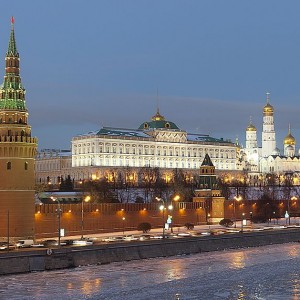
Listed under “Acts potentially amounting to segregation and apartheid,” Falk includes the “continuing excessive use of force by Israeli security forces (ISF) and a lack of accountability for violations of international humanitarian law and international human rights law.” He slams “lethal force against demonstrators,” as well as the “policy of targeted killing, which resulted in the killing of 369 Palestinians during the period September 2000 — December 2013.” Faulk charges that, “on average, for every person killed as a target of ISF, one or two other persons have been killed in any given operation.”

The document, which was reportedly scheduled to be presented to the U.N. Human Rights Council next month, was published last week by pro-Israel group U.N. Watch.

Among several recommendations, Falk urges cessation of trade with settlements, as well as the lifting of the blockade on Gaza. He calls for the International Court of Justice to “assess allegations that the prolonged occupation possesses legally unacceptable characteristics of ‘colonialism’, ‘apartheid’ and ‘ethnic cleansing.'”

Sarah Lazare is a writer for Common Dreams. 

Top shareholders in Whole Foods and Monsanto: identical

0

Top shareholders in Whole Foods and Monsanto: identical

By Jon Rappoport

February 25, 2014

www.nomorefakenews.com

Is there a Whole Foods-Monsanto connection?

The answer is yes.

But the important question is: what does this connection mean?

What does it imply?

Is it significant?

If you consult open listings (for example, investors.morningstar.com), you can look at the major shareholders of these two publicly traded companies, Monsanto and Whole Foods.

If you read the top 10 shareholders for each company—the holders of the most stock—you’ll see that five out of those ten are the same.

Who are those five?

Don’t prepare to see the names of individuals.

The five are funds. Investment funds.

They are, at the moment: Vanguard Total Stock Mkt. Index; SPDR S&P 500; Vanguard Institutional Index I; Vanguard 500 Index Inv; Harbor Capital Appreciation Instl.

These funds buy stocks in many, many companies.

These funds don’t say, “Well, we’ll buy Monsanto and Whole Foods stock and then exert massive direct control over Whole Foods and make it bow to Monsanto’s agenda.” No. That’s not how it works.

These funds make automatic purchases of stocks, based on computer calculations and based on the S&P rankings of companies.

These investment funds could be sitting on Mars, and their computers would be running numbers and buying and selling stock in Earth companies with no input from the outside.

Unless…something came up. Unless something big came up. Unless a private and elite word went out that Whole Foods was becoming a threat to some entrenched interest, some vital agenda. For example, some Monsanto agenda.

In that case, one of these big shareholders could cast a proxy vote that would go against the aims or plans of Whole Foods.

One of Vanguard’s investment funds is THE top shareholder of Monsanto, and the fourth largest shareholder of Whole Foods. Here, from Vanguard’s website, is a quote from “Vanguard’s proxy voting guidelines.” Read carefully:

“In evaluating proxy proposals, we consider information from many sources, including but not limited to, the investment advisor for the fund, the management or shareholders of a company presenting a proposal, and independent proxy research services. We will give substantial weight to the recommendations of the company’s board, absent guidelines or other specific facts that would support a vote against management. In all cases, however, the ultimate decision [on how to vote] rests with the members of the [Vanguard] Committee, who are accountable to the [Vanguard] fund’s Board.”

The key excerpt from this paragraph is: “We will give substantial weight to the recommendation of the company’s board, absent guidelines or other specific facts that would support a vote AGAINST MANAGEMENT.”

Bottom line, in plain English, it goes this way: “We, as an investment fund, hold a huge number of shares of a company (like Whole Foods). If the company is holding a vote on its future plans and policies, we can, if we decide to, weigh in with our huge voting block and go against the wishes of that company. And win.”


The Matrix Revealed


If such a proxy vote came down to favoring the agenda of Monsanto or Whole Foods, and if the situation was crucial enough, who do you think would come out on top? Who would be torpedoed?

Taking this a step further: with Whole Foods’ decision, in January of 1992, to go public, to become a publicly traded company, to sell stock out in the open, it put itself into a world where money talks a language that is no longer simply based on products sold and company profit.

Whole Foods entered a world where billions and trillions of dollars exert influence, where “important people” can “have discussions” with companies and “suggest strategies” and “offer advice” that goes beyond how to run a successful enterprise.

If someone who is tangentially associated with one of Whole Foods’ top shareholders shows up and wants to talk, there are ears ready to listen.

Remember, that top shareholder in Whole Foods is also a top investor in Monsanto. It isn’t hard to figure out which company—Whole Foods or Monsanto—occupies the superior position in that someone’s mind.

The top shareholder in Whole Foods holds a boatload of proxy votes in his back pocket. He can cast them with or against Whole Foods. The possibility is always there.

Jon Rappoport

The author of two explosive collections, THE MATRIX REVEALED and EXIT FROM THE MATRIX, Jon was a candidate for a US Congressional seat in the 29th District of California. He maintains a consulting practice for private clients, the purpose of which is the expansion of personal creative power. Nominated for a Pulitzer Prize, he has worked as an investigative reporter for 30 years, writing articles on politics, medicine, and health for CBS Healthwatch, LA Weekly, Spin Magazine, Stern, and other newspapers and magazines in the US and Europe. Jon has delivered lectures and seminars on global politics, health, logic, and creative power to audiences around the world. You can sign up for his free emails at www.nomorefakenews.com

Filed under: Corporate Fraud, YesOn37

A New Neocon Push for Syrian War

1

Coleen Rowley 
RINF Alternative News

The propaganda that continues to flourish for war on Syria shows many Americans fail to understand the problems posed by “U.S. Empire-building” believing it to be an altruistic force, toppling other governments and starting wars for the good of all mankind.

Two recent articles in the New York Times: “Use Force To Save Starving Syrians” and “U.S. Scolds Russia as It Weighs Options on Syrian War“ are typical of the concerted efforts underway to ramp up U.S. military intervention despite overwhelming opposition voiced by Congress and the American public thwarting Obama’s plan to bomb Syria announced in late August last year.

The “U.S. Weighs Options” news piece is easier to expose since it employs an obviously twisted and one-sided reporting lens that puts the primary blame on Russia for the violent conflict in Syria. It was apparently fed to Michael R. Gordon and his NYT colleagues by anonymous Administration officials as well as the Washington Institute for Near East Policy, the neocon think tank nefariously founded by the Israeli American Public Affairs Committee (AIPAC) to deceptively appear to be independent of its parent. (AIPAC has been revealed by scholars as the most powerful force in recent decades on U.S. foreign policy, repeatedly pushing the U.S. into wars for Israel.)


It should be recalled that Gordon himself is the same NYT reporter who gave a big assist back in 2002 to Judith Miller, notoriously collaborating with Vice President Dick Cheney’s aide Scooter Libby and other neoconservatives to gin up war on Iraq by writing false front page stories about Saddam’s WMD.

Unfortunately Gordon never was held accountable (in contrast to Miller who was eventually forced out of the NYT and even did some jail time for refusing to testify about one of Libby’s other illegal leaks). It’s therefore not surprising that Gordon and others continue to carry water and blatantly skew the facts for AIPAC and the neocons.

The other push for increased military intervention in Syria, however, could be categorized as “neo-lib.” The “Use Force…” op-ed by long-time advocates of “Right to Protect (R2P)” who want Syrian regime change, Danny Postel and Nader Hashemi, current heads of the University of Denver’s Korbel School of International Studies, is even more insidious. As Professor Rob Prince explains in his insightful counterpoint, “Military Humanitarian Intervention: the Shock Doctrine Applied to Syria:”

“In calling for military intervention in Syria – something not even the U.S. military itself is particularly enthusiastic about – Hashemi and Postel cozy up, as they have before on Iran in 2009 and Libya in 2011, with the likes of AIPAC, along with this country’s band of intrepid and misdirected neoconservatives. These are the same elements that pushed this country into invading Iraq and continue to push the Obama Administration to intervene militarily in Syria.”

Close examination of the facts — rather than shock doctrine emotion — is indeed required because R2P is based on a form of ends-justify-the means, concocted utilitarianism, i.e. Orwellian-type propositions that killing can save lives, that war can bring human rights, democracy and peace. It’s not different from the prevalent argument that torture can be justified as saving lives or “we must destroy the village to save it,” designed to prey on people’s emotions instead of facilitating critical thinking based on actual facts or research.

These two writers urging U.S. military force admit “political interests” typically lie behind R2P interventions. But they fail to recognize how their own long-standing political interest in toppling the current Syrian government undercuts their own claimed morality mantel. It also casts doubt on their suggestion that such force and aerial bombardment would be used evenhandedly against both Syrian regime forces and/or rebel militias, upon whichever side blocks the delivery of food and humanitarian supplies.

Any “humanitarian” proposal emanating from Obama and Kerry who similarly announced “Assad must go” from early on would naturally face equal skepticism.  Russia and China certainly remember how they were deliberately misled in UN Security Council discussions to not veto what then U.S. Ambassador Susan Rice sold as a limited “no fly zone” humanitarian mission to protect Libyans in Benghazi but which morphed within days of that vote into thousands of NATO bombing sorties over six months to take out Qaddafi and force regime change upon Libya.

In the case of Libya, a right to “protect” turned out to mean the right to destroy. That probably explains why Postel-Hashemi do not point to Libya as their precedent for R2P success but, rather bizarrely, to Somalia and “Black Hawk Down.”

It’s long been observed that “truth is the first casualty of war.” So fact-checking is needed when these R2P-regime change proponents point to the “humanitarian nightmare in Syria – replete with refugee flows, sarin gas, barrel bombs, and ‘industrial-scale’ killings and torture, (which have) horrified the world.”

Facts are inherently scarce in the fog of war enveloping Syrian atrocities. Eventually truth may emerge. But for starters, very little solid evidence exists as to who was responsible for the sarin attack on Ghouta on Aug. 21, 2013. Despite John Kerry’s initially bold claims that the U.S. possessed “undeniable” evidence that Assad’s forces were responsible “beyond any reasonable doubt,” Seymour Hersh and other investigative journalists have reported that U.S. intelligence was never conclusive. [See Consortiumnews.com’s “Deceiving the US Public on Syria.”

Evidence does exist of a few hundred Syrians dying in the August chemical attack but the (overly precise) figure the U.S. cited of 1,429 victims is now widely viewed as exaggerated since it stemmed from a sloppy, rushed counting of shrouded images in various videos by U.S. intelligence agencies.

The U.N. too has already backtracked on several of its original key findings about this sarin attack. Whatever bits of intelligence the U.S. does possess remain classified and secret to this day so it’s hard to assess but, at very least, the trajectory “vector  analysis” — referred to by the U.S. Ambassador to the United Nations Samantha Power and relied upon by the NYT and Human Rights Watch (HRW) — has been significantly discredited.

The NYT had to print a retraction of its initial map showing trajectories of sarin-loaded missiles traveling 9 kilometers after it was determined the range of the actual missiles used was no more than 2.5 kilometers. The NYT’s and HRW’s concocted maps were further undercut by the fact that no sarin was found at the site of the supposed missile landing in Moadamiya, south of Damascus. The only rocket tested and found to be carrying sarin was the one that landed in Zalmalka/Ein Tarma, east of Damascus.

HRW’s errors and, even worse, their failure to admit these errors when they knew their map was being relied upon to justify U.S. bombing of Syria, also calls their agenda into question. HRW’s hypocrisy using human rights as a pretext for military intervention and its directors’ conflicts of interests is documented elsewhere.

In late January 2014, two weapons experts challenged the ballistic data, concluding ”that under no circumstances can Syria be held accountable for the massacre” (see Flawed US intelligence on Ghouta massacre based on MIT report: “Possible Implications of Faulty US Technical Intelligence in the Damascus Nerve Agent Attack of August 21, 2013″)

War crimes should, of course, always be brought to light and prosecuted. But the recent “smoking gun” report accusing Assad and conveniently made public just when the Geneva II peace negotiations were getting underway is suspicious on many levels. Reportedly commissioned and funded by Qatar, a country arming and funding Syria’s rebels, the report lacks independent, unbiased sources and omits evidence of war crimes being committed by rebel factions in Syria. (Also see “Is Syrian peace conference laying the foundation for war?“)

It’s no secret that the U.S. has a long history of toppling governments that it doesn’t like, even democratically elected ones. And Syria is not the only place right now where the official goal is regime change! The coup orchestration department is working overtime these days with reports of U.S. attempts to topple governments in Venezuela and Ukraine.

(U.S. meddling in the latter, despite the complexity of the situation – see here and here, was recently confirmed through interceptions of Assistant Secretary of State Victoria Nuland, formerly Dick Cheney’s principal deputy foreign policy advisor and married to neocon Robert Kagan, co-founder of the Project for the New American Century.)

The use (abuse) of human rights law as justification for orchestrating such “regime changes” in Syria and around the world exemplifies a dangerous form of hypocrisy as it serves to deprive these international principles of legitimacy.

As retired CIA analyst Paul Pillar recently wrote, it is a mistake to see “the United States as an omnipotent global savior or policeman. We ought to bear this principle in mind in contemplating policy about problems anywhere on the globe. It certainly should be borne in mind with the Middle East, where there is a still fairly recent history of forceful U.S. action doing more harm than good…”

Coleen Rowley is a retired FBI agent and former chief division counsel in Minneapolis. She’s now a dedicated peace and justice activist and board member of the Women Against Military Madness and works with the Veterans for Peace chapter in Minneapolis, Minnesota.

Why Israelis are content to live in a bubble of denial

0

The National — 25 February 2014

The 24-hour visit by German chancellor Angela Merkel to Israel this week came as relations between the two countries hit rock bottom. According to a report in Der Spiegel magazine last week, Ms Merkel and Israeli prime minister Benjamin Netan­yahu have been drawn into shouting matches when discussing by phone the faltering peace process.

Despite their smiles to the cameras during the visit, tension behind the scenes has been heightened by a diplomatic bust-up earlier this month when Martin Schulz, the president of the European parliament and himself German, gave a speech to the Israeli parliament.

In unprecedented scenes, a group of Israeli legislators heckled Mr Schulz, calling him a “liar”, and then staged a walkout, led by the economics minister Naftali Bennett. Rather than apologising, Mr Netanyahu intervened to lambast Mr Schulz for being misinformed.

Mr Schulz, who, like Ms Merkel, is considered a close friend of Israel, used his speech vehemently to oppose growing calls in Europe for a boycott of Israel. So how did he trigger such opprobrium?

Mr Schulz’s main offence was posing a question: was it true, as he had heard in meetings in the West Bank, that Israelis have access to four times more water than Palestinians? He further upset legislators by gently suggesting that Israel’s blockade of Gaza was preventing economic growth there.

Neither statement should have been in the least controversial. Figures from independent bodies such as the World Bank show Israel, which dominates the local water supplies, allocates per capita about 4.4 times more water to its population than to Palestinians.

Equally, it would be hard to imagine that years of denying goods and materials to Gaza, and blocking exports, have not ravaged its economy. The unemployment rate, for example, has increased 6 per cent, to 38.5 per cent, following Israel’s recent decision to prevent the transfer of construction materials to Gaza’s private sector.

But Israelis rarely hear such facts from their politicians or the media. And few are willing to listen when a rare voice like Mr Schulz’s intervenes. Israelis have grown content to live in a large bubble of denial.

Mr Netantahu and his ministers are making every effort to reinforce that bubble, just as they have tried to shield Israelis from the fact that they live in the Middle East, not Europe, by building walls on every side — both physical and bureaucratic — to exclude Palestinians, Arab neighbours, foreign workers and asylum seekers.

Inside Israel, the government is seeking to silence the few critical voices left. The intimidation was starkly on display last week as the supreme court considered the constitutionality of the recent “boycott law”, which threatens to bankrupt anyone calling for a boycott of either Israel or the settlements.

Tellingly, a lawyer for the government defended its position by arguing that Israel could not afford freedom of expression of the kind enjoyed by countries like the US.

Illustrating the point, uproar greeted the news last month that a civics teacher had responded negatively when asked by pupils whether he thought Israel’s army the most moral in the world. A campaign to sack him has been led by government ministers and his principal, who stated: “There are sacred cows I won’t allow to be slaughtered.”

Similarly, last week it emerged that a Palestinian from East Jerusalem had been interrogated by police for incitement after noting on Facebook that his city was “under occupation”.

Outside Israel, Mr Netanyahu is indulging in more familiar tactics to browbeat critics. Tapping European sensitivities, he accused those who support a boycott of being “classical anti-semites in modern garb”. He justified the allegation, as he has before, on the grounds that Israel is being singled out.

It looks that way to Israelis only because they have singularly insulated themselves from reality.

Western critics focus on Israel because, unlike countries such as North Korea or Iran, Israel has managed to avoid any penalties despite riding roughshod over international norms for decades.

Iran, which is only suspected of secretly developing nuclear weapons, has been enduring years of savage sanctions. Israel, which has hidden its large stockpile of nuclear warheads from international scrutiny since the late 1960s, has enjoyed endless diplomatic cover.

Contrary to Mr Netanyahu’s claim, lots of countries have been singled out by the United States and Europe for sanctions — whether diplomatic, financial or, in the case of Iraq, Libya and Syria, military.

But the antipathy towards Israel has deeper roots still. Israel has not only evaded accountability, it has been handsomely rewarded by the US and Europe for flouting international conventions in its treatment of the Palestinians.

The self-styled global policemen have inadvertently encouraged Israel’s lawbreaking by consistently ignoring its transgressions and continuing with massive aid handouts and preferential trade deals.

Far from judging Israel unfairly, Mr Schulz, Ms Merkel and most other western leaders regularly indulge in special pleading on its behalf. They know about Israel’s ugly occupation but shy away from exercising their powers to help end it.

The reason why popular criticism of Israel is currently galvanising around the boycott movement — what Mr Netanyahu grandly calls “delegitimisation” — is that it offers a way for ordinary Americans and Europeans to distance themselves from their governments’ own complicity in Israel’s crimes.

If Mr Netanyahu has refused to listen to his external critics, western governments have been no less at fault in growing impervious to the groundswell of sentiment at home that expects Israel to be forced to take account of international law.

Both Ms Merkel’s diplomatic niceties and her shouting matches have proven themselves utterly ineffective. It is time for her and her western colleagues to stop talking and to start taking action against Israel.

Setting the Standard — Racial Profiling and Police Brutality

0

A recorded interview with Hannibal from the Trayvon 2, an anarchist who was arrested during the Oakland rebellions in the wake of the George Zimmerman verdict. Hannibal is jointed by another speaker who discusses racial profiling and police brutality.

Click here to listen to Hannibal on KPFA Radio’s ‘Setting the Standard’ with Pedro Reyes. Hannibal from the Trayvon2 and Anthony from San Jose talk about racial profiling and police brutality. [Segment begins at 1:46:00]

https://www.kpfa.org/archives/20140224-Mon0300.m3u

The Crisis In Ukraine – Paul Craig Roberts

0

The Crisis In Ukraine

Paul Craig Roberts

In 2004 Hungary joined the EU, expecting streets of gold. Instead, four years later in 2008 Hungary became indebted to the IMF. The rock video by the Hungarian group, Mouksa Underground sums up the result in Hungary today of falling into the hands of the EU and IMF.

http://www.youtube.com/watch?v=Jg8h526sB7w&feature=youtu.be

The song is about the disappointing results of leaving socialism for capitalism, and in Hungary the results are certainly not encouraging. The title is “Disappointment with the System Change.” Here are the lyrics:

Over twenty some years now
We’ve been waiting for the good life
For the average citizen
Instead of wealth we have poverty
Unrestrained exploitation

So this is the big system change
So this is what you waited for

No housing No food No work
But that’s what was assured wouldn’t happen

Those on top
Prey upon us
The poor suffer everyday 

So this is the big system change
So this is what you waited for

(Repeat)

When will real change occur?
When will there be a livable world
The ultimate solution will arise
When this economic system is forever abandoned

So this is the big system change
So this is what you waited for

(Repeat)

There is no solution but revolution

Perhaps if the Kiev students had listened to the Hungarian rock group instead of to Washington’s NGOs, they would understand what it means to be looted by the West, and Ukraine would not be in turmoil and headed toward destruction.

As Assistant Secretary of State Victoria Nuland made clear in her speech last December and in the leaked recording of her telephone conversation with the US ambassador in Kiev, Washington spent $5 billion of US taxpayer dollars engineering a coup in Ukraine that overthrew the elected democratic government.

That it was a coup is also underlined by the obvious public lies that Obama has told about the situation, blaming, of course, the overthrown government, and by the total misrepresentation of Ukrainian developments by the US and European presstitute media. The only reason to misrepresent the events is to support the coup and to cover up Washington’s hand.

There is no doubt whatsoever that the coup is a strategic move by Washington to weaken Russia. Washington tried to capture Ukraine in 2004 with the Washington-funded “Orange Revolution,” but failed. Ukraine was part of Russia for 200 years prior to being granted independence in the 1990s. The eastern and southern provinces of Ukraine are Russian areas that were added to Ukraine in the 1950s by the Soviet leadership in order to water down the influence of the nazi elements in the western Ukraine that had fought for Adolf Hitler against the Soviet Union during World War 2.

The loss of Ukraine to the EU and NATO would mean the loss of Russia’s naval base on the Black Sea and the loss of many military industries. If Russia were to accept such strategic defeat, it would mean that Russia had submitted to Washington’s hegemony.

Whatever course the Russian government takes, the Russian population of eastern and southern Ukraine will not accept oppression by Ukrainian ultra-nationalists and neo-nazis.

The hostility already shown toward the Russian population can be seen in the destruction by Ukrainians of the monument to the Russian troops that drove Hitler’s divisions out of Ukraine during World War 2 and the destruction of the monument to Russian General Kutuzov, whose tactics destroyed Napoleon’s Grand Army and resulted in the fall of Napoleon.

The question at the moment is whether Washington miscalculated and lost control of the coup to the neo-nazi elements who seem to have taken control from the Washington-paid moderates in Kiev, or whether the Washington neocons have been working with the neo-nazis for years. Max Blumenthal says the latter: http://www.informationclearinghouse.info/article37752.htm

The moderates have certainly lost control. They cannot protect public monuments, and they are forced to try to pre-empt the neo-nazis by legislating the neo-nazi program. The captive Ukrainian parliament has introduced measures to ban any official use of the Russian language. This, of course, is unacceptable to the Russian provinces.

As I noted in a previous column, the Ukrainian parliament itself is responsible for the destruction of democracy in Ukraine. Its unconstitutional and undemocratic actions have paved the way for the neo-nazis who now have the precedent to treat the moderates the same way that the moderates treated the elected government and to cover up their illegality with accusations of crimes and arrest warrants. Today the illegally deposed President Yanukovych is on the run. Tomorrow will the current president, Oleksander Turchinov, put in office by the moderates, not by the people, be on the run? If a democratic election did not convey legitimacy to President Yanukovych, how does selection by a rump parliament convey legitimacy to Turchinov? What can Turchinov answer if the neo-nazis put to him Lenin’s question to Kerensky: “Who chose you?”

If Washington has lost control of the coup and is unable to restore control to the moderates whom it has aligned with the EU and NATO, war would seem to be unavoidable. There is no doubt that the Russian provinces would seek and be granted Russia’s protection. Whether Russia would go further and overthrow the neo-nazis in western Ukraine is unknown. Whether Washington, which seems to have positioned military forces in the region, would provide the military might for the moderates to defeat the neo-nazis is also an open question, as is Russia’s response.

In a previous column I described the situation as “Sleepwalking Again,” an analogy to how miscalculations resulted in World War 1.

The entire world should be alarmed at the reckless and irresponsible interference by Washington in Ukraine. By bringing a direct strategic threat to Russia, the crazed Washington hegemon has engineered a Great Power confrontation and created the risk of world destruction.

The post The Crisis In Ukraine — Paul Craig Roberts appeared first on PaulCraigRoberts.org.

Coup d’Etat in Ukraine: The Looming Dangers of Neo-Fascism

3

Peter Schwarz 
RINF Alternative News

The recent events in Ukraine are a warning to the international working class. Under conditions in which workers lack both a perspective and a party to enable them to intervene independently in political events, the situation in Ukraine has developed in an extremely reactionary direction. What had been unthinkable in Europe since the fall of Hitler’s Third Reich in 1945 has come to pass: while the US and Germany ruthlessly and recklessly destabilized the country, fascists became the decisive force on the ground.

The crisis was sparked in November of last year by President Viktor Yanukovych’s refusal to sign an Association Agreement with the European Union. This was unacceptable for Washington and Berlin. As Theo Sommer put it in Die Zeit, the issue at stake was “Where should the EU’s eastern boundary, and the western boundary of the Russian sphere of influence, be situated?”

The US and Germany systematically supported the pro-EU opposition, which organized the demonstrations against Yanukovych. In addition to Julia Tymoshenko’s Fatherland and Vitali Klitschko’s UDAR–two right-wing parties with close ties to the German CDU–the opposition also included the fascist Svoboda party of Oleh Tyahnybok.

The fact that Svoboda employs neo-fascist symbols, agitates against foreigners, Jews, Hungarians and Poles, maintains close relations with the French National Front and is compared to the ultra-right Greek Golden Dawn and Hungarian Jobbik by the World Jewish Congress, has not prevented the foreign ministers of the United States and Germany from publicly embracing Tyahnybok.

The initial opposition demonstrations, however, failed to force Yanukovych to resign. At this point, paramilitary fascist militias were mobilized to intensify the conflict and propel the country to the brink of civil war. The leading role was played by the so-called Right Sector, whose masked militants, equipped with helmets, batons, fire bombs and firearms soon dominated the center of Kiev, carrying out fierce attacks on the security forces. News reports estimate their number in Kiev alone to be between 2,000 and 3,000.

The conservative Die Welt paper termed the Right Sector an “informal association of right-wing and neo-fascist splinter groups”. Time magazine, which interviewed its leader Dmitry Yarosh, writes that their “ideology borders on fascism and it enjoys support only from Ukraine’s most hard-line nationalists”. Many of its members are former soldiers or fought in the conflict on the side of Azerbaijan, and in Chechnya and South Ossetia against Russia.

It was these paramilitary fascist militias which ensured that the situation escalated last Thursday. While they fought bloody battles with the security forces, resulting in dozens of casualties on both sides, the German, Polish and French foreign ministers flew into Kiev and forced Yanukovych to accept a “compromise” following hours of negotiations. It was the beginning of the end for the president.

When the Right Sector spoke out against the agreement and threatened to resume hostilities, the military declared its neutrality, and many deputies from Yanukovych’s Party of Regions changed sides. This sealed his fate.

The situation in Ukraine is still extremely tense and unstable. The various camps of the opposition are fighting for political dominance, while there is the danger of secession and civil war in Crimea and the east of the county. The fascist forces upon which the Western powers and the opposition relied to force through regime change are demanding their pound of flesh and will play an important role in the political life of the country.

When she spoke at Independence Square after her release from prison, former prime minister and Fatherland party leader Yulia Tymoshenko made a series of overtures to the fascist militias. She expressly thanked Right Sector for its “contribution to the revolution.” The new interior minister promised that the “Self-Defense Forces from Maidan” would be integrated into the new order.

This strengthening of the fascists would not be possible without the systematic support of the media and the main political parties in Europe and the US. Liberal newspapers such as the New York Times and the Süddeutsche Zeitung have produced a deluge of propaganda portraying events in Ukraine as a “democratic revolution”, glossing over the role of fascists and glorifying the coup.

Representatives of parties of all stripes–the US Democrats and Republicans, the Conservatives, Social Democrats, Greens and Pirates from Germany and other European countries–have made pilgrimages to Kiev to express their solidarity with the right-wing mob. In particular, Germany’s social-democratic Foreign Minister Frank-Walter Steinmeier played a key role in the coup against Yanukovych.

This shift towards fascist forces is not limited to Ukraine. Sections of the French elites are turning towards the National Front (FN), which has benefited in turn from the right-wing, anti-working class policies of the Socialist Party. The FN currently is in first place in polls for the upcoming European elections. Underlying this shift to the right is the intensification of the international crisis of capitalism and growing social polarization.

In Kiev, the first task of the new government will be to administer the medicine already prescribed for Greece: austerity, welfare cuts and price increases. Representatives of the EU and the IMF have made clear that these are the prerequisites for the loans Ukraine needs to stave off bankruptcy. This will cheer the billionaire Ukrainian oligarchs, some of whom backed the opposition, while others changed sides in the past few days.

The US and EU are using the coup in Ukraine to step up pressure on Russia, risking a military confrontation. In the Financial Times, former US National Security Advisor Zbigniew Brzezinski warns that Russian meddling in Ukraine’s internal conflicts “would compel Washington to use its influence internationally to prompt steps that would be costly to Moscow.”

Throughout the crisis the working class in Ukraine has had no opportunity to intervene in political events. This is why the imperialist powers, competing oligarchic cliques, and the fascists were able to prevail. The growing threat of dictatorship and war–which is so clear today in Ukraine–can only be countered by a united movement of the international working class fighting to overthrow capitalism and all its backers on the basis of a socialist program.

Peter Schwarz is a writer for WSWS.


Vigilantes with a Badge: The War Against the American People

0


“We live in a small rural town. Moved here in 1961. I don’t remember what year the State Troopers moved a headquarters into our town. Our young people were plagued with tickets for even the smallest offense. Troopers had to get their limits for the month. People make jokes about that but it has been true. Every kid I knew was getting ticketed for something. But now it is so much worse. I raised my kids to respect police. If they did something wrong and got caught they deserved it and should take their punishment. But now I have no respect for the police. I feel threatened and fearful of them. They are aggressive and intimidating. They lie and are abusive and we do not know how to fight them. I am not a minority here but people are afraid if they speak out they will be targeted. We are just a small town. I just don’t care anymore if they do target me. I am afraid they are going to kill someone.”–Letter from a 60-year-old grandmother

The following incidents are cautionary tales for anyone who still thinks that they can defy police officers, even if it’s simply to disagree about a speeding ticket, challenge a search warrant or defend oneself against an unreasonable or unjust charge, without deadly repercussions. The message they send is that “we the people” have very little protection from the standing army that is law enforcement.

For example, Seattle police repeatedly tasered seven-months pregnant Malaika Brooks for refusing to sign a speeding ticket. While Brooks bears permanent burn scars on her body from the encounter, police were cleared of any wrongdoing on the grounds that they didn’t know that tasering a pregnant woman was wrong.

Eight Los Angeles police officers fired 103 bullets at two women in a newspaper delivery truck they mistook for a getaway car during a heated manhunt. The older woman was shot twice in the back and the other was wounded by broken glass. The women were offered a $4.2 million settlement for their injuries, while the officers were reprimanded for acting inappropriately, “retrained” and put back on the streets.

During the course of a routine investigation, a group of Los Angeles police officers beat, punched, and tasered Kelly Thomas, schizophrenic, homeless and suspected of vandalizing cars, until he was brain dead. The two officers charged for their role in the beating were acquitted and will face no time in prison. A third officer who was supposed to be charged will also walk free.

New York City police, pursuing a man who had reportedly been weaving among cars in Times Square, fired into a crowd, shooting a 54-year-old woman in the knee and another woman in the buttocks. Although the officers faced no repercussions for their reckless behavior, prosecutors charged the suspect with felony assault on the grounds that he was responsible for the injuries caused by the police.

Chicago police arrested, beat, and sodomized with a gun Angel Perez, pushing in his eye sockets, driving his elbows back into his head, and sticking a gun into his rectum, all in an effort to “persuade” him to be a drug informant. All of the officers remain in active duty, patrolling the streets.

Houston police shot and killed Brian Claunch, a mentally ill double amputee, who had refused to drop a ballpoint pen. The police officer was cleared of any misconduct and remains on the force. Curiously, in the last six years, the Houston Police Department has yet to find a single police shooting unjustified. Between 2007 and 2012, the HPD officers injured 111 civilians while fatally shooting 109 people.

This phenomenon we are experiencing with the police is what philosopher Abraham Kaplan referred to as the law of the instrument, which essentially says that to a hammer, everything looks like a nail. In the scenario that has been playing out in recent years, we the citizenry have become the nails to be hammered by the government’s henchmen, a.k.a. its guns for hire, a.k.a. its standing army, a.k.a. the nation’s law enforcement agencies.

Indeed, there can no longer be any doubt that armed police officers, the end product of the government–federal, local and state–and law enforcement agencies having merged, have become a “standing” or permanent army, composed of full-time professional soldiers who do not disband. Yet these permanent armies are exactly what those who drafted the U.S. Constitution and Bill of Rights feared as tools used by despotic governments to wage war against its citizens.

That is exactly what we are witnessing today: a war against the American citizenry.

Let that sink in a moment, and then consider that not a day goes by without reports of police officers overstepping the bounds of the Constitution and brutalizing, terrorizing and killing the citizenry. Indeed, the list of incidents in which unaccountable police abuse their power, betray their oath of office and leave taxpayers bruised, broken and/or killed grows longer and more tragic by the day to such an extent that Americans are now eight times more likely to die in a police confrontation than they are to be killed by a terrorist.

Making matters worse, when these officers, who have long since ceased to be peace officers, violate their oaths by bullying, beating, tasering, shooting and killing their employers–the taxpayers to whom they owe their allegiance–they are rarely given more than a slap on the hands before resuming their patrols. Ironically, even when the victims are awarded multi-million dollar settlements to compensate for the injuries suffered at the hands of out-of-control police, amped up on the power of the badge and the gun, it’s the taxpayers who must sacrifice, scrimp and save in order to pay for their transgressions, all the while, the officers, never held accountable for their actions, continue to collect regular paychecks, benefits and pensions.

Before I am drowned out by howls of outrage from those who consider all individuals in uniform blameless and noble to a fault, let me acknowledge that there are undeniably many honorable law enforcement officials (some of whom are among my closest friends) who strive to abide by their oath to uphold the Constitution and serve and protect the citizens of their communities. However, they are fast becoming a minority in a sea of police officers who take advantage of their broad discretion and repeatedly step beyond the bounds of the law, ignoring their responsibility to respect the Bill of Rights. These latter individuals are little more than vigilantes–albeit vigilantes with a badge–and our communities are presently being overrun by individuals entrusted with enforcing the law who are allowed to operate above the law and break the laws with impunity.

This lawlessness on the part of law enforcement, an unmistakable characteristic of a police state, is made possible in large part by police unions which routinely oppose civilian review boards and resist the placement of names and badge numbers on officer uniforms; police agencies that abide by the Blue Code of Silence, the quiet understanding among police that they should not implicate their colleagues for their crimes and misconduct; prosecutors who treat police offenses with greater leniency than civilian offenses; courts that sanction police wrongdoing in the name of security; and legislatures that enhance the power, reach and arsenal of the police.

As I document in my book A Government of Wolves: The Emerging American Police State, we’re entering the final phase of America’s transition to authoritarianism, a phase notable for its co-opting of civilian police as military forces. American police forces were never supposed to be a branch of the military, nor were they meant to be private security forces for the reigning political faction. Instead, they were intended to be an aggregation of countless local police units, composed of citizens like you and me that exist for a sole purpose: to serve and protect the citizens of each and every American community.

As a result of the increasing militarization of the police in recent years, however, the police now not only look like the military–with their foreboding uniforms and phalanx of lethal weapons–but they function like them, as well. Thus, no more do we have a civilian force of peace officers entrusted with serving and protecting the American people. Instead, today’s militarized law enforcement officials have shifted their allegiance from the citizenry to the state, acting preemptively to ward off any possible challenges to the government’s power, unrestrained by the boundaries of the Fourth Amendment. As journalist Herman Schwartz observed, “The Fourth Amendment was designed to stand between us and arbitrary governmental authority. For all practical purposes, that shield has been shattered, leaving our liberty and personal integrity subject to the whim of every cop on the beat, trooper on the highway and jail official.”

This brings me to the looming question, the one to which there is no easy answer: what can “we the people” do to protect themselves from the police? While there are scattered attempts to combat police abuses underway, ranging from increased surveillance of on-duty police officers through the use of lapel cameras, and campaigns to film police interactions with one’s smart phone, to legislation authorizing citizens to use force against a police officer who is acting unlawfully, few bring about any lasting change.

The solution is far simpler yet so much more difficult to achieve. As with all things–no matter what level of government, whether you’re talking about abuses within law enforcement, Congress, the National Security Agency, or within your own community–for real change to occur, it will take Americans getting outraged enough to speak up and speak out. It will take them showing up at City Council meetings, picketing in front of police stations, and demanding that their concerns, complaints and fears about police brutality–not only for themselves but for their fellow citizens of lesser incomes, darker skin tones and questionable lifestyles–be acknowledged and acted upon.

To put it another way, there can be no hope for freedom unless “we the people” recognize that every time the police shoot an unarmed citizen, taser an elderly person, or beat someone senseless or crash through a homeowner’s door, they are really shooting me, tasering you, and beating senseless your children, your neighbors and your loved ones. — John W. Whitehead

Why We Oppose Big Brother in the Bay Area

0

On March 4, 2014, the Oakland City Council will decide to award a contract that, if approved, will impact your civil rights. The Domain Awareness Center (“DAC”) is a full-time mass surveillance project encompassing the city and Port of Oakland and initially funded by the Department of Homeland Security (“DHS”).  The Oakland Privacy Working Group opposes this project because city staff and the Oakland Police Department (“OPD”) have proven they can’t be trusted to oversee something this critical; furthermore it won’t solve crime, there is great potential for abuse of civil liberties, and the city cannot afford it. The city has no data retention and privacy policy or oversight committee for the DAC, which is absurd when one considers the potential harm and past wrongdoing by the city.

The DAC will share live video and data with regional government, law enforcement, and as stated by Port Facilities Security Officer Mike O’Brien at the February 18, 2014 City Council meeting, “there is an expectation by the Feds that we will share information with them.” Future proposed DAC phases include adding cameras at Oakland Unified School District buildings and throughout Oakland Housing Authority properties, automatic license plate readers, facial recognition software, and social media monitoring. Strangely, Oakland Police Department (“OPD”) has suggested including planning, business, and property tax databases, which are unrelated to crime fighting.

We are being sold the line that the DAC will help solve Oakland’s crime problem, yet there is no data that proves mass surveillance does so.  And city staff has shown no interest in solving crimes with the DAC. As stated by the East Bay Express in the Dec. 18, 2013 article “The Real Purpose of Oakland’s Surveillance Center, “While the emails reveal a great deal about the DAC, they are also notable for what they do not talk about … city staffers do not discuss any studies pertaining to the use of surveillance cameras in combating crime, nor do they discuss how the Domain Awareness System could help OPD with its longstanding problems with solving violent crimes. In more than 3,000 pages of emails, the terms ‘murder,’ ‘homicide,’ ‘assault,’ ‘robbery,’ and ‘theft’ are never mentioned.”

OPD can’t manage its resources and has a poor relationship with the community. In a February 6, 2014 report by the city auditor, “OPD spent at least $1.87 million on technology that was never used or underused.” According to OPD’s report to the Public Safety Committee at its September 2013 meeting, the city has over 650 homicide investigations with unexamined evidence, some cases going back seven years. Alameda County has over 1,900 rape kits that have never been looked at. In the same September 2013 meeting, OPD stated that it needed $1.2 million to increase staff at its crime lab, an amount that will now be usurped by the DAC’s estimated annual operating costs to the city of $1.6 million.

For 10+ years running, OPD has failed to comply with the Negotiated Settlement Agreement from the infamous Riders trial. Yet, the City Council is poised to hand over to OPD the most advanced surveillance and tracking tools in history. In her February 13, 2014 letter to the City Council, ACLU Nor-Cal staff attorney Linda Lye noted that “black people were twice as likely (68%) to be surveilled for ‘no obvious reasons’ than whites” by video surveillance systems.

City staff disregards Oakland’s contracting policies and cannot be trusted to oversee something more critical like our private data. The work on Phase 1 was completed by SAIC, a contractor found to be in noncompliance with the City’s Nuclear Free Zone Ordinance (“NFZO”). SAIC defrauded the city of New York on a payroll system contract, agreeing in 2012 to pay $500 million to avoid prosecution. As revealed by internal city emails, Oakland city staff knew these facts prior to execution of the Phase 1 contract and concealed these facts from the City Council as SAIC received payment. Unsurprisingly, SAIC overcharged the city on Phase 1. In 2013 SAIC was exposed and prevented from pursuing the Phase 2 contract. Noncompliance with the NFZO is also a problem for the staff-selected Phase 2 contractor.

Most importantly, ours is a civil rights movement. The Bill of Rights codified our civil liberties. The California Constitution has an express right to privacy. Long-held legal doctrines such as freedom of speech, the press, and assembly and the requirement of due process and probable cause, form the basis of our civil society. Many lives have been lost defending these rights. The result of mass surveillance is a chilling effect upon legal activities, such as meeting in a public plaza or attending a mosque for worship in this post-9/11 world.

Oakland has in the past rejected mass surveillance, in 1997 and 1999. Council member Henry Chang reflected on his decision to come to the United States, saying, “We came because we don’t want to be watched by Big Brother all the time.” Council member Ignacio De La Fuente cast his no vote by citing a lack of evidence that cameras are effective in reducing crime and concluding that the program was not “worth the risk of violating people’s privacy rights.”

The DAC won’t reduce crime. It is a financial boondoggle. Staff and OPD have proven they cannot be trusted to oversee it. Most importantly, the DAC will infringe upon our civil liberties.

Oakland Privacy Working Group can be reached through their website: oaklandprivacy.wordpress.com

BBC Attempts to Justify Terrorism

0

Tony Cartalucci 
RINF Alternative News

BBC plums new depths with dishonest coverage of Thai crisis and attempted justification of expanding pro-regime terror campaign.

The BBC has once again attempted to manipulate public perception regarding world events, this time in Thailand where the Western-backed regime of Thaksin Shinawatra had announced, and is now in the process of carrying out, a deadly campaign of terrorism aimed at growing dissent sweeping the country.

The BBC’s article, “Thailand crisis: Deadly attacks on opposition rallies,” starts by claiming:

An explosion has killed two people and wounded more than 20 others near an anti-government protest rally in the Thai capital Bangkok.

A boy aged 12 and a 40-year-old woman died in the attack near the Central World shopping mall, officials said.

It came hours after gunmen opened fire on an anti-government rally in eastern Thailand, killing a five-year-old girl.

Thai Prime Minister Yingluck Shinawatra condemned the attacks, describing them as “terrorist acts for political gain”.

She said her government would not tolerate terrorism, and ordered a full investigation.

In reality, the regime itself, via its “red shirt” enforcers declared their intent to carry out just such a deadly campaign of armed terror against growing protests if elections on February 2, 2014, were disrupted.

TIME magazine on January 16 reported in their article, “”Bangkok Shutdown: Yingluck Supporters Prepare to Fight for Democracy,” that:

As Thailand’s anti-government protests enter their fourth day, observers say prospects for violent confrontation are increasing, with reports of government supporters stockpiling weapons in case of Prime Minister Yingluck Shinawatra’s ouster.

According to the Bangkok Post, radical members of the Red Shirts – diehard champions of Yingluck and her notorious brother Thaksin Shinawatra – are readying a cache of arms in case the 46-year-old premier is forced from office by either military or judicial intervention.

The paper quoted a Red Shirt source as saying “There are strong anti-coup and anti-court sentiments among the red-shirt mavericks who are familiar and experienced with weapon use.”

The elections were not disrupted however, but rather saw massive nationwide boycotts leading to an unprecedented, astoundingly low 46% voter turnout. The regime is now without either a democratic mandate, or a cusus belli to use violence against protesters.

Still, the BBC is attempting to make a case for violence, citing “frustration.” The BBC would claim:

No group has so far said they carried out either attack.

But the BBC’s Jonathan Head in Bangkok says it appears to be the start of retaliation by the armed wing of the so-called “red-shirt” movement that backs the governing Pheu Thai party.
For three months red-shirt activists have watched with growing frustration as the protesters — who enjoy the backing of the military and powerful royalists — have been allowed to obstruct the government and sabotage an election that would almost certainly have been won by Pheu Thai, he says.

Jonathan Head’s analysis is, however, wholly, consistently, and intentionally dishonest. His attempt to frame the opposition as backed by “the military and powerful royalists” excludes massive numbers of growing dissent among rural rice farmers cheated now for over half a year of promised crop subsidies. Head also claims that elections were “sabotaged,” again, omitting that even in regions of the country where polling stations were open, the majority chose not to vote in what they considered sham elections.

What the BBC is attempting to do, and as it has done elsewhere including in Syria, is justify terrorism in the name of Western-backed interests in Thailand — namely the regime of Thaksin Shinawatra. While the West and the regime itself is still attempting to sell the notion of a divided Thailand and the prospect of a civil war, it should be noted that the facts on the ground make both entirely impossible.

Tony Cartalucci runs altthainews.blogspot.com.

Wall Street Boys Gone Wild

0

Dean Baker 
RINF Alternative News

Many people already had low opinions of the Wall Street elite. I’m referring to the investment-banker types who get incredibly rich through financial manipulations, government bailouts and implicit government guarantees provided for too-big-to-fail banks. But a recent New York magazine piece showed that even the most jaded were being too generous in their assessment of this gang.

Kevin Roose, who was working as a New York Times reporter at the time, managed to infiltrate a black-tie party at the St. Regis Hotel sponsored by a secret Wall Street fraternity. The so-called Kappa Beta Phi (the reverse of Phi Beta Kappa, the academic honor society) was not made up of a bunch of college kids or recent grads. It featured many of the leading figures on Wall Street – multimillionaires and billionaires, all of whom were well past the age at which we expect people to start being responsible for their actions.

Roose, whose new book, “Young Money,” includes this episode, reported on childish skits by men dressed up in drag and sexist and homophobic jokes directed against former Secretary of State Hillary Clinton and former U.S. Rep. Barney Frank, D—Mass., among others. There were also tone-deaf wisecracks about the financial crisis and their bailout by the Federal Reserve Board and the Treasury Department, which apparently is quite amusing to these people.

[product id=”” sku=”JS02″]The rest of the country has experienced these events a bit differently. On the basis of Congressional Budget Office projections, the collapse of the housing bubble will have cost the country more than $24 trillion ($80,000 per person) in lost output through 2024. The people who are unemployed, underemployed or have lost their homes probably don’t have as much to laugh about these days as the brothers of Kappa Beta Phi.

The anger prompted by Roose’s account makes this a great time to bring back the idea of taxing their speculation. While Dodd-Frank reforms will curb some of the worst abuses, the Wall Streeters are still making huge fortunes shuffling money rather than doing anything productive. A modest tax can raise a huge amount of money for productive ends, such as infrastructure and education, while making shuffling money a bit less profitable.

Last year, Iowa Sen. Tom Harkin and Oregon Rep. Peter DeFazio introduced a bill that that would place a tax of 0.03 percent (3 cents on $100) on the sale of assets such as stocks, bonds and derivatives. In other words, they are proposing a very modest sales tax. Congress’ Joint Committee on Taxation calculated that this tax would raise almost $40 billion a year. That’s almost twice the amount needed to extend unemployment benefits for a full year.

Rep. Keith Ellison of Minnesota proposed a somewhat higher rate, comparable to the one in place on stock trade in the United Kingdom, which could raise as much as $170 billion a year. In short, there is real money at stake here. All versions of these bills are held up in committees.

The idea of imposing a tax on financial transactions is hardly new or radical. The tax in the United Kingdom dates back to the 17th century, and it hasn’t prevented the country from having one of the largest stock markets in the world.

Even the International Monetary Fund has come out in favor of increasing taxes on the financial sector. It points out that the financial sector is seriously undertaxed compared with other sectors of the economy. Most of us pay a sales tax when we buy clothes or a car, but for some reason we are supposed to believe the world will come to an end if the Wall Street guys have to pay a tax when they are flipping credit default swaps.

When they give up on claiming that a Wall Street sales tax will bring on the apocalypse, the usual fallback is that it would hit small savers and pension funds. The argument is that the brokerage houses will pass on the tax so that everyone with a 401(k) will get socked with extra costs.

There are two problems with this story. First, most people with 401(k)s aren’t buying and selling stock every five minutes. (In fact, many companies now charge a fee to people who change their assets between funds frequently.) This means the cost to most people would be relatively small even if it is passed on.

However, the more important point is that people respond to higher trading costs by trading less. Most research shows that if trading costs go up by 50 percent, then people cut back their trading by roughly 50 percent. This means that people will pay more for each trade but they will be carrying out many fewer trades, leaving their total trading costs pretty much the same.

Since on average we don’t make money by trading, fewer trades are not going to hurt the return we get on our 401(k). It will, however, be bad news for the Wall Street folks who profit from the trades.

And that is why our representatives in Congress are not anxious to take up the Harkin-DeFazio or Ellison bills. Those fraternity brothers telling sexist and homophobic jokes have lots of money, and in Washington that means campaign fundraising, which means power.

For this reason, members of Congress will come up with all sorts of nonsense to avoid making Wall Street pay taxes like the rest of us. In fact, Barack Obama’s administration has been working overtime to block a tax in the European Union. The White House has been demanding an exemption for the European subsidiaries of U.S. banks that would make the tax unworkable.

A Wall Street sales tax would be a quick effective way to bring the brothers of Kappa Beta Phi down to earth. But until people starting making demands of their representatives, they will keep taking the Wall Street money, and the brothers will keep laughing at the rest of us at their black-tie and drag parties at the St. Regis.

Dean Baker is co-director of the Center for Economic and Policy Research and author, most recently, of The End of Loser Liberalism: Making Markets Progressive.

Neocons, Keep Your Sticky Fingers Off Ukraine

1

Ron Paul 
RINF Alternative News

Last week Ukraine saw its worst violence since the break-up of the Soviet Union over 20 years ago. Protesters occupying the main square in the capitol city, Kiev, clashed with police leaving many protesters and police dead and many more wounded. It is an ongoing tragedy and it looks like there is no end in sight.

The current conflict stems from a divide between western Ukraine, which seeks a closer association with the European Union, and the eastern part of the country, which has closer historic ties to Russia.

The usual interventionists in the US have long meddled in the internal affairs of Ukraine. In 2004 it was US government money that helped finance the Orange Revolution, as US-funded NGOs favoring one political group over the other were able to change the regime. These same people have not given up on Ukraine. They keep pushing their own agenda for Ukraine behind the scenes, even as they ridicule anyone who claims US involvement.

A recent leaked telephone conversation between two senior government officials made it clear that not only was the US involved in the Ukrainian unrest, the US was actually seeking to determine who should make up the next Ukrainian government!

Senator John McCain, who has made several trips to Ukraine recently to meet with the opposition, wrote last week that the US must stand up to support the territorial integrity of Ukraine, including Crimea.

[product id=”” sku=”js07″]Why are US government officials so eager to tell the Ukrainians what they should do? Has anyone bothered to ask the Ukrainians? What if might help alleviate the ongoing violence and bloodshed, if the Ukrainians decided to re-make the country as a looser confederation of regions rather than one tightly controlled by a central government? Perhaps Ukraine engaged in peaceful trade with countries both to the west and east would benefit all sides. But outside powers seem to be fighting a proxy war, with Ukraine suffering the most because of it.

If you asked most Americans how they feel, my bet is that you would discover they are sick and tired of the US government getting involved in every crisis that arises. Certainly the American people want none of of this intervention in Ukraine. They understand, as recent polls have shown, that our interventionist foreign policy is only creating more enemies overseas. And they also understand that we are out of money. We could not afford to be the policemen of world even if we wanted to be.

And I bet if we asked the Ukrainians, a vast majority of them would prefer that the US – and Russia and the European Union – stay out their affairs and respect their sovereignty. Is it so difficult to understand why people resent being lectured and bribed by foreign governments? All we need to do is put ourselves in the place of the Ukrainians and ask ourselves how we would feel if we were in the middle of a tug-of-war between a very strong Canada on one side and a very strong Mexico on the other. We would resent it as well. So let’s keep our hands off of Ukraine and let them solve their own problems!

20 Tips for Soldiering Through an Economic Meltdown

0

Gaye Levy 

Three years ago, I wrote about our deteriorating economy. As I recall, the words were “current lousy economy”. The good news is that so far, a global economic meltdown has been abated. And the bad?

From what I can determine by simply opening my eyes and looking around, we are nowhere near the recovery that politicians and the economists in their hip pocket are touting. If anything, we are barreling forward to a collapse not unlike the big crash of 1929.

I say this without intending to invoke fear. Quite the contrary. Living in fear is simply not my thing. Okay, I lied. I do fear the ramifications of Fukushima. But other than that, surviving an economic meltdown is something that I will do by continuing to build up my supplies, skills and knowledge so that I can soldier through whatever the bad guys (and you know who I mean) toss my way.

So How Bad is Bad?

Who is to say? I am lousy at textbook economics. I prefer to look around and be observant of the families around me. I watch what people are putting into their grocery carts and mostly, I read all of the comments and emails that are sent to me from Backdoor Survival readers around the world.

I see a lot of financial downsizing. I see people making the decision to pay for food or for medicine but not for both. I also see vacant storefronts while the thrift stores are doing a booming business. Most of all I see a thirst for learning how to do things the “old fashioned way” or like the Amish, the Native Americans, or our grandparents during the great depression.

I read things like 10 Stories From The Cold, Hard Streets Of America That Will Break Your Heart and my heart does indeed break. It is almost as though suffering has become invisible in power elite and upper class circles.

The Future Looks Bleak

Why? Here are some of the reasons:

  • There is a continued lack of employment opportunities for those that are currently unemployed of underemployed. Or, sad to say, old of age but not of spirit
  • Droughts, freakish storms and other natural disasters are affecting the viability of farmlands resulting in increased costs for for food
  • Out of sight fuel costs affect transportation and heating costs
  • The cost of health insurance, for many, has doubled if not tripled
  • Devaluation of homes and real property continues in many parts of North America
  • Cities are declaring bankruptcy and reneging on public employee pensions
  • Crimes against persons (knifings, murders, even road rage) indicate a barometer of frustration and malcontent among citizens in almost every modern, first world country

These are just a few indications that an economic meltdown of horrific proportions could be on its way. (And since I am an economics knucklehead, I won’t get into the technical reasons having to do with the way monetary policies affect the economy. To me, the anecdotal and real-time experiences with real people are good enough).

What to do?

Prepping and learning to become self-sufficient are a good start. The problem, though, is that you can store water and food, stow away some cash or even gold, and insulate yourself from short-term off grid situations. But what happens if the economic meltdown lasts longer than six months or or a year?

I feel that the only solution is to embrace a lifestyle where consumption is kept to a minimum. And to that end, here are some tips that I have been noodling around (in no particular order).

1. Reduce housing costs. This may mean taking in borders or sharing your home with extended family members. Are you renting a large home or large apartment? Take it down a notch.

2. Manage food costs. Stock up when you see a great sale. Double up and by two instead of one, or three instead of two, and so on.

3. Create a mini-store in your own home and shop from your own supplies. Your pantry will become your friend when money or supplies are short. Don’t forget sundry items and personal items as well as food when it comes to stocking your home based mini-market.

4. Only purchase foods that you will eat. This is related to #3 above. Don’t purchase canned Spam if you will not eat it. That is just silly.

5. Limit eating out. If you want celebrate a special evening, go for a desert and coffee date instead of dinner. With a little planning, you won’t suffer the “nothing in the house to eat” syndrome.

6. Reduce the number of vehicles you own. Do you really need a fleet with the associated costs of insurance and maintenance? Instead of an expensive vehicle, get yourself a scooter or motorcycle as a second vehicle and be smug at getting 60 mpg. Better yet, walk or bike instead of driving your car.

7. Purchase used goods. You can find some steals on Craigslist or Ebay. Or, if that is not your thing, go to garage sales and thrift shops. I am not suggesting that you purchase everything used, but think about your purchases and when practical, buy used and pocket the change.

8. Become self-entertaining. Read (use the library for heaven’s sake), watch videos (same thing, use the library as a great source of DVDs), find some puzzles you enjoy, hike, bike, dance. There are many things you can do to entertain yourself while spending very little money.

9. Reduce communications costs. Now tell me, do you really need 100 cable channels? And what about that smartphone that is costing $150 a month. Scale back as test — you can always add the extra services — and costs — back later if you simply have-to-have them. (Preaching here; I know this is a recurrent theme on this website.)

10. Earn extra income. Sell your unused stuff on Ebay. Get a part time job if you have a skill. Flip burgers. Become a sales clerk or a barista. Do yard cleanup. Anything to bring in a few extra bucks.

11. Barter your time for goods or services. Walk dogs, water plants, help out with someone’s garden. Be creative.

12. Grow food. This does not take up a lot of space (as I have recently learned). Practice Square Foot Gardening20 Tips for Soldiering Through an Economic Meltdown   Backdoor Survival and you will be amazed at how much you can grow in a tiny area.

13. Use what you have. Become Ms. and Mr. Fix-it and make repairs instead of buying new. Find new uses for old things.  See 12 Tips to Use It Up, Wear It Out and Make It Do.

14. Avoid debt. If cash is short this week, wait until next week. Live within your means even it means that you will eat beans and rice for a few days. Put a moratorium on clothing purchases for one season.

15. Secure the homestead. Firearms, weapons, pepper spray or even a baseball bat. The choice is yours. Don’t brag about what you have and do everything you can to make sure you and your supplies are safe.

16. Have an escape plan. I am a big believer in the concept of shelter in place but if you need to evacuate, be ready. Have a plan so all family members know how to communicate with each other and where to meet. Learn about escape routes in your area and practice getting out of dodge.

17. Stay healthy. Eat good food and not a lot of junk. Get physical exercise and try to maintain a decent weight. (I recently read that a good rule-of-thumb guideline is to take you height and divide it by two. Your waistline should be no larger than the resulting number.) Overweight? Try the Dukan Diet20 Tips for Soldiering Through an Economic Meltdown   Backdoor Survival to quick start your long term weight loss plan.

18. Be a nice person. Treat those that are less fortunate with respect and be mindful that hard times may affect their behavior.  Be friendly and neighborly and do not shun them because they are down and out. Remember, under different circumstances, it could be you that has fallen upon bad fortune.

19. Recognize that frugal is not a dirty word. It is a smart word. Frugal is not being cheap, it is being sensible. Being frugal now will allow you to get the most mileage out of your funds with something left over for a rainy day — or for the day when an economic meltdown occurs.

20. Prepare your mindset. If you plan for the worse and it never happens, be joyful. On the other hand, if you plan for the worse and you are prepared, you will reduce the possibility of panic in the short term and depression in the long term.

Oh sure, there are pockets of economic growth here and there. But for the most part, I see and sense a feeling of helplessness and hopelessness when it comes to money and matters relating to the economy. As much as I hate to admit it, even I feel that the middle class life I have known most of my adult years will never be the same. Pretty depressing when you think about it.

Read the rest of the article

Australian “union corruption” inquiry targets workers

1

Terry Cook 
RINF Alternative News

Australian Prime Minister Tony Abbott this month announced a royal commission into alleged trade union corruption, as part of a broad offensive to dismantle hard-won basic rights and conditions of workers in line with the demands of big business. The real target of the inquiry is not the union bureaucrats but the working class itself.

Before last year’s federal election, Abbott seized on allegations of misuse of union funds by the Health Services Union (HSU) national president Michael Williamson and former national secretary Craig Thomson, and by ex-Australian Workers Union (AWU) officials and former prime minister Julia Gillard, their former lawyer. He declared that a Liberal-National government would hold a judicial inquiry into “union slush funds.” Now, the government has decided that such an inquiry would be too narrow for its purpose.

The pretext for the shift to a royal commission with far wider powers was provided by an unsubstantiated witchhunt generated by Fairfax Media and the Australian Broadcasting Corporation late last month, alleging that Construction Forestry Mining and Energy Union (CFMEU) officials and shop stewards received bribes and inducements from contracting companies.

Outlining the royal commission’s sweeping terms of reference, Abbott declared it would examine allegations by “whistle-blowers within the union movement of unlawful activity, corruption, organised crime involvement, standover tactics, kickbacks, etc.” He declared, without presenting any evidence, that such practices are “very widespread in elements of the union movement.”

The royal commission, headed by former High Court judge Dyson Heydon, will have powers of investigation far in excess of those wielded by many police agencies, including to subpoena witnesses and force them to testify. One Fairfax Media article described it as “the bastard child of a fishing expedition and the Spanish Inquisition.”

The inquiry will investigate “the financial management of trade unions and union-linked organisations, the adequacy of laws governing these bodies, whether the organisations have been used to facilitate crime, and how funds are sourced for and distributed from union bodies.”

Heydon will investigate not just the HSU, AWU and CFMEU, but also the Electrical Trades Union (ETU), the Transport Workers Union (TWU) and “any other person, association or organisation” against whom “credible allegations” are made of pursuing an “unlawful purpose” or other misconduct.

This misconduct includes “any conduct which may amount to a breach of any applicable law, regulation or professional standard by any officer of a registered employee association” [trade union] in order to “procure an advantage for themselves or another person, association or organisation” or “cause a detriment to a person, association or organisation.”

In other words, the royal commission will be able to pry into the affairs of unions, other organisations and individuals on the flimsiest basis, such as “credible allegations” of “causing a detriment” to someone. “Unlawful purpose” could cover supporting any industrial action to defend jobs or conditions, which is illegal under the existing “Fair Work” workplace laws of the previous Labor government, except during defined bargaining periods for enterprise agreements.

Abbott said the terms of reference were not limited to “any particular organisations, particular allegations or particular industries,” so that “the inquiry will be able to go wherever the evidence leads it.” This is an open-ended brief to pursue any issue that aids the employers. The royal commission can also investigate “any issue or matter reasonably incidental” to its lines of inquiry.

The Royal Commission was launched amid an avalanche of job destruction and escalating demands by the financial and corporate elite for the removal of all impediments to the dismantling of working conditions and entitlements, such as weekend and overtime penalty rates.

The Abbott government has already instructed the Fair Work Commission, which is preparing a “review” of pay and conditions, to “take account of a softening economy and labour market” and “the impact of employment costs on employers’ decision to hire workers.” This includes considering whether penalty rates “for working particular times of the day” were “appropriate in a particular industry.”

After announcing the royal commission’s terms of reference, the government said it was finalising plans for a review of industrial relations laws, with a view to boosting workplace “flexibility.” Employment Minister Eric Abetz said he would introduce new laws to “allow” workers to trade off conditions, such as penalty rates, in return for more flexible hours.

Legislation is also being debated in the Senate for the reintroduction of the Australian Building and Construction Commission (ABCC), with extraordinary coercive powers to interrogate building workers, launch prosecutions, compel witnesses to testify, and pursue damages from unions and individual workers for engaging in “illegal” industrial stoppages.

The ABCC was originally established as a result of the previous Cole Royal Commission, which was instigated in 2001 by the former Howard government, also utilising claims of corruption and union violence. After lengthy hearings, Cole, also a former judge, found no evidence of organised criminal activity in the construction industry, but claimed that it was an industry where “lawless” industrial action occurred. Cole declared there was an urgent need for “structural and cultural reform” in order to improve productivity.

The Rudd and Gillard Labor governments retained the coercive powers of the ABCC, eventually handing them to the Fair Work Building Industry Inspectorate, but the proposed revived ABCC would have even greater powers.

While some large employers were reportedly reticent about a new royal commission, fearing it would disrupt their cosy relations with the unions, which have a long record of suppressing industrial action on major construction projects, sections of big business have flagged support for the inquiry.

Master Builders Australia CEO Wilhelm Harnisch said that, while the inquest may make some of his members “uncomfortable,” the industry “would be better for it.” Concerned that the inquiry may stray into investigating companies allegedly engaged in “bribing union officials,” Harnisch insisted that any such employers were held to “economic ransom.”

The trade unions have for decades strived to deliver every employer demand for the scrapping of workers’ jobs and conditions, in the name of “international competitiveness.” Now, however, they are under pressure to go prove that their services are still valuable in driving down labour costs.

Heeding that call, AWU national secretary Paul Howes this month called for a new “grand compact” between unions and business, including to combat “a pattern of unsustainable growth in wages.”

The Labor Party has opposed the royal commission, but suggested other means of achieving the same ends. Opposition leader Bill Shorten called on the government to establish a highly-resourced federal police-led taskforce “to deal with the most serious allegations of corruption and bribery.”

Likewise, Australian Council of Trade Unions (ACTU) president Ged Kearney declared that “allegations of misconduct should be pursued via legal channels by the police.” CFMEU construction division national secretary Dave Noonan called on government to “properly fund” the Australian Crime Commission (ACC)–a body armed with similar inquisition-type powers as a royal commission.

Terry Cook is a writer for WSWS. 

Greek police enter schools, quiz children on political activities

1

Robert Stevens 
RINF Alternative News

Greek police, under the orders of the Ministry of Public Order & Citizen Protection, have begun to enter schools in order to establish the political views and activities of schoolchildren and their families. Efimerida Ton Syntakton has revealed that in recent weeks, police have entered many schools in and around Athens on this basis, including at Agia Paraskevi, Psychico and Kallithea and Keratsini. Efimerida Ton Syntakton reported, “A new era of law, order and intimidation begins in schools, which it seems will fall under the remit of the Ministry for Citizens’ Protection as well as the Ministry of Education. How else can one explain how within one week at least five high school students were taken in for questioning by the police and were asked about their families’ political leanings because they took part in a school occupation? There have been dozens of instances of police conducting ‘visits’ at primary and nursery schools in the Attica region.”

The newspaper noted that school headmasters were not informed as to the reason why police asked to meet with them. According to reports, police officers requested the personal contact details of headmasters and elementary and nursery school teachers and harassed them over the phone.

One of the police raids took place at the Keratsini High School on February 8, where students questioned by police were singled out because they had participated in a protest occupation of the school in October. Last autumn, teachers’ strikes won mass support from students, who feared the impact of the cuts being imposed, as well as the government’s overall assault on education. By late September, more than 100 schools nationally, including Keratsini High School, were under occupation by their students.

The school is in the same suburb where anti-fascist hip-hop musician Pavlos Fyssas was stabbed to death by a member of the fascist Golden Dawn group in September 2013. During his funeral, students interrupted their lessons nationwide to commemorate Fyssas.

More recently, on January 31, around 4,000 participated in an anti-fascist protest of mainly young people in Keratsini, at the scene where Fyssas was killed.

This is the context of growing social unrest and radicalisation of young people in which the police arrived at Keratsini High School, where they took five children, out of seven children on a list that had been provided to them, to a local police station.

Among the questions the children were asked at the station were, “What do your mother and father vote? What jobs do your parents do? How is your family’s financial situation? Which of your teachers were in favour of your strike action [school occupation]? Why did you go on strike? Were you abetted by teachers or a political party?”

The newspaper reported, “It is noteworthy that one of the students made a statement without his parents being present.”

The interrogation of the schoolchildren at Keratsini also revealed that the Ministry of Public Order & Citizen Protection is attempting to enlist the assistance of the education authorities in their surveillance operations.Efimerida Ton Syntakton added , “While the children were horrified by the interrogation they were subjected to at the police station, parents and teachers were overtly annoyed with the lyceum headmistress who gave a total of seven names to the police. Prior to this, she had telephoned the station the previous week to give names of students that had taken part in the student occupations last October. In contrast, the headmaster of the Gymnasium that shares the same grounds refused to notify the police authority in a similar fashion.”

SYRIZA, the Coalition of the Radical Left, stated that the Keratsini incident was sanctioned at the highest level. It reported, “The preliminary investigation that saw underage students taken into the Keratsini police station…was ordered by a written request by the Supreme Court’s prosecutor’s office to the Piraeus Appeal Prosecutors and subsequently to the Head of the Piraeus prosecutor’s office.” Efimerida Ton Syntakton ’s investigative report uncovered a circular from the General Attica Police Authority (GADA), revealing that the operation was part of a coordinated effort. The document contained the following instructions:

“Full documentation of all school units within GADA’s jurisdiction and submit these to the relevant subdivisions in excel format.

“Arrange personal contacts and meetings with the principals of the above schools in order to record existing problems and needs during school operations as well as the collection of any requests that will be submitted by them and are within the remit of the Ministry of Public Order and Protection of Citizens in general and of the Police specifically.

“Drawing up of in-depth reports for the above and the submissions of their views of these to the relevant police subdivisions.”

The police response to the leak was an attempt to justify it by claiming the operation was about “the protection of young people from various dangers such as drugs, criminality (i.e., attacks against pupils to violently extract mobile phones and money), pupil victims of traffic accidents, all of which constitute a duty of care for the police.”

Such lies are contradicted by the overt political nature of the operation in which schoolchildren were asked a number of questions, of a very specific character, relating to their political views, activities and affiliations, as well as those of their teachers and families. A SYRIZA parliamentarian revealed that the pupils were pressured by police officers to give the names of their peers who took part in the school occupation.

On February 17, a protest against the police operation was held outside the offices of Piraeus’s public prosecutor. Among those participating were schoolchildren, students and youth, as well as the Keratsini-Drapetsona Parents’ Association and other parents’ associations from Piraeus. The local teachers’ union held a two-hour walkout, allowing teachers to attend the demonstration. Those in attendance carried placards with slogans including “The struggle continues” and “Terror will not pass”. Many of the youth chanted slogans in opposition to the government’s moves to criminalise their right to protest.

Following the outcry against the police operation, the prosecutor’s office announced, without explanation or apology, that it had “archived” the case and no further action would follow. Prior to that, at least one media outlet had reported that children might face charges and possibly a court case.

Repression and outright criminalisation of the right to protest is being stepped up, in order to impose mass poverty against millions of people. The full force of the state has been used to crush strikes, and laws that were last used during the 1967-1974 rule of the military junta have been resurrected to enable this. Subway staff, refuse workers, truckers, workers at state broadcaster ERT and university staff have been forced to end strikes and protests due to brutal repression.

Such draconian measures, sanctioned at the highest levels by the government at the behest of the troika, must of necessity target young people who are systematically denied any future and access to decent education, health care and a job and have joined the numerous protests over the last years.

Students have conducted protests at universities around the country, both in defence of their right to an education and in solidarity with university staff who are being sacked as part of thousands of job losses throughout the public sector. In November 2011, Greek police made their first raid on a university  since the fall of the military junta.

Robert Stevens is a writer for WSWS. 

Banks Are Obsolete: The Entire Parasitic Sector Can Be Eliminated

0

Charles Smith 
RINF Alternative News

What else can we do with the $1.25 trillion we’ll save by eliminating these obsolete financial middleman parasites? A lot.

Technology has leapfrogged the banking sector, rendering it as obsolete as buggy whips. So why are we devoting 9% of our economy to an obsolete parasite? Financial sector profits now total a staggering 4.5% of GDP (gross domestic product), while the expenses generated by financial churning account for another 4.5% of the economy.

Software and existing non-Wall Street/too-big-to-fail institutions could replace the entire Wall Street/banking sector and drop costs to .5% of GDP, saving us 8+% of our GDP ($1.25 trillion) that is currently siphoned off by parasitic middlemen. The banking sector is Exhibit A in the Middleman-Skimming Economy (February 11, 2014).

The pull of habit and propaganda is so strong that most people haven’t even recognized that software and the Web can replace the entire financial/banking sector for a fraction of the cost of the current parasitic system, a system that (as we all know) has captured the regulatory and governance machinery of the central state, making a mockery of democracy.

The benefits of eliminating the financial/banking sector are immense and far-reaching.

What exactly do banks do? Banks perform these basic functions:

1. They hold depositors’ money.

2. They act as a clearing house for payments, transferring funds from payor to payee.

3. They issue loans on a fractional reserve basis, i.e. a few dollars in cash deposits supports $100 in loans.

4. They originate and trade derivatives, run high-speed trading desks, operate various money-laundering and embezzlement schemes, influence elected officials with lobbying and campaign contributions and subvert both free market capitalism and democracy at every turn.

This entire parasitic middleman sector could be replaced with automated digital clearing houses and crowdfunded or non-bank loans. Why do we need banks to pay bills online? We don’t; any clearing house could charge a small fee for the transaction.

Why do we need banks when loans can be crowdfunded? If we can invest money in start-ups via Kickstarter, Indiegogo, RocketHub, AngelList, etc., why can’t we own a piece of someone’s auto loan or home mortgage?

The web and software now enable the elimination of the entire middleman skimming operation of banking. Those with capital can invest that capital directly in loans that the investors choose. Risk is distributed throughout the system, and the process of verifying credit scores, income, valuations, assets, and so on–the building blocks of risk assessment and a market for debt and cash–can also be automated.

The entire notion that 100 savers put their money in a bank which then buys a mortgage with their savings and sells it as a security that supports a pyramid of derivatives is obsolete. Each saver can directly own (and sell on a transparent market) a piece of a mortgage, auto loan, business loan, etc. There is no need for a middleman banking sector at all–no skim, no concentration of risk, no opportunities for selling derivatives to unwary investors. All that goes away with the banking sector.

But what about holding deposits? We already have two institutions that could serve this role: credit unions and the post office. If those holding depositors’ cash do not issue loans, they have no source of income to defray operating expenses. The solution is obvious: charge fees for holding deposits and payor-payee transactions.

If the fee structures are transparent, those who charge too much will disappear as customers go elsewhere. That’s the purpose of transparent competition in an open marketplace.

Many other advanced nations have long combined postal and simple banking services: France and Japan come to mind. Here we have a postal service that is struggling to fund its operations in the era of email, and here we have millions of people who prefer to (or have to) do simple banking in person. There is no technical or administrative reason that the post office could not operate as it does in Japan, as a place to deposit funds (including auto-deposit of Social Security checks), take out cash, etc.

US Post Office Could Rack Up Billions By Offering Money Services–NPR (via Joel M.)

Please note that what I am suggesting is a transparent open market for these services provided by a range of enterprises and institutions. Assemble a marketplace of local credit unions, the post office, enterprises that handle payor-payee transactions such as Dwolla and PayPal, and you have a wide spectrum of choices to suit every need.

As for business loans: you can get small-business loans on PayPal right now. It’s called Working Capital, and the borrower is given the total amount due right up front.

As for the commercial paper market: there is no technical reason why a transparent exchange couldn’t enable borrowers and owners of capital to set short-term loan rates via transparent bidding with automated software.

The obsolescence of banking includes the Federal Reserve–the ultimate middleman skimming operation. But what about providing liquidity in credit panics? Well, to start with, once the banking sector is gone then the concentrations of risk and the obscuring of risk that go hand in hand with banking also disappear– the forces that generate panics will have been dispersed. Those forces will have vanished along with the middleman financial sector that created all the risks, speculative excesses and panics. If there were a liquidity crisis, the Treasury could create and lend whatever funds were needed. <=”” b=””>

But what about manipulating interest rates and other forms of financial repression? Interest rates would be set by millions of borrowers and owners of capital in transparent transactions.

What about all those great investing services offered by big banks and Wall Street? As many have observed, automated index funds outperform 99% of fund managers over 10 year time frames. So Wall Street is also obsolete.

Once we get rid of these obsolete middleman parasites–Wall Street, the banking sector and the Federal Reserve–we have a delightful question to answer: what else can we do with the $1.25 trillion we’ll save every year by eliminating these obsolete financial middleman parasites? A lot.

Charles Smith moved to Hawaii at 15, entering Lanai High School as one of only three Anglos. By marriage or birth his immediate family includes Mexican-American, African-American, Asian-American, and Caucasian bloodlines.

Palestinians in Israel: Squaring the circle

0

An interview with Jonathan Cook

Five Books — 25 February 2014
Interviewed by: Bethan Staton

Outside of the Middle East, many people understand Palestine to mean the West Bank and Gaza, and Palestinians as the people living in these areas. But Palestinians who remained in Israel after the creation of the state in 1948 — when some 700,000 were displaced in the Nakba or catastrophe — now make up around 20% of Israel’s population. Could you explain a bit more about this community, and why it has been overlooked?

The difficulty for Palestinians remaining in what becomes Israel after 1948 is that the Palestinian national movement develops in exile, in the occupied territories and the neighboring Arab states. Palestinians in Israel are excluded and shielded from these developments and left in what amounts to a political and social ghetto. Israel strictly circumscribes their understanding of who they are and anything to do with their history, heritage and culture. Israel controls the education system, for instance, and makes it effectively impossible to talk about Palestinian issues there: you can’t discuss what the PLO is or the nakba, for example. This is designed to erode a sense of Palestinian-ness.

For most of the Palestinian minority’s history inside Israel, there’s also a reliance on the Israeli media, which won’t allow discussion of Palestinian identity either. In the state’s early years, Israel does not even refer to Palestinians as Arabs; they are described as ‘the minorities’, purely in sectarian or tribal terms as Muslims, Christians, Druze and Bedouin. It’s an innovation later on that the state recognises them as generic “Arabs”.

Another thing to remember is that the urban, educated middle class is destroyed in 1948. The elites are almost completely expelled. Nazareth is the only city where an urban population survives in any significant numbers. What you are left with is a series of isolated rural peasant communities, and these are not likely to a be the vanguard of a Palestinian national movement. So after 1948 we are already looking at an isolated, severely weakened Palestinian community within Israel, and it is very easy to manipulate this community, to strip it of its identity.

But this system of control starts to break down, first with Israel’s occupation of the West Bank in 1967. That releases the ‘virus’, as some would see it, of Palestinian nationalism to the Palestinians inside Israel. They start to reconnect with people on the “other side” in places like Jenin, Nablus and Ramallah. Families are reunited. Palestinians in Israel begin to realise how much they have been held back, oppressed.

The shift is only reinforced later with Israel’s loss of control over the media. When Arabic satellite television comes along, for example, the state is no longer able to control what its Palestinian citizens hear and see. And Palestinians are provided with an external window both on the ugliness of the occupation and their own situation, and on the centrality of the Palestinian cause to the rest of the Arab world.

So in more recent decades have we seen an increase in the kind of literature that deals with these identity issues? And a change in how these issues are considered?

The greatest problem facing Palestinians inside Israel is how to respond to their situation. They are cut off, isolated, excluded from the centres of power and even from the self-declared identity of a Jewish state. They’re an alien, unwelcome presence within that state. So the question is: how do you respond?

There are two main possibilities: through resistance, whether violent or non-violent, whether military, political, social or literary; or through some form of accommodation. And herein lies the tension. And this is what is especially interesting about the Palestinians in Israel, because to remain sane in this environment they have to adopt both strategies at the same time.

You see this politically in the Israeli Communist Party, the most established of the non-Zionist parties Palestinians vote for. The Communist movement is a Jewish-Arab one, so its Palestinian members are especially exposed to this tension. It is no surprise that some of the leading figures of Palestinian literature and art in Israel have been very prominent in the Communist party. Emile Habiby, for instance, was the editor of the Communist newspaper Al-Ittihad. The tension is obvious in the philosophy of the Communist party, which supports the idea of Jewish-Arab equality but within the framework of a Jewish state. This is a very unusual kind of communism: one that still thinks it’s possible to ascribe an ethnic identity to the state and yet aspire to the principle of equality within it. Palestinian Communists have been struggling with this paradox for a long time.

How successful is the attempt at reconciliation? Is there continued belief in, and support for, a Jewish state?

A central tenet of the Israeli Communist Party is “two states for two peoples”. So who are the “peoples” being referred to? One is the Palestinian people. But what is the other? Is it the Israeli people or the Jewish people? For Israeli Jews at least, it is clearly the Jewish people. In fact, within Israel there is no formally recognised Israeli nationality — only a Jewish nationality and an Arab nationality. The idea of “two states for two peoples” is vague, and it’s meant to be vague to keep Palestinians comfortable within the Israeli Communist Party. But the implication is that we are talking about two states, one for the Palestinians and one for the Jews.

The Communist Party stands for elections as the Democratic Front for Peace and Equality (Hadash). The implication is that peace (a Jewish state) is reconcilable with equality. This is very problematic: the Palestinian intellectuals at the forefront of the party try to evade this contradiction. But you can’t really fudge it, you can’t square the circle.

Perhaps unsurprisingly, Emile Habiby ends up writing the quintessential character in Israeli Palestinian literature: Saeed the Pessoptimist. This character represents the tension the minority lives: pessimism imbued with optimism. The Jewish state is the situation you’re trapped in, that’s pessimistic; the optimism looks to the equality you think you can aspire to, despite the reality. Saeed is always trying to square the circle. This very much becomes a theme of Palestinian literature in Israel.

Somebody like the poet Mahmoud Darwish, on the other hand, chooses a side. He does not try to keep a foot in both camps. Darwish says ‘I’m with the resistance’, and he leaves.

Sabri Jiryis also left Israel, after the publication of his book The Arabs in Israel, which is on your list. Could you tell us a bit more about the book, which could perhaps serve as an introduction to the background to this context?

That’s right. The book came out in English in 1976, but in Hebrew it was published in 1966. That is a very important date: it marks the end of the military government, the first 18 years when Israel imposes a system of military rule over its Palestinian citizens, separate from the democratic system that governs the Jewish majority. It is rather like the system of military rule that operates in the occupied territories today. When Jiryis was writing, of course, he didn’t know the military government was about to end, but he produces the definitive book on that period.

Jiryis is a lawyer writing a largely academic book, and it’s the first of its type to be written by a Palestinian inside Israel. Interestingly, like several other prominent Palestinian writers, he chooses to write in Hebrew — as do, for example, Anton Shammas and Sayed Kashua. In resorting to the language of your oppressor, you accommodate. Jiryis is resisting through content, but the language he employs is an accommodation.

He is writing at the close of the military government, and giving a victim’s view of it. It tells the Palestinian side but it is accessible to the Jewish population. So the work is highly subversive. It is also a counterpoint to Jewish academics who are writing books about Palestinians inside Israel in this period, people like Ori Stendal, who works with the intelligence services. The Israeli ‘experts’ studying the minority, and this is true to this day, are mainly working within the security paradigm, trying to understand the threat posed by the ‘Arab Israelis’ and refining the system of control. Jiryis is doing the exact opposite: he is trying to expose and shame the system.

Many of the Palestinians in Israel who write of the horrors of this period end up leaving. We see this, for example, with Fauzi el-Asmar, a Palestinian poet and a contemporary of Jiryis, who is forced out. His writings and activism are subversive, and so the state jails him. In his book To Be an Arab in Israel, he recalls his interrogators telling him ‘We will only make your life easy once you sign this piece of paper to say you’re leaving’. The task here is to get him out of the country, because the last thing Israel wants is people who are defining and shaping an identity for Palestinians within Israel. El-Asmar ends up leaving and becomes an American academic. Jiryis, too, leaves and goes to Lebanon and joins the PLO there. Those who stay but want to keep their integrity keep trying to square the circle: accommodating on one level, while resisting on another.

And I guess this process has the effect of shaping the landscape of Palestinian literature and identity within Israel — making it more accommodating?

More pessoptimist! Nazareth and Haifa are the only two places where a Palestinian middle class, an intellectual elite survived. They had to find some way to be true to themselves as intellectuals, but they also had to find a way to accommodate with the oppressor. And the ways they accomodate are interesting: their subversion is subtle, ironic, and so on. Kashua ends up living among Jews, speaking Hebrew with his kids, half in the Jewish camp and half in the Arab camp, ashamed and proud of his Arabness at the same time. This is the eternal problem of the pessoptimist.

One also has to understand where this comes from: choice. Early figures like Jiryis end up leaving. The process of writing his book seems to resolve in his own mind his status. He confronts the problem of his half-citizenship and rejects it.

So the Jiryis book you have chosen is this book, the book he wrote in Israel before he left. What precisely does he produce before leaving?

He is like a political scientist examining a Kafkaesque situation. He is analysing these absurd laws that look like they are the foundations of a democracy while they are really the walls of a prison. He is trying to explain the paradoxes in the law, and in the wider concept of a Jewish and democratic state. The abuses of the military government simply clarify things.

Take, for example, the Fallow Lands Law, an Ottoman law adopted by Israel that requires landowners to farm their land. If they leave the land untended for more than three years, it can be taken by the ruler and reassigned to those who need it. Under the Ottomans, it is a piece of almost-socialist legislation.

Israel, however, totally subverts the law’s intent. Now the military governor has each Palestinian land owner in his malevolent grip. In this period, no Palestinian resident can leave his or her community without a permit from the military government. So the farmer who needs to get to his land to tend it must either accommodate with the military government (i.e. become a collaborator) or resist and lose his land. In short, he has two awful choices.

As a lawyer, Jiryis is trying to understand how these laws work, how they cohere, how they create a system of control. And he’s really the first Palestinian to try and do that. Another writer, Fauzi el-Asmar embodies the emotional, poetic, artistic response to the situation, but Jiryis grasps the dynamics of it and breaks down the complexity. Really he is describing Israel’s version of Apartheid.

As you said, the book documents the period of military rule, which came to an end in the 1960s. How do you think a reader coming to the book should understand those details in relation to what has happened since, and what the situation is today?

This is one of the things I find interesting about Jiryis. The book is an act of resistance: he was trying to produce a road map that would allow Palestinians to understand the nature of their oppression, so they could be better equipped to fight it. If you don’t understand a problem you can’t fix it, and what Jiryis is trying to do is make the hidden and veiled visible: he’s taking apart the clock to see how all the mechanisms fit. When people understand the system, they can challenge it, try to remake it.

What may not be clear to him when he is writing is whether the system is reformable or needs overthrowing. In the end, Jiryis sides with the military resistance: he goes off and joins the PLO in exile. Although he’s not a fighter, he takes a side. He’s no longer a Palestinian Israeli: he’s simply a Palestinian.

At the same time, though, he’s rooted to the idea of steadfastness, or sumud — this is another feature of Palestinian literature. As soon as Oslo is signed, he returns. In fact, he is the first of the PLO exiles to apply and come back to Israel under the terms of the Oslo Accords. But when he returns, he chooses to live in Fassuta, his ancestral village way up in the north, next to Lebanon. The place is really out in the sticks. But this is where he wants to be: it is his home, his village, his land.

This is very much a response to the peculiarity of Israeli citizenship, which lacks a corresponding Israeli nationality. For most citizens their nationality is Jewish or Arab. That means for Palestinians there is no common nationality that connects them with the Jewish population. And unlike Jewish Israelis, those with Arab nationality have no national rights, only inferior individual rights. In other words, Palestinians in Israel have a very deprived form of citizenship, almost like a guest worker. That creates a very strong feeling of insecurity, impermanence, temporariness: the antithesis of sumud. So they root themselves to a place. Jiryis is a good example of this. I think it is incredible for a man who was such a central figure in the legal establishment of the PLO to come back to the anonymity of Fassuta the first chance he gets.

Perhaps that would be a good time to mention Sayed Kashua’s Let it be Morning?

Sayed Kashua is a great example of the pessoptimist, especially in terms of the way he writes and what he writes about. He has developed a semi-autobiographical character over many years in the Hebrew newspaper Haaretz. He also has the only sitcom on mainstream Israeli TV written by a Palestinian, in which the main character Amjad tries to square the circle: he aspires to live in a Jewish community, to live like a first-class citizen, while constantly fearing that the pretence on which he has constructed his life will be exposed and shattered. Fear of exposure and humiliation drives him. In other hands it would be tragedy, but because Kashua has a wicked sense of humour it is uproariously funny.

It is never quite clear how much Amjad or Kashua’s other characters are really him. He is always playing around with identities, and this is another interesting feature of Palestinian art inside Israel, especially cinema. When reality is so strange, a hybrid documentary style — fact merged with fiction — helps to capture the truth while also offering the protection of distance. Humour does the same. Good cinematic examples of this are films like Hany Abu Assad’s Ford Transit or Eli Suleiman’s Divine Intervention.

Palestinian identity in this context has to be very fluid. One weakness of Jewish academic studies of Palestinians in Israel is that they ascribe the population linear identities. One professor, Sami Smooha, is famous for identity surveys in which he tries to assess whether the minority is becoming ‘more Palestinian’ or ‘more Israeli’. That is really wrong-headed: for Palestinians in Israel there has to be a fluidity of identity to cope with these terribly complex legal, political, emotional situations. And that’s reflected in the character of the pessoptimist.

In Let it be Morning there’s definitely a sense of tension between what the narrator wishes to be the case, and the reality of what’s going on in his life. When he returns from Tel Aviv to the Arab village where he grew up it’s difficult to tell what reality is, and what is coloured by his needs and desires. And the sense of everything slipping out of control is very overwhelming.

Let It Be Morning is unusual for Kashua because it is a serious, nightmarish work — it is the pessoptimist at his very darkest. There is a reason for that: Kashua is writing in the early days of the second intifada when things reached a nadir for Palestinians in Israel. They were living in Israel, often under threat from suicide bombings just like Israeli Jews, but at the same time constantly under suspicion as terrorists themselves from the Jewish population. This is precisely the problem faced by the narrator, a journalist like Kashua working for a Hebrew newspaper and who feels increasingly alienated from his workplace and the Jewish city where he and his family live. He craves a sense of security and so decides to return to his Arab village, right next to the West Bank.

But the relocation offers him no real comfort. He has become too Jewish after a 10-year absence to fit back into the village, torn itself between lingering patriarchal Palestinian traditions and the faux-modernity and materialism its residents aspire to as “half-Israelis”. Their constant accommodations and dependence on their state, Israel, are simply vulgar reminders of the narrator’s own more sophisticated efforts at the same. So the narrator finds himself a “dancing Arab” — the title of his first, seemingly very autobiographical novel — trying to please everyone, and failing dismally.

Survival for Palestinians depends on creativity and adaptability, and a sense of communal cohesion. This is at the heart of the concept of sumud (or steadfastness). But the village is put to an extreme test in Kashua’s book when it is surrounded by tanks and its inhabitants find themselves cut off from the modern world, Israel, and from the old world, Palestine. This is a clear metaphor for the Palestinians inside Israel: they are cut off from both sides. Suddenly the villagers are isolated, and their society and sense of solidarity quickly break down. They stop being a community and become instead competing families, capable of cruelty and inhumanity.

Kashua is playing with a very familiar nightmare scenario for Palestinians inside Israel — the continuing fear of transfer, the threat of being expelled this time, of not holding on to what was kept in 1948. This is something I did not understand until I was living here. There really is a tangible fear that at any moment they and their families could be transferred, that the war of 1948 never finished. This is a large part of the incentive for accommodation: there is a huge sword hanging over your head. You could be expelled; if you put a foot wrong, you could be out the door; the trucks are waiting.

In the book, Kashua seems to communicate an unsureness about the extent to which he’s cooperating or collaborating. The mechanisms and institutions of society are always working towards strengthening themselves. Just by participating in society you are necessarily a part of that, contributing to it. I’ve spoken to many people about this sense, even in the West Bank.

The difference in the Occupied Territories is that for Palestinians there the Israelis are basically the Shin Bet, the army, the police and possibly the settlers — agents of the state. These people appear as unfamiliar, hostile beings. When Palestinians encounter them, it is clearly a master-slave relationship.

Inside Israel it is different. If you are a Palestinian taxi driver in Israel you spend all day speaking Hebrew to people in the back of your cab. You are constantly accommodating, performing as the Good Arab. For most Palestinian youth in Israel this experience arrives as a shock when they start a first job or go to university. They move from a familiar place where all the children around them are like them, speaking Arabic, and then suddenly they are in a world where they are seen as something alien. Often they face hostility, contempt, aggression, subtle or otherwise, from those they must spend time with.

So one thing you often see with Palestinians in Israel is a need to declare their separateness, to make a statement about their identity. That may not necessarily be as a Palestinian; it can be a sectarian identity. So, for example, you see many young Muslim women wearing the hijab, while Christian girls walk around with a cross around their neck. People don’t want to be caught in embarrassing or humiliating situations. It is a way to avoid the danger of being accepted and then rejected, revealed as the Other.

The next book on your list is Hatim Kanaaneh’s A Doctor in Galilee. I guess this gives a very human perspective on some very practical issues and material manifestations of the situation now and historically, obviously through the context of healthcare.

Hatim is a friend, and he sought my opinion on the book while he was drafting it. I find his story, again, illustrative of the problems we’ve been talking about. His family realises he has a talent and they make major sacrifices to send him to Harvard to get a medical degree. This is at the end of the military government, and a very difficult time for Palestinians inside Israel. They are a very isolated community, cut off from the world, barely connected to the transport infrastructure, living in a ghetto, and Hatim makes this incredible leap to go and train as a doctor at Harvard.

Hatim, I think, embodies the qualities of the pessoptimist, even if a very self aware one, one who understands early on that he is trying to square the circle. He has a set of impressive skills, ones denied to other Palestinians in Israel, and acquired because his family suffered to make this possible for him. It is both a huge burden and a considerable weapon. So he wants to put his new skills to good use, to the benefit of his society. The pessimist understands the disastrous circumstances of his community, but the optimist wants to believe his community — and the relationships between Jews and Arabs — can be improved.

He is not simply fixing broken bodies, he is trying to create an infrastructure of public health care for his community. He’s trying to create sewage systems and bring fresh water into the villages, to liberate the inhabitants from the prisons created for them by the state. Israel is a modern country, but it has left the Palestinian villages a hundred years behind. Kanaaneh comes with the tools of modernity to save these villages. The optimist wants to believe this can be done, and that once Israelis see what Palestinians are capable of they will warm to them, see them as human, as equals.

Hatim’s struggle is conducted through the Health Ministry, where he rises to the most senior position ever held by a Palestinian citizen. He assumes he is going to break down the stereotypes, that he will win over the Jews as friends, and that when they revise their opinion of him they will do the same with the rest of the Palestinian minority. He is a man with vision and optimism, but he is trapped in a world that demands pessimism. He starts to see himself more and more as an Uncle Tom and to lose faith in the Jewish colleagues around him. He identifies the racism as so entrenched that he doubts there is a way to circumvent it. He becomes deeply disillusioned. But despite all that he chooses sumud as his act of part-accomodation, part-resistance.

I think the sense of responsibility among people to give back to one’s community is quite common, but in this context the feeling of being ‘unwanted’ within a state structure, so to speak, adds an element of feeling the need to justify one’s own existence. And in the book everything seems pretty hopeless at points. You get a real sense of banging your head against a brick wall.

When Hatim finally quits the Health Ministry, he sets up the first real NGO for Palestinians inside Israel with an international perspective, the Galilee Society. This is an act of subversion. He is trying to bypass Israel and go directly to the international community, because he realises that otherwise no help will be forthcoming from his own state. But at the same time it is not a completely rejectionist stance: he also knows he must work with Jewish society. By reaching out to the international community, he hopes to shame Israel into action.

So the potential for the community to create alternative structures to serve itself is limited, and when it comes to things like infrastructure and healthcare, the state is very necessary. And this makes cooperating and working with the state necessary.

He is resisting by setting up the Galilee Society, but he is also doing it within the framework of accommodation. He’s got a foot in both camps because that is the only option for those who stay. Leaving is a defeat for sumud, for steadfastness. That is why Palestinians see the need to come back to the place where they started: that is the only thing that distinguishes them from other Palestinians, it is the only strength they have.

You’ve also selected So What by Taha Muhammad Ali. It’s a selection of his poetry from 1971-2005. How does this deal with ideas of longing and return?

Taha Muhammad Ali was an internal refugee, or a “present absentee”, this gloriously Orwellian term Israel assigns to those who after 1948 are still present in Israel but absent from their property. Safuriya, his village, which is right next to Nazareth, represents this tension acutely — of presence and absence. Many of the refugees, like Taha’s family, fled to Nazareth and set up their own neighborhood called Safafri that overlooks the old, destroyed village. So they wake up in the morning and open the curtains to look out on the land that they lived on before they were expelled in 1948. He is so present he is almost there, but at the same time he is always absent. This is not an untypical condition: one in four Palestinians in Israel are present absentees.

Here you have another way of looking at the pessoptimist: the present and the absent. The present person is the optimist, the absent person is the pessimist. Some of the best Palestinian poets, including Darwish, were internal refugees, always living with this tension in their being.

Poetry has a very important place in the Palestinians’ artistic pantheon, and it becomes particularly powerful as a vehicle for the Palestinians because it speaks to the whole Arab world. People set poems to music, so it was more than literature, it became part of a wider Arabic culture. It was a way to tell the Palestinian story, the Palestinian sense of loss to the whole Arab world; it was the best kind of newspaper you could have and at the same time gave a sense that the loss of the Palestinian homeland was also a loss for all Arabs, a loss of independence and a sense of self respect that they all shared.

Darwish, the most famous Palestinian poet, faces the tension and stays inside Israel for quite a while. But in the end he, like Jiryis, cannot live with it. Taha Muhammad Ali is a pessoptimist. He does not have the heart for pure resistance. He prefers to find the middle ground, some kind of accommodation.

And how is that expressed in the poetry?

Famously he said ‘There is no Israel and there is no Palestine’, which is something you could never imagine Darwish saying. In fact, invariably there is from Taha a rejection of posturing, self-importance and, above all, a deep disquiet at all-consuming hatred, however justified it might seem by circumstance. In one poem,’Twigs’, he focuses on the things he remembers — small things, details like the taste of bread and water. It ends with an assessment that at our death “hate will be / the first thing / to putrefy / within us”. But at the same happiness is never quite present either. One of his lines, used as the title of a great biography in English, is “My happiness bears no relation to happiness”.

There is also a poem, Revenge, where he talks about how he wants to kill the man who stole his family’s home in 1948, thereby “expelling me into a narrow country”. He says “if I were ready — / I would take my revenge!” So for a brief, deceptive moment it seems as though he has found an inner voice of resistance. But in true Taha style he then subverts it all. He recites all the reasons why he would not be able to kill him, such as if the man had loved ones, or friends or even casual acquaintances who might miss him. But even that is not enough of a concession. He also argues that he would leave the man be even if he had no one who cared for or loved him. “Instead I’d be content / to ignore him when I passed him by / on the street — as I / convinced myself / that paying him no attention / in itself was a kind of revenge.” So here is the pessoptimist; a man who starts with grand talk of resistance, but in the end despite himself recognises a need to accommodate, to live with others, to refuse to bow to their level.

Do you think it’s as if there’s a sense of humanity — both in the sense of practical needs and sympathy for others — getting in the way of taking any kind of action?

Taha died a couple of years ago, but there are videos of him on YouTube. You see when he talks, there is a wonderful boylike mischief in his face, a kind of perpetual smile even as he talks about very sad things, the losses endured by himself and his family, and his community. There is an eternal optimism in tiny things: he says “the best drink is water and the best food is bread”. The tiny things in life can give you a great deal of pleasure, and maybe you have to focus on the small things because the big things are too depressing, too overwhelming.

But the day to day is so important because it keeps people going, and it’s also what keeps people accommodating, in a sense.

Taha had four years of formal education because his whole schooling was brought to an end by the Nakba. In 1948 the present absentees lose everything — it is year zero. Taha and his brothers start to rebuild their lives in Nazareth, selling bread from a street trolley. Eventually he opens a souvenir shop next to the Basilica, selling trinkets to tourists, and probably regales them with his stories too. But most of the time there is nothing to do. You can see shop owners like him today, sitting there or dozing or listening to the radio. But you can imagine Taha reading loads of poetry, teaching himself because he understands that only through poetry can he reclaim his voice and reach out to people with his stories.

As a self-taught poet, he finds his own language. Unlike Darwish, he does not use classical Arabic, the heavy, serious Arabic. Instead he uses the street language. He talks to the ordinary man and woman. He does not want poetry to be this big, weighty thing. The subject for him is not the grand Palestinian drama, but the small, inconsequential things that have been lost or destroyed, the efforts to rebuild on the personal scale, to take pleasure in the tiny things that survive. He seeks the reasons for optimism, love and compassion over the urge for hatred and revenge. There is a bitterness too but it must never be allowed to trump what really matters.

Your final book choice is Sleeping on a Wire, by David Grossman.

I felt we should have one work from an Israeli Jew, because they have done so much to shape Palestinian identity inside Israel. There are some great books on Palestinians in Israel, as well as some truly awful ones. I see David Grossman’s book as interesting because it is really the first attempt to grapple with the Palestinian identity issue in Israel from a Jewish perspective. I do not think it is entirely successful, and I have a problem with his politics, but it is clear he is trying to do it honestly, that he is seeking to understand.

The problem is that he is a liberal Zionist, and there is a constant tension between his liberalism and his Zionism. So the liberal in Grossman wants to understand the trauma that befell the Palestinians in Israel, wants to reach out to them, wants to understand them. But at the same time the Zionist in him fears what their narrative represents. So what happens in each chapter, like a nervous tic, which I find fascinating, is Grossman immersing himself in their stories deeply, allowing them to speak unmediated, but then afterwards he can’t stop himself from interpreting for them, or judging them.

So what’s the structure of this, what form does this take in the book?

It is a very common liberal Zionist position: the need to have the last word, and to create the framework of the narrative. His book is subversive because he is an Israeli Jew giving Palestinians the chance to tell their story, to explain their situation in great depth. He’s very good about letting Palestinians speak clearly and honestly and transparently, you sense that he’s not manipulating the conversations and he’s not editing out stuff, he just wants to hear, he gives you it all. But the context for this act of generosity is a Zionist one. He and his subjects are in a Jewish state, and it has to be one as far as Grossman is concerned. So however much he sympathises with the Palestinians, and however much he understands, however much he feels their pain: sorry, but at the end of the day the Jewish State is more important.

I found the book very frustrating, because he has this great ability to tell his subjects’ stories, but then the narrator, himself, comes in at the end to tell us what we should make of what we have just heard. He cannot leave it to us to make up our own mind; he has to create for us a prism to see through.

This is an important point when we talk about the tension faced by Palestinian Israelis: that profound tensions exist for Israeli Jews too. It’s a hard thing to face, with honesty, the problematic realities of a state that one supports and is a part of. Perhaps this is a different kind of struggle, of individuals coming to terms with the structures of their own privilege, and trying to accommodate difficult truths into a particular vision.

And I think this is a general problem for Israeli Jews: that the narrative of Palestinians, including or maybe especially those inside Israel, is too overwhelming, too threatening, too disconcerting, too guilt-inducing to cope with. Which is why most Israeli Jews won’t really listen. What is interesting about Grossman is he has enough emotional strength to hear it, but then needs to package it up in a way that he and his readers can cope with.

So do you think the book is valuable as a document of the Palestinian story in Israel, or as an example of attitudes towards that, of Jewish Israeli considerations of the issue?

I think it’s useful as both. Grossman’s motive was probably to write something that, because it was written by an Israeli Jew, would be accessible to people who find it difficult to hear the Palestinian narrative. He hoped to bridge a kind of social divide and help heal wounds.

The book is also a fascinating historical document. One chapter is dedicated to the Islamic movement in its early years, a subject little written about apart from in Arabic. It’s very interesting to see how the Islamic movement saw its role in the early 1990s, caught in a certain moment, at the end of of the first Intifada and just before Oslo. Or the unrecognised villages and their struggle at that time to live in a twilight world of being present and absent in a different sense: on the ground but off the map. Visible to the eye but invisible to Israeli bureaucrats, at least in terms of public services.

Grossman was writing at a moment when Israeli Jews were very pessimistic. Soldiers had been told by their prime minister Yitzhak Rabin to break the bones of Palestinians in the occupied territories to crush the first intifada. It was a time when Israeli Jews were realising that there was serious and organised opposition to the occupation, that their supposed benevolent rule was rejected by Palestinians.

The question of who the Palestinians inside Israel were, and how they were connected to these events, becomes important. Grossman is trying to reach out to the Palestinians in Israel to find some common ground, in the hope of defining an Israeliness. Possibly there’s an element of the security mentality — ‘let’s understand the enemy’. But he is too intelligent and sensitive just to be doing that. He is genuinely trying to find out whether some kind of accommodation can be reached, to ask: are they going to move closer to us, or further away? Because from a Jewish Israeli perspective, the Palestinians inside Israel are seen as the Achilles’ heel of the Jewish state.

At the beginning you alluded to a relatively recent sense of changing and developing Palestinian identity in Israel, through literature, media and so on. How are these books, which explore that, being received? And are things changing in terms of their relationship in wider Israeli society?

It’s an interesting question. Where’s Israeli Jewish society heading? If you look at the Israeli Jewish books about Palestinians in Israel they date from certain periods. In the late 1970s there is a rash of books written as a result of Land Day, when Palestinians in Israel engaged in a major confrontation with the state to stop confiscations of their land. Six demonstrators are killed during the protests. It’s a crisis for both sides: the Palestinians realise their citizenship is not real citizenship; and Israeli Jews appreciate that their rule over this group is contested. The lens through which this is seen is chiefly then a security one. How do we control them better? More books emerge during the 1990s, the Oslo period, because the question then is: what kind of citizenship can a Jewish state concede to the Palestinian minority after a peace agreement? How is the state’s security to be defined? Nowadays it seems to me Israeli Jewish society is much less interested in understanding Palestinians inside Israel.

Why?

I think now they are seen as more of a threat, and the chief interest is how to separate from them, not how to live with them. They are seen as a demographic problem, framed in the language of security. The issue is about “us”: how to protect the Jewish majority. This is the material of policy papers, not books.

Aside from that do you think the issues facing Palestinians within Israel are becoming more important in terms of wider questions about Israel and Palestine, and the possibility of a final settlement?

It is becoming clearer to Israel that Palestinians inside Israel are a key fault line in the peace process. Netanyahu has made the Palestinians’ recognition of Israel as a Jewish state a precondition for an agreement. So in terms of the peace process, Palestinians inside Israel are now a — if not, the — core issue.

During 1948 Israel created a demographic structure — through mass expulsions, and through laws to ensure that only Jews could immigrate — to guarantee that the state was and would remain incontestably Jewish. Now in the current peace talks, what Israel wants from the Palestinian leadership is for them to sign up to this, saying, we’re fine with it. And this is supposed to close the 1948 file, which is still an open file for the Palestinians. And this is why I think Palestinians inside Israel are seen increasingly less as a community in themselves and more as another one of the final status issues. The Palestinians’ fight inside Israel for equality and democracy ultimately risks creating a right of return — because real equality requires that Palestinians have the same rights of naturalisation as Jews enjoy under the Law of Return. And then you would have refugees returning and Israel’s Jewish majority being eroded.

And this puts another layer onto what you mentioned about accommodation: that’s a very big question resting on the shoulders of Palestinians in Israel. Yet as I mentioned earlier, I have the sense the reality of Palestinians living within Israel is not really recognised widely. When outsiders are introduced to the reality for the first time, they tend to find it puts everything in a very new perspective.

And it’s overwhelming. It’s overwhelming for everybody. The reason Grossman is reframing all the time is because it is overwhelming. The reason Sabri Jiryis and Mahmoud Darwish leave is because it’s overwhelming. The reason Taha Muhammad Ali and Sayed Kashua adopt the pessoptimist worldview is because it’s overwhelming. The reason Hatim Kanaaneh digs in his roots as deep as he can is because it’s overwhelming. And for outsiders it is overwhelming too; the reality is more complex and more paradoxical and more entrenched and more irreconcilable than anyone could have imagined.

It’s not just a case of drawing a better border. It’s much more complicated than that. It’s redressing decades and decades of injustice, and in doing so maybe creating new injustices. Because so many Jewish immigrants came and settled here and gave up lives elsewhere. What happens to them? You can’t just create a new set of injustices. How do you reconcile these problems? How do you square all these circles?

If Ukraine Were The United States

0

Steven Argue 
RINF Alternative News

For analogy of what the U.S. is doing to Ukraine, it would be like a foreign power funding the Tea Party movement. This would happen as the Tea Party called Obama an undemocratic communist, demanding his resignation. In the leadership of this foreign backed movement would be the Republican Party, American Nazi Party, and the Independent Party.

The movement would demand Obama’s resignation and an interim government of the movement’s leaders. The representatives of the foreign power would be caught in a recorded conversation saying they were going to replace Obama with Paul Ryan as the new president. The movement would also be demanding that the United States accept a trade agreement with the intervening power that would force the U.S. to stop taking loans from China, but instead take them from the intervening power under conditions that would include cuts to social spending, fewer protections of workers under American labor law, and an increase in the price of heating fuel that would assure that poor people would die.

In the midst of this the American Nazi Party would be getting foreign aid, gaining recruits, and attacking feminists, unionists, anarchists, communists, and Jews. In addition, the movement would be shooting cops, lighting them on fire with Molotov cocktails, beating them, holding cops hostage, and have the control of government buildings.

Attempts by Obama to restore order would be met by the foreign power denouncing “violent attacks” on “peaceful protesters” and threatening devastating economic sanctions if those police actions to restore order were continued. Meanwhile, representatives of the foreign power would hold a press conference in Washington DC that would include the parties the foreign power backed, the Republican Party, American Nazi Party, and the Independent Party, where they would demand Obama’s resignation and denounce Chinese intervention in the internal affairs of the United States.

This is exactly the kind of undemocratic gangsterism and humiliation the United States and European Union have imposed on Ukraine.

-Steven Argue of the Revolutionary Tendency

Wall Street Journal Reinvented History

0

by Stephen Lendman

Mary O’Grady a Wall Street Journal columnist. She’s one of its editorial board members. She’s a Rupert Murdoch favorite. She’s a neocon propagandist. She defends the indefensible.

She masquerades as a journalist. Her reinvented history doesn’t wash. It doesn’t pass the smell test. Her background gives her away.

Earlier she worked for Advest, Inc., Thomson McKinnon Securities and Merrill Lynch. She’s associated with the neocon Heritage Foundation.

She co-edits its so-called Index of Economic Freedom. It’s what most people worldwide deplore.

She’s a right-wing Liberty Fund (LF) board of directors member. It’s an extremist over-the-top organization.

In his book “The Assault on Reason,” Al Gore said judges attending its seminars and conferences “are generally responsible for writing the most radical pro-corporate, anti-environmental, and activist decisions.”

JF and likeminded groups don’t “provid(e) unbiased judicial education,” he added.

“They are giving multi-thousand-dollar vacations to federal judges to promote their radical right-wing agenda at the expense of the public interest.”

O’Grady’s reinvented history wins awards. They include the Inter American press Association’s David Gleaner Award, the International Policy Network’s Bastiat Prize, and the Association of Private Enterprise Education’s Thomas Jefferson award.

[product id=”” sku=”JS02″]Worst of the worst grand prize suits her best. Her reinvented history makes yellow journalism look good by comparison. She’s ideologically over-the top and then some.

On February 23, she headlined “Behind the Turmoil in Venezuela.” She lied calling Hugo Chavez a “dictator.” She was just warming up. More on her diatribe below.

Washington-manipulated violence has been ongoing for weeks. Fascist US allies are involved. So are CIA operatives and State Department funded groups.

Middle class students were enlisted. Street thugs are paid to riot. Obama wants Venezuela’s democratic government toppled.

He wants pro-Western stooge governance replacing it. He wants Bolivarian social justice crushed.

He wants control over Venezuela’s oil. Its reserves are the world’s largest. He wants another independent country plundered for profit.

Not according to O’Grady. She wrongfully accused President Nicolas Maduro of “unleash(ing) a wave of terror across the country.”

“…National Guard (forces) and police went on a tear, firing their weapons indiscriminately, beating civilians, raiding suspected student hid-outs, destroying private property and launching tear-gas canisters.”

Fact check

Since Chavez took office in February 1999, Washington went all-out to remove him. Political, economic and street violence destabilization schemes followed.

In early February, right-wing manipulated anti-government student protests began in San Cristobal. They erupted elsewhere. They turned violent.

Washington’s dirty hands work this way. Violence continues disruptively. Scoundrel media misinformation accuses Maduro irresponsibly.

He’s doing his job. He’s defending his country. He’s protecting his people. Opposition provocateurs want “injuries and deaths,” he said.

He justifiably calls them fascists. He points fingers the right way. He knows Washington’s dirty hands are involved. He forthrightly explains what’s happening.

Professor Steve Ellner calls Washington’s strategy “a wearing out…low intensity war.” It may work, he believes.

He compared it to Reagan’s 1980s Contra wars. A decade of fighting ended Nicaragua’s Sandinista governance.

Weary voters had enough. They elected US-funded Violeta Chamorro. Will Venezuelans succumb the same way? Time alone will tell.

Bolarianism appears too institutionalized to subvert. It’s hugely popular. It greatly benefits most Venezuelans.

Street violence occurs largely in middle class areas. Residents may tire of battleground tactics short of achieving objectives sought. Their staying power has limits, Ellner believes.

Venezuela is special, he adds. It’s “in the center of world attention.” It’s a Bolivarian success. It’s a model democracy. It enjoys majority citizen support. It’s likely too strong to undermine. The fullness of time will tell.

O’Grady never quits. She makes stuff up. It doesn’t rise to the level of bad fiction.

One canard follows others. “…Cuban intelligence runs the Venezuelan state security apparatus,” she claims.

Venezuela’s opposition isn’t getting enough help from regional countries, she adds. Only right-wing governments in Colombia, Chile and Panama expressed support. According to O’Grady:

“The rest of the hemisphere doesn’t have even a passing interest in human rights when the violations come from the left.”

She claims Organization of American States (OAS) head Jose Miguel “shill(s) for Cuba.”

OAS history is long and shameful. It usually “shills” for Washington. It’s headquartered there. It often defiles the democratic institutions it’s mandated to promote.

Its former leaders included father and son Duvalier in Haiti, Guatemalan fascist Rios Montt, Chile’s Pinochet, an array of Mexican despots, Fujimori and likeminded Peruvian ones, Nicaragua’s Somoza, Cuba’s Batista, and various other regional democracy-spurning leaders.

Instead of combatting state terrorism as mandated, member countries at times practice it to some degree or largely turn a blind eye to what demands denunciation.

None have economic systems approaching Bolivarian fairness.

At the same time, US influence waned. According to James Petras:

“The weakening influence of imperial propaganda and the declining economic leverage of Washington, means that the US imperial networks built over the past half century are being eroded or at least subject to centrifugal forces.”

“The economic crises of the late 1990s led to major uprisings and electoral defeats of practically all US clients in Latin America, spelling the decline of US imperial domination.”

Imperial excess has a limited shelf life. America has been in decline for decades. Its military might alone is unchallenged. Its rogue agenda makes more enemies than friends.

“Venezuelans seeking change face daunting odds,” says O’Grady. She omits what’s most important to explain.

Most Venezuelans want US destabilization ended. They want their sovereign rights respected.

O’Grady called Washington’s 2002 aborted coup “a march in Caracas (that) almost unseated Chavez.”

She implied that state repression foiled it. Overwhelmingly popular support gets credit.

“This time the repression has been fierce,” she claimed. She wrongfully blamed Maduro for responsibly confronting street thug violence. No leader would tolerate criminal elements terrorizing ordinary people.

According to O’Grady, “Maduro needs scapegoats for the violence he unleashed.” She accused him of electoral fraud. She claimed “strong evidence (proving his) election (was) stolen.”

None whatever exists. Venezuela is a model democracy. Jimmy Carter called its electoral system “the world’s best.” Independent monitors confirm what’s incontrovertible.

Venezuela’s system shames America’s process. Monied interests run it. Voters have no say. For sure not now. America is a democracy in name only. None whatever exists.

Protesters are “hamstrung by a communications blockade,” claims O’Grady.

Venezuela has the region’s most open, free media system. It’s predominantly privately controlled. Government criticism is commonplace.

Not according to O’Grady. “The government controls all Venezuelan television and radio airwaves.” It manages news reporting, she claims.

It justifiably challenges incendiary misinformation support. All responsible governments would do the same thing.

Venezuela is strong and resilient. O’Grady called it “bankrupt..Many resent the Cuban occupation,” she claimed. (N)o one should underestimate (it’s) comparative advantage: repression,” she added.

No respectable publisher would touch her rubbish. It’s polar opposite reality. She turns truth on its head. She does so consistently.

She’s entirely one-sided. She ignores plain-as-day facts. She’s what this writer calls a paid liar. She supports what demands denunciation.

Stephen Lendman lives in Chicago. He can be reached at lendmanstephen@sbcglobal.net.

His new book is titled “Banker Occupation: Waging Financial War on Humanity.”

http://www.claritypress.com/LendmanII.html

Visit his blog site at sjlendman.blogspot.com.

Listen to cutting-edge discussions with distinguished guests on the Progressive Radio News Hour on the Progressive Radio Network.

It airs Fridays at 10AM US Central time and Saturdays and Sundays at noon. All programs are archived for easy listening.

http://www.progressiveradionetwork.com/the-progressive-news-hour

Police State Ukraine

0

by Stephen Lendman

What kind of government establishes itself by force? What kind does it extrajudicially?

What kind of legitimacy do ultranationalist, xenophobic, neo-Nazi, anti-Semites have? What kind substitutes unrestrained coercion for rule of law principles? What kind rules by intimidation?

What kind eliminates all political opposition? What kind bans all opposition information and opinions? The same kind substituting fascist dictatorship for democracy.

On Saturday, Ukrainian freedom died. Fascist extremism replaced it. Coup plotters seized power. They did so extrajudicially. They began consolidating rule straightaway.

A previous article discussed it. Hardline extremists control parliament. An illegitimate temporary president was installed. New ministry heads were appointed.

Terror, fear and uncertainty grip Ukraine. Most people don’t realize they were had. Anti-government supporters were deceived. Power-grabbing Western-supported fascists now run things.

Democratic governance is gone. Police state lawlessness replaced it. Ukrainian was declared the sole official language. Russian was recognized earlier.

Nearly 30% of Ukrainians consider Russian their mother tongue. Expect recognition of other regional languages to be ended.

On Sunday, the 2012 On State Language Policy law was rescinded. It lets regions declare their own official languages along with Ukrainian.

[product id=”” sku=”js07″]Many Ukrainians are multilingual. Tatar is widely spoken in Crimea. Oleh Tyahnybok heads Ukraine’s neo-Nazi Svoboda party.

He wants use of Russian language criminalized. He wants ethnic Russians stripped of their citizenship.

He wants them denied all rights. He wants them treated like Israel treats Palestinians.

Russian TV channels were banned. Expect greater control over all media content. Expect total information control. Police states operate this way. Opposition isn’t tolerated.

Fascist parliamentarians drafted legislation banning the Communist party and former ruling Party of Regions.

On Monday, Rada member Oleg Lyashko said:

“I’ve already registered the relevant resolution with the parliament. (T)he Party of Regions together with their partners, the Communists, is to blame in the current developments in the country.”

Whether this legislation passes remains to be seen. Introducing it suggests other police laws to follow.

Arrest warrants were issued for President Viktor Yanukovych, Party of Regions ministers, and law enforcement officials. Around 50 individuals are targeted.

Some went into hiding for protection. Yanukovych went to Kharkov. It’s in Eastern Ukraine. It’s close to Russia’s border. He has lots of supporters there.

He’s a marked man. His life is in danger. So is anyone opposing fascist rule.

Russia’s Foreign Ministry expressed concern. It issued a statement saying:

“The position of some of our Western partners doesn’t show genuine concern, but a desire to act out of geopolitical self-interest.”

“There is no condemnation of criminal actions by extremists, including manifestations of neo-Nazism and anti-Semitism. In fact, these are being encouraged.”

“(O)utside sponsors (support) regime change.” They reject “national consensus.”

“We urge those embroiled in the crisis in Ukraine to show responsibility, and to prevent further deterioration of the situation, to return to the rule of law, and to stop extremists in their bid for power.”

Paramilitary thugs in improvised body armor patrol Kiev streets. They do so with baseball bats and shields. They intimidate anyone challenging them.

They still occupy government buildings. Russia’s Foreign Ministry said “they continue to carry out acts of violence.”

They’re enacting laws extrajudicially. They’re doing so with a quorum of fascist deputies and Party of Regions defectors.

They mock historical monuments. The “Soviet Soldier” commemorating collective sacrifice against Nazi invaders was toppled in western Ukraine’s Stryi, Lviv Oblast (province).

Two dozen Lenin statues were taken down. Dnepropetrovsk’s Lenin Square was renamed Heroes of Maidan Square.

Kharkov’s UBR TV aired Yanukovych’s prerecorded message. “Everything that is happening today is, to a greater degree, about vandalism, bandits and a coup d’etat,” he said.

He called what’s ongoing Ukraine’s greatest crisis since Hitler usurped power.

“We now see the same things that were (happening) in the 1930s,” he said. Nazis established dictatorial rule. Opposition political parties were outlawed.

“It’s the same now,” said Yanukovych. They banned the former ruling party. They “stalk, beat people, (and) burn down offices.”

Elements in charge are ultranationalist neo-Nazis. They’re allied with likeminded extremists. Hooliganism continues.

Russia’s Foreign Ministry accused them of using “revolutionary justification to “forbid (using) Russian language entirely, encourage a lustration, liquidate (opposition) parties,” silence media they disapprove of, “and remove the limitations on neo-Nazi propaganda.”

Moscow recalled its ambassador. On Monday, Prime Minister Dmitry Medvedev said:

“We do not understand what is going on there. (A) real threat to our interests (exists) and to the lives and health of our citizens.”

Coup plotters have no legitimacy, he added. He expressed concern over Western leaders supporting what’s ongoing.

“Strictly speaking, today there is no one there to communicate with.” he said. “The legitimacy of a number of power bodies is in huge doubt.”

“If you consider people in black masks strolling through Kiev with Kalashnikov rifles (representing) a government, then it will be difficult for us to work with such a government,” he stressed.

“Some our foreign, western partners hold the opposite opinion. They think these people (are) legitimate power bodies.”

“I do not know what constitution and what laws they have been reading, but I hold that it is some sort of conscience aberration when you call something legitimate while in reality it is a result of a mutiny.”

Ukraine’s future is very much up for grabs. Perhaps balkanization looms. One or more regional authorities may split from Kiev.

Eastern Ukraine, especially Crimea, are likely candidates. They’re pro-Russian. Vladimir Putin once called Soviet Russia’s dissolution modern history’s greatest tragedy.

He expressed most concern about Ukraine. It was part of Russia’s heartland, its breadbasket and gateway to the West. Crimea is home to its Black Sea Fleet. It’s too strategically important to lose.

If eastern Ukrainian regions reject coup d’etat rule, Russia may likely support them. Quiet diplomacy may help them split away.

Two, three or more Ukraines may result. What happens going forward bears close watching.

Professor Mark Almond believes Ukraine’s crisis may have wider impact than most people expect.

It’s “a mistake to think we are watching from a safe distance,” he said. “(N)ot since the 1850s (Crimean War) has” Ukraine and Western countries “come so close to colliding with Russia.”

Eastern Ukraine opposes coup plotters deposing Yanukovych. Possible civil war worries Almond. “But what makes the crisis so dangerous is the international dimension,” he stresses.

Ukraine is hugely important for Moscow. Washington wants it part of NATO. It shares a 1,400 kilometer border with Russia.

Imagine US bases close by. Imagine first-strike, nuclear-armed, long-range missiles on alert. What follows remains to be seen. According to Almond:

“If political and economic chaos leads to civil war…Yugoslavia’s break-up would seem like a vicarage tea party” by comparison.

Doing so could ignite an East-West confrontation. Eastern Ukraine, especially Crimea, may be Moscow’s red line.

Crossing it could be a point of no return. The fullness of time will tell if Washington tries. Imagine risking WW III if Obama dares. He bit off more than he can chew. He’s got a tiger by the tail.

Fascist extremists usurped power. On Friday, Right Sector ultranationalist Aleksandr Muzychko said “I’ll be fighting Jews and Russians till I die.”

It’s leader, Dmitry Yarosh, is unapologetically fascist. He and likeminded extremists formed militias. They control Kiev. They have much to say about policies going forward.

Francis Boyle calls events in Ukraine “a brownshirt revolution…Rabid Russia haters like Zbignew Brzezinski and (Islamophobe) Richard Pipes” planned it,” he said.

Brzezinski wants Russia balkanized, he believes. He wants it split in about “68 parts.” He was Obama’s mentor at Columbia University.

He staffed his administration with acolytes and proteges like departing US ambassador to Russia, Michael McFaul. He’s a neocon connected to Stanford University’s Hoover Institute.

Boyle calls him a “color revolution specialist.” He quoted former US Deputy Defense Secretary Paul Wolfowitz saying “(w)e are going to get into the business of destroying states.”

He had all independent ones in mind. Syria is in the eye of the storm. So are Ukraine and Venezuela. Iran’s turn awaits.

Hegemons stop at nothing for unchallenged power. How much Ukraine’s crisis escalates further remains to be seen.

A possible major East-West confrontation could follow. Imagine risking what no responsible leader would dare. Global wars start this way.

Stephen Lendman lives in Chicago. He can be reached at lendmanstephen@sbcglobal.net.

His new book is titled “Banker Occupation: Waging Financial War on Humanity.”

http://www.claritypress.com/LendmanII.html

Visit his blog site at sjlendman.blogspot.com.

Listen to cutting-edge discussions with distinguished guests on the Progressive Radio News Hour on the Progressive Radio Network.

It airs Fridays at 10AM US Central time and Saturdays and Sundays at noon. All programs are archived for easy listening.

http://www.progressiveradionetwork.com/the-progressive-news-hour

The Murky Politics of the $15 Minimum Wage

0

Seattle now resembles a mini-Venezuela. It’s not a perfect comparison, but like the average Venezuelan the people of Seattle are experiencing an explosion of political consciousness. Recently I took the three-hour drive from Portland, and although Seattle is only a couple of hundred miles away, it’s politically thousands of miles ahead of “progressive” Portland. 

The “fight for $15” is the reason Seattle is in a political uproar. Unlike any other American city, all the Seattle politicians – including the Mayor and City Council – have publicly committed – and are working to implement – the $15 minimum wage, and Seattle workers now expect it. The coffee shop workers I talked to were eagerly looking forward to their big raises.

How did this happen? Kshama Sawant is the answer. The new socialist city council member won her recent election by relentlessly campaigning on a $15 minimum wage. Her campaign was devastatingly effective, using her Socialist Alternative organization to mobilize hundreds of volunteers who’ve collectively tilted the politics of Seattle and beyond (the Washington governor recently came out – under heavy pressure – in favor of a statewide wage of $13 an hour). No Seattle politician dares to come out against $15 publicly, the public debate has already been decided; a recent poll showed that 68 percent of Seattle residents now support $15 without exceptions.

And although Sawant has been assured by the Seattle mayor that $15 is a done deal, she’s warning the Seattle public otherwise. Sawant recently spoke at a conference organized by the coalition “$15 Now,” and blasted the intrigue of the mayor’s committee set up to implement the new wage. Sawant knows the inner workings of the committee because she’s on it.

Sawant’s speech warned Seattle that the Seattle 1% are plotting a counter-offensive, aimed at undermining $15 by adding a variety of exceptions, loopholes, and extending the implementation time. In response Sawant demanded “$15 now, no exceptions.” The “$15 Now” coalition is staying on the offensive, going into the neighborhoods to ensure that $15 is implemented – they’ve given the Mayor’s committee a deadline and are preparing to organize a ballot initiative if necessary.

The demand of a $15 minimum wage has crept into the national consciousness, beginning as a national campaign by SEIU to organize fast food workers under the demand of “$15 and a union.” And although SEIU has since pulled back from the $15 demand, Sawant and others are seizing the moment, having realized the inherently powerful potential of $15, which has become an inspirational rallying cry that the U.S. working class hasn’t experienced in decades.

Now another mayoral candidate, Dan Siegel in Oakland, CA, has wisely jumped on the $15 bandwagon. And just as his campaign was gaining steam, a coalition of labor and community groups sucked the air out his demand for $15: “Lift Up Oakland” recently came out in favor of a $12.25 minimum wage (?!).

Instead of using the Siegel mayoral campaign to boost the local labor movement, some unions chose to make concessions before they even got to the bargaining table; they didn’t wait for the 1% to try to water down $15, they took the initiative themselves. Either “Lift Up Oakland” doesn’t believe $15 is achievable – in which case they should visit Seattle – or there is another, even worse logic at play.

One key reason labor unions haven’t been able to inspire their members –let alone the broader working class – is their insistence on making demands that are acceptable to the Democratic Party. This pragmatic approach to politics has been suicidal for the labor movement, and forgets a fundamental law of working class politics: the vast majority of working people only became active in politics when they are inspired – $15 inspires, $12.25 now falls flat.

Even flatter was Obama’s flaccid attempt to head off the gaining momentum of $15 an hour on the national stage, when he took the “radical” action of issuing an Executive Order that decreed federal contract workers will get paid $10.10 an hour – on new contracts issued in the future.

The Democrats are now opportunistically preparing for mid-term elections by morphing into the party that wants to raise the minimum wage to $10.10. But they have zero intention of actually implementing it. Once these Democrats get elected they’ll simply blame the Republicans for blocking the effort, and since $10.10 is so bland, nobody will mobilize in D.C. to pressure Congress to act (nor will the Democrats ask people to mobilize). The whole sleazy ordeal will eventually fade from memory, like the pile of other promises Obama and the Democrats have spewed during campaign season and that were left to rot afterwards.

With inequality already beyond comprehension and the labor movement suffering defeat after defeat, you’d imagine that unions would accept $15 as a gift-wrapped campaign sent from the heavens. Instead they’re hiding from this revelation, seemingly terrified.

If all workers made $15, the leverage of unions at the bargaining table would increase exponentially. If unions organized campaigns nationwide for $15 they’d win the support and admiration of the broader working class, who would then join unions by the hundreds of thousands – a labor movement on life support would receive a massive injection of oxygen.

Seattle has proved this demand is not only possible, but is a key demand to re-spark the labor movement. If labor and community groups around the country united behind implementing this demand across the country, city by city, the workers’ movement would be revitalized, as it is in Seattle. As the debate over the minimum wage continues, watch closely to see who will stand behind $15 and who will stand in its way.

What Is Happening In Ukraine Is Far More Important Than Most People Realize

0

Violence During The Ukraine Revolution - Photo by Mstyslav ChernovWhat the people of Ukraine are being put through is absolutely horrible. They are caught in the middle of a massive tug of war between the East and the West, and they are paying a great price for it. Ultimately, Ukraine will end up either being dominated by Russia (a bad outcome) or by the EU and the United States (another bad outcome). Most Ukrainians just want to be free and want to be able to build a better future for themselves and their families, but it is extremely unlikely that they will be able to escape the specter of foreign domination. Meanwhile, the violence in Ukraine is planting the seeds for a potentially much larger conflict down the road. The days of “friendly relations” between the United States and Russia are now gone. Russia is absolutely furious that the U.S. has fueled a violent revolution on its own border, and it is something that Russian officials will not forget for a very long time. In return, U.S. officials are taking an increasingly harsh stance toward Russia. In the end, the seeds that are being planted right now could ultimately blossom into a full-blown conflict between the superpowers in the years to come.

Let there be no mistake – the United States is heavily involved in what is going on in Ukraine. Even the New York Times admits this. And the U.S. Ambassador to Ukraine and the Assistant Secretary of State have been caught on tape discussing their next moves in getting a new government installed in Ukraine.

In addition, a number of non-governmental organizations inside the United States have allegedly been assisting and organizing the revolution in Ukraine for a long time. At least a few of these organizations have ties to George Soros. This is something that I discussed in a previous article.

Some of the “progressive” NGOs that have been accused of fueling the violent revolution in Ukraine include the National Endowment for Democracy, Freedom House, and the Open Society Foundations (formerly known as the Open Society Institute).

Please don’t misunderstand me. I am not taking sides. I am just pointing out that both sides in Ukraine are controlled. If I was living in Ukraine, I would want both Russia and the United States to go away and leave Ukraine alone.

Instead, Ukraine is being used as a battleground to fight a proxy war between the East and the West. Now that the opposition has gained the upper hand, it does not appear that Russian officials are in any mood to recognize the new “government”…

Prime Minister Dmitry Medvedev on Monday said Russia had grave doubts about the legitimacy of those in power in Ukraine following President Viktor Yanukovich’s ouster, saying their recognition by some states was an “aberration”.

Medvedev also stated that he has “big doubts about the legitimacy of a whole series of organs of power that are now functioning there.”

Last Friday, an agreement was signed by the two sides in Ukraine that was supposed to bring about a peaceful resolution to all of this. But the revolutionaries reneged on the deal and toppled the government instead. Needless to say, Russia was quite horrified by this…

The Russian Foreign Ministry criticized the West for turning a blind eye to what Moscow described as the opposition reneging on its agreement signed Friday to form a unity government and aiming to “suppress dissent in various regions of Ukraine with dictatorial and, sometimes, even terrorist methods.”

So what does Russia plan to do?

That is the big question that everyone is asking.

They are not doing much of anything just yet. But there have been rumors that we could potentially see some economic blowback…

Russia and the Customs Union could temporarily limit increased-risk food imports from Ukraine, given fears of loose safety control, said Sergei Dankvert, head of the Russian veterinary and phytosanitary oversight service Rosselkhoznadzor.

“My Belarusian colleague and I are extremely concerned about the situation in Ukraine. We do not rule out that curbs could be introduced on the imports of products of high veterinary and phytosanitary risks from Ukraine,” Dankvert told Interfax after talks with his Belarusian counterpart Yury Pivovarchik in Bryansk, and telephone talks with Ukraine’s Deputy Agrarian Policy Minister Ivan Bisyuk.

Of course what the U.S. government is most concerned about is any military action that Russia might take.

National Security Adviser Susan Rice says that what has happened in Ukraine reflects “the will of the Ukrainian people and the interests of the United States and Europe” and that it would be a “grave mistake” for Russia to get militarily involved.

But whatever happens over the next few days, nobody should think that the Russians are simply going to abandon their interests in Ukraine. Russia has a very important military base down in the Crimea, and the eastern half of the country is very pro-Russian.

So the struggle between East and West in Ukraine is likely to continue for quite some time to come. The following is an excerpt from a recent WND article…

The issue with Ukraine is whether it will join the E.U. or Putin’s Eurasian Union. The country is roughly divided on this issue between eastern and western Ukraine. The eastern portion wants to remain with Russia while the western side wants to move closer with the West.

In southern Ukraine, where the Crimea is located, Russian influence remains strong.

Because demonstrators who want to see Ukraine lean westward have become emboldened with their immediate success of ousting Yanukovich, it could make it more difficult for them to come to terms with any settlement agreement to reunify the country.

Moscow has a large naval military facility in Sevastopol in the Crimea and recently received a 25-year lease extension to 2042, with another five-year renewal option until 2047. In exchange, Ukraine received a multiyear discounted contract for much-needed natural gas.

And the pro-Russian eastern half of the country is actually the stronger of the two halves economically. So this will likely complicate matters for the EU and the U.S. as they try to bring Ukraine into their sphere of influence…

Seven of Ukraine’s 10 largest private companies by revenue are either headquartered or maintain the majority of their operations in eastern Ukraine. These firms are owned by some of Ukraine’s wealthiest and most influential individuals. Three of these 10 corporations – mining and steel company Metinvest, energy firm DTEK and its subsidiary Donetskstal – are based in the eastern industrial city of Donetsk and are owned by Ukraine’s wealthiest man, Rinat Akhmetov. Interpipe, the company that controls 10 percent of the world market share of railway wheels and more than 11 percent of the world market share of manganese ferroalloys, is based in Dnipropetrovsk and belongs to businessman and politician Victor Pinchuk.

The country’s most important businessmen are embedded in the east, where their businesses make disproportionately high contributions to the Ukrainian economy and national budget.

In the end, this proxy war between the East and the West has left Ukraine with a collapsed economy and on the brink of civil war.

And what has happened in Ukraine has caused permanent damage in the relationship between the United States and Russia.

It won’t happen this month or even this year, but someday the U.S. may end up bitterly regretting antagonizing the Russian Bear.

At least that is what I think.

So what do you think?

Please feel free to share your thoughts by posting a comment below…

Ukraine 2014 - Photo by Mstyslav Chernov

The Victim of a Police Assault Should Not be Prosecuted

0

District Attorney Cyrus Vance Can Only Do Justice for Cecily McMillan by Dropping the Charges Against Her

Kevin Zeese 
RINF Alternative News

The prosecution of occupy activist Cecily McMillan highlights the worst hallmarks of how police and prosecutors in New York responded to the occupy protests. 

These include abusive targeting of people who are not protesting or who are even obeying police orders, overuse of force and mass arrests in response to assemblies, failure to prosecute abusive police but instead prosecuting victims of police abuse and police falsely testifying in ways that are inconsistent with video tape and photographs of the incident.

The question in the prosecution of Cecily McMillan is whether District Attorney Cyrus Vance will be a participant in serving justice or injustice. If this prosecution of a victim of police abuse continues, he can only be seen as unjust. The victim of police assault will be facing seven years in jail for felony police assault for trying to stop the police from grabbing her breast. The injustice is particularly stark in light of the fact that there is only one police witness who saw, actually participated, in the incident and his credibility is in serious doubt. This one-witness prosecution should be dropped.

Cecily McMillan’s Abusive Arrest and Injuries from Police Assault

Let’s review the incident involving Cecily McMillan. On the six month anniversary of Occupy Wall Street Cecily McMillan arrived at Zuccotti Park to meet some friends and go out to celebrate St. Patrick’s Day. Instead, at the end of the night, she found herself in a hospital waking up from being unconscious having suffered seizures and badly bruised; and under arrest.

McMillan arrived in Zuccotti Park around midnight looking for friends she was supposed to meet. She was not there to protest. She arrived as the police began to violently break up the crowd. One officer told her to leave the park and she was doing so when she felt someone violently grab her right breast. She involuntarily swung her elbow around and hit the offender in the face. It turned out to be police officer Grantley Bovell. She was then aggressively arrested by a group of police officers, knocked to the ground unconscious and she began suffering seizures while she was handcuffed. It took 15 to 20 minutes before an ambulance arrived. Photos of McMillan document bruises on her right breast showing finger marks where she was grabbed, a swollen eye and other bruises.

The sole witness who saw the incident was the police officer who grabbed her breast. Cecily’s attorney, Marty Stolar, has filed a motion with the court for Officer Bovell’s personnel file. This is a rare motion to file because it cannot be used for a fishing expedition by the defense. But, in this case the defense has good reason for the motion. Stolar already knows of some problems regarding Bovell that undermine his credibility. The District Attorney has provided Stolar with documents that show Bovell was part of the infamous 2011 Bronx ticket-fixing scandal. In a recent interview Stolar told me that Bovell was internally disciplined for his corrupt actions in that case.

In addition, Bovell is a defendant in a lawsuit for alleged police abuse of a young African American who was riding a dirt bike. The lawsuit alleges that Bovell was one of the officers involved in using two police cars to push him off the road on March 21, 2010 resulting in the young man being knocked unconscious with a broken nose, two teeth knocked out and a large cut on his forehead. The lawsuit is still pending.

 Abusive Police and Prosecutorial Actions Against Protesters Are the Norm; Vance’s Lack of Prosecution Makes it Worse

The abusive actions of the NYPD in their response to occupy have been well documented. What has been less well documented is the complicity of the New York District Attorney’s Office. Under the leadership of Cy Vance, police have not been prosecuted, obviously false testimony has been put on the stand by prosecutors and victims of police abuse have had to file lawsuits to protect their rights. Prosecutor Vance’s actions have done nothing to curtail police violence against people exercising their constitutional rights. In fact, his failure to act makes his office part of the problem when it should be part of the solution.

Legal clinics at NYU and Fordham issued a report on police abuse that included input by researchers from legal clinics at Harvard, Stanford, Loyola, Charlotte and Rutgers law schools. After eight months of research they issued the report, “Suppressing Protest: Human Rights Violations in Response to Occupy Wall Street.” They found that the NYPD protesters’ rights were constantly violated and described scores of specific examples of police abuse, many of which were documented by video tape and by immediate interviews of people present at the event.  The report documented numerous practices that were present in the McMillan incident including:

– Aggressive, unnecessary and excessive police force against peaceful protesters, bystanders, legal observers, and journalists,

– Obstruction of press freedoms and independent legal monitoring,

– Violent late-night raids on peaceful encampments,

– Unjustified closure of public space, dispersal of peaceful assemblies, and kettling (corralling and trapping) of protesters,

– Arbitrary and selective rule enforcement and baseless arrests,

– Failures to ensure accountability for those allegedly responsible for abuses

The report recommended a series of steps to promote accountability of police actions. Among those were investigation and prosecution of police officers responsible for crimes and infractions. Yet, in response to these scores of documented cases how many NYPD officers has he prosecuted involved in police abuse? A search of the Internet found very little evidence of any accountability and no prosecutions.

One of the infamous cases involved Inspector Tony Bologna who pepper-sprayed women who were already under arrest and behind an orange mesh barrier. Bologna is shown on multiple videos walking over to the women and pepper spraying them. There is nothing in any of the camera angles that shows the woman doing anything justifying of this abuse. He was found to have violated internal police department rules, yet District Attorney Cy Vance’s office announced in April 2013 that they would not prosecute him.

On the same day Vance’s office also announced that Deputy Inspector Johnny Cardona, who videos shot from several angles shows sucker-punching a man in the face without provocation and in full view of the media on October 14, 2011. Cardona was also involved in an incident one month earlier, in which he was caught on video grabbing a female protester by the neck and dragging her to the ground, with no evidence of provocation shown. Vance refused to prosecute this repeat offender.

The failure to hold New York City police accountable is endemic. Not only has prosecutor Vance failed to prosecute but the police department has declined to act on a growing number of cases substantiated by the Civilian Complaint Review Board that have recommended prosecuting police officers. And where the NYPD did pursue discipline against officers it often issued the least serious punishment against the recommendations of the Review Board.

 Prosecutors Seem to be Facilitating Perjury by Police

On top of the failure to prosecute violent police, the District Attorney’s office puts forward testimony from police that is inconsistent with videotape and photographic evidence. If the case against McMillan goes forward, Officer Bovell, who already has credibility problems, will be testifying in ways inconsistent with videos and photos of the event.

In a prosecution of an occupy activist for the same charge Cecily McMillan is facing, police abuse,the jury acquitted Michael Premo after the police officer’s testimony was shown to be completely inconsistent with videotape of the incident. Prosecutors and police claimed that Premo tackled a police officer and in doing so broke a bone. But, videotape showed a very different story, officers actually charged into Premo unprovoked. Thankfully, the jury acquitted Premo of all charges including felony assault. The video from Democracy Now also showed that an NYPD officer was also filming the arrest, but prosecutors told Premo’s attorney that no such footage existed.

Did Vance’s office do anything about this perjury or the police illegally hiding exculpatory evidence? How could prosecutors even go forward with a prosecution when videotape evidence plainly showed the police story was false?

In fact, going back to the first trial of an OWS protester, a videotape similarly shows perjury by police. The case involved Alexander Arbuckle who was at the protest doing a photojournalism project. His thesis was that the NYPD was being unfairly accused of violence and abuse. He wanted to document how professional the police were but instead found himself arrested even though he was doing nothing illegal.

Officer Elisheba Vera testified that “The protesters, including Arbuckle, were in the street blocking traffic.” She claimed they had to make arrests in order for traffic to move. Fortunately for Arbuckle there were photographs and video of what actually occurred and it was the opposite of Officer Vera’s testimony. According to a live-streamer’s video, protesters were on the sidewalk, obeying police orders.

Again, Vance failed to act. The District Attorney’s office did not prosecute Vera for lying under oath. Perhaps if they had done so in this first occupy prosecution, police officers would have gotten the message — perjury will not be tolerated in New York courts. But, the failure to prosecute sent the opposite message — “testilying,” as perjury by police is called, will be allowed; in fact prosecutors will help police get away with it.

Even with this free-for-all of police deceit in the courts, the 2,600 occupy arrests in New York were almost all dismissed or reduced to charges where there would be no arrest record. In many cases the police who made the arrests did not even bother to show up. Again, what did Vance do about this abuse of process? Silence from a prosecutor in the face of mass arrests only encourages police to misbehave when people exercise their rights.

 Dismissing the Charges is the Only Path to Justice in the McMillan Case

All of these issues are raised in the Cecily McMillan case. As a result, District Attorney Vance should stand on the side of  justice and dismiss the charges before the case goes to trial.

When I interviewed Cecily’s attorney, I asked what evidence the police have that justifies her being arrested? Only one police officer witnessed the incident and that was Officer Bovell who grabbed Cecily’s breast from behind. Marty Stolar points out that if there were any other witnesses to the event, the prosecutors were required to tell him about it as part of the discovery in preparation for trial. Bovell is the only witness to the offense that he has been told about.

This one-witness case gives District Attorney Vance all he needs to drop the charges against McMillan. Officer Bovell has a serious credibility problem because of his involvement in the ticket-fixing scandal for which he has been reprimanded; and he also has a past record of likely abuse for which he is being sued.

On top of that, there are photographs and videos that support Cecily McMillan’s story.  Photographs of McMillan taken at the hospital show bruises to her breast and other parts of her body. Videosshow police attacking her and her being knocked unconscious and convulsing while in handcuffs. There are no videos, photographs or witnesses that support Bovell’s story.

Certainly a woman whose breast is violently grabbed from behind in a crowd would instinctively react as Cecily did. This is not a case of criminal intent to assault a police officer, but rather is a case of a woman involuntarily reacting to her breast being grabbed so aggressively that she was severely bruised.

When District Attorney Vance spoke to the New York City Bar Association, he quoted key language from Berger v. United States on the role of a prosecutor that has become the ethical standard throughout the nation. He said our “interest . . . in a criminal prosecution is not that [we] win a case, but that justice shall be done.” His speech noted the challenge of prosecuting a case where a witness’s testimony is compromised and explained that was why he did not prosecute Dominque Strauss-Kahn in the notorious alleged sexual assault case involving a hotel maid. He summarized his approach to making sure the innocent were not prosecuted by saying:

“I believe that prosecutors should be among the most skeptical actors in the criminal justice system about what that concept means and how our decision-making process gets us there. Otherwise, we risk the phrase ‘doing justice’ devolving into an empty shibboleth.”

District Attorney Vance’s words will be an “empty shibboleth” if he does not reconsider the prosecution of Cecily McMillan based on the testimony of a police officer who sexually assaulted her, who lacks credibility and whose testimony is inconsistent with other evidence.

Mr. Vance has the opportunity to seek justice for Cecily McMillan but the only way to do so is to dismiss the charges against her.

What you can do:

Visit Drop The Charges Against Cecily McMillan and send a tweet, @ManhattanDA, or call the New York District Attorney, (212) 335-9000, urging him to not prosecute Cecily McMillan.  Let them know the public is watching this case closely.

 Also, visit the support page for Cecily McMillan, Justice for Cecily, to find out what else you can do.

 And, if you can be in court in New York City on March 3 please do so. The case will be heard at 9:30 AM at 100 Centre Street, New York, NY, United States Room 1333 part 31, arrive early.

This article was first published on AlterNet.

Kevin Zeese is an organizer with Popular Resistance and serves as the Attorney General for the Green Shadow Cabinet.

Operation American Spring (Sting)

0

Will Hart 
RINF Alternative News

First, do not get me wrong, the criticisms that General Riley has of the current corrupt batch of politicians in Washington are correct. However, his proposals, goals and stated overall mission —about how to deal with them- simply do not pass the smell test.

If you are not yet aware of Operation American Spring, you soon will be. Let me summarize it. In short, the retired US Army general has proposed and is organizing a march on Washington DC (May 16) to,

“…assemble in a peaceful, non-violent, physically unarmed (Spiritually-Constitutionally armed), display of unswerving loyalty to the US Constitution and against the incumbent government leadership, in Washington, D.C., with the mission to bring down the existing leadership.”

It sounds like a reasonable, lawful action until you really consider the reality of the portion that I underlined. To understand why I am more than a little skeptical of what this action is really about, what the general actually intends to do, read on to the next section of his website given below in italics.

But first consider the title “Operation American Spring” the allusion to the ‘Arab Spring’ is not by accident. Also, the title is suggestive of a military action or at least the first stage of one. Having served in Viet Nam I know military jargon and attitudes. Now we read the following,

“One million or more of the assembled 10 million must be prepared to stay in D.C. as long as it takes to see Obama, Biden, Reid, McConnell, Boehner, Pelosi, and Attorney General Holder removed from office…”

Only one problem, sir, these people were lawfully elected (one appointed), to the political seats they occupy. How does this ‘non-violent’ protest suddenly turn into a means to force elected politicians out of office without the proscribed congressional and/or legal due processes?

Personally, I am no fan of any of the above office-holders. However, I am also no fan of thinly disguised coups. General Riley clearly states what the real mission of the operation is: to occupy the nation’s capital, with millions of protesters, until the above-named politicians resign or are forced from office.

In fact, since they were elected by the American people, they can only be legally removed through congressional – and/or court hearings or trials – after being charged with crimes or gross misconduct violations.

To this observer I fear we are seeing some very misguided ideas and planned actions on the part of a frustrated military man (or men, the Christian Right and Tea Party supporters), whose main aim is political control by any means. Why do I say that?

How come this kind of heated rhetoric and call to action did not emerge when George Bush and his Congress enacted the Patriot Act, which did more to eviscerate the Constitution and Bill of Rights than all the previous several hundred years of legislation? (It did put a lot of power in the hands of the military by the way)

My concern is that Riley’s thinly disguised attempt at a coup is either 1) a trap or 2) is actually intended to provoke Martial Law. Then his case against the tyranny he claims is rampant across the land will strengthen.

The general has spent his entire adult life as a soldier for (what many see as the real cause of our problems) the priorities of the Power Elite; the architects of the NWO, the Bilderbergers; they are really one and the same. Why should we believe that he has suddenly seen the light and become a champion of the people, the forgotten soldiers and the poor who usually fight our wars?

What I see is a military man through and through. His statements are nothing but Brave New World double-speak. Consider if this was any other country and a military commander said he was going to lead a march to the nation’s capital to remove the president and many members of Congress from office. What do you expect would happen?

Probably a Ukraine (or you name it Syria/Venezuela type situation, no doubt). We all know the real world of politics versus a flotilla of fantasy words, platitudes and propaganda. Elected officials do not just step down because a group of passionate protesters refuse to be budged from whatever capital square they are occupying.

Riley is a seasoned veteran and full well knows what will happen if his called-for one million men do as he commands. There will be mass arrests and mass detentions, probably violence. Now, you also have to read between the lines, recall that we are already under the Patriot Act, and then consider his next statement,

“Those with the principles of a West, Cruz, Dr. Ben Carson, Lee DeMint, Paul, Gov. Walker, Sessions,Gowdy, Jordan, should comprise a tribunal and assume positions of authority to convene investigations, recommend appropriate charges against politicians and government employees to the new U.S. Attorney General appointed by the new President.”

So now we are projected to the post-coup era and find that his favored (conservative Republican) politicians will be heading tribunals. If I may be so impertinent, sir, but what do you think the American people are going to be doing…the ones that elected these folks as all this unfolds?

Oh, lest I forget, how does the new President get into office? I hate to trouble you for little, trifling details but inquiring minds might want to know general. My hope is that General Riley recently lapsed into an early-stage bout of dementia…that he snaps back to his sharp, cogent-self and reality and cancels the planned May 16, Operation American Spring….

Termination Squads Targeting Veterans Before Martial Law?

0

By Susan Duclos


A day after a piece I did about Obama preparing for civil war, planning a false flag event, a  shooting, in order to move bills that are sitting in the Senate to strip veterans of their weapons, because they would be our first line of defense against martial law and a tyrannical government, two alerts hit the Steve Quayle alert pages about drones and blue ford trucks conducting surveillance on vets and their families in rural areas.


Then the following day, February 24, 2014, another alert, confirming the first two, which makes all this far more than just coincidence.


In rural areas people know the vehicles that should be in the area and for three separate areas, three different families, all seeing these “blue ford” trucks with people blatantly watching these people, means things are coming to a head sooner rather than later.


More about these instances in my video below and the links to each alert will be beneath that.


One point should be considered here: Veteran suicides over the last few years has hit records and are being headlined as “alarmingly high.” 


How are we sure they are all suicides and some of them not the government picking them off because they pose a danger to plans for martial law?


Quayle Alerts:

VETERANS ALERT-DRONES AND FACIAL RECOGNITION SOFTWARE BEING USED TO TARGET VETERANS IN RURAL AREAS FOR TERMINATION
SECOND CONFIRMATION OF PICK UP IN DRIVEWAY CHECKING OUT VETS PROPERTY
CONFIRMATION OF BLUE TRUCK-RURAL KANSAS-‘CREEPY’-ALL VETS MUST BE ON THE LOOKOUT -DO NOT EVEN CARRY CELL PHONES PERIOD!

Cross posted at Before It’s News

Europe’s Failed Mission Facilitated by Mr. Barroso & Co.

0

Werner de Gruijter 
RINF Alternative News

Current European politics is infused with laissez-faire economic ideology despite this orientation’s lack of legitimacy given the absence of a meaningful democratic debate on the subject in recent years. Consequently, there is a lack of support and a surplus of uneasiness among the general public. As the European Union slowly slides into a process of disintegration, that realization is still missing among most politicians and opinion makers. Is Europe really failing in its mission?

***

European elections will be held in May this year. This event will certainly be interesting since it could very well be that Europe is heading towards an important crossroads in its still young history. What hints in that direction is the most recent poll by the European Commission. As it turned out, the six largest countries of the Union showed a spectacular rise in Euroscepticism. For example, nearly 60 percent of the Germans appear not to have any trust in the European Commission anymore; six years ago this statistic peaked at 36 percent. Other countries showed even more extreme results.

This lack of trust is self-inflicted mainly because the European establishment has in recent years (with its focus on laissez-faire economic logic and its rejection of referenda) fully contributed to the erosion of the full meaning of the word “democracy.” The resulting democratic deficit for an institution as powerful as the European Union is nothing short of alarming.

Though, it must be said that when one is purely focused on rational argument it would be nonsense to state that the European Union is slowly disintegrating. The current financial crisis showed, among other things, that there is enough political will among European leaders to continue this project for years to come. But at the same time, this crisis also revealed something else that rational theorists couldn’t predict. Which means that it could very well be that there is another key point hidden in reality that is relevant here: it is not only the rational homo economicus that determines human behaviour, it’s probably the irrational human heart as well. Take that into account and the situation for Europe becomes more dramatic.

Especially, when one is focused on the work of Turkish-American psychologist Muzafer Sherif. Sherif studied solidarity and conflict behaviour between groups. His so-called “Robbers Cave”-experiment became an old-time classic among social psychologists. Basically, it states that groups which live relatively isolated from each other and, at the same time, compete for the same food supplies, will soon find themselves at the brink of war. First stereotypes, dogmas and illusions will erupt and create a negative picture of the competing group, and, ultimately, this will lead to various forms of aggression.

However, it’s not always gloom and doom. If one ensures mutual contact and cooperation in order to solve the problems with resources, solidarity and trust between groups can get a chance — even to the point that one can feel connected with the other group’s members. But crucial for this to happen, is the formulation of an overarching goal that across group boundaries is agreed upon by most participants.

If Sherif really found something essential (and his experiment has been confirmed), then probably the Union is in trouble. After all, the formulation of overarching objectives is pre-eminently a task of the political process — and it is at this point that Europe grossly falls short.

Today, there is nowhere in Brussels a body of citizens or, in the classical Greek sense, a polis that serves as the heart of public debate in which the plural values, needs and convictions, existing among the 450 million Europeans, can be heard and weighed in order to formulate higher objectives.

Take for instance a look at Europe’s three-layered power structure. The European Parliament has far too little political power since Europe’s largest countries make most decisions in the Union. Furthermore, the European Council, the platform where decisions between countries are pre-arranged, is currently dominated by only one country, namely economic powerhouse Germany, and this same council also determines the most influential position in Europe’s daily management, the presidency of the European commission, currently held by Mr. Barroso. Add to this the democratic corruption caused by the lobbying industry and the rejection of referenda, and, as a result, one can seriously doubt that the European system may be labelled “democratic.”

That’s a pity – since basically nothing in reality happens without consequences, as is the case here. Due to this the situation,Europe’s political discourse is not an adequate reflection of the needs and convictions of the populations that constitute the European Union.
At this moment the most striking example of this democratic mismatch is found in Europe’s economic policy. A German-dominated Brussels is almost continuously scaring Europeans by prescribing the dogma of “economic confidence.” Nothing is allowed to harm this “confidence,” which basically means that European politics uncritically indulges the dictates of laissez-faire economics. So one austerity measure follows after another and extremely rich people are getting richer.

It is significant that virtually none of the politicians who are actually pushing the buttons in Brussels (and that’s not a good sign for the democratic process) talk about the historical examples that show the exact opposite orientation. In this respect, it’s relevant to know that more than once in history politicians broke the power of “markets” — without causing apocalyptic economic turmoil.

Take for instance Stephane Hessel, a famous French resistance fighter and co-author of the Universal Declaration of Human Rights. He described the splitting up of big banks after World War II as follows: “A true democracy, both economically and socially, can only endure when economic and financial feudalism is put to a halt.”

From Hessel’s perspective, Europeans don’t live in a true democracy anymore. He would see the current European project as having degenerated into a project of financial repression. That a truly open debate on this very important subject matter still does not take place, says enough.

There was a time when Europe desperately wanted to learn from its destructive past. The German statesman Konrad Adenauer together with French statesmen Jean Monnet and Robert Schuman, the spiritual fathers of the European project, were all very aware of the forces that once pulled Europe apart. For lasting peace, their European project had to serve not only the rational mind, but also the human heart. Or, as Jean Monnet would express the European mission: “We do not form coalitions between States, we are uniting people.”

However, last month, this headline appeared in the newspaper: “Shots fired at German ambassador’s residence in Athens.” It was just a small news report. Nothing big. But, recall Muzafer Sherif findings on group behaviour, and one suddenly sees the possibility of an important, dramatic message hidden inside of it…

Werner de Gruijter is a psychologist and lecturer at Amsterdam University in the Netherlands.
This article also appeared in Truthout.

US Backing the Destabilization of Venezuela

2

Keane Bhatt, a Washington, D.C.-based activist and writer, and a contributing editor to the North American Congress on Latin America: Elite forces in Venezuela and the US are determined to undermine the accomplishments of the Bolivarian revolution.

The Power of Parliamentarians in Abolishing Nuclear Weapons

0

David Swanson 
RINF Alternative News

Address by Hon. Douglas Roche, O.C., to Parliamentarians for Nuclear Non-Proliferation and Disarmament, “Climbing the Mountain” Conference, Washington, D.C., February 26, 2014

At first glance, the elimination of nuclear weapons appears to be a hopeless case. The Conference on Disarmament in Geneva has been paralyzed for many years. The Non-Proliferation Treaty is in crisis. The major nuclear weapons states refuse to enter into comprehensive negotiations for nuclear disarmament and are even boycotting international meetings designed to put world attention on the “catastrophic humanitarian consequences” of the use of nuclear weapons. The nuclear weapons states are giving the back of their hand to the rest of the world.  Not a cheery outlook.

But look a little deeper. Two-thirds of the nations of the world have voted for negotiations to begin on a global legal ban on nuclear weapons. Two weeks ago, 146 nations and scores of academics and civil society activists assembled in Nayarit, Mexico to examine the staggering health, economic, environment, food and transportation effects of any nuclear detonation — accidental or deliberate. A UN High-Level International Conference on nuclear disarmament will be convened in 2018, and September 26 every year from now on will be observed as the International Day for the Total Elimination of Nuclear Weapons.

The march of history is moving against the possession, not only the use, of nuclear weapons by any state. The nuclear weapons states are trying to block this march before it acquires any more momentum.  But they will fail. They can stall the nuclear disarmament processes, but they cannot obliterate the transformation moment in human history now occurring.

The reason that the nuclear disarmament movement is stronger than it appears on the surface is that it stems the gradual awakening of conscience taking place in the world. Driven forward by science and technology and a new understanding of the inherency of human rights, an integration of humanity is occurring. Not only do we know one another across what used to be great divides, but we also know that we need one another for common survival. There is a new caring for the human condition and the state of the planet evident in such programs as the Millennium Development Goals.  This is the awakening of a global conscience.

This has already produced a huge advance for humanity:the growing understanding in the public that war is futile. The rationale and appetite for war are disappearing. That would have seemed impossible in the 20th century, let alone the 19th. The public rejection of war as a means of resolving conflict — seen most recently in the question of military intervention in Syria — has enormous ramifications for how society will conduct its affairs. The Responsibility to Protect doctrine is undergoing new analyses, including the threat posed by the possession of nuclear weapons, to determine the circumstances when it can be properly used to save lives.

I am not predicting global harmony. The tentacles of the military-industrial complex are still strong. Too much political leadership is pusillanimous. Local crises have a way of becoming catastrophic. The future cannot be predicted. We have lost opportunities before, notably the singular moment when the Berlin Wall fell and the Cold War ended, that prescient leaders would have seized on and begun to build the structures for a new world order. But I am saying that the world, soured on the wars of Afghanistan and Iraq, has finally righted itself and is on course to make inter-state wars a relic of the past.

Two factors are producing better prospects for world peace: accountability and prevention. We never used to hear much about governments accounting to publics for their actions on the great questions of war and peace. Now, with the spread of human rights, empowered civil society activists are holding their governments accountable for participation in the global strategies for human development. These global strategies, apparent in diverse fields, from genocide prevention to the involvement of women in mediation projects, foster the prevention of conflict.

This higher level of thinking is bringing a new potency to the nuclear disarmament debate. Increasingly, nuclear weapons are seen not as instruments of state security but as violators of human security.  More and more, it is becoming apparent that nuclear weapons and human rights cannot co-exist on the planet.  But governments are slow to adopt policies based on the new understanding of the requirements for human security. Thus, we are still living in a two-class world in which the powerful aggrandize unto themselves nuclear weapons while proscribing their acquisition by other states. We face the danger of the proliferation of nuclear weapons because the powerful nuclear states refuse to use their authority to build a specific law outlawing all nuclear weapons, and continue to diminish the 1996 conclusion of the International Court of Justice that the threat or use of nuclear weapons is generally illegal and that all states have a duty to negotiate the elimination of nuclear weapons.

This thinking is feeding a movement now building up across the world to commence a diplomatic process for nuclear weapons abolition even without the immediate cooperation of the nuclear powers. The Nayarit conference and its follow-up meeting in Vienna later this year, provide and impetus to commence such a process.. Governments seeking comprehensive negotiations for a global legal ban on nuclear weapons must now choose between starting a diplomatic process to outlaw nuclear weapons without the participation of the nuclear weapons states or constrain their ambitions by working solely within the confines of the NPT and the Conference on Disarmament where the nuclear weapons states are a constant debilitating influence.

My experience leads me to choose starting a process in which like-minded states begin preparatory work with the specific intention of building a global law. This means identifying the legal, technical, political and institutional requisites for a nuclear weapons free world as the basis for negotiating a legal ban on nuclear weapons.It will undoubtedly be a long process, but the alternative, a step-by-step process, will continue to be foiled by the powerful states, which have connived to block any meaningful progress since the NPT came into force in 1970. I urge parliamentarians to use their access to power and introduce in every Parliament in the world a resolution calling for immediate work to begin on a global framework to prohibit the production, testing, possession and use of nuclear weapons by all states, and provide for their elimination under effective verification.

Advocacy by parliamentarians works. Parliamentarians are well placed not only to lobby for new initiatives but to follow through on their implementation. They are uniquely placed to challenge present policies, present alternatives and generally hold governments accountable. Parliamentarians hold more power than they often realize.

In my early years in the Canadian parliament, when I served as chairman of Parliamentarians for Global Action, I led delegations of parliamentarians to Moscow and Washington to plead with the superpowers of the day to take serious steps toward nuclear disarmament. Our work led to the formation of the Six-Nation Initiative. This was a cooperative effort by the leaders of India, Mexico, Argentina, Sweden, Greece and Tanzania, who held summit meetings urging the nuclear powers to halt production of their nuclear stocks. Gorbachev later said the Six-Nation Initiative was a key factor in the achievement of the 1987 Intermediate Nuclear Forces Treaty, which eliminated a whole class of medium-range nuclear missiles.

Parliamentarians for Global Action developed into a network of 1,000 parliamentarians in 130 countries and branched out on an expanded list of global issues, such as fostering democracy, conflict prevention and management, international law and human rights, population, and environment. The organization was responsible for getting the negotiations started for the Comprehensive Test Ban Treaty and supplied the muscle to get many governments to sign onto the International Criminal Court and the 2013 Arms Trade Treaty.

In latter years, a new association of legislators, Parliamentarians for Nuclear Non-Proliferation and Disarmament, has been formed and I am proud to have been its first Chairman. I congratulate Senator Ed Markey for assembling in Washington today this important gathering of legislators. Under the leadership of Alyn Ware, PNNDhas attracted about 800 legislators in 56 countries. It collaborated with the Inter-Parliamentary Union, a huge umbrella group of parliaments in 162 countries, in producing a handbook for parliamentarians explaining the non-proliferation and disarmament issues. This is a form of leadership that doesn’t make headlines but is extremely effective. The development of associations like Parliamentarians for Global Action and Parliamentarians for Nuclear Non-Proliferation and Disarmament is contributing significantly to expanded political leadership.

The voice of parliamentarians may in the future become stronger if the Campaign for a United Nations Parliamentary Assembly takes hold. The campaign hopes that some day citizens of all countries would be able to directly elect their representatives to sit in a new assembly at the UN and legislate global policies. This may not happen until we reach another stage of history, but a transitional step could be the selection of delegates from national parliaments, who would be empowered to sit in a new assembly at the UN and raise issues directly with the Security Council. The European Parliament, in which direct election of its 766 members takes place in the constituent countries, offers a precedent for a global parliamentary assembly.

Even without waiting for future developments to enhance global governance, parliamentarians today can and must use their unique position in government structures to push for humanitarian policies to protect life on earth. Close the rich-poor gap. Stop global warming. No more nuclear weapons. That is the stuff of political leadership.

Drone Victim to Address UK MPs for the First Time

0

A Pakistani man who lost his son and brother to a 2009 CIA drone strike will tomorrow speak to MPs about his experiences, in the first event of its kind.

Kareem Khan, who in the past month has also been the victim of a kidnapping by what appeared to be Pakistani state agents, will address members of the All Party Parliamentary Group (APPG) on Drones at 1700 GMT on 25 February 2014, in the Attlee Suite, Portcullis House.

Mr Khan will be the first victim of a CIA drone strike to address Members of the British Parliament.

The strikes are carried out by the CIA and US Special Forces in Pakistan, Yemen and elsewhere, using remotely-controlled, robotic aircraft known as ‘drones.’ The UK has been identified as playing a significant role in supporting such operations, both through the provision of intelligence and through communications infrastructure at US air bases on UK soil.

The strikes have caused the deaths of large numbers of civilians and have also proved controversial as they take place outside of declared warzones with little or no accountability or transparency — in violation of international law.

Mr Khan is seeking legal accountability for the killing of his teenage son and schoolteacher brother, and has brought a case against the Pakistani police over their failure to investigate their deaths. Supported by legal charity Reprieve, Mr Khan’s case was raised in a complaint to the International Criminal Court, filed last week.

[product id=”” sku=”JS02″]The meeting will be hosted by Tom Watson MP, chair of the APPG on Drones. Mr Khan will be joined on the panel by Noor Behram, an investigative journalist from North Waziristan who has documented the aftermath of dozens of drone strikes; and Jemima Stratford QC, who advised APPG members in January of the potential legal consequences for GCHQ officials who may provide data for targeting.

Reprieve is a UK-based human rights organization that uses the law to enforce the human rights of prisoners, from death row to Guantánamo Bay.

Israel Targets Palestinian Children

0
Israel Targets Palestinian Children
by Stephen Lendman
Imagine waging war on kids. Imagine doing it no-holds-bared. A joint Four Corners/The Australian broadsheet investigation discusses ruthless Israeli treatment.  
Palestinian boys are targeted. Beatings, arrests, detentions and torture follow. More on it below.
In November 2011, the weekend Australian magazine headlined “Stone cold justice,” saying:
“You hear them before you see them.” You hear “a shuffle of shoes and a clinking of handcuffs and shackles.”
Four boys look bewildered in an Israeli military courtroom. Palestinians are denied civil justice.
“They wear brown prison overalls…” They’re treated like hardened criminals. Military injustice awaits them. Guilt by accusation follows.
A new “Stone Cold Justice” report updated the earlier one. Australian lawyer Gerard Horton is involved. 
He’s trying to help arrested Palestinian boys. Three are discussed. More on them below.
Hundreds of Palestinians are mistreated annually. They’re lawlessly arrested and detained. Children young as five are terrorized. They’re too young to know why.
Imagine facing prison for stone-throwing. Imagine it awaiting hundreds whether or not they’re guilty as charged.
Imagine being systematically abused. Imagine violating their fundamental rights. Imagine Israel doing it contemptuously. Imagine no way to stop it.
Israeli military court prosecutions produce nearly 100% convictions. Virtually no Palestinian is found innocent. Children are abusively treated. Some end up in adult prisons.
Trials are short as 60 seconds of less. Guilt pronouncements and sentencings complete them. Independent observers say they never saw anything like it anywhere.
Israel wants what goes on suppressed. Most Palestinians are lawlessly charged. They’re coerced to confess. They’re terrorized. 
They’re severely tortured. They’re forced to sign Hebrew confessions they don’t understand. They’re brutalized until they agree.
Israel’s criminal injustice system is like Guantanamo for kids. Many don’t understand what’s happening. Families can’t intervene to help. Nor legal counsel except to plea bargain.
It bears repeating. Once charged, guilt by accusation follows. There’s no escape. Generations of Palestinians have been abused this way. It’s been ongoing for nearly half a century.
Gross mistreatment leaves lasting scars. Traumas don’t go away. Emotional harm lasts. For many it’s for a lifetime.
Imagine treating young children like hardened criminals. Imagine denying them due process. Imagine no judicial fairness. Imagine Nazism writ large.
Israel is a lawless police state. It’s one of the world’s most ruthless. Palestinians are targeted for being non-Jews. Praying to the wrong God is considered terrorism. So is self-defense.
Stone Cold Justice focuses on three Palestinian boys. Two were arrested in the middle of the night. They were taken to unknown locations. According to one boy’s mother:
“Every soldier stood at the door of a room. I (addressed one of them saying) “What do you want with him? 
He said ‘Shut up woman.’ And then they started hitting him and pulling him out of bed.”
Her son said “(t)hey started kicking (him) with their boots in (his) stomach, slaps on (his) face. They pulled (him) up by (his) t-shirt and took (him) out of bed.”
Israel calls this maintaining security. Palestinians call it institutionalized persecution. Enforced ruthlessness makes life intolerable.
“(T)hey want to kick us out out of here and drive us away because they don’t want Arabs in this area.”
Israel’s Foreign Ministry lies claiming otherwise. Ethnic cleansing is longstanding Israeli policy. So is maximum land theft with minimum Arabs.
UNICEF released a scathing report. It said “children (are) threatened with death, physical violence, solitary confinement and sexual assault.”
Other reports say the same things and more. Four Corners said “Palestinian children have more to fear than the Israeli army.” 
Reporter John Lyons (presented) clear evidence that “Israeli settlers in the West Bank regularly attack Palestinian school children, knowing authorities will not intervene.”
On February 10, Stone Cold Justice aired. Presenter Kerry O’Brien discussed “a new generation of hatred in the making.”
Imagine heavily armed soldiers making middle-of-the-night raids. Imagine it in Australia or any civilized society. Imagine arresting young children in their beds.
Imagine beating and kicking them. Imagine cuffing and blindfolding them. Imagine ordering parents not to intervene.
Imagine military prisons with young kids in shackles. Imagine isolating them from society outside. Imagine brutal interrogations.
Imagine no-holds-barred torture. Imagine forcing innocent kids to confess. Imagine brutalizing them until they do. Imagine the worst crimes against humanity.
Imagine hundreds of Palestinian children mistreated this way annually. Lyons said imagine a “peaceful evening in a small Palestinian village. A 14-year-old boy and his family sleep.”
Vehicles arrive in the middle of the night. Soldiers are making a raid. Asai Zamara is targeted. He’s a young teenager. 
Soldiers claim he threw stones. He insists he did nothing wrong. It doesn’t help. An “18 day nightmare” begins.
Qsai Zamara: “There was this big machine with all the electric wires in it, connected to the electricity. He wanted to give me electric shock with it.” 
“He would throw me on the ground and hit me, things like that. He also had a whip with a hose which he hit me with.”
John Lyons: “Fathi Mahfouz would spend the next 82 days in prison – beginning with an interrogation.”
He’s 15 years old. He’s innocent. Accusations were baseless. It didn’t matter. He was brutalized to confess.
Faithi Mahfouz: “They were holding electric batons and they hit me with them. One of the officers lifted up his mask.” 
“They all had charcoal on their faces and their eyes were black. He would talk to me and frown at me to scare me and he hit me. He gave me electric shocks.”
Horton said interrogators “started yelling at him and then (he) was placed on some sort of wooden device on the wall, similar in shape to a cross, although if had two legs.”
His hands and legs were shackled to it. He was left there that way for hours. Faithi said “(b)ecause of all the shaking, a piece of wood snapped.”
An interrogator kept hitting him. He asked “(d)on’t you want to confess?” Faithi said he wouldn’t “confess to something (he) didn’t do.”
Beatings continued to force him. After five hours, he was released from the structure.
He was in pain, he said. “Then white foam started coming out of my mouth. Two men came and took me to first aid.” 
“Then my chest was cramped. I couldn’t breathe. They took me to the same area I was in, to the same building, there was this small clinic.” 
“He took me in and asked me ‘Where’s the pain?’ Then he’d press on it and hit it, and make fun of me.”
John Lyons: “As a 14-year old, Islam Dar Ayyoub (faced) Israel’s security services.”
Islam Dar Ayyoub: “He told me ‘Here, sign this paper.’ I told him ‘It’s in Hebrew and I can’t read Hebrew. Can you read it to me?’ ” 
“He said ‘It’s for your release. You need to sign it.’ After I signed it at the court, I was surprised to find out it was a confession paper.”
Hundreds of Palestinian boys face this type injustice annually. Attorney Gerard Horton is leading a campaign against systemic Israeli injustice.
Horton: Middle-of-the-night arrests have “a paralyzing effect on whole communities…” 
State-sponsored “fear…makes this system work so effectively well with relatively few soldiers on the ground…”
It makes occupation harshness “cost-effective.” It’s ruthless state terror on the cheap. It’s standard Israeli practice.
Israeli officials and spokespersons consistently lie. They claim no such policies exist. Irrefutable evidence proves otherwise. Denials ring hollow.
Maintaining security is a ruse. No violence exists except what Israel inflicts. Rogue states operate this way. Israel is one of the world’s worst.
It’s hard imaging policies more extreme. Police state ruthlessness describes it.
Horton: “So take a situation involving two children in the West Bank throwing stones, one a Palestinian child, one an Israeli child living in the settlements.” 
“The Palestinian child will be prosecuted in a military jurisdiction with far fewer rights and protections, whereas his Israeli counterpart, living sometimes 500 metres away, will be prosecuted in a juvenile justice system which meets international standards and complies, is a sort of system you would expected in any western-style democracy.”
Prosecuting settler children or adults is almost unheard of. Rare exceptions prove the rule. Slap-on-the-wrist punishments at most follow.
Palestinians are fair game. To understand their mistreatment, “come to Hebron,” said Lyons.
It’s the largest West Bank Palestinian city. Around 800 settlers live in its center. They’re surrounded by 180,000 Palestinians.
“The effect of Israel’s occupation is obvious. (Hebron’s center) is a ghost town. Israeli soldiers (prevent) Palestinians (from) walk(ing) along these streets.”
They’ve been forced out of buildings. They’ve been ethnically cleansed. They’re denied all rights. They have no recourse.
A Palestinian man wanted to visit his father’s grave. Soldiers prevented him.
Lyons witnessed Israeli soldiers attacking Palestinian children heading to school. They tear-gassed them. 
Allegedly in response to stone-throwing. “We could see no provocation from the children who were trying to avoid the gas,” said Lyons.
Teachers said soldiers fire tear gas daily. They do it to protect settlers. They do it maliciously. They do what they can get away with. They do whatever they want with impunity.
Teachers want children in school learning. One teacher said three kids were hospitalized from gassing in the last week.
They’re young children. They’re not criminals. They’re targeted for being Palestinians.
Lyons approached Israeli police. “Why do you fire tear gas (at) children going to school,” he asked?
“We can’t talk to you,” police responded. Lyons persisted. He repeated his question. He was stonewalled.
Hebron is typical of West Bank injustice. Israelis have “one law,” said Lyons. Palestinians another. Systemic injustice is longstanding Israeli policy.
Last July, Israeli soldiers targeted five-year old Wadi’a Mawadeh. An Israeli settler accused him of stone throwing.
Six soldiers terrorized him. They threatened him and his parents. They handcuffed and blindfolded his father. 
They handed the boy over to police. They wrongfully accused him of stone-throwing.
Arrests are lawless. They’re violent. Homes are broken into. Property is damaged or stolen. 
Children are blindfolded and shackled. They’re terrorized. They’re beaten. Family members are threatened not to intervene.
Even five-year-olds aren’t safe. Imagine detaining them for hours. Imagine traumatizing them.
Lyons asked Wadi’a what he thinks when he sees an Israeli soldier. “I’m scared of them,” he said.
Gaby Lasky is an Israeli lawyer. “I want people to think what they would do if their five-year old child was being taken by an occupier’s army, even by your local police.”
“If a five-year-old was being held by an authority that is not you, you would do anything in order to try to get your child back.” 
“Military courts are the long arm of the occupation. We’re not talking about courts of justice; we are talking about courts of occupation.”
Former Israeli commander Yehuda Shaul said he “grew up believing that our actions as a military in the occupied territories (were) to protect Israel from terrorism.”
“What I’ve learned from my three years of service and nine years of activism and Breaking the Silence…is that the main story here is about maintaining our absolute military control over (defenseless) Palestinians.”
“When we see settlers attacking a Palestinian, our orders are not to intervene.”
Israeli settlers harmed three-year-old Adele Biton for life. She has brain damage. Her mother Adva said:
“Eight months ago I was driving back from my parents’ home, back to my home in Yakir, when Palestinian terrorists threw large building stones on my car.” 
“The stones, the building stones, hit Adele’s head and also caused me to bump into a truck.”
“We’re fighting together to get her back to life.” She’s hospitalized. 
“I don’t think it’s fair for her to sleep here in the bed and don’t do things like children her age. It’s not fair.”
Israeli Lt. Col. Maurice Hirsh said it’s unlikely she’ll recover. “That is terrorism,” he added.
It’s state terrorism. Middle -of-the-night arrests, detentions and brutal interrogations reflect it.
According to Horton, “(y)ou’ll be subjected to violence if you don’t confess. You will be detained for an extended period of time…”
“(T)he intelligence is usually very good, so the interrogator will know if that child’s father has a work permit, for example, to work inside Israel.” 
“If that’s the case, the threats sometimes are of the nature of we will revoke your father’s work permit unless you confess.”
Horton said one interrogator stood out. He specialized in terrorizing children. He threatens rape.
He mentions someone outside the interrogation room. He says someone will come in and rape the child.
He threatened one boy by putting food on his head. A dog was brought in to eat it. The boy was terrified. The dog drooled all over him.
He feared being bitten any moment. Someone put food on his genitals. The dog was positioned to eat it. Imagine anyone enduring this. 
Imagine a young boy terrorized this way. Imagine Israel calling itself civilized. Imagine rogue state terror writ large.
Most Palestinian boys convicted of stone-throwing face about three months in prison. They shouldn’t face three minutes.
According to Lyons, Israeli security services devise ghastly new tactics. Young children are brutalized to extract information on their villages. Residents in them. On their parents, family members and neighbors.
Gaby Lasky added: “I can see a pattern that Israel’s hasn’t been able to put down the non-violent movement in the occupied territories through violent means.” 
“So the best way to do that is by incriminating those leaders, and the easiest way to do that, to achieve, to get those incriminations, is by arresting children which are the weakest link.”
Israel uses Palestinian children for intelligence gathering. It does so by terrorizing them to collaborate.
Stiff punishment follows failure to cooperate. It includes torture and longer prison terms. 
Daniella Weiss is an Israeli activist. She’s a former Kedumim settlement mayor. She rejects settler lawlessness.
In the 1970s, she met regularly with Ariel Sharon. She did so when he was agriculture minister.
He was adamant then, earlier and later. “There would be no option for a Palestinian state in Judea and Samaria,” he said.
God promised Israel to Jews, he believed. All of it. He opposed Palestinian statehood. So do current Israeli hardliners.
Their notion of sovereignty is isolated bantustans on worthless scrubland. Palestinians can expect nothing more.
Not as long as Washington lets Israel have its way. Kerry’s so-called framework agreement is structured this way.
It’s entirely one-sided. It offers Palestinians virtually nothing. It continues occupation harshness.
It assures legions of traumatized Palestinian children. Perhaps another generation will be destroyed. Militarized occupation assures it.
Stephen Lendman lives in Chicago. He can be reached at lendmanstephen@sbcglobal.net. 
His new book is titled “Banker Occupation: Waging Financial War on Humanity.”
http://www.claritypress.com/LendmanII.html
Visit his blog site at sjlendman.blogspot.com. 
Listen to cutting-edge discussions with distinguished guests on the Progressive Radio News Hour on the Progressive Radio Network.
It airs Fridays at 10AM US Central time and Saturdays and Sundays at noon. All programs are archived for easy listening.

http://www.progressiveradionetwork.com/the-progressive-news-hour

Hypocritical, Decadent US Preaches “Freedom” to Our Dying World

0

Gary Corseri
RINF Alternative News

It is the most misused, most misunderstood word in the American lexicon–“freedom.”

But, what is it? Who has it?

Example: Just as the U.S and South Korea are about the embark on provocative military “exercises” on the divided Korean peninsula, our UN puppets declare the head of North Korea a “war criminal” on the same scale as a “Nazi” war criminal. And, this comes as the young leader was making some effort to lessen tensions in that war-ravaged land.

But, of course, our corporate-NSA media tell us that Kim is “crazy,” “unhinged.”

Here’s the problem: Our media pigeons would never use words like “crazy” or “unhinged” to describe George W. Bush or John McCain.

George W. Bush declared war on Iraq on the basis of Iraq’s “weapons of mass destruction”–which never existed! Result: one million dead Iraqis and millions more displaced.

Senator McCain was a terrorist who dropped bombs on Vietnamese nationalists who opposed the tyrannical governments the French and American empires had imposed on their nation.

Question: Is a terrorist who drops bombs from jets less of a terrorist than one who straps grenades to himself/herself and blows up self and others? Both kill and maim and torture with pain and agony that can last beyond lifetimes. But, our sick media declares one a “hero” fighting for our side’s “freedom,” and the other a dirty communist/terrorist/coward.

Americans have an incredibly poor sense of history. We do not study it, we do not debate it. Perhaps it has something to do with our media-induced short attention spans. As soon as something bores or provokes or probes too deeply–change the channel!

We like to say, “move on!” (the unfortunate name of a good progressive organization!). If a relationship becomes difficult–move on! If one can’t really grasp the official narrative line on 9/11–how the towers fell into their footprints, how 19 hijackers from Saudi Arabia eluded the best defensive air-force in the world”, well, let it go–move on!

[product id=”” sku=”JS02″]We stop the “freedom” to inquire whenever such freedom probes too deeply into the real power structures of Empire.  In a decision like “Citizens United,” our less-than Supreme Court declares that money is equivalent to “freedom” of speech. (Which recently led a billionaire to declare that since he pays millions of dollars in taxes, he should be entitled to millions of votes!)

Example: Interminably, whenever I happen to be channel-surfing the malarkey network news, I hear coiffed Scott Pelley talk about that “dictator” Assad of Syria. Then, a recitation of the atrocities committed by the Assad regime. Somehow these shows always neglect to mention the recorded cannibalism of one of our “freedom-fighters” gobbling up the heart of a Syrian soldier. Nor is there ever contextualization. We have heard forever about Israel’s need for nuclear weapons because it lives in such “a dangerous neighborhood” but what about the Arab and Muslim countries who have lived in a region of the world ransacked by Western powers and by Johnny-come-lately Israel for centuries?

What is freedom when we have no right to question and to challenge the official party line?

Freedom has always been a double-edged sword. It is hedged in by responsibilities–to Truth, to Justice, to Morality. Freedom without wisdom is a tree without roots. And wisdom is nourished by inquiry, dialogue, and dialectic.

Growing up half Sicilian-Catholic and half Ukrainian-Jew in a secular home, as a child, teen and twenty-something, I sought the wisdom of the great books of the East and West. I did not think of Jesus as my personal savior, nor as the son of God, but I did think he was a great teacher who asked: “Why do you see the speck that is in your brother’s eye but don’t notice the log in your own eye?” It seemed that one of Christ’s most uttered words of execration was “hypocrite!” Hypocrites would sit in the front of the temple and shout hosannas–just to be seen and heard. But, Christ said, when giving to the needy, “Let not your left hand know what your right hand is doing.”

Lao Tzu and Confucius both spoke about the “Middle Way,” the Tao, the balancing act between light and dark, what we know and what we think we know. And all the great books, and all the great teachers–from Solomon’s books to Khalil Gibran’s–have exhorted us to humility in the face of great mysteries.

Decades ago, as one who had taught in Japan, I lamented the fate of Yoshihiro Hattori, a 16-year-old Japanese exchange student shot to death in Baton Rouge, Louisiana, in October, 1992. It was Halloween, and Yoshi had been out with friends “grinning and skipping” when he was or dered to “freeze” by a nervous white man with a gun. (Yoshi had no idea what “freeze” meant, continued to skip and jump and grin and was shot dead.)

A couple of years ago, it was Travon Martin–a black kid against whom a very unsure-of-himself George Zimmerman needed to test his manhood. Last year, it’s another black kid who is playing his “thug” music too loudly for one middle-aged white thug named Michael Dunne.

The media makes much of these two cases, reaches for easy conclusions about “racism” in America; but makes very little of a more recent case in which a black girl is killed by a black man because she and her friends are “pranking”–throwing a bag of leaves and garbage on the man’s property.

Gun-crazy, violent America preaches “freedom” to the world, but doesn’t begin to understand the word. We worship idiot celebrities and ignore the great teachers–Martin Luther King, Jesus, Mohammed, Lao Tzu, Socrates, et al. We choke on the polluted air spewing from politicians, corporate criminals and media pimps; freeze in the “polar vectors” of our hearts. In freedom’s name, we kill the freedom to think, to question, to contextualize, to challenge the absurd.

Dr. Gary Corseri has published novels, poetry books, and the e-book literary anthology, Manifestations (editor). PBS-Atlanta has produced his dramatic work, and he has performed his poems at the Carter Presidential Center.  

Dr. Breggin rides again: the dangers of psychiatric drugs

0

Dr. Breggin rides again: the dangers of psychiatric drugs

by Jon Rappoport

February 24, 2014

www.nomorefakenews.com

In court, the tide may be turning against psychiatric-drug damage.

A recent jury decision, in which Dr. Peter Breggin testified as an expert witness, highlighted the extreme danger of the drugs.

The civil case was filed on behalf of a boy diagnosed with autism, who was then dosed with antidepressants and anti-psychotic medications (Risperdal and Zyprexa).

The boy developed two conditions, called tardive dyskinesia and tardive akathisia. Dr, Breggin’s website (www.breggin.com) depicts these conditions:

“Tardive dyskinesia describes a group of persistent or permanent movement disorders caused by antipsychotic (neuroleptic) drugs including Risperdal, Zyprexa, Invega, Abilify, Geodon, Seroquel, Latuda, Fanapt and Saphris. In addition to typical tardive dyskinesia spasms and twitches of his face, eyelids, and tongue, the youngster developed a severe case of tardive akathisia involving torturous internal agitation that drove him into constant, unrelenting motion.”

Tardive dyskinesia can most definitely indicate motor brain damage. (See Breggin, Toxic Psychiatry)

In this civil suit, the Chicago jury came back with a judgment against the treating psychiatrist, Howard Segal.

The jury award was $1.5 million.

(Angel v. Segal, State of Illinois, Circuit Court, Cook County. Law Division No.09L 3496)

Dr. Breggin was an expert witness in an even more surprising case (2012), in which a psychiatric-drug-induced suicide was acknowledged by a Syracuse, New York, jury.

The jury awarded $1.5 million to the family of Joseph Mazella.

Dr. Breggin, on his Huffington Post blog, offers this description:

“Mr. Mazella was a 51-year-old revered high school basketball coach, teacher and assistant principal; and his self-inflicted death was unexpected and shocking to those who knew him and to the Syracuse community.

“…I found that a glaring negligence had been committed in the case. Family physician William Beals, M.D., who had a reputation for treating psychiatric and addiction patients, had prescribed Paxil for Mr. Mazella for 10 years without seeing him. When Mr. Mazella began to feel anxious and depressed again, on Aug. 9, 2009 he and his wife telephoned the doctor, who was reportedly on vacation on Cape Cod. Despite having no contact with the patient for a decade, by telephone Dr. Beals doubled his Paxil from 20 mg to 40 mg and added the antipsychotic drug, Zyprexa (olanzapine). This began an escalating decline in his mental condition that ended a little more than one month later with his suicide.”

Both these cases were suits against doctors. They weren’t built to go up against the drug manufacturers.

However, in significant measure owing to Dr. Breggin’s work, millions and millions of people are waking up to the fact that the drug companies are engaged in a form of chemical assault against the global population.

The medical front men for these companies affect an arrogant pose of certainty about the drugs’ benefits.

But the charade is falling apart.


The Matrix Revealed


As I’ve demonstrated in previous articles, none of the conditions (“mental disorders”) for which these destructive chemicals are prescribed are legitimate. That is, there are zero objective and defining tests for any mental disorder diagnosis.

No saliva, blood, urine, or hair test. No brain scan. No genetic assay.

If there were such tests, they would listed as definitive in the bible of the psychiatric profession, the Diagnostic and Statistical Manual of Mental Disorders (DSM).

They’re not there.

Everything else is PR: “getting closer;” “new breakthrough;” “promising progress;” “step forward;” “innovative technology.”

Psychiatrists have been uttering these homilies for 40 years.

They’re no more compelling than, “Buy one now and get the second one free. And that’s not all…”

Warning: sudden withdrawal from any psychiatric drug can create highly dangerous effects on a patient. See www.breggin.com for information about this subject.

Jon Rappoport

The author of two explosive collections, THE MATRIX REVEALED and EXIT FROM THE MATRIX, Jon was a candidate for a US Congressional seat in the 29th District of California. He maintains a consulting practice for private clients, the purpose of which is the expansion of personal creative power. Nominated for a Pulitzer Prize, he has worked as an investigative reporter for 30 years, writing articles on politics, medicine, and health for CBS Healthwatch, LA Weekly, Spin Magazine, Stern, and other newspapers and magazines in the US and Europe. Jon has delivered lectures and seminars on global politics, health, logic, and creative power to audiences around the world. You can sign up for his free emails at www.nomorefakenews.com

Filed under: FDA, Medical Fraud

The Bleached Bones of the Dead: What the Modern World Owes Slavery

0

Greg Grandin 
RINF Alternative News

Many in the United States were outraged by the remarks of conservative evangelical preacher Pat Robertson, who blamed Haiti’s catastrophic 2010 earthquake on Haitians for selling their souls to Satan. Bodies were still being pulled from the rubble — as many as 300,000 died — when Robertson went on TV and gave his viewing audience a little history lesson: the Haitians had been “under the heel of the French” but they “got together and swore a pact to the devil. They said, ‘We will serve you if you will get us free from the French.’ True story. And so, the devil said, ‘OK, it’s a deal.'”

A supremely callous example of right-wing idiocy? Absolutely. Yet in his own kooky way, Robertson was also onto something. Haitians did, in fact, swear a pact with the devil for their freedom. Only Beelzebub arrived smelling not of sulfur, but of Parisian cologne.

Haitian slaves began to throw off the “heel of the French” in 1791, when they rose up and, after bitter years of fighting, eventually declared themselves free. Their French masters, however, refused to accept Haitian independence. The island, after all, had been an extremely profitable sugar producer, and so Paris offered Haiti a choice: compensate slave owners for lost property — their slaves (that is, themselves) — or face its imperial wrath. The fledgling nation was forced to finance this payout with usurious loans from French banks. As late as 1940, 80% of the government budget was still going to service this debt.

[product id=”” sku=”js08″]In the on-again, off-again debate that has taken place in the United States over the years about paying reparations for slavery, opponents of the idea insist that there is no precedent for such a proposal. But there is. It’s just that what was being paid was reparations-in-reverse, which has a venerable pedigree. After the War of 1812 between Great Britain and the U.S., London reimbursed southern planters more than a million dollars for having encouraged their slaves to run away in wartime. Within the United Kingdom, the British government also paid a small fortune to British slave owners, including the ancestors of Britain’s current Prime Minister, David Cameron, to compensate for abolition (which Adam Hochschild calculated in his 2005 book Bury the Chains to be “an amount equal to roughly 40% of the national budget then, and to about $2.2 billion today”).

Advocates of reparations — made to the descendants of enslaved peoples, not to their owners — tend to calculate the amount due based on the negative impact of slavery. They want to redress either unpaid wages during the slave period or injustices that took place after formal abolition (including debt servitude and exclusion from the benefits extended to the white working class by the New Deal). According to one estimate, for instance, 222,505,049 hours of forced labor were performed by slaves between 1619 and 1865, when slavery was ended. Compounded at interest and calculated in today’s currency, this adds up to trillions of dollars.

But back pay is, in reality, the least of it. The modern world owes its very existence to slavery.

Voyage of the Blind

Consider, for example, the way the advancement of medical knowledge was paid for with the lives of slaves.

The death rate on the trans-Atlantic voyage to the New World was staggeringly high. Slave ships, however, were more than floating tombs. They were floating laboratories, offering researchers a chance to examine the course of diseases in fairly controlled, quarantined environments. Doctors and medical researchers could take advantage of high mortality rates to identify a bewildering number of symptoms, classify them into diseases, and hypothesize about their causes.

Corps of doctors tended to slave ports up and down the Atlantic seaboard. Some of them were committed to relieving suffering; others were simply looking for ways to make the slave system more profitable. In either case, they identified types of fevers, learned how to decrease mortality and increase fertility, experimented with how much water was needed for optimum numbers of slaves to survive on a diet of salted fish and beef jerky, and identified the best ratio of caloric intake to labor hours. Priceless epidemiological information on a range of diseases — malaria, smallpox, yellow fever, dysentery, typhoid, cholera, and so on — was gleaned from the bodies of the dying and the dead.

When slaves couldn’t be kept alive, their autopsied bodies still provided useful information. Of course, as the writer Harriet Washington has demonstrated in her stunning Medical Apartheid, such experimentation continued long after slavery ended: in the 1940s, one doctor said that the “future of the Negro lies more in the research laboratory than in the schools.” As late as the 1960s, another researcher, reminiscing in a speech given at Tulane Medical School, said that it was “cheaper to use Niggers than cats because they were everywhere and cheap experimental animals.”

Medical knowledge slowly filtered out of the slave industry into broader communities, since slavers made no proprietary claims on the techniques or data that came from treating their slaves. For instance, an epidemic of blindness that broke out in 1819 on the French slaverRôdeur, which had sailed from Bonny Island in the Niger Delta with about 72 slaves on board, helped eye doctors identify the causes, patterns, and symptoms of what is today known as trachoma.

The disease first appeared on the Rôdeur not long after it set sail, initially in the hold among the slaves and then on deck. In the end, it blinded all the voyagers except one member of the crew. According to a passenger’s account, sightless sailors worked under the direction of that single man “like machines” tied to the captain with a thick rope. “We were blind — stone blind, drifting like a wreck upon the ocean,” he recalled. Some of the sailors went mad and tried to drink themselves to death. Others retired to their hammocks, immobilized. Each “lived in a little dark world of his own, peopled by shadows and phantasms. We did not see the ship, nor the heavens, nor the sea, nor the faces of our comrades.”

But they could still hear the cries of the blinded slaves in the hold.

This went on for 10 days, through storms and calms, until the voyagers heard the sound of another ship. The Spanish slaver San León had drifted alongside the Rôdeur. But the entire crew and all the slaves of that ship, too, had been blinded. When the sailors of each vessel realized this “horrible coincidence,” they fell into a silence “like that of death.” Eventually, theSan León drifted away and was never heard from again.

The Rôdeur’s one seeing mate managed to pilot the ship to Guadeloupe, an island in the Caribbean. By now, a few of the crew, including the captain, had regained some of their vision. But 39 of the Africans hadn’t. So before entering the harbor the captain decided to drown them, tying weights to their legs and throwing them overboard. The ship was insured and their loss would be covered: the practice of insuring slaves and slave ships meant that slavers weighed the benefits of a dead slave versus living labor and acted accordingly.

Events on the Rôdeur caught the attention of Sébastien Guillié, chief of medicine at Paris’s Royal Institute for Blind Youth. He wrote up his findings — which included a discussion of the disease’s symptoms, the manner in which it spread, and best treatment options — and published them in Bibliothèque Ophtalmologique, which was then cited in other medical journals as well as in an 1846 U.S. textbook, A Manual of the Diseases of the Eye.

Slaves spurred forward medicine in other ways, too. Africans, for instance, were the primary victims of smallpox in the New World and were also indispensable to its eradication. In the early 1800s, Spain ordered that all its American subjects be vaccinated against the disease, but didn’t provide enough money to carry out such an ambitious campaign. So doctors turned to the one institution that already reached across the far-flung Spanish Empire: slavery. They transported the live smallpox vaccine in the arms of Africans being moved along slave routes as cargo from one city to another to be sold: doctors chose one slave from a consignment, made a small incision in his or her arm, and inserted the vaccine (a mixture of lymph and pus containing the cowpox virus). A few days after the slaves set out on their journey, pustules would appear in the arm where the incision had been made, providing the material to perform the procedure on yet another slave in the lot — and then another and another until the consignment reached its destination. Thus the smallpox vaccine was disseminated through Spanish America, saving countless lives.

Slavery’s Great Schism

In 1945, Allied troops marched into the first of the Nazi death camps. What they saw inside, many have remarked, forced a radical break in the West’s moral imagination. The Nazi genocide of Jews, one scholar has written, is history’s “black hole,” swallowing up all the theological, ethical, and philosophical certainties that had earlier existed.

Yet before there was the Holocaust, there was slavery, an institution that also transformed the West’s collective consciousness, as I’ve tried to show in my new book, The Empire of Necessity: Slavery, Freedom, and Deception in the New World.

Take, for example, the case of the Joaquín, a Portuguese frigate that left Mozambique in late 1803 with 301 enslaved East Africans. Nearly six months later, when a port surgeon opened the ship’s hatch in Montevideo, Uruguay, he was sickened by what he saw: only 31 bone-thin survivors in a foul, bare room, otherwise empty save for hundreds of unused shackles.

City officials convened a commission of inquiry to explain the deaths of the other 270 slaves, calling on the expertise of five surgeons — two British doctors, a Spaniard, a Swiss Italian, and one from the United States. The doctors testified that before boarding the Joaquín, the captives would have felt extreme anguish, having already been forced to survive on roots and bugs until arriving on the African coast emaciated and with their stomachs distended. Then, once on the ocean, crowded into a dark hold with no ventilation, they would have had nothing to do other than listen to the cries of their companions and the clanking of their chains. Many would have gone mad trying to make sense of their situation, trying to ponder “the imponderable.” The surgeons decided that the East Africans had died from dehydration and chronic diarrhea, aggravated by the physical and psychological hardships of slavery — from, that is, what they called “nostalgia,” “melancholia,” and “cisma,” a Spanish word that loosely means brooding or mourning.

The collective opinion of the five surgeons — who represented the state of medical knowledge in the U.S., Great Britain, and Spain — reveals the way slavery helped in what might be called the disenchanting of medicine. In it you can see how doctors dealing with the slave trade began taking concepts like melancholia out of the hands of priests, poets, and philosophers and giving them actual medical meaning.

Prior to the arrival of the Joaquín in Montevideo, for instance, the Royal Spanish Academy was still associating melancholia with actual nighttime demon possession. Cisma literally meant schism, a theological concept Spaniards used to refer to the spiritual split personality of fallen man. The doctors investigating the Joaquín, however, used these concepts in a decidedly secular, matter-of-fact manner and in ways that unmistakably affirmed the humanity of slaves. To diagnose enslaved Africans as suffering from nostalgia and melancholia was to acknowledge that they had selves that could be lost, inner lives that could suffer schism or alienation, and pasts over which they could mourn.

Two decades after the incident involving the Joaquín, the Spanish medical profession no longer thought melancholia to be caused by an incubus, but considered it a type of delirium, often related to seasickness. Medical dictionaries would later describe the condition in terms similar to those used by critics of the Middle Passage — as caused by rancid food, too close contact, extreme weather, and above all the “isolation” and “uniform and monotonous life” one experiences at sea. As to nostalgia, one Spanish dictionary came to define it as “a violent desire compelling those taken out of their country to return home.”

It was as if each time a doctor threw back a slave hatch to reveal the human-made horrors below, it became a little bit more difficult to blame mental illness on demons.

In the case of the Joaquín, however, the doctors didn’t extend the logic of their own reasoning to the slave trade and condemn it. Instead, they focused on the hardships of the Middle Passage as a technical concern. “It is in the interests of commerce and humanity,” said the Connecticut-born, Edinburgh-educated John Redhead, “to get slaves off their ships as soon as possible.”

Follow the Money

Slavery transformed other fields of knowledge as well. For instance, centuries of buying and selling human beings, of shipping them across oceans and continents, of defending, excoriating, or trying reform the practice, revolutionized both Christianity and secular law, giving rise to what we think of as modern human rights law.

In the realm of economics, the importance of slaves went well beyond the wealth generated from their uncompensated labor. Slavery was the flywheel on which America’s market revolution turned — not just in the United States, but in all of the Americas.

Starting in the 1770s, Spain began to deregulate the slave trade, hoping to establish what merchants, not mincing any words, called a “free trade in blacks.” Decades before slavery exploded in the United States (following the War of 1812 with Great Britain), the slave population increased dramatically in Spanish America. Enslaved Africans and African Americans slaughtered cattle and sheared wool on the pampas of Argentina, spun cotton and wove clothing in textile workshops in Mexico City, and planted coffee in the mountains outside Bogotá. They fermented grapes for wine at the foot of the Andes and boiled Peruvian sugar to make candy. In Guayaquil, Ecuador, enslaved shipwrights built cargo vessels that were used for carrying more slaves from Africa to Montevideo. Throughout the thriving cities of mainland Spanish America, slaves worked, often for wages, as laborers, bakers, brick makers, liverymen, cobblers, carpenters, tanners, smiths, rag pickers, cooks, and servants.

It wasn’t just their labor that spurred the commercialization of society. The driving of more and more slaves inland and across the continent, the opening up of new slave routes and the expansion of old ones, tied hinterland markets together and created local circuits of finance and trade. Enslaved peoples were investments (purchased and then rented out as laborers), credit (used to secure loans), property, commodities, and capital, making them an odd mix of abstract and concrete value. Collateral for loans and items for speculation, slaves were also objects of nostalgia, mementos of a fading aristocratic world even as they served as the coin for the creation of a new commercialized one.

Slaves literally made money: working in Lima’s mint, they trampled quicksilver into ore with their bare feet, pressing toxic mercury into their bloodstream in order to amalgamate the silver used for coins. And they were money — at least in a way. It wasn’t that the value of individual slaves was standardized in relation to currency, but that slaves were quite literally the standard.  When appraisers calculated the value of any given hacienda, or estate, slaves usually accounted for over half of its worth; they were, that is, much more valuable than inanimate capital goods like tools and millworks.

In the United States, scholars have demonstrated that profit wasn’t made just from southerners selling the cotton that slaves picked or the cane they cut. Slavery was central to the establishment of the industries that today dominate the U.S. economy: finance, insurance, and real estate. And historian Caitlan Rosenthal has shown how Caribbean slave plantations helped pioneer “accounting and management tools, including depreciation and standardized efficiency metrics, to manage their land and their slaves” — techniques that were then used in northern factories.

Slavery, as the historian Lorenzo Green argued half a century ago, “formed the very basis of the economic life of New England: about it revolved, and on it depended, most of her other industries.” Fathers grew wealthy building slave ships or selling fish, clothing, and shoes to slave islands in the Caribbean; when they died, they left their money to sons who “built factories, chartered banks, incorporated canal and railroad enterprises, invested in government securities, and speculated in new financial instruments.” In due course, they donated to build libraries, lecture halls, botanical gardens, and universities, as Craig Steven Wilder has revealed in his new book, Ebony and Ivy.

In Great Britain, historians have demonstrated how the “reparations” paid to slave-owning families “fuelled industry and the development of merchant banks and marine insurance, and how it was used to build country houses and to amass art collections.”

Follow the money, as the saying goes, and you don’t even have to move very far along the financial trail to begin to see the wealth and knowledge amassed through slavery. To this day, it remains all around us, in our museums, courts, places of learning and worship, and doctors’ offices. Even the tony clothier, Brooks Brothers (founded in New York in 1818), gotits start selling coarse slave clothing to southern plantations. It now describes itself as an “institution that has shaped the American style of dress.”

Fever Dreams and the Bleached Bones of the Dead

In the United States, the reparations debate faded away with the 2008 election of Barack Obama — except as an idea that continues to haunt the fever dreams of the right-wing imagination. A significant part of the backlash against the president is driven by the fantasy that he is presiding over a radical redistribution of wealth — think of all those free cell phones that the Drudge Report says he’s handing out to African Americans! — part of a stealth plan to carry out reparations by any means possible.

“What they don’t know,” said Rush Limbaugh shortly after Obama’s inauguration, “is that Obama’s entire economic program is reparations.” The conservative National Legal Policy Center recently raised the specter of “slavery reparations courts” — Black Jacobin tribunals presided over by the likes of Jessie Jackson, Louis Farrakhan, Al Sharpton, and Russell Simmons and empowered to levy a $50,000 tax on every white “man, woman, and child in this country.” It’s time to rescue the discussion of reparations from the swamp of talk radio and the comment sections of the conservative blogosphere.

The idea that slavery made the modern world is not new, though it seems that every generation has to rediscover that truth anew. Almost a century ago, in 1915, W.E.B Du Boiswrote, “Raphael painted, Luther preached, Corneille wrote, and Milton sung; and through it all, for four hundred years, the dark captives wound to the sea amid the bleaching bones of the dead; for four hundred years the sharks followed the scurrying ships; for four hundred years America was strewn with the living and dying millions of a transplanted race; for four hundred years Ethiopia stretched forth her hands unto God.”

How would we calculate the value of what we today would call the intellectual property — in medicine and other fields — generated by slavery’s suffering? I’m not sure. But a revival of efforts to do so would be a step toward reckoning with slavery’s true legacy: our modern world.

Greg Grandin teaches history at New York University and is a member of the American Academy of Arts and Sciences. His most recent book is,The Empire of Necessity: Slavery, Freedom, and Deception in the New World. His previous book, Fordlandia, was a finalist for the Pulitzer Prize in history.

Interview 829 — Paul Craig Roberts Connects the Dots on the Ukrainian Revolution

0

Dr. Paul Craig Roberts of PaulCraigRoberts.org joins us to discuss his take on recent events in Ukraine. We examine the historical roots of the crisis and look at the risks of further escalation in the current situation. We also take on the reluctance of those inside the beltway to point out the self-evident truths about the increasingly reckless actions of the American Empire.

SHOW NOTES:

Democracy Murdered By Protest -Ukraine Falls To Intrigue and violence

U.S. warns Russia to keep its military out of Ukraine

Russia says doubts legitimacy of current Ukrainian authorities

Ukraine seeks fugitive ex-leader over ‘mass murder’

In Ukraine uprising political groups once on the fringes are in the ascendancy: ‘We can break protesters’ legs. No one will punish us. The law is on our side’

CFR: No One Wins in Ukraine

The Future of the Palestinians

0

Lawrence Davidson 
RINF Alternative News

Much has been made of the rising influence of the Boycott, Divestment and Sanctions (BDS) movement against Israel. Indeed, there is a growing sense that the boycott power of civil society, particularly as it is manifesting itself in Europe, is on track to repeat history – to do to Israel what it once did to South Africa.

Simultaneously, there is the persisting assumption that the latest effort at negotiating a settlement to the Israeli-Palestinian conflict, now being managed by Secretary of State John Kerry, will go down the same ignoble path as all its predecessors, i.e. failure.

But not everyone agrees with this. In an interview given to the New Left Project, posted online on Jan. 11, Norman Finkelstein (a well-published critic of Israel) presents a different scenario. Finkelstein firmly believes that Kerry’s efforts will bear fruit and thus, before the end of President Barack Obama’s term in office, Israel and the frankly unrepresentative Palestine Authority (PA) will come to terms.

Finkelstein explains that the classic debate over Israel’s illegal settlement blocs is over and, on this issue, Israel has won. It will be allowed to absorb the major settlements and thus render any Palestinian entity geographically dubious. The right of return so dear to Palestinian refugees will also be abandoned by the PA.

As a consequence, “negotiations” have boiled down to two issues: the Israeli demand that the Palestinians recognize Israel as a “Jewish state” and the final status of the Jordan Valley. Finkelstein predicts that the first issue will be solved by describing Israel as “the state of the Jewish people and its citizens,” thus affording alleged legal protection to Arab-Israelis, and correspondingly, Palestine will become “the state of Palestinians and its citizens.”

Regarding the Jordan Valley, Israel will slowly withdraw from the area. Finkelstein’s comment on this is that “Israel is adept at ‘conceding’ things to which it has no title in the first place.” 
 
Finkelstein describes the “Palestinian leadership” as “irredeemably corrupt, incompetent and stupid.”

He is only slightly kinder in his description of “Palestinian supporters abroad,” who, he says, are “not acting smartly.” He discounts boycott achievements in the U.S. and believes that those in Europe should be thought of as pressure tactics in support of Kerry’s efforts.

Palestinian solidarity groups “carry on as if the Kerry process is a meaningless sideshow, something that can safely be ignored,” Finkelstein said, calling this attitude a big mistake. He added that the possibility of real Palestinian self-determination will be gone before these supporters know what has hit them. 
 

What If That’s Right?

[product id=”” sku=”JS02″]Whatever one might think of Norman Finkelstein and his prognostications, it would be wise for those supporting BDS and Palestinian rights to  consider how they might react if, against all odds, Secretary of State Kerry succeeds. So let’s think about this.
 

Such a settlement (at least as described by Finkelstein) would transform a good part of the West Bank’s occupied territory into “sovereign” Israeli land and set up a truncated Palestinian entity to which Palestinian refugees could “return.” Some might question whether there would remain a rationale for continuing to boycott Israel. The BDS movement could lose steam, at least temporarily. But would it and its goals dissipate all together?  
 

Probably not. What would ultimately save the BDS movement is Israel’s leadership itself, driven as they are by the inherently racist nature of the Zionist ideology. In other words, Israel’s policymakers can be safely relied upon to be true to character.

Take the “politically moderate” Finance Minister Ya’ir Lapid ,who recently told an Israeli audience, “the issue [is] we need to get rid of the Palestinians. It threatens us, it chokes us.” As a result of this commonly shared attitude, the ethnic cleansing of Palestinians (and other non-Jews such as asylum seekers from East Africa) within Israel’s territory will continue apace.

To put it another way, the 67-year-old effort to harass most non-Jewish citizens and residents out of the country will greatly intensify. The BDS campaign conducted against South Africa was a reaction against that society’s racist culture and policies. There is no reason why a powerful BDS movement cannot be sustained against Israel on the same basis.
  

But Norman Finkelstein may be wrong. It might be that the well-informed journalist Jonathan Cook is correct when he observes that “despite outward signs … [Israeli Prime Minister] Netanyahu [is] far from ready to compromise.”

Cook claims that Netanyahu has “the bulk of the Israeli public behind him. … But most importantly he has a large chunk of the Israel’s security and economic establishment on his side too.” As a result, Cook says, “These negotiations may not lead to an agreement, but they will mark a historic turning-point nonetheless. The delegitimization of Israel is truly under way, and the party doing most of the damage is the Israeli leadership itself.”

I think that the BDS movement, and more generally the movement for Palestinian rights, should be able to survive either way. If Cook is right, not only survival but rapid growth of the movement can be expected. If Finkelstein is correct, the situation will prove more complicated.

Cook is certainly right about one thing: we are at a crossroads, but where exactly the situation might lead us is not as clear as he and Finkelstein suggest. This means that those who support the Palestinians no matter in what format should think about these possibilities. There is as yet lead time to formulate suitable contingencies.

Lawrence Davidson is a history professor at West Chester University in Pennsylvania. He is the author of Foreign Policy Inc.: Privatizing America’s National Interest.

Zionism in the Age of the Dictators

0

Lenni Brenner 
RINF Alternative News

I’m American, but my first book, Zionism in the Age of the Dictators (now finally back in print), was published in Britain. American houses wouldn’t risk selling an expose of Zionist collaboration with Hitler. Then I found pro and anti-Zionist books published by Croom Helm Ltd. I went to them. They gave me an ultimatum: “You are about to write the most controversial book imaginable…. So there can be no mistakes. You must send us a photocopy of every document you quote.” It was published in 1983.

While British leftists organized a lecture tour for me, I went to Israel. By luck, that visit ultimately generated international attention to the book.

When Menachem Begin retired and Yitzhak Shamir became Israel’s 2nd Likud Prime Minister, I had a Palestinian English-language weekly publish a translation of his 1940-41 outfit’s offer to go to war on Hitler’s side. An Israeli newspaper questioned him about it. I went on to London and there, in the 21 October Times, was the PM’s lie:

“Shamir… denied that he had any part in the efforts by Mr. Abraham Stern… to establish contact with the Nazis and Italian Fascists.

‘There was a plan to turn to Italy for help and to make contact with Germany on the assumption that these could bring about a massive Jewish immigration to Palestine. I opposed this… but I did join Lehi after the idea of contacts with the Axis countries was dropped.’”

The “Proposal of the National Military Organization (Irgun Zvai Leumi) Concerning the Solution of the Jewish Question in Europe and the Participation of the NMO in the War on the side of Germany” was found post-war in Germany’s Turkish embassy. The Sternists declared that

“The establishment of the historical Jewish state on a national and totalitarian basis, and bound by a treaty with the German Reich, would be in the interest of a maintained and strengthened future German position of power in the Near East.

Proceeding from these considerations, the NMO in Palestine, under the condition the above-mentioned national aspirations of the Israeli freedom movement are recognized on the side of the German Reich, offers to actively take part in the war on Germany’s side.”

I went to The Times with the German original, the translation and a letter. “You sure didn’t make this up in German!” My letter appeared on 4 November:

“Away from my files, I cannot be certain exactly when in 1940 Shamir joined the group. But in any case, isn’t he confessing that he knowingly joined an organization of traitors which had offered to ally itself to the archenemy of the Jews? Nor can there be any doubt that he joined up with Stern before December 1941, when the Sternists tried to send Nathan Yallin-Mor to Turkey to contact the German ambassador there with the same proposal.”

I relocated evidence that Shamir was a ‘Stern Gang’ founder and presented it to The Times. He organized their 1944 assassination of Britain’s Middle East High Commissioner in Cairo. In 1963, Gerold Frank published The Deed about it.

Stern split off from David Raziel’s Irgun in September 1940. Frank wrote up a meeting where “Yizernitsky” (Shamir’s born-name)….“spoke tersely, summing up the reason, behind Stern’s decision decision to walk out of the Irgun.” One of the assassins “could not forget Yizernitsky’s ‘fire and powder’ remark in the days immediately following the Raziel-Stern split.”

This led to Edward Mortimer reviewing the book in the 11 February 1984 Times:

“Who told a Berlin audience in March 1912 that “each country can absorb only a limited number of Jews, if she doesn’t want disorders in her stomach. Germany already has too many Jews”?

No, not Adolf Hitler but Chaim Weizmann, later president of the World Zionist Organization and later still the first president of the state of Israel….

Zionism itself encouraged and exploited self-hatred in the Diaspora. It started from the assumption that anti-Semitism was inevitable and even in a sense justified so long as Jews were outside the land of Israel.

It is true that only an extreme lunatic fringe of Zionism went so far as to offer to join the war on Germany’s side in 1941, in the hope of establishing “the historical Jewish state on a national and totalitarian basis, and bound by a treaty with the German Reich.” Unfortunately this was the group which the present Prime Minister of Israel chose to join….

Mr Brenner is able to cite numerous cases where Zionists collaborated with anti-Semitic regimes, including Hitler’s; he is careful also to put on record the opposition to such policies within the Zionist movement.

In retrospect these activities have been defended as a distasteful but necessary expedient to save Jewish lives. But Brenner shows that most of the time this aim was secondary. The Zionist leaders wanted to help young, skilled and able-bodied Jews to emigrate to Palestine. They were never in the forefront of the struggle against fascism in Europe.”

Indeed the Stern Gang weren’t the only Zionist collaborators. On June 21, 1933 the Zionistische Vereinigung fur Deutschland, the German Zionist Federation, appealed to the Nazis:

“May we therefore be permitted to present our views, which, in our opinion, make possible a solution in keeping with the principles of the new German State of National Awakening…. because we, too, are against mixed marriage and are for maintaining the purity of the Jewish group….

For its practical aims, Zionism hopes to be able to win the collaboration even of a government fundamentally hostile to Jews…. Boycott propaganda — such as is currently being carried on against Germany in many ways — is in essence un-Zionist, because Zionism wants not to do battle but to convince and to build.”

The WZO made the Ha’ Avara (Transfer) agreement in 1933. The Nazis ‘taxed’ money leaving Germany, but the rate was lowest for German Zionists buying Nazi goods which the WZO sold in Palestine and the Middle East. In 1935 Weizmann explained that the WZO “should concern ourselves with the constructive solution of the German question through the transfer of the Jewish youth from Germany to Palestine, rather than with the question of equal rights of Jews in Germany.”

The WZO opposed anti-Nazi boycott movements. Fritz Reichart, the Gestapo’s Palestine agent, wrote to his headquarters:

“The London Boycott Conference was torpedoed from Tel Aviv be- cause the head of the Transfer in Palestine, in close contact with the consulate in Jerusalem, sent cables to London. Our main function here is to prevent, from Palestine, the unification of world Jewry on a basis hostile to Germany.”

The ZVfD asked Baron von Mildenstein of the Nazi SS elite corp to write pro-Zionist articles in the Nazi press. He visited Palestine for six months as the ZVfD’s guest and wrote 12 articles forDer Angriff (The Assault), the leading Nazi propaganda organ, about how Jewish soil under a Jew’s feet “reformed him and his kind in a decade. This new Jew will be a new people.”

To commemorate the Baron’s expedition, Propaganda Minister Goebbels had a medal struck: the Zionist star and EIN NAZI FÄHRT NACH PALÄSTINA – A Nazi Travels to Palestine – on one side, the swastika UND ERZÄHLT DAVON IM Angriff — And tells about it in Angriff — on the other.

The medal is on the front cover of the new edition of my book.

[product id=”” sku=”js08″]The WZO tried to extend its relationship with Nazism. On February 26, 1937, Feival Polkes of the Haganah Labor Zionist militia, met with Adolf Eichmann in Berlin. The report on their negotiations was in SS files found after the war:

“Polkes…. noted that the Haganah’s goal is to reach, as soon as possible, a Jewish majority in Palestine…. he declared himself willing to work for Germany in the form of providing intelligence as long as this does not oppose his own political goals. Among other things he would support German foreign policy in the Near East. He would try to find oil sources for the German Reich without affecting British spheres of interest if the German monetary regulations were eased for Jewish emigrants to Palestine.”

Eichmann and another SS man went to Palestine on October 2nd. Polkes took them to a kibbutz, a Labor Zionist co-op farm. Two days later the British realized that the visitors also contacted Reichart, known to be a Gestapo agent, and they expelled them to Egypt. Polkes met them in Cairo. He passed on two pieces of “intelligence”:

“The Pan-Islamic World Congress convening in Berlin is in direct contact with two pro-Soviet Arab leaders: Emir Shekib Arslan and Emir Adil Arslan….The illegal Communist broadcasting station whose transmission to Germany is particularly strong, is, according to Polkes’ statement, assembled on a lorry that drives along the German-Luxembourg border when transmission is on the air.”

Later, Eichmann, hiding in Argentina, taped a look-back at his career. The holocaust’s prime organizer waxed nostalgic about Palestine:

“I did see enough to be very impressed by the way the Jewish colonists were building up their land. I admired their desperate will to live, the more so since I was myself an idealist. In the years that followed I often said to Jews with whom I had dealings that, had I been a Jew, I would have been a fanatical Zionist. I could not imagine being anything else. In fact, I would have been the most ardent Zionist imaginable.”

MUSSOLINI: “YOUR FASCIST, JABOTINSKY”

Most American pro-Zionists, Jew or gentile, know little Zionist history. Most can’t identify Vladimir Jabotinsky (1880 — 1940) even though he was the founder of the Zionist-Revisionist movement, the precursor of the Likud Party, and Prime Minister Netanyahu’s father was his secretary.

In 1917 Jabotinsky organized a Jewish Legion to help the British take Palestine from Ottoman Turkey. When Britain declared it the “Jewish national home,” Palestine included today’s Jordan. But in 1921 London separated it from Palestine and gave it to the son of Britain’s puppet Sharif of Mecca. As no Zionists lived there, WZO leaders accepted the loss. But Jabotinsky insisted that the WZO had to “revise” its policy. Britain giving part of Palestine to an Arab would inspire Palestinians to struggle on until London completely abandoned Zionism. “One side of the Jordan is ours — and so is the other.” So goes Shtei Gadot, a song identified with Revisionism from 1923, when Jabotinsky founded the Betar youth movement, until well after the 1948 creation of Israel.

In 1923 he wrote Revisionism’s Bible, an article, “The Iron Wall (We and the Arabs)”:

“Every native population in the world resists colonists as long as it has the slightest hope of being able to rid itself of the danger of being colonized. That is what the Arabs in Palestine are doing, and what they will persist in doing as long as there remains a solitary spark of hope that they will be able to prevent the transformation of “Palestine” into the “Land of Israel.”…. Zionist colonization must either stop, or else proceed regardless of the native population. This means that it can proceed and develop only under the protection of a power that is independent of the native population —- behind an iron wall, which the native population cannot breach.”

Jabotinsky looked for a new imperial protector committed to a ruthless policy towards Arabs. Italy was appealing with its bloodthirsty Libyan colonialism. But he had been a student in Italy and couldn’t see anything wrong with the liberal and aristocratic traditions that Mussolini repudiated. In 1926 he sneered at Fascism:

“There is today a country where ‘programs’ have been replaced by the word of one man…Italy; the system is called Fascism: to give their prophet a title, they had to coin a new term–‘Duce’–which is a translation of that most absurd of all English words–‘leader’. Buffaloes follow a leader. Civilized men have no leaders.”

But for Ex-Labour Zionists turned Revisionist, ex-socialist Mussolini was a hero. At the 1932 Revisionist World Conference, Abba Achimeir and Wolfgang von Weisl proposed Jabotinsky as their Duce. He refused but, without abandoning liberal rhetoric, he incorporated Mussolini’s concepts into his ideology.

Jabotinsky proposed quitting the WZO, but their World Union Executive saw no gain in splitting. He took personal control of the movement and let the ranks choose between him and the Executive in a plebiscite. He wrote a letter: “The time has apparently come when there must be a single, principal controller in the movement, a ‘leader’, though I still hate the word. All right, if there must be one, there will be one.”

Jabotinsky set up the New Zionist Organization. Achimeir, its Palestine leader (Britain barred Jabotinsky from Palestine) ran his Yomen shel Fascisti (Diary of a Fascist) in their paper. Von Weisl, NZO’s Financial Director, told a newspaper that “He personally was a supporter of Fascism, and he rejoiced at the victory of Fascist Italy in Abyssinia as a triumph of the White races against the Black.”

In 1934 Mussolini authorized a Betar squadron at his maritime academy. In 1935 he met a rabbi and hailed “your fascist, Jabotinsky.” Mussolini reviewed the squadron in 1936.

The orientation towards Italy ended in a debacle. The Spanish civil war persuaded Mussolini to unite with Hitler to ward off worker revolutions. It was impossible to be Hitler’s ally and have Jews in his own party. He expelled Jews from the party and geared up for war. The Revisionists declared that they were wrong for the right reasons:

“For years we have warned the Jews not to insult the fascist regime in Italy. Let us be frank before we accuse others of the recent anti-Jewish laws in Italy; why not first accuse our own radical groups who are responsible for what happened.”

Stern and Shamir’s “historical Jewish state on a national and totalitarian basis” evolved from this fanaticism.

“THERE IS NOT THE REMOTEST CHANCE OF WAR”

Shmuel Merlin, NZO’s Secretary-General, later explained that in January 1933 Jabotinsky “thought that Hitler would either reform or yield to the pressure of the Junkers and Big Business.” But by March he called for an anti-Nazi boycott. On June 16 Revisionists assassinated Labor Zionist Chaim Arlosoroff who negotiated the Ha’Avara pact with Berlin.

Two days later the British police brought Revisionists Avraham Stavsky and Zvi Rosenblatt in for an identity parade. Arlosoroff’s widow recognized Stavsky. Rosenblatt was cleared on a legal technicality but Stavsky was sentenced to hang. Later the Palestine Court of Appeal acquitted him on technicalities but the Chief Justice was displeased: “in England…the conviction would have to stand.” In 1944 a ballistics expert discovered the gun that killed Arlosoroff was used in the Cairo assassination by the Stern Gang splitters from Jabotinsky’s organization.

There’s no evidence that Jabotinsky ordered Arlosoroff killed but he insisted that Revisionists didn’t commit the crime. Many in the WZO opposed Ha’Avara, but they wouldn’t unite with Arlosoroff’s murderers in anti-Nazi actions. Alone they accomplished nothing and inevitably Revisionist policies re Germany became surreal.

Even as they demonstrated against Hitler throughout Europe, their Staatzionistische Organisation and its leader, George Kareski, were Hitler’s favorite Zionists. On April 13, 1935, the Gestapo declared that State Zionism would receive “permission to let its members… wear uniforms indoors…because the State Zionists have proven to be the organization which had tried in any way, even illegally, to bring its members to Palestine, and… meets half-way the intention of the Reich Government to remove the Jews from Germany.”

The scandalized NZO ranks compelled a resolution that, under the circumstances, there was no German Revisionist movement and Jabotinsky called on him to deny any Nazi connection. However in 1936 Kareski was his go-between with the German publishing house holding the copyright to one of his books, and the Fascists around von Weisl remained in contact with him.

In 1937 Kareski went to Palestine. German Jews discovered him and chased him through the streets until police rescued him. I’d like to report that he died alone and hated, but in 1947 he was appointed chairman of a Revisionist health fund.

In 1939, a week before Hitler invaded Poland, Jabotinsky insisted that “There is not the remotest chance of war.” He planned to invade Palestine, landing a boatload of Betarim on Tel Aviv’s beach while the Irgun seized Government House in Jerusalem, and a provisional Jewish government was proclaimed abroad. After his capture or death, it would operate as a government-in-exile.

His model was the 1916 rising in Ireland. Its leaders were executed, but their martyrdom inspired a revolutionary movement. However it is impossible to see how an invasion could have convinced Jews in Palestine, mostly his WZO enemies, to rise up after his defeat. The plan’s fantasy was revealed on the night of August 31-September 1. The British arrested the Irgun command as they debated whether to take part in the scheme and, within hours, Hitler started the war Jabotinsky insisted wouldn’t happen.

The December 4, 1948 New York Times ran a letter by Albert Einstein and other Jews re Menachem Begin’s visit to the US, exposing his Herut Party which evolved into today’s Likud. Given that Achimeir and von Weisl wrote for Herut’s newspaper, Einstein’s evaluation of Begin’s Revisionist commitment bears quotation:

“Among the most disturbing political phenomena of our time is the emergence in the newly created state of Israel of the ‘Freedom Party’ (Tnuat HaHerut), a political party closely akin in its organization, methods, political philosophy and social appeal to the Nazi and Fascist parties….They have preached an admixture of ultranationalism, religious mysticism and racial superiority… it is imperative that the truth about Mr Begin and his movement be made known in this country.”

Indeed Zionist Revisionist history must be known here. Read Zionism In The Age Of The Dictators and then convince other Americans to read it.

Lenni Brenner can be contacted at BrennerL21@aol.com.

The Long War in Syria

0

Patrick Cockburn 
RINF Alternative News

The political winds in the Middle East are changing but they still bring crisis and war. The two most important developments so far this year are the failure of the Geneva II peace talks and Saudi Arabia’s replacement of its intelligence chief, Prince Bandar bin Sultan, as director of Syrian policy, with a member of the royal family notably close to the US and hostile to al-Qa’ida.

The reasons for the failure at Geneva are obvious enough and so are the consequences of that failure. The US Secretary of State, John Kerry, made it clear from the beginning that Washington wants peace negotiations to be primarily about “transition” and the end of the government of President Bashar al-Assad. But, since Assad’s army controls most population centres and main roads in Syria, this radical change in the balance of power will not happen until the rebels stop losing and start winning on the battlefield.

Given that the rebels are at present divided, lacking popular support and on the retreat, it may take years of warfare before they and their Western and regional backers can dictate surrender terms to the other side. It could happen more quickly only if the Assad government and the Syrian army were shorn of support from Russia, Iran and Hezbollah, something that, so far, is not happening. If anything, the struggle for the Ukraine between the West and Moscow is likely to make the Russians even more determined not to see their status as a great power eroded by defeat in Syria.

I spent two weeks in Damascus and Homs at the end of January and the beginning of February and came away with the impression that the government is in a stronger position, politically and militarily, than at any time since the tide in the fighting began to turn in its favour in about November 2012.

The opposition enclaves in Damascus, Homs and the country around them are being severely squeezed by blockades and sieges, to the point where some have signed local ceasefires or truces. Bigger enclaves such as Eastern Ghouta, the area east of the capital which the United Nations says has about 145,000 people in it, are more capable of defending themselves.

The Syrian army is on the front foot, but it also looks overstretched and is husbanding its combat troops for strategically important operations. I saw two of these: one was at al-Kadam, in south Damascus, where the rebels had attacked and briefly held the main road south from the capital, in the direction of the border with Jordan. It was not a big battle and the army had cleared the road at the cost of some casualties to itself, whom I met at Mezze military hospital, and rather greater losses to the rebels. The second operation was an army advance against the village of al-Zara, in the shadow of the great Crusader fortress of Krak des Chevaliers, west of Homs, a battle sparked by the rebels periodically cutting oil and gas pipelines as well as electric power lines that run by the village.

Short of combat troops, the government has expanded the National Defence Force militia, the hard core of which are Alawites and Christians, as well as using Hezbollah fighters from Lebanon. Its strategy is to seal off and isolate rebel-held districts, cut off electricity, water and food, and then pound them with artillery or barrel bombs dropped from helicopters, so that they become depopulated. So far, this strategy has worked at the cost of an international outcry, to which the government replies, privately, that nobody pays much attention abroad when its supporters are massacred.

What is not in doubt is that the rebels have failed to overthrow the government, though the government appears incapable of defeating them. This explains our second important development of the year which is the sidelining of Prince Bandar, who, as the head of Saudi intelligence, was in charge of directing, supplying and financing the rebels. This role has now been taken over by the Interior Minister, Prince Mohammed bin Nayef, who has been in charge of actions against al-Qa’ida inside the kingdom and is considered one of the most pro-US of the royal family’s inner circle. Also assuming a role in determining Saudi policy towards Syria is Prince Miteb bin Abdullah, King Abdullah’s third son and head of the Saudi National Guard.

These appointments do not mean any reduction in direct Saudi support for the rebels but they do denote a policy more closely aligned with the US. Prince Bandar had openly objected to President Obama’s decision to reject military action against Syria after it used chemical weapons against rebel districts of Damascus last August. With Prince Mohammed, whom an al-Qa’ida suicide bomber slightly wounded in 2009, determining Syrian policy, the Saudi-supported rebels will more than ever be fighting on two fronts: the government and, presumably, the al-Qa’ida-type movements within the rebellion, even though they are often at the cutting edge of actions against the Syrian army.

For the US and the Saudis, intervention in Syria could be more difficult than it appears. The rebels are even more divided than they look and they have lost much of the popular support they once enjoyed in 2011 and 2012. This does not mean that the government has mass backing, but, for many Syrians, Assad is preferable to a rebel takeover.

The “moderate” opposition — support for which was reportdly discussed at a two-day meeting in Washington of Western and Arab intelligence chiefs this month — is supposedly going to overwhelm the extreme jihadis and fight the government all at the same time. But repackaging some rebel warlords as moderates, simply because they are backed by the West and its regional allies, will be large-ly a PR ploy and unconvincing to Syrians.

It is naive in these circumstances to imagine that the dispatch of shoulder-held anti-aircraft or anti-tank weapons, as is now predicted, is going to make the rebels more successful. Journalists, intelligence officers and rebels tend to be over-impressed by the idea that arms such as these make much difference. This may stem from a belief that they somehow turned the tide in guerrilla war in Afghanistan in the 1980s, which history clearly shows that they did not. A few years ago, I asked a senior Afghan general of that era how far the Stinger missiles had been a problem. He looked a bit mystified by the question and replied that they really had not made much difference: “All that happened was our helicopters had to fly lower and faster and we used our artillery more.”

The appointment of Prince Mohammed may mean less emphasis on military assault on Syria and more diplomatic pressure on Russia, Iran and Hezbollah to abandon Assad. One of the big mistakes of the opposition and its backers has been to allow the question of who rules in Damascus to become part of the hot and cold war between Iran and its enemies, and between Shia and Sunni, conflicts that have been going on since the Iranian revolution in 1979.

Saudi Arabia could try to de-escalate some these conflicts, but so far there is little sign of it doing so. Sadly, none of the ingredients for a long war in Syria has disappeared.

PATRICK COCKBURN is the author of  Muqtada: Muqtada Al-Sadr, the Shia Revival, and the Struggle for Iraq. 

Neocons and the Ukraine Coup

2

Robert Parry
RINF Alternative News

More than five years into his presidency, Barack Obama has failed to take full control over his foreign policy, allowing a bureaucracy shaped by long years of Republican control and spurred on by a neocon-dominated U.S. news media to frustrate many of his efforts to redirect America’s approach to the world in a more peaceful direction.

But Obama deserves a big dose of the blame for this predicament because he did little to neutralize the government holdovers and indeed played into their hands with his initial appointments to head the State and Defense departments, Hillary Clinton, a neocon-leaning Democrat, and Robert Gates, a Republican cold warrior, respectively.

Even now, key U.S. diplomats are more attuned to hard-line positions than to promoting peace. The latest example is the Ukraine where U.S. diplomats, including Assistant Secretary of State for European Affairs Victoria Nuland and U.S. Ambassador to Ukraine Geoffrey Pyatt, are celebrating the overthrow of an elected pro-Russian government.Occurring during the Winter Olympics in Sochi, Russia, the coup in Ukraine dealt an embarrassing black eye to Russian President Vladimir Putin, who had offended neocon sensibilities by quietly cooperating with Obama to reduce tensions over Iran and Syria, where the neocons favored military options.

Over the past several weeks, Ukrainian President Viktor Yanukovych was undercut by a destabilization campaign encouraged by Nuland and Pyatt and then deposed in a coup spearheaded by neo-Nazi militias. Even after Yanukovych and the political opposition agreed to an orderly transition toward early elections, right-wing armed patrols shattered the agreement and took strategic positions around Kiev.

Despite these ominous signs, Ambassador Pyatt hailed the coup as “a day for the history books.” Most of the mainstream U.S. news media also sided with the coup, with commentators praising the overthrow of an elected government as “reform.” But a few dissonant reports have pierced the happy talk by noting that the armed militias are part of the Pravy Sektor, a right-wing nationalist group which is often compared to the Nazis.

Thus, the Ukrainian coup could become the latest neocon-initiated “regime change” that ousted a target government but failed to take into account who would fill the void.

Some of these same American neocons pushed for the invasion of Iraq in 2003, not realizing that removing Saddam Hussein would touch off a sectarian conflict and lead to a pro-Iranian Shiite regime. Similarly, U.S. military intervention in Libya in 2011 eliminated Muammar Gaddafi but also empowered Islamic extremists who later murdered the U.S. ambassador and spread unrest beyond Libya’s borders to nearby Mali.

One might trace this neocons’ blindness to consequences back to Afghanistan in the 1980s when the Reagan administration supported Islamic militants, including Osama bin Laden, in a war against Soviet troops, only to have Muslim extremists take control of Afghanistan and provide a base for al-Qaeda to plot the 9/11 attacks against the United States.

Regarding Ukraine, today’s State Department bureaucracy seems to be continuing the same anti-Moscow geopolitical strategy set during those Reagan-Bush years.

[product id=”” sku=”js04″]Robert Gates described the approach in his new memoir, Duty, explaining the view of President George H.W. Bush’s Defense Secretary Dick Cheney: “When the Soviet Union was collapsing in late 1991, Dick wanted to see the dismantlement not only of the Soviet Union and the Russian empire but of Russia itself, so it could never again be a threat to the rest of the world.”

Vice President Cheney and the neocons pursued a similar strategy during George W. Bush’s presidency, expanding NATO aggressively to the east and backing anti-Russian regimes in the region including the hard-line Georgian government, which provoked a military confrontation with Moscow in 2008, ironically, during the Summer Olympics in China.

Obama’s Strategy

As President, Obama has sought a more cooperative relationship with Russia’s Putin and, generally, a less belligerent approach toward adversarial countries. Obama has been supported by an inner circle at the White House with analytical assistance from some elements of the U.S. intelligence community.

But the neocon momentum at the State Department and from other parts of the U.S. government has continued in the direction set by George W. Bush’s neocon administration and by neocon-lite Democrats who surrounded Secretary of State Clinton during Obama’s first term.

The two competing currents of geopolitical thinking — a less combative one from the White House and a more aggressive one from the foreign policy bureaucracy — have often worked at cross-purposes. But Obama, with only a few exceptions, has been unwilling to confront the hardliners or even fully articulate his foreign policy vision publicly.

For instance, Obama succumbed to the insistence of Gates, Clinton and Gen. David Petraeus to escalate the war in Afghanistan in 2009, though the President reportedly felt trapped into the decision which he soon regretted. In 2010, Obama backed away from a Brazilian-Turkish-brokered deal with Iran to curtail its nuclear program after Clinton denounced the arrangement and pushed for economic sanctions and confrontation as favored by the neocons and Israel.

Just last summer, Obama — only at the last second — reversed a course charted by the State Department favoring a military intervention in Syria over disputed U.S. claims that the Syrian government had launched a chemical weapons attack on civilians. Putin helped arrange a way out for Obama by getting the Syrian government to agree to surrender its chemical weapons. [See Consortiumnews.com’s “A Showdown for War or Peace.”]

Stirring Up Trouble

Now, you have Assistant Secretary of State Nuland, the wife of prominent neocon Robert Kagan, acting as a leading instigator in the Ukrainian unrest, explicitly seeking to pry the country out of the Russian orbit. Last December, she reminded Ukrainian business leaders that, to help Ukraine achieve “its European aspirations, we have invested more than $5 billion.” She said the U.S. goal was to take “Ukraine into the future that it deserves.”

The Kagan family includes other important neocons, such as Frederick Kagan, who was a principal architect of the Iraq and Afghan “surge” strategies. In Duty, Gates writes that…

“an important way station in my ‘pilgrim’s progress’ from skepticism to support of more troops [in Afghanistan] was an essay by the historian Fred Kagan, who sent me a prepublication draft.”I knew and respected Kagan. He had been a prominent proponent of the surge in Iraq, and we had talked from time to time about both wars, including one long evening conversation on the veranda of one of Saddam’s palaces in Baghdad.”

Now, another member of the Kagan family, albeit an in-law, has been orchestrating the escalation of tensions in Ukraine with an eye toward one more “regime change.”

As for Nuland’s sidekick, U.S. Ambassador to Ukraine Pyatt previously served as a U.S. diplomat in Vienna involved in bringing the International Atomic Energy Agency into a line with U.S. and Israeli hostility toward Iran. A July 9, 2009, cable from Pyatt, which was released by Pvt. Bradley Manning, revealed Pyatt to be the middleman who coordinated strategy with the U.S.-installed IAEA director-general Yukiya Amano.

Pyatt reported that Amano offered to cooperate with the U.S. and Israel on Iran, including having private meetings with Israeli officials, supporting U.S. sanctions, and agreeing to IAEA personnel changes favored by the United States. According to the cable, Pyatt promised strong U.S. backing for Amano and Amano asked for more U.S. money. [See Consortiumnews.com’s “America’s Debt to Bradley Manning.”]

It was Ambassador Pyatt who was on the other end of Nuland’s infamous Jan. 28 phone call in which she discussed how to manipulate Ukraine’s tensions and who to elevate into the country’s leadership. According to the conversation, which was intercepted and made public, Nuland ruled out one opposition figure, Vitali Klitschko, a popular former boxer, because he lacked experience.

Nuland also favored the UN as mediator over the European Union, at which point in the conversation she exclaimed, “f*ck the E.U.” to which Pyatt responded, “Oh, exactly “”

Ultimately, the Ukrainian unrest — over a policy debate whether Ukraine should move toward entering the European Union — led to a violent showdown in which neo-fascist storm troopers battled police, leaving scores dead. To ease the crisis, President Yanukovych agreed to a power-sharing government and to accelerated elections. But no sooner was that agreement signed then the hard-right faction threw it out and pressed for power in an apparent coup.

Again, the American neocons had performed the role of the Sorcerer’s Apprentice, unleashing forces and creating chaos that soon was spinning out of control. But this latest “regime change,” which humiliated President Putin, could also do long-term damage to U.S.-Russian cooperation vital to resolving other crises, with Iran and Syria, two more countries where the neocons are also eager for confrontation.

Robert Parry broke many of the Iran-Contra stories in the 1980s for the Associated Press and Newsweek.

Beyond the Bubble, Beyond Fukushima: Reconsidering the History of Postwar Japan

0

Christopher Gerteis and Timothy S. George
RINF Alternative News

Christopher Gerteis and Timothy S. George make a case for revisiting Japan’s postwar history in the second decade of the twenty-first century. They argue that Japan’s problematic responses to the triple disasters

Japan’s spectacular economic growth after 1945 made it an exemplar of modern capitalism for business leaders in the Americas, Europe, and especially Pacific Asia, particularly at the height of its economic dominance in the 1980s. Japan was frequently held up as a model for the development of East and Southeast Asia. Malaysia was among the first to adopt a “Look East” policy, explicitly rejecting the “western model” in favor of one attributed to Japan. In 1979, the American sociologist Ezra Vogel published Japan as Number One, with the subtitle Lessons for America. Soon, executives from the United States were visiting their former pupil and strategic junior partner to learn the secrets of its success, while Japanese hubris was reflected in the bits of gold foil one could order sprinkled on sushi at exclusive restaurants. Japan was seen — and saw itself — as the successful pioneer and model in solving the problems of late-industrial capitalism, from urban crowding to labor-management relations to pollution.

However, the collapse of mammoth real estate and stock market bubbles by 1991 launched the nation on two decades of economic stagnation punctuated by episodes of fitful growth, deflation and soul searching. The hubris that drove the 1980s — that “we had all the answers” — had collapsed. The confidence, and the certainty about national goals, slipped away in the 1990s. The bubble burst, the Cold War ended, the population aged, rural areas hemorrhaged population and struggled to stay alive, and China’s era of spectacularly rapid economic growth continued even longer than had Japan’s. Japan struggled to find a direction in what suddenly seemed to be a new and unfamiliar version of modernity, or postmodernity. There was much talk about the “Galapagos-ization” of Japan, a turning inward, a giving up of grand dreams and an acceptance that Japan’s global role and importance might shrink to the point where the nation would be ignored rather than copied by the rest of the world. It was no surprise that one response was to remember — or imagine — a time when things had been different.

And then, after 11 March 2011, the state’s ineffectual response to the triple-crises of earthquake, tsunami, and nuclear disaster in northeastern Japan heightened popular debate over whether the nation was doomed to a slow decline or might yet be able to recover its vigor and discover a new path and new purposes. The flurry of international attention, including a level of media coverage on Japan not seen since the early 1990s, again brought global interest to bear on Japan’s economic and social woes. Yet the content of that analysis too often suggested that Japan’s successes are relevant but its failures are unique. While financial reports seemed to regularly declare Japan “out of recession,” media discussions in and outside Japan after March of 2011 remained haunted by the failure to bounce back from the devastation inflicted by one of the strongest earthquakes in recorded human history. The ruins of disaster provided further fodder for dismissing Japan as irrelevant on the international political stage. Reports of Japan’s demise since 1990 remain wildly overstated, to the point that it has been quite fashionable to publicly wonder whether Japan really matters anymore.2

This seems absurd for a country that enjoys the highest standard of living in East Asia, sustained by the third-largest economy in the world. Of course Japan matters for many reasons. It was the first non-Western nation to have a constitution and to industrialize. Japan avoided being colonized and became a colonial power itself. It plunged into a devastating war that killed tens of millions in East and Southeast Asia and the Pacific and ended with Japan as the first and only nation to suffer the horrors of nuclear warfare. In defeat, Japan arose from the ashes of war to become an even greater industrial power while simultaneously establishing itself as a vibrant, pacifist, and contentious democracy. Its modern history continues to inspire leaders in the developing world even as many citizens of those countries once occupied by Imperial Japan remonstrate against resurgent denials of Japanese wrong-doing.

Nevertheless, dismissals of Japan’s relevance have deflected attention from the ways that Japan’s real problems today are shared with others. Both Japan’s successes and failures hold common cause with those of the late-stage capitalist economics of the Americas, Europe and Pacific Asia. Japan’s achievements — positive and negative — since the end of the nineteenth century remain highly relevant for policy makers, business leaders, and citizenry across the globe. In some respects Japan in the twenty-first century is once again leading the way, this time as the first nation in Pacific Asia to struggle with the consequences of declining industrial significance, and as the fastest-aging society in the world. Japan must finance the welfare of a population that is anticipated by 2020 to be comprised of more septuagenarians than teenagers. And perhaps most significantly, the Japanese continue to redefine their modern collective identity and their country’s place in the world, as they have been doing for over 150 years.

These developments make it all the more important that the nation forge better relations with its Asia-Pacific neighbors — a task its leaders do not seem to be taking seriously enough. Several of Japan’s other problems, such as the extent to which the Japanese state will follow through on its mandate to reconstruct the quake-devastated Northeast, are also undoubtedly critical. Indeed, there is reason to doubt that the Japanese government will adequately respond given its persistent incapacity to call to heel the accident-prone nuclear industry and the diplomatic hornet’s nest stirred up each time a government minister decries the veracity of Chinese and Korean memories of the Second World War.3

[product id=”” sku=”js05″]It seems clear that those engaged in explaining Japan’s geopolitical role need to move beyond the simplistic messages of “copy this” and “beware of that.” It is time to once more rethink how we explain Japan to the wider world. Our recent edited volume, Japan since 1945: From Postwar to Post-bubble (Bloomsbury 2013), grew out of two gatherings of scholars of postwar Japan. Unlike many pundits over the past two decades, the participants in the 2009 conference “Revisiting Postwar Japan” at Sophia University in Tokyo, and a workshop at the University of London’s School of Oriental and African Studies in 2010, did not take for granted the value of studying Japan since 1945. In that volume, we focused on four issues: civic life, the legacies of war and military occupation, the emergence of a postindustrial economy, and the interaction of public memory with the social, political, and economic trajectories from the postwar to the post-bubble era. Our goal was to paint a more robust portrait of Japan’s contemporary history by examining the social, cultural, and political underpinnings of Japan’s postwar and postindustrial trajectories. More broadly, our ongoing collective goal is to cross the intellectual boundaries where history leaves off and other disciplines begin, in order to put to rest popular dismissals of Japan’s relevance in the twenty-firCCt century world.

Civic Imaginations

As the term “postwar” suggests, the formative narrative and material framework for Japan today is still World War II. Japan’s war in Pacific Asia from 1931 to 1945 caused the most widespread bloodshed the region had ever known, with a total cost in lives that may have reached as many as 20 million people dead.4 The domestic experiences of war for many ordinary Japanese was of death and severe hardship, culminating with the incendiary bombings of Tokyo and Osaka and nuclear bombings of Hiroshima and Nagasaki. In the wake of Japan’s surrender in August 1945, the international war crimes tribunals tried, convicted, and hanged only a handful of the political and military leaders most responsible for the war, leaving many issues of war responsibility unresolved. Yet the people and government of postwar Japan were remarkable for their ability to convert the experiences of the wartime era into productive, long-lived alliances with many of Japan’s former enemies. This was one way that Japan became a model for the world’s late industrializers.

Positioning themselves in the dual role of proconsul and tutor, the mostly American officials of the Allied Occupation of Japan (1945—1952) translated their social and political vision of democracy into a constitutional monarchy for Japan that embraced the rights of free speech, formal gender equality and a “minimum standard of cultured living.” Yet, while the Allied Occupation is often characterized as a liberal “New Deal” for Japan, reactionary strains within the American political system, in particular the rise of anti-Communism and the onset of the Cold War, also had tremendous repercussions for Japan. They strengthened the hands of its more conservative politicians and left the nation no choice but to join the American side in a polarized world.

One persistent belief about Japan is that it lacked a historical tradition of an engaged citizenry. This is of course a myth — generated by and believed in by many Japanese as well as others.

However, the Meiji, Taishō, and even the early Shōwa eras (1868—1912, 1912—1926, and 1926—1931) witnessed considerable right- and left-wing political activity, some of it quite radical. The postwar years saw an even greater level of civic engagement. Indeed, the postwar era was a clear example of fractious democratic capitalism, even though the huge citizens’ movements of the era are rarely recalled today. As a result, the postwar era is largely remembered within the narrow, sometimes stultifying context of the “economic miracle” narrative. For some, this blind spot has the ironic — and at times convenient — consequence of obscuring the way that Japan can be a useful model for societies that hope to enjoy both economic growth and political pluralism. However, others see it as obscuring the way citizens’ movements were coopted before they could fundamentally transform the nation’s political economy.

Japan’s two constitutions — the Meiji constitution of 1890, and the current constitution in effect since May 3, 1947 — were both literally handed to the Japanese people from above, the former from the Meiji emperor and the latter from their postwar occupiers. The Allied Occupation, the legacies of the war and the new constitution constituted an infrastructure that the everyday citizens could do little to change. What they could control, however, was how they responded to them, and the meanings they assigned to these responses. In doing so, they were writing new chapters in the story of Japan’s continuing redefinition of its modern domestic and international identity.

The 1950s were indeed witness to great social and economic turmoil.  from the efforts by the citizens of Hiroshima and Nagasaki to end the nuclear arms race to the unionization struggles led by coal miners demanding basic safety equipment and fair wages. — This picture of Japanese life stands in stark contrast to the middle-class family lives portrayed widely in television and motion picture melodramas today. Yet the 1950s nevertheless saw the emergence of conservative one-party rule, despite the upsurge in civic organizations and mass movements underpinned by constitutional protections for individual rights and mass politics.

By 1960, the political dissatisfactions of millions of Japanese had sparked a national movement to rescind the postwar military treaties with the United States. These dissatisfactions grew by the end of the decade into vast national movements calling for the end of Japanese support for the Vietnam War and the reversion of Okinawa from American to Japanese sovereignty. The protests targeted American government policies as much as those of the Japanese government. Not coincidentally, the United States poured resources into protecting the Japanese government from democratic demands to expel the U.S. bases and end Japan’s logistical support for the war in Vietnam. Then, after these national social movements of the 1960s were squelched by extra-parliamentary and occasionally extrajudicial action, many politically active Japanese people refocused their civic engagement onto more local concerns, such as industrial pollution in Minamata, social welfare policies and resistance to state encroachment upon the rights of farmers in Narita. They were able to force the Japanese government to make significant policy changes in these areas in order to hold on to political power.

These social movements from the late 1950s to the early 1970s defined the new outer boundaries of democracy in Japan, shaped not by citizen apathy but by increasingly impermeable institutional barriers. Citizens were deeply involved in national political movements for the first 15 years of the postwar era, but hit several roadblocks between 1960 and 1970 that demarcated what has customarily been characterized as a decline in participatory democracy and the consolidation of one-party rule. Although leftist political movements exerted considerable influence on the shape of Japanese society, the center-right leveraged its access to corporate patronage networks and American Cold War preferences, determined to emerge as the more powerful force. The formation of the Liberal Democratic Party (LDP) in 1955 marked the beginning of an era of conservative politics that remained the norm apart from short breaks in LDP rule in 1993-94 and 2009-12. These conservative rulers continued the pattern going back to Meiji of responding to domestic challenges just in time and just enough to remain in power.

The opening chapters of Japan since 1945 explore the meaning of Japan’s postwar democracy at the local level. This section features essays exploring how Japan’s postwar democracy translated into — or was defined by — local practice by examining the shape of civic engagement that developed in various local communities, although all were also influenced by the national politics that flowed from the capital city. By reconstructing narratives of civic life in Kamakura, a historically significant satellite of Tokyo, and several townships deep in Japan’s rural periphery, Laura Hein, Timothy George, and Martin Dusinberre each examine from different angles the structures of civil society and of regional identity that emerged within the postwar constitutional order. Running against a tide of literature that depicts postwar Japan as a nation driven by an interventionist state in league with vertically integrated corporate systems, the essays in this section reconstruct a more nuanced portrait of civic life in postwar Japan than those focused solely on the national center. George and Dusinberre also explore the boundaries of the nostalgic longing for “traditional” village Japan that accompanied the rise of the “furusato” (native place) movement in the 1990s.

Legacies of War and Occupation

If anything has been proven by the endless debates about when or whether the “postwar” has ended, it is that Japan has never escaped the long shadow of its Asia-Pacific War. The “postwar” was declared over many times, including when the Allied Occupation ended in 1952, again when the nation’s GNP regained its prewar peak in 1955, when Japan’s economy passed that of West Germany in 1968 to become the third largest in the world after those of the USA and the USSR, the two superpowers of the day, once again in the 1980s when Japan was the world’s largest creditor and foreign aid donor and home to the world’s ten largest banks, and in 1989 when the Shōwa emperor died after 63 years on the throne. Some still believe the end of the postwar has not yet arrived.

Yet, there remained ever-present reminders that the war was not buried in the past. Okinawa was occupied and administeredby the United States until 1972, and large portions of it remain under U.S. military control. Beginning in the 1980s and continuing since then, former victims of Japan’s invasion of the Asian continent reacted in anger when textbooks in Japan called that invasion an “advance” and Japanese politicians denied that there had been a Rape of Nanjing. Such discontent again appeared when Asia’s former “comfort women,” forced into sexual slavery by the Japanese government during the war, spoke out in the 1990s to demand compensation and apology. Throughout the postwar and into the twenty-first century, many Koreans and Chinese, along with their governments, repeatedly insisted that Japan had never fully apologized for its actions.

Even the scenes of devastation left by the earthquake and tsunami in 2011 brought to mind for many Japanese strong public memories of the hard times that followed in the wake of surrender in 1945, as did the current emperor’s decision to address the Japanese people in the immediate aftermath of the March 2011 disasters, as his father had done for the first time on August 15, 1945, 66 years earlier. The decision by the International Military Tribunal for the Far East of 1946—1948 (the “Tokyo War Crimes Trial”) to blame a small number of top leaders — not including the emperor — for the war had discouraged most Japanese from considering their individual responsibility for the nation’s actions. Many came to think of the war as a tragedy that had happened to them, brought on by those above. Even more so for later generations, the shadow of the war was something bequeathed to them by others and with which they simply had to live.

Even conventional periodizations of Japanese history, which tend to focus on decisive breaks in 1868, 1945, and 1952, can obscure as much as they illuminate. David Obermiller shows how Okinawa experienced a much longer and very different sort of occupation than the one that ended for the rest of the nation (except the Ogasawara Islands) in 1952, and how attention to Okinawa complicates questions of national and regional identity. The ethnographic emphasis in American views of and policies toward Okinawa had a decidedly colonial flavor. So too did American attempts to shape the ways Okinawans defined themselves and remembered their past, affecting local, mainland Japanese, and global views of the region. Similarly, Katarzyna Cwiertka describes the continuity in food shortages and distribution systems across the great divide of defeat in August 1945. By focusing on patterns of food distribution and consumption, she shows that actual practices did not always change in the wake of changes in rulers, laws, and policies. In the early years after the war citizens and occupiers alike found wartime institutions useful, albeit for new goals. The new Labor Law granted workers the basic rights denied them by the wartime state, even though it was a re-crafted version of laws and regulations drafted by mid-level bureaucrats during the war. Institutions for collectively settling workplace grievances developed by the wartime state enabled the rapid emergence of a militant and strike-ready labor movement. Furthermore, neighborhood associations used to mobilize women for Civil Defense during the war became grassroots mechanisms for campaigns by women seeking to influence national and local political issues.

In the postwar period, Japanese were no longer subjects but citizens with a much greater space for political activism. Even marginalized groups could, in theory, choose between attempting to win seats at the tables of power to make policies, or simply attempting to win recognition and compensation from “those above” (okami) in other ways. The nurses described by Sally Hastings chose the former path, organizing and electing representatives to the National Diet. She shows us the complicated interconnectedness of work, gender and occupational politics, which involved not just female nurses rebalancing their power vis-à-vis male doctors and politicians, but also contestations between nurses and midwives over notions of female professionalization. Tetsuya Fujiwara shows how the largest group of disabled veterans chose to demand formal recognition of their social and economic status as patriots who sacrificed more than the majority, but in doing so also had to contend with some of their own, the “white gown” beggars — disabled, demobilized men begging for alms along the streets of Japan’s bombed-out cities — who threatened to undermine attempts by their better-situated disabled brothers to avoid social and economic marginalization.

State Policy for a Late-Capitalist Society

In his title for a controversial book, journalist and oft-quoted “Japan expert” Karel van Wolferen characterized the essence of Japan’s rise to global prominence as The Enigma of Japanese Power. He was referring to economic rather than military power. Writing at the height of Japan’s economic success in 1989, van Wolferen attempted to explain how Japan came to be the second largest economy in the world. This postwar “economic miracle” is indeed an important subject for historical study and the Japanese “success story” has been both envied and resented throughout the world. Japan’s rapid rise to global economic prominence was by far the most famous of all its postwar accomplishments, yet many scholars and pundits have, since the bursting of the economic bubble in the early 1990s, simply distanced themselves from their own earlier praise for Japan’s accomplishments and aimed harsh criticism at the state’s failure to effect economic recovery since then. They fail to explain why things changed or whether the problems today are the result of actions taken earlier. There is, of course, an important back story to this narrative, one that was neglected during the decades of economic growth.

Pundits and scholars often assert that national economic policy was the secret of Japan’s postwar economic success, particularly Prime Minister Ikeda Hayato’s 1960 income-doubling policy. Less often did they emphasize the extent to which that policy was a cooptive response to the strong showing by labor in the social protest movements of the 1950s. Unprecedented economic growth enabled managers to refrain from mass layoffs even when individual firms were losing money. Their companies demanded an ever greater commitment of cheerful labor from workers in return, in a grand bargain that rested on full (male) employment. Indeed, Japan’s unemployment rate remained well below 3 percent until the late 1980s.

The rapid economic growth from the 1950s to the early 1970s dramatically increased the standard of living of most Japanese households. By the end of the 1960s, the three Cs — car, “cooler” (air conditioner), and color television — were the longed-for icons of Japan’s new material wealth. By the mid-1970s, most blue- and white-collar families had, or would soon have, cars, color TVs, and air conditioners. And by then, the majority of Japanese considered themselves to be middle class. By the height of the economic boom of the 1980s, middle-class affluence took on a level of mass opulence unparalleled in modern history. But even at the height of the bubble years of the 1980s, it was becoming clear that Japanese affluence was built on unsustainable social, economic, and environmental models. Nor did everyone delight in the frenetic pace at which many Japanese sought to consume the trappings of extravagances theretofore unaffordable, of which Gucci and Luis Vuitton handbags were emblematic.

The economic bubble burst in 1991. Housing prices plummeted and suicide rates skyrocketed. Along with the increasingly bleak economic outlook came cultural and social issues that included the re-emergence of teenage prostitution (enjo kōsai, or compensated dating), along with increasing rates of unemployment and homelessness, all of which had been ubiquitous in prewar and Occupation-era Japan. Japan’s long nineties, also known as the lost decade, stretched well into the twenty-first century. In 2002, the official national unemployment rate exceeded 5 percent for the first time since the early 1950s. When disaggregated, the data revealed a more troubling concern: the average unemployment rate for persons aged 15-24 was double that for the overall population. All through the decade preceding the 2011 Tōhoku Earthquake, aggregate wages continued to decline, the ratio of part-time temporary to full-time regular workers rose, and the prospects for young adults remained grim, because the employment system favored those who already had jobs.

Many Japanese wondered if the system that had brought so much success was breaking down, or perhaps was no longer appropriate for a post-Cold War, post-high growth era in which Japan no longer had clear models from which to learn. Were the system and the bureaucrats, politicians, and business leaders who ran it incapable of adapting to a changed world? Young people, in particular, feared that the system and the social bargains that had enabled it were now closing off rather than creating opportunities for them. Critics blamed the state for having failed to develop either viable welfare strategies for the aging population or adequate employment for the nation’s youth, but at the same time, numerous pundits and politicians insisted that it was the filial duty of these “lazy” young people to buckle down and work harder.

Three of our authors focus directly on the ways that state policy initiatives toward industry, fisheries, and finance effected considerable changes to the relationship between the postwar state and producers, not always for the better. Essays by Lonny Carlile, Bruce Aronson and Satsuki Takahashi reconstruct policy initiatives of the postwar and post-bubble eras to examine how the state has addressed some of Japan’s most pressing policy problems. Carlile and Aronson focus specifically on policies centered in Tokyo that, with varying degrees of success, attempted to address the interconnected milieu of pressing urban economic and social problems. Looking to rural Japan, Takahashi paints a portrait of fisheries policies that illustrates quite plainly the persistence of Japan’s historical rural/urban divide. All three essays suggest that the precedents of bubble-era policies continue to shape the relationship between state and society in the wake of the 2011 Tōhoku Earthquake.

Looking Out, Looking Back

The high speed growth years were culturally transformative, although the ghost of the war was never fully banished, especially when Japanese interacted with people beyond their national boundaries. Christine Yano’s essay takes us back to a time when the sky was the limit, when most people believed that the world was about to become Japan’s oyster. Showing the way into the joys of global travel, leisure, and cosmopolitanism were Japanese stewardesses for Pan Am, who traveled abroad even before the relaxation of currency restrictions in 1964 allowed other Japanese to follow. America became a different sort of model, offering glamorous employment and freedom for young women and lessons in the consumption of leisure travel and media for a generation who had not known the war, or who seemed to have forgotten it. Christopher Gerteis’ chapter reminds us, however, that the past was not always so easily left behind. The NYK shipping line’s redefinition of itself at the moment when Japan left the twentieth century and entered the twenty-first included new “corporate social responsibility” practices that involved reframing public presentation of its past. Its attempt to focus only on the supposed glitter, cosmopolitanism, and good relations with Asia up through the interwar years, and, even more improbably, to paint itself as a passive victim of the Pacific War, only served to demonstrate the difficulty of escaping the shadow of the war.

Hiraku Shimoda’s analysis of the Project X television series argues that even domestically there were dangers inherent in the nostalgia for the golden age of Japan’s “greatest generation,” the everymen (rarely are women foregrounded) who sacrificed and struggled to create the products on which growth and affluence were built. In the “good old days” of high growth, the Project X series asserts, when “death from overwork” (karōshi) was not yet a legally recognized cause of death, inventiveness, nose-to-the-grindstone determination, production, and consumption gave Japan its purpose and identity.

The implicit message of the television show was that Japan needed to re-adopt these values, but imagined golden ages of the past can never be recovered. The sages of old, be they the Duke of Zhou put forward as a model by Confucius, or the inventors of Cup Noodles or the Walkman celebrated by Project X, cannot show Japanese how to solve the unprecedented problems of our late capitalist era. Even after the many crises that swept Japan in the wake of the Tōhoku earthquake and tsunami, some still seemed to think that it would be possible to turn back the clock or simply stay the course. Most disturbingly such true believers included not only the nuclear power industry, but also members of both the Liberal Democratic Party and the Democratic Party of Japan.

Other Japanese people responded to the disaster by striking out in new directions. Among them was the richest man in Japan, Son Masayoshi, the Korean-Japanese entrepreneur and CEO of the SoftBank mobile phone company, who pushed for a massive solar power network to replace Japan’s dependence on nuclear power. Another was Mikitani Hiroshi, CEO of the internet company Rakuten, who advocated a thoroughgoing internationalization of Japanese corporate culture. Whether these or other ideas could bring back Japan’s optimism, and again make it a global model, remained to be seen.

Contextualizing the Study of Postwar Japan

Japan’s more than two decades of economic troubles look very much like an early example of the sort of economic predicament in which almost all the advanced economies of North America and Europe found themselves less than a decade into the twenty-first century, suggesting that there is much to be learned from the mistakes of the first postindustrial society. Moreover, despite everything, Japan still features one of the highest standards of living in the world, reminding us that it provides positive examples in crucial ways.5 In short, far more than is acknowledged, Japan’s situation resembles that of most highly industrialized nations of Europe and the Americas in both good and bad ways. Some of the most important social, economic, and political problems they share are high youth unemployment, aging populations, industrial decline, financial crises, environmental degradation, and even natural disasters. The worry by so many about whether or not Japan matters seems motivated by a fear that the standard of living enjoyed by most Japanese since the 1960s is about to disappear. It was created by turning Japan into the world’s industrial base but this state of affairs is now over. The Japanese experience of de-industrialization, shared with other countries with high standards of living, is taken by many to indicate that the inevitable result is the end of affluence for all of us. Japan is now an exemplar of how postindustrial societies cope.

Yet none of these significant strengths either prevented the disaster or led to an adequate response. While Japan’s response to March 2011 perhaps topped that of the American government in the wake of Hurricane Katrina, it seemed reasonable to expect that a nation built upon a web of earthquake faults would have been better prepared for the disasters that befell the Fukushima nuclear power plant and beyond. Fukushima destroyed the image of Japan as technologically capable when it needs to be, both at home and abroad.

The recent Tokyo gubernatorial election raises doubts about the meaningfulness of political change in the wake of the Fukushima nuclear disaster. In February 2014 pro-nuclear candidate Masuzoe Yōichi won the governorship of Tokyo over a field of candidates, including a former prime minister who opposed restoring the nation’s reliance on nuclear power. Perhaps even more disconcerting are Masuzoe’s public views that women are unsuitable for government leadership roles, which further underscores the extent to which he is another of the “old boys” who just doesn’t get it. Yet, the Tokyo Olympics in 2020 could still provide Japan’s political elites with the opportunity to demonstrate a vision for the future, as did their predecessors in 1964 when the Olympic Games were used to demonstrate to the world that Japan had reformed, recovered, rebuilt, and rejoined the club of industrialized nations. It remains doubtful, however, that the Japanese will achieve by 2020 as broad a consensus on national goals as was perceived in 1964.

The triple disasters of March 2011 have been described as a break with the past. The contributors to Japan since 1945 do not attempt to predict how those disasters will change Japan or the ways its history is already being told. But we are certain that, whatever directions Japanese take now — and they will most certainly not all take the same direction — they will be building on their pasts, particularly their experiences, accomplishments, and failures, as all societies always do.

These new approaches encourage all of us to take fresh looks at how the Japanese — and outsiders — have understood their postwar paths. There are no simple answers to the question of when or whether the postwar period has ended, or what the decisive turning points since 1945 have been. But these questions matter because Japan’s future, built on the precedents of its past, will still have much to teach us, good and bad, about life in the twenty-first century. The proof is in the pudding, or rather how we approach the pudding: by attacking difficult questions from a multiplicity of angles, this new wave of scholars may even contribute to the debates — still in their infancy — about whether the disasters of 11 March 2011 constituted a decisive turning point in postwar Japanese and global history.

Christopher Gerteis is Senior Lecturer in the History of Contemporary Japan at SOAS, University of London. He is author of Gender Struggles: Wage-earning Women and Male-Dominated Unions in Postwar Japan, (2009); co-editor of Japan since 1945: from Postwar to Post-Bubble, (2013); and editor of the ‘SOAS Studies in Modern and Contemporary Japan‘, a peer-reviewed scholarly monograph series published in association with Bloomsbury (here).

Timothy S. George is Professor and Chair of History at the University of Rhode Island. He recently published an essay in Japan at Nature’s Edge: The Environmental Context of a Global Power (edited by Ian Miller, Julia Thomas, and Brett Walker, 2013). He is also the author of Minamata: Pollution and the Struggle for Democracy in Postwar Japan (2001; Chinese translation published in 2013), coeditor with Christopher Gerteis of Japan since 1945: from Postwar to Post-Bubble, (2013).

Notes

1 Updated and Adapted from “Revisiting the History of Postwar Japan,” in Christopher Gerteis and Timothy S. George, eds., Japan since 1945: From Postwar to Post-bubble (London and New York: Bloomsbury, 2013).

2 Katsuki Aoki, “Whither Japanese keiretsu? The transformation of vertical keiretsu in Toyota, Nissan and Honda 1991—2011,” Asia Pacific Business Review, 19: 1, 70-84; Richard Katz, Japan, the System That Soured: The Rise and Fall of the Japanese Economic Miracle. Armonk, N.Y.: M.E. Sharpe, 1998; “Keeping Japan on the Map: A One-Day Conference in Celebration of the Sasakawa Lectureship Programme and the Breadth of Japanese Studies in the UK Today” held at Birkbeck College, University of London, 18 November 2011.

3 Jeff Kingston, “Abe’s Nuclear Energy Policy and Japan’s Future,” The Asia-Pacific Journal, Vol. 11, Issue 34, No. 1, August 19, 2013; and Cai Hong, “Over Japan’s past, Abe should ditch ambiguity for reconciliation,” China Daily, 18 July 2013. Available here at ChinaPost. Accessed 21 July 2013.

4 The question of the total numbers of people killed during the Asia-Pacific War (1931—1945) is still very controversial, although estimates range between 15 and 20 million. For a sobering discussion of this issue, see John Dower’s epilogue “From War to Peace” in John W. Dower, War Without Mercy: Race and Power in the Pacific War (New York: Pantheon Books, 1986), 293—317.

5 “Turning Japanese: Debt and Politics in America and Europe,” The Economist, 30 July 2011. Accessed 21 January 2013.

Hypocrisies of the Super-Rich

0

Paul Buchheit
RINF Alternative News

The hypocrisy is spread evenly among corporations, Congress, and free-market apologists, all of whom insult and imperil average Americans with their double standards. Here are some of the worst:

1. Poor People Just Need to Get a Job. But there are No Jobs.

This may be the greatest hypocrisy of them all, because it directly impacts so many Americans. When anti-food-stamp Congressman Stephen Fincher (R-TN) said, “The one who is unwilling to work shall not eat,”John Boehner had the answer: “Our job here is not to divide the American people…It’s to help every American have a fair shot at the American dream.”

But they don’t provide that fair shot. In October, 2011 Senate Republicans killed a proposed $447 billion jobs bill that would have added about two million jobs to the economy. Members of Congress filibustered Nancy Pelosi’s “Prevention of Outsourcing Act,” even as two million jobs were being outsourced, and they temporarily blocked the “Small Business Jobs Act.” In April, 2013 only one member of Congress bothered to show up for a hearing onunemployment.

Congress is not the only hypocrite here. In a recent poll that asked if “the government in Washington should see to it that everyone who wants to work can find a job,” 68% of the general public agreed, while only 19% of the wealthy were in agreement.

2. Government is the Problem. Unless the Rich Need a Subsidy.

[product id=”” sku=”js08″]That “government is the problem” sentiment goes back to Ronald Reagan, whose post-recession spending actually increased four times faster than Obama’s.

Food stamps have been cut to reduce government spending. But the Forbes 400, whose 13 richest members made more from their stocks in one year than the entire food stamp budget, includes 50 billionaires who receive farm subsidies. Walmart, which depends on public food stamp subsidies to keep its employees fed, has been forced to announce weaker revenuesbecause so many of its customers have been impacted by the food stamp cutbacks.

Most libertarians oppose government intervention of any type, unless it’s for national defense, homeland security, surveillance, disaster relief, prison funding, the drug war, any subsidies to oil and coal and agricultural companies, bailouts and Quantitative Easing, tax subsidies that mainly benefit the rich, and anything to do with women’s bodies.

3. “The Free Market System Distributes the Fruits of Economic Progress Among All People”

Milton Friedman said that in 1990. More recently John Boehner remarked, “President Kennedy in 1960 said, ‘a rising tide lifts all boats,’ and I think that is in fact correct.”

The business-aligned media seems to agree that we’re all together in a yacht. “The industry is back,” an analyst told the Wall Street Journal. Banks “should break all records” for earnings in 2014. A financial economist gushed, “The economy was firing on almost all cylinders as 2013 came to a close. For today, the sun is out and shining.”

It’s shining on the 10 percent who own almost 90% of the stocks beyond rapidly-disappearing pension holdings. In the 24 years since Milton Friedman’s outrageous statement, U.S. wealth inequality has become worse than that of the entire developing world.

The ‘fruits’ of economic progress are not limited to money. Free-market capitalism can hinderthe distribution of essential needs to average people. In the pharmaceutical industry, for example, companies like Eli Lilly and Pfizer have lobbied to make it illegal for Americans to buy cheaper prescription drugs from Canada and Europe. Worse yet, they pay competitors to keep generic drugs out of the market, thus ensuring that their more expensive drugs are the only option. On a global scale, it has been estimated that less than 10 percent of the budget for health research is spent on diseases that cause 90 percent of the world’s illnesses.

4. Entitlements Must Be Cut. Except for the Entitlements Owned by the Rich.

Paul Ryan makes the Republican case for cutting Social Security and Medicare: “The 2011 Budget Control Act largely ignored entitlement spending. But that is the nation’s biggest challenge…There’s a better way to cut spending…structural reforms to entitlement programs.”

They want to cut the benefits that workers have earned through long years of payroll tax contributions. Tax expenditures, on the other hand, which include subsidies from special deductions, exemptions, exclusions, credits, capital gains, and loopholes – and which mostly benefit the rich – are estimated to be worth 7.4% of the GDP, or about $1.1 trillion. That is more than enough to pay for Social Security.

5. The Super-Rich are the Most Productive Americans – They Earn Everything They Make

It’s confounding to hear the claim that America’s highest earners deserve all they get when billion-dollar incomes are made by betting on mortgages to fail, or by betting on global food prices to rise.

John Paulson conspired with Goldman Sachs to create packages of risky subprime mortgages and then short-sell (bet against) the sure-to-fail financial instruments. The ploy paid him $3.7 billion.

Goldman Sachs’ commodities index, notes Chris Hedges, “is the most heavily traded in the world. Goldman Sachs hoards rice, wheat, corn, sugar and livestock and jacks up commodity prices around the globe so that poor families can no longer afford basic staples and literally starve.” Numerous sources agree that speculation drives up commodity prices. Wheat, for example, rose in price from $105 to $481 in just eight years.

Except for such money-making assaults on human need, the financial activities of the wealthiest Americans tend to be very safe. Marketwatch estimates that over 90% of the assets owned by millionaires are held in a combination of low-risk investments (bonds and cash), the stock market, and real estate. The super-rich don’t have to be productive. Thanks primarily to their investments in the stock market the richest 400 Americans took $300 billion in 2013, about the same amount as the entire safety net.

Hypocrite of the Day?

Perhaps Exxon CEO Rex Tillerson, who criticized fracking regulations for “holding back the American economic recovery,” and then protested when a fracking water tower was to be built near his home. Or maybe banker Camden R. Fine, who called Post Office Banks “the worst idea since the Ford Edsel,” even though low-income families pay almost 10 percent of their income in fees to traditional banks.

The hypocrisy keeps on coming, and our country’s wealth keeps moving up to the hypocrites.

Paul Buchheit is a college teacher, an active member of US Uncut Chicago, founder and developer of social justice and educational websites (UsAgainstGreed.org, PayUpNow.org, RappingHistory.org), and the editor and main author of “American Wars: Illusions and Realities” (Clarity Press). He can be reached at paul@UsAgainstGreed.org.

Email from author of study on Roundup/gluten intolerance

0

Email from author of study on Roundup/gluten intolerance

by Jon Rappoport

February 24, 2014

www.nomorefakenews.com

A few days ago, I reported on a recent study of Roundup, the Monsanto herbicide, and how Roundup is involved in causing gluten intolerance and celiac disease.

http://jonrappoport.wordpress.com/2014/02/21/study-monsantos-roundup-causes-gluten-intolerance/

I emailed one of the co-authors of the study, Stephanie Seneff (MIT), and she replied. Her comments are more than interesting:

“The complex set of symptoms associated with celiac disease are not well understood. If you take the point of view that the glyphosate [the main ingredient in Roundup] causes both the celiac and all the other symptoms, then everything starts to make sense.

“Glyphosate’s disruption of CYP enzymes in the liver is a major contributor. This explains both a deficiency in activated vitamin D (epidemic in this country) and an excess of retinoic acid (leading to infertility problems and teratogenesis). It also explains impaired bile acid production and impaired ability to process fats in the gut. And it also explains system-wide sulfate deficiency which I believe is the key factor behind all modern diseases.

“We propose in the paper (based on chemistry) that glyphosate binds to the gluten in wheat and disrupts its ability to be transformed into a much less allergenic form. The body develops an allergic reaction to the strange form of gluten that it encounters (not properly formed and bound to glyphosate) developing the intolerance that characterizes gluten disease. Our proposal has not been proven — as far as I can tell, no one has done the research to show or disprove this hypothesis.


The Matrix Revealed


“There have also been essentially no studies to see if there is significant glyphosate residue in food, in water, in blood, in urine. These studies need to be done.

“People are mostly unaware that there has been a recent change in agricultural practices whereby wheat, sugar cane, barley, and other common crops are sprayed with glyphosate just before the harvest for desiccation/ripening. This surely means that there’s a lot more residue in the foods derived from these crops than there used to be. Furthermore, the Roundup-Ready core crops of the processed food industry – corn, soy, sugar beets, canola — have caused a massive problem with “roundup-ready” weeds, such that more and more Roundup has to be applied to get the same effect. The increased use of glyphosate on corn and soy correlates extremely well with the rise in incidence of a host of modern diseases, such as diabetes, obesity, autism, Alzheimer’s, celiac disease, irritable bowel, celiac disease, kidney cancer, kidney failure, hepatitis C, pancreatic cancer, Parkinson’s disease and thyroid cancer.”

I want to make a distinction here. Stephanie Seneff, the co-author of the study, makes a case, in her published paper, that glyphosate is the cause of gluten intolerance and celiac disease. In her subsequent email to me, she proposes an explanation for HOW this causative chain takes place, and readily admits this is a hypothesis. But her hypothesis does not diminish the strength of her published study:

([Interdisciplinary Toxicology, http://www.intertox.sav.sk/, 2013, Vol. 6 (4), 159-184]: “Glyphosate, pathways to modern diseases II: Celiac sprue and gluten intolerance”)

(Click here for the .pdf document of the report. See also this link.)

Also, the use of Roundup on food crops before harvest, to “dry and ripen” them, is a vital topic. For example, I just received a note from the UK indicating that farmers use Roundup on potatoes before harvest. The Roundup goes to the tubers, which means people are eating extra herbicide.

Jon Rappoport

The author of two explosive collections, THE MATRIX REVEALED and EXIT FROM THE MATRIX, Jon was a candidate for a US Congressional seat in the 29th District of California. He maintains a consulting practice for private clients, the purpose of which is the expansion of personal creative power. Nominated for a Pulitzer Prize, he has worked as an investigative reporter for 30 years, writing articles on politics, medicine, and health for CBS Healthwatch, LA Weekly, Spin Magazine, Stern, and other newspapers and magazines in the US and Europe. Jon has delivered lectures and seminars on global politics, health, logic, and creative power to audiences around the world. You can sign up for his free emails at www.nomorefakenews.com

Filed under: YesOn37

Banking on Never-Ending Power and Rights

1

Greg Coleridge
RINF Alternative News

“It is well that the people of the nation do not understand our banking and monetary system, for if they did, I believe there would be a revolution before tomorrow morning.” – Henry Ford

Banking and other financial corporations (hereafter referred to simply as banking corporations) are unlike any other subset of corporate entities. Their uniqueness has to do with their one-of-a-kind “product” — money.

The fact that individuals (poor to rich), businesses (small to big) and governments (local to national) all require money to function means banking corporations occupy prominent places in our national economic and democratic spaces. Given the increasing omnipotence of money in determining who gets elected, what political voices get heard, when laws get passed, where programs get funded and how regulations are enacted and implemented, understanding the role of banking corporations in the creation and circulation of our nation’s money and in their lock-down control of our “monetary system” is essential to (re)gain political and economic self-governance.

The political influence of banking corporations has increased over the last several decades as the economy has shifted from producing real goods and services to creating, packaging, buying and/or selling ever more diverse, complex, risky and outlandish loans, insurances and other financial “products.” Money from banks that formerly were loaned to companies that produced needed consumer products remain heavily invested in options, futures and other financial “instruments” (i.e. money invested in money) that yield greater profits, despite such products and instruments being responsible for the 2008 financial implosion.

This “financialization” of our economy increases profits and wealth of the finance, insurance and real estate (FIRE) sector and makes our nation more economically dependent on that sector to drive economic growth. Increased profits, wealth and economic dependency have also increased their political power and influence — guaranteeing further profits, wealth and dependency. A vicious cycle increasing both the financial and political power of banking corporations rages on with no end in sight.

Controlling the power of banking corporations

Banking corporations didn’t use to have so much power.

POCLAD’s research on the connections between the legal and social movement history of our nation and individual states over many years revealed the strident efforts of those committed to self-governance to control banking corporations.

[product id=”” sku=”js07″]Charters (i.e. licenses to do business) of banking and insurance corporations enacted by state legislatures early in our nation’s history were rigid to ensure these entities didn’t become powerful. Charters were considered democratic tools. While all early corporate charters spelled out specific conditions, bank charters were the most limiting.

Examples of bank charter conditions included a short duration permitting the bank to conduct business, low interest rates, transparency of financial records, personal liability of directors for any debt, directors having to reside in the county where the bank was chartered, and a prohibition of the bank to engaging in the buying or selling of any goods, wares, merchandise or commodities.

Public officials and courts often failed to renew or actually revoked charters of banking and insurance corporations that violated the terms of its charters. This happened frequently at the state level.

Rethinking and reworking our Constitution is an important responsibility in a republican form of government. Thomas Jefferson suggested we do so once a generation. We’ve been more than negligent. The upshot here is that we have to revisit and amend the Constitution in order to deny corporations rights and powers never intended for them. It’s a bummer AND a BIG job at that. It demands that we engage, inform, learn, teach, organize, and mobilize masses of people, not to mention keeping them focused and on the front lines for a good long spell!

The wording from this decision of an Ohio Supreme Court case represented public sentiment toward banks:
“[A] banking institution is a public institution, appointed for public purposes — never legitimately created for private purposes” its operations are subject to the control of that public, who may, from time to time, as the public good may require, enlarge, restrain, limit, modify its powers and duties, and, at pleasure, dispense with its benefits.”[1]

In repealing the charter of the German Bank of Wooster, the Ohio legislature stated:
“It shall be the duty of the court of common pleas… or any judge of the supreme court…to restrain said bank, its officers, agents and servants or assignees, from exercising any corporate rights, privileges, and franchises whatever…and force the bank commissioners to close the bank and deliver full possession of the banking house, keys, books, papers, lands, tenements, goods, chattels, moneys, property and effects of said bank, of every kind and description whatever…”[2]

Violators of the charter’s terms “[S]hall be deemed guilty of a crime, and, upon conviction, thereof, shall be imprisoned in the penitentiary and kept at hard labor, not less than one, nor more than ten year.”[3]

There was strong opposition to the formation and continuation of each of the first two privately operated central banks of the United States — the Bank of the United States (1791-1811) and Second Bank of the United States (1816-1836). Both were chartered for limited durations and purposes. Both charters weren’t renewed due to economic and political fears.

“I sincerely believe”that banking establishments are more dangerous than standing armies,”[4] said Thomas Jefferson who opposed renewing the charter of the first Bank of the US. President Andrew Jackson was the major force behind the non-renewal of the Second Bank of the US’s charter. “The bold effort the present (central) bank had made to control the government … are but premonitions of the fate that await the American people, should they be deluded into a perpetuation of this institution or the establishment of another like it,”[5] he said.

Issuing public money

Ironically, the ultimate democratic power over banking corporations has rarely been used — the Constitutional power as defined in Article 1, Section 8 authorizing Congress, “[t]o coin Money.” The word “coin” is a verb, meaning the power to issue or create our nation’s currency.

Most, if not every, pre-revolutionary American colony issued their own colonial paper scrip, beginning with Massachusetts in 1690. Commenting on this currency form, Benjamin Franklin said, “Experience, more prevalent than all the logic in the world, has fully convinced us all that paper money has been, and is now, of the greatest advantage to the country.”[6]

“Continentals” were a colonial-wide currency issued by the revolutionary Continental Congress. They were used to pay soldiers.

U.S. “Greenbacks” were federal-issued notes issued by the Lincoln administration to avoid paying exorbitant interest rates to Wall Street banking corporations. Congress authorized $450 million in 1864 to be created. No more, in fact, was issued.

Colonial scrips, Continentals and Greenbacks weren’t examples of “specie” money (paper money backed by gold or silver) but “fiat” money — money declared by those governments to be legal and accepted for certain payments. They were money created by public governments to be spent into circulation to serve as a medium of exchange, a store of value and all the other purposes that money serves. These forms of money were not borrowed. No principle or interest had to be repaid. They were debt-free currencies. For the most part, they were also inflation-free. There was no economic or political dependence by governments to commercial banking corporations.

Greenbacks are the only instance that Article 1, Sec 8 of the Constitution has actually been implemented. At no other time in US history has public money been created by the federal government in this way.

What Congress failed to do, however, social movements continued to advocate for.

“Locofocos,” members of the radical wing of the Democratic Party, were political firebrands in the first half of the 19th century. They were opposed to state banks, monopolies, paper money, tariffs, and financial policies that were undemocratic and conducive to special privilege.

The Populists who feared the economic and political power of railroads and banks followed them. The national Populist Party in their 1892 Omaha Platform declared: “We demand a national currency, safe, sound, and flexible, issued by the general government only, a full legal tender for all debts, public and private, and that without the use of banking corporations.”[7]

Jacob Coxey, a businessman from Massillon, Ohio organized a 500-strong “Coxey’s Army” march from Massillon, Ohio to Washington, D.C. in 1894 to promote federal intervention for job creation. The primary demand of this “petition in boots” was unique — the direct printing and issuance of $500 million by the Federal Treasury to employ 4 million people. Coxey’s Army proposed two bills. The first, a “Good Roads Bill”, would help farmers through $500 million issued by the federal government in legal tender notes, or Greenbacks, to construct rural roads. The second, a noninterest-bearing bonds bill, would empower state and local governments to issue noninterest-bearing bonds to be used to borrow legal tender notes from the federal treasury. This money would be used to build urban libraries, schools, utility plants and marketplaces. Millions of jobs would have been created — debt-free.

Banks protect their corporate asses(ts) and expand their power

Banking corporations hated Greenbacks.

The National Bank Act of 1863 and 1864 were pushed by bankers and their supporters to undercut Greenbacks. A system of nationally chartered, private/corporate banks was established and expanded. These new national banks were provided with virtually tax-free status and subsidized through purchasing of government bonds with discounted Greenbacks. These banks were permitted to then create “US Bank Notes” (debt-based money) which entered the money supply — to be used in payment of taxes and duties only. This system enriched banks and worked to wean the US away from Greenbacks. The Act limited the issuance of Greenbacks to $300 million

Wall Street banks preferred “hard money” (i.e. gold) or specie money (paper money backed by gold), since the major banks controlled most of the nation’s gold. Ohio Senator John Sherman (so close was he to the First National Bank of New York that the bank was dubbed “Fort Sherman”) was the major advocate of the Specie Resumption Act, passed in 1875. The Act legislated the U.S. Treasury to resume the issuance of legal tender notes backed only by gold (Greenbacks were backed by the faith and credit of the US government). The Act also took steps to reduce the amount of Greenbacks in circulation — a step toward the creation of bank issued debt-money that the government would borrow from them at interest vs using government money that was interest-free. Farmers and small manufactures opposed the Act, fearful that a contraction of the money supply would lead to a recession or depression — which it did. The Act took effect on January 1, 1879. It was a major step toward the re-consolidation of the nation’s money supply and economy toward what was called at the time as “The Money Trust.”

The twin goals of the banking industry were to eliminate Greenbacks not just from the economy and from the culture but to establish governmental dependency on banking corporations.

Why banking corporations loved having their exclusive corporate “hand” on the nation’s money faucet was obvious — to manipulate the amount of money in the economy. Turning the money spigot on and making money easily available resulted in economic booms as people borrowed for economic expansion. Turning the money faucet off created the opposite effect — contraction, or economic busts. People were unable to pay their debts since there simply wasn’t enough money in circulation. Banking corporations thus acquired land, businesses and other capital on the cheap. Booms and busts in this country, therefore, haven’t been due to cosmic forces, but rather well orchestrated financial decisions — all to consolidate economic (and consequently political) power of banking corporations.

The 1893 “Panic Circular” by the American Bankers Association was an example of the corrupting power of banking corporations. The document called on member banks to incite a financial panic to prevent greater public controls of banks, to counter increased public sentiment toward government-issued money and as a means to oppose silver (as opposed to gold) being used as a backing for currency. The document stated, “You will at once retire one-third of your circulation (your paper money) and call in one-half of your loans. Be careful to make a monetary [emergency] among your patrons, especially among influential businessmen”The future life of national banks as fixed and safe investments depends upon immediate action, as there is an increasing sentiment in favor of Government legal-tender notes and silver coinage.”[8]

In past decades, banking corporations consciously chose what neighborhoods (white suburban) received housing loans and who didn’t (people of color living in inner cities). This redlining or blackballing decimated communities, skewing social relations by reinforcing racial divisions. More recently, easy money from banking corporations and virtually zero regulations resulting from heavy corporate lobbying resulted in housing loans to people who simply couldn’t afford them, especially the Adjustable Rate Mortgage (ARMs), triggering massive coast-to-coast home foreclosures. Buyers were lied to and deceived by middlemen brokers into thinking loan terms were reasonable and affordable.

The Federal Reserve System

By the early 20th century, banking corporations had still not completely acquired what they failed to achieve with the private first and second national banks of the United States — full spectrum dominance over money creation.

Greased with the funding by JP Morgan for a national Monetary Convention, a phony “grassroots reform” group calling for a new monetary system and private central bank, and triggered by a JP Morgan-orchestrated economic panic in 1907 caused by a contraction of the money supply, national sentiment moved toward a national central bank.

Bankers drafted a plan for the new central bank — controlled by none other than bankers. Morgan and other bankers drew upon their vast financial fortunes to lobby for the bill. The result was the 1913 Federal Reserve Act. “When the President Woodrow Wilson signs this bill,” Republican Congressman Charles Lindbergh said, “the invisible government by the monetary power will be legalized”[9]

What the now 100 year-old Act legalized was the monopoly by the new Federal Reserve System to create the nation’s paper money supply. It also granted the Fed, a mostly private national central bank, the power to create money out of thin air as debt via purchases of government securities. The Fed also became the financial backstop for regional and local banks to create their own money out of nothing and to issue loans 10 times or more their actual reserves (called “fractional reserve banking”). The Fed fueled, legitimized and to a certain extent protected banks that engaged in fractional reserve banking.

Democratic activists are rightly upset about privatization/corporatization of our public assets, be they water/sewer systems, airports, roads and the like. Giving banking corpses the license to print money, however, dwarfs every other form of privatization/corporatization of our society in terms of transferring economic and political power.

Yes, the US government does mint US coins, but this is a miniscule percentage of all US currency (paper and electronic) in circulation. About 97% of all dollars are created as debt — with the vast majority of it as loans created with computer keystrokes by banks when we take out loans. The other form is when the Federal Reserve purchases US Treasuries bonds.

Compounding the power for banking corporations to freely create money is their ability to leverage existing bank deposits — via fractional reserve banking — and create ten or more times as much money as they actually have on deposit. That’s vast economic power. And with vast economic power comes vast political power.

Political Influence

“And the banks — hard to believe in a time when we’re facing a banking crisis that many of the banks created — are still the most powerful lobby on Capitol Hill. And they frankly own the place.” – Dick Durbin, US Senator, 2009

In a rare public admission of the political influence wielded by the nation’s financial sector, Senator Durbin acknowledged what has been a reality for generations.

The FIRE sector is by far the largest source of campaign contributions to federal candidates and parties, with commercial banks, insurance corporations, securities and investment firms and real estate interests the major contributors/investors.

Political campaign contributions/investments to federal congressional candidates since 1990 totals $1.95 billion. The average contribution from this sector during this period to U.S. Representatives was $137,000; to U.S. Senators was $411,000.[10]

The FIRE sector also spends huge sums lobbying Congress and federal agencies. The sector spent $5.1 billion on federal lobbying along (excluding state and local officials) between 1998 and 2012, employing several thousands of lobbyists. In 2013, they spent $358 million on Congress alone, employing more than 2300 lobbyists — or more than 4 lobbyists per congressional member.[11]

What did all this lobbying and contributions/investments yield over the last two decades: the money industry’s leveraged buyout of our political system, passage of certain laws and blockage of others contributed to the 2008 Wall Street crash, the global economic recession and a virtually non-existent recovery. These included:
– Passing the Financial Services Modernization Act in 1999, repealed the 1933 Glass-Steagall Act that had kept commercial banks out of investment banking and insurance services
– Rejecting regulation of financial derivatives (e.g. options, swaps, collateralized mortgage obligations)
– Blocking a law forcing banks to disclose money-losing or “toxic” assets to their investors.
– Passage of the Commodities Futures Modernization Act (CFMA) in 2000 which exempted financial derivatives, including credit default swaps, from any regulation.
– Rigged bank “stress tests” by the government to prove their financial solvency.
– Failure to prevent predatory lending.
– Federal preemption of state consumer protection laws.
– Making it easier for banks to purchase, bundle and sell subprime loans without fear of liability
– Forcing the federal agencies Fannie Mae and Freddie Mac to divert purchasing less risky “prime” housing in bulk to more risky “subprime” housing loans from financial institutions — thus to shift the default risk from banks to the government.
– Continuation of a trend of mergers and concentration in the financial sector (from a total of over 18,000 banks in the mid 80s to less than 6,900 in 2013).[12]
– Passage of the Credit Rating Agencies Reform Act of 2006 reducing the ability of the SEC to oversee credit rating agencies that were giving high marks to financial entities engaged in risky investments.
– No break-up of the major “too big to fail” banks
– Watering down and delaying implementation of the Dodd-Frank banking “reform” bill
– Avoiding criminal prosecution of executives of major banking corporations.
– Legal settlements involving token fines for the breaking of countless laws by bank.
– And, of course, continuation of the largest public theft in the history of the nation — the continued license to print money, which our government borrows and pays interest on it (several hundred billion per year by the federal government alone). This power is approaching exponential with the Federal Reserve System’s “Quantitative Easing” program that has injected several trillion dollars of made up money that’s been used to purchase the big bank’s toxic assets and US Treasuries. Debt is exploding (personal, business and government), causing grave economic concerns about the stability of the dollar. The Fed now purchases 70% of US federal debt with their made up money as other nations have diminished their purchases. The government’s debt addiction it total — increasingly dependent on the private Fed and banking corporations for survival. The ultimate financial bubble will inevitably burst.

Banking and monetary reform proposals

There are no lack of ideas for changing our banking and monetary systems. Some are more fundamental than others. Examples include:
– Re-establishing the “firewall” between commercial and investment banks established by the Glass-Steagall Act, created in 1933 but repealed in 1999. This would reduce the risks to consumers of financial speculation.
– Instituting a “transactions” tax on every financial trade as a means to both cut down on financial speculation and raise significant revenues.
– Prosecute and jail those responsible for the 2008 home foreclosure crisis and financial meltdown.
– Break up the nation’s largest banks. Assets of the six largest US bank holding companies (JP Morgan Chase, Citigroup, Bank of America, Well Fargo, Goldman Sachs and Morgan Stanley equals 67%, up 37% from five years ago).[13]
– Ending the largely private and financial institution-serving Federal Reserve System. Since the Fed largely serves banking interests, the Fed should be simply abolished.
– Create “public banks” at the state or local level. These would be repositories for state and local government funds (vs keeping public funds in private banks) to be used to loan out for public projects. These public banks would themselves engage in “fractional reserve banking” by offering loans far in excess of their actual deposits. About a dozen states and several other municipalities are in different stages of exploring creating public banks.
– End the private Federal Reserve System by shifting the Fed’s responsibilities to the Treasury Department AND end fractional reserve banking AND create US money to rebuild our nation’s human and physical infrastructure. This is the proposal of the “National Emergency Employment Defense” (NEED) Act, which was introduced in the last two sessions of Congress, but not the current one.[14] This bill would go a long away to truly “democratizing” our monetary system. It achieves what most people already believe exists: the US prints its own money, banks only lend out their deposits and the Federal Reserve is a public and publicly accountable agency.

No matter how modest or fundamental these proposals, none are likely to become federal law anytime soon since, as Dick Durbin says, the banks “frankly own the place” (the federal government).

This doesn’t mean one or more are not important alternatives to address. The NEED Act is the single most sweeping change addressing real monetary reform. However, the Act never received even a single hearing in four years, let alone a vote. And it never will short of a mass social movement behind it.

This could happen if there’s total financial/economic collapse, which is actually increasingly likely given the massive money printing of the Fed (both in this country and now the central banks of other Western nations), the widening wealth gap, collapsing consumer spending, plummeting jobs, the complete perversion of the economy to favor the super wealthy and major corporations (especially banks), skyrocketing public and personal debt (including student debt) and hundreds of trillions of unfunded liabilities (pensions, Social Security, etc.). It’s a global financial tsunami that will pummel economies, communities and people.

Yet there’s no guarantee that even total collapse will usher in changes that genuinely benefits people, communities and the planet. The tide could move in the direction of greater centralization, corporatization and injustice. Dire conditions do not automatically spark social movements.

Thus, the fate of fundamental banking and monetary reform is no different than those for fundamental energy reform, health care reform, agricultural reform, trade reform, transportation reform, education reform, industrial policy reform, tax reform, and (you fill in the blank) reform.

We’re unable to make serious headway on any progress moving against gale-like headwinds of corporate first amendment “free speech” rights and other never-intended corporate constitutional rights.

While different fundamental reforms divide the public from a practical standpoint (i.e. there’s only so many causes any one person work on at one time), changing our nation’s basic legal and constitutional ground rules can unite us.

Enacting Move to Amend’s “We the People Amendment”[15] declaring that only human beings, not corporations, possess inalienable constitutional rights and that political money is not equal to free speech helps all of us who are working for any fundamental reform. Corporations and the super rich will continue to be shielded by constitutional rights as they permeate our culture, pervert democratic laws and plunder the natural world.

Corporations were never intended to possess inalienable constitutional rights but rather to be subordinate via charters and charter revocations to people and their elected representatives. Banking corporations drew special attention since their product was money — the lifeblood of all modern economies. First Amendment “free speech” and Fourth Amendment “search and seizure” rights are particularly dangerous since the ability to use bank money and the ability to conceal bank practices from public scrutiny can lead to the perilous rise of economic AND political power.

Couple this with the twin assertion by the 1% that “money equals speech.” If money equals speech, then those who possess the most money possess the most speech. No wonder the political voices of banking corporations drown out all others. This isn’t a description of any political system remotely resembling a democracy or democratic republic, but of a plutocracy — a fair description of our current system. Additionally, is money equals speech, doesn’t that also mean that speech equals money (i.e. if A = B, then B must also = A). If so, does that mean that anytime anyone speaks about anything, they should be paid? This is a truly ridiculous concept.

The ultimate prescription to the problem of the rising power and rights of banking corporations is two-fold: educating and organizing for profound banking reform (whatever that may mean to you) while at the very same time educating and organizing for profound constitutional reform (i.e. the Move to Amend amendment).

It’s the same prescription to the problem of the rising power and rights of (whatever category you prefer) corporations.

Changing laws and changing ground rules (the constitution) are twin goals — regardless of the issue.

It’s how to bank on self-governance.

– – – – – – – –

Those Before Us Understood the Economic/Political Power of Banking Corporations – Including Their Power to Create Money

“And I sincerely believe, with you, that banking establishments are more dangerous than standing armies””
— President Thomas Jefferson

“There are two ways to conquer and enslave a nation. One is by the sword, the other is by debt.”””All the perplexities, confusion and distress in America arises, not from the defects of the Constitution or confederation, not from the want of honour or virtues, so much as from the downright ignorance of the nation, of coin, credit and circulation.”
— President John Adams

“Lexington and Concord were trivial acts of resistance, which chiefly concerned those who took part in them and which might have been forgiven; but the creation and circulation of bills of credit by revolutionary assemblies in Massachusetts and Philadelphia were the acts of a whole people, and coming, as they did, upon the heels of the strenuous efforts made by the Crown to suppress paper money in America, they constituted acts of defiance so contemptuous and insulting to the Crown, that forgiveness was thereafter impossible” They were more than this: they were the Revolution itself.”
— Alexander del Mar, American Political Economist, Historian, Director of US Bureau of Statistics

“The immense capital and peculiar privileges bestowed upon it [Second National Bank of the United States] enabled it to exercise despotic sway over the other banks in every part of the country. From its superior strength it could seriously injure, if not destroy, the business of any one of them which might incur its resentment; and it openly claimed for itself the power of regulating the currency throughout the United States. In other words, it asserted (and it undoubtedly possessed) the power to make money plenty or scarce at its pleasure, at any time and in any quarter of the Union, by controlling the issues of other banks and permitting an expansion or compelling a federal contraction of the circulating medium, according to its own will.”
— President Andrew Jackson

“The issue which has swept down the centuries and which will have to be fought sooner or later, is the people versus the banks.”
— Lord Acton, English Historian, Politician, Author

“I stand here, therefore, for inconvertible paper money, the greenback, which has fought our battles and saved our country, which has been held by us as a just equivalent for the blood of our soldiers, the lives of our sons, the widowhood of our daughters, and the orphanage of their children. I stand here for a currency by which the business transactions of forty million people are safely and successfully done, which, founded on the faith, the wealth, and property of the nation, is at once the exemplar and engine of its industries and power–that money which saved the country in war and has given it prosperity and happiness in peace. To it four million men owe their emancipation from slavery; to it labor is indebted for elevation from that thrall of degradation in which it has been enveloped for ages.”
— Benjamin Butler, Union Army Civil War General, Member of the US House of Representatives

“The goose that lays golden eggs has been considered a most valuable possession. But even more profitable is the privilege of taking the golden eggs laid by somebody else’s goose. The investment bankers and their associates now enjoy that privilege. They control the people through the people’s own money.”
— Lois Brandeis, US Supreme Court Justice (1916-1939)

“[I]t is the business of government to issue money” Yet instead of doing what every public consideration impels us to, and assuming wholly and fully as the exclusive function of the General Government the power to issue paper money, the private interests of bankers have, up to this, compelled us to the use of a hybrid currency, of which a large part, though guaranteed by the General Government, is issued and made profitable to corporations.”
— Henry George, Economist, Politician, Author of “Progress and Poverty”

“It was recognized in Athens and Sparta”centuries before the birth of Christ that one of the most vital prerogatives of the State was the right to issue money”To allow it [money] to become a source of revenue to private issuers is to create first, a secret and illicit arm of the government and last, a rival power strong enough ultimately to overthrow all other forms of government.”
— Frederick Soddy, Nobel Prize Recipient and Monetary Reformer

“The process by which banks create money is so simple that the mind is repelled.”
— John Kenneth Galbraith, US Economist

“In Washington, the view is that the banks are to be regulated and my view is that Washington and the regulators are there to serve the banks.”
— Spencer Bachus, former Republican Chair of the House Financial Services Committee

“The very idea of a government that can create money for itself, allowing banks to create money that the government then borrows, and pays interest on, is so preposterous that it staggers the imagination. Either everyone in government in charge of the procedure is lacking in intelligence or they have been bought and paid for by those who profit from their skullduggery and their infidelity to the public interest.”
— William Hixson, Economist

“The money power preys upon the nation in times of peace and conspires against it in times of adversity. It is more despotic than monarchy, more insolent than autocracy, more selfish than bureaucracy.” “The Government should create, issue and circulate all the currency and credits needed to satisfy the spending power of the Government and the buying power of the consumers. By the adoption of these principles, the taxpayers will be saved immense sums of interest. The privilege of creating and issuing money is not only the supreme prerogative of the government, but it is the Government’s greatest creative opportunity.”
— President Abraham Lincoln

“We say in our platform that we believe that the right to coin money and issue money is a function of government”Those who are opposed to the proposition tell us that the issue of paper money is a function of the bank and that the government ought to go out of the banking business. I stand with Jefferson…and tell them, as he did, that the issue of money is a function of the government and that the banks should go out of the governing business…When we have restored the money of the Constitution, all other necessary reforms will be possible, and … until that is done, there is no reform that can be accomplished.”
–William Jennings Bryan before Democratic National Convention, Chicago, IL

“If our nation can issue a dollar bond, it can issue a dollar bill. The element that makes the bond good makes the bill good… If the Government issues bonds, the brokers will sell them. The bonds will be negotiable; they will be considered as gilt edged paper. Why? Because the government is behind them, but who is behind the Government? The people.”
— Thomas Edison

“We are completely dependent on the commercial banks. Someone has to borrow every dollar we have in circulation, cash or credit. If the banks create ample synthetic money we are prosperous; if not, we starve.”
— Robert Hemphill, Federal Reserve Bank of Atlanta

“Now, I believe the system should be changed. The Constitution of the United States does not give the banks the power to create money. The Constitution says that Congress shall have the power to create money, but now, under our system, we will sell bonds to commercial banks and obtain credit from those banks… I have never yet had anyone who could, through the use of logic and reason, justify the Federal Government borrowing the use of its own money” I believe the time will come when people will demand that this be changed. I believe the time will come in this country when they will actually blame you and me and everyone else connected with this Congress for sitting idly by and permitting such an idiotic system to continue.”
— Wright Patman, former chair, US House Committee on Banking and Currency

“Once a nation parts with the control of its currency and credit, it matters not who makes the nations’ laws. Usury, once in control, will wreck any nation. Until the control of the issue of currency and credit is restored to government and recognized as its most sacred responsibility, all talk of the sovereignty of parliament and of democracy is idle and futile…. ”
— William Lyon Mackenzie King, 10th Prime Minister of Canada

“Few understand that all our money arises out of debt and IOU operations. The banking system as a whole can do what each small bank cannot do: it can expand its loans and investments many times the new reserves of cash created for it, even though each small bank is lending out only a fraction of its deposits.”
— Paul A. Samuelson, Economist, Author of Economics, the best selling economics textbook of all time

“Our Constitution gives to Congress the exclusive power to coin money and regulate the value thereof… These are attributes of sovereignty and belong exclusively to the representatives of the whole people…”
— Samuel Fenton, Independent Republican US Representative of Ohio

Notes:
1. Knoup v the Piqua Bank 1 Ohio S 603 (1853)
2. 40 Ohio Law, 18 (1842)
3. Ibid.
4. Letter to John Taylor, 1816
5. http://www.ourrepubliconline.com/Author/110
6. Busybody #8, March 24, 1729 (from http://en.wikiquote.org/wiki/Monetary_reform)
7. http://historymatters.gmu.edu/d/5361/ic
8. Still, Bill, No More National Debt, Reinhardt and Still Publishers, 2011, p. 174.
9. click here,+sr.
10. http://www.opensecrets.org/industries/summary.php?ind=F&recipdetail=A&sortorder=U&cycle=All
11. click here=2014&ind=F
12. Tracy Ryan, Tally of U.S. Banks Sinks to Record Low, Wall Street Journal, 12/3/13,”click here
13. Gandel, Stephen, By every measure, the big banks are bigger, CNN Money, 9/13/13,”click here
14. http://www.monetary.org/american-monetary-need-act
15. https://movetoamend.org/wethepeopleamendment

Coleridge is a member of the Program on Corporations, Law and Democracy (POCLAD) collective and Director of the Northeast Ohio American Friends Service Committee (AFSC). The views in the article are not necessarily approved by AFSC.

Another US provocation: Obama meets the Dalai Lama

0

Peter Symonds
RINF Alternative News

In another sign that the US is stepping up the pressure on China, President Obama ignored objections from Beijing and met last Friday with exiled Tibetan leader, the Dalai Lama. The 45-minute meeting in the White House was designed to reinforce US support for the Tibetan government-in-exile in India and the threat of Tibetan separatism.

Obama’s meeting with the Dalai Lama is the first since July 2011 and takes place as his administration is taking a more aggressive stance towards China on a range of issues. During his trip to China earlier this month, US Secretary of State John Kerry insisted that Beijing took tougher measures against North Korea and implicitly blamed the Chinese leadership for tensions with neighbouring countries over territorial disputes in the South China and East China Seas.

Obama was well aware that his meeting with the Dalai Lama would anger Beijing, as did the last encounter in July 2011. In 2012, the Chinese government cut off all high-level diplomatic ties with Britain for more than a year after British Prime Minister David Cameron met the Dalai Lama.

Chinese Foreign Ministry spokeswoman Hua Chunying warned last Friday that Obama’s meeting would “grossly interfere in the internal affairs of China, seriously violate norms governing international relations and severely impair China-US relations.” She declared that the Dalai Lama was a “political exile who has long been engaged in separatist activities under the cloak of religion.”

The US and international press routinely describe the Dalai Lama as a “Tibetan spiritual leader”, but there is no doubting his political role. While the Dalai Lama stood aside as political leader of the Tibetan government in exile in 2011 and now calls for “Tibetan autonomy” through negotiations with Beijing, he heads a movement that ultimately seeks an independent Tibet.

Tibetan separatism only has any support as a result of Beijing’s heavy-handed methods in dealing with the social and cultural aspirations of China’s Tibetan minority. As in the rest of China, capitalist restoration over the past three decades has created a huge social gulf between rich and poor. In Tibetan areas, this has been accentuated by Beijing’s promotion of Great Han chauvinism that has marginalised ethnic minorities such as the Tibetans and the Uighurs. Bitterness towards the Chinese leadership has been compounded by the harsh repression of any political opposition.

However, Obama’s expressions of concern about the plight of Tibetans are completely hypocritical. Once again, the US is using the banner of “human rights” to pursue the economic and strategic interests of American imperialism. Obama is exploiting Tibet as another issue calculated to weaken China as part of his administration’s “pivot to Asia”–a diplomatic offensive and military build-up in the region against Beijing.

As reported in a White House press release, Obama reiterated that “Tibet is part of the People’s Republic of China and that the United States does not support Tibet independence.” For the US to state otherwise would provoke an immediate major diplomatic crisis with China. Nevertheless Obama did express support for the Dalai Lama’s “Middle Way”–the demand for greater Tibetan autonomy within China and for talks with Beijing.

Obama’s meeting with the Dalai Lama was deliberately provocative. One only has to consider Washington’s reaction to Chinese criticisms of the atrocious US “human rights” record towards Native Americans or support for greater autonomy for the Inuit population of Alaska. Such comments would be rejected outright.

Yet Obama’s meeting with the Dalai Lama, still regarded as the leader of a government-in-exile claiming to represent a large area of China, is treated by a compliant media as completely benign. Obama declared his strong support for “Tibet’s unique religious, cultural and linguistic traditions” and hailed the Dalai Lama for his “commitment to peace and nonviolence.”

In fact, the Dalai Lama is a longstanding right wing political operator whose only commitment is to the interests of the Tibetan elites. Their “unique traditions” derive from the oppressive Tibetan theocracy that ruled prior to the seizure of the area by the People’s Liberation Army in the wake of the 1949 Chinese revolution. While the Dalai Lama claims not to have been involved, two of his brothers were recruited by the CIA and heavily embroiled in its plots and provocations inside Tibet in the 1950s. Following a defeated uprising in 1959, the Dalai Lama and his entourage fled to India. He only finally renounced the armed struggle against Beijing in 1974, after Washington’s rapprochement with Beijing in 1972 and its acceptance of Chinese sovereignty over Tibet.

The Chinese leadership has justifiable fears that the US will revive the methods of the 1950s and 1960s, not only in relation to Tibet, but also the Uighurs and other ethnic minorities, in a bid to sow internal divisions within China and ultimately dismember it. US imperialism has a long history of exploiting religious, linguistic and ethnic differences to further its ends, including during its invasions of Afghanistan and Iraq, the war on Libya, its regime change operation in Syria, and most recently in the Ukraine.

On the same day that Obama met the Dalai Lama, US Secretary of State Kerry signalled a greater emphasis on Tibet by appointing Sarah Sewall as the US special co-ordinator for Tibetan issues. The position was created in 2002 by congressional act under the Bush administration and maintained under Obama, but had been vacant for more than a year. Kerry chose last Friday to name Sewall to emphasise the administration’s intention to use Tibet to ramp up the pressure on China.

Peter Symonds is a writer for WSWS. 

Chris Hedges: Edward Snowden’s Moral Courage

1

Chris Hedges 
RINF Alternative News

Last Thursday Chris Hedges opened a team debate at the Oxford Union at Oxford University with this speech arguing in favor of the proposition “This house would call Edward Snowden a hero.” The others on the Hedges team, which won the debate by an audience vote of 212 to 171, were William E. Binney, a former National Security Agency official and a whistle-blower; Chris Huhne, a former member of the British Parliament; and Annie Machon, a former intelligence officer for the United Kingdom. The opposing team was made up of Philip J. Crowley, a former U.S. State Department officer; Stewart A. Baker, a former chief counsel for the National Security Agency; Jeffrey Toobin, an American television and print commentator; and Oxford student Charles Vaughn.

I have been to war. I have seen physical courage. But this kind of courage is not moral courage. Very few of even the bravest warriors have moral courage. For moral courage means to defy the crowd, to stand up as a solitary individual, to shun the intoxicating embrace of comradeship, to be disobedient to authority, even at the risk of your life, for a higher principle. And with moral courage comes persecution.

The American Army pilot Hugh Thompson had moral courage. He landed his helicopter between a platoon of U.S. soldiers and 10 terrified Vietnamese civilians during the My Lai massacre. He ordered his gunner to fire his M60 machine gun on the advancing U.S. soldiers if they began to shoot the villagers. And for this act of moral courage, Thompson, like Snowden, was hounded and reviled. Moral courage always looks like this. It is always defined by the state as treason–the Army attempted to cover up the massacre and court-martial Thompson. It is the courage to act and to speak the truth. Thompson had it. Daniel Ellsberg had it. Martin Luther King had it. What those in authority once said about them they say today about Snowden.

“My country, right or wrong” is the moral equivalent of “my mother, drunk or sober,” G.K. Chesterton reminded us.

So let me speak to you about those drunk with the power to sweep up all your email correspondence, your tweets, your Web searches, your phone records, your file transfers, your live chats, your financial data, your medical data, your criminal and civil court records and your movements, those who are awash in billions upon billions of taxpayer dollars, those who have banks of sophisticated computer systems, along with biosensors, scanners, face recognition technologies and miniature drones, those who have obliterated your anonymity, your privacy and, yes, your liberty.

There is no free press without the ability of the reporters to protect the confidentiality of those who have the moral courage to make public the abuse of power. Those few individuals inside government who dared to speak out about the system of mass surveillance have been charged as spies or hounded into exile. An omnipresent surveillance state–and I covered the East German Stasi state–creates a climate of paranoia and fear. It makes democratic dissent impossible. Any state that has the ability to inflict full-spectrum dominance on its citizens is not a free state. It does not matter if it does not use this capacity today; it will use it, history has shown, should it feel threatened or seek greater control. The goal of wholesale surveillance, as Hannah Arendt wrote, is not, in the end, to discover crimes, “but to be on hand when the government decides to arrest a certain category of the population.” The relationship between those who are constantly watched and tracked and those who watch and track them is the relationship between masters and slaves.

Those who wield this unchecked power become delusional. Gen. Keith Alexander, the director of the National Security Agency, hired a Hollywood set designer to turn his command center at Fort Meade into a replica of the bridge of the starship Enterprise so he could sit in the captain’s chair and pretend he was Jean-Luc Picard. James Clapper, the director of national intelligence, had the audacity to lie under oath to Congress. This spectacle was a rare glimpse into the absurdist theater that now characterizes American political life. A congressional oversight committee holds public hearings. It is lied to. It knows it is being lied to. The person who lies knows the committee members know he is lying. And the committee, to protect their security clearances, says and does nothing.

[product id=”” sku=”js06″]These voyeurs listen to everyone and everything. They bugged the conclave that elected the new pope. They bugged the German Chancellor Angela Merkel. They bugged most of the leaders of Europe. They intercepted the talking points of U.N. Secretary-General Ban Ki-moon ahead of a meeting with President Obama. Perhaps the esteemed opposition can enlighten us as to the security threats posed by the conclave of Catholic cardinals, the German chancellor and the U.N. secretary-general. They bugged business like the Brazilian oil company Petrobras and American law firms engaged in trade deals with Indochina for shrimp and clove cigarettes. They carried out a major eavesdropping effort focused on the United Nations Climate Change Conference in Bali in 2007. They bugged their ex-lovers, their wives and their girlfriends. And the NSA stores our data in perpetuity.

I was a plaintiff before the Supreme Court in a case that challenged the warrantless wiretapping, a case dismissed because the court believed the government’s assertion that our concern about surveillance was “speculation.” We had, the court said, no standing … no right to bring the case. And we had no way to challenge this assertion–which we now know to be a lie–until Snowden.

In the United States the Fourth Amendment limits the state’s ability to search and seize to a specific place, time and event approved by a magistrate. And it is impossible to square the bluntness of the Fourth Amendment with the arbitrary search and seizure of all our personal communications. Former Vice President Al Gore said, correctly, that Snowden disclosed evidence of crimes against the United States Constitution.

We who have been fighting against mass state surveillance for years–including my friend Bill Binney within the NSA–made no headway by appealing to the traditional centers of power. It was only after Snowden methodically leaked documents that disclosed crimes committed by the state that genuine public debate began. Elected officials, for the first time, promised reform. The president, who had previously dismissed our questions about the extent of state surveillance by insisting there was strict congressional and judicial oversight, appointed a panel to review intelligence. Three judges have, since the Snowden revelations, ruled on the mass surveillance, with two saying the NSA spying was unconstitutional and the third backing it. None of this would have happened–none of it–without Snowden.

Snowden had access to the full roster of everyone working at the NSA. He could have made public the entire intelligence community and undercover assets worldwide. He could have exposed the locations of every clandestine station and their missions. He could have shut down the surveillance system, as he has said, “in an afternoon.” But this was never his intention. He wanted only to halt the wholesale surveillance, which until he documented it was being carried out without our consent or knowledge.

No doubt we will hear from the opposition tonight all the ways Snowden should have made his grievances heard, but I can tell you from personal experience, as can Bill, that this argument is as cogent as the offer made by the March Hare during the Mad Tea Party in “Alice in Wonderland.”

“Have some wine,” the March Hare said in an encouraging tone.

Alice looked all round the table, but there was nothing on it but tea.

“I don’t see any wine,” she remarked.

“There isn’t any,” said the March Hare.

Chris Hedges writes a regular column for Truthdig.com. Hedges graduated from Harvard Divinity School and was for nearly two decades a foreign correspondent for The New York Times. He is the author of many books, including: War Is A Force That Gives Us Meaning, What Every Person Should Know About War, and American Fascists: The Christian Right and the War on America. His most recent book is Empire of Illusion: The End of Literacy and the Triumph of Spectacle.

David Swanson: If the Defense Department’s Not Defensive, What Would Be?

0

David Swanson 
RINF Alternative News

Militarism has made us less safe, and continues to do so. It is not a useful tool for protection. So, what is?

Studies over the past century have found that nonviolent tools are more effective in resisting tyranny and oppression and resolving conflicts and achieving security than violence is.

Wealthy militarist nations like the United States think of their militaries as global police, protecting the world. The world disagrees. By a large margin people all over the world consider the United States the greatest threat to peace.

The United States could easily make itself the most beloved nation on earth with much less expense and effort, by ceasing its “military aid” and providing a bit of non-military aid instead.

The momentum of the military-industrial complex works through the hammer-nail effect (if all you have is a hammer, every problem looks like a nail). What’s needed is a combination of disarmament and investment in alternatives — alternatives like diplomacy, arbitration, international law enforcement, cultural exchange, and cooperation with other countries and people.

The most heavily armed nations can help disarmament in three ways. First, disarm – partially or fully. Second, stop selling weapons to so many other countries that don’t manufacture them themselves. During the Iran-Iraq war in the 1980s, at least 50 corporations supplied weapons, at least 20 of them to both sides. Third, negotiate disarmament agreements with other countries and arrange for inspections that will verify disarmament by all parties.

[product id=”” sku=”js07″]The first step in handling crises is to stop creating them in the first place. Threats and sanctions and false accusations over a period of years can build momentum for war that is triggered by a relatively small act, even an accident. By taking steps to avoid provoking crises, much effort can be saved.

When conflicts inevitably do arise, they can be better addressed if investments have been made in diplomacy and arbitration.

A fair and democratic international system of law is needed. The United Nations needs to be reformed or replaced with an international body that forbids war and allows equal representation to every nation. The same goes for the International Criminal Court. The idea behind it is exactly right. But if it only prosecutes tactics, not the launching, of wars. And if it only prosecutes Africans, and only Africans not cooperating with the United States, then it weakens the rule of law rather than expanding it.

Pakistani victims and family members who have charged the CIA with murder in their courts, and whose courts have declared U.S. drone strikes in Pakistan illegal, are charging the U.K., Germany, and Australia through the ICC with the crime of assisting in U.S. drone murders. But if the U.S. cannot be charged because it’s not an ICC member, and if U.S. allies will end up walking free because the U.S. has a U.N. veto, justice is not being done — the alternative of the rule of law to the rule of force is not really being tried. Reform or replacement of our international bodies, not abandonment, is needed.

Here’s a list of approaches that could move us in the right direction, from a movement working to advance them.

And here are a few specific projects:

Set up conversion commissions.

Get free money for transition.

Participate in the Global Day of Action on Military Spending.

Spring Days of Drone Action.

Support peace in Syria.

Oppose push for war on Iran.

I recently had the opportunity to speak about this movement at an event in Portland, Maine, where people turned out in the middle of a snow storm to discuss ending all war forever:


http://www.youtube.com/watch?v=AevhD6JFDB0

You might find the next video more interesting, as it includes both me and Shenna Bellows answering questions about militarism and peace making. Bellows is the Democratic candidate for U.S. Senate challenging Republican incumbent Susan Collins:

Op/Ed on WI Honor Guard: Words (and pictures) Matter

0

*cross-posted from Assoluta Tranquillita*

 Words have power: Use them wisely.

Last week social media was abuzz with news, and commentary,  of a series of photos taken by a  group of National Guards. The msm soon jumped in, and copies of those photos, and the accompanying cut-lines, became the topic du jour.

I first became aware of the gathering storm via a social media group of Gold Star Families, some of whom I have known and loved for many years.  Witnessing their pain and anguish in reaction, I followed the trail back to the origin of the offending – and offensive – pictures.   As often in the past, when any of our Troops have been cast in a bad light in the msm, I had no intention of writing about this specific incident. I usually choose not to join any public lynch mobs. However, as I watched and heard the Gold Stars,  I knew I had to share their perspective on the disrespect laid bare for all to see..  They gave me permission to share their thoughts, and that was this column.  

Within that column, I chose not to reprint the offensive photos, (unlike most msm reporting)  and instead chose to share pictures of the Fallen Heroes represented by the Gold Star Families’ words.  As always, I was determined to give voice to those we rarely hear from, at least in print, in public.

The following day, the Adjutant General of the Wisconsin National Guard issued a public statement, with assurances that an investigation would be underway, and appropriate consequences  would occur. Despite my initial scepticism of any need for an investigation – to me, the photos  were all I needed for proof – since then,  I understand that some of the participants of those ill-chosen words and deeds has been suspended as the investigation proceeds.

All good, right? and we can be confident that these latest delinquents will feel the wrath of their Military command.   Yes, I really DO have confidence in our Military leadership (well, for the most part,) and the mainstream media seems to have moved on to the next headlines.

However, since I published the original column, my thoughts have been not only with our Gold Stars, but also with the hundreds of thousands of men and women of our Military, both Active Duty and Veterans. 

In short?  I feel as if I failed all our Military (past and present) and I am sorry.   As the furore raged this last week,  many Veterans (from all our recent Wars) commented both publicly and privately.  Their outrage and their condemnation was unanimous.

I feel that by my choice not to acknowledge the effect of these photos on all of our Military, I could be perceived as one of those who only ever writes about our Troops and Veterans when they have something negative happen.

Yes, I am well aware that it was not my photos/comments that caused the storm, and yes, I know that my complete body of work over the years clearly demonstrates my unwavering support for our Troops.  However,  by my own ill-chosen words in that one column,  I added to the arsenal of those who always salivate over anything they can find to smear all our Troops in a bad light.  As many in the new and old media know,  some stories drive up readership, and affect the bottom line.  On the former, I can report that this is true right here on this site.  The day my headline was “WI NG…” I had more daily readers than I have had on any other single day for the past year. 

I can safely deduce that many who found my column were not regular readers, but were driven here on a quest to feed their need for negative news about our Military..  By my perhaps poorly chosen words, I feel that I gave those fly-bys more ammunition, to reinforce their own anti-Military biases. I regret that.

By my own editorial comments, (and omissions) I know I did a disservice to our men and women, who never makes the headlines, as they Serve with integrity.   Through my own lapse in judgement, I fell into the ‘he we do not name’ school of hack journalism. I have edited the original now (the joy of being an independent!) and removed what I consider inappropriate and unacceptable.


Over the years of online writing,  I have learned a few lessons, which I suspect those young National Guards are discovering the hard way: the internet is forever (and never private); once you have put something out there, you lose all control over it, and whilst you the originator know what you meant by any specific posting – your intent –  you have no control over any future readers/viewer’s interpretation. Once a word or image is on the internet, its reach becomes global, often to places unimagined by the poster. Those who insist on posting pictures of their youthful indiscretions on the internet, discover that they will come back to haunt them (Mouth In Chief, anyone?)  I guess these young miscreants never read This Ain’t Hell who, when these incidents occur,  frequently advise: don’t act a fool, and certainly, don’t take pictures of it and post it to the internet, FFS

Our Military has many enemies,  both foreign AND domestic. Those enemies drool at any opportunity to portray our Serving men and women in a negative light, all the while totally ignoring the good they do day in, day out, for years.   No matter that this current group of jack asses represent but a tiny ‘smidgen’ of the majority wearing the uniform; our Military’s enemies never miss a chance to use any propaganda tool to cover all our Troops with the cloak of the usual inaccurate vitriol that they so delight in to paint anybody in a Military uniform. Oh and yes, murderers in international Terrorist networks do use the internet, and use any negative press about our Military as weapons against us.  It seems that every time a small handful of our Troops (or Veterans) is caught on camera during a momentary lapse of judgement, anti-Military politicians, and the msm, also rush to heap a full measure of scorn on the entire Military community.   (John Murther ring a bell?)

This latest example of  ‘letting loose’ by a handful of our Troops disrespected all our Fallen Heroes and was in direct contradiction of the expectations of the training and mindset they are expected to uphold.  Every Military member I know (Veteran and Active Duty,)  strongly condemns as ‘indefensible’ the behaviour of the latest delinquent Soldiers. As we all should.

I don’t know these particular Soldiers,  so I cannot say what was in their minds when they a) took the pictures, or b) when they posted them…I have no clue of any of their backgrounds.  However,  I do know this:  these photos and their actions, are now the public – permanent – record of their infamy.   I also know that when any recruit swears an oath upon enlistment  into our Military, they then become the representative of the whole profession.  It is no longer about one individual, but of the common goal to serve a larger ideal.

Our Fallen Heroes, their families, all our Troops,  have earned our respect.  I apologise if any of MY previous words fed into the festering pus that is the anti-Military crowd. Our Troops deserve better from me.

Words have power – I will use them more wisely in the future…

(H/T Deb)

[Bratnote:  This one is for all who have paid the ultimate Sacrifice – and those Troops and Veterans who continue their honourable Service – protecting my rights to free speech and my rights to prove what an ass I also can be! : Sgt Major MacKinder, SSG Cowdrey, SSG Arnette, SGT Stokely, SSG May, MAJ Galloway, and so many more that I am privileged to know and love..  Thank you.]

An Open Letter to Barack Obama

0
An Open Letter to Barack Obama
by Stephen Lendman
Congratulations, Mr. President. You’re the latest in a long line of lawless leaders. You achieved rogue status without really trying.
Contempt for rule of law principles, duplicity and moral cowardice define your administration. Pretense otherwise doesn’t wash.
Instead of improving lives for ordinary Americans, you created worse than ever conditions.
You more than ever made America a gangster state. Millions worldwide call it a pariah one. They do so for good reason.
You stole public wealth. You handed Wall Street crooks trillions of dollars. You gave war profiteers trillions more. 
You impoverished millions. You left 100 million working-age Americans unemployed. 
You ignore human need. Homelessness and hunger aren’t your concerns. 
You’re systematically destroying middle class society. You’re heading America on a fast track toward third world status. A second one toward full-blown tyranny.
You promised hope and change. You campaigned for peace. You promised all US forces out of Afghanistan in your first year in office.
You assured Palestinian sovereignty free from occupation harshness. You said decades of what Israel imposed would end.
You promised Guantanamo closure once and for all. You pledged within one year of taking office.
Bush administration war criminals will be held accountable, you said. Torture will end by decree. 
So will indefinite detentions. Lawless military commissions trials won’t be tolerated.
Labor rights will be supported. So will public education. And you can keep your doctor, you said. 
You guaranteed universal healthcare with a public option. It’ll be more affordable than before, you claimed. 
You’ll end unconstitutional executive authority. You’ll help Americans facing foreclosure keep their homes.
You promised real immigration reform within one year of taking office. You’ll “revisit the Patriot Act.”
You’ll “overturn unconstitutional executive decisions during the past eight years.”
You’ll be a uniter, not a divider. You’ll serve all Americans equitably, justly, fairly and honorably.
“It’s time to turn a page,” you said. “We’ll restore our values.” The “days of compromising them are over.” 
We’ll “secure a more resilient homeland.” We’ll “adhere to the Geneva Conventions.” 
Freedom is too precious to lose. You’ve gone all-out to destroy it on your watch. You’ve done so at home and abroad.
You said openness and transparency in government will be a hallmark of your administration. You’ll increase whistleblower protections.
Big Brother will be banished. “(N)o more illegal wiretapping of American citizens,” you pledged.
No more “spy(ing) on citizens who are not suspected of a crime.” No more privacy invasions.
No more human and civil rights violations. “No more ignoring the law when it is inconvenient.”
No more extrajudicial operations. No more favoring monied interests over popular ones. No more wars for power and profit.
No more less than treating everyone equitably and justly. No more defending the indefensible.
Arundhati Roy once called Tony Blair a “psychopath.” She described Bush the same way. She said you’re no different from them. And then some, this writer adds.
You did more to make America unfit to live in than any of your predecessors. You’ve waged political, economic and hot wars on humanity. 
You threaten its survival. Your policies risk WW III. You’re unapologetic. Your rampaging continues.
Your waging multiple direct and proxy wars. You target all independent countries for regime change.
You’re waging war on Syria. You launched it. You killed tens of thousands. You bear full responsibility. You want a subservient pro-Western stooge replacing Assad.
You ravaged and destroyed Libya for the same purpose. You turned it into a charnel house. You’re doing the same thing to many other countries. Countless millions suffer horrifically on your watch.
Ukraine is your latest victim. Congratulations. You claimed another imperial trophy. As long as you can keep it.
It’s at the expense of millions of Ukrainians deserving better. You want them marginalized, exploited, impoverished and denied fundamental freedoms.
You want Ukraine run by fascist extremists. You bought victory on the cheap. Keeping it is something else entirely.
Reports estimate you spent $5 – $10 billion transforming Ukraine from a democracy to a pro-Western fascist police state.
It’s pocket change compared to multi-trillions waging war on Afghanistan, Iraq, Libya, Syria, and other countries below the radar.
You elevated anti-Semitic, hate-mongering, xenophobic, ultranational neo-Nazis to power. 
You expressed support for their extremism. You called them “the voice of the people.” You blamed Ukraine’s legitimate government for their street crimes.
You endorsed usurpation of power. On Saturday, your press secretary lied, saying:
“We have consistently advocated a de-escalation of violence, constitutional change, a coalition government, and early elections, and today’s developments could move us closer to that goal.”
Fact check: You planned violence. You initiated it. You stoked it. You funded it. You want total control over Ukrainian policy. You want ordinary Ukrainians having no say.  
“The unshakeable principle guiding events must be that the people of Ukraine determine their own future.”
Fact check: You’ve gone all-out to prevent it. You stole their future.  
“We welcome constructive work in the Rada and continue to urge the prompt formation of a broad, technocratic government of national unity.”
Fact check: Usurped Rada (parliament) authority has no legitimacy. It’s polar opposite real democracy.
You deplore it. You tolerate it nowhere. You deny Americans what they deserve. You operate the same way globally.
“We welcome former Prime Minister Yulia Tymoshenko’s release from a prison hospital today, and we wish her a speedy recovery…” 
Fact check: She’s a criminal. She stole tens of millions of dollars. She did so at the expense of ordinary Ukrainians. She belongs in prison. Releasing her was lawless.
“We continue to urge an end to violence by all sides and a focus on peaceful, democratic dialogue, working pursuant to Ukraine’s constitution and through its institutions of government.”  
Fact check: It bears repeating. You spent billions on violently toppling Ukraine’s legitimate government. You want pro-Western fascist extremism replacing it.
You got what you wanted so far. Keeping it may be something else entirely. The battle for Ukraine’s soul continues. It has miles to go. It’s outcome is very much undecided.
“Going forward, we will work with our allies, with Russia, and with appropriate European and international organizations to support a strong, prosperous, unified, and democratic Ukraine.” 
“…(T)he Ukrainian people should know that the United States deeply values our long-standing ties with Ukraine and will support them as they pursue a path of democracy and economic development.”
Fact check: Ukrainian youths are ignorant. They’re mindless about what’s going on. They’re easily manipulated. For how long matters most.
Older Ukrainians aren’t stupid. They know how America operates. They know wherever it shows up, extreme violence and human misery follow.
They reversed George Bush’s Orange Revolution. Don’t bet they won’t undo your 2.0 version. The battle for Ukraine’s soul just began.
Note: Anonymous Ukraine monitors what’s ongoing. It’s members are divided. Some are brainwashed by Western propaganda.
Others know their country is being colonized for plunder. They’ll fight it. They want no part of exploitive EU membership.
They reject US meddling in Ukraine’s internal affairs. They oppose NATO membership. They deplore fascist extremists usurping power. They know your dirty hands are involved.
They want peace and stability. They want Ukrainians deciding their own future. They want sovereign independence defended. 
They’ll be heard from going forward. They won’t stand by idly watching you wreck their country. They won’t “go gentle into that good night.”
“Operation Independence continues,” they said. “Expect us.”
One coup d’etat isn’t enough for you. You want another. You want Venezuela’s democratic government toppled. 
You want Bolivarian social justice destroyed. You want Venezuela returned to its bad old days. 
You bear full responsibility for street violence. You’re funding it. You’re directing it. You pull the strings.
Destabilization continues. CIA operatives are involved. So are State Department organizations.
Coup plotting is violent. Days of violence caused 10 deaths so far. Scores were injured. Your funded fascists are responsible.
Since 1999, you, Bush and Clinton spent billions of dollars targeting Venezuela for regime change. Bolivarianism survived everything done to destroy it.
It’s resilient. It’s institutionalized. The vast majority of Venezuelans support it. They won’t tolerate your plot to steal what’s too important to lose. Or the Hemisphere’s most democratic country.
They’ll fight to keep hard won gains. Victor Hugo once explained nothing stronger than “an idea whose time has come.”
It’s deep-rooted in Venezuela. It reflects Simon Bolivar’s vision. He wanted the imperial curse “to plague Latin America with misery in the name of liberty” ended.
He wanted national resources distributed equitably and fairly. Chavez was his modern-day incarnation. 
Chavismo reflects his commitment. Maduro carries his torch.
The battle to preserve Bolivarian values continues. They won’t wane and die. Your dirty scheme is familiar.
You want Venezuela looking like America. You want police state viciousness replacing democracy. You want neoliberal harshness replacing Bolivarian fairness.
You want what Venezuelans won’t tolerate. You want what they won’t let you get. 
Maybe Americans will awaken to reality. Maybe they’ll react the same way. It’s their future. If they won’t protect it, no one will do it for them.
It bears repeating what other articles said. Resist or perish. There’s no in-between. Spread the word. Tell others. We’re all in this together. Defeating your agenda is too important a fight to lose.
Stephen Lendman lives in Chicago. He can be reached at lendmanstephen@sbcglobal.net. 
His new book is titled “Banker Occupation: Waging Financial War on Humanity.”
http://www.claritypress.com/LendmanII.html
Visit his blog site at sjlendman.blogspot.com. 
Listen to cutting-edge discussions with distinguished guests on the Progressive Radio News Hour on the Progressive Radio Network.
It airs Fridays at 10AM US Central time and Saturdays and Sundays at noon. All programs are archived for easy listening.

http://www.progressiveradionetwork.com/the-progressive-news-hour

Ukraine: Coup Plotters Consolidate Power

0
Ukraine: Coup Plotters Consolidate Power
by Stephen Lendman
Events continue fast moving. The Wall Street Journal headlined “White House Backs Political Change in Ukraine,” saying:
“The Obama administration Saturday issued a cautiously worded statement about the swift political change in Ukraine, but generally endorsed the parliament’s moves to set new presidential elections in May and to remove President Viktor Yanukovych from office.”
European officials reacted the same way, said the Journal. They “backed the decisions of the parliament and rejected Mr. Yanukovych’s allegations of a coup.”
Britain officially recognized Ukraine’s coup d’etat regime. Foreign Secretary William Hague said:
“Events in the last 24 hours show the will of Ukrainians to move towards a different future, and ensure that the voices of those who have protested courageously over several months are heard.”
“We will work closely with our EU partners in support of a new government in Ukraine, as and when that is formed.”
“In the meantime, it is important that Ukraine’s political leaders respond to events calmly and with determination to harness the united efforts of all Ukrainians to work together for a successful future.”
German Foreign Minister Frank-Walter Steinmeier called the “existing (reinstated 2004) constitutional order the new legal framework for all political decisions.”
Coup plotters restored it with virtually no debate or public input. Expect IMF-style financial aid to follow. 
It comes with strings no government should accept. It involves debt bondage. Structural adjustment harshness include:
  • privatizing state enterprises at fire sale prices;
  • mass layoffs;
  • deregulation;
  • deep social spending cuts;
  • unrestricted market access for predatory Western corporations;
  • corporate friendly tax cuts;
  • debt service on the backs of ordinary people;
  • marginalizing or eliminating trade unionism; and
  • harsh crackdowns on nonbelievers.
Western bankers and other corporate predators get free reign to plunder. Strip mining countries for profit follows. Public wealth shifts inexorably to private hands.
At the same time, neoliberal harshness is force-fed. It’s holy trinity mandates no public sphere, unrestricted corporate empowerment, and devoting state resources to bottom line profits, national security and internal control.
Neo-serfdom, impoverishment, mass unemployment and unspeakable deprivation follow. Economies are hollowed out for profit. They’re financialized into dystopian backwaters.
They become models of economic unfairness. Dark Western forces plan this type future for Ukraine.
US Treasury Secretary Jack Lew said Ukraine’s new government needs to commit to economic restructuring to get US financial help.
“We’ve been very clear that there needs to be stability in Ukraine and a willingness to undertake the kinds of reforms they need to make their economy work,” he said.
In other words, the worst of structural adjustment harshness will be forced on the backs of millions of ordinary Ukrainians. 
Those supporting new governance forgot the old adage about being careful about what you wish for. They’ll yearn for what they lost to get it.
Meanwhile, power-grabbing coup plotters scramble for who’ll get what office and other spoils of victory. 
Candidates for prime minister include convicted/lawlessly released mega-thief Yulia Tymoshenko. She heads the hard-right Batkivshchyna (Homeland) party.
She’s not after becoming prime minister, she said. She wants the top job. She’ll run for president. She makes Yanukovych look almost saintly by comparison. 
Arseniy Yatsenyuk heads Batkivshchyna’s Rada (parliamentary) faction. He’s Rada chairman. He’s a former Minister of Foreign Affairs and Minister of Economy.
Until Tymoshenko’s release, he was Obama’s top choice to succeed Yanukovych. Whether he remains so isn’t clear.
Pyotr Poroshenko is a hard-right Rada member/billionaire oligarch. His holdings include an anti-Yanukovych television station.
Throughout the conflict, it featured anti-government propaganda. Expect more promoting Poroshenko for premier. 
It may not have very long to do so. Coup plotters may install their candidate straightaway. Perhaps before this article circulates.
Despots don’t waste time on protocol. They do whatever they want because who’ll stop them. They’re in full control in Kiev.
Democratic governance was abolished. On Sunday, Independence Square was calm. 
Coop plotters appointed new Rada speaker, Aleksandr Turchinov, acting president. He’s hard-right Batkivshchyna party first deputy. 
Things are so fast moving, it’s hard keeping up with lots of changes made. At a so-called emergency Rada session, Yanukovych ministers are being ousted.
Foreign Minister Leonid Kozhara was removed. So was Education Minister Dmitry Tabachnik.
Before usurping power, coop plotters demanded Interior Minister Vitaly Zakharchenko’s removal. He’s out. He went into hiding for his safety.
Newly appointed police and security chiefs ordered Yanukovych Incomes Minister, Oleksander Klimenko, arrested. Also, his Prosecutor-General Viktor Pshonka.
He’s closely connected to Tymoshenko’s trial, conviction and sentencing. She got seven years for abuse of power and embezzlement.
Acting Prosecutor-General Oleh Makhnytsky established an investigating-operational group. Its mandate is trumping up charges, detaining and prosecuting various Yanukovych officials.
Earlier, coup plotters wanted Yanukovych tried in the International Criminal Court. They wrongfully accused him of murder. 
Now they likely want him prosecuted at home. He’s in eastern Ukraine among supporters. They’re not likely to hand him over. 
Maybe coup plotters plan killing him. Maybe they’ll have CIA hit men do the job. They stopped at nothing to usurp power. Fascist extremists operate this way.
They murdered scores of Ukrainians. They injured hundreds more. They’re in full control in Kiev and other western cities.
Valentin Nalivaychenko heads Ukraine’s Secret Service. He said any Yanukovych official accused (true or false) of giving orders to open fire on Ukraine streets must be prevented from escaping and detained.
Acting Interior Minister Arsen Avakov said he’s investigating to determine lawbreakers during months of street protests. 
Thirty police suspects were identified. Avakov wants “former state leaders” accused of “grave crimes” arrested.
Expect lots of show trial prosecutions ahead. Expect guilt by accusation to suffice. Expect Yanukovych officials to be wrongfully imprisoned for coup plotter/street thug crimes.
Expect media scoundrels to headline justice served. Expect the kind democratic societies denounce. 
Expect the struggle for Ukraine’s soul to continue. Everything so far was prologue. 
Battles for real freedom remain to be fought. Expect millions of Ukrainians participating. Don’t bet against them not winning.
A Final Comment
Opposition leader Vitali Klitschko heads the right-wing UDAR (Punch) party. He has close ties to Germany. 
He’s physically imposing. He’s a former heavyweight boxing champion. He looks it. He’s a big man. He’s 6’7″ tall. His fighting weight was about 240 pounds. 
He was known as Dr. Ironfist. He knocked out nearly 90% of his opponents. No one ever knocked him down. He’s an Obama administration favorite.
Anti-government opponents have skeletons in their closets to hide. Klitschko has his own.
An unnamed Anonymous Ukraine member discussed emails he exchanged with Lithuania’s presidential advisor.
He maintains German bank accounts. He’s funded by Lithuanian intermediaries. He’s paid off to destabilize his own government. 
He’s a convenient puppet for regime change. He’s in league with fascist extremists. He’s in it for what benefits him.
So are other coup plotters. They’re well compensated for services rendered. Treason isn’t pretty. 
Lots of traitors make it work. They’re readily available. They sell out for the right price. They cash in handsomely in return.
Stephen Lendman lives in Chicago. He can be reached at lendmanstephen@sbcglobal.net. 
His new book is titled “Banker Occupation: Waging Financial War on Humanity.”
http://www.claritypress.com/LendmanII.html
Visit his blog site at sjlendman.blogspot.com. 
Listen to cutting-edge discussions with distinguished guests on the Progressive Radio News Hour on the Progressive Radio Network.
It airs Fridays at 10AM US Central time and Saturdays and Sundays at noon. All programs are archived for easy listening.

http://www.progressiveradionetwork.com/the-progressive-news-hour

Democracy Murdered By Protest – Ukraine Falls To Intrigue and violence

0

Democracy Murdered By Protest
Ukraine Falls To Intrigue and violence

Paul Craig Roberts

Who’s in charge? Certainly not the bought-and-paid-for-moderates that Washington and the EU hoped to install as the new government of Ukraine. The agreement that the Washington and EU supported opposition concluded with President Yanukovich to end the crisis did not last an hour. Even the former boxing champion, Vitaly Klitschko, who was riding high as an opposition leader until a few hours ago has been booed by the rioters and shoved aside. The newly appointed president by what is perhaps an irrelevant parliament, Oleksandr Turchynov, has no support base among those who overthrew the government. As the BBC reports, “like all of the mainstream opposition politicians, Mr. Turchynov is not entirely trusted or respected by the protesters in Kiev’s Independence Square.”

In western Ukraine the only organized and armed force is the ultra-nationalist Right Sector. From the way this group’s leaders speak, they assume that they are in charge. One of the group’s leaders, Aleksandr Muzychko, has pledged to fight against “Jews and Russians until I die.” Asserting the Right Sector’s authority over the situation, Muzychko declared that now that the democratically elected government has been overthrown, “there will be order and discipline” or “Right Sector squads will shoot the bastards on the spot.”

The bastards are any protesters who dare to protest the Right Sector’s control.

Muzychko declared, “The next president of Ukraine will be from Right Sector.”

Another Right Sector leader, Dmitry Yarosh, declared: “the Right Sector will not lay down its arms.” He declared the deal made between the opposition and the President to be “unacceptable” and demanded the liquidation of President Yanukovich’s political party.

The Right Sector’s roots go back to the Ukrainians who fought for Adolf Hitler against the Soviet Union during World War 2. It was the Right Sector that introduced armed fighters and turned the tide of the protests in Kiev from peaceful protests in favor of joining the EU to violent attacks on police with the view of overthrowing the democratically elected government, which the Right Sector succeeded in doing.

The Right Sector did not overthrow the Ukraine government in order to deliver it into the hands of the Washington and EU paid “opposition.”

There is a tendency to discount the Right Sector as a small fringe group, but the Right Sector not only took control of the protests away from the Western supported moderates, as moderate leaders themselves admitted, but also the Right Sector has enough public support to destroy the national monument to the Red Army soldiers who died liberating Ukraine from Nazi Germany.

Unlike the US orchestrated toppling of the stature of Saddam Hussein, which was a PR event for the presstitutes in which Iraqis themselves were not involved, Ukrainian rightists’ destruction of the monument commemorating the Red Army’s liberation of the Ukraine had public support. If the Right Sector hates Russians for defeating the Nazis, the Right Sector also hates the US, France, and England for the same reason. The Right Sector is an unlikely political party to take Ukraine into the EU.

The Russian parts of Ukraine clearly understand that the Right Sector’s destruction of the monument commemorating the stand of the Red Army against the German troops is a threat against the Russian population of Ukraine. Provincial governments in eastern and southern Ukraine that formerly were part of Russia are organizing militias against the ultra-nationalist threat unleashed by Washington’s stupidity and incompetence and by the naive and gullible Kiev protesters.

Having interfered in Ukraine’s internal affairs and lost control, Washington is now issuing ultimatums to Russia not to interfere in Ukraine. Does the idiot Susan Rice, Obama’s neoconservative National Security Advisor, think Putin is going to pay any attention to her ultimatums or to any instruction from a government so militarily incompetent that it was unable to successfully occupy Baghdad after 8 years or to defeat a few thousand lightly armed Taliban after 12 years? In only took a few hours for Russian troops to destroy the American and Israeli trained and armed Georgian army that Washington sent to invade South Ossetia.

Where does Obama find morons like Susan Rice and Victoria Nuland? These two belong in a kindergarten for mentally handicapped children, not in the government of a superpower where their ignorance and arrogance can start World War 3.

Ukraine is far more important to Russia than it is to the US or EU. If the situation in Ukraine spirals out of control and right-wing extremists seize control, Russian intervention is certain. The arrogant and stupid Obama regime has carelessly and recklessly created a direct strategic threat to the existence of Russia.

According to the Moscow Times, this is what a senior Russian official has to say: “If Ukraine breaks apart, it will trigger a war.” Ukraine “will lose Crimera first,” because Russia “will go in just as we did in Georgia.” Another Russian official said: “ We will not allow Europe and the US to take Ukraine from us. The states of the former Soviet Union, we are one family. They think Russia is still as weak as in the early 1990s but we are not.”

The Ukrainian right-wing is in a stronger position than Washington’s paid Ukrainian puppets, essentially weak and irrelevant persons who sold out their country for Washington’s money. The Right Sector is organized. It is armed. It is indigenous. It is not dependent on money funneled in from Washington and EU financed NGOs. It has an ideology, and it is focused. The Right Sector doesn’t have to pay its protesters to take to the streets like Washington had to do.

Most importantly, well-meaning but stupid protesters–especially the Kiev students–and an Ukrainian parliament playing to the protesters destroyed Ukrainian democracy. The opposition controlled parliament removed an elected president from office without an election, an obvious illegal and undemocratic action. The opposition controlled parliament issued illegal arrest warrants for members of the president’s government. The opposition controlled parliament illegally released criminals from prison. As the opposition has created a regime of illegality in place of law and constitutional procedures, the field is wide open for the Right Sector. Expect everything the opposition did to Yanukovich to be done to them by the Right Sector. By their own illegal and unconstitutional actions, the opposition has set the precedent for their own demise.

Just as the February 1917 revolution against the Russian Tsar set the stage for the October 1917 Bolshevik Revolution, surprising the stupid “reformers,” the overthrow of the Ukrainian political order has set the stage for the Right Sector. We can only hope that the Right Sector blows its chance.

The American media is a useless news source. It serves as a Ministry for Government Lies. The corrupt propagandists are portraying the undemocratic removal of Yanukovich as a victory for freedom and democracy. When it begins to leak out that everything has gone wrong, the presstitutes will blame it all on Russia and Putin. The Western media is a plague upon humanity.

Americans have no idea that the neoconservative regime of the White House Fool is leading them into a Great Power Confrontation that could end in destruction of life on earth.

Ironic, isn’t it. America’s “first black president,” the person liberals thought would restore justice, morality, and reason to Western civilization, is instead now positioned as the person who will have to accept humiliating defeat or risk the destruction of life on earth.

Sources:

http://rt.com/news/ukraine-right-sector-militants-210/

http://rt.com/news/war-monument-toppled-ukraine-351/

http://rt.com/news/ukraine-acting-president-yanukovich-339/

http://rt.com/news/ukraine-opposition-yanukovich-coup-273/

http://www.themoscowtimes.com/news/article/russia-pledges-to-fight-for-crimea-if-ukraine-splits/495034.html

http://www.bbc.co.uk/news/world-europe-26312008

http://www.channel4.com/news/kiev-svoboda-far-right-protests-right-sector-riot-police

Russian General: “We Are At War”:
http://www.globalresearch.ca/russian-general-we-are-at-war/5370348
February 24 statements by the Russian Foreign Ministry:
http://rt.com/news/russia-ukraine-dictatorial-terror-486/
Russian response to Susan Rice:
http://rt.com/news/russia-usa-rice-advice-450/

The post Democracy Murdered By Protest — Ukraine Falls To Intrigue and violence appeared first on PaulCraigRoberts.org.

Pope Francis And The Emerging One World Religion

0

Pope Francis - Photo by Christoph Wagener

Is Pope Francis taking steps that are laying the groundwork for the emergence of a one world religion? If that question sounds quite bizarre to you, I urge you to read the rest of this article. We live at a time when globalization is advancing rapidly. The global economy is more integrated than it has ever been before, and with each passing year new economic treaties tie us even more closely together. And “global governance” (as the elite like to call it) is also steadily gaining ground. Through a whole host of global institutions such as the United Nations, the World Bank, the IMF and the Bank for International Settlements, global governments are working together to a degree that is unprecedented. Well, what about religion? Is there evidence that we are also witnessing the globalization of religion? Well, yes there is. In fact, it appears that Pope Francis intends to lead the way.

Since he has been Pope, Francis has expressed a desire for unity with the Eastern Orthodox, the Anglicans, and many other major Protestant denominations. But more than a few eyebrows were raised when he recently sent a video message to Kenneth Copeland and his congregation. At the time that the video message was played to the congregation, one speaker declared that “Luther’s protest is over”…

“The Catholic and Charismatic Renewal is the hope of the Church,” exclaims Anglican Episcopal Bishop Tony Palmer, before a group of cheering followers at the Kenneth Copeland Ministries. Palmer said those words are from the Vatican. Before playing the video message from Pope Francis to Kenneth Copeland, Palmer told the crowd, “When my wife saw that she could be Catholic, and Charismatic, and Evangelical, and Pentecostal, and it was absolutely accepted in the Catholic Church, she said that she would like to reconnect her roots with the Catholic culture. So she did.”

The crowd cheered, as he continued, “Brothers and sisters, Luther’s protest is over. Is yours?”

Even Kenneth Copeland finds this development incredible: Said Copeland, “Heaven is thrilled over this…You know what is so thrilling to me? When we went into the ministry 47 years ago, this was impossible.”

You can see video from this conference right here.

So is Luther’s protest really over?

During the Council of Trent, the Catholics condemned to hell anyone that believes in salvation through faith in Jesus alone. This is a direct quote from the Council of Trent…

“If any one saith, that by faith alone the impious is justified; in such wise as to mean, that nothing else is required to co-operate in order to the obtaining the grace of Justification, and that it is not in any way necessary, that he be prepared and disposed by the movement of his own will; let him be anathema“

The Catholics have never renounced that stand. Instead, it has been reaffirmed many times over the years.

If Pope Francis really did want to reach out to Protestants, he should start by reversing the Council of Trent on this. As it stands, it is official Catholic doctrine that all Protestants are anathema.

But apparently that is not going to stop many Protestants from reuniting with Rome and declaring Francis to be “their Pope”.

Meanwhile, Pope Francis has also been aggressively courting Muslims. The following quote from Pope Francis comes from remarks that he made during his very first ecumenical meeting…

I then greet and cordially thank you all, dear friends belonging to other religious traditions; first of all the Muslims, who worship the one God, living and merciful, and call upon Him in prayer, and all of you. I really appreciate your presence: in it I see a tangible sign of the will to grow in mutual esteem and cooperation for the common good of humanity.

The Catholic Church is aware of the importance of promoting friendship and respect between men and women of different religious traditions — I wish to repeat this: promoting friendship and respect between men and women of different religious traditions — it also attests the valuable work that the Pontifical Council for interreligious dialogue performs.

Did you catch that?

Apparently Pope Francis believes that Catholics and Muslims worship the same God.

More recently, Francis made the following statement about Muslims…

“We must never forget that they ‘profess to hold the faith of Abraham, and together with us they adore the one, merciful God, who will judge humanity on the last day.’”

Wow.

By making this statement, Pope Francis is rejecting another of the most fundamental doctrines of the Christian faith.

You see, Christians believe that Jesus Christ is God.

Muslims hate this doctrine and say that there is no god but Allah.

So how in the world can Christians and Muslims worship the same God?

The only way that you could say this is if you deny the deity of Jesus Christ.

For much more on why “Allah” and the God of Christianity are not the same, please see this article.

Of course when it comes to other religions, Francis is not just reaching out to the Muslims. During the same ecumenical meeting that I referenced above, he made it a point to say that he feels “close” to those that belong “to any religious tradition”…

In this, we feel close even to all those men and women who, whilst not recognizing themselves belonging to any religious tradition, feel themselves nevertheless to be in search of truth, goodness and beauty, this truth, goodness and beauty of God, and who are our precious allies in efforts to defend the dignity of man, in building a peaceful coexistence among peoples and in guarding Creation carefully.

And Francis really raised some eyebrows when he made the following statement about atheists…

“The Lord created us in His image and likeness, and we are the image of the Lord, and He does good and all of us have this commandment at heart: do good and do not do evil. All of us. ‘But, Father, this is not Catholic! He cannot do good.’ Yes, he can… The Lord has redeemed all of us, all of us, with the Blood of Christ: all of us, not just Catholics. Everyone! ‘Father, the atheists?’ Even the atheists. Everyone!.. We must meet one another doing good. ‘But I don’t believe, Father, I am an atheist!’ But do good: we will meet one another there.”

There was a lot of debate about what Francis meant by that, and the Vatican issued a statement declaring that Catholic doctrine on these matters had not changed, but without a doubt a lot of people were troubled by this.

In addition, a lot of people were really troubled when the Vatican offered “indulgences” to those that would follow Pope Francis on Twitter. The following is an excerpt from an article that appeared in the Telegraph…

Salvation — or at least a shorter stay in Purgatory — might now be only a tweet away with news that Pope Francis is to offer “indulgences” — remissions for temporary punishment — to the faithful who follow him on the social media site.

Around 1.5 million are expected to flock to Rio de Janeiro to celebrate World Youth Day with the Argentine pontiff later this month. But for those who can’t make it to Brazil, forgiveness may be available to contrite sinners who follow Francis’s progress via their TV screen or social networks.

The Sacred Apostolic Penitentiary, the Vatican court that rules on the forgiveness of sins, has said that indulgences may be given to those who follow the “rites and pious exercises” of the event on television, radio and through social media.

So what does Pope Francis actually believe?

That is a very good question.

His beliefs do not appear to be very consistent at all. He just seems to have an overwhelming desire to “unite” with everyone out there that has any kind of religious faith.

But we do know one kind of people that he does not like. He does not like “ideological Christians” that take their faith very seriously…

“In ideologies there is not Jesus: in his tenderness, his love, his meekness. And ideologies are rigid, always. Of every sign: rigid. And when a Christian becomes a disciple of the ideology, he has lost the faith: he is no longer a disciple of Jesus, he is a disciple of this attitude of thought… For this reason Jesus said to them: ‘You have taken away the key of knowledge.’ The knowledge of Jesus is transformed into an ideological and also moralistic knowledge, because these close the door with many requirements. The faith becomes ideology and ideology frightens, ideology chases away the people, distances, distances the people and distances of the Church of the people. But it is a serious illness, this of ideological Christians. It is an illness, but it is not new, eh?”

So what is going to come of all this?

It will be very interesting to watch.

It is also interesting to note that there is a 900-year-old prophecy that seems to indicate that Pope Francis could be the last Pope. If that prophecy is accurate, then we could very well be living at a time when we will see the emergence of a one world religion.

Just a few short decades ago, a one world religion would have been absolutely unthinkable.

But now the pieces are starting to come together, and it will be very interesting to see what happens next.

About the author: Michael T. Snyder is a former Washington D.C. attorney who now publishes The Truth. His new thriller entitled “The Beginning Of The End” is now available on Amazon.com.

10 Stories From The Cold, Hard Streets Of America That Will Break Your Heart

0

Depressed - Photo by Sander van der WelIf the economy is really “getting better”, then why have millions upon millions of formerly middle class Americans been pushed to the point of utter despair? The stories that you are about to read are absolutely heartbreaking. I don’t know how anyone can read them without getting chills. In America today, if you lose a good job, there is a good chance that you will get back on your feet before too long. But there is also a good chance that you won’t be able to find a decent job and will plunge into the abyss of depression and desperation that so many millions of other Americans have fallen into. As I wrote about earlier this month, the U.S. economy is definitely not getting any better. For example, if you assume that the percentage of Americans that want to work is about at the long term average, then the official unemployment rate in the United States would be above 11 percent. And compared to six years ago, 1,154,000 fewer Americans are working today even though our population has gotten significantly larger since then. Behind all of these numbers are real flesh and blood people, and you are about to hear from some of them. The following are 10 stories from the cold, hard streets of America that will break your heart…

#1 A 34-year-old man named Rocco…

“While my wife goes to work, I’ve been staying at home to conserve fuel. I’ve been losing weight from eating less, so my family has more on their plates. It feels like the government and big business expect more and more while trying to give back as little as possible. Soon my internet connection will be shut off and since most companies don’t offer paper applications, how will I find work then? Walking around for miles a day, asking for an application that may or may not be available?”

#2 Homeless people wasting away in “Obamavilles” on the outskirts of Baltimore, Maryland…

A sheet of plastic laid over a clothesline. A mini-fortress of milk crates stacked under a tree. A thin mattress on a flimsy crate lying in a dark tunnel.

On the edge of Baltimore’s woodlands, dozens of the city’s transients live in makeshift homes which they consider safer than homeless shelters.

You can see some incredible photos of how these homeless people are living right here.

#3 A 50-year-old woman in Pennsylvania named Karen…

“My husband only makes 10 dollars an hour and drives 30 miles round trip, so it’s taking all we have just to keep the Jeep filled with gas. We stopped going to church and all to save gas. We are homebodies now, afraid to use what gas we have. We save two kids from getting put in foster care just to be hit like this. It’s just a constant trap they try to keep you from receiving any help! I’m so disgusted when my 12-year-old asks me why we don’t have snacks anymore, or why are we eating so much rice, etc.”

#4 The following is an excerpt from a comment that was recently left by one of my readers…

“I live right at ground zero. South West Virginia and let me tell you things are bad and getting worse by the day. We don’t do drugs but have family members hooked on meth and or pills or both. Many of these pills are prescribed by local doctors either Suboxone to get you off the opiates, a total joke by the way and tons of Xanax why would anyone need 120 Xanax a month how can you even be expected to function. These pills get traded for cash sex and other items, same goes for the SNAP cards. We have family members going to jail repeatedly for the same crimes making meth, selling pills and stealing anything that’s not nailed down. People who are 30 years old look like they are 55 years old. The jobs here are awful walmat, gas stations, fast food etc. Most of our whole county is on the government dole.”

#5 A 55-year-old man from California named Randy Carpadus…

“I was working as a firefighter for the state of California and was laid off in April 2012, right at the beginning of fire season. At my age, I’m not going to be picked up by another fire department. They want younger guys.

I’ve applied for everything from truck driver, to sales, to nonprofit work. I’ve sent out almost 400 resumes, and I’ve gotten nothing. I’ve done whatever I could to make ends meet.

Through some connections, I got a temp job as a truck driver in Napa Valley — a 3-hour commute from where I live. I lived in my car and worked during grape harvest.”

#6 In this tough economic environment, debt collectors are becoming even more aggressive. Just check out the kind of harassment that one woman named Jennifer Posey has been put through…

“This is Jimmy Lee calling from CheckCare. Just letting you know we’re in full force,” he said. The man had a thick Southern accent that stretched the word “you” into a two-syllable accusation. “We’re going to have warrants out for your arrest in Columbus, Ga.,” the man threatened. “We know you have an apartment on the canal in Clearwater.”

It was when he mentioned her home in Florida that Posey began to feel anxious. “We’re hurting you,” he continued. “We’re hurting your family, your son’s family, your cousin’s family. Whatever we can do to get you to pay.”

Forty minutes later, her phone rang again. “What about that 12-, 13-year-old child you’re trying to raise?” the voice sneered.

#7 A 50-year-old woman from New York named Sharon Ritchie…

“I am constantly told I am ‘overqualified.’ I’ve also been told to dumb down my resume, but I can’t just erase 30 years of experience.

You can only stand the word ‘no’ so many times. There are times that I cry at night wondering what happened, and at times I have thought about suicide.

But, I keep on going, hoping the cycle will break.”

#8 In response to my recent article about Appalachia, a reader named Rob shared the following…

“I am from rural south central KY (Brodhead, Rockcastle County) and I can tell you that most of the things described above are exactly how it is here. There are so many people on drugs it’s crazy. First it was the meth, which was more of a problem back in 2002-2007, then the pain pills really started becoming a huge problem, OxyContin and perc 30’s (roxicet) obtained from Florida and Georgia doctors. The pain pills are something that you can’t just walk away from after doing them for a while; they cause people to steal from family, sell everything they own, and/or prostitute themselves in order to avoid opiate withdrawal.”

#9 A 30-year-old man from California named Alejandro…

“I need to provide for my son who is diagnosed with autism and my baby girl. I’ve sold a bunch of my belongings to try and put food on the table, to buy clothes for my kids, to pay rent and utilities and to put gas in my vehicle to go job hunting. Not having money for necessities takes a toll on my mind. Depression has kicked in. It really takes a toll on one’s self-esteem and confidence to move forward.I’ve applied to countless amounts of jobs, only to not even get a call back. I’ve gone from construction site to construction site, only to be told they are not hiring. Finally, I got at least a positive call back from a company telling me they will call me to work in a couple of weeks. I am crossing my fingers and praying. There are millions of people in my situation or even worse.”

#10 An excerpt from a heartbreaking letter that an unemployed woman named Paula Bray sent to Barack Obama…

Dear Mr. President,

I write to you today because I have nowhere else to turn. I lost my full time job in September 2012. I have only been able to find part-time employment — 16 hours each week at $12 per hour — but I don’t work that every week. For the month of December, my net pay was $365. My husband and I now live in an RV at a campground because of my job loss. Our monthly rent is $455 and that doesn’t include utilities. We were given this 27-ft. 1983 RV when I lost my job.

This is America today. We have no running water; we use a hose to fill jugs. We have no shower but the campground does. We have a toilet but it only works when the sewer line doesn’t freeze — if it freezes, we use the campground’s restrooms. At night, in my bed, when it’s cold out, my blanket can freeze to the wall of the RV. We don’t have a stove or an oven, just a microwave, so regular-food cooking is out. Recently we found a small toaster oven on sale so we can bake a little now because eating only microwaved food just wasn’t working for us. We don’t have a refrigerator, just an icebox (a block of ice cost about $1.89). It keeps things relatively cold. If it’s freezing outside, we just put things on the picnic table.

Sadly, this is just the beginning.

The economic despair that we are witnessing right now is just a taste of the horrible economic nightmare that is going to unfold in the United States during the coming years.

And already there are signs that things are starting to take another turn for the worse. In recent months, we have seen a whole host of retail chains announce store closings. In fact, one of my readers wrote to me the other day and told me about a home appliance chain known as “American TV” that is going out of business in the Midwest. When these stores shut down, close to another 1000 Americans will soon be out of work…

“While this is a sad moment it is also a proud moment. It’s a moment to be proud of our efforts and to be proud of what we have delivered to the community”, said Doug Reuhl, President and CEO of American since 1988. “Words cannot adequately express how grateful we are to our millions of loyal customers, and to the incredible, dedicated family of employees that we have been blessed with over our 60 years of business”. Advanced notice of the business closing has been given to the 989 employees affected in eleven locations. Employees will be compensated, with benefits, through the notification period, and the majority will continue employment through the closing process.

But if you listen to the mainstream media, you would think that happy days are here again for America. Just check out some of the bizarre headlines that I have collected in recent weeks…

CNBC: “Stop whining! The US economy is in good shape“

USA Today: “Economists: U.S. will see better growth in ’14“

Newsday: “Why the economy isn’t doomed“

Most Americans will buy into this propaganda and will never see the next major economic crisis coming until it is too late to do anything about it.

So what do you think about all of this?

Do you have a personal story to share?

Please feel free to add to the discussion by leaving a comment below…

Depression

Who is Behind Regime Change? “Revolution Business” NGO Supported by Wall Street and US Intelligence

0

Carl Gibson and Steve Horn
RINF Alternative News

Serbia’s Srdja Popovic is known by many as a leading architect of regime changes in Eastern Europe and elsewhere since the late-1990s, and as one of the co-founders of Otpor!, the U.S.-funded Serbian activist group which overthrew Slobodan MiloÅ¡ević in 2000.

Lesser known, an exclusive Occupy.com investigation reveals that Popovic and the Otpor! offshoot CANVAS (Centre for Applied Nonviolent Action and Strategies) have also maintained close ties with a Goldman Sachs executive and the private intelligence firmStratfor (Strategic Forecasting, Inc.), as well as the U.S. government. Popovic’s wife also worked at Stratfor for a year.

These revelations come in the aftermath of thousands of new emails released by Wikileaks’ “Global Intelligence Files.” The emails reveal Popovic worked closely with Stratfor, an Austin, Texas-based private firm that gathers intelligence on geopolitical events and activists for clients ranging from the American Petroleum Institute and Archer Daniels Midland to Dow Chemical, Duke Energy, Northrop Grumman, Intel and Coca-Cola.

Referred to in emails under the moniker “SR501,” Popovic was first approached by Stratfor in 2007 to give a lecture in the firm’s office about events transpiring in Eastern Europe, according to a Stratfor source who asked to remain confidential for this story.

In one of the emails, Popovic forwarded information about activists harmed or killed by the U.S.-armed Bahraini government, obtained from the Bahrain Center for Human Rights during the regime’s crackdown on pro-democracy activists in fall 2011. Popovic also penned a blueprint for Stratfor on how to unseat the now-deceased Venezuelan president Hugo Chavez in September 2010.

Stratfor’s Global Activist Connector

Using his celebrated activist status, Popovic opened many doors for Stratfor to meet with activists globally. In turn, the information Stratfor intended to gain from Popovic’s contacts would serve as “actionable intelligence”–the firm billed itself as a “Shadow CIA”–for its corporate clients.

Popovic passed information to Stratfor about on-the-ground activist events in countries around the world, ranging from the Philippines, Libya,  Tunisia,  Vietnam,  Iran,  Azerbaijan,  Egypt,  Tibet, Zimbabwe, Poland and Belarus, Georgia, Bahrain, Venezuela and Malaysia. Often, the emails reveal, Popovic passed on the information to Stratfor without the consent of the activists and likely without the activists ever knowing that their emails were being shuttled to the private security firm.

[product id=”” sku=”js07″] In the U.S., this investigation’s co-author, Carl Gibson (representing US Uncut), and the Yes Men’s Andy Bichlbaum had a meeting with Popovic shortly after their two respective groups used a media hoax to play a prank on General Electric, ridiculing the company over itsnon-payment of U.S. taxes.

The pair gave Popovic information about both groups’ plans for the coming year and news later came out that Stratfor closely monitored the Yes Men’s activities. (The blow photograph taken by Bichlbaum in April 2011 shows Popovic (L) and US Uncut’s Carl Gibson.)

During the Arab Spring, in Egypt in January 2011, Popovic received an interview invitation for an appearance on CNN. The first people he turned to for talking points were Stratfor employees, who provided him with five talking points to lead with.

Stratfor said Popovic’s main use for the firm was his vast array of grassroots activist contacts around the world.

“A little reminder that the main utility in this contact is his ability to connect us to the troublemakers around the world that he is in touch with. His own ability to discern situation on the ground may be limited, he mainly has initial contact with an asset and then lets them do their own thing,” reads a May 2010 email written by former Stratfor Eurasia Analyst Marko Papic. “He does himself have information that may be useful from time to time. But, the idea is to gather a network of contacts through CANVAS, contacts that we can then contact independently.”

Popovic was so well-received by Stratfor that he even got his wife, Marijah, a job there. She worked for a year from March 2010 through March 2011 as the weekend open source intelligence analyst at Stratfor. The other candidate for the job, Jelena Tancic, also worked for CANVAS.

“The Canvas guy [Popovic] is a friend/source [for Stratfor], and recommended her to us,” Stratfor’s Vice President of Analysis Scott Stewart said in a March 2010 email, leaving out that the two were dating at the time.

Popovic and his wife grew so close to Stratfor, in fact, that Popovic invited numerous members of the Stratfor staff to their wedding in Belgrade, Serbia.

Helping Stratfor Manufacture Revolutions

Stratfor saw Popovic’s main value not only as a source for intelligence on global revolutionary and activist movements, but also as someone who, if needed, could help overthrow leaders of countries hostile to U.S. geopolitical and financial interests. So useful was Popovic to Stratfor that the firm gave him a free subscription, dubbed “legit sources we use all the time as a company” by Papic.

In a June 2011 email, Papic referred to Popovic as a “great friend” of his and described him as a “Serb activist who travels the world fomenting revolution.”

“They…basically go around the world trying to topple dictators and autocratic governments (ones that U.S. does not like) ,” Papic says in one email. Replying to a follow up to that email, he states, “They just go and set up shop in a country and try to bring the government down. When used properly, more powerful than an aircraft carrier battle group.”

In response to the “aircraft battle group” email, Stratfor Vice President of Intelligence Fred Burton sardonically said that perhaps they could be sent into Iran. Emails also reveal Popovic served as an information source intermediary for on-the-ground activists in Iran, also informing Stratfor of the funding struggle for “democracy programs” there, as the U.S. government pushed a “soft power” agenda.

Another March 2010 email from Stewart to Burton said that CANVAS was “trying to get rid of Chavez,” referring to the late Venezuelan President Hugo Chavez. In 2007, CANVAS trained activists to overthrow Chavez.

“If I remember correctly, we use hushmail communication to contact him regarding Venezuela due to the sensitivity of using a revolutionary NGO as a source considering we have clients who operate in country,” Papic said in a January 2011 email of Popovic.

Stratfor grew so enamored of CANVAS’s ability to foment regime change abroad that it invited Popovic to its Austin headquarters in 2010 to give seminars on the subject, and paid for his trip there.

CANVAS’s Goldman Sachs Cash

One of CANVAS’s major funders is Muneer Satter, a former Goldman Sachs executive who stepped down from that position in June 2012and now owns Satter Investment Management LLC. Stratfor CEO Shea Morenz worked for ten years at Goldman Sachs as well, where he served as Managing Director in the Investment Management Division and Region Head for Private Wealth Management for the Southwest Region.

Satter is meanwhile a major funder of the Republican Party, giving over $300,000 to Karl Rove’s Super PAC Crossroads GPS before the 2012 election, and another $100,000 to the Republican Governors Association in the first half of 2013 prior to the 2014 mid-term elections.

Living in a massive, $9.5 million mansion in Chicago’s North Shore suburb of Lake Michigan, Muneer also gave $50,000 toward President Obama’s inaugural fund in 2009.

When it came time to connect Muneer with the global intelligence firm, Popovic served as the middle man introducing Satter to Stratfor Chairman George Friedman.

“Whenever I want to understand the details behind world events, I turn to Stratfor,” reads an endorsement from Satter on Stratfor’s website. “They have the most detailed and insightful analysis of world affairs and are miles ahead of mainstream media.”

Otpor!: A Counter-History

To understand how Popovic came to aide Stratfor in its intelligence-gathering efforts, it’s crucial to examine Otpor! and CANVAS critically. A close examination demonstrates that Popovic was a natural choice to be a Stratfor informant and close advisor.

Often valorized by grassroots activists and Western media, there was far more to the “Bulldozer Revolution” that led to the overthrow of MiloÅ¡ević and subsequent Eastern European regimes than meets the eye.

“In principle, [Serbia] was an overt operation, funded by congressional appropriations of around $10 million for fiscal 1999 and $31 million for 2000. Some Americans involved in the anti-Milosevic effort said they were aware of CIA activity at the fringes of the campaign, but had trouble finding out what the agency was up to,” explained a 2000 investigative piece appearing in The Washington Post.

“The lead role was taken by the State Department and the U.S. Agency for International Development, the government’s foreign assistance agency, which channeled the funds through commercial contractors and nonprofit groups such as NDI and its Republican counterpart, the International Republican Institute (IRI).”

“In fact between 1997 and 2000 the National Endowment for Democracy and US government may have accomplished what NATO’s 37,000 bombing sorties had been unable to do: oust Milosevic, replace him with their favoured candidate Vojislav Kostunica and promote a neoliberal vision for Serbia,” independent scholar Michael Barker wrote for Z Magazine. “In much the same way as corporate front groups and astroturf groups recruit genuinely committed supporters, strategically useful social movements can potentially dominate civil society when provided with the right resources (massive financial and professional backing).”

Otpor! was so successful that it was ushered into Ukraine to help manufacture regime change there in 2004, using the template applied originally in Serbia with $65 million in cash from the U.S. government.

“We trained them in how to set up an organization, how to open local chapters, how to create a ‘brand,’ how to create a logo, symbols, and key messages,” an Otpor! activist told U.S.-funded media outlet Radio Free Europe-Radio Liberty. “We trained them in how to identify the key weaknesses in society and what people’s most pressing problems were–what might be a motivating factor for people, and above all young people, to go to the ballot box and in this way shape their own destiny.”

The overthrow of MiloÅ¡ević was accompanied by U.S.-funding for the creation of a robust media apparatus in Serbia, and Popovic’s wife worked at one of the U.S.-funded radio and TV outlets as a journalist and anchor B92 from 2004-2009.

“By helping Radio B92 and linking it with a network of radio stations (ANEM), international assistance undermined the regime’s direct and indirect control over news and information,” a January 2004 policy paper released by USAID explained. “In Serbia, independent media supported by USAID and other international donors facilitated the regime change.”

Critics point out that what happened in Eastern Europe was regime change, not revolution in any real sense of the term.

“[They] were not revolutions at all; actually, they were little more than intra-elite power transfers,’” Portland State University Professor of Urban Studies and Planning, Gerald Sussman, explained in his book, “Branded Democracy: U.S. Regime Change in Post-Soviet Eastern Europe.”

“Modern tactics of electioneering were employed to cast regime change as populist, which took advantage of the unstable and vulnerable situations in those regions following the breakup of the Soviet Union,” he wrote.

Given Otpor!’s ties to powerful factions in the U.S. government, perhaps it’s unsurprising that Popovic felt comfortable giving a lecture to the Air Force Academy in May 2010, and attending a National Security Council meeting in December 2009.

A powerful individual who lobbied the U.S. government to give money to CANVAS early on was Michael McFaul, the current U.S. Ambassador to Russia for the State Department and someone who “worked closely with” Popovic while serving as a Senior Fellow at theright-wing Hoover Institution at Stanford University.

Critics Chime In, Popovic Responds

Maryam Alkhawaja, director of the Bahrain Center for Human Rights, said she had known Popovic for several years as an activist and had no knowledge of his outside relationships before the Wikileaks release of Stratfor emails.

“Srdja is someone I’ve met more than once. He was very supportive of the Bahrain revolution, supportive of the human rights fight,” Alkhawaja said in a phone interview. “When he gave me their information, that’s what surprised me the most.”

Alkhawaja said that at the time she wasn’t aware of what kind of firm Stratfor was, but she became immediately suspicious after reading Stratfor’s questions to her. She never corresponded with Stratfor due to what she felt was the suspicious nature of the emails coming from the firm.

“It was a series of really weird intelligence agency-like questions, given that they knew I was working in a human rights group. They were asking questions like, who’s funding the party coalition, how many members do they have, questions that even I didn’t know the answers to,” she said. “The fact that they asked questions like that, made me question the motive behind the email I received. That’s why I never responded.”

“Whenever we get emails like that or were contacted by people who seemed very interested in asking intelligence agency-like questions, we usually block them, because we know they probably work for the government,” Alkhawaja continued. “Journalists know the kind of work we do so they wouldn’t ask those questions in the first place. I just found the email very weird and thats why I actually never responded.”

In a Skype interview, one of Otpor!’s co-founders, who left the movement and asked to maintain his confidentiality, said his primary concern from the Wikileaks emails was that Popovic was giving out activists’ information to a third party without their prior consent.

An interview with Popovic sang a different tune about CANVAS. He stated, “We definitely wouldn’t jeopardize any of our activists’ safety, so we always follow their lead and never expose them to anybody without their consent.”

Popovic also said CANVAS would speak to anyone and everyone–without any discrimination–about nonviolent direct action.

“CANVAS will present anywhere – to those committed to activism and nonviolent struggle, but also to those who still live in the Cold War era and think that tanks and planes and nukes shape the world, not the common people leading popular movements,” he said.

“If we can persuade any decision maker in the world, in Washington, Kremlin, Tel Aviv or Damascus that it is nonviolent struggle that they should embrace and respect — not foreign military intervention, or oppression over own population — we would do that.”

Yet, given Popovic’s track-record–and specifically, who buttered his bread during the long professional career he pursued in activism–critics say Popovic fit like a glove at Stratfor.

“A group of Serbs cannot lead a protest movement anywhere outside Serbia, but his techniques are nonetheless instrumental in helping achieve certain political aims,” Professor Sussman said in an interview. “He also serves as an intelligence gatherer in the process–of use to private and state intelligence agencies. That’s what Stratfor saw as his use.”

Nation of Change

What The Dulles Brothers Did To America; Or How We Learned To Live In An Oligarchy

0

I don’t often recommend others’ books, seeing as how I am trying to sell my own right now. But I have to make an exception for Stephen Kinzer’s excellent work, “The Brothers: John Foster Dulles, Allen Dulles, And Their Secret World War.” It is a must-read for all who are interested in genuine American history, not the crap we are taught in American classrooms. Kinzer has laid out in great detail how America, post- WWII, transitioned from a democracy (the one that elected FDR, rose out the Depression and squashed fascism) to a country ruled by a select few (the Dulles brothers and their corporate cronies) in secret. It is shameful that only now is the full truth being exposed, but if you were able to interpret the last 50 years through a discerning lens you probably already suspected that life in America was being controlled by a cabal comprised of its wealthiest and most powerful. Wars, assassinations, attacks, coups, economic calamity, and election fraud have all been arranged for their benefit. This cabal consolidated its power under Dwight Eisenhower in the early ’50s when Allen Dulles took over as CIA Director and John Foster Dulles as Secretary of State. Almost immediately leftist foreign governments met their demise and capitalist enterprises reaped windfall profits.

Having seen firsthand the devastation of a global war, Ike was happy to fight another kind of war in the 1950s. A virtually bloodless war staged by spies manipulating events in covert ways. In essence he turned the country over to the Dulles brothers; in return all they had to do was promise that there would be no six million dead in concentration camps, no American GIs committed to foreign soil, no atom bombs dropped here or overseas. Allen and Foster obliged, and they ascended to the throne. With their power they staged coups in Iran, Guatemala, the Congo, and anywhere their clients’ interests were at stake. Who were their clients? The 1% who owned everything—-Dow, the Rockefellers, United Fruit, the duPonts—-and who relied on their legal advisors (Sullivan & Cromwell) and their bankers (Brown Brothers Harriman) to handle their money here and abroad. As shareholders, the Dulles brothers got their cut, of course, and the rest is the history no one knows. For the Dulles brothers were interested only in that part of America that benefitted them, not the rest of us. The rest of us wanted democracy; the Dulleses were invested in oligarchy. The system survives today; their legacy lives on. One percent of Americans feast at the table and the rest of us fight for the crumbs they spill. They’ve owned presidents, politicians, defense contractors, and judges. They’ve rigged the game to their own ends. They’ve starved us, lied to us, and killed us. And used the power of the CIA (Corporations Invisible Army) to do it. All for profit. That’s the Dulles brothers’ America. One president, and only one, challenged them. And see what happened to him in Dallas.

http://www.amazon.com/Presidents-Mortician-Tim-Fleming/dp/098882907X

Austin Police Chief Says Residents Should Just be Happy They’re Not Sexually Assaulted by Cops

10

Austin’s chief of police has had a bad week. First, a few of his cops were videotaped roughly arresting a woman for the crime of jaywalking. Then, in defense of his officers, he said that at least they aren’t raping people.

It started when police observed a jogger crossing a street against the light. When they stopped her, she apparently “failed to present ID properly.” Now, at this point the cops had two choices. Let it slide or brutally drag a screaming young woman to a police car and place her under arrest. They chose the latter.

Chris Quintero was sitting across the street at the time and decided to start to recording the incident when it was clear that it was spiraling out of control.

“I was sitting at the Starbucks at 24th and San Antonio,” Quintero said. “Then I hear a cop shout at an innocent girl jogging through West Campus with her headphones on.”

When she didn’t stop (she later told them she couldn’t hear their commands because she was listening to music), they grabbed her by the arm and threw on handcuffs.

“She repeatedly pleaded with them, saying that she was just exercising and to let her go,” Quintero said. [source]

The video of the incident was captured by Quintero, a University of Texas at Austin student, quickly went viral online, forcing Austin Police Chief Art Acevedo to respond at a press conference.

“This person absolutely took something that was as simple as ‘Austin Police — Stop!’ and decided to do everything you see on that video,” he said on Friday, according to 90.5 KUT. “And quite frankly she wasn’t charged with resisting. She’s lucky I wasn’t the arresting officer, because I wouldn’t have been as generous. … In other cities there’s cops who are actually committing sexual assaults on duty, so I thank God that this is what passes for a controversy in Austin, Texas,” Acevedo added.

The “it could be worse, we could be raping you” argument didn’t fly. Instead of making people less upset, it enraged people further over the lack of seriousness the police department was responding to charges of police aggression. Not to mention, Acevedo was suggesting that the public demand that police act in a professional and reasonable manner was tantamount to “overreacting.”

[product id=”” sku=”js04″]The day after the disastrous press conference, Acevedo made an apology for his language.

“During the press conference I attempted to place the arrest into context by bringing attention to the fact that law enforcement deals with many acts of serious misconduct,” Acevedo wrote. “This includes recent instances in the news of sexual assault by police officers in other cities. In hindsight I believe the comparison was a poor analogy, and for this I apologize. I stand committed to transparent leadership and will continue to engage the community we serve in an open, honest, and timely manner.”

What he hasn’t apologized for is how his officers mishandled the situation in the first place. No one but the police chief was comparing it to sexual assault, but the officers were still out of line.

iacknowledge

GMO Industry: Puppets In High Places

0
Global Research 23/2/2014

Anne Glover recently declared that there is no evidence pertaining to the adverse impacts of GMOs. This is an extremely disturbing statement. It’s extremely disturbing because it is not only patently wrong, but also because Anne Glover ischief scientific adviser of the European Commission.

In an interview with EurActiv on 24 July 2012, she stated:

“There is no substantiated case of any adverse impact on human health, animal health or environmental health, so that’s pretty robust evidence, and I would be confident in saying that there is no more risk in eating GMO food than eating conventionally farmed food.” (1)

In a letter to Anne Glover, which is posted on the GM Watch webite, Dr Brian John says that her claim is a “lie”. John regards himself as a member of the global scientific community ad has a background in environmental research and a long list of contacts in academia and within environmental, health, and consumer NGOs. In the letter to Glover, he states that many of his colleagues are directly involved in research in the GM field, and between them they have contributed hundreds of articles to the peer-reviewed literature.

Anne Glover wrote in 2012:

“If we look at evidence from [more than] 15 years of growing and consuming GMO foods globally, then there is no substantiated case of any adverse impact on human health, animal health, or environmental health.” (2)

In 2013, she wrote:

“There is no evidence that GM technologies are any riskier than conventional breeding technologies and this has been confirmed by thousands of research projects. Food produced with GM technology is very common in other parts of the world, without any evidence that this has been harmful to the people that consumed it or to the environment at large.” (3)  

Brian John asks Glover:

“With all due respect, that is a repetition of the same lie. What literature do you read? And from whom do you obtain your scientific advice?”

John goes on to state:

“I wish to place on record that there is abundant and unequivocal published evidence, within and outside the peer-reviewed literature, of real harm to living organisms in the plant and animal kingdoms arising from the growing of GMO crops and the consumption of GMO foodstuffs.  This material is freely available to any scientist who chooses to examine it, and many of the key publications are found within a list recently compiled and published by GMO Free USA.” (4)

John then lambasts Glover for her one-sided approach:

“Of course, there are others lists of publications, some purporting to demonstrate harm associated with GMOs, and others purporting to show that they are safe. You refer to “thousands of research projects” and pretend that they all reach the same conclusion.  That is of course nonsense.”

Although Glover likes to argue there is a consensus within the ‘scientific community’ concerning the benefits and safety of GMOs, this is patently not the case.

John tells Glover:

“The fact of the matter is that there is a powerful case showing that GMOs are harmful, with the findings of many early papers substantiated and confirmed by subsequent research. To deny that case is to perpetrate a falsehood.”

He asks if Glover will now:

“… retract your 2012 statement and accept that there is abundant evidence showing adverse impacts (both direct and indirect) on human and animal health and on the environment arising from the growing and consumption of GMO products? And will you also issue an apology to those members of the research community whose publications (in peer-reviewed journals showing harm arising from the use of GMOs) you have so studiously ignored?”

In a December 2013 press release, the European Network of Scientists for Social and Environmental Responsibility (ENSSER) stated that Glover’s GMO propagandising is “irresponsible” as she “chooses to listen to one side of the scientific community only — the circle of GMO producers and their allied scientists” (5). Based on a statement signed by 297 scientists and experts, Dr Angelika Hilbeck, chair of the ENSSER, which published the statement, said:
“We’re surprised and pleased by the strong support for the statement. It seems to have tapped into a deep concern in the global scientific community that the name of science is being misused to make misleading claims about the safety of GM technology.”
Glover has serious conflicts of interest that have led Member of the European Parliament and former French minister for the environment, Corinne Lepage, to call for her resignation. According to GM Watch, Glover is a shareholder in a biotech company (6), and her background is that of a business-savvy genetic engineer. Her track record includes setting up the firm Remedios, which was named Scotland’s “Best New Biotechnology Company” for Biotech Scotland by its industry peers (7).
Glover’s pro-GM propaganda mirrors that of Owen Patterson, British Environment Secretary (8). His British Conservative Party colleague Zac Goldsmith has called him a puppet of the biotech industry (9).
Although Glover’s views are of great concern, in many respects she is symptomatic of a much deeper malaise whereby a lack of independence from the biotech and food conglomerates is distorting regulatory practices and corrupting policies within the EU to the detriment of the public (10).    

Read the full transcript of Brian John’s letter to Anne G lover here:http://gmwatch.eu/index.php/news/archive/2014/15308-eu-chief-science-adviser-s-gmo-safety-claims-are-a-lie

Notes

4)  http://gmofreeusa.org/gmos-are-top/gmo-science/                                   

Ukraine: US-Orchestrated Coup d’Etat

0
Ukraine: US Orchestrated Coup d’Etat
by Stephen Lendman
A previous article called Obama the latest in a long line of lawless US leaders. He exceeds the worst of his predecessors and then some.
His rap sheet is long and loathsome. He shames the office he holds. He broke every major promise made. He threatens world peace.
He represents the face of fascist imperialism. He’s a war criminal multiple times over.
He supports some of the world’s most ruthless despots. He wants all political, economic and military rivals eliminated.
He wants all sovereign independent governments toppled. He wants subservient pro-Western puppet ones replacing them.
Ukraine is his latest target. He’s gone all-out to destroy it. He bears full responsibility for months of violence.
He wants Ukraine colonized. He wants it carved up for profit. He wants control over the most important former Soviet Russia republic. 
He wants another imperial trophy. He wants new US bases bordering Russia. He risks WW III in the process.
On Friday, Ukrainian President Viktor Yanukovych surrendered to fascist opposition demands. He agreed to early presidential and parliamentary elections.
Ukraine’s 2004 constitution was reinstated. National unity governance will be instituted within days.
Detainees responsible for violent street crimes got amnesty. Martial law won’t be imposed. Nor a state of emergency. 
New electoral legislation will be adopted. A new Central Electoral Commission will be formed. 
Organization for Security and Cooperation in Europe (OSCE) and Venice Commission proportional representation principles will apply.
Weapons street protesters stole from government facilities must be returned to police stations straightaway. Unauthorized possession of small arms is prohibited.
An independent prosecutor will investigate street violence. Yanukovych could end up wrongfully impeached and charged with their crimes.
Ukraine’s pro-government parliament speaker resigned. Volodymyr Rybak claimed ill health. His future prospects concern him more.
Batkivshchyna party head Oleksandr Turchynov replaced him. Washington favorite Arseniy Yatsenyuk heads it.
Rybak’s decision followed dozens of deputies quitting Yanukovych’s ruling Party of Regions. So did Kiev’s mayor Volodymyr Makeyendo.
“The events happening in the Ukrainian capital are a tragedy,” he said. “I have decided to resign from the Regions Party and assume personal responsibility for the livelihood of the city of Kiev.”
He “decided” doing so is the only way to save his political career. Bolting ruling party parliament members feel the same way about their futures.
So does army chief General Volodymyr Zaman. He resigned. He refused to deploy military forces in Kiev. Not even to restore peace and calm.
On Friday, parliament removed Interior Minister Vitaly Zakharchenko. Doing so was a key protester demand.
A ministry statement urged Ukrainians to unite “in the creation of a truly independent, democratic and just European country.”
Yanukovych is increasingly isolated. He’s history. His political future is over. He may not last long in office. His personal freedom is jeopardized. Perhaps his life.
Maybe he’ll end up like Saddam and Gaddafi. Maybe CIA operatives will kill him. Assassinating independent foreign leaders is longstanding Agency practice.
Obama prioritizes removing Yanukovych one way or another.
Ukraine’s democratically elected government is disintegrating in plain sight. Obama wants his will imposed unilaterally.
Vladimir Putin told him that emergency measures are needed to restore stability. He said radical extremists “brought confrontation in Ukraine to an extremely dangerous verge.”
On Saturday, RT.com said Yanukovych’s whereabouts is unknown. He’s “gone missing. (H)is immediate staff declin(ed) to say where he is.”
His presidential residence was abandoned. It’s virtually unguarded. Protesters entered the compound. 
The New York Times said Lviv-based so-called 31st Hundred group opposition members (some masked) control its entryways.
Reports suggest Yanukovych left for Kharkov. It’s a Party of Regions stronghold. 
He’s scheduled to participate in an emergency meeting. Eastern and Southern Ukraine parliamentary members are involved.
Ongoing crisis conditions will be discussed. On Saturday, an emergency Verkhovna Rada (Ukrainian parliament) session convened.
Opposition members want Yanukovych’s immediate resignation. Others want him impeached. 
They want interim leadership replacing him. They want new elections in around 90 days or less.
Police were withdrawn from Kiev streets. Opposition elements called on them to join their ranks. They want a “Maidan (Independence Square) self-defense force” in charge.
On Saturday, RT.com said thousands still protest in central Kiev. They control government buildings. 
They took over “parliament, the president’s administration quarters, the cabinet, and the Interior Ministry.” They secured key intersections.
Despite Friday’s agreement, they demanded Yanukovych resign by 10AM Saturday. Opposition leader Vitaly Klitschko was interrupted trying to address them.
A protester got on stage declaring: “If tomorrow (Saturday) by 10AM, you don’t come and tell us that Yanukovych has resigned, we will put up a storm with weapons, I swear.”
Fascist Right Sector group head Dmitry Yarosh called Friday’s agreement unacceptable. He told protesters his group won’t relinquish arms or stop blockading government buildings until Yanukovych resigns.
On Friday, Paul Craig Roberts told Progressive Radio News Hour listeners that Ukraine’s conflict risks a US/Russian confrontation.
He compared what’s ongoing in some ways to what preceded 
WW I. He called student protesters ignoramuses. 
They’re too witless to understand they’re being used. They’re imperial pawns. They’re helping to destroy their own country. Their futures along with it. 
They’re furthering Washington’s drive for world hegemony. They’re allied with paid protesters and fascist extremists.
Hitler terrorized millions of Germans. So-called good ones supported him. Many wittingly. Others unwittingly. 
Too many turned a blind eye to his ruthlessness. History has a disturbing way of repeating. 
Crisis conditions often produce the worst of outcomes. WW II followed Hitler’s consolidation of power.
Fascism is deep-rooted in America. It’s much the same across parts of Europe. One independent country after another is targeted to be subjugated.
Syria is in the eye of the storm. So is Ukraine. Hegemons operate by their own rules. 
Their goal is unchallenged power. They stop at nothing to achieve it. Imperial dominance reflects Obama’s agenda. 
He may destroy humanity seeking it. He’s fool enough to pursue global conquest despite the risk. 
Americans need sustained nonviolent revolutionary activism to stop him. Resist or perish. There’s no in-between.
A Final Comment
Media scoundrels hailed what Wall Street Journal editors described as “Ukraine protesters scor(ing) a big win.”
“Government authority (began) melt(ing) away.” Protesters control things.
The Journal stopped short of explaining a US-orchestrated coup. A violent insurrection. A plot to destroy another independent country.
Fascist extremists lead so-called “volunteer security brigades.”
“(T)ruckloads of ‘activists’ armed with baseball bats” drove through Kiev streets.
An accompanying editorial headlined “Breakthrough in Ukraine.” Friday’s agreement deals “a blow to Mr. Yanukovych’s patron at the Kremlin, Vladimir Putin,” said Journal editors.
“The climbdown in Kiev won’t sit well in Moscow,” they added. Russia may “try to stoke separatist fires in eastern…Ukraine.”
Perhaps in Crimea. It’s home to Russia’s Black Sea Fleet.
Journal editors hailed Friday’s deal. They called Ukraine “the crossroads between a free and an authoritarian Europe.”
They want Western interests served. They want Ukrainians having no say. They called what’s ongoing a “breakthrough for democracy.”
Maybe they mean the same kind Americans have. The best money can buy. What no one should tolerate anywhere.
Stephen Lendman lives in Chicago. He can be reached at lendmanstephen@sbcglobal.net. 
His new book is titled “Banker Occupation: Waging Financial War on Humanity.”
http://www.claritypress.com/LendmanII.html
Visit his blog site at sjlendman.blogspot.com. 
Listen to cutting-edge discussions with distinguished guests on the Progressive Radio News Hour on the Progressive Radio Network.
It airs Fridays at 10AM US Central time and Saturdays and Sundays at noon. All programs are archived for easy listening.

http://www.progressiveradionetwork.com/the-progressive-news-hour

Right-Wing Politicians Usurp Power in Ukraine

0
Right-Wing Politicians Usurp Power in Ukraine
by Stephen Lendman
Fascists infest Ukraine’s parliament. They gained majority control. They did so after dozens of pro-government legislators bolted the ruling Party of Regions.
They violated Friday’s agreed on terms. They did so in league with Washington. They impeached President Viktor Yanukovych. 
They ousted him. They declared him unconstitutionally unable to carry out his duties. They did so lawlessly. They usurped power. They called early May 25 elections.
Yanukovych justifiably responded:
“I am not planning to leave the country. I am the legitimate president and I am not going to resign.”
“I’m trying to do everything so that there won’t be bloodshed. Now of the people who are close to me.” 
“I am doing everything to bring order the country. We made all steps to stabilize the political situation in the country, but it happened the way it happened.” 
“I came to Kharkov late last night. I wanted to take part in the session of deputies. But it turned out that I could not go because I have to be connected all the time.”
“I am trying to protect people who are chased by bandits in the places where they live and work.” 
Parliament speaker Volodymyr “Rybak resigned because he was beaten up. His car was attacked. He asked me to take him away and so I did. I have sent him for treatment to Donetsk.”
Nanukovych is in Kharkiv. It’s Ukraine’s second largest city. It’s near Russia’s border. He arrived late Friday night.
His chief of staff, Andriy Klyuyev, needs protection, he said. Kiev resembles “Nazi occupation” ruthlessness, he added.
“The Communist Party is under restriction. My car was shot at, but I am not afraid for my life. I am afraid for my country. I will stay in Ukraine and try to stop the criminals.”
“Deputies leave the Party of Regions under pressure. Some just cannot go through this. They are afraid for their families.” 
They’re “traitors. I don’t want to talk about this. I don’t want to name their last names. Let it be on them.” 
“The party has lived through such times already in 2005 and 2004, when around 200,000 left the party, but later 600,000 joined the party.” 
“I think that the situation will repeat now. Even if 600,000 leave the party now, there are 1.5 million people” remaining.
“The party is healthy. We see it as the repeat of history when in the 1930s, Nazis coming to power were banning parties.”
“I see this as the same. They ban Communists.” Ruling Party of Regions houses and offices were set on fire. “More than 200 offices were burned.” 
“All these decisions voted in parliament are now illegal. They should hear this from me, I will not sign anything with the bandits that terrorize the whole country.” 
“All the international mediators I worked with gave me guarantees of safety. Now I will see how they are going to fulfill their guarantees.” 
“Everything that is going on today is mostly vandalism and banditry and state upheaval.” 
“What will I do next? I’ll do everything to protect my country from separatism and will do everything to stop the bloodshed.” 
“I don’t know how yet, but today I met many people and asked their advice.” 
“Now I will go to the eastern and southern parts of the country where people are less dangerous still. I want to find an answer about what will we do next in our country.”
On February 22, Itar Tass said “Foreign agents spent over $10 billion” to oust Yanykovych. Coup d’etat plotting isn’t cheap. 
Itar Tass quoted Party of Regions deputy Vadim Kolesnichenko, saying:
“It took years to prepare the situation in Ukraine. Foreign agents of influence invested over 10 billion dollars in the coup d’etat and in agents, who work in the Verkhovna Rada (Ukraine’s parliament) under the cover of non-governmental organisations.”
He blamed Washington and EU partners for wanting Yanukovych ousted.
“Today’s events in Ukraine are a coup d’etat. Deputies were threatened, and very often their families are hostages.”
“The country needs changes. Every region should develop proportionately with the contribution to the country’s economy.”
Russian political analyst Fyodor Lukianov said Yanukovych “no longer expects a pleasant outcome to this situation.”
He left Kiev for his safety. He’s a marked man. His life is in danger.
Francis Boyle compared what’s ongoing to a Nazi “Brownshirt revolution.” Fascist violence defines it.
Controlling Ukraine is a longtime Washington objective, he explained. “(T)he EU (is a subservient) anteroom to (US-controlled) NATO.”
What’s ongoing is the destruction “of Ukraine as a state.” It’s a “very dangerous situation,” Boyle stressed.
Russia calls Ukraine its cradle of civilization. It’s strategically important. Putin won’t abandon it to America.
Especially the Crimea. It’s home to Russia’s Black Sea Fleet.
In Ukraine’s southeast, local council deputies said they’re trying to restore constitutional order. Area officials said:
“We, the local authorities of all levels, the Supreme Council of the Autonomous Republic of Crimea, Sevastopol region decided (to ensure) the rights of citizens on their territory.”
Thousands assembled in Kharkov. Spokespersons announced a number of measures they want local authorities to take.
They want them to assume full responsibility for all decision-making in their respective regions. They want them to ignore whatever Kiev coup plotters mandate.
They want local authority circumventing them until constitutional order is restored. They called coup d’etat legislation passed illegitimate.
They encouraged Ukrainians to form local militias. They’re needed to protect public order.
Thousands of local council deputies assembled in Kharkov’s Sport Palace. Over 10,000 people came to hear what went on.
Regional Governor Mikhail Dobkin said deputies came to save Ukraine. They oppose forming a separate country.
Kharkov administration head Gennady Kernes called the gathering “an attempt by qualified deputies from the east of the country to stabilize the situation.”
“My colleagues and I have been personally threatened. But today we have gathered to change the situation. We will not give in. We will fight till the end.”
Party of Regions deputy Vadim Kolesnichenko said he, others and their families were threatened.
No one’s safe from America’s long arm. CIA operatives infest Ukraine. On February 20, Before It’s News (BIN) headlined “CIA Agent Captured in Ukraine Helping Ukrainian Protesters.”
BIN was sent a video requesting it “publish this information immediately.” It called it “MORE PROOF” that Obama instigated a coup against Ukraine’s democratically elected government. 
The agent captured is part of CIA’s Special Activities Division (SAD). It’s part of CIA’s National Clandestine Service (NCS).
It’s responsible for “special (covert) operations.” It specializes in destabilizing governments, assassinating foreign leaders or toppling them by coup d’etat.
SAD has two separate groups. SAD/SOG (Special Operations Group) collects intelligence in hostile countries and regions.
It deals in high threat military or intelligence operations. They’re ones Washington wants its involvement in kept secret.
Operatives carry no identification. Their affiliation is concealed. They wear no obvious clothing. 
Their missions are top secret. If caught they’re on their own. Washington maintains plausible deniability of their activities.
“SOG is generally considered the most secretive special operation force in the United States,” said BIN.
Operatives come from “Delta Force, DEVGRU and ISA, as well as other United States special operations forces, such as USNSWC, MARSOC, USASF and 24th STS.”
Their missions seek to advance America’s imperium. They’re illegal by any standard. They operate against Assad’s government in Syria.
They’re actively involved in Obama’s plot to control Ukraine. Nothing too lawless is out of bounds to achieve US objectives. 
Rogue states operate this way. America exceeds the worst in world history. Obama’s waging war on freedom. 
He wants it eliminated altogether. He wants fascist extremism replacing it. He wants unchallenged global dominance. 
He’s ravaging one country after another to achieve it. The only solution is nonviolent democratic revolution. People are empowered to act. It’s high time they did so in time.
Stephen Lendman lives in Chicago. He can be reached at lendmanstephen@sbcglobal.net. 
His new book is titled “Banker Occupation: Waging Financial War on Humanity.”
http://www.claritypress.com/LendmanII.html
Visit his blog site at sjlendman.blogspot.com. 
Listen to cutting-edge discussions with distinguished guests on the Progressive Radio News Hour on the Progressive Radio Network.
It airs Fridays at 10AM US Central time and Saturdays and Sundays at noon. All programs are archived for easy listening.

http://www.progressiveradionetwork.com/the-progressive-news-hour

The War Against the Imagination

0

The War Against the Imagination: How to Teach in a System Designed to Fail

by Robert Guffey

(Note from Jon Rappoport: I had to print this article about education by Robert Guffey, who teaches at Long Beach State University, and is the author of a brilliant, challenging book, Cryptoscatology: Conspiracy Theory as Art Form. I had to print this article because it’s so important to the future of what we call education, and because it’s so important to the future of freedom and human consciousness. That’s all I’ll say. I’ll leave the rest to Robert.)

Part I: The War Against Education

There has been much talk lately about the worthless quagmire into which the American educational system has hopelessly sunk. I’ve been teaching English composition at CSU Long Beach for over ten years, and have never seen more hostility directed towards the field of education than now. A recent documentary, The War on Kids directed by Cevin Soling, takes the American educational system to task for all its numerous failings and compares public schools to prisons. This attitude reflects the feelings of many students, and not just high school students. I see a great deal of resistance to learning even at the college level. If students truly believe they’re stuck in a prison, then such resistance is understandable–indeed, maybe even inevitable.

One of the major problems any teacher has to face is resistance from his students. Resistance is a natural response from someone who’s been forced to sit through hours and hours of useless factoids in high school with little reward except smiley faces and various letters of the alphabet. Though it can be frustrating to the teacher, resistance is actually a healthy attitude that indicates students aren’t quite as somnambulant as many people seem to think they are. A beginning teacher would be advised to nurture that resistance (rather than stamp it out), and then channel it into more positive areas, areas that encompass such shopworn concepts as….

Wonder.

Enthusiasm.

The imagination.

Why are these words used so rarely in classrooms these days? It’s as if most teachers have forgotten what inspired their own love of reading. Whether in an English 100 college classroom or a freshman English class on a high school campus, students will inevitably resist studying topics they’re convinced are transient and/or ephemeral. Does this mean they’ve all been brainwashed by far too many zeros and ones, their medullae warped and atrophied due to overdosing on ungrammatical rap music? No, I don’t think so. I think it’s a natural reaction to curricula that have come to represent a world with which they have no connection, a world populated by instructors whose major concerns are encapsulated within a solipsistic quantum bubble of their own devising, a world in which the only legitimate reading material consists of staid essays about events that seem to have no relevance to their daily lives. William Burroughs once said, “Language is a virus,” and he was right. The Word is infectious, an insidious virus that goes by many names.

Wonder. Enthusiasm. The imagination.

Are these considered dirty words these days? If so, the universities are no doubt to blame. Of course, academia is an easy whipping boy, a target for politicos on both the left and the right.  Right-wingers are constantly accusing the universities of being controlled by a secret cabal of Marxists intent on brainwashing our precious young chil’un into becoming dope-smoking lesbian slaves for (gasp) the Democratic Party–or worse yet, Ralph Nader. On the other hand, left-wingers live in constant fear of right-wingers somehow subverting the true purpose of the university through corporate underwriting and undue political influence. Both are missing the point. The true purpose of the university system is to bland out the culture to such a degree that there will no longer be any extremes on either side,–left or right–just the perpetual drone of academic discourse in which nothing important ever gets said because the entire content is taken up by preparations to say something important.

The perpetrators of this discourse of meaninglessness are the very people in charge of teaching our children today; their essays are the literary equivalent of feather-bedding in the work world. Imagine an incompetent baker desperately attempting to dress up a silver platter full of Twinkies to look like fine French pastry. This is what “academic discourse” has become in America. Students resist taking part in it for the same reason they don’t want to read Jacques Derrida. (Personally, I try to avoid Derrida, as I’m lactose intolerant.) If you’re going to waste your time, you might as well have fun while you’re doing it. So they go to Palm Springs and drink beer and take E and have sex instead. Who can blame them?

The disaffected student has merely fallen for the lie of the Hegelian dialectic process, a systematic method of control in which the status quo is granted perpetual renewal via a delicate balancing act, a global shadow play in which binary opposites are carefully maintained to create a false dichotomy in world consciousness, a dichotomy consisting of left and right, black and white, good and evil, cop and criminal, Communist and Capitalist, Republican and Democrat, Crip and Blood, Staff and Faculty, student and teacher. These divisions, mere illusions, manifest themselves on both the macrocosmic and microcosmic scale. Including the classroom.

The reason most students reject the values of the university is because they don’t believe there’s any alternative to the newspeak of academic discourse.  Most of them have bought Hegel’s lie (without even knowing who he is or what his theories are). One must, they believe, either learn to speak meaningless gibberish, or reject the university system outright. Many erudite scholars consciously decide to opt out of the system for this very reason.

For the vast majority of students, this decision will be an unconscious (and unnecessary) one. Their resistance is a false dichotomy. If we encourage our students to think “out of the box” (or, better yet, “out of the tetrahedron”), to go beyond the false dichotomies that have been shoved down their throat since they were in kindergarten, then they just might embrace the learning experience a high school or university can offer them; they might very well appropriate the notion of academic discourse and warp it to fit their own aesthetics. Plenty of other “outsiders” have done so in the past, composition instructors like Victor Villanueva being a prime example. It can be done. Sometimes it happens almost by accident, by stumbling upon a sudden epiphany:  that the status quo is not inviolate; it can, and will, bend if you push hard enough.

Listen to these words by Victor Villanueva:

For all the wonders I had found in literature–and still find–literature seemed to me self-enveloping. What I would do is read and enjoy. And, when it was time to write, what I would write about would be an explanation of what I had enjoyed […] essentially saying “this is what I saw” or “this is how what I read took on a special meaning for me” (sometimes being told that what I had seen or experienced was nonsense). I could imagine teaching literature–and often I do, within the context of composition–but I knew that at best I’d be imparting or imposing one view: the what I saw or the meaning for me. […] But it did not seem to me that I could somehow make someone enjoy. Enjoyment would be a personal matter: from the self, for the self.

How do we encourage the potential iconoclasts now entering our classrooms to take the lance in hand and start out on their quixotic quest to battle every windmill the system throws at them, to allow their writing to flow from the self, for the self? The first step is a simple one, often overlooked, the successful completion of which requires the use of three basic tools. Perhaps you’ve heard of them.

Wonder. Enthusiasm. The imagination.

In his 1989 book Zen in the Art of Writing, Ray Bradbury writes:

[…] if you are writing without zest, without gusto, without love, without fun, you are only half a writer. It means you are so busy keeping one eye on the commercial market, or one ear peeled for the avant-garde coterie, that you are not being yourself. You don’t even know yourself. For the first thing a writer should be is–excited. He should be a thing of fevers and enthusiasms. Without such vigor, he might as well be out picking peaches or digging ditches; God knows it’d be better for his health.

How long has it been since you wrote […] your real love or your real hatred […] onto the paper? When was the last time you dared release a cherished prejudice so it slammed the page like a lightning bolt? What are the best things and the worst things in your life, and when are you going to get around to whispering or shouting them?

Unfortunately, students aren’t encouraged to either shout or whisper anything. No, that would be considered “extreme” and might unbalance the Hegelian status quo. They’re asked to fill out Scan-Tron sheets instead–imprisoning their individual personalities within those tiny lead-filled bubbles. The Scam-Tron is one of the most basic examples of behavioral programming one can find in the school system. Its intent is to instill in the student the idea that there exists only a limited number of answers for any given question–a closed universe of possibilities.

Zest? Gusto? Bradbury has sound advice for would-be writers in his essays, all of it ignored by the majority of high school and college English instructors. Imagine a high school teacher encouraging his students to write about their most deeply-held prejudices in an open and honest manner. Either some kid’s left-wing parent would complain about fostering racism in a state-funded institution, or some right-wing parent would complain about indoctrinating their Precious One with kooky liberal values about “tolerance.” And instead of protecting the instructor’s right to teach composition in any damn way he pleases, the Principal or the Department Chair or the Dean would no doubt burn the Constitution and sweep the ashy fragments underneath the fax machine for fear of incurring a lawsuit that might attract media attention to the school–not just “unfavorable” media attention, mind you, but any media attention at all.

As any bureaucrat will tell you (if you catch them in an honest and/or inebriated mood), the very last thing they want is to see their name in the newspaper. As proof of this, please note the fact that the only time you ever notice a politician’s name in the newspaper is if they’ve screwed up. All bureaucrats, whether they be Senators or school administrators, live in fear of the day their existence is discovered by the outside world. They’re rather like Bigfoot, truth to tell, constantly hiding behind rocks when civilization encroaches too near their isolated abode. University Deans fear lawsuits as much as Bigfoot fears stoned hikers and forest fires. Which is why so many high school and college teachers are left out to dry when legal action is a possibility; it doesn’t even have to be a real threat, just a possibility. The result? The students learn nothing, and the First Amendment is driven one step further toward extinction (yes, kind of like Bigfoot).

If not for Political Correctness and the nightmare that has grown into state-funded, compulsory education, universities wouldn’t need to foot the bill for so many of these basic composition courses that fruitlessly attempt to make up for twelve years worth of apathy and neglect in a single semester. At the college level, English teachers are just playing catch-up. The best they can do is sew up the bodies and send them back into the battlefield to get shot up some more. This metaphor, of wartime Emergency Rooms and patchwork surgery, is more appropriate than you might imagine, for many instructors perceive their work with remedial students from a rigid, medico-militaristic perspective: as babysitting doomed patients trapped on a terminal ward. Listen to these words from Mike Rose’s article entitled “The Language of Exclusion“:

Such talk reveals an atomistic, mechanistic-medical model of language that few contemporary students of the use of language, from educators to literary theorists, would support. Furthermore, the notion of remediation, carrying with it as it does the etymological wisps and traces of disease, serves to exclude from the academic community those who are so labeled. They sit in scholastic quarantine until their disease can be diagnosed and remedied.

The long-term solution to this problem is to fire everybody in the first and second grades and replace them with teachers who know the meaning of the words zest and gusto, who possess the innate ability to impart wonder and enthusiasm–and above all a love of the imagination–in even the dullest of their students.

But what about the present? What about the barely literate teenagers who are filling up our high schools now, who will soon be sitting in entry level English classes in colleges all across this nation, fully expecting to be passed on to the next level even if they don’t do any work at all–a reasonable expectation given their past experience with social promotion (another insidious phenomenon inspired by the unreasonable fear of lawsuits)? What, you may ask, do we do about these “lost kids” who have fallen between the cracks?

We do the only thing we can do. We assault them with our enthusiasm. We attack them with wonder. We pelt them with a fusillade of bullets packed with enough imaginative power to knock their brains out of their skulls and leave them bleeding and dying on the Pepsi-stained tiled floors of our classrooms. Of course, their death will be a metaphorical one. (Any student of the Tarot knows that death is merely another word for “transformation.”)

In order to accomplish this transformation, the first thing that has to go is Political Correctness. Next, the fear of lawsuits. And finally the Hegelian notion of dialectics.

(Note: Some might argue that this article merely employs Hegelian dialectics in reverse. After all, I identify a thesis (i.e., schools maintain the status quo), then work through various antitheses that lead to some level of synthesis. This argument, however, would be inaccurate. The problem with Hegelian dialectics is its basic assumption that one can never know the whole truth. Within a self-limiting system such as this, it’s impossible to solve any problem, no matter how large or small. Why bother identifying the source of a problem if the paradigm itself prevents it from being dealt with once and for all? The process of Hegelian dialectics merely synthesizes the problem into a strange new form–a mutant hybrid, so to speak. In this article I’m not trying to create a new synthesis; instead, I’m trying to say I know the nature of the game. The reason we haven’t solved the problems facing the world today (including the disintegrating educational system, the tensions in the Middle East, the paucity of fossil fuels, and world hunger) is because everybody is hypnotized by the notion that we can only know so much. That kind of thinking got us into this mess in the first place. As Albert Einstein once said, “Any problem cannot be solved at the same level at which it was created.” I’m not advocating a synthesis of any kind; I’m advocating knocking all the pieces off the game board and starting anew. )

Human thought cannot be divided into thesis and anti-thesis. No significant question has only three or four possible answers. Though the universe might very well be contained within a grain of sand, it cannot be contained within a Scan-Tron bubble. Similarly, the notion of “Good” or “Bad”–“Appropriate” or “Inappropriate”–writing should be tossed out the window along with good ol’ Hegel. Students should be allowed to read whatever interests them. If the student doesn’t know what interests him, the teacher has to take the time to find that out and match him with a book that might appeal to him, that might stoke the fires of his imagination.

I’ve had great success sparking a love of reading in culturally impoverished students since 2002. Year after year students give my English classes glowing reviews, mainly (I suspect) because I’m able to impart to them my passion for the written word. In the past I’ve accomplished this by assigning great works of literature: poems, short stories, novels, even some graphic novels. And yet, despite this consistent success, on April 20, 2012, the English Department at CSULB banned all literature from its composition courses. I’ve been told, for reasons that seem purposely opaque, that I’m threatening the security of the entire English Department if I assign Aldous Huxley’s Brave New World (a novel I’ve used with undeniable success in the past). A colleague of mine has been ordered to stop teaching George Orwell’s 1984. Perhaps most disturbing of all, I have another colleague who used to assign Ray Bradbury’s classic anti-censorship novel, Fahrenheit 451, but will now be prevented from doing so as of the Fall 2012 semester. Many of my colleagues, in these difficult economic times, plan to acquiesce to these demands for fear of losing their jobs; meanwhile, classic works of literature are ripped out of the hands of students who desperately need to understand how joyful reading and writing can be.

It appears that the main reason the department heads are enforcing this ban on literature is (simply) that they’re frightened. It’s been reported in several newspapers that the CSU system has announced the development of a 24th campus called “CSU Online” that will be entirely virtual. Because of this, there are very real concerns that the CSU system will convert the English Department at CSULB to an online program, thus causing the loss of numerous teaching positions. What’s the easiest and least imaginative way of proving to The Powers That Be that one can make substantial and sweeping changes in a university English Department? Why, get rid of all that “unnecessary stuff” like poetry and novels and short stories.

But the fact is this: The only asset a human teacher has over an online, virtual experience is the ability to transmit genuine passion to his or her students. What better way to share passion than through great literature? Alas, it’s this essential element, this passion, that’s being eliminated through de facto censorship. Without such passion, all need for a non-virtual teaching experience vanishes. Therefore, the changes being implemented to save the department are changes that will most likely lead to the total destruction of the department. I needn’t tell you, of course, that this is called irony… a literary concept I myself learned about in an English class while studying literature.

In the 8-6-08 edition of The Long Beach Press-Telegram, Ray Bradbury wrote a biting op-ed piece entitled “Is Long Beach At War With Books?” in which he protested the forced closure of local bookstores and the cutting of public library funds in Long Beach. When seen in context, it’s clear that this ban on literature at CSULB is merely part of a larger trend that’s been occurring in American cities for some time now. The poet Diane Di Prima once wrote, “The only war that matters is the war against the imagination.” Though I wish it weren’t so, that war appears to be in full swing in the English Department at CSULB and all across the nation, perhaps best represented by the forced adoption of what is called the “Common Core State Standards Initiative” among American public schools from sea to shining sea.

An editorial published in the 12-27-12 edition of the Los Angeles Times warns:

[T]here’s no getting around it: The curriculum plan […] looks almost certain to diminish exposure to works of literature, from Seuss to Salinger. That goes too far.

The ruckus is over the new common core standards–public school math and English curricula adopted by more than 45 states, including California–that are supposed to raise the level of what students are being taught. In addition, the core standards are intended to make it easier and less expensive for states to devise better lesson plans, develop more meaningful standardized tests and compare notes on how much students are learning.

Scheduled to take effect in the 2014-15 school year, the standards emphasize, as they should, plenty of diverse reading material. But they have become controversial over the requirement that the reading assigned to younger students should be half fiction and half nonfiction, and that by high school the ratio should be 30% fiction and 70% nonfiction. This has led to allegations that T.S. Eliot will make way for Environmental Protection Agency reports and that “Great Expectations” will be dumped in favor of, well, lower expectations. (“What Students Read”)

Now listen to these wise words by educator Susan Ohanian, extracted from her 6-19-12 article entitled “Business Week Revealed Why Common Core Disdains Fiction in 2000”:

[e.e. cummings] is the kind of writing primary graders savor. I speak from first-hand, on-the-spot observation here. Of course, teacher experience, knowledge, and intuition count for nothing. NCTE [National Council of Teachers of English], my professional organization for decades, is deaf to my expertise […].

An oft-repeated assertion of self-proclaimed Common Core architect David Coleman is that nonfiction is where students get information about the world and that’s why schools must stop teaching so much fiction. In this assertion, Coleman is echoing the corporate world which he is hired to serve […].

Downgrading the importance of fiction in our schools, saying that children gain information about the world only through nonfiction, is the Common Core’s role in “educating students” to fill […] in-demand jobs […].

In Empire of Illusion: The End of Literacy and the Triumph of Spectacle Chris Hedges points out that universities have already accepted their corporate role, and “As universities become glorified vocational schools for corporations they adopt values and operating techniques of the corporations they serve” […].

Local newspapers are filled with stories of teachers “getting ready for the Common Core.” What they mean is teachers are using the summer break to prepare for visitation from bloated, opportunistic blood-sucking Common Core vampire squad inspectors… making sure there’s no fiction glut depriving youngsters of their job skill opportunities […].

[…] NCTE, IRA [International Reading Association], and NCTM [National Council of Teachers of Mathematics] are too busy churning out […] books and teacher training videos on how to use the Common Core. Yes, the complicity of our professional organizations plus the complicity of the unions has made Common Core a done deal. But if you believe in heaven and hell, you know where the Standardistos who rob children of imagination and dreams will end up.

When a population becomes bullied or intimidated out of exercising rights offered on paper, those rights effectively cease to exist. This includes teachers. There are no excuses left. Either you join the revolt against corporate power or you lose your profession.

Part II: The War Against the Imagination

And after your profession, your imagination? Your independence? Your life?

According to the ancient teachings of Zen Buddhism, love and fear are the two primary emotions that motivate the daily actions of human beings. My personal teaching style is motivated by an intense love of the imagination and the freedom of both speech and thought. The emotion that motivates the “Standardistos” is fear and fear alone: the fear of taking a stand, the fear of losing their precarious positions in a crumbling system, the fear of teachers losing control of their students’ souls, the fear of students becoming independent and self-sufficient at long last.

I myself first learned independent thought from Lewis Carroll and Alice, from Kenneth Graham and Mr. Toad, from L. Frank Baum and Dorothy Gale, from Edgar Rice Burroughs and John Carter, from Sir Arthur Conan Doyle and Sherlock Holmes, from Edgar Allan Poe and C. Auguste Dupin. So many children first learn to interact with the world around them–in a questioning way–at the inception of an imagination in their developing brains, an imagination most often introduced to them through the endless worlds of fiction and poetry and song.

I recently heard a radio interview with the actor/musician Ice T (whose best album, appropriately enough, is called Freedom of Speech–Just Watch What You Say) in which he talked about his love of reading fiction as a boy. Though he grew up in a poverty-stricken environment in which reading was not encouraged (not by his school teachers, not by his parents, and certainly not by his friends), he somehow managed to stumble across a series of urban novels by a black writer named Iceberg Slim. The first novel he discovered was called Pimp. Slim is a well-known writer in some circles. His novels are violent, racist, and unapologetically realistic. He writes about what he knows and he does it well. This gritty mimeticism struck a chord in the young Ice T. He proceeded to read all of Slim’s novel at a fast clip, and went on from there to discover an even broader world of literature. But he wouldn’t have been able to do so if he hadn’t been inspired by the in-your-face realistic novels of Iceberg Slim.

Are Iceberg Slim’s novels “literature”? Are they “appropriate” reading material for high school kids? Who cares?  Many of these same high school kids are shooting each other with automatic rifles. Is that appropriate? Why aren’t Iceberg Slim’s novels made available to high school students? Why not allow them to read literature they can identify with instead of the mawkish sentimentalism of staid essays extracted from the Reader’s Digest? If the purpose of school was really to teach, this (or something like it) would already have happened. The fact that it hasn’t happened can mean only one thing:  The purpose of school is not to teach; the purpose of school is to maintain the status quo.

Listen to the words of Antony Sutton, a former economics professor at California State University, Los Angeles:

A tragic failure of American education in this century has been a failure to teach children how to read and write and how to express themselves in a literary form. For the educational system this may not be too distressing. As we shall see later, their prime purpose is not to teach subject matter but to condition children to live as socially integrated citizen units in an organic society–a real life enactment of the Hegelian absolute State. In this State the individual finds freedom only in obedience to the State, consequently the function of education is to prepare the individual citizen unit for smooth entry into the organic whole.

However, it is puzzling that the educational system allowed reading to deteriorate so markedly. It could be that [they want] the citizen components of the organic State to be little more than automated order takers; after all a citizen who cannot read and write is not going to challenge The Order […]. This author spent five years teaching at a State University in the early 1960s and was appalled by the general inability to write coherent English, yet gratified that some students had not only evaded the system, acquired vocabulary and writing skills, but these exceptions had the most skepticism about The Establishment.

This is no coincidence. Any child or adult whose consciousness has been forged by media imagery, who has no experience with literacy whatsoever, will inevitably begin to mimic the cliches of popular entertainment. Their vision of the world and the people in it will be filtered through the Seurat-like pointillist dots of a television screen. Their goals will be based on a corporate-owned nightmare manufactured in a Hollywood studio or an office on Madison Avenue or a think tank in Washington, D.C.

In light of the increasing amount of darkly surreal political scandals emerging from the White House these days (i.e., “Benghazi-gate,” “AP-gate,” “IRS-gate”), one can’t help but wonder if the real reason Those In Power wish to eradicate fiction from American education is to make the next generation of voters unfamiliar with the very concept of fiction itself, thus rendering the citizenry incapable of recognizing pure fiction when it appears on the nightly news or–more specifically–when it comes pouring out of the mouth of a duplicitous President on a regular basis. Distinguishing between lies and truth requires the skill to think independently, a skill best reinforced by the imagination itself, the ability to consider possibilities.

One day many years ago, back when I was in middle school, my Civics teacher became ill all of a sudden. A substitute teacher came to take his place. I think he was in his early to mid-twenties. He was a handsome blond gentleman, fairly athletic looking. He didn’t seem like your normal kind of teacher at all. He ignored the instructions our regular teacher had left for him and instead launched into a monologue that went something like this: “Everything you know is a lie. Everything you’ve been taught is a lie. History? It’s just a pack of fairy tales. Hey, you, kid!” He pointed at a popular boy sitting in the front row. “Who’s George Washington?”

The boy laughed nervously, sensing a trick question in the air. “Uh… well, uh, the first President of America?”

“Wrong. The first President of the United States was a man named John Hanson. So what’s George Washington most famous for? What’d he do?”

“Uh… he… well, he chopped down a cherry tree, right?”

“Yeah? And then what he’d do?”

The kid couldn’t answer, so somebody else jumped in: “He told his mom about it, ‘cause he couldn’t tell a lie!”

The substitute replied, “Bullshit, man! Just more bullshit, never happened! None of this ever fucking happened!”

An uncomfortable silence fell upon the room. The most disruptive class clowns weren’t even making funny noises with their armpits.  Nobody knew what to do. Abruptly, everybody had been teleported to an alternate dimension where everything seemed a lot more uncertain–and a lot more serious–than ever before.

He suggested to us that if we wanted to understand “true” history, we should read a novel entitled Illuminatus!, a three-volume work of psychedelic fabulism by Robert Shea and Robert Anton Wilson. Needless to say, we never saw that particular teacher again. I shouldn’t have been surprised.

Nor should I have been surprised when I discovered, ten years later, while doing research among the stacks of the CSU Long Beach library, that John Hanson was “elected President of the United States in Congress Assembled on November 5, 1781, the first of seven such one-year termed presidents,” whereas George Washington wasn’t elected President until 1789. My source for that little-known factoid is an obscure 1978 book entitled The Illuminoids. Is it possible that that weird substitute had read the same book? Maybe he’d even read the same exact copy! I wish I could ask him. I often wonder if he’s still in the teaching biz. Somehow I doubt it.

By the way, I’ve since read almost every single book (fiction and nonfiction) written by Robert Anton Wilson.

The reason students resist us is because they know, at some subconscious level, that they’re not getting the whole story. They know they’re being lied to. When they begin to hear even a small dollop of the truth or at least some facsimile thereof–as I did that day in middle school twenty-seven years ago–they’ll sit up and take notice. And they’ll never forget the experience. They’ll hunger for more.

Why not combine creativity with honesty in our writing assignments? Why not begin to teach critical thinking skills? This needn’t be done in a boring, perfunctory manner. It can be fun. Indeed, how can it not be fun? I suggest photocopying choice articles from the most recent Fortean Times (purveyor of such classic headlines as “POPOBAWA!: In Search of Zanzibar’s Bat-winged Terror” or, a personal favorite, “HELL HOUND OF THE TRENCHES: THE DEVIL DOG WITH A MADMAN’S BRAIN!”) and distributing them to the class with the following directions: “Okay, ladies and gentlemen, I want you to take this home, glance through it, read the articles that interest you, then pick a particular article and write a four-page essay explaining why you think it’s either true or not true. Now let me warn you, this isn’t a straw man argument. Just because it’s in Fortean Times doesn’t mean it’s not true. That’s the beauty of it all. There’s a clever mixture of truth and untruth in here. It’s your job to separate the wheat from the chaff. Think you can do it?”

I guarantee you every single one of those students would find that assignment a hell of a lot more intriguing than writing about the use of the semi-colon in Das Kapital. Not only will I be strengthening my students’ skills in philosophy, logic, and composition, but I’ll also be doing my basic civic duty; after all, the skills they’ll be honing from this assignment will be the same ones they’ll need to exercise during the next Presidential election. And no doubt the one after that.

One of the most informative and entertaining writing assignments I ever worked on in college was given to me not in an English class, oddly enough, but in a logic class. We were asked to learn all the various categories of fallacies, then–over the course of a month–comb through books, magazines, newspapers, and TV shows to find examples of each. I found ad hominem arguments in The Memoirs of Richard Nixon, examples of reductio ad absurdum in Awake (the newspaper published by the Jehovah’s Witness), and a panoply of red herrings in no less a scholarly source than Alice in Wonderland. I’ve never forgotten that assignment, and the knowledge I drew from it has come in quite handy in my everyday life. Composition students could benefit from writing projects such as this, assignments that blur the distinctions between curricula. I’m convinced such distinctions will become less and less tenable in the holistic world we now find ourselves entering.

Just as the CIA never pulls off a covert operation unless it has a good chance of scratching a number of itches at once, I would never think of assigning an essay topic that wasn’t holistic to some degree. As our post-quantum milieu grows more and more complex, people will be forced to adopt a holistic perspective toward life out of pure necessity, just to get through the day. It’s no longer sufficient to become an expert in a single task, chained to an assembly line going nowhere. As technology grows more and more baroque and bizarre, as boundaries dissolve and paradigms shift, as old religions fade and new ones rise to take their place, people must learn to become what Marshall McLuhan called “Menippeans”: media ecologists who can slip in and out of various artificial environments at will, as if said environments were nothing more than cheap clothing.

The confusing advent of virtual reality and nanotechnology machines will demand that people either learn to exercise skills of perception and logic and discernment or be left out in the cold.  If you can change your bedroom into an African veldt and your gender twice before lunch, you damn well better embrace a holistic approach to life. The first years of the twenty-first century will be nothing like what’s gone before, and by the time we reach 2050 we will have arrived in a world wholly unrecognizable from the last decade of the 20th century. As with most change, people will resist it kicking and screaming. There will be political coups, religious autos-da-fe, and violence galore. Nonetheless, the old paradigm will inevitably wilt away. It always does. If we as English teachers can use our influence to help soften the transition by subtly encouraging a multidisciplinary approach toward life via the essays (or “thought experiments”) we assign, then so be it. If we’re going to have their porous little brains in the palms of our hands anyway, why waste the opportunity?

In his 1985 article “Inventing the University,” David Bartholomae presents a rather unelastic and rigid view of teaching language, rhetoric, and art.  He writes, “Teaching students to revise for readers, then, will better prepare them to write initially with a reader in mind. The success of this pedagogy depends on the degree to which a writer can imagine and conform [emphasis mine] to a reader’s goals”. Bartholomae has everything ass-backwards. In order to make the system succeed, the writer needn’t conform to the audience; the audience must conform to the writer. Similarly, in the educational system, the student needn’t conform to the teacher; the teacher needs to conform to the student. Why teach if you’re not willing to adapt yourself to the needs of the student?

Allow me to make myself clear: Finding out what the student needs doesn’t necessarily mean giving the student what he wants. Indeed, the answer will often be quite the opposite. When Marshall McLuhan began teaching composition at the University of Wisconsin, he soon realized that his students couldn’t care less about writers long dead. He began assigning them such odd tasks as writing about commercials, TV shows, popular rock bands, and movie stars, but had them do so in the same serious, scholarly manner that would be expected of them if they were writing about Percy Shelley. By the end of the semester, they were so sick of pop culture they went back to writing about Shakespeare and/or Francis Bacon with glee. This is an example of reverse psychology par excellence (and another good example of what happens when a teacher embraces resistance rather than attempting to stamp it out).

McLuhan recognized that his students needed to be shocked out of their media-controlled mindset, so he adapted his skills to their situation. But he had to be totally free, emphasizing a holistic approach, in order to even begin accomplishing the difficult goal of bridging the vast divide between teacher and student. One way this can be done is by embracing their resistance through the language of Art.

In a 1981 book entitled The Making of Meaning, Ann E. Berthoff published a fascinating article entitled “The Intelligent Eye and the Thinking Hand.” Berthoff’s views on Art and Language are far more compelling than Bartholomae’s. Berthoff is a champion of the imagination over the mechanistic. She writes, “I believe that for teachers of composition, such a philosophy of mind is best thought of as a theory of imagination. If we reclaim imagination as the forming power of mind, we will have the theoretical wherewithal for teaching composition as a mode of thinking and a way of learning”.

In his 1980 essay “Concepts of Art and the Teaching of Writing,” Richard E. Young advocates a more systematic approach.  At one point in the essay he quotes John Genung as saying, “It is as mechanism that [rhetoric] must be taught; the rest must be left to the student himself”. But if we approach the teaching of grammar or rhetoric or art or literature as a mere mechanistic process, if we don’t emphasize creativity and inspiration and imagination and the sheer aesthetic WOW that comes from reading an excellent piece of literature or seeing a brilliant film or experiencing a well-acted play, then what is teaching for?  Do we really instill the love of reading in students by analyzing nonfiction articles about possible racism in Internal Revenue Service hiring statistics, or do we demonstrate the sheer LOVE of great art by allowing them to take part in the process themselves, by letting them know that artists aren’t exotic silver-haired creatures living atop mist-enshrouded mountains in some far away land, writing on ancient parchments with fingers made of glass? Artists started out (and still are, in most cases) the same exact grubby people as the students. There’s no difference, except that one has learned to translate experience into an aesthetic product for the enjoyment of everyone. Anyone can do the same, even the dullest of us, if the love of reading is instilled at the earliest age possible.

Marshall McLuhan once said, “I don’t explain, I explore”. If they want to connect with their students, teachers must encourage exploration over explanation. Robert Smithson, the brilliant sculptor who created the breathtaking “Spiral Getty” in Utah, once wrote, “Establish enigmas, not explanations.” If teachers can somehow learn how to instill a love of enigmas over explanations in their students–even if they succeed with only one student in a class of twenty or forty–then progress will have been made. The language of Art is one of discovery. The teacher is merely the guide, taking the student by the hand–without the student ever noticing, ideally, since he or she should be too busy enjoying the ride–through a maze that isn’t so intimidating at all once the student begins to love the journey more than the destination.

The Reluctant Hero is a common trope in literature and mythology. Joseph Campbell writes extensively about this pattern in his numerous books on the power of myth. Whether in a fairy tale, a religious parable, an epic poem, a literary masterpiece, a blockbuster summer movie, or a mere comic book, the Hero very rarely embraces the call to adventure. He resists it to the bitter end. Only a pre-programmed machine could be expected to do as it’s instructed–to do “what’s best for it” without questioning the wisdom of the programmer. Any reaction other than resistance would be somewhat less than human. What well-read teacher, versed in the strange idiosyncrasies of human behavior and history, could be surprised by such resistance?

As former high school teacher John Taylor Gatto wrote in his September 2003 Harper’s Magazine article entitled “Against School”:

First […] we must wake up to what our schools really are: laboratories of experimentation on young minds, drill centers for the habits and attitudes that corporate society demands. Mandatory education serves children only incidentally; its real purpose is to turn them into servants. Don’t let your own have their childhoods extended, not even for a day. If David Farragut could take command of a captured British warship as a preteen, if Thomas Edison could publish a broadsheet at the age of twelve, if Ben Franklin could apprentice himself to a printer at the same age (then put himself through a course of study that would choke a Yale senior today), there’s no telling what your own kids could do. After a long life, and thirty years in the public school trenches, I’ve concluded that genius is as common as dirt. We suppress our genius only because we haven’t yet figured out how to manage a population of educated men and women. The solution, I think, is simple and glorious. Let them manage themselves.

Alas, I suspect many years will pass before the American educational system endorses such a simple and glorious solution. As Buckminster Fuller once said, “Human beings will always do the intelligent thing, after they’ve exhausted all the stupid alternatives.” I believe an intelligent course correction is inevitable; however, in the meantime teachers needn’t sit around waiting for an official endorsement from the State. All they have to do is exploit the most valuable asset in their classroom, one that requires no funding from the government.

All they have to do is exercise the imaginations of their students, as well as their own, by offering a panoply of choices and then getting the hell out of the way.

Works Cited:

Bartholomae, David. “Inventing the University.” 1985. Composition in Four Keys. Ed. Mark Wiley, Barbara Gleason and Louise Phelps. Mountain View: Mayfield, 1996. 460-79. Print.

Berthoff, Ann. “The Intelligent Eye and the Thinking Hand.” 1981. Composition in Four Keys. Ed. Mark Wiley, Barbara Gleason and Louise Phelps. Mountain View: Mayfield, 1996. 40-44. Print.

Bradbury, Ray. Zen in the Art of Writing. Santa Barbara: Capra P., 1989. Print.

Gatto, John Taylor. “Against School.” Harper’s Magazine (September 2003): 33-38. Print.

McLuhan, Marshall. McLuhan: Hot & Cool. New York: Signet, 1967. Print.

Ohanian, Susan. “Business Week Revealed Why Common Core Disdains Fiction in 2000.” Susanohanian.org. Web. 19 June 2012.

Rose, Mike. “The Language of Exclusion.” 1985. Composition in Four Keys. Ed. Mark Wiley, Barbara Gleason and Louise Phelps. Mountain View: Mayfield, 1996. 445-59. Print.

Sutton, Antony. America’s Secret Establishment. Billings: Liberty House P, 1986. Print.

Villanueva, Victor. “Ingles in the Colleges.” 1993. Composition in Four Keys. Ed. Mark Wiley, Barbara Gleason and Louise Phelps. Mountain View: Mayfield, 1996. 503-19. Print.

“What Students Read.” Editorial. Los Angeles Times 27 Dec. 2012: A16. Print.

Wilgus, Neal. The Illuminoids. Albuquerque: Sun Publishing Co., 1981. Print.

Young, Richard. “Concepts of Art and the Teaching of Writing.” 1980. Composition in Four Keys. Ed. Mark Wiley, Barbara Gleason and Louise Phelps. Mountain View: Mayfield, 1996. 176-83. Print.

Filed under: Energy & Imagination, Exit From the Matrix

Dead Banksters ‘Harbinger To The Economic Collapse’ – "V" The Guerrilla Economist (Video)

0

By Susan Duclos


Coast to Coast AM has a variety of issues discussed from their February 20, 2014 show and after the 10 minute mark, “V” The Guerrilla Economist comes on and is well worth listening to as he explains the ins and outs of what we have been seeing with global economics, the trifecta of issues he believes is behind the series of bankers deaths where the list continues to grow.


The key headlined quote from “V” comes at around the 30:35 minute mark where he states the death of these banksters are a “harbinger to the economic collapse” coming our way.


He connects the dots going back to 2012, so listen carefully because as he says, their deaths are telling the tale they can no longer tell.


Cross posted at Before It’s News

Israel Support to Al Qaeda Rebels: New Free Syrian Army (FSA) Commander Trained in Israel

0

The new commander of the anti-Damascus militancy group, the Free Syrian Army (FSA), Abdul-Ilah al-Bashir has been trained in Israel, media reports said.

Al-Bashir had gone to Israel for treatment last year after he was wounded in Southern Syria during clashes with the Syrian army, Al-Ahd news website reported.

Al-Bashir was in charge of the military council in Southern Syria and he was transferred to a hospital in Israel after he was wounded in a military operation in Al-Rushid region.

Al-Bashir replaced former FSA commander Salim Idris. The FSA declared Bashir as the replacement for Idris in a statement posted online.

While Al-Bashir was wounded, the news reports were spread that Al-Bashir had died and buried in Daraa province in a bid to distract attentions from his presence in Israel where he was receiving military training.

A military analyst told Al-Ahd that the appointment of Al-Bashir took place concurrent with the defeat of the militants in Al-Qalmoun region and after the second round of the Geneva II talks.

Idriss had long faced criticism by militants on the ground for failing to gather sufficient military aid for the armed groups.

Fars News Agency

Sleepwalking Again

0

Sleepwalking Again

Paul Craig Roberts

On the 100th Anniversary of World War 1, the Western powers are again sleepwalking into destructive conflict. Hegemonic ambition has Washington interfering in the internal affairs of Ukraine, but developments seem to be moving beyond Washington’s control.

Regime change in Ukraine for a mere $5 billion dollars would be a bargain compared to the massive sums squandered in Iraq ($3,000 billion), Afghanistan ($3,000 billion), Somalia, and Libya, or the money Washington is wasting murdering people with drones in Pakistan and Yemen, or the money Washington has spent supporting al Qaeda in Syria, or the massive sums Washington has wasted surrounding Iran with 40 military bases and several fleets in the Persian Gulf in an effort to terrorize Iran into submission.

So far, in Washington’s attempt at regime change in Ukraine large numbers of Americans are not being killed and maimed. Only Ukrainians are dying, all the better for Washington as the deaths are blamed on the Ukrainian government that the US has targeted for overthrow.

The problem with Washington’s plot to overthrow the elected government of Ukraine and install its minions is twofold: The chosen US puppets have lost control of the protests to armed radical elements with historical links to nazism, and Russia regards an EU/NATO takeover of Ukraine as a strategic threat to Russian independence.

Washington overlooked that the financially viable part of today’s Ukraine consists of historical Russian provinces in the east and south that the Soviet leadership merged into Ukraine in order to dilute the fascist elements in western Ukraine that fought for Adolf Hitler against the Soviet Union. It is these ultra-nationalist elements with nazi roots, not Washington’s chosen puppets, who are now in charge of the armed rebellion in Western Ukraine.

If the democratically elected Ukraine government is overthrown, the eastern and southern parts would rejoin Russia. The western part would be looted by Western bankers and corporations, and the NATO Ukraine bases would be targeted by Russian Iskander missiles.

It would be a defeat for Washington and their gullible Ukrainian dupes to see half of the country return to Russia. To save face, Washington might provoke a great power confrontation, which could be the end of all of us.

My series of articles on the situation in Ukraine resulted in a number of interviews from Canada to Russia, with more scheduled. It also produced emotional rants from people of Ukrainian descent whose delusions are impenetrable by facts. Deranged Russophobes dismissed as propaganda the easily verifiable report of Assistant Secretary of State Nuland’s public address last December, in which she boasted that Washington had spent $5 billion preparing Ukraine to be aligned with Washington’s interests. Protest sympathizers claim that the intercepted telephone call between Nuland and the US Ambassador in Ukraine, in which the two US officials chose the government that would be installed following the coup, is a fake.

One person actually suggested that my position should be aligned with the “sincerity of the Kiev students,” not with the facts.

Some Trekkers and Trekkies were more concerned that I used an improper title for Spock than they were with the prospect of great power confrontation. The point of my article flew off into space and missed planet Earth.

Spock’s mental powers were the best weapon that Starship Enterprise had. Among my graduate school friends, Spock was known as Dr. Spock, because he was the cool, calm, and unemotional member of the crew who could diagnose the problem and save the situation.

There are no Spocks in the US or any Western government and certainly not among the Ukrainian protesters.

I have often wondered if Spock’s Vulcan ancestry was Gene Roddenberry’s way of underlining by contrast the fragility of human reason. In the context of modern military technology, is it possible for life to survive humanity’s penchant for emotion to trump reason and for self-delusion to prevail over factual reality?

The post Sleepwalking Again appeared first on PaulCraigRoberts.org.

The Wizard of Is and how I put together Exit From the Matrix

0

The Wizard of Is and how I put together Exit From The Matrix

by Jon Rappoport

February 22, 2014

www.nomorefakenews.com

I’ll get to the fascinating archetype of the Wizard of Is in a minute. First, here is the breakdown on what’s in my collection, Exit From the Matrix:

Here is the list of my brand new audio presentations included in this collection:

INTRODUCTION: HOW TO USE THE MATERIALS IN EXIT FROM THE MATRIX

EXIT FROM THE MATRIX

50 IMAGINATION EXERCISES

FURTHER IMAGINATION EXERCISES

ANESTHESIA, BOREDOM, EXCITEMENT, ECSTASY

ANCIENT TIBET AND THE UNIVERSE AS A PRODUCT OF MIND

YOU THE INVENTOR, MINDSET, AND FREEDOM FROM “THE EXISTENCE PROGRAM”

PARANORMAL EXPERIMENTS AND EXERCISES

CHILDREN AND IMAGINATION

THE CREATIVE LIFE AND THE MATRIX/IMAGINATION

PICTURES OF REALITY AND ESCAPE VELOCITY FROM THE MATRIX

THIS WOULD BE A VERY DIFFERENT FUTURE

MODERN ZEN

GREAT PASSIONS AND GREAT ANDROIDS

Then you will receive the following audio seminars I have previously done:

Mind Control, Mind Freedom

The Transformations

Desire, Manifestation and Fulfillment

Altered States, Consciousness, and Magic

Beyond Structures

The Mystery and Magic of Dialogue

The Voyage of Merlin

Modern Alchemy and Imagination

Imagination and Spiritual Enlightenment

Dissolving Stress

The Paranormal Project

Zen Painting for Everyone Now

Past Lives, Archetypes, and Hidden Sources of Human Energy

Expression of Self

Imagination Exercises for a Lifetime

Old Planet, New Planet, New Mind

The Era of Magic Returns

Your Power Revealed

Universes Without End

Relationships

Building a Business for Success

I have included an additional bonus section:

A pdf of my book, The Secret Behind Secret Societies

A pdf of my book, The Ownership of All Life

A long excerpt from my briefly published book, Full Power

A pdf of my 24 articles in the series, “Coaching the Coaches”

And these audio seminars:

The Role of Medical Drugs in Human Illness

Longevity One: The Mind-Body Connection

Longevity Two: The Nutritional Factors

(Note: All the audio presentations are mp3 files and the documents .pdf files. You download them.)

What has been called The Matrix is a series of layers. These layers compose what we call Reality. Reality is not merely the consensus people accept in their daily lives. It is also a personal and individual conception of limits. It is a perception that these limits are somehow built into existence. But this is not true.

What I’ve done here is remove the lid on those perceived limits. This isn’t an intellectual undertaking. It’s a way to open up space and step on to a new road.

That road travels to more and more creative power, joy, and fulfillment.

During that great adventure, the individual experiences what has been labeled “paranormal” and “synchronistic” and “magical.” These words really don’t do us justice. They only hint at what we are and what we can do.

I put this collection together because it expresses, explains, and shows, in detail, how the individual can rediscover and reclaim his/her true power.

That process, that engagement, that life, is beyond solving problems. Our problems, at the core, exist only because we have “misplaced an infinity.”

The Wizard of Is surveys the world and the universe and says, “Here it all is. This is what will eliminate the need for you to invent your own world.”

Translation: “It will keep you in a beautiful prison forever, because all roads lead through a maze that takes you back to the beginning, where you started. Who could ask for anything more? It’s complex, it’s a Matrix, it’s challenging, it’s joyous and painful, it’s a thrill a minute. Or you can lie down go to sleep.”


Exit From the Matrix


The Wizard of Is is the maestro of What Is. He does everything he can to convince you that What Already Is is your best option, your destiny, your home of homes.

After that, you only have to find your place. The Wizard is very good at cooking up mumbo-jumbo about you needing a particular place and how, when you find it, things fall together and click together for you.

“We’re making this endless TV series called Reality and there are billions of roles available. If we can find your best role, you’ll fit it like a glove, and then you’ll be happy.”

The Wizard then makes sure to indicate that challenging What Is is a very difficult road. It opens you up to all sorts of dangers, he says. The Wizard has lots of experience in wielding the stick and the carrot.

What are some of the characteristics of What Is? It’s always there. You can always see it and look at it and get involved with it. It’s outside yourself. It’s like a vast painting in a museum—except you walk into it and live there. It’s made for you. It’s apparently seamless—once you’re inside it. It doesn’t break down and reveal rips in its fabric. It endures.

You can approach it from many angles—political, economic, social, medical, military, scientific. But above all, What Is is a Continuum, which is to say it’s an interlock of space-time-energy. It all fits together. Each aspect enforces and confirms every other aspect.

The idea of exiting from it seems absurd. You’re there, and there you will stay. Your job is to fit in, to find your place, your role, your destiny.

A great deal of Wizard-of-Is propaganda surrounds it. For example, you have no capacity to exceed its parameters. You can make use of technology to explore and manipulate certain pieces of What Is, but without technology you’re lost. Therefore, those who supply you with technology are your masters.

The Wizard states that he is your guide. He’ll help you navigate What Is to your advantage. This is your best option. Your only option.

All of this is a highly sophisticated form of hypnosis.

This external Matrix couldn’t operate at all—unless the human perceptual apparatus was designed to mesh and merge with it. But this apparatus is only a fragment of the possible range of perception.

The clumsy word “paranormal” is used to explain (and deny) the capacity to see beyond the structure of Matrix.

The Wizard says, “You don’t want to look too closely at the Matrix. It’ll lead to disillusionment. You’ll feel depressed. You won’t know what to do. You need to accept the Matrix. All happiness stems from that.”

However, the truth is more complex than that. You need to cultivate both an acceptance and a rejection. Here is the paradox: acceptance gives you a platform from which to reject.

This should have been the message of Zen for the last several thousand years. And perhaps in the hands of a certain few teachers, it was. But for the most part, the message of Zen has been about spiritual insight and breakthrough leading to acceptance.

That’s half a meal. It’s unstable. It breaks down. In time, the devotee finds himself at sea, cut off from his own creative power, unwilling to exercise it, for fear that he’ll overstep his mandate as a human being.

I cite Zen, but in fact almost every spiritual system devised in so-called civilized cultures has carried the same message. Accept What Is, period.

This makes the Wizard rejoice. It’s his device, his con.

Some years ago, I was interviewed by a host who urged me to talk about the Matrix. With every step I took, he assented and pushed me forward. But I could see in his rushed agreement all the signs that he was becoming more and more uncomfortable.

He was looking for a new system to replace the old. He wanted a conclusion, a wrap-up that would confirm his hypnotized belief in What Is.

It was, all in all, quite amusing. He was saying yes, yes, while he was thinking no, no. He wanted a better prison, a kinder warden, that’s all.

So I introduced the idea of the Wizard of Is. Then, I really saw him go into internal paroxysms. He looked like he was about to fall off his perch.

He was dedicated to systems all the way down. He wanted to be surrounded and comforted by a structure that would eliminate the need for him to do anything—while he pretended that was not the case.

I said, “Look, if you really like systems, invent your own. You don’t have to be living under the umbrella of someone else’s.”

I saw a light go on in his mind.

“That’s interesting,” he said slowly.

“Sure,” I said. “Keep on inventing systems if that’s what you want to do. Maybe some day, you’ll come to the end of it and you’ll create something you really want to that isn’t a system.”

“Well,” he said, “ I suppose that’s possible.”

After the interview, he took me aside and said, “You know, maybe I can dump that Wizard you talked about…”

The Wizard isn’t forever. He just acts as if he is.

Jon Rappoport

The author of two explosive collections, THE MATRIX REVEALED and EXIT FROM THE MATRIX, Jon was a candidate for a US Congressional seat in the 29th District of California. He maintains a consulting practice for private clients, the purpose of which is the expansion of personal creative power. Nominated for a Pulitzer Prize, he has worked as an investigative reporter for 30 years, writing articles on politics, medicine, and health for CBS Healthwatch, LA Weekly, Spin Magazine, Stern, and other newspapers and magazines in the US and Europe. Jon has delivered lectures and seminars on global politics, health, logic, and creative power to audiences around the world. You can sign up for his free emails at www.nomorefakenews.com

Filed under: Energy & Imagination, Exit From the Matrix

James Tracy on American Free Press

0

American Free Press Editor Dave Gahary interviews James Tracy for the AFP Podcast Series.

Discussion highlights include the Sandy Hook massacre and media assault on Tracy, false flag terror, academic unfreedom, whether simple optimism at this stage is a fool’s game, and America’s continuing descent into tyranny.

Tracy extends his thanks to Gahary and AFP for the opportunity to partake in such an exchange. Downloadable mp3 is available at American Free Press.

Watch out! Watchkeepers over Wiltshire

0

Watchkeeper UAV first flight in UK at MoD Aberporth. 14th April 2010.Drone Wars UK understands that the Ministry of Defence (MoD) will announce on Monday (24 Feb) that live training flights of the Watchkeeper drone will begin over Salisbury Plain in Wiltshire.

The Watchkeeper drone has been developed under a £900m MoD contract by U-TacS,  a joint-venture company owned by Thales UK and Israeli company Elbit Systems.  Watchkeeper has now gained certification from the Military Aviation Authority  – who said that the drone has met “an acceptable level for design safety and integrity”  – and has been given an interim release to service, which will allow army crews to begin training flights.  It should be noted that while Reaper drones are flown by RAF pilots with previous experience of flying, the Watchkeeper is operated by the army and flown by members of the Royal Artillery.

While the Watchkeepers have undergone test flights at Parc Aberporth in West Wales in completely segregated airspace, the training flights will now begin from Boscombe Down airfield, an area used by piloted aircraft before flying into segregated airspace over Salisbury Plain.  This is the first time that the larger type of unmanned drones will have been regularly flown in UK airspace alongside ‘manned’ aircraft and substantially increases the danger of a crash involving drones.

Drones crash much more than piloted aircraft and we have recorded more than 70 crashes of the larger type of drones in the past three years alone. In October 2010 there were two near-misses involving smaller drones and military helicopters at Salisbury Plain in one day. According to the BBC, the official UK Airprox Board report into one of the near misses involving a small Desert Hawk drone and an Apache helicopter said they “were on a collision course” and there was “a very high risk of a crash”.

Watchkeeper is based on the Israeli Hermes 450 drone which the UK is currently renting for use in Afghanistan. The MoD reported in October 2012 that eleven of the Hermes flown by UK forces had crashed. Watchkeeper was due to replace the use of Hermes in Afghanistan but the project is now three years behind schedule and it looks increasingly like the system will not be ready before British troops pull-out by the end of 2014. In December 2013 War on Want argued in its Killer Drones report that the UK was complicit in Israel’s crimes against the Palestinian people by “in effect, buying technology that has been ‘field tested’ on Palestinians.”

Besides the increased chance of a drone crash, the people of Wiltshire can also expect a lot of noise from the Watchkeeper. Local residents living near to where the Watchkeeper is being tested in west Wales regularly complain about the disturbing noise which they describe as like a loud flying lawnmower.

Perhaps most disturbingly however local residents may be targeted by the drones during the Watchkeeper test flights. In 2012 it was revealed  that drone pilots in the US train by tracking and trailing vehicles driving along local highways. Who knows, it may well be that in the near future people driving along the A36 or the A303 near Salisbury Plain will, unknown to them, be followed by a Watchkeeper drone as part of a training exercise.

Below is an MoD presentation on Watchkeeper obtained by Drone Wars UK in 2011 following a FoI request.

MoD presentation on Watchkeeper – click to view


More details of the Watchkeeper programme can be found on the Wanderingraven Watchkeeper stream

Iran: Poet, Activist Hanged

0

From Iran comes yet more proof of that tolerant regime – you know, the one that Kerry et al believe as they give false assurances on faux treaties designed to make our world safer.

From The Clarion Project:

Iran Hangs Well-Loved Human Rights Activist, Poet

Israel: MUST READ Open Letter to John Kerry

0

John Kerry MAY be the current US Secretary of State, but just about daily, he proves what a clueless moron he is. As we have seen, his boss – the Mouth In Chief  – also demonstrates on a daily basis just how dangerous, to all of us, this wilful ignorance about world affairs really is.

Now from Israel comes an open letter to John Kerry; you know, giving him FACTS from the Israeli point of view.

From The Times of Israel:

Greater Men have Tried

February 2, 2014

Paula R. Stern

Dear Secretary of State John Kerry: 


Because of my respect for the United States, I will attempt to afford you the honor you think you so richly deserve. It’s hard to speak to you with anything but anger, hard to feel the need, again, to start from the beginning because you clearly choose to ignore history in your quest for glory. It is a quest destined to fail but its outcome, even, or more accurately especially, in failure, will hurt Israel.


Greater men than you have tried to make, to force, peace on the Middle East. I promise you, you will fail too. You will fail because you are not addressing the root cause of the problem. You, like so many before you, take the easy way out. Blame Israel. It is so easy to do, and so stupid.


I could speak to you of history — a history longer and greater than you can imagine. I could speak to you of injustices — yes, our land is filled with the graves of those murdered for the unjust reason that they lived here, or traveled abroad, or ate in the wrong restaurant, or took the wrong bus.


I could speak to you of justice — of a population exchange similar to those that have taken place throughout history as nations settle between war and peace. They left their lands to go there, most voluntarily so that their invading brothers would have a clear path as they pushed the Jews into the sea. And our people, who left their homes and possessions in Arab lands, most forced, not voluntarily, and came here…


I prefaced this post by calling it a MUST READ.  Sadly, John Kerry, and others in this administration who should read this and learn, will not.  You can find the rest of this letter here.

An Introduction to Pierre-Joseph Proudhon

0

CLICK HERE to download the mp3 of this audio podcast.

CLICK HERE to subscribe to The Well-Read Anarchist RSS feed.

Transcipt:

Welcome. This is James Corbett of corbettreport.com, and you’re listening to The Well-Read Anarchist. This is Episode 2 of this podcast series, “An Introduction to Pierre-Joseph Proudhon.”

Every field of inquiry has its origin story, and anarchism is no different. And as long as that field of inquiry remains vibrant, debate–often of the most acrimonious variety–will rage over that origin story. Here again, anarchism is no different.

There is no single correct answer as to precisely when, where or how the anarchist school of thought was born. As with so many other political philosophies, its earliest forms predate the name itself. Some identify early 19th century thinker William Godwin as one of the key progenitors of what came to be known as anarchism. Others cast their gaze further back. Anarchist themes or ideas have been discerned in the writings of Taoist philosopher Laozi writing in the 6th century BC, and in the teachings of the Cynics and the Stoics in ancient Greece. Some even argue that Jesus and his disciples represented the first truly anarchic society. But if we turn our attention to the much narrower problem of who was the first self-proclaimed anarchist, on that point there is thankfully no debate. The honour falls to Pierre-Joseph Proudhon.

The proclamation is unequivocal, and comes early on in Proudhon’s career. In his first major work, What is Property?, Proudhon lays out his still scandalous argument that “Property is theft,” and proudly proclaims himself an anarchist in an exchange with a fictitious interlocutor.

“You are a republican.” “A republican! Yes; but that word specifies nothing. Res public; that is, the public thing. Now, whoever is interested in public affairs–no matter under what form of government–may call himself a republican. Even kings are republicans.” –

“Well! you are a democrat?” — “No.” — “What! you would have a monarchy.” — “No.” — “A constitutionalist?” — “God forbid!” — “You are then an aristocrat?” — “Not at all.” — “You want a mixed government?” — “Still less.” — “What are you, then?” — “I am an anarchist.”

It is a bold proclamation. But what does it mean? Even for Proudhon himself, the answer to that question was fluid, subject to revision as his thinking developed and matured over the course of his life.

Author of Justice, Order and Anarchy: The International Political Theory of Pierre-Joseph Proudhon, Dr. Alex Prichard:

So he [Proudhon] has it in ‘What Is Property?’–towards the back-end of the book when he’s trying to explain what the whole thing means–what this critique of property and the state actually entails in terms of his politics. What he tries to do is embed this really quite bombastic claim that he’s an anarchist in much more accepted political ideologies. He essentially embeds himself in the Republican tradition of France at the time. At it’s heart it’s anti-monarchist, however many of the late-eighteenth and early-nineteenth century Republicans were also constitutional monarchists so it’s really a bit confusing about how he embeds it. But actually what he’s arguing is that he’s for freedom, which is what the Republicans were, too, and against domination, which is essentially what the Monarchy stood for.

What he did was he took this idea of freedom from domination and tied that up with a critique of capitalism and of the state, which put him at odds with the established Republicans and with the Liberal bourgeoisie who were obviously the emerging class at the time. And because he had a vociferous critique of the established order, aligning himself with anarchy suggested a whole range of emotive interpretations of politics that I think were absolutely central to establishing his name as a social theorist.

So what I’m trying to say is that his anarchism was embedded in this Republican critique of domination but it was also a Republican critique of capitalism and of the state. And because there was no tradition of ‘anarchism,’ if you like, really because anarchy was the idea associated with lawlessness or the absence of a state, anarchy being central to ideas about the state of nature that were central to the works of Hobbes, Kant, Rousseau and all of the social theorists that everyone would have been familiar with at the time. Aligning himself with this idea of anarchy was as bombastic as much anything and he spent literally the next 25 years explaining what he meant by that term.

Perhaps it is telling that Proudhon introduces his conception of anarchy not as an idea, but as a form of self-definition. In that vein, just as anarchists might seek the origin story of anarchism to better understand the philosophy itself, perhaps we can better understand Proudhon’s anarchism by better understanding Proudhon’s own origins. Who, then, was Pierre-Joseph Proudhon?

As Proudhon’s friend, J.A. Langlois wrote in his own introduction to the thinker, “P. J. Proudhon: His Life and His Works:”

Pierre Joseph Proudhon was born on the 15th of January, 1809, in a suburb of Besancon, called Mouillere. His father and mother were employed in the great brewery belonging to M. Renaud. His father, though a cousin of the jurist Proudhon, the celebrated professor in the faculty of Dijon, was a journeyman brewer. His mother, a genuine peasant, was a common servant. She was an orderly person of great good sense; and, as they who knew her say, a superior woman of HEROIC character,–to use the expression of the venerable M. Weiss, the librarian at Besancon. She it was especially that Proudhon resembled: she and his grandfather Tournesi, the soldier peasant of whom his mother told him, and whose courageous deeds he has described in his work on “Justice.” Proudhon, who always felt a great veneration for his mother Catharine, gave her name to the elder of his daughters. In 1814, when Besancon was blockaded, Mouillere, which stood in front of the walls of the town, was destroyed in the defence of the place; and Proudhon’s father established a cooper’s shop in a suburb of Battant, called Vignerons. Very honest, but simple-minded and short-sighted, this cooper, the father of five children, of whom Pierre Joseph was the eldest, passed his life in poverty. At eight years of age, Proudhon either made himself useful in the house, or tended the cattle out of doors. No one should fail to read that beautiful and precious page of his work on “Justice,” in which he describes the rural sports which he enjoyed when a neatherd. At the age of twelve, he was a cellar-boy in an inn. This, however, did not prevent him from studying.

His mother was greatly aided by M. Renaud, the former owner of the brewery, who had at that time retired from business, and was engaged in the education of his children.

Proudhon entered school as a day-scholar in the sixth class. He was necessarily irregular in his attendance; domestic cares and restraints sometimes kept him from his classes. He succeeded nevertheless in his studies; he showed great perseverance. His family were so poor that they could not afford to furnish him with books; he was obliged to borrow them from his comrades, and copy the text of his lessons. He has himself told us that he was obliged to leave his wooden shoes outside the door, that he might not disturb the classes with his noise; and that, having no hat, he went to school bareheaded. One day, towards the close of his studies, on returning from the distribution of the prizes, loaded with crowns, he found nothing to eat in the house.

As a budding and gifted young thinker in early 19th Century France, Proudhon found himself navigating through the intellectual milieu of his era, a milieu which–as independent scholar and Proudhon specialist Shawn Wilbur explains–was full of its share of utopian and downright strange thinkers and ideas.

He was writing and entering the printers’ trade at a time in the late 1830s where, after the French revolution and after Napoleon’s empire, France had settled back into a constitutional monarchy and what would become what we know as radical socialism was bubbling up in various areas as the defense of the working classes by social science. So there are what Engels referred to as the ‘utopian socialist’: Charles Fourier, who dreamed these beautiful and strange visions of a future in which our senses will all become enormously amplified and the seas would turn to lemonade and we would fight out World Wars with worldwide contests for who could make the best little meat pies, alongside Saint-Simon who really thought that the engineers would eventually rule the world (which didn’t prevent him from also developing a secular religion that sent his followers off on a quest around the world for a female messiah).

It’s a period where there are a lot of remarkable and remarkably mixed ideas loose in the world and they do have that utopian character in that they are well outside the envelope of what we think of as politics now. And often it came down to what now I think we would take to be a kind of pseudo-scientific belief that if you just found the right model, you could fix everything.

Something that strongly differentiated Proudhon from the other thinkers of his age, however, were the very pragmatic realities of his upbringing. At the periphery of French life in rural Besancon, detached from the rarefied world of cosmopolitan Paris, and born into a family not unused to crushing poverty, Proudhon’s life and work came to be shaped by and rooted in his experience of what it means to be born into a world ruled by and for the wealthy and powerful for their own gain.

Dr. Alex Prichard:

He came from a peasant background I suppose. His mother was a cook and a cleaner and his father was a rather unsuccessful businessman who ran a pub. His extended family was quite varied actually; one of his mothers’ or fathers’ distant cousin was a professor of law at the University of Dijon, as far as I can remember. His uncle on the other side of the family was one of the sans-culottes and took pride in rebelling against the French state. So all the way through Proudhon’s background and his upbringing he had these two-sides; the academic and the scholarly and also this rebelliousness was there. I suppose watching his father struggle as a cooper, the Napoleonic wars were quite significant in terms of his personal development but the aftermath of the Napoleonic wars were far more problematic. So the siege of Besancon in 1815, right at the end of the Napoleonic wars, was then followed by a 2-year famine. So when Proudhon was about 6 or 7 years old, the area was completely destitute and he remembers walking around eating unripened corn and really struggling.

So you can see war and peace were central to his development, likewise famine and the injustice of essentially the plight of the poor and the working-class and the peasantry even in Eastern France at that time. So this made a huge impact on him. So when he went to school and started his baccalaureate at the age of 14-15 he was by far one of the poorest students in his class, was often mocked for turning up without any shoes and never actually finished his baccalaureate because he had to go and work to support the Proudhon family. He was probably the only working-class revolutionary of that period; working-class is probably a generous way of putting it. He came from a pretty destitute background so I think those personal experiences really shaped the way he approached texts, the way read his periods’ time, the way he read the political situation in France at that time and I think that was hugely significant.

So when you see him writing about the institution of private property–which is what essentially is his first major book What is Property?–the fact that he’s declaiming against the institution of private property ought not to be a surprise at all. The institution of private property was fantastic if you have property. If you have none, then it instantly becomes a question of social justice. So his peasant background really shaped the way he read that debate around private property, essentially arguing that it was impossible by natural law standards and the only way we could have an institution of private property was for the state to enforce it. So this is where his anarchism starts. It’s a duel-critique of capitalism, structured around the institution of private property, and the state as that body which sustains this system of iniquity.

It was with this strange amalgamation of academic aspirations and working class sensibility that Proudhon sought to craft his own solutions to the social problems of his day. In that quest, Proudhon, like many others of his time, was influenced by Hegel, not directly–no translation of the German thinker existed in French at the time–but through his French proselytizers. As Langlois explains:

We have said that, in 1848, Proudhon recognized three masters. Having no knowledge of the German language, he could not have read the works of Hegel, which at that time had not been translated into French. It was Charles Grun, a German, who had come to France to study the various philosophical and socialistic systems, who gave him the substance of the Hegelian ideas. During the winter of 1844-45, Charles Grun had some long conversations with Proudhon, which determined, very decisively, not the ideas, which belonged exclusively to the Bisontin thinker, but the form of the important work on which he labored after 1843, and which was published in 1846 by Guillaumin.

Hegel’s great idea, which Proudhon appropriated, and which he demonstrates with wonderful ability in the “System of Economical Contradictions,” is as follows: Antinomy, that is, the existence of two laws or tendencies which are opposed to each other, is possible, not only with two different things, but with one and the same thing. Considered in their thesis, that is, in the law or tendency which created them, all the economical categories are rational,–competition, monopoly, the balance of trade, and property, as well as the division of labor, machinery, taxation, and credit. But, like communism and population, all these categories are antinomical; all are opposed, not only to each other, but to themselves. All is opposition, and disorder is born of this system of opposition. Hence, the sub-title of the work,–”Philosophy of Misery.” No category can be suppressed; the opposition, antinomy, or contre-tendance, which exists in each of them, cannot be suppressed.

Where, then, lies the solution of the social problem? Influenced by the Hegelian ideas, Proudhon began to look for it in a superior synthesis, which should reconcile the thesis and antithesis. Afterwards, while at work upon his book on “Justice,” he saw that the antinomical terms do not cancel each other, any more than the opposite poles of an electric pile destroy each other; that they are the procreative cause of motion, life, and progress; that the problem is to discover, not their fusion, which would be death, but their equilibrium,–an equilibrium for ever unstable, varying with the development of society.

Eschewing the orthodoxy of his time, Proudhon found the synthesis of these internal contradictions not in a proposed governmental or economic model, but in the idea of anarchism as order without power. Shawn Wilbur:

What he said about anarchism, the political anarchism and the positive anarchism that he was promoting, was that it was self-government. That it was rule by reason alone, that it was the opposite of governmentalism. And he defined governmentalism as ‘external constitution.’ All that really means is that if there if are two people attempting to govern themselves the tools that are available to them if they are anarchists are what they bring within themselves without any sort of external standard, any a priori governmental system. There’s just this encounter between two people who are considered equal before one another because we don’t have a government, and we don’t have any of the things that make government which would establish any political difference between them.

Indeed, for Proudhon, anarchy is to be defined in opposition to the principle of governmentalism, which seeks to impose order through power. As he writes in his 1851 work, The General Idea of the Revolution in the Nineteenth Century:

To be governed is to be watched over, inspected, spied on, directed, legislated at, regulated, docketed, indoctrinated, preached at, controlled, assessed, weighed, censored, ordered about, by men who have neither the right, nor the knowledge, nor the virtue. … To be governed is to be at every operation, at every transaction, noted, registered, enrolled, taxed, stamped, measured, numbered, assessed, licensed, authorized, admonished, forbidden, reformed, corrected, punished. It is, under the pretext of public utility, and in the name of the general interest, to be placed under contribution, trained, ransomed, exploited, monopolized, extorted, squeezed, mystified, robbed; then, at the slightest resistance, the first word of complaint, to be repressed, fined, despised, harassed, tracked, abused, clubbed, disarmed, choked, imprisoned, judged, condemned, shot, deported, sacrificed, sold, betrayed; and, to crown all, mocked, ridiculed, outraged, dishonoured. That is government; that is its justice; that is its morality.

Opposed to this, he proposed what he called the principle of federation, a decentralization of power that occurs when all parties are treated as sovereign entities, not subject to the authority of another. He expands on this idea in his 1863 work, The Principle of Federation, where he writes:

All my economic ideas as developed over twenty-five years can be summed up in the words: agricultural-industrial federation. All my political ideas boil down to a similar formula: political federation or decentralization.

He finds the real world analogue for this idea in the anarchical order of the international relations of states, in which sovereign entities contract to safeguard their security, insure their prosperity, and settle their disputes without forsaking their sovereignty. Dr. Alex Prichard:

I think that what Proudhon was trying to do with his theory of anarchism is to find that institutional means to allow the most openness that is possible given the fact that we don’t know where we are going. How can we best organize to give everyone the best opportunity to realize their own ends without having those ambitions and those desires interfere with the ends of others? Typically those who had developed these sorts of projects in the past had said ‘well it’s the liberal-bourgeoisie that are one’s that are heralding the future and so we need a liberal-bourgeoisie state’ and so on and so forth. So for Proudhon what we need to be doing is we need to be thinking about anarchy, we need to be institutionalizing anarchy. So if you cast your mind back to what I said earlier about international relations and we think about how states exist in a condition of anarchy. Essentially what Proudhon was doing at the back-end of his career was extrapolating from that analogy. So if states can organize their relationships in anarchy–and the one conundrum that we have in international relations is if states can organize their relations in anarchy or in an orderly fashion–how does that persist? Proudhon argued that a whole range of different things sustain anarchy in international relations. But he said, the fact of the orderly relations that sustain international relations, the fact that they exist, is at a least a prima facie idea, suggestion, claim or example that we might follow at the domestic level. So why can’t all groups in society organize their relations in anarchy? Why can’t all individuals do the same?

Perhaps surprisingly for a man espousing such a philosophy, Proudhon himself participated for a brief time in the political experiment of France in the wake of the Revolution of 1848. He was elected to the National Constituent Assembly in June of that year, overseeing the National Workshops that provided work for the unemployed. He was not personally in favor of the National Workshops, believing that they failed to address the underlying conditions that created the economic hardships of the workers in the first place. His own political aspiration was the formation of a bank which would provide low interest credit and issue exchange notes, which he believed would remove economic control from financiers and capitalists and put it in the hands of the workers.

Perhaps unsurprisingly, Proudhon’s tenure as a politician was as short-lived as it was unsuccessful. By 1849, he had been imprisoned for insulting Louis-Napoleon Bonaparte, and upon his release he was exiled to Belgium, where he remained much of the rest of his life.

Shawn Wilbur:

Ultimately, Proudhon was one of the people who first laid down that ‘anarchists shouldn’t engage in electoral politics’ rule. But part of the reason he did that was he did what he thought was the best thing to do; he got involved in what was a revolutionary experiment. When you look at France in 1848 and you see the things that were proposed to that government, it’s obviously not business-as-usual. All sorts of wild, wonderful, crazy and horrifying things were on the table and that sort of thing couldn’t really last for very long. Proudhon’s falling afoul of Louis Napoleon and his imprisonment was one of the clear signs that it wasn’t going to last for any length of time, but really Proudhon was fighting a rear-guard action by the time he accepted the candidacy.

He was a pretty bad politician. He really wanted to focus on ideas; he really wanted to take immediate action for what Saint-Simon had called ‘the poorest and most numerous class.’ He said the things that one ought to say to power that don’t keep you in politics for very long.

Perhaps more detrimental to his reputation as a radical thinker than his imprisonment and exile, however, has been the way that his work has been marginalized, ignored, and downplayed by anarchists for much of the past century and a half. Partly this was due to the vagaries of history; the time period of Proudhon’s productive career slightly pre-dated the era of industrial manufacture and the rise of the workers movement which came to dominate radical thought in the later 19th century, so Proudhon’s writings seemed to lack relevance for the anarchist philosophers as their struggle developed.

But some of Proudhon’s marginalization has been due to his own writings. Much has been made of his racist and sexist beliefs, and what has been interpreted as apologia for war. That early 20th century proto-fascists and national socialists specifically regarded Proudhon as one of their philosophical progenitors did not help matters.

Some of these concerns are justified, others have been exaggerated or taken out of context or outright fabricated over the decades of neglect that his works have endured. Many have developed their critique of Proudhon less from a reading of his own words and more in the reading of others’ words about him.

Proudhon scholars today tend to admit that he made serious errors in thinking on certain issues, while denying the greater charges of war glorification or proto-fascism.

Shawn Wilbur:

Proudhon was wrong in some very, very serious ways on a very small number of possibly predictable questions. There’s no point in attempting to apologize for these things, they just have assumed perhaps a greater importance than they might. Let me run through the usual criticisms and how I understand them.

I think the most obvious misunderstanding is the ‘Proudhon as glorifier of war and potential proto-fascist.’ There were in fact people at the beginnings of fascism who latched onto bits and pieces of Proudhon and incorporated it into some pretty awful ideologies, as they did with Nietzsche, as they did with Stirner and quite a few others. So I think the ‘Proudhon as proto-fascist’ thing is pretty thin.

Proudhon as anti-Semite? There are two or three really, really horrible things in his private notebooks. That’s a much tougher question to work out because it’s hard to weigh the fifty volumes where there isn’t a peep of that kind of stuff with the shear horribleness of the two paragraphs that we do have. I think people just have to figure out for themselves how to weight that stuff.

The place that I think there isn’t must question is that Proudhon was a conservative when it came to family structures. He was an anti-feminist. He, in the process of rationalizing his anti-feminism, wrote some pretty rotten books. But in all that stuff he’s really torn himself. If you read his Catechism of Marriage, where he’s trying to show how heteronormative family relations between married couples are in fact the basis of justice in society. There’s some good stuff there. He’s got a social basis of society when he’s talking about justice; he thinks that women and men are equal. Some of it would be really forward thinking if the way that he understood the specific differences, the gender differences, wasn’t so damn backward.

I don’t think ultimately the really bad stuff even makes a dent in what’s really good about Proudhon’s writing and I think once we get past the point of feeling that he was in some ways a pretty rotten dude, I think that the mistakes he made might even be good at preventing us from making some.

In some ways, perhaps Proudhon foresaw his own relegation to the peripheries of anarchist history, worthy perhaps of a mention as the progenitor of the term but unworthy even now, 150 years later, of having the majority of his writings translated into English. As he wrote in his letter to the Academy of Besancon that became the preface to the first edition of “What is Property?,”

The nineteenth century is, in my eyes, a genesic era, in which new principles are elaborated, but in which nothing that is written shall endure.

Or perhaps not. Perhaps the anarchist canon, like all canons, is subject to revision, and that the fortunes of Proudhon’s intellectual legacy, like the fortunes of the legacy of all great figures, experiences ebbs and flows as new generations re-examine the writings of the past masters. Is Proudhon’s work overdue for a reassessment?

Dr. Alex Prichard:

Well I hope so, the point of my book really is to try and encourage people to read Proudhon again. I really do think that it’s high time that anarchists understood their history a little better. I think that most anarchists will tell you that their–well I shouldn’t generalise too much–but I would say that a large portion of the anarchist community is generally quite uninterested in its historical past and I think this is really problematic for two reasons. First of all, it essentially results in a condition of presentism. Eric Hobsbawm has this wonderful line where he says that ‘most young people at the century’s end are growing up in a sort of permanent present, lacking any organic relation to the public past of the times they lived in’ and I think the anarchists are as guilty of that as anyone else, frankly. I think part of that is because of a return to radical French philosophy that is unhistorical in quite important ways and this results in a type of presentism. Which means that contemporary anarchists can’t link their struggles back into the historical genesis of those struggles themselves and so we’re constantly reinventing the wheel and I think that this is deeply problematic.

So part of my aim, and I’ve published and written about this in a number of different places, part of what I’m trying to do is resurrect that historical tradition. To bring that big sweep back, to give that historical context back. And there’s a whole range of debates around this, don’t get me wrong. I’m not saying that I right about this. But I would say that the debate that’s emerging around this question of resuscitation of “past masters” is really important to the anarchist tradition. We don’t have a Marx, we don’t have a Marxism, we don’t have a single text to which it’s quite acceptable to return too, to find out what the standard position is on X, Y or Z. We have a whole range of positions, which I think is much healthier and I think we reject that at our cost. I think that going back to the works Proudhon, Bakunin and Kropotkin is an enlightening exercise in and of itself, but I also think it sheds light on what is most unique about the times we live in. It helps us see our own times much more clearly because we can tell the difference between the past and the present and without being able to tell that difference, not only can we not see the links between those times so what generated our times, but we can’t think about radical alternatives, because those alternatives are always given to us in the present then it’s never suggested that anything of any original import was concocted in the past.

So this is really what I’m trying to do now and my future work will really be about trying to do precisely this. To link contemporary theory and political philosophy into the ideas that Proudhon was developing back then. To sort of bring it back up to date if you like but I still think that the historical exegesis, that recovery is absolutely vital as a first step and without that we really can’t do the second part any justice.

The debate over the canon, like the debate over the origins, of anarchism, is not likely to end anytime soon. And perhaps it never should. The debate, after all, proves that it is still a living field of inquiry, that people are still working, still thinking, still going back and recovering the past to see how it expands our understanding of the present moment. Sometimes the study of these great thinkers is important because they can teach us how to think about our own problems. Sometimes this study is important because it can help us to avoid the errors of the past. Whatever the case, the debate rages on.

But whatever his place in the anarchist canon of today or tomorrow, one thing is for certain. Proudhon was, is, and ever shall be, the first self-proclaimed anarchist.

This is James Corbett. Thank you for joining me for this edition of The Well-Read Anarchist. A transcript and links to the sources used in this podcast can be found at corbettreport.com. Please subscribe to the RSS feed for this podcast on corbettreport.com to automatically receive future editions of the series in your podcatcher, and please join us next week as we begin our study of the writings of Proudhon with a reading of “What is Property?”

Ukraine: Shaky Truce with Consequences

0
Ukraine: Shaky Truce with Consequences
by Stephen Lendman
A previous article discussed Ukrainian President Viktor Yanukovych and fascist opposition leaders agreeing on terms to end street violence.
They suggest unconditional surrender. Events are so fluid it’s hard knowing for sure what’s coming until they play out. They’re unlikely to any time soon.
Ukraine is an ongoing story. Strings are pulled in Washington and key EU capitals. Protest leaders are Western puppets. Disparate street elements have ideas of their own.
Yanukovych agreed to hold early presidential and parliamentary election. He’ll reinstate Ukraine’s 2004 constitution. He’ll form a national unity government. These were key protester demands.
Parliament approved unconditional amnesty for all detainees facing potential prosecution for street crime violence. 
Martial law won’t be imposed. Or a state of emergency. In return, both sides agreed to refrain from violence. Reports said it continued  sporadically in Kiev and other cities.
Disparate elements want more. They want Yanukovych replaced now. They want elections earlier than he proposed. 
They want new government as soon as possible. They want their will imposed unilaterally.
They want Yanukovych tried for crimes against humanity in the International Criminal Court (ICC).
Obama represents predatory Western interests. He wants Ukraine colonized. He wants its resources controlled. He wants them plundered. 
He wants ordinary Ukrainians exploited. He wants Ukraine made part of NATO. He wants all former Russian republics under US control. 
His policies risk confrontation with Moscow. Expect Putin to take so much and no more. He won’t sacrifice vital Russian interests for Washington.
The struggle for Ukraine’s soul continues. It remains to be seen how things play out. On Thursday, Obama turned truth on its head.
“(W)e hold the Ukrainian government primarily responsible for making sure that it is dealing with peaceful protesters in an appropriate way…”
(T)hat (they’re) able to assemble and speak freely about their interests without fear of repression…(W)e expect the Ukrainian government to show restraint, to not resort to violence in dealing with peaceful protesters.”
Ukrainian authorities have shown remarkable restraint. Far more than most Western societies ever would. 
Fascist street protesters bear full responsibility for street violence. They’re armed and dangerous. They have blood on their hands. 
They shot and killed civilians. They murdered police in cold blood. Obama deplorably called them “peaceful.”
They’re thugs. They’re fascists. They’re bought and paid for. Washington and EU partners support them. 
Whether Yanukovych’s deal quiets things remains to be seen. Some violence continues. Things could escalate further any time. Conditions remain volatile.
On Friday, Ukraine’s parliament voted 310 – 54 to free former prime minister Yulia Tymosenko. She was imprisoned for “abuse of public office” and embezzlement.
Charges included illegally diverting $425 million meant for environmental projects into pension funds. A second case involved stealing around $130 million for personal use. 
Freeing her whitewashes her crimes. She argued against negotiating with Yanukovych. 
She urged his immediate removal from office. She’s allied with dominant western Ukrainian anti-Russian interests.
She profited hugely from privatizing state enterprises. Her husband is one of Ukraine’s wealthiest oligarchs.
She was president of United Energy Systems of Ukraine. At the time, she was called “gas princess.” 
She was involved in stealing enormous amounts of Russian gas piped through Ukraine.
She was accused of other criminal dealings. Her 2004 Orange Revolution involvement earned her the nickname “Orange princess.”
She’s a disreputable character. She profited hugely at the expense of ordinary Ukrainians. 
Freeing her grants her license to steal more. It lets her act disruptively against democratic governance.
Reuters said Ukraine’s parliament voted to dismiss Interior Minister Vitaly Zakharchenko. He showed great restraint against violent protesters. They claimed otherwise. They wanted him removed.
Ukraine is more two countries than one. Some say three. Eastern Ukraine has longstanding historical ties to Russia. 
Western Ukraine is more EU oriented. Crimea in Ukraine’s south is home to Russia’s Black Sea fleet. It has an ethnic Russian majority population.
Don’t expect Moscow to let the area fall into Western hands. It’s too strategically important to lose. Potential confrontation ahead is possible to keep it.
It bears close watch to see what happens. Conditions remain volatile. Local authorities are preparing for possible eventualities.
Some recruited volunteers to aid police. Others are prepared to act independently if necessary.
Emergencies will be declared if needed. Key is restoring order. It’s preserving it.
It’s preparing to confront disruptive extremist elements. It’s engaging with Russia for whatever help Moscow can provide.
It’s holding Ukraine together if possible. It’s preparing to go it alone if necessary. Conditions are so volatile, it’s hard knowing what’s coming day to day.
At times, hour to hour. Some areas are more stable than others. Most trouble is in Ukraine’s West. 
Larger cities are prizes both sides want. Confrontations to control them may continue for some time. Ukraine may stay destabilized much longer than most people think.
On February 21, RT.com spoke to people “on both sides of the barricades.” Native Kiev resident Dmitry Zvershovsky was in Independence Square (Maidan) 10 years ago.
He was there during Orange Revolution protests. They were largely peaceful compared to now. “I remember the atmosphere, the warmth people treated each other with,” he said.
He looked for similar comradeliness this time. People want to fight, he said. An anti-government protester eschewed dialogue. 
“There can’t be any,” he said. “They’ve crossed the line. No talks! They must resign. We won’t be satisfied by anything less.”
A mother said she comes to Maidan every day. “I leave my child with my husband and come here,” she said.
Political analyst Vasily Stoyakin said “(o)n weekends, there are plenty of city dwellers, and then Maidan looks more crowded, more sensible and friendlier.”
“But on weekdays, there are Maidan protesters for-hire from Galichina and even straight up homeless tramps.”
Western money funds them. Many wouldn’t come otherwise. According to a (special police) Berkut officer, “(i)t’s not ordinary people who are gathering here.”
Orthodox priest, Father Alipiy, blesses all those who ask. At the same time, he criticizes protesters.
“What’s terrifying is that people are longing for war, not for peace,” he said. “They have a sick need” to fight.
Other Kiev residents express varying views. Some support protesters. Others curse them. Some are largely indifferent or seem so.
Some Kiev residents bring protesters food and warm clothes. Others do the same for Berkut. 
It’s the key force able to maintain security. Whatever there is of it. Without them they’d be none. They’d be out-of-control chaos. 
They’d be more violence, injuries and deaths. They’d be more buildings set ablaze. Parliament might be successfully stormed and controlled. Legislators could be killed if inside.
Mariyinsky Palace is Kiev’s official presidential residence. Without protection, it could be ransacked, burned and destroyed. Officials inside could be killed.
Maidan protesters reflect different points of view. Masked ones are violent. They want confrontation. They want war. They want forcible regime change.
Unmasked protesters want peaceful conflict resolution. A woman doctor “keeps vigil in the protesters’ camp,” said RT.
At times, divisions between both sides aren’t relevant, she said.
“If burning gas hits a Berkut member and he’s in flames, and I happen to be nearby, I won’t stop for a second to think about who it is.”
“It’s a human being burning. That’s all that matters. Of course, I’d run to help him,” she said.
If all Ukrainians felt the same way, conflict wouldn’t have erupted in the first place. Most protesters are doing so against their own self-interest.
Gains they hope to make are illusions. They’re being set up to be had. Washington, EU partners and fascist anti-government allies want Ukraine plundered for profit.
They want ordinary people exploited in the process. They want harsh neoliberal austerity force-fed. They want wealth and power at the expense of ordinary Ukrainians.
As things now stand, they appear well on the way to getting it. Ukraine is low-hanging fruit ripe for picking.
Stephen Lendman lives in Chicago. He can be reached at lendmanstephen@sbcglobal.net. 
His new book is titled “Banker Occupation: Waging Financial War on Humanity.”
http://www.claritypress.com/LendmanII.html
Visit his blog site at sjlendman.blogspot.com. 
Listen to cutting-edge discussions with distinguished guests on the Progressive Radio News Hour on the Progressive Radio Network.
It airs Fridays at 10AM US Central time and Saturdays and Sundays at noon. All programs are archived for easy listening.

http://www.progressiveradionetwork.com/the-progressive-news-hour

Fascism’s Ugly Face in Ukraine

0
Fascism’s Ugly Face in Ukraine
by Stephen Lendman
Far-right Ukrainian ultranationalists are fascist extremists. Washington provides support. Oleh Tyahnybok heads the neo-Nazi Svoboda party. It’s allied with likeminded groups. 
They openly display Stepan Bandera’s Organization of Ukrainian Nationalists (OUN-B) red and black flag. 
He was a Nazi collaborator. He participated in mass executions and ethnic cleansing.
Svoboda’s slogan is “Ukraine for the Ukrainians.” Bandera said the same thing. He wanted Ukraine made ethnically pure. Mass extermination followed to do so.
Svoboda earlier called itself Socialist-Nationalists. It bears erie resemblance to Hitler’s National Socialism. It reflects fascism writ large.
Hooliganism is longstanding fascist strategy. Blackshirt and Brownshirt violence helped elevate Mussolini and Hitler to power respectively. 
Communists, socialists, unionists and other opponents were attacked. El Duce’s 1922 March on Rome coup made him Italy’s youngest ever prime minister.
He took full advantage. He established a one-party state dictatorship. He eliminated competitors. Italy’s business class, military and moderate right wing supported him.
In Weimar Germany’s final years, economic and political crisis conditions existed. Ahead of 1932 parliamentary elections, Prussian authorities reported about 300 acts of politically motivated violence.
About two dozen were killed. Hundreds of others were injured. Brownshirt storm troopers enlisted working class support.
Goebbels provoked communists and social democrats. Propaganda highlighted Nazi martyrs killed or injured in street battles.
Hitler’s Mein Kampf was a revolutionary manifesto. It denounced what he called the world’s twin evils – communism and Judaism.
It openly said Germany’s future “lie(‘s) in the acquisition of land in the East at the expense of Russia.”
He blamed Weimar governance, communists, social democrats and Jews for Germany’s crisis. He wanted an entirely new order established. 
He wanted absolute control. He eliminated all competitors. He transformed Germany into a one-party state dictatorship. He wanted Nazi hegemony over Europe.
Right-wing extremism dominates Western societies today. America more than ever resembles a police state. Duopoly power runs things.
Rule of law principles don’t matter. Human and civil rights are disappearing in plain sight. Friendly US fascism is increasingly unfriendly. It’s a short leap to tyrannical rule.
Ideological extremists threaten Europe. They’re more subtle than earlier day fascists. They’re just as dangerous. They want unchallenged power replacing democratic freedoms.
Neoliberalism replaced social justice. Right-wing politics dominates. US Republicans and Democrats are two sides of the same coin. 
Not a dime’s worth of difference separates them. Most of Europe operates the same way. Societies are increasingly unfit to live in.
Hard line fascism is a short leap away. Con men like Obama and like-minded European counterparts take full advantage. Powerful interests are served at the expense of all others.
In summer 2013, months before violence erupted in Ukraine, Svoboda conducted paramilitary training.
Obama supports its extremism. So do key EU partners. Fascist elements operated openly in Ukraine since Washington’s 2004 Orange Revolution.
Democratically elected Viktor Yanukovoych was ousted. Viktor Yushchenko replaced him. 
Soros money was involved. So were State Department funded organizations. In January 2010, Yanukovych was reelected.
He defeated Yushchenko. His last presidential act was naming Bandera a Hero of Ukraine. 
It’s the highest national title award. It’s given for “personal heroism and great labor achievements.” Honoring Bandera caused uproar in Russia, Poland, Ukraine and elsewhere.
The Simon Wiesenthal Center and other Jewish groups condemned it. His award was later revoked.
Post-war, he worked for West German intelligence. Washington-recruited Nazi General Reinhardt Gehlen headed it. In 1959, KGB assassins killed him. 
His close associates were CIA and MI6 operatives. Their past Nazi affiliation was no deterrent. 
Bandara’s legacy thrives in Ukraine today. His present day counterparts get open US support. 
In late January, Ukrainian leaders, civic groups and religious organizations wrote Washington, EU officials and UN Secretary-General Ban Ki-moon.
They condemned neo-Nazi support. They said in part:
“You should understand that in supporting the actions of the guerrillas in Ukraine…you…are directly protecting, inciting and egging on Ukrainian neo-Nazis and neo-fascists.”
“None of these oppositionists (Yatsenyuk, Klitschko, and Tyahnybok) hide that they are continuing the ideology and the practices of the OUN-UPA.” 
“Wherever the Euromaidan people go in Ukraine, they disseminate, besides the slogans mentioned above, neo-Nazi, racist symbols.” 
“Also confirming the neo-Nazi nature of the Euromaidan is the constant use of portraits of the bloody executioners of our people, Bandera and Shukhevych – agents of the (Nazi military intelligence) Abwehr.”
“Have the UN, the EU, and the USA ceased to recognize the Charter and Verdict of the International War Crimes Tribunal at Nuremburg, where the Hitlerite Nazis and their henchmen were convicted?” 
“Have human rights ceased to be a value for the countries of the EU and the world community?” 
“Is the Ukrainian nationalists’ devotion to Hitler and his mass murders of civilians now considered democracy?”
Western-supported fascist elements are responsible for violent protests. They’re terrorizing Ukrainians. They’re murdering civilians. They’re killing police.
They’re occupying government buildings. They’re setting others ablaze. Yanukovych defends his country responsibly. 
He’s wrongfully blamed for their violence. He’s battling fascism’s ugly agenda.
Rogue elements support it. Others are duped to do so. Washington and EU partners fund it. Most Ukrainians have no idea what’s going on.
Their futures are on the line. So is Ukraine’s sovereignty. Eighty-one years ago this past January 30, Hitler rose to power.
He became Germany’s chancellor. He did so with Western support. He kept it through much of the 1930s. 
He established a ruthless dictatorship. Mass slaughter, barbarism and anti-Semitism defined it. He ravaged most of Europe. He murdered millions.
He might have emerged victorious if he hadn’t invaded Soviet Russia. Waging war on two major fronts defeated him. Imagine if things turned out the other way.
Fascism didn’t die. It’s alive and well. It resides in Europe. It thrives in America. US policy exceeds the worst of Nazi crimes.
Hitler’s Third Reich lasted a dozen years. Post-WW II America wages war on humanity. It does so at home and abroad. 
Millions ruthlessly slaughtered attest to America’s ruthlessness. Syria is in the eye of the storm. So is Ukraine. Both countries are US-instigated battlegrounds.
How many more will die before both conflicts end? What will happen in their aftermath? 
How many more countries will America attack? Venezuela is the top Western Hemisphere target. Iran tops the Middle East list.
Trotsky once wrote:
“Fascism is a particular governmental system based on the uprooting of all elements of proletarian democracy within bourgeois society.” 
“The task of fascism lies not only in destroying the Communist vanguard but in holding the entire class in a state of forced disunity.” 
“To this end, the physical annihilation of the most revolutionary section of the workers does not suffice.” 
“It is also necessary to smash all independent and voluntary organizations, to demolish all the defensive bulwarks of the proletariat, and to uproot whatever has been achieved during three-quarters of a century by the Social Democracy and the trade unions.” 
European Jews suffered most under Hitler. So did all other Third Reich enemies. 
Washington wants all challengers eliminated. It wants supreme global power. It’s waging war on humanity to achieve it. 
It may end up destroying it altogether. How many wars are too many? How many more millions will suffer and die? How much more ravaging is too much?
When will Washington’s imperial agenda be challenged? When will White House lies be universally denounced?
On February 20, an Office of the Press Secretary statement wrongfully blamed Yanukovych. It ignored months of US-instigated, manipulated, supported street violence. It lied said:
“We are outraged by the images of Ukrainian security forces firing automatic weapons on their own people.”  
“We urge President Yanukovych to immediately withdraw his security forces from downtown Kyiv and to respect the right of peaceful protest, and we urge protesters to express themselves peacefully.”  
“We urge the Ukrainian military not to get involved in a conflict that can and should be resolved by political means.”   
“The use of force will not resolve the crisis – clear steps must be taken to stop the violence and initiate meaningful dialogue that reduces tension and addresses the grievances of the Ukrainian people.”  
“The United States will work with our European allies to hold those responsible for violence accountable and to help the Ukrainian people get a unified and independent Ukraine back on the path to a better future.”
It bears repeating. Washington bears full responsibility. Plans to topple Yanukovych were made well before violence erupted.
Obama chose when and how to initiate it. He’s in league with Ukrainian fascist extremists. He wants another imperial trophy. He’ll stop at nothing to get it.
Stephen Lendman lives in Chicago. He can be reached at lendmanstephen@sbcglobal.net. 
His new book is titled “Banker Occupation: Waging Financial War on Humanity.”
http://www.claritypress.com/LendmanII.html
Visit his blog site at sjlendman.blogspot.com. 
Listen to cutting-edge discussions with distinguished guests on the Progressive Radio News Hour on the Progressive Radio Network.
It airs Fridays at 10AM US Central time and Saturdays and Sundays at noon. All programs are archived for easy listening.

http://www.progressiveradionetwork.com/the-progressive-news-hour

NGOs helped overthrow Haiti’s elected government

0

On February 29, 2004 the US, France and Canada overthrew Haiti’s elected government.

As my first two articles in this series outlined, Ottawa helped plan the coup and was heavily implicated in the human rights disaster that followed.

But the most shocking aspect of the intervention was the role played by purportedly progressive non-governmental organizations. A slew of NGOs received tens of millions of dollars from the Canadian International Development Agency (CIDA) to advance Ottawa’s anti-democratic policy in Haiti.

A few months prior to the February 29, 2004 coup that overthrew Aristide for the second time, Montreal-based Rights & Democracy (R&D), which was widely viewed as an NGO even though it was created by an act of Parliament, released a report that described Haiti’s pro-coup Group of 184 as “grassroots” and a “promising civil society movement.” The truth is that the Group of 184 was spawned and funded by the International Republican Institute (funded by the U.S. government) and headed by Haiti’s leading sweatshop owner, Andy Apaid. Apaid had been active in right-wing Haitian politics for many years and, like former Group of 184 spokesperson Charles Henry Baker, is white.

In October 2005 R&D began a $415,000 CIDA-financed project to “foster greater civil society participation in Haiti’s national political process.” The Haitian coordinator of the project, who later became director of R&D’s Haiti office, was Danielle Magloire, a member of the “Council of the Wise” that appointed Gérard Latortue as interim prime minister after the coup ousted the elected president. Magloire’s status as a “wise” person, moreover, arose largely out of her positions at EnfoFanm (Women’s info) and the National Coordination for Advocacy on Women’s Rights (CONAP). Both were CIDA-funded feminist organizations that would not have grown to prominence without international funding. They were virulently anti-Lavalas (Aristide’s party) groups that shunned the language of class struggle in a country where a tiny percentage of the population owns nearly everything. Interestingly, EnfoFanm and CONAP expressed little concern about the dramatic rise in rapes targeting Lavalas sympathizers after the coup. In mid-July 2005 Magloire issued a statement on behalf of the seven-member “Council of the Wise” saying that any media that gives voice to “bandits” (code for Aristide supporters) should be shut down. She also asserted that the Lavalas Family should be banned from upcoming elections.

The Concertation Pour Haiti (CPH), an informal group of half a dozen Québec NGOs including Development and Peace, Entraide Missionaire and AQOCI (Québec’s NGO umbrella group), also called for Aristide’s overthrow. They branded the elected President a “tyrant,” his government a “dictatorship,” and a “regime of terror” and in mid-February 2004 called for Aristide’s removal. This demand was made at the same time CIA-trained thugs swept across the country to oust the government.

Throughout the coup period from March 2004 to May 2006 the CPH organized numerous events in Ottawa and Montréal that effectively justified Canada’s intervention into Haiti. They even backed the post-coup repression. In a January 27, 2006 letter – also signed by R&D – to Canada’s ambassador to the U.N., Allan Rock, the two groups echoed the extreme right’s demand for increased repression in the country’s largest poor neighbourhood, Cité Soleil. A couple of weeks after a business-sector “strike” demanding that U.N. troops aggressively attack “gangsters” in Cité Soleil, the CPH/R&D questioned the “true motives of the U.N. mission.” The letter questioned whether U.N. forces were “protecting armed bandits more than restoring order and ending violence.” Criticizing the U.N. for softness in Cité Soleil flew in the face of evidence suggesting the opposite. In fact, just prior to the CPH/R&D letter, Canadian solidarity activists documented a murderous U.N. attack on a hospital in the slum neighbourhood.

Documents obtained from CIDA reveal that, without exception, Haitians organizations ideologically opposed to the elected government were the sole recipients of Canadian government funding in the lead up to the coup. Civil society groups supportive of Aristide’s Lavalas simply did not receive development money. (Ironic, since as a movement of the country’s poor, Lavalas supporters should qualify as prime recipients of anti-poverty funding.)

Montréal-based Alternatives, one of Québec’s most left-leaning NGOs, also parroted the neoconservative narrative about Haiti. Sixteen months after the coup an Alternatives article accused, without a shred of evidence, prominent Bel-Air activist Samba Boukman and human rights worker Ronald St. Jean of being “notorious criminals.” This was exceedingly dangerous in an environment where the victims of police operations were routinely labeled “bandits” and “criminals” after they were killed.

Alternatives’ “progressive” credibility was also put to work countering opposition to Brazil’s leadership of the U.N. occupation of Haiti. “With the support of the Canadian government” in March 2005 Alternatives established a “trialogue” in Brazil between “the governments and organizations of civil society of Brazil, Haiti and Canada” on how to support the “transition” government. “Several ministers of the interim [coup] government of Haiti” assisted Alternatives in this task.

At the start of 2008 Alternatives co-published a report that clearly articulated its colonial attitude vis-a-vis Haiti. The most disturbing statement in the report titled “Haiti: Voices of the Actors” reads: “In a country like Haiti, in which democratic culture has never taken hold, the concept of the common good and the meaning of elections and representation are limited to the educated elites, and in particular to those who have received citizen education within the social movements.

According to Alternatives, Haitians were too stupid to know what’s good for them, unless, that is, they had been educated by a foreign NGO. The report, which was financed by the federal government, was full of other attacks against Haitians and the country’s popular movement.

After a great deal of criticism Alternatives’ director, Pierre Beaudet, eventually backed away from his organization’s disastrous position on Haiti. A week after the January 12, 2010 earthquake, he wrote an article (in French) stating that “the overthrow of Aristide organized by the United States, with the support of France and Canada, reflects a trend of ‘heavy’ interventionism and interference that’s generally at the expense of Haitians.”

In the lead up to the tenth anniversary of the coup some of the other NGOs will hopefully step up and admit — whatever their opinion of Aristide’s government — that they erred in supporting the overthrow of the elected government. At this point it’s simply beyond doubt that the military intervention has been harmful to most Haitians.

12 Banker ‘Suicides’ Linked To JP Morgan Investigation For Forex Manipulation

0

By Susan Duclos


AMTV’s Christopher Greene has connected 12 banker “suicides” to the Forex division of not just JP Morgan banks but other banking institutions. The higher death count ranges from 8 to 12 deaths and Greene explains the links and leaves it to the listener to decide on a few of them but he does conclusively connect five of them.


This is a must-see video.


Remember the connection was first made by “V” The Guerrilla Economist, as well as the initial warning when these men mysteriously “suicided,” that there would be more… then the alert that there were 43 on the “hit list.“


It is good to see others delving into this and making even more connections.


AMTV’s previous bankster video below:

Study: Monsanto’s Roundup causes “gluten intolerance”

0

Study: Monsanto’s Roundup causes “gluten intolerance”

by Jon Rappoport

February 21, 2014

www.nomorefakenews.com

A recent study proposes that gluten intolerance and celiac disease are on the rise as a result of glyphosate, the main ingredient in Monsanto’s Roundup herbicide.

The National Library of Medicine states that celiac disease “damages the lining of the small intestine and prevents it from absorbing parts of food that are important for staying healthy. The damage is due to a reaction to eating gluten, which is found in wheat, barley, rye, and possibly oats.”

The study authors, Anthony Samsel and Stephanie Seneff, have a different view. They point out that this rise in celiac disease parallels the increase in the use of Roundup, and the effects of glyphosate are those listed for celiac disease.

Here is the abstract of their study [Interdisciplinary Toxicology, http://www.intertox.sav.sk/, 2013, Vol. 6 (4), 159-184]: “Glyphosate, pathways to modern diseases II: Celiac sprue and gluten intolerance”:

(Click here for the .pdf document of the report. See also this link.)

“Celiac disease, and, more generally, gluten intolerance, is a growing problem worldwide, but especially in North America and Europe, where an estimated 5% of the population now suffers from it.

“Symptoms include nausea, diarrhea, skin rashes, macrocytic anemia and depression.

“It is a multifactorial disease associated with numerous nutritional deficiencies as well as reproductive issues and increased risk to thyroid disease, kidney failure, and cancer.

“Here, we propose that glyphosate, the active ingredient in the herbicide, Roundup®, is the most important causal factor in this epidemic.

“Fish exposed to glyphosate develop digestive problems that are reminiscent of celiac disease. Celiac disease is associated with imbalances in gut bacteria that can be fully explained by the known effects of glyphosate on gut bacteria.

“Characteristics of celiac disease point to impairment in many cytochrome P450 enzymes, which are involved with detoxifying environmental toxins, activating vitamin D3, catabolizing vitamin A, and maintaining bile acid production and sulfate supplies to the gut.

“Glyphosate is known to inhibit cytochrome P450 enzymes. Deficiencies in iron, cobalt, molybdenum, copper, and other rare metals associated with celiac disease can be attributed to glyphosate’s strong ability to chelate these elements.

“Deficiencies in tryptophan, tyrosine, methionine, and selenomethionine associated with celiac disease match glyphosate’s known depletion of these amino acids.

“Celiac disease patients have an increased risk to non-Hodgkin’s lymphoma, which has also been implicated in glyphosate exposure.

“Reproductive issues associated with celiac disease, such as infertility, miscarriages, and birth defects, can also be explained by glyphosate.


The Matrix Revealed


“Glyphosate residues in wheat and other crops are likely increasing recently due to the growing practice of crop desiccation [drying] just prior to the harvest. We argue that the practice of “ripening” sugar cane with glyphosate may explain the recent surge in kidney failure among agricultural workers in Central America. We conclude with a plea to governments to reconsider policies regarding the safety of glyphosate residues in foods.”

This study could change the way gluten intolerance and celiac disease are understood, and it adds to the growing body of evidence against Monsanto’s Roundup and those GMO crops which require Roundup as the herbicide of choice.

Jon Rappoport

The author of two explosive collections, THE MATRIX REVEALED and EXIT FROM THE MATRIX, Jon was a candidate for a US Congressional seat in the 29th District of California. He maintains a consulting practice for private clients, the purpose of which is the expansion of personal creative power. Nominated for a Pulitzer Prize, he has worked as an investigative reporter for 30 years, writing articles on politics, medicine, and health for CBS Healthwatch, LA Weekly, Spin Magazine, Stern, and other newspapers and magazines in the US and Europe. Jon has delivered lectures and seminars on global politics, health, logic, and creative power to audiences around the world. You can sign up for his free emails at www.nomorefakenews.com

Filed under: Corporate Fraud, YesOn37

Smart Meters Are A Privacy Nightmare Waiting To Happen

0

RINF Alternative News

Utility companies are racing to replace electricity, gas and water meters worldwide with new generation “smart” meters at an unprecedented rate. With compelling insight from insiders, researchers, government representatives, lawyers, doctors and environmentalists, Take Back Your Power investigates claimed benefits and apparent risks of this ubiquitous “smart” grid program. Transparency advocate Josh del Sol takes us on a journey of revelation and discovery, as we question corporate practices of surveillance, extortion and causing harm in the name of “green”.

What you discover will surprise you, unsettle you, and inspire you to challenge the status quo.

http://www.youtube.com/watch?v=FDMYc1qlhFY

Pawns of terrorism

0

Yasmeen Aftab Ali 
RINF Alternative News

The Westgate mall siege in Nairobi taking lives of 72 people including six security personnel and five militants sharply brought to focus the rise of asymmetrical warfare. Al-Shabab joined Al-Qaeda in 2012 and laid claim to this attack.”Kenya’s foreign minister, Amina Mohamed, said that two or three Americans and one female British national were among the attackers.” (The Guardian September 24, 2013) CNN says Al-Shabaab has over the past many years now had strong links within the United States. “Some fifteen Americans have died fighting for Al-Shabaab, as many as four of them as suicide bombers in Somalia, and an American citizen even took up a leadership role in the group.”

Terrorism is spreading globally using unconventional warfare. It transcends geographical borders, bringing on one platform people from different religions, different cultural backgrounds and targeting innocent people. NYT  shares; a former Navy reservist killed at least 12 people in a mass shooting at a secure military facility in America. (September 16, 2013) The enormity of such actions cannot be ignored because it was carried out by individuals. Then there is the Ku Klux Clan. Believing in supremacy of the white, it’s a racist and anti-sematic movement. Founded in 1866, it is dubbed as America’s first terrorist group. Initially against the African-Americans, the group spread its base, with time enveloping others in its hate list.

Though most would agree upon certain acts to be part of terrorism, no single, internationally acceptable definition exists. According to the US Department of Defense terrorism is, “The calculated use of violence or the threat of violence to inculcate fear; intended to coerce or to intimidate governments or societies in the pursuit of goals that are generally political, religious, or ideological.” Terrorists act outside the ambit of law; aimed to bring pressure upon the government. New causes result in emerging of new groups whose interests may overlap at some levels and diverge on others. The number of incidents of terrorism has increased over the years. Societies are becoming increasingly more desensitized towards these human tragedies. Media has a lot to answer in terms of playing a mentionable role in this desensitization by increasingly sensationalized reporting. Terrorists may feel they must enact bigger and increasingly more gruesome acts, in order to gain media attention.

“The trend of state sponsorship of terrorism aimed to retain supremacy locally, regionally or globally will continue. No amount of lip service to dealing with terrorism without governments deciding not to support it themselves will make any difference in the final analysis.”

Asymmetrical warfare is wedded to terrorism. Proxy wars are an example of asymmetrical war. Governments may use proxy wars, so can non-state actors. Proxy wars may be fought along with full-scale conflicts or more typically, during cold wars. An obvious example is of the Vietnam War from 1959 to mid-1975 between the US and its Western allies on one side and Soviet Union and People’s Republic of China on the other. A more recent example is the war between the Mujahedeen/Taliban and the Soviets in Afghanistan. The danger of creating a third force to fight a proxy war can never be undermined. The Frankenstein’s monster can develop a mind and will of its own, smashing the control in the hand of its creator.

Pakistan in recent years has become a hotbed of sectarian violence.Many elements play their part including economics, external interference and religious intolerance! There can be no political independence without economic independence. The cascading effects are devastating; creating wedges between different sects and religions, destabilizing a peaceful environment thereby damaging the economy, creating internal security threats and politicization of religion to name a few. The step-up in sectarian violence may also be due to the fact that many sectarian based organizations are allowed greater space to operate. Multiple explosions in Shama Cinema Peshawar, killing 11 and leaving 19 injured is a more recent act of terrorism.

Questions spring to mind. First, are pawns, in their simplicity being conned to fight each other and commit violence in the name of religion by their leaders — egging them on for vested interests? In many cases, particularly in the case of Taliban suicide bombers, they are indeed brainwashed into believing the righteousness of their deeds. Is this an extension of the proxy war as witnessed in Syria? Vali Nasr in Japan Times says, “Syria is now a proxy war, the outcome of which will determine the regional pecking order. In the Mideast, aura of power decides strategic advantage.” (Published June 8, 2013)

Terrorism once spreads base, takes years, nay, decades to control. Whether home grown or otherwise, it must be weeded out. Better sooner than later. The first tactic to curb terrorism is using force. Unfortunately, though this tactic may reduce the ability of a terrorist outfit to create greater havoc and orchestrate more killings, force alone may not work if the base of terrorism is laid beyond borders, with terrorist groups forging alliances backed by vested interests,receiving training and being funded to buy state-of-the-art weapons. Negotiations or “talks” with the terrorist outfits is another method of handling terrorism. Nations and people may deny talking to terrorists for crimes committed by them; however “back channel” talks may work in some situations. Britain had refused to negotiate with the Irish Republican Army. Once out of the public eye that places pressures on both parties and provokes them into greater rigidity of stances. Negotiations did take place, finally leading to the Good Friday Agreements, which were instrumental in eventually ending the terrorist attacks in Northern Ireland. The third tactic is engaging in international agreements. Organizations like the United Nations can play a positive role in bringing member nations together for better understanding and world peace. Kofi Annan  says, “More than ever before in human history, we share a common destiny. We can master it only if we face it together. And that is why we have the United Nations.” However, in order to achieve this objective, organizations entrusted with a role, must play a strongly independent oneand free from influences.

The trend of state sponsorship of terrorism aimed to retain supremacy locally, regionally or globally will continue. No amount of lip service to dealing with terrorism without governments deciding not to support it themselves will make any difference in the final analysis. Nick Turse commenting on America’s support for proxies, writing for The Nation International  states, “Right now, the United States is once again training, advising, and conducting joint exercises all over the world with proxy war on its mind and the concept of “unintended consequences” nowhere in sight in Washington.” (August 9, 2012)

Brian Whitaker (The Guardian, May 7, 20o1) commenting upon what terrorism is, states wittingly “”It also points towards a simpler — and perhaps more honest — definition: terrorism is violence committed by those we disapprove of.”

The writer is a lawyer, academic and political analyst. She has authored a book titled “A Comparative Analysis of Media & Media Laws in Pakistan.’ She tweets at @yasmeen_9

Amazon’s Marriage to the CIA

1

Norman Solomon 
RINF Alternative News

As the world’s biggest online retailer, Amazon wants a benevolent image to encourage trust from customers. Obtaining vast quantities of their personal information has been central to the firm’s business model. But Amazon is diversifying – and a few months ago the company signed a $600 million contract with the Central Intelligence Agency to provide “cloud computing” services.

Amazon now has the means, motive and opportunity to provide huge amounts of customer information to its new business partner. An official statement from Amazon headquarters last fall declared: “We look forward to a successful relationship with the CIA.”

The Central Intelligence Agency has plenty of money to throw around. Thanks to documents provided by NSA whistleblower Edward Snowden, we know that the CIA’s annual budget is $14.7 billion; the NSA’s is $10.8 billion.

The founder and CEO of Amazon, Jeff Bezos, is bullish on the company’s prospects for building on its initial contract with the CIA. As you might expect from a gung-ho capitalist with about $25 billion in personal wealth, Bezos figures he’s just getting started. Bezos publicly savors the fact that Amazon has proven its digital prowess – aggregating, safeguarding and analyzing many billions of factoids about human beings – to the satisfaction of the CIA.

The company’s Amazon Web Services division is “the leader in infrastructure cloud computing,” Bezos boasted at a September 2013 meeting with journalists at the Washington Post (shortly after he bought the newspaper). He lauded the high “rate of invention” of Amazon’s technical web team, adding: “Their product offering is far ahead of anyone else.”

Apparently the CIA agrees. The agency gave Amazon the contract for $600 million even though it wasn’t the lowest bid.

Amazon’s trajectory into the CIA’s spooky arms may be a bit more than just corporate eagerness to land a lucrative contract. In late 2010 – amid intense public interest in documents that WikiLeaks was posting to illuminate U.S. actions overseas – Amazon took a notable step. As the Guardian reported at the time, Amazon “pulled the plug on hosting the whistleblowing website in reaction to heavy political pressure.”


It didn’t take much for Amazon to cave. “The company announced it was cutting WikiLeaks off … only 24 hours after being contacted by the staff of Joe Lieberman, chairman of the Senate’s committee on homeland security,” the Guardian noted.

In view of Amazon’s eagerness to dump the WikiLeaks site at the behest of U.S. government officials, what else might the Amazon hierarchy be willing to do? Amazon maintains a humongous trove of detailed information about hundreds of millions of people. Are we to believe that the CIA and other intelligence agencies have no interest in Amazon’s data?

Even at face value, Amazon’s “Privacy Notice” has loopholes big enough to fly a drone through. It says: “We release account and other personal information when we believe release is appropriate to comply with the law; enforce or apply our Conditions of Use and other agreements; or protect the rights, property, or safety of Amazon.com, our users, or others.”

Amazon now averages 162 million unique visitors to its sites every month. Meanwhile, the CIA depends on gathering and analyzing data to serve U.S. military interventions overseas. During the last dozen years, the CIA has conducted ongoing drone strikes and covert lethal missions in many countries. At the same time, U.S. agencies like the CIA and NSA have flattened many previous obstacles to Big Brother behavior.

And now, Amazon is hosting a huge computing cloud for the CIA’s secrets – a digital place where data for mass surveillance and perpetual war are converging.

Amazon is, potentially, much more vulnerable to public outrage and leverage than the typical firms that make a killing from contracts with the NSA or the CIA or the Pentagon. Few people have direct contact with outfits like Booz Allen Hamilton or Lockheed Martin. But every day, Amazon is depending on millions of customers to go online and buy products from its sites. As more people learn about its CIA ties, Amazon could – and should – suffer the consequences.

This is an opportunity to directly challenge Amazon’s collaboration with the CIA. Movement in that direction began with the Feb. 20 launch of a petition addressed to Amazon CEO Bezos: “We urge you to make a legally binding commitment to customers that Amazon will not provide customer data to the Central Intelligence Agency.”

After working with colleagues at RootsAction.org to start the petition, I’ve been glad to read initial comments that signers have posted. Many are voicing the kind of responses that should worry Amazon execs.

“It’s never wise for a business to take steps that create distrust by their customers,” wrote a signer from Fort Atkinson, Wisconsin. Another woman, who lives in Amazon’s home state of Washington, told the company: “Don’t share my data with the CIA. If this is your price, I’m afraid you’re not worth it.” And a signer in Cincinnati wrote: “If Amazon chooses to sell out their customers to the CIA, I will never visit their site again. Betrayal shouldn’t be the price of convenience.”

The people who run Amazon figured they could rake in big profits from the CIA without serious public blowback.

Norman Solomon is co-founder of RootsAction.org and founding director of the Institute for Public Accuracy. His books include War Made Easy: How Presidents and Pundits Keep Spinning Us to Death. Information about the documentary based on the book is at www.WarMadeEasyTheMovie.org.

Which Corporations Control the World?

2

A surprisingly small number of corporations control massive global market shares.

Banks and Finance, Media, Big Oil, The Global Food Conglomerates,

The World’s largest banks hold a total of $25.1 trillion in assets

Hannah Williams
RINF Alternative News

A surprisingly small number of corporations control massive global market shares. How many of the brands below do you use?

It’s a Small World at the Top:

Banking

Largest banks hold a total of $25.1 trillion:[1]

1.) ICBC, China, $2.95 trillion in assets, over 18,000 outlets, 108 branches globally
2.) HSBC holdings, UK, $2.68 trillion in assets, 6,600 offices in 80 countries, 55 million customers
3.) Deutsche Bank, Germany, $2.6 trillion in assets, 2,963 branches, 70 countries, 46 million customers
4.) Credit Agricole Group, France, $2.58 trillion in assets, 60 countries, over 21 million clients
5.) BNP Paribas, France, $2.51 trillion in assets
6.) Mitsubishi UFJ Financial Group, Japan, $2.49 trillion in assets
7.) Barclays PLC, United Kingdom, $2.41 trillion in assets
8.) JPMorgan Chase & Co., U.S., $2.39 trillion in assets
9.) China Construction Bank Corp., China, $2.36 trillion in assets
10.) Japan Post Bank, Japan, $2.12 trillion in assets
Enough to fund the federal U.S. government for over 7 years.[2]
Or roughly $3500 per person on earth.


Media

1.) Comcast Corporation: $62.5 billion revenue, $6 billion in profit

Owns:
MSNBC
NBC Universal
MLB Network
E! Entertainment
Golf Channel
Xfinity
AT&T Broadband


2.) The Walt Disney Company:$42 billion revenue, $5.5 billion in profit

Owns:
ABC
ESPN
Pixar
Marvel Comics
Touchstone Pictures
Lucasfilm
Walt Disney Records
Hollywood Records
Disney Music Publishing
The Baby Einstein Company
50% of A&E Networks


3.)Time Warner Company

Owns:
HBO
Time (Southern Living, Sports Illustrated, Time, Golf Magazine, Health, Entertainment Weekly)
IPC Media
Grupo Editorial Expansion
Turner Broadcasting (TNT, TruTV, TBS, TCM, NBC, Cartoon Network, March Madness, CNN)
Warner Bros. Picture Group

4.) Viacom $15 billion revenue and $2 billion profit

Owns:
Paramount Pictures
MTV
VH1
BET
Nickelodeon
Spike
Comedy Central


5.) News Corporation, $34 billion revenue, $1.1 billion profit

Owns:
Fox
Wall Street Journal
Times of London
Barron’s
Harper Collins


Food and Beverage Companies

1.) PepsiCo Inc

Makes:
Gatorade
Propel
Pepsi
Aquafina
Sobe
Mountain Dew
Sierra Mist
Cheetos
Doritos
Frito Lay
Funyun’s
Lay’s
Ruffles
Tostitos
Quaker
Amp Energy
Lipton
Rockstar Energy
Seattle’s Best Coffee
Starbucks: Doubleshot, Frappucino, Iced Coffee


2.) Tyson Foods Inc—World’s largest Chicken Processor

Supplies:
KFC
Taco Bell
McDonalds
Burger King
Wendy’s
Wal-Mart
Kroger
IGA
Beef O’Grady’s


3.) Nestle (U.S. And Canada)

74 brands of water
38 brands of ice cream:
including Haagen-Dazs
Dreyer’s
And Nestle Drumstick
Frozen food:
Stouffers
Lean Cuisine
Hot Pockets
Tombstone Pizza
DiGiorno Pizza
California Pizza Kitchen
Candy:
Wonka brands,
Baby Ruth
Chips Ahoy!
Goobers
Icebreakers
Pet Food:
Alpo
Beneful
Fancy Feast
Friskies
Gourmet
Mighty Dog
ONE
Pro Plan
Purina
Tidy Cats
Cosmetics:
30% share in L’Oreal, Garnier, Maybelline, and Lancome, and The Body Shop Stores


4.) JBS USA—Subsidiary of the world’s largest beef processor

Beef Brands:
Swift
G.F. Swift 1855 Brand Premium Beef
Aspen Ridge Natural Beef
Swift Black Angus
Cedar River Farms
5 Star Beef
Chef’s Exclusive
Showcase Premium Ground Beef
Chicken Brands:
Pilgrim’s
Pierce Chicken
Wing Dings
Wing Zings
Speed Grill
Country Pride
To-Ricos
Pork Brands:
1855 Premium Pork
Swift Premium Dry Rubbed Pork
Swift Premium Natural Guaranteed Tender Pork
Swift Premium Natural Pork
Swift La Herencia Natural Pork


5.) Anheuser-Busch InBev

Over 200 beer brands made in 30 countries
Sold in 130 countries
Including:
St. Pauli Girl
Stella Artois
Spaten
Rolling Rock
Michelob
Hoegaarden
Busch
Budweiser
Bud Light
Beck’s
Bass


Oil

The top five oil producing companies produce almost twice what the US’s refined petroleum product consumption per day is.

1.) Saudi Aramco

Saudi Arabia
12.5 million barrels a day
$1 billion plus in DAILY revenue

2.) Gazprom

Russia

9.7 million barrels per day
$40 billion a year profits
3.) National Iranian Oil Co.

Iran

6.4 million barrels per day
State owned

4.) ExxonMobil

America

5.3 million barrels per day
$40 billion in profit

5.) PetroChina

China
4.4 million barrels per day
$21.93 billion in profits


Citations:

  1. Bankrate, 10 largest banks of the world
  2. WIkipedia, 2013 United States Federal budget
  3. Wikipedia, ICBC
  4. HSBC
  5. Deutsche Bank
  6. Deutsche Bank at a Glance
  7. Assets Owned by Comcast
  8. Assets Owned by Disney
  9. Assets owned by Time Warner
  10. Assets Owned by News Corp
  11. Food processing Top 100
  12. Tyson Acquisitions
  13. Nestle Brands
  14. JBS US Beef Brands
  15. JBS US Pork Brands
  16. JBS US Chicken brands
  17. InBEv Brands
  18. Forbes, top oil producers
  19. US Oil Consumption
  20. What Corporations Control Almost Everything You Buy Infographic

Rights Group to ICC: Investigate NATO Allies’ Complicity in US Drone War

0

“There can surely be no doubt that facilitating the deaths of thousands of civilians… constitutes war crimes.”

Andrea Germanos 
RINF Alternative News 

The International Criminal Court has been urged to investigate possible war crimes committed by NATO member states for their role in aiding the U.S. drone war in Pakistan.

The Bureau of Investigative Journalism estimates that the hundreds of drone strikes the United States has launched on Pakistan since 2004 have killed 416-951 civilians, including as many as 200 children.

NATO members including the UK,Germany and Australia have been linked to providing the U.S. with intelligence used to carry out drone strikes.

The submission brought to the Court includes 13 case studies, UK-based charity Reprieve explained to Common Dreams, including that of Kareem Khan, a Pakistani anti-drone campaigner and journalist whose son and brother were killed in a 2009 drone attack.

Shahzad Akbar, lawyer for Kareem Khan and Director of legal charity the Foundation for Fundamental Rights, described him as “not only a victim, but an important voice for all other civilians killed and injured by US drone strikes.”

Khan, who has sued the CIA over the drone attack, was abducted two weeks ago in Pakistan ahead of a planned meeting with members of the UK, German and Dutch Parliaments and testimony at the ICC. He was released after a week, during which time he said he was tortured and interrogated about his investigations of U.S. drone strikes.

“There can surely be no doubt that facilitating the deaths of thousands of civilians — as NATO allies are doing in a plethora of ways — constitutes war crimes,” Kat Craig, Reprieve’s legal director, said in a statement.

“The International Criminal Court, established specifically to hold overwhelming state power to account, is in a unique position to offer some semblance of justice to individual drone victims with nowhere else to go. They must take this complaint seriously and investigate,” Craig stated.

Andrea Germanos is a writer for WSWS. 

Ukraine Protests Carefully Orchestrated

0

F. William Engdahl 
RINF Alternative News

The recent protests in Ukraine have the stench of a foreign-orchestrated attempt to destabilize the government of Viktor Yanukovych after he walked away from signing an EU Association Agreement that would have driven a deep wedge between Russia and Ukraine. Glamor-star boxer-turned political guru, Vitaly Klitschko, has been meeting with the US State Department and is close to Angela Merkel’s CDU political machine in Germany.

The EU association agreement with Ukraine is widely resisted by many EU member states with deep economic problems of their own. The two EU figures most pushing it–Swedish Foreign Minister Carl Bildt and Polish Foreign Minister RadosÅ‚aw Sikorski–are both well known in the EU as close to Washington.

The US is strongly pushing the Ukraine EU integration just as it had been behind the 2004 failed “Orange Revolution” to split Ukraine from Russia in a bid to isolate and weaken Russia. Now Ukrainians have found evidence of direct involvement of the Belgrade US-financed training group, CANVAS behind the carefully-orchestrated Kiev protests.

A copy of the pamphlet that was given out to opposition protestors in Kiev has been obtained. It is a word-for-word and picture-for-picture translation of the pamphlet used by US-financed Canvas organizers in the 2011 Cairo Tahrir Square protests that toppled Hosni Mubarak and opened the door to the US-backed Muslim Brotherhood.[1] The photo below is a side-by-side comparison:


The photo left is from Tahrir Square; the right from Kiev and here below is the English original used by the Belgrade CANVAS NGO:


Canvas, formerly Otpor, received significant money from the US State Department in 2000 to stage the first successful Color Revolution against Slobodan Milosovic in then-Yugoslavia. Since then they have been transformed into a full-time “revolution consultancy” for the US, posing as a Serbian grass-root group backing “democracy.” [2] Who would ever think a Serbian-based NGO would be a front for US-backed regime change?


The Strange Ukraine “Opposition”

Direct sources in Kiev that I have contacted report that the anti-government protestors have been recruited with money from among university students and unemplyed to come by bus into the heart of Kiev. The revealing aspect is the spectacular emergence of champion boxed Vitaly Klitschko as presumably the wise politician guiding Ukraine’s future. No doubt spending your career beating other boxers unconscious is a superb preparation for becoming a statesman, though I for one doubt it. It reminds of the choice of a low-grade Hollywood movie actor, Ronald Reagan as President. But more interesting about “opposition” spokesman Klitschko is who his friends are.

Klitschko is being backed by US Assistant Secretary of State Victoria Nuland. Nuland, former US Ambassador to NATO, is a neo-conservative married to leading neo-conservative hawk, Robert Kagan, and was herself a former adviser to Dick Cheney. [3]

Klitschko is also very friendly with German Chancellor Merkel. According to a recent Der Spiegel report, Merkel wants to support Klitschko in his bid to become Ukraine’s president in 2015. [4]

More evidence that a darker agenda lies behind the “democracy” opposition is the fact that the demands of the protestors went from demanding accession to the EU to demanding the immediate resignation of the Yanukovich government. Klitschko and the opposition used an unfortunate police crackdown on protesters to massively expand the protest from a few hundred to tens of thousands. On December 18, the government took the wind partly out of the Klitschko sails by signing a major economic agreement with Moscow in which Russia agreed to cut the price of Russian gas exported to Ukraine by a third, down to $268.5 per 1,000 cubic meters from the current level of more than $400, and to buy $15 billion of Ukraine’s debt in eurobonds. That gives Ukraine breathing room to avoid a sovereign debt default and calmly negotiate over its future.


William Engdahl is author of A Century of War: Anglo-American Oil Politics in the New World Order. He is a contributing author at BFP and may be contacted through his website atwww.engdahl.oilgeopolitics.net where this article was originally published.


Notes:

[1] SysAdmin, Pamphlets in Ukraine handed out during protests and pamphlets that were handed out in Egypt, December 12, 2013, accessed in http://12160.info/photo/photo/show?id=2649739%3APhoto%3A1376645.

[2] Nebojsa Malic, Invasion of the Mind Snatchers: Empire’s Revolution Business, AntiWar.com, June 24, 2011, accessed in http://original.antiwar.com/malic/2011/06/23/invasion-of-the-mind-snatchers/.

[3] NTDTV,Ukrainian Opposition Vitaly Klitschko Meets US Official Victoria Nuland, December 6, 2013, accessed in http://www.youtube.com/watch?v=0miz548u0WY.

[4] Die Zeit, Merkel unterstützt Klitschko, 8. Dezember 2013, accessed inhttp://www.zeit.de/politik/ausland/2013-12/merkel-klitschko-ukraine.

Lies are Truth: Orwell Spells that ‘D-e-m-o-c-r-a-t-i-c Party’ a la Unions

1

Paul Haeder 
RINF Alternative News

Here, a few column inches below my preface – the short article, on organizing, tied to, well, the wimpy American broke-back mentality that we have to ask for fairness, beg, negotiate with felons, murderers, the corporate elite and their wannabe followers and side-lined thugs.

You know, even DV publishes articles by fellows who have their say elsewhere, e.g., at Counterpunch, sometimes, and even that weird site,Alternet. The idea that what happened with the Volkswagen plant in Tennessee is tied to the pathetic nature of unions, their messaging flakes, the titillating mess of their big wigs and strategists, mostly white, certainly Eastern Coast bred, their DNA wrapped in the same mitochondria of those who love lawyers on any side of the fence, who think debate is all about rhetorical finesse and a grip on the zeitgeist of our times.

The union lost because unions are putrid, middling, openly hobbled by their own fear, their own ballot counting lust, their dues paying schizophrenia. The VW plants in Germany, unionized, now what are they doing about the scabs of the South? You think they will work in solidarity to force the Tennessee two-stepping fools running the VW factory (read, Hitler-Zionist plant) to stop the bleed, the profit margin obscenity for the few and the pure lack of security for the workers?

Unions are losing it ALL, and then, they have the best of excuses, believing that the lost vote was so close that it means a win! Wow, bred from the belly of Democrats. A win? Here, a typical southerner thinking that the bosses are just the best things since Mother Teresa. Sure! This is the shape of unionism in 2014. We can laugh at the redneck boots, here, but in the end, Unions can’t beat themselves out of a wet ballot box. We have generations of people who think collective action and our collective work somehow is wrong, and everything the bosses do, the stockholders, too, somehow THAT is benefiting them.

There is very little interest in Union representation in Tennessee. Most people don’t give a hoot about the Unions or what they supposedly have to offer. They’d rather just be left alone to do their own thing.

I always laugh when I hear the Union use the excuses for losing a vote. They said that there was “interference” from the Union opponents. So what would be fair? The Union gets to spew their positive propaganda, and the Union opponents have to remain silent? Not hardly. Facts and details have to be allowed from both sides.

More companies will move South now with this latest anti-Union vote. It safe now………COME ON DOWN! BRING THOSE JOBS WITH YA.

Oh, yeah, more of the muddled graphical crap that is America, now! This as the redneck’s sign off jab. You know, if it were only true – Obama on the coupons for housing, food, health care, civic engagement. Wouldn’t that be cool, but instead, Obama is one of THEM – USA Minted Leader for the Corporate Elite!

Northern Flash's Avatar

This is how we fight these days. Let Google and Comcast, two pig monopolies, fight it out for more petrabyte territory, more capitalizing on markets. Let the pigs of Walmart, the pigs of Target, all those chipper chip makers and big companies like Nintendo who just love those conflict minerals for our little toys, the tools of technology, let those pigs win, gather up all the money, sell all the junk, determine food, art, culture, education, fleeting community life. It’s a new urbanism for the elite, hipster, punks in paunchy software-robotics-cloud server lust. Let them determine the playing field and the teams and the rules. Let’s just follow . . . . Unions, sort of lock step too, now, aren’t these fakers? Unions are making themselves irrelevant because they do not know how to build through grassroots, through the precarious pathway. I see it everyday with Washington state faculty – the majority, i.e. at will and just in time precarious, having to somehow in 2014 justify to full-time union represented faculty that we need pay raises separate from their COLAs, that we need to be a large part of governance, that we need to be protected by the Full-Time unions through grassroots training, job center models, and take-it-to-the-streets protection. Instead, we are losing more daily and the full-timers are circling their Priuses and praying for retirement.

Unions, you say, will win the day? They are modern day data collectors, limping along, not making the big move toward protecting the weakest. Just how many liberals and democrats are actually wanting equal pay for equal work, or pay equity, or reshaping the landscape of who gets who and who lives and doesn’t live. You think the unions have protected their own class, or stopped the closures of their own union history schools?

But in the world of the ameliorating creeps of this country, the UAW is somehow good, and the loss is somehow indicative of goodness and closeness and the near acceptance of the UAW as a negotiator. Read the real news fit to print:

Workers need an organization to unite them against multinational corporations and the big business politicians, which serve them. But the UAW is not an organization of struggle. It long ago abandoned any connection to the militant traditions of the past. In place of working class solidarity the UAW is dedicated to solidarity with the auto corporations in their international campaign of cost cutting.

Rather than uniting workers, the UAW works with management to divide workers. In the factories, the UAW pits “first tier” workers against “second tier” workers, forcing them to do the same work for lower wages. It sets workers in one factory against those in others, and makes workers in the US compete against their class brothers in other countries to see who will work for the lowest wages and worst conditions.

On this basis, the UAW has surrendered all of the gains workers wrested from the auto bosses over generations of struggle. Today a second tier worker in Detroit is making less in real terms than his great-grandfather did in 1914.

Ahh, shoot, socialists, as in the World Socialist Web Site: so I suppose it all is irrelevant to Yankees, Southern racists, the very prime-time core of Democratic party Hollywood-loving millionaires who laugh at the poor, the sick, the old, the infirm, and the powerful but non-mainstream.

That is why the struggle for the industrial organization of the working class must be tied to the building of an independent political party to fight for a workers government to end the dictatorship of the banks and corporations over society.

Workers face a struggle not just against one employer but the entire economic and political system–capitalism–that enriches a tiny handful through the impoverishment and exploitation of the vast majority. Today, social inequality is worse than ever, with 85 billionaires controlling more wealth than the bottom 3.5 billion people on the planet.

The irrational system must be ended and capitalism replaced with socialism. Economic and political life must be reorganized in the interests of the working class, which produces the wealth, not the bankers and millionaire corporate executives. This includes the placing of the auto industry under the democratic public ownership and control of the working class.

Yep, it is capitalism, yessirree, and Americanism, and exceptionalism, and supply and demand, and free-wheeling and free-shooting markets, and casino capitalism, disaster and shock to the system capitalism, the very idea of trickle down and giant corporate welfare, socialism for the few.

So, on that note, I have a lot of writing to do. New things on the adjunct faculty front, as in more stories on NPR, in the NYT, etc. I’ve said this in the past, several times at DV — story-telling and the commentary madness of the blogsphere, and all this awareness, and these hipsters and Jon Leibowitz Stewart types yammering away, exposing another expose, showing us the pain, giving us these four-minute stories, now, just WHAT has all that done? Raise awareness? Given us 15 Andy Whore-all minutes of fame?

The revolution is not going to be televised, Tweeted, put on Fuck-You-Zucker-Book. Not sent into a cloud server in heaven run by GoogleGlassAsses, or delivered to your front door by Zionist fascists like Jeff “Princeton” Bezos. All the Bloombergs and Gates and rotten decaying-from-the-soul-out folks working as middle men and women, speakers, communications wingdings, writers, authors, researchers, legal louts, what have you, even think tanks on the left divide of the truly RIGHT wing of anyone who thinks Capitalism works, well, all of them are not saviors, each and everyone of them will never do a single thing for the worker, the weakest, the most vulnerable, the truly heroic in our society. Poor and persistent.

Billionaires are professional mafia. Millionaires want to be the Godfather. And, the media are faltering and shills, selling nothing but Botoxed journalism, gutless, emotionless, anti-worker/anti-humane stuff. I have a piece to write about my trip to Los Angeles, and, well, so-so much more. For now, those people reaching out to me, via that web, through all those digital synapses which are sparking interest in DV and expression, well, I give you my thanks: Thanks to the many folks out there who have connected and are connecting. Here is a story, sent to me, via friend of a friend vis-a-vis tin cans strung together with kite string.

[Note: If so, could you publish it under the name R. Ioseliani w/a link to my twitter https://twitter.com/manyfestoeditor Thank you, T!]

Going for the Jugular, or There Will Be Blood – Ours, the Worker, On the Hands of UAW!

By R. Ioseliani

The toughest part of any union organizer’s job is to explain to workers why they are losing something. The union organizer makes every attempt to make the union seem stronger than anything else in a given situation, either in the strength of their argument or in the strength of their presence, so it’s very tricky to admit that things aren’t going the way we’d like. When jobs are lost because of layoffs or closures, the answer is usually that the union can’t stand in the way of management making business decisions.

Workers — not all, but some — will then sometimes ask what the point is of having a union if it can’t affect these sorts of business decisions. This is a healthy response, in my view. After all, high wages and benefits are business decisions. But when a plant closes, the union is supposed to negotiate the terms of that closure; the closure itself is not up for debate. This is where the Grover Norquist ads, plastered all around Chattanooga in the last months, had such a terminal affect on the failed UAW drive. UAW could not promise it could keep Chattanooga from becoming another Detroit, and the politicians were there to fill that awkward silence with more threats to pull and keep other plants from opening.

Likewise, the argument about the UAW’s political game was fair and terminal as well. Labor has been so close to the democrats, smiling through the pain of the Obamacare reforms for example, that this has lost them credibility among the rank and file. Though labor turns out more than ever to work on behalf of Democratic candidates, pensions are evaporating as part of bankruptcy deals, and Wisconsin — a traditional labor stronghold — became a right-to-work state overnight. The economy continues to spiral out of control, and the class of people who cannot afford to feed their families without food stamps is growing. What’s the use of having a union when labor endorses and supports candidates that stand in such opposition to working class interests? Why should the rank and file vote democrat when they see only dwindling union density and impoverishment as a result?

If workers see themselves as part and parcel of the union (which is what any good union organizer seeks to convince), but the union is unable to favorably change conditions, then the rank and file are reinforced in the belief shouted daily from every media outlet in this country that they do not hold much power at all. The boss and the state still hold the guns and the purse strings. The resurgence of syndicalist nostalgia in this country is timely in this current economic climate, as it’s an institution most Americans can recognize as being a somewhat militant way to gaining power on the job, but what happens when this institution is situated within, and dependent on, a system that exists to extract the maximum amount possible from the working class?

The power does exist within the rank and file, but I’m not convinced today’s unions are the best place to focus our energies as radicals. These are institutions that have stopped short of changing the system that closes shops and coddles capitalists at the NLRB. It’s never been fair to expect poorly-funded and understaffed labor to sit at the table as equals with multi-nationals that have effectively robbed the public treasury. But then why are we persisting in this fantasy ourselves?

It’s time to go for the throat or go home — if unions can only draw breath by playing nice with the very politicians and bosses that are antithetical to working class interests, why not go down swinging as an obligation to the workforce? If a worker is asking an organizer why the union can’t keep shops from closing, that’s an excellent instinct. That means a worker sees herself as part of the process, sees himself as holding the keys to power. And when the organizer responds by making excuses for capitalists, that’s when the union loses its appeal to such a worker, and when you’re getting a “no” vote come the NLRB election.

The End

Did anyone say salaries, dues, the old broken red-neck and Jewish and East Coast way of running the unions, certainly not Sal Alinsky style. I have run right into this as an adjunct faculty union organizer, an actual adjunct low-paid, permanent temp, just-in-time, precarious freeway flying academic worker. SEIU with its Obama blitz-love, the careerists, the union folk making $80K for just moving names across a page, getting $50 a month dues here, $100 there. It’s all about this rotten chess game, business types, not revolutionary. Did I say the unions closed their school?

We are supposed to be members in this outfit? National Labor College can’t even stay open? Wow, unions!

Faced with a continuing tide of red ink, no endowment, and constant turnover at the top, the National Labor College‘s board voted Nov. 12 to close the college. No date was set, but the closure is expected soon.

“I am deeply saddened to report that yesterday the Board of Trustees directed me and the college’s officers to develop a plan to close the college,” the institution’s president, Dr. Paula Peinovich, said in a statement posted on its website.

“The college has been facing significant financial difficulties and the board reluctantly decided to accept the inevitability of our closure. We do not have a specific date for closure yet, but will provide information as soon as we can, detailing how the shutdown will proceed. This process will likely take many months,” she said.

Peinovich said the remaining faculty and administrators would develop “a concrete timeline with multiple options” for current students to finish their course work and get their degrees. She was not specific.

“It’s a real tragedy. This is something the labor movement absolutely needs,” said one former top college employee.

The college’s closing is important because it is virtually the only entire institution in the U.S. that has labor studies — everything from history to organizing techniques to collective bargaining — at its center. Over the years, thousands of unionists came to the college to study those fields and others, from labor’s point of view.

By contrast, most major colleges and universities havebusiness schools, teaching corporate techniques and schemes. Those schools ignore workers-at best — or offer “efficiency” courses in how to “use” workers. And state universities with labor studies programs find their programs under political or financial fire, or both. The latest threat, a fiscal one, is at the University of Illinois at Champaign-Urbana.

The National Labor College grew out of the George Meany Center for Labor Studies. In 2012, trustees put the campus, in Silver Spring, Md., a D.C. suburb, up for sale and planned to make the college an entirely online institution. A recent possible sale of the campus, which also includes a memorial to workers killed on the job, failed.

Meanwhile, red ink grew to some $30 million. Federation President Richard Trumka told his AFL-CIO Executive Council colleagues at a meeting at the college several years ago that the fed could not continue subsidizing the NLC. Trumka also chairs the college’s board.

The problem worsened when the Change to Win unions left the AFL-CIO in 2005. Without an endowment, the AFL-CIO and individual unions are the college’s main financial support. The fed had provided bridge loans.

Now is this not, below, representative of the whole rotten decaying-from-the-soul lot of them?

The UAW is not concerned with defending VW workers, but only with getting millions more in union dues to boost the salaries of the business executives who run the organization. As a reward for overseeing the ripping up of the wages, benefits and work standards, the Detroit auto companies gave a union-controlled trust billions in corporate stocks. The UAW already has assets of more than $1 billion and more than 400 UAW officials earn salaries and expenses in excess of $100,000 per year. UAW President Bob King tops the list at over $153,000 in salary alone.

Here, below, just an example of the corporation the unions seemingly are fighting, but in fact, they are lock stepping into supporting Walmart, as a corporation. The unions are business as usual, but with some pugnacious posturing, for sure. The Obama-Clinton-Sewer Society that protects this corporation, and does business with it. And unions are going to do what for abused, used, and stomped on employees? Just imagine this image, time lapse, and then multiple that by a number around 10,000 other strip mall, fast-food, flinching, bilking, rotten companies, to the 30th power. That’s our little window into a withering world!

Rapid Growth of Walmart from Nathan on Vimeo.

Paul K. Haeder lived one-year in Seattle working for “the” SEIU (Service Employees International Union), the largest private sector union in the USA (in their pro-Obama PR materials), to organize adjuncts in Bezos-Boeing-Gates land, after having worked as a communications, language, composition, writing instructor of the freeway flyer variety in El Paso for the University of Texas, the El Paso Community College, language institutes, Park College, the US Army, La Tuna Federal Correctional Institute, Packard Electric in Juarez, New Mexico State University, and several cities in Mexico. In Washington State, he taught at Gonzaga University, Spokane Community College, Spokane Falls Community College. He’s job hunting — at that golden age of 56 (and counting down) … just what the progressive-left-of-center non-profits in the Vancouver-Portland “area” want (NOT). Visit Paul’s website.