Obamacare a model for employer-sponsored health plans

0

By Kate Randall
17 December 2013

The Obama administration’s key domestic initiative is losing support at a rapid pace. An Associated Press/GfK poll finds that people who already had insurance before the enactment of what is popularly known as Obamacare blame the health care bill for changes for the worse in their insurance coverage.

The online survey of 1,357 adults conducted December 5-9 found a total approval rate of 39 percent for the way President Obama is handling health care, and a total disapproval rate of 61 percent. The approval rating is down sharply from a high of 45 percent in June 2010, soon after the law was passed. Following the problem-plagued rollout of the HealthCare.gov web site, it is not surprising that 76 percent of respondents said that the opening of the insurance marketplace for Obamacare has done “Not too/Not at all well.”

However, it is the responses related to changes in coverage for those who are already insured that expose how the health care overhaul is working to raise costs and reduce coverage and care for wide layers of the population. This applies both to those enrolling for coverage through the Obamacare exchanges as well as those who are already insured.

Among those surveyed by the AP/GfK poll who had insurance, 60 percent were insured through an employer-sponsored plan, 28 percent were insured through Medicare or Medicaid and 6 percent bought insurance on the private market. Among all these categories, 46 percent said they had been informed that changes would be made to their policies in 2014.

Sixty-nine percent of respondents had been notified that their insurance premiums would be increasing, while 59 percent said that annual deductibles and co-payments for services would be increasing. Eleven percent said that their plans were being discontinued outright, and 14 percent said coverage for their spouses was being restricted or eliminated.

These figures make clear that a huge change is being effected in the employer-sponsored health care system, the means by which the majority of the US population receives their health insurance. At the same time as they are raising premiums, more and more businesses are switching to high-deductible plans that shift more costs onto workers. Plans with large out-of-pocket costs are the centerpiece of the insurance exchanges set up under Obamacare.

Under the Affordable Care Act (ACA), those who are not insured through their employer or through a government-run program such as Medicare or Medicaid must obtain insurance or pay a penalty—the so-called individual mandate. HealthCare.gov and the state exchanges set up under the ACA offer plans for sale through private insurance companies that stand to make a handsome profit from the new crop of cash-paying customers.

People shopping for coverage are discovering that the lowest-priced plans offered on the exchanges (the “bronze” plans) carry deductibles averaging more than $5,000 a year. This means that before coverage can even kick in, the insured must shell out thousands of dollars of their own money. The inevitable result will be that people will be forced to forgo care if they cannot afford these massive out-of-pocket costs.

Obamacare has nothing to do with expanding Americans’ access to high-quality, affordable insurance. It is a system aimed at cutting costs for government and employers, while boosting the profits of the insurance companies and the rest of the private health care industry.

The ACA was designed with the collaboration of the private insurers, who have dictated much of its infrastructure. While Obamacare mandates that certain “essential” services—including routine screenings and prescription drug coverage—be covered under insurance plans offered on the exchanges and in the individual market, there is virtually no oversight on what the employers can charge for premiums.

In order to compensate for the cost of covering these mandated services, as well as the requirement that people cannot be denied coverage for preexisting conditions, the insurers are charging premiums estimated to be 30 percent higher than on the current individual market. This is in addition to the huge deductibles.

The insurers are also trimming costs through severely restricting the networks of hospitals and doctors available through the Obamacare exchanges, as well as limiting the prescription drugs available for enrollees in the plans. (See “Obamacare plans include high deductibles, large out-of-pocket drug costs”)

For more than a decade, big employers have been steadily chipping away at health care benefits for their employees by instituting more “consumer-driven” health plans. The aim of this large increase in cost-sharing is to force employees to self-impose cutbacks in medical care due to the simple fact that they cannot afford it. With the bludgeon of these high out-of-pocket costs, employers and insurers aim to force workers and their families to “self-ration” their medical care and “think twice” about getting a medical test or procedure.

Obamacare has taken its cue from this drive of employers to cut medical costs. It is also now serving as a model for a further gutting of the health care system in the interest of big business.

A 2013 survey of employer-sponsored health plans by Mercer, a human resource and financial services consultant firm, found that 18 percent of employer-sponsored workers are enrolled in a high-deductible health plan, compared with 16 percent in the 2012. According to a survey by the National Business Group on Health, 22 percent of businesses plan to offer “consumer-directed health plans” as their only health benefits option in 2014.

In the Midwest, ravaged by the decline in manufacturing, more than a quarter of employees are covered by such plans. An article in Crain’s Detroit Business quotes Jerry Konal, Mercer’s health and benefits practice leader in Detroit, who says, “The big story this year is consumer-driven health plans are really taking off.”

Please enable JavaScript to view the comments powered by Disqus.

Source: WSWS

Global markets shudder at prospect of Fed pullback on dollar handouts to banks

0

17 December 2013

When the US Federal Reserve makes its announcement on monetary policy Wednesday, speculators in the US and around the world will be anxiously watching to see if it decides to “taper” the program of “quantitative easing” (QE) that has yielded them trillions of dollars since the eruption of the global financial crisis in September 2008.

This week marks the fifth anniversary of the QE program, which involves a massive purchase of US treasury bonds and mortgage-backed securities, now running at $85 billion per month, or $1 trillion a year, alongside a reduction of the official interest rate at which the Fed supplies money to the banks to near-zero.

The extent of the handout to the banks, hedge funds and other financial speculators, whose criminal activities sparked the financial crisis, is revealed in the expansion of the Fed’s asset holdings over the past five years. From a figure of around $870 billion in 2008, they are expected to reach $4 trillion in the next few days.

While hundreds of millions of workers and their families, especially in Europe and the United States, have experienced rising unemployment, wage cuts and the slashing of social services, the financial speculators have enjoyed a bonanza.

As Deutsche Bank acknowledged in a recent note: “It is fair to say that the Fed has created a marvellous environment for virtually all assets, even if this is one of the weakest economic recoveries on record in the US and throughout virtually all the developed markets.”

The parasitism at the centre of the QE process is especially marked in Europe, where the gross domestic product of every country, except Germany, is below the levels reached in 2007. European high-yield, or “junk,” bonds have produced total returns of 150 percent. The real returns to individual speculators are even higher than these figures would indicate, because they are able to “leverage” their asset purchases—that is, use ultra-cheap borrowed money to finance their operations.

In the United States, where economic growth remains significantly below the pre-2007 trend and millions of workers are experiencing long-term unemployment, notwithstanding the claims of “recovery,” the Standard & Poor’s 500 stock index has almost tripled in value since reaching a low of 666 in the spring of 2009.

This inflation of the value of financial assets as a result of QE has enabled the world’s billionaires to double their wealth over the past four years.

While providing untold wealth for finance capital, the QE program has created the conditions for the eruption of a new financial crisis. One of the chief concerns is whether “tapering,” and the resulting increase in US interest rates, will send money flooding out of so-called “emerging markets.” Brazil, India, Turkey, Indonesia and South Africa, which have large current account deficits that have been financed by the inflow of capital, are among those countries immediately at risk.

A rush for the exits from these markets has the potential to set off a global financial crisis on a far wider scale than the Asian financial crisis of 1997–98, which produced a Depression-like downturn across much of Southeast Asia. A preview of what could take place was provided last spring and summer, when talk of “tapering” by the Fed led to a spike in US interest rates and a rush of money to more secure locations.

If such a movement were to set off a financial crisis, it could have far more serious consequences than the financial meltdown of 2008–2009. Unlike the situation five years ago, the world’s major central banks, and above all the Fed, are now heavily involved in financial markets and would face significant losses on their holdings.

The global economy is increasingly coming to resemble an inverted pyramid, with ever-increasing financial wealth sitting atop a contracting real economy.

In an address to an International Monetary Fund research conference in November, former US Treasury Secretary Lawrence Summers warned of the prospect of “secular stagnation” in the world economy—a period of indefinite weak demand and low or contracting growth. As Financial Times economic correspondent Martin Wolf commented, Summers’ remarks “poured gallons of icy water on any remaining optimists.”

Writing in the Financial Times of November 25, Stephen King, the chief global economist at HSBC Bank, commented that “the volume of economic activity across the developed world remains remarkably depressed.” He continued: “The language of recession and recovery no longer seems relevant. Instead, we are faced with persistent economic stagnation. Those who wonder whether the West risks entering a Japanese-style ‘lost decade’ have missed the point. The question is whether we can escape from the lost decade that is already suffocating our economies.”

Wages, he noted, remain depressed, interest rates are at rock bottom, government debt is “incredibly high” and rising, while companies prefer to hoard cash rather than invest. Policy makers may have avoided a Great Depression in the wake of the 2008 collapse, but they have not prevented “the Great Stagnation.”

The breakdown of what was once considered the “normal” functioning of the capitalist economy can be seen in investment figures. In the past, profits and investment rates broadly tracked each other, running at about 9 percent of US gross domestic product (GDP) in the late 1980s. From that time onwards, there has been an increasing divergence, with the relationship going “haywire” after 2009, according to an analysis by the asset manager GMO. Pre-tax corporate profits in the US are now running at about 12 percent of GDP, but net investment is only 4 percent.

Other figures point to the same tendency. According to a survey published by the Socialist Economic Bulletin in Britain, the ratio of investment to the gross operating surplus of US corporations (a broad measure of profits) was 56 percent in 2008, well down from its peak of 69 percent in 1979. In 2012, it was just 46 percent. If it were to return to the levels of 1979, investment would have to increase by $1.5 trillion, equivalent to 10 percent of GDP.

The same trend can be seen in the euro area, where the investment ratio has fallen from 53.2 percent as recently as 2008 to just 47.1 percent last year. In Britain, the ratio, which was 53 percent in 2008, a significant fall from its historical peak of 76 percent in 1975, is now down to just 42.9 percent.

The social reality behind these figures is the growing impoverishment of the working class, as major corporations shut down factories and carry out global “restructuring” in the ever-intensifying struggle for markets and profits.

The international working class must draw its own conclusions and begin to act on them. The global capitalist economy is not going to “recover.” It has broken down. The profit system has entered an epoch of ever greater parasitism and decay, resulting in deepening impoverishment for billions of people. It must be overturned and replaced with a planned international socialist economy, starting with the expropriation of the banks and the major transnational corporations.

Nick Beams

Please enable JavaScript to view the comments powered by Disqus.

Source: WSWS

Federal judge holds NSA telephone surveillance unconstitutional

0

By John Burton
17 December 2013

A federal judge in Washington, DC on Monday declared that the National Security Agency’s collection of telephone “metadata” from virtually every call made to, from or within the United States violates the Fourth Amendment, the constitutional provision protecting the “right of the people to be secure in their persons, houses, papers, and effects, against unreasonable searches and seizures.”

Judge Richard J. Leon granted the plaintiffs’ request for a preliminary injunction, ordering the government to stop collecting data on their telephone calls and to destroy their call records. But he stayed his ruling pending an appeal by the Obama administration, which argued in court in defense of the program. This effectively allows the government to continue spying on the calls of the plaintiffs while the case winds its way through the federal appeals courts and, very likely, makes its way to the US Supreme Court, a process that could take years.

The case, Klayman v. Obama, was brought by two conservative activists, Larry Klayman, who founded the libertarian Freedom Watch organization, and Charles Strange, whose son was a Navy Seal killed while on a mission in Afghanistan. Their suit is based on the same revelations by NSA whistle-blower Edward Snowden as those underlying American Civil Liberties Union v. Clapper, which was argued in a New York federal court last month. (See “Obama administration defends NSA against civil liberties lawsuit”).

Leon was appointed by President George W. Bush to the United States District Court, generally viewed as the most influential trial court in the US since it hears many disputes regarding the legality of official US government actions. Coincidentally, Leon was nominated the day before the September 11, 2001 attacks that are still being used more than a decade later as the pretext for the dismantling of democratic rights in the name of the “war on terrorism.

In his 68-page ruling, Judge Leon, employing unusually blunt–and in places openly contemptuous–language, slammed the profoundly anti-democratic arguments of the Obama administration lawyers. His ruling–that the NSA telephone metadata program defies a cornerstone of the Bill of Rights–stands as an indictment of the anti-democratic and authoritarian consensus within the political establishment and the corporate-controlled media, and between both the Democratic and Republican parties, all of which have overwhelmingly supported the establishment of such police state spying programs and joined in witch-hunting Snowden.

Judge Leon’s decision follows on the heels of media reports that an advisory panel set up by Obama, ostensibly to “reform” the NSA, will recommend keeping its mass surveillance programs in place, with the addition of a few cosmetic “checks” designed to blunt popular opposition.

On the same day as Leon’s ruling, moreover, the White House rejected any suggestion that the US might grant amnesty to Snowden, who was forced to accept asylum in Russia to avoid extradition to the US to face espionage charges.

While declaring the NSA program unconstitutional, Judge Leon deferred to the military/intelligence establishment by staying his ruling, saying he did so in recognition of the “significant national security interests at stake in this case and the novelty of the constitutional issues.”

Journalist Glenn Greenwald released a statement by Snowden on Leon’s ruling that read, in part, “Today, a secret program authorized by a secret court was, when exposed to the light of day, found to violate Americans’ rights. It is the first of many.”

The Supreme Court dismissed an earlier lawsuit last February on the disingenuous basis that no particular person could establish legal “standing” because the NSA kept its targets secret. (See: “US Supreme Court dismisses lawsuit challenging secret wiretaps”).

However, the question on whom the NSA was spying changed abruptly last June, when the Guardian published the first of Snowden’s revelations. It is now clear that the NSA is collecting telephone metadata on everyone “on an ongoing daily basis” pursuant to secret orders issued by the Foreign Intelligence Surveillance Court (FISC) against Verizon, AT&T and other service providers.

Judge Leon, for the purpose of his ruling, accepted the Obama administration lawyers’ description of the telephone metadata program. Since May 2006, the NSA has consolidated metadata records provided by the different telecommunications companies into a single, gargantuan database.

“NSA intelligence analysts, without seeking the approval of a judicial officer, may access the records” for a five-year period, Leon wrote. (The emphasis is his.) Each inquiry–called a “seed”–can be approved by any one of 22 different officials in the NSA’s “Signals Intelligence Directorate.” The data collected can expand three “hops” from the “seeds,” meaning, for example, if each telephone number called 100 other numbers over the last five years, an inquiry about one telephone number would return metadata on 1,000,000 different telephone numbers.

Leon described “the spider web-like reach of the three-hop search growing exponentially and capturing even higher numbers of phone numbers.” He used as an example a “seed,” who “may or may not actually be associated with any terrorist organization,” calling “his neighborhood Domino’s Pizza shop.” The judge continued: “The Court won’t hazard a guess as to how many different phone numbers might dial a given Domino’s Pizza outlet in New York City in a five-year period.”

The judge pointed out that even with this virtually unlimited remit, the NSA defied the secret court authorizing the program. He wrote: “Judge Reggie Walton of the FISC concluded that the NSA had engaged in ‘systematic noncompliance’ with FISC-ordered minimization procedures… and had also repeatedly made misrepresentations and inaccurate statements about the program to the FISC judges.”

Double-talk by Obama administration lawyers clearly annoyed Leon. Arguing that the plaintiffs could not prove the NSA had their phone records because they subscribed to Verizon Wireless, while the FISC order named “Verizon Business Network Services,” Judge Leon wrote: “The Government asks me to find that plaintiffs lack standing based on the theoretical possibility that the NSA has collected a universe of metadata so incomplete that the program could not possibly serve its putative function. Candor of this type defies common sense and does not exactly inspire confidence!”

Leon explained that the Fourth Amendment prohibits a search that “violates a subjective expectation of privacy that society recognizes as reasonable.”

“The threshold issue,” Leon wrote, “is whether plaintiffs have a reasonable expectation of privacy that is violated when the Government indiscriminately collects their telephone metadata along with the metadata of hundreds of millions of other citizens without any particularized suspicion of wrongdoing, retains all of that metadata for five years, and then queries, analyzes, and investigates that data without prior judicial approval of the investigative targets.”

Leon’s response to his own rhetorical question is worth quoting at length: “I cannot imagine a more ‘indiscriminate’ and ‘arbitrary invasion’ than this systematic and high-tech collection and retention of personal data on virtually every single citizen for purposes of querying and analyzing it without prior judicial approval. Surely, such a program infringes on ‘that degree of privacy’ that the Founders enshrined in the Fourth Amendment. Indeed, I have little doubt that the author of our Constitution, James Madison, who cautioned us to beware ‘the abridgement of freedom of the people by gradual and silent encroachments by those in power,’ would be aghast.”

While finding that the NSA has violated the Fourth Amendment rights of virtually every person in the United States, the actual reach of Judge Leon’s injunction–stayed pending appeal–is limited to the telephone records of the two plaintiffs.

With permission
Source: WSWS

Christian Democrats, Social Democrats form new German grand coalition goverment

0

By Peter Schwarz
17 December 2013

A storm of jubilation broke out in the Social Democratic Party (SPD) on Saturday afternoon, as the result was announced of the members’ vote on the formation of a grand coalition with the Christian Democratic Union/Christian Social Union (CDU/CSU). Of the 370,000 party members participating in the vote, 76 percent voted for the coalition agreement.

“I’ve never been so proud of my party,” SPD leader Sigmar Gabriel said. “The day will go down in the history of democracy in Germany.”

The SPD and Gabriel are jubilant about a government that will soon become hated in Germany and throughout Europe. The focus of the 185-page coalition agreement is a continuation of the austerity measures that have plunged large parts of southern and eastern Europe into a social disaster and have led to a sharp rise of poverty in Germany.

The CDU, CSU, and SPD promise to comply strictly with the debt ceiling, and to refrain entirely from taking on any new debt after 2015. At European level, they are insisting on “strict, sustainable fiscal consolidation” and “structural reforms to increase competitiveness.”

These guidelines—and not the flowery promises found in some passages of the agreement—will determine the government’s future policy. This is further confirmed by the selection of ministers, who are being sworn in today in Berlin.

While most departments will be under new ministers, the 71-year-old Wolfgang Schäuble (CDU) remains Minister of Finance, and thus Chancellor Angela Merkel’s right hand in the implementation of the austerity diktats at home and abroad.

Schäuble has been a member of the Bundestag (parliament) for 41 years, and has been a minister several times since 1984. He is infamous for ruthlessly representing the interests of big business. As interior minister in 1990, he negotiated the Unification Treaty with the former East Germany, which proved to be a goldmine for West German banks and corporations and a disaster for East German workers.

In the last four years, Schäuble’s name has been inextricably linked to the brutal austerity measures in Greece. He has resisted all efforts to loosen these measures. In 2012, when the Greek government was no longer able to cope with popular opposition and decided on new elections, Schäuble arrogantly declared that the cuts were unavoidable and non-negotiable, “and the Greeks can vote however they want.”

Another decision that shows the right-wing character of the new government is the naming of the Director of the European Central Bank (ECB) Jörg Asmussen as Secretary of State in the Ministry of Labour. Asmussen, an SPD member, will be responsible for the introduction of the minimum wage under the new Labour Minister Andrea Nahles, the former Secretary General of the SPD.

The 47-year-old financial expert Asmussen stands for the interests of finance capital, like no other German politician. He enjoyed a glittering career in the Finance Ministry, starting in 1996 under Theo Waigel (CSU), and which continued unbroken under his successors Oskar Lafontaine (SPD), Hans Eichel (SPD), Peer Steinbrück (SPD) and Wolfgang Schäuble (CDU). He distinguished himself as a pioneer of the deregulation of the financial markets, the development of the securitization market and the expansion of financial derivatives.

He sat both on the boards of banks that speculated with such instruments, as well as on the supervisory authority BaFin that was supposed to control them.

As a result, German banks—especially those for whose regulation Asmussen was responsible—were particularly hard hit by the financial crisis in 2007. The federal government had to step in with 130 billion euros to save the Hypo Real Estate bank from collapse. A parliamentary inquiry committee found Asmussen had “grossly violated his duty of care”.

Since Asmussen had the support of the SPD and the CDU, however, it could do nothing against him. Instead, Asmussen represented the government in the bank rescue fund SoFFin, which made hundreds of billions of euros in public money available to the banks.

In January 2012, a proposal from Wolfgang Schäuble then saw Asmussen moved onto the Executive Board of the ECB, where he supervised austerity programmes in Southern Europe and the release of emergency loans to Greece, Portugal, and Ireland.

The fact that it will be Asmussen who is responsible for the introduction of the minimum wage, which the SPD trumpets as its greatest success in the coalition negotiations, confirms the fact that nothing progressive can be expected from this measure.

As the WSWS has already shown in a previous article, a statutory minimum wage will neither contribute to improving incomes, nor to a reduction in poverty. Rather, it will serve as a lever to force down the general level of wages and to involve the trade unions and the Left Party in the grand coalition.

The biggest surprise in the distribution of ministries was the appointment of Ursula von der Leyen (CDU) as defence minister. This trained physician and mother of seven had previously been labour minister and before that minister of family affairs.

As she has not demonstrated any special military aptitude, many media outlets interpret her appointment as preparation for a possible successor to Angela Merkel as chancellor. If she succeeds in taming the ministry, with its massive and hard-to-control apparatus, pushes Bundeswehr (Armed Forces) reforms through to the end, and masters confusing defence projects, then she is also suitable as chancellor, they say.

This is certainly the case. But von der Leyen’s move to the ministry of defence also has a more immediate, political reason. The German military, whose commander in chief she now is as a result of her office, is being increasingly used for aggressive, imperialist ends.

President Gauck recently demanded that Germany must again play a role in Europe and in the world commensurate to its actual size and influence. “Our country is not an island. We should not indulge in the illusion that we are spared from the political and economic and military conflicts, if we do not participate in their solution,” he warned in his speech on the Day of German Unity.

The trust that Merkel, with her rather parochial background, will fulfill this task is diminishing. Many press comments accuse her of only reacting to problems, saying she lacks vision and initiatives for the future.

For example, on the occasion of the withdrawal of German troops from Kunduz in Afghanistan in October, the Süddeutsche Zeitung wrote, “The Bundeswehr is indeed being converted into an army of intervention, but in the meantime, the criteria, objectives and purposes of such interventions are a foreign policy nowhere.” The editorial expressed the expectation that “hopefully soon, a red or green successor will sit at the cabinet table, forcing the Chancellor to a discourse about Germany’s role.”

Ursula von der Leyen could take on this task. She is regarded as an aggressive, assertive politician, and is well connected internationally. Her father, Ernst Albrecht, was State Premier of Lower Saxony from 1976 to 1990, and belonged to the leadership of the CDU. He enjoyed relations with the nobility and deep into the far right.

His daughter Ursula grew up partly in Brussels. After her marriage to Heiko Echter von der Leyen, a cardiologist and director of a company that performs clinical trials, she spent several years in the United States. She speaks fluent French and English.

Through two of her brothers, she is familiar with the international appetites of German corporations. Hans-Holger Albrecht is CEO of Millicom International Cellular, which provides mobile phone networks and internet service in 15 African, Latin American and Asian countries under the brand name “tigo”, aiming to double its sales by 2017 to $9 billion. Donatus Albrecht is a board member of Munich-based holding company Aurelius, which is active around the globe and achieved 1.3 billion euros in turnover in 2012.

If the grand coalition were to collapse, Ursula von der Leyen would also be suitable as Chancellor for a CDU-Greens coalition. In family policy, she has repeatedly been at odds with the right wing of her own party, and so has also won the hearts of many Greens. The Greens are also the most ardent advocates of “humanitarian” Bundeswehr missions. They have demanded greater German involvement in the Libyan and Syrian wars.

Please enable JavaScript to view the comments powered by Disqus.

Source: WSWS

Behind the Obama-Raúl Castro handshake at Mandela memorial

0

By Alexander Fangmann
17 December 2013

Outside of the empty praise heaped on Nelson Mandela for services rendered in saving South African capitalism, the memorial service in Johannesburg on December 10 offered the attending heads of state an opportunity for diplomatic maneuvering. Among the more notable examples was a brief handshake between US President Barack Obama and Cuban President Raúl Castro, which has been intensely discussed as possibly heralding a shift in relations between the two countries.

For its part, the White House maintains that the handshake was unplanned. Assistant to the President and Deputy National Security Advisor for Strategic Communications and Speechwriting, Ben Rhodes, said to reporters traveling with Obama that “nothing was planned in terms of the president’s role other than his remarks,” and further, that “he really didn’t do more than exchange greetings with those leaders on his way to speak; it wasn’t a substantive discussion.”

The claim that the exchange of greetings was an unplanned event is not really plausible. Clearly, Obama and his handlers knew that Castro was going to be speaking after him and that the two would come into contact, and decided that this was what should take place. While some of the more breathless accounts of the exchange wondered whether it signaled a major shift in US-Cuba relations, the reality is that with the Cuban government’s recent moves to open the island’s economy more directly to the world market, major interests in the United States do not want to lose out on opportunities to their international capitalist rivals.

One of these opportunities is the recent implementation of a “special economic zone” and expansion of facilities at the port of Mariel. The $900 million port upgrade itself has been financed primarily by Brazil and headed up by the construction giant Odebrecht. The port facilities will be managed by PSA International, the Singaporean port operator which is involved in the operation of ports around the world. When fully completed, the port will be able to handle ships passing through the expanded Panama Canal, when that expansion is itself completed.

Of far more interest than the port expansion, however, is the 180-square-mile special economic zone, which will have much in common with such zones in China and other countries ruled by Stalinist parties. According to recently laid out rules, companies taking advantage of the zone will be granted 50-year concessions and complete ownership of their businesses, with assurances against expropriation. They will also be exempt from labor and customs duties and will pay no taxes on profits for 10 years.

Most important, though, will be the ability to exploit the inexpensive but well-educated labor force available in Cuba. Rather than hire workers directly, companies will hire workers through the government, which will function as a labor contractor, paying the workers a fraction of the money being paid by foreign corporations for their labor. Even with the overhead being paid to the Cuban Communist Party (PCC) for procuring workers and keeping them in line, the profit potential is enormous.

Outside of Brazil and Venezuela, which already have substantial trade ties to Cuba, other countries in Latin America and elsewhere are attempting to step up their trade ties with Cuba in preparation for the opportunity provided at Mariel and through the opening up of the Cuban economy for more direct exploitation by foreign capital.

A meeting of Committee on Business Cooperation between Cuba and Spain held in Havana last week discussed the Mariel initiative and noted a 10 percent increase in bilateral trade, which is projected to top $1 billion for this year.

The Mexican government recently said it would pardon most of Cuba’s $487 million debt during a recent visit to the country by Cuban foreign minister Bruno Rodríguez. The deal, which would leave Cuba to pay 30 percent of the total over a course of 10 years, was announced along a number of other agreements on credit, trade, extradition, and other matters.

Reports have also emerged that Russia will cancel 90 percent of its $32 billion Soviet-era debt, leaving it to pay $3.2 billion over 10 years. Russia remains one of Cuba’s major trade partners, and trade between it and Cuba amounts to about $200 million per year. Russia also has among the more established oil interests in Cuba, with the firm Zarubezhneft to attempt another exploratory well after one earlier in the year failed to turn up anything. Estimates of Cuba’s offshore oil reserves vary, with a US Geological Survey putting the number at between 4.6 and 9.3 billion barrels, and the Cuban government claiming 20 billion barrels.

It is in this context that recent shifts in relations must be seen. In a speech at a Democratic fundraiser in Miami, Obama said “we’ve started to see changes on the island,” and said that the country needs to be “creative and thoughtful” on its attitude to Cuba. Several initiatives have been underway in recent months, including talks on resuming direct postal service to both countries and minor relaxation of travel restrictions and rules on remittances. Increased remittances have funded many of the more successful private businesses opened up under the regime’s relaxed laws on “self-employment,” and in some cases amount to a form of foreign investment.

Increased latitude has also been given to the Cuban Interests Section in Washington. Cuba’s top diplomat in the United States, José Ramón Cabañas Rodríguez, has been given dispensation to travel around the country for business talks and lectures. In October, talked to business leaders and academics in Chicago, where Illinois’s exports of agricultural products have jumped, from $2.6 million last year to $3.7 million through July.

Concerns within the ruling financial and corporate circles that Washington is sacrificing their profit interests to their competitors found expression last week in a New York Times editorial entitled “Lift the Cuban Embargo,” which derided “Washington’s senseless commitment to a failed 50-year policy toward Cuba.”

For its part, the Castro regime is eager to make some kind of deal with the US along the lines of recent initiatives in Iran and Burma. No longer interested in keeping up its anti-imperialist façade, the petty-bourgeois nationalist ruling elite is trying to find some way to establish economic relations with the US while maintaining its own privileges at the expense of the Cuban working class.

Please enable JavaScript to view the comments powered by Disqus.

Source: WSWS

Bachelet wins Chilean election marked by massive abstention

0

By Bill Van Auken
17 December 2013

Michelle Bachelet, Chile’s former president and candidate of the Socialist Party-led New Majority coalition, won an overwhelming victory in Sunday’s election, but under conditions in which 59 percent of the voters stayed away from the polls.

The election was unprecedented for the period following the end of the dictatorship of Gen. Augusto Pinochet at the end of the 1980s in not only the margin of victory, but also the scale of abstention. It also marked the first time in which a former president has returned to power under an electoral system that has a one-term limit on those holding the office.

Bachelet won 62 percent of the votes compared to just 37 percent for her opponent Evelyn Matthei, the worst showing for the Chilean right in over two decades.

The election was the first in which voter registration was automatic and voting was not compulsory. This made 13.5 million Chileans eligible to vote, but only 5.5 million cast ballots in Sunday’s run-off election. Thus, Bachelet has been placed in office with the support of barely one quarter of the Chilean voters, receiving less votes than any of the victors in the past four elections—including her own in 2006.

This outcome has created disquiet within Chile’s ruling establishment, which sees the alienation of broad layers of the population from the entire political setup—both the so-called “center-left” of Bachelet and the “center-right” of Matthei and the incumbent government of billionaire President Sebastián Piñera—combined with the rising militancy in the working class as creating conditions for dangerous political and social instability.

The past year has seen protracted mass strikes by miners and dockworkers as well as illegal walkouts by public sector workers and renewed student protests.

The legacy of the 1973 US-backed military overthrow of Socialist Party President Salvador Allende made itself felt in the election, which took place just months after the 40th anniversary of the coup.

First there was the personal history of the two candidates, both of whom were daughters of Chilean Air Force generals. Bachelet’s father, loyal to the Allende government, was imprisoned and died as the result of torture. The father of Matthei backed the coup and was a member of the ruling junta, complicit in its crimes.

Matthei’s unpopularity with the Chilean electorate stemmed in large part from her close association with the politics of Pinochet. In 1988, when the dictatorship held a plebiscite asking voters to approve an eight-year term in office for Pinochet, Matthei was in the minority supporting a “yes” vote. And a decade later, when the dictator was held under house arrest in Britain for a year facing the threat of extradition to Spain to face charges of mass killings, torture and other acts of repression, she was among those campaigning for his release. A member of the UDI (Independent Democratic Union), the most right-wing party in the incumbent government of Piñera, Matthei stepped down as labor minister to run for president.

Bachelet pitched her campaign as a struggle against social inequality and a bid for reforms in the country’s constitution, tax codes and education system. “Those who want to defeat inequality have triumphed,” she told her supporters on election night, promising to work for a “fairer Chile.”

Chile is among the most unequal countries in the Western Hemisphere—and the most unequal of the 34 member nations of the Organization for Economic Cooperation and Development (OECD)—with 31 percent of national income going to the top 1 percent, while fully half of the population subsists on monthly wages that amount to $500 or less. This social gulf is the product of both the country’s penetration by transnational capital and the legacy of the violent assault on the working class and the introduction of unrestrained free-market policies under the Pinochet dictatorship.

Among Bachelet’s electoral promises is a proposal to raise taxes on corporations by 5 percent and to close tax loopholes to generate funds to pay tuition for the poorest 70 percent of Chile’s higher education students and to create more public universities to compete with the low-quality private institutions to which much of the population is now relegated. She has also pledged to overhaul the country’s constitution, imposed under the dictatorship in 1980.

The latter proposal may be beyond her grasp, as constitutional reform requires a two-thirds super-majority in the legislature. The first round of the elections in November did little to alter the balance within the legislature, with the New Majority holding 68 out of the 120 seats in the lower house of deputies.

As for the tax and education changes, it remains to be seen how far she will be able to alter the existing structures. The country’s big business representatives have adopted a fairly sanguine attitude to the proposals. One executive told the Financial Times, “We can live with an increase in corporate taxes if that’s the price we have to pay for the government to make these changes.” As the article noted, this sector views Bachelet as a “realistic pragmatist” based on her record as president from 2006 to 2010.

Indeed, the so-called Concertación, the electoral coalition led by Bachelet’s Socialist Party and including the Christian Democrats and smaller parties, ruled the country uninterruptedly for two decades, making little in the way of alternation to the core political and economic structures put in place under Pinochet.

The ruling establishment hopes that the return of the Socialist Party president will serve to divert the mounting wave of militancy among Chile’s working class and youth into safer political channels. It is counting, in particular, on close collaboration with the trade union leadership and the Communist Party, which was brought into the New Majority alliance to give it a more “left” image, as well as to provide a political instrument for containing working class struggles. This was served particularly by the candidacies of Communist Party youth who had played a role in the 2011 mass student protests, such as Camila Vallejo. Elements like Vallejo gained some experience in this regard, having worked to subordinate the mass student struggles to the lobbying of parliament and negotiations with the Piñera government.

Given the broad disaffection of Chilean workers from the Socialist-led coalition expressed in the mass abstention, it is highly questionable that this political shift within the ruling establishment will produce the desired results. To the extent that it does generate rising expectations among layers of the population, the return to power of the Socialist Party may well feed the growing wave of militant struggles, setting the working class on a course of confrontation with the Bachelet government sooner rather than later.

Source: WSWS

California wildfire grows to 500 acres

0

Big Sur fire burned at least 15 homes by Monday evening and forced dozens of others to evacuate.

A wildfire that broke out late Sunday night along the Big Sur coast, California, burned at least 15 homes by Monday evening and forced dozens of others to evacuate, fire officials said.

The 500-acre blaze, which started near Pfeiffer Ridge Road in the Los Padres National Forest, was fueled by strong winds and was not at all contained by nightfall Monday. But fire crews were hopeful that calmer conditions could help them make progress overnight.

“Right now, the winds have died down; they were really gusting overnight and this morning,” said Los Padres National Forest spokesman Andrew Madsten on Monday afternoon. “Hopefully they will get some containment lines cut now.”

Smoke could be seen as far away as Monterey Bay. No injuries have been reported, and fire officials said between 50 and 100 homes were evacuated by Monday evening. The Red Cross set up an evacuation center at the Big Sur Grange.

More than 200 firefighters from three agencies – the US Forest Service, California Department of Forestry and Fire Protection, and Big Sur Volunteer Fire Brigade – and at least eight aircraft are battling the fire, which started in a forested area about 30 miles south of Monterey. Among the homes destroyed Sunday night was one belonging to Big Sur Volunteer Fire Brigade Chief Martha Carstens.

“It’s very personal,” she told the Monterey County Weekly on Monday. “(The loss) has still not sunk in yet.”

Monterey County Sheriff Scott Miller said while he and his crews counted at least 15 destroyed homes in the Pfeiffer Ridge Road area, neighbors and passersby say there are likely far more.

“It’s a quick-moving fire – we lost a significant amount of residences in short order,” he said.

Miller said the lack of precipitation this year – less than a half-inch since July in an area that normally gets several inches in the fall – is likely part of what fueled the blaze.

“It’s just bone-dry out here,” he said.

Fire officials are still investigating the cause of the blaze, but Cal Fire spokesman Jonathan Pangburn agreed that unusually dry conditions were a contributing factor. Although temperatures have been cool in Big Sur, humidity has been low.

“We are in the midst of the driest year on record,” Pangburn said. “That certainly doesn’t help.” SFGate

ARA/ARA

Source: Press TV

The Geopolitics of Water in the Nile River Basin

0

In Africa, access to water is one of the most critical aspects of human survival. Today, about one third of the total population lack access to water. Constituting 300 million people and about 313 million people lack proper sanitation. (World Water Council 2006). As result, many riparian countries surrounding the Nile river basin have expressed direct stake in the water resources hitherto seldom expressed in the past. In this paper, I argue that due to the lack of consensus over the use of the Nile basin regarding whether or not “water sharing” or “benefit sharing” has a tendency to escalate the situation in to transboundary conflict involving emerging dominant states such as the tension between Ethiopia-Egypt over the Nile river basin. At the same time, this paper further contributes to the Collier- Hoeffler conflict model in order to analyze the transboundary challenges, and Egypt’s position as the hegemonic power in the horn of Africa contested by Ethiopia. Collier- Hoeffler model is used to predict the occurrence of conflicts as a result of empirical economic variables in African states given the sporadic civil strife in many parts of Africa. In order to simplify my argument and analysis, I focused on Ethiopia and Egypt to explicate the extent of water crisis in the North Eastern part of Africa.

One may question why Ethiopia? My answers are grounded in three main assumptions. The first is based on the failed Anglo-Ethiopia treaty in 1902 which never materialized. The second assumption is based on the exclusion of Ethiopia, since 1902 and the subsequent water agreement of 1929 between Britain and Egypt and the 1959 water agreement between Egypt and Sudan after the later became independent in 1956. The final assumption is the emergence of Ethiopia as a powerful and influential nation in the horn of Africa because of its military power in the sub region.

Ethiopia has pushed forward her demand to develop water resources through hydroelectric power along the Nile. However, for several decades, Egypt has denied other riparian countries complete access to water resources along the Nile, and for that matter has exercised her hegemonic powers over the development and control of the use of water resources in the Nile river basin for many decades. The Nile river basin has survived centuries, and for many years has served as Egypt’s economic hub, political power and growth since ancient times. The water resources in the Nile basins have also served as economic, political, social and cultural achievements of Egypt’s influence in the sub region1.

The water resources in the past were used as trade routes which enhanced Egypt’s mobile communication and international relations for centuries. In which many earlier contacts of Egypt described Egypt as “the gift of the Nile” This hegemonic status enjoyed, since the beginning of earlier civilizations of the ancient kingdoms of Egyptian civilization compelled the ancient philosopher Herodotus to describe this civilization as “Egypt is the Nile and the Nile is Egypt.” This again coincides the period of Egyptian economic boom and its political dominion. What has further entrenched Egypt’s position in the past, which ultimately contributed to Egypt’s power over other riparian countries in the Nile river basin is the 1929 water treaty agreement signed between Egypt and Britain2. Britain, then in charge of many riparian countries as colonies negotiated with Egypt on behalf of its colonies, thereby, giving Egypt an urge over other riparian countries in the use and access to water resources in the river basin.

However, with the attainment of independence by these countries, high population growth, global warming, global economic crisis natural disasters, political development, pollution and resource depletion, industrialization as well as urbanization, high capital cost of water drilling, poor rural electricity for pumping underground water have impelled these riparian countries to engage Egypt’s control in order to re-negotiate earlier water treaties and to abrogate all attempt by Egypt to control the use and development of water resources over the Nile3. Egypt has been in control of the Nile Rivers for a long time and has emerged as the major country that has complete access to the Nile. The shortages of water and water resources in Ethiopia and of course Sudan has prompted those countries to take a second look at Egypt’s access to the Nile, most especially Ethiopia’s attempt to confront Egypt in the Nile river. Berman and Paul concluded that the tension between Egypt and Ethiopia over the Nile is likely to escalate to a war in the future. Due to Ethiopia’s rapidly growing population, in consequence, Ethiopia’s water demand has almost doubled in the last decade4.

Nile River Basin and Declining Water Resources

The Nile river basin comprises of ten countries namely, Burundi, Democratic Republic of Congo, Egypt, Eritrea, Ethiopia, Kenya, Rwanda, Sudan, Tanzania, and Uganda. These countries are known as the ten riparian countries due to their proximity to the Nile river basin5. It is the longest river in the world constituting about 6700 km or 4100 miles long and drains almost all ten aforementioned countries. The flow of the Nile as a naturally endowed commodity has benefited North Eastern countries’ economic activities through agricultural and tourism. About 90% of Egypt’s land mark is desert and therefore, many populations have concentrated along the Nile river basin, due the economic opportunities available along the Nile river basin couple with irrigation activity for landscape farming and animal rearing.6

The complete dependence of water resources over the centuries have caused the Nile river basin to deplete, especially of essential material resources causing high rate of unemployment, diseases and hunger in the countries depending on the water resources. Declan et al, argue that the resource depletion in the Nile river basin is due to three spatial factors, namely global green house effect, regional (through land use) and river basin (land management). This assertion is also consistent with Oxfam studies in Askum region and the drought that has engulfed the entire country. In a brief quote Oxfam indicated the situation in Ethiopia and said:

“Climate variability in Ethiopia is not new – but now, in addition to the usual struggles, Ethiopians living in poverty are additionally suffering the effects of climate change – both more variable climate and more extreme weather events. People who are already poor and marginalized are struggling with the added burden of climate variability. For now, this means that the little that they have goes to dealing with the current unpredictable weather because their livelihoods are so dependent on it. When selling off assets becomes a mean to cope, there is little left to plan for the future. Thus, communities are faced with simultaneously increasing climate variability, and with it increasing risk and vulnerability.7”

Global warming due to climatic conditions and green house emission effect according to Declan et al is one of the contributing factors for the recent water resource decline in the Nile river basin8. They argued that high temperature couple with underground water reduction in the Blue Rivers in Egypt and Sudan is undergoing drastic impact of global warming. As a result, development along the Nile River has led to water resource pollutions by many riparian countries.9

For example, the Ethiopian and Eritrean wars in the late 1990s polluted a substantial part of the river basin with military accoutrements and missile deposits into the Nile Rivers. This pollution activity is further exacerbated by the huge population growth concentrated in the river basin. This populations growth according to the world water council 2006 have double in the last two decades, and continues to rise amidst migrations to the Nile river basins.10

The impact of population pressures and the resource decline in the river basins is also consistent with Aston’s argument that the southern and the northern portions get less rainfall than their equatorial neighboring countries.11 For example the Nile has two confluent tributaries connecting the White Nile and the Blue Nile, the Blue Nile which is considered the most fertile for crop production flows from Lake Tanna in Ethiopia through to Sudan from the South East.12 The Blue and White river basins also coincide with the division of upstream and downstream riparian, and their source of water. While the upstream mainly benefit on water rainfall, the down streams such as the blue river basins enjoys physical flow of water.

Braune, and Youngxin argue that the demand for allocation of water resources has witnessed several treaties and pointed out that “in the past 60 years there have been over 200 international treaties on water and only 37 cases reported on violence between countries.13.” These magnitude of the problem resulted in lack of adequate resolution in resource allocation of water resources.

The impact of Industrialization and mechanization has played a significant role as a result of expansion projects along the Nile river basin. In 2004, the Ethiopian minister for trade accused Egypt of using undiplomatic strategies to control Ethiopia’s development projects on the Nile. Said, “Egypt has been pressuring international financial institutions to desist from assisting Ethiopia in carrying out development projects in the Nile basin.14.”

Farming along the Nile is one of the major sources of livelihood for communities living along the concentrated Nile river basins, but the ensuing drought, famine, population growth and land degradation have impacted the water resources in the Nile river basin. The Environmental Protection Agency in its 2010 report also argued that land degradation and deforestation in the river basin due to excessive burning for land cultivation in many parts of the Nile River has virtually eroded the oasis making it extremely tough for cultivation and water conservation.15

Thus before the 1950s, there were fewer resentments on the Nile water resources by riparian countries, however with changing circumstances such as declining water resources, hunger, and diseases, riparian countries have decided to renegotiate themselves in order to access the Nile. Kenya together with Ethiopia are pioneering this process as seen in the cessionary address to parliament by the Member of Parliament for Kenya Paul Muite in 2004 who remarked “Kenyans are today importing agricultural produce from Egypt as a result of their use of the Nile water.” In a similar statement, Moses Wetangula, the assistant minister for foreign affairs remarked “Kenya will not accept any restriction on use of lake Victoria or the river Nile” and stated “ it however does not wish to be alone ranger in deciding how to use the waters, and has consequently sought the involvement of involved countries.”16

Methodology

Conflict Theory and the Collier-Hoeffler Model

Kofi Anan reiterated that “Unsustainable practices are woven deeply in to the fabric of modern life. Land degradation threatens food security. Forest destruction threatens biodiversity. Water pollution threatens public health, and fierce competition for fresh water may well become a source of conflicts and wars in the future.”

This statement by Kofi Anan is buttressed by Amery when he alluded to the Egyptian Member of Parliament’s assertion that Egypt’s “national security should not only be viewed in military terms, but also in terms of wars over waters17.” The horn of Africa has been bedeviled by conflicts, both interstate and civil wars for several years now. These conflicts are mainly concentrated on the north east and central Africa. While many of these conflicts have been disputes over land occupation in mainly oil rich areas of the Congo, others have been the issue of diverting water resources. This paper examines the water scarcity in the North East with an attempt to focus on Egypt and Ethiopia through the Collier-Hoefer model of theory of civil wars in order to construct the model on water scarcity with an attempt to reconcile the tensions over water resources and its effects on the people of the north East African people.

There have been several applications and interpretations of the earlier conflict theorists propounded by earlier scholars such as Karl Marx, Lenin, and Weber. Collier-Hoeffer, also known as the C-H model is one of such interpretation of recent times. Their analyses on conflict is based on the framework of many variables such as tribes, identities, economics, religion and social status in Africa, and subjecting the data to a regression analysis and concluded that of the many variables identified in Africa and the examination of the 78 five year increments(1960-1999) in which conflicts occur, and of five year 1, 600 inputs in which no conflicts occur, concluded that based on the data set that economic factors rather than ethnic, or religious, identities are the bane of conflicts in Africa. In complementing this model with the earlier conflict theory propounded by Karl Marx, Marx, recognized the significance of the social and interactions within a given society. These interactions according Karl Max are characterized by conflicts. Hence, the conflict between the proletariat and the bourgeoisie of the capitalist system forms a synthesis of the forces of the interaction within the system.18

Marx, again reiterated the fact that these social and human interactions is dialectical in the sense that when a dominant nation seeks to control dependent nations or peripheral countries what yields in consequence is the tension to rebel against the oppressor by dependent states in order to agitate for equitable and fair share of national resources. This point is consistent with the C-H model when they argued with empirical data on the causes of conflicts in Africa, and concluded that economic factors are the significant predictor of conflict in many parts of the African continent. Therefore, according to C-H, economic reasons contributed to a large extent the greater portion of conflicts in Africa19. While these economic reasons are varied and numerous due to the resources available in a given region and the allocation of resource whether naturally endowed or man-made, any form of competition to control these resources or allocation of resources will naturally generate two outcomes: tension and potential conflict, and cooperation. In this case, Egypt’s sole access to the Nile for centuries now has invariably gratified itself as the sole control of the Nile water resources.

As a result of the 1929 mandate that gave Egypt absolute control of water resources in the Nile, she has worked to sabotage many riparian countries through other diplomatic and international treaties. Ethiopia has vowed to engage Egypt over the control of water resources in the Nile valley basin. This is exemplified in many water agreement initiated by Ethiopia and the other riparian countries to abrogate all previous agreement hitherto entered by Egypt. Consequently, Stars argues that the looming tension between Egypt and the riparian countries initiated by Ethiopia is a recipe for conflict in the North Eastern Africa20. For instance, these tensions are exemplified in Egypt’s response to Kenya’s assistant foreign affairs minister’s statement when Mohammed Abu Zeid, Egypt’s minister for water resources remarked that Kenya’s statements were a “a declaration of war” against Egypt and subsequently threatened Kenya of economic and political embargo.21

This looming tension among riparian countries is further worsened by Kenya’s continuing threat of engagement. In 2002, a senior Kenyan minister Raila Odinga, called for the review and renegotiation of the 1929 treaty which gave Egypt the right to veto construction projects on the Nile river basin, and said “it was signed on behalf of governments which were not in existence at that time.” This paper’s argument is further rooted in the idea that there are emerging players such as Kenya and Ethiopia in the horn of Africa as major hydro-political powers to engage Egypt’s hydro-hegemonic status. Prior to the Nile basin initiative in February 1999, Wondwosen, argues that there have been several similar water treaties such as the 1993 Technical Committee to promote development cooperation among riparian countries. Also, in 1995 the Nile Basin Action Plan was launched, and in 1997, the Canadian International Development Agency (CIDA) through collaborations with the World Bank attempted to foster cooperation among riparian countries to promote dialogue.22

This initiative including earlier treaties already mentioned shows the magnitude of the problem in the Nile basin, and of course the consensus necessary to equitably allocate water resources and thereby encourage development projects along the Nile. In 2010, for instance, Ethiopia announced that it was initiating a hydro-electric development projects in order to improve its country’s electric and energy needs. This announcement few days later saw resentment by Egypt and Egypt attempt to veto any such policy along the Nile. While Ethiopia is poised to making this project reality, Egypt has begun galvanizing international support in order to prevent Ethiopia from undertaking such projects.

Cascao, argued that the asymmetrical flow of water resources in the Nile river basin and the access to physical flow of the blue Nile by Egypt and Sudan in the downstream has extremely heighten hydro-political tension over the Nile. These tensions have attracted the United Nations organizations interventions and other international organization on matters concerning the distribution and allocation of water resources in the Nile river basin and in which compensation are offered to other riparian countries unequal access to the distribution of water resources, especially those on the upstream who only benefit rainfall.23

Thus in 1999, nine riparian countries met in Dar Es Salem, Tanzania by the Council of Minister of Water Affairs of Nile River Basin Countries and agreed to cooperate in solidarity for equitable allocation of water resources in the Nile basin as well as for economic integration through sustainable development.24

This economic solidarity through cooperation is declared in the Nile Basin Initiative as the shared vision by riparian countries to promote cooperation and economic well being, while at the same time “to achieve sustainable socio-economic development through the equitable utilization of, & benefit from, the common Nile Basin water resources25.” This Nile Basin Initiative is the first attempt by riparian countries to push demand for equal access to the Nile, and at the time promoting economic cooperation. Egypt’s defiance of the NBI and its lack of participation in the NBI’s initial attempt to convene such a cooperation agreement is a crucial aspect of the NBI’s objective to consolidate through cooperation in the negotiation for equitable distribution. The subsequent institutional mechanism for policy guidelines for riparian countries to agree to follow is set forth by NBI in order to stimulate cooperation rather than intimidation in the allocation of water resources.

The following objectives in February 1999 were set up by the NBI as follows:26

• To develop the Nile Basin water resources in a sustainable and equitable way to ensure
• prosperity, security, and peace for all its peoples
• To ensure efficient water management and the optimal use of the resources
• To ensure cooperation and joint action between the riparian countries, seeking win-win gains
• To target poverty eradication and promote economic integration
• To ensure that the program results in a move from planning to action.

Thus among the NBI’s core functions include among others to promote water resource management, water resource development and capacity building enhanced through cooperation. These initiative have proven worthwhile, in preventing a escalating a major conflict in the region, although there are still tensions among riparian countries along the Nile. Egypt still exercises hydro hegemonic powers in the region because of her absolute control of the Nile basin, Egypt has participated and is willing to cooperate with other riparian countries in bringing lasting solutions to the increasing demand of water resources on the Nile river basin. When it comes down to water resource allocation and distribution, it has always been sidelined and not considered a significant issue in the solution to the Nile problem.

Africa’s interstate conflicts in the past have been on a number of issues such as ethnic and tribal as well as land disputes and acquisitions. The discovery of oil however has proven to be a blessing in disguise in many of the oil regions of Africa. In the Congo for instance, there have been several conflicts with rebels over the control of oil regions of the Brazzaville. This area has not been spared of violence and mayhem for several decades now. In Nigeria for example, the Movement for the Emancipation of the Niger Delta (MEND) has created havoc and tensions culminating in violence and attacks on oil expatriates in the Niger Delta region. These oil regions in Africa today are bedeviled with conflicts, violent attacks and conflicts in order to control oil resources. The least said about the diamond and gold areas of sub Saharan Africa the better. Similarly, and in consistent with the paradigm this paper takes is the assertion that water conflicts like many of the natural endowed assets bestowed on the African continent is a bane for the continent’s development. In the cases of the Nile, although there is no any imminent conflict, scholars are predicting that the lack of concrete and up-to-date resolution on the water policy regarding the distribution of water resources on the Nile is a recipe for conflict in the region.

Relations of Power

As already mentioned and by extension Herodotus comments on Egypt as “the gift of the Nile,” has been extrapolated by Egypt in order to exercise hydro-political power in the Nile river basin for several decades. This status Egypt has enjoyed for some time now without allowing any riparian countries along the Nile to negotiate any form of control on water resources and development projects such as hydro electric power by neighboring countries. The asymmetrical flow of water resources in the Nile has also afforded Egypt a position of dominance compared to other riparian countries who are situated upstream on the Nile. The Nile’s downstream is currently housed by Egypt and Sudan, consequently, Sudan’s attempt to renegotiate Egypt’s unilateral control on the Nile27.

In 1959, a water agreement signed between Egypt and Sudan gave Egypt 55bcm and 18bcm to Sudan. Again this uneven allocation of resource points to asymmetrical power relations of riparian countries ability to negotiate Egypt to access water resources28. Cascao, provides a theoretical understanding on this hydro power hegemony of Egypt in controlling water resources. And indicated that the hegemonic power of Egypt is due to many factors in the horn of Africa, but argues that this hegemonic status is about to end as counter hydro hegemonic powers are beginning to emerge in order to contest Egypt’s long standing hegemony in the region. I totally agree with Cascoa, and in fact her analysis is in line with my argument that the position Egypt finds herself is about to change due to first the declining rate of water resources in the Nile.

This is because in the past when life was booming riparian countries made no mention of inequity if water resources however, with the emergence global water crisis due to global warming these riparian countries are beginning to contest power relation on the access to the Nile. Cascao points to “apparent consent” to illustrate the apparent lackadaisical attitudes of consent by riparian countries. This apparent consent, Cascoa argues was latent consents by riparian countries along the Nile on many agreements that were signed as far back in 1902. Ethiopia is a case in point. In many of these water treaties Reginald points to about 60 water agreements since the first one in 1902 which either ignored Ethiopia or Ethiopia decided to apparently consent to by keeping mute to the issue. But what is significant is a looming civil war among riparian countries. There have been scuffles between Sudan and Burundi, also Ethiopia and Eritrea and Rwanda and Somalia in the past several decades without totally engaging Egypt’s hydro-hegemonic power in the region, given the emerging hydro political configuration that is beginning to unravel29.

In order to understand the relations of power and dominance in regards to the situation in the Nile river basin it is prudent to again invoke Cascao analysis of power and dominance as they significantly hinges on the Ethiopia’s counter hegemonic strategy in the Nile river basin for some time now. Cascao begins by citing Gramsci’s definition of hegemony as “political power that flows from intellectual and moral leadership, authority, or consensus as distinguished from armed force30” she continues to argue “power is relational and the outcome of hegemonic power relations is determined by the interaction of diverse actors” diverse actors for me seem meaningful and significant here in terms of the power relations here. It can be recalled that there are ten riparian countries each diverse with varied needs and demands in regard to the fair allocation of water resources in the Nile. This diversity is yet galvanized for a common interest as seen in the Nile basin initiative put forth by the nine riparian countries.

Once gain the significant portion Egypt occupies comes under a counter hegemonic truce by riparian countries to renegotiate earlier treaties concerning the Nile river allocation of resource which is consistent with Cascao assertion that “power relations are not static or immutable” and points to a dialectical thesis of challenging the status thereby bringing in new status quo with alternatives. This dialectics is one earlier propounded by Marx and Lenin in their conflict theories regarding the suppression of groups and their simultaneous revolt of the existing status quo. In the case of the river basin, these riparian countries see themselves as having asymmetrical power relations with Egypt, and because Egypt’s consistent dominance in both economic and hegemonic political relations in the sub region, there is an attempt to contest existing status quo as seen in the earlier water treaties and allocation of resources in the Nile basin.

Based on the accusations and counter accusations on the allocation of water resources along the Nile, Ethiopia like Egypt have both galvanized for support in terms of international diplomacy and legitimacy over the use of resources in the Nile. While Egypt continues to maintain its legitimacy based of the earlier water agreements and proclamations that exclusively gave Egypt dominance with right to veto any development projects, Ethiopia has taken its stands to engage Egypt on talks to renegotiate Ethiopia’s position of the Nile resources. When it comes to international funding on the Nile river basin, the IMF and the World Bank has withhold funds for development along the Nile because of the looming tension between the riparian countries and has promised not to get itself tangled on the water crisis along the Nile river basin.31

“Water sharing” or “benefit sharing”

The debate as to whether “water sharing” or “benefit sharing” has dominated many scholarly discourse on the Nile issue. According to Teshome, benefit sharing is “the distribution of benefits through cooperation” and argues furthermore that “benefit sharing gives riparian states the chance to share the benefits derived from the use of water rather than the physical distribution of water itself32.” Teshome’s analysis regarding benefit sharing through cooperation sounds a laudable alternative to riparian countries capacity to cooperate in order to tap water resources, but this argument is idealistic given the power relations along the Nile, and the asymmetrical flow of water resources in the upstream and downstream countries could be difficult to ascertain. I offer the following reason to buttress my argument.

Most significantly, the lack of political will to cooperate by riparian countries is the number one reason benefit sharing could be difficult to achieve. Several water agreement have been launched since the 1929 Anglo Egyptian water agreement that gave Egypt the exclusive power to monitor development activities along the Nile. The lack of political will is clearly demonstrated by Ethiopia’s “apparent consent” to many water treaties that has been passed. The most recent treaty the Nile Basin Cooperative Frame Work Agreement launched in (1997-2007) shows the nature of participation by riparian countries to cooperate to achieving common goals and the allocation of water resources. This lack of political will is also consistent with Teshome argument that the lack of political leadership has exacerbated the situation to the extent that at present there is no international treaty or agreement that binds riparian countries together. Although the many cooperative agreements between upstream and downstream riparian have sidelined issues bordering benefit sharing in their agenda33.

In addition, problem in benefit sharing cooperative agreement is the fact that many riparian countries comes from different political and socio-cultural backgrounds and are therefore prone to series of political and civil upheavals that will endanger any attempt by riparian countries to cooperate for mutual benefit sharing. The most significant one is the Ethiopia Eritrea conflict that has rocked the region for several years, also the Somalia civil conflicts, the Rwanda Burundi and many others in Sudan has worked to prevent many cooperative agreement to realize its potential. Although mutual benefit is essential its implementation to a full potential is unattainable.

This argument is also supported by Cascao when she argued that cooperative agreement can be a “battle ground for opposing tendencies” (p24) Not only that but, also Egypt’s power and international diplomacy over the region. It is indeed important to acknowledge the role of Egypt’s diplomatic relations in the past that has ushered its dominance over the Nile. The strategic position of Egypt on the Suez Canal has been a strategic location for British involvement in Egypt and for British access to India through the canal. This important location of Egypt was advanced by British interest in India34. Benefit sharing or cooperative agreement by upstream and downstream countries have been in opposing terms for quite some time now. The recent National Basin Initiative (NBI) has been used as a platform by Ethiopia to get the 1959 water agreement between Egypt and Sudan annulled, since Ethiopia was excluded, and for that matter the other seven riparian countries in order to enact a comprehensive water policy that will promote the advancement of cooperative water sharing without hostilities.

Also, significant factor that hampers any cooperative agreement on benefit sharing is Egypt’s diplomatic influence on the region. If all riparian countries agree to benefit share these cooperative agreement maybe lopsided and for that matter benefit Egypt more than the other riparian because of Egypt diplomacy with Britain and US, and the international organizations including the Arab league. This point is argued in Teshome when he said “Egypt has been pressuring international institutions to desist from assisting Ethiopia in carrying out development projects in the Nile basin …it has used its influence to persuade the Arab world not to provide Ethiopia with any loans or grants for Nile water development.”

My final alternative is that several water sharing agreements have been adopted by riparian countries at least since the 1959 between Sudan and Egypt in terms of allocation of water resources. This allocation which earmarked 18 BCM to Sudan and 55BCM to Egypt is seen by Sudan as an unfair deal and have since pushed forward for renegotiation on the allocation of water resources that has given Egypt an unfair proportional distribution of resources and for development projects on the Nile. This last alternative could be dangerous in if physical allocation of water resources are to be shared among riparian countries through demarcation, this is because land demarcation and allocation of resources have been one of the dangerous recipe for conflicts currently ongoing on the continent, to physically allocate recourses is nothing but to add more insult to injuries. With emerging hydro-political powers in the region, Ethiopia and Egypt could dominate other countries and for that matter wage physical wars in order to control water resources.

On the basis of the above discussions, it can be safely concluded that the nature of tension in North Eastern Africa most, especially the Nile riparian countries are on a brink of conflict over the control and use of Nile water resources. As already pointed out, and by extension Collier-Hoeffler’s economic analysis of conflicts in Africa did not cite the potential trigger of conflict as a result of the Nile, what is significant about his model is the paradigmatic nature upon which his theory of analysis are based. And since water is a vital part of the economic resources of Africa, this papers concludes that the water resources just as any other economic resource has a full potential of tension and conflict over the Nile river basin by riparian states.

Notes

1.Wonddwossen Teshome B. “Transboundary Water cooperation in Africa: The case of the Nile Basin Initiative.” Turkish Journal of International Relations winter Vol. 7.4 2008 pp34-43
Also see Flintan, F. & Tamarat,I Spilling Blood Over Water? The case of Ethiopia, in Scarcity and Surfeit, The Ecology of Africa’s Conflict. Lind &J.& Sturman K.(eds) Institute for Security Studies, Johannesburg (2002)
2.Ibid
3.Ashton, Peter J. “Avoiding Conflicts over Africa’s Resources” Royal Swedish Academy of Science. Vol.31.3, 2002 pp236-242
4.Berman and Paul, “The New Water Politics of the Middle East. Strategic Review, Summer 1999. 21-28
5.Wonddwossen Teshome B. “Transboundary Water cooperation in Africa: The case of the Nile Basin Initiative.” Turkish Journal of International Relations winter 2008 Vol. 7.4 pp34-43
6.Alcamo, J., Hulme, M., Conway, D., & Krol, M. “Future availability of water in Egypt: The interaction of global, regional and basin scale driving forces in the Nile basin”. AMBIO – A Journal of the Human Environment, 25(5), (1996). 336.
7.Oxfam 2009 report
8.Kim, U., & Kaluarachchi, J. J. “Climate change impacts on water resources in the upper Blue Nile river basin, Ethiopia.” Journal of the American Water Resources Association, 45(6), (2009). 1361-1378.
9. ibid
10.World Water Council Report 2006
11.ibid
12.Wonddwossen Teshome B. “Transboundary Water cooperation in Africa: The case of the Nile Basin Initiative.” Turkish Journal of International Relations winter 2008 Vol. 7.4 pp34-43
14.Braune, Eberhard and Youngxin Xu2. “The role of Ground Water in the Sub Saharan Africa.” Vol. 48.2 March 2010, pp229-238
16.Cam McGrath and Sonny Baraj “Water Wars Loom along the Nile” 2004 news 24.com
17.EPA North East Africa 2010 report
18.Ibid
19.UN Secretary General Kofi Anan
20.Karl Marx. “Capital” A Critique of Political Economy Vol. 1, translated by Samuel Moore and Edward Avelling Ed. F.Engels 1887
21.Paul Collier and Anke Hoeffler. “Economic Causes of Civil War.” Oxford Economic Papers Vol50.4 1998, pp563-573. Also in Paul Collier and Anke Hoeffler Greed and Grievance in Civil War. World Bank Policy Research—Working papers number 2355 May 2000
22.J.R. Stars “Water Wars” Foreign Policy Issue 82 991pp17-20
BBC 12 DEC 2003 also see AL-Ahram, 26 February 2004
23.Ibid also see Ana Elisa Cascao “Ethiopia- Challenges to Egyptian hegemony in the Nile Basin” Water Policy 10 supplement 2 (2008)
24.Ana Elisa Cascao “Ethiopia- Challenges to Egyptian hegemony in the Nile Basin” Water Policy 10 supplement 2 (2008)
25.Ana Elisa Cascao “Ethiopia- Challenges to Egyptian hegemony in the Nile Basin” Water Policy 10 supplement 2 (2008)
26.The Nile Basin Initiative NBI
27.Ibid NBI
28.ibid
29.ibid
30.ibid
31.Gramci 1971 cite in Cascao (2008) p.18
32.World water council report 2009
33.ibid
34.ibid
35.Cascao “water policy” document No. 10

Majeed A. Rahman is Professor of African Studies at the University of Wisconsin-Milawaukee.

Source: Global Research

Trollhunter — FLNWO #10

0

In this month’s edition of Film, Literature and the New World Order, Tom Secker joins us to talk about Trollhunter, a 2010 Norwegian found footage mockumentary about a secret government agency that is dedicated to disposing of (and concealing evidence of) trolls. We talk about the mockumentary genre, conspiritainment, how socialist societies deal with national security threats, and much more.

For those with limited bandwidth, CLICK HERE to download a smaller, lower file size version of this episode.

For those interested in audio quality, CLICK HERE for the highest-quality version of this episode (WARNING: very large download).

SHOW NOTES:

InvestigatingTheTerror.com

SpyCulture.com

The War Game – Clandestime Episode #10

Interview: Andre Ovredal, Director of ‘TrollHunter’

Next month: Wall Street and Wall Street: Money Never Sleeps

83 Numbers From 2013 That Are Almost Too Crazy To Believe

0

83 SignsDuring 2013, America continued to steadily march down a self-destructive path toward oblivion. As a society, our debt levels are completely and totally out of control. Our financial system has been transformed into the largest casino on the entire planet and our big banks are behaving even more recklessly than they did just before the last financial crisis. We continue to see thousands of businesses and millions of jobs get shipped out of the United States, and the middle class is being absolutely eviscerated. Due to the lack of decent jobs, poverty is absolutely exploding. Government dependence is at an all-time high and crime is rising. Evidence of social and moral decay is seemingly everywhere, and our government appears to be going insane. If we are going to have any hope of solving these problems, the American people need to take a long, hard look in the mirror and finally admit how bad things have actually become. If we all just blindly have faith that “everything is going to be okay”, the consequences of decades of incredibly foolish decisions are going to absolutely blindside us and we will be absolutely devastated by the great crisis that is rapidly approaching. The United States is in a massive amount of trouble, and it is time that we all started facing the truth. The following are 83 numbers from 2013 that are almost too crazy to believe…

#1 Most people that hear this statistic do not believe that it is actually true, but right now an all-time record 102 million working age Americans do not have a job. That number has risen by about 27 million since the year 2000.

#2 Because of the lack of jobs, poverty is spreading like wildfire in the United States. According to the most recent numbers from the U.S. Census Bureau, an all-time record 49.2 percent of all Americans are receiving benefits from at least one government program each month.

#3 As society breaks down, the government feels a greater need than ever before to watch, monitor and track the population. For example, every single day the NSA intercepts and permanently stores close to 2 billion emails and phone calls in addition to a whole host of other data.

#4 The Bank for International Settlements says that total public and private debt levels around the globe are now 30 percent higher than they were back during the financial crisis of 2008.

#5 According to a recent World Bank report, private domestic debt in China has grown from 9 trillion dollars in 2008 to 23 trillion dollars today.

#6 In 1985, there were more than 18,000 banks in the United States. Today, there are only 6,891 left.

#7 The six largest banks in the United States (JPMorgan Chase, Bank of America, Citigroup, Wells Fargo, Goldman Sachs and Morgan Stanley) have collectively gotten 37 percent larger over the past five years.

#8 The U.S. banking system has 14.4 trillion dollars in total assets. The six largest banks now account for 67 percent of those assets and all of the other banks account for only 33 percent of those assets.

#9 JPMorgan Chase is roughly the size of the entire British economy.

#10 The five largest banks now account for 42 percent of all loans in the United States.

#11 Right now, four of the “too big to fail” banks each have total exposure to derivatives that is well in excess of 40 trillion dollars.

#12 The total exposure that Goldman Sachs has to derivatives contracts is more than 381 times greater than their total assets.

#13 According to the Bank for International Settlements, the global financial system has a total of 441 trillion dollars worth of exposure to interest rate derivatives.

#14 Through the end of November, approximately 365,000 Americans had signed up for Obamacare but approximately 4 million Americans had already lost their current health insurance policies because of Obamacare.

#15 It is being projected that up to 100 million more Americans could have their health insurance policies canceled by the time Obamacare is fully rolled out.

#16 At this point, 82.4 million Americans live in a home where at least one person is enrolled in the Medicaid program.

#17 It is has been estimated that Obamacare will add 21 million more Americans to the Medicaid rolls.

#18 It is being projected that health insurance premiums for healthy 30-year-old men will rise by an average of 260 percent under Obamacare.

#19 One couple down in Texas received a letter from their health insurance company that informed them that they were being hit with a 539 percent rate increase because of Obamacare.

#20 Back in 1999, 64.1 percent of all Americans were covered by employment-based health insurance. Today, only 54.9 percent of all Americans are covered by employment-based health insurance.

#21 The U.S. government has spent an astounding 3.7 trillion dollars on welfare programs over the past five years.

#22 Incredibly, 74 percent of all the wealth in the United States is owned by the wealthiest 10 percent of all Americans.

#23 According to Consumer Reports, the number of children in the United States taking antipsychotic drugs has nearly tripled over the past 15 years.

#24 The marriage rate in the United States has fallen to an all-time low. Right now it is sitting at a yearly rate of just 6.8 marriages per 1000 people.

#25 According to a shocking new study, the average American that turned 65 this year will receive $327,500 more in federal benefits than they paid in taxes over the course of their lifetimes.

#26 In just one week in December, a combined total of more than 2000 new cold temperature and snowfall records were set in the United States.

#27 According to the U.S. Census Bureau, median household income in the United States has fallen for five years in a row.

#28 The rate of homeownership in the United States has fallen for eight years in a row.

#29 Only 47 percent of all adults in America have a full-time job at this point.

#30 The unemployment rate in the eurozone recently hit a new all-time high of 12.2 percent.

#31 If you assume that the labor force participation rate in the U.S. is at the long-term average, the unemployment rate in the United States would actually be 11.5 percent instead of 7 percent.

#32 In November 2000, 64.3 percent of all working age Americans had a job. When Barack Obama first entered the White House, 60.6 percent of all working age Americans had a job. Today, only 58.6 percent of all working age Americans have a job.

#33 There are 1,148,000 fewer Americans working today than there was in November 2006. Meanwhile, our population has grown by more than 16 million people during that time frame.

#34 Only 19 percent of all Americans believe that the job market is better than it was a year ago.

#35 Just 14 percent of all Americans believe that the stock market will rise next year.

#36 According to CNBC, Pinterest is currently valued at more than 3 billion dollars even though it has never earned a profit.

#37 Twitter is a seven-year-old company that has never made a profit. It actually lost 64.6 million dollars last quarter. But according to the financial markets it is currently worth about 22 billion dollars.

#38 Right now, Facebook is trading at a valuation that is equivalent to approximately 100 years of earnings, and it is currently supposedly worth about 115 billion dollars.

#39 Total consumer credit has risen by a whopping 22 percent over the past three years.

#40 Student loans are up by an astounding 61 percent over the past three years.

#41 At this moment, there are 6 million Americans in the 16 to 24-year-old age group that are neither in school or working.

#42 The “inactivity rate” for men in their prime working years (25 to 54) has just hit a brand new all-time record high.

#43 It is hard to believe, but in America today one out of every ten jobs is now filled by a temp agency.

#44 Middle-wage jobs accounted for 60 percent of the jobs lost during the last recession, but they have accounted for only 22 percent of the jobs created since then.

#45 According to the Social Security Administration, 40 percent of all U.S. workers make less than $20,000 a year.

#46 Approximately one out of every four part-time workers in America is living below the poverty line.

#47 After accounting for inflation, 40 percent of all U.S. workers are making less than what a full-time minimum wage worker made back in 1968.

#48 When Barack Obama took office, the average duration of unemployment in this country was 19.8 weeks. Today, it is 37.2 weeks.

#49 Investors pulled an astounding 72 billion dollars out of bond mutual funds in 2013. It was the worst year for bond funds ever.

#50 Small business is rapidly dying in America. At this point, only about 7 percent of all non-farm workers in the United States are self-employed. That is an all-time record low.

#51 The six heirs of Wal-Mart founder Sam Walton have as much wealth as the bottom one-third of all Americans combined.

#52 Once January 1st hits, it will officially be illegal to manufacture or import traditional incandescent light bulbs in the United States. It is being projected that millions of Americans will attempt to stock up on the old light bulbs before they are totally gone from store shelves.

#53 The Japanese government has estimated that approximately 300 tons of highly radioactive water is being released into the Pacific Ocean from the destroyed Fukushima nuclear facility every single day.

#54 Back in 1967, the U.S. military had more than 31,000 strategic nuclear warheads. That number is already being cut down to 1,550, and now Barack Obama wants to reduce it to only about 1,000.

#55 As you read this, 60 percent of all children in Detroit are living in poverty and there are approximately 78,000 abandoned homes in the city.

#56 Wal-Mart recently opened up two new stores in Washington D.C., and more than 23,000 people applied for just 600 positions. That means that only about 2.6 percent of the applicants were ultimately hired. In comparison, Harvard offers admission to 6.1 percent of their applicants.

#57 At this point, almost half of all public school students in America come from low income homes.

#58 Tragically, there are 1.2 million students that attend public schools in the United States that are homeless. That number has risen by 72 percent since the start of the last recession.

#59 According to a Gallup poll that was recently released, 20.0 percent of all Americans did not have enough money to buy food that they or their families needed at some point over the past year. That is just under the all-time record of 20.4 percent that was set back in November 2008.

#60 The number of Americans on food stamps has grown from 17 million in the year 2000 to more than 47 million today.

#61 Right now, one out of every five households in the United States is on food stamps.

#62 The U.S. economy loses approximately 9,000 jobs for every 1 billion dollars of goods that are imported from overseas.

#63 Back in 1950, more than 80 percent of all men in the United States had jobs. Today, less than 65 percent of all men in the United States have jobs.

#64 According to one survey, approximately 75 percent of all American women do not have any interest in dating unemployed men.

#65 China exports 4 billion pounds of food to the United States every year.

#66 Overall, the United States has run a trade deficit of more than 8 trillion dollars with the rest of the world since 1975.

#67 The number of Americans on Social Security Disability now exceeds the entire population of Greece, and the number of Americans on food stamps now exceeds the entire population of Spain.

#68 It is being projected that the number of Americans on Social Security will rise from 57 million today to more than 100 million in 25 years.

#69 Back in 1970, the total amount of debt in the United States (government debt + business debt + consumer debt, etc.) was less than 2 trillion dollars. Today it is over 56 trillion dollars.

#70 Back on September 30th, 2012 our national debt was sitting at a total of 16.1 trillion dollars. Today, it is up to 17.2 trillion dollars.

#71 The U.S. government “rolled over” more than 7.5 trillion dollars of existing debt in fiscal 2013.

#72 If the U.S. national debt was reduced to a stack of one dollar bills it would circle the earth at the equator 45 times.

#73 When Barack Obama was first elected, the U.S. debt to GDP ratio was under 70 percent. Today, it is up to 101 percent.

#74 The U.S. national debt is on pace to more than double during the eight years of the Obama administration. In other words, under Barack Obama the U.S. government will accumulate more debt than it did under all of the other presidents in U.S. history combined.

#75 The federal government is borrowing (stealing) roughly 100 million dollars from our children and our grandchildren every single hour of every single day.

#76 At this point, the U.S. already has more government debt per capita than Greece, Portugal, Italy, Ireland or Spain.

#77 Japan now has a debt to GDP ratio of more than 211 percent.

#78 As of December 5th, 83 volcanic eruptions had been recorded around the planet so far this year. That is a new all-time record high.

#79 53 percent of all Americans do not have a 3 day supply of nonperishable food and water in their homes.

#80 Violent crime in the United States was up 15 percent last year.

#81 According to a very surprising survey that was recently conducted, 68 percent of all Americans believe that the country is currently on the wrong track.

#82 Back in 1972, 46 percent of all Americans believed that “most people can be trusted”. Today, only 32 percent of all Americans believe that “most people can be trusted”.

#83 According to a recent Pew Research survey, only 19 percent of all Americans trust the government. Back in 1958, 73 percent of all Americans trusted the government.

So do you have any numbers from 2013 that you would add to this list? If so, please feel free to share them by posting a comment below…

The Israeli-Palestinian Conflict: Defeat of the Palestinians?

0

Norman G. Finkelstein lectured on December 11, 2013 about the Israeli-Palestinian Conflict and spoke about the prospects for a final settlement between the Israelis and Palestinians. He also commented on 2013 military coup that took place in the Arab Republic of Egypt. Finkelstein’s final comments on the military coup prompted a protest by the Egyptian diplomats present, including the Egyptian Ambassador to Ecuador, which resulted in a heated exchange on the events that took place in Egypt.

To see the full video, including the Spanish segments, visit the IAEN video page.

The lecture on the Palestinian-Israeli Conflict by Finkelstein was part of a seminar organized jointly by the Ecuadorian Foreign Ministry and the School of International Relations at the National Institute of Advanced Studies (IAEN) of Ecuador, which is a national institute responsible for graduate studies and the training of civil servants. The seminar was about the “New Geopolitics in the Middle East” (La Nueva Geopolítica en Oriente Medio). The events main objectives, which Foreign Minister Ricardo Patiño outlined during its inauguration, were to contribute to the training and education of current and future Ecuadorian diplomats and specialists dealing with the Middle East.

Members of the Ecuadorian diplomatic corps and, among other foreign diplomatic representatives, the embassies of Russia, Egypt, Iran, Turkey, and the Palestinians were present at the event and interacted with the different speakers.

Finkelstein and the other keynote speakers were panelists later on at a table moderated by the parliamentarian Fernando Bustamante, the presiding president of the Ecuadorian National Assembly’s International Relations Committee, to discuss the direction that the Arab Spring had taken, where Finkelstein continued to speak about Egypt and the role that violence had played in the Arab Spring.

The other panelists at the table were the following individuals: Libya Ishtay, the Representative of the General Union for Palestinian Women in Latin America and the wife of the Palestinian Ambassador to Ecuador; Rodolfo Bueno, columnist and mathematics professor; Nagham Salman, a Syrian writer; and Mahdi Darius Nazemroaya.

A full video of the panel discussion that includes its Spanish segments is located on the IAEN video page.

Source: Global Research

The Perfect Storm is Coming For Gold: “Economics Will Crush the Very People Who are Behind the Devastation”

0

If you have been investing in gold and silver since the crash of global stock markets in 2008 or before, you’ve seen some pretty wild swings. They’re enough to make any traditional investor lose their nerve and buy or sell at exactly the wrong time.

But if you’re one of those “doomers” out there who understands that the price of gold, like everything else, is being manipulated by the powers that be, and that gold itself is the asset of last resort during times of instability, then you’ve made out like a bandit or will soon enough.

As a doom and gloom gold investor, your underlying reason for investing in precious metals is likely far removed from the ideas held by those on Wall Street or main street financial services firms. You’re not necessarily in it for the money. Rather, you’re in it for the insurance it provides should the “money” become worthless.

No matter how much the Fed and their partners at some of the world’s largest financial institutions attempt to manipulate nature, in the end, nature will win out. And, as Peak Resources suggests in the micro-documentary below, they will be the ones who get crushed in the end.

The likely outcome is that Americans across the board will feel the pain as well when complete monetary destruction takes hold, but at least some of us have taken the necessary steps to insulate ourselves from such a disaster by investing in hard assets like precious metals, food, productive land, and skills training for jobs that will actually be worth something when our currency no longer is.

The perfect storm is coming for gold…

With fiat currency being pumped into the system daily and the gold sector in shambles, the central banks are in for a big surprise because sooner or later supply and demand economics will crush the very people who are behind the devastation we have seen in the gold mining and precious metal industry.

Watch – Gold Price: Catch 22 (Micro-Documentary)

With the western central banks suppressing the price, the eastern central banks have been happy buyers.

However, PeakResources.org believes this gold price suppression scheme is nearing its end.

With the Federal Reserve on a fiat currency suicide mission with QE forever, and the U.S. federal government bankrupt, the days of dollar supremacy are in its last days.

For gold though, the central banks have really screwed themselves.

…

What this all leads to is a price spike in gold, just as gold rose rose from $35 to $850 in the 70s, The Dow Jones from 2,000 to 11,000 in the 1990, and Bitcoin from a penny to $1,200 more recently, so to can gold have a parabolic spike.

(For more informative videos, commentary and ideas, sign up for the Peak Resources Newsletter)

The manipulation of our currency, stock markets, commodities and precious metals is widespread and reaching a tipping point.

When it does, gold and silver won’t be the only resources that gain value.

Assets not tied to debt, that you have in your possession, will be the only investments that will help you through hard times.

Source: SHTF Plan

The FCC and One Dirty Word

0

An FCC fine on the horizon? This happened at Wichita’s KSN after news anchor Justin Kraemer signed off on the news late on Saturday night, when he thought the mics were off.

White House: No debt-ceiling negotiation

0

The White House reiterated Monday that administration officials would not negotiate over the debt ceiling, after House Budget Committee Chairman Paul Ryan (R-Wis.) said over the weekend that Republicans would seek concessions in exchange for extending the limit on borrowing.

“The president’s position has not changed,” said White House press secretary Jay Carney.

Carney said White House officials were skeptical that Republicans would actually pursue the strategy after the ratings hit the party took during the government shutdown earlier this year.

“We do not expect Republicans to walk that path again, precisely because it proved so disastrous,” Carney said.

But Ryan on Sunday indicated the GOP would gather after the holidays “and discuss exactly what it is we’re going to try and get” in exchange for raising the debt ceiling.

“We don’t want nothing out of this debt limit,” Ryan told Fox News. “We’re going to decide what it is we can accomplish out of this debt-limit fight.”

In October, Congress agreed to a deal that temporarily reopened the government and extended the debt ceiling until Feb. 7.

But Carney was insistent that “numerous statements from Republican leaders of all stripes essentially forsaking that strategy” meant the White House didn’t have to worry about another debt-ceiling fight.

“We certainly don’t expect them to do that again,” he said.

Last month, President Obama likened the debt ceiling to a “loaded gun” at a forum with business executives.

“I think that the way our system is set up is like a loaded gun, and once people thought we can get leverage on policy disputes by threatening default, that was an extraordinarily dangerous precedent,” he said. The Hill

AHT/AGB

Source: Press TV

Ireland’s Bailout Exit: Jumping from the Economic Frying Pan into the Fire

0

‘We are triply exploited: We are taxed on wages, alienated from wealth created (profits) and we pay interest on the money borrowed from the wealthy to pay for the capital and current expenditure needed for the maintenance of society.’ [1]

On Sunday evening, December 15, Taoiseach [Prime Minister] Enda Kenny delivered a public address thanking the Irish people for their sacrifices during 3 years of austerity.[2] The Minister for Finance Michael Noonan recently described the people of Ireland as the “real heroes and heroines” of the story. Yet, ominously, Mr Kenny also warned that a long road to recovery still lay ahead. [3]

The €25 billion ‘backstop’?

However, Mr Noonan also noted that all would be ok after the exit from the bailout, that there was no need to worry as the government was overflowing in cash to meet future obligations:

“Mr Noonan told the Fine Gael national conference the National Treasury Management Agency (NTMA) has built a €25bn fund which can act as a significant buffer after Ireland exits the bailout.”If we never borrowed another bob, we’re cash-funded into 2015,” Mr Noonan said. “Ireland is fortunate that the NTMA has almost €25 billion in cash balances as we return to the market so we have a backstop already in place.”” [4]

Yet, according to one commentator the sheer size of this €25 billion ‘backstop’ is itself yet another large cost to the Irish people:

“The National Treasury Management Agency (NTMA) is presently sitting on a cash mountain of nearly €25bn. It places it on deposit in the Central Bank of Ireland and receives interest at a rate of just 0.1% per annum – yes, just zero point one per cent! The €25bn is either borrowed or could be used to pay down borrowings which cost us an average of 3.5% per annum. In other words, this State is sitting on a cash mountain costing us €875m a year in interest and if you deduct the €25m we get from the Central Bank, in net terms this mountain of cash is costing is €850m! Per Year! And at the end of 2013, the funding from the €67.5bn external bailout from the so-called Troika comes to an end. And we have colossal borrowings which we need to repay – previously issued bonds and repayments to the Troika.” [5]

The EU-IMF bailout loans

And what about these ‘colossal borrowings’, the EU-IMF bailout loans? According to the European Commission – MEMO/13/457 regarding countries emerging from an EU-IMF bailout:

“Until they have paid back a minimum of 75% of the assistance received, they will remain subject to new enhanced surveillance. This is to ensure a successful and durable return to the markets as well as fiscal sustainability, to the benefit of the individual Member State concerned as well as the euro area as a whole.” [6]

The extent and length of the indebtedness of the Irish state for the unforeseeable future as a result of the bailout has been examined by political correspondent Gavan Reilly who notes that:

“[On] the NTMA [National Treasury Management Agency] website you’ll see a list of the loans we’ve got from the two European bailout funds so far. Noting the repayment date for each (and adding seven years to each of the EFSM [European Financial Stabilisation Mechanism] repayment dates, because they haven’t yet finalised the extension to the repayment period), this is the schedule we get for the EU side of things: [see table below]

The line I’ve shaded in is the important one. If Ireland stopped borrowing from the EU this instant, and went back to the market of its own volition, it would take until September 2034 to repay the requisite 75%.” [7]

It is estimated that at least €62.8 billion has been poured into Irish banks so far and one single institution, the infamous Anglo Irish Bank, accounts for over €34.7 billion of socialised debt. [See table below]


http://karlwhelan.com/blog/?p=471
[IL&P = Irish Life and Permanent, Irish Bank Resolution Corporation = IBRC]

Cost of the European Banking Crisis

According to Michael Taft, Eurostat (the EU Commission’s data agency) has calculated the cost of the banking crisis in each EU country. He writes: “The Irish people have paid 42 percent of the total cost of the European banking crisis. The European banking crisis to date has cost every individual in Ireland nearly €9,000 each. The average throughout the EU is €192 per capita.” [8] [See table below]

http://www.thejournal.ie/readme/banking-crisis-bill-ireland-755464-Jan2013/

As I have written elsewhere, in 2007 Ireland’s general government debt was €47.2bn. It is estimated to be more than quadrupled to €205.9bn by the end of 2013. [9]

What is noticeable in government projected deficits is the increasing interest repayments for 2014 and 2015 while at the same time the projected surplus for the same years that will be achieved by more cutbacks showing that interest repayments on the huge debt are already beginning to grow to significant proportions. [See table below]


http://economic-incentives.blogspot.ie/2012/03/changing-nature-of-our-budget-deficits.html
[“underlying deficits” = deficits excluding direct payments to banks]
[Underlying Balance = Primary Balance + Cash Interest + Promissory Note Interest]

Ireland’s ‘pro-business environment’

So why has Forbes named Ireland as ‘best country for business’ this year? According to Forbes magazine:

“Despite these economic troubles, Ireland still maintains an extremely pro-business environment that has attracted investments by some of the world’s biggest companies over the past decade,” says the magazine.” [10]

Despite [or because of] crippling debt burdens and cutbacks, productivity is one of the highest in Europe. According to Michael Taft: “Ireland is not just a league-leader, it is off the chart. MNCs here make more than four times the profit per employee than the average of the other EU-15 countries reporting (no data for Belgium or Greece). No wonder more and more multi-nationals are making Ireland their home.” [11] [See table below]


http://www.thejournal.ie/readme/corporation-tax-budget-674461-Nov2012/

Low corporation tax rates: [See table below]


http://www.broadsheet.ie/2012/01/19/so-it-begins-7/

There is also the “Double Irish and Dutch Sandwich” tax-avoidance scheme (in which American-owned companies use Irish and Dutch subsidiaries to funnel profits into low- or no-tax jurisdictions)” [12]

All these incentives result in Ireland being “the champion of exports in the Euro Zone. Germany takes a good second place and Portugal’s economy is also quite dependent on the international trade.” [13] Also the majority of Ireland’s exports are to EU member states and the advantages that that implies. [See tables below]

Exports as a Percentage of GDP 1998 – 2012


http://www.economicsinpictures.com/search/label/Ireland

Ireland’s Exports Partners 2009

http://www.economywatch.com/world_economy/ireland/export-import.html

Stable political and economic environment?

So how do Irish people benefit from all this attention and praise? There is relative political stability in Ireland (compared to the mass demonstrations against austerity in Spain and Greece) but this has come at a high price with the return of mass emigration and high levels of unemployment not seen since the 1980s. Yet despite the economic indicators of a modern thriving economy with high productivity and high exports, the Irish people are undergoing one of the most difficult economic contractions in Europe.

The exit from the bailout and the return to the capital markets means that Ireland is returning to the mutually beneficial relationship between the state and the private sector. The income sources for the state are various forms of public tax revenues and private sector bonds (55% of Government bonds are owned by non-residents as of June 2013). The advantaged private sector gets the interest on its bonds, low tax rates, government grants and political influence through lobbying.

However, the repayment of the massive EU-IMF bailout loans and interest may be setting the stage for an unsustainable exponential increase in cumulative debt especially if there is an increase in interest rates or another banking crisis. At home, high indebtedness, high mortgage debt and high mortgage arrears by households are putting the bailed-out banks under pressure. Meanwhile, abroad, the fragility of the eurozone and the global economy exerts its own pressures on economic confidence, an absolutely essential element in the world financial system. As the banking system slowly swallows the Irish economy like a python eating a deer, the Irish people still have the potential to end their own sacrifice on the altar of ‘austerity’.

Notes

[1] http://www.globalresearch.ca/austerity-is-a-scam-crisis-legislation-and-dodgy-debt-repayment-schemes/5322437
[2] http://www.rte.ie/news/2013/1215/492957-bailout-exit/
[3] http://www.irishtimes.com/news/politics/kenny-addressing-nation-as-state-exits-bailout-1.1628690
[4] http://www.independent.ie/irish-news/politics/noonan-to-meet-troika-after-budget-to-discuss-bailout-exit-29654885.html
[5] http://namawinelake.wordpress.com/2013/01/24/the-ntma-strategy-of-hoarding-cash/
[6] http://europa.eu/rapid/press-release_MEMO-13-457_en.htm]
[7] http://www.todayfm.com/mobile/index.php?id=2951
[8] http://www.thejournal.ie/readme/banking-crisis-bill-ireland-755464-Jan2013/
[9] http://www.globalresearch.ca/a-perfect-storm-brewing-for-irelands-economy/5358329
[10] http://www.irishtimes.com/business/forbes-names-ireland-as-best-country-for-business-1.1617277
[11] http://www.thejournal.ie/readme/corporation-tax-budget-674461-Nov2012/
[12] http://www.irishcentral.com/news/Leading-US-senators-push-Irish-government-to-fully-tax-Apple-Google-etc-231417211.html
[13] http://www.economicsinpictures.com/search/label/Ireland

For more information, graphs and tables on the Irish economy see:

Caoimhghin Ó Croidheáin (@cocroidheain) is a prominent Irish artist who has exhibited widely around Ireland. His work consists of paintings based on cityscapes of Dublin, Irish history and geopolitical themes (http://gaelart.net/). His blog of critical writing based on cinema, art and politics along with research on a database of Realist and Social Realist art from around the world can be viewed country by country at http://gaelart.blogspot.ie/.

Source: Global Research

Redrawing the Middle East: Syria in Context of the “New Middle East”

0

The Ecuadorian Foreign Ministry and the School of International Relations at the National Institute of Advanced Studies (IAEN) of Ecuador, which is a national institute responsible for graduate studies and the training of civil servants, jointly organized a seminar with workshops called “New Geopolitics in the Middle East” (La Nueva Geopolítica en Oriente Medio). The events objectives, which Foreign Minister Ricardo Patiño outlined during its inauguration, were to contribute to the training and education of current and future Ecuadorian diplomats and specialists dealing with the Middle East.

Members of the Ecuadorian diplomatic corps and, among other foreign diplomatic representatives, the embassies of Russia, Egypt, Iran, Turkey, and the Palestinians were present at the event and interacted with the different speakers
.

The following is a lecture given by Mahdi Darius Nazemroaya on December 12, 2013 at the National Institute of Advanced Studies (IAEN) about the thrust to redraw the borders of the Middle East and its historical and strategic connections to regional conflicts and US foreign policy. The lecture was followed by questions and comments, including comments from the Turkish Embassy to Ecuador about the position of the Turkish government.

A full video of the event that includes its Spanish segments is located on the IAEN video page.

Nazemroaya and the other keynote speakers sat were panelists later on a table moderated by the parliamentarian Fernando Bustamante, the presiding president of the Ecuadorian National Assembly’s International Relations Committee, to discuss the direction that the Arab Spring had taken. The other panelists at the table were the follwing individuals: Libya Ishtay, the Representative of the General Union for Palestinian Women in Latin America and the wife of the Palestinian Ambassador to Ecuador; Rodolfo Bueno, columnist and mathematics professor; Nagham Salman, a Syrian writer); and Norman G. Finkelstein, an political scientist and expert on the Israeli-Palestinian Conflict.

Source: Global Research

Al Qaeda Terrorism in Syria is a “Weapon of Mass Destruction”: UN Security Council Ignores Documentary Evidence

0

On November 27, 2013, at a United Nations Security Council Stakeout, the Syrian Ambassador displayed a file of 258 letters addressed to the Security Council, documenting terrorist actions, terrorist groups and terrorist individuals currently operating in Syria, or arrested for such activities. These letters urgently requested Security Council investigation into this situation and action to prevent the already exponentially increasing terrorist violence from culminating in an explosion that would ignite the entire region in uncontrollable conflict. The Syrian Ambassador stated that all 258 letters have been ignored by the Security Council.

On November 28, Security Council President Liu Jieyi of China read a Security Council Press Statement which included the following:

“The members of the Security Council are outraged and strongly condemned the mortar shelling on November 28 against the Embassy of the Russian Federation in Damascus, Syria, which killed one and wounded nine people including among the Embassy security personnel.

The members of the Security Council extended their condolences to the family of the victim and expressed their sympathy to all those injured in this heinous terrorist act.

The members of the Security Council reaffirmed that terrorism in all its forms and manifestations constitutes one of the most serious threats to international peace and security, and that any acts of terrorism are criminal and unjustifiable, regardless of their motivation, wherever, whenever and by whomsoever committed.”

The previous week, The New York Times described, in detail, the many millions of dollars sent by individually Kuwaitis, explicitly donated to known terrorist groups operating in Syria.

“Mr. Ghanim al-Mteiri – one of dozens of Kuwaitis who openly raise money to arm the Syrian opposition, has helped turn this tiny, oil-rich Persian Gulf state into a virtual Western Union outlet for Syria’s rebels, with the bulk of the funds he collects going to a Syrian affiliate of Al-Qaeda. ‘Once upon a time we cooperated with the Americans in Iraq,’ said Mr. Mteiri, a former soldier in the Kuwaiti army, recalling the American role in pushing Iraq out of Kuwait in 1991. “Now we want to get Bashar out of Syria, so why not cooperate with Al Qaeda?’

“Fighters have flocked to Islamist militias, and in some cases rebranded themselves as jihadists because that is where the money is….With funds estimated to be in the tens of millions of dollars, Kuwaiti private donors have contributed to the effective partition of Syria, building up independent Islamist militias that control territory while espousing radical ideology, including the creation of an Islamic state.” “Prominent fund-raisers often boast of attacks by their preferred groups, which thank them with videos showing their new weapons.”

“Mohammed al-Aymi said that their group funded operations rooms for military campaigns, and that the Nusra Front, a Syrian affiliate of Al Qaeda, is free to work with them.” “David S. Cohen, the Treasury under-Secretary for terrorism and financial intelligence said that Kuwait posed the region’s biggest problem of funding linked to extremists in Syria.” “Mr. Mteiri stated: ‘We seek to end Alawite rule in Syria because we consider it a Sunni country and the capital of the Islamist world..’ lately his focus has shifted to arms. He said he divided the money into smaller bundles to be taken by couriers to Turkey. From there, he carries it across the border, where most of it goes to the Nusra Front which he called Syria’s most ‘effective and realistic’ rebel group.”

On December 3, at a Security Council stakeout, the Syrian Ambassador, in reply to my reference to reports of Kuwaiti financial support for terrorist organizations in Syria, clarified that individuals from many countries are sending money to terrorist organizations in Syria, but the governments of Saudi Arabia, Qatar and Turkey are officially sending support to rebel organizations well known to be terrorist, such as Al Nusra and ISIS.

Dozens of American citizens have travelled to Syria to join the terrorists. According the the New York Times, November 21, 2013,

“The Americans are a small subset of the mostly radicalized young Muslims with Western passports who are entering Syria from Europe, North America and Australia, a group that numbers roughly 600…that represents a fraction of the roughly 6,000 to 11,000 foreign fighters overall who have poured into Syria by way of the Middle East and North Africa…In Syria the Islamic State in Iraq and Syria has emerged as the leader in attracting foreign fighters, as it exploits the chaos of the civil war and tries to lay the groundwork for an Islamic State….Among the best known of these emerging groups is Jaish al-Muhajireen wal-Ansar, a group that actively recruits armed followers from Central Asia and Europe….While intelligence officials said there had not yet been any confirmed cases of foreign fighters carrying out attacks in their home countries upon their return – most of those suspected militants are still in Syria – it is the militants from groups like Jaish, they say, that pose the greatest threat when they come home.”

United Nations Security Council Resolution 2118 states:

18. “Reaffirms that all member states shall refrain from providing any form of support to non-state actors that attempt to develop, acquire, manufacture, possess, transport, transfer or use nuclear, chemical or biological weapons and their means of delivery, and calls upon all Member States, in particular Member States neighbouring the Syrian Arab Republic, to report any violations of this paragraph to the Security Council immediately.”

“21. Decides, in the event of non-compliance with this resolution, including unauthorized transfer of chemical weapons by anyone in the Syrian Arab Republic, to impose measures under Chapter VII of the United Nations Charter.”

The impunity with which terrorist financing and support has been carried out was detailed as early as December 15, 2003 in an article by David Kaplan in U.S. New and World Report, in an article entitled:

The Saudi Connection: How billions in Oil Money Spawned a Global Terror Network.” ‘Al Qaeda,’ said William Wechsler, the task force director of the CIA’s Illicit Transactions Group, was ‘a constant fundraising machine.” And where did it raise most of those funds? The evidence was indisputable: Saudi Arabia.

America’s longtime ally, and the world’s largest oil producer had somehow become, as a senior Treasury Department official put it, ‘the epicenter’ of terrorist financing…Starting in the 1980’s, Saudi Arabia’s quasi-official charities became the primary source of funds for the fast-growing jihad movement. In some 20 countries, the money was used to run paramilitary training camps, purchase weapons and recruit new members. The Charities were part of an extraordinary $70 billion dollar Saudi campaign to spread their fundamentalist Wahhabi sect worldwide…US intelligence officials knew about Saudi Arabia’s role in funding terrorism by 1996, yet for years Washington did almost nothing to stop it.

Examining the Saudi role in terrorism, a senior intelligence analyst says was ‘virtually taboo.’ ‘Saudi largesse encouraged U.S. officials to look the other way, some veteran intelligence officers say. Billions of dollars in contracts, grants and salaries have gone to a broad range of former U.S. officials who had dealt with the Saudis: ambassadors, CIA station chiefs, even Cabinet Secretaries. Washington’s unwillingness to confront the Saudis over terrorism was part of a broader strategic failure to sound the alarm on the rise of the global jihadist movement. During the 1990’s the U.S. intelligence community issued a series of National Intelligence Estimates which report on America’s global challenges – on ballistic missile threats, migration, infectious diseases; yet the government never issued a single NIE on the jihad movement or Al Qaeda.”

“In Afghanistan, Riyadh and Washington together ponied up some 3.5 billion dollars to fund the mujahideen – the Afghan fighters who took on the Soviets. At the same time, men like bin Laden served as fundraisers for the thousands of foreign jihadists streaming into Afghanistan….But by 1994 Riyadh was starting to get complaints from the French Interior Minister about Saudi funds reaching Algerian terrorists. More concerns surfaced in the Philippines, where an investigation of an Al Qaeda plot to murder the Pope and bomb a dozen US airliners led to the local International Islamic Relief Organization (IIRO) office. Its director was busily funnelling cash to the region’s top Islamic guerrilla group, Abu Sayyaf and the Moro Islamic Liberation Front.”

“By the 1990’s the CIA found that the IIRO was funding six militant training camps in Afghanistan, where Riyadh was backing a then obscure sect called the Taliban…The head of a Muslim World League office in Pakistan was supplying League documents and arms to militants in Afghanistan and Tajikistan. Another Saudi charity had begun funding rebels in Chechnya…Despite the mounting evidence, the issue of Saudi complicity with terrorists was effectively swept under the diplomatic rug. Moreover, in many of the jihad struggles, Washington was neutral, as in Kashmir, or even supportive, as in Bosnia. When Saudi money began financing jihadists headed to Chechnya, Washington responded with a ‘wink and a nod’ as one analyst put it…’It didn’t hurt that the Saudis had spread money around Washington by the millions – vast sums of Saudi contract have bought friends and influence here. In his recent book, “Sleeping with the Devil: How Washington Sold Our Soul for Saudi Crude,” former CIA operative Robert Baer calls it “Washington’s 401(K) Plan.”

‘The Saudis put out the message,’ he wrote, ‘You play the game – keep your mouth shut about the kingdom – and we’ll take care of you.’” “The list of beneficiaries includes CIA station chiefs, Washington lobbyists, PR firms, the high-flying Carlyle Group has made fortunes doing deals with the Saudis. If that wasn’t enough, there was the staggering amount of Saudi investment in America – as much as $600 billion dollars in US banks and stock markets…..

In India, police detained Sayed Abu Nasir, a longtime IIRO staffer for plotting to bomb US consulates. Nasir confessed that the organization was secretly supporting jihadist training camps in Pakistan and Afghanistan. Equally striking was the Al Haramain Foundation, one of Saudi Arabia’s largest, which dispensed $50 million dollars a year through some 50 offices worldwide. US officials would eventually conclude that its branches in at least 10 countries were providing arms or cash to terrorists, including those in Indonesia, Pakistan and Somalia. In Southeast Asia, Al Haramain was acting as a key source of funds for Al Qaeda, in Chechnya. Russian officials suspected it of giving $1 million dollars to the rebels and arranging the purchase of 500 heavy weapons from the Taliban. There was more. In the Middle East, the CIA learned, Saudi donations were funding as much as half of Hamas’ budget and paying off the families of suicide bombers. In Pakistan, so much Saudi money poured in that a mid-level Pakistani jihadist could make seven times the country’s average wage. Jihad had become a global industry, bankrolled by the Saudis.”

David Kaplan’s report in US News and World Report is dated December 15, 2003. Ten years later the Syrian ambassador provides evidence of Saudi funding to terrorists destroying his country, and responsible for many of the alleged 125,000 deaths in the last two years in Syria. He requests the Security Council investigate and act on the 258 letters his government has sent to the Security Council. He is met with silence. No Security Council acton is taken to hold the Saudi, Qatari or Turkish governments accountable for funding terrorist threats to International Peace and Security. While, on December 2, the UN High Commissioner of Human Rights, Navi Pillay has implied that the government of Syria should be held responsible for war crimes and crimes against humanity, at no point are the governments of Saudi Arabia, Qatar and Turkey held to account for funding and supporting terrorists responsible for a vast number of atrocities in Syria. At no point are these governments held accountable for actions threatening the peace and security of the entire region, and beyond.

Weapons of mass destruction are considered to include atomic weapons and chemical and biological weapons. Only one country in world history has used the atomic bomb: (though many in the past 65 years have possessed that ‘ultimate’ weapon)

the United States dropped two atomic bombs on Japanese civilians in Hiroshima and Nagasaki. Contrary to the popular legend that this was done to end the war, Nobel Laureate Joseph Rotblatt, the theoretical physicist who had worked on the Manhattan project at its inception resigned from the Manhattan Project when he learned that the purpose of Atomic weapons, which he had originally thought would be used to defend America from nazi Germany, was in reality intended to intimidate the Soviet Union, and its power was demonstrated by incinerating defenceless civilians in Japan.

Since August 6, 1945 many countries have become nuclear powers. None has been so insane as to use that weapon, as the terrifying consequences of its use have inhibited all nuclear powers to this date from using these horrific weapons. When Iraq used chemical weapons against Iran, it was with the tacit agreement by the US-NATO powers. The actual perpetrators of the August 2013 chemical weapon attack in Syria have never been proved, and prompt action by the UN Security Council to prohibit further use of chemical weapons has been taken in Resolution 2118.

The use of biological weapons was common in history: the British sent blankets infested with smallpox to the Mapuche Indians in Chile in the nineteenth century, and the US sent smallpox contaminated blankets to wipe out large numbers of native Americans in the eighteenth and nineteenth centuries. In 1952, Madame Sun Yat-sen headed the Chinese delegation to the Congress of Peoples for Peace held in Vienna, where she shared the podium with Berthold Brecht, Jean-Paul Sartre, Ilya Ehrenburg, and other world renowned human rights activists. She denounced America’s use of germ warfare in Korea and North-East China.

In the age of jet planes, the potential for global spread of contamination serves to inhibit the use of biological weapons. And all those uses of traditional weapons of mass destruction by the UK, the US and their allies, and any other power, had the effect, though devastating, of unifying their victims, who were citizens of the nations against whom these heinous weapons were used.

Jihad is another species of beast which attacks, ostensibly from within, like cancer, a fatal disease. Though sponsored and instigated from without, Jihad stealthily infiltrates and corrodes the body politic of the targeted nations, and, ostensibly erupting indigenously, metastasizes, until the nation so infected collapses from internal chaos, infested with uncontrollable, combustible violence and the disintegration of viable state institutions.

The failure of the United Nations Security Council to address the threat to global peace and security that jihad, the current weapon of mass destruction du jour presents, may prove, in the long run, to be the greatest failure of the organization. Jihad, as a weapon of mass destruction has been threatening the survival or Russia since the collapse of the Soviet Union and the emergence of Islamic terrorist movements in the Caucasus. On Octoer 22, 2013 a female suicide bomber, Naida Asiyatova, who had been married to a demolitions expert for a rebel group in Dagestan, blew herself up on a bus in Volgograd (formerly Stalingrad), killing six people and wounding 33. In July, 2012, in a terrorist attack in Tartarstan, the moerate head of Islamic education for the region, Valiulla Yakupov was shot and killed outside his home in Kazan.

Another terrorist attack led to the death of the driver of Ildus Faizov, the chief Mufti for the Tartarstan region. Mr. Faizov was hospitalized with serious wounds.

“The attack took place in the capital of the most prominent, prosperous and influential Muslim republic of the Russian Federation…What happened was in fact an assassination of the official leaders of moderate Islam in Russia –the country with the biggest Muslim population in Europe. Jihad threatens the very integrity and survival of the Russian Federation. Virulent Islamic separatist terrorist groups on the Volga could split European Russia from Siberia, reducing Russia to a country the size of France, from Ukraine to the Volga.

While US-NATO powers obsess about hypothetical nuclear weapons in Iran, or nuclear tests in North Korea, countries that sought nuclear weapons for defensive purposes, 258 letters documenting actual mass murders by terrorists in Syria, with the potential for global reach, are being ignored. It is possible that the obsession with nuclear power in Iran and North Korea is serving as a diversion and distraction from the actual threat to global peace and security which Jihadist organizations and individuals now present.

On December 4, The New York Times acknowledged: “Intensifying sectarian and clan violence has presented new opportunities for jihad groups across the Middle East and raised concerns among American intelligence and counterterrorism officials that militants aligned with Al Qaeda could establish a base in Syria capable of threatening Israel and Europe. The new signs of an energized but fragmented jihadist threat stretching from Mali and Libya in the west to Yemen in the east….have complicated the narrative of a weakened Al Qaeda that President Obama offered in May…Across the region, a rising tide of Islamist militancy has contributed to a recent wave of attacks, including deadly bombings in Lebanon and the Sinai Peninsula as well as the daily carnage in Syria and Iraq.

Terrorism analysts say Southern Libya has become a safe haven for a range of jihadists. ‘All our regional partners are very afraid of the instability they see emanating from southern Libya,’ said Major General Patrick J. Donahue II, the commander of American army forces assigned to Africa….Other extremist groups are redoubling their efforts across Africa. Last month the State Department branded Boko Haram, the homegrown Islamist insurgent movement in Nigeria as a foreign terrorist group. Its attacks have left thousands dead in a decade, and in October it ransomed four French hostages for a reported payment of over $27 million dollars.

On October 28, 2013, suicide bombers killed five people and wounded 38 when their car burst into flames in an explosion at the very heart of China’s great historic monument, the Forbidden City. Many believe that the suicide bombing was an attack on the symbolic heart of China, a warning of China’s vulnerability. According to The New York Times, “If the Tiananmen Square episode proves to be the work of Uighur assailants, it will suggest that the region’s seething discontent can no longer be confined to China’s far-off frontier, a vast expanse rich in oil and gas that borders Pakistan, Afghanistan and several Central Asian countries. Yang Shu, a professor who heads the Institute for Central Asian Studies at Lanzhou University said it is only a matter of time before the violence that plagued the region seeped into the Chinese heartland. “There is a spillover effect from these terrorist acts that extends beyond Xinjiang,’ he said. “This should be a warning for authorities that the sphere of their activities is expanding.

Again, it may be no coincidence that violent Islamic separatist movements are erupting in China in an area “rich in oil and gas that borders Pakistan, Afghanistan and several Central Asian countries.” Many people suspect that outside agitators are provoking Islamic violence in Xinjiang, which has been for many decades a moderate and peacefully integrated Islamic nationality within the People’s Republic of China. There are 56 nationalities within the PRC, which have lived together since liberation in 1949. Less than a decade ago, Rebiya Kadeer, who lives comfortably in Washington, DC, at the expense of United States taxpayers, has been agitating for the separation of the Uighur people from China, lobbying US congressmen and pretending to voice the sentiments of the Uighurs.

The NED has been paying many of her expenses, and as a provocateur from abroad, she is stirring up the kind of destabilization in China that certain interests are seeking, similar to the disruptions recently occurring – or engineered – in the Russian Federation. The long-term agenda of this kind of geopolitical engineering to destabilize Russia and China can only be described as diabolic, with an ultimately horrific cost in human lives, and the destruction of two of the great cultures in human history. The easily purchased Ms. Kadeer, in an article in the Wall Street Journal made the ridiculous claim that “the Chinese Communist Party needs to foment ethnic hatred among Han Chinese against the Uighur minority.” This grossly ignorant – or malicious allegation ignores the fact that there are 56 nationalities comprising the People’s Republic of China, a multitude of nationalities which have lived together peacefully, and the Chinese government’s paramount interest is to sustain this harmony as an essential core of national unity, crucial to the stability of China as a nation. It is precisely to preserve this unity and prevent ethnic conflict that the Chinese government has implemented so many preferential policies to support the development of all autonomous regions.

There is substantial evidence that these Uighur terrorists, who have emerged simultaneously with Ms. Kadeer’s provocations from her residence in Washington, D.C., were trained in Georgia, during the presidency of Mikhail Sakashvili, and in Kyrgistan, where the U.S. has leased a military base in recent years..

The implication of this terrorist action in the historic and political center of Beijing is terrifying. It is the same diabolic use of jihad to destroy strong nations from within, paralyzing and terrifying citizens, psychologically disabling them, ultimately disrupting the effective functioning of the economy and the entire society. This weapon of mass destruction works more effectively than an identifiably external attack would. And ultimately, like the typhoon or the tsunami, it destroys entire cities and the lives of entire nations.

Syria’s disintegration is the current example of the effectiveness of Jihad as the stealth weapon of mass destruction. Whoever unleashed it, and is unleashing it at this time is obvious.

Source: Global Research

7 ripoffs capitalists keep out of media

0

The United States is a low-tax nation, at least for the rich and big corporations.

Tax-avoiding, consumer-exploiting big business leaders are largely responsible for these abuses.

Congress just lets it happen. Corporate heads and members of Congress seem incapable of relating to the people that are being victimized, and the mainstream media seems to have lost the ability to express the views of lower-income Americans.

1. Corporations profit from food stamps

It’s odd to think about billion-dollar financial institutions objecting to cuts in the SNAP program, but some of them are administrators of the program, collecting fees from a benefit meant for children and other needy Americans, and enjoying subsidies of state tax money for services that could be performed by the states themselves. They want more people on food stamps, not less. Three corporations have cornered the market: JP Morgan, Xerox, and eFunds Corp.

According to a JP Morgan spokesman, the food stamp program “is a very important business to JP Morgan. It’s an important business in terms of its size and scale…The good news from JP Morgan’s perspective is the infrastructure that we built has been able to cope with that increase in volume.”

2. Crash the economy, get your money back. Die with a student loan, stay in debt.

The financial industry has manipulated the bankruptcy laws to ensure that high-risk derivatives, which devastated the market in 2008, have FIRST CLAIM over savings deposit insurance, pension funds, and everything else.

But the same banker-friendly “bankruptcy reform” has ensured that college graduates keep their student loans till they die. And sometimes even after that, as the debt is transferred to their parents.

3. Almost 70% of corporations are not required to pay ANY federal taxes

And that’s even before tax avoidance kicks in. The ‘nontaxable’ designation exempts 69 percent of US corporations from taxes, thus sparing them the expense of hiring tax lawyers to contrive tax avoidance strategies.

The Wall Street Journal states, “The percentage of US corporations organized as nontaxable businesses has grown from about 24 percent in 1986 to about 69 percent as of 2008, according to the latest-available Internal Revenue Service data. The percentage of all firms is far higher when partnerships and sole proprietors are included.”

In recent years the businesses taking advantage of the exemption include law firms, hedge funds, real estate partnerships, venture capital firms, and investment banks.

4. Lotteries pay for corporate tax avoidance

This means revenue comes from the poorest residents of a community rather than from billion-dollar corporations. Many of the lottery players don’t realize how bad the odds are. Fill out $2 tickets for 12 hours a day for 50 years and you’ll have half a chance of winning.

Some astonishing facts reveal the extent of the problem. Low-income households spend anywhere from five to nine percent of their earnings on lotteries. A Pennsylvania survey found that nearly half of low-income residents planned to gamble at a newly-opened casino. America’s gambling losses in 2007 were nine times greater than just 25 years before.

5. The National Football League pays no federal taxes

One of the most profitable organizations in America, with billions in tickets, TV rights, and merchandise sales, and with an NFL Commissioner who earned more money than the CEOs of Wal-Mart, Coca-Cola, and AT&T, is considered a non-profit. It has a tax-exempt status.

It gets even worse. While the individual teams themselves are not exempt from federal taxes, they enjoy multi-million-dollar subsidies from their states for new and refurbished stadiums. Fans – and non-fans – of the Washington Redskins, the Cincinnati Bengals, the Minnesota Vikings, the Seattle Seahawks, the San Francisco 49ers, and the Pittsburgh Steelers are among those who pay taxes for their hometown football fields. New Orleans taxpayers paid for leather stadium seats. For the Dallas Cowboys, a $6 million property tax bill was waived.

A Harvard University urban planning study determined that 70 percent of the capital cost of NFL stadiums has been provided by taxpayers, rather than by NFL owners.

6. Live on Park Avenue, get a farm subsidy

A disturbing but fascinating report called “Farm Subsidies and the Big Dogs” lists Washington, DC, Chicago, and New York City, in that order, as the worst offenders.

In New York, “Many entities receive the federal subsidies at their downtown office buildings, such as 30 Rockefeller Plaza, or at their million dollar residential condos.”

In Chicago, “Nearly every neighborhood in the city receives federal farm subsidy payments – including the Gold Coast, Downtown-Loop, Lincoln Park, and even the President’s neighbors in Hyde Park.”

In Washington, “Even US Senators are receiving farm subsidy checks.”

Perhaps more of us should become farmers. In Florida, according to Forbes, “anyone could legally qualify their land as farmland by stocking it with a few cows.” Wealthy heir Mark Rockefeller received $342,000 to NOT farm, to allow his Idaho land to return to its natural state.

7. Profit margin magic: Turning a dollar into $100,000

Which costs the consumer more, printer ink or bottled water? Calculations by DataGenetics reveal that the ink in a $16.99 cartridge comes to almost $3,400 per gallon. The cost of a gallon of cartridge ink would buy enough gasoline to run the average car for over two years.

Water seems to cost less, until the details are factored in: we’re paying for our own public water, which we’ve given away almost for free, and which comes back to us in no better condition than when it started.

For every 100,000 bottles sold, Nestle pays the proceeds from ONE bottle to those of us (the taxpayers) who own the water.

So This Is capitalism.

Consumer-exploiting, tax-avoiding, profit-maximizing, responsibility-shirking, winner-take-all capitalism. An economic system which, as Milton Friedman once believed, “distributes the fruits of economic progress among all people.”

AHT/AGB

Source: Press TV

Poll: Obamacare eroding health coverage

0

Repealing the health care law is a top message in several Senate campaigns.

A majority of Americans, who already have health insurance, are blaming President Barack Obama�™s healthcare overhaul known as Obamacare for their rising insurance costs, a new poll shows.

According to the Associated Press-GfK poll, 3 in 4 Americans say the rollout of the controversial Affordable Care Act, which is aimed at increasing the quality and affordability of health insurance, has gone poorly.

In the survey, nearly half of those with job-based or other private coverage say their insurance policies will be changing next year, mostly for the worse. Nearly 4 in 5 (77 percent), blame those changes on the Affordable Care Act.

The poll also shows that 69 percent say their premiums will be going up, while 59 percent say annual deductibles or copayments are increasing.

Fourteen percent said coverage for spouses is being restricted or eliminated, and 11 percent said their plan is being discontinued.

�œRightly or wrongly, people with private insurance looking at next year are really worried about what is going to happen,” said Robert Blendon, a professor at the Harvard School of Public Health. �œThe website is not the whole story.”

In the poll, 11 percent of Americans said they or someone in their household had tried to sign up for health insurance in the new marketplaces and 62 percent of those said they or the person in their household ran into problems.

The risk that consumers could remain in a state of uncertainty as the health law’s coverage expansion begins in January has been a continual political threat to the Obama administration.

The widespread difficulties with the new healthcare law have been one of the main culprits for Obama�™s waning popularity.

AHT/AGB

Source: Press TV

Does Obama Want to Stay in Afghanistan to Harvest Its Opium?

0

Is the real reason President Obama would like to keep U.S. troops in Afghanistan until 2024 to allow the CIA to cash in on its $50 billion annual opium crop?

When the Taliban ruled Pakistan, if nothing else, it suppressed the opium trade. It is indisputable this situation radically worsened after the U.S. invaded.

Professor Michel Chossudovsky of Global Research, Montreal, wrote: “The Taliban prohibition had indeed caused the beginning of a heroin shortage in Europe by the end of 2001.”

Indeed, noted Canadian journalist Eric Walberg wrote in his “Postmodern Imperialism”(Clarity): “Within two years of the CIA operation in Afghanistan,the Pakistan-Afghanistan borderlands became the world’s top heroin producer.”

He writes, “opium production has increased 33 fold from 185 tons in 2001 to 6100 tons in 2006. In 2007, Afghanistan provided approximately 93% of the global supply of heroin…”

If the Central Intelligence Agency was not involved fang-and-claw in the Afghan drug trade it would be acting out of character. The CIA’s history of dope peddling is well documented. The practice yielded tidy sums the CIA could spend at will, without going to Congress.

Keep in mind, too, that President Obama,a former CIA payroller, said when the CIA asked to expand the drone bomber fleet, “The CIA gets what the CIA wants.” His relationship with the Agency is more than cozy.

In the Fifties, writes William Blum in “Rogue State” (Common Courage Press), the CIA organized defeated Chinese Nationalist troops in Burma to wage war against Red China. The Agency closed its eyes to the fact the soldiers “were becoming the opium barons of The Golden Triangle,” (parts of Burma, Thailand, and Laos.) The CIA’s private Air America, “flew the drugs all over Southeast Asia, to sites where the opium was processed into heroin, and to trans-shipment points on the route to Western customers,” Blum reported.

Former Rep. Ron Paul (R.-Tex.), according to the “Huffington Post, told a gathering of the National Organization for the Reform of Marijuana Laws, that the CIA was involved in trafficking drugs as part of the Iran-Contra debacle.

Drug trafficking is “a gold mine for people who want to raise money in the underground government in order to finance projects that they can’t get legitimately,” Rep. Paul claimed. “It is very clear that the CIA has been very much involved with drug dealings,” the Huffington Post quotes him as saying.

Paul said: “The CIA was very much involved in the Iran-Contra scandals. I’m not making up the stories; we saw it on television. They were hauling down weapons and drugs back.”

In an interview on RT television on August 20, 2009, Russian General Mahmut Gareev, a former commander in the Russian invasion of Afghanistan, said, “The U.S. is not going to stop production of drugs in Afghanistan as it covers the costs of its military presence there.”

Gareev added, “I don’t make anything up. Americans themselves admit that drugs are often transported out of Afghanistan on American planes. Drug trafficking in Afghanistan brings them about 50 billion dollars a year –which fully covers the expenses tied to keeping their troops there.”

The general asserted, “They (the Americans) engage in military action only when they are attacked. They don’t have any planned military action to eliminate the Mujahideen.”

This last observation may go a long way to explain why the U.S. defeated Italy, Germany and Japan in World War II in just three and a half years while it has so far spent 12 years in comparatively tiny (30-million people) Afghanistan and can eke out no “victory.”

Is it possible the U.S. has no intention of “winning” the War on Terror? But instead sees it as a profit-center for milking the Afghan opium crop? Put that in your pipe and smoke it.

Miami-based Sherwood Ross formerly reported for major dailies and wire services and currently runs a public relations firm for worthy causes.

Source: Global Research

US Supported Death Squads Massacre Syrian Civilians

0

On Monday, US cable TV channel lead stories featured junk food news.

BBC led with Syria’s refugee crisis. It omitted what viewers most need to know.

Adra’s massacre was ignored. Eye witnesses blamed terrorist insurgents.

Adra lies about 20 km northwest of Damascus. Its population numbers about 20,000.

Entire families were murdered in cold blood. Syria’s military estimates over 100 died. Alalam headlined “Adra massacre: Rebels toasted people in bakery ovens.”

Death squad invaders bear full responsibility. Some families were kidnapped. Terrorists used them as human shields.

RT reported government forces targeting Jabhat al-Nusra and Liwa al-Islam fighters. The Syrian Arab News Agency (SANA) estimates about 1,000 insurgents attacked Adra.

RT’s Arabic correspondent Abutaleb Albohaya said civilian deaths are expected to rise once government forces retake the entire town. They’re liberating it house-to-house.

Syrian military sources said numerous “kidnapped families were moved to the area south of Adra in the direction of the town of Douma, which has been the opposition’s strategic backland since the start of the Syrian crisis,” Albohaya reported.

It’s “where the most important rebel fortifications are situated,” he added.

Terrorists remain entrenched in parts of Adra. Snipers positioned themselves atop high-rise buildings.

Others are “in areas outside and within the town,” Albohaya explained.

On December 16, SANA headlined “Massacres in Adra ordered by terrorists’ supporters.”

Prime Minister Wael al-Halqi blamed Saudi Arabia, Turkey, and other countries “suppor(ing) terrorism.”

Washington most of all deserves blame. Previous articles explained. Syria is Obama’s war. It was planned years ago.

Obama didn’t launch it to quit. Assad is more victim than villain. Syrians most of all are harmed.

Assad loyalists are most vulnerable. Their blood is on Obama’s hands. Geneva I ended in failure.

Don’t expect Geneva II to fare better. It’s planned for late January. It’s dead on arrival before beginning.

Syria’s conflict persists. Washington prioritizes death squad diplomacy. “Salvador Option” rules apply.

They include massacres, torture, and other gruesome atrocities. They largely target innocent men, women, children, infants, the elderly and infirm.

Ravaging Syria continues. On Monday, hundreds of Syrian workers protested in front of UN headquarters in Damascus.

World body officials have done nothing to help them. Secretary-General Ban Ki-moon is a longstanding imperial tool.

So is UN Human Rights Commissioner for Human Rights Navi Pillay. She disgracefully spurns the mandate she’s sworn to uphold.

She wrongfully blames Assad for insurgents’ crimes. She does so repeatedly. So does the duplicitous Paulo Pinheiro-led International Commission of Inquiry on Syria (COI).

Malicious misinformation repeats. Fingers point the wrong way. US-backed death squad crimes persist. They include chemical weapons use multiple times.

Obama nearly intervened directly based on lies wrongfully blaming Assad. Overwhelming public opinion stopped him. For how long remains to be seen.

Pretexts are easy to create. False flags reflect longstanding US policy. Public sentiment is manipulated. Waging war depends on selling it.

SANA said Syrian workers “called on the UN, the international Labor organization to immediately and actively intervene at the countries which support the mercenaries in Saudi Arabia, Qatar and Turkey to pressure those terrorists to halt the killing, slaughtering against the Syrian workers in Adra or in any other places.”

‘Syrians against terrorism and war” strongly condemned massacring civilians in Adra.

Russian Foreign Minister Sergei Lavrov denounced what happened. He called it not first or only terrorist crime committed.

Syrian officials condemned the outrageous duplicity of Western Security Council permanent members.

They did so in identical letters to Ban Ki-moon and Navi Pillay. They cited repeated examples of death squad butchery.

Jabhat al-Nusra, Liwa al-Islam, and the so-called Islamic Front (IF) were blamed. Saudi-backed Zahran Alloush heads IF.

Unconfirmed reports suggest he represents around 45,000 fighters. He may be Syria’s greatest threat. His world view reflects the worst of ideological extremism.

He’s militantly anti-Shiite. He calls for removing them from Damascus and other areas. He’s waging holy war to do so.

In Adra, terrorists burned homes of state workers. They massacred them in cold blood. They mutilated their bodies. They held others hostage.

Syrian officials warned about the “ruling regime in Saudi Arabia inciting terrorism in violation of relevant international resolutions, and the Saudi officials are bragging, in brazen-faced statements, about providing financial and logistical support to al-Qaeda elements and training them in countries neighboring Syria.”

Since conflict erupted in March 2011, Washington, Britain and France actively armed, funded, trained and directed death squad killers.

They continue doing so actively. UN officials wrongfully blame Assad. So do Western media scoundrels.

Adra resident Muhammad Al-Said told RT:

“The situation was terrible – with killing, atrocities, and fear as the background.”

“Unidentified armed men came into town, but it was obvious that they were Jabhat al-Nusra militants.”

“The worst crime they committed was that they toasted people in ovens used to bake bread when those people came to buy it.”

“They kidnapped and beat up many. (They) committed the atrocities so they could place blame on government forces.”

Adra residents are “waiting for Syrian troops to save us from the terrorists, who came from other countries.”

“Those, who could, fled to Damascus. Some hid in the basement, with infants, the elderly, women, and sick people among them. The situation was really terrible.”

Syria’s conflict persists without end. New massacres follow earlier ones. Innocent civilians suffer most.

Peace is a convenient illusion. Obama wants Assad ousted. He’s going all out to replace him.

Perhaps he intends full-scale intervention in 2014. He continues aiding and abetting death squad invaders.

He abhors peace and stability. Ravaging one country after another reflects it. Iran remains a prime target.

The entire region is vulnerable. So is humanity. Its survival remains very much up for grabs.

Stephen Lendman lives in Chicago. He can be reached at [email protected].

His new book is titled “Banker Occupation: Waging Financial War on Humanity.”

http://www.claritypress.com/LendmanII.htmlVisit his blog site at sjlendman.blogspot.com.

Listen to cutting-edge discussions with distinguished guests on the Progressive Radio News Hour on the Progressive Radio Network.

It airs Fridays at 10AM US Central time and Saturdays and Sundays at noon. All programs are archived for easy listening.

http://www.progressiveradionetwork.com/the-progressive-news-hour

http://www.dailycensored.com/us-supported-death-squads-massacre-syrian-civilians/

Source: Global Research

Obama Allows Great Lakes Water To Be Sold To China As Half The U.S. Faces Extreme Water Crisis

0

Drought Monitor December 2013What in the world is Barack Obama thinking? At a time when the United States is facing the greatest water crisis that it has ever known, Obama is allowing water from the Great Lakes to be drained, bottled and shipped to China and other countries around the globe. Right now, the Great Lakes hold approximately 21 percent of the total supply of fresh water in the entire world. Considering the fact that global water supplies are becoming extremely tight, that is an invaluable resource. One recent UN report projected that two-thirds of the people in the world will be dealing with “water stress” and 1.8 billion people will be facing “absolute water scarcity” by the year 2025. So why are we allowing foreign corporations such as Nestle to make millions upon millions of dollars pumping water out of the Great Lakes and selling it overseas? Considering the massive worldwide water crisis that we know is coming in the years ahead, shouldn’t we be doing everything that we can to protect this precious natural resource?

Most Americans don’t realize this, but earlier this year water levels in Lake Huron and Lake Michigan were at their lowest levels ever recorded. The following is from a recent article by Suzanne Eovaldi…

“Two of the Great Lakes have hit their lowest water levels EVER RECORDED,” the US Army Corps of Engineers reported early this year. Corps measurements taken in January of 2013 “show Lake Huron and Lake Michigan have reached their lowest ebb since record keeping began in 1918.” The chief watershed hydrology expert warns Americans that “We’re in an extreme situation.”

So what is causing all of this? Well, of course most of the water that leaves the Great Lakes is lost by evaporation. But the fact that water is being steadily pumped out of the Great Lakes and sold overseas is certainly not helping matters…

“Plunging water levels are beyond anyone’s control,” says another expert, James Weakley. But in one of our most popular posts, last year we warned, “Lake Michigan water is being shipped by boat loads over to China! By using a little known loophole in the 2006 Great Lakes Compact, Obama minions are allowing Nestle Company to export precious fresh water out of Lake Michigan to the tune of an estimated $500,000 to $1.8 million per day profit.”

For even more on this, please check out the episode of “Conspiracy Theory” with Jesse Ventura that I have posted below…

All of this is happening at a time when the U.S. is getting ready to deal with the greatest water crisis this nation has ever known.

For example, according to a Reuters article from just a few weeks ago, the state of California is currently experiencing the driest year ever recorded…

To nurture his acres of pistachio trees, Tom Coleman has long relied on water from California’s mountain-ringed reservoirs, fed by Sierra streams and water pumped from the massive Sacramento-San Joaquin Delta.

But the driest year on record has left the reservoirs so depleted – and the delta so fragile – that state water officials say they may be able to provide just 5 percent of the water he and others were expecting for next year.

This water shortage is causing massive problems all over the state. Just check out how a recent Fresno Bee article described what is happening to Pine Flat Reservoir…

Pine Flat Reservoir is a ghost of a lake in the Fresno County foothills – a puddle in a 326 billion-gallon gorge.

Holding only 16% of its capacity, Pine Flat is the best example of why there is high anxiety over the approaching wet season.

Gone is the healthy water storage that floated California through two dry years. Major reservoirs around the state need gully-washing storms this winter.

And further east, similar things are happening. Lake Powell is fed by the once mighty Colorado River, and at this point the flow of water into the lake has been reduced to a “trickle”…

After 14 years of drought, Lake Powell is less than half full.

Water flows into Lake Powell, nestled between Utah and Arizona, from high in the Rocky Mountains via the Colorado River. More than 30 million people in seven states depend on the mighty Colorado for water to grow crops, fuel power plants and keep cities such as Las Vegas alive. But this year, the worst drought in a century has slowed the flow to a trickle.

In August, the federal Bureau of Reclamation cut, by 9 percent, the amount of water people in the southwestern United States could draw from Lake Powell. As states and counties squabble over their allotment of water in the coming years, hydroelectric plants (including the one on the Hoover Dam) could idle, and farmers are bracing for reduced crop production.

And most Americans do not realize this, but the Colorado River does not run all the way to the ocean any longer. If something is not done soon, even the Hoover Dam could be forced to shut down. For much more on this, please see this article.

Just recently, the Huffington Post ran an article entitled “These 11 Cities May Completely Run Out Of Water Sooner Than You Think“. According to that piece, some of the cities that are heading for a massive water crisis are not cities that you would normally think of…

-Salt Lake City, Utah
-Lincoln, Nebraska
-Cleveland, Ohio
-Miami, Florida
-Atlanta, Georgia
-Washington, D.C.
-El Paso, Texas
-San Antonio, Texas
-San Francisco Bay Area, California
-Houston, Texas
-Los Angeles, California

But those cities are far from alone. The truth is that pretty much the entire western half of the country is drying up. the following list of 15 facts about the coming water crisis is from one of my previous articles entitled “Dust Bowl Conditions Are Literally Returning To The Western Half Of The United States“…

1. The Ogallala Aquifer is being drained at a rate of approximately 800 gallons per minute.

2. According to the U.S. Geological Survey, “a volume equivalent to two-thirds of the water in Lake Erie” has been permanently drained from the Ogallala Aquifer since 1940.

3. Decades ago, the Ogallala Aquifer had an average depth of approximately 240 feet but today the average depth is just 80 feet. In some areas of Texas, the water is gone completely.

4. Scientists are warning that nothing can be done to stop the depletion of the Ogallala Aquifer. The ominous words of David Brauer of the Ogallala Research Service should alarm us all…

“Our goal now is to engineer a soft landing. That’s all we can do.”

5. According to a recent National Geographic article, the average depletion rate of the Ogallala Aquifer is picking up speed…

Even more worrisome, the draining of the High Plains water account has picked up speed. The average annual depletion rate between 2000 and 2007 was more than twice that during the previous fifty years. The depletion is most severe in the southern portion of the aquifer, especially in Texas, where the water table beneath sizeable areas has dropped 100-150 feet; in smaller pockets, it has dropped more than 150 feet.

6. According to the U.S. National Academy of Sciences, the U.S. interior west is now the driest that it has been in 500 years.

7. Wildfires have burned millions of acres of vegetation in the central part of the United States in recent years. For example, wildfires burned an astounding 3.6 million acres in the state of Texas alone during 2011. This helps set the stage for huge dust storms in the future.

8. Unfortunately, scientists tell us that it would be normal for extremely dry conditions to persist in parts of western North America for decades. The following is from an article in the Vancouver Sun…

But University of Regina paleoclimatologist Jeannine-Marie St. Jacques says that decade-long drought is nowhere near as bad as it can get.

St. Jacques and her colleagues have been studying tree ring data and, at the American Association for the Advancement of Science conference in Vancouver over the weekend, she explained the reality of droughts.

“What we’re seeing in the climate records is these megadroughts, and they don’t last a decade–they last 20 years, 30 years, maybe 60 years, and they’ll be semi-continental in expanse,” she told the Regina Leader-Post by phone from Vancouver.

“So it’s like what we saw in the Dirty Thirties, but imagine the Dirty Thirties going on for 30 years. That’s what scares those of us who are in the community studying this data pool.”

9. Experts tell us that U.S. water bills are likely to soar in the coming years. It is being projected that repairing and expanding our decaying drinking water infrastructure will cost more than one trillion dollars over the next 25 years, and as a result our water bills will likely approximately triple over that time period.

10. Right now, the United States uses approximately 148 trillion gallons of fresh water a year, and there is no way that is sustainable in the long run.

11. According to a U.S. government report, 36 states are already facing water shortages or will be facing water shortages within the next few years.

12. Lake Mead supplies about 85 percent of the water to Las Vegas, and since 1998 the level of water in Lake Mead has dropped by about 5.6 trillion gallons.

13. It has been estimated that the state of California only has a 20 year supply of fresh water left.

14. It has been estimated that the state of New Mexico only has a 10 year supply of fresh water left.

15. Approximately 40 percent of all rivers in the United States and approximately 46 percent of all lakes in the United States have become so polluted that they are are no longer fit for human use.

Are you starting to get the picture?

If things don’t turn around soon, we are going to be facing an absolutely crippling water crisis in this country.

And according to recent forecasts, it appears that drought conditions may soon get even worse in the Southeast and the Southwest…

Ongoing winter storms won’t be doing much to relieve some drought-stricken areas of the U.S. In fact, conditions could get worse in the Southwest and Southeast, according to the National Oceanic and Atmosphere Administration.

NOAA last week forecast below-average precipitation for those regions this winter, meaning that “after some relief during the past few months,” the Southwest’s three-year drought is likely to redevelop and spread to the Southeast.

Sadly, most Americans are not aware of any of these things.

They just assume that there will always be plenty of fresh water for all of us to use just like there always has been.

But times are changing rapidly.

Please share this article with as many people as you can.

Drought Monitor December 2013

Are Your Christmas Tree Ornaments Toxic?

0
nontoxic Christmas tree

A new study from the scientists at Healthystuff.org has determined that the beads contained in Christmas tree trimming garlands may not bring much joy to the environment. They may well be toxic.

The scientists studied the beaded garlands from six different major box stores in November — including Walgreens, Lowes, Home Depot, Target, Walmart and CVS.

After laboratory analysis, they determined that nearly three-quarters (14 of 19) of the garlands had bromine levels well above the safe zone – above 400 parts per million.

They also found that nearly half (8 of the 19) had higher than 2,500 ppm of chlorine. This is similar to that found among PVC plastic and chlorinated flame retardants.

They also found that 12 of the 19 garlands tested had more than 100 ppm of lead, and one garland had over 4,000 parts per million of lead.

Some of the garlands also had high levels of arsenic.

As the data is reviewed, it appears that one of the worst garlands is Lowe’s 8 foot gold holiday garland, with over 480,000 ppm of bromine, 526 ppm of cadmium, 39,593 ppm of chlorine, 4,161 ppm of lead and over 243,000 ppm of antimony.

While hanging on the tree might not seem so bad, many kids will play with the garlands. Worse, some of the same garlands and beads are used for Mardi Gras — where they are worn around the neck for some time.

The neck is one of the more sensitive areas of the skin, and beneath the skin lie numerous arteries and lymphatic vessels. As the skin is exposed to these toxins, they will be absorbed into the lymph and bloodstream, where they will increase the body’s toxic burden.

Other Christmas tree ornaments have also been shown to have high levels of lead and chlorine byproducts. Do we really need to replace those beautiful cones natural pine trees produce (see picture inset) with toxic ornaments?

Other toxins to look out for are the lead in many Christmas tree lights, and of course look out for plastic toys and other gifts that contain PVC or high lead levels.

Learn how to detoxify safely and gently.

The older polyvinyl chloride artificial trees (if its been in the garage for a few years, it probably is) should also be avoided. The newer polyethylene plastic trees may be less toxic, but why not buy a young pine tree in a pot and plant it in the spring?

And watch out for that smelly Chinese rubberized plastic.

Have a safe, non-toxic holiday!

REFERENCE:

Holiday Beaded Garlands. http://www.healthystuff.org/findings.12122013.holidaybeadedgarlands.php.
Acc. Dec. 16, 2013.

Congress wants Iran sanctions for AIPAC

0

Investigative journalist Dave Lindorff says American lawmakers want further Iran sanctions in order to appease the Zionist lobby.

In an interview with Press TV on Monday, he said there is a desire in Congress to pass new sanctions against Iran so lawmakers can �œlook tough in support of Israel.”

The American Israel Public Affairs Committee (AIPAC) lobbying group �œhas a lot of clout” in Congress, he added.

�œThe pro-Israel legislators are trying to throw little wrenches into” the Iran deal, the author said. �œIt�™s mostly about setting themselves up to get AIPAC support for the next cycle of elections in November.”

On Thursday, the US Treasury and State Departments issued new sanctions against a number of companies and individuals for �œproviding support for” Iran�™s nuclear energy program.

The move comes as Iran and the five permanent members of the UN Security Council plus Germany reached an interim deal in Geneva on November 24 over Tehran�™s nuclear energy program.

The six-month accord lays the groundwork for a comprehensive resolution to the West�™s decade-old dispute with Iran over its nuclear energy program.

The Geneva deal has been widely criticized by members of Congress as it allows Iran to continue enriching uranium.

AHT/AGB

Source: Press TV

Sheriffs’ Resistance to Federal Gun Control Acts Makes Major Media

0

Sheriffs’ refusal to enforce unconstitutional federal gun control measures has garnered national media attention.

An article published Sunday, December 15 in the New York Times, reported declarations made by Sheriff John Cooke of Weld County, Colorado. The story reported that in speeches, Sheriff Cooke holds up two 30-round magazines, one he purchased before enforcement of federal restrictions on magazine size and one “maybe” purchased after the regulation.

“How is a deputy or an officer supposed to know which is which?” Sheriff Cooke asks, as quoted by the New York Times.

The story goes on to report on a crescendo of resistance by constitutional sheriffs to play enforcer of unconstitutional federal infringement on the right of the people to keep and bear arms. The story reads:

Some sheriffs, like Sheriff Cooke, are refusing to enforce the laws, saying that they are too vague and violate Second Amendment rights. Many more say that enforcement will be “a very low priority,” as several sheriffs put it. All but seven of the 62 elected sheriffs in Colorado signed on in May to a federal lawsuit challenging the constitutionality of the statutes.

For months, The New American has chronicled the Colorado sheriffs’ courageous push back against federal tyranny.

Lawmen in Colorado are not alone in their determination to protect the rights of the citizens they swore to protect.

Sheriffs nationwide are awakening to the reality of their role as the ultimate constitutionally elected county executive. Once aware of this role and its responsibilities, the lawmen are stepping up in defense of the Constitution, including the Second Amendment. As reported in January by The New American:

Elected sheriffs, as the top law enforcement officers within their counties, work for the citizens and taxpayers in their jurisdictions, not the federal government. Even the Supreme Court ruled that sheriffs cannot be compelled to follow federal dictates or mandates in a landmark case on gun control. Now, with Obama pushing hard for new restrictions on gun rights — finding strong support from some anti-Second Amendment Democrats in Congress and much of the increasingly discredited establishment media — sheriffs nationwide are putting their foot down to defend the rights of their constituents.

Chief law enforcement officers from Kentucky, Oregon, Texas, California, Missouri, Idaho, Alabama, Colorado, South Carolina, Georgia, Minnesota, Florida, Nevada, Arizona, Ohio, New York, Utah, Oklahoma, and other states have all spoken out already — many of them in unison. It seems that virtually every single day, more sheriffs are adding their voices to the expanding list of prominent lawmen who have vowed to ensure that the U.S. Constitution is respected in their jurisdictions.

On its website, the Constitutional Sheriffs and Peace Officers Association (CSPOA) reports that 18 state sheriffs associations have signed on to join “the growing numbers of faithful protectors of our freedom.” The state associations that have enlisted in the fight against Obama’s gun control are:

California Sheriffs Association, Colorado Sheriffs Association, Florida Sheriffs Association, Georgia Sheriffs Association, Illinois Sheriffs Association, Indiana Sheriffs Association, Kentucky Sheriffs Association, Michigan Sheriffs Association, Minnesota Sheriffs Association, Missouri Sheriffs Association, Montana Sheriffs and Peace Officers Association, Nebraska Sheriffs Association, New Mexico Sheriffs Association, Oklahoma Sheriffs Association, South Carolina Sheriffs Association, Texas Sheriffs Association, Utah Sheriffs Association, Wyoming Sheriffs Association

CSPOA also offers a data base of individual sheriffs across the country who have signed on to enforce the Second Amendment’s protection against government deprivation of this most basic liberty.

Remarkably, the New York Times piece contains a quote from CSPOA founder Sheriff Richard Mack on his organization’s opposition to federal attempts to abridge the rights of citizens.

“The Supreme Court does not run my office,” Mr. Mack said in an interview. “Just because they allow something doesn’t mean that a good constitutional sheriff is going to do it.” He said that 250 sheriffs from around the country attended the association’s recent convention.

This reporter was honored to have been invited by Sheriff Mack to be a featured presenter at the two latest CSPOA national conventions.

To their credit, the CSPOA stood beside one of their own who was persecuted and prosecuted for his refusal to punish a citizen for exercising the right guaranteed by the Second Amendment.

Without mentioning him by name, the New York Times article from Sunday records the story of Sheriff Nick Finch:

In Liberty County, Fla., a jury in October acquitted a sheriff who had been suspended and charged with misconduct after he released a man arrested by a deputy on charges of carrying a concealed firearm. The sheriff, who was immediately reinstated by the governor, said he was protecting the man’s Second Amendment rights.

Sheriff Finch’s story is instructive and inspiring.

Minutes after noon on Thursday, October 31, an eight-person jury acquitted Sheriff Nick Finch of both charges against him. Finch, the sheriff of Liberty County, Florida, was accused of official misconduct and falsifying records. Finch maintained that he was simply standing up for the right of the people to keep and bear arms as protected by the Second Amendment.

The jury agreed, reaching its verdict in fewer than 90 minutes. Within minutes of being found not guilty, Sheriff Finch spoke with Governor Rick Scott, who reinstated Finch within hours.

Scott had previously removed Finch from his office, despite the fact that such power was a not a gubernatorial prerogative.

The New American has followed the persecution of Sheriff Finch since it began in June, including publishing an exclusive interview with Finch days after his arrest.

In June, Finch was arrested after being charged with misconduct based on his alleged altering and destroying of official court documents. Finch, 50, was booked into the county jail but was later released on his own recognizance.

Sources close to the investigation recount the events of the night before Sheriff Finch was arrested.

At about 11:00 p.m., agents showed up at the jail with search warrants to seize the arrest records. After seizing the records, they subpoenaed employees.

Inexplicably and inexcusably, Sheriff Finch was never contacted by the Florida Department of Law Enforcement (FDLE) and was never allowed to answer questions regarding the release of the suspect or his actions related to it.

Again, regulations were ignored, the law was violated, and a good, duly elected sheriff was arrested and persecuted for defending the right of all people to keep and bear arms.

Upon learning of the incident, Governor Rick Scott immediately suspended Sheriff Finch and appointed Carl Causey, an agent in charge of the Florida Department of Law Enforcement, as interim sheriff.

In July, Scott replaced Causey, naming Walter “Buddy” Money as the interim sheriff of Liberty County.

Governor Scott’s actions are nowhere authorized by the Florida state constitution.

Sheriff Finch is answerable to those who elected him to serve as their sheriff. If he acts in a way they find offensive or beyond his power, then his constituents can demonstrate their disdain by refusing to reelect him.

In the case of Sheriff Finch, however, Governor Rick Scott has usurped powers not given to him and has effectively disenfranchised every citizen of Liberty County who voted for Finch.

When the prosecution of Sheriff Finch by a state governor is couched next to statements by U.S. Attorney General Eric Holder that the Obama administration considers any attempt to protect the Second Amendment “unconstitutional” and that federal agents will “continue to execute their duties,” regardless of state, local, or law enforcement resistance to the contrary, several questions arise.

First, will other governors use the Finch case as precedent for the assumption of the power of approval over voters’ election of county sheriffs? Will every act of every one of those sheriffs in any of the country’s more than 3,000 counties be subject to summary dismissal should they do something that doesn’t sit well with the governor or his wealthy campaign supporters?

Furthermore, imagine that a county sheriff refuses to lock someone up for openly preaching Christianity in a public place in defiance of some federal regulation. Would a governor dare remove that sheriff from office? It is very unlikely.

This, then, brings up the next important question: Why are the rights protected by the Second Amendment subordinate to those guaranteed by the First Amendment?

The protection of each of our God-given rights is as crucial to the perpetuation of liberty as any other. Freedom and self-government are threatened just as much by deprivation of the right to keep and bear arms as by a revocation of the right to exercise religion.

Sheriffs and others are to be commended for their efforts to thwart encroachment on this fundamental liberty.

Joe A. Wolverton, II, J.D. is a correspondent for The New American and travels frequently nationwide speaking on topics of nullification, the NDAA, and the surveillance state. He is the host of The New American Review radio show that is simulcast on YouTube every Monday. Follow him on Twitter @TNAJoeWolverton and he can be reached at This email address is being protected from spambots. You need JavaScript enabled to view it.

Source: The New American

On Newtown Anniversary, Pres. Obama Renews Call for Stricter Gun Control

0

Once again, President Barack Obama exhibits his shameless habit of taking advantage of tragedy for political gain.

As reported by the Washington Post:

President Obama on Saturday marked the first anniversary of the Newtown, Conn., elementary school shootings with calls for stricter gun control and more support for mental health, as well as by lighting candles for each of the victims.

“We haven’t yet done enough to make our communities and our country safer,” Obama said in his weekly address. “We have to do more to keep dangerous people from getting their hands on a gun so easily. We have to do more to heal troubled minds.”

This is the same man who trotted out school children who were present on that horrific day in Newtown to use as human props, standing silently on stage as he signed executive orders unconstitutionally curtailing the right of the people to keep and bear arms.

The horror of the Sandy Hook Elementary School murders sent parents to their knees and legislators to their computers. While mourning parents and concerned Americans sought understanding and comfort, President Obama sought to take advantage of a tragedy for political ends. As usual.

In light of the one-year anniversary of the Newtown murders and the school shooting in Colorado that nearly coincided with it, renewed attempts by the Obama administration and his congressional water carriers are being reported by the Washington Post:

Obama has repeatedly urged lawmakers to pass stricter gun laws, but Congress missed its last opportunity to do so in April, when legislation to strengthen background checks and ban military-style assault rifles and high-capacity magazines failed in the Senate.

The only other effort at federal gun legislation under the current Congress came in the form of a renewed ban on manufacturing plastic firearms that are not detectable by security-screening devices. The House and Senate approved that measure this month.

On Tuesday, Vice President Joe Biden announced that the Obama administration would dedicate $100 million toward mental health services, with the funding evenly divided between rural mental-health centers and helping community centers hire providers and boost services.

This reactionary abuse of power will become just another pretext for the annihilation of the representative government of the United States. It’s hard to believe that President Obama and Vice President Biden are ignorant of the lack of empirical evidence linking the regulation of gun ownership to the commission of violent crime.

No matter, though. The president knows that there is a significant number of Americans who will be entranced by his rhetoric before they would ever be swayed by reason or research.

In his weekly address delivered on December 14, President Obama demonstrated this understanding. In the speech, he presumed to preach to Americans why we haven’t been able to prevent such tragedies from reoccurring:

Because we haven’t yet done enough to make our communities and our country safer. We have to do more to keep dangerous people from getting their hands on a gun so easily.

Surely, however, despite his rhetoric, President Obama knows that there is no law, regulation, or executive order that could ever dissuade someone from committing murder in cold blood. The very premise is laughable. Such acts are the result of mental instability and are the product of a perversion of purpose inscrutable to most regular folk.

Moreover, even the most discerning minds in the fields of medicine and psychology are now and are likely to remain woefully ignorant of the vortex of abnormalities that combine in ones mind to produce such anti-social behavior. Inside every cranium there is a universe, and no explorer has successfully navigated the myriad spheres of influence that orbit therein. While the attempt is noble, the president’s presumption that there are explanations to be found in this or that shooter’s mad scribblings or self-aggrandizing videos is naive at best and purposefully misleading at worst.

There is no constitutional authority given to the federal government to restrict purchase of firearms, ammunition, or component parts. In fact, the Second Amendment explicitly proscribes any attempt by the federal government to infringe on the people’s right to keep and bear arms.

Besides, reasonable people understand that the ready availability of guns is no more responsible for any armed massacre then an all-you-can-eat buffet is responsible for obesity.

Temperate appeals to right reason will instruct the thoughtful person that a propensity for such an act is not born of opportunity, but of instability.

Let us not dishonor the memory of those killed and of the massacre of children (or any person) by allowing presidents, vice presidents, attorneys general, or any agent of the federal government to take away the right that protects enjoyment of all the others.

While the president declares that greater federal restriction on the right to own, transfer, buy, and sell guns and ammunition is necessary in order to “heal our troubled minds,” perhaps we should look to the words of our founding generation who universally looked upon the right to be armed as the best check against tyranny.

In commenting on the Constitution in 1833, Joseph Story wrote:

The right of the citizens to keep and bear arms has justly been considered, as the palladium of the liberties of a republic; since it offers a strong moral check against the usurpation and arbitrary power of rulers; and will generally, even if these are successful in the first instance, enable the people to resist and triumph over them.

In his own commentary on the works of the influential jurist Blackstone, Founding-era legal scholar St. George Tucker wrote:

This may be considered as the true palladium of liberty…. The right of self defence is the first law of nature: in most governments it has been the study of rulers to confine this right within the narrowest limits possible. Wherever standing armies are kept up, and the right of the people to keep and bear arms is, under any colour or pretext whatsoever, prohibited, liberty, if not already annihilated, is on the brink of destruction.

Writing in The Federalist, Alexander Hamilton explained:

If the representatives of the people betray their constituents, there is then no resource left but in the exertion of that original right of self-defense which is paramount to all positive forms of government, and which against the usurpations of the national rulers, may be exerted with infinitely better prospect of success than against those of the rulers of an individual state.

Finally, President Obama would be well advised to read and the millions of law abiding Americans that he intends to disarm would be wise to remember these words of George Washington:

A free people ought not only to be armed and disciplined, but they should have sufficient arms and ammunition to maintain a status of independence from any who might attempt to abuse them, which would include their own government.

As the president’s shameful manipulation of the anniversary of the Newtown massacre demonstrates, the federal government will stop at nothing to take advantage of suffering to impose new and increasingly dictatorial restrictions on the right the protects the enjoyment of all the other fundamental God-given rights that were once the inheritance of all Americans.

Joe A. Wolverton, II, J.D. is a correspondent for The New American and travels frequently nationwide speaking on topics of nullification, the NDAA, and the surveillance state. He is the host of The New American Review radio show that is simulcast on YouTube every Monday. Follow him on Twitter @TNAJoeWolverton and he can be reached at This email address is being protected from spambots. You need JavaScript enabled to view it.

Source: The New American

Federal judge rules against NSA spying

0

A US federal judge has ruled against the National Security Agency’s massive collection of phone records, saying the program “almost certainly does violate” the Constitution.

Richard Leon, a judge of the District Court for the District of Columbia, called NSA�™s intrusive surveillance program �œalmost Orwellian” and suggested that James Madison, the author of the US Constitution, would be �œaghast” to learn that the government was encroaching on liberty in such a way.

�œI cannot imagine a more �˜indiscriminate�™ and �˜arbitrary�™ invasion than this systematic and high-tech collection and retention of personal data on virtually every single citizen for purposes of querying and analyzing it without prior judicial approval,” Leon wrote on Monday.

�œSurely, such a program infringes on �˜that degree of privacy�™ that the founders enshrined in the Fourth Amendment.”

Leon ordered the government to stop collecting data on two plaintiffs�™ personal calls and destroy the records of their calling history. However, the judge suspended his own order to allow an appeal by the Justice Department.

Although the ruling will have little immediate effect and faces a lengthy future of court proceedings, the ruling is the first major legal defeat for the NSA since former NSA contractor Edward Snowden exposed secrets about the agency’s data collection in June.

The ruling was in response to lawsuits brought by conservative activist Larry Klayman and Charles Strange, whose father, Michael Strange, was a cryptologist technician for the NSA and who was killed in Afghanistan when his helicopter was shot down in 2011.

Klayman called the judge “the last guard… the last sentry to the tyranny in this country.”

Meanwhile, the American Civil Liberties Union (ACLU) has filed a similar lawsuit in the Southern District of New York.

The ACLU case, which is based on First and Fourth Amendment protections of speech and privacy, says that the USA Patriot Act does not authorize such widespread spying.

“Neither the statute nor the Constitution permits the government to engage in that kind of dragnet surveillance of hundreds of millions of people who haven’t done anything wrong,” said Jameel Jaffer, the ACLU’s deputy legal director.

AHT/AGB

Source: Press TV

Mulberry Leaf Reduces Triglycerides and Cardiovascular Inflammation

0
mulberry leaves lowers LDL

By Case Adams, Naturopath

Clinical research from Thailand’s Chulalongkorn University has confirmed that the ancient herb Mulberry leaf significantly curbs inflammation among the arteries and lowers triglycerides as well as low-density lipoprotein levels.

The researchers tested 24 patients for three months. All of the patients had higher-than-normal levels of cholesterol and triglycerides and higher-than-normal levels of low-density lipoprotein — a cholesterol vehicle known to have negative health consequences.

One of these consequences is higher levels of inflammation. Because LDL-c is prone to oxidation, inflammation within the blood vessels often occurs with high LDL-c levels.

The patients all had LDL levels above 140 mg/dL and below 190 mg/dL. The researchers collected and analyzed blood samples prior to the study, and stored samples for comparison later. The patients were also tested for triglycerides, CRP levels, liver enzymes, and glutathione levels.

None of the patients were on any other medications during the study period, with the exception of one patient who took a birth control pill once, and then discontinued it. None of the patients were diagnosed with any other medical condition.

The patients were given 280 milligrams of Mulberry leaf (Morus alba L., Moraceae) three times per day – after each meal – for the entire three-month period. Every thirty days the patients were tested again.

Mulberry leaf drops triglycerides, LDL-c and raises HDL-c

After the 12 weeks, all of the patients had lower serum triglycerides and LDL-c levels. The average drop in triglycerides was 10.6% and LDL-c levels dropped by an average of 8.2% from levels at the beginning of the study. HDL-c levels also increased among the group — an average of 6.3% across the board.

In addition, 16 of the 24 patients had lower levels of CRP than at the beginning of the study, and these levels went down each month. Those with higher CRP levels at the beginning of the study were among those whose levels were reduced, and those whose levels were not reduced were among those with normal levels.

And among the five patients with CRP levels well above the normal zone — above 3 mg/dL — their CRP levels at the end of the study had been reduced to the normal range.

High CRP levels are linked with significant risk of a serious heart attack or other coronary event.

The researchers also tested mulberry leaf for its antioxidant abilities, and found it to be significantly antioxidant. They found it to have significant free-radical scavenger abilities.

The three months of mulberry leaf consumption also increased levels of the patients’ Glutathione peroxidase activity. This illustrates mulberry leaf’s ability to not only stimulate be antioxidant in itself, but to stimulate the liver’s production of glutathione.

The researchers concluded:

“Extraction of mulberry leaf powder by hot water exhibited strong antioxidative activity. This research also reveals the tendency of mulberry leaf powder in reducing serum LDL and triglyceride as well as blood vessel inflammation stemmed from dyslipidemia, by the measurement of decreased CRP levels. Moreover, mulberry leaf powder can increase the erythrocyte glutathione peroxidase activity and decrease 8-isoprostane in serum. No severe adverse reaction was found and minor side effects can be relieved by taking mulberry leaf tablets immediately after meals.”

This is not the first study to show that mulberry leaf significantly decreases triglyceride levels. Another study from Chulalongkorn University studied 23 high-cholesterol patients for 12 weeks. This study also gave 280 milligrams of mulberry leaf three times per day. In this study, the average drop in triglycerides was over 14%.

Mulberry leaf and its relatives (Morus spp.) have been used traditionally in many traditional medicines, but notably in Asian traditional medicine, including Thai medicine, Japanese (Kampo), Ayurveda and Chinese medicine.

Other studies have shown that mulberry leaf helps glucose control among diabetics as well.

To remain objective, this website does not sell ads or supplements. Please consider supporting this free natural research service by purchasing one of the author’s reasonably-priced books.

REFERENCES:

Aramwit P, Supasyndh O, Siritienthong T, Bang N. Mulberry leaf reduces oxidation and C-reactive protein level in patients with mild dyslipidemia. Biomed Res Int. 2013;2013:787981. doi: 10.1155/2013/787981.

Aramwit P, Petcharat K, Supasyndh O. Efficacy of mulberry leaf tablets in patients with mild dyslipidemia. Phytother Res. 2011 Mar;25(3):365-9. doi: 10.1002/ptr.3270.

Decades Later, FDA Takes Action on Safety of Antibacterial Soaps

0

Commonly used antibacterial soaps are no better at killing germs than washing with plain soap and water, but may harm health and contribute to making bacteria resistant to antibiotics, the U.S. Food and Drug Administration announced Monday.

(Photo: Jack Black’s Stunt Double/cc/flickr) “New data suggest that the risks associated with long-term, daily use of antibacterial soaps may outweigh the benefits,” Colleen Rogers, Ph.D., a lead microbiologist at FDA, said in a statement.

In its proposed rule issued Monday, the FDA states that makers of antibacterial soaps and body washes must now demonstrate the safety and effectiveness of those products, noting:

Several important scientific developments that affect the safety evaluation of these ingredients have occurred since FDA’s 1994 evaluation of the safety of consumer antiseptic active ingredients under the OTC Drug Review. New data suggest that the systemic exposure to these active ingredients is higher than previously thought, and new information about the potential risks from systemic absorption and long-term exposure have become available. New safety information also suggests that widespread antiseptic use can have an impact on the development of bacterial resistance.

Environmental and public health watchdog groups have long sounded the alarm about triclosan, a common anti-bacterial agent.

In 2008, Environmental Working Group found that

Triclosan has been linked to cancer in lab animals, has been targeted for removal from some stores in Europe for its health and environmental risks, and the American Medical Association recommends against its use in the home. It is also linked to liver and inhalation toxicity, and low levels of triclosan may disrupt the thyroid hormone system. Thyroid hormones are essential to proper growth and development, particularly for brain growth in utero and during infancy.

Triclosan breaks down into very toxic chemicals, including a form of dioxin; methyl triclosan, which is acutely toxic to aquatic life; and chloroform, a carcinogen formed when triclosan mixes with tap water that has been treated with chlorine. Scientists surveyed 85 U.S. rivers and streams, and found traces of triclosan in more than half.

Other studies indicate that it contributes to antibiotic-resistant bacteria.

According to reporting by Bloomberg, “Chemicals like triclosan were never intended for mass consumer use.”

The FDA first proposed removing triclosan from some products 35 years ago, the Natural Resources Defense Council points out, but no final action from the FDA meant its use continued and grew.

In 2010, the NRDC sued the agency to make it issue a final rule on triclosan. Monday’s proposal comes as a result of a settlement from that lawsuit.

“This is a good first step toward getting unsafe triclosan off the market,” said Mae Wu, an attorney in NRDC’s health program. “FDA is finally taking concerns about triclosan seriously.”

While the proposed rule covers soaps and body washes, it leaves out products that don’t use water like antibacterial wipes and sanitizers. The group Safer Chemicals Healthy Families points out that triclosan is widespread, and may also appear in products like toothpaste, cutting boards, yoga mats, textiles and household cleaners.

_____________________

This work is licensed under a Creative Commons Attribution-Share Alike 3.0 License.

Source: Common Dreams

16 Signs That “Global Warming” Was A Lie And That We Have Now Entered A Period Of Global Cooling

Back in 2009, Al Gore boldly declared that “the entire north polar ice cap during some of the summer months could be completely ice-free within the next five to seven years.” Well, it turns out that was a lie along with almost everything else that Al Gore has been peddling. The truth is that the polar ice cap is actually growing. It is about 50 percent larger than it was at this time last year. And as you will read about below, a shocking UN report that was recently leaked shows that the planet has actually not been warming for the past 15 years. So if you are breathlessly anticipating that “global warming” will soon bring on the apocalypse, you can stop waiting. On the other hand, there is rising concern about what “global cooling” will soon do to the planet as we suffer through the beginning of the coldest winter in decades. Thanks to an unusually quiet solar cycle and an unusually high number of volcano eruptions, global temperatures have been falling. And if this cold weather persists, that could lead to massive global problems. Periods of very low temperatures throughout history have resulted in mass crop failures and widespread famines. Could that soon happen to us? The following are 16 signs that “global warming” was a lie and that we have now entered a period of global cooling…

Record Events

1. According to a leaked UN report that absolutely rocked the “global warming” believers, the earth has not gotten any warmer for the past 15 years.

2. The amount of ice covering the Arctic is up by 50 percent compared to this time in 2012.

3. In just one week in late November, a combined total of more than 1000 new cold temperature and snowfall records were set in the United States.

4. In just one week in December, a combined total of more than 2000 new cold temperature and snowfall records were set in the United States.

5. On December 15th, 53 percent of the United States was covered in snow. That was the highest level on this date in 11 years.

6. A snowstorm that spanned more than 1,000 miles slammed into New England on Sunday.

7. Some areas of upstate New York were hit with about six feet of snow a few days ago.

8. Chicago just experienced that coldest temperatures that it has seen in December in nearly 20 years.

9. On December 7th, Eugene, Oregon recorded the lowest temperature that it has seen since December 11th, 1972.

10. A few days ago, three feet of snow closed roads in Jerusalem. It was the worst snow storm in Israel since 1953.

11. Heavy snow also fell on parts of Saudi Arabia. That was considered to be extremely unusual.

12. The recent snowfall in Turkey was so bad that it closed 900 roads.

13. Temperatures have dropped so low that some Syrian war refugees are actually dying from the cold.

14. Cairo, Egypt just had the first snowfall that it has experienced in 100 years.

15. It was so cold in Canada recently that the Arctic Winter Games biathlon trials were forced indoors.

16. According to NASA satellite data, a temperature of minus 135 degrees Fahrenheit was recorded in Antarctica back in July.

So why is all of this happening?

Well, the number one factor affecting our climate is the giant ball of fire called the Sun that our planet revolves around. As I detailed in a previous article, solar activity has dropped to a 100 year low. The following is how a Space.com article recently described what we are currently experiencing…

The sun’s current space-weather cycle is the most anemic in 100 years, scientists say.

Our star is now at “solar maximum,” the peak phase of its 11-year activity cycle. But this solar max is weak, and the overall current cycle, known as Solar Cycle 24, conjures up comparisons to the famously feeble Solar Cycle 14 in the early 1900s, researchers said.

“None of us alive have ever seen such a weak cycle. So we will learn something,” Leif Svalgaard of Stanford University told reporters here today (Dec. 11) at the annual meeting of the American Geophysical Union.

Another factor that is causing all of this cold weather is a dramatic rise in volcanic activity.  Throughout human history, volcanic eruptions have produced some of the coldest winters ever recorded, and in 2013 we have witnessed a record number of volcanic eruptions. Something appears to be happening to the crust of the earth, and that is one of the reasons why I included the future eruption of Mt. Rainier in my new novel. The mainstream media does not talk about this much, but right now we are seeing a stunning rise in volcanic activity all over the planet.

The truth is that volcanoes can influence our climate far more than normal human activity ever possibly could. When a tremendous amount of volcanic debris gets ejected into the atmosphere, it can have a huge impact on global temperatures and the consequences can be quite dramatic. The following historic examples come from Wikipedia…

The effects of volcanic eruptions on recent winters are modest in scale, but historically have been significant.

Most recently, the 1991 explosion of Mount Pinatubo, a stratovolcano in the Philippines, cooled global temperatures for about 2—3 years.

In 1883, the explosion of Krakatoa (Krakatau) created volcanic winter-like conditions. The four years following the explosion were unusually cold, and the winter of 1887-1888 included powerful blizzards. Record snowfalls were recorded worldwide.

The 1815 eruption of Mount Tambora, a stratovolcano in Indonesia, occasioned mid-summer frosts in New York State and June snowfalls in New England and Newfoundland and Labrador in what came to be known as the “Year Without a Summer” of 1816.

A paper written by Benjamin Franklin in 1783 blamed the unusually cool summer of 1783 on volcanic dust coming from Iceland, where the eruption of Laki volcano had released enormous amounts of sulfur dioxide, resulting in the death of much of the island’s livestock and a catastrophic famine which killed a quarter of the Icelandic population. Northern hemisphere temperatures dropped by about 1 °C in the year following the Laki eruption.

In 1600, the Huaynaputina in Peru erupted. Tree ring studies show that 1601 was cold. Russia had its worst famine in 1601-1603. From 1600 to 1602, Switzerland, Latvia and Estonia had exceptionally cold winters. The wine harvest was late in 1601 in France, and in Peru and Germany, wine production collapsed. Peach trees bloomed late in China, and Lake Suwa in Japan froze early.

So are we now heading for a similar period of time?

Will lower temperatures lead to mass crop failures and widespread global famine?

Please feel free to share what you think by posting a comment below…

About the author: Michael T. Snyder is a former Washington D.C. attorney who now publishes The Truth. His new thriller entitled “The Beginning Of The End” is now available on Amazon.com.

Drug Raid ‘Accident’ Kills Young Mother

0

Woman struck by officer’s stray bullet

Adan Salazar
Infowars.com
December 16, 2013

A botched drug raid led to the death of a young mother in Ohio last week, police claim.

Krystal Barrows, via Facebook

Last Wednesday night, police in Chillicothe were on the verge of executing a heroin bust when 11-year Ross County Sheriff’s Patrol Sgt. Brett McKnight’s gun went off accidentally, killing 35-year-old Krystal Barrows who sat inside the home.

According to Matt Schmidt, legal counsel for the Ross County Sheriff’s department, it didn’t appear shots were fired at officers from within the trailer, although he did not physically witness the event.

The stray bullet passed through the outer wall, striking Barrows in the head and leaving her “in critical condition.” Moments later, she died at Ohio State University’s Wexner Medical Center.

As bungled as the U.S. 23 Task Force raid was, the idea to conduct the raid didn’t just come to law enforcement overnight. Police had reportedly carried out a “lengthy and ongoing investigation by the sheriff’s office and the task force” before mounting the offensive.

Once inside, police said they found about 11 people, including one man who possessed a loaded weapon, in addition to firearms, “multiple drug abuse instruments, large sums of cash” and “large amounts of what is presumed to be heroin.”

“McKnight has been placed on paid leave for the time being,” reported The Daily Caller.

While the raid reportedly did net vast amounts of drugs, weapons and bad people, the repercussions of this bungled chapter of the war on drugs will forever affect the lives of Barrow’s four children.

Her son Patrick posted the following on Facebook after his mother’s death:

When my mom was alive she was always trying to find ways to help people when she was a nurse and even in death my momma saved two peoples lives today because she was an organ donor I love you momma R.I.P i miss you

H/T PoliceStateUSA.com

This article was posted: Monday, December 16, 2013 at 3:25 pm


Source: Infowars

The Video Clip That Proves a ‘Shadow Government’

0

NSA Director Alexander has to ask permission to answer a question

Paul Joseph Watson
Infowars.com
December 16, 2013

One of the more jaw-dropping moments to emerge out of 60 Minutes’ profile piece on the National Security Agency yesterday was when NSA Director Keith Alexander had to ask permission from his superiors on whether or not he could answer a question.

The report, headed up by John Miller, himself a former FBI and National Intelligence official, was basically a soapbox for the NSA to downplay its malfeasance in light of the Edward Snowden revelations.

“Did the NSA actually find a foreign power that had identified this capability and discussed using it offensively,” Miller asks Alexander at the 2:45 mark in the clip above.

Alexander is about to speak but then turns his head towards what Miller describes as a “crowd of people in the dark,” and states, “I need time out on that.”

According to Miller, Alexander then asked this group of people, “Can I answer that?”

Bear in mind that Alexander is the highest ranking individual in the National Security Agency and moreover a four-star general. Alexander is also Chief of the Central Security Service (CHCSS) and Commander of U.S. Cyber Command (USCYBERCOM).

If Alexander is supposedly the top guy at the NSA, why does he need to ask shadowy advisors lurking in the background if he can even address a question?

And who exactly are this group of shadowy people who have the power to give orders to the Director of the NSA and why don’t we know their names?

Miller and his team said that a group of 20 “minders” would follow the reporters everywhere they went and carefully monitor each individual interview they conducted with NSA employees.

One interview clip features a woman in the background who states, “please stop….back off” as another NSA worker begins to answer a question.

Although Miller, himself a former Associate Deputy Director of National Intelligence, insisted that the NSA story would not be a “puff piece,” that’s precisely what it turns out to be since virtually all of the assertions made by NSA employees which justify mass surveillance go unchallenged.

Watch the full 60 Minutes report below.

Facebook @ https://www.facebook.com/paul.j.watson.71
FOLLOW Paul Joseph Watson @ https://twitter.com/PrisonPlanet

*********************

Paul Joseph Watson is the editor and writer for Infowars.com and Prison Planet.com. He is the author of Order Out Of Chaos. Watson is also a host for Infowars Nightly News.

This article was posted: Monday, December 16, 2013 at 4:06 pm

Tags: , ,


Source: Infowars

‘Independent Bookstores Are Not Dead’: Indie Book Shoppers on the Rise

0

(Photo: Curtis Cron / Flickr / Creative Commons)Even in the era of Amazon.com and the e-book shows, which have forced giant book-selling retail stores such as Borders to shutter their doors, underdog booksellers and local independent bookstores who offer a more nuanced approach to book sales are actually on the rise, the Washington Post reports Sunday.

“We are a lot like Mark Twain: The rumors of our death are a little bit exaggerated,” said Oren Teicher, chief executive of the American Booksellers Association, which represents independent bookstores. “We have been counted out for a very long time.”

According to the ABA, its membership has grown 6.4 percent in 2013, following an increase in independent book sales by 8 percent in 2012, which maintained that pace throughout the following year.

More and more independent bookstores are popping up across the U.S., thriving by providing hand-selected and unique reads, not to mention the physical experience of holding a good book that many readers say cannot be replaced by electronic devices.

As The Washington Post reports:

Nationally, while there are still indie bookstores shutting their doors, unable to hold on against the tough head winds, there are more stores opening than closing. Word, the popular Brooklyn indie, just opened a new branch at an old Burger King in Jersey City. Bookbug, in Kalamazoo, Mich., has doubled its size. Novelist Ann Patchett opened a store in Nashville. There are new openings in St. Louis, in Durham, N.C., and beyond. […]

It is also the charming atmosphere as well as the physicality of the book-shopping experience that many shoppers say cannot be replaced by online shopping.

“We need intimate, small places like this that care about the books they pick,” said Lisa Solomon, a shopper at Frederick, Maryland’s Curious Iguana bookstore, told the Washington Post. “This isn’t just a bookstore. It’s more than that.”

The Washington Post continues:

Twenty-five years ago, independents were supposed to vanish when Waldenbooks showed up in malls. They were supposed to vanish when Borders and Barnes & Noble came along with endless selection and comfy chairs. They were supposed to vanish when Costco started selling the latest Doris Kearns Goodwin. They were supposed to vanish when Amazon perfected low prices and fast shipments — not just for books but even for rowboats, meaning nobody would ever have to leave the house again to shop.

“I think what we’re seeing is that the inevitable death of any kind of physical retailing was a gross exaggeration,” Laura J. Miller, a Brandeis sociology professor and author of Reluctant Capitalists: Bookselling and the Culture of Consumption, told the Washington Post. “There are a lot of reasons people like going to bricks-and-mortar stores, especially to bookstores that are offering something more than just a convenient shopping experience.”

While digital books sales remain high, according to the Codex Group, which regularly surveys readers, more and more people are pairing digital reading with store bought, traditionally-bound books. Roughly 64 percent of those polled in the U.S. pair both print and digital reading equally.

_______________________

This work is licensed under a Creative Commons Attribution-Share Alike 3.0 License.

Source: Common Dreams

NYC Approves Flu Vaccine Mandate, Despite Opposition

0

New York City’s Mayor Michael Bloomberg is at it again with his nanny-state measures, the latest involving a push for mandatory annual flu vaccines for New York City children under the age of five. Last week, the NYC Board of Health voted in favor of a rule that will force children as young as six months old to be immunized before December 31 if they attend licensed day care programs.

“Young children have a high risk of developing severe complications from influenza. One-third of children under five in New York City do not receive an annual influenza vaccination, even though the vaccine safely and effectively protects them against influenza illness,” the Health Department said in a statement. “This mandate will help protect the health of young children, while reducing the spread of influenza in New York City.”

Under the approved rule, the vaccinations are required “unless the vaccine may be detrimental to the child’s health, as certified by a physician licensed to practice medicine in this state, or the parent, parents, or guardian of a child hold genuine and sincere religious beliefs which are contrary to the practices herein required.”

The measure passed even as groups staged protests of opposition against it. The Autism Action Network organized a protest one day before the vote, but did not expect the board to be swayed by the show of opposition, hoping instead that the rally would get the attention of New York City’s Mayor-Elect Bill de Blasio.

“This is basically to put the mayor-elect [on alert], make him aware that this is an issue that he’s going to have to deal with it. It’s not going to go away,” said John Gilmore, the executive director of the Autism Action Network. He also criticized the methods by which the Bloomberg administrative has advanced this agenda. “He is kind of doing this in a stealth fashion. He just proposed this about 6 weeks ago. I don’t think there was any announcement.”

It is no surprise that the measure passed in New York’s controversial Board of Health, which is loaded with mayoral appointees and has been the subject of harsh criticism resulting from its contentious initiatives, ranging from smoking bans to regulations on soda cup sizes.

Last September, a ban on super-sized sugary drinks passed the Board of Health, with just one vote against it. The ban limits drinks sold in restaurants and delis to no larger than 16 ounces. The ban imposes a $200 fine on all businesses that do not comply with the ban.

In 2008, New York issued a rule requiring restaurants to include calorie counts on their menus. The city issued a rule in 2006 that forced restaurants to cut the use of trans fats in prepared food. In 2011, it banned smoking in most public areas, including beaches and parks.

Mayor Bloomberg has acquired something of a reputation for his focus on obesity and the health habits of New York residents. He has attempted to replace high vehicular traffic areas, such as Times Square, with pedestrian plazas, and has replaced a number of parking spots with bicycle lanes.

Now the mayor has turned his attention to vaccinations in an effort to complete his reign as a nanny-state governor before he bows out.

Politicker reported, “According to a Board of Health notice made public in September, influenza results in 20,000 hospitalizations and 30 to 150 deaths in children under 5 nation-wide each year.”

Health officials have often encouraged Americans to get vaccinated for the flu, but some critics assert that it is more dangerous for Americans to acquire the flu shot than the flu.

The Natural Society indicated that flu vaccines are equally “unpredictable” and dangerous. What’s more, the Natural Society contends that the vaccines are ineffective.

It reported that in 2009, “a staggering 50 percent of doctors refused the H1N1 flu vaccine due to the strong connection with adverse health connection with adverse health concerns.” Sadly, many of those doctors were still recommending those shots to their patients.

By 2010, government chiefs had confirmed a link between the H1N1 vaccine and a nerve disease known as Guillain-Barre Syndrome. But as noted by the Natural Society, “This information didn’t stop health officials from pushing the vaccine onto the population in 2010 and 2011.”

The link between flu vaccines and Guillain-Barre Syndrome has been made since the 1970s.

In addition to the issues associated with the flu vaccination, a number of skeptics note the dangers of vaccinations in general.

The Natural Society wrote:

Vaccines are often filled with harmful chemicals which lead to many of the health conditions listed above. Many of these chemicals are inflammatory chemicals added to strengthen the vaccine. One main “ingredient” in vaccines which has been in the controversial spot light for quite some time is thimerosal. Thermerosal is a preservative used for injections coming from a multi-dose vial to prevent bacterial contamination. The problem is that thimerosal contains quite a bit of mercury which is concerning to many health professionals.

“The Bloomberg administration is wildly exaggerating the benefit of the flu shot and we think they are wildly underestimating the risks involved with it,” said Autism Action Network’s Gilmore.

“There are risks associated with every medical procedure,” he added, referencing allergic reactions, and the presence of mercury found within vaccines as a preservative.

Source: The New American

Freedom, Prosperity Threatened in Chile With Election of Socialist

0

After securing the greatest number of votes in the first round of Chile’s presidential election last month with strong support from the Communist Party, self-styled “Socialist” Michelle Bachelet cruised to a widely anticipated victory in a run-off vote for the Chilean presidency held this weekend. The former defector to the mass-murdering Soviet bloc, who took refuge under the brutal Communist regime ruling East Germany, is hoping to replace Chile’s freedom-preserving constitution with one that allows government to take over everything from healthcare to higher education.

According to analysts, with the “deep reforms” promised by Bachelet, the foundation of Chilean liberty and prosperity are now under threat. Latin America more broadly, meanwhile, has been almost completely conquered by a tightly knit network of communist and socialist forces working to impose tyranny on the people of the region. However, whether Bachelet will succeed in her quest to re-shape the most prosperous and successful nation on the continent remains to be seen, and opposition to the plan is growing.

“Chile, one of the few remaining bastions of freedom in Latin America, is in danger of going communist,” noted anti-communist author and analyst Trevor Loudon. “Can the U.S. afford to lose yet another friend? Can the West afford to lose Chile — one of the most strategically situated nations in the world? The encirclement rolls on.” Along with numerous other experts on the region and communism, Loudon argues that the ongoing socialist takeover of Latin America represents a major threat to the United States and freedom.

During her last stint in Chile’s highest political office from 2006 to 2010, the Socialist Party leader avoided much of the extreme statism so prevalent across Latin America — leaving the nation and its foundations mostly intact as one of the few remaining outposts of relative freedom and prosperity in a region now dominated by socialist and Marxist machinations. This time, however, she has vowed to radically transform Chile, starting with the liberty-friendly Constitution that economists argue has been a key component the country’s extraordinary success thus far.

If Bachelet gets her way, a radically larger and more intrusive government will take over healthcare, higher education, and more. Big tax hikes and huge spending increases are also on the agenda. “Chile has looked at itself, has looked at its path, its recent history, its wounds, its feats, its unfinished business and this Chile has decided it is the time to start deep transformations,” Bachelet claimed in front of supporters on Sunday after winning the election against the more liberty-oriented Evelyn Matthei.

The president-elect also promised to “responsibly” carry out the “deep reforms” that she claimed were allegedly “needed” in the wealthiest nation in the region — presumably an effort to soothe escalating fears of a Hugo Chavez-style socialist revolution that could plunge the nation into poverty and chaos. With her alliance with the Communist Party having secured a large enough majority in the legislature to push through much of her agenda, Bachelet also claimed that those who “want change” represent a “broad majority,” and so, “it’s time to put them into action.”

“Today in Chile we’re in the majority and it’s time we moved forward to fulfill the dream we all have, to again believe in ourselves, and to believe that there’s strength in unity,” Bachelet said, echoing the empty rhetoric of other socialist and communist leaders in the region who have come to dominate Latin American politics, largely through deception and promises of re-distributed wealth. “I am proud to be your president-elect today. I am proud of the country we’ve built, but I am even more proud of the country we will build.”

While Bachelet has managed to convince much of the Chilean public and the establishment press around the world that her Socialist Party and its allies represent the “center-left,” other evidence suggests that is highly unlikely. Her political party, for example, once led by fervent Castro ally Salvador Allende, who planned to impose Cuban-style tyranny on Chile, is part of the Socialist International, the largest and most influential global alliance of “democratic” Marxist political forces in the world.

Bachelet’s Socialist Party of Chile, which is openly allied with the Communist Party as part of its “New Majority” ruling alliance, is also a key player in the Foro de São Paulo (FSP, or São Paulo forum). The ruthless network of socialist and communist parties, along with Marxist narco-terrorist forces, was founded by Fidel Castro, the Sandinistas, and other prominent pro-communism totalitarian luminaries. It now dominates Latin American politics as the socialist takeover accelerates.

Bachelet herself, meanwhile, still fondly remembers her time living in exile behind the Iron Curtain. “Whether the readers like to hear this or not, the time I spent in Potsdam and Leipzig was a very happy part of my life,” she was quoted as saying in German media reports about her years living under the communist rule of the Soviet-backed East German dictatorship. “My experience in Germany was beautiful.” Of course, the experiences of countless others — especially victims of the infamous East German secret police, the Statsi — were dominated by horror, torture, persecution, and more.

Most alarming to critics is her drive to replace Chile’s strong pro-liberty constitution with a new one, which analysts say is aimed at facilitating Bachelet’s radical agenda. “The new constitution will be sent to Parliament in my first year of government,” she vowed in an interview with a Chilean newspaper this weekend, adding that she already has a “team of experts” working on the scheme. “A democratic constitution is essential in this new chapter of Chilean history.”

Details of the controversial plan to fundamentally transform Chile’s system of government remain murky. However, experts have noted that the nation’s constitutional system — adopted after Allende was ousted by the military for conspiring to enslave Chile under communist tyranny — is largely responsible for the country’s unparalleled success in a region currently dominated by socialist strongmen, poverty, and increasing totalitarianism from Cuba and Venezuela to Brazil and Ecuador.

Still, apparently oblivious to the consequences of such machinations across Latin America, Bachelet’s allies are equally zealous for the vaguely defined “change” promised during the campaign. “She will govern a country with profound demands for change,” claimed Senator Ricardo Lagos Weber of Bachelet’s New Majority coalition, adding that he expected the opposition to roll over for “what the people” are allegedly demanding. “The country isn’t flat on its back, it is healthy, organized, growing economically, creating jobs and improving salaries. But it is also deeply unequal.”

Addressing “inequality,” of course, has been the rallying cry of virtually every socialist strongman to seize power in the region over the last decade as part of what analysts continue to downplay as a mere “pink tide.” As part of her campaign, Bachelet, for example, promised that government would use taxpayer funds to provide “free” university education, seizing on protests whipped up by radical communist agitators to claim that the “people” are demanding it. The groundwork for more socialism down the road will undoubtedly be laid in other sectors as well — at least if Bachelet and her allies succeed.

In nearby Brazil, “moderate” President Dilma Rousseff, a “former” communist terrorist, used a similar strategy to take power, styling herself a “moderate” seeking “change.” Now, she rallies her allies in the Communist Party amid an increasingly radical effort to “change” Brazil. Indeed, the FSP strategists seeking to foist socialism on Latin America have mastered the art of seizing power, relying on deception, oil money from Venezuela, drug money from Marxist terror groups like the FARC, international communist allies, and more.

Unsurprisingly, communists around the world have high expectations for Bachelet in Chile. The Communist Party USA, for instance, wrote in its propaganda outlet that her election, along with her Communist Party and fellow Socialist allies in the legislature, would “have profound implications not only for the Chilean working class, but for Western Hemisphere politics and beyond.” While strong opposition remains, Bachelet’s alliance is already boasting that it does not foresee “obstructionist” measures by the opposition to stop the imposition of “what the people are demanding.”

Of course, more than a few analysts and businesses are already getting nervous. But at this point, with Bachelet having secured more than 60 percent of the vote in the run-off, liberty-minded forces in Chile say there is little left to do except hope for the best, prepare for the worst, stifle the socialist march toward “progress” as much as possible — and work to ensure that the looming damage can be undone before the anticipated bloated and corrupt welfare state manages to sink its roots too deep. The end result of the alternative — letting the socialists and communists succeed — can be witnessed across Latin America. It speaks for itself.

Photo of Michelle Bachelet: AP Images

Alex Newman, a foreign correspondent for The New American, is normally based in Europe after growing up in Latin America. He can be reached at This email address is being protected from spambots. You need JavaScript enabled to view it. .

Related articles:

Resurgent Communism in Latin America

The 40th Anniversary of Pinochet’s Rise to Power in Chile

Chilean Legislature Establishes National Day for Unborn

U.S. Ambassador Outs Powerful Totalitarian Cabal in Latin America

Exposure of Radical CFR Latin America Boss Offers Broad Insight

South American Union Selects Socialist Leaders

Communist Cuban Tyrant Raul Castro to Lead Latin American Bloc

New Americas Group Includes Cuba, Not U.S; China Cheers

Communism’s Resurgence

“Moderate” President of Brazil Rallies Communist Party Allies

Source: The New American

CBO Report: The Rich Pay Most of the Taxes; the Poor Get Checks

0

Jane Wells, a business news reporter for CNBC, after reviewing the latest report from the Congressional Budget Office (CBO) on who pays income taxes in America, claimed that the rich pay them all. The CBO, wrote Wells, showed that the top 20 percent pay nearly 93 percent of all income taxes, while the top 40 percent pay 106 percent of them.

How is that possible? The bottom fifth of wage earners get more from the government than they pay in taxes. Hence, the anomaly of the so-called rich paying more than 100 percent of all income taxes received by the government.

The CBO’s math is straightforward: For the year 2010, the bottom fifth earned “market income” — wages, business income, capital gains, retirement income, and so on — of $8,100 per person. But they also received “government transfers” — cash payments and in-kind benefits such as SNAP — of $22,700, leaving them with a per-person after-tax income of $30,800. Each person’s income tax liability in that group? Exactly zero.

For the second lowest quintile, the numbers for 2010 were similar: income of $30,700 per person, government transfers of $15,200 with income taxes paid of $2,500 per person, leaving them with an after-tax income of $43,400.

This government largess must be paid for in some way, and it’s the remaining three-fifths of Americans who do the paying, especially the top fifth. Says the CBO, the average wage earner in the top 20 percent of all wage earners had an income in 2010 of $234,000, received government benefits of $6,500 and paid taxes of $58,900, leaving each with an after-tax income of $181,900.

Concluded Wells:

People who make more should pay more, generally speaking. In America, they are.…

When it comes to individual income taxes, they’re also covering the entire bill. And leaving a tip….

Fair or not, I will let you be the judge.

Josh Barro, the politics editor at Business Insider, picked a nit with her but not about whether such taxation is “fair” but over her — and the CBO’s — analysis and conclusion: There are many other taxes aside from income taxes that every sentient soul in the country pays, whether they know it or not. There are payroll taxes, state income taxes, sales taxes, property taxes, and excise taxes. There are taxes buried in the cost of gasoline, and in manufactured goods reflecting corporate income taxes. There are employer-paid payroll taxes that properly should be ascribed to the individual wage earner. And so on.

Said Barro, “The federal personal income tax only made up 28% of all U.S. government tax collections in 2012. Federal, state and local government collected $4 trillion in taxes last year, just $1.1 trillion of that [coming from] federal personal income taxes.” He concluded:

Rich people do pay a lot more taxes than poor people, both in absolute terms and as a percentage of [their] income. But the rich are not paying all the taxes.

Barro nearly avoids any discussion, however, of just how “fair” these taxes are, or should be.

There are many ways to argue for or against the amount people pay in taxes. One way is to assume that government should take everything it can get — to be put to good use by the government — as long as the taxes by the government aren’t so high that they discourage people from earning money or paying taxes. If one were determined to extract the maximum government revenue from an economic system, he could employ the Laffer Curve, which shows that the maximum revenue to be extracted approaches some 70 percent of income. If it were higher than that, the incentive to produce more would diminish and revenues would go down. If it were lower, the government would be leaving revenues on the table for its original owners to spend as they wished.

Then there is the “sovereign citizen” argument that says that any extraction above zero represents “involuntary servitude” as explained by libertarian philosopher and economist Murray Rothbard:

In a sense, the entire system of taxation is a form of involuntary servitude. Take, in particular, the income tax. The high levels of income tax mean that all of us work a large part of the year — several months — for nothing for Uncle Sam before being allowed to enjoy our incomes on the market.

Part of the essence of slavery, after all, is forced work for someone at little or no pay. But the income tax means that we sweat and earn income, only to see the government extract a large chunk of it by coercion for its own purposes. What is this but forced labor at no pay?

There is the moral argument that the income tax system violates at least two of the 10 Commandments — thou shalt to steal and thou shall not covet — and three of the Seven Deadly Sins — Greed, Sloth, and Envy.

There is another response to the unanswered question, however, drawn from Article I Section 8 of the U.S. Constitution — the enumerated powers given to the national government. Prior to the ratification of the 16th Amendment, the national government ran itself on tariffs and excise taxes, at a vastly lower cost. One thing is certain, according to Ron Paul:

The Founding Fathers never intended a nation where citizens would pay nearly half of everything they earn to the government.

Nor did the Founders contemplate such a system of taxation. As Dr. Adrian Rogers, pastor emeritus of Bellevue Baptist Church, wrote

What one person receives without working for another person must work for without receiving. The government cannot give to anybody anything that the government does not first take from somebody else.

When half of the people get the idea that they do not have to work because the other half is going to take care of them and when the other half gets the idea that it does no good to work because somebody else is going to get what they work for, that, my dear friend, is the beginning of the end of any nation.

A graduate of Cornell University and a former investment advisor, Bob is a regular contributor to The New American magazine and blogs frequently at www.LightFromTheRight.com, primarily on economics and politics. He can be reached at This email address is being protected from spambots. You need JavaScript enabled to view it. .

Source: The New American

‘Snowden Vindicated’ as Judge Rules Against ‘Indiscriminate’ NSA Spying

In what is being billed as the biggest legal blow to the National Security Council since the dragnet spying scandal broke in June, a federal judge ruled Monday that the U.S. government “almost certainly” violated the constitution by mass collecting data on nearly every single phone call within or to the United States.

“Today, a secret program authorized by a secret court was, when exposed to the light of day, found to violate Americans’ rights. It is the first of many,” declared NSA whistleblower Edward Snowden in a statement on the ruling released by journalist Glenn Greenwald.

“This is a vindication for our fellow citizen Edward Snowden who came forward because he believed the government was violating our constitutional rights.” —Glenn Greenwald, journalist

“I cannot imagine a more ‘indiscriminate’ and ‘arbitrary invasion’ than this systematic and high-tech collection and retention of personal data on virtually every single citizen for purposes of querying it and analyzing it without judicial approval,” U.S. District Court Judge Richard Leon wrote in a 68-page ruling filled with stinging criticisms of NSA spying.

Leon, who was appointed by George W. Bush, ruled in response to a lawsuit brought by conservative activist Larry Klayman that phone metadata collection violates Fourth Amendment protections against unlawful searches and seizures without demonstrating any role in preventing “terrorist” attacks.

Leon granted Klayman’s demand for a temporary injunction on the grounds that the lawsuit was likely to win. Yet, he did not immediately implement his ruling, pending a government appeal.

Nonetheless, “Leon’s 68-page opinion is the first significant legal setback for the NSA’s surveillance program since it was disclosed in June,” writes Josh Gerstein for Politico.

While the ruling is likely the first in a series of legal battles, it is certain to “influence other federal courts hearing similar arguments from the American Civil Liberties Union,” write Spencer Ackerman and Dan Roberts in The Guardian.

Because it takes aim at a 1979 Supreme Court ruling that the Obama administration says justifies the NSA secret spying, Leon’s legal argument could have far-reaching consequences. “If upheld on appeal, the judge’s reasoning could force the spy agency to reconsider other domestic spying programs that involve warrantless collection of “metadata” about Americans’ communication,” writes Andrea Peterson for The Washington Post.

“This is a strongly worded and carefully reasoned decision that ultimately concludes, absolutely correctly, that the NSA’s call-tracking program can’t be squared with the Constitution,” declared ACLU Deputy Legal Director Jameel Jaffer in a statement emailed to Common Dreams. “We hope that Judge Leon’s thoughtful ruling will inform the larger conversation about the proper scope of government surveillance powers, especially the debate in Congress about the reforms necessary to bring the NSA’s surveillance activities back in line with the Constitution.”

“I acted on my belief that the N.S.A.’s mass surveillance programs would not withstand a constitutional challenge, and that the American public deserved a chance to see these issues determined by open courts,” said Snowden.

“This is a vindication of the constitutional rights of American citizens, who had intimate information collected about us without our consent,” said Glenn Greenwald on a Monday MSNBC interview about Leon’s ruling on.

He added, “This is a vindication for our fellow citizen Edward Snowden who came forward because he believed the government was violating our constitutional rights.”

_____________________

This work is licensed under a Creative Commons Attribution-Share Alike 3.0 License.

Source: Common Dreams

US to Russia: Not to destabilize region

0

Washington has warned Moscow not to destabilize the region after Russia announced the deployment of missiles on its western borders with some Baltic countries.

“We’ve urged Moscow to take no steps to destabilize the region,” US State Department deputy spokeswoman Marie Harf said on Monday. “We’ve made that point with them.”

On Monday, the Russian Defense Ministry confirmed that it deployed several Iskander ballistic missile systems, which are capable of carrying nuclear warheads, in Kaliningrad.

�œRocket and artillery units of the Western Military District are really armed with Iskander tactical missile systems,” head of the Defense Ministry�™s press service Maj. Gen. Igor Konashenkov said.

�œThe concrete areas of the deployment of Iskander missile battalions in the Western Military District do not contradict any international agreements or treaties,” he added.

Lithuania and Poland are among the states that voiced concerns about Russia�™s decision.

“We certainly know the countries in the neighborhood have expressed concerns over it, and we’ll keep talking to them about it,” Harf said.

The Iskander ballistic missile has a range of up to 500 kilometers (about 300 miles) and travels at hypersonic speeds that make it very difficult to intercept.

The deployment of missiles came in response to the development of the US missile system in Europe.

Moscow says the NATO missiles are a threat to Russian national security, calling for guarantees that the missile system will not be aimed against Russia.

The White House, however, has refused to convince Kremlin about the case.

During his State of the Nation address on Thursday, Russian President Vladimir Putin expressed his opposition to plans by foreign powers to develop high-precision weapons for use with missile defense systems.

�œWe are well aware of the fact that missile shield is defensive solely in its name,” Putin said.

�œThe increase by foreign countries of their strategic, high-precision non-nuclear systems potential and boosting missile defense possibilities could ruin earlier reached agreements in the sphere of nuclear arms control and reduction and lead the disruption of the so-called strategic balance,” he added.

�œNo one should have illusions over a possibility of taking military advantage over Russia,” Putin said. �œWe will never allow this.”

AGB/AGB

Source: Press TV

Small Town Declares All-Out Offensive Against Tar Sands Port

0

A sign erected by the grassroots group Protect South Portland. (Photo: 350maine.org)Following Big Oil’s narrow victory over a grassroots initiative designed to block the construction of a tar sands export terminal, residents of South Portland, Maine are attempting to overrule that vote with a bid to outlaw the flow and processing of tar sands within city borders.

On Wednesday evening, members of the South Portland City Council voted unanimously to create a Draft Ordinance Committee with the explicit purpose of creating a new land-use rule to “prevent the flow and processing of unrefined tar sands in South Portland,” local media reports.

“It’s very pleasing to see all of us this evening take a stand that we do not want tar sands in our community and that we will not let it happen,” said Councilor Tom Blake.

Formal votes to make appointments to the committee and establish a working budget won’t take place until the council’s Jan. 6 meeting. In the meantime, however, the city will vote on Dec. 16 to adopt a moratorium on any construction that would enable the transport of tar sands via the South Portland harbor.

“[Big Oil] has come out of the shadows. They’ve really declared an all-out offensive against the citizens of South Portland.” -Rob Sellin, Protect South Portland

The moratorium is expected to pass “handily.”

Earlier this month, in response to news of the pending moratorium, a letter drafted by a lawyer with the American Petroleum Institute (API) to members of the city council threatened the moratorium “would have strong legal challenges” if passed. It claims the ruling would be an unconstitutional attempt to regulate interstate commerce.

In November, the Waterfront Protection Ordinance (or WPO)—a measure to prevent the use of the South Portland harbor as a potential location for an alternate tar sands pipeline—was defeated by a scant 192 votes after a coalition of oil giants including Citgo, Irving, and the API dumped hundreds of thousands of dollars into a campaign against the legislation.

Ahead of the November vote, the oil industry made repeated claims that the WPO was premature, saying there was “no proposal to reverse the flow of the Portland-Montreal pipeline” to allow for the transport of tar sands oil from Alberta, Canada to overseas markets.

Despite this, on Dec. 6 a Quebec National Assembly committee voted to reverse the flow of Enbridge’s Line 9B pipeline from Alberta to Quebec, a move widely seen by many as the first step in transporting tar sands from Alberta to South Portland.

“Even though Portland Pipe Line Corp. says it has no tar-sands plan, tar sands is on its way,” said South Portland resident Crystal Goodrich.

“They’ve really come out of the shadows,” added Rob Sellin, co-founder of the group Protect South Portland. “They’ve really declared an all-out offensive against the citizens of South Portland and our elected officials.”

_____________________

This work is licensed under a Creative Commons Attribution-Share Alike 3.0 License.

Source: Common Dreams

What Happens Without Coal

0

Wind and solar energy sources can wreak havoc on utility grids. This is because power must be used as it is generated, and generated as it is used. There is no way to store it. As consumer demand increases, so must generation, whether or not the wind is blowing or the sun is shining. As demand drops off — for instance, during mild weather or at night when there is a slowdown in commercial and industrial activity — electricity producers must reduce output to balance production and usage. When demand is low enough, producers must pay to put power on the grid, giving electricity a negative value.

Of course, that isn’t true for subsidized “renewables,” which get priority access to the grid and guaranteed prices for their product regardless of its value. Your tax dollars are going to keep flowing to them in the form of government subsidies even when their continued production is causing major grid problems. You’ll also feel the effect in your monthly utility bill because the situation forces non-subsidized producers, such as coal and nuclear plants, to remain online as spinning reserves to instantly modulate their output in response to vacillating renewable sources, a process that is both expensive and inefficient. The more a grid relies on undependable renewables, the more unstable it becomes and the higher the risk of blackouts and brownouts.

Europe is feeling the brunt of this ludicrous situation, prompting its largest power companies to publicly call for an end to renewable energy subsidies because subsidies are causing crippling utility bills and the threat of continent-wide blackouts. James Conca of Forbes reported that regardless of demand, consumers in France must pay wind generators their guaranteed €83 per megawatt hour ($112/MWh), whereas nuclear power wholesales for about €40 per megawatt hour ($54/MWh).

Germany, where renewables comprise 25 percent of the power portfolio, has the highest electricity prices in Europe, causing German newspaper Der Spiegel to declare electricity “a luxury good” and point out, “This year, German consumers will be forced to pay €20 billion ($26 billion) for electricity from solar, wind and biogas plants — electricity with a market price of just over €3 billion.” Meanwhile, Bloomberg reported, taxes Germans pay to support renewables have quintupled since 2009. Ironically, German CO2 emissions are on the rise because the country’s coal plants must constantly ramp up and down in response to erratic renewable power.

The story is repeated in other countries such as Spain, where renewables make up 27 percent of the energy mix and are also helping drive the second highest unemployment rate in Europe. A report by Gabriel Calzada Alvarez, economics professor at King Juan Carlos University in Madrid, shows for every four new “green” jobs created, the Spanish government’s renewable energy initiatives have destroyed nine jobs in other energy sectors. He warns that the United States can expect the same if it continues on its current path.

Yet these are the countries President Obama has repeatedly praised as paragons of green energy leadership. Of course, we know skyrocketing electricity rates are part of his “save the Earth” campaign, and he knows renewable power could not compete without subsidies and under free market conditions. However, there is one thing his EPA could do to prevent blackouts already hitting areas stricken by this grid syndrome, especially Texas and Midwestern states. Since the agency is so eager to promulgate rules, how about a new mandate? “Subsidized energy generators must give way to base load providers when electricity supply is exceeded by available demand.” Otherwise, reliable producers will be forced into repeated generation interruptions that drive costs up and profits down. At some point they will find it unprofitable to remain in business — a dream of environmentalists — until the lights go out.

Related article:

EPA v. USA

Source: The New American

UN Seeks $6.5 Billion in Aid for Syria War Refugees

0

The United Nations announced on December 16 that it is asking for a total of $12.9 billion in aid, with $6.5 billion of that amount to go to refugees impacted by the ongoing civil war in Syria.

Under-Secretary-General for Humanitarian Affairs and Emergency Relief Coordinator Valerie Amos announced the launch of the appeals in Geneva, saying, “As we look towards the fourth year of this appalling crisis, its brutal impact on millions of Syrians is testing the capacity of the international community to respond.”

“This [$12.9 billion] is the largest amount we have ever had to request at the start of the year,” said Amos, noting that half of the funds being requested will be used in Syria and surrounding countries. “$6.5 billion of this will support our efforts in Syria and neighboring countries,” continued Amos. “This is the largest-ever appeal for a single crisis.”

News of the campaign was released by the UN Office for the Coordination of Humanitarian Affairs (OCHA).

The UN’s high Commissioner for Refugees, António Guterres, noted in a statement:

We’re facing a terrifying situation here where, by the end of 2014, substantially more of the population of Syria could be displaced or in need of humanitarian help than not. For now it remains of life-saving importance that the international humanitarian response is supported. Massive international solidarity is crucial.

The remainder of the $12.9 billion requested will be earmarked for relief efforts in the Philippines, the Central African Republic, Yemen, and elsewhere. While the crisis in the Philippines resulted from the massive devastation wrought by Typhoon Haiyan, the Central African Republic has suffered from ongoing conflict between the ruling military regime and various rebel groups. Yemen is a chaotic state where al-Qaeda in the Arabian Peninsula is based, and the United States has launched a series of drone attacks there to target al-Qaeda members.

More than 800,000 Syrian refugees have fled the embattled nation, with many living in tents in camps in Bekaa, eastern Lebanon. The area was recently buffeted by cold temperatures and snow brought by a massive winter storm named “Alexa.”

“For the hundreds of thousands of refugees in Lebanon, as well as those in neighboring countries and the displaced in Syria, a storm like this creates immense additional hardship and suffering,” said Amin Awad, Director of UNHCR’s (the UN High Commissioner for Refugees) Middle East and North Africa Bureau.

“With Lebanon’s help, we’re doing everything we can to get rapid additional help to people who most need it. This is on top of the winter preparations already done over the past months.”

The conflict that has caused such large numbers of refugees to flee Syria began with protests in January 2011 and is considered to be part of the Arab spring uprisings that began the prior year. The revolutionary activities have driven rulers from power in Tunisia, Egypt, Libya, and Yemen.

As protests in Syria increased in early 2011, the government of President Bashar al-Assad cracked down. President Obama responded in May by signing an executive order, the stated purpose of which was to pressure the Assad government “to end its use of violence against its people and begin transitioning to a democratic system that protects the rights of the Syrian people.”

Conflict between government troops and anti-government rebels escalated throughout 2011 and by January 2012 the International Committee of the Red Cross (ICRC) stated that fighting in Syria had become so widespread that the conflict was now, in effect, a civil war.

Among the opposition forces opposing the government are the Free Syrian Army, composed mostly of defectors from the Syrian army; the Islamic Front, whose charter rejects representative democracy and secularism and seeks to establish an Islamic state in which Sharia law would be imposed; the Ahfad al-Rasul Brigade, which is funded by the state of Qatar; the Al-Nusra Front, a branch of al-Qaeda operating in Syria; and the Islamic State of Iraq and the Levant, which is also closely connected to al-Qaeda.

A number of reports have indicated that the rebel opposition to Assad is not strictly a home-grown movement, but has received extensive support from outside Syria. As The New American reported on March 12,

American personnel and allied European governments are secretly training Syrian “rebel” forces at bases in Jordan to wage war against the Bashar al-Assad regime, according to a leading German newspaper and other media reports, which quoted participants and organizers involved in the controversial and almost certainly unlawful operation. The so-called “revolutionaries” — a brutal coalition composed largely of foreign jihadists, self-styled al-Qaeda terrorists, and anti-Assad forces heavily backed by the Obama administration, Western powers, and assorted Sunni Arab dictators — are also known to be receiving vast supplies of weapons, financing, and political support from abroad.

A report in Britain’s Telegraph on March 8 cited an expose in a Croatian newspaper that 3,000 tons of weapons dating back to the former Yugoslavia had been sent aboard 75 planeloads from Zagreb airport to the Syrian rebels, mostly through Jordan. The report noted that the weapons shipments were allegedly paid for by Saudi Arabia at the request of the United States, with assistance on supplying the weapons organized through Turkey and Jordan.

The report continued:

British military advisers however are known to be operating in countries bordering Syria alongside French and Americans, offering training to rebel leaders and former Syrian army officers. The Americans are also believed to be providing training on securing chemical weapons sites inside Syria.

As noted earlier, the rebel forces engaged in fighting the Assad regime included elements of al-Qaeda, the terrorist organization that our government holds responsible for the 9-11 attacks (among other attacks) and which provided the rationale for our invasion of, and continued warfare in, Afghanistan.

U.S. support for the opposition in Syria continued a pattern that has had disastrous effects in the Middle East. In several cases, moderate or secular Muslim strongmen — including Saddam Hussein in Iraq, Hosni Mubarak in Egypt, and Bashar Assad in Syria — were opposed in varying degrees by the U.S. government, which either invaded their country outright (Iraq), withdrew support for the leader (Egypt), or supported opposition groups (Syria). In all of these countries, significant Christian minorities had enjoyed freedom of religion and often lived peacefully among moderate Muslim neighbors. In each case, the change of government (or attempted change) had a devastating impact on Christians. In the case of Iraq, a rise of anti-Christian violence caused massive emigration of Christians, with a favorite destination for Iraqi Christians being Syria. Since the civil war, however, as militant Islamists occupy more and more of Syria, large number of Christians have fled Syria for Lebanon.

A report from the Religion News Service on September 4 quoted from a letter that Geoff Tunnicliffe, secretary general/CEO of World Evangelical Alliance, sent to the State Department, stating that Christians in the Middle East oppose military intervention in Syria.

“There is major consensus amongst the Christian leaders in this region that any military intervention would have a detrimental effect … on Christians in Syria,” wrote Tunnicliffe.

Tunnicliffe was attending a meeting of Christian leaders in Jordan convened by Jordan’s King Abdullah II, who met with about 70 Middle Eastern Christians to discuss the challenges facing Arab Christians.

“I couldn’t find a Christian leader at the conference who supported military intervention,” Tunnicliffe said in an interview. “The question is, how do you protect Christians if there’s a regime change?”

If Iraq serves as an example, you cannot protect Christians when a Christian-friendly Muslim leader is replaced by radical elements with an animosity to Christianity. The result is violence, deaths, and mass emigration, leading to the humanitarian crisis that now exists in the refugee camps in Lebanon.

Photo of Syrian refugees in a camp in Lebanon: AP Images

Source: The New American

Newspeak From Chairman Ben on Fed’s 100th Birthday

0

Creating inflation is job one at the Fed

Kurt Nimmo
Infowars.com
December 16, 2013

On December 23, 1913, the banksters created the private cartel masquerading as a government agency, the Federal Reserve, to manipulate fiat money and engineer asset bubbles designed to level economies.

On December 16, 2013, the current chairman of the Fed, Ben Bernanke, otherwise known as Helicopter or Bubbles Ben, said in a speech celebrating the triumph of financial sector will over the common man and his pocketbook that the cartel will resist all political pressure.

Bernanke took the opportunity to declare himself an inflation warrior just like his predecessors, Paul Volcker and Alan Greenspan. This is doublespeak in its full glory.

In fact, Bernanke’s legacy is inflation, albeit miscalculated. “The way that inflation is calculated has changed more than 20 times since 1978, and each time it has been changed the goal has been to make it appear to be lower than it actually is,” notes Zero Hedge. “If the rate of inflation was still calculated the way that it was back in 1980, it would be about 8 percent right now and everyone would be screaming about the fact that inflation is way too high.”

Obama and crew play along with the trick. The government cites something called the “chained consumer price index” (chained CPI) to measure the deleterious effect of inflation on people’s standard of living.

Ron Paul explains:

Chained CPI is an effort to alter the perceived impact of inflation via the gimmick of “full substitution.” This is the assumption that when the price of one consumer product increases, consumers will simply substitute a similar, lower-cost product with no adverse effect. Thus, the government decides your standard of living is not affected if you can no longer afford to eat steak, as long as you can afford to eat hamburger.

“One of the tricks the CPI formula uses to keep the metric low is to remove food and energy from the CPI,” Duane Storey explains. “Unfortunately, since food and energy consume a large portion of most family’s disposable income, the removal of those items from the CPI limits its usefulness in tracking price inflation.”

The government came up with the CPI doozy to avoid raising the cost of living adjustment on the Social Security Ponzi scheme. It does not, however, prevent the government from jacking up taxes on folks who experience a nominal increase in income. Like a skilled Mafia lawyer, the government has all kinds of tricks up its sleeve when it comes to the practice of separating you from your money.

Bloomberg once ran a segment (see above) on the “hockey stick,” not the one used by warmists led by Al Gore that insist your diminishing standard of living is responsible for wrecking the planet, but another one based on inflation and the consumer price index. The index remained low, with minor bumps up and down, until 1913, when the Fed was established in the dead of night at Christmas, and then the hockey stick curve began to shoot up in earnest.

Likewise the value of the dollar, the real mark of inflation. The following chart gets the point across:

As you can see, our pathetic dollars are now almost entirely worthless. But that has not stopped the Fed from devaluing what puny worth is left.

In February, 2012, the Federal Open Market Committee said its goal over the next 20 years is to devalue the dollar another 33 percent. As Forbes noted at the time, “an increase of 2% a year over a period of 20 years will lead to a 50% increase in the price level. It will take 150 (2032) dollars to purchase the same basket of goods 100 (2012) dollars can buy today. What will be called the ‘dollar’ in 2032 will be worth one-third less (100/150) than what we call a dollar today.”

In other words, the Federal Reserve has decided to engineer massive inflation while its current chairman insists the bankster cartel is in the business of controlling inflation.

Creating inflation is job one at the Fed. “The unelected policymakers at the Fed are also the last to feel the effects of inflation. In fact, they benefit from it, as does the government as a whole,” Ron Paul explains. Government colludes with the Fed to hide the real rate of inflation, currently around 9 percent. According to the warped-out CPI, though, you are experiencing a mere 2 percent inflation rate.

“If you trust the 9% number (which I believe is a more useful metric of inflation than the current one that uses fancy substitution math to come up with a metric that represents a reduced standard of living), then the purchasing power of every dollar is effectively halved in only 8 years. That means whatever you have in the bank will be worth only 50% of what it is today by the year 2018,” writes Duane Storey.

Meanwhile, Bubbles Ben, as he prepares to exit office and make way for the next bankster cigar store Indian, tells us he is a master inflation warrior and, for the most part, the corporate media print this fallacy without criticism.

This article was posted: Monday, December 16, 2013 at 3:09 pm


Source: Infowars

Judge: NSA phone program likely unconstitutional

0

Josh Gerstein
Politico
December 16, 2013

A federal judge ruled Monday that the National Security Agency program which collects information on nearly all telephone calls made to, from or within the United States is likely to be unconstitutional.

U.S. District Court Judge Richard Leon found that the program appears to violate the Fourth Amendment prohibition on unreasonable searches and seizures. He also said the Justice Department had failed to demonstrate that collecting the so-called metadata had helped to head off terrorist attacks.

Acting on a lawsuit brought by conservative legal activist Larry Klayman, Leon issued a preliminary injunction barring the NSA from collecting metadata pertaining to the Verizon accounts of Klayman and one of his clients. However, the judge stayed the order to allow for an appeal.

This article was posted: Monday, December 16, 2013 at 2:09 pm


Source: Infowars

Afghans launch legal action over British drone strike as experts suggest British drones heading to Africa

0
Haji Abdullah, 56, and his son Habibullah, 18, who were both killed by a drone in Helmand province in October 2011

Haji Abdullah, 56, and his son Habibullah, 18, who were both killed by a drone in Helmand province in October 2011

Legal action has been launched against the UK following the deaths of two men in an alleged British drone strike in Afghanistan. The family of Haji Abdullah (56), and his son Habibullah  (18), say the two men were killed by a drone strike as they drove a tractor on their farm in Nawzad province, Helmand. According to The Times, their relatives watched as a high altitude drone launched a missile which struck the tractor, killing Habibullah almost instantly and leaving his father fatally wounded. The family also said that they had registered the case with local officials without any response.

Lawyers for the family have sent a letter before claim seeking an investigation and requesting disclosure of the RAF’s records relating to the incident. Like the other on-going drone lawsuit – launched by Repreive and Leigh Day & Co. on behalf of the family of Noor Khan – the case is likely to take some time coming to court.  The RAF told The Times that the case had little merit with one source saying dismissively the legal action had “more holes than Edam.”

Meanwhile with David Cameron visiting British forces in Afghanistan and saying ‘mission accomplished’ the UK continues to insist that no decision has been taken with regard to the future of the British Reapers currently based in Afghanistan.  While it is possible (just) that no final decision has been made, it is absolutely  impossible to believe that no plans at all have been drawn up.

Until now it appeared that there were only two options: the Reapers would be withdrawn from Afghanistan and stored in the UK (they would not be allowed to fly in the UK under current CAA rules)  or they would remain in Afghanistan as part of some post-withdrawal security force.  Now however, a third option has surfaced. According to UN Special Rapporteur Ben Emmerson and other well informed sources, there is serious discussion taking place within the MoD about deploying British Reaper to Africa to help with counter-insurgency operations there.  Ben Emmerson stated directly at the All Party Parliamentary Group on Drones:

“When these assets [British Reapers] are no longer needed or no longer part of a conflict in Afghanistan they are liable to be relocated to Africa in order to be available for use in counter insurgency.”

We asked the MoD to comment on these suggestions but all they would say is that “there are no plans to send British Reapers to Africa”.

Needless to say the deployment of armed British drones to Africa would be an extremely serious development and should be, at the very least, debated and discussed not least by Parliament. We urge that the MoD clarify immediately what is happening to British Reapers currently deployed in Afghanistan after British forces withdraw. We will obviously continue to watch this issue closely.

Britain’s involvement with Israel’s drone wars has been highlighted in a new report by War on Want entitled ‘Killer Drones: UK complicity in Israel’s crimes against the Palestinian people‘.  The report examines the UK’s Watchkeeper drone, being built jointly between Thales UK and Elbit Systems of Israel and investigates the impact of Israeli drone strikes on the people of Gaza.  War on Want say:

“The design and technology of Watchkeeper is based closely on Elbit’s Hermes 450 model, extensively used over Gaza. The British government is in effect, buying technology that has been ‘field tested’ on Palestinians.”

Guardian columnist Seamus Milne, in his recent review of the film Dirty Wars, urges that we must also remember the UK’s role in US drone strikes in Pakistan. As he says Britain is up to its neck in US dirty wars and death squads:

“There can be no doubt that GCHQ intelligence is used for drone attacks — just as British undercover units have been operating hand in glove with US special forces in Somalia, Mali, Libya, Iraq and Afghanistan.”

Milne also engages Peter Lee of Portsmouth Univesity in this five minute Guardain debate video on the use of armed drones:


US Supported Death Squads Massacre Syrian Civilians

0
US Supported Death Squads Massacre Syrian Civilians
by Stephen Lendman
They’ve done it many times before. They do so with full US support. Major media scoundrels wrongfully blame Assad. 
Other times they turn a blind eye to crimes too grave to ignore. On Monday, US cable TV channel lead stories featured junk food news. 
BBC led with Syria’s refugee crisis. It omitted what viewers most need to know. 
Obama bears full responsibility. Culpable allies include Britain, France, other key NATO partners, Israel, and rogue Arab state allies.
Qatar’s government actively supports Syrian death squads. It owns and operates Al Jazeera. Its lead story covered Aleppo fighting. 
It blamed Assad for insurgent crimes. It didn’t surprise. Propaganda substitutes for truth and full disclosure. 
Viewers are systematically lied to. Adra’s massacre was ignored. Eye witnesses blamed terrorist insurgents.
Adra lies about 20 km northwest of Damascus. Its population numbers about 20,000.
Entire families were murdered in cold blood. Syria’s military estimates over 100 died. Alalam headlined “Adra massacre: Rebels toasted people in bakery ovens.”
Death squad invaders bear full responsibility. Some families were kidnapped. Terrorists used them as human shields.
RT reported government forces targeting Jabhat al-Nusra and Liwa al-Islam fighters. The Syrian Arab News Agency (SANA) estimates about 1,000 insurgents attacked Adra.
RT’s Arabic correspondent Abutaleb Albohaya said civilian deaths are expected to rise once government forces retake the entire town. They’re liberating it house-to-house.
Syrian military sources said numerous “kidnapped families were moved to the area south of Adra in the direction of the town of Douma, which has been the opposition’s strategic backland since the start of the Syrian crisis,” Albohaya reported.
It’s “where the most important rebel fortifications are situated,” he added.
Terrorists remain entrenched in parts of Adra. Snipers positioned themselves atop high-rise buildings.
Others are “in areas outside and within the town,” Albohaya explained.
On December 16, SANA headlined “Massacres in Adra ordered by terrorists’ supporters.”
Prime Minister Wael al-Halqi blamed Saudi Arabia, Turkey, and other countries “suppor(ing) terrorism.”
Washington most of all deserves blame. Previous articles explained. Syria is Obama’s war. It was planned years ago. 
Obama didn’t launch it to quit. Assad is more victim than villain. Syrians most of all are harmed.
Assad loyalists are most vulnerable. Their blood is on Obama’s hands. Geneva I ended in failure. 
Don’t expect Geneva II to fare better. It’s planned for late January. It’s dead on arrival before beginning.
Syria’s conflict persists. Washington prioritizes death squad diplomacy. “Salvador Option” rules apply.
They include massacres, torture, and other gruesome atrocities. They largely target innocent men, women, children, infants, the elderly and infirm.
Ravaging Syria continues. On Monday, hundreds of Syrian workers protested in front of UN headquarters in Damascus. 
World body officials have done nothing to help them. Secretary-General Ban Ki-moon is a longstanding imperial tool.
So is UN Human Rights Commissioner for Human Rights Navi Pillay. She disgracefully spurns the mandate she’s sworn to uphold. 
She wrongfully blames Assad for insurgents’ crimes. She does so repeatedly. So does the duplicitous Paulo Pinheiro-led International Commission of Inquiry on Syria (COI).
Malicious misinformation repeats. Fingers point the wrong way. US-backed death squad crimes persist. They include chemical weapons use multiple times.
Obama nearly intervened directly based on lies wrongfully blaming Assad. Overwhelming public opinion stopped him. For how long remains to be seen.
Pretexts are easy to create. False flags reflect longstanding US policy. Public sentiment is manipulated. Waging war depends on selling it.
SANA said Syrian workers “called on the UN, the international Labor organization to immediately and actively intervene at the countries which support the mercenaries in Saudi Arabia, Qatar and Turkey to pressure those terrorists to halt the killing, slaughtering against the Syrian workers in Adra or in any other places.”
‘Syrians against terrorism and war” strongly condemned massacring civilians in Adra. 
Russian Foreign Minister Sergei Lavrov denounced what happened. He called it not first or only terrorist crime committed.
Syrian officials condemned the outrageous duplicity of Western Security Council permanent members.
They did so in identical letters to Ban Ki-moon and Navi Pillay. They cited repeated examples of death squad butchery.
Jabhat al-Nusra, Liwa al-Islam, and the so-called Islamic Front (IF) were blamed. Saudi-backed Zahran Alloush heads IF. 
Unconfirmed reports suggest he represents around 45,000 fighters. He may be Syria’s greatest threat. His world view reflects the worst of ideological extremism. 
He’s militantly anti-Shiite. He calls for removing them from Damascus and other areas. He’s waging holy war to do so.
In Adra, terrorists burned homes of state workers. They massacred them in cold blood. They mutilated their bodies. They held others hostage.
Syrian officials warned about the “ruling regime in Saudi Arabia inciting terrorism in violation of relevant international resolutions, and the Saudi officials are bragging, in brazen-faced statements, about providing financial and logistical support to al-Qaeda elements and training them in countries neighboring Syria.”
Since conflict erupted in March 2011, Washington, Britain and France actively armed, funded, trained and directed death squad killers. 
They continue doing so actively. UN officials wrongfully blame Assad. So do Western media scoundrels.
Adra resident Muhammad Al-Said told RT:
“The situation was terrible – with killing, atrocities, and fear as the background.” 
“Unidentified armed men came into town, but it was obvious that they were Jabhat al-Nusra militants.”
“The worst crime they committed was that they toasted people in ovens used to bake bread when those people came to buy it.” 
“They kidnapped and beat up many. (They) committed the atrocities so they could place blame on government forces.”
Adra residents are “waiting for Syrian troops to save us from the terrorists, who came from other countries.”
“Those, who could, fled to Damascus. Some hid in the basement, with infants, the elderly, women, and sick people among them. The situation was really terrible.”
Syria’s conflict persists without end. New massacres follow earlier ones. Innocent civilians suffer most. 
Peace is a convenient illusion. Obama wants Assad ousted. He’s going all out to replace him. 
Perhaps he intends full-scale intervention in 2014. He continues aiding and abetting death squad invaders. 
He abhors peace and stability. Ravaging one country after another reflects it. Iran remains a prime target. 
The entire region is vulnerable. So is humanity. Its survival remains very much up for grabs.
Stephen Lendman lives in Chicago. He can be reached at lendmanstephen@sbcglobal.net. 
His new book is titled “Banker Occupation: Waging Financial War on Humanity.”
http://www.claritypress.com/LendmanII.html
Visit his blog site at sjlendman.blogspot.com. 
Listen to cutting-edge discussions with distinguished guests on the Progressive Radio News Hour on the Progressive Radio Network.
It airs Fridays at 10AM US Central time and Saturdays and Sundays at noon. All programs are archived for easy listening.
http://www.progressiveradionetwork.com/the-progressive-news-hour

http://www.dailycensored.com/us-supported-death-squads-massacre-syrian-civilians/

Norway: Bitcoin isn’t money, it’s a taxable asset

0

Patrick Howell O’Neill

The world’s governments are taking a serious look at Bitcoin.

After regulators in the United States, European Union and China have put spotlights on the digital currency in the last month, Norway’s director general of taxation, Hans Christian Holte, has joined the fray.

Holte says that Bitcoin “doesn’t fall under the usual definition of money” and, for tax purposes in Norway, it won’t be considered a currency. Instead, it is an asset that the owner must pay capital gains taxes on. Currently, that’s a 28 percent tax.

Read more

If a Drone Strike Hit an American Wedding, We’d Ground Our Fleet

3

Conor Friedersdorf

On my wedding day, my wife and I hired a couple of shuttle vans to ferry guests between a San Clemente hotel and the nearby site where we held our ceremony and reception. I thought of our friends and family members packed into those vehicles when I read about the latest nightmarish consequence of America’s drone war: “A U.S. drone mistakenly targeted a wedding convoy in Yemen’s al-Baitha province after intelligence reports identified the vehicles as carrying al Qaeda militants,” CNN reported, citing government sources in Yemen. “The officials said that 14 people were killed and 22 others injured, nine in critical condition. The vehicles were traveling near the town of Radda when they were attacked.”

Can you imagine the wall-to-wall press coverage, the outrage, and the empathy for the victims that would follow if an American wedding were attacked in this fashion? Or how you’d feel about a foreign power that attacked your wedding in this fashion?

The L.A. Times followed up on the story and found slightly different casualty figures: “The death toll reached 17 overnight, hospital officials in central Bayda province said Friday. Five of those killed were suspected of involvement with Al Qaeda, but the remainder were unconnected with the militancy, Yemeni security officials said.”

Read more

Enlarging his rule, shrinking the Constitution

0

Ernest Istook
The Washington Times
December 16, 2013

The disaster of Obamacare could prove minor compared to some of President Obama’s other goals. We could lose much of our religious freedom, free speech, free press and more if his other efforts succeed.

Mr. Obama might say that if you like your constitutional rights, you can keep them. His actions, though, reveal a plan to lock in his power by reducing opponents’ rights and restricting their ability to thwart his will. The president wants his agenda to be safely beyond the reach of the people’s constitutional rights. Then we could be controlled permanently by liberal elites.

Mr. Obama’s shows his intent in the pending Supreme Court case of Sebelius v. Hobby Lobby. This case involves more than Obamacare’s contraceptive mandate; it’s being used as a vehicle to limit other First Amendment rights in addition to religious freedom.

This article was posted: Monday, December 16, 2013 at 1:20 pm


Source: Infowars

DHS Announces Expansion of Cyber Student Volunteer Initiative

1

RINF Alternative News

The Department of Homeland Security (DHS) today announced the launch of the 2014 Secretary’s Honors Program (SHP) Cyber Student Volunteer Initiative for college students. Through the program, more than 100 unpaid student volunteer assignments will be available to support DHS’ cyber mission at local DHS field offices in over 60 locations across the country.

“DHS is excited to continue the Secretary’s Honors Program Cyber Student Volunteer Initiative and expand it to additional DHS offices and locations while increasing our engagement with students in the important cybersecurity work DHS does every day,” said Acting Secretary of Homeland Security Rand Beers. “Providing these opportunities across the Department is a vital step in our efforts to cultivate the next generation of cybersecurity leaders and to attract the best and brightest cyber talent who are looking to pursue a career in public service.”

This program, created in April 2013 by former Secretary Janet Napolitano, provided assignments at U.S. Immigration and Customs Enforcement (ICE) Homeland Security Investigations computer forensics labs and state and major urban area fusion centers. Now the program has been expanded to include new opportunities at the U.S. Secret Service, the U.S. Coast Guard, the Transportation Security Administration, the Office of Intelligence and Analysis, the DHS Office of the Chief Information Officer, and additional state and major urban area fusion centers and ICE labs.

Through the initiative, student volunteers will gain invaluable hands-on experience and exposure to the cybersecurity work performed by DHS cybersecurity professionals. The program is specifically designed for current college students pursuing a program of study in a cybersecurity-related field. Participants will perform a broad range of duties in support of DHS’ cybersecurity mission, in areas ranging from cyber threat analysis to digital forensics to network diagnostics and incident response. Student volunteers will begin in spring 2014 and participate throughout the summer.

The SHP Cyber Student Volunteer Initiative is a highly competitive program created to attract top talent to DHS, and is part of the Department’s efforts to address recommendations from the Homeland Security Advisory Council’s Task Force on CyberSkills. DHS also partners with other government agencies and the private sector on a variety of initiatives to support cyber education.

Learn more about and apply for the SHP Cyber Student Volunteer Initiative here.

DC Judge: NSA Tech “Almost Orwellian”

0

Infowars.com
December 16, 2013

In his ruling, DC District Judge Leon calls the NSA technology “almost-Orwellian,” says govt is wrong to rely on 1979 SCOTUS precedent.

— Steven Portnoy (@stevenportnoy) December 16, 2013

NEW: DC Circuit Court judge says NSA metadata collection “almost certainly” violates Americans’ privacy, stays ruling pending appeal.

— Steven Portnoy (@stevenportnoy) December 16, 2013

This article was posted: Monday, December 16, 2013 at 1:25 pm


Source: Infowars

No State Is an Island: Hawaii’s Rooftop Solar Fight Is All of Ours

0

To borrow the political phrase for the increasing number of fights now facing the national solar industry: all rooftop solar battles are local.

With the world growing short of affordable fossil fuels and the ascendent climate justice movement making the imperative for a cleaner, more sustainable energy future clearer every day, the political and financial tensions between decentralized power sources like residential rooftop solar and large utility companies designed to distribute energy in a more traditional manner are becoming more and more common.

As the cost of rooftoop technology has fallen and the industry enjoys steady growth, a pattern has emerged in which the proliferation of “net metering” or solar “feed-ins” schemes—in which owners of rooftop units receive credit for the energy they produce and send back to the grid—creates such favorable conditions for homeowners that the number of new solar installations begins to outpace what the local utility company says they can manage.

Arguing that too many rooftop suppliers create both a reliability problem with the grid and a financial burden to their bottom lines, utilities then lobby governments or regulatory bodies to restrict the ability for new solar projects to move forward.

In Hawaii—where residents currently experience the highest electricity rates in the country—advocates and suppliers of decentralized rooftop solar power are now facing increasingly restrictive policies as Hawaiin Electric and other utilities that manage the power grid on the state’s various islands try to put a hold on the installation of new residential rooftop systems.

As Reuters reports Monday:

What’s happening in Hawaii is a sign of battles to come in the rest of the United States, solar industry and electric utility executives said. The conflict is the latest variation on what was a controversial issue this year in top solar markets California and Arizona. It was a hot topic at a solar industry conference last week: how to foster the growth of rooftop solar power while easing the concerns of regulated utilities that see its rise as a threat. […]

Although Hawaii’s problems are specific to the way its small independent power grids work, the issue offers a window into the challenges other states may face as they bring more and more rooftop solar onto their grids.

“I see us as really the Petri dish out here in Hawaii,” said Leslie Cole-Brooks, executive director of the Hawaii Solar Energy Association. “Everyone is going to get to this point.”

Whether a local utility company is playing the bad guy—squelching rooftop solar because it cuts into their profit margin—or is voicing legitimate concerns about the health and quality of the overall electricity grid, is both the key issue and almost beside the point.

As renewable energy journalist Paul Voosen once explained about the utility vs. rooftop argument:

It is a challenge without simple solutions or easy villains. There are real technical and safety reasons electrical companies have imposed these solar thresholds, stemming from the centralized model that, since Thomas Edison, has dominated how the world distributes and consumes electricity. No one, it seems, ever suspected that homeowners would seek to generate their own electricity at the levels now seen in Hawaii.

Indeed, while Hawaii’s success in adopting solar power should be cheered, its troubles are putting the lie to the notion that once solar electricity is cost competitive with fossil fuels — grid parity, as the idea is called — that consumers will rapidly install the technology in a flurry of market-spurred, carbon-reducing glory. Given the realities of electricity production, where risk aversion is sacred, even compulsive, it’s not so simple.

In fact, looked at by some, it is only solar’s exponential growth in recent years that has made these conflicts between the rooftop solar industry and the utilities possible.

As the Los Angeles Times reported last year:

Solar power has grown increasingly popular across the U.S. Sun Belt, but hardly anywhere has it taken hold as it has in Hawaii. Friendly tax credits, the highest average electricity rates in the nation and the most aggressive renewable energy program adopted by any state have sent homeowners scrambling to install photovoltaic systems on their roofs.

The number of solar power systems across the island state has doubled every year since 2007, with nearly 20,000 units installed. But with homeowners and businesses now producing nearly 140 megawatts of their own power — the equivalent of a medium-size power plant — and solar tax credits biting seriously into the state budget, Hawaii legislators and electrical utilities [began] tapping the brakes.

In the end, as a model of what could be possible, the intricate policy disputes in Hawaii—and the realities confronting rooftop solar in others states where the industry has flourished—serve as valuable lessons for renewable energy advocates nationwide.

Because the technology is decentralized by nature, the way in which local governments deal with the regulated utility companies that operate the electricity grid is a story likely coming to a newspaper or rooftop near you.

______________________________________

This work is licensed under a Creative Commons Attribution-Share Alike 3.0 License.

Source: Common Dreams

‘Early Christmas Gift’ for Frackers: Drilling Site Blocked With Massive Wind Turbine Blade

The growing protest movement against the “new wave” of gas-fired power stations and fracking test sites around the U.K. added a festive spirit to its campaign on Monday when a group of demonstrators delivered a 54-foot wind turbine blade in to a drilling site near the city of Manchester, blockading workers from entering the site.

“This morning fifty pro-renewables campaigners delivered a 17 meter, 1.5 tonne wind turbine blade as a ‘Christmas gift’ for fracking company IGas,” announced No Dash for Gas, the UK-based anti-fracking group behind the action.

After wheeling in the massive piece of equipment and assembling it on the spot, protesters left it in front of the entrance of the site wrapped in a large red Christmas bow.

IGas, the gas company which was carrying out exploratory drilling at a site in Barton Moss, just outside the city of Manchester, was forced to stall production before police eventually managed to move the blade out of the way.

No Dash for Gas protester Sandra Denton, who participated in the action, stated:

We’ve delivered this early Christmas gift to IGas to remind them that we don’t need damaging, risky and polluting energy sources like oil and gas to power the UK.

The Government and the big energy companies are planning to build a new wave of gas-fired power stations, partly fed by thousands of fracking wells across the British countryside.

This would lock us into using this expensive and dirty fossil fuel for decades to come, trapping us in a future of spiraling energy prices and disastrous floods, storms and droughts as climate change kicks in.

Monday’s creative stunt follows a heated protest at the site on Friday, where police clashed with protesters.

Ongoing protests at the site have continued since organizers set up a “Barton Moss Protection Camp” in November where “actions are frequently launched from the camp to disrupt drilling activities at the site, and at least ten people, including local residents, have been arrested in the last few weeks,” the group says.

The protests come on the heels of a protest movement which spread across the UK this summer in opposition to drilling company Cuadrilla which attempted to drill in Balcombe, West Sussex. Protesters claimed victory when Cuadrilla ultimately withdrew its fracking application.

According to No Dash for Gas, “Barton Moss is now widely seen as the new frontline in the battle for clean energy in the UK.” (No Dash for Gas)

_______________________

This work is licensed under a Creative Commons Attribution-Share Alike 3.0 License.

Source: Common Dreams

New Jerusalem-Based NBC Series ‘Legitimizes Occupation, Apartheid,’ say Critics

0

An upcoming series on the USA Network, owned by NBC Universal, will “give legitimacy to Israel’s policies of apartheid, ethnic cleansing and colonization in occupied Palestinian Jerusalem” and should be dropped, a group of Palestinian civil society organizations has charged.

Excavations in Silwan, in occupied East Jerusalem. (Photo: fritzmb/cc/flickr) Slated for airing in 2014, Haaretz reports that the drama series called “Dig” from “Homeland” creator Gideon Raff and “Heroes” creator Tim Kring and developed by Israeli company Keshet Media Group

revolves around an FBI agent investigating the murder of an American archaeologist in Jerusalem, and is set in the City of David, a major archaeological site in the East Jerusalem neighborhood of Silwan.

But Israel’s annexation of East Jerusalem is not recognized by the international community.

Archaeological digs have been going on in the Palestinian neighborhood of Silwan, which residents have blamed for landslides and the expulsion of more families.

The New York Times says Rick Rosen, “a principal at the WME talent agency, who represents every significant player involved in the creative side of the project, and who worked with Mr. Nir and Mr. Raff to bring “Homeland” to Showtime,” told the paper that

… what distinguishes “Dig” is its connection to Israel, which, in recent years, has become a fount of television ideas for American networks. [Chief executive of the Keshet Media Group Avi] Nir had been especially aggressive in seeking to bring an American television series to Israel for full production

The project has received the praise of Jerusalem Mayor Nir Barkat, who called “Dig”

a significant milestone on the road as Jerusalem becomes an attractive location for international productions. Jerusalem’s rich history attracts series and films with great stories to tell.

“When Hollywood and the Holy City meet, the sky is the limit,” Variety quotes Barkat as saying.

PLO Executive Committee member Hanan Ashrawi slammed the new series, saying:

Such a production will legitimize the annexation of Jerusalem and the destruction of the authenticity and character of the occupied city. Any business or organization that deals with Israel in Occupied Palestine is in flagrant breach of international law, conventions, and consensus, respectively.

It is evident that these efforts coincide with Israel’s intensive and accelerated efforts to annex and ethnically cleanse Jerusalem. The choice to film the series in Palestinian neighborhoods in Jerusalem is designed to endorse the occupation and the bitter reality experienced by Palestinian Jerusalemites.

A number of Palestinian civil society and national groups including The Palestinian Boycott, Divestment and Sanctions (BDS) National Committee and Union of Palestinian Charitable Organizations have also expressed outrage over “Dig,” issuing a statement calling for NBC to drop its involvement in the series as it would be “an act of complicity in [Israel’s] serious violations of international law.”

Their statement reads, in part:

We, the undersigned Palestinian civil society organizations and national institutions, condemn in the strongest terms the plan of the American TV company NBC to produce and broadcast a drama series that will give legitimacy to Israel’s policies of apartheid, ethnic cleansing and colonization in occupied Palestinian Jerusalem. The NBC’s engagement in such a film project is deeply unethical. It also entails reputational risks and legal responsibility for complicity in the serious violations of international law, war crimes and human rights abuses committed by Israel in the occupied Palestinian city. We urge the NBC’s management to respect basic standards of ethics, law and human rights of the Palestinian people and to terminate immediately all involvement in this film project. We also appeal to filmmakers, journalists, media networks and all people of conscience worldwide to support our call and engage the NBC management.

[…]

[O]ccupied East Jerusalem is not Israeli but Palestinian under international law, and Israeli settlements, “national parks” and “tourist sites” there are illegal. The United Nations’ Security Council has repeatedly condemned Israel’s 1967 annexation and the transfer of Israeli civilians (settlers) into occupied East Jerusalem, characterizing these policies as acquisition of territory by force and forced population transfer. The International Court of Justice has confirmed that Israel is responsible for these serious violations of international law which undermine the right of self-determination of the Palestinian people. A UN investigation concluded in 2013 that the Israeli settlements result in systematic racial segregation and discrimination, and in war crimes which fall under the jurisdiction of the International Criminal Court. All of this applies to the Israeli “City of David national park” in Silwan. Representatives of the EU and UN agencies in Jerusalem confirm that this Israeli “tourist site” has been established in occupied East Jerusalem in violation of international law. They alert of the on-going demolition of Palestinian homes and forced eviction of Palestinian residents of Silwan by Israeli authorities and the settler organization El’ad, who are seeking to expand the illegal site.

Under international law, business enterprises such as the NBC have an obligation to respect human rights and abstain from – or terminate – involvement with the illegal Israeli annexation and settlement enterprise in occupied East Jerusalem. As members of the oppressed Palestinian people, we were appalled to learn that the NBC considers the Israeli-promoted drama series in the “City of David national park”, which has become a symbol of Israeli apartheid, ethnic cleansing and colonization of occupied East Jerusalem, to be “the big, buzz-worthy project” that the company has been looking for. We consider the NBC’s involvement in this project, which aims to captivate, thrill and influence the perceptions of millions of viewers around the world, to be deeply immoral, shameful and an act of complicity in the serious violations of international law, including war crimes and human rights abuses, committed by Israel against the Palestinian people.

__________________

This work is licensed under a Creative Commons Attribution-Share Alike 3.0 License.

Source: Common Dreams

Anyone Can Be a Terrorist — Especially Those Who Question the Official Accounts of Terrorism

Kevin Ryan
RINF Alternative News

This weekend I ran across a random copy of The Wall Street Journal and decided to see what passes for mainstream news these days. Reading it reminded me of the striking amount of terrorism propaganda being foisted upon the U.S. public. The numerous terrorism-related stories in that weekend edition of The Journal painted a confused and contradictory picture that reflects a difficulty in keeping the American public focused on terrorist threats and increasingly suspicious of their fellow citizens.

The weekend edition included five major stories about terrorism, including a shooting at a Colorado high school, the release of video from a hospital massacre in Yemen, and a review of how the Sandy Hook victims’ families are coping. In the most prominent spot, at the top left of the front page, readers found an alert for a major expose covering the Boston bombers. The fifth story was about the arrest of a Wichita man for plotting to blow up aircraft with a homemade bomb at the airport.

The new, Wichita story provides a good example of the challenges facing the FBI and corporate media in ongoing efforts to stoke the public fear. The suspect, like others in the last few years, had no previous history of terrorist activity and the FBI did everything for him.

Terry Lee Loewen was an avionics specialist at a private company working at the Mid-Continent Airport in Wichita. Allegedly, he tried to drive his car, loaded with explosives that the FBI had helped him make, onto the tarmac to cause “maximum carnage and death.” This man, whom neighbors called quiet and “normal” was supposedly working for al-Qaeda in the Arabian Peninsula.

The emerging story of Loewen includes a significant number of contradictory reports and unbelievable aspects. The official account is that Loewen decided to become a Muslim about six months ago and he immediately began devoting all his time to preparations for becoming a “lone wolf” suicide bomber. FBI-produced documents allegedly provide this 58-year old white man’s reasoning for his radical change of life course–“My only explanation is that I believe in jihad for the sake of Allah + for the sake of my Muslim brothers + sisters.”

Although Loewen did not enter a plea and his public defender and current wife would not comment, his ex-wife and son were contacted for interviews and neither of them had any idea about his new commitment to jihad and martyrdom. The son had spoken to his father in the last month yet, according to The Journal, “didn’t detect anything amiss” and “didn’t know about any turn toward Islam by his father.”

Although Loewen is being portrayed as a serious, jihadist Muslim, he had no known connection to any Muslim organization in Wichita or elsewhere. Apparently he was only an online Muslim and the FBI caught him making comments about his desire to wage jihad against his own country on behalf of the members of his new faith.

His neighbors couldn’t believe it and never saw anything suspicious about him or his current wife. And although his own son had no idea about it, and his ex-wife would never have predicted it, in his last six months he must have devoted every spare moment to his new mission. One might think that a new convert would take time to learn about his new religion and interact with at least one or two Muslims in his community. After all, doesn’t becoming a Muslim require more than just making a few online comments?

Not for Loewen, according to the FBI. Instead, one day he was just a solitary, radical Muslim and he immediately began spending all his free time “studying subjects like jihad, martyrdom operations, and Sharia law.” He also “studied the airport layout and took photos of access points, researched flight schedules and acquired components to make car bombs.” He was obviously very busy and totally committed.

FOX News reported that Loewen was inspired by Usama bin Laden. Investigators from the Wichita Joint Terrorism Task Force further claimed that Loewen “frequently expressed admiration for Anwar Al-Awlaki.” Republican Senator Jerry Moran of Kansas said that Loewen’s action reminded us that we must “reaffirm our commitment” to the War on Terror.

There are certainly suspicious things about Loewen. For one thing, he had another name–Terry L. Lane. How many readers of The Wall Street Journal just happen to have other names? And Loewen was cited in 2009 for a “a concealed-carry violation at the airport.”

Nonetheless, according to his ex-wife of 10-years, Loewen/Lane was “peaceful, easy-going, quiet man” who “didn’t like confrontation; he was never one to start a fight.” She said he had left his job at Hawker Beechcraft Air Services for a time, to work at Learjet across town. She didn’t know when he returned to Beechcraft. “He was happy. He was a normal human being,” she said. And although The Journal reported that the son had no idea about Loewen’s conversion to Islam, The Wichita Eagle reported that the son told his mother that Loewen had recently become a Muslim.

Other news sources report that the son said his dad was “always really calm and a loving man” and that he “had no idea how his father came to be the main suspect in a foiled terror plot.”

Therefore the news about Loewen/Lane and this alleged new terrorist plot includes many confusing reports and makes little or no sense. A 58-year old man with no connection to any Muslim organization just decided on his own to give up his entire life to become a jihadist. He forsook all other commitments to make a martyr of himself for the benefit of “brothers and sisters” who he had never met. His family and neighbors apparently knew nothing about it.

If we can learn anything from the incident it is that the next terrorist could be anybody–you, your father, your neighbor–anyone at all. And there won’t necessarily be any signs at all other than what the FBI provides about internet activity.

This brings us to the big expose that The Journal published on the Boston bombers. Readers might wonder about the coincidence of the reporter from The Journal just happening to be a relatively close friend of the Tsarnaev family, whose two sons were accused of the marathon attack. Ostensibly, that relationship was initiated because both the report and the family spoke Russian and the reporter was doing research on Chechens and the “Russia’s Islamist insurgency.” But the friendship was clearly much more than that. Who could have predicted that chance relationship would come in so handy for a terrorism reporter from a major U.S. news source?

Anyway, the story about the Tsarnaevs presents more contradictions. For instance, the mother of the accused bombers is portrayed quite differently than we have seen before. The woman who suddenly became a terrorist suspect herself a week after she began claiming that her sons were controlled by the FBI has most often been seen as a strict Muslim woman dressed in very traditional garb. In The Journal’s new story, however, she is “a wide-eyed rapid talker with a low-cut dress and high heels who waved her arms and teased her black hair like the pop singer Cyndi Lauper.” And she ran a business on the side giving facials.

In this new light, mother Tsarnaev could be an office girl from Jersey, or the girl next door.

But those who read the whole story realize that there is a bigger purpose behind this spread on the Tsarnaevs and it is not to describe their dress habits. It is, in fact, to reveal that the Boston bombers were conspiracy theorists. Specifically, Tamerlan Tsarnaev and his brother were “filled with thoughts of conspiracy” including that “the Sept.11 attacks were organized by shadowy financial elites.”

We have seen this tactic before with other terrorism stories but never this blatantly. We are being told that not only can anyone be a terrorist, but it is more likely that anyone who questions the official accounts of terrorism is more likely to be a terrorist. How convenient for the military-terrorism-industrial complex. If such an approach takes hold in the minds of fearful citizens, there would be no stopping the architects of the War on Terror and no shortage of suspects to keep the whole thing rolling along.

Dig Within

US lawmakers ‘cater to lobbyists’

2

Members of the US Congress do not represent the American people but rather they “cater to lobbyists” and “special interests” to get reelected, says the political director of the Libertarian Party.

“Democrats and Republicans don’t even seem to care that their approval ratings are in the gutter. So long as they can pass laws to marginalize other political parties and get themselves reelected, they’re satisfied,” Carla Howell said in a phone interview with Press TV on Monday.

Lobbyists and members of Congress have been rated as the least honest and ethical professionals in the United States, according to a new Gallup survey.

The poll, published on Monday, showed that only 8 percent of Americans rate US lawmakers as having “high” or “very high” honesty and ethical standards.

“It is no wonder that Democrats and Republicans in Congress, along with their lobbyists, are viewed so poorly by the American people,” Howell said.

“Democrats and Republicans are supposed to represent the people, but they don’t,” she said. “They cater to lobbyists who work for powerful special interests which profit from big government on the backs of the American worker.”

Howell criticized a recent two-year bipartisan budget deal in the House of Representatives. “[It] raises spending and takes the heat of off both parties and keeps their special interests masters content.”

“Leading Democrats and Republicans in the US House have voted to add another $60 billion in new federal spending for special interests, including defense contractors; add more to the US government’s $17.2 trillion national debt; eliminate much of their pathetically small, yet celebrated, “sequester” spending cuts and raise taxes.”

The reason for such a hasty end-of-the-year vote was to avoid controversial budget negotiations at the time of elections, she said.

“Democrats and Republicans want to avoid dealing with heated budget negotiations next fall when many of them are up for reelection. So they’re trying to pass a two-year” rather than a one-year” budget now.”

Various opinion polls reveal a continued public distrust with US politicians.

AN/HJ

With permission
Source: Press TV

NSA and sad decline of ‘60 Minutes’

0

The sad decline and fall of 60 Minutes has been a long time coming, but now it is nearly complete. Just in recent months: the horrid hit on Americans with disabilities, the Lara Logan affair, and now tonight�™s whitewash of NSA (and bonus slam vs. Edward Snowden), hosted by longtime FBI/police/NSA propagandist John Miller.

Here�™s the complete transcript of tonight�™s show. It�™s got something to offend everyone. All that�™s missing is an NSA drone delivery a package of listening devices to an agent in the field.

The response on Twitter and elsewhere on the Web was swift and savagely negative. Glenn Greenwald tweets: �œ60 Minutes forgot to ask about how James Clapper & Keith Alexander routinely lied to Congress & FISA courts�”just ran out of time.” And: �œ60 Minutes producer gushing about his NSA access: �˜It was like Star Trek…. My favorite room was the Black Chamber!�™�‰”

From other key media observers. Dave Itzkoff of the NYT: �œNSA Doing Great Job, NSA Says�”60 Minutes.” Ryan Lizza: �œWow, the 60 Minutes piece about the NSA was just embarrassing. Kudos to the NSA communications staff. You guys should get a raise.” Jeff Jarvis: �œFor shame, #60Minutes, for shame…. CBS just *bragged* that John Miller is �˜the ultimate insider.�™ Yes, he just demonstrated that!”

Marcy Wheeler: �œ60 Minutes: From terrible journalism to National Security State stenography, in just a few weeks.” Carne Ross: �œHadn�™t realized @60Minutes now does infomercials…. Where the hell is Lowell Bergman when u need him? Oh yes, he quit at the end of the movie.” Jay Rosen: �œThis �˜60 Minutes�™ report on the NSA is… TV. That�™s not a compliment.”

Andy Greenberg: �œThis 60 Minutes episode has been a pretty good infomercial for the NSA so far. Did anyone catch that 1-800 number so I can order?” Xeni Jardin: �œRemember when 60 Minutes was where people looked for quality journalism?” The official WikiLeaks feed: �œ60 minutes and NSA pair up to strike back on #NSA leaks; character assassinate #Snowden.”

I�™ll add more commentary as it develops… tick, tick, tick.

AN/HJ

Source: Press TV

New World Order — The Endgame Has Begun

0

Richard K. Moore
RINF Alternative News

Perhaps the single most important thing to know about power in the world today is that most nations do not have control over their own currencies. Instead privately owned, for-profit central banks — such as the Federal Reserve Bank in the US — create money out of nothing and then loan it at interest to their respective governments.

The nature of power in today’s world

The central bank system

“Let me issue and control a nation‘s money and I care not who writes the laws.”

— Amschel Rothschild

Perhaps the single most important thing to know about power in the world today is that most nations do not have control over their own currencies. Instead privately owned, for-profit central banks — such as the Federal Reserve Bank in the US — create money out of nothing and then loan it at interest to their respective governments. This is an incredibly profitable scam, but that’s not the worst of it.

Not only do the central banks have the power to create money for free, they also have the power to set interest rates, to decide how much credit is issued, and to decide how much money is put into circulation. With this power central banks can — and do — orchestrate boom and bust cycles, enabling the super-wealthy owners of the banks to profit from investments during the booms, and buy up assets at bargain prices during the busts. And that still isn’t the whole story.

The most profitable of all central bank activities has been the financing of major wars, particularly the two World Wars. When nations are engaged in warfare, with their very survival at stake, the governments stretch their resources to the limit in the competition to prevail. The struggle to get more financing becomes as important as the competition on the battlefield. Moneylenders love a desperate borrower, and vast fortunes have been made by extending credit to both sides in conflicts: the longer a war continues, the more profit for the central bankers.

A very good introduction to the history of central banking, and in particular the Rothschild dynasty:

The Money Masters (1996) [FULL DOCUMENTARY]

http://www.youtube.com/watch?v=iDtBSiI13fE

Centralized wealth leads to centralized power

“Some of the biggest men in the United States are afraid of something. They know there is a power somewhere, so organized, so subtle, so watchful, so interlocked, so complete, so pervasive that they had better not speak above their breath when they speak in condemnation of it.”

— Woodrow Wilson

Our political systems, based on parties competing to get elected, are inherently prone to corruption. Just as the struggle for financing is important in military campaigns, so is it important in political campaigns. Wealthy donors are able to get special treatment, when it comes to legislation and regulation that affects their business interests. This kind of corruption, however, is only the tip of the iceberg.

A more effective way that wealth translates into power is by the placing of agents — individuals loyal to wealthy backers — into positions of influence and power. For example, when the Rothschilds and Rockefellers joined forces to establish the Federal Reserve, they recruited an unknown professor, Woodrow Wilson, promised to make him President, and secured a return promise that he would sign the Federal Reserve bill when the time came. With their influence over party bosses, their control of newspapers, and unlimited funding, they were able to get Wilson elected. He may have later regretted his bargain with the devil, as suggested in the above quotation.

A more modern example is Obama, long time protégé of Henry Kissinger, himself a key agent of the Rockefellers. Like Wilson, Obama appeared out of political nowhere, was rocketed into the Presidency, and proved his loyalty in office. In Obama’s case, this involved promptly turning the White House over to central-banker agents from Wall Street — Timothy Geithner and his buddies. They make the policy; Obama makes the speeches.

This kind of thing has been going on for centuries, first in Europe and later in the US. What began as the placement of a few key agents has evolved over time. What we have now is an international web of control, with key agents placed in political parties, governments and their agencies, the media, corporate boards, intelligence services, and the military. At the center of the web are the central banking dynasties — the Gods of Money — who remain mostly behind the scenes, pulling the strands of real power.

The engineering of transformation

“In politics, nothing happens by accident. If it happens, you can bet it was planned that way.”

— Franklin D. Roosevelt

Have you ever daydreamed about what you would do, if you had wealth and power? For some the answer might be a life of leisure and indulgence, but for many their thoughts would turn to changing the world, making the world ‘better’. An iconic example would be Bill Gates, who would rather use the bulk of his fortune for making changes in the world —, primarily to do with population reduction — than devote it to amassing still more wealth

The Gods of Money are like that. They’ve had wealth and power, in great excess, for generations, and unlike you and me, they can do more than daydream. The business they have been engaged in for the past couple of centuries has not been to accumulate more wealth, rather it has been to transform the world into their own desired kind of private fiefdom. They have been accomplishing this in a series of transformational projects on a global scale. What is referred to as ‘The New World Order’ is simply the latest in this series of projects.

The Great America project

An ideal base of operations

When the American colonies achieved independence from Britain, a new nation was created that clearly had the potential to become a truly great world power. A huge continent, bigger than all of Europe, and with immense resources, was available to be conquered and exploited. If the Rothschilds could gain control of America, they could use it as a base of operations to consolidate their power globally.

Building an industrial giant

During the1800s the US grew to become a formidable industrial power. We associate this rise to power with names like Carnegie, Mellon, JP Morgan, and Rockefeller, who came to be known as the ‘robber barons’. However it was Rothschild money, and Rothschild-linked banks, which played the major role in financing this industrialization project. The Rothschilds were carefully preparing their future base of operations. JD Rockefeller was the greatest of the robber barons, and he was able to join the Gods-of-Money pantheon on more or less equal terms with the Rothschilds.

The Federal Reserve coup

With the US established as a major industrial power, the next step was for the Gods of Money to take firm control of this giant they had helped create. As described above, this was accomplished, with the usual behind the scenes manipulations, through the creation of the Federal Reserve in 1913.

The World War I project

The next step was to play the European powers off against one another. With the backing of the Rothschilds, as described inHidden History (see sidebar), a secret cabal of British elites engineered the ‘Great War’ with Germany, whose industrial and financial power was beginning to eclipse that of the British Empire. The cabal’s intention was to preserve British supremacy. The Gods of Money, however, were playing a deeper game. Germany lost the war, but it was the US that emerged as the main beneficiary, not Britain.

While the European powers were exhausting themselves in warfare, the US was supplying them with the means to do so, and those supplies were being paid for by loans made possible by the new Federal Reserve — which had been established just in time for that purpose. When the war ended, the European powers owed astronomical sums to the US, and the US had greatly expanded its industrial capacity in the process of supplying war materials.

Before the war, the US, Britain, and Germany were more or less on a par as industrial powers. With only negligible military involvement, the US emerged from the war as by far the greatest industrial power, and the world’s wealthiest nation as well. But the US was only one Great Power among many. It did not have a world-class fleet nor did it have a world-class army.

The fascism and communism experiments

The Grand Project of the Gods of Money has always been, as mentioned above, to transform the world into their own private fiefdom. With their Great America project they were building the geopolitical power base that would be needed to achieve that goal. But there remained the question of how they would rule their fiefdom once attained. They want to have absolute control over the population, and they wanted to experiment with different means of exercising such control.

They saw their first opportunity to experiment in the revolutionary ideas of Marx, Engels, Trotsky, and Lenin. The Czarist regime was weakening, and had been forced, by the 1905 Revolution, to implement significant reforms. Weakened still further by defeats early in World War I, a second communist revolution had every probability of success. There was a danger, however, that the second revolution would lead to a democratic form of socialism, which would not be the kind of regime the Gods of Money wanted for their eventual fiefdom.

They saw in Lenin and Trotsky leader with autocratic ideas that suited their purposes. They arranged for Lenin to be transported from Switzerland, and Trotsky from New York — both to St. Petersburg where they created the Bolshevik faction and took control of the revolutionary aftermath.The Gods of Money then funded the development of the Soviet Union, and thus launched an experiment with an autocratic regime based on collectivist values.

The Gods of Money saw their second opportunity to experiment in the ideas of the superbly charismatic Adolph Hitler. When Hitler was arrested for leading the Beer Hall Putsch of 1923, they arranged for him to be given a comfortable jail existence where he was able to develop his ideas in his magnum opus, Mein Kampf, which articulated a manifesto proposing, among other things, to seek Lebensraum and enslave the Slavs. Hitler’s ideas centered around nationalism, expansionism, racism, eugenics, genocide, and brutal methods of population control.

If Hitler were to come to power in Germany, that would provide an opportunity to experiment with a quite different kind of autocratic regime. In addition, due to his expansionist ideas, and his hatred of communism, it would provide the means to carry out another project in geopolitical transformation, a second Great War. Hitler was also attractive to German elites, who saw in him a chance to restore Germany as a Great Power.

The rest, as they say, is history. By engineering the economic collapse of the Weimar Republic, and by other means, Hitler was indeed helped into power in Germany. He was no pawn however, and much of his hatred, due in part to the fact that the Rothschilds are Jewish, was aimed at the Gods of Money themselves, whom he referred to as the ‘Gnomes of Zurich’. That hatred did not however detract from the value of the Nazi experiment to the Gods of Money.

The World War II project

“If we see that Germany is winning we should help Russia and if Russia is winning we ought to help Germany and that way let them kill as many as possible.”

— Harry S. Truman, NY Times, June 24, 1941

The next step in the Great America project was to play all the other Great Powers off against one another, on a grander scale than in the first Great War. This time, however, the US was to play a major military role, so that it could emerge from the war as not just one more Great Power, but as the world’s first global super power. A major military role, yes, but a highly leveraged one, where the US suffered negligible casualties compared to the astronomical casualties of most of the other combatants.

From their secure American base of operations, the Gods of Money helped arrange the rearmament of Germany and the rapid rise of Japan as a modern industrial and military power, while continuing to support the development of the Soviet Union. In this way, as they say, the ducks were all lined up in a row. The US then pretended benevolent neutrality and watched while Japan fought it out with China, and Germany fought it out with the Soviet Union.

The US bided its time and waited for the most opportune moment to join the fray. When the time came, the US systematically provoked Japan, and made no attempt to defend against the attack on Pearl Harbor, even though Roosevelt knew the exact time the attack was to occur. The American people had been strongly against entering the war, and Pearl Harbor, as planned, instantly transformed public opinion, enabling the US to enter the war with the overwhelming support of its people. A ‘Day of Infamy’ indeed, but every bit as much Roosevelt’s as Japan’s.

Again, the rest is history. At the end of the war the US had 40% of the world’s wealth and industrial capacity, dominance of the seven seas, permanent military bases spread around the world, and a monopoly on nuclear weapons. Every other major power was standing in rubble and drowning in debt, as intended. With the US established as the first global super power, the Gods of Money set out to create a postwar world order to be dominated by America.

The postwar regime

Establishing the foundations for a globalist state

In 1944, an international conference was convened at Bretton Woods, establishing new globalist institutions, including the UN, IMF, and World Bank, according to a design that had been worked during the war out by the Gods of Money’s Council on Foreign Relations. Under the guise of establishing a regime of world peace and stability, the US arranged for the other Western powers to be emasculated militarily. For its part, the US maintained and expanded its military muscle.

The Cold War project

Whereas the Nazi experiment was terminated by the war, the Soviet Union survived as a Great Power. As the primary wartime ally of America, and in light of the professed harmonious intentions of the Bretton Woods system, the Soviets were looking forward to peaceful coexistence with the West, despite their considerable ideological differences. This was not to be, as it did not fit into the plans of the Gods of Money, as they continued with their Grand Project of global domination.

America and Britain, both firmly under the thumb of the Gods of Money, invented the myth of a ‘communist threat’, and proclaimed the Cold War, which served several purposes. First, it was accompanied by a policy of containment, which aimed to prevent the Soviets, and their Chinese ideological cousins, from participating in the postwar economic boom, and also in inhibiting nations, such as Korea and Vietnam, from choosing to follow a socialist path. Second, the Cold War provided an excuse for the US to continue expanding its military might and interventionist programs.

The collective imperialism project

With the US as an unrestrained super power, a Pax Americana regime prevailed in what was euphemistically called the ‘Free World’. With no need to defend their separate empires, the former European Great Powers were able to participate along with America in a grand program of neo-imperialism. This led to the greatest era of economic growth the world had ever seen.

Growth became the expected norm; any episode of non-growth was considered an aberration. The expectation of growth became a structural part of national economies, leading to routine deficit financing, government borrowing, and increasing national debts — owed to the central banks. There was no Plan B: if growth faltered — a dreaded recession episode — the only recourse was to borrow still more, if an economy was to continue functioning.

Western prosperity and social progress

The postwar growth boom led to unprecedented prosperity throughout the West, as well as in Japan, which in the postwar era could be considered part of the West. In addition, sweeping programs of social reform were introduced, such as the National Health Service in the UK, and even more far-reaching welfare-state arrangements throughout Western Europe.

Partly because of the dissolution of traditional empires, and partly because of the social-reform measures, there was a sense in the postwar world that democratic values were on the rise. Governments were being more responsive to the needs and wishes of the people. The Enlightenment values of personal freedom and the rights of citizens were enshrined in the UN’s Universal Declaration of Human Rights. It seemed as if a new golden age of democracy and ever-improving social conditions had arrived.

Too good to be true

Economic stability plus everlasting economic growth, along with peace guaranteed by a benevolent Uncle Sam: how sweet it was! With their postwar regime the Gods of Money had seduced the ‘Free World’ into a bubble of dependency. The UN Charter guaranteed the principle of national sovereignty, and no one (exception: Charles de Gaulle) seemed to realize that when someone else is guaranteeing your sovereignty, you no longer have sovereignty. Growth became the new opiate of the people, and no one seemed to realize that everlasting growth on a finite planet is a mathematical impossibility.

With most of the world willingly tied to a leash of dependency on American leadership, and with America firmly under the thumb of the Federal Reserve, the Gods of Money could now proceed to lead the world down the garden path toward total subjugation.

The global destabilization project

Nixon and the gold standard

For nearly 30 years, from 1944 to 1971, the Bretton Woods system operated more or less as advertised. The dollar was pegged to gold, with other currencies pegged to the dollar, providing the promised financial stability. Growth continued, providing the expected prosperity and rising living standards. However, with the US embroiled in a costly and unwinnable war in Vietnam, the American economy was beginning to falter. In 1971, in order to continue financing the war, Nixon took the dollar off the gold standard.

The Cold War project had provided an opportunity to abandon the stability project. Currency values could now fluctuate, enabling currency speculation, and introducing uncertainty into the valuation of international transactions. No great harm resulted at first, but a central pillar of financial stability had been removed. Today, only a tiny percentage of currency transactions have to do with the real economy, and the rest are rampant and destabilizing speculation.

The Reagan-Thatcher revolution

In 1980 the Gods of Money moved their destabilization project into a higher gear. They arranged for their agents, Reagan and Thatcher, to take leadership in the US and UK, and a media propaganda campaign was launched to reintroduce the long-discredited doctrine of laissez-faire economics, which had created the horrific Dickensian conditions of the Victorian era.

Based on a fraudulent economic analysis promulgated by Milton Friedman’s Chicago School of Economics, the claim was made that reducing corporate taxes and regulations would lead to a stronger economy and benefits would accrue to all, including even government budgets. The charismatic Ronald Reagan talked about ‘getting government off our backs’, and proclaimed that ‘government is not the solution; it is the problem’.

There is of course much truth in those words, but increasing corporate power at the expense of government power was not at all a path to either prosperity or to personal freedom. One might have wondered how a career as a film actor and TV advertiser qualified someone to be President, but the mystery vanishes when one realizes that the main job of the President is to tell lies convincingly to a credulous public, in support of the agendas of the Gods of Money.

Along with reducing corporate taxes and regulations, the new economic policies included encouraging corporations to move their operations to low-waged countries, which led to the de-industrialization of both America and Britain. The Bretton Woods regime was being systematically undermined, and the decline of both stability and prosperity was thus ensured.

The European Union project

The populations of continental Western Europe, having experienced on their own doorsteps the ravages of fascism and war, were less vulnerable to the kind of facile propaganda that succeeded so well with the more sheltered populations of Britain and America. A more nuanced campaign was required to destabilize continental Europe.

The propaganda campaign to sell the Maastricht Treaty didn’t talk about ‘getting government off our backs’, which wouldn’t have gone over very well in those economies, where the welfare state was both popular and successful. Instead it was argued that a European Union would put Europe on a par with the powerful USA, and it was even argued that the EU was necessary to prevent future wars among the European powers.

The reality of the EU was that it delivered Europe directly into the hands of the Gods of Money. Unlike the European nations themselves, which are governed by elected Parliaments and Prime Ministers, the Brussels regime is dominated by the European Commission, which is unelected and which the Gods of Money can easily arrange to be staffed by their own selected agents.

A central part of the pro-EU propaganda campaign had been promises about ‘subsidiarity’ — decisions were allegedly to be taken at the lowest possible level, depending on the issues involved: loss of sovereignty needn’t be feared. Brussels was to make decisions only on matters that affected the EU as a whole. Once the EU was established, however, the term subsidiarity began to disappear from usage, and over time more and more power has been shifted from national governments to Brussels. Today, every aspect of life in the EU is affected by reams of unreadable EU regulations.

The final nail in the coffin of European national sovereignty, and financial stability, came with the adoption of the Euro in 1999. Without the ability to control their own currencies, nations had no real control over their financial viability. Today the folly of a common currency, among nations with quite different economic circumstances, is well covered in the financial press. But the truth of this folly was there from the beginning, and the Gods of Money were well aware of it.

The Neoliberal Project and the globalization of poverty

In 1994 the North American Free Trade Agreement (NAFTA) was signed by the US, Canada, and Mexico. This treaty undermined the economies and sovereignty of all three nations. Under the guise of ‘free trade’, it was really about empowering corporations at the expense of nations — the Reagan-Thatcher revolution on steroids. Under such treaties corporations have the right to sue governments if regulations undermine corporate profits. Consumer safety, environmental protection, and worker’s rights are of little concern to the corporate-controlled WTO process that renders judgments on such suits. Since then a number of similar ‘free trade zone’ treaties have been pursued involving various combinations of nations.

The Neoliberal Project got into high gear in 1995, with the establishment of the World Trade Organization (WTO), replacing the General Agreement on Tariffs and Trade (GATT). The WTO promptly launched a systematic campaign to increase the power of corporations, by means of ‘free trade’ treaties that are binding on all members of the WTO, including of course the EU. The overall effect of the Neoliberal Project has been to lower living standards, undermine national sovereignty, destabilize national finances, and in general to destroy everything that the Bretton Woods system was designed to protect.

In the third world, particularly in sub-Sahara Africa, the ravages of the Neoliberal Project have been extended still further by the actions of the IMF and by other means — as documented by John Perkins in Confessions of an Economic Hitman . (see sidebar). Governments are encouraged, or forced, to take on debts that they have no ability to repay. When the governments then turn to the IMF for relief, additional loans are granted, but they are encumbered by draconian conditions. Governments are forced to cut social services, and are required to sell off national assets, such as water rights, at bargain basement prices to corporations. It becomes illegal, to give an example of what draconian means, for people to capture rainwater, as that is deemed to be stealing from the corporations that have bought the nation’s water rights. By such means poverty has been systematically created wherever the IMF has managed to dig in its claws.

Destabilizing Enlightenment values — the ‘War on Terror’

On September 11, 2001 the Gods of Money arranged for the controlled demolition of the World Trade Center, and arranged also for that to be blamed on an imaginary Al Qaeda conspiracy to ‘destroy our freedoms’. In fact our freedoms have been destroyed — not by Al Qaeda, but by the Gods of Money themselves.

The Gods of Money were applying a lesson learned from the Nazi experiment: the demolition of the World Trade Center was a replay of the Reichstag Fire, which was also a false flag event, blamed in that case on a ‘communist conspiracy’. Just as the Reichstag Fire was followed by the Nazi’s Enabling Act, so 9/11 was followed by the Patriot Act. Both Acts destroyed all constitutional guarantees of civil liberties, leading in both cases to concentration camps, the legitimization of torture, indefinite detention without legal recourse, and the establishment of unaccountable police-state regimes.

Partly due to the psychological impact of 9/11, partly due to the hidden influence of the Gods of Money, and partly due to additional false-flag events (e.g. the 7/7 bombings in London) governments everywhere have implemented ‘anti-terrorist’ legislation that seriously undermines civil liberties that had long been considered sacrosanct.

Destabilizing international law — ‘justifiable’ interventionism

Besides enabling the domestic curtailment of civil liberties, the ‘War on Terror’ also became an excuse for military interventionism — one excuse among many. In addition, we saw the emergence of ‘humanitarian interventions’, and the fabrication of excuses such as non-existent ‘weapons of mass destruction’. Such excuses enabled the wars against Iraq and Afghanistan.

Another interventionist tactic, used for example in Kosovo and Libya, has been the recruitment of mercenary terrorists to play the role of ‘domestic freedom fighters’. This then provided an excuse for ‘humanitarian’ interventions. In the case of Syria, mercenary terrorists have themselves been the primary means of destabilization. One can hardly keep up with all the interventions. In Africa, the US has set up AFRICOM, a military command established to facilitate interventions and destabilization throughout Africa.

One can identify various geopolitical and economic reasons for these various interventions, such as control over energy and mineral resources. However, from a big-picture perspective, the overall effect has been to undermine the principle of national sovereignty, and also to create a large number of ‘failed states’.

Transforming economics — the controlled demolition of capitalism

GodsAs mentioned earlier, economic growth cannot continue forever on a finite planet. Quite clearly the capitalism/growth paradigm must come to an end sooner or later. Based on these facts, many analysts have been predicting the collapse of civilization. Some even see this as a good thing, an opportunity to build a new society from the ground up.

Such analysts either don’t understand the degree to which power is centralized in today’s world, or else they are assuming those who have power are blind and stupid; the Gods of Money are neither. They’ve been planning the successor to the growth paradigm since the establishment of the Club of Rome in 1968, if not earlier. Rather than letting capitalism collapse of its own accord, they’ve arranged for a controlled collapse, so that they can fashion an outcome of their own choosing.

The financial collapse of 2008 did not happen by accident; it was a project, engineered by the Gods of Money. There will be no recovery from the collapse because a recovery is not intended. Instead of an economy based on market activity, we’re to have a globally micro-managed economy, as presaged by the widespread deployment of ‘smart meters’. Lessons learned in the Soviet experiment are to be applied globally.

The foundation for the 2008-collapse project was the establishment of the ‘mark-to-market’ rule, also known as ‘Basel II’. This was an edict of the Bank of International Settlements (BIS), the central bank of central banks, with headquarters in Basel, Switzerland. This rule requires banks to value their assets according to what they could be sold for immediately on the markets.

What this means is that a temporary slump in some asset value deflates the value of all related assets. This is of little concern in rising markets, but in any kind of serious downturn it can render a bank insolvent unnecessarily. Markets do fluctuate, and banks routinely ride out bumps in values. The mark-to-market rule means that a survivable market bump can turn into a derailment: a time bomb had been placed in the global financial system.

With this bomb in place, the stage was set for the demolition project. The first step , arranged by Wall Street agents of the Gods of Money,- was the repeal of the Glass—Steagall Act. This gave Wall Street the freedom it needed to proceed with the rest of the project. Next, global credit lines were opened wide, creating all kinds of loans that could never be repaid, particularly in the US housing market. Those bad mortgages were then bundled into derivatives, and phony insurance was attached so that the derivatives could be given a triple-A rating. These toxic derivatives were then marketed aggressively on global markets.

A housing bubble had been created; the toxic derivatives spread the risk throughout the banking system, and the time bomb ensured that when the bubble burst the banking system would be rendered insolvent. In 2008 the bubble did burst, and the planned insolvencies did immediately follow. But that was not the worst of it.

If a bank, or any business, becomes insolvent, the sensible thing to do is to place the business into receivership and arrange for an orderly disposition of its assets and liabilities. What this means in the case of an insolvent bank is that the bank can be closed down on a Friday, and re-opened on the Monday under state ownership. The bad loans can be handed over to the unsecured creditors, and normal banking operations can be resumed. The bank can then be operated by the state, or it can be sold back into the private sector.

As if this well-known, orderly procedure didn’t exist, the Gods of Money were able to promulgate a nonsense doctrine called ‘too big to fail’. In order to help facilitate this scam, compliant officials and media claimed that the banks were suffering not from insolvency, but only from a temporary liquidity crisis. Based on this lie, an insane program of bank bailouts was launched. Because the banks were insolvent, governments could not possibly fulfill their fraudulently assumed bailout obligations. As bailout payments became due, governments were forced to borrow to fulfill them. The Gods of Money now had governments exactly where they wanted them.

The outcome, as planned, was the transformation of bank insolvency into government insolvency. Governments got their needed loans, but with onerous conditions attached — the same kind of conditions that the IMF had been attaching to loans to third-world countries for decades. Instead of the banks going into receivership, governments were being forced into receivership, beginning with those with the greatest bailout exposure — Portugal, Ireland, Greece, and Spain.

The Gods of Money sent their agents (troikas) into these countries, taking over control of national budgets. A regime of austerity was decreed, guaranteeing that there could be no economic recovery, and a sell-off of national assets began — at bargain basement prices. Countries like France and Germany have been economically strong enough to survive the initial assault, but as the global economy continues to deteriorate they will eventually be pulled into the trap of insolvency as well. The more they try to save the Eurozone, the more they will be mired in debt. The US is already over its head in debt, partly from bailouts, and partly for reasons of its own such as military over-extension.

Throughout the West the following scenario is being created: rather than sovereign nations operating according to market forces, we’ll have nations that are owned by the Gods of Money, operating on the basis of budgets allocated by the central banks. The goal of central governance will have been in practice achieved, by means of debt, and a regime of economic micro-management will have been achieved as well, as it already has been in the weaker economies.

The endgame — de-Americanization and the empowerment of the UN

“The Persian Gulf crisis is a rare opportunity to forge new bonds with old enemies (the Soviet Union)…Out of these troubled times a New World Order can emerge under a United Nations that performs as envisioned by its founders.”

— President George Bush Sr. in his State of the Union Address, January 29, 1991

Obama’s back down in Syria — the endgame begins

In the context of multiple interventions, wars, drone strikes, etc., that the US, usually with the help of the UK, routinely engages in — with little or no concern for international law, public opinion, or consequences to civilians — it was extremely surprising that first Cameron, and then Obama, abandoned their promise to respond to Obama’s ‘red line’, by referring the matter to Parliament and Congress, where NO votes were all but certain to follow.

Not everyone recognized right away that a momentous shift was signaled by this unprecedented back down, but the magnitude of the shift soon became apparent to all as subsequent events began to unfold. The first remarkable follow-on event was the sudden rise to diplomatic prominence of Vladimir Putin. Even that was eclipsed by the announcement that Washington and Iran were to engage in what sounds like very promising face-to-face negotiations over the nuclear issue, to the dire chagrin of Netanyahu, who up until then seemed to be the tail wagging the American dog in the Middle East.

Such momentous shifts on a global scale do not happen by accident, as we have seen in our whirlwind review of two centuries of history. Such events must be interpreted in the context of the agenda of the Gods of Money, and in particular with their Grand Project, to transform the world into their own private fiefdom. They’ve ‘cleared the building site’ by destabilizing the world in the many ways described above, and they’ve already begun to micromanage national budgets. The time has come, apparently, to get on with the formal installation of their New World Order. Not by force, but by popular acclaim.

The sudden emergence of Putin as a world leader

There has been a struggle going on for some time between the US on the one hand, and Russia, China, and the BRICS nations on the other, regarding the latter’s desire for a multi-polar world, rather than a US– dominated unipolar world. The persistence of the dollar as a reserve currency, and US exceptionalism in general, have been of serious concern, and always the US has been jealous to guard what it has seen as its legitimate prerogatives.

In the cases of Syria and Iran, for example, appeals for sanity from Putin and others were ignored, or responded to with traditional US arrogance. Suddenly all that has changed. Putin in particular has been elevated to the status of respected world leader, and it would have been inconceivable only a few months ago that the US would leave Russia in charge of dismantling Syria’s chemical weapons. Putin has not changed his tune or his style; he’s saying the same things he’s always been saying. What’s changed is that now he isn’t being dismissed by Washington, and the global media, controlled of course by the Gods of Money, is now featuring him in almost heroic terms. Multipolarism has become a reality overnight.

De-Americanization

American interventionism, and outrage against it, is of course nothing new. But particularly since 9/11 such episodes have become more and more dangerous. With threats of war with Iran, a ‘pivot to the East’ aimed against China, and other recent moves, it seemed we were verging toward a situation that might even trigger a full-blown nuclear confrontation on a global scale — the fulfillment of the ominous‘Project for a New American Century’.

The world, as we’ve been seeing in media reports since the redline back down, is more than ready to embrace de-Americanization. American leadership, widely welcomed after World War II, has long-since passed out of favor. One can almost hear a sigh of relief, when reading some of the optimistic words of pundits in recent days. And who could not be relieved by the turn of events we’ve seen since Washington no longer seems to be calling all the shots? When Obama speaks, we typically hear the rhetoric of a politician; when Putin speaks, we hear the reasoned words of an astute statesman.

The empowerment of the UN

It does not take much imagination to see where these developments are heading. Diplomacy is taking center stage, and new voices are being heard in the discourse of the ‘international community’. Expectations are rising that long-standing tensions and long-simmering crises may finally become resolvable. As real results begin feeding into these expectations, as will happen when the Iran crisis is settled, and when the media starts saying the right things, there will emerge what amounts to a public outcry to carry this progress forward, to make sure that reason and diplomacy become the norm in international relations.

Out of the created crisis of American exceptionalism, we will be treated with a ‘solution’ — putting teeth into the UN process. No more American vetoes in defiance of global sentiment! No more American (or Israeli) military adventurism! Let the UN do the job it was designed to do, we will hear, to provide a forum where issues can really be resolved, and to have the ability to carry out the resulting decisions on the ground. A ‘reformed’ UN won’t be called a world government, but the kinds of powers granted by the ‘reforms’ will amount to the same thing. The word subsidiarity may emerge again, if needed to silence dissenting voices, but as with the EU such assurances would be meaningless.

UN as Trojan Horse

“Childbearing should be a punishable crime against society, unless the parents hold a government license. All potential parents should be required to use contraceptive chemicals, the government issuing antidotes to citizens chosen for childbearing.”

— David Brower, first Executive Director of the Sierra Club

It is important to notice that these recent breakthroughs and shifts are all in the realm of geopolitics. In this push toward centralized governance all attention is being focused on war and peace issues. Everyone, presumably, wants peace and stability among nations. We are being offered an attractive wooden horse named Peace, and we’re not hearing much about what’s inside the horse. Beware of elites bearing gifts.

In fact we know quite a bit about what is carried within the horse, but I’ve space here for only an example or two. Agenda 21 is one the most frightening pieces of cargo the horse is carrying. This agenda starts with legitimate concerns regarding sustainability, and transforms them into a Green Monster that aims to micromanage every aspect of our lives, to an extent that makes the old Soviet regime seem almost like free enterprise by comparison. Anyone not familiar with Agenda 21 would be well advised to do some research.

And even in the realm of international relations, there are some frightening indicators, in particular regarding drone strikes. One would hope those diabolic machines would be outlawed altogether, if we’re moving toward a more harmonious world. But no, already the UN is considering the drone issue, and wants to set up some kind of rating system, to distinguish good strikes from bad strikes.

Which brings up the whole question of ‘terrorism’. As I’ve claimed above, and the evidence really is decisive, much of what is called ‘terrorism’ is really either false-flag operations, or else the acts of mercenaries working for Western intelligence agencies, in the pursuit of some destabilization or regime-change project. If the pretense is to continue — in our diplomacy-based world — that all this ‘terrorism’ is real, and that civil liberties must continue to be sacrificed, then our wooden horse isn’t as attractive as it might first appear.

There are two things we can be sure of, regarding what comes with our wooden horse. First, the UN will end up micro-managing society, by means of unaccountable bureaucracies, like the IMF, IPCC, WHO, etc. Second, with so many of our traditional systems intentionally destabilized, we can expect that a ‘solution’ will be given to us, in terms of a new cultural and economic paradigm. In this earlier article of mine, published in New Dawn and on globalresearch.ca, I’ve gone into some detail as to the kinds of cultural changes the Gods of Money most likely have in store for us, based on various available indicators:

The Elite Plan for a New World Social Order

http://www.newdawnmagazine.com/articles/the-elite-plan-for-a-new-world-social-order

http://www.globalresearch.ca/the-elite-plan-for-a-new-world-social-order/27188

Richars K Moore’s career was in the Silicon Valley software industry. In 1994 he retired from that and moved to Ireland to begin his ‘real work’. Ever since then he’s been trying to understand how the world works, and how we can make it better. He can be contacted via his website cyberjournal.org. It is a portal onto his research and thinking since he moved to Ireland.

News Beacon

Toys containing CANCER chemicals which could cause infertility seized from market

1

Toys which contain chemicals which can cause cancer, infertility in men and deformity of unborn children have been confiscated from a market stall.

The ‘fruit-head’ dolls came with strawberry, apple, tomato or blackcurrant-shaped heads and were confiscated after tests showed they contained the harmful phthalates.

The bright toys were reportedly found on sale at a shop in Gillingham earlier this year, and have previously been banned across Europe.

Ian Gilmore, of Medway Council Trading Standards, told the BBC tests on four of the dolls came back positive.

Read more

France branded the new ‘sick man of Europe’

0

Daily Mail
December 16, 2013

France was branded the new ‘sick man of Europe’ today amid fears it may become the next Eurozone nation to enter a double-dip recession.

President Francois Hollande is struggling with a faltering economy and unemployment at a 16-year high of 11 per cent while production in Europe’s second largest economy fell by 0.1 per cent in the third quarter.

Germany, however, enjoyed a rise of 0.3 per cent while the United Kingdom’s economy grey by 0.8 per cent.

This article was posted: Monday, December 16, 2013 at 1:13 pm


Source: Infowars

Facebook Is Keeping Track Of Every Post You Write and Don’t Publish

0

Samantha Grossman

Facebook knows pretty much everything about you – and that includes when you type out posts but decide not to hit “enter.”

But before you freak out too much, know that Facebook isn’t saving the text of these would-be posts (at least not yet). For now, Facebook is merely tracking more general trends related to these unpublished thoughts – or, as Facebook calls it, “self-censorship.”

Sauvik Das, a Ph.D. student at Carnegie Mellon and summer software engineer intern at Facebook, and Adam Kramer, a Facebook data scientist, shared insights into how the social network monitors these posts in a recent paper, Slate reports. Their study, available in full online, collects data from 5 million English-speaking Facebook users, focusing on status updates, posts on other people’s timelines, and comments on posts. Anything you type – even if you don’t hit “post” – becomes metadata that gets sent back to Facebook.

Read more

US professors vote to boycott Israel

0

University of Michigan alumni, staff and community members protest for a University boycott against Israel, September 4, 2012.

A growing campaign among US academics to isolate Israel reaches a milestone as members of the American Studies Association have voted to endorse a resolution backing the academic boycott of the Zionist regime.

Two thirds of the 1,252 members who voted to boycott Israel for its treatment of Palestinians approved the measure, according to the ASA announcement Monday, a day after the deadline for voting.

The ASA’s national council voted unanimously on Dec. 4 in favor of a boycott resolution, and put the matter to a vote of its full members. A third of 3,853 eligible voters participated in the vote.

The unprecedented vote came as opponents of the boycott said at an ASA annual conference in Washington last month that the matter was too sensitive to be decided by the 20-member national council.

“During the open discussion at the recent convention, members asked us to draft a resolution that was relevant to the ASA in particular and so the Council’s final resolution acknowledged that the US plays a significant role in enabling the Israeli occupation of Palestine,” said an ASA statement.

The campaign to cut off ties with Israeli academic institutions dates back a decade, but it was not until April that an American academic group of any size endorsed a boycott, organizers said.

The boycott calls on American schools and academic groups to ban collaboration with Israeli institutions, but individual Israeli scholars who do not represent Tel Aviv would still be able to attend academic events in the United States.

It was the first time the American Studies Association has voted for an academic boycott of a country.

HJ/HJ

With permission
Source: Press TV

Wall of silence surrounds killings by border agents

0

Bob Ortega and Rob O’Dell
Arizona Republic
December 16, 2013

CBP agent conducts “Dragging” technique in which imprints are cleared at the start of the shift in order to better determine a time line of when crossings happen.

A ghost is haunting Nogales.

His face stares out from shop windows. It is plastered on handbills and painted on walls under the shadow of the U.S.-Mexican border fence here. Candles and doves are stenciled onto steel posts of the fence itself in his memory, each a promise not to forget the night, 14 months ago, when teenager Jose Antonio Elena Rodriguez was shot 10 times in the back and head by one or more Border Patrol agents firing through the fence into Mexico.

Similar specters haunt other border towns in Arizona, Texas and California, with the families of the dead charging that Border Patrol agents time and again have killed Mexicans and U.S. citizens with impunity.

This article was posted: Monday, December 16, 2013 at 12:31 pm


Source: Infowars

Two police among at least 16 dead after armed clashes in Xinjiang, China

0

Eric Baculinao and Henry Austin
NBC News
December 16, 2013

Armed clashes between “thugs” carrying explosives and machetes and police left at 16 people dead in China’s Xinjiang province late Sunday, including two officers, state media reported.

“Public Security Bureau police went to Sa-Yi-Ba-Ge village to arrest criminal suspects when thugs attacked with explosive devices and machetes suddenly, killing two policemen” according to Tianshan Net, an official website run by the Information Office of the Xinjiang Autonomous Region Government.

“Police launched a decisive punishment, killing 14 thugs, and arresting two suspects,” they added. “The case is under further investigation.”

This article was posted: Monday, December 16, 2013 at 12:42 pm


Source: Infowars

The Flawed Logic of Secret Mass Surveillance

0

Jay Stanley
ACLU
December 16, 2013

Privacy is a form of power. Humans are always highly aware who is observing them at any given time and place, and always tailor their behavior to that audience.

And they generally work to make sure that their behavior does not reveal things that might put them at a disadvantage. To really gain new insight or leverage over another person, you have to watch them when they don’t know they’re being watched so that their guard is down.

So how does a watcher “catch” a subject unawares? It seems to me the possibilities break down into two broad categories:

This article was posted: Monday, December 16, 2013 at 12:51 pm


Source: Infowars

Confidential Obamacare Navigator training manual uploaded online

0

Joe Schoffstall
Capitol City Project
December 16, 2013

“INFORMATION NOT RELEASABLE TO THE PUBLIC UNLESS AUTHORIZED BY LAW: This information has not been publicly disclosed and may be privileged and confidential. It is for internal government use only and must not be disseminated, distributed, or copied to persons not authorized to receive the information. Unauthorized disclosure may result in prosecution to the full extent of the law.”

That is the warning at the bottom of every page of the 217-page confidential Obamacare Navigator training manual sitting online for anyone to come across –and as Watchdog.org reports, that’s exactly what someone did.

Tammy Duffy, a radiation health physicist from New Jersey, was talking with Obamacare Navigators one day and asked a question regarding people who are self-employed, in which they could not provide an answer. She then asked for a copy of the manual, which they would not give her since it’s not meant to be available to the public.

This article was posted: Monday, December 16, 2013 at 12:46 pm


Source: Infowars

Calif. Gun Owners Warily Eye Rifle, Shotgun Database

0

Jeremy B. White
Sacramento Bee
December 16, 2013

Neither Matt Dittmer nor the people he shoots with are happy about a new law that will preserve information about their gun purchases in a California state database. But he is resigned to it.

“I don’t like it, but I’m living in a state where I don’t have a choice,” Dittmer said as he stopped by Auburn Outdoor Sports on a recent afternoon to buy a sleek black AR rifle.

In the aftermath of a horrific shooting at Sandy Hook Elementary School in Connecticut, California lawmakers advanced dozens of gun control measures in 2013. Despite that fervor for tougher firearms laws, the most stringent and far-reaching measures largely failed. The discards included a bill by Senate President Pro Tem Darrell Steinberg , D-Sacramento, that would have outlawed semi-automatic weapons with detachable magazines.

This article was posted: Monday, December 16, 2013 at 12:40 pm


Source: Infowars

Largest Ever U.S. Academic Boycott of Israel Passes in ‘Historic’ Vote

0

Apartheid Wall near Bethlehem, Palestine (Photo: Delayed Gratification / Flickr / Creative Commons)A group of 5,000 academics on Monday became the largest U.S. scholarly organization ever to join the boycott of Israeli academic institutions.

The American Studies Association announced Monday that its members endorsed a resolution stipulating the organization “endorses and will honor the call of Palestinian civil society for a boycott of Israeli academic institutions.” The resolution, which was introduced last year and unanimously endorsed by the ASA’s national council on November 4th, attracted an unprecedented number of voters, with 66.05% endorsing the resolution, 30.5% against, and 3.43% abstaining, according to the ASA statement.

“The overwhelming majority that voted in favor of the resolution illustrate that we refuse to lend complicity to Israel’s aggression,” Steven Salaita, associate professor of English at Virginia Tech and a member of the ASA Activism Caucus, told Common Dreams. “This stance in solidarity with Palestinian freedom is historic and signals a new era of engagement with colonized populations.”

The resolution passed with an outpouring of support from ASA members, including renowned activist, author, and scholar Angela Davis. “The similarities between historical Jim Crow practices and contemporary regimes of segregation in Occupied Palestine make this resolution an ethical imperative for the ASA,” she wrote. “If we have learned the most important lesson promulgated by Dr. Martin Luther King—that justice is always indivisible—it should be clear that a mass movement in solidarity with Palestinian freedom is long overdue.”

The ASA has faced an avalanche of criticism from pro-Israel forces, including calls from former Harvard president and Obama administration official Larry Summers, who called for a boycott of the ASA on grounds that the resolution violates academic freedom and perpetuates anti-Semitism.

Yet Alex Lubin, Director of the Center for American Studies and Research at the American University of Beirut, slammed such accusations writing last month in The Nation.

“Academic freedom means very little when it takes place in a context of segregation and apartheid,” he wrote. “Change came to the Jim Crow South not through academic dialogue, but through protest and, in some cases, through boycotts of the institutions that fostered segregation. Change came to South Africa’s apartheid system not through academic dialogue, but through protest, resistance, and an international boycott. Those of us who value academic freedom must always struggle to ensure that the world surrounding academia provides the basic human rights that enable academic life.”

“The boycott resolution is intended to address a profound case of discrimination against Palestinians and is consistent with the ASA’s previous endorsement of anti-racist positions in other areas,” Lubin stated upon endorsing the resolution. “The resolution does not target Israelis, Jews, or any individuals; indeed, the ASA’s support for the boycott affirms its opposition to all forms of racial discrimination, including, but not limited to, anti-Semitism and Islamophobia.”

The call for boycott, divestment, and sanctions against Israel emerged from Palestinian civil socieity organizations in 2005 in a bid to win human rights, self-determination, and freedom from occupation for Palestinians, using tactics similar to those levied to transform apartheid South Africa.

Palestinian activist Omar Barghouti writes in The Nation that 2013 has seen great strides in the academic wing of this BDS movement:

Days ago, in a letter of support to the ASA, the University of Hawaii Ethnic Studies department became the first academic department in the west to support the academic boycott of Israel. In April, the Association for Asian-American Studies endorsed the academic boycott—the first professional academic association in the United States to do so. Around the same time, the Teachers’ Union of Ireland unanimously called on its members to “cease all cultural and academic collaboration” with the “apartheid state of Israel,” and the Federation of French-Speaking Belgian Students (FEF), representing 100,000 members, adopted “a freeze of all academic partnerships with Israeli academic institutions.” Also this year, student councils at several North American universities, including at the University of California Berkeley, called for divestment from companies profiting from Israel’s occupation.

The full text of the ASA’s resolution follows:

Whereas the American Studies Association is committed to the pursuit of social justice, to the struggle against all forms of racism, including anti-semitism, discrimination, and xenophobia, and to solidarity with aggrieved peoples in the United States and in the world;

Whereas the United States plays a significant role in enabling the Israeli occupation of Palestine and the expansion of illegal settlements and the Wall in violation of international law, as well as in supporting the systematic discrimination against Palestinians, which has had documented devastating impact on the overall well-being, the exercise of political and human rights, the freedom of movement, and the educational opportunities of Palestinians;

Whereas there is no effective or substantive academic freedom for Palestinian students and scholars under conditions of Israeli occupation, and Israeli institutions of higher learning are a party to Israeli state policies that violate human rights and negatively impact the working conditions of Palestinian scholars and students;

Whereas the American Studies Association is cognizant of Israeli scholars and students who are critical of Israeli state policies and who support the international boycott, divestment, and sanctions (BDS) movement under conditions of isolation and threat of sanction;

Whereas the American Studies Association is dedicated to the right of students and scholars to pursue education and research without undue state interference, repression, and military violence, and in keeping with the spirit of its previous statements supports the right of students and scholars to intellectual freedom and to political dissent as citizens and scholars;

It is resolved that the American Studies Association (ASA) endorses and will honor the call of Palestinian civil society for a boycott of Israeli academic institutions. It is also resolved that the ASA supports the protected rights of students and scholars everywhere to engage in research and public speaking about Israel-Palestine and in support of the boycott, divestment, and sanctions (BDS) movement.

_____________________

This work is licensed under a Creative Commons Attribution-Share Alike 3.0 License.

Source: Common Dreams

CNN and Huffington Post Are “External Stakeholders” In Nuclear Regulatory Commission

0

Painting by Anthony Freda: www.AnthonyFreda.com

It is well-documented that the claim that nuclear power is a low-carbon source of energy is merepropaganda.

The archaic nuclear reactor design used at Fukushima and in most reactors in the United States and throughout the world was chosen solely because it helps to make nuclear bombs.

Our health has been sacrificed – and the dangers of radiation covered up – for 68 years … for the sake of nuclear weapons.

The mainstream media – and gatekeeper “alternative” media – are pro-war. They may occasionally criticize one tiny aspect of the war-fighting machinery, but never the overall war effort.

As such, it should not be entirely surprising that the Nuclear Regulatory Commission lists CNN and Huffington Post as “external stakeholders” in the NRC.

As EneNews reports:

Independent Evaluation of NRC’s Use and Security of Social Media, Office of the Inspector General, Jan. 2013:

Social Media Evaluation Interview List [Appendix VI, pg. 82]

  • Internal Stakeholders (NRC staff) […]
  • External Stakeholders (Press) Energy Editor, AOL, Huffington Post — Nuclear Writer, Huffington Post — Producer, CNN News
  • External Stakeholders (Digital Influencers) Blogger, Atomic Power Review — Blogger, Idaho Samizdat: Nuke Notes — Blogger, Yes Vermont Yankee
  • External Stakeholders (Nuclear Industry) […] Senior Manager for Social — Media, Nuclear Energy Institute […]
  • External Stakeholders (US Government and US Senate Staff) US-CERT Representative, United States Computer Emergency Readiness Team — Policy Director, US Senate ….

Excerpts from the evaluation:

  • As part of the press, I have to be able to quickly communicate a lot of technical information into something our readers will grasp. But it helps if NRC had strong info graphics or a section that provided a breakdown of technical info so I can understand the translation from its source. — Huffington Post
  • NRC‘s materials are very basic and not very viral. Other agencies do a better job of including information graphics, photos, even clickable links. There‘s no extra. It‘s not influential. — Managing Editor, Huffington Post
  • One producer from Cable News Network (CNN) suggested that what was currently offered on Flickr does not compel him to return and urged NRC to provide more content that did not involve people in a conference room or of the chairperson speaking from a podium.

Read the report here (pdf)

See also: Paper: CNN’s nuclear propaganda film “is dishonest to its core” — It’s “actually an infomercial”

Remember, the Nuclear Regulatory Commission is a pro-industry group which is largely funded by the nuclear companies. (This is true of all nuclear agencies).

The nuclear industry in Japan – and elsewhere – spends more on pr than on safety measures. Indeed, nuclear power is a form of crony capitalism, where taxpayers fund a market which would not even exist in a free market.

The presstitute media once again shills for the powers-that-be.

Disclaimer: The contents of this article are of sole responsibility of the author(s). The Centre for Research on Globalization will not be responsible for any inaccurate or incorrect statement in this article. The Center of Research on Globalization grants permission to cross-post original Global Research articles on community internet sites as long as the text & title are not modified. The source and the author’s copyright must be displayed. For publication of Global Research articles in print or other forms including commercial internet sites, contact: [email protected]

www.globalresearch.ca contains copyrighted material the use of which has not always been specifically authorized by the copyright owner. We are making such material available to our readers under the provisions of “fair use” in an effort to advance a better understanding of political, economic and social issues. The material on this site is distributed without profit to those who have expressed a prior interest in receiving it for research and educational purposes. If you wish to use copyrighted material for purposes other than “fair use” you must request permission from the
copyright owner.

For media inquiries: [email protected]

Source: Global Research

Pelosi calls for Obama to halt deportations

0

Stephen Dinan
Washington Times
December 16, 2013

House Minority Leader Nancy Pelosi privately has urged the Obama administration to halt deportations for some illegal immigrants, saying that President Obama needs to use more “discretion” to reduce the number of people he’s kicking out of the country.

In an interview with Telemundo over the weekend, Mrs. Pelosi said that just being in the country illegally is not enough of a reason to be deported, and she said illegal immigrants must have something more serious on their records.

“Our view of the law is that it — if somebody is here without sufficient documentation, that is not reason for deportation,” she said in the interview, which an immigrant-rights group posted on its website. “If somebody has broken the law, committed a felony or something, that’s a different story.”

This article was posted: Monday, December 16, 2013 at 12:23 pm


Source: Infowars

Biden: Immigrants, Legal Or Not, ‘Are Already Americans’

0

Steve Peoples
Associated Press
December 16, 2013

Vice President Joe Biden says Congress has a moral and economic imperative to offer a pathway to citizenship for 11 million immigrants living in the country illegally.

Many of them, he says, “are already Americans,” whether they’re here legally or not. He says immigrants simply want a decent life for themselves and their children, just as his great grandparents did.

Biden’s comments came in a speech to Pennsylvania political leaders gathered in New York on Saturday.

This article was posted: Monday, December 16, 2013 at 12:25 pm


Source: Infowars

UN’s Syria “Aid” Appeal is Bid to Relieve Trapped Terrorists

0

In August 2011, the Telegraph reported in an article titled, “Libya crisis: Rebel leaders hoping to starve Gaddafi stronghold of Sirte into submission,” that:

Rebel leaders hope to starve Colonel Gaddafi’s home town of Sirte into submission, laying siege to his last remaining stronghold in an attempt to avoid mass bloodshed, according to the man spearheading efforts for a peaceful takeover.

Assisting them in the starvation of the 100,000 civilians who populated the coastal city of Sirte was NATO who rained bombs down upon the besieged city relentlessly while terrorists on the ground cut off electricity, water, gas, food, and other essential supplies.

AP would also report on the starvation of Sirte in its article, “U.N. Warns Libya Is Short of Water, Fuel, Medicine:”

Rebel commanders have been negotiating with tribal leaders in Qaddafi’s hometown of Sirte, hoping to avoid further bloodshed. They announced Thursday that they had extended the negotiations’ deadline for another week, from this coming Saturday.

“We want to save our fighters and not lose a single one in battles with Qaddafi’s forces,” said Mohammed al-Rajali, a spokesman for the rebel leadership in the eastern city of Benghazi.

“In the end, we will get Sirte, even if we have to cut water and electricity” and let NATO pound it with airstrikes, he said.

And despite the title of the report, the UN made no mention of the tactics of the terrorists and their NATO backers. Instead, the UN was more concerned with aiding areas of the nation already taken by NATO’s proxy army.

In 2011, the general consensus appeared to be that cutting off an entire city surrounded on all sides by desert and sea, constituted a “humane” and “peaceful” means of taking the remaining strongholds of the overthrown Libyan government. How times and the sensibilities of the West have changed…

The Syrian Arab Army Surrounds Al Qaeda

It is now the end of 2013, with the conflict in Syria having dragged on for three years. The Syrian government has decisively turned the tide against waves of NATO-backed foreign terrorists and their extremist collaborators within the country, having restored order in many parts of the country and having surrounded the terrorist proxies in a dwindling number of districts across the Syria.

Image: “Humanitarian aid – Qatari Red Crescent-style.” As the UN prepares to flood the Syrian conflict with another 6.5 billion dollars, tales of how “aid money” is ending up facilitating the activities of terrorists inside and along Syria’s borders suggest the UN is not trying to provide mercy for the Syrian people, but perpetuate the tragedy further still. Were it truly interested in relieving Syrians, it would expose the true genesis of the conflictto the world and hold those responsible accountable.

….

In some areas, the terrorists have been completely surrounded, cut off from reinforcements and supplies. Just as in Libya, the Syrian Arab Army is waiting for the terrorists to be starved out rather than attempt a bloody assault – the difference being that civilians – women and children – most certainly are allowed (at least by the Syrian government) to leave the besieged areas, leaving the terrorists alone.

Reuters attempts to frame the Syrian government as obstructing aid and intentionally leaving women and children to starve and freeze to death. In its article titled, “Syria uses red tape, threats to control UN aid agencies,” it states:

Syrian government is accused of using hunger as a weapon of war against its people and preventing U.N. aid staff in delivering food and medicines to rebel-held suburbs.

Reuters continues (emphasis added):

As the United Nations launched an annual appeal on Monday to help 16 million people affected Syria’s civil war, divisions among world powers that have crippled peacemaking are also denying UN staff the power to defy President Bashar al-Assad’s officials and push into neighbourhoods now under siege.

“In government-controlled parts of Syria, what, where and to whom to distribute aid, and even staff recruitment, have to be negotiated and are sometimes dictated,” said Ben Parker, who ran the UN Office for the Coordination of Humanitarian Affairs (OCHA) in Syria for a year until last February.

“According to the Syrian government’s official position, humanitarian agencies and supplies are allowed to go anywhere, even across any frontline,” he wrote last month in the journal Humanitarian Exchange. “But every action requires time-consuming permissions, which effectively provide multiple veto opportunities.” Fighting and rebel groups are also obstacles.

The United Nations appealed for $6.5 billion on Monday to help 16 million people affected by the Syrian civil war, including millions made hungry and homeless by the conflict soon entering its fourth year. The world body estimates about a quarter of a million Syrians are living under siege as winter bites, most of them encircled by government forces, but also including 45,000 in two towns in the north that are besieged by anti-Assad rebels.

A binding Security Council resolution could formally oblige the authorities to let aid agencies into areas like the Damascus suburbs and the old city of Homs, where local doctors say children are dying of malnutrition. But divisions between Western powers, backing the rebels, and Russia, have paralysed the world body over Syria since the conflict began in 2011.

Of course, Reuters excuses itself once again from having to qualify any of its claims – particularly those regarding the intentional starving and freezing of women and children. It does so by stating:

Lack of access for independent agencies makes it hard to verify food and medical supplies in many areas. But opposition activists have posted video of the bodies of several skeletal children who local doctors say died of malnutrition.

Once again, accusations of the Syrian government’s “crimes against humanity” are solely based on the “activists say” school of journalism, where “rebel” propagandists renowned as serial liars, have posted videos of unverified footage then reported as fact by their Western collaborators – with disclaimers later buried deep within reports.

What the West is Using the UN for this Time

The gambit is two-fold. First, to portray the Syrian government as guilty of yet more “crimes against humanity,” which then justifies the second – passing a binding UN Security Council resolution that would give the West direct access to their terrorist proxies inside of Syria under the guise of providing “humanitarian aid.”

This is being done in conjunction with plans to drop the pretense of “moderate rebels,” and fully back Al Qaeda and other extremist fronts through a network of proxies including Saudi Arabia, Qatar, Turkey, and Jordan.

In a recent e-mail leak released by the Syrian Electronic Army (SEA), correspondences between US contractor Matthew Van Dyke and Western journalists revealed that in addition to intentionally deceiving the public regarding the nature of the conflict, aid shipments were being used to smuggle in equipment, fighters, and weapons.

Van Dyke being an armed militant himself, along with those in his company, riding freely back and forth between Libya and Syria on aid ships should raise suspicions at the very least regarding “aid” the UN plans to provide entrapped terrorists.

Stories like Alakhbar English’s “Qatar Red Crescent Funds Syrian Rebel Arms,” also raises immense concern about so-called aid flowing into Syria specifically to help those fighting the government. The article reports:

Sources in the investigation team said that Mahmoud confessed to receiving around $2.2 million from Khaled Diab, a Qatar Red Crescent official. He was then to hand the money over to a Lebanese cleric identified as O.O., born in 1983 and affiliated with Muslims Without Borders, in the Bekaa village of Bar Elias.

“Through the cleric, Mahmoud was able to acquire 30 RPG launchers for $900,000 and 300 shells for $300,000, which were then transferred to Syria by a smuggler known as Anwar or his nom de guerre Abu Salah.” The smuggler then handed over the weapons to the Syrian national known as Abu Abdullah in the Damascus countryside.

Mahmoud also bought 100 Kalashnikovs and an ammunitions cache for $40,000 from the Ain al-Hilweh Palestinian refugee camp in southern Lebanon. The source added that Mahmoud entered the refugee camp with the Syrian national Mohammad Abdullah, known as Abu Hamza, under the guise of distributing humanitarian aid to refugees from Syria.

One can only imagine what will be bought and done with the $6.5 billion the UN has called for to assist those in terrorist-held territory. It will most likely be fed directly into the terror networks the NATO and its regional allies have been preparing to expand.

Should the UN decide to truly care about ending the ongoing catastrophe that is the proxy invasion of Syria by foreign-backed terrorists, it could always point out the true nature of the conflict and hold those responsible for it, NATO and its regional axis, fully accountable. Anything less is but a criminal rouse meant to intentionally perpetuate the conflict and give the West yet another chance to end it on terms they find favorable.

Source: Global Research

Fed could set off year-end fireworks

0

Jonathan Spicer
Reuters
December 16, 2013

The possibility that the Federal Reserve could finally start to trim its extraordinary stimulus for the economy could make this week an explosive one for financial markets.

Though the odds still point to no major policy change when U.S. central bankers meet December 17-18, most of the recent domestic economic data suggest the beginning of the end of their massive bond-buying program is coming sooner than later.

If it acts it may reflect as much a growth in confidence in the global economy, for whom the withdrawal of the flow of cheap dollars will be a shock, as in the recovery in the United States alone.

This article was posted: Monday, December 16, 2013 at 12:19 pm


Source: Infowars

The Global Depopulation Policy — Killing Us Softly

0

Regular readers of Activist Post are probably well aware that we have posted many articles highlighting the insidious nature of globalist plans for depopulation. To our knowledge, we haven’t presented any that reflect the information offered below.

Kevin Galalae has produced a well-written and thorough 100+ page historical account of the policies and methods of depopulation in various countries around the world. It is clearly his view that the covert means by which this is taking place is an affront to humanity. We absolutely agree.

We would be remiss not to mention, however, that Activist Post cannot agree with Kevin’s central tenet that overpopulation is a catastrophic certainty where there is no other option left but to embrace governmental solutions – even if it’s conducted in the most humane and open way possible. Simply because it is transparent does not mean it’s the correct path.

Rather, we believe that without the imposition of central planners humanity likely wouldn’t have reached its current level of “scarcity.” New technology (and especially the eradication of destructive corporate agriculture which impedes food production) holds much more promise toward humanity’s prosperity – even at increased population levels – than does more central planning and legislation. Nevertheless, we cede that this is an enormously complex issue, and one that demands the engagement of every one of us, otherwise we will be left to live with the decisions of others rather than our own individual self-determination. In that spirit, and in the spirit of information and debate, we leave it to the reader to determine the best path forward based on the many statistics Kevin provides in his book linked below. We look forward to your comments.
_______________________________________________________________________________

Kevin Galalae

Since the end of the Second World War and with the formation of the United Nations in 1945, international peace and stability have been maintained by controlling population growth. Unbeknown to the masses, governments have used covert methods to limit births in developed and underdeveloped countries alike and to accelerate deaths in Africa and a few critically poor and overpopulated areas elsewhere.

Births have been prevented by interfering with the reproductive system so as to lower human fertility, while deaths have been promoted by weakening the immune system so as to increase morbidity and mortality.

The methods used by every country to control population growth have been dictated by the level of development and the existing infrastructure as much as by political will or lack thereof and have either been imposed by force and deception from the outside or adopted willingly by the governing, military and scientific elites of nation states that have relied on the moral, technical and monetary assistance of the United Nations, its agencies, and the greater international community.

Regardless of the methods used to control population and whether they are imposed or self-imposed, strict secrecy and deception have been necessary to prevent the masses from discovering the bitter truth that for the past 68 years they have been the object of a silent and global offensive, a campaign of attrition that has turned the basic elements of life into weapons of mass infertility and selective death.

Without our knowledge or consent, governments the world over have subverted our reproductive freedom and ability to procreate to achieve ambitious and necessary demographic objectives and in the process have committed the most odious and wide-sweeping crimes in human history to save mankind from even greater evils: nuclear annihilation, mass starvation, and environmental devastation.

The birth of nearly two billion people has been prevented and the death of half a billion hurried. While these goals have been intentional, the architects of the Global Depopulation Policy have unintentionally undermined the genetic and intellectual endowment of the human species and have set back eons of natural selection. Their intentions have never been malevolent, but the unintended results of their actions are frightening.

It is the task of this book to reveal this silent offensive’s secret methods and insidious means, which make up the world’s greatest con, so that an awakening to the dire realities we face will prompt each and every human being on earth to demand a share of the responsibility and population control can be legislated across the globe, with little or no resistance, for the next three generations or until our numbers are sufficiently low to allow humanity to live in balance with nature and at peace with itself.

This is the only way our children will have a future and a life of dignity.

To download Kevin’s 146-page free book please click the link:
http://real-agenda.com/wp-content/uploads/2013/10/KILLING-US-SOFTLY2.pdf

Kevin Galalae is the Founder of The People’s Protection Force, FreedominEducation.org

Source: Global Research

Senator McCain Pimps for CIA-spawned Color Revolution in Ukraine

0

Globalists work to push Ukraine away from Russia into the European Union

Kurt Nimmo
Infowars.com
December 16, 2013

On Sunday, Arizona’s Republican Senator, John McCain, told thousands of protesters in Kiev, Ukraine, that the United States will take “concrete action” against Ukraine’s government if it moves against the demonstrations. McCain said sanctions against Ukraine “would deserve serious consideration” by Congress if Viktor Yanukovych and the Ukrainian government entered into a custom and trade agreement with Russia. Yanukovych has resisted pressure to sign off on a deal to bring the former Soviet Union republic into the European Union. Large and occasionally violent demonstrations occurred after Yanukovych signaled he would not sign the EU agreement.

“We are here to support your just cause, the sovereign right of Ukraine to determine its own destiny freely and independently. And the destiny you seek lies in Europe,” McCain said in Sunday. He traveled to Ukraine with Connecticut Democrat Senator Chris Murphy. “We … want to make it clear to Russia and Vladimir Putin that interference in the affairs of Ukraine is not acceptable to the United States,” said McCain, who is considered a leading voice on U.S. foreign policy.

Orange Revolution, Phase Two

Although largely forgotten and certainly not mentioned by the establishment media, Ukraine experienced similar demonstrations back in 2004. The so-called “Orange Revolution” was orchestrated by the same players who are busily at work now — the CIA, its modern day surrogates, including the National Endowment for Democracy, the State Department, various subversive NGOs, the IMF and NATO. After the authoritarian government of pro-Russian Leonid Kuchma was accused of election fraud in favor of his preferred candidate, Viktor Yanukovich, tens of thousands of Ukrainians filled the streets of Kiev in protest. The disputed election resulted in Viktor Yushchenko, a former banker favored by Wall Street and the elite, taking over the presidency.

The company that ran Yushchenko’s election campaign, PBN Hill+Knowlton Strategies, bills itself as an “international strategic communications consultancy” with offices in London, Moscow, Kiev, Riga, Almaty and Chisinau. The president of PBN, Myron Wasylyk, is also the Chairman of the Board of the American Chamber of Commerce in Ukraine. “Wasylyk’s past is revealing in that he has worked for the US Departments of State and the Interior,” writes Andy Rowell for Spinwatch, “and the Republican National Committee. For the Republicans, Wasylyk worked on the election campaigns of former U.S. presidents Ronald Reagan and George Bush senior.”

“Hill and Knowlton’s overseas offices were perfect ‘cover’ for the ever-expanding CIA,” former CIA official Robert T. Crowley told Johan Carlisle of Covert Action Quarterly in 1993. In addition, the firm was responsible for orchestrating the now largely forgotten Kuwaiti “Nurse Nayirah” scam instrumental in drumming up support for the first U.S. invasion of Iraq. Nayirah, it turned out, was the daughter of the Kuwaiti Ambassador to the U.S. and her testimony before Congress about Iraqi soldiers removing babies from incubators and leaving them to die was a calculated lie.

In addition to the operative Wasylyk, a roster of usual suspects worked to destabilize Ukraine. In 2004, then congressman Ron Paul told the House International Relations Committee “one part that we do know thus far is that the US government, through the US Agency for International Development (USAID), granted millions of dollars to the Poland-America-Ukraine Cooperation Initiative (PAUCI), which is administered by the US-based Freedom House.” PAUCI funded various Ukrainian NGOs, including the International Center for Policy Studies, an operation founded by George Soros’ Open Society Institute. Viktor Yushchenko was a member of the NGO’s the advisory board, according to Paul. Freedom House specializes in undermining foreign governments disfavored by the ruling elite and receives its funding directly from the U.S. government. “Freedom House is classified in the same group with other CIA-linked organiza­tions like the National Democratic Institute for International Affairs, National Endowment for Democracy, Millennium Challenge Corporation and the International Center for Journalists,” writes Phyllis Kachere. “Freedom House took an active role in the overthrow of Slobodan Milose­vic in 2000, specifically in training the non-violent student movement, known as Otpor. “

Optor is a National Endowment for Democracy spawned operation, thus a CIA project. In addition to NED and Freedom House, Optor received funds from USAID, the International Republican Institute, and Soros’ Open Society Institute. Pora, ostensibly a Ukrainian youth organization, was created by Optor in 2004 specifically to oppose president Leonid Kuchma. According to Wikileaks’ Global Intelligence Files project, Pora members traveled to the United States to train in non-violent subversive tactics and strategize with the National Democratic Institute, NED, USAID, the International Republican Institute, and Soros’ Open Society Institute. Alexander Marich, the founder of Optor, was denied entry into Ukraine during the U.S.-generated uprising. “He is a consultant with a US based institution called the Freedom House that conducts studies for the ‘export of global democracy,’ with the sponsorship of various US institutions including George Soros’ Open Society Institute,” Zaman.com, a Turkish news website, reported in November, 2004.

In 2010, following the success of the Orange Revolution, Justin Raimondo wrote that “the orange sheen” of the Yushchenko “revolution is long gone, as his regime turned out to be just as incompetent and rife with cronyism as his corrupt and venal predecessors, if not more so.” The Ukrainian “economy was paralyzed by the imposition of price controls, and corrupted by brazen influence-peddling.”

“The failure to stamp out corruption, speed up the reform process or run the country in a more inclusive way stopped the advance of democracy and ultimately put the opposition at the helm,” Deutsche Welle reported earlier this year. Endemic corruption and cronyism in government, a control mechanism favored by the global elite, has resulted in the destruction Ukraine’s middle class and business sector. As a result, many in the country hark back to the old days when Ukraine was firmly in the orbit of the Soviet Union. Others believe a European Union subsumption will cure the nation’s problems.

Embrace the Globalist Vision of Austerity and Poverty

“Gazing over protesters in central Kyiv from his hotel window, Arizona’s fanatical Republican Senator John McCain was licking his chops over the prospect of an anti-Russian Ukraine coming into being,” writes Wayne Madsen. “Ukraine, which resisted efforts by the European Union to integrate it into Europe’s banker-led federation of austerity and poverty, came into the EU’s cross hairs after it abandoned an ‘Association Agreement’ pact with the EU. Instead, Kyiv opted for a more lucrative economic union with Russia.”

Madsen notes that the latest color revolution permutation is part of an ongoing effort by the globalists to prevent any sort of political, social or, most importantly, economic cooperation with Russia. “Across Ukraine, Moldova, Russia, Belarus, Romania, and other countries of eastern and central Europe, the new generation of Soros agitators and provocateurs are trying to launch another series of ‘themed revolutions.’ This time the goal is, once again, prying Ukraine away from Russia and into the EU and NATO,” he writes.

On Tuesday, Ukraine and Russia plan to approve a deal to improve trade relations. Word of the agreement came hours after the European Union announced it had stop working on a trade agreement with Ukraine. It said the government in Kiev had failed to show “clear commitment” to signing the deal.

McCain was sent after Ukraine announced last month it plans to cooperate with Russia. The senator from Arizona’s assignment is to rabble rouse and intervene in Ukrainian politics. “People of Ukraine, this is your moment. This is about you, no one else. This is about the future you want for your country. This is about the future you deserve,” McCain told protesters on Sunday. “A future in Europe, a future of peace, with all of your neighbors. The free world is with you, America is with you, I am with you.”

More realistically, a decision to embrace the globalist vision of a crumbling and divisive European Union will result in additional hardship for the people of Ukraine. If a recent report by the International Red Cross is any indicator, joining the EU invariably translates into imposed austerity and resultant poverty. “Whilst other continents successfully reduce poverty, Europe adds to it,” the Red Cross report states. “Not only are more people falling into poverty, but the poor are getting poorer, and the sense is that the gaps between the wealthy and the poor are growing.”

“The world’s global bankers and purveyors of new world order dictates are relying on two weapons of mass destruction to achieve their ends: the increasingly-antiquated weapon of sanctions and the supranational financial organization-driven weapon of mandatory austerity,” Madsen wrote in March. “For those countries that acceded to the international contrivances of free trade areas and common currency zones, it has been the WMD of austerity and budgets dictated by supranational entities like the European Union, International Monetary Fund (IMF), and World Bank that have ruled the day.”

A poll conducted by the Kiev International Institute of Sociology found in November that 40.8 percent in favored and 33.1 percent opposed an economic deal with Russia, Belarus, and Kazakhstan. In regard to the question of joining the European Union, 39.7 percent favored it and 35.1 percent opposed.

“Unfortunately, despite the dramatic events over the weekend, there is no easy choice, though supporters of the European option are clearly determined to bring about a change of regime, induced partly by the ham-handed and violent response by riot police,” opines the Ottawa Citizen.

It is artificial change pushed by globalist NGOs, with the threat of more economic hardship for the average Ukrainian imposed via economic sanction by Congress, but this reality is rarely if ever mentioned by the establishment media in the United States.

This article was posted: Monday, December 16, 2013 at 12:05 pm


Source: Infowars

Russia Moves Missiles in Western Region

0

Steve Gutterman
Reuters
December 16, 2013

Russia has deployed Iskander missiles with a range of hundreds of kilometers in its Baltic Sea exclave of Kaliningrad, which borders NATO members Poland and Lithuania, the pro-Kremlin newspaper Izvestia reported on Monday.

The transport and loading vehicle of a Russian Iskander-M mobile theater ballistic missile system, May 2009 / Wikimedia Commons

The missiles have been in place “for some time,” according to Izvestia’s source, a high-level Defence Ministry official it did not name. Another unnamed military source said they were deployed about 18 months ago.

The Izvestia report followed a story in German newspaper Bild on Saturday that said secret satellite imagery showed Iskander-M missiles stationed near the Polish border.

This article was posted: Monday, December 16, 2013 at 12:03 pm


Source: Infowars

#Not1More: Protesters in DC, LA Call on ‘Deporter-in-Chief’ to Stop Deportations

0

“youth, workers, students standing up and fighting against this racist system! #not1more #peopleunited,” Tweeted the Group Answer LA. (Photo: Answer LA/ Twitter)Bi-coastal demonstrations erupted Monday morning as over one hundred demonstrators in Washington, D.C. and Los Angeles shut down the regional offices of Immigration and Customs Enforcement (ICE) with a message for the “deporter-in-chief,” President Barack Obama: Not one more deportation.

Protesters with the group #Not1More were arrested outside the ICE office in Fairfax, Virginia for blocking a deportation van. In Los Angeles, in front of over one hundred other demonstrators who rallied outside the city’s ICE headquarters, six immigrant youth and allies chained themselves to two 8-foot ladders with U-locks around their necks.

Staged on the first workday after the House of Representatives closed its doors without passing immigration reform, the protesters are hoping to draw attention to the many individuals who will be detained or deported while legislators enjoy their holiday break. After overwhelmingly passing in the Senate, the immigration reform bill has yet to be called up for a vote in the House of Representatives.

“The House might have closed for the year but ICE will be deporting families on Christmas unless we stop it,” explained protester Rosa Lozano of DC. “Blaming Republicans can’t stop the suffering in immigrant communities.”

Singling out President Obama—dubbed the “deporter-in-chief“—demonstrators are demanding that he abolish his “self-imposed deportation quota” of 400,000 removals per year and the “criminalization programs that conscript local police into efforts to meet it,” such as the Secure Communities program.

“For the president to say that he can’t do anything is the biggest lie he can tell the community,” said Blanca Hernandez, who was one of the nine protesters who chained herself outside the ICE office in Fairfax. “During his electoral campaign he said he was ready to take action. I do this to remind him that he needs to keep that promise, and for all the families that continue to be separated, hoping that it stops.”

The protest is the latest in a growing tide of direct actions in cities across the country by immigrants and immigration rights groups.

On November 10, demonstrators in Elizabeth, New Jersey braved falling snow for hours while they laid in a human chain blocking road access to an immigration detention center.

And last month, immigrants, immigrant rights organizers and labor leaders announced the beginning of a “Fast for Families,” during which they vowed to abstain from all food, except water, and erected a tent on the National Mall as a beacon for those who support immigration reform. Thus far over 200 people have fasted in the tent and over 10,000 nationwide have gone without food in a solidarity effort to focus attention on the legislative inaction.

_____________________

This work is licensed under a Creative Commons Attribution-Share Alike 3.0 License.

Source: Common Dreams

Inside the Saudi 9/11 coverup

0

Paul Sperry
New York Post
December 16, 2013

via Wikimedia Commons

After the 9/11 attacks, the public was told al Qaeda acted alone, with no state sponsors.

But the White House never let it see an entire section of Congress’ investigative report on 9/11 dealing with “specific sources of foreign support” for the 19 hijackers, 15 of whom were Saudi nationals.

It was kept secret and remains so today.

President Bush inexplicably censored 28 full pages of the 800-page report. Text isn’t just blacked-out here and there in this critical-yet-missing middle section. The pages are completely blank, except for dotted lines where an estimated 7,200 words once stood (this story by comparison is about 1,000 words).

This article was posted: Monday, December 16, 2013 at 11:53 am


Source: Infowars

China rejects fifth US corn cargo in a month, citing GMO strain

0

RT
December 16, 2013

AFP Photo / Yasuyoshi Chiba

China has blocked a fifth cargo of US corn since mid-November after testing found a strain of genetically-modified (GMO) corn not yet approved for import. Three more cargoes may also be refused.

A cargo of 59,100 tons was turned away [last] Tuesday in the eastern Chinese province of Zhejiang after quarantine officials found MIR 162 — an insect-resistant GMO strain which the country’s agriculture ministry has yet to warrant, Reuters cited an official as saying.

China, the world’s second largest corn consumer, has refused 180,000 tons of grain since mid-November. Observers believe it has less to do with the corn and more to do with other trade quarrels between the two countries.

“It is really causing big trouble and it seems to be related to bilateral trade conflicts,” a domestic corn trader told Reuters.

RELATED: China Incinerates 3 US Shipments of Genetically Modified Corn

In November, China fought US accusations that it was blocking a World Trade Organization technology deal that would cut tariffs on products. US Trade Representative Michael Froman said later that month that China’s demand to exempt over 100 products from the deal risked breaking negotiations.

In response, China’s commerce minister, Gao Hucheng, said it was “irresponsible for the US to discard the consensus that has been agreed by most of the countries only because the deal cannot meet its own requirement for several products.”

This month, China challenged further accusations from Washington that it dumped cheap exports on the US market.

Growing domestic corn surpluses may also explain some reticence to accept further US imports. Weak consumption from the animal feed industry looms large in China, as this year will likely yield a record corn harvest. Its corn output for 2013-2014 is expected to rise 5.9 percent to reach a new record for consumption.

“To some extent, there is a link to the domestic supply surplus – these are the rules of the game,” an industry analyst from a Chinese government-linked think-tank told Reuters earlier this month.

AFP Photo / Frederic J. Brown

“We believe future incoming cargoes will face strict inspection.”

China’s corn imports are expected to rise in the long-term, as the country urbanizes and the demand for meat and dairy rises.

US government data still shows that China has a strong demand for corn, as it was the top destination for US supplies last week. For analysts, this appetite overshadows the recent handful of corn rejections.

The US Agriculture Department (USDA) said Monday that it inspected 17.6 million bushels of corn headed to China last week. That figure equals 44 percent of the total amount of corn inspected by the USDA.

“If they are still importing it, it makes us wonder if this is more of a political game that China is playing,” said Terry Reilly, a senior commodity analyst at Futures International. “As long as China is taking US corn on a weekly basis…we are not going to get bearish on this topic.”

Around two million tons of US corn is on its way to China, which has already committed to another three million tons of US grain.

However, traders said that another three cargoes have already been shown to contain MIR 162, and are expected to be refused from ports in Guangdong and Fujian.

“Rejections will be frequent, following large arrivals in coming weeks,” an industry source who asked not to be identified said.

“Some cargoes simply berth offshore and buyers are not unloading the cargoes before testing results are complete.”

The US corn market has not been impacted by the Chinese rejections. Prices have actually increased 4.2 percent since the first refusal in November.

Much of the rejected corn has been acquired by importers in other Asian markets, at times with price cuts, according to European traders.

This article was posted: Monday, December 16, 2013 at 11:58 am


Source: Infowars

The Election of Matteo Renzi and the Future of Italian Trade Unions

0
Matteo Renzi, mayor of Florence, was recently elected leader of the Italian Partito Democratico(Democratic Party). All Italians could vote in the contest. Between two and three million Italians (depending on your sources) turned out to cast a vote in the leadership contest with Renzi amassing almost 70% of the vote. With this clear mandate Renzi, at 38, becomes the youngest general secretary of the PD. His criticism of the political class has been scathing and the venom was not reserved for rival political parties. Instead of sparing his left-wing cohorts Renzi built his campaign around the idea that the PD needed a root-and-branch renewal. In this guest post, Darragh Golden assesses the implications of Renzi’s appointment for Italy’s largest left-wing party. Moreover, how will the relationship between political party and trade unions evolve? And what will the implications be for Italian parliamentary democracy in the immediate future?

Italy’s Left-Wing Movement
Photo by framino

Since the political earthquake of the early 1990s the Italian Left has undergone a number of evolutions (and leaders). For starters social democracy was chosen over communism with the Partito Comunista Italiana becoming the Partito Democratico di Sinistra. Absorbing a number of smaller parties the latter then became the Democratici di Sinistra(DS). Again further steps were taken to distance the party from its communist past with the removal of the hammer and sickle as the official party emblem. In 2007 the DS morphed once again and dropped the sinistra from the party name to become the currently named Partito Democratico. The colours of the national flag were adopted as the party logo.

     
Renzi has been recognized as a proponent of Third Way politics. Stylistically, he has the charismatic attributes that were associated with Blair in the mid-1990s. His speeches are delivered with gusto and often accompanied with visuals in the background. His energy and enthusiasm is reminiscent of Berlusconi twenty-years ago and Renzi will undoubtedly appeal to disaffected voters of the centre-right which too is undergoing its own identity crisis. He has become popular by declaring war on the ‘old guard’ of the political party. In his sights are the likes of D’Alema. Dismay with the current PD prime minister, Enrico Letta, has also been expressed. There is, however, another twist in the Italian saga.
Upon the election of Renzi, the likelihood of snap elections being called was not entirely implausible. Whatever hopes of an early election might have been dashed by a finding by the Constitutional Court which declared the Italian electoral law unconstitutional. This means that parliament needs to pass a new electoral law before elections can take place. Given the political nature of such a law, its formulation might take some time. Meanwhile the impatience of Italians is starting to show (see below).   
I am, however, more concerned with the substance rather than style of Matteo Renzi. Amongst other things Renzi has mentioned re-writing the Italian constitution. He has mooted pension and public sector reform as well as tax reductions. According to Renzi, labour policy needs to be ‘emancipated’ from the grip of the trade unions. On the bigger economic questions Renzi remains ambiguous. He has, however, mentioned that he will take the European Commission to task on its policy of competitive austerity.
Renzi and the Unions
The election of Renzi over the CGIL-backed candidate, Cuperlo, as general secretary of the PD does not bode well for the relationship between the party and the Italian unions, especially the CGIL. The CGIL leadership has been critical of Renzi since his first failed attempt at becoming party leader over a year ago. This is down primarily to Renzi’s proposals which include the need for greater labour market flexibility. He has also stated that labour market policy needs to be ‘emancipated’ from the grip of the trade unions. “The trade union is dead, if it doesn’t change”, Renzi exclaimed. 

Matteo Renzi, Photo by Il Fatto Quotidiano
Leader of the CGIL, Susanna Camusso, too has recently spoken of the need for change. Nevertheless, the change she has in mind is more likely to set the CGIL and Renzi on a collision course rather than ameliorate relations. At a recent conference in Bologna, Camusso declared that general strikes are no longer effective, which might be interpreted as saying that more radical actions are required. Should this prove to be the case then the leadership of the PD and the CGIL are on an inevitably confrontational course. The latter, however, are not without their woes. Internally the Camusso leadership has been criticised by the leader of the metalworkers’ federation (FIOM), Maurizio Landini.
Writing in the pages of La Repubblica Landini has slated the CGIL leadership for signing social pacts with the employers’ association Confindustria. “A pact with Confindustria”, he writes, “would be a choice dictated by fear, an escape from reality. We should have the courage not to sign pacts with no sense but look for innovative agreements based on mediation and exchange.” Perhaps Camusso’s recent statement is one of intent more along the lines of Landini? Another alternative, albeit an ambitious and complicated one, is an agreed agenda between the three trade union confederations on questions of political economy.
Although the CGIL and the PD are not formally affiliated there are strong historical links between the two. Upon Renzi’s election, Camusso commented on the “need for dialogue, but in the spirit of mutual autonomy.”  The term ‘autonomy’ has been a much (ab)used term in trade union circles. With Renzi’s appointment the term might regain some of its authenticity again more along the lines of FIOM and Landini. Such approaches, however, raise an important question: How much can a trade union achieve without political support? Again there are similarities with Blair’s strategy in the UK to put clear water between the Labour Party and the unions. What lessons can we learn from this?
The Future of Italian Democracy
Italian democracy and politics are in crisis. The centre-right party has split. Supporters of Berlusconi exited from the governing coalition. Nevertheless, the coalition, led by Enrico Letta, survived as thirty senators refused to follow Berlusconi’s order. One of the thirty included Berlusconi’s protégé Alfano, who was being primed to replace Berlusconi as leader. Currently, the leaders of the main Italian political parties are not members of parliament. Renzi (PD), Berlusconi (neo-Forza Italia), Grillo (Movimento 5 Stelle) and Salvini of Lega Nord are all extra-parliamentary leaders. What implications does this have for parliamentary democracy? Renzi aside, the other leaders are vociferously critical of the European Union.
Currently, waves of protests are taking place in numerous cities up and down the Italian peninsula. Spearheaded by transporters and farmers against the increasing price of petrol the composition of the protest groups is becoming increasingly varied. Dubbed the Forconi or pitchfork movement the protests have brought together students, the unemployed, farmers, truckers, neo-fascists, ‘ultra’ football fans and alter-globalists.  

Photo by mtmsphoto
While these protests might not come as any great surprise, given Italy’s anaemic economic performance and a paucity of political leadership to introduce political reforms, there remain a number of unanswered questions. It seems clear that the various groups are united when it comes to the Italian political class and political system. Nevertheless, questions regarding the origins, true agenda and leadership remain unanswered. Despite these open questions, some politicians, such as Beppe Grillo (M5S) and Lega Nord, have been quick to piggyback on the unrest. The former has constructed his 5-Star Movement against political patronage and the political class writ large. Neither Matteo Renzi nor the trade unions are exempt from Grillo’s critique.
Contextual conditions are important and it is in times of crisis that alliances are formed or divisions are crystallised. Should an anti-EU right-wing mobilization emerge as a powerful force, the new leadership of the PD might be more reluctant to distance itself from the trade union movement. This remains to be seen, but what seems clear is that the Italian peninsula is in turmoil.
Darragh Golden is a Ph.D. student at University College Dublin (UCD) and currently a member of the Transnational Labour Project at the Centre for Advanced Study in Oslo. His research is focused on the assessment of the positions of Italian and Irish unions on European integration since the mid-1980s.

Map and Satellite Pictures of United States’ Worldwide Secret Military Installations

0

Inspired by Trevor Paglen’s book ‘Blank Spots on the Map’, artist Josh Begley has collected on Google and Bing Maps satellite pictures of all known US. military bases around the world and created a map.

The Daily Mail reports:

“The Pentagon says there are around 5,000 bases in total with around 600 overseas…

Begley has found the coordinates for 650 bases, and published pictures for 644 of them.”

Begley’s work is available at http://empire.is/.

”

Disclaimer: The contents of this article are of sole responsibility of the author(s). The Centre for Research on Globalization will not be responsible for any inaccurate or incorrect statement in this article. The Center of Research on Globalization grants permission to cross-post original Global Research articles on community internet sites as long as the text & title are not modified. The source and the author’s copyright must be displayed. For publication of Global Research articles in print or other forms including commercial internet sites, contact: [email protected]

www.globalresearch.ca contains copyrighted material the use of which has not always been specifically authorized by the copyright owner. We are making such material available to our readers under the provisions of “fair use” in an effort to advance a better understanding of political, economic and social issues. The material on this site is distributed without profit to those who have expressed a prior interest in receiving it for research and educational purposes. If you wish to use copyrighted material for purposes other than “fair use” you must request permission from the
copyright owner.

For media inquiries: [email protected]

Source: Global Research

“A guerra do Afeganistão vale a luta”: Afeganistão e suas vastas reservas minerais e de gás natural

0

Os Estados Unidos e a OTAN invadiram o Afeganistão a mais de treze anos atrás, em outubro de 2001.

O Afeganistão é definido como um estado financiador de terrorismo.

A guerra do Afeganistão continua a ser apresentada como uma guerra de retribuição, uma guerra em resposta aos ataques de 11 de setembro de 2001, – 9/11na denominação americana..

Esse artigo, primeiramente publicado em junho de 2010, mostra os “verdadeiros motivos econômicos”, a verdadeira razão pela qual as forças EUA-OTAN invadiram o Afeganistão nas águas de 9/11.

O argumento legal que foi usado por Washington e OTAN para invadir e ocupar o Afeganistão abaixo da “doutrina da segurança coletiva” foi que o ataque de 11 de setembro de 2001 constituia um “ataque armado” não declarado “vindo do estrangeiro” por um não denominado “poder estrangeiro” – esse sendo nominadamente então, o Afeganistão.

EUA-OTAN estão agora se preparando para garantir uma presença militar permanente no país.

Michel Chossudovsky, dezembro de 2013


Este artigo foi publicado no 16 de Junho de 2010 :

Os bombardeamentos e a invasão do Afeganistão em 2001 foram apresentados para a opinião pública mundial como uma “Guerra Justa”, uma guerra contra os Talibãs e a Al Qaeda, uma guerra para eliminar o “terrorismo islâmico” e para se instalar então lá uma democracia tipo ocidental.

As dimensões econômicas da “Guerra Global ao Terrorismo”, GWOT na sigla inglesa são raramente mencionadas. A “campanha contra terrorismo” serviu para obscurecer os objetivos reais da guerra EUA-OTAN.

A guerra no Afeganistão faz parte de uma agenda que é motivada pela procura de lucros: uma guerra de conquista econômica e de pilhagem, ou seja de roubo. “Uma guerra para recursos naturais.

Conquanto Afeganistão seja reconhecido como uma nave estratégica na Ásia Central, fazendo fronteira com a ex- União Soviética, a China e o Irã e localizado nas encruzilhadas das rotas dos gás-e-petrodutos e das principais reservas dos mesmos, assim como das enormes riquezas minerais e das ainda não utilizadas reservas de gás e petróleo, as suas riquezas até junho de 2010 eram completamente desconhecidas do público americano.

De acordo com um relatório conjunto do Pentágono, da “US Geological Survey” (USGS) e da USAID, foi agora que no Afeganistão encontraram-se as “préviamente desconhecidas” e não utilizadas reservas minerais, estimadas autoritativamente na ordem de $ 1 trilhão de dólares – (New York Times, U.S. Identifies Vast Mineral Riches in Afghanistan – NYTimes.com, 14 de Junho de 2010. Veja também BBC, 14 de junho de 2010.

“Os depósitos préviamente desconhecidos” – incluindo-se aqui enormas veias de ferro, cobre, cobolto, ouro e metais de importância crítica para a indústria, como o lithium – são tão grandes e incluem tantos minerais que são indispensáveis para a indústria moderna que Afeganistão poderia acabar se transformando num dos mais importantes centros de mineração do mundo, acreditam oficiais dos Estados Unidos.

Num memorandum interno do Pentágono, por exemplo, afirmava-se que o Afeganistão poderia se tornar na “Arábia Saudita do lithium.” Lithium é uma matéria prima chave na manufatura de baterias para computadores, assim como para celulares “BlackBerrys”.

A grande escala da riqueza mineral do Afeganistão teria sido descoberta por um pequeno time de oficiais do Pentágono e de geologistas americanos. O governo afegão e o presidente Hamid Karzai teriam sido recentemente informados, disse um oficial americano.

Conquanto se possa tomar muitos anos para se desenvolver uma indústria de mineração, o potencial aqui é tão grande que oficiais e executivos dessa indústria acreditam que isso poderia atrair investimento pesado mesmo antes de que essas minas estivessem dando lucro. Isso também daria possibilidades de emprego o que poderia desviar as atenções para longe de guerras por generações.

“Há um potencial espantoso aqui,” o General David H. Petraeus, comandante do Comando Central dos Estados Unidos [na ocasião], disse que… “Existe aqui muitos “se for o caso” naturalmente, mas eu acho que o potencial é enorme.”

O valor dos depósitos minerais recentemente descobertos definha, em comparação, a dimensão atual da economia afegã, economia essa encharcada na lama da guerra. A economia está básicamente sendo sustentada pela produção do ópio, assim como pelo tráfico de narcóticos além das ajudas financeiras dos Estados Unidos e de outros países industrializados. O produto interno bruto do Afeganistão, o PIB é de sómente cerca de $ 12 bilhões de dólares.

“Isso virá a ser a coluna mestra da economia afegã,” disse Jalil Jumriany, um conselheiro do ministro de minas do Afeganistão. (New York Times, op.cit.)

De acordo com o New York Times o Afeganistão poderia se tornar na “Arábia Saudita do lithium”. “Lithium está se tornando cada vez mais num recurso essencial. Ele é usado em baterias para tudo, desde celulares a laptops sendo também um produto chave quanto ao futuro dos carros elétricos. Atualmente o Chile, a Austrália, a China e a Argentina são os maiores fornecedores de lithium no mercado internacional. Bolívia e Chile são os países com as maiores reservas conhecidas de lithium. O Pentágono vem conduzindo pesquisas de base no oeste do Afeganistão. “Oficiais do Pentágono disseram que as análises preliminares numa localidade da província de Ghazni mostrava um potencial de lithium tão grandes como os da Bolívia” (U.S. identifica Vasta Riqueza Mineral no Afeganistão – NYTTimes.com, 14 de junho de 2010, veja também Lithium – Wikipedia) – ((U.S. Identifies Vast Mineral Riches in Afghanistan – NYTimes.com, June 14, 2010, see also Lithium – Wikipedia, the free encyclopedia)

“Préviamente Desconhecidos Depósitos” de Minerais no Afeganistão

A “avaliação” do Pentágono de quase um trilhão de dólares quanto aos “préviamente desconhecidos depósitos” é uma útil cortina de fumaça. Essa soma de um trilhão de dólares é mais tirada do ar do que uma real avaliação. “Nós olhamos para o que sabíamos que estaria lá e perguntamos o que isso valeria em termos de dólares, hoje em dia. A soma de um trilhão de dólares não nos pareceu ser material de notícias.” (The Sunday Times, London, 15 de junho de 2010, ênfases acrescentadas)

Ainda mais, os resultados das pesquisas da “US Geological Survey” (citada acima de quando do memorandum do Pentágono) a respeito da riqueza dos minerais raros e comuns no Afeganistão tinha sido revelada três anos antes, numa Conferência organizada pela Câmara do Comércio Afegã-Americana, em 2007. O assunto da riqueza mineral do Afeganistão não foi compreendido como um assunto de valor, na ocasião.

A declaração da Administração dos Estados Unidos de que tinha ficado sabendo das riquezas minerais do Afeganistão pela primeria vez através da apresentação do relatório da USGS, em 2007, é óbviamente uma invenção, ou seja, uma mentira. A riqueza mineral e energética do Afeganistão (incluindo gás) era conhecida tanto pela elite econômica-financeira americana quanto pelo governo dos Estados Unidos, e isso já de antes da guerra Soviet-Afghan (1979-1988).

Pesquisas geológicas conduzidas pela União Soviétcia nos anos setenta e no começo dos anos oitenta confirmavam a existência de grandes reservas de cobre (entre as maiores da Eurásia), ferro, alto-grado minério de cromo, urânio, berilo, chumbo, zinco, flúor, bauxite, lithium, tantalum, esmeraldas, ouro e prata. (Afghanistan, Mining Annual Review, The Mining Journal, June, 1984). Essas pesquisas sugerem que o valor atual dessas reservas poderia ser potencialmente muito maior do que a “avaliação” dada pelo estudo do Pentágono-USCG-USAID.

Mais recentemente, num relatório de 2002, o Kremlin (na Rússia) confirmou o que já era conhecido: “Não é segredo que o Afeganistão tenha ricas reservas, especialmente reservas de cobre no depósito de Aynak, de minério de ferro em Khojagek, além de urânio e poli-metálico minério assim como de petróleo e gás,” (RIA Novosti, 6 de janeiro de 2002):

“Afeganistão nunca foi colônia de ninguém – estrangeiros nunca aqui vieram a tudo absorver e consumir antes dos anos de 1950 .” Os minerais encontram-se junto as montanhas do Hindu Kush que abrangem, conjuntamente com as colinas aos pés das suas montanhas, uma vasta área do Afeganistão. Nos últimos 40 anos, várias dezenas de depósitos foram descobertos no Afeganistão e a maioria dessas descobertas foram sensacionais. Entretanto elas foram mantidas em segredo, mas mesmo assim, certos fatos vieram recentemente a tona.

Mostrou-se que o Afeganistão tinha reservas de metais ferrosos e não ferrosos assim como de pedras preciosas que, se exploradas, poderiam provavelmente dar lucros superiores aos da indústria de drogas. Diz-se que o depósito de cobre em Aynak, na província de Helmand no sul do Afeganistão, seria o maior do continente da Eurásia, sendo que a sua localização (a 40 km de Kabul) faria com que o mesmo fosse barato a desenvolver. O depósito de minério de ferro em Hajigak, na central província de Bamian, rende um minério de uma extraordinária alta qualidade. Essas reservas são avaliadas em 500m toneladas (medida US/Canadá). Um depósito de carvão de pedra também foi descoberto não longe de lá.

Fala-se do Afeganistão como um país de trânsito para gás-e petróleo. Entretanto sómente muito poucas pessoas sabem que foram os especialistas da União Soviética que descobriram enormes reservas de gás no Afeganistão nos anos sessenta, construindo então lá o primeiro gasoduto no país para fornecer gás ao Uzbekistão. Nesse tempo a União Soviética costumava receber anualmente 2.5bn de metros cúbicos (medida US/Canadá) do gás afegão. Durante esse mesmo período grandes depósitos de ouro, fluor, baryte e mármore onyx com padrões muito raros foram descobertos.

Entretanto, os campos de pegmatite (denominação em inglês) ao leste de Kabul são realmente uma sensação. Rubís, berilium, esmeraldas e kunzites e hiddenites – os quais não se encontram em nenhum outro lugar – tem aqui os seus depósitos dessas pedras preciosas extendendo-se por centenas de quilômetros. Tem-se então também as rochas e rochedos que contém raros metais como berilium, thorium, lithium e tantalum, os quais são de importância estratégica uma vez que são usados na construção de naves espaciais.

A guerra vale a pena…. (Olga Borisova, “Afghanistan – the Emerald Country”, [Olga Borisova, “Afeganistão – o País das Esmeraldas”] Karavan, Almaty, original Russian, traduzido [ao inglês] pela BBC News Service, 26 de abril de 2002. p.10, ênfases acrescentada)

Conquanto a opinião pública seja alimentada com imagens de um país em desenvolvimento devastado pela guerra, a realidade é muito simplesmente, outra: Afeganistão é um país rico como foi confirmado pelas pesquisas geológicas da era soviética.

A declaração “depósitos préviamente desconhecidos” é uma falsificação. Ela exclui a vasta riqueza mineral do Afeganistão como motivo de guerra (a justifiable casus belli). Essa declaração apresenta o Pentágono como só recentemente consciente de que o Afeganistão encontrava-se entre as mais ricas economias de minerais do mundo, comparável com a República Democrática do Congo ou a ex-Zaire, da era de Mobutu. Os relatórios geopolíticos da União Soviética eram conhecidos.

Durante a guerra fria, toda essa informação era conhecida em detalhe:

…A extensiva exploração soviética produziu supérbos mapas geológicos e relatórios que enlistavam mais do que 1.4000 outcroppings de minerais [possíveis minerações ?] ao lado de aproximadamente 70 depósitos commercialmente viáveis... A União Soviética colocou a seguir mais de $ 650 milhões de dólares para a exploração e desenvolvimento desses recursos, com projetos que incluiam uma refinaderia de petróleo capaz de produzir meio-milhão de toneladas anualmente, assim como um complexo para fundição do depósito de Ainak, depósito esse que deveria ter produzido 1.5 milhões de toneladas de cobre por ano. Nas águas da retirada dos soviéticos uma análise do Banco Mundial dizia que só a produção de cobre de Ainak poderia vir a tomar cerca de 2% do mercado mundial. O país é também abençoado com massivos depósitos, por ex. os de carvão. O depósito de ferro do Hajigak, na cadeia de montanhas do Hindu Kush, no oeste de Kabul, é avaliado como um dos maiores depósitos de alto-nível do mundo. (John C.K.Daly, Analysis: Afghanistan´s untapped energy, UPI Energy, 24 de outubro de 2008, ênfases acrescentadas)

O Gas Natural do Afeganistão

O Afeganistão é uma ponte terrestre. A invasão e a ocupação do Afeganistão em 2001, dirigida pelos Estados Unidos, foi analisada pelos críticos da política exterior dos Estados Unidos como um meio de assegurar controle sobre o estratégico corredor de transporte trans-Afegão, o qual une a bacia do Mar Cáspio com o Mar Árabe.

Vários projetos (trans-Afghan) de gás-e-petrodutos foram contemplados. Inclui-se aqui o projetado gás-e-petroduto TAPI (Turkmenistão, Afeganistão, Paquistão, Índia) no valor de $8 bilhões de dólares. Esse projeto abrangeria 1.900 km, devendo transportar gás natural do Turkmenistão através do Afeganistão, no que é descrito como um “crucial corredor de trânsito”. (Veja Gary Olson, Afeganistão nunca foi a “justa e necessária guerra”, é sobre o controle do petróleo – Afghanistan has never been the ‘good and necessary’ war; it’s about control of oil, The Morning Call, 1 de outubro de 2009).

A escalação militar abaixo da prolongada guerra Af-Pak relata-se ao gás-epetroduto da TAPI. Turkmenistão tem a terceira maior reserva de gás natural estando, então, depois da Rússia e do Irã. O controle estratégico das rotas de transporte saindo do Turkmenistão tem sido parte da agenda de Washington desde o colápso da União Soviética, em 1991.

O que tem sido raramente contemplado na geopolítica dos dutos energéticos entretanto, é que o Afeganistão está não só adjacente a países ricos em petróleo e gás natural (por ex. Turkmenistão), ele também tem no seu próprio território grandes, ainda não utilizadas, reservas de gás natural, carvão e petróleo. Avaliações soviéticas dos anos setenta põe as “exploradas” (provadas e prováveis) reservas de gás a cerca de 5 trilliões cúbicos – feet (medida US/ Canadá). A reserva inicial Hodja-Gugerdag, foi colocada a pouco mais que 2 tcf (trilliões cúbicos – feet) (Veja The Soviet Union to retain influence in Afghanistan, Oil & Gas Journal, 2 de maio de 1988).

A Administração da Informação Energética dos Estados Unidos – EIA, US Energy Information Administration, reconheceu em 2008 que as reservas de gás natural do Afeganistão eram “substanciais”:

“Como o norte do Afeganistão é uma extensão sul da Ásia Central numa região altamente fertil e produtiva – propensa ao gás natural – Bacia Amu Darya,´ Afeganistão tem comprovadas, prováveis e possíveis reservas de gás natural de cerca de 5 trilhões cúbicos – feet.´ UPI, John C.K. Daly, Analysis: Afghanistan´s untapped energy, 24 de outubro de 2008)

Desde o começo da guerra Soviet-Afghan de 1979, o objetivo de Washington tem sido o de manter a sua posição na Ásia Central.

O Comércio “Golden Crescent” da Droga

A encoberta guerra dos Estados Unidos, nominadamente a de apoiar os “Guerreiros Santos” (alias Al Qaeda) estava dirigida para o desenvolvimento do Comércio Golden Crescente de ópio, que foi usado pelos serviços de inteligência americanos para financiar a insurgência dirigida contra os soviéticos.1

Instalado já no começo da guerra Soviet-Afghan e protegido pela CIA, o comércio de drogas e narcóticos desenvolveu-se ao longo dos anos numa incumbência alto-lucrativa de muitos-bilhões de dólares. Era mesmo a pedra fundamental da encoberta guerra americana no período dos anos oitenta. Hoje, abaixo da ocupação militar US-OTAN, o comércio de drogas dá um lucro, de dinheiro em espécie, nos mercados do ocidente superiores a $200 bilhões de dólares ao ano. [Michel Chossudovsky, A Guerra da América ao Terrorismo; e Heroína é “Boa para a sua Saúde”: As Forças de Ocupação apoiam o angócio Afegão de Narcóticos]- ( See Michel Chossudovsky, America’s War on Terrorism, Global Research, Montreal, 2005, see also Michel Chossudovsky, Heroin is “Good for Your Health”: Occupation Forces support Afghan Narcotics Trade, Global Research, April 29, 2007)

Em direção a uma economia de pilhagem

A mídia norte-americana tem apresentado – em coro – a “recente descoberta” da riqueza mineral do Afeganistão como “uma solução” para o desenvolvimento da economia devastada pela guerra do país, assim como um meio de eliminar a pobreza.

[Na realidade] A invasão e a ocupação US-OTAN de 2001 pôs o cenário para as apropriações ocidentais através dos conglomerados [multinacionais] de minas-e-energia

A guerra no Afeganistão é uma guerra motivada pelo lucro – uma guerra para recursos naturais

Abaixo da ocupação dos Estados Unidos e seus aliados, a riqueza mineral do Afeganistão está sendo preparada para ser pilhada por um pequeno grupo de conglomerados multinacionais de mineração, e isso tão depressa que o país tiver ficado manso para tanto..

De acordo com Olga Barisova, que escreveu nos meses a seguir a invasão de outubro de 2001, a “Guerra ao Terrorismo”, dirigida pelos Estados Unidos, será transformada numa diretiva colonial para influenciar um país fabulosamente rico. (Borisova, op cit)

– [According to Olga Borisova, writing in the months following the October 2001 invasion, the US-led “war on terrorism [will be transformed] into a colonial policy of influencing a fabulously wealthy country.” (Borisova, op cit).]

Parte da agenda US-OTAN é finalmente o de se apoderar das reservas de gás e de impeder o desenvolvimento dos interesses competidores vindo da Rússia, do Irã, e da China no Afeganistão.

Michel Chossudovsky

“The War is Worth Waging”: Afghanistan’s Vast Reserves of Minerals and Natural Gas 8 de Dezembro de 2013

Traduzido por Anna Malm – Correspondente de Pátria Latina na Europa, http://artigospoliticos.wordpress.com

Note (inglés)

1. The Golden Crescent trade in opiates constitutes, at present, the centerpiece of Afghanistan’s export economy. The heroin trade, instated at the outset of the Soviet-Afghan war in 1979 and protected by the CIA, generates cash earnings in Western markets in excess of $200 billion dollars a year.

Since the 2001 invasion, narcotics production in Afghanistan has increased more than 35 times. In 2009, opium production stood at 6900 tons, compared to less than 200 tons in 2001. In this regard, the multibillion dollar earnings resulting from the Afghan opium production largely occur outside Afghanistan. According to United Nations data, the revenues of the drug trade accruing to the local economy are of the order of 2-3 billion annually.

In contrast with the Worldwide sales of heroin resulting from the trade in Afghan opiates, in excess of $200 billion. (See Michel Chossudovsky, America’s War on Terrorism”, Global Research, Montreal, 2005)

REFERÊNCIAS E NOTAS.

Prof. Michel Chossidovsky, “The War is Worth Waging” : Afghanistan´s Vast Reserves of Minerals and Natural Gas – The War on Afghanistan is a Profit driven “Resource War”

Source: Global Research

Poll: Only 31% of Americans Work 40-Hour Week

0

Dr. Susan Berry
Breitbart
December 16, 2013

Only 31 percent of employed Americans work a 40-hour week, a new Rasmussen national telephone survey suggests.

The survey, conducted this past week, found that 40 percent of Americans now work more than 40 hours per week, including nine percent who work more than 50 hours per week.

Last May, Rasmussen found that 33 percent of Americans worked more than 40 hours per week, including 11 percent who worked more than 50 hours weekly. The most recent survey suggests that, in just seven months, the number of Americans working more than 40 hours per week has increased.

This article was posted: Monday, December 16, 2013 at 11:33 am


Source: Infowars

Millennials Finally Turn Against Obama, Want Recall

0

Rachel Alexander
Town Hall
December 16, 2013

A majority of 18-to-24-year-olds now say they would recall Obama as president if they could. It is finally happening; young people who overwhelmingly supported Obama are now turning away from him in droves. The hope and change he promised never materialized, instead replaced with deteriorating conditions.

A new poll from Harvard University’s Institute of Politics found that Millennial approval of Obama has dipped to the lowest ever, at 41 percent. Their dissatisfaction with Obama now mirrors the rest of the country. Similarly, 56 percent of Americans aged 18 to 29 disapprove of Obamacare, compared to only 39 percent who support it. The younger Millennials are becoming increasingly less Democratic. Of those age 18 to 24, 31 percent identify as Democrats and 25 percent as Republicans.

This is occurring in part because the entry level jobs they are qualified for are drying up and turning into free internships. Paid internships are becoming a rarity. Millennials are realizing the Occupy Wall Street movement’s demands only succeeded in making things worse for them. Fast food workers striking for higher wages is hurting, not helping them. Instead of having a good shot at what used to be plentiful fast-food jobs, young people are finding themselves replaced by fast-food ordering kiosks.

This article was posted: Monday, December 16, 2013 at 11:41 am


Source: Infowars

Bomb scare forces Harvard evacuation

0

Harvard University was partially evacuated Monday morning due to a reported bomb threat.

The evacuation at Harvard University Monday morning was triggered by an e-mail that warned explosives had been planted in four buildings at the heart of the storied campus, according to a law enforcement official.

At 10:40 a.m., authorities reported that no explosive devices had been found in the Sever, Emerson, and Thayer halls, as well as the Science Center, although they stressed that the search was continuing by police from at least five different agencies assisted by bomb-sniffing dogs.

“As of the writing of this message the report remains unconfirmed and the HUPD [Harvard University Police Department] has no reason to believe there is a threat to any other site on campus,” Harvard posted on the emergency page on its website.

Emerson and Sever are buildings that contain lecture halls, while Thayer is a freshman dorm. All are located inside the ancient Harvard Yard section of the campus. The Science Center stands just outside the Yard.

According to the school’ academic calendar, final exams are scheduled for this week for undergraduates at the Cambridge campus.

In an e-mail, Thomas Dingman, freshman dean, said exams scheduled for this morning at the buildings have now been canceled. He said the school was hopeful that afternoon exams will take place as scheduled.

Nathan Pflueger, a graduate student, had just arrived at his office at the Science Center when the alarm went off, prompting a mass exodus. Police immediately told people it would be a while before the building would reopen.

“My guess is someone is trying to cause mischief during finals week,” said Pflueger.

The alarm went off at 9:05 a.m., he said, just after exams were handed out.

The exams will now have to be rescheduled, he said, which will create many scheduling difficulties.

“It’s going to be chaos” he said

Police reopened Quincy Street, which connects Massachusetts Avenue and Broadway late this morning. Additional street openings were likely, police said.

“We are certainly still actively engaged in looking, but we are opening a couple of streets up,” said Cambridge Police Deputy Superintendent Steven DeMarco.

Harvard alerted its students with text messages at 9:08 a.m. and then posted alerts on its Web pages shortly after 9:33 a.m. that required everyone to evacuate the four impacted buildings.

Visiting scholar Chung Hao was puzzled when he arrived at the Science Center.

“Excuse me, do you know what’s going on with the Science Center?” asked Hao, who has an office in the building.

Told that police were searching for possible explosives, he replied, “Never mind. I take one day off.”

Ben Forman, an employee at the Harvard Book Store on Massachusetts Avenue across from the Yard, said in a telephone interview that the atmosphere around Harvard’s campus was not that tense this morning as police swept through the area.

“It looks pretty relaxed out there, actually,” he said. “There is a gate closed into the Yard, but it’s not panicked.”

Bomb squad and other officers from the State Police, MBTA Transit Police, and the Cambridge, Boston, and university police responded to the campus, officials said. Cambridge firefighters are also at the scene.

According to MBTA spokeswoman Kelly Smith, Red Line service has not been disrupted, but bus Routes 1, 68 and 69 are being diverted.

“The Harvard [Square] T station is just being swept by Transit Police, but it is not being closed or evacuated,” said Smith. “Service is not being held.” Boston.com

AN/HJ

With permission
Source: Press TV

Thailand: Ending the Regime’s “Red Terror”

0

Tony Cartalucci
Land Destroyer.blogspot.com
December 16, 2013

The Bangkok Post reported today in their article titled, “Reds surround Dem house, burn effigy,” that:

About 100 red-shirt demonstrators rallied in Ubon Ratchathani province on Sunday against the anti-government People’s Democratic Reform Committee (PDRC) movement.

Pichet Tabudda led the red shirts to block an outbound section of Chaeng Sanit Road in front of former Democrat list-MP Vithoon Nambut’s home in Muang district.

The demonstrators blasted PDRC leaders, including former Democrat MPs Suthep Thaugsuban and Issara Somchai, accusing them of being opponents of democracy.

They also urged other members of the red-shirt United Front for Democracy against Dictatorship to protect the caretaker government of Prime Minister and Defence Minister Yingluck Shinawatra.

Before dispersing, the demonstrators burnt effigies of Mr Suthep and Pornchai Kowsurat, president of the Ubon Ratchathani provincial administrative organisation, who they accused of sponsoring the PDRC.

The flash-mob was assembled as a direct response to the creation of anti-regime chapters all over Thailand including at the very heart of support for defacto dictator Thaksin Shinawatra, the northern city of Chiang Mai. Another stronghold of the regime is the northeast province of Udon Thani. During the unprecedented nation-wide anti-regime mobilization on December 9, 2013, a small, symbolic anti-regime protest even took place here – but was met by club-wielding red-shirted thugs openly colluding with the regime’s police.

A national movement with well-organized, capable, intelligent, and fearless resistance to the regime and its tactics of deceit, violence, and intimidation has created a widening nightmare for the embattled dictatorship. The presence of organized anti-regime protesters at the very heart of their support base gives the silent majority the courage they need to come out and speak up. The paralyzing fear that has allowed this regime to dig in and stay in power is beginning to fade, and with the eyes of the world upon it, it cannot engage in the gory examples it had once made of opponents to keep the rest of the population in check.

What is Thailand’s “Red Terror”

Unarmed red shirts in the 2009 political riot in Bangkok.

In addition to two violent back-to-back pro-Thaksin protests in Bangkok in 2009 and 2010, there have been many more under-reported incidents involving the regime’s red shirt supporters. One of the most notorious was the shooting/hacking to death by machetes of an opposition community radio host’s father, after pro-Thaksin radio hosts mobilized supporters to surround his house and the father attempted to flee. Regime demagogue, Kanyapak Maneejak (DJ Aom), when asked about the incident during a “City Life Chiang Mai” interview, stated:

“The yellows flicked rubber bands at reds as they drove past on the way to the airport and also beat them up. When news of this started spreading, thousands of people, those I call the silent force (they are not in our group, they are just normal people who want justice) couldn’t stand to hear it and all converged at the house. We knew nothing of this incident until it was over. Apparently the yellow shirts were shooting and beating up the reds and Setha Jiamkitwattana, the father of the DJ tried to get out of his compound. He had a gun in one hand and tried to drive his car into the red crowd to get out. When he was trapped – after all he tried to kill the reds by driving straight at them – he was beaten to death. The media were not in the compound so they only saw one side of the story. The reds there all came following their hearts.”

For the crime of allegedly “flicking rubber bands and “beating up” red shirts” in Bangkok, a mob of red shirts surrounded and threatened the lives of opponents living hundreds of miles away, eventually killing the father of their target when he tried to escape. The claim that they were just defending themselves, while surrounding a home with guns and machetes in hand, is the sort of propaganda that has been used by the regime’s violent supporters to crutch their legitimacy for years – along with a complicit Western media more than happy to bury such stories under tales of a “rich vs. poor” struggle for “democracy.”

Former Bangkok Post editor, Veera Preteepchaikul, elaborated on one particularly violent red shirt group, the one behind the machete murder in Chiang Mai and the template upon which all others are based, a group known as Chiang Mai Rak 51. In his piece, “Rak Chiang Mai 51: A pride or a disgrace for Chiang Mai?,” he reports:

Organisers of last Saturday’s Gay Pride parade in Chiang Mai are demanding an apology from the Rak Chiang Mai 51 group for what they described as an uncivilized action by some 30 red-shirt hooligans who broke up the parade with force and intimidation.

There is not much that the organisers who comprise non-governmental organizations working on HIV/Aids problem can do towards the Rak Chiang Mai 51 group as they are too civilized. But they should have known better that even a verbal apology from the group would be impossible because the self-righteous group believes they are above the law and thus immune to any legal sanctions.

According to news reports, some 30 red shirts went to Tawan Trendy Mall where a stage was built to welcome the Gay Pride parade which was due to kick off from Buddasathan, through the Night Bazaar and finally ending at the mall. Once there, the red shirts launched verbal attacks against the event claiming that it was unsuitable and would tarnish the city’s reputation. The gang then dismantled the stage and threatened to resort to violence if the parade was to be held forcing the organisers to call off the event.

This latest thuggish act by the red shirts associated with the Rak Chiang Mai 51 has not only shamed the northern capital wellknown the world over for the friendliness and hospitality of its people but may turn away many would-be visitors. Several state agencies have avoided Chiang Mai as a venue of their seminars or meetings for fear that they will be disrupted by the red shirts.

For those who may not have any memory about the notoriety of the Rak Chiang Mai 51 group, the followings are some of the incidents perpetrated by the group’s red-shirts:

Veera would go on to describe incidents involving the raiding of several temples belonging to the Buddhist sect of Santi Asoke, the physical assault of a university lecturer who attempted to defuse a confrontation that erupted when red shirts attempted to breakup a reunion attended by one of their political opponents, and the above mentioned murder of an opposition DJ’s father.

When the Western media talks about “popular support” and a “democratically elected government,” the fact that it appears “popular” because of a campaign of systematic violence, intimidation, and terror is conveniently never mentioned. When it is, it is always couched behind excuses for otherwise inexcusable behavior.

The regime itself, headed by defacto dictator Thaksin Shinawatra, has by far the worst human rights record in Thai history, with the blood of 3,000 extralegal deaths on his hands. The thuggery of the regime’s followers should be no surprise, as these groups are an integral part of the regime’s overall strategy of gaining and maintaining power.

Images: he establishment of politically exclusive zones called “red villages” and “red districts” where Thaksin is literally declaring political monopolies and intimidating opposition from expressing themselves. While the UDD denies this is their intent – there have been horrific incidents of violence throughout UDD’s northeast epicenter of support, including the infamous hacking to death of a radio DJ’s father after speaking ill of the UDD – covered in an interview with red shirt propagandist Kanyapak Maneejak (DJ Aom) of the UDD’s Chiang Mai Rak 51 faction. Kanyapak states that red shirt mobs were simply “following their hearts” when they butchered the old man outside the gates of his own home.

…

Physical violence is only one form of intimidation. Another is borrowed from Pol Pot’s Cambodia and Mao’s China – the concept of “red villages.” A red village consists of regime supporters posting a sign at the village’s entrance with a picture of regime dictator Thaksin Shinawatra on it, declaring it “red.” It creates an atmosphere of political repression and fear among those that do not support the regime – which is the intended goal – to keep the silent majority silent.

These too, are never mentioned by the Western media who claims Thaksin Shinawatra’s sister, Yingluck, was put into power through “fair and free elections.”

But one has to ask themselves: If the regime is so wildly popular, why the need for physical violence and a systematic campaign of intimidation and coercion? The answer is simple – the regime is not popular. As reported in, “Thailand: Survey Confirms Regime’s “Reds” at 14%, Nowhere Near a “Majority”,” the actual number of Thais nationwide that identify themselves as “red” are only 7% with an additional 7% seeing themselves as only “leaning toward red.”

Should the truth get out (and it has) of the regime’s meager following, and the barriers of fear broken down, the regime will be routed utterly as the silent majority throws off the backward politics of dictatorship – namely fear, repression, and violence.

Breaking Down the Barriers of Fear

The national anti-regime protests are gaining traction and the silent majority are increasingly shedding their fear and speaking out. The name “Thaksin” in a conversation depicting him negatively can be heard more often out in public, where once people who disliked him feared the “seas” of red shirts they believed surrounded them.

The two massive, historical turnouts in November and December of this year across the country dwarfed anything the regime has managed to organize, ever, even at the height of its popularity. The regime has all but given up in trying to organize an equally impressive counter-rally claiming it wanted to “avoid confrontation.” With a dictatorship soaked in blood as thoroughly as the Shinawatra regime, that is hard to believe. What is more likely is that they have tried, and failed, to gather such a show of support.

The anti-regime protesters must continue breaking down these barriers of fear, intimidation, and violence – and above all – must not resort to the same tactics employed by the red shirts. By providing a peaceful, progressive alternative to the thuggery, fear, and chaos that the regime and its red shirts embody, the silent majority will benefit from and support the movement. By reaching out to supporters of the regime with real, sustainable solutions to their problems, they can further undermine what little support the regime still has.

Once the barriers of fear have been completely broken down, 100 red shirts may show up to threaten violence, but they will be outnumbered and their vitriol drowned out. With cameras aimed at them and the eyes of the world upon them, they will only dig the hole with which to bury their legitimacy and their entire movement deeper and faster.

This article was posted: Monday, December 16, 2013 at 11:21 am


Source: Infowars

An Act of War: CIA Leak Gives “Incontrovertible Evidence” That 9/11 Was State Sponsored

Mac Slavo
RINF Alternative News

If you have ever questioned the official narrative for the September 11th attacks then you have, without a doubt, been dubbed a conspiracy nut by the establishment media and those who hang on their every word.

Like the Warren Commission report on the JFK assassination, the 9/11 Report assembled by a Congressional investigation is unraveling and being revealed for what it really is — nothing more than a cover story.

This is no longer a conspiracy theory… it’s conspiracy fact.

After the 9/11 attacks, the public was told al Qaeda acted alone, with no state sponsors.

But the White House never let it see an entire section of Congress’ investigative report on 9/11 dealing with “specific sources of foreign support” for the 19 hijackers, 15 of whom were Saudi nationals.

It was kept secret and remains so today.

President Bush inexplicably censored 28 full pages of the 800-page report. Text isn’t just blacked-out here and there in this critical-yet-missing middle section. The pages are completely blank, except for dotted lines where an estimated 7,200 words once stood

A pair of lawmakers who recently read the redacted portion say they are “absolutely shocked” at the level of foreign state involvement in the attacks.

…

Some information already has leaked from the classified section, which is based on both CIA and FBI documents, and it points back to Saudi Arabia, a presumed ally.

The Saudis deny any role in 9/11, but the CIA in one memo reportedly found “incontrovertible evidence” that Saudi government officials – not just wealthy Saudi hardliners, but high-level diplomats and intelligence officers employed by the kingdom – helped the hijackers both financially and logistically. The intelligence files cited in the report directly implicate the Saudi embassy in Washington and consulate in Los Angeles in the attacks, making 9/11 not just an act of terrorism, but an act of war.

The New York Post investigation reveals that Saudi agents, officials and operatives in Virginia, Florida, California and D.C. provided direct support by way funding or intelligence to those involved in bringing down the towers.

Karl Denninger at the Market Ticker succinctly argues that this was, in fact, an act of war:

It’s obvious given what happened, the logistical and funding requirements and where the hijackers came from along with inexplicable actions immediately following the attacks — unless our government explicitly let certain people flee.

Yet we went to war in Iraq and Afghanistan while helping the Saudis – the very people who attacked us.

And Obama, to this day, kisses the Saudi King.

Over three thousands Americans are dead — yet President Obama bows to Saudi King Abdullah, whose government had direct ties to 9/11 hijackers:

It makes a very convincing case that the Saudi Government was involved in an act of war against the United States. Not simply terrorism – remember, the Pentagon, a military target, was one of the locations hit. The other intended target for the plane that went down in PA was the Capitol.

You awake yet America?

You damn well should be.

It’s about damn time that the mainstream media started talking about this – you’re only a decade late, *******s. And no, people like myself who have been saying this all along are not nuts.

We’re right.

In addition to this startling, yet unsurprising, revelation is even more evidence that those within the Saudi government knew what was coming. Somebody made a ton of money shorting airline stocks by positioning themselves for stock prices to crash in the aftermath of 9/11 and according to Infowars, that may well have been the Chief of Saudi Intelligence and other government officials. Moreover, after all flights within the continental United States were grounded there was one — just one — airplane that was allowed to fly over U.S. soil to, you guessed it, Saudi Arabia. On board that plane were — and this has been confirmed by an official Freedom of Information request — the members of Osama Bin Laden’s extended family.

And these are but a few of the hundreds of inconsistencies surrounding the September 11th, 2001 attacks.

As it turns out, the “conspiracy theorists” are the ones who accurately detailed the series of events and those involved in the attacks. The “official story” itself, it seems, is the “conspiracy theory.”

They’ve spent hundreds of billions of dollars on securing the United States and preventing another act of terror on U.S. soil. They’ve turned their massive surveillance infrastructure inwards on the American people under the pretext of preserving our safety. They’ve identified hundreds of thousands of Americans and included them on watch lists that restrict their travel or flag them as potential threats to national security.

Yet the real threat, the one that has been validated by scores of reports and investigations, is being redacted and ignored by our government.

We know that there is more to 9/11 than the official story.

It doesn’t just involve the Saudis. America’s air defense, for example, were seemingly disarmed minutes before the attack occurred. Moreover, intelligence agents from Israel were reportedly spotted in New York on the day of, arrested by NYPD, and then released under suspicious circumstances.

All of this is highly suspect, especially that a mainstream news source like the New York Post would start releasing these details to the general public. As with 9/11, most people couldn’t make sense of it or why. A decade on we have a better perspective because we’ve seen the implementation of initiatives all across America as a result of what happened that day.

Call it a conspiracy, call it whatever you like, but look around.

If they lied — yes, lied — about the assassination of a President of the United States, or about Benghazi, or Fast and Furious, or the benefits of new health care laws, then what else are they hiding from us?

How much do you trust your government?

How much do you trust the official narrative peddled by the establishment?

How much do you trust that the powers that be have our best interests at heart?

Source: SHTF Plan

Interview 793 — John Young Breaks Down the Snowden/NSA Saga

0

John Young of Cryptome.org joins us to discuss the Snowden/NSA affair, and how it is being reported by Glenn Greenwald and others with access to the documents. We discuss the way in which the documents are being released, Greenwald’s new journalist venture with billionaire Pierre Omidyar and major book publishing deal, Sibel Edmonds’ recent series of articles on these connections, and the layers of smoke and mirrors in this ongoing game of cloak and dagger.

Greenpeace Uses Depressed Santa to Claim ‘North Pole is Melting’

Arctic ice has actually increased 29 per cent since last summer

Paul Joseph Watson

Greenpeace is running ads in major transportation hubs around the world featuring an image of a depressed Santa Claus alongside the words, “The North Pole is melting. You’d better believe it.”

The photo above, taken at a London underground station, encourages people to donate £3 to the charity, “To help save the Arctic and get a message from Santa.”

However, just like Father Christmas, the claim that the North Pole is melting is a complete myth.

From summer 2012 to summer 2013, the Arctic ice sheet increased by an area of 533,000 square miles, a rise of 29 per cent.

NASA imagery released earlier this year illustrated how, at the height of summer, an ice sheet more than half the size of Europe stretched from Canada to Russia.

This followed claims by scientists back in 2007, reported by the BBC, that the Arctic would be “ice free” by the summer of 2013.


Arctic ice increased 29% from summer 2012 to 2013 (Image: NASA).

The slogan, “The North Pole is melting. You’d better believe it,” seems almost like a threat. Enforced belief in such a premise is apparently necessary because the actual facts suggest the opposite is true.

This is yet another example of how the global warming alarmist camp is forced to rely on propaganda designed to manipulate people on an emotional level, where contrived perception takes precedence over reality.

As empirical scientific evidence increasingly confirms that man-made CO2 emissions do not cause any significant global warming and in fact that the Earth is currently in one of its most environmentally stable phases for centuries, the desperation of the climate change industry will continue to reveal itself in increasingly bizarre ways.

The claim that the North Pole is melting holds about as much weight as ManBearPig Al Gore’s implication that polar bears are drowning because of global warming.

With permission
Source: Infowars

Facebook stock price follows my prediction: insiders rule

0

Facebook stock price follows my prediction: insiders rule

by Jon Rappoport

December 16, 2013

www.nomorefakenews.com

On August 20, 2012, three months after Facebook went public and launched its IPO, I posted a piece headlined: “Facebook, the CIA, DARPA, and the Tanking IPO.”

In it I presented a little background and made a prediction:

“But now the Facebook stock has tanked. On Friday, August 17 [2012], it weighed in at half its initial IPO price. For the first time since the IPO, venture-capital backers were legally permitted to sell off their shares, and some did, at a loss.

“Articles have begun appearing that question Zuckerberg’s ability to manage his company. ‘Experts’ are saying he should import a professional team to run the business side of things and step away.

“All this, despite the fact that Facebook’s first posted revenue as a public company has exceeded analysts’ predictions, according to the LA Times.

“This has the earmarks of classic shakeout and squeeze play. It’s how heavy hitters gain control of a company. First, they drive down the price of the stock, then they trade it at low levels that discourage and demoralize the public and even semi-insiders. As the stock continues to tank, they quietly buy up as much of it as they can. Finally, when the price hits a designated rock bottom, they shoot it up all the way to new highs and win big.

“And they hold enough shares to exert more control over the company itself.”

Well, this is precisely how it’s working out.

Facebook launched its IPO and went public on May 18, 2012. The opening stock price was 42 dollars a share.

In September 2012, the collapsing stock hit a low of 17.55.

On October 17, 2013, a year later, after a long climb, the stock reached an all-time high: 52.21.

Right now, as I write this, it’s selling even higher at 54.06.

So…Facebook, a company with serious CIA-front connections, a company that encourages people to offer up surveillance data on themselves, goes through a transformation. Its IPO price collapses like ice in a heat wave. It keeps trading at its new low prices, scaring lots of investors.

They sell their shares. Insiders buy up those shares at delicious discounts.

Then, when the insiders have scooped up enough, they begin to move the price. Up. The long climb begins.

Then the pundits talk about what a good company Facebook really is. They justifying the rising stock price.

And the stock price eventually reaches new highs.

It’s easy as pie.

Of course, now many speculators are licking their lips and buying Facebook shares, hoping for new highs—just as they did when the IPO first launched. Those new highs may or may not happen. Insiders could take the price down again and shock the speculators, forcing them to sell, at which point the insiders will once again scoop up those shares, wait for a while—and then take the price up again.

This cycle repeats over and over in the stock market. It’s how the game is played. Insiders vs. the suckers.

Guess who wins.

And in the case of Facebook, the insiders are going to be people the CIA trusts. After all, Facebook is their baby.

Jon Rappoport

The author of two explosive collections, THE MATRIX REVEALED and EXIT FROM THE MATRIX, Jon was a candidate for a US Congressional seat in the 29th District of California. He maintains a consulting practice for private clients, the purpose of which is the expansion of personal creative power. Nominated for a Pulitzer Prize, he has worked as an investigative reporter for 30 years, writing articles on politics, medicine, and health for CBS Healthwatch, LA Weekly, Spin Magazine, Stern, and other newspapers and magazines in the US and Europe. Jon has delivered lectures and seminars on global politics, health, logic, and creative power to audiences around the world. You can sign up for his free emails at www.nomorefakenews.com

Filed under: Corporate Fraud

Media Blackout on Mandela’s Criticism of the US, Praises of Cuba and Libya

0

Jay Janson
RINF Alternative News

The war investment industry seeks to keep Americans in childlike ignorance, as the dumbest misinformed population majority of any nation on earth. The entire media with greatest fanfare and pronouncements of the same adulation Nelson Mandela is held within majority mankind, which remains the target of plunder by the same US government that once made sure that Mandela stayed in prison.

In 1986, Nelson Mandela —Mandela was serving the 23rd year of what would ultimately be a 27-year prison sentence, but
“Dick Cheney Didn’t Regret His Vote Against Freeing Nelson Mandela, Maintained He Was A ‘Terrorist’”
[The Huffington Post, 12/05/2013

All the above quoted Nelson Mandela severe denunciations of the United States have surfaced plentifully on Internet magazines and newsletters since Mandela’s passing. But so far the Internet’s publishing Mandela’s anti-US remarks probably has made but a small dent in the blackout of corporate media, which blankets the nation and to an increasing degree the planet.

Mandela’s “If there is a country that has committed unspeakable atrocities in the world, it is the United States of America.. they don’t care for human beings.” will reach relatively few Americans just as the outcry of Martin Luther King Jr.’ “The greatest purveyor of violence in the world is my own government… for the sake of the hundreds of thousands trembling under our violence, I cannot be silent; “see individual capitalists of the West investing huge sums of money in Asia, Africa, and South America, only to take the profits out with no concern for the social betterment of the countries, and say, “This is not just.” remain relatively unknown on Main Street USA.

However, as the Greek philosopher Heraclitus wrote, “Nothing is permanent except change.”

With information sharing technology racing forward, cell phone personal instantaneous contact with nearly anywhere in the world and computers providing at a touch documentation on past events, there is going to be a hard awakening for masses of Americans made simple minded about the wars King and Mandela condemned. A hard rain is going to fall when the many millions of survivors of US military’s police actions in dozens of poor nations sue for compensation for wrongful death, injury, destruction of property and theft of natural resources.

At Nuremberg US Chief Prosecutor Robert Jackson thought to point out that the laws concerning genocide and crimes against peace were not written as applying only to Nazi Germany, but to all nations. As one example of what can be expected in time, in the fall of 1966, General Telford Taylor, who was Counsel for the Prosecution at Nuremberg, stunned a CBS interviewer with his stating that he strongly supported the idea of trying the U.S. pilots captured in North Vietnam as war criminals — and that he would be proud to lead in their prosecution. [Robert Richter, an Emmy-winning documentary filmmaker, and political director for CBS News from 1965 to 1968 recently wrote in Bomber Pilot McCain: War Heroism or War Crimes? published by Institute for Public Accuracy, October 15, 2008]

With every charge of ‘crimes against humanity’ the US and its European allies level at uncooperative leaders of African nations in special courts put together by these industrialized former colonial powers (presently neo-colonial powers), eye brows are raised in incredulity, and more and more wonder when the logical will happen once there be a shift in power toward the majority mankind that has been attacked, robbed and exploited for so long.

When this belated prosecution happens, important personages of Western media will most probably not escape the same scrutiny that brought indictments, trial, sentencing and punishment of five Nazi media personalities.

Take action – click here to contact your local newspaper or congress people:

Realize the Criminal Nature of war promoting media

Click here to see the most recent messages sent to congressional reps and local newspapers

http://prosecuteuscrimesagainsthumanitynow.blogspot.com

Jay Janson is an archival research peoples historian activist, musician and writer. He has lived and worked on all continents and his articles were published in China, Italy, UK, India and the US. He now resides in NYC.

OpEdNews

CBS show on NSA sparks Twitter fury

0

Internet commentators accused CBS of portraying a “one-sided” image of the national spy agency.

A CBS documentary on the inner workings of the United States National Security Agency has sparked online fury with people demanding to hear the real side of the superspy agency.

In the documentary, “Inside the NSA,” which was aired on “60 Minutes” on Sunday, NSA officials deny they conducted surveillance on American citizens and claim their programs only target foreigners.

In the feature program, John Miller, the “60 Minutes” corresponded and a former NSA employee, explores the headquarters of the NSA in Fort Meade, Maryland, and interviews employees who have never spoken to the press before.

Miller begins the show by saying that NSA staff have a motto for “never say anything,” but have only “broken the tradition” to dispel the spying allegations leveled against the agency.

The show, however, does not appear to have convinced an skeptical American public that the NSA is a federal organization that serves their interests and a flurry of criticism on social media followed its airing on Sunday night.

Internet commentators accused the CBS of portraying a “one-sided” image of the spy agency.

Journalist and whistleblower Glenn Greenwald, whom former NSA contractor Edward Snowden trusted with security leaks, reacted to the show on Twitter and called it “way beyond self-parody.”

Miller referred to Snowden as “20-something-year old high school dropout contractor” on the program. Many regard Snowden as a whistleblower and a national hero for exposing a trove of classified data on the NSA’s massive international spy network.

The documentary also features NSA Director General Keith Alexander who delivers a strong defense of his agency’s surveillance programs.

“The fact is, we’re not collecting everybody’s email, we’re not collecting everybody’s phone things, we’re not listening to that. Our job is foreign intelligence and we’re very good at that,” says Gen. Alexander.

Alexander, however, does not address the accusation that the NSA had lied to Congress about the extent of its spying programs.

Snowden, who has been granted temporary asylum in Russia, has since June revealed thousands of documents indicating the NSA is collecting massive data on telephone and Internet communications of Americans and foreign nationals as well as political leaders across the world.

AN/HJ

With permission
Source: Press TV

Interview 792 — The Power Hour — Curveballs in the Asia-Pacific

0

James Corbett joins Joyce Riley on The Power Hour every other Monday to discuss matters financial, economic, geopolitical and social. In this conversation they look past the stories that are grabbing the headlines to some of the issues that might surprise the public in 2014, from the US-China confrontation in the Asia-Pacific to the Trans-Pacific Partnership Agreement.

SHOW NOTES
China paper says US ship harassed China fleet

Is Hype Over China’s New Super-Missile Overblown?

Oil reserves at heart of Japan-China island dispute

WikiLeaks Publishes Key Chapter of Secret TPP Agreement

Yet another massive nail in the dollar’s coffin

CFR mentions Bitcoin as a possible replacement for the USD

Solutions: Nullification

School Bans Display Of Christmas Poster By Student Because It “Might Be Religious”

Rights group battles Scrooge school officials’ war on Christmas

Steve Watson

A school in Minnesota prohibited the display of a Christmas poster designed by a student for fear that it could be interpreted as in some way religious, despite the fact that it features modern day a cartoon character.

Rights Group The Rutherford Institute have taken up the case, noting that the depiction of Jack Skellington from Tim Burton’s The Nightmare Before Christmas can in no way be defined as anything but a secular image, and that PACT Charter School officials have violated First Amendment rights by banning it.

The poster was created by a student in order to encourage sales of the school yearbook as holiday gifts. However, it was deemed to be to controversial by Scrooge-like school officials.

School administrators announced that they could not use the image, saying that, somewhat ironically, under the First Amendment, the establishment of religion by a state authority is prohibited.

“Afraid of controversy, indoctrinated by political correctness, steeped in a zero tolerance mind set, and constitutionally illiterate, school administrators persist in playing the part of the Grinch every December,” said John W. Whitehead, president of The Rutherford Institute.

“Yet there’s a really simple solution to this annual angst of whether students and teachers can display Christmas-related posters, wear Christmas colors of red and green or sing Christmas songs, and that is to stop being such Humbugs and create a vibrant, open environment where all expression can flourish.” Whitehead added.

The Virginia based rights group explains that it is within the law for schools to acknowledge historical and cultural elements of Christmas, as long as one form of religion is not specifically endorsed over others.

The Institute has produced a set of guidelines for school officials entitled “Twelve Rules of Christmas”, outlining what is Constitutionally acceptable as far as celebration of Christmas is concerned.

Rutherford also notes that similar cases have arisen from such over zealous political correctness where Christmas is concerned.

In one case, a school asked students to design “holiday cards” to send to US troops, but were told that they were absolutely not to use the words “Merry Christmas” on them.

In other cases, “nativity displays, Christmas carols, Christmas trees, wreaths, candy canes and even the colors red and green have been banned as part of the effort to avoid any reference to Christmas, Christ or God.” the report states.

With permission
Source:
Infowars

Sheriffs Refuse to Enforce Gun Control Laws

Melanie Batley

A M-1 Garand at a 100 yard gun range. Credit: ryochiji via Flickr

New gun control laws are unconstitutional, say scores of sheriffs throughout the country, and they are either refusing to enforce the statutes or have signaled that enforcement will be a very low priority, The New York Times reports.

In Colorado, a law passed by the Legislature that requires universal background checks and bans ammunition magazines that hold more than 15 rounds is being challenged in a lawsuit by all but seven of the state’s 62 elected sheriffs who say it’s a violation of Second Amendment rights.

New laws in other states which were brought about as a result of the Newtown, Conn. school shootings, are also facing resistance, the Times reported Sunday.

Read more

America’s Own Political Prisoners

“Oscar Lopez-River has been accused of seditious conspiracy, conspiracy to free his people from the shackles of injustice. Now is the time for his immediate and unconditional release.” Nobel Peace Laureate Archbishop Desmond Tutu

Nelson Mandela’s death has elicited a predictable outpouring of accolades. Glowing praise is now coming from American politicians as disparate as Newt Gingrich and Barack Obama. But this praise comes with the recasting, perhaps rebranding, of the amazing man that was Nelson Mandela. The selling of this image and the stripping of the substance are reminiscent of the whitewashing of Martin Luther King and Mahatmas Gandhi. This selective representation of Mandela as a peace-loving saint erases the fact that Mandela was arrested in 1964 on charges of sabotage of South Africa’s electrical grid and attempting to overthrow the government. Also excised are references to his many important statements.

Here are a few, thanks to Common Dreams http://www.commondreams.org/headline/2013/12/06-0

  1. “A critical, independent and investigative press is the lifeblood of any democracy. The press must be free from state interference. It must have the economic strength to stand up to the blandishments of government officials. It must have sufficient independence from vested interests to be bold and inquiring without fear or favor. It must enjoy the protection of the constitution, so that it can protect our rights as citizens.”
  2. “If there is a country that has committed unspeakable atrocities in the world, it is the United States of America. They don’t care for human beings.”
  3. “The current world financial crisis also starkly reminds us that many of the concepts that guided our sense of how the world and its affairs are best ordered, have suddenly been shown to be wanting.”
  4. “Gandhi rejects the Adam Smith notion of human nature as motivated by self-interest and brute needs and returns us to our spiritual dimension with its impulses for nonviolence, justice and equality. He exposes the fallacy of the claim that everyone can be rich and successful provided they work hard. He points to the millions who work themselves to the bone and still remain hungry.”
  5. “There is no doubt that the United States now feels that they are the only superpower in the world and they can do what they like.”
  6. “It is said that no one truly knows a nation until one has been inside its jails. A nation should not be judged by how it treats its highest citizens, but its lowest ones.”
  7. “Overcoming poverty is not a task of charity, it is an act of justice. Like Slavery and Apartheid, poverty is not natural. It is man-made and it can be overcome and eradicated by the actions of human beings. Sometimes it falls on a generation to be great. YOU can be that great generation. Let your greatness blossom.”
  8. “We know too well that our freedom is incomplete without the freedom of the Palestinians.”
  9. “No single person can liberate a country. You can only liberate a country if you act as a collective.”
  10. “If the United States of America or Britain is having elections, they don’t ask for observers from Africa or from Asia. But when we have elections, they want observers.”
  11. “When a man is denied the right to live the life he believes in, he has no choice but to become an outlaw.”
  12. On Gandhi: “From his understanding of wealth and poverty came his understanding of labor and capital, which led him to the solution of trusteeship based on the belief that there is no private ownership of capital; it is given in trust for redistribution and equalization. Similarly, while recognizing differential aptitudes and talents, he holds that these are gifts from God to be used for the collective good.”

The praise-givers do not remind us that in 1988 the State Department referred to Mandela’s African National Conference as a terrorist organization, and in 1989 the ANC was officially placed on the Defense Department’s list of terrorist organizations with Mandela designated part of the leadership. Those who like to think of the U.S. as a trendsetting nation need to think again. Believe it or not, Mandela was not removed from that list until 2004, 14 years after he was elected President of South Africa.

By obfuscating the real history of South Africa and Mandela, the U.S. government takes no responsibility for prolonging Mandela’s imprisonment or for helping to sustain apartheid altogether, and therefore no responsibility for years of avoidable death and destruction— avoidable because apartheid would have collapsed many years earlier were it not for the backing of the U.S. government and allies such as Israel.

One reason this phenomenon is so significant is because the U.S. government constantly repeats the same egregious policies, continuing to be on the wrong side of history by refusing to acknowledge true patriots for who they really are. Instead our government continues to portray them as criminals, or even worse, as terrorists.

An essential case in point is Oscar Lopez-Rivera, a Puerto Rican political prisoner who is imprisoned not in some far away country but right here on U.S. soil. Oscar has served more than 32 years in prison. Incarcerated several years longer than Mandela, Oscar is among the world’s longest held political prisoners. What’s more, 12 of those years were at the infamous Marion penitentiary and then its successor the Administrative Maximum Unit (ADX) in Florence, Colorado where he was held in solitary confinement under conditions of severe sensory deprivation, conditions declared by Amnesty International to violate the U.N. Standard Rules for the Minimal Treatment of Prisoners.

Americans need to reject government attempts to demonize Oscar Lopez-Rivera as a terrorist and investigate who he actually is. The U.S. government was wrong about Mandela and they are wrong about Oscar.

Oscar was drafted into the U.S. army during the Vietnam war. Most Americans don’t know that as a result of Puerto Rico’s colonial status, Puerto Ricans on the island can not vote in U.S. national elections, are unrepresented in Congress but can serve as cannon fodder in the U.S. army. And Oscar did just that. He was drafted into the U.S. army, served during the Vietnam war and was awarded a Bronze Star.

He returned to a Chicago of substandard housing in communities riddled with drugs and police violence where children were pushed out of inferior, racist schools. Puerto Ricans were treated as less than second class citizens, similar to African-Americans, with racist contempt and discrimination. In Puerto Rico there was mass poverty and unemployment, the exploitation of resources by American corporations, the forced sterilization of Puerto Rican women, and the occupation of much of the land on the Puerto Rican island of Vieques by the U.S. Navy. All this and no full American citizenship.

I should reveal that I am not objective when it comes to Oscar. I do have ties to Oscar’s community in Chicago. I am on the Board of an alternative Puerto Rican High school. It is a school that Oscar founded in 1972 with a handful of students and has now grown to 160 students. Oscar loved his community and was alarmed by the rate at which Chicago high school students were leaving the system. He saw young people being discarded without concern by the powers that be. They were treated like disposable material, throwaway children pushed out of the Chicago public schools. So he did something. He started a school where students would be treated like the precious human beings that they are, a school that would teach them respect for the rich and remarkable history and culture of the Puerto Rico nation that gave them life.

In the early 1980s Oscar was part of a group of Puerto Rican independentistas convicted of seditious conspiracy— conspiring to oppose U.S. authority over Puerto Rico by force, by membership in the clandestine Fuerzas Armada de Liberacion Nacional (FALN), and of related charges of weapons possession and transporting stolen cars across state lines. All received disproportionately long sentences. According to attorney Jan Susler, “Government statistics evidence that those who commit non-political criminal offenses receive far lower sentences than do independence fighters. For example, in 1981, the year Oscar was sentenced to 55 years for seditious conspiracy, the average federal sentence for murder was 10.3 years. Though he was not accused or convicted of hurting or killing anyone, his sentence was more than five times the average sentence for murder.” http://peopleslawoffice.com/case-of-oscar-lopez-rivera/

Most of Oscar’s co-defendants were granted their freedom by President Clinton in 1999. The fact that none of them had been convicted of hurting or killing anyone was a factor mentioned by the president. Oscar was offered his freedom in ten years time but rejected the offer because he did not wish to leave behind his two co-defendants who were not included in the offer. Since then all have been released. Had he accepted the deal, he would have been released in 2009. Since then, when Oscar came up for parole, parole was denied.

Many of the ex-political prisoners, upon their release have become very active in their communities, contributing to the forward motion of their people. They also work tirelessly for the freedom of Oscar. But it is not only the ex-political prisoners who are involved in the campaign to free Oscar.

While the U.S. government will not acknowledge that Oscar is a true patriot in the spirit of Mandela, the people of Puerto Rico have no problem understanding. Although it didn’t make the pages of the New York Times or even the Chicago Tribune (the city where Oscar spent most of his life before incarceration), this past November of 2013, 50,000 people poured out their hearts, marching in San Juan demanding freedom for Oscar. Across all political lines, people who disagree about how to resolve the status issue of Puerto Rico, nevertheless united behind the demand for president Obama to grant Oscar’s release. 50,000 people on an island that holds 3.7 million! There has never been a demonstration in the U.S. for ANYTHING with such a huge percentage of the population participating. It would be the equivalent of over 4 million Americans! Just imagine the reverberations of 4 million Americans demonstrating in DC.

In New York the lead singer of the very popular Grammy and Latin Grammy award-winning band, Calle 13, helped lead a march across the Williamsburg bridge, stating he was proud to be a part of the campaign and to join the Puerto Rican people in calling for justice for Oscar. Also in November the famous Puerto Rican singer Ricky Martin called for the release of Puerto Rican political prisoner Oscar Lopez Rivera during the telecast of the Latin Grammy Awards, joining a long list of other artists and personalities from Puerto Rico and around the world.

On 29 May 2013, on the 32nd anniversary of his continuous incarceration, high-ranking politicians, former prison personnel, singers, actors, Major League baseball players, and hundreds of other volunteers participated in mock prison cell events throughout Puerto Rico, calling for the release of López Rivera from the American prison system. A similar event took place in Chicago with a remarkable cross-section of community participation. On each of 32 days, one person spent 24 hours in a mock cell in solidarity with Oscar. Interviews with each of them can be found on You Tube. http://youtu.be/bSszBhlZmMc

Nobel peace laureates such as Mairead Corrigan Maguire of Northern Ireland, Adolfo Perez Esquivel of Argentina and Guatemalan human rights activist Rigoberto Manchu have also called for Oscar’s release. Most relevant at this moment, is Nobel peace laureate Archbishop Desmond Tutu, a major voice in the anti-apartheid movement of South Africa, and one who has the history to recognize a freedom fighter when he sees one. He has stated that Oscar has been “accused of seditious conspiracy, conspiring to free his people from the shackles of imperial injustice” and has called for the immediate and unconditional release of Oscar.

President Obama has great powers when it comes to granting pardons. He does not require the support of the Congress. It is one of his Presidential prerogatives. And yet he has been the non-pardon President, using the prerogative far less than even George W. Bush. We have to hold his feet to the fire and create a change. The people of Puerto Rico have spoken. The Nobel Laureates have spoken. Let’s join them.

I would be remiss if I failed to mention that there are many other political prisoners in the U.S. Indeed, Oscar himself has stated the following:

“The U.S. government categorically denies it has political prisoners in its gulags. It does it primarily to cover up the nefarious, barbaric and even criminal acts and practices it carries out against us and other regular prisoners, and to do it with impunity. It uses the denial as its license to violate our most basic human rights by subjecting us to isolation and sensory deprivation regimens that are nothing less than cruel and unusual punishment. It uses it to hoodwink its own citizens to believe that it doesn’t criminalize dissenters or opponents of its wars and other imperialistic practices. It does it to perpetuate the lie that it is the ultimate defender of freedom, justice, democracy and human rights in the world. And it uses it at times to further criminalize the political prisoners and/or our families and to disconnect us from our families, communities, supporters and the just and noble causes we served and try to continue serving.”

-Oscar López Rivera, Statement to the American Studies Association conference in Puerto Rico,October 29, 2012, in Puerto Rico.

President Obama has missed a great opportunity to honor Nelson Mandela by releasing political prisoners incarcerated in U.S. prisons. This is not the place to describe them all, but let me at least mention a few, although far from a complete list of names. The reader can independently explore their situations: Sundiata Acoli, Herman Bell, Bill Dunne, David Gilbert, Jeremy Hammond, Robert Seth Hayes, Gerardo Hernandez, Mumia Abu Jamal, Chelsea Manning, Thomas Manning, Marie Mason, Jalil Muntaqim, Sekou Odinga, Leonard Peltier, Mutulu Shakur, Lynn Stewart, etc., etc., etc.

Yes, Virginia, there are political prisoners in the U.S.

Nancy Kurshan is the author of Out of Control. She can be reached at: Nkurshan@aol.com

With permission
Source: Counterpunch

The Laptop Panopticon

0

First, I have a confession to make: I don’t exactly like computers—nor do I understand them. For almost a decade, I pretty much ignored the Internet, simply reading and teaching in the manner in which I had grown accustomed in the late 20th century. (Cf. Theodore Roszak, The Cult of Information, 1994.) Only in recent years, after having left college teaching, did I finally become converted (in both senses of the term)—thus becoming, ironically, an enthusiastic contributor to such esteemed online newsletters as CounterPunch. But I still know nothing about viruses and other such mysteries of “cyberspace”—nor can I summon the interest. And in these past years, using an old, weather-beaten laptop, I’ve really had no problems using the Internet on a daily basis—until the immediate aftermath of Snowden’s NSA revelations.

I, like millions of others in the U.S. and elsewhere, was appalled. I dashed off a short piece speculating about the obsessional psychology of the NSA technocrats–compelled to scrutinize each and every communication transmitted via the Internet. I quickly e-mailed it to another online newsletter for which I sometimes write. The following morning, knowing the time at which new articles are usually posted, I typed in their website—and, boom, instantly—my computer froze up and I was grandly informed that “Windows Malicious Software Removal Tool” was busily at work. Nothing unusual, you say? It was to me—the first time I can remember this happening.

I was simply flabbergasted—had I “hurt the feelings” of vulnerable NSA technocrats? Were my comments “insensitive”? Sure, I tried to be a bit provocative, aiming my Freudian speculations at these NSA “control freaks” (sorry). But the piece was merely the commentary of a mild-mannered citizen concerned—to put it mildly–about the disturbing revelations about an (apparently) out-of-control, rogue agency. More seriously: do super-intrusive agencies like the NSA, exhibiting colossal, “above-the-law” hubris, reflexively seek to squash the criticism of mere citizen-writers such as myself? Last month, I tried to correspond with an American academic who happens to be teaching at a university in the Middle East—but abandoned the effort when I noticed that the original text of my email had been “amended.” After that, for a week or so, a short string of gibberish was inserted into my routine daily e-mail (certainly puzzling for the recipients). Other such amusing incidents? From time-to-time, my computer freezes up–“DSA.gnt.exe”–whatever that means. Or more commonly: “Anti-Malware Executable.” All very annoying—and ridiculous.

In our (besieged) democracy, such agencies still remain subject to rigorous public oversight and must exercise their functions entirely within the limits of the U.S. Constitution and its Bill of Rights. And of course, obviously—such “intelligence” agencies should be run by civilian watchdogs, not by army generals specializing in data-collection or counter-insurgency.

I close with this rhetorical question to those “intelligence” professionals who may (secretly?) admire Snowden’s courage, integrity, and civic-mindedness. Are you not subverting the very U.S.A. you claim to be “protecting”—by this wholesale, systemic violation of fundamental American values (specifically, amendments 1 and 4 of the U.S. Constitution)? Edward Snowden—to his lasting credit as a defender of civil liberties—believed that you are.

William Manson, a psychoanalytic anthropologist, formerly taught social science at Rutgers and Columbia universities. He is the author of The Psychodynamics of Culture (Greenwood Press).

Source: Counterpunch

Archaeology and the Atom

0

We have all heard of the city of Idu. Right? Thousands of families living there, carrying out their normal lives, government housed in lavish buildings, written documents, trade, religion, etc. Well, it was lost. A whole city lost. Idu flourished in the 13th century B.C. We knew it had existed from some ancient Assyrian records, but had no idea where it was. Archeologists finally found it last year, buried in northern Iraq. And then there is the case of Richard the Third, one of the most famous kings of England who died in one of the most famous battles in the year1485, just 528 years ago. You would think his tomb would have been a carefully preserved site viewed by thousands of tourists today. But in fact no one knew where he was buried until last year when archeologists found him under a parking lot! Let’s consider nuclear power plants and weapons manufacturing in the light of Idu and Richard.

Nuclear power plants and weapons manufacturing produce a host of deadly radioactive waste (including the bombs even if they never go off). Tons of it each year. Radio nucleotides are among the most toxic materials on the planet. They are biocides which attack the higher forms of life more first and then work their way down the chain. At the lower end of the spectrum of complexity, some organisms like lichens seem immune. High dose exposure to humans causes prompt death by internal hemorrhaging. Lower doses can cause cancers. During the nuclear testing that occurred above ground up until 1962, the U.S. experienced an epidemic of childhood leukemia.

Some folks are touting nuclear power as a solution to the problem of global warming, noting that it does not produce carbon dioxide, one of the chief greenhouse gases. Well, when used in a power plant to boil water to steam to turn a turbine and generate electricity, it doesn’t, but the mining, processing and transporting this material to the plant rely on fossil fuel, a major source of greenhouse gases. Still, let’s ignore that. The deadly wastes last a long time. Radioactive material does decay over time at a rate which is measured in half-lives. That is, if you have a ton of the stuff, half of it will into some other product (which might also be radioactive) over a given period of time, and then half of the remainder will do the same over another, same given period, and then half of the remainder, etc. At the end of 3 half-lives you still have an eighth of a ton. The half- life of plutonium is 24,000 thousand years. That means it needs to be kept away from the public for 144,000 thousand years at a minimum. The half-life of uranium 238 is 4.5 million years. You get the picture.

Electric power in the U.S. that is produced by our existing nuclear plants and by weapons manufacturing together turn out 2,300 tons of waste each year, about 800 from the power plants. Over the past 40 years, it has added up to about 67,000 tons.

All this high level waste (as opposed to “low level waste” as is discarded from a hospital X-ray machine) produced to date in power plants is so hot when it comes out that it needs to be stored in deep pools of water for 4 to 5 years or even up to 10 years. Then it is removed and is stored in casks on site. The casks seem to have a life of about 50 years. In the U.S., nuclear plants currently produce about 20 percent of our power. If we were to rely on nuclear power for all of our electrical generation, the amount of waste generated would climb to 11,500 tons per year or 40 to 50 times over the expected life of a nuclear plant, about 50,000 tons. Note also that at the end of its useful life, a reactor producing electric power or plutonium for bombs is itself so irradiated that the whole thing is high level waste. It has to be dismantled and buried. All this to turn on the lights for our brief moment in history. Leaving aside the increased chances of another Fukushima (or a Three Mile Island, or a Chernobyl), and the fossil fuel burned in preparation, and thinking about Idu, and Richard, do we really believe that this deadly waste can be sequestered from human contact for longer than civilization itself has existed, indeed for as long as humans have existed on the earth?

There are other ways to make electricity, namely solar, wind, geothermal, and hydro dams, and there is always conservation. Why would anyone in their right mind risk going nuclear as a way to deal with global warming? And aren’t we glad that the people who lived at Idu did not have nuclear power or nuclear weapons?

Kent Shifferd, Ph.D., (kshifferd@centurytel.net) is an historian who taught environmental history and ethics for 25 years at Wisconsin’s Northland College. He is author of From War to Peace: A Guide to the Next Hundred Years (McFarland, 2011) and is syndicated by PeaceVoice.

Source: Counterpunch

Tepco Plans to Dump ALL the Fukushima Radiation Into the Ocean

4

Washington’s Blog

Tepco is planning on dumping all of the radioactive water stored at Fukushima into the ocean.

As EneNews reports:

Juan Carlos Lentijo, head of IAEA’s mission to Fukushima Daiichi, Dec. 4, 2013: “Controlled discharge is a regular practice in all the nuclear facilities in the world. And what we are trying to say here is to consider this as one of the options to contribute to a good balance of risks and to stabilize the facility for the long term.”

Shunichi Tanaka, chairman of Japan’s Nuclear Regulation Authority, Dec. 4, 2013: “You cannot keep storing the water forever. We have to make choice comparing all risks involved.”

Xinhua, Dec. 4, 2013: Lentijo said that TEPCO should weigh the possible damaging effects of discharging toxic water against the total risks involved in the overall decommissioning work process. […] Tanaka highlighted the fact that while highly radioactive water could be decontaminated in around seven years, the amount of water containing tritium will keep rising, topping 700,000 tons in two years. […] nuclear experts have repeatedly pointed out that [tritium] is still a significant radiation hazard when inhaled, ingested via food or water, or absorbed through the skin. […] fisherman, industries and fisheries bodies in the Fukushima area and beyond in Japan’s northeast, have collectively baulked at the idea of releasing toxic water into the sea […] TEPCO will be duty-bound to submit assessments of thesafety and environmental impact […]
NHK, Dec. 4, 2013: IAEA team leader Juan Carlos Lentijo […] said it is necessary and indispensable to assess the impact the tritium discharge might have on humanhealth and the environment, and to get government approval as well as consent from concerned people.

Japan Times, Dec. 4, 2013: “Of course . . . public acceptance for this purpose is necessary,” said Lentijo, adding strict monitoring of the impact of the discharge would also be essential.

AFP, Dec. 4, 2013: [L]ocal fishermen, neighbouring countries and environmental groups all oppose the idea.

See also: Gundersen: They want to dump all Fukushima’s radioactive water in Pacific – Tepco: It will be diluted, then released – Professor suggests pumping it out in deep ocean (VIDEOS)
In the real world, there is no safe level of radiation.

And there are alternatives.

Dr. Arjun Makhijani — a recognized expert on nuclear power, who has testified before Congress, served as an expert witness in Nuclear Regulatory Commission proceedings, and been interviewed by many of the largest news organizations — told PBS in March:

We actually sent a proposal to Japan two years ago, some colleagues of mine and I, saying you should park a supertanker or a large tanker offshore, and put the water in it, and send it off someplace else so that the water treatment and the water management is not such a huge, constant issue. But [the Japanese declined].
Tepco — with no financial incentive to actually fix things — has been insanely irresponsible and has only been pretending to contain Fukushima. And see this.

Unfortunately, Japan has devolved into crony capitalism … and even tyranny.

So instead of doing something to contain the radiation, they’re going to dump it.

Postscript: In related news, the Japanese government has embarked on a massive program of burning radioactive waste throughout Japan … instead of encapsulating it in glass or otherwise containing it.

Obama Suppressing 6,000-Page Report on CIA Torture Adopted by Senate Intelligence Committee

0

David Harris-Gershon

Over a year ago, the Senate Intelligence Committee voted to adopt a historic, 6,000-page report which contains “startling details” about CIA misdeeds related to its torture program.

The report, which cost $40 million to produce and appears to pose no national security threats, has been set for release since December 13, 2012. However, it has yet to see the light of day.

The reason: the Obama administration continues to suppress its release, apparently for no reason other than to protect the reputations of the guilty.

Read more

After 100 Years Of Failure, It’s Time To End The Fed!

0

Ron Paul
RINF Alternative News

A week from now, the Federal Reserve System will celebrate the 100th anniversary of its founding. Resulting from secret negotiations between bankers and politicians at Jekyll Island, the Fed’s creation established a banking cartel and a board of government overseers that has grown ever stronger through the years. One would think this anniversary would elicit some sort of public recognition of the Fed’s growth from a quasi-agent of the Treasury Department intended to provide an elastic currency, to a de facto independent institution that has taken complete control of the economy through its central monetary planning. But just like the Fed’s creation, its 100th anniversary may come and go with only a few passing mentions.

Like many other horrible and unconstitutional pieces of legislation, the bill which created the Fed, the Federal Reserve Act, was passed under great pressure on December 23, 1913, in the waning moments before Congress recessed for Christmas with many Members already absent from those final votes. This underhanded method of pressuring Congress with such a deadline to pass the Federal Reserve Act would provide a foreshadowing of the Fed’s insidious effects on the US economy–with actions performed without transparency.

Ostensibly formed with the goal of preventing financial crises such as the Panic of 1907, the Fed has become increasingly powerful over the years. Rather than preventing financial crises, however, the Fed has constantly caused new ones. Barely a few years after its inception, the Fed’s inflationary monetary policy to help fund World War I led to the Depression of 1920. After the economy bounced back from that episode, a further injection of easy money and credit by the Fed led to the Roaring Twenties and to the Great Depression, the worst economic crisis in American history.

But even though the Fed continued to make the same mistakes over and over again, no one in Washington ever questioned the wisdom of having a central bank. Instead, after each episode the Fed was given more and more power over the economy. Even though the Fed had brought about the stagflation of the 1970s, Congress decided to formally task the Federal Reserve in 1978 with maintaining full employment and stable prices, combined with constantly adding horrendously harmful regulations. Talk about putting the inmates in charge of the asylum!

Now we are reaping the noxious effects of a century of loose monetary policy, as our economy remains mired in mediocrity and utterly dependent on a stream of easy money from the central bank. A century ago, politicians failed to understand that the financial panics of the 19th century were caused by collusion between government and the banking sector. The government’s growing monopoly on money creation, high barriers to entry into banking to protect politically favored incumbents, and favored treatment for government debt combined to create a rickety, panic-prone banking system. Had legislators known then what we know now, we could hope that they never would have established the Federal Reserve System.

Today, however, we do know better. We know that the Federal Reserve continues to strengthen the collusion between banks and politicians. We know that the Fed’s inflationary monetary policy continues to reap profits for Wall Street while impoverishing Main Street. And we know that the current monetary regime is teetering on a precipice. One hundred years is long enough. End the Fed.

Former Congressman Ron Paul’s article first appeared at the-free-foundation.com, the temporary home for his weekly column until his personal web page is up and running.

N. Korea troops pledge loyalty en masse as Seoul on alert

0

Jung Ha-Won
AFP
December 16, 2013

Tens of thousands of North Korean troops pledged their loyalty to leader Kim Jong-Un Monday as Seoul put its forces on alert for “reckless provocations” after its communist rival staged a political purge.

Kim has been making efforts to demonstrate his firm grip on power following the shock execution Thursday of his uncle Jang Song-Thaek, prompting both Seoul and Washington to warn that vigilance is needed against any surprises by the nuclear-armed regime.

Photos from state media showed tens of thousands of troops carrying red flags marching in a large square in front of the Kumsusan Palace of the Sun, the spiritual heart of the regime which houses the embalmed bodies of Kim Jong-Il and his father Kim Il-Sung.

This article was posted: Monday, December 16, 2013 at 9:46 am


Source: Infowars

Is The Perfect Storm Coming For Gold?

0

Zero Hedge
December 16, 2013

Due to western central bank price manipulation, the mining sector is in critical condition, the supply line is all but halted, and the physical supply is being swallowed up by Asia. The last shoe to drop is for major mining companies to start closing down production at major mines. Though this would be perceived as the end for gold, speculators will be happy to know that this would be the beginning of the biggest Fed induced bubble in history! But unlike previous Fed bubbles where they support the price increase, the gold bubble will be a result of western central planners mis-managing the gold price for the past 3 decades and finally losing control. As Peak Resources explains in the brief clip, the perfect storm is coming for gold…

Via Peak Resources,

Friday October 11th, gold trading was shut down for 10 seconds according to the CME.

Why, because someone sold 2 million ounces of gold at one time. Who does this? Who sells nearly 2 and half percent of annual gold production in a single minute? The gold valued at over $2.5 billion could not have been sold by a small trader, and certainly not the smart money, institutional investors know that you don’t exit a large trade like this…

So who could it be? Try the dumb money, The Western Central Banks.

As noted by organizations like GATA, TF Metals Report, ZeroHedge, and Shtfplan, gold manipulation is out in the open. Friday October 11th is just one of the daily examples.

With the western central banks suppressing the price, the eastern central banks have been happy buyers.

However, PeakResources.org believes this gold price suppression scheme is nearing its end.

With the Federal Reserve on a fiat currency suicide mission with QE forever, and the U.S. federal government bankrupt, the days of dollar supremacy are in its last days.

For gold though, the central banks have really screwed themselves.

At a price of $1,250, gold mining companies can no longer make a profit. Recent studies show their all in cash cost anywhere from $1,400 to as high as $1,700. Liquid fuels, human energy, and new exploration are costly in the mining process, so it is unlikely these costs can be cut to accommodate the low gold price.

Since gold’s peak in 2011, the TSX Venture exchange, home to the worlds gold exploration companies, is down more than 59%

The gold juniors index, the GDXJ, is down 83%

And the large cap gold companies, despite seeing a 400% increase in the price of gold over the past 12 years, are trading at lower valuations then they did even 20 years ago.

As noted in our video Peak Gold, no major gold discoveries have been found in more than 10 years! Gold production as a whole has plateaued.

Remember, all mines have a limited supply of gold, at some point in time they either deplete themselves or become uneconomical. Uneconomical meaning companies can’t mine for profit, which is exactly the case for nearly all gold mines today!

Consider a very famous gold mining region, South Africa

In 1971 South Africa produced 47.5 million ounces of gold, accounting for 68% of global mine production.

In 2011, South Africa accounted for only 7% of gold production with about 8 million ounces of mine production.

Despite all the technological advances and billions in exploration and development, South African gold production is down 82%.

South Africa isn’t an anomaly either, here in the U.S. production in the past 20 years is down 30%.

Current discoveries are small, in remote areas, and are lower grade deposits.

PeakResources.org recently attended a gold mining event in London, what we learned was that exploration budgets were being slashed! No development, no exploration, and a scaling back of projects.

What this all leads to is a price spike in gold, just as gold rose rose from $35 to $850 in the 70s, The Dow Jones from 2,000 to 11,000 in the 1990, and Bitcoin from a penny to $1,200 more recently, so to can gold have a parabolic spike.

The perfect storm is coming for gold…

Due to western central bank price manipulation the mining sector is in critical condition, the supply line is all but halted, and the physical supply is being swallowed up by Asia.

The last shoe to drop is for major mining companies to start closing down production at major mines. Though this would be perceived as the end for gold, speculators will be happy to know that this would be the beginning of the biggest Fed induced bubble in history! But unlike previous Fed bubbles where they support the price increase, the gold bubble will be a result of western central planners mis-managing the gold price for the past 3 decades and finally losing control.

With fiat currency being pumped into the system daily and the gold sector in shambles, the central banks are in for a big surprise because sooner or later supply and demand economics will crush the very people who are behind the devastation we have seen in the gold mining and precious metal industry.

This article was posted: Monday, December 16, 2013 at 9:48 am


Source: Infowars

In News That Will Surprise No One, NSA Has Cracked Mobile Phone Encryption To Listen In On Calls

0

from the duh dept

Mike Masnick

One of the latest reports from the Snowden documents over at the Washington Post falls more into the “well, duh” category than many previous reports. The NSA has easily cracked the A5/1 encryption used to encrypt mobile phone conversations on many GSM mobile networks. Of course A5/1 has been around forever, and others have shown that it’s not particularly secure for quite some time.

But, it’s just a reminder that, yes, of course, the NSA could listen in on calls.

Some networks do use more modern encryption, which is much harder for the NSA to crack, and it sounds like the recent revelations are leading at least some mobile operators to upgrade the encryption on their network.

Still, at this point, it seems safe to assume that if you want to have a truly private conversation, you shouldn’t use a phone.

Read more

BP wins green light for $16 billion Oman shale gas project

0

Reuters
December 16, 2013

BP has signed 30-year gas production sharing and sales deals to develop Oman’s Khazzan tight gas project at an estimated investment of $16-billion, the UK energy giant and Omani government announced on Monday.

The Khazzan gas project, which aims to extract around one billion cubic feet (bcf) per day of gas from deep under central Oman, is a showcase for BP’s tight gas extraction technology and its success is vital for Oman’s economy.

“Today’s signing is an important step in the Sultanate of Oman’s plans to meet growing demand for energy over the coming decades and to contribute to economic development in Oman,” Oman oil and gas minister, Mohammed Al Rumhy, said in a statement after the signing in Muscat.

This article was posted: Monday, December 16, 2013 at 9:51 am

Tags:


Source: Infowars

The Black Gold Brigade

0

You might imagine that a dystopian report from the United Nations or one led by a Princeton University would give the global capitalist machine a moment of pause. You’d be wrong. A disinterested media largely ignored the July report from the UN and a November report led by the illustrious college. Not to mention the latest dire climate summary from the International Panel on Climate Change (IPCC). The discouraging UN study examined the first decade of the 21st century from a meteorological perspective. It found some troubling trends. Just to name a few: a more rapid thawing of Arctic sea ice, accelerated melting of glaciers, more extreme floods and droughts, more tropical cyclones, and the hottest decade on record. Surely there’s a big story there? Evidently not. But even if there was, it would make little difference. The sad fact is that the leading culprit of our ecocide happens to be the fulcrum of the American empire—the American military.

Fueling the Machine

The U.S. military is the world’s largest buyer of oil, dropping about $20 billion a year on black gold and other energy types. Our military needs oil even more than our economy does. Even more than Exxon and BP and oil giants do. Our military consumes more gallons of gasoline a day than all but 35 nations on earth. Without oil, our ships can’t sail, our jets can’t fly, our helicopters can’t hover, and our tanks can’t roll. As of 2009, the Department of Defense emptied 360,000 barrels of oil a day. And that number skyrockets during a war. For every one of our occupations a vast range of fuel imperatives arise: high-octane jet fuel, auto diesel, marine diesel, electricity, natural gas, and so on.

The increasingly prevalent drone program lends a particular currency to this insight: drones literally sit in the air for hours on end, some up to 40 hours at a time, their low-level buzz audible on the ground and in the small villages that are being surveilled for targets. To do that, to hang stationary in the sky and monitor—like a giant mechanical predator—the livelihoods of mostly poor Muslim populations, enormous stores of diesel fuel are required. The Predator Unmanned Aerial Vehicle (UAV) can store 600 pounds of high-octane jet fuel. The military has been testing in-air refueling, which would create floating gas stations capable of refueling swarms of drones that gathered around its octane-rich hub in unvarying, buzzing formation. As you might imagine, the per-gallon costs of this in-air replenishment are extravagant. The goal, of course, is to keep drones in the air longer, perhaps permanently. Keep in mind, we had 50 drones in 2001, and nearly 8,000 now. In keeping with humanity’s imitative character, seventy countries around the world now own drones.

Thankfully for the odd conservationist, the Air Force has been testing drones powered by more economical fuel cells. The Navy, too, wants to convert to biofuels, like the Nazis did when their supply chains were crippled during the Second World War. At least then, when aerial assassinations are carried out against mere suspects, we won’t be saddled with the companion guilt of having murdered at the environment’s expense.

Protecting the Stash

But the squandering of oil isn’t the military’s only ecologically indifferent activity. There’s also the oil protection racket. A Princeton-produced report from two years ago suggested that from 1976-2007, the U.S. military spent $7.3 trillion guarding oil resources in the Middle East with fleets of destroyers and aircraft carriers, not to note the inevitable chains of supply vessels. The General Accounting Office (GAO) estimated that from 1980-1990, America expended $366 billion safeguarding oil supplies in the Middle East. Note this year’s dispatch of warships to the Straight of Hormuz to guard petrol transport routes. In our pathological pursuit of oil, we burn oil to protect what’s left of the oil, while we readying the troops for an assault on another nation that has more oil. The only thing we recycle is the business model. Repeat after me: invasion, extraction, exhaustion.

Extract or Die

But it isn’t just oil. Oil is simply the energy byword of the modern age. It used to be coal and will soon be natural gas. Resource extraction has a ruby red history that surges in parallel with the rise of industrial capitalism. From the earliest days of the Manchester coal mines, industrial capitalism has depended on massive resource extraction: French rubber plantations in Southeast Asia that were desperately defended when faced with potential nationalization; destructive oil exploration in the Ecuadorian Orientale on the edges of the Amazon rain forest; the government-led ejection of indigenous Naxalite populations from the Indian interior so multinationals can mine the mineral-rich hill country; Nigerian natives battling in vain to stave off the corporate piracy of their hydrocarbon wealth; coltan mines in the Congo flinging aside local communities just to speed new smart phones to store shelves. Note the presence of conflict at each of these resource hubs.

And now that we know about Pentagon plans for a larger global footprint, what can be done to stem the tide of ecological destruction? Down to its last card, the American empire is doubling down on war. It’s the only remaining advantage we can claim over our rivals. China has a better economy, Brazil a better democracy, and India has cheaper labor. But we are superior warmongers. And we hope that force of arms can rejuvenate our terminal capitalist enterprise, keep the dollar in reserve, and the hydrocarbons under our thumb. Either it will, or we’ll die trying. Resources are the ulterior motive that actuate imperial violence. Not democracy. Not peace. Not self-defense. Not humanitarian empathies. Resources can be hawked for money and then money can be used to make money on money. (See the financialization of everything and the history of IMF loans for more on the latter.) So when it comes to fossil fuels, the character of our demise reveals itself—capitalist in origin, extractive in character, and violent in execution.

Jason Hirthler is a veteran of the communications industry. He lives and works in New York City and can be reached at jasonhirthler@gmail.com.

Source: Counterpunch

Herbert Marcuse and Absolute Struggle in 2013

0

“One can delineate the domain of philosophy however one likes, but in its search for truth, philosophy is always concerned with human existence. Authentic philosophizing refuses to remain at the stage of knowledge […]. Care for human existence and its truth makes philosophy a ‘practical science’ in the deepest sense, and it also leads philosophy—and this is the crucial point—into the concrete distress of human existence.”

– Herbert Marcuse, “On Concrete Philosophy” (1929)

From Thursday 7 to Saturday 9 November 2013, the fifth biannual conference of the International Herbert Marcuse Society took place at the University of Kentucky (UK) in Lexington. With the theme this year being “Emancipation, New Sensibility, and the Challenge of a New Era: Theory, Practice, and Pedagogy,” the conference opened space for 25 panels, three plenaries, and two keynote addresses dedicated to examining the thought of Marcuse’s Hegelian-Marxist critical theory and the myriad ways by which it might be applied to the difficulties of the present. The conference itself was co-sponsored by several UK departments, including philosophy, sociology, political science, international studies, and others, and UK philosophy professor Arnold Farr served as the conference’s host and master of ceremonies of sorts. As it was would have been difficult to attend all—let alone one-third—of the panels on offer at the conference over the course of its three days, this report-back will concentrate only on those I saw and found most stimulating.

In the very first panel of the conference early on Thursday morning—some of which I missed, including Professor Robespierre de Oliviera’s intervention which had to do with the 2013 revolts in Brazil—Prof. Lauren Langman spoke to the “Interesting Times” in which we live. Reflecting on Marcuse’s 1963 lecture on the “Obsolescence of Freudian Man [Humanity]” 50 years later, he made the claim that the vast majority of people in the U.S. should now be considered as no longer having a Freudian character—that is to say, one whose ego and superego are formed through the primary conflict with the father-figure—but he stressed that Freudian analyses still retain importance in U.S. society, particularly as means of analyzing the Tea Party and emerging neo-fascist movements. Those individuals who make up these movements are conformists who resist change; as they are worried about losing their privileges, Langman claimed them to be beset by the “anal character” postulated by Freud. The professor contrasted these reactionary contemporary developments with the “Great Refusal” theorized by Marcuse a half-century ago, by which the human organism in its entirety is to rebel against organized destruction and alienation, in addition to the “SexPol” of fellow German social critic Wilhelm Reich, whereby the prospect of social liberation was to be improved by approaches which encouraged open and pleasurable sexual expression among adolescents. It should be noted here, as Langman did, that for such unorthodox views Reich was expelled from both the German Communist Party and the International Psychoanalytical Association—just as Marcuse was fired from Brandeis University in 1965 for his radical refusal to separate philosophy from its practical, revolutionary implications: the radical struggle (Radikalkampf) against domination. Returning to his analysis of the prevailing situation, Langman was happy to cite the December 2011 Pew Research Center polls indicating that about 50% of U.S. youth consider socialism preferable over capitalism. Acknowledging the very real risk of “planetary catastrophe” in this century because of the entrenched dominance of the capitalist mode of production, Langman closed his intervention by noting that the twenty-first century would like the twentieth face the choice of a liberatory socialism or a Mad Max sort of barbarism.

After Langman’s talk came Andrés Ortiz Lemos’s intervention on “The Fata Morgana of Technology” within the “Citizen Revolution in Ecuador.” Presenting his paper on the subject, Ortiz Lemos sought to apply Marcuse’s critical analysis of instrumental rationality—or what Marcuse at times also terms technical rationality—to President Rafael Correa’s Ecuador. The process by which utilization of capitalist scientific methods leads inevitably to the reification of consciousness should not be considered as limited only to “advanced industrial” settings, argued Ortiz Lemos, for, in his argument, Correa has clearly employed science and technology as a means of silencing critics of his “Citizen Revolution.” As a prime example of this dynamic, Ortiz Lemos discussed Correa’s grandiose plan to build Yachay, or the “City of Knowledge” (Ciudad del Conocimiento) as a South American equivalent of sorts to Silicon Valley. The idea of Yachay, which has received the blessing of such scientific celebrities as Stephen Hawking, is to supplement Ecuador’s export of primary resources through extractivism with an ever-increasing export of advanced techno-knowledge. Naturally, as Ortiz Lemos discussed, Yachay is to be a highly exclusive institution, not one accessible to ordinary Ecuadoreans. Indeed, the speaker likened Correa’s plan for Yachay to Argentinian President Juan Perón’s fantastical scheme to green-light a plan hatched in 1950 by ex-Nazi scientists by which they would attempt to develop fusion power at a remote site in the Andes—as with Correa and Yachay, Perón employed the “technical rationality” represented by such a work toward the end of demobilizing his opponents. In closing, Ortiz Lemos contrasted the Correa government’s stipulated commitment to the indigenous concept of sumak kawsay, or “good-living,” given Correa’s increasingly techno-bureaucratic politics, and he noted in hopeful terms the strength of indigenous social movements in the country.

Following the initial panel discussion on Marcuse and recent social movements came the panel “Ecology, Biopolitics, and Aesthetics,” which began with Brazilian doctoral student Silvio Ricardo Gomes Carneiro speaking to the aesthetic specters found in Marcuse’s work, from his very first scholarly work on The German Artist-Novel (1922), which examined the conflicts between the alienated artist and the surrounding capitalist society, to Eros and Civilization (1955), Marcuse’s famous synthesis of Marx and Freud, and beyond. For Gomes Carneiro, art in Marcuse’s conception constitutes a sort of guerrilla warfare against one-dimensional society and the administered life; at its best, aesthetics can help break the reification of consciousness. Professor Imaculada Kangussu followed by reflecting on Marcuse’s Essay on Liberation (1969) with her talk on “The Aesthetic Ethos of Real Life.” Beginning dialectically by citing Augustine of Hippo’s saying that “Where the danger grows is also found what can save us,” Kangussu brought up Marcuse’s observation that radical political alternatives which are dismissed as “utopian” are considered so only because they are blocked from being realized by established power relations. According to Marcuse (and Kangussu), the struggle to bring to life the “utopian” possibilities of the present is one that takes place even and especially at the level of the individual organism, such that the individual’s progression beyond conformity to and complicity with the brutality and aggressiveness required under relations of domination serves as a forerunner prefiguring the overturning of such domination. In Marcuse’s view, as he famously develops it in the Essay on Liberation, morality is an inherent “’disposition’ of the organism,” one which works to counteract the grip of death (Thanatos) on the individual and societal levels.[1] A sensitization to aesthetics can aid the organism to overcome established domination, as Kangussu argued (following Marcuse), for art is indelibly linked with the human imagination, which turns its focus onto “things that are not and things that should be.” In aiding in the development of a new human sensibility, aesthetics can assist emancipatory movements to realize liberation. Kangussu quotes Marcuse:

“This would be the sensibility of men and women who do not have to be ashamed of themselves anymore because they have overcome their sense of guilt: they have learned not to identify with the false fathers who have built and tolerated and and forgotten the Auschwitzs and Vietnams of history, the torture chambers of all the secular and ecclesiastical inquisitions and interrogations, the ghettos and the monumental temples of corporations, and who have worshiped the higher culture of this reality. If and when men and women act and think free from this identification, they will have broken the chain which linked the fathers and sons from generation to generation. They will not have redeemed the crimes against humanity, but they will have become free to stop them and to prevent their recommencement.”[2]

Transitioning to questions of ecology, Brandon Huson presented on agroecology as a form of “Food Production that Liberates.” He noted agroecological practices to be superior to dominant chemical-industrial ones, given their potential to be freed from market strictures and based on local knowledges. Additionally, he argued that observing agroecology could help considerably to reconstitute soils depleted by previous agricultural practices and pragmatically to improve crisis resilience for local communities in light of negating future eventualities such as oil-price shocks. I then presented my paper on “Ecology and Empire in Marx, Adorno, and Marcuse,” which I introduced by noting the “continued dire relevance of both such issues in our own day” and the “critical-dialectical perspectives” provided by these three theorists, which I believe “hold great promise in positive and practical terms with regard to the ongoing struggle to overturn capitalism and so resolve the threats to oppressed humanity and non-human nature taken together.”

I began by considering Karl Marx’s views on imperialism, which are to a degree marred by the deterministic view that all non-capitalist societies of the world would have first to be subjected to the torturous path of capitalist industrialization as a precondition of later attaining communism—though he famously broke with this view late in life, particularly after studying ethnology and anthropology in depth. Marx ultimately came to conclude that the agricultural collectivism evinced for example in the Russian mir system presented an alternative that could allow for a direct path to communism, if those participating within the mir would be helped along by revolutionary proletarians in the West. Marx definitely presented some problematic views on the British Raj in India during his 1853-1858 journalistic work with the New York Tribune—views that would lead Edward W. Said to denounce him in Orientalism—yet he also precociously called for Indian independence from Britain long before any Indian nationalist had done so, and he certainly welcomed the 1857-1858 Sepoy Mutiny against the Raj. In Capital volume 1, moreover, Marx defines his theory of primitive accumulation in the following anti-imperialist fashion:

“The discovery of gold and silver in America; the extirpation, enslavement and entombment in mines of the aboriginal population; the beginning of the conquest and looting of the East Indies; the turning of Africa into a warren for the commercial hunting of black-skins signalised the rosy dawn of the era of capitalist production.”[3]

Though greatly influenced by Marx, Theodor W. Adorno, on the other hand, did not share Marx’s impassioned humanism with regard to non-European peoples: it would seem that his social critique revolved principally around contemplation of the Shoah, such that the genocidal social exclusion imposed by fascism became primary within his thought, to the detriment of other important considerations. Adorno was unfortunately an unreflective Zionist, and he and his colleague Max Horkheimer called Gamel Abdel Nasser a “fascist chieftain” in the wake of the 1956 Suez Crisis.[4] However, more than a decade later, Adorno rightly spoke of the “horror of the napalm bombs” dropped by the U.S. military in Vietnam, and he clearly locates the U.S. war against that country as being a crime which belongs within the fascist continuum responsible for Auschwitz. Though his anti-militarist position is far more legitimate than that of Horkheimer, who rather bizarrely supported the U.S. war effort, Adorno did not engage in any sort of concrete activism to resist the war drive during his last years of life in Germany, unlike Marcuse, who received several death-threats from right-wing groups in the U.S. due precisely to his opposition to the war and his agitating for radical social change more broadly. Marcuse himself considered national-liberation struggles as the most revolutionary developments on offer in the 1960s and 1970s, and he welcomed the coming of the Cuban and Chinese Revolutions. Marcuse also visited historical Palestine in 1971, and rather than parrot Zionist narratives at this time, his perspective as communicated in his Jerusalem Post article “Israel is Strong Enough to Concede” clearly acknowledges the vast injustices done to the native Palestinian population in the founding and maintenance of the Jewish State, and though he endorses Israel’s right to exist, he calls for Palestinian self-determination and just settlement of the refugees; he sees these “interim solutions” as stopgap measures which might lead one day to a Middle Eastern “socialist federation” in which Arabs and Jews would coexist as “equal partners.”[5] During the visit he and his wife Inge made to Nablus in 1971, indeed, Marcuse expressed highly unorthodox views for a supporter of Israel, noting that, though he “had always felt sympathy toward Jews suffering persecution,” he “could find no sympathy for Jews who persecute others.”[6]

In terms of ecology, I sought to express my opposition to recent interpretations of Marx’s thought which have stressed his supposed contributions as an ecologist, as most notably advanced in the writings of John Bellamy Foster, author of Marx’s Ecology, The Ecological Revolution, and The Ecological Rift, among other titles. I am very far from convinced that contemplation of Marx’s passing references to the depletion of soils resulting from the introduction of capitalist agricultural practices should lead us to embrace him as a trailblazing environmentalist. Instead, in my view, Marx was far more concerned with communist humanism than ecology; he was largely a Promethean who held a relatively positivist—uncritical—view of industrialism, and I am sympathetic to Adorno’s declaration that Marx wanted to “turn the whole world into a giant workhouse.”[7] It is important not to confuse Marx’s industrialism with the utopian romanticism of Charles Fourier or Friedrich Schiller. Adorno himself, on the other hand, expressed much concern for the destructive effects capitalism and industry have had on non-human nature, and he would often champion animal rights and vegetarianism. Indeed, the question of the domination of nature is central to the entirety of his social philosophy, from Dialectic of Enlightenment (1944) to Aesthetic Theory (published posthumously in 1970). In the latter work, Adorno observes that experience of natural beauty “recollects a world without domination,” and he argues that, “under transformed relations of production,” technology could be employed to “assist nature” by reversing its destruction and even “on this sad earth [to] help it to attain what perhaps it wants.”[8] Similarly, in his 1962 lecture “Progress,” Adorno presents a revolutionary definition of this concept, whereby it is to be attained only once humanity experiences an “awakening” which renders it capable of “becom[ing] aware of its own indigenousness to nature” and so “brin[ging] to a halt the domination it exacts over nature.”[9] Lastly in this sense, environmentalism and concern for nature are rather evident in much of Marcuse’s mature works—his early, uncritical lapse on the nature-domineering philosophy of René Descartes in “The Concept of Essence” (1936) notwithstanding. In Eros and Civilization, Marcuse integrates Immanuel Kant’s aesthetic theory with the mythological figure of Orpheus to suggest that, in a future emancipated society, nature and the non-human should be taken not as objects of exploitation and manipulation but rather as intrinsically valuable, and in both One-Dimensional Man (1964) and Counterrevolution and Revolt (1972), Marcuse argues for the importance of vastly reducing the suffering humanity imposes on non-human aninmals, though he stops short of endorsing vegetarianism in the latter work. Identifying nature as an “ally” in the struggle against capitalism in Counterrevolution and Revolt, Marcuse takes issue with the Marxian concept of a “human appropriation of nature”: though this is clearly preferable to capitalism’s utter destruction of the biosphere, Marcuse criticizes Marx for reflecting a “hubris of domination” in considering nature as an object to be controlled, and he reiterates his Kantian alternative of a nonexploitative relationship with nature in this sense.[10]

Following this panel, the next major event at the conference was Professor Richard Wolin’s keynote address on “Marcuse and the New Left: Emancipatory Violence as a Problem of Political Philosophy.” Wolin, author of Heidegger’s Children and co-editor of a collection of Marcuse’s writings from his period of study with Martin Heidegger, Heideggerian Marxism, used his comments to discuss a brief period in the 1960′s when Marcuse is said to have flirted with the concepts of revolutionary violence and of a transitional dictatorship away from capitalism (1964-1968). He opened by arguing that Marcuse’s One-Dimensional Man, which famously theorizes the Marcusean pessimism which claimed the working classes of the advanced-industrial West to have been hopelessly integrated into the capitalist system, may well have over-exaggerated the claim that the established system enjoyed control over its subjects. Wolin noted that the negating fate of the German Revolution of 1918-1919 left Marcuse with a permanent distrust of liberalism, given that it was the reformist Social Democrats who ordered the insurgent proletarian and soldier movements at the end of World War I to be smashed; Wolin said that this experience indelibly left a gap in thought between Marcuse and the New Left in the U.S., even if Marcuse came to be known as the “guru” or even “father” of the New Left (terms he reportedly disliked); Wolin noted that the U.S. New Left was not so intransigently opposed to liberalist reformism. Marcuse’s view, then, that U.S. social institutions were politically unserviceable led him to hold out the need for an extra-systemic intervention; like Frantz Fanon, Marcuse saw this development—the veritable embodiment of the Hegel’s Master-Slave dialectic—in the anti-colonial insurrections of the 1950′s and 1960′s: principally in Castro and Che as well as the Vietnamese resistance to the U.S. war. Meanwhile in Germany, student radical Rudi Dutschke applied Marcuse’s theories by holding the attainment of revolutionary progress to be a matter of will, given that the material conditions were already ripe for the jettisoning of capitalism; the idea, which influenced groups like the Weather Undeground and the Red Army Faaction (the Baader-Meinhof group), was that the national-liberation struggles must have parallel groupings in the metropole. It is doubtful that those attracted to Dutschke’s advocacy of direct action or “actionism” paid much heed in this sense to Jürgen Habermas’s much-reviled denunciation of a tendency he saw as leading toward “Left fascism” at this time.

Within this tumultuous confluence of events and thought, argued Wolin, Marcuse came closer and closer to endorsing authoritarian methods of “forcing the people to be free”: from the lamentation over the pervasiveness of false consciousness and the identification of “totalitarian democracies” in the West as expressed in One-Dimensional Man, it was not so great of a leap to advocate revolutionary dictatorship as a temporary corrective of sorts. According to Wolin, Marcuse must have felt the risks of such a dictatorship to be less than those associated with liberal or Stalinist regimes; the speaker even cited Marcuse’s declaration in Eros and Civilization that, “From Plato to Rousseau, the only honest answer is the idea of an educational dictatorship, exercised by those who are supposed to have acquired knowledge of the real Good.” Curiously, though, Wolin failed to include Marcuse’s next sentence in his comments refuting the idea: “The answer has since become obsolete: knowledge of the available means for creating a humane existence for all is no longer confined to a privileged elite.”[11] Wolin instead pressed on attempting to trace the influence of fascist legal theorist Carl Schmitt on Marcuse’s thought during this period, as supposedly seen for example in Marcuse’s 1967 defense of the minoritarian insurrectional tactics of Gracchus Babeuf, who attempted to organize a “conspiracy” to forcibly overthrow the reactionary Directory in the final stages of the French Revolution (1796). Marcuse sides with Babeuf’s romantic project due to the belief the two share in the objective superiority of natural law over that of established law, coupled with their common view that “the people” can be ideologically misled, adopting conservativism, as many of the weary denizens of France arguably had by 1795. Wolin claims such considerations to form the basis of Marcuse’s justification of a revolutionary dictatorship—though, again, he failed here to mention the 1968 postscript to Marcuse’s “Repressive Tolerance” (1965), where the critical theorist clearly states that the “alternative to the established semi-democratic process is not a dictatorship or elite, no matter how intellectual and intelligent, but the struggle for a real democracy.” It would seem, then, that Wolin proved disingenuous in at least some of his claims in this address, perhaps for controversy’s sake. He concluded by contrasting Marcuse’s supposed position on dictatorship in this period with the thought of Hannah Arendt, who theorizes the concept of power as people’s collective action in concert and considers violence the very antithesis of power—it is employed by states, for example, only when their control over their populations falters. Wolin also noted the “poor endings” of various radical currents within national-liberation or post-colonial movements, including the Naxalites, the Tamil Tigers, and Sendero Luminoso (Shining Path), and he favorably cited Gene Sharp’s work on active nonviolence as an alternative. Wolin made no mention of Sharp’s established ties with the CIA and the Pentagon.[12] Apropos, during the discussion period, Professor Harold Marcuse (Herbert’s grandson) brought up the advocacy of violent tactics made late in life by Günther Anders (1987), who was Arendt’s husband for a time and himself marginally associated with the Frankfurt School; Anders felt popular, revolutionary violence to have been a necessity amidst the early growth of the Nazi movement within Weimar Germany, and he similarly held it to be legitimate as a means of attempting to resolve the looming threat of nuclear annihilation, given the marked irresponsibility of the world’s states on this matter. One wonders what Anders would have to say about catastrophic climate change. This stimulus from Prof. Marcuse led Wolin lucidly to mention the “honorable tradition of tyrannicide”, a tradition that can be seen to have been exercised for example in Russia against Tsar Alexander II in 1881 and Prime Minister Pëtr Stolypin in 1911.

The final event for the first day of the conference—its first plenary—involved the playing of a fascinating audio recording of an interview between Professors Jeremy and Richard Popkin regarding the latter’s recollections of Marcuse during the time he taught in the philosophy department at UC San Diego (1965-1976, with emeritus status from 1976 until his death in 1979). The elder Popkin, who founded UCSD’s Philosophy Department in 1963, first encountered Marcuse during a symposium he and his colleagues hosted in 1964 regarding the contemporary relevance of Marx’s thought. This was a time which coincided with the publication of One-Dimensional Man and the heightening tensions between the mature radical intellectual and the administration overseeing him at Brandeis, which ultimately obliged Marcuse to “retire” following his open and public welcoming of the Cuban Revolution and his organizing of a class on campus to analyze the “Welfare-Warfare State.” At Popkin’s invitation after the 1964 Marx symposium—which itself generated a fair amount of controversy among the UC regents—Marcuse left Massachusetts to join the philosophy faculty at UCSD, settling in the rather unlikely locale of La Jolla, California, the grossly affluent neighborhood which served then (and still?) as a retirement destination for many ex-military officers, in addition to counting with the strong presence of the American Legion and plenty of other reactionary groups and individuals. As an illustration of the depth of the town’s conservatism, Popkin explained that over four-fifths of La Jolla’s residents voted for Barry Goldwater in 1964. Accompanying Marcuse in his move from the Northeast U.S. were several of his Brandeis graduate students, including Angela Y. Davis, who would receive her M.A. at UCSD in 1969, a year before Jonathan Jackson would take over a Marin County courtroom to demand the release of his imprisoned brother George Jackson, a confrontation that would lead to police killing him and imprisoning Davis for having bought the weapons Jackson used in the operation. During her studies in San Diego, though, Davis would assist with efforts to have a branch of the school renamed for anti-imperialist martyrs Patrice Lumumba and Emiliano Zapata. At UCSD, Marcuse taught both introductory and advanced philosophy courses, including the Social Philosophy course of 1967-1968 which Jeremy Popkin took as a student; according to the elder Popkin, students definitely liked the emigre German philosopher, and his classes were always well-attended. Rather inevitably, though, relations with local right-wing groups soon came to a head, with conservatives becoming initially alarmed upon learning of Prof. Marcuse’s brief departure to attend an [Javier 1] international conference on Hegel in Czechoslovakia—that is, behind the Iron Curtain. At first, the American Legion pressured the UC administration to let Marcuse go, and when this tactic failed, the group boldly offered to buy Marcuse’s contract for $20,000. More grimly, in summer 1968 came the “Night of the Long Guns,” when, amidst a context beset by an increasing number of death-threats directed at Marcuse (including one from the KKK), the telephone line to the Marcuse household was mysteriously cut. This led to the mounting of a rapid response among Marcuse’s supporters and friends in La Jolla, with the somewhat amusing result that intrepid philosophy students armed themselves with shotguns and formed a protection detail to stay up through the night and watch over Herbert and Inge’s home. Fortunately, as Popkin recalls, the whole scare was a false alarm, and he speculated that the problem of the telephone line perhaps had to do with Inge’s failure to pay the utilities company on time.

Besides his trip to the Hegel conference in Czechoslovakia, Marcuse traveled internationally quite a bit in his time at UCSD, visiting Germany to speak at the Free University of West Berlin in July 1967 and observing the evénéments of May-June 1968 in Paris firsthand. Indeed, Jeremy Popkin recalls that, the very night Marcuse returned from revolutionary Paris, he gave students a two-hour presentation stressing the critical importance of the upsurge, yet urging them to recognize the great differences between French and U.S. societies at that time—such that their next move should not have been, for example, to storm LBJ’s White House! Popkin also shed light on Marcuse’s developing relationship with Israel, noting tensions on this question between him and Inge, who he claims to have been “very anti-Zionist” as well as effectively Maoist. One such controversy had to do with the Israeli ambassador’s personal request that Marcuse speak out publicly in favor of Jews facing repression in the Soviet Union, while another revolved around a call for notable public intellectuals to sign a statement declaring the Jewish State to desire peace in the Middle East, this less than a week before it attacked Egypt and so opened the Six Day War. Within this tumultuous national and international context, moreover, the newly elected governor of California, Ronald Reagan (1967-1975), was determined to remove Marcuse from the public eye. In no small part due to Reagan’s aggressive machinations, the UC at this time imposed the arbitrary rule that all professors older than 70 could not be promised contract renewals—with this being a threshold which Marcuse surpassed in 1969. Popkin observed that thinkers from Jean-Paul Sartre to Karl Popper wrote letters of recommendation in support of Marcuse’s bid to continue teaching in his last decade of life. Incidentally, these new regulations also affected another anti-war academic activist, the chemist Linus Pauling, who left UCSD for Stanford in 1969. Apparently, despite his well-known advocacy of social revolution, Marcuse insisted continuously during his time at UCSD that students not act in any way which might threaten the relative autonomy of the university, for he considered such to be their “safe space” in society. Both Popkins recall that Herbert was wont not to get overtly involved in political situations which might lead him to be arrested and so result in aggravated tensions with the Right and/or a jeopardization of his teaching position, but they did discuss one instance when Marcuse entered a UC space that had been occupied by protesting students, defended the occupation publicly, and offered to pay the trespassing fine the students had incurred for their action.

The second day of the conference began with a plenary panel session on Crisis and Commonwealth: Marx, Marcuse, McClaren, a 2013 book edited by Marcuse scholar Charles Reitz which features original hitherto unpublished manuscripts by Marcuse together with interventions from various contemporary theorists who are, according to the book’s description, “deeply engaged with the foundational theories of Marcuse and Marx with regard to a future of freedom, equality, and justice.” Besides consideration of Marcuse and Marx, the title also includes a manifesto for radical educators written by the illustrious Peter McLaren. In his reflections on the volume, editor Reitz discussed the critical utopianism of Marcuse, as expressed well in the closing line on his dissertation on the German Artist-Novel: “We are in search of a new community.” Bringing Marcuse’s continued hopefulness to the present—in his essay “On Hedonism,” written in exile from Hitler, Marcuse writes of a “new, true community, against the established one”—Reitz held out the prospect for a rehumanized future that is within our grasp. Herbert’s son Peter then discussed a 1960s occupation of the institution where he currently teaches urban planning—Columbia University—taken by black revolutionaries together with more privileged radicals belonging to the Students for a Democratic Society (SDS). Peter Marcuse explained that the former group sought practically to improve the material conditions of proletarian and oppressed communities in U.S. society, while SDS members wanted not “more” but rather something “other,” or different. Like his father, Marcuse suggested that both streams should be combined, so as to create alternative relationships among people. In terms of praxis, Marcuse for the present suggested an expansion of worker ownership as a means of securing better material conditions for workers and of developing relations of cooperation rather than competition generally within society, toward the end of giving rise to the commonwealth Reitz identifies in the title of his volume. Also on this panel, Professor Farr argued that there is currently no general commonwealth—no wealth held in common. Noting capitalism to be the crisis of history, Farr raised Kant’s argument against lying and recommended that theorists and activists reflect on the ways in which we lie to ourselves. During this morning, moreover, Prof. Farr playfully paraphrased the title of a 1968 panel discussion Marcuse participated in, saying that, while democracy doesn’t have a present, it could perhaps have a future.

Besides a couple of presentations by Douglas Kellner and Peter-Erwin Jansen on recent publications of works researching Marcuse as well as on the forthcoming sixth volume of his collected Papers—attractively entitled Marxism, Revolution and Utopia—the rest of the following morning consisted of Prof. Andy Lamas discussing the concept of the “long march through the institutions” raised by Rudi Dutschke as an alternative to the “revolutionary terror” of the RAF. Stating his basic premise, Lamas argued that critical theory must be “anti-capitalist, democratic, participatory, and liberatory”; in his comments, he advanced the notion that the “long march” was a reformulation of Antonio Gramsci’s concept of cultural hegemony, part of the war of position against the capitalist class. Citing Angela Davis’s elucidation of Marcuse’s avowed support for the “long march” later in life, as in Counterrevolution and Revolt (1972), Lamas spoke to Marcuse’s late views on social change, whereby groups might take the “mining” or “undermining” approach by which to work against established institutions from the inside. With a nod to Peter Marcuse’s intervention, Lamas also pointed to the recent rise of interest in consumer and worker cooperatives as well as the commons generally understood as an encouraging sign in this sense. During the subsequent discussion period, militant writer George Katsiaficas raised the point that Dutschke’s call for integrating into given institutions was a controversial point among leftists, then as now—especially for anarchists. Another participant pointed out that the question might not be one of working through established institutions but rather of building counter-institutions, and he mentioned the origins of the term of the “long march”: that is, the Long March taken by Mao and the Communists as a tactical retreat from the Guomindang so as to regroup and ultimately defeat Chiang Kai-Shek’s forces. Harold Marcuse ironically observed that right-wing social critics in the U.S. feel Marcuse’s “long march” has in fact been successful, given their delusions regarding the reportedly progressive nature of much of academia, the mass media, and Hollywood.

During the afternoon of the conference’s second day, I attended a panel on “Marcuse, Marx, and Marxisms,” which began with the intervention of Fred Mecklenburg, who spoke to the influence of Hegel on Marx’s thought. Mecklenburg noted the critic Hegel as holding freedom to be the driving force of history, and the Absolute the struggle of humans to realize such freedom. While Marx would integrate such revolutionary notions into his conception of communism, he also famously criticized Hegel’s mature acquiescence to the bourgeois society of post-Napoleonic Europe; Marx the pupil does not accept the world dominated by commodity, indelibly linked with slavery and genocide. Mecklenburg observed that Marx was aware of and concerned with the course of the U.S. Civil War in his lifetime, though he seemed to be unfamiliar with the Lakota people’s resistance to the expanding U.S. settler-colonial state. Focusing his concluding comments on the present situation, the speaker claimed the specter of catastrophic colimate change to illuminate the continued relevance of “Absolute struggle.” Next, David Peña-Guzman addressed the “Marxism-Heideggerianism Tension” by noting Marcuse to have considered Martin Heidegger’s 1927 magnum opus Being and Time as having the philosophical potential of displacing hegemonic positivism within a historical context in which the proletariat had yet to “fulfill its historical role”; Marcuse felt Heidegger’s stress on authenticity could be used as a supplement to the Marxist notion of class consciousness. Of course, when Heidegger publicly welcomed the coming of the Nazi regime in 1933, he forever forsook the possibility of remaining a great philosopher, and he expressly failed to clarify his relationship with National Socialism after its military defeat 12 years later, as Peña-Guzman discussed. In the speaker’s opinion, there are no clear politics or ethics to be discerned in Being and Time—a position similar to that of Marcuse, who in a 1977 interview re-evaluated his youthful admiration of the work, noting it to advance a “highly repressive” and “highly oppressive” view of human life, one that is “joyless” and “overshadowed by death and anxiety.”[13]

Karla Encalada Falconi followed with an intervention on Marx and Lacan on the “Comparison of the Impossible,” but I did not follow this well enough to be able to summarize her argument, other than to note her observation that Lacan considers separation a form of liberation, while for the young Marx separation is fundamental to his development of the concept of alienation. Lastly on this panel, Russell Rockwell, co-editor of the recently published Dunayevskaya-Marcuse-Fromm Correspondence, 1954-1978 (2013), presented on the trajectories and intersections of the Marxisms advanced by Marcuse and critical psychoanalyst Erich Fromm respectively. Against established trends which would largely suppress consideration of Fromm’s significant contributions to the nascent Institute for Social Research, Rockwell explained how Fromm felt psychoanalysis could productively serve as a complement to Marxian economism, and he mentioned Fromm’s 1929 lecture to the Institute of Psychoanalysis which cited Marx favorably. He also brought up Fromm’s 1929 psychological study of workers in Weimar Germany, which was rejected for publication with the Institute for Social Research for practical political considerations—it held that some three-quarters of the German working population would not resist Hitler if he seized power, while only an estimated 15 percent had personality structures which Fromm felt would lead them to actively resist him. Indeed, the work did not see the light of day for over five decades. Rockwell stressed that both Fromm and Marcuse shared an interest in the humanism of the young Marx, unlike most of the rest of the theorists associated with the Frankfurt School.

Lastly on the conference’s second day, Professor Cynthia Willett presented a keynote address on “Interspecies Ethics: Cosmopolitanism Across Species.” Reading from her forthcoming book of the same name, Willet sought to extend concern for the outcast from humans to non-human animals and to highlight some of the various ways animals resist the imposition of domination from their human exploiters—as in laughter, for example, which she claimed to be exhibited by many animals, including the macaw. Mentioning Franz de Waal’s (oppressive) observation of primates in confinement at Emory University, Willett dedicated part of her address to consideration of the bonobo, the “hippie” or “Marcusean” ape, which in its genetic closeness to humanity suggests the possibility for humans to behave in ways other than those demanded by capital. Speculatively, Willett assigned a hitherto unrecognized importance to the “gut brain” of humans—the enteric nervous system—which, as Donna Haraway argues, may produce indigestion in response to indulging in practices it considers disgusting, such as eating animal flesh or performing experimental testing on animals. (I will say here that her claim here was highly inauthentic in Marcusean and Heideggerian terms, given that she admitted to eating a beef hamburger before her address.) Willett argued for the criticality of disgust as a means of repudiating some of the ethically problematic practices imposed onto animals within late capitalism, such as the intensive factory farming. She also raised the case of a caged bonobo clearly expressing interspecies empathy, as seen in the gentle care it expressed for a bird that had fallen into its zoo habitat: the bonobo ultimately climbed to the top of the highest tree in the habitat and from there released the bird back into its own environment, beyond the confines of captivity.

In closing, I will summarize the only panel I attended on the third and last day of the conference which I feel to be worth mentioning: one examining the Eros effect, as theorized by Marcuse’s student George Katsiaficas. First, Jason del Gandio defined the Eros effect as being the political expression of the life instinct (Eros) on the collective political level. Melding Marcuse’s insights with post-structuralism, he hypothesized the human body as having three defining characteristics relevant to radical inquiry: it is a sentient creature, a producer of reality, and one which emanates. Essentially, he argued that human bodies desire the resistance of inherited oppression by moving spontaneously, or of their own accord (emanations) . After del Gandio, AK Thompson, author of Black Bloc, White Riot, provided a highly original interpretation of the Eros effect, noting its activation in such moments as the 1968 Tet Offensive and the Euro-American upsurge which followed in time to be based in a lack, rather than be an affirming reflection of Eros itself. He also interestingly commented on his view of the closeness between Marxism and nihilism, given that the former philosophy would have the proletariat abolish its own self in the process of overcoming capitalism. George Katsiaficas himself then intervened, associating his take on the Eros effect with the Jungian concept of the collective unconscious; he proudly declared the Eros effect to be a concrete expression of the idea that the human spirit is indomitable, and—disagreeing implicitly with Thompson—that it speaks to humanity’s biological need for socialism and freedom. Bringing up the example of the 1980 Gwanju uprising in Korea, which can be likened to another Paris Commune, Katsiaficas asserted that the people’s love for each other becomes even more important than life itself in moments of an activated Eros, and he hypothesized the Eros effect might be taken to represent one explanation for the emergence of the radical wave of People’s Power in East Asia (1986-1992). After Katsiaficas spoke Kellner, who asked to what extent the embodied strength of Thanatos—as in the world’s military and police apparatuses—poses challenges to an erotic politics; he also sought to connect Eros to the development of a different relationship between humans and nature. I will leave the final word for Imaculada Kangussu, who from the audience remarked on the similarity between Katsiaficas’s account of the Eros effect and Kant’s idea of enthusiasm, or the sublime fusion of affect, idea, and imagination, which is capable of inspiring events that overturn the course of world history.

Javier Sethness Castro is author of Imperiled Life: Revolution against Climate Catastrophe and For a Free Nature: Critical Theory, Social Ecology, and Post-Developmentalism. His essays and articles have appeared in Truthout, Climate and Capitalism, Dissident Voice, MRZine, Countercurrents, and Perspectives on Anarchist Theory. He is currently working on writing a political and intellectual biography of Herbert Marcuse.

Notes.


[1] Herbert Marcuse, An Essay on Liberation (Boston: Beacon, 1969), 10.

[2] Ibid, 24-5. Emphasis added.

[3] Karl Marx, Capital vol. 1, chapter 31, online at http://www.marxists.org/archive/marx/works/1867-c1/ch31.htm.

[4] Quoted in Stefan Müller-Doohm, Adorno: A Biography (Cambridge, UK: Polity, 2005), 413.

[5] Marcuse, The New Left and the 1960s, ed. Douglas Kellner (New York: Routledge, 2005), 54-6.

[6] Raymonda Hawa Tawil, My Home, My Prison (New York: Holt, Rinehart and Winston, 1979), 231-2.

[7] Martin Jay, The Dialectical Imagination (Berkeley, CA: University of California Press, 1973), 57.

[8] Theodor W. Adorno, Aesthetic Theory, trans. Robert Hullot-Kentor (London: Continuum, 1997), 66, 68.

[9] Ibid, “Progress,” in Benjamin: Philosophy, Aesthetics, History, ed. Gary Smith (1962; repr., Chicago: University of Chicago Press, 1989), 90-91.

[10] Herbert Marcuse, Counterrevolution and Revolt (Boston: Beacon Press, 1972), 59, 61, 69.

[11] Marcuse, Eros and Civilization (Boston: Beacon Press, 1955), 225.

[12] George Katsiaficas, Asia’s Unknown Uprisings volume 2 (Oakland, CA: PM Press, 2013), 416-7.

[13] Herbert Marcuse, Heideggerian Marxism, eds. Richard Wolin and John Abromeit (Lincoln: University of Nebraska, 2005), 169-170.

Source: Counterpunch

Another ‘Bogus’ Contract in Iraq Revealed

0

Salah Nasrawi
RINF Alternative News

A Swiss-based Iraqi engineer exposes what appears to be another multi-billion dollar scam in which the Iraqi government of Nouri Al-Maliki is implicated.

An Iraqi Swiss-based expert revealed Sunday that the government of Prime Minister Nouri Al-Maliki has signed a $6 billion contract with a bogus company.On 10 October, Maliki announced that his government had signed a contract to build and operate a 150,000 barrels per day (bpd) oil refinery in the southern province of Maysan with the Swiss company Satarem.Iraqi engineer Muthna Kubba, who works in Switzerland, however, said Satarem appears to be fake.

In a letter sent to Maliki, a copy of which was obtained by Ahram Online, Kubba said he carried out a thorough investigation in Switzerland into the company and concluded it only exists on paper.

As a resident of Canton Zug, Switzerland, Kubba decided to follow up on all available information on Satarem. His enquiries led him only to a small law firm in Canton Zug in Switzerland that could be an agent to Satarem’s anonymous owners.

According to Kubba, the company was registered in the office of the Zug Trade Registrar with an authorised share capital of 100,000 Swiss francs in 2008, which was raised to 400,000 Swiss francs this year.

The stock holders remain unnamed, he wrote.

Kubba, who is running his own engineering business in Switzerland, said neither the company’s status nor its capital qualifies it to build and operate such a huge project.

A website shows a company with the name of Satarem Europe as having the same address given by Kubba. The website also shows several other addresses for Satarem in different countries, including India, Colombia and South Africa.

Efforts to reach the company were unsuccessful.

In his letter, Kubba said when he went to the company’s address posted on its website he found only a sign on the building’s entrance but no details about floor or office numbers.

“When I dialed the company’s telephone number, which is posted on their website, the answer I received was that it is a law company at the same address,” he wrote.

“Obviously, this indicates without any reasonable doubt, that this company is fake, with no entity, and no record of business in the oil or refinery sectors, and it is unqualified to implement a $6.5 billion contract,” Kubba wrote.

Kubba asked Maliki for a full investigation.

Iraq said the refinery is one of four new projects designed to increase refining capacity by around 740,000 bpd, to revamp Iraq’s oil sector left dilapidated by decades of war and sanctions.

“Today, we sign a contract for an important investment project with the participation of the private sector, which will contribute towards fulfilling the need of the country for oil products,” Reuters quoted Maliki as saying at the signing ceremony.

In 2011, the Iraqi government cancelled a $1.2 billion power generation contract with CAPGENT, a Vancouver-based company, after it was disclosed that it was a fake company.

Questions about CAPGENT were first raised by Jawad Hashim, an Iraqi national who lives in West Vancouver. He also conveyed his concerns to Maliki.

Corruption in Iraq has become endemic, with Transparency International ranking Iraq as among the world’s most corrupt countries.

Many Iraqis believe that the government is so full of compromised officials that they can do little to stop it, even if they wanted to.

Several reports recently have revealed that bribes form the backbone of conducting business and getting things done in the country, while bureaucrats responsible for dealing with companies could be corrupt or incompetent, or both, sometimes awarding contracts to their own companies.

Ahram Online

Yemeni parliament votes to ban drone attacks

0

RT
December 16, 2013

An anti-drone motion was passed by Yemen’s parliament on Sunday, banning drone attacks. The symbolic vote comes amid growing anger against US unmanned aircrafts used to kill off Al-Qaeda-linked terrorists. Concerns for civilians are also on the rise.

Yemen, in red, is just south of Saudi Arabia. The country was unified in 1990.

“Members of parliament voted to stop what drones are doing in Yemeni airspace, stressing the importance of preserving innocent civilian lives against any attack and maintaining Yemeni sovereignty,” SABA news agency reported.

The non-binding motion needs to be approved by the president in order to have any political weight. At the moment, the motions passed by the Yemeni parliament are seen as no more than recommendations to the government, Reuters stressed.

Washington has recently increased the intensity of drone strikes in Yemen in an offensive against Al-Qaeda in the Arabian Peninsula (AQAP), despite widespread criticism sparked by the fact that strikes are far from “surgical.”

Yemen is considered to be AQAP’s main foothold of what is deemed the most active wing of the militant network.

The success of the US campaign remains a very heated topic of debate. Some argue that the drone strikes put civilian lives in danger, leading to rising casualties, while at the same time increasing sympathy towards AQAP and fostering resentment against the US.

Others feel that the US campaign is needed to eliminate Al-Qaeda. Yemeni Foreign Minister Abu Bakr al-Qirbi told Reuters in September that the drone strikes were a “necessary evil” and a “very limited affair,” that occur only with Yemeni consultation.

The new law comes after 15 people were killed in a Thursday air strike while on their way to a wedding. Local media reported that a drone attack was responsible, stating that the party-goers were hit instead of an Al-Qaeda convoy.

“An air strike missed its target and hit a wedding car convoy, ten people were killed immediately and another five who were injured died after being admitted to the hospital,” a Yemeni security official told Reuters.

In October, Human Rights Watch (HRW) released a damning report on US drone strikes in Yemen. It described six of some 80 targeted killing operations in the country. In those six attacks, 82 people were killed, 57 of whom – nearly 70 percent – were civilians.

“President Obama says the US is doing its utmost to protect civilians from harm in these strikes. Yet in the six cases we examined, at least two were a clear violation of the laws of war,” HRW senior researcher Letta Tayler commented at the time.

In the same month, UN special rapporteur on human rights and counterterrorism, Ben Emmerson, said that US drone strikes had killed 2,200 people in Pakistan in the past decade – 400 of whom were civilians and another 200 who were “probable non-combatants.” Much like Yemen, many within Pakistan’s population vehemently oppose American drone strikes.

This article was posted: Monday, December 16, 2013 at 9:36 am


Source: Infowars

U.S. Navy helicopter crashes near Tokyo, injuring two sailors

0

AFP
December 16, 2013

A US navy helicopter crashed near Tokyo Monday in a failed emergency landing, injuring two of the four men on board, rescuers said.

Television footage showed the grey helicopter on its side on what appeared to be vacant land, with mangled propellors and a snapped tail-end.

The accident came at a sensitive time, with the Japanese public wary over the long-planned but stalled relocation of a US base in southern Okinawa.

This article was posted: Monday, December 16, 2013 at 9:42 am


Source: Infowars

Two Guantanamo detainees transferred to Saudi Arabia

0

The US Defense Department announced Monday the transfer of two Guantanamo detainees to Saudi Arabia, bringing the total number of inmates remaining at the US prison in Cuba to 160.

After a “comprehensive review” of their cases, Saad Muhammad Husayn Qahtani and Hamood Abdulla Hamood were “designated for transfer by consensus of the six departments and agencies comprising the task force.”

“The US has made real progress in responsibly transferring Guantanamo detainees despite the burdensome legislative restrictions that have impeded our efforts,” said a statement from Paul Lewis, the Defense Department’s special envoy for Guantanamo’s closure.

Read more

The Horrors of the “Great” War

0

Why do we want to commemorate the centenary of the Great War? Because it marked the destruction of the “flower of English manhood”? An odd thought, since it also marked the crushing of the “flower” of French and German manhood. The war’s ultimate tragedy, of course, is that it led – quite directly – to the even more terrible Second World War. In other words, the 1914-1918 war was to no purpose. Its unparalleled suffering led the British and French to believe that they could never fight again; but for the Germans, their very failure to win convinced them they must have another war to prove that the Great War was not fought in vain.

Max Hastings has already told us that we were right to go to war in 1914. But that’s not the point. We wanted to go to war, much as we wanted to invade Afghanistan in 2001. Indeed, next year’s appearance of even greater numbers of that grotesque poppy on the lapels of MPs and television presenters – inspired by the equally pro-war poem by John McCrae – will be rather like supporting George Bush in his invasion of Iraq. “If ye break faith with us who died,” McCrae’s fallen soldiers tell the reader, “we shall not sleep, though poppies grow/In Flanders fields.” That was exactly Bush’s argument for continuing his war in Baghdad: if Americans withdrew from Iraq, he said, they would dishonour those who had already died.

The Great War was a strange war, in almost every way. Though it is now called the First World War, it was primarily a European and Middle-Eastern war. More than half of the Earth remained untouched, though far from unaffected. Australia and Canada and the US (a latecomer, as usual) remained safe, though their soldiers – like India’s – died in their tens of thousands in Mesopotamia (Iraq), Gallipoli and in France. Indian battalions were among the first to fight in Flanders and one of the first major naval engagements was fought off the Falklands, now of Thatcher fame. Who now remembers that long before Saddam, Allenby used gas in the Middle East, in a Sinai-Gaza battle against the Turks? Or that the Brits brought almost 100,000 Chinese workers to service the armies of the Western Front?

I fear we will concentrate on the Somme and Passchendaele next year, forgetting the millions from other lands who died. Many a camera will pan across the Great War cemeteries and on the headstones of British soldiers “known unto God”. In their neat lines with their fresh roses, it’s easy to believe that beneath these graves lay the perfect skeletons of those “glorious dead” whose identities were, somehow, mislaid. Alas, beneath these particular headstones, there are sometimes just bits of human beings, torsos without heads, legs and heads without bodies, mere scraps of bones.

It’s worth reading the two-volume history of the Canadian army in the Great War by Ottawa historian Tim Cook, who describes the horrific circumstances in which soldiers crouching under fire were often hit by pieces of their own dead, long decomposed friends. One soldier of the time told how he was wounded in the back of the head by the teeth of the comrade decapitated just behind him. After that, beware any comforting cenotaph solemnity.

Strangely, while our poets and painters became masterly artists of this war after 1916 (Owen, Sassoon, Nash), our novelists never caught up. The best novels came from French soldiers: Henri Barbusse, for example, or Georges Duhamel, who so impressed Sassoon. As that wonderful observer of war-time English-language literature Samuel Hynes was to observe, no novel by Galsworthy or Conrad or James was published in 1916. In fact, Galsworthy spent much of his time declaring war on the avant garde. Masefield and Hardy were silent. Yet in the Second World War, the poets – save for Keith Douglas and a few others – did not capture a world at war. Auden bravely wrote from neutral New York.

There were photographers, of course, in the American Civil War and in South Africa, but pictures – and especially film – turned the Great War into “our war”. The soldiers look like us and – more to the point – they relate us to the Second World War whose survivors are among our dads. The invention of the steel helmet for British troops on the Western Front turned the helmet itself into an art form. Minus their puttees, the soldiers we see at Ypres look almost identical to the soldiers of the British Expeditionary Force on the beaches of Dunkirk. The familiar rimmed helmet, which saved so many tens of thousands of lives, made them men of the same generation, which they sometimes truly were.

And then there were the veterans. Among those who shaped our own destiny just before our birth, many had also fought in the Great War: Churchill and Hitler, Eden and Montgomery and Rommel and de Gaulle and Attlee, who introduced the health system which is still so much a part of Britain’s political iconography.

And I think there is another reason why the Great War seems so close to us; because when it broke out, Britain and the rest of Europe had already reached that stage of industrialisation which was to make the landscape so long-lasting in shape and recognition. The dead of the Great War – if they could come morbidly back to life – would still recognise and be able to find their way around London or Paris. They would have little difficulty in identifying Victoria station, from which so many of them left on their final journey to Folkestone and France. The very hotel in which some of them stayed on the night before their departure still stands. Our villages and our railway lines would be familiar to them. And so we still walk and travel in their same land.

Why did it start? AJP Taylor remains my favourite. A meticulous complex of peace treaties that appealed to historians as much as politicians ensured that a balance of competing alliances would lock Europe into peace. But Gavrilo Princip’s infamous shot in Sarajevo caused the Austro-Hungarians to declare war on Serbia, and thus Russia had to mobilise and then Germany had to declare war on Russia and …

Like our own carefully nurtured security pacts, all was well until an individual – say bin Laden instead of Princip – took things into their own hands. A giant, magnificently constructed electrical system that lit up all of Europe, it suddenly short-circuited.

Next year, I think, we should find a new way of understanding what happened between 1914 and 1918. That would be our memorial to grandfathers and great grandfathers and in a few cases – including mine – fathers.

I will dig a trench of my own to avoid seeing all over again those tired, familiar Imperial War Museum photographs (some fake) of the Somme, of Brits in the mud at Passchendaele, of the battleships of Jutland, of the nincompoop Kitchener telling us that our country needs us. Abandon clichés along with the poppies. Maybe the British helmet – which saved lives rather than imitated the blood of Flanders – should be the new logo of Our Great War.

Robert Fisk writes for the Independent, where this column originally appeared.

Source: Counterpunch

Mandela, Manning and Snowden

0

Two individuals who have unquestionably dominated the 2013 agenda are Nelson Mandela and Edward Snowden. Their treatment in the media could hardly be more different. Yet in many respects what they share is remarkable, and that they brought out the best and the worst in humanity is no less so.

Mandela’s struggle against apartheid, remembered again after his death, and Snowden’s baring of the worldwide intelligence colossus built by the United States, have stirred a much-needed debate on morality and manipulation of law in conducting mass surveillance, and then justifying the practice by shifty arguments. Bradley Manning’s disclosures of the US military’s shocking conduct in Iraq and Afghanistan, his trial and sentencing are also of great importance. However, the spread of Snowden’s revelations is global, and their ramifications are going to be more profound and lasting.

Mandela and Snowden are rebels from different generations – both classed as criminals as they took on the system. While going against the existing regime designed to serve the interests of a few at the cost of the vast majority, Mandela and Snowden answered the call of higher duty, beyond man-made legal measures which are unjust and unaccepted. To Mandela, South Africa’s apartheid system, with all its consequences, was so repugnant. To Snowden, the abuse of power involving the wholesale surveillance of citizens and world leaders was so wrong that it changed the game.

The association of Mandela and Snowden with Moscow also bears a remarkable similarity between the two men. Mandela’s African National Congress was supported by the Soviet Union in the era of Communism, and members of the South African Communist Party were in the ANC. In the post-Soviet era, it was Moscow where Snowden found refuge, as the Obama administration used all its power to have him captured and brought back to the United States.

Mandela was lucky to escape the death penalty, received a life sentence in 1964, and spent more than a quarter century in harsh prison conditions. If Snowden had been returned to America, almost certainly he would have spent the rest of his life in jail – and it could have been worse.

Radical and determined, their activities have been polarising at home and abroad. Feted by their admirers and reviled by defamers, their actions raise very difficult questions, only to receive glib responses. In confronting South Africa’s stubborn racist regime after the Sharpeville massacre in 1960 and the subsequent banning of the ANC, Mandela concluded that they had to abandon nonviolence. He explained later that “when the oppressor – in addition to his repressive policies – uses violence against the oppressed, the oppressed have no alternative but to retaliate by similar forms of action.” Mandela had to go underground before he and other senior ANC leaders were captured, tried and sentenced.

To escape a similar fate, especially after Bradley Manning’s 35-year sentence, Edward Snowden decided to leave the United States, ending up in Russia. To suggest that Snowden should have stayed in his country and justified his actions in US courts is either naïve or disingenuous. For the personal cost of such actions is very high, as Mandela, Manning and Snowden have all found.

There are people who will disagree with the very idea of finding a connection between the three despite compelling similarities. It is always easy to admire someone who was once a rebel, highlighted what was reprobate in society and furthered the cause of human consciousness – all a long time ago. The making of Mandela’s image took decades. The sustained official vilification of Manning and Snowden now reminds us of the manner in which Mandela was treated by the South African authorities and Western governments, indeed by the media, at the time of his rebellion fifty years ago.

All of which draws attention to the scramble among the world’s most powerful leaders to be seen at Mandela’s memorial and funeral, and to join in the adulation of his people, while the same leaders have been busy in the vilification of those many regard as young heroes of today. The oddity, in part, is due to the addiction to television cameras that has become an essential part of showbiz politics. There also exists a craving in political leaders to preach the world what they fail to practice themselves. Their desire to look good is irresistible. The general loss of trust in public figures and institutions is a consequence of their instinct for expediency. The potency of their message of toleration and reconciliation to Africa would be more convincing if liberal and moral values were not so much under pressure as they are in the West itself.

The long and arduous struggle of Mandela reflected the revolutionary spirit of his predecessors, one of whom was German revolutionary and American statesman Carl Schurz, whose words are appropriate here: “My country right or wrong. When right, to be kept right, when wrong to be put right.” Not missing the opportunity of reconciliation when it finally came was something that made him great.

It would be premature to compare Manning and Snowden with Mandela, for their struggles are current, and not time tested. Where they can be contrasted, favourably, with Nelson Mandela is in their struggles for higher moral values which go beyond the narrow boundaries of nationalism and patriotism.

Deepak Tripathi is a fellow of the Royal Historical Society and the Royal Asiatic Society of Great Britain and Ireland. His works can be found at: http://deepaktripathi.wordpress.com and he can be contacted at: deepak.tripathi.writer@gmail.com.

Source: Counterpunch

US lawmakers dishonest, unethical: Poll

0

Lobbyists and members of Congress have been rated as the least honest and ethical professionals in the United States.

Lobbyists and members of Congress have been rated as the least honest and ethical professionals in the United States, according to a new survey.

A Gallup poll published on Monday showed that only 6 percent of Americans rate lobbyists as having �œhigh” or �œvery high” honesty and ethical standards. In fact, lobbyists earned the lowest place out of the 22 professions on the poll.

The abysmal ranking for lobbyists is not much of a surprise since 7 out of every 10 Americans believe lobbyists have too much power in the US, according to another Gallup poll conducted in April.

US lawmakers were the next in the worst ratings with only 8 percent of people saying their representatives in Congress have high ethical standards.

Down from 9 percent in November, members of Congress continue to fail impressing the public.

Americans’ low evaluations of Congress appear to be a “new normal,” with average ratings below 20 percent in each of the last four years, including an average approval of 14 percent in 2013 — the lowest in Gallup’s 39-year history of this measure.

More Americans also disapprove of President Barack Obama’s job performance than ever before, according to a joint NBC News-Wall Street Journal poll released last week. The poll indicated that 54 percent of respondents are either disappointed or dissatisfied with Obama’s presidency.

The results show a continued public distrust with politicians and government that has developed in the US in the past 40 to 50 years, the report said.

AN/HJ

Source: Press TV

The Bankruptcy of the West’s Syrian Policy

0

The final bankruptcy of American and British policy in Syria came 10 days ago as Islamic Front, a Saudi-backed Sunni jihadi group, overran the headquarters of the Supreme Military Council of the Free Syrian Army (FSA) at Bab al-Hawa on the Syrian side of the border with Turkey. The FSA, along with the Syrian National Coalition, groups that the United States and Britain have been pretending for years are at the heart of Syrian military and political opposition, has been discredited. The remaining FSA fighters are in flight, have changed sides, or are devoting all their efforts to surviving the onslaught from jihadi or al-Qa’ida-linked brigades.

The US and Britain stopped the delivery of non-lethal aid to the supply depot at Bab al-Hawa as the implications of the disaster sank in. The West’s favourite rebel commander, General Salim Idris, was on the run between Turkey and his former chief supporter and paymaster, Qatar. Turkey closed the border, the other side of which is now controlled by the Islamic Front. The so-called moderate wing of the Syrian insurgency has very limited influence, but its representatives are still being urged by Washington and London to attend the peace conference in Geneva on 22 January to negotiate Bashar al-Assad’s departure from power.

Confusion over what is happening is so great that Western leaders may not pay as much of a political price at home as they should for the failure of their Syrian policy. But it is worth recalling that the Syrian National Coalition and the FSA are the same people for whom the US and UK almost went to war in August, and saw as candidates to replace Assad in power in Damascus. The recent debacle shows how right public opinion in both countries was to reject military intervention.

Who are the winners in the new situation? One is Assad because the opposition to him – which started as a popular uprising against a cruel, corrupt and oppressive dictatorship in 2011 – has become a fragmented movement dominated by al-Qa’ida umbrella organisation the Islamic State of Iraq and the Levant (Isil); the other al-Qa’ida franchisee, the al-Nusra Front; and the Islamic Front, consisting of six or seven large rebel military formations numbering an estimated 50,000 fighters, whose uniting factor is Saudi money and an extreme Sunni ideology similar to Saudi Arabia’s version of Islam.

The Saudis see this alliance as capable of fighting pro-Assad forces as well as the Islamic State of Iraq and the Levant, but Riyadh’s objections to the latter appears to be based on its independence of Saudi control rather than revulsion at its record of slaughtering Shia, Alawi, Christians, Armenians, Kurds, Turkomans or any dissenting Sunni.

The allegation of Saudi control is becoming easier to substantiate. Until a year ago, the Saudis stayed somewhat in the background when it came to funding the Syrian rebels, in which the leading role was played by Qatar in association with Turkey. But the failure of the rebels to win and US anger that the Qataris and Turks had allowed much of the aid to go to jihadis led to an important change this summer, when Saudi Arabia took over from Qatar as chief supporter of the rebels.

An interesting example of just how hands-on this Saudi direction has become is illustrated by a fascinating interview given by a top defector from the FSA to Isil, Saddam al-Jamal. Commander of the Liwa Allah Akbar battalion, he was until recently the top FSA commander in eastern Syria, much of which is under rebel control. Questioned by his new ally, according to a translation by the Brown Moses Blog, he recalls that “we used to meet with the apostates of Qatar and Saudi Arabia and with the infidels of Western nations such as America and France in order to receive arms and ammo or cash”. He says Western intelligence operatives had of late been worried about the growing influence of al-Qa’ida affiliates and repeatedly asked him why he was growing a beard.

Jamal gives an account of a recent three-day meeting between the FSA commanders from northern and eastern Syria with Western, Saudi, Qatari, Emirati and Jordanian intelligence operatives. This appears to have been soon after the Saudis took over the Syria file from the Qataris. He says the FSA commanders, including General Idris, had a meeting with Prince Salman bin Sultan, the Saudi deputy defence minister who was the leading figure at the meeting. Jamal says that Prince Salman “asked those who had plans to attack Assad positions to present their needs for arms, ammo and money”.

The picture that Mr Jamal paints is of an FSA that was a complete pawn to foreign intelligence agencies, which is one reason why he defected. The Saudis subsequently decided that the FSA would not serve their purposes, and were frustrated by America backing away from war in Syria and confrontation with Iran. They set about using their limitless funds to attract into alliances rebel brigades such as the Islamic Front which would be Sunni fundamentalist, committed to the overthrow of Assad, against political negotiations, but distinct from al-Qa’ida. In reality, it looks highly unlikely that Saudi money will be enough to bring down or even significantly weaken Assad though it may be enough to keep a war going for years.

The old, supposedly moderate, opposition has been marginalised. Its plan since 2011 has been to force a full-scale Western military intervention as in Libya in 2011 and, when this did not happen, they lacked an alternative strategy.

The US, Britain and France do not have many options left except to try to control the jihadi Frankenstein’s monster that they helped create in Syria and which is already helping destabilise Iraq and Lebanon. Turkey may soon regret having given free passage to so many jihadi on their way to Syria. Ankara could close its 500-mile border with Syria or filter those who cross it. But Turkish policy in Syria and Iraq has been so dysfunctional in the past three years that it may be too late to correct the consequences of wrongly convincing itself that Assad would fall.

The Geneva II peace conference on Syria looks as if it will be born dead. In so far as the FSA and its civilian counterparts ever repres-ented anyone in Syria they do so no longer. The armed opposition is dominated by Saudi-sponsored Islamist brigades on the one hand and by al-Qa’ida affiliates on the other. All US, British and French miscalculations have produced in Syria is a re-run of Afghanistan in the 1980s, creating a situation the ruinous consequences of which have yet to appear. As jihadis in Syria realise they are not going to win, they may well look for targets closer to home.

PATRICK COCKBURN is the author of Muqtada: Muqtada Al-Sadr, the Shia Revival, and the Struggle for Iraq. Cockburn has just won the Editorial Intelligence Comment Award 2013 for Foreign Commentator of the Year.

Source: Counterpunch

High Court Shoots Down Same-Sex Marriage in Australia

0

Australia’s High Court has struck down a law legalizing same-sex marriage in the Australian Capital Territory (ACT), meaning that more than two dozen homosexual couples will likely have their same-sex marriages annulled. The country’s federal government had challenged the month-old law in the territory, which houses the seat of Australia’s government in the national capital of Canberra. The territory has its own internal regional government, but does not have full legislative independence like other states in Australia.

The High Court, analogous to the U.S. Supreme Court, ruled December 12 that the territory’s Marriage Equality Act, passed in October, conflicted with the nation’s 1961 Federal Marriage Act, amended in 2004 to define marriage as only between a man and a woman. “The Marriage Act does not now provide for the formation or recognition of marriage between same sex couples,” the High Court said in a summary of its ruling. “The Marriage Act provides that a marriage can be solemnized in Australia only between a man and a woman and that a union solemnized in a foreign country between a same sex couple must not be recognized as a marriage in Australia. That Act is a comprehensive and exhaustive statement of the law of marriage.”

The court had held that “the object of the ACT Act is to provide for marriage equality for same sex couples and not for some form of legally recognized relationship which is relevantly different from the relationship of marriage which federal law provides for and recognizes. Accordingly, the ACT Act cannot operate concurrently with the federal Act.”

In its ruling, the high court emphasized that only the federal parliament had the authority under Australia’s constitution to pass a law legalizing homosexual marriage.

The decision means that the more than two dozen homosexual couples who had married in Canberra after the measure went into effect earlier in December will find their nuptials annulled. “This is devastating for those couples who married this week and for their families,” said Rodney Croome of the homosexual activist group Australian Marriage Equality. He vowed, however, that the ruling represented “just a temporary defeat.”

In a statement from the group, Croome twisted the defeat for same-sex marriage into a victory for gays and lesbians, declaring that it forced the Australian people to see what “is really at the core of this issue … that marriage equality is not about protest or politics or even about laws in the constitution, ultimately. Marriage equality is about love, commitment, family, and fairness.”

Pro-family groups in Australia praised the ruling, saying it confirmed what a majority of Australians believe, that only marriage between a man and a woman is legitimate. “It’s important for marriage laws to continue to be administered federally,” said Lyle Shelton of the Australian Christian Lobby. “This is why the Marriage Act was passed in 1961 to have uniform marriage laws.” He added that “marriage between a man and a woman is good for society and beneficial for governments to uphold in legislation. It’s about providing a future for the next generation where they can be raised by their biological parents, wherever possible.”

Shelton noted that the effort on the part of homosexuals to redefine marriage in Australia “has been given a fair go for the past three years with nine parliamentary attempts to change it. Like the republican debate, the public and parliamentarians have had plenty of time to evaluate it and it is now time to move on.”

Similarly, David Phillips of Family Voice Australia called the ruling “common sense,” telling LifeSiteNews.com that “it is good to have judicial confirmation of what most Australians already knew — that any state or territory laws for so-called same-sex ‘marriage’ would be unconstitutional. Debates in state parliaments on this issue have been a waste of time.”

While Australia’s parliament has the power to legalize same-sex marriage, Phillips expressed his hope that the nation’s MPs would follow natural law and the will of the people. “Calling a same-sex union ‘marriage’ would normalize the deliberate, artificial creation of children who would grow up without one of their biological parents,” he said.

He noted that most of the homosexual parenting studies played up in the Australian media “are seriously flawed, using volunteer parents who report on the progress of their own children. The only methodologically sound research shows that children are safest by far when raised by both their biological married parents.”

Added Phillips: “I hope that federal MPs will continue to recognize that marriage between a man and a woman has been recognized by governments and given status for one reason — that it provides the safest environment to raise the next generation, our nation’s future.”

Australian Prime Minister Tony Abbott has firmly opposed legalizing same-sex marriage, and in 2012 his governing coalition blocked two federal measures that would have allowed the legal recognition of homosexual partnerships. By contrast, in April neighboring New Zealand legalized same-sex marriage, the first nation in the Asia-Pacific region to do so.

As reported by The New American, the high court ruling in Australia came one day after India’s Supreme Court struck down a 2009 lower court ruling that had decriminalized homosexuality.

Source: The New American

McCain to China: Rein in North Korea

0

Sen. McCain calls on China to rein in North Korea

US Senator John McCain calls on China to rein its ally North Korea following the recent execution of a prominent political figure in the country.

McCain, a leading voice on international affairs, said North Korean leader Kim Jong un was a �œdangerous man” and characterized the order to execute his uncle and long-time mentor Jang Song-thaek as �œaberrational behavior.”

Pyongyang announced on Thursday that it had executed Jang, the country�™s unofficial number two, for “acts of treachery” and �œattempting to overthrow the state.”

�œThis must be a huge embarrassment for China,” the Arizona senator said Sunday on CNN�™s State of the Union, noting that Jang had served as a primary liaison to China.

McCain warned that Pyongyang presents a security threat to the world because of its nuclear weapons program especially with its current leader at the helm.

�œI think it�™s very obvious this young man is capable of some very aberrational behavior and given the toys that he has I think it�™s very dangerous and you would think that the Chinese would understand that as well,” he said. �œThey�™ve got to rein this young man in and they can.”

McCain had earlier warned China against supporting a �œnuclear-armed aggressive Korea.”

The US State Department has voiced concern over regional stability after the shock punishment of Jang.

Secretary of State John Kerry said on Sunday that the execution showed the world “how ruthless and reckless” Kim is. “This is the nature of this ruthless, horrendous dictatorship and of his insecurities,” Kerry told ABC television.

Jang’s execution — just days after he was ousted from all his party and military positions — marks the biggest political upheaval since Kim inherited power after the death of his father Kim Jong-Il in December 2011.

HJ/HJ

Source: Press TV

EDWARD SNOWDEN: Man of the Year

0

Alternative News Media Would Confer
Highest Honor On Edward Snowden …
If It Had One

No one in modern history single-handedly altered the geo-political landscape of the world so radically and quickly as did Edward Snowden. In short, the man is a GIANT. He is also a giant killer in the same exalted category as David felling Goliath, only Edward is MUCH bigger!

Quite expectedly, the mainstream media (MSM) has ignored many of the most profound and fundamental changes that Snowden’s revelations have wrought in virtually every sphere of life around the globe. In truth the Snowden Revelations have forever changed the way the world operates. Everything from international diplomacy to global commerce, from national sovereignty protection to national internet management, from intergovernmental communication to United Nations protocols have been deeply affected for the better.

Because of Edward’s extraordinarily courageous and self-sacrificing initiative to expose the NSA PRISM surveillance program, the world is now a much better place. His unusually brave actions were carried out at an age (in his late 20s) when most of his peers are much busier looking out for themselves than others, which make his sacrifice all the more exceptional.

How else can we say this: E D W A R D . S N O W D E N is perhaps the greatest hero the planet has known throughout this New Millennium! There, we said it. Something that will never appear in or uttered by the MSM.

What Edward Snowden truly accomplished for the liberation of the human race will not be fully know for decades to come.

That’s because the numerous governments involved, their corporate collaborators and the mainstream media will make sure that the most consequential truths are never revealed. They have already been working overtime to squeeze off the pipeline of Snowden Revelations coming from the MSM outlets such as The Guardian.

What we have seen in the MSM are various statements issued by Presidents and Prime Ministers, Corporate CEOs and Foundation Chairs. The vast majority of these pronouncements repeat the same sentiment: The NSA must be stopped; their routine and criminal invasion of privacy must cease post haste.

The other point of general agreement is that the state (aka the US Federal Government) has unlawfully arrogated power unto itself to illegally spy on the entire world. This is the awesome legacy of the Snowden Revelations. Yes, everyone to some degree has know that government snooping has been way out of control. However, no one really knew the situation was so over the top … until Edward pushed the button.

Because of the global connectivity of the internet, entities like the NSA, CIA, DIA, FBI, DEA, etc. can acquire a warrant to tap internet, telephonic and other communications in a heartbeat. The courts that oversee this process are nothing but a rubber stamp on these ‘law enforcement’ requests for the clandestine surveillance which are sometimes unjustifiably submitted. The Snowden Revelations exposed this whole surreptitious process and procedure for its admitted lack of integrity.

REAL whistleblowers are the bravest of the lot because of what they go up against, and what they knowingly sacrifice!

One of the reasons why truly great heroes like Snowden are never given their due is because the very system which created them doesn’t want to admit the truth. The same system also created the term “whistleblower”, and then very begrudgingly allows for the whistleblower to receive their rightful praise and commendation. Depending on the act of courage, the MSM even takes great pains to contextualize certain whistleblowers in a subtle, and sometimes not so subtle, pejorative context. Everyone has heard the term snitch … or much worse — traitor!

This shading of the label “whistleblower” has done a terrible dis-service to the Edward Snowdens of the world. By deliberately casting many of them in a less than positive light, future heroes are discouraged from stepping forward. Not only are they not afforded the accolades that they richly deserve, they are sometimes made the victim of completely unwarranted persecution … or prosecution at worst.

Here are two perfect examples of the MSM carrying water for the NSA et al.

Snowden stole ‘keys to the kingdom’: NSA official – Yahoo News

Runner-Up: Edward Snowden The Dark Prophet | TIME.com

Let’s face it, the US Federal Government had the most to lose from the endless worldwide fallout let loose by the Snowden Revelations. It also exerts the most control over international diplomacy, military assets, media, commerce, academia, scientific research, etc. Therefore, these revelations pose a greater threat to US hegemony than any other similar act in recent history. That’s because they revealed the primary mechanisms and MOs by which such NSA ‘oversight’ (sometimes known as ‘overheard) is implemented in every corner of the world.

Furthermore, the Snowden Revelations quite effectively laid bare the intelligence infrastructure of the Orwellian snooping superstructure which had been insidiously created over decades. He was also very purposeful about acquiring just the right proof of impropriety where it concerned the usurpation of national sovereignty. Nations such as Brazil, Germany, France, Spain, Mexico and India are angrier than ever at the violations of governmental privacy which have been systematically committed by the NSA.

Exactly what did Edward Snowden reveal for the benefit of his fellow countrymen, as well as his fellow residents of Planet Earth?

“Snowden’s release of NSA material was called the most significant leak in U.S. history by Pentagon Papers leaker Daniel Ellsberg. A series of exposés was published in June 2013 revealing Internet surveillance programs such as PRISM, XKeyscore and Tempora, as well as the interception of US and European telephone metadata. The reports were based on disclosures Snowden leaked to The Guardianand The Washington Post while employed by NSA contractor Booz Allen Hamilton. By November 2013, the Guardian had published 1 percent of the documents, with “the worst yet to come”. ”
(Per Wikipedia — Edward Snowden)

Surely you just read that only 1% has been published and that the ”the worst yet to come”. In view of how much of a tizzy the “Intelligence Establishment” has been thrown into, we’d say that they are in for a dizzying ride for the next few years, yes?!

what-do-you-think-of-national-security-leaker-edward-snowden-poll

The primary publisher of the Snowden Revelations is The Guardian. Therefore, the following link is a great place to begin digging through the treasure trove that Edward Snowden has bequeathed to humankind.

NSA files decoded: Edward Snowden’s surveillance revelations explained | World news | theguardian.com

His quite awesome endeavor, according to Snowden himself, was put into motion for the sole purpose of informing the citizenry of the profound violation of the public trust as an ongoing enterprise. Likewise, he felt it was his moral, legal and civic obligation to reveal the extent to which the social contract between citizen and government has been broken. In his own words Edward Snowden has expressed his sole motive as follows:

“To inform the public as to that which is done in their name and that which is done against them.”

In times past some of the recipients of TIME’s Man of the Year distinction were individuals who were not the best examples of what humanity might aspire to. However, the realm of alternative media has a completely different take on such a high profile and worldwide honor. Especially in the digital age is it necessary to applaud the actions of those who have sacrificed so much for the benefit of humanity; because of how far and wide such accolades are disseminated. The young minds and hearts are particularly impressionable, and so they must be indelibly imprinted with the ideals of true heroism.

Thank you, Edward Snowden, for your glowing example for decades to come ! ! !

Michael Thomas
December 16, 2013
admin@stateofthenation2012.com

References:

NSA officialEuropeans outraged over NSA spying, threaten action

Europe falls out of love with Obama over NSA spying claims

European Parliament Joins List Of Those Upset With The NSA : Parallels

Germans wonder why it took Merkel so long to get angry over NSA spying

Edward Snowden awarded with German ‘whistleblower prize’

Germany and France warn NSA spying fallout jeopardises fight against terror

NSA snooping angers France; Obama forced to defend and reiterate pledge to review the programs

French Condemn Surveillance by N.S.A. – NYTimes.com

NSA spying row spreads in Europe, angry Spain summons US envoy

NSA Surveillance Angers Our Allies!

Mexico lashes out against report of U.S. spying

Mexico to summon U.S. ambassador over spying allegations

As Brazil’s fury over NSA mounts, U.S. vows to work through tensions

US admits spying ‘questionable’ to angry Brazil

Brazil’s Rousseff Trashes US Over NSA Spying

NSA Spying: Indian Gov’t Bans Employee use of Google as European Parliament Weighs Law Fining Firms that Cooperate

NSA spied on Indian embassy and UN mission, Edward Snowden files reveal | World news

NSA angers Feinstein, one of its key allies in Congress

The NSA Strikes Again, Angers Google : Foreign Policy : Our Work

The post EDWARD SNOWDEN: Man of the Year appeared first on Storyleak.

Source: Storyleak

White House Hires New Press Secretary (Satire)

0
  • Alex Jones Show podcast Prison Planet TV Infowars.com Twitter Alex Jones' Facebook Infowars store

Infowars.com
December 16, 2013

With the CIA investing in robot writers, the White House is following suit with its new press secretary.

RELATED: The CIA Invests in Robot Writers

This article was posted: Monday, December 16, 2013 at 6:19 am


Print this page.


Source: Infowars

How Big Pharma Markets to and Profts from a ‘Can’t-Pay-Attention Nation’

0

Having chemically-saturated the youth market, the drug marketeers for powerful stimulants like Adderall are now bringing their message to the adult masses. (Public domain)What came first: the disorder, the cure, or the marketing campaign to sell both?

“You’re talking about a product that’s having a major impact on brain chemistry. Parents are very susceptible to this type of stuff.” –Roger Griggs, pharma exec who now objects to ad campaigns

In the case of medicating a generation of children who were said to be “unusually hyperactive,” the answer to that question is addressed by an in-depth investigation by the New York Times on Monday showing that the meteoric rise of diagnoses of attention deficit hyperactivity disorder (A.D.H.D.)—a trend that spawned a pharmaceutical gold rush over the last twenty years—was, in fact, fueled by an industry-led marketing campaign that targeted struggling children, worried parents, and an army of doctors willing to diagnose and prescribe.

And what’s worse? The deep-pocketed, pill-pushers are now looking to expand.A ‘Can’t-Pay-Attention Nation’

As the Times reports:

The rise of A.D.H.D. diagnoses and prescriptions for stimulants over the years coincided with a remarkably successful two-decade campaign by pharmaceutical companies to publicize the syndrome and promote the pills to doctors, educators and parents. With the children’s market booming, the industry is now employing similar marketing techniques as it focuses on adult A.D.H.D., which could become even more profitable.

Dr. Keith Conners, a psychologist and professor emeritus at Duke University—who called the rising rates “a national disaster of dangerous proportions”—points out that though A.D.H.D is likely to occur in only 5 percent of the population, recent data from the Centers for Disease Control and Prevention show that the diagnosis had been made in 15 percent of high school-age children, and that the number of children on medication for the disorder soared from 600,000 in 1990 to 3.5 million today.

“The numbers make it look like an epidemic. Well, it’s not. It’s preposterous,” he told the Times in an interview. “This is a concoction to justify the giving out of medication at unprecedented and unjustifiable levels.”

In example after example, the marketing push created by the drug manufacturers show happy children and happy parents citing the wonders of the drugs, which go by their increasingly well-known names—stimulants like Adderall, Concerta, Focalin and Vyvanse, and nonstimulants like Intuniv and Strattera. As the Times reports, every single one of the companies who market these pills has been fined by the FDA for false advertising.

“The decision to start long-term medication should be motivated by observations of patients and physicians, not stimulated by rosy ads.” –Kurt Stange, professor of family medicine

But the ads keep coming, it seems, because the ads work.

According to the Times:

Profits for the A.D.H.D. drug industry have soared. Sales of stimulant medication in 2012 were nearly $9 billion, more than five times the $1.7 billion a decade before, according to the data company IMS Health.

Even Roger Griggs, the pharmaceutical executive who introduced Adderall in 1994, said he strongly opposes marketing stimulants to the general public because of their dangers. He calls them “nuclear bombs,” warranted only under extreme circumstances and when carefully overseen by a physician.

Psychiatric breakdown and suicidal thoughts are the most rare and extreme results of stimulant addiction, but those horror stories are far outnumbered by people who, seeking to study or work longer hours, cannot sleep for days, lose their appetite or hallucinate. More can simply become habituated to the pills and feel they cannot cope without them.

According to Griggs and others, the idea that drugs like Adderall are being marketed directly to the public is perhaps the key flaw.

“There’s no way in God’s green earth we would ever promote” a controlled substance like Adderall directly to consumers, Mr. Griggs said as he was shown several advertisements. “You’re talking about a product that’s having a major impact on brain chemistry. Parents are very susceptible to this type of stuff.”

And Kurt Stange, a professor of family medicine and community health at Case Western Reserve University, agrees and recommends that this practice be banned.

In an op-ed published alongside the Times reporting, Stange writes:

Drugs have harms as well as benefits, and the harms are greater when drugs are indiscriminately prescribed. Consumer advertising, delivered to the masses as a shotgun blast, rather than as specific information to concerned patients or caregivers, results in more prescriptions and less appropriate prescribing.

There is no evidence that consumer ads improve treatment quality or result in earlier provision of needed care. Research has shown that the ads convey an unbalanced picture, with benefits and emotional appeals given far greater weight than risks. Clinicians can work to override these miscues, but this steals precious time from activities that can provide real benefit to patients. In the packed agenda of the patient visit, in which so many real concerns and evidence-based care are available to make a difference in people’s lives, the intrusion of marketing risks harm.

Advertising also provokes a subtle shift in our culture — toward seeking a pill for every ill. While there are many for whom stimulants and other medications can be a godsend, the case of attention deficit hyperactivity disorder is a prime example of how, too often, a pill substitutes for more human responses to distress. U.S. clinicians prescribe stimulant medication for A.D.H.D. at a rate 25 times that of their European counterparts. The complex decision to start a long-term medication should be motivated by the observations of teachers and parents and children, in the context of a relationship with a caring clinician − not stimulated by rosy ads.

_____________________________

This work is licensed under a Creative Commons Attribution-Share Alike 3.0 License.

Source: Common Dreams

Voicing the People’s Anger, Yemen Parliament Calls for Drone Ban

0

A Yemeni boy walks past a mural depicting a U.S. drone on December 13 in the capital Sanaa. (Photo: AFP/Getty)In its most assertive rebuke yet to its own president and the U.S. government, the Yemen Parliament on Sunday demanded an end to U.S. drone bombings in the country just days after a missile strike on a wedding party killed at least fifteen people and left many more wounded.

“If the government fails to stop American planes from… bombing the people of Yemen, then it has no rule over us.” —tribal chief Ahmad al-Salmani

“Members of parliament voted to stop what drones are doing in Yemeni airspace, stressing the importance of preserving innocent civilian lives against any attack and maintaining Yemeni sovereignty,” the state news agency SABA reported.

Though the nearly unanimous vote is considered “non-binding” under Yemeni law, a government official told CNN that the legislative move should be seen as “a strong warning” to Yemeni President Abdo Rabbo Mansour Hadi.

“The Yemeni public is angered by the drone strikes,” said the official, who spoke to CNN on condition of anonymity because he’s not authorized to talk to reporters. “The people’s representatives reflected on the tone of the streets.”

Anti-drone activists in Yemen and abroad have been joined by foreign policy experts who all agree that the U.S. drone campaign in the country is have a counter-productive and destabilizing effect.

The U.S. government has so far refused to comment on the attack or take responsibility for the civilians killed, though a statement by the Hadi’s Supreme Security Committee said the bombing targeted al-Qaeda leadership.

As Agence France-Presse reports:

In the car “were top leaders who plotted several terrorist attacks against the armed forces, police, civilians and vital government installations,” it said.

The statement did not give a death toll for the strike, nor refer to any civilian casualties or acknowledge that the attack was launched by a US drone.

Security sources and witnesses said two missiles were fired, and that mostly civilians had died.

Amnesty International said confusion over who was behind the raid “exposes a serious lack of accountability for scores of civilian deaths in the country.”

“Even if it turns out that this was a case of killing based on mistaken identity or dodgy intelligence, whoever was responsible needs to own up to the error and come clean about what happened in this incident,” said Philip Luther, Amnesty?s Middle East and North Africa director.

Relatives of the dead staged protests to denounce the killings and demanded an official apology as well as compensation.

Hundreds of people also blocked the road between Rada and Sanaa at Friday’s funeral of 13 people but reopened a day later after reaching agreement on compensation with local military authorities.

“If the government fails to stop American planes from… bombing the people of Yemen, then it has no rule over us,” tribal chief Ahmad al-Salmani told AFP on Saturday.

_____________________________________

This work is licensed under a Creative Commons Attribution-Share Alike 3.0 License.

Source: Common Dreams

US Navy helicopter crashes in Japan

0

A US Navy helicopter crash-landed near Tokyo, Japan on Monday injuring two crewmembers, officials said.

The MH-60S crashed about 10 miles southwest of Yokosuka Naval Base after sending a distress call at 3:31 p.m. Monday, according to a Commander Naval Forces Japan spokesman.

Kanagawa prefectural police said the helicopter was carrying four crewmembers. Television footage showed the helicopter on its side, with its rotor blades apparently torn off and lying on the ground, according to the Associated Press.

US Forces Japan spokesman David Honchul said the two injured crewmembers were transferred to a hospital for treatment. Their injuries were not life threatening.

Navy police arrived at the scene Monday night to investigate the cause of the crash.

The accident came at a sensitive time, with the Japanese public angry over the long-planned relocation of a US base in southern Okinawa.

Around half of the 47,000 US service personnel in Japan are based on the island chain, which is nearer to Taiwan than it is to Tokyo.

Helicopters from Helicopter Sea Combat Squadron 12, which belong to the USS George Washington�™s carrier air wing, typically perform search and rescue operations, anti-surface warfare exercises and other functions.

Another Navy helicopter crashed in the Red Sea while attempting to land aboard the guided-missile destroyer USS William P. Lawrence in September. Two sailors were lost at sea during the accident.

HJ/HJ

Source: Press TV

Boston Bomber Believed He Was a Victim of Mind Control

Tamerlan Tsarnaev feared he had been brainwashed to act on trigger phrase

Paul Joseph Watson

Suspected Boston marathon bomber Tamerlan Tsarnaev believed that he was a victim of mind control, according to the results of a five month investigation published yesterday by the Boston Globe.

Tsarnaev, who was killed in a shootout with police four days after allegedly carrying out the bombings with his brother Dzhokhar Tsarnaev, was thought to have “some form of schizophrenia,” according to family friends, while his mother said Tsarnaev “felt like there were two people living inside of him.”

“He believed in majestic mind control, which is a way of breaking down a person and creating an alternative personality with which they must coexist,” Donald Larking, a 67-year-old who attended a Boston mosque with Tamerlan, told the Globe. “You can give a signal, a phrase or a gesture, and bring out the alternate personality and make them do things. Tamerlan thought someone might have done that to him.”

The link between allegations of mind control and violent acts such as political assassinations or terror attacks has been a running theme in numerous different high profile cases.

Aurora theater gunman James Holmes said he was “programmed” to carry out the massacre by an “evil” therapist, according to an alleged inmate of the ‘Batman’ shooter. Steven Unruh claims that Holmes told him he “felt like he was in a video game” during the shooting and that he had been brainwashed with the aid of neuro-linguistic programming.

The parallels between James Holmes and another alleged victim of mind control — RFK assassin Sirhan Sirhan – are astounding.

As the London Independent reported in 2005, evidence strongly indicates that Sirhan was a Manchurian candidate, a victim of mind control who was set up to be the fall guy for the murder. Sirhan was described by eyewitnesses as being in a trance-like state as he pulled the trigger.

“There was no way Sirhan Sirhan killed Kennedy,” said (Sirhan’s lawyer Larry) Teeter….He was the fall guy. His job was to get busted while the trigger man walked out. He wasn’t consciously involved in any plot. He was a patsy. He was unconscious and unaware of what was happening — he was the true Manchurian Candidate.”

The CIA’s use of mind control to create killers is a matter of historical record. MK-ULTRA was the code name for a covert, illegal CIA human research program, run by the Office of Scientific Intelligence that came to light in 1975 through investigations by the Church Committee, and the Rockefeller Commission. 14-year CIA veteran Victor Marchetti insists that the program is ongoing and has not been abandoned.

According to his lawyers, Sirhan Sirhan “was an involuntary participant in the crimes being committed because he was subjected to sophisticated hypno programming and memory implantation techniques which rendered him unable to consciously control his thoughts and actions at the time the crimes were being committed,” and served only as a diversion for the real assassin.

Jared Lee Loughner, the gunman who shot Congresswoman Gabrielle Giffords and killed six other people, was also obsessed with mind control.

Were the Tsarnaev brothers set up or brainwashed into carrying out the Boston marathon bombing? It’s a claim that would be virtually impossible to prove, but it would explain a number of extraordinary contradictions pertaining to the case, including why the brothers apparently shouted “we didn’t do it” during their shootout with police.

The aunt of Tamerlan Tsarnaev claims that the footage which emerged of police arresting a naked uninjured man was her nephew, contradicting the official narrative that Tsarnaev was critically injured in a shootout and suggesting he may have been killed while in custody.

According to Tamerlan’s mother Zubeidat Tsarnaeva, the the FBI “were controlling his every step.” It was subsequently confirmed that both the FBI and the CIA added the brothers to at least two terrorist watch lists in late 2011.

With permission
Source:
Infowars

‘Whole families murdered’: Syrian rebels execute over 80 civilians outside Damascus

0

RT
December 16, 2013

Over 80 civilians in a town northwest of the Syrian capital of Damascus have been executed by Islamist rebels, sources within the Syrian military told RT. Many others were kidnapped to be used as human shields.

Government forces are continuing a large-scale operation against Jabhat al-Nusra and Liwa Al-Islam fighters, who captured the town earlier this week. The area is located some 20 kilometers away from Damascus.

According to SANA news agency, around 1,000 militants were in the town when it was enveloped by the army on Friday.

The military sources said the “armed groups have performed an execution of civilians” in Adra, RT Arabic correspondent Abutaleb Albohaya reported from Syria.

“For now it’s established that over 80 people were killed in the areas now taken over by the army. Often whole families were murdered,” he said.

The number of executed civilians is expected to rise after government troops manage to recover the rest of the town – which has a population of around 20,000 – from the Islamists, the military source added.

“Some families were kidnapped in order to be used as human shields in areas where the Syrian army is now trying to free the civilians,” Albohaya stressed. Iraqi Al-Ahd television says this is the reason the Syrian army is abstaining from using artillery on Sunday.

“The military sources also said that the other kidnapped families were moved to the area south of Adra in the direction of the town of Douma, which has been the opposition’s strategic backland since the start of the Syrian crisis [in March, 2011]. It’s also where the most important rebel fortifications are situated,” Albohaya said.

The rebel presence remains strong in Adra, with “snipers entrenched in high-rise buildings,” he added. “Many opposition militant groups are still acting in areas outside and within the town.”

The army’s special forces have performed several successful operations against those groups, which have resulted in the deaths of dozens of militants, the military source said.

The military is storming every house and has already freed dozens of Alawite, Druze, and Christian families from the rebels, Al-Ahd reported.

The government troops have cornered a highway leading to the international airport in Damascus, which is situated four kilometers away from Adra.

The military does not exclude the possibility that militants will break through the blockade in this direction, putting the nearby town of Dahiyat al Asad in danger, according to Al-Ahd.

‘People toasted in ovens’

What the Islamist rebels did when they entered Adra on Wednesday morning was a “massacre,” one a local resident told RT.

“The situation was terrible – with killing, atrocities, and fear as the background. Unidentified armed men came into town, but it was obvious that they were Jabhat al-Nusra militants,” Muhammad Al-Said said.

“The worst crime they committed was that they toasted people in ovens used to bake bread when those people came to buy it. They kidnapped and beat up many,” he added.

According to Al-Said, the rebels committed the atrocities so they could place blame on government forces.

But the resident said that Adra citizens are “waiting for Syrian troops to save us from the terrorists, who came from other countries.”

“Those, who could, fled to Damascus. Some hid in the basement, with infants, the elderly, women, and sick people among them. The situation was really terrible,” Al-Said said.

Geopolitical analyst Patrick Henningsen sees foreign encouragement of rebel forces as one of the reasons behind the Adra tragedy.

“What it does indicate… is that there is involvement by the western intelligence agencies that have links to some of those radical jihadist groups,” Henningsen told RT. “And that has been proven throughout history and is also the case today. The first thing that needs to happen for any peace talks to succeed is that Western governments cannot be involved in any way, shape or form, either through proxies or through the intelligence agencies or third parties in arming, financing, giving aid of any kind to the Syrian opposition.”

The bloody civil war has been raging in Syria for almost three years. According to UN estimates, over 100,000 people have lost their lives in the conflict.

This article was posted: Monday, December 16, 2013 at 5:54 am

Tags:


Source: Infowars

Surprise: Mainstream Media (FOX News) Admits GMOs Are a ‘Real Safety Issue’

0

Christina Sarich

The following may just be one of the most hard-hitting GMO (danger) reports ever aired by the mainstream media. Who would have ever thought Fox news would admit the dangers of GMOs? After all, the mainstream media (MSM) have all but done a complete shut-out concerning activist concerns and anti-GMO marches that have happened around the globe. It looks like the evidence was piling up to be far too incontrovertible, though, as Carol Alt (a super model who has been on over 700 magazine covers) and Max Goldberg of LivingWell.com discussed the many studies that articulate the dangers of GMO crops.

If you are going to deliver bad news, it may as well come from a pretty face, right? At least Alt has a history for standing up for true alternative health methods, including raw milk, and the lessening of vaccine use.

Goldberg admits there are no long-term studies on human beings, but that lab tests involving animals are showing atrocious liver damage, kidney problems, and after just three generations of being fed a GMO diet, hamsters are basically sterile. The hosts of the show point out that the main problem is that GMOs are not labeled, but that is just the tip of the iceberg. Even if labeling were to occur, it doesn’t change the fact that GMOs are spreading uncontrollably around the world, contaminating non-GM crops and wild plants.

Read more

Report: 50,000-60,000 paper Obamacare applications still haven’t been processed

0

Jamie Weinstein
Daily Caller
December 16, 2013

While the Obama administration boasts that the front end of healthcare.gov is supposedly working better, the government reportedly still has to process over 50,000 paper applications it took in when the site was all but inoperable.

The stunning number was buried in a Washington Post report Friday.

“Even though HealthCare.gov has been working better since the start of the month, there are still reasons why people may be having trouble getting coverage,” Amy Goldstein reports for the Post. “One significant reason is that the federal marketplace has accumulated a backlog of 50,000 to 60,000 paper applications as cracks have appeared in that low-tech method offered this fall as a backup plan, according to government officials.”

While the Post reports that the government has hired an outside contractor— Serco — to help process the backlog, it remains unclear how long it might take.

Full article here

This article was posted: Monday, December 16, 2013 at 5:55 am

Tags:


Source: Infowars

NSA considers Snowden amnesty

0

Any amnesty for Snowden has to come through the Justice Department.

The US National Security Agency is offering a controversial amnesty to American whistleblower Edward J. Snowden in exchange for the confidential documents he is keeping about the super spy agency.

The NSA claims Snowden�™s disclosures about its surveillance programs have caused significant damage to the US national security since June when he first leaked the information.

Officials from the State Department have opposed the amnesty offer.

�œOur position has not changed,” State Department spokeswoman Marie Harf said. �œMr Snowden is facing very serious charges and should return to the United States to face them.”

Snowden, a former NSA contractor, currently lives in Russia where he has been granted a temporary asylum. He is accused by the Justice Department of stealing government property and classified information.

The Justice Department �“ the body in charge of issuing such an amnesty �“ h s not yet reacted to the agency�™s offer.

Richard Ledgett , the NSA official in charge of assessing the alleged damage caused by Snowden�™s leaks, has said, �œI would need assurances that the remainder of the data could be secured, and my bar for those assurances would be very high. It would be more than just an assertion on his part.”

US intelligence officials say they may never know the entirety of what Snowden extracted from classified government computers.

Snowden has so far disclosed documents showing that the US government is conducting espionage activities on both American and foreign nationals, including the world leaders.

AT/ARA

Source: Press TV

US sheriffs refuse to enforce gun laws

0

Colo. Sheriffs refuse to enforce gun laws

Colorado’s sheriffs say laws on gun control are too vague and violate Second Amendment rights.

Sheriffs in the US state of Colorado refuse to enforce laws on gun control arguing that they are too vague and violate Second Amendment rights, a report says.

Colorado�™s package of gun laws, enacted this year after mass shootings in Aurora, Colo., and Newtown, Conn., has been hailed as a victory by advocates of gun control. The laws mandate background checks for private gun transfers and outlaw magazines over 15 rounds.

Sheriffs in other states also have refused to enforce gun laws but they are in the minority, according to The New York Times, though no statistics exist.

The resistance of sheriffs in Colorado caused to two state senators who supported the legislation to be recalled in elections in September. Another senator also resigned last month rather than face a recall.

Eric Brown, a spokesman for Gov. John W. Hickenlooper of Colorado, however, has backed the gun laws, saying, �œParticularly on background checks, the numbers show the law is working.”

Brown said the Colorado Bureau of Investigation has run nearly 3,500 checks on private sales since the law went into effect. The bureau also has denied gun sales to 70 people.

Last month, a Federal District Court judge ruled against a claim in the sheriffs�™ lawsuit that the gun laws were unconstitutionally vague. The judge also said that while the sheriffs could sue as individuals, they had no standing to sue in their official capacity.

But the state�™s top law enforcement officials said sheriffs had wide discretion in enforcing state laws. Lance Clem, a spokesman for the Colorado Department of Public Safety said, �œWe�™re not in the position of telling sheriffs and chiefs what to do or not to do.”

ARA/ARA

Source: Press TV

Newtown is a dark cloud growing in US

0

Our political system and our legal system, our national conscience and our moral authority are at stake.

When authorized to test Job’s devotion to God, Satan got around eventually to killing all of Job’s 10 children. Satan, or his agent, managed to kill twice that many, in addition to six adult caregivers, at Newtown a year ago.

It is cold comfort, especially to the children’s parents, to be told…”there is evil in the world”…as the convenient theological response to these otherwise inexplicable tragedies. Dostoevsky’s Ivan Karamazov could find no justification in any religious doctrine for the suffering and death of innocent children.

There is a plague on the loose in early 21st century America. It is alienated young males who take advantage of easy access to firearms to carry out bloody-minded slaughter and avoid accountability by choosing a suicidal exit. It would require the author of Job, from the eighth century B.C., to fathom their motive. Given the stakes and the consequences, the machinations of Satan make more sense than unhappiness with a debate coach.

Some say too many guns. Others say mental illness. Still others say broken homes and unhappy families. And still others say violence in what we rather strangely call “entertainment.” As usual with plagues, it is undoubtedly a combination of all these and other factors. But we owe it to the children of America still alive, as well as those tragically dead at Newtown, to try to find out and not treat this plague as just one damn thing after another in our turbulent lives.

Whatever some may think, we are a nation, a nation with a society. Unless you are among those who believe it is every man for himself — and thus arm yourself to the teeth, we have a duty to protect our children every way we can. Very few of us live in gated communities with private armed guards. We pay taxes (despite the grievances of anti-government groups) in part to provide security for ourselves, our families, and our communities. Our law enforcement services are learning new ways to try to limit the deaths caused by the plague of alienated young males armed with state-of-the-art combat assault weapons.

The default position on which the pro-gun and anti-gun lobbies concur is improvement in mental health. But that seems a convenient avoidance of a more complex problem — a plague. How many of these children assassins have demonstrated sufficient mental disturbance to qualify them for identification and involuntary detention? Improving access to psychological counseling and treatment assumes that parents and particularly the potential villains themselves will seek it and use it. Let us hope a small army of psychologists and psychiatrists are intensively focused on this plague. If so, they are doing so quietly.

Absent a more comprehensive and insightful approach to this social plague, we will continue to hope for the best — at least that the next slaughter does not occur at our children’s school — but be less than surprised when we experience the worst…over and over again.

For those of us afflicted with the curse of memory of Newtown nightmares, and the pictures of beautiful, but dead, children and with an inescapable need to look for answers and even cures, that kind of acceptance — that there is always evil in the world — does not suffice.

Newtown is a very dark cloud growing over the bright promise and hope of America. It cannot be merely accepted as a fact of modern life. It must be addressed and dealt with in the best ways the human mind and heart may devise. We can do nothing less.

Our political system and our legal system, our national conscience and our moral authority are at stake. We are not permitted to forget and move on.

God, we are told, restored to Job twofold all that he had lost in terms of cattle, land, and servants. He was given ten children back. They were, of course, not the same children, but the daughters, we are also assured, were more beautiful than any others. As if that were sufficient to heal a father’s broken heart.

That may be good enough for Job. But it must not be good enough for us.

AT/ARA

Source: Press TV

The Wild and Cruel Gap Between Debtors and Creditors

0

The word “inequality” is much in vogue these days. We hear almost daily about the inequality of wealth, income and wages between the richest top 2 or 3 percent of people and the majority of the country’s wage earners. But not much attention is given and not many marches and other protests are addressing the huge inequalities between creditors and debtors.

Of course the aforementioned inequalities, especially of wages and income, worsen the plight of individual debtors. One more distinction needs to be made – that between corporate debtors who receive many favored legal entitlements (even in bankruptcy) and individual debtors who are slammed and harassed by debt collectors.

Start with the Federal Reserve’s low-interest policy of the last five years with no end in sight. Savers who used to get interest of 4 to 5 percent from their bank or money market now get, if they are lucky, ¼ of one percent on their savings. This Fed policy is supposed to stimulate the economy but doesn’t work very well if there is not enough consumer demand in a recession to attract new investment. Meanwhile, the hundreds of billions of dollars held by small, middle to low income savers are generating no interest to help pay their living expenses.

The situation is bad and getting worse. These savers are being turned into “lockbox customers” in peril of having to actually pay the banks to hold their money. The Financial Times reports that “leading US banks have warned that they could start charging companies and consumers for deposits” if the Federal Reserve cuts interest rates further.

Why don’t all those bellowing Congressional deregulators of health and safety standards ever object, except for the pure Ron Paul libertarians, to the overreaching Federal Reserve, the biggest market regulator of them all?

Look at how the U.S. government has treated students borrowing for their education. When the government was not guaranteeing the gouging interest rates and fine-print traps of Sallie Mae and other corporate lenders that still have the iron collar around millions of college graduates, Uncle Sam was directly making money from students with interest rates around 6 percent. Other western nations offer tuition-free higher education as a great investment for their societies.

Skyrocketing student loans now exceed credit card loans outstanding – $1.2 trillion in student loans compared to $1 trillion in credit card loans. With her proposed “Bank on Students Loan Fairness Act,” Senator Elizabeth Warren wants to reduce the student interest rate to the same rate paid by large banks borrowing from the Federal Reserve Bank, less than one percent.

It is stunning how shortsighted this policy of gouging student borrowers is for the health of the economy. Their loan burden after graduation is such that they are less able to buy homes and cars in their twenties and thirties.

In his fine new book Debtors’ Prison, Robert Kuttner recounts the history of debt, including the centuries when under Anglo-American law debtors were imprisoned or executed. He also describes how large corporate debtors today get bailed out or go through bankruptcy proceedings that save the company under a sweetheart rebirth process, complete with allowing executive compensations past and present.

The individual debtors, however, are driven deeper into debt with fiendishly high interest rates (as high as 30% on unpaid credit card balances to over 400% on rolled over payday loans and rent-to-own rackets). Then there are the hundreds of different fees, penalties and costly fine-print impositions that ravage consumer borrowers.

The profits from the credit industry were illustrated this week by MasterCard’s announcement. Its stock is up twentyfold to nearly $800 per share since it went public in 2006. Its profits are enormous, its dividends are surging, stock buybacks robust and there is no end in sight for its upward spiral. For a supposedly staid banking function, MasterCard acts like Apple.

The sheer complexity of borrowing, paying, and getting some so-called relief or refinancing camouflages its own kind of costly exploitation.

If the debtors object, particularly in a persistent manner, over such obvious greed, their credit scores – the new serfdom – can go down and put more burdens on their pocketbooks and future livelihood.

A split U.S. Supreme Court endorsed the compulsory arbitration clause in these fine-print contracts that attaches more shackles. A report by Public Justice (“Wake Up!” can be seen here) found compulsory arbitration allowed predatory lenders to violate federal and state laws that protect consumers and blocked vulnerable elderly patients who had been abused in nursing homes from adequate access to the courts.

Rays of help are coming from the enforcement of the Credit Card Accountability, Responsibility and Disclosure Act of 2009 by the young Consumer Financial Protection Bureau (CFPB). Over-limit fees and repricing actions are mostly eliminated and the dollar amount of late fees is down. Bait-and-switch to higher pricing once the borrower has signed on the dotted line has been diminished.

In its latest report on the law (The CARD Act Report can be seen here), the CFPB recognizes other areas that “may warrant further scrutiny.” These include “add-on products” to credit card users, “fee harvester cards,” “deferred interest products,” and other problems stemming from the relentless ability of corporate lawyers to game and obfuscate the regulatory process and escape prohibitions with new avaricious coercions.

Credit unions, with their ninety million members who are allegedly the owners, should be taking the aggressive lead in denouncing bad practices and thereby bringing even more consumer cooperators into their organizations. Less imitation of commercial banks and more dedication to cooperative service principles should be what members demand from this potentially large reform institution in our country.

Ralph Nader is a consumer advocate, lawyer and author of Only the Super-Rich Can Save Us! He is a contributor to Hopeless: Barack Obama and the Politics of Illusion, published by AK Press. Hopeless is also available in a Kindle edition.

Source: Counterpunch

Getting the Minimum Wage Just Right

0

Workers need a break. Few are happy with our economy, and for good reason. Today we lack an economy that is “just right.” Such a “just right” economy arguably existed – at least for white men – in the decades after World War II, when business and labor shared in the economy’s productivity gains. This created a virtuous circle of increasing profits, wages and available tax revenues for investment in infrastructure that fueled even more prosperity. That Goldilocks economy came to an end in the 1970s. Massive costs resulting from the beginnings of de-industrialization, global competition, America’s long wars in Indochina and the oil crisis of the 1970s created an economy that was “too hot.” Cascading oil price increases of 1,000 percent that decade, plus wage demands from labor exceeding the underlying economy’s ability to support them, resulted in “stagflation”: slowing growth and inflation.

That untenable set of affairs was addressed by policies designed to cool demand for commodities and restrain wage growth. Both were achieved in the 1980s, and stagflation was halted. Unfortunately, the real (not speculative asset bubble) economy of production has never been taken out of the “refrigerator” that was used to cool it. In fact, rather than removing it so that we could return to a “just right” temperature, it was transferred to the freezer, where the economy became “too cold.”

It’s time to take the economy out of the freezer and return it to a temperature that is “just right.” The first step is to recognize the serious imbalances in our economy. Chief among them is to get inequality “just right.” Too much of it, and we risk a return to the terrible inequality of 19th century Europe and 20th century Latin America that drove most of our ancestors to emigrate to the United States. Too much IT equality, IT and people seek to emigrate to find opportunities reflective of their talents, as they did escaping Stalinist regimes.

Where are we today? Roughly in the US economy of the 1920s that produced the imbalances leading to the Great Depression of 1929. By the late 1920s, worker wages fell well below productivity. This mismatch meant that there were insufficient wages to buy what the economy could produce, thus people had to use credit or rush into speculative markets to “earn” cash. We know how that movie ended …

What would make the economy “just right?” The first step is to get wages in balance with productivity. As much as we would like to believe markets do this on their own, the evidence is clear they don’t. If you want to see how this operates with little regulation, see Latin America or sub-Saharan Africa.

The best way to get inequality right is to increase the minimum wage. We have had massive productivity gains the past half-century. Given this, perhaps we could at least set the wage clock back to roughly 1968. The minimum wage that year (inflation adjusted) was nearly $11 an hour. As Senator Elizabeth Warren of Massachusetts pointed out, if you also adjust for productivity gains, the minimum wage today would be over $20 an hour. Such a dramatic increase in the minimum wage would be too much of an economic shock, so a simple return to the 1968 inflation adjusted minimum wage of nearly $11 an hour would be a good place to immediately begin.

One should remember that the United States once had the world’s highest minimum wage, but today it is among the lowest for rich nations. Most rich developed countries now set their minimum wage between $10 to $16 an hour (or have such high rates of unionization that organized labor sets wage rates). An $11 minimum wage would at least return us to the minimum-wage levels of rich nations – albeit still at the low end of the scale. From there we could then annually index the minimum wage to inflation, as Mitt Romney suggested in a moment of clarity and humanity. We should not stop there. We should also then upward adjust the minimum wage annually to the level of productivity increase that is over the inflation rate (this could be rescinded in years where the economy is overheated). These increases would ripple up throughout the wage profile, benefiting all workers.

There is also the social dimension to the issue. Our present wage and inequality profile leans toward historic Latin American norms. While there is much to admire in Latin American culture, their high levels of inequality contributing to gated communities for the rich, shantytowns for its poor, and high crime rates resulting from a lack of social inclusion, are not ones we should emulate.

The alternative? Reward work. By returning to minimum-wage levels closer to US historic rates and to our rich nation peers, we can signal to young people that hard work is valued. You may not get rich from it, but you will at least not live in squalor if you engage it. Getting this social dimension “just right” might help us move in the direction of post WWII crime rates, which were a fraction of those presently. Work should be taken seriously. Unfortunately, today’s minimum wage, set at roughly one-third of the 1968 inflation – and productivity-adjusted level does not signal that work is respected or valued.

How to get to the Goldilocks economy? The first step would be to pass the proposed minimum wage scale with automatic annual increases as enumerated above. Of course, some will protest. We will hear that this will make us “uncompetitive” and “be expensive.” Let’s start with competitiveness. The proposed minimum wage provision would hold all to the same wage standard; thus, nobody will be disadvantaged. Next: the cost to the economy. Some will assert that the proposed minimum-wage increase is a “liberal” measure. Increasingly, however, it is being seen as just plain good economics regardless of political leanings. For example, Republican activist, Ron Unz, the former California GOP primary gubernatorial candidate and Silicon Valley millionaire, is lobbying for a big minimum-wage hike. He argues that low wages are in fact expensive. Unz maintains the low minimum wage results in higher student debt, as students who once earned more money (inflation adjusted) now must borrow more. Moreover, low-paid workers supporting families must get public subsidies in the form of Food Stamps, Medicaid, Earned Income Tax Credits, housing and other supports. These, in fact, are taxpayer subsidies to businesses that don’t even pay a 1968 inflation-adjusted wage in the 21st century. By raising wages, we can remove subsidies from the taxpayers’ balance sheet. Some will simply say, “cut the subsidies,” but that brings us back to costs connected to higher crime and social dislocation. Better to just raise wages to rich country norms. Doing so will help us get us back to a Goldilocks economy that is “just right,” and in many ways, cheaper to run.

We should stop fighting the last war of wage suppression that was used to deal with the 1970s economic crisis resulting from too much economic demand. Our current economy looks far more like that of the insufficient economic demand of the 1930s in structure than like that of the 1970s. Thus, our current austerity and wage suppression tactics to fight it resembles a veritable Maginot Line strategy to protect our economy. In fact, we require a totally different set of policies to get the economy “just right.” The minimum wage proposal outlined above would be good economics and hopefully one that might even attract a few iconoclastic conservatives in helping us build a Goldilocks economy.

Truthout.org. Reprinted with permission. The original can be found here.

JEFFREY SOMMERS is an associate professor and Senior Fellow of the Institute of World Affairs at the University of Wisconsin-Milwaukee. He is also visiting faculty at the Stockholm School of Economics in Riga. He is co-editor of the forthcoming book The Contradictions of Austerity. In addition to CounterPunch he also publishes in The Financial Times, The Guardian, TruthOut and routinely appears as an expert on global television. He can be reached at: Jeffrey.sommers@fulbrightmail.org

Source: Counterpunch

Does Organized Labor Have a Future?

0

There is still time during the holidays to purchase labor journalist Steve Early’s very readable and quite reflective latest book, Save Our Unions, published by Monthly Review Press.

But books on labor are notoriously misunderstood and conspicuously undersold. This is really too bad.

Like other books describing how people live and what they struggle for, Save Our Union records a very human story – a running narrative from an author who was directly reporting, and often directly participating, in the unfolding human drama as it occurred.

In 335 pages, Early analyzes the leadership, organization and strategy of the most significant labor struggles, debates and controversies of the past 40 years, right up to now.

It was during this period that Early informs us “overall employee compensation—including health and retirement benefits—dropped ‘to its lowest share of national income in more than 50 years while corporate profits have climbed to their highest share over that time.’”

Thus, as the low-wage and benefits period we are now suffering through today would indicate, most of the strikes, struggles and union reform movements in those decades were not successful – but not because of lack of passion or determination by the workers at the bottom, as Early describes it, but by a combination of serious mistakes made by otherwise honest militants and/or by the failed conservative leadership at the top.

Is There a Sea Change in America?

But quite different from the last 40 years, I don’t think it’s a stretch to say there seems to be a more radical consciousness developing today.

Of course, it began with Occupy Wall Street (OWS) which changed the whole national dialogue away from speaking about the fake “deficits” of government toward the very real “surpluses” of Wall Street.

As Early summarizes it: “whereas the Tea Party activity of 2009–10 scapegoated taxes, immigrants, and big government, Wisconsin and OWS refocused public attention on the real threat to all working people, namely the power of big business and the political agenda of those doing its bidding.”

I do believe OWS anti-establishment consciousness has been reawakened – all this time, still latently residing in the public’s mind even as the protestors themselves were forcibly evicted from the public’s spaces. It has just taken awhile for its spirit to reappear in somewhat different forms.

For example, Kshama Sawant, a socialist economics professor, has just been elected with over 93,000 votes as Seattle city supervisor against an entrenched Democratic opponent. Voters also passed a $15 minimum wage ordinance for their Seattle international airport workforce. And, thousands of Boeing workers in that same area rejected a concessionary contract even though strongly recommended by national union officials and even after the company threatened to close up shop.

And this isn’t just a west coast thing. A national contract agreement covering 30,000 employees with United Airlines, also highly recommended by union officials, was also turned down by the long-suffering membership a few months ago, the first time in decades this has happened.

Plus, on Dec. 5, fast food workers and their allies mobilized in 100 cities demanding a $15 minimum wage. Polls indicate most Americans believe in their cause, thus compelling President Obama to up his anemic minimum wage proposal from $9 to $10.10.

But the Democratic Party shouldn’t get off so easy. Ralph Nader recently

Liberal politicians should be worried about polls showing more and more realize that the Democratic Party is part of the problem. But an alternative solution has always been too difficult to even contemplate for most folks.

Problem solved in Lorain, Ohio.

Labor Notes reported recently that “union-dense Lorain County, Ohio, is now home to an independent labor slate of two dozen newly elected city councilors—recruited and run by the central labor council there. Lorain County AFL-CIO President Harry Williamson said ‘when the leaders of the [Democratic] Party just took us for granted and tried to roll over the rights of working people here, we had to stand up.’”

What all this means will become clearer in the months ahead. I hope I am right that we are turning a corner and that a radical consciousness might just be taking hold, in which case, Save Our Unions is coming out just at the right time with a potential wider audience eager to learn its hard-learned lessons.

Looking Back to See Forward

As in his previous 2011 book, Civil Wars in U.S. Labor, the reader will hear authentic voices of genuine local worker leaders. Their stories are quite compelling because of the personal cost to them and to their families after confronting overwhelming corporate power while at the same time often battling against conservative bureaucratic union officials.

Put these two institutional forces together and it’s not hard to figure out why so many rank and file reform movements are squashed, and not only in this country.

Early quotes a British Miners Union attorney remarking to a labor rally in the 1990s that “I want to talk about trade union rights, and I will be short because we don’t have any.”

As was so effectively done in his last book mentioned previously, Early also includes analysis and comments from academics, union officials and rank and file dissidents, often conflicting, to round out the history. Of course, this is very beneficial for the reader.

In addition, while Early clearly has a point of view of “bottom up change” he does not preach. He documents the record, mentions opposing views and then provides a postscript for each chapter that informs the reader of how it all worked out in the end.

I really appreciate this approach because along the way, some myths are dispelled.

For example, there are times when union reform movements fall back even with the most honest and militant leaders at the top. So, Save Our Unions examines for the reader those serious pitfalls that inexperienced leaders sometimes stumble into.

Perhaps the most tragic failure described by the author is of the valiant and brave Miners for Democracy (MFD). Its candidates ran a successful 1972 campaign for the presidency of that great union against the entrenched and corrupt regime of Tony Boyle.

Boyle was later convicted of orchestrating the brutal 1969 assassination of his election reform opponent, Jock Yablonski, and his wife and daughter.

However, the MFD tragically fell apart a short time after their 1972 victory and today, the legendary union, which has such a celebrated part in American history, has less than 20,000 working members.

Former UMW General Counsel Chip Yablonski seems to be reluctantly conceding some mistakes by remarking in Save Our Unions that not all of his union’s “failings are self-inflicted.”

Around this same time as the MFD, Teamsters for a Democratic Union (TDU) reform movement faced many of these same violent obstacles. Early examines both these two pioneering movements and “challenges to the leadership of other now declining industrial unions.”

We learn that not all reform movements developed in the same way. In some cases, it wasn’t rank and file rebellions from below but “inside” union leaders like two dissident regional directors in the Midwest. Ed Sadlowski, from the Steelworkers, who formed “Steelworkers Fight Back” in the late 1970s and Jerry Tucker, from the Auto Workers, who formed the “New Directions” caucus a decade later.

In addition to describing more recent union reform movements such as the current battles in healthcare between the rebel upstart National Union of Healthcare Workers (NUHW) and SEIU, the book discusses tactics and strategies of the country’s most important strikes and analyzes and offers critical assessments of different approaches toward organizing – familiar organizing terms like colonizing, SALT and inside committee will be explained for the reader.

A very important section explains how even a dedicated union staff can sometimes interfere in developing rank and file leadership and a “steward army,” as Early refers, something he believes is so necessary to beating back corporate power and transforming unions into militant defenders of the social and economic needs of all working people – immigrants, women, minorities and youth.

It’s a lot to take on but there are concrete examples in our history, in some small measure, how struggles attempted to put these various economic and social elements together. Early cites the successful 1989 NYNEX-Verizon four-month strike of telephone workers over health benefits. The IBEW and other striking unions won new community allies by campaigning for national healthcare for all.

Unfortunately, in all too typical fashion, the unions, over time, backed off their national “healthcare for all” campaign once their own members won the strike and once labor lobbying eventually resulted in passage of Obamacare. This is the sad legacy of narrow “Maintenance of Benefits (MOB) bargaining just designed to preserve pensions, sick leave and healthcare for union members while these same benefits remain far out of reach for most Americans.

MOB bargaining began in the early 1950s when union membership was at its height. But it contributed to further political isolation from the rest of our class and proven in recent years of mounting premium payments for employer health plans and termination of pensions to be an utter failure for current union members as well.

Today, union members are left even more isolated bargaining for “me, me, me” employer benefits instead of campaigning for “we, we, we” national government health, retirement and sick leave benefits for all, the same as enjoyed by citizens in other major industrial countries.

As a result, both union power and size has steadily declined in this country with membership now comprising a smaller and smaller fraction of the working class.

But I’ve told only part of the story. The bigger picture of how working people resisted these past decades and what worked and what didn’t deserves to be studied more fully by today’s youth and Saving Our Unions is a good place to start.

Carl Finamore is former president (ret) of Machinist Lodge 1781 & its current delegate to the San Francisco Labor Council, AFL-CIO. He can be reached at local1781@yahoo.com

Source: Counterpunch

The Bars of Irony

0

It can be hard to write when life is coming at you like a howling wind. Sometimes you know what you need to do and sometimes it doesn’t matter. When you step out on the highway you let the road take you where it wants to go or you will never get there. The hard part is knowing when you’ve arrived. In the midst of so much chaos, it can be hard to find the center, because everything is in motion, nothing remains the same. The city you once knew has become strange again, people move on, and beneath the surface is a fever that one can feel through the pavement, a fever that is always raging and yet is never seen. People go about their business as if nothing is happening, as if the world was not unraveling.

One can feel that something is different, different in a new and terrible sort of way. California seems far away and long ago, merging with all of the other places and all of the other moments in a seamless fabric of time. Yet it was only September and summer was still lingering in the hills above San Francisco. Now, on the other side of the continent it seems as far away as China. Out here is the war, and here too is the hope. What we are hoping for cannot be explained. Those who try sound like madmen raging into a storm.

The ordeal. Yes, it was an ordeal. I must explain. What had seemed like just another arrest scenario, one I had been through dozens of times, this time it spiraled out of control, as each moment the stakes were raised, each new card revealing another test, and the pot grew to a small fortune. And it was a game, a test of wills, an opportunity to speak the truth. It was all those things and more, and yet, when all is said and done it was just a simple protest.

The Action

I had planned to do a public fast on the steps of the West Virginia State capitol for Thanksgiving week. James McGuinniss and I had made the trip to Kayford Mountain, or what used to be Kayford Mountain, the week earlier to look at the devastation that is Mountaintop Removal and to get a few buckets of the debris that falls out of the sky after they blast off the top of a mountain. This is not the dust that rains down on Rock Creek after the daily explosions on the strip mine above my house. Yet it is part of the same mountain. The dust that travels is far deadlier, and there had already been enough research done to determine that. We simply wanted to deliver it to the State Capitol.

The Governor and the Legislature had so far ignored all of the peer reviewed medical studies that showed the link between this blasting and the health of our community, which has the highest mortality rate in the US. We were going to provoke them to arrest us here at the State Capitol — with the dust — so they would have to take it into custody, as evidence.

I had started the fast on Saturday because the reflex to eat when hungry is very strong and you just never know if you’re up for a fast until it is underway for a while. By Monday I was sure enough that I could go for nine days on just water, and indeed I had done it once before. The last time I had dropped 40 pounds that I never regained. I did not have another forty to give up this time and was therefore heading into uncharted territory. I was hoping to complete my fast in jail.

On Monday before Thanksgiving, Guinn and I began our vigil on the steps of the Capitol, choosing the replica of the Liberty Bell as our back drop. Few passersby paid any notice. We waited for curfew at six thirty. Nothing happened. A television station and two newspapers sent reporters. We showed them the dust. I threw it up in the air. The State Troopers watched from a distance but took no action. We got cold. Eventually we went back to our apartment and waited for the next day. Tuesday was wet and cold. We stayed as late as we could. We came back on Wednesday. And then back again on Thursday. Thanksgiving.

For Thanksgiving we had planned to do something different. Before returning to the Liberty Bell replica for our vigil we would walk the few blocks to the Governor’s Mansion and bring him a dust sample as a present. We
would ask him to test it and get back to us. We had a note for him in the jar. I rang the doorbell and was soon swarmed by a dozen or so State Troopers. After a surreal exchange about what to do with our sample, I put it on the doorstep and was immediately arrested. I was not told why.

The cops walked me around to the back of the Mansion and put me in a car. I watched as the Troopers looked through the West Virginia Criminal Code and read different pages. They passed the book around, each cop seeming to have his own opinion on what law I broke. Eventually they drove me away towards the jail, but they were left behind, still standing in the parking lot looking at that book.

“Why don’t you guys just cite and release me?” I asked the two cops. “Can’t do that, we got orders to bring you in,” they replied. This news made me happy. It was now Thursday and I had had only water since Saturday. I was already feeling a little light headed, but otherwise alert, and I had plenty of energy.

I was ready. Take me!

The Jail

I was read my Miranda rights by the young State Trooper who sat in the front seat of the cruiser with my arresting officer. They said they were just getting ready to go home for Thanksgiving dinner when the call came to bring me in. They mentioned this several times. I was trying to explain to them why I thought I had to be arrested, because they had asked. Don’t they teach these cops about non violent civil disobedience in the police Academy? Why do I have to do it now? Why can’t they understand a word I’m saying? I had already given up my right to remain silent in this car, but it was getting me nowhere. Feeling my oats, I boasted, “Tomorrow I’ll be in the news and then I am going to sue you for false arrest.” I added, “You just hooked a big fish. Now let’s see if you can get him in the boat.”

The media was not at first interested. Just another protestor, but in a day or so they would take notice. The phones at the jail and at the Governor’s office and mansion were ringing off their respective hooks with calls coming in from around the world. They would continue ringing even as I was standing at the counter in the booking station gathering up my belongings and putting them in my pockets. Every call was the same: Free Mike Roselle!

At no time did I give up my freedom. The secret to a good action is actually staying in jail for as long as you can. Nowadays they don’t want you in there so they write you a ticket and send you home. I was having none of that. I was planning to stay for the Holidays! These cops had no idea.

The Western Regional Jail is a marvel of modern prison design, employing all the latest technology. I was searched a second and then a third time, and placed in the holding cell for further processing. The cell was 12 foot by 12 foot with a continuous cement bench on two of the walls and the combo toilet/sink/drinking fountain that one always sees in jail. For most of my three days stay in this room I would be accompanied by 11 other men, each one on a plastic mattress. The floor and the benches were not enough room for that many, so the unlucky ones would have to fold their mattresses in half and try not to roll off and fall onto their cellmates below. Usually one is held in a cell such as this one for only a few hours. Arraignments were scheduled twice a day via video screen, and went on for four hours a session. They would often go until midnight. Getting out usually requires only a signature or a small bond. If you can’t make bail or get signed out you go to the pod, the 32 bunk unit where you will serve your time. There you will have your own bunk in a two person cell. It can be quite a relief to get to the pod after a night in the tank.

“Roselle!”

The Bull was barking at me, trying to get my attention. “Your arraignment is happening, come with me!”

“No!” I replied, “Not until I have spoken with my attorney.”

He convinced me somehow to at least talk to the Magistrate, who appeared on the large flat screen display in the hearing room. I told him the same thing I told the Bull.

“Mr. Roselle,” said the man on the large flat screen, “we cannot release you until you have been arraigned.”

“Your Honor,” I said, “I do not want to be released. I want the charges dropped! I should have never been arrested.”

“If you wish to contest the charges, you can, but you can’t be released until you are arraigned,” he repeated.

“Can I go now.” It was more of a statement than a question. I went back to the tank and by now it was about midnight.

Back in the tank it was hard to explain to my cell mates what I had done. At this point I had no idea that my bail would be set at $20,000. I tried to go to sleep but it was next to impossible with the door opening and closing all night, people dragging their mattress in, and then back out. Screaming drunks, a homeless man who did nothing but yell, a club hopping gangster that did nothing but talk and later two poor fellows who would spend each and every weekend in this tank because they failed a drug test. (Somehow they could sleep through all of this or maybe they were just pretending). But black, white, rich, poor, there we were all together and we made the best of it. Stories were told, friends recalled, sympathy shared, there was more fellowship in this cell then I’ve seen in most churches. The sound of laughter could be heard in the halls along with the clanging and rattling that is the sound of all jails.

Morning came and again my name was called. The Bull is standing over me in the cell. “Come on Roselle! We are going to see the Magistrate!”

“Not until I talk to my lawyer!” I shot back. “I ain’t talking to none of you people until I talk to my lawyer.” The Bull left. The Big Hillbilly Outlaw laying next to me utters his first words since being thrown in. “Dude? How did you do that?” he asked. “I’m not sure,” I replied, “I don’t even have a lawyer.”

On Friday morning I was allowed a phone call. I called my house. Someone picked up and got the recording that it was a collect call from the jail. My phone provider, Sudden-link, did not allow for collect calls under any condition. The line went dead! I would get another call on Saturday. No problem, I thought. My support crew would have this problem sorted out by then. Back to the tank for another night of clanging and banging. I was still not eating, but not making a big deal about it. I took my tray when it arrived, and gave it away. Refusing the tray was difficult to explain to my cell mates, who were always hungry. It did not look edible anyway.

After 72 hours in the tank the clock had run out on the jailers. Under no circumstances should a person be held in the tank longer than that. I was told by the Bull that I was being moved to a new cell. I was allowed to shower for the first time. A cold shower. Those bastards have plenty of hot water but they want you to shiver. Indeed I had been cold for most of the time in the tank. The cells have vents and the Bulls control the temperature. If you are cold, it is because they want you to be. After another strip search, another ass search, a shower and some new orange jail clothes I felt pretty good. I was taken down the hall towards the pods, those 16 cell units that normally house 32 prisoners. This pod, to my surprise, held 16 prisoners, the disciplinary cases from the other pods. I was being put in the hole!

And what a nice hole it was! It was as big as my last cell, but there was only me. I had a plastic mattress and one thin blanket. It was early and my lunch tray had arrived but for the first time I refused it. The trustee did not notice, and I could hear the wheels of the meal cart rolling down the halls. I tried to get some sleep but it was too cold. I asked through the intercom for another blanket. No response. Dinner came at five and I sent away another tray, and again the trustee didn’t notice. The blanket was not long enough to cover me so I curled up and prepared myself for the night ahead. Tomorrow would be Monday and I would get another chance at a phone call. The lights did not go out. They were bright. My window was now useless, except you could feel the cold air slipping down the glass and onto my bunk. Nothing to read. No glasses.

A Baptist Minister sticks his birdlike nose in the hole in my door. “Do ya need anything?” he asked. “How about a blanket?” I responded. “Oh, I can’t do that,” he replied, confirming my suspicions that I was in a punishment cell and that rules were rules. “Ok, well how about getting me a copy of the Koran in English?” “I’ll see what I can do,” he said. I never saw him again.

By now I had been fasting for over a week and had had no sleep since Tuesday night. Freezing, I sat cross legged and wore the blanket like a robe, covering my head. I decided I was a Russian Orthodox Monk in his cell. I was here by choice. This cell was mine. There was no place else I wanted to be. I did want another blanket, but otherwise I was free from desire. I was near death, could feel death, was OK with death, but I had no desire to die. I was losing touch with my mind. Discipline! Discipline! This is no time to get all wobbly. Brrrrrr….

Morning came and so did another tray. We sent it on its merry way with the trustee, who still did not notice anything unusual. At 9:00 my cell door mysteriously opened. You’re free to move about the cabin! I saw the phone and walked over to it, trying to see if I could make a call using the money in my jail account. They are supposed to put it on your books, but my account was empty. Then, not really expecting anything, I tried to call my hose in Rock Creek collect again. It worked.

Mike Cherin, my wingman, picked up the phone. When I heard his voice I broke into tears. I was happy, but I was a slobbering mess of love and anger. He filled me in on what had happened. He used words like viral, thousands of phone calls, messages of support. He was not helping. My tears were now hitting the cement floor and I was shaking like a leaf. I hung up. I had another 50 minutes to roam about the day room, which was empty save for sixteen metal stools around four metal tables. I reoccupied my cell and resumed my lotus position. During the night I had begun to hallucinate and I imagined I was running the whole damned jail from my cell. Only I wasn’t hallucinating. Those phones never stopped ringing: Free Mike Roselle!

The Magistrate

I could hear the door begin to open, rolling on its track. I stopped bawling. I regained my composure. The Bull, another jailer and a nurse entered my cell. I received them with grace. No time to complain now, everything was just as it should be. I would not talk to them. “I want to talk to my lawyer.” I was demanding now.

They were calm. Too calm.

“Mike,” the nurse said. “Did you eat anything today?”

“No, I did not,” I replied calmly.

“Did you eat anything yesterday?” she asked.

“No, I did not.”

“Have you eaten anything since you got here?”

“No ma’am, I did not.”

“When was the last time you ate anything?

“Saturday before last.”

Silence…..

“Are you on a hunger strike?”

“No, no!” I responded. “I am on a fast. I had planned to break it today.”

“That is not healthy, you need to eat,” she implored.

“OK,” I said. “I had planned to end it today anyway. How about a sandwich?”

“Come with us,” she said.

I did not resist. I did not know where I was going, but it could not be worse, could it? After all, I was in the hole! But I was wrong! They led me to the medical unit and asked me to sit down. I refused. I could see the gurney with the straps. I could not see a rubber hose but I felt its presence. Could I be as strong as Alice Paul and make them force feed me? At this point in time I could have done anything. I had all but left my body behind. What would it matter, I thought? Instead, I reminded them that I had not been arraigned, had not spoken with my attorney and that I was under no obligation to talk to them. “And,” I said, “I’m not even an inmate and your insurance does not cover this procedure.”

Silence…..

I was left alone in the medical unit, still on my feet. When the jailers returned they took me back to the holding cells and I was placed in the fish tank, a row of four cells with glass walls in front of the booking desk, where the Bulls can keep an eye on you. They had me drag my mattress and blanket to the cell and I was looking forward to finally getting some sleep. When the door closed I examined my surroundings and found them satisfactory. I did a little happy dance. Apparently, a mistake. The Bulls went crazy. They rushed into my cell and dragged me into the back room, stripped me again and put a green quilted smock on me and told me to put on a pair of orange bikini underwear.

“You are on suicide watch,” said the Bull.

“Do you think I’m going to commit suicide for trespassing?” I asked. I was actually surprised.

The smock was very short. On purpose. I saw another prisoner with one that went down to his calves. Mine was not even half way down to my knees. It was clear. They wanted to add humiliation to the list of indignities that I had so far received. Well, it wasn’t going to work. My plastic shoes were brown! Brown goes with anything! I stood in the window for a while striking a pose. Not a full on hooker in the doorway pose, no, no, much more subtle than that, but I was feeling sort of sexy in the orange bikini underwear. I still could not sleep and now they had taken my blanket and my mattress again and all I had was a cement bench, which due to the shortness of my attire I could not even sit on without freezing my hinny… And of course they had turned up the air conditioner again.

Posing got boring pretty soon and I tried doing calisthenics to keep warm. It worked pretty well but I had not eaten breakfast and it was not yet time for lunch and my energy level was starting to drop. I never got my sandwich. I looked at the cement slab. I looked over at the desk. The Bulls were going about their jobs as if nothing was happening. I could see the switch board operator on the phone. She looked haggard and frantic. Cops and prosecutors and Federal Marshals were walking around, and many were female, as was much of the jail staff. I was getting to know some of them. They would not look at me.

Giving the slab another glance I now knew what to do. I went to my bunk and laid down, using a roll of toilet paper for a pillow. The TP worked quite well as a pillow, but the slab could not be warmed by my now freezing body. I began to shiver after what seemed like a half hour or so. My teeth were now chattering but I remained still. Then I heard the noise. It was the air vent. The heat was turned on. I got up and did calisthenics until the cell got warmer. I ate lunch. I still asked to talk to my lawyer.

Tom Rist, attorney at law, likes me because he is a good lawyer and I am always getting in trouble. He had been calling all morning after being called by Mike Cherin. Now he was talking to one of the Bulls. The Bull looked at me through my glass window and seemed to be shaking his head. I was released from the cell and the Bull handed me his phone. “Tom!” I said. “What’s up?”

He of course advised me to go through with the arraignment and be released on a signature bond, what we call an O.R. bond. The bail was not reduced because they had never even set the bail. Now, all they wanted was me out of their jail, and the sooner the better. I was returned to the cell. I ate dinner. Although my arraignment was held at 10:00, I was still waiting for my paperwork. At midnight they gave me a blanket and my plastic mattress back. It was a suicide blanket and much too short for me. At least I was warm.

By now the Bulls made that very clear that they wanted me gone but there was not much they could do about it. They lost my paperwork! And by this time the entire jail staff was in on the story. Many were resentful of the long hours, low pay, and staff cuts which meant they had to work even harder. And they hated their bosses. This was not something I could perceive myself. Mike Cherin learned it in the staff smoking area, while he waited 24 hours for my imminent release. After I saw the Magistrate, who looked like he too had not slept well in days, I was given my street clothes. I was put in the lineup with all of the other newly released prisoners at 10:00. I was still in the lineup at 12:00 when they served lunch. I was in limbo and prisoners in the lineup are not fed because they are free to go. At 1:30 I walked out the front door of the jail after having come in the back door almost a week before.

I felt good. I wanted a beer.

MIKE ROSELLE is Campaign Director of Climate Ground Zero and author of Tree Spiker!. He can be reached at: mikeroselle@hotmail.com

Source: Counterpunch

That Fake African Interpreter and the CIA

1

Aside from the fact that the prank was disrespectful to Nelson Mandela’s memory, the notion that a mentally ill person with a documented history of violence (and who claimed to be hallucinating at the time) could get himself placed next to President Obama, putatively the most powerful person in the world, and then flash “gibberish” sign-language to the audience, is hilarious.

Granted, as funny as it was, the whole thing could have ended badly. This mentally ill man could have pulled a dagger from his waistband and plunged it into President Obama’s neck, turning the memorial event into a macabre horror show and creating chaos in the U.S. (and by “chaos” I mean causing the stock market to drop precipitously). Yet, because nothing bad happened, we can all laugh about it.

But consider the other scenario. Mr. Jantije (the “interpreter”) stabs Obama in the neck, fatally wounding him, and is instantly mowed down by gun fire from South African security and U.S. Secret Service agents. Jantije lies dead on the stage, his body riddled with bullets. Security men hunker down, anticipating another attack. Pandemonium ensues.

The next day the media report the facts as they know them. Jantije was a 34-year old schizophrenic, once wanted for murder, who had somehow finagled his way onto the stage, pretending to be an “interpreter.” No one can adequately explain how it happened. Obviously, egregious vetting errors had been made. Blame is assigned. Excuses are made. It becomes a jurisdictional shit-storm.

Except no one believes that story. With Jantije dead, conspiracy buffs are free to smirk at the preposterous notion that one guy, a mental patient no less, acted alone. Their version is far more sinister. Jantije was a CIA assassin, equipped with a phony medical record to deflect suspicion. Then, after the vile deed, instead of being whisked off stage as planned, Jantije is killed, Jack Ruby-style, guaranteeing he won’t talk.

As to why the CIA would want the president dead, pick your poison. Obama wanted to leave Afghanistan, which the military-industrial complex couldn’t abide. He wanted to reach out to Iran, which Israel couldn’t abide. He wanted to curtail electronic spying, which the NSA couldn’t abide. He wanted to limit the use of drones, which the military couldn’t abide. When it comes to CIA mischief, there’s never any shortage of theories.

Which is not to say the CIA hasn’t been guilty of reprehensible acts in the past. Among other things, they helped assassinate Salvador Allende and Che Guevara; they replaced Mossadegh with the Shah in 1953; they torpedoed Arbenz in Guatemala in 1954; and, by all accounts, rogue agents used Air America to fly opium out of Vietnam. A disgraceful record.

But one can argue that the CIA’s glamorous, high-octane image is largely a Hollywood creation. Hollywood movies have made American spy-craft look infinitely smarter and more efficient than it actually is. One could go so far as to say that the depiction of the CIA is no more “accurate” than the depiction of Old West cowboys, courtroom lawyers or medical doctors.

Consider: the CIA never saw the 1979 Iranian revolution coming. They failed to predict the imminent dissolution of the USSR and end of the Cold War. In 20 years following the Bay of Pigs, not only couldn’t they assassinate Castro (a top priority), they were unable to put a single spy close to him. According to Tim Weiner in “Legacy of Ashes,” every single Cuban spy they recruited became a double-agent. Every one of them! That’s more Keystone Cops than world-class intel agency.

How brilliant is the CIA? They couldn’t figure out that fellow agent Aldrich Ames was a well-paid Soviet spy, even when he showed up driving a Lamborghini. They accepted the lame story that his wife had bought it for him. CIA inefficiency goes all the way back to the 1940s, when they assured President Truman that the USSR was 3-5 years away from producing a nuclear weapon. Six months later the Russians had the atom bomb.

If the Jantije episode “proves” anything, it’s that bizarre stuff happens in this world, and that we don’t need insidious plots to explain them. Of course, not everyone will accept that. Indeed, Oliver Stone is rumored to be re-making a Western classic. It will be called, “The Men Who Killed Liberty Valance.”

David Macaray is a Los Angeles playwright and author (“It’s Never Been Easy: Essays on Modern Labor”). He can be reached at dmacaray@earthlink.net

With permission
Source: Counterpunch

Two Cheers for Pope Francis

0

So Pope Francis, the new pope who has conservative American Catholics, particularly those in politics and the media, freaked out because he is criticizing capitalist greed, knows Marxists who are “good people,” and isn’t upset to be labeled one of them, even though he says “Marxist ideology is wrong.”.

That’s quite a lot for many Americans to swallow. For someone like Rush Limbaugh or Fox commentator Andrew Napolitano, it must feel like the world is collapsing. A “Marxist” pope! How could God allow such a thing!

Part of the problem is that Americans don’t even know what Marxism is. The pope made his remarks on the subject in Italy, to the newspaper La Stampa. Italians, who are busy organizing increasingly massive “pitchfork” demonstrations in cities across their country, and are calling on police and soldiers to take off their helmets and join them in bringing down their country’s corrupt government, have greeted his remarks with a collective yawn.

After all, many of Italy’s largest urban areas have been governed on and off, and sometimes for generations, by Marxists of one stripe or another — even by the dreaded Communist Party itself, which, of course, in Italy has long been something quite different from the Stalinist party that Americans have been trained to imagine when they hear the word. Such “red” municipal governments have been elected over and over by the Italian public because they tend to do a better job, are less corrupt, and try to do what New York City’s new left-leaning Mayor Bill de Blasio says he wants to do: reduce the wealth gap in his city, and do more to help its poorest residents.

Americans, thanks to decades of overt, blatant propaganda in our schools and our media, don’t know that Marxism is a philosophy, a school of thought, an economic and social theory, not a political party. Even the pope got that partially wrong. There is an ideology of Marxism too, but that’s something else again. Marxism, as developed by the man who lent the theory its name, Karl Marx, and his colleague and friend Friedrich Engels, is really a way of thinking, a form of analysis. It posits a few important things. One is that economic relations are a key driver of history. The other is the concept that each new development in history or in social or economic relations contains within itself the seeds of resistance or, ultimately, its own destruction.

If you think about it, those are pretty tough concepts to argue with, and, as far as I am concerned, offer a very sound basis, or at least starting point, for analyzing historical, political, economic and social developments. So call me a Marxist.

But not a Communist, though that point will fly right past most Americans, for whom Marxism is equated with Communism.

The equation of Marxism with Communism is no more correct, though, than equating belief in a god with belief in Catholicism. Furthering the confusion, most Americans, again thanks to all the propaganda to which we are subjected almost from birth, equate Communism with socialism And there things get even more complicated because in reality, many — perhaps even most– socialists are not really Marxists, and in some cases, such as Christian socialists, they may openly reject Marxism, the way the pope is doing.

That’s understandable: it requires some real intellectual gymnastics to integrate a teleological belief in God with the concept of economic determinism. That is, if you believe that economic relations are the primary driver of history, how do you also believe in some anthropomorphized God who is all-powerful? Personally, I don’t see why that would be any more difficult than believing in the theory of evolution and believing in a traditional Christian, Muslim or Jewish god, and millions of devout Americans manage that feat of illogic. But then again, there is not the same concerted and one-sided propaganda against evolutionism that there is against Marxism.

As for Communism, the Bolshevik party of Lenin is no more. In China, where I lived and worked for several years in the 1990s, Mao’s Communist Party has devolved into a kind of fascism, in which the state and private corporations have become one, along with the military and police, all in the interest of preserving the power and privilege of a corrupt ruling elite who call themselves Communists and publicly avow the creed of Marxism. Functionally though, they are capitalists with a brutal political philosophy that Mussolini would find quite accommodating. In Cuba and Laos, and perhaps a few other outposts, there may be some remnant of Bolshevism or Communism, with a genuine lingering focus on the needs of the masses of working people as a goal, but in most places, like North Korea, Vietnam, and other states where the Communist Party continues to rule, the Party has gone the route it went in the former Soviet Union, before its overthrow there, or in China.

Meanwhile, in most democratic countries, the Community Party of old has ceased to exist, with memberships voting, particularly since the collapse and break-up of the Soviet Union, by overwhelming margins, to eliminate the Leninist centralism that was anathema to democracy. These successors to old Communist Parties have become a part of the broader socialist political world. Many, like the Communist parties in Germany and Italy, dumped the name Communism from their identity altogether in favor of names like Democratic Party of the Left.

None of that has registered in America, where the media still speaks of Communism and Marxism in the same scary breath, and where, as a result, I find that many people still think Russia is a Communist country! Heck, in the latest off-year elections, one of the biggest national(!)!stories in the US was that an “avowed” socialist (gasp!), won a hard-fought seat on the Seattle city council, ousting a Democratic incumbent!

But it’s worse than that. To many Americans, Europe itself is viewed as “socialist,” which in many US minds means “Communist.” This is true even though on most of that continent (and in Canada, too), the socialist parties are currently in opposition. This is the case in Sweden, in the UK, in Germany, in Spain, in Italy, in Austria and elsewhere. Only in France are the Socialists in charge, and given that country’s harsh policies against workers of late, they barely deserve the name. In the US, socialism, like Marxism, is simply equated with Communism. Just last week, Bill Keller, the former executive editor of the New York Times, and now one of what that newspaper considers to be its “liberal” columnists, wrote a ridiculous column in which he tried to show that the ruling African National Congress in South Africa is a “communist” organization. One of his key pieces of “evidence”: that the ANC’s members refer to each other as “comrade”! Never mind that members of non- or even anti-Communist socialist parties around the world, including Britain’s Labor Party, proudly call each other comrade, too. and have done so since before the Communist Party was even formed.)

This would all be a pointless discussion, except that the US is facing a huge crisis, indeed one that Marx would have labeled a “contradiction.” Capitalism has triumphed here to an extent that 35 years ago would have seemed inconceivable. The ideology of free-market capitalism espoused by the likes of the late economist Milton Friedman, has triumphed to the point that it is considered almost heresy for a politician, Republican or Democrat, to suggest that unfettered markets don’t work best. So we get insane policies like cutting off welfare benefits to poor families after five years (a lifetime limit!) on the theory that then people will get (nonexistent) jobs, slashing funding for education on the theory that then parents will “choose” to send their kids to costlier charter schools run by private corporations that underpay their teachers and suck off the profits for the owners, eliminating rent subsidies and food stamps for the poor on the theory that this will reduce homelessness and get people to go out and find nonexistent apartments and nonexistent or grossly underpaid jobs, and international “free trade” treaties that allow US companies to ship all their production to cheap-labor countries abroad, and then export their formerly US-made goods back to the US, tax free and jobs free. We also get a militarized police force that increasingly resembles a brutal army of occupation, and a colossal blood-sucking military that receives half the national budget each year and that is costlier than the rest of the world’s militaries combined.

This illogical faith in the ideology of free-market capitalism, which is really a nothing more or less than a fanatical fundamentalist religion in its own right, has brought the US to where it is today — a once-wealthy nation that now has among the worst infant mortality and life expectancy statistics, the poorest performing students, the highest rate of poverty, the shabbiest and stingiest retirement and disability program, the biggest gap between rich and poor, the worst public transportation and infrastructure, and among the most corrupt political system, in the developed world.

One can only hope that Marx was right, and that the dialectical seeds of the destruction of this dreadful and perverse system — a rebellion that would end with the corrupt political and corporate elite locked up in prisons to replace the millions of poor people who currently languish unjustly behind bars — are sprouting. Certainly the kleptocracy that has been created, and the continuing impoverishment of the majority, that is underway, cannot continue for much longer. There won’t be anything left for the ruling class to steal.

Perhaps Italy’s pitchfork rebels can show us the way, with their (thus far) peaceful movement to force the whole government to resign, just as the Icelanders did to their corrupt capitalist government in the wake of the 2008 financial crisis. (For those who might want to see what a socialist United States of America would look like, check out Imagine: Living in a Socialist USA, a new book by my comrade, agent and fellow Marxist Frances Goldin. I contributed the chapter on health care.)

Either that or we will have to hope that some just and wrathful god will exercise her teleological authority, and do that job for us.

Maybe the new Marxist-friendly Pope Francis could put in a word with his God about that.

Dave Lindorff is a founding member of ThisCantBeHappening!, an online newspaper collective, and is a contributor to Hopeless: Barack Obama and the Politics of Illusion (AK Press).

Source: Counterpunch

1,000 Days and Counting

0
1,000 Days and Counting
by Stephen Lendman
December 13 marked the 1,000th day of Bahraini protests. At issue are long denied fundamental rights. 
Majority Shias face systematic discrimination. The ruling Al Khalifa monarchy governs lawlessly. Ruthlessness reflects official state policy.
Since mid-February 2011, pro-democracy demonstrators rallied nearly daily. They demand fundamental civil and human rights. 
They want democratic governance replacing despotism. The want Al Khalifa royal family members to relinquish power.
They ruthlessly retain it. They enjoy full US support. They’ve killed dozens of peaceful protesters. They arrested hundreds more.
They deny free expression, assembly, equity and judicial fairness. Torture is official state policy. So are state-sponsored atrocities.
On September 13, a joint statement of concern on human rights was read at the 24th UN Human Rights Council’s opening day. It was on behalf of 47 co-sponsoring countries. In part it said:
“(T)he human rights situation in Bahrain remains an issue of serious concern.”
“We are particularly concerned by the ongoing violation of the rights to freedom of peaceful assembly and association and the repression of demonstrations.”
“(W)e continue to be concerned about the continued harassment and imprisonment of persons exercising their rights to freedom of opinion and expression, including of human rights defenders.” 
“We are also concerned about the cases of revocation of nationality without due process, some of which might lead to statelessness.” 
“Lastly, we are concerned that those alleged to have committed human rights violations (aren’t) held accountable.”
Physicians for Human Rights – Bahrain (PHR-B) expressed great concern about mistreatment of doctors, nurses and other medical professionals. They’re terrorized for treating injured protesters.
Medical providers have firsthand knowledge of government atrocities. PHR-B documented them. 
They include excessive force. Nonviolent civilians are targeted with high-velocity weapons, shotguns, birdshot, rubber bullets, tear gas and other weapons.
Often it’s at a close range. Bystanders are attacked for being in the wrong place at the wrong time.
Bahraini forces fire tear gas into enclosed spaces. Homes are targeted. Toxic chemical agents are used. 
They cause disorientation, respiratory distress, shortness of breath, choking, burning, aphasia and convulsions.
Civilian detainees are tortured and abused in custody. Wanting to live free is considered terrorism.
Bahrain is a signatory to nearly every major international humanitarian and human rights law. They include:
  • the International Covenant on Civil and Political Rights (ICCPR);
  • the International Covenant on Economic, Social and Cultural Rights (ICESCR);
  • the Convention against Torture and Other Cruel, Inhuman or Degrading Treatment or Punishment; and
  • the Convention of the Rights of the Child (CRC), among others.
Authorities spurn their provisions unaccountably. They do it violently. They do it daily. Middle of the night abductions, disappearances, beatings and detentions are commonplace.
Human rights defenders are especially vulnerable. Yousif Al-Muhafdaha is acting Bahrain Center for Human Rights (BCHR) vice president. 
On December 2, he headlined “I’ve Been Forced into Exile for Defending Human Rights in My Home Country, Bahrain.” 
In part he said:
“I am not going back to my country. It was one of the hardest decisions I have ever made.” 
“But I made it to continue doing the work that matters most to me: documenting the human rights violations in Bahrain that have been ongoing since protests for change began in February 2011.” 
“I will stay abroad and work from exile for the Bahrain Center for Human Rights (BCHR) after receiving numerous death threats for launching a campaign to hold officials accountable for torture.”
On October 31, BCHR launched a “Wanted for Justice” campaign. It did so to end longstanding Al Khalifa repression impunity.
It named names. It listed charges. It included officials ranging from low to high level authority. 
Cards displaying culpable images were distributed under the banner “Wanted for Justice in Bahrain.” The campaign ran from November 1 to the International Day to End Impunity on November 23.
Days later, the UN established November 2 as International Day to End Impunity.
Day to End Impunity.org calls the initiative “a day dedicated to a call to action to demand justice for those who have been targeted for exercising their right to freedom of expression, and to shed light on the issue of impunity.”
It marks the anniversary of the 2009 Maguindanao Ampatuan (Philippines) massacre. Fifty-eight people were murdered in cold blood.
Included were 32 journalists and media workers. No one faced justice. Similar crimes occur worldwide. Impunity is standard practice. State terror extends way beyond Bahrain.
BCHR initiated its campaign knowing the risks involved. It acted anyway. It did so responsibly. It’s clear, it said, “that justice cannot be attained within the judicial system in Bahrain.”
State-sponsored terrorism goes unpunished. Bahraini authorities “have a history of retaliating against human rights defenders.” 
Notable ones languish in Bahrain’s gulag. They’re horrifically treated. They’re tortured and abused. They’re denied vital medical care. They’re rights are systematically ignored.
BCHR expressed great concern that its members and families will be ruthlessly targeted because of its campaign.
Maryam Al-Khawaja is acting BCHR president. Her father, Abdulhadi, is one of many imprisoned human rights defenders. So is her sister, Zainab.
Maryam commented on BCHR’s Wanted for Justice campaign, saying:
“It is about time we put a face to the violations. Continuously referring to the perpetrators of widespread human rights violations from the 1990’s until now as the ‘Government of Bahrain’ or the ‘regime’ allows the individuals involved to continue living and traveling freely.” 
“Let their faces be known, not only in Bahrain, but internationally. All the names included in our list are people who should be given a fair trial according to international standards, and if found guilty, should be held accountable.” 
“We also hope that this campaign will help encourage international actors to stop doing business with these individuals, and start thinking about individual sanctions.”
BCHR targeted 15 Al Khalifa family members. Numerous other regime-connected brutes were included. They’re wanted for systematic crimes against humanity. 
Bahrainis justifiably want democratically elected officials replacing repressive ones. They’re brutalized for demanding human and civil rights. They’re targeted for supporting right over wrong.
On February 27, 2013, Zainab Al-Khawaja was arrested. She was targeted for her human rights activism. She’s imprisoned on numerous false charges. 
Her sentence runs 12 months. On December 22, she’ll be tried again. She’s charged with “insulting a police officer.” 
She defended another prisoner against a guard’s abuse. She’s been horrifically mistreated in detention. It’s taken a serious toll on her health.
Family members said she’s pale, tired, dizzy and weak. She has trouble standing. She’s unable to read. She’s denied proper medical care. Numerous other prisoners are treated the same way.
On November 23, pro-government newspaper, Akhbar Alkheleej, published photos and names of 18 noted Bahraini human rights defenders.
It maliciously accused them of human rights violations, terrorism and other false charges. The next day, Hussain Jawad was arrested. He heads the European-Bahraini Organization for Human Rights (EBOHR).
He’s charged with “inciting hatred of the regime.” At issue is his human rights advocacy. 
Bahrain Teachers Society president Mahdi Abu Deeb was sentenced to 10 years in prison. His deputy, Jalila Al-Salman, got three years. 
They’ve been horrifically mistreated. They were brutally tortured and abused. Abu Deeb appealed to Bahrain’s court of cassation. 
It’s a supreme court of appeal for all civil, commercial and criminal matters. Judges are appointed by royal decree. They support power. They ignore justice. They rejected Abu Deeb’s appeal.
He may not survive 10 years of brutalizing treatment. Others wrongfully imprisoned and abused may suffer the same fate.
Bahrain is a lawless police state. It’s a valued US ally. It’s home base for America’s Fifth Fleet. It’s part of the Pentagon’s Central Command (CENTCOM).
In early December, Defense Secretary Chuck Hagel visited Bahrain. He reaffirmed America’s commitment to the monarchy.
In November, Chief of Naval Operations Admiral Johathan Greenert said regional naval plans include expanding America’s footprint in Bahrain.
Hagel said $580 million in construction upgrades are underway. America’s Asia pivot doesn’t mean abandoning Middle East nations, he stressed.
He assured regional allies, “we’re not going anywhere.” Washington’s Asia pivot “should not be misunderstood to be that we are retreating from any part of the world,” he stressed.
America’s imperial footprint stretches globally. It targets vital freedoms everywhere. It supports some of the world’s worst despots. 
They’re considered valued allies. Saudi Arabia, Qatar, other Gulf states, Egypt, Jordan, and other Arab countries are involved in America’s regional adventurism.
Bahrainis, Syrians, Palestinians, Iranians and others are targeted. Imperialism operates this way. 
Hagel explained saying: “Our success will continue to hinge on America’s military power, and the credibility of our assurances to our allies and partners in the Middle East.”
He promised Bahrain full US support. He called Iran “a profoundly destabilizing influence.” He ignored ruthless Israeli policies.
He stressed America’s regional commitment. He called it “enduring.” As long as it’s oil and gas rich, US forces are there to stay.
Their presence provides no aid and comfort to beleaguered Bahrainis. Their liberation struggle continues. It’s largely out of sight and mind. America’s media ignore it.
Bahrainis are on their own to achieve long denied equity and justice. Maybe some day. Not now.
Stephen Lendman lives in Chicago. He can be reached at lendmanstephen@sbcglobal.net. 
His new book is titled “Banker Occupation: Waging Financial War on Humanity.”
http://www.claritypress.com/LendmanII.html
Visit his blog site at sjlendman.blogspot.com. 
Listen to cutting-edge discussions with distinguished guests on the Progressive Radio News Hour on the Progressive Radio Network.
It airs Fridays at 10AM US Central time and Saturdays and Sundays at noon. All programs are archived for easy listening.
http://www.progressiveradionetwork.com/the-progressive-news-hour

http://www.dailycensored.com/1000-days-counting/

Making the World Safe for War Profiteers

0
Making the World Safe for War Profiteers
by Stephen Lendman
Adam Smith said governments are “instituted for the defense of the rich against the poor.” Wars are waged to make them richer.
Howard Zinn called war “terrorism magnified a hundred times.” Make it many thousands of times.
Michael Parenti said “the best way to win a Nobel Peace Prize (is) to wage war or support those who wage (it) instead of peace.”
In his book titled “The Face of Imperialism,” he discusses a richly financed military/industrial complex. Peter Phillips and Mickey Huff call it the “military-industrial media complex.”
Waging wars requires selling them. Public support is needed. Edward Herman and Noam Chomsky call it “Manufacturing Consent.”
Propaganda works as intended. Minds are manipulated to support war. Truth is suppressed. Fear is stoked. Patriotism, national security, and democratic values are highlighted.
Longstanding US policy facilitates earning obscene amounts from militarism, wars, homeland security, and related operations.
Doing so has nothing to do with external or internal threats. It’s unrelated to spreading democracy. It isn’t about humanitarian intervention.
It about advancing America’s imperium. Parenti calls the process “the most powerful force in world history over the last four or five centuries. (It) “carves up whole continents.”
“(T)he dominant politico-economic interests of one nation expropriate for their own enrichment the land, labor, raw materials, and markets of another people.”
Capitalist imperialism differs from earlier forms. It dominates other economies and political systems. It accumulates enormous amounts of wealth. 
It uses money to make more of it. It gains market control. It exploits resources and labor.
According to Marx and Engels:
Bourgeois capital “chases over the whole surface of the globe. It must nestle everywhere, settle everywhere, establish connections everywhere…It creates a world after its own image.”
Societies are destroyed and remade to do it. Nations are pillaged for profit. Populations become disenfranchised. Workers become serfs. Local cultures become mass-market consumer ones.
Agribusiness replaces local farming. Competitive industries are eliminated.  Foreign investment crowds out local capital. 
Dominance legitimizes capital’s divine right. Plunder assures obscene profits. Capital accumulation demands more. Profiteering becomes a be-all-and-end-all.
Businesses price according to what the market will bear. Profiteers take advantage of emergency or other out-of-ordinary conditions to cash in excessively.
WikiLeaks calls profiteering “a pejorative term for the act of making profit by methods considered unethical.”
Price fixing is illegal. Price gouging reflects grabbing all you can. It’s charging more than what’s considered reasonable and fair.
War profiteers are in a class by themselves. They thrive on war. They depend on it. Their businesses require conflicts and instability to prosper. The more ongoing, the greater the potential profits.
Lot of players profit from wars. Companies develop technologies with military applications. Black marketeers cash in.
Politicians taking campaign contributions, special favors or bribes benefit handsomely. Nations do by acquiring control over territory, resources and exploitable people.
Private military contractors include companies offering a wide range of services. They provide everything from tactical combat to security to consulting to logistics to technical support.
In his book titled “Halliburton’s Army: How a Well-Connected Texas Oil Company Revolutionized the Way America Makes War,” Pratap Chatterjee describes a company tainted by sweetheart deal no-bid contacts, bribes, kickbacks, inefficiency, shoddy work, corruption, fraud, gross overcharging, worker exploitation, and other serious offenses.
Other companies operate the same way. Military spending is hugely wasteful. Fraud and abuse are rampant. War is extremely profitable. Why else would so many be waged.
Mercenaries are guns for hire. They’re for sale to the highest bidder. They’re in it for the money. They’re unchecked, unaccountable and unprincipled.
Arms and munitions companies benefit most. Amounts spent are mind-bogging. 
Bloomberg says defense budgets “contain hundreds of billions of dollars for new generations of aircraft carriers and stealth fighters, tanks that even the Army says it doesn’t need and combat vehicles too heavy to maneuver in desert sands or cross most bridges in Asia, Africa, or the Middle East.”
According to BusinessWeek, redundancy wastes lots of money. “One need only spend 10 minutes walking around the Pentagon or any major military headquarters to see” it.
Why doesn’t Congress trim fat? Because politicians want lots of pork for constituents. It’s a great vote-getter.
BusinessWeek explained more, saying:
“Why is sensible military budgeting so difficult? Because lawmakers, including small-government Republicans, protect defense business in their home states with the ferocity of Spartans.” 
“Even if the Pentagon offered up (sensible) cuts…Congress would almost certainly reject them.” 
“The senators and representatives don’t have the political courage to face voters and tell them that the republic simply does not need the weapon under construction in their hometown.”
Trillions of dollars are spent.  Former Defense Secretary Leon Panetta once said DOD “is the only major federal agency that cannot pass an audit today.”
Even during October’s 16 day shutdown, huge amounts of wasteful spending continued.
Ralph Nader calls now the time to address bloated military spending. Let’s “start shutting down the waste and fraud in our military budget,” he stresses.
Billions get tossed around mindlessly. Profiteers never had it better. Government watchdogs identify hundreds of billions of potential savings from unneeded weapons, defective ones, no-bid excess, overpayments, and outright fraud.
The Stockholm International Peace Research Institute (SIPRI) conducts research on security, war and peace.
“A world in which sources of insecurity are identified and understood, conflicts are prevented or resolved, and peace is sustained,” it says.
It reports on “recent trends in military expenditure(s).”
Amounts spent are huge. In 2012, nominal global military spending exceeded $1.7 trillion. It’s around historic highs.
In real terms, it exceeds peak amounts spent during the Cold War. Post-9/11, spending increased sharply. America led the way.
In 2012, 15 nations accounted for over 80% military spending. SIPRI lists them as follows:
America: $682 billion – 39%
China: $166 billion – 9.5%
Russia: $90.7 billion – 5.2%
Britain: $60.8 billion – 3.5%
Japan: 59.3 billion – 3.4%
France: $58.9 billion – 3.4%
Saudi Arabia: $56.7 billion – 3.2%
India: $46.1 billion – 2.6%
Germany: $45.8 billion – 2.6%
Italy: $34 billion – 1.9%
Brazil: $33.1 billion – 1.9%
South Korea: $31.7 billion – 1.8%
Australia: $26.2 billion – 1.5%
Canada: $22.5 billion – 1.3%
Turkey: $18.2 billion – 1%
Others 18%
SIPRI calculates nominal military spending. Amounts America spends far exceeds annual defense authorizations. 
Other allocations are for the Energy Department, State Department, Department of Veterans Affairs, Homeland Security, Treasury, NASA, military construction, various categories related to security, and interest attributable to past defense outlays.
Black intelligence, Pentagon and other budgets add many tens of billions more. So do supplemental military allocations. Foreign aid is mostly military related.
The Library of Congress listed the top 10 2012 recipients and amounts as follows:
Israel: $3.075 billion
Note: Israel gets special benefits provided no other nations. 
They include annual $3 billion + direct appropriations, undisclosed additional amounts, state-of-the-art weapons and technology, billions in loan guarantees, military loans as grants, privileged contracts for Israeli companies, trade exemptions, and more.
Special allocations are buried in various agency budgets. Low or no-interest loans are provided. Some are never repaid. Most often, whatever Israel wants it gets.
Afghanistan: $2.327 billion
Pakistan: $2.102 billion
Iraq: $1.683 billion
Egypt: $1.557 billion
Jordan: $676 million
Kenya: $652 million
Nigeria: $625 million
Ethiopia: $580 million
Tanzania: $531 million
US defense related spending exceeds $1.5 trillion annually. It’s half or more what other nations spend in total.
Militarism defines America. So do permanent wars. They’re a national addiction. They’re part of the national culture.
Violence is the American way. Wars are glorified. Pacifism is considered sissy. Peace is deplored. Conflicts persist with no end.
War profiteers gorge themselves at the public trough. Their operations thrive on war. They depend on it. 
They’re waged for profit and dominance. They continue without end. Peace is verboten. It’s a convenient illusion.
Howard Zinn once asked “(h)ow can you have a war on terrorism when war itself is terrorism?”
“There is no flag large enough to cover the shame of killing innocent people.” 
Why most Americans put up with it they’ll have to explain. Doing so lets Washington get away with mass murder and then some. It lets war profiteers benefit at our expense.
Stephen Lendman lives in Chicago. He can be reached at lendmanstephen@sbcglobal.net. 
His new book is titled “Banker Occupation: Waging Financial War on Humanity.”
http://www.claritypress.com/LendmanII.html
Visit his blog site at sjlendman.blogspot.com. 
Listen to cutting-edge discussions with distinguished guests on the Progressive Radio News Hour on the Progressive Radio Network.
It airs Fridays at 10AM US Central time and Saturdays and Sundays at noon. All programs are archived for easy listening.
http://www.progressiveradionetwork.com/the-progressive-news-hour

http://www.dailycensored.com/making-world-safe-war-profiteers/

Obama escaped criticism before election

0

The White House held off enacting on healthcare, the environment and worker safety for purely political reasons.

The Obama administration deliberately delayed enacting certain rules before the 2012 election in order to avoid political criticism and controversy, a report reveals.

The White House held off enacting on healthcare, the environment and worker safety for purely political reasons, The Washington Post reported, citing documents and interviews with current and former officials.

The rules were extremely delicate as they ranged from technical changes in the healthcare reform agenda to mercury and coal-ash produced by power plants and clear gasoline. The delay meant that the rules were either postponed or never issued.

“Legal protection delayed is protection denied,” said Sen. Richard Blumenthal, D-Conn., chairman of the Judiciary Subcommittee on Oversight, Federal Rights and Agency Action. “I have spoken to officials at the top rungs of the White House power structure … and we’re going to hold their feet to the fire. We are going to make sure they’re held accountable in a series of hearings.”

The Post said some agency officials were asked to hold off submitting certain proposals to the White House for up to one year in order to ensure that they would not be issued until voters cast their ballots.

According to the newspaper, the delays in 2012 were unprecedented in recent years and they were not well received by some lawmakers.

Internal reviews of proposed regulatory changes �œtook longer in 2011 and 2012 because of concerns about the agencies issuing costly or controversial rules prior to the November 2012 election,” according to a report from the Administrative Conference of the United States (ACUS), an independent agency that advises the federal government on regulatory issues.

AT/ARA

Source: Press TV

Rice, Israeli delegation discuss Iran

0

The White House has confirmed that National Security Adviser Susan Rice met with her Israeli counterpart Yossi Cohen and his colleagues last week to discuss a recent interim deal reached between Iran and the six world powers in Geneva on Nov. 24 over its nuclear energy program.

The meetings centered in reiterating promises the Washington remains committed to Tel Aviv during the course of nuclear negotiations with Iran.

Cohen and his team were dispatched by Israeli Prime Minister Benjamin Netanyahu in an attempt to �œshape” the nature of ongoing talks between Iran and the P5+1 �“ the five permanent members of the UN Security Council plus Germany.

Rice, along with her deputy, Tony Blinken, and senior officials from the departments of State and Treasury, met with Cohen on Thursday and Friday.

On Friday, the US Department of Treasury announced that it added 19 more companies and individuals to a blacklist for trying to evade sanctions against Iran �“ a move denounced by Tehran as �œa violation of the spirit of the Geneva deal,” which required the US and other world powers not to impose any further sanctions at least until the six-month agreement expires.

But Secretary of State John Kerry supported the Treasury�™s move arguing that it�™s just a continuation of the existing sanctions.

Iran is already under UN, US, and EU sanctions over a decade-long nuclear dispute with the West.

On Saturday, senior Iranian diplomat �“ and nuclear negotiator �“ Abbas Araqchi strongly criticized the new US sanctions measure, saying: �œThe Americans, since the Geneva deal, have been suffering from confusion and dichotomy. I think there are inconsistencies in the actions of the Department of State and the Department of Treasury in the US. They are going opposite ways.”

As nuclear negotiations go on, Israeli lobbyists and some members of the US Senate are trying to slap new economic sanctions on Tehran.

Officials from both sides have warned that further sanctions could jeopardize the historic Geneva deal.

ARA/ARA

Source: Press TV

UN Syrian chemical weapons report exposes Washington’s lies

1

Patrick O’Connor

The release of a United Nations chemical weapons inspectors’ report pointing to multiple sarin gas attacks carried out by so-called “rebel” forces further exposes the Obama administration’s lies about Syrian government responsibility for an August 21 chemical shelling of the Ghouta area outside of Damascus.

Washington seized on the incident as the pretext for a planned bombing campaign and stepped-up drive for regime-change against Syrian President Bashar al-Assad.

The UN report’s appearance last Thursday follows the publication of Pulitzer Prize-winning investigative journalist Seymour Hersh’s detailed article in the London Review of Books revealing that the Obama administration deliberately manipulated intelligence to falsely assert it had proof of Syrian government and military responsibility for the Ghouta attack.

Hersh cited current and former US military and intelligence officials on the falsification of intelligence regarding the August 21 attack as well as the Obama administration’s concealment of the existence of intelligence reports warning that the Al Qaeda-affiliated Al Nusra Front militia had the capacity to manufacture and weaponise the nerve gas sarin used in the Ghouta attack.

The 82-page UN chemical weapons report is based on extensive on-the-ground investigations of multiple sites where allegations of chemical weapons use were raised by either the Syrian government or the American, British and French governments. The inspectors analysed soil and other environmental samples, examined hair, urine, tissue and blood samples for trace chemicals, interviewed survivors, witnesses and medical personnel, and documented munitions allegedly used to deliver the sarin in each incident.

They concluded that in addition to the Ghouta incident, there were at least four “probable” sarin attacks. In three of these attacks, Syrian army soldiers were the victims of the deadly gas, while in the fourth, civilians were affected. Not a single one of the confirmed chemical attacks were against “rebel” militia fighters.

Two of the now confirmed chemical attacks occurred within days of the Ghouta gassing. On August 24–three days after Ghouta and at the same time Obama was readying the US military for a strike, while denouncing the Syrian government for crossing his “red line”–sarin gas was deployed against Syrian soldiers in the Damascus suburb of Jobar. What the UN report describes as a “relatively small attack” was confirmed through interviews with survivors and clinicians, and through sarin-positive blood samples collected by Syrian authorities and authenticated by the UN inspectors.

The report says of the incident: “A group of soldiers were tasked to clear some buildings under the control of opposition forces. Around 1100 hours, the intensity of the shooting from the opposition subsided and the soldiers were under the impression that the other side was retreating. Approximately 10 meters away from some soldiers, an improvised explosive device reportedly detonated with a low noise, releasing a very badly smelling gas. A group of 10 soldiers was evacuated in armoured personal vehicles to the field medical point with breathing difficulties and with, not further specified, strange symptoms.”

A day after this gas attack, on August 25, sarin was again used “on a small scale against soldiers” in the southern town of Ashrafiah Sahnaya, during clashes between “rebels” and troops in control of a government checkpoint. The UN again based its findings on interviews and blood samples recovered by the Syrian government.

The inspectors were not asked to determine who was responsible for the sarin attacks they confirmed, and the report is therefore silent on this issue. The report, moreover, is couched throughout in the most cautious language, restricting itself to relaying scientific findings.

If anything, this only makes the contents of the document all the more damning. The only conclusion that can be drawn is that the US-backed, Islamist-dominated “rebel” militias were responsible for multiple war crimes in the form of chemical attacks against both Syrian soldiers and civilians.

These were carried out in an attempt to reverse battlefield losses and trigger a Libyan-style US-British-French military intervention to crush the Assad regime and install the imperialist-backed opposition in power. The Obama administration deliberately lied about the Ghouta attack as it weighed up an opportunity to remove another perceived obstacle to US imperialist domination of the oil-rich region and further isolate Iran, ahead of a possible military strike against that country.

Ultimately, Obama pulled back amid sharp tactical differences within his administration and the US military-intelligence establishment over the implications of handing control of Syria over to Al Qaeda-dominated forces, as well as overwhelming opposition from the people of America and the world to another unprovoked war in the Middle East.

Washington instead engineered a tactical shift, agreeing to Russia’s plan for Syria to destroy its chemical weapons and opening up talks with the Iranian government. A major motive in this shift was the desire to free up American military forces for the “pivot” to Asia and a potential war against US imperialism’s rising international rival, China.

The latest revelations concerning the Obama administration’s lies on Syria further expose the politically criminal role played by the US and international media. Ten years ago, the Bush administration’s fabrications about Iraqi weapons of mass destruction were promoted as good coin by the establishment press. In August and September of this year, the media proceeded as though the world population was affected by collective amnesia, with bogus “intelligence” and unsubstantiated assertions from the White House once again relayed via front-page news stories and television news bulletins.

Now that this propaganda barrage has been thoroughly exposed, the cover-up continues. Both Seymour Hersh’s article and the UN findings on chemical attacks in Syria have been either downplayed or blacked out entirely.

The international pseudo-left organisations have served as accomplices in these efforts to suppress any exposure of the Obama administration’s war propaganda. The misnamed International Socialist Organization (ISO) in the US, the New Anti-capitalist Party in France and the Left Party in Germany continue to agitate for a stepped-up US intervention against the Syrian regime, maintaining that the “rebel” militias are spearheading a democratic “revolution.”

From the time of Obama’s war preparations in August to the present day, these middle-class, pro-imperialist organisations have rejected any challenge to the US allegation that the Assad government was responsible for Ghouta. They now avoid any mention of the Hersh and UN revelations.

In stark contrast, the World Socialist Web Site immediately challenged the claims made about Ghouta by the Obama administration and allied governments internationally. In an article published the day after the incident, the WSWS noted: “The unsubstantiated charges that the Syrian regime of President Bashar al-Assad carried out a chemical weapons attack outside Damascus killing large numbers of civilians have all the hallmarks of a staged provocation aimed at provoking Western intervention… If one were to ask who benefits from such a crime, it is clearly not the Assad regime, but the Islamist-led forces fighting to overthrow it. Accusations of war crimes by the Syrian government come as these forces are confronted with growing crisis and a series of military defeats.”

This analysis, developed in numerous subsequent articles and commentaries, stands entirely vindicated. The WSWS is the authentic voice of the world socialist movement and the international working class in opposition to imperialist war.

With permission
Source: WSWS

Budget deal intensifies attack on US workers

1

By Patrick Martin
16 December 2013

The bipartisan budget deal passed by the US House of Representatives Thursday, and expected to be passed by the Senate next week, constitutes a pact between the Obama administration and Congress to attack the American working class.

The keystone of the agreement was the decision by the Obama administration and congressional Democrats to drop a proposed renewal of extended unemployment benefits for the long-term unemployed. As a direct consequence, 1.3 million workers will receive their last unemployment compensation check the week of December 28.

In the course of 2014, another 3.6 million workers will exhaust their state unemployment benefits. In the absence of the federal extended benefits program, they will have nothing to fall back on. They and their families–nearly 5 million workers and a total of 15 million people, some five percent of the US population–will be plunged into poverty, with the threat of bankruptcy and homelessness.

The total cost of extended unemployment benefits would be $25 billion in 2014, just over two percent of the discretionary spending authorized in the budget deal and less than one percent of overall federal spending. It is less money than the Pentagon spends in two weeks.

An analysis by the Center on Budget and Policy Priorities (CBPP) notes that federal emergency unemployment benefits have never been cut off in any previous recession since the end of World War II when the long-term unemployment rate was more than 1.3 percent. The official long-term unemployment rate today is 2.6 percent, double that level.

The CBPP report gives a breakdown of the state-by-state total of unemployed workers who will lose all benefits in the course of 2014 as a result of the congressional refusal to extend the program. These include:

– California — 836,100
– New York — 383,000
– Texas — 285,200
– Pennsylvania — 262,500
– Florida — 260,400
– New Jersey — 260,100
– Illinois — 230,500
– Michigan — 189,700
– Georgia — 164,700
– Massachusetts — 141,000
– Ohio — 128,600

With consummate cynicism, President Obama emerged Friday from a meeting with 16 newly elected US mayors declaring that he was committed to enacting an extension of emergency federal unemployment benefits as soon as Congress reconvenes in January.

“You’ve got potentially 1.3 million people who, during Christmas time, are going to lose their unemployment benefits, at a time when it’s still very difficult for a lot of folks to find a job,” Obama said. “And that’s not just bad for those individuals and for those families. That’s bad for our economy and that’s bad for our cities.

Obama was silent on the fact that his own administration and his party’s representatives in Congress had just signed off on a budget deal that excluded the long-term unemployed and condemned them to a Christmas cutoff of benefits.

Neither the administration’s media acolytes or the 16 mayors, nearly all Democrats, took note of the glaring contradiction between Obama’s rhetorical sympathy for the unemployed and the actual policy pursued by the White House.

Speaking for the group of mayors, Bill de Blasio, the Democratic mayor-elect of New York and the darling of liberal publications such as the Nation magazine, hailed Obama for embracing measures to reduce income inequality and improve the conditions of life for the poor. “There was real passion in the president’s voice,” de Blasio told the press outside the White House. “We all now know clearly that he will be a partner in all we do.”

The reactionary significance of the “partnership” between Obama and big-city mayors was suggested by the presence at the White House of Detroit Mayor-Elect Michael Duggan, a Democrat who is working closely with emergency Financial Manager Kevyn Orr, the architect of Detroit’s bankruptcy filing. Using the bankruptcy process–with the full support of the Obama administration–Orr has demanded drastic cuts in city workers’ pensions and the sell-off of public assets such as the city’s water and sewerage plants and masterpieces from the collection of the Detroit Institute of Arts.

The bipartisan budget bill faces a Senate vote to cut off debate December 17, with all 55 Democrats expected to support it and at least half a dozen Republicans, if not more. Once debate is cut off, some of those Republicans will cast a vote against final passage, but majority approval is all but certain.

A critical factor in ensuring the top-heavy vote in the House of Representatives, including large majorities of both Republicans and Democrats, was intense pressure from business lobbies, which see the deal as clearing the way in the coming year to a frontal assault on basic social programs such as Medicare, Medicaid and Social Security as well as a cut in corporate taxes.

Virtually all of the business lobbies lined up behind House Speaker John Boehner as he denounced the right-wing Tea Party faction for opposing the deal. “Business lobbyists are pumping their fists” over Boehner’s criticism of Tea Party groups, according to a report in the Hill, which quoted several prominent spokesmen for business groups.

The budget deal effectively cements the cuts imposed under the “sequester” process established in 2011. According to a tabulation released by House Budget Committee Chairman Paul Ryan, co-author of the deal, the agreement preserves 70 percent of the sequester cuts for 2014 and 92 percent of the sequester cuts for the ten-year period 2014-2023.

It also sets the stage for a Detroit-style attack on the pensions of federal government workers by sharply increasing the proportion of their salaries that new federal employees will pay into the pension fund, without any increase in benefits. Newly hired workers will be compelled to pay five times as much of their salaries as workers hired in 2012 or earlier.

With permission
Source: WSWS

Tensions rise in Ukraine amid dueling pro- and anti-EU rallies

0

By Alex Lantier
16 December 2013

Dueling demonstrations took place in the Ukrainian capital of Kiev on Sunday, between right-wing, Western-backed opposition forces calling for Ukraine to join the European Union (EU) and supporters of Ukraine’s Russian-backed President Viktor Yanukovich.

Approximately 100,000 protesters (30,000 according to police) marched in the pro-EU protest on Independence Square to listen to opposition politicians and visiting Western officials, while tens of thousands of protesters heard speeches by ruling party lawmakers. The two protests were separated by double lines of heavily armed riot police and armored vehicles.

US senators John McCain (Republican of Arizona) and Chris Murphy (Democrat of Connecticut) addressed the opposition rally, together with the chairman of the European Parliament Foreign Policy Committee, Elmar Brok, a member of Germany’s ruling Christian Democratic Union (CDU).

“We’re here to support your just cause: the sovereign right of Ukrainians to determine your own destiny,” McCain told the protesters. “The destiny you seek lies in Europe. Ukraine will make Europe better, and Europe will make Ukraine better.”

Brok declared, “Our message to you is very simple: doors to the association with Europe remain open for Ukraine.”

Afterwards, McCain dined with leaders of Ukraine’s opposition—Arseniy Yatsenyuk of the Fatherland Party, professional boxer Vitali Klitschko, and Oleg Tyagnibok, a neo-Nazi leader of the far-right nationalist Svoboda (Freedom) party. Tyagnibok is notorious for his anti-Semitic statements.

For its demonstration, the Ukrainian regime sent officials and bused in supporters from the east of the country, where support for close ties with Russia and for Yanukovich is strongest. “We are here to support the president and order,” commented Maria Nikolayeva at the pro-regime march. “Yanukovich is our best prospect at the moment.”

“We want to be friends with Russia. We don’t want to be slaves under Poland and Germany. If Yanukovich will push us to the EU, we will support another person,” said construction worker Krylo Smyrnov, who also attended the pro-regime rally.

Ukraine faces intense pressure from Western officials and banks amid a deepening financial crisis. The country has $17 billion in loans that must be repaid to global financial markets. Last week, Ukrainian Prime Minister Mykola Azarov indicated that Ukraine wanted 20 billion euros ($27.5 billion) in EU aid in exchange for signing an agreement with the EU.

EU officials responded by balking at such a deal and pressing for deeper social cuts in the already impoverished country. Yesterday, EU Commissioner for Enlargement Stefan Fule announced that the European Union was cutting off talks with Ukraine on an agreement until Ukraine gave clearer commitments to EU policy. EU officials indicated they were demanding that Ukraine push through “reforms”—i.e., devastating austerity measures such as energy price increases, wage freezes and budget cuts—as a precondition for continuing talks.

“I don’t think Yanukovich will sign the accords. It’s blackmail actually. He’s saying he will sign only if he gets a lot of money,” a senior EU diplomat complained to the Guardian. “He’s trying to avoid reforms, but the EU agreements are all about reforms.”

Yanukovich is expected to travel to Moscow for talks with Russian President Vladimir Putin on Tuesday. Opposition spokesmen are warning that while in Moscow, Yanukovich might sign an agreement to join a Russian-led customs union, preempting moves to join the EU.

There are mounting signs, however, that the oligarchs supporting the corrupt Yanukovich regime are shifting and considering closer ties to the EU, calculating that it might be the most reliable defender of their wealth. Ukraine’s wealthiest man, Rinat Akhmetov, a billionaire who has been a close ally of Yanukovich, issued a statement supporting opposition protests on Friday.

Yanukovich is himself trying to signal that he is open to an accommodation with some of the protesters’ demands. On Saturday, he pledged to sack Kiev City Manager Oleksandr Popov and Deputy Security Chief Volodomyr Sivkovych because of the bloody police crackdown on protests held November 30.

The situation in Ukraine is a product of the collapse of the USSR and the counterrevolutionary role over many decades of the Soviet bureaucracy. This culminated in the Stalinist bureaucracy’s pillaging of the country so that the oligarchs could obtain their ill-gotten billions, leaving it at the mercy of the EU, the global financial markets and an utterly reactionary political establishment.

Through the massacre of the Left Opposition to the Soviet bureaucracy and suppression of the Trotskyist movement, Stalinism undermined the development of a political movement defending the interests of the working class and left behind a legacy of political confusion and disorientation. Thus, amid rising economic crisis and social anger in the working class, what initially predominates are the maneuvers with imperialism of rival cliques of oligarchs and the mobilization of more right-wing sections of the population in pro-capitalist protests.

The reactionary character of this process finds finished expression in the appearance of McCain—a doddering reactionary who speaks for the most aggressive sections of the American military-intelligence apparatus—with neo-Nazis like Tyagnibok.

Absent a movement of the working class against austerity and all factions of the oligarchy, what predominates are explosive regional tensions inside Ukraine and escalating international rivalries, particularly between Russia and German and US imperialism.

Support for the EU is stronger in western Ukraine, while support for ties with Russia predominates in the eastern part of the country. This division is based on significant geographical differences within the country that threaten to tear it apart.

The Moscow Times noted: “Western Ukrainians look to Poland, Austria and Germany. People consider themselves European to the core. City halls in Western Ukraine now fly EU flags. In schools, children study German and Polish. This new post-Soviet generation speaks Russian poorly, if at all.

“Travel 1,200 kilometers to the east, and Ukrainians look to Russia. They produce goods that are exported to Russia. They speak Russian. The Soviet generation often has a hard time speaking Ukrainian, the national language. For three years as president, Viktor Yanukovych has tried to balance these two sides.”

Chinese and Russian officials have issued sharp criticisms of the EU-US intervention in support of the pro-EU protests. Yuri Ushakov, a senior foreign policy advisor to Russian President Vladimir Putin, accused the EU and the United States of interfering in Ukrainian affairs.

“The West is actively playing at the Ukrainian field. There is no doubt about it,” Ushakov said. “Who is in Kiev on a daily basis, who meets the leadership and the opposition, who lays down demands and sets various conditions? It’s not Russia.”

The official Xinhua news service of China—itself entangled in rising tensions with the US over Washington’s “pivot to Asia,” aimed at diplomatically, economically and militarily isolating China in the Asia-Pacific—issued an editorial criticizing Western policy in Ukraine.

“The West must keep its hands off the domestic affairs of a sovereign nation. Showing support for anti-government protesters is a serious blow to Ukrainian democracy, not to mention that it could complicate regional affairs,” Xinhua wrote.

Accusing the US and Europe of pushing Ukraine towards the EU “in a direct challenge to Moscow,” it added: “Western meddling has aborted independent dialogue between the government and opposition, planting the seeds of future social and political division in the nation.”

Please enable JavaScript to view the comments powered by Disqus.

Source: WSWS

Privatization draws foreign capital to Mexico

0

By Don Knowland
16 December 2013

Mexican President Enrique Peña Nieto has stressed throughout that ending of the state oil company PEMEX’s monopoly over oil and gas production was the key to investment in Mexico not just by foreign energy conglomerates, but also by the giant foreign banks and hedge funds. The titans of international finance agree.

Laurence D. Fink, who oversees $3.86 trillion as the chief executive officer of BlackRock Inc., told an investment conference in Beverly Hills, California on October 3, that the oil legislation will turn Mexico into one of the world’s biggest energy producers and unleash an investment boom—making the nation his favorite international destination to put money. He concluded, “Mexico is at the beginning of a real revolution. You’re going to have a tremendous opportunity.”

Overseas debt investors, including Bill Gross’s Pacific Investment Management Co. (PIMCO), the world’s biggest bond fund manager, agree with Fink. PIMCO’s purchases of Mexico’s peso-denominated debt soared 75 percent in September to $4 billion in October. Its $250 billion Total Return Fund is the biggest holder of Mexico’s 2024 bonds. This effort to seek foreign investment outlets has been fueled by the cheap money the US Federal Reserve has poured into financial markets under its quantitative easing program.

Mexico’s central bank has done its part to stoke this investment boom by its reduction of interest rates in September for the second time this year.

The investment flood surges despite the tepid pace of Mexican economic growth this year, and even in the wake of a debacle for foreign investors who purchased bonds issued by the three largest Mexican housing developers under the government’s housing subsidy program. For example, PIMCO itself reported in June that its holdings in Mexican home builders were substantially to blame for an unprecedented $1.6 billion loss it suffered in the second quarter this year.

The scandal surrounding the government’s housing construction program vividly illustrates how such investment schemes inevitably benefit a minuscule layer of the wealthy rather than the Mexican working class.

Mortgages were historically very hard to obtain for Mexican workers, and even for the middle class. In 2000, Vicente Fox of the National Action Party (PAN) took office as president with a free-market agenda that included boosting lending through the National Workers’ Housing Fund Institute, or Infonavit, a government-sponsored mortgage bank that now controls about 70 percent of Mexico’s market. The government’s plan was to replace swathes of the vast slums that extend for miles beyond the center of Mexico City and ring other large Mexican cities with housing farther out in the agricultural periphery.

For this purpose two million Infonavit mortgages were issued under Fox and another three million under his PAN successor Felipe Calderón. Calderón added to the house-buying frenzy with a federal subsidy called “This Is Your Home,” which provided 590,000 homebuyers with down payments.

Bloomberg reports that Calderón went so far as to appear by video at annual investor presentations in New York and London that encouraged foreign investment in Mexican developers building the housing. During one such event at New York’s Waldorf Astoria hotel, Calderón told attendees, “There has never been a better time to invest in Mexico.”

Three giant Mexican builders, Desarrolladora Homex SAB, Corp. Geo SAB and Urbi Desarrollos Urbanos SAB, their profits assured by government guarantees, unleashed construction of tens of thousands of homes. The housing boom stoked a 294 percent rise in Mexico’s IPC stock index between 2002 and April 2007, when the Mexico Habita Index, a gauge of home builder stocks, hit a record. Homex Chairman Eustaquio de Nicolás and Urbi’s founder Cuauhtémoc Pérez Román both became billionaires virtually overnight.

But the companies built houses faster than municipalities could connect them to water systems and power grids. Schools they promised to build were never constructed. Buying tanked and waves of Mexicans who had purchased homes were forced to abandon these developments. Eventually the developers halted construction on what became rural slums.

The industry’s collapse wiped out $1.69 billion in the combined market value of the three builders and Geo and Urbi shares were suspended from the Mexican stock exchange. All three builders defaulted on their bonds; according to Bloomberg, total losses in stocks and the face value of bonds added up to about $3.95 billion as of December 4. A number of giant European banks that helped finance the developers are now suing them.

This development reveals the real dynamic of the economic measures pursued by Mexico’s ruling class. Mexico and its resources must be playthings for the speculative forays of foreign capital, with the Mexican bourgeoisie taking their cut. The Mexican working class is expected to scrabble through the resulting carnage.

Source: WSWS

Lobbyist says gun control kills people

3

The gun lobbyist said the gun control legislation is lethal and is killing people.

Guns don’t kill people. Gun laws kill people, argued Larry Pratt, head of Gun Owners of America, on Fox News Sunday.


Host Chris Wallace asked Pratt if the complete inability of Congress to pass any gun safety legislation in the year since the Newtown massacre counted as a victory for the gun lobby.

“We’re not really going to be able to talk about a victory until we get rid of the laws that prohibit people from having guns to protect themselves in schools and in other places,” Pratt said. “Every one of our mass murders in our country has occurred in places where guns were prohibited.”

Wallace seemed a bit surprised at the answer, which was delivered after he aired an emotional interview with Carlee Soto, whose older sister Vicki was murdered while shielding her students at Sandy Hook Elementary School, ultimately saving 11 of their lives. Wallace asked Pratt if he was saying that the gun lobby planned to go on offense and press for repeal of laws currently in place.

“That is correct, Chris. The legislation that is on the books is lethal. It is killing people. All of these gun free zones are murder magnets. We’ve simply got to get rid of them. It’s an illusion that somehow we’re going to be safer in a particular area because you can’t have a gun, because the bad guy is going to have a gun,” he said.

Wallace’s interview with Soto, meanwhile, was grounded more firmly in reality. “No matter how many times we see the images, it’s still agonizing,” he said, noting that a new school shooting just on Friday reminded the nation of the epidemic of gun violence.

He asked Soto how she was holding up a year after Sandy Hook. “We’re just trying to take it day by day,” she said. “I can remember everything from that day … every smell, every person, it’s so vivid to me.”

She said that sitting in the Senate gallery while Congress rejected gun legislation was not easy. “It was extremely hard to watch these members of Congress come in and vote no on something so sensible,” she said, noting background checks only take roughly 90 seconds. “It is hard. There is definitely days where I don’t want to do this.”

Mark Kelly, whose wife, former Rep. Gabby Giffords (D-Ariz.), was shot in the head at a constituent event, also spoke to Wallace, who noted that of 109 new gun laws passed, two-thirds loosened restrictions. “I think you chalk it up to politics and the influence that certain organizations have,” Kelly said.

Wallace told Soto, who has become an advocate for stricter gun laws, that his “thoughts and prayers” were with her and her family.

“I’m just trying to keep myself busy, because our one-year anniversary is just another day,” she said, “another day without my older sister by my side.” The Huffington Post

AT/ARA

With permission
Source: Press TV

Union, politicians press Boeing workers for revote on rejected contract extension

0

By Hector Cordon
16 December 2013

Efforts by the International Association of Machinists and Aerospace Workers (IAM) to reach a new concessions agreement with Boeing have temporarily broken down after executives of the giant airplane manufacturer demanded that the IAM bring back essentially the same contract extension that was overwhelmingly voted down by rank-and-file workers last month. The collapse of negotiations has been followed by a campaign by Washington State politicians and the media demanding that the IAM force workers to revote on the deal.

In mid-November workers defied threats by Boeing, the IAM and state officials that production of the new 777X jetliner would be moved to a lower cost facility. By a two-to-one margin they voted down an eight-year extension that would have replaced a company-paid pension with a 401(k) employee contribution plan, sharply increased health care costs, frozen wages and extended the period low-paid workers had to labor before reaching top pay. The rebellion by workers against the deal—which also included an 11-year strike ban—came after decades of so-called “job saving” concession contracts, which have done nothing to stop outsourcing.

The IAM has attempted to revive negotiations through behind-the-scenes talks and a public relations campaign, which has included a “Build It Here” rally addressed by AFL-CIO and IAM officials, local Democratic Party leaders and Socialist Alternative member and newly elected Seattle City Council member Kshama Sawant.

The talks apparently collapsed Thursday after Boeing negotiators made clear they were not budging from their original concessions demands. Since then politicians from both big business parties at the national, state and local levels have made it clear they consider the vote by workers illegitimate.

According to the AP, “State Senate Majority Leader Rodney Tom, a Democrat, and Senate Republican Leader Mark Schoesler sent a joint letter Friday to a local union leader, urging a vote.” Democratic Governor Jay Inslee, whose election campaign was supported by the IAM, stated, “That should happen soon, as I have become increasingly concerned that we are at a perilous point in our effort to bring the 777X to Washington state.”

IAM Communications Director Frank Larkin stated, “The logistics of a vote are under consideration right now.” he continued, “Members have always had the last word on contracts. That’s not about to change.”

Multiple votes on slightly altered proposals have become the norm of the unions, which insist that workers vote until they “get it right.”

“This is being pushed by the International,” said Everett Boeing worker Doug. “The IAM is trying to protect their assets which is us and our dues. They’re going to get the concessions—they want those pensions gone, if not now, then in 2016 [when the current contract ends].”

Doug, who is a veteran of the 2008 American Axle strike, which was sold out by the United Auto Workers in Detroit, said, workers in IAM 751 rejected the deal out of hand. “The sad part is we don’t find out anything until we hear it in the morning news.”

After three days of meetings, which began December 10, IAM District 751 President Tom Wroblewski, stated, “[T]he price Boeing demanded was too high.” According to District 751’s web site, Boeing was still “demanding steep concessions in retirement and health benefits while limiting future pay increases.”

Wroblewski has no principled opposition to the concessions and only fears he cannot get away with pushing the deal past workers. He and other IAM officials endorsed the first contract and tried to ram it through by echoing Boeing’s threats to workers’ jobs. It was only when he was faced with the anger of rank-and-file workers that Wroblewski suddenly denounced his own proposal as a “piece of crap.” He then proceeded to tell workers the fate of their families depended on voting for it.

Such was the hostility of workers—displayed in lunchtime demonstrations on the Everett plant floor and postings on the district’s Facebook site condemning the union leadership and the union—that a section of local leaders called for a ‘no’ vote on the contract.

The presence of several of these so-called dissidents at the initial December 10 “Feedback Session” with Boeing Commercial Airplanes CEO Ray Conner and District 751 leadership shows how quickly these loyal oppositionists have been brought on board for another concessions deal.

These elements have no political differences with Wroblewski and the IAM International. They are all tied to the Democratic Party, defend the profit system and insist that workers accept whatever demands are necessary to make American capitalism “competitive” in the global economy. Along with pseudo-left tendencies, such as Labor Notes, Socialist Alternative and the International Socialist Organization, the dissidents insisted that the IAM could, under pressure from below, be forced to lead a struggle to defend workers’ jobs and living standards.

This is a fraud. The degeneration of the IAM and all of the unions—in the US and internationally—is not the product simply of the corruption and cowardice of this or that union executive. Instead, the treachery of the union officials is the expression of the failure and collapse of all nationally based labor organizations in the face of the globalization of capitalist production, and the transformation of the unions throughout the world into direct instruments of corporate management and the state.

The participation of the so-called dissidents in a discussion with top Boeing management is ultimately aimed at assessing what level of concessions might be “acceptable” to the rank-and- file. As soon as that is determined they will all join the campaign to demand another vote.

After November’s rejection by workers, Boeing escalated its threat to move production out of the Puget Sound area. Expressing disappointment with the defeat of the agreement, which top management said, would have given the company a “competitive cost structure” for the new airplane, company officials said, “We’re left with no choice but to open the process competitively and pursue all options for the 777X.”

The decision on where to produce the new carbon composite-winged jet, has been used by the largest airplane manufacturer in the world to extort not only deep-going concessions from its workers but also huge tax cuts from Washington. A special legislative session at the beginning of November called by Governor Inslee passed the largest tax decrease ever granted to a US corporation. Politicians voted to hand the company eleven different tax cuts—for a total of $8.7 billion—until at least 2040, all in the name of “keeping jobs in Washington.”

In Missouri, Democratic Governor Jay Nixon, with the collaboration of the unions, has sought to lure Boeing by committing to build a facility, which would operate on a 24-hour schedule without overtime pay. This is in addition to offering tax breaks of $1.7 billion over 23 years.

In 2003 Washington passed a broad package of tax breaks in order to keep the manufacture of Boeing’s newest plane, the 787 Dreamliner, in the state. However, Boeing proceeded to establish a 787 production line in South Carolina and build its wings in Japan.

The defense of jobs can only be conducted on the basis of an international struggle against the profit system and the unions and big business parties that defend it. For this workers need new organizations of struggle and a new socialist, political strategy.

Source: WSWS

Signs of China-North Korea tensions after Jang Song-thaek’s execution

0

By Peter Symonds
16 December 2013

Following last week’s execution of North Korea’s no.2 leader, Jang Song-thaek, the Pyongyang regime has recalled its business people from China, according to South Korea’s Yonhap news agency. “Large numbers of North Korean businessmen in Shenyang and Dandong have gone home in a hurry this week,” a source said.

Jang was in charge of economic relations with China, by far North Korea’s largest trading partner, including the establishment of special economic zones on the border between the two countries. Among the charges in Jang’s indictment was the accusation that he sold “off precious resources of the country at cheap prices”—an implicit criticism of China.

Pyongyang’s summons to businessmen to return from China could be the precursor to wider purges within the regime as the young leader Kim Jong-un consolidates his grip on power. It may also point to a further worsening of relations between the two countries. Another source told Yonhap that North Korea planned to recall all officials and staff in stages.

Relations between the two countries have deteriorated since the beginning of the year. North Korea ignored Beijing’s warnings not to proceed with a rocket launch last December and a third nuclear test in February that led to a new round of UN sanctions, which China backed. Tensions on the Korean Peninsula escalated dramatically in March and April, when Pyongyang responded to the sanctions and joint US-South Korean military exercises with a series of bellicose, but empty, threats.

The Obama administration has compounded the tensions in North East Asia as part of its “pivot to Asia,” directed at undermining China. In response to North Korea’s threats, the Pentagon provocatively flew B-52 and B-2 bombers into South Korea and expanded its anti-ballistic missile systems in Asia that are aimed primarily against China.

For China, North Korea poses a dilemma. Beijing does not want political instability on its border, far less a collapse of the Pyongyang regime. At the same time, North Korea’s belligerent posturing created a pretext for the US to continue its military build-up in North East Asia. Beijing is also concerned that Japan and South Korea could use North Korea’s nuclear weapons to justify building their own.

Over the past eight months, China has steadily increased the economic pressure on North Korea to de-nuclearise and re-join stalled six-party talks—involving the two Koreas, the US, China, Japan and Russia—over its nuclear programs. China has begun imposing some of the UN sanctions, compounding the acute economic crisis in North Korea. Trade between the two countries has dropped.

Jang was closely associated with Kim Jong-un’s father and predecessor, Kim Jong-il, who died two years ago. He accompanied Kim Jong-il on three trips to China in 2010 and 2011 that focussed on implementing Chinese-style pro-market restructuring. Jang made a further trip to China in August last year to meet with Chinese leaders on economic policy.

The sudden and dramatic loss of its top intermediary in Pyongyang has provoked concerns in ruling circles in China. Officially, the Chinese foreign ministry has declared Jang’s execution to be “an internal affair” for North Korea. However, Ta Kung Pao, a mouthpiece for Beijing in Hong Kong, described the execution as a “wake-up call” for China, declaring: “This incident reveals that China’s influence on the internal affairs of North Korea is close to zero.” It described “the possibility of instability in North Korea” as “far bigger and far more dangerous than South Korea.”

Zhu Feng, a Beijing University professor, told the New York Times: “Jang was a very iconic figure in North Korea, particularly with economic reform and innovation. He is the man China counted on to move the economy in North Korea. This is a very ominous sign.”

Other analysts in China were more cautious. Speaking to China Daily, Gao Haorong, a North Korean expert at the Xinhua Centre for World Affairs Studies, warned: “Following Jang’s execution, the DPRK (Democratic People’s Republic of Korea) is likely to review cooperation projects with China.” Chen Qi, an international affairs professor at Tsinghua University, said China and the DPRK might need some time to rebuild connections in order to continue cooperation on economic projects.

The official People’s Daily ridiculed the notion that Jang’s ouster represented a break with China, because that would cost North Korea its only consistent source of political and economic support. North Korea’s trade with China amounted to nearly 90 percent of its overall trade over the past year, and included key imports such as oil and food items. “For Kim Jong un, this [a break with China] would be a suicidal choice,” the article declared.

The state-run Global Times reported that North Korea and China signed two economic deals on December 8—the day that Jang was purged—one for the development of a high-speed railway and parallel motorway, and the other to establish a special economic zone in the North Korean province of North Hamgyong. Although the newspaper claimed this was a sign of continued economic cooperation, neither deal has been officially announced.

While Beijing is playing down the implications of Jang’s execution, there is speculation in the Chinese and South Korean press and blogs that his demise was bound up with intrigues surrounding Kim Jong-nam, the elder brother of Kim Jong-un. Kim Jong-nam was tipped to be Kim Jong-il’s successor, before a bizarre incident in which he tried to enter Japan on a false passport, supposedly to visit Disneyland. He now lives in China.

According to the Yonhap news agency, Jang met privately with Kim Jong-nam, raising suspicions of a plot to remove Kim Jong-un. One source told South Korea’s Chosun Ilbo of speculation that China was grooming Jong-nam to take over if Kim Jong-un’s regime collapses. “Rumour has it that China is protecting Kim Jong-nam,” the source added.

These reports are highly speculative, but not beyond the bounds of possibility, given the intense concern in Beijing over the repercussions for China of a political upheaval in Pyongyang. Amid high tensions in April, the German news agency Deutsche Presse-Agentur cited a source who reported that a group of Chinese generals had drawn up contingency plans in case the Korean Peninsula went “up in flames.” These included “the possibility that Chinese forces could cross into North Korea, if a clash broke out, to secure nuclear facilities and prevent any nuclear disaster.” As in April, the Chinese army conducted training exercises in the border area last week.

A Global Times editorial on December 10 hinted at Beijing’s concerns. It emphasised that “a friendly relationship” was in both countries’ interests, then concluded with the advice that “China should help bring about Kim Jong-un’s visit to China as soon as possible.” Kim Jong-un has not been to China since taking office two years ago, and this is clearly creating unease in Chinese ruling circles.

Please enable JavaScript to view the comments powered by Disqus.

Source: WSWS

People in UK going blind due to lack of eye care

0

By Dennis Moore
16 December 2013

A report published by the Royal National Institute of the Blind (RNIB) has warned that there are an increasing number of people in England who will go blind because clinics do not have the capacity to treat patients.

‘Saving money, losing sight’ describes eye care as being at the breaking point.

At present, there are 2 million people in the UK who are completely or partially blind. This figure is expected to rise as people are living longer, with the advent of new kinds of treatments expected to come on line and more patients requiring treatment.

The report outlined the results of a survey in September this year of 172 eye clinic staff, of which 80 percent reported that their unit was unable to meet current demand and 94 percent said they would not be able to meet further demand. Thirty-seven percent of respondents interviewed said that their patients were losing their sight due to treatment being delayed, with 4 percent of those interviewed saying this was happening often.

There is evidence that there are increasing waiting times for appointments to see a professional. Patients can wait two or three hours, and the time with the professional is often rushed, with little time to discuss their eye condition. This can lead to misunderstandings and complications with treatment. This places patients under increasing levels of stress and compromises their ability to make clearly thought-out choices about their treatment. The RNIB notes that ‘long waiting times are forcing some patients to opt for private treatment.’

The delay in diagnosis and the beginning of treatment is critical in some eye conditions such as age-related macular degeneration (AMD). This is the most common cause of sight loss among the over-50s, and delays in treatment can lead to dramatic sight loss within a few weeks. The Royal College of Ophthalmologists, which sets clinical standards in the UK, recommends that patients with wet AMD should be diagnosed within one week and treated within a further week.

Dianne Woodford, a mother of three who suffers with diabetic retinopathy, a serious eye condition that is the most common cause of blindness among people of working age in the UK, has experienced numerous delays and cancellations. She suffered with bleeds in her eyes while awaiting her next appointment. Woodford said, ‘I once had to wait a whole year between appointments despite the doctor saying he should see me in three months. I constantly worry that my eyes will have another bleed. Everytime they bleed, I’m at risk of losing more of my remaining sight. I have three children and this impacts on them as well as me.’

Problems exist across the whole of the UK, with 80 percent of staff responding to the survey saying their eye department has insufficient capacity to meet current demand. Half of the respondents said that the demand was so great that appointments have to take place in the evenings and at weekends.

Departments report huge backlogs of patients, with chronic understaffing, and with staff working long hours at serious risk of burnout and describing their working conditions as ‘chaotic’ and ‘running from one crisis to another.’

Lesley-Anne Alexander, the RNIB’s chief executive, said, ‘These statistics are shameful as nobody should lose their sight from a treatable condition simply because their eye clinic is too busy to provide care in a clinically appropriate time scale.’

The report points to the lack of planning strategy in being able to meet future demand. This is explained as being a product of departments with heavy workloads having to meet current demand.

The RNIB points out that when issues are highlighted in business plans demonstrating the need for extra resources, hospital trust managers invariably dismiss requests because of financial constraints, and management will only address issues when a department is at the breaking point. This necessarily involves short-term solutions such as recruiting costly locums to alleviate staff shortages.

The government has prioritised unnecessary sight loss as part of its Public Health Outcomes Framework for the UK. It is an expectation that Primary Care Trusts (PCTs) and local authorities are required to produce a Joint Strategic Needs Assessments (JSNA) of the health and wellbeing of their local community. This is a requirement of the Local Government and Public Involvement in Health Act 2007.

However, the report points to a complete lack of eye health planning across the UK. with only 40 percent of all JSNAs in England containing information on sight. Ninety-three percent of JSNAs in the West Midlands and 82 percent in the North West have little or no information on sight loss.

The survey points to the new and immediate threats posed to treatment for eyesight problems, due to the government’s ongoing sell-off and opening up of the National Health Service to the private sector.

Under the section, ‘Fragmentation of care due to the expansion of providers,’ the report states, ‘The new health system means that Any Qualified Provider can tender for services. While the full impacts of this are yet to be felt, respondents express concern that this may fragment patient care. Some point out that Independent Sector Treatment Centres (ISTCs) have already caused problems for local hospitals by taking a proportion of their surgical workload without covering other outpatient requirements. Respondents note that it is very difficult to attract senior staff to cover this outpatient demand if there is no surgical aspect to the job.’

It also notes, ‘Other problems related to fragmentation of care include local ophthalmology services being withdrawn or taken over by private sector companies, resulting in higher numbers of complex cases being referred to acute NHS hospitals. Some survey respondents also note that the health reforms are having a detrimental effect on capacity and patient care, as many newly established bodies are still in a state of flux and unable to deal with health issues effectively due to the state of confusion.’

The irrationality of the profit system is demonstrated by the fact that as new treatments are coming on line that are a vital step forward in the treatment and cure of serious eye conditions for potentially millions in the UK, no resources are being made available to provide these treatments en masse. It goes without saying that medical breakthroughs in eyesight treatment are and will be made available to the affluent and rich via private treatment.

The RNIB calls for NHS England to hold an ‘urgent inquiry’ to address the crisis and the ‘looming capacity crisis’ in eye clinics across England. But appeals to those who are hell bent on selling off the NHS will not preserve the right to public health, including prompt and quality treatment. What is required is a mass movement of the working class in defence of the social right to health care, as part of the fight for socialism.

With permission
Source: WSWS

Mexico Congress approves oil privatization

0

By Don Knowland
16 December 2013

Last week, the Mexican Congress passed legislation to implement the linchpin of President Enrique Peña Nieto’s economic program, opening up the national oil company Petróleos Mexicano (PEMEX) to partnerships with giant foreign oil companies such as Chevron, Exxon and Shell.

The bill introduced in Congress went well beyond what had been initially proposed by Peña Nieto and his Institutional Revolutionary Party (PRI) last August, which would have limited PEMEX to engaging in profit-sharing from production with foreign companies. The bill that passed instead allows output-sharing contracts, and licenses for private oil producers to operate in Mexico, so oil giants can ship the oil to their own refineries.

These are major steps on the way to allowing outright foreign ownership of Mexico’s oil reserves. A similar licensing arrangement with Brazil’s national oil company allows foreign companies to sell their oil production, and even carry Brazilian reserves as private assets on their books.

At the insistence of the right-wing National Action Party (PAN), the bill also removes the five members on the PEMEX board of directors from the notoriously corrupt oil workers union, shrinking the board to ten members.

Mexican President Lázaro Cárdenas’s nationalization of foreign oil firms in 1938, and a series of constitutional amendments that were enacted to bar the return of foreign exploitation—which the proposed legislation would in large part scrap—historically have been the main symbol to the Mexican masses of Mexican independence from imperialism. Polls show that 65-75 percent of the population oppose the PEMEX overhaul.

The ramming through of the oil privatization coincided with the first anniversary of the return to power of the PRI via the presidency of Peña Nieto and unfolded as Mexico has become mired in deep crisis.

Peña Nieto made the centerpiece of his presidency a program to deregulate the Mexican economy and open it up to increased penetration by foreign capital. The PRI entered into the so-called “Pact for Mexico” with the other two major political parties, the PAN and the center-“left” Party of the Democratic Revolution (PRD), to implement this program. The argument was that undertaking these measures would unleash a wave of investment and catapult economic growth.

Even without figuring in the impact of those measures, Peña Nieto had projected 3.5 percent growth in GDP for 2013, coming on the heels of 3.9 percent growth in 2012. Mexico was to become the beacon of economic growth for Latin America, if not the darling of international capital as it relentlessly scours the globe for investment outlets.

Instead, the economy saw a contraction in the second quarter this year and meager 0.8 percent growth in the third quarter. On November 21, Finance Minister Luis Videgaray amended the government’s 2013 forecast for gross domestic product growth downwards to 1.3 percent for the year. Mexico’s central bank’s latest estimate for growth this year is between 0.9 percent to 1.4 percent for this year.

In a fashion reminiscent of the US government’s appalling response to Hurricane Katrina, the federal government botched dealing with the worst rainfall and flooding in decades in the wake of two September hurricanes.

This month, the Mexican army decided to set up command headquarters in the central west states of Michoacán and Jalisco, which have been plagued by bloody battles between the Guadalajara- based Nueva Generación gang and the Knights Templar, a drug cartel which has fought the federal government and local vigilantes in the course of an attempt to control the western part of Michoacán. Last week, Peña Nieto sent the Mexican army to take over the Pacific Coast port Lázaro Cárdenas, Mexico’s largest, the operation of which is critical to central Mexico’s manufacturing belt.

Peña Nieto’s main campaign slogan of “a government that delivers” is in tatters. Recent polls show that Peña Nieto’s approval ratings recently have dipped below 50 percent, a low for his presidency.

During the first wave of “liberalization” of the Mexican economy in the 1990s the country’s banks and its telephone company were sold off. The result was exorbitant rates for loans and expensive phone service.

Legislation under the Pact for Mexico earlier this year implemented major “reforms” to the telecommunications industry and to bank credit, as well as to the educational system (at the expense of teachers). This past week the new Federal Telecommunications Institute preliminarily designated the media and telephone giants Televisa and América Móvil, which dominate these sectors, as monopolists, the initial step under the recent legislation in forcing them to divest operations in favor of foreign competition.

The push to pass the oil privatization legislation brought tens of thousands of protesters into the streets of Mexico City. The largest protests were led by Andrés Manuel López Obrador, the former Mexico City mayor who failed in his 2006 and 2012 bids to become president as the candidate of the PRD, and later broke from the PRD to form MORENA (the Movement for National Regeneration).

Lázaro Cárdenas’ grandson, Cuahtémoc Cárdenas, another former PRD presidential candidate, also prominently opposed the oil restructuring. He and PRD elements submitted the signatures of 1.7 million Mexicans demanding a popular referendum on the oil measure.

Right before the Congressional debate began the PRD announced it would break with the Pact for Mexico unless the legislation was pared back along the lines of the prior, more limited proposal. PRD president Jesús Zambrano said the amendments to the Mexican constitution it would require went too far. The PRD, in concert with its social democratic partners of the pseudo-left “Broad Progressive Front,” the Party of Labor and Convergencia, promised to block the bill, for naught.

In reality, the PRD argued for what would appear to be less expansive changes in order to provide a safety valve for the overwhelming opposition of the Mexican people. Similarly, López Obrador and his MORENA provide a left cover for the PRD. In the final analysis, their politics only reflect tactical disagreements among sections of Mexican capital. They do not represent the interests of the Mexican working class, which has no political representation.

Despite this token opposition, the PRI and PAN, joined by the Green Party, pushed the legislation through the Senate last Tuesday night, and the Chamber of Deputies passed it on Thursday, by the two thirds majorities needed to amend the constitution. Such changes must be approved by 17 of Mexico’s 31 state legislatures, which is expected to happen.

Source: WSWS

Letters from international comrades on the death of Dave Hyland

0

16 December 2013

David Edward Hyland passed away on the night of December 8. He was the leader of the faction of the old Workers Revolutionary Party (WRP) of Britain that declared its support for the International Committee of the Fourth International (ICFI) and opposed the attempt of the party’s leadership, Gerry Healy, Cliff Slaughter and Mike Banda, to liquidate the Trotskyist movement in Britain and internationally. Following the split of the WRP from the ICFI in 1986, he became national secretary of the British section—a position he held until he retired in 1998 due to ill health. (See: “David Edward Hyland: March 7, 1947—December 8, 2013”).

Within hours of Dave’s death, letters of condolence began to arrive from all over the world, sent to his wife, Eileen, and his children, Julie, Tony, Claire and Paula, and to Dave’s comrades in the Socialist Equality Party of Britain. They testify to the esteem in which Dave Hyland was held by comrades in the UK and internationally. (See: “Letters on the death of Dave Hyland”).

Below we publish an initial selection of letters sent by Dave’s international comrades.

**

Dear Eileen,

Dear Julie, Tony, Paula and Clair,

Dear comrades of the SEP,

We have all lost a great man, friend and comrade.

Dave embodied something that will prove to be of great significance in coming social developments: the self-confidence, assurance and revolutionary élan and determination of the working class.

When I visited him a few weeks ago, it was clear that his illness was far advanced. Nevertheless, his confidence in a socialist future for humanity and in the political strength of our international party remained unbroken.

We talked about the eventful and inspiring days in October 1985, during the split with the WRP, and the importance of his initiative to contact David North. For both of us, the political struggle against the opportunism of the WRP leadership was a kind of political rebirth and the beginning of a close political cooperation and friendship.

We laughed that night when Dave said that he had been an internationalist from the beginning of his political work in the seventies, and had always understood himself to be a member of a world party. But it was only during the split that he left England for the first time ever, for a trip to Germany, only to spend about a week wandering through half of Europe seeking the city of Essen.

We talked about the difficult years after the dissolution of the Soviet Union and the great advances we had made in our work to build the International since the founding of the World Socialist Web Site. I was surprised to discover how well Dave was informed, despite the ravages of his illness. He was up to date on all the important articles on the WSWS and declared that the world was “pregnant with revolution.” He was firmly convinced that the capitalist crisis would lead to major class struggles and that our fight against the reactionary policies of the unions and the fake left would gain more and more support from workers.

I was deeply moved when he—who could not move one step by himself and was confined to a wheelchair for so long—said, “I am very optimistic!”

When we hugged goodbye, we both knew it would be for the last time—a goodbye forever. Although it was hard for us to talk, Dave said quietly, “As for me, I’m prepared for anything that comes now. I feel I have carried out my revolutionary duty to my party and my class.”

He was right. When a full history of our movement is written in future, Dave will occupy a prominent place. He played an extremely important role in the critical period during the break with the WRP and in subsequent years. And were it not for his devastating illness, he would be in the forefront today in our struggle to develop socialist consciousness in the working class.

An important pillar of his strength was the love and solidarity of Eileen, who supported him in such an admirable way. Over the past decades, you, my dear Eileen, were not just his partner and companion in life, but also his nurse, emergency doctor, secretary and family manager. Dave loved his family with all his heart and was very proud of them.

We mourn the untimely death of Dave, but he remains alive in our memories and will continue to be a source of inspiration for generations to come.

With my fondest regards,

Uli Rippert, national secretary of the Socialist Equality Party (Germany)

* * *

Dear Eileen, Julie and Tony,

Please accept my deeply felt condolences on the death of comrade Dave. Above all, I want to express my admiration for the strength and courage Eileen has shown in supporting him during the last very difficult years.

Of course, one always hopes that a comrade so resolute and full of energy as Dave would not fall victim to such a malicious disease. What remains as a consolation is that his life, although short, was full of purpose.

He represented the best element within the British working class. At a time when the WRP, which he had joined as a revolutionary Trotskyist party, became dominated by middle class elements mobilizing all sorts of subjective resentments and grievances in order to destroy it, he remained loyal to his principles and turned to the International Committee. In doing so, he was preserving the continuity of Trotskyism in Britain. It was during this time that I got to know him, and he will always be remembered for this.

You have all my sympathy on the deep personal loss you have suffered. I hope that I will soon have a chance to convey this personally to you.

Peter Schwarz, National Committee member of the Socialist Equality Party (Germany)

* * *

Dear Julie,

We of the Socialist Equality Party of Sri Lanka are deeply saddened by the demise of Comrade Dave Hyland.

We were aware that he was unwell for some time, but even then, our hope was that he would live longer to continue his valuable political contribution to the advancement of the world Trotskyist movement to which he dedicated himself. Apart from the articles he wrote from his sickbed, we have heard of his courageous presence and contribution at the founding congress of the SEP (UK) that inspired the whole movement.

It also reminded us of the commitment and determination he expressed in taking the side of the ICFI majority in 1985-86 in the fight led by Comrade David North and the Workers League against the national opportunists of the WRP, and to found the ICP (International Communist Party) to defend the programme of socialist internationalism.

His memory will always remain in our movement.

With deepest sympathies to the family members of Dave and the members of the SEP (UK),

Wije Dias, general secretary of the Socialist Equality Party (Sri Lanka)

* * *

Dear Comrade Chris,

On behalf of the SEP (Australia) National Committee and all SEP members, I extend my deepest condolences to the family and comrades of Comrade Dave Hyland on his passing.

In the split with the Workers Revolutionary Party national opportunists in 1985-86, Comrade Hyland played an indispensable role in the victorious fight for the programme of the International Committee of the Fourth International.

In the midst of the great confusion and disorientation created by the opportunist politics of the WRP leadership over many years, he made an imperishable contribution to the fight for Trotskyism in the British and international working class.

I know from my own personal experience of the struggle at that time that he stood like a rock in defence of the principles of our movement.

In his later years, comrade Hyland confronted the illness which eventually took his life with the same tenacity and courage, doing everything he could in his power to advance the great cause for which we all fight.

He has made his mark in history as one of the finest representatives of the British working class and of our international movement.

Comrade Dave has gone and we shall miss him. But he has helped to lay a foundation for those to come. He will live on in our memory.

Warmest revolutionary regards,

Nick Beams, national secretary of the Socialist Equality Party (Australia)

* * *

Dearest Julie,

I send to you, and all your family, my deepest condolences on the death of your dear father, Dave, and on the loss of one of the finest representatives of the British and international working class.

I know very well the sense of shock and grief that you will be feeling now, even as you recognise that continuing to live had become impossible for Dave. I too find it hard to assimilate that this indomitable fighter for Trotskyist principles and for the socialist future of all mankind is no more. He will be remembered not only by his family, comrades and friends, but by future generations of the working class for the courageous and critical role he played in defence of internationalism, when the very future of the IC was at stake.

I salute his memory.

With deep affection,

Linda Tenenbaum, National Committee member of the Socialist Equality Party (Australia)

Source: WSWS

Japan’s new defence documents target China

0

By John Chan
16 December 2013

Japanese Prime Minister Shinzo Abe’s government unveiled new 10-year National Defence Guidelines and the country’s first National Security Strategy last Wednesday. They outline a drive to strengthen the US-Japan alliance, expand Japan’s military buildup in its southwestern maritime region facing China and build Japan’s own network of alliances.

The two documents, to be approved by Abe’s cabinet tomorrow, demonstrate that the one-year-old Liberal Democratic Party-led government is moving rapidly to materialise Abe’s slogan of making Japan a “strong military power.”

Encouraged by the US to transform Japan into a major forward base against China as part of Washington’s “pivot to Asia” strategy, the previous guidelines published in 2010 by the Democratic Party of Japan government of former PM Nanto Kan, already contained the basic elements of shifting the defence posture to the southwestern region in the East China Sea. After Abe came to office last December, however, he immediately called for a review of the guidelines, regarding them as insufficiently aggressive.

The documents are being released amid mounting tensions triggered by China’s declaration of an air defence identification zone (ADIZ) in the East China Sea on November 23. The US and its allies, Japan and South Korea, quickly dispatched military aircraft, including two US B-52 strategic bombers, to the zone to challenge Chinese authority. The Chinese and Japanese ADIZs now overlap, and both cover the disputed Senkaku islands, known as Diaoyu in China. The Obama administration has repeatedly declared that the US would back Japan if war broke out over these rocky islets.

Abe called the National Security Strategy a “historic document” that would “shape our country’s national security,” along with a new American-style National Security Council, which began operating two weeks ago.

Beijing swiftly criticised the documents. Chinese foreign ministry spokesman Hong Lei declared: “Japan’s unreasonable criticism of China’s normal maritime activities and its hyping up of the China threat has hidden political motives.” He accused Japan of making “provocations.”

In fact, China’s reckless move to demarcate the ADIZ, which requires any foreign plane, civilian or military, to identify itself and maintain radio contact, or potentially face emergency military measures, has provided ample excuses for Abe’s government to hype up the “Chinese threat.”

On the same day that Tokyo unveiled its strategic documents, it conducted a joint maritime rescue exercise with South Korea within the Chinese ADIZ, without informing Beijing. South Korea has extended its own ADIZ to cover a submerged rock in dispute with China, a move directly approved by the visiting US vice president Joe Biden a week ago. The US has long encouraged Japan and South Korea to cooperate militarily, as an element of its “pivot” strategy to encircle China with allies and bases.

Japan’s National Security Strategy condemns the Chinese air defence zone, saying it is an attempt “at changing the current situation by force, and is irreconcilable with the international order.” The strategy insists that Japan must “strengthen its own capabilities and expand its own roles” by boosting its anti-ballistic missile and military capacities to ensure “freedom of navigation” in the surrounding seas—a pointed reference to China’s emerging naval power. This is in line with the US-Japanese defence and foreign ministerial meetings in October, which issued a joint statement urging Japan to play a more “balanced role” in the alliance, i.e., assume direct offensive military roles.

To expand Japan’s already technologically advanced defence industry, the National Security Strategy also calls for an easing of a longstanding ban on weapon exports, in order to allow Japan to jointly develop weapon systems with the US and other countries.

The strategy further calls for Japan to “work even harder to become a major player in international society” by building alliances with Australia, South Korea and South East Asian countries. Already, Abe has boasted of being the first Japanese leader to visit every Association of South East Asian Nations (ASEAN) member country within his first year in office. This has signalled an assertive Japanese diplomacy directed at countering Chinese influence in Asia.

Last weekend, Tokyo hosted a special summit with ASEAN. Abe pressed the meeting to produce a joint statement calling for “enhanced cooperation in ensuring freedom of flight and civil aviation safety”—a reference to China’s air defence zone. To compete against China, especially in the Mekong River region, Abe unveiled some $20 billion worth of concessionary loans and aids to ASEAN over the next five years.

Concerns were expressed at the summit about the rising Japan-China rivalry. Indonesian President Susilo Bambang Yudhoyono declared: “Indonesia is deeply concerned at the prospect of disputes erupting into open conflicts, which will have adverse impacts on all countries in the region.”

Abe’s new defence guidelines call for a doubling of Japan’s fighter jet squadrons at its Naha base on Okinawa to two (20 planes each), in order to enhance Japan’s air power adjacent to China’s air defence zone. New surveillance drones will also be stationed at the Naha base, along with a fresh unit of E-2C early warning planes. Japan uses E-2Cs to monitor the region around the Senkakus, but they are currently based at Misawa, further north. The guidelines advocate the creation of a “Dynamic Joint Defence Force” for rapid deployment to retake remote islands—a preparation for island warfare with China.

The guidelines do not openly call for a “pre-emptive” strike capacity, which was suggested by Japanese officials earlier this year supposedly to deal with the threat of North Korea launching missile attacks on Japan. Waging an openly aggressive war would violate the Japanese constitution, which was drafted by the US following World War II, both to ensure that Japan would never again challenge the US and to placate the antiwar sentiment within the Japanese working class.

Well aware of the deep-rooted domestic opposition to any resurrection of Japanese militarism, Abe’s security strategy seeks to overcome it by promoting “love of country” and expanding “security education” programs in universities. This is likely to encounter resistance, given the bitter memories of the nationalist indoctrination under the repressive wartime regime. Abe’s previous push to introduce compulsory patriotic curricula in schools, during his first term as prime minister in 2007, contributed to his resignation that year, amid public hostility to his commitment to provide logistical support to the US-led occupation of Afghanistan.

There are signs of renewed opposition to Abe’s militarist policy. After the government this month rammed through a draconian state secrets law, threatening to jail officials and journalists for disclosing any information that the government wants to protect, Abe’s opinion poll approval rating dropped 10 percentage points, to below 50 percent. The law resembles a pre-war law that allowed the militarist regime to arrest political opponents.

Source: WSWS

Germany: Thyssen Krupp launches further attacks on workforce

0

By Elisabeth Zimmermann
16 December 2013

On November 30, Thyssen Krupp chief executive Heinrich Hiesinger announced additional restructuring measures at the press conference on the company’s performance. The 150,000 employees who work for the concern globally will pay the price to make Thyssen Krupp profitable once again.

The current savings programmes have cut the company’s losses from €5 billion last year to €1.5 billion in 2013. However, sales figures in the recently concluded business year dropped by 12 percent.

“When a company that has been in deep crisis for years is being restructured, it takes years to put the company back on a stable basis,” Hiesinger said.

In other words, in addition to the cost-cutting measures introduced, which have cost 5,000 jobs, further jobs will be destroyed, wages cut and speed-up imposed on the workers. In the language of management, this is referred to as “increased efficiency.”

Due to the worst international economic crisis since the 1930s, the European and global steel industry is suffering declining demand, above all in the auto and construction industry. This has been intensified in Europe by the spending cuts and savings programmes forced on the whole continent by the German government and the European Union.

Thyssen Krupp has responded by selling off unprofitable parts of the business, with limited success. Their new steel factory in Alabama in the US was sold for a big loss to a consortium of companies from ArcelorMittal, the world’s largest steel producer, and Japanese firm Nipon Steel. The sale of its new plant in Brazil failed entirely.

Its former stainless steel subsidiary, Inoxum, was sold by Thyssen Krupp to its Finnish competitor Outukumpu. It must now take a part of Inoxum back. Partly as a result of the requirements of the EU commission, and the financial problems at Outukumpu, the loss-making plant in Terni, Italy, will be returned to Thyssen Krupp, as well as the company VDM, which specialises in high grade materials. Outukumpu had previously announced that it would close the former Thyssen Krupp stainless steel plant in Bochum.

The sustained lack of profit has reduced Thyssen Krupp’s capital quota so far that it decided to inject new funds. The financial markets were dissatisfied. After the press conference, Thyssen Krupp shares fell by over 8 percent the following Monday as the capital injection took place.

As a result of the capital injection, the portion of the company controlled by the Krupp institute, which possesses minority shareholder rights, fell from 25 percent to 23 percent. The Swedish hedge fund Cevian’s share has risen from 6.1 to almost 11 percent. Cevian supposedly bought over half of the available shares and will therefore have a stronger role in company policy in the future.

On September 26, the daily Süddeutsche Zeitung commented on the intervention of the hedge fund at Thyssen Krupp and quoted Cevian’s Germany chief Jens Thischendorf, who said, “Within a time frame of five to seven years, we see significant potential to increase the value of the company.” The value of the company on the stock market will rise if profits are increased at the expense of the workforce.

The Swedish hedge fund is already well known in Germany. With a shareholding of 17 percent, it is involved in the construction company Bilfinger Berger, which has also unveiled a massive programme of job cuts.

For a short time, Cevian also controlled 10 percent of construction vehicle and crane producer Demag Cranes. The investment fund organised massive job cuts, before selling its shares for double their value to the US firm Terex, which took over Demag Cranes.

The increase of Cevian’s share of the company to over 10 percent has provoked growing fears among Thyssen Krupp workers that the company could be dismantled into several separate parts. Shareholders are hoping for higher profits and dividends by divesting or brutally restructuring unprofitable parts of the business, such as the steel business.

A recent statement by Hiesinger shows how serious these considerations are. According to Focus, the Thyssen Krupp chief came to the conclusion at a meeting of 320 leading international investors in Essen that steel operations in Europe cannot be sold. The company earns money through the production of steel, and a sale would be a loss-making venture, he said. In the current difficult economic environment and with a huge pensions burden on the subsidiary, it would not be possible to get a decent price for the sale of the European steel operations, he stated.

Thyssen Krupp has only been able to implement the attacks on jobs and social achievements to date without any difficulties thanks to the full support of the IG Metall trade union and works councils. As the company’s results were presented at the press conference, financial chief Guido Kerkhof noted that the executive’s “targets for increased efficiency,” within the framework of the ongoing €600 million savings programme, had been surpassed by 20 percent.

The chairman of the central works council at Thyssen Krupp Steel, Günter Back, sought to cover up the complicity of the works council and IG Metall by claiming at a press conference in Duisburg in early November that the company’s leadership had also made their contribution. The five-person executive had been reduced by one, and five of 28 directors’ positions had been cut.

Such moves are purely cosmetic. Thilo Lutz, who only took up his post on the executive a year ago, had left “by mutual agreement,” reportedly with a payoff of €1 million. And while workers are paying for the concern’s crisis with the threat of job cuts, speed-up and lower pensions and wages, the incomes of the company executive rose sharply last year.

Hiesinger’s annual salary increased from €3.85 million to €4.9 million, and that of finance chief Kerkhof from €1.9 million to €2.5 million. Oliver Burkhard, who moved from IG Metall into the company’s human resources executive, received a wage of €1.6 million. These obscenely high salaries were agreed to by the trade union representatives on the company’s board.

IG Metall and the works council have not only supported every attack on the workforce; they are the real initiators of the cuts. In September, IG Metall and the works council agreed to the reduction of the workweek from 34 to 31 hours from October 2014 in order to save Thyssen Krupp’s steel operations. This will lead to wage cuts of more than 10 percent for those workers affected. Working hours will only be gradually increased from October 2018 if profits allow.

Works council chair Günter Back attempted to justify this drastic wage cut to the workforce. He pointed out that Thyssen Krupp’s steel business had only achieved profits of €100 million annually over the last two years. To satisfy the financial markets and shareholders, a profit of €500 million was necessary, he stated.

Back declared, “We (!) are not in a position to plug this hole.” Since the parent company had no money to spare because of its losses, it was necessary for the trade unions and works council to generate the savings through their own measures. Seldom has the role of the works councillor as a co-manager to control the workforce been clearer.

Source: WSWS

French war in Central African Republic intensifies humanitarian crisis

0

By Kumaran Ira
16 December 2013

On Friday, French Defense Minister Jean Yves Le Drian visited Central African Republic (CAR) to hold talks with the country’s interim leaders amid the ongoing French intervention and escalating violence in the country. He spoke with French soldiers and also with CAR President Michel Djotodia, who is supported by the Seleka militia.

France’s Operation Sangaris began after the UN Security Council voted a France-sponsored resolution on December 5, authorizing French and African intervention ostensibly to prevent humanitarian crises and halt rising sectarian violence. Some 2,500 African Union (AU) troops functioning as French proxies have been deployed—a number slated to increase to 6,000.

Speaking to French soldiers in the CAR capital, Bangui, Le Drian said that the “spiral of confrontation has seriously worsened,” producing a “humanitarian crisis” and the risk of “anarchy” in the region if it attracted criminal and terrorist groups.

Le Drian’s statement was a tacit admission that the basis of the French intervention in CAR is a political fraud. Supposedly launched to halt violence between majority Christians and minority Muslims, France’s war in its resource-rich, strategically located former colony is fuelling violence between Christian militias and the Muslim Seleka forces backed by Paris.

Le Drian’s visit came after French President François Hollande’s December 10 visit and the death of two French soldiers on December 9 amid heavy clashes with militias in Bangui.

French military spokesman Colonel Gilles Jaron explained, “The two soldiers had been part of a team inspecting an area east of Bangui’s airport close to midnight on Monday before a disarmament operation.” According to Jaron, “gunmen fired on the French patrol, which returned fire.” Both soldiers subsequently died at the hospital.

Speaking in the CAR, Hollande claimed that his administration’s policy of disarming warring groups and restoring stability is essential to avoiding more bloodshed: “France knew it would be dangerous, but it is necessary to avoid carnage.”

Covering up French imperialism’s predatory interests in the region, Hollande cynically added: “France is not here in the Central African Republic out of any self-interest… France has come to defend human dignity.”

Hollande’s comment epitomizes the Orwellian propaganda of his Socialist Party (PS). Rather, French imperialism—having intervened in Syria to support criminal and terrorist forces linked to Al Qaeda, that Le Drian claims to be fighting in CAR—is intervening yet again in an impoverished former colony where it has a long history of reactionary intrigue.

This history includes French support to the dictatorship of Jean-Bédel Bokassa, whom French imperialism ousted in the 1979 coup codenamed Operation Barracuda; the 2002 installation in Operation Boali of Bozizé, whom it defended with 2006 bombings aimed at Djotodia’s forces; and finally France’s latest swing behind the Seleka forces.

While Hollande tries to wrap his wars in the tattered mantle of “human rights,” other political representatives of French imperialism make no bones about the strategic interests Paris is advancing. Christian Jacob, who heads the right-wing Union for a Popular Movement (UMP) group in France’s National Assembly, told a radio interviewer on Wednesday: “The CAR military operation is essential, given the country’s strategic location in the heart of Africa.”

The humanitarian crisis and sectarian violence devastating the CAR are primarily the result of Paris’ bloody pursuit of its imperialist interests in its former colony, backing Seleka’s ouster of CAR President François Bozizé in March. Paris aimed to seize the strategically located country in the centre of the African continent and destroy China’s rising influence in Bangui. China had made several key deals with the CAR under Bozizé, including on oil contracts and military cooperation.

France’s direct intervention into the CAR has intensified the violence. More than 600 people have been killed in the last week and over 160,000 people had fled their homes in Bangui alone, according to UN reports.

CAR Prime Minister Nicolas Tiangaye acknowledged, “Religious communities that have always lived together in perfect harmony are now massacring each other. The situation must be stopped as soon as possible.”

UN High Commissioner for Refugees (UNHCR) spokesperson Adrian Edwards said: “There are frequent reports of indiscriminate attacks against civilians, recruitment of child soldiers, sexual and gender-based violence, looting and destruction of property.” He added that 160 people were also reported to have been killed in other parts of CAR.

Sectarian clashes were also reported in several towns, including Bouca, Bossangoa and Bozoum, with 27 Muslims reported to have been killed by Christian self-defence militias, known as anti-balaka, in the village of Bohong on December 12.

Contacts have reportedly begun between Djotodia and the “anti-balaka” militias in an effort to negotiate some type of truce. Djotodia told RFI radio that “he was ready to extend his hand” to rival Christian forces.

France’s intervention is supported by Britain and the United States. Britain’s Royal Air Force has offered two large C-17 transport planes to help deploy French troops and armoured cars to the CAR.

Washington is deploying two aircraft and a command team to nearby Uganda in support of French operations in the CAR. US Defence Secretary Chuck Hagel has authorized military transport aircraft to carry troops from Burundi to the CAR.

On December 9, a US official told Reuters the Pentagon has received requests for logistical support to bolster French and AU troops. Speaking on condition of anonymity, he said US military support would likely resemble the assistance that the Pentagon has provided France during its war in Mali. That included airlift assistance and intelligence sharing.

Yesterday, French Foreign Minister Laurent Fabius said that France would ask for more help from European Union (EU) member states to help it wage war in CAR. “That is a real, big problem,” Fabius told Europe1 radio. “Tomorrow, I’ll go to the Council of Foreign Ministers and I will ask for stepped-up, more robust aid, including on the ground.”

When it launched its military intervention in the CAR a week ago, the Hollande administration claimed that it would only last about six months. However, analysts pointed out that it could last far longer.

African specialist Roland Marchal of the Paris-based National Centre for Scientific Research said “It’s an illusion—as it was an illusion in Mali to declare the war was over, that French soldiers would be back home soon… We have more than 2,000 soldiers [still in Mali], though Francois Hollande promised that only 1,000 would be there by the end of the year.”

Please enable JavaScript to view the comments powered by Disqus.

Source: WSWS

Detroit firefighters, city workers speak out on bankruptcy decision

0

Detroit fire firefighters and workers at the city’s giant sewerage treatment plant spoke out last week on the December 3 decision by US Judge Steven Rhodes to sanction the bankruptcy and give a green light to the attack on pensions and benefits nationwide.

One firefighter, rejecting the claim, constantly repeated by the capitalist media, that “there is no money,” told the WSWS, “They’re paying millions to Jones Day. We can’t possibly be broke. I think it was orchestrated from the beginning by wealthy people who control the state and the city. Why else would they hire a bankruptcy lawyer,” he said, referring to Emergency Manager Kevyn Orr, a former Jones Day law partner, “except if they wanted to file for bankruptcy?”

Another firefighter noted that in the summary of his ruling, “Judge Rhodes even acknowledged it was a conspiracy. It had been planned for years by Snyder and Jones Day, and Orr rushed the filing to get it through,” before several lawsuits could be filed to stop it, he said.

When the WSWS team pointed out that the plans to “revitalize” downtown Detroit are being implemented by and serve the interests of the ultra-wealthy, the firefighter responded, “Those adjustable rate mortgages caused the collapse, and now the Dan Gilberts of the world come in and started buying up everything for cheap,” he said, referring to the billionaire Quicken Loans CEO and real estate developer. “The rich have just gotten richer off the crash they caused.”

The WSWS reporter pointed out that the Obama administration has actively supported the moves to throw Detroit into bankruptcy, prompting the firefighter to comment on the use of racial and identity politics by the political establishment. “They used race for years to divide people. The peasant doesn’t care what color the king is, he still cannot hunt on the land.”

Pointing to the history of bitter class struggles in the city, he added, “Just like when Ford used to send out his goons against workers, that’s what we have right now.”

Asked about the impact of deindustrialization on the city of Detroit, the firefighter said, “The corporations sent our jobs to other countries, and now our kids are supposed to die fighting the country where the father’s job went.”

He then explained the attack on firefighters and other city workers, including retirees who are losing their city-paid health benefits and being forced to purchase private insurance on Obama’s health care exchanges or dumped onto Medicare. “They’re trying to give us $100 dollars per month to replace our health benefits. It might as well be a massive pay cut,” said the firefighter.

“Thirty-five percent of the fire companies are shut down. All the recreation centers have been forced to close except for two or three in the entire city. Now they’re going to sell the Department of Water and Sewerage, too,” he said.

“This kind of stuff has been going on for a long time. Like the clothing factory fire back in the early 1900s,” he said referring to the 1911 Triangle Shirtwaist Factory fire in New York City, which killed 146 garment workers. “They wouldn’t give the workers more exits and space to work. They basically barricaded them inside the factory.” the firefighter said.

Near the end of the discussion, the fireman referred to the importance of historical knowledge in guiding the struggles of the present, saying, “I like my history. Everything is cyclical, and if you don’t know your history, you’re doomed to repeat the mistakes of the past.”

The WSWS also spoke to a worker at the sewerage treatment plant on the city’s southwest side last week. Emergency Manager Kevyn Orr has already initiated moves to “regionalize” the Detroit Water and Sewerage Department (DWSD), a step which would remove the department from city ownership and pave the way for privatization. During testimony in the bankruptcy hearing, a consultant hired by the state to review Detroit’s finances, investment banker Kenneth Buckfire, said that private equities were very interested in the DWSD, provided they are able to crank up the rates once they have taken over operations from the city.

James, a veteran water and sewerage worker, said, “They’re taking money from our pensions but that money should be taken from the banks. The banks are getting rich off the swap deals they pushed on the city.

“When we worked for the city we accepted lower pay because we were counting on the benefits, including pensions. Instead of taking from us what about the businesses that got all the tax cuts. Why not stop that?

“Detroit used to be the center of the auto industry. How many plants have left the city? They moved from city to city looking for the lowest tax rates. They say they are creating jobs but they are cutting jobs. First they moved out of the state and then out of the country. Look at places like Flint. They are ghost towns now.

“Here in the Water and Sewerage Department they want to outsource most of our jobs,” James said.

“Everyone around the world should have a job but no one should be working for Third World wages. Instead of those workers getting higher pay they are bringing the poverty wages here. They want cheap labor and to be able to pollute all they want too, James said.

With permission
Source: WSWS

A quarter of New Zealand children live in poverty

0

By John Braddock
16 December 2013

A new report on child poverty in New Zealand, released on December 9, confirmed previous estimates that a quarter of the country’s children, some 265,000, are living in poverty.

The Child Poverty Monitor report by Children’s Commissioner Russell Wills, a practicing paediatrician, was undertaken after the National government rejected earlier recommendations that it should start a comprehensive measure of poverty. Wills obtained private funding from a Wellington charity to support the research.

The report assessed the level of poverty on the basis of children living in households with less than 60 percent of the median income after housing costs. According to the 2013 Census, the individual median income is $NZ28,500.

The figures are damning. One out of every six children does not receive basic necessities such as healthcare and clothing. One in ten suffers from “severe poverty”–often going without essential items like fruit and vegetables and warm housing. Three out of five poor children will be entrenched in poverty for much of their childhood.

The figures for Maori and Pacific Islander children are a particular indictment, with one in three living in poverty. Altogether, sole parent families make up 51 percent of those in poverty and families dependent on welfare represent about 60 percent. However, child poverty is reaching far beyond welfare beneficiaries, with about two out of five impoverished kids living in working families.

Poverty-related illnesses have risen 12 percent since the global crash began in 2008 and reached record highs last year. The biggest increases are in acute bronchiolitis, gastroenteritis, asthma, acute upper respiratory infections and skin infections. Tens of thousands of children are admitted to hospital every year for respiratory and infectious diseases associated with living in damp, overcrowded homes.

“Most New Zealanders will find the numbers of children affected by disease shocking,” Wills told the Herald on Sunday, “but for those of us working clinically with families in poverty it is not surprising.” He said hospital wards were full of poor, sick children every month of the year, not just in winter. There was no longer a “summer lull” in diseases. Wills added: “You don’t get 10 to 12 people living in a two-bedroom house because they want to.”

Wills said there remained widespread ignorance about the extent of child poverty and how badly it had deteriorated in the past 30 years. “Child poverty has at least doubled by any measure since I was a kid,” Wills said, saying the government lacked “a plan” to reduce child poverty.

In fact, ruthless government measures are exacerbating the crisis. Since July, following the most far-reaching attack on welfare in 50 years, aimed at slashing $1.6 billion from benefits, more than 2,700 parents had seen their payments halved for failing “work obligations.” This could be anything from missing a work seminar to not giving the authorities a CV. More than 8,600 other beneficiaries had their payments cut or cancelled, which could be for failing to enrol children in education and healthcare, refusing to undergo a work drug test, or ignoring a warrant for arrest.

The Child Poverty Monitor report was the second in less than a week to point to the extent of child poverty. The United Nations agency UNICEF found significant increases in infectious diseases, high rates of child maltreatment, children hurt while working, children detained in police cells and tried in the adult justice system, and significant levels of inequality.

The plight of impoverished children is part of the wider onslaught by governments of all stripes over the past three decades, and in particular the austerity measures implemented since the 2008 global financial crisis. Welfare measures are being dismantled in order to slash government spending, cut corporate taxes and drive down wages, so that profit rates can be boosted.

Census data released last month showed the gap between rich and poor has sharply increased since 2006. While median income increased in dollar terms from $24,400 to $28,500, it failed to keep up with inflation. Incomes in working class South Auckland plummeted by up to 17 percent. Nearly 40 percent of adults had an income of $20,000 or less. Home ownership rates dropped to 65 percent of households, compared with 70 percent in 2006.

Meanwhile, a narrow privileged layer improved its financial position significantly, with more than 181,000 people–5 percent of the population–earning above $100,000, compared with 105,525 individuals six years ago, an increase of nearly 75 percent.

The yawning social gulf is impacting every area of life. In the OECD’s international educational tests, Programme for International Student Assessment (PISA), published last month, New Zealand’s 15-year-olds slipped from seventh to 13th in reading, seventh to 18th in science and 13th to 23rd in mathematics. In 2003, New Zealand had one of the biggest gaps between high and low achievement. By 2012, the gap had worsened.

Fiona Ell from Auckland University wrote in the New Zealand Herald on December 5 that New Zealand has bigger differences in mathematics performance between rich and poor students than many other countries, and there is a stronger than average relationship between test scores and socio-economic status. “It is harder to do well in New Zealand if you are poor, than other places,” she concluded.

Government ministers flatly dismissed the Child Poverty Monitor report. Social Development Minister Paula Bennett remained adamant that child poverty had got “no worse.” Prime Minister John Key simply claimed that after the global financial crisis “more people went onto the unemployment benefit for a period of time.”

The main “opposition” parties, Labour, the Greens and Mana, while making minor criticisms of National, offer no alternative to the relentless growth of mass poverty caused by the global crisis of capitalism. It is an economic system they all defend, backing the drive to make New Zealand companies “competitive” by matching the cuts in working class conditions being imposed in Europe and America.

In government from 1999-2008, Labour and its allies never restored National’s devastating welfare cuts of the early 1990s. They are now preparing to implement even more sweeping austerity measures should they win the 2014 election. Last week, Labour confirmed it would join the international assault on workers’ pensions by lifting the retirement age from 65 to 67 and means-testing superannuation payments.

With permission
Source: WSWS

Dangers of the Trans-Pacific Partnership (TPP) Secret “Trade” Agreement (Video)

0

President Obama and the ruling class in Washington believe that you should have no privacy, no secrets. The NSA, the FBI, the IRS, and dozens of other agencies should have full authority, at any time, without warrants, probable cause, or due process, to record your telephone conversations, emails, text messages, web page visits, financial transactions, travel – virtually everything concerning you.

Elected officials and appointed bureaucrats insist that we citizens must give up more and more of our privacy. At the same time, they believe the Federal Government should be able to operate in complete secrecy, unaccountable to “We the People.” You may think this sounds too far-fetched, but is it?

Read more

One injured in New Jersey shooting

0

Someone was shot in the head during a carjacking near a mall in New Jersey.

A shooting incident Sunday night at The Mall at Short Hills, New Jersey injured one person and caused authorities to place the mall on lockdown as a precaution.

According to Essex County Chief Assistant Prosecutor Thomas S. Fennelly, the shooting happened at the upscale mall about 23 miles west of Manhattan.

Although there was no instant threat to anybody inside the mall, an employee at the California Pizza Kitchen said someone was shot in the parking lot. The employee said he heard two shots fired and a woman screaming around 8:30 p.m. and then he saw a green Suburu speed pass him �œat 100 miles per hour”.

According to law enforcement, the victim was shot in the head during a carjacking near the mall and was taken to Morristwon Medical Center.

Police are investigating the incident and looking for a Land Rover with a missing rear window.

The incident comes about five weeks after another shooting happened at the Garden State Plaza mall in New Jersey. The shooter did not shoot anyone but killed himself later.

According to the Brady Campaign to Prevent Gun Violence, 32 people are murdered with guns in the US every day and 140 Americans are treated for gun-related injuries in an emergency room.

Since the deadly shooting at an elementary school in Newtown, Connecticut, on December 14 which left 20 first-grade school children and six staff members dead, the US media have reported nearly 11,400 gun deaths in the country, according to an interactive project between slate.com and the anonymous creator of the Twitter feed @GunDeaths.

However, the website says the real number of people killed in gun violence since the Newtown shooting is around 33,500.

AT/ARA

Source: Press TV

Document Reveals State’s Move To Vastly Expand Continuity of Government Powers

0

An exclusive document circulating through the Washington state government reveals the attempt to vastly expand Continuity of Government powers by amending the state’s constitution.

Modernizing State’s Continuity of Operation Planning

Spearheaded by the Washington Military Department and the State Auditor’s Office, the document, entitled “Modernizing State’s Continuity of Operation Planning,” asks State Representatives to pass legislation concerning the government’s ability to implement COG, as well as adding Continuity of Operations planning to state law.

Created at the height of the cold war during the 1960s, the Continuity of Government (COG) program was designed to give the federal government martial law powers in the event of a nuclear attack. Now, states have begun following the federal government’s lead in granting themselves much greater COG abilities.

“Change ‘only enemy attack’ to ‘any emergency, disaster or attack’ in the state’s Continuity of Government Act, as well as the Continuity of Government provisions developed for the Office of the Governor, the legislature, county commissioners and city or town officers,” the document states.

The document also goes on to call for erasing the government’s requirement of bringing the legislative body together no later than 30 days after a disaster or attack, giving the governor the power to keep COG operations ongoing for undetermined lengths.

“Amend the provisions for the governor calling the Legislature into session from ‘as soon as practicable or no later than the 30th day after the attack’ to ‘as soon as practicable,’” the document reads.

Read more

Saving US military-industrial complex

0

As anyone exposed to a whiff of news media knows, Republicans and Democrats are more divided than ever. They just can�™t come together like they used to, goes the cliché.

But this week, they did come together. Republican Paul Ryan and Democrat Patty Murray hashed out a budget deal to avoid automatic sequestration cuts. It was a genuine �œcompromise,” as the Daily Show�™s Jon Stewart quipped.

As has been widely reported, the real motivator in this �œcompromise” was the supposedly �œdire” cuts in defense spending. There have been vociferous warnings from Congress and the Pentagon that sequestration will weaken America by taking an ax to national defense and leaving us vulnerable to attack.

Obviously that�™s nonsense. The U.S. could cut its defense budget in half, unthinkably more drastic than sequestration, and still outspend China, which is the U.S.�™s next highest spending competitor.

As a 2011 report from the Center for Strategic and Budgetary Assessments found, while the source of growth in annual defense budgets since 2001 has been mostly (54%) due to the wars in Iraq and Afghanistan, much of the rest has been spent on wasteful superfluous weapons technology, bloated salaries and benefits plans, and expensive peacetime operating costs for the 900-plus military bases in 130-plus countries around the world.

Here�™s Cathy Reisenwitz�™s take, at The Blaze:

The deal, brokered with Senate budget chair Patty Murray, increases federal spending by $45 billion, doesn�™t touch Medicare or Social Security and forces Americans to pay more to be felt-up and naked-scanned by the TSA. And all to prop up the already-bloated budget of the Department of Defense, which gets half of that additional spending.

…With a DoD annual budget of $629 billion, the United States�™s military spending defies all logic and common sense. The United States is responsible for 39 percent of all the military spending in the the world. Sequestration would put the DoD�™s budget at about $475 billion. That would mean the United States would only outspend the next-biggest competitor, China, by $309 billion.

Luckily, to deal with the shortfall the Pentagon could easily cut around $70 billion from the budget over 10 years simply by getting rid of waste, without threatening any Army brigade combat teams, Navy combat ships or Air Force fighter squadrons. For immediate relief, the Pentagon could save the $23 billion it wasted in 2013 overusing contractors and underusing oversight according to one senior defense official.

And here�™s Dave Gilson at Mother Jones:

Before the budget deal, some critics of defense spending had been ready to accept sequestration as the blunt, imperfect tool that might force the military to shed some of the bulk it acquired while fighting two of the longest and most expensive wars in our history. Even with the sequester in place, the Pentagon�™s base budget was set to remain well above pre-9/11 levels for the next decade, and the military would have taken a far smaller haircut than it did after Vietnam and the Cold War wound down.

…”These �˜terrible�™ cuts would return us to historically high levels of spending,” snapped Winslow Wheeler of theProject on Government Oversight. According to Lawrence J. Korb, a senior fellow at the Center for American Progress, the Pentagon could reduce its budget by $100 billion a year without undermining its readiness. The sequestration cuts for 2013 amounted to $37 billion.

It�™s worth noting that House representatives probably felt more pressure from corporate defense lobbyists than from the top military brass. Pentagon officials regularly testify to Congress that billions of dollars here and billions of dollars there are being wasted on things that they don�™t want or need. Congress typically ignores this budgetary advice from the generals because defense corporations give extraordinary amounts of money to political campaigns and strategically set up factories in politically tactical districts in order to scare elected officials away from cutting the defense budget for fear of an uptick in unemployment.

The lesson here is that the intransigent partisanship that has saddled Congress with political deadlock quickly becomes an ephemeral trifle once their corporate welfare queens urge them to come together to take more money from taxpayers and give it to the people who make war.

DT/DT

Source: Press TV

‘Pleasing Israel guarantees Congress seats’

0

US congress members are trying to “outdo one another” to prove their allegiance to Israel by approving a large amount of financial assistance to Tel Aviv at the expense of their nation, says Hugh Miles, an award-winning journalist and author.

The US Congress authorized a bill, introduced jointly by the House of Representatives and Senate budget committees, which allocates $284 million to fund Israel’s missile systems program at a time the US itself is struggling to cope with a budget crunch.

“There is nothing new in Congress voting to support Israel. Members of Congress strive to outdo one another with their loyalty and support for Israel and they have done this sfor many years,” said Miles, who specializes in Middle East issues, in an interview with Press TV on Sunday.

The figure approved by Congress is triple the amount the Obama administration had requested.

“The fact that this fund in which a large amount of money has been earmarked for Israel continues a pattern that we have been seeing going on for many years” he said.

“The question is when Congress will start to change its behavior and act more in line with the American public, the American voters and the wider world in how it treats Israel.”

Miles believes that Congress members are trying to treat Israel with kid gloves because they know “from past experience” that pro-Israel lobbies “have the power to remove them from the Congress if they don’t bend over backwards to show their allegiance to Israel.”

DT/DT

With permission
Source: Press TV

Fukushima Aftermath? 98 Percent Of The Pacific Ocean Floor Covered By Dead Sea Creatures

1

According to an absolutely shocking study that has just been released, one area of the Pacific Ocean floor was 98 percent covered by decomposing sea creatures in July 2012. But in March 2012, only 1 percent of that same section of the Pacific Ocean floor was covered by dead sea creatures. This study has been going on for 24 years, and the scientists that are running this study say that during “the past 2 years” they have seen “the biggest amounts of this detritus by far”. In other words, the scientists that are studying this section of the ocean floor have never seen anything quite like this before. And when you consider this in conjunction with all of the other reports that have been coming in of sea creatures dying all over the Pacific Ocean, it is only natural to start asking some hard questions. Could radiation from Fukushima be responsible for all of this death?

National Geographic recently published a very interesting article about this study of the Pacific Ocean floor. The scientists running the study cannot really explain the very strange changes that they have observed since 2011…

In March 2012, less than one percent of the seafloor beneath Station M was covered in dead sea salps. By July 1, more than 98 percent of it was covered in the decomposing organisms, according to the study, published this week in the Proceedings of the National Academy of Sciences.

The major increase in activity of deep-sea life in 2011 and 2012 weren’t limited to Station M, though: Other ocean-research stations reported similar data.

Although climate change is a leading contender for explaining the major increases in 2011 and 2012, Huffard says that these spikes could be part of a longer-term trend that scientists haven’t yet observed.

Even though they do not have a “scientific explanation” for what is happening, the scientists are admitting that they have never seen a die-off of this magnitude in the 24 years that this study has been going on…

“In the 24 years of this study, the past 2 years have been the biggest amounts of this detritus by far,”  said study leader Christine Huffard, a marine biologist at the Monterey Bay Aquarium Research Institute in California.

Could this phenomenon possibly be related to what has been going on at Fukushima?

It should be a fair question to ask. Especially in light of all of the other sea creature deaths that have been happening all over the Pacific. The following is a short excerpt from a recent CNN article…

“One of my favorite sayings right now is we may be experiencing global weirding,” Jim Covel at the Monterey Bay Aquarium said.

The Pacific recently has seen its fair share of weird. Last year, there was an invasion of Humboldt squid around coastal California and sea lion dying off in worrying numbers. And in recent weeks, disturbingly, sea stars — from Alaska to San Diego are wasting away, literally melting.

So what in the world would cause sea stars to begin “literally melting”?

Once again, scientists do not have an answer.

But clearly, something definitely appears to be significantly affecting life throughout the Pacific Ocean. In fact, one very experienced Australian adventurer has stated that he felt as though “the ocean itself was dead” as he journeyed from Japan to San Francisco recently…

The next leg of the long voyage was from Osaka to San Francisco and for most of that trip the desolation was tinged with nauseous horror and a degree of fear.

“After we left Japan, it felt as if the ocean itself was dead,” Macfadyen said.

“We hardly saw any living things. We saw one whale, sort of rolling helplessly on the surface with what looked like a big tumour on its head. It was pretty sickening.

“I’ve done a lot of miles on the ocean in my life and I’m used to seeing turtles, dolphins, sharks and big flurries of feeding birds. But this time, for 3000 nautical miles there was nothing alive to be seen.”

In place of the missing life was garbage in astounding volumes.

“Part of it was the aftermath of the tsunami that hit Japan a couple of years ago. The wave came in over the land, picked up an unbelievable load of stuff and carried it out to sea. And it’s still out there, everywhere you look.”

Shouldn’t someone out there be trying to put all of the pieces together and asking if Fukushima could somehow be responsible for all of this?

For much more on the epidemic of death that we have been witnessing in the Pacific Ocean lately, please check out some of my previous articles about Fukushima…

-”28 Signs That The West Coast Is Being Absolutely Fried With Nuclear Radiation From Fukushima”

-”Something Is Killing Life All Over The Pacific Ocean — Could It Be Fukushima?”

-”What Is Happening To Alaska? Is Fukushima Responsible For The Mass Animal Deaths?”

And this is a crisis that is not going away any time soon. In fact, it just keeps getting worse. The Japanese government has estimated that approximately 300 tons of highly radioactive water is pouring into the Pacific Ocean from the destroyed Fukushima nuclear facility every single day, and according to a recent RT article, outdoor radiation levels at Fukushima recently hit a new all-time high…

Outdoor radiation levels have reached their highest at Japan’s Fukushima nuclear plant, warns the operator company. Radiation found in an area near a steel pipe that connects reactor buildings could kill an exposed person in 20 minutes, local media reported.

So the total amount of radioactive material that has been released into the Pacific Ocean is constantly going up, and considering the fact that some of these radioactive particles have a half-life of about 30 years, all of this nuclear material is going to be sitting in the Pacific for a very, very long time.

And guess what? Even more highly radioactive water may soon be released into the Pacific Ocean. The Japanese are running out of places to store the radioactive water that they have been able to capture, and the IAEA is actually recommending that the “storage problem” should be solved by dumping the water into the ocean…

In an attempt to solve the storage problem the International Atomic Energy Agency (IAEA) proposed on Wednesday to consider dumping toxic water into the ocean after lowering the level of radioactive materials.

It is almost as if they consider the Pacific Ocean to be a giant trash dumpster.

And the mainstream media has been greatly misleading the public as to the true nature of the disaster at Fukushima.

According to nuclear expert Mycle Schneider, the lead author of the World Nuclear Industry status reports, the rest of the world should be very alarmed by what is happening…

“It is much worse than we have been led to believe, much worse.”

But the mainstream media in the United States really doesn’t talk much about Fukushima anymore.

They seem to believe that it isn’t a crisis worth talking about anymore.

Meanwhile, dangerous radiation levels are being measured all over the country.

NETC, an independent organization that collects and monitors radiation data from locations all over America, recently issued an alert for Austin, Texas and Grand Junction, Colorado…

RADCON 5 Alerts have been reported in both Austin, Texas as well as Grand Junction, Colorado as shared in the screenshots below from the Nuclear Emergency Tracking Center — NETC. Radiation levels are also way above normal background levels in St. George, Utah and Augusta, Georgia.

Posted below is a picture of what the NETC map looked like when those alerts were issued…

NETC December 2013

Over the past couple of years, radiation levels have been abnormally high in the U.S. — especially in the western half of the country.

So why isn’t the mainstream media talking about this?

And is all of this something that we should be deeply concerned about?

Please feel free to share what you think by posting a comment below…

About the author: Michael T. Snyder is a former Washington D.C. attorney who now publishes The Truth. His new thriller entitled “The Beginning Of The End” is now available on Amazon.com.

What the World Could Be: 4 short videos to see economic solutions

0

“Project Censored is one of the organizations that we should listen to, to be assured that our newspapers and our broadcasting outlets are practicing thorough and ethical journalism.” – Walter Cronkite on Project Censored

What the World Could Be is a project aligned with Project Censored to communicate solutions to fundamental global issues. Their four short economics solutions videos are concise communication tools:

Introduction to solutions (2-minutes)

How Money is Created (1-minute)

Interest everywhere (6-minutes)

Public Banking: A Big Solution! (4-minutes)

If one understands the mechanics of creating what we use for money and so-called bank loans (credit creation), the answers are obvious to:

  • end the national debt
  • have full-employment for infrastructure investment (this results in falling prices because infrastructure creates more economic value than investment cost)
  • release trillions in so-called “rainy day” funds documented in government agencies’ comprehensive annual financial reports (CAFRs)

Complete explanation and documentation of these facts, offered as early as Benjamin Franklin’s pamphlet on how to operate governments without taxes (from colonial Pennsylvania’s application of obvious solutions):

And… it’s gone! The Fed and US could simply CANCEL all $5 trillion of intragovernmental debt

What the World Could Be: 4 short videos to see economic solutions was originally published on Washington's Blog

Analyst: Obama lied to young Americans

0

Young adults in the US, especially minorities, are angry with President Barack Obama�™s �œlies” and �œsavage” economic policies, a researcher and social activist in Washington says.

According to a new USA Today/Pew Research Center Poll, Obama�™s job approval among young voters has fallen to 45 percent.

The president’s approval rating with young Americans, which stood at 67% just ahead of his second inauguration less than a year ago, now mirrors the general population, according to the poll.

�œPresident Obama�™s economic and public policies and planning has been savage towards young people, in particular for African Americans and Latino Americans,” said Randy Short, a member of the Black Autonomy Network Community Organization, a political and social justice coalition working in Benton Harbor, Michigan.

�œUnemployment is very high, we have a large number of young people with college degrees working in fast-food, working in Wal-Mart” and other low wage jobs, Short told Press TV on Sunday.

�œThe President lied to young people about student loans. A lot of us former student, myself included, owe huge amounts of money in loans and the jobs haven�™t been here, there�™s been no support,” he added.

Short said the economic policies of Obama and his predecessors contributed to the offshoring of millions of good paying US jobs to China and India. �œRight now, this is a lost generation with very few prospects.”

AHT/DT

Source: Press TV

Ryan signals new fight on US debt limit

2

The GOP wants concessions from Democrats in exchange for not allowing the US to default on its debts this spring, Rep. Paul Ryan (R-Wis.) said on Fox News Sunday.

“We as a caucus — along with our Senate counterparts — are going to meet and discuss what it is we’re going to want out of the debt limit,” Ryan said. “We don’t want nothing out of this debt limit. We’re going to decide what it is we’re going to accomplish out of this debt limit fight.”

Ryan said the party will make up its mind on its list of demands at a coming retreat.

“We’re going to meet in our retreats after the holidays and discuss exactly what it is we’re going to try to get for this,” he said.

The president has said that he will refuse to negotiate around the debt limit, and that it is Congress’ obligation to pay the debts that Congress itself ran up.

It is not yet clear when precisely the debt ceiling will be hit.

“One of the problems and concerns I have with the debt limit is: We don’t know when it’s going to hit. Jack Lew, the treasury secretary, has ultimate discretion on when this could occur. So the timing of this is very much in doubt,” Ryan said. Huffington Post

DT/DT

With permission
Source: Press TV

Iran sanctions serve Zionists’ crave for war

0

Paul Sheldon Foote, an American university professor says issuing new sanctions on Iran is in line with the interests of Zionists who seek �œendless wars” in the Middle East region.

�œThe (US) president has to make a choice about his desire for a legacy for doing something right and solving some problems with Iran and the Middle East or surrendering to the Zionists and Neoconservatives who want endless wars and totalitarian rule,” said Sheldon Foote, a professor of accounting at California State University, Fullerton.

He made the remarks as the US Departments of Treasury and State on Thursday issued new sanctions against a number of companies and individuals for �œproviding support for” Iran�™s nuclear energy program.

While criticizing sanctions as an �œact of war” Mr. Foote called on the White House to try to establish �œdiplomatic relations” with the Islamic Republic.

�œHopefully Obama understands that if he permits sanctions to go forward and the further attempts to increase pressure on Iran he has destroyed any chance of a legacy for himself.”

The move by the administration of President Barack Obama comes as Iran and the five members of the UN Security Council plus Germany reached an interim deal in Geneva last month over Tehran�™s nuclear energy program.

Iranian officials have strongly reacted to the new anti-Iran sanctions, saying they are against the spirit of the Geneva nuclear deal. American authorities, however, say the sanctions are within the framework of the current punitive measures.

Iranian Foreign Minister Mohammad Javad Zarif has warned that the Geneva accord would be �œdead” if US Congress passes new sanctions against Tehran.

DT/DT

Source: Press TV

Camden, New Jersey: One Of Hundreds Of U.S. Cities That Are Turning Into Rotting, Decaying Hellholes

0

Camden, New Jersey - Photo by Blake BolingerAll over America, formerly prosperous communities are being transformed into crime-infested wastelands of poverty and despair. Of course the most famous example of this is Detroit. At one time, Detroit was the greatest manufacturing city that the world had ever seen and it had the highest per capita income in the entire country. But now it has become a rotting, decaying hellhole that the rest of the planet laughs at. And of course Detroit is far from alone. There are hundreds of other U.S. cities that are suffering a similar fate. In this article, the focus is going to be on Camden, New Jersey, but the truth is that there are lots of other “Detroits” and “Camdens” all over the nation. Jobs and businesses are leaving our cities at a staggering rate, and what is being left behind is poverty, crime and extreme desperation.

Earlier this month, Rolling Stone published an article that took a hard look at the nightmare conditions that exist in Camden. A city that once made Campbell’s soup and some of this nation’s most famous warships is now a national disgrace. The following are six of the best quotes out of that article…

-“In September, its last supermarket closed, and the city has been declared a “food desert” by the USDA. The place is literally dying, its population having plummeted from above 120,000 in the Fifties to less than 80,000 today.”

-“Their home is a city with thousands of abandoned houses but no money to demolish them, leaving whole blocks full of Ninth Ward-style wreckage to gather waste and rats.”

-“With legal business mostly gone, illegal business took hold. Those hundreds of industries have been replaced by about 175 open-air drug markets, through which some quarter of a billion dollars in dope moves every year.”

-“On January 18th, 2011, the city laid off 168 of its 368 police officers, kicking off a dramatic, years-long, cops-versus-locals, house-to-house battle over a few square miles of North American territory that should have been national news, but has not been, likely because it took place in an isolated black and Hispanic ghost town.”

-“After the 2011 layoffs, police went into almost total retreat. Drug dealers cheerfully gave interviews to local reporters while slinging in broad daylight.”

-“The carnage left Camden’s crime rate on par with places like Haiti after its 2010 earthquake, and with other infamous Third World hot spots, as police officials later noticed to their dismay when they studied U.N. statistics.”

You can read the rest of the article right here. But as bad as things have become in Camden, this should not be a surprise to most of you. The reality is that this kind of rot and decay is happening in communities all over the United States.

Over in Detroit, crime has gotten so bad that even the police are telling people to “enter Detroit at your own risk“. When you call the police in Detroit it takes them an average of 58 minutes to respond, and more than 90 percent of the crimes committed in the city end up as unsolved mysteries.

At this point, 60 percent of all children in Detroit are living in poverty, and there are approximately 78,000 abandoned homes in the city.

For much more on all this, check out the statistics in this article, and you can find some great photos of the “ruins of Detroit” right here.

So why is all of this happening?

Well, there are lots of factors involved of course, but the biggest one is the lack of good jobs in these cities.

At one time, Detroit had the largest and most prosperous middle class in the entire nation. But now those days are long gone.

And what is happening to Detroit is precisely what is happening to America as a whole. Our good jobs are disappearing and the middle class is being systematically destroyed.

In order to have a middle class, you have got to have middle class jobs.

There is no way around that.

And right now, hordes of young people are graduating from college and discovering that the middle class jobs that they were promised simply are not there.

CNN recently profiled a 37-year-old college graduate named Bobby Bingham. Because he cannot find a good job, he is forced to work four low paying jobs…

Bobby Bingham works four jobs in Kansas City, Missouri, yet he has very little to show for it.

Bingham is 37 years old and has a college degree, but like many Americans, is stuck working many hours in low wage, part-time jobs.

Each week, he works a total of about 60 hours in his jobs as a massage therapist, a waiter at a Mexican restaurant, a delivery man for sandwich chain Jimmy John’s and a receptionist at his massage school.

Bingham makes approximately $400 a week, which works out to about $20,000 a year. He has come to the conclusion that he may never be able to make enough to support a family…

“I’ve come to the point in my life where I wonder if I can ever support a family,” he said. “I have no idea how that’s ever going to logically happen.”

That deeply saddened my heart when I read that. Here is a young man that wants to get married, have a family and do all the right things, but the economy is so bad that he fears that this may never be possible for him.

As I have written about previously, the economic downturn that we are experiencing right now has hit men particularly hard. The number of men in their prime working years that do not make enough money to support a family is rising with each passing year, and this is causing massive problems in this country.

And when our politicians proclaim that all we need is “more education”, I feel like vomiting. The U.S. population as a whole has more “education” today than it ever has had before.

If you think that “more education” is the answer, then check out the following excerpt from a recent interview with a law school graduate that is making about $40,000 a year and that has about $200,000 in law school debt…

Yes, it’s extremely hard to get by. I can’t afford rent or a car and can barely afford food. Anything extra like enjoying myself with friends, going to a movie, traveling, etc. – that’s all out the window for the foreseeable future and possibly for the rest of my life thanks to law school. I live with my parents. I don’t have a car. I don’t go out to socialize. I don’t date. I don’t buy new clothes. I don’t buy electronics. I don’t buy much of anything. I spend my free time working other jobs to put more money toward my debt. I do contract work for other lawyers, but the pay is very low and payment is sporadic.

Why did this happen to him? Well, the truth is that there are way, way too many law school graduates. There are not nearly enough good jobs for all of them. In fact, this particular law school graduate deeply regrets ever going to law school and considers it “an extraordinary waste of money”…

I consider law school a waste of my life and an extraordinary waste of money. I feel like I was duped and tricked. At the end of the day, it’s my own fault for being a sucker and I learned an extremely hard lesson. Because I went to law school, I don’t see myself having a family, earning a comfortable wage, or having an enjoyable lifestyle.

But at least he has a job. There are millions of college graduates that do not. And there are hundreds of thousands of other college graduates that are currently working as waiters and waitresses. Large numbers are also working temp jobs or standing behind registers in retail stores.

Over the past decade, tens of thousands of businesses and millions of good jobs have left this country. The quality of the jobs that remain continues to decline at a frightening pace, and most of the new jobs that are being “created” these days are part-time jobs.

But you won’t hear the mainstream media or our most prominent politicians talk about these things much. You won’t hear them talk about the fact that median household income in the United States has fallen for five years in a row or about the fact that the rate of homeownership in the United States has fallen for eight years in a row.

The middle class is dying.

Wake up America.

And even as millions of our jobs have been shipped to the other side of the planet, some of the most prominent “American companies” have been bought up by foreigners. The following list comes from a recent Economy In Crisis article…

—–

Here are some of America’s most famous brands currently held in foreign hands:

  • Budweiser, now owned by Anheuser-Busch InBev N.V., which is based in Leuven, Belgium
  • Alka-Seltzer, now owned by German company Bayer Schering Pharma AG
  • Ben & Jerrys, now owned by British-Dutch Unilever
  • AMC theaters, now owned by the Chinese
  • 7-Eleven, now owned by the Japanese company, Seven & I Holdings
  • Woman’s Day Magazine, now owned by the French company,  Hachette Filipacchi Médias, S.A
  • Purina, now owned by the Swiss company, Nestle
  • Gerber, now owned by the Swiss pharmaceutical giant, Novartis
  • Firestone, now owned by the Japanese Bridgestone Corporation
  • Citgo, now owned by the government of Venezuela
  • French’s Mustard, now owned by Reckitt Benckiser, a British conglomerate
  • Frigidaire, now owned by Sweden’s AB Electrolux
  • The Plaza Hotel in New York City, now owned by Israeli billionaire Yitzhak Tshuva’s El-Ad Group
  • Trader Joes, now owned by German billionaires Karl and Theo Albrecht
  • Dial soap, now owned by Henkel KGaA, based in Dusseldorf, Germany
  • Sunglass Hut, now owned by Italian eyewear seller Luxottica Group

—–

Are you starting to get the picture?

Our economic infrastructure is being absolutely gutted and more than 46 million Americans are now living in poverty.

And if you are waiting for the jokers in Washington D.C. to fix things, you are going to be waiting for a very, very long time.

Over the past several years, both the Democrats and the Republicans have proven again and again that they are basically completely and totally useless. In fact, just about everything that they try to do actually makes our problems even worse.

In just a few days, Barack Obama leaves for a 17 day holiday vacation in Hawaii. Many have criticized him and the members of Congress for taking so much time off, but perhaps that is the best thing that they can do at this point. As long as they are away from Washington D.C., at least they won’t be making things even worse for all the rest of us.

Progressive Muscle Relaxation Decreases Afternoon Sleepiness

0
daytime sleepiness and progressive muscle relaxation

By Case Adams, Naturopath

Research from Germany’s Coburg University of Applied Sciences has determined that doing a little progressive muscle relaxation at lunch significantly reduced afternoon sleepiness among workers.

Daytime sleepiness is epidemic among industrialized countries. In a 2008 poll conducted by the National Sleep Foundation, 36% of Americans regularly fall asleep while driving or drive while drowsy. And 29% either fall asleep at work or become extremely sleepy during work.

This of course affects not only productivity, but the effectiveness and safety of our work on the job. Just imagine the effects of an emergency dispatch operator falling asleep during the job. Or an airline pilot or flight controller.

Not only can this effect our safety, but the problem becomes perpetual, as a person who is sleepy during the day is more likely to have insomnia at night and vice versa. The two go hand in hand due to our body’s clock mechanisms, which cycle cortisol and melatonin.

The German researchers set out to determine whether or not a 20-minute progressive muscle relaxation routine done daily during ones lunch break could significantly affect their daytime sleepiness.

The researchers tested 14 call center operators who were otherwise healthy with no outstanding sleep disturbances (such as having a baby at home). The operators were divided into two groups. Both groups consisted of men and women, having an average age of 35 years old.

For seven months, one group practiced 20 minutes of progressive muscle relaxation. The workers were given access to a dimly lit room with a cot where they could listen to relaxing music while they performed their progressive muscle relaxation. None of the individuals tested had experience with progressive muscle relaxation prior to the study.

The other group engaged in “small talk” for the same 20 minute period.

During the testing period, both groups were given five hourly self-assessments every month for the seven month period using the Karolinska Sleepiness Scale — in addition to monthly assessments using the Pittsburgh Sleep Quality Index in addition to a sleep diary. They were also asked to maintain the same overall caffeine, alcohol, diet and fitness regimens.

The researchers found that the progressive muscle relaxation group had significantly less daytime sleepiness compared to the control group, and these effects increased through the study period.

On an immediate basis, the progressive muscle relaxation group had 37% less daytime sleepiness. After a few months, they had 46% less daytime sleepiness. By the end of the study they had 65% less daytime sleepiness.

Furthermore, the decreased daytime sleepiness continued for several months after the study period ended for those workers in the progressive muscle relaxation group.

Sleep quality is also dramatically increased by progressive muscle relaxation. A study with 75 adults with chronic primary sleep maintenance insomnia were given either placebo therapy, progressive muscle relaxation therapy or cognitive behavior therapy. Progressive muscle relaxation improved sleep by 16% among the subjects.

(Edinger et al. 2001).

Learn more about progressive muscle relaxation and over 200 other natural remedies to get to sleep and improve sleep quality.

REFERENCES:

Sebastian Schnieder, Sarah Stappert, Masaya Takahashi, Gregory L. Fricchione, Tobias Esch, and Jarek Krajewski, “Sustainable Reduction of Sleepiness through Salutogenic Self-Care Procedure in Lunch Breaks: A Pilot Study,” Evidence-Based Complementary and Alternative Medicine, vol. 2013, Article ID 387356, 10 pages, 2013. doi:10.1155/2013/387356

Fatigue and Excessive Sleepiness. National Sleep Foundation. http://www.sleepfoundation.org/article/sleep-related-problems/excessive-sleepiness-and-sleep
Acc. Dec 15, 2013

Edinger JD, Wohlgemuth WK, Radtke RA, Marsh GR, Quillian RE. Cognitive behavioral therapy for treatment of chronic primary insomnia: a randomized controlled trial. JAMA. 2001 Apr 11;285(14):1856-64.

We Should Have Told The Public Sooner TEPCO Admits : Fuku News (Video)

0

By Susan Duclos


Nearly three years later, TEPCO finally admits “We should have shared the finding with the public in the belief it would help promote universal safety, but failed to do so.”


The Lie:


According to a Dec. 13 report by the operator of the crippled facility, water was pumped in sufficient quantity to avert core meltdowns in the No. 1, No. 2 and No. 3 reactors, but much of it strayed into irrelevant pipes and ended up elsewhere.

The Truth – (Or at least what they admit to now)


…..But the water failed to cool it and the other reactors efficiently, and could not stop the core meltdowns in the No. 1, No. 2 and No. 3 reactors.

Via ENENews, this portion of their headline should be duly noted “Experts: Fukushima cesium release could be more than triple Chernobyl.”


Estimate of Consequences from the Fukushima Disaster – Presentation downloadable


TEPCO has been lying from day one… they admit it. if this is now coming to light, with their history of lies and downplaying events and global ramifications, one has to wonder how much worse it actually is than what they are now acknowledging.


Cross posted at Before It’s News

Obama Sells Great Lake Water To China! Water At Record Lows (Video)

0

By Susan Duclos


It was reported earlier this year by the U.S. Army Corp of Engineers, that Lake Huron and Lake Michigan has achieved their lowest levels of water since record keeping on the topic has started in 1918.


In spite of this, the Obama administration approved the sale and exportation of the water in the great Lakes, to China and others.


Via The Free Patriot:


Little known to many, is the fact that the Great Lakes hold roughly 20% of the world’s fresh water supply, and much of that water is being exported to other countries due to a loop hole being exploited by the Obama administration. Knowing how precious fresh water is, and how rare it is in much of the rest of the world, former U.S. President George W. Bush set aside the water in the Great Lakes to be protected. However, the Obama administration has relabeled the water in the lakes a “commodity” which allows them to sell it, which is what they are doing.

Obama is handing away our water supply for cold hard cash, a resource Americans need.

On December 8th it was reported that 11 US cities could run out of water, yet Obama is supplying water to China? What is wrong with this picture?


Cross posted at Before It’s News

Media Works To Keep Mass Shooters’ Profiles Secret

Democratic Socialist Occultists Make Up Majority Of Mass Shooters.

An undeniable pattern has continued to emerge in light of mass shootings, despite the media’s attempt to avoid connecting the dots.

In the wake of recent high-profile shootings, the media can almost immediately be seen attempting to link deranged shooters with the political right. As facts come in, the desire to connect shooters to their political ideologies quickly erodes, as the same anti-depressant taking, left-wing, occultist profile emerges.

Satanic altar in Jared Loughner’s backyard

In 2011, Tuscon, Arizona shooter Jared Loughner, who viciously murdered six people in his unsuccessful attempt to kill U.S. Representative Gabrielle Giffords, was immedietly deemed a “right-winger.” It was soon learned that Loughner was a left-wing liberal obsessed with drugs, mind-control, dressing like the grim reaper and engaging in occult rituals.

Despite initial reports attempting to paint the same picture, information now shows that last week’s shooter in Colorado, Karl Halverson Pierson, was a devote and “opinionated socialist” who blamed gun violence on Republicans.

Read more

George P. Bush, Tea Party Conservative

0

Another Bush. This one says he’s with Ted Cruz and the refurbished tea party.

Kurt Nimmo
Infowars.com
December 15, 2013

George P. Bush is kicking off his political career in Texas. He’s running as land commissioner. Bush says he’s not like the rest of his family. He’s a real conservative unlike the previous two Georges. He describes himself as a “movement” conservative. Not a mainstream Republican.

“On social questions, national defense, economic issues, I’m a strong conservative,” Bush told The Associated Press. Instead of following his uncle, George W., and his grand daddy, George Senior, the son of former Florida governor Jeb Bush says he draws inspiration from former House Speaker Newt Gingrich, said to be the architect of the 1994 Republican takeover.

Ted Cruz’s former campaign spokesman, James Bernsen, said George P. is crossing the divide. He’s not coming off as an establishment Republican.

From the AP:

But Bush’s rightward drift comes with risks. It might hurt his image as a next-generation Republican who could reach out to Texas’ booming Hispanic population. Bush is a fluent Spanish speaker whose mother, Columba, was born in Mexico.

Hispanics vote overwhelmingly Democratic, but Bush said many also agree with the GOP on social issues, opposing abortion and large government.

Maybe they’ll start voting Republican after the Obama fiasco, especially for a candidate who swears he’s not an establishment Republican but a tea party conservative.

Democrats, on the other hand, are pushing for amnesty and courting millions of new voters. Everything hinges on the demographic.

That demographic could flip Texas by 2020. Most believe that flip will favor Democrats, while others say its presents and opportunity for Republicans supposedly eschewing the establishment and banking on the tea party conservative drift.

Fifty percent of Texas youth – voters by 2020 – are Latino.

That’s a plus for Spanish-speaking George P. and the Bush dynasty.

This article was posted: Sunday, December 15, 2013 at 3:10 pm


Source: Infowars

Experts: Japan ‘Incapable’ of Solo Decommissioning Effort

0

members of International Expert Group (IEG) confer with a Tokyo Electric Power Co. official, center, as they inspect the decommissioning progress near the Unit 1 building at the crippled Fukushima Dai-ichi nuclear power plant in Okuma, Fukushima prefecture. (Photo: The International Research Institute for Nuclear Decommissioning) Japan is “incapable” of safely decommissioning the Fukushima Daiichi Nuclear Power Plant says a panel of experts who are calling for an international effort for the dangerous process, the Associated Press reported Sunday.

Unlike a number of other nations including the U.S., Japan has never undergone a decommissioning process and currently has no experts at the regulatory level even devoted to decommissioning, said Nuclear Regulation Authority spokesman Juntaro Yamada.

The AP story follows a growing call from nuclear watchdog groups and experts, including Harvey Wasserman and veteran U.S. nuclear engineer Arnie Gundersen, for a “global takeover” of the decommissioning process, saying: “Neither Tokyo Electric nor the government of Japan can go this alone. There is no excuse for deploying anything less than a coordinated team of the planet’s best scientists and engineers.”

Echoing that demand, nuclear engineering professor Akira Tokuhiro, told the AP that “even for the U.S. nuclear industry, such a cleanup and decommissioning would be a great challenge.”

Advocating for an international team of experts to help tackle increasingly dangerous situation in Fukushima, Tokuhiro added, ‘‘It is clear that this very large undertaking requires an international effort.”

AP continues:

Decommissioning a nuclear power plant normally involves first bringing the reactor cores to stable shutdown, and then eventually removing them for long-term storage. It is a process that takes years. Throughout, radiation levels and worker exposure must be monitored.

At Fukushima, there is the daunting challenge of taking out cores that suffered meltdown, which is the most dangerous type of nuclear power accident. Their exact location within the reactor units isn’t known and needs to be ascertained so their condition can be analyzed. That will require development of nimble robots capable of withstanding high radiation.

_____________________

This work is licensed under a Creative Commons Attribution-Share Alike 3.0 License.

Source: Common Dreams

‘Clearly Political’: Obama Delayed EPA, Healthcare Rules Ahead of Election

The Obama administration “systematically” delayed enacting a series of rules on health care and the environment ahead of the 2012 elections, The Washington Post reported Saturday based on documents and interviews obtained by the news agency.

“The Obama administration has repeatedly said that any delays until after the election were coincidental and that such decisions were made without regard to politics,” the Post reports. “But seven current and former administration officials told The Washington Post that the motives behind many of the delays were clearly political, as Obama’s top aides focused on avoiding controversy before his reelection.”

According to the Post, the deliberate stalling meant that the proposed rules were either postponed or never issued.

Some of the waylaid policies included elements of the Affordable Care Act as well as a number of environmental policies including regulations for lower-pollution vehicles, rules on coal ash disposal, water pollution rules for streams and wetlands, air emissions from industrial boilers and cement kilns, and carbon dioxide limits for existing power plants.

The Post reports:

Previous White House operations have weighed in on major rules before they were officially submitted for review. But Jeffrey Holmstead, who headed the EPA’s Office of Air and Radiation in the George W. Bush administration, said the effort was not as extensive as the Obama administration’s approach.

“There was no formalized process by which you had to get permission to send them over,” Holmstead said, referring to rules being submitted to the White House.

They continue:

At the Environmental Protection Agency, for example, a former official said that only two managers had the authority to request a major rule in 2012: then-administrator Lisa P. Jackson and deputy administrator Bob Perciasepe. Perciasepe and OIRA’s director at the time, Cass Sunstein, would have “weekly and sometimes semi-weekly discussions” to discuss rules that affected the economy, one said, because they had political consequences, the person said.

“As we entered the run-up to the election, the word went out the White House was not anxious to review new rules,” the former official said.

The Washington Post report is bolstered by a new study from the Administrative Conference of the United States (ACUS), independent agency that advises the federal government on regulatory issues, which found that internal reviews of proposed regulatory changes “took longer in 2011 and 2012 because of concerns about the agencies issuing costly or controversial rules prior to the November 2012 election.”

_____________________

This work is licensed under a Creative Commons Attribution-Share Alike 3.0 License.

Source: Common Dreams

US defence secretary warns Pakistan to end NATO supply blockade

0

By Sampath Perera
14 December 2013

US Defence Secretary Chuck Hagel, visiting Pakistan this week, warned Prime Minister Nawaz Sharif that a protest blockade of one of the two supply routes across the country to NATO occupation forces in Afghanistan must be ended. If not, Pakistan will lose hundreds of millions of dollars of “Coalition Support Fund” cash it receives from Washington in return for supporting the US-led military operations in Afghanistan.

Sharif immediately acquiesced to the demand, assuring Hagel of the safe passage of supplies, underscoring the neo-colonial relationship that Washington maintains with Pakistan. It remains to be seen, however, how Sharif will meet his pledge.

Hagel was in Islamabad on December 9, following a two-day visit to Afghanistan, where he met top US military officers. Hagel’s trip to Islamabad was the first by a US defence secretary since his predecessor, Robert Gates, went in 2010. As well as Sharif, Hagel met the recently appointed army Chief of Staff Lieutenant General Raheel Sharif, delivering the same blunt message on the Afghanistan supply routes.

The route from Karachi to Kabul via Torkham has been blocked since November 23 in Pakistan’s Khyber Pakhtunkhwa province on the instructions of the province’s Pakistan Tehrik-e-Insaf (PTI)-led government. The blockade was established in a bid to contain the mass protests that erupted after a US drone attack on a seminary killed six people in the province’s Hangu district on November 21. Earlier, on November 1, another drone strike killed Pakistan Taliban leader Hakimullah Mehsud, also triggering protests.

By taking the drone killings beyond the frequently targeted north-western tribal areas bordering Afghanistan, these attacks marked a further extension of the Obama administration’s CIA-run drone war, which violates international law as well as the sovereignty of Pakistan.

Deeply mired in a financial crisis, and running low on foreign currency reserves, the Sharif government is desperate to ensure the continued flow of Coalition Support Fund money. It is also seeking US support for a financial bailout from the International Monetary Fund.

Hagel demanded action against the Haqqani network, which operates from Pakistan’s North Waziristan region and is allegedly responsible for high-profile attacks in Kabul on NATO and Afghan government positions. “The security of our forces is paramount,” Hagel said. “The Haqqanis pose a threat.”

Sharif responded by ritualistically expressing “Pakistan’s deep concern over continuing US drone strikes,” which have killed thousands of civilians, including women and children. However, he made no call for an end to the strikes, instead describing them as “counter-productive to our efforts to combat terrorism and extremism on an enduring basis.”

In November 2011, the previous Pakistani government was forced to block supplies across the country to NATO forces in an attempt to placate mass outrage after a US gunship attack on two Pakistani military posts near the Afghan border killed 24 soldiers. The blockade was lifted after several months, following intense diplomatic and financial pressure, accompanied by open threats of ground intervention by then US secretary of defence Leon Panetta.

Yesterday the Pakistani daily, Dawn, reported that Sharif met with the country’s army chief to discuss “security and other issues pertaining to national importance.” The indication was that they discussed the ways to fulfil the assurances given to Hagel.

In parliament on Tuesday, States and Frontier Province Minister Abdul Qadir Baloch sought to play down the drone strikes, saying that while they were a “violation of sovereignty,” political leaders should “not get emotional or overlook ground realities.” This was a thinly veiled reference to the binding relationship with the US. Baloch accused the PTI of calling the blockade in order to win “political mileage.”

The PTI has no fundamental opposition to US imperialism. Its leader, former cricket star Imran Khan, met NATO diplomats on December 6 to explain his position and request that it be conveyed to the US, expressing his desire to work closely with Washington.

Hagel’s bullying of the Sharif government is of a piece with the Obama administration’s ultimatum to Afghanistan to sign a “bilateral security agreement.” This would retain nine strategically located US bases beyond next year’s formal withdrawal of most troops, and provide ongoing legal immunity for the US military.

Afghan President Hamid Karzai, who is scheduled to leave office following a presidential election in April, has sought to ensure his own security, as well as to cut a favourable deal, by posturing against the US plans. Hagel said he decided not to meet Karzai in Afghanistan because, “I don’t think there was much left that was ambiguous about what we want to see go forward.”

Hagel was referring to US National Security Advisor Susan Rice’s meeting with Karzai just two weeks earlier, in which she issued a threat: either sign the agreement with Washington immediately, or face the withdrawal of all US military forces and a cut off of Western funding by the end of 2014. (See: “US ultimatum on permanent occupation of Afghanistan”)

While Washington wants to reposition a considerable portion of its troops stationed in Afghanistan, it rules out losing military/intelligence bases in the landmass that borders Iran to the west, China to the northeast and former Soviet republics to the north. James Dobbins, the US special representative for Afghanistan and Pakistan, told the Senate Foreign Relations Committee last Tuesday: “We’re nowhere near a decision that would involve our departing Afghanistan altogether.”

After more than a decade of the so-called “war against terrorism” in Afghanistan, which was extended into Pakistan, US imperialism confronts the hostility of the overwhelming majority of the people on both sides of the border. However, the corrupt ruling elites of both countries, despite occasional rhetoric, have no opposition to US domination of the region. The US intervention has escalated regional tensions, including between India, Pakistan and Afghanistan. While the Sharif government fears the mass opposition to the war, the Pakistani ruling elite is also concerned about losing its sphere of influence in Kabul to arch-rival India. Islamabad has complained that the US is backing India to play a bigger role in Kabul, as part of the strengthening of Washington’s strategic alliance with New Delhi.

Above all, Washington wants to shore up its strategic relations with Afghanistan and Pakistan as part of its war preparations in the Asia-Pacific. The Obama administration regards Afghanistan as a critical base in the struggle against US imperialism’s principal rivals, including China.

Source: WSWS

McCain: Iran sanctions bill ‘very likely’

0

US Senator John McCain says the Senate is �œvery likely” to pass a new sanctions bill against Iran despite a deal that the US, Russia, France, China, Britain and Germany – the so-called P5+1 group of countries, reached with Iran over its nuclear program on November 24 in Geneva.

�œI think that it’s very likely that we could have a sanctions bill, which would take effect at the end of six months if there is no result in the negotiations, is I think what it would be,” the Arizona Republican said on CNN’s �œState of the Union.”

McCain also said that he disagreed with US Secretary of State John Kerry over Iran�™s right to enrichment uranium. �œHe (Kerry) thinks that the agreement states that basically the Iranians maintain the right to enrich. I don’t think that that should be the case after their lying and cheating and concealing for all of these years.”

�œThe centrifuges keep spinning, the – there can still be quote, construction around the facility at Arak. So we are now pausing when they are continuing – we’re easing sanctions while they’re continuing a lot of their activities.”

Iran says it has an inherent right to enrich uranium for peaceful purposes as part of the Nuclear Non-Proliferation (NPT) to which it is a signatory. Tehran also says that the right must be part of any deal over its nuclear program.

During a Senate hearing last week, Secretary of State John Kerry defended the recent deal. He urged lawmakers to hold off on new sanctions legislation against Iran.

The US administration, however; on Thursday imposed new sanctions against a number of Iranian companies and individuals claiming that they are linked to Iran’s nuclear activities.

Angered by the move, Iran called the new US sanctions counterproductive which may derail the agreement. Tehran said they �œviolated the spirit of the Geneva deal”.

Iranian Deputy Foreign Minister Abbas Araqchi said �œWe are evaluating the situation and Iran will react accordingly to the new sanctions imposed on 19 companies and individuals. It is against the spirit of the Geneva deal.”

The head of the National Security and Foreign Policy Commission of Iran’s parliament, Alaeddin Boroujerdi, said the new US sanctions are �œdefinitely a violation” of Geneva deal and they may foster the idea that �œthe United States cannot be trusted.”

�œThe recent action of the Americans also shows that they are not independent in their policies and merely follow the Zionist lobbies,” Boroujerdi said.

Russia on Friday shared Iran’s criticism against the new sanctions.

“The US administration’s decision goes against the spirit of this document,” Russian Foreign Ministry spokeswoman Maria Zakharova said. “Widening American ‘blacklists’ could seriously complicate the fulfillment of the Geneva agreement, which proposes easing the sanctions regime,” Zakharova said in a statement.

DB/DB

Source: Press TV

Progressive Radio News Hour Guests for December 20, 21, and 22, 2013

0
Friday, December 20 at 10AM US Central time: Paul Craig Roberts
Roberts was former Assistant Treasury Secretary under Ronald Reagan, a Wall Street Journal Associate Editor, and holder of numerous academic appointments, including at Georgetown University’s Center for Strategic and International Studies.
He now prominently criticizes destructive, repressive state policies, harming people everywhere.
Major world and national issues will be discussed.
Saturday, December 21 at noon US Central time: Rodney Shakespeare
Shakespeare is a Professor of Binary Economics at Trisakti University, Britain where he teaches postgraduate Islamic Economics and Finance.
He’s also a qualified UK Barrister, co-founder of the Global Justice Movement, and distinguished writer, scholar and lecturer, particularly at Islamic conferences on money, the real economy, and social and economic justice.
Major world and national issues will be discussed.
Sunday, December 22 at noon US Central time: Robert Abele
Abele is Professor of Philosophy at Diablo Valley College, CA. His books include “Democracy Gone” and “Anatomy of a Deception.” It discusses the Iraq invasion, occupation, and preparation for the next deception.
He’s currently writing a new book. When completed, it’ll be discussed on this program.

Most recently, he contributed 11 chapters to The Encyclopedia of Global Justice.

Washington’s New Islamic Front: Expanded U.S. Support to Al Qaeda Rebels in Syria

0

From the outset, the Western military alliance has (covertly) supported the terrorists with a view to destabilizing Syria as a nation state.

Lest we forget, Al Qaeda is a creation of the CIA.

The US, NATO, Israel, Turkey, Saudi Arabia and Qatar have channeled most of their support to the Al Qaeda brigades, which are also integrated by Western Special Forces.

British and French Special Forces have been actively training opposition rebels from a base in Turkey.

Israel has provided a safe have to Al Qaeda affiliated rebels in the occupied Golan Heights.

Western special forces have been training the rebels in the use of chemical weapons in Jordan.

NATO and the Turkish High command have been involved in the development of a jihad involving the recruitment of thousands of “freedom fighters”, reminiscent of the enlistment of Mujahideen to wage the CIA’s jihad (holy war) in the heyday of the Soviet-Afghan war:

Also discussed in Brussels and Ankara, our sources report, is a campaign to enlist thousands of Muslim volunteers in Middle East countries and the Muslim world to fight alongside the Syrian rebels. The Turkish army would house these volunteers, train them and secure their passage into Syria. (Debkafile, August 31, 2011). Debka, August 2011 emphasis added)

This is a war of aggression. It is not a civil war.

The New Islamic Front

The Al Qaeda fighters integrated by mercenaries, trained in Saudi Arabia and Qatar constitute the mainstay of so-called opposition forces, which have been involved in countless atrocities and terrorist acts directed against the civilian population from the outset in March 2011.

The existence of “more moderate opposition brigades” supported by the West is a myth. They exist in name, they do not constitute a meaningful military force. They are not the object of significant support by their Western handlers, who prefer to channel their aid to the Al Qaeda affiliated brigades.

The FSA and its Supreme Military Command essentially serve as a front organization. The SMC under the helm of General Salim Idriss has largely been used to channel support to the terrorists.

In recent developments, fighting has broke up between the Al Qaeda affiliated rebels covertly supported by the West and the more moderate FSA brigades, officially supported by the West.

Having “expressed their concern”, US officials have announced the holding of talks with the rebel commanders of the New Islamic Front (created in November).

The objective, however, is not to mediate between opposing factions. What is contemplated are new procedures for channeling support to the Al Qaeda affiliated terrorists, through the newly created Islamic Front umbrella organization.

The New Islamic Front regroups six or seven major rebel entities, including the former Syrian Islamic Front ( الجبهة الإسلامية السورية‎ al-Jabhah al-Islāmiyya as-Sūriyyah) which constituted a Salafist umbrella organisation. The Salafist Ahrar al-Sham was the lead entity of the (defunct) SIF. The latter has been disbanded and integrated (under a new label) into the New Islamic Front, which is working hand in glove with Washington.

The expected contacts between Washington and the radical fighters reflect the extent to which the [New] Islamic Front alliance has eclipsed the more moderate Free Syrian Army brigades — which Western and Arab powers tried in vain to build into a force able to topple President Bashar Al Assad. The talks could also decide the future direction of the Islamic Front, which is engaged in a standoff with yet more radical Sunni Muslim fighters from the Al Qaeda-linked Islamic State in Iraq and the Levant (ISIL).

A rebel fighter with the Islamic Front said he expected the talks in Turkey to discuss whether the United States would help arm the front and assign to it responsibility for maintaining order in the rebel-held areas of northern Syria.

The Islamic Front rebel told reporters that rivalry with the ISIL had already led to a spate of hostage-taking between the two sides, and that the Front’s decision to talk to the Americans had further escalated tension. Although he described the two Islamist forces as ideologically close, he said ISIL appeared set on confrontation, perhaps encouraged by some of their backers in Saudi Arabia. (Gulf Today, December 13, 2013)

Former US Ambassador to Syria Robert Stephen Ford has been involved in negotiations with the Islamic Front. Ford had established contact with New Islamic Front leaders in November.

The involvement of Ambassador Ford should come as no surprise. He was one of the main architects of the death squad brigades sent into Syria, starting in March 2011. He has, no doubt, been in permanent liaison with Al Qaeda rebel commanders from the outset of the insurgency.

Robert S. Ford had previously worked at the US embassy in Baghdad (2004-2005) under the helm of Ambassador John D. Negroponte. He played a key role in implementing the Pentagon’s “Iraq Salvador Option”. The latter consisted in supporting Iraqi death squadrons and paramilitary forces modeled on the experience of Central America. With regard to Syria, the US State Department has been collaborating with several US intelligence agencies and the Pentagon is overseeing US support to rebel forces in Syria.

A Syria policy committee was created in 2012. It involved the participation of Ambassador Robert Stephen Ford, former CIA director David Petraeus, Jeffrey Feltman, Assistant Secretary of State for Near Eastern Affairs and Derek Chollet, Principal Deputy Director of Clinton’s Policy Planning Staff at the State Department.

Under Jeffrey Feltman’s supervision, the actual recruitment of terrorist mercenaries, however, is carried out in Qatar and Saudi Arabia in liaison with senior intelligence officials from Turkey, Saudi Arabia, Qatar, Libya and NATO. The former Saudi ambassador to the US, Prince Bandar, who remains a key member of Saudi intelligence, is said to be working with the Feltman group in Doha. (Michel Chossudovsky, “The Salvador Option For Syria”: US-NATO Sponsored Death Squads Integrate “Opposition Forces”, Global Research, 28 May 2012)

Expanded US Support to Al Qaeda Affiliated Rebels in Syria

What the US and its allies are establishing are new effective “direct channels” for increasing their support to their Al Qaeda foot soldiers, essentially using the new Islamic Front as a “Go Between”. This procedure is contemplated following the apparent demise of the Supreme Military Command of the FSA.

Until recently US and allied support to Al Qaeda was channeled to the rebels through an indirect route, namely through Supreme military Command (SMC) commander General Salim Idriss.

General Idriss is reported to have fled Syria for Doha, “as a result of the Islamic Front taking over his headquarters.” The takeover of SMC headquarters has, according to reports

“prompted the United States and Britain to announce [December 11] that they were suspending non-lethal aid to northern Syria, due to fears of equipment ending up in the wrong hands.”

This again is a smokescreen: the New Islamic Front which attacked the SMC headquarters is working in close liaison with its Western handlers including Ambassador Robert Stephen Ford.

Washington intends to use the Islamic Front to channel its support to the more radical Al Qaeda factions including Al Nusrah which, according to reports, has established ties to the New Islamic Front.

The Obama Administration has committed itself to “an expanded Syrian insurgency that includes the recently-formed Islamic Front”:

The Front has been pressing for inclusion in the SMC, and wants to be represented at the Geneva talks, according to rebel commanders. … Ex-Ambassador Ford is traveling to London on Friday to meet other international backers of the opposition, and then to Turkey for discussions with the Syrian National Coalition. He may also meet there with the Islamic Front, said the senior official. (EA World View, December 13, 2013

The propaganda ploy is to portray the new Islamic Front as “moderate”. With the FSA Supreme Military Command in disarray, Washington’s objective is to provide a semblance of legitimacy to the insurrection largely integrated by the Western military alliance’s Al Qaeda foot soldiers.

The creation of a pro-US Islamic Front serves that purpose, namely to channel money and weapons directly to the rebels via the new Islamic Front umbrella organization.

Source: Global Research

US needs strategic reevaluation in Asia

0

The US government requires a long-term and consistent policy towards China and should make a �œstrategic reevaluation” in the Asia-Pacific region, a Washington-based government and media relations specialist tells Press TV.

�œThe United States approach towards China unfortunately is a piecemeal one where decisions are made on an ad hoc basis,” said James Jatras, a former US Senate foreign policy analyst.

�œThe United States is long overdue for a strategic reevaluation of our security posture in the western Pacific, in our relationships with China, Japan, South Korea and so forth,” Jatras said.

�œSimply making minute adjustments to our Cold War presence in the western Pacific is not sufficient for the current changes of securing economic realities in that region.”

Relations between the US and China have become increasingly strained after Beijing announced an air defense zone over the East China Sea last month.

The United States has said it will not recognize the defense zone. The US flew two B-52 bombers over disputed islands in the East China Sea to challenge China�™s declaration.

On Thursday, the US Pacific Fleet announced that an American guided missile cruiser and a Chinese warship �œnearly collided” in the South China Sea on December 5, further escalating tensions in the area.

A group of defense analysts recently told Congress that the Pentagon should begin a massive arms build-up, including additional nuclear submarines and long-range anti-ship missiles for a possible confrontation with China.

Last year, the Obama administration announced a strategy of a pivot or rebalance toward Asia, which includes forging a broad-based military presence in Asia.

AHT/DB

Source: Press TV

Colorado shooter came for slaughter

0

The teenage student whose shooting spree wounded two Colorado students before killing himself was armed with many rounds of ammunition, a machete and three Molotov cocktails for a planned mass killing.

The 18-year-old student, Karl Pierson, fired point blank at fellow student Claire Davis and shot another student before taking his own life on Friday. Davis, 17, is in a coma, in critical condition for severe head injury.

Pierson had legally purchased the shotgun that he used in the shooting just few days before the rampage.

�œThe individual also had multiple rounds of shotgun ammunition strapped across his body, and he was also armed with a machete,” Arapahoe County Sheriff Grayson Robinson told reporters.

�œIt is our strong belief that [the gunman] came to this school with that weapon and multiple rounds, and his intention was to utilise those multiple rounds to cause harm to a large number of individuals.”

The Arapahoe High shooting happened just a few kilometers from Aurora cinema shooting in 2012 that left 12 people dead and scores wounded and the 1999 Columbine slaughter where 13 were killed as well as the two student gunmen. It came just a day before the anniversary of Sandy Hook Elementary School massacre where twenty children, aged six and seven, and six adults were murdered at the school in Newtown, Connecticut December last year.

Every time there is a major shooting incident, debates flare up for stringent gun-control laws. But Congress has ignored calls by gun control campaigners for such laws.

On the anniversary of Sandy Hook massacre, anti-gun violence campaigners gathered outside the National Rifle Association (NRA) headquarters in Virginia to protest its pro-gun policy. According to Fairfax News, protesters blamed the NRA for blocking even the most modest measures to stop the unfettered distribution of assault rifles and other weapons with large magazines capable of firing hundreds of shots continuously.

DB/DB

Source: Press TV

Amid Flooding Disaster Gazans Call to Open Borders

0

A member of the Palestinian civil defense paddles a boat as he evacuates a man and his children after their house was flooded with rainwater on a stormy day in the northern Gaza Strip December 14. (Photo: Mohammed Salem/ Reuters)Palestinians in the Gaza Strip recieved their first fuel shipment in over 45 days Sunday, after cries for relief from the torrential rains and unprecedented flooding were met with a temporary loosening of the Israeli blockade on the territory.

According to the United Nations, over 10,000 Palestinians were displaced after a rare winter storm and torrential rains turned large swathes of the region into a “disaster area.”

“Large swathes of northern Gaza are a disaster area with water as far as the eye can see. Areas around Jabalia have become a massive lake with two meter high waters engulfing homes and stranding thousands,” UNRWA spokesperson Chris Gunness said in a statement published by the Ma’an News Agency Saturday.

An Israeli blockade, imposed in an attempt to unseat the Hamas-led government, limits the import of everything from building materials to inexpensive fuel leaving Palestinians in Gaza with widespread food insecurity, a shortage of potable water and the inability to power their homes and businesses—a tenuous situation, that relief workers say was exacerbated by the current crisis.

Before the storm hit, the 1.8 million people living in the Gaza strip have endured daily blackouts of around 12 hours since the territory’s lone power plant was switched off last month due to a fuel shortage, Al Jazeera reports.

“We have distributed five thousand of litres of fuel to local pumping stations, but the situation is dire and with the flood waters rising, the risk of water borne disease can only increase,” Gunness continues. “This is a terrible situation which can only get worse before it gets better.”

“This is a serious disaster,” Isra Almodallal, a Hamas spokesperson, told The Electronic Intifada. “With the lack of fuel and electricity, the government is trying hard to help with limited resources. Unless the borders are reopened and the needed equipment is allowed in, it will be difficult for us to handle this crisis.”

According to Palestinian border official Raed Fattouh, Sunday’s fuel shipment was paid for by Qatar. Following Saturday’s plea for help, Israel temporarily lifted their seige and permitted the delivery.

“Any normal community would struggle to recover from this disaster. But a community that has been subjected to one of the longest blockades in human history, whose public health system has been destroyed and where the risk of disease was already rife, must be freed from these man made constraints to deal with the impact of a natural calamity such as this,” Gunness added.

“When all this is over, the world community needs to bring effective pressure to end the blockade of Gaza.”

_____________________

This work is licensed under a Creative Commons Attribution-Share Alike 3.0 License.

Source: Common Dreams

UN Warns of Toxic E-Waste Surge Ahead of Holiday

A bigger flatscreen TV, the latest tablet or mobile phone, and the newest, most impressive video game console are sure to be popular presents this holiday season.

As many consumers use this annual gift exchange as a time to upgrade their electronic devices, a new UN report warns that, as society has trended towards a ‘throw away’ culture with electronics’ lifespan increasingly shortening, these discarded devices have fueled an explosion in toxic e-waste.

“Christmas will see a surge in sales and waste around the world,” says Ruediger Kuehr, executive secretary of the UN’s Step Initiative, which was founded to tackle the growing crisis of e-waste.

E-waste–which is the discard of any electrical and electronic equipment (EEE), or anything with a battery or a cord–is now the world’s fastest growing waste stream.

According to the Step report, when factoring the annual amount of discarded e-waste per person, the U.S. ranks highest among major countries (and seventh overall) with each American responsible for an average 29.8 kg of hi-tech trash each year, generating a total of 10m tonnes of waste overall.

Kuehr credits this explosion to a surge in “technological innovation,” however he notes that much of this innovation has been designed with built-in obsolescence. “The lifetime of products is also shortening.”

“Hardware is designed not to keep up with software, a computer’s life is now under two years and mobile phones are upgraded every few months,” notes an editorial at The Observer. “Many electronic devices now have parts that cannot be removed or replaced. From being cheaper to buy new devices than to repair them, it has now reached the point where it is impossible to repair them at all.”

The Observer continues:

The old corporate model of “take, make and chuck” is not sustainable. Our obsession with gadgetry and technology is now driving industry to open new mines around the world, squandering energy, biodiversity and water at every stage of extraction. Enormous areas of toxic wasteland are created and left for future generations to deal with.

Consumer electronics contain a cocktail of toxic materials–including mercury, lead, precious metals and lithium batteries–much of which is illegally dumped onto poorer countries in Africa or Asia under the false pretense that it can be reused or refurbished

“Much is falsely classified as ‘used goods’ although in reality it is non-functional. It is often diverted to the black market and disguised as used goods to avoid the costs associated with legitimate recycling,” an Interpol spokesman told the Guardian. “Treatment in these countries usually occurs in the informal sector, causing significant environmental pollution and health risks for local populations,” he added.

Further, a study published by the Massachusetts Institute of Technology in conjunction with the Step report found that in 2010 the U.S. discarded 258.2m computers, monitors, TVs and mobile phones–of which only 66 percent was recycled–and nearly 120m mobile phones, only 10 percent of which was recycled.

“Meanwhile, newer phone models are racing on to the market leaving old ones likely to end up in landfills,” the MIT report notes.

“What could possibly be wrong with the worldwide explosion in sales of electrical and digital equipment seen this Christmas?” the Observer editorial sardonically asks. The authors write that the burden of responsibility has too-long evaded both electronic producers and consumers.

They continue:

Designing goods so they can be easily recycled is now critical. Companies must be challenged to rethink the way they make and source their materials to ensure there is no waste from start to finish. Gadgets must be reusable and repairable, and built-in obsolescence discouraged. Companies, too, must become responsible for the entire lifecycle of their products, especially when they become obsolete.

The sale of millions of computers and mobile phones, even the electronic toys that we will give this Christmas, is being driven by an increasingly flawed business model which is leading to a depleted and polluted planet.

_____________________

This work is licensed under a Creative Commons Attribution-Share Alike 3.0 License.

Source: Common Dreams

Millennials turning away from Obama

0

US President Barack Obama�™s support among young voters has fallen to 45 percent, according to a new USA Today/Pew Research Center Poll.

Forty-five percent of young Americans �“ aged 18 to 29 �“ said they approved of Obama�™s job performance, compared with 46 percent who disapproved.

Forty-one percent in the USA Today/Pew poll approved of the president�™s signature healthcare law known as Obamacare, while 54 percent disapproved. Those results mirror those of the general population.

The poll surveyed 2001 adults, including 229 young Americans, between December 3rd and 8th. It has an 8-percentage-point margin of error.

Earlier this month, a poll from Harvard University�™s Institute of Politics found that young American voters were turning against Obama and his signature healthcare law.

Obama’s approval rating plunged to 41 percent with voters aged 18-29 in that poll, down from 52 percent the last time Harvard polled the group. While 56 percent in the poll said they backed Obama last year, just 46 percent said they would do so again.

The Republican National Committee (RNC) said the Harvard poll is evidence that millennials are �œabandoning” the president and his signature reform.

�œMillennials are seeing the negative impacts of Obama-Care, especially rising costs,” RNC National Youth Director Elliott Echols said. The Hill

AHT/DB

Source: Press TV

US inequality and end of American Dream

0

A homeless person sleeps at the entrance of a Metro station near the White House, on March 28, 2013 in Washington, DC.

On December 4, US President Barack Obama declared that �œThe combined trends of increased inequality and decreasing mobility pose a fundamental threat to the American Dream.” So what is the state of inequality in America? It�™s not good.

Alexis deTocqueville�™s 1835 Democracy in America described the United States as a country pervaded by a general equality of conditions. Equality was not talked of in terms of political and legal rights but also in terms of economics. While economic inequalities existed, along with slavery, conditions in America were generally more egalitarian when compared to the European monarchies. But that equality was undone during the robber baron era of the late nineteenth and early twentieth centuries as the Rockefellers, Vanderbilts, Morgans, and Hills amassed major fortunes, culminating levels of economic inequality unmatched…until now.

While from the New Deal until the late 1970s social policy in America was directed toward mitigating economic inequality, those policies have been undone. More than a generation ago Kevin Phillips in The Politics of Rich and Poor and Bennett Harrison and Barry Bluestone in The Great U-Turn noted how the Reagan Era was ushering in an abandonment of economic egalitarianism, it is not clear what 30 years of those policies have wrought.

A 2011 Congressional Budget Office found that the after-tax income gap (and this includes after calculating in transfers payments and welfare) between the top one-percent of the population and everyone else more than tripled since 1979. After-tax income for the top one-percent increased by 275 percent between 1973 and 2007, for the bottom quintile it was merely 18 percent while for middle class or middle three quintiles it increased by not quite 40 percent. According to the census Bureau, the median family income fell in 2012 from $51,100 to $51,017, with average Americans earning less now than they did in real dollars in 1989. However, there is some good news�“since 2009 the income of the wealthiest 1 percent has increased by 31 percent.

But income only tells part of the story. Maldistribution in wealth is also exacerbating and growing. According to the Institute for Policy Studies, in 2007 the top one-percent controls almost 34 percent of the wealth in the country, with half of the population possessing less than 3 percent. The racial disparities for wealth mirror those of income. Since 2007 the wealth gap has increased as the value of American homes�“the single largest source of wealth for most Americans�“ has eroded. Studies such as the Survey of Consumer Finances by the Federal Reserve Board have similarly concluded that the wealth gap has increased since the 1980s.

An April 2013 Pew Research Center report documents how since the crash of 2008 that the �œmean net worth of households in the upper 7 percent of the wealth distribution rose by an estimated 28 percent, while the mean net worth of households in the lower 93 percent dropped by 4 percent.” The richest have recovered nicely from the Great Recession, the rest of us have not done so well. Moreover, the income gap has a racial component, with the a recent Census Bureau report documents in 2012 that the median household income for Whites was $57,009, for Hispanics it was $39,005, and for Blacks it was $33,321.

The wealth disparities across race were even worse. A February 2013 Brandeis University study by the Institute on Assets and Social Policy found that over the last 25 years, the wealth gap between African-Americans and Whites tripled from $85,000 in 1984 to $236,500 in 2009. For the few African-Americans and Whites at the same income level, the latter had wealth at least three if not more times that of the former.

No matter how you slice it, the rich are getting richer and the rest of us are getting not just relatively poorer, but absolutely poorer, with women and people of color taking even a harder hit. But why? The Census Bureau notes several factors. First, real incomes have actually gone up for those at the highest income levels. We live in an era when we now pay disproportionally high salaries to business leaders and CEOs, thinking that they deserve it. According to an April 2013 Bloomberg News study, the ratio of the average compensation of a CEO compared to its average worker is 204 to one, increasing by 20 percent since 2009. In the case of JC Penny, a company that laid off 43,000 workers in 2013, when it fired its CEO he got a compensation package that was nearly 1,800 times the average wages and benefits of those dismissed.

Second, inequality has increased because of the package of types of income earned now compared to 1979. Far less income now is earned from wages and salary now than 30 years ago. More money now is earned from equities, stocks, and capital gains. Third, and perhaps most importantly, the federal tax structure is less progressive and more regressive now than 30 years ago. Capital gains taxes are lower, as are taxes on the rich. More taxes come from regressive federal payroll taxes than before. Overall, the tax structure does little to rectify inequalities in income, instead it extenuates and exacerbates the growing inequalities already occurring in the economy. In effect, the supply side revolution has helped to redistribute income up and not down.

These policies have continued across Republican administrations and into the Obama era. Obama more or less continued the inequalities from the Bush era. Yes many of the Bush era taxes expired but payroll taxes went up, leaving most of us worst off than before. Obama carried on the Bush policies of bailing out the banks but not homeowners, and even before Republican resistance effectively ended his second presidential term, Obama showed little appetite for addressing economic inequality in America.

So what does all this inequality mean for the United States? In a country where economic wealth can be converted into political power, the rich can use their resources to prevent political change or reform and entrench themselves. Wall Street and the Koch brothers are examples of this. Additionally, income is a great predictor of civic engagement and voting and there is not question that there is a class bias in our elections. Thus the economic inequalities reproduce and mirror themselves in the American political system.

Class is an American reality. The evidence is clear but facts seldom sway many individuals or affect public policy. Moreover, few want to acknowledge the reality of class in America, even fewer want to do anything about it, even though polls suggest that an overwhelming percentage of Americans think the government does not do enough to help the poor in our society. There is no indication in the foreseeable future that tax policy or any redistributive policies will be enacted to address inequality, leaving the American dream just that, a dream, for so many.

AHT/DBs

Source: Press TV

How to Make a Frugal and Festive Christmas Dinner from the Pantry

0

How to make a frugal and festive Christmas dinner

Aside from the gifts under the tree, one of the big expenses of the holidays is the food.  Nearly everyone finds that their grocery bill is up this time of year.  You’re hosting parties, putting together a no-holds-barred Christmas morning breakfast, and making a gigantic feast for friends and family.

Stop!  You don’t have to go broke to enjoy the holidays!  It doesn’t matter what the neighbors are putting on their table this year.  Particularly if the money is stretched thin, there are lots of ways to make your dinner frugal, but still festive.

One way to keep your food  bill under control this year is to focus on treats that you can make right from your pantry.  If you’ve been following the stockpile principle, then the food in your pantry was purchased at the lowest prices available. Because of this, you can focus on purchasing only a few specialty items, like a ham or turkey, and enjoy delicious yet thrifty treats for the rest of the holiday season.

Don’t feel obligated to invest in out-of-season delicacies like fresh berries and asparagus in December!  Focus on the produce that is in season, and supplement this with canned and frozen fruits and vegetables. Make the presentation lovely, with fancy toothpicks in the appetizers and your nicest china.

Another option is a tradition of the non-traditional.  My daughters used to get tired of the 4 turkey dinners every Christmas so we began to do something different at our house.  Every year, we picked a different type of food and made our dinner totally different.  We had Greek food, Mexican fiestas, and Italian dinners.  Many times, these types of dinners can be put together for far less money than the traditional turkey, ham, and fixings.

Following are some ideas for homemade goodies that will make your guests feel well-fed and pampered, without emptying your pockets. You’ll discover that many of the ingredients already reside in your pantry, or are standard groceries that will be in your fridge, like eggs and cheese. Links to the recipes are embedded – if the name of the item is underlined, just click the name and it will open up a new window with the recipe!

Appetizers and Party Food

Homemade crackers

Yogurt cheese seasoned with herbs

Spicy peach jam

Pickle tray with a variety of homemade pickles

Homemade yogurt mixed with herbs to make a dip for veggies

Breadsticks with marinara sauce

Pineapple cream cheese dip

Homemade pizza dough (form these into mini-pizzas)

White chocolate cereal mix

Fully loaded deviled eggs

Mexican bean dip (I cook the bean from scratch the day before, and use freeze-dried cilantro instead of fresh)

Chocolate truffles

Creamy potato quiche (adapt this to muffin tins for cute little mini-quiches)

Ham and cheese dip

Tzatiki dip

Candied citrus peel

Garlic roasted pumpkin seeds

Holiday dinner recipes

Christmas-Dinner-dp

Serve these alongside your turkey or ham.  Also remember that with the addition of bacon or a topping of breadcrumbs and cheese, nearly any vegetable that you have canned or frozen becomes a little bit fancier! Don’t forget simple yet delicious foods like mashed potatoes and salads.

Carrot apple salad

Pumpkin gnocchi

Pasta with sunflower seed pesto

Honey garlic green beans

Wheat berry pilaf

Honey roasted vegetables

Cranberry apple relish

Whole wheat dinner rolls

Easy white dinner rolls

Desserts

Pumpkin pie

Apple crisp

Cherry cobbler

Merlot pears over ice cream

Classic Christmas Cake

Honey cookies

Oatmeal bar cookies with homemade jam

Christmas cookies from the pantry

7 Layer Cookies

Also check out this full holiday menu HERE – many of these items can be adapted to use pantry-based ingredients.

The most important ingredient

If you can’t afford the fanciest of dinners this year, don’t despair.  Roast a chicken instead of a turkey, or make some homemade stuffing baked with drumsticks.  Don’t focus so much on the finery of the season – focus on the reason.

The most important element of your holiday dinner is sharing time with the ones you love. Celebrate the peace and beauty of the day.

Obama Birth Certificate: Confirmed Forgery According To Top Experts

0

No attempt to even hide the forgery by those who fabricated the fraudulent document

The birth certificate in question is actually a purported copy of Barack Obama’s original birth certificate which is currently held by Hawaii’s Department of Health. This copy was posted in April of 2011 on the official whitehouse.gov website where it still appears today. The following document is an exact copy of what appears on the website.

Just in case the facts contained in the subtitle are not entirely clear, the allegations concerning the fraudulent and forged birth certificate have been re-stated by competent experts as follows. The first excerpt is from an article that was recently published on a major alternative news platform.

He said Douglas Vogt, an author and the owner and operator of a scanning business who also has an accounting background, invested over two years in an investigation of the authenticity of document.

Vogt, along with veteran typesetter Paul Ivey, conducted “exhaustive research of the document provided to the White House Press Corps on April 27, 2011 — not the online PDF, a critical distinction that must be understood,” Hagmann said.

“Using their combined experience of 80 years in this realm, they conducted extensive examinations of the ‘copy’ that was used as the basis for the PDF document. They acquired the same type of equipment that was used back in the late 1950s and early 1960s in an attempt to recreate the document presented as an ‘authenticated copy’ proving the legitimacy of Barack Obama. Instead, they found 20 points of forgery on that document and detail each point of forgery in the affidavit,” wrote Hagmann.

“Even more interesting, Mr. Vogt claims to have identified the ‘signature’ of the perpetrator, or the woman who created the forged document, hidden within the document itself. Her identity, in addition to the identity of other conspirators and their precise methods are contained in a sealed document supplementing the public affidavit.”

What follows is a second excerpt from the same article quoting a second graphics expert which is equally as compelling.

More recently, Grace Vuoto of the World Tribune reported that among the experts challenging the birth certificate is certified document analyst Reed Hayes, who has served as an expert for Perkins Coie, the law firm that has been defending Obama in eligibility cases.

“We have obtained an affidavit from a certified document analyzer, Reed Hayes, that states the document is a 100 percent forgery, no doubt about it,” Zullo told the World Tribune.

“Mr. Obama’s operatives cannot discredit [Hayes],” the investigator told the news outlet. “Mr. Hayes has been used as the firm’s reliable expert. The very firm the president is using to defend him on the birth certificate case has used Mr. Hayes in their cases.”

The Tribune reported Hayes agreed to take a look at the documentation and called almost immediately.

“There is something wrong with this,” Hayes said.

Hayes produced a 40-page report in which he says “based on my observations and findings, it is clear that the Certificate of Live Birth I examined is not a scan of an original paper birth certificate, but a digitally manufactured document created by utilizing material from various sources.”

“In over 20 years of examining documentation of various types, I have never seen a document that is so seriously questionable in so many respects. In my opinion, the birth certificate is entirely fabricated,” he says in the report.

These extremely serious and substantive developments in the Cold Case Posse investigation will have extraordinary repercussions for the Obama Administration. The governmental, political and legal ramifications are so far-reaching that Watergate will pale in comparison.

The relevant filed affidavits give every indication that this nation is about to enter an unprecedented constitutional crisis. Because there are two presidential terms involved, numerous executive orders issued and various treaties signed by this president, a nullified term(s) as president presents various legal and constitutional issues never confronted by the US Federal Government.

Read more

Errors continue to plague Obamacare site

0

Repealing the health care law is a top message in several Senate campaigns.

US insurance companies and government officials reviewing insurance applications on the website HealthCare.gov that allows people to apply for affordable insurance under the health-care law have identified a great number of errors.

Millions of Americans have applied for health coverage under President Barack Obama�™s controversial healthcare law, known as Obamacare, which is aimed at increasing the quality and affordability of health insurance and lowering the uninsured rate.

However, thousands of insurance applicants from HealthCare.gov have received inaccurate assignments to Medicaid or to the marketplace for private plans, or have received incorrect denials, the Wall Street Journal reports.

Other problems facing HealthCare.gov include a malfunctioning website to the cancellation of health policies that don’t meet the law’s requirements, the Journal said.

By one estimate, at least one in five insurance applications faced an error at the height of the problems, people familiar with the matter said.

The risk that consumers could remain in a state of uncertainty as the health law’s coverage expansion begins in January has been a continual political threat to the Obama administration, which has addressed flaws.

To correct inaccuracies, some people may have to delete accounts and start over now that some glitches have been repaired, people familiar with the matter said.

Errors can lead to people who earn too much being enrolled in state Medicaid programs for which they aren’t actually eligible, or low-income citizens being incorrectly barred from affordable coverage.

The widespread difficulties with the new healthcare law has been the main culprit for Obama�™s waning popularity along with other domestic and foreign issues.

Only 34 percent of Americans said Obamacare is a good idea while 50 percent said it is a bad idea, according to an NBC/WSJ poll taken last week.

AHT/DB

Source: Press TV

I’m no Marxist, Pope Francis tells conservative critics

0

Philip Pullella

Pope Francis, responding to conservative criticisms that his economic and social ideas smack of communism, said in an Italian newspaper interview on Sunday that he is not a Marxist but that even Marxists can be good people.

Francis also denied reports that he would name a woman cardinal, said there was good progress in cleaning up Vatican finances and confirmed that he would visit Israel and the Palestinian territories next year, La Stampa said.

Last month, American radio talk show host Rush Limbaugh, who has a huge following in the United States, railed against the pope for written comments made on the world economy.

Read more

2016 Looks Disturbingly Good For the Corporate State

Sheldon Richman

If you share my belief that the major obstacle to the free society is the national-security/corporate state, 2016 is shaping up to be a year of apprehension. The Wall Streeters, who are among the biggest advocates of partnership between big government and big business, are looking forward to a presidential contest between Hillary Clinton and Chris Christie, a contest the bankers can’t lose.

They have already discounted any populist rhetoric Clinton may need to fight off a primary challenge from, say, Sen. Elizabeth Warren. As “one well-placed Democrat” told Politico, “Wall Street folks are so happy about [having Clinton run] that they won’t care what she says.”

Clinton recently spoke to a gathering in New York organized by Goldman Sachs, the giant, influential (and bailed-out) investment bank, a gathering that Politico says was attended by “a few hundred major investors.”

Read more

Pro-Europe protesters in Ukraine may not sway the country’s president

0

Infowars.com
December 15, 2013

Pro-Europe protesters in Ukraine may not sway the country’s president: http://t.co/YevY5L4cXI (Reuters photo) pic.twitter.com/irld1HJnUB

— Yahoo News (@YahooNews) December 15, 2013

This article was posted: Sunday, December 15, 2013 at 7:29 am


<!– this is where we need to show the related articles

–>

Source: Infowars

The 6,000-Page Report on CIA Torture Has Now Been Suppressed for 1 Year

0

It cost $40 million to produce, documents serious wrongdoing, and doesn’t threaten national security. Team Obama won’t release it.

Conor Friedersdorf

One year ago today, the Senate Intelligence Committee voted to adopt a 6,000-page report on the CIA rendition, detention, and interrogation program that led to torture. Its contents include details on each prisoner in CIA custody, the conditions of their confinement, whether they were tortured, the intelligence they provided, and the degree to which the CIA lied about its behavior to overseers. Senator Dianne Feinstein declared it one of the most significant oversight efforts in American history, noting that it contains “startling details” and raises “critical questions.” But all these months later, the report is still being suppressed.

The Obama Administration has no valid reason to suppress the report. Its contents do not threaten national security, as evidenced by the fact that numerous figures who normally defer to the national-security state want it released with minor redactions. The most prominent of all is Vice President Joe Biden.

Another is Senator John McCain.

Read complete article


Rigging Foreign Exchange Markets. Finance Capital’s “Control Fraud”

0

Stephen Lendman
RINF Alternative News

It’s the world’s largest financial market. It trades around $5 trillion daily. It’s more than all global equity markets combined. It operates round-the-clock. It’s manipulated for profit.

Grand theft reflects official Wall Street policy. Bankers make money the old-fashioned way.

They do it through fraud, grand theft, market manipulation, front-running, misrepresentation, scamming investors, naked short selling, precious metals price suppression, controlling Washington, getting open-ended low or no interest rate bailouts when needed, and assuring world financial capitals are banker occupied territories.

They do it artfully. Few people know what’s going on. Scandals rarely surface. Budding ones are usually buried. Little more than dust gets kicked up. Headlines disappear in short order.

In June 2012, JPMorgan Chase CEO Jamie Dimon testified before the Senate Banking Committee. He discussed his firm’s trading losses at the time.

It was more of a homecoming than grilling. Washington is Wall Street occupied territory. Regulators don’t regulate. Oversight is absent.

Investigations rarely happen. Initiated ones are whitewashed. Criminal fraud is institutionalized. It’s encouraged, not curbed.

Congress, the administration, SEC, and credit rating agencies incestuously collude with giant banks and other major financial institutions. Whatever they want, they get.

Wall Street never had it so good. Senators didn’t lay a glove on Dimon. His grand theft business model wasn’t discussed.

Former bank regulator/financial fraud expert Bill Black’s book titled “The Best Way to Rob A Bank Is To Own One” explains well.

He coined the term “control fraud.” It lets corporate officials commit grand theft. Finance capital never had it so good. Trillions of dollars are stolen. Nothing intervenes to stop it.

MF Global (MFG) looted customer accounts. Former Goldman Sachs chairman/CEO Jon Corzine ran operations.

MFG faced a run on its holdings. In October 2011, it filed for Chapter 11 bankruptcy protection.

Months before doing so, it moved hundreds of millions of dollars in customer money from its US brokerage unit to Bank of New York Mellon Corp.

It looted them. It used client money to speculate, pay down debt and cover losses. It committed grand theft. It’s longstanding Wall Street practice.

Why not when rare punishments at most are wrist slaps. Top Wall Street officials aren’t punished. They free to steal again.

Markets are rigged. Movements up or down aren’t random. The

Wall Street controlled Fed and high-level insiders manipulate them for profits.

Washington facilitates their lawlessness. It does it with business friendly legislation. It does it with similar executive orders. It does it by turning a blind to the worst of what goes one.

Market rigging is longstanding practice. It’s part of the system. On March 18, 1989, Ronald Reagan’s Executive Order 12631 created the Working Group on Financial Markets (WGFM).

It’s commonly called the Plunge Protection Team (PPT). Officials involved (or their designees) include:

  • the Treasury Secretary as chairman;
  • the Commodity Futures Trading Commission chairman.

PPT’s “Purposes and Functions: Recognizing the goals of enhancing the integrity, efficiency, orderliness, and competitiveness of our Nation’s financial markets.”

”(T)he Working Group shall identify and consider:

(1) the major issues raised by the numerous studies on the events (pertaining to the) October 19, 1987 (market crash and consider) recommendations that have the potential to achieve the goals noted above; and

(2)….governmental (and other) actions under existing laws and regulations….that are appropriate to carry out these recommendations.”

Government and Wall Street collude. They manipulate markets doing so. They move them up and down. Enormous profits are made both ways. Most people don’t know what goes on.

Wall Street/Washington invisible hands work better than Adam Smith imagined. They do it in dirty ways unknown in his day.

Mythology holds that prices move up or down randomly. Market forces do so, it’s claimed. Manipulation isn’t mentioned.

It’s commonplace. It’s longstanding. Tools are much more sophisticated than earlier. Computer technology facilitates blatantly illegal practices.

The 1934 Gold Reserve Act created the Treasury’s Exchange Stabilization Fund (ESF).

Section 7 of the 1944 Bretton Woods Agreements made its operations permanent.

The Treasury runs the Fund. Congressional oversight is bypassed. Manipulation keeps sharp dollar fluctuations up or down from disrupting financial markets.

Treasury operations include stabilizing foreign currencies, extending credit lines to foreign governments, and guaranteeing money market funds against losses up to tens of billions of dollars.

In 1995, Clinton provided Mexico a $20 billion peso credit stabilization line. It did so in time of crisis.

Earlier administrations extended loans or credit lines to various other countries. Current US lending to the IMF tops $35 billion.

Years earlier it was $57 billion. In 2009, Congress expanded contributions by $108 billion. The Treasury’s web site states:

“By law, the Secretary has considerable discretion in the use of ESF resources.”

“The legal basis of the ESF is the Gold Reserve Act of 1934.”

“As amended in the late 1970s….the Secretary (per) approval of the President, may deal in gold, foreign exchange, and other instruments of credit and securities.”

In other words, the Treasury maintains a slush fund. It uses it for whatever purposes it wishes. It manipulates markets. It operates secretly.

In 1999, the Counterparty Risk Management Policy Group (CRMPG) was established. It followed the Long Term Capital Management (LTCM) crisis.

CRMPG manipulates markets beneficially for Wall Street giants. It lets them collude through large-scale program trading. Doing so manipulates markets up and down advantageously.

Troubled giants get bailed out. Ordinary people get sold out. The process repeats as needed. A secret FDIC plan involves looting bank accounts.

Depositor theft may follow. Doing so is called bail-ins. It’s code language for grand theft.

Ordinary people and richer ones have trillions in bank accounts. It’s low-hanging fruit. It’s a treasure trove begging to be looted. Legislative shenanigans may legitimize it.

Cypriot officials did it. Canada approved it. So did Eurozone member states and New Zealand. It’s theft by other means.

Leading US banks warned about charging depositors. They may do so if the Fed cuts interest it pays them on bank reserves.

Imagine being charged for checking, savings and/or money market accounts. Depositors already earn virtually nothing on them. Penalizing them further may follow.

Libor markets are rigged. It’s an acronym for London Interbank Offered Rate. It’s a fundamental rate-setting benchmark. It’s set daily between UK banks for overnight to 12 month durations.

It’s produced for ten currencies with 15 maturities. It represents the London market’s lowest cost of unsecured funding. It’s the primary global short-term rate benchmark.

In the 1980s, it began expanding exponentially in importance. London’s status grew as an international financial center. It’s the world’s largest.

It handles over 20% of all international bank lending. More than 30% of foreign exchange transactions go through London.

Demand grew for an accurate measure of the real rate at which banks and other financial institutions could borrow from each other.

It affects the price and availability of capital. The higher Libor goes, the greater the borrowing cost for business, individuals, real estate and other loans.

When things work right, operations are hardly noticed. When trouble occurs, all hell breaks loose.

Libor rigging affects countless trillions of dollars. Amounts involved exceed global GDP multiple times over.

Predatory banks manipulate things advantageously. Practices are too corrupted to fix. The longer they go unaddressed, the more harm done.

Financial giants, central bankers and complicit politicians bear full responsibility. Dirty policies persist out-of-control.

Libor rigging is one of many manipulative market practices. Systemic corruption breeds more of the same. An illusion of stability conceals business as usual.

Gold and other precious metals markets are rigged. Naked short selling offsets rising bullion demand. Prices are driven lower.

Naked shorts reflect what sellers don’t have. It’s illegal. It persists anyway. Bullion prices would be much higher otherwise. Eventually they’ll rise to their true value. When remains to be seen.

QE reflects Fed market rigging. Treasuries and mortgage-backed securities are bought. Too-big-to-fail banks hold enormous amounts of junk. Fed buying substitutes dollars for toxic assets.

Banks get lots of cash to speculate. Markets are manipulated up in response. It’s artificial. It’s not real. It can’t last. It continues until bubbles eventually pop.

Foreign exchange markets are rigged. On October 12, The Economist headlined “The FX is in,” saying:

It’s “been a dreadful couple of years for financial benchmarks.” Banks rig libor. “Commodities prices from crude oil to platinum have been the subject of allegations and inquiries.”

Authorities now scrutinize global foreign exchange (FX) markets. Trillions of dollars are involved daily. “(S)uspect banks have tampered with those, too.”

On October 4, Reuters headlined “Switzerland probes banks over possible forex rigging.” FINMA said it’s “currently (investigating) several Swiss financial institutions in connection with possible manipulation of foreign exchange markets.”

It’s coordinating with regulators in other countries. “(M)ultiple banks around the world are potentially implicated.”

UBS is Switzerland’s largest bank. It was fined $2.7 billion for market rigging. Credit Suisse may be involved. So are major Wall Street banks.

Bloomberg said major ones use advance customer order knowledge to push through trades manipulatively.

They colluded with other banks doing so. FX markets are poorly regulated. Most trading takes place away from exchanges. It’s a shadowy anything goes realm.

Price rigging is standard practice. Hundreds of banks trade currencies. Four dominate the market: Deutsche Bank, Citigroup, Barclays and UBS.

Concerns center around what’s known as the “London Fix.” It’s a daily snapshot of currency prices.

Enormous shifts happen during a 60-second window before 4PM London time. It’s when markets are especially liquid.

Banks set a certain rate for trades of one currency against another. Shortly afterwards, prices revert to normal rates.

Forex traders call the practice banging the close. It reflects blatant market manipulation. Betting the right way yields huge profits in seconds.

A fraction of a cent is all it takes. Trading involves a measure called a “pip.” It represents one basis point or 1/100th of 1%.

Multiple trades near the London Fix can yield enormous profits. Repeating the process many times daily multiplies it hugely. A few pips in the right direction is all it takes.

The so-called WM/Reuters (WMR) rate works as follows. It’s when “more than 40% of daily global FX trading is done. It’s the nearest thing to a closing price in a 24-hour, self-regulated market.”

Unwary traders are fleeced big time. Banks know big trades they’ll execute on behalf of others.

Moving forex prices ahead of the fix yields big profits. Major banks do it at the expense of unsuspecting clients.

According to New York University’s Stern School of Business Professor Marti Subrahmanyan:

“There’s no policeman. These things have sort of fallen through the cracks. Foreign exchange is really nobody’s kind of baby.”

Major forex traders collude in electronic messaging groups. They’re called “the bandits club” and “the cartel.”

They profit at the expense of clients. They do so by manipulating markets up or down. Regulators do virtually nothing to stop it.

Investigations come and go. Minor penalties at most are imposed. It’s part of the system. It shifts enormous wealth to major players.

Forex trading is a buyer’s beware market. Traders call it the wild west. Volatility is valued. Sharply enough rice movements create profit opportunities. Stability minimizes them.

Manipulation is part of the system. Forex trading shenanigans reflect grand theft. Who said crime doesn’t pay?

Stephen Lendman lives in Chicago. He can be reached at [email protected].

His new book is titled “Banker Occupation: Waging Financial War on Humanity.”

http://www.claritypress.com/LendmanII.html

Visit his blog site at sjlendman.blogspot.com.

Listen to cutting-edge discussions with distinguished guests on the Progressive Radio News Hour on the Progressive Radio Network.

It airs Fridays at 10AM US Central time and Saturdays and Sundays at noon. All programs are archived for easy listening.

http://www.progressiveradionetwork.com/the-progressive-news-hour

Trans-Pacific Partnership: Bigger and More Dangerous Than ObamaCare (Video)

0

William F. Jasper
thenewamerican.com
December 15, 2013

We all remember Representative Nancy Pelosi’s infamous statement that we have to pass the ObamaCare legislation so that we can find out what’s in it. That was in 2010 and Mrs. Pelosi was then speaker of the House of Representatives.

Well, Congress followed her advice and passed ObamaCare, formally known as the Patient Protection and Affordable Care Act. Three years later, in October of 2013, tens of millions of Americans began finding out what was really in the bill, as they began receiving health insurance cancellations and/or massive premium hikes. They also began to learn that under ObamaCare the IRS has been given new powers to go after them, their businesses, and their bank accounts. And that is only the beginning. As with all legislation, the devil is in the details, and lots of devils keep popping out of the constantly evolving details, as dozens of federal agencies continue churning out thousands of pages of regulations to implement the misbegotten, misnamed Affordable Care Act.

There are many important lessons from ObamaCare that we should apply to another huge project that could have a similarly devastating impact on our nation. In November 2009, President Obama announced his intention to have the United States participate in a so-called trade agreement known as the Trans-Pacific Partnership. I say so-called trade agreement because 80 percent of the proposed agreement deals with a great many issues besides trade.

The Trans-Pacific Partnership, or TPP, as it is called, is an all-out assault on our national sovereignty. It would unconstitutionally transfer legislative powers from the U.S. Congress, our state legislatures, and our city and county governments to multi-national corporations and unaccountable international bureaucrats at the World Trade Organization, or WTO. Incredibly, it also would transfer judicial powers from our federal and state courts — which are bad enough — to globalist TPP judges at regional tribunals and the WTO. It would also confer huge advantages on foreign businesses and large multinationals, while at the same time putting companies that operate here in America — especially small and medium-sized enterprises — at a competitive disadvantage. American businesses would remain shackled by the regulations of EPA, FDA, OSHA, etc. while their foreign competitors could operate here unimpeded by those same strictures.

Like the infamous NAFTA trade agreement passed in the ’90s, the TPP would usher in another wave of outsourcing, as the remaining manufacturing and technology bases would be given incentives to move to Pacific Rim countries, resulting in millions more American job losses.

With TPP negotiations on track to be completed by the end of 2013, President Obama will likely ask Congress to approve this trade agreement in early 2014. Contact your senators and representative and urge them to oppose the Trans-Pacific Partnership, and see the many additional articles listed below the video that we’ve published detailing the dangers of the TPP.

This article was posted: Sunday, December 15, 2013 at 7:11 am


Source: Infowars

Christmas Under Assault, but Faithful Fight Back

0

It has been a tough road the last few years for those who wish to celebrate the true meaning of Christmas, and thus far this holiday season hasn’t held much hope for an end to the various and sundry attacks on those celebrating the birth of the Savior.

Several weeks ago, a choir director for a high school in Wausau, Wisconsin, threw in the towel on his students’ traditional Christmas concerts after an edict from the school board instituted a nearly total ban on sacred music “as a result of what they claimed were concerns over the amount of religious music being performed by choirs in the district’s schools,” reported The New American. As a result of the crackdown, the school district’s choir directors were limited to “one sacred number for every five secular songs featured at Christmas and other concerts.”

While district officials eventually overturned their poorly considered policy, it was merely the opening salvo for a season on atheist-inspired attacks on Christmas. For example, Shaw Air Force Base in South Carolina recently removed its traditional nativity scene after a supposed complaint by a number of airmen. Predictably, the alleged complaint was inspired by the atheist Military Religious Freedom Foundation, whose founder Mikey Weinstein has been waging war on sound military judgment concerning religious expression over the past few years.

Todd Starnes of Fox News wrote that Lieutenant Keavy Rake, a spokesman for Shaw Air Force Base, told him that “the Pentagon warned that items that are almost exclusively religious in nature, like a Nativity scene, ‘could appear to endorse religion’ if they are displayed alone and away from chapel grounds.’ Rake said the Pentagon recommended the Baby Jesus either be displayed on chapel grounds or as ‘part of a larger secular or multicultural display on base.’ Ultimately, base command made the decision to pull the plug.”

Tony Perkins of the Family Research Council responded to the cowardly move by the Air Force, saying that it is “truly a sad state of affairs when a demilitarized zone has to be created on an Air Force base for Baby Jesus. The events in the Air Force alone show that this is much more than a war on Christmas. This is a war on the freedom of religious expression.”

Not all Air Force personnel have been cowed by atheist attacks, however. Starnes posted a YouTube video showing the U.S. Air Force Band performing a “flash mob” at the Smithsonian’s National Air and Space Museum on December 3. “What a blessing to know that in spite of the Obama Administration’s attacks on religious liberty in the Armed Forces, there are still men and women willing to declare, ‘Joy to the World, the Lord is Come!’” wrote Starnes.

Meanwhile, CBS News reported December 11 that two young girls in Vancouver, Washington “who were trying to spread holiday cheer were kicked off of a grocery store’s property for singing Christmas carols.” The two girls, Ayla Bascom and Kaitlyn Manseau, showed up at a local WinCo grocery store near their home to sing Christmas carols outside the store. “The girls made a sign stating they didn’t want any money and no one went into the store to file a complaint either,” reported CBS. “Instead, people stopped outside to listen to them sing….” However, the article continued, “the girls hadn’t even been singing for an hour when they were told they had to leave the property by a WinCo employee.”

Ultimately, a corporate attorney for the store chain realized that targeting little girls trying to spread holiday cheer wasn’t helping the store chain’s image, and told the girls they could go back and keep singing.

In Montana, two school districts have simply ignored the silly assaults of a pair of atheist attack groups, which threatened the districts with lawsuits if they didn’t keep their students from singing Christmas carols at a local church holiday festival. According to Focus on the Family’s CitizenLink.com, “the ACLU and the Freedom from Religion Foundation demanded that choir students at Flathead, Glacier, and Whitefish High Schools not participate in the event.” However both of the school districts, Kalispell and White Fish Public Schools, “let the show go on as scheduled,” reported Focus on the Family.”

The conservative legal advocacy group Alliance Defending Freedom (ADF) went to bat for the districts, noting that student choirs may not be barred from voluntarily performing at such religious-themed events. The ADF later sent a letter to the districts commending them for standing up to the atheist bullies.

“Schools should not have to think twice about whether they can allow choirs to participate in community Christmas events,” said ADF attorney Rory Gray. “Courts have unanimously allowed students to sing Christmas carols at school. Nothing changes when they sing the same Christmas songs at a community festival instead. We commend the districts for rightly ignoring the baseless threats delivered by the American Civil Liberties Union and the Freedom From Religion Foundation.”

ADF Senior Legal Counsel Jeremy Tedesco added that “a handful of misguided complaints and a misunderstanding of First Amendment law should not be allowed to harm students and deprive them of educational experiences that serve the community. We hope other school districts will follow Kalispell’s and Whitefish’s example and reject the religious discrimination these groups promote.”

One state, Texas, has actually instituted a “Merry Christmas law” prohibiting school districts from banning Christmas celebrations on school grounds. “Texas lawmakers sent notices to schools on [December 9] informing them that new legislation allows students and teachers to dress in festive garb and say ‘Merry Christmas’ all they want without fear of punishment,” reported Charisma News. The law also allows “teachers and students to sing Christmas songs, erect Christmas trees, holiday decorations, and nativity scenes, as long as they do not include a ‘message that encourages adherence to a particular religion’s belief,’” added Charisma.

Jonathan Saenz of Texas Values, one of the conservative state groups behind the measure, said he and others “hope to see fewer school districts being naughty and more districts being nice” because of the law.

At least one Texas school district apparently missed the memo from state legislators concerning the “Merry Christmas” law. According to Fox News, Nichols Elementary School in Frisco, Texas “banned Christmas trees and the colors red and green” from a recent school holiday party. Ironically, noted Fox, the school is located in the district of State Representative Pat Fallon, co-author of the “Merry Christmas” measure.

“When Gov. Perry signed ‘The Merry Christmas Bill,’ clearly that didn’t solve the issue,” Fallon said in a statement. “The battle rages on. It’s distressing.”

While a school district statement insisted that there was no ban on what students wear or bring to the “winter party,” Fallon charged that the ban remains in place, with the principal explaining that she didn’t want to offend any families who might not be on board with Christmas.

Fallon sent a letter to each school official in the Frisco district, reminding them of the law and what students and teachers were allowed to do. “Texas law clearly permits Christmas-themed celebrations, events, and displays,” Fallon wrote, adding that “the district may also display scenes or symbols with traditional winter holidays,” such as nativity scenes, Christmas trees, and menorahs.

Even as Texas works the kinks out of its new law, lawmakers in other states are forwarding similar bills in an effort to put a stop to attacks on religious expression during the holiday season. According to the New Orleans Times-Picayune, Louisiana State Representative Alan Seabaugh said he would introduce a “Merry Christmas” bill in his state during the 2014 legislative session. Seabaugh said his proposed law would closely mirror the successful Texas measure.

“There is a lot of misperception about what the First Amendment actually allows,” Seabaugh pointed out. “Anti-Christian groups, like the ACLU, want everyone to believe that traditional Christian symbols like nativity scenes and saying ‘Merry Christmas’ are never allowed. That is absolutely not the case.”

Source: The New American

Elections in Nepal and Questions for People’s Struggles

0

by Noaman G. Ali

The recent elections in Nepal appear to spell a heavy retreat for the country’s Maoist movement. After initiating a People’s War in 1996 that lasted ten years and saw it in control of the majority of the countryside, the popular Communist Party of Nepal (Maoist) formed a front with mainstream political parties to overthrow the monarchy and institute a democratic republic in the 2006 People’s Movement. Thereafter, the CPN (Maoist) emerged as the largest party in the 2008 Constituent Assembly (CA) elections.the National Youth People’s Volunteers (NYPV), youth wing of revolutionary Communist Party of Nepal – Maoist, marched in Kathmandu in late August, 2013, to protest the upcoming elections. [Photo: Bikkil Sthapit].

However, by November 19, 2013, the date of the second set of CA elections, the party had split into two factions that both appeared to have failed in their goals. On one hand, the reformist, electoral Unified Communist Party of Nepal (Maoist), or UCPN (Maoist), lost much of its support and was reduced to third-party status in the new assembly. On the other hand, the election boycott called by the revolutionary Communist Party of Nepal-Maoist (CPN-Maoist) is alleged to have failed, seeing as there was a “record” turnout of voters (as we will see, the reality is more complex).

Meanwhile, the Communist Party of Nepal-United Marxist-Leninist (UML), which despite its name does not pretend to have revolutionary or even broadly progressive politics, has come in second place after the Nepali Congress, whose politics is hard to tell apart from that of the UML. Their victory then seems like a gain for the right in Nepal.

Understanding Politics in Nepal

But putting elections at the centre of our analysis can take away from understanding politics in Nepal. Dramatic changes in Nepal’s recent political history have occurred as a result of non-electoral politics that have often been spearheaded by or have involved considerable popular communist agitation. What’s more, Maoists came third in the 1991 elections (with 9 seats) and boycotted elections in 1994 and 1999, but that didn’t stop them from becoming the country’s largest and most influential political force by 2006.

Let us then turn to understanding four questions: First, what led to one Maoist faction engaging in elections and the other deciding to boycott the CA process in its entirety? Second, what were the reasons for the boycott called by the CPN-Maoist? Third, why did UCPN (Maoist) lose the elections? Fourth, was the CPN-Maoist boycott a failure?

1. Why Did the Maoists Split?

In order to overthrow the monarchy and establish a republic, the Maoist leadership, particularly the reformist faction led by Chairman Prachanda and Vice-Chairman Baburam Bhattarai, entered into a compromising peace process with the mainstream political parties (Congress and UML). The Maoists also compromised on their own revolutionary ideals, a betrayal that greatly disappointed core supporters and non-core swing supporters, not to mention the radicals in the Maoist party.

The reformist Maoist leaders pushed to dismantle the system of popular power they had developed in villages across Nepal in the course of the ten-year People’s War. Rather than people having to go to district capitals to settle their disputes in formal courts, an arduous and expensive process, the Maoists had developed people’s courts that would settle disputes quickly and usually fairly. Ordinary people were brought into people’s committees with Party cadre in order to make decisions about village affairs. In many places, semi-feudal landlords were driven out of villages and land was redistributed among the landless. This is not to romanticize what the Maoists achieved, certainly these developments were uneven and not all rosy – yet they were real gains that made Maoists popular among broad masses. These achievements were actively reversed in order to enter into the peace process that led to the CA elections.

Upon forming government, the Maoists found that the institutions of the state were not in their favour, as these institutions are heavily structured by Nepal’s ruling classes and foreign domination. The Maoists resigned in protest in 2009 as they could not exercise civilian control over the chief of the Army, which was backed by the United States and India. The Maoists did not take the reigns of government again until 2011, only to soon dissolve the CA in 2012. Out of five years of the CA, the Maoists governed more-or-less for two years, where the institutions of the bourgeois, neo-colonial state were hostile to them. Clearly, this wasn’t going to help the masses build confidence in the CA or in the Maoists as an electoral party.

To be clear, the first government of the Maoists was widely applauded due to Bhattarai’s finance ministry, which controlled prices of some commodities, in part by extracting greater tax revenue than had ever been extracted before – and in the process, further antagonized the corrupt bureaucracy. Yet, the second government was led by Bhattarai as prime minister, and this time there was no plan to combat inflation, to safeguard Nepal’s economic sovereignty against Indian and Western intervention, or to put a hold on neoliberal capitalism. Instead, Maoist leaders – especially those who had seats in the CA – were seen to have become increasingly corrupt, enriching themselves off of deals with contractors and real estate developers. “They used to be thin during the People’s War,” someone told me back in 2010. “But now in the cities they have become fat.”

Meanwhile, the peace agreement held that the Maoists’ People’s Liberation Army (PLA) would be integrated into the Nepal Army. The goal was to integrate entire units, yet the actual integration took the form of individuals being recruited into the Army. Some former PLA soldiers were given jobs like park rangers, while others were given cash payments to demobilize entirely. The integration turned out to be a sham, and an affront to the dignity and sacrifices of far too many PLA fighters. Over 14,000 people died in the ten-year People’s War, most of them as a result of the violence of the state.

The reversal of popular power and other gains of the revolution, the increasing corruption in the ranks of the party, and the undignified assault on and dissolution of the PLA were not taken well by the rank-and-file of the party or by the more radical leadership, headed by Vice-Chairman Kiran – who had been protesting the turn of events in the party for many years. In a bid to maintain party unity, radicals held on until 2012, but increasing differences finally led to a split. The UCPN (Maoist), by now, had decided to continue on to the electoral process in order to achieve a “capitalist revolution.” The CPN-Maoist, however, decided to stick to the line of “new democratic revolution,” building the power of the working-class and the peasantry in a way that would lead to socialism.

2. Why Boycott a New Constituent Assembly?

Nepal’s politics and economy have historically been dominated by external powers, particularly India to its south. Western powers have come to exercise considerable influence in Nepal through foreign aid and NGOs. What international powers want in Nepal is for there to be no radical social and economic transformation. In India, Maoists constitute the severest “internal security threat” to the ruling classes – a communist revolution in Nepal would reverberate not only in India, but across the region and across the world as the first successful socialist revolution since 1979.

Yet, international powers also have no desire to address the factors that led to the insurgency and revolution in the first place – underdevelopment, widespread poverty and inequality, caste and gender discrimination, ethno-national oppression, and so on. What they would like is a pastiche of India, a liberal, parliamentary democratic set up with no real substantive transformation of society. Due to this external influence, Nepal has not been able to engage in autonomous development.

The Nepali Congress and UML are close to India and have no agenda for autonomous development in Nepal, and the reformist factions of the Maoist leadership have become more in tune with neoliberal capitalism – and more in tune with India. (In fact, Bhattarai’s government entered into even more unequal treaties with India, among other things resulting in the further opening up of Nepal’s hydroelectric potential to Indian exploitation.)

In four years of the CA, the constant political posturing and bickering of the parties (with four prime ministers in four years) was stoked by constant meddling by India and other foreign powers, seeking to secure their own interests in Nepal. Rather than the CA as a whole, responsibility for decision-making was delegated to party leaderships who would conduct negotiations to reach a consensus. Most of the articles of the constitution had been agreed upon, with only a few issues outstanding – mainly on how to set up a proposed federal structure, and with what number and kind of new provinces to be created. No consensus was reached before the final deadline as set by the Supreme Court.

The four “big” parties – UCPN (Maoist), Congress, UML and the United Democratic Madheshi Forum – decided to turn over the government to the Chief Justice (against the terms of the Interim Constitution of 2007) to supervise a new round of CA elections.

For the CPN-Maoist, this was an absurd proposition. The Chief Justice – notoriously anti-Maoist – was undemocratically and unconstitutionally appointed prime minister by fiat (remember, the CA had been dissolved). In fact, the appointment of the Chief Justice was heavily favoured by the international powers as well. Moreover, what would a new CA do to resolve the political differences that led to the failure of the last one? Instead, the CPN-Maoist, leading an alliance of 33 parties also represented in the first CA, called for a round-table conference of all political parties to hammer out the outstanding issues and then take a constitution to the masses for ratification.

Rejecting this, the four mainstream parties and the international powers pushed ahead with the second CA elections. As a result, the CPN-Maoist and the 33-party alliance called for a boycott. Fifty-two election observation NGOs became operational, the seven largest of which are funded by Western donors – for example, the National Election Observation Committee (NEOC) is funded by the UK Department for International Development (DFID) and the European Union – the very donors pushing hard for elections. In violation of the peace agreement of 2006, the Nepal Army – backed and trained by the U.S. and India – took to the streets to guarantee that the elections took place. The mainstream parties and international powers cannot abide a power vacuum in Nepal that may open up opportunities for popular revolutionary mobilization.

3. Electoral Failure of UCPN (Maoist)

The Maoists’ personal sacrifice and simple lifestyles, which were then translated into systems of popular power, brought hope for a new form of political engagement throughout the country. In parliament, the reformist factions lost their discipline and degenerated into a corrupt, purely electoral formation. If there was no alternative to be expected from the electoral activities of the Maoists, then the non-core voters who supported them in 2008 had no reason to support them again. Congress and UML could play the game of mainstream politics far better – and that might explain why these elections have seen a reversion to the mainstream parties, especially in urban centres.

Ironically, the reversal of land reforms and institutions of popular power in the countryside might have helped Congress and UML win in the rural centres as well. Relatively powerful landowners can influence and facilitate access to governmental and judicial services. This political monopoly over state patronage is what got Congress and UML elected in previous elections. Even if feudalism as it once existed was greatly weakened after the People’s War, reconfigurations of power relations were probably much better exploited by the mainstream parties, with their long experience in the matters, than the UCPN (Maoist).

Crucially, at least part of the collapse of the electoral UCPN (Maoist) has to be explained by the CPN-Maoist call for boycott. The core electoral base of the Maoists appears to have decided not to vote at all, or were prevented from voting – leading to the UCPN (Maoist)’s dismal showing. Thawang, a village in district Rolpa that has been the epicentre of peasant revolt and Maoist support, recorded zero votes.

In sum, the electoral failure of the reformist, electoral UCPN (Maoist) has to be attributed to its reneging on revolutionary politics, reversing the political and economic gains of the revolutionary process, and its increasing greed. Indeed, in general, the Maoists achieved great victories when they produced new rules themselves based on popular power. They lost when they submitted themselves to the rules set up by the ruling classes and imperialists. This understanding is what led the revolutionary CPN-Maoist to boycott the elections.

4. Failure of CPN-Maoist Boycott?

The boycott led by the revolutionary CPN-Maoist was widely declared a failure by mainstream media because there was a “record” 70 per cent voter turnout. But in number terms, there were well over one million less people voting in this election than the last one. Five million less people even registered to vote in this election. Part of this lower registration was apparently due to tighter control over voter registration by electoral bodies, but at least part of the lower registration can be explained by the political skepticism that runs deep in the Nepalese population. I wouldn’t be surprised if many people who did vote in this election have very little faith in it actually achieving much.

In these senses, the CPN-Maoist led boycott did in fact tap into a great vein of disappointment among the population, and especially the electoral base of the Maoists. This is a slap in the face of the UCPN (Maoist) that vindicates the CPN-Maoist line of boycott.

Moreover, the fact that one of the largest political forces in the country, the CPN-Maoist, has stayed out of the CA process (and seems intent on staying out of it) calls into question the very credibility of the CA. After all, the goal of a CA is to form a constitution, and that requires the participation of a wide range of political opinions in the country – not least one of the largest and influential ones.

The idea that the CPN-Maoist, by rejecting the elections and promoting a boycott, were engaged in anti-democratic behaviour is absurd. The entire political process in Nepal has been characterized by politicking that violates previously agreed-to rules and liberal democratic norms – such as the separation of powers between the judiciary and executive, the primacy of parliament, the demobilization of the Nepal Army, the immense foreign interference, and so on.

What the boycott failed to do was to stop the elections altogether. This was certainly a goal of the revolutionary Maoists and they did not achieve it, but it was also an important method for them to assess the spread of support and influence they have in the country. In February 2013, a senior revolutionary Maoist leader told me that if they stopped the elections, we could expect a quicker path to revolution, and if they did not, we could expect a more protracted approach. In other words, the boycott is a tactic in a developing and shifting strategy.

Indeed, when the united Maoist party entered into the peace process in 2006 and elections in 2008, these were also seen as tactical moves – not as a strategy for achieving socialism. Despite their overwhelming control of the countryside, Maoists could not enter the cities due to their being heavily guarded by the Royal Nepal Army – funded and backed by the U.S. and India. Their idea was thus to use a peace deal to enter into the cities and rebuild organizations there, for an eventual urban insurrection to overthrow the government. The insurrection nearly materialized in 2010, with Kathmandu shut down by a general strike organized by the Maoists. Yet, the reformists in the leadership decided to call the general strike off to return to electoral politics.

The electoral loss of the UCPN (Maoist) will likely lead many rank-and-file cadre to reconsider their engagement with the reformist leadership and question whether or not the electoral path is the best means of achieving socialism. They may well swell the ranks of the revolutionary CPN-Maoist – very important as the party seeks to restructure, restrategize, and regain the confidence of the masses after the betrayals of the reformist leadership of the UCPN (Maoist). Meanwhile, that UCPN (Maoist) leadership has been forced to understand that it cannot play by the rules of the ruling classes and the imperialists. It remains to be seen whether they can throw off the ideological cobwebs induced by mysticism of class collaboration and return to the revolutionary road of class struggle. •

Noaman G. Ali is an organizer and writer with BASICS Community News Service, where this article first appeared. Noaman is a PhD candidate in political science at the University of Toronto. He was in Nepal in December 2010 and in January/February 2013.

Source: Global Research

The Open Source Solution

0

by James Corbett
Global Research TV
December 15, 2013

As governments and corporations around the world move to make their actions and products ever more opaque, a counter-movement is rallying around the opposite of flag of openness and transparency. Borrowing its metaphor from the programming creed of “open source,” this movement is moving beyond the world of bits and bytes to find innovative, collaborative and open solutions to a whole host of problems confronting our everyday lives. This is the GRTV Backgrounder on Global Research TV.

“Open source” is a concept that derives from the digital world of bits and bytes. Although the term itself originated in a strategy session in Palo Alto in February 1998 on the occasion of the release of the Netscape source code, the idea of “opening the source,” or allowing the users of a product to examine, modify, copy and share its source code pre-dates that meeting, or even the digital age itself. Hobbyists and enthusiasts of various crafts have often shared their designs for products as a point of pride or pursued the design of new products as a pastime without seeking monetary reward, but in recent decades, spurred by the open source software revolution, this idea has begun to take on a life of its own.

So what exactly does “open source” mean in the computing context?

Essentially, open source software is software that allows users to inspect, change and share the source code of the program. Instead of passive consumers of a program, users become part of a community to which they can choose to contribute if they are capable and inclined. The difference from everyday consumer culture, where shoppers simply line up to buy products that are already in their final form, and it is almost never expected that shoppers will actually try to open up or modify those products.

The open source concept is one that is well examined in the programming community and conferences around the world are devoted to discussing the implications of open source software and hardware. One of these conferences is fOSSa, an annual open source conference hosted by Inria, a public science and technology institute in France dedicated to academic research on computer science and mathematics.

fOSSA is not your average open source software conference, however. With a vision of exploring the borders of open source culture and the meaning of openness itself, the fOSSa conference explores different, non-computer oriented implementations of the open source concept each year. This year’s conference was held late last month in Lille, France, and included presentations on a variety of innovative projects and ideas, both in the digital world and in the real world.

One of those presentations involved OSVehicle, a project for an open source vehicle that has so far designed a road-legal car chassis that is downloadable for free from OSVehicle.com and which can be assembled from a kit in under one hour.

Open source evangelist Jan Wildeboer presented a lecture on open source identity.

The conference also featured a presentation from James Corbett on Open Source Journalism

The idea of openness is one that goes beyond the boundaries of software code, and is beginning to transform the way that people examine their relationship to the products that they use, and those around them.

Openness as a concept is one that has revolutionary potential, not just in the way that products are manufactured or distributed, but in the way that it transforms people from passive consumers into active members of a community. And in an age where our lives are increasingly dominated by the opaque actions and pronouncements of central bankers, the fiat decrees of politicians in far-off locales, and the mass-produced consumer fodder of elite mega-corporations, this change in perception brings with it the possibility of a true change in the global economy and in human understanding itself.

Nazi Counterfeiters and the Fed

0

Tim Kelly
Infowars.com
December 15, 2013

What is the fundamental difference between the SS pumping “liquidity” into the British economy via black markets in the 1940′s and the Federal Reserve pumping “liquidity” into the US economy today?

During the Second Word War, Germany devised a secret plan to undermine the British economy by flooding the country with counterfeit Bank of England notes.

Codenamed Operation Bernhard, in recognition of its mastermind, SS Major Bernhard Krüger, the plan involved a team of 142 counterfeiters, drawn primarily from the inmate populations at Sachsenhausan and Auschwitz concentration camps. Beginning in 1942, the dragooned engravers and artists worked feverishly, forging huge quantities of £5, £10, £20, and £50 notes. By the time of Germany’s surrender in May of 1945, the operation had produced 8,965,080 banknotes worth a total value of £134,610,810, an amount exceeding all the reserves in the Bank of England’s vaults.

The original plan called for the dropping of the forged notes from aircraft flying over Great Britain in the expectation that they would be picked up and eagerly circulated but that part of the scheme was never put into effect. By 1943, the Luftwaffe lacked the capacity to deliver the “economic weapon” in sufficient quantities and the operation was taken over by SS foreign intelligence agents who laundered the counterfeit currency, using it to finance their own espionage activities and pay for strategic imports.

Although Operation Bernhard failed to meet its primary objective (the collapse of the British wartime economy), it was successful in flooding the European black markets with counterfeit pounds, thus undermining confidence in Britain’s currency abroad, and causing its value to plummet.

The Nazi plot may have been the most ambitious counterfeiting racket in history but it pales in comparison to the recent exploits of the world’s central banks, especially those of the Federal Reserve.

The Fed is currently creating, ex nihlio, more than a trillion dollars a year and using the funny money to buy U.S. government debt and mortgage-backed securities and then taking them out of circulation. These purchases have propped up the bond market and kept banks solvent. But they have also caused the Fed’s balance sheet to quadruple, growing from just under $1 trillion in 2008 to nearly $4 trillion today.

And there appears to be no end in sight to the reckless money creation. Janet Yellen, a “monetary policy dove” by all accounts, is about to be confirmed by the U.S. Senate as the next head of the Federal Reserve. Were Messrs. Bernanke and Greenspan “monetary policy hawks?”

Now if a Nazi plot to flood Great Britain with counterfeit currency was a considered a serious threat to that nation’s economy, what are we to make of our own central bank’s policies? What is the fundamental difference between the SS pumping “liquidity” into the British economy via black markets in the 1940′s and the Federal Reserve pumping “liquidity” into the US economy today?

The answer, of course, is there really is no difference. Economic law applies regardless of political circumstances. If you print money faster than the rate of production, you will have more money chasing fewer goods and sooner or later you will have price inflation. It really is just that simple.

An important distinction, however, between the Nazi counterfeiting scheme and the Fed’s current monetary policy is that the US dollar is still the dominant international reserve currency. This “exorbitant privilege” enables US monetary authorities to engage in periodic devaluations without being immediately confronted with a balance of payments crisis or domestic price inflation.

Right now the Fed’s inflationary policies have yet to show up in the Consumer Price Index though there are those who claim the rate of price inflation has been purposely understated by the US government. And indeed consumer prices have gone up in the last five years.

It should also be taken into consideration that the consequences of currency devaluation can manifest themselves in ways other than overt sticker shock. For instance, producers anticipating consumer resistance to price inflation can reduce the quality or quantity of their goods rather than raise prices. This is happening today as many products are now being packaged in smaller amounts yet are being sold at the same price.

Moreover, when you’re measuring price inflation, your baseline is crucial to your analysis. Absent intervention by the US government and the Fed, the Crash of 2008 would have precipitated widespread deflation. This did not happen as the US Treasury and central bank pumped in trillions of new dollars to arrest the panic. The new money has created relative “price stability” in the past few years but this itself is evidence of inflation because otherwise prices would have fallen.

And we can look at bond prices as evidence of inflation. The bond market is an enormous bubble that has been intentionally created by the Fed in order to forestall the inevitable reckoning for decades of overspending by the Congress.

That said, the dreaded hyperinflation that many predicted would happen has yet to occur. Why?

It appears the inflationary deluge is being held back by the Fed’s policy of paying banks not to lend money. Boston University economist Laurence Kotlikoff elaborated on this very point in Forbes last September. He wrote:

But why haven’t prices started rising already if there is so much money floating around? This year’s inflation rate is running at just 1.5 percent. There are three answers.

First, three quarters of the newly created money hasn’t made its way into the blood stream of the economy – into M1 – the money supply held by the public. Instead, the Fed is paying the banks interest not to lend out the money, but to hold it within the Fed in what are called excess reserves.

Since 2007, the Monetary Base – the amount of money the Fed’s printed – has risen by $2.7 trillion and excess reserves have risen by $2.1 trillion. Normally excess reserves would be close to zero. Hence, the banks are sitting on $2.1 trillion they can lend to the private sector at a moment’s notice. i.e., we’re looking at an gi-normous reservoir filling up with trillions of dollars whose dam can break at any time. Once interest rates rise, these excess reserves will be lent out.

But, and this is point two, other things aren’t equal. As interest rates and prices take off, money will become a hot potato. i.e., its velocity will rise. Having money move more rapidly through the economy – having faster money – is like having more money. Today, money has the slows; its velocity – the ratio GDP to M1 — is 6.6. Everybody’s happy to hold it because they aren’t losing much or any interest. But back in 2007, M1 was a warm potato with a velocity of 10.4.

If banks fully lend out their reserves and the velocity of money returns to 10.4, we’ll have enough M1, measured in effective units (adjusted for speed of circulation), to support a nominal GDP that’s 3.5 times larger than is now the case. I.e., we’ll have the wherewithal for almost a quadrupling of prices. But were prices to start moving rapidly higher, M1 would switch from being a warm to a hot potato. i.e., velocity would rise above 10.4, leading to yet faster money and higher inflation.

So, if commercial banks began lending at a rate resembling the historical norm, we would soon be experiencing hyperinflation. That is hardly a comforting thought. I suppose the only saving grace at that point would be in an economy already laden with massive debt, there might be very little demand for more credit and thus the money multiplier effect may not kick-in, at least not with the vengeance foreseen by Mr. Kotlikoff.

The Fed’s massive intervention into the market has been defended by the usual Keynesian suspects as a necessary measure to spur economic recovery. And yes, the Fed’s overheated printing presses have fueled a stock market boom. Unfortunately, this latest bubble has not lifted the real economy which remains in the doldrums. Private sector investment remains low and unemployment high.

The problem with this situation is the moment the Fed takes away the easy money, the market will collapse. Indeed, we have reached a point where just the suggestion of the Fed “tapering off” sends financial markets into a panic.

So the Fed has painted itself, and the entire U.S economy, into a corner. There is no way the Fed can stop creating money and liquidate its bloated balance sheet without reaping a deflationary whirlwind. And with an economy addicted to perennial trillion-dollar budget deficits and consumer debt, the political will to stomach such a painful yet necessary correction is not likely to be manifested anytime soon.

Vladimir Lenin is reported to have said, “the best way to destroy the capitalist system is to debauch the currency.” He was right. So why is the Fed following the advice of a deceased communist revolutionary?

No, I don’t think it is because the Federal Reserve Board has been infiltrated by communist moles, or Nazi agents for that matter. Although it is difficult to imagine commie saboteurs doing more damage to the U.S. economy than the monetary commissars now in charge at the Eccles building.

Perhaps the famed economist and alleged Fabian socialist John Maynard Keynes provided the answer when he wrote:

By a continuing process of inflation, governments can confiscate, secretly and unobserved, an important part of the wealth of their citizens. There is no subtler, no surer means of overturning the existing basis of society than to debauch the currency. The process engages all the hidden forces of economic law on the side of destruction, and does it in a manner which not one man in a million is able to diagnose.

That ratio has probably improved somewhat lately. A greater portion of the public appears to be catching on to the Fed’s monetary sleights of hand. The increasing demand for physical gold and silver as well as the various state initiatives to re-monetize those precious metals are auspicious signs of such an awakening.

This article was posted: Sunday, December 15, 2013 at 6:09 am


Source: Infowars

Conservative to Unemployed People: ‘Blame Yourselves’

1

Ryan McMaken

In my recent post on Pope Francis’s writings, I noted that conservatives have a tendency to have contempt for poor people and that this, in some cases, may be fueling their overreaction to the Pope’s unfortunate comments on poverty and markets. Tom Woods categorically dismissed my claim.

He went on to note some of the more unfortunate and objectionable outcomes that could arise from the Pope’s commentary, and some unfortunate outcomes that have occurred in the past due to the economic and factual blunders of past popes. His points 1, 2, and 3 are all indeed insightful. These three points added useful information to my original point but did not contradict it. His fourth point remains a mystery to me, however. Apparently in an attempt to explain how the conservative reaction has nothing to do with an uncharitable view of the poor, Dr. Woods describes the internal squabbles between the Vatican and a small religious order of Franciscans, and the hard feelings apparently harbored by some Catholics who believe they have been “kicked in the teeth” by the Pope. Given that the groups Dr. Woods mentions are very small and virtually unknown even within the Catholic world, and their connection to American conservatism unclear, it’s fairly obvious that the views of this obscure Catholic population do not have any discernible effect at all on the larger conservative movement, and thus do not have anything to do with my original post.

For the record, I did not, of course, claim that all the opposition to the Pope’s bad economics is necessarily motivated by contempt for the poor. Had I thought that, I would not have linked favorably to an article that systematically refuted the Pope’s claims and assumptions about markets and the poor. Indeed, many free-market economists have approached the issue in just the right way, and have pointed out the Pope’s errors.

When looking at conservative activists, it is quite a different matter, and we see here the usual flippant attitude toward poverty that we find so eloquently postulated by Herman Cain here:

If you’re unemployed “blame yourself,” is the declaration of one-time GOP presidential front-runner Herman Cain, who can’t comprehend how central banks or the federal government place financial independence out the reach of a great many Americans.

For people like Cain, one should simply save and invest, and one will quickly be on the road to riches. Where one should actually invest these savings must remain a mystery for anyone familiar with the task of saving when one has very little money. Shall one put money in a savings account or CD where one’s money will actually lose value because the interest rate isn’t even enough to keep up with inflation? Or perhaps one should just hold onto lots of cash then watch the value of that decline thanks to the central bank’s inflation? Meanwhile, the minimum wage essentially outlaws entry-level jobs for millions of Americans.

And then of course, how is one to save money when no matter how poor you are, you must pay exorbitant payroll taxes (aka de facto income taxes) that take an enormous bite out your paycheck. Naturally, many famous conservatives are so clueless about the realities of low-income life that they even absurdly claim that almost half of Americans don’t pay taxes which is absolutely not true, as I explain here.

So, if one manages to get a job in the present bust economy (a bust caused by the feds and big banks) one then faces taxes on every dime earned, plus sales taxes on most everything, of course, and then one is left with nowhere to invest money, since no investments open to low-income people pays interest rates above inflation. Anyone with a conscience would view such a system with alarm, but for some people, like Glenn Beck, it’s a cause for hilarity when he wrote

“Can you spare some change? Have you ever been asked this by some random panhandler? A good response is ‘Sorry, I only carry hundreds.’ It gets em every time.”

Ho ho! Aren’t panhandlers hilarious? Yes, I recognize that many of them are con artists and grifters, but I also recognize that many of them are mentally ill, or the victims of domestic abuse ,and call me a commie if you wish, but I don’t happen to find mental illness or domestic abuse to be all that ribald. And since I don’t know the personal stories of the panhandlers I encounter, I politely decline their requests for money rather than have fun at their expense. (NB: I shouldn’t have to say it yet again, but for those of you who aren’t paying attention, I’m not claiming that the government can or should solve these problems.)

And then, as just an example of the views of the more rank and file conservatives, there are these two GOP politicians who declared that pregnant teens (who often end up destitute as a result of their regrettably poor judgement) are best described as “sluts.”

Indeed, this flippant attitude toward the unfortunate is so widespread that even some conservatives feel the occasional need to ask their fellow conservatives what exactly is wrong with them.

So, while I cannot read the minds of conservative commentators like Limbaugh and others, I cannot of course prove my thesis about some of the motivations behind their comments. But I think I can assert that my thesis is at least plausible.

With permission
lewrockwell.com

Colorado gunman legally bought shotgun

0

The teenager who opened fire at Arapahoe High School in Colorado and wounded one student had bought his shotgun legally, according to officials.

Karl Pierson, 18, entered the school on Friday with a shotgun, a machete and three Molotov cocktails and had ammunition strapped to his body, Arapahoe County Sheriff Grayson Robinson said on Saturday.

Robinson added that it appears the librarian was the initial target.

Under Colorado�™s law, anyone over 18 is allowed to buy a shotgun and those who are over 21 can legally buy a handgun.

The wounded student was identified as 17-year-old Claire Esther Davis. She remains in critical condition at Littleton Adventist Hospital.

�œShe is an innocent young lady and she was an innocent victim of an evil act of violence,” Robinson said, adding that she was likely not a target but was in the wrong place at the wrong time.

Her father said that Claire is still fighting for her life but is “not doing very well.”

“Our beautiful daughter Claire Davis has severe head trauma as a result of a gunshot. She needs your continued prayers,” the family said in a statement on Saturday.

Saturday was the one-year anniversary of the Sandy Hook Elementary School shooting in Newtown, Connecticut, in which 20 first-graders were shot and killed.

According to an investigation by the Daily Beast, one school shooting has taken place in America every two weeks on average over the past year.

At least 24 school shootings have killed at least 17 people since Newtown, the report said.

AGB/HJ

Source: Press TV

Obama marks Newtown anniversary with call for action on gun control

0

JOSH HICKS

President Obama on Saturday marked the first anniversary of the Newtown, Conn., elementary school shootings with calls for stricter gun control and more support for mental health, as well as by lighting candles for each of the victims.

“We haven’t yet done enough to make our communities and our country safer,” Obama said in his weekly address. “We have to do more to keep dangerous people from getting their hands on a gun so easily. We have to do more to heal troubled minds.”

The president and first lady lit 26 candles in the White House Map Room on Saturday morning to remember each of the victims, many of them children, who died in the Newtown school shooting last year. They also observed a moment of silence.

Full article here

Denver Post editor explains deletion of ‘socialist’ from Arapahoe shooter profile

0

Twitchy
December 15, 2013

Ace over at Ace of Spades HQ alerts us to an interesting development from the Denver Post. As Twitchy noted, the newspaper quietly edited its profile of Arapahoe school shooter Karl Pierson, changing a student’s description of Pierson as “a very opinionated Socialist” to simply “very opinionated.”

Lee Ann Colacioppo, senior news editor at the Denver Post, on Saturday explained why the paper changed its story.

A label the student didn’t understand? Elsewhere in the article, a classmate describes Pierson as a “good political thinker.” His classmates must have know something about his politics.

Yes, be careful about throwing around words like “journalist.”

This article was posted: Sunday, December 15, 2013 at 3:22 am

Tags: ,


Source: Infowars

China lands Jade Rabbit robot rover on Moon

0

Paul Rincon
BBC News
December 15, 2013

China says it has successfully landed a craft carrying a robotic rover on the surface of the Moon, the first soft landing there for 37 years.

On Saturday afternoon (GMT), a landing module used thrusters to touch down, marking the latest step in China’s ambitious space exploration programme.

Several hours later, the lander will deploy a robotic rover called Yutu, which translates as “Jade Rabbit”.

The touchdown took place on a flat plain called Sinus Iridum.

Full article here

This article was posted: Sunday, December 15, 2013 at 3:13 am

Tags:


Source: Infowars

Invasive: Obamacare exchange ‘mistakenly debting bank accounts’

0

ELISA HAHN
KING 5 News
December 15, 2013

For the second week in a row, the Washington Healthplanfinder website is down, and it’s causing problems for people who are dealing with billing issues. Some of them say the website is mistakenly debiting their accounts.

Shannon Bruner of Indianola logged on to her checking account Monday morning, and found she was almost 800 dollars in the negative.

“The first thing I thought was, ‘I got screwed,’” she said.

Full article here

This article was posted: Sunday, December 15, 2013 at 3:20 am


Source: Infowars

New Armor Lets You Sense Surveillance Cameras

2

Robinson Meyer

We pass under surveillance cameras every day, appearing on perhaps hundreds of minutes of film. We rarely notice them. London-based artist James Bridle would like to remind us.

Bridle has created a wearable device he calls the “surveillance spaulder.” Inspired by the original spaulder–a piece of medieval plate armor that protected “the wearer from unexpected and unseen blows from above”–the surveillance spaulder alerts the wearer to similarly unseen, if electronic, attacks.

Whenever its sensor detects the the type of infrared lighting commonly used with surveillance cameras, it sends an electric signal to two “transcutaneous electrical nerve stimulation” pads, which causes the wearer to twitch.


Full article here

Beach bum: Obama to holiday in Hawaii for 17 DAYS

0

Dave Boyer
The Washington Times
December 15, 2013

President Obama and his family will leave Washington Dec. 20 for a 17-day holiday vacation in Hawaii.

The White House announced Friday that the Obamas will depart next week after what is expected to be a light work schedule for the president in Washington.

The president and his family traditionally spend their Christmas break in a rented home on Oahu with spectacular ocean views.

For his first three years in office, Mr. Obama rented a $24,500-per-week gated Plantation Estate, which offers security and privacy on the white sand beach of Kailua Bay.

Full article here

This article was posted: Sunday, December 15, 2013 at 3:14 am

Tags:


Source: Infowars

Rigging Foreign Exchange Markets

0
Rigging Foreign Exchange Markets
by Stephen Lendman
It’s the world’s largest financial market. It trades around $5 trillion daily. It’s more than all global equity markets combined. It operates round-the-clock. It’s manipulated for profit. More on that below.
Grand theft reflects official Wall Street policy. It’s longstanding. High crimes go unpunished. Bankers make money the old-fashioned way. They steal it. They do it lots of clever ways. 
They do it through fraud, grand theft, market manipulation, front-running, misrepresentation, scamming investors, naked short selling, precious metals price suppression, controlling Washington, getting open-ended low or no interest rate bailouts when needed, and assuring world financial capitals are banker occupied territories.
They do it artfully. Few people know what’s going on. Scandals rarely surface. Budding ones are usually buried. Little more than dust gets kicked up. Headlines disappear in short order.
In June 2012, JPMorgan Chase CEO Jamie Dimon testified before the Senate Banking Committee. He discussed his firm’s trading losses at the time.
It was more of a homecoming than grilling. Washington is Wall Street occupied territory. Regulators don’t regulate. Oversight is absent.
Investigations rarely happen. Initiated ones are whitewashed. Criminal fraud is institutionalized. It’s encouraged, not curbed. 
Congress, the administration, SEC, and credit rating agencies  incestuously collude with giant banks and other major financial institutions. Whatever they want, they get.   
Wall Street never had it so good. Senators didn’t lay a glove on Dimon. His grand theft business model wasn’t discussed.
Former bank regulator/financial fraud expert Bill Black’s book titled “The Best Way to Rob A Bank Is To Own One” explains well.
He coined the term “control fraud.” It lets corporate officials commit grand theft. Finance capital never had it so good. Trillions of dollars are stolen. Nothing intervenes to stop it.
MF Global (MFG) looted customer accounts. Former Goldman Sachs chairman/CEO Jon Corzine ran operations.
MFG faced a run on its holdings. In October 2011, it filed for Chapter 11 bankruptcy protection.
Months before doing so, it moved hundreds of millions of dollars in customer money from its US brokerage unit to Bank of New York Mellon Corp.
It looted them. It used client money to speculate, pay down debt and cover losses. It committed grand theft. It’s longstanding Wall Street practice.
Why not when rare punishments at most are wrist slaps. Top Wall Street officials aren’t punished. They free to steal again.
Markets are rigged. Movements up or down aren’t random. The 
Wall Street controlled Fed and high-level insiders manipulate them for profits. 
Washington facilitates their lawlessness. It does it with business friendly legislation. It does it with similar executive orders. It does it by turning a blind to the worst of what goes one.
Market rigging is longstanding practice. It’s part of the system. On March 18, 1989, Ronald Reagan’s Executive Order 12631 created the Working Group on Financial Markets (WGFM).
It’s commonly called the Plunge Protection Team (PPT). Officials involved (or their designees) include:
  • the President;
  • the Treasury Secretary as chairman;
  • the Fed chairman;
  • the SEC chairman; and
  • the Commodity Futures Trading Commission chairman.
PPT’s “Purposes and Functions: Recognizing the goals of enhancing the integrity, efficiency, orderliness, and competitiveness of our Nation’s financial markets.”
“(T)he Working Group shall identify and consider:
(1) the major issues raised by the numerous studies on the events (pertaining to the) October 19, 1987 (market crash and consider) recommendations that have the potential to achieve the goals noted above; and
(2)….governmental (and other) actions under existing laws and regulations….that are appropriate to carry out these recommendations.”
Government and Wall Street collude. They manipulate markets doing so. They move them up and down. Enormous profits are made both ways. Most people don’t know what goes on.
Wall Street/Washington invisible hands work better than Adam Smith imagined. They do it in dirty ways unknown in his day.
Mythology holds that prices move up or down randomly. Market forces do so, it’s claimed. Manipulation isn’t mentioned. 
It’s commonplace. It’s longstanding. Tools are much more sophisticated than earlier. Computer technology facilitates blatantly illegal practices.
The 1934 Gold Reserve Act created the Treasury’s Exchange Stabilization Fund (ESF). 
Section 7 of the 1944 Bretton Woods Agreements made its operations permanent. 
The Treasury runs the Fund. Congressional oversight is bypassed. Manipulation keeps sharp dollar fluctuations up or down from disrupting financial markets.  
Treasury operations include stabilizing foreign currencies, extending credit lines to foreign governments, and guaranteeing money market funds against losses up to tens of billions of dollars.
In 1995, Clinton provided Mexico a $20 billion peso credit stabilization line. It did so in time of crisis. 
Earlier administrations extended loans or credit lines to various other countries. Current US lending to the IMF tops $35 billion.
Years earlier it was $57 billion. In 2009, Congress expanded contributions by $108 billion. The Treasury’s web site states:
“By law, the Secretary has considerable discretion in the use of ESF resources.” 
“The legal basis of the ESF is the Gold Reserve Act of 1934.” 
“As amended in the late 1970s….the Secretary (per) approval of the President, may deal in gold, foreign exchange, and other instruments of credit and securities.”
In other words, the Treasury maintains a slush fund. It uses it for whatever purposes it wishes. It manipulates markets. It operates secretly.
In 1999, the Counterparty Risk Management Policy Group (CRMPG) was established. It followed the Long Term Capital Management (LTCM) crisis.
CRMPG manipulates markets beneficially for Wall Street giants. It lets them collude through large-scale program trading. Doing so manipulates markets up and down advantageously.
Troubled giants get bailed out. Ordinary people get sold out. The process repeats as needed. A secret FDIC plan involves looting bank accounts.
Depositor theft may follow. Doing so is called bail-ins. It’s code language for grand theft. 
Ordinary people and richer ones have trillions in bank accounts. It’s low-hanging fruit. It’s a treasure trove begging to be looted. Legislative shenanigans may legitimize it.
Cypriot officials did it. Canada approved it. So did Eurozone member states and New Zealand. It’s theft by other means.
Leading US banks warned about charging depositors. They may do so if the Fed cuts interest it pays them on bank reserves.
Imagine being charged for checking, savings and/or money market accounts. Depositors already earn virtually nothing on them. Penalizing them further may follow.
Libor markets are rigged. It’s an acronym for London Interbank Offered Rate. It’s a fundamental rate-setting benchmark. It’s set daily between UK banks for overnight to 12 month durations.
It’s produced for ten currencies with 15 maturities. It represents the London market’s lowest cost of unsecured funding. It’s the primary global short-term rate benchmark. 
In the 1980s, it began expanding exponentially in importance. London’s status grew as an international financial center. It’s the world’s largest. 
It handles over 20% of all international bank lending. More than 30% of foreign exchange transactions go through London. 
Demand grew for an accurate measure of the real rate at which banks and other financial institutions could borrow from each other.
It affects the price and availability of capital. The higher Libor goes, the greater the borrowing cost for business, individuals, real estate and other loans.
When things work right, operations are hardly noticed. When trouble occurs, all hell breaks loose.
Libor rigging affects countless trillions of dollars. Amounts involved exceed global GDP multiple times over. 
Predatory banks manipulate things advantageously. Practices are too corrupted to fix. The longer they go unaddressed, the more harm done.
Financial giants, central bankers and complicit politicians bear full responsibility. Dirty policies persist out-of-control. 
Libor rigging is one of many manipulative market practices. Systemic corruption breeds more of the same. An illusion of stability  conceals business as usual.
Gold and other precious metals markets are rigged. Naked short selling offsets rising bullion demand. Prices are driven lower. 
Naked shorts reflect what sellers don’t have. It’s illegal. It persists anyway. Bullion prices would be much higher otherwise. Eventually they’ll rise to their true value. When remains to be seen.
QE reflects Fed market rigging. Treasuries and mortgage-backed securities are bought. Too-big-to-fail banks hold enormous amounts of junk. Fed buying substitutes dollars for toxic assets.
Banks get lots of cash to speculate. Markets are manipulated up in response. It’s artificial. It’s not real. It can’t last. It continues until bubbles eventually pop.
Foreign exchange markets are rigged. On October 12, The Economist headlined “The FX is in,” saying:
It’s “been a dreadful couple of years for financial benchmarks.” Banks rig libor. “Commodities prices from crude oil to platinum have been the subject of allegations and inquiries.”
Authorities now scrutinize global foreign exchange (FX) markets. Trillions of dollars are involved daily. “(S)uspect banks have tampered with those, too.”
On October 4, Reuters headlined “Switzerland probes banks over possible forex rigging.” FINMA said it’s “currently (investigating) several Swiss financial institutions in connection with possible manipulation of foreign exchange markets.”
It’s coordinating with regulators in other countries. “(M)ultiple banks around the world are potentially implicated.”
UBS is Switzerland’s largest bank. It was fined $2.7 billion for market rigging. Credit Suisse may be involved. So are major Wall Street banks.
Bloomberg said major ones use advance customer order knowledge to push through trades manipulatively. 
They colluded with other banks doing so. FX markets are poorly regulated. Most trading takes place away from exchanges. It’s a shadowy anything goes realm.
Price rigging is standard practice. Hundreds of banks trade currencies. Four dominate the market: Deutsche Bank, Citigroup, Barclays and UBS.
Concerns center around what’s known as the “London Fix.” It’s a daily snapshot of currency prices. 
Enormous shifts happen during a 60-second window before 4PM London time. It’s when markets are especially liquid. 
Banks set a certain rate for trades of one currency against another. Shortly afterwards, prices revert to normal rates.
Forex traders call the practice banging the close. It reflects blatant market manipulation. Betting the right way yields huge profits in seconds. 
A fraction of a cent is all it takes. Trading involves a measure called a “pip.” It represents one basis point or 1/100th of 1%. 
Multiple trades near the London Fix can yield enormous profits. Repeating the process many times daily multiplies it hugely. A few pips in the right direction is all it takes.
The so-called WM/Reuters (WMR) rate works as follows. It’s when “more than 40% of daily global FX trading is done. It’s the nearest thing to a closing price in a 24-hour, self-regulated market.”
Unwary traders are fleeced big time. Banks know big trades they’ll execute on behalf of others.
Moving forex prices ahead of the fix yields big profits. Major banks do it at the expense of unsuspecting clients.
According to New York University’s Stern School of Business Professor Marti Subrahmanyan:
“There’s no policeman. These things have sort of fallen through the cracks. Foreign exchange is really nobody’s kind of baby.”
Major forex traders collude in electronic messaging groups. They’re called “the bandits club” and “the cartel.” 
They profit at the expense of clients. They do so by manipulating markets up or down. Regulators do virtually nothing to stop it.
Investigations come and go. Minor penalties at most are imposed. It’s part of the system. It shifts enormous wealth to major players.
Forex trading is a buyer’s beware market. Traders call it the wild west. Volatility is valued. Sharply enough rice movements create profit opportunities. Stability minimizes them.
Manipulation is part of the system. Forex trading shenanigans reflect grand theft. Who said crime doesn’t pay?
Stephen Lendman lives in Chicago. He can be reached at lendmanstephen@sbcglobal.net. 
His new book is titled “Banker Occupation: Waging Financial War on Humanity.”
http://www.claritypress.com/LendmanII.html
Visit his blog site at sjlendman.blogspot.com. 
Listen to cutting-edge discussions with distinguished guests on the Progressive Radio News Hour on the Progressive Radio Network.
It airs Fridays at 10AM US Central time and Saturdays and Sundays at noon. All programs are archived for easy listening.

http://www.progressiveradionetwork.com/the-progressive-news-hour

Obama Violates Geneva Agreement

0
Obama Violates Geneva Agreement
by Stephen Lendman
American agreements aren’t worth the paper they’re written on. US history reflects it. Iranians aren’t surprised. More below on Washington’s latest betrayal.
Native Americans suffered through centuries of heroic lost struggles. From 1492 to today, they experienced promises made and broken.
Winning the West involved betraying them. One US treaty after another was violated. Imperialism works this way. Things haven’t changed. Today they’re worse than ever.
Earlier US policy makers sought sea to shinning sea dominance. Today they want it globally. They want it unchallenged. They’ll stop at nothing to get it.
Obama is America’s latest rogue leader. He’s a serial liar. His word isn’t his bond. James Petras asked if the so-called “historic (Geneva) breakthrough” was real or a mirage.
Does it end 34 years of Iran bashing? Or is the latest US betrayal dressed up in legal diplomatic mumbo jumbo?
The Big Lie about an Iranian nuclear threat persists. It’s fake. It’s a red herring. US intelligence reports say so. 
It’s common knowledge in Washington. It doesn’t matter. Congressional Iran bashing continues. So do punitive administration actions. More on that below.
Petras said Geneva ostensibly “is directed toward undermining Iran’s potential ‘capacity’ to have a nuclear program: there are no weapons to destroy, no weapons plans exist, no war plans exist and there are no strategic offensive military operations on the Iranian ‘drawing board.’ “
“We know this because repeated US intelligence reports” say so.
“So the entire current negotiations are over weakening Iran’s ongoing peaceful, legal nuclear program…”
They aim to “undermin(e) any future advance in nuclear technology that might protect Iran from an Israeli or US attack..”
Longstanding US/Israeli policy prioritizes destroying Iranian independence. It’s replacing it with pro-Western puppet governance. 
It’s advancing US/Israeli imperialism. It’s eliminating all rival states. It’s establishing unchallenged control. It’s going all out by whatever means necessary.
For decades, Iran sought normalized relations with Washington and other Western countries. For years, it offered major nuclear program concessions.
It did so in vain. Sincere efforts were rebuffed. Is Iran again being set up? Is Geneva more mirage than real? Does betrayal remain official US policy? 
On the one hand, Obama officials asked Congress to hold off on new sanctions. On the other, he imposed his own. 
Doing so reveals his duplicity. It suggests his real intentions. His latest move shows it.
On December 12, an administration press release headlined “Additional Treasury and State Designations Targeting Networks Linked to Iran WMD Proliferation and Sanctions Evasion.” In part it said:
“Today, the US Departments of the Treasury and State announced the designation of a number of companies and individuals for evading international sanctions against Iran and for providing support for Iran’s nuclear program.”
“The Joint Plan of Action reached in Geneva does not, and will not, interfere with our continued efforts to expose and disrupt those supporting Iran’s nuclear program or seeking to evade our sanctions.”
Targeted companies included Mid Oil Asia, Singa Tankers, Siqiriya Maritime, and Ferland Company Limited among others. 
Iranian companies included Eyvaz Technic Manufacturing Company, The Exploration and Nuclear Raw Materials Production Company, Maro Sanat, Navid Composite Material Company, Negin Parto Khavar.
Authority cited was Obama’s June 3, 2013 Executive Order 13645. It’s titled “Authorizing the Implementation of Certain Sanctions Set Forth in the Iran Freedom and Counter-Proliferation Act of 2012 and Additional Sanctions With Respect To Iran.”
It orders the Treasury and State Departments to impose them. Doing so violates the letter and spirit of Geneva. 
It modestly eased some sanctions. Agreement was reached on refraining from imposing new ones. It did so throughout the interim agreement’s six month period.
Iran’s Majlis is its Islamic Consultative Assembly. It’s Iran’s parliament. Alaeddin Boroujerdi chairs its National Security and Foreign Policy Committee. He accused Washington of violating Geneva, saying:
“Undoubtedly, the latest US move to blacklist a number of Iranian companies and institutions is the flagrant violation of the Geneva nuclear accord, and the US officials revealed that they are not trustworthy.”
“The recent US action showed that this country, despite its claim of being a world superpower, is in practice a follower of Zionist lobbies and is incapable of acting independently concerning its affairs and policies.”
“Given (America’s) hostile approach and the violation of (Geneva), one cannot be optimistic about the future of the nuclear talks.”
“We should take (all) necessary measures to expedite our peaceful (nuclear) activities.”
Mohammad Khazaei is Iran’s UN envoy. “Although American officials link the recent measures to the sanctions imposed before the Geneva talks, such moves can, at this juncture, have serious negative consequences on the trend of the negotiations,” he said.
“At this juncture, the negative implications of this move will deepen the suspicions of the Iranian nation and the international community which are waiting for a comprehensive win-win agreement as a result of the talks,” he added.
“The move will also see the negotiations lose international and Iranians’ support.”
On December 12, The New York Times headlined “White House Punishes More Firms over Iran Sanctions,” saying:
“(T)he Obama administration announced an expanded list of (targeted) companies and individuals.” It aims “to block their trading activities around the world.”
Asian, European and Iranian companies were named.
Singapore’s Mid Oil Asia was “accused of helping the National Iranian Tanker Company make payments for services through money transfers.”
It allegedly omitted naming vessels involved or their Iranian ownership. Singapore Tankers was accused of helping Iran make “urgent payments.”
Five companies were accused of helping Tehran’s nuclear and missile program. 
Iran’s Eyvaz Technic Manufacturing Company was accused of obtaining sensitive, hard to build centrifuge components. 
Another company was accused of helping Iran build its Arak heavy water facility.
David Cohen is US Treasury Department Under Secretary for Terrorism and Financial Intelligence. He said new sanctions show Washington’s economic pressure will continue.
“Today’s actions should be a stark reminder to businesses, banks and brokers everywhere that we will continue relentlessly to enforce our sanctions, even as we explore the possibility of a long-term, comprehensive resolution of our concerns with Iran’s nuclear program,” he said.
“No one should doubt our resolve to continue to hold accountable those involved in illicit conduct. Iran is still off limits.”
Cohen said sanctions pressure in the new year will escalate. He disingenuously claimed doing so won’t undermine Geneva.
He denied any link between new penalties and congressional efforts to pass sanctions.
At the same time, Under Secretary of State for Political Affairs Wendy Sherman told Senate Banking Committee members:
“Now is not the time to introduce new sanctions because doing so could risk derailing the promising first step.”
The administration is “prepared to ramp up sanctions” if Iran violates Geneva or a comprehensive deal proves unattainable.
An unnamed senior Obama administration official said:
“The sanctions framework that remains in place will allow us to continue to apply pressure on the Iranian government and the Iranian economy.”
Doing so sends a “loud and clear message that we are quite serious about taking action against anyone who engages in this activity.”
It sends a louder/clearer one about Obama’s real intentions. It bears repeating what previous articles stressed.
Throughout his tenure, he broke every major promise made. He said one thing. He did another. Is this time different?” 
Evidence so far shows duplicitous business as usual continues. Obama can’t be trusted. He’s a con man. He’s a rogue leader. He’s an unindicted war criminal.
On November 24, Geneva terms were agreed on. Doing so was hailed as a “historic breakthrough.” It appears more subterfuge than changed policy.
Same old, same old persists. Iranian officials responded angrily. Vienna nuclear talks ended abruptly. They began Monday. On Thursday, they were halted.
The Islamic Republic News Agency (IRNA) quoted an unnamed Tehran official saying “Iran has ended the talks because of the addition of more individuals and companies to the sanctions list. It was against the path of agreements.”
On December 14, Tehran’s Mehr News headlined “Iran says new US sanctions go against the spirit of Geneva deal.”
Iran’s Deputy Foreign Minister Abbas Araqchi said:
“The US administration has been recently making efforts to prevent the Senate from imposing new sanctions on Iran, and on the other hand they blacklist a number of additional companies under sanctions.” 
“This double game and indecision is not to the benefit of the negotiation atmosphere and is against the spirit of the Geneva agreement.” 
“We are evaluating the situation and will react accordingly.”
Iran’s Foreign Minister spokeswoman Marzieh Afkham added:
“The responsibility of the consequences of the imprudent measures rests with the US government.”
Russia’s Foreign Ministry spokeswoman Maria Zakharova said: “The US administration’s decision goes against the spirit of this document.”
“Widening American ‘blacklists’ could seriously complicate the fulfillment of the Geneva agreement, which proposes easing the sanctions regime.”
It bears repeating. US history reflects a trail of broken treaties and promises. This time appears no different.
Separately, The New York Times headlined “A Disappearing Spy, and a Scandal at the CIA.”
Robert Levinson was a former FBI agent. In 2007, he went missing in Iran. He did so during a visit to Iran’s Kish Island. He’s been identified as a CIA spy.
The Times quoted him saying he’s “done quite a few other crazy things in (his) life. I am questioning just why, at this point, with seven kids and a great wife, why would I put myself in such jeopardy.”
A cover story said he was working on a documentary film. Other fabrications claimed he was investigating cigarette smuggling or researching a book on Russia’s mafia.
“(H)e was a CIA contractor,” said The Times. His disappearance cost three agency officials their jobs.
AP said he was on an unapproved mission. “He vanished while investigating the Iranian government for the US.”
The CIA paid Levinson’s family $2.5 million, said AP. It did so “to pre-empt a revealing lawsuit.” 
“This story reveals serious mistakes and improper actions inside the US government’s most important intelligence agency,” a separate AP statement added.
“Those actions, the investigation and consequences have all been kept secret from the public.”
Iranians officials know full well how America operates. Spying reflects one of many longstanding reprehensible US activities. 
They remain ongoing disruptively. They bode ill for ending 34 years of Iran bashing. So does breaching the letter and spirit of Geneva.
Stephen Lendman lives in Chicago. He can be reached at lendmanstephen@sbcglobal.net. 
His new book is titled “Banker Occupation: Waging Financial War on Humanity.”
http://www.claritypress.com/LendmanII.html
Visit his blog site at sjlendman.blogspot.com. 
Listen to cutting-edge discussions with distinguished guests on the Progressive Radio News Hour on the Progressive Radio Network.
It airs Fridays at 10AM US Central time and Saturdays and Sundays at noon. All programs are archived for easy listening.
http://www.progressiveradionetwork.com/the-progressive-news-hour

http://www.dailycensored.com/obama-violates-geneva-agreement/

How history will remember Obama

0

Action begets reaction in foreign policy as in physics, and action unconsidered for its possible consequences has been responsible for many results for which statesmen (or their unqualified counterparts) are eventually sorry, as are multitudes (as it may be) who pay the price. That, sententious as it may be, is my holiday message to Barack Obama. I continue:

In 2012, at the start of his second term, President Barack Obama called the Pentagon to assure its leaders that the American nation would remain the �œgreatest force for freedom and security that the world has ever known.” The war in Afghanistan was, at that time, continuing, and the disorders and sectarian attacks had begun, which have continued in Iraq ever since the United States had declared that war over in 2011�”after 8 years, 8 months, 3 weeks and 4 days.

Mr. Obama endorsed his and his predecessor�™s (George W. Bush) achievements, which he enumerated as (I paraphrase): strengthened alliances, new partnerships forged, defense of universal rights and human dignity, defense of the nation, the fight taken to America�™s enemies, the number of Americans in harm�™s way reduced and America�™s global leadership restored. Seconded by (then) Defense Secretary Robert Gates, he promised a larger military budget and, instead of a downsized force, a more capable one. He said that after the Second World War and Vietnam, American forces had been left ill-prepared for the future, but that would not happen �œon his watch.”

It was a curious speech because it implied that the Iraq War had been won and finished�”sectarian and regional conflict ended, which is not true�”and that the same soon would be true in Afghanistan. In the Afghan war, his administration has already widened the war (without congressional consultation) so as to include frontier regions of Pakistan, employing drone missile attacks and commando raids. This has intensified anti-Americanism and undermined Pakistani political stability to no one�™s advantage.

He has bargained with Afghan President Hamid Karzai to keep some American troops in the latter�™s country long after the originally scheduled withdrawal of the bulk of U.S. forces at the end of 2014. (The new agreement remains subject to national elections and Mr. Karzai�™s whims).

Since Mr. Obama spoke at the Pentagon, there have been major redeployments of American forces in Asia (where, in November 2011, he confirmed U.S. forces�™ �œpivot” to Asia and told the Australian parliament that Asia�™s security is America�™s �œtop” security priority).

President Barack Obama�™s foreign policy �œpivot to Asia” has never been given a complete explanation. The apparent justification is apprehension at the rise in China�™s economy, its military development and China�™s expanding claims with respect to disputed waters and territories. Is this really considered a threat to the United States?

It has been a legitimate concern to Japan and the countries that are the southeastern neighbors of Beijing in the Yellow and South China Seas. The Obama administration has implicitly treated it as if it were a prospective casus belli. (One would think congressional opposition to bombing Syria last fall suggests that the American people are not in a mood for a new casus belli.) The United States�™ major existing security commitments in East Asia concern the security of Japan and Korea, and the sole current dispute has been China�™s declaration in late November of a new air security and identification zone over the Senkaku/Diaoyu islands, rejected by Japan, the United States and other governments, and disregarded in a subsequent transit by American B-52 bombers from Guam.

The last time the United States caused its overseas military forces to �œpivot” from the American mainland and their commitments in Europe was 1950, when North Korea invaded South Korea, where units of the American occupation army were deployed. That produced a bloody war in which China became involved as North Korea�™s ally. The dispute has yet to be settled, a nominal state of war still existing so far as North Korea is concerned, that recently took an 85-year-old American tourist and war veteran belated prisoner of war, but now have released him, the affair no doubt proving bad for tourism.

Barack Obama decided to run for president in 2007 and won, as the man who would end George Bush�™s Iraq war. He did so up to a point (see above) but enlarged the one in Afghanistan, following the generals�™ advice about which he had little choice, having been, in civilian life, a community organizer and teacher. Since then, he has followed the beat of the drum in the Middle East and South Asia, bombing Libya and enthusiastically offering to bomb Syria. He has inaugurated drone assassinations (not something endorsed in international law) and perpetuated Guantanamo imprisonment (ditto). He has opened a new era in America of governmental secrecy and persecution of dissidents, matters in which the United States was, in the past, considered to have an edifying record.

The wars that he has not ended and the moral climate he has sustained in American government, in succession to George Bush, will be the remembered qualities of his presidency. This seems a disheartening disappointment, which the United States might have been spared.

AGB/HJ

Source: Press TV

US expanding military base in Bahrain

0

A tied-arch suspension bridge is being assembled across from Naval Support Activity Bahrain, Dec. 5, 2013.

The United States is planning to spend 580 million dollars to double the size of its naval military base in the tiny Persian Gulf state of Bahrain.

The US 5th Fleet will increase the capacity of the existing facilities and is expanding to an adjacent 77-acre piece of land along the waterfront, Stars and Stripes reported.

Next month, a 400-foot-long tied-arch suspension bridge will be lifted into place to join the main base and the new base grounds.

The project will provide space for a vehicle maintenance facility, a warehouse, a dining facility and two barracks to house about 1,000 American sailors.

There are now nine active projects on the base, including a four-story administration building on the existing base set to be completed by 2015.

Washington�™s expansion program comes as the Obama administration has been trying to show its allies in the region that its growing military presence in Asia does not mean neglecting the Middle East region.

During a visit to Bahrain last week, US Secretary of Defense Chuck Hagel said that the United States would not abandon the region.

�œAlthough the Department of Defense is facing serious budget constraints, we will continue to prioritize our commitments in the [Persian] Gulf, while making sure that our military capabilities evolve to meet new threats,” he said.

The new base area has been under development since 2010. Its piers are already home to the 5th Fleet�™s minesweepers, coastal patrol ships and the USS Ponce, the Navy�™s first afloat forward staging base.

The population of the base has more than doubled from about 3,000 to 7,000 American personnel since 2008.

AGB/HJ

Source: Press TV

Ex-Senate aide seeks release in porn case

0

A former chief of staff for Sen. Lamar Alexander has asked a judge to release him from custody and let him live with his parents as he faces federal child pornography charges.

Ryan Loskarn, 35, was arrested Wednesday on charges of possessing child pornography and attempting to distribute it. A judge ordered him detained pending another court appearance Monday.

Loskarn’s lawyers filed a motion Friday requesting that be freed from custody and released to his parents, who live in Maryland. They say he is prepared to give up his passport, undergo a mental health evaluation and avoid contact with underage children, among other conditions.

“Without tracing every step in his career, Mr. Loskarn has an impressive employment record that has included increasing responsibilities and authority. He has no history of drug or alcohol abuse and Mr. Loskarn’s background suggests that he is a decent, hardworking, loyal employee, friend and family member,” the lawyers wrote.

Prosecutors accuse Loskarn of making purchases in 2010 and 2011 from a movie production company whose films feature young nude boys. They say investigators identified Loskarn’s residential IP address on a peer-to-peer network offering files “with names that are consistent with child pornography broadcasting as a download candidate.”

Authorities arrested Loskarn after using a ram to break into his Washington home. They say police saw him place an item on a ledge outside a window that was later determined to be a portable hard drive with videos depicting child pornography.

Loskarn’s attorneys have not addressed the allegations and one of his attorneys, Stuart Sears, declined to comment Saturday. But in their bond motion, they contend that the charges against Loskarn are “less clear” about whether he ever knowingly or intentionally tried to distribute any pornographic videos.

Alexander, a Tennessee Republican, said in a news release Wednesday he was “stunned, surprised and disappointed” by the allegations. He fired Loskarn the day he was arrested. POLITICO

AGB/HJ

Source: Press TV

Where Have You Gone, Bill of Rights?

0

On June 8, 1789 James Madison, the congressman representing Virginia’s 5th District, rose to speak in a session of the First Congress and advocated passage of a slate of amendments to the Constitution that would come to be known as the Bill of Rights.

On December 15, 1791, the requisite number of states (three-quarters, or nine states) ratified 10 of the proposed amendments and the Bill of Rights became the constitutional law of the land.

Between the lines of this brief, yet accurate, summation of the events that led to the passage of the first 10 amendments are years of conflict, compromise, collaboration, and conviction. Conviction on the one side that without the protections afforded by an explicit Bill of Rights, future federal officeholders would march through that gap and rob the states and the people of all power.

The Anti-Federalists passionately warned that the new government would extend the limits of its influence and would consolidate all power unto itself unless some additional protection was provided in the Constitution that served as the source of its power.

On the other side of the debate, however, Federalists argued that such specific protections were unnecessary because the new constitution granted no authority to the federal government to commit such abuses.

Besides, the Federalists contended, if a list of essential rights were written inevitably some right or other would be omitted and the central government would act as if such a right did not exist and, as the Anti-Federalists correctly pointed out, fill in that blank with oppression.

Originally, James Madison was one of the chief opponents of adding a bill of rights to the recently ratified Constitution. Since the days of the convention in 1787, Madison argued that a bill of rights was redundant because any power not explicitly granted to the federal government in the Constitution would be retained by the people (as inherent in their natural right of self-sovereignty) or by the states as the intermediate expression of those rights.

In spite of the strength and sway of his principles, James Madison was a man of extraordinary political sense. He believed that the Constitution he helped craft in Philadelphia was good and would establish a republican form of government that was dynamic in requisite ways and limited in such a way as would preserve republican self-rule. With this in mind, Madison could not bear to see the fruit of this historic labor thrown out for lack of a restatement of rights.

Today, however, Madison’s hard work is on the verge of being shredded by the very type of power-hungry federal officers that the Anti-Federalists warned about during the ratification process.

Daily, agents of the federal government seem to take aim on the First Amendment in a variety of ways.

The most destructive of those attacks is found within the thousands of pages of ObamaCare. In a press release, Representative Jim Jordan (R-Ohio) summarized the threat to religious freedom posed by the president’s hallmark legislation:

This ObamaCare rule still tramples on Americans’ First Amendment right to freedom of religion. It’s a fig leaf, not a compromise. Whether they are affiliated with a church or not, employers will still be forced to pay an insurance company for coverage that includes abortion-inducing drugs.

This is not just a problem for church-affiliated hospitals and charities. Under these rules, a small business owner with religious objections to abortion-inducing drugs and contraception must either violate his religious beliefs or violate the law.

The liberal Obama administration thinks its political goals trump the religious faith of American citizens. That isn’t right, fair, or constitutional.

The Second Amendment is being targeted by the United Nations and President Obama is behind the globocrats’ efforts to control private ownership of weapons and ammunition.

In September, “on behalf of President Barack Obama and the United States,” Secretary State John Kerry signed the UN Arms Trade Treaty.

Americans must understand a very important nuance of Secretary Kerry’s assurance in his speech that the Arms Trade Treaty isn’t about taking away freedom, “it is about keeping weapons out of the hands of terrorists and rogue actors.” Americans must remember that Kerry, Obama, and the UN consider gun owners to be “terrorists” and “rogue actors,” thus subject to seizure of their firearms in the name of “international peace and global security.”

For John Kerry and Barack Obama, the confiscation of weapons from civilians is an act of, as Kerry said Wednesday, “advancing important humanitarian goals.”

For Americans, however, it is a giant leap toward enslavement.

Americans would be wise at this critical time to remember the words of George Washington, who advised, “A free people ought not only to be armed and disciplined, but they should have sufficient arms and ammunition to maintain a status of independence from any who might attempt to abuse them, which would include their own government.”

As for the Fourth Amendment, the federal government’s constant monitoring of the real-world and virtual lives of Americans (and others) is making the protections of that portion of the Bill of Rights all but historical.

Beginning last summer, documents released by a former low-level networking subcontractor at the National Security Agency (NSA) have revealed the immense scope and sophistication of the tools being used by the federal government to construct a 21st century Panopticon.

The cache of documents obtained by Edward Snowden contains compelling evidence of the NSA’s wholesale violation of the Fourth Amendment through the dragnet surveillance of phone records and monitoring of Internet traffic.

With the assistance of Glen Greenwald of The Guardian, Snowden has leaked one constitutional violation after another committed by the NSA. All of which, it must be understood, was done with the cooperation of the president, the Congress, and the courts. The strength of the evidence of collusion among the three branches of the federal government in the de facto repeal of the Fourth Amendment is overwhelming.

One unwarranted wiretap, one unwarranted seizure of a phone record, one search of records of an individual’s digital communications is too many. If we are a Republic of laws, then the supreme constitutional law of the land must be adhered to. The standard is not whether or not the spies or their bosses think the dep­rivations are “okay.” The standard is the Constitution — for every issue, on every occasion, with no exceptions. Anything less than that is a step toward tyranny.

Taken together, the roster of snooping programs in use by the federal government places every American under the threat of constant surveillance. The courts, Congress, and the president have formed an unholy alliance bent on obliterating the Constitution and establishing a country where every citizen is a suspect and is perpetually under the never-blinking eye of the government.

Next, the National Defense Authorization Act (NDAA) takes aim at the Fifth and Sixth Amendments, as well as threatening the First Amendment by exposing journalists to the indefinite detention provisions of the act if they are assumed to be helping suspected terrorists by way of stories they publish.

Anyone suspected by the president of aligning himself with al-Qaeda, the Taliban, or “associated forces,” may be arrested by the military and confined in a federal prison until the end of the “War on Terror.” These suspects will be denied due process all in the name of national security.

Finally, from ObamaCare and the NDAA, from “reasonable” gun control bills to EPA regulations destroying private property, the Ninth and Tenth Amendments are routinely ignored by Washington, and it seems that every day Congress passes another measure aimed at reducing states to mere administrative units of the federal government.

Thankfully, some state legislatures are defending the Ninth and Tenth Amendments by reclaiming their sovereignty through passage of bills nullifying unconstitutional federal acts.

Simply stated, nullification is a concept of constitutional law that recognizes the right of each state to nullify, or invalidate, any federal measure that exceeds the few and defined powers allowed the federal government as enumerated in the Constitution.

Nullification is founded on the assertion that the sovereign states formed the union, and as creators of the compact, they hold ultimate authority as to the limits of the power of the central government to enact laws that are applicable to the states and the citizens thereof.

Perhaps the victories over federal overreach would multiply were enlightened state legislators and governors to stand up, tear up the federal welfare checks, and assume the “numerous and indefinite” powers they retained upon forming the federal government by way of the Constitution.

In the end, though, we, the People, are the ultimate sovereigns in this Republic and nothing in the Bill of Rights or the rest of the Constitution grants us any rights. The Constitution, including the first 10 amendments, simply stands to safeguard rights given to us by our Creator.

In fact, the protections offered by the Bill of Rights will be only as strong as we make them. We must demand that those we elect to federal office faithfully uphold the oaths of office they take to “preserve, protect, and defend” the Constitution.

Furthermore, we must insist that our state legislators uphold the obligation they have to refuse to enforce any and all unconstitutional acts of the federal government.

Joe A. Wolverton, II, J.D. is a correspondent for The New American and travels frequently nationwide speaking on topics of nullification, the NDAA, and the surveillance state. He is the host of The New American Review radio show that is simulcast on YouTube every Monday. Follow him on Twitter @TNAJoeWolverton and he can be reached at This email address is being protected from spambots. You need JavaScript enabled to view it.

Source: The New American

US taking ‘aggressive posture’ on Iran

0

The United States has taken an �œaggressive posture” towards Iran by imposing further sanctions against the country, an American journalist says.

�œThere is some sort of an aggressive posture being taken by the US across the world right now and the situation with Iran unfortunately is just one of the tegs on the board they�™re playing with,” Don DeBar told Press TV on Saturday.

�œIt seems that the administration has several opinions about a variety of things that are happening in the world right now. Iran and the issue of sanctions and the alleged bugaboo about [its] nuclear program that everyone in the world knows, including Washington, there is not a military program,” he said.

Iran and six world powers reached an interim agreement in Geneva last month. The six-month accord lays the groundwork for a comprehensive resolution to the West�™s dispute with Iran over its nuclear energy program.

On Thursday, the Obama administration which was firm against further sanctions by Congress, announced new sanctions against a number of companies and individuals for �œproviding support for” Iran�™s nuclear energy program.

Tehran said the new restrictions are in full contradiction of the Geneva accord under which the US made a commitment not to impose new sanctions on Iran.

DeBar said that the White House has made a decision to �œsabotage” the nuclear negotiations.

�œThe honest negotiations that were taking place are apparently being sabotaged and this decision has been made at the White House and it makes it less optimistic in terms of there being an agreement than people, and myself included, were a few weeks ago,” he said.

AGB/HJ

Source: Press TV

The “Great Game” and the Conquest of Eurasia: Towards a World War III Scenario?

0

“The great wars of history — we have had a world-war about every hundred years for the last four centuries — are the outcome, direct or indirect, of the unequal growth of nations, and that unequal growth is not wholly due to the greater genius and energy of some nations as compared with others; in large measure it is the result of the uneven distribution of fertility and strategical opportunity upon the face of our Globe. In other words, there is in nature no such thing as equality of opportunity for the nations. Unless I wholly misread the facts of geography, I would go further, and say that the grouping of lands and seas, and of fertility and natural pathways, is such as to lead itself to the growth of empires, and in the end of a single World Empire. If we are to realise our ideal of a League of Nations which shall prevent war in the future, we must recognize these geographical realities and take steps to counter their influence.”

-Halford J. Mackinder (Democratic Ideals and Reality, 1919)

On September 17, 2009 there were public breaths of relief from citizens across the globe and the people of Eastern Europe as President Barack H. Obama declared that the U.S. missile shield in Poland and the Czech Republic was being put aside. It seemed like the planet was headed towards peace. Conrad Black, in a Canadian editorial, has even gone so far as suggesting creating new spheres of influence in Eurasia with Moscow:

[W]e should then return to a benign version of the time-honoured art of partitioning Eurasia (but not Poland) with Russia. We should collaborate with Russia in suppressing extremism in the former Asian Soviet Republics, including Chechnya, and let them have the two provinces of Georgia they effectively seized in 2008, and the eastern, Russian-speaking half of the Ukraine and Belarus, if that is what those peoples want, and bring the rest definitively into NATO and the EU. [1]

Yet, the missile shield project near the Russian border is not being abandoned.[2] The American military project is being expanded just as it was originally planned in the 1990s. It will involve a naval armada of ships that will surround Eurasia from the Baltic Sea, Black Sea, and the Eastern Mediterranean to the Persian Gulf, South China Sea, and the Yellow Sea.

Land components of the missile shield will also be kept and expanded in the Balkans, Israel, South Korea, and Japan.

The chess pieces for a colossal geo-strategic project are being put into place and coming together. The ultimate goal of this project is the encirclement and control of Eurasia through the jackboots of an ever expanding military machine. While these developments are barely covered by the media, the fate of humanity literally hangs in the balance.

It is because of this project to conquer Eurasia that Russia, China, and Iran have moved closer towards one another and pushed for a united Eurasian front against America and its cohorts. All three Eurasian nations are encircled by a ring of U.S. military bases, military alliances dominated by the U.S. and NATO, and hostile governments supported and armed by both the U.S. government and military.

The war between Georgia and Russia over South Ossetia, the terrorist attacks targeting Iranian border provinces, the tensions between North Korea and South Korea, the revolts in Western China, and the waves of so-called “coloured revolutions” from Lebanon and Moldova to Central Asia and Southeast Asia are an integral part of this geo-political confrontation. The global dimensions of this militarization process are not limited to Eurasia. From Central and South America to Africa, the Arctic Circle, and the Indian Ocean, the main ingredients for World War III are being assembled.

The Struggle between “Eurasianist” and “Westernist” Circles in the Kremlin

The narrative for lordship over Eurasia starts in many different places and times, but for all intents and purposes the halls of political power in post-Soviet Russia, in the Kremlin, after the collapse of the U.S.S.R. and the end of the Cold War have played a crucial role.

Russia from its re-emergence on December 26, 1991 was swamped with uncertainty. Its elites were faced with the question of succumbing even further to the U.S. and E.U. powers and either becoming their junior partner or a dependent state. The newly re-emergent Russia also faced all the conditions of economic and social collapse of the so-called “failed states.”

After the disintegration of the U.S.S.R., Western-oriented or Atlanticist policy and Eurasian-oriented policy were in conflict in Russia and other former Soviet republics as their leaders began to search for their places in the post-Cold War international order.

“Westernist” circles in the post-Soviet space were pushing for a strategic alignment with the West. They favoured a European-oriented policy, including some form of integration with the E.U., as well as a push towards the polity of Europe. On the other hand, “Eurasianist” circles were fostering a strategic cooperation with Asian powers as well as cooperation with Europe. This focus was motivated by the dual European and Asian character of the Russian Federation and post-Soviet space.

The Eurasianists also knew that the next century was to see the rise of China as a global superpower and that the Asia-Pacific region would be the centre of the global economy and international affairs.

Russia faced both Europe and Asia and both the Westernists and the Eurasianists where contending against one another in Russia’s policy circles and in the Kremlin.

With NATO expansion and the realization that the Russian Federation was being targeted by the U.S. the scales began to tilt in favour of the Eurasianists. The Eurasianist view and what would eventually be called the Primakov Doctrine would prevail over the “Europeanist” and “Westernist” policy cliques in Moscow.

The architect of the Primakov Doctrine was Yevgeny Primakov. Primakov was the Russian foreign minister from 1996 to 1998, and later would become the prime minister of Russia in 1998. Primakov put all his efforts into having Russia adopt a strategic policy of global multilateralism and for his idea of formulating a Eurasianist strategy as official Kremlin policy.

The Primakov Doctrine and the Eurasian Triple Entente

“Just as none of us is outside or beyond geography, none of us is completely free from the struggle over geography. That struggle is complex and interesting because it is not only about soldiers and cannons but also about ideas, about forms, about images and imaginings.”

-Edward Wadie Saïd (Culture and Imperialism, 1993)

If the prospects of China becoming a global superpower are real, then the materialization of any solid Eurasian alliance comprised of Russia, Iran, India, and China would certainly give rise to a Eurasian “mega power.”

Such a Eurasian “mega power” would dwarf the U.S., hereto the soul global superpower. At best, America would become a secondary power like France, Britain, Germany, and Japan in present comparison to America. Within this context, the materialization of a strong Eurasian entity has historically been sabotaged, obstructed, and opposed by both British and American strategists in what is best described as an “Anglo-American” strategy in Eurasia.

Historically, London has always worked at pre-empting the rise of any strong rival power on the Continent (Eurasia). Halford Mackinder the so-called “father of geo-politics” was not the man who contrived or imagined these ideas, but he did articulate these characteristics of British policy. America has merely inherited this strategy.

An authentic Eurasian “mega power” would be a geo-strategic nightmare for the Anglo-American elites and their interests. In this context the deepening cooperation between Russia, China, and Iran can be called “Halford Mackinder’s geo-strategic nightmare.” The Primakov Doctrine in this sense is a Eurasian rebuttal to Mackinder’s admonition about the strategic threat to Britain and to similar players, like America, from a strong Continental actor.

In 1996, Russian decision makers realized that the Russian Federation was viewed more like a colonial territory to be divided into spheres than as an equal partner by the U.S. and Western Europe. Since then the Primakov Doctrine began gaining currency and establishing itself in Moscow. Under the Primakov Doctrine the leaders of the Kremlin were primed to establish a strategic alliance between Moscow, Beijing, and New Delhi. Tehran was also looked at favourably as an additional fourth member to the Eurasian entente that Russia sought.

Primakov put emphasis on strategic coordination with Iran. Tehran, by extension of its geo-strategic importance and strength as the regional power of the Middle East-North Africa (MENA) region, was eventually added into the framework of the Primakov Doctrine by the Kremlin’s Eurasianist foreign policy planners. From the seeds of the Primakov Doctrine, a reluctant coalition started to form between China and Russia that would later incorporate Tehran, while New Delhi cordially kept its distance.

The Shifting Global Balance: From “Coalition of the Reluctant” to “Global Counter-Alliance”

“We have a duty to remember that the causes of any war lie above all in the mistakes and miscalculations of peacetime, and that these causes have their roots in an ideology of confrontation and extremism. It is all the more important that we remember this today, because these threats are not becoming fewer but are only transforming and changing their appearance. These new threats, just as under the Third Reich, show the same contempt for human life and the same aspiration to establish an exclusive diktat over the world.”

-Vladimir Putin, 62nd Anniversary of Victory in Europe Day (May 9, 2007)

The divisions that were perceived to have existed during the Cold War have not disappeared, they have been modified and transformed. In Eurasia and beyond a “Coalition of the Reluctant” has evolved, from what was put together by mutual concerns, into a global counter-alliance. Russia, China, and Iran lead this coalition in Eurasia and the Middle East. In Latin America and the Caribbean it is Venezuela and Cuba that hold the banners of resistance to U.S. geo-political hegemony.

Within Eurasia the SCO (Shanghai Cooperation Organization) and the Collective Security Treaty Organization (CSTO) (re-grouping Russia and several former Soviet republics) have also been edging towards an eventual merger to counter-balance NATO. A group in the Western Hemisphere led by Venezuela, which can be called the Bolivarian Bloc, that was originally called the Bolivarian Alternative for the Americas or ALBA (Alternativa Bolivariana para las Américas) is also expanding in Latin America and the Caribbean.

Venezuela has joined the Eurasian coalition of Tehran, Moscow, and Beijing to form a “Global Quadrilateral” that includes Caracas and Latin America. The recent international tour of Hugo Chávez that saw him visit Belarus, Ukraine, Iran, Russia, Syria, Libya, and Portugal is part of this alliance. [3] While in Tehran, Chavez and Mahmoud Ahmadinejad declared that Venezuela and Iran were working for a new and alternative global order.[4] Venezuela and Libya have also repeatedly called for the creation of a South Atlantic Treaty Organization amongst African and South American countries to counter NATO.[5]

The alliance between Venezuela and the Bolivarians in the Americas and the Eurasians is one that is formed by mutual resistance against America. According to the rhetoric of Senior Chávez and his Bolivarian allies their alliance is one that is against the “North American Empire” and its vassals. For over a decade Venezuela and the Bolivarian Bloc have been busy cementing what they call a “strings of steel” policy to solidify their links with their allies and partners in Eurasia and Africa.

Part II of this Text

The second part of this text will provide an overview of the multiple fronts of the current “Great Game” which constitutes the basis of the march towards a global war. It will examine the fronts in various geographic/geopolitical regions.

Mahdi Darius Nazemroaya is a Research Associate at the Centre for Research on Globalization (CRG).

NOTES

[1] Conrad Black, “Conrad Black: Israel’s morally inferior critics”, The National Post (Canada), June 5, 2010.
[2] Mahdi Darius Nazemroaya, “Did The Cold War End?” The Caucus, Vol. 10, No. 1 (Fall 2009): pp. 20-22.
[3] Sara Miller Llana, “Hugo Chávez embraces Iran and Syria, wins Russian support for nuclear program”, Christian Science Monitor, October 22, 2010.
[4] Robin Pomeroy, “Chavez and Ahmadinejad say united to change world order”, Reuters, October 21, 2010; Ian James , “Iran, Venezuela leaders seek ‘new world order’”, Associated Press (AP), October 20, 2010.
[5] “Venezuela summit criticises West”, British Broadcasting Corporation (BBC) News, September 27, 2009; Steven Bodzin and Daniel Cancel, “Chavez, Qaddafi Seek Africa-South America NATO, Bank”, Bloomberg, September 27, 2009; “President Chávez is Due in Libya this Saturday”, Tripoli Post, October 24, 2010.

Source: Global Research

US has thousands of fatal drones

0

Rick Rozoff from Stop NATO International has accused the US government of manufacturing thousands of unmanned aerial vehicles (UAVs) over the past decade or so to either assassinate people or spy on them in many countries, including Yemen.


“The United states, at the beginning of the so-called global “war on terror” had only some 200 drones,” said Rozoff in an interview with Press TV on Saturday. But now, he said, it has at least “4,000” or maybe “8,000” of drones.

The US military has been using the aircraft in conflicts in Iraq, Somalia, Libya, Afghanistan, Pakistan, Yemen, and others nations since 2001 causing “collateral damage,” he said.

Despite the US claim that CIA-run aircraft are used to target “suspected militants” only in foreign countries, Rozoff noted that international reports show major victims of drone strikes have been civilians, many of them women and children.

The American activist said “drone strikes seem to me as another definition of state terrorism.” The US intelligence agencies in the meantime have “direct connections” with “extremist groups” in the Middle East, Asia, and Europe, he added.

On Thursday, a wedding party in southern Yemen was hit in an air strike. Seventeen civilians were killed in the incident.

Relatives of the victims on Saturday demanded an end to strikes and warned of tribal unrest if their demand is rejected, according to a Yemeni official.

The US acknowledges using drones in the African country but does not comment on the practice.

Human Rights Watch said in a report earlier this year that US missile strikes have killed dozens of civilians in Yemen.

ARA/ARA

With permission
Source: Press TV

Colorado Shooter “Opinionated Socialist” and “Keynesian”

0

Where is the SPLC now that we need them?

Kurt Nimmo
Infowars.com
December 14, 2013

Where is Mark Potok and the SPLC when we really need them?

Don’t expect Mark Potok to get on MSNBC and dissect the ideological background of the latest high school shooter.

It turns out Karl Halverson Pierson, the teenager who wounded two Colorado high schools students and then killed himself, was a dyed-in-the-wool liberal.

Not only did Pierson have “strong beliefs about gun laws and stuff,” according a student who attended a class with him, but the teenager was a “very opinionated Socialist,” News.com.au reports.

From the Denver Post:

In one Facebook post, Pierson attacks the philosophies of economist Adam Smith, who through his invisible-hand theory pushed the notion that the free market was self-regulating. In another post, he describes himself as “Keynesian.”

He also attacked Republicans for their stance on Obamacare, climate change, and gun violence. In short, he was a staunch Obama liberal.

The Southern Poverty Law Center and other liberal groups invariably try to place the blame for many shootings on patriot groups and libertarian and constitutionalist political ideologies. In November, they claimed the LAX shooter, Paul Ciancia, was driven by a New World Order and Federal Reserve conspiracy.

Other liberals jumped on the bandwagon. The liberal website Raw Story, for instance, linked “New World Order” to a “conspiracy-minded right” and, more specifically, media figures Alex Jones and Glenn Beck. It stopped short of directly blaming Jones and Beck for inciting a murder committed by a mentally disturbed individual who threatened to commit suicide prior to the attack.

If the anti-Second Amendment left were to follow through on its own faulty logic, the SPLC and talking heads at MSNBC would cite John Maynard Keynes, Karl Marx and Frederich Engels as inspiration for Pierson’s attack.

This, of course, would be nonsense. Individuals alone are responsible for committing murder, not political ideology or supposed lax gun laws.

H/t Weasel Zippers.

This article was posted: Saturday, December 14, 2013 at 6:19 pm


Source: Infowars

NSA Officials Still Baffled by Extent of Snowden Leak

Officials have admitted that they may never know the full extent of the information downloaded by NSA whistleblower Edward Snowden, the leak of which has sent the international community into a tailspin over the extent of U.S. government spying.

The NSA facility in Hawaii where Snowden worked “was not equipped with up-to-date software that allows the spy agency to monitor which corners of its vast computer landscape its employees are navigating at any given time,” the New York Times reported Saturday.

The Times continues:

Six months since the investigation began, officials said Mr. Snowden had further covered his tracks by logging into classified systems using the passwords of other security agency employees, as well as by hacking firewalls installed to limit access to certain parts of the system.

“They’ve spent hundreds and hundreds of man-hours trying to reconstruct everything he has gotten, and they still don’t know all of what he took,” said a senior administration official.

News of the information impasse comes days after Rick Ledgett, the man selected by NSA chief Keith Alexander to head the ‘Snowden leak task force,’ told CBS News he would recommend amnesty for the whistleblower in exchange for a halt to the leaks.

“My personal view is, yes, it’s worth having a conversation about [amnesty for Edward Snowden],” he said. “I would need assurances that the remainder of the data could be secured, and my bar for those assurances would be very high. It would be more than just an assertion on his part.”

Journalist Glenn Greenwald, with whom Snowden has shared a number of the NSA documents and who has reported extensively on the NSA’s activities and capabilities revealed in those documents, has said that there is much yet to be published.

“There are a lot more stories,” Greenwald said, speaking at the Global Investigative Journalism Conference in October. “The archives are so complex and so deep and so shocking, that I think the most shocking and significant stories are the ones we are still working on, and have yet to publish.”

According to the Times report, NSA officials are under fire for being slow to implement software that would prevent such a breach. However, according to Lonny Anderson, the NSA’s chief technology officer, much of what Mr. Snowden took came from parts of the computer system open to anyone with a high-level clearance.

Earlier this week, a group of former whistleblowers published an open letter to other employees of the intelligence industry calling on them to join the ranks of Snowden and come clean about “what’s being done in our names.”

_____________________

This work is licensed under a Creative Commons Attribution-Share Alike 3.0 License.

Source: Common Dreams

U.S. Drone Strike “Mistakenly” Murders 15 Wedding Guests in Yemen

1

The U.S. government on December 12 “mistakenly” murdered 15 people attending a wedding in Yemen.

Citing “local security authorities,” Reuters reports that the families celebrating the wedding “were killed in an air strike after their party was mistaken for an al-Qaida convoy.”

Another unnamed official told Reuters that 10 people were killed immediately by the missiles, while five died later of injuries they sustained in the attack. Five more members of the wedding party were wounded, but survived the strike.

Although the United States certainly would not confirm the story, witnesses report that the missiles were fired from a drone.

On Monday, a similar strike executed by a U.S. drone killed at least three people traveling in a car in Yemen. The remotely controlled aircraft launched several missiles at a vehicle as it passed through the Al Qutn area of Hadramout. LongWarJournal cites a Yemeni intelligence official who claimed that it was impossible to identify the victims of the attack as the bodies were “burned beyond recognition.”

Read more

Rich Kid Kills While Driving Drunk And Gets Probation

1

For most people, conviction for vehicular manslaughter due to drunk driving warrants a lengthy sentence, but not in the case of Ethan Couch, a wealthy young man from the state of Texas.

The Keller, Tex., 16-year-old has a rare condition that a judge believes is best remedied with anything but dealing with the consequences for causing a DWI wreck that killed four people, the Fort Worth Star-Telegram reported.

Couch suffers from “affluenza,” according to his lawyers, a term which means that his wealthy parents pretty much let him get away with everything. The defense saved him from a 20-year sentence; State District Judge Jean Boyd bought it at his sentencing on Tuesday and gave Couch probation instead.

“He never learned that sometimes you don’t get your way,” Gary Miller, a psychologist assigned to Couch said in court. “He had the cars and he had the money. He had freedoms that no young man would be able to handle.”

The defense said this led to a rash of irresponsible behavior on the night of June 15 and ended in tragedy. The spree began with Couch stealing beer from a Walmart with his buddies, jumping into a pickup truck and smashing into a woman whose car broke down on a Burleson, Texas road, killing the woman, two people who lived nearby and came to help, and a passerby.

Read more: Affluenza: Rich Teen Kills 4 in Drunk Driving Accident, Gets Probation

Chinese Moon Landing

6

China on Saturday successfully carried out the world’s first soft landing of a space probe on the moon in nearly four decades, state media said, the next stage in an ambitious space program that aims to eventually put a Chinese astronaut on the moon.

The unmanned Chang’e 3 lander, named after a mythical Chinese goddess of the moon, touched down on Earth’s nearest neighbor following a 12-minute landing process.

The probe carried a six-wheeled moon rover called “Yutu,” or “Jade Rabbit,” the goddess’ pet. After landing Saturday evening on a fairly flat, Earth-facing part of the moon, the rover was slated to separate from the Chang’e eight hours later and embark on a three-month scientific exploration.

China’s space program is an enormous source of pride for the country, the third to carry out a lunar soft landing – which does not damage the craft and the equipment it carries – after the United States and the former Soviet Union. The last one was by the Soviet Union in 1976.

“It’s still a significant technological challenge to land on another world,” said Peter Bond, consultant editor for Jane’s Space Systems and Industry. “Especially somewhere like the moon, which doesn’t have an atmosphere so you can’t use parachutes or anything like that. You have to use rocket motors for the descent and you have to make sure you go down at the right angle and the right rate of descent and you don’t end up in a crater on top of a large rock.”

Read more

Review of “The Hobbit: The Desolation of Smaug”

0

It’s impossible to surmise what J. R. R. Tolkien’s shade might think about the latest big screen adaptation of his fantasy corpus set in a fictional Middle Earth of elves, hobbits, orcs, and rings of power. But New Zealand director Peter Jackson’s latest cinematic tour de force, The Hobbit: The Desolation of Smaug, is undeniably a very different story than its simple, warm-hearted literary source material. Whereas Tolkien originally wrote The Hobbit, or There and Back Again, as a work of juvenile fiction with an uncomplicated storyline and lighthearted mood, Peter Jackson’s second of three movies based on the book is a sprawling epic with complicated backstories, nuanced characters, and a brooding, high-stakes mood more in keeping with Tolkien’s larger and better-known sequel, The Lord of the Rings (including Jackson’s film adaptation).

Accordingly, as we saw in the first Hobbit movie, Jackson and his collaborators have elected to retain many characters from Lord of the Rings — Frodo, Saruman, and Galadriel, for instance — who played no part in The Hobbit. The new film may offend Tolkien purists with additional Lord of the Rings players who were not part of The Hobbit — Legolas the elf is here, and we see a passing mention of the dwarf Gimli — as well as the invention of an entirely new character, the elf-maiden Tauriel, whose part in the story significantly alters the plot from the source material.

This reviewer’s biggest quibble was with a single sexual innuendo that Jackson and company managed to slip into the dialogue, which was entirely at odds with the soaring spirit of Tolkien. Add to this the complete absence of Tolkien-esque whimsy, and we have a film that transgresses significantly and disappointingly in tone from the book that inspired it.

That said, Desolation of Smaug is still a grand spectacle in its own right, managing to capture the main plot points, if not the overall atmosphere, of the novel, and presenting additional plot lines (loosely based on the appendices in The Lord of the Rings) that are plausible enough in the Tolkien universe. While the mysterious Necromancer lurking in his redoubt in Mirkwood is mentioned briefly in The Hobbit, the identification of that character with Sauron, the eponymous Dark Lord of The Lord of the Rings, did not take place until long after The Hobbit was published. And the epic confrontation between Gandalf (and his wizard and elvish allies) and the Necromancer is mentioned only briefly in the appendices of The Lord of the Rings, but is here a major second plot line, placing Gandalf himself in considerable (and, as of the conclusion of Desolation, unresolved) peril.

On the other hand, the encounters with the shapeshifter Beorn and with the evil spiders in Mirkwood quite possibly improve on the original tale, thanks to Jackson’s undeniable knack for portraying baddies. And the dragon Smaug, who guards stolen dwarf treasure in the bowels of the Lonely Mountain, is without a doubt the finest firedrake ever brought to the big screen. Smaug’s banter with Bilbo and subsequent confrontation with the dwarves is a bit overlong (and deviates considerably from the original material), but the sprawling showdown amid glittering heaps of pelf in the former dwarf stronghold under the mountain is a feast for the senses.

One plot change that will interest readers of this publication is the transformation of the Venice-like town of Esgaroth on Long Lake from a more or less benign and brief stopover (in the novel) to a menacing police state whose citizens have been disarmed and are under constant surveillance by a network of spies. Rather than riding their barrels all the way to the town and being received enthusiastically by the nameless “Master” of the town (in the novel), the movie version has the hobbits smuggled past corrupt customs officials, hiding from the spies of a corrupt king and his scheming sycophants, and attempting to obtain weapons from the city’s armory for use against Smaug.

At one point, the dialogue between the city’s ruler and one of his underlings takes a decidedly modern tone, with the two disparaging an underground, anti-regime push to oust the corrupt monarch and hold elections. It’s impossible to know whether the parallels are deliberate, but the historical Venice had, by the late 18th century, morphed from Europe’s most enlightened (and second-oldest, after San Marino) republic in the High Middle Ages — where religious and commercial freedom created unparalleled prosperity and political clout — to one of Europe’s most repressive police states, blanketed with state spies and subject to a comprehensive ban on the private ownership of weapons, for which violation was punishable by death.

Most reviewers have preferred The Hobbit: The Desolation of Smaug to its predecessor, on the grounds that the second Hobbit film is not burdened with long stretches of buildup and storytelling before the tale actually gets underway, and this reviewer is happy to concur, for the most part. Desolation leaps into action with a harrowing chase sequence following a tense backstory, and maintains a breakneck pace throughout its nearly three-hour showing time. The sword fights, chases, and overall mayhem are likely to please action film connoisseurs, while the special effects (especially the dragon and the giant spiders) are the equal of anything Weta Workshop has ever done before.

Still, there are a few Peter Jackson clichés to quibble with: the seemingly incurable need for Jackson’s writers to have characters (like Gandalf) announce the names of locations as establishing shots roll, and the frequent panning shots showing the company trudging across majestic New Zealand landscapes, to a swell of heroic orchestral music. Oh, and in case you missed it, a slimmed-down Peter Jackson reprises his LOTR cameo as a carrot-munching local in the opening Bree sequence, making discerning viewers wonder: Did he film that entire sequence in Bree just to have an excuse for the cameo (Bree being another feature of The Lord of the Rings that was not mentioned in The Hobbit)?

Like LOTR’s The Two Towers, The Hobbit: The Desolation of Smaug is a superior second act to an overly convoluted predecessor; unlike The Two Towers, Desolation offers no temporary closure or satisfying end. This film ends as a double cliffhanger, more like the first of a two-part episode “to be continued” next week. Unfortunately for viewers, they’ll have to wait until next year to see how things turn out in Dol Guldur and on the Lonely Mountain. Fortunately for veteran Tolkien fans like this reviewer, they can always read (or re-read) the book to find out how things ended up. Remaining to be seen is only how Jackson and company portray them; judging from this movie, next year’s finale will be a treat.

Source: The New American

US: Extent of Snowden leaks unknown

0

The NSA says it may never know the extent of Edward Snowden�™s leaks.

Senior US government officials say American intelligence community may never know the entirety of what the former National Security Agency contractor Edward Snowden extracted from classified government computers before leaving the United States.

Snowden, who has been granted temporary asylum in Russia, has since June revealed thousands of documents indicating the NSA is collecting massive data on telephone and Internet communications of Americans and foreign nationals in the US as well as political leaders across the world.

However, American investigation has not yet found the extent of the data breach because the NSA facility in Hawaii where the whistleblower worked �” unlike other NSA facilities �” was not equipped with up-to-date software that allows the super spy agency to monitor which corners of its vast computer landscape its employees are navigating at any given time, The New York Time reported on Saturday.

�œThey�™ve spent hundreds and hundreds of man-hours trying to reconstruct everything he has gotten, and they still don�™t know all of what he took,” a senior administration official said. �œI know that seems crazy, but everything with this is crazy.”

Snowden�™s disclosures about the US spying programs set off a national debate about the expansion of the NSA�™s powers to spy both at home and abroad.

The scandal has even left the White House trying frantically to fix relations with allies after Snowden�™s revelations about American eavesdropping on foreign leaders.

The NY Times said a presidential advisory committee examined the agency�™s operations and submitted a report to President Barack Obama on Friday. But the report will not be made public until next month, the newspaper added.

In October, Snowden told the NY Times he had given all of the documents he downloaded to journalists and kept no additional copies. But a senior NSA official has recently said he believes Snowden still has access to documents not yet disclosed.

Snowden has been indicted by the US Justice Department on charges of espionage and stealing government property. He is now living in Russia under a one-year asylum.

ARA/ARA

Source: Press TV

Humanitarian Rhetoric Deployed in the Service of Empire: The Need for an Ethical and Political “De-Colonization of Human Rights”

0

Can human rights rhetoric be deployed in the service of empire?

You bet. In the current state of the planet, asserting human rights without fighting for local and global transformation is at best hollow, and at worst hypocritical, because the principal violators of these rights are global and transnational economic and social systems.

“The master’s tools will never dismantle the master’s house.” Audre Lorde

December 10 is recognized as International Human Rights Day and celebrated around the world. Various heads of states and leaders of human rights organizations will issue stern statements declaring their unshakable commitment to human rights. The governments of many Western nations will take the opportunity to demonstrate their moral superiority by conjuring up whatever regimes or heads of state that are currently in the cross-hairs of these pious protectors of human rights.

This annual ritual poses an interesting set of questions as to how the U.S. and other Western powers are able to get away with wrapping themselves in the cloak of human rights respectability while being responsible for unspeakable atrocities over the last few centuries. And how is it that many other non-Western nations and most Western-based international human rights organizations are complicit in this charade?

For some who have attempted to answer these questions, the conclusion was that cynicism and hypocrisy explained the obvious disparity in deed and action on the part of these powerful states. But while attractive, that explanation seems too easy and does not explain how sincere advocates of human rights, who see themselves as unbiased and who occasionally will criticize Western states, still find themselves more often than not supporting Western powers in their various adventures to “defend” human rights in the form of “humanitarian military interventions” to economic warfare through sanctions against select states.

A better explanation for the double standards and intellectual myopia of human rights organizations rests with the distorted, partial and biased world-view projected as universalism that is at the heart of the liberal ideological project. For mainstream human rights practitioners, the assumption that the human rights idea is a “universally” accepted political and moral construct is uncontested. This position asserts that the human rights idea represents an objective, politically neutral framework that reflects the natural evolutionary progress of the global community.

However, those of us who are human rights activists and also members of groups that have been at the margins – the colonized, the enslaved, the targets of European genocide and national oppression – the view of the unassailable truths of a human rights framework emanating from the same nations and peoples responsible for our suffering requires a more serious and critical analysis.

Our perspective suggests that the human rights idea is not innocent. As the ideology of the capitalist market system and its imperialist expansion in its colonialist, neo-colonial and now neo-liberal forms, the “naturalization” of Eurocentric classical liberalism with its supposed universal applicability, represents one of the most successful ideological victories of mainstream human rights.

While classical European liberalism professed a fidelity to the “rights of man” and the proclamation that all “men” are equal, it simultaneously provided philosophical justifications for slavery, genocide, settler colonialism, capitalism, patriarchy and imperialism – systems that degrade, dominate, destroy, and systemically oppress human subjects.

How has liberalism been able to achieve this? Because at the heart of the liberal project are exclusionary criteria for who deserves to have rights, that tragically for millions of people during the last 500 years of European dominance, rest on a stratification of humanity in which Europeans and their civilizational project is at the apex. It is that internal moral contradiction that explains how Thomas Jefferson could speak of fundamental equality while holding slaves and raping Black women; how Winston Churchill could call for self-determination of nations while maintaining a colonial empire; how U.S. authorities can justify kidnapping and assassination even of U.S. citizens and the invasions of States, all in the name of fighting Islamic terrorists; and how war can be employed in the name of “humanitarian intervention” and the “responsibility to protect” that violates the United Nations Charter and results in the loss of hundreds of thousands of lives.

It is that internal moral myopia that explains how President Obama can justify Israeli colonial brutality in the Palestinian Occupied Territories and Gaza, largely ignore the slaughter at the hands of Egyptian security forces while arguing passionately for waging humanitarian war on Syria, and turn his back on the predominantly Black retired public sector workers in Detroit whose human right to the social security of old age in the form of their earned pensions and health care is unprotected while the city is being looted by private banks and bondholders.

For many social justice activists, it is precisely these moral contradictions by both Western and non-Western states that has created deep dissatisfaction and even mistrust of human rights as an instrument for radical social change. It appears to many of these activists that the orthodox framework is not able to offer any more than bland reforms and a depoliticized politics.

In response to the human rights crisis of relevance, a “people-centered human rights” (PCHR) concept and approach has been developing from the margins of the U.S. human rights movement over the last few years. Politically informed by the African American radical human rights tradition and radical feminism, the modern expression of which developed out of the organizing and agitation directed at the newly formed United Nations between 1945 and 1951, this tradition of human rights struggle combined anti-racism and anti-colonialism with a commitment to systemic transformation. In the contemporary period, PCHR advocates continue that approach and have as a primary strategic objective the decolonization of human rights in order to effective an authentic decolonization of U.S. society.

As a political project historically and socially grounded in the needs and realities of oppressed communities and peoples and committed to social justice and the development of the people as autonomous political subjects, it rejects the mystification of the supposedly non-political, universalist perspective and practice of human rights.

This revolutionary approach to human rights is informed by an analysis of the oppressive, anti-human social/historical context of national and global social relationships. This analysis concludes that all of the forms of contemporary national and global relationships – capitalism, neoliberalism, white supremacy, patriarchy, colonialism and imperialism – are oppressive and serve as structural and ideological impediments for the realization of the full range of human rights.

The alternative ethical foundation that drives the vision of PCHR advocates is based on the communitarian principles of social solidarity, cooperation, non-discrimination in all social relationships, collective public ownership of the earth’s resources, respect for difference, self-determination of all peoples and the recognition and respect for the inherent dignity of all individuals and peoples.

A commitment to these values automatically places PCHR advocates in opposition to capitalist society and its social relationships. Capitalism by definition denies individuals and groups voice and dignity in all spheres of social life. The corrosive realities of extreme social inequality, economic dislocation, unemployment and job insecurity, violence and social fragmentation, corporate and community level criminality, neo-fascist repression, corruption and ecological destruction are material and cultural expressions of the incompatibility of neoliberal capitalist society with the idea of the inherent dignity of human beings that is at the center of the human rights idea.

As the bipartisan hustle continues to intensify the policies of economic austerity domestically and war abroad to protect and extend the power of the 1 percent, we have no illusions about the possibilities of PCHR being embraced and implemented without a fight. We have already experienced body blows from all quarters and expect more because the PCHR approach will not be easily accepted by the human rights mainstream.

But on this human rights day, for those of us fighting from the margins for a new social reality in the U.S. and globally, we declare without apology that it is only through the radical transformation of society based on an alternative set of ethics and social relationships that the full potential of the human rights idea can be realized. For us, the fight for human rights is a life and death struggle with the future of our communities and peoples at stake. It is a fight that we have no other choice but to wage and to win, knowing that we are on the right side of history and in reciprocal solidarity among people around the world who understand that human rights and dignity are not granted but lived.

Ajamu Baraka is an internationally recognized human rights defender whose experience spans four decades of domestic and international activism. As an activist, writer and organizer, Ajamu has been in the forefront of efforts to develop and apply a radical “People(s) – Centered human rights framework to social justice organizing and advocacy in the U.S. for the last two decades. Ajamu is currently an Associate Fellow at the Institute for Policy Studies (IPS) in Washington D.C.

www.AjamuBaraka.com

Source: Global Research

Americans mark shooting anniversary

0

The 2012 shooting rampage killed 26 students and teachers at the Sandy Hook Elementary School in Newtown, Connecticut.

Thousands of demonstrators across the United States on Saturday marked the first anniversary of the shooting rampage that killed 26 students and teachers at the Sandy Hook Elementary School in Newtown, Connecticut.

Fairfax News reported that many demonstrators spent a cold Saturday outside the headquarters of the National Rifle Association on Waples Mill Road in Fairfax to protest against the organization�™s pro-gun policy.

Protesters blame the NRA for blocking even the most modest measures to stop the unfettered distribution of assault rifles and other weapons with large magazines capable of firing hundreds of shots continuously, the report said.

Schools bells tolled 26 times in Newtown as the town marked the anniversary.

In Washington, President Barack Obama and first lady lit 26 votive candles in the White House Map Room.

In his weekly radio address, Obama said the US government hasn�™t done enough to make its communities safer by keeping dangerous people from getting guns and healing troubled minds.

�œWe have to do more to keep dangerous people from getting their hands on a gun so easily. We have to do more to heal troubled minds. We have to do everything we can to protect our children from harm and make them feel loved, and valued, and cared for,” he said.

Anti-gun activists say Congress had done nothing since last year to control rising gun violence in the country. They blame the NRA�™s lobbyists for congressional inaction on gun control.

Since the deadly shooting in Newtown, nearly 33,500 people have been killed in gun violence across the US, according to slate.com.

ARA/ARA

Source: Press TV

Iran Arrests MI6 Spy: Arrested Agent had contacts with “Five British Intelligence Officers”,

0

Iran announced on Saturday that it has arrested a member of the British spy agency, MI6.

“With God’s assistance and power, the spy was arrested after some months of complex intelligence moves,” Head of Kerman’s Revolutionary Court Dadkhoda Salari told FNA today.

He said that the arrested spy has had “20 meetings” with British intelligence officers in and out of Iran, providing them with the needed intelligence and receiving instructions for harming Iran’s national interests.

The judiciary official did not name the arrested MI6 agent, but said he was assigned to collect intelligence and harm Iran in various cultural, economic, political and security areas.

Noting that the arrested agent has had contacts with “5 British intelligence officers”, Salari said his trial is underway while he has confessed to his crimes.

In 2010, Former Iranian Interior Minister Mostafa Mohammad Najjar underlined that the US, Israeli and British spy agencies have been directly involved in the terrorist attacks against the country’s scientists.

“As regards the recent terrorist moves, the involvement of Mossad, CIA and MI6 can clearly be seen,” Najjar told reporters at the time.

“In the same regard, we have arrested a number of elements and are doing the necessary follow-ups to arrest the main culprits behind these terrorist acts,” he noted.

In the fifth attack of its kind in two years, a magnetic bomb was attached to the door of 32-year-old Iranian scientist Mostafa Ahmadi Roshan Behdast’s car in the capital in January 2012. His driver was also killed.

Roshan Behdast was the fifth Iranian scientist assassinated since 2007. The January 2012 blast took place on the second anniversary of the martyrdom of Iranian university professor and nuclear scientist, Massoud Ali Mohammadi, who was also assassinated in a terrorist bomb attack in Tehran in January 2010.

The assassination method used in the bombing was similar to the 2010 terrorist bomb attacks against the university professor, Fereidoun Abbassi Davani, and his colleague Majid Shahriari. Abbasi Davani survived the attack, while Shahriari was martyred.

Another Iranian scientist, Dariush Rezaeinejad, was also assassinated through the same method on 23 July 2011.

Iran has blamed the CIA, MI6 and the Israeli Mossad agency for the terror attacks on the lives of its scientists.

With permission
Fars News Agency

“Lie of the Year” Award: And the Winner is Barack Obama

0

It’s probably not the kind of recognition he wanted to receive, but President Barack Obama has been awarded PolitiFact’s “Lie of the Year” for 2013.

The infamous prize, handed out annually by the fact-checking website PolitiFact, was given to Obama because of his statements claiming that Americans would be able to keep their health insurance under the Affordable Care Act if they liked their plan.

“If you like your health care plan, you can keep it,” Obama said on numerous occasions over the years. Soon after cancellation notices began arriving in American mailboxes this fall – more than four million people have seen their coverage cancelled at this point, largely due to the fact that their coverage did not reach the ACA’s minimum requirements – Obama denied that such a promise was made, saying he actually meant that plans could be kept only if they hadn’t changed since the health care law was passed.

Obama’s explanation didn’t pass muster, however, especially since he’d been captured on video promising that health care plans would stay in place at least two dozen times. Facing public backlash, Obama apologized and unveiled a one-year plan to allow insurers keep selling existing plans that are about to be cancelled.

“We weren’t as clear as we needed to be, in terms of the changes that were taking place, and I want to do everything we can to make sure that people are finding themselves in a good position,”

Obama said in a November interview with NBC News. “I am sorry that they are finding themselves in this situation, based on assurances they got from me.”

Since his promise was deemed false, the president’s approval ratings have declined sharply. Larry Sabato of the Center for Politics at the University of Virginia told PolitiFact that Obama’s credibility can be restored over time with effective implementation of the law, but that he faces a significant challenge.

“A whole series of presidents developed credibility gaps, because people didn’t trust what they were saying anymore,” he said. “Once you lose the trust of a substantial part of the American public, how do you get it back?”

Once again, the ACA dominated PolitiFact’s fact-checking efforts. This is the fourth time in the past five years that a quote related to the law has won Lie of the Year, and the website’s Reader’s Poll results were no exception. Fifty-nine percent agreed that Obama’s statement took the top prize, but the next three runner-ups were from the law’s opponents.

In second place was Senator Ted Cruz (R-Texas) for his statement that Congress was exempt from the ACA. Congresswoman Michele Bachmann (R-Minn.) came in third place for her allegation that the IRS would keep “a national database” of Americans’ health care secrets, and conservative commentator Ann Coulter took fourth for asserting that no U.S.-trained doctor would accept Obamacare.

Overall, seven out of the 10 lies selected by PolitiFact’s readers were related to the ACA.

Source: Global Research

How the Paper Money Experiment Will End

0

Philipp Bagus
lewrockwell.com
December 14, 2013

A paper currency system contains the seeds of its own destruction. The temptation for the monopolist money producer to increase the money supply is almost irresistible. In such a system with a constantly increasing money supply and, as a consequence, constantly increasing prices, it does not make much sense to save in cash to purchase assets later. A better strategy, given this senario, is to go into debt to purchase assets and pay back the debts later with a devalued currency. Moreover, it makes sense to purchase assets that can later be pledged as collateral to obtain further bank loans. A paper money system leads to excessive debt.

This is especially true of players that can expect that they will be bailed out with newly produced money such as big businesses, banks, and the government.

We are now in a situation that looks like a dead end for the paper money system. After the last cycle, governments have bailed out malinvestments in the private sector and boosted their public welfare spending. Deficits and debts skyrocketed. Central banks printed money to buy public debts (or accept them as collateral in loans to the banking system) in unprecedented amounts. Interest rates were cut close to zero. Deficits remain large. No substantial real growth is in sight. At the same time banking systems and other financial players sit on large piles of public debt. A public default would immediately trigger the bankruptcy of the banking sector. Raising interest rates to more realistic levels or selling the assets purchased by the central bank would put into jeopardy the solvency of the banking sector, highly indebted companies, and the government. It looks like even the slowing down of money printing (now called “QE tapering”) could trigger a bankruptcy spiral. A drastic reduction of government spending and deficits does not seem very likely either, given the incentives for politicians in democracies.

So will money printing be a constant with interest rates close to zero until people lose their confidence in the paper currencies? Can the paper money system be maintained or will we necessarily get a hyperinflation sooner or later?

There are at least seven possibilities:

1. Inflate. Governments and central banks can simply proceed on the path of inflation and print all the money necessary to bail out the banking system, governments, and other over-indebted agents. This will further increase moral hazard. This option ultimately leads into hyperinflation, thereby eradicating debts. Debtors profit, savers lose. The paper wealth that people have saved over their life time will not be able to assure such a high standard of living as envisioned.

2. Default on Entitlements. Governments can improve their financial positions by simply not fulfilling their promises. Governments may, for instance, drastically cut public pensions, social security and unemployment benefits to eliminate deficits and pay down accumulated debts. Many entitlements, that people have planned upon, will prove to be worthless.

3. Repudiate Debt. Governments can also default outright on their debts. This leads to losses for banks and insurance companies that have invested the savings of their clients in government bonds. The people see the value of their mutual funds, investment funds, and insurance plummet thereby revealing the already-occurred losses. The default of the government could lead to the collapse of the banking system. The bankruptcy spiral of overindebted agents would be an economic Armageddon. Therefore, politicians until now have done everything to prevent this option from happening.

4. Financial Repression. Another way to get out of the debt trap is financial repression. Financial repression is a way of channeling more funds to the government thereby facilitating public debt liquidation. Financial repression may consist of legislation making investment alternatives less attractive or more directly in regulation inducing investors to buy government bonds. Together with real growth and spending cuts, financial repression may work to actually reduce government debt loads.

5. Pay Off Debt. The problem of overindebtedness can also be solved through fiscal measures. The idea is to eliminate debts of governments and recapitalize banks through taxation. By reducing overindebtedness, the need for the central bank to keep interest low and to continue printing money is alleviated. The currency could be put on a sounder base again. To achieve this purpose, the government expropriates wealth on a massive scale to pay back government debts. The government simply increases existing tax rates or may employ one-time confiscatory expropriations of wealth. It uses these receipts to pay down its debts and recapitalize banks. Indeed the IMF has recently proposed a one-time 10-percent wealth tax in Europe in order to reduce the high levels of public debts. Large scale cuts in spending could also be employed to pay off debts. After WWII, the US managed to reduce its debt-to-GDP ratio from 130 percent in 1946 to 80 percent in 1952. However, it seems unlikely that such a debt reduction through spending cuts could work again. This time the US does not stand at the end of a successful war. Government spending was cut in half from $118 billion in 1945 to $58 billion in 1947, mostly through cuts in military spending. Similar spending cuts today do not seem likely without leading to massive political resistance and bankruptcies of overindebted agents depending on government spending.

6. Currency Reform. There is the option of a full-fledged currency reform including a (partial) default on government debt. This option is also very attractive if one wants to eliminate overindebtedness without engaging in a strong price inflation. It is like pressing the reset button and continuing with a paper money regime. Such a reform worked in Germany after the WWII (after the last war financial repression was not an option) when the old paper money, the Reichsmark, was substituted by a new paper money, the Deutsche Mark. In this case, savers who hold large amounts of the old currency are heavily expropriated, but debt loads for many people will decline.

7. Bail-in. There could be a bail-in amounting to a half-way currency reform. In a bail-in, such as occurred in Cyprus, bank creditors (savers) are converted into bank shareholders. Bank debts decrease and equity increases. The money supply is reduced. A bail-in recapitalizes the banking system, and eliminates bad debts at the same time. Equity may increase so much, that a partial default on government bonds would not threaten the stability of the banking system. Savers will suffer losses. For instance, people that invested in life insurances that in turn bought bank liabilities or government bonds will assume losses. As a result the overindebtedness of banks and governments is reduced.

Any of the seven options, or combinations of two or more options, may lie ahead. In any case they will reveal the losses incurred in and end the wealth illusion. Basically, taxpayers, savers, or currency users are exploited to reduce debts and put the currency on a more stable basis. A one-time wealth tax, a currency reform or a bail-in are not very popular policy options as they make losses brutally apparent at once. The first option of inflation is much more popular with governments as it hides the costs of the bail out of overindebted agents. However, there is the danger that the inflation at some point gets out of control. And the monopolist money producer does not want to spoil his privilege by a monetary meltdown. Before it gets to the point of a runaway inflation, governments will increasingly ponder the other options as these alternatives could enable a reset of the system.

This article was posted: Saturday, December 14, 2013 at 2:10 pm


Source: Infowars

Newtown School-shooting Anniversary Marked by Anti-gun Protests

0

Saturday, December 14, is the first anniversary of the ghastly unprovoked attack on innocents at the Sandy Hook Elementary School in Newtown, Connecticut, and to mark the occasion Moms Demand Action for Gun Sense in America is holding “No More Silence” anti-gun memorial rallies in 35 states in an attempt to energize the push for more gun control.

“Each event will include a communal ringing of bells — a moment of No More Silence,” according to the group’s website. “Something changed after Sandy Hook,” Moms Demand Action founder Shannon Watts was quoted by Bloomberg Businessweek saying. “We can’t unring the bell, and we will be heard. This is not the America I want for my children.”

At the moment Watts’ efforts are being challenged by a rising tide of resistance. In April President Obama was visibly angry over the Senate’s rejection of a gun control bill he favored. And although five states enacted tougher gun control laws in the wake of the Newtown shooting, another 16 states reacted to it by relaxing gun restrictions. The attack on Friday at a Colorado school not far from the scene of the Columbine High School shooting in 1999 is so far failing to catch anything like the attention the national media lavished on Newtown.

Pew Research Center’s study released in May noted the declining trend in violent crime which is now half what it was just 20 years ago. The study noted that there were fewer firearm homicides in 2011 than in 1993 despite the growth in US population from 260 million to over 309 million — nearly a 20 percent increase. Pew also deflated Watts’ efforts when it noted that while “mass shootings are a matter of great public interest and concern … they are also a relatively small share of shootings overall.” It added:

According to a Bureau of Justice Statistics review, homicides that claimed at least three lives accounted for less than 1% of all homicide deaths from 1980 to 2008.

And then, to prove the point, Pew went on to say that there is good evidence to show a direct link between increasing gun ownership and decreasing gun violence. This puts the lie to the shibboleth claimed by gun controllers that more guns equals more crime.

In addition, as Paul Barrett pointed out at Bloomberg BusinessWeek, neither of the recent shootings in Newtown or at the Washington Naval Yard in September were “ordinary instances” of violence:

Mass murderers prepare meticulously and usually acquire their weapons legally. Comprehensive background checks … wouldn’t have stopped Newtown gunman Adam Lanza. Aaron Alexis, who killed 12 people [at the Naval Yard], used a legally acquired 12-gauge shotgun … [which is] not on any plausible ban list.

Richard Feldman, author of Ricochet: Confessions of a Gun Lobbyist and president of the Independent Firearm Owners Association, considered a number of questions Watts and her supporters continually fail to ask about how to prevent such attacks in the future:

Do we examine how criminals obtain guns? About 500,000 are stolen annually. No.

Do we have the open discussion Vice President Biden promised about our failed drug policy and why it encourages gun violence? No.

Do we devise and implement a non-politicized firearm safety program for our schools and communities? No.

Did we examine the inadequacies of our mental health resources to prevent future tragedies like Newtown? No, we did not.

Instead, we spent considerable time and money on another silly “food fight” over so-called assault weapons that are rarely used in crime (less than 2%).

Although there is evidence that Lanza was taking the prescription drug Fanapt with side effects which include “hostility, mania, a confused state [and] problems with impulse control,” there is a lot more at stake than just a silly “food fight.” Gun banners are determined to disarm every American citizen so that he can no longer resist an all-powerful central government. This was made abundantly clear by blogger “Sporks” at Daily Kos in a chilling but happily widely circulated article outlining, step-by-step, how to disarm the American people:

The only way we can truly be safe and prevent further gun violence is to ban civilian ownership of all guns. That means everything. No pistols, no revolvers, no semiautomatic or automatic rifles. No bolt action. No breaking actions or falling blocks. Nothing….

Registration is the first step. [Once] the vast majority are registered, we can do what we will.

Totalitarians in the recent past agree with Sporks:

• “All political power comes from the barrel of a gun. The communist party must command all the guns. That way, no guns can ever be used to command the party.” — Mao Tse Tung

• “The most foolish mistake we could possibly make would be to allow the subject races to possess arms. History shows that all conquerors who have allowed their subject races to carry arms have prepared their own downfall by so doing.” — Adolph Hitler

Complacency is fatal. The battle ebbs and flows but will not end until there is sufficient understanding of the anti-gunners’ goal: complete confiscation of all weapons from every citizen so that all power then resides in the hands of an unlimited government.

Photo of children being led from Sandy Hook Elementary School following shooting: AP Images

A graduate of Cornell University and a former investment advisor, Bob is a regular contributor to The New American magazine and blogs frequently at www.LightFromTheRight.com, primarily on economics and politics. He can be reached at This email address is being protected from spambots. You need JavaScript enabled to view it. .

Source: The New American

Washington Drives the World Toward War – Paul Craig Roberts

1

Washington has had the US at war for 12 years: Afghanistan, Iraq, Somalia, Libya, Pakistan, Yemen, and almost Syria, which could still happen, with Iran waiting in the wings. These wars have been expensive in terms of money, prestige, and deaths and injuries of both US soldiers and the attacked civilian populations. None of these wars appears to have any compelling reason or justifiable explanation. The wars have been important to the profits of the military/security complex. The wars have provided cover for the construction of a Stasi police state in America, and the wars have served Israel’s interest by removing obstacles to Israel’s annexation of the entire West Bank and southern Lebanon.

As costly and destructive as these wars have been, they are far below the level of a world war, much less a world war against nuclear armed opponents.

The fatal war for humanity is the war with Russia and China toward which Washington is driving the US and Washington’s NATO and Asian puppet states. There are a number of factors contributing to Washington’s drive toward the final war, but the overarching one is the doctrine of American exceptionalism.

According to this self-righteous doctrine, America is the indispensable country. What this means is that the US has been chosen by history to establish the hegemony of secular “democratic capitalism” over the world. The primacy of this goal places the US government above traditional morality and above all law, both its own and international.

Thus, no one in the US government has been held accountable for unprovoked aggression against other countries and for attacking civilian populations, unambiguous war crimes under international law and the Nuremberg standard. Neither has anyone in the US government been held accountable for torture, a prohibited crime under US law and the Geneva Conventions. Neither has anyone been held accountable for numerous violations of constitutional rights—spying without warrants, warrantless searches, violations of habeas corpus, murder of citizens without due process, denial of legal representation, conviction on secret evidence. The list is long.

A person might wonder what is exceptional and indispensable about a government that is a reincarnation of Nazi Germany in every respect. People propagandized into the belief that they are the world’s special people inevitably lose their humanity. Thus, as the US military video released by Bradley Manning reveals, US troops get their jollies by mowing down innocent people as they walk along a city street.

With the exception of the ACLU, constitutional rights groups and independent Internet voices, the American people including the Christian churches have accepted their government’s criminality and immorality with scant protest.

The absence of moral denunciation emboldens Washington which is now pushing hard against Russia and China, the current governments of which stand in the way of Washington’s world hegemony.

Washington has been working against Russia for 22 years ever since the collapse of the Soviet Union in 1991. In violation of the Reagan-Gorbachev agreement, Washington expanded NATO into Eastern Europe and the Baltic states and established military bases on Russia’s borders. Washington is also seeking to extend NATO into former constituent parts of Russia itself such as Georgia and Ukraine.

The only reason for Washington to establish military and missile bases on Russia’s frontiers is to negate Russia’s ability to resist Washington’s hegemony. Russia has made no threatening gestures toward its neighbors, and with the sole exception of Russia’s response to Georgia’s invasion of South Ossetia, has been extremely passive in the face of US provocations.

This is now changing. Faced with the George W. Bush regime’s alternation of US war doctrine, which elevated nuclear weapons from a defensive, retaliatory use to pre-emptive first strike, together with the construction on Russia’s borders of US anti-ballistic missile bases and Washington’s weaponization of new technologies, has made it clear to the Russian government that Washington is setting up Russia for a decapitating first strike.

In his presidential address to the Russian National Assembly (both chambers of parliament) on December 12, Vladimir Putin addressed the offensive military threat that Washington poses to Russia. Putin said that Washington calls its anti-ballistic missile system defensive, but “in fact it is a signifiant part of the strategic offensive potential” and designed to tip the balance of power in Washington’s favor. Having acknowledged the threat, Putin replied to the threat: “Let no one have illusions that he can achieve military superiority over Russia. We will never allow it.”

Faced with the Obama regime’s murder of the nuclear weapons reduction treaty, Putin said: “We realize all this and know what we need to do.”

If anyone remains to write a history, the Obama regime will be known as the regime that resurrected the cold war, which President Reagan worked so hard to end, and drove it into a hot war.

Not content to make Russia an enemy, the Obama regime has also made an enemy of China. The Obama regime declared the South China Sea to be an area of “US national security interest.” This is akin to China declaring the Gulf of Mexico to be an area of Chinese national security interest.

To make clear that the claim to the South China Sea was not rhetorical, the Obama regime announced its “Pivot to Asia,” which calls for the redeployment of 60% of the US fleet to China’s zone of influence. Washington is busy at work securing naval and air bases from the Philippines, South Korea, Vietnam, Australia, and Thailand. Washington has increased the provocation by aligning itself with China’s neighbors who are disputing China’s claims to various islands and an expanded air space.

China has not been intimidated. China has called for “de-americanizing the world.” Last month the Chinese government announced that it now possesses sufficient nuclear weapons and delivery systems to wipe the US off of the face of the earth. A couple of days ago, China aggressively harassed a US missile cruiser in the South China Sea.

The militarily aggressive stance that Washington has taken toward Russia and China is indicative of the extreme self-assuredness that usually ends in war. Washington is told that US technological prowess can prevent or intercept the launch of Russian and Chinese missiles, thus elevating a US pre-emptive attack to slam-dunk status. Yet the potential danger from Iran acquiring nuclear weapons is said to be so great that a pre-emptive war is necessary right now, and a massive Department of Homeland Security is justified on the grounds that the US remains vulnerable to a few stateless Muslims who might acquire a nuclear weapon. It is an anomalous situation that the Russian and Chinese retaliatory response to US attack is considered to be inconsequential, but not nuclear threats from Iran and stateless Muslims.

Not content with sending war signals to Russia and China, Washington has apparently also decided to torpedo the Iranian settlement by announcing new sanctions against companies doing business with Iran. The Iranians understood Washington’s monkey wrench as Washington probably intended, as a lack of Washington’s commitment to the agreement, left Geneva and returned to Iran. It remains to be seen whether the agreement can be resurrected or whether the Israel Lobby has succeeded in derailing the agreement that promised to end the threat of war with Iran.

American citizens seem to have little, if any, influence on their government or even awareness of its intentions. Moreover, there is no organized opposition behind which Americans could rally to stop Washington’s drive toward world war. Hope, if there is any, would seem to lie with Washington’s European and Asian puppets. What interests do these governments have in putting the existence of their countries at risk for no other purpose than to help Washington acquire hegemony over the world? Cannot they realize that Washington’s game is a death-dealing one for them?

Germany alone could save the world from war while simultaneously serving its own interests. All Germany has to do is to exit the EU and NATO. The alliance would collapse, and its fall would terminate Washington’s hegemonic ambition.

About Dr. Paul Craig RobertsPaul Craig Roberts was Assistant Secretary of the Treasury for Economic Policy and associate editor of the Wall Street Journal. He was columnist for Business Week, Scripps Howard News Service, and Creators Syndicate. He has had many university appointments. His internet columns have attracted a worldwide following. His latest book, The Failure of Laissez Faire Capitalism and Economic Dissolution of the West is now available.

The post Washington Drives the World Toward War – Paul Craig Roberts appeared first on PaulCraigRoberts.org.

Why would anybody need an automatic rifle?

0

obotheclown.blogspot.com
December 14, 2013

A lot of fuss has been made about the apparent insanity of Americans with regard to gun control. There is no reason, people argue, that private individuals should have automatic firearms with clips that can fire off tens or hundreds of rounds.

Well, here are a couple of reasons:

– Why should I, a sane, balanced individual who has never harmed anyone in my life, not have such a weapon for my defence or indeed my pleasure, if that is how I want to spend my time? I mean, people collect stamps or do morris dancing or watch cookery programs for fun. I can’t understand doing any of those things for fun, but it doesn’t mean I think they should be banned.

– “Nobody needs more than 30 rounds to defend themselves.” Perhaps if you’re John Rambo, or Ethan Hunt; but in the real world, things are very different. It’s surprisingly difficult to shoot a moving target, even for trained professionals like soldiers and the police. I was once involved in someone running a road block with a car, where around 80 rounds were fired and only 3 hit the car, none hit any of the occupants. (I wasn’t shooting mind, if I had been, no rounds would have hit the car!)

– “There is no need for anyone but the government to have such powerful weapons.” This fundamentally misunderstands the skeptical view that the Founding Fathers had of government. It is precisely because the government has such powerful weapons that the common man should have them too, to be able to bear equivalent arms against the state. You need to keep the state’s monopoly on violence as weak and counterbalanced as possible.

So there.

This article was posted: Saturday, December 14, 2013 at 2:02 pm


Source: Infowars

Obama says CIA probe into Bay of Pigs should be kept secret

0

rt.com
December 14, 2013

Over 50 years after the Bay of Pigs invasion went awry, the US federal government is still attempting to keep secrets about the failed overthrow of the Cuban government, with an Obama administration lawyer arguing this week to keep a document classified.

The National Security Archive, a private research institution, has sought to force the government to hand over the fifth of a five-volume internal account of the Bay of Pigs. The four earlier volumes were released under the Freedom of Information Act (FOIA). Penned by a CIA staff historian in the years between 1973 and 1984, the final document chronicles – and presumably critiques – the CIA’s own investigation of how the invasion went wrong.

In 1961, not long after the Cuban revolution had ousted Cuban President Fulgencio Batista, a US ally, American lawmakers were growing nervous about the new Fidel Castro-led government. In a plan organized under President Eisenhower and authorized by President Kennedy, the CIA trained Cuban exiles to act as a paramilitary force that would usurp Cuban troops at the Bay of Pigs in a surprise attack.

The plot fell apart for a variety of reasons, with many of the 1,500 CIA-trained Cubans killed before they could rush past the beach. The Castro government, strengthened in its resolve after the victory, solidified its socialist stance.

Yet the CIA’s interpretation of the events remains shrouded in secrecy. Assistant US Attorney Mitchell P. Zeff told the US Court of Appeals of the District of Columbia, the second highest court in the nation, that “the passage of time has not made it releasable.”

The administration has argued that the fifth volume should remain secret because it falls under the CIA’s deliberative process privilege, a legal theory arguing that the executive branch of government should remain exempt from the normal disclosure or discovery in civil litigation.

The CIA inspector general’s report on the Bay of Pigs – which was made public under a prior FOIA request – issued a scathing rebuke of the plan from top to bottom, taking particular aim at the executive branch’s miscalculations.

Multiple judges on the panel questioned whether the government’s request was plausible, or even necessary. Judge Judith W. Rogers warned attorneys that the CIA’s ability to keep documents free from FOIA requests is “not endless,” and that the records surrounding the 1787 Constitutional Convention were sealed for just 30 years. Moreover, by law, presidential records become public after 12 years following the end of term.

“Here we are, 30 years later,” she said, as quoted by McClatchy newspapers. “The author is deceased. The events occurred long ago.”

This article was posted: Saturday, December 14, 2013 at 1:51 pm


Source: Infowars

Rivals Face Off in Kiev Amid Police Violence Probe

0

Ukrainian opposition supporters shout at supporters of Ukrainian President Viktor Yanukovych as police separate pro-EU protesters rallying on Independence Square and Yanukovych supporters rallying on European Square in Kiev on December 14, 2013 (AFP Photo / Viktor Drachev)In an attempt to appease the demonstrators who, despite increasing police violence, have for weeks have camped in the streets of Kiev, Ukraine in a growing call for revolution, authorities announced Saturday the opening of an investigation into the officials responsible for a vicious crackdown on protesting students last month.

Al Jazeera reports:

Prosecutor-General Viktor Pshonka said that the deputy head of the national security council, the head of the Kiev city administration, as well as the head of Kiev police and his deputy are being investigated on suspicion of abuse of office in the crackdown on protesters, according to his spokeswoman Margarita Velkova. Prosecutors will seek to place the suspects under house arrest. […]

Shortly after Pshonka’s announcement, President Viktor Yanukovych suspended two of the senior officials under investigation, Kiev city head Oleksandr Popov and deputy head of the national security Council Volodymyr Syvkovych.

He stopped short, however, of fulfilling the protesters’ demand that the president fire two of his closed allies: Prime Minister Mykola Azarov and the beleaguered Interior Minister Vitali Zakharchenko, whom the protesters view as responsible for the crackdown.

The officials are being investigated for their role in the November 30 crackdown when dozens of protesters, mostly students, were violently evicted from Kiev’s Independence Square. Many were beaten on the head and limbs and dragged on the ground.

Amid news of the investigation, tens of thousands of Ukranians took to the streets of Kiev Saturday in a set of rival protests. Reuters reports Ukrainians in support of President Viktor Yanukovich were separated by a line of riot police from the anti-government protesters who had camped out ahead of a mass opposition rally scheduled for Sunday.

The Ukrainian ruling Party of Regions estimates that some 200,000 Yanukovich supporters had come out Saturday to back the government’s anti-EU move.

“Rais[ing] fears of fresh violence,” Reuters reports, “buses that brought many of the pro-government protesters to Kiev from Donetsk and other cities in eastern Ukraine – the traditional stronghold of the Party of Regions – were parked in streets around the rallying point in European Square.”

Reuters continues:

Opposition demonstrators have been camping since November 21 in Independence Square – now known as the “Maidan”, meaning “Square”, or the “Euro-maidan” – in protest against Yanukovich’s last minute refusal to sign an agreement bringing Ukraine closer to the European Union, in favor of stronger ties with Russia.

The protest has since grown in force and turned into an all-out movement against the president and his administration.

The report notes that the opposition’s “anti-government fervor [is] unlikely to be dampened” by the announcement of the investigation or the president’s dismissal of the two senior officials.

_____________________

This work is licensed under a Creative Commons Attribution-Share Alike 3.0 License.

Source: Common Dreams

Obama Marks Sandy Hook Anniversary With Calls For More Gun Control

0

AWR Hawkins
breitbart.com
December 14, 2013

Recognizing that Congress has zero interest in passing more gun control, Obama used his weekly radio address to reflect on the heinous crime at Sandy Hook Elementary and encourage communities and community-level gun control activists to rally behind the cause.

In a transcript carried by UPI, Obama mentioned the sadness that engulfed Americans following Sandy Hook. He said this sadness brought “a sense of resolve…[that] we must change.”

This means gun control:

We haven’t yet done enough to make our communities and our country safer. We have to do more to keep dangerous people from getting their hands on a gun so easily. We have to do more to heal trouble minds. We have to do everything we can to protect our children from harm and make them feel loved, and valued, and cared for.

This article was posted: Saturday, December 14, 2013 at 1:43 pm


Source: Infowars

Wild gap between debtors, creditors

0

Not many protests are addressing the huge inequalities between creditors and debtors in the US.

The word �œinequality” is much in vogue these days. We hear almost daily about the inequality of wealth, income and wages between the richest top 2 or 3 percent of people and the majority of the country�™s wage earners. But not much A woman protests against student debt. (Photo: Metrix X / cc via Flickr)attention is given and not many marches and other protests are addressing the huge inequalities between creditors and debtors.

Of course the aforementioned inequalities, especially of wages and income, worsen the plight of individual debtors. One more distinction needs to be made �“ that between corporate debtors who receive many favored legal entitlements (even in bankruptcy) and individual debtors who are slammed and harassed by debt collectors.

Start with the Federal Reserve�™s low-interest policy of the last five years with no end in sight. Savers who used to get interest of 4 to 5 percent from their bank or money market now get, if they are lucky, ¼ of one percent on their savings. This Fed policy is supposed to stimulate the economy but doesn�™t work very well if there is not enough consumer demand in a recession to attract new investment. Meanwhile, the hundreds of billions of dollars held by small, middle to low income savers are generating no interest to help pay their living expenses.

The situation is bad and getting worse. These savers are being turned into �œlockbox customers” in peril of having to actually pay the banks to hold their money. The Financial Times reports that �œleading US banks have warned that they could start charging companies and consumers for deposits” if the Federal Reserve cuts interest rates further.

Why don�™t all those bellowing Congressional deregulators of health and safety standards ever object, except for the pure Ron Paul libertarians, to the overreaching Federal Reserve, the biggest market regulator of them all?

Look at how the U.S. government has treated students borrowing for their education. When the government was not guaranteeing the gouging interest rates and fine-print traps of Sallie Mae and other corporate lenders that still have the iron collar around millions of college graduates, Uncle Sam was directly making money from students with interest rates around 6 percent. Other western nations offer tuition-free higher education as a great investment for their societies.

Skyrocketing student loans now exceed credit card loans outstanding �“ $1.2 trillion in student loans compared to $1 trillion in credit card loans. With her proposed �œBank on Students Loan Fairness Act,” Senator Elizabeth Warren wants to reduce the student interest rate to the same rate paid by large banks borrowing from the Federal Reserve Bank, less than one percent.

It is stunning how shortsighted this policy of gouging student borrowers is for the health of the economy. Their loan burden after graduation is such that they are less able to buy homes and cars in their twenties and thirties.

In his fine new book Debtors�™ Prison, Robert Kuttner recounts the history of debt, including the centuries when under Anglo-American law debtors were imprisoned or executed. He also describes how large corporate debtors today get bailed out or go through bankruptcy proceedings that save the company under a sweetheart rebirth process, complete with allowing executive compensations past and present.

The individual debtors, however, are driven deeper into debt with fiendishly high interest rates (as high as 30% on unpaid credit card balances to over 400% on rolled over payday loans and rent-to-own rackets). Then there are the hundreds of different fees, penalties and costly fine-print impositions that ravage consumer borrowers.

The profits from the credit industry were illustrated this week by MasterCard�™s announcement. Its stock is up twentyfold to nearly $800 per share since it went public in 2006. Its profits are enormous, its dividends are surging, stock buybacks robust and there is no end in sight for its upward spiral. For a supposedly staid banking function, MasterCard acts like Apple.

The sheer complexity of borrowing, paying, and getting some so-called relief or refinancing camouflages its own kind of costly exploitation.

If the debtors object, particularly in a persistent manner, over such obvious greed, their credit scores �“ the new serfdom �“ can go down and put more burdens on their pocketbooks and future livelihood.

A split U.S. Supreme Court endorsed the compulsory arbitration clause in these fine-print contracts that attaches more shackles. A report by Public Justice (�œWake Up!” can be seen here) found compulsory arbitration allowed predatory lenders to violate federal and state laws that protect consumers and blocked vulnerable elderly patients who had been abused in nursing homes from adequate access to the courts.

Rays of help are coming from the enforcement of the Credit Card Accountability, Responsibility and Disclosure Act of 2009 by the young Consumer Financial Protection Bureau (CFPB). Over-limit fees and repricing actions are mostly eliminated and the dollar amount of late fees is down. Bait-and-switch to higher pricing once the borrower has signed on the dotted line has been diminished.

In its latest report on the law (The CARD Act Report can be seen here), the CFPB recognizes other areas that �œmay warrant further scrutiny.” These include �œadd-on products” to credit card users, �œfee harvester cards,” �œdeferred interest products,” and other problems stemming from the relentless ability of corporate lawyers to game and obfuscate the regulatory process and escape prohibitions with new avaricious coercions.

Credit unions, with their ninety million members who are allegedly the owners, should be taking the aggressive lead in denouncing bad practices and thereby bringing even more consumer cooperators into their organizations. Less imitation of commercial banks and more dedication to cooperative service principles should be what members demand from this potentially large reform institution in our country.

ARA/ARA

Source: Press TV

Snowstorm threatens northeastern US

0

Across the Midwest and Northeast, a massive winter storm is expected to bring heavy snow and wet weather.

A fast-moving storm expected to drop a foot of snow or more in the Northeast over the weekend moved into the region Saturday as road crews went on high alert and airlines began canceling flights.

Utilities braced for power outages, airports prepared for delays and local officials readies for slick roads while shoppers headed out to stores to tackle gift lists during a shorter-than-normal holiday shopping season.

The National Weather Service has said 6 to 12 inches of snow was expected in New England, with as much as 14 inches possible along the Maine coast. Areas north and west of New York City and interior Pennsylvania could get 8 inches or more. About half a foot was forecast in parts of Ohio, where snow began falling overnight.

Hours before kickoff Saturday at the Army-Navy football game in Philadelphia, accountant Kathy Porter hovered under layers of clothing in the stands, trying to keep warm amid low temperatures she doesn’t get much of back home in Charlotte, N.C.

“We’re just hoping for snow and not rain �” I think we can handle the snow,” Porter said. “I think we’ll be OK. A little frozen but OK.”

irlines have canceled about 940 flights because of the storm, mostly in the Northeast and Midwest. Almost 350 flights into and out of Newark, N.J., have been canceled, and 172 at Chicago’s O’Hare airport have been called off. ExpressJet and United have canceled the most flights so far.

“It’s a pretty bad day for Newark,” said Mark Duell, a spokesman for FlightAware, a website that tracks commercial airlines. About 40 percent of Newark’s 900 flights have been cut, he said.

If the weather gets much worse, American Airlines and Delta may be forced to cancel more flights in New York and Chicago, Duell said. Chicago was forecast to get 3 to 6 inches of snow by late Saturday afternoon, while several towns in central Illinois had already received 8 inches.

But some areas, including resorts and ski towns in Northern New England, welcomed the snow and were eager to see the winter season get started.

“We have been watching (the forecast) since people first started talking about it on Monday or Tuesday,” said Ethan Austin, spokesman for the Sugarloaf Ski Resort in Carrabassett Valley, Maine. “Right now it’s setting up pretty well for us, so we’re pretty psyched.”

Meteorologist Paul Head with the National Weather Service in State College, Pa., said winds will pick up into Sunday, presenting hazardous blowing snow for motorists.

Temperatures in Connecticut dropped into the teens as snow began to fall there Saturday, and officials worried about road conditions since a saltwater solution normally applied before storms would freeze. But they were grateful the bad weather wouldn’t affect work day commutes.

“The timing is pretty good coming on a weekend,” said Kevin Nursick, spokesman at the state Department of Transportation.

Not so for retailers, facing the prospected of a snow-dampened shopping weekend less than two weeks before Christmas.

Kathy Grannis, a spokeswoman for the National Retail Federation, said consumers likely will shop online. And the weekend before Christmas gives retailers and shoppers another opportunity after this weekend.

“If a big storm hits around the 21st, 22nd, it will be a completely different story,” Grannis said.

Caroline Pretyman, a spokeswoman for Northeast Utilities, which serves electric and gas customers in Connecticut, Massachusetts and New Hampshire, said extra crews would be available beginning overnight Saturday to respond to outages.

New York City’s Office of Emergency Management asked drivers to stay off the roads and, if they do drive, they should go slowly and stick to major streets or highways.

In Pennsylvania, two state high school football championship games were moved from Saturday to Sunday because of a predicted 5 to 8 inches of snow.

John Wallace, a spokesman at Bradley International Airport in Windsor Locks, Conn., said airport officials were meeting with vendors and airlines to assess the impact of the storm. But he said he wasn’t worried.

“It’s New England. It’s the wintertime,” he said. “I think we’re pretty well ready for whatever is headed our way.” Boston Herald

ARA/ARA

Source: Press TV

Thousands of HealthCare.gov enrollment records haven’t reached insurers

0

Dana Davidsen
politicalticker.blogs.cnn.com
December 14, 2013

The Obama administration said Saturday that the rate of inaccuracies in a key enrollment records from HealthCare.gov is declining, but a federal analysis shows about 15,000 consumer sign up forms were never sent to insurance companies due to technical problems with the website.

Following the botched rollout of HealthCare.gov, the online enrollment tool for Americans to sign up for health insurance, Obama administration officials vowed to get the site working for the vast majority of users.

But since the October 1 site launch and start of open enrollment, insurers have reported issues with application forms known as 834 forms sent from HealthCare.gov to the insurance companies.

This article was posted: Saturday, December 14, 2013 at 1:36 pm


Source: Infowars

Help Further the Cause of Anti-Gun Violence on the Anniversary of Newtown

0

On this day, the one-year anniversary of the Sandy Hook massacre, please take a moment to write your representative or sign a petition (link below), to help prevent children from being the victims of senseless slaughter. Members of Congress who accept donations from the NRA are using blood money to get elected. They are the equivalent of child murderers. How do these disgraceful and corrupt cowards sleep at night? I know how…they have no conscience. What follows is a remembrance published by one of the parents of a murdered child in Newtown:

“My name is Neil Heslin. My son, Jesse, was in first grade — just six years old — when he was killed December 14, 2012 at Sandy Hook Elementary School.

The gun used to kill my son and 19 other children that bright December morning was a Bushmaster XM-15, a civilian version of a military weapon. This gun is a profit center of Freedom Group, which makes Bushmaster and other brands of assault rifles. Cerberus Capital Management owns 94% of Freedom Group and collects the tainted profits.

One year ago, Cerberus made a promise to sell its interests in Bushmaster. But now Cerberus executives are dragging their feet instead of honoring their promise, quietly trying to keep profiting off the assault weapon that killed my son. On September 24th, I went to the company’s headquarters in New York to remind the executives about the promise they made, but they ignored my request for a meeting.

Help me make it uncomfortable for investors to profit from gun manufacturers like Freedom Group, to profit from murder.”

Remember Jesse & Honor Newtown Families: Divest from Guns http://petitions.moveon.org/s/4CGlE4 @moveon

Vultures and Vote Rustlers Watch the Trailer—Get the Film

0

Watch the Trailer

Shipped within 24 hours first class: The signed DVD of my new film, Vultures & Vote Rustlers. Includes an hour and a half of extras.
Or download just the film right now.
And keep us alive.

* * * * * *

Greg Palast is the author of the New York Times bestsellers Billionaires & Ballot Bandits,The Best Democracy Money Can Buy, Armed Madhouse and the highly acclaimed Vultures’ Picnic.

HELP US FOLLOW THE MONEY. Visit the Palast Investigative Fund’s store or simply make a tax-deductible contribution to keep our work alive!

Subscribe to Palast’s Newsletter and podcasts.
Follow Palast on Facebook and Twitter.

www.GregPalast.com

ShareThis

U.S. Moves to Support Al-Qaeda Lite in Syria

0

Islamic Front shares same violent jihadist ideology as al-Qaeda

Kurt Nimmo
Infowars.com
December 14, 2013

The United States will engage in talks with radical Islamist forces fighting to overthrow the government of Bashir al-Assad in Syria. Talks over the net few days are expected to center on direct support for the newly formed Islamic Front, according to Reuters.

A source with the organization said discussion will be held in Turkey and will center on whether the United States will arm the front and recognize its authority in areas of Syria held by Salafist mercenaries.

U.S. Syria envoy Robert Ford will travel to Istanbul and participate in the talks.

Robert Ford: Arab Spring in Syria Coordinator

Ford worked with the John Negroponte, the former Iraq ambassador, to implement the “Salvador Option” in Iraq. The option was an effort to counter the Iraqi insurgency by dispatching death squads employing tactics used by the Pentagon in Vietnam under the Phoenix assassination program. Ford was sent to Damascus as an envoy in early 2011 at the height of the orchestrated “Arab Spring” uprising in Egypt.

“The reinstatement of a US ambassador in Damascus, but more specifically the choice of Robert S. Ford as US ambassador, bears a direct relationship to the onset of the protest movement in mid-March against the government of Bashar al Assad,” writes Michel Chossudovsky. “It is worth noting that the US Embassy in various countries has played a central role in supporting opposition groups. In Egypt, for instance, the April 6 Youth Movement was supported directly by the US embassy in Cairo.”

Uprisings in the Middle East were fomented by the International Republican Institute, the National Democratic Institute, and Freedom House, organizations responsible for spawning “color revolutions” in the third world and doing work formerly assigned to the CIA. The ongoing effort to subvert governments disfavored by the global and financial elite is sponsored by USAID, NED, the CIA’s Ford Foundation, Soros and other foundations.

Workers from the International Republican Institute and the National Democratic Institute were prosecuted by the Egyptian government for meddling in that country’s internal affairs. In addition, Russia and Bolivia have recently expelled USAID for political meddling.

Islamic Front Shares Al-Qaeda’s Ideology and Objectives

The corporate media is portraying closer relations with the Islamic Front in Syria as a way for the West to actively support the effort to overthrow al-Assad and marginalize more radical groups like al-Qaeda and its affiliate, the al-Nusra Front. In recent weeks, the media has spotlighted violent factional clashes between various Sunni mercenary groups in Syria.

The Islamic Front includes the Ahrar al-Sham, Jaysh al-Islam, Suqour al-Sham, Liwa al-Tawhid, Liwa al-Haqq, Ansar al-Sham, and the Kurdish Islamic Front. Jaish al-Islam, or Army of Islam, is itself a coalition of mercenary groups funded and supported by Saudi Arabia, Qatar and Turkey. Although the front reportedly excluded al-Nusra and the al-Qaeda inspired Islamic State of Iraq and the Sham (ISIS), it shares a radical jihadist ideology.

Jaysh al-Islam, formerly known as Liwa al-Islam or the Islam Brigade, is supported by Saudi Arabia and has cooperated with al-Nusra, the most successful and vicious fighting group in Syria that has pledged allegiance to al-Qaeda leader Ayman al-Zawahiri. This collaboration is left unmentioned in corporate media reports on the new Islamic alliance.

The Islamic Front “consists largely of hardline Islamist groups with goals similar or identical to that of ISIS and Al Nusrah: the creation of an Islamic state and the imposition of sharia law,” Lisa Lundquist wrote in November. “Furthermore, these Islamist groups have fought alongside the two al Qaeda branches in Syria, and continue to do so to this day. If anything, the emergence of this powerful Islamist force further vitiates the already tottering Western-backed Free Syrian Army.”

In other words, now that the Free Syrian Army is a historical relic, the United States has decided to create the illusion of a non-al-Qaeda aligned group of Islamic mercenaries it can parade as acceptable and viable in the ongoing effort to topple al-Assad and his military. In fact, the Islamic Front is al-Qaeda without al-Qaeda; it shares the same radical ideological, fanatical religious precepts, and violent response to secular and religious pluralism.

If, and when, the Islamists defeat al-Assad with the military assistance of the United States, they will turn Syria into the same hellish nightmare suffered by Libyans and Iraqis. This is the game plan for the global elite: the destruction of any viable political or military challenge in a strategically valuable Middle East. Radical Islamists, now demonstrating an Arab penchant for violent sectarianism historically exploited by the British, will make sure no challenge arises to proxies installed by the global elite.

This article was posted: Saturday, December 14, 2013 at 1:20 pm


Source: Infowars

The Sandy Hook School Massacre: A Compendium of Research and Analysis

1

Beginning in the late 1960s Operation Gladio and its corollary maneuvers proceeded throughout Europe, spanning over two decades. Researchers and even the testimony of public officials have since proven that the series of seemingly random orchestrated bombings and shootings was intended to cultivate the necessary degree of anxiety and “tension” that would keep the populace tethered to police state authority and supportive of the right wing regimes preferred by Western powers.

The events of September 11, 2001 have their attendant punctuation marks that reverberate through the body politic. The Sikh Temple. Aurora. Sandy Hook. Navy Yard. And most recently the Arapahoe School in Colorado. For over one year the American public has been subject to a steady mass-mediated drumbeat of school shootings and “active shooter drills.” The breathless corporate coverage of such events often blurs the line between contrivance and reality. While federal agencies clamor for resources to keep the public “safe” from “terrorists and other bad guys,” the undue hysteria has served to keep families on edge over the welfare of their school age children.

Over the past twelve months Memory Hole Blog has published a variety of stories and commentaries seeking to probe behind the corporate media’s overly sensationalistic, and in many cases terrifying, headlines and soundbites related to “school safety” in the wake of the Sandy Hook tragedy.

In early January 2013 such analyses caught the attention of the national media, especially since some of the unanswered questions concerning Sandy Hook were being raised or echoed by an academician—indeed, by a member of the establishment who might be intimidated (or embarrassed) into silence. Such efforts have resulted in Memory Hole building its list of followers by several thousand, and making it a destination where those so inclined often engage in vigorous debate via their commentaries on posts. This is another (albeit modest) example of intelligent and discerning citizens exhibiting warranted skepticism toward public events and condemning the disinformation and make believe corporate media offer as a regular diet to their reader/viewerships.

The following is a collection of posts written by James Tracy and MHB guest contributors over the past year specifically addressing one of US history’s more recent controversial events—one that has broad implications for public safety, health, and education-related policies: the Sandy Hook Elementary School Massacre.-JFT

False Flag Terror and Conspiracies of Silence
August 10, 2012
The news media’s readiness to accept official pronouncements and failure to more vigorously analyze and question government authorities in the wake of “domestic terrorist” incidents including mass shootings and bombings contributes to the American public’s already acute case of collective historical amnesia, while further rationalizing the twenty-first century police state and continued demise of civil society.

Analyzing the Newtown Narrative: Sandy Hook’s Disappearing Shooter Suspects
December 20, 2012
It is now beyond question that the assassinations of John F. Kennedy, Robert F. Kennedy, and Martin Luther King Jr. all involved patsies, additional gunman and perhaps most importantly, mass media complicity to achieve their political ends. Along these lines and in a fashion now characteristic of how such public executions are framed, the observations and analyses of citizen journalists and alternative media suggest how coverage of the Newtown Connecticut school shooting was substantially altered in the several hours and days following the event.

The Sandy Hook Massacre: Unanswered Questions and Missing Information
December 24, 2012
Inconsistencies and anomalies abound when one turns an analytical eye to news of the Newtown school massacre. The public’s general acceptance of the event’s validity and faith in its resolution suggest a deepened credulousness borne from a world where almost all news and information is electronically mediated and controlled.

James Tracy on the Kevin Barrett Show
January 2, 2013
James Tracy’s recent article The Sandy Hook School Massacre: Unanswered Questions and Missing Information has gone viral, suggesting that more and more Americans are waking up to the fact that the “deep state” or “dual state” is behind almost all “terrorist attacks,” school shootings, and massacres of civilians. If you doubt that, please study the history of Operation Gladio, which appears to be alive and well in the USA.

Sandy Hook School Massacre Part II: Continued Ambiguity and Augmented Realities
January 4, 2013
As documents relating to the Sandy Hook shooting continue to be assessed and interpreted by independent researchers there is a growing awareness that the media coverage of the massacre of 26 children and adults was intended primarily for public consumption to further larger political ends. A considerable amount of evidence has been withheld by authorities, who in a telling move have successfully postponed public disclosure of items culled from Nancy and Adam Lanzas’ residence and vehicles for an additional ninety days.

Sandy Hook School Massacre Timeline
January 6, 2013
The following timeline of the December 14 mass killing of 20 children and 8 adults in Newtown Connecticut attempts to demonstrate how the event was presented to the public by corporate news media. The chronological assemblage of coverage is not comprehensive of all reports published on the incident but rather seeks to verify how the storyline was to a substantial degree constructed by federal and state law enforcement authorities and major media around the theory that 20-year-old Adam Lanza was the sole agent in the massacre.

James Tracy on KPFA’s Guns and Butter
January 10, 2013
“Sandy Hook: Unanswered Questions” with Professor James F. Tracy. Discrepancies in media coverage; coroner’s press conference; political fallout.

Anderson Cooper’s Anti-Conspiracy Tirade
January 12, 2013
CNN anchor spends two segments of “AC360″ giving James Tracy’s photograph a nasty finger-wagging. Cooper also “interviews” establishment anti-conspiracists Alex Seitz-Wald and Jonathan Kay concerning Tracy’s alleged derangement.

January 10 Infowars Nightly News with Rob Dew
January 15, 2013

Taft Union High School Drill Becomes “Real Life”
January 16, 2013
Was the tragic January 10 shooting at Taft Union High School part of a drill that “went live”? This is the impression one gets when analyzing media reports of the incident, such as those from CNN correspondent Khung Lah. Taft School District Superintendent Bill McDermott stated that on the morning of January 10 at 7:30AM PST Taft Union High School staff participated in “lockdown training.” The public school, located roughly two hours northwest of Los Angeles, encompasses grades nine through 12 with about 935 students and 64 faculty members.

Higher Education and Academic Freedom Under Attack
January 19, 2013
James Tracy discusses the Sandy Hook media frenzy and academic freedom on KPFA’s The Morning Mix with Project Censored’s Mickey Huff and Foundation for Individual Rights in Education’s Robert Shipley.

CIA Document 1035-960: Foundation of a Weaponized Term
January 20, 2013
“Conspiracy theory” is a term that at once strikes fear and anxiety in the hearts of most every public figure, particularly journalists and academics. Since the 1960s the label has become a disciplinary device that has been overwhelmingly effective in defining certain events off limits to inquiry or debate.

An Open Letter In Support of Dr. Tracy and Academic Freedom
January 25, 2013
Dear Florida Atlantic University administrators: I am writing to express support for Dr. Tracy’s right to express his views and pose his questions. Indeed, as an associate professor, he has a professional responsibility to do so. Sadly, voicing unpopular views is a responsibility that is largely neglected in the academy. And even if Dr. Tracy has made some misjudgments regarding the present case (about which I reserve judgment), at least he has demonstrated an uncommon degree of courage in voicing opinions that risk engendering personal troubles.

The Sandy Hook Controversy: James Tracy on GRTV
January 28, 2013
After writing a series of articles documenting the discrepancies and outright lies in the official narrative of the Sandy Hook shooting, Professor James Tracy of Florida Atlantic University shot to international attention when the establishment media began covering his work. Now, Dr. Tracy is left trying to explain the misinterpretations, lies and soundbites that the mainstream media is using to discredit his work.

An Inquisitive Couple’s Visit to Newtown Connecticut
January 28, 2013
My partner and I became fed up with the mainstream media’s depiction of what took place in Newtown, Connecticut on December 14, 2012. So on January 20 we traveled there from our home in Ottawa Canada in an effort to visit the sites and respectfully approach the locals.

Live Shooter Drill Hoax Played on Nation’s Most Vulnerable Children
February 2, 2013
On the morning of December 18, 2012 administrators at New York City Public School 79 (the Horan School) in East Harlem conducted an entirely unannounced “active shooter drill.” The event, which took place just four days after the high profile Sandy Hook Elementary School shooting in Newtown Connecticut, terrified the school’s 300 special needs adolescent and young adult students and the 100 teaching and counseling staff members.

An Open Letter to FAU Faculty, Staff, and Administration About Sandy Hook
February 6, 2013
All, Because James Tracy and I have been attacked as faculty members—I am now retired, while he is not—for speaking out about Sandy Hook, I would observe that this is a very messy case and that serious questions are being raised about it from a wide range of perspectives. It is clearly complex and controversial but also falls squarely within Dr. Tracy’s areas of professional competence, which include conspiracy theories and culture, malfeasance by the media and related issues. Tenure was created to protect faculty from the political consequences that might otherwise attend addressing complex and controversial matters of this very kind.

Corporate Media’s Lone Gunman Storyline Losing Ground
February 9, 2013
A cross section of kill-to-injury ratios of major mass shootings suggests that if Adam Lanza acted alone in carrying out the Sandy Hook Elementary School carnage he was among the most accurate killers in modern history, exceeding even the lethal damage meted out by Al Capone’s machine gun-wielding henchmen in the infamous St. Valentine’s Day Massacre.

The Sandy Hook Massacre Versus the Dorner Rampage: Corporate Media Double Standard
February 16, 2013
It’s no secret that journalists working for the bulk of mainstream news outlets seek to uncover and exploit every facet of gruesome events such as ex-LAPD officer Christopher Dorner’s apparent rampage or the December 2012 Sandy Hook Elementary School massacre in Newtown Connecticut.

PBS Defies Basic Journalistic Standards to Push Sandy Hook Official Narrative
February 23, 2013
This past week the Public Broadcasting Service presented its viewership with a flurry of reportage and commentary on the Newtown tragedy, taking special care to closely associate the incident with the issues of gun control, mental health, and school safety. Specific programs have included Washington Week, PBS NewsHour, NOVA, and FRONTLINE.

Open Letter to FAU Administration by Filmmaker Adnan Zuberi
February 28, 2013
I have examined Professor James Tracy’s writings regarding the Newtown, Conn., massacre and I am briefly presenting a case-study to you on how a university can deal with this situation. I was awarded by the University of Toronto for my documentary entitled 9/11 in the Academic Community which examines how academia treats critical perspectives of media or governmental narratives.

“Extremist” Publicity and Historical Reality
March 13, 2013
The Southern Poverty Law Center[1] is advising the US government of the alleged “domestic terror threat” posed by political conservatives, “conspiracy theorists,” and others skeptical of their government’s policies and behavior. A March 5, 2012 letter to the US Departments of Justice and Homeland Security points to the group’s recent report, “The Year in Hate and Extremism.” The study uses SPLC data to point to an almost one thousand percent upsurge in “militias and radical antigovernment groups … from 149 in 2008 to 1,360 in 2012.”

Video: Sandy Hook News Coverage
March 20, 2013
“Sandy Hook: Do You Believe That America?” includes several important clips, many of which have been overlooked or disappeared from the web since December 14. The selection and sequence overall highlight the inconsistent and contradictory news coverage of that day. Produced by insanemedia.net

In Search of the Last Liberal Intellectual
March 27, 2013
In the wake of the Sandy Hook School shooting public incredulity with the official version of events led to numerous speculations on what really happened. In short order corporate media marshaled pundits to disparage such alternative interpretations as “conspiracy theories” and the work of deranged and even malevolent Sandy Hook “truthers.”

A Remarkable Confluence of Events
March 29, 2013
Recent entries on the Sandy Hook Massacre Timeline suggest how March 28, 2013 was an especially important date coordinated to bring together the United Nations-led campaign to address the conventional weapons trade and accelerate gun control-related public relations efforts directed toward the American people.

Crisis Actors at Sandy Hook?
April 11, 2013
A Memoryholeblog reader who wishes to remain anonymous has submitted the following Internet Archive captures of previously-published profiles from the CrisisActors.org website. These have been juxtaposed by the contributor with stills from news interviews with individuals appearing in various footage of the Sandy Hook massacre aftermath.

Higher Ed Outlets Address Reprimand of Professor for Blog
April 12, 2013
Two notable professional academic publications examine disciplinary measures taken against James Tracy for media attention given to articles appearing on memoryholeblog that questioned the official Newtown narrative.

Newtown World Order Religion
April 14, 2013
The Sandy Hook School massacre of December 14 has no doubt been seized upon by the present police state as a raison d’être for heightened gun control measures. Yet a more subtle element of the event is the promotion of a political worldview under the cloak of psychiatry and an increasingly prominent notion of “community building.”

“The Most Crucial of All Human Rights”
April 22, 2013

AAUP Letter to FAU President Mary Jane Saunders
April 25, 2013
In a letter to the president of Florida Atlantic University, the AAUP defended a communication professor’s right, under principles of academic freedom, to speak on matters of public concern without fear of institutional discipline.

“Why James Tracy Should Resign”
May 15, 2013
In a recent letter to local newspapers I have been publicly accused by colleagues of being a “conspiracy theorist.” The statement’s authors are asking that I resign my university post because my extracurricular commentary is deemed offensive and allegedly interferes with my ability to properly assess and articulate complex ideas in a scholarly manner.

Secret Government, Deep Events, and the Emerging Police State
May 18, 2013
Most will likely agree that 9/11 is a qualitatively different event from the Sandy Hook massacre and Boston bombing. Nevertheless, with such highly questionable events the first question that must be asked is, “Did something happen?” The second question is, “What happened?” These questions lead us to ask why such events happen, what parties are behind the events and what are their possible rationales.

Media Disinformation and the Conspiracy Panic Phenomenon
May 24, 2013
To posit that one’s government may be partially composed of unaccountable criminal elements is cause for serious censure in polite circles. Labeled “conspiracy theories” by a corporate media that prompt and channel emotionally-laden mass consent, such perspectives are quickly dispatched to the memory hole lest they prompt meaningful discussion of the political prerogatives and designs held by a global power elite coordinating governments and broader geopolitical configurations.

A Memorial Day Trip to Sandy Hook
June 1, 2013

Foundation for Individual Rights in Education Letter to FAU President Mary Jane Saunders
June 5, 2013
… FIRE is concerned with the threat to freedom of expression presented by Florida Atlantic University’s (FAU’s) sanctions against Professor James Tracy due to the content of his personal blog. FAU’s actions violate Tracy’s right to freedom of expression and threaten the academic freedom of all FAU faculty. FAU must recognize its moral and legal obligations under the First Amendment and immediately reverse its disciplinary actions.

What Time Are Newtown Schools in Session
June 12, 2013
A central assumed data point of the December 14 2012 Newtown Connecticut shooting as evidenced on the Sandy Hook Timeline and through government pronouncements and press reports is that at 9:30AM a deranged Adam Lanza, dressed for combat and wielding several firearms, gained entry into Sandy Hook Elementary School and slaughtered 26 students and educators.

An Open Letter to the South Florida Sun Sentinel
June 20, 2013
On June 3 James Tracy sent a letter to Sun-Sentinel editor-in-chief Howard Saltz citing the paper’s repeated attacks on Tracy for publicly questioning government pronouncements and overall news coverage of the Sandy Hook massacre and Boston Marathon bombing. In a June 17 response to the letter Saltz maintains that the Sun-Sentinel‘s coverage is defensible given its newsworthiness and under the tenets of free speech.

Video: “No Blood” and “The Watcher is Back”
June 22, 2013
In a conference call of Sandy Hook researchers earlier this month, one individual explains her unanswered queries to the Connecticut Department of Energy and Environmental Protection and Lieutenant J. Paul Vance concerning what parties were responsible for cleaning up the gruesome crime scene at the Sandy Hook school last December. DEEP deferred to the State Police. “What blood?” Vance responded, before deferring to yet another state agency.

Mass Traumatization and the Body Politic
July 2, 2013
A long-held desire of the technocratic worldview involves manipulation and control of a national and even international body politic. “This planetary consciousness,” Zbigniew Brzezinski observes, brings into closer view a single indivisible humanity united by the soft tyranny of depersonalized and omnipresent coercion.

James Tracy on The Power Hour, July 17, 2013
July 18, 2013
James Tracy discusses the latest investigation into the Sandy Hook shooting and related topics on GCN with Joyce Riley.

Nationwide Post-Sandy Hook Terror Drills: Real or Fake?
August 22, 2013
With the school year now underway a flurry of federally-coordinated “active shooter drills” are taking place across the country. The exercises are part of a broader program the FBI is carrying out as a result of an Obama’s directive following the December 2012 Newtown school massacre.

US Public Schools Train to Finger Mental Cases
August 26, 2013
An appendage of the world’s foremost advocate of psychiatric treatment, the American Psychiatric Association, is actively promoting a “teacher training program” that will enlist public school staff to identify “troubled thought patterns” of teenage students, NBC news reports.[1] The campaign is being pushed by the American Psychiatric Foundation, the “philanthropic and educational arm of the American Psychiatric Association,” according to APF’s own website.

Obama DOJ in $2.5 Million Sandy Hook Payout
September 3, 2013
As the nation’s attention turned to potential US military aggression in the Middle East, the Obama administration has made an unusual $2.5 million payout to Connecticut law enforcement and emergency response agencies for their participation in the December 14, 2012 Sandy Hook Elementary School massacre event.

Video: Over 30 Sandy Hook Homes “Gifted” in 2009?
September 13, 2013
Newtown property records suggest that on December 25, 2009 a total of 35 properties located on and around Yogananda Street in Sandy Hook were transferred at zero value to new owners.

Video: James Tracy Responds to Latest MSM Assault
September 20, 2013
Early on September 18 James Tracy posted several videos, photos and other materials, most of which were emailed to him by MHB readers concerning the September 16 DC Navy Yard shooting incident. No discernible claims or arguments were made regarding what took place at Navy Yard, only attempted descriptions of the items posted.

Sandy Hook School Slated for Demolition
October 5, 2013
Connecticut political leaders are moving decisively to destroy the site of the December 14, 2012 Sandy Hook Elementary School massacre. On September 24 Governor Dannel P. Malloy announced the state’s $50 million commitment to tear down the 57-year-old Sandy Hook School structure and replace it with a new high-priced facility.

Sandy Hook Actors’ Elite Political Connections
October 13, 2013
Francine Wheeler (Lobis), the mother of 6-year-old Benjamin Wheeler who authorities say was killed alongside 25 others at Sandy Hook Elementary School in December 2012, is also a professional musician and actor.

The AR15 Dog and Pony Show
October 18, 2013
As someone who has followed the Sandy Hook story and the subsequent push for increased gun control quite closely, imagine my surprise to learn from a June 2013 article published in the literary magazine Harper’s that the hue and cry around having the public’s access to weapons reined in may indeed be an ongoing dog-and-pony show intended for perception management only.

Sandy Hook Demolition Crew Sworn to Silence
October 15, 2013
Employees of a construction company contracted by Newtown to demolish Sandy Hook Elementary School must sign non-disclosure agreements before commencing work on the project, scheduled to begin October 21.

Video: Brendan Hunt Returns to Sandy Hook
October 22, 2013
On Sunday, October 20 New York-based videographer and independent researcher Brendan Hunt visited Newtown to further document the Sandy Hook Elementary School and its surroundings. The School is scheduled for demolition this week.

Demolition Underway at Sandy Hook
October 25, 2013

Unraveling Sandy Hook in 2, 3, 4, and 5 Dimensions
November 7, 2013
In this ninety-minute video independent researcher Sofia Smallstorm presents a thoroughgoing examination of the December 14, 2012 Sandy Hook Elementary School massacre event.

Smallstorm and Fetzer on Sandy Hook, Fukushima, Radiation
November 20, 2013
Sofia Smallstorm offers a detailed discussion of her recent video presentation, Unraveling Sandy Hook, on Professor Jim Fetzer’s The Real Deal radio program.

Newtown 911 Calls Released
December 5, 2013

CT State Emergency System Hijacked on December 14, 2012
December 9, 2013
We can now prove that the entire CT State emergency communications system was ‘hijacked’ and ‘unplugged’ on December 14th., 2012, per an elaborate frequency change plan implemented merely 5 hours in advance on that morning, effectively supplanting and replacing normal police and EMS with FEMA / DHS ‘shadow’ command center personnel, where it turns out that they (the HOAX perpetrators from FEMA) made one critical mistake that they hoped nobody would catch.

Sandy Hook One Year After
December 12, 2013
As the nation approaches the first anniversary of the Sandy Hook Elementary School massacre, mainstream media are predictably excluding from their tragedy porn any substantive analysis of the idiosyncratic, misleading, and in some cases flagrantly propagandistic reportage of the event that might call the official story into question.

Video: Sandy Hook Child Victims at 2013 Super Bowl
December 14, 2013
The words might be more fitting as a banner on the National Enquirer. Yet according to this brief (2:33) video, several of the first graders slain in Newtown Connecticut on December 14, 2012 are not only alive and well, but rather famously performing the US National Anthem at Super Bowl XLVII.

US to keep 1,500 troops in Jordan

0

US soldiers prepare their gear during the Eager Lion joint military exercise near the Jordan�“Saudi border, 260 km south of Amman.

US President Barack Obama has told Congress that American troops stationed in Jordan will remain there until the security situation in Syria improves.

The US military in Jordan is there to help the Jordanian government grapple with security burdens from the unrest in neighboring Syria, Obama said in a presidential letter to lawmakers on Friday.

“These forces will remain in Jordan, in full coordination with the government of Jordan, until the security situation becomes such that they are no longer needed,” Obama�™s letter said.

The United States has about 1,500 soldiers in Jordan, which are equipped with Patriot missile systems and fighter aircraft.

The number increased to the current total when 700 additional US troops joined the existing US contingent stationed there, at the request of Jordanian King Abdullah, the letter said.

The disclosure was part of a notification to Congress detailing US troop deployments abroad as required by the War Powers resolution.

There are currently more than 560,000 Syrian refugees in Jordan, according to the UN refugee agency (UNHCR).

Syria has been gripped by deadly unrest since 2011. The UN says more than 100,000 people have been killed and millions displaced by the violence.

The US and some of its allies, including Saudi Arabia, openly support the militants fighting the government of President Bashar al-Assad.

AHT/HJ

Source: Press TV

‘Spiral of Rebellion’ Sweeps Italy

0

Protesters with the loosely formed movement I Forconi (the Pitchforks) demonstrate in Turin, Italy. (Photograph: NurPhoto/Rex Features)Marking the sixth day of relentless blockades, occupations and mass demonstrations that many warn may set off “a spiral of rebellion” across Europe, protesters—marching under the banner of the ‘Pitchfork’ movement—gathered Saturday in Rome, Turin and Venice, Italy.

“Activists wearing Italian flag masks and white nooses around their necks rallied outside the European Commission’s office in Rome and took down a European flag outside before being chased off by police,” AFP reports.

According to the report, police violence against protesters persisted across Italy. In Venice, police fired tear gas at protesters outside the city’s train station and in the northern Italy city of Turin—the epicenter of the latest wave of anti-austerity revolt—students paint bombs were met with force.

“There are millions of us and we are growing by the hour,” said Danilo Calvani, a farmer who has emerged as one of the protest leaders. “This government has to go.”

“These protests show Italy’s massive crisis of political representation,” said Duncan McDonnell, a political scientist at the European University Institute in Florence. “These people don’t feel that anyone’s actually listening to them … It really shows how there are big sections of Italian society that don’t feel represented by anyone – political parties, trade unions, interest groups or business.”

What began in January 2012 when a group of Sicilian farmers and trucking companies staged a nine-day blockade to protest austerity-driven increases to fuel and fertilizer prices, the Forconi or Pitchforks movement has swelled into a national mobilization of small businessmen, low-paid workers, students and the unemployed taking a stand against the leading regime.

The week of actions are leading up to plans for a “peaceful invasion” in Rome starting Wednesday where demonstrations will reportedly persist until demands for a wholesale government changeover are met.

The protests have gained the support of other Italian opposition groups including the anti-establishment 5-Star Movement, whose leader Beppe Grillo urged in an open letter to leaders of the security forces to “no longer give protection to this political class that has brought Italy to its knees” and instead join their Italian bretheren.

“In the forthcoming demonstrations,” he wrote on his blog earlier this week, “order your lads to take off their helmets and fraternise with the citizens. It’ll be a signal that is revolutionary, peaceful and extreme.”

Grillo continues:

This moment in history that we are experiencing right now, is a very dangerous one. The institutions have been delegitimised. The electoral law has been declared unconstitutional. Parliament, the Government and the President of the Republic are arbitrarily carrying out their functions. […]

The management of the public resources, of social services, of the health service, of education and of law and order, is in a mess. The economy is collapsing. […]

Italy has lost monetary sovereignty, fiscal sovereignty and it’s about to lose its economic sovereignty with the most likely hypothesis being that of strangulation by the recessionary policies of the International Monetary Fund. Most of the citizens are being kept in the dark about the real situation that the country is hurtling into, thanks to a disinformation regime that places Italy in the 70th position on the “freedom of the press” ranking […]

The disturbances that took place yesterday throughout Italy were mostly caused by the exasperation of the people because of their quality of life and the arrogance of a political class that is not doing without any privileges, but is just intent on perpetuating their own existence. Yesterday’s protests could be the beginning of a conflagration or the precursor of future uprisings that could perhaps be uncontrollable.

Following the success of ruling Prime Minister Enrico Letta during a confidence vote in parliament Wednesday, organizers vowed to ramp up their actions until the party in power stepped aside.

“If the government wins the confidence vote on Wednesday and the politicians remain in place, all the pitchforks in Italy will move on Rome for a peaceful invasion,” said Calvani.

This latest wave of demonstrations began on Monday when a series of small demonstrations sprang up across the country with reports of police violence and tear gas attacks.

In Turin on Tuesday, Italian independent reporter Mattia Marinolli writes, various demonstrations converged in the central square, Piazza Castello, where police responded to a number of hurled stones with “barrages of tear gas.” Reportedly after the skirmish, when protesters demanded that the officers remove their helmets, some did—adding fuel to Grillo’s and others’ call for national solidarity with the demonstrations.

According to Reuters, Interior Minister Angelino Alfano told parliament earlier this week that the wave of unrest could “lead to a spiral of rebellion against national and European institutions.”

_____________________

This work is licensed under a Creative Commons Attribution-Share Alike 3.0 License.

Source: Common Dreams

Review panel on spying ‘disturbing’

0

A White House review panel�™s recent conclusion that the National Security Agency should continue a program to collect data on every phone call made in the United States is �œdisturbing” and a �œshame,” an activist tells Press TV.

�œThis is very disturbing because we�™ve had so much outrage about this spying program,” said Norman Stockwell, operations coordinator at WORT community radio station in Madison, Wisconsin.

�œIt�™s a shame if they�™re not going to make a change to this policy because people certainly have been very concerned about it,” Stockwell said on Saturday.

On Friday, a presidential advisory committee charged with examining the operations of the NSA urged the government to continue collecting data on every US phone call, though with new restrictions to protect privacy.

President Barack Obama appointed the Review Group on Intelligence and Communications Technology in August in response to an international and domestic backlash against US surveillance programs exposed by former NSA contractor Edward Snowden.

At a Senate hearing on Wednesday, NSA Director Gen. Keith Alexander defended the agency�™s spying activities across the globe, saying such activities are the best way to defend the US against potential threats.

Stockwell said the NSA was probably recording and saving his phone interview in its databases.

�œI think the program itself is very questionable. It gathers data that is of no use whatsoever in national security. I think the cost is something that is being wasted.”

AHT/HJ

Source: Press TV

Supreme Court to Hear GOP Senators on Separation of Powers

0

The Supreme Court has decided to allow 45 Republican senators 15 minutes to make their case against the Obama administration’s recess appointments during oral arguments in the National Labor Relations Board (NLRB) case.

When the high court takes up the case of NLRB v. Canning, justices will listen to the group explain why they believe appointments to the NLRB made by President Obama were unconstitutional.

Experts are describing Canning as a critical case in defining the constitutional separation of powers among the three branches of the federal government.

“The case is already elevated as the greatest separation of powers case in 100 years, but hearing from actual senators adds to the clash between the Senate and the ‘Constitutional Law Professor’-in-chief regarding who gets to define whether a Senate session is valid,” said Glenn Taubman, a lawyer with the National Right to Work Legal Defense Foundation, as quoted December 11 in the Washington Free Beacon.

Observers expect that the ruling in NLRB v. Canning will decide whether the Supreme Court will facilitate the growth of an all-powerful executive who may assign his own definitions to key constitutional concepts or whether they will force the president to adhere to the limits set on his power by the founders.

Although the case began nearly two years ago, the repercussions of a Supreme Court ruling could affect constitutional law for decades.

In January 2012, President Obama used recess appointments to fill three seats on the National Labor Relations Board, arguing that the appointments were made in complete compliance with his Article II powers.

In January 2013, a federal appeals court ruled that these recess appointments were unconstitutional.

Specifically, a three-judge panel of the U.S. Court of Appeals for the District of Columbia Circuit held that the recess appointments violated the Article II, Section 2 of the Constitution, the so-called Appointments Clause.

This clause grants the president power to:

nominate, and by and with the Advice and Consent of the Senate, shall appoint Ambassadors, other public Ministers and Consuls, Judges of the supreme Court, and all other Officers of the United States, whose Appointments are not herein otherwise provided for, and which shall be established by Law.

The majority of the D.C. Appeals Court held that President Obama exceeded his Article II powers in making these appointments, ruling:

The [NLRB] conceded at oral argument that the appointments at issue were not made during the intersession recess: the President made his three appointments to the Board on January 4, 2012, after Congress began a new session on January 3 and while that new session continued. Considering the text, history, and structure of the Constitution, these appointments were invalid from their inception. Because the Board lacked a quorum of three members when it issued its decision in this case on February 8, 2012, its decision must be vacated. [Citations contained in the opinion have been omitted in this article.]

The case came to the Appeals Court from an appeal of a lower court ruling in a case filed in 2011 by the Noel Canning Company in Yakima, Washington.

In that year, Noel Canning — a Pepsi bottling company — was hammering out a contract with Teamsters Local 760. The Teamsters claimed that they entered into a valid verbal agreement with the company. The company denied this claim and subsequently, a administrative law judge ruled in favor of the union.

On February 8, 2012, about a month after President Obama’s controversial recess appointments to the NLRB, that board upheld the administrative law judge’s decision and requested that a federal court order the decision to be executed.

Noel Canning responded, asking the court to overturn the decision, arguing that the president’s appointments to the NLRB were unconstitutional because the Senate was not in recess. Therefore, Noel Canning claims, there was no legally required quorum in the NLRB decision, thus it is unlawful.

The Obama administration based its argument in favor of the recess appointments on an alternate — and now rejected — interpretation of the Appointments Clause.

The plain language of that clause authorizes recess appointments. If the Senate is in recess, then the president is within the sphere of his constitutionally enumerated powers to fill a vacancy that will be valid until the end of the next congressional session.

Article II makes it clear that the Senate must already be in recess in order for an appointment made in its absence to be valid.

Not surprisingly, the Obama Department of Justice defended the president’s appointments. In a memo dated January 6, 2012, DOJ officials cited various scholarly and bureaucratic interpretations of the so-called Recess Appointment Clause of Article II in order to buttress their opinion:

This Office has consistently advised that “a recess during a session of the Senate, at least if it is sufficient length, can be a ‘Recess’ within the meaning of the Recess Appointments Clause” during which the President may exercise his power to fill vacant offices.

Although the Senate will have held pro forma sessions regularly from January 3 through January 23, in our judgment, those sessions do not interrupt the intrasession recess in a manner that would preclude the President from determining that the Senate remains unavailable throughout to “‘receive communications from the President or participate as a body in making appointments.'”

Thus, the President has the authority under the Recess Appointments Clause to make appointments during this period.

The Justice Department memo argues that the business conducted by the Senate between January 3 and 23 was conducted pro forma and thus does not qualify as an interruption of the recess started by the vote to adjourn taken on December 17, 2011.

This argument was echoed in a piece written by David Arkush, director of Public Citizen’s Congress Watch division. In his paper, Arkush posits two constitutional pretexts allowing the president to place someone in office whose nomination has already been blocked by the Senate.

First, Arkush insists that Article 2, Section 3, of the U.S. Constitution authorizes the president to force the House and Senate to adjourn. Then, once Congress has obeyed that presidential mandate, the president may then lawfully make a “recess appointment.”

Next, Arkush argues that the 20th Amendment orders Congress to assemble at least once a year, with each session beginning on January 3. Arkush says that in order to be able to start a session on January 3, Congress would have to have ended a previous session, thus leaving a gap between the last session and the current session during which the president may squeeze in and make “recess appointments,” obviating the requirement of senatorial advice and consent.

The Founders felt otherwise. In The Federalist, No. 76, Alexander Hamilton explains that the Constitution “requires” the cooperation of the Senate in appointments in order to “check” the president and “to prevent the appointment of unfit characters”; and that “the necessity of its [the Senate’s] co-operation, in the business of appointments, will be a considerable and salutary restraint upon the conduct of that magistrate [the president].”

Addressing the issues underlying the key issues facing the Supreme Court in the Canning case, Hamilton, in The Federalist, 68, wrote specifically about the Recess Appointments Clause:

The ordinary power of appointment is confided to the president and senate jointly, and can therefore only be exercised during the session of the senate; but, as it would have been improper to oblige this body to be continually in session for the appointment of officers; and as vacancies might happen in their recess, which it might be necessary for the public service to fill without delay, the succeeding clause is evidently intended to authorize the president, singly, to make temporary appointments “during the recess of the senate, by granting commissions which should expire at the end of their next session.

What, then, was the role the Senate was designed to play in the nomination and appointment process? Again, Alexander Hamilton explains the relationship in The Federalist Papers:

To what purpose then require the co-operation of the senate? I answer, that the necessity of their concurrence would have a powerful, though in general, a silent operation. It would be an excellent check upon a spirit of favoritism in the president, and would tend greatly to prevent the appointment of unfit characters from state prejudice, from family connexion, from personal attachment, or from a view to popularity. In addition to this, it would be an efficacious source of stability in the administration.

The coalition of Republican senators will likely argue that not even President Obama’s remarkable regard for his own moral, legal, and intellectual superiority can transform Senate reluctance into Senate recess.

Oral arguments in NLRB v. Canning are set to begin on January 13.

Joe A. Wolverton, II, J.D. is a correspondent for The New American and travels frequently nationwide speaking on topics of nullification, the NDAA, and the surveillance state. He is the host of The New American Review radio show that is simulcast on YouTube every Monday. Follow him on Twitter @TNAJoeWolverton and he can be reached at This email address is being protected from spambots. You need JavaScript enabled to view it.

Source: The New American

Canadian spy agency set up covert sites worldwide at NSA’s request

4

By Dylan Lubao and Keith Jones
14 December 2013

A leaked top-secret US National Security Agency (NSA) memo has provided evidence, straight from the horse’s mouth, of the extent to which the Communications Security Establishment Canada (CSEC) functions as an intimate partner, even arm, of the NSA.

Leaked by NSA whistle-blower Edward Snowden, the memo states that CSEC “has opened covert sites at the request of the NSA” to conduct spying operations “targeting approximately 20 high-priority countries.”

Precisely which countries remains secret. This is because the Canadian Broadcasting Corporation (CBC)–which partnered with Glenn Greenwald, a journalist who has worked closely with Snowden, to publish a report on the memo–chose to keep portions of it secret, on the grounds that they contained “hyper-sensitive operational” content and it did not want to damage national security.

In suppressing this information, Canada’s public broadcaster is helping the Conservative government and ruling elite perpetuate the lie that CSEC exists to protect ordinary Canadians from al-Qaeda terrorists and similar “foreign threats.”

The NSA memo confirms numerous statements made by those close to Canadian and American intelligence circles that CSEC and the NSA are closely integrated. During a CBC radio show interview in early November, Greenwald remarked that there would be “many more significant documents about Canadian surveillance and (its) partnership with the NSA that will be reported.”

What has already been released about CSEC’s clandestine operations would suggest that the word “partnership” is grossly inadequate. In the NSA’s vast global spying apparatus, CSEC figures as an enthusiastic subcontractor, carrying out surveillance operations in regions that would otherwise be inaccessible or “unavailable” to the NSA. It also assists in it in some of its most sensitive operations, such as spying on the London 2009 G-20 meeting and the succeeding 2010 G-20 summit in Toronto.

Former NSA executive Thomas Drake described CSEC’s unique position as follows: “Just think of certain foreign agreements or relationships that Canada actually enjoys that the United States doesn’t, and under the cover of those relationships, guess what you can conduct?”

Plainly speaking, CSEC takes advantage of Canada’s illusory “benign” image to spy where the NSA and their other allies in the Five Eyes signals intelligence partnership cannot or find their operations greatly restricted. This partnership includes the signals intelligence agencies of Great Britain, Australia, and New Zealand. CSEC has been the NSA’s invaluable “little brother” in this arrangement since the end of the Second World War.

Though much smaller than the NSA, CSEC is hailed as a “highly valued second party partner,” by virtue of its “resources for advanced collection, processing and analysis” of phone and internet communications. In exchange for services rendered, CSEC is given wide access to the NSA’s own spying capabilities, including its newest data-mining and decryption technology. The NSA also contributes funding for joint projects.

Cementing this union are the regular “exchange of liaison officers and integrees, joint projects, shared activities, and a strong desire for closer collaboration in the area of cyber defense.”

Thanks to Edward Snowden, CSAC’s intimate partner, the NSA, has been exposed as a conspiracy of the US state against the people of the world, illegally spying on all forms of electronic communications worldwide, including subjecting the American people to mass surveillance in flagrant violation of the US constitution.

This raises an obvious but pivotal question: how deep does CSEC’s illegality run?

There are abundant reasons to conclude that CSEC is doing everything that the NSA does, albeit with a smaller global footprint.

To point to only a few:

CSEC–as documented above–is a partner in the NSA’s criminal activities, has access to many of its most intrusive programs, and continues to work assiduously to expand its cooperation and integration with the NSA.

Since at least 2004–and utterly unbeknownst to all but a tiny number of senior government officials–CSEC has been mining the metadata of Canadians’ electronic communications, including telephone calls, text-messages, e-mails and Internet usage.

In 2005, as CSEC and the NSA were massively expanding their capacity to spy on telecommunications, the then director of CSEC publicly declared the agency needed to learn to “own the internet”–i.e. to subject it to blanket surveillance.

The government has systematically lied about CSEC’s activities and is determined to keep them veiled in a shroud of secrecy so thick that the public is denied knowledge even of the topics of the secret ministerial directives under which the spy agency operates.

The mantra of CSEC officials and Conservative government spokesman is that CSEC’s activities are not directed at Canadians. Yet this is contradicted by the very legislative mandate under which CSEC functions. One of CSEC’s three core mandates is “to provide technical and operational assistance to federal law enforcement agencies”–most importantly the Canadian Security Intelligence Service (CSIS) and the Royal Canadian Mounted Police (RCMP) in their drive to counter “domestic subversion.” In anticipation of growing social unrest, these agencies have in recent years widened their definition of “terrorism” to include civil disobedience, blockades and other forms of peaceful protest.

The government has responded to the exposure of CSEC’s metadata mining of Canadians electronic communications by stonewalling. Publicly it refuses to concede that CSEC is engaged in such spying. But the secret government directives authorizing CSEC to do so reportedly make a spurious legal distinction between the metadata and the “contents” of a communication, so as to arrogate for state the power to see whom Canadians are communicating with, when and for how long.

From such metadata, the state can rapidly develop profiles of individuals and dissident groups, identifying their place of work, sources of news and information, friends, associates and habits.

If Stephen Harper and his Conservatives have been able to so brazenly lie and stonewall about the activities of CSEC, it is because the opposition parties, including the trade union-based New Democratic Party (NDP) are no more eager than the government to expose CSEC as tool of Canadian imperialism and pivotal part of the national-security apparatus charged with preventing any challenge to Canadian capitalism, above all from the working class.

In the half-year since the exposure of CSEC’s metadata mining, the opposition parties have raised no more than a handful of questions in Parliament on the matter and otherwise completely ignored it. The same goes for CSEC’s partnership with the NSA. Needless to say, the NDP, Liberals, and for that matter the Greens and Bloc Quebecois, have not alerted Canadians to the significance of the Snowden revelations and of CSEC’s intimate role in the NSA’s global spy network, let alone drawn the crucial political inferences concerning CSEC’s complicity in illegality and indifference and hostility to Canadians’ democratic rights.

With permission
Source: WSWS

Senator John McCain En Route To Ukraine To Hasten “Regime Change”

0

US Senator John McCain will travel to Ukraine over the weekend, a trip that will make him the highest-ranking US official to visit the ex-Soviet republic since protests erupted there last month over Kiev’s move to tighten ties with Moscow, a US website reported Friday.

“Senator McCain is traveling to Ukraine to meet with government officials, opposition leaders and civil society at this critical time as Ukrainians struggle for their future,” McCain spokesman Brian Rogers told The Daily Beast.

McCain, a veteran Republican lawmaker and vociferous Kremlin critic, was set to leave for Kiev on Friday evening and remain in the Ukrainian capital on Saturday and Sunday, according to the report. He will be joined there Sunday by Sen. Chris Murphy, a Democrat from Connecticut, according to The Daily Beast.

Protests in Ukraine, focused in Kiev, have been raging since President Viktor Yanukovych’s government last month pulled out of preparations to sign landmark political and trade deals with the European Union, sparking widespread indignation.

The government said the move was necessary to boost economic ties with neighboring Russia.

In a statement this week, McCain called Ukrainian authorities’ use of force against protesters “appalling” conduct that “violates the most basic universal rights.”

“If Ukraine’s government thinks that brute force and the politics of fear can see it through the current crisis, it is woefully mistaken,” McCain said. “More and more Ukrainians are showing that they are no longer afraid. Those brave men and women should know that they are not alone.”

Russia has repeatedly criticized what it describes as outside interference in the tense standoff between Ukrainian authorities and protesters.

Russian Prime Minister Dmitry Medvedev told a news conference in Moscow on Friday that Ukrainian society needs to overcome a “tectonic fault” that threatens “the stability in the country and the very existence of Ukraine as a sovereign state.”

Russia wants “our Ukrainian friends to deal with all their problems on their own, to come to a single consensus decision and to assure that there were no attempts [on behalf of foreign nations] to interfere and to deprive Ukraine of its sovereignty,” Medvedev said.

Source: Global Research

Farewell Madiba: But Freedom never Dies…

0

Madiba is not among us anymore. This is something which we should believe, or somehow convince ourselves to believe. However, the “grandpa”, who was a source of inspiration for the entire world throughout his fruitful life, can still be seen as an icon of freedom, struggle for peace and dignity and disobedience to oppression and tyranny.

The South African Ministry of Foreign Affairs has confirmed that dignitaries and leaders from more than 90 countries have diverged on South Africa to attend the memorial service of the late anti-apartheid South African leader Nelson Mandela who passed away on Thursday, December 5, after struggling with respiratory infection for many years.

Nelson Mandela is not simply honored because he was the first democratically-elected president of South Africa, nor because he spent nearly three decades behind the bars. He is honored because he spent his brilliant yet painful life contributing new virtues to the humanity and turning the troubled world of his time a better place to live.

Nelson Mandela lived an adventurous and unconventional life. At Crown Mines in Johannesburg, he worked for a while as a night watchman, where he first felt the essence of South African capitalism. At the end of his first year as an undergraduate student in the University of Fort Hare, Mandela, whose middle name “Rolihlahla” means troublemaker in the local language, got involved in a Students’ Representative Council boycott against the quality of food being offered to the students.

He was expelled from the university and ended up without receiving a degree. His exciting life proved that he was a real troublemaker for those who wanted to further their desires illegitimately and through oppressing and exploiting others. This was later echoed in his efforts to put an end to the era of apartheid in South Africa and bringing about peace and democracy to his people.

Madiba, or the grandfather, which is the nickname given to the South African hero by his fellow citizens, experienced and sensed the depth of racial discrimination and injustice against him and the other African blacks throughout his whole life. This feeling of humiliation, despite being agonizing, made him aware of the difficulties the blacks were undergoing. For instance, he was constantly disdained and scorned at when he entered the University of the Witwatersrand. It’s said that he was the only black student of the university. At that time, under the 1959 Extension of University Education Act, it was considered a criminal offence for a non-white student to register at a formerly open university without the written permission of the Minister of Internal Affairs. Thanks to the efforts made by the very man who was at the time contemptuously ridiculed in a university where the prevailing majority of students were white, today only 27% of the students of the University of Witwatersrand are white and a 53% majority of them are black. Nowadays, all the public institutions and educational centers in South Africa, including the universities, consider it as vital to attempt to remove the contamination of the apartheid years from the face of the society and maintain racial equality as a legacy of the anti-apartheid movement.

Mandela continued his efforts to claim the rights of the oppressed blacks of South Africa since he entered the university. In 1944, he married Evelyn Mase who was herself an activist associated with the African National Congress. Later on, he was appointed as the secretary and a member of executive committee of the African National Congress Youth League (ANCYL).

1948 was a very dark and distressing year for South Africa. In a fraudulent election in which only the whites were allowed to vote, the Herenigde Nasionale Party under the leadership of Daniel François Malan came to power and introduced a set of laws and codes to institutionalize racial segregation and apartheid laws in the country, despite the fact that such rules were practically in place.

Despite the fact that Mandela was once opposed to those communist Indians who were similarly fighting the apartheid regime because he believed their ideals were “un-African,” he later became impressed with the writings of Karl Marx, Friedrich Engels, Vladimir Lenin and Joseph Stalin and reconciled with the communists in his country.

The “Black Pimpernel” was arrested at least four times following his graduation from the university, each time sentenced to a few months in prison and then released once the court revoked its verdict. However, when he was detained on August 5, 1962, he remained behind the bars until 1990 once F. W. de Klerk finally decided to release him. These 27 years passed for Mandela with enormous difficulty and pain; however, he was not silent and inactive in this period. In his famous speech to the Rivonia Trial on April 20, 1964, he audaciously stated that he is ready to die for his people.

In his speech, Mandela pointed at the fact that he was after a country in which opportunities and facilities are equally divided between the whites and the blacks: “during my lifetime I have dedicated myself to this struggle of the African people. I have fought against white domination, and I have fought against black domination. I have cherished the ideal of a democratic and free society in which all persons live together in harmony and with equal opportunities. It is an ideal which I hope to live for and to achieve. But if needs be, it is an ideal for which I am prepared to die.”

Following his freedom, Nelson Mandela embarked on a tour of African countries and then traveled to the Vatican City, Sweden, France, Britain, the United States, Cuba, Indonesia, Malaysia, Australia and Japan to ask the world leaders to intensify the economic sanctions against the apartheid regime and contribute to the enfeeblement of the government.

Along with intensive lobbying across the world, Mandela started a set of negotiations with F. W. de Klerk that failed several times without bearing any fruits; however, after two bloody massacres in Boipatong and Bisho in which several supporters of the African National Congress were killed by the government forces, both sides agreed to continue the talks. In 1993, Mandela and de Klerk reached a final agreement on establishing a new government with a new political system. The same year, both of them were awarded the Nobel Peace Prize, although everyone could distinguish the difference between the value of the prize awarded to Mandela and the one given to de Klerk.

In the 1994 South African general election that followed the agreement between Mandela and the government, Madiba’s ANC party won a landslide victory against de Klerk’s National Party, getting more than 12.2 million popular votes against 3.9 million votes for the NP. This was how Nelson Mandela became South Africa’s first black and post-apartheid president.

Mandela’s life is full of stories for us to at least try to emulate someone who knew what he was fighting and battling for, and why his ultimate objectives were important. He was committed and faithful to his goals and the people for whom he strived. His moral values and commitment to ethical behavior is also something which we need to carefully take note of.

The fact that Nelson Mandela was so inspirational and magnanimous that he even impressed and befriended his warder cannot be overlooked. Christo Brand was Mandela’s warder for four years in the Robben Island prison and then in the Pollsmoor Prison. Mandela spent 18 years in the Robben Island prison from 1964 to 1982 and Brand was his custodian since 1978 when Nelson Mandela was 60 years old. Christo Brand was so influenced by Mandela that he used to secretly bring Madiba’s favorite bread, foodstuff and shampoo to his ward without the permission of the prison authorities. He even once furtively took Mandela’s granddaughter to the jail where he was able to hug her for a few minutes.

The demise of Nelson Mandela, an icon of freedom and dignity, left Brand in sorrow, along with millions of people across the world who grieved his departure from the mundane world.

“When I got the message when he passed away, it was very sad for me,” Brand told The Associated Press. “But I think he was successful and he did what he wanted to do. I wanted him to go in peace and I am thinking of the family today, what they go through.”

The world’s current and former leaders, with different political mindsets and belongings, expressed their sadness and grief at the loss of Mandela. Archbishop Desmond Tutu, who is a Nobel Peace Prize laureate himself and an anti-apartheid leader wrote an extensive article for AllAfrica.com, retelling his memories for the lost South African leader. “The world is a better place for Nelson Mandela. He showed in his own character, and inspired in others, many of God’s attributes: goodness, compassion, a desire for justice, peace, forgiveness and reconciliation. He was not only an amazing gift to humankind, he made South Africans and Africans feel good about being who we are. He made us walk tall. God be praised,” he wrote.

The UN Secretary General Ban Ki-moon also mourned death of Nelson Mandela: “South Africa has lost a hero, they have lost a father. The world has lost a beloved friend and mentor. Nelson Mandela was more than one of the greatest leaders of our time; he was one of the greatest teachers. And he taught by example,” he said.

Mandela has passed away and is no longer with us to give warmth and hope to our turbulent and tumultuous world. However, he has left a legacy which cannot be ever forgotten. He demonstrated that steadfastness and perseverance will always bear fruit, and that insistence on one’s sublime goals will never end in futility.

Nelson Mandela, since his early years as a young student, had set objectives which he came to realize some four decades later. These objectives were so transcendent and prominent that he never retreated or moved away from them. It seems that fatigue and weakness had no meaning in his life dictionary. He was such a great personality that world leaders from more than 90 countries participated in his memorial service. He was always in good terms with the independent leaders of the world, traveled to Iran two times during his tenure as the South African President and praised the great Islamic Revolution of the Iranian people.

It seems that the only enemies of Nelson Mandela are the bullying oppressors, tyrants and occupiers who never come to terms with such concepts as peace, friendship and equality. Although these evil forces are in minority, they possess an enormous power and such inspirational, resistant and invincible figures as Nelson Mandela pose a constant and unwavering threat to their existence.

Mandela has gone from the earthly world, but his values will always prevail and his path will be followed by all those who enshrine freedom, liberty and the right to self-determination. Farewell “Madiba Tata”; the freedom for which you fought in your whole life will never die.

Source: Global Research

US strategy toward China will backfire

1

The United States containment strategy towards China will lead to further escalation in tensions between the two rivals, an analyst tells Press TV.

“The US policy in recent years, in particular Obama’s pivot to Asia policy where he in effect announced that the US was concentrating its military and economic resources on Far East instead of the [Persian] Gulf, is an indication that Washington is looking to contain China’s expansion in the region,” said James Petras, a retired Bartle professor of sociology and author of 65 books.

Petras said Washington’s containment policy “is running the risk of alienating China which is the principal creditor of US debt, particularly $2 trillion in treasury notes.”

On Thursday, the US Pacific Fleet announced that an American guided missile cruiser and a Chinese warship “nearly collided” in the South China Sea on December 5.

The incident has raised tensions between the two countries whose relations had already been strained after Beijing announced an air defense zone over the East China Sea last month.

The United States has said it will not recognize the defense zone. The US flew two B-52 bombers over disputed islands in the East China Sea to challenge China’s declaration.

Petras said that tensions may escalate if Washington continues with the same policies.

“The incident… is one indication that Washington’s muscular policy will continue and this is going to create enormous pressure on China to build up its military defenses and that argues for a certain escalation in tensions between the US and China.”

AHT/HJ

With permission
Source: Press TV

Trans-Pacific Partnership (TPP): Bigger and More Dangerous Than ObamaCare (Video)

0

We all remember Representative Nancy Pelosi’s infamous statement that we have to pass the ObamaCare legislation so that we can find out what’s in it. That was in 2010 and Mrs. Pelosi was then speaker of the House of Representatives.

Well, Congress followed her advice and passed ObamaCare, formally known as the Patient Protection and Affordable Care Act. Three years later, in October of 2013, tens of millions of Americans began finding out what was really in the bill, as they began receiving health insurance cancellations and/or massive premium hikes. They also began to learn that under ObamaCare the IRS has been given new powers to go after them, their businesses, and their bank accounts. And that is only the beginning. As with all legislation, the devil is in the details, and lots of devils keep popping out of the constantly evolving details, as dozens of federal agencies continue churning out thousands of pages of regulations to implement the misbegotten, misnamed Affordable Care Act.

There are many important lessons from ObamaCare that we should apply to another huge project that could have a similarly devastating impact on our nation. In November 2009, President Obama announced his intention to have the United States participate in a so-called trade agreement known as the Trans-Pacific Partnership. I say so-called trade agreement because 80 percent of the proposed agreement deals with a great many issues besides trade.

The Trans-Pacific Partnership, or TPP, as it is called, is an all-out assault on our national sovereignty. It would unconstitutionally transfer legislative powers from the U.S. Congress, our state legislatures, and our city and county governments to multi-national corporations and unaccountable international bureaucrats at the World Trade Organization, or WTO. Incredibly, it also would transfer judicial powers from our federal and state courts — which are bad enough — to globalist TPP judges at regional tribunals and the WTO. It would also confer huge advantages on foreign businesses and large multinationals, while at the same time putting companies that operate here in America — especially small and medium-sized enterprises — at a competitive disadvantage. American businesses would remain shackled by the regulations of EPA, FDA, OSHA, etc. while their foreign competitors could operate here unimpeded by those same strictures.

Like the infamous NAFTA trade agreement passed in the ’90s, the TPP would usher in another wave of outsourcing, as the remaining manufacturing and technology bases would be given incentives to move to Pacific Rim countries, resulting in millions more American job losses.

With TPP negotiations on track to be completed by the end of 2013, President Obama will likely ask Congress to approve this trade agreement in early 2014. Contact your senators and representative and urge them to oppose the Trans-Pacific Partnership, and see the many additional articles listed below the video that we’ve published detailing the dangers of the TPP.

Related articles:

WikiLeaks Publishes Key Chapter of Secret TPP Agreement

Regional Scheme for the Pacific Rim

Trans-Pacific Partnership Ready for Christmas Delivery?

TPP Secret Trade Agreement Puts International Tribunal Above U.S.

The “Free Trade” Agenda Threatens Our Rights

Trans-Pacific Partnership: Secret Surrender of Sovereignty

Japan Set to Join TPP as Secret Negotiations Continue in Malaysia

Goal of TPP: Free Trade Area of the Asia Pacific (FTAAP)

Source: The New American

US warns N Korea against provocation

0

Jang Song-thaek handcuffed in court.

The United States has warned North Korea against any �œprovocative acts” following the shock execution of its leader�™s uncle who was once a powerful political figure.

The US State Department voiced concern over regional stability after Jang Song-thaek, the uncle of current leader Kim Jong-un, was executed for leading what Pyongyang claims to be a counter-revolutionary faction.

�œCertainly, it�™s something we�™re concerned about, and we would urge the North Koreans not to take provocative acts, not to do so going forward, because it�™s not in the interest of regional stability,” US State Department spokeswoman Marie Harf said on Friday.

Washington is already in regular contacts with Beijing, a close ally of Pyongyang, Harf said, and is consulting its allies in the region about the impossible implications.

The comments came after South Korea pledged to increase military vigilance against any potential provocations, saying the execution indicated Kim�™s firm resolve to tighten his grip on power.

Pyongyang announced on Thursday that it had executed Jang, the country�™s unofficial number two, for “acts of treachery” and �œattempting to overthrow the state” following a special military trial.

He was described as “human scum” and “worse than a dog” for committing unspecified crimes for which, according to state media, he had pleaded guilty.

China, South Korea, Japan and the US are closely monitoring the situation, which is the biggest political turmoil since Kim Jong-un took power.

Pyongyang has launched a media blitz in an effort to justify Jang’s elimination and rally support behind the young leader.

HJ/HJ

Source: Press TV

Video: Sandy Hook Child Victims at 2013 Super Bowl

0

By QK Ultra

The words might be more fitting as a banner on the National Enquirer. Yet according to this brief (2:33) video, several of the first graders slain in Newtown Connecticut on December 14, 2012 are not only alive and well, but rather famously performing “America the Beautiful” at Super Bowl XLVII.

The unlikely performers stand alongside Grammy Award-winning vocalist Jennifer Hudson and … their own siblings? The clip draws on select photographic evidence to make its case.

In fact, none of the children actually booked to perform in New Orleans on the evening of February 3, 2013 were identified by the event’s organizers, the argument being that if they remained anonymous they might better represent “Newtown children,” a press report observes.

The video suggests that the children’s chorus includes Sandy Hook decedents Olivia Engel, Charlotte Bacon, Avielle Richman, Josephine Gay, Ben Wheeler, Emilie Parker, Caroline Previdi, and Grace McDonnell. Also present are surviving siblings Walker Previdi (Caroline), Jack McDonnell (Grace), Guy Bacon, Nate Wheeler (Ben), and Jake Hockley (Dylan). and Freddy Hubbard (Catherine). -JFT

No gun control law since Newtown

0

Neil Heslin, father of six-year-old Sandy Hook Elementary School shooting victim Jesse Lewis, holds a picture of him with Jesse as he testifies during a hearing before the Senate Judiciary Committee, Feb. 27, 2013 on Capitol Hill in Washington, DC.

The shooting at Sandy Hook Elementary in Newtown, Connecticut sent a shockwave through the collective conscience of the US.

The images of distraught children leaving the school. The details of a gunman sweeping through classrooms filled with kindergarteners and first-graders. The murders of 26 people, including 20 young students, before the shooter killed himself.

The event haunted us, and left many, including scores of lawmakers, saying that it was finally time to move forward on legislation to address the all-too-frequent episodes of mass gun violence. So, exactly a year after Newtown, here’s a look at all the gun control laws that Congress has passed:

Congress has done nothing, and interest and hope for legislative action on gun violence appears to have withered.

This may not surprise many who have followed the issue closely. In the wake of the shooting, President Barack Obama assembled a task force and later introduced an ambitious set of proposals designed to stem gun violence. They included more controversial items like reinstating the assault weapons ban and restoring a 10-round limit on ammunition magazines. But they also featured highly popular initiatives, like implementing universal background checks for gun sales and making gun trafficking a federal crime.

Faced with a powerful gun lobby and historical pressure from the National Rifle Association, nobody could have expected the congressional push on gun control to be easy. But the complete failure to pass even a single piece of legislation infuriated gun control advocates around the nation.

The Senate took up a vote on comprehensive background checks in April, when polls showed 90 percent of Americans in support. The amendment failed 54 to 46, falling short of the 60-vote threshold needed to break a filibuster. A number of other gun control measures also met a similar fate. Even if they had passed a Senate vote, their future in the House looked grim.

Congress did pass one piece of gun-related legislation, voting in December to renew an expiring ban on plastic firearms, which could potentially bypass security checkpoints at airports and other locations. And in the absence of action by Congress, a number of states have also taken on the gun control issue, passing legislation that has invited intense controversy in some areas.

AHT/HJ

Source: Press TV

Nelson Mandela’s Legacy in the Post-Mandela Era

0

As the body of Nelson Mandela heads for its “final rest” in the rural community where he was born, reverential exhilaration is turning into emotionally draining reflection tinged with criticism and self-criticism.

Mandela has moved from a person into a historical figure as in “now he belongs to the ages.”

In the world at large, this final Mandela moment has been bathed in media attention as have earlier spectacular events like his release from prison and inauguration as President. This time, there were more than two billion social media references leading to growing backlash of negativity from those who never supported him in the first place, as if the events were a distraction from the daily news parade of war, economic decline and political scandal.

Despite his death, this saga is largely considered “positive,” good news in a sea of bad. You can be sure that once he is in the ground, all you will here from media mavens is “We did Mandela, next.”

Wrote the Daily Mail in London, a newspaper that has over the years disseminated nasty and questionable criticisms of Mandela (even as in the thirties it was worshipful of fascists): ‘… while some reflected on the remarkable life of Nelson Mandela, some world leaders saw it as the perfect opportunity to grab a quick ‘selfie’ with their peers – prompting a backlash from web users accusing them of undermining the seriousness of the event.”

Mandela’s African National Congress was more upset that when its leader Jacob Zuma was booed while Zimbabwe’s Robert Mugabe was cheered.

Beyond the coverage of the formal events–the talkathon by world leaders and related pomp–you did get a sense of the genuine affection in which the man they call Madiba is held by most South Africans. Wrote former labor leader Jay Naidoo wrote to me and others:

“I found the spirit of Madiba amongst the ordinary people in the queues that went to pay their respects. There were no dignitaries and celebrities here. Just the people Madiba loved, black and white, young and old, even the infirm had travelled hours and days to join the sombre lines that snaked around the streets, through parks and stadiums to pay their final respects. They were here to reclaim the legacy of Madiba and re-ignite his courage and fearlessness to demand the promise of freedom now.”

At the same time, more and more critical voices began to surface, and not only on the left website where he was faulted for various betrayals and not leading the socialist revolution they hoped for or on the right where they “always knew” he nothing but a communist terrorist.”

In South Africa, some the writers like Mark Gevisser who wrote a biography of Mandela’s successor Thabo Mbeki, saw the memorials as also mourning the death of idealism in what used to be called “the beloved country. He editorialized in the Mail & Guardian:

”This is a consequence of the way Mandela’s legacy has been popularised: the world’s embrace of him only as an icon of forgiveness and reconciliation – of love – rather than also as a fierce combatant for justice who turned to forgiveness and reconciliation because he understood it as the best route to the liberation of his people. It took Barack Obama, of all people, to remind the world of the latter.”

Others, like labor columnist Terry Bell were willing to lash out at the “deification” of Mandela, noting “As everyone from monarchs to the labouring masses this week sought to share in the Mandela memorial moment, the myth machine went into overdrive, the very machine Mandela had so disparaged when I sat with him in his Johannesburg office in 1992. One sentence he uttered then has resonated with me throughout the years: “I am no messiah.”…The virtual deification of Nelson Rolihlahla Mandela, would almost certainly have been anathema to the man.”

I have seen several articles referring to Mandela as an aristocratic Democrat who pumped out plenty of myths himself to motivate his country to take the path of reconciliation.

Unfortunately, in his desire to pump money for jobs and services into his country he mellowed his approach to economic policy, embracing the markets and sucking up to big business who rarely honored their promises to him.

In the research for my book Madiba AtoZ, The Many Faces of Nelson Mandela, commissioned by the producer of the movie Mandela Long Walk to Freedom, i heard many stories of Mandela’s pragmatic right turn away from nationalization and struct regulation of big business for fear that would alienate the country from the West.

This troubled many in the ANC like Ronnie Kasrils, a former commander in the ANC’s armed struggle who became a Minister of Intelligence, now scolds his comrades for not holding firm as poverty and inequality remains pervasive.

He told me:

“What I call our Faustian moment came when we took an IMF loan on the eve of our first democratic election. That loan, with strings attached that precluded a radical economic agenda, was considered a necessary evil, as were concessions to keep negotiations on track and take delivery of the promised land for our people. Doubt had come to reign supreme: we believed, wrongly, there was no other option, that we had to be cautious, since by 1991 our once powerful ally, the Soviet Union, bankrupted by the arms race, had collapsed. Inexcusably, we had lost faith in the ability of our own revolutionary masses to overcome all obstacles. Whatever the threats to isolate a radicalizing South Africa, the world could not have done without our vast reserves of minerals.To lose our nerve was not necessary or inevitable”

This too is part of the Mandela legacy that does not feature in the coverage, and hence, what conversation there has been around it.

When he spent those long years in prison, photos of Mandela’s image were strictly prohibited in South Africa. Most of the world media did not press his jailers to give them access, and went along with the prohibitions. Censorship there was accompanied by self-censorship here because media outlets feared they could be denied access when and if things began to change.

Africa has never been covered fully or fairly, and that is unlikely to change. Wrote former ANC Leader Pallo Jordan in South Africa’s leading business newspaper: “South Africa will not experience such a proud moment for a lifetime or two! Not only the does this moment demonstrate the tremendous goodwill South Africa enjoys, thanks to Mandela, it is also a symbolic expression of the world community’s unmistakable endorsement of the achievements of South African democracy.”

Yet, many Western countries whose own democracies are being challenged don’t want this spectacle to go on too long; it could inspire more activism of a kind that is being suppressed in countries like the Ukraine, China Egypt and Turkey. (It shouldn’t be surprising that leaders like Netanyahu and Putin were no shows at the memorial).

You can bury people like Nelson Mandela but you can’t bury their ideas and triumphs.

News Dissector Danny Schechter made six non-fiction films about Nelson Mandela and has written Madiba AtoZ (Madibabook.com) Comments to [email protected].

Source: Global Research

Australia’s Banking System: Who is Behind Your Credit Card?

0

by Deb Young

We’ve researched 99 banks, mutuals, building societies, credit unions and direct credit card companies to show which bank is behind your credit. There might be a few surprises as you discover some of the relationships that exist between the financial institutions in Australia for credit cards. The banking landscape of relationships is very different for other products such as home loans.

The big four continue to dominate the banking sector like an undying Goliath, making billions in fees off consumers across all product lines, who in turn are getting increasingly angry with the situation and with the big four’s profits. The smartest guys in the room, or the biggest gorillas, depending on how you look at it, will not stand idly at the prospect of losing customers simply because those customers don’t like their size. They are keen to offer an alternative – but what consumers don’t know is that their favourite small bank or their preferred credit card might have a big four name not far behind it.

The big four offer a wide range of cards with excellent benefits and convenience, but as many consumer watchdogs point out, the fees to the customer can get exorbitant very quickly. With this added layer of obfuscation due to multi-branding, choosing the right card is probably more confusing than ever before. Luckily, the breadth of choice is high.

At this point, the role that a comparison site like Credit Card Compare plays comes into its own. We help to level the playing field by making it easy to compare credit cards from across the market and educate consumers about ‘who owns who’ and which bank allows people to transfer balances to and from.

“In Australia, the big four have basically locked up the mortgage market and as a result consumers are at their mercy when it comes to interest rates”, says Tom Godfrey, Head of Media for Choice, a consumer advocacy group. “This is not a great situation for consumers or the industry”.

The multi-branding strategies employed by banks are misleading and confusing for customers.

Godfrey points out that the Australian banking sector is one of the most highly concentrated in the world. Australian consumers, he says, are aware that the big four control the Australian market “and are reminded of it whenever they try to get a better deal on a financial product”. Not many consumers, however, are aware of the true extent of the big four’s influence.

One of the biggest issues credit unions and smaller banks raise with the big four is the idea of multi-branding: the big four often own smaller banks, but this ownership is hidden deep inside the fine print, and consumers are seldom aware of the link. The big four, meanwhile, savvy to the poor reputation they have with consumers, market their smaller banks as an alternative-to themselves.

“The multi-branding strategies employed by banks are misleading and confusing for customers, designed to create an illusion of competition and choice that in reality isn’t really there,” says Jason Murray, general manager of products and marketing at CUA.

The strategy appears to be working: according to research conducted in the beginning of 2013 by the Customer Owned Banking Association (previously Abacus), 80% of Australians are unaware that the Big Four banks own certain other home loan lenders. People’s Choice Credit Union spokesperson Stuart Symons points out that another independent study found that almost 50% of people surveyed did not know that Westpac owns St.George – the level of ignorance was even higher when it came to the big four’s ownership of BankSA, Bank of Melbourne and BankWest. Westpac, for one, is fully aware of the benefits this bring to the company, it would appear. Murray points to a 2011 statement made by current CEO of Westpac at the Senate inquiry into competition and banking: “The customers who have chosen St George do not want to bank with a major bank”.

There are other practical implications for a customer to want to stay away from the big four-owned banks, at least for the well-heeled: CUA’s Murray points out that the government guarantee of $250,000 deposits ‘only applies to the license entity’, meaning that for deposits spread across several banks within the same complex, anything over that amount is “out of guarantee”. There are deeper considerations as well that are harder to grasp.

The bigger ‘small’ players are fighting back. People’s Choice, for example, has run advertising campaigns drawing attention to multi-branding, and has been working closely with the Customer Owned Banking Association to encourage the federal government to make an inquiry into Australia’s banks in order to promote competition. CHOICE’s better banking campaign, according to Godfrey, was designed to encourage consumers to ‘compare, ditch and switch’ in order to promote competition and a more consumer-friendly banking sector.

“Better, tougher competition will benefit everyone in Australia because it will offer more choice and drive down fees and charges”, Symons says.

‘With Australians being charged a staggering $6.2 billion in credit card interest annually, we continue to promote ways consumers can get a better deal and save money’, Godfrey says.

There are other relationships between the smaller banks or credit unions and big worldwide financial brands. One way to fight back against the big four, many credit unions and smaller banks are finding, is to partner with a global partner that’s not part of the clique. A large number of them have chosen to partner with Citibank for credit cards. For CUA, the deal formed as part of its relationship with Cuscal, which negotiated it on behalf of a group of credit unions. Murray says the partnership has helped CUA offer products they otherwise would not have been able to administer or fund independently.

‘It has also enabled us to offer our customers great “special offers” and benefits such as very competitive balance transfer offers, complimentary international travel insurance and concierge services for Platinum cardholders as well as competitive annual fees for our credit cards,” Murray says.

“The big four offer a number of cards with excellent benefits, but as many consumer watchdogs point out, the fees to the customer can get exorbitant very quickly. With this added layer of obfuscation due to multi-branding, choosing the right card is probably more confusing than ever before. Luckily, the breadth of choice is high”, says David Boyd, founder of CreditCardCompare.com. “It is important to read the fine print when comparing these credit cards, something we have offered on this website for some time now. With this report, we hope consumers will learn just who exactly is behind their credit cards, so they can make their decisions fully informed”.

The credit unions and the consumer protection groups acknowledge that what the big four are pursuing with multi-branding is not against the law – but that doesn’t make it okay.

“At the moment it’s a legal business practice, but is it right?” says Symons.

Source: Global Research

NSA chief to retain cyber war powers

0

The White House has decided to preserve the cyber war powers held by the director of the National Security Agency (NSA).

The decision to maintain NSA control over US Cyber Command, a team of military hackers, means that the agency’s next director will be a military officer and not a civilian, as privacy advocates had hoped.

“Following a thorough interagency review, the Administration has decided that keeping the positions of NSA director and Cyber Command commander together as one, dual-hatted position is the most effective approach to accomplishing both agencies�™ missions,” Caitlin Hayden, a White House spokeswoman, said in a statement.

The announcement comes as an advisory panel prepares to deliver a report to the president with recommended changes to the NSA. According to The Wall Street Journal, a draft version of the report recommends splitting the NSA and Cyber Command and naming a civilian director of the NSA.

Cyber Command, which was created in 2009, is the military’s main agency for attacking enemy computer systems and defending US networks.

Advocates of splitting the two commands argue that the current arrangement centralizes too much power in the hands of one official. Some civil liberties advocates also argue that a civilian head of the NSA could be more sensitive to privacy concerns.

Hayden said that it was a “natural time” to review the arrangement because Keith Alexander, a four star Army general who leads both the NSA and Cyber Command, plans to step down in the spring.

But she said the NSA plays a “unique role” in supporting Cyber Command, “providing critical support for target access and development, including linguists, analysts, cryptanalytic capabilities, and sophisticated technological infrastructure.”

“These capabilities are essential in enabling DOD cyberspace operations planning and execution,” she said.

She argued that Cyber Command is able to rely on the NSA’s code-cracking expertise to defend military computer networks and quickly counter cyber threats.

“Without the dual-hat arrangement, elaborate procedures would have to be put in place to ensure that effective coordination continued and avoid creating duplicative capabilities in each organization,” she said.

Alexander had lobbied policymakers to keep the positions united for his successor. The Hill

AHT/HJ

Source: Press TV

Canadian Spy Agency Establishes Covert Surveillance Operations Worldwide as Part of NSA Global Spying Apparatus

0

A leaked top-secret US National Security Agency (NSA) memo has provided evidence, straight from the horse’s mouth, of the extent to which the Communications Security Establishment Canada (CSEC) functions as an intimate partner, even arm, of the NSA.

Leaked by NSA whistle-blower Edward Snowden, the memo states that CSEC “has opened covert sites at the request of the NSA” to conduct spying operations “targeting approximately 20 high-priority countries.”

Precisely which countries remains secret. This is because the Canadian Broadcasting Corporation (CBC)—which partnered with Glenn Greenwald, a journalist who has worked closely with Snowden, to publish a report on the memo—chose to keep portions of it secret, on the grounds that they contained “hyper-sensitive operational” content and it did not want to damage national security.

In suppressing this information, Canada’s public broadcaster is helping the Conservative government and ruling elite perpetuate the lie that CSEC exists to protect ordinary Canadians from al-Qaeda terrorists and similar “foreign threats.”

The NSA memo confirms numerous statements made by those close to Canadian and American intelligence circles that CSEC and the NSA are closely integrated. During a CBC radio show interview in early November, Greenwald remarked that there would be “many more significant documents about Canadian surveillance and (its) partnership with the NSA that will be reported.”

What has already been released about CSEC’s clandestine operations would suggest that the word “partnership” is grossly inadequate. In the NSA’s vast global spying apparatus, CSEC figures as an enthusiastic subcontractor, carrying out surveillance operations in regions that would otherwise be inaccessible or “unavailable” to the NSA. It also assists in it in some of its most sensitive operations, such as spying on the London 2009 G-20 meeting and the succeeding 2010 G-20 summit in Toronto.

Former NSA executive Thomas Drake described CSEC’s unique position as follows: “Just think of certain foreign agreements or relationships that Canada actually enjoys that the United States doesn’t, and under the cover of those relationships, guess what you can conduct?”

Plainly speaking, CSEC takes advantage of Canada’s illusory “benign” image to spy where the NSA and their other allies in the Five Eyes signals intelligence partnership cannot or find their operations greatly restricted. This partnership includes the signals intelligence agencies of Great Britain, Australia, and New Zealand. CSEC has been the NSA’s invaluable “little brother” in this arrangement since the end of the Second World War.

Though much smaller than the NSA, CSEC is hailed as a “highly valued second party partner,” by virtue of its “resources for advanced collection, processing and analysis” of phone and internet communications. In exchange for services rendered, CSEC is given wide access to the NSA’s own spying capabilities, including its newest data-mining and decryption technology. The NSA also contributes funding for joint projects.

Cementing this union are the regular “exchange of liaison officers and integrees, joint projects, shared activities, and a strong desire for closer collaboration in the area of cyber defense.”

Thanks to Edward Snowden, CSAC’s intimate partner, the NSA, has been exposed as a conspiracy of the US state against the people of the world, illegally spying on all forms of electronic communications worldwide, including subjecting the American people to mass surveillance in flagrant violation of the US constitution.

This raises an obvious but pivotal question: how deep does CSEC’s illegality run?

There are abundant reasons to conclude that CSEC is doing everything that the NSA does, albeit with a smaller global footprint.

To point to only a few:

CSEC—as documented above—is a partner in the NSA’s criminal activities, has access to many of its most intrusive programs, and continues to work assiduously to expand its cooperation and integration with the NSA.

Since at least 2004—and utterly unbeknownst to all but a tiny number of senior government officials—CSEC has been mining the metadata of Canadians’ electronic communications, including telephone calls, text-messages, e-mails and Internet usage.

In 2005, as CSEC and the NSA were massively expanding their capacity to spy on telecommunications, the then director of CSEC publicly declared the agency needed to learn to “own the internet”—i.e. to subject it to blanket surveillance.

The government has systematically lied about CSEC’s activities and is determined to keep them veiled in a shroud of secrecy so thick that the public is denied knowledge even of the topics of the secret ministerial directives under which the spy agency operates.

The mantra of CSEC officials and Conservative government spokesman is that CSEC’s activities are not directed at Canadians. Yet this is contradicted by the very legislative mandate under which CSEC functions. One of CSEC’s three core mandates is “to provide technical and operational assistance to federal law enforcement agencies”—most importantly the Canadian Security Intelligence Service (CSIS) and the Royal Canadian Mounted Police (RCMP) in their drive to counter “domestic subversion.” In anticipation of growing social unrest, these agencies have in recent years widened their definition of “terrorism” to include civil disobedience, blockades and other forms of peaceful protest.

The government has responded to the exposure of CSEC’s metadata mining of Canadians electronic communications by stonewalling. Publicly it refuses to concede that CSEC is engaged in such spying. But the secret government directives authorizing CSEC to do so reportedly make a spurious legal distinction between the metadata and the “contents” of a communication, so as to arrogate for state the power to see whom Canadians are communicating with, when and for how long.

From such metadata, the state can rapidly develop profiles of individuals and dissident groups, identifying their place of work, sources of news and information, friends, associates and habits.

If Stephen Harper and his Conservatives have been able to so brazenly lie and stonewall about the activities of CSEC, it is because the opposition parties, including the trade union-based New Democratic Party (NDP) are no more eager than the government to expose CSEC as tool of Canadian imperialism and pivotal part of the national-security apparatus charged with preventing any challenge to Canadian capitalism, above all from the working class.

In the half-year since the exposure of CSEC’s metadata mining, the opposition parties have raised no more than a handful of questions in Parliament on the matter and otherwise completely ignored it. The same goes for CSEC’s partnership with the NSA. Needless to say, the NDP, Liberals, and for that matter the Greens and Bloc Quebecois, have not alerted Canadians to the significance of the Snowden revelations and of CSEC’s intimate role in the NSA’s global spy network, let alone drawn the crucial political inferences concerning CSEC’s complicity in illegality and indifference and hostility to Canadians’ democratic rights.

Source: Global Research

New Obamacare Mascot Announced

0

Infowars.com
December 14, 2013

In an effort to glamorize Obamacare and cater to the kids The Obama Administration has released a new mascot in order to get young children into the act of giving their personal information to untrained and sometimes criminal strangers. This information could get sold to telemarketers.

This article was posted: Saturday, December 14, 2013 at 7:17 am


Source: Infowars

US urged to devise war plan for China

0

South Korea and US warships participate in their joint military drill Foal Eagle in South Korea�™s West sea on March 17, 2013.

The US military needs a specific war plan designed to counter China, especially after its recent declaration of an air defense zone over the East China Sea, a group of defense analysts advised a congressional panel.

The defense analysts told the US House Armed Services�™ Seapower and Projection Forces Subcommittee on Wednesday that the Pentagon should begin a massive arms build-up, including additional nuclear submarines and long-range anti-ship missiles for a possible confrontation with China. �œChinese leaders are ambitious and they are moving toward great power status. The US is not taking this possibility as seriously as it should,” Seth Cropsey, a senior fellow at The Hudson Institute, told the subcommittee, according to DoD Buzz. To respond to this threat, he added, the US needs to devise a more focused war plan for China. Much of the hearing was focused on how the US can counter Chinese strategic moves in the region through the use of its military assets. The analysts said China has sought to �œcontrol waterways, choke points and restrict access to key islands and territories in the region.” China�™s military spending has increased dramatically in the past ten years, from an estimated $45 billion in 2003 to $115 to $200 billion currently, said Jim Thomas, vice president and director of studies at the Center for Strategic and Budgetary Assessments. China is investing heavily on military ships, long-range missiles, fighter jets and submarines, he explained, Thomas said. Rep. Randy Forbes (R-VA), the subcommittee chairman, said that this military modernization is �œemboldening the Chinese government to exert their interests by bullying their neighbors and pushing back the United States in the Asia Pacific region.” Andrew Erickson, associate professor at the US Naval War College, testified that the US should deploy its Virginia-class nuclear-powered attack submarines to deny China the ability �œto hold and resupply any forcefully seized islands.” The relations between the United States and China have been further strained after Beijing announced an air defense zone over the East China Sea last month. Washington has said it will not recognize the defense zone. The US flew two B-52 bombers over disputed islands in the East China Sea to challenge Beijing�™s declaration. An American guided missile cruiser and a Chinese warship �œnearly collided” in the sea about a week ago, US Pacific Fleet announced on Friday. HJ/HJ

Source: Press TV

White House Calls for Cosmetic Changes to Illegal NSA Spying

0

A hand-picked White House-sponsored panel is due to submit recommendations to the Obama administration this weekend as part of efforts to ensure the continuation of the illegal National Security Agency (NSA) spying programs.

Leaks to the media on Friday make clear that the panel, headed by a former CIA deputy director, is a whitewash and that the administration is planning purely cosmetic changes. The five-member panel, established in the aftermath of the initial revelations by whistleblower Edward Snowden, was set up to divert and dissipate popular outrage with a pretense of reform, while institutionalizing the spying programs.

The 150-page report, which may be released publicly later this month, apparently focuses on only one of the many domestic spying programs revealed by Snowden—the bulk collection of telephone records obtained with the cooperation of major telecommunication companies. The panel concludes that this program is legal and must continue. It also endorses the monitoring of foreign communications.

“The big picture is there’s not going to be that much constraint,” the Washington Post quoted one US official as saying. “They’re really not hurting [the NSA] that much.”

The British Guardian newspaper quoted Sascha Meinrath, an advisor to the panel and the director of the Open Technology Institute. “The review group was searching for ways to make the most modest pivot necessary to continue business as usual,” she said, calling the overall framework “shameful.”

According to the Wall Street Journal, one of the proposals from the panel is that “the records of nearly every US phone call now collected” in the phone monitoring program “be held instead by the phone company or a third-party organization.”

The existence of the phone records program was among the first of the revelations by Snowden this past summer. This program, which targets the majority of Americans, allows the US government to construct a detailed social and political profile of any individual, based on whom he or she calls. If implemented, the panel’s recommendation would give the NSA continued access, with vaguely-defined “stricter standards” for when the information can be accessed.

The phone records program, along with numerous others, is unconstitutional. The collection of such information without an individual court-issued warrant for each person targeted violates the Fourth Amendment protection against unreasonable searches and seizures. Whether the information is technically in the hands of the NSA or is held by telecommunications companies working directly with the NSA in no way alters this fact.

According to the New York Times, another proposal is to create “an organization of legal advocates” who would “argue against lawyers for the NSA and other government organizations in front of the Foreign Intelligence Surveillance Court.”

The FISA court, which conducts its operations and issues its opinions in secret, routinely rubber stamps the surveillance requests of intelligence agencies. Adding “legal advocates” to this star chamber does not render it any less anti-democratic and unconstitutional.

The panel reportedly recommends even fewer modifications when it comes to spying abroad. According to the Times, the group is “expected to recommend that senior White House officials, including the president, directly review the list of foreign leaders whose communications are routinely monitored by the NSA.”

The spying on foreign heads of government will continue, as will the seizure of the call records and Internet communications of billions of ordinary people.

Another reported suggestion of the panel—to divide the roles of the cyber command and the NSA itself, allowing for a civilian NSA director—has already been rejected by the White House. Top intelligence officials, including current NSA Director Gen. Keith Alexander, have explicitly opposed such a move.

The suggestions of the panel are not binding. They will supposedly be taken under advisement as part of the administration’s own inter-intelligence agency review. Obama is reportedly planning to unveil certain proposals during his State of the Union speech in January.

The composition of the panel makes a mockery of its supposed “independence” from the White House. It is headed by Michael Morell, the deputy director of the CIA from May 2010 to August 2013. Morell twice served as acting CIA director during this period. Prior to being brought on board by the Obama administration he managed the presidential daily briefings for George W. Bush, including at the time of the September 11 attacks.

The other four members are:

* Richard Clarke, a top counter-terrorism official in the administrations of George H.W Bush, Bill Clinton and George W. Bush;

* Geoffrey Stone, the former dean of the University of Chicago Law School (when Obama taught there), who has publicly attacked Edward Snowden and defended the NSA spying programs. (See: “ Liberal advocates of a police state turn savagely against Edward Snowden ”);

* Cass Sunstein, a Harvard Law School professor (also formerly of the University of Chicago), who is married to the US ambassador to the UN, Samantha Power;

* Peter Wire, a senior fellow at the Democratic Party-aligned Center for American Progress.

The Obama administration’s efforts to whitewash the illegal spying operations and ensure their continuation are being coordinated with the media, which has participated in the official witch-hunt of Snowden. The leaks that formed the basis of the reports on Friday were clearly authorized, and the media did its best to present the coming proposals as a far-reaching plan to transform the operations of the NSA.

“Obama Panel Said to Urge NSA Curbs” was the headline in the New York Times, while the Wall Street Journal headlined its article, “Presidential Task Force Recommends Overhaul of NSA Surveillance Tactics.”

After outlining the proposals, the Times went on to write that “while Mr. Snowden has been widely condemned in Washington for violating his oaths to protect secrets, and for taking up asylum in Russia instead of facing prosecution, it now appears likely that his disclosures will lead to the result he told interviewers he was seeking.”

This is an absurd and transparent lie. Snowden has repeatedly declared his opposition to the mass spying programs, all of which the panel proposes to continue. As the Times well knows, the token changes the panel will likely suggest are not “the result… he was seeking.”

From the very first revelation by Snowden, the government has responded with a combination of lies (such as Obama’s claim that “America is not interested in spying on ordinary people”), the demonization and persecution of Snowden, and the insistence that everything should continue as before. Obama, while cynically pledging to increase “transparency,” said his aim was to “make the American people more comfortable” with government spying.

This theme was repeated in an interview last week, when Obama said that he would be making proposals for “some self-restraint on the NSA” and would “initiate some reforms that can give people more confidence.”

Since the panel was formed, a series of new revelations has emerged, including the fact that the NSA is secretly tapping into the backbone of the Internet to get access to all electronic communications, has stolen all the communications of major companies such as Google and Yahoo, and obtains billions of cell phone records every day.

Source: Global Research

Thailand: Western Media Smears Protest Movement

0

Baseless narrative disingenuously portrays Thailand as divided along class, rather than united against regime.

Image: Even a cursory examination of the anti-regime protesters reveals immense diversity in both its constitution and it grievances against the regime – from labor unions, Buddhist sects, business owners both big and small, to ordinary workers from both labor and middle classes. Reuters’ hit piece is designed to disingenuously malign the protesters, portraying them all as spoiled rich snobs. Of course, with hundreds of thousands of protesters turning up at mass rallies, even at face value one should spot the deception.

….

The latest attempt by the West to use its large media machine to perpetuate the “class divide” myth in Thailand comes to us by Reuters in their story, “High society hits the streets as prominent Thais join protests,” which begins:

Chitpas Bhirombhakdi is heiress to a $2.6 billion family fortune and, according to high-society magazine Thailand Tatler, one of Bangkok’s “most eligible young ladies”. She can also handle tear gas and ride a tractor.

On December 2, as anti-government demonstrations in Bangkok turned violent, the 27-year-old climbed aboard a front-loader brought in by protesters to break down police barricades.

Chitpas, whose family owns the Boon Rawd Brewery that makes Singha Beer, had dismounted the machine long before police pelted it with rubber bullets and gas canisters. But her gung-ho act showed how members of Thailand’s most celebrated families are discarding all past pretence of neutrality to hit the streets in the hope of toppling Prime Minister Yingluck Shinawatra.

Along with their wealth and privilege, these elite protesters share a declarative love of Thailand’s aging King Bhumibol Adulyadej and an abhorrence for Yingluck and her brother Thaksin, a billionaire ex-prime minister ousted by a 2006 military coup, whom they accuse of corruption and abuse of power.

For many in Bangkok’s high society, anti-government rallies have supplemented – if not quite replaced – customary haunts in posh hotels and restaurants, although only a dwindling hardcore of less privileged protesters sleeps rough on the street.

The biased tone of the story almost reaches out and touches readers, begging to be believed. Throughout the article Reuters’ Andrew RC Marshall cites a total of 6 anecdotal tales of wealthy protest participants in an attempt paint the entire movement as elitist, but cites absolutely no statistics or evidence to give readers an honest idea of the actual makeup of the opposition.

After imbuing readers with the perception that protesters are merely elitist snobs, it goes on further to portray them as condescending as well. Quoting entrepreneur Petch Osathanugrah, Reuters states:

His opinion of the mainly rural Thais who voted for Yingluck is unsparing but typical. They are ill-educated, easily swayed and greedy, he said, and their willingness to sell their vote to Thaksin-backed politicians renders elections pointless.

However, Reuters’ cherry-picked representation is not only dishonest as a demographic representation of the protesters, but also dishonest in portraying the actual grievances of the protesters. The attempt to portray them as fascistic for rejecting elections is also a gross, intentional misrepresentation as we will soon see.

Demographically speaking, even by the most conservative estimates, December 9, 2013′s anti-regime rally drew at least 150,000 protesters (though actual numbers reached near a million). These six anecdotal cases then constitute a meager .004% of even 150,000, and it is doubtful indeed that there are many more “billionaire heiresses” amongst the hundreds of thousands that continuously turn up for mass mobilizations.

Considering that Reuters spent no time qualifying the narrative they’ve attempted to foist upon unsuspecting readers one might wonder what the truth of the matter actually is. What do honest, objective numbers and analysis actually say?

To understand just how far off Reuters and the regime are about their “class divide” myth, one needs to go by actual numbers, tellingly missing from both Reuters’ propaganda, and the regime’s.

Breaking Down the “Class Divide” Myth – By the Numbers

.004%: The number of anecdotal tales told by Reuters to portray the protesters as snobby elitist, compared to the most conservative estimates of December 9, 2013′s mass rally (via BBC).

35%: The number of eligible voters, according to the Thai Election Commission’s final tally for the 2011 elections, that actually voted for the Shinawatra regime. Were we to believe Reuters, that would mean the other 65% of all eligible voters were billionaire urban aristocrats – an absurdity even at face value.

48%: The percentage out of those that did bother to vote who voted for the regime – meaning Thaksin Shinawatra’s proxy party did not even garner a basic popular majority in the last election.

7%: The number of Thais who identify themselves as “red,” or supporters of Thaksin Shinawatra and his political machine. Another 7% identify themselves as only leaning toward “red,” for a grand total of 14% – this according to the Asia Foundation’s 2010 National Public Perception Survey of the Thai Electorate – full .pdf here).

26: The number of provinces in which rice farmers have threatened to block roads, joining anti-regime protesters. These are the very Thais that actually did vote for the regime – but have since been cheated in a vote-buying rice scheme that has now run out of money. They had their promised prices first slashed last summer, and have now not been paid at all since October.

3,000: The approximate number of innocent people mass murdered by the Thaksin Shinawatra regime in 2003 over the course of 90 days in what he called his “war on drugs.” It would later be revealed that nearly half of those killed had nothing at all to even do with the drug trade. Human Rights Watch (HRW) would confirm this in their 2008 report titled, “Thailand’s ‘war on drugs’,” a follow up to the much more extensive 2004 report, “Not Enough Graves.”

The brutal campaign was wildly popular amongst Thaksin’s supporters. The fact that those who do support Thaksin Shinawatra seem not to care or understand basic concepts like “human rights,” “trials,” and the “presumption of innocence until proven guilty,” is in fact what leads some to call the regime’s remaining supporters “ill-educated, easily swayed and greedy” – as Reuters published – and why some may believe that “their willingness to sell their vote to Thaksin-backed politicians renders elections pointless.”

In Conclusion…

The childishly simplistic “class divide” Reuters and others have disingenuously attempted to lay over Thailand’s political landscape in reality does not fit. There is no division, only an attempt by the regime and its Western sponsors to create one. This is to justify the insidious tactics of violence, intimidation, and corruption that has propped the Shinawatra’s up for now nearly a decade, and to portray the anti-regime protesters in a manner that will earn the contempt of Reuters’ unsuspecting international readers.

Reuters did not omit statistics or actual evidence by accident or because it is incompetent, but because it is intentionally deceitful. A professional journalist, or even a careful reader, can easily recognize the weasel words, lack of actual statistics and facts, and the logical fallacies employed by Reuters in its attempt to buttress the crumbling regime and portray the protesters as spoiled, fascistic brats – a narrative peddled by the regime itself and its gaggle of propagandists.

Indeed – the 2003 “war on drugs” which left 3,000 in their graves and the wild popularity this crime against humanity to this day still has amongst Thaksin Shinawatra’s supporters has terrifying implications for Thailand’s future if this despotism is left unchecked and allowed to fester. A “democratically elected” government put into office by an electorate that cannot grasp the basics principles of a democratic society is not democratic at all. It is brutal, exploitative despotism shabbily dressed in the trappings of democracy, defended by shameless foreign propagandists working for equally insidious corporate-financier interests and is an immediate danger to Thailand, its people, and its future.

Source: Global Research

Increasing Police Brutality: Americans Killed by Cops Now Outnumber Americans Killed in Iraq War

The increase in police brutality in this country is a frightening reality. In the last decade alone the number of people murdered by police has reached 5,000. The number of soldiers killed since the inception of the Iraq war, 4489.

What went wrong? In the 19070’s SWAT teams were estimated to be used just a few hundred times per year, now we are looking at over 40,000 military style “knock and announce” police raids a year.

The police presence in this country is being turned into a military with a clearly defined enemy, anyone who questions the establishment.

If we look at the most recent numbers of non-military US citizens killed by terrorism worldwide, that number is 17. You have a better chance of being killed by a bee sting, or a home repair accident than you do a terrorist. And you are 29 times more likely to be murdered by a cop than a terrorist!

A hard hitting mini film by film maker Charles Shaw, properly titled RELEASE US, highlights the riveting and horrid reality of America’s thin blue line.

Read more

The Detroit “Bankruptcy” Distracts from Attack on Constitution: The Unelected “Czar of Detroit”:

0

“Through its provisions, Public Act 436 establishes a new form of local government, previously unknown within the United States or the State of Michigan, where the people within local municipalities may be governed by an unelected official who establishes local law by decree.” –

Complaint for Injunctive Relief, Phillips et al. v. Snyder, U.S. District Court for Eastern Michigan

“We are a country of law…. The government cannot just abrogate contracts.”

– Obama economic adviser Larry Summers, quoted by Matt Taibbi discussing the sanctity of contracts in “Looting the Pension Funds”

“Pension benefits are a contractual right and are not entitled to any heightened protection in a municipal bankruptcy.”

– U.S. Bankruptcy Court Judge Steven Rhodes speaking from the Bench on December 3, and contravening the Michigan Constitution while granting Detroit federal bankruptcy protection

Detroit’s recent bankruptcy eligibility was achieved in part by the Michigan governor defying a court order, the Detroit czar defying a court order, and a federal bankruptcy court telling other federal and state courts that their orders and the cases before them challenging the constitutionality of state law and state actions simply don’t matter.

Since December 3, the dominant media narrative following Judge Steven Rhodes’s bankruptcy court ruling suggests, in over-simplified form, that Detroit’s one man government can dispose of most of the city’s estimated $18 billion debt and long term liabilities by defaulting on pension contracts and selling off its art collection. This is essentially false as an overview, and false in most of its details.

It would be more accurate to say that Detroit is the victim dishonest politicians colluding with banks and other corporate predators, and we are now witnessing the late stages of an extended municipal lynching that is the natural expression of contemporary American capitalism. That this is essentially true as an overview, and in most of its details, is supported in the question and answer format that follows.

But first, here’s the sanitized frame for the consensus narrative reliably delivered by American pack journalism – in this instance, the New York Times of December 4, under the headline “Detroit Ruling Lifts A Shield on Pensions” (duplicated verbatim in the Boston Globe and Houston Chronicle):

“In a ruling that could reverberate far beyond Detroit, a federal judge held on Tuesday that this battered city could formally enter bankruptcy and asserted that Detroit’s obligation to pay pensions in full was not inviolable.”

You would not know from coverage by the Times and most other outlets that this and other issues involving Detroit are under widespread court challenge, or that the current situation has been created by officials taking actions that would, in ordinary circumstances, be considered contempt of court.

So what’s wrong with the Times’ summary here?

Speculation is hard to criticize, since any ruling “could reverberate far beyond Detroit,” but most probably won’t. Another, equally valid speculation here would be that the judge’s ruling raises the stakes in an already bitter power struggle over pensions, ignores state litigation that would bar the bankruptcy filing, and supports the one-man rule in Detroit, all of which portend a long legal battle unlikely to be resolved until it reaches the United States Supreme Court.

The Times’ framing implies a false dichotomy, a polarized fight between the city and the pension funds. That is only one axis in a much more complicated struggle in which other powerful players include the Republican governor, a Republican-dominated state legislature, an unelected city czar with near-dictatorial power, and major banks (at least one of which was a client of the czar’s law firm). The city (insofar as that means the elected mayor and city council), can only watch from the sidelines as others compete to pick it clean. Under state law, the Mayor and City Council lost their salaries upon appointment of the city czar (he later reinstates their pay in full in his first official act).

Detroit’s problems have evolved downward for more than half a century, as it went from America’s wealthiest city to perhaps its poorest. The city’s decline was accelerated by events way beyond its control, such as the collapse of the auto industry or the banking-induced financial collapse of 2008. The automakers and the banks benefitted from federal bailouts that have been unavailable to the city. In July, as Detroit headed toward bankruptcy, the Obama White House openly opposed any bailout (or much other help) for the city with a roughly 80% African-American population. The rest of Michigan is about 80% white.

The public record at this point must be hundreds of thousands of relevant pages. In 2013 alone, court records in federal and state courts are in the hundreds if not thousands of pages. Only fragments have been widely reported, little in any systematic way.

What about unions, aren’t they responsible for the whole mess?

Good example. What kind of question is that? Seriously, what are the unstated assumptions that make such a reflexive question even possible? Unions were once a vibrant means of giving the powerless some power and the powerful hate that and have spent decades demonizing – and destroying – unions with remarkable and profitable success.

The city czar (officially an “emergency manager” appointed by the sole authority of the governor) puts the city’s total pension obligations at $3.5 billion, a figure that is generally accepted. That amount is unsecured, contractual debt, most of which won’t be due for years or decades. In other words, it’s a problem, but it’s only a small part of Detroit’s current fiscal crisis – and it’s a part the city has used to create the appearance of amelioration: “saving” money by failing to pay their legally required payments to pension funds.

Detroit also has an estimated $5.7 billion liability for retiree healthcare benefits. The Affordable Care Act could potentially limit or reduce these costs, but Michigan Republicans are working to sabotage the act (although the governor eventually sought Medicaid expansion in November). In October 2013, the city czar ordered a new health care plan that shifts some healthcare costs to retirees effective January 1, 2014, saving the city an expected $120 million annually.

So, yes, what Detroit owes to its retired workers is part of the city’s debt, contractually agreed to and with no hidden surprises as long as it was well and honestly managed. Retired uniformed workers (such as police and firemen) average about $30,000 a year in pensions, non-uniformed workers average about $20,000 annually. Add in their Social Security and some of them are probably close to the median family income nationally (or at least out of poverty, unlike another 36 per cent of Detroit residents, roughly 250,000 people).

In comparison the city czar, attorney Kevyn Orr is paid $275,000 annually by the state, with staff salaries running to $225,000 a year paid by the city (as required by state law).

Doesn’t Detroit have twice as many retirees as current city workers?

There are about 21,000 retirees (not all living in Detroit) and about 9,700 city employees (not all living in Detroit). Other reports put the number of retirees at 24,000, with 16,000 of those over 65.

This is partly the result of Detroit’s shrinking population, from about 1.8 million people in 1950 to about 700,000 today. Detroit’s population loss has contributed to its losing almost half it’s state revenue sharing since 2002, when it was $161 million a year higher.

The city has been cutting its workforce for years and the city budget has been reduced roughly 40 per cent in recent years, while continuing to run an annual deficit during 2008-2012, ranging from $128 million in 2008 to $57 million in 2011, according to city czar Orr’s bankruptcy court declaration (p. 36).

But within the greater, decayed Detroit, there is a second, downtown Detroit that is, by many accounts, a vibrant and expanding city-within-the-city, supported in part by an estimated $11 billion in private investment (a billion of that from Quicken Loans founder Dan Gilbert). This Detroit looks on the bright side (and ignores things like bankruptcy), praising the private “development that’s helped transform downtown’s buildings, businesses, and riverfront into a lively and appealing urban center. Those dollars and many other ventures and commitments have been so numerous that we had to divide the information into five different fact sheets.”

If things are so good, why is there a city czar dictator?

The short answer appears to be: because that’s what Gov. Rick Snyder wanted. And the governor controlled the process, so it didn’t really matter what the city government or the people of Detroit wanted.

The more complicated answer is that a supposed democratic process was manipulated to allow for the establishment of autocratic rule in Michigan.

The election of 2010 brought Republicans to power in the state, controlling both houses of the legislature and the governorship with predominantly tea-party type ideologues. They promptly strengthened Michigan’s longstanding, little-used “emergency financial manager” law (Public Act 4), which went into effect March 16, 2011. The law gave Gov. Snyder unprecedented power to seize control of local communities, replacing their elected officials with a single, governor-appointed czar whose authority was unhampered by meaningful checks or balances.

Gov. Snyder first used his czar power against the predominantly African-American (about 90%) community of Benton Harbor, which first had an emergency manager in April 2010, under a much weaker statute. As the New York Times reported in December 2011, describing that manager:

“His power grew exponentially last spring when Governor Snyder and the state’s Republican Legislature passed Public Act 4, which allows emergency managers to renegotiate or terminate contracts, change collective-bargaining agreements, even dissolve local governments (subject to the governor’s approval). They have almost unfettered control over their respective cities. This approach to governing is still in its infancy, but if it proves successful in Benton Harbor and elsewhere, emergency managers could be dispatched to troubled municipalities across the state. Snyder has even made it clear that Detroit is a strong candidate for takeover.”

So how has one-man rule worked in Michigan communities?

The record is mixed, and without any stunning successes. Representative government has yet to be restored in Benton Harbor, which is now under a successor czar and still living on promises of improvement in the future.

After experiencing Gov. Snyder’s experiment in czarist rule in half a dozen communities during Public Act 4’s first year, Michigan voters weren’t all that happy with the results.

By August 2, 2012, opponents of one-man rule had gathered enough petition signatures to put the repeal of Public Act 4 on the November ballot. In November, roughly four million voters split 52-48 in favor of repeal. Of Michigan’s 83 counties, only 8 voted to retain the law.

Responding to the will of the voters, the Republican-dominated legislature promptly passed a revised version of the czar law – and made it immune to any future referendum. Gov. Snyder signed the new law, Public Act 436, on December 27, 2012, allowing it to take effect on March 26, 2013.

And this is the state law that made possible the czar of Detroit?

Exactly. Gov. Snyder appears to have been gunning for Detroit all along, Detroit being a city rich with his political enemies: Democrats, unions, working people, African-Americans and other minorities.

A year earlier, Gov. Snyder had started the process of placing Detroit under a czar, but instead entered into a consent agreement with the city that included a financial plan. The plan had not succeeded and in February 2013, a state determined that Detroit remained in a financial emergency with no satisfactory plan to resolve it. On March 1, Gov. Snyder announced that he would appoint a Detroit czar and the next day he formally declared Detroit to be in a “financial emergency.” On March 14, he announced the choice of Washington attorney Kevyn Orr to fill the position for 18 months (subject to reappointment). The appointment authority came from an earlier law, allowing the governor to act without participation by local officials that would be mandated by the new law. Orr took office the day before the new law took effect.

How is it constitutional to replace elected officials with czars?

In a federal lawsuit filed March 27 in the U.S. District Court, Eastern District of Michigan (Detroit), the original 22 plaintiffs argue that Michigan’s czar law is unconstitutional in a variety of ways, including violation of their constitutional rights to equal protection, republican form of government, free speech, and ability to petition their government. Plaintiffs’ attorneys include lawyers from the Center for Constitutional Rights. The American Civil Liberties Union has filed an amicus brief supporting plaintiffs in the case (Phillips v. Snyder, 13-cv-11370).

Before this lawsuit could resolve any constitutional issues, it was stayed by the Detroit czar’s bankruptcy filing in July. In November, bankruptcy judge Rhodes ruled that the constitutional challenge lawsuit can go forward, after the parties agreed that the case would not seek to remove the Detroit czar.

In other words, it is one of the oddities of the priorities of federal law, as currently enforced in Michigan, that issues of municipal debt are given more importance than issues of the constitutionality of laws by which those debts will be adjudicated.

Meanwhile the Detroit czar, while making some apparent effort to find a compromise, continued to move the city toward the long-threatened bankruptcy that elected officials opposed.

So who is this Detroit czar and what are his priorities?

By most outward appearances, attorney Kevyn Duane Orr, 55, fits the classic profile of a hired gun, a consummate professional brought in to clean up Dodge (or in this case Detroit). A Florida native who last worked in Washington (he lives in Chevy Chase) for the Cleveland-based international law firm of Jones Day, which he joined as a partner in 2001 (Jones Day employs more than 2,400 lawyers in 37 cities on five continents). For the previous 20 years, Orr was a federal government attorney mostly handling complex litigation and bankruptcy.

Within the profession, he is considered among the best lawyers in his field.

He attended the University of Michigan, earning his bachelor’s (1979) and law (1983) degrees there. As a Jones Day attorney, Orr represented (at $700 an hour) Chrysler in its 2009 bankruptcy and restructuring.

Orr’s wife is a surgeon at Johns Hopkins Hospital in Baltimore. They have two children. When the Orrs failed to pay unemployment insurance for their children’s caregivers during 2009-2012, the state of Maryland put four consecutive, annual tax liens for more than $32,000 on the Orrs’ home in Chevy Chase. Two of the liens remained unpaid ($15,797.68) and became public after his appointment as Detroit czar. Orr first said he was surprised and didn’t know what the liens were about. Orr has since paid his back taxes, apparently at a discount, and calling it an “embarrassing” oversight. Gov. Snyder blamed the four-year lapse on Orr’s accountant.

Testifying under oath during the November bankruptcy hearing, Orr said he had not intended to mislead Detroit city workers and retirees in June, when he assured them that their pensions were “sacrosanct.”

Orr’s wife Donna said of Detroit, “If I were in that situation, I would feel good that Kevyn is the person out there to help me. He’s fair. He can talk to you. He’s not going to hold anything back. He comes from a place of goodness. He’s trying to do what’s best.”

So who decided it was best for Detroit to go into bankruptcy?

From the way things played out, it looks like the fix was in from the start, though the governor and the czar deny it. They also deny that the governor hired the czar in an illegal manner, even though there are emails that seem to demonstrate violations of Michigan laws, including the Open Meetings Act. Orr has denied under oath that Gov. Snyder made taking Detroit into bankruptcy a condition of hiring Orr as Detroit czar.

The role of Mayor Dave Bing (who leaves office December 31) and the City Council is also curious, given that in the midst of much public and private speculation about naming a Detroit czar, the city hired the Jones Day law firm as its restructuring counsel (reportedly under pressure from Gov. Snyder). Three days later, Gov Snyder named Jones Day partner, Kevyn Orr, as the city’s czar, with both denying there was any conflict of interest. All the same, Orr said he would resign from the firm and cash out his interest in Jones Day.

Rep. John Conyers, a Michigan Democrat, perceives the Detroit czar hampered by both structural and personal conflicts of interest, writing in September:

“One of the principal reasons Detroit has faced financial turmoil is the State of Michigan has failed to honor its revenue sharing commitments. Therefore, we must question the extent a manager appointed by Gov. Rick Snyder can be expected to hold the state to its commitment. The fact Mr. Orr has been placed in the position of supervising his former law firm and its ample fee requests also creates significant additional conflicts and costs.”

That still leaves Orr in a position negotiating with his former (and possibly future) employer on behalf of the city over which he has sole control, including control over the elected officials who hired his firm to represent them. And then there are the lurking conflicts inherent in the relationship among the city, the czar, Jones Day, who also represents Detroit creditors including JPMorgan Chase, Bank of America, and Union Bank of Switzerland (UBS).

The relationship with UBS is especially sensitive since, as MFI-Miami reports: “Detroit has $9 Billion in long term debt to bond holders. Nearly 50% of this debt is due to the City of Detroit being a victim LIBOR rigging by Union Bank of Switzerland (UBS) and UBS conning the city’s financial managers into using complex derivatives which basically set the City of Detroit up to fail.”

Why didn’t opponents of bankruptcy go to court to block the filing?

They did, actually.

On July 16, czar Orr presented a 12-page recommendation to the governor and state treasurer that the city file for bankruptcy, writing that: “If the City is authorized to proceed under chapter 9, I intend to move the chapter 9 case along as expeditiously as possible.”

On July 17, the two Detroit pension funds filed for a temporary restraining order to block Gov. Snyder and czar Orr from filing a Chapter 9 bankruptcy petition.

On July 18, the Michigan Circuit Court for the County of Ingham granted the restraining order, ordered that the governor and czar (and their agents and representatives) were barred from taking any further action that might diminish or impair the retirement systems. The Michigan state constitution explicitly protects pensions (Article TX, section 24): “The accrued financial benefits of each pension plan and retirement system of the state and its political subdivisions shall be a contractual obligation thereof which shall not be diminished or impaired thereby.”

In spite of the restraining order, not to mention the constitution, that same day Gov. Snyder gave czar Orr official permission to file a Chapter 9 bankruptcy petition. Late that night and early the next morning, the attorney filed at least five pleading in support of Detroit’s bankruptcy petition.

On July 19, U.S. Bankruptcy Judge Steven Rhodes froze all the lawsuits seeking to block the city’s bankruptcy filing.

So the bankruptcy judge is going to determine Detroit’s future?

He may play a role, even a large role, although he’s encouraging the parties to reach an out of court settlement that he can just approve. That may be a long shot, but the odds depend to some extent on how active the judge is in motivating the parties to settle particular issues in particular ways.

For all its length (150 pages), Judge Rhodes’s decision is narrow in its reach, which fits in a one-page, five-line order that grants Detroit relief under Chapter 9 of the bankruptcy code. As Judge Rhodes wrote in the final paragraph of his decision:

“The Court reminds all interested parties that this eligibility determination is merely a preliminary matter in this bankruptcy case. The City’s ultimate objective is confirmation of a plan of adjustment. It has stated on the record its intent to achieve that objective with all deliberate speed and to file its plan shortly. Accordingly, the Court strongly encourages the parties to begin to negotiate, or if they have already begun, to continue to negotiate, with a view toward a consensual plan.”

Meanwhile, what about the constitutional and other issues?

They’re all still out there, including several appeals of Judge Rhodes’s ruling, although a settlement could make those issues moot. Czar Orr has said he would offer a proposed settlement in early January.

The incoming mayor, Mike Duggan, ran on a record that included his financial turnaround of the Detroit Medical Center, the city’s main hospital system. He promised that if he didn’t agree with the czar’s settlement proposal, he’d offer one of his own. Detroit’s first white mayor in 40 years, Duggan opposed the appointment of a city czar, but has pledged to work with him.

One context for Detroit’s bankruptcy it that it became possible only through the radical abuse of the democratic process and deliberate denial of the express will of Michigan voters. In other words, what is happening to Detroit now is corrupt at its roots, possibly unconstitutional, and seems most likely to benefit a few rich people at the expense of many poorer people.

In one of his odder comments, Judge Rhodes noted that there was evidence of a state conspiracy to force Detroit into bankruptcy. Then he said there was not enough evidence to make a finding of fact that there was such a conspiracy. Perhaps Detroit has less need for a czar than a special prosecutor.

Source: Global Research

Stefan Molyneux Discusses Our Current Place in Human History

0
  • Alex Jones Show podcast Prison Planet TV Infowars.com Twitter Alex Jones' Facebook Infowars store

Infowars.com
December 14, 2013

Alex is joined by Stefan Molyneux to discuss the issues facing world society from complacency to political agendas.

This article was posted: Saturday, December 14, 2013 at 5:24 am

Tags: ,


Print this page.


Source: Infowars

Snow in the Middle East? Amazing photos tell the story

0

Twitchy
December 14, 2013

It wasn’t magic, but some did consider it magical. Snow covered much of the Middle East for the first time in decades on Friday, covering everything from pyramids and camels.

This article was posted: Saturday, December 14, 2013 at 5:20 am

Tags: ,


Source: Infowars

Reid: ‘Shameful’ that Senate cannot pass gun legislation

0

Alexis Levinson
Daily Caller
December 14, 2013

Senate Majority Leader Harry Reid said that the push for gun control is not over, one day before the anniversary of the massacre at Sandy Hook Elementary School.

“At a time when more than 30,000 Americans are killed by guns each year, it is shameful that the United States Senate can’t pass gun safety legislation that would protect our most vulnerable citizens — our children,” Reid said in a floor speech on Friday, citing the “activism” of the family members in “raising awareness about gun violence and mental health issues.”

Many of the family members of the victims have appeared on the Hill multiple times to lobby for gun legislation; a number were present when the Senate failed to pass such legislation over the summer.

“I promise the families of the 26 innocents killed a year ago in Newtown — and the 173 children killed by guns since December 14, 2012 — that Senate Democrats will not give up on them,” Reid said. “We will not give up on the victims of 26 school shootings that have occurred since the Newtown massacre — including one in Sparks, Nevada that took the life of a teacher and injured two students. And we will not give up on the families and friends of those gunned down at a movie theater in Colorado and a Sikh temple in Wisconsin and a shopping mall in Oregon — and every day on the streets of American cities.”

Full article here

This article was posted: Saturday, December 14, 2013 at 5:21 am

Tags:


Source: Infowars

NSA director to retain cyber war powers

0

Brendan Sasso

The White House has decided to preserve the cyber war powers held by the director of the National Security Agency (NSA).

The decision to maintain NSA control over U.S. Cyber Command, a team of military hackers, means that the agency’s next director will be a military officer and not a civilian, as privacy advocates had hoped.

“Following a thorough interagency review, the Administration has decided that keeping the positions of NSA director and Cyber Command commander together as one, dual-hatted position is the most effective approach to accomplishing both agencies’ missions,” Caitlin Hayden, a White House spokeswoman, said in a statement.

The announcement comes as an advisory panel prepares to deliver a report to the president with recommended changes to the NSA. According toThe Wall Street Journal, a draft version of the report recommends splitting the NSA and Cyber Command and naming a civilian director of the NSA.

Full article here

Max Keiser Breaks Down Bitcoin

0
  • Alex Jones Show podcast Prison Planet TV Infowars.com Twitter Alex Jones' Facebook Infowars store

Infowars.com
December 14, 2013

Alex and Max Keiser continue on the topic of rigged global markets and fiat currency vs bitcoin.

This article was posted: Saturday, December 14, 2013 at 5:23 am

Tags: , ,


Print this page.


Source: Infowars

Google Buys Boston Dynamics, DARPA Funded Robot Corp.

0

Related: Eric Schmidt: Google AI Indistinguishable From Humans Within a Decade

Related: Google’s Building an Army of Robots

Related: DARPA’s Next Generation Terminator-like Robot Unveiled

JOHN MARKOFF
NY Times
December 14, 2013

SAN FRANCISCO — BigDog, Cheetah, WildCat and Atlas have joined Google’s growing robot menagerie.

Google confirmed on Friday that it had completed the acquisition of Boston Dynamics, an engineering company that has designed mobile research robots for the Pentagon. The company, based in Waltham, Mass., has gained an international reputation for machines that walk with an uncanny sense of balance and even — cheetahlike — run faster than the fastest humans.

It is the eighth robotics company that Google has acquired in the last half-year. Executives at the Internet giant are circumspect about what exactly they plan to do with their robot collection. But Boston Dynamics and its animal kingdom-themed machines bring significant cachet to Google’s robotic efforts, which are being led by Andy Rubin, the Google executive who spearheaded the development of Android, the world’s most widely used smartphone software.

The deal is also the clearest indication yet that Google is intent on building a new class of autonomous systems that might do anything from warehouse work to package delivery and even elder care.

Full article here

This article was posted: Saturday, December 14, 2013 at 5:25 am

Tags: ,


Source: Infowars

White House raps AP over CIA revelation

1

The administration of President Barack Obama has criticized the Associated Press for finally revealing that an American who went missing in southern Iran in 2007 was working for the Central Intelligence Agency in the US.

White House spokesman Jay Carney called the New York-based wire service “highly irresponsible” after the AP broke the story on Thursday.

After withholding the story for three years, the AP finally revealed on Thursday that retired FBI agent Robert Levinson, who disappeared on March, 2007, during a visit to Iran’s Kish Island in the Persian Gulf, had actually been recruited by the CIA to run unauthorized spying operations.

According to the AP, the CIA paid $2.5 million to Levinson’s family in a bid to pre-empt a revealing lawsuit.

“We regret that the AP would choose to run a story that does nothing to further the cause of bringing him home,” said Caitlin Hayden, a spokeswoman for the White House’s National Security Council.

The White House’s displeasure with the disclosure comes as the US State Department always insisted that Levinson was “a private citizen” who had traveled to Kish on “private business.”

After the AP revealed ties between Levinson and the CIA, the New York Times also boasted that it knew about the story even before the AP; or more specifically, it learned about Levinson’s CIA ties in 2007, the very year he disappeared.

However, the Times says it withheld the story at the behest of the US government and Levinson’s family.

According to the AP, in order to keep Levinson’s operations secret, the CIA had instructed him not to mail any packages to the agency’s headquarters in Langley, Virginia, or email documents to US government addresses.

Instead, he had to send the intelligence he had gathered to the private home of a CIA analyst named Anne Jablonski in Virginia and contact Jablonski’s personal email account if he needed any instructions.

Levinson’s whereabouts and captors are not known; however, former US Secretary of State Hillary Clinton said in 2011 that Washington believed he was “being held somewhere in southwest Asia.”

Iran says it has no information on the whereabouts of Levinson but is willing to help find the operative on humanitarian grounds.

ISH/ISH

With permission
Source: Press TV

Shame on DC: Americans speak out

0

Last year 20 children and six teachers were shot and killed in Newtown, Conn.

One year has passed since 20 children and six teachers were shot and killed in Newtown, Conn., and yet, Washington, D.C. has still failed to enact major legislation on gun control. Using #ShameOnDC, Americans throughout the country wrote in to HuffPost Live to express their frustration, advocate for change, and make their voices heard.

“I am a mother endowed with old-fashioned common sense and respect for the sanctity of human life. And I am here on behalf of my two children unafraid to say that the gun lobby emperor has no clothes.”
— Jennifer Mendelsohn, mother of two children

“I no longer think of gun violence as something that happens to somebody else. Those meaningless numbers are real people to me now.”
— Pam Simon, 2011 Tuscon shooting survivor

“It’s such a magical age… A six-year-old may want to be a veterinarian one day, a ninja the next, and a banker after that.”
— Kimberly Wilkins, mother of seven-year-old son

“The instant he drew his last breath was when I decided that too many [children] have died.”
— Mary Leigh Blek, lost son to gun shooting in 1994

“The service we ask of you is one that demands you imagine what isn’t yet, what appears to be beyond what you can accomplish and then make it happen.”
— Rabbi Aaron Alexander

“It’s a terrible thing to know that your government would rather cave to gun lobbyists and their money than to stand up for innocent children, students, employees, and citizens.”
— Ariana Henderson, student at Penn State University

The Huffington Post

AT/ISH

Source: Press TV

Intel. contractors pay US lawmakers

0

US lawmakers who are responsible for overseeing the activities of the National Security Agency have received millions of dollars from private intelligence contractors, a study shows.

The private contractors have been paying lawmakers a proportion of the money they were granted by the federal government in awards and contracts, according to a study which was carried out by Donny Shaw at the nonpartisan research organization MapLight and published last week.

Shaw said in his study that seventy percent of the intelligence budget is used to pay private contractors and the corporations that are at the top of the list and receive billions of dollars in contracts are the ones that pay millions of dollars to influential US lawmakers in both chambers of US Congress.

People from the top 20 contractors, who have ties to the Pentagon, have paid money to members of the House Permanent Select Committee on Intelligence and the Senate Select Committee on Intelligence.

“In total, members of the House Permanent Select Committee on Intelligence and the Senate Select Committee on Intelligence have received $3.7 million from top intelligence services contractors since January 1, 2005,” Shaw reported.

L-3 Communications, a private contractor, has been granted more than $46 billion in federal funds and as of last month, it has given over $238,154 to the Senate and House intelligence committees.

Lockheed Martin, another contractor, has contributed to those intelligence committee members a sum which amounts to around $798,901. Other contractors, which include Northrup Grumman, Honeywell International, and General Dynamics, have each awarded those committee members at least $675,000 a piece.

The NSA spying scandal broke in early June when The Guardian reported that the super spy agency was collecting the telephone records of tens of millions of Americans.

Since then, various documents revealed by whistleblower Edward Snowden have suggested that the agency is also spying on foreign nationals living in the United States as well as many ordinary people and political leaders throughout the world.

AT/ISH

With permission
Source: Press TV

Congress leaves, jobless benefits expire

0

The House of Representatives has left town for Christmas vacation, making it all but certain that unemployed workers will lose their federal benefits on Dec. 28, as they are currently scheduled to do.

But if you think that 1.3 million longterm jobless Americans taking a financial hit would be a hot topic for the lawmakers still in town, you’d be wrong. Senate Democrats have conceded they’ll miss the deadline to extend the benefits and have begun hatching plans to renew them retroactively in the new year. Senate Republicans don’t seem to have given much thought to the matter at all. On Friday, The Huffington Post asked a number of Republican senators whether there have been discussions within their caucus about the expiring unemployment insurance. “None,” said Sen. Bob Corker (R-Tenn.). “There has been no discussion. It has never come up.” “I haven’t heard any discussions yet,” said Sen. Marco Rubio (R-Fla.). “It is not in the budget so I don’t expect that it is going to come up,” said Sen. Susan Collins (R-Maine). “I think we need to look at it. I’d like some more information,” said Sen. John Boozman (R-Ark.). “But there really hasn’t been any discussion.” Meanwhile, the Senate Democrats’ plan — at least as of Friday — is to reauthorize the benefits after they’ve expired. Workers would receive lump-sum checks for any missed weeks of insurance, as they have several times in recent years. But Senate Majority Leader Harry Reid (D-Nev.) hasn’t been specific about how he plans to make that happen. On Friday, Sen. Sherrod Brown (D-Ohio) named several bills lawmakers could attach the benefits to, including pending legislation that would fix the Sustainable Growth Rate formula for paying Medicare doctors, a handful of expiring tax provisions, and a massive spending bill to fund the federal government. “Maybe over the Christmas holidays, Republicans will realize that their faith may say, ‘You ought to help these people that have lost jobs,'” Brown told The Huffington Post. “Maybe they’ll change their minds.” Sen. Tom Harkin (D-Iowa) suggested he’ll use his support for the compromise budget bill next week as leverage to push for a future extension of unemployment insurance. Harkin and other Democrats have bitterly complained that the benefits were omitted from the budget deal. “Some of us who are maybe going to vote against the budget are trying to work out a deal to see what we can do in January when we come back,” Harkin said. “We have to do something on [unemployment insurance]. It is not right to kick a million people off.” Rep. Chris Van Hollen (D-Md.), the ranking member of the House Budget Committee, told The Washington Post he’d encourage House Democrats to withhold their votes for a new farm bill next month unless the GOP gives in on unemployment benefits. But advocates for the jobless aren’t holding their breath. Judy Conti, a lobbyist for the National Employment Law Project, said her group would try to hold lawmakers accountable for their promises, though she is not optimistic they’ll keep them. “Promises are all well and good and I don�™t doubt their sincerity, but it�™s easy to lose steam over the holiday recess, especially after such a big vote,” Conti said. She added that lawmakers should know that the unemployed and their advocates “are going to hold them responsible” for reauthorizing the benefits. The unemployed themselves are watching closely. Last week Laureen Crane of McKees Rocks, Pa., received a letter from the Pennsylvania Department of Labor and Industry informing her that her Emergency Unemployment Compensation would end on Dec. 28. She called the department to ask why and they explained that the program was ending because Congress had not reauthorized it. They told her to “keep watching the news.” Crane, 63, fears she’ll be forced into premature retirement. She lost her accounting job for an airplane parts manufacturer in May and hasn’t had any work since, aside from seven weeks with a temp agency. “All I’m doing right now is praying to God to see me through all this,” she said. “If I can’t get back to work I can’t pay taxes. And that’s not helping this country.” When the economy is bad, Congress gives workers extra weeks of federal benefits that kick in once their state benefits run out. When the economy improves, Congress takes the extra weeks away. The unemployment rate has fallen to 7 percent from a high of 10 percent in 2010, but conditions haven’t improved enough for Crane to find a job. She doesn’t want to draw Social Security old-age insurance before she’s eligible for a bigger benefit, but she’s unsure how she and her husband will be able to keep their car and their house otherwise. She doesn’t think Congress will come through for her. “I’m not counting on it,” she said. “This country’s crazy. I just feel like we’re going down the tubes.” At/ISH

Source: Press TV

Hardball US Geopolitics

0
Hardball US Geopolitics
by Stephen Lendman
America seeks unchallenged global dominance. No holds barred tactics pursue it. Rule of law principles don’t matter. Means justify ends. Might makes right.
Events are manipulated. Wars, economic disruption, financial terrorism, and other upheavals play out in real time. Grand schemes reflect them.
Ongoing Ukrainian protests didn’t erupt by chance. Washington’s dirty hands manipulated them. Obama officials want Kiev turning West, not East. They’ll stop at nothing to achieve it.
They want Russian influence weakened. They want Ukraine’s potential ruthlessly exploited. They want its people transformed into serfs. They want another NATO member they control.
They’re playing hardball against Ukrainian President Viktor Yanukovych. They’re considering various options. State Department spokeswoman Jen Psaki said:
“All policy options, including sanctions, are on the table, in our view, but obviously that still is being evaluated.” She didn’t say what kind Washington has in mind.
It imposes sanctions recklessly. It does so lawlessly. It does it ruthlessly. One day it’ll go too far. It’ll target one victimized country too many. 
Most others won’t go along. They’ll maintain normalized relations. They should be doing it now. Washington rules don’t matter if no one obeys them. It’s high time that practice took hold.
America is a global bully. It’s all take and no give. US officials warned Yanukovych. Don’t target protesters forcefully, they said.
Doing so in America is common practice. So is lawlessly interfering in the internal affairs of other countries. State terrorism is official  policy. War on humanity rages.
New World Order ruthlessness reflects it. McAlvany Intelligence Advisory calls it:
  • “a supranational authority to regulate world commerce and industry; 
  • an international organization that would control the production and consumption of oil; 
  • an international currency that would replace the dollar (and other major currencies); 
  • — a world development fund that would make funds available to (all) nations alike; (and) 
  • an international police force to enforce the edicts of the New World Order.”
These policies reflect the Bilderberg Group’s grand design. It  includes:
  • universal rules it sets;
  • centralized control of world populations;
  • manipulating public sentiment to do so;
  • controlling global wealth and power;
  • eliminating middle class societies;
  • replacing them with ruler-serf ones;
  • preventing real democracy from emerging;
  • crushing it when it does so;
  • perpetuating crises and wars;
  • expanding corporate controlled trade worldwide;
  • making NATO a global military;
  • imposing a universal legal system;
  • abolishing human and civil rights; and
  • placing monied interests above all others.
This type world isn’t fit to live in. Money power in private hands is tyrannical. It’s abhorrent. So is waging war on humanity ruthlessly.
Washington glorifies it in the name of peace. The business of America is war, grand theft, and unchallenged global dominance.
One nation after another is ravaged. They’re pillaged. Their sovereignty is destroyed. Washington rules replace it. Brute force harshness reflects it.
Smedley Butler (1881 – 1940) was a former Marine major general. It was the highest authorized rank at the time. He served on active duty for over 33 years. 
He was cut out of a different mold. He transformed himself after years of service. He looked back with regret. He justifiably called war a “racket.”
He spent “most of (his) time being a high class muscle-man for Big Business, for Wall Street and for the Bankers.” He called himself “a racketeer, a gangster for capitalism.”
He “helped make Mexico safe for American oil interests. (He) helped make Haiti and Cuba a decent place for the National City Bank boys to collect revenues in.”
He “helped in the raping of half a dozen Central American republics for the benefit of Wall Street” and other corporate crooks.
“The record of racketeering is long,” he said. He “helped purify Nicaragua for the international banking house of Brown Brothers.”
He “brought light to the Dominican Republic for American sugar interests. In China, (he) helped to see to it that Standard Oil went its way unmolested.”
“During those years, (he) had, as the boys in the back room would say, a swell racket.” 
“Looking back at it, (he felt he) could have given Al Capone a few hints. The best he could do was operate his racket in three districts.” Butler “operated on three continents.”
America’s global empire stretches everywhere. Super-weapons Butler couldn’t have imagined enforce it. Going public made him an American hero. 
Who in today’s military can match him? Who in government? Who’d dare try? Who’d survive if they did? Who’d make a difference long enough to matter?
Obama and Vladimir Putin reflect opposing doctrines. Obama solely serves monied interests. He deplores popular ones. 
He advocates conflicts and instability. He pursues global dominance. He does so ruthlessly.
Putin supports peace and stability. He champions nation-state sovereignty. He respects international laws and norms. He endorses multi-polar world priorities.
On Thursday,he delivered his state of the nation address. He did so before Russia’s Federal Assembly. 
It consists of the lower house State Duma and upper house Federation Council. It’s the equivalent of a joint session of Congress.
Russia seeks to be a world leader, he said. It doesn’t seek super-power status. It doesn’t want to interfere in the internal affairs of other countries.
“We will aspire to be a leader by protecting international law and insisting upon respect for national sovereignty, independence and uniqueness of peoples,” he said.
“We have always been proud of our country, yet we do not aspire to super-power status, which is understood as a claim to global or regional hegemony.” 
“We are not encroaching on anyone’s interests. We are not pushing our patronage on anyone, and we are not trying to lecture anyone on how one should live.”
He called Moscow’s policy on Syria “resolute, well-judged and reasonable.”
“Not a single time have we put either our own interests and security or global security in danger. In my opinion, this is the way a mature and responsible power should act.”
“(W)e and our partners managed to turn the situation there away from war and toward the development of a nationwide Syrian political process and the achievement of civil reconciliation.”
He wants 33 months of conflict resolved peacefully.
“In my opinion,” he added, “it is our shared success that the choice was made on the basis of the fundamental principles of international law, common sense and the logic of peace.” 
“At least thus far we have managed to avoid foreign military intervention in Syrian affairs and the spread of the conflict beyond the region.”
Russia “made quite a significant contribution to this process,” he stressed.
“The Syrian precedent reaffirmed the UN’s central role in global politics.”
“As the situation around Syria and around Iran today has shown, any international problem can and should be resolved exclusively by peaceful means, without resorting to military actions, which have no prospects, but only serve to cause denunciation by the majority of countries in the world.”
Putin didn’t mention America directly by name. He commented on destabilizing conflicts it initiated. He warned against foreign powers seeking a military advantage over Russia.
He called attempts to destroy the current global strategic balance futile. He dismissed claims about Washington’s so-called missile shield being defensive.
He said it has strategically offensive potential. He was outspoken about Western nations attempting to undermine Moscow’s national defense strategy.
He’s mindful about fast-strike weapons platforms able to hit high priority targets worldwide.
“The increase by foreign countries of their strategic, high-precision non-nuclear systems potential and boosting missile defense possibilities could ruin earlier reached agreements on nuclear arms control and reduction, and lead to the disruption of the so-called strategic balance,” he said. 
“No one should have illusions over a possibility of taking military advantage over Russia. We will never allow this.”
Moscow’s military capability is able to respond to all challenges effectively, he stressed.
Putin commented briefly on Ukraine. Earlier he said Russia’s “integration project (is) based on equal rights and real economic interests.”
On January 1, 2010, Moscow’s Customs Union with Belarus and Kazakhstan was established. Putin hopes other regional states will join. 
“I’m sure achieving Eurasian integration will only increase interest from our neighbors, including our Ukrainian partners,” he said.
His Eurasian Union success depends in large measure on whether Ukraine opts in. Putin envisions a cooperative trading bloc extending from the Pacific to Western European borders.
Ukraine weight heavily in his plans. It’s future is up for grabs. Turning East, not West, offers Yanukovych the best chance for economic progress. Joining a troubled EU alliance assures harder than ever hard times.
The battle for Ukraine continues. Washington’s hardball tactics show no letup. It remains to be seen how things turn out. Kiev’s future hangs in the balance.
A Final Comment
On December 12, Yanukovych said he’ll remove officials responsible for drafting the Association and Free Trade Area Agreement with the European Union.
“Those who prepared the agreement will be relieved of their duties or sacked altogether,” he said.
According to Prime Minister Mykola Azarov, Ukraine will sign a trade agreement with Moscow. It removes all trade contradictions.
“A visit to Moscow is planned for (December 17) so that we can sign agreements eliminating the majority of contradictions in trade with the Russian federation at the presidential level,” Azarov said.
Customs, standardizations and other issues will be resolved. Restoring trade with Russia to its former level will help Ukraine avoid economic collapse, he added.
“I assure you that we will do everything we can to” restore normal Russian/Ukrainian trade relations, he stressed.
Expect Washington and rogue EU partners to go all out to disrupt them.
Stephen Lendman lives in Chicago. He can be reached at lendmanstephen@sbcglobal.net. 
His new book is titled “Banker Occupation: Waging Financial War on Humanity.”
http://www.claritypress.com/LendmanII.html
Visit his blog site at sjlendman.blogspot.com. 
Listen to cutting-edge discussions with distinguished guests on the Progressive Radio News Hour on the Progressive Radio Network.
It airs Fridays at 10AM US Central time and Saturdays and Sundays at noon. All programs are archived for easy listening.
http://www.progressiveradionetwork.com/the-progressive-news-hour

http://www.dailycensored.com/hardball-us-geopolitics/

Beltway Bandit Named Senior Obama Adviser

0
Beltway Bandit Named Senior Obama Adviser
by Stephen Lendman
On December 11, Obama named John Podesta senior “counselor to the president.” According to the White House, he’ll mainly advise on energy, climate, and healthcare issues. 
Expect him to heavily involved in others. One of his many tasks will be selling Obamacare.
He’s is a longtime Washington insider. In the 1980s, he was legal counsel for various congressional committees. 
He once served as former senate majority leader Tom Daschle’s chief of staff. He’s known as a veteran Washington fixer.
In 1988, he and his brother, Anthony, founded the Podesta Group. It’s a Washington-based corporate lobbying/PR company. 
It’s still operating. Anthony is chairman. Kimberley Fritts is CEO. John Podesta remained a registered lobbyist/hired gun at least into 2006. He currently or previously served on three or more corporate boards.
White House spokesman Eric Schultz lied saying “(h)is appointment and background (are) completely consistent with the administration’s ethics pledge, which was never intended to ban anyone who works in the public policy space from joining government service.”
“To the contrary, he is exactly the kind of person you hope to attract to public service.”
Podesta’s so-called “public policy space” is precisely what candidate Obama promised to exclude from his administration if elected. He vowed to exclude lobbyists. 
Throughout his tenure, Podesta visited the White House dozens of times. He’s been an informal adviser. He’ll now perform services officially.
Since 2009, Obama hired dozens lobbyists. In his 2010 State of the Union address, he lied saying he “excluded lobbyists from policymaking jobs.”
In October 2011, longtime Wall Street lobbyist Broderick Johnson became his senior campaign adviser. His IRS general counsel, William Wilkins, lobbied for the Swiss Bankers Association.
Deputy Defense Secretary William Lynn represented Raytheon. Vice President Joe Biden’s chief of staff lobbied for Fannie Mae. He did so during the housing boom.
Obama promised to accept no lobby group’s campaign contributions. He’s taken millions of dollars throughout his tenure. 
More promises made. More broken. His change to believe in reflects business as usual. It’s been that way since day one in office. 
Podesta is the latest example. He’s a notorious beltway bandit.
From 1998 – 2001, he was Clinton’s chief of staff. In 2008, he co-chaired Obama’s transition team.
He’s a visiting Georgetown University law professor. Imagine what he teaches his students. In 2003, he founded the Center for American Progress (CAP). It’s Washington based. 
Neera Tanden heads it. She served under Bill Clinton. She was involved in energy, healthcare and other issues. She was Obama’s 2008 campaign domestic policy director.
Tom Perriello heads CAP’s Progress Action Fund. From 2009 until January 3, 2011, he represented Virginia’s 5th congressional district in the House of Representatives.
Other staff members include Carol Browner. In 1992, she was Clinton’s transition team director. From 1993 to 2001, she was Environmental Protection Agency (EPA) head.
During Obama’s first term, she headed his Office of Energy and Climate Change Policy. She’s a founding Albright Group member. Former Secretary of State Madeleine Albright heads it.
It’s a “global strategy group.” It’s a corporate lobbying firm. It represents Coca-Cola and Merck among other clients. It’s now called the Albright Stonebridge Group. It’s affiliated with Albright Capital Management.
Clinton’s former National Security Advisor Samuel Berger is involved. So are other notorious Washington insiders.
Former Boeing lobbyist, Rudy deLeon, is CAP senior vice president for national security and international policy.
In 2007, the Podesta Group ranked third among Washington’s most influential lobbying groups. It represents a rogue’s gallery of corporate crooks.
They include Wal-Mart, BP, Lockheed Martin, Bank of America, Citigroup, General Dynamics, Raytheon, Northrup Grumman, Verizon, The Carlyle Group, Kohlberg Kravis Roberts, Nestle, Pfizer, Norvartis, and Sallie Mae among others.
It represents Egypt, Albania, the Republic of Georgia, Orange County, CA, the National Association of Broadcasters and National Public Radio.
CAP receives millions of dollars in annual funding. George Soros, Warren Buffett, and other super-rich elites provide it. So do corporate foundations, various business interests and other sources.
According to Sourcewatch:
“In March 2009, CAP strongly supported Barack Obama’s escalation of the US wars in Afghanistan and Pakistan.”
It “issu(ed) a report titled Sustainable Security in Afghanistan by Lawrence J. Korb, Caroline Wadhams, Colin Cookman and Sean Duggan.” 
Sourcewatch calls CAP “perhaps Washington’s most influential idea factory in the age of Obama.”
It “launch(ed) a major new war room.” It’s “staffed by nearly a dozen people.” It “focus(es) on driving the White House’s message and agenda.”
It’s called Progressive Media. It’s involved in “complex policy questions.” It develops talking points and narratives. It promotes them publicly.
Tara McGuinness heads the initiative. She’s a former John Kerry presidential campaign press secretary. 
She worked on various House and Senate issues. She was involved in selling Obama’s Affordable Care Act.
Podesta is a longtime business as usual operative dressed up in deceptive progressive mumbo jumbo. He became known as Clinton’s fixer. His role is similar for Obama.
Even The New York Times is skeptical. On December 12, it headlined “New Obama Adviser Brings Corporate Ties.” 
It named Eli Lilly, Pacific Gas and Electric, and Northrup Grumman. It could have included a dozen or two more.
It said CAP “at times bemoaned what it called the harmful impact of major reductions in Pentagon spending.” 
Its web site headlined “Sequestration Nation: Defense Department Furloughs Pack a Mean Punch,” saying:
“(D)efense cuts will negatively affect efforts ranging from fighting wildfires to military preparedness.”
CAP expressed angst about defense contractors potentially losing business. It lobbies for General Dynamics and Northrup Grumman among others. It’s job is to represent their bottom line priorities.
Podesta is an influential corporate lobbyist. He “arrive(s) at the White House after having run an organization that has taken millions of dollars in corporate donations in recent years and has its own team of lobbyists who have pushed an agenda that sometimes echoes the interests of these corporate supporters,” said The Times.
CAP officials disingenuously claim corporate donations don’t “impact on the policy positions it advocates,” The Times added.
They’re given solely for wanting plenty in return. No other reason. Most often they return much more than what’s contributed. That’s how business as usual works.
In May, Ken Silverstein headlined his Nation magazine article “Corporate Influence at the Center for American Progress?”
He noted how at that time it “skirt(ed) questions about its donors.” CAP “woo(s)” corporate donors, said Silverstein. 
It “pitched the Saudis for funding…in 2011.” In 2013, it released its donor list for the first time.
Podesta replaces former Obama interim White House chief of staff/current counselor to the president Peter Rouse. He’s leaving.
Business as usual continues. John Stauber calls the so-called progressive movement Podesta and others like him represent “a PR front for rich Democrats.”
It’s mainly “one big propaganda campaign serving the political interests of the Democratic Party’s richest one-percent who created it.”
“As the right becomes more extreme, this Democratic Party cum non-profit industrial complex moves further and further to the right itself.”
There’s not a dime’s worth of difference between either party on issues mattering most. 
Podesta’s job involves making destructive administration social, economic, and political policies sound like the best of all possible worlds. 
Given today’s deplorable worsening conditions, it remains to be seen how successful he is going forward.
Stephen Lendman lives in Chicago. He can be reached at lendmanstephen@sbcglobal.net. 
His new book is titled “Banker Occupation: Waging Financial War on Humanity.”
http://www.claritypress.com/LendmanII.html
Visit his blog site at sjlendman.blogspot.com. 
Listen to cutting-edge discussions with distinguished guests on the Progressive Radio News Hour on the Progressive Radio Network.
It airs Fridays at 10AM US Central time and Saturdays and Sundays at noon. All programs are archived for easy listening.
http://www.progressiveradionetwork.com/the-progressive-news-hour

http://www.dailycensored.com/beltway-bandit-named-senior-obama-adviser/

‘Gitmo is complete violation of int’l law’

0

What Washington is doing at its notorious prison at the Guantanamo Bay US Naval Base in Cuba “is a complete violation of international law,” says Abayomi Azikiwe, editor of Pan-African News Wire.

The Guantanamo Bay prison is “a camp which is on occupied Cuban territory [because] Cuba is a sovereign country [and] the United States has a naval base there,” said Azikiwe in a phone interview with Press TV on Thursday. “On that base, they are holding prisoners illegally.”

“These people have been subjected to no due process and this should be an issue that not only human rights organizations should be concerned about but also those within the United States Congress. The United States Congress should immediately pass a resolution closing the prison at Guantanamo Bay,” he added.

While a new US congressional deal, which still has to be approved by both chambers on Capitol Hill, seeks to ease restrictions on sending Guantanamo prisoners home, defense lawyers and rights advocates say it “does not close Guantanamo or anything close.”

Shutting down Guantanamo was a central theme of US President Barack Obama’s presidential campaign in 2008.

The Guantanamo prison in southeastern Cuba holds over 160 men seized during the US military’s “counter-terrorism” operations. Most of the prisoners have been held without charge or trial for more than a decade.

“There is absolutely no legal or security basis for” holding prisoners at Guantanamo, Azikiwe said.

On Thursday, Marine Major General Michael Lehnert, the US general who opened the prison, also said that opening Guantanamo was a mistake and that it should be shut down because the prison complex “validates every negative perception of the United States”.

Azikiwe also referred to the force-feeding of the Guantanamo prisoners who went on a hunger strike earlier this year and called it “a blatant violation of human rights.”

“It is also a situation where people do not have any fundamental rights to defend themselves [or] to have evidence presented against them and this is being carried out by a country that claims to be a beacon in the leadership of international law,” he pointed out.

AT/ISH

With permission
Source: Press TV

Interview 791 — Jimenez/Secker/Corbett Roundtable on Greenwald, Amazon, Gamers

0

via TracesofReality.com:

On this edition of Traces of Reality Radio: Tom Secker, James Corbett, and Guillermo Jimenez connect for the first of a (potential) series of “roundtable” discussions and future (yet to be named) supercast.

In this edition we cover a wide variety of topics, ranging from the Sibel Edmonds article(s) challenging Glenn Greenwald, Greenwald’s response, Journalist vs. Source, Amazon drones, Anonymous, the video game industry, and a whole lot more.

Feel free to contact Guillermo, James, and Tom with comments, questions, and suggestions for future topics to be discussed on the show!

For a High Quality audio download of this episode, click here (right-click, and save-as).

Links:

Checkbook Journalism & Leaking to the Highest Bidders

Omidyar’s PayPal Corporation Said To Be Implicated in Withheld NSA Documents

Questions/responses for journalists linking to the Pando post — and other matters

Peter Kofod — TwitLonger

Op-Ed: Amazon distracts from working conditions with ‘drone’ talk

Xbox Live among game services targeted by US and UK spy agencies

Russian police – Get lucky cover (Daft Punk)

How to Nullify the NSA (and every other government tyranny)

0

Hardly a week goes by that we aren’t faced with some new outrageous piece of legislation from the increasingly tyrannical government. But once these bills have been passed, what can we actually do about them? What if stopping this legislation was as simple as saying “no”? Join us this week on The Corbett Report as we explore the nullification solution, a long-repressed piece of political history that offers us a way out.

CLICK HERE for the mp3 audio of this podcast.

Documentation

Canada passes mask ban bill
Time Reference: 00:50
Japan state secrets law: parliament approves contentious bill
Time Reference: 01:03
China Passes Law for “Real Name” Internet Registration
Time Reference: 01:31
Obama passes law restricting free speech
Time Reference: 02:06
Virginia Nullifies the NDAA (New World Next Week)
Time Reference: 03:18
Virginia and Kentucky Resolutions (1798)
Time Reference: 09:30
TomWoods.com
Time Reference: 09:51
Nullification: How to Resist Federal Tyranny in the 21st Century
Time Reference: 10:02
Thomas Woods: Nullification a Tool We All Have
Time Reference: 10:19
No Water = No NSA Data Center #NullifyNSA campaign from OffNow org
Time Reference: 18:59
OffNow.org
Time Reference: 20:45
Michael Maharrey on The Corbett Report
Time Reference: 21:16
Humanity is Rising! – by Joshua Owens
Time Reference: 35:33

NSA can decode phone conversations

0

The NSA can crack cellphone encryption used by over 80 percent of cellphones across the globe.

A newly released US National Security Agency document shows the US spy agency can crack cellphone encryption used by over 80 percent of cellphones around the world to decode calls and texts that travel everyday over public airwaves between billions of cellphone users.

The internal document, which was obtained by former NSA contractor Edward Snowden and published by the Washington Post, shows the NSA’s ability to “process encrypted A5/1 GSM” gives it extensive powers to listen in on private conversations between cellphone users across the globe.

A5/1 is the most commonly used technology for encrypting communications which was developed in the 1980s in order to provide over-the-air communication privacy for users of the Global System for Mobile Communications (GSM), or, in simple terms, cellphone users.

The encryption system is widely used by cellphones that depend on technology known as second-generation (2G) GSM, which is the most commonly used type of GSM technology worldwide.

While cracking newer forms of encryption used by more modern networks such as 3G and 4G is more difficult and requires a much heavier investment in time and computing power, it is indeed possible, encryption experts say.

Cellphone conversations are easier to intercept than traditional telephone conversations because the signals travel through the air.

When questioned by the Post on this latest revelation, the NSA issued a statement, saying: “Throughout history nations have used encryption to protect their secrets, and today terrorists, cyber criminals, human traffickers and others also use technology to hide their activities. The Intelligence Community tries to counter that in order to understand the intent of foreign adversaries and prevent them from bringing harm to Americans and allies.”

In October, German magazine Der Spiegel reported that Washington spied on German Chancellor Angela Merkel’s cellphone calls using a listening station on the rooftop of the US Embassy in Berlin.

It was also reported that NSA agents are conducting similar operations from 80 US embassies and other government facilities around the world.

ISH/ISH

With permission
Source: Press TV

Is PayPal’s NSA Involvement Being Covered Up?

0

Why have we not heard anything from the Snowden documents about the NSA’s connections to financial institutions – especially PayPal?

David Knight

What about the connections between PayPal, the CIA and the data mining company they founded – Palantir? Is PayPal owner Pierre Omidyar an altruistic billionaire who cares deeply about investigative journalism or did he work with US government to financially strangle WikiLeaks and prosecute the PayPal14? Is Omidyar’s new journalism company a move by the CIA and globalist banksters like PayPal to co-opt authentic journalism and control public debate about the NSA?

Source: Infowars

Hagel tried to ‘placate’ Bahrain regime

0

American author Colin Cavell says the recent visit of US Defense Secretary Chuck Hagel to Bahrain was an attempt to appease the dictatorial regime of Bahrain.

�œThe recent visit of US Secretary of Defense Chuck Hagel to Bahrain for the annual Manama dialogue is the US�™s attempt to placate the dictatorial regime, the Khalifa regime of Bahrain which is attempting to indicate that it has some sort of intellectual vigor by saying it can contemplate international relations in a manner that is acceptable to other countries,” Cavell told Press TV in a phone interview on Thursday.

�œBut of course, all the [Persian] Gulf Cooperation Council states are monarchial dictatorships and the [P]GCC defense shield is mainly a defense against the people, is the defense against growing cries for democracy,” he added.

Hagel traveled to Bahrain last week and became the first US Cabinet member to visit the tiny Persian Gulf kingdom since anti-regime demonstrations started there in February 2011.

Addressing the Manama Dialogue conference in Bahrain over last weekend, Hagel said: �œI am under no illusions, like all of you, about the daily threats facing this region, or the current anxieties that I know exist here in the [Persian] Gulf.”

Cavell went on to say that now �œwith the United States and its recent deal with Iran,” Saudi Arabia and other Arab states in the Persian Gulf region are �œvery worried that the US may abandon them.”

�œAnd of course, as the people continue to solidify and continue their demonstrations on a daily basis and their opposition to the regime [continues], they will eventually overthrow these corrupt monarchical dictators,” he added.

�œThe irony of the situation is that the United States claims to be supporting democracy, and yet the real [supporters of] democracy are in the streets of Bahrain,” he pointed out.

Bahrainis have been staging demonstrations since mid-February 2011, calling for political reforms and a constitutional monarchy, a demand that later turned into an outright call for the ouster of the ruling Al Khalifa family following its brutal crackdown on popular protests.

AT/ISH

Source: Press TV

Widespread abuse of juvenile inmates in Michigan prisons

5

By Naomi Spencer
14 December 2013

A lawsuit filed on behalf of seven juvenile prisoners describes appalling sexual abuse by both adult inmates and guards in Michigan prisons. Filed December 9 in Washtenaw County Trial Court and with the federal court in Detroit, the suit names Governor Rick Snyder, the Michigan Department of Corrections (MDOC), and numerous prison officials at facilities across the state as defendants for their failure to separate juvenile prisoners from adults.

“Defendants’ policy and practice of housing youthful and adult prisoners together without taking adequate steps to protect youth from a known harm constitutes deliberate indifference to their safety,” the suit states.

The plaintiffs represent more than 500 juvenile prisoners who have been sentenced since 2010 to serve a year or longer in adult prison facilities. Michigan allows children as young as 13 to be incarcerated alongside adults.

The immaturity of juvenile prisoners makes them extremely vulnerable to sexual and physical violence and psychological trauma. They are forced to shower, exercise, and sleep in cells alongside adult prisoners without protection, and they are subjected to body searches and viewing by guards while going to the bathroom. According to federal data, incarcerated youth are eight times more likely to be subjected to sexual violence in adult facilities.

The plaintiffs, listed in the suit as John Doe 1-7, accuse prison staff of systematically ignoring physical and sexual assault, and punishing youth who reported the abuse by putting them in solitary confinement.

At least two of the plaintiffs said they were raped repeatedly because their cellmates were selling access to their cell, with the knowledge of MDOC staff members.

Two other plaintiffs describe being coerced into sex by female MDOC officers. The plaintiffs also detail being subjected to tasering by guards, and being deprived of rehabilitative programming and education.

The officials named are accused of failing to address grievances, and of providing no secure channel through which young prisoners can file grievances or challenge their treatment. “Moreover, Plaintiffs were and are routinely discouraged from using the grievance system as a mechanism for addressing individual assaults and mistreatments, by threats and intimidation by MDOC staff and other prisoners and by virtue of MDOC’s own policies,” the suit states.

According to a motion filed by the plaintiffs Monday, defense attorneys appointed to represent them were intimidating them into signing prepared affidavits and confidentiality agreements. “One youth was told that if he was asked about being raped or harmed, he ‘better not say a word,’ ” the motion stated.

The 32-page lawsuit details hellish conditions in prisons across the state. John Doe 1, a 17-year-old prisoner at Handlon Correctional Facility, was repeatedly raped and forced to engage in oral sex with male prisoners in his cell and in the shower.

“Over an extended period, corrections officers witnessed men cycling in and out of John Doe 1’s cell, sexually assaulting him. Several of the officers knew that his cellmate was selling access to John Doe 1,” the court document states. “The sexual abuse, forced sex, and trafficking abuse of John Doe 1 was open and obvious to MDOC staff and his attempts to get help were rejected.”

He was eventually placed in solitary confinement, where he remains, receiving no educational services or necessary medical or mental health care.

John Doe 2, a 16-year-old, was “brutally beaten and raped by his adult cellmate” shortly after his arrival at the Thumb Correctional Facility in 2012. Medical staff noted his rectal bleeding, but MDOC officials returned the boy to the same cell with his assailant, where the abuse continued. “An MDOC staff member at TCF facilitated the abuse and assault of John Doe 2 by opening John Doe 2’s cell to allow an adult prisoner in the cell to assault him.”

When he reported the abuse, staff issued him a “misconduct ticket” and put him in solitary confinement. After he was released, he was assaulted with a knife, “resulting in a scar across the face and marking him as a victim and as an ongoing target for other prisoners.” The teen was denied education and health care, and suffers severe emotional distress.

The stories of the five other plaintiffs are similar, suggesting that such abuse is commonplace throughout the Michigan prison system. The sexual violence that permeates the prisons is an expression of the reactionary justice system in the United States, one element of which is routinely trying and sentencing children as adults.

The US is the only country in the world where courts hand down life sentences to people who are found guilty of crimes committed before they turn 18. The practice is banned under the United Nations’ Convention on the Rights of the Child. Nationwide, some 10,000 life-sentence inmates were juvenile offenders, according to a recent report by the Sentencing Project.

In Michigan alone, 363 prisoners are serving life sentences without parole for offenses they committed as children. Although the Supreme Court ruled last year that sentencing minors as adults to life without parole constituted “cruel and unusual” punishment, Michigan attorney general Bill Schuette has appealed a federal court order to require parole hearings for these prisoners.

With permission
Source: WSWS

White House-backed panel to call for cosmetic changes to illegal spying programs

0

By Joseph Kishore
14 December 2013

A hand-picked White House-sponsored panel is due to submit recommendations to the Obama administration this weekend as part of efforts to ensure the continuation of the illegal National Security Agency (NSA) spying programs.

Leaks to the media on Friday make clear that the panel, headed by a former CIA deputy director, is a whitewash and that the administration is planning purely cosmetic changes. The five-member panel, established in the aftermath of the initial revelations by whistleblower Edward Snowden, was set up to divert and dissipate popular outrage with a pretense of reform, while institutionalizing the spying programs.

The 150-page report, which may be released publicly later this month, apparently focuses on only one of the many domestic spying programs revealed by Snowden—the bulk collection of telephone records obtained with the cooperation of major telecommunication companies. The panel concludes that this program is legal and must continue. It also endorses the monitoring of foreign communications.

“The big picture is there’s not going to be that much constraint,” the Washington Post quoted one US official as saying. “They’re really not hurting [the NSA] that much.”

The British Guardian newspaper quoted Sascha Meinrath, an advisor to the panel and the director of the Open Technology Institute. “The review group was searching for ways to make the most modest pivot necessary to continue business as usual,” she said, calling the overall framework “shameful.”

According to the Wall Street Journal, one of the proposals from the panel is that “the records of nearly every US phone call now collected” in the phone monitoring program “be held instead by the phone company or a third-party organization.”

The existence of the phone records program was among the first of the revelations by Snowden this past summer. This program, which targets the majority of Americans, allows the US government to construct a detailed social and political profile of any individual, based on whom he or she calls. If implemented, the panel’s recommendation would give the NSA continued access, with vaguely-defined “stricter standards” for when the information can be accessed.

The phone records program, along with numerous others, is unconstitutional. The collection of such information without an individual court-issued warrant for each person targeted violates the Fourth Amendment protection against unreasonable searches and seizures. Whether the information is technically in the hands of the NSA or is held by telecommunications companies working directly with the NSA in no way alters this fact.

According to the New York Times, another proposal is to create “an organization of legal advocates” who would “argue against lawyers for the NSA and other government organizations in front of the Foreign Intelligence Surveillance Court.”

The FISA court, which conducts its operations and issues its opinions in secret, routinely rubber stamps the surveillance requests of intelligence agencies. Adding “legal advocates” to this star chamber does not render it any less anti-democratic and unconstitutional.

The panel reportedly recommends even fewer modifications when it comes to spying abroad. According to the Times, the group is “expected to recommend that senior White House officials, including the president, directly review the list of foreign leaders whose communications are routinely monitored by the NSA.”

The spying on foreign heads of government will continue, as will the seizure of the call records and Internet communications of billions of ordinary people.

Another reported suggestion of the panel—to divide the roles of the cyber command and the NSA itself, allowing for a civilian NSA director—has already been rejected by the White House. Top intelligence officials, including current NSA Director Gen. Keith Alexander, have explicitly opposed such a move.

The suggestions of the panel are not binding. They will supposedly be taken under advisement as part of the administration’s own inter-intelligence agency review. Obama is reportedly planning to unveil certain proposals during his State of the Union speech in January.

The composition of the panel makes a mockery of its supposed “independence” from the White House. It is headed by Michael Morell, the deputy director of the CIA from May 2010 to August 2013. Morell twice served as acting CIA director during this period. Prior to being brought on board by the Obama administration he managed the presidential daily briefings for George W. Bush, including at the time of the September 11 attacks.

The other four members are:

* Richard Clarke, a top counter-terrorism official in the administrations of George H.W Bush, Bill Clinton and George W. Bush;

* Geoffrey Stone, the former dean of the University of Chicago Law School (when Obama taught there), who has publicly attacked Edward Snowden and defended the NSA spying programs. (See: “ Liberal advocates of a police state turn savagely against Edward Snowden ”);

* Cass Sunstein, a Harvard Law School professor (also formerly of the University of Chicago), who is married to the US ambassador to the UN, Samantha Power;

* Peter Wire, a senior fellow at the Democratic Party-aligned Center for American Progress.

The Obama administration’s efforts to whitewash the illegal spying operations and ensure their continuation are being coordinated with the media, which has participated in the official witch-hunt of Snowden. The leaks that formed the basis of the reports on Friday were clearly authorized, and the media did its best to present the coming proposals as a far-reaching plan to transform the operations of the NSA.

“Obama Panel Said to Urge NSA Curbs” was the headline in the New York Times, while the Wall Street Journal headlined its article, “Presidential Task Force Recommends Overhaul of NSA Surveillance Tactics.”

After outlining the proposals, the Times went on to write that “while Mr. Snowden has been widely condemned in Washington for violating his oaths to protect secrets, and for taking up asylum in Russia instead of facing prosecution, it now appears likely that his disclosures will lead to the result he told interviewers he was seeking.”

This is an absurd and transparent lie. Snowden has repeatedly declared his opposition to the mass spying programs, all of which the panel proposes to continue. As the Times well knows, the token changes the panel will likely suggest are not “the result… he was seeking.”

From the very first revelation by Snowden, the government has responded with a combination of lies (such as Obama’s claim that “America is not interested in spying on ordinary people”), the demonization and persecution of Snowden, and the insistence that everything should continue as before. Obama, while cynically pledging to increase “transparency,” said his aim was to “make the American people more comfortable” with government spying.

This theme was repeated in an interview last week, when Obama said that he would be making proposals for “some self-restraint on the NSA” and would “initiate some reforms that can give people more confidence.”

Since the panel was formed, a series of new revelations has emerged, including the fact that the NSA is secretly tapping into the backbone of the Internet to get access to all electronic communications, has stolen all the communications of major companies such as Google and Yahoo, and obtains billions of cell phone records every day.

Please enable JavaScript to view the comments powered by Disqus.

Source: WSWS

Which way forward for Ukrainian workers?

0

14 December 2013

The turbulent protests that have rocked Ukraine for the past three weeks reflect profound social tensions. In addition to right-wing support for the European Union, dissatisfaction with the country’s economic decay, outrage over corruption at the summits of the state and of society, police brutality, and fears of Russian chauvinism have brought tens of thousands into the streets.

These moods, however, lack any progressive orientation. The protests are being led by reactionary figures: oligarch Yulya Tymoshenko, who has earned her fortune in the gas business with Russia and now trades in Ukrainian nationalism; professional boxer Vitali Klitschko, who is sponsored by Angela Merkel’s conservative CDU; and an avowed anti-Semite and fascist. Pulling the strings in the background are oligarchs who have amassed billions by plundering the country and who have now concluded their wealth is more secure in an alliance with the European Union than in a customs union with Russia.

The official slogans of the protests are false and hypocritical. “National independence” means substituting the ruthlessness of the oligarchs in Moscow and Kiev with the tyranny of the financial oligarchy in Frankfurt, London and New York. “Democracy” means subordination to the dictatorship of the International Monetary Fund.

Brushing aside diplomatic protocol leading political figures from Germany, the EU and the US have plunged into Ukrainian political life to advise and manipulate the opposition leaders while strengthening their hand. What lures them is the prospect of cheap labor, a large domestic market and control of a region of great strategic importance. They make little effort to conceal their plans for the future for Ukraine.

According to the German Friedrich Naumann Foundation: “The opposition, which wants to cooperate with the IMF, will at some point have to explain unpopular measures to the population, such as the devaluation of the national currency, increased energy costs for consumers and the revision of wages and pensions”, i.e. another round of the shock therapy that has already plunged millions of pensioners and unemployed into bitter poverty. It is also common knowledge that large swathes of Ukrainian industry would not survive a free trade agreement with the EU.

This is known to many of the demonstrators, especially to those elements from the middle class who are indifferent to the fate of workers and pensioners and have set their sights on career advancement via an association agreement with the EU.

They should pay a visit to Athens. As the social devastation of Greece has shown, the EU’s austerity dictates no longer spare the middle class.

Many workers have stayed away from the demonstrations, especially in the industrial areas in the east of the country, where only a small fraction of the population support the protests. They trust neither the opposition nor the government, but have no means of opposing them.

The absence of the working class as an independent and self-conscious force permits the opposition leaders and their backers to manipulate the emotions and expectations of the demonstrators in their favor. This, in turn, is bound up with the misunderstood history of Stalinism.

It was in the Ukraine that the Stalinist bureaucracy committed some of its worst historical crimes. “Nowhere did restrictions, purges, repressions and in general all forms of bureaucratic hooliganism assume such murderous sweep as they did in the Ukraine in the struggle against the powerful, deeply-rooted longings of the Ukrainian masses for greater freedom and independence,” Leon Trotsky wrote in 1939.

The Russian October Revolution of 1917 and the subsequent founding of a Soviet Ukraine in 1919 was initially a powerful pole of attraction for the workers, peasants and intellectuals of Ukraine including its western part, which was under Polish rule. However, initial enthusiasm gave way to bitterness and oppression when Stalin and the rising Soviet bureaucracy revitalized the Great Russian chauvinism which Lenin had bitterly opposed.

Millions starved to death during the forced collectivization which was carried out in Ukraine with particular brutality. In 1939 western Ukraine was not incorporated into the Soviet Union on a voluntary basis, but rather as a consequence of the infamous Hitler-Stalin Pact. The Stalinist secret police then killed thousands of political prisoners and deported a million people to Siberia.

In 1991 the Stalinist bureaucracy completed their counter-revolutionary work by dissolving the Soviet Union and finally liquidating the forms of social ownership established after the October Revolution.

The Ukrainian state that arose was neither independent nor democratic. It merely provided the framework for former Stalinist functionaries to ruthlessly plunder the country and transform themselves into capitalist oligarchs. The Communist Party of Ukraine supported this process. Today it is part of the camp of President Yanukovych, which has the backing of the “Donetsk clan” of the country’s richest man, the oligarch Rinat Akhmetov.

It is the lessons of this history and the writings of Leon Trotsky, the leading Marxist opponent of Stalinism, which can give a perspective for the working class to intervene independently in political events.

They should treat with the same contempt the bought-and-paid-for demagogues on Independence Square, who seek to sell the masses to Wall Street and the Frankfurt Stock Exchange in the name of “Ukrainian independence”, as they do the puppets of the Ukrainian and Russian oligarchs in the presidential palace and government. Real independence—not in the sense of national exclusion, but of social emancipation and equality—is only possible in a society based on the principle of social equality, rather the enrichment of a few at the expense of the vast majority.

The allies of Ukrainian workers are to be found not in the Kremlin, the White House, the Chancellery in Berlin, or the Berlaymont building in Brussels, but rather in the factories and offices throughout Europe, Russia and around the world. Workers in Greece, Germany, the US or China are all confronted with the same offensive conducted by a financial oligarchy whose capitalist system is in the deepest crisis since the Second World War.

The only way out of the impasse of poverty, economic backwardness and corruption is the struggle for a Ukrainian workers’ republic as part of the United Socialist States of Europe.

Peter Schwarz

Please enable JavaScript to view the comments powered by Disqus.

Source: WSWS

Ukraine round-table talks fail as power struggle intensifies

0

By Johannes Stern
14 December 2013

The power struggle in the Ukraine intensifies after round-table talks failed on Friday. In a meeting between President Viktor Yanukovich’s government and the right-wing, pro-European opposition—led by Arseniy Yatsenyuk of oligarch Julia Tymoshenko’s Homeland Party, boxing champion Vitali Klitschko, and the fascist Oleh Tyahnybok—no agreement was reached.

The talks which also included student leaders, religious figures and union representatives were the first direct encounter between the opposition and the government since protests erupted after Yanukovich declined to sign an Association Agreement with the European Union late last month.

Under heavy pressure from both the United States and the EU this week, the Yanukovych government had indicated it might reconsider its decision. On Thursday, after talks with European commissioner for enlargement Stefan Fuele, Deputy Prime Minister Serhiy Arbuzov said in Brussels that Kiev “will soon sign this association agreement with the European Union, taking into account the national strategic interests”.

At the same time, Yanukovich sought to keep relations with Russia intact. He sent a parallel delegation to Russia and is scheduled to visit Moscow next week to discuss a trade agreement with Russia.

For Sunday, Yanukovych’s Party of Regions has for the first time called for a pro-government demonstration, claiming that it will bring 200,000 protesters to the capital.

In Friday’s round-table talks, Yanukovich warned that “any instability negatively influences not only the image of the country but the life of people, the stability of the economy which is very unsteady”. In an attempt to appease the protesters, he offered an amnesty for arrested demonstrators “in order to give guarantees that the process of confrontation will stop”.

The opposition however insisted that this was not enough. They demanded the dismissal of Prime Minister Mykola Azarov and of Interior Minister Vitaly Zakharchenko, whom protesters blame for excessive police violence.

Speaking to the round-table, Yatsenuk said: “Those who gave the criminal orders and those who carried them out must bear responsibility so that the whole country can see that no-one can lay a hand on peaceful people … This government personally carries responsibility for the political and economic crisis”.

After the meeting, Klitschko complained: “This round-table was simply a declaration and not a single step was made to meet the opposition. I have the impression that the authorities today did not listen to a single one of the demands of the opposition”.

After the failed effort to find a way out of the three-week long stalemate a deepening confrontation between the country’s rival oligarchic cliques and their various international backers in Europe, the US and Russia is building up.

The opposition has called for renewed mass protests on Sunday. New protesters—mainly from the Western part of the Ukraine, where support for an agreement with the EU is strongest—reportedly have arrived in Kiev. Some rebuilt barricades around Independence Square, which had been torn down by police on Wednesday. On the previous two Sundays, rallies have drawn tens if not hundreds of thousands of protesters to the epicenter of the protests.

The opposition leaders feel strengthened by the Western support and the fact that some influential oligarchs have sided with the protests. Last week Victor Pinchuk, Ukraine’s second richest man and son-in-law of former president Leonid Kutchma, came out in support of the protests. Most of the oligarchs, especially those from the East have backed Yanukovich and have ties to Russia, but many regard a closer cooperation with the EU as a way to defend their wealth.

In recent days, both the EU and Washington increased their pressure on Yanukovich. On Thursday, US Defense Secretary Chuck Hagel called his Ukrainian counterpart Pavlo Lebedyev and warned him of the “potential damage of any involvement by the military in breaking up the demonstrations”.

The day before, US State Department spokeswoman Jen Psaki had threatened that all policy options, including sanctions, “are on the table”.

The European Union, which has been amongst the most outspoken supporters of the protests from the start, sharpened its tone against Russia. On Thursday, the European Parliament issued a resolution reiterating “its firm condemnation of the unacceptable political and economic pressure, coupled with threats of trade sanctions, being exerted by Russia on Ukraine”. It calls on the European Commission “to consider possible counter-measures which the EU can evoke when Russia breaks World Trade Organization (WTO) trade rules for short-sighted political ends”.

For US and European imperialism, the pro-EU protests on Independence Square—regardless of the illusions some of the protesters might have—serve as a means to fight out a geopolitical struggle over Ukraine and establish closer connections to the country’s oligarchs.

With the Association Agreement, the EU seeks not to bring democracy to the Ukraine but to curb Russian influence in this strategically important country and turn the Ukraine into a low-wage platform for Western companies.

Russian Prime Minister Dmitry Medvedev said on Friday that the appearance of EU politicians at protests was a “crude interference” in Ukraine’s affairs. Amongst others, EU foreign policy chief Catherine Ashton and German Foreign Minister Guido Westerwelle had prominently visited Independence Square in the past days.

Medvedev also warned of the risk of a “tectonic split,” as regional tensions between the western and eastern halves of Ukraine are also escalating due to the political crisis. A report in the New York Times titled ‘In Ukraine’s East, a Message for Protesters: Stop’ highlights these conflicts.

The Times quotes one Sergey Yermolenko, a 35 year old programmer who earlier worked for the state-owned railroads. “This is the way it works in Ukraine: The East makes the money, and the West eats it … Our industry is heavy, it’s the railroads, the factories. We need Russia more than Europe”.

Yermolenko said he “fully supported the president” for clearing Independence Square on Wednesday. He called the demolition of a statue of Lenin by a group of fascist protesters of Tyahnybok’s Swoboda party “crude hooliganism”.

While most workers in the East are either ignoring or openly hostile to the pro-European protests, the Times writes that the opposition to protests “has not necessarily fomented new support for Mr. Yanukovich, who has seen his numbers slipping as the country teeters on the edge of bankruptcy. Many viewed the clashes in Kiev as jostling between Mr. Yanukovich’s clan of politicians and ambitious opposition members trying to vault into power by co-opting student movements”.

Please enable JavaScript to view the comments powered by Disqus.

Source: WSWS

Trans-Pacific trade talks fail to meet Obama’s deadline

0

By Mike Head
14 December 2013

Despite bullying and cajoling by the US, closed-door talks in Singapore this week on its Trans-Pacific Partnership (TPP) trade pact broke up without a final agreement, failing to meet the Obama administration’s deadline for a deal by the end of 2013.

It was a visible blow to the White House, which was intent on finally pushing through the agreement pact as a key part of its “pivot” to Asia to combat China’s rising influence. The TPP seeks to open the region’s markets and financial systems to unfettered exploitation by US banks and corporations, at the expense of China—which is not a TPP member—and America’s European rivals.

Negotiations will resume in January, but there is no guarantee of completion by April, when Obama is scheduled to tour the Asia-Pacific to reinforce his government’s “rebalancing” to the region.

The TPP, first conceived in 2003 by Singapore, New Zealand and Chile, was literally taken over by the Obama administration in 2009. The treaty’s 29 chapters now go far beyond traditional trade issues.

As a US Congressional Research Service report in August 21 stated: “[I]t is the leading trade policy initiative of the Obama Administration, and is a manifestation of the Administration’s ‘pivot’ to Asia. If concluded, it may serve to shape the economic architecture of the Asia-Pacific region by harmonizing existing agreements with US.”

Reshaping the “economic architecture” includes abolishing all tariffs that limit US exports and any curbs that affect American investment, particularly in financial services. The TPP also radically extends copyright and patent protections, especially for medicines, music, films and IT, thus boosting the profits of the pharmaceutical, media and technology giants. It aims to break up state-owned monopolies and gives US firms the power to sue governments whose decisions cut across their profit-making.

President Barack Obama, backed by Wall Street, has identified himself closely with the TPP, describing it as the economic centrepiece of renewed US engagement in Asia. But this is the second year in a row that his proposed end-of-the-year deadline has not been met.

Apart from the US and the original three members of the TPP, the other eight countries involved in the negotiations are Vietnam, Peru, Mexico, Malaysia, Japan, Canada, Brunei and Australia.

Leaked documents obtained by WikiLeaks, and published on the eve of the Singapore talks, show that the US adopted heavy-handed tactics in an effort to meet the 2013 deadline, while refusing to budge on its key demands. Two documents outlined the state of negotiations after earlier talks in Salt Lake City during November.

“The US is exerting great pressure to close as many issues as possible this week,” one memo stated. “One country remarked that up until now there had been no perceivable, substantial movement on the part of the US, and that is the reason for this situation.” The pressure would “increase with each passing day.”

The document also revealed that “600 ‘trade advisers’—lobbyists guarding the interests of large US corporations such as Chevron, Halliburton, Monsanto and Walmart—are granted privileged access to crucial sections of the treaty text.” These are just some of the corporate interests seeking to draw massive profits from the TPP. The US Trade Representative estimates that the agreement would boost US exports by $123.5 billion a year by 2025.

Because the contents of the TPP talks are highly-secretive—shielded from any scrutiny by ordinary working people—few details have emerged of the disagreements that led to the breakdown. An official statement claimed that “substantial progress” was made. Media reports suggest, however, that sharp rifts emerged with Japan, which had previously been working closely with US, as well as with Vietnam and Malaysia.

Japanese Prime Minister Shinzo Abe, who has closely aligned himself with Obama’s “pivot” and used the rising tensions with China to push for Japan’s re-militarisation, has been anxious to back the US on the TPP. Publicly, he insisted that “it is important for Japan to cooperate with the United States.” However, any agreement to scrap agricultural tariffs would shatter the rural base of his Liberal Democratic Party. During last year’s elections, the LDP pledged to retain existing high tariffs on rice, wheat, beef and pork, dairy products and sugar.

According to the Wall Street Journal, a “US-Japan impasse” dogged the Singapore talks. It noted that Japan initially made a series of concessions, including easing restrictions on US beef imports and allowing the US more time to phase out its tariffs on Japanese auto shipments. Yet, the US was “putting pressure on Japan to expand market access for US firms in as many industries as possible.” Vice President Joe Biden visited Tokyo this month, the newspaper reported, in part to press Abe to “open up sensitive markets, including rice and other farm products.”

Japan’s vice economy minister, Yasutoshi Nishimura, said negotiators in Singapore agreed on about 65 percent of the outstanding points. He pointedly asked the US for more “flexibility” on “certain sensitive issues” where “their stance hasn’t changed.”

Japan was not alone in voicing concern. In a media interview, Malaysian Prime Minister Najib Abdul Razak threatened to walk out of the talks, rather than bow to US demands for the dismantling of state-owned enterprises (SEOs), which represent half of Malaysia’s stock market capitalisation. “That is the worst situation,” but “if people can’t accept it, we have no choice,” he said. Vietnam, where SEOs account for 40 percent of output, raised similar objections.

There are also fears in Asian capitals that Obama, whose standing was dented by not attending key Asian summits in October because of the US government shutdown, lacks the political authority to overcome opposition to the TPP from protectionist elements within the US Congress. Congress has so far not given Obama “fast track” authority to finalise the TPP, so any deal could be overturned by Congress.

According to the WikiLeaks documents, Australia—Washington’s staunch ally in the “pivot”—has stood almost alone with the US on some crucial TPP clauses, including to make people pay more for movies and software.

Together with Japan, Australia has also backed the US on extending pharmaceutical patents. Australian Trade Minister Andrew Robb insists that the Abbott government will not compromise the Pharmaceutical Benefits Scheme that subsidises many medicines. But Australia has worked behind the scenes with the US and Japan to reintroduce rejected clauses that would give the drug companies greater power.

The TPP’s membership does not include some major Indo-Pacific economies, notably India, South Korea and Indonesia. But even among the 12 countries that have signed up to the process, major differences remain, underscoring the tensions created by the Obama administration’s aggressive drive to reassert the domination of US imperialism in Asia.

Source: WSWS

North Korean regime executes no. 2 leader Jang Song-thaek

0

By Peter Symonds
14 December 2013

The sudden purge and execution in North Korea this week of Jang Song-thaek is a clear sign of a profound political crisis in Pyongyang. Jang was widely regarded as number two in the regime and mentor to the young leader Kim Jong-un.

He was publicly humiliated last Sunday with photographs showing him being marched out of an extended meeting of the ruling party’s Politburo after being stripped of all positions. He was tried by a special military tribunal on Thursday and immediately executed.

The execution of Jang was accompanied by the release of his supposed “confession” and a lengthy diatribe denouncing him as “despicable human scum” and “worse than a dog.” Two of Jang’s deputies, Ri Ryong-ha and Jang Su-gil, were also reportedly executed in November.

These executions come amid a broad political upheaval inside North Korea. The Financial Times reported yesterday that over the past two years since Kim was installed, around 100 of the country’s top 218 officials have been purged from their position.

These factional struggles point to the deep and violent divisions inside the North Korean regime, reflecting its profound economic crisis and fears of social unrest. The state media accused “Jang and his faction” of “attempting to overthrow the state by all sorts of intrigues and despicable methods and with a wild ambition to grab supreme power.”

Jang’s confession declares that “it was my intention to… become premier when the economy goes totally bankrupt and the state is on the verge of collapse.” He added that he planned to present a “reformist” image to win recognition from the international community.

While the words have been put in Jang’s mouth, the concern in ruling circles about economic bankruptcy and the collapse of the state are real. The North Korean economy is largely cut off from the world. Over the past decade, first under Bush then Obama, the US has ratcheted up the pressure on Pyongyang over its nuclear and missile program and tests through a series of new economic sanctions.

The Obama administration’s tough stance on North Korea is also aimed at putting pressure on its chief ally, China, and is part of the so-called US “pivot to Asia”—a comprehensive diplomatic, economic and military strategy aimed at undercutting China’s regional influence. As well as menacing North Korea economically and militarily, Obama has also hinted at a Burma-style rapprochement if Pyongyang aligned itself more closely with Washington.

The US policy towards Pyongyang poses a dilemma for China. It has been pressuring North Korea to denuclearise to prevent a nuclear arms race in North East Asia and remove a pretext used by the US for its own military build-up in the region. However, Chinese pressure on North Korea threatens to cause an implosion of the regime or to drive it into the US camp—neither of which Beijing wants.

The execution of Jang is an indication that matters are coming to a head. As well as being vice-chairman of the National Defence Commission and head of the state administration, he was also in change of economic affairs and cooperation with China, North Korea’s largest trading partner.

Among the charges levelled against Jang was that he committed “such acts of treachery as selling off precious resources of the country at cheap prices.” The accusation is also a thinly veiled criticism of China, which, according to the latest estimates, accounted for nearly 90 percent of North Korea’s foreign trade over the past year. Around half of all North Korean exports to China are minerals such as iron ore.

Jang visited China in August 2012 to discuss economic policy with Chinese leaders. Since then, however, relations with China have soured. North Korea proceeded with a rocket launch last December followed by a third nuclear test in February against injunctions from Beijing not to do so. China joined the US in the UN Security Council in imposing two new rounds of sanctions, to which North Korea responded in April with bellicose, but empty threats, to wage war against the United States. The Obama administration seized on the threats to ramp up tensions in North East Asia, pointedly flying nuclear capable B-52 and B-2 bombers to South Korea and announced the expansion of its anti-ballistic missile systems in Asia.

The new Chinese leadership reacted angrily to the crisis on its doorstep, well aware that the US military actions were a threat not only to North Korea, but China as well. In a public statement in April, President Xi Jinping declared that “no country should be allowed to throw a region and even the whole world into chaos for selfish gains.”

Beijing has subsequently used its preponderant trade position to drive home the message that it wants North Korea to denuclearise. Shortly after Xi’s statement, the Bank of China announced in May that it would be ending business with the Foreign Trade Bank, North Korea’s main foreign exchange bank—a step towards squeezing North Korea’s international financial operations. Figures for the first four months of the year indicated a fall in two-way trade, including in desperately-needed Chinese exports of oil. In September, China published a 236-page list of items banned under international sanctions, indicating that it intended to tighten up on cross-border trade.

China is also pulling out of investment projects in North Korea. Last month Nihon Keizai Shimbun reported that the state-run China Merchants Group was opting out of the planned development of the Hwanggumpyong and Rason special economic zones, claiming that “conditions were not mature.” Jang had been closely associated with these special economic zone, which have largely languished due to the lack of Chinese investment.

The economic squeeze from China has been exacerbated by a deterioration of relations with South Korea. At the height of the standoff in April, North Korea shut down the Kaesong special economic zone and withdrew some 53,000 workers employed by South Korean companies. The zone reopened in September, but the loss of foreign exchange earnings for North Korea was substantial. South Korean newspapers reported this week that North Korea has been selling large quantities of gold—another indication of financial crisis in the North.

China is maintaining the pressure on North Korea. In a pointed comment on November 22, Foreign Minister Wang Yi declared: “China will never allow [anyone] to cause chaos and incidents on our home’s doorstep and will never accept China’s process of development from being disturbed and interrupted again.” He again called for the de-nuclearisation of the Korean Peninsula.

In this context, the execution of Jang, the figure most closely aligned with China, suggests that more is involved in his removal than North Korean leader Kim consolidating his grip on power. Just days after he is disposed of his uncle, Kim Jong-un is due to welcome former American basketball star, Dennis Rodman, to Pyongyang on Monday for a third visit.

Rodman’s trip, which has undoubtedly been organised with the approval of the US State Department, is an indication that the North Korean leader might be open to a deal with the US, along the lines of that being struck with Iran. At the end of November, Pyongyang announced the establishment of 14 special economic zones throughout the country. Without a rapprochement with Washington, however, only a trickle of foreign investment would flow in.

Such a deal, or an outright collapse of the North Korean regime, would represent a geopolitical earthquake in East Asia with vast political and military implications.

South Korea responded to the news of Jang’s execution by calling an emergency national security meeting yesterday. Beijing, which may well have had advance notice, staged a training exercise of the PLA’s 39th Army on the border with North Korea last week.

The US is undoubtedly preparing to exploit the situation to its advantage, even if that means further inflaming what has always been a dangerous flashpoint in North East Asia.

Source: WSWS

New documents expose more NSA programs

2

By Robert Stevens
14 December 2013

New documents published by the Washington Post from Edward Snowden, the former National Security Agency (NSA) whistle-blower, reveal that the United States and British governments and their partners show the use of cookies placed on computers by Google for state surveillance.

The cookies are known as “GooglePrefIDs”. They are files containing a numeric code placed on computers to help the search firm remember users. Many firms use Google’s technologies to place adverts, meaning internet users may have PrefIDs on their computer even if they have never visited the search firm’s own services such as Gmail or Google+.

Cookies typically do not reveal information such as a user’s name and e-mail address, but are able to identify a particular browser. On this basis, explains the Post, “the NSA is able to single out an individual’s communications among the sea of Internet data in order to send out software that can hack that person’s computer.”

The newspaper said it was not clear how the NSA obtained internet users’ cookies or if Google “cooperates in these programs, but other documents reviewed by the Post indicate that cookie information is among the data NSA can obtain with a Foreign Intelligence Surveillance Act order. If the NSA gets the data that way, the companies know and are legally compelled to assist.”

The documents refer to the NSA’s Special Source Operations (SSO), previously described by Snowden as the “crown jewel” of the NSA. It manages surveillance programs that involve collaboration with corporate communication providers.

The Post notes that one of the slides “indicates that SSO was sharing information containing ‘logins, cookies, and GooglePREFID’ with another NSA division called Tailored Access Operations, which engages in offensive hacking operations. SSO also shares the information with the British intelligence agency GCHQ.”

New documents also reveal that the NSA is using commercially gathered information to help it locate mobile devices globally. Many apps running on iPhones and Android devices, as well as the Apple and Google operating systems, track the location of each device. A program named HAPPYFOOT allows “the NSA to map Internet addresses to physical locations more precisely than is possible with traditional Internet geolocation services,” one of the slides reveals.

Other documents disclosed by Snowden and published by the Guardian earlier this week reveal that the NSA and GCHQ have the ability to infiltrate tens of millions of people, via the massive online communities, who play online games such as World of Warcraft and Second Life. The Guardian notes, “In May 2007, the then-chief operating officer of Second Life gave a ‘brown-bag lunch’ address at the NSA explaining how his game gave the government ‘the opportunity to understand the motivation, context and consequent behaviours of non-Americans through observation, without leaving US soil’.”
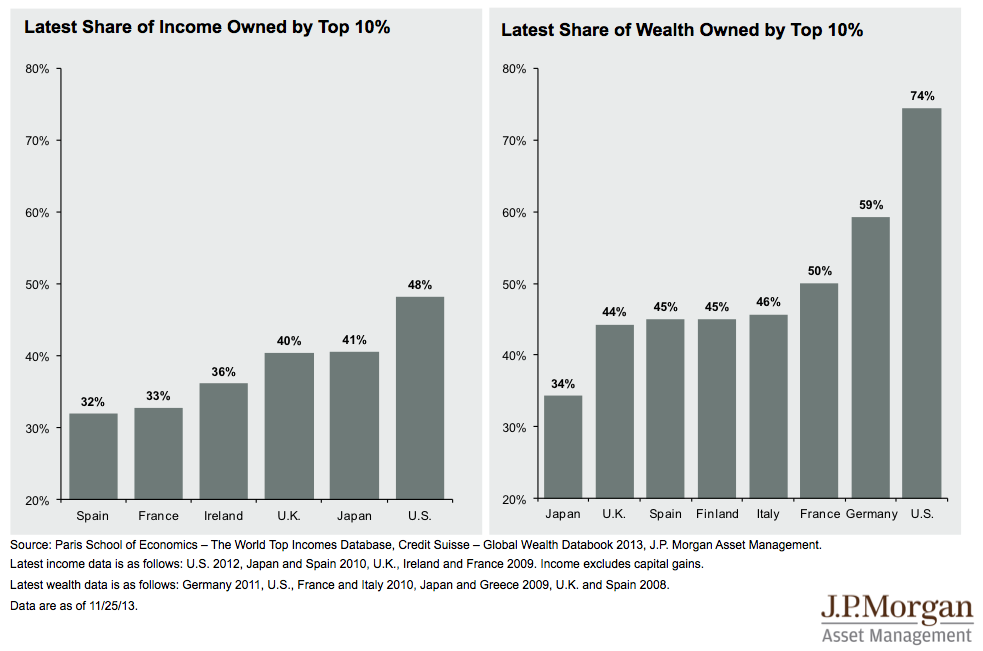
Britain’s GCHQ had made a “vigorous effort” to exploit games, including “exploitation modules” against Xbox Live and World of Warcraft, said one document. Another memo noted that among World of Warcraft ‘s active subscribers were “telecom engineers, embassy drivers, scientists, the military and other intelligence agencies.”

The new documents were released even as the European Union agreed to allow Snowden to give evidence by video link to its committee on civil liberties, justice and home affairs (LIBE). Snowden had indicated in July that he would be prepared to give evidence to the EU.

The move by the EU to question Snowden reveals the extent of concern in European ruling circles as to the massive extent of the unrestrained spying organised by the NSA, GCHQ and their other “Five Eyes” partners, Canada, Australia and New Zealand. Their concern is not that their own populations are under constant and growing surveillance, but that Snowden has also confirmed that the NSA and GCHQ systematically spy on the governments of their main imperialist rivals in Europe and internationally.

According to Spiegel Online, “Representatives from different groups in the European Parliament have already compiled more than 20 questions for Snowden. These range from ‘How are you?’ and ‘Can we help you?’ to a detailed exploration of whether and how European intelligence agencies also collect private data.”

The questioning is to go ahead despite moves to block it by conservatives in the European People’s Party (EPP), the association of Europe’s Christian-Democratic and conservative parties.

Timothy Kirkhope, a Member of the European Parliament for the UK’s Conservative Party, which is not part of the EPP, also attempted to prevent Snowden from appearing by sending a letter to all members of the LIBE committee. He said the proposed evidence session was “a provocative act that would enable [Snowden] to further endanger security around Europe and beyond.”

A further indication of the disquiet in ruling circles is the open letter to the Obama government and the US Congress from some of the world’s main technology firms–Apple, Google, Microsoft, Facebook, Yahoo, LinkedIn, Twitter and AOL. The letter states, “The balance in many countries has tipped too far in favour of the state and away from the rights of the individual–rights that are enshrined in our constitution.” It adds, “This undermines the freedoms we all cherish. It’s time for change.”

A major factor in the concerns of Google, Microsoft, et al. is the impact of the revelations on their profitability and even their continued existence. Brad Smith, Microsoft’s general counsel, said, “People won’t use technology they don’t trust. Governments have put this trust at risk, and governments need to help restore it.”

Even as the EU is putting on a show of opposition to the mass spying of the NSA and GCHQ, its component governments continue to build up their own vast surveillance operations against their populations. On Wednesday the French parliament passed legislation, Article 13 of a new military programming law, allowing its intelligence and anti-terrorist agencies, as well as a number of government ministries, full powers to directly monitor internet users who use computer, tablets or smartphones, in real time without any prior authorisation. The defence, interior, economy, tax and finance ministries will all be able to snoop on all “electronic and digital communications.”

For their part the US and the British Conservative/Liberal Democrat governments have both refused to back down.

The head of the NSA, General Keith Alexander, testifying at a Senate Judiciary Committee hearing Wednesday, defended its activities to the hilt. Claiming that global threats against the US are growing, in Iraq and Syria in particular, he declared, “There is no other way that we know of to connect the dots… Taking these programs off the table is absolutely not the thing to do.”

In Britain, the government continues to demand Snowden’s persecution, while also seeking the prosecution of the Guardian.

Those responsible for the UK’s spying network are being protected from being held to any account. On Wednesday it was reported that the request by Parliament’s Home Affairs committee to question Andrew Parker, the head of the MI5 domestic spying organisation, next week was rejected by Home Secretary Teresa May. The committee had requested he appear to justify his false claim that the Guardian has put national security at risk by publishing in redacted form a small percentage of the Snowden documents.

Prime Minister David Cameron also rejected a request that Kim Darroch, the national security adviser, give evidence to the committee’s inquiry into counterterrorism. Cameron wrote that “it was not a good idea” for Darroch to appear, as Darroch’s role was to provide him and the National Security Council with private advice, and an appearance would “set a difficult precedent.”

With permission
Source: WSWS

Missing US citizen in Iran identified as CIA spy

0

By Bill Van Auken
14 December 2013

A former FBI agent missing in Iran since 2007 has been identified as a covert CIA spy, exposing as lies US claims that he went to the country on private business.

The Associated Press revealed that it had held the story about the CIA connections of Robert Levinson three times at the US government’s requests. ABC News, the Washington Post, the New York Times and other news media also indicated that they had known that Levinson was working for the CIA as early as 2007, but had kept the story secret at the government’s request.

Levinson, who retired from the FBI in 1998 to run a security firm, disappeared on March 9, 2007, during a visit to Iran’s Kish Island in the Persian Gulf. According to reports that surfaced at the time, he was last seen meeting with Dawud Salahuddin, an African-American convert to Islam who is wanted for murder in connection with the 1980 killing in Maryland of a representative of the Shah’s regime, which had been overthrown the previous year. Salahuddin, who fled to Iran, had reportedly participated in back-channel discussions with US intelligence and was close to the so-called Green movement.

The story was put out variously that Levinson had been working on a documentary film, was doing a private investigation into cigarette smuggling or was working on a book on the Russian mafia when he went missing. As the AP account establishes, however, the trip to Iran was only the latest in a series of intelligence operations that the ex-FBI agent had conducted. These included collecting intelligence on the Colombian guerrilla movement FARC (Revolutionary Armed Forces of Colombia) and the Venezuelan government of the late Hugo Chavez.

He arrived in Iran under conditions of heightened tensions between Washington and Tehran. In the two months preceding Levinson’s disappearance, US troops had abducted at least six Iranian diplomatic personnel in Iraq, claiming that they were responsible for providing arms to Iraqi Shiite militias resisting the US occupation. Ali-Roza Asgari, an Iranian general and former deputy defense minister, was abducted by Western intelligence agencies in Turkey and reportedly transferred to Israel for interrogation. There were terrorist bombings in Iran that Tehran charged were instigated by the CIA. And contingency plans were reported for a massive US bombing campaign aimed at destroying not only Iran’s nuclear program, but its vital military and government infrastructure as well.

According to the AP, Levinson functioned as a contractor for the CIA, providing his intelligence to a group of analysts at the agency headed by Anne Jablonski, a CIA analyst whom he had met while working for the FBI.

While the CIA paid Levinson for information as well as covered his expenses—his last payment from the agency before his disappearance was for $80,000—after he went missing in Iran, questions were raised within the agency about the propriety of the arrangements worked out by Jablonski, which involved him directing all communications and information to her home and personal phone and e-mail address. Also, there was no notification given to CIA stations of Levinson’s presence in the countries that he visited.

It appears that the agency had no problem with the arrangement made with Levinson until it blew up in its face. As the AP story puts it, “Levinson’s production got noticed” and “the CIA was raving about information Levinson had recently sent about Venezuela and Colombian rebels.”

After information proving that Levinson had worked for the CIA was brought to the attention of the Senate Intelligence Committee by a former federal prosecutor who had worked with him when he was in the FBI, the CIA launched an inquiry as a means of damage control. Agency investigators found that the way Levinson was employed violated the CIA’s separation of functions between its analytical and operational divisions. The conclusion, according to the AP report, was that the analysts “had been running their own amateur spy operation, with disastrous results.”

Jablonski and another senior analyst were forced out of the agency, given the option of resigning or being fired, and their boss was forced into retirement. Several other CIA employees were disciplined. The analysts insisted that there were no questions raised about Levinson’s contract until his disappearance, and that the agency was looking for scapegoats.

While the government publicly denied any connection to Levinson, the CIA sought to keep his family from bringing a lawsuit that would have exposed the operation by paying them $120,000—what he would have gotten for the contract to go to Iran—as well as a $25 million annuity paying tax-free income.

With the CIA, the State Department, the White House and at least leading figures in the US Congress well aware that Levinson went to Iran to gather intelligence for the CIA, the US government continued to insist that he was there on private business.

“At the time of his disappearance Mr. Levinson was not working for the United States government,” the State Department said in May 2007.

While US officials have repeatedly called upon Iranian authorities to assist with Levinson’s return to the US, Iran’s government has consistently denied that it is holding him or has any knowledge of his whereabouts.

Given its public statements on the detention of others Tehran has charged with spying for Washington—Iranian-American academics and businessmen as well as three US hikers who crossed into Iran from Iraqi Kurdistan—it is not clear why it would remain silent on capturing someone sent by the CIA.

E-mails sent to the families with videos of Levinson in captivity in late 2010 and early 2011 were traced back to Pakistan and Afghanistan. There have been no communications since, and, according to the AP, some intelligence officials think that Levinson, who would be 65 and suffering from diabetes and heart problems, may be dead.

The White House press secretary, Jay Carney, denounced the AP story as “highly irresponsible,” while National Security Council spokesperson Caitlin Hayden noted that the Obama administration had “urged the AP not to run this story out of concern for Mr. Levinson’s life,” while refusing to comment “on any purported affiliation between Mr. Levinson and the US government.”

In a statement, the AP defended its action: “This story reveals serious mistakes and improper actions inside the US government’s most important intelligence agency. Those actions, the investigation and consequences have all been kept secret from the public.”

Secretary of State John Kerry, asked about the matter at Tel Aviv press conference Friday, said, “I don’t have any comment whatsoever on the condition with respect to employment or any other issue.” The CIA also refused to comment on ties to its contractor.

A lawyer for Levinson’s family denounced the government’s reaction. “The CIA sent Bob Levinson to Iran to do an investigation on its behalf,” said the attorney, David McGee. “And rather than acknowledge what they had done and try to save Bob’s life, they denied him.”

The revelation comes in the midst of Washington’s pivot toward a rapprochement with Tehran, with a tentative agreement reached on Iran’s nuclear program. Opponents of the deal within the US, both Republicans and Democrats close to Israel, have denounced it for failing to include concessions on the situation of Americans held in Iran—most prominently that of an Iranian-born US citizen, Saeed Abedini, who was sentenced to eight years in prison for Christian proselytizing. Levinson’s fate is likely to figure in efforts to scuttle the agreement with further sanctions and provocations.

Source: WSWS

Australian government rescinds childcare and aged care pay rises

0

By Will Morrow
14 December 2013

The Liberal-National Coalition government of Prime Minister Tony Abbott this week scrapped a $300 million fund for providing meagre wage increases for childcare workers and a $1.1 billion fund for similar wage rises for aged care workers. The decision will ensure that these workers, who provide critically important services in modern society, remain among the worst-paid and most exploited sections of the working class.

The previous Labor government established the Early Years Quality Fund (EYQF) in March. The limited fund did nothing to resolve low wages in the childcare sector. Only 30 percent of long day care workers were eligible for a pay rise: those with either a Certificate III TAFE qualification in early childhood care—whose wage was to rise by $3 to just $22 per hour—and those qualified as early-childhood teachers, whose pay was to increase by $6 per hour.

Moreover, the $300 million would have covered pay rises for only two years. After that, either wages would have to be reduced or the centres would have to cut costs and/or increase fees. Childcare operators said they would have increased fees by up to 10 percent.

Before the September federal election, the then Liberal-National opposition promised to honour contracts that were already signed with childcare providers for a share of the EYQF, amounting to $62.5 million of the $300 million. Abbott said that any offers made to providers still working toward meeting requirements for gaining funding would be revoked. Now, however, the government has moved to junk the entire scheme.

Assistant Minister for Education Sussan Ley announced to parliament last Tuesday that the EYQF was being abolished. While the government is legally unable to retract the $62.5 million in funding already distributed, Ley called on childcare centres to “do the right thing” and voluntarily return the money. “Of course I feel for workers who might have expected a pay rise, but who led them to expect that pay rise?” she declared.

The government said it would set aside the EYQF funds for professional development programs for childcare centres. Ley claimed this would spread public funds more “fairly” between the country’s different childcare operators.

This was a transparent attempt to concoct a public rationale for the government’s attack on the workforce. The government appears to be immediately motivated to boost private child care operators’ profits, while undermining the United Voice trade union, which covers many childcare workers. Under the terms of the former Labor government’s fund, providers applying for funding had to first sign enterprise bargaining agreements (EBAs) covering their workforce. This opened the door to United Voice, which has enforced the poor wages and conditions in the past, to expand its influence in the childcare sector.

More broadly, however, the Abbott government is seizing on another opportunity to demonstrate to the corporate elite its determination to drive down the wages and living standards of all working people.

Tuesday’s announcement on childcare workers was followed two days later by the government reallocating the $1.1 billion Aged Care Workforce Compact that was set aside for a small wage rise for up to 350,000 workers in the rapidly growing sector, including nurses, carers, administration staff and clinicians.

The previous Labor government announced the fund last March. While boasting of improving the salaries of aged care workers, Labor left the sector grossly underfunded, with the money for the $1.1 billion fund reallocated from previously announced aged care programs. Like the fund for childcare workers, the package was allocated to aged care homes employing staff covered by EBAs. The fund was grossly inadequate—it provided for a 1 percent annual wage rise in addition to any minimum wage increase or other wage rise negotiated through EBAs.

The policies of both the Labor Party and Liberal-National Coalition are aimed at further opening up both the childcare and aged care sectors to private corporations, shifting toward an entirely “user pays” system in which working class families will be hard hit. After becoming Labor’s prime minister in 2010, Julia Gillard delivered a major speech on economic policy that listed childcare and aged care, together with education and healthcare, as sectors that her government intended to open up to the profit system.

In childcare, billions of dollars in public funds are funnelled to the private operators every year through the Child Care Tax Rebate scheme. Indirect government subsidies to the industry have increased from $1.7 billion in 2004-2005 to $5.2 billion this financial year. Rather than providing community-based centres, the rebate scheme provides funding directly to parents who, due to a lack of publicly-provided services, are forced to take their children to private operators.

As a result, private operators stretch mandatory requirements for staff-to-child ratios and impose the most exploitative conditions on the workforce. According to the United Voice union, more than 180 childcare workers leave the profession every week.

Many ordinary families with childcare and aged care responsibilities are under enormous financial stress. Childcare fees have risen by an average of 7 percent each year over the past decade, far above the inflation rate.

A recent Productivity Commission report revealed that placing a single child in long day care costs parents an average of 9 percent of their disposable income, after government rebates have been accounted for. Despite government claims that the rebate system assists the poorest households, those with just $35,000 of disposable income still spend approximately the same percentage of their income on daycare as households with $150,000 of disposable income.

United Voice, which covers both childcare and aged care workers, responded to the Abbott government’s announcement by making clear it will do nothing to defend the interests of its members. United Voice is channelling the widespread opposition to the exploitative conditions in these industries into legal challenges before the Fair Work Commission, the industrial relations tribunal set up by the Labor government, only seeking to keep the promised small wage rises.

Far from being a neutral arbiter as the unions maintain, the Fair Work Commission has been—with the collaboration of the trade unions—a central enforcer of the deepening assault on the jobs and conditions of the working class.

Source: WSWS

Stevia Doesn’t Just Taste Sweet — It Treats Diabetes

0
stevia treats diabetes

By Case Adams, Naturopath

Pharmacy researchers from Malaysia’s University MARA have confirmed that Stevia isn’t just a healthy replacement for sugar — its constituents have the ability to treat diabetes by enhancing glucose absorption into the cells.

The research follows human clinical research illustrating that Stevia increases glucose control. In that study from Denmark’s Aarhus University, 12 type 2 diabetic patients were given stevioside isolated from the Stevia rebaudiana plant or a placebo.

The one gram of stevioside resulted in an 18% reduction in the glucose response curve area. Furthermore, their insulinogenic index — measuring insunlin beta cell function and insulin sensitivity — increased by an average of 40% as compared to the control patients.

The researchers stated:

“In conclusion, stevioside reduces postprandial blood glucose levels in type 2 diabetic patients, indicating beneficial effects on the glucose metabolism. Stevioside may be advantageous in the treatment of type 2 diabetes.”

The new Malaysian study confirms some of the mechanisms involved in this result. The researchers tested human adipose (fat) cells that were treated to become insulin resistant. The researchers utilized TNF-alpha to produce the insulin resistance — a mechanism that mirrors insulin resistance mechanisms in the body — producing a diabetic condition.

The insulin-resistant cells were then treated with stevioside, and these were compared with cells that were treated with the antidiabetic drug rosiglitazone maleate — branded as Avandia.

The two test groups were also treated with or without added insulin — which tested the treatments in an environment mirroring metabolism.

The researchers found that the cells treated with stevioside absorbed glucose at a rate more than twice the rate of the antidiabetic drug rosiglitazone maleate in the insulin environment, and 1.7 times in the non-insulin environment.

Furthermore, the stevioside increased glucose absorption by the fat cells in a dose-dependent manner. This is the gold-standard for determining whether a biochemical is truly enhancing the end result or whether there are other participants.

This result — stevioside outperforming the antidiabetic drug rosiglitazone maleate by more than double — confirms the clinical study discussed above, as well as other studies that have shown stevia’s antidiabetic treatment abilities.

This is not the only benefit of stevia. Other studies have shown that stevia supplies antioxidant activity. Spanish researchers found stevia extracts contained flavonoids like catechin and phenols like gallic acid. Stevia also contains some 11 amino acids.

What about commercial Stevia sweeteners?

As to whether the stevia sweeteners contained in new drinks maintain these benefits, the jury is still out. Literally.

Many of the commercial stevia sweeteners on the market utilize steviol glycosides that are extracted from the Stevia leaf utilizing extraction methods, including calcium hydroxide and aluminum sulfate, as well as adding hexane or chloroform during the drying process. Some are also treated by erythritol made from a yeast fermentation process using GMO corn.

The labeling of Stevia sweeteners as natural, in fact, was contested in a class action lawsuit filed last year by Kevin Anderson. The suit challenged that the extraction process should bar the stevia sweeteners (such as Truvia) supplied by ConAgra, Kraft and PepsiCo from claiming “natural” on the labels.

Cargill settled with consumers recently on its lawsuit challenge — setting up a fund to pay any consumers damaged by the “natural” claim.

Still, in a contest between high-fructose corn syrup and these commercial stevia sweeteners, I’d lean to the stevia any day of the week.

This isn’t to say that all Stevia sweeteners are not natural. There are several Stevia products found in health food stores that utilize extraction methods without additions such as those mentioned above.

Learn about the other sweeteners – and the world’s most scientifically healthy diet.

REFERENCES:

Nabilatul Hani Mohd-Radzman, Wan Iryani Wan Ismail, Siti Safura Jaapar, Zainah Adam, and Aishah Adam, “Stevioside from Stevia rebaudiana Bertoni Increases Insulin Sensitivity in 3T3-L1 Adipocytes,” Evidence-Based Complementary and Alternative Medicine, vol. 2013, Article ID 938081, 8 pages, 2013. doi:10.1155/2013/938081

Gregersen S, Jeppesen PB, Holst JJ, Hermansen K. Antihyperglycemic effects of stevioside in type 2 diabetic subjects. Metabolism. 2004 Jan;53(1):73-6.

Periche A, Koutsidis G, Escriche I. Composition of Antioxidants and Amino Acids in Stevia Leaf Infusions. Plant Foods Hum Nutr. 2013 Dec 1.

Watson E. Steviol glycosides are not all-natural says new class action lawsuit. Food Navigator. http://www.foodnavigator-usa.com/Regulation/Steviol-glycosides-are-not-all-natural-says-new-class-action-lawsuit,
Acc. Dec. 13, 2013.

Weingarten H. Lawsuit Leads to Settlement: Stevia May Be Natural, But Truvia is Not.
http://blog.fooducate.com/2013/09/24/lawsuit-leads-to-settlement-stevia-may-be-natural-but-truvia-is-not/
Acc. Dec. 13, 2013


Talk Nation Radio: Doug Fry: Humans Have Not Evolved for War

0

https://soundcloud.com/davidcnswanson/talk-nation-radio-doug-fry

Douglas Fry administers the Peace, Mediation and Conflict Research program between the University of Tampere and Ã…bo Akademi University in Finland. He is the author of Beyond War and War, Peace, and Human Nature. He discussed the evidence that war is a new and eliminable development in our species.

Total run time: 29:00

Host: David Swanson.
Producer: David Swanson.
Music by Duke Ellington.

Download from Archive or LetsTryDemocracy.

Pacifica stations can also download from AudioPort.

Syndicated by Pacifica Network.

Please encourage your local radio stations to carry this program every week!

Please embed the SoundCloud audio on your own website!

Past Talk Nation Radio shows are all available free and complete at
http://davidswanson.org/talknationradio

read more

Kerry silent about missing US spy

0

US Secretary of State John Kerry has sidestepped questions about a missing agent of the Central Intelligence Agency who was spying in Iran.

�œI don�™t have any comment whatsoever on the condition with respect to employment or any other issue.” Kerry said during a press conference on Friday.

�œWe have raised the issue of his whereabouts on a continuing basis,” he added.

The top US diplomat also refrained from acknowledging that the agent was spying for the United States in Iran.

However, Kerry emphasized he would continue his efforts to secure the CIA operative’s release and return to the country.

Robert Levinson had been working in Iran for the Central Intelligence Agency, gathering intelligence on high-ranking government officials when he vanished nearly seven years ago.

According to US media outlets, the CIA paid Levinson’s family two and a half million dollars to avoid a revealing lawsuit.

Three veteran CIA analysts were forced out of the agency and seven others were disciplined over the botched mission. Iran says it has no information on the whereabouts of Levinson, but it is willing to help find the operative on humanitarian grounds.

AGB/AGB

Source: Press TV

Affluenza: Too Rich to Be Punished, a Teen Gets Away with Murder…Literally

0

couch

A 16 year old boy from a wealthy Texas family was driving drunk when he crashed into four people standing at the side of the road with a disabled vehicle. Four of his own passengers were thrown from the vehicle, one of whom suffered a brain injury and can no longer move or speak.

Authorities have said the teen and friends were seen on surveillance video stealing two cases of beer from a store. He had seven passengers in his Ford F-350 pickup, was speeding and had a blood-alcohol level three times the legal limit, according to trial testimony. His truck slammed into four people standing near a disabled car on Burleson-Retta Road, killing Brian Jennings, 43, Breanna Mitchell, 24, Shelby Boyles, 21, and her mother, Hollie Boyles, 52. (source)

According to the courts, however, it wasn’t really Ethan Couch’s fault.  He can’t help it that he suffers from a condition called “affluenza”.

You read that right – “affluenza”.  It sounds like some kind of contagious disease, but in reality, it is an excuse for horrendous behavior.

It means that because Ethan grew up rich, he is not responsible for his own actions.

[Psychologist Dr. G. Dick ] Miller said Couch’s parents gave him “freedoms no young person should have.” He called Couch a product of “affluenza,” where his family felt that wealth bought privilege and there was no rational link between behavior and consequences.

He said Couch got whatever he wanted. As an example, Miller said Couch’s parents gave no punishment after police ticketed the then-15-year-old when he was found in a parked pickup with a passed-out and undressed 14-year-old girl.

Miller also pointed out that Couch was allowed to drive at age 13. He said the teen was emotionally flat and needed years of therapy. (source)

Despite the fact that Ethan Couch pleaded guilty to drunk driving and manslaughter, he will serve no jail time.

NONE.

He will be on probation for 10 years.

Through his spoiled, irresponsible actions, he caused the death of 4 people and altered irrevocably the life of another person.

Wealth is not a mental illness. Plenty of children grow up with families who have money and are raised in loving homes, with limits on their behavior.  This is nothing more than an excuse for dreadful parenting and a way to let the rich live by a different set of rules than the rest of us.

Dr. Gary Buffone, a psychologist from Jacksonville, Fla. who deals with wealthy families says that “affluenza” is not meant to be a defense.

“The simple term would be spoiled brat,” he said.

“Essentially what he (the judge) has done is slapped this child on the wrist for what is obviously a very serious offense which he would be responsible for in any other situation,” Buffone said. “The defense is laughable, the disposition is horrifying … not only haven’t the parents set any consequences, but it’s being reinforced by the judge’s actions.” (source)

Money buys justice in America, apparently. If you are wealthy enough, there are no consequences to your actions, no matter what the harm to others who are less wealthy. The financially elite have a different set of rules than the rest of us and clearly, the laws just don’t apply to them.

The families of Ethan’s victims are outraged by the slap on the wrist that the careless teenager received.

Eric Boyles, who lost his wife and daughter, said the family’s wealth helped the teen avoid incarceration.

“Money always seems to keep you out of trouble,” Boyles said. “Ultimately today, I felt that money did prevail. If you had been any other youth, I feel like the circumstances would have been different.”

The defense team recommended a long probationary term at a rehabilitation center near Newport Beach, Calif., with the teen’s parents picking up the tab of more than $450,000 a year for treatment.

Shaunna Jennings, the widow of the minister killed in the accident, said her family had forgiven the teen but still believed a sterner punishment was needed.

“You lived a life of privilege and entitlement, and my prayer is that it does not get you out of this,” she said. “My fear is that it will get you out of this.” (source)

Ethan can now return to his swanky lifestyle.  He can enjoy Christmas with his loved ones. He can unwrap expensive presents in front of a fancy tree.  He can enjoy a catered feast.

Here are the victims of Ethan Couch.  They will not be celebrating Christmas this year.

victims couch

The families of Couch’s victims have a sad holiday ahead of them.  They’ll be mourning the loss of their spouses, parents, and children this year, probably in much more humble surroundings than that in which the Couch family Christmas will take place.  There will be empty seats at their dinner table and empty places in their hearts.

All because one spoiled boy’s family couldn’t say no to him and because a judge believes that being rich is an excuse to let someone get away with murder.

Originally published at The Daily Sheeple

Newtown anniversary: what if we said no

0

Children light candles to pay their respects to the victims of the Newtown, Connecticut.

As we are all being reminded, tomorrow is the one-year anniversary of the Sandy Hook shooting which took the lives of children and adults.

It is an event that reminds us how susceptible each of us is to violence and that no one age group or place is safe or sacred from the destruction caused by violence. At the same time, it is a reminder that life still goes on after bad things happen.

I do not know what propels people to watch countless hours of television, as reporters and the media regurgitate the same sound bites for hours. Yet, millions of televisions will inevitably broadcast images, the voices of so-called experts, stories of brokenness and hope, life and of course death.

While the media retells the story, again, we know that the families and town government have asked that we leave them alone and give them privacy. Families have asked people to stay away. If we listened, families could walk the streets of Newtown and remember or reflect, like I did last January when I visited with siblings. They could pop their head into the Misty Vale General Store and share their grief with locals, talking about what this past year has been like for them and the community. They could grab a bite to eat at Villa Restaurant and Pizza with a close friend. They could live their new lives without the disruption of our misplaced intentions.

When the grieving ask for privacy they do not mean, “Hey, please avoid knocking on our door and lurking in our garage.” I think they mean, stay away so that they can choose how to grieve in their own way and at their own home, within their community and without the media and gawkers. That is what I hear them asking for on this day.

So, I wonder. On this day when families ask for privacy and for us to turn our voyeurism into acts of kindness in OUR COMMUNITIES, what would happen if we turned off the television, avoided the news, and ignored, all together, any story about Newtown? Perhaps we could send a message to the media, and those who will choose to ignore the requests by creating chronic coverage, that we choose to respect the wishes of the bereaved.

While we continue to ask questions of “how and why” events like Sandy Hook happen and what we can do to help, it is true that we may want to talk about gun control, access to mental health support, violence in American life, and all the other issues events like Sandy Hook provoke us to ponder. We should not, however, utilize this anniversary to remind ourselves (as if we ever had a moment to forget) that these questions run deep in our collective consciousness. This anniversary is Newton’s anniversary. The questions that need to be asked about this tragedy may be ours, but the grief that accompanies this anniversary is not about us and we must be clear about that distinction. I believe that clarity is the only thing separating us from respecting those who are filled with grief and those who wish to watch from the sidelines.

And for those of us who want to be supportive, often times that simply means listening and giving people the space they have requested.

AGB/AGB

Source: Press TV