The Mandela Barbie

0

By Greg Palast for Truthout

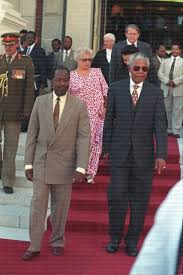
I can’t take it anymore. All week, I’ve watched Nelson Mandela reduced to a Barbie doll. From Fox News to the Bush family, the politicians and media mavens who body-blocked the anti-Apartheid Movement and were happy to keep Mandela behind bars, now get to dress his image up in any silly outfit they choose.

Poor Mandela. When he’s not a doll, he’s a statue. He joins Martin Luther King as another bronzed monument whose use is to tell us that apartheid is now “defeated” – to quote the ridiculous headline in the Times.

It’s more nauseating than hypocrisy and ignorance. The Mandela Barbie is dressed to serve a new version of racism, Apartheid 2.0, worsening both in South Africa – and in the USA.

The ruling class creates commemorative dolls and statues of revolutionary leaders as a way to tell us their cause is won, so go home. For example, just months ago, the US Supreme Court overturned the Voting Rights Act, Dr. King’s greatest accomplishment, on the specious claim that, “Blatantly discriminatory evasions are rare,” and Jim Crow voting practices are now “eradicated.”

“Eradicated?” On what planet? The latest move by Florida Republicans to purge 181,000 voters of color – like the stench from the shantytowns of Cape Town – makes clear that neither Jim Crow nor Apartheid has been defeated. They’re just in temporary retreat.

Nevertheless, our betters in the USA and Europe have declared that King slew segregation, Mandela defeated apartheid; and therefore, the new victims of racial injustice should just shut the f$#! up and stop whining.

The Man Who Walked Beside Mandela
To replace the plastic and metal Mandelas with flesh and blood, I spoke to Danny Schechter. Schechter knew Mandela personally, and more deeply, than any other American journalist. “One of the great reporters of our generation, Schechter produced South Africa Now, a weekly program for PBS Television stations, from 1988-91, bringing Mandela’s case to Americans dumbed and numbed on by Ronald Reagan’s red-baiting.

Schechter has just completed the difficult job of making the official documentary companion to the Hollywood version of Mandela’s life, Long Walk to Freedom.

The fictional movie is about triumph and forgiveness. Schechter’s documentary, Inside Mandela, has this aplenty, but knowing Mandela, Schechter includes Mandela’s anger, despair and his pained legacy: a corroded South Africa still ruled by a brutal economic apartheid. Today, the average white family has five times the income of a black family. Welcome to “freedom.”

The US and European press have focused on Mandela’s saintly ability to abjure bitterness and all desire for revenge, and for his Christ-like forgiveness of his captors. This is to reassure us all that “good” revolutionaries are ones who don’t hold anyone to account for murder, plunder and blood-drenched horror – or demand compensation. That’s Mandela in his Mahatma Gandhi doll outfit – turning the other cheek, kissing his prison wardens.

Schechter doesn’t play with dolls. He knew Mandela the man – and Mandela as one among a group of revolutionary leaders.

Mandela’s circle knew this: You can’t forgive those you defeat until you defeat them.

And, despite the hoo-hah, Mandela didn’t defeat apartheid with “nice” alone. In the 1980s, says Schechter, South African whites faced this reality: The Cubans who defeated South African troops in neighboring Angola were ready to move into South Africa. The Vietnamese who had defeated the mighty USA were advising Mandela’s military force.

And so, while Mandela held out a hand in forgiveness – in his other hand he held Umkhonto we Sizwe, a spear to apartheid’s heart. And Mandela’s comrades tied a noose: an international embargo, leaky though it was, that lay siege to South Africa’s economy.

Seeing the writing on the wall (and envisioning their blood on the floor), the white-owned gold and diamond cartels, Anglo-American and DeBeers, backed by the World Bank, came to Mandela with a bargain: black Africans could have voting power . . . but not economic power.

Mandela chose to shake hands with this devil and accept the continuation of economic apartheid. In return for safeguarding the diamond and gold interests and protecting white ownership of land, mines and businesses, he was allowed the presidency, or at least the office and title.

It is a bargain that ate at Mandela’s heart. He was faced with the direct threat of an embargo of capital, and taking note of the beating endured by his Cuban allies over resource nationalization, Mandela swallowed the poison with a forced grin. Yes, a new South African black middle class has been handed a slice of the mineral pie, but that just changes the color of the hand holding the whip.

The 1% Rainbow
In the end, all revolutions are about one thing: the 99% versus the 1%. Time and history can change the hue of the aristocrat, but not their greed, against which Mandela appeared nearly powerless.

So was Mandela’s life a waste, his bio-pic a fraud? Not at all. No man is a revolution.

We have much to learn from Mandela’s long view of history, his much-lauded pacific warm-heartedness as well as his much-concealed cold and cruel resolve. The crack in the prison wall of apartheid, the end of racial warfare, if not yet racial peace, is a real accomplishment of Mandela – and his comrade revolutionaries – most of whose names will never be cast in bronze.

Reading Schechter’s new book Madiba A to Z: The Many Faces of Nelson Mandela (as Mandela is known to Black South Africans) and seeing Schechter’s un-Hollywood film, you can take away one strong impression: From Moses to Martin to Mandela, our prophets never reach the Promised Land.

That is for us still to accomplish. The journey is long. Start walking.

* * * * * *

Greg Palast is the author of the New York Times bestsellers Billionaires & Ballot Bandits,The Best Democracy Money Can Buy, Armed Madhouse and the highly acclaimed Vultures’ Picnic.

HELP US FOLLOW THE MONEY. Visit the Palast Investigative Fund’s store or simply make a tax-deductible contribution to keep our work alive!

Subscribe to Palast’s Newsletter and podcasts.
Follow Palast on Facebook and Twitter.

www.GregPalast.com

ShareThis

Video Captures Georgia Cop Slamming 70-Year-Old Woman’s Face Into Pavement

A Georgia woman arrested on suspicion of DUI was brutally slammed face first into the concrete earlier this week, prompting an internal police investigation.

The cellphone video, uploaded by YouTube user “Nick James,” shows police removing 70-year-old Kathleen Allegrone from her car after witnesses reported seeing her hit another vehicle.

“An officer entered the vehicle, opened the door and pushed her to the ground,” an anonymous witness told Action News Jax.

While witnesses agreed the woman absolutely needed to be subdued by police, none felt she deserved what happened next.

The video then shows an irate Allegrone being taken to a police vehicle across the street by two officers. After being handcuffed, witnesses were shocked to see Glynn County officer Kevin Jones, according to the video description, slam the senior face-first into the pavement, reportedly breaking her nose.

Read more

The Wizard of Is and how I put together Exit From the Matrix

0

The Wizard of Is and how I put together Exit From The Matrix

by Jon Rappoport

December 13, 2013

www.nomorefakenews.com

I’ll get to the fascinating archetype of the Wizard of Is in a minute. First, here is the breakdown on what’s in my collection, Exit From the Matrix:

Here is the list of my brand new audio presentations included in this collection:

INTRODUCTION: HOW TO USE THE MATERIALS IN EXIT FROM THE MATRIX

EXIT FROM THE MATRIX

50 IMAGINATION EXERCISES

FURTHER IMAGINATION EXERCISES

ANESTHESIA, BOREDOM, EXCITEMENT, ECSTASY

ANCIENT TIBET AND THE UNIVERSE AS A PRODUCT OF MIND

YOU THE INVENTOR, MINDSET, AND FREEDOM FROM “THE EXISTENCE PROGRAM”

PARANORMAL EXPERIMENTS AND EXERCISES

CHILDREN AND IMAGINATION

THE CREATIVE LIFE AND THE MATRIX/IMAGINATION

PICTURES OF REALITY AND ESCAPE VELOCITY FROM THE MATRIX

THIS WOULD BE A VERY DIFFERENT FUTURE

MODERN ZEN

GREAT PASSIONS AND GREAT ANDROIDS

Then you will receive the following audio seminars I have previously done:

Mind Control, Mind Freedom

The Transformations

Desire, Manifestation and Fulfillment

Altered States, Consciousness, and Magic

Beyond Structures

The Mystery and Magic of Dialogue

The Voyage of Merlin

Modern Alchemy and Imagination

Imagination and Spiritual Enlightenment

Dissolving Stress

The Paranormal Project

Zen Painting for Everyone Now

Past Lives, Archetypes, and Hidden Sources of Human Energy

Expression of Self

Imagination Exercises for a Lifetime

Old Planet, New Planet, New Mind

The Era of Magic Returns

Your Power Revealed

Universes Without End

Relationships

Building a Business for Success

I have included an additional bonus section:

A pdf of my book, The Secret Behind Secret Societies

A pdf of my book, The Ownership of All Life

A long excerpt from my briefly published book, Full Power

A pdf of my 24 articles in the series, “Coaching the Coaches”

And these audio seminars:

The Role of Medical Drugs in Human Illness

Longevity One: The Mind-Body Connection

Longevity Two: The Nutritional Factors

All the audio presentations are mp3 files. You can download them.

What has been called The Matrix is a series of layers. These layers compose what we call Reality. Reality is not merely the consensus people accept in their daily lives. It is also a personal and individual conception of limits. It is a perception that these limits are somehow built into existence. But this is not true.

What I’ve done here is remove the lid on those perceived limits. This isn’t an intellectual undertaking. It’s a way to open up space and step on to a new road.

That road travels to more and more creative power, joy, and fulfillment.

During that great adventure, the individual experiences what has been labeled “paranormal” and “synchronistic” and “magical.” These words really don’t do us justice. They only hint at what we are and what we can do.

I put this collection together because it expresses, explains, and shows, in detail, how the individual can rediscover and reclaim his/her true power.

That process, that engagement, that life, is beyond solving problems. Our problems, at the core, exist only because we have “misplaced an infinity.”


Exit From the Matrix


The Wizard of Is surveys the world and the universe and says, “Here it all is. This is what will eliminate the need for you to invent your own world.”

Translation: “It will keep you in a beautiful prison forever, because all roads lead through a maze that takes you back to the beginning, where you started. Who could ask for anything more? It’s complex, it’s a Matrix, it’s challenging, it’s joyous and painful, it’s a thrill a minute. Or, you can lie down and go to sleep.”

The Wizard of Is is the maestro of What Is. He does everything he can to convince you that What Already Is is your best option, your destiny, your home of homes.

After that, you only have to find your place. The Wizard is very good at cooking up mumbo-jumbo about you needing a particular place and how, when you find it, things fall together and click together for you.

“We’re making this endless TV series called Reality and there are billions of roles available. If we can find your best role, you’ll fit it like a glove, and then you’ll be happy.”

The Wizard then makes sure to indicate that challenging What Is is a very difficult road. It opens you up to all sorts of dangers, he says. The Wizard has lots of experience in wielding the stick and the carrot.

What are some of the characteristics of What Is? It’s always there. You can always see it and look at it and get involved with it. It’s outside yourself. It’s like a vast painting in a museum—except you walk into it and live there. It’s made for you. It’s apparently seamless—once you’re inside it. It doesn’t break down and reveal rips in its fabric. It endures.

You can approach it from many angles—political, economic, social, medical, military, scientific. But above all, What Is is a Continuum, which is to say it’s an interlock of space-time-energy. It all fits together. Each aspect enforces and confirms every other aspect.

The idea of exiting from it seems absurd. You’re there, and there you will stay. Your job is to fit in, to find your place, your role, your destiny.

A great deal of Wizard-of-Is propaganda surrounds it. For example, you have no capacity to exceed its parameters. You can make use of technology to explore and manipulate certain pieces of What Is, but without technology you’re lost. Therefore, those who supply you with technology are your masters.

The Wizard states that he is your guide. He’ll help you navigate What Is to your advantage. This is your best option. Your only option.

All of this is a highly sophisticated form of hypnosis.

This external Matrix couldn’t operate at all—unless the human perceptual apparatus was designed to mesh and merge with it. But this apparatus is only a fragment of the possible range of perception.

The clumsy word “paranormal” is used to explain (and deny) the capacity to see beyond the structure of Matrix.

The Wizard says, “You don’t want to look too closely at the Matrix. It’ll lead to disillusionment. You’ll feel depressed. You won’t know what to do. You need to accept the Matrix. All happiness stems from that.”

However, the truth is more complex than that. You need to cultivate both an acceptance and a rejection. Here is the paradox: acceptance gives you a platform from which to reject.

This should have been the message of Zen for the last several thousand years. And perhaps in the hands of a certain few teachers, it was. But for the most part, the message of Zen has been about spiritual insight and breakthrough leading to acceptance.

That’s half a meal. It’s unstable. It breaks down. In time, the devotee finds himself at sea, cut off from his own creative power, unwilling to exercise it, for fear that he’ll overstep his mandate as a human being.

I cite Zen, but in fact almost every spiritual system devised in so-called civilized cultures has carried the same message. Accept What Is, period.

This makes the Wizard rejoice. It’s his device, his con.


Some years ago, I was interviewed by a host who urged me to talk about the Matrix. With every step I took, he assented and pushed me forward. But I could see in his rushed agreement all the signs that he was becoming more and more uncomfortable.

He was looking for a new system to replace the old. He wanted a conclusion, a wrap-up that would confirm his hypnotized belief in What Is.

It was, all in all, quite amusing. He was saying yes, yes, while he was thinking no, no. He wanted a better prison, a kinder warden, that’s all.

So I introduced the idea of the Wizard of Is. Then, I really saw him go into internal paroxysms. He looked like he was about to fall off his perch.

He was dedicated to systems all the way down. He wanted to be surrounded and comforted by a structure that would eliminate the need for him to do anything—while he pretended that was not the case.

I said, “Look, if you really like systems, invent your own. You don’t have to be living under the umbrella of someone else’s.”

I saw a light go on in his mind.

“That’s interesting,” he said slowly.

“Sure,” I said. “Keep on inventing systems if that’s what you want to do. Maybe some day, you’ll come to the end of it and you’ll create something you really want to that isn’t a system.”

“Well,” he said, “I suppose that’s possible.”

After the interview, he took me aside and told me, “You know, I rarely think about a new idea on these shows. I’m pretty much up to speed on everything that could happen. I’m tired of it. I’ve been looking for something else. Now I have a new idea to chew on. Maybe I can dump that Wizard you talked about…”

The Wizard isn’t forever. He just acts as if he is.

Jon Rappoport

The author of two explosive collections, THE MATRIX REVEALED and EXIT FROM THE MATRIX, Jon was a candidate for a US Congressional seat in the 29th District of California. He maintains a consulting practice for private clients, the purpose of which is the expansion of personal creative power. Nominated for a Pulitzer Prize, he has worked as an investigative reporter for 30 years, writing articles on politics, medicine, and health for CBS Healthwatch, LA Weekly, Spin Magazine, Stern, and other newspapers and magazines in the US and Europe. Jon has delivered lectures and seminars on global politics, health, logic, and creative power to audiences around the world. You can sign up for his free emails at www.nomorefakenews.com

Filed under: Energy & Imagination, Exit From the Matrix, Matrix Revealed

UN Claims Uruguay Not Allowed to End Marijuana Prohibition

11

As the United Nations, which is widely ridiculed as the “dictators club,” becomes increasingly bold in purporting to dictate policy to nations and governments, the controversial global body is now under fire from many of its traditional allies after claiming that Uruguay’s recent decision to end marijuana prohibition violates “international law.” The United Nation’s claim about Uruguayan drug laws follows recent demands by it that Obama defy state voters and the U.S. Constitution to smash cannabis legalization in American states.

With the recent decision to end decades of pot prohibition in Uruguay making it the first entire nation to take the step, analysts widely anticipate similar efforts around the world to accelerate. Already, voters in Colorado and Washington state have completely nullified the federal and international marijuana regimes, and other states have come close. Across Latin America and Europe, meanwhile, drug policy more broadly has been hotly debated, with at least two nations so far – Portugal and the Czech Republic – decriminalizing all drugs.

In response to the trends, UN narcotics bureaucrats, whose generous tax-funded salaries depend on the perpetuation of the war on various plants and substances, have responded with outrage and concern. UN Office on Drugs and Crime (UNODC) boss Yuri Fedotov, an ex-Soviet diplomat, for example, called the Uruguayan government’s decision “unfortunate.” In a press release, UN drug czar Fedotov also suggested that confronting problems associated with prohibited substances was dependent on following his global bureaucracy’s agenda.

“Just as illicit drugs are everyone’s shared responsibility, there is a need for each country to work closely together and to jointly agree on the way forward for dealing with this global challenge,” the former communist functionary said in a statement cited on the UN “News” Center. A spokesman for Fedotov’s UNODC added: “It is unfortunate that, at a time when the world is engaged in an ongoing discussion on the world drug problem, Uruguay has acted ahead of the special session of the U.N. General Assembly planned for 2016.”

Uruguayan lawmakers, in defiance of UN warnings and five decades of international prohibition, decided to buck the UN by abolishing legal prohibitions on the growing, distribution, and consumption of cannabis. Lawmakers and authorities said it was part of an effort aimed at attacking violence and drug cartels, which reap major profits in the black market. The plan was originally proposed by Uruguayan president and former communist guerilla José Mujica.

Read more

Will Brazil’s Vote on ‘Terminator Seeds’ Be a Christmas Gift to Monsanto?

0

They’ll be back.

‘Terminator’ seeds, banned across the globe following massive protests in India, Latin America and south-east Asia in the 1990s, may be sprouting up in fields soon following the likely passage of a bill in the Brazilian legislature this month that could unravel a global moratorium on the technology, The Guardian reports.Protesters hold anti-gmo signs outside of the European Union headquarters in Brussels, November 24, 2008 (Reuters)

The seeds in question are genetically engineered to prevent offspring, which means crops can only yield a single harvest before dying off—leaving farmers dependent on seed companies for future crops, rather than the age-old method of saving seeds and replanting.

If the bill passes, then “While most of Brazil is celebrating a Christmas birth, the seed multinationals will be celebrating the death of the 10,000-year right of farmers to save seeds,” Maria José Guazzelli of Centro Ecológico stated.

Food justice advocates and small farmers argue this places too much control over crop production in biotech companies’ hands, and environmental groups have continuously warned that the seeds threaten biodiversity around the globe.

As The Guardian reports:

The technology was developed by the US Department of Agriculture and the world’s largest seed and agrochemical firms. Syngenta, Bayer, BASF, Dow, Monsanto and DuPont together control more than 60% of the global commercial seed market and 76% of the agrochemical market. All are believed to hold patents on the technology, but none are thought to have developed the seeds for commercial use.

The development of the terminator seeds in the 1990s sparked protests by small farmers and civil society groups, and in 2000 the UN Convention on Biological Diversity recommended a global moratorium on the seeds.

“The country’s Judicial Commission is set to approve suicide seeds as a Christmas gift to Monsanto, DuPont and Syngenta.” – ETC

However, Brazil, which had signed the moratorium, could undo the whole agreement with the proposed bill.

“Brazil is the frontline. If the agro-industry breaks the moratorium here, they’ll break it everywhere,” Guazzelli told The Guardian.

A coalition of food justice and environmental groups have organized an online petition against the bill that would overturn the ban on the seeds, which they presented to Brazilian lawmakers this week. The petition has gathered over 36,000 signatures.

“If this bill goes through, it would be a disaster. Farmers would no longer be able to produce their own seeds. That’s the ultimate aim of the agro-industry,” said Guazzelli.

“If the bill is passed, [we expect] the Brazilian government to take a series of steps that will orchestrate the collapse of the 193-country consensus moratorium when the UN Convention on Biological Diversity meets for its biennial conference in Korea in October 2014,” said Pat Mooney, executive director of international technology watchdog ETC Group.

As ETC Group reports, following continued public backlash against the bill, Brazil’s Judiciary Commission in the legislature agreed to take the Pro-Terminator Bill off the agenda this week, but it could pop up again as soon as next week before the lawmakers adjourn for Christmas.

“After promising on World Food Day (October 16) to block legislation that would legalize the planting of Terminator seeds in Brazil,” ETC Group said in a statement, “the country’s Judicial Commission is set to approve suicide seeds as a Christmas gift to Monsanto, DuPont and Syngenta.”

While the chair of the Judiciary Commission has vowed to block the controversial bill, a majority of Commission members are in favor and could, “regardless of a formal agenda, call for a vote at any meeting,” the group warns.

“There is no reason to trust this process or reduce our pressure,” said Guazzelli, “although the government and commission have been taken aback by our opposition, they could pass the bill at almost any moment. If the vote doesn’t come before Friday, December 20, we will have a breathing space until February but anything could happen next week and everything could happen in February.”

_____________________

This work is licensed under a Creative Commons Attribution-Share Alike 3.0 License.

Source: Common Dreams

Day Ahead of Sandy Hook Anniversary, Shots Fired at Colorado High School

0

Students being evacuated from Arapahoe High School in Centennial, Colorado (Photo: NBC Nightly NewsUpdate (4:00 PM EST):

Arapahoe County Sheriff Grayson Robinson reports the alleged shooter has died of a self-inflicted wound.

One student is said to be in critical condition due to gunshot wounds.

Earlier:

Arapahoe High School in the Denver, Colorado metropolitan area is reportedly on lock-down after shots were fired Friday afternoon, Arapahoe County Sheriff Grayson Robinson told Call 7.

Robinson said that at least two people are injured, their conditions unknown, and the shooter is believed to still be in the school.

The school is attended by 2,200 students and is located in Centennial, Colorado—8 miles from Columbine High School where a school shooting in 1999 left 15 students, including the shooters, dead.

News and photographs are pouring in via Twitter.

_____________________

This work is licensed under a Creative Commons Attribution-Share Alike 3.0 License.

Source: Common Dreams

US, Chinese warships ‘nearly collided’

0

US Pacific Fleet has announced that an American guided missile cruiser and a Chinese warship �œnearly collided” in the South China Sea about one week ago.

�œOn December 5th, while lawfully operating in international waters in the South China Sea, USS Cowpens and a PLA Navy vessel had an encounter that required maneuvering to avoid a collision,” PACFLT said in a statement published by Stars and Stripes on Friday.

�œThis incident underscores the need to ensure the highest standards of professional seamanship, including communications between vessels, to mitigate the risk of an unintended incident or mishap,” according to the statement.

A US military official, who spoke on condition of anonymity, said the Chinese vessel tried to get the Cowpens to stop in international waters, but no shots were fired.

The issue was resolved through ship-to-ship communications via radio between the Cowpens and a Chinese aircraft carrier in the vicinity, another unnamed US military official told Stars and Stripes.

�œI don�™t know the intent of the guy driving that PLA ship,” one of the officials said.

�œI just know that he was moving to impede and harass the Cowpens. I mean, from my perspective, having him stop in the middle of the South China Sea is kind of dumb… [The Chinese saying] �˜Go away, get out of here�™ [would make more sense]. But �˜stop�™ doesn�™t really do anything because all that does is just maintain the status quo.”

The US government issued protests to China in both Washington and Beijing in both diplomatic and military channels, according to a US State Department official.

The relations between the United States and China have been strained after Beijing announced an air defense zone over the East China Sea last month.

The United States has said it will not recognize the defense zone. The US flew two B-52 bombers over disputed islands in the East China Sea to challenge China�™s declaration.

On Thursday, US Secretary of Defense Chuck Hagel criticized China for declaring the zone.

�œChina�™s actions raise regional tensions and increases the risk of miscalculation, confrontation, and accidents. And restraint is critically important on these issues, especially at this time,” Hagel said.

AGB/AGB

Source: Press TV

N. Korea wipes Kim Jong-un uncle from Web

0

Douglas Ernst
washingtontimes.com
December 13, 2013

In a move straight from George Orwell’s “1984,” North Korea is attempting to wipe any mention of executed “traitor” Jang Song-thaek from its state-controlled Internet.

Mr. Jang, the uncle of Kim Jong-un and former vice chairman of the National Defense Commission of North Korea, had roughly 500 mentions of his named deleted as of Friday.

“The scale of what they’re attempting to do here is unprecedented,” said Frank Feinstein, who works for a website of specialists tracking the Hermit Kingdom’s activities. “North Korea’s websites are somewhat of an unknown quantity, and nothing on this scale has been detected before.”

This article was posted: Friday, December 13, 2013 at 4:51 pm


Source: Infowars

Hopes for ‘Critical Mass in the Marketplace’ Grow as Second State Joins GMO Labeling Push

0

(Robyn Beck/AFP/Getty Images)A growing movement calling for the labeling of GMOs on grocery store shelves took one step forward this week when Governor Dannel Malloy of Connecticut signed a bill mandating just that.

There was, however, one major caveat.

In order for the law to be enacted, at least four other Northeastern states, together totaling a population of over 20 million people, must enact similar GMO laws. This clause, according to the Danbury Daily Voice, was included to help local farmers “by ensuring regional adoption of the new labeling system before requiring local farms to analyze and label genetically engineered products.”

Those states could include Maine, New Hampshire, Vermont, Massachusetts, Rhode Island, New York, Pennsylvania or New Jersey.

However, on the other side of New England, Maine has already passed its own GMO labeling law, but this law also includes the same regional clause—meaning two New England states now require the labeling of GMOs, but only if the other nearby states join along.

However, while the rubik’s cube of New England GMO labeling laws may seem difficult to line up, Malloy still remained confident that the move is a step in the right direction.

“This is a beginning, and I want to be clear what it is a beginning of,” Malloy said at the public signing outside an organic restaurant in the city of Fairfield. “It is a national movement that will requiring (food) labeling.”

“We are hopeful that legislators throughout the Northeast will follow the lead of Governor Malloy and all our legislative champions by passing laws that give consumers transparency in labeling,” said Tara Cook-Littman, director of GMO Free CT and one of the advocates for the law.

Similarly, when Connecticut’s law passed the state legislature this summer before heading to Malloy’s desk this month, Mark Kastel, co-director of the Cornucopia Institute, said that such the law’s caveat may not hurt the label-GMO fight in the long run.

“The hurdles in the Connecticut bill, if surmounted, would mean a critical mass in the marketplace that would emulate the impacts that would have materialized if California had passed its ballot initiative,” said Kastel.

While other attempts at singular state initiatives to require labeling in states such as California and Washington have recently failed, in 2013 nearly half of all U.S. states have introduced bills that either require labeling or prohibit genetically engineered foods, according to the Center for Food Safety.

_______________________

This work is licensed under a Creative Commons Attribution-Share Alike 3.0 License.

Source: Common Dreams

Airstrike in Yemen Worst Attack in over a Year

0

Drones reportedly attacked a convoy of vehicles en route to a wedding in southern Yemen. (Senior Airman Jack Sanders/US Air Force).A reported US drone attack in Yemen yesterday is the bloodiest air strike reported in the country so far this year.

A convoy or procession travelling to a wedding in southern Yemen, was attacked by US drones local and international media reported. At least 10 and possibly up to 17 people were reportedly killed. Up to a further 30 people were injured.

Initial reports on the strike disagree over who was killed. Some media report the dead were civilians but others, including the New York Times, report that al Qaeda members were among the wedding party.

‘There must be near-certainty that no civilians will be killed or injured’
– President Obama

The strike reportedly hit four or five vehicles in a convoy of up to 11 in Radaa, capital of al Bayda province and more than 100 miles south of the capital Sanaa. It ‘left charred bodies and burnt out cars on the road’, the Associated Press reported.

The attack has not been confirmed as a drone strike. However if it proves to be a drone hit then it will be the first hit on a wedding party in a covert war setting – Yemen, Pakistan or Somalia, according to the Bureau’s data.

Local media reported the names of up to 19 people killed in the strike. However, some of these names could be duplicates or nom de guerre. Up to four of the dead were identified by local media as al Qaeda members. The rest are described as sheikhs and tribesmen of the al Amer and al Tays families.

UK-based Yemeni activist Omar Mashjari told the Bureau: ‘From what I understand, these two families are notable.’ Mashjari’s family live in the area around Radaa. He described it as a bustling city and important trade hub for the surrounding area. He added that its regional significance made it ‘understandable…that there are certain [al Qaeda] elements there or are involved there or have family there’.

If the initial reports of multiple civilian casualties are accurate, this would represent the highest number of non-combatants killed in an air strike in Yemen since September 2 2012, when 12 civilians were killed in another attack in Radaa. Women and children were among the dead. They were killed as they drove home from market – their mini-van was hit by an air strike, killing all but the driver.

Local officials initially claimed the strike was carried out by the Yemeni air force, but months later US officials told the Washington Post the strike was the work of the US. It is unclear whether the September 2012 attack was carried out by a drone or manned aircraft.

The attack sparked angry demonstrations by the people of al Bayda. The families of the victims and ‘hundreds of armed gunmen‘ demanded an explanation from the government. They ‘closed main roads and vowed to retaliate’. It is unclear what if any local response will be to the latest strike. But the people of Radaa are reportedly outraged.

Civilian casualties have been credibly reported by multiple sources in four air strikes this year, including in three attacks since President Obama made a major policy speech in May outlining rules governing drone strikes. He said: ‘Before any strike is taken, there must be near-certainty that no civilians will be killed or injured – the highest standard we can set.’

Human Rights Watch researcher Letta Tayler said that if the reports of the recent strike are true and US drones have caused multiple civilian casualties then ‘at the very least the United States owes the Yemeni people and the world an explanation of what went wrong.’

Tayler authored a highly detailed investigation into US drone strikes in Yemen in October. This report for Human Rights Watch called for greater transparency from the US government. She told the Bureau she found the lack of official comment from Washington on the latest strike ‘shocking in light of the fact that the US only a week or two ago apologised for a strike that killed one civilian in Afghanistan.’

She added: ‘Why does the US follow different rules for the conventional battlefield and what it describes as the non-conventional battlefields of Yemen and Pakistan?’

In November, it emerged that the CIA had secretly briefed Congress about the death of a child in a strike in Yemen carried out weeks after Obama’s May speech.

There have been at least 29 air strikes reported in Yemen this year. Only one other attack has had casualties in double figures: 12 people were reported killed in a possible drone strike on November 26.

US drones and jets, as well as Yemeni aircraft frequently hit targets in southern Yemen. It is often difficult to ascertain whether a particular attack was from a drone or a manned aircraft. The Bureau has recorded 55 or more confirmed US drone strikes in Yemen since 2002. These attacks have killed at least 269 people. Bureau estimates show at least 12 confirmed strikes by US conventional aircraft as well as cruise missiles have killed at least 144 people in the same period.

The Yemen Air Force is ‘barely functional‘, cannot operate at night and lacks sufficient equipment and training to defend its own airspace. President Abd Rabbo Mansur al Hadi subsequently admitted as much in a speech in Washington in November 2012.

The US has not officially commented on the attack. However, an unnamed official told Reuters: ‘We have no information that corroborates these reports.’

© 2013 Bureau of Investigative Journalism

Source: Common Dreams

Obama’s New Interpreter

0

JR
Planet Infowars
December 13, 2013

http://imgur.com/Wv4GTI9

This post appeared in the Street Art category.

All of the views expressed are not necessarily endorsed by Infowars.com.

This article was posted: Friday, December 13, 2013 at 4:22 pm


<!– this is where we need to show the related articles

–>

Source: Infowars

NAFTA at 20: State of the North American Worker

0

Jeff Faux
fpif.org
December 13, 2013

Foreign Policy In Focus is partnering with Mexico’s La Jornada del campo magazine, where an earlier version of this commentary appeared, to publish a series of pieces examining the impacts of the North American Free Trade Agreement (NAFTA) 20 years since its implementation. This is the first in the series.

The North American Free Trade Agreement, or NAFTA, was the door through which American workers were shoved into the neoliberal global labor market.

By establishing the principle that U.S. corporations could relocate production elsewhere and sell their products back into the United States, NAFTA undercut the bargaining power of American workers, which had driven the expansion of the middle class since the end of World War II. The result has been 20 years of stagnant wages and the upward redistribution of income, wealth, and political power.

A Template for Neoliberal Globalization

NAFTA impacted U.S. workers in four principal ways.

First, it caused the loss of some 700,000 jobs as companies moved their production to Mexico, where labor was cheaper. Most of these losses came in California, Texas, Michigan, and other states where manufacturing is concentrated (and where many immigrants from Mexico go). To be sure, there were some job gains along the border in the service and retail sectors resulting from increased trucking activity. But these gains are small in relation to the losses, and have generally come in lower paying occupations. The vast majority of workers who lost jobs from NAFTA, therefore, suffered a permanent loss of income.

Second, NAFTA strengthened the ability of U.S. employers to force workers to accept lower wages and benefits. As soon as NAFTA became law, corporate managers began telling their workers that their companies intended to move to Mexico unless the workers lowered the cost of their labor. In the midst of collective bargaining negotiations with unions, some companies even started loading machinery into trucks that they said were bound for Mexico. The same threats were used to fight union organizing efforts. The message was: “If you vote to form a union, we will move south of the border.” With NAFTA, corporations also could more easily blackmail local governments into giving them tax breaks and other subsidies, which of course ultimately meant higher taxes on employees and other taxpayers.

Third, NAFTA drove several million Mexican workers and their families out of the agriculture and small business sectors, which could not compete with the flood of products—often subsidized—from U.S. producers. This dislocation was a major cause of the dramatic increase of undocumented workers in the United States, putting further downward pressure on North American wages, particularly in already lower-paying labor markets.

Fourth, and ultimately most importantly, NAFTA created a template for the rules of the emerging global economy, in which the benefits would flow to capital and the costs to labor. Among other things, NAFTA granted corporations extraordinary protections against national labor laws that might threaten profits, set up special courts—chosen from rosters of pro-business experts—to judge corporate suits against governments, and at the same time effectively denied legal status to workers and unions to defend themselves in these new cross-border jurisdictions.

The U.S. governing class—in alliance with the financial elites of its trading partners—applied the NAFTA principles to the World Trade Organization, to the policies of the World Bank and IMF, and to the deal under which employers of China’s huge supply of low-wage workers were allowed access to U.S. markets in exchange for allowing American multinational corporations to invest there. The NAFTA doctrine of socialism for capital and free markets for labor also drove U.S. policy in the Mexican peso crisis of 1994-95, the Asian financial crash of 1997, and the global financial meltdown of 2008. In each case, the U.S. government organized the rescue of banks and corporate investors while letting the workers fend for themselves.

A Watershed in U.S. Politics

In U.S. politics, the passage of NAFTA under President Bill Clinton signaled that the elites of the Democratic Party—the “progressive” major party—had accepted the reactionary economic ideology of Ronald Reagan.

A “North American Accord” was first proposed by the Republican Reagan in 1979, a year before he was elected president. A decade later, his Republican successor, George H.W. Bush, negotiated the final agreement with Mexico and Canada.

At the time, the Democrats who controlled Congress would not approve the agreement. And when Democrat Bill Clinton was elected in 1992, it was widely assumed that the political pendulum would swing back from the right, and that therefore NAFTA would never pass. But Clinton surrounded himself with economic advisers from Wall Street and in his first year pushed the approval of NAFTA through the Congress.

Despite the rhetoric, the central goal of NAFTA was not “expanding trade.” After all, the United States, Mexico, and Canada had been trading goods and services with each other for three centuries. NAFTA’s central purpose was to free American corporations from U.S. laws protecting workers and the environment. Moreover, it paved the way for the rest of the neoliberal agenda in the United States: the privatization of public services, the regulation of finance, and the destruction of the independent trade union movement.

The inevitable result was to undercut the living standards of workers all across North America: Wages and benefits have fallen behind worker productivity in all three countries. Moreover, despite declining wages in the United States, the gap between the typical American and typical Mexican worker in manufacturing remains the same. Even after adjusting for differences in living costs, Mexican workers continue to make about 30 percent of the wages that workers make in the United States. Thus, NAFTA is both symbol and substance of the global “race to the bottom.”

Creating a New Template

Here in North America there are two alternative political strategies for change.

One is repeal: NAFTA gives each nation the right to opt out of the agreement. The problem is that by now the three countries’ economies and populations have become so integrated that dis-integration could cause widespread dislocation, unemployment, and a substantial drop in living standards.

The other option is to build a cross-border political movement to rewrite NAFTA in a way that gives ordinary citizens rights and labor protections at least equal to the current privileges of corporate investors. For example, all three NAFTA nations should adopt similar high standards for the protection of free trade unions, collective bargaining, and health and safety—and their citizens should have the right to sue other countries for violations.

This would obviously not be easy. But a foundation has already been laid by the growing collaboration among immigrant, trade unionist, human rights, and other activist organizations in all three counties.

If such a movement could succeed in drawing up a new continent-wide social contract, North American economic integration—instead of being a blueprint for worker exploitation—might just become a model for bringing social justice to the global economy.

Jeff Faux is the founder, and now Distinguished Fellow, of the Economic Policy Institute in Washington DC. His latest book is The Servant Economy.

This article was posted: Friday, December 13, 2013 at 4:25 pm


Source: Infowars

Judge says waiting period ‘burdens’ 2nd Amendment

0

Bob Unruh
World Net Daily
December 13, 2013

A federal judge in California has ruled in a Second Amendment case that a state-imposed waiting period to take possession of a firearm is a burden on the constitutional right to keep and bear arms.

The ruling came in a challenge brought by the Second Amendment Foundation to the state’s mandatory 10-day waiting period to obtain firearms. The case, Silvester v. Harris, continues.

It was Senior Judge Anthony Ishii of the U.S. District Court for the Eastern District of California who said in an 11-page decision that California Attorney General Kamala Harris “argues that the WPL (Waiting Period Law) is a minor burden on the Second Amendment, [but] plaintiffs are correct that this is a tacit acknowledgement that a protected Second Amendment right is burdened.”

This article was posted: Friday, December 13, 2013 at 4:20 pm


Source: Infowars

It’s not just patients; thousands of doctors now being dropped from Obamacare coverage networks

0

J. D. Heyes
naturalnews.com
December 13, 2013

Don’t look now, America, but another very predictable consequence of Obamacare is beginning to play out.

Not only are customers losing their insurance plans – the plans Obama said they could keep – but now, insurance companies are dropping physicians from coverage plans as well.

As reported by The Wall Street Journal:

UnitedHealth Group, Inc., the nation’s largest provider of privately managed Medicare Advantage plans, has dropped thousands of doctors from its networks in recent weeks – spurring protest from lawmakers and physician groups and leaving many elderly patients unsure about whether they need to switch plans to keep seeing their doctors.

Obamacare regulations ‘driving our actions’

The paper said physicians in at least 10 states have received termination letters. Some of those letters have cited “significant changes and pressures in the health-care environment.”

In addition, the notices inform doctors that they can appeal the decision within 30 days, but that means doctors and patients won’t know for certain who is in, and who is out of, UnitedHealth’s Medicare Advantage networks before open enrollment to switch Medicare plans ends on Dec. 7.

The insurer said its provider networks change constantly, and it expects its Medicare Advantage network “to be 85 percent to 90 percent of its current size by the end of 2014.” But the company would not say how many providers are being curbed in individual states, or what criteria it is using to cut them.

Company officials say they are making their decision based on financial concerns – concerns that are being influenced solely by the mandates contained in Obamacare. Officially, they say United Healthcare is taking the action to provide more value for its customers, but that is corporate-speak for, “We’re making this move because we’ve been forced to do it.”

“That’s what’s driving our actions,” Austin Pittman, president of UnitedHealth’s networks, told WSJ. “It’s no secret that we are under substantial funding pressure from the federal government.”

While the company reported a third-quarter profit of $1.57 billion last month, its CEO, Stephen J. Hemsley, has said the outlook for next year is much more cautious, citing expected cuts in Medicare payments that are tied to the Affordable Care Act (and if you thought only Republicans “want to cut Medicare,” remember that no Republican voted for the Affordable Care Act – only Obama’s Democrats).

Medicare Advantage is a Medicare alternative. It combines hospital and physician coverage that includes prescription drugs and other benefits and perks, like gym memberships.

Since 2004, enrollment in Medicare Advantage has nearly doubled to 13 million in 2012; that represents nearly 27 percent of all Americans enrolled in Medicare.

As explained by WSJ:

The federal government pays private insurers a per-capita fee to manage the benefits. The rate is currently about 12 percent more than the average Medicare patient spends annually. The Obama administration plans to cut those extra payments to insurers by about $150 billion over the next 10 years to help pay for the health law. Some experts expect enrollment in Medicare Advantage plans to decline sharply if that occurs.

More patients for same number of doctors equals nightmare

Humana Inc., Aetna Inc. and Wellpoint Inc. are also Medicare Advantage providers. They told WSJ that they are evaluating their provider networks at the time, but physician groups say none of them appear to be reducing them to the extent that UnitedHealth is doing.

“UnitedHealth is the biggest player, with nearly three million members in Advantage plans, many of them sold under the AARP brand. The company says it had over 350,000 doctors in its Advantage provider networks,” says the paper.

That patients would have less access to physicians because of Obamacare – for one reason or another – was entirely predictable. For one, the law calls for insuring tens of millions more people but ignores the basic law of supply and demand: More patients trying to access the same number of doctors means more waiting time, less access and greater dissatisfaction with the system.

You might be able to “mandate” that more people have insurance, but you can’t decree there be more doctors. It takes an average of 10 years to train a primary care physician, and seven to train a nurse practitioner and physician assistant.

How exactly can adding 35-40 million more patients to an already overloaded system work?

Sources:

http://online.wsj.com

http://news.yahoo.com

http://www.newsmax.com

Learn more: http://www.naturalnews.com/043239_Obamacare_doctor_shortage_health_insurance_coverage.html#ixzz2nOZz66xF

This article was posted: Friday, December 13, 2013 at 4:12 pm


Source: Infowars

Group Speaks Out Against Dallas PD Shootings

0

Elizabeth Dinh
CBS DFW
December 13, 2013

Chief David Brown with the Dallas Police Deparment is responding to a citizen group’s call for change. The new group, calling themselves Mothers Against Police Brutality, is disappointed that the department is not doing more to prevent police shootings of unarmed citizens.

The group spoke on Thursday and called for Brown to address a series of recent police shootings. They said that they are ready to take these complaints to the Justice Department, as there have simply been too many police shootings of unarmed citizens.

One group member’s son died in a police shooting earlier this year. “It’s getting worse,” stated Collette Flanagan. “And we have a chief that refuses to implement the same policies that he promised in 2012.”

This article was posted: Friday, December 13, 2013 at 4:27 pm


Source: Infowars

European watchdog rings alarm bells over bitcoin

0

The EU banking regulator has warned of a “possible risk” using virtual currency such as bitcoin, which is program code and isn’t regulated by any country, as the virtual currency doesn’t offer any protection to consumers or mechanism for compensation.

The European Banking Authority (EBA) is studying the opportunities and needs of the new economic sector. In case of any problems with their investment, users of virtual currencies such as bitcoin will have to solve any problems themselves.

“Currently, no specific regulatory protections exist in the EU that would protect consumers from financial losses if a platform that exchanges or holds virtual currencies fails or goes out of business,” the EBA said in a statement.

The regulator emphasized that digital currencies are facing sharp fluctuations in exchange rates. In the last month the bitcoin market price has varied between less than $300 to over $1000 per unit.

“Cases have been reported of consumers losing significant amounts of the virtual currency, with little prospect of having it returned. Also, when using virtual currency for commercial transactions, consumers are not protected by any refund rights under EU law,” said the EBA.

Read more

Catholic ‘Border’ Bishops Urge Advocacy For Amnesty

0

Dr. Susan Berry
breitbart.com
December 13, 2013

Catholic bishops from the border region of Mexico, Texas, and New Mexico have sent an open letter to “Catholics and All People of Good Will” to urge them to engage in advocacy for the protection of the rights of immigrants and to help keep immigrant families together.

The letter, called Family Beyond Borders, which was signed by the archbishops of San Antonio, Texas, Chihuahua, Mexico, and the bishops of other border region dioceses, begins with a quote from Pope Francis who, the bishops wrote, “has often stated that our efforts to renew the Church will only have credibility when we become courageous Christians and seek out those on the margins who are most in need.”

“The Holy Father has recognized the tragedy that involves millions of migrants on every continent; and the Holy Father has given expression to the Church’s responsibilities in their regard,” the bishops said.

This article was posted: Friday, December 13, 2013 at 4:22 pm


Source: Infowars

ATF entraps the mentally ill to arrest them

0

A mentally disabled man with a low IQ was used to run gun and drug deals as part of a US Bureau of Alcohol, Tobacco, Firearms and Explosives sting at a Milwaukee storefront. The Milwaukee Journal Sentinel reports that ATF agents paid 28-year-old Chauncey Wright, who has an IQ in the mid-50s, in cigarettes, merchandise and money. Then, once the operation was shut down, Wright was charged with federal gun and drug counts and faces up to life in prison. Wright’s family complains that the ATF took advantage of him. RT’s Meghan Lopez talks to John Diedrich, one of the reporters who broke the story, about the ATF sting that has been marred by more problems than just taking advantage of the mentally disabled, including the theft of ATF guns, and a loss of nearly $40,000 in merchandise.

Iraq 10 Years After Saddam’s Capture

0

Ten years after the capture of Saddam Hussein (shown) by U.S. troops on December 13, 2003, observers have documented an Iraq that is still in turmoil, as al-Qaeda militants wage an increasingly aggressive campaign to extend their influence over the country.

A report from Baghdad about the violence in Iraq, written by Colin Freeman, the chief foreign correspondent for the Britain’s Sunday Telegraph, has been picked up by newspapers worldwide. The report observed that al-Qaeda — which is supported by the militant rebels fighting the civil war in neighboring Syria — has been especially active in western and northern Iraq.

“Al-Qaeda is trying to return the country to the civil war era by killing Shias,” the Telegraph quoted Sami al-Askary, an Iraqi MP and advisor to Prime Minister Nouri al-Maliki. “So far they have not succeeded, but nobody knows how long for. When the rage comes, you cannot expect how people will react.”

“It is not as bad as during the civil war, but whenever you leave your house, you can’t be sure that you will be coming back,” the British daily quoted Shadi Karaqzi, identified as an accounting student. “We are living in terror.”

“The wish of most young men now is just to live abroad so that they can have a normal life,” added his friend Ghaith Hamed.

The report cited United Nations figures listing the death toll from the militants’ violent attacks thus far in 2013 as more than 7,000, with 979 deaths in October alone.

Under Iraq’s new Shiite-dominated government, the Sunni minority, who enjoyed a privileged status under Saddam’s government, has been relegated to second-class status. Since many were affiliated with Saddam’s Baath party, they are barred from government jobs.

A December 12 AFP report noted how the divide between Shiites and Sunnis that has existed since Saddam Hussein was in power has yet to be mended. Furthermore, Iraq’s economy has never fully recovered from the negative economic effects of the sanctions imposed on the country during Saddam’s rule and the cost of his wars against Iran and Kuwait.

The report quoted Ayham Kamel, identified as a London-based Middle East analyst at the Eurasia Group consultancy. “A lot of Sunnis believe that there needs to be a shift … putting the Saddam legacy and the participation of Sunnis in his regime aside,” said Kamel. “We need to get more power-sharing, and really send signals that the conflict, and some of the tensions that existed between Sunnis and Shias during the Saddam era, is over, that there is a new path forward.”

While conflict in the Middle East (except for that between Israel and its more militant Islamic neighbors) is usually depicted as stemming from differences between Shiite and Sunni Muslims, the plight of the region’s Christians is generally overlooked.

Iraq is just one country in the region that has historically had a large Christian population, exceeded only by Egypt and Lebanon. As recently as 1987, Iraq was eight-percent Christian, numbering 1.4 million.

While Christians enjoyed relative peace during the Saddam regime (Saddam Hussein’s minister of foreign affairs and close advisor, Tariq Aziz, was a Chaldean Catholic), life became unbearable for many during the turmoil that followed his removal. In some case, they were caught in the crossfire between Shiite and Sunni forces fighting for control, but in other case they were specifically targeted.

Anti-Christian violence increased following a September 12, 2006 speech by Pope Benedict XVI that included statements that many Muslims interpreted as disparaging Islam. An October 19, 2006 report by the IRIN network quoted a statement from a woman, Julie Carlo, who said of the anti-Christian violence: “Recently, life for Christians in Iraq has turned into a horror movie. I will leave everything here [and] even if I do not have anything to eat there [Jordan], it is better to die from hunger than be beheaded.”

The report noted that church attendance had decreased considerably in Iraq since the removal of Saddam, and at least 60 percent of Baghdad’s churches had closed after receiving threats from extremists.

“Less than 20 percent of the devout [Christian community] who were attending prayers are continuing to come to the church. Thousands have left in the past weeks to other countries and we are sure that soon this church is going to be forced to close too,” said Reverend Zayya Edward, the pastor of the Church of the Virgin Mary in Baghdad.

A March 13, 2008 BBC report noted that the murder of Archbishop Paulos Faraj Rahho of Mosul had been the latest in a string of attacks on churches, priests, and lay Christians. BBC noted:

Nobody knows how many of Iraq’s Christians have now fled. Before the war there were estimated to be about 800,000 and Chaldeans were the largest Christian community in Iraq.

It is thought about half the Christian population of Iraq has moved — the majority to Syria, fewer to Jordan and some to northern Iraq.

Not everyone believes that life became worse in Iraq after the removal of Saddam Hussein, however. The Killeen (Texas) Daily Herald for December 13 quoted a statement from retired Lt. Col. Steve Russell, who served as the commander of 1st Battalion, 22nd Infantry Regiment, 1st Brigade, 4th Infantry Division at the time of Hussein’s capture. Russell is the author of We Got Him!: A Memoir of the Hunt and Capture of Saddam Hussein. “The Iraqi people are far better off today than they were under Saddam,” said Russell. “We forget how evil Saddam was.”

While Saddam Hussein undoubtedly was responsible for many evil deeds while he ruled Iraq, Iraqi Christians — as well as Muslims whose villages have recently been invaded by al-Qaeda militants — may question whether life, post-Hussein, has improved, or worsened.

A December 13 article in Britain’s Telegraph by Patriarch Louis Sako, the Chaldean Catholic Patriarch of Babylon, observed that although Christian communities have existed in the Middle East for two millennia, Christians are being persecuted in the region the 21st century. Sako stated that the United Nations Committee for Refugees recently estimated that 850,000 Iraqi Christians have left the country since 2003, observing: “This is an immense loss for those who stay, as well as for Iraqi culture and politics.”

Sako wrote that violent conflict between Muslims and Christians was not a necessary fact of life and traced the long history of Christians in the Middle East living peacefully alongside Muslims, offering the Umayyad caliphate of 661-750 as an example. He continued:

Unfortunately, many Muslims do not know the history of Christians in the religious and intellectual formation of Islamic civilization, or the value of Christianity to stable democracy. It is vital that these factors become better known, and their significance to Islam better understood.

It is also critical that Muslims not only reject violence against Christians, but actually to promote civil harmony and religious freedom in their societies. Most Muslims are good and not violent. They do not agree with the extremists but they are also afraid to act publicly. They must do so.

Sako concluded by stating: “The entire international community should insist that Christians remain in the Middle East, not simply as minorities, but as citizens enjoying full equality under the law, and therefore in a position to continue to contribute to peace, justice, and stability.”

Source: The New American

Saving Mr. Banks: A Film About Disney’s Journey to Poppins

0

Saving Mr. Banks is a whimsical film chronicling the production of the highly acclaimed Disney movie Mary Poppins. It tells the true life story of Walt Disney and the efforts he made to convince the author of the popular Mary Poppins books to give him the movie rights. Overall, it is a heartwarming film that is likely to be enjoyed by most audiences, particularly those who adore Mary Poppins.

P.L. Travers (played by Emma Thompson) is the writer of the famous Mary Poppins children’s books. In the film, we learn that she worked hard to keep the movie rights from Walt Disney (played by Tom Hanks) for 20 years. It is not until Travers found herself in financial difficulties that she considered letting Disney woo her.

As one may expect from an author, Travers guards her character Mary Poppins with great affection. As a result, she has high standards for how she wishes Poppins to be portrayed on screen. Travers has a list of specific demands. Mary Poppins is not supposed to sing or make up words, quite unlike the Mary Poppins that Disney fans love.

But Walt Disney is willing to do whatever it takes to gain the movie rights, driven by a promise he has made to his children, assuring them that he would turn their favorite books into a movie.

The story that unfolds is charming and lighthearted, but there are moments of great depth as well. Flashbacks to Travers’ youth reveals that her father (played by Colin Farrell in the film) was an alcoholic, though she did not fully understand the tragedy of her father’s excessive drinking while it was happening.

What we learn is that the story of Mary Poppins, however fantastical it may be, is rooted in Travers’ disturbing family history. Because of that, she is particularly protective of her Mary Poppins.

In order for Disney to convince her to give him the rights, he must sell Travers on the magic that is Disney, and open up about his own difficult childhood. He ultimately proves that magic, fantasy, and wonder are vital for children to help them escape into a world that may be better than that which they may be trying to escape, an experience to which both Travers and Disney can relate. He tells her that the purpose of storytelling is to “restore order with imagination” and to “instill hope again and again.”

She begins to come around once it is clear to her that Disney does not intend to simply add Mary Poppins to his repertoire of children’s films, but that he too bears a strong sense of emotional connection to the beloved character.

Of course, we know what happens in the end — Disney makes Mary Poppins and it proves to be Disney’s most successful film at the Academy Awards, winning 5 Academies out of 13 nominations. The film’s estimated budget was approximately $6,000,000 but it grossed over $100 million.

Saving Mr. Banks is certainly endearing and the script is very well-written. However, the film somewhat downplays Travers’ blatant aversion to Disney. The movie also portrays Travers quite differently from her true life persona, which The Globe and Mail describes as “a bohemian bisexual actress, who adopted a child at 40, summered with Hopi Indians and studied Zen in Japan.”

Some may begrudge this element of the film, but others may welcome the “Disneyification” of a story that may have had darker and more progressive elements. These choices helped to make Saving Mr. Banks a heartwarming and family-friendly film.

And one thing that moviegoers can take away from the film is that were it not for Disney’s influence in the making of Mary Poppins, Mary Poppins may not have been as magical a film as it was.

Most of the fun in the film comes from watching the interplay between Disney and Travers. Travers is initially cold and treats those around her as if they are beneath her. However, it is difficult to be around Disney for long and not begin to thaw, at least, in this film. Travers and Disney begin to understand and appreciate each other. It is easy to understand her outwardly difficult nature when we are provided glimpses into her family life. Travers admits in the film that her visit to Los Angeles has compelled her subconscious to “attack her” and she is forced to confront feelings and memories that she has long attempted to bury. But as she contends with these things, she regresses at times into a more childlike, and innocent, version of herself.

Ultimately, she learns that forgiveness is her best choice, a lesson that she learns from Disney, though he admits that he learned that very lesson from her books.

For both Disney and Travers, it is the father figure that has contributed to their demons. For Disney, his deep desire to make the Mary Poppins movie is part of a major effort to be a better father to his daughters than his father was to him. He tells Travers, “A man can never break a promise he makes to his kids, no matter how long it takes. That’s what being a daddy is all about.”

Overall, the film encourages viewers to embrace their inner child and emphasizes the impact that parents can have on their children. It is family-friendly in that there is really no violence or sexuality, and only limited, minor use of foul language.

If parents are seeking a film that is heavily spiritual or bears overt Christian elements, Saving Mr. Banks may not meet the criteria. Though it does not do a whole lot with Travers’ mixed bag of spirituality, it does show her an Eastern religious statue, and Travers admits at one point in the film that she does not believe in hell. However, Disney makes Christian allusions throughout the film, and the film’s focus on salvation and forgiveness shapes Saving Mr. Banks into a Christian-friendly film.

With Emma Thompson and Tom Hanks serving as the lead characters, one will not be able to help but be swept up in the story.

The dichotomy of Disney’s whimsy and Travers’ disdain for it proves to be a very humorous element of the story.

Some of the more cynical moviegoers may resent the film’s “Disneyification” of the story it tells. But it can be argued that Saving Mr. Banks does not totally avoid the harsh realities of life. Simply, it encourages audiences to recognize beauty even in the darkest of moments.

Source: The New American

World Health Organization sees cancer risk rising around the world

0

John Zarocostas
McClatchy DC
December 13, 2013

Women, minorities, and migrants in the United States face a growing risk from cancers of the lung, breast and thyroid, the World Health Organization predicted Thursday and that illness and deaths from cancer will increase by more than 25 percent over the next decade.

The projections are among new data released by the International Agency for Research on Cancer (IARC), the Lyon, France-based cancer research arm of the WHO.

The research agency also projected that cancer will surge around the world by 2025, with 19.3 million new cases diagnosed annually by the, compared to the 2012 number of 14.1 million. By 2025, the number of people expected to die annually from cancer is expected to increase to 11.4 million from the 2012 figure of 8.2 million.

This article was posted: Friday, December 13, 2013 at 4:00 pm


Source: Infowars

Why Taser is paying millions in secret ‘suspect injury or death’ settlements

0

Matt Stroud
The Verge
December 13, 2013

On the day before Thanksgiving this year, international stun gun and cop-cam company Taser International, Inc. announced it had given up its fight in two major legal battles over “suspect injury or death.” In a 275-word statement submitted to the US Securities and Exchange Commission, the company’s chief financial officer said it would pay a total of $2.3 million in settlements to plaintiffs who had sued the company in product liability cases.

This was rare. Taser prides itself in fighting to the bitter end in any case alleging that its products do anything but save lives. Yet there it was in a financial disclosure — Taser backing down.

Taser brushed it off as a remnant of simpler times. According to the vaguely worded statement, enhanced “risk management procedures” and “revisions to product warnings” in 2009 corrected a legal vulnerability. The $2.3 million payouts would address the last lawsuits tied to that vulnerability; they would amount to housekeeping — cleaning up lingering messes that had remained on the company’s books since before 2009.

This article was posted: Friday, December 13, 2013 at 4:03 pm


Source: Infowars

Plants won’t grow near Wi-Fi routers, experiment finds

0

Michael Ravensthorpe
Natural News
December 13, 2013

It’s not difficult to understand the appeal of Wi-Fi. This revolutionary technology, which has been commercially available since 1999, eliminates cabling and wiring for computers, reduces cellular usage charges and allows us to connect to the Internet from anywhere with a signal. Despite these benefits, however, studies continue to show that the radiation generated by wireless routers is negatively affecting our health. In fact, the British activist website Stop Smart Meters recently published a list of 34 scientific studies demonstrating the adverse biological effects of Wi-Fi exposure, including studies linking it to headaches, reduced sperm count and oxidative stress.

The latest research into the dangers of Wi-Fi, though, comes from a surprisingly humble source: Five ninth grade female students from Denmark, whose science experiment revealed that wireless radiation is equally as devastating to plants.

Undeniable results
The experiment began when the five students realized that they had difficulty concentrating in school if they slept near their mobile phones the previous night. Intrigued by this phenomenon, the students endeavored to study the effects of cellphone radiation on humans. Unfortunately, their school prevented them from pursuing this experiment due to a lack of resources, so the students decided to test the effects of Wi-Fi radiation (comparable in strength to cellphone radiation) on a plant instead.

The girls placed six trays of Lepidium sativum seeds (a garden cress grown commercially throughout Europe) in a room without radiation, and an equal amount in a room next to two Wi-Fi routers. Over a 12-day period, they observed, measured, weighed and photographed the results. Even before the 12th day arrived, however, the end results were obvious: The cress seeds placed near the routers either hadn’t grown or were completely dead, while the seeds placed in the radiation-free room had blossomed into healthy plants.

The experiment earned the five students top honors in a regional science competition. Moreover, according to a teacher at their school, Kim Horsevad, a professor of neuroscience at the Karolinska Institute in Sweden was so impressed with the experiment that he is interested in repeating it in a controlled scientific environment.

You can help reduce your exposure to Wi-Fi radiation by following the advice in this article.

Sources for this article include:

http://www.globalresearch.ca

http://www.safespaceprotection.com

http://www.naturalnews.com

http://science.naturalnews.com

This article was posted: Friday, December 13, 2013 at 3:57 pm


Source: Infowars

Pelosi: Boehner Told Me to Wait Until Next Year for Immigration Reform

0

Tony Lee
breitbart.com
December 13, 2013

On Wednesday, House Minority Leader Nancy Pelosi (D-CA) said that House Speaker John Boehner (R-OH) told her to wait until next year for comprehensive immigration reform.

“He told me, yes we have to wait until next year,” Pelosi said.

Boehner has previously said that comprehensive immigration reform is “absolutely not” dead and a Republican aide said that amnesty advocates who were confronting lawmakers should target someone other than Boehner because he supports comprehensive immigration reform.

The Senate has passed a comprehensive immigration reform bill, which has a path to citizenship provision that the nonpartisan Congressional Budget Office determined would lower the wages of working class Americans. The House, though, has not moved on immigration reform, largely because of conservative opposition.

This article was posted: Friday, December 13, 2013 at 3:57 pm


Source: Infowars

Iranians Pull Out of Nuke Talks

0

Adam Kredo
freebeacon.com
December 13, 2013

Iranian negotiators abruptly ended nuclear talks with Western powers in Vienna on Friday just a day after the Obama administration announced tighter sanctions on Tehran.

Iran had threatened that new or tighter sanctions would nullify the recently reached Geneva interim deal, which is not yet in effect.

The Iranians abruptly “halted” the talks and left Vienna so that they could consult with higher-level officials about how to proceed with talks following the tighter sanctions, which were

This article was posted: Friday, December 13, 2013 at 4:02 pm


Source: Infowars

Colorado man awarded $23K for wrongful arrest after open carrying in a city park (VIDEO)

0

Jennifer Cruz
Guns.com
December 13, 2013

The city of Colorado Springs has had to fork over $23,500 to a man who was wrongfully arrested last summer for openly carrying a firearm in a city park. Arresting officers claimed that the man was in violation of the law, but it turned out that the law they were referring to had been repealed nearly a full decade ago.

According to a local NBC affiliate, James Sorensen and his partner were leaving PrideFest at Acacia Park in Colorado Springs on July 21, 2012, the day following the Aurora theater shooting, when an officer stopped and questioned Sorensen for openly carrying a .40-caliber handgun on his hip.

The conversation quickly turned into a heated debate and Sorensen was detained and eventually arrested. Sorensen’s partner videotaped 13 minutes of the ordeal and posted it to YouTube, where it’s received nearly 165,000 views.

This article was posted: Friday, December 13, 2013 at 4:08 pm


Source: Infowars

Instead of Reining In Mass Surveillance, Obama Tries to Put Lipstick On a Pig

0

Washington’s Blog

Member of Oversight Committee Calls It “Shameful”

In August, we noted that Obama’s promises to rein in NSA spying weren’t credible:

President Obama just announced that he’s making “reforms” to the NSA spying program.

Should we believe him?

Obama’s claim this week that the government doesn’t spy on Americans is totally false. Not only is the NSA spying on Americans, but it’s sharing that information with a variety of other agencies … like the IRS and local law enforcement.

Obama made other easily-disprovable claims today …

***

Senator Ron Wyden — a member of the Intelligence Committee — points out:

Notably absent from President Obama’s speech was any mention of closing the backdoor searches loophole that potentially allows for the warrantless searches of Americans’ phone calls and emails under section 702 of the Foreign Intelligence Surveillance Act.

The New York Times Editorial Board writes:

President Obama, who seems to think the American people simply need some reassurance that their privacy rights are intact, proposed a series of measures on Friday that only tinker around the edges of the nation’s abusive surveillance programs.

***

The collection of records will continue as it has for years, gathering far more information than is necessary to fight terrorism.

***

Fundamentally, Mr. Obama does not seem to understand that the nation needs to hear more than soothing words about the government’s spying enterprise. He suggested that if ordinary people trusted the government not to abuse their privacy, they wouldn’t mind the vast collection of phone and e-mail data.

Bizarrely, he compared the need for transparency to showing his wife that he had done the dishes, rather than just telling her he had done so. Out-of-control surveillance is a bit more serious than kitchen chores. It is the existence of these programs that is the problem, not whether they are modestly transparent. As long as the N.S.A. believes it has the right to collect records of every phone call – and the administration released a white paper Friday that explained, unconvincingly, why it is perfectly legal – then none of the promises to stay within the law will mean a thing.

Indeed, even Obama admitted that he’s not going to do anything to actually rein in spying:

To allay concerns, Obama endorsed modest oversight changes to a program he says already has plenty of it. None of them significantly changes the programs, and the president acknowledged they were intended to appease Americans, not to curtail the surveillance.

Once again — when bad government policy is revealed — the government just tries to put lipstick on the pig.

Top NSA whistleblower William Binney — the 32-year high-level NSA cryptographer and former head of the NSA’s global digital data gathering program — has explained that it is technically easy and cheap to rein in the spying program so that it complies with the Constitution.

Binney told me that the only way to stop the mass surveillance on Americans is to fire the corrupt government officials who let it happen.

He’s right.

As we explained 5 years ago, the only way to stop the ransacking of our prosperity and our constitutional rights is to fire the guys who keep fleecing us again and again.

Ralph Waldo Emerson’s words over 100 years ago apply rather well to the government officials who have repeatedly lied about spying:

“Who you are speaks so loudly I can’t hear what you’re saying.”

Indeed, Obama appointed the fox to investigate the henhouse, appointing James Clapper to lead the NSA oversight effort. Clapper lied under oath to Congress, and the 9/11 Commission chair, author of the Patriot Act, and American public all want Clapper persecuted for perjury regarding spying.

We noted in November:

Only 11% of Americans trust Obama to actually do anything to rein in spying

We were right to doubt Obama’s sincerity.

Obama is simply going to put lipstick on a pig … and make no real changes.

As the Guardian reports:

A participant in a White House-sponsored review of surveillance activities described as “shameful” an apparent decision to leave most of the National Security Agency’s controversial bulk spying intact.

***

“The review group was searching for ways to make the most modest pivot necessary to continue business as usual,” Meinrath said.

And the Washington Post writes:

The Obama administration has decided to preserve a controversial arrangement under which a single military official is permitted to direct both the National Security Agency and the military’s cyberwarfare command, U.S. officials said. The decision by President Obama comes amid signs that the White House is not inclined to impose significant new restraints on the NSA’s activities and favors maintaining an agency program that collects data on virtually every phone call that Americans make ….  Some officials, including top U.S. intelligence officials, had argued that the NSA and Cyber Command should be placed under separate leadership to ensure greater accountability and avoid an undue concentration of power.

***

“The big picture is there’s not going to be that much [additional] constraint” by the White House, said a second U.S. official, speaking on the condition of anonymity to discuss internal deliberations. “They’re really not hurting [NSA] that much.”

Of course, the other main defenders of the status quo — congressional intelligence chairs Feinstein and Rogers — are mounting their own phony “reform” efforts.

Instead of Reining In Mass Surveillance, Obama Tries to Put Lipstick On a Pig was originally published on Washington’s Blog

‘Lie of the Year’ prize goes to Obama

0

RT
December 13, 2013

It’s probably not the kind of recognition he wanted to receive, but President Barack Obama has been awarded PolitiFact’s “Lie of the Year” for 2013.

The infamous prize, handed out annually by the fact-checking website PolitiFact, was given to Obama because of his statements claiming that Americans would be able to keep their health insurance under the Affordable Care Act if they liked their plan.

“If you like your health care plan, you can keep it,” Obama said on numerous occasions over the years. Soon after cancellation notices began arriving in American mailboxes this fall – more than four million people have seen their coverage cancelled at this point, largely due to the fact that their coverage did not reach the ACA’s minimum requirements – Obama denied that such a promise was made, saying he actually meant that plans could be kept only if they hadn’t changed since the health care law was passed.

Obama’s explanation didn’t pass muster, however, especially since he’d been captured on video promising that health care plans would stay in place at least two dozen times. Facing public backlash, Obama apologized and unveiled a one-year plan to allow insurers keep selling existing plans that are about to be cancelled.

“We weren’t as clear as we needed to be, in terms of the changes that were taking place, and I want to do everything we can to make sure that people are finding themselves in a good position,” Obama said in a November interview with NBC News. “I am sorry that they are finding themselves in this situation, based on assurances they got from me.”

Since his promise was deemed false, the president’s approval ratings have declined sharply. Larry Sabato of the Center for Politics at the University of Virginia told PolitiFact that Obama’s credibility can be restored over time with effective implementation of the law, but that he faces a significant challenge.

“A whole series of presidents developed credibility gaps, because people didn’t trust what they were saying anymore,” he said. “Once you lose the trust of a substantial part of the American public, how do you get it back?”

Once again, the ACA dominated PolitiFact’s fact-checking efforts. This is the fourth time in the past five years that a quote related to the law has won Lie of the Year, and the website’s Reader’s Poll results were no exception. Fifty-nine percent agreed that Obama’s statement took the top prize, but the next three runner-ups were from the law’s opponents.

In second place was Senator Ted Cruz (R-Texas) for his statement that Congress was exempt from the ACA. Congresswoman Michele Bachmann (R-Minn.) came in third place for her allegation that the IRS would keep “a national database” of Americans’ health care secrets, and conservative commentator Ann Coulter took fourth for asserting that no U.S.-trained doctor would accept Obamacare.

Overall, seven out of the 10 lies selected by PolitiFact’s readers were related to the ACA.

This article was posted: Friday, December 13, 2013 at 3:43 pm


Source: Infowars

Gold Climbs as U.S. Wholesale Prices Curb Tapering Bets

0

Joe Richter
Bloomberg
December 13, 2013

Gold futures rose in New York after signs of low U.S. inflation indicated Federal Reserve policy makers meeting next week have more room to maintain their $85 billion of monthly bond purchases.

Wholesale prices declined for a third month in November, reflecting lower costs for energy and cars, a Labor Department report showed today. Bullion surged 70 percent from the end of 2008 through June 2011 as the Fed bought debt and kept interest rates near zero percent to boost economic growth amid the most-severe global recession since World War II.

“If you believe the government that inflation is non-existent, that should be enough to take the Fed tapering talk off the table for good next week,” Peter Hug, the global trading director of Kitco Metals Inc. in Montreal, said in an e-mailed report.

This article was posted: Friday, December 13, 2013 at 3:52 pm


Source: Infowars

NOAA: Expect ‘Widespread, Sustained Changes’ in the Arctic

0

Image: NOAA Climate.gov/ Mark TschudiThree decades of a consistent warming trend have made a greener Arctic the new normal, and “widespread, sustained changes” are set to come to region, the National Oceanic and Atmospheric Administration said in an assessment this week.

While its newest annual Arctic Report Card doesn’t reveal the series of record-setting events seen in last year’s analysis, the NOAA says the warming trend remains clear.

“The Arctic caught a bit of a break in 2013 from the recent string of record-breaking warmth and ice melt of the last decade,” David M. Kennedy, NOAA’s deputy under secretary for operations, told press at the American Geophysical Union annual meeting in San Francisco. “But the relatively cool year in some parts of the Arctic does little to offset the long-term trend of the last 30 years: the Arctic is warming rapidly, becoming greener and experiencing a variety of changes, affecting people, the physical environment, and marine and land ecosystems.”

The yearly assessment, based on contributions from over 147 authors, shows that the Arctic had its sixth warmest year on record; the Arctic sea ice extent was the sixth smallest on record, and the seven lowest recorded sea ice extents happened in the last seven years. Further, the thickness of the ice continues to descrease. The decreased ice coverage has brought warmer than average temperatures to Arctic boundary waters in the summer of 2013. The North American snow cover was the fourth lowest on record, while the snow cover in May over Eurasia hit a record low.

Image: NOAA Climate.gov/ NSIDC

Some caribou and reindeer populations hit unusually low numbers, while climate change appears to be pushing some fish from warming waters into the Arctic.

“The Arctic Report Card presents strong evidence of widespread, sustained changes that are driving the Arctic environmental system into a new state and we can expect to see continued widespread and sustained change in the Arctic,” said Martin Jeffries, principal editor of the 2013 Report Card, science adviser for the U.S. Arctic Research Commission, and research professor at the University of Alaska Fairbanks.

* * *

The NOAA provided this video to accompany the report card:

__________________

This work is licensed under a Creative Commons Attribution-Share Alike 3.0 License.

Source: Common Dreams

U.S. Army hails success with drone-shooting laser

0

Cheryl K. Chumley

The U.S. Army said its latest defense technology – a vehicle-mounted laser – has passed a recent test with flying colors, successfully shooting a drone from the sky and intercepting and destroying several mortar rounds.

The laser, dubbed the High Energy Laser Mobile Demonstrator, or HEL MD, and placed atop a military vehicle, hit more than 90 mortar bombs, as well as several drones, during a six-week test period conducted in New Mexico at the White Sands Missile Range, Agency France-Presse reported.

The technology probably won’t be completely operational and ready for mission until 2022, because developers are going to be working on increasing the power and range of the lasers. And the Army still has decide whether or not to buy the system, officials said to AFP.

Read more

Lawsuit claims deaf woman tackled by police

0

Chris Ramirez

A deaf woman claims an Albuquerque officer tackled her to the ground because she couldn’t hear his commands.

Janet Case is completely deaf in one ear and has limited hearing in the other. APD officers were called to her apartment complex because of a dispute between Case and her landlord.

In APD’s lapel camera video of the incident, the situation seems to get out of hand when an officer tells Case to come outside. The officer asks Case to turn around, but she says no and tells him she’s deaf. The officer then tells Case to get on the ground and she responds “no” again.

Read more

Is Glenn Greenwald’s Alternative Media Network Another CIA Mockingbird Operation?

Intelligence community historically involved in manipulating news organizations.

Kurt Nimmo

Pierre Omidyar, the eBay founder who bought Paypal, has announced he will create an alternative media operation despite Paypal’s effort to defund Wikileaks.

Sibel Edmonds, whistleblower and purveyor of the Boiling Frogs blog, has raised serious questions about journalist Glenn Greenwald’s relationship with Paypal and its billionaire owner, Pierre Omidyar, the founder of eBay.

In October, it was reported that Greenwald and his associate, Laura Poitras, had entered into a deal with Omidyar to establish a new media organization in response to “rising concern about press freedoms in the United States and around the world,” the Guardian reported on October 16. Omidyar is said to have invested a quarter of a billion dollars in the alternative media operation.

Edmonds reports that NSA whistleblowers are highly skeptical of the project and its stated objective. Moreover, as Wikileaks points out, it is outrageous that Paypal would be interested in establishing an alternative media organization when it moved to shut down Julian Assange and his whistleblowing organization by cutting off the organization’s ability to receive donations over the internet.

“How can you take something seriously when the person behind this platform went along with the financial boycott against WikiLeaks?” asked WikiLeaks staffer and Edward Snowden collaborator Sarah Harrison earlier this month.

Omidyar’s excuse for the financial boycott “is probably that there is nothing he could have done at the time,” Harrison said. “Well, he is on the board of directors. He can’t shake off responsibility that easily. He didn’t even comment on it. He could have said something like: ‘we were forced to do this, but I am against it.’”

Back in June, prior to the arrangement with Omidyar, Greenwald said parts of the Snowden cache would never see the light of day. “We’re not engaged in a mindless, indiscriminate document dump, and our source didn’t want us to be,” Greenwald wrote in an email sent to BuzzFeed.

The corporate media connected Greenwald’s assertion to a statement released by Director of National Intelligence James Clapper accusing the media of exploiting “reckless disclosures of intelligence community measures used to keep Americans safe.”

However, according to Edmonds and NSA whistleblowers, the Snowden documents contain information about the relationship between “major U.S. financial institutions, including credit card companies and PayPal Corporation,” and the NSA. This is, at least in part, the reason the cache is untouchable.

Edmonds writes:

Russell Tice, a former NSA Intelligence Analyst and Capabilities Operations Officer, also confirmed the report, and stated that based on his knowledge, NSA regularly obtains financial information from major financial institutions, including credit card companies and PayPal. In January 2009, during an interview with Keith Olberman, he stated that information from credit card records and other financial transaction was being collected and stored by NSA.

On Wednesday, during an interview with Boiling Frogs, Tice elaborated:

“For NSA, information from financial institutions such as PayPal is equally if not more valuable and sought after than that obtained from social media and other software companies such as Facebook, Microsoft and Google.” He added, “I wouldn’t doubt the existence of evidence and documents implicating corporations such as PayPal within the large cache obtained by Edward Snowden. The partnership and data collection arrangements have existed for many years.”

Tice said there is something not quite right about Snowden’s silence in the matter. “I would be outraged and highly vocal if I were in Edward Snowden’s shoes,” he told Boiling Frogs. “For a journalist whom I had placed my trust in to go and withhold documents meant for the public?! For the journalist to make fortune and fame based on my sacrifices and disclosure?! Forming a lucrative business partnership with entities who have direct conflicts of interest?! No. That wouldn’t have been acceptable.”

Boiling Frogs then concentrates on efforts by Omidyar to stifle the work of whistleblowers. “The history of the billionaire’s stand and actions, when it comes to liberties, whistleblowers and freedom of the press, seems to be limited to: opposing, fighting and quashing government whistleblowers at every chance. Simply put, Mr. Omidyar has been consistently maintaining his stand as a billionaire who is pro-government, anti-government whistleblowers, and against transparency,” Edmonds writes.

Paypal co-founder, Max Levchin, has defended the NSA’s violation of the Fourth Amendment.

Omidya’s close friend and Paypal co-founder, Max Levchin, has staunchly defended illegal NSA surveillance. “I think it’s ridiculous for a citizen of a country that view his government’s duty to protect me, protect all of us from evil, from harm, from terrorists, from foreign powers meaning ill – to classify a body of government that is designed to figure out what might hit us next and prevent it, throwing them into an evil bucket is just thoughtless.”

Considering the history of Paypal, Levchin’s comments are not unusual.

A Close Relationship with In-Q-Tel and the CIA

Max Levchin cofounded Paypal with Peter Thiel. Mr. Thiel has an interesting curriculum vitae. His company, Palantir Technologies, Inc., was founded with money from In-Q-Tel, the CIA’s venture capital operation. In-Q-Tel’s primary interest is in information technology.

“Publicly, In-Q-Tel markets itself as an innovative way to leverage the power of the private sector by identifying key emerging technologies and providing companies with the funding to bring those technologies to market,” writes James Corbett. “In reality, however, what In-Q-Tel represents is a dangerous blurring of the lines between the public and private sectors in a way that makes it difficult to tell where the American intelligence community ends and the IT sector begins.”

Although tenuously documented, it appears the CIA also shares a connection with Facebook. On the other hand, “Google’s connection to In-Q-Tel is more straightforward, if officially denied,” Corbett writes.

Intelligence veteran Robert David Steele told Homeland Security Today in 2006 that Google “has been taking money and direction for elements of the US Intelligence Community, including the Office of Research and Development at the Central Intelligence Agency, In-Q-Tel, and in all probability, both the National Security Agency (NSA) and the Army’s Intelligence and Security Command.”

Steele told Alex Jones, also in 2006, that CIA seed money helped get Google off the ground. “I think Google took money from the CIA when it was poor and it was starting up and unfortunately our system right now floods money into spying and other illegal and largely unethical activities, and it doesn’t fund what I call the open source world,” said Steele.

Snowden said as much in an interview with Greenwald earlier this year. “Companies like Google, Facebook, Apple, Microsoft – they all get together with the NSA and provide the NSA with direct access to the backends to all of the systems you use to communicate, to store your data, to put things in the cloud, and even just to send birthday wishes and keep a record of your life. And they give the NSA direct access that they don’t need to oversee, so they can’t be held liable for it.”

National Security State Surveillance and Political Control Grid

The implication is obvious: the intelligence establishment has developed a number of close relationships with technology companies in a long-term effort to build an all-encompassing surveillance and control grid alongside a militarized police state apparatus. Both operate under a manufactured war on terror premise.

Financial information, naturally, plays an important role in the ongoing effort to surveil Americans and build comprehensive dossiers on them, especially those who may now or in the future pose a political threat to the establishment.

Finally, that the CIA is likely involved in an effort to establish a bogus alternative media organization, and possibly front a number of individuals perceived to be whistleblowers and heroic journalists, is hardly revelatory.

From the creation of the national security state in the late 1940s onward, the elite has worked to control the media and establish media front organizations.

“Deputy Director Frank Wisner proudly referred to the CIA’s worldwide propaganda machine as ‘the mighty Wurlitzer.’ And indeed, the agency’s skill at murdering people is matched only by its ability to murder the truth,” writes Mark Zepezauer.

Operation Mockingbird, along with the FBI’s COINTELPRO, and dozens of other covert and not so covert psychological and propaganda operations are alive, well, and formulating public opinion and consensus in numerous ways.

With permission Source: Infowars

China Imposes First-Ever West Coast Shellfish Ban

0

Katie Campbell, Ashley Ahearn, Tony Schick
KUOW.org
December 13, 2013

China has suspended imports of shellfish from the west coast of the United States — an unprecedented move that cuts off a $270 million Northwest industry from its biggest export market.

China said it decided to impose the ban after recent shipments of geoduck clams from Northwest waters were found by its own government inspectors to have high levels of arsenic and a toxin that causes paralytic shellfish poisoning.

The restriction took effect last week and China’s government says it will continue indefinitely. It applies to clams, oysters and all other two-shelled bivalves harvested from the waters of Washington, Oregon, Alaska and Northern California. U.S. officials think the contaminated clams were harvested in Washington or Alaska. Right now they’re waiting to hear back from Chinese officials for more details that will help them identify the exact source.

This article was posted: Friday, December 13, 2013 at 3:27 pm


Source: Infowars

Breaking: Shots Fired at Colorado High School

0

Students being evacuated from Arapahoe High School in Centennial, Colorado (Photo: NBC Nightly NewsUpdate (4:00 PM EST):

Arapahoe County Sheriff Grayson Robinson reports the alleged shooter has died of a self-inflicted wound.

One student is said to be in critical condition due to gunshot wounds.

Earlier:

Arapahoe High School in the Denver, Colorado metropolitan area is reportedly on lock-down after shots were fired Friday afternoon, Arapahoe County Sheriff Grayson Robinson told Call 7.

Robinson said that at least two people are injured, their conditions unknown, and the shooter is believed to still be in the school.

The school is attended by 2,200 students and is located in Centennial, Colorado—8 miles from Columbine High School where a school shooting in 1999 left 15 students, including the shooters, dead.

News and photographs are pouring in via Twitter.

_____________________

This work is licensed under a Creative Commons Attribution-Share Alike 3.0 License.

Source: Common Dreams

Minnesota pastor charged with rape

0

A “self-proclaimed” pastor in Minnesota has been charged with the rape of two girls.

Jacoby Kindred, 61, is accused of sexually abusing the daughters of his son’s girlfriend beginning when they were only six years old. According to a criminal complaint obtained by the Pioneer Press, Kindred, a pastor with One Accord Ministries, told one victim that “the devil was inside her and he could take the demons out of her.”

KARE 11 reports that the alleged abuse “involved fondling, oral stimulation, and rape,” and took place mostly at Kindred’s Maplewood, Minn., home, while the victims, now 14 and 16, stayed over. Kindred is said to have abused the girls for more than a decade.

Police began their investigation in July after the girls’ mother said she found out about a letter written by one of her daughters that described sexual acts with Kindred.

Reached for comment by the Pioneer Press on Thursday, Kindred denied the allegations and said that the girls’ mother had made them tell “lies” because she was angry with him.

“Anyone can make up anything when you sit there long enough and you rehearse it,” Kindred told the newspaper. “All a woman has to do [in Minnesota] is make an accusation, true or false, and the man’s going to be in trouble.”

Kindred, who spoke with the Pioneer Press by phone, told the paper that he was out of town for a funeral, and would not disclose his location. Police have issued a warrant for his arrest. The Huffington Post

AGB/AGB

Source: Press TV

Smoke the TPP: How Big Tobacco and “Free Trade” Deals Erode Public Health

1

Australia, like many other nations, has attempted to mandate tough labeling laws for tobacco products. But the industry is firing back and critics say the maneuvers are an assault on global public health. (File)As it turns out, once the general public learns that smoking tobacco can kill you with unusual predictability, most people respond by trying to quit the habit—sometimes successfully, sometimes not—or by never smoking in the first place.

And when that happens, as tobacco companies found out over the last decade or more, people who don’t smoke, don’t buy tobacco.

Additionally, as governments experienced the health cost savings that could be garnered as tobacco consumption rates fell, they began thinking of ways to assist the no-smoking trends.

As developed nations created more highly regulated systems for the control, advertisement, and sale of tobacco, the industry found itself focused on expanding its business in less-developed nations where education on the dangers of tobacco were less advanced and government restrictions were short of those found in the U.S., Canada, Europe, and other rich countries.

But, according to an in-depth analysis by the New York Times on Friday, as developing nations now try to increase their control over the deadly industry, the large tobacco corporations—citing international trade agreements and various treaties—are using their financial and legal muscle to intimidate governments from adopting those stricter regulatory steps.

The debate is being touched off by a major Pacific trade deal, known as the Trans-Pacific Partnership (or TPP), in which the rights of corporations are being seen to supercede those of local government, with built-in structures that allow private companies–in this case some of the world’s largest producers of cigarettes and other tobacco products–to file suit against governments who try to toughen restrictions.

As the Times reports:

…public health advocates say the current wording [in the TPP] would not stop countries from being sued when they adopt strong tobacco control measures, though some trade experts said it might make the companies less likely to win. […]

Tobacco consumption more than doubled in the developing world from 1970 to 2000, according to the United Nations. Much of the increase was in China, but there has also been substantial growth in Africa, where smoking rates have traditionally been low. More than three-quarters of the world’s smokers now live in the developing world.

Dr. Margaret Chan, director general of the W.H.O., said in a speech last year that legal actions against Uruguay, Norway and Australia were “deliberately designed to instill fear” in countries trying to reduce smoking.

“The wolf is no longer in sheep’s clothing, and its teeth are bared,” she said.

According to the Center for Policy Analysis on Trade and Health (CPATH), the US government—though it helped expose the health dangers of tobacco use in the 1990’s—is now setting the stage for tobacco companies to exploit trade policy agreements like the TPP as a way to exploit consumer markets overseas in a way that could deeply harm public health in foreign countries.

“U.S. proposals for the Trans Pacific Partnership (TPP) would threaten global efforts at tobacco control by enhancing the tobacco industry’s ability to undermine tobacco regulation through litigation,” the group said in a statement following the latest round of talks that ended in Singapore earlier this week.

CPATH and other health advocates are calling for a “carve out” for tobacco regulations, meaning that corporations could not use the authority of the trade agreement to file suit against governments who strengthen their domestic laws to protect public health.

“The only genuine solution would be to carve out (meaning to remove) tobacco control laws and regulations from trade agreements,” the CPATH statement continued.

But though Malaysia, one of the 12 nations party to the TPP talks, has advanced a proposal that would complement the language enshrined in the World Health Organization’s Framework Convention on Tobacco Control—to which all TPP countries are signatories—the U.S. Trade Representative, according to the CPATH, “has not agreed, nor exercised leadership towards a viable resolution.”

What critics say it comes down to, at least for the tobacco companies, is being able to push their extremely health-adverse product on unwitting consumers by strong-arming the governments who try to legislate stronger consumer protections or industry standards.

As the Times adds, trade agreements are sold to the public as ways to spur international and domestic economic activity, but they also

allow companies to sue directly, instead of having to persuade a state to take up their case. [Such lawsuits] have proliferated since the 1990s, and number around 3,000, up from a few hundred in the late 1980s, according to Robert Stumberg, a law professor at the Harrison Institute for Public Law at Georgetown University, whose clients include antismoking groups.

In Africa, at least four countries — Namibia, Gabon, Togo and Uganda — have received warnings from the tobacco industry that their laws run afoul of international treaties, said Patricia Lambert, director of the international legal consortium at the Campaign for Tobacco Free Kids.

“They’re trying to intimidate everybody,” said Jonathan Liberman, director of the McCabe Center for Law and Cancer in Australia, which gives legal support to countries that have been challenged by tobacco companies. In Namibia, the tobacco industry has said that requiring large warning labels on cigarette packages violates its intellectual property rights and could fuel counterfeiting.

Slammed broadly for its deference to corporate interests while undermining labor, environmental, and consumer protections, the TPP talks are broadly under fire for the secrecy under which they have taken place. In the U.S., the Obama administration has been roundly criticized for trying to get “fast track” authority for the deal, which means that Congress will only have an opportunity to vote up or down on a final draft of the agreement without offering changes or amendments.

CPATH’s co-director Joseph E. Brenner is among those slamming both the content of the deal and the process of the negotiations. “We must restore democratic practice and principles of economic and social sustainability to the trade negotiations process,” Brenner said. “We need a 21st century trade agreement. Carving out tobacco could signal the dawn of that century.”

___________________________________________

This work is licensed under a Creative Commons Attribution-Share Alike 3.0 License.

Source: Common Dreams

Gun Stocks Soar, Gun Control ‘Dead as an Issue’

0

Awr Hawkins
Breitbart
December 13, 2013

While the White House and Senate Democrats hammered guns and gun rights during 2013, investors put their money into gun company stocks and garnered “incredible returns.”

According to The Wall Street Journal’s Market Watch, “those who bought [stock in] Smith & Wesson in the aftermath of [the heinous crime at Sandy Hook Elementary] have made profits of more than 60 percent.”

Those who bought Sturm, Ruger & Co. stock have made profits of “nearly 80 percent.”

These investments beat “the overall stock market by more than two-to-one.

This article was posted: Friday, December 13, 2013 at 3:05 pm


Source: Infowars

Belgium: Senate Approves Measure Allowing Doctors to Euthanize Children

0

Steven Ertelt
Life News
December 13, 2013

Belgian Senate voted 50-17 to extend euthanasia to children with disabilities / image via http://lifenews.com

The Belgian Senate voted today 50-17 to extend euthanasia to children with disabilities, in a move pro-life advocates worldwide had been fearing would come and expand an already much-abused euthanasia law even further.

The vote today in the full Senate comes after a Senate committee voted 13-4 to allow minors to seek euthanasia under certain conditions and the measure also would extend the right to request euthanasia to adults with dementia. There is still a chance to stop the bill in the House of Representatives, though pro-life campaigners fear it will become law.

“Currently the Belgian euthanasia law limits euthanasia to people who are at least 18 years old. This unprecedented bill would extend euthanasia to children with disabilities,” says Alex Schadenberg of the Euthanasia Prevention Coalition. “The Belgian Socialist government is adamant that the euthanasia law needs to extend to minors and people with dementia even though there is significant examples of how the current law is being abused and the bracket creep of acceptable reasons for euthanasia continues to grow. The current practice of euthanasia in Belgium appears to have become an easy way to cover-up medical errors.”

This article was posted: Friday, December 13, 2013 at 3:08 pm


Source: Infowars

The Fallacies at the Heart of Socialism

0

According to his profile, Darren Hutchinson is a professor of “Constitutional Law, Critical Race Theory, Law and Social Change, and Equal Protection Theory” at the University of Florida. At his blog,”Dissenting Justice,” Hutchinson takes yours truly to task for a recent article of mine in which I contend that the enterprise of rectifying “income inequalities” is antithetical to individual liberty, for the former demands an intrusive, activist, all meddling government — i.e., a government as diametrically opposed as any to that delineated by the U.S. Constitution.

The title of Hutchinson’s post is essentially self-explanatory vis-à-vis his position: “Town Hall Author Jack Kerwick is WRONG: States Also Help to Combat Income Inequality.” Hutchinson thinks that since the individual states have been busy at work implementing one redistributive scheme after the other, he has disproven my thesis.

In fact, he has only reinforced it.

Hutchinson notes in boldfaced print that “the national government often partners with states and local governments to ameliorate the conditions of income inequality and to subsidize poor households.” (Emphasis added.)

It is telling that Hutchinson — a professor, mind you, of constitutional law — refers to the “national” government, for the men who shaped and ratified the Constitution did so precisely to insure that America would not have a national government, but a federal one. The latter, constrained as it is by numerous “checks and balances” — including and especially that of the sovereignty of the states that gave birth to it — cannot address income inequalities without transforming itself into something (a national government) that would’ve been dreadful to the Framers.

Hutchinson also disingenuously refers to a “partnership” between “the national government” and the states designed to “combat” inequality. First of all, there is no such partnership. Over quite a stretch of time now, the national government has been laboring tirelessly to subvert the constitutional design by usurping the sovereignty of the states. Courtesy of just the sort of redistributive projects that Hutchinson and his ilk encourage, it has been remarkably successful: The “federal” government is supreme.

Thus, the national government no more “partners” with the states than it “invests” in “public” enterprises. It bribes and coerces the states to do its bidding.

But let’s just say that this isn’t so. Hutchinson nevertheless acknowledges that, whether with or without the states, it is indeed the national government that is working away to rectify inequalities.

Hutchinson’s response to my position not only goes no distance toward undermining it, it strengthens it.

Yet Hutchinson’s post still supplies much food for thought. Like other leftists, he equates income inequality with income inequity. It needs to be noted that this is a classic instance of question-begging or circular reasoning, for whether differences in income are inequities is exactly what needs to be determined. By equating the two from the outset, Hutchinson cooks his position, for he assumes as a premise that which needs to be proven.

But the problem with redistributionist reasoning runs even deeper than this. The whole outlook can even be said to be rooted in a fallacy, what logicians call the argument ad populum: an (emotional) appeal to the masses.

It isn’t just that inequalities aren’t necessarily inequities. “Inequalities” in income aren’t even necessarily inequalities; they are differences. There is, though, a good reason why the Hutchinsons of the world wouldn’t think to trade in the word “inequality” for “difference” when advocating on behalf of redistribution.

“Equality” is a moral ideal with a storied history stretching back centuries in Western culture. In America specifically, equality has figured to no slight extent in informing our collective moral imagination — even if equality has by and large referred to equality before God and/or equality under the law.

Socialists know all of this, but so as to invest the raison d’ etre of their ideology with moral legitimacy, they resolved to exploit the concept of equality for all that they could bleed from it. Hence, differences in income — regardless of how these differences came about — are transformed into “inequalities.”

Differences, you see, are what we expect to witness in an open and free society. Of differences, the Hutchinsons of the world are indefatigably telling us, we are supposed to be, not just “tolerant,” but enthusiastic. Differences are supposed to be celebrated.

This is another reason why socialists never want to call income differences for what they are. The champions of redistribution must resort to rhetoric and logical fallacies to defend their ideology, for they realize that the only argument that can be given for it, if stated openly, would promise to offend the sensibilities of ordinary folks.

As John Rawls, perhaps the most influential political philosopher of the last half of the 20th century, once put it, no one is entitled to gain or lose “from his luck in the natural lottery of talent and ability, or from his initial place in society, without giving (or receiving) compensating advantages in return.” Since we deserve neither our natural talents nor the opportunities we’ve had to develop and showcase those talents, no one deserves to keep the fruits of their labors — unless compensation is made by “those who have been favored by nature” for those with whom it has just as undeservedly burdened with “arbitrary handicaps.”

What this means is that people’s natural talents and challenges are to be treated as “common assets.” And common assets are to be controlled by the government.

When Barack Obama and Elizabeth Warren infamously said to entrepreneurs about their businesses that “you didn’t build that,” they weren’t misspeaking. A person’s talents and opportunities are not to be treated as his; they are common assets to be used for the common good.

Only on such an assumption, an assumption from which the lover of liberty must recoil in horror, can income “inequalities” be judged “the defining issue of our time,” as Obama described it.

Source: The New American

Colorado man awarded $23K for wrongful arrest after open carrying in a city park

0

Jennifer Cruz
Guns.com
December 13, 2013

The city of Colorado Springs has had to fork over $23,500 to a man who was wrongfully arrested last summer for openly carrying a firearm in a city park. Arresting officers claimed that the man was in violation of the law, but it turned out that the law they were referring to had been repealed nearly a full decade ago.

According to a local NBC affiliate, James Sorensen and his partner were leaving PrideFest at Acacia Park in Colorado Springs on July 21, 2012, the day following the Aurora theater shooting, when an officer stopped and questioned Sorensen for openly carrying a .40-caliber handgun on his hip.

The conversation quickly turned into a heated debate and Sorensen was detained and eventually arrested. Sorensen’s partner videotaped 13 minutes of the ordeal and posted it to YouTube, where it’s received nearly 165,000 views.

This article was posted: Friday, December 13, 2013 at 3:10 pm


Source: Infowars

Belgium: Senate Approves Measure Allowing Doctors to Euthanize Children

0

Steven Ertelt
Life News
December 13, 2013

Belgian Senate voted 50-17 to extend euthanasia to children with disabilities / image via http://lifenews.com

The Belgian Senate voted today 50-17 to extend euthanasia to children with disabilities, in a move pro-life advocates worldwide had been fearing would come and expand an already much-abused euthanasia law even further.

The vote today in the full Senate comes after a Senate committee voted 13-4 to allow minors to seek euthanasia under certain conditions and the measure also would extend the right to request euthanasia to adults with dementia. There is still a chance to stop the bill in the House of Representatives, though pro-life campaigners fear it will become law.

“Currently the Belgian euthanasia law limits euthanasia to people who are at least 18 years old. This unprecedented bill would extend euthanasia to children with disabilities,” says Alex Schadenberg of the Euthanasia Prevention Coalition. “The Belgian Socialist government is adamant that the euthanasia law needs to extend to minors and people with dementia even though there is significant examples of how the current law is being abused and the bracket creep of acceptable reasons for euthanasia continues to grow. The current practice of euthanasia in Belgium appears to have become an easy way to cover-up medical errors.”

This article was posted: Friday, December 13, 2013 at 3:08 pm


Source: Infowars

“Honey Traps” and the Strauss-Kahn Affair: A Stealthy Coup d’état at the IMF?

0

What power has law where only money rules?» –Petronius

French-born Dominique Gaston André Strauss-Kahn became the International Monetary Fund’s (IMF) tenth Managing Director in November 2007. His term was remarkable because of three different extraordinary facts, namely:

  • Unlike most of his predecessors at the helm of the IMF, Dominique Strauss-Kahn –also known as DSK to his fellow Frenchmen– is not a banker and has no known affiliations to banking entities. Instead, he had worked as a politician and as a college professor. (Whitney, 2011).
  • Less than a year later of his arrival to the IMF, a worldwide financial crisis of considerable proportions took place. (Chossudovsky, 2011).
  • As a member of the French Socialist Party, DSK was widely believed to harbor aspirations to run for the highest political office in France, i.e. the Presidency, in the elections that were scheduled for 2012. He was regarded as a competitive challenger who would contend against the then incumbent President Nicolas Paul Stéphane Sarkozy de Nagy-Bocsa, candidate of the conservative-leaning UMP Party –Union for a Popular Movement– (Weisenthal, 2011).

His skill as IMF Managing Director was praised for being a “sagacious leader” (Stiglitz, 2011) and, replaying the role of the legendary Austrian Prince and statesman, DSK was described as “Metternich with a Blackberry” for his bright maneuvers to establish a “system of interlocking interests” in order to ensure that stability and balance, understood in both financial and political terms, could prevail (Johnson, 2010).

A Sex Scandal at the Highest Levels

Nevertheless, DSK’s promising career, in both the IMF and French politics was abruptly undermined in New York, on May 14th, 2011 when he was arrested and charged with sexual assault and attempted rape of Guinean-born Sofitel Hotel chambermaid Nafissatou Diallo. Shortly afterwards –on May 18th, 2011–, DSK tendered his resignation from the IMF. He was swiftly replaced by French Finance Minister Christine Madeleine Odette Lagarde. DSK pleaded not guilty and, eventually, all charges were dismissed (Los Angeles Times, 2011) after even public prosecutors became unable to believe the accuser’s words (BBC, 2011).

Was this incident just another high-profile sex scandal, similar to the ones involving former US President William Jefferson Clinton, former US Democratic Senator John Reid Edwards, former Italian Prime Minister Silvio Berlusconi, former Israeli President Moshe Katzav, former President of the World Bank Paul Dundes Wolfowitz, former Director of the Central Intelligence Agency David Howell Petraeus, et al. or… is there more than meets the eye at play? As an educated guess, this research paper is meant to provide a plausible answer.

Unanswered Questions and Reasonable Doubt

“Justice, and only justice, you shall follow… » –Deuteronomy 16:20

This section is neither a specialized forensic analysis nor is intended to be one. Instead, it is meant to highlight the correlation of political circumstances that, once encompassed together, turn out to be too disturbing and coincidental to be dismissed outright as a mere product of chance and, thus, they provide a plausible basis to raise more than reasonable doubts concerning the official version of events as described in the previous section.

In the hermetic jargon of intelligence circles, well organized setups involving sexual baits and specially designed to compromise high-value targets are euphemistically known as ‘honey traps’, i.e. operations which are “undertaken to ensnare an unwary target in a compromising sexual encounter that may leave the victim vulnerable to blackmail that might result in espionage” (West, 2007). In fact, an experienced analyst observes that “a useful rule of thumb in evaluating spectacular scandals around prominent public figures is to ask what and who might want to eliminate that person” (Engdahl, 2008).

Statesmen, military leaders, diplomats, strongmen, warlords, ministers, dictators, potentates, monarchs, lawmakers, government officials, spies, businessmen, corporate executives, merchants, bankers, media moguls, influential journalists and decision makers in general, like any other human being, have personal weaknesses and flaws that can and sometimes are indeed exploited by rivals willing to damage them.

Those are factors that are closely scrutinized by psychological analysts employed by several intelligence agencies specifically for that purpose. Those same agencies “prepare sophisticated psychological profiles before they intervene. They know that the knowledge of the secret lives—and kinks— of public figures can easily discredit them. They specialize in foraging for dirt and can leak information or use it opportunistically […furthermore,] sex scandals have become a staple of media exploitation with personal morality plays trumping political morality confrontations every time. They are both great distractions and effective tools of character assassination which are often more effective than more violent ways to neutralize people considered dangerous” (Schechter, 2011).

DSK was well aware of his personal traits which could be used by political opponents to damage his aspirations: “cash, women and being Jewish” (Harman, 2011). The latter could be exploited by vicious anti-Semites close to both extremes of the French political spectrum. Nevertheless, his reputation of being a seducer was a far more threatening vulnerability because he could be blackmailed if he were to contend against then incumbent French President Nicolas Sarkozy, as was discussed in French journalistic outlets (Bacqué, 2011).

Concerning more specific details, there are several conditions surrounding alleged victim, Nafissatou Diallo that question the truthfulness of her testimony. Prior to the incident, it has surfaced that the Guinean-born woman’s bank account had received 100, 000 dollars (Roberts, 2011). Even mainstream media published that “little by little, her credibility as a witness crumbled — she had lied about her immigration, about being gang raped in Guinea, about her experiences in her homeland and about her finances, according to two law enforcement officials. She had been linked to people suspected of crimes. She changed her account of what she did immediately after the encounter with Mr. Strauss-Kahn. Sit-downs with prosecutors became tense, even angry. Initially composed, she later collapsed in tears and got down on the floor during questioning. She became unavailable to investigators from the district attorney’s office for days at a time” (Wilson, 2011).

At this point, it is important to briefly examine a remarkable precedent. Back in 2008, it was leaked that then Governor of New York Eliot Spitzer had resorted to exclusive sexual entertainment services. The scandal was taken advantage of by Republican politicians willing to unseat the Democratic Governor and his political career was ultimately undermined.

Initially, Spitzer had inflicted a painful defeat on the Grand Old Party –GOP– when was elected Governor with close to 70% of the vote and, a few years later, he may have irrevocably sealed his own fate by being an outspoken opponent of the Bush Administration’s apparent criminal complicity with banking behemoths –“predatory lenders”– at the expense of common citizens, i.e. homeowners, taxpayers and consumers (Spitzer, 2008). Also, as former Attorney General of the State which houses the very core of the US financial system, Spitzer even challenged powerful interests by looking deep into financial crimes, frauds and corruption by Wall Street investment banks in the early 2000’s (Engdahl, 2008).

Interestingly, in an apparent attempt to further tarnish DSK’s integrity, Kristin Davis, the Manhattan Madam of the prostitute who was involved in the Eliot Spitzer sex scandal, publically announced that “one of her call girls refused to service Strauss-Kahn a second time because he was too rough in the act” (Roberts, 2011).

So the possibility that Spitzer was overthrown by a cabal integrated by a combination of powerful financial interests and opportunistic political opponents must be seriously considered. The aforementioned raises an unavoidable question: Could something similar, although on a larger scale, have happened to Dominique Strauss-Kahn?

On the other hand, DSK had been alerted in advance that his political opponents back in France –the UMP Party– somehow had managed to gain access to his personal communications and, more amazingly, “he had already been warned by a friend in the French diplomatic corps that an effort would be made to embarrass him with a scandal” (Epstein, 2011). It is telling that DSK had previously anticipated that he would be the target of a conspiracy masterminded by political enemies and engineered to topple him through accusations of an alleged rape (Allen, 2011).

His suspicions could not have turned out to be more accurate given that he was well aware of his particular vulnerable points. It is even more revealing that the very first person to disseminate the news about the French FMI Managing Director was Jonathan Pinet, a politics student who also happens to be an activist in Nicolas Sarkozy’s UMP party. That information was, in turn, spread by Arnaud Dassier, a spin doctor who had worked for Sarkozy’s presidential campaign and responsible of orchestrating a campaign designed to discredit DSK’s Socialist political position (Roberts, 2011).

Furthermore, Accor Group is the owner of the Sofitel hotel. Along these lines, it cannot be ignored that, at the time of the incidence, Accor’s head of security was none other than René-Georges Querry, who had previously “workedclosely in the police with Ange Mancini, who [was] coordinator for intelligence for President Sarkozy” (Epstein, 2011).

Sometimes, even silence is deafening. Dominique Strauss-Kahn could have been politically protected by prominent members of the US political establishment. He was not. Quite the contrary: DSK was charged with seven crimes –attempted rape, sexual abuse, forcible touching, among others– by Manhattan District Attorney Cyrus Vance Jr., son of former US Secretary of State Cyrus Vance, whose Deputy Executive Secretary of State was former CIA official Frank G. Wisner II, who became Nicolas Sarkozy’s stepfather in 1977 when he married his stepmother Christine de Ganay. Additionally, DSK was denied bail by Judge Melissa Jackson, who was politically sponsored and handpicked by New York Mayor Michael Bloomberg, who also happens to be a powerful player in Wall Street. (Chossudovsky, 2011).

Moreover, the fact that DSK was arrested aboard an airplane shortly before it was scheduled to depart creates the “image of a man fleeing from a crime” (Roberts, 2011) even though he was heading to Europe in order to hold a meeting with German Chancellor Angela Merkel and, afterwards, participate in a meeting of eurozone finance ministers in Brussels (Bucci, 2011).

Afterwards, it must not be forgotten that, when Strauss-Kahn was arrested, he was temporarily substituted by John Philipp Lipsky before Christine Lagarde was officially appointed as the next Managing Director of the IMF. During his career, it has to be pointed out,Lipksy had worked for banking corporations such as Salomon Brothers and JPMorgan Chase (Whitney, 2011).

By the way, Lagarde’s candidacy to succeed DSK was promptly and enthusiastically backed by the US Treasury Secretary Timothy Geithner –himself a former Goldman Sachs man–, who somewhat prematurely argued that Dominique Strauss-Kahn was “obviously not it in the position to run the IMF” (Calabresi, 2011). Perhaps not incidentally, “the report from the prosecutor proving DSK’s innocence was released on the day following the IMF’s executive board decision instating Lagarde as Managing Director of IMF for a five year term […] if this information had been revealed a few days earlier, Lagarde’s candidacy as IMF chief might have been questioned” (Chossudovsky, 2011).

These surprising coincidences have lead some analysts to assert the hypothesis that “regime change at the IMF […had] been speedily implemented” (Chossudovsky, 2011). Was it? It is certainly a legitimate question that deserves careful attention. If so, who was interested in ousting him and, even more importantly, what were the motivations behind such move?

The above article is Part I of a longer essay forthcoming on Global Research

References

· Allen, P., 2011. IMF chief ‘feared political opponent would pay a woman more than $1m to allege rape’. The Daily Mail, May 16, p. News.

· Bacqué, R., 2011. Dominique Strauss-Kahn: A Scandal Waiting to Happen. TIME, p. World.

· BBC, 2011. Strauss-Kahn New York sexual assault case dismissed. [Online]
Available at: http://www.bbc.co.uk/news/world-us-canada-14637803
[Last accesed: June 12 2011].

· Blomberg, B. & Broz, L., 2006. The Political Economy of IMF Voting Power, California: Claremont McKenna College | University of California.

· Bordo, M. & James, H., 2000. The International Monetary Fund: Its Present Role in Historical Perspective. Cambridge, National Bureau of Economic Research.

· Brown, E., 2011. Libya: All about Oil, or Central Banking?.Asia Times, 14 April, p. Middle East.

· Bucci, M. T., 2011. “Soft Assassinations”: Strauss-Kahn and Eliot Spitzer. [Online]
Available at: http://www.globalresearch.ca/index.php?context=va&aid=24776
[Last accesed: June 09 2012].

· Calabresi, M., 2011. Dominique Strauss-Kahn’s Long Shadow in Washington. [Online]
Available at: http://www.globalresearch.ca/index.php?context=va&aid=24838
[Last accesed: June 10 2012].

· Carbaugh, R. &Hendrik, D., 2009. Will the Dollar be Dethroned as the Main Reserve Currency?.Global Economy Journal, Vol. 09 (Iss. 03), pp. 1-14.

· Central Intelligence Agency, 2012. Country Comparison: Reserves of Foreign Exchange and Gold. [Online]
Available at: https://www.cia.gov/library/publications/the-world-factbook/rankorder/2188rank.html
[Last accessed: June 12 2012].

· Central Intelligence Agency, 2012. The World Factbook: GDP (Official Exchange Rate). [Online]
Available at: https://www.cia.gov/library/publications/the-world-factbook/fields/2195.html
[Last accessed: June 20 2012].

· Chin, G. & Wang, Y., 2010. Debating the International Currency System: What’s in a Speech?.China Security, Vol. 6(Iss. 1), pp. 3 – 20.

· Chossudovsky, M., 2011. BREAKING NEWS: Mounting Evidence that Dominique Strauss Kahn was Framed. [Online]
Available at: http://www.globalresearch.ca/index.php?context=va&aid=25533
[Last accesed: June 09 2012].

· Chossudovsky, M., 2011. Regime Change at the IMF: The Frame-Up of Dominique Strauss-Kahn?.[Online]
Available at: http://globalresearch.ca/index.php?context=va&aid=24866
[Last accesed: June 09 2012].

· Clark, W., 2005. Petrodollar Warfare: Oil, Iraq and the Future of the Dollar. Gabriola Island: New Society Publishers.

· Coghland, A. &MacKenzie, D., 2011. Revealed – the Capitalist Network that Runs the World. [Online]
Available at: http://www.newscientist.com/article/mg21228354.500-revealed–the-capitalist-network-that-runs-the-world.html
[Last accessed: June 10 2012].

· Cohen, B., 2003. The Geopolitics of Currencies and the Future of the International System. Madrid, Real InstitutoElcano.

· Cohen, B., 2008. The International Monetary System: Diffusion and Ambiguity. International Affairs, Vol. 84 (Iss. 3), pp. 455-470.

· Cohen, B., 2008. Whither the Key Currency? American Policy and the Global Role of the Dollar in the 21st Century. Santa Barbara, University of California at Santa Barbara.

· Cohen, B., 2009. Currency and State Power. Stranford, University of California.

· Dobbs, R., 2009. An exorbitant privilege? Implications of Reserve Currencies for Competitiveness, s.l.: McKinsey Global Institute.

· Dreher, A., Marchesi, S. & Vreeland, J. R., 2007. The Politics of IMF Forecasts, NA: Social Science Research Network.

· Drezner, D., 2010. Will currency follow the flag?.International Relations of the Asia-Pacific, Volumen Vol. 10, pp. 389-414.

· Dwyer, G. & Lothian, 2002. International Money and Common Currencies in Historical Perspective. Conference on Euro and Dollarization: Forms of Monetary Union.

· Eichengreen, B., 2003. Hegemonic Stability Theories of the International Monetary System. En: J. Frieden& D. Lake, edits. International Political Economy: Perspectives on Globval Power and Wealth. London: Routledge, pp. 220-244.

· Eichengreen, B., 2005. Sterling’s Past, Dollar’s Future: Historical Perspectives on Reserve Currency Competition. Leicester, Economic History Society.

· Engdahl, W., 2003. The Dollar System and US economic reality post-Iraq War. [En línea]
Available at: http://www.engdahl.oilgeopolitics.net/1973_Oil_Shock/Dollar_System/dollar_system.html
[Último acceso: 10 June 2012].

· Engdahl, W., 2006. Why Iran’s Oil Bourse Can’t Break the Buck. Asia Times, 10 March, p. Middle East.

· Engdahl, W., 2008. Why the Bush Administration “Watergated” Eliot Spitzer. [Online]
Available at: http://globalresearch.ca/index.php?context=va&aid=8376
[Last accesed: June 09 2012].

· Epstein, E., 2011. Carefully Planned Sting Operation? What Really Happened to Strauss-Kahn?.[Online]
Available at: http://www.globalresearch.ca/index.php?context=va&aid=27970
[Last accesed: June 09 2012].

· Eslake, S., 2009. Is the US Dollar in Danger of Losing its Reserve Currency Status.Munich, International Conference of Commercial Bank Economists.

· Faugère, C. & Van Erlach, J., 2005. The Price of Gold: A Global Required Yield Theory. The Journal of Investing, Volumen Spring.

· Frenkel, J. & Chin, M., 2008. Why the Euro Will Rival the Dollar. International Finance, pp. 49-73.

· Friedberg, A., 1991. The Changing Relationship between Economics and National Security. Political Science Quarterly, Vol. 106 (No. 2), pp. 265-276.

· Gardner, D., 2011. The Age of America ends in 2016: IMF predicts the year China’s economy will surpass U.S..[Online]
Available at: http://www.dailymail.co.uk/news/article-1380486/The-Age-America-ends-2016-IMF-predicts-year-Chinas-economy-surpass-US.html
[Last accessed: June 11 2012].

· Gold Investment, 2011. Gaddafi Attacked for Gold Dinar ?.[Online]
Available at: http://goldthink.net/gaddafi-attacked-for-gold-dinar/
[Last accessed: July 01 2012].

· Goldberg, L., 2011. The International Role of the Dollar: Does It Matter if This Changes?,New York: Federal Reserve Bank of New York Staff Reports.

· Harman, D., 2011. The Strauss-Kahn affair and France’s Jews. Haaretz, May 25, p. Jewish World.

· International Monetary Fund, 2011. Enhancing International Monetary Stability – A Role for the SDR?,Washington D.C.: Strategy, Policy and Review Department.

· International Monetary Fund, 2013. Currency Composition of Official Foreign Exchange Reserves (COFER), Washington D.C.: IMF.

· International Monetary Fund, 2013. IMF Managing Directors. [Online]
Available at: http://www.imf.org/external/np/exr/chron/mds.asp
[Last accessed: June 12 2012].

· International Monetary Fund, 2012. IMF Members’ Quotas and Voting Power, and IMF Board of Governors. [Online]
Available at: http://www.imf.org/external/np/sec/memdir/members.aspx#2
[Last accessed: June 24 2012].

· Jaeger, M., 2010. Yuan as Reserve Currency, Frankfurt am Main: Detsche Bank Research.

· Johnson, S., 2010. Metternich With A Blackberry. [Online]
Available at: http://baselinescenario.com/2010/03/20/metternich-with-a-blackberry/
[Last accessed: 10 June 2012].

· Katusha, M., 2012. Tehran Pushes to Ditch the US Dollar. [Online]
Available at: http://www.geopoliticalmonitor.com/tehran-pushes-to-ditch-the-us-dollar-4591/
[Last accessed: July 02 2012].

· Kirshner, J., 2003. Money is politics. Review of International Political Economy, Vol. 10 (No. 4), p. 645–660.

· Leech, D., 2002. Voting Power in the Governance of the International Monetary Fund. Annals of Operations Research, Vol. 109, pp. 375-397.

· Lee, J.-W., 2010. Will the Renminbi Emerge as an International Reserve Currency?.Beijing, Asian Development Bank.

· Lips, F., 2001. Gold Wars: The Battle Against Sound Money As Seen From A Swiss Perspective. New York: The Foundation for the Advancement of Monetary Education.

· Lips, F., 2004. Gold Wars: Military Conflicts, Gold and Currency Crises. St. Gallen, International Finance & Security lecture series.

· Los Angeles Times, 2011. All charges against Dominique Strauss-Kahn dismissed. Los Angeles Times, August 23, pp. http://latimesblogs.latimes.com/nationnow/2011/08/all-charges-dropped-in-strauss-kahn-case.html.

· Makin, J., 2011. Can China’s Currency Go Global?,Washington D.C.: American Enterprise Institute for Public Policy Research.

· McConnell, J. M., 2008. Annual Threat Assessment of the Intelligence Community, Washington D.C.: House Permanent Select Committee on Intelligence.

· Mearsheimer, 1994. The False Promise of International Institutions. International Security, Vol. 19 (No. 3), pp. 5-49.

· Mearsheimer, J., 1995. A Realist Reply. International Security, Vol. 20 (No. 1), pp. 82-93.

· Michaud, R., Michaud, R. &Pulvermacher, K., 2006. Gold as a Strategic Asset, London: World Gold Council.

· Moghadam, R., 2011. Enhancing International Monetary Stability—A Role for the SDR?,Washington D.C.: IMF Strategy, Policy, and Review Department.

· Mundell, R., 1993. EMU and the International Monetary System: A Transatlantic Perspective, Vienna: Austrian National Bank.

· National Intelligence Council, 2008. Global Trends 2025, Washington D.C.: US Government Printing Office.

· Osborn, A., 2011. Vladimir Putin hints at Dominique Strauss-Kahn conspiracy. The Telegraph, May 29, p. Finance.

· Oxford Analytica, 2008. Dollar is safe as world currency, Oxford: Oxford Analytica.

· Oxford Analytica, 2008. US Hegemony Will Persist, But Decline, Oxford: Oxford Analytica.

· Quiao, L. & Wang, X., 1999. Unrestricted Warfare. Beijing: PLA Literature and Arts Publishing House.

· Reuters, 2007. France’s Sarkozy wants Strauss-Kahn as IMF Head. [Online]
Available at: http://www.reuters.com/article/2007/07/07/us-france-imf-idUSPAB00331220070707
[Last accessed: June 10 2012].

· Reynaud, J. &Vauday, J., 2007. Geopolitics in the International MonetaryFund, Madrid: Fundación Centro de Investigación Latinoamérica Europa.

· Rickards, J., 2012. Currencies of Power and the Power of Currencies: The Geopolitics of Currencies,Reserves and the Global Financial System. International Institute for Strategic Studies -ISSS Geo-economics and Strategy Programme.

· Roberts, P. C., 2011. Strauss-Kahn. “Presumption of Innocence”. The Establishment Eliminates A Threat. [Online]
Available at: http://www.globalresearch.ca/index.php?context=va&aid=24875
[Last accesed: June 10 2012].

· Roberts, P. C., 2011. The Strauss Kahn Frame-Up: The Amerikan Police State Strides Forward. [Online]
Available at: http://globalresearch.ca/index.php?context=va&aid=24840
[Last accesed: May 18 2011].

· Roberts, P. C., 2011. Was it a Political Conspiracy? Prosecutors Back Off From Their ‘Iron-Clad’ Case Against Strauss-Kahn. [Online]
Available at: http://globalresearch.ca/index.php?context=va&aid=25473
[Last accesed: June 09 2012].

· Roby, E., 2010. Control of Oil is Dollar Strategy. Düsseldorf: DüsseldorferInstitutfürAußen- und Sicherheitspolitik.

· Rosensweig, J., 2009. Global Macroeconomic Perspectives: Single Reserve Currency, Atlanta: Emory University | Goizueta Business School.

· Schechter, D., 2011. The Sexual Underground of Bankers. [Online]
Available at: http://www.globalresearch.ca/index.php?context=va&aid=24878
[Last accesed: June 10 2012].

· Schulz, G., 2009. Petrodollar Recycling as a Predictive Means of Conflict Assessment. AARMS, Vol. 8 (No. 3), pp. 463-468.

· Scott, P. D., 2011. Libya and the decline of the petrodollar system. Asia Times Online, May 06, p. Global Economy.

· Setser, B., 2009. Strategic Implications of the Financial Crisis. En: M. Emerson, ed. Readings in European Security. Brussels: Centre for European Policy Studies, pp. 201-217.

· Shelton, J., 2008. Security and the Falling Dollar. Wall Street Journal, February 15 , p. A.15.

· Spitzer, E., 2008. Predatory Lenders’ Partner in Crime. The Washington Post, February 14, p. Opinion.

· Stewart, H., 2011. IMF Boss Calls for Global Currency. [Online]
Available at: http://www.guardian.co.uk/business/2011/feb/10/imf-boss-calls-for-world-currency
[Last accessed: June 10 2012].

· Stiglitz, J., 2002. Globalization and Its Discontents. s.l.:Norton& Company.

· Stiglitz, J., 2011. The IMF’s change of heart. [Online]
Available at: http://www.aljazeera.com/indepth/opinion/2011/05/20115712428956842.html
[Last accesed: 12 June 2012].

· Strange, S., 1998. “What Theory? The Theory in Mad Money”, Coventry: Centre for the Study of Globalisation and Regionalisation.

· Strauss-Kahn, D., 2009. The International Monetary System: Reforms to Enhance Stability and Governance [Speech] (November 19 2009).

· Stroupe, J., 2005. The Strategy of the Central Banker, s.l.: Global Events Magazine.

· Stroupe, J. 2006. Russian Rubicon: Impending Checkmate of the West. Global Events Magazine.

· Summers, L., 2004. The United States and the Global Adjustment Process. Washington D.C., Institute for International Economics.

· Waltz, K., 2000. Structural Realism after the Cold War. Inetrnational Security, Vol. 25(Issue 1).

· Weisbrot, M., 2011. The IMF after DSK. [Online]
Available at: http://www.globalresearch.ca/index.php?context=va&aid=24909
[Last accessed 09 June 2012].

· Weisenthal, J., 2011. Business Insider. [Online]
Available at: http://articles.businessinsider.com/2011-06-30/europe/29991246_1_socialist-candidate-sexual-assault-charges-suicide-suit
[Last accessed: June 10 2012].

· Weiss, M., 2012. International Monetary Fund: Background and Issues for Congress, Washington D.C.: Congressional Research Service.

· West, N., 2007. Historical Dictionary of Cold War Counterintelligence. Maryland: Scarecrow Press Inc..

· Whitney, M., 2011. IMF chief Strauss-Kahn caught in “Honey Trap”. [Online]
Available at: http://globalresearch.ca/index.php?context=va&aid=24784
[Last accesed: June 10 2012].

· Whitney, M., 2011. Replacing Strauss-Kahn with a Wall Street Washington Appointee: “Hardliner” Lagarde is a Shoo In. [Online]
Available at: http://globalresearch.ca/index.php?context=va&aid=24974
[Last accesed: June 10 2012].

· Whitney, M., 2011. Was Dominique Strauss-Kahn Trying to Torpedo the Dollar?.[Online]
Available at: http://globalresearch.ca/index.php?context=va&aid=24867
[Last accesed: June 11 2011].

· Wilson, J. D. a. M., 2011. Strauss-Kahn Affair: Unanswered Questions. Who was Pulling the Strings behind the Scenes. [Online]
Available at: http://www.globalresearch.ca/index.php?context=va&aid=25478
[Last accesed: June 10 2012].

· World Bank Group Presidents, 2012. The World Bank. [Online]
Available at: http://web.worldbank.org/WBSITE/EXTERNAL/EXTABOUTUS/EXTARCHIVES/0,,contentMDK:20510826~pagePK:36726~piPK:437378~theSitePK:29506,00.html
[Last accessed: June 12 2012].

· World Gold Council, 2011. Investment – Statistics. [Online]
Available at: http://www.gold.org/investment/statistics/reserve_asset_statistics/
[Last accessed: June 12 2012].

[1]SDRs are supplementary foreign exchange reserve assets held by member countries and maintained by the IMF and their value is based on four international currencies: the US dollar, the euro, the yen and the pound and can be exchanged for freely usable currencies. They represent a potential claim on the freely usable currencies of IMF member states.

Source: Global Research

The UN Syria Mission Confirms that Rebels Were in Possession of Chemical Weapons

0

The UN has published its final report on the use of chemical weapons in Syria.

While the UN Mission has skirted the central issue as to who are behind the attacks, its findings, nonetheless, suggest that the Al Qaeda affiliated opposition rebels rather than government forces were behind these attacks.

The findings show that in at least 3 attacks, civilians as well as soldiers were targeted, which is a strong indication that the Al Qaeda affiliated rebels (supported covertly by the the US, NATO, Saudi Arabia, Israel, Turkey and Qatar) were in possession of chemical weapons and that these chemical weapons were used against both Syrian government forces as well as civilians.

The report states clearly:

“The United Nations Mission collected credible information that corroborates the allegations that chemical weapons were used in Khan Al Asal on 19 March 2013 against soldiers and civilians… (p.19).

The above assessment was in response to a formal request by the Syrian government concerning Khan Al Asal:

In a letter dated 19 March 2013, the Permanent Representative of the Syrian Arab Republic to the United Nations informed the Secretary-General and the President of the Security Council of its allegation that, at 0730 hours on 19 March, armed terrorist groups had fired a rocket from the Kfar De’il area towards Khan Al Asal in the Aleppo governorate. According to the letter, the rocket had travelled approximately 5 kilometers and fell 300 meters away from a Syrian Arab Republic army position. Following its impact, a thick cloud of smoke had left unconscious anyone who had inhaled it. The incident reportedly resulted in the deaths of 25 people and injured more than 110 civilians and soldiers who were taken to hospitals in Aleppo.

With regard to Jobar on 24 August, the Syrian government reported to the Secretary-General that at 1100 hours on 24 August 2013, that

“as a group of soldiers had approached a building near the river in Jobar, they had heard a muffled sound and then had smelled a foul and strange odour, whereupon they had experienced severe shortness of breath and blurred vision. Four of them had been immediately taken to Martyr Yusuf Al Azmah Military Hospital to receive emergency care. The Government further reported that in its search of the buildings immediately surrounding the above-mentioned site, it had discovered some materials, equipment and canisters, examination of which had confirmed that they had contained Sarin. Analysis had confirmed that one of the soil samples taken from that site had also been reported by the Syrian Government laboratory to be contaminated with Sarin.

The UN Mission corroborated that rebels had used chemical weapons against government soldiers at Jobar.

The United Nations Mission collected evidence consistent with the probable use of chemical weapons in Jobar on 24 August 2013 on a relatively small scale against soldiers…

Approximately 10 meters away from some soldiers, an improvised explosive device reportedly detonated with a low noise, releasing a very badly smelling gas. A group of 10 soldiers was evacuated in armoured personal vehicles to the field medical point with breathing difficulties and with, not further specified, strange symptoms. One alleged victim mentioned blurred vision. Four soldiers were severely affected. (p.19)

In a letter dated 28 August 2013 to the UN Secretary General, the Government of the Syrian Arab Republic reported that

“at 1900 hours on 25 August 2013, cylindrical canisters had been fired using a weapon that resembled a catapult at some soldiers in the Ashrafiah Sahnaya area in Damascus Rif. One of the canisters had exploded, emitting a sound of medium loudness. A black, foul-smelling smoke had then appeared, causing the soldiers blurred vision and severe shortness of breath. Five of them had been immediately taken to Martyr Yusuf Al Azmah Hospital to receive emergency care.

In relation to Ashrafiah Sahnaya

The United Nations Mission collected evidence that suggests that chemical weapons were used in Ashrafiah Sahnaya on 25 August 2013 on a small scale against soldiers…” (p.20)

The Concluding section of the Report summarizes these findings (emphasis added):

The United Nations Mission concludes that chemical weapons have been used in the ongoing conflict between the parties in the Syrian Arab Republic.

Ghouta, 21 August 2013

The United Nations Mission collected clear and convincing evidence that chemical weapons were used also against civilians, including children, on a relatively large scale in the Ghouta area of Damascus on 21 August 2013.

[with regard to East Ghouta, the UN Mission fails to acknowledge that the rebels were behind this attack, nor does it present corroborating evidence to the effect that the government was not behind these attacks]

This conclusion was based on the following:

Impacted and exploded surface-to-surface rockets, capable to carry a chemical payload, were found to contain Sarin;

Close to the rocket impact sites, in the area where patients were affected, the environment was found to be contaminated by Sarin;

The epidemiology of over fifty interviews given by survivors and health care workers provided ample corroboration of the medical and scientific results;

A number of patients/survivors were clearly diagnosed as intoxicated by an organophosphorous compound;

Blood and urine samples from the same patients were found positive for Sarin and Sarin signatures.

Khan Al Asal, 19 March 2013

The United Nations Mission collected credible information that corroborates the allegations that chemical weapons were used in Khan Al Asal on 19 March 2013 against soldiers and civilians. However, the release of chemical weapons at the alleged site could not be independently verified in the absence of primary information on delivery systems and of environmental and biomedical samples collected and analysed under the chain of custody.

This assessment is based on the following:

The epidemiology, based on witness statements of medical staff and military personnel participating in the rescue operation and on the documentation from the local health sector provided by the Syrian Arab Republic, corroborates the occurrence of a rapidly onsetting mass intoxication by an organophosphorous compound in the morning of the 19 March 2013.

There are no other suggestions as to the cause of the intoxication;

Interviews with secondary exposed survivors confirm symptoms of an organophosphorous intoxication;

None of the parties in the Syrian Arab Republic denied the use of chemical weapons in Khan Al Asal. The evaluation of the information provided by the Government of the Syrian Arab Republic as well as by the Governments of France, the Russian Federation, the United Kingdom and the United States indicated that chemical weapons were used in Khan Al Asal.
Jobar, 24 August 2013

The United Nations Mission collected evidence consistent with the probable use of chemical weapons in Jobar on 24 August 2013 on a relatively small scale against soldiers.

The United Nations Mission collected credible information that corroborates the allegations that chemical weapons were used in Khan Al Asal on 19 March 2013 against soldiers and civilians. However, the release of chemical weapons at the alleged site could not be independently verified in the absence of primary information on delivery systems and of environmental and biomedical samples collected and analysed under the chain of custody.

This assessment is based on the following:

The epidemiology, based on witness statements of medical staff and military personnel participating in the rescue operation and on the documentation from the local health sector provided by the Syrian Arab Republic, corroborates the occurrence of a rapidly onsetting mass intoxication by an organophosphorous compound in the morning of the 19 March 2013. There are no other suggestions as to the cause of the intoxication;

Interviews with secondary exposed survivors confirm symptoms of an organophosphorous intoxication;

None of the parties in the Syrian Arab Republic denied the use of chemical weapons in Khan Al Asal. The evaluation of the information provided by the Government of the Syrian Arab Republic as well as by the Governments of France, the Russian Federation, the United Kingdom and the United States indicated that chemical weapons were used in Khan Al Asal.
Jobar, 24 August 2013

The United Nations Mission collected evidence consistent with the probable use of chemical weapons in Jobar on 24 August 2013 on a relatively small scale against soldiers.

However, in the absence of primary information on the delivery system(s) and environmental samples collected and analysed under the chain of custody, the United Nations Mission could not establish the link between the victims, the alleged event and the alleged site.

This assessment is based on the following:

Interviews with survivors and clinicians and medical records confirm symptoms of organophosphorous intoxication;

Blood samples recovered by the Syrian Government on 24 August 2013 and authenticated by the United Nations Mission using DNA techniques tested positive for signatures of Sarin.

One of the four blood samples collected from the same patients by the United Nations Mission on 28 September 2013 tested positive for Sarin.

Saraqueb, 29 April 2013

The United Nations Mission collected evidence that suggests that chemical weapons were used in Saraqueb on 24 August 2013 on a small scale, also against civilians. However, in the absence of primary information on the delivery system(s) and environmental samples collected and analysed under the chain of custody, the United Nations Mission could not establish the link between the alleged event, the alleged site and the deceased woman.

This assessment is based on the following:

Interviews with treating clinicians corroborating symptoms of organophosphorous intoxication;

Supporting witness statements and medical records substantiating the transfer of a patient from the Shifa Hospital in Saraqueb to a hospital in Turkey;

Samples of several organs from the deceased victim recovered during an autopsy performed in the presence of members of the United Nations Mission tested positive for signatures of Sarin.

Ashrafiah Sahnaya, 25 August 2013

The United Nations Mission collected evidence that suggests that chemical weapons were used in Ashrafiah Sahnaya on 25 August 2013 on a small scale against soldiers. However, in the absence of primary information on the delivery system(s) and environmental samples collected and analysed under the chain of custody, and the fact that the samples collected by the United Nations Mission one week and one month after the alleged incident tested negative, the United Nations Mission could not establish the link between the alleged event, the alleged site and the survivors.

This assessment is based on the following:

Interviews with survivors and clinicians and medical records confirm symptoms of organophosphorous intoxication;

Blood samples recovered by the Syrian Government on 24 August 2013, authenticated by the United Nations Mission using DNA techniques, tested positive for signatures of Sarin.
Bahhariyeh, 22 August 2013

In the absence of any positive blood samples, the United Nations Mission cannot corroborate the allegation that chemical weapons were used in Bahhariyeh on 22 August 2013.

This assessment is based on the following:

Blood samples collected by the Syrian Government, on 22 August, tested negative for any known signatures of chemical weapons;

Blood samples collected by the United Nations Mission, on 25 September, tested negative for any known signatures of chemical weapons.
Sheik Maqsood, 13 April 2013

In the absence of further information relevant to the incident, the United Nations Mission cannot corroborate the allegation that chemical weapons were used in Sheik Maqsood on 13 April 2013.

The United Nations Mission remains deeply concerned that chemical weapons were used in the ongoing conflict between the parties in the Syrian Arabic Republic, which has added yet another dimension to the continued suffering of the Syrian people.

The UN report tends to avoid confirming the results of its investigation: the rebels are in possession of chemical weapons. Yet this documented fact is not mentioned.

Read the full report here: United Nations Mission to Investigate Allegations of the Use of Chemical Weapons in the Syrian Arab Republic.

Source: Global Research

Colorado school shooting injures two

0

At least two people have been injured in a shooting incident at Arapahoe High School in Centennial, Colorado.

Arapahoe County Sheriff Grayson Robinson said the shooting happened on Friday and the shooter is still inside the school.

The school is part of Littleton Public Schools and has more than 2,000 students. Some schools in the area are in lockdown mode.

Police have not released identities of victims.

Police officials have also not revealed what types of injuries the victims have sustained.

AGB/AGB

Source: Press TV

In Global GMO Fight, ‘Terminator Seeds’ On the Rise Again

They’ll be back.

‘Terminator’ seeds, banned across the globe following massive protests in India, Latin America and south-east Asia in the 1990s, may be sprouting up in fields soon following the likely passage of a bill in the Brazilian legislature this month that could unravel a global moratorium on the technology, The Guardian reports.

The seeds in question are genetically engineered to prevent offspring, which means crops can only yield a single harvest before dying off–leaving farmers dependent on seed companies for future crops, rather than the age-old method of saving seeds and replanting.

If the bill passes, then “While most of Brazil is celebrating a Christmas birth, the seed multinationals will be celebrating the death of the 10,000-year right of farmers to save seeds,” Maria José Guazzelli of Centro Ecológico stated.

Food justice advocates and small farmers argue this places too much control over crop production in biotech companies’ hands, and environmental groups have continuously warned that the seeds threaten biodiversity around the globe.

As The Guardian reports:

The technology was developed by the US Department of Agriculture and the world’s largest seed and agrochemical firms. Syngenta, Bayer, BASF, Dow, Monsanto and DuPont together control more than 60% of the global commercial seed market and 76% of the agrochemical market. All are believed to hold patents on the technology, but none are thought to have developed the seeds for commercial use.

The development of the terminator seeds in the 1990s sparked protests by small farmers and civil society groups, and in 2000 the UN Convention on Biological Diversity recommended a global moratorium on the seeds.

“The country’s Judicial Commission is set to approve suicide seeds as a Christmas gift to Monsanto, DuPont and Syngenta.” – ETC

However, Brazil, which had signed the moratorium, could undo the whole agreement with the proposed bill.

“Brazil is the frontline. If the agro-industry breaks the moratorium here, they’ll break it everywhere,” Guazzelli told The Guardian.

A coalition of food justice and environmental groups have organized an online petition against the bill that would overturn the ban on the seeds, which they presented to Brazilian lawmakers this week. The petition has gathered over 36,000 signatures.

“If this bill goes through, it would be a disaster. Farmers would no longer be able to produce their own seeds. That’s the ultimate aim of the agro-industry,” said Guazzelli.

“If the bill is passed, [we expect] the Brazilian government to take a series of steps that will orchestrate the collapse of the 193-country consensus moratorium when the UN Convention on Biological Diversity meets for its biennial conference in Korea in October 2014,” said Pat Mooney, executive director of international technology watchdog ETC Group.

As ETC Group reports, following continued public backlash against the bill, Brazil’s Judiciary Commission in the legislature agreed to take the Pro-Terminator Bill off the agenda this week, but it could pop up again as soon as next week before the lawmakers adjourn for Christmas.

“After promising on World Food Day (October 16) to block legislation that would legalize the planting of Terminator seeds in Brazil,” ETC Group said in a statement, “the country’s Judicial Commission is set to approve suicide seeds as a Christmas gift to Monsanto, DuPont and Syngenta.”

While the chair of the Judiciary Commission has vowed to block the controversial bill, a majority of Commission members are in favor and could, “regardless of a formal agenda, call for a vote at any meeting,” the group warns.

“There is no reason to trust this process or reduce our pressure,” said Guazzelli, “although the government and commission have been taken aback by our opposition, they could pass the bill at almost any moment. If the vote doesn’t come before Friday, December 20, we will have a breathing space until February but anything could happen next week and everything could happen in February.”

_____________________

This work is licensed under a Creative Commons Attribution-Share Alike 3.0 License.

Source: Common Dreams

The Iran Sanctions Game

0
The Iran Sanctions Game
by Stephen Lendman
Iran threatens no one. It’s nuclear program is peaceful. Multiple rounds of US-dictated sanctions are illegal.
They target millions of ordinary Iranians. They target Iran’s economy. Neocons want stiffer sanctions imposed. 
Last July, House members passed more overwhelmingly. The Senate drafted a similar bill. Introducing it was postponed. 
So was a new House non-binding anti-Iranian resolution. It calls for stiffer sanctions. Later consideration is likely. Bashing Iran is official US policy. 
Softer Obama rhetoric masks it. Longstanding US policy calls for regime change. Washington tolerates no independent governments. Its global agenda wants ones it controls.
Anti-Iranian extremists want stiffer sanctions imposed. AIPAC wants them. It wants Iran’s nonexistent “nuclear weapons capability” prevented.
So does Anti-Defamation League (ADL) head Abe Foxman. He wants “crippling” sanctions imposed. 
He was “unimpressed” by administration officials saying doing so could adversely affect implementing Geneva terms. 
On December 11, The Jewish Press headlined “Iran Sanctions Legislation: The Waiver’s The Thing,” saying:
More than stiffer sanctions are needed, it said. “Rather it is legislation without the presidential waiver provisions that presidents in general, and President Obama in particular, regularly exploit.”
He said new sanctions may scuttle further nuclear talks. Iran’s Foreign Minister Javad Zarif imposing them means “the entire (interim) deal is dead.”
“We do not like to negotiate under duress. If Congress adopts (new) sanctions, it shows lack of seriousness and lack of a desire to achieve a resolution on the part of the United States.”
“We know the domestic complications and various issues inside the United States, but for me that is no justification.” 
“I have a parliament. My parliament can also adopt various legislation that can go into effect if negotiations fail.” 
“But if we start doing that, I don’t think that we will be getting anywhere.” Jewish Press editors responded saying:
“In our view, though, Iran is not in a position to demand anything, and the prospect of increased sanctions should be placed vividly before its leaders.” 
Iran is a sovereign state. Its rights are as inviolable as all others. 
For decades, Israel, Washington and most other Western countries ignored them. Doing so warrants harsh condemnation.
Commentary magazine is unabashedly pro-Israeli. Senior editor Jonathan Tobin formerly served as executive editor for the Philadelphia-based Jewish Exponent. 
At the time, he was called its most right-wing voice. Things haven’t changed. On December 12, he headlined “Is Congress Bailing on More Iran Sanctions?”
Prior to Geneva, “Congress seemed set to raise the pressure on Tehran with a new round of sanctions that will make it even tougher for the rogue regime to sell its oil.”
It’s less certain now, he added. “The administration’s pleas to hold off on sanctions make no sense…”
“Making them stricter to create a genuine embargo on Iranian oil would be a perfect companion to talks,” he claimed.
House Minority Whip Steny Hoyer (D. MD) opposes a non-binding resolution. It calls for stiffer sanctions on Iran.
Republicans support them. So do Democrats. Not at this time, said Hoyer. Senate Democrat leaders demurred. Later, not now, they said.
Tobin calls congressional inaction “troubling.” The “argument for more sanctions is solid,” he claims.
Iran bashing infested his article. It’s long on unjustifiable anti-Iranian sentiment. It’s void on factual grounding. It’s ethically and morally reprehensible. It’s typical pro-Israeli ranting.
Lies substitute for truth. Claiming Iran has “nuclear dreams” reflects similar disinformation from other anti-Iranian hardliners.
On December 12, neocon Foreign Policy Initiative (FPI) contributors Patrick Christy and Evan Moore headlined “Conditional Iran Sanctions Can Strengthen Nuclear Deal.”
“…US-led sanctions have put Iran’s economy on the ropes,” they said. Ordinary Iranians have been harmed most. Doing so is more than unconscionable. It’s illegal.
Christy and Moore urged stiffer sanctions. “Congress should move forward with (them) despite the Executive Branch’s disapproval, just as it has in the past,” they said.
“US lawmakers and the wider public must insist (that Washington) and its international partners fully enforce standing sanctions on Iran’s controversial nuclear program in the interim period.”
It bears repeating. Iran’s program is peaceful. Sanctions are more than “controversial.” They’re lawless.
In late November, right-wing Washington Times (WT) editors headlined “Surrender on Iranian sanctions,” saying:
Geneva “relieve(d) the pressure of the sanctions that forced the radical Islamic regime to the brink of surrendering its pursuit of a nuclear bomb.”
“Now (it) knows it will never have to.” Iran conceded plenty in return for little. Not according to WT editors.
They agreed with Obama claiming Geneva “requires Iran to make only a modest down payment on the central problem.”
They described terms agreed on as his “run-and-hide strategy for confronting crises…”
They accused Syria’s Assad of “employ(ing) poison gas to kill hundreds of thousands of Syrian rebels.”
They made other absurd comments throughout their editorial. Perhaps they think readers are stupid. Maybe they’re preaching to the choir.
Historian Thomas Frank once called WT “a propaganda sheet whose distortions are so obvious and so alien that it puts one in mind of those official party organs one encounters when traveling in authoritarian countries.”
Its editors called “(t)he world a more dangerous place than it was” before Geneva. The deal is bad news for everybody.”
On December 12, Wall Street Journal editors headlined “Mood Music Diplomacy on Iran,” saying:
“John Kerry returned to Capitol Hill on Tuesday to urge lawmakers not to enact legislation that would impose punitive sanctions on Iran if negotiations fail to stop the mullahs’ march toward a bomb.”
Obama officials oppose more economic pressure, they added. Kerry “hope to rely on the mood music theory of international relations, whereby Western concessions and indulgence are supposed to create an atmosphere conducive to a strong agreement.”
Journal editors compared Iranian President Hassan Rohani with Yasser Arafat. They maliciously called former Palestinian leader “an unreconstructed terrorist.”
…”Iranian hardliners” have power enough “to derail any deal that doesn’t advance their goal to building nuclear weapons,” they claimed.
Obama’s “opposition to new sanctions with a delayed trigger feeds suspicions that it is eager to accept just about any agreement with Iran.” 
“Members of Congress from both parties who want a good and credible deal can help by passing this sanctions bill,” they stressed.
Capitol Hill hardliners want one. Some want much more. They want war. They want another country ravaged and destroyed. 
They want another vassal state replacing it. They’re strongly against resolving Syria’s conflict peacefully. So is Obama. He didn’t wage war to quit.
Al Nusra and other extremist invaders represent Washington’s shock troops. Western media turn a blind eye to their atrocities. Their chemical weapons use goes unmentioned. Assad gets blamed for their crimes.
Western funding, arming, training and direction are ignored. The road to Tehran runs through Damascus. If Syria falls, Iran is next. 
Obama’s got three more years to achieve regime change in both countries. Expect him to take full advantage.
Stephen Lendman lives in Chicago. He can be reached at lendmanstephen@sbcglobal.net. 
His new book is titled “Banker Occupation: Waging Financial War on Humanity.”
http://www.claritypress.com/LendmanII.html
Visit his blog site at sjlendman.blogspot.com. 
Listen to cutting-edge discussions with distinguished guests on the Progressive Radio News Hour on the Progressive Radio Network.
It airs Fridays at 10AM US Central time and Saturdays and Sundays at noon. All programs are archived for easy listening.

http://www.progressiveradionetwork.com/the-progressive-news-hour

FBI ‘Disrupts’ Bomb Plot Targeting Wichita Airport

0

FBI foils another plot they likely instigated

Infowars.com
December 13, 2013

The FBI says they’ve arrested a man “in a case involving a national security matter” who planned to set a bomb off at Wichita, Kansas’ Mid-Continent Airport.

58-year-old Terry Loewen, a former aviation technician at Wichita’s Mid-Continent Airport. / Photo: NY Daily News

Reports claim 58-year-old Terry Lee Loewen, “an older white man” of Kansas, planned to drive a car bomb into the airport after becoming radicalized by extremist Islamic material he read online.

“Lowen allegedly studied the airport’s layout, took photos of various access points and researched flight schedules to determine when there would be the most passengers,” reports the tabloid New York Daily News.

According to the feds, however, the public was never in any real danger due to the fact the FBI was working collaboratively with Wichita Police to avert any such danger.

“All of the explosives were inert,” Attorney Barry Grissom stated at a press conference.

An official who spoke with NBC News said the FBI “had the suspect under constant surveillance and that undercover operatives, posing as like-minded individuals, had met with the suspect frequently.”

Given the FBI’s lengthy track record in duping unsuspecting citizens into becoming full-blown terrorists, what this likely translates to is the FBI heavily coerced Loewen into concocting the bombing scheme, then prodded him to carry out the plot.

A report by Mother Jones and the Investigative Reporting Program at the University of California-Berkley released in 2011 revealed that it is now common practice for the FBI to create terror plots from scratch and entrap witless and even mentally ill patsies.

“The report reveals that the FBI regularly infiltrates communities where they suspect terrorist-minded individuals to be engaging with others. Regardless of their intentions, agents are sent in to converse within the community, find suspects that could potentially carry out ‘lone wolf’ attacks and then, more or less, encourage them to do so. By providing weaponry, funds and a plan, FBI-directed agents will encourage otherwise-unwilling participants to plot out terrorist attacks, only to bust them before any events fully materialize,” RT reported in August 2011.

Indeed a report published last year by the New York Times detailed how the FBI plays a major role in devising, then foiling their own plots with the aid of witless patsies – creating instances in which the agency will invariably emerge as savior.

Considering this routine practice – which often involves agents supplying patsies with instructions, vehicles and materials – could this be yet another instance of the FBI setting someone up to pose as saviors, all the while playing to and stoking the fear of homegrown terrorism.

This article was posted: Friday, December 13, 2013 at 2:07 pm


Source: Infowars

$2.75 an Hour?! The Shocking Secret of Goodwill

4

Goodwill CEOs make over $400,000 a year. But some of its disabled employees are paid less than $3 an hour.

Jodie Gummow

Spreading Christmas ‘goodwill’ during the holidays is what Goodwill donation centers claim to be all about. The company sells thousands of donated goods at low prices every year, particuarly around the festive seaon.

In fact, it has almost become part of our culture that when something is not useful to us anymore, we give it to Goodwill.

While part of Goodwill’s mission is also to give people jobs who have disabilities, a recent documentary reveals that the company is exploiting their workers with many legally exempt from minimum wage protection, Upworthy reported.

According to the documentary, in the back rooms of Goodwill stores, disabled workers make far less then the federal wage of $7.25 an hour because of loophole in the Fair Labor Standards Act of 1938.

Former Goodwill employee, Sheila Leland, who is legally blind, said she had to quit her job at a local Goodwill after her employer reduced her hourly wage from $3.50 to $2.75 per hour.

Such actions perfectly legal, based on the law’s assumption that people with disabilities are not as productive as able-bodied individuals.

But advocates such as Marc Maurer, president of the National Federation of the Blind, says such laws are unfair and unethical.

Read more

U.S. Drone Strike Kills Nearly a Dozen Civilians Traveling to Wedding in Yemen

0

Robert Greenwald, director of “Unmanned: America’s Drone Wars,” demands immediate response from Obama administration on the drone strike.


On Thursday, a U.S. drone strike hit a convoy traveling to a wedding in Yemen, killing about a dozen civilians. The New York Timesreports 11 deaths, while other reports state 17. A recent AFP report states that two of the victims were on the Yemeni government’s list of wanted Al Qaeda suspects, while most of the others have been confirmed as civilians.

The drone strike follows one on Monday that killed three people traveling in a car in Yemen. Last week, Al Qaeda claimed responsibility for an attack on Yemen’s Defense Ministry Hospital that left 52 people dead and 160 wounded. According to The New York Times, Al Qaeda-linked websites stated that this attack was in retaliation for drone strikes.

This reiterates the sentiment heard in villages throughout Yemen. Mohamed al-Qawli, the brother of an innocent drone victim in Yemen, told Reuters: “These (drone) strikes create more terrorism. In our area there was never anyone linked to al Qaeda. After the strike, everyone in the area started listening to al Qaeda types, exchanging videos on mobile phones.”

Reutersalso reported that U.S. Congressman Alan Grayson (D-Fla.) told the outlet: “according to one U.S. official who served in Yemen, ‘every drone death yields 50 to 60 new recruits for Al Qaeda.'”

In May, President Obama promised more transparency and stricter guidelines in regards to drone strikes. Yet, drone strikes in Yemen have increased, while the Obama administration has failed to acknowledge them or report unlawful deaths. In October, Human Rights Watch released a report detailing the missile and drone strikes in Yemen that have killed dozens of civilians.

The Bureau of Investigative Journalism reports that U.S. drone strikes have killed 269-389 people in Yemen. Of those, five children and 21-56 civilian deaths have been confirmed. The reason the media reports that drones are constantly killing militants is mainly because President Obama redefined the term “militant” to mean every man of military age.

Robert Greenwald, director of Unmanned: America’s Drone Wars, a new documentary that investigates the impact of U.S. drone strikes at home and abroad, released a statement on Thursday, demanding that the Obama administration explain the reasoning behind the strike:

I am deeply saddened to hear about the senseless deaths that occurred today in Yemen. Over a dozen people were killed when a wedding convoy was mistaken for Al Qaeda operatives and hit by an US drone strike. This strike is just another example of why our drone program needs to be investigated. We demand an immediate response from the Administration on why this strike took place. We need transparency and accountability to fix this inhumane and morally corrupt policy.

Related Stories

Source: Alternet

Ryan’s Bill May Meet Resistance in the Senate

0

Just when it appeared that the Ryan-Murray debt ceiling compromise bill which just passed the House overwhelmingly Thursday night would find an equally enthusiastic reception in the Senate, along came Senator Jeff Sessions (R-Ala.) to declare that Senate Republicans will filibuster the bill when it comes to the Senate floor early next week. Not only would this delay the vote but it would necessitate two votes — each requiring 60 yeses — to pass the bill on to the president for signing: one for cloture on the filibuster, and the other on the bill itself. Senate Majority Leader Harry Reid said on Thursday that he has the votes, but his math remains problematic.

First, 32 House Democrats defected and voted against Ryan’s bill which may encourage some conservative Senate Democrats to follow suit. Second, Reid must garner 60 votes and he only has 55, assuming every Democrat lines up. Thirdly, there are certain liberal Democrat Senators who might vote no because it fails to extend unemployment benefits beyond 26 weeks, ending the federal largess to some 1.3 million now receiving it just in time for the holidays. Finally, there is not a single Republican Senator who has come out in support of Ryan’s bill. Senator Thad Cochran, the middle-of-the-road-Republican from Mississippi remains undecided, while Arizona’s liberal Republican Senator John McCain may vote “no” over concerns that the military services might not get sufficient funding to please him.

Senator Dan Durbin (D-Ill.) has done the math:

We need Republican votes to pass the budget agreement, period. We need at least five, and I’m hoping that there’ll be more than that.

There are not five Republicans who have announced they’re for it [yet] … I hope there are many more than that, and they’re just holding back for any number of reasons.

Those reasons could include concerns about the November midterm elections where 33 Senate seats are at risk. In fact, this may be a reason some Democrats may not vote for the bill. Those Democrats may include Senator Mark Pryor (D-Ark.), who is being challenged by tea party favorite Tom Cotton, currently leading Pryor by seven points in early polling. Democrat Mary Landrieu of Louisiana, who is now running neck-and-neck with each of her two conservative challengers in her reelection efforts, may decide a “yes” vote would end her chances altogether.

In North Carolina, Senate Democrat Kay Hagan “is polling below 50% against any and all potential GOP challengers in the 2014 election” according to pollster John Giokaris at PolicyMic.com, and another “yes” vote for more government spending could be her death knell.

In all, then, just when it appeared that the Republican cave in on the debt ceiling and the sequester was complete, the Senate, with its Democrat majority, just might stall Ryan’s bill and force a more favorable revision. If Reid’s math proves accurate, however, those Republican defectors who join him will also gain negative publicity just in time for the November elections.

Photo of Rep. Paul Ryan (R-Wis.): AP Images

A graduate of Cornell University and a former investment advisor, Bob is a regular contributor to The New American magazine and blogs frequently at www.LightFromTheRight.com, primarily on economics and politics. He can be reached at This email address is being protected from spambots. You need JavaScript enabled to view it. .

Source: The New American

Defense Analysts: U.S. Should Plan For War With China

0

Analysts told House members that the U.S. is currently unprepared for potential conflict

Kit Daniels
Infowars.com
December 13, 2013

The U.S. needs to prepare for a potential war with China, according to a group of defense analysts at a U.S. House armed services subcommittee hearing yesterday.

Both the U.S. and China have a stockpile of nuclear weapons.

At the hearing, the defense analysts told the U.S. House Armed Services’ Seapower and Projection Forces Subcommittee that the Pentagon should begin a massive arms build-up, including additional nuclear submarines, for a possible war with China.

“Chinese leaders are ambitious and they are moving toward great power status,” Seth Cropsey, a senior fellow at the D.C.-based Hudson Institute, said according to DoD Buzz. “The U.S. is not taking this possibility as seriously as it should.”

To respond to this threat, he added, the U.S. needs to develop a detail war plan involving U.S. military assets.

Jim Thomas, the vice president and director of studies at the Center for Strategic and Budgetary Assessments, pointed out that China’s military spending has increased threefold in the past ten years, from a conservative $45 billion in 2003 to at least $115 billion currently.

“A decade ago China was reliant upon Russian assistance in its armaments, but is now increasingly shifted toward indigenous design and production,” he stated. “It is rapidly building up a modernized submarine force and its advanced guided missile destroyers represent a major improvement in fleet air defenses.”

Rep. Randy Forbes (R-VA), the chairman of the subcommittee, said that this modernization is “emboldening the Chinese government to exert their interests by bullying their neighbors and pushing back the United States in the Asia Pacific region.”

Although yesterday’s hearing included demands to enlarge the already massive military-industrial complex, the rapid increase of war tensions in Asia cannot be denied.

On Dec. 9, a former Chinese Ambassador to the United Nations, Sha Zukang, said that a current territorial dispute between China and Japan, of which the U.S. and South Korea are also involved, could lead to World War III.

“If China started a war with Japan, it would be much larger than both the Sino-Japanese War and World War II,” he said to the China Times.

Earlier on Nov. 23, the Chinese government announced it would enforce new air traffic restrictions inside a self-declared Air Defense Identification Zone which includes most of the East China Sea.

This controversial Chinese ADIZ not only overlaps the ADIZs of Japan and South Korea but also includes the Senkaku Islands, the aforementioned territory in dispute between China and Japan.

The U.S. military did not change its flight operations to comply with China’s new ADIZ but the White House did ask U.S. civilian airliners to notify China when they fly through the zone.

In response, Chinese warships tried to stop the USS Cowpens, a guided missile cruiser, as it sailed through international waters inside the ADIZ on Dec. 5.

A Navy spokesman said that the Cowpens had to maneuver in order to avoid a collision.

Given these unprecedented confrontations, it is definitely possible that the military tensions in Asia could erupt into an all-out war between the U.S. and China, perhaps even a nuclear World War III.

This article was posted: Friday, December 13, 2013 at 1:51 pm


Source: Infowars

Video: Drug Companies Caught Pushing Drugs Causing Same Dangers They ‘Prevent’

0

For years, major drug companies have known about the true scientific research behind their highly profitable antidepressant drugs, which in many cases were pegged for actually causing the very deadly effects they are pushed to ‘treat and prevent’. Specifically, I am talking about pharmaceutical juggernauts like Eli Lilly — the company that covered up links between their Prozac antidepressant product and suicidal behavior since as early as the 1980s. And it wasn’t until a top Harvard psychiatrist leaked this information to the press that this information came to light.

Amazingly, Eli Lilly & Co. managed to keep a lid on the revelations until this emergence of the Harvard whistleblower in 2005. Specifically, the whistleblower said that the American people were being ‘treated like guinea pigs in a massive pharmaceutical experiment’. And he’s right.

I recently joined RT’s program The Truthseeker to breakdown how antidepressants are now being prescribed through a profit-driven system to children that are in many cases exhibiting normal signs of intellectual curiosity and an overall desire for knowledge. Children that even dare to speak out in class or ask the wrong questions are now being drugged up on Prozac and similar drugs, even despite the known links to the very dangerous effects they claim to ‘treat and prevent’.

Ultimately, this allows for a happy gang of bloated pharmaceutical drug conglomerates as well as a highly pleased establishment system that is not pestered by those who may someday become powerful activists and critical thinkers. When it comes down to it, the only ones who are not profiting from the rampant use of antidepressants on the masses are the people themselves.

The post Video: Drug Companies Caught Pushing Drugs Causing Same Dangers They ‘Prevent’ appeared first on Storyleak.

Source: Storyleak

Qatar Trains Death Warriors For Syria War

0

It is now more evident than ever before that Qatar is playing a vital role in stoking up the chaos which is tearing Syria apart.

Informed sources have recently exposed that in the heart of Doha stand centers for training assassins of different nationalities who are dispatched to Syria to fight against the government of Bashar al-Assad. These would-be assassins are subjected to heavy military training as well as Wahhabi teachings.

In point of fact, Qatari elements have ratcheted up their activities in several countries including Afghanistan, Pakistan, Yemen and Chechnya and embarked on an intensive recruitment of ready-to-combat warriors. Recruitment is conducted covertly by front organizations working under the banner of job centers for foreign workers.

The truth is that Qatar State Security eyes impoverished countries as good markets for death warriors. To the Qataris, Wahhabi teachings are first priority. After recruitment, these people are transferred to training centers in Doha on a weekly basis and subjected to military training and ideological indoctrination under the supervision of Qatari Special Forces.

Established in June 2004 through a merger of the former General Intelligence Service (mukhabarat) and the Investigation and State Security Service (mubahith), Qatar State Security is tasked with supervision of these centers and works in close cooperation with officers who used to be part of Saddam Hussein’s Baath army. The trained warriors are then infiltrated into the Syrian soil through Libya, Turkey and Jordan.

Between January 3, 2012 and April 2013, Qatari military planes have carried out 90 flights to Libya, Turkey and Jordan and transferred the trained death warriors to Syria through these countries.

It should be noted that Qatar has long been fighting a proxy war in Syria and thanks to her indefatigable efforts, Syria has sunk into dereliction and shambles in terms of infrastructure.

The tiny, oil- and gas-rich emirate has been shipping arms to the Syrian rebels fighting the government of President Bashar al-Assad since 2011.

Intelligence experts claim that since the beginning of 2011, Qatar has used a shadowy arms network to move “at least two shipments of shoulder-fired missiles to the militants in Syria and that they have used them against Assad’s air force.”

According to western officials, the missiles were provided by Qatar, which bought them from an unknown seller and brought them to Turkey.

It is not yet quite clear what intentions the tiny emirate harbors in mind in lavishing petrodollars and the wealth of the Arab nation on a handful of brainwashed militants fighting in Syria and what benefits she shall reap in the long run. Yet, what matters greatly at this juncture in time is that a nation is being torn apart, a population displaced and a people deprived of basic rights on account of foreign intervention in the country.

In September, a large number of the militants in the province of Aleppo in Syria received a one-off payment of $150 courtesy of Qatar. Sources close to the Qatari government say Qatar has so far spent over USD 3bn.

By way of supporting this strategically ill favored move which has led to the death of thousands of people in Syria, Qatar’s prime minister, Sheikh Hamad bin Jassim al Thani, has made an unpersuasive statement in this regard, saying, “As there is no clear international opinion to end the crisis in Syria… we are supporting the opposition with whatever it needs, even if it takes up arms for self-defense.”

Qatar has serenaded herself up the global stage of politics through befriending and flirting with Washington while at the same, time, she finances terrorism in Syria and across the world and blocks all possible access to freedom of speech in the country.

Sheikh Hamad bin Khalifa al Thani, the Qatari Wahhabi ruler, has complete monopoly over rulership and keeps policing all news outlets and all forms of intellectual activities within the country.

A ruler who ascended to the throne through staging a bloodless coup against his own father in 1995, al Thani apparently encourages a corrupt ideology known as Wahhabism and has already established an ideological state apparatus which has the potential to gradually inflame and subdue the entire world. After all, this ideology is being promoted through a political mouthpiece known as Al Jazeera.

These facts aside, there are some points here which deserve due attention: Why should Qatar be so interested in the fate of a country which can by no means pose a threat to its existence? Why does she have no reservations that her money and weapons are being passed into the hands of Takfiri groups such as the al-Nusra Brigade which is known by all and sundry to be an affiliation of al-Qaeda?

All we can do in order to understand the very motive of Qatar is to engage in a kind of guessing game.

A plausible assumption here is the political strangulation of Iran through Syria but a more possible yet horrendous assumption is the sowing of a bad seed in the fertile soil of the world: a systematic and gradual Wahhabization of the world.

Source: Global Research

Birther Controversy Renewed by Death of Hawaii Official

0

The Hawaiian vital records official who vouched for the legitimacy of President Barack Obama’s birth certificate was the lone fatality of a plane crash Wednesday.

USA Today reports:

The plane, carrying a pilot and eight passengers, went down Wednesday in the water a half mile off the Hawaiian island of Molokai, the Maui Fire Department said. The lone fatality was Loretta Fuddy, who has served as state health director since January 2011. Tom Matsuda, the interim executive director of Hawaii’s health insurance exchange, confirmed Fuddy’s death.

Readers might remember Fuddy’s role in the scandal surrounding the site of the president’s nativity. In response to increasing demand for production of a legal record of his birth, in April 2011, President Obama ordered Fuddy to verify a birth certificate he insisted proved he was a natural born citizen of the United States, thus constitutionally qualified to be president.

The discomforting facts surrounding the tragedy are reported in the USA Today story:

Makani Kai Air President Richard Schuman told Honolulu-based KITV that he spoke with the pilot of the single-engine turboprop Cessna Grand Caravan after the crash.

“What he reported is after takeoff … there was catastrophic engine failure,” Schuman said. “He did the best he can to bring the aircraft down safely and he got everybody out of the aircraft.”

Schuman said the cause of the engine failure had not yet been determined. The National Transportation Safety Board was investigating the crash; NTSB spokesman Eric Weiss said that based on the location of the crash it was unlikely the plane will be recovered.

Wednesday’s accident seems to have fanned the still-smoldering flames of the so-called birther controversy. Several online news sites have reported on the conspiracy theories being offered up to explain the plane crash. For example, some people felt it was curious that Fuddy was the only one to die in the plane crash, while others are hypothesizing that she may have been killed to keep her quiet because she was about to release evidence that Obama’s birth certificate was a forgery.

Whether or not there was a “conspiracy” behind the plane crash and Fuddy’s death, and whether or not the birth certificate was a forgery may be of little consequence. While it would certainly be disconcerting if a president perpetrated a fraud on the American people on the scale of the “birther” scandal, constitutionally speaking, Barack Obama may not qualify under Article II’s “natural born citizen” requirement, regardless of whether he was born in Kenya, Hawaii, or Kansas, for that matter.

An important step in the inquiry is to identify the source of our Founders’ concept of “natural born citizen.” It is almost certain that the men who drafted our Constitution accepted Swiss legal philosopher Emerich de Vattel as the authority on the definition of that vital concept.

In his seminal treatise, The Law of Nations or the Principles of Natural Law, Vattel wrote, “Natural born citizens are those born in a country to parents who are also citizens of that country. Particularly, if the father of the person is not a citizen then the child is not a citizen either. Children cannot inherit from parents rights not enjoyed by them.”

Apart from an appeal to Vattel, there is the definition of “natural born citizen” given in the decision of an English lawsuit from 1608 — Calvin’s Case.

In that case, the British court held that natural born subjects were those who owed allegiance to the king at birth under the “law of nature.” The court concluded that under natural law, certain people owed duties to the king, and were entitled to his protection, even in the absence of a law passed by Parliament.

Next, the inquiry moves to the possible sources and appropriate interpretations of the “natural born citizen” qualification.

At the time of the drafting of the Constitution, a person born subject to the British Crown could hold “double allegiance,” a concept similar to “dual citizenship” as understood today.

Our own Founding Fathers, nearly every one of whom was born in some outpost of the British Empire, feared the damage that could come from such divided loyalty.

They instituted the “natural born citizen” qualification in order to avoid what Gouverneur Morris described during the Constitutional Convention as “the danger of admitting strangers into our public councils.”

As famed jurist of the early Republic St. George Tucker, a contemporary of Morris, explained:

That provision in the constitution which requires that the president shall be a native-born citizen (unless he were a citizen of the United States when the constitution was adopted) is a happy means of security against foreign influence, which, wherever it is capable of being exerted, is to be dreaded more than the plague. The admission of foreigners into our councils, consequently, cannot be too much guarded against; their total exclusion from a station to which foreign nations have been accustomed to attach ideas of sovereign power, sacredness of character, and hereditary right, is a measure of the most consummate policy and wisdom.

In fact, as indicated in early records of the naturalization process, men applying for American citizenship were required to make two renunciations of all fealty to foreign powers before swearing allegiance to the Republic of the United States.

As a matter of fact, the possibility of any legal acceptance of divided allegiance was explicitly rejected in a report issued by the House of Representatives in 1874: “The United States have not recognized a ‘double allegiance.’ By our law a citizen is bound to be ‘true and faithful’ alone to our government.”

The practical effect of that proclamation is that in order to be a “natural born citizen” of the United States, one would have to be free from a competing claim for allegiance from another nation.

That such a schizophrenic situation was not only anticipated but accepted by His Majesty’s government during the time of the American founding can be inferred from the impressment of American sailors into the service of the Crown. During the War for Independence, British ships would block American ships from sailing and then the seamen on the British vessels would board the American ships and force the Americans to serve the side of the Empire.

The insistence on the part of the British that anyone born within the realm was a British subject regardless of any voluntary severance thereof and subsequent vow of allegiance to another prince was a significant factor in the hostilities known as the War of 1812.

Finally, in this regard, the British required no process of naturalization as such. Simply being born within the dominions of the monarchy of Great Britain was sufficient to endow one with the rights and privileges granted to any British subject.

Nothing such a person did later in life (including becoming a citizen of another country) would ever alter his status as subject.

Obviously, in the United States that concept is neither the law now, nor was it the law at the time of the founding.

The analysis moves, therefore, to the 14th Amendment to the Constitution. The relevant clause of the 14th Amendment reads: “All persons born or naturalized in the United States, and subject to the jurisdiction thereof, are citizens of the United States and the States wherein they reside.”

The principal architect of the citizenship clause of the 14th Amendment was Michigan Senator Jacob Merritt Howard, a Republican representing Detroit. Senator Howard crafted much of the language that was eventually ratified as part of the 14th Amendment.

During the debates that embroiled the Senate in the years following the Civil War, Senator Howard insisted that the qualifying phrase “subject to the jurisdiction thereof” be inserted into Section 1 of the 14th Amendment being considered by his colleagues.

In the speech with which he proposed the alteration, Howard declared:

This amendment which I have offered is simply declaratory of what I regard as the law of the land already, that every person born within the limits of the United States, and subject to their jurisdiction, is by virtue of natural law and national law a citizen of the United States. This will not, of course, include persons born in the United States who are foreigners, aliens, [or] who belong to the families of ambassadors or foreign ministers accredited to the Government of the United States, but will include every other class of persons.

This brings up a critical question in the discovery of whether a person qualifies under Article II to be president: How could a person “born in the United States” be simultaneously a citizen and a “foreigner” or “alien” if the mere fact of nativity settled the question of citizenship?

Another legislator commenting at the time of the ratification of the 14th Amendment, Representative John Bingham, provided the following clarification of the meaning behind the “subject to the jurisdiction thereof” clause: “Every human being born within the United States of parents not owing allegiance to any foreign sovereignty is, in the language of your Constitution itself, a natural born citizen.”

So, although Loretta Fuddy’s mysterious death may cause some to continue questioning the actual location of the president’s birth, the answer to that question — constitutionally speaking — is not all that important.

The most relevant fact is that Obama’s father was not an American citizen at the time of his son’s birth — and thus the president is the child of a person with legal allegiance to a foreign sovereignty and therefore does not conform to the accepted legal definition of “natural born citizen” and is thus not constitutionally qualified to be president.

Photo of memorial for Loretta Fuddy: AP Images

Joe A. Wolverton, II, J.D. is a correspondent for The New American and travels frequently nationwide speaking on topics of nullification, the NDAA, and the surveillance state. He is the host of The New American Review radio show that is simulcast on YouTube every Monday. Follow him on Twitter @TNAJoeWolverton and he can be reached at This email address is being protected from spambots. You need JavaScript enabled to view it.

Source: The New American

Iran Bristles as US Expands Sanctions Blacklist

0

Iran’s deputy foreign minister for legal and international affairs Abbas Araghchi pictured in Baghdad March 10, 2007. (Photo: Reuters/Sabah Arar/Pool)Iranian officials on Friday slammed a U.S. expansion of a sanctions blacklist of companies and people claimed to be linked to Iran’s alleged nuclear program, with Iranian Deputy Foreign Minister Abbas Araqchi declaring it “against the spirit of the Geneva deal.”

“We are evaluating the situation and Iran will react accordingly to the new sanctions imposed on 19 companies and individuals,” Araghchi, Iran’s deputy foreign minister, told the Iranian Fars news agency on Friday.

The late November interim agreement between Iran and the P5+1 nations required Iran to freeze its nuclear program, despite no evidence of nuclear weapons development, in exchange for a slight—and critics charge grossly insufficient—easing of sanctions in a bid to buy time for more talks.

The deal unleashed a wave of hope in Iran that an easing of US-led sanctions would alleviate severe economic hardship and shortages of medical supplies and equipment that hit Iran’s poor and working classes the hardest.

Yet, immediately following the agreement, the U.S. vowed to escalate enforcement of the sanctions that remained, the Christian Science Monitor reports.

Meanwhile, members of Congress are calling for more severe sanctions on Iran—a move that critics charge could jeopardize the deal and increase the risk of a regional war with dangerous and unknown consequences. The congressional move appears to be in step with vigorous efforts by both Israel and Saudi Arabia to prevent a deal with Iran.

Robert Naiman, policy director for Just Foreign Policy, told Common Dreams that the U.S. expansion of the black list is likely a bid on the part of the Obama administration to “stave off congressional action.”

_____________________

This work is licensed under a Creative Commons Attribution-Share Alike 3.0 License.

Source: Common Dreams

Ron Paul: Rand Will Play “Instrumental” Role in 2016 Presidency

0

Former Congressman says Senator “in a much better position” than he was

Paul Joseph Watson
Infowars.com
December 13, 2013

Former Congressmen Ron Paul said that his son Senator Rand Paul is “in a much better position” than he ever was to mount a successful presidential run in 2016 during an appearance on The Alex Jones Show.

Paul said he was forced to toil for decades in a bid to get a shot at the White House but that his son Rand was “in a much better position” due to him being a Senator and that his chances were greater because the “freedom movement is much further along,” and foreign policy is in a shambles.

“I think he’s in a much better position now to play an instrumental role,” said the former Congressman, adding that most people have assumed Rand will run for president although Rand himself has not made a final decision.

Current presidential betting odds show that Rand Paul is the 5th favorite to become president in 2016 behind Hillary Clinton, Chris Christie, Marco Rubio and Jeb Bush. According to a RealClearPolitics polling average, Paul is second favorite for the Republican nomination, just four points behind Christie.

While Rand Paul has said he is still considering whether to run for the Republican nomination in 2016, political observers are largely confident that the Kentucky Senator will throw his hat in the ring. However, Paul recently admitted that his wife was attempting to convince him against the idea.

“There’s two votes in my family. My wife has both of them and both of them are ‘no’ votes right now,” said the Senator.

Addressing recent concerns that Obama could seek to change election laws in order to run for office again, Paul said that it was wrong to complain that the executive was turning into a dictatorship merely under Obama because most of the policies he intensified were established under the previous Republican administration.

“I think we’re going to accept a dictatorship that is elected,” said Paul, dismissing fears that Obama would run for a third term.

“But that doesn’t mean that we will have a less dictatorial government,” he added.

Facebook @ https://www.facebook.com/paul.j.watson.71
FOLLOW Paul Joseph Watson @ https://twitter.com/PrisonPlanet

*********************

Paul Joseph Watson is the editor and writer for Infowars.com and Prison Planet.com. He is the author of Order Out Of Chaos. Watson is also a host for Infowars Nightly News.

This article was posted: Friday, December 13, 2013 at 1:05 pm


Source: Infowars

Obama wins ‘lie of the year’ prize

0

Obama wins PolitiFact�™s �˜lie of the year�™ prize for healthcare claims

Fact-checking website PolitiFact is out with the latest edition of its “Lie of the Year,” and the dubious prize went to US President Barack Obama for his widely derided claim that, “If you like your health care plan, you can keep it.”

Many people, of course, found that they could not keep their plans, as the higher standards set by Obamacare rendered them null and void.

The administration and Congress quickly moved in with proposed fixes to the mushrooming political problem.

PolitiFact is often criticized for its fact-checking methodology, and some noted that it had rated previous statements by Obama along similar lines as “half true.”

Ironically, all three runners-up slots in PolitiFact’s roundup went to Republicans for their own statements on Obamacare. The Huffington Post

AHT/HJ

Source: Press TV

Imagine if Every Day Were 9/11. For One Community in the US, It Is.

0

Yesterday, on the anniversary of the Swift Raids, migrants are reminded that terror and torn apart families have become the new normal.


On the day of the Swift raids, more than 300 U.S.-born children came home to find at least one of their parents gone.

Seven years ago yesterday on a crisp December morning, 1,300 undocumented people were arrested in the biggest immigration raid in the history of the United States. The raid, also known as Operation Wagon Trail, targeted six different Swift & Co. meat-packaging factories in Iowa, Minnesota, Texas, Colorado and Utah. At 7 a.m., 1,000 ICE agents and local police armed in riot gear stormed into the facilities. Yelling at workers to line up, the police began dismissing ones that appeared to be U.S. citizens. Police gathered the rest and started handcuffing and shouting orders in a language that many of the workers didn’t understand. Hours later, they were forced onto buses without being told what was happening or where they were being taken.

The workers that were detained disappeared for three weeks. They weren’t allowed to contact their loved ones. Families within the community were confused. Fearful parents pulled their children out of school after rumors spread that ICE would target them next. Families fell further into poverty after losing a portion or all of their income. Prominent community leaders spoke out against the way the raids were handled, saying the worst criminals receive better treatment than immigrants.

Many within the migrant rights community compare the raids to September 11.

“You remember where you were, where you were sitting, what you were doing,” explained Norma Martinez, Director of the Multicultural Center of Cache County in Utah. “And you’ll never forget.”

The raids in Operation Wagon Trail marked the beginning of a new era with immigration enforcement, setting off a wave of more frequent and violent deportations. Seven years later, with an average of 1,123 deportations each day, the fear sparked by the Swift raids has become an everyday reality for migrant communities.

A recent study by the Human Impact Partners wrote that the record high deportations under the Obama administration, combined with Congress’s flip-flopping on immigration reform, “affects the mental and physical health of five million American children.” These are U.S.-born children who, despite the fate of their parents, will grow up as citizens. They will become parents, lawmakers, teachers and neighbors. What affects their health today will continue to present itself in the nation’s future. In the last year alone, 150,000 U.S.-born children have been separated from at least one parent, according to the National Council of la Raza. A majority of them are under the age of 10.

Children aren’t the only ones who suffer. Spouses of people who are deported live shorter lives. Local businesses lose customers. Communities are drained of valuable members.

There are 11.7 million undocumented immigrants in the United States who could face deportation any day. One of these families whose story I’ve been following for a number of months is the Canenguez family in Tremonton, Utah. The mother, Ana, was born in El Salvador and migrated to this country in 2003 to earn money for her children’s education back home. Recently Ana and her four children, who followed their mother north to escape death threats from gangs in El Salvador, were ordered to leave the country within the next 120 days. If the family is forcefully removed, Ana would leave behind her two U.S.-born children and husband.

Desperate not to be ripped away from her youngest children, Ana, along with help from the Salt Lake Dream Team, is applying for prosecutorial discretion, which would allow the family to stay in the United States. She is submitting the application publicly on Thursday, the anniversary of the Swift raids.

“We stand in solidarity with Ana, the Swift workers, and behind all immigrant families who continue to be victims of the policies and actions of the U.S. in our native countries that make our migration inevitable,” explained Itza Hernandez of the Salt Lake Dream Team at the rally and vigil Thursday.

According to the mainstream narrative, deportations are the end of the story for people like Ana. However, as a result of the United States’ continued economic and environmental exploitation in the Global South and the increasing number of parents divided from their children, reentry has become the new normal. Even as early as 2006 when the Swift raids occurred, 50 percent of the workers that were deported later reentered the United States to rejoin their families. This often invisible reality, that continues despite billions spent on militarizing the border, challenges the sensibility of such ruthless deportation policies.

Today, the Swift raids have become an example of the violence that underlies U.S. immigration policies. According to Adrianna Rodriguez, a migrant rights organizer from Veracruz, Mexico, “It is a constant reminder that our immigration system is broken and nothing is being done to fix it properly.”

Politicians from both parties use the tragedy to gain support. One side is pushing for comprehensive immigration reform in an attempt to try to lower the number of deportations. The other side demands that we strengthen boarder security in order to stop the influx of migrants. Both parties miss the point. Neither immigration reform nor boarder security will stop migration. This truth is one that we hear each time migrant families block a road, stop a bus or lock a gate to demand not only an end to deportations, but also an end to U.S. interference in their home countries. We need to tackle the root of the U.S. policies that affect the climate, economy and quality of life within the Global South. Until then, we will be constantly forced to relive traumatic events like the day of the Swift raids.

Related Stories

Source: Alternet

Defying Int’l Law, Russia Says Arctic 30 Can’t Leave Country

0

In defiance of an international ruling, Russian authorities are denying a group of Greenpeace activists known as the “Arctic 30” the ability to leave the country, the environmental group announced on Friday.

(Photo: Bob Ramsak / piran café) In mid-September the 28 Greenpeace activists and two journalists were forcefully arrested for engaging in an Arctic oil drilling protest off the coast of northern Russia and were held for two months and charged with hooliganism.

Russia released the detainees last month on bail, but they remained trapped in St. Petersburg as they sought exit visas

The International Tribunal for the Law of the Sea ordered Russia last month to release the Arctic 30 along with the Greenpeace ship Arctic Sunrise and allow the 26 foreign nationals to return to their homes

But Russia’s Investigative Committee wrote to one of the 30, Danish national Anne Mie Jensen, saying that the Arctic 30 was not free to leave, and that they would not ask the Federal Migration Service to issue the necessary exit visas to the group as needed, Greenpeace said in a statement on Friday.

“The Russian Federation is now in clear breach of a binding order of an international tribunal,” Greenpeace International legal counsel Daniel Simons said in a statement.

“As President Vladimir Putin stated in his famous open letter to the American people on Syria, ‘The law is still the law, and we must follow it whether we like it or not.’ In his State of the Nation speech yesterday in Moscow, he added: ‘We try not to lecture anyone but promote international law.’ It’s time for the authorities to act in that spirit and allow the Arctic 30 to go home to their families immediately,” Simons stated.

Kumi Naidoo, Executive Director of Greenpeace International, wrote in an op-ed on Friday that “peaceful protests on oil rigs in the freezing Arctic Ocean [are] the only rational response to years of deliberate inaction” on climate.

And Greenpeace has no plans on stopping this kind of response.

“We will battle to make our voices heard over the oil industry and their pliant politicians as efforts are made to drown us out, to shut us up, perhaps with a court order, perhaps in a jail cell,” Naidoo wrote.

__________________

This work is licensed under a Creative Commons Attribution-Share Alike 3.0 License.

Source: Common Dreams

The Six Worst Attacks On Reproductive Freedom In 2013

0

Tara Culp-Ressler

2013 hasn’t been a great year for reproductive rights. Ever since 2010, abortion opponents have imposed a flurry of state-level legislation intended to slowly chip away at abortion access, and that trend certainly continued this year.

But women’s health advocates also believe there was something different about 2013. This year, a far-right contingent of the anti-choice community appeared to abandon their incremental strategy – in which they undermine women’s access to abortion bit by bit, largely with indirect laws that don’t strike at the heart of Roe v. Wade – and get bolder. They started pushing for extremely harsh abortion restrictions that fly in the face of the constitutional right to choose, and they got more serious about shutting down abortion clinics one by one. According to the American Civil Liberties Union (ACLU), lawmakers in more than 25 states proposed some kind of outright ban on abortion this year.

And they were largely successful. Here’s what the anti-choice community managed to accomplish in 2013:

1. North Dakota and Arkansas approved the harshest abortion bans in the nation.

In March, Arkansas enacted a 12-week abortion ban, cutting off access to reproductive care far before the parameters established under Roe v. Wade, which guarantees legal abortion rights until around 24 weeks of pregnancy. At the time, it was the harshest abortion ban in the country. But not to be outdone, anti-choice lawmakers in North Dakota soon surpassed that record. Later that month, North Dakota enacted a six-week abortion ban, outlawing the procedure at a point before many women even realize they’re pregnant. North Dakota’s governor admitted that he approved that law because he wants to provoke a Supreme Court challenge to Roe. Both laws are currently awaiting their day in court.

2. Texas passed a sweeping law that’s forced one third of the state’s clinics to shut down.

Over the last six months, Texas is the state that’s most frequently landed in the headlines because of its abortion policy. This summer, as Texas lawmakers considered a package of stringent abortion restrictions that inspired massive grassroots protests, the fight captured national attention. Despite the outcry against the proposed measure – one poll estimated that 80 percent of Texas voters opposed the anti-choice bill – it passed, and was upheld by Texas’ extremely conservative appeals court. It began going into effect at the beginning of November.

That’s created a bleak landscape for the estimated 26 million people who live in the Lone Star State. About one third of the state’s abortion clinics have shut down, and the remaining ones are dealing with huge patient loads while operating at a reduced capacity. According to the ACLU’s estimations, about 9 million Texans don’t live within easy access to a nearby clinic anymore, a new reality that’s taking the biggest toll on low-income and rural women in the state.

3. South Dakota, home to the nation’s longest abortion waiting period, extended it even further.

In South Dakota, women are required to wait 72 hours before they’re allowed to have an abortion, a requirement that’s intended to give them the opportunity to think about their decision and ultimately change their minds. Waiting periods are condescending anti-choice policies that have spread across the country, and typically mandate a 24-hour wait. But in South Dakota, women must wait three full days before proceeding with an abortion procedure – and this year, lawmakers voted to exclude weekends and holidays from that time period. Apparently, women can’t think on weekends. The new requirement means that some women won’t be able to access abortion for six days, if they first visit a clinic right before a three-day holiday weekend.

Studies have proven that mandatory waiting periods don’t actually influence women’s decisions at all, since the majority of women seeking abortions have already made up their own minds before seeking out a doctor.

4. Abortion opponents consistently refused to make exceptions for rape victims.

The issue of rape and abortion access has become particularly contentious over the past year, after several Republican lawmakers made controversial comments on the subject in the lead-up to the 2012 election. At least in terms of messaging, this tends to be a losing area for abortion opponents, since Americans overwhelmingly favor legal abortion access for victims of sexual assault. But in terms of policy, there were lots of advancements in this area. The majority of state-level abortion restrictions enacted in 2013 didn’t include an exception for rape victims. Even on a national level, when the House advanced a 20-week abortion ban, lawmakers only added a rape exception as an afterthought following a public outcry. Despite the outrage over Todd Akin, his worldview is prevailing.

Indeed, this issue came to a head very recently. Earlier this week, Michigan lawmakers approved an anti-choice measure that requires women to purchase a separate insurance ride if they want abortion coverage, even in cases of rape or incest. Opponents have decried the measure as “rape insurance.”

Read more

Episode 289 — Solutions: Nullification

0

Hardly a week goes by that we aren’t faced with some new outrageous piece of legislation from the increasingly tyrannical government. But once these bills have been passed, what can we actually do about them? What if stopping this legislation was as simple as saying “no”? Join us this week on The Corbett Report as we explore the nullification solution, a long-repressed piece of political history that offers us a way out.

For those with limited bandwidth, CLICK HERE to download a smaller, lower file size version of this episode.

For those interested in audio quality, CLICK HERE for the highest-quality version of this episode (WARNING: very large download).

Documentation

Canada passes mask ban bill
Time Reference: 00:50
Japan state secrets law: parliament approves contentious bill
Time Reference: 01:03
China Passes Law for “Real Name” Internet Registration
Time Reference: 01:31
Obama passes law restricting free speech
Time Reference: 02:06
Virginia Nullifies the NDAA (New World Next Week)
Time Reference: 03:18
Virginia and Kentucky Resolutions (1798)
Time Reference: 09:30
TomWoods.com
Time Reference: 09:51
Nullification: How to Resist Federal Tyranny in the 21st Century
Time Reference: 10:02
Thomas Woods: Nullification a Tool We All Have
Time Reference: 10:19
No Water = No NSA Data Center #NullifyNSA campaign from OffNow org
Time Reference: 18:59
OffNow.org
Time Reference: 20:45
Michael Maharrey on The Corbett Report
Time Reference: 21:16
Humanity is Rising! – by Joshua Owens
Time Reference: 35:33

Hitila, Media PTSD, Viral Truth — New World Next Week

0

Welcome to http://NewWorldNextWeek.com – the video series from Corbett Report and Media Monarchy that covers some of the most important developments in open source intelligence news. This week:

Story #1: Reality Star Tila Tequila Converts to Nazism, Calls Herself ‘Hitila’ In Anti-Semitic New Song
http://ur1.ca/g6evd
Tila Tequila’s open letter to the Illuminati
http://ur1.ca/g6i0s
Brittany Murphy poisoned? Samples retested find high levels of heavy metals, report says
http://ur1.ca/g6i14
MySpace Star-Turned-Conspiracy Theorist Tila Tequila Says Paul Walker Killed In “Ritualistic Murder”
http://ur1.ca/g6evf

Story #2: Can You Get PTSD From Watching Media Coverage Of An Event? Maybe.
http://ur1.ca/g6evg
Video: Can Watching Media Coverage of a Traumatic Event Be More Stressful Than Actually Being There?
http://ur1.ca/g6evi

Story #3: If A Story Is Viral, Truth May Be Taking a Beating
http://ur1.ca/g6evk
Beastie Boys Counter-Sue Toy Company GoldieBlox Over Copyright Claim
http://ur1.ca/g6evm
CIA Director Reveals He Wasn’t Aware ‘Zero Dark Thirty’ Screenwriter Was Present at Bin Laden Raid Briefing
http://ur1.ca/g6evq
Toto Doesn’t Approve of ‘Africa’ Playing During CBS’ Mandela Memorial Coverage
http://ur1.ca/g6evs

#NewWorldNextWeek Tweets: JPMorgan Files Patent For ‘Bitcoin Killer’ Currency
http://ur1.ca/g6evt
Video Interview With Seymour Hersh On Syria Chemical Weapons Lies
http://ur1.ca/g6evw
Obama Administration Cherry-Picked Intelligence To Justify Strike Against Assad
http://ur1.ca/g6evz
Syrian Electronic Army Strikes Again
http://ur1.ca/g6ew3

Visit http://NewWorldNextWeek.com to get previous episodes in various formats to download, burn and share. And as always, stay up-to-date by subscribing to the feeds from Corbett Report and Media Monarchy. Thank you.

Previous Episode: Rice Smackdown, Sriracha Shutdown, Pizza Throwdown
http://ur1.ca/g6ew7

The role of Labor and the unions in the assault on car industry workers in Australia

0

By James Cogan
13 December 2013

The Labor Party and the trade unions, which for decades have collaborated with the corporate establishment to slash jobs and undermine working conditions, are blaming the newly formed Liberal-National Party government of Prime Minister Tony Abbott for the decision of General Motors Holden to end its Australian manufacturing operations by the end of 2017. With Ford closing in 2016 and Toyota weighing up shutting as well, tens of thousands of jobs are threatened with destruction.

Yesterday in parliament, Labor leader Bill Shorten, a former union official, moved a censure motion against Abbott for “failing to save Australian workers from job losses.” Paul Bastian, the national secretary of the Australian Manufacturing Workers Union (AMWU), which covers car industry workers, declared that Abbott “has the redundancies of 50,000 workers and their families on his hands.” AMWU vehicle division secretary Dave Smith even broke into tears as he told journalists that “the blame for this lies squarely at the foot of the Abbott government.”

The demagogy against Abbott is orchestrated, staged, cynical and fake. Abbott’s government, in agreeing to the potential destruction of the entire car industry, is simply finishing a decades-long process that was initiated and enforced by the Labor Party and the unions.

In 1984, the Labor government of Bob Hawke and Paul Keating unveiled the “Button car plan,” named after the industry minister of the day, John Button. Its explicit aim was to restructure the nationally regulated and protected Australian car industry and integrate it into the increasingly global production networks of the auto conglomerates. The unions, under their Accord with Labor, endorsed it. They joined with the Labor government in demanding that workers accept cuts to jobs and working conditions in order to become “internationally competitive” against workers in other countries.

The unions actively suppressed opposition in the assembly plants, where there was a long history of militancy. Rank-and-file shop steward committees, which had a degree of independence from the top levels of the unions, were broken up. In a particularly bitter episode, the unions assisted management at Ford’s major plant in Broadmeadows to victimise and sack 20 militant workers in late 1991. Weeks later, the company announced 500 job cuts.

Plant closures soon followed. In November 1991, Toyota shut its plants in Dandenong and Port Melbourne, axed 700 jobs and opened its Altona plant on “greenfield” working conditions, including 12-hour shifts for the first time in the Australian car industry. In 1992, Nissan shut down completely, a decision organised as part of the Button plan. In 1994, the unions organised the “orderly closure” of the Ford plant in Homebush, Sydney, destroying 430 jobs.

By the time Labor lost government in 1996, car workers from different manufacturers were on separate enterprise workplace agreements, which the unions re-negotiated every several years to deliver “productivity” gains for the companies. Union officials were integrated into so-called tripartite committees with corporate executives and government representatives, that planned out the ongoing restructuring of the industry.

Under the conservative government of John Howard, all these relations continued. In 2005, the unions organised 1,400 redundancies at Holden’s Elizabeth plant in Adelaide so the company could end an unprofitable third shift. In 2006, Ford sacked 650 workers from its plants in Broadmeadows and Geelong.

During the Labor governments of Kevin Rudd and Julia Gillard, in which Bill Shorten became a senior minister, restructuring was stepped-up as part of the worldwide moves by the auto conglomerates to make workers pay for the global economic crisis. In 2008, Labor and the unions organised the “orderly closure” of Mitsubishi’s plant in Adelaide and the destruction of over 1,000 jobs. Holden slashed 500 jobs in 2008, 500 more in 2009 and a further 500 this year. Toyota axed 350 jobs in 2012 and is cutting another 100. Ford sacked over 500 in 2009, 440 in 2012 and in May this year announced its complete closure by October 2016 and the destruction of 1,200 jobs.

Paul Bastion and Dave Smith rose seamlessly through the ranks of the trade union apparatus during these years, as the number of jobs in the car industry was slashed from 45,000 to barely 17,000.

Three decades of restructuring has had devastating consequences. The working class suburbs where car production was concentrated, such as Broadmeadows, Geelong and Elizabeth, are wracked with social deprivation, unemployment and poverty. The complete shutdown of the industry will plunge them into the disastrous state that exists in cities and towns in the United States, such as Detroit and Flint, where dozens of plants have been closed and thousands of jobs destroyed.

While the working class has suffered decades of social reversals, the trade union apparatus has benefited from its incorporation as an arm of corporate management. Officials like Bastion and Smith take home comfortable upper-middle class salaries. Through their positions on the boards of multi-billion dollar superannuation (pension) funds, they cultivate relations with business and pave the way for potential post-union careers. While some, like Shorten, become Labor Party members of parliament, there is no lack of former union officials among the ranks of Australia’s corporate executives. Others find lucrative posts in the establishment media or the industrial relations courts.

The various pseudo-left parties in Australia, such as Socialist Alliance and Socialist Alternative, continue to promote the claim that with a more militant or “left wing” leadership, the unions can be transformed into organisations that fight for the defence of workers’ conditions. Such claims blind the working class to the reality that it confronts. With the globalisation of production and the shattering of the ability of national states to regulate the operations of the capitalist market, Labor and the unions abandoned their past perspective of pressuring the ruling class for reforms and concessions.

The essential function of the trade unions is to serve as an industrial police force for the government and the companies, suppressing resistance while promoting the corporatist ideology that is used to justify the endless assault on jobs and working conditions. Workers in the car industry have been repeatedly told that each round of restructuring and downsizing would ensure production was “internationally competitive” and protect what jobs remained. The reality is that the nationalist and big business perspective of the unions—pitting Australian workers against workers in other countries—is a race without a finishing line.

The savaging of workers’ conditions in the United States by the companies, the Obama administration and the United Auto Workers union in 2009, which included cutting wages for new hires in half to $14 per hour, set the benchmark that the auto companies now expect in Canada, Europe, Japan and Australia. Where they face obstacles or delays in achieving it, the investment banks and hedge funds that control the companies instruct them to shut down entire plants and cast workers aside. Nothing can be allowed to stand in the way of generating the specified rate of profit demanded by the utterly parasitic capitalist elite for whose benefit production is organised.

The rhetoric against the Abbott government from the Labor Party and the trade unions is intended to disorient workers and prevent a discussion on the utter bankruptcy of the perspective they have enforced. For all the sound and fury, the AMWU will collaborate with Ford and Holden in the orderly closure and asset stripping of their Australian factories. Like unions everywhere, it is committed to the defence of the capitalist system and it will not challenge the “right” of the owners of industry to destroy productive capacity on which hundreds of thousands of workers livelihoods depend.

Car industry workers need independent organisations, starting with the immediate formation of rank-and-file committees, which will organise a united defence of jobs and reach out to car workers internationally for political and industrial support. Auto workers in Europe, Asia and North America are no less under assault than workers in Australia.

The future of the working class can only be defended on the basis of an anti-capitalist, that is, socialist and internationalist perspective. Workers around the world have a common interest in uniting against the corporations and national governments that demand they compete to be the worst paid and most exploited. The banks, financial institutions and major corporations that dominate over every aspect of economic life must be taken out of private hands, placed under public ownership and organised to raise the living standards of the population on a global scale. This is the program of the Socialist Equality Party.

Please enable JavaScript to view the comments powered by Disqus.

Source: WSWS

New Zealand: Charges dropped against Pike River mine CEO

0

By Tom Peters
13 December 2013

New Zealand’s Ministry for Business, Innovation and Employment (MBIE) yesterday dropped all 12 health and safety charges against former Pike River Coal chief executive Peter Whittall—the sole individual charged over the November 2010 explosion that killed 29 miners. Judge Jane Farish told the court the decision “has been taken at a very high level” within the ministry.

The decision means no one will be held accountable for the disaster, despite a Royal Commission finding last year that Pike River Coal (PRC) ignored “numerous warnings of a potential catastrophe” and its board was “distracted” by “financial and production pressures.” In July, the company was found guilty of health and safety violations and ordered to pay a fine and reparations. PRC, however, has paid nothing, as it is bankrupt. During sentencing, Judge Farish stated: “There were many indicators that the mine was in a potential explosive position but the warning signs were not noted or heeded.”

The decision not to prosecute Whittall is a case of class justice. It signals that the entire political establishment is washing its hands of the disaster. From the outset, the National Party government did everything possible to protect PRC, including establishing a Royal Commission that had no power to hold anyone responsible. For weeks after the disaster, the government, the opposition Labour Party and the Greens all heaped praise on Whittall, while the media portrayed him as a hero. Other leading figures in the company were never charged, including former CEO Gordon Ward and chairman John Dow.

Geoffrey Podger, a spokesman for the Ministry for Business, Innovation and Employment, said the case against Whittall was dropped because “the likelihood of obtaining a conviction was low” and the ministry decided that a “long costly trial” was not in the “public interest.” More than three years after the disaster, many of the witnesses in the case were no longer available or willing to give evidence, he said.

The MBIE also took into account a $3.4 million “voluntary” payment which PRC’s former directors agreed to give the families on the same day that charges were dropped. The directors had previously refused to pay the sum when it was ordered in Farish’s sentencing of PRC. While the judge insisted that Whittall was not “buying his way out of a prosecution,” family members of the miners are outraged by the deal.

Anna Osborne, who lost her husband Milton in the mine, denounced the payment as “blood money,” telling the media: “I am sick to the stomach. There is no justice or accountability for the Pike 29.”

Bernie Monk, who lost his son Michael, said: “We’ve always said that this disaster made a laughing stock of mining, and now the justice system is in the same place.”

Carol Rose, whose son Stuart Mudge died in the explosion, said the payout was “a backroom deal” and a “PR exercise.” She noted that the investigation by the Department of Labour did not access the evidence stored on the company’s computers “that the police are now holding.” Some of the families are pushing for the mine to be reopened so that further evidence can be gathered to prepare a criminal case against the company.

Undoubtedly a key factor in the decision not to prosecute is the complicity of the Labour Department in the disaster, which would probably have been raised by Whittall’s defence. The Royal Commission found that the Department—which is now part of the MBIE—was well aware of gross safety violations at Pike River mine, including the lack of an emergency exit, but did not shut it down.

Successive National and Labour-led governments are also responsible for dismantling the Department’s specialist mines inspectorate, despite warnings that this would lead to a disaster. At the time of the explosion, the regulator had only two mines inspectors for the entire country.

In an attempt to divert attention from their role in creating the conditions which led to the tragedy, the Labour Party and the Engineering, Printing and Manufacturing Union (EPMU) voiced outrage at the decision to drop charges. EPMU assistant national secretary Ged O’Connell declared that 29 men died at Pike River “because of a culture that persecuted the union and put profits ahead of safety.”

The union, which represented about half of PRC’s employees, never criticised the company before the explosion. The union did not organise any industrial action, even after a group of workers walked off the job spontaneously and called a union official to protest the lack of basic safety equipment. A recent book by journalist Rebecca Macfie, Tragedy at Pike River Mine, notes that the EPMU “could have brought the mine to a halt, at least temporarily, by encouraging strikes, pickets or bans over safety. But it caused no disruption to Pike’s path to calamity.”

Labour MP Andrew Little, who was the EPMU leader at the time of the disaster, wrote to the Sunday Star-Times on November 24 declaring that “If … Macfie think[s] that the union bears some responsibility for the tragic event, I reject that totally.” He said the EPMU “tried to get union health and safety reps elected and trained,” but faced “significant hostility and obstruction from the company.”

This contradicts Little’s defence of the company immediately after the disaster, when he told the New Zealand Herald that PRC had an “active health and safety committee” and there was “nothing unusual about Pike River … that we’ve been particularly concerned about.” (See Youtube video)

Notwithstanding Little’s attempt to re-write history, the facts show that the EPMU worked hand-in-glove with PRC to suppress workers’ opposition to the lack of basic safety standards.

Source: WSWS

EADS to cut 5,800 jobs across Europe

0

By Johannes Stern
13 December 2013

The European aerospace and defence firm EADS plans to eliminate at least 5,800 jobs by 2016. Company management made the announcement on Monday. A company statement revealed that the European works council had received a “restructuring plan” proposing mass layoffs and a fundamental restructuring of operations.

The Cassidian Air Systems subsidiary, aerospace technology company Astrium, and the military airplane division of Airbus, Airbus Military, will be the main targets of the job cuts. 500 jobs will also go in the company’s “central operations and services.” The cuts are part of the company’s plan to bring together the defence and space business into a new unit “Airbus Defence and Space,” and to rebrand the entire EADS firm as “Airbus Group.”

The destruction of jobs and restructuring measures threaten EADS facilities throughout Europe. In Germany alone, 2,600 jobs are to be cut, the majority in Bavaria where Cassidian has its headquarters. According to media reports, 1,300 jobs in France, 560 in Spain and 450 jobs in Britain will go. The plan proposes between 1,000 and 1,450 redundancies. In addition, around 1,300 contract workers, including temporary workers, will receive no new contract.

The deep cost-cutting at EADS is part of a new round of attacks on the European working class. In the last few weeks, Siemens, RWE, Bayer and a number of other firms have announced mass layoffs. In addition, new austerity budgets were adopted by governments in Italy, the Netherlands and Greece. In Germany, the Christian Democratic Union/Christian Social Union (CDU/CSU) and the Social Democrats (SPD) have agreed in their coalition agreement on an intensification of austerity policies throughout Europe.

According to information from the company, further details on the full extent of the job cuts and restructuring measures at EADS will only be provided in February 2014. Several things are already clear. The company plans to shut down its plant in Unterschleißheim and sell the former EADS headquarters in Paris.

EADS CEO Tom Enders justified the layoffs with the need to “increase competitiveness in the air and space industry”, and raise the rate of return on investments in the firm by 10 percent by 2016. In order to satisfy shareholders’ greed for more profits, the workforce are threatened with attacks going far beyond the measures already announced.

“Our goal is to become competitive. We will see if the planned measures are sufficient or if there need to be further cuts,” Enders announced. It was clear only that this would not be “the last restructuring programme in this area.” In this regard he referred to the “success” of the power-8 programme, a previous restructuring programme by the EADS subsidiary Airbus, which cost 10,000 workers their jobs between 2007 and 2011. “We know how to undertake large restructuring programmes”, Enders added.

As with Power-8, the job cuts are to be implemented in close cooperation with the trade unions.

The company’s statement declares, “Now EADS will begin to work out joint social measures and solutions for all affected workers with the works councils”. Furthermore, the firm intends to “conduct negotiations with the works councils to reach an agreement on the reduction of labour costs to cushion the social impact of the restructuring measures.”

The trade unions and works councils have already made clear that they are ready to play their part in imposing the measures. Fearing dissatisfaction among the workers, they criticised Enders’ statement that there could be compulsory redundancies, but they fully agree in principle with the restructuring measures. It is their aim to organise the job cuts with as little opposition as possible and in close collaboration with company management.

Rüdiger Lütjen, the chair of the European works council at EADS, stated on Tuesday that no one disputed that changes were necessary, though “It depends on how this is done.”

He warned, “With the profits the company is achieving, it would not be acceptable to anyone to force workers out the door”. It was positive that EADS had first informed the workforce and then the media, he continued. “As a result, we hope that a process has been introduced that is characterised by fairness and consensus with the workforce.”

Everything had to be done, according to Lütjen, to avoid compulsory redundancies, but he opposed mobilising the workforce. It was first a matter of calmly reviewing the situation, he said, since there were still no precise details about cuts at each location. He added cynically, “I always try to remain calm. We are assuming that the negotiations will take months.”

IG Metall’s Bavarian regional head Jürgen Wechsler also demanded “that EADS reject compulsory redundancies in principle”. This would determine whether the reorganisation would be carried out through confrontation or cooperation, he said. There could be no “closure of sites without the provision of appropriate socially agreed alternatives.”

The French trade union Force Ouvrière declared in a statement that “beyond the shock, it is necessary to analyse all the details which will be presented to the trade unions and workers’ representatives by company management in the coming days.”

The restructuring measures are also supported by politicians. Bavarian state President Horst Seehofer (CSU) stated, “As a state government, we can’t just avoid structural change which is linked to the declining defence industry”. He also warned against compulsory redundancies. The elimination of jobs must “take place with as much agreement as possible. I have also made this request to Tom Enders. I expect that this is also how it will be viewed there.”

French Labour Minister Michel Sapin stated, “This firm earns money … and if they restructure, that is good. But they also have the obligation to adopt measures to avert layoffs.”

The German government explained on Tuesday that while it regretted the decision of the company’s management, it would not get involved in the job cuts at EADS. In a statement from the ministry of business and technology, it said, “We will follow closely the further developments, especially the planned restructuring of the firm.”

The government also supports the attacks on EADS workers, because it will profit directly from them. Only two days after the announcement of the mass layoffs, Enders confirmed at an investor’s meeting in London on Wednesday that the firm planned to hand between 30 and 40 percent of its net profit over the coming year to the company’s shared owners. EADS shares rose sharply by 7.73 percent on the same day.

The governments of France and Germany will also profit from the higher dividends. With 12 percent each, they are EADS’ largest shareholders.

Source: WSWS

Anti-government protests continue in Thailand

0

By John Roberts
13 December 2013

The tense standoff continues in Bangkok between the Thai government and protesters demanding that Prime Minister Yingluck Shinawatra step aside to allow the formation of an unelected “people’s council.” Such a body would be a military junta in all but name, appointed by the king, dominated by right-wing royalists and former military officers, and backed by the army.

Yingluck dissolved the lower house of the Thai parliament on Monday and called early elections, following the resignation en masse of the opposition Democrat Party, which supports the anti-government protests. Former Democrat deputy leader Suthep Thaugsuban heads the self-proclaimed People’s Democratic Reform Committee (PDRC) that is organising the demonstrations.

Suthep has rejected the new election, which has been formally set for February 2, and demanded that Yingluck resign as caretaker prime minister. She has refused to comply. The ruling Puea Thai party and its allies won the 2011 election in a landslide and would almost certainly win in February.

Suthep has begun to issue instructions to government officials and police in the name of the PDRC. To date none has complied, but there is undoubtedly sympathy for the opposition protesters in the upper echelons of the state bureaucracy, the police and military, as well as in the monarchy.

These traditional Bangkok elites are bitterly hostile to Puea Thai, Yingluck and above all her brother, former Prime Minister Thaksin Shinawatra, who was ousted in a military coup in 2006. In office, Thaksin, a telecom billionaire and right-wing populist, built a base of support in the rural north and north east with a series of limited government handouts.

On Wednesday, Suthep demanded a meeting with the country’s security chiefs over his demands for a “people’s council.” Initially, it appeared that the army commander Prayuth Chan-ocha had turned Suthep down. Late yesterday, however, while professing their neutrality, the armed forces issued a statement inviting the PDRC leader to a seminar of top military officers on Saturday “to find a way out for Thailand.”

From the outset, Suthep and the PRDC have been seeking to create a climate of political crisis that would set the stage for the military to intervene—as took place in 2006. The military coup has been followed by one political upheaval after another. At stake in the conflict between the pro- and anti-Thaksin factions of the ruling elite are sharp differences over the control of economic policy and political patronage.

The current protest began after the Yingluck government sought to pass an amnesty bill to pardon all those involved in political conflict since 2004, a move that would have allowed Thaksin to return to Thailand a free man. It would also have granted amnesty to Democrat leaders and military officers responsible for the brutal crackdown on pro-Thaksin or Red Shirt protesters in 2010 by heavily armed troops. At least 90 people were killed and 1,500 injured.

The opposition opposed the amnesty bill which was voted down in the Senate or upper house of parliament. The anti-government protests have continued for more than a month demanding that the political system be purged of Shinawatras. The protest on Monday was estimated at 150,000—the largest since the demonstrations began.

The Democrat Party has yet to announce whether it will participate in the February election, or line up with Suthep and call for a boycott. Yesterday Democrat leader Abhisit Vejjajiva, who was prime minister at the time of the 2010 crackdown, was formally indicted on murder charges. While Abhisit appeared in court, Suthep, who was also charged, did not. Suthep was deputy prime minister in 2010 and, as the minister in charge of security, was directly responsible for the bloodbath.

There are deep concerns in business circles over a protracted political crisis. The Asia Development Bank on Wednesday lowered Thailand’s expected GDP growth rate for 2013 from 3.8 to 2.9 percent, citing among other things shrinking exports and delays in government investment projects caused by the political standoff.

A Moody’s Investors Service report released yesterday noted that the Democrat Party had still not stated whether it would stand or boycott the February 2 poll. It rated the crisis a “credit negative”, predicting unrest will follow any election. “Thailand will face continued anti-government protests because protestors do not accept a democratic system based on majority rule by its opponents.”

Much hinges on what the army will do. The Thai military has a long record of coups. It not only ousted Thaksin in 2006, but has been instrumental in all the subsequent political upheavals. In 2008, it orchestrated the installation of a Democrat-led government and carried out the 2010 crackdown on Red Shirt protesters. The army leaders were part of a deal brokered in 2011 to try and end the political turmoil—in return for allowing Yingluck to assume office, her government would respect the interest of the military and the monarchy.

This agreement was driven by the fear of both factions that the deep anger in the “Red Shirt” supporters, exacerbated by the bloody events of 2010, would develop into a political movement outside the control of the Puea Thai and challenge the deep social inequality that characterises Thai society.

The reluctance of the military to intervene in the present situation is motivated by the same fear. An article in today’s British-based Economist magazine pointed to the determination of the “Red Shirts” to defend the democratically elected government. “There are plans, should Ms Yingluck fall, to move the government to the red-shirt heartlands in the north and north-east as a counterweight to Mr Suthep’s insurrection in the capital and the south. That would entrench the bitter divisions between the two parts of the country, divisions that some argue have now made Thailand virtually ungovernable.”

It is not so much the geographical divide, but the class divide, that concerns the ruling class. Thaksin was able to tap into the deep resentment and hostility among sections of the working class and rural poor. But if these social layers were to erupt, such a movement could rapidly go beyond Thaksin’s feeble populism and issue their own demands for democratic rights and decent living standards as began to happen in 2010.

Source: WSWS

You Won’t Believe Trump’s Latest Conspiracy Theory Nonsense

0

“How amazing, the State Health Director who verified copies of Obama’s ‘birth certificate’ died in plane crash today. All others lived.”


Donald Trump was up to his usual ‘birther conspiracy’ shenanigns this week after Loretta Fuddy, the State Health Director of Hawaii who authorized the release of President Barack Obama’s birth certificate, died.

As Huff Postreported, 65-year-old Fuddy was the only person killed when a plane plummeted into the ocean off the Hawaiian island of Molokai. The nine other passengers on the flight all survived.

The real estate tycoon apparently found this death suspicious and immediately began using it to continue trying to justify his theory that President Obama was not, in fact, born in the United States. He tweeted:

“How amazing, the State Health Director who verified copies of Obama’s “birth certificate” died in plane crash today. All others lived”

Other skeptics also weighed in on the conspiracy across social media suggesting that Obama had a role to play in Fuddy’s deaths.

Trump has long publicly debated the validity of Obama’s birth certificate.

His chronic birther crusade even led to Obama poking fun at Trump during the 2011 White House Correspondents Dinner when the President proclaimed, “No is happier, no one is prouder to put the birth certificate matter to rest than The Donald.”

Those who support the birther movement erroneously contend that Obama was born in Kenya and is therefore ineligible to be president. During his first term, Obama made his U.S. birth certificate a public document, but the conspiracy lives on.

Related Stories

Source: Alternet

Snowden urges public debate on spying

0

In a new statement available to the public, Edward Snowden says that one of the clearest lessons to be taken from what the world has come to know about the reach of the national security state is that “surveillance of the public must be debated by the public.”

Though snubbed for TIME magazine ‘person-of-the-year’ honors this week, the NSA whistleblower remains the single individual who many regard as the hands-down most important individual when it comes to disrupting the national security state since it converged with the digital revolution in the aftermath of 9/11 and the onset of the so-called ‘global war on terror.’

At a Wednesday evening reception in Washington, DC, the thirty-year-old former surveillance contractor was honored by Foreign Policy magazine by being placed at the #1 spot on its annual list of 100 Leading Global Thinkers (interactive).

“Today we stand at the crossroads of policy, where parliaments and presidents on every continent are grappling with how to bring meaningful oversight to the darkest corners of our national security bureaucracies,” Snowden said in remarks prepared for the occasion. “The stakes are high. James Madison warned that our freedoms are most likely to be abridged by gradual and silent encroachments by those in power. I bet my life on the idea that together, in the light of day, we can find a better balance.”

According to Foreign Policy, Snowden was chosen for special note not just because he has become “the public face of an international debate over surveillance,” but because his actions have had enormous and verifiable international impact, including compelling “foreign governments targeted by US spying to seek a UN resolution about the rights of individuals to retain their privacy on the Internet.”

Still in Russia under temporary asylum protection, Snowden was unable to receive his honor in person, but his statement was delivered to the FP audience through an intermediate.

In fact, Jesselyn Radack, director of the Government Accountability Project’s national security & human rights project-who was also placed in the top ten of the FP Global Thinkers-delivered the remarks on Snowden’s behalf.

AHT/HJ

With permission
Source: Press TV

Peace in the Pentagon

0

I’m a huge fan of peace studies as an academic discipline that should be spread into every corner of what we call, with sometimes unclear justification, our education system. But often peace studies, like other disciplines, manages to study only those far from home, and to study them with a certain bias.

I recently read a book promoting the sophisticated skills of trained negotiators and suggesting that if such people, conversant in the ways of emotional understanding, would take over the Palestine “peace process” from the aging politicians, then … well, basically, then Palestinians would agree to surrender their land and rights without so much fuss. Great truths about negotiation skills only go so far if the goal of the negotiation is injustice based on misunderstanding of the facts on the ground.

I recently read another book discussing nonviolent resistance to injustice and brutality. It focused on a handful of stories of how peace was brought to various poor tribes and nations, usually through careful, respectful, and personal approaches, that appeased some tyrant’s ego while moving him toward empathy. These books are valuable, and it is good that they are proliferating. But they always leave me wondering whether the biggest war-maker on earth is left out because war isn’t war when Westerners do it, or is it, rather, because the military industrial complex requires a different approach. How many decades has it been since a U.S. president sat down and listened to opponents of militarism? Does the impossibility of such a thing remove it from our professors’ consideration?

Here in Virginia’s Fifth District, a bunch of us met with our then-Congressman Tom Perriello a few years back and sought respectfully and persuasively to bring him to oppose and stop funding the war on Afghanistan. Perriello was and is, in some quarters, considered some sort of “progressive” hero. I’ve never understood why. He did not listen. Why? We had majority opinion with us. Was it because we lacked the skills? Was it because of his sincere belief in so-called humanitarian wars? Or was it something else? The New York Times on Friday reported on the corruption of the organization where Perriello was hired immediately upon his electoral defeat. The Center for American Progress takes funding from weapons companies and supports greater public funding of weapons companies. The Democratic National Committee gave Perriello’s reelection campaign a bunch of money just after one of his votes for a bill containing war money and a bank bailout (he seemed to oppose the latter). White House officials and cabinet secretaries did public events with Perriello in his district just after his vote.

I know another member of Congress who wants to end wars and cut military spending, but when I ask this member’s staff to stop talking about social safety net cuts as if they only hurt veterans rather than all people I can’t even make my concern — that of glorifying veterans as more valuable — understood. It’s like talking to a brick military base.

My friend David Hartsough was one, among others, who spoke with President John Kennedy when he was President, urged him toward peace and believed he listened. That didn’t work out well for President Kennedy, or for peace. When Gorbachev was ready to move the Soviet Union toward peace, President Ronald Reagan wasn’t. Was that because of sincere, well-meaning, if misguided notions of security? Or was it senility, stupidity, and stubbornness? Or was it something else? Was it a system that wouldn’t allow it? Was something more than personal persuasion on the substance of the matter needed? Was a new way of funding elections and communicating campaign slogans required first? Would peace studies have to revise its approach if it noticed the existence of the Pentagon?

Of course, I think the answer is some of each. I think reducing military spending a little will allow us to be heard a little more clearly, which will allow us to reduce military spending a little further, and so on. And part of the reason why I think it’s both and not purely “structural” is the opposition to war that brews up within the U.S. military — as it did on missile strikes for Syria this past summer. Sometimes members of the military oppose, protest, or even resist wars.

Another type of book that has proliferated madly is the account of military veterans’ activism in the peace movement during the Bush presidency — with always a bit on what survived of that movement into the reign of the Nobel Peace Laureate Constitutional Law Professor President. I’ve just read a good one of these books called Fighting For Peace: Veterans and Military Families in the Anti-Iraq War Movement by Lisa Leitz. This book, as well as any of them, provides insights into the difficulties faced by military and veteran peace activists, and military family member peace activists, as well as the contributions they’ve made. I’ve become an associate (non-veteran) member of Veterans For Peace and worked for that group and with other groups like Iraq Veterans Against the War and Military Families Speak Out because of the tremendous job they’ve done. The non-military peace movement needs to work ever harder at welcoming and encouraging and supporting military and veteran peace activism. And vice versa.

Different risks are involved. Different emotions are involved. Would you march against a war if it might ruin your own or a loved one’s career? To stretch the definition of war-maker a little, would you take a job with Lockheed-Martin if you oppose war? What if you oppose war but your child is in the military — would you be proud of his or her success and advancement into an elite murder team? Should you not be proud of your child?

The contributions of military and former military peace activists have been tremendous: the throwing back of medals, the memorials and cemeteries erected in protest and grief, the reenactment of war scenes on the streets, the testimony confessing to crimes no one wants to prosecute. New people have been reached and opinions changed. And yet, I want to say there is a downside.

Most peace activists have never been in the military. Most books about peace activists are about the military ones. This distorts and diminishes our understanding of what we’re doing. Most victims in our wars — and I mean statistically almost all of them — are on the other side, but most writing done about victims is about the U.S. military ones (assuming aggressors are victims). The giant cemeteries representing the dead in Iraq are orders of magnitude too small to be accurate. This severely distorts our understanding of one-sided slaughters, allowing the continuation of the myth of war as a contest between two armies.

Eliminating war would logically involve eliminating the war-making machine, but veteran and military opponents of war, more often than others, want the military preserved and used for good ends. Is that because it makes sense or because of personal identification? Nationalism is driving wars, but military peace activists tend, more than others, to favor “good patriotism” or “true patriotism.” Must a peace movement that ought to celebrate international law and cooperation follow that lead?

Leitz quotes Maureen Dowd claiming that veterans have “moral authority” to oppose war, unlike — apparently — those who have opposed war for a longer period of time or more consistently. Imagine applying that logic to some other offense, such as child abuse. We don’t suggest that reformed child abusers have the greatest moral authority to oppose child abuse. What about shoplifting? Do reformed shoplifters have the greatest authority to oppose shoplifting?  I think that in any such situation, the former participants have a particular type of perspective.  But I think there’s another valuable perspective in those who have opposed a crime. Some veterans, of course, were in the military before I was born and have worked for the abolition of war longer than I’ve breathed. I don’t think their past diminishes them in any way. I also don’t think it does what Dowd thinks it does.

Dowd’s idea may be that some wars are good and some bad, so we should trust those who’ve taken part in wars to make the distinction. I’d disagree with the conclusion even if I agreed with the premise. I don’t think it’s a premise the peace movement should accept. Peace is as incompatible with some wars as it is with all wars.

Accounts like Fighting for Peace bring out the segregation of military from civilian culture in the United States, a product of standing armies and standing foreign bases. I once spoke on a panel with a Democratic veteran candidate for Congress who thankfully lost but who advocated for everyone joining the military so that everyone would be familiar with what the military was. I have another proposal: everyone join civilian life, close the bases, dismantle the weapons, disassemble the ships, put solar panels on the runways, and give the Pentagon a new role to play. I think it would make a fine roller skating rink.

In the meantime, we should try to understand and work with each other to reduce the military, and that requires doing so without promoting it or joining it.

The Israeli-Palestinian Conflict at the XXVII Guadalajara International Book Fair

0

Considered the most important Book Fair in the Spanish-speaking world, and second in the world only to the Frankfurt Book Fair, the Guadalajara International Book Fair in Guadalajara, Mexico, concluded this Sunday, December 8th, under heavy security. The unusually high level of security resulted from the guest of honor of this year’s book fair, the State of Israel. For the past 20 years, the book fair has honored a city, country, or region as its guest. No earlier guests, however, have been as controversial, or have aroused as much protest and dissent, as has the State of Israel. Hence, the unprecedented levels of security.

Along with Mexican President Enrique Peña Nieto, the Israeli President Shimon Peres was in attendance. And although several protests against Israel’s occupation of Palestinian territory, and demonstrations in support of the Palestinian people, took place outside the fair, there was little press coverage on the issue. Likewise, there was no acknowledgment within the fair of the political controversy – until the final day of the book fair.

As a guest I was invited to introduce my most recent collection of short stories, “El suicidio y otros cuentos” (“Suicide and Other Tales”), as well as a collection of essays on the catastrophic effects of NAFTA in the Mexican culture. To the great disappointment of my publisher, who attempted but failed to interrupt me, I surprised the assembled guests by raising the issue of international justice as it relates to the ongoing Israeli-Palestinian conflict. As Marco Vinicio Gonzalez of Radiobilingue wrote, “the sophisticated security measures around the Israeli president Shimon Peres could not prevent the entrance of a Trojan horse.” As this “Trojan horse”, I brought with me and read a letter of solidarity written by the contemporary Jewish writer, attorney, and CounterPunch contributor, Elliot Sperber. While my Spanish translation of Sperber’s letter has been printed in Spanish language media, and has generated a very grateful, engaged response from my readers, it has not been published in its original English version. It appears below.

In Solidarity,

Malou H.D.T. (Malú Huacuja del Toro).

***

Dear Neighbors,

I hope you won’t find it presumptuous that, though we’ve never met, I should address you as neighbors. Though we don’t know one another, however, the fact of the matter is (especially in light of instant telecommunications, and the ease of travel that has shrunk the world over the past few decades) that we are all neighbors on this planet. So, I would like to not only address you all as neighbors, and to think of you as neighbors, but to live with you as neighbors as well.

It is a profound honor to be, however marginally, a part of the 27th Guadalajara International Book Fair. When Malú asked me if I would write something (to address, in particular, the controversy surrounding this year’s guest, the State of Israel), my initial reaction was: No, absolutely not. Although I have lived in Israel, and attended school in Israel, and briefly worked in Israel on a kibbutz – a collective farm – and though I have strong feelings about the injustice of the ongoing occupation of Palestine, among other aspects of the State of Israel’s general aggressiveness, my initial reaction was that it would be best to remain silent. Why entangle myself in such a heated, complex controversy? Besides, there are certainly people more qualified than I am to speak on the subject. Israelis, perhaps. No thank you. Moreover, it’s a book fair – a cultural event. Why drag politics into it?

Upon further reflection, however, it occurred to me that (though international book fairs hold out the promise of eradicating national differences, obliterating borders, and comprise an important dimension of the developing world community) insofar as International Book Fairs distinguish groups of people based on national affiliation – as opposed to merely cultural or linguistic associations – and because nations are thoroughly political institutions, an international book fair is a manifestly political event. And, as a political event, it is an entirely appropriate forum to raise important international political issues. It is in this context that I was reminded of the legendary Spanish writer Miguel de Unamuno’s observation that “at times to be silent is to lie.”

In addition to its other dimensions, Unamuno’s insight shares an analogue with the jurisprudential concept of the criminal omission – which holds that crimes are not only committed by positive acts. In addition to positive acts, crimes can also be committed by omissions – when people fail to act. And it seems difficult to deny that it would be a singular crime of conscience to honor the State of Israel as a guest without raising attention to the fact (and this should not at all disparage the deservedly celebrated writers who hail from Israel) that the State of Israel – as a political entity – does not ever travel alone; wherever Israel travels, she is accompanied by her prisoner – the Palestinian people. For the two are not only physically, territorially, shackled together, they are morally shackled together as well. And while this enchainment is a tragedy for both parties, as the more powerful – as the jailer, rather than the jailed – it is Israel who holds the key to the lock. As the exponentially more powerful, it is Israel that holds the key to peace.

Since they arrive together, shackled together, in addition to honoring Israel as a guest, we must also honor the Palestinians, for they are here too. And their struggle cannot be ignored.

While it may sound peculiar to state so – in light of what was just said – it would be difficult to find a more appropriate choice for guest of honor at an international book festival than the State of Israel. This is not because of the fact that the Jewish people are known as Am Hasefer – the people of the book.

While the Jewish people are indeed known by this honorific, we must be careful not to conflate the rich cultural heritage of Judaism with the political entity that is the State of Israel. Though decidedly related, the two are distinct – as distinct as any political construct is from a cultural and social one. A Jew is not an Israeli. And an Israeli is not necessarily a Jew. Indeed, as the celebrated Israeli activist and writer Uri Avnery recently wrote, “Jewish Israelis are already a minority in the country ruled by Israel.”

And although plenty of Jewish people may be ardent supporters of the State of Israel’s policies, within Israel and throughout the world, just as many are fierce critics.

Though the Israeli flag is emblazoned with the mogen David – the star of David – or Jewish star – this should not lead people to infer that the State of Israel’s policies represent those of the Jewish people – any more than all of the nations of the world that bear a cross on their flag represent the political opinions of Christians – or the policies of any state with a flag bearing a crescent represents the political thoughts of the Muslim people of the world. As with every group of people, the Jewish people are tremendously heterogeneous. And though we all already know this, it bears repeating that all of us must be careful to resist the prevalent racist gravitational pull that leads us to think of people, any people, according to stereotypes.

Notwithstanding this distinction regarding the people of the book and the State of Israel, however, one could still maintain that Israel is a uniquely apt guest of honor for an international book fair. For insofar as the book par excellence – not just any book, mind you, but The Book – the Bible – originated in the ancient land of Israel, it is more than appropriate to celebrate Israel at a festival that honors books. Moreover, because, in addition to books, an international book fair necessitates nations, it is also appropriate to honor Israel. This is so, because, in addition to being the birthplace of the quintessential book, the State of Israel, in many respects, exemplifies what the nation-state is. For a nation-state is an instrument of war.

Not just the State of Israel, but all states are instruments of war.

The State of Israel is only unique to the degree that its aggression is not only well-recognized, but is nearly universally reviled. Though it is often regarded as exceptional, Israel’s violence should instead be recognized – not as any sort of exception – but as that which characterizes the rule of the state in general – the general rule of the state.

The state is an instrument of war – and not just against its rival states. Each state is also an instrument of war against its own people. Those who witnessed the Mexican state’s recent crackdown of the teachers’ protest in Mexico City, or witnessed the crackdown of the Occupy movement in the US, or witnessed the violence that any other popular protest movement received from its respective state cannot deny this simple truth. This is what constitutes a state; the state is an instrument of war.

And insofar as this is the case, the Palestinians are only the most visible of the State of Israel’s victims. In addition to the Palestinian people, who have bravely resisted Israeli aggression for decades, the poor people of Israel, the working classes of Israel, the immigrants of Israel, among others, such as the hundreds of thousands of Israelis involved in ongoing demands for social justice, are also victims of war.

For let us not forget what it is that we speak of when we speak of the state. The state is not only an institution comprised of a military, and defined by well-guarded borders. It is also comprised of a government, of laws and courts and administrators. And these laws and courts and administrative bodies do not function to create the conditions of justice and peace. If they do, this is incidental to their main purpose, which is to maintain Order. That is, they maintain a particular type of Order – the Order that is, as we speak, cannibalizing the world. The people, the public, we – we are regarded as a population – a natural resource to be managed according to the interests of the state. When justice arises – if it arises – it arises always as an exception to, and as a rupturing of, this Order.

One might note, at this point, that my remarks may not constitute an entirely respectful way to treat or otherwise honor a guest. But let’s not forget, I am not addressing the State of Israel – or anyone here for that matter – as a guest. As I mentioned earlier, I am addressing everyone as a neighbor – as neighbors on the planet we all share. Or, rather, as neighbors on the planet that we all do not share – neighbors on the planet that some of us own, and make decisions about, and govern, and mine, and bomb, via various states – all the states represented here, under all of these flags, contrary to whatever democratic proclamations they may from time to time espouse.

And here we are. Here we are, simultaneously determined by these states and, at the same time, holding the keys to our own liberation. For just as we make the abstractions and laws of the state incarnate through our cooperation, and participation, we also possess the potential to disappear the state by non-participation – to disappear the state, as so many states have done to so many of us.

Blended in with this world of states – this world of force – of course – let us not forget that we are surrounded by this other world – this world of ideas, this world of books. This is why we are really all here. This is what really brings us together – to honor books – and language, and stories, and ideas. We mustn’t, of course, make the simplistic mistake of proclaiming that all books are good. Books can be put to many uses. Like bricks, books can build walls, and fortresses, and can be used as weapons. Among other things, books can justify monstrosities. Tragically, history is replete with such books.

Likewise, the ideas in books can lead us beyond our particular, national barbarities. Among other places, books can lead us to the recognition of, and respect for, the truth of our actual human interdependence – to the universal enigma we all share.

Beyond our national, cultural, religious, and class differences, books can lead us to the recognition of the fact that though we may be strangers, we are all also neighbors. And, as such, as neighbors, we are all subject to the duty of the neighbor – to help one another – the duty to care for one another as neighbors. This is the duty of the neighbor. And because we are all neighbors, this duty, in turn, leads inexorably to the duty to dismantle our states, all of our states – and to dismantle our armies, all of our armies – to not only dismantle our borders, but to share and respect the great wealth of this planet, as neighbors, in peace.

Thank you,

Elliot Sperber

Malú Huacuja del Toro is a Mexican novelist and playwright. Del Toro can be reached at maluhdt@otroslibros.com
Elliot Sperber can be reached at elliot.sperber@gmail.com

Source: Counterpunch

The Tate’s Anti-Painting Tunnel Vision

0

The show “Painting Now: Five Contemporary Artists” at Tate Britain did not exactly get off to a cracking start. At 5.30 p.m., half an hour before closing time on its opening day, there were precisely zero visitors in the five large rooms hosting the display. In the few minutes prior to that, there was just one visitor – me. I walked briskly through the rooms and exited, leaving them empty, with not even a security guard to make the paintings feel loved.

According to The Guardian, Clarrie Wallis one of the show’s curators said, “there had been a perception towards the end of the last century that painting had run out of steam, or that its ‘pre-eminent position’ was being threatened by the rise of installation and video art.”

I wouldn’t dispute that, but what she fails to mention is that one of the most outspoken leaders in this anti-painting, new media campaign was her boss, the director of the Tate galleries, Sir Nicholas Serota, who, as The Guardian reported in 2005, planned “a radical unseating of painting and sculpture from their positions as the ‘king and queen’ of art”.

At the time, I analysed the recent acquisitions shown on the Tate site for artists born since 1945. 50% were installations and only 4% were paintings. Serota proclaimed: “Public interest in all aspects of visual culture is greater than ever before, particularly for new media such as photography, video and digital art.” (That may have been true: a survey featured on the BBC2 Culture Show revealed that public interest in new media had soared to a hitherto undreamt-of whopping 2.8% of the population.)

Despite saying of video, “We are all sick of biennales where it takes 20 minutes to see every work,” Serota went on to modestly admit that he had “begun to understand what it felt like to be Picasso and Braque in 1907 – absolutely determined to bury the previous century,” which in his case was presumably to bury Picasso and Braque, as he considered, “the real energy has gone into photography, film, new media.”

The purpose of the new multi-million pound Tate Modern extension was to “provide new kinds of display space for media such as photography, film, video and digital art”, while media such as painting and sculpture would continue to mostly remain in the storeroom. I understand that the new display space has not to date proved the supposed public interest in new media.

Serota has not been without allies at the Tate. In 2004, Paul (now Lord) Myners, then chair of Tate trustees, informed me, during a Stuckist demonstration against the Turner Prize, that our show of paintings at the Walker Art Gallery in Liverpool was “a travesty” and that “painting was the medium of yesterday”. I am inclined to think that my response “and of tomorrow” was more perspicacious, bearing in mind what is nine years later acknowledged to be something of a resurgence of the medium, a bandwagon which the Tate is now keen to climb aboard.

“Painting Now” is, according to The Guardian, a show of “work by five UK-based artists Tate believes deserve more public exposure.” The idea originated after curators visited the studio of one of the artists, Gillian Carnegie and were “taken aback to discover she had not exhibited in a UK public gallery since she was nominated for the Turner prize, in 2005″ (prior to which she had been included in the Tate Triennial in 2003). Curator, Clarrie Wallis, observed, “Gillian, like a number of other really important painters, just hadn’t had that opportunity.”

Really? Carnegie was in shows in the Arnolfini, Bristol, 2007; Tate St. Ives, 2010; Abbot Hall Art Gallery, Cumbria, 2012; and, earlier this year, in Tate Britain again. I seem to know more about the Tate exhibitions than their own curators do. During the relevant period, she was in group shows in New York, Chicago, Los Angeles, the Netherlands and Ireland amongst other places, as well as having seven solo shows in London, Cologne, New York and Dublin. None of this apparently accounts for much in terms of public exposure in Wallis’s eyes.

If Carnegie has not had much public exposure according to the Tate (and despite her presence in its own shows), one has to wonder exactly on what basis the gallery has deemed her to be “really important”. The only answer seems to be that it is on the basis of the curators’ dictate (and they are dumbfounded to observe that no one else shares their view).

Charles Thomson in the empty gallery at the Tate’s Painting Now exhibition.

In this way the Tate acts not as a reflection of the country’s culture, but takes the role with its prominence and power of setting the agenda for the country to follow. It is creating a state-approved art. It is worth noting here that another of the five artists being shown, Tomma Abts (a “UK-based” artist who spends most of her time in her native country, Germany) is not only a past Turner Prize winner, but is also a serving Tate trustee.

That the Tate confidently sees itself as the determinant of national culture is a direct reflection of its supremo, Sir Nicholas Serota. The Financial Times noted: “With a grasp of tiny detail and the bigger picture alike, he controls every aspect of his museums. Although staff universally praise ‘Nick’ as accessible and efficient, one joked that he even chooses the crisps on sale in the café.”

Whether or not he chooses the crisps, he can choose the staff. Will Gompertz, previously the director of Tate Media and now BBC Arts Editor, described Serota’s “noisy entrance”, which was not a vulgar bellowing, but the clicking of shoes on the wooden floorboards of Tate Modern: “His presence at Tate … is such that the disembodied sound of his shoes has the same effect on his staff as the clock-eating crocodile has on Captain Hook (I know – I worked for him for 7 years).”

Serota has little tolerance for people who disagree with his doctrine, as Ivan Massow, Chairman of London’s Institute of Contemporary Arts, discovered in 2002, when he was about to be ousted for daring to condemn conceptual art as “pretentious, self-indulgent, craftless tat that I wouldn’t accept even as a gift.” He was introduced (by Mick Jagger and Nicky Haslam) to Serota who arrogantly turned his back on Massow after telling him: “They have been too kind to you already. They should have sacked you two weeks ago.” So much for difference, challenge and debate in art.

Serota is the latest in a line of art fundamentalist Tate directors, who have put their personal preferences first to the detriment of an objective collecting and exhibiting policy. He insists, “I think that as a public servant I should be here at the service of the public,” but it is a service that is defined narcissistically rather than one that takes any notice of what the public wants. This is shown by the failure of exhibitions such as that by Rachel Whiteread at Tate Britain three years ago, when, in desperation to boost attendance, tickets were given away to those paying for another show there.

Gompertz expressed serious concern at reports from curators forced to show work they think is terrible. I was told by a friend of a now-retired Tate curator that the curator didn’t believe for a minute the gumpf he was spouting for a living.

It is undeniable that Tate Modern has been incredibly popular with visitors, but, as Serota observed (he can be remarkably frank at times), they “come as much for the building and its atmosphere as to look at the collection”. When there is a public demand for art which does not fit in with Serota’s agenda – such as the campaign for popularist painter Beryl Cook to be included in the Tate – it is dismissed with contempt.

Massow might easily have had Serota in mind when he described conceptual art as “the product of over-indulged, middle-class … bloated egos who patronise real people with fake understanding.” A classic example of this was Serota’s comment on the exhibition of former trustee Chris Ofili’s installation, The Upper Room: “The question is, will the visitors ever let us take it down?” (In due course it was of course taken down without any referendum – or hysterical protest.)

Tate trustees are allowed to serve a maximum of only five years, but Serota, appointed by Margaret Thatcher, has been in office for 25 years, recently prompting MP Robert Halfon, a member of the Commons Public Administration Select Committee, to complain he had been in office “far too long”.

The effect of Serota’s tunnel vision is to create a stifling orthodoxy which permeates all the Tate’s activities. I keep discovering work by painters that I feel the Tate should have informed me about and realise my understanding of recent culture is deficient and in fact skewed as a result of the Tate’s indifference to developments that do not suit its rigid agenda.

This is exemplified in the current show. “Painting Now” is representative only of a narrow Tate view of painting now and I am not surprised to find it was so poorly attended when I visited. It does not reveal the real adventure that is taking place in contemporary painting. It is overall, I regret to say, irrelevant, unengaging and dull. It is a strangled choice that is the inevitable outcome of a zealot’s bureaucratic control.

Charles Thomson is co-founder of the Stuckists art group.

Source: Counterpunch

A Q&A with Richard Wolff

0

Recently, through an e-mail exchange I was able to ask Richard Wolff a few questions about economics and alternatives to capitalism. Dr. Wolff is a Professor of Economics Emeritus at the University of Massachusetts, Amherst and is currently a Visiting Professor in the Graduate Program in International Affairs of the New School University, New York City. His published work has included multiple scholarly articles and books, such as Capitalism Hits the Fan: The Global Economic Meltdown and What to Do About It and Democracy at Work: A Cure for Capitalism. His weekly radio program “Economic Update” is broadcast from WBAI 99.5 FM in New York City and is syndicated around the US, like in Houston at 90.1 KPFT on Friday mornings at 6 AM (when I am listening to it on the way to work).

My focus for the Q&A was on different schools of thought in economics, attempting to draw out an academic answer for a general audience. If you have been reading my articles, you may have noticed my focus on education and the need for people to understand their reality before they can affect it. This interview is a part of that larger project. Dr. Wolff has done an incredible job of distilling down very large theoretical constructs to digestible general ideas which can be used as a base to start learning. Dr. Wolff pointed out in our e-mail correspondence that the answers he has provided are brief and to the point. If you want a more systematic exposition of the ideas presented here, Dr. Wolff has recommended picking up a copy of Contending Economic Theories: Neoclassical, Keynesian, and Marxian by Richard Wolff and Stephen Resnick.

Andrew Smolski: What are the questions neoclassical economics wants to answer about how resources are distributed in society? Are all of these questions based on incorrect assumptions? Is some of the information derived from neoclassical economics useful? Do neoclassical economists still adhere to the idea of homo economicus in your opinion?

Richard Wolff: Neoclassical economics is focused on prices. They are what is key for that school because from prices they derive explanations for income distribution and most other economic questions of interest to them.

Neoclassical economics is also very narrowly determinist; that is, it seeks to explain prices and all else in/about the economy as the effects of three key determinants (or “givens”). Those three are individual preferences, technology, and the initial “endowments” or owned resources of all individuals. A great deal of neoclassical economics is devoted to showing and exploring how these three determinants literally cause prices to be what they are and thus explain income distribution, economic growth, and all that neoclassical economists find interesting in and about economies. The vast majority of neoclassical economists believe that determinism is “science” rather than one among alternative logics or scientific methods.

Neoclassical assumptions are neither correct nor incorrect; their assumptions reflect how they think economics ought to proceed and what issues it should theorize about. Alternative economic theories (e.g. Keynesian economics, Marxian economics, etc.) start with different assumptions that are likewise neither correct nor incorrect, but rather reflect the different conditions, contexts, political goals, etc. that distinguish them from neoclassical economists. Because the issue of theoretical assumptions is an old one with a huge literature (in the field of epistemology, a sub-discipline of philosophy) and because modern economics training, especially in the US, usually excludes study of that literature, most neoclassical economists never worry much nor interrogate their theoretical procedures, believing them to be “normal” or “universal,” neither of which they are.

Yes, some of the propositions derived from/in neoclassical economics are useful, although that is true for nearly all economic theories one way or another. Yes, the “homo economicus” idea remains important because it is a thoroughly determinist notion compatible with the determinist cast of neoclassical thought: reducing what happens in the economy to results determined by the “nature” of “homo economicus.”

AS: Could you explain the general properties of Marx’s political economy? What is the labor theory of value? Why does class conflict have a central role in Marx’s political economy? Is historical materialism deterministic?

RW: Marx’s political economy begins as a critique of capitalism (whereas classical political economy a la Smith, Ricardo, and Malthus was largely a celebration of capitalism as was neoclassical economics later). As an enthusiast for the French Revolution, Marx was deeply distressed that half a century later, in the 1840s, it was clear that capitalism’s overthrow of feudalism had not, as was promised, ushered in a society based on “liberté, égalité et fraternité.” He undertook to understand why capitalism had failed to bring those promised social changes. His studies persuaded him that capitalism was an obstacle rather than a means to achieve the goals of the French Revolution. The reason, he found, was that capitalism simply altered the exploitation of labor that characterized feudalism; it did not end exploitation. Where feudal serfs produced a surplus appropriated by feudal lords, Marx showed how in capitalism workers produced a surplus appropriated by their employers. The end of serfdom and the rise of “free” laborers and a “free” labor market had merely changed the kind of exploitation. Marx’s labor theory of value enabled him to show clearly and systematically how capitalist exploitation worked. Marx took the labor theory of value from Smith and Ricardo who had articulated that approach, changed it, and made it serve his purpose of showing how and why workers always produced more value than they received in return from their employers. That more – or the surplus – was appropriated by the employers and distributed by them to reproduce the capitalist system.

Marx’s labor theory of value does not affirm that labor is the only cause of commodity prices; it is rather a way of showing how labor and commodity price are connected so that one can deconstruct (look behind) commodity prices to show the processes of producing, appropriating and distributing surpluses involved in the production of those commodities.

Marx focused on class conflict as a feature endemic to capitalism and profoundly influential in and on its development. Marx did this not because class and class conflict are more important than other influential factors, but rather because the celebrants of capitalism ignored class and class conflict or argued that they did not exist. Historical materialism, like most concepts in the broad, rich and diverse Marxian tradition, has been differentially interpreted and hence debated inside and outside that tradition. There are deterministic interpretations and also non-deterministic interpretations. The most developed of the latter substitute the concept/term “overdetermination” to underscore their refusal of determinist reasoning. The French Marxist theorist Louis Althusser inaugurated the systematic use of “overdetermination” to support and build a non-determinist set of Marxian theories.

AS: What do you make of critiques of the labor theory of value, such as the idea that things/acts other than labor create value as well? Does this make fallible Marx’s political economy? Only part? Or is it an invalid argument?

RW: The Austrian economist E. von Bohm-Bawerk was one of many economists toward the end of the Nineteenth century devoted to rejecting, refuting, and dismissing Marx’s economics because it had grown and spread so dramatically across the second half of the nineteenth century, especially in German-speaking Europe. His approach was to argue that basic flaws attended Marx’s labor theory of value that Bohm-Bawerk assumed and asserted was a theory of price (since for mainstream economists then and now, value and price were treated as synonyms). But for Marx, value and price were not synonyms. Where prices were, for Marx, overdetermined by countless factors, value was one particular dimension of commodities, namely the dimension linking them to labor used to produce them. Marx did not reduce prices to values (a gross determinist argument), but rather theorized them as complexly related but different aspects of capitalist commodities. This kind of understanding has developed in the last 30 years of debates and discussions among Marxist economists across the world. They no longer bother to refute dismissals of Marx’s theory that accuse it of asserting that one cause (labor) explains prices, an assertion that renders Marx childishly simplistic. Such straw-man assertions satisfy many enemies of Marxian theory, but are not taken seriously by those genuinely engaged in working with Marxian theory.

Marxian theory, like all theories, has its particular blind spots and errors as it questions and transforms itself, often in response to criticism. Lack of familiarity today with its strengths, weaknesses and recent decades of renewed debate and development reflects chiefly the half-century of general exclusion, especially in the US, of Marxist economists. With few exceptions, they have been denied university positions and other platforms from which to present, argue and defend their theory’s understandings alongside those of other theorists and theories. The absence of a Marxian theoretical component in the teaching of economics and in economic discourse and practice generally reflects a costly legacy of the Cold War still very much alive and in place despite that War’s end.

AS: What questions does Keynesian economics answer about the economy and employment? Demand? Does Keynesian economics resolve the problems of capitalism? Why? Why not? How Keynesianism differ from neoclassical economics? How is it similar?

RW: Neoclassical economics believes and propounds that capitalism is a maximally efficient, self-healing mechanism that works best when left maximally free of “external” (read “governmental”) interference. Keynesian economics counters that without the right sort of government interference, capitalism will produce efficiency-destroying instability, repetitive business cycles, and will risk disaffecting the population (because of unemployment, wasted resources, etc.) to the point of ending capitalism itself. Keynes and his followers have developed and refined a set of monetary and fiscal policies for the government to deploy to enable capitalism to achieve its positive (for them) potential while avoiding its debilitating business cycles.

In point of fact, the final prevention of business cycles has not been achieved; monetary and fiscal policies failed to prevent capitalist instability. The crisis since 2007 is clear proof of that. Nonetheless, over the last 50 years, the major debate in mainstream economics has been between neoclassical devotees of laissez-faire and Keynesian devotees of government economic interventions. From the Great Depression through the 1960s, Keynesian economics prevailed and neoclassicals were marginalized. Since then the reverse situation has obtained. The crisis since 2007 shifted some influence back to the Keynesians, but the old debates continue. While both sides disagree on much, they do both endorse capitalism as “the best” economic system and they do both cooperate to exclude Marxian economists from their debates, discussions, journals, and campuses.

AS: Does Austrian economics have useful insights into the economy? If so, what are they? Can we divorce Austrian economics from its political economy prescriptions for society? Why? Why not?

RW: Austrian economics is a variant of neoclassical economics with some significant differences. It has its unique assumptions, context and political goals that generate its interpretations. An honest and open economics discipline would welcome Austrian economics alongside Marxian, institutional, neo-Ricardian and other excluded, marginalized paradigms as parts of the economics discipline and conversation. However, the dominant neoclassical school excludes them more totally than it manages to exclude the Keynesian school. This weakens the discipline, undermines economic education, and debilitates policy formation. It does, however, work to make economics basically an apology for laissez-faire capitalism and to provide comfortable jobs for neoclassical economists in and out of the academy.

AS: Could you define what a market is? If there are multiple definitions dependent on the analytical framework an economist uses, could you explain similarities and differences between definitions (conceptualizations) of what a market is?

RW: There is not much dispute about what markets are; disputes rather center on their economic consequences. A market is a mechanism of distribution of resources and products. It involves distribution by means of quid-pro-quo exchange: so many of one commodity will be provided in exchange for so many of another. When money enters into market exchanges, they involve a commodity on one side of the exchange and money on the other. Neoclassical economics is obsessed with trying to prove – often by means of mathematical modeling – that markets can be ideal. They have striven to show that if left free of external intrusions, markets will reach equilibrium points that are maximally efficient and maximally satisfactory to all participants. Neoclassical economics has had to concoct bizarre (e.g. Pareto-type) definitions of efficiency and “satisfactory” and insist on peculiar mathematical constraints in its models to reach that result. This has led some neoclassical economists to question the whole argument, to insist that markets can and do lead to other, less ideal results, and so the debate within neoclassical economics continues. Yet it does so within a generally shared presumption that markets are the best possible distribution mechanism – especially against notions of planning that are viewed as anathema (here again the intrusive legacy of the Cold War is obvious). In contrast to neoclassical economics, neither Keynesian nor Marxian economics obsess about markets nor make the grandiose claims for them that characterize neoclassical economists.

AS: What policies do you think would be central for supporting worker-owned businesses/cooperatives? Subsidies? Taxation? Regulation? Organizational regulations? On this question could you offer specifics?

RW: Few contemporary societies actually offer their citizens freedom of choice as between capitalist, hierarchical enterprises and workers self-directed enterprises – WSDEs. Their citizens are thus not free to work within one or the other, nor free to buy products from one or the other. For such freedoms to be achieved, policies would be needed to support a broad spectrum of WSDEs. These policies would include subsidies, tax law accommodations, regulations, etc. This set of policy supports for WSDEs parallels those that have always accompanied and sustained capitalistically organized enterprises when they became the socially prevalent form of productive enterprise.

For example, in the US we have had a Small Business Administration for many decades, a response to the demand that government subsidies, supports, etc. level the playing field as between small and big business. We ought, for quite parallel reasons, have a Cooperative Business Administration to create a level playing field (freedom of choice) as between capitalist enterprises and WSDEs.

Here is a specific example of a policy. In 1985, the Italian parliament passed the Marcora Law. Still on Italy’s lawbooks today, this law provides unemployed Italians with an alternative to receiving the weekly dole much like their US counterparts. That alternative is to obtain a lump sum of all their weekly unemployment payments if (a) a minimum number of other unemployed join them in making the same request, and (b) all their lump sums are pooled to serve as start-up capital for a cooperative business in which they all participate as equals. This creative approach to unemployment is part of the reason why cooperative enterprises are so much more a part of Italy’s economy than that of the US. Capitalist business groups in Italy have tried but so far failed to repeal the Marcora Law.

AS: How do you think the system would need to be constructed in order for cooperatives to compete with large capitalist enterprises? Is this possible in our current system? If not, what system would be necessary?

RW: With some general accommodations of the sort mentioned above, the existing system could allow for the growth and success of a WSDE component. The basis for that view lies in the history of Spain’s Mondragon Cooperative Corporation. From its origin with a 6-person coop in the Basque region in 1956, it has grown and successfully competed with countless capitalist enterprises. Today it employs nearly 100,000 persons in a family of over 200 cooperative enterprises, ranks in the top ten largest corporations in Spain, and has signed contracts with General Motors and Microsoft allowing scientists from those companies to work alongside Mondragon scientists in Mondragon’s advanced technology laboratories, etc. Workers in cooperative enterprises can be and often are more productive and more committed than employees in capitalist enterprises; since WSDEs usually have no shareholders, the prices they charge need not include a component to provide dividends to shareholders. In these and other ways, WSDEs have competitive advantages over capitalist enterprises.

Basically the problem is less providing supports for WSDEs (helpful and appropriate as that is) and more removing the exclusive supports capitalist enterprises have established for themselves.

I would like to thank Dr. Wolff for preparing these answers. Remember always, “Knowledge is Power”!

Andrew Smolski is an anarchist sociologist based in Texas. He can be reached at andrew.smolski@gmail.com

Source: Counterpunch

Thai Protests: Fake Elections are Unacceptable.

0

The latest from Reuters for example, in their article titled, “Thai protest leader wants 12 months to push through reforms,” states:

Thailand’s eight-year political conflict centres on Thaksin, a former telecommunications tycoon popular among the rural poor because of policies pursued when he was in power and carried on by governments allied to him when he was ousted.

Thaksin, who lives in self-imposed exile to escape a jail sentence for abuse of power, gained an unassailable mandate that he used to advance the interests of big companies, including his own. He has dismissed the graft charges as politically motivated.

Ranged against him is a royalist establishment that feels threatened by his rise and, in the past, the military. Some academics see him as a corrupt rights abuser, while the urban middle class resent what they see as their taxes being spent on wasteful populist policies that amount to vote-buying.

However, there is something else Thaksin Shinawatra did that is equally as popular among his supporters that the Western media rarely mentions, and a source of enduring fear amongst those who can see past his vote-buying populist schemes – Thaksin’s rarely mentioned dismal human rights record – in fact by far the worst in Thai history – no one else even comes close.

Despite 3,000 Mass Murdered, Thaksin is “Elected” Back into Power

In 2003, starting in February and over the course of 3 months, some 2,800 people (approximately 30 a day) would be extra-judicially murdered in the cities and countrysides of Thailand as part of Thaksin’s “War on Drugs.”

Accused of being “drug dealers,” victims were systematically exterminated based on “hit lists” compiled by police given carte blanche by Thaksin. It would later be determined by official investigations that over half of those killed had nothing to do with the drug trade in any way. Human Rights Watch (HRW) would confirm this in their 2008 report titled, “Thailand’s ‘war on drugs’,” a follow up to the much more extensive 2004 report, “Not Enough Graves.”

Image: “The Thai Gov’ts War on Drugs: Dead Wrong. Stop the Murder of Thai Drug Users.” During Thaksin Shinwatra’s 2003 “War on Drugs” it wasn’t only drug users who were brutally, extra-judicially murdered in the streets, but over 50% of the 2,800 killed during the course of 3 months, were completely innocent, involved in no way with either drug use or trade.

….

While Thaksin’s opponents saw a dangerous despot rising in their midst, the pointless brutality was wildly popular amongst Thaksin’s voting base. In an Economist op-ed titled, “Thailand’s drug wars: Back on the offensive,” it reveals:

Faced with soaring methamphetamine abuse, Mr Thaksin ordered the police to draw up blacklists of suspected traffickers and “to act decisively and without mercy”.

The Economist would also go on to say (emphasis added):

On the streets of Khlong Toey, the largest slum in Bangkok, there is nostalgia for Mr Thaksin’s iron-fisted drugs policy. The 2003 crackdown drove up prices, smashed trafficking networks and forced addicts into rehabilitation programmes. In drug-ravaged communities, where the ends tend to justify the means, that was enough to turn Mr Thaksin into a hero.

The Economist finishes its op-ed by lamenting that the then military-led government which ousted Thaksin in 2006, had not kept up Thaksin’s abhorrent, extrajudicial campaign of mass murder:

You might expect a military junta with sweeping powers to have kept up the fight against such illicit activity. Anti-narcotics officials say that drug seizures have risen since the military coup in September 2006.

Not only does the Economist attempt to defend mass executions outside of any semblance of law – even executions of people who had admittedly nothing to do with the drug trade, it verifies for readers that the military institution within Thailand that removed Thaksin from power in 2006 was not interested in abusing its sweeping powers for an equally grotesque “popular” policy.

The voters who continuously return Thaksin and his proxy regime to power clearly do not grasp basic concepts like “trials” and the “presumption of innocence until proven guilty,” yet for those who do, and who have raised their voices and taken to the streets recently against this regime are expected to simply “shut up,” “sit down,” and remain hostages to the tyranny and crimes against humanity of Thaksin’s supporters.

Thaksin’s Human Rights Abuses Don’t End With the “War on Drugs”

The following year (2004) would see the Tak Bai incident which involved 85 protesters killed in a single day in Thailand’s deep south. Ironically, while Reuters portrays the anti-regime’s proposal for an appointed government to replace Thaksin’s criminal regime as being unprecedented, after Tak Bai, many in the south demanded likewise. When the Bangkok Post reported this, Thaksin condemned the newspaper for “damaging international confidence in Thailand’s democratic system.”

One might argue however, that a “democratically elected government” that discards basic human rights such as trials, the presumption of innocence until proven guilty, and the use of proportional force against protesters, is not a democratic system in the first place, with elections nothing more than a manipulated facade to veil naked despotism.
Additionally, during Thaksin Shinawatra’s first term in office, beginning in 2001, even Amnesty International is forced to admit:

During Thaksin’s first term (January 2001 — January 2005), eighteen human rights defenders were assassinated and one was disappeared. Although arrests have been made for some of the murders, many of the cases remain unresolved.

Thaksin also crushed dissent, particularly across the media. The Committee to Protect Journalists (CPJ) wrote in its report, “Attacks on the Press 2004: Thailand,” that (emphasis added):

Populist Prime Minister Thaksin Shinawatra’s press freedom record has been less than stellar since he took office in 2001. His political and financial interference, legal intimidation, and coercion continued to have a chilling effect on critical voices in the Thai press in 2004.

Critics accuse Thaksin and his administration of creeping authoritarianism, cronyism, and blurring the lines between business interests and politics. Local journalists told CPJ they routinely receive phone calls from government officials trying to influence editorials and reporting. They said Thaksin’s powerful government and his allies often threaten to withdraw advertising from publications in retaliation for negative articles. As a result, local journalists said, self-censorship has increased dramatically during the last four years.

The decision of executives at the Bangkok Post to remove Veera Prateepchaikul, editor of the influential English-language daily, is a direct example of such interference, local sources said.His reassignment in February stunned and outraged the local press and was a major blow to the Bangkok Post staff, which sent a letter of protest to management. Veera, who goes by his first name, is also president of Thailand’s journalists’ union, the Thai Journalists Association.

Veera Prateepchaikul continues to this day to speak out against the Shinawatra regime with his recent, and very cogent critique of the current regime headed by Thaksin’s nepotist-appointed sister, Yingluck Shinawatra, titled, ”Yingluck can’t duck responsibility for protest fatalities.” In it, he calls on the regime’s proxy, Yingluck, to step down after violence triggered by regime militants claimed the lives of now 5 people.

The Straight Times reported in its article, “Press freedom ‘eroded under Thaksin’,” that:

The ruling party and its allies and supporters now control a significant chunk of Thailand’s television and radio media, either directly or indirectly, say analysts.

The article describes how members of Thaksin’s regime were systematically buying out media interests even while holding office. This obvious conflict of interest was compounded by suits the regime brought against news editors for “libel” – merely censorship by lawsuit.

It is very clear to see why Thais have amassed in the streets calling for the complete “uprooting” of the Shinawatra regime. From human rights, to freedom of the press, to the immense corruption, incompetence, and wrecking ball abandon exhibited by the regime, its removal is a matter of survival for Thailand.

The fact that people continuously vote a 3rd world monster like Thaksin Shinawatra and his proxies back into power, time and time again, is proof positive that the current election process, and the electorate itself is is unqualified and poses a direct threat to the future of Thailand. Considering the crimes against humanity Thaksin already has managed to carry out with substantial opposition before him, one can only imagine the dystopia that will unfold should he ever succeed in returning himself fully to power and eliminating completely his opposition.

What is perhaps more difficult for some to understand, is why the West continues to portray such a regime as “democratically elected,” “legitimate,” and its detractors as being the source of the current crisis. A quick glance at Thaksin’s extensive foreign ties, however, makes it crystal clear – he is just the latest in a long line of brutal dictators coddled by the West because of his capitulation to their corporate-financier interests.

Source: Global Research

The Truth About Deflation

0

“We are on the eve of a deflationary shock which will likely reduce equity valuations from very high to very low levels…..it is increasingly likely that one event will be the catalyst to very rapidly change inflationary into deflationary expectations. Indeed, when key prices are already falling across the globe, one should expect one key major credit event to occur.” Russell Napier, “An Ill Wind”, CLSA, selected excerpts, zero hedge.

Deflationary pressures are greater today than anytime since the end of the recession in March 2009.

In September 2011 the annual rate of inflation was 3.9 percent. At present, the rate is just 1.0 percent and trending lower. Inflation has continued to fall despite five years of zero interest rates and 3 rounds of quantitative easing. For all practical purposes, the Fed’s large-scale asset purchases (LSAP) have had no impact on inflation at all, in fact, some analysts believe the Fed’s polices may be counterproductive. Take a look at this from Stephen Williamson’s New Monetarist Economics blog:

“Back in days of yore, my concern was that we could indeed get higher inflation. How? I had thought that the Fed had the ability to control inflation, but when push came to shove, they wouldn’t do it. Once people caught on to that idea, we could get on a high-inflation path that was self-sustaining. Of course, since I said that, I’ve continued to work on these problems, and stuff has been happening. In particular, we’re not seeing that high-inflation path. How come?…

…with the nominal interest rate effectively at the zero lower bound, the rate of inflation is being determined primarily by the liquidity premium on government debt. Once we recognize that, it’s not surprising that the inflation rate has been falling for the last three years…

… In general, if we think that inflation is being driven by the liquidity premium on government debt at the zero lower bound, then if the Fed keeps the interest rate on reserves where it is for an extended period of time, we should expect less inflation rather than more…

The Fed is stuck. It is committed to a future path for policy, and going back on that policy would require that people at the top absorb some new ideas, and maybe eat some crow. Not likely to happen.” (“Liquidity Premia and the Monetary Policy Trap“, Stephen Williamson, New Monetarist Economics blog):

Williamson is not alone in his belief that the Fed is on the wrong track. Economist Warren Mosler arrives at the same conclusion although there are notable differences in their analysis. Here’s a short clip from an article by Mosler which wraps it up in one paragraph:

“Theory and evidence tell me it’s impossible for the Fed to create inflation, no matter how much it tries. The reason is because all the Fed does is shift dollars from one type of account to another, never changing the net financial assets held by the economy. Changing interest rates only shifts dollars between ‘savers’ and ‘borrowers’ and QE only shifts dollars from securities accounts to reserve accounts. And so theory and evidence tells us not to expect much change in the macro economy from these primary Fed tools, making it impossible for the Fed to create inflation.” (“It must be impossible for the Fed to create inflation“, Warren Mosler, Huffington Post)

The Fed is stuck in an ideological cul de sac mainly because its members ascribe to Bernanke’s monetary theories which simply don’t work. Here’s a clip from a speech the Fed chairman gave to the National Economists Club in 2002 that gives us a glimpse into his thinking:

“Under a fiat money system, a government… should always be able to generate increased nominal spending and inflation, even when the short-term nominal interest rate is at zero.” Ben S. Bernanke, “Deflation: Making Sure It Doesn’t Happen Here”, Federal Reserve, November, 2002

Okay, so where’s the inflation, Ben? The Fed’s 2 percent inflation target continues to move farther away the longer the Fed’s programs stay in place. Even more shocking is the fact that “The Fed’s preferred measure of U.S. inflation, the personal consumption expenditures deflator (PCE), showed last week that prices rose 0.7 percent in October, the least since 2009.” (Bloomberg) So even by the Fed’s own standards, QE and zirp have been a bust.

The reason for this is simple: QE does not raise inflation because QE does not increase incomes, wages or credit. The reserves that are created via QE remain in the banking system where they buoy asset prices by reducing the supply of stocks and bonds available for sale. But there is no transmission mechanism for delivering money to the real economy where it can increase activity, inflation and growth. The fact is, QE may actually be deflationary since it reduces the interest on bonds (US Treasuries) that provide income for savers and other fixed-income investors. Some analysts put the amount of potential savings lost due to QE in the neighborhood of $400 billion, which represents about half of all the money spent on Obama’s fiscal stimulus called the American Recovery and Reinvestment Act of 2009. Naturally, the loss of this revenue has only added to the sluggishness and stagnation of the US economy.

Economist Frances Coppola believes that QE is “deflationary rather than inflationary”, and makes the case in a recent post on her blog titled “Inflation, Deflation and QE”:

“Both UK and US governments believe that monetary tools such as QE can offset the contractionary impact of fiscal tightening. But this is wrong. Fiscal tightening principally affects those who live on earned income. QE supports asset prices, but it does nothing to support incomes. So QE cannot possibly offset the effects of fiscal tightening in the lives of ordinary working people – the largest part of the population. In fact because it seems to discourage productive corporate investment, it may even reinforce downwards pressure on real incomes. And when the real incomes of most people fall, so does demand for goods and services, which puts downward pressure on prices, driving companies to reduce costs by cutting hours, wages and jobs. This form of deflation is a vicious feedback loop between incomes, sales and consumer prices, which in my view propping up asset prices can do little to prevent.” (“Inflation, Deflation and QE”, Frances Coppola, Coppola Comment)

Coppola, who calls QE “one of the biggest policy mistakes in history,” backs up her claim with a number of charts and graphs which show how inflation fell during periods when central banks were buying sovereign bonds and boosting reserves at the banks. (Remember, the point of QE is to raise inflation expectations, not lower them.) Her repudiation of QE is further underscored by the fact that the so called “velocity of money” has dropped to a six decade low. Get a load of this graph from the St Louis Fed:

According to Investopedia the “velocity of money” means: “The rate at which money is exchanged from one transaction to another, and how much a unit of currency is used in a given period of time…Velocity is important for measuring the rate at which money in circulation is used for purchasing goods and services. This helps investors gauge how robust the economy is, and is a key input in the determination of an economy’s inflation calculation.”

Bernanke knows that velocity is in the doldrums and that QE has had no meaningful impact on activity. Keep in mind, these are the Fed’s own charts. All the members of the FOMC are familiar with them and know what they mean. And what they mean is that the money is going no where; it’s stuck in the financial system goosing asset prices and providing needed balm for bloody bank balance sheets which are still deep in the red five years after Lehman Brothers collapsed. In other words, QE is working largely as it was designed to work. It is boosting profits for the financial sector while keeping the real economy in a permanent slump. As long as the economy underperforms, the Fed will have a reason to continue the existing policy. If, however, the economy gains momentum and inflation rises, the Fed will be forced to wind down its asset purchases and raise rates cutting off the flow of interest-free money to the banks. Thus, the Fed’s strategy requires that the US Congress and the White House continue to shave the deficits, curtail public spending and implement other belt-tightening measures to make sure the economy does not rebound and upset the Fed’s plan to continue its wealth transfer to Wall Street.

This sounds easier than it is, in fact, the droopy rate of inflation suggests that Bernanke may already be too close to the cliff-edge to pull back in time. Credit growth, personal consumption, wages and incomes remain either flat or trending lower. The recent bump in Third Quarter (3Q) GDP was largely due to one-time inventory buildup that will undoubtedly weigh heavily on future readings. The same rule applies to unemployment where the uptick in payrolls is overshadowed the bleak participation rate which continues to reflect the abysmal state of the labor market. Also, the New York Fed just released a report (FRBNY Survey of Consumer Expectations: Household Finance Expectations) showing that “both household income growth and spending expectations are basically flat-lined (and) that there is no expectation of things getting any better or any worse.” (Housingwire) Needless to say, when consumers are as pessimistic as they are today, it greatly impacts their spending habits. (which the survey confirms)

Finally, the US economy is bound to be wacked by Japan’s accelerated QE program which has slashed the value of the yen weakening US exports while pushing up the value of the dollar. Like the Fed, the Bank of Japan is following a beggar-thy-neighbor policy which exports deflation to its trading partners in the relentless pursuit of aggregate demand. This is how currency wars start.

All of these are adding tinder to a woodpile that could burst into flames in 2014. CLSA’s prescient analyst, Russell Napier, believes the world is about to experience a “deflationary shock” that will send raw materials, manufactured goods, and stocks plunging. Here’s a short excerpt from his article titled “An Ill Wind” via zero hedge:

“Three times since 1997 inflation has fallen below 1% with very negative impacts for equity investors. On all three occasions an existing low level of inflation was forced lower by dramatic events: the bankruptcy of Russia and collapse of LTCM in 1998; the terrorist attacks of 11 September 2001; and the bankruptcy of Lehman Brothers in September 2008. While nobody would attribute the 11 September atrocity with extant global deflationary forces, the other two episodes can clearly be associated with such forces. So perhaps it is global deflationary forces creating a bankruptcy event, somewhere in the world, that is the catalyst for a sudden change in inflationary expectations in the developed world. It can all happen very quickly; and it is dangerous to stay at an equity party driven by disinflation when it can spill so rapidly into deflation.

In 1998 falling export prices triggered a Russian default, and in 2008 falling US house prices triggered the Lehman bankruptcy. Going back further, deflation in the oil price in 1982 produced a Mexican default and a credit event which threatened to bring down the US banking system. Deflation in these key prices produced a credit event which rapidly produced a major reassessment of the outlook for the general price level. Across the world today we see falling commodity prices and, primarily due to the weak yen, falling manufactured-goods prices. When there is plenty of leverage in the system and any key price starts to decline then a credit event and a sudden change in inflationary expectations are much more possible than the consensus believes.” ( “An Ill Wind”, Russell Napier, CLSA, selected excerpts, zero hedge)

The threat of deflation is quite real, in fact, it’s probably just one bank failure away.

MIKE WHITNEY lives in Washington state. He is a contributor to Hopeless: Barack Obama and the Politics of Illusion (AK Press). Hopeless is also available in a Kindle edition. He can be reached at fergiewhitney@msn.com.

Source: Counterpunch

Selco On Collapse Survival: “Nature is Brutal… Everyone’s Life is In Danger”

0

SHTFplan Editor’s Note: The idea of surviving in a post-collapse world is often been romanticized in novels and ‘reality’ television shows. The systems goes down, chaos ensues, those who prepare survive and end up at the top of a fallen society. It’s a story we all want to believe and idealize, but the reality is starkly different.

When it hits the fan it will be nothing like we have ever imagined. Save for those who have spent time in a war zone, most of us cannot fathom the destruction, death and destitution that will come with a destabilization of our economic and political systems.

Long-time community contributor Selco, from SHTF School, has seen what a real collapse looks like. He lived through one year in hell when the world as he knew it completely fell apart in the Balkans during the 1990′s. As Selco tells it, one day he was enjoying life just as we are today. Things were stable, food was plentiful, and people were civil.

The next day it was all out war and neighbor was killing neighbor for resources – and sometimes for fun.

Reality is brutal, and no one paints a more vivid picture of a post collapse world than Selco, because he’s seen it with his own eyes.

It’s going to be violent. It’s going to be brutal. And people will die indiscriminately.

About some survival myths
By Selco

The world of survival and prepping is full of prejudices and misconceptions so you can read and see lot of stuff, some of them do not have anything to do with reality because people are so used to believing what they want to believe.

Other opinions are there for more sinister reasons, for example someone wants you (us) to think that something is true just because it is nicely packaged. Get this latest special close distance gun and you are safe! When every gun in good hands can do this.

A few years ago I read about an idea that some guy wrote on some survival forum that using a skateboard as a transportation device to move in an urban environment when SHTF is a good idea.

Other guys commented (mostly) positive on that idea. The fact that the guy who wrote that never actually experienced urban SHTF is important here – neither he or the guys who appreciated the idea.

So after reading that thread, and after reading positive comments on the idea you could easily conclude that riding a skateboard through the city when SHTF is an absolutely cool idea.

You are gonna form your opinion based on some guy’s idea, and other guys positive comments. Everyone agrees and their reasoning makes sense too. So now this idea can spread.

And of course people are gonna figure out when SHTF that riding a skateboard through the city makes as much sense as screaming “I am idiot, please shoot me.” Maybe later you are gonna use it as a fuel for fire, or a setup for some primitive cart, so I agree, having a skateboard is better than not having anything.

Using a skateboard in a dangerous urban environment where you should move slowly and carefully? Good idea too because it speeds up natural selection.

The examples are numerous, and while some of them are just funny, others are more serious, and can kill you in a post collapse world.

Very often you find discussions about battle, combat and similar on blogs and forums, and after reading most of that you may come up with a lot of choices, and because most of the discussions about combat are nonsense you will probably make some wrong decisions.

While riding a skateboard when SHTF sounds stupid, you will probably see that it is wrong idea very soon, but remember that when it comes to battle wrong decisions today will probably kill you when SHTF.

Nobody gonna forgive you your wrong decisions when SHTF. Your wrong decision is another guy’s lucky day.

Let’s go over the few usual “truths” about combat, battle, fighting, violence etc.

Right (good, truth, God…) is on my side, I (we) will prevail, win, survive…

Forget it. Nobody cares for reasons and what is right and what is wrong when SHTF. If you think that you have an advantage just because you are good man you are so wrong.

The first thing that completely breaks apart is the concept of good will win or “fairness.” We only have these ideas because of living so far removed from nature.

Nature is brutal and good dead man is still a dead man. You’re gonna find yourself in situations when you wonder why this guy died and why this family vanished. People now hope for system, like epic fight of good vs evil. Not gonna happen.

Everyone’s life is in danger, we are just preparing to make it harder for nature and others to get ours.

And history is written by the winners, so do not trust too much in it. Very rarely are you gonna see the full and true story of survival without make up either because political or commercial reasons.

Those who are prepared and are willing to adapt will survive. Those who can throw out society’s conventions fast and see all of the possibilities will have the advantage.

Of ourse I strongly suggest doing good, SHTF or not SHTF, but please do not expect that being good will save you.

Violence is reserved only for certain types of people

Why people do violence is a topic for some other bigger discussion, but it is wrong to think that only certain types of people will (effectively) use violence.

I have seen school teachers stabbing other folks, or skinny ladies shooting from machine gun. That moody evil lady down the road? She might become vicious killer.

Especially when things start to settle after first weeks, do not turn your back to anyone you do not trust 100%.

You also have to be sure that you are able to do violence. And what’s more important is that you need to be ready to do violence, physically and psychologically.

With thinking “Oh I can not do that” you are one big step closer to losing the game of survival right at the beginning of SHTF. In regular society violence is not normal, in post collapse or survival situation violence is part of life (even if it is just hunting or slaugthering animals if you are lucky and live in countryside).

How people REACT to violence is an altogether different thing. And you need to be ready to have problems after doing (and suffering) violence. You can not get away from that.

I have seen people crying like babies after doing it, others puking, some had nightmares…

Even the toughest guys who had gone through the whole period like “tough guys” suffered years later. You can not escape from that. Be prepared for that too.

I have the most beautiful (expensive) equipment, weapons, ammo… I will survive

Yeah, it is cool to have best stuff. But do not get yourself in a situation where the stuff owns you – instead you own the stuff. Good stuff does not make up for lack of skills.

I have seen guys (women and children too) getting killed just because they were not willing to leave their stuff and run when the time came. It is stupid to get killed just because you love your possessions too much.

When it comes to your stuff be sure that you are ready to leave it in a split second if the situation calls for it.

What does that mean in reality? If you choose to defend your home from looters even if that means that you will be killed for sure, it is very stupid. Your escape plan is as important as your perimeter defense plan.

If you own a rifle that is just too precious, too different it does not make too much sense either.

I am a very skilled shooter, I know how it is gonna be, I ‘ve seen it (in movies, documentaries…)

I can write pages and pages about being in battle and still you could not get the real picture because it is something pretty much unique.

It is chaos.

Forget about movies where guys are making jokes while shooting from machine guns at some folks. Sometimes I would go through one whole ruined apartment building, shooting at the same time, and later I could not really recollect all details.

It is so intensive that you are burning out in those short moments of intense physical and mental stress in order to stay alive, to survive that fight. It is like being in some sort of tunnel and you become very much like an animal.

People say this is good, because it is very old and the real side of us that comes up and tries to protect us.

I knew a guy who was screaming while he and a few others fought with some group. He was screaming all the time during that fight, maybe some 20 minutes or half hour, and he was not even aware that he was screaming. When all ended he found out that his mouth was open, and he was trying to continue to scream but nothing was coming from his mouth.

He lost his voice for few days.

After some time I am gonna get used to the violence

Well, yes and no at same time. You can do violence better (more effective) after some time of doing it, but you are not gonna get used to it in terms of that you do not care about it, or that you not gonna have some issues because it.

Rare people can do that. You are probably gonna have some periods of “numbness” on violence, or periods without feelings actually, but that will pass.

I’m not jolly good fellow bringing only good news and definitive solutions to keep you alive. (There are none, you can just make chance to get killed or dying smaller by knowing more and making better decision)

But it is important to understand this side of survival. It is not romantic, it can not become comfortable no matter how hard we prepare. If you like to hear more about this, join my survival course in which I talk about my whole year of surviving in city under siege.

You can follow Selco’s story at SHTF School and learn how he survived one year in hell.

More Excellent Reading From Selco:

A Survival Q & A: Living Through SHTF In the Middle of A War Zone

Advice From A Collapse Survivor: “RUN!” From Major Cities

Collapse Reality: “If I Had to Be an Animal, I Was an Animal. It Was About Survival.”

Source: SHTF Plan

The Peer Review Hypocrisy

0

“The overwhelming flaw in the traditional peer review system is that it is listed so heavily towards consensus that it showed little tolerance for genuinely new findings and interpretations.”

David O’Leary, The ID report, Jun 15, 2006

The peer review process in the world of academic publishing. The process by which, it is assumed, peers of an academic field review peers in that field. The situation is fraught with meddling and distortion. Blind review is truly blind – reviewers often fail to read their allocated papers in full. Then come other issues: editorial limitations, concerns about timing, topicality and vested interests. Ever was the ivory tower shut from full view and inspection.

The peer review system also foists upon its readers a fundamental paradox: the good may well be rejected; the poor might well be accepted. Capture the intellectual fashion of the moment and the editorial board will be won over.

Some of the best research in history has not found its way into the technocratic drivel of refereed literature. The Stakhanovites that preside over academic institutions these days would have been puzzled to confront such publications as Darwin’s Origin of the Species. In the US Supreme Court decision of Daubert v Merrell Dow Pharmaceuticals, Inc. (1993), it was held that, “Publication (which is but one element of peer review) is not a sine qua non of admissibility; it does not necessarily correlate with reliability, and in some instances well-grounded but innovative theories will not have been published.”

Little wonder then that cell biologist and Nobel Prize winner Randy Schekman of the University of California Berkeley, is fed up. Having won this year’s prize in medicine, he has proclaimed an academic boycott of the holy trinity of science publishing. “I am a scientist. Mine is a professional world that achieves great things for humanity. But it is disfigured by inappropriate incentives.” Such incentives, argues Schekman in The Guardian (Dec 9),[1] come in the form of “professional rewards that accompany publication in prestigious journals – chiefly, Nature, Cell and Science.”

Then, a confession, and a pledge. “Like many successful researchers, I have published in the big brands, including the papers that won me the Nobel Prize for medicine, which I will be honoured to collect tomorrow. But no longer. I have now committed my lab to avoiding luxury journals, and I encourage others to do likewise.” The pointed suggestion here is that such luxury journals damage science the way the banksters have damaged finance and banking.

These gripes are standard and hard to fault. Nature, Science and Cell have popular pitches, claiming to drive the pioneer’s vehicle into uncharted waters. That said, the dirt under the nails is not regarded as important. Glamour is what wins over, chic science, the sort that makes a splash. Editorial inclinations feed author expectations – a vicious cycle is thereby created.

This is not to say that all work of the holy three falls into that category. But their critics have a point, and the stranglehold is hard to avoid. If you wish to succeed – to do, for instance, what Schekman has done – the door is hardly ajar to those who do not publish in the very journals he has repudiated. Like François de La Rochefoucauld’s aphorism on the elderly, sagacious advice tends to be given by those who no longer have a use for it.

The problems of the scientific aristocracy and its seemingly dour emphasis on a narrow range of acceptable topics is indicative of broader trends in the academic field. The curse of specialisation, claimed the British comedian Kenneth Williams, is that it can become so acute one ceases to be an expert on anything. The entire field of academic pursuit has succumbed to a fit of constipation, at least as far as the pursuit of hard original research is concerned. One churns out papers for the sake of publication, a mechanical drive that repels rather than gathers knowledge. Contradictions are avoided. Grants are awarded on a narrow range of acceptable topics. Speculative research is shunned.

Such trends also seen an inevitable orthodoxy develop on academic boards. Academics are recruited to protect rather than falsify hypotheses. The pressure to publish can also, as Schekman points out, lead to the “cutting of corners”. Science found itself in hot water when it had to retract papers on stem cell research after finding out that claims to have created new lines of human embryonic stem cells from cloned embryos was based on false data.[2]

Such is the curse of that terrible term to have “outputs” on one’s research profile. Shoddiness and shabbiness in research is bound to emerge. That inventory is further measured by means of Research Assessment exercises or the equivalent. Novel approaches are looked upon with suspicion, as well as they might. A paper that invalidates years of work by others, taking the carpet from under an entire establishment, is bound to be seen as dangerous.

Open Access journals have come as something of a revelation regarding the supposedly elite segments of science publishing. Such a scheme targets the profit incentive big journals have, taking the shine off the luxury. It opens the findings to a broader audience. Such avenues for publishing have multiplied. There is eLife (edited by Schekman), PLOS and BioMed Central (BMC), among others. Michael Eisen, also of the University of California Berkeley, co-founded the Public Library of Science (PLOS) for that very reason. “My career has flourished without publications in the ‘big three’, and PLOS is now a major player in the publishing world.”[3]

His suggestions should be taken on board. Start sending the best work to those journals, though one is sceptical whether “most scientists are ready.” Any revolution in this field, to make sense, will have to come from within the establishments – the grant making bodies, the editorial committees. The pointless experiments will stop. The luxury tag will drop. Well, that’s at least the theory.

Dr. Binoy Kampmark was as Commonwealth Scholar at Selwyn College, Cambridge. He lectures at RMIT University, Melbourne. Email: bkampmark@gmail.com

Source: Counterpunch

Obama panel: NSA should keep spying

0

Demonstrators rally at the U.S. Capitol to protest spying on Americans by the National Security Agency, as revealed in leaked information by former NSA contractor Edward Snowden, in Washington, Saturday, October 26, 2013.

A US presidential review panel tasked with examining policies and procedures at the National Security Agency has concluded that a program to collect data on every phone call made in the United States should continue.

The committee recommended, however, the bulk collection of phone records by the NSA be carried out under broad new restraints that would be intended to increase privacy protections, the New York Times reports citing US officials familiar with the report’s contents.

The panel proposed that the records of phone calls made in the United States be held by the phone company or a third-party organization instead of the NSA.

It also recommends White House review of eavesdropping on foreign leaders. Administration officials say the White House has already taken over supervision of an NSA program that monitors the communication of foreign leaders.

“We’re not leaving it to Jim Clapper anymore,” said one official, referring to the Director of National Intelligence, who appears to have been the highest official to review the programs regularly.

Another recommendation calls for the creation of a group of legal advocates to argue privacy rights against NSA lawyers before the Foreign Intelligence Surveillance Court, the super secret court that approves spying programs, the administration official said.

The draft proposals are not binding and could change before the final draft is submitted.

President Barack Obama appointed the Review Group on Intelligence and Communications Technology in August in response to an international and domestic backlash against US surveillance programs exposed in documents leaked by former NSA contractor Edward Snowden.

At a Senate hearing on Wednesday, NSA Director Gen. Keith Alexander defended the agency’s spying activities across the globe, saying such activities are the best way to defend the US against potential threats.

AHT/HJ

With permission
Source: Press TV

Investigating the 9/11 Attacks. The NSA’s “Lone Wolf Terrorists” Justification for Mass Spying Is Nonsense

1

All of the Chairs of the 9/11 Commission and the Congressional Investigation Into 9/11 Say It’s “Implausible” that the 9/11 Hijackers Acted Without Government Backing

The NSA’s main justification for Constitution-shredding mass surveillance on all Americans is 9/11.

In reality:

  • American presidents agree
  • The chairs of the 9/11 Commission say that the spying has gone way too far (and that the Director of National Intelligence should be prosecuted for lying about the spying program)
  • Top officials say that the claim that the government could only have stopped the attacks if it had been able to spy on Americans is wholly false

But we want to focus on another angle: the unspoken assumption by the NSA that we need mass surveillance because “lone wolf” terrorists don’t leave as many red flags as governments, so the NSA has to spy on everyone to find the needle in the haystack.

But this is nonsense. The 9/11 hijackers were not lone wolves.

The former Chair of the Senate Intelligence Committee, outside adviser to the CIA, and Co-Chair of the congressional investigation into 9/11 — Bob Graham — says:

I have personally talked to the other cochair of the Congressional Joint Inquiry, a man who was a very distinguished congressman and, later, director of the CIA [Porter Goss], I have talked to the two chairs of the … 9/11 Commission, asking them, what do you think were the prospects of these 19 people being able to plan, practice, and execute the complicated plot that was 9/11 without any external support?

All three of them used almost the same word: “Implausible”. That it is implausible that that could have been the case.

Yet that has now become the conventional wisdom to the aggressive exclusion of other alternatives.

Indeed, it is pretty clear that 9/11 was state-sponsored terror … although people argue about which state or states were responsible (we personally believe that at least two allied governments were involved).

Indeed, Graham — unlike with 9/11 Commissioner and former Senator Bob Kerrey — said in sworn declarations that the Saudi is linked to the 9/11 attacks. They’re calling for either a “permanent 9/11 commission” or a new 9/11 investigation to get to the bottom of it.

An FBI report implicates the Saudi government.

And many other top U.S. counter-terrorism officials say that the government’s explanation of the 9/11 hijackers being “lone wolves” connected only to Al Qaeda is ridiculous. See this and this.

If this sounds implausible, remember that Saudi Prince Bandar — head of Saudi intelligence — helped to arm the Mujahadeen in Afghanistan, and is now arming Al Qaeda in Syria. (Background). Respected financial writer Ambrose Evans-Pritchard says that Prince Bandar admitted that Saudi Arabia carries out false flag terror.

Indeed, the Joint Congressional Inquiry into 9/11 found that the Saudi government supported the 9/11 attacks, but the Bush administration classified the 28 pages of the report which discussed the Saudis.

Bipartisan Bill to Publicly Release Report on Saudi Involvement In 9/11

A bipartisan bill — introduced by congressmen Walter B. Jones (Republican from North Carolina) and Stephen Lynch (Democrat from Massachusetts) would declassify the 28 pages of the Joint Inquiry which implicate the Saudi government.

Some assume that passage of the bill is assured …

But both the Bush and Obama administrations have fought to keep Saudi involvement under wraps for more than 10 years.

Remember, the U.S. government allowed members of Bin Laden’s family — and other suspicious Saudis — hop on airplanes and leave the country right after 9/11 without even interviewing them, even though air traffic was grounded for everyone else.

Additionally, a Saudi FBI informant hosted and rented a room to Mihdhar and another 9/11 hijacker in 2000.

Investigators for the Congressional Joint Inquiry discovered that an FBI informant had hosted and even rented a room to two hijackers in 2000 and that, when the Inquiry sought to interview the informant, the FBI refused outright, and then hid him in an unknown location, and that a high-level FBI official stated these blocking maneuvers were undertaken under orders from the White House.

As the New York Times notes:

Senator Bob Graham, the Florida Democrat who is a former chairman of the Senate Intelligence Committee, accused the White House on Tuesday of covering up evidence ….The accusation stems from the Federal Bureau of Investigation’s refusal to allow investigators for a Congressional inquiry and the independent Sept. 11 commission to interview an informant, Abdussattar Shaikh, who had been the landlord in San Diego of two Sept. 11 hijackers.

In his book “Intelligence Matters,” Mr. Graham, the co-chairman of the Congressional inquiry with Representative Porter J. Goss, Republican of Florida, said an F.B.I. official wrote them in November 2002 and said “the administration would not sanction a staff interview with the source.” On Tuesday, Mr. Graham called the letter “a smoking gun” and said, “The reason for this cover-up goes right to the White House.”

The government obstructed the 9/11 Commission in every way possible. During both the Joint Congressional Inquiry into 9/11 and the 9/11 Commission investigation, government “minders” intimidated witnesses and obstructed the investigation.

Obama has been no better. Obama’s Department of Justice filed an amicus brief in the U.S. Supreme Court arguing that the lawsuit brought by the families of victims killed in the 9/11 attacks against Saudi Arabia should be thrown out of court (it was).

And Graham said that he’s lobbied Obama for years to release the 28 pages and to reopen the investigation, but Obama has refused. The former Chair of the Senate Intelligence Committee and 9/11 investigator has even resorted to filing Freedom of Information requests to obtain information, but the Obama administration is still stonewalling:

Graham said that like the 28 pages in the 9/11 inquiry, the Sarasota case is being “covered up” by U.S. intelligence. Graham has been fighting to get the FBI to release the details of this investigation with Freedom of Information Act (FOIA) requests and litigation. But so far the bureau has stalled and stonewalled, he said.

Still Urgent Today

Ancient history, you say?

Graham notes:

Although it’s been more than a decade ago when this horrific event occurred, I think [the questions of who supported the attacks] have real consequences to U.S. actions today.

For example, the U.S. might not want to support — let alone launch joint military adventure alongside — a regime which supported the 9/11 hijackers.

As Graham told told PBS last year:

[Question]: Senator Graham, are there elements in this report, which are classified that Americans should know about but can’t?

SEN. BOB GRAHAM: Yes … I was surprised at the evidence that there were foreign governments involved in facilitating the activities of at least some of the terrorists in the United States.

I am stunned that we have not done a better job of pursuing that to determine if other terrorists received similar support and, even more important, if the infrastructure of a foreign government assisting terrorists still exists for the current generation of terrorists who are here planning the next plots.

To me that is an extremely significant issue and most of that information is classified, I think overly-classified. I believe the American people should know the extent of the challenge that we face in terms of foreign government involvement. That would motivate the government to take action.

[Question]: Are you suggesting that you are convinced that there was a state sponsor behind 9/11?

SEN. BOB GRAHAM: I think there is very compelling evidence that at least some of the terrorists were assisted not just in financing – although that was part of it – by a sovereign foreign government and that we have been derelict in our duty to track that down, make the further case, or find the evidence that would indicate that that is not true and we can look for other reasons why the terrorists were able to function so effectively in the United States.

[Question]: Do you think that will ever become public, which countries you’re talking about?

SEN. BOB GRAHAM: It will become public at some point when it’s turned over to the archives, but that’s 20 or 30 years from now. And, we need to have this information now because it’s relevant to the threat that the people of the United States are facing today.

And — most importantly — if the entire mass spying program is based on the “lone wolf” theory of 9/11, it is unnecessary and counterproductive.

Postscript: Ironically, the U.S. government has in the past alleged state sponsorship of 9/11 when it suited its purposes. Specifically, people may not remember now, but — at the time — the supposed Iraqi state sponsorship of 9/11 was at least as important a justification for the Iraq war as the alleged weapons of mass destruction. This claim that Iraq is linked to 9/11 has since been debunked by the 9/11 Commission, top government officials, and even — long after they alleged such a link — Bush and Cheney themselves.

But 70% of the American public believed it at the time, and 85% of U.S. troops believed the U.S. mission in Iraq was “to retaliate for Saddam’s role in the 9-11 attacks.”

With permission
Washington’s Blog

Moms Nationwide Will Demand “No More Silence” on Gun Violence Tomorrow on Newtown Anniversary

0

On the anniversary of Sandy Hook, Moms Demand Action intends to prove that mothers will never again be silent about gun violence.


In 1999, just four days after the Columbine High School shooting, Kim Russell was out with her good friend Philip, a high school teacher.

“We talked about Columbine all night,” Russell said.

After dinner, the two were on their way to an art event when they were held up, robbed and shot. Russell survived the shooting; Philip didn’t.

Early on, Russell suffered from post-traumatic stress disorder. She hadn’t had an episode of PTSD for years, until Dec. 14, 2012 after hearing about the shooting at Sandy Hook Elementary School.

“Instead of reliving the terror that I had experienced, this time it was replaced with my children,” Russell said. “My daughter was in first grade at the time, and my son was in pre-K, and I couldn’t shake this image of what I had experienced happening to my kids. And something just hit me, and I knew I had to do something, and if I didn’t I would be complicit if this continued to happen.”

The day after the Sandy Hook shooting, Russell helped form Moms Demand Action for Gun Sense in America, a grassroots movement of mothers demanding common-sense gun reforms.

This Saturday, the group, along with Mayors Against Illegal Guns, will honor the Sandy Hook victims as well as the thousands nationwide who lose their lives to gun violence each year. More than 50 No More Silence events will take place across 40 states. Survivors of gun violence, activists and other community members will share their stories and call for gun reform. The events will culminate in a communal bell ringing to honor gun violence victims. Of these victims, nearly 200 of them this past year were children under the age of 12.

“What we are really showing is that American mothers will never be silent again about gun violence,” said Shannon Watts, founder of Moms Demand Action.

The day after Sandy Hook, Watts began searching for a group like Mothers Against Drunk Driving that was geared toward gun reform. When she couldn’t find one, she decided to start a Facebook page.

“I just thought, I know so many mothers across the country that feel the way I do today, and if we could all get together and fight for this it would just be so powerful,” Watts said. “And I felt like if I didn’t do something, especially as a mother, then I would be culpable the next time this happened in America.”

Within days, she said, the organization received much assistance, from pro-bono support to donations. The mothers worked together to divide up into chapters. One year later, Moms Demand Action has 125,000 members and a chapter in every state.

Watts said the group first and foremost is fighting for background checks. They also support an assault weapons ban, an online sales ban, tracking sales of large quantities of ammunition, child-safe gun technology, product safety oversight, and laws to hold adults criminally negligible if they do not safely store their firearms. She said the group has made much progress since its founding a year ago.

“Despite what pundits may say because the Senate did not pass background checks, we really feel strongly that 2013 was a watershed year for gun reform, mainly because moms finally got involved and said enough is enough,” Watts said. “And if you look at the history of our country, any time moms get involved — whether it’s suffrage or segregation or the Vietnam War or children’s rights or drunk driving — change happens.”

On the federal level, the group had major wins in supporting and electing candidates who support gun reform, such as senators Edward Markey and Cory Booker, Congressman John Tierney and Virginia governor Terry McAuliffe. They also pushed and got a director for the Bureau of Alcohol, Tobacco, Firearms and Explosives — the first director in seven years. In August, they met with Sen. Harry Reid, who promised them another vote on background checks before midterms.

On the state level, Moms Demand Action pushed through and helped pass sweeping gun reform legislation in Colorado, Delaware, Maryland, and New York, and smaller victories in California and New Jersey. They blocked detrimental legislation in Missouri. On the corporate front, they successfully pressured Starbucks to stop allowing guns in its stores.

Watts said that next year, they are focused on voting in new members of Congress in the midterm elections.

“People seem to think that in just days we were going to change the hearts and minds of legislators,” Watts said. “We had the same legislators the day before Sandy Hook as the day after. It is time to vote women and mothers into Congress and men who support gun reform. And I really believe that we can make gun violence prevention one of the top issues women vote on going into the midterm elections.”

She said they will also revisit states like Washington, Minnesota and Oregon that were close to passing background checks, and they will pressure more companies to be gun-free business environments.

Watts said Moms Demand Action’s biggest obstacle is the gun lobby, which has a 30-year head start. However, she believes that mothers will prevail.

“The gun lobby is trying to make gun owners afraid that their guns will be taken away. But moms are afraid our children’s lives will be taken away,” Watts said. “Their motive is profit and our motive is keeping our children safe. And we just have to go toe-to-toe with them in a way that hasn’t been done in this country.”

Moms Demand Action and Mayors Against Illegal Guns have co-sponsored this powerful commercial that is making the rounds:

There will not be a No More Silence event held in Newtown this year, as the town has issued a privacy appeal to the media and other visitors. The victims’ families have requested that people who want to help should “consider performing an act of kindness or volunteering with a charitable organization in your local community,” adding that, “in this way, we hope that some small measure of good may be returned to the world.” Though they will technically remain silent on the anniversary of the shooting, the victims’ families have put together a website called My Sandy Hook Family that tells the victims’ life stories, and ultimately makes it clear that change is desperately needed.

Watts said it’s vital for people to get involved with the fight for gun reform now, and she hopes to see an outpouring of support this Saturday.

She said, “It is important that people show up in honor of those lost in Sandy Hook Elementary, in honor of all victims of gun violence because if we don’t act, we are all going to be affected at some point, and nobody wants that tragedy in their lives.”

To find a No More Silence event near you, check out the website here.

Related Stories

Source: Alternet

Syria: Media Disinformation, War Propaganda and the Corporate Media’s “Independent Bloggers”

0

A glaring example of one of the major pitfalls emerging in supposed “new media” has arisen during the conflict in Syria. Most notably in the form of YouTube blogger, and self-proclaimed weapons expert Eliot Higgins, aka “Brown Moses”. The clique of highly ideological analysts, think-tankers and journalists Higgins’ regularly works with and consults — alongside the dubiously funded western NGO’s he receives payment from — provide a stark indication as to the factions within the corporate media circus this supposedly independent blogger is operating in unison with.

Phil Greaves 
RINF Alternative News

Higgins has provided the western corporate media apparatus the opportunity to present its war-propaganda as having a “new media” facade of impartial legitimacy. Yet it is the same capitalistic “old media” apparatus endlessly promoting his work — consisting of scouring Jihadist war-porn and agitprop on YouTube for tidbits that may bolster corporate media narratives — as an invaluable tool in tracking human rights abuses, arms trafficking, and risk-free coverage of fast evolving conflicts. Yet contrary to the innocuous portrayal of an unemployed YouTube addict in Leicester becoming a credible analyst of a conflict in the Middle East; Higgins’ blog has been thrust into the foreground not through the benefit of impartiality or public appraisals, but through corporate “benefactors” with vested interest operating alongside the same “old media” organisations and stenographers.

Bloggers such as Higgins promoting themselves as working from an impartial standpoint are actually nothing of the sort and work in complete unison with mainstream journalists and western NGO’s — both in a practical capacity, and an ideological one. As noted at the Land Destroyer blog and others; Higgins was initially pushed into the limelight by the Guardians’ former Middle East editor Brian Whitaker, a “journalist” with the honour of being a lead proponent of almost every smear campaign and piece of western propaganda directed at the Syrian government, while wholeheartedly promoting the Bin Ladenite “rebels” as secular feminist freedom fighters and repeatedly spouting the liberal opportunist mantra of western military “action”, which realistically means Imperialist military intervention. Whitaker and Higgins played a lead role in bolstering corporate media’s fantasy narratives throughout the joint NATO-Al Qaeda insurgency in Libya during 2011, with many of the anti-Gaddafi claims they propagated subsequently proven to be speculative at best, outright propaganda at worst.

Furthermore, Whitaker’s promotion of “The Gay Girl in Damascus” is but one embarrassing anecdote within the litany of completely fabricated narratives both he and the Guardian have made efforts to advance, while making equal effort to marginalize and discredit journalism and opinion that contradict western-desired narratives. It was during Whitaker’s period of running the Guardian’s “Middle East Live blog” — providing daily scripted coverage of the “Arab Spring” in a pseudo-liberal “new media” format — that he and other Guardian journalists first began to promote Higgins’ YouTube findings as credible evidence. Regular readers commenting on the Guardian blog quickly recognised the duplicity and close relationship between Higgins and the Guardian staff, resulting in his propagandistic comments being scrutinised, debunked, and ridiculed on an almost daily basis. Curiously, Whitaker has since left the Guardian and the “MELive” blog has been cancelled due to “staffing shortages” and the ridiculous excuse of a lull in worthwhile coverage. Yet the Guardians skewed standpoint on Syria, along with Whitaker and Higgins relationship, have remained steadfast.

The working relationship between Higgins and the corporate media became almost uniform during the course of the Syrian conflict; an unsubstantiated anti-Assad, or pro-rebel narrative would predictably form in the corporate media (cluster bombs, chemical weapons, unsolved massacres,) at which point Higgins would jump to the fore with his YouTube analysis in order to bolster mainstream discourse whilst offering the air of impartiality and the crucial “open source” faux-legitimacy. It has become blatantly evident that the “rebels” in both Syria and Libya have made a concerted effort in fabricating YouTube videos in order to incriminate and demonize their opponents while glorifying themselves in a sanitized image. Western media invariably lapped-up such fabrications without question and subsequently built narratives around them — regardless of contradictory evidence or opinion. Yet such media, and more importantly, the specific actors propagating it fraudulently to bolster the flimsiest of western narratives has continued unabated — primarily as a result of the aforementioned “old media” organs endlessly promoting it.

Following award-winning journalist Seymour Hersh’s groundbreaking essay in the London Review of Books, which exposes the Obama administrations intelligence surrounding the alleged chemical attacks in Ghouta as reminiscent of the Bush administrations outright lies and fabrications leading to the US invasion and occupation of Iraq, Higgins took it upon himself to rush through a rebuttal, published by the establishment media outlet Foreign Policy magazine — a predictable response as Higgins represents the principal source for the “Assad did it” media crowd. Accordingly, the “old media” stenographers that originally promoted Higgins became the vanguard force pushing his speculative Ghouta theories above Hersh’s — to hilarious effect.

A particularly revealing example of Higgins’ unwillingness to depart from mainstream discourse came shortly after the alleged Ghouta attacks. The findings of a considerable open-source collaborative effort at the WhoGhouta blog were repeatedly dismissed as ridiculous or unverifiable by Higgins. The bloggers at WhoGhouta drew more or less the same logical, and somewhat scientific conclusions outlined in the Hersh piece, but in much greater detail. Yet Higgins chose to ignore WhoGhouta’s findings and instead rely on his own set of assumptions, dubious videos, and an unqualified ex-US soldier that seems determined to defy both logical and scientific reality. The estimated range of the rockets allegedly used in the attack, with the alleged azimuth that pointed to Syrian army launch points breathlessly promoted by Higgins and his patrons at Human Rights Watch (HRW), and of course corporate media, were convincingly debunked mere weeks after the attack at the WhoGhouta blog, yet Higgins chose to stick to his orchestrated narrative until the bitter end, only revising his wild speculation on rocket range once the obvious became too hard to conceal.

As Higgins is a self-declared advocate of “open source investigative journalism”, it is perplexing that he attempted to marginalize and dismiss the many findings from independent observers and instead concentrated on bolstering the dubious narratives of the US government and western corporate media. Unless of course, he is tied to a particular narrative and desperate to conceal anything that contradicts it.

Predictably, Higgins now claims the Syrian army are indeed capable of firing the alleged rockets from anywhere in the region of Ghouta, no longer is the alleged launch-zone exclusive to the Syrian army’s Republican Guards base; effectively nullifying the original fabrications he relied on to build his earlier accusation alongside HRW.

It is no longer necessary to address the ins and outs of the Ghouta debate, as a comprehensive review by others has already highlighted the strawman nature of Higgins’ feeble refutation of Hersh, (see here,) not to mention the plethora of literature that has effectively demolished the US governments “intelligence” summary and the much-politicised UN report that Higgins originally built his fantasies from. Rather, the focus of this article is the pernicious nature of the “new media” model currently being promoted by Higgins et al, as a credible alternative to the corporate “old media” model. If the corrupt acolytes of “old media” are promoting their own versions of “new media” to the public, then the public aren’t really getting anything “new” apart from a YouTube generation of ill-informed and gullible recruits to the same old systems.

Prominent members of “new media” have invariably been pushed to the foreground of mainstream coverage by the very same corporate media institutions and establishment journalists that the public has rightly become exceedingly sceptical of. It is becoming an accepted normality for the lackeys of “old media” to determine what now represent the figureheads and platforms of “new media”, with large corporate organisations and their Jurassic minions making concerted efforts to raise the profile of, and offer incentives to bloggers who invariably say or write exactly whats required to bolster the “old media’s” still-dominant narratives.

The complete lack of historical materialism, geopolitical insight, critical distance, logical reasoning and dialectics, and crucially, an open political position, afforded by simplistically narrow-framed blogs such as Higgins’ gives the corporate media class a malleable tool it can easily manipulate to bolster its propaganda.

The Ghouta debate again provides an example of the way in which narrow frames of reference are manipulated by corporate media to subvert logical reasoning and the lack of solid evidence. Higgins’ simplistic narrative conveniently dismisses the fundamental argument that the Syrian government — winning its fight against an internationally orchestrated and funded terrorist insurgency — had nothing to gain from using chemical weapons, and everything to lose, while the rebels in Ghouta found themselves in the exact opposite conundrum. Motive generally tends to be a sticking point in a court of law, but not even an afterthought in the puerile “courts” of the corporate media and its underlings. Higgins’ argument also dismisses the fact that prior to the August 21st attack, it was the Syrian government that invited the UN inspection team to investigate the use of chemical weapons, and then supposedly launched a massive chemical weapons attack a mere 15 miles from the UN teams base. Such logical reasoning is afforded no space in the conspiracy theories of Higgins and the corporate media, instead the discourse is filled with obfuscation, misleading tangents and speculation.

The dynamic of young, supposedly independent minded bloggers and writers being co-opted by corporate media is by no means a new dynamic, as the self-proclaimed “leftist” Owen Jones can happily attest to. Since Jones’ rise to fame and employment with the corporate-owned establishment newspaper the Independent, he has become the archetypal Fabian opportunist, preaching a reform-based bourgeois social democracy, while duplicitously portraying himself as some sort of socialist Marxist. Jones now deems it reasonable, no doubt civilised, that he should “no-platform” speakers at western anti-War events in order to marginalize anyone accused of having an unacceptable opinion to that of the dominant media class of corporate vultures. Jones has become a caricature of himself, more eager to spend his time promoting the UK Labour party on war-mongering podiums of the BBC (for a fee of course) and appease the corporate stenographers and celebrities he is surrounded by, than to hear — or, heaven forbid, sit beside — a nun from a war-zone in the Middle East that disagrees with western prescriptions and corporate propaganda.

To avoid the pitfalls outlined above, a totally new model of journalism is required, a model that is not designed, or even accepted, by the current dominant corporate media class. A model in which writers and journalists have the space and freedom to express their opinions in an open and forthright manner — discarding the charade of objectivity. A model in which publicly oriented media is free from the chains of corporate power, advertising, celebrity subversions, and, more importantly, monetary incentive.

Thus, the question remains: in a capitalist incentive-driven world, is journalistic freedom and honesty even attainable? Or is the omnipotent corporate-media-system and its inherent corruption an inevitable side-effect of the sickness that is Capitalism?

Phil Greaves is a UK based writer/analyst, focusing on UK/US Foreign Policy and conflict analysis in the Middle East post WWII. http://notthemsmdotcom.wordpress.com/

Will Les Clintons Scuttle Us/Iran Rapproachement?

0

Beirut.

They will if they can, and in league with the US Zionist lobby they well might. The latter is currently eager to fund and promote the Clintons’ new project, according to New Orleans sources close to political operative James Carville, a veteran of three Clinton and two Obama presidential campaigns. Carville has publicly sworn recently, while out late with drinking buddies in his favorite French Quarter bar, that he was finished “pimping for the Clintons.” Plus he has come to “really admire the current President”.

But Bill is not and does not.

Despite the Clinton estate, by now valued at tens of millions of dollars which continues its rapid expansion since the White House days, the former President is reportedly often short-tempered and grouchy these days.

Put very simply, Bill’s problem has to do with his planned “third act” in life. Le Clinton needs La Clinton to return the Oval Office to where Le claims he belongs. But La is tired and laments that she does not really want to go through another grueling and humiliating (her word) Presidential campaign season. Adding, one imagines, to domestic pressure at home is the fact that the 2016 Presidential campaign is already starting, as White House aspirants move around Iowa and New Hampshire and to myriad venues launching their ‘trial balloons.’

Mrs. Clinton is reportedly hearing from her husband sweet entreaties and whispers to the effect that all she needs to focus on is getting elected in November of 2016 and he will help her campaign a lot. If things work out as hoped, La Clinton’s name will be on the White House stationery, but Le will run the show through 2024 from “behind the curtains and do the yeoman labor in the vineyards for America,” according to one former Member of the Democratic National Committee with whom this observer served as DNC member from Oregon years ago.

There are several surfacing problems, some apparently not anticipated, with the former President’s reportedly carefully crafted plan. An increasingly major one is perceived to be President Obama. “Barack appears to be threatening to break out of the Uncle Tom mold and get all uppity and radical and do things he claims to have believed in from childhood but put off until his last term,” according to the same source. American history reveals many similar transformations of lame duck Presidents with many falling short of their last term goals. Obama appears ready to fight for his.

As he increasingly discusses privately with friends in Congress, Barack Obama wants to extricate the US at least to some extent from the Middle East quagmire, end more than a decade of criminal wars, get real about the phony ‘war on terror’ and lessen US funding and even lighten US and UN political cover for the Zionist regime still illegally occupying Palestine. He is equally passionate about wanting to “re-build America-its schools, medical system and infrastructure” as he stressed during his joint appearances with the Republican nominee Mitt Romney, shortly before Obama’s stronger than expected showing on election night.

Moreover, Republicans don’t appear to have connected much with the voters and they have yet to capitalize on Obama’s shortcomings. The Clinton camp sees Obama’s hoped for legacy as fatal to their chances, not least for the reason that he makes no bones about being livid over Tel Aviv’s obstructionism during “peace negotiations” which he has reportedly come to believe are a ploy to steal more Palestinian land and undermine any realistic prospect for a viable Palestinian state.

The Clintons are said to believe that if Obama breaks loose from the Washington establishment and returns to the ideas his unconventional mother, who was an activist, liberal multicultural student who not only advocated full racial and gender equality, but married an African that the US right wingers and the Zionist lobby will combine to put a Republican in the White House.

One political operative on Capitol Hill who follows Presidential politics closely claims that over the past few weeks one issue has come to symbolize the Obama Administrations goals and Obama’s potential legacy, and that is restoring some modicum of normalization of US-Iranian relations. John Kerry, a potential 2016 White House candidate himself, and one who stands to gain substantially at the ballot box for his role, since his and Obama’s views are increasingly in synch with the American public, which according to a recent poll favors improved relations with Iran by more than 80%.

For Le Clinton and his team, this is not good news, less so for the Zionist Congressional lobby which reliably and consistently votes for Israel’s interests over their own constituents’ needs and wishes. For this reason Tel Aviv has gone all out to force Congress to impose more sanctions on the people of Iran and to raise barriers to the Obama-Kerrey initiative. This week they failed again to scuttle hopes for improved US-Iran relations, try as they might, to impose threats that would force the Rouhani government in Tehran to retreat from their gamble that the American side was serious about resolving the nuclear file and improving relations while scrapping some of the US political sanctions that having increasingly been targeting the civilian population of the Islamic Republic with the hope of igniting a street movement for regime change given the inflating cost of food and consumer, and unavailability of certain chronic care drugs.

Some of the regular cast of characters, who appear as if for a Broadway curtain call when summoned by AIPAC, Congressmen Eric Cantor, Mark Kirk, Ed Royce, Elliot Engel, Robert Menendez, Michael McCaul, Rep. Brad Sherman among others, failed to parry John Kerry’s arguments late this week before Congress as he argued for more time to see what will happen over the next six months. This observer’s Congressman in Maryland’s 5th District, whose staff swear they read CounterPunch and my 2-cents worth of rants, actually balked and left the lobby high and dry on the efforts to abort the While House initiative. Times they may be changing–however, late on the game clock.

Kerry teamed with Obama in the White House decision to crack down on oil and shipping companies accused of helping Iran evade economic sanctions, a move that came as the White House appeared to gain ground in its fight to keep Congress from enacting even tougher restrictions that threaten to derail nuclear talks with the Islamic republic. “We will continue to take action against those who evade, or attempt to evade, our manifold sanctions on Iran,” David S. Cohen, the Treasury Department’s undersecretary for terrorism and financial intelligence, to Congress this week. “Make no mistake about it, Iran is still off-limits”for most oil and banking transactions,” Cohen said.

The enforcement actions against Asian, European and Iranian firms were announced moments before two of the administration’s top experts on Iran appeared before a Senate panel to warn again that the imposition of further sanctions could doom any chance of a final agreement with Iran on permanent limits to the country’s nuclear program. The White House is reported to have loved the timing which helped deflate the Zionist project.

Late this week, according to a former aide who claims that she has given up politics, word from the Clinton camp is that Bill has apparently concluded that La Clinton can’t secure the Oval Office without the green (as in the color of US currency) light from Tel Aviv.

Even though this observer was a Jerry Brown supporter at the 1992 Democratic Convention in New York and stuck with my guy despite heavy lobbying from William Jefferson Clinton, I sort of like the fellow and think the charitable work he is doing is helping many and he should stick with it. As for Hilary, as she told Katie Couric recently, what she really wants most is a grandchild to love and spoil. Let it be so…

Franklin Lamb is a former Democratic National Committee Member representing Oregon. He volunteers with the Sabra-Shatila Scholarship Program (sssp-lb.org)

–

Source: Counterpunch

Mothers Nationwide Demand Gun Violence Prevention at ‘No More Silence’ Events on Saturday

0

On the anniversary of Sandy Hook, Moms Demand Action intends to prove that mothers will never again be silent about gun violence.


In 1999, just four days after the Columbine High School shooting, Kim Russell was out with her good friend Philip, a high school teacher.

“We talked about Columbine all night,” Russell said.

After dinner, the two were on their way to an art event when they were held up, robbed and shot. Russell survived the shooting; Philip didn’t.

Early on, Russell suffered from post-traumatic stress disorder. She hadn’t had an episode of PTSD for years, until Dec. 14, 2012 after hearing about the shooting at Sandy Hook Elementary School.

“Instead of reliving the terror that I had experienced, this time it was replaced with my children,” Russell said. “My daughter was in first grade at the time, and my son was in pre-K, and I couldn’t shake this image of what I had experienced happening to my kids. And something just hit me, and I knew I had to do something, and if I didn’t I would be complicit if this continued to happen.”

The day after the Sandy Hook shooting, Russell helped form Moms Demand Action for Gun Sense in America, a grassroots movement of mothers demanding common-sense gun reforms.

This Saturday, the group, along with Mayors Against Illegal Guns, will honor the Sandy Hook victims as well as the thousands nationwide who lose their lives to gun violence each year. More than 50 No More Silence events will take place across 40 states. Survivors of gun violence, activists and other community members will share their stories and call for gun reform. The events will culminate in a communal bell ringing to honor gun violence victims. Of these victims, nearly 200 of them this past year were children under the age of 12.

“What we are really showing is that American mothers will never be silent again about gun violence,” said Shannon Watts, founder of Moms Demand Action.

The day after Sandy Hook, Watts began searching for a group like Mothers Against Drunk Driving that was geared toward gun reform. When she couldn’t find one, she decided to start a Facebook page.

“I just thought, I know so many mothers across the country that feel the way I do today, and if we could all get together and fight for this it would just be so powerful,” Watts said. “And I felt like if I didn’t do something, especially as a mother, then I would be culpable the next time this happened in America.”

Within days, she said, the organization received much assistance, from pro-bono support to donations. The mothers worked together to divide up into chapters. One year later, Moms Demand Action has 125,000 members and a chapter in every state.

Watts said the group first and foremost is fighting for background checks. They also support an assault weapons ban, an online sales ban, tracking sales of large quantities of ammunition, child-safe gun technology, product safety oversight, and laws to hold adults criminally negligible if they do not safely store their firearms. She said the group has made much progress since its founding a year ago.

“Despite what pundits may say because the Senate did not pass background checks, we really feel strongly that 2013 was a watershed year for gun reform, mainly because moms finally got involved and said enough is enough,” Watts said. “And if you look at the history of our country, any time moms get involved — whether it’s suffrage or segregation or the Vietnam War or children’s rights or drunk driving — change happens.”

On the federal level, the group had major wins in supporting and electing candidates who support gun reform, such as senators Edward Markey and Cory Booker, Congressman John Tierney and Virginia governor Terry McAuliffe. They also pushed and got a director for the Bureau of Alcohol, Tobacco, Firearms and Explosives — the first director in seven years. In August, they met with Sen. Harry Reid, who promised them another vote on background checks before midterms.

On the state level, Moms Demand Action pushed through and helped pass sweeping gun reform legislation in Colorado, Delaware, Maryland, and New York, and smaller victories in California and New Jersey. They blocked detrimental legislation in Missouri. On the corporate front, they successfully pressured Starbucks to stop allowing guns in its stores.

Watts said that next year, they are focused on voting in new members of Congress in the midterm elections.

“People seem to think that in just days we were going to change the hearts and minds of legislators,” Watts said. “We had the same legislators the day before Sandy Hook as the day after. It is time to vote women and mothers into Congress and men who support gun reform. And I really believe that we can make gun violence prevention one of the top issues women vote on going into the midterm elections.”

She said they will also revisit states like Washington, Minnesota and Oregon that were close to passing background checks, and they will pressure more companies to be gun-free business environments.

Watts said Moms Demand Action’s biggest obstacle is the gun lobby, which has a 30-year head start. However, she believes that mothers will prevail.

“The gun lobby is trying to make gun owners afraid that their guns will be taken away. But moms are afraid our children’s lives will be taken away,” Watts said. “Their motive is profit and our motive is keeping our children safe. And we just have to go toe-to-toe with them in a way that hasn’t been done in this country.”

Moms Demand Action and Mayors Against Illegal Guns have co-sponsored this powerful commercial that is making the rounds:

There will not be a No More Silence event held in Newtown this year, as the town has issued a privacy appeal to the media and other visitors. The victims’ families have requested that people who want to help should “consider performing an act of kindness or volunteering with a charitable organization in your local community,” adding that, “in this way, we hope that some small measure of good may be returned to the world.” Though they will technically remain silent on the anniversary of the shooting, the victims’ families have put together a website called My Sandy Hook Family that tells the victims’ life stories, and ultimately makes it clear that change is desperately needed.

Watts said it’s vital for people to get involved with the fight for gun reform now, and she hopes to see an outpouring of support this Saturday.

She said, “It is important that people show up in honor of those lost in Sandy Hook Elementary, in honor of all victims of gun violence because if we don’t act, we are all going to be affected at some point, and nobody wants that tragedy in their lives.”

To find a No More Silence event near you, check out the website here.

Related Stories

Source: Alternet

Why Bill Needs Hillary to Run in 2016

0

Beirut

They will if they can, and in league with the US Zionist lobby the well might. The latter is currently eager to fund and promote the Clintons new project, according to New Orleans sources close to political operative James Carville, a veteran of three Clinton and two Obama presidential campaigns. Carville has publicly sworn recently while out late with drinking buddies in his favorite French Quarter bar that he was finished “pimping for the Clintons.” Plus he has come to “really admire the current President”.

But Bill is not and does not.

Despite the Clinton estate by now valued at tens of millions of dollars which continues its rapid expansion since the White House days, the former President is reportedly often short tempered and grouchy these days.

Put very simply, Bill’s problem has to do with his planned “third act” in life. Le Clinton needs La Clinton to return the Oval Office to where Le claims it belongs. But La is tired and laments that she does not really want to go through another grueling and humiliating (her word) Presidential campaign season. Adding, one imagines, todomestic pressure at home is the fact that the 2016 Presidential campaign is already starting as White House aspirants move around Iowa and New Hampshire and to myriad venues launching their ‘trial balloons.’

Mrs. Clinton is reportedly hearing from her husband sweet entreaties and whispers to the effect that all she needs to focus on is getting elected in November of 2016 and he will help her campaign a lot. If things work out as hoped La Clinton’s name will be on the White House stationery but Le will run the show through 2024 from “behind the curtains and do the yeoman labor in the vineyards for America” according to one former Member of the Democratic National Committee with whom this observer served as DNC member from Oregon years ago.

There are several surfacing problems, some apparently not anticipated, with the former President’s reportedly carefully crafted plan. An increasingly major one is perceived to be President Obama. “ Barack appears to be threatening to break out of the Uncle Tom mold and get all uppity and radical and do things he claims to have believed in from childhood but put off until his last term” according to the same source. American history reveals many similar transformations of lame duck Presidents with many falling short of their last term goals. Obama appears ready to fight for his.

As he increasingly discusses privately with friends in Congress, Barack Obama wants to extricate the US at least to some extent from the Middle East quagmire, end more than a decade of criminal wars, get real about the phony ‘war on terror’ and lessen US funding and even lighten US and UN political cover for the Zionist regime still illegally occupying Palestine. He is equally passionate about want to ‘re-build America-its schools, medical system and infrastructure” as he stressed during his joint appearances with the Republican nominee Mitt Romney, shortly before Obama’s stronger than expected showing on election night.

Moreover, Republicans don’t appear to have connected much with the voters and they have yet to capitalize on claimed Obama shortcomings. The Clinton camp sees Obama’s hoped for legacy as fatal to their chances not least for the reason that he makes no bones about being livid over Tel Aviv obstructionism during “peace negotiations” which he has reportedly come to believe are a ploy to steal more Palestinian land and undermine any realistic prospect for a viable Palestinian state.

The Clintons are said to believe that if Obama breaks loose from the Washington establishment and returns to the ideas his unconventional mother, who was an activist, liberal multicultural student who not only advocated full racial and gender equality, but married an African that the US right wingers and the Zionist lobby will combine to put a Republican in the White House.

One political operative on Capitol Hill who follows Presidential politics closely claims that over the past few weeks one issue has come to symbolize the Obama Administrations goals and Obama’s potential legacy, and that is restoring some modicum of normalization of US-Iranian relations. Kerry, a potential 2016 White House candidate himself, and one who stands to gain substantially at the ballot box for his role, since his and Obama’s views are increasingly the same as the American public who according to a recent poll favors improved relations with Iran by more than 80%.

For Le Clinton and his team, this is not good, less so for the Zionist Congressional lobby who reliably and consistently votes for Israel’s interests over their own constituents’ needs and wishes. For this reason Tel Aviv has gone all out to force Congress to impose more sanctions on the people of Iran and to raise barriers to the Obama-Kerrey initiative. This week they failed again to scuttle hopes for improved US-Iran relations, try as they might, to impose threats that would force the Rouhani government in Tehran to retreat from their gamble that the American side was serious about resolving the nuclear file and improving relations while scrapping some of the US political sanctions that having increasingly been targeting the civilian population of the Islamic Republic with the hope of igniting a street movement for regime change given the inflating cost of food and consumer, and unavailability of certain chronic care drugs.

Some of the regular cast of characters, who appear as if for a Broadway curtain call when summoned by AIPAC, Congressmen Eric Cantor, Mark Kirk, Ed Royce, Elliot Engel, Robert Menendez, Michael McCaul, Rep. Brad Sherman among others, failed to parry John Kerry’s arguments late this week before Congress as he argued for more time to see what will happen over the next six months. This observers Congressman in Maryland’s 5th District, whose staff swears reads Counterpunch and my 2-cents worth of rants, actually balked and left the lobby high and dry on the efforts to abort the While House initiative. Times they may be changing–however late on the game clock.

Kerry teamed with Obama in the White House decision to crack down on oil and shipping companies accused of helping Iran evade economic sanctions, a move that came as the White House appeared to gain ground in its fight to keep Congress from enacting even tougher restrictions that threaten to derail nuclear talks with the Islamic republic. “We will continue to take action against those who evade, or attempt to evade, our manifold sanctions on Iran,” David S. Cohen, the Treasury Department’s undersecretary for terrorism and financial intelligence, to Congress this week. “Make no mistake about it, Iran is still off-limits” for most oil and banking transactions, Cohen said.

The enforcement actions against Asian, European and Iranian firms were announced moments before two of the administration’s top experts on Iran appeared before a Senate panel to warn again that the imposition of further sanctions could doom any chance of a final agreement with Iran on permanent limits to the country’s nuclear program. The White House is reported to have loved the timing which helped deflate the Zionist project.

Late this week, according to a former aide who claims that she has given up politics word from the Clinton camp is that Bill has apparently concluded that La can’t secure the Oval Office without the green (as in the color of US currency) light from Tel Aviv.

Even though this observer was a Jerry Brown supporter at the 1992 Democratic Convention in New York and stuck with my guy despite heavy lobbying from William Jefferson, I sort of like the fellow and think the charitable work he is doing is helping many and he should stick with it. As for Hilary, as she told Katie Couric recently, what she really wants most in a grandchild to love and spoil.

Franklin Lamb is a visiting Professor of International Law at the Faculty of Law, Damascus University for the 2013-2014 academic year. Lamb volunteers with the Sabra-Shatila Scholarship Program (sssp-lb.com) and is reachable c/o fplamb@gmail.com

Source: Counterpunch

White House Front Group Vows to Target Alternative Media

0

Media Matters set to intensify attacks against Drudge, Infowars in concert with Obama advisors

Paul Joseph Watson
Infowars.com
December 13, 2013

White House front group Media Matters has vowed to target “alternative online outlets” as part of its new “strategic plan” to exert media influence in coordination with the Obama administration.

Image: Media Matters CEO David Brock (YouTube).

Claiming that its war with Fox News is over and that “to a large extent, we won” (despite polls showing Americans trust Fox News over any other mainstream network), Media Matters has finalized a blueprint which outlines a shift to focus on “new, increasingly influential targets, including Spanish-language media, social media streams, alternative online outlets and morning and entertainment sources.”

In other words, Media Matters, whose employees brag about writing MSNBC’s prime time content and attending strategy calls with Obama advisors on a weekly basis, will now turn its big guns on the likes of Infowars, Alex Jones and the Drudge Report.

Given how Media Matters’ supposed “victory” over Fox News has left Fox as the most trusted name amongst network media outlets, we welcome the attention. While grandstanding as some kind of bastion of credibility, Media Matters has failed to recognize that by aligning with an administration which recently hit record low approval figures, the operation has completely discredited itself.

Media Matters is the closest thing America has to actual state media. This organization is nothing less than a conduit for Obama administration spin doctors, who in turn set the talking points for the likes of MSNBC and CNN. This is why Media Matters’ attacks on Drudge and Infowars are about to intensify.

A 2012 Daily Caller investigation into Media Matters discovered that in 2010 founder David Brock and then-Media Matters president Eric Burns “traveled to the White House for a meeting with Valerie Jarrett, arguably the president’s closest adviser.”

The investigation also revealed that an Obama administration representative meets with Media Matters reps at the Common Purpose Project meeting at the Capitol Hilton on 16th Street in Washington every Tuesday evening to conduct “a weekly strategy call with the White House”.

Media Matters itself hardly registers when it comes to Internet traffic. However, by following orders from the White House, the organization is able to project its influence. One employee bragged about how Media Matters works with the White House to control big media networks. “We were pretty much writing their prime time,” a former Media Matters employee said of the cable channel MSNBC. “But then virtually all the mainstream media was using our stuff.”

Media Matters is tied at the hip with Think Progress as part of John D. Podesta’s Progressive Media propaganda campaign, described as a “war room for promoting the foreign and domestic policies of Barack Obama.” Podesta, Bill Clinton’s former chief of staff, also helped found Media Matters. The organization also received a $1 million contribution from billionaire globalist George Soros back in 2010.

Podesta, who headed up Barack Obama’s presidential transition team, founded The Center for American Progress, which is tasked with “driving the White House’s message and agenda”.

Media Matters’ decision (in concert with the White House) to shift to focus on “entertainment sources” is also an admission of defeat.

Tacitly acknowledging their failure to influence Americans via traditional means, Media Matters and the Obama administration have abandoned political avenues in favor of targeting entertainment-obsessed zombies who get their opinions from the likes of Kanye West and Beyonce, attempting to ‘brand’ White House policies as ‘trendy’ and ‘cool’, just as Obama himself was just a manufactured brand.

In line with the White House move to utilize ‘sex symbols’ and other Hollywood airheads as a promotional vehicle for the disastrous Obamacare rollout, Media Matters will now attempt to police and control entertainment media because the Obama administration recognizes they’ve lost the fight for the minds of people who are concerned with hard news.

Statement by Alex Jones: ”Media Matters, you ought to be proud of yourselves, crowing from the highest rooftop that you are the conduit for the White House and spewing anti-liberty messages at the American people while attacking anyone that dares to resist the destruction of our Republic. You truly are the Joseph Goebbels of the new millennium and if humanity is ever able to get you off our backs, the history books will record your treason against justice.”

Facebook @ https://www.facebook.com/paul.j.watson.71
FOLLOW Paul Joseph Watson @ https://twitter.com/PrisonPlanet

*********************

Paul Joseph Watson is the editor and writer for Infowars.com and Prison Planet.com. He is the author of Order Out Of Chaos. Watson is also a host for Infowars Nightly News.

This article was posted: Friday, December 13, 2013 at 10:47 am

Tags: ,


Source: Infowars

Poll: Moronic Majority Want TSA Agents Armed

0

Only group who oppose are Libertarians

Steve Watson
Infowars.com
December 13, 2013

A new poll indicates that a majority of Americans want to see TSA agents carrying firearms in airports, while the only grouping who oppose the notion are self identified Libertarians.

Image: Wikimedia Commons

The survey, conducted by Reason-Rupe, found that 59 percent of those polled favor arming TSA agents in the wake of the recent shooting at LAX airport where a TSA worker was fatally wounded.

Thirty-five percent of those surveyed said that they do not think it is wise to arms TSA agents, with 6 percent expressing no opinion one way or the other.

The survey found that a majority of voters, even when broken into political groupings, favor the idea, with almost two thirds of BOTH Republicans and Democrats saying agents should be armed. Only three in ten oppose the idea, with four in ten independents opposing.

A slight majority of non-partisan independents (51 percent) are in favor, with Republican-leaning independents evenly split on the matter.

The only political grouping to oppose the idea of arming the TSA is the Libertarian grouping, with 56 percent saying that it would be a bad idea to allow the TSA, a non law-enforcement government agency, to carry weapons.

As we reported last month following the LAX shooting, a plan to arm TSA agents has likely been in the works for some time. Indeed, two weeks prior to the shooting, the TSA was actively searching for a firing range to conduct ongoing “firearms training” using an estimated half-million rounds of ammunition annually.

In addition, back in July, the agency sought a firing range “within a 20 mile radius” of LaGuardia Airport in New York.

In the immediate wake of the shooting, which was (eventually) pinned on an anti-TSA “pissed off patriot”, unions for government employees began demanding that more TSA workers should be armed and even given arrest powers.

“The sad truth is that our TSA officers are subject to daily verbal assaults and far too frequent physical attacks,” Jeffrey David Cox Sr., president of the American Federation of Government Employees, said to the L.A. Times. “We feel a larger and more consistent armed presence in screening areas would be a positive step.”

The notion that the Department of Homeland Security is looking to arm TSA workers in the near future would also partly provide an answer as to why the federal agency has been acquiring bullets in such huge numbers over the course of the last 14 months.

An even more disturbing scenario would see armed TSA agents patrolling transport hubs in the US or even the streets of major cities, as Jesse Jackson called for earlier this year.

This would represent a massive expansion of the Visible Intermodal Prevention and Response (VIPR) program, where teams of armed TSA officers patrol railroad stations, bus stations, ferries, car tunnels, ports, subways, truck weigh stations, rest areas, and special events.

VIPR teams currently conduct around 8,000 operations a year. As well as providing security at transport hubs, VIPR teams are now being used to keep tabs on fans at sporting events.

Some people may question the sanity of arming TSA agents given that a significant number of them have proven to be prone to criminal behaviorand ego-driven outbursts. The TSA has also repeatedly hired people with criminal records to work in security.

The information in the latest Reason-Rupe survey, was gathered as part of the a National Survey covering multiple current issues that is conducted several times per year by the LA based libertarian research organization.

The same survey also found that a majority of 63 percent oppose tighter restrictions on buying and owning guns to prevent them falling into criminal hands.

The Full survey can be perused below:

Reason-Rupe December 2013 Poll by Emily McClintock Ekins

—————————————————————-

Steve Watson is the London based writer and editor for Alex Jones’ Infowars.com, and Prisonplanet.com. He has a Masters Degree in International Relations from the School of Politics at The University of Nottingham, and a Bachelor Of Arts Degree in Literature and Creative Writing from Nottingham Trent University.

This article was posted: Friday, December 13, 2013 at 10:46 am

Tags: ,


Source: Infowars

Democrat Debt Victory and the Decline of Tea Party Republicans

0

Paul Ryan promenades with Dems as debt heads to stratosphere

Kurt Nimmo
Infowafrs.com
December 13, 2013

Does Ryan betrayal signal death knell for tea party wing of Republican party? Photo: Gage Skidmore

How do you like your refurbished tea party now, America?

Last year Paul Ryan, who earlier this week cosigned future generations of Americans to crushing debt slavery, was billed as the ideological hero of the formerly libertarian movement.

“It’s a big step toward what the tea party has been trying to accomplish,” Matt Kibbe, president and CEO of the Koch operation, FreedomWorks, said about Ryan’s selection as vice president last year. “It gives people a reason to be more enthusiastic about the Republican ticket,” he told the AP.

“In Ryan, the tea party sees someone who adheres strictly to its core principles — individual rights, distrust of big government and an allegorical embrace of the Founding Fathers,” the AP reported. “Tea party activists exalt his willingness to address the large-scale Medicare and Social Security cutbacks he says are needed to rein in out-of-control spending.”

They’re eating crow now. But to add insult to injury, the subsumed tea party, which was never more than a stage prop and cheering section for establishment Republicans, is experiencing a fall in corporate polls.

“For the first time, a slim majority of Americans say they have an unfavorable opinion of the Tea Party movement,” Gallup reported on Wednesday. “About one-third view the movement favorably, a new low. A smaller percentage, 22%, in a separate question identify themselves as supporters of the movement, while 24% describe themselves as opponents. Nearly half (48%) are neutral.”

Ryan’s betrayal gets worse. In addition to spending $63 billion more than the government currently spends, thus completely sabotaging the sequester, the Ryan-Murray budget deal contains a little noticed provision.

On December 11, Jonathan Strong wrote:

The bill includes language from the Senate Democrats’ budget that voids senators’ ability to raise a budget “point of order” against replacing the sequester cuts with tax increases.

The process is quite complicated, but in practice it grants Harry Reid the authority to send tax increases to the House with a bare majority, rather than the 60-vote threshold that would be required under a point of order.

In short, tea party favorite Ryan has signed on to an effort by Democrats to increase spending and debt even more than previously imagined possible. The legislation now heads to the Democrat controlled Senate.

How bad is Murray-Ryan? Judge Napolitano clues is in:

This article was posted: Friday, December 13, 2013 at 10:47 am


Source: Infowars

American missing in Iran for six years was ‘working for CIA’

0

Telegraph.co.uk
December 13, 2013

A former FBI agent who went missing in Iran six years ago worked for the CIA and was not in the country on a business trip as US officials have publicly claimed, according to the Associated Press.

In a case that had long been shrouded in secrecy and vague official accounts, the Associated Press reported that retired FBI agent Robert Levinson had been paid by the CIA to gather intelligence around the world.

Levinson flew to an Iranian resort, Kish Island, in March 2007 to investigate corruption in the country, with hopes of also gleaning information about Tehran’s suspect nuclear program, the reports said.

This article was posted: Friday, December 13, 2013 at 10:39 am


Source: Infowars

The Revelations of Kidnapped CIA Agent Robert Levinson

0

Revelations that the CIA made a $2.5-million cash settlement to CIA agent Robert Levinson’s family in order to forestall an embarrassing lawsuit marks the return of public claims about the CIA’s status as a rogue elephant.

When Robert Levinson was first kidnapped in Iran seven years ago, the CIA asserted that he had no ties to the agency, that he was merely a private citizen on a business trip. A leaked internal CIA paper trail showed otherwise. In 2010, the Associated Press learned that Levinson was, in fact, on a CIA mission when captured, but the AP withheld publication as efforts were made to secure his release.

Now, with news of the CIA’s $2.5-million settlement with Levinson’s family, the CIA publicly admits Robert Levinson was a CIA agent, but the agency claims he was in Iran as a rogue agent, sent by rogue analysts who had no authority to deploy him on a field operation. But these claims are difficult to evaluate.

It is impossible for those of us outside the National Security Council to know what really happened. While the inclusion of intelligence analysts and intelligence operatives within a single agency has been an atavistic defect of the CIA since its origin (suggesting the possibility that Levinson was, in fact, sent to Iran as part of rogue operation); at the same time (discounting rouge operation claims) following the scenario known to all viewers of the original “Mission Impossible TV” show wherein Peter Phelps is continually told “in the event that you or any member of your IMF team are captured, the Agency will disavow all knowledge of you and your operation,” the CIA first claimed they had no links to Levinson, later (when confronted with leaked CIA documents) the CIA admitted Levinson was with the Agency but claimed it was a rogue operation, thereby shielding the Executive Branch from having authorized the mission. This plays to a popular meme in novels and Hollywood: the meme of CIA as a rogue agency, not as an agency with covert power under the control of the Executive Branch.

The roots of claims that the CIA is fundamentally a rogue agency can be traced back to the mid-1970s congressional investigations of CIA illegal activities–following the disclosure of the “Family Jewells Report.” Perhaps the most significant difference between the Senate’s Church Committee findings, and those of the
House’s Pike Committee, was the Church Committee’s interpretation of illegal CIA activities as being those of a rogue agency, while the Pike Committee found that the CIA was not a rogue agency pursing an unchecked covert agenda on its own, it was instead a covert arm of the Executive Branch.

The Pike Report concluded that “all evidence in hand suggests that the CIA, far from being out of control, has been utterly responsive to the instructions of the President and the Assistant to the President for National Security Affairs. It must be remembered, however that the CIA directors determines which CIA-initiated covert action projects are sufficiently ‘politically sensitive’ to require Presidential attention.” The Pike report concluded that “while the Executive Branch exercised control of the CIA’s covert actions, proposal for CIA covert actions also came from others including “a foreign head of state, the Department of Defense, the Department of State, an Ambassador, CIA, the Assistant to the President for national Security Affairs, a cabinet member or the President himself.”

In 1998, CIA historian Gerald Haines published an analysis drawing on internal CIA documents and other sources examining the Pike Committee’s investigations. Haines contrasted the Pike Committee’s independence with the Church Committee’s cooperative work with CIA staff, observing that the Pike Committee “and its staff never developed a cooperative working relationship with the Agency or the Ford administration.” This animosity and open contempt of the CIA’s lawless behavior created difficulties for the committee to obtain documents, and it impacted the committees’ analysis. Haines found that the Pike Committee’s strong Democrat representation (seven Democrats, three Republicans) influenced the committee’s anti-CIA approach to their investigation. Extending Haines analysis, I read the Church report (complete with its stunning revelations of CIA lawlessness) of the CIA as a rogue agency as following the Executive Branch’s master narrative distancing NSC knowledge of illegal activities.

But even while acknowledging the relative rarity of rogue CIA operations, such a possibility exists in the Levinson affair and other cases. It may be decades, if ever, until the public knows if Levinson was part of an authorized or rogue CIA operation, but Congress, and the public, could use this moment of a claimed baby rogue elephant to consider the fundamental flaw of relying on an intelligence agency that combines analysis and operations under the umbrella of a single agency. This could be a moment to consider President Truman’s initial effort (before the creation of the CIA) in the first months after World War Two, to house OSS intelligence analysts within the Department of State, while moving OSS’s covert operations to the War Department.

David Price a professor of anthropology at Saint Martin’s University in Lacey, Washington. He is the author of Weaponizing Anthropology: Social Science in Service of the Militarized State published by CounterPunch Books.

Source: Counterpunch

The Anglo-american Axis: Loosing The Ukraine, Loosing Europe

0

What is it that really “scared the hell” out of the Anglo-Americans?

Could Ukraine become an area of cooperation between Russia and Europe? Could European countries break free?

Concerning Ukraine, it now appears that the fury shown by the Anglo-americans (that seems really too excessive and reckless even considering recent standards) is due not simply to the danger of loosing Ukraine, but to the danger of loosing Europe.

At least a consistent part of it. I found very enlightening the speech given by Putin in the Armenian capital Yerevan on Dec 2.

“The events in Ukraine, they remind me less of a revolution than of a pogrom. And strange as it is, this all has little to do with Ukraine-EU relations… As I already said, everything that is happening is not directly related to cooperation between Ukraine and the European Union…” http://eng.kremlin.ru/transcripts/636

I have the impression that Putin is not just aiming at “taking back” Ukraine from the West. Actually he intends to use the Ukraine issue in a very subtle way to establish a trilateral agreement — EU (or at least part of it), Ukraine, Russia.

Russian spokesmen and a number of Russian controlled media have hinted repeatedly to this solution. A discussion on this very issue has taken place and has led to an internal debate among EU countries (especially, don’t be surprised, Germany, whose relation is the biggest prize for Russia). Maybe some preliminary accords were “pre-discussed” with Europeans leaders now eager to get a larger margin of sovereign autonomy. This scared the hell out of Washington and London despite the many signs of thawing between Moscow and the West. Or better it has scared the hell out of a certain still very strong faction within the anglo-american establishment. Hence a series of pressures have been applied to European countries, especially Germany. Germany has been asked to give a “proof of love.”

For the Anglo-americans, namely the US and Britain) the EU must be deprived of any independent ability to move in direction of an Eurasian strategy.

The scheme invoked by Donald Rumsfeld (use “New” Europe against “Old” Europe, i.e. against Europe) still is the party line. Europe must be weakened — suffocated by the embrace of Wall Street & city of London, pushed into an escalating masochistic looting of its own economy and population, rocked by scandals to deprive it of any effective leadership, and constantly involved in aggressive military adventures — but above all, any sign –even the mildest – of cooperation with Russia must be dissuaded in the most energetic way. That is a line that must never be crossed. So, with the ongoing Ukrainian crisis we see at what level of open interference and blackmail the Anglo-american representatives can reach in order to impose to Europe “what is good for them”.

In fact, Germany has everything to gain from a relation with Ukraine and Russia. Not so the EU bureaucracy that is controlled totally (not partially) by the big banks. See for example, Jose Manuel Barroso who is ending his mandate in the spring. Russia has even more to gain from a relation with Europe that is not totally subjected to the diktats of Brussels/bankers/NATO/ Supranational Powers. It would open the door to a relation free of NATO, IMF etc; a relation more concentrated on the direct national interests of the various countries.

If you look carefully, you will see that Putin has been making repeatedly these advances of solving the Ukrainian problems by direct, non-mediated relations with Germany and certain European countries. Ukraine could become a sort of common zone when a new kind of sovereign cooperation could be experimented. Not surprising, the reaction is ferocious. But Putin seems to think he can win this game.

See Putin:

“Either the opposition cannot always control what happens there, or it’s just a certain political screen for extremist activities. We believe that the situation will nevertheless become more normal, and that in the end the Ukrainian leadership, and Ukrainian people themselves, will determine their next steps for the near future and the long-term.”

http://eng.kremlin.ru/transcripts/6361

Press statement and answers to journalists’ questions following Russian-Armenian talks

QUESTION: Good evening, I realise that we are now in the capital of a brotherly republic, in Yerevan, one of my favourite cities, but I would like to ask a question about another capital that I like equally, about Kiev. Just recently there has been alarming news from there, and even calls for revolution. Accordingly, government buildings are being blockaded and windows are being smashed, and so on and so forth. How would you describe or comment on the events of the past few days?

VLADIMIR PUTIN: Regarding the events in Ukraine, they remind me less of a revolution than of a pogrom. And strange as it is, this all has little to do with Ukraine-EU relations. Because if you pay attention, no one is delving into these draft agreements, no one is looking at anything or listening to anything.

People say that the dream of the Ukrainian people has been stolen. But if you look at the contents of these agreements, then while it is good to dream, many will simply not live to see their dream be realised, never experience it, because the conditions are very harsh.

In my opinion, as I already said, everything that is happening is not directly related to cooperation between Ukraine and the European Union. This is an internal political process, the opposition’s attempt to destabilise the current and – I want to emphasise – legitimate government authority. And more than that, everything that is happening now is not a revolution, but a well-organised protest. And in my view, these events were not prepared for today, but for the presidential election campaign of spring 2015. What’s happening now is just a little false start due to certain circumstances, but is also preparations for the presidential election. The fact that these are preparations is obvious for all objective observers, judging from what we see on television, how well-organised and trained militant groups actually operate. That’s my assessment.

Either the opposition cannot always control what happens there, or it’s just a certain political screen for extremist activities. We believe that the situation will nevertheless become more normal, and that in the end the Ukrainian leadership, and Ukrainian people themselves, will determine their next steps for the near future and the long-term. Let me repeat once again, and I want to stress this: whatever choice the Ukrainian people make, we will respect it.

Source: Global Research

Global Economy Endangered by “Quantitative Easing”: Towards a New Financial Derivatives Bubble?

0

Notwithstanding so many expert studies and international conferences devoted to the reform of global finance and of banks considered “too big to fail”, we are still faced with continuing irresponsible and unacceptable economic and financial behaviour, and this is what bears the primary responsibility for the financial crisis.

To make things more complicated and dangerous, since 2008 public bailout operations have significantly increased indebtedness in the G20 economies. Overall, G20 countries have seen their total indebtedness increase by more than 30%, both domestic and international debt, public and private. This increase in total debt reflects a large increase in public indebtedness, particularly in advanced economies, that has not been offset by any decrease in aggregate private indebtedness.

Despite all efforts to decrease fiscal deficits, gross public debt of the G20 has risen by an average of 22% of GDP in the period between 2007 and 2013. The situation is more favourable in emerging economies, notably among larger economies in Latin America, where both fiscal deficits and public debt have declined on average. Among these economies, public debt to GDP is in most cases close to or below the 40% ratio.

To deal with such a major financial earthquake, central banks in major economies have lowered policy rates to near zero and have massively expanded their balance sheets. As a result, the central banks hold assets that have risen from about $4 trillion just before the crisis to $10 trillion today.

The policy of “quantitative easing”

In fact, since 2007 the US Federal Reserve System has been working with “non traditional policy tools”, that is with non conventional monetary weapons, which are based on enlargement and management of its “balance sheet”.

After a series of immediate operations to support the financial system in default, the Fed moved to buy directly titles of public debt and also toxic titles owned, for example, by Fannie Mae and Freddie Mac, the two giants of the subprime mortgage sector. Since November 2008, as Fed Governor Ben Bernanke reported in his speech at the 2012 Jackson Hole conference, the Fed bought titles for about $3.500 billion.

These operations are also known as “quantitative easing”. Therefore already in September 2012 the Fed had $850 billion mortgage backed securities (mbs) on its balance sheet. The Fed de facto has become a giant bad bank, something that private banking was not able and willing to do. And such an operation has been conducted with public money.

The asset-backed-securities (abs) are derivatives issued on the base of other titles of debt. They are then well packaged and sold on the markets with the guarantee of the solidity of the underlying titles. They are de facto credit multipliers and they were one of the main causes of the financial collapse. In the period of 2006-2007 about 90% of all mbs had AAA rating. Later they were suddenly downgraded to the junk level. It is also a case of conflict of interest which involved the three main rating agencies that were paid by the banks to certify their financial products, like mbs, cdo and similar.

In the US in 2008 about $1,500 billion worth of abs were created and $440 billion in Europe. After a drastic reduction in 2009, in the first half of 2013 they were again more than $332 billion. In comparison, for the same period Europe had about $36 billion, or ten times less than in the US.

In September 2012, the Fed initiated the third “quantitative easing” by announcing its decision to inject $85 billion per months into the system to buy $40 billion in Treasury bonds and $45 billion in mbs.

The Fed exercised maximum pressure on the European Central Bank to do the same. While by law it is not allowed to buy public debt titles, the ECB in 2012 made available about 2,000 billion euro to the European banking system at the very low interest rate of 0,5%. It was the “quantitative easing” European style that made available large sums of fresh money which banks used for internal repair operations, not for financing investments and the real economy. Even governor Mario Draghi not long ago had to admit that “some banks have become very dependent on the ECB liquidity emissions, they became addicted to the funds obtained”.

More recently the Fed was pushing the entire world to follow its path, promoting the idea–which was a bluff– that more cheap liquidity would trigger economic recovery. While the ECB, for the moment, would not follow the request mainly for internal political and analytical differences, the Bank of England and the Japanese government have decided to proceed with their “quantitative easing”. The Tokyo Central Bank decided to raise their inflation rate from 1% to 2% through the purchase of State bonds and other new titles. For 2013 “quantitative easing” equivalent to about $1.200 billion is planned. It should be kept in mind that the Japanese public debt, which is mostly in Japanese hands, is over 240% of GDP.

The fact that the risk of systemic crises is again on the table is the clear evidence that the “quantitative easing” policy has not worked.

Since the second half of 2012 central banks have lowered their policy rates again. As a result, not only are real short term interest rates near zero on average, and substantially negative in the advanced economies, but they are also about zero in the emerging market economies.

The major central banks of advanced countries, the Fed, the ECB, the Bank of Japan, and those of many smaller countries, are in liquidity traps today, with policy rates at minimum feasible levels. An economy enters a liquidity trap when a shortfall of demand for output calls for a low real interest rate, one so low that, at moderate inflation rates, it becomes negative. In the United States today, with a policy rate of about 10 basis points and an inflation rate around 180 basis points, the short real interest rate is minus 170 basis points.

“Quantitative easing” risks

In addition, the policy of monetary accommodation presents a number of risks. Even the Bank of International Settlements of Basel recognizes this.

Slow balance sheet repair in the countries most affected by the crisis has delayed a strong self-sustaining recovery. Monetary easing can give the impression of facilitating balance sheet adjustment at the beginning but, as time passes without significant changes, the desired benefits disappear. It may have hampered balance sheet adjustments, by reducing the perceived need to deal with impaired assets, by reducing the opportunity cost of carrying non-performing loans on the balance sheet, by distorting asset prices, leading banks to overestimate repayment capacity at more normal interest rates and by keeping alive non-viable and non-productive businesses.

Monetary accommodations have led to a deterioration of lending standards and to signs of excessive risk-taking by investors. Lower credit quality issuers have been able to borrow at historically low rates and the share of this issuance in total bonds has been unusually large. In some countries it is already much higher than before the crisis. Leverage has also risen. A number of low income countries with very low credit ratings were able to access bond markets with strong excess demand.

Extended periods of monetary accommodations may generate booms in credit and asset prices, followed by a slowdown in credit, falling prices and marked changes in flows. This is particularly risky for several emerging economies, where better economic tendencies may favour the inflow of capital. But complex situations may arise when financial imbalances combine with other disruptions, such as more volatile external financial conditions, declines in commodity prices and lower global growth.

The exit from monetary accommodation may complicate the management of the risks mentioned above. Monetary easing has pushed the bond premium in negative territory on the presumption it would support economic recovery. This has created and is still creating big problems and tension among the bond holders and also among the normal family savers that could dramatically change their traditional saving behaviour with significant financial effects in many countries. A global steepening of yield curves is hitting the balance sheet of financial institutions holding their government’s debt and worsening their debt sustainability. A sudden change in premium policy could be the source of strong market volatility. In emerging markets a sharp and quick tightening of financing conditions could trigger sell-offs of assets, reversals of capital flows and other disorderly market adjustments.

A new financial derivatives bubble

Although the US Congress recently passed the Dodd-Frank Act, a document of more than 2,300 pages allegedly for a general financial reform in the US, it does not deal in a competent way with speculative bubbles, beginning with the OTC derivatives. It recognizes that “a considerable part of public money was used to cover the counterparts payments because banks because banks lacked the required capital”. Indeed the big insurance company AIG alone received about $180 billion in bailout money. It recognized also the disruptive role played by leverage which, starting from a small base, moved very large amounts of capital, drastically increasing the risks.

One example to understand the leverage-risk relation: in 2008 JP Morgan Chase Bank NA, the largest American bank, had $170 billion capital, activities worth $1,670 billion and OTC derivatives amounting to $79,000 billion. Its capital was equivalent to 10.2% of total activities and to 0.21% of its OTC derivatives operations. Goldman Sachs, with capital of $64 billion, operated OTC worth $42,000 billion, with a ratio of just 0.15%

According to this document, OTC derivatives increased from the level of 98 trillion in 1998 to 592 trillion dollars at the end of 2008. Indeed, on June 2008 just before the crisis, the OTC peak reached about 673 trillion dollars. After decreasing to $550 billion in 2009, at the end of June 2011 it broke all records with $708 trillion, corresponding to a fantastic increase of about 18%, that is 107 trillion, in just 6 months!

The fact that overall OTC notional value is presently still around $640 trillion proves that no significant reform has been implemented thus far, and that the entire banking and financial system, with immediate negative repercussions for economically productive sectors, is exposed to very high risks, both old and new.

OTC derivatives on commodities also underwent a similar development. As was often indicated, OTC derivatives on commodities have a devastating effect impact on the prices of metals and food with destabilizing social and political effects. Commodities OTC increased three times from June 1998 to June 2003. They increased 19 times in the following 5 years. In June 2008 they already amounted to 13 trillion dollars. In 1998 they represented 1.5% of world GDP. The ratio was 21.6% 10 years later.

Banks “too big too fail” become bigger

After the financial crisis the five biggest American banks, JP Morgan Chase, Bank of America, Citigroup, Wells Fargo and Goldman Sachs, dramatically expanded their balance sheets and their business. In 2007 they had assets equivalent to 43% of American GDP and at the end of 2011 their assets were already 56% of GDP for a total value of $8.5 trillion.

In the past years, they accelerated the process of concentration and control of financial power. Indeed, if in 2009 the five biggest American banks controlled about 80% of all the derivates issued in the US, only four of them, JP Morgan Chase, City Group, Bank of America and Goldman Sachs, today control 94% of the total.

From a European point of analysis one has to report that, if until recently JP Morgan Chase was the number one bank in OTC derivatives with a notional value of about $70 trillion, since the end of 1012 the leading position has been in the hands of the German Deutsche Bank with over $72 trillion! Such a development underlines the international global responsibility of banks in speculation and also gives a very negative mark to the banking situation in Europe as well.

It is very shocking then to learn that, while economic recovery in the US and Europe may look good on paper but not in reality, the big American banks are swimming in gold. In the second quarter of 2013, JP Morgan Chase posted $ 6.1 billion with the perspective to reach $25 billion during the year. Wells Fargo made $5.3 billion, 20% more than the previous year. Goldman Sachs doubled its profit with $2 billion. Citi Group made $4.2 billion, that is, 42% higher than in the second quarter of 2013. The same is true for Bank of America. We should not forget that both these last banks were almost in bankruptcy at the beginning of the financial crisis and were bailed out with $90 billion in government money. It is a big surprise to learn that in a few months their shares increased respectively 95% and 78%.

According to certain analysts the 5-6 biggest American banks intend to reach $100 billion in profit in 2013! No wonder then that, as a consequence, the bonuses for managers increased by millions of dollars. One should ask if the return to 2007 levels of profit means the end of the big crisis, or the creation of new and even bigger financial bubbles ready to explode at the first opportunity.

With such tremendously easy liquidity the big banks are devastating the local and regional banking system of America, by increasing banking concentration and the related systemic risks. These banks are also ready to pay all the numerous fines to the Federal Authorities for their illegal and speculative operations: They are also in a position to fulfil the Basel III capital requirements even before the deadline, creating big trouble for the rest of the international banking system, above all in Europe.

Clearly, while Detroit declares bankruptcy and other cities like Chicago and New York are in very bad budget situations, it is legitimate to ask if such profits come from productive investments or from speculation.

Devastating effects in the emerging economies

With all this new liquidity in American, European and Japanese economies, and in particular after one year of injections of $85 billion per month by the Fed, the results for the US economy have been very poor. Members of the Federal Reserve System, like the San Francisco Fed President , raised doubts publicly about the Quantitative Easing contribution to recovery.

But there were also many destabilizing effects in the emerging countries. The liquidity flow from the developed economies stimulated risk appetite with new real estate bubbles, easy credit and commodity speculation.

When in May Bernanke indicated the possibility of QE exit the markets went into shock. It is what happens when, after increasing a drug addict’s dose, his dope supply is cut. This is why Bernanke avoided appearing at Jackson Hole, Wyoming last summer, because he was afraid he would have answer many questions about the future of Fed monetary policy.

In the emerging economies, the possibility of a Fed policy change is provoking capital outflows. This is strong in countries like India, Brazil, South Africa, Turkey and Indonesia. From the beginning of 2013 their currencies went through impressive devaluations from 8% for the Indonesian rupiah, to 15% for the Indian rupiah, to 20% for the Brazilian real. Countermeasures are being studied in the emerging countries. For example, the Brazilian central banker had to cancel his trip to the Jackson Hole conference to prepare a $60 billion emergency program in defence of the national currency.

From May the reserves of the emerging countries’ central banks decreased by about $81 billion. Their stock exchange markets lost about $1 trillion. Even Christine Legarde referring to the situation of the emerging economies at Jackson Hole, had to say that “we are in a new dangerous phase which could derail the fragile recovery” and that financial markets reverberations could return to where they had their origin, that is in the US.

Continental developments as the base for a multi-polar world and a basket of currencies

All this relatively detailed data provided above serves to state the following points.

First, quantitative easing and new liquidity creation are not producing a new start up of the engines of the real economy but are setting global finance up for other major crises.

Second, after 5 years of unsuccessful international discussions and meetings at the G20 level, with the involvement of all the related international institutions like the IMF or the GFS, one cannot count any longer on their ability to find an international agreement, like a new Bretton Woods, to construct a global monetary, financial, economic, trade architecture with new rules and controls to promote coordinated peaceful social and economic development worldwide, that is, a new, more just and more democratically managed economic system.

The recent Saint Petersburg G20 summit, too, underlined such political paralysis. For the first time, as reported in the final resolution mainly due to the pressure of the BRICS countries and of few enlightened Western State development banks, the very relevant program of long term investments in infrastructure was correctly agreed upon as a priority in defining future economic developments and settings worldwide (See note 1). But unfortunately the winds of war over the Syrian crisis obfuscated its strategic potential.

At the same time, the urgent need to reinstall a modern Glass-Steagall Act to separate commercial from investment banking, to prevent deposits and capital being played on speculative markets, is being neglected and negated, despite the many international interventions on its behalf. Then the recent Cyprus banking crisis delivered a contrary signal by imposing bail-in measures, that is, the confiscation even of deposits above a certain guaranteed level, to save the banks in default.

Therefore we are left with a few proven current realities of development at the continental level as the main leverage for the creation of a new international economic architecture and agreement.

In South America a very large movement has been building up around the strength of Brazil, resisting international pressures from the United States and other areas of the world, to create a vast infrastructure-integrated Latin American continent for sovereign and independent development.

One of the best examples of such a mobilization and program is contained in the book “American del Sur: Integration e Infraestructura” (South America: Integration and Infrastructure) elaborated by a group of experts under the direction of Eng. Darc Costa, president of the Federation of the South American Chambers of Commerce and Industry. In this project, for example, it is emphasized that South America is one of the richest regions of the world in term of resources and raw materials. It lacks neither food nor the means to produce energy nor resources to promote a process of industrial development. In the past, it was the lack of adequate mobilization of these resources, instead of any demographic pressure, that condemned the majority of the South American population to poverty. Development is energy. An increase of energy production will mean an increase in industrial density and a higher density in agricultural activities to a level similar to that of development in Europe.

A network of modern infrastructures would unite all the different regions, transforming them into a continental development pole. South American will cease to be the traditional exporter of raw materials to become an independent motor of agro-industrial development. Such a process goes hand in hand with the process of political construction of South America (UNASUR) inspired by the experience of European integration.

Another area of infrastructure development and integration is what is called the Eurasian Development Belt, which includes the European Union, Russia and other countries of Asia to the interconnection with China and India. Many people are working on these very large projects. There is one initiative we recently created called “Razvitie” (Development) which studies how to integrate large infrastructure projects (transportation, energy, water, etc.) with the development and use of new advanced technologies, and their social and demographic impact. Indeed, one of the main challenges on the Eurasian land mass is the increase and settlement of population in areas which are presently without any population. In this large context, the Eurasian Union (Russia, Belorussia, Kazakhstan) would also play a very important role.

It is also for these geo-economic and geopolitical reasons that the European Union has to be maintained and further improved despite all the shortcomings and objective difficulties in its construction and in a situation of financial and economic crisis.

The other important development effort involves the African continent which for decades has been working to find a political, economic and monetary union. In this context the decision taken by the BRICS countries in April 2013 in Durban is extremely relevant. The BRICS summit established as its priority the development and unification of Africa through a network of modern infrastructure (roads and train transportation, water systems, energy, health and education systems).

China and India are de facto equivalent to two continents which are engaged in a policy of modernization and industrial development. The challenge they face is particularly related to the huge population living in both countries. In recent years in fact we have seen their economies going more and more in the direction of internal economic development, of new R&D and new technology related sectors, and away from the policy of cheap exports (which has, however, still predominated).

All these developments will promote the creation of new regional currencies, like the Euro, which will become the foundation of a new multi polar economic agreement based as well on the realization of a monetary system centred on a basket of currencies. These continental developments will become the driving force for the required new global architecture of the monetary, trade, economic and political systems.

Paolo Raimondi is and Economist, editorialist of the Italian economic daily “ItaliaOggi”


Note 1

Quotes from the G20 LEADERS’ DECLARATION

Saint Petersburg Summit 5-6 September 2013

Financing for Investment

35. We recognize the key role of long-term investment for sustainable growth and job creation, as well as the importance of putting in place conditions that could promote long-term financing for investment, including in infrastructure and small and medium-sized enterprises (SMEs), taking into consideration country-specific circumstances. In particular, we recognize the paramount importance of the investment climate in attracting long-term financing and will take a comprehensive approach to identifying and addressing impediments to the mobilization of private capital and improving underlying investment conditions and the efficiency of public investment.

36. To lift growth and create jobs by boosting investment, we commit to identify and start to implement by the Brisbane Summit a set of collective and country-specific actions that tangibly improve our domestic investment environments such that they are more favorable to long-term investment financing and can lead to an effective increase of implemented projects, particularly in infrastructure and for SMEs. These actions will be part of our country-growth strategies.

37. We endorse the Work plan prepared by the G20 Study Group on Financing for Investment (Annex). We call on our Finance Ministers and Central Bank Governors with input from relevant international organizations and in cooperation with other relevant G20 working groups to extend the analysis of the challenges associated with the availability of financing for long-term investment to drive well-founded, evidence-based policy initiatives. We look forward to the recommendations by our Finance Ministers at our next Summit informed by the reports of the relevant international organizations.

38. We agree in particular on the need for governments to promote policies that facilitate and encourage institutional investors to finance long-term investment consistent with their mandates and prudent risk-taking. We endorse the G20/OECD High-Level Principles of Long-Term Investment Financing by Institutional Investors (Annex) and ask our Finance Ministers and Central Bank Governors to identify approaches to their implementation working with the OECD and other interested participants by the next Summit. We look forward to the FSB’s ongoing monitoring of the impact of financial regulatory reforms on the supply of long-term investment financing.

39. We call on our Finance Ministers to identify measures by the next Summit to facilitate domestic capital market development and improve the intermediation of global savings for productive long-term investments, including in infrastructure, and to improve access to financing for SMEs. We ask Finance Ministers and Central Bank Governors to explore the ways in which private financing and capital markets can be better mobilized. We also look forward to building on the ongoing work of the Multilateral Development Banks to develop new approaches in order to optimize the use of existing resources, including through leveraging private capital, and to strengthen their lending capacity. We take note of the work underway by the World Bank Group and Regional Development Banks to mobilize and catalyze additional financing for infrastructure investment, particularly in emerging markets and developing countries.

40. We recognize the importance of improving processes and transparency in the prioritization, planning, and funding of investment projects, especially in infrastructure, and in making better use of project preparation funds. Particular attention will also be given to ways to improve the design of and conditions for productive public-private partnership (PPP) arrangements.

Source: Global Research

Most of those killed by U.S. drone strike on wedding convoy in Yemen were civilians

0

AFP
December 13, 2013

A drone strike on a wedding convoy in Yemen killed 17 people, mostly civilians, medical and security sources said Friday, adding grist to mounting criticism of the US drone war.

“Some” of the dead in Thursday’s strike near the central town of Rada were suspected members of Al-Qaeda, but the rest were all civilians with no connection to the jihadist network, a security official said.

The death toll from the two-missile strike rose to 17 overnight, a medical source in the Bayda province town, told AFP.

This article was posted: Friday, December 13, 2013 at 10:35 am


Source: Infowars

Self-Boycott

0

Can a country boycott itself? That may sound like a silly question. It is not.

At the memorial service for Nelson Mandela, the “Giant of History” as Barack Obama called him, Israel was not represented by any of its leaders.

The only dignitary who agreed to go was the speaker of the Knesset, Yuli Edelstein, a nice person, an immigrant from the Soviet Union and a settler, who is so anonymous that most Israelis would not recognize him. (“His own father would have trouble recognizing him in the street,” somebody joked.)

Why? The President of the State, Shimon Peres, caught a malady that prevented him from going, but which did not prevent him from making a speech and receiving visitors on the same day. Well, there are all kinds of mysterious microbes.

The Prime Minister, Binyamin Netanyahu, had an even stranger reason. The journey, he claimed, was too expensive, what with all the accompanying security people and so on.

Not so long ago, Netanyahu caused a scandal when it transpired that for his journey to Margaret Thatcher’s funeral, a five hour flight, he had a special double bed installed in the El Al plane at great expense. He and his much maligned wife, Sara’le, did not want to provoke another scandal so soon. Who’s Mandela, after all?

Altogether it was an undignified show of personal cowardice by both Peres and Netanyahu.

What were they afraid of?

Well, they could have been booed. Recently, many details of the Israeli-South African relationship have come to light. Apartheid South Africa, which was boycotted by the entire world, was the main customer of the Israeli military industry. It was a perfect match: Israel had a lot of weapon systems but no money to produce them, South Africa had lots of money but no one who would supply it with weapons.

So Israel sold Mandela’s jailers everything it could, from combat aircraft to military electronics, and shared with it its nuclear knowledge. Peres himself was deeply involved.

The relationship was not merely commercial. Israeli officers and officials met with their South African counterparts, visits were exchanged, personal friendship fostered. While Israel never endorsed apartheid, our government certainly did not reject it.

Still, our leaders should have been there, together with the leaders of the whole world. Mandela was the Great Forgiver, and he forgave Israel, too. When the master of ceremonies in the stadium mistakenly announced that Peres and Netanyahu had arrived, just a few boos were heard. Far less than the boos for the current South African president.

In Israel, only one voice was openly raised against Mandela. Shlomo Avineri, a respected professor and former Director General of the Foreign Office, criticized him for having a “blind spot” – for taking the Palestinian side against Israel. He also mentioned that another moral authority, Mahatma Gandhi, had the same “blind spot”.

Strange. Two moral giants and the same blind spot? How could that be, one wonders.

The boycott movement against Israel is slowly gaining ground. It takes three main forms (and several in between).

The most focused form is the boycott of the products of the settlements, which was started by Gush Shalom 15 years ago. It is active now in many countries.

A more stringent form is the boycott of all institutes and corporations that are dealing with the settlements. This is now the official policy of the European Union. Just this week, Holland broke off relations with the monopolistic Israeli Water Corporation, Mekorot, which plays a part in the policy that deprives Palestinians of essential water supplies and transfers them to the settlements.

The third form is total: the boycott of everything and everyone Israeli (Including myself). This is also slowly advancing in many countries.

The Israeli government has now joined this form. By its voluntary no-representation or under-representation at the Mandela ceremony, it has declared that Israel is a pariah state. Strange.

Last week I wrote that if the Americans find a solution to Israel’s security concerns in the West Bank, other concerns would take their place. I did not expect that it would happen so quickly.

Binyamin Netanyahu declared this week that stationing Israeli troops in the Jordan Valley, as proposed by John Kerry, is not enough. Not by far.

Israel cannot give up the West Bank as long as Iran has nuclear capabilities, he declared. What’s the connection, one might well ask. Well, it’s obvious. A strong Iran will foster terrorism and threaten Israel in many other ways. So Israel must remain strong, and that includes holding on to the West Bank. Stands to reason.

So if Iran gives up all its nuclear capabilities, will that be enough? Not by a long shot. Iran must completely change its “genocidal” policies vis-à-vis Israel, it must stop all threats and utterances against us, it must adopt a friendly attitude towards us. However, Netanyahu did stop short of demanding that the Iranian leaders join the World Zionist Organization.

Before this happens, Israel cannot possibly make peace with the Palestinians. Sorry, Mister Kerry.

In the last article I also ridiculed the Allon Plan and other pretexts advanced by our rightists for holding on to the rich agricultural land of the Jordan Valley.

A friend of mine countered that indeed all the old reasons have become obsolete. The terrible danger of the combined might of Iraq, Syria and Jordan attacking us from the east does not exist anymore. But –

But the valley guardians are now advancing a new danger. If Israel gives back the West Bank without holding on to the Jordan Valley and the border crossings on the river, other terrible things will happen.

The day after the Palestinians take possession of the river crossing, missiles will be smuggled in. Missiles will rain down on Ben-Gurion international airport, the gateway to Israel, located just a few kilometers from the border. Tel Aviv, 25 km from the border, will be threatened, as will the Dimona nuclear installation.

Haven’t we seen this all before? When Israel voluntarily evacuated the whole Gaza Strip, didn’t the rockets start to rain down on the South of Israel?

We cannot possibly rely on the Palestinians. They hate us and will continue to fight us. If Mahmoud Abbas tries to stop it, he will be toppled. Hamas or worse, al-Qaeda, will come to power and unleash a terrorist campaign. Life in Israel will turn into hell.

Therefore it is evident that Israel must control the border between the Palestinian state and the Arab world, and especially the border crossings. As Netanyahu says over and over again, Israel cannot and will not entrust its security to others. Especially not to the Palestinians.

Well, first of all the Gaza Strip analogy does not hold. Ariel Sharon evacuated the Gaza settlements without any agreement or even consultation with the Palestinian Authority, which was still ruling the Strip at that time. Instead of an orderly transfer to the Palestinian security forces, he left behind a power vacuum which was later filled by Hamas.

Sharon also upheld the land and sea blockade that turned the Strip practically into a huge open-air prison.

In the West Bank there exists now a strong Palestinian government and robust security forces, trained by the Americans. A peace agreement will strengthen them immensely.

Abbas does not object to a foreign military presence throughout the West Bank, including the Jordan Valley. On the contrary, he asks for it. He has proposed an international force, under American command. He just objects to the presence of the Israeli army – a situation that would amount to another kind of occupation.

But the main point is something else, something that goes right to the root of the conflict.

Netanyahu’s arguments presuppose that there will be no peace, not now, not ever. The putative peace agreement – which Israelis call the “permanent status agreement” – will just open another phase of the generations-old war.

This is the main obstacle. Israelis – almost all Israelis – cannot imagine a situation of peace. Neither they, nor their parents and grandparents, have ever experienced a day of peace in this country. Peace is something like the coming of the Messiah, something that has to be wished for, prayed for, but is never really expected to happen.

But peace does not mean, to paraphrase Carl von Clausewitz, the continuation of war by other means. It does not mean a truce or even an armistice.

Peace means living side by side. Peace means reconciliation, a genuine willingness to understand the other side, the readiness to get over old grievances, the slow growth of a new relationship, economic, social, personal.

To endure, peace must satisfy all parties. It requires a situation which all sides can live with, because it fulfills their basic aspirations.

Is this possible? Knowing the other side as well as most, I answer with utmost assurance: Yes, indeed. But it is not an automatic process. One has to work for it, invest in it, wage peace as one wages war.

Nelson Mandela did. That’s why the entire world attended his funeral. That’s, perhaps, why our leaders chose to be absent.

URI AVNERY is an Israeli writer and peace activist with Gush Shalom. He is a contributor to CounterPunch’s book The Politics of Anti-Semitism.

Source: Counterpunch

EPA Water Police Coming to Your Farm, Business – and Back Yard

0

The rollout fiasco of ObamaCare and the ongoing uproar over its hidden traps and broken promises has obscured another domestic agenda item of the Obama administration that may prove nearly as pervasive and invasive as his nationalized healthcare initiative.

The clock is ticking on the federal Environmental Protection Agency’s draft proposal to grab regulatory authority over virtually all surface water and groundwater throughout the United States. If not stopped by Congress, the agency could assert jurisdiction over even intermittent seasonal streams, isolated wetlands, ditches, trickles, puddles, and ponds. In September, the EPA issued a draft scientific study purporting to find that virtually all wetlands and streams are “physically, chemically, and biologically connected” to downstream waters over which the EPA already claims authority. Moreover, says the EPA study, even many “ephemeral streams” and “prairie potholes, vernal pools and playa lakes” that are dry most of the year can be found to have some connectivity to downstream waters.

At the same time that it released its science report, the EPA and the Army Corps of Engineers sent a draft regulation to the White House Office of Management and Budget (OMB) for interagency review. The White House is supposed to release the proposed regulation to the public by mid-December, but preoccupation with ObamaCare and other matters could delay that release.

Predictably, the EPA’s expansive claim to regulatory power is being cheered by “environmental” NGOs that applaud every move to expand, concentrate, and centralize the power and reach of government. And just as predictably, the EPA proposal is generating vigorous opposition from property owners, farmers, ranchers, and industry, as well as state and local governments, who will be directly affected by any new EPA rulemaking on these matters.

The EPA’s new study, Connectivity of Streams and Wetlands to Downstream Waters: A Review and Synthesis of the Scientific Evidence, is generating controversy for its claims and methodology, as well as for the political nature of its release before being subjected to scientific peer review. Since passage of the federal Clean Water Act (CWA) in 1972, the EPA has been torturing the law’s text to claim practically unlimited jurisdiction over all waters. However, the act does not regulate all waters; it regulates “navigable waters,” defined as “waters of the United States” (33 U.S.C. §§ 1344, 1362(7). To a reasonable layman, the term “navigable waters” would obviously not apply to puddles, vernal pools, ditches, and seasonal streams. But to EPA bureaucrats bent on limitless authority, the CWA wording was no obstacle; it has continued to assert its power despite being slapped down in court decisions.

The U.S. Supreme Court has ruled against the EPA’s ludicrous stretching of “navigable waters” in two of its three decisions concerning this issue. In United States v. Riverside Bayview Homes, Inc. (1985), the court upheld the EPA’s claim to jurisdiction over wetlands adjacent to navigable waters because it found that the adjacent wetlands were “inseparably bound up” with the navigable waters.

In Solid Waste Agency of Northern Cook County (SWANCC) v. U.S. Army Corps of Engineers (2001), the Supreme Court rejected the EPA’s claimed regulatory authority over isolated ponds because they were a “far cry, indeed, from the ‘navigable waters’ and ‘waters of the United States’ to which the statute by its terms extends.”

Following their SWANCC defeat, the EPA and Army Corps of Engineers adopted the scheme of claiming that isolated waters were not outside their jurisdiction if, somehow, those waters could be arguably “connected” to navigable waters. This “any connection” theory of water regulation was challenged in Rapanos v. United States (2006).

The Supreme Court, in its Rapanos decision, found that the Army Corps of Engineers had gone “beyond parody” in claiming that land — whether wet or dry — somehow falls within the definition of “waters” under the CWA. The court referred to Webster’s New International Dictionary (2nd edition, 1954) to inject some common sense into the agency’s absurd interpretation. The court ridiculed the corps’ “land is waters” interpretation, stating:

The definition refers to water as found in “streams,” “oceans,” “rivers,” “lakes,” and “bodies” of water “forming geographical features.” All of these terms connote continuously present, fixed bodies of water, as opposed to ordinarily dry channels through which water occasionally or intermittently flows. Even the least substantial of the definition’s terms, namely “streams,” connotes a continuous flow of water in a permanent channel — especially when used in company with other terms such as “rivers,” “lakes,” and “oceans.” None of these terms encompasses transitory puddles or ephemeral flows of water.

The restriction of “the waters of the United States” to exclude channels containing merely intermittent or ephemeral flow also accords with the commonsense understanding of the term. In applying the definition to “ephemeral streams,” “wet meadows,” storm sewers and culverts, “directional sheet flow during storm events,” drain tiles, man-made drainage ditches, and dry arroyos in the middle of the desert, the Corps has stretched the term “waters of the United States” beyond parody. The plain language of the statute simply does not authorize this ‘Land Is Waters’ approach to federal jurisdiction.

The court also revisited again the navigable waters issue, noting that a reasonable interpretation requires “at bare minimum, the ordinary presence of water.” Further, the court stated:

In addition, the Act’s use of the traditional phrase “navigable waters” (the defined term) further confirms that it confers jurisdiction only over relatively permanent bodies of water…. Plainly, because such “waters” had to be navigable in fact or susceptible of being rendered so, the term did not include ephemeral flows.

The court also noted that the corps, like the EPA, had continued to assert its expansive regulatory claims despite the court’s SWANCC decision. According to the court:

Even after SWANCC, the lower courts have continued to uphold the Corpsí sweeping assertions of jurisdiction over ephemeral channels and drains as “tributaries.” For example, courts have held that jurisdictional “tributaries” include … a “roadside ditch” whose water took “a winding, thirty-two-mile path to the Chesapeake Bay,” … and (most implausibly of all) the “washes and arroyos” of an “arid development site,” located in the middle of the desert.

Not to be deterred, the federal bureaucrats have, since SWANCC and Rapanos, focused on developing their “connectivity” theory, in order to meet the “significant nexus” standard that Justice Kennedy set down in his concurring Rapanos opinion.

The text of the EPA’s Connectivity of Streams and Wetlands study (also known as The Synthesis Report), together with the alarming trend of the agency’s abuse of power — especially under the current administration — gives every reason to believe that the agency intends to run roughshod over private homeowners, farmers, ranchers, loggers, miners, manufacturers, energy producers, developers, and local and state governments. All under the pretext, of course, of protecting the purity of water from evil polluters. And — with the blessing of “science.”

The EPA and Army Corps of Engineers have fashioned their connectivity standards to trump the “navigable waters” limitations and appear to meet the “significant nexus” requirements of the Supreme Court. The Synthesis Report states:

All tributary streams, including perennial, intermittent, and ephemeral streams, are physically, chemically, and biologically connected to downstream rivers via channels and associated alluvial deposits where water and other materials are concentrated, mixed, transformed, and transported.

Further, it signals that more wetlands battles are in the works, even though the “wetlands” may be “prairie potholes” unconnected to the “waters of the United States.” According to the EPA’s report:

Wetlands in landscape settings that lack bidirectional hydrologic exchanges with downstream waters (e.g., many prairie potholes, vernal pools, and playa lakes) provide numerous functions that can benefit downstream water quality and integrity….

In unidirectional wetlands that are not connected to the river network through surface or shallow subsurface water, the type and degree of connectivity varies geographically within a watershed and over time.

It continues:

Further, while our review did not specifically address other unidirectional water bodies, our conclusions apply to these water bodies (e.g., ponds and lakes that lack surface water inlets) as well, since the same principles govern hydrologic connectivity between these water bodies and downstream waters.

The Synthesis Report reconfirms agency plans to target “ephemeral or intermittent” water flows, stating:

Even infrequent flows through ephemeral or intermittent channels influence fundamental biogeochemical processes by connecting the channel and shallow groundwater with other landscape elements.

The report’s glossary also provides cause for concern, giving, for example, this definition for “connectivity”: “The degree to which components of a river system are joined, or connected, by various transport mechanisms; connectivity is determined by the characteristics of both the physical landscape and the biota of the specific system.”

Considering past abuses of the EPA and other federal regulatory agencies, it does not require great imagination to realize this definition alone supplies enormous opportunities for tyrannical overreach. Will the EPA determine that your “prairie pothole” with a few inches of seasonal water — be it 5, 10, 20, or 32 miles from the nearest “navigable waters” — is “connected,” nonetheless, because “landscape” criteria developed by the agency’s “scientists” say so?

And if that doesn’t work, there’s always the “biota” criterion. “What the heck is ‘biota,’” you ask? The Oxford Dictionary defines it as “the animal and plant life of a particular region, habitat, or geological period: the biota of the river.” Other reference sources say it refers to any “organisms” — animal or plant — in a region or habitat. It is far from wild speculation to imagine that the EPA (perhaps with the assisting prod of a lawsuit by enviro-activists) may use its new connectivity weapon to find a bug, frog, fungus, weed, bird, bush, rodent — any organism — to claim a connection between one’s property and far off “waters of the United States,” no matter how absurd and “beyond parody” the contention may be.

The EPA’s connectivity theory and its proposed new regulations to implement it have been subjected to many critical legal reviews by many groups, including the Missouri-based Property Rights Coalition and the Waters Advocacy Coalition, which is composed of organizations such as the American Farm Bureau Federation, American Forest & Paper Association, Irrigation Association, National Association of Home Builders, National Association of Manufacturers, National Association of Realtors, National Association of State Departments of Agriculture, National Cattlemen’s Beef Association, National Mining Association, and National Council of Farmer Cooperatives.

Rep. Lamar Smith (R-Texas), chairman of the House Committee on Science, Space, and Technology, is among the members of Congress who have denounced the EPA’s new water regulatory plans as “a massive power grab of private property across the U.S.”

In a November 12, 2013 press statement, Rep. Smith declared:

The EPA’s draft water rule is a massive power grab of private property across the U.S. This could be the largest expansion of EPA regulatory authority ever. If the draft rule is approved, it would allow the EPA to regulate virtually every body of water in the United States, including private and public lakes, ponds and streams.

“The Obama administration’s latest power play to regulate America’s waterways is an unprecedented effort to control the use of private property,” Smith said.

A week prior, on November 6, Rep. Smith and Environment Subcommittee Chairman Chris Stewart (R-Utah) sent a letter to the White House Office of Management and Budget (OMB) outlining concerns about the “rush” process by which the EPA is attempting to expand its jurisdiction under the Clean Water Act.

“Rather than allowing time for a review of their proposed regulations, the EPA is rushing forward regardless of whether the science actually supports the rule,” the chairmen wrote. “The proposed rule could give the EPA unprecedented power over private property in the U.S. Racing through the approval process without proper peer review and transparency amounts to an EPA power play to regulate America’s waterways. Such unrestrained federal intrusion poses a serious threat to private property rights, state sovereignty and economic growth.”

As we have reported previously (see here and here), last year the U.S. Supreme Court handed down another slap to what it called the EPA’s “high-handedness” in the agency’s abuse of “wetlands” regulations to stop the Sackett family of Priest Lake, Idaho, from building their dream home on a residential lot. In spite of having gotten all the necessary local permits, the Sacketts were prevented from building their home for five years and threatened with outrageous fines of $75,000 per day.

Nevertheless, it doesn’t seem to matter how many times the Supreme Court or other courts may rebuke and rebuff the regulatory overreach of the EPA, Army Corps of Engineers, U.S. Forest Service, or any of the other myriad federal alphabet soup agencies; the bureaucrats unrepentantly and relentlessly return to their grasping agenda with nary (or barely) a pause.

The Sacketts were fortunate to have been represented by capable counsel provided pro bono by the Pacific Legal Foundation; many thousands of other American homeowners, farmers, and business owners have been bankrupted by similar federal regulatory attacks, or have simply given up, caved in to the demands of federal agencies, and paid exorbitant fines. Who, besides the likes of Bill Gates or George Soros have the financial wherewithal (not to mention the time and energy — which could involve many years of litigation) to take on the federal government?

Should American citizens be forced to undergo such extortion, humiliation, and abuse at the hands of our “public servants”? Unfortunately most members of Congress — even those who claim to oppose the notorious “overreach” of the EPA and other agencies Congress has created, funded, and is charged with overseeing — do little more than plead with the agencies to stop abusing powers they are not authorized under our Constitution to exercise in the first place. On November 13, Senate Western Caucus Chairman John Barrasso (R-Wy.) and Congressional Western Caucus co-chairs Stevan Pearce (R-N.M.) and Cynthia Lummis (R-Wy.) joined 27 other Caucus Members in sending a letter to EPA Administrator Gina McCarthy in a futile effort to convince the agency head to “change course.”

“We urge you to change course and to commit to operating under the limits established by Congress, even if those limits are impermissibly overlooked in the so-called Connectivity Report,” the 30 senators and congressmen implored. “We ask that you work with Congress to address these issues keeping in mind the need to provide clean water for our environment and communities, while also acknowledging the important role states play as a partner in achieving these goals.”

Any members of Congress that seriously expect Administrator McCarthy to take their plea to heart probably also believe the Easter Bunny delivers the eggs to the White House for its annual Easter egg hunt. Or, more likely, they believe that by this practically empty gesture they can engage in a defiant pose that will (they hope) satisfy their constituents that they are doing their jobs and defending their constituents rights and interests.

Sen. Rand Paul (R-Ky.) has gone a different route, proposing genuine, substantive remediation, in the form of the Defense of Environment and Property Act of 2013 (S. 890). The legislation, which he introduced in May — five months before the EPA unleashed its new proposed power grab — would thwart the connectivity gambit of the EPA and Army Corps of Engineers by, among other things, strictly defining “navigable waters” and “waters of the United States,” as well as requiring any federal agency that issues a regulation that “diminishes the fair market value or economic viability of a property” to pay “the affected property owner an amount equal to twice the value of the loss.”

Sen. Paul’s bill has six cosponsors: Mike Lee (R-Utah), Mitch McConnell (R-Ky.), Marco Rubio (R-Fla.), David Vitter (R-La.), Saxby Chambliss (R-Ga.), and Orrin Hatch (R-Utah). The federal legislation-monitoring website govtrack.us gives S. 890 only a “5% chance of getting past committee” and an even slimmer “2% chance of being enacted.” That dismal prognosis is based upon a legislative history, the website notes, in which “only 11% of bills made it past committee and only about 3% were enacted in 2011–2013.”

An identical House version of the bill, H.R. 3377, sponsored by Rep. Mac Thornberry (R-Texas) and cosponsored by Mark Amodei (R-Nev.) and Tom McClintock (R-Calif.) is given a slightly better (but still bleak) chance of passage by govtrack.us: 9% chance of getting past committee; 3% chance of being enacted.

However, there are many current dynamics that could change those gloomy forecasts. Widespread anger over the broken promises of ObamaCare and the hidden mandates, fines, and taxes that are coming to light could betoken a significant shift in public opinion against more fedgov regulatory intrusion. The NSA spying and warrantless search scandals are stirring bipartisan outrage across the political spectrum. The administration’s continuing assault on our crumbling economy is causing widespread defections across all of Obama’s key demographic support bases. Then there is the current Supreme Court case of Bond v. United States, another astonishing example of fedgov officials reaching “beyond parody” to the realm of the absurd. In this case, currently being heard by the court, defendant Carol Anne Bond is being prosecuted by the federal government under legislation to implement the United Nations Chemical Weapons Convention. What did Bond do? She caused minor burns to the fingers of her husband’s paramour (whom he had impregnated) by putting a homemade caustic chemical on the door handles of the woman’s home, car, as well as on her mailbox. For that minor act of soap opera revenge federal prosecutors leapfrogged state jurisdiction and made it a federal case based on a UN treaty! With this kind of outrageous overreach being the rule of the day for the Obama administration, many people will have no difficulty at all in recognizing the frightening potential for horrendous abuse imbedded in the EPA’s inventive “connectivity” doctrine.

Opposition to the administration’s ever growing cascade of executive orders, regulations, abuses, and usurpations could hit a critical mass that coincides with incumbent jitters about voter retaliation in the fast-approaching 2014 elections. Significant input from agitated citizens could propel Sen. Paul’s S. 890 and Rep. Thornberry’s H.R. 3377 to passage.

However, it may begin to dawn on a great many people that even these bills are far too little too late; even if enacted, they deal only with one facet of the EPA’s vast abuses and usurpations, leaving intact its many other unconstitutional arrogations of power.

In an essay earlier this year, entitled “Is It Time to Get Rid of the EPA?,” Henry I. Miller, M.D. answered that question in the affirmative. Dr. Miller, a research fellow at the Hoover Institution and adjunct fellow at the Competitive Enterprise Institute, was himself for many years a federal regulator (at the Food and Drug Administration, FDA). His extensive dealings with the EPA convinced him that it is “a miasma populated by the most radical, disaffected and anti-industry discards from other agencies” with an “entrenched institutional paranoia and an oppositional worldview.”

“I found EPA to be relentlessly anti-science, anti-technology and anti-industry,” Miller said. “Since it was created in 1970, EPA has been a rogue agency — ideological, poorly managed and out of touch with sound science and common sense. It is past time to consider whether the nation’s experiment with a free-standing environmental agency has failed, and whether its few essential functions should be relegated to less science-challenged agencies and departments.”

As many articles published by The New American have shown (see links below), Dr. Miller’s characterization of the EPA as a “rogue agency” is far from exaggeration. Its abolition is the ultimate solution that Congress should be aiming at. Any legitimate functions it serves and police powers it exercises can be, and should be, left to the state and local governments to perform, as our nation’s Founders intended, as our Constitution mandates, and as experience proves is not only more efficacious in protecting the environment, but also in encouraging prosperity and preserving liberty.

Related articles:

Supreme Court Ruling: Victory for Property Owners, Defeat for EPA

TONIGHT!: Sen. Rand Paul Hosts Tele-Town Hall on EPA Regulatory Overreach on “Navigable Waters”

EPA Closure of Last Lead Smelting Plant to Impact Ammunition Production

EPA Shutting Down Last-standing U.S. Primary Lead Smelter

Obama EPA War on Coal to Shut 200+ Coal-Fired Plants, Devastate Economy

EPA Proposes Stricter New Standards for Soot Pollution

EPA Announces New Smog Limits

Just Freeze! EPA Says Burning Wood Is Bad, but so Is Natural Gas, Coal, Oil

EPA Declares Human Breath (CO2) a Pollutant

Obama Eyes “Executive Orders” to Circumvent Congress

Coal: The Rock That Burns

Sky-high Electric Bills Courtesy of Obama EPA’s War on Coal

The EPA’s Property Wrongs in America

Danger: Federal “Regulatory Cliff” Ahead

10,000 Commandments — The Hidden Tax

Regulators R Us: Feds Crank Up Regulations — on Everything

Source: The New American

Meet the Robot Telemarketer Who Denies She’s A Robot

0

The phone call came from a charming woman with a bright, engaging voice to the cell phone of a TIME Washington Bureau Chief Michael Scherer. She wanted to offer a deal on health insurance, but something was fishy.

When Scherer asked point blank if she was a real person, or a computer-operated robot voice, she replied enthusiastically that she was real, with a charming laugh. But then she failed several other tests. When asked “What vegetable is found in tomato soup?” she said she did not understand the question. When asked multiple times what day of the week it was yesterday, she complained repeatedly of a bad connection.

Over the course of the next hour, several TIME reporters called her back, working to uncover the mystery of her bona fides. Her name, she said, was Samantha West, and she was definitely a robot, given the pitch perfect repetition of her answers. Her goal was to ask a series of questions about health coverage–”Are you on Medicare?” etc.–and then transfer the potential customer to a real person, who could close the sale. You can listen for yourself to some of the reporting here:

Read more

Fox News Reaches New Levels of Racist Insanity in “War on Christmas” Coverage

0

Stewart slams Fox News hosts for reassuring little children that Santa and Jesus are white.


Jon Stewart has had enough of Fox News’ ongoing fake War On Christmas. On Thursday night’s show, the Daily Show host slammed Fox News’ Megyn Kelly for her obsession with the race of both Santa and Jesus.

Stewart first mocked Fox host Gretchen Carlson for losing her temper over a Festivus pole, before laying into Kelly for her provocative reassurance to children that Santa is white.

“Who are you actually talking to?” Stewart began. “Children who are sophisticated enough to be watching a news channel at ten o’clock at night, yet innocent enough to still believe Santa Claus is real, yet racist enough to be freaked out that he isn’t white. Why? That’s such a narrow… ‘Yes, West Virginia, there is a Santa Claus,’” he exclaimed.

Stewart then went on to explain the historical origins of Santa, revealing that the character was in fact based on a man with dark skin.

“Who exactly is changing the facts to make themselves more comfortable here?” Stewart asked. “Actual Saint Nicholas — well, my guess is there’d be no Christmas if he looked [darker], because he’s probably still on the no-fly list.”

Stewart then torn into Kelly again for saying that Jesus, too, was white:

“You do know Jesus wasn’t born in Bethlehem, Pennsylvania right?”

Watch Stewart take down Fox News:

Related Stories

Source: Alternet

Physicists Discover ‘Clearest Evidence Yet’ That The Universe Is A Hologram

0

James Vincent
Independent.co.uk
December 13, 2013

A team of physicists have provided what has been described by the journal Nature as the “clearest evidence yet” that our universe is a hologram.

Our reality is like a holographic picture that is two dimensional, but looking at it from different angles gives the illusion that it is 3D. Credit: NASA

The new research could help reconcile one of modern physics’ most enduring problems: the apparent inconsistencies between the different models of the universe as explained by quantum physics and Einstein’s theory of gravity.

The two new scientific papers are the culmination of years’ work led by Yoshifumi Hyakutake of Ibaraki University in Japan, and deal with hypothetical calculations of the energies of black holes in different universes.

This article was posted: Friday, December 13, 2013 at 9:47 am


Source: Infowars

Beneath Yellowstone, A Volcano That Could Wipe Out The U.S.

0

James Seidel
New York Post
December 13, 2013

It’s the awe-inspiring pride of the United States – and it harbors a deadly power that could kill us all.

The effects of some of the lesser Yellowstone Caldera eruptions in history.

Yellowstone National Park is pristine wilderness, full of scenic landscape and iconic hot-pools and geysers that attract tens of thousands of visitors every year.

But it’s what lies beneath that has scientists scurrying.

This article was posted: Friday, December 13, 2013 at 9:28 am


Source: Infowars

Venezuelan v. US Budget Priorities

0

Both countries are polar opposites. Bolivarian fairness defines Venezuela. Government of, by and for wealth, power and privilege describes America.

Venezuela treats all its people equitably. America exploits millions of ordinary ones callously. Conditions today are worse than ever in modern times.

Force-fed austerity when vital aid is needed defines the United States of I Don’t Care! Wealth and poverty extremes are unprecedented. So are deprivation levels.

A US Conference of Mayors (USCM) survey showed emergency food aid requests in 25 large cities plus Washington increased on average by 7% year-over-year.

The time frame studied was from August 2012 through September 2013.

According to USCM executive director Tom Cochran:

“(T)here’s no question that the slow pace of recovery is making it difficult – and, for many, impossible – to respond to the growing needs of the hungry and the homeless.”

Around 43% of emergency food requests came from employed people. Another 9% were homeless. Over 20% were elderly. Imagine letting millions of children go hungry.

Reasons for hunger were unemployment, low pay, poverty, and high housing costs.

Homelessness in surveyed cities rose 4%. Growing hunger in America comes at a time Congress cut vital food stamp benefits.

An initial $11 billion is gone over the next three years. Eligible recipients will receive less than $1.40 per meal in 2014.

Much larger cuts are planned going forward. Tens of millions of Americans rely on vital Supplemental Nutrition Assistance Program (SNAP) aid to get by.

It’s woefully inadequate. It’ll be less so ahead. SNAP recipients and other needy Americans need emergency food pantries to survive.

They’re the sustenance safety net of last resort. They’re struggling more than ever to keep up with growing demand. There isn’t enough contributed food to feed everyone needing it.

A previous article discussed a congressional budget deal no responsible government would accept.

It reflects social injustice. It’s the latest initiative doing so. Numerous others preceded it. Many more will follow.

At issue is waging war on vital safety net protections. Just societies prioritize them. Government resources are used responsibly.

Not in America. Federal revenues increasingly go for militarism, homeland repression, and generous corporate handouts.

Monied interests alone benefit. Popular needs go begging. Ordinary people are left high and dry. They’re increasingly on their own. Neoliberal harshness is official US policy.

What kind of nation ignores vital needs? What kind lets millions of its people go hungry and homeless?

What kind prioritizes global dominance? What kind serves monied interests at the expense of public ones?

What kind ignores its constitution’s general welfare clause? It states “The Congress shall have the power…to provide for the general welfare of the United States.”

Having power means using it responsibly. It’s about treating its people equitably. It’s doing so when most needed. Not in America. Now now. Not ever.

Things today are nightmarish for growing millions. Social America is on the chopping block for elimination.

Major safety net programs are targeted. Death by a thousand cuts is planned. Millions are increasingly on their own.

America is a let ‘em eat cake society. Sink or swim defines policy. Republicans, most Democrats and Obama are in lockstep.

Gutting vital New Deal/Great Society programs is planned. Imagine any country eliminating vital social justice benefits. Imagine the world’s richest one doing it.

Imagine a president calling it “shared sacrifice.” Ordinary people sacrifice so rich ones can share.

Imagine him saying we’re broke. We have no choice. Imagine one lie after another ad nauseam.

Imagine him prioritizing imperial ruthlessness. Imagine him devastating the lives of millions doing so.

Previous articles discussed social safety net cuts. They targeted Social Security, Medicare and Medicaid. More major cuts ahead are planned.

Others reduced spending on:

  • Head Start for comprehensive education, health, nutrition, and parent involvement services to low-income families with children;
  • Pell Grants for higher education;
  • federal wages, pensions and other benefits;
  • low-income heating assistance;
  • community health centers;
  • disease prevention programs;
  • community development block grants for housing;
  • FEMA first responder funding;
  • WIC (Women, Infants, and Children) grants to states for supplemental foods, healthcare, and nutrition education for low-income families;
  • vital infrastructure and transportation needs;
  • longterm unemployment insurance;
  • energy efficiency and renewable energy programs; and
  • other across-the-board sequester cuts hitting important domestic programs hardest.

What’s more important than nourishing food, shelter, clothing, healthcare when most needed, and education to the highest levels?

What kind of nation increasingly ignores them? What kind reflects I don’t care? Venezuela is polar opposite.

It mandates free universal healthcare, education to the highest levels, subsidized housing and food, as well as much more.

Its 2014 budget prioritizes serving public needs. In 2013, 37% of budgetary spending went for social services. In 2014, 62% is planned.

National Assembly finance committee member Jose Avila said:

“Our political orientation is to include those most in need. We must address the social sector and ensure access to food, housing, education, health and sport.”

He stressed how Chavez initiatives cut poverty in half. Extreme poverty fell over 70%. In 1998, it was 20.3%. It’ now 7%.

“Our economy is at the service of the Venezuelan people,” Avila added.

On November 5, Venezuela’s National Assembly approved its first round of discussions on its Draft Law on the Budget for the Fiscal Year 2014.

Committee on Finance and Economic Development president Ricardo Sanguino presented it.

It projects 4% 2014 economic growth. It exceeds previous year spending by 39%.

Sanguino said the draft law relates directly to the 2013 – 2019 National Plan for the Bolivarian Socialist Management, the Annual Operative Plan, and various 2014 Institutional Operative Plans.

Budget priorities reflect a strong commitment to Bolivarian principles. Since 2003, health, education, housing and nutrition spending grew from 39% to 48.8% of budgeted priorities.

Venezuela’s population numbers 30.5 million. “Mission Food” helps 17.5 million. It does so through nationwide subsidized supermarkets (Mercal, Pdval and Abastos Bicentenarios).

“Children of Venezuela” helped over 736,500 needy ones. The 2011 established “Great Housing Mission” provided homes for over half a million families.

Elderly Venezuelans receiving pensions increased from around 627,000 in 2003 to 2.5 million in 2013.

Venezuela is a social justice success story. It’s constitutionally mandated. Its Preamble states:

Constitutional provisions “establish a democratic, participatory and self-reliant, multiethnic and multicultural society in a just, federal and decentralized State that embodies the values of freedom, independence, peace, solidarity, the common good, the nation’s territorial integrity, comity and the rule of law for this and future generations.”

They’re “guarantee(d) the right to life, work, learning, education, social justice and equality, without discrimination or subordination of any kind…”

Bolivarianism “promotes peaceful cooperation among nations and further strengthens Latin American integration in accordance with the principle of nonintervention and national self-determination of the people, the universal and indivisible guarantee of human rights, the democratization of imitational society, nuclear disarmament, ecological balance and environmental resources as the common and inalienable heritage of humanity…”

America’s Constitution has no such language. It shows in official policies. It’s reflected in today’s budget priorities. In Venezuela, constitutional provisions are more than just words.

They reflect reality. Significant amounts of state revenues go for social safety net programs. In America, increasingly less spending does so en route to eliminating it altogether.

Venezuela remains a work in progress toward improving social conditions equitably. America reflects a bipartisan commitment to wrecking them.

Both countries are social justice worlds apart. Which one matters most? Which is more equitable, fair and just?

Which assures a better future for all its people? Which backs its promises with governance of, by and for everyone?

Which cares only about wealth, power and privilege? Which threatens humanity’s survival? Which prioritizes a better future? Which wants it for everyone?

What’s more important than public welfare? Which system do you favor?

Stephen Lendman lives in Chicago. He can be reached at [email protected].

His new book is titled “Banker Occupation: Waging Financial War on Humanity.”

http://www.claritypress.com/LendmanII.html

Visit his blog site at sjlendman.blogspot.com.

Listen to cutting-edge discussions with distinguished guests on the Progressive Radio News Hour on the Progressive Radio Network.

It airs Fridays at 10AM US Central time and Saturdays and Sundays at noon. All programs are archived for easy listening.

http://www.progressiveradionetwork.com/the-progressive-news-hour

http://www.dailycensored.com/venezuela-v-us-budget-priorities/

Source: Global Research

A Nuclear Free Zone in the Middle East

0

Across the globe headlines pronounced that a “breakthrough agreement” had been reached in Geneva. Iran’s atomic ambitions had been curbed in exchange for limited sanctions relief, thus deflating the longstanding military standoff. The deal hammered out between Iran and the United States, France, Germany, Britain, China and Russia stipulates that Tehran will halt progress on enrichment capacity, stop developing its heavy water reactor at Arak, and open access to international weapons inspection. While this deal paves the way for Iran’s reintegration into the family of western nations, and is therefore can be conceived as a real milestone, in terms of the Middle East nuclear problem any robust agreement will have to include Israel.

Within Israel, speaking about the nuclear program in Dimona is taboo. Mysteriously, however, there is also a broad-based agreement to keep silent about it in DC and in most European capitals. This despite claims made by independent analysts who have estimated that Israel likely has around 80 warheads today and is believed to be the only state in the region that has produced separated plutonium, and possibly highly enriched uranium, the key ingredients in nuclear weapons. Indeed, it may now have enough plutonium, including the plutonium already in weapons, for up to 200 nuclear warheads.

So why are politicians and mainstream media outlets concentrating on Iran and its decision to embark on a nuclear program instead of adopting a more ambitious framework that considers the steps needed to make the Middle East a zone free of nuclear weapons and all other weapons of mass destruction? To be sure, I am against Iran developing a nuclear weapon, but I am also opposed to Israel having a nuclear arsenal, which at 200 warheads would be larger than the arsenal of Britain. There is, after all, a connection between the two and this connection needs to be spelled out if a broader framework is to be adopted.

A Framework for a Nuclear Free Zone

Creating a nuclear weapon free zone in the Middle East is actually not a new idea. Ironically, it was first proposed in the United Nations General Assembly in 1974 by no other than the major “culprit” in the recent fray – Iran. Together with Egypt, these two countries attempted to roll back Israel’s acquisition of nuclear weapons and to restrain further proliferation in the region by having all states join the nuclear Non-Proliferation Treaty‫ ‬(NPT‫(‬. In 1990, Egypt broadened the proposal to include a ban on chemical and biological weapons; namely, to create a Weapon of Mass Destruction free zone in the region.

Yet, as everyone knows, nothing came of these initiatives, even though nuclear weapon free zones have been established in five regions: Latin America and the Caribbean (in force since 2002), the South Pacific (1986), South-East Asia (1997), Africa (2009) and Central Asia (2009). Today, nuclear weapon free zones cover the Southern hemisphere and have a combined membership of 97 states, more than half the states in the international community.

Why, one might ask, should the Middle East be any different?

A Middle East Free Zone

The problem, of course, is that the Middle East has emerged as a nuclear proliferation hotbed. Israel has held on to its nuclear weapons, refused to join the NPT, significantly expanded its stockpile of fissile material for weapons, and developed advanced delivery systems. Clandestine nuclear-weapon programs were revealed in Iraq in 1991, in Libya in 2003, and in Syria in 2007 – all while these countries were signatories to the NPT. In 2003, Iran was discovered to have an undeclared uranium enrichment research and development program as well as a reactor under construction that could potentially be used for plutonium production for weapons.

Targeting one country will not solve this regional problem. In a bold report, put out by the International Panel on Fissile Materials (IPFM) based at the Program on Science and Global Security at Princeton University a group of nuclear experts suggest introducing measures of collective restraint regarding fissile material production and use in order to foster confidence that all nuclear activities in the region are indeed peaceful in intent and not being pursued as a camouflage for developing nuclear-weapon options.

The IPFM experts emphasize that Israel must take initiatives to demonstrate that it is seriously interested in a regional zone free of weapons of mass destruction. The experts propose a series of steps: Israel should begin by ending any further production of plutonium and highly enriched uranium, declaring the size of its stocks of these materials and placing portions of its fissile material stocks under IAEA safeguards for elimination. By the time a Middle East zone came into force, Israel would need to have eliminated all of its nuclear weapons and placed all of its fissile materials under international safeguards – as South Africa did when it gave up its nuclear weapons in the early 1990s.

Simultaneously, the experts from Princeton suggest that Iran, as the only country in the Middle East with a national civilian enrichment program, could play a pioneering role precisely by advancing a global shift away from national enrichment plants. Countries in the region with plans to construct nuclear power plants (so far, United Arab Emirates, Saudi Arabia, Jordan and Egypt) could join in the management of Iran’s enrichment plants and help set the goals for the program and fund any expansion. This would create a major barrier to Iran using its enrichment plants for making nuclear weapon material.

Regional Inspections

To keep everyone honest, the IPFM proposes that discussions be launched among the members of a possible Middle East zone free of weapons of mass destruction on the design of regional verification arrangements strong enough so that all countries in the region can have confidence in the absence of secret nuclear weapon programs and that countries are complying with the Chemical and Biological Weapons Conventions. This regional inspection system would be in parallel to the international verification systems associated respectively with the NPT and the Chemical Weapons Convention. There is currently no international system to verify the Biological Weapons Convention.

Obviously, transforming the region into a free zone of weapons of mass destruction is in the interests of all of the people living in the Middle East. Consider the current fear that different groups in Syria will get their hands on chemical weapons and use them for chemical terrorism in the region and elsewhere. All those involved seemed to agree that the best and indeed the only guarantee that this will not happen is by destroying the weapons. The destruction of these weapons should neither be seen as a solution relevant for Syria alone—as it currently is—or as being limited to chemical weapons. Rather the call for the end of all weapons of mass destruction should be an inclusive regional demand.

The experience of creating nuclear free zones following the end of the Cold War suggests that progress can be made in the absence of a larger or more comprehensive settlement of political conflicts and disputes. Indeed, progress on such issues can contribute to confidence building and improved relations among states and may even serve as the impetus for wider regional rapprochement.

Neve Gordon is the author of Israel’s Occupation. He can be reached through his website.

First published in Al Jazeera

Source: Counterpunch

Video: The NSA Is Coming To Town

0
  • Alex Jones Show podcast Prison Planet TV Infowars.com Twitter Alex Jones' Facebook Infowars store

Infowars.com
December 13, 2013

If people in this video won’t allow the Santa spy squad to surveil their daily activities, why are we letting the NSA do it?

This article was posted: Friday, December 13, 2013 at 9:10 am


Print this page.


Source: Infowars

The Troops Make Christmas Possible

0

Laurence M. Vance
lewrockwell.com
December 13, 2013

The latest military nonsense going around is a poem sent via e-mail that makes celebrating Christmas dependent upon U.S. troops stationed halfway around the world. Here is the last stanza of the poem and the last statement in the e-mail:

“Just tell us you love us, and never forget.
To fight for our rights back at home while we’re gone,
To stand your own watch, no matter how long.
For when we come home, either standing or dead,
To know you remember we fought and we bled.
Is payment enough, and with that we will trust,
That we mattered to you as you mattered to us.”

PLEASE, Would you do me the kind favour of sending this to as many people as you can? Christmas will be coming soon and some credit is due to our service men and women for our being able to celebrate these festivities. Let’s try in this small way to pay a tiny bit of what we owe. Make people stop and think of our heroes, living and dead, who sacrificed themselves for us.

This article was posted: Friday, December 13, 2013 at 9:07 am


Source: Infowars

CIA, Congress clash over torture

0

US prisoner abuse at Abu Ghraib prison in Baghdad, Iraq.

The US Central Intelligence Agency and Senate Intelligence Committee have profound differences over a report the panel is completing which is highly critical of CIA torture techniques and secret prisons.

The CIA continues to dispute significant aspects of a draft of the highly classified report which the Senate committee approved a year ago, both congressional and intelligence officials have confirmed, Reuters reports.

The intelligence committee launched a sweeping criminal investigation into CIA practices under former president George W. Bush, reviewing millions of pages of ultra-secret reports documenting the handling of suspects.

Over the past year, the CIA laid out its concerns about the Senate committee report in written submissions and meetings with committee officials. As a result, the committee began working on an updated version of the report, which it hopes to finish by the end of the year.

Intelligence committee investigators have also made highly critical assessments of the controversial practices like the creation of “secret prisons” overseas where harsh interrogation techniques, including “waterboarding” and sleep deprivation, were used on captured suspects, officials familiar with the draft report said.

Committee members concluded that the CIA obtained little or no critical intelligence from the use of secret prisons and harsh interrogations tactics.

Harsh interrogation methods were used on some of the most high-profile suspects captured by the US in the wake of the September 11, 2001 attacks on New York and Washington.

They harsh methods, which human rights advocates characterize as torture, were disowned by the current administration after Barack Obama took office in 2009.

However, US officials continue to use the Bush-era CIA practice known as “rendition” – in which captured suspects are transferred without legal process by the CIA to third countries where they are often mistreated.

AHT/HJ

Source: Press TV

Blowback and the “Great Game”: When Secret Plans Go Bad

0

Greg Guma
RINF Alternative News

For two decades the US government claimed that its decision to begin working for the overthrow of Afghanistan’s government in the final days of the 1970s was a response to the invasion of Soviet troops. But in January 1998, Zbigniew Brzezinski, President Carter’s National Security Adviser at the time, finally admitted the truth: covert US intervention began months before the USSR sent in troops.

“That secret operation was an excellent idea,” he bragged. “The effect was to draw the Russians into the Afghan trap.”

During an interview with the French publication, Le Nouvel Observateur, which somehow never made it into US media, Brzezinski was grilled about the role he played in aiding the Mujahadeen. Former CIA Director Robert Gates had recently claimed in his memoir, From the Shadows, that US intelligence operations began six months before the Soviet intervention.

“According to the official version of history, CIA aid to the Mujahadeen began during 1980,” Brzezinski noted,

“that is to say, after the Soviet army invaded Afghanistan, 24 Dec 1979. But the reality, secretly guarded until now, is completely otherwise: Indeed, it was July 3, 1979 that President Carter signed the first directive for secret aid to the opponents of the pro-Soviet regime in Kabul. And that very day, I wrote a note to the president in which I explained to him that in my opinion this aid was going to induce a Soviet military intervention.”

Seizing this opening, the interviewer suggested that perhaps Brzezinski intended to provoke the Soviets into war. “It isn’t quite that,” the former National Security Advisor replied cagily. “We didn’t push the Russians to intervene, but we knowingly increased the probability that they would.” Nevertheless, when the Soviets tried to justify their invasion with the claim that they were responding to a secret war bankrolled by the US, few people believed them.

Did he regret anything? “Regret what?” Brzezinski shot back.

“That secret operation was an excellent idea. It had the effect of drawing the Russians into the Afghan trap and you want me to regret it? The day that the Soviets officially crossed the border, I wrote to President Carter: We now have the opportunity of giving to the USSR its Vietnam War. Indeed, for almost 10 years, Moscow had to carry on a war unsupportable by the government, a conflict that brought about the demoralization and finally the breakup of the Soviet Empire.”

But what about arming Islamic fundamentalists who might become future terrorists? Brzezinski’s reply to that was brazen. “What is most important to the history of the world? The Taliban or the collapse of the Soviet empire? Some stirred-up Moslems or the liberation of Central Europe and the end of the cold war?” The jury is out on such questions.

Brzezinski’s strategy did net some obvious results. The 1980s conflict in Afghanistan, provoked by US leaders as a geopolitical move in the Great Game, led to almost two million deaths and sparked the Taliban’s rise. Afghanistan became open territory for drug traffickers and energy companies eager to build oil and gas pipelines. Meanwhile, millions of Afghanis, including many who once worked with the CIA, paid a price. Eventually, the country served as a base for Osama bin Laden’s crusade against the US, Israel, and Arab regimes in the Middle East.


Disaster in the Congo

Another prime example of covert manipulation going drastically wrong is the Democratic Republic of the Congo, known as Zaire during the 37-year reign of Mobutu Sese Seko, and before that the Belgian Congo. In 1960, despite Belgian predictions that European rule would continue for another century, the Congo declared its independence, and out of a largely peaceful revolution emerged a charismatic leader, Patrice Lumumba, who became the nation’s first Prime Minister. But US policy-makers considered Lumumba, actually militant nationalist, a communist sympathizer, and therefore a threat to vital interests.

Located in Africa’s heartland, the Congo was vital for its vast mineral resources; one of the world’s largest copper and industrial diamond producers, it also had gold, manganese, zinc, cobalt, and silver. To be blunt, it was a key source of raw materials for the emerging military-industrial complex. Its uranium, one of the only known sources during World War II, was used in the first atomic bombs.

Even today, it isn’t completely clear what sealed Lumumba’s fate; some say it was his attempt to have UN troops step in to deal with the violence breaking out between tribes and political parties. In the richest province, Katanga, Moise Tshombe had declared himself ruler, attempted to secede, and recruited Belgian, French and South African mercenaries to fight the new government. However it was decided, Lumumba became a target for removal in the CIA’s “golden age” of destabilization campaigns. After less than a year in office, he was deposed in a coup led by Mobuto, an Israeli-trained paratrooper who had Belgian and US backing. Mobuto, then called Colonel, turned Lumumba over the Tshombe, his archenemy.

Some details of Lumumba’s assassination remain mysterious to this day. But in 2000 evidence surfaced that President Dwight Eisenhower may have directly ordered the CIA to “eliminate” him. The evidence came from Robert Johnson, who took notes at an August 18, 1960, White House meeting between Eisenhower and his national security advisers on the Congo crisis. Johnson recalled the president turning to CIA Director Allen Dulles, “in the full hearing of all those in attendance, and saying something to the effect that Lumumba should be eliminated.” Eisenhower had strict rules for reports filed on National Security Council meetings: no direct quotations. With Johnson’s revelation, the reason became only too clear.

Questions also surround the precise chain of events. But according to Lugo de Witte, a Flemish expert on Africa, Belgian officers probably implemented the plan. A document signed in 1960 by Harold Aspremont Lynden, Belgium’s minister for Africa, announced that “the main objective to pursue, in the interests of the Congo, Katanga and Belgium, is clearly the final elimination of Lumumba.” After his arrest by Mobutu’s forces on January 17, 1961, on orders from Belgium’s foreign minister, Lumumba was transferred to Katanga, tortured in the presence of Belgian officials, and executed under the supervision of a Belgian captain.

The new nation, whose artificial boundaries had been set in negotiations between Belgium, Britain, France and Portugal, continued to hover at the edge of civil war for several more years.

The US stuck with Mobutu until the bitter end, propping him up as part of its Cold War strategy. As “president for life,” he stashed a huge fortune in Swiss banks. It didn’t matter, as long as he was an anti-communist bulwark. His rapaciousness ultimately spread throughout the country’s bureaucracy, especially the army. Still, no discouraging words from his overseers.

Much of his loot came from the US; he even pocketed CIA cash provided to support “contras” at work in Angola. None of this made any difference. Mobutu was a “friend,” part of an elite club that included Noriega in Panama, Marcos in the Philippines, Diem and Thieu in Vietnam, Pinochet in Chile, Somoza in Nicaragua, Suharto in Indonesia, and the Shah in Iran.

And what did this ally do to his country? According to the World Bank, by the late 1990s the economy had shrunk to its 1958 level, despite a tripling of the population. Public finances were a mess, the national currency was worthless, and the State was insolvent. Upon its independence, the Congo had the highest literacy rate in Africa; by the time Mobutu was forced out in 1997, little more than half of all children were even attending schools. When open at all, they didn’t have textbooks and the students often had to sit on the floor. Even the desks had been looted.

In the early 90s, Mobutu announced that he would end his one party state. But the transition never began, promised elections were canceled, and repression continued. Both the Bush and Clinton administrations looked the other way, while mainstream media continued a policy of self-imposed ignorance. Only after his departure did the news that Mobutu was a brutal tyrant begin to reach the general public. By this time, one of the continent’s most promising nations was hobbled and deeply divided. A dictator had finally fallen, but the culprits who put him there, some even expressing belated outrage, escaped with impunity.

Iraq: Creating the next enemy

When pre-9/11 covert operations are discussed, officials and pundits are quick to claim that, as bad as things sound, that’s “ancient history.” Things were different during the Cold War, when beating communism excused some extreme, often unsavory tactics. But the logic is also reversed to argue, things are different now, in order to excuse the same cynical manipulation and disregard for human life.

An instruction example followed to fall of the Soviet Union, when a credible new enemy was needed. US policy makers quickly turned their eyes toward Iraq, fresh from victory after an eight-year war with Iran and well-equipped with modern French and Soviet weapons. Saddam Hussein was at the peak of his regional popularity.

Based on the theory that domination of the Gulf region by a Hussein-led Iraq could jeopardize access to oil supplies, Colin Powell, then chairing the Joint Chiefs of Staff, called on General H. Norman Schwarzkopf in late 1989 to prepare a blueprint for combat. Schwartzkopf, who would lead Operation Desert Storm a year later, had just taken charge of the US Central Command (CENTCOM), an expanded version of the Rapid Deployment Force established under President Carter.

In May 1990, the National Security Council released a white paper that cited Iraq, and Hussein personally, as “the optimum contenders to replace the Warsaw Pact,” using that claim as a justification for increased military spending. Meanwhile, at an emergency Arab summit held in Baghdad, Hussein called for a united front against outside aggression, more Arab coordination, and increased aid to the Jordan and the Palestinian Intifada. In the foreign policy establishment, these were interpreted as fighting words. Four months later Bush drew his line in the sand.

Hussein may well have been tricked into war by repeated assurances that the US felt no obligation to come to Kuwait’s defense. It may sound like just one more conspiracy theory. However, this time there is a transcript to support the idea. On July 25, 1990, eight days before the outbreak of fighting between Iraq and Kuwait, US Ambassador April Glaspie held a taped meeting with Hussein, who apparently hoped to make sure the US would stay neutral and not intervene. Obviously, he understood that Saudi Arabia was Washington’s key Arab ally, and hosted a significant US military presence in the Gulf. No credible evidence that Iraq planned to attack the Saudis has surfaced.

During their talk, Glaspie clearly suggested to Hussein that the Bush administration understood Iraq’s point of view and did not want to meddle in an Arab dispute. At one point, she said, “We have no opinion on the Arab-Arab conflicts, like your border disagreement with Kuwait…we see the Iraqi point of view that the measures taken by the U.A.E. and Kuwait is, in the final analysis, parallel to military aggression against Iraq.”

A week later, that proved to be very bad advice.

Protecting the cover story

One covert operation that sparked some outrage at the time was the US training of Indonesian commandos accused of torturing and killing civilians. Despite a congressional ban in the 1990s, the Pentagon exploited a legal loophole that allowed “human rights training” to provide instruction in demolition, sniper techniques, psychological operations, and “military operations in urban terrain.” The targets included workers who had lost their jobs during Indonesia’s economic crisis, students opposing President Suharto’s military-dominated regime, and East Timorese who wanted independence.

Until support for Suharto became completely untenable, the Clinton Administration defended this as “engagement with an important country” that served US national interests.

Less publicized but equally deadly was US involvement in low-intensity war in Mexico. Under the guise of anti-drug operations, the US provided hundreds of million to Mexico for arms and training beginning around 1995. This included the US training of the Air-Mobile Special Forces Group (GAFE), created in direct response to the Zapatista rebellion in Chiapas. After courses at Fort Bragg, GAFE units went on to kidnap, torture, and kill government opponents. Wearing hoods, they would enter homes in the middle of the night to surprise their targets, and raid hotels and restaurants without presenting search warrants.

Although responsibility for a massacre of 45 civilians in Acteal in December, 1997 couldn’t be traced directly to GAFE, the incident clearly reflected counter-insurgency lessons learned at the School of the Americas (SOA) in Georgia and other US training centers. Roy Bourgeois, a Maryknoll priest who spent more than two decades trying to close the SOA, repeatedly pointed out that the insurgents under attack were usually reformers, human rights workers, and peasants who opposed repressive governments. Despite platitudes about human rights, the US continued to use the same tactics that had marked earlier interventions in Latin America and Southeast Asia.

What we hear about such “humanitarian” intervention is usually just the tip of the iceberg. Unfortunately, 24-hour news and social media promote the illusion that there are few secrets left. Reality is another matter. Assisting the CIA, front groups like the National Endowment for Democracy have funneled funds to countless so-called insurgencies for years. Since declaring Islamic fundamentalism the post-communist global menace, the Agency is known to have run covert operations in most Middle-East states, from Libya and Iran to the Sudan.

Not so safe or secret anymore

While visiting London to promote his memoirs, Henry Kissinger once stormed out of a widely heard radio interview when the questioning turned to his complicity in war crimes. Jeremy Paxman, host of a Radio 4 program, asked the former secretary of state whether he felt like a fraud for getting a Nobel Peace Prize after plotting a coup in Chile and orchestrating slaughter in Cambodia. Kissinger fumed and denied everything, of course, charging that his host was woefully misinformed. But later the same day, he declined to show up for a BBC roundtable discussion.

Kissinger isn’t the only former leader who sometimes gets nervous about accountability. Back when former Chilean dictator Augusto Pinochet was fighting extradition to Spain, other potential defendants fretted about the precedent it might set. And the Clinton administration did not help. Instead, it released documents on Chile that not only confirmed what many suspected – the US actively promoted the coup against Allende and sanctioned the subsequent repression – but also sparked a hailstorm of related revelations.

The administration’s motives were not exactly pure. Bowing to pressure from a Spanish judge, human rights groups, and the families of victims, Clinton had opted to “declassify what we can, so that we can say we did our share.” That’s how a White House aide explained it. But the potential to embarrass political opponents didn’t escape notice. With Texas Governor George W. Bush emerging as the Republican presidential front-runner, the thought was that his father’s connection to Pinochet’s crimes could become a factor, or at least a useful attack point, during the 2000 election. It didn’t turn out that way.

Questions persist about what the first President Bush knew and did while serving as CIA chief in the mid-1970s, a period during which Chilean foreign minister Orlando Letelier and his US co-worker Ronni Moffitt were assassinated in Washington. At the time suspicions pointed to Chile’s intelligence arm, DINA, a sponsor of international terror.

According to declassified documents, however, we also know that Kissinger, Nixon, and CIA Director Richard Helms ordered a coup even before Allende assumed office. Kissinger and Alexander Haig worked out the details, described in an October 15, 1970, memo. “It is the firm and consistent policy that Allende be overthrown by a coup,” wrote CIA Deputy Director of Plans Thomas Karamessines, who coordinated the operation. “We are to continue to generate maximum pressure toward this end utilizing every appropriate resource. It is imperative that these actions be implemented clandestinely and securely so that the USG and American hand be well hidden.”

Two years later, their goal was achieved. In a victory report, Naval attache Patrick Ryan called September 11, 1972, “our D-day,” noting that the coup “was close to perfect.” In subsequent years, the State Department received detailed reports on the escalating death toll under Pinochet. Yet, in another memo Kissinger tells the general that the US is “sympathetic with what you are trying to do here.”

Years later, as Pinochet faced charges for murder, torture, disappearances, rape, and genocide, the question naturally arose: Why not Kissinger and those responsible for mass mayhem elsewhere? If more documents were declassified, the list of possible defendants would undoubtedly grow.

The accountability chase

Even though he ultimately escaped punishment, the Chilean dictator’s case did help peel away the facade of deniability, exposing high officials who provided weapons, training, financial support, and direct guidance for some of the worst modern violations of political and civil rights. Given that, is it any surprise the US backed out of an International Criminal Court (ICC), which was established in part to prosecute powerful individuals when domestic courts fail to act?

The treaty establishing the ICC was adopted in 1998, and subsequently ratified by many countries. At the time, human rights groups considered it the most important advance for the cause of international justice since the creation of the UN. But the US refused to sign at first, joining such notable naysayers as Russia, China, Israel, Iraq, and much of the Middle East.

Officially, the US objection was that, as the world’s pre-eminent (and most resented) power, it might be subjected to “frivolous” prosecutions. There were also suspicions about the UN itself. By delaying, US officials hoped to obtain a guarantee that no US citizen accused of war crimes, genocide or crimes against humanity could ever be brought before the court. In a letter to European Union foreign ministers, Madeleine Albright, Secretary of State under Clinton, implied that if her country did not get its way, it might withdraw from international peace-keeping and humanitarian missions. Pentagon officials went further, threatening to pull forces out of Europe.

In December 2000, the US finally signed, leaving Libya as the only country officially antagonistic the ICC’s creation. But shortly after taking office, Bush II revived the old objections, suggesting that the court could expose US soldiers and officials abroad to politically motivated war crimes prosecutions. After 9/11 and the military response in Afghanistan, that looked more like a possibility. Thus, plans proceeded to reshape US relations with the UN. In May 2002, the administration informed the world body that it was nullifying its treaty signature. It was an unprecedented step; no other nation had ever before voided a signature on a binding international treaty. For many countries, the decision was a clear early sign of resurgent US unilateralism.

On the bright side, Kissinger did squirm a bit. Even Bush I sensed that he might not be immune. Predictably, the ex-president called the case against Pinochet “a travesty of justice.” Former Prime Minister Margaret Thatcher also became edgy, making discreet inquiries to Britain’s Interior Ministry on the likelihood of being arrested while traveling abroad. As an old friend of Pinochet, the Iron Lady was worried about being charged as a war criminal for her actions in Northern Ireland and the Falklands.

The exposure of war crimes by former high officials like Kissinger, although it usually comes decades late and rarely leads to prosecution, does suggest that it may one day be possible to get at the truth about covert schemes and schemers. For Bill Clinton, meddling in Mexico and the Sudan, not to mention in Iraq and Kosovo, could prove damning if more of those stories were revealed.

In May 2002, eight months after 9/11, Bush II almost faced that same problem: premature exposure, in this case of what he actually knew and did before the attacks, could have led to embarrassing revelations about how and why the “war on terror” was launched. But no such luck. It still takes at least a generation, plus political convenience, to get far beyond the veil of disinformation.

Greg Guma has been a writer, editor, historian, activist and progressive manager for over four decades. His latest book, Dons of Time, is a sci-fi look at the control of history as power.

Lawmakers Who Oversee Government Surveillance Programs Receive Millions From Intelligence Companies

0

Joe Schoffstall

Every member who sits on the committees that oversee government intelligence operations has received campaign contributions from the top twenty largest intelligence companies in the United States, according to a new report.

Amid the NSA scandal, the House Permanent Select Committee on Intelligence and the Senate Select Committee on Intelligence – the committees in charge of oversight – denied stricter reform attempts to the NSA programs and instead propelled legislation aimed at restoring their trust. The committees are intended to keep waste, fraud, and abuse in check given most of these programs are hidden from the general public.

Every single member on the committees received campaign contributions from the largest intelligence companies in the U.S. performing services for the the government.

A report from Maplight, a nonpartisan research organization that reveals money in politics, highlights the donations from political action committees (PACs) and individuals from the intelligence services companies to these members. The report shows donations amount to over $3.7 million from 2005-2013.

Read more

Lawmakers Who Oversee Government Surveillance Programs Receive Millions From Intelligence Companies

0

Joe Schoffstall
Capitolcityproject.com
December 13, 2013

Every member who sits on the committees that oversee government intelligence operations has received campaign contributions from the top twenty largest intelligence companies in the United States, according to a new report.

Amid the NSA scandal, the House Permanent Select Committee on Intelligence and the Senate Select Committee on Intelligence — the committees in charge of oversight — denied stricter reform attempts to the NSA programs and instead propelled legislation aimed at restoring their trust. The committees are intended to keep waste, fraud, and abuse in check given most of these programs are hidden from the general public.

Every single member on the committees received campaign contributions from the largest intelligence companies in the U.S. performing services for the the government.

This article was posted: Friday, December 13, 2013 at 8:53 am


Source: Infowars

US Suspends Military Aid to its Syrian Proxies

1

Keith Jones

The United States and Britain have suspended military aid to the Supreme Military Council of the Free Syrian Army–the proxy force through which they have been arming the imperialist-sponsored insurgency to overthrow the Syrian government of Bashir al-Assad.

The suspension came after the Free Syrian Army (FSA) lost control of an enclave along the Turkish border to Saudi-backed Islamist insurgents with whom the FSA had hitherto been closely allied.

On December 6, fighters from the Islamic Front–a newly formed alliance of Salafist and other Sunni fundamentalist militia–overran FSA installations in the border town of Atmeh, including its military headquarters for northern Syria and several warehouses of military equipment. The equipment is said to have included tanks and US- and British-supplied weapons, pick-up trucks and communications equipment.

The Islamic Front also took control of the FSA checkpoint at the Bab al-Hawa Border Crossing into Turkey.

If press reports are to be believed, there were only minimal casualties as the FSA fighters surrendered or fled in the face of the Islamic Front’s superior forces. The FSA’s supreme commander, General Salim Idris, himself fled across the border to Turkey and from there to Qatar.

The FSA had welcomed the Islamic Front fighters into their military installations to assist them in repelling a rumored attack by the Al Qaeda-aligned ISIS (Islamic State of Iraq and the Levant). Instead, the Front seized the installations.

Coming after a series of military reversals and the defection of many of its fighters in north-eastern Syria to Al Qaeda-aligned militias, the humiliating debacle the FSA suffered in Atmeh has clearly shaken the confidence of its sponsors in Washington, London and Paris as to its continued viability. While the FSA has played an ever-diminishing battlefield role, it and the US-organized political grouping with which it is aligned, the Syrian National Council, have been pivotal to the US and European Unions’ cynical efforts to provide their drive for regime change in Damascus with a “moderate” public visage. And Washington and its European allies have sought to bolster the FSA, by making it their conduit for the provisioning of weaponry and military equipment to the Islamist militias.

The FSA debacle comes at a time when the Obama administration, the US political elite, and the military-intelligence community are bitterly divided over US imperialism’s Syria policy.

Lacking popular support, the US- and Saudi-instigated insurgency has become bogged down, and ever-more dependent on Sunni Islamists, including thousands of foreign fighters, whose vicious sectarian politics and atrocities have only served to further discredit the insurgency.

While failing to unseat Assad, the insurgency has razed much of Syria, killed more than a hundred thousand, forced seven million from their homes, fanned Shia-Sunni tensions across the Middle East and enabled Al Qaeda and its allies to carve out a sizeable enclave in northern and eastern Syria.

The US has been more than willing to ally with Al Qaeda in the past. Indeed it welcomed their role in the campaign to overthrow Assad, just as it had used them as proxies in the NATO war on Libya. But in Washington there are growing fears that Al Qaeda has been allowed too much latitude and that the spread of its influence from Syria into Iraq could blow up the fragile communal-political structures the US established there at the conclusion of its bloody 2007-8 military surge.

In recent weeks there have been numerous reports suggesting that the US and its allies are contemplating action against Al Qaeda in Syria and Iraq, even as they seek to woo other Islamist militias in Syria with the aim of maintaining the military pressure on the Assad regime.

Further light on the divisions within the Obama administration and US elite was shed by this week’s article by Seymour Hersh, that exposed as a pack of lies the pretext the administration advanced in late August and early September for preparing an imminent military strike on Syria. Based on leaks from within the national security apparatus, Hersh revealed that not only did the US have no proof the Assad regime had launched a sarin gas attack last August 21, it suppressed the fact that it knew full well that at least one Al Qaeda aligned group, the Al Nusra Front, had access to sarin gas in bulk.

At the eleventh hour, the Obama administration drew back from launching a US war on Syria and pivoted into public negotiations with Iran, Syria’s principal regional ally and itself a major target of the US-sponsored Islamist-spearheaded war in Syria.

With the Iranian regime buckling under crippling US-EU economic sanctions, Washington calculates that its can harness Tehran to its strategic interests, thereby freeing up political and military resources to confront its more powerful rivals, Russia and China.

Iran’s bourgeois regime, for its part, has signaled its readiness to accommodate to the US, proclaiming its eagerness to give US and EU transnationals privileged access to Iran’s oil and natural gas resources and to assist the US in stabilizing the Middle East, from Afghanistan to Lebanon.

Washington is now demanding Tehran join it at next month’s US-Russian-sponsored conference on a “political settlement” of the Syrian war in pressuring the Assad regime into surrendering power to a “transitional government” in which the imperialist-backed “rebels” would have at least half the seats. At the same time it is seeking to keep the military pressure on Damascus.

Prior to last week’s events at Atmeh, Obama administration officials had been seeking to persuade the Islamic Front, many of whose constituent elements have openly worked with the Al Qaeda-aligned Al Nusra Front, to send representatives to the international conference.

The Obama administration has responded to the Front’s attack on its FSA proxies by signaling it wants to keep its channels with Front open. State Department spokeswoman Jan Psaki said Washington was “obviously concerned” about the events in Atmeh. But “we’re not prepared at this point to make a broad statement about what it means and what the long-term impact will be.”

The FSA for its part is eager to renew close collaboration with the Islamic Front. Louay al-Mokdad, a spokesman for the FSA’s Supreme Military Council, dismissed the FSA-Front confrontation as “a misunderstanding between brothers.” Continued al-Mokdad, “We are open to everyone. It’s time to be united against the Syrian regime.”

To what extent the Islamic Front will be willing to resume cooperation with the FSA remains an open question, even if it accedes to the Front’s demands that it be accorded a substantial share of control within the Supreme Military Council. At its formation on November 22, the Front repudiated the Syrian National Council and affirmed its objective of a Sunni-dominated Syria subject to Sharia law.

Moreover, its formation was clearly backed if not orchestrated by Saudi Arabia. The Saudi monarchy has demonstrably opposed Washington’s overtures to Tehran, for fear it will lose strategic influence to Iran, and it has accused the Obama administration of backing away from the campaign for regime change in Damascus.

Washington and its allies have carried out a monstrous crime in Syria, organizing and arming the most reactionary forces so as to remove a regime viewed as an obstacle to unbridled US domination of the world’s most important oil-exporting region. In this they have been aided and abetted by the pseudo-left, especially such organizations as the British Socialist Workers Party, the French New Anti-Capitalist Party and the US International Socialist Organization (ISO), which have spouted imperialist propaganda, dressing up US- Saudi-fomented Sunni Islamist insurgency as a “revolution.”

With permission
World Socialist Web Site

Pres. Obama’s Image Carefully Crafted to be Heroic and Homey

0

“O, reform it altogether. And let those that play your clowns speak no more than is set down for them.”

–Hamlet, Act III, Scene 2

President Obama and his handlers go to great length to capture him in very controlled, popularly palatable pictures.

In an op-ed published Wednesday, December 11 in the New York Times, Santiago Lyon describes how despite his campaign promises of increased transparency, openness, and access, President Obama and his handlers offer observers a very carefully crafted image. Lyon writes that the Obama administration:

has systematically tried to bypass the media by releasing a sanitized visual record of his activities through official photographs and videos, at the expense of independent journalistic access.

The White House-based press corps was prohibited from photographing Mr. Obama on his first day at work in January 2009. Instead, a set of carefully vetted images was released. Since then the press has been allowed to photograph him alone in the Oval Office only twice: in 2009 and in 2010, both times when he was speaking on the phone. Pictures of him at work with his staff in the Oval Office — activities to which previous administrations routinely granted access — have never been allowed.

According to the title of his piece, Lyon interprets the president’s image manipulation as an effort to control perception in an Orwellian manner.

In 1984, George Orwell described memory holes, a tool of the Ministry of Truth whereby image and information could be controlled, revised, and censored.

The memory hole is a slot through which politically inconvenient or embarrassing photos and records are destroyed. Lyon sees President Obama’s publicity policies as analogous to throwing discordant images down a memory hole.

Recalling recent presidential events, Lyon presents evidence for his Orwellian hypothesis. Lyon says the scrubbing goes something like this:

An event involving the president discharging his official duties is arbitrarily labeled “private,” with media access prohibited. A little while later an official photo is released on the White House Flickr page, or via Twitter to millions of followers. Private? Hardly.

These so-called private events include meetings with world leaders and other visitors of major public interest — just the sorts of activities photojournalists should, and used to, have access to.

In response to these restrictions, 38 of the nation’s largest and most respected media organizations (including The New York Times) delivered a letter to the White House last month protesting photojournalists’ diminished access.

A deputy press secretary, Josh Earnest, responded by claiming that the White House had released more images of the president at work than any previous administration. It is serving the public perfectly well, he said, through a vibrant stream of behind-the-scenes photographs available on social media.

Then, after the appearance has ended:

The official photographs the White House hands out are but visual news releases. Taken by government employees (mostly former photojournalists), they are well composed, compelling and even intimate glimpses of presidential life. They also show the president in the best possible light, as you’d expect from an administration highly conscious of the power of the image at a time of instant sharing of photos and videos.

By no stretch of the imagination are these images journalism. Rather, they propagate an idealized portrayal of events on Pennsylvania Avenue.

While compelling, Lyon’s parallel of President Obama to a literary figure or plot is not the first such comparison.

In 2009, while campaigning for president, Mitt Romney compared President Obama’s hesitation to announce and stick to a consistent policy in Afghanistan to Hamlet’s immortal vacillations as contained in Shakespeare’s poignant “To be or not to be” soliloquy:

And by the way, this Hamlet performance that we’re seeing out of the White House is very, very disconcerting. The President has known about this issue [the need to partner with one or another of the various Afghan factions] for a long time. He received the report from General McChrystal what, four months ago? And has not been able to make a decision. This is very, very unfortunate for the people there and for our troops.

Although not in the way Romney or Lyon intended, President Obama sees himself as an heroic, literary man for all seasons, as did Hamlet. Neither Hamlet nor Barack Obama, however, ever did anything more noble than enticing others to frighten their enemies with “false fire.”

In fact, the behavior of both men evinces a belief that being inspiring is all it takes to be a strong leader. Unfortunately for those who genuinely look to them for direction, consistently demonstrating one’s speechmaking talent is not legitimate preparation for leadership.

The president’s conviction of his own greatness is reminiscent of that experienced by Hamlet. Despite his unchecked rage and violent outbursts, Hamlet did nothing of any real significance, unless you count making innumerable speeches, tricking those of lesser intellect, pretending to be crazy, and letting others take the blame for his ineptitude and the missteps that follow.

What has President Obama done to inspire the nation’s confidence? Despite his promises of “hope and change,” Barack Obama has taken great aim in destroying the Constitution. Cleverly, however, he hides behind the actions (albeit arguably treasonous and certainly unconstitutional actions) of his surrogates, thus separating himself from any ill consequences of the same and masterfully perpetuates his mythical allure as a visionary.

What is Barack Obama’s vision and how has he worked to bring it to fruition? Again, although blessed with a top-notch education and rhetorical prowess, the early pages of his biography record nothing very remarkable or noteworthy.

Picture Hamlet, the son of a popular king of Denmark, but what has he to show for it: lots of moving, evocative speeches; average fencing skills; and a small coterie of devoted friends that eagerly dance to his mournful tune. In all, not much. Barack Obama could have employed his gifts in the accomplishment in his youth of something that would merit the adjective “presidential,” but alas we have some rousing speeches as a student, admitted abuse of drugs, nominal charity work, and organizing protests of asbestos removal and other puny causes. Judging from the page count, President Obama has spent more time writing autobiographies than anything else.

Of course, such self-promotion is vital to the sculpting and maintenance of his image as an insightful leader and a prodigious problem-solver. Never mind that the problems he tackles and the solutions he offers are all just philosophical musings written as stories where he is always proved right in the end and mammoth difficulties are dismissed with an epigram or an anecdote. As one author put it, “When rival princelings like [Eliot] Spitzer and [Andrew] Cuomo were accumulating executives’ scalps, the future President Hamlet was rehearsing his own story in a couple of bestsellers. Within their covers he could count himself a king of infinite space.”

As with the young Danish prince before him, storytelling is certainly one of President Obama’s hallmark strengths. It is undeniable that millions of Americans walk away from one of President Obama’s speeches feeling moved, enraptured, and reassured. To President Obama, such a reaction is a victory. Once again he effectively “speechified” his way into a well-spread conception of leadership. He has “inspired the American people to rally behind a common purpose.” That such hollow performances can be transformed into convincing evidence of authority and command is the core of his genius.

As Lyon’s opinion piece rightly reports, Obama instinctively realizes that in this age of sound bites and celebrity, a man needn’t be a proven leader, he only needs to look or sound like a proven leader. If he wants to be thought of as an FDR for the new century, he just quotes FDR. If the next day he wants to be thought of as a young, dynamic icon in the JFK mold? Act JFK-like. It is tragically simple and simply tragic.

Like Hamlet, who believes that the men around him only achieved greatness through false sincerity and mock populism, Barack Obama imagines that his tiny triumphs and faux Midwestern charm cover a multitude of sins. As Hamlet says in Act I, “That one may smile and smile and be a villain.” If you can make people imagine you are something, then for all important purposes, you are that thing.

The recipe seems to be have been memorized very early on by President Obama. He has a coterie of handlers who work with an overstocked storeroom of the necessary image molding ingredients: smile broadly; toss out inspiring quips; be photographed in your shirtsleeves without a tie; appear on hip talk shows; hold “beer summits” in the back yard of the White House. Always look the part and always be ready for your close-up. Barack Obama may be a nondescript president with paltry political and questionable constitutional qualifications to be president, but he is a practiced poseur and is surrounded by first rate record revisers and image consultants.

In fairness to Barack Obama and all presidents in recent memory, they are mere players and act according to a script written in the hand of others more sinister and more corrupt. There has been in place for decades a program of globalism, financial manipulation, and constitutional destruction.

President Obama is just the latest personality to be put in the spotlight. While this does not absolve him of his complicity, it does perhaps explain how he came to be the so-called “leader of the free world” without ever being the leader of anything else.

Photo of President Obama and his wife: AP Images

Joe A. Wolverton, II, J.D. is a correspondent for The New American and travels frequently nationwide speaking on topics of nullification, the NDAA, and the surveillance state. He is the host of The New American Review radio show that is simulcast on YouTube every Monday. Follow him on Twitter @TNAJoeWolverton and he can be reached at This email address is being protected from spambots. You need JavaScript enabled to view it.

Source: The New American

Exporting Apartheid to Sub-Saharan Africa. The Legacy of Nelson Mandela

0

This article was first published in French in the Monde diplomatique in 1996. It was subsequently published in the African Journal of Political Economy and in the author’s book: The Globalization of Poverty and the New World Order.

The policy of land expropriation in Mozambique leading to the establishment of White Afrikaner farms using indentured Mozambican farm workers had the support of the ANC government. It also had the the personal blessing of President Nelson Mandela “who had delegated Mpumalanga Premier Matthews Phosa to the SACADA Board of Governors. Premier Phosa, a distinguished ANC politician and among the most prosperous black businessmen in Mpumalanga province (East Transvaal), contributed to laying the political ground work for the expansion of White Afrikaner business interests into neighbouring countries.

General Constand Viljoen has a close personal rapport with Nelson Mandela. He had convinced Mandela that promoting White Afrikaner farms in neighbouring countries “would provide food and employment for locals”. What was not mentioned was that this policy implied a de facto process of land expropriation going against the basic tenets of the ANC’s commitment to land rights for African peasants. From the outset, international corporate agribusiness and the World Bank were involved in this project. It is worth noting that during the period of “Transition” preceding the 1994 presidential elections, General Constand Viljoen had been “plotting an Afrikaner guerrilla war against multiracial rule”. (Financial Times, December 5, 2013)

While Mandela “believed in action” … at the core of [his] militancy was always a desire to get the white colonial regime to come to the table and talk.” (Mail and Guardian, December 12, 2013)

It is worth noting that in the 1980s General Viljoen as Chief of the South African Defence Force led South African troops into Angola. In 1993, he participated in the establishment of the Right wing racist Afrikaner Volksfront (AVF). He later formed the Freedom Front Party which presented candidates to the April 1994 elections.

The article on Exporting apartheid was the object of controversy.

Its publication in Le Monde diplomatique coincided with the hearings of the South Africa Truth Commission led by Rev Desmond Tutu, which focused on the role of General Constand Viljoen as South African Defense Force Chief during the Apartheid period. (General Viljoen testified in May 1997 before the Truth Commission

The article was the object of a May 1997 law suit claiming defamation directed against the author and Le Monde diplomatique by the South African Chamber for Agricultural Development (SACADA) and the leader of the Freedom Front and former SADF Chief General Constand Viljoen.

The law suit launched in Paris was subsequently thrown out by the Paris Court of Justice.

Michel Chossudovsky, December 12, 2013


by Michel Chossuodvsky

The right wing Afrikaner Freedom Front (FF) headed by General Constand Viljoen plans to develop a “Food Corridor” extending across the Southern part of the continent from Angola to Mozambique. Afrikaner agri-business is to extend its grip into neighbouring countries with large scale investments in commercial farming, food processing and eco-tourism. The agricultural unions of the Orange Free State and Eastern Transvaal are partners; the objective is to set up White-owned farms beyond South Africa’s borders.

The “Food Corridor,” however, does not mean “food for the local people.” On the contrary, under the scheme the peasants will lose their land, with small-holders becoming farm labourers or tenants on large scale plantations owned by the Boers. Moreover, the South African Chamber for Agricultural Development (SACADA) which acts as an umbrella organization also includes, centrally, several right wing organizations including the Freedom Front (FF) led by Viljoen, whose grim record as South African Defence Force (SADF) Commander in Chief during the Apartheid regime is well known.

The Freedom Front, although “moderate” in comparison to Eugene Terre’Blanche’s far-right Afrikaner Weerstandsbeweging (AWB), is a racist political movement committed to the Afrikaner Volksstaat. The SACADA-Freedom Front initiative has nonetheless the political backing of the African National Congress as well as the personal blessing of President Nelson Mandela who has delegated Mpumalanga Premier Matthews Phosa to the SACADA Board of Governors. All the other governors are members of the Freedom Front. Premier Phosa, a distinguished ANC politician and among the most prosperous black businessmen in Mpumalanga province (East Transvaal), has also contributed to laying the political ground work for the expansion of White Afrikaner business interests into neighbouring countries.

In discussions with President Mandela, General Viljoen had argued that “settling Afrikaner farmers would stimulate the economies of neighbouring states, would provide food and employment for locals, and that this would stem the flow of illegal immigrants into South Africa.” Viljoen has also held high level meetings on Afrikaner agricultural investments with representatives of the European Union, the United Nations and other donor agencies.

In turn, Pretoria is negotiating with several African governments on behalf of SACADA and the Freedom Front. The ANC government is anxious to facilitate the expansion of corporate agri-business into neighbouring countries. As one newspaper account affirms, “Mandela has asked the Tanzanian government to accept Afrikaner farmers to help develop the agricultural sector” while SACADA itself has approached some 12 African countries “interested in White South African farmers.” In a venture set up in 1994 under the South African Development Corporation (SADEVCO), the government of the Congo had granted to the Boers 99 year leases on agricultural land; President Mandela endorsed the scheme calling on African nations “to accept the migrants as a kind of foreign aid.”

The African host countries have on the whole welcomed the inflow of Afrikaner investments. With regard to regulatory policies, however, the Bretton Woods institutions and the World Trade Organization (WTO) (rather than national governments) call the shots, invariably requiring (indebted) countries to accept “a wide open door to foreign capital.” In this context, the liberalization of trade and investment under donor supervision, tends to support the extension of Afrikaner business interests throughout the region. Moreover, in the sleazy environment shaped by transnational corporations and international creditors, corrupt politicians and senior bureaucrats are often co-opted or invited to become the “business partners” of South African and other foreign investors.

The expropriation of peasant lands

The “Food Corridor” initiative will displace a pre-existing agricultural system: it not only appropriates the land, it takes over the host country’s economic and social infrastructure and, almost inevitably, spells increased levels of poverty in the countryside. It will most likely provide a fatal blow to subsistence agriculture as well as to the peasant cash crop economy, displacing local level agricultural markets and aggravating the conditions of endemic famine prevailing in the region. As if this were not enough, Jen Kelenga, a spokesperson for a pro-democracy group in Zaire, also sees, at the heart of the initiative, the Boers “in search of new territories to apply their racist way of living.”

The “Food Corridor” if carried through, could potentially alter the rural landscape of the Southern African region, requiring the uprooting and displacement of small farmers over an extensive territory. Under the proposed scheme, millions of hectares of the best farmland would be handed over to South African agri-business. The Boers are to manage large scale commercial farms using the rural people both as “labour tenants” as well as seasonal agricultural workers.

Such initiatives also dovetail with World Bank directives regarding land-use in the region. Indeed, the Bank has pressed for land legislation throughout Sub-Saharan Africa that would abrogate the right to land of millions of small-holders, with identical land legislation now being enforced throughout the region. The national level land laws (drafted under technical advice from World Bank Legal Department) are with some variations “exact carbon copies of each other”:

“The constitution [in Mozambique] says that the land is the property of the State and cannot be sold or mortgaged. There has been strong pressure particularly from the United States and the World Bank for land to be privatized and to allow mortgages …”

Under the proposed land legislation, both SACADA and the World Bank nonetheless tout the protection of traditional land rights. The small peasantry is to be “protected” through the establishment of “customary land reserves” established in the immediate vicinity of the White commercial farms. In practice, under the new land legislation, the majority of the rural people will be caged into small territorial enclaves (“communal lands”) while the bulk of the best agricultural land will be sold or leased to private investors.

This also means that peasant communities which practice shifting cultivation over a large land area, as well as pastoralists, will henceforth be prosecuted for encroaching on lands earmarked for commercial farming, often without their prior knowledge. Impoverished by the macro-economic reforms, with no access to credit and modern farm inputs, these customary enclaves will, as noted, constitute “labour reserves” for large scale agri-business.

Afrikaner farms in Mozambique

SACADA has plans to invest in Mozambique, Zaire, Zambia and Angola, “with Mozambique being the test case.” President Joaquim Chissano of Mozambique and President Nelson Mandela (1994 picture right) signed an intergovernmental agreement in May 1996 which grants rights to Afrikaner agri-business to develop investments in at least six provinces encompassing territorial concessions of some eight million hectares. According to one South African official:

“Mozambique needs the technical expertise and the money, and we have the people … We favour an area which is not heavily populated because it is an Achilles heel if there are too many people on the land … For the Boers, Land is next to God and the Bible.”

In SACADA’s concessionary areas in Mozambique, the Frelimo government will ensure that there is no encroachment; rural small-holders and subsistence farmers (who invariably do not possess legal land titles) will either be expelled or transferred into marginal lands.

In Mozambique’s Nissan province, the best agricultural land is to be leased in concession to the Afrikaners for fifty years. At the token price of some $0.15 per hectare per annum, the land lease is a give-away. Through the establishment of Mosagrius (a joint venture company), SACADA is now firmly established in the fertile valley of the Lugenda river. But the Boers also have their eyes on agricultural areas along the Zambezi and Limpopo rivers as well as on the road and railway facilities linking Lichinga, Niassa’s capital to the deep seaport of Nagala. The railway line is being rehabilitated and modernized (by a French contractor) with development aid provided by France.

In the initial stage of the agreement, concessionary areas in Niassa province were handed over to SACADA in 1996 to be settled by some 500 White Afrikaner farmers. These lands are earmarked for commercial farming in both temperate highveld and sub-tropical lowveld. The available infrastructure including several state buildings and enterprises will also be handed over to the Boers.

The Boers will operate their new farms as part of their business undertakings in South Africa, dispatching White Afrikaner managers and supervisors to Mozambique. The Boers will bring from South Africa their Black right-hand men, their tractor operators, their technicians. In the words of the project liaison officer at the South African High Commission in Maputo: “Each and every Afrikaner farmer will bring his tame Kaffirs” who will be used to supervise the local workers. The number of White settlers in the concessionary areas in Niassa is likely to be small.

SACADA has carefully mapped out the designated areas by helicopter, South Africa’s agricultural research institutes have surveyed the area, providing an assessment of environmental as well as social and demographic conditions.

Creating “rural townships”

Under the SACADA scheme, the rural communities in Niassa which occupy the Afrikaner concessionary areas are to be regrouped into “rural townships” similar to those of the Apartheid regime:

“What you do is to develop villages along the roadside close to the [White] farms. These villages have been planned very carefully [by SACADA] in proximity to the fields so that farm-workers can go back and forth; you give the villages some infrastructure and a plot of land for each household so that the farm-labourers can set up their food gardens.”

Unless token customary land rights are entrenched within or in areas contiguous to the concessions, the peasants will become landless farm labourers or “labour tenants.” Under the latter system applied by the Boers in South Africa since the 19th Century, black peasant households perform labour services (corvée) in exchange for the right to farm a small parcel of land. Formally outlawed in South Africa in 1960 by the Nationalist government, “labour tenancy” remains in existence in many parts of South Africa including East Transvaal and Kwa-Zulu Natal. Its reproduction in the form of rural townships in Mozambique will provide reserves of cheap labour for the White commercial farms.

This, plus the increasing derogation of workers rights in Mozambique and the deregulation of the labour market there under IMF advice, will enable the Boers not only to pay their Mozambican workers excessively low wages but also to escape the demands of Black agricultural workers in South Africa. Moreover, under the Mosagrius Agreement the Mozambican government will be fully responsible in dealing with land disputes and ensuring the expropriation of peasant lands “without prejudice or loss that may occur from such claims to SDM [Mosagrius] and other Mosagrius participants.”

Small wonder, then, that South Africa’s major commercial banks, the World Bank and the European Union have firmly backed the project. Indeed, “the Food Corridor” has become an integral part of the IMF-World Bank sponsored structural adjustment programme in Mozambique. In the words of SACADA Secretary Willie Jordaan: “SACADA has endeavoured to bring its policies in line with the World Bank and the International Monetary Fund, and [is]set to become an international development agency” with a mandate to contract with donor institutions and carry out “foreign aid programmes” on their behalf.

The international community

In short, while the international community had endorsed ANC’s struggle against the Apartheid regime, it is now providing financial support to a racist Afrikaner development organization. Under the disguise of “foreign aid,” Western donors are in fact contributing to the extension of the Apartheid system into neighbouring countries. The European Union has provided money to SACADA out of a development package explicitly earmarked by Brussels for South Africa’s Reconstruction and Development Programme. According to an EU spokesman, the project “was the best noise out of Africa in 30 years.” The EU Ambassador to South Africa Mr. Erwan Fouéré met General Viljoen to discuss the project. Fouéré confirmed that if all goes well, further EU money could be made available to cover the costs of “settling Afrikaner farmers in South Africa’s neighbouring countries.”

The initiative is categorized by the donor community as a bona fide development project which will benefit the peasantry in the host country as well contribute to South Africa’s Reconstruction. The fact that the scheme derogates the land rights of small-holders and replicates the system of “labour tenancy” prevalent in South Africa under Apartheid is not a matter for discussion.

Moreover, national investment priorities set by the donors in neighbouring countries (under the World Bank sponsored Public Investment Programme), are increasingly tuned to meeting the needs of South African business interests. In Mozambique, for instance, so-called “targeted investments” are undertaken with a view to rehabilitating port facilities, roads, water resources, river and lake transportation, etc. largely to the benefit of South African investors including SACADA.

Moreover, under the SACADA Agreement, Afrikaner investors “shall be allowed a right of first refusal” in privatization tenders in concessionary areas under their jurisdiction. In turn the country’s investment legislation (drafted with the technical assistance of the World Bank) will provide for the free remittance of corporate profits and the repatriation of capital back to South Africa.

The SACADA scheme is also likely to suck up a portion of the State’s meagre health and education budget. In Mozambique, under the terms of the Agreement the authorities are also to support the provision of Western-style health services as well as create a “sanitary environment” for the White Afrikaners settling in the territory. Part of the money provided by donors and international organizations for social programmes will also be channelled towards the concessionary areas.

Recolonization?

Add to these enormities the fact that the “export of Apartheid” to neighbouring countries seems to exemplify a literal “carving up” of national territories into concessionary areas. In Mozambique, for example, an autonomous territory – “a State within a State” – is being developed initially in Niassa province; the Mosagrius project controlled by the Boers (overriding the national and provincial governments) is the sole authority concerning the utilization rights of land in its concessionary areas (clause 34); similarly the territory is defined as a free trade zone allowing for the unimpeded movement of goods, capital and people (meaning White South Africans). All investments in the concessionary areas “will be free from customs duties, or other fiscal impositions.” In this way, concessions granted to foreign investors in various parts of the country (a pattern that is being duplicated [see accompanying box] in the tourism sphere, including in Niassa Province itself) begin to define a recasting of national territory into a number of separate “corridors” that is eerily reminiscent of the colonial period.

In short, the system of territorial concessions – with each of the corridors integrated separately into the world market – tends to favours the demise of the national economy. And the falling of such corridors under the political custody of donors, non-governmental organizations and foreign investors also means that these latter constitute a de facto “parallel government” which increasingly bypasses the State system. But this latter process dovetails neatly with other demands of donors, their requirement (in the name of “governance”) of the down-sizing of the central State and the “decentralization” of decision-making to the provincial and district levels. Rather than providing added powers and resources to regional and local communities, however, State revenues will be channelled towards servicing Mozambique’s external debt with “decentralization” predicated on fiscal austerity under the structural adjustment programme. Add all this up and the result is a considerable weakening of both the central and regional governments, and a further reinforcement of Mozambique’s recolonization.

One may speculate, finally, as to why the ANC has made itself such a vigorous party to this process. Most charitably, one may conclude that the ANC has championed – albeit without serious debate or discussion – the granting of “Land to the Boers” in neighbouring countries as a means to relieving land pressures within South Africa: the policy is said to facilitate the ANC’s land redistribution programme in favour of Black farmers.

Of course, there are good reasons to believe that, despite its merits, South Africa’s Land Reform Programme is unlikely to succeed, this programme being increasingly undermined by the post-Apartheid government’s own sweeping macro-economic reforms under the neoliberal policy agenda. In rural South Africa, the removal of agricultural subsidies, the deregulation of credit and trade liberalization (which is part of the Macro-economic Framework) have not only contributed to the further impoverishment of Black small-holders and tenant farmers, the measures have also pushed numerous White Afrikaner family farms into bankruptcy. Pretoria’s structural adjustment programme thereby favours an even greater concentration of farmland than during the Apartheid regime as well as the consolidation of corporate agriculture both within and beyond South Africa’s borders.

In other words, the Boers “Second Great Trek” to neighbouring countries does not contribute to relieving land pressures within South Africa. In fact the policy accomplishes exactly the opposite results: it maintains Black farmers in marginal lands under the old system of segregation. Moreover, it reinforces corporate control over the best farmland while also providing a political avenue to Afrikaner agri-business for “exporting Apartheid” to the entire Southern African region.

Note

Most of Mozambique’s coastline on lake Niassa – including a 160 km. stretch in the Rift Valley from Meponda to Mapangula extending further North to Ilha sobre o Lago close to the Tanzanian border – has been designated under the project “for tourism and other complementary and subsidiary activities [which are] ecologically sustainable.” The latter also include designated areas for Afrikaner investments in fishing and aquaculture on lake Niassa (displacing the local fishing industry). In turn, the Agreement hands over to the Boers, the development and operation rights over the Niassa Game Reserve on the Tanzanian border. The Reserve includes an extensive area of some 20,000 hectares earmarked for so-called “ecologically sustainable ecotourism.”

In a much larger undertaking, James Ulysses Blanchard III the notorious Texan tycoon, has been granted a concession over a vast territory which includes the Maputo Elephant Reserve and the adjoining Machangula peninsula south of Maputo. During the Mozambican civil war, Blanchard had provided financial backing to Renamo, the rebel organization directly supported by the Apartheid regime and trained by the South African Defence Force (SADF).

Blanchard intends to create an Indian Ocean Dream Park with a floating hotel, deluxe tourist lodges at $600 – $800 a night and a casino. Large parcels of land in Manchangula have also been allocated to agricultural investors from Eastern Transvaal.

Local communities in Blanchard’s concessionary area will be expropriated; in the words of his general manager, John Perrot:

“We’re gonna come here and say [to the local villagers] `Okay, now you’re in a national park. Your village can either get fenced or you can have them wild animals walking right through your main street’.” (M.C.)

Source: Global Research

The Media’s Hypocritical Oath — Mandela And Economic Apartheid

0

What does it mean when a notoriously profit-driven, warmongering, climate-killing media system mourns, with one impassioned voice, the death of a principled freedom fighter like Nelson Mandela?

Does it mean that the corporate system has a heart, that it cares? Or does it mean that Mandela’s politics, and the mythology surrounding them, are somehow serviceable to power?

Consider, first, that this is what is supposed to be true of professional journalism:

‘Gavin Hewitt, John Simpson, Andrew Marr and the rest are employed to be studiously neutral, expressing little emotion and certainly no opinion; millions of people would say that news is the conveying of fact, and nothing more.’ (Andrew Marr, My Trade – A Short History of British Journalism, Macmillan, 2004, p.279)

Thus, Andrew Marr, then BBC political editor, offering professional journalism’s version of the medical maxim, ‘First, do no harm’. First, do no bias.

The reality is indicated by Peter Oborne’s comment in the Telegraph:

‘There are very few human beings who can be compared to Jesus Christ. Nelson Mandela is one… It is hard to envisage a wiser ruler.’

Responding to 850 viewers who had complained that the BBC ‘had devoted too much airtime’ to Mandela’s death, James Harding, the BBC’s director of news, also expressed little emotion and certainly no opinion when he declared Mandela ‘the most significant statesman of the last 100 years, a man who defined freedom, justice, reconciliation, forgiveness’.

In other words, the corporate media had once again abandoned its famed Hypocritical Oath in affirming a trans-spectrum consensus. As ever, a proposition is advanced as indisputably true, the evidence so overwhelming that journalists simplyhave to ditch ‘balance’ to declare the obvious.

The motive is always said to be some pressing moral cause: national solidarity and security at home, opposition to tyranny and genocide abroad. In these moments, the state-corporate system persuades the public of its fundamental humanity, rationality and compassion. But in fact this ‘compassion’ is always driven by realpolitik and groupthink.

‘Emotionally Potent Over-Simplifications’

Because it is an integral part of a system whose actual goals and methods would not be acceptable to the public, the corporate media cannot make sense of the world; it must deal in what US foreign affairs advisor Reinhold Niebuhr called ’emotionally potent over-simplifications’.

Thus we find the endlessly recurring theme of the archetypal Bad Guy. When bin Laden is executed, Saddam Hussein lynched and Gaddafi bombed, beaten and shot, it is the same Enemy regenerating year after year, Doctor Who-like, to be ‘taken down’ by the same Good Guy archetype. This is the benevolent father figure who forever sets corporate hearts aflutter with hope and devotion.

In 1997, the Guardian declared the election of Tony Blair ‘one of the great turning-points of British political history… the moment when Britain at last gave itself the chance to construct a modern liberal socialist order’. (Leader, ‘A political earthquake,’ The Guardian, May 2, 1997)

The editors cited historian AJP Taylor’s stirring words: ‘Few now sang England Arise, but England had risen all the same.’

In October 2002, the Guardian’s editors were ravished by a speech by former president Bill Clinton:

‘If one were reviewing it, five stars would not be enough… What a speech. What a pro. And what a loss to the leadership of America and the world.’ (Leader, ‘What a pro – Clinton shows what a loss he is to the US,’ The Guardian, October 3, 2002)

Of Barack Obama’s first great triumph, the same editors gushed:

‘They did it. They really did it… Today is for celebration, for happiness and for reflected human glory. Savour those words: President Barack Obama, America’s hope and, in no small way, ours too.’

Impartiality? Nowhere in sight. Why? Because these are obviously good men, benign causes of great hope. The media are so passionate because they are good men. From this we know who to support and we know that these media are fundamentally virtuous.

In identical fashion, the media have covered themselves in reflected moral glory by hailing Nelson Mandela as a political saint. The Daily Mirror declared: ‘He was the greatest of all leaders,’ (Daily Mirror, December 7, 2013). He ‘showed a forgiveness and generosity of spirit that made him a guiding star for humanity’, an ‘icon’, ‘a colossus’.

Forgiveness was not a major theme in the title of the Mirror’s October 21, 2011 editorial, following the torture and murder of Libyan leader Muammar Gaddafi: ‘Mad Dog’s Not A Loss.’ The editors commented: ‘Libya is undoubtedly better off without Mad Dog on the loose.’

Krishnan Guru-Murthy of Channel 4 News agreed that Mandela was a ‘colussus [sic], hero and rare soul’. (Snowmail, December 6, 2013)

For the Telegraph, Mandela was ‘regal’. Indeed, ‘his life had a Churchillian aura of destiny’. He was ‘the kind of man who comes upon this earth but rarely.’

For the equally impartial Guardian, Mandela was, ‘A leader above all others… The secret of [his] leadership lay in the almost unique mixture of wisdom and innocence’.

The paper managed to hint at a darker truth to which we will return; as president, Mandela had ‘discarded his once radical views on the economy’.

For the Gandhians at The Times, Mandela was a near-mythological figure: ‘a man of unyielding courage and breathtaking magnanimity, who defied the armed enforcers of a white supremacist state, made friends of his jailers and could wear a mask of calm on a plane that seemed about to crash’. (Leading article, ‘True Valour,’ The Times, December 6, 2013)

Although: ‘Critics point to his consistent support for Fidel Castro and Colonel Muammar Gaddafi as proof that his judgment was not infallible.’

Indeed, it ought to be surprising that the media would so readily forgive a man who had supported armed violence, and who was close to some of the West’s foremost enemies. In March 1998, as South African president, with US president Bill Clinton at his side, Mandela said:

‘I have also invited Brother Leader Gaddafi to this country [South Africa]. And I do that because our moral authority dictates that we should not abandon those who helped us in the darkest hour in the history of this country. Not only did they [Libya] support us in return, they gave us the resources for us to conduct our struggle, and to win. And those South Africans who have berated me, for being loyal to our friends, literally they can go and throw themselves into a pool.’

The capitalist, Russian oligarch-owned Independent on Sunday helped explain media enthusiasm for Mandela when it hailed his views on big business:

‘For all his left-wing rhetoric, he recognised that capitalism is the most important anti-poverty policy.’

As for Africa’s environmental problems, ‘Ultimately, as with human poverty, economic growth is the solution.’

It is of course profoundly impressive that Mandela could emerge from 27 years of imprisonment with apparently no desire for revenge. And as Peter Oborne commented:

‘It took just two or three years to sweep away white rule and install a new kind of government. Most revolutions of this sort are unbelievably violent and horrible. They feature mass executions, torture, expropriation and massacres… let’s imagine that Nelson Mandela had been a different sort of man. Let’s imagine that he emerged from his 27 years of incarceration bent on revenge against the white fascists and thugs who had locked him up for so long.’

Oborne compared the results of Mandela’s strategy with those of the West’s Official Enemies: ‘Hitler, Stalin, Mao, Idi Amin, Pol Pot, Milosevic, Saddam Hussein. The list goes on and on.’ Although not so far as to include Western leaders, by doctrinal fiat.

Oborne noted that Mandela and Gandhi ‘embraced humanity, rather than excluded it. They sought moral rather than physical power’.

Unlike Oborne’s own newspaper, which wrote of Nato’s devastating and illegal assault on Libya in 2011:

‘As the net tightens round Muammar Gaddafi and his family, Nato deserves congratulations on having provided the platform for rebel success.’

In March 2003, the same paper declared:

‘Any fair-minded person who listened to yesterday’s [parliamentary] debate, having been genuinely unable to make up his mind about military action against Saddam Hussein, must surely have concluded that Mr Blair was right, and his opponents were wrong.’

Economic Apartheid

As discussed, many journalists have rightly praised Mandela’s forgiveness. But the state-corporate system also has a generous capacity for excusing torturers, dictators, terrorists, and even former enemies like Mandela – anyone who serves the deep interests of power and profit in some way.

John Pilger noted of Mandela:

‘The sheer grace and charm of the man made you feel good. He chuckled about his elevation to sainthood. “That’s not the job I applied for,” he said dryly.’

But Mandela ‘was well used to deferential interviews and I was ticked off several times – “you completely forgot what I said” and “I have already explained that matter to you”. In brooking no criticism of the African National Congress (ANC), he revealed something of why millions of South Africans will mourn his passing but not his “legacy”.’

Once in power, Pilger explained, the ANC’s official policy to end the impoverishment of most South Africans was abandoned, with one of his ministers boasting that the ANC’s politics were Thatcherite:

‘Few ordinary South Africans were aware that this “process” had begun in high secrecy more than two years before Mandela’s release when the ANC in exile had, in effect, done a deal with prominent members of the Afrikaaner elite at meetings in a stately home, Mells Park House, near Bath. The prime movers were the corporations that had underpinned apartheid…

‘With democratic elections in 1994, racial apartheid was ended, and economic apartheid had a new face.’ (See Pilger’s 1998 film, Apartheid Did Not Die, for further analysis)

In 2001, George Soros told the Davos Economic Forum: ‘South Africa is in the hands of international capital.’

Patrick Bond, director of the centre for civil society and a professor at the University of KwaZulu-Natal in South Africa, commented:

‘I happened to work in his office twice, ’94 and ’96, and saw these policies being pushed on Mandela by international finance and domestic business and a neoliberal conservative faction within his own party.’

Bond paraphrased the view of former minister of intelligence and minister of water Ronnie Kasrils, ‘probably the country’s greatest white revolutionary ever’, who described how ‘as a ruler Mandela gave in way too much to rich people. So he replaced racial apartheid with class apartheid’.

Bond argues that ‘big business basically said, we will get out of our relationship with the Afrikaner rulers if you let us keep, basically, our wealth intact and indeed to take the wealth abroad’.

In the Independent, Andrew Buncombe reported that ‘for many in Alexandra, and in countless similar places across the country, the situation in some respects is today little different’ from before Mandela began his liberation struggle:

‘Figures released last year following a census showed that while the incomes of black households had increased by an average of 169 per cent over the past ten years, they still represented a sixth of those of white households.’

Former Guardian journalist Jonathan Cook also recognised Mandela’s ‘huge achievement in helping to bring down South African apartheid’. But:

‘Mandela was rehabilitated into an “elder statesman” in return for South Africa being rapidly transformed into an outpost of neoliberalism, prioritising the kind of economic apartheid most of us in the west are getting a strong dose of now.’

And Mandela was used:

‘After finally being allowed to join the western “club”, he could be regularly paraded as proof of the club’s democratic credentials and its ethical sensibility… He was forced to become a kind of Princess Diana, someone we could be allowed to love because he rarely said anything too threatening to the interests of the corporate elite who run the planet.’

This helps explain why Mandela is feted as a political saint, while late Venezuelan president Hugo Chavez, who profoundly challenged economic apartheid in Latin America, was a ‘controversial’, ‘anti-American bogeymen’, a ‘people’s hero and villain’ who had ‘pissed away’ his country’s wealth, for the BBC. Chavez was a peddler of ‘strutting and narcissistic populism’ for the Guardian. Rory Carroll, the paper’s lead reporter on Venezuela between 2006-2012, commented:

‘To the millions who detested him as a thug and charlatan, it will be occasion to bid, vocally or discreetly, good riddance.’

For the Independent, Chavez was ‘egotistical, bombastic and polarising’, ‘no run-of-the-mill dictator’. He was ‘divisive’ for the Guardian, Independent and Telegraph, and ‘reckless’ for the Economist.

Chavez’s real crime was that he presented a serious threat to the state-corporate system of which these media are an integral part.

The point is a simple one. State-corporate expressions of moral outrage and approval are never – not ever – to be taken at face value. While of course there may be some truth in what is being said, the systemic motivation will always be found in the self-interested head rather than the altruistic heart.

Source: Global Research

Fossil Fuel’s Wastewater Creating Earthquake Boom

0

Joe Reneau showing damage from two earthquakes to his home in Sparks. (Photo: Sue Ogrocki/Associated Press)In Oklahoma, the oil and gas industry have drilled more than 4,000 “disposal wells” designed to hold wastewater produced from the tens of thousands of extraction drilling sites scattered throughout the state.

But as those wells have grown in number and the millions of gallons of wastewater—generated as an inevitable bi-product from the fossil fuel industry—are pumped into the seems of the earth beneath, something else is happening. Earthquakes. And lots of them.

As the New York Times reports Friday:

Oklahoma has never been known as earthquake country, with a yearly average of about 50 tremors, almost all of them minor. But in the past three years, the state has had thousands of quakes. This year has been the most active, with more than 2,600 so far, including 87 last week.

While most have been too slight to be felt, some […] have been sensed over a wide area and caused damage. In 2011, a magnitude 5.6 quake — the biggest ever recorded in the state — injured two people and severely damaged more than a dozen homes, some beyond repair.

Though hydraulic fracturing, or fracking, is among the many extractive practices now believed to cause earthquakes, Austin Holland, a seismologist with the Oklahoma Geological Survey, told the Times that “disposal wells pose the biggest risk.”

“Could we be looking at some cumulative tipping point? Yes, that’s absolutely possible,” Dr. Holland said.

As the Times explains, experts say that wastewater wells are especially pernicious because of their number and size:

Along with oil and gas, water comes out of wells, often in enormous amounts, and must be disposed of continuously. Because transporting water, usually by truck, is costly, disposal wells are commonly located near producing wells.

Though the disposal of oil and gas wastewater has been ongoing for some time, experts say that the scale and locations of the practice that have changed, mostly because of the boom in oil and gas fracking, which is being done in places with unique underground shale formations.

“People are disposing of fluids in places they haven’t before,” Cliff Frohlich, a University of Texas scientist, told the Times.

____________________________________________

This work is licensed under a Creative Commons Attribution-Share Alike 3.0 License.

Source: Common Dreams

The Need For Alternative Voices To Be Heard In Politics

0

OpenDebates2016.com is a coalition of people and organizations from across the political spectrum who have joined up to support a series of ten presidential debates in 2015-2016 that will include presidential candidates other than just the Republican and Democratic candidates. And unlike the debates we are used to, these will not be canned and the question format not dictated by the participants.

99 Years Ago: A Pause in the War on Christmas

0

Frank Richards recalled:

“On Christmas morning we stuck up a board with ‘A Merry Christmas’ on it. The enemy had stuck up a similar one. Platoons would sometimes go out for twenty-four hours’ rest — it was a day at least out of the trench and relieved the monotony a bit — and my platoon had gone out in this way the night before, but a few of us stayed behind to see what would happen. Two of our men then threw their equipment off and jumped on the parapet with their hands above their heads. Two of the Germans done the same and commenced to walk up the river bank, our two men going to meet them. They met and shook hands and then we all got out of the trench.

“Buffalo Bill [the Company Commander] rushed into the trench and endeavoured to prevent it, but he was too late: the whole of the Company were now out, and so were the Germans. He had to accept the situation, so soon he and the other company officers climbed out too. We and the Germans met in the middle of no-man’s-land. Their officers was also now out. Our officers exchanged greetings with them. One of the German officers said that he wished he had a camera to take a snapshot, but they were not allowed to carry cameras. Neither were our officers.

“We mucked in all day with one another. They were Saxons and some of them could speak English. By the look of them their trenches were in as bad a state as our own. One of their men, speaking in English, mentioned that he had worked in Brighton for some years and that he was fed up to the neck with this damned war and would be glad when it was all over. We told him that he wasn’t the only one that was fed up with it. We did not allow them in our trench and they did not allow us in theirs.

“The German Company-Commander asked Buffalo Bill if he would accept a couple of barrels of beer and assured him that they would not make his men drunk. They had plenty of it in the brewery. He accepted the offer with thanks and a couple of their men rolled the barrels over and we took them into our trench. The German officer sent one of his men back to the trench, who appeared shortly after carrying a tray with bottles and glasses on it. Officers of both sides clinked glasses and drunk one another’s health. Buffalo Bill had presented them with a plum pudding just before. The officers came to an understanding that the unofficial truce would end at midnight. At dusk we went back to our respective trenches.”


Bruce Bairnsfather remembered:

“The dawn of the 24th brought a perfectly still, cold, frosty day. The spirit of Christmas began to permeate us all; we tried to plot ways and means of making the next day, Christmas, different in some way to others. Invitations from one dug-out to another for sundry meals were beginning to circulate. Christmas Eve was, in the way of weather, everything that Christmas Eve should be.

“I was billed to appear at a dug-out about a quarter of a mile to the left that evening to have rather a special thing in trench dinners–not quite so much bully and Maconochie about as usual. A bottle of red wine and a medley of tinned things from home deputized in their absence. The day had been entirely free from shelling, and somehow we all felt that the Boches, too, wanted to be quiet. There was a kind of an invisible, intangible feeling extending across the frozen swamp between the two lines, which said ‘This is Christmas Eve for both of us–something in common.’

“About 10 p.m. I made my exit from the convivial dug-out on the left of our line and walked back to my own lair. On arriving at my own bit of trench I found several of the men standing about, and all very cheerful. There was a good bit of singing and talking going on, jokes and jibes on our curious Christmas Eve, as contrasted with any former one, were thick in the air. One of my men turned to me and said:

“‘You can ‘ear ’em quite plain, sir!’

“‘Hear what?’ I inquired.

“‘The Germans over there, sir; ‘ear ’em singin’ and playin’ on a band or somethin’.’

“I listened;–away out across the field, among the dark shadows beyond, I could hear the murmur of voices, and an occasional burst of some unintelligible song would come floating out on the frosty air. The singing seemed to be loudest and most distinct a bit to our right. I popped into my dug-out and found the platoon commander.”

“‘Do you hear the Boches kicking up that racket over there?’ I said.

“‘Yes,’ he replied; ‘they’ve been at it some time!’

“‘Come on,’ said I, ‘let’s go along the trench to the hedge there on the right–that’s the nearest point to them, over there.’

“So we stumbled along our now hard, frosted ditch, and scrambling up on to the bank above, strode across the field to our next bit of trench on the right. Everyone was listening. An improvised Boche band was playing a precarious version of ‘Deutschland, Deutschland, uber Alles,’ at the conclusion of which, some of our mouth-organ experts retaliated with snatches of ragtime songs and imitations of the German tune. Suddenly we heard a confused shouting from the other side. We all stopped to listen. The shout came again. A voice in the darkness shouted in English, with a strong German accent, ‘Come over here!’ A ripple of mirth swept along our trench, followed by a rude outburst of mouth organs and laughter. Presently, in a lull, one of our sergeants repeated the request, ‘Come over here!’

“‘You come half-way–I come half-way,’ floated out of the darkness.

“‘Come on, then!’ shouted the sergeant. ‘I’m coming along the hedge!’

“‘Ah! but there are two of you,’ came back the voice from the other side.

“Well, anyway, after much suspicious shouting and jocular derision from both sides, our sergeant went along the hedge which ran at right-angles to the two lines of trenches. He was quickly out of sight; but, as we all listened in breathless silence, we soon heard a spasmodic conversation taking place out there in the darkness.

Read more

Iron Maiden War Criminal: Your Next President?

0

Infowars.com
December 13, 2013

Hillary’s excessive and corporate media fawned over pre-campaign demonstrates that the elite never tire of trotting out the same old warhorses and psychopaths as teleprompter readers in waiting.

This article was posted: Friday, December 13, 2013 at 8:02 am


Source: Infowars

Chinese Naval Vessel Tries to Force U.S. Warship to Stop in International Waters

0

Bill Gertz
Washington Free Beacon
December 13, 2013

The East China Sea is just southwest of South Korea. Credit: Map-fan via Wikipedia

A Chinese naval vessel tried to force a U.S. guided missile warship to stop in international waters recently, causing a tense military standoff in the latest case of Chinese maritime harassment, according to defense officials.

The guided missile cruiser USS Cowpens, which recently took part in disaster relief operations in the Philippines, was confronted by Chinese warships in the South China Sea near Beijing’s new aircraft carrier Liaoning, according to officials familiar with the incident.

“On December 5th, while lawfully operating in international waters in the South China Sea, USS Cowpens and a PLA Navy vessel had an encounter that required maneuvering to avoid a collision,” a Navy official said.

This article was posted: Friday, December 13, 2013 at 8:03 am


Source: Infowars

Blowback: When Secret Plans Go Bad

0
For two decades the US government claimed that its decision to work for the overthrow of Afghanistan’s government in the final days of the 1970s was a response to the invasion of Soviet troops. But in January 1998, Zbigniew Brzezinski, President Carter’s National Security Adviser at the time, finally admitted the truth: covert US intervention began months before the USSR sent in troops.
“That secret operation was an excellent idea,” he bragged. “The effect was to draw the Russians into the Afghan trap.”
During an interview with the French publication, Le Nouvel Observateur, which somehow never made it into US media, Brzezinski was grilled about the role he played in aiding the Mujahadeen. Former CIA Director Robert Gates had recently claimed in his memoir, From the Shadows, that US intelligence operations began six months before the Soviet intervention.
“According to the official version of history, CIA aid to the Mujahadeen began during 1980,” Brzezinski noted, “that is to say, after the Soviet army invaded Afghanistan, 24 Dec 1979. But the reality, secretly guarded until now, is completely otherwise: Indeed, it was July 3, 1979 that President Carter signed the first directive for secret aid to the opponents of the pro-Soviet regime in Kabul. And that very day, I wrote a note to the president in which I explained to him that in my opinion this aid was going to induce a Soviet military intervention.”
Seizing this opening, the interviewer suggested that perhaps Brzezinski intended to provoke the Soviets into war. “It isn’t quite that,” the former National Security Advisor replied cagily. “We didn’t push the Russians to intervene, but we knowingly increased the probability that they would.” Nevertheless, when the Soviets tried to justify their invasion with the claim that they were responding to a secret war bankrolled by the US, few people believed them. 
Did he regret anything? “Regret what?” Brzezinski shot back. “That secret operation was an excellent idea. It had the effect of drawing the Russians into the Afghan trap and you want me to regret it? The day that the Soviets officially crossed the border, I wrote to President Carter: We now have the opportunity of giving to the USSR its Vietnam War. Indeed, for almost 10 years, Moscow had to carry on a war unsupportable by the government, a conflict that brought about the demoralization and finally the breakup of the Soviet Empire.”
But what about arming Islamic fundamentalists who might become future terrorists? Brzezinski’s reply to that was brazen. “What is most important to the history of the world? The Taliban or the collapse of the Soviet empire? Some stirred-up Moslems or the liberation of Central Europe and the end of the cold war?” The jury is out on such questions.
Brzezinski’s strategy did net some obvious results. The 1980s conflict in Afghanistan, provoked by US leaders as a geopolitical move in the Great Game, led to almost two million deaths and sparked the Taliban’s rise. Afghanistan became open territory for drug traffickers and energy companies eager to build oil and gas pipelines. Meanwhile, millions of Afghanis, including many who once worked with the CIA, paid a price. Eventually, the country served as a base for Osama bin Laden’s crusade against the US, Israel, and Arab regimes in the Middle East.
Another prime example of covert manipulation going drastically wrong is the Democratic Republic of the Congo, known as Zaire during the 37-year reign of Mobutu Sese Seko, and before that the Belgian Congo. In 1960, despite Belgian predictions that European rule would continue for another century, the Congo declared its independence, and out of a largely peaceful revolution emerged a charismatic leader, Patrice Lumumba, who became the nation’s first Prime Minister. But US policy-makers considered Lumumba, actually militant nationalist, a communist sympathizer, and therefore a threat to vital interests.
Located in Africa’s heartland, the Congo was vital for its vast mineral resources; one of the world’s largest copper and industrial diamond producers, it also had gold, manganese, zinc, cobalt, and silver. To be blunt, it was a key source of raw materials for the emerging military-industrial complex. Its uranium, one of the only known sources during World War II, was used in the first atomic bombs.
Even today, it isn’t completely clear what sealed Lumumba’s fate; some say it was his attempt to have UN troops step in to deal with the violence breaking out between tribes and political parties. In the richest province, Katanga, Moise Tshombe had declared himself ruler, attempted to secede, and recruited Belgian, French and South African mercenaries to fight the new government. However it was decided, Lumumba became a target for removal in the CIA’s “golden age” of destabilization campaigns. After less than a year in office, he was deposed in a coup led by Mobuto, an Israeli-trained paratrooper who had Belgian and US backing. Mobuto, then called Colonel, turned Lumumba over the Tshombe, his archenemy.
Some details of Lumumba’s assassination remain mysterious to this day. But in 2000 evidence surfaced that President Dwight Eisenhower may have directly ordered the CIA to “eliminate” him. The evidence came from Robert Johnson, who took notes at an August 18, 1960, White House meeting between Eisenhower and his national security advisers on the Congo crisis. Johnson recalled the president turning to CIA Director Allen Dulles, “in the full hearing of all those in attendance, and saying something to the effect that Lumumba should be eliminated.” Eisenhower had strict rules for reports filed on National Security Council meetings: no direct quotations. With Johnson’s revelation, the reason became only too clear.
Questions also surround the precise chain of events. But according to Lugo de Witte, a Flemish expert on Africa, Belgian officers probably implemented the plan. A document signed in 1960 by Harold Aspremont Lynden, Belgium’s minister for Africa, announced that “the main objective to pursue, in the interests of the Congo, Katanga and Belgium, is clearly the final elimination of Lumumba.” After his arrest by Mobutu’s forces on January 17, 1961, on orders from Belgium’s foreign minister, Lumumba was transferred to Katanga, tortured in the presence of Belgian officials, and executed under the supervision of a Belgian captain.
The new nation, whose artificial boundaries had been set in negotiations between Belgium, Britain, France and Portugal, continued to hover at the edge of civil war for several more years.
The US stuck with Mobutu until the bitter end, propping him up as part of its Cold War strategy. As “president for life,” he stashed a huge fortune in Swiss banks. It didn’t matter, as long as he was an anti-communist bulwark. His rapaciousness ultimately spread throughout the country’s bureaucracy, especially the army. Still, no discouraging words from his overseers.
Much of his loot came from the US; he even pocketed CIA cash provided to support “contras” at work in Angola. None of this made any difference. Mobutu was a “friend,” part of an elite club that included Noriega in Panama, Marcos in the Philippines, Diem and Thieu in Vietnam, Pinochet in Chile, Somoza in Nicaragua, Suharto in Indonesia, and the Shah in Iran.
And what did this ally do to his country? According to the World Bank, by the late 1990s the economy had shrunk to its 1958 level, despite a tripling of the population. Public finances were a mess, the national currency was worthless, and the State was insolvent. Upon its independence, the Congo had the highest literacy rate in Africa; by the time Mobutu was forced out in 1997, little more than half of all children were even attending schools. When open at all, they didn’t have textbooks and the students often had to sit on the floor. Even the desks had been looted.
In the early 90s, Mobutu announced that he would end his one party state. But the transition never began, promised elections were canceled, and repression continued. Both the Bush and Clinton administrations looked the other way, while mainstream media continued a policy of self-imposed ignorance. Only after his departure did the news that Mobutu was a brutal tyrant begin to reach the general public. By this time, one of the continent’s most promising nations was hobbled and deeply divided. A dictator had finally fallen, but the culprits who put him there, some even expressing belated outrage, escaped with impunity.
Iraq: Creating the next enemy
When pre-9/11 covert operations are discussed, officials and pundits are quick to claim that, as bad as things sound, that’s “ancient history.” Things were different during the Cold War, when beating communism excused some extreme, often unsavory tactics. But the logic is also reversed to argue, things are different now, in order to excuse the same cynical manipulation and disregard for human life.
An instructive example followed the fall of the Soviet Union, when a credible new enemy was needed. US policy makers quickly turned their eyes toward Iraq, fresh from victory after an eight-year war with Iran and well-equipped with modern French and Soviet weapons. Saddam Hussein was at the peak of his regional popularity.
Based on the theory that domination of the Gulf region by a Hussein-led Iraq could jeopardize access to oil supplies, Colin Powell, then chairing the Joint Chiefs of Staff, called on General H. Norman Schwarzkopf in late 1989 to prepare a blueprint for combat. Schwartzkopf, who would lead Operation Desert Storm a year later, had just taken charge of the US Central Command (CENTCOM), an expanded version of the Rapid Deployment Force established under President Carter.
In May 1990, the National Security Council released a white paper that cited Iraq, and Hussein personally, as “the optimum contenders to replace the Warsaw Pact,” using that claim as a justification for increased military spending. Meanwhile, at an emergency Arab summit held in Baghdad, Hussein called for a united front against outside aggression, more Arab coordination, and increased aid to the Jordan and the Palestinian Intifada. In the foreign policy establishment, these were interpreted as fighting words. Four months later Bush drew his line in the sand.
Hussein may well have been tricked into war by repeated assurances that the US felt no obligation to come to Kuwait’s defense. It may sound like just one more conspiracy theory. However, this time there is a transcript to support the idea. On July 25, 1990, eight days before the outbreak of fighting between Iraq and Kuwait, US Ambassador April Glaspie held a taped meeting with Hussein, who apparently hoped to make sure the US would stay neutral and not intervene. Obviously, he understood that Saudi Arabia was Washington’s key Arab ally, and hosted a significant US military presence in the Gulf. No credible evidence that Iraq planned to attack the Saudis has surfaced.
During their talk, Glaspie clearly suggested to Hussein that the Bush administration understood Iraq’s point of view and did not want to meddle in an Arab dispute. At one point, she said, “We have no opinion on the Arab-Arab conflicts, like your border disagreement with Kuwait…we see the Iraqi point of view that the measures taken by the U.A.E. and Kuwait is, in the final analysis, parallel to military aggression against Iraq.”
A week later, that proved to be very bad advice.
Protecting the cover story
One covert operation that sparked some outrage at the time was the US training of Indonesian commandos accused of torturing and killing civilians. Despite a congressional ban in the 1990s, the Pentagon exploited a legal loophole that allowed “human rights training” to provide instruction in demolition, sniper techniques, psychological operations, and “military operations in urban terrain.” The targets included workers who had lost their jobs during Indonesia’s economic crisis, students opposing President Suharto’s military-dominated regime, and East Timorese who wanted independence.
Until support for Suharto became completely untenable, the Clinton Administration defended this as “engagement with an important country” that served US national interests.
Less publicized but equally deadly was US involvement in low-intensity war in Mexico. Under the guise of anti-drug operations, the US provided hundreds of million to Mexico for arms and training beginning around 1995. This included the US training of the Air-Mobile Special Forces Group (GAFE), created in direct response to the Zapatista rebellion in Chiapas. After courses at Fort Bragg, GAFE units went on to kidnap, torture, and kill government opponents. Wearing hoods, they would enter homes in the middle of the night to surprise their targets, and raid hotels and restaurants without presenting search warrants.
Although responsibility for a massacre of 45 civilians in Acteal in December, 1997 couldn’t be traced directly to GAFE, the incident clearly reflected counter-insurgency lessons learned at the School of the Americas (SOA) in Georgia and other US training centers. Roy Bourgeois, a Maryknoll priest who spent more than two decades trying to close the SOA, repeatedly pointed out that the insurgents under attack were usually reformers, human rights workers, and peasants who opposed repressive governments. Despite platitudes about human rights, the US continued to use the same tactics that had marked earlier interventions in Latin America and Southeast Asia.
What we hear about such “humanitarian” intervention is usually just the tip of the iceberg. Unfortunately, 24-hour news and social media promote the illusion that there are few secrets left. Reality is another matter. Assisting the CIA, front groups like the National Endowment for Democracy have funneled funds to countless so-called insurgencies for years. Since declaring Islamic fundamentalism the post-communist global menace, the Agency is known to have run covert operations in most Middle-East states, from Libya and Iran to the Sudan.
Not so safe or secret anymore
While visiting London to promote his memoirs, Henry Kissinger once stormed out of a widely heard radio interview when the questioning turned to his complicity in war crimes. Jeremy Paxman, host of a Radio 4 program, asked the former secretary of state whether he felt like a fraud for getting a Nobel Peace Prize after plotting a coup in Chile and orchestrating slaughter in Cambodia. Kissinger fumed and denied everything, of course, charging that his host was woefully misinformed. But later the same day, he declined to show up for a BBC roundtable discussion.
Kissinger isn’t the only former leader who sometimes gets nervous about accountability. Back when former Chilean dictator Augusto Pinochet was fighting extradition to Spain, other potential defendants fretted about the precedent it might set. And the Clinton administration did not help. Instead, it released documents on Chile that not only confirmed what many suspected — the US actively promoted the coup against Allende and sanctioned the subsequent repression — but also sparked a hailstorm of related revelations.
The administration’s motives were not exactly pure. Bowing to pressure from a Spanish judge, human rights groups, and the families of victims, Clinton had opted to “declassify what we can, so that we can say we did our share.” That’s how a White House aide explained it. But the potential to embarrass political opponents didn’t escape notice. With Texas Governor George W. Bush emerging as the Republican presidential front-runner, the thought was that his father’s connection to Pinochet’s crimes could become a factor, or at least a useful attack point, during the 2000 election. It didn’t turn out that way.
Questions persist about what the first President Bush knew and did while serving as CIA chief in the mid-1970s, a period during which Chilean foreign minister Orlando Letelier and his US co-worker Ronni Moffitt were assassinated in Washington. At the time suspicions pointed to Chile’s intelligence arm, DINA, a sponsor of international terror.
According to declassified documents, however, we also know that Kissinger, Nixon, and CIA Director Richard Helms ordered a coup even before Allende assumed office. Kissinger and Alexander Haig worked out the details, described in an October 15, 1970, memo. “It is the firm and consistent policy that Allende be overthrown by a coup,” wrote CIA Deputy Director of Plans Thomas Karamessines, who coordinated the operation. “We are to continue to generate maximum pressure toward this end utilizing every appropriate resource. It is imperative that these actions be implemented clandestinely and securely so that the USG and American hand be well hidden.”
Two years later, their goal was achieved. In a victory report, Naval attache Patrick Ryan called September 11, 1972, “our D-day,” noting that the coup “was close to perfect.” In subsequent years, the State Department received detailed reports on the escalating death toll under Pinochet. Yet, in another memo Kissinger tells the general that the US is “sympathetic with what you are trying to do here.”
Years later, as Pinochet faced charges for murder, torture, disappearances, rape, and genocide, the question naturally arose: Why not Kissinger and those responsible for mass mayhem elsewhere? If more documents were declassified, the list of possible defendants would undoubtedly grow.
Even though he ultimately escaped punishment, the Chilean dictator’s case did help peel away the facade of deniability, exposing high officials who provided weapons, training, financial support, and direct guidance for some of the worst modern violations of political and civil rights. Given that, is it any surprise the US backed out of an International Criminal Court (ICC), which was established in part to prosecute powerful individuals when domestic courts fail to act?
The treaty establishing the ICC was adopted in 1998, and subsequently ratified by many countries. At the time, human rights groups considered it the most important advance for the cause of international justice since the creation of the UN. But the US refused to sign at first, joining such notable naysayers as Russia, China, Israel, Iraq, and much of the Middle East.
Officially, the US objection was that, as the world’s pre-eminent (and most resented) power, it might be subjected to “frivolous” prosecutions. There were also suspicions about the UN itself. By delaying, US officials hoped to obtain a guarantee that no US citizen accused of war crimes, genocide or crimes against humanity could ever be brought before the court. In a letter to European Union foreign ministers, Madeleine Albright, Secretary of State under Clinton, implied that if her country did not get its way, it might withdraw from international peace-keeping and humanitarian missions. Pentagon officials went further, threatening to pull forces out of Europe.
In December 2000, the US finally signed, leaving Libya as the only country officially antagonistic the ICC’s creation. But shortly after taking office, Bush II revived the old objections, suggesting that the court could expose US soldiers and officials abroad to politically motivated war crimes prosecutions. After 9/11 and the military response in Afghanistan, that looked more like a possibility. Thus, plans proceeded to reshape US relations with the UN. In May 2002, the administration informed the world body that it was nullifying its treaty signature. It was an unprecedented step; no other nation had ever before voided a signature on a binding international treaty. For many countries, the decision was a clear early sign of resurgent US unilateralism.
On the bright side, Kissinger did squirm a bit. Even Bush I sensed that he might not be immune. Predictably, the ex-president called the case against Pinochet “a travesty of justice.” Former Prime Minister Margaret Thatcher also became edgy, making discreet inquiries to Britain’s Interior Ministry on the likelihood of being arrested while traveling abroad. As an old friend of Pinochet, the Iron Lady was worried about being charged as a war criminal for her actions in Northern Ireland and the Falklands.
The exposure of war crimes by former high officials like Kissinger, although it usually comes decades late and rarely leads to prosecution, does suggest that it may one day be possible to get at the truth about covert schemes and schemers. For Bill Clinton, meddling in Mexico and the Sudan, not to mention in Iraq and Kosovo, could prove damning if more of those stories were revealed.
In May 2002, eight months after 9/11, Bush II almost faced that same problem: premature exposure, in this case of what he actually knew and did before the attacks, could have led to embarrassing revelations about how and why the “war on terror” was launched. But no such luck. It still takes at least a generation, plus political convenience, to get far beyond the veil of disinformation.

Congress triples Obama aid to Israel

5

US President Barack Obama speaks with military personnel while viewing an Iron Dome missile battery on March 20 at Israel’s Ben Gurion International Airport.

The US Congress has authorized $284 million to fund Israel’s missile systems program, triple the amount the Obama administration had requested.

The bill, introduced jointly by the House of Representatives and Senate budget committees, includes $33.7 million to improve the Arrow Weapon System, $117 million for the Short-Range Ballistic Missile Defense Program and $22 million for development of the Arrow-3 upper-tier interceptor, according to Business Week.

The measure comes as an amendment to the National Defense Authorization Act for 2014.

Separately, the House on Wednesday passed 399-0 a bill that would enhance the US commitment to Israel’s “qualitative military edge” in the region, the JTA news agency reported.

Additionally, the House Energy and Commerce Committee approved legislation that would create a strategic energy partnership between Israel and the United States, JTA said.

The House moves to increase US aid to Israel even as the United States is struggling with domestic economic issues and safety net programs like food stamps and unemployment benefits are being cut or reduced.

Sens. Ron Wyden (D-Ore.), Lisa Murkowski (R-Alaska), and Mary Landrieu (D-La.) have introduced a similar bill in the Senate.

The new aid package is in addition to the $3.1 billion in military assistance that Washington provides to the Zionist regime annually.

The military aid package to the Israeli regime is one of the few budget deals for which the majority of US Democratic and Republican lawmakers are in agreement.

A great majority of members of US Congress receive funds and perks from powerful pro-Israeli lobby groups. All new members of Congress are offered an all-paid visit to Israel to receive top-level briefings on the regime’s “security needs and concerns.”

AHT/HJ

With permission
Source: Press TV

Political Assassination: Brazil’s Ex-President Kubitschek Killed by US-Backed Regime

0

Bill Van Auken

A commission investigating the August 1976 death of Juscelino Kubitschek has concluded that the ex-Brazilian president (1956-1961) was the victim of a plot hatched by the US-backed military dictatorship.

In a report made public on Tuesday, the Sao Paulo truth commission presented extensive evidence that Kubitschek was the victim of a political assassination that was covered up and made to look like an automobile accident.

“We have no doubt that Juscelino Kubitschek was victim of a conspiracy and a political crime,” Gilberto Natalin, a Sao Paulo city councilman and president of the commission, told the Brazilian media.

Kubitschek, who was credited the transfer of the country’s capital from Rio de Janeiro to the futuristic Brasilia in the country’s central-west highlands, was apparently targeted by the US-backed dictatorship for fear that he would challenge its rule following his return from exile. The 73-year-old ex-president’s death immediately followed the restoration of his political rights, making him eligible to run for office in the indirect elections staged under the military regime.

The new revelations have contributed to growing demands in Brazil for the abrogation of the amnesty law that was imposed in 1979, in the waning days of the junta. The statute, which has been kept in place by successive governments, including those of the Workers Party (PT), allowed the return of political exiles, while granting absolute impunity to members of the security forces involved in extra-judicial executions, disappearances and torture during the two decades of military dictatorship.

While the present government of President Dilma Rousseff set up a national truth commission–to which the Sao Paulo report on Kubitschek will be submitted–it has made no move to charge anyone for the crimes of the dictatorship.

The probe into Kubitschek’s death has proceeded parallel to another investigation into the demise–less than four months later–of Joao Goulart, the Brazilian president overthrown by the military in 1964, after he had proposed nationalization of oil infrastructure along with other economic reforms and resumed diplomatic relations with Cuba and Soviet bloc countries.

The CIA laid the groundwork for the coup, carrying out psychological warfare operations against the Goulart government and funneling money into right-wing groups and anti-communist unions through such fronts as the Agency for International Development and the AFL-CIO-affiliated American Institute for Free Labor Development. Then-Colonel Vernon Walters, the US military attaché in Brazil who went on to become deputy CIA chief, oversaw the coup, coordinating operations between Washington and the Brazilian generals.

The December 1976 death of Goulart, in exile in Argentina, was attributed at the time to a heart attack. His family was allowed to bring his body back for burial in Brazil only on the military dictatorship’s condition that no autopsy be performed.

A Uruguayan secret policeman imprisoned for criminal activity in Brazil, Mario Neira Barreiro, came forward in 2006 to testify that he had been part of a plot to introduce poison into the ousted president’s heart medication.

Goulart’s body was exhumed last month and subjected to extensive tests by an international team of forensic pathologists. No conclusive results are expected in the case until next May.

There are also strong suspicions that the sudden death in 1977 of Carlos Lacerda, the former governor of the state of Guanabara, attributed at the time to a health crisis, was a medical assassination. Kubitschek, Goulart and Lacerda at the time were the leaders of the three principal proscribed bourgeois parties in Brazil and had negotiated to form a “Broad Front” to campaign for a return to civilian rule.

Among the 90 items of evidence cited in the truth commission’s report on the death of Kubitschek was testimony by a bus driver, who said that he had been bribed and threatened to say that his vehicle had collided with the ex-president’s car, sending it careening into an oncoming truck. He told the commission that Kubitschek’s vehicle had passed the bus on the right and kept on going into the opposite lanes without ever coming into contact with the bus. This account was substantiated by an examination of the two vehicles as well as testimony by passengers on the bus.

Another witness, a truck driver who had been on the road with Kubitschek’s car, recounted that immediately before the crash he had seen its driver slumped between the steering wheel and the car door, clearly unconscious and no longer in control of the vehicle.

Bullet wounds to the head of Kubitschek’s driver were never recorded in the initial police investigation. In testimony to the commission, however, a criminal pathologist who examined the driver’s body during a 1996 investigation said that there was a hole in the skull consistent with a bullet wound and there were also vestiges of metal. Police in charge of the investigation prohibited the pathologist from taking photos of the skull and issued a report claiming that the metal was from coffin nails.

The commission’s report also links the killing of Kubitschek to that of Orlando Letelier, Chile’s former foreign minister in the government of Salvador Allende before its overthrow in a CIA-orchestrated coup. Letelier was assassinated with a car bomb, which also claimed the life of his American colleague Ronni Karpen Moffitt, as they were riding past Washington, DC’s Embassy Row in September 1976.

Organizing the conspiracy to murder Letelier–as well as the murders of several other prominent opponents of the dictatorship of General Augusto Pinochet–was Michael Townley, a double agent for the CIA and the DINA, the Chilean secret police. While convicted in 1978 of conspiracy to commit murder in relation to Letelier’s killing, Townley was given a suspended sentence for testifying against the anti-Castro Cuban thugs he recruited for the assassination. He was freed under the witness protection program.

The Brazilian panel’s report cites a 1975 letter from the then-chief of the Chilean secret police, DINA, Col. Manuel Contreras Sepulveda, to his Brazilian counterpart, Gen. Joao Baptista Figuierdo, expressing fear that figures like Kubitschek and Letelier could be politically strengthened given the anticipated election of a Democratic administration in Washington the following year, and this “would seriously influence the stability of the Southern Cone.” Contreras proposed that the Chilean and Brazilian dictatorships coordinate actions against their political opponents.

It is well-established that Letelier’s killing was carried out as part of Operation Condor, in which the dictatorships in Argentina, Chile, Uruguay, Brazil, Bolivia, and Paraguay–Ecuador and Peru would join later–agreed to conduct joint action to hunt down and murder left-wing activists and opponents of military rule throughout Latin America and across the globe.

Between them, these US-backed regimes murdered and “disappeared” tens of thousands of workers, students, peasants and intellectuals and imprisoned and tortured many tens of thousands more.

The US government provided crucial support for Operation Condor, including communications infrastructure based in the Panama Canal Zone, as well as the political backing of US officials, chief among them former Secretary of State Henry Kissinger.

Goulart was reportedly number four on a list of intended victims drawn up for Operation Condor. The ex-president’s assassination was given the codename Operation Scorpion; its logistics were reportedly worked out by the chiefs of Uruguayan military intelligence with, according to a number of accounts, the participation of the then-CIA chief of station in Montevideo, Frederick LaTrash.

Others who played a role in these bloody operations include George H.W. Bush, who was at time director of the Central Intelligence Agency, and Donald Rumsfeld, who was secretary of defense.

Goulart’s son, Joao Vicente, who has led the campaign for an investigation into his father’s death, has demanded that Brazilian prosecutors subpoena former US officials and intelligence agents with knowledge of the operation and demand documents from the US State Department that deal with these crimes.

With permission
World Socialist Web Site

Music: Feed The Rich – Unban Freethinker

0

Independent song writer Unban Freethinker:

IMF Wants a 71 Percent Tax Rate

Think Cyprus

Kurt Nimmo

Old fashioned taxation is out. Expect outright grand larceny at the local bank enforced by the government.

Romain Hatcheul’s largely passed over article on the Wall Street Journal’s website was revisited yesterday by Simon Black over at the Sovereign Man blog. Black spells out the latest IMF scheme to steal wealth from the producers and enslave billions of people: a taxation rate over 70 percent.

“The IMF’s team of monkeys has been working around the clock on this one, figuring that developed nations can increase their overall tax revenue by increasing tax rates,” Black writes. “They’ve singled out the US, suggesting that the US government could maximize its tax revenue by increasing tax brackets to as high as 71%.”

Black notes that the latest criminal plot by the “grand wizards of the global financial system” is telling. It “might be the clearest sign yet that the whole house of cards is dangerously close to being swept away.”

Can a person still be considered “free” when 71% of what s/he earns is taken away at the point of a gun by a bankrupt, bullying government? Or are you merely a serf then, existing only to feed the system?

Hatcheul explains that taxation schemes like the one cooked up by France’s socialist government — a 75% tax on income above one million euros — will not produce the result desired: the wealthy will avoid taxation, as French actor Gérard Depardieu did when he turned over his passport and became a tax exile. French billionaire Bernard Arnault applied for Belgian nationality in response to socialist thievery and penned a piece titled: If U.S. Had 75% Tax Rate, You’d Leave Too.

Hatcheul:

Of course these measures won’t return the world’s top economies to sustainable levels of debt. That could be achieved only through significant economic growth (the good way) or, as the IMF puts it, “by repudiating public debt or inflating it away” (the bad way). In October the IMF floated a bold idea that didn’t get the attention it deserved: lowering sovereign debt levels through a one-off tax on private wealth.

Think Cyprus.

The IMF is suggesting government should go into your bank account and clip what it deems appropriate and give it to the bankers. Hatcheul says the internationalist loan sharking operation is looking at 10 percent of bank held savings.

“From New York to London, Paris and beyond, powerful economic players are deciding that with an ever-deteriorating global fiscal outlook, conventional levels and methods of taxation will no longer suffice,” he writes. “That makes weapons of mass wealth destruction — such as the IMF’s one-off capital levy, Cyprus’s bank deposit confiscation, or outright sovereign defaults — likelier by the day.”

Old fashioned taxation is out. Expect outright grand larceny at the local bank enforced by the government.

Even if this highway robbery is limited to a few million rich people — and it won’t be, only a large and unprecedented fleecing will satiate the thieves — we can expect the economic results to be significant.

Stealing from producers who create wealth and prosperity will result in lower standards of living for all except the mega-rich who, of course, never pay a dime in taxes (and the really insidious ones employ government to steal even more from you to pay for their monopolistic enterprises and cover their financial market gambling loses).

The latest IMF scheme is the result of a century of brainwashing that insists taxation is part of a social contract between individuals and government. The internationalist banksters now insist we no longer have a use for the social contract concept. In order to prop up a corrupt financial system, outright robbery we be required.

This is part of the reason we have a militarized panopticon police state in place. Burglars usually arrive armed and will easily resort to violence if their plans are challenged or resisted.

With permission
Source: Infowars

CIA, Caught in Colossal Lie, Lost Agent in Iran in 2007

0

Though the Associated Press held back the story three times at the request of the US government, on Thursday the news agency finally published a multi-year investigation that found an American who went missing in Iran in 2007 was not just a private businessman traveling for work, but a CIA asset.

Robert Levinson went missing in Iran nearly seven years ago. (Photograph: -/AFP/Getty Images) It remains unclear if Robert Levinson is still alive—he would be now be 65—with the last proof of life coming in the form of a video released by his captures in 2011.

According to AP, Levinson’s case was peculiar because the top brass at the CIA was not fully informed of his activities and it appears that his contacts at the agency were in over their heads, analysts who assumed the role of clandestine operatives. The real shock of the story, however, is not that a seemingly rogue group of CIA analysts operated outside their normal duties by employing Levinson, a former FBI agent and financial investigator, to work as an on-the-ground asset.

More disturbing is how the cult of secrecy so sacred to the intelligence world trickled down through government agencies and lawmakers who have responsibilities to the public. In this case, though keeping Levinson’s CIA ties a secret was defended as a way to keep him safe, it’s just as likely that the many years of obfuscation resulted in his possible death.

In a letter posted to the AP website, the news agency’s executive editor Kathleen Carroll explained why they decided to publish the story now after previously holding it back:

Publishing this article was a difficult decision. This story reveals serious mistakes and improper actions inside the U.S. government’s most important intelligence agency. Those actions, the investigation and consequences have all been kept secret from the public.

Publishing articles that help the public hold their government to account is part of what journalism is for, and especially so at The Associated Press, which pursues accountability journalism whenever it can. This seems particularly true on this subject at a time when the decisions of intelligence agencies are being extensively debated.

The AP has been seeking information on Levinson’s whereabouts from governments, agencies and any other source possible for several years. Government officials tell us that they, too, have hit a wall, though their efforts continue.

In the absence of any solid information about Levinson’s whereabouts, it has been impossible to judge whether publication would put him at risk. It is almost certain that his captors already know about the CIA connection but without knowing exactly who the captors are, it is difficult to know whether publication of Levinson’s CIA mission would make a difference to them. That does not mean there is no risk. But with no more leads to follow, we have concluded that the importance of the story justifies publication.

According to the investigative piece itself, the litany of lies surrounding the case goes back to 2007:

“At the time of his disappearance Mr Levinson was not working for the United States government,” the State Department said in a May 2007 message sent to embassies worldwide and signed by secretary of state Condoleezza Rice.[…]

However, the CIA later came clean about Levinson’s role, but

…even after White House, FBI and State Department officials learned of Levinson’s CIA ties, the official story remained unchanged.

“He’s a private citizen involved in private business in Iran,” the State Department said in 2007, shortly after Levinson’s disappearance.

“Robert Levinson went missing during a business trip to Kish Island, Iran,” the White House said last month.

And Spencer Ackerman, reporting on the AP’s lengthy story, adds:

The AP explained that because investigators’ leads to Levinson had run dry, the public interest in revealing what it called the “serious mistakes and improper actions” that led to his disappearance compelled them to publish.

Tim Weiner, author of the acclaimed CIA history “Legacy of Ashes,” said Levinson’s case was “yet another case of carelessness at a cost of human life in the name of human intelligence.”

The CIA’s congressional oversight committees did not have immediate comment

Levinson’s family have sent up a website, helpboblevinson.com, to raise awareness. The website hosts the proof-of-life tape, in which Levinson implores the US government: “Please help me get home. Thirty-three years of service to the United States deserves something.”

_______________________________________

This work is licensed under a Creative Commons Attribution-Share Alike 3.0 License.

Source: Common Dreams

Fuked US Navy Sailors Going Blind (Video)

0

ENENews with the latest devastating result of the 2011 earthquake and tsunami crippling Japan’s Fukushima nuclear plant and the radiation that flooded the atmosphere as well as the radioactive water pouring into the Pacific, hundreds of tons daily.


US Naval members from the USS Ronald Reagan crew with thyroid cancers, leukemia, brain tumors, bleeding, blindness after Fukushima disaster, people 21, 22 and 23, years old going blind. Sailors are now suffering the effects of the Fukushima disaster, 70-75 of which are now suing, according to attorney Charles Bonner, who is representing them.


At 27:00 in

Charles Bonner, attorney representing sailors from the USS Ronald Reagan: They’re not only going to the rescue by jumping into the water and rescuing people out of the water, but they were drinking desalinated sea water, bathing in it, until finally the captain of the USS Ronald Reagan alarmed people that they were encountering high levels of radiation. As a result of this exposure, the 51 sailors that we represent right now have come down with a host of medical problems, including cancers and leukemias, all kinds of gynecological problems […] people who are going blind, pilots who had perfect eyesight but now have tumors on the brain. These service men and women are young people 21, 22, 23 years old and no one in their family had ever (inaudible) any of these kinds of illnesses before.

At 33:00

Bonner: These sailors had none of these kind of medical problems, now they have back pains, memory loss, severe anxiety. They have testicular cancer, they have thyroid cancers, they have leukemias, they have a host of problems, rectal and gynecological bleeding, a host of problems that they did not have before […] And it’s only been 3 years since they went in. […] The Japanese government is in a major conspiracy with Tepco to hide and conceal the true facts.

Full interview available here.

Cross posted at Before It’s News

Death Of HI Health Director Who Approved BC Copy – Only One To Die In Plane Crash (Video)

0

Just as the whole “Birther” issues starts heating up again where claims of Barack Obama’s birth certificate being forged are back in the headlines, the woman at the center of the controversy, the Hawaii Health Department Director, Loretta Fuddy, who at one point refused to comply with a subpoena issued by the US District Court, to allow Obama’s original birth certificate to be examined, has died in a plane crash.


Eight other people were on board but only one died, according to this report, and it was Fuddy.

Another coincidence?


Producer of Physical “Casascius” Bitcoins is Being Targeted by the Feds

0

libertyblitzkrieg.com
December 13, 2013

Meet Mike Caldwell. He is the maker of what seems to be the most popular physical bitcoins on the market, the Casascius coin. All Mr. Caldwell does is have people who want the coins produced send him a certain quantity of bitcoin and then for a $50 fee he puts the private key on a physical coin and sends them back.

Image: Bitcoin (YouTube).

For this horrible crime of ingenuity and creativity, the U.S. government naturally, has decided to target him. Because they are too busy ignoring the real financial crimes happening out out there…

From Wired:

Mike Caldwell spent years turning digital currency into physical coins. That may sound like a paradox. But it’s true. He takes bitcoins — the world’s most popular digital currency — and then he mints them here in the physical world. If you added up all the bitcoins Caldwell has minted on behalf of his customers, they would be worth about $82 million.

Basically, these physical bitcoins are novelty items. But by moving the digital currency into the physical realm, he also prevents hackers from stealing the stuff via an online attack. Or at least he did. His run as the premiere bitcoin minter may be at an end. Caldwell has been put on notice by the feds.

Just before Thanksgiving, he says, he received a letter from the Financial Crimes Enforcement Network, or FINCEN, the arm of the Treasury Department that dictates how the nation’s anti-money-laundering and financial crime regulations are interpreted. According to FINCEN, Caldwell needs to rethink his business. “They considered my activity to be money transmitting,” Caldwell says. And if you want to transmit money, you must first jump through a lot of state and federal regulatory hoops Caldwell hasn’t jumped through.

But HSBC launders billions for Mexican drug cartels and they can continue their operations no problem.

Caldwell doesn’t accept U.S. dollars or any type of fiat currency. You send him bitcoins via the internet, and he sends you back metal coins via the U.S. Postal Service. To spend bitcoins, you need a secret digital key — a string of numbers and letters — and when Caldwell makes the coins, he hides this key behind a tamper-resistant strip.

So long as you can keep your Casascius bitcoins safe, nobody can learn the key. To date, Caldwell has minted nearly 90,000 bitcoins in various denominations. That’s worth about $82 million at today’s exchange rate.

Because he runs a bitcoin-only business, Caldwell says there’s no Casascius bank account for authorities to seize. But he adds that he has no desire to anger the feds, whether he agrees with them or not. So he’s cranking out his last few orders and talking to his lawyer. He says this may spell the end of Casascius coins. “It’s possible. I haven’t come to a final conclusion,” he says.

What a complete and total joke this government is. Don’t they have anything better to do?

Full article here.

This article was posted: Friday, December 13, 2013 at 6:08 am

Tags: ,


Source: Infowars

The Peaceful Protest US Govt Doesn’t Want World to Know About

First it was the force-feedings, genital searches, and transfers to solitary confinement. Then came the media blackout.

In its latest bid to deprive Guantánamo Bay inmates of what Algerian prisoner Ahmed Belbacha has called their “sole peaceful means” of protest, the U.S. military announced it will stop providing information to the press about the ongoing hunger strikes within this notorious offshore prison.

“The hunger strike has been the only way the prisoners can effectively protest and force world attention back on Guantánamo Bay,” said Omar Farah, staff attorney for Center for Constitutional Rights, in an interview with Common Dreams. “The government has tried to undermine that in many ways. We saw that in the summer with raids on Camp 6 and forcing prisoners into solitary confinement. This is a new and different way to silence the protests.”

In an interview with Al Jazeera-America published Wednesday, Navy Commander John Filostrat acknowledged that the withholding of information is a deliberate move to undermine public knowledge of a protest that has garnered international support. “It’s [the strikers’] desire to draw attention to themselves, and so we’re not going to help them do that,” he stated.

“JTF-Guantánamo allows detainees to peacefully protest but will not further their protests by reporting the numbers to the public,” Filostrat told the Miami Herald last week upon announcing the blackout.

British Guantánamo inmate Shaker Aamer said last week that the hunger strike is growing despite the wall of silence. The “Guantánamo hunger strike is back on,” stated Aamer in a phone call with his attorney Clive Stafford Smith, director of the U.K.-based human rights charity Reprieve, that was reported by Al Jazeera-America. Aamer said at least 29 prisoners are still taking part–19 of them being subjected to painful force-feedings that have been widely denounced as torture.

“We are hearing that there have been increasing numbers of men who are hunger striking,” said Farah. “It is also important to recognize there are a number of men who are long-term hunger strikers. My client Tariq Ba Odah, who has already been cleared for release, has been on unbroken hunger strike since February 2007.”

Even if they keep me another 10 years, I will not break my hunger strike, stated (pdf) year-old Yemeni Ba Odah previously. “I’ll stop under one of two conditions: I die or I am returned to my family.”

Hunger strikes have swept the prison since shortly after it opened in 2002, growing to over 100 participants who refused food for extended periods, many of whom were subject to the painful force-feedings.

U.S. military officials had previously disclosed the numbers of inmates who refused food. Yet, Shayana Kadidal, senior managing attorney of the Guantánamo Global Justice Initiative at the Center for Constitutional Rights, previously told Common Dreams that these numbers should be viewed with skepticism because the military “doctors them down.”

162 people are still incarcerated at the military prison in Cuba that has been widely condemned for abusive and inhumane conditions, systematic torture, and lack of due process–including indefinite detentions without trial or formal charges. More than half of all inmates languish in prison despite having been cleared for release.

In a previous 60 Minutes broadcast from Guantánamo, Aamer could be heard declaring from his cell, “Leave us to die in peace or tell the world the truth!”

_____________________

This work is licensed under a Creative Commons Attribution-Share Alike 3.0 License.

Source: Common Dreams

Public Health Still Threatened as Toothless FDA Antibiotic Plan Slammed

0

The U.S. Food and Drug Administration’s newly unveiled “voluntary plan with industry” to curb the use of antibiotics in livestock does too little, too late to address the public health crisis posed by antibiotic-resistant bacteria, critics charge.

“While we believe any action is better than nothing, the FDA’s tepid response to this public health crisis is a missed opportunity to keep the American public safe,” said Heather White of EWG. (Photo: ed_needs_a_bicycle/cc/flickr) In the U.S., 80 percent of all antibiotics are used on food animals in an effort to make then grow faster and resist disease. Yet food safety advocates and health professionals as well as the Centers for Disease Control and Prevention have warned that this has contributed to the rise in antibiotic-resistant ‘superbugs.’ “A post-antibiotic era means, in effect, an end to modern medicine as we know it,” the World Health Organization has warned.

To address this growing threat, the FDA announced that it “is working to address the use of ‘medically important’ antibiotics in food-producing animals for production uses” so that they will “only be used in food-producing animals to treat, prevent or control disease under the order of or by prescription from a licensed veterinarian.”

But as watchdog groups such as Environmental Working Group (EWG) and Food and Water Watch highlight, there are two main problems with the FDA plan: first, the fact that it is voluntary means livestock producers can simply ignore it; and second, livestock producers can say the antibiotics are being used for “disease prevention” instead of “growth promotion,” causing no change other than one of semantics.

Sarah Borron, a researcher with Food and Water Watch, explains the two:

It’s voluntary. FDA officials expressed confidence that pharmaceutical companies will get on board, and companies have a ninety-day window to express their intent to FDA. We look forward to FDA’s report of how many drugs will be covered at the end of that ninety days, but no plan was mentioned as to how to deal with stragglers and the agency does not have any mechanism to force companies to make this change in how antibiotics are used.

It doesn’t cover all the ways antibiotics are misused. Antibiotics used in livestock feed for “growth promotion” and “disease prevention” are used very similarly, and, regardless of why drugs are used in low doses in livestock feed, antibiotic-resistant bacteria are still the result. While eliminating growth promotion purposes will be helpful, and increased involvement of veterinarians in disease management is also good, FDA’s action still leaves untouched many practices that need to banned. FDA currently doesn’t even collect or provide the data that would let us examine this problem more thoroughly, but lumps prevention and treatment uses in one category, despite the significant distinction in what those two choices mean for antibiotic resistance.

(Photo: Sparky/cc/flickr) Explaining why it made the phase-out voluntary, the FDA states that it is “because it is the fastest, most efficient way to make these changes,” and Michael R. Taylor, FDA’s deputy commissioner for foods and veterinary medicine, stated that “we have every reason to believe that animal pharmaceutical companies will support us in this effort.”

Natural Resources Defense Council health attorney Avinash Kar raises questions about this, writing, “The livestock industry accounts for 80 percent of [drug manufacturers’] antibiotic sales. Do we really think the pharmaceutical industry is going to voluntarily walk away from such a big chunk of its customer base? I don’t see that happening.”

“There’s no reason why voluntary recommendations will make a difference now, especially when FDA’s policy covers only some of the many uses of antibiotics on animals that are not sick. FDA has essentially followed a voluntary approach for more than 35 years, but use of these drugs to raise animals has increased,” Kar added in a statement.

It’s an “early holiday gift to industry” that fails to tackle the problem of antibiotic resistant bacteria, he continued.

The proposal is essentially, as Heather White, executive director of EWG, sees it, too little, too late.

“Antibiotic-resistant bacteria are omnipresent in much of the U.S. meat supply,” White said. “We need a bold and aggressive plan to address this public health problem. Instead, the FDA has developed a weak proposal riddled with loopholes that could allow industry to continue its widespread use of antibiotics in animal agriculture.”

Adding her voice to those saying the new plan not enough is Rep. Louise Slaughter (D-NY), a microbiologist, who stated, “The FDA’s voluntary guidance is an inadequate response to the overuse of antibiotics on the farm with no mechanism for enforcement and no metric for success.”

“Sadly, this guidance is the biggest step the FDA has taken in a generation to combat the overuse of antibiotics in corporate agriculture, and it falls woefully short of what is needed to address a public health crisis,” she stated.

One positive feature critics see the plan as having is “a proposal that would require a veterinarians’ signoff for antibiotics that are commonly used in human medicine—which would represent a major departure from the antibiotics free-for-all that holds sway today,” Mother Jones‘ Tom Philpott writes.

Ultimately, though, the plan fails to protect public health, critics say.

“It is a hollow gesture that does little to tackle a widely recognized threat to human health,” said Kar, adding, “FDA is failing the American people.”

“While we believe any action is better than nothing,” said EWG’s White, “the FDA’s tepid response to this public health crisis is a missed opportunity to keep the American public safe.”

________________________

This work is licensed under a Creative Commons Attribution-Share Alike 3.0 License.

Source: Common Dreams

Michigan Passes ‘Rape Insurance’ Bill

0

Michigan’s legislature passed a controversial bill on Wednesday that bans insurance companies from providing abortion coverage.

(AP)

Women will be forced to purchase a separate rider to provide such coverage. As the Detroit Free Press reports, women “would have to buy that rider before knowing if they needed an abortion. They would not be able to buy the rider after getting pregnant by any means, including rape or incest.”

Opponents have referred to this as “rape insurance,” as the law essentially requires women to plan in advance in order to have an abortion.

The law reached the state legislature after a petition drive by the group Right To Life gathered 315,477 signatures, or 4 percent of the state’s population, following a veto of a similar bill by Gov. Rick Snyder in 2012.

“This is a huge government overreach and Right to Life went too far again,” said state Rep. Marcia Hovey-Wright, D-Muskegon, who voted against the bill along with the majority of House and Senate Democrats. “Do not underestimate the power of a lot of angry women and the men who support us. A yes vote puts you on the wrong side of history.”

Criticizing the bill, Michigan Senate Minority Leader Gretchen Whitmer said it “tells women who are raped … that they should have thought ahead and bought special insurance for it.”

“The fact that rape insurance is even being discussed by this body is repulsive,” she added. “This is by far one of the most misogynistic proposals I’ve ever seen in the Michigan legislature.”

Whitmer also shared a personal story, saying that she was a victim of rape over 20 years ago. “If this were law then and I had become pregnant I would not be able to have coverage because of this. How extreme, how extreme does this measure need to be? I’m not the only woman in our state that has faced that horrible circumstance. I am not enjoying talking about it. It’s something I’ve hidden for a long time. But I think you need to see the face of the women that you are impacting by this vote today,” Whitmer said.

In the state of Michigan, if a citizen-initiated legislative petition makes it to the legislature, lawmakers can pass the law without the governor’s approval. The law will automatically go into effect 90 days after lawmakers adjourn for the year.

“These legislators need to know what they just did,” said Shelli Weisberg, a spokeswoman for the ACLU of Michigan. “Women are mad. It’s like every election cycle, they do something that specifically goes against women.”

Weisberg told Detroit Free Press that a coalition of the bill’s opponents are gathering next week to begin planning for a petition drive to repeal the law, a move she said would have widespread support across the state.

_______________________

This work is licensed under a Creative Commons Attribution-Share Alike 3.0 License.

Source: Common Dreams

US Congress seeks to reset Iran deal

0

Lawmakers in the US House of Representatives are pushing a measure to make the White House recast the terms of a recent nuclear deal between Iran and six world powers.

The measure, filed Thursday by Illinois Representative Peter Roskam, comes less than a day after the Obama administration won an across-the-board victory in its fight to stop new anti-Iran sanctions in the Senate, the Washington Free Beacon reports.

It also follows another sanctions resolution that died in the House on Thursday afternoon after Democratic leadership walked away from it.

Iran and the five permanent members of the UN Security Council plus Germany struck an interim agreement in Geneva last month. The six-month accord lays the groundwork for a comprehensive resolution to the West�™s decade-old dispute with Iran over its nuclear energy program.

The Geneva deal has been widely criticized by members of Congress as it allows Iran to continue enriching uranium.

Roskam�™s resolution, which is backed by Reps. Michael McCaul (R., Texas), Gene Green (D., Texas), and Dan Lipinski (D., Ill.), seeks to force the White House and its Western negotiating partners to change the parameters of the deal.

It stipulates that �œIran should completely dismantle all enrichment facilities and cease all centrifuge production” and �œdeclares that Iran should completely dismantle its heavy-water plutonium reactor at Arak,” according to a copy of the bill obtained by the Beacon.

Meanwhile, the US Departments of Treasury and State announced new sanctions Thursday against a number of companies and individuals for �œproviding support for” Iran�™s nuclear energy program.

Tehran has lashed out at Washington, saying that the new restrictions are in full contradiction of the Geneva accord under which the US made a commitment not to impose new sanctions on Iran.

HJ/HJ

Source: Press TV

House Democrats and Republicans Mostly Agree on Austerity

Most members of Congress were pleased with themselves Thursday.

They agreed to agree — crossing lines of partisanship and ideology — on an austerity budget that, as Oregon Congressman Peter DeFazio has noted,“won’t create jobs, get the economy back on track, or meaningfully cut the deficit.”

That’s not the worst of it.

“At the end of the day, the bill abandons 1.3 million Americans who desperately need unemployment insurance, and does nothing to promote economic growth or job creation,” Congressman Mark Pocan, D-Wisconsin, explained Thursday. “Furthermore, the legislation is paid for on the backs of the middle class and military families, while not touching the wealthiest amongst us and allowing corporations to continue to benefit from tax loopholes.”

Pocan and DeFazio could not bring themselves to back the deal.

But they were outliers, two of the 32 Democrats who voted no, along with 62 Republicans.

The vast majority of House members, 332 in all, backed the deal.

So where does that leave America?

Read more

Glenn Beck Trashes Obama’s Selfie! ‘Disgusting'(Video)

0

By Susan Duclos


Glenn Beck begins by discussing the much-discussed Obama selfie picture, something Michael Savage referred to as Obama acting like a teenage girl, but he had not seen the photo yet, then they show it to him and we get to see Becks utter and total disgust, disdain and contempt for what he is seeing as he trashes Obama for his actions.


I have to agree with Beck… disgusting.


Cross posted at Before It’s News

Neoliberalism in the Post-Apartheid Era: The Legacy of Nelson Mandela and the IMF

0

This article was first published by Global Research in December 2001.

What was the legacy of Nelson Mandela.

This article by Professor Patrick Bond evaluates the policies adopted by the Mbeki government in close coordination with the Washington consensus, geared towards privatization and corporate globalization. (GR Editor. M. Ch)

by Patrick Bond

December 21, 2001

Thabo Mbeki is seen as Africa’s most legitimate, self-confident and fundamentally pro-Western leader. If anyone can shake down the World Bank in Washington for debt cancellation, or the WTO in Geneva for trade concessions, it’s the primary architect of the miracle transition in recently-liberated South Africa.Africa needs enormous concessions, thanks to what Mbeki has termed “global apartheid” and what Washington/Geneva technocrats prefer to laud as the “Washington Consensus”–or just “globalisation.” Africa generates nearly 30% more exports today than in 1980, yet their value has crashed by more than 40% because of falling terms of trade.

Likewise, Sub-Saharan Africa’s foreign debt rose from US$60 billion to US$206 bn over the same period notwithstanding 1980s-90s debt repayments of US$229 bn, thanks to the tyranny of compound interest rates and the near- universal failure of intervening structural adjustment programmes. Over the past three years alone, debt repayment by Sub-Saharan African countries was US$16 billion greater than incoming new loans. Can Africa’s leaders finally, vigorously campaign against such extreme uneven world capitalist development? Should we draw hope from a “New Partnership for Africa’s Development” (“Nepad”), launched in Abuja, Nigeria by several African heads of state on October 23? And first of all, what background should we have about the Nepad process?

From the late 1990s, Mbeki embarked upon an “African Renaissance” branding exercise with poignant poetics. The contentless form was somewhat remedied in the secretive Millennial Africa Recovery Programme (with the acronym “Map”), whose powerpoint skeleton was unveiled to select elites in 2000, during Mbeki’s meetings with Bill Clinton in May, the Okinawa G-8 in July, the UN Millennium Summit in September, and a subsequent European Union gathering in Portugal.

The skeleton was fleshed out in November 2000 with the assistance of several economists. It was immediately endorsed during a special South African visit by World Bank president James Wolfensohn “at an undisclosed location,” due presumably to fears of the disruptive civil-society protests which had soured a Johannesburg trip by new IMF czar Horst Koehler a few months earlier.

Thanks to work by a co-author of South Africa’s own disastrous 1996 homegrown structural adjustment programme (Stephen Gelb), the content of the 60-page working document was becoming clearer: more privatisation, especially of infrastructure (no matter its profound failure as a strategy, especially in South Africa); more multi-party elections (typically, though, between variants of neoliberal parties, as in the US) as a veil for the lack of thorough-going participatory democracy; grand visions of a developmental kickstart via ICT (hopelessly unrealistic considering the lack of simple reliable electricity across the continent); more trade with the North; and a self-mandate for peace-keeping (which South Africa has subsequently taken for its soldiers stationed in the Democratic Republic of the Congo and Burundi).

In short, Mbeki dreamed of more globalisation, not less.

By this stage, he had managed to sign on as partners two additional rulers from the crucial West and North regions of the continent: Abdelaziz Bouteflika and Olusegun Obasanjo from Nigeria. Unfortunately, both continued to face mass popular protests and widespread civil/military/religious bloodshed at home, diminishing their utility as model African leaders.

Later, to his credit, Obasanjo led a surprise revolt against Mbeki’s capitulation to Northern pressure at the World Conference Against Racism in September 2001, when he helped generate a split between EU and African countries over reparations due the continent for slavery and colonialism. Tellingly, even loose talk of such reparations cannot be found in the Mbeki’s document, and the South African host delegation was furious at Obasanjo’s outburst because it nearly scuppered a final conference resolution.

But that incident aside, 2001 has been a successful year for selling Nepad. Another pro-Western ruler, Tanzania’s Benjamin Mkapa, joined the New Africa leadership group in January 2001. Mkapa’s government suffers a dreadful recent human rights record, but he and Mbeki gave the world’s leading capitalists and state elites a briefing in Davos, Switzerland, which was very poorly-attended. A few days later, an effort was made in Mali to sell West Africans to the plan, with on-the-spot cheerleading by Wolfensohn and Koehler.

Then, the July 2001 inaugural meeting of the African Union in Lusaka provided the opportunity for a continent-wide leadership endorsement, once Mbeki’s plan was merged with the “Omega Plan”–offered by the neoliberal Senegalese president, Abdoulaye Wade–to become the New African Initiative. For a few months until late October, observers termed Mbeki’s initiative “the Nai.”

The Genoa G-8 summit offered soothing encouragement. With 300,000 protesters outside the conference accusing the world’s main political leaders of running a destructive, elitist club, Mbeki was a useful adornment. Likewise, Mbeki’s October visits to Japan and Brussels confirmed his elite popularity, perhaps because there was no apparent demand for formal monetary commitments at this stage.

A recent surge of enthusiasm from Johannesburg corporations, Washington multilateral banks, and European capitals deserves much more consideration than I have space for here, particularly given the geopolitical give-and- take associated with George W. Bush’s “anti-terror” coalition-building. But to sum up the ideological partnership that Mbeki proposes, consider the way that the 1980s-90s recolonisation of African economic policy is explained on the website version of Nepad:

“The structural adjustment programmes provided only a partial solution. They promoted reforms that tended to remove serious price distortions, but gave inadequate attention to the provision of social services. As a consequence, only a few countries managed to achieve sustainable higher growth under these programmes.”

Slippery, this line of analysis, and worth unpacking briefly, to conclude, for one test of robust analysis is to pose the opposite premise, and to see whether the subsequent hypotheses are worth exploring:

– –What if structural adjustment represented not “a partial solution” but instead, reflecting local and global power shifts, a profound defeat for genuine African nationalists, workers, peasants, women, children, manufacturing industry and the environment?

– –What if “promoting reforms” really amounted to the IMF and World Bank imposing their cookie-cutter neoliberal policies on desperately disempowered African societies, without any reference to democratic processes, resistance or diverse local conditions?

– –What if the removal of “serious price distortions” really meant the repeal of exchange controls (hence allowing massive capital flight), subsidy cuts (hence pushing masses of people below the poverty line), and lowered import tariffs (hence causing widespread deindustrialisation)?

– –What if “inadequate attention to the provision of social services” in reality meant the opposite: excessive attention to applying neoliberalism not just to the macroeconomy, but also to health, education, water and other crucial state services?

– –And what if the form of IMF/Bank attention included insistence upon greater cost recovery, higher user-fees, lower budgetary allocations, privatisation, and even the disconnection of supplies to those too poor to afford them, hence leading to the unnecessary deaths of millions of people? If these hypotheses are reasonable, and if the logical implication is to proceed no further with structural adjustment, then a central task of Nepad must be to slip around such arguments without reference to their relevance. By doing so, Nepad fits right into the globalisers’ modified neoliberal project, which now insists even more incongruously that economic integration solves poverty.

Apparently, the notion that South Africa might “naai”–translated from Afrikaans as “totally screw over”–the rest of Africa through Mbeki’s New, Almost-African Initiative led those gathered at Abuja to revise the name. Still, cheeky commentators are already observing that if pronounced “kneepad,” the document signifies its merits as the cushion African leaders will need, as they stoop and grovel for more handouts.

But that would be unfair, for Nepad is worth reading even if merely as an ambitious attempt to bring a spirit of “engagement” by at least three African leaders to a world economy which is still totally screwing over Africa. True, like all top-down policy formulations, Nepad reeks of technicism–a scent which could dissipate partially if exposed to the fires of popular debate, protest and participation. But that would risk the transformation of Nepad into a partnership with Africans themselves. And Mbeki’s AIDS interventions provide enough evidence of his intentions to keep millions of Africans alive, much less in partnership.

The alternative to Nepad begins with African activists building up networks within and between diverse social movements, visionary trade unions, Jubilee chapters, women’s organisations, environmental groups and the progressive intelligentsia. These are already taking seed across the continent via anti-neoliberal protests and longer-term strategic work (e.g., in this subregion, the Southern African Peoples Solidarity Network, at http://aidc.org.za, and across the continent flowing from the Dakar 2000 process to promote an African People’s Consensus instead of a Map/Nai/Nepad).

A recent precedent for rejection and reformulation was the World Bank’s Global Development Gateway, which was repelled in March by creative Southern African civil society groups, and which instead initiated the Africa Pulse information community. That kind of African partnership, based on a human-rights culture, a decommodification strategy and durable cross- border alliances, is far superior to Pretoria’s new gambit.

Indeed, Nepad belongs with many of South Africa’s other regional economic strategies: deindustrialising neighbours because of relectance to give the same duty-free preferences to SADC imports that even the apartheid regime had offered; imposing EU and US free-trade regimes on unwilling neighbours; demanding debt repayments from impoverished Mozambique for loans that resettled dissident rightwing Afrikaner farmers and that rebuilt electricity lines which were destroyed by apartheid destabilisation; kicking out 15,000 Zimbabwean farmworkers with no compensation; or treating informal economic migrants like meat for dogs (not merely in extremist SA Police Service training exercises but on a day-to-day basis at the Department of Home Affairs).

To expand this sort of subimperialist project via a warmed-over Washington Consensus, Nepad, means that Mbeki is content merely polishing, not abolishing, global apartheid.

Patrick Bond’s new book is Against Global Apartheid: South Africa meets the World Bank, IMF and International Finance (University of Cape Town Press). Ordering information from [email protected].

Copyright, Patrick Bond 2001.

Source: Global Research

Update: West Coast Radiation Not Monitored CA Official Admits (Video)

0

By Susan Duclos


When we use the RADCON charts from the Nuclear Emergency Tracking Center, who compiles radiation levels in the US from approximately 300 monitoring sites, inevitably some moron points out it isn’t an “official” site, therefore waving away the the information, burying their head in the sand.


Newflash – The independent sites are the only ones that are monitoring and releasing the information people need to know so they can take countermeasures against the deadly radiation coming across the Pacific from the crippled Fukushima nuclear plant in Japan.


Lawrence Bragman, Fairfax City Council Member, Filmed by EON (The Ecological Options Network), Dec. 4, 2013, Via ENENews and in the video below. (Bragman’s comments start at approximately the 11 minute mark)


I did correspond with the Disaster Preparedness Office, locally, about any preventative measures – and the response was a resounding nothing.

I renewed my correspondence with them last week. I’ve yet to hear a response. […]

In the meantime, no one is monitoring radiation levels on the West Coast, and that is called for in this resolution. Government is not doing its job.


Then for those that believe the hype that the radioactive water being dumped into the Pacific by Fukushima will be so diluted that it won’t harm the West Coast, ignoring the sea life die-offs, the strange and “weird” behavior of the sea life along the west coast on the California coast and Canada, we have the ASR modeling of the radioactive seawater which completely contradicts those “official” assertions.


Via ENENews:


Government officials have stated that they are not sure whether the primary containment vessels have been breached. […] Officials continue to stress that contaminants will become diluted as currents carry them farther offshore. […] ASR modeling of the radioactive seawater tells a different story, cause for serious alarm. While these models do not estimate levels of radioactivity in the surrounding waters, the assumption that nearby currents will quickly dilute the radioactive material does not appear to be accurate. […]


Cross posted at Before It’s News

The IMF Wants You To Pay 71% Income Tax

0

Sovereign Man blog
December 13, 2013

The IMF just dropped another bombshell.

After it recently suggested a “one-off capital levy” – a one-time tax on private wealth as an exceptional measure to restore debt sustainability across insolvent countries – it has now called for “revenue-maximizing top income tax rates”.

The IMF’s team of monkeys has been working around the clock on this one, figuring that developed nations can increase their overall tax revenue by increasing tax rates.

They’ve singled out the US, suggesting that the US government could maximize its tax revenue by increasing tax brackets to as high as 71%.

Coming from one of the grand wizards of the global financial system, this might be the clearest sign yet that the whole house of cards is dangerously close to being swept away.

Think about it– solvent governments with healthy economies don’t go looking to steal 71% of people’s wealth. They’re raising this point because these governments are desperate. And flat broke.

The ratio of public debt to GDP across advanced economies will reach a historic peak of 110% next year, compared to 75% in 2007.

That’s a staggering increase. Most of the ‘wealithest’ nations in the West now have to borrow money just to pay interest on the money they’ve already borrowed.

This is why we can only expect more financial repression from desperate governments and established institutions.

This means more onerous taxation. More regulation. More controls over credit and capital flows.

And that’s only the financial aspect; the deterioration of our freedom and liberty will continue at an accelerated pace.

Can a person still be considered “free” when 71% of what s/he earns is taken away at the point of a gun by a bankrupt, bullying government? Or are you merely a serf then, existing only to feed the system?

This is why we often stress having a global outlook and considering all options that are on the table.

Because the other side of the coin is that while some countries are tightening the screws and making life more difficult, others are taking a different approach.

Whether out of necessity or because they recognize the trend, many nations around the world are launching new programs to attract international talent and capital.

I’ve mentioned a few of these already– economic citizenship programs in places like Cyprus, Malta, and Antigua (I met a lot of these programs’ principals at a recent global citizenship conference that I spoke at in Miami).

Then there are places like Chile and Colombia which have great programs for entrepreneurs and investors. Other places like Georgia and Panama have opened their doors to nearly all foreigners for residency.

Bottom line– there are options. Some countries are really great places to hold money. Others are great to do business. Others are great places to reside.

The era we’re living in– that of global communications and modern transport– means that you can live in one place, your money can live somewhere else, and you can generate your income in a third location.

Your savings and livelihood need not be enslaved by corrupt politicians bent on stealing your wealth… all to keep their destructive party going just a little bit longer.

The world can truly be your playground. You just need to know the rules of the game.

This article was posted: Friday, December 13, 2013 at 5:57 am

Tags: ,


Source: Infowars

Syria’s War: The Next Phase

0

The alleged fleeing of General Selim Idriss of the so-called “Free Syrian Army” (FSA), was more symbolic than anything else. Whether or not he really fled, and whether he is in Turkey or Qatar is of little consequence. The so-called “moderates” he commanded were nothing more than a smokescreen, a cheap veneer applied to the hardcore Wahabist extremists of Al Qaeda’s Al Nusra franchise and similar fronts that have formed the core of foreign-backed militancy turned against the Syrian people from the very beginning of the conflict.

It was as early as 2007 when it was revealed that the US, Israel, and Saudi Arabia were planning on building up extremists within and around Syria for the purpose of eventually overthrowing the government. Pulitzer Prize-winning journalist Seymour Hersh warned about this in his extensive report titled, ”The Redirection: Is the Administration’s new policy benefiting our enemies in the war on terrorism?” which prophetically stated (emphasis added):

“To undermine Iran, which is predominantly Shiite, the Bush Administration has decided, in effect, to reconfigure its priorities in the Middle East. In Lebanon, the Administration has coöperated with Saudi Arabia’s government, which is Sunni, in clandestine operations that are intended to weaken Hezbollah, the Shiite organization that is backed by Iran. The U.S. has also taken part in clandestine operations aimed at Iran and its ally Syria. A by-product of these activities has been the bolstering of Sunni extremist groups that espouse a militant vision of Islam and are hostile to America and sympathetic to Al Qaeda.”

While the initial conflict was disingenuously portrayed as the spontaneous militarization of unarmed protesters fighting against a “brutal regime,” in reality Al Nusra was already inside the country and operating on a national scale. The US State Department itself would reveal this in its December 2012 “Terrorist Designations of the al-Nusrah Front as an Alias for al-Qa’ida in Iraq,” which stated:

Since November 2011, al-Nusrah Front has claimed nearly 600 attacks – ranging from more than 40 suicide attacks to small arms and improvised explosive device operations – in major city centers including Damascus, Aleppo, Hamah, Dara, Homs, Idlib, and Dayr al-Zawr. During these attacks numerous innocent Syrians have been killed.

And while the West has attempted to portray these extremist groups as entities entirely separate from the “moderates” they have claimed to be openly training, funding, arming, and equipping to the tune of billions of dollars, there is no other logical explanation for Al Nusra’s ability to rise above these Western-backed “moderates,” unless of course they never existed and the West was, as was planned in 2007, simply arming Al Qaeda all along.

In Hersh’s 2007 report, it was noted that the West could not directly arm or fund the militant groups and that the US and Israel would have to funnel weapons and cash through nations like Saudi Arabia and Lebanon instead. Since 2011 when these plans went fully operational, Qatar and Turkey have also entered the fray. When questions are raised about Al Nusra’s rising prominence in the conflict, the West has been increasingly unsuccessful in convincing the world of its own plausible deniability.

As the Syrian government began early this year to decisively turn the tide against the West’s proxy invasion, and after several abortive attempts to directly intervene militarily, the West appears to have resigned the myth of “moderates” and as of this week, symbolically ended its so-called “non-lethal aid” to terrorists operating in Syria. In fact, the myth of “moderates” was perpetuated solely to justify intervening directly on their behalf. With direct intervention taken off the table, it appears a new phase in the war has begun.


Indeed, the West has claimed it has stopped the flow of aid to its “moderate” proxies, however, in practice, billions of dollars of equipment, weapons, and other forms of support will continue to flow so long as there are forces of any kind fighting inside of Syria against the government and its people.

Geopolitical maneuvering reveals the framework for this next phase.

During the West’s disingenuous nuclear negotiations with Iran, a feigned rift was opened between the US and Saudi Arabia. In Reuters’ report titled, “Saudi Arabia warns of shift away from U.S. over Syria, Iran,” it stated:

Upset at President Barack Obama’s policies on Iran and Syria, members of Saudi Arabia’s ruling family are threatening a rift with the United States that could take the alliance between Washington and the kingdom to its lowest point in years.

Of course, Saudi Arabia owes its entire existence to the United States – from its oil infrastructure, its military, and even its brutal internal security forces – any real rift between the US and the Saudis would be a gust of wind upon a shaky house of cards.

In reality, the rift is nothing more than political cover for the West as Saudi Arabia plans a more open and aggressive proxy campaign against Syria. As it directly arms and builds up legions of Al Qaeda, this rift will afford the United States who will in fact still be assisting Saudi Arabia in its proxy war, a degree of plausible deniability.

In Foreign Policy’s article, “Why Is Saudi Arabia Buying 15,000 U.S. Anti-Tank Missiles for a War It Will Never Fight? Hint: Syria,” it states:

No one is expecting a tank invasion of Saudi Arabia anytime soon, but the kingdom just put in a huge order for U.S.-made anti-tank missiles that has Saudi-watchers scratching their heads and wondering whether the deal is related to Riyadh’s support for the Syrian rebels.

The proposed weapons deal, which the Pentagon notified Congress of in early December, would provide Riyadh with more than 15,000 Raytheon anti-tank missiles at a cost of over $1 billion.

Foreign Policy would go on to explain how the scheme would work, with the US replacing Saudi Arabia’s current arsenal while Saudi Arabia unloaded its older weapons onto terrorist armies invading Syria. FP reports:

But while the latest American anti-tank weapons might not be showing up in Aleppo anytime soon, that doesn’t mean the deal is totally disconnected from Saudi efforts to arm the Syrian rebels. What may be happening, analysts say, is that the Saudis are sending their stockpiles of anti-tank weapons bought from elsewhere to Syria and are purchasing U.S. missiles to replenish their own stockpiles. “I would speculate that with an order of this size, the Saudis were flushing their current stocks in the direction of the opposition and replacing them with new munitions,” said Charles Freeman, a former U.S. ambassador to Saudi Arabia.

Saudis’ Terror Legions Not Enough to Win War – West Has Another Plan

Of course, with Syria’s army already decisively on the offensive, restoring order to large swaths of Syrian territory and with the West’s terrorist proxies in many cases surrounded and cut off completely by Syrian forces, simply increasing arms shipments will not make much of a difference – it will only prolong the inevitable and leave a lower intensity terror campaign like that seen currently in Iraq.

With the West dumping the “moderate” narrative and acknowledging that Al Qaeda is all that is left fighting in Syria, it is preparing to leverage that terror threat and the possibility of its ally Saudi Arabia enhancing that threat as leverage with the Russians to cut ties and support for the Syrian government and bring the conflict to an end favorable to the West which started it in the first place.

This was revealed in Foreign Policy’s article, “Obama Advisor: ‘Extremism’ Could Be Key to Ending Syrian Civil War,” which stated (emphasis added):

For the past two and a half years, as the civil war in Syria has descended into brutal bloodletting and spilled over its borders, Obama administration officials have consistently decried the growing presence of Islamist extremists in the conflict. But on Wednesday, Deputy National Security Advisor Antony Blinken turned that logic on its head: The growing role of extremist groups may actually be a good thing for bringing the conflict to a close, he said.

Speaking at Transformational Trends, a conference co-hosted by Foreign Policy and the Policy Planning Staff of the U.S. State Department, Blinken said that the radicalization of the conflict may create a shared interest among world powers to bring the war to an end. The growing prominence of radical groups has “begun to concentrate the minds of critical actors outside of Syria” and may strip the Bashar al-Assad regime of the key international backing that has so far helped to keep him in power.

If anything, however, such a move should be perceived by the world as the West conceding defeat and the resignation of its “global order” that once constituted hegemonic superiority. Syria’s allies should take this new designation of the conflict in Syria as a “terror threat” as an opportunity to expand open support for the Syrian government to carry out sweeping anti-terror operations. Russia, China, Iran, and all other nations of good will should go to the UN seeking binding resolutions to help the Syrian government fight what is admitted now even by the West as a “war on terror.”

The arrogance of the West may have just dealt the final blow to their global power and influence through this last attempt to leverage their own terror-front to end the conflict in their favor. Syria and its allies should take this opportunity to both expose the West and its regional axis of terror, and stop the war in Syria not with conditions favorable for the West and their regional ambitions, but with conditions favorable for the Syrian people.

Source: Infowars

Man Claims Harassment From Telemarketers After Signing Up For Obamacare

Is healthcare.gov selling your information?

Paul Joseph Watson

A man claims he was bombarded with telemarketing calls immediately after signing up at healthcare.gov, prompting accusations that Obamacare enrollees are having their private information sold to companies or that the website has been compromised by hackers.

“My phone is virtually silent most of the time. I do not play any face book games or do any online surveys,” the man wrote. “The only thing I did in the past 3 days on the internet between then and now, is sign up for Obamacare.”

The man claims he received the following list of calls the day after signing up for Obamacare;

1-212-677-5122 — NY,NY — free medical alert system scam

1-802-503-1435 — Burlington, VT — medicaid scam

1-864-412-3327 — Greenville, SC — medicaid scam

1-920-320-1960 — Manitowoc. WI — free medical alert system scam

1-617-752-2955 — Boston, MA — recording asking if FBI can put a sign in your yard, in return they give free home security system.

1-213-271-1645 — Los Angeles, CA — Microsoft Windows scam. They ask you to install TeamViewer and to give them the ID of it for remote access.

1-786-345-1584 — Miami, FL — free medical alert system scam

1-203-364-9685 — Newtown, CT — recording asking if FBI can put a sign in your yard, in return they give free home security system.

1-732-201-2428 — Keansburg, NJ — Unknown.

1-775-800-7054 — Reno, NV — medical alert bracelet for diabetes

1-734-418-9006 — Ann Arbor, MI — free medical alert system scam

1-206-397-1895 — Seattle, WA — Unknown

1-561-672-3665 — Boca Raton, FL — Unknown

1-866-897-0208 — Debt Relief

1-646-612-3456 — Microsoft Windows scam. They ask you to install TeamViewer and to give them the ID of it for remote access.

1-800-213-3798 — SCAM TO LOWER YOUR INTEREST RATES ON CREDIT CARD.

The man noted that most of the calls were automated and a real person could only be reached after pressing a number, suggesting the calls were designed to validate the enrollee’s phone number.

Has healthcare.gov been compromised or is the government selling the information of Americans who have signed up to private companies?

Experts have warned that it is only a matter of time before healthcare.gov is hacked and that the website may have already been compromised.

Last month, David Kennedy, CEO of information security firm TrustedSEC, told a a House Science, Space, and Technology committee hearing “If I had to guess, based on what I can see … I would say the website is either hacked already or will be soon.”

Kennedy said that the vulnerability of the website was so apparent that, “If a hacker wanted access to the site or sensitive information — they could get it.”

Three of the four experts who testified said that healthcare.gov should be shut down completely because of the high risk of people’s private information being stolen.

The Department of Homeland Security also acknowledged last month that healthcare.gov had been hit with at least 16 attempted cyber attacks since its inception.

According to some reports, healthcare.gov’s terms of service state that enrollees have “no reasonable expectation of privacy regarding any communication or data transiting or stored on this information system,” although others claim the text is deliberately hidden because it was never meant to appear on the website and is therefore not applicable.

With permission
Source: Infowars

Guess who earned Politifact’s top lie of 2013?

1

Cheryl Carpenter Klimek

Each year, Politifact chooses the most egregious and misleading lie made by a U.S. political figure. While the top four all involved Obamacare, it may surprise you who made the top spot.

“If you like your health care, you can keep your health care,” President Obama repeated numerous times over the past several years. While that was bad enough, it was worse when he modified the lie, inserting a disclaimer, according to CNN.

“What we said was — you could keep it, if it hasn’t changed since the law passed,” Obama said in November, earning Politifact’s “pants on fire” distinction.

“It’s something we first flagged back in 2009,” Politifact editor, Angie Drobnic Holan, told CNN’s Jake Tapper Thursday. “We said this is partly right — the health care law does leave in place the existing health care system but it’s partly wrong because we knew back then not everybody would be able to keep their health care plan and this was the year that it was proved false as these cancellation letters when out again.”

Read more

Los golpes militares en America latina y el neoliberalismo

0

Entrevista con Michel Chossudovsky

Es evidente que en América Latina el capital extranjero ha desempeñado un papel determinante en la conformación de las políticas económicas del Estado.

Daniel Estulin, en entrevista con Michel Chossudovsky, director de Globalresearch.ca, afirma que esta situación ha sido posible como consecuencia de los gobiernos militares, por ejemplo en Chile y Argentina, y que estas políticas todavía están siendo aplicadas en detrimento de los trabajadores, las comunidades y los pueblos indígenas.

–

Disclaimer: The contents of this article are of sole responsibility of the author(s). The Centre for Research on Globalization will not be responsible for any inaccurate or incorrect statement in this article. The Center of Research on Globalization grants permission to cross-post original Global Research articles on community internet sites as long as the text & title are not modified. The source and the author’s copyright must be displayed. For publication of Global Research articles in print or other forms including commercial internet sites, contact: [email protected]

www.globalresearch.ca contains copyrighted material the use of which has not always been specifically authorized by the copyright owner. We are making such material available to our readers under the provisions of “fair use” in an effort to advance a better understanding of political, economic and social issues. The material on this site is distributed without profit to those who have expressed a prior interest in receiving it for research and educational purposes. If you wish to use copyrighted material for purposes other than “fair use” you must request permission from the
copyright owner.

For media inquiries: [email protected]

Source: Global Research

US: ‘Non-nuclear’ sanctions are OK

0

US State Department official Wendy Sherman at the Senate Banking Committee on Dec. 12, 2013

The administration of President Barack Obama has told lawmakers in US Congress that they could pass new sanctions against Iran as far as they are not �œnuclear-related.”

During a public testimony before the Senate Banking Committee on Thursday, State Department official Wendy Sherman, who led the US delegation in nuclear talks with Iran in Geneva, indicated that US lawmakers had the green light from the Obama administration to pass new anti-Iran sanctions as long as the sanctions are not �œnuclear-related.”

�œGiven that there are different kinds of sanctions and the agreement focuses on nuclear-related sanctions,” Sen. Mike Crapo, the top Republican on the Committee, asked Sherman, �œassuming we can specify exactly what that is and distinguish between the different sanctions, does that mean that Congress would be free to pass other sanctions measures while we are” negotiating over a final deal over Iran�™s nuclear energy program?

�œWe have said to Iran that we will continue to enforce all of our existing sanctions, and we have said that this agreement pertains only to new nuclear-related sanctions,” Sherman answered.

In a phone interview with Press TV on Thursday, US Congress policy advisor Frederick Peterson said that the problem with some hawkish US lawmakers who are pushing for a new anti-Iran sanctions bill is exacerbated by the way the Obama administration is �œmisrepresenting” the interim deal between Iran and the P5+1 to the American people and Congress.

Meanwhile, the US Departments of Treasury and State announced new sanctions against a number of companies and individuals for �œproviding support for” Iran�™s nuclear energy program.

Treasury Department official David Cohen, who also testified before the Senate Banking Committee on Thursday, said the new sanctions were �œa stark reminder to businesses, banks, and brokers everywhere that we will continue relentlessly to enforce our sanctions.”

Iranian Deputy Foreign Minister Abbas Araqchi has hit out at Washington, saying that the new restrictions are in full contradiction with the recent nuclear deal between Tehran and the P5+1. Araqchi also said that Tehran is now assessing the current situation.

ISH/ISH

Source: Press TV

LO Sweden: Can an Old Model be Renewed?

0
LO Sweden is starting a high-level commission on a “new Swedish model”. Long ago, Sweden was known for what was called the Rehn-Meidner model. The idea was that union wage strategies and government policy should be combined to promote full employment and fair distribution while respecting the autonomy of unions and employers. The basic element was a “solidaristic” wage policy which would raise the income level of low-income groups and simultaneously speed up structural change and thereby create more jobs in the future. Unemployment benefits and active labour market programmes would give workers security in the process of change; a “security of the wings”, as Gösta Rehn, LO economist at the time, phrased it. In this guest post, Ingemar Lindbergdiscusses the huge task of this new commission: How to re-establish a strategy for these goals in our times?

Sweden has a semi-centralised wage setting system, in which negotiations between the social partners in industry are expected to “set the mark” for other sectors. Union affiliation is still around 70 per cent and collective agreement coverage 90 per cent. But full employment is far away; the rate of unemployment remains around 8 per cent. Moreover, wages have not increased in line with productivity; actually Sweden beats Germany (and even China) in export surplus seen over the last ten to fifteen years. This is not very solidaristic with workers in other countries.

In the 1950s and 1960s — the hey-days of the old model — LO Sweden, the blue-collar confederation, could still dominate the scene on the union side. Today, two other confederations — TCO for salaried employees and Saco for professionals —have together more members than LO and negotiate two thirds of the total wage sum. Differences between the three confederations are not easy to bridge. Many TCO and Saco unions have accepted individual wage setting models. And LO’s insistence on its link with the Social-Democratic party is a hindrance for closer collaboration with the other two.
Also, in the hey-days of the old model, the Swedish employers were part of the handshake. The leaders of LO and the Employers´ Confederation SAF toured the US together, presenting the case for a compromise of this kind. The employers actually saw this model as a constructive way of working together with labour and create a good climate at the workplace. Now, however, major fractions on the employer side seem to have lost all national or long-term interests, focusing instead on transnational production networks or short-term financial transactions.
Even more challenging is the persistent high rate of unemployment. The old model was based on global capital controls of the Bretton-Woods era and on Keynesian macro-economic management at national level. There was political agreement across all parties that if unemployment rose towards 3 per cent, active stimuli through fiscal and/or monetary policies were called for. And the tools were available at the national level. The national government ruled over fiscal and monetary policy.
A central issue for the new commission is bound to be how far a national government in a small and open country like Sweden can master its own policies for full employment. No one would deny that national policy space has shrunk. But some, including myself, would argue that the real limits are larger than the perceived ones. Excessively low aggregate demand seems to be the main reason for this “prolonged crisis of democratic capitalism” (Streek). And Sweden is no exception. Could not the share of wages to GDP be raised? Could not the inflation target be elevated and fiscal norms relaxed, now that stagnation is more of a threat than inflation? Could not a huge-scale public investment programme with green ambitions be started, now that idle resources need be put to use?
Photo by Arjan Richter

However, the basic role of unions is not politics, it is negotiating good contracts for workers. My own guess is that priority No.1 for LO will be to maintain and renew its mandate to coordinate central wage negotiations. This will require some kind of common understanding with the unions of salaried employees and professionals. But also politically I would think that LO will gradually shift towards more emphasis on coordinating with TCO, and to some extent even with Saco. In this process LO will have to distance itself substantially from the Social-Democratic party SAP. I think that in the long run they will both benefit from a more detached mutual relationship. The old model was built on the LO/SAP axis. Now LO has no hegemonic position, nor has SAP. But a strong wage earner strategy for full employment and fair distribution would certainly influence also the non-socialist political parties.

There are several other new elements which the commission will most probably have to consider. One is “globalization”, meaning the organization of production and distribution in trans-national networks, and the extreme mobility of financial capital. These two elements of a neo-liberal world order threaten both unions and democracy. More effective tools for transnational union responses need to be developed.  And simultaneously, a reasonable degree of national policy space — for full employment, labour market regulation and welfare programmes — needs to be defended and restored.
At its 2012 Convention, LO Sweden elected a complete set of new leaders. A new generation took over. Establishing a high level commission with a task like this is certainly a brave thing to do. The commission is required to report in 2015 and decisions will be taken at the 2016 LO Convention. It will be interesting to see how far and in what way the commission will tackle these challenges.


Ingemar Lindberg is a former researcher and social policy adviser to the Swedish Confederation of Trade Unions (LO). He has written a number of books and articles on labour and globalisation.

Do Elections Make Any Difference?

0

In the run up to the Presidential election of 1960, Arthur Schlesinger Jr., Harvard historian and Kennedy courtier, published a book called Kennedy or Nixon: Does It Make Any Difference? Schlesinger had to struggle to find reasons to claim that it was important that Kennedy win.

It came down mainly to noblesse oblige. Lucky for him that JFK’s opponents had started out as poor boys. He’d have had to delve deep into his bag of tricks if Averell Harriman, not Hubert Humphrey, had run against his aspiring Prince in the Wisconsin and West Virginia primaries; or if Nelson Rockefeller, not Richard Nixon, had been the Republican nominee.

Schlesinger’s argument was a stretch, but the question he asked needed answering. In mid-century America, Democrats and Republicans were very much alike, and everyone knew it. So were Kennedy and Nixon.

Kennedy, of course, had style. Everyone now knows about his many ailments, including Addison’s Disease, his addiction to painkillers and his compulsive philandering. However, at the time, he seemed youthful, athletic and vigorous.

He was, by all accounts, a family man of unimpeachable loyalty, not just to the Kennedy clan and to his daughter (Jackie was pregnant with John John when Schlesinger’s book appeared), but to Jackie as well. She was, after all, every fellow’s dream. In less than a decade’s time, she would become the ultimate trophy bride.

Jack was socially connected and self-assured; he had impeccable taste. He was witty, accomplished, handsome, sexy and rich; a Harvard man out of central casting.

But one with immigrant roots and, like all Kennedys, the common touch. Few resented him; many aspired to be him.

Meanwhile, the conspicuously asexual Nixon seemed uncomfortable in his body, common and gruff. He sported a five o’clock shadow. The contrast was striking.

When it came to substantive political differences however, it took a keen eye to discern any at all. To get liberals on board, the campaign therefore put Schlesinger to work, conjuring up affinities between JFK and his father’s sometime nemesis, Franklin Roosevelt.

Schlesinger wisely chose not to ask — Democrats or Republicans, Does It Make Any Difference? Had that been his question, his ingenuity would probably not have been up to the task of finding reasons for the conclusion he wanted to draw.

There were true liberals in Democratic ranks in 1960 and, for the most part, Democrats were more liberal than Republicans. But then there was the solid (segregationist) South, dragging the party to the right.

Southern Democrats supported the New Deal as long as it didn’t put white supremacy in jeopardy. Northern liberals, needing their votes and being loathe to take on institutional racism in any case, happily went along.

Without the South, the New Deal would not have been possible. But the need to keep the South on board limited its scope and therefore ultimately its reforming zeal. Ira Katznelson tells the story in Fear Itself: The New Deal and the Origins of Our Time (2013).

By 1960, the civil rights movement was underway; accommodations with Southern racists were therefore becoming harder than they had been to maintain. But, for Democrats trying to elect a President, it was still necessary to keep the South on the Democratic side. That imperative continued to force liberals to moderate their views.

The result was that, even outside the South, the two parties stood pretty much at the same place on the political spectrum.

Race, not religion, was the main concern of the forces pulling the Democrats to the right. Evangelical Christians had yet to forge a distinctive political identity, and the Catholic Church was still more interested in integrating its parishioners into American life than promoting its patriarchal, socially retrograde “moral” teachings.

In 1960, with Kennedy running for President, the Church was especially disinclined to assert its power in ways that might stir up anti-Catholic animosity. They remembered what happened to Al Smith in 1928, the first time a Catholic ran for the office.

Evangelicals who lived in the South were Democrats and so were Catholics in immigrant communities in the Northeast and the upper Midwest. Most of the former would become Republicans once blacks got the vote, and many of the latter would become Reagan Democrats. At the time, though, these constituencies still voted in accord with their economic interests, and there were many New Dealers within them.

However, it is plain in retrospect that the seeds of conflict between economic and social liberals were already in place. That conflict would erupt full-blown in the Reagan years; it has blighted our politics ever since.

Read more

The Tyranny of Words

0

People keep telling me about the need for an ideology as if it alone will correct the imperfections of society. But what they don’t understand is that disparate ideologies often confuse the problem of communications. The lowest common denominator in communication is the word. With ideology different meanings for the same word create a tower of babble where people speak the same words but they have different meanings.

When thinking about words, I think about Stuart Chase’s The Tyranny of Words (1938). It is one of those books that never lose its message. Stuart was a semanticist. His book is full of gems like “Language is apparently a sword which cuts both ways. With its help man can conquer the unknown; with it he can grievously wound himself.”

Growing up the meaning of words were important. In my case, it was probably because I did not learn English until I was six. Because I did not know many words, I was classified as mentally retarded.

Armed with a chip on my shoulder, I was very conscious that the sword “cuts both ways”, so I sought to learn how to wield the sword most effectively. I could hear Chase whisper, “I find it difficult to believe that words have no meaning in themselves, hard as I try. Habits of a lifetime are not lightly thrown aside.”

This reliance on words can be very dangerous especially in the world of economists who seem obsessed with the currency of their theory. I keep going back to Chase’s reasoning: “Attitude is your acceptance of the natural laws, or your rejection of the natural laws.”

Words mean something different to different folks. I am old school and words matter. I am more attuned with epistemology than pretentions of “the science of knowledge.” I am a skeptic and I am concerned with what kinds of things are known, how that knowledge is acquired and what the attitude of speaker is.

Words have meaning – what they mean and why they are said is essential. To repeat a cliché “the devil is in the detail” — words are distorted.

Take the words that are presently in currency: reform, privatization, globalization, and marketization. They are intentionally comingled to bring about controlled consent. Unless the words are deconstructed and contextualized their false definitions overtime become the accepted truth.

The word reform has been corrupted to fit the occasion. It once meant the improvement or amendment of what is wrong, corrupt, and unsatisfactory. A reformer was to the right of the radical and the far left of a conservative. It was taken for granted that reformers wanted to improve the system. As of late, the word has been appropriated by the right.

For example, in today’s mainstream media the tea partyers are reformers. As of late those trying to change the Mexican Constitution and get rid of constitutional guarantees are not greedy capitalists but reformers who are trying to improve the economy. This change has not so subtly changed the outcome.

The right has adroitly changed the conversation. They have associated corruption with government and reform with interests of the ruling elite. Without context words induce a historical amnesia that absolves capitalists of being corrupt. Like Gordon Gekko said in the movie Wall Street, “Greed is good.”

What is left is what Americans call common sense. Chase opined is that “Common sense is that which tells us the world is flat.” Following this thread” government has to be reformed because it is basically corrupt whereas corporate crime is a “boys will be boys” lapse.

The fad is the word privatization. Its meaning has been so corrupted and so overused that it is difficult to know its meaning. When I first got the sense of the word was during the 1950s. The rage then was urban renewal which was supposed to be good because government confiscated property for public use. Rarely discussed was the huge profits made by the contractors and suppliers who benefited from it all. But at least we knew that it was basically wrong to take one person’s property to profit another.

It became outrageous when property was taken for the public good. Here government took one person’s property to give it to private individuals so they could make a killing. It was known as reform.

At a more advanced level this is happening today. Developers in places like Los Angeles, Chicago and Tucson have reaped trillions of dollars by buying city and county properties through “inside trading” that is good in this instance but is supposed to be bad on the stock market. Both are falsely labeled good business.

It was reform that shifted the cost of higher education from the ruling elite to the student. The logic was that the student was getting the benefits of education, and if government taxed business then the economy would falter.

In public higher education privatization is a mixed bag. The privatization of public higher ed follows a different path than the privatization of other state-controlled enterprises, but the logic is the same.

In higher education they use words like marketization that refers “to a set of transformations in which the underlying purpose is to ensure that market relations determine the orientation of development policies, institutions, university programs, and research projects.” Again, it is not that the educators are privatizing education; the devil makes them do it.

The privatizers say that to understand these diverse strategies that have driven privatization of higher education, you have to place the strategies into a global context. It is merely the logic of the market. It is the invisible hand of Adam Smith, “the father of modern economics”.

The marketization of higher education “refers to a set of transformations in which the underlying purpose is to ensure that market relations determine the orientation of development policies, institutions, university programs, and research projects.”

Like one administrator explained his illogical actions, they resulted from previous bad policies. In other words, the reconfiguration of the higher education to privilege the private sector is due to human errors not bad intentions.

This process has accelerated from 1970 to the present day. The world view is okay because it is happening globally, and in order to compete business and higher education must change (reform). The error of this logic is not that the product has to be improved, just that it has to become more like the private sector (which after all is not corrupt).

The invisible hand pops up once more in the logic: higher education is only meeting the increased demand for enrollment that was unmet by the public sector. Like in corporations this transformation is driven by a growing top heavy bureaucracy whose healthy salaries are paid by the consumer.

Higher education is not unique. I marvel at how the consolidation and bureaucracy has grown in the college book publishing sector. The logic is more profit so they outsource the editing and all phases of production so they can afford to hire more bureaucrats that drive up the price of textbooks allowing them to gobble up other publishers.

I could go on redefining the tyranny of words. For example, I get angry when I hear the words standards and quality. They are mostly used by the privatizers to turn education into a gas meter.

Epistemology is fundamental to how we think. In order to understand this we have to know the meaning words and why and how they are used. A basic question is who drives privatization. In the case of Mexico and other second and third world countries it is the World Bank. Domestically in the United States it is driven by the ruling elite and organizations such as ALEC (American Legislative Exchange Council) and the U.S. Chamber of Commerce. Words are distorted and their meaning changed for a reason.

Like Gordon Gekko said, “Greed is good.”

RODOLFO ACUÑA, a professor emeritus at California State University Northridge, has published 20 books and over 200 public and scholarly articles. He is the founding chair of the first Chicano Studies Dept which today offers 166 sections per semester in Chicano Studies. His history book Occupied America has been banned in Arizona. In solidarity with Mexican Americans in Tucson, he has organized fundraisers and support groups to ground zero and written over two dozen articles exposing efforts there to nullify the U.S. Constitution.

Source: Counterpunch

Honduras: a Setback for Women’s Rights

0

Honduras went into its general elections in a state of high tension. The country has come out of the Nov. 24 vote with tensions even higher.

A lot was at stake. The nation hasn’t had a truly democratic process to select a president since the election of former president Manuel Zelaya in 2005. Since Zelaya was kidnapped in a coup d’état on June 28, 2009, the coup regime has governed the nation with an iron hand through the period of the de facto regime and later a one-sided election organized by coup leaders and boycotted by democratic forces. As a result of four and a half years of coup rule, political polarization meets economic inequality in the nation to form a volatile mix of desperation and repression.

Human rights & democracy, from a gender perspective

The Supreme Electoral Tribunal reports the final count in Honduras’ presidential race at 36.89 percent for ruling National Party candidate Juan Orlando Hernandez and 28.78 percent for Xiomara Castro of the recently formed Liberty and New Foundations Party (LIBRE). This a major upset considering most polls showed Castro in the lead up to just weeks before the vote.

But the process is not over. Opposition parties, including LIBRE and the new Anti-Corruption Party, are demanding a fair recount and review. As students hit the streets in protests over alleged fraud, the post-electoral climate is marked by conflict and uncertainty.

Shortly before the elections, an international group of journalists and human rights defenders joined with Honduran women activists to travel to Honduras to monitor respect for human rights, and in particular women’s human rights. We had good cause to be concerned. At least nine women human rights defenders have been assassinated under the coup and post-coup regimes, with 119 attacks registered in 2012 by the Mesoamerican Women Human Rights Defenders Initiative. Femicides have skyrocketed to 258% in a context of both general and targeted violence. We feared increased violence in the run-up to the elections.

The premise is that human rights cannot be supported in a non-democratic society and democracy cannot develop in a climate of human rights violations, such as Honduras’. The International Observatory of Women’s Human Rights and Resistancefound that neither fared well in the recent elections. As more than 90 observers fanned out throughout the country to report on the process and accompany women’s organizations, we found coercive conditions surrounding voting and serious doubts regarding the process and results.

Although the elections were carried out in relative calm and with a high turnout, the night before Maria Amparo Pineda Duarte, a human rights defender and campesinoleader of Cantarranas in the Francisco Morazán Department, was murdered alongside fellow organizer and opposition member, Julio Araujo. The double murder of political targets sent an ominous signal.

Our mission, like many others, identified numerous violations of democratic principles. The first and most widespread was vote buying. In one polling place we visited in Tegucigalpa, we spoke with a young woman in tears. She had been discovered photographing her vote and been expelled. She showed us a text message offering her employment for voting for the National Party candidate and explained that she was unemployed and had no source of income. Many observers reported similar incidents, including cash payments right outside polling places.

In a country where 80 percent of the population lives in poverty and 65 percent are indigent, it’s easy to manipulate need. In the days leading up to the elections, the National Party delivered thousands of “benefits cards” to impoverished voters. The back of the card identified the holder as a party supporter.

Another major problem regarded the voter lists. Many voters who appeared as dead on the lists were refused their right to vote. Other reports showed that at some stations, the “dead” were allowed to vote and real voters were rejected for other reasons.

The Honduran army by law is charged with guarding polling places and transporting election materials. The armed forces are closely tied to the coup political factions, especially the National Party. Their presence in the ballot boxes was reported as a factor of intimidation. As one LGBT activist told us, “The 2009 elections were held at the point of a bayonet and these are the same.” Certainly, the presence of armed soldiers looked intimidating to us, and given the very recent history of the military coup and more distant history of military dictatorships the imagery to Hondurans must be even more powerful.

The official delegations of the European Union and the Organization of American States (OAS) reported that the elections were transparent. When we witnessed the vote counting, with most parties and many observers present, the process indeed appeared straightforward and this coincided with reports from other delegations. Honduran ballots are hand-counted at thousands of polling places, tallied and scanned in to the authorities.

Where the discrepancies have emerged, according to opposition parties, is in the transmission of results. LIBRE presented complaints that hundreds of tally sheets registered by the Tribunal do not match the results counted at the voting place. This part of the process was invisible to most, if not all, foreign observers.

Now both Hernandez and Castro claim victory. The two contending candidates personify the political poles of the country. Hernandez was president of the Congress that opened the door wide to transnational corporations, ceding lands long held by indigenous and campesino inhabitants, consolidated the power of the official party over political institutions, and reversed historic—although modest—advances in women’s rights and wealth distribution. He calls himself the candidate of militarization, promising a “soldier on every street corner” and has said repeatedly that he will do “anything necessary” to bring security to the nation, despite that in many cases security forces themselves—under the command of his party—have been identified as the perpetrators of violent acts and rights violations against the population. Hernandez was the driving force behind the creation of a new and largely unsupervised Military Police.

The National Party came to power in the elections organized by the coup regime, elections so questioned that the government led by the proclaimed winner Porfirio Lobo was not recognized by the OAS until nearly two years later, as a result of an agreement with ousted president Zelaya. The United States government promoted and supported the boycotted 2009 elections and the Lobo government from the outset.

Xiomara Castro became a prominent public figure in the resistance when her husband, Manuel Zelaya, was kidnapped and then trapped in the Brazilian Embassy during the coup regime. She supports a constitutional assembly, the popular demand that detonated the coup, and demilitarization of civil life. Many members of the resistance to the coup joined the new party and supported her candidacy, following a major debate within their ranks. For most feminists, the fact that Xiomara is a woman was less important than her political platform and commitment to women’s issues. There, they generally found more room to advance their causes than with a conservative National Party candidate.

While the elections cracked open the traditional two-party system with nine parties participating, which means that whoever is the victor has a weak mandate of barely a third of the vote. The National Congress—where PN has 48 representatives, LIBRE 37, the Liberal Party 27 and the new Anti-Corruption Party 13, along with a handful of others—will have to be the scene of political deals to function at all.

* * *

What’s in play in these elections is not just the person and the party that will govern the next four years but the future of one of the most violent and impoverished nations on earth. For women, who often bear the brunt of trying to feed families, defend their homes and lands from forced displacement, and stand up for human rights, the scenarios do not look bright.

Under the regime of Porfirio Lobo, repression grew and by 2013 more than 200 opposition members had been assassinated. Poverty, militarization, violence and violence against women also grew.

Since the coup, Honduras has gone through a period of resistance and repression.Campesinos, workers, feminists, students, indigenous and citizen organizations and LGBT groups kept up resistance in the streets in defense of democracy every day for months. While the coup against the elected president Zelaya became a model for the international rightwing against progressive governments, the resistance also became a model for the world, demonstrating a capacity for continuous mobilization, and civic valor, and combining in an unprecedented way demands for gender justice and women’s rights with the demand for a return to democracy.

The new regime severed the solidarity agreements Honduras had with the Venezuelan government under ALBA and consolidated control by the elite. Extreme poverty increased 26 percent during Lobo’s term. The government and private sector launched an offensive against the land and resources of indigenous andcampesino communities and urban barrios, where their refusal to give up led to violent attacks against them. The government initiated radical new strategies of land grabs such as the “model cities” program that cedes sovereignty of entire regions to transnational corporations. It offered massive concessions for mining, water, energy and other resources and has not been implanted anywhere else in the world.

Fights to defend resources and territories have been met with violent crackdowns by private security personnel and allied state security forces, and by the criminalization of grassroots leaders. Berta Caceres, leader of the Civic Council of Popular and indigenous organizations of Honduras (COPINH) and a leading figure in the defense of land and women’s rights, is one of a growing number of movement leaders arrested on trumped up charges and facing prosecution.

The ruling elite that has so far come out triumphant in the elections has major interests riding on maintaining control. Political control means more economic gains—for them at least.

Honduras also has geopolitical and economic significance to the U.S. government and transnationals, especially because since 2009 it represents the opportunity to implant new strategies of resource and land access. As happened when Honduras became a staging ground for the cold war, it now plays the role of pilot project for a new phase of corporate looting. Since the coup, an experiment began that seeks to deliver resources to international investors at whatever social cost and often at the point of a gun. The US government, having orchestrated the coup leaders’ continued hold on power by promoting the 2009 elections without reinstating the constitutional order first, has consolidated and expanded its military presence in Honduras.

The main vehicles have been the expansion of the base at Soto Cano and military-police operations in the name of the drug war. The U.S. Drug Enforcement Administration (DEA) and other militarized forces have spread throughout the country, resulting in human rights violations and even massacres, such as the Ahuas case—a DEA operation in which four native Honduras including two pregnant women and two minors were shot from a State Department helicopter; the joint military Operation “Martillo“ has been extended indefinitely.

What next for women’s rights and grassroots organization?

The result of the vote is still in doubt and protesters have hit the streets, to be met with tear gas and billy clubs. Among members of grassroots organizations, the elections have provoked some soul-searching regarding the use of elections and political parties to express democratic aspirations.

As in other movements, among Honduran women’s organization opinions are divided. Many had doubts about investing the hopes for social change in the electoral process. They also were wary of politicians and parties—even with a candidate who came out of the resistance although not out of grassroots movements. The Honduran party system has a long history of negotiating interests from above.

Some also doubted whether the right would accept an adverse outcome, arguing that the right didn’t stage a coup d’état just to give up power in elections. Many viewed the belief in the elections as a way to remove the forces of the coup from power as naive. On the other hand, others saw the elections as a viable way to break the power of the right and advance the agenda of social movements, especially the constitutional assembly and defense of land and rights.

Current scenarios look bleak for movements in the short term. The first is that the Electoral Tribunal and other institutions, stacked by the right in power and supported by shadow powers, sponsor a full recount that favors the center left and subsequently recognize that result. This is extremely unlikely. The vote difference of more than 200,000 does not anticipate a reversal under any circumstances.

A second scenario would be the negotiation of power quotas within Congress and the cabinet between the ruling party, LIBRE under the leadership of former president Zelaya, and other parties that have filed complaints. The Anti-Corruption Party and Liberal Party already seem to be involved in this kind of negotiation and LIBRE leaders could join in. In this scenario, LIBRE in alliance with other parties could become a counterweight to the ruling party in Congress enough to make it difficult to govern for the new president and even perhaps block some of the most controversial measures. It could, however, leave grassroots movements out in the cold.

Another scenario is that the combination of repression, attrition and internal division causes opposition demonstrations to wind down, as the Tribunal throws out complaints of fraud and irregularities banking on support from rightwing institutions and the international community. In this case, the new government may not even have to negotiate concessions to opposing forces and the more centric forces in the system will simply align with the rulers.

In any of these scenarios, the movement comes out weakened and disappointed, at least in the short term. Juan Orlando Hernandez’s proposals to reinforce the use of armed forces in police tasks, to weaken labor rights and conditions, and to cede territory and resources to transnational investment spell more trouble and violence for human rights defenders. His religious fundamentalism, as seen election night when he dedicated his electoral triumph to “God, who names and removes all leaders in office” means more attacks on women’s rights and the LGBT community, and the continued power of the church in a state that is rapidly losing its secular standing.

The results of the elections create a military and transnational dictatorship that leaves us with a negative outlook for the defense of human rights and greater vulnerability for women human rights defenders,” stated Daysi Flores of the Honduran Network of Women Human Rights Defenders and JASS Mesoamerica.

Gilda Rivera of the Center for Women’s Rights noted a need for the movement to retrench and do some honest assessment. “The social and popular movement must break out of its isolation, link up more and define its resistance strategies, but we also have to recognize that the social and popular movement and women within it have few resources and there are real weaknesses in leadership.”

Faced with these complexities, although grassroots movements will continue to press for clean election results, many urge going back to where they came from—the streets, the barrios, the villages and the communities.

Berta Caceres told us shortly after the elections, “What we have to do in this country is to keep up the fight, reinforce all our strategies of emancipation, decolonization… convinced that we have to save this country from this project of capitalist death, and that we—men and women—are the ones who have to do it.”

She added, “Yes, people are discouraged but we have to learn our lessons and move on to build new foundations for the country with renewed energy and new proposals.”

Women human rights defenders see heightened risks in this new phase in Honduras’ tragic yet inspiring history. But they clearly have no intention of quitting.

As dangers mount and political forces realign, the international community must be even more vigilant and concerned about Honduras.

Laura Carlsen is director of the CIP Americas Program www.cipamericas.org. This article was originally published in two parts by Just Associates (JASS) www.justassociates.org

Source: Counterpunch

The Whack ‘Em and Stack ‘Em Mentality of American Cops

1

Police work continues to be a relatively safe occupation. In the 1970s, an average of 220 officers died each year. In the 1980s, 185 officers were killed on average, with the average number dropping to 155 in the 1990s. The number of police deaths continues to decline, year by year. According to the publication Officer Down, there were only 95 “duty related” officer deaths in 2013. Forty-two of these fatalities were vehicle related. Another 14 deaths resulted from heart attacks while on the clock. Only 27 cops died from gunfire last year and several of those were shot by other cops.

Craig Floyd, chairman of the National Law Enforcement Officers Memorial Fund, contends that “law enforcement remains the most dangerous occupation in America today, and those who serve and make the ultimate sacrifice are true portraits in courage.”

This is nonsense. Compared to the daily perils of being a retail clerk in a 7-Eleven or toiling on a construction site, let alone working on a trawler in the Gulf of Alaska, logging in the Pacific Northwest or working in a deep mine, policing is a fairly invulnerable trade.

But as vividly recounted by James Bovard in a piece for CounterPunch this week, it has probably never been riskier to be pulled over by a cop on one of America’s roads. Bovard writes:

“Killings by police are not a negligible proportion of the nation’s firearms death toll. Shootings by police accounted for almost 10 percent of the homicides in Los Angeles County in 2010, according to the Los Angeles Times.

“Jim Fisher, a former FBI agent and criminal law professor, compiled a database of police shootings and estimated that in the United States in 2011 police shot more than 1,100 people, killing 607.”

Read more

The United Methodist Church’s Regressive Position on Homosexuality

0

The United Methodist Church’s website states, “Our mission is to make disciples of Jesus Christ for the transformation of the world.” (www.umc.org) Never mind the world. Transform yourself!

America’s third-largest Christian denomination continues to walk backward into the future, its altar fixed on the authority of doctrine rather than on the authenticity of people. Its regressive obedience to discriminatory church rules trumps its commitment to human rights. Its “mission” is paternalistic and arrogant in seeking to “transform the world,” rather than be informed by the world. “Making [people] disciples of Jesus Christ” is also imperialistic: it is really about gaining power over people, rather than affirming their right to be who they are and empowering them—and being empowered by them. Here people can be, and are, reduced to The Other, their legitimacy or expendability depending on whether they become “disciples of Jesus Christ.” The United Methodist Church’s evangelical “mission” flies in the face of a world that desperately needs humanizing, not Christianizing. To pull off such a “mission,” The Church relies heavily on theological double-tongued code words to remain oblivious to the contradiction between what it professes and practices. The need for United Methodism to transform itself is seen in its regressive position on homosexuality.

The United Methodist Church uses forked-tongue, religiously laden code words to deny and disguise and resolve its oppression of LGBTQ persons with a straight face. Out of the one side of its mouth, Methodism’s Book of Discipline states, “Homosexual persons no less than heterosexual persons are individuals of sacred worth. All persons,” it goes on, “need the ministry and guidance of the church in their struggles for human fulfillment, as well as the spiritual and emotional care of a fellowship that enables reconciling relationships with God, with others, and with self.” And out the other side of its mouth come the words, “The United Methodist Church does not condone the practice of homosexuality and considers this practice incompatible with Christian teaching. . . . Therefore, self-avowed practicing homosexuals are not to be certified as candidates, ordained as ministers, or appointed to serve in The United Methodist Church.” And, “Ceremonies that celebrate homosexual unions shall not be conducted by our ministers and shall not be conducted in our churches.” (pages 101, 197, 241, 2004)

United Methodism’s forked-tongue theology is also seen in the soft rationalizing theological cushion on which its discriminatory policies rest. Its Book of Discipline states, “We implore families and churches not to reject or condemn lesbian and gay members and friends.” And without losing stride continues to go the second mile with, “We commit ourselves to be in ministry for and with all persons.” And, “We insist that all persons, regardless of age, gender, marital status, or sexual orientation, are entitled to have their human and civil rights ensured.” (p. 101)

All persons? Unless they are same-sex couples who want to get married– even in states where their “civil right” to marriage has been “ensured.” Between the lines of these seemingly inclusive code words is The Book of Discipline’s bottom line: “We support laws in civil society that define marriage as a union of one man and one woman.” (p. 99)

The United Methodist Church’s theological logo is, “Open hearts. Open minds. Open doors.” (www.umc.org) Unless the hearts are for persons of the same sex; the minds guided by human love rather than hierarchical obedience; and the doors leading outward, beyond the “straight and narrow.”

“All persons . . . need the spiritual and emotional care of a fellowship that enables reconciling relationships with God, with others, and with self.” The word “reconciling” is key. As stated here, it actually means that people are somehow incomplete, not whole, broken, flawed, disconnected, alienated, estranged. Thus their need for “reconciling,” which, naturally, The United Methodist Church presupposed it authoritatively provides with it declarations about “God.” Behind the word “reconciling” lurks an imperialistic attitude that sees people as means toward the perpetuation of the institution’s authority and power, not as authentic ends in themselves. Here loving your neighbor as yourself often depends on your neighbor being like yourself.

Never mind what “all persons need.” Reconcile yourself with truth that would inform your god of the scientific, cause-and-effect understanding of psychosexual development. Truth that would liberate your god from “His” culturally biased morality, and enable “Him” to see people as human beings, without the estrangement you create by dividing them into divisive “natural” and “unnatural” beings.

Reconcile yourself to the fact that your Bible is not the gospel truth. There was a time when slavery was compatible with Christian teaching (Ephesians 6: 5-9), and the ordination of women incompatible with your denomination (I Cor. 14” 34-36) Your Book of Discipline’s condemnation of love between two human beings of the same sex will become shameful history as well. Reconcile yourself! You are the one who is incompatible with the common humanity that binds all people in the world together.

One wonders why more United Methodists do not trip over and challenge, or walk away from their church’s hypocrisy. The Book of Discipline also states, “We believe war is incompatible with the teachings and example of Christ.” (p. 123) But that belief has not stopped The United Methodist Church from cozying up to two of the world’s worst war criminals, their own members, former president George W. Bush and his vice president, Dick Cheney—who launched horribly destructive unnecessary pre-emptive wars against Afghanistan and Iraq, and also dealt in the crimes of torture, extraordinary rendition and assassinations. Instead of church trials, Bush and Cheney are given places of honor in many United Methodist circles– with a monument (library and museum) erected in Bush’s name at Southern Methodist University. Here, it is about reverence for the seat of power no matter how much it smells of imperialism. “Mak[ing] disciples of Jesus Christ for the transformation of the world” accommodates U.S. foreign policy of world domination.

“We implore families and churches not to reject or condemn lesbian or gay members. . . . [and] commit ourselves to be in ministry for and with all persons.” Tell that to Rev. Thomas W. Ogletree and his son. The New York Times reported that Ogletree, a 79-year-old United Methodist minister, civil rights veteran, former Yale Divinity School dean and theological ethics professor, “is now facing a possible canonical trial” for performing his son’s same-sex wedding. “Several New York United Methodist ministers” have condemned his act as “a public display of ecclesiastical disobedience” and accused him of “violating church rules.” Ogletree responded, “I was inspired . . . thinking of it as a response to my son,” not “as an act of civil disobedience or church disobedience.”

But, The New York Times reported, “several conservative Methodist ministers . . . file[d] a complaint against Dr. Ogletree with the local bishop.” Before that happened, Rev. Randall C. Paige of Long Island met with Ogletree to resolve the dispute without a church trial. Paige’s condition for withdrawing the complaint: Ogletree must “apologize and promise never to perform such a ceremony again.” Ogletree “refused. ‘I said, this is an unjust law . . . Dr. King broke the law. Jesus of Nazareth broke the law; he drove the money changers out of the temple. So,’” Ogletree asked Paige, “’you mean you should never break any law, no matter how unjust it is?’” (“Caught in Methodism’s Split Lover Same-Sex Marriage,” By Sharon Otterman, May 5, 2013)

Dr. Ogletree’s son said about his father: “He does the right thing because he believes in doing the right thing.” In the meantime, “the region’s bishop, Martin D. McLee, said he had no choice, once the mediation failed, but to refer the matter to the equivalent of a prosecuting lawyer for the church, who will decide whether to hold a church trial.” (Ibid)

“We commit ourselves to be in ministry for and with all persons.” Tell that to 51-year-old Rev. Frank Schaefer and his son. Like Dr. Ogletree, Rev. Schaefer performed his son’s same-sex marriage—in 2006 in Massachusetts where such marriages are legal. Aware of the risk to his ministry, Schaefer, as The Washington Post reported, said, in response to his son’s request that he perform his wedding, “Seeing my son needing ministry, asking me for help . . . I couldn’t pass by on the other side of the road like a Levite to preserve a rule. All I saw was my love for my son.” (Methodist pastor found guilty at church trial for officiating at gay son’s wedding,” By. Michelle Boorstein, Nov. 19, 2013)

Six years later, shortly before the statute of limitations expired, a complaint was lodged against Rev. Schaefer by United Methodist member Jon Boger, “a strapping Navy lieutenant commander,” who took the stand and faulted Schaefer for violating his ministerial oath. Boger compared Schaefer to himself, saying that he “was keeping his oath to the service, “ and “Schaefer must also keep his oath.” Boger, who “opposes same-sex marriage,” then spoke out of both sides of his mouth: “I do think homosexuality is unnatural and immoral and sinful. But you still need to treat people with dignity and respect.” (Ibid)
A jury of 13 United Methodist ministers found Rev. Schaefer guilty of conducting a same-sex marriage ceremony and violating the denomination’s discipline. He was suspended for 30 days, with the stipulation that he would lose his ministerial credentials if he violates any of The Book of Discipline’s rules during that time—and “if he can’t reconcile his new calling to the gay, lesbian, bisexual and transgender community with the laws from the church’s Book of Discipline.” (“Frank Schaefer, Pennsylvania Methodist Pastor, Suspended After Officiating Son’s Gay Wedding, “By Michael Rubinkam, Nov. 19, 2013)

Being subjected to such spiritual violence for unconditionally loving his son obviously radicalized Rev. Schaefer. Wearing a rainbow stole at his sentencing, his closing statement put flesh and blood on United Methodism’s professed commitment “to be in ministry for and with all persons.” He declared, “I cannot go back to being a silent supporter. I must continue to be in ministry with all people and speak for LGBTQ people. Members of the jury,” he continued, “before you decide my penalty, you need to know I wear this rainbow stole as a visible sign that this is who I am called to be.” (“Pastor Frank Schaefer gets 30-day suspension for officiating gay son’s wedding,” By Sasha Goldstein, New York Daily News, Nov. 19, 2013)

“Homosexual persons no less than heterosexual persons are individuals of sacred worth.” You don’t have to tell that to retired United Methodist Bishop Melvin G. Talbert. A reported “veteran of the civil rights movement to eliminate Jim Crow laws,” he performed a gay marriage– and then did far more. Right after a large majority of 2012 General Conference delegates voted to maintain The United Methodist Church’s doctrine that “homosexuality is incompatible with Christian teaching,” Talbert told a gathering of ministers and lay persons, “The derogatory rules and restrictions in the Book of Discipline are immoral and unjust and no longer deserve our loyalty and obedience. . . . Thus,” he said, “the time has come for those of us who are faithful to the Gospel of Jesus Christ to do what is required of us . . . to join in an act of biblical disobedience.” He then “called on more than 1,100 clergy who signed pledges to officiate at same-sex unions to ‘stand firm.’” (“Bishop accused of urging disobedience,” By Heather Hahn, www.umc.org, Aug. 24, 2012)

Bishop Talbert’s actions led “70 United Methodist clergy and lay persons” to send “an open letter to the Council of Bishops accusing . . . Talbert of encouraging disobedience to the denomination’s stance on homosexuality.” Their letter calls for the Council of Bishops to “’publicly censure’ Talbert” at their next meeting, and that he “be charged with violating his responsibility to uphold church law, disseminating doctrine contrary to the standards of The United Methodist Church and engaging in behavior that undermines another pastor’s ministry.” They also wrote, “We are deeply concerned that Bishop Talbert has undercut that very discipline and order, by encouraging dissension, disunity and disobedience, and advocating anarchy and chaos in response to the actions of the 2012 General Conference, taken after focused prayer, study and holy conferencing.” (Ibid)

Bishop Talbert’s fate. Just last month, the full Council of Bishops responded to the letter by requesting that the bishop in the Western jurisdiction, from which Bishop Talbert retired, bring a “formal complaint” against him “for undermining the ministry of a colleague . . . and conducting a ceremony to celebrate the marriage of a same gender couple.” (“Council of Bishop’s requests complaint against Talbert,” By Heather Hahn, umcconnections.org, Nov. 15, 2013)

In all three of these cases, obedience to hierarchically enforced church law negated the inclusiveness of human love. It is about rules, not rights. It is about a hierarchy that seeks to keeps a minister’s conscience by making him or her dependent on its power to promote—and punish.

Rev. Gilbert C. Caldwell, a retired United Methodist minister and former Superintendent of the then Boston District, goes to the heart of the issue in “An open letter to the United Methodist Council of Bishops.” Caldwell responded to the 70 United Methodists seeking to censure Bishop Talbert by putting the shoe on the other foot. He wrote, “The church has been in DISOBEDIENCE to the way of Jesus by denying ministry to lesbian and gay persons. He told the Bishops that “Jesus reserved his harshest words for those who felt superior to others in the eyes of God.” www.umcconnections.org, Sept. 17, 2012)

Rev. Caldwell reminded the Council of Bishops that it was two Methodist bishops, Rev. Paul Hardin and Rev. Nolan B. Harmon, “with their white clergy colleagues’” who, “in a public statement, request[ed] that the Rev. Martin Luther King, Jr. end the demonstrations for racial justice in Birmingham.” The two bishops also “urged” their “own Negro community to withdraw support from these demonstrations for a better Birmingham,” and “press [their cause] in the courts not in the streets.” Caldwell said that “King responded to Bishops Hardin and Harmon and their colleagues with his ‘Letter from a Birmingham Jail,’ a letter now affirmed by most as a classic expression of how essential it is for men and women of conscience to disobey unjust laws.” (Ibid)

Rev. Caldwell then got personal. “Many of us who are African American have remained in the United Methodist Church that once relegated us and our churches to racially segregated and second-class status . . . shunted into a segregated jurisdiction. We know,” he added, “what it feels like to be called ‘children of God’ or ‘persons of sacred worth,’ but be treated as inferior and blocked from full participation.” (Ibid)

Rev. Caldwell himself was “blocked from full participation” in more than one way. In 1972, he should have been elected a bishop by the white-dominated Northeastern Jurisdiction of The United Methodist Church. But his candidacy was undermined by certain fellow ministers in the then Southern New England Conference, who had difficulty with his prophetic clarity and leadership in the Conference and beyond in the area of civil rights. A fact of which this writer is aware.

Rev. Caldwell was not done. He also reminded the Council of Bishops that “once slavery, racial segregation and prohibitions against the ordination of women were thought to be essential expressions of church law.—grounded in the Bible, Christian teaching and doctrines. Our history has proven that they are not!” He stated, “We cannot be silent as another group of persons are humiliated by the church—this time because of whom they love.” He said that those bringing charges against Bishop Talbert are the ones “being disobedient to the gospel of love and freedom over law.” For Caldwell, religion is about “follow[ing] the Great Commandment to love God and love neighbor.” (Ibid)

Here is where Christmas comes in. Its centerpiece is a child. All children, everywhere, have a right to life and to their own development and fulfillment. There is no moral reason why any baby who is loved should have to grow up and then be unloved, or loved less, because of his or her sexual orientation—or race or belief or nationality.

Jesus is a case in point. No one really knows whether that baby in a manger grew up straight, or gay, or bisexual, or transgender, or questioning his own sexual identity. It should not be about a creed formulated around his—or anyone’s—sexual orientation. His life reveals that it is about being comforting, and merciful, and just and peacemakers. (Sermon on the Mount, Matthew 5: 1-11) “Blessed are the merciful,” not because of their sexual orientation, but because of their mercy. It is about empathy: “do[ing] to others as you would have them do to you.” (Luke 6: 31) It is about “preaching good news to the poor . . . And setting at liberty those who are oppressed.” (Luke 4: 18, 19) It is about, “Love your neighbor as yourself” (Matthew 22: 39)—with no sexual orientation—or other—strings attached. Transform yourself!

Rev. William E. Alberts, Ph.D., a former hospital chaplain at Boston Medical Center, is a diplomate in the College of Pastoral Supervision and Psychotherapy. A Unitarian Universalist minister and a forcibly retired United Methodist minister, his own “church trial” for performing a gay marriage in 1973 in Boston’s Old West Church is detailed in his article, “Easter Depends on Whistleblowers: The Minister Who Could Not Be ‘Preyed’ Away,” Counterpunch, March 29-31, 2013. His book, A Hospital Chaplain at the Crossroads of Humanity, “demonstrates what top-notch pastoral care looks like, feels like, maybe even smells like,” states the review in the Journal of Pastoral Care and Counseling. It is Available on Amazon.com. His e-mail address is wm.alberts@gmail.com.

Source: Counterpunch

America Managed Like a US Military Contract

0

A review of internal emails from 2011 provides an example of the bent ethics and professionalism that was so common in the US Army’s Human Terrain System (HTS) and scores of other US military programs; for example, the US Army Center for Substance Abuse Programs.

HTS attempted to embed anthropologists and other social scientists from academia within US military units roaming the human terrain of Iraq and Afghanistan. The thinking was that qualified social scientists would be able to interpret cultural practices, develop network/relationship diagrams and provide US military commanders with data that would subsequently be used by those commanders to understand the strength/weaknesses of the populace they were trying to conquer. In short, if a US commander determined that anything the HTS produced was useful, that data would find its way into the Kill Chain. From the beginning HTS was an intelligence support program funded through US Army intelligence line items. The program caused more controversy than usable work product and some measure of wealth for BAE Systems (UK) and CGI (Canada). $700 million was poured into the HTS trough for contractors and their employees. US Army Civil Affairs should have received the tasking.

Investigations during the 2008-2011 timeframe showed again and again that—with few bright spots— HTS was poorly managed from the highest levels of US Army TRADOC down to Human Terrain Teams in the field. Those reports from the US Army 101st Airborne, Center for Naval Analyses, and internal US Army documents can be found at Dr. Max Forte’s Zero Anthropology website. No other US Army program during the long decade of wars in Iraq/Afghanistan provided more tragedy and comedy than the US Army’s HTS. At least 12 Americans were KIA or wounded (soldiers providing support to the HTS mission) during the life of the disheveled program. Consider: there was a hostage situation; individuals were hired without adequate criminal background checks; a former HTS member sits in a prison in Iran (he was seen by other HTS personnel in a predominantly Iranian refugee camp); sexual harassment was common; charges of racism were leveled; millions of dollars of computer equipment went missing; hours listed on time cards did not match hours actually worked; a murder and suicide took place; two of the academics killed —so lionized by the US media–were warned about going beyond the wire on their fateful days; another academic that was killed ignored her training; rumors of prostitution rings and rapes were common though never reported; and the senior program manager and social scientist were alleged to have taken junkets and to have been in a relationship that could have been detrimental to the morale of the program.

Harvard and Princeton: Send in the Clowns

If this $700 million dollar program is the norm in the wartime US military contracting world then it’s no wonder that the USA continues to fall short of comprehensive victory. It should be remembered that HTS was primarily the creation of two Harvard affiliates: Dr. Montgomery McFate and Dr. David Petraeus. They pushed a feel-good counter insurgency doctrine without understanding that COIN, in the end, is a blade-to-blade exercise. Americans do not have the stomach for long term, ugly warfare. And as Colonel Gian Gentile points out in his book Wrong Turn, COIN doctrine for Iraq and Afghanistan—based on the British experience in Malaya—was doomed to fail as the circumstances in Malaya were entirely different. And Ann Jones in her book They Were Soldiers notes that COIN doctrine (that sees soldiers constantly patrolling by foot) was nearly insane in Afghanistan as the country is one of the most heavily mined landscapes on the planet in which farmers and children still lose life and limb to mines used by the USSR and the USA.

HTS’ performance is a damning indictment of American political, military, and academic and business practice/leadership as a whole. And it is a mirror into which Americans should look to see how government/business, academia/media actually function. The US Army program serves as an example of what is wrong with America today: self-interest above cooperation; empty souls in search of validation/purpose; “get mine” mentality; political dysfunction and lies; human beings as fungible human capital; and waste, fraud and abuse.

Read more

Does the Pentagon Really Need Another $20 Billion?

1

The deal struck this week by Rep. Paul Ryan and Sen. Patty Murray has been well received by President Obama, House Speaker John Boehner, the defense industry, and many people in the media and the public at large who are tired of Washington’s budgetary gridlock. No one is popping any champagne corks, but there is a widespread feeling that any agreement that can eliminate the uncertainty that has dominated Washington budgetary debates over the past two years is worth supporting.

But the Ryan/Murray deal can be improved. The Congress and the president should rethink the need to give the Pentagon over $20 billion more in fiscal 2014. More than enough money is available under the budgetary caps established in current law to provide a robust and forward-looking defense of the United States without this proposed increase. At roughly $480 billion for the Pentagon budget proper – and nearly $500 billion when nuclear weapons spending at the Department of Energy is factored in – current plans are already about $100 billion per year higher than the Cold War average.

One could argue that we live in a vastly different world than we did during the Cold War, and that there is no reason that we should be spending a similar amount now as we did then. This is absolutely true. The world is considerably safer than it was when the U.S. was faced off against a superpower adversary that had the capability to end life as we know it, and Pentagon spending should reflect that fact.

Read more

The Blob Hits China

0

“Indescribable… Indestructible! Nothing Can Stop It!”

The Blob, staring Steve McQueen (Paramount Pictures, Sept. 1958.)

In a small rural Pennsylvania town an alien creature, The Blob, a jelly-like creature, grows every time it consumes something, and its appetite is all-encompassing. That was 1958 when, according to Jeff Sharlet, the author of The Family, The Blob film was all about the world’s fear of the creeping horrors of communism, metaphorically, The Blob.

Ironically, communist China is experiencing its own modern day version of The Blob. It is smog, and like The Blob, it is all-encompassing, and it grows the more China’s economy grows, seemingly, indescribable, indestructible and nothing can stop it.

In fact, China’s Blob has become so pervasive, “Parts of China are grinding to a halt due to a recent bout of smog,” Lawrence Lewitinn, How China’s Economy is Choking on Smog, Talking Numbers/Yahoo Finance, Dec. 9, 2013.

Well, as a consequence, here’s the rub: China’s state capitalism is giving capitalism an “eastern black eye” by burning so much coal that it’s even affecting the stock market, according to Bloomberg News (Stock News), Belinda Cao, Shanghai Smog Sinks Yanzhou as NQ Jumps: China Overnight, Dec. 9, 2013: “Chinese equities fell in New York as Yanzhou Coal Mining Co. (YZC) fell to a three-week low on concern China’s increasing air pollution may push the government to curb the use of the fuel.”

Thus, and remarkably, capitalism becomes a shadow environmentalist as the dictates of the market punish environmental Blutos. As such, the invisible hand of the market may save humanity from itself.

China’s Soupy Environment

For a thousand years China was quiet, pastoral, insular, self-sufficient, ignoring the outside world, but ever since the world’s largest population discovered state capitalism 30-40 years ago, the Chinese economy has been hell-bent on rapidity of development, cornering the world market for basic goods like chemicals, steel, cement, and glass. The resultant economic growth story has been remarkable from $303 billion GDP in 1980 up to $8.2 trillion in 2012, whilst growing by $1 trillion+ per year over the past few years, as China has surged up the ranks to its present position as the world’s second largest economy, which has been an historic meteoric rise.

However, the environmental costs are staggering, and the world is watching and judging China’s vast experiment, in part, via stock market quotations. In the final analysis, what may occur is the strangest bedfellow juxtaposition of all time as environmentalism and capitalism harmonize to overcome humankind’s worst nightmare, stopping China’s version of The Blob from terrorizing the world.

In January 2013, Beijing’s smog was so bad it could be cut with a knife. The US-Beijing Embassy readings of air quality went off the charts @ 886 PM2.5 measurement. Anything over 301 is hazardous to health. According to Time Magazine’s Jan. 14, 2013 coverage of the soupy affair: “Beijing Chokes on Record Pollution, and Even the Government Admits There’s a Problem.” As it goes, Beijing experienced a run on surgeon’s masks.

Here’s why: China consumes as much coal as the U.S., the European Union, and Japan combined. And, that’s only for starters, consider this: According to David Mohler, Duke Power’s chief technology officer: “… China is preparing, by 2025, for 350 million people to live in cities that don’t exist now… They have to build the equivalent of the U.S. electrical system— that is, almost as much added capacity as the entire U.S. grid—by 2025. It took us 120 years.” James Fallows, Dirty Coal, Clean Future, The Atlantic, Dec. 2010.

And, it’s not only the air that stinks in China, Singapore Strait Times reported that only 3% of China’s cities have clean groundwater. The groundwater of 64% of China’s cities is severely polluted and 33% is mildly polluted. So, before planning your next family trip to China, consider the following: “An official from the Beijing Public Environmental Research Center summed up the full significance of this: The sources of drinking water in China’s cities have been polluted, and especially so with what he described as heavy metal contamination containing organic matter pollution that is extremely difficult for traditional water treatment methods to process,” Barry van Wyk, The Groundwater of 90% of Chinese Cities is Polluted, Danwei, Feb. 18, 2013.

And, China’s unbridled pollution knows no boundaries. Its special version of The Blob fiercely attacks all institutions as well as historic rituals. Chinese medicine/herbs have been used for thousands of years to cure ailments, an iconic part of Chinese heritage. In 2012, twelve of eighteen herbal tea products from China tested positive, containing at least one banned pesticide (Source: Sue-Lin Wong, Study Asks if Tainted Chinese Herbs are Harming, Not Healing, International Herald Tribune, June 25, 2013.)

And, the raging pollution is spreading, Blob-like, all across the land. According to China’s State Forestry Administration, 1/4th of the country suffers from desertification, or more than one million square miles, equivalent to approximately 1/4th of the continental U.S., negatively impacting 400 million people, or equivalent to the entire population of North America. Some China-watchers believe this problem alone may hinder China’s unrivaled capitalistic growth story. (Source: Choke Point / Eye On: ‘At the Desert’s Edge’ Gives a Glimpse of China’s Massive Desertification Challenge, NewSecurityBeat (Environmental Change and Security Program), June 17, 2013.

As well, China’s flourishing Blobiness knows no international boundaries. According to an article by Martin Facker, Scientist Says Pollution from China is Killing a Japanese Island’s Trees, Yakushima Journal, April 24, 2013. An environmental engineer, Osamu Nagafuchi, has determined that airborne pollutants from China are killing the island’s primeval forests, which are riddled with bleached, skeletal remains of dead trees. As well, the snow on the mountaintops is blackened. An analysis of the snow found silicon, aluminum and other byproducts of burned coal. Wind calculations and maps were used to determine the pollutants crossed the East China Sea from Beijing and Tianjin, two Chinese cities 900 miles to the northwest.

In the final analysis: “The dangers of China’s environmental degradation go well beyond the country’s borders, as pollution threatens global heath more than ever. Chinese leaders have argued that their country has the right to pollute, claiming that, as a developing nation, it cannot sacrifice economic growth for the sake of the environment. In reality, however, China is holding the rest of the world hostage – and undermining its own prosperity,” Thomas N. Thompson, Choking on China, Foreign Affairs, April 8, 2013.

The Truth About Rampant Capitalism

China’s three-decade-old conversion to state capitalism has radically transformed the country. As a result, more than one-half of China’s population now lives in an urban setting versus 26% in 1990, and China has 19 mega cities each with over 10 million population. This vast undertaking has become a way forward for a population of 1.4 billion people (a population larger than the United States, the European Union, and South America combined) to conduct business on the world stage, and the ramifications are felt all across the planet.

China’s CO2 emissions are equivalent to the U.S. and the European Union combined, and increasing at a rate of 12% per annum, or four times faster than a decade ago. So, the harsh truth is China’s polluting plants are working harder than ever, four times the rate of CO2 emissions of only 10 years ago.

“Over the last decade, China’s annual emissions of climate-destabilizing CO2 jumped by 5 billion tons per year, according to Shakeb Afsah, President and CEO of Co2scorecard.org, that’s ‘the highest [increase in annual CO2 output] for a single country in recorded history, representing an average annual emissions increase of almost 12%–more than four times the rate observed [for China] the previous decade’… To put this unprecedented 5 billion ton increase in annual CO2 emissions in context, Mr. Afsah… notes that during the 14-year-long post-war boom period of America, annual output of CO2 jumped by only 2 billion tons from 1959-1973….” (Source: Jesse Jenkins, MIT- Production in the Innovation Economy Project, March 2011.)

And, China’s emissions are destined to ramp up even more, feeding a potential monstrosity of ecological damage. According to the World Resources Institute, Ailun Yang and Yiyun Cui, Global Coal Risk Assessment, November 2012: Twelve hundred new coal-fired plants are proposed globally. China and India account for 76% of the proposed new coal power capacities.

The aftershock of China’s breakneck speed experiment with capitalism threatens the very existence of its State apparatus. How long will the people put up with conditions like this: In Harbin, a city of 10 million 780 miles northeast of Beijing, city buses got lost while on regular routes because of the thick smog (Source: Simon Denyer, Choking Smog Paralyzes Cities in Northeast China, Closing Schools, Airports, Washington Post, Oct. 22, 2013.) As well, pedestrians experience eye pain and coughing and cannot read traffic lights before crossing the street because of thick smog.

As it goes, “Even as China’s citizens get richer, air pollution will ensure that they get sicker too,” Bryan Walsh, In China’s Polluted Cities, the Smog May Be Here to Stay, Time, Oct. 21, 2013.

Communist China’s capitalistic experiment is demonstrating the inherent fallacy of one of capitalism’s primary tenets, i.e. laissez faire economics, literally meaning “let than do as they will.” Contrary to this inimitable Freidmanesque tenet, over time, the chaos of The Blob may turn heads back to the simplicity of another economic era.

Robert Hunziker earned an MA in economic history at DePaul University. He lives in Los Angeles. He can be reached at: roberthunziker@icloud.com

Source: Counterpunch

The Battle Over Invisible Guns

0

It was exciting-the news about banning invisible guns. Of course they are only invisible when they’re going through machines meant to detect them. They are not invisible if they are used to shoot people. But what made it especially exciting was that the news came just as we all thought Congress was not going to do anything between now and the end of the year. It was probably silly of us to think that since everyone knows people in Congress were elected to do something even though the folks elected sometimes have trouble deciding what it is.

Thus it was that no sooner did the Senate get back to Washington after its Thanksgiving vacation, with citizens hoping it would do something constructive during the last few days it was in Washington, than it became known that it intended to take advantage of procedural rules in order to postpone the inevitable. Republican senators acted to slow down the approval of 76 nominations made by the president. Because of the change in the senate procedural rules that eliminate the filibuster the nominees are guaranteed eventual approval. By stalling the approval Republican senators give the impression that they are being busy even though all they are in fact doing is delaying the inevitable. They were not, however, completely inactive. They extended one significant piece of legislation. It pertained to guns.

As followers of such things know, everyone with a computer and a half way decent 3_D printer can make a perfectly useable gun. The gun can be made entirely out of plastic thus enabling its owner to go around carrying the owner’s 2d amendment friend without fear of detection, secure in the knowledge that no matter what problems are encountered, the invisible friend will help its owner ward off evil.

To prove that they were not incapable of taking any significant action, the Senate followed the lead of the House and extended for 10 years the Undetectable Firearms Act that was passed in 1988 as a very small part of 18 USC Sec. 922. The Act banned the sale or possession of firearms that, to use layman’s terms, do not look like guns, and, in addition, do not contain enough metal to be detectable by walk through metal detectors or x-ray machines used at airports. (How much metal is required is established by something called a “security exemplar” that the statute says will be fabricated at the direction of the Attorney General and “constructed of . . . 3.7 ounces of material type 17-4 PH stainless steel in a shape resembling a handgun.”)

Some readers are probably wondering how such a draconian piece of legislation could be enacted in the face of what must surely have been opposition from the NRA. The answer is that there was no opposition to the extension of the act by the NRA. That’s because the Act says it is OK to make an invisible gun so long as the manufacturer includes as part of the invisible gun, a metal strip so that it is not invisible if it goes through an ex-ray machine or a metal detector with the metal strip attached. What the law doesn’t prohibit, however, is designing the gun so the metal strip can be removed when the gun goes through a metal detector. By removing the metal strip the gun is once again invisible. (Going so easily from visible to invisible is the sort of thing that would have appealed to people who wrote fairy tales many years ago.)

Senator Charles Schumer doesn’t like for people to walk around carrying lethal weapons that no one can see and nothing can detect. For that reason he wanted the act to require that 3-D printed guns include metal components that could not be removed. His thinking was that if the metal could not be removed then the gun would no longer be invisible. The Senator could not persuade his colleagues and that provision was not included in the extension of the Act.

In a statement before Senator Schumer’s amendment was voted on the NRA said: “We would like to make our position clear. The NRA strongly opposes ANY expansion of the Undetectable Firearms Act . . .. The NRA has been working for months to thwart expansion of the UFA by Senator Chuck Schumer and others.” The NRA’s opposition to making invisible guns visible finds support in the 2d Amendment to the United States Constitution as understood by enough members of the U.S. Supreme Court to make their understanding the law of the land. There is nothing in that amendment that suggests that citizens should not be permitted to arm themselves with invisible guns. Of course if someone were to shoot down an airplane with an invisible gun, one can be fairly confident Congress would reexamine the question to show how seriously it takes tragedies like the Newtown School shooting or our hypothetical downing of an airplane. It would not, of course, make any changes to the law. That’s because of the NRA and the 2d Amendment, the one misguided and the other misunderstood.

CHRISTOPHER BRAUCHLI is a lawyer in Boulder, Colorado. He can be e-mailed at brauchli.56@post.harvard.edu.

Source: Counterpunch

Learning Nothing From School Shootings

1

In the year since Adam Lanza entered Sandy Hook Elementary School and murdered 26 people and then himself, the various experts have come up with a single “explanation”: it is unexplainable. The recent Connecticut State’s Attorney report concludes: “The evidence clearly shows that the shooter planned his actions, including the taking of his own life, but there is no clear indication why he did so.” This is not meant as a confession of intellectual powerlessness, but a whole conclusion. As summarized by USA Today: “It remains a mystery and probably always will be.” Case closed.

President Obama, in his national address after the Newtown massacre, noticed with dismay how routine mass shootings have become in America today. The message, however, is that this can only be a case of “evil,” unfathomable. The Newtown massacre only became national news because the victims were small children, setting a new high bar for the next school shooting, which everyone knows is just a matter of time. And it’s just another thing we have to live with. Surely, it’s worth asking: why?

The public debate

Last year, on the Sunday talk shows after the Newtown massacre, the politicians all introduced their positions on gun control by saying: now is a time of shock, we shouldn’t talk about the massacre, we are in a phase of grieving. It would seem insensitive, cheap and wrong to try to explain it; explanations can’t do justice to its monstrosity. Then they would go on to talk about the gun policy they favor.

What this does is forbid any question about the killer’s motive. It says that explaining the killer’s act is the same as showing sympathy for him. It confuses explanation with justification. The prejudice behind it is that such events can’t happen for reasons that are normal to this society. It needs to be excluded from the outset that it can be traced back to reasons found here.

Its always the same after a school shooting: we hear a long list of “factors” that make the killer’s motive “highly complex.” We hear about mental illness, video games, access to guns, “our culture of violence,” bad mothers. What all these “explanations” have in common is that they do not look at what the killer thinks and how he interprets the world, but at the special conditions for his act.

With most acts of violence, it is normal to interpret, make conclusions, analyze. There is no such thing as violence committed “senselessly,” e.g. for its own sake, without purpose or content. It only needs to be asked: What is the judgment the killer had about himself and those he killed? What is the logic behind going out and killing people?

Control guns or crazy people?

The main political issue that came out of the Newtown massacre focuses on the killer’s means, not his motives. One side says: doesn’t this demonstrate the need for stricter gun laws? The other side says: guns don’t kill people. It goes back and forth. But one thing should bother both sides: nobody kills because of a missing law. The law already says that it is illegal to kill. Nobody kills because they want to want to break the law, but because they have a reasons. So it must be asked: what is it? What would make somebody kill people he doesn’t even know, something usually only done in war?

When a motive for a school shooting is talked about, it is always in terms of mental health and treatment: the killer was crazy. Any discussion about what he wanted to achieve is traced back to a psychological deformity; no rational person would ever do such a thing. Certainly, his thinking was messed up. Still, there was a thought process behind it: the Connecticut State’s Attorney says that it was “planned.” It was driven by premises and conclusions, a consciousness and a will.

If school shootings are treated from the beginning as a deviation from the norm, then that’s what the investigators look for. But normality is highly political. It is well known that anything can be a sign of deviance and certain deviations can mean nothing. Behavior doesn’t express any motive except what is observed from the outside. The criteria for what counts as “latent violence” is made by whoever is doing the observing: a teacher, a bank clerk, a policeman. By definition, “latent” means that the violence doesn’t show itself. Quiet people, loners, those drawn to certain styles of music, etc.— there’s quite a large pool to draw from. This is a well known slippery slope. Liberals and conservatives argue about what is normal or deviant — but leave the motives unexamined.

Sometimes psychologists even mention revenge as a motive: school shooters are said to be characterized by a pronounced sense of being treated unfairly, that the world has conspired against them. But then they say this can’t be an explanation because most people don’t go on killing sprees. Of course, the lengths the killer went to were extraordinary — but not the content of what he was trying to prove. And this is not extraordinary, but socially encouraged: go out and show everybody how special you are. “Be all that you can be.” That’s the message: life is all about showing how great and powerful you are. What’s wrong with that?

How schools mass produce losers

The Connecticut State Attorney’s report considers it a mystery why Adam Lanza’s chose an elementary school to carry out his terror. But it is probably not a coincidence, even if he didn’t know the students or the teachers there. It is likely that he chose it because it represented the institution he held responsible for harmful attacks on his personality. This shouldn’t be reduced to the subjective delusion of a sick mind which has nothing to do with the reality of school. What are schools about? Why do so many young people seek to enact revenge on schools, so that schools are now regularly equipped with video surveillance, metal detectors, and armed intruder drills?

Schools are about sorting young people into their future roles in class society. That’s the whole point of organizing learning as a performance comparison with tests and grades. In this competition, some must fail when others do relatively better. And students succeed by making losers of others. For some, this leads to the higher positions and incomes; it condemns a lot of others to hard work and poverty. Losers as well winners learn that their position in this competition corresponds to what they are made of; not that these differences are the intended result of competition. They learn that their social rank is an outcome of whatever lies within them; each person decides their own fate according to their willingness and ability to compete: you get what you deserve.

Students learn that the most important thing is to end up with the winners and not the losers. On top of and alongside the performance competition, students also create their own complementary fields of competition for recognition: how sexually attractive they are, how physically strong, the clothes they wear — all this proves their superiority over others. They want to see themselves as special, honorable, to take pride in themselves. They do not just want to have self-esteem in their own capabilities, but turn it into a demand that the community must respect. They fight for their pride, their honor. Schools are notorious for all forms of bullying and bragging. These forms of competition last long into adulthood — a fancy car, an impressive house, a happy family, a lot of sexual partners. This demand for the applause of others even overshadows any rational consideration of a person’s material living conditions. It is so ingrained that Americans never tire of contestant shows searching for the next “idol” and half the fun is watching losers delude themselves into believing they are “superstars.”

Our society, which is misnamed a “meritocracy,” already at an early age produces a large number of losers who have shitty “chances in life.” Some take this judgment to heart, going as far as seeing themselves as “losers” and suicide. Kids learn that a person without self-esteem is nothing and nobody stands a chance against the demands of school, family and the streets without it — which is why self-esteem has become another task of education. If this is the case, it can’t be surprising that the occasional Adam Lanza or Columbine killer is a byproduct.

Mass murderers are not different from normal citizens in that they turn their wounded self-esteem into fantasies of revenge after frustrating experiences with families, teachers, bosses, and acquaintances. It’s only in isolated cases that this turns into real mass murder. And of course, this step is not mandatory, but it is also not out of the question.

The connection between the psychology of a killer and the psychology of a normal person is that they all accept the criteria of competition as the material for their self-esteem. That’s how seriously they take their position in the competition. They see it as a reflection on what they are made of. And nobody criticizes competition, because it is like the air we breath.

Vigilante justice for self-esteem

The competition organized by schools does not explain school shootings, but their basis. The next step is to ask: what does the school shooter think when he does it? He is no longer demanding respect — he is finished with that. He has made a conclusion: his right to be respected is not accepted by the community. Therefore, the community is defined as the enemy. He executes his negative judgment by demonstrating that he is powerful despite everything. He feels entitled to revenge and capable of killing to demonstrate his superiority.

A school shooter shows a sense of honor so important to him that he sacrifices his own life for it: “Before I go this is what I need to do.” He has accepted the criteria of competition by inventing his own psychological field for it; if the society does not validate his feeling of superiority over others, he will then brutalize himself and his victims in order to enforce his right to it.

Such a statement about self-esteem required Adam Lanza to not just kill his mother, but to kill a lot of people. And not just kill them, but make it known that he was capable of killing them. He considered the public outcry beforehand and made sure that his name would be known: “Look at how many people I can kill.” He was not only interested in the body count, but in that it was as spectacular as possible (children at a grade school) and something that won’t soon be forgotten.

This was not only his personal opinion about his self-esteem, but a sentence he pronounced over others. He acted as judge: “I am the one who has the power to sentence you to death. I am powerful, superior to you.” That’s what he wanted to prove with his act. Not just “look at what I can do,” but: “I am correcting a judgment cast on me by society; you have all underestimated me. Look at what I am capable of!” Its not a personality disorder, but a thought: “They say I’m not good enough; I’ll show them; now I’ll demonstrate my power, my superiority.”

* * *

A school shooter does not learn that violence is the ultimate argument from video games, but from the law and its highest guardians.

There is no reason to doubt that the politicians who voiced their horror at the Newtown shooting were sincere. But that the enormously brutal business of competition and sorting people into winners and losers has to continue — that’s beyond question.

Geoffrey McDonald edits Ruthless Criticism.

With permission
Source: Counterpunch

Why Are Black Women Punished for Having Natural Hair?

0

White beauty norms and racism continue to screw up black girls’ green, big and beautiful hair days.


Another bad hair day has been averted since Vanessa VanDyke, a 12-year-old Florida girl, has been welcomed back into the private school that briefly consideredexpelling her if she didn’t cut or straighten her to avoid being a “distraction”.

The white version of life in America, entrenched as the default for nearly every cultural interaction, once again came crashing against the black woman’s quest to define what it means to be beautiful when Vanessa was asked to change her long, flowy, modified ‘fro. Burned by the proverbial hot comb, Faith Christian Academy officials backed off, calling the expulsion talk a “misunderstanding”.

In case you missed it, black women are in the throes of a beauty renaissance, embracing a variety of hair grooming methods, such as weaves, wigs, braids, twists and dreadlocks to present their best selves. As a black woman with dreadlocks, I have a strong point of view about some of these methods and the materials/cost they require. But I applaud these women’s efforts to look and feel confident by donning a uniform that promotes freedom of movement and pride of self.

Big business has noticed, steadily following homegrown natural hair products businesses such as Miss Jessie’s and Carol’s Daughter into the $684m black hair care market. State licensing agencies are paying attention, often with hackneyed attempts to force a cottage industry of braiders and loctitians (people who groom dreadlocks), to go to beauty school and get a license in a branch of the business (chemicals) they don’t work or even believe in.

We keep having natural hair blowouts.

  • Ashley Davis was firedafter she refused to adhere to a company policy issued two weeks after she started work at Tower Loan in St Louis. The policy banned her neatly groomed locks in addition to styles like braids and mullets.
  • Tiana Parker, 8, was asked by ill-informed, unevolved black administrators in August to conform to her charter school’s grooming policy by cutting off her well-groomed dreadlocks or be kicked out—causing her to go home and cry.
  • Lorain Horizon Science Academy in Ohiorescinded its banon several looks found on any black girl’s menu of styling options: “Afro-puffs and small twisted braids, with or without rubberbands are NOT permitted.”

For anyone who believed Barack Obama’s 2008 watershed election would usher in a post-racial society just needs to look at some decidedly most-racial results. Now, black people are simply supposed to be in on the joke. Consider: Julianne Hough Halloween blackface tribute to “Orange Is the New Black”. Or, think about how black women are so invisible and inconsequential that “Saturday Night Live” can thrive without having one on its show at any given point. Then again, the ghost of Christopher Hitchens would tell you women of any race aren’t funny, so that explains that.

Wanna know what’s distracting? The white-girl hair flip.

From media images to the language of what is beautiful and right, long and straight is the standard, which is why the first thing some women do when they become radicalized is to cut off their hair to stand away from the pack. Black folks, themselves, don’t quite know where to begin, as social codes that determine what looks good and acceptable change as quickly as the next Black Twitter post. We embrace then agonize over phrases like “good hair” versus “bad hair”. I almost did an intervention on a young Chicago bus driver who insisted my locks are lovely because I have the “right” kind of hair whereas hers was just “useless”. We have internalized a European beauty standard that forces so many of us to feel incomplete unless we have Rapunzel-length locks that likely come from an East Indian woman who left her hair lying on the floor as tribute to her gods.

Let me educate you about the reality of natural hair. Natural hair is green. Natural styles reduce the amount of chemicals that go into our bodies and our environment. Natural styles free women up to move freely, to swim, to exercise – something black women need to do more of for health reasons.

Today, Tiana is earning straight As at her new public school, according to her mother Miranda Parker:

Her hair was her choice. We assured her we think she’s beautiful. So she just kind of feels good about herself.

The story of the black woman in America is still being written. We haven’t even been voting long or really enjoying what it means to be fully enfranchised, if you really think about it. Our beauty narrative is somewhere between first draft and final product.

So know this: any female who deigns to determine what feels and looks good for herself is a reckoning force. When she shines, we all shine.

Related Stories

Source: Alternet

Who’s Watching You Watch Porn?

0

Privacy experts warn that advertisers, even the NSA, could be following your visits to adult sites.


It’s a frightening thought: Do advertisers know more about your sexual proclivities than your spouse? That was the implication of a piece last week in the Financial Times. The headline alone was alarming: “Visits to porn sites tracked by hundreds of companies.” The piece went on to report that the details of one’s visit to a porn site “could be incorporated into the vast dossiers that internet, advertising and data companies create about individuals, and are used to tailor the ads and content people see.”

Just imagine the possibilities: John Doe is into masseur porn — let’s make sure he sees that local spa ad. Jane Doe has watched three bukakke videos in a row. Let’s target her with this banner ad for baby wipes! But reporter Emily Steel suggested an even scarier specter: ”A credit card company, for instance, could choose not to target ads to a person who frequently visits porn sites, judging them to be a higher risk customer,” she wrote. “A gambling operation, meanwhile, could target more ads to people who spend hours visiting adult sites, considering them to have more addictive tendencies.”

This set my freedom-loving teeth a’chattering. I started defensively grabbing at my Internet porn like a gun nut would his rifle. But just how real is this threat?

I brought my question to YouPorn. The site was sued in 2010 for exploiting a Javascript flaw to view which other adult sites its users had visited. Corey Price, vice president of Pornhub.com, told me that the Pornhub Network, which includes YouPorn and RedTube, does “not allow third-parties to access our users’ activity on the site or their web history.” (Which does not mean that Pornhub itself abstains from tracking.) He added, “We have strict privacy policies and would never share or sell their personal data.” I contacted several ad tracking companies found on adult websites, but only two responded, both to say that they did not collect personally identifiable information about people’s porn habits.

Next up: Evidon, the company that supplied the Financial Times with its data, and which owns Ghostery, a privacy browser add-on. You can imagine my surprise at finding that CEO Scott Meyer actually downplayed the risk of such trackers when it comes to viewing porn. ”It’s easy for people to misperceive what’s really going on,” he said. “There’s a logical leap that is inaccurate, which is that just because you visit an adult site, all this information is going into some profile that’s being shared.” The majority of companies that collect data from porn sites do so “responsibly,” he says. “Just because the technology is found on this website does not imply any nefarious intent by any means,” says Meyer. It’s possible, he says, “but it’s definitely not one that we believe should be causing widespread panic.”

I was starting to think the risk was overblown. Then I spoke with Sarah Downey, a privacy analyst for Abine, which dubs itself “the online privacy company,” who disagreed with Meyer’s relaxed reading. “Data collection and profiling — and the sharing or selling of that data — is a massive problem and a multimillion-dollar industry,” she said. “I’ve seen enormous misuses of that data, from lost job opportunities to lowered credit scores and credit limits. The fact that trackers are present, and invisible, on porn sites is itself unnerving, and I’m not sure how one person can state with confidence that they’re all acting responsibly.”

I soon found that some in the privacy community are skeptical of Evidon’s motives. The company has several million users who have opted to share their Ghostery activity, meaning that the company collects detailed data about those users’ interaction with tracking ads. It then sells that information to companies interested in optimizing their ad tracking. In an interview with the MIT Technology Review, Jonathan Mayer, a Stanford graduate studying Web privacy, argued that Evidon is financially motivated to “maintain positive relationships with intrusive advertising companies.” Evidon denies any conflict of interest.

I asked Mayer if he believed there was reason to worry that one’s porn-browsing history could be sold — say, to a potential employer — or made public. “I’m not aware of any company intentionally doing either,” he said. “But it’s just one rogue employee or data breach away.” The recent revelation that the NSA spied on Muslim “radicals’” porn-viewing habits with the plan of using that information to discredit them makes the threat seem all that more real. “The NSA gets most of its data from private companies. They’re the start of the surveillance supply chain,” said Downey. “It might start with quote-unquote radicals, but it could go to any one of us.”

So should you worry about your porn being tracked? Yes. There is plenty of reason for concern. But remember that ad trackers aren’t just on porn sites — they’re on social networks, financial websites, medical forums, you name it. In fact, an Abine study found that porn sites had fewer trackers than almost any other category of site. As one privacy analyst put it to me, focusing on porn tracking minimizes the problem. What you watch on YouJizz is the very least of it.

Related Stories

Source: Alternet

A Cruel, Irresponsible and Dysfunctional Budget Deal

0

Forcing others to lurch from crisis to crisis so that you can tell yourself you have taken “a step in the right direction” is socially and economically dysfunctional.


The following article first appeared in the Nation. Sign up for their newsletter here.

The trouble with making “functional” government the great aspiration of the American experiment – as so many pundits and politicians now do – is that a smoothly operating Congress is not necessarily moral, humane or even economically smart.

It is important to remember this disconnect as we consider the budget deal announced late Tuesday by House Budget Committee chairman Paul Ryan, R-Wisconsin, and Senate Budget Committee chairman Patty Murray, D-Washington.

“This agreement breaks through the recent dysfunction to prevent another government shutdown and roll back sequestration’s cuts to defense and domestic investments in a balanced way,” said Murray. “It’s a good step in the right direction that can hopefully rebuild some trust and serve as a foundation for continued bipartisan work.”

Ryan was equally self-congratulatory, declaring that – after a fall the saw a government shutdown, nasty wrangling over the historically uncontroversial task of raising the debt ceiling and general congressional dysfunction – he and Murray had achieved “a clear improvement on the status quo.”

“This agreement makes sure that we don’t have a government shutdown scenario in January,” he added. “It makes sure we don’t have another government shutdown scenario in October. It makes sure that we don’t lurch from crisis to crisis.”

Murray and Ryan are excited that they had stopped fighting for long enough to agree to $63 billion in “sequester relief” – as opposed to an actual end to sequestration – and $23 billion in net deficit reduction. They’re also glad that they have set the discretionary spending level for fiscal year 2014 at $1.012 trillion, while setting the level at $1.014 trillion for fiscal year 2015. That apparently qualifies – in the eyes of the budget negotiators – as a sufficient alternative to lurching from crisis to crisis.

But the agreement does not address the crises that matter. “This plan won’t create jobs, get the economy back on track, or meaningfully cut the deficit,” explains Congressman Peter DeFazio, D-Oregon.

And that’s not the worst of it.

The following piece first appeared in the Nation. For more great content, sign up for their newsletter.

What of the 1.3 million jobless Americans who – with a fully Dickensian twist – now stand to lose Federal unemployment benefits three days after Christmas?

The budget agreement does not look like a “step in the right direction” for them. And unless Democrats succeed in renewing benefits in a distinct piece of legislation that apparently must pass this week – as Congress is moving rapidly toward recess – many of the most economically vulnerable Americans will be “lurching from crisis to crisis” very soon.

Their crisis is our crisis. According to the non-partisan Congressional Budget Office, extending benefits for the long-term unemployed would boost a still slow economy by two-tenths of a percent in the coming year – creating 200,000 needed jobs. As the CBO explains: “Recipients of the additional benefits would increase their spending on consumer goods and services. That increase in aggregate demand would encourage businesses to boost production and hire more workers than they otherwise would, particularly given the expected slack in the capital and labor markets.”

Without providing for the extension, something that easily and appropriately could have been done in the budget agreement, Ryan and Murray failed in their most basic humanitarian and economic duties.

And what of the federal workers and members of the military who will be required to take what is effectively a pay cut in order to pay more for their retirement benefits?

“Federal workers have sacrificed over $113 billion for deficit reduction since 2011, including a three-year pay freeze and increased pension contributions for newly hired employees. This figure does not include the up to eight furlough days caused by sequestration this summer and a 16-day shutdown in October which resulted in financial hardship and profound anxiety for half the government’s workforce and their families,” noted unions that represent federal employees. “Given these contributions, we are dismayed to learn that increasing the pension contributions and/or changing the retirement formula for current federal employees is on the table. This is simply unacceptable.”

This is, also, absurd.

Despite Murray’s prodding, the House and Senate budget chairs did not close a single tax loophole. But they did come up with a scheme to take money away from public employees and people serving in the military – effectively reducing what millions of Americans will have to spend on Main Street.

Members of House and Senate who are paid $174,000 annually, collect generous benefits and – thanks to redistricting and an incumbent-rewarding campaign finance system – enjoy no small measure of job security, can pat themselves on the back for breaking through “the recent dysfunction.” But forcing others to lurch from crisis to crisis so that you can tell yourself you have taken “a step in the right direction” is socially and economically dysfunctional. Not to mention cruel, and irresponsible.

Source: Alternet

Why Walking Is a Wonder Drug for Your Health

0

It’s been proven to help treat or prevent diabetes, depression, breast and colon cancer, high blood pressure, cardiovascular disease, obesity, anxiety and osteoporosis.


The following is excerted from the booklet Walking As a Way of Life: Movement for Health & Happiness.

Researchers have discovered a “wonder drug” for many of today’s most common medical problems, says Dr. Bob Sallis, a family practitioner at a Kaiser Permanente clinic in Fontana, California. It’s been proven to help treat or prevent diabetes, depression, breast and colon cancer, high blood pressure, cardiovascular disease, obesity, anxiety and osteoporosis, Sallis told leaders at the 2013 Walking Summit in Washington, D.C.

“The drug is called walking,” Sallis announced. “Its generic name is physical activity.”

Recommended dosage is 30 minutes a day, five days a week, but children should double that to 60 minutes a day, seven days a week. Side effects may include weight loss, improved mood, improved sleep and bowel habits, stronger muscles and bones as well as looking and feeling better.

Biking, swimming, dancing, gardening, sports, jogging and aerobics work equally well, Sallis said, but he cites three factors that make walking the most effective treatment: 1) Low or no cost; 2) Simple to do for people of all ages, incomes and fitness levels, and 3) Walking is Americans’ favorite physical activity, so you are more likely to stick with a walking program than with other fitness prescriptions.

Sallis urges all physicians to prescribe walking for their patients because “physical inactivity is pandemic today,” as the authoritative British medical journal The Lancetreported last year in a special issue devoted to the benefits of physical activity. Studies published in other leading medical journals show that walking and other physical activity could cut rates of many of these diseases by at least 40 percent, according to the American College of Sports Medicine. This would save Americans more than $100 billion a year in health care costs, according to the American Public Health Association.

Nice Surprise: Walking is Good for Us in Many Ways

Increased levels of walking and physical activity can bring other social benefits too, said authorities from the fields of public health, education, community development, and social policy at the national Walking Summit held October 1–3.

Vital Communities

Dr. Regina Benjamin, U.S. Surgeon General from 2009-2013, said, “You know that exercise is medicine. It’s also good for the social fabric of our communities.” That’s the reason Benjamin built a walking path on the grounds of a health clinic she founded in Bayou LaBatre, Alabama.

Lower Health Care Costs

George Halvorson, chairman of Kaiser Permanente, declared, “The only way we can overcome the chronic disease epidemic is to walk,” which will also save billions in health care costs and sustain Medicare for the future. Halvorson noted that diabetes type 2 alone accounts for 34 percent of Medicare costs. Kaiser Permanente, which serves 9.1 million members across the U.S., has made physical activity a vital sign that health care professionals should chart and act on along with a patient’s weight, family health, and blood pressure.

Improved School Performance

Mary Pat King, director of Programs and Projects for the National PTA, reported that walking to school “supports cognitive performance” in students, which is why the organization passed a resolution pushing for more walkable schools.

Stronger Economy

Karen Marlo, vice-president of the National Business Group on Health, an alliance of leading companies, explained, “Walking is a business issue. A healthy workforce means a more successful workforce. It’s important for businesses to share effective ways to get employees to walk more.”

Better Neighborhoods

Harriet Tregoning, director of the Washington, D.C. Office of Planning, said, “What makes people walk is what makes great places to live. Walkability is the secret sauce that improves the performance of many other things.”

All these examples show why people from different sectors with different missions embrace walking as a solution, explained Tyler Norris, co-chair of Every Body Walk! and Kaiser Permanente vice president. “Police care about walking because it’s good for public safety. Developers are here because walking promotes successful economic development. Environmentalists are here because walking reduces carbon emissions.”

Birth of a Movement

The summit was convened by Kaiser Permanente and the Every Body Walk! Collaborative, which includes more than 100 business, government and nonprofit partners. The audience included more than 400 participants from 41 states and Canada representing 235 organizations from AARP, NAACP and the PGA Tour to Marriott Inc., the Sioux Falls (South Dakota) Health Department and Bike Walk Greenville (South Carolina).

The 2013 Walking Summit focused on how to encourage more Americans to walk, and how to make communities across the country more walkable. Scott Bricker, executive director of America Walks, a coalition of 470 organizations nationwide, joked that the ultimate goal was to make “sitting the new smoking.” His ambitious vision for 2020 is that all Americans walk enough each day to enjoy health benefits and that all communities provide a safe, comfortable environment for people to walk.

Vanessa Garrison, co-founder of Girl Trek, which organizes walking groups for African-American women and girls to “improve their health and heal their communities,” opened the summit by announcing, “Neighbor, we’ve got work to do!” Garrison emphasized that walking is not just for folks “in Portland and Boston,” a theme that echoed during the three-day event. Walking is for everyone — no matter if you live in an inner city neighborhood or a suburb without sidewalks or a rural community, no matter whether you are out of shape or a youngster or roll in a wheelchair.

Garrison emphasized that walking should be a natural part of our daily lives, rather than something we add on specifically for exercise, health or recreation. “I have the pleasure of walking every day to the store, the dry cleaners, the post office, to the park with my husband. That’s no accident,” she said. It’s the result of deliberate urban planning that locates important destinations within walking distance —a traditional common-sense idea called walkability, which is at the heart of making our communities more safe, comfortable and convenient for walking.

“Walkable communities are the key to a strong American Third Century,” observed Tyler Norris. “They help protect us from spiraling health care costs in great part driven by preventable chronic disease, while creating vibrant communities that are fonts of equitable prosperity.”

Real estate developer Christopher Leinberger of LOCUS outlinen how the rise of walkability is good for our economic future. Every point over 70 on Walk Score (the website rating the walkability of any address in America) results in increased rent of 90 cents per square foot for commercial property and a rise in home values of $20 per square foot for residential property.

An unintended consequence of this trend might be a decline in social equity in walkable neighborhoods as housing becomes more expensive for low-income people. Yolanda Savage-Narva, campaign director of America Walks, laid out one of the key goals for the walking movement at a debriefing session after the summit: “Everyone has an inherent right to walk.”

The first event of its kind, the 2013 Walking Summit was sold out more than a month

in advance. “The enthusiasm, energy and excitement for promoting walking and walkability here is contagious,” noted Deb Hubsmith, founder and director of the Safe Routes to Schools Partnership. “This is a movement being born.”

Jay Walljasper writes, speaks and consults about creating healthy, lively communities. His website: JayWalljasper.com

Related Stories

Source: Alternet

The Return of Podesta

0

The Washington Post opines that the return to the White House of John Podesta, former chief of staff in the Clinton administration, who have been disappointed by the absence of focus in the Obama White House. Maybe.

The Clinton White House was a laggard on the environment. Senior staffers — Podesta, for example — were inclined to push signal aspects of federal environmental policies (ie. assertion of federal authority to protect the nation’s air and water quality) to the lowest rungs of the priority list. Today, former president Bill Clinton talks about the importance of addressing climate change with the best, but when he had the chance as a president, he did very little.

Podesta’s service in the White House was capped by the passage of NAFTA — an international trade agreement that sped the hollowing-out of the nation’s industrial centers, leading to profound economic imbalances that have only grown in the intervening decades. Passage of NAFTA required tremendous political skills, but one wonders how Podesta looks back on the results, now, and the extent to which those results changed him.

As founder of the Center for American Progress, Podesta has been a strong, impressive leader. The Center is providing a muscular response and push back against conservative foundations that helped to fill legislatures across the land with right wing extremists and anti-environmental policies.

If the Post is right — and if being a forceful voice for the environment is a purpose of Obama’s inclusion of Podesta in the White House inner circle — the first indication would be for Podesta to address the weakness in Obama’s (and Clinton’s earlier) environmental strategy. That would be to pay closer attention to political appointees who run environmental agencies at the sub-cabinet level — mandating stronger leadership — and re-invigorate regional staff of agencies by replacing the survivalist culture that especially prevails in places like Florida.

“Visionaries” at the top of federal environmental agencies — the media routinely cites former Floridian Carol Browner, for example — are more often than not figureheads for immobile and often immoveable bureaucracies. The reason is that within federal environmental agencies the highest level of management are staffed by “survivalists”. These senior managers are not valued by initiative but rather by skill sets that ensure safety when political winds are howling.

This phenomenon substantially hobbled environmental policies and implementation. Surely Podesta understands how the revolving door between the regulated and regulators has eroded environmental protections, and how anti-government, right-wing extremists have chipped away at environmental protections at exactly the time and in the decades they have been most needed.

The nation needs a strong broom to clean out the cobwebs in moribund environmental agencies and executive ranks in the regions staffed by survivalists. Obama is a distracted president. Whether John Podesta can “make things happen”, especially in the face of a predictable and brutish push-back from the extremist GOP, is an open question.

Alan Farago is president of Friends of the Everglades.

Source: Counterpunch

Another Killer Dam in Central America

0

The Lenca indigenous communities the Rio Blanco region of Intibuca, Honduras are struggling to survive. For over a hundred years, outsiders have attempted to take the bountiful Lenca lands on the shores of the Gualcarque River, attempts the communities have been able to resist. But last year, the Honduran DESA corporation, with international investment, and the Chinese giant hydroelectric dam builder SINOHYDRO moved in to steal the communities’ land.

In 2010, in the aftermath of the coup, while the Honduran government was still not recognized by most nations in the region, a concession was granted to build the Aguan Zarca dam on the Gualcarque River. The communities filed a formal complaint with the public prosecutor for violations of their rights. Over the years they filed four more legal complaints against government authorities, DESA and SINOHYDRO.

During 2012 the communities saw their lands taken by force, their crops destroyed, the spring that provides their drinking water stolen and their solar energy plant destroyed. Through all this their legal complaints were ignored. The final straw came when the companies cut off access to their river–the river the communities use for irrigation, fishing, bathing, and to water cattle. The communities stood up and blocked the access road DESA and SINOHYDRO had built into the river. They continue to maintain the blockade.

In response, DESA filed charges against internationally respected Lenca human rights defenders Berta Caceres, Tomas Gomez and Aureliano Molina. The three grassrots leaders are charged with inciting the road block. Berta has been ordered to await trial in prison. Amnesty International has stated that if any of the three go to jail they will be considered prisoners of conscience.

Regional Integration and Violations of the Law

This is a political trial. COPINH has been one of Honduras’ most outspoken defenders of resource and land rights. The charges against COPINH leaders were initiated within days of newspaper reports that the U.S. Ambassador called on the Honduran government to prosecute those who promote land occupations. The head- spinning speed of the prosecution is a stark contrast to the years communities have waited for investigation and prosecution of their complaints.

The protection of property rights is one of the most fundamental functions of the State. This is becoming a pressing issue in Central America, where land is being taken from indigenous communities at an alarming rate, often by force and fraud, for hydroelectric dam projects. The law is simple and pretty much universal:contracts regarding land sales, when entered into by force, fraud or other illegal means, are not valid.

However, enforcement of the law is less simple and definitely not universal. The broken justice systems in Central America are not protecting the rights of marginalized, impoverished victims. Rather, they aggressively promote the interests of the politically influential businessmen who ‘own’ the concessions, while criminalizing rights defenders and assisting in the illegal usurpation of indigenous land. The international community investing in and profiting from the looting of indigenous and small farming communities is not enforcing international law that would protect the communities.

A key law to support communities’ rights is the International Labor Organization’s Convention on Indigenous and Tribal Peoples 169, ILO 169. Though often referred to as an ‘aspirational’ document, it is law in the nations that have ratified it, which includes all of Central America. It is as binding as laws against murder, although in Honduras today neither laws are enforced.

Over the past two years a boom in dam-building in Central America began, the result of the completion of a large intercontinental energy transmission line, the Central American Electrical Integration System (SIEPAC). The SIEPAC links the Mexican and Colombian energy grids with each of the national grids in Central America. Promoted by the Inter-American Development Bank, SIEPAC’s objective is to support the formation and consolidation of the Regional Energy Market that facilitates the participation of the private sector in electrical generation.

SIEPAC was one of the core projects of the massive infrastructure development project promoted by the IDB, the Plan Puebla Panama (PPP). Rebranded the Meso America Initiative when widespread opposition arose, the PPP began implementation alongside the negotiation of the Central America Free Trade Agreement (CAFTA). The PPP provided the infrastructure needed to undertake the private sector investment that CAFTA was meant to benefit. CAFTA was fully ratified in 2006, the same year construction of SIEPAC began.

That same year, the Central American Mezzanine Infrastructure Fund (CAMIF) was created–a private investment fund started, with seed money from the IDB and World Bank, and other public resources.It met with private investment to create a fund dedicated to building privately owned infrastructure in Central America. CAMIF is in currently structuring a loan to support DESA’s development of the Agua Zarca dam. World Bank policy obligates bank-financed second-level funders like CAMIF to comply with the Bank’s operational directives. But in reality this has not happened, beginning with access to information; there is no publicly available access to information on CAMIF investments.

Beyond financing CAMIF, since 1992 the World Bank and IDB have promoted changes in Honduran laws that facilitate stealing indigenous land while boldly disregarding international law. One case that clearly illustrates the disregard for the law by the development banks is the World Bank supported land titling program PATH. PATH was formally challenged by the federation of Garifuna afro-indigenous communities, OFRANEH. While the World Bank’s Inspection Panel found the project did violate Bank policies, and clearly violates international law regarding indigenous land rights, the U.S. Treasury Department disagreed with the Inspection Panel ruling,[1] and the World Bank continued to fund the PATH program with only minor modifications.

Another Chixoy?

The last round of dam building in Central America was in the 1970s and 1980s, carried out by state-owned electric companies, later largely privatized in the 1990s. In 1982 the Chixoy dam went into operation in Guatemala, a horror story that left about 500 people massacred and thousands in dire poverty, displaced with violence and without compensation. The Chixoy dam was also financed by the World Bank and IDB, who knew about the violence and corruption surrounding the project, but continued financing, violating the few ‘safeguards’ they had in place at the time. It has been estimated by the UK Jubilee Debt Campaign that the World Bank and IDB made over $100 million dollars in interest from their Chixoy loans.[2]

IDB and World Bank insiders often claim that a Chixoy could never happen again, that the Banks are different institutions today. But financing of projects based on land grabs and violence against indigenous communities has increased currently and the banks are once again turning a blind eye to national and international laws. Killings are already beginning. Tomas Garcia of Rio Blanco was shot and killed by a soldier on July 15, and on August 25, three Tulopan villagers were shot dead while protesting logging, a mine and a proposed dam on the nearby Texiguate and Guan Guan Rivers.

Public prosecutors in Intibuca charge the three COPINH leaders with land usurpation, coercion and damages. In early September, Lenca leaders from the Rio Blanco region formally accused DESA of land usurpation, and accused government officials and the military of abuse of authority.

Given the bias in the justice system in this case and many others involving indigenous peoples’ land in Honduras, national and international support will be critical to get the leaders out of prison and protect the communities and their rights and property.

Annie Bird is Co-Director of Rights Action and a contributor to the CIP Americas Program www.cipamericas.org, where this essay originally appeared. For more information contact Annie Bird, annie@rightsaction.org.

This article is based on the Rights Action report released this week, “The Agua Zarca Dam and Lenca Communities in Honduras: Transnational Investment Leads to Violence against and Criminalization of Indigenous Communities”. Follow the link to read the full report and take action.

Source: Counterpunch

Who Should You Believe When it Comes to the Safety of Genetically Engineered Foods?

0

With conflicting studies and tons of controversy surrounding GE foods, it can be hard to know what’s safe to eat.

Jill Richardson

Controversy and genetic engineering go together like peanut butter and jelly, so naturally, there’s another brouhaha over genetically engineered (GE) crops in the news. Back in 2011, a French study led by Gilles-Eric Séralini found that rats fed Monsanto’s GE corn were more likely to develop tumors than rats fed non-GE corn. The study was published in the journal Food and Chemical Toxicology, the same journal that routinely publishes Monsanto’s own studies finding that its GE corn is safe to feed to rats. Now, over two years later, the journal retracted the Séralini study.

So what’s going on? Does GE corn give rats tumors? How about people? And how do Americans, the vast majority of whom are not scientists, know what is safe to eat? Here’s a look at what the Séralini study found, why it should not have been retracted, and how to tell the difference between valid and bogus claims about GE food.

Both Monsanto and Séralini’s feeding studies follow the same general model. Get a large group of a type of rats called Sprague-Dawley and divide them into groups. Feed some groups GE corn and feed the others non-GE corn. Occasionally test their blood and urine, and watch to see if any get sick and die. At the end of the study, euthanize the remaining rats and dissect them to check their organs. Pretty simple, right?

Here are the differences. Monsanto studied its rats for only 90 days, but Séralini studied the rats for two years. Monsanto used twice as many rats – 20 male rats and 20 female rats in each group – as Séralini.

Then there’s the corn used. Both studied a variety of Roundup Ready corn called NK603. (Roundup Ready means that the corn resists Monsanto’s herbicide Roundup, so cornfields can be sprayed by Roundup, killing the weeds and leaving the corn alive.) In addition to the Roundup Ready corn that was sprayed by Roundup, as a control they used what’s known as a “near isoline.” A near isoline means corn that is genetically identical to the Roundup Ready corn, with the exception of the Roundup Ready gene. The near isoline corn was grown in the same location at the same time as the Roundup Ready corn, so they would be as similar as possible.

Read more

Why the Christian Right Is Obsessed With the Collapse of Civilization

0

America’s Religious Right is losing the fight.


Most of us are so familiar with the cluster of issues that compel the religious right—opposition to gay marriage and abortion, hostility to the separation of church and state, hostility to modernity—that we don’t often think about the underlying theme holding these disparate obsessions together. It might even be tempting to believe there isn’t a unifying theme, except for the fact that conservatives themselves often allude to it: “civilization collapse.”

Over and over again, right-wingers warn that all the things they hate, from pro-gay Broadway shows to immigration to multiculturalism, are not just signs of an evolving American society, but portend the actual end of it. The Roman Empire is often darkly alluded to, and you get the impression many on the right think Rome burned up and descended into anarchy and darkness. (Not quite.) But really, what all these fantasies of cities burning down and impending war and destruction are expressing is a belief that the culture of white conservative Christians is the culture of America. So it follows that if they aren’t the dominant class in the United States, then America isn’t, in their opinion, really America anymore.

Once you key into this, understanding why certain social changes alarm the religious right becomes simple to see. Hostility to abortion, contraception and gay rights stems directly from a belief that everyone should hold their rigid views on gender roles—women are supposed to be housewives and mothers from a young age and men are supposed to be the heads of their families. School prayer, creationism and claims of a “war on Christmas” stem from a belief that government and society at large should issue constant reminders that their version of Christianity is the “official” culture and religion of America.

It’s hard to underestimate how much of a crisis moment the election of Barack Obama for president was for the religious right because of this. And his re-election, of course, which showed that his presidency was not a fluke. Even before Obama was elected, the possibility that a black man with a “multicultural” background was such a massive confirmation of their worst fear—that they are not, actually, the dominant class in America–that the campaign against Obama became overwhelmed completely by this fear. The media frenzy over the minister in Obama’s church was about racial anxieties, but it was telling that it was his church that was the focal point of the attack. The stories were practically tailor-made to signal to conservative Christians that Obama was not one of them.

Sarah Palin’s campaign as the running mate to John McCain made right-wing fears even more explicit. On the trail, she notoriously described conservative, white, Christian-heavy America with these words: “We believe that the best of America is in these small towns that we get to visit, and in these wonderful little pockets of what I call the real America, being here with all of you hard-working very patriotic, um, very, um, pro-America areas of this great nation.” McCain’s campaign tried lamely to spin it, but the subtext was text now. The Christian right believes their culture is the only legitimate American culture, and the election of Barack Obama was a major threat to it.

Birtherism, a conspiracy theory movement that posits Obama faked his American citizenship, is easy enough to understand in this light. It’s an expression of the belief that Obama cannot be a legitimate president, because, in white Christian right eyes, they are the only legitimate Americans. So how can someone who isn’t one of them be president?

That’s why the election of Obama has triggered an all-out response from the Christian right. If they seem more enraged and active in recent years, especially with regards to attacks on abortion rights, it’s because they really are afraid they’re losing their grip on American culture and are casting around wildly for a way to regain what they perceive as lost dominance.

Of course, the belief that they ever were the dominant group in America was always an illusion. It was an illusion when Jerry Falwell started the Moral Majority in 1979. The name obviously indicates a belief that white Christian conservatives are the “majority,” but even then, it had a protest-too-much feel to it. While most Americans, then and now, are nominally Christian, most of them do not belong to one of the fundamentalist groups—including the subset of Catholics who are in bed, politically, with fundamentalist Protestants—that make up the religious right. But it was easier for the Christian right to delude themselves into thinking they spoke for the nation in an era when white men who identify as Christian were nearly all the power players in politics and when the percentage of Americans who identified as non-religious was relatively low.

Nowadays, nearly one in four Americans is not even labeled a Christian, and non-religious people are a rapidly growing minority. More importantly, it’s much harder for members of the religious right to ignore evidence that they simply aren’t the representatives of “real” America and that real America is actually quite a diverse and socially liberal place. Contraception use and premarital sex are nearly universal, the pop charts that used to be mostly white and male are sexually and racially diverse, gay people are rapidly approaching equality, and no matter how hard they try, most Americans just don’t think there’s anything offensive about greeting someone with “Happy Holidays” instead of “Merry Christmas.” Oh yeah, and we have a black president who doesn’t seem to be bothered that his wife used to be his mentor.

If you ever want an explanation for why some Republicans have grown downright giddy at the prospect of shutting down the federal government, this helps explain why. It’s not a coincidence that some of the biggest Bible-thumpers in Congress are those who are most supportive of finding some way to shut down the government. If you believe America isn’t really America unless the Christian right runs it, it’s not a short leap to look to destroying the system altogether. “If we can’t have it, no one can,” seems to be the guiding principle behind the push to shut down the federal government. They like to frame their claims that America will collapse if they aren’t in charge as warnings. But really, a better word for what they’re doing is “threats.”

Related Stories

Source: Alternet

Corporate Extortion: States Are Giving Billions to Corporations That Don’t Create Jobs

0

Bidding war for Boeing showcases upside-down priorities.

As the nation turns its attention to the latest federal budget deal where curtailed spending and cuts are the defining principal, a dozen blue and red state governors are in a bidding war recklessly offering to spend billions for tax breaks and other public-paid subsidies to lure the corporate giant Boeing to build its next-generation aircraft factory.

Beyond the schizophrenic spectre of congressional negotiators saying no to spending as governors are offering mountains of cash is a maddening reality: these taxpayer subsidies do not create the promised jobs or investments, a series of striking academic studies have found. All they do is boost bottom lines by cutting corporate costs.

“Economic development officials value business tax incentives as tools needed to compete with other states,” a November report commissioned by New York State’s Tax Reform and Fairness Commission began, stating their presumptive selling point. “There is, however, no conclusive evidence from research studies conducted since the mid-1950s to show that business tax incentives have an impact on net economic gains to the states above and beyond the level that would have been attained absent the incentives.”

The 143-page study, produced by Marilyn M. Rubin of John Jay College and Donald J. Boyd, the former director of the Rockefeller Institute of Government State and Local Government Finance research group, was not alone in this conclusion.

“We estimate the impact of manufacturer business taxes on value added during the 1990s for 15 manufacturing sectors in 20 U.S. states,” began a National Science Foundation report published this past June. “When we isolate the value of industrial incentives from the basic tax system in our theoretically preferred marginal tax measure, we find… only 1.2 percent industrial growth, the latter elasticity not statistically different from zero.”

Zero. Think about that. Right now the federal government is curtailing spending on a vast array of needed initiatives–from social safety nets to next-generation weather satellites. And in state and local government, which is the frontline for services and will face the consequences of federal budget cuts, yet another corporate giant is seeking and being offered billions–even as experts say those subsidies are worthless for creating jobs.

“When combined with many previous reports, the Rubin and Boyd [New York State] study shows that state and local giveaways to corporations simply redistribute wealth upward without increasing jobs,” wrote David Cay Johnston, a former Pulitzer Prize winning New York Times taxation reporter for TaxAnalysts.com. “Their continued existence is a testament to the benefits of being politically connected.”

Read more

Uruguay Legalized Marijuana! Who’s Next?

0

Uruguay has just punched a big hole in the edifice of global marijuana prohibition.


The Uruguayan Senate voted Tuesday to approve a government-sponsored bill to legalize marijuana commerce. The Senate vote was the final vote needed for the bill to pass; all amendments to the bill were defeated previous to Tuesday’s debate, so it now goes to the desk of President Jose Mujica, who supports it.

Once Mujica signs the bill into law, it will go into effect in 120 days.

The Broad Front coalition government headed by Mujica first introduced the plan to legalize marijuana a year and a half ago as part of a broader package of measures designed to reduce the crime and violence associated with the black market drug trade. After retooling in the face of significant opposition, the bill passed the lower chamber of Congress in July.

Uruguay now becomes the first signatory to the 1961 United Nations Single Convention on Narcotic Drugs to break with the UN on the issue of marijuana legalization. The Netherlands has turned a blind eye to small-scale retail sales for decades now, but such acts remain formally illegal so the Dutch can remain in formal compliance with the treaty.

Under the bill, the Uruguayan government will regulate the importation, cultivation, harvesting, distribution, and sale of marijuana. Would-be pot smokers will have to register with the government in order to grow their own (up to six plants), grow it collectively in a club, or buy up to 40 grams a month at a pharmacy.

The bill was not without opposition. During debate Tuesday, Colorado Party Sen. Alfredo Solari, a former health minister, said that children and teens would be able to more easily obtain marijuana.

“The effects of this policy on public health will be terrible,” he warned.

But Broad Front Sen. Roberto Conde retorted that easy access to marijuana is already the status quo.

“Marijuana is already established in Uruguay,” he said. “It’s a drug that is already seen as very low risk and enormously easy to get.”

Opposition didn’t just come from conservative lawmakers. Some marijuana users aren’t very keen on the idea of having to register with the state in order to legally obtain their drug of choice.

But President Mujica and the Broad Front argued that the bill would weaken drug traffickers and help reduce the estimated $80 million a year the country spends fighting drugs and imprisoning traffickers. The estimated 128,000 Uruguayan pot smokers (user groups have a higher estimate of around 200,000) make up the largest illicit drug market in the country.

The government is vowing to entice consumers with marijuana that is both cheaper and of higher quality than that produced by the black market, most of which comes from Paraguay, which produces plentiful but low-grade crops.

“We are keeping in mind the prices on the black market, until we start to dismantle the functioning of the market,” said Julio Calzada, secretary of the National Drug Board.

“This law will return us to the vanguard of Latin America,” added Broad Front Sen. Constanza Moreira. “For many of us, today is a historic day. Many countries in Latin America, and many governments will take this law as an example.”

Uruguay’s move to legalize the marijuana business won accolades from drug reformers around the globe. In an open letter organized by the International Drug Policy Consortium,114 civil society organizations from around the world welcomed the vote.

“The path taken by Uruguay establishes the basis for a new paradigm in drug policy,” the groups said. “The organizations that have promoted these changes cannot ignore the efforts undertaken by the Uruguayan state. We will support Uruguay and every other state and jurisdiction as they seek to develop more sensible drug policies to tackle the problems related to health and security of their citizens, in full respect with international human rights treaties.”

“It’s about time that we see a country bravely break with the failed prohibitionist model and try an innovative, more compassionate, and smarter approach,” said Hannah Hetzer, who is based out of Montevideo, Uruguay, as the policy manager for the Americas for the Drug Policy Alliance. “For 40 years, marijuana prohibition has been attempted and it simply hasn’t worked. But rather than closing their eyes to the problem of drug abuse and drug trafficking, Uruguay has chosen responsible regulation of an existing reality. Let’s hope others soon follow suit!”

“We applaud President Mujica and members of the Uruguayan General Assembly for their leadership on this important issue,” said Dan Riffle, director of federal policies for the Marijuana Policy Project. “Support for regulating marijuana and taking it out of the underground market is not only growing in the United States, but also internationally. It will not be long before more states and nations decide to end marijuana prohibition.”

“Marijuana prohibition creates underground markets that generate billions of dollars in tax-free revenue for violent drug cartels and traffickers,” Riffle said. “Regulating marijuana will allow authorities to control it and ensure profits are being used to benefit communities instead of criminals.”

Uruguay has just punched a big hole in the edifice of global marijuana prohibition. Who is going to be next?

Related Stories

Source: Alternet

The Lies of Power and the Powerful

0

On January 15, 1973 Richard Nixon announced a halt to offensive operations by US forces in Vietnam. Twelve days later a peace agreement was signed in Paris between the United States, northern Vietnam, the US client regime in Saigon, and the Provisional Revolutionary Government (PRG) of southern Vietnam. This agreement called for an immediate ceasefire and called for the Vietnamese to negotiate a political settlement regarding the fate of southern Vietnam.

The January 15th agreement was the same as one that Saigon had refused to sign three months earlier. It was also not that different from the agreement proposed by the PRG in 1969. The three month period before the January 15th date saw some of the heaviest bombing of the entire conflict by the United States Air Force. I vividly recall listening to the news broadcasts on Armed Forces Radio and watching the German telecasts reporting the bombing. Cynically called Operation Linebacker II by the Nixon administration, it is estimated that this particular round of carpet bombing killed more than 1600 northern Vietnamese civilians, including over 200 at Hanoi’s Bach Mai hospital alone. I personally attended two protests in Frankfurt am Main against the so-called Christmas bombings. Similar protests occurred around the world.

The peace agreement did not stop the war. It did provide Nixon and Kissinger with a way to complete their policy of Vietnamization. US troops began to be withdrawn at a greater pace and southern Vietnamese troops (ARVN) began to replace the withdrawing forces. US forces were officially only serving as advisors. As any GI, sailor, or Marine who was stationed in Vietnam after the peace agreement was signed, the war did not end. However, any will to fight that remained southern Vietnamese forces was rapidly fading. Friends of mine told me stories of outright refusal of orders by entire units. Others told me that their bosses told them to “just stay out of sight and stay alive.” The official word was that no US combat soldiers remained in Vietnam after March 1973. The truth is that US soldiers and Marines continued to get shipped off to Vietnam and many of them were involved in combat situations. Reflecting the mood among US voters, Congress cut off all official aid to the Saigon government in 1974.

A young man I know recently joined the US Marines. While I do not know his actual reasoning, I assume (through conversations with his father and the young man), those reasons included a desire to prove his idea of manhood, a sense of patriotic duty, and a personal promise he made when his stepbrother was wounded in Afghanistan in 2006. Of course, his stepbrother was in the Marines himself for similar reasons. The dynamic is repeated around the world wherever an invasion force is required by the powers that be.

Read more

The Meaning of the Shovel

0

In America, ideas about what poetry is, and what language it may employ, begin in England with Chaucer and Shakespeare.

Chaucer combined, in Italian forms of presentation, the Anglo-Saxon vernacular of the English people with the Norman French spoken at court by their rulers. Chaucer liberated the English language.

Shakespeare’s plays expanded the English vocabulary to encompass every facet of life, from lewd barmaids making suggestive puns to angst-ridden princes philosophizing about death. Shakespeare’s poetry was compressed in formalized sonnets, while his plays incorporated prose, rhymed verse, and blank verse. The Bard purposefully used each mode to express a specific mood.

Generally speaking, poetry became associated with the upper classes, and prose with public life.

After the Revolution, Americans developed their own literary forms and regional dialects, while English poets (for the most part) modeled themselves on Byron, Shelley and Keats, and affected the mannerisms of empire, enlightenment, and romanticism. Hardy and Housman embodied England’s signature Edwardian spirit, with its nod to the working classes and underlying assumptions of class, gender, and racial superiority.

Given that American English is increasingly imbued with African, Spanish and Native-American influences, among others, American poets since Whitman have evolved beyond their insular English cousins. But they still struggle to free themselves from their stuffy heritage, and the class structures that inform it.

Academia as bureaucracy, as middle class arbiter of normalcy, serves to sustain class tensions in modern American poetry. Each graduating class is molded into standardized forms and shipped to the private sector based on its commitment to maintain academia’s class prerogatives. Central to this annual rite of passage is the English Lit or MFA student’s ability to articulate the ideology that poetry is the intellectual property of the ruling class.

This ideology is evident in the reception given by critics to Wallace Stevens’ 1934 poem “Like Decorations in a Nigger Cemetery.”

Stevens is highly regarded as a poet of infinite imagination and stylistic grace. He sprinkled French phrases in his poems, appreciated Picasso, had a vast vocabulary that sent critics scurrying to Merriam Webster, and developed liberating forms of verse, as represented by “Like Decorations.”

Stevens was hailed as a sophisticated “poet’s poet.” But he was a racist, which presented the poetry establishment with a problem. Leftists slammed Stevens, but class struggle in Depression-era America was at a critical phase. So the poetry establishment studiously ignored “Like Decorations,” and, when forced to confront it, praised the poem as ground-breaking in its sublime simultaneity, despite being “offensive.”

In this case, form trumped content. In other cases, politically incorrect content is enough to get a poem banned, no matter how beautifully formed. Put another way, the political elite manages “official” language to maintain its power. It embraces and rewards the supremacist sensibilities that characterize Stevens’ verse. If one has the proper accent, a big vocabulary, fashionable clothes, proper posture (not stooped from wielding a shovel), manicured fingernails, money and refined manners, one does not get evicted from one’s home, or homeland. One doesn’t go to jail, or the front lines.

Eighty years after “Like Decorations,” the poetry establishment has further refined the subtle political action of defining “acceptable” from “offensive” speech. The forces of reaction in popular culture, as well as among the elite, still decide – based on classist, sexist, and racist interpretations – what content poets may express and what words they may properly employ, in order to succeed.

America is changing, yes, but the forces of reaction are bunkered down in segregated communities and impenetrable media fortresses. Thankfully we have a new movement of progressive poets gathering outside their gates. Poets like Martín Espada.

Born in Brooklyn in 1957, Espada has published more than fifteen books as a poet, essayist, editor and translator. In his book of essays, Zapata’s Disciple (South End Press, 1998) Espada clearly and forcefully tells of the struggles of America’s Latino community to overcome racism, stereotypes, the repression of the Spanish language, poverty, and the vestiges of colonialism. For telling these truths, the book was banned in Tucson as part of the Mexican-American Studies (MAS) Program outlawed by the state of Arizona under House Bill 2281. (Superintendent of Public Instruction Tom Horne targeted MAS, charging that it taught “destructive ethnic chauvinism.”)

Upon learning that the book was banned, Espada issued a statement, published on the website of The Progressive magazine, noting that the book had been banned before by the Texas state penal system, on the grounds that it might incite the inmates to riot. “Being banned in Tucson,” he observed, “is a far greater honor.”

Espada is fearless in his philosophy, politics, and poetry. In his statement he said: “On the list of banned authors, I am keeping company with the likes of César Chávez, James Baldwin, Henry David Thoreau and Howard Zinn, four great icons of resistance in this country. I am keeping company with ancestors. I am keeping company with some of the finest Latino and Latina writers alive today. May our words always trigger the sweating and babbling of bigots.”

Physician-poet Rafael Campo has commended Espada’s courage, praising him as one of the few poets who “take[s] on the life-and-death issues of American society at large.”

Language is indeed one of those life and death issues. In his essay titled “The New Bathroom Policy at English High School,” Espada tells about a reading he gave in Tucson on Columbus Day, 1996: “The reading was co-sponsored by Derechos Humanos, a group that monitors human rights abuses on the Arizona-México border, and was coordinated with the Latino March on Washington that same day. At 7 PM, the precise time when the reading was to begin, we received a bomb threat. The police arrived with bomb-sniffing dogs, and sealed off the building. I did the reading in the parking lot, under a streetlamp. This is one of the poems I read that night, based on an actual exchange in a Boston courtroom.”

Mariano Explains Yanqui Colonialism to Judge Collings

Judge: Does the prisoner understand his rights?

Interpreter: ¿Entiende usted sus derechos?

Prisoner: ¡Pa’l carajo!

Interpreter: Yes.

A graduate of Northeastern University Law School, Espada’s sensibilities were shaped in large part by his experience as a legal services lawyer in Greater Boston during the 1980s and 90s. In his forthcoming collection of poems about work, The Meaning of the Shovel (Smokestack Books, 2014), he tells what it was like representing poor people and immigrants in court, battling heartless landlords and judges in a system rigged to elevate property rights over human rights. His words are eloquent and passionate, his imagery compact and vivid, depicting the reality of life in rundown tenements, and the rage and frustration it engenders. Consider these lines from the poem, “City of Coughing and Dead Radiators”:

Quiet and dutiful

as spectral troops returning,

they file into the courtroom,

crowding the gallery:

the patient one from El Salvador,

shoemakers’ union refugee,

slapping his neck

to show where that vampire

of an army bullet

pierced his uncle’s windpipe;

the red-haired woman

with no electricity

but for the drug’s heat

swimming in the pools

of her blue bruises,

white-skinned as the candles

she lives by,

who will move this afternoon

for a hundred dollars;

the prostitute swollen

with pregnancy and sobbing

as the landlady

sneers miscarriage

before a judge

poking his broken hearing aid;

the girl surrounded by a pleading carousel

of children, in Spanish bewilderment,

sleepless and rat-vigilant,

who wins reluctant extermination

but loses the youngest,

lead paint-retarded;

the man alcohol-puffed,

graph of scars

stretching across his belly,

locked out, shirt stolen,

arrested at the hearing

for the rampage

of his detox hallucinations;

the Guatemalan boy, who listens

through the wall

for his father’s landlord-defiant staccato,

jolted awake

by flashes of the landlord

floating over the bed,

parade balloon

waving a kitchen knife.

For all those sprawled down stairs

with the work boot’s crusted map

printed on the back,

the creases of the judge’s face

collapse into a fist.

As we shut files

and click briefcases

to leave,

a loud-faced man

trumpets from the gallery:

Death to Legal Aid.

Espada understands the guilt, rage, and loss of self-esteem that oppression imposes. His father, a presence throughout his work, was jailed for refusing to move to the back of a bus in Jim Crow Mississippi and went on to become a leading organizer in New York’s Puerto Rican community. Espada’s cast of characters in The Meaning of the Shovel features people with similar problems, as well as Espada himself, the poet-lawyer come to restore light to a woman brutalized by the system in the poem “Thieves of Light”:

so far from the leather-bound books

of law school, the treatises

on the constitution

of some other country.

The poems in The Meaning of the Shovel are more than an attorney’s testament to America’s injustice system. They chronicle Espada’s working class experience as a gas station attendant, bouncer, bindery worker in a printing plant, desk clerk at a transient hotel, caretaker in a primate lab, and telephone solicitor. They are wide-ranging, deeply personal, wildly imaginative, witty, and beautifully nuanced. They track the growth of the poet’s personal and political consciousness. One has the sense that these poems have been waiting to emerge as a unit, that they are the summary of every fight he fought. Some memories are like scars: a man kissing a woman’s deformed face; a floating bone in his finger, a reminder that the skull is harder than the fist; an old woman in Puerto Rico (the poet’s grandmother) handing a five dollar bill to a junkie who only yesterday stole the battery from her car.

These are not “complacencies of the peignoir” on a lazy Sunday morning. One surrealistic poem is about the Shakespearean “Hard Handed Men of Athens,” “actors in the forest, off the grid, surrounded/ in the dark by fairies and spirits, snakes and coyotes.” Another fantastic poem is titled “The Chair in the Dragon’s Mouth,” about a fire that destroys a pizza shop. “For the Jim Crow Mexican Restaurant in Cambridge, Massachusetts, Where My Cousin Esteban was Forbidden to Wait Tables Because He Wears Dreadlocks,” is a poem begging to be read.

The Meaning of The Shovel begins with the poet in Barrio René Cisneros, Managua, Nicaragua, in the summer of 1982, three years after the revolution. The poet is digging. He sees things. He remembers things. He understands the meaning of things in the context of his life’s experience, because he empathizes:

I dig because I have hauled garbage

and pumped gas and cut paper

and sold encyclopedias door to door.

I dig, digging until the passport

in my back pocket saturates with dirt,

because here I work for nothing

and for everything.

The meaning of the shovel, of the digging that compels his activism and forms his social consciousness, is found in epiphanies like the one depicted in the second stanza of the poem “Rednecks,” set in Gaithersburg, Maryland:

Another pickup truck morning,

and rednecks. Loitering

in our red uniforms, we watched

as a pickup rumbled through.

We expected: Fill it with no-lead, boy,

and gimme a cash ticket.

We expected the farmer with sideburns

and a pompadour.

We, with new diplomas framed

at home, never expected the woman.

Her face was a purple rubber mask

melting off her head, scars rippling down

where the fire seared her freak face,

leaving her a carnival where high school boys

paid a quarter to look, and look away.

No one took the pump. The farmer saw us standing

in our red uniforms, a regiment of illiterate conscripts.

Still watching us, he leaned across the seat of the truck

and kissed her. He kissed her

all over her happy ruined face, kissed her

as I pumped the gas and scraped the windshield

and measured the oil, he kept kissing her.

Martín Espada is devoted to the pursuit of justice through poetry that is practical, as well as a spiritual force for the benefit of anyone without a voice, stranded in some dark place. He is currently a professor in the Department of English at the University of Massachusetts-Amherst. I recently had the honor of talking with him about his politics, philosophy, and poetry.

DV Zapata’s Disciple was banned in Tucson, the same place where you received a bomb threat. The censors never even read the book, but banned it simply because it was on a list. “Theirs is the logic of fear, the reasoning of racism,” you said, reminiscent “of the repressive apparatus of McCarthyism…We will gather ourselves in the dark, and keep reading to each other in whatever light we can find.” How does poetry help us find this light?

ME Poetry brings us together, and the light comes from within us. When I think of those who provide the light, I think of Librotraficante (www.librotraficante.com/). This is an organization based in Houston and directed by Tony Díaz. Librotraficante won’t let this story die. Quite the opposite: this organization of “book-traffickers” smuggles the banned books back into Arizona, and sets up underground libraries there and elsewhere, from Tucson to Louisville. I was honored to give a reading for this organization at a bookstore in New York last September. There I presented Tony Díaz with a copy of Zapata’s Disciple. We should follow Librotraficante’s example, organizing readings and libraries and even courses around the list of banned books. However, I think of poetry more in terms of blood than light. As I’ve said elsewhere, we live in an age of hyper-euphemism, the vocabulary of power imposed on us by government and business. Phrases like enhanced interrogation bleed language of its meaning. Poets must reconcile language with meaning and restore the blood to words.

DV NPR commissioned you to write a poem, and then refused to air the work when they found out you’d written a defense of Mumia Abu-Jamal, the African American journalist on death row. Did NPR back out due to something specific you said in the poem, or simply because you wrote about Mumia? How do you feel about being censored in this fashion? What is the impact of this sort of censorship on political and poetic thought in America?

ME In April, 1997, NPR’s Weekend All Things Considered commissioned me to write a poem as a kind of correspondent for National Poetry Month. I could travel anywhere I liked, and write on anything I wanted. I traveled to Philadelphia, and wrote a poem about Mumia-Abu Jamal. The subject was the problem. NPR had a history with Mumia; they had agreed to air a series of radio commentaries by Mumia, then backed out when they were denounced from the Senate floor by none other than Bob Dole. When I turned in a poem about Mumia, there was much wailing and gnashing of teeth. A producer actually admitted to me, in a phone conversation, that NPR was refusing to air the poem because of its political content. I ended up writing a cover story for The Progressive magazine called, “All Things Censored: The Poem NPR Doesn’t Want You to Hear.” The poem was published there and elsewhere, and aired multiple times on the radio, including, eventually, on NPR (though never on All Things Considered). There was a kind of boomerang effect. That’s the best-case scenario when it comes to censorship; most of the time, however, censorship works. We literally don’t know what we’re missing. There is a chilling effect on political and poetical thought. Not only do the censors quietly silence writers and artists, even in this country; quite unwittingly, we censor ourselves. On the one hand, it’s an honor to be censored rather than simply ignored. On the other hand, it’s not as romantic as it might seem.

DV In an interview with Bill Moyers, you “spoke to the impact of poetry on the lives of second-generation immigrants who discover the power of their own experiences through the form,” saying: “Poetry will help them to the extent that poetry helps them maintain their dignity, helps them maintain their sense of self-respect. They will be better suited to defend themselves in the world. And so I think…poetry makes a practical contribution.”

Do you think there is the possibility of a “movement” forming in America of poets like yourself who, to varying degrees, address political issues and advocate on behalf of immigrants and the working classes, and against the militarism that defines our culture? Is it possible that younger poets could carry forward this progressive tradition, in the absence of a self-defined movement?

ME There is a long progressive tradition in American poetry, going back to Whitman in the mid-nineteenth century. In this century, we’ve witnessed poets in this country come together under the rubric of Poets Against War, founded by Sam Hamill, a movement that produced hundreds of readings, a major anthology and an online data base of more than 20,000 poems and statements against war. (I was involved with that organization, and served on their Board.) What we haven’t seen lately is that broad-based and self-defined movement to which you refer. Progressive poets, at this historical moment, find themselves relatively isolated, even from one another. (This is another by-product of censorship; even we don’t know we’re out there.) I expect that will change, as younger poets bring their youthful energy to bear and organize themselves, along with the rest of us, to take part in the next cycle of resistance.

DV Your forthcoming collection of poems, The Meaning of the Shovel, is divided into six sections, each with a number of poems. Why did you organize the book this way, and why did you select these particular poems?

ME This is a collection of poems about work, in one form or another, based on my experience and the experience of others, published by Smokestack Books, a radical small press in Northern England founded and directed by Andy Croft (www.smokestack-books.co.uk/). Most have been published in previous collections from W.W. Norton—and I must thank them for permission to reprint—but this is the first time these poems have been collected together in one book around the common theme of labor. I define that theme broadly, beyond what might be expected in such a compilation. There are, indeed, six sections. The first section, called “The Meaning of the Shovel,” features a series of autobiographical work poems. The title poem of that section and the book, based on my experience digging latrines in Sandinista Nicaragua, embraces a vision of revolutionary change and sets the stage for everything to come. Other poems in this section reflect the work experiences you mentioned earlier: bouncer, gas station attendant, primate caretaker, and so forth. The second section, “The Legal Aid Lawyer has an Epiphany,” consists of a series of poems based on my experience as a tenant lawyer in the Latino community. Section three, “My Native Costume,” is a series of poems about the work of performers: poets, actors, dancers, musicians. Section four, “The Toolmaker Unemployed,” brings together poems about unemployment—my joblessness and the joblessness of others—since no collection of work poems would be complete without some out-of-work poems. The fifth section, “Huelga” (“strike” in Spanish) consists of a series of farmworker poems, with a focus on Latino immigrant labor; the title poem of the section is a homage to César Chávez and the United Farm Workers. The sixth and final section, “Alabanza,” also concentrates on Latino immigrant labor, but the setting is industrial and urban. There are two janitor poems in this section, and two poems taking place in restaurants, including the title poem of the section, “Alabanza,” an elegy for the forty-three members of Hotel Employees and Restaurant Employees (HERE) Local 100 who were killed at the Windows on the World restaurant (atop the World Trade Center) on 9/11.

DV In the section titled, “My Native Costume,” there is a poem about the death of Carmen Miranda.

The Death of Carmen Miranda

Dying on television,

on The Jimmy Durante Show,

spinning another samba for the tourists,

she staggered beneath the banana headdress

and dropped to one knee.

The audience began to giggle

at the wobbly pyramid of bananas,

but the comedian with the fat nose and the fedora

growled Stop the music! and lifted her up.

I cannot find my breath, Carmen said,

fingers fanning across her chest.

The mouth of the camera opened

to chuckle at her accent, but then

widened into an astonished Oh.

Later that night, at the mansion,

her maid found Carmen sleeping without breath,

could not unlock the mirror from her fingers.

The hair no one saw on television was unpinned,

grown long beneath the banana headdress,

bleached yellow like the bananas.

Like many of the poems in your collection, this one is very sad. There’s a lot happening in it, from the crowd’s nervous insensitivity, to the camera’s fascination, to Jimmy Durante’s humanity, to Carmen Miranda’s hair “bleached yellow like the bananas.” She died with a mirror in her hands. What do you think she was reflecting on in those final moments? What are you doing in the poem?

ME Carmen Miranda had two heart attacks that day. The second one, at home, killed her. In effect, she worked herself to death. She did, indeed, die with a mirror in her hands, but that serves as a metaphor for self-reflection in the face of stereotypes she perpetuated, rather than any insight into her final moments. I can’t possibly imagine what she was thinking.

DV The very next poem in book, “Latin Night at the Pawnshop,” (Chelsea, Massachusetts, Christmas, 1987), seems to draw some of its power from its placement beside the poem about Carmen Miranda:

The apparition of a salsa band

gleaming in the Liberty Loan

pawnshop window:

Golden trumpet,

silver trombone,

congas, maracas, tambourine,

all with price tags dangling

like the city morgue ticket

on a dead man’s toe.

DV “Latin Night at the Pawnshop” has meaning about life and death that’s hard to express, about what it means to be Latino in Chelsea, Massachusetts, outside Boston. What is about the imagery in this poem that makes it so effective? Please elaborate about your feelings about being a Latino in America.

ME I was walking down the street, on my way to court just before Christmas, when something caught my eye: a pawnshop window full of musical instruments. It was a ghost orchestra—a Latin jazz orchestra, to be exact. That was haunting all by itself. On another level, these instruments were tools of the trade for the musicians who had to surrender them; the loss of these instruments represented not only the loss of work, but also the loss of music, the loss of dreams. There is something about the images in this poem that speaks to the struggle of Latinos in this country, to work, to live, to maintain our culture and identity, to keep making our music, so to speak. No matter how far we’ve come, the majority of us are still one step away from the pawnshop.

DV Ideas about poetry and what language it may employ are an important topic in this interview. Please comment on the role Latino and Latina poets are playing, and will play, in the evolution of American English and America’s sense of national identity. Please mention any particular poets we should pay attention to.

ME That’s a big question. That question could be the subject of an entire conference. Let me begin with the poets. There is the older generation, some of whom are shamefully neglected: Jack Agüeros, Gary Soto, Rafael Campo, Diana García, Julio Marzán, Lorna Dee Cervantes, Luis Urrea, Julia Alvarez. There is the new generation: Luivette Resto, Rich Villar, Aracelis Girmay, John Murillo, Laurie Ann Guerrero, Paul Martínez Pompa. They all have something urgent and eloquent to say as advocates, speaking on behalf of those without an opportunity to be heard, and we should all be listening. Latino and Latina poets are indeed changing the national language, the national identity, the national perspective. When we write, when we speak, we become part of the public discourse, a discourse that usually excludes us. Think about it: where are the Latinos and Latinas in the public conversation, in government, in education, in the media? Simply by virtue of writing about the Latino community and the Latino experience from our point of view, we slowly but surely change the collective identity of this country. We take the big abstraction known as immigration, and give it a human face, eyes, ears, nose, mouth. We humanize the dehumanized. We take the popular association of the Spanish language with criminality, drugs, welfare and violence and melt that bigotry away, one drop at a time, replacing it when an appreciation for the musicality and lyricism of the Spanish (or bilingual) tongue. We tell our stories and record our histories. We cross the borders of racism, which are the true borders of our experience in this country. And we keep on coming, from México, from Puerto Rico, from Brooklyn, from East Los Angeles. To borrow a phrase from Vine Deloria: We shall overrun.

DV Thank you, Martín Espada, for your courage, eloquence, and poetry.

Martín Espada’s latest collection of poems, The Trouble Ball (Norton, 2011), is the recipient of the Milt Kessler Award, a Massachusetts Book Award and an International Latino Book Award. The Republic of Poetry (Norton, 2006), which included a cycle of poems about Chile, was a finalist for the Pulitzer Prize. Earlier this year, he received the Shelley Memorial Award from the Poetry Society of America. His website is www.martinespada.net/.

His forthcoming collection of poems, The Meaning of the Shovel, will be available from Smokestack Books in early 2014. For information about ordering it, contact Andy Croft at andy.croft@ntlworld.com

One of Espada’s poems is featured in the forthcoming anthology, With Our Eyes Wide Open: Poems of the New American Century (West End Press, March 2014). http://www.westendpress.org/store/book/with-our-eyes-wide-open-edited-by-doug-valentine/

For information on how to order the anthology, contact John Crawford at jcrawfor@unm.edu

To view the complete Political Poetry series, please visit http://www.douglasvalentine.com/disc.htm

Source: Counterpunch

Trouble in Berkeley Springs

0

West Virginia Attorney General Patrick Morrisey came to Berkeley Springs this week as part of his statewide listening tour. It was billed as a town hall meeting. Morrisey said he wanted to hear from citizens about whatever was on their minds.

But when one citizen raised the issue of money in politics and Morrisey’s connection to a healthcare services company, Morrisey responded by saying that it was merely one person “trying to cause trouble” and that there was “one newspaper down in Charleston that has been saying a lot of things that aren’t true.”

The issue involves Cardinal Health, a Fortune 500 healthcare services company based in Dublin, Ohio.

Morrisey’s wife, Denise Henry, is a lobbyist for the company.

Morrisey’s campaign took $4,000 from Cardinal Health executives during his campaign last year.

And a Cardinal Health political action committee donated $2,500 to Morrisey’s inaugural ball, according to the Charleston Gazette.

Before becoming Attorney General, Morrisey lobbied for the Healthcare Distribution Management Association, a trade group that represents Cardinal Health.

Last year, Morrisey’s predecessor, Darrell McGraw, sued Cardinal Health, alleging that the company helped fuel West Virginia’s prescription drug abuse epidemic by not implementing “adequate safeguards to prevent prescription drugs which it distributed from being unlawfully diverted, despite warnings from internal investigators.”

Morrisey inherited the case when he became Attorney General in January.

Morrisey issued a statement in July saying that he had recused himself from the Cardinal Health litigation.

“Earlier this year, I recused myself from the litigation as it pertains to Cardinal Health,” Morrisey said in the statement. “My chief counsel, Dan Greear, has been managing the special assistant Attorneys General assigned to this matter since the beginning of the year.”

But a Boone County Courthouse Clerk’s office spokesperson said today that there is no record in the court docket that Morrisey has withdrawn or recused himself from the Cardinal Health litigation.

And the Gazette reported in October that despite the “recusal,” Morrisey held a meeting with Cardinal Health executives and the company’s lawyer about the lawsuit in May and fielded correspondence about the case in late June.

The defense lawyer for Cardinal Health in the pill distribution case?

Mark A. Carter, a partner at Dinsmore & Shohl. Carter headed Morrisey’s campaign transition team before the Attorney General took office on January 14.

Last night, Morrisey was asked when he recused himself from the Cardinal Health case.

“Earlier this year, I stepped aside from a number of cases because I thought it was the right thing to do,” Morrisey said.

“When did you recuse yourself?” Morrisey was asked.

“Well, I actually haven’t been involved overseeing the case from the beginning of the year,” Morrisey said.

“When did you recuse yourself?” Morrisey was asked again.

“I said — I haven’t been involved,” Morrisey said.

“But you said you recused yourself. When exactly did you recuse yourself?” Morrisey was asked again.

“I said — I have not been involved in the case from the beginning of the year,” Morrisey said. “I have not been involved in any of the day to day oversight. I never met with the outside counsel on this.”

“What we have here — this is an effort to try to cause trouble and to try to create different issues where none exist,” Morrisey said. “I wasn’t required to recuse from this matter. You had one newspaper and another gentleman trying to continually make this an issue.”

After the town hall meeting was concluded, Morrisey was asked if there was any documentation of his recusal or withdrawal. He said there wasn’t. But Morrisey also said that he couldn’t reveal attorney/client confidential information.

Russell Mokhiber edits Morgan County, USA.

Source: Counterpunch

For Our Vote To Make A Difference, It’s Time To Try New Tactics

0

In the 2012 national elections, despite an increase of over 8 million eligible voters from 2008, voter turnout declined from 131 million to 126 million, with 93 million not voting. These figures alone demonstrate a growing disbelief that people have any voice in the two-party political game. In addition, those who voted were more motivated by voting against what they didn’t want than voting for what they wanted, while most remained pessimistic about the direction of the country.

This disillusionment is a result of neither political party having credible positive answers or policies to offer because both parties are pursuing an agenda that is opposed to working people’s interests. For example, both major political parties expect us, the electorate, to accept a declining standard of living that includes high unemployment and underemployment along with cuts to Social Security, Medicare, education, food stamps and other public programs, all of which degrade our communities’ well-being.

Both the Democratic and the Republican parties are remaking the social landscape according to corporate interests at workers’ expense. Calling on citizens to “vote for the lesser evil” means submitting to increased bleeding, not defending the public good.

We can reverse this attrition and forge a political movement of working people, but it will not come out of the electoral system alone. It will require the 99% to unify around our own needs and demands, independent of corporate politicians, and organize into a powerful social movement for the vast majority.

By taking mass action like marches and strikes in our streets and workplaces, combined with organizational structures that unify and coordinate our efforts, the great ignored majority may see that it quickly develops its own power far more effectively than what is possible within the electoral system. Nevertheless, in order for a social movement to become powerful enough to transform an unjust system, history teaches us that a tactical use of electoral politics is also necessary.

Elections offer an opportunity for the 99% to present a vocal alternative to the austerity policies driven by the 1%. As long as millions continue to go through the ritual of voting, a clear choice of majority and minority interests needs to be made available to them. Successful election campaigns can provide an educational platform for popular solutions that would ordinarily be ruled out by corporate politicians, as well as to push for reforms that benefit workers at the expense of the economic elite.

When building popular power, mass actions such as large demonstrations and strikes are always more significant than parliamentary twists and turns conducted by politicians. Unlike debates held in the halls of Congress, protests in the streets command a different sort of national attention. And under the right conditions, election campaigns themselves can facilitate the development of such actions.

What are these conditions? The election campaign has to represent a social force that grows out of a significant grassroots struggle. To assure this connection, candidates must run independently of the Republicans and Democrats. Not a dime can be accepted from corporate interests. And if the campaign is to promote the strengthening of the social movement, it must focus on demands that resonate with the greatest majority, which will help unite them in the face of big business opposition.

Beating a four-time Democrat incumbent, the recent election of Kshama Sawant to Seattle’s City Council is a good example of what is possible when these conditions exist. Though she ran as a candidate and member of a small left group called Socialist Alternative, her campaign was able to connect in a broad way, earning her over 93,000 votes.

Sawant had earned a reputation as an Occupy activist and was able to get endorsements from numerous community groups and unions such as a local of the American Postal Workers Union, American Federation of Teachers Local 1789, American Federation of State County and Municipal Employees Local 1488, International Brotherhood of Electrical Workers Local 46, Transit Riders Union and many others.

She gathered this support by focusing on workers’ immediate demands — like winning a $15 minimum wage, a millionaire’s tax to pay for city services, and affordable housing and rent control. Consequently, her campaign and victory strengthened these grassroots efforts.

Running as an open “socialist,” Sawant’s campaign proved that voters aren’t as interested in labels as they are in knowing where the candidates stand on the issues that immediately affect them. If the corporate politicians have no answers, it is natural that voters will look elsewhere.
Sawant’s victory shows that grassroots efforts are creating an opening for independent political action by working people, even in the tightly controlled world of electoral politics and the two-party system. Attempts to repeat this success will likely be initiated by other small groups. And it would be best if these efforts focus on building the greatest unity possible; small competing campaigns will not do this.

Instead, candidates should run representing a united effort of unions and community organizations, which could be the precursor to a real political party representing the vast majority of working people in this country. This campaign unity will not only establish a large base with a wide reach to begin with. It will also create a discussion within those groups that have traditionally endorsed Democratic candidates about what real independent politics looks like — and why this strategy is necessary to make a difference.

Mark Vorpahl is a union steward, social justice activist and a writer for Workers Action and Occupy.com. He can be reached at Portland@workerscompass.org.

Source: Counterpunch

More Capitalism for the Chinese

0

A deeper integration into the world capitalist system appears to be the goal of the Chinese Communist Party, a decision obscured but not occulted by the ritual “all hail the party” slogans littering the “communiqué” the party issued following this month’s much anticipated planning meeting.

Nonetheless, the gradually mounting contradictions of China’s heavy reliance on exports and investment, and the larger implications for global living standards, remain in place. China’s role in global capitalism, despite its impressive growth figures, has been an assembly platform for foreign multi-national corporations. This system has brought wealth to a minuscule layer of Chinese capitalists while enormously profiting Western and Japanese companies, and their East Asian contractors.

Two-thirds of China’s exports are shipped from factories wholly or partially owned by non-Chinese companies. In high-technology industries, the ratio is higher: Wholly owned non-Chinese corporations account for 68 percent of high-tech exports and, if firms partially owned by foreign companies are included, the total is 83 percent.

And in contrast to misleading trade statistics, most of the money captured by this Chinese production is taken by Western and East Asian multi-national corporations, not by China. The world’s multi-national corporations profit immensely from China’s low wages and like the current Chinese system just as it is.

Socialist rhetoric, but capitalist content

The communiqué referenced above is the official statement released by the Chinese Communist Party following the “Third Plenum” of the 18th Party Congress. The plenum, a meeting of the entire party Central Committee that concluded on November 12 in Beijing, was intended to re-orient the Chinese economy in a new direction. The corporate media predictably issued downcast reports in the wake of China not immediately adopting International Monetary Fund diktats.

The communiqué is full of long-winded sloganeering and short on details. Nonetheless, in between the repeated ritualistic panegyrics to the party’s guidance and the “magnificent progress” it has bequeathed China, there are clear indications that the party intends to continue down its capitalist path. That no significant backtracking is contemplated is signaled by this oxymoronic formulation:

“The Plenum stressed that to comprehensively deepen reform, we must hold high the magnificent banner of Socialism with Chinese characteristics, take Marxism-Leninism, Mao Zedong Thought, Deng Xiaoping Theory, the important ‘Three Represents’ thought and the scientific development view as guidance.”

The “Three Represents” reference is an official line announced in 2001 the party should represent the most advanced productive forces, the most advanced culture and the broadest layers of the people. Promulgated by former President Jiang Zemin, it is a declaration that the interests of different classes are not in conflict and that the party can harmoniously represent all classes simultaneously. One can of course enunciate such a program if one wishes, but such a theory has nothing in common with Marxism. “Three Represents” follows naturally from the policies of President Jiang’s predecessor, Deng Xiaoping, who firmly pushed China on to its capitalist path.

Also noteworthy is the one Communist leader omitted from the list — Hu Jintao, the president between Jiang Zemin and current President Xi Jinping. President Xi is seen as a protégé of former President Jiang, who is believed to have helped pack the Politburo Standing Committee, China’s highest political body, with his followers. The references to Marxism-Leninism and Mao Zedong Thought are ritualistic references, necessary to establish the party’s right to continuity in power and thus its authority to continue to rule.

That only “Three Represents” had the adjective “important” in front of it can be interpreted as to the importance of that line. Moreover, President Jiang was elevated to power following the massacre in Tiananmen Square, which smashed dissent and enabled paramount leader Deng to dismantle social protections. During the 1990s, when President Jiang was in power, state- and collective-owned enterprises were privatized, millions were laid off, peasant rights were revoked and dislocation induced a steady stream of migrant workers into the urban sweatshops. No basic change to this pattern should be expected.

Exalting the party but the market, too

Some of the key ideas put forth by the communiqué are these:

• “The Plenum pointed out that we must closely revolve around the decisive function that the market has in allocating resources.”

• “The Plenum pointed out that to comprehensively deepen reform, we must base ourselves on the largest reality that our country will remain in the preliminary stage of Socialism for a long time, persist in this major strategic judgment that development still is crucial in resolving all of our country’s problems.”

• “We must relax investment access, accelerate the construction of free trade zones and expand inland and coastal openness.”

• “[W]e must strengthen and improve that Party’s leadership, fully give rein to the Party’s core leadership function in assuming all responsibility for the entire picture and coordinating all sides.”

The corporate media was unified in grumbling over the last of these, and although the party will certainly maintain a tight grip on political power, the direction of the party over the past three decades is what has granted Western and East Asian multi-national corporations opportunities for massive profiteering on the backs of Chinese workers.

In contrast, Xinhua, the official Chinese news agency, focused on the word “decisive,” declaring the use of that word to describe the role of markets a development from the party’s previous use of “basic.” Xinhua wrote:

“The role of the market in China has officially switched from ‘basic’ to ‘decisive,’ and is key to understanding the reform agenda. [The party] communique … stressed profound economic reform, with the market to play the decisive role in allocation of resources. The previous socialist market economy — official policy since 1992 — attributed only a ‘basic’ role to the market. … [A] unified market for both urban and rural construction land and an improved financial system are definitely in the pipeline.”

More market capitalism then. But as there are no perpetual-motion machines, how long can China continue to its current path?

Export-based economy can’t be easily changed

China’s economy continues to be overly dependent on investment and unable to easily shift toward more household consumption, and thus dependent on exporting. Its ability to be the world’s workshop rests on its ultra-low wages, which are in turn based on systematic exploitation of its rural population.

For China to re-orient itself to producing for internal consumption would mean having to allow dramatic growth in workers’ income. But doing so would mean ending foreign capital’s reason to move production to China. China could try to switch to high-end manufacturing — to some degree, it is trying to extend its mix of production to do that — but it doesn’t have the capabilities of non-Chinese companies that are already making such products and it would have to compete by muscling out foreign competitors. (Much of China’s machinery is imported from Germany.)

As their own populations become more restless, foreign governments could find it politically difficult to continue to allow themselves to be swamped by cheap Chinese imports. Moreover, the internal demand for such high-end products is limited within China, so it would be right back to having to rely on exports. Considerable Chinese demand for high-technology products comes from government infrastructure projects and there comes a time when such a high level of investment ceases to be prudent and becomes wasteful spending, as has happened to Japan.

The Chinese Communist Party can continue to apply repression to keep wages and working conditions low, but such policies directly contradict its supposed reliance on Mao Zedong Thought, which produced the now-shredded social safety net known as the “Iron Rice Bowl” — an achievement not lost to collective memory. If the continual drip of scattered local rebellions organizes enough to force competitive wages, Western capitalists would still want to sell their products in China, but would produce at least some of them elsewhere.

Chinese industry could step in and build new capacity, or acquire the capacity that Western capitalists abandon, but the upward pressure on wages would undercut China’s ability to export cheaply, and without much increased internal demand China would have a glut of capacity that would face shuttering.

Chinese workers endure long period of low wages

Household consumption — all the things that people buy for personal use from toothbrushes to automobiles — constituted about 36 percent of China’s gross domestic product in 2012, only two percentage points above China’s bottom three years earlier and far below the 51 percent in 1985. In comparison, household consumption is 58 to 72 percent of the economy of the world’s largest advanced capitalist countries. Fixed capital investment continues to account for large and growing portions of China’s GDP — 46 percent in 2012, a figure more than double countries like Japan and the United States.

What those numbers signify is that China, despite the repeated proclamations of its leaders, has made no progress in re-orienting its economy.

The share of labor income in China’s gross domestic product shrank to 37 percent in 2005 (the latest for which I can find statistics) after having been consistently above 50 percent in the 1980s. A bigger proportion of China’s surplus is being taken by capitalists, but not necessarily Chinese capitalists.

Illustrating this, a paper written by Yuqing Xing and Neal Detert found that almost all of the value created by iPhone production in China goes to manufacturing corporations outside of China, where only the final assembly is conducted. The paper, “How the iPhone Widens the United States Trade Deficit with the People’s Republic of China,” argues that conventional trade statistics are highly misleading because the value of the entire product is assigned to the country where the final assembly is conducted, rather than allocated by the value of the various inputs. The paper reports:

“The US also has an absolute advantage in the smart phone category. … [T]heory would suggest the US should export iPhones to the [People’s Republic of China], but in fact the PRC exports iPhones to the US. All ready-to-use iPhones have been shipped to the US from the PRC. Foreign direct investment, production fragmentation, and production networks have jointly reversed the trade pattern predicted by conventional trade theories. Chinese workers simply put all these parts and components together and contribute only US$6.50 to each iPhone, about 3.6% of the total manufacturing cost.

If the PRC’s iPhone exports were calculated based on the value-added, i.e., the assembling cost, the export value as well as the trade deficit would be much lower, at only US$73 million, just 3.6% of the US$2.0 billion calculated by using the prevailing method. … Bilateral trade imbalances between a country used as a final assembler and its destination markets are greatly inflated by trade in intermediate products. … The Sino-US bilateral trade imbalance has been greatly inflated.”

The paper argues that the other $162 of the total manufacturing cost of iPhones (all of the cost other than the $6.50 contributed by underpaid Chinese labor) came from U.S., German, South Korean and Japanese manufacturers who supplied the parts and shipped them to the final assembly plant, which itself is owned by a Taiwanese corporation that is a subcontractor to Apple. The iPhone is designed and sold by Apple, which enjoys a large profit from it. Thus, the money from trade deficits fills Apple’s, and not necessarily Chinese, coffers.

Rural exploitation drives sweatshop exploitation

The dramatic increase in Chinese manufacturing is driven by multi-national corporations from the U.S., East Asia and Western Europe. State-owned enterprises account for 25 percent of China’s industrial output, down from 75 percent in the mid-1980s.

Exploitable workers are needed in those factories, and China’s supply of labor comes from rural wages being consistently 40 percent or less that of urban wages and that local and regional officials continually take and sell off farming land to developers, partly for their own enrichment but also to generate revenue to fund local government. According to a Reuters report, about four million farmers lose their land annually — and those farmers receive an average of $17,850 an acre from local governments, which resell it for an average of $740,000 an acre.

The vast disruptions, vicious exploitation and cavernous inequality of early capitalism is being repeated in China, at an accelerated pace. Earlier industrializing countries did so during a time when capitalism covered only a portion of the globe and thus had considerable room for growth. Wages could eventually rise because of the scope for expansion via exporting, capital controls and the difficulty of moving production to other countries. Mass organizing, including the creation of then-militant unions, leveraged those factors into rising living standards.

Capitalism no longer has places into which to grow, having blanketed the Earth, and the capitalist class has succeeded in eliminating barriers to their moving production at will, accelerating a race to the bottom. The rise of China, or any other country, can only come by taking market share away from somebody else, and the growing mass of low-wage workers drags down wages globally. The alliance of party-connected Chinese capitalists with Western capitalists is profitable for them, but at the expense of working people in those countries and around the world.

Pete Dolack writes the Systemic Disorder blog. He has been an activist with several groups.

Source: Counterpunch

Federal Pipeline Safety Agency Approves Startup of Keystone XL Southern Half

0

DeSmogBlog has learned that TransCanada cleared the final hurdle for the southern half of its Keystone XL tar sands pipeline, receiving a green light last week from the Pipeline and Hazardous Materials Safety Administration (PHMSA) following a review of several safety concerns.

TransCanada announced this week that it has begun injecting oil into the southern half of its Keystone XL pipeline in preparation for commercial operations.

Leading up to PHMSA giving Keystone XL south the go-ahead to start up, Public Citizen raised several questions about the safety of the pipeline.

Will TransCanada respond to greivances raised about dents, faulty welding, pipeline material designated “junk” and other issues raised in the consumer advocacy group’s November investigation? And what about September 10 and September 26 warning letters obtained by Public Citizen raising similar concerns from PHMSA to TransCanada?

Both TransCanada and PHMSA have provided DeSmogBlog answers to these questions.

Rebranded the “Gulf Coast Pipeline Project” by TransCanada, the 485-mile Cushing, Oklahoma to Port Arthur, Texas Keystone XL southern half — approved via a March 2012 Executive Order from President Barack Obama — is set to open for business by mid- to late-January.

PHMSA’s Initial Concerns

In September, PHMSA drafted two letters to TransCanada expressing concerns over the integrity of the pipeline during its construction phase.

“During the months of June and July 2013, a representative [from PHMSA]…inspected the construction of the Keystone Gulf Coast Project,” reads a September 10 warning letter from R.M. Seeley, Director of PHMSA’s Southwest Region Office to TransCanada’s Vice President Pipeline Safety and Compliance, Vern Meier. “As a result of the inspection, it appears you have probable violations of the Pipeline Safety Regulations, Title 49, Code of Federal Regulations.”

PHMSA’s September 10 warning letter said TransCanada had done a suboptimal job installing Keystone XL’s southern half.

PHMSA also wrote that the coating utilized for Keystone XL’s southern half could easily degrade over time in the September 10 letter.

Two weeks later, PHMSA sent another warning letter to TransCanada on September 26, calling out TransCanada on its poor welding procedures.

PHMSA could fine TransCanada up to $2 million, along with additional enforcement actions, if the company had failed to comply with PHMSA’s dictates outlined in both warning letters.

PHMSA Delays FOIA Response

After playing the “bad cop” role in its two September letters to TransCanada, PHMSA’s Southwest Office has backed off a bit.

In response to a FOIA request submitted by Public Citizen upon learning of the two September letters, PHMSA responded that, due to commercial reasons and the possibility of an ongoing investigation, Public Citizen will likely not be eligible for many of the records requested.

PHMSA Gives KXL South Green Light

TransCanada spokesman Shawn Howard told DeSmogBlog he believes all is safe and sound with Keystone XL’s southern half.

“The fact that the anomalies on the exterior of the pipe were discovered in the first place is a direct result of the 57 special safety conditions we agreed to implement on this project and Keystone XL, many of which are not required by regulation but are standard practice on all TransCanada pipeline construction projects,” said Howard. ”None of these issues that TransCanada identified involve the quality of the pipe itself, and the Gulf Coast Pipeline will be the safest pipeline built in the United States to date.”

Public Citizen Texas Officer Director Tom Smith offered a rebuttal to Howard’s statement.

“Forty of the 57 conditions that TransCanada says constitute unusual safety measures are just standard practice. The other 17 are insignificant measures that do improve the quality and safety of the pipeline,” Smith remarked. “Meanwhile, the 50 percent weld rejection rate – 205 of 425 welds on a single section of the pipeline — sited in PHMSA’s warning letter to TransCanada is not insignificant. There is nothing more critical to pipeline safety than the quality of welds.”

On December 4, TransCanada wrote a point-by-point letter in response to PHMSA’s concerns obtained by DeSmogBlog.

“[TransCanada] hereby certifies to [PHMSA] that it is ready to introduce hydrocarbons into the TransCanada Gulf Coast Pipeline for the purpose of commencing line fill,” reads the cover letter for the document addressing PHMSA’s concerns from TransCanada’s President of Energy and Oil Pipelines, Alex Pourbaix.

“TransCanada now has provided responses and supporting documentation with respect to all questions and requests posed by…PHMSA. TransCanada confirms that all requirements precedent to commencing line fill of the Pipeline have been satisified and it is our intent to commence line fill on December 5, 2013, pending receipt of PHMSA’s concurrence.”

PHMSA confirmed to DeSmogBlog that it had received TransCanada’s response, and that the agency is sufficiently satisfied to allow the company to begin commercial operations.

“PHMSA’s safety inspectors have spent over 150 days inspecting the construction of the Gulf Coast Pipeline project overseeing welding, coating, installation, backfilling, testing and all other construction activities to ensure that the newly constructed pipeline will operate safely,” Jeannie Shiffer, PHMSA’s Director for Governmental, International, and Public Affairs told DeSmogBlog.

“Now that the construction phase is complete, PHMSA will continue to monitor TransCanada’s compliance with federal pipeline safety requirements and keep the public updated on our safety activities.”

Critics Chime In

With the debate still raging over Keystone XL’s prospective northern half, it appears the debate over its southern half is coming to a close.

Yet former TransCanada engineer-turned-whistleblower Evan Vokes believes the PHMSA response is inadequate.

“The pictures collected by Public Citizen and Tar Sands Blockade indicate systemic problems with the south half of the pipeline’s coating quality,” Vokes told DeSmogBlog. ”PHMSA said nothing about the evidence of this systemic problem.”

Agreeing with Vokes, Public Citizen’s Smith offered an ever deeper critique of PHMSA’s response to TransCanada’s December 4 letter.

“It appears that TransCanada, in its Dec. 4 letter, is saying ‘here are your answers, we’re starting tomorrow,’” Smith told DeSmogBlog. ”Has PHMSA verified that TransCanada completed all the work to the agency’s satisfaction? Has TransCanada correctly repaired the more than 200 welds, or fixed the dents and coating problems that could lead to corrosion and ultimately leaks? What can the agency tell the public about how the concerns about flaws have been addressed?”

“So far, the agency hasn’t been responsive to the public. Congress should hold oversight hearings to ensure the concerns about the pipeline have been adequately addressed”

Steve Horn is a Madison, WI-based freelance investigative journalist and Research Fellow at DeSmogBlog, where this piece first appeared.

Source: Counterpunch

Sacramento Under Attack

0

“Outside interests are trying to attack our city,” said Sacramento Mayor Kevin Johnson. He will protect Sacramento residents as before from the bids of Anaheim two years ago and Seattle in early 2013 to lure away the NBA Kings.

Who are the attackers now? What makes them a threat?

The answers are clear. Sacramento Taxpayers Opposed to Pork and Voters for a Fair Arena Deal oppose a publicly subsidized downtown arena/entertainment venue without a public vote.

On Dec. 10, the two groups delivered signed petitions to the Sacramento city clerk to put the proposed construction project before voters in June 2014. The city subsidy amounts to $258 million of construction bonds.

City parking revenues in the future would finance the bonds that represent 58 percent of the price tag to build a $448 million downtown arena for the NBA’s Sacramento Kings. That bond figure does include interest payments.

Yes, Mayor Johnson, a two-term Democrat and retired NBA star guard, knows a thing or two about “outside interests” in Sacramento. His non-profit groups take cash from the Walton Family Foundation, the philanthropic arm of Wal-Mart, the union-free global retail giant based in Arkansas.

Try $500,000 from the WFF between Jan. 19, 2012, and June 5, 2012, to Stand Up for Sacramento Schools, the 501(c)(3) non-profit school reform group that Mayor Johnson launched four years ago. That half-million dollars is a small fraction of the more than $158 million the WFF invested last year to “infuse competitive pressure into America’s K-12 education system by increasing the quantity and quality of school choices available to parents, especially in low-income communities”.

Apparently, competition is the key to better learning and teaching. Accordingly, low pay and poverty that plague the working poor, scores of whom include Wal-Mart’s 1.4 million American workers, is a problem only public K-12 schools can solve.

We turn to Craig Powell, president of Eye On Sacramento. The group opposes a public subsidy for a pro basketball facility.

Who benefits from the proposed public investment in a private asset? According to Powell, among the big beneficiaries are Goldman Sachs, the billionaire and multi-millionaire owners of the Kings, Vivek Ranadive, et al., and Orrick Herrington & Sutcliffe, bond counsel.

Goldman Sachs is the “too big too fail and go to jail” firm whose actions propelled a huge housing bubble that burst and crashed the economy in 2008. Absent taxpayer aid since then, the company’s executives would be accountable for their actions.

Instead, they live well. Their comfort is due not to market forces but Uncle Sam’s rescue with truckloads of public greenbacks.

If a new Sacramento pro sports arena is such a great investment opportunity, why is a taxpayer subsidy on the table? If liberty to take risks and reap rewards defines the so-called “free market” of entrepreneurs competing to serve consumers, why require tax dollars?

A public vote could answer such civic questions. There is a term for such citizen action: political democracy.

Seth Sandronsky is a Sacramento-based journalist. Email sethsandronsky@gmail.com

Source: Counterpunch

Obama, Prince of War

0

POTUS, self-appointed voice of global democracy, is a sham; worse, delusional if he swallows his rhetoric, cruelly opportunistic if, as I believe, he doesn’t. The analogy that comes to mind here, fortunately a hypothetical, would be J. Edgar Hoover, at a service for Dr. King. Blood on his hands, Obama the inversion of Mandela at every turn, yet ringing the changes of freedom, democracy, peace, while the Behemoth of global interventionism, like a massive steamroller, plows forward, the Middle East and China flashpoints in a comprehensive hegemonic framework. The world’s ranking militarist, in point of “assets,” expenditures, arsenals, geostrategic planning, preens before the world audience, speaking power to truth, rather than the reverse, even stooping to the deception of a handshake with Raul Castro knowing full well the contrived symbolism of standing in Mandela’s shadow has no bearing whatever on the half-century embargo of Cuba, the sanctions representing a vain attempt at destroying an alternative form of social life which has brought only unnecessary suffering to a proud people.

Showmanship is cheap; if I were Raul I would have spit in his eye, and told him to move on. No, courtesy and protocol have no place where oppressors are involved.

I will quote only sparingly from Obama’s address—what’s the use, when honeyed words fly on serpent’s wings? The striking point is how much he is in denial, his words applied to Mandela (meant really to justify his own actions) become razor-like indictments of his record. There is his use of the word “ubuntu,” identified with Mandela, eliciting applause, which signifies that “we are all bound together in ways that are invisible to the eye; that there is a oneness to humanity; that we achieve ourselves by sharing ourselves with others, and caring for those around us.” That by itself, the vulgarization of ubuntu–through the use of demonization of all who contest American rulership, worse still, whose sharing and caring by US forces translates as drone missiles on funerals and other “collateral damage”—sets the stage for self-congratulation as a caring leader solicitous of the welfare of all Americans.

The speech is as much about himself (not surprising, given his absolute control of his image, witness a Times op-ed, Dec. 12, by an AP photojournalist describing White House image-management) as a tribute to Mandela. Commenting on the latter’s passing as “a time of mourning, and a time to celebrate a heroic life,” Obama adds: “But I believe it should also prompt in each of us a time for self-reflection. With honesty, regardless of our station, or our circumstances, we must ask: How well have I applied his lessons in my own life? It’s a question I ask myself, as a man and as a President.” We know the answer.

Egotist extraordinaire, except when the exercise of self-flagellation suits his purpose, the false modesty passing for “cool,” Obama almost unwittingly portrays a world of ongoing struggles for societal betterment which, in fact, reveals the very problems plaguing America on his watch: “The struggles that follow the victory of formal equality or universal franchise may not be as filled with drama and moral clarity as those that came before, but they are no less important. For around the world today, we still see children suffering from hunger and disease [and drone strikes (mine)]. We still see run-down schools. We still see young people without prospects for the future. Around the world today, men and women are still imprisoned for their political beliefs [Obama’s use of the Espionage Act directed against whistleblowers, more than all previous presidents combined (mine)]….” One wonders, does he ask himself, “as a man and as a President,” about these conditions? In passing, education expenditures are a small fraction of that for defense. As for unemployment, estimates for young people range from 20%-40%, and that fails to account for those who have dropped out of the labor force through discouragement.

It only gets better, i.e., vainglorious: “And so we, too, must act on behalf of justice. We, too, must act on behalf of peace. There are too many people who happily embrace Madiba’s [Mandela’s tribal name] legacy of racial reconciliation, but passionately resist even modest reforms that would challenge chronic poverty and growing inequality. There are too many leaders who claim solidarity with Madiba’s struggle for freedom, but do not tolerate dissent from their own people.” Tell that to Snowden and Manning, and tell all of us about the widest class differentiation in American history—i.e., class differences in income, wealth, and power—and the burdens especially falling on the black community. Then the flicker of self-flagellation, or false modesty, which makes everything alright: “And there are too many of us on the sidelines, comfortable in complacency or cynicism, when our voices must be heard.” A final quotation suffices: “The questions we face today—how to promote equality and justice; how to uphold freedom and human rights; how to end conflict and sectarian war—these things do not have easy answers….We can choose a world defined not by conflict, but by peace and justice and opportunity.”

As the battleships plow the seas, the long-range bombers remain finely tuned, the joint maneuvers with “friends and allies” continue on schedule, the status-of-forces agreements protect our “noble warriors” from punishment for crimes in the lands we have invaded, etc. etc.

Rather, let’s turn to the record, the solid wall on which the words are tacked up. Foremost, militarism, embodied in a global network of bases, a vast outpouring of appropriations, constant modernization of weaponry to ensure greater lethality, arms-financing to “friends and allies” which in turn furthers US geostrategic aims at the same time putting down dissidents in recipients’ countries, and for good measure, espionage on a heretofore undreamt of scale, eavesdropping practically universalized, plus the selective use of cyber warfare—and not a military aficionado, I’m sure I left out plenty. Also, where does one put counterterrorism beyond its most salacious (here, not sexual but depraved, sadistic) form, purposeful assassination as itself a weapon of terror, as manifested in widespread civilian casualties, including children’s deaths? Militarism, in fact, infuses the whole structure of policy and thought, coinciding with the hierarchical shaping of the business system and capitalist values—gradations of worth, some people more equal than others, and “enemies” the legitimate target of disdain and worse.

Then there is America itself, the record of permissive capitalism run amuck, poisoning the wells of human identity (this condition of course predates Obama, but his absolute disconnect from mass deprivation, while waving aloft a liberal banner, muddies political consciousness, giving way to Voltarean belief in the best of all possible worlds) through extolling business leadership, consumerism, the glories of war, as representing democracy. Here he gives us Fortress America, better yet, the National Security State, where foreign eavesdropping has its counterpart in, again, broadest ever, massive surveillance.

A Police State in-the-making, still wrapped in a liberal flag. Here too, we see (if I may use the term “logical” or even “brilliant”) consistency: the savaging of the social safety net as the prerequisite to a compliant as well as complicit populace willing to accept corporatism at home and the aggressive pursuit of hegemony abroad. At this moment of writing, there are vast demonstrations in Bangkok and Kiev, each numbering in the hundreds of thousands. Where, what about, New York, Washington, Chicago, Los Angeles, where equally if not greater grounds for dissatisfaction exist—instead, abject silence?

Yet we see pretend democratic leadership, Obama in the shadow of Mandela. A case might be made that “liberal” leadership is ultimately more dangerous than undisguised repression, for in that case the people have at least the chance of shaking off their stupor, perceiving reality for what it is, unvarnished lies to cushion reactionary social-economic policies, and begin to fight back. For now, self-imprisonment in the myths of patriotic dedication—to flag, country, JPMorgan Chase, Boeing, carrier battle groups, the whole configuration of American might and influence, in which government and business are fused inseparably—becomes indispensable background allowing Obama to prance about the world stage as a progressive figure, to which we remain blind as the rest of the world slowly catches on. My New York Times Comment on Nicholas Kristof’s excellent article, “How to Truly Honor Mandela,” which criticizes Obama for not “speaking up adequately on behalf of political prisoners,” Dec. 12, follows (same date):

“Mr. President, you can’t blame John Boehner for that.” Exactly right. The “that” is not only the force feeding of Samir Naji al-Hasan Moqbel. It is also an authoritarian, nontransparent regime–yes, regime, rather than government in the true democratic sense–which uses the excuse of Republican intransigence (accepted as a rationale by most Democrats, including liberals and progressives) to hide an infamous record of intervention, targeted assassination, JSOC-CIA paramilitary operations, and, in still larger terms, the containment of China leading to ultimate confrontation through the Obama Pacific-first strategy supplemented by the Trans-Pacific partnership. And that “that’ doesn’t begin to tap the domestic abuses centered on a dismal record of deregulation, with SEC, FDA, just about all agencies and departments (e.g., Interior) bending to the ground in worship of banking, business, and myriad vested interests.

Viewing Obama at the memorial service for Nelson Mandela makes one want to puke, so fraudulent were his words. The Prince of War, not Peace, on Terror Tuesdays perusing the “hit list” personally authorizing whom to kill next, presiding over a foreign-policy apparatus steeped in visions of global hegemony, and, domestically, offering little to counteract unemployment, foreclosure, malnutrition. By rights, there should be demonstrations throughout America protesting the cynicism and manipulation of the whole governing edifice–instead, aimless discontent.

Norman Pollack is the author of The Populist Response to Industrial America (Harvard) and The Just Polity (Illinois), The Humane Economy, The Just Polity, ed. The Populist Mind, and co-ed. with Frank Freidel, Builders of American Institutions. Guggenheim Fellow. Prof. Emeritus, History, Michigan State. He is currently writing The Fascistization of America: Liberalism, Militarism, Capitalism. E-mail: pollackn@msu.edu.

Source: Counterpunch

Blanqui’s Eternity By the Stars

0

Eternity By the Stars: An Astronomical Analysis
Louis-Auguste Blanqui, translated and introduced by Frank Chouraqui
New York: Contra Mundum Press, 2013.
pp. 189. $17.95

When the name of Louis-Auguste Blanqui is remembered now, it is either as in passing as one of the many French socialist and communist thinkers of the nineteenth century, or as an insult hurled at ultra-leftists. This is a disservice to a great and under-appreciated revolutionary. Hopefully, the release of the first English critical edition of Blanqui’s 1872 astronomical work, Eternity By the Stars (masterfully introduced and translated by Frank Chouraqui), can help rescue him from obscurity. Blanqui’s work is a heartfelt contemplation on the nature of universe and humanity’s place in it.

Our discussion here will not focus on Chouraqui’s introduction and its discussion of Blanqui’s work in relation to Nietzsche, Walter Benjamin and Jorge-Luis Borges (which is wonderfully done). Nor will we touch on the scientific validity of Blanqui’s astronomical theories (which all commentators on the work agree is dis proven and useless). The focus here will be on the core of Blanqui’s argument: the nature of the universe with his assertion that there is no progress for humanity, but rather that we are repeat events eternally. Despite this seemingly pessimistic vision, Blanqui holds out the hope of a radically open history where defeat is never total and where there is always room for a revolutionary act.

Louis-Auguste Blanqui (1805-1881) was the consummate professional revolutionary and man of action. He was one of the loudest and uncompromising voices in nineteenth century France calling for class war and the violent overthrow of capitalism. And he meant it. From 1830 to 1870, he organized innumerable secret societies and participated in at least five revolutions to bring about the advent of communism. The only method of action open to Blanqui was an elite and tight-knit conspiracy which would strike capital at the appointed time to bring about communism. Each time he failed. And he paid the price by spending more than three decades in prison. His eagerness to rush into revolutionary battle caused him to act before the time was right. In 1848 and 1870, premature action had caused him to be locked up right before the June Days and the Paris Commune (arguably two events where he could have provided the leadership necessary for victory).

The only method of action open to Blanqui was an elite and tight-knit conspiracy which would strike capital at the appointed time to bring about communism. He did not see the need for theory to grasp the inner dynamics of capitalism (his own views on economics and general social theory were quite eclectic and superficial) nor did Blanqui appreciate the possibilities of mass independent political action by the working class to bring about revolutionary social change (most clearly manifested in the Paris Commune). It would be Marxism, which would provide the necessary theory of capitalist dynamics and appreciate proletariat struggle which would supplant Blanquism in the aftermath of the Paris Commune with the emergence of mass socialist parties across Europe.

Throughout his life, Blanqui had shown himself to be more of a man of action than a social thinker. His own understanding of the inner dynamics of capitalism was weak and eclectic, possessing none of the power and breadth of Marx’s Capital. While he could write ably on military tactics and methods of armed struggle, Blanqui saw the decisive lever of action as lying in a conspiracy and practically excluded the role of the working class in their own liberation.

In 1872, Blanqui’s imprisonment gave him time to reflect on a lifetime of failures. By this time, he was an old man. Many of his comrades had just been massacred with the defeat of the Paris Commune. The French Third Republic had him locked safely away in the fortress of Chateau du Taureau in Brittanny. His cell was constantly cold. He was forbidden to speak with anyone. The authorities, who knew of Blanqui’s many previous escape attempts were prepared to shoot him if so much as looked out of a window.

The result of this confinement (his last) would be the Eternity By the Stars, an extended treatise on astronomy and ultimately on the possibilities for revolutionary action. Blanqui begins by describing the nature of the universe as “infinite in time and space: eternal, boundless, and undivided.” (p. 66) According to Blanqui, space is material and infinite, with matter also infinite. At the same time, all matter is also the result of a limited number of elements. (p. 72-3, 113, 119) All matter can only be organized into solar systems. Thus worlds are constantly being born, grow, decay and die. However, due to the limited set of elements, and because the combination of these elements was finite, “resorting to repetition becomes necessary.” (p. 113)

According to Blanqui, every person and, creature, and event is repeated on a different world. “We are, somewhere else, everything that we could have been down here. In addition to our whole life, to our birth and death, which we experience on a number of earths, we also live ten thousand different versions of it on other earths.” (p.125-6) Following Blanqui’s logic, right now on different worlds the pyramids are being built, Louis XVI is being beheaded by the Republic, and the Bolsheviks are storming the Winter Palace.

Yet due to the finite combination of matter, Blanqui says that “mankind does not have the same personnel on all similar globes, and each of the globes have, as it were, its own particular Mankind, each of them comes from the same source, and began at the same point, but branches out into a thousand paths, finally leading into different lives and different histories.” (p. 136) Blanqui imagines alternative realities where the English lost at Waterloo and the French defeat the Prussians in 1870. What accounts for this great variation of worlds with alternate histories?

Blanqui believes that while “nature has inflexible and immutable laws” (p. 133), human with their particular wills can introduce variation into an equation. That is, while humanity “never affect the natural working of physical phenomena a great deal…they do turn their own kind upside down.” (p. 134) Thus, despite the repetition of history which exists on countless other worlds, their still a space to be created for a radical act.

Yet there is a tension in Blanqui’s work. While he wants to leave the room open for choice, he also believes that due to a finite number of worlds which exist that “no one escapes fatality.” (p. 125) And that “every man possesses an endless number of doubles across space, and they live his life exactly like he lives it himself.” (p. 142) Everything we have done has already been done and will be done. For Blanqui, this means that we have is “ever-old newness and ever-new oldness.” (p. 146)

If everything in the universe is a ever-repeating circle, this leads Blanqui to declare in despair that:

So many identical populations come to pass without having suspected each other’s existence!…Moreover, so far the past represented barbarity, and the future meant progress, science, happiness and illusion! This past has witnessed the disappearance of the most brilliant civilizations on every one of our globe doubles, they disappeared without leaving a trace, and they will do so again, without leaving more of a trace….What we call progress is locked up on each earth and disappears with it. (p. 148-9)

And it is here that Blanqui offers his critique of the ideology of progress. Blanqui could not conceive of progress in a universe when his civilization had already vanished. How could he envision progress when everything had already been repeated billions of time before? In fact, in this haunting vision, humanity was condemned to the same labor of Sisyphus.

This critique of progress was in decided contrast to that of the emerging social democratic parties of Europe. Within a generation of Blanqui’s death in 1881, massive and erstwhile revolutionary socialist parties would gain millions of members and bring substantial reforms to the working class. These social democratic parties were guided by the very idea of progress which Blanqui condemned. To the Second International, Marxism was reduced to a crude deterministic theory of social evolution. Although capitalism was stable and rapidly expanding, but according to official Marxism, it would inevitability be succeeded by socialism. All the socialist parties had to do was wait patiently for the revolutionary judgment day to unavoidably come.

Yet this fatalistic expectation of the Second International ultimately crippled it. Although speaking revolutionary phrases, it was guided by reformist practices. And in 1914, when world war appeared, the Second International betrayed their revolutionary mission and supported a capitalist war that cost millions of lives in order to determine which colonies would be enslaved by either the Allies or the Central Powers.

So how would Blanqui answer the desperate need for revolutionary action in the face of capitalist catastrophe of world war? Blanqui holds the door open for hope and action, despite it everything. As he says, “the future shall come to an end only when the globe dies. Until then, every second will bring its new bifurcation, the road taken and the road that could have been taken.” (p. 125) And even though that road “must bring the existence of our very planet to completion has already been traveled billions of time” it is still true that “the chapter of bifurcations remains open to hope. Let us not forget that everything we could have been on this earth, we are it somewhere else.” (p. 125, 147)

For Blanqui, passivity and a belief inevitable progress are never the appropriate attitude of a revolutionary. Elsewhere in life, in response to the utopian socialists who mapped out a perfect society, he says “No! No one has access to the secret of the future”1 For Blanqui, the irreconcilable atheist and materialist, the appropriate approach of a revolutionary is to take a leap of faith and act, despite it all. “Revolutions desire men who have faith in them. To doubt their triumphs is to already betray them. It is through logic and audacity that one launches them and saves them. If you lack these qualities, your enemies will have it over you; they will only see one thing in your weaknesses — the measure of their own forces. And their courage will grow in direct proportion with your timidity.”2 For Blanqui, even though he recognizes that the odds are against us, they are not eternally fixed against us, but that our own efforts can help push them in our favor.

Even though Blanqui’s conclusions in Eternity By the Stars seem to preclude the possibility of hope and human action, he still leaves a thin door open for it regardless. It is reflection of the dark moments in which he was going through. When Blanqui wrote Eternity By the Stars, tens of thousands of French workers, who had stormed the heavens to create the Paris Commune, were massacred by the counterrevolution in a bloody act of vengeance. And Blanqui had missed the decisive encounter and was locked up in prison with its ever sameness and monotony with death as the only way out. Yet he lived and endured deep within that jail, with a vision of something better. And despite everything, that meant there was room for hope. As Blanqui himself would have said: “To judge from the current disposition of people’s minds, communism isn’t exactly knocking on the door. But nothing is as deceptive as the situation, because nothing is so changeable.”3

Doug Enaa Greene is the editor of the Boston Occupier.

Notes

[1] Quoted in Walter Benjamin, The Arcades Project (Cambridge: Harvard University Press, 1999), 736.

[2] “’The Imaginary Party’ Introduces Blanqui.” Not Bored http://www.notbored.org/blanqui.html. [Accessed September 10, 2013].

[3] Ibid.

Source: Counterpunch

Assuaging My Conscience

0

Prior to Diana Wagman’s participation in Operation Santa 2013, she anticipated letters written by children, asking for toys. Later, overwhelmed to read “pleas from parents”, Wagman wrote a moving op-ed about her expectations and the clash with reality. Here are some examples:

A mother out of work said her family would eat, but there wouldn’t be any presents. A dad wrote that his kids needed school supplies. Parents with two kids, three kids, maybe more, were hoping for help with what they couldn’t provide. A dad just out of prison wanted to make Christmas special for the kids he hadn’t seen for so long. A disabled grandmother asked for a church dress for her granddaughter.

Wagman was stunned that so many, even children, asked for groceries, clothing, shampoo. “One wrote, ‘Please bring my mommy some food. She’s been good this year.’”

I think of rising income inequality, the growing poverty that’s become a global crisis. That 1.2 million U.S. public school students are homeless. That the U.S. median household income has fallen for five years in a row. That 40 per cent of all U.S. workers make less than $20,000 a year.

And I stare at the excesses of my life.

The weekend after Thanksgiving, I dressed the Christmas tree with ornaments I made years ago. I move my eyes from the computer screen to look at those baubles, think about the approaching holiday, and feel guilty for being prosperous. And I flash to memories.

Like these:

Loading the van with Santa STUFF, concealed from the children. Plus the STUFF for family. And that drive from Baltimore to Kentucky.

Then, the Nashville years when Mother, Daddy, Laura, and Erma came to our house. One Christmas, I announced we’d spend time at a homeless shelter, preparing the meal and serving. Son J, home from college, protested, and not because he lacked compassion. He thought this was a token gesture—you know, as if a few hours handing out food absolved us from any responsibility the remaining 364 days. We went anyway.

Son H always wanted to select names from the Angel Tree at the mall and insisted we choose a boy and a girl to gift. One year we discovered a wish list from an elderly woman in her eighties. We bought the warm blanket and soft bed slippers she requested.

Now:

Charles, Mother, and Daddy are ashes in urns. We’ve blended and scattered them, yet there’s more to release. The containers are heavy—or maybe it’s that the recollections are.

Everything changes. This Christmas, J’s going to Texas. H will be in NYC. Laura and Erma feel as I do. That it’s just a day. Still, I put up that tree, and just a few days ago, a new friend came with a festive red poinsettia.

I read another heart-twisting article this week, brilliant journalism by Andrea Elliott, about an eleven-year-old girl who lives in a Brooklyn homeless shelter. The opening paragraph of “Invisible Child” introduces Dasani’s morning:

She wakes to the sound of breathing. The smaller children lie tangled beside her, their chests rising and falling under winter coats and wool blankets. A few feet away, their mother and father sleep near the mop bucket they use as a toilet. Two other children share a mattress by the rotting wall where the mice live, opposite the baby, whose crib is warmed by a hair dryer perched on a milk crate.

Dasani and children like her stumble through my mind as I look around at my STUFF. I think of other children, those who endure even worse, whose normalcy forever has been changed by war or some other cataclysmic disaster.

I survey a lifestyle I tell son H I’d like to shed, that I have this urge, a need to do something meaningful before I can’t. The other day, he said, “Mom, you talk about detaching, going somewhere, doing something to live a more meaningful life, but you can’t even detach from hand sanitizer.” I had to laugh. But it really isn’t funny.
So I open my checkbook, donate—similar to going to that shelter years ago, assuaging my conscience. I’ve said this before: It’s the very least I can do.

Missy Beattie has written for National Public Radio and Nashville Life Magazine. She was an instructor of memoirs writing at Johns Hopkins’ Osher Lifelong Learning Institute in Baltimore. Email: missybeat@gmail.com.

Source: Counterpunch

Can Global Warming be Fixed Quickly Enough?

0

Even Vladimir Lenin was surprised when the Russian Revolution began in 1917.

Is this just an interesting historical tidbit or a profound example of how fast seemingly stable political, social and economic systems can collapse?

The subject of how long lasting our current system really is comes up frequently in discussions about global warming and what we can do about it.

Usually the conversation goes something like this:

“Scientists tell us we’re getting close to the point of no return. We don’t have much time left to drastically cut our carbon emissions.”

“Yes, but corporation keep investing billions in the tarsands, in coal, in building ever more private automobiles. The oil sector, that’s where the money and jobs are.”

“Even the people who understand global warming is a problem need jobs.”

“Governments pay lip service to combating global warming, but in reality they follow the money too. Big corporations buy them off. They run everything.”

“The problem is capitalism. Capitalists require ever-expanding profits and will do anything to keep them flowing. That’s just the way the system is.”

“So what can we do about it?”

“Get rid of capitalism.”

“How likely is that?”

“I guess it depends on how many people come to the same conclusion and are willing to do what it takes to change the system.”

“In other words, it’s hopeless.”

“Why do you say that?”

“Look around, people don’t care. They’re too busy shopping or worrying about their own private problems. People are too scared to join a union, let alone overthrow capitalism.”

“Things can change, very quickly.”

And that’s where the story about how the Russian Revolution surprised everyone comes up.

For those of us who understand the importance of acting quickly to reduce carbon emissions and that capitalism is incapable of dealing with this urgent problem, the question of how fast we could build a new, environmentally friendly economic system is critically important.
Is there time or are we cooked? Literally.

The answer depends, in large part, on one’s views about how “revolution” occurs.

If you believe that major change only happens after long years of organizing by dedicated, professional revolutionaries building a party that can lead the masses into a brave new future, then human beings today are probably like a lobster in a pot just before the chef turns on the burner: “I don’t know what all the fuss is about. This water seems quite comfortable to me.” It’s doubtful if we have the time to develop the cadre necessary for taking over a system as complex and all-encompassing as world capitalism.

On the other hand, if you believe in the power and ability of ordinary people to rise up when confronted by a crisis that affects us all, then it is possible to be optimistic. If the system you want to build begins with working people around the world taking over the reins of the economy and replacing capitalist minority rule with economic democracy, then that could happen relatively quickly. Yes, it still requires “leaders” working hard, talking and organizing, but history offers many examples of ideas spreading quickly and then people acting upon them.

The critical element — the “objective conditions” — already exists. Capitalism itself has created an economy overwhelmingly dominated by social labour. This gives the working class the potential power to take over almost every part of the economy in the vast majority of major economies around the world.

Most people in most countries are workers. If we chose to do so, we could easily expand one-person, one-vote decision-making into every area where people work collectively, which is most of our economy. We could limit private property to what is truly private and doesn’t give an individual power over others. We could move to a system of social ownership where multiple democratic owning communities based on the appropriate level of government — local, state/provincial, national, international — replaced corporations. If we did these three things the system of greed that propels capitalists to earn profits, regardless of the consequences to our environment, would no longer exist.

Saving the planet from global warming and ensuring a future for our grandchildren are powerful incentives for billions of working people to participate in this necessary global movement.

Can it happen quickly enough? Yes.

Will it happen quickly enough? That is up to us.

Gary Engler, an elected union officer and long time Vancouver journalist, is co-author of the New Commune-ist Manifesto — Workers of the World It Really is Time to Unite.

Source: Counterpunch

Venezuela v. US Budget Priorities

0

Both countries are polar opposites. Bolivarian fairness defines Venezuela. Government of, by and for wealth, power and privilege describes America.

Venezuela treats all its people equitably. America exploits millions of ordinary ones callously. Conditions today are worse than ever in modern times.

Force-fed austerity when vital aid is needed defines the United States of I Don’t Care! Wealth and poverty extremes are unprecedented. So are deprivation levels.

A US Conference of Mayors (USCM) survey showed emergency food aid requests in 25 large cities plus Washington increased on average by 7% year-over-year.

The time frame studied was from August 2012 through September 2013.

According to USCM executive director Tom Cochran:

“(T)here’s no question that the slow pace of recovery is making it difficult – and, for many, impossible – to respond to the growing needs of the hungry and the homeless.”

Around 43% of emergency food requests came from employed people. Another 9% were homeless. Over 20% were elderly. Imagine letting millions of children go hungry.

Reasons for hunger were unemployment, low pay, poverty, and high housing costs.

Homelessness in surveyed cities rose 4%. Growing hunger in America comes at a time Congress cut vital food stamp benefits.

An initial $11 billion is gone over the next three years. Eligible recipients will receive less than $1.40 per meal in 2014.

Much larger cuts are planned going forward. Tens of millions of Americans rely on vital Supplemental Nutrition Assistance Program (SNAP) aid to get by.

It’s woefully inadequate. It’ll be less so ahead. SNAP recipients and other needy Americans need emergency food pantries to survive.

They’re the sustenance safety net of last resort. They’re struggling more than ever to keep up with growing demand. There isn’t enough contributed food to feed everyone needing it.

A previous article discussed a congressional budget deal no responsible government would accept.

It reflects social injustice. It’s the latest initiative doing so. Numerous others preceded it. Many more will follow.

At issue is waging war on vital safety net protections. Just societies prioritize them. Government resources are used responsibly.

Not in America. Federal revenues increasingly go for militarism, homeland repression, and generous corporate handouts.

Monied interests alone benefit. Popular needs go begging. Ordinary people are left high and dry. They’re increasingly on their own. Neoliberal harshness is official US policy.

What kind of nation ignores vital needs? What kind lets millions of its people go hungry and homeless?

What kind prioritizes global dominance? What kind serves monied interests at the expense of public ones?

What kind ignores its constitution’s general welfare clause? It states “The Congress shall have the power…to provide for the general welfare of the United States.”

Having power means using it responsibly. It’s about treating its people equitably. It’s doing so when most needed. Not in America. Now now. Not ever.

Things today are nightmarish for growing millions. Social America is on the chopping block for elimination.

Major safety net programs are targeted. Death by a thousand cuts is planned. Millions are increasingly on their own.

America is a let ’em eat cake society. Sink or swim defines policy. Republicans, most Democrats and Obama are in lockstep.

Gutting vital New Deal/Great Society programs is planned. Imagine any country eliminating vital social justice benefits. Imagine the world’s richest one doing it.

Imagine a president calling it “shared sacrifice.” Ordinary people sacrifice so rich ones can share.

Imagine him saying we’re broke. We have no choice. Imagine one lie after another ad nauseam.

Imagine him prioritizing imperial ruthlessness. Imagine him devastating the lives of millions doing so.

Previous articles discussed social safety net cuts. They targeted Social Security, Medicare and Medicaid. More major cuts ahead are planned.

Others reduced spending on:

Head Start for comprehensive education, health, nutrition, and parent involvement services to low-income families with children;

earlier SNAP cuts;

Pell Grants for higher education;

federal wages, pensions and other benefits;

low-income heating assistance;

children’s health;

community health centers;

disease prevention programs;

medical research;

community development block grants for housing;

FEMA first responder funding;

WIC (Women, Infants, and Children) grants to states for supplemental foods, healthcare, and nutrition education for low-income families;

vital infrastructure and transportation needs;

environmental projects;

job training;

longterm unemployment insurance;

energy efficiency and renewable energy programs; and

other across-the-board sequester cuts hitting important domestic programs hardest.

What’s more important than nourishing food, shelter, clothing, healthcare when most needed, and education to the highest levels?

What kind of nation increasingly ignores them? What kind reflects I don’t care? Venezuela is polar opposite.

It mandates free universal healthcare, education to the highest levels, subsidized housing and food, as well as much more.

Its 2014 budget prioritizes serving public needs. In 2013, 37% of budgetary spending went for social services. In 2014, 62% is planned.

National Assembly finance committee member Jose Avila said:

“Our political orientation is to include those most in need. We must address the social sector and ensure access to food, housing, education, health and sport.”

He stressed how Chavez initiatives cut poverty in half. Extreme poverty fell over 70%. In 1998, it was 20.3%. It’ now 7%.

“Our economy is at the service of the Venezuelan people,” Avila added.

On November 5, Venezuela’s National Assembly approved its first round of discussions on its Draft Law on the Budget for the Fiscal Year 2014.

Committee on Finance and Economic Development president Ricardo Sanguino presented it.

It projects 4% 2014 economic growth. It exceeds previous year spending by 39%.

Sanguino said the draft law relates directly to the 2013 – 2019 National Plan for the Bolivarian Socialist Management, the Annual Operative Plan, and various 2014 Institutional Operative Plans.

Budget priorities reflect a strong commitment to Bolivarian principles. Since 2003, health, education, housing and nutrition spending grew from 39% to 48.8% of budgeted priorities.

Venezuela’s population numbers 30.5 million. “Mission Food” helps 17.5 million. It does so through nationwide subsidized supermarkets (Mercal, Pdval and Abastos Bicentenarios).

“Children of Venezuela” helped over 736,500 needy ones. The 2011 established “Great Housing Mission” provided homes for over half a million families.

Elderly Venezuelans receiving pensions increased from around 627,000 in 2003 to 2.5 million in 2013.

Venezuela is a social justice success story. It’s constitutionally mandated. Its Preamble states:

Constitutional provisions “establish a democratic, participatory and self-reliant, multiethnic and multicultural society in a just, federal and decentralized State that embodies the values of freedom, independence, peace, solidarity, the common good, the nation’s territorial integrity, comity and the rule of law for this and future generations.”

They’re “guarantee(d) the right to life, work, learning, education, social justice and equality, without discrimination or subordination of any kind…”

Bolivarianism “promotes peaceful cooperation among nations and further strengthens Latin American integration in accordance with the principle of nonintervention and national self-determination of the people, the universal and indivisible guarantee of human rights, the democratization of imitational society, nuclear disarmament, ecological balance and environmental resources as the common and inalienable heritage of humanity…”

America’s Constitution has no such language. It shows in official policies. It’s reflected in today’s budget priorities. In Venezuela, constitutional provisions are more than just words.

They reflect reality. Significant amounts of state revenues go for social safety net programs. In America, increasingly less spending does so en route to eliminating it altogether.

Venezuela remains a work in progress toward improving social conditions equitably. America reflects a bipartisan commitment to wrecking them.

Both countries are social justice worlds apart. Which one matters most? Which is more equitable, fair and just?

Which assures a better future for all its people? Which backs its promises with governance of, by and for everyone?

Which cares only about wealth, power and privilege? Which threatens humanity’s survival? Which prioritizes a better future? Which wants it for everyone?

What’s more important than public welfare? Which system do you favor?

Stephen Lendman lives in Chicago. He can be reached at lendmanstephen@sbcglobal.net.

His new book is titled “Banker Occupation: Waging Financial War on Humanity.”

http://www.claritypress.com/LendmanII.html

Visit his blog site at sjlendman.blogspot.com.

Listen to cutting-edge discussions with distinguished guests on the Progressive Radio News Hour on the Progressive Radio Network.

It airs Fridays at 10AM US Central time and Saturdays and Sundays at noon. All programs are archived for easy listening.

http://www.progressiveradionetwork.com/the-progressive-news-hour

http://www.dailycensored.com/venezuela-v-us-budget-priorities/

US Hawks Want War on Iran

0
US Hawks Want War on Iran
by Stephen Lendman
Neocons infest Washington. Norman Podhoretz is one many loathsome examples. On December 11, he headlined a Wall Street Journal op-ed “Strike Iran Now to Avert Disaster Later.”
No respectable editors would touch this trash. Responsible ones would denounce it. Journal editors embrace it. More on this below.
Podhoretz isn’t America’s only lunatic hawk. Others favor cruise missile diplomacy. In April 2008, a Wall Street Journal editorial headlined “Bush and Iran, Again.”
It spuriously said Tehran “is contributing to the death of GIs, is arming our enemies in Iraq, and is proceeding to ignore the world by enriching uranium for a nuclear weapon.” 
“Is the Bush Administration merely going to slink out of office with that legacy,” it asked?
“The Iranians aren’t likely to stop unless the US starts doing something about it,” it claimed.
In 2008, then presidential candidate John McCain advocated bombing Iran.
“Bomb bomb bomb, bomb bomb Iran,” he sang on his “Straight Talk” tour. He did so to the tune of a popular Beach Boys song.
Then presidential aspirant Hillary Clinton was just as abhorrent. She remains a deplorable profile of imperial arrogance and lawlessness. She threatened to murder around 75 million people, saying:
“I want the Iranians to know that if I’m president, we will attack Iran.” 
“In the next 10 years, during which they might foolishly consider launching an attack on Israel, we would be able to totally obliterate them.”
Iranophobe Dick Cheney wants war on Iran. He urged it as vice president. He does again now. He favors cruise missile diplomacy. He gets major media air time promoting it.
Podhoretz met privately with Bush when he was president. He urged him to strike Iran’s nuclear facilities. He lied saying:
“You have an awesome responsibility to prevent another holocaust. You’re the only one with the guts to do so.”
Now he says he agrees with McCain, saying “the only thing worse than bombing is letting Iran get the bomb.”
He claims “hardly anyone disagrees with those who say” this. His notion of consensus is what neocons say. Rule of law supporters don’t matter. Nor do anti-war advocates.
Podhoretz claimed Iran “l(ied) when it denied that its nuclear facilities were working to build a bomb.”
“After all, with its vast reserves of oil and gas, the country had no need for nuclear energy.”
Fact check
In 1957, Reza Shah Pahlevi signed an Atoms for Peace agreement with the Eisenhower administration.
In 1967, Washington provided a research reactor. In 1974, the Shah created the Atomic Energy Organization of Iran.
It was tasked with developing commercial nuclear power. Doing so got America’s blessing. Don’t expect Podhoretz to explain. He promotes his own version of history. He reinvents it with evil intent.
He claims Iran is ruled by “fanatical Shiite mullahs.” He quoted Islamophobe Professor Emeritus Bernard Lewis saying Muslim fanatics aren’t deterred by “mutual assured destruction.”
It’s “an inducement. We know they do not give a damn about killing their own people in great numbers. They are giving them a quick free pass to heaven and all its delights.”
Iranian leaders aren’t “deterred by the fear that their country would be destroyed in a nuclear war,” claims Podhoretz.
Fact check
Podhoretz’s ideas reflect lunatic fringe fanaticism. He’s a poor liar. He makes stuff up. He does so supporting his case. 
He gets his facts wrong. Myths substitute for truth. Racist hate defines his world view. So does supporting the worst of imperial lawlessness.
Iran’s nuclear program is entirely peaceful. It has no military component. US officials know it. So do Israelis. 
Podhoretz knows full well Iran threatens no one. He claims otherwise. He does so maliciously. 
He one-sidedly supports Israel. He turns a blind eye to its worst crimes. He ignores its regional threat. It’s the only Middle East country with nuclear weapons. 
It’s a formidable arsenal. Neighboring countries have reason to worry. Israel’s military threat hasn’t triggered a regional nuclear arms race. Podhoretz spuriously claims Iran’s (peaceful) nuclear program will.
“…Saudi Arabia, Egypt and (other countries) throughout the region (are) terrified at the prospect of being lorded over and held hostage by an Iran ruled by their ancestral enemies the Shiites, (so) those regimes would rush to equip themselves with their own nuclear arsenals.”
False! Iran threatens no one. It seeks friendly relations will all regional nations. It does so globally. Podhoretz knows it. He lied claiming otherwise.
No regional arms race exists. Israel alone might spark one. It’s intentions are menacing. 
It’s the only nation without fixed borders. It wants them extended. It wants Arab states balkanized and controlled. It wants regional hegemony. Don’t expect Podhoretz to explain.
He wants Iran’s sovereignty destroyed. Claiming an Iranian nuclear threat rings hollow. He said he once belonged to the give diplomacy and sanctions camp. No longer.
Iran won’t “be stopped either by increasingly harsh sanctions – or by endless negotiations,” he claims.
“The Obama administration tells us that (Geneva) puts Iran on a track that will lead to the abandonment of its quest for a nuclear arsenal.” 
“But the Iranians are jubilant because they know that the only abandonment going on is of our own effort to keep them from getting the bomb.”
Containing Iran is “impossible,” he added. One choice alone remains, he maintains. Either “a conventional war now or a nuclear war later.” He sees no in between.
Given Obama’s current reluctance to attack, “the only hope rests with Israel,” he claims. “If (it) fails to strike now, Iran will get the bomb.”
“And when it does, the Israelis will be forced to decide whether to wait for a nuclear attack and then to retaliate out of the rubble, or to pre-empt with a nuclear strike of their own.”
He claims Iranians face “the same dilemma. Under these unprecedentedly hair-trigger circumstances, it will take no time before one of them tries to beat the other to the punch.”
Podhoretz is a longstanding neocon lunatic. He’s not alone. America has many others like him. Earlier ones were notorious. General Curtis LeMay stands out.
In July 1961, he called nuclear war with Soviet Russia inevitable. He said it would erupt later that year.
He argued for preemptively launching thousands of missiles to destroy Russia’s nuclear capability.
He urged doing it despite likely retaliatory strikes against major US cities.
At the same time, General Lyman Lemnitzer prepared a surprise nuclear attack strategy. He urged Kennedy to back it. 
He chose the wrong president. In disgust, he told Secretary of State Dean Rusk: “And we call ourselves the human race.”
In his book, “Brothers: The Hidden History of the Kennedy Years,” David Talbot wrote about former Defense Secretary Robert McNamara saying:
“LeMay’s views w(ere) very simple. He thought the West, and the US in particular, was going to have to fight a nuclear war with the Soviet Union, and he was absolutely certain of that.” 
“Therefore, he believed that we should fight it sooner rather than later, when we had a greater advantage in nuclear power, and it would result in fewer casualties in the United States.”
Kennedy categorically rejected the idea. So did McNamara and other cooler heads. A potential nuclear holocaust was averted.
America’s lunatic fringe remains alive and well. So does Israel’s. Current extremists resemble earlier ones. 
Global war remains possible. Nuclear weapons could end life on earth. Imagine their potential use risking it. Imagine a leader taking that great a chance.
Today is the most perilous time in world history. As long as nuclear weapons and other mass destruction ones exist, humanity’s survival is very much up for grabs.
Stephen Lendman lives in Chicago. He can be reached at lendmanstephen@sbcglobal.net. 
His new book is titled “Banker Occupation: Waging Financial War on Humanity.”
http://www.claritypress.com/LendmanII.html
Visit his blog site at sjlendman.blogspot.com. 
Listen to cutting-edge discussions with distinguished guests on the Progressive Radio News Hour on the Progressive Radio Network.
It airs Fridays at 10AM US Central time and Saturdays and Sundays at noon. All programs are archived for easy listening.
http://www.progressiveradionetwork.com/the-progressive-news-hour

http://www.dailycensored.com/us-hawks-want-war-iran/

US budget deal hurts the unemployed

0

The worst element in the bipartisan budget deal is the failure to extend long-term unemployment benefits

The bipartisan budget deal reached Tuesday by House Budget Committee chair Paul Ryan, Republican of Wisconsin, and Senate Budget Committee chair Patty Murray, Democrat of Washington, lifts the drastic sequester cuts on military and domestic programs, shifts cuts to other programs, and marks a cease-fire in the budget wars in Washington.

Widely praised as a breakthrough in “partisan gridlock,” and a way forward toward negotiating a “grand bargain” to reduce the future costs of Medicare, Medicaid, and Social Security, the deal, while not dramatic, is big political news.

The worst element is the failure to extend long-term unemployment benefits, which will mean a hard, cold holiday season for the 1.3 million jobless Americans who will see their federal benefits under the Emergency Unemployment Compensation program cut off on December 28.

As Jim Pethokoukis, the Money and Politics columnist for that noted socialist organization the American Enterprise Institute observed: “If there was ever time to err on the side of overextending jobless benefits, it would be now.”

In a weak economic recovery, with “millions of workers suffering–financially, emotionally, spiritually,” Pethokoukis and AEI colleague Michael Strain of the Weekly Standard point out, “Society is also suffering . . . our country is less dynamic, vibrant, and thriving.”

But even those who take issue with the budget deal’s plan to throw people off unemployment three days after Christmas are getting behind the agreement.

President Obama praised the deal as “a good first step.”

The phony grassroots Wall Street group Fix the Debt also had warm words for the budget negotiators:

�œThis deal demonstrates that Republicans and Democrats in Congress can work together on a proactive basis, rather than relying on 11th hour deals and governing by crisis,” the group declared in a press release. “. . . it is a small start that this agreement takes a responsible and bipartisan approach to dealing with policy trade-offs and paying for necessary changes instead of adding to the deficit.”

Never mind that austerity during an economic downturn is a recipe for disaster, that Mitt Romney and Paul Ryan lost the last election by running on reducing deficits with drastic cuts, or that jobs are America’s top priority.

Never mind that, as Robert Reich observes, the federal deficit, as a share of GDP, has been steadily declining.

Despite the squawkings of deficit hawks like Ryan, Reich points out, “The deficit shouldn’t even be an issue.”

The real problem facing America is not federal budget deficits or the national debt, but the fact that so many Americans have stopped looking for work. Meanwhile, Reich points out “95 percent of the economic gains since the recovery began in 2009 have gone to the top 1 percent,” median income continues to drop, and the number of people in poverty continues to rise.

Further cuts will only hurt the economy.

In this context, the failure to extend unemployment benefits is “appalling,” says Laura Dresser, an economist with the Center on Wisconsin Strategy (COWS).

“The bottom line is, we just made a deal that slightly improves on a really bad deal–the sequester–that was designed to be totally unpalatable,” says Dresser.

“We added some fees on travelers and made people contribute more to their pensions. But here we are still having the conversation about how to cut government,” Dresser says, “instead of how to improve the prospects of the long-term unemployed and improve the overall economy, which would take expanding spending, not shrinking it.”

“It may be slightly better than the sequester,” Dresser concludes. “But it’s still exactly the wrong thing to do for the economy and for the long-term unemployed, especially.”

The right thing to do is what President Obama spelled out in his speech last week on economic mobility at the Center for American Progress.

In that speech, Obama addressed what he called “growing inequality and lack of upward mobility that has jeopardized middle-class America�™s basic bargain — that if you work hard, you have a chance to get ahead.”

In his statement praising the budget deal, he repeated a phrase from that speech: “making sure the economy works for every American.”

And he called on Congress to extend unemployment.

More than anything, we need the President and members of Congress to fight for that fairer economy. We need to change what Robert Reich calls the “triumph of the right” in shaping the national conversation on the budget, spending, and deficits, and refocus on what really matters to the vast majority of Americans: inequality, shrinking economic opportunity, and a Wall Street cabal that is determined to concentrate wealth in a very few hands and leave the rest of us strapped.

ISH/ISH

Source: Press TV

US House passes budget deal

0

The US House Thursday passed a two-year bipartisan budget deal by a 332-94 vote, indicating further threats of a government shutdown are unlikely.

In their last vote of the year, 169 Republicans joined 163 Democrats in supporting the bill, while 62 Republicans and 32 Democrats voted against the agreement reached Tuesday by Rep. Paul Ryan, R-Wis., the chairman of the House Budget Committee, and Senate Budget Committee head Patty Murray, D-Wash.

Ryan said the vote margin was “much higher than I expected.”

Some Democrats expressed displeasure regarding the lack of extended unemployment benefits, set to expire Dec. 28, in the bill and a GOP move to prevent a cut in fees paid to doctors.

Other lawmakers were unhappy over military retirement benefits cuts in the budget deal, which gives the Defense Department $32 billion in relief from sequester cuts in two years, the Hill said.

“The budget deal steps outside of its jurisdiction to find savings by targeting military retirees,” said Sen. James Inhofe, R-Okla., ranking Republican on the Senate Armed Services Committee.

The budget also forces a cost-of-living adjustment for military retirees less than 62 years of age.

The Senate was expected to pass the budget bill next week, along with the National Defense Authorization Act, which the House passed earlier Thursday.

If House and Senate negotiators agree on funding bills for individual government agencies and pass an omnibus spending bill before Jan. 15, then another government shutdown will be avoided.

Before the vote, House Speaker John Boehner, R-Ohio, defended the deal for the second day, telling a news conference conservative activist groups had “lost all credibility” by attacking the deal before it was announced.

“I think they’re pushing our members in places where they don’t want to be, and frankly I just think that they’ve lost all credibility,” he said.

“If you are for more deficit reduction, you are for this agreement,” Boehner had said Wednesday amid complaints from conservative lawmakers and outside conservative groups the bill does too little to curb government spending.

The two-year compromise deal shrinks the deficit $85 billion in 10 years, the non-partisan Congressional Budget Office said.

Boehner and other GOP leaders said it also increases military and domestic spending in the current and next fiscal years by some $62 billion.

At the same time the deal reduces taxpayer contributions to federal-worker pensions, increase private companies’ premiums for federal insurance of their pensions and raise fees on airline tickets to pay for airport security.UPI

ISH/ISH

Source: Press TV

American ‘tourist’ to Iran was CIA agent

0

Robert Levinson who went missing in southern Iran in 2007 was working for the CIA.

A recent investigation has found that an American who went missing in southern Iran in 2007 was working for the Central Intelligence Agency in the US.

Retired FBI agent Robert Levinson disappeared on March 9, 2007, during a visit to Iran�™s Kish Island in the Persian Gulf.

The US State Department insisted that Levinson was a private citizen who had traveled to Kish on private business.

Nevertheless, six years after Levinson�™s disappearance, the Associated Press has revealed that he was recruited by the CIA to run unauthorized spying operations.

According to the AP, the CIA paid $2.5 million to Levinson�™s family in a bid to pre-empt a revealing lawsuit.

Even after they learned about Levinson�™s CIA ties, officials at the White House, the FBI, and the State Department did not change the official story, insisting that he was �œa private citizen involved in private business.”

The AP first found about Levinson�™s involvement with the CIA�™s spying operations in 2010; however, they withheld the story several times at the behest of the US government.

The AP�™s revelation is based on documents obtained or reviewed by the New York-based news agency and interviews with a number of current and former officials from the US and other countries, who spoke on condition of anonymity.

The CIA is generally made up of two groups: operatives, who gather intelligence and hire spies, and analysts, who receive strands of intelligence and decode them.

Although Levinson was recruited by a team of CIA analysts and his contract with the CIA, worth about $85,000, required him to write reports for the agency based on his travel and expertise, he started to gather intelligence from the onset instead of writing reports.

In order to keep Levinson�™s operations secret, the CIA had instructed him not to mail any packages to the agency�™s headquarters in Langley, Virginia, or email documents to US government addresses.

Instead, he had to send the intelligence he had gathered to the private home of a CIA analyst named Anne Jablonski in Virginia and contact Jablonski�™s personal email account if he needed any instructions.

Levinson�™s whereabouts and captors are not known; however, former US Secretary of State Hillary Clinton said in 2011 that Washington believed he was �œbeing held somewhere in southwest Asia.”

ISH/ISH

Source: Press TV

Volcker rule gives free pass for Wall Street speculation

0

By Barry Grey
13 December 2013

The so-called “Volcker rule,” adopted Tuesday by the main US bank regulatory agencies, is being hailed by the Obama administration as a major reform that will rein in Wall Street speculation and hold bankers accountable. In fact, it is a toothless measure that will do nothing to stop the speculative and fraudulent activities that triggered the financial meltdown of 2008 and have continued unabated since then.

The rule, named after former Federal Reserve chairman and Obama economic adviser Paul Volcker, is among the most contested parts of the Dodd-Frank financial regulatory overhaul that was signed into law by President Obama in July of 2010. The rule ostensibly bars commercial banks, which benefit from federally guaranteed retail deposits and other government backstops, from speculating with bank funds, including customers’ deposits, on their own accounts—a practice known as proprietary trading.

The 1933 Glass-Steagall Act, which established a legal wall between deposit-taking commercial banks and investment banks/brokerage houses, and led to the breakup of major Wall Street firms such as the House of Morgan, was finally repealed under the Clinton administration and then-Treasury Secretary Lawrence Summers (who later became Obama’s top economic adviser). There is nothing in the Volcker rule or the Dodd-Frank law as a whole that comes close to establishing similar restraints on the banks.

Unlike the aftermath of the 1929 Wall Street crash, the collapse of 2008 has led to no serious reform of the banking system. On the contrary, the regime of taxpayer bailouts and other government subsidies has been used to make the biggest banks even bigger and to strengthen their grip on the economy.

Wall Street has lobbied furiously to either block or eviscerate the new rule, which is the main reason it has taken nearly three-and-a-half years since the enactment of Dodd-Frank for it to be finalized and approved by federal bank regulators. Nearly two-thirds of some 400 rules mandated by Dodd-Frank have yet to be approved, rendering the already largely token provisions of the financial “reform” a dead letter. The delay in implementation is itself a measure of the domination of the banks over the political and regulatory system.

The document approved Tuesday by the Federal Reserve Board, the Securities and Exchange Commission (SEC), the Office of the Comptroller of the Currency (OCC), the Commodity Futures Trading Commission (CFTC) and the Federal Deposit Insurance Corporation (FDIC), spanning 953 pages, nominally restricts proprietary trading. But it incorporates loopholes and exemptions that will enable the banks to continue to make risky bets on stocks, bonds and other securities for their own profit.

The rule delays the date for compliance by the banks to July 2015, three years after the date laid down in the Dodd-Frank law. This is designed to give the banks and their lawyers ample time to devise ways to evade the rule’s provisions and, if they so decide, mount lawsuits to block all or part of the measure.

The government capitulated to the central demand of bankers such as JPMorgan Chase CEO James Dimon, who insisted that the language on proprietary trading permit banks not only to make bets in order to “hedge” their other investments, but to carry out so-called “portfolio hedging.” The latter term refers to the practice of speculating under the cover of reducing risk exposure on broad portfolios of holdings, not just a single asset.

On this basis, banks can justify almost any bet on risky assets such as derivatives as a legitimate exercise in financial prudence. This is precisely how Dimon and JPMorgan defended the bank’s massive bet on derivatives last year that led to a $6.2 billion loss in the so-called “London whale” scandal.

While the rule includes language requiring banks to show that such hedging is tied to specific holdings and is not intended to generate profits, it will not be difficult for banks to get around such caveats.

Moreover, the rule gives banks virtually unrestricted leeway to use “market-making” as a cover for proprietary trading. Banks “make markets” for their brokerage clients by buying and selling stocks, bonds and other securities. In practice, they often acquire large holdings in certain assets even when there is no immediate demand for them from a client.

The new rule allows this practice to continue, as well as activities related to underwriting new stock and bond offerings, by employing deliberately loose language that is more banker-friendly than previous drafts. It states that banks can build up positions to meet “the reasonably expected near-term demands of clients, customers, or counterparties.” [Emphasis added]

Such “market-making” activities generate $40 billion a year in profit for the major US banks. The rule also exempts from limits on proprietary trading government securities, including Treasury bills, state and local government bonds, securities issued by the government-backed mortgage finance companies Fannie Mae and Freddie Mac, and some foreign government bonds. It exempts as well loan securitizations, such as the mortgage-backed securities and collateralized debt obligations that played the central role in the housing market collapse and 2008 Wall Street meltdown.

Gambling on physical commodities such as oil and gold and speculating on spot foreign exchange contracts is specifically allowed under the new rule.

The rule also imposes certain limits on commercial bank investments in hedge funds and private equity firms, although it does not ban such investments.

The measure requires bank CEOs to affirm annually that they have established programs to ensure that their firms are complying with the rule’s provisions. However, in another concession to Wall Street, its does not require that the executives attest that their companies are actually in compliance with the rule.

That the banks consider the new rule relatively harmless was shown by the response of key bank stocks on Tuesday. On a day when the Dow Jones Industrial Average declined by 48 points, Goldman Sachs shares rose 1.2 percent and Morgan Stanley ended the day up 1.3 percent. Bloomberg Businessweek wrote: “Initial analyses of the hedging and market-making restrictions conclude that Wall Street can live with the rule.”

Bloomberg News quoted Richard Kovacevich, the former chairman and chief executive officer of Wells Fargo, as saying, “It appears to be reasonable and one that the industry can live with.”

The Wall Street Journal in an editorial Wednesday was more blunt. The newspaper wrote: “Rest assured banks will find loopholes. And rest assured some of the Volcker rule-writers will find private job opportunities to help with that loophole search once they decide to lay down the burdens of government service.”

In cynically alluding to the incestuous relationship between the banks and the regulatory agencies, and the revolving door between the two, the Journal knows whereof it speaks.

Obliquely referencing the porous language of the Volcker Rule, Janet Yellen, Fed vice chairman and nominee to be the next chairman, said, “Given the absence of a lot of bright-line distinctions, I think supervisors are going to bear, going forward, a very important responsibility to make sure this rule really works as intended.”

She, the Obama administration and the banks know very well that the regulators will do virtually nothing to enforce even the mild provisions of the new rule.

As the Wall Street Journal noted on Thursday, “Consultants wasted no time in starting to work with their banking clients on how to put in place the new rules… Law firm Shearman & Sterling LLP last year hired Donald Lamson, who had been a banking regulator at the OCC [Office of the Comptroller of the Currency] to help focus on Volcker-rule matters… ‘We’re already getting inquiries from our clients,’ said Robert Cook, a partner at Cleary Gottlieb Steen & Hamilton LLP, who until earlier this year was helping write the new financial rules as a lawyer at the SEC.”

Please enable JavaScript to view the comments powered by Disqus.

Source: WSWS

Unions capitulate on pensions at Irish energy supplier

0

By Jordan Shilton
13 December 2013

Trade unions representing workers at Ireland’s national energy supplier ESB have reached a sell-out agreement with management to avert strike action.

A strike was scheduled for December 16 to protest the company’s attack on pensions.

The dispute arose over a €1.6 billion deficit in the pension scheme and the company’s decision to change from a defined benefit to a defined contributions pension. After an overwhelming vote of 87.5 percent for strike action, the ESB Group of Unions, led by Unite, submitted notice of a strike on November 29.

The union leadership never had any intention of conducting a strike. Despite the overwhelming vote for action, they waited four days before announcing their intentions and then a further week before formally registering the strike notice. In the meantime, they pursued talks with the company before turning to the Labour Relations Commission, under whose auspices the final agreement was brokered. They withdrew the strike notice less than 24 hours after the deal was concluded, even though differences remain between management and the unions’ interpretation of the deal.

In its statement, the Group of Unions declared, “The workers in ESB, their representatives and the wider trade union movement have drawn a line in the sand in relation to this unprovoked attack on their terms and conditions of employment.”

If that is the case, then the line of the trade unions is that all of management’s demands will be granted. As the ESB put it, the deal ensured that “The resolution of this issue protects the financial strength of ESB—there will be no additional liabilities on ESB’s balance sheet.”

Although formally the defined benefits system is to be maintained for accounting purposes, this is virtually meaningless, as nothing was agreed on how deficits arising in the fund are to be met. The deal merely noted that the parties would sit down and talk about how such deficits would be filled.

An indication of how this will be achieved comes from the last agreement in 2010. The unions accepted cuts to benefits, increased pension contributions by workers and a pay freeze to meet the shortfall, which at that time stood at €2 billion.

The general secretary of the ESB Group of Unions, Brendan Ogle, confirmed that the union would continue with such an approach. He told national broadcaster RTE, “The pension scheme is a defined scheme and any future problems will be resolved in the traditional manner.”

The talks took place under massive pressure from the government and the entire ruling elite, who stepped up their attacks in the media and in parliament over the past two weeks. Workers were denounced for holding the country to ransom, for being privileged and overpaid, and for endangering the supposed economic “recovery.” Ogle received death threats as the talks were ongoing.

Employers’ organisations urged the government to legislate to ban the strike. Some went further and urged a law to ban future strikes in areas deemed essential to the country. This call was backed by Labour’s education minister, Ruairi Quinn.

Speaking in parliament last week, Quinn issued a veiled threat that the government would not hesitate to intervene directly if the strike went ahead. “The government has at its disposal an array of instruments, an array of institutions that can be mobilised at the appropriate time,” he declared.

The Irish Independent article raised the need for the government to make fundamental changes to the energy sector, complaining that ESB’s stronghold on the economy, unique in western Europe, means that we already have some of the most expensive electricity prices anywhere” and blaming “the extraordinarily generous salaries paid to ESB workers.”

In a separate article, it proclaimed, “In a democracy, the draconian way—such as banning strikes—can sometimes be the moral way.”

Major multinationals weighed in, threatening the government that any disruption of power to their Irish operations would have serious consequences.

The unions quickly shut the dispute down without a fight. There were reports that the Irish Congress of Trade Unions (ICTU) had intervened to avert an open conflict with the government.

The sell-out will only embolden the ruling class to act more aggressively in the assault on workers’ pensions. The Irish ruling circles are being encouraged by events internationally, such as the declaration of bankruptcy of Detroit in the United States, which opens the way for the elimination of pension provision by the city.

On Saturday, a day before the deal was struck, more than 2,000 retail workers at Marks & Spencer stores went on strike in protest at the company’s move to close its defined benefit pension scheme. Three further days of action are planned before Christmas.

At national airline Aer Lingus, members of the SIPTU union are to be balloted on strike action in a dispute over pensions. But SIPTU has refused to announce any strike until the New Year, for fear of damaging the company’s busy schedule over the Christmas period.

Alongside the widespread attacks on company pensions, things are even worse for those workers relying on the state pension for their retirement. It has been systematically raided during Ireland’s bailout to pay for the speculative activities of the bankrupt financial institutions and fund tax breaks and other subsidies to big business. The state pension age is to rise to 67, and figures suggest that the chronic underfunding will result in a shortfall of hundreds of billions of euros by 2040.

Source: WSWS

US mayors’ report: Hunger and homelessness rise as aid programs are cut

1

By Kate Randall
13 December 2013

A new report on hunger and homelessness paints a devastating picture of the conditions facing millions of workers and poor people in America. The new US Conference of Mayors’ Task Force annual survey highlights the extent and causes of hunger and homelessness in 25 cities for the year between September 1, 2012 and August 31, 2013.

The report finds that 83 percent of the cities surveyed reported an increase in requests for emergency food assistance over the past year, and 52 percent saw an increase in the total number of people experiencing homelessness. Despite this growing need, mayors in the surveyed cities expect assistance for the hungry and homeless to decrease in the coming year.

This social catastrophe is unfolding as the federal government prepares deeper cuts to the food stamp program, now known as SNAP (Supplemental Nutrition Assistance Program), and Congress allows federal extended jobless benefits for 1.3 million long-term unemployed to expire after Christmas.

Helene Schneider, Task Force co-chair and mayor of Santa Barbara, California, stated, “At a time when our cities are bracing for greater demands on emergency providers, most foresee a cut, not an increase, in the resources at their disposal.”

She added, “Nearly three-fourths of the cities expect that resources to provide emergency food assistance will decrease over the next year, and more than one-fourth expect that decrease will be substantial.”

All but four of the surveyed cities reported a rise in emergency food assistance requests, and across all cities this need increased by an average of 7 percent. Among those seeking assistance, 58 percent were persons in families, 21 percent were elderly, and 9 percent were homeless. The working poor made up 43 percent of those requesting food assistance.

The surveyed cities listed unemployment as the leading driver of hunger, followed by low wages, poverty and high housing costs. With unemployment insurance claims jumping to 368,000 in the week that ended December 7, from 300,000 the week before, and the Obama administration and Congress prepared to cut jobless benefits, the need for food assistance is certain to rise even further.

While cities reported a 7 percent average increase in the amount of food distributed during the past year, budgets for emergency food purchases increased by less than 1 percent. As a result, more than one-fifth of those needing emergency food assistance–21 percent–did not receive it.

In all of the 25 cities surveyed, food pantries were forced to reduce the quantity of food people could receive at each visit, and emergency kitchens had to cut back on the amount of food offered per meal. In two-thirds of the cities, people were turned away due to a lack of resources. All but one city expect requests for emergency food assistance to increase over the next year, with 12 cities expecting this increase to be substantial.

After job-creation, city officials point to increasing SNAP benefits as key to reducing hunger. This call for aid was cruelly answered in the negative on November 1, when the federal government began implementing $11 billion in cuts over three years to the food stamp program. This across-the-board cutback is estimated to have reduced benefits to less than $1.40 per person per meal.

Even deeper cuts to SNAP are threatened over the next decade. A Republican proposal to slash $39 billion will be reconciled with a Democratic proposal to cut $4 billion, resulting in a cutback that will inevitably cause increased hunger. The Congressional Budget Office estimates that a $39 billion cut would deny benefits to approximately 3.8 million people in 2014.

City officials in the Mayors’ Task Force Survey were asked to describe the potential impact of such a massive cutback. Some of the responses included:

Charlotte, North Carolina: “Food costs are up eight to 15 percent over the same time last year. Already, 40 percent of the families in our area must choose between paying rent or buying food.”

Dallas, Texas: “The proposed cuts would force over 18,000 Dallas County residents out of the [Texas Food Bank Network] program and eliminate 51.3 million meals provided with SNAP assistance.”

Providence, Rhode Island: If $39 billion is cut, “14,000 people will be terminated from the [SNAP] program statewide, including approximately 10,000 in Providence.”

Cleveland, Ohio: “There is no way that the charitable food system can make up for cuts of this magnitude.”

The extent of homelessness

Based on a single-night count in 3,000 US cities and counties, the Department of Housing and Urban Development (HUD) estimates that more than 610,000 people were homeless across the US on any given night last year. Of these, 65 percent were living in emergency shelters or transitional housing, while 35 percent were living in unsheltered locations such as under bridges, in cars, or in abandoned buildings. Individuals comprise 64 percent of those experiencing homelessness, while families make up 36 percent.

The number of homeless families increased in 64 percent of the cities included in the mayors’ report. Sixty-eight percent of cities cited poverty as the main cause of homelessness among families, followed by lack of affordable housing (60 percent), unemployment (54 percent), eviction (32 percent), family disputes (28 percent), and domestic violence and low-paying jobs (12 percent each).

The surveyed cities were also asked to provide information on the characteristics of their adult homeless populations. The cities reported that, on average, 30 percent of homeless adults were severely mentally ill, 19 percent were employed, 17 percent were physically disabled, 16 percent were victims of domestic violence, 13 percent were veterans, and 3 percent were HIV Positive.

Seventeen of the 25 cities surveyed reported that emergency shelters had to turn away families with children experiencing homelessness because there were no beds available, while two-thirds of the cities were forced to turn away homeless unaccompanied individuals. The unmet need for emergency shelter ranged from 25 percent to 50 percent in eight cities. Fully half of those seeking shelter in Des Moines, Iowa were turned away, while in Phoenix, Arizona, 45 percent of the need for homeless accommodation was not met.

With permission
Source: WSWS

US drone strike in Yemen kills 15

0

By Peter Symonds
13 December 2013

At least 15 people were killed yesterday in central Yemen, when missiles fired from an unmanned US drone slammed into a wedding convoy. Yemeni security officials said the attack took place near the city of Radda, the capital of Bayda province, leaving behind charred bodies and burnt out vehicles.

No names and few details have been released. The CIA and US military, which are responsible for the criminal program of targeted assassinations in Yemen, Pakistan and other countries, have made no statement.

Yemeni security officials have provided conflicting accounts of the attack. “An air strike missed its target and hit a wedding car convoy,” one official told Reuters. “Ten people were killed immediately and another five who were injured died after being admitted to the hospital.” Another five people were injured. No attempt was made to explain what the real target was, or why “a mistake” was made.

Another official sought to justify the strike, telling the Associated Press that militants from Al Qaeda in the Arabian Peninsula (AQAP) were suspected to have been travelling with the wedding convoy. No evidence was provided. Radda is regarded as an AQAP stronghold.

The latest civilian deaths underscore the indiscriminate and illegal character of the US drone strikes that are being used to terrorise the local population and demonstrate American military might throughout the region.

Yesterday’s attack came days after a US drone strike on Monday that killed three people driving on a road in al-Qatan, in Hadramout province. “The vehicle and its occupants were completely burned,” a Yemeni official told Reuters.

The two drone strikes appear to be in retaliation for an Al Qaeda attack on December 5 on the government defence ministry building in the Yemeni capital of Sanaa. The attackers set off a large car bomb outside the building then entered the complex, shooting people on sight. The attack in broad daylight left 56 dead and 167 injured. Al Qaeda claimed responsibility, saying it was in response to US drone strikes.

Having propped up the regime of Yemeni strongman President Ali Abdullah Saleh for decades, the Obama regime helped to engineer the installation of President Mansour Al-Hadi to try to quell mass anti-Saleh protests. As well as drone strikes, the US backs the Yemeni government through the provision of financial aid, military equipment and training.

Washington regards Yemen as vital to its strategic interests in the Middle East. The country occupies a strategically vital position on the southern border of Saudi Arabia. It is next to the Bab-el-Mandeb strait, the main shipping lane connecting the oil fields of the Persian Gulf with the Red Sea, the Suez Canal, and access to Europe.

According to a Human Rights Watch report published in October, the US Joint Operations Command, a semi-covert arm of the military and CIA, has carried out at least 81 killing operations in Yemen over the past decade. One was carried out in 2002 and the remainder have taken place since 2009—that is, under the Obama administration. At least, 473 people, most of them civilians, have been killed in the attacks.

The US-based Human Rights Watch (HRW) investigators made two trips to Yemen to examine six strikes—one in 2009 and the rest from 2012-13—which killed 82 people, at least 57 of them civilians. Four were carried out by drones, one involved cruise missiles, and the last one either drones or warplanes.

The report concluded: “Two of these attacks were in clear violation of international humanitarian law—the laws of war—because they struck only civilians or used indiscriminate weapons. The other four may have violated laws of war because the individual attacked was not a lawful military target or the attack caused disproportionate civilian harm, determinations that require further investigation.”

In the worst attack, on December 17, 2009, the US military fired up to five Tomahawk cruise missiles armed with cluster bombs at the small village of al-Majalah in the south of the country. Yemeni officials described the target as an Al Qaeda training camp in which 34 “terrorists” had been killed. A subsequent investigation found that 14 suspected militants had been killed, along with at least 41 civilians living in a Bedouin camp, including 9 women and 21 children. Cluster munitions subsequently killed another 4 civilians and injured 13 others.

Amnesty International also released a report in October documenting the killing of unarmed civilians in covert drone strikes in North Waziristan in Pakistan. “This secrecy has enabled the USA to act with impunity and block victims from receiving justice or compensation,” the report stated. “As far as Amnesty is aware, no US official has ever been held to account for unlawful killings by drones in Pakistan.”

The Obama administration dismissed the two reports out of hand. White House spokesman Jay Carney “strongly disagreed” that the US had acted illegally, adding: “The administration has repeatedly emphasised the extraordinary care that we take to make sure counter-terrorism actions are in accordance with all applicable law.”

Yesterday’s murderous drone strike on a civilian wedding convoy once again exposes the lies of the White House. The Obama administration has arrogated to itself the “right” to act completely outside American and international law as judge, jury and executioner for anyone deemed to be a threat to US imperialist interests.

Source: WSWS

Two miners killed in Australian copper mine

0

By Terry Cook
13 December 2013

On Monday, two workers were killed at the Copper Mines of Tasmania (CMT) Mount Lyell copper mine in Queenstown, western Tasmania. Craig Gleeson, 45, and Alistair Lucas, 25, both fathers of young families, plunged around 35 metres to their deaths in the mine’s main shaft.

According to initial reports, they had been standing on a platform while performing maintenance work some 600 metres underground. Gleeson died instantly and Lucas died on the way to hospital.

CMT, whose Mount Lyell operation employs 300 people, is a subsidiary of Sterlite, an Indian copper smelting business that has mining interests across four continents. While the actual mining is done by contractors, CMT directly employs the maintenance crews.

Every Monday, the crews carry out essential work in the main shaft, which houses ore skips and electricity and air conduits. The skips are sometimes positioned together for maintenance, with workers walking between them on planks.

The exact cause of the fatal incident has not been identified. Investigations by a coroner and the Tasmanian state government’s Workplace Standards agency are said to be focusing on whether the men were wearing safety harnesses, and whether the harnesses supplied were adequate.

CMT’s safety rules reportedly required harnesses to be worn when working at heights. However, it is not uncommon throughout industry for corporate demands to minimise production holdups to pressure workers into leaving aside safety gear that restricts rapid completion of tasks.

Australian Manufacturing Workers Union state secretary John Short immediately swung into damage control, declaring “mining is an intrinsically, I suppose dangerous profession and obviously everyone tried to make sure it’s as safe as possible.” In reality, in the drive to maximise profits, the mining companies have undermined safety all down the line.

The number of fatalities across the Australian mining sector now stands at four in just three weeks and nine during 2013. This year is likely to be the worst since 2009, when 10 mine workers died. Mining, which employs less than 5 percent of the country’s workforce, remains among the top six sectors responsible for workplace deaths.

On the night of December 4, a female contract worker employed by Tesa Mining was crushed to death at the GlencoreXstrata open cut mine in the New South Wales (NSW) Hunter Valley when the light Toyota land cruiser she was driving collided with a fully laden 400-tonne dump truck. The cruiser was so badly crushed it took four hours for rescuers remove her body. Aged 38, she was a trainee employed by the Skilled Group and had only worked on the site since February.

Also on December 4, a contract employee was killed while working on the tailings discharge line at Newcrest’s Telfer gold and copper mine in northern Western Australia (WA). It was second mining death in WA this year and the fifth since April 2010.

In August, Kurt Williams, a young contract electrician, was crushed to death at Fortescue Metal’s Christmas Creek mine in WA’s Pilbara region. His death highlights the conditions facing the growing numbers of contract workers. Employed by Crushing Services International (CSI), he was doing maintenance on heavy live equipment late at night, entirely on his own. While the Electrical Trade Union claimed it raised concerns with CSI over Williams’s working conditions, it failed to take any action to correct them.

Just two months later, a truck driver at the same mine had to have his leg amputated after a collision with another haulage vehicle.

GlencoreXstrata, Newcrest and Fortescue have all recently imposed savage cost-cutting, shedding of hundreds of jobs while pushing for increasing levels of productivity—a recipe for the further undermining of safety.

Just weeks before the fatality at the Telfer site, Newcrest announced it would cut more jobs, on top of an unspecified number targeted in June. Over 100 contractors’ jobs were axed at Fortescue’s Christmas Creek mine in July. Since late 2012, Glencore has cut over 600 jobs in NSW and Queensland, including almost 50 from the Ravensworth mine.

Governments at both federal and state levels, Liberal and Labor alike, along with the trade unions, are deeply implicated in creating the conditions for the deaths and accidents. Concerned only about protecting multi-million dollar annual profits and mining royalties, they have backed decades of restructuring at the expense of jobs, conditions and safety.

The unions have worked to prevent any struggles against job cuts, the incessant driving up of productivity, the ever-greater use of contractors and fly-in fly-out (FIFO) crews, and the introduction of extended shifts and around the clock working that causes high levels of fatigue.

Two of the recent four fatalities involved contract workers. Many contract workers are inadequately trained and receive poor induction before coming onto sites. The 2012-13 Queensland Mines and Quarry Safety Report found that 90 percent of coal mining industry fatalities over the past decade involved a contract worker.

A Safety Institute of Australia study analysing 52 mining deaths in WA’s resources sector from 2000 to 2012 revealed that 49 percent of the fatalities involved workers in their first year at mine sites or fulfilling new roles, while 44 percent involved supervisors in their first year on the job.

The study also pointed to the impact of fatigue. It showed that clusters of deaths and accidents occurred near the end of day shift, five hours into both day and night shifts, and at 3 a.m. More than half the incidents involved workers on the commonly used FIFO two-on one-off roster.

There also continues to be hundreds of life-threatening incidents, many of which could have resulted in deaths. According to the Queensland Department of Natural Resources and Mines, in March alone there were 150 “serious accidents and high potential incidents” in the state’s mines, involving heavy equipment falls, rock crashes, electrocutions and heavy vehicle collisions.

Source: WSWS

The US budget deal and the political conspiracy against the working class

0

Andre Damon

The bipartisan budget agreement reached between congressional Democrats and Republicans, with the support of the Obama administration, is the latest act in a political conspiracy against the working class, aimed at slashing social programs and effecting a further redistribution of wealth to the corporate and financial elite.

The agreement, adopted Thursday by the House of Representatives by an overwhelming margin of 332-94, makes permanent over a trillion dollars in “sequester” budget cuts, increases federal employee pension contributions, establishes new consumption fees, and makes nearly $30 billion in additional cuts in Medicare reimbursements. President Obama has already said he will sign the measure.

The regressive, anti-social character of the budget deal is most clearly expressed in the fact that it allows for the expiration of federal unemployment benefits, ending cash assistance for the long-term unemployed after Christmas.

A total of 1.3 million people are scheduled to lose their unemployment benefits on December 28, and an additional 3.6 million people will be cut off from income support next year. By the White House’s own estimate, two additional family members are supported by each recipient of extended jobless aid, bringing to nearly 15 million the number of people potentially affected by the expiration of federal jobless benefits–nearly five percent of the population.

The class character of the entire political system is starkly revealed by this cruel act. It is being carried out even as the Federal Reserve continues to funnel $85 billion a month– more than three times the cost of extending benefits for an entire year–to fuel a record stock market boom and soaring corporate profits. The budget deal restores military spending approximately equal to the cost of the unemployment benefits, further feeding a military and intelligence machine that consumes close to $1 trillion every year.

How many people will be made homeless, or forced to choose between medical care and putting food on the table, as a result of the unemployment benefit cuts? How many will be thrown into poverty? These cuts are being implemented, despite the talk by the Obama administration and the media of “economic recovery,” as requests for food assistance are rising and the country remains plagued by mass unemployment.

The two big business parties posture as bitter opponents, but in reality they are united on all fundamental aspects of policy. The basic unity of the two parties was summed up by Democratic Senate Budget Committee Chair Patty Murray in announcing the deal on Tuesday. She and her Republican counterpart, Paul Ryan, “cheer for a different football team,” Murray said. “We catch different fish. We have some differences on policy, but we agree that our country needs some certainty and we need to show that we can work together.”

Ryan, the House Budget Committee chairman and Republican vice presidential candidate in 2012, has put forward budgets that would dismantle Social Security and Medicare. He is now presented by the media as the “moderate” face of the Republican Party.

The outcome of the budget talks was predictable. Against those who promoted the official narrative of the October government shutdown–peddled by both the mainstream press and various fake “left” organizations–that the main characteristic of US politics is the vast ideological chasm between the Democratic and Republican parties, the World Socialist Web Site wrote: “Behind the façade of partisan ‘gridlock,’ there has never been greater consensus between the two parties on substantive matters of social policy. They completely agree on making the broad mass of the population pay for the crisis of American and world capitalism.”

As the WSWS predicted, the government shutdown was the prelude to a further shift to the right by the Obama administration and the Democratic Party. The aftermath of the government shutdown has brought a renewed drive to impoverish the population.

In November, food stamp benefits were slashed nationwide for the first time in US history, eliminating the equivalent of two days of food every month for 47.7 million people. Congress is scheduled to vote on a farm bill in the coming days that will slash billions more from the food stamp program.

Earlier this month, a federal judge approved the Detroit bankruptcy, with the support of the White House, setting the stage for massive cuts in Detroit city worker pensions and similar attacks on public employee pensions across the country.

This is only the latest stage in a series of measures, each aimed at furthering the transfer of wealth to the corporate and financial elite. While both parties initially claimed they favored doing away with the automatic sequester cuts, these claims were entirely for public consumption.

The bipartisan agreement keeps the sequester cuts in place to serve as a mechanism for slashing spending by a hundred billion dollars per year, year after year, and bring domestic spending down to the levels that existed in the 1950s. Since 2011, US domestic social spending has been slashed by 8.9 percent, a fact of which Obama speaks with pride.

For many years, and particularly since the financial collapse of 2008, the ruling class has been engaged in a restructuring of class relations. On the one hand, bank bailouts and “quantitative easing,” on the other, cuts in social programs and the utilization of mass unemployment to drive down wages and reduce living standards. Each of the manufactured budget crises since 2010 has shifted the political establishment further to the right.

More is to come. As Obama himself put it, the budget agreement is a “first step.” With the deal set, the ruling class turns its greedy eyes to the substantial funds contained in the Medicare and Social Security programs. A persistent theme in media and political commentary is that the budget deal creates the bipartisan framework to take on entitlement programs such as Social Security and Medicare in the face of overwhelming popular opposition to any cuts.

In all of this, the state emerges clearly not as a neutral arbiter, but as a ruthless instrument of class rule. The fight back by the working class requires a political and revolutionary mobilization, aimed at taking political power and instituting a program based on the interests of the vast majority of the population.

The defense of the social rights of working people is impossible within the framework of the capitalist system. In opposition to the two big business parties, the working class must build a mass political movement armed with a socialist program to reorganize society on the basis of social need, not private profit.

With permission
Source: WSWS

Revised UK welfare sanctions mean more punishment for the poor

0

By Emily Wilson
13 December 2013

Job Seekers Allowance (JSA) and Employment and Support Allowance (ESA) sanctions are set to put many Britons in “dire financial conditions,” according to the Citizens Advice Bureau (CAB).

From October 2012, new revised sanctions were introduced affecting Job Seekers Allowance with fixed period sanctions. These are broken down into three sections; higher level sanctions, intermediate level and lower level. Higher level affects those that leave a job voluntarily. This would mean that a claimant would lose their JSA completely for 13 weeks for what the Department of Works and Pensions (DWP) term as “first failure,” 26 weeks for a “second failure,” and 156 weeks for a third and any subsequence failures with a 52 week period.

The intermediate sanction is put in place for claimants who are found to not actively be looking for work or are not available for work. This would mean withdrawal of allowance for 4 weeks for “first failure”, rising to 13 weeks for future failures in a 52 week period.

Finally the lower sanction would affect claimants who fail to turn up to any advisor interviews. This would lead to fixed sanctions in line with the intermediate level.

From December 3, 2012 sanctions were revised and introduced affecting Employment and Support Allowance (ESA), and Work Related Activity Group (WRAG).

The changes are explained in a DWP report, published last month. It states, “Under the system prior to December 3rd 2012, claimants in the WRAG who fail to attend or participate in a work focused interview, or who fail to carry out work related activity agreed with their advisor, receive an open ended sanction. The sanction amount was 50 percent of the work related activity component, increasing to 100 percent of the component after 4 weeks.”

“Under the new rules ESA claimants in the WRAG who fail to comply with the conditions for receiving benefit receive an open ended sanction, followed by a fixed period sanction when they re-comply. The fixed period sanction will be 1 week for a first failure, 2 weeks for a second failure and 4 weeks for a third and subsequent failures in a 52 week period.”

The report [https://skydrive.live.com/view.aspx?resid=CB5ED957FE0B849F!350&app=WordPdf&wdo=2&authkey=!AJTbB-gzwsSCayQ], published in October 2013 by the Manchester CAB on behalf of the Greater Manchester Citizens Advice Bureaux Cluster Group, is an in-depth evaluation of the impact of the sanctions. It describes benefit sanctions as “financial penalties” that are driving people already in devastating financial crisis even further into dire conditions. They raise concerns about the increase in the number of clients they had seen in relation to these sanctions.

From July-September 2013, they conducted a survey to investigate these issues and to survey those people already on extremely restricted incomes to evaluate how they were coping with the further reductions that the sanctions created.

The results were devastating. Forty percent of respondents said they had never received a letter from the job centre informing them of the sanctions. Thirty-three percent of respondents didn’t know why they had been sanctioned and 29 percent said they had been sanctioned because they hadn’t done enough to find work. The report states “however, many people commented that the sanction had been applied unfairly, when in fact they had looked for work and attended interviews as required, because of a very narrow interpretation of the rules or for reasons that were beyond their control.”

More than half the respondents said they had not received any advice or information about how to appeal against a decision to sanction. However, 62 percent had appealed. One third had been successful in their appeals, and 23 percent were still awaiting an outcome. The report also noted, “Administrative delays in receiving formal notification of the sanction meant a number of people had been refused leave to appeal because they were out of time, adding further to the perception that they had been treated unfairly.”

Although the majority of the respondents were sanctioned for four weeks, one third had been given 10 week sanctions, with the average duration working out at eight weeks.

Two thirds had been left with no income. Twenty-three percent who had sanctions imposed had children, and 10 percent were lone parents.

Eighty percent of respondents borrowed money from family and friends, 8 percent borrowed from banks and 9 percent from pay day loan companies, which charge astronomical annual percentage rates.

Seventy-one percent of respondents also admitted they cut down on food, 49 percent on heating and 47 percent on travel. Twenty-four percent had applied for food parcels. Some respondents admitted they had scrounged for food from bins and skips and even had to beg to feed themselves.

“I had no income and had to borrow from my parents, who are also on benefits. It has affected me mentally and I’m seriously depressed and have anxiety attacks,” one respondent said.

“Starved and lived off what I had. Scrounged food from bins and only left the house after darkness fell. Had no electricity or gas, struggled and went without for 3 days,” another said.

“I’m worried my benefit won’t be sorted in time to pay my rent as this could make us all homeless yet again. Last time we were homeless was fleeing domestic violence and me and my children were out in a B&B [Bed and Breakfast],” another told the team.

The survey found that the sanctions had a massive impact on the health and well-being, including physical health of many respondents, some of whom already had problems that were made worse with stress and poor diets. Some even admitted they had contemplated suicide, with some even having attempted it.

Many of those asked felt they had been unfairly treated or penalised because of job centre admin errors and had sanctions forced on them unreasonably, given their circumstances.

Concluding the results of the survey the CAB state, “The Governments Social Security Advisory Committee (SSAC), in its 2012 review of conditionality and sanctions in the benefits system, conclude that for conditionality to work it was essential that there was (1) good communication, (2) personalisation and (3) fairness.”

The evidence from the CAB survey is that none of these conditions are being met and that the imposition of sanctions is causing ever great hardship, not only to the claimants but to their dependants. Such hardship makes it increasingly unlikely that claimants will be in a position to find and keep paid employment.

The sanctions described in the CAB report are part of £21.8 billion in welfare cuts being imposed by the Conservative/Liberal government. Last month Prime Minister David Cameron declared that austerity cuts would be made permanent, meaning that escalating numbers of people will join the many already struggling to put food on the table, to find shelter and afford necessities like heating and lighting.

With permission
Source: WSWS

Detroit Institute of Arts privatization plan would undermine both art and pensions

0

By Jerry White
13 December 2013

Although the details about the secret discussions involving the fate of the Detroit Institute of Arts remain sketchy, a federal mediator in the Detroit bankruptcy case is reportedly close to a deal that would privatize the DIA and end the century-long public ownership of the art museum and its world famous collection.

According to press reports, the directors of the DIA, to their shame, are going along with this travesty. In a press release Wednesday, the DIA applauded federal mediators “for initiating a positive conversation around the need to protect the museum collection and provide relief and revitalization for the City of Detroit and its citizens.”

The scheme being crafted by US Chief District Judge Gerald Rosen would reportedly involve wealthy private donors, including the Ford Foundation, paying the city $500 million—the amount Emergency Manager Kevyn Orr has demanded from the DIA to pay off creditors in the bankruptcy case. In return, the city would relinquish control of the DIA, which would be put under control of a non-profit organization.

The proposal is being presented as a “grand bargain,” which would raise money to pay the city’s pension obligations to retired municipal workers while protecting the artwork, which Orr has threatened to put up for sale. This line is particularly being pushed by the Detroit Free Press, which gushed, “The proposal would save the DIA’s irreplaceable treasures from creditors seeking billions of dollars from the bankrupt city. The goal is to ensure that the museum never again falls prey to the city’s financial woes or politics.”

In fact, any such agreement will protect neither pensions nor art.

The irreplaceable masterpieces would fall prey to the economic interests of the multi-millionaires who run these so-called charity foundations. In addition to the $11 billion Ford Foundation, they include the Kresge and Skillman foundations, which are deeply involved in the dismantling of public education and market-based school “reform.”

Although the “new non-profit DIA,” according to the Detroit Free Press, will allegedly be “separate from the control of either the city or the foundations,” in reality the museum would be totally dependent on wealthy private interests, which would more and more determine its direction.

The DIA, which is presently free to residents of a three-county area of Metropolitan Detroit, will likely raise funds by charging admission and higher special exhibit fees, making the museum increasingly inaccessible to broad numbers of working and middle class people and public school students.

The museum, which carries over its main entrance the inscribed message, “Dedicated by the People of Detroit to the Knowledge and Enjoyment of Art,” will have to tailor its operations—including the choice of exhibits and what and where it sends its art work—to making money with “blockbuster” exhibits or exclusive events designed for the nouveaux riches. No longer city-owned, there would be even less restrictions on leasing or outright selling of masterpieces to raise needed money.

The main purpose of this proposal is to lull workers and young people to sleep and undermine the popular hostility to the bankruptcy ruling and the attack on both culture and pensions. These fundamental rights will not be defended by backroom deals between multi-millionaire donors, judges, museum officials and union bureaucrats—but only through the independent initiative of the working class.

In its article, the Free Press added that the agreement would “pave the way to a speedier resolution of the bankruptcy.” The action is aimed at shutting down potential lawsuits. The DIA has threatened legal action if Orr goes ahead with his threat to “monetize” the artwork. For their part, the trade unions and union-controlled retiree groups joined a legal motion with top creditors demanding that Orr extract even more than $500 million from the DIA to pay for unfunded pension plans.

No doubt Judge Rosen hopes a few hundred million is enough to buy off the trade union bureaucracy, which is not concerned with the pensions or any other rights of its members, but only in maintaining a large investment fund to benefit the union executives. Even if the deal goes through, the amount of money generated would fall far short of the city’s obligations to bondholders. Demands for pension cuts will not let up, and the unions will be more than willing to oblige.

Rosen, a Republican appointed to the federal bench by President George H.W. Bush, is seeking to expedite the bankruptcy case and the restructuring of the city in the interest of the rich. According to the Detroit Free Press, “In the best case scenario, Rosen’s grand bargain would come together in the next few weeks, allowing Detroit emergency manager Kevyn Orr to include it in his plan-of-adjust to restructure city debt that he expects to file by early January.”

There is no assurance, however, that the deal will even hold together. The plan, the Free Press writes, “is likely to be contested by creditors looking to sell DIA art as a way of recovering more of the money owed to them by the city.” This includes unions like the American Federation of State, County and Municipal Employees, which may not think the figure is enough.

Finally, the foundations, the newspaper notes, “still have to agree that supporting municipal pensions is consistent with their mission.”

Immediately after the ruling earlier this month by bankruptcy court judge Steven Rhodes to allow the bankruptcy to go forward, Orr called on his “labor partners” to drop lawsuits challenging the bankruptcy and join in the restructuring of the city. He also ratcheted up pressure on the DIA, making clear he was prepared to remove the museum’s leadership if they continued to resist moves against the art collection.

In his ruling, Rhodes went out of his way to declare that federal bankruptcy laws superseded state constitutional protections of public employee pensions and any city charters or ordinances that protected city-owned assets.

States and municipalities around the country are already citing the judge’s ruling to destroy pensions. The privatization of the DIA will also be used as model to strip people of the right to culture and subordinate museums of all types ever more to the dictates of the capitalist market.

Please enable JavaScript to view the comments powered by Disqus.

Source: WSWS

​Obama advisers recommend NSA overhaul after surveillance scandal — report

0

A White House-appointed task force is to recommend an overhaul of the National Security Agency, including changing the controversial bulk phone record collection and giving it civilian leadership, according to a Wall Street Journal report.
Read Full Article at RT.com

Source: RT

Americans mark tragic shooting

0

Hundreds of Americans in the US capital gathered solemnly on Thursday to mark the first anniversary of a deadly shooting in Newtown, Connecticut, that left 20 first-grade children dead.

People gathered at the National Cathedral in Washington, D.C., and held a vigil to remember the victims of last year�™s tragic shooting and call for tougher gun laws so that Americans could be led into a �œsafer era.”

�œWe call our elected leaders to find the moral courage and the political will to lead us all into a new, safer era in American history,” said the cathedral�™s dean, Gary Hall.

�œMake us instruments of your peace, and strengthen our hearts and hands and minds — not only to care for the victims and survivors of gun violence, but also to bring about the change that will end the violence caused by guns in the hands of the criminal, the sick, and the cruel,” he added.

Hall also said that 32,000 Americans have lost their lives to gun violence this year.

On December 14, 2012, twenty-year-old Adam Lanza used an assault rifle sold legally to his mother to kill 20 first-grade school children and six staff members in a rampage at Sandy Hook Elementary school in Newtown.

Since that tragic day, there have been nearly 11,500 gun deaths reported in the US media, according to an interactive project between slate.com and the anonymous creator of the Twitter feed @GunDeaths.

However, slate.com says based on the US Centers for Disease Control and Prevention estimates, the actual number of gun deaths in the US as of December 13 is roughly 33,300, almost three times more than the number reported in the media.

The Washington National Cathedral vigil was also attended by teenagers who lost friends and parents who lost children at Sandy Hook.

As family members of gun violence victims in the US have demanded tougher gun control laws since the Newtown shooting, little effort has been seen on the part of Congress or even the Obama administration for any substantial changes to current laws.

According to the Brady Campaign, the current background check system in the US only applies to about 60 percent of gun sales, leaving 40 percent of sales, including online sales and purchases at gun shows, without a background check.

ISH/ISH

Source: Press TV

The NSA’s “Lone Wolf” Justification for Mass Spying Is B.S.

0

Washington’s Blog

All of the Chairs of the 9/11 Commission and the Congressional Investigation Into 9/11 Say It’s “Implausible” that the 9/11 Hijackers Acted without Government Backing

The NSA’s main justification for Constitution-shredding mass surveillance on all Americans is 9/11.

In reality:

  • American presidents agree
  • The chairs of the 9/11 Commission say that the spying has gone way too far (and that the Director of National Intelligence should be prosecuted for lying about the spying program)
  • Top officials say that the claim that the government could only have stopped the attacks if it had been able to spy on Americans is wholly false

But we want to focus on another angle: the unspoken assumption by the NSA that we need mass surveillance because “lone wolf” terrorists don’t leave as many red flags as governments, so the NSA has to spy on everyone to find the needle in the haystack.

But this is nonsense. The 9/11 hijackers were not lone wolves.

The former Chair of the Senate Intelligence Committee, outside adviser to the CIA, and Co-Chair of the congressional investigation into 9/11 — Bob Graham — says:

I have personally talked to the other cochair of the Congressional Joint Inquiry, a man who was a very distinguished congressman and, later, director of the CIA [Porter Goss], I have talked to the two chairs of the … 9/11 Commission, asking them, what do you think were the prospects of these 19 people being able to plan, practice, and execute the complicated plot that was 9/11 without any external support?

All three of them used almost the same word: “Implausible”. That it is implausible that that could have been the case.

Yet that has now become the conventional wisdom to the aggressive exclusion of other alternatives.

Indeed, it is pretty clear that 9/11 was state-sponsored terror … although people argue about which state or states were responsible (we personally believe that at least two allied governments were involved).

Indeed, Graham — unlike with 9/11 Commissioner and former Senator Bob Kerrey — said in sworn declarations that the Saudi is linked to the 9/11 attacks. They’re calling for either a “permanent 9/11 commission” or a new 9/11 investigation to get to the bottom of it.

An FBI report implicates the Saudi government.

And many other top U.S. counter-terrorism officials say that the government’s explanation of the 9/11 hijackers being “lone wolves” connected only to Al Qaeda is ridiculous. See this and this.

If this sounds implausible, remember that Saudi Prince Bandar — head of Saudi intelligence — helped to arm the Mujahadeen in Afghanistan, and is now arming Al Qaeda in Syria. (Background).  Respected financial writer Ambrose Evans-Pritchard says that Prince Bandar admitted that Saudi Arabia carries out false flag terror.

Indeed, the Joint Congressional Inquiry into 9/11 found that the Saudi government supported the 9/11 attacks, but the Bush administration classified the 28 pages of the report which discussed the Saudis.

Bipartisan Bill to Publicly Release Report on Saudi Involvement In 9/11

A bipartisan bill — introduced by congressmen Walter B. Jones (Republican from North Carolina) and Stephen Lynch (Democrat from Massachusetts) would declassify the 28 pages of the Joint Inquiry which implicate the Saudi government.

Some assume that passage of the bill is assured …

But both the Bush and Obama administrations have fought to keep Saudi involvement under wraps for more than 10 years.

Remember, the U.S. government allowed members of Bin Laden’s family — and other suspicious Saudis — hop on airplanes and leave the country right after 9/11 without even interviewing them, even though air traffic was grounded for everyone else.

Additionally, a Saudi FBI informant hosted and rented a room to Mihdhar and another 9/11 hijacker in 2000.

Investigators for the Congressional Joint Inquiry discovered that an FBI informant had hosted and even rented a room to two hijackers in 2000 and that, when the Inquiry sought to interview the informant, the FBI refused outright, and then hid him in an unknown location, and that a high-level FBI official stated these blocking maneuvers were undertaken under orders from the White House.

As the New York Times notes:

Senator Bob Graham, the Florida Democrat who is a former chairman of the Senate Intelligence Committee, accused the White House on Tuesday of covering up evidence ….The accusation stems from the Federal Bureau of Investigation’s refusal to allow investigators for a Congressional inquiry and the independent Sept. 11 commission to interview an informant, Abdussattar Shaikh, who had been the landlord in San Diego of two Sept. 11 hijackers.

In his book “Intelligence Matters,” Mr. Graham, the co-chairman of the Congressional inquiry with Representative Porter J. Goss, Republican of Florida, said an F.B.I. official wrote them in November 2002 and said “the administration would not sanction a staff interview with the source.” On Tuesday, Mr. Graham called the letter “a smoking gun” and said, “The reason for this cover-up goes right to the White House.”

The government obstructed the 9/11 Commission in every way possible. During both the Joint Congressional Inquiry into 9/11 and the 9/11 Commission investigation, government “minders” intimidated witnesses and obstructed the investigation.

Obama has been no better. Obama’s Department of Justice filed an amicus brief in the U.S. Supreme Court arguing that the lawsuit brought by the families of victims killed in the 9/11 attacks against Saudi Arabia should be thrown out of court (it was).

And Graham said that he’s lobbied Obama for years to release the 28 pages and to reopen the investigation, but Obama has refused. The former Chair of the Senate Intelligence Committee and 9/11 investigator has even resorted to filing Freedom of Information requests to obtain information, but the Obama administration is still stonewalling:

Graham said that like the 28 pages in the 9/11 inquiry, the Sarasota case is being “covered up” by U.S. intelligence. Graham has been fighting to get the FBI to release the details of this investigation with Freedom of Information Act (FOIA) requests and litigation. But so far the bureau has stalled and stonewalled, he said.

Still Urgent Today

Ancient history, you say?

Graham notes:

Although it’s been more than a decade ago when this horrific event occurred, I think [the questions of who supported the attacks] have real consequences to U.S. actions today.

For example, the U.S. might not want to support — let alone launch joint military adventure alongside — a regime which supported the 9/11 hijackers.

As Graham told told PBS last year:

[Question]: Senator Graham, are there elements in this report, which are classified that Americans should know about but can’t?

SEN. BOB GRAHAM: Yes … I was surprised at the evidence that there were foreign governments involved in facilitating the activities of at least some of the terrorists in the United States.

I am stunned that we have not done a better job of pursuing that to determine if other terrorists received similar support and, even more important, if the infrastructure of a foreign government assisting terrorists still exists for the current generation of terrorists who are here planning the next plots.

To me that is an extremely significant issue and most of that information is classified, I think overly-classified. I believe the American people should know the extent of the challenge that we face in terms of foreign government involvement. That would motivate the government to take action.

[Question]: Are you suggesting that you are convinced that there was a state sponsor behind 9/11?

SEN. BOB GRAHAM: I think there is very compelling evidence that at least some of the terrorists were assisted not just in financing – although that was part of it – by a sovereign foreign government and that we have been derelict in our duty to track that down, make the further case, or find the evidence that would indicate that that is not true and we can look for other reasons why the terrorists were able to function so effectively in the United States.

[Question]: Do you think that will ever become public, which countries you’re talking about?

SEN. BOB GRAHAM: It will become public at some point when it’s turned over to the archives, but that’s 20 or 30 years from now. And, we need to have this information now because it’s relevant to the threat that the people of the United States are facing today.

And — most importantly — if the entire mass spying program is based on the “lone wolf” theory of 9/11, it is unnecessary and counterproductive.

Postscript: Ironically, the U.S. government has in the past alleged state sponsorship of 9/11 when it suited its purposes. Specifically, people may not remember now, but — at the time — the supposed Iraqi state sponsorship of 9/11 was at least as important a justification for the Iraq war as the alleged weapons of mass destruction. This claim that Iraq is linked to 9/11 has since been debunked by the 9/11 Commission, top government officials, and even — long after they alleged such a link — Bush and Cheney themselves. But 70% of the American public believed it at the time, and 85% of U.S. troops believed the U.S. mission in Iraq was “to retaliate for Saddam’s role in the 9-11 attacks.”

The NSA’s “Lone Wolf” Justification for Mass Spying Is B.S. was originally published on Washington’s Blog

Why is Syria Attracting so Many War Volunteers?

2

Thomas Hegghammer

Sometime in the spring or summer of 2013, history was made in Syria. That was when the number of foreign fighters exceeded that of any previous conflict in the modern history of the Muslim world. There are now over 5,000 Sunni foreign fighters in the war-torn country, including more than a thousand from the West. The previous record-holder — the 1980s Afghanistan war — also attracted large numbers overall, but there seems never to have been more than 3,000 to 4,000 foreign fighters at any one time in Afghanistan. This influx of war volunteers will have a number of undesirable consequences, from strengthening the most uncompromising elements of the Syrian insurgency to reinvigorating radical communities in the foreign fighters’ home countries. Not all of these fighters can be considered jihadists, of course, but many can, and more will be radicalized as they spend time in the trenches with al Qaeda-linked groups. At this rate, the foreign fighter flow into Syria looks set to extend the life of the jihadi movement by a generation.

But why is Syria attracting so many war volunteers? How could this happen only two years after the Arab spring and the death of Osama bin Laden prompted many to predict the decline of jihadism? The short answer is that it’s easy to get there. Not since the early days of the Bosnia war has it been less complicated for Islamists to make it to a war zone. This was stated in a recent Washington Post interview with a Syrian facilitator:

“‘It’s so easy,’ said a Syrian living in Kilis who smuggles travelers into Syria through the nearby olive groves and asked to be identified by only his first name, Mohammed. He claims he has escorted dozens of foreigners across the border in the past 18 months, including Chechens, Sudanese, Tunisians and a Canadian. ‘For example, someone comes from Tunisia. He flies to the international airport wearing jihadi clothes and a jihadi beard and he has jihadi songs on his mobile,’ Mohammed said. ‘If the Turkish government wants to prevent them coming into the country, it would do so, but they don’t.'”

The obstacles facing Syria volunteers today are smaller than those faced by most other foreign fighters in the past two decades. A Saudi showing up at Islamabad airport in 2002 humming jihadi anashid would be on the next plane to Guantanamo, and woe to the Arab caught in combat gear on the Chechen border. It is not just the border crossing which is less complicated; the risk of legal sanctions at home also seems lower, thus far at least, for Syria-farers than for their predecessors. A European Islamist with al Qaeda in Yemen would face almost certain prosecution on his return. The United States has been even less forgiving, sending several Somali-Americans to prison for merely trying to join al-Shabab. Thus far, few if any European countries seem to be systematically prosecuting foreign fighters returning from Syria, although some E.U. officials have called for stricter legislation.

There are two fundamental reasons for this situation. The first is that many states, including in the West, support the same side of the conflict that the Sunni foreign fighters are joining. This geopolitical configuration makes it politically difficult for both departure and transit countries to stem the flow with repressive means. In most previous conflicts, such as post-9/11 Afghanistan, Iraq, or Somalia, foreign fighters were joining the “wrong” side. Now they are on the “right” side, as they also were — guess when? — in 1980s Afghanistan. Popular support for foreign fighting in Syria is especially strong in the Sunni Muslim world, where mainstream clerics such as Yusuf al-Qaradawi have been allowed by their governments to publicly urge people to go and fight in Syria.

The second reason for the ease of access is that Syrian rebels control territory along the northern border, which means nobody on the Syrian side is systematically preventing foreign fighters from entering. The job of policing the border for infiltrators is effectively left to one country — Turkey — instead of two. This is in contrast to many previous foreign fighter destinations, where international borders were at least nominally controlled by the incumbent regime or some other force hostile to foreign fighters.

The low constraints on war volunteering for Syria have a number of striking effects aside from the sheer numbers of people making it there. One is that there are foreign fighters moving in and out of the country at regular intervals, effectively commuting to jihad. Some European recruits, for example, are reportedly going into Syria for a few months, then back to Europe for a few months (presumably to recruit others or to recuperate) and then back to Syria again. Islamist foreign fighters have not enjoyed this freedom of movement since perhaps the Afghanistan war in the 1980s.

Read more

​City of Dallas effectively bans fracking

0

The Dallas City Council passed Wednesday new restrictions that bar hydraulic fracturing within 1,500 feet of a home, school, church, and other protected areas. The new rules effectively ban the practice within the city.

The council approved the ordinance in a vote of 9-6, with Mayor Mike Rawlings voting for it.

The city is on the edge of the Barnett Shale area, predicted to be a treasure trove of onshore natural gas reserves. However, the new limit placed on hydraulic fracturing – known as fracking – effectively bans the practice.

“[W]e might as well save a lot of paper and write a one-line ordinance that says there will be no gas drilling in the city of Dallas,” said council member Lee Kleinman, who opposed the measure. “That would be a much easier ordinance to have.”

A gas industry representative for Trinity East, a Barnett Shale gas company that was prepared to drill, lamented the measure as a death for prospects in Dallas.

“You just can’t drill under these conditions,” said Dallas Cothrum, according to CBS DFW. “It’d require more than 250-acres of property and in an urban area it’s just not possible.”

Petroleum engineer Bill Crowder of Dallas indicated that the economic and legal wrangling over fracking in the city is not yet over.

“I want you to look me in the eye next February or March,” he said, according to the Dallas Morning News, “when I ask you, ‘What the heck were you thinking?’”

Another council member, who supported the limits, said the ordinance doesn’t ban drilling, but is aimed at keeping residents safe.

“I think this is about making sure people are protected in their neighborhoods,” council member Carolyn Davis said, according to KERA News. “It is the right thing to do.”

Dallas had previously outlawed fracking within 300 feet of protected areas.

Read Full Article

Christian Persecution Escalate Worldwide; Egyptian Churches Burned, Entire Villages Of Syrian Christians Beheaded

0

Christians have been persecuted since the Roman Emperor Nero fed them to the lions in the Coliseum. Continuing the tradition, Emperor Diocletian wrapped early Christian martyrs in oily rags and set them alight so he could enjoy his roses at night.

Persecution of Christians is back with a vengeance as the radical terrorists of al-Qaeda and the Muslim Brotherhood – supported by Terrorist-in-Chief Barack Hussein Obama – tear across the Middle East burning churches by the score, and religiously cleansing entire towns and villages.

In Syria, the entire Christian village of Maaloula has been cleansed of “infidels” with the brutality one might expect of religious fanatics whose “holy” book tells them to kill Christians and Jews wherever they might be found.

According to news stories and independent video coming out of Syria, Catholic priests have been beheaded {WARNING; NSFW}, nuns have been raped, and little girls have been tortured and have had their limbs cut off; other children have been forced to watch as their parents are beheaded because they refused to renounce their Faith in Jesus Christ, choosing instead to be martyred.

While the guillotines have not yet been brought out in the United States, Christians and Christianity are under unmistakable attack in the United States as well. Here is a brief (and I do mean BRIEF) list of such recent attacks:

 h/t The Last Great Stand

But you want to know what is really sweet? At the link just above this line, you will find my source for the opening segment in this show, the story of an increasingly rare victory for Christians. It seems that after Janet Napolitano labeled Christians (among just about everyone else in the country) as possible domestic terrorists, the Army followed suit with a series of briefings given to commanders and NCOs throughout the Army by decidedly anti-Christian “Academics.”

Fortunately for the Church, Secretary of the Army John McHugh “has ordered all training and instructions that label evangelicals as ‘extremists‘ or possible domestic terror threats be ended. In a memo distributed to troops on Oct. 18, 2013, McHugh addressed media reports that have highlighted US Army training material that is ‘inaccurate, objectionable and otherwise inconsistent’ with current Army policy.”

Score one for the good guys.

But as previously stated, attacks on Christianity are on the increase, even here in the United States. We are entering the time of Tribulation warned about in the Bible, where before Christ returns for His Bride Christians may very well pay the price for their Faith in our Lord and Savior Jesus Christ with their lives. There are reports of 30,000 guillotines already in storage at military bases around the country, ready to be used at a moment’s notice.

And I saw thrones, and they that sat on them. And judgment was given to them, and to the souls of the ones having been beheaded because of the witness of Jesus, and because of the Word of God, and who had not worshipped the beast nor its image, and had not received the mark on their forehead and on their hand. ~ Rev. 20:4

Are you ready to give your life for our King? When the Devil’s minions are threatening the life of your child. demanding that you accept the Mark of the Beast, will you stand firm? Will you say, “Praise Jesus, Lord I’m comin’ home!” as the blade falls; or will you allow the threats of men and the fear of mortal death to intimidate you into accepting the Mark?

I wish I could count on the Rapture to spare the Church, my family and myself included, from the coming Tribulation; but the Bible says that we will suffer for Christ. We are not, however, “appointed to wrath,” so at least – according to the Pre-Wrath Rapture scenario towards which I’m leaning- we will be spared the Hell on Earth that awaits the damned.

Let’s just pray that our Father in Heaven will protect us from the schemes of the Devil, who is in the Earth right now seeking whom he may devour. I, for one, intend to give the bastard heartburn if he tries to take a bite out of me or mine. In any case, I know that he can do nothing to me or my family that Father won’t allow; His will, not mine, be done.

If that means I have to lose my head, or suffer watching a member of my family being tortured or killed, then so be it. Our mortal lives, a blink of the eye compared to Eternity, are nothing. Pain is momentary, fear can be overcome; remaining steadfast as we proclaim Christ King, no matter what the cost, is paramount.

God bless and keep you all,
Bobby

American who vanished in Iran was on unsanctioned CIA mission — report

0

The retired FBI agent who seemed to vanish in Iran seven years ago was in fact on a strange unauthorized mission for the CIA that was organized by intelligence agents who did not have the authority to do so, a shocking new report has revealed.
Read Full Article at RT.com

Source: RT

Washington’s Al Qaeda doesn’t exist and never did

7

Thomas Mullen

For twelve years, the Bush and Obama Administrations have promoted a narrative about the War on Terror. It has changed slightly in superficial ways, as when President Obama gave it a new name, but the crux of the narrative has not changed. The United States is fighting a war against a worldwide terrorist organization called al-Qaeda, formerly headed by über-terrorist Osama bin Laden.

Americans are led to believe that this organization has a single mission against the United States and is directed by a hierarchy of terrorist leaders, all reporting up to a senior command located somewhere in Afghanistan. Many of the lawmakers and cabinet personnel who promote this narrative likely believe it themselves, at least to some degree.

Washington sees al-Qaeda the way it sees itself, a centralized, top-down hierarchy with a chain of command reporting up from every corner of the earth. It makes for a good story, but it’s not even remotely true. Virtually every incident involving this fictional organization refutes the narrative.

Veteran reporter Eric Margolis never believed it. He’s been reporting on the true nature of the Islamic militant groups from the very beginning. He should know what he’s talking about. He was embedded in Afghanistan in the 1980’s when bin Laden and what is now al-Qaeda and the Taliban were U.S. allies, fighting the Soviet Union.

Read more

Exposing ‘Five Eyes’ Global Surveillance Cabal

0

Abby Martin takes a closer look at a recent NSA leak which links the US, UK, Australia, Canada and New Zealand as an international intelligence partnership focused on surveillance of each other’s citizens.

ACE: aiding and abetting child abusers

2

If you’ve been following my series on Christian reform homes, you’ll have noticed the name Lester Roloff popping up. It is, as Abigail McWilliam puts it, the common thread uniting reports of abuse from ‘troubled teen’ homes across America. Everything comes back to Roloff. Almost all of the homes we’ve discussed were founded by him or one of his former employees and associates, and all of them run on the model of Roloff’s original Rebekah Home.

If you haven’t been following, the reform homes have a pattern: They are single-sex boarding schools on compounds surrounded by chain-link fences topped with barbed wire. Punishments are extreme: extended periods of solitary confinement; kneeling on hard surfaces for hours, sometimes with pencils under your knees; and whippings and beatings of the cruelest kind.

And they all use Accelerated Christian Education. In return, ACE produces educational materials specifically praising the convicted felon and his reform homes.


From the beginning, Lester Roloff was one of ACE’s best-known supporters. Christian School Confidential calls him “a big advocate for ACE. Probably their best salesman.” You can see him and one of his staff discussing ACE in this video (ACE segment starts at 8:33). Like all ACE promotion, it contains a fair amount of anti-public school propaganda.

Read more

There Are No Bad Bears

0

When he was a tiny little bear cub, Nelson would scamper over to be close to his mother when he heard any loud noise.  When he got a little bigger, if something scared him he would growl.  Bigger still, and he would stand up on his hind legs, growl, and wave his paws about.  And when he got even bigger than that — when he began to look like a full-grown bear — if Nelson heard something that might be dangerous, he would stand calmly still and listen harder.

Nelson’s cubhood was a happy one.  His mother and the other big bears taught him to run and climb, and how to find the berries that were good and wouldn’t make you sick.  They taught him how to settle arguments with other bears.  Growling was only for show, Nelson’s mother always told him.

A bear must never attack another bear
But only growl and attack the air. 

She told him that little poem many times.

At the end of each day, Nelson’s mother would read him stories before he went to bed in the cave. He especially liked “Goldilocks and the Three Humans.” When Nelson got a little bigger his mother sometimes let him listen to stories told to a big circle of bears by the best bear storytellers in those mountains.  All of Nelson’s friends listened to the stories, so Nelson’s mother let him do so too.  Nelson found the stories — full of fights and adventures — to be tremendously strange but tremendously exciting.

Nelson knew that the bears around him in his woods and mountains were not the only bears in the world.  He knew other bears lived far way, and others even farther away on the far side of the world.  And yet Nelson was never taught a name for his bears until he was nearly full-grown.  And when he was taught the name, it was a name he had heard before in movies and books.  The name was: the Good Bears.

Nelson was happy to be a Good Bear, but the Bad Bears worried him.  He was told where they lived, and he was horrified at the thought that Bad Bears might come into the Good Bears’ area.  He imagined what the Bad Bears looked like.  They must have horns and scales.  Some said the Bad Bears breathed fire.  Nelson began to grow afraid again, just as he had been afraid of everything when he had been a tiny cub.  And at the same time, Nelson was excited by the idea of the Bad Bears.  At any noise, Nelson would jump, his hair would stand up, he would rise and growl and wave his claws through the air fast enough to have ripped through a brick wall had there been a brick wall in the middle of the woods. 

There was nothing human in the woods until the day the truck came.  Nelson knew nothing of trucks.  They hadn’t been in any stories.  He also knew nothing of guns.  So, when the forestry department came to help the bears by drugging them to sleep, inspecting them all over, sticking tags on them, and letting them go again, Nelson only knew that a large and noisy thing was nearby and getting closer.  He sprang into action.

While Nelson stood his tallest and roared his loudest at the truck, the truck did not talk back to him or retreat. The truck stopped. A human got out with something in his hands. There was a noise.  And then Nelson felt a sharp pain in his left rear leg.  Nelson felt dizzy.  He was spinning.  Or the forest was spinning.  Or the clouds were spinning.  Nelson heard voices, human voices.  They were saying he might be sick.  He must be tested.  They must help him.

Nelson woke up in a place he’d never seen or imagined.  There were huge hard bars on all sides of him, and above him.  Nelson roared like mad.  Humans came near to his cage but were afraid to come all the way up to it.  Nelson’s rage and fury were limitless. Nelson nearly went insane with fear and anger and hatred. He roared and roared and smashed himself against the bars.  Afterward, he had no idea how long this had lasted.  It ended when the cage was loaded onto a truck, taken into the woods, and opened.  Nelson was free!

But something was wrong.  The trees were not the same as before.  The mountains were not the same shape.  It was as if the world had been twisted sideways somehow.  And then Nelson figured out what had happened.  The humans had released him into the wrong woods.  They had put him in the land of the Bad Bears.  Nelson shook with fear.  It was one thing to imagine fighting the Bad Bears with all the Good Bears standing at your side, like in the stories told to bear cubs.  It was another thing to be alone, the only Good Bear in a world of vicious Bad Bears seeking to destroy you.

Nelson heard and smelled something.  He looked quickly around for a place to hide, but it was too late.  A bear was coming close, and the bear had seen him.  But Nelson was in luck: this didn’t look like a Bad Bear at all.  This was another Good Bear just like him.  They would be together now, two Good Bears against all of the Bad.  “Greetings, fellow Good Bear,” growled Nelson. “How did you come to be in these woods?”

“I was born in them,” said the bear. “But I haven’t met you before. Where do you come from?”

Nelson was confused but answered, “I come from over that ridge and across the next valley, of course.  Don’t all Good Bears come from there?”

The other bear began to back away slowly and the hair to rise on his back.  “You come from the land of the Bad Bears?” he growled.  “Are you a Bad Bear then?”

“What are you talking about?” growled Nelson.  “Do I look like a Bad Bear? Do I breathe fire? Where are my scales? Where are my horns? I’m a Good Bear, just like you.”

“That’s true,” said the other bear, whose name was Steven.  Nelson and Steven relaxed a little and began to trust each other, but both were puzzled and confused.  Each of them thought the other must be a Bad Bear, but both could see it wasn’t true.

Nelson stayed with Steven’s family that night, planning to begin traveling home the next day.  In the morning Steven, who did not want Nelson to leave, said he would travel with him, at least half way.  And so, the two friends moved quickly through the day and crossed the mountain ridge.  And not long after crossing the ridge and beginning down the other side, they heard the most frightening noise in the world.  They heard the noise of war coming.  They heard it coming from in front of them and behind.

Hundreds of bears were roaring and stomping and screaming and smashing against the trees.  They all seemed to have gone insane, a huge line of them moving up from Nelson’s woods.  And another gigantic group of mad crazy bears ready to kill was coming up the mountains from Steven’s home.  Nelson and Steven stood perfectly still, listened, smelled, and thought.  And they thought well, without even quite knowing they’d done so, and without having to tell each other what to do.

Together, Nelson and Steven raced back to the top of the ridge.  They could see the armies of bears advancing up both slopes toward them.  Nelson faced the bears from his home.  He saw bears he knew, friends and family.  “Stop!,” he roared.  “Who do you think you are attacking?”

“Stop!” roared Steven at his own bear nation.  “Who are you coming to kill?”

“The Bad Bears!” said Nelson’s countrybears.

“The Bad Bears!” said Steven’s bear kin.

“They don’t exist,” roared Nelson and Steven. 

“Look,” roared Nelson.  “Look at this bear next to me.  He is from the land of what you call Bad Bears, but he is just like you and me.  His bears have been told that YOU are the Bad Bears.  And you know that isn’t true.”

Steven told his bears the same thing.  But meanwhile the bears had been advancing quickly and were nearing the ridgetop.  “Look at them,” pleaded Nelson and Steven.  “Look at them!  They’re Good Bears the same as you.  Bad Bears are only in stories.  Things in stories aren’t always real.  Bear cubs know that!  And bear cubs know that growling is only for show. You must never attack another bear, but only growl and attack the air.” 

The two bear friends were telling whole armies of angry bears what every bear mother had told every one of those bears when they had been young cubs.  Some of the bears were roaring like mad at their enemies.  Some of the bears were beginning to listen.  Some of the bears were stopping and looking carefully at the bears in front of them.

Bears growled, but they didn’t attack.  They stopped and looked.  They understood that Steven and Nelson were right.

Nelson and Steven had stopped a war. 

Later, at Nelson’s cave, Steven said to his friend, “Do you know why I’m glad you’re not really a Bad Bear?”

Nelson nodded.  “I do,” he said. “Because then I wouldn’t exist.  And you’d be a Bad Bear too and not exist either.”

“Exactly,” growled Steven. “There’d be no more bears if we weren’t all Good Bears, as of course we are!”

“I’m glad,” growled Nelson.

read more

Victory for Self Defense as Judge Rules Students Can Keep Guns on College Campuses

0

All over America local and state governments are attempting to restrict the individual’s ability to protect themselves from harm by banning the ownership, possession, and carrying of firearms for self defense. So much so that even businesses and quasi-government entities are jumping aboard the bandwagon.

But every time they try to pass legislation or regulations contrary to the spirit and letter of the Second Amendment, advocates for gun rights step in to fight the good fight.

The latest victory comes from Florida, where 24-year old college student and mother Alexandria Lainez was threatened with expulsion and arrest for her decision to keep a firearm in her car while attending class.

Florida Carry Inc. and Alexandria Lainez vs. the University of North Florida centered around Lainez’s ability to store a gun in her vehicle while attending classes at UNF so she would have available for self-defense while traveling to and from campus.

Lainez is a young mother, Friday said, “and she takes seriously her responsibility to protect herself and her child.”

Lainez, who’s 24 and has had a concealed weapons permit for three years, said she takes firearms safety and training pretty seriously, too. A Jacksonville resident with a half-hour one-way commute to school, she said she’s working to get students at other schools interested in gun training, too.

“I think it’s pretty important to be able to protect myself and my son, especially with that long commute to and from school.”

And making that commute armed means storing the gun on UNF property.

UNF regulations prohibit weapons on campus. According to the student handbook printed in 2011 when the case was filed, expressly threatened that violators could be arrested.

“No college or university has the authority” to make such a regulation, Friday said.

Lainez, a member of Florida Carry, sued UNF to change the regulation, but lost at trial to UNF’s argument that it could ban weapons because state law allowed school districts to do so. UNF argued that since it’s a school, it should be considered like a public school district.

In Tuesday’s decision, the 1st District Court of Appeal ruled otherwise.

“From the beginning, the argument was an absurdity in my mind,” Friday said.

But the broader issue, Friday said, involved the powers of local governments – such as counties and cities – to violate gun rights through control ordinances that in effect in one part of the state but not another, putting gun owners at risk of arrest depending on the jurisdiction.

It’s a gun rights battle being fought in other states – where officials in places like libraries and bus companies try to make petty authority grounds for violating constitutional rights.

BizPacReview

It’s simple:

A well regulated militia being necessary to the security of a free state, the right of the people to keep and bear arms shall not be infringed.

If Alexandria Lainez was getting into her car after dark and was attacked, how long would it take campus security to arrive?

And if they did arrive, by what legal statutes do they have to act in Lainez’s defense?

There are none.

If the perpetrator of a crime was armed, and campus security chose not to get involved, there would be no one there to save her. This has been upheld by the courts. A police officer, and by extension a private security employee, is not required to get involved if they feel their life is in danger.

Thus, as any responsible individual and parent should do, Ms. Lainez has taken it upon herself to protect her and her child’s life by arming herself.

She is not going to go out and murder a schoolroom full of children, or theater goers, or anyone else. She is intent on defending herself if the situation calls for it.

And according to the Second Amendment of the Constitution of the United States, the law of the land says she has every right to do so.

Source: SHTF Plan

Interview 790 — New World Next Week with James Evan Pilato

0

Welcome to http://NewWorldNextWeek.com – the video series from Corbett Report and Media Monarchy that covers some of the most important developments in open source intelligence news. This week:

Story #1: Reality Star Tila Tequila Converts to Nazism, Calls Herself ‘Hitila’ In Anti-Semitic New Song
http://ur1.ca/g6evd
Tila Tequila’s open letter to the Illuminati
http://ur1.ca/g6i0s
Brittany Murphy poisoned? Samples retested find high levels of heavy metals, report says
http://ur1.ca/g6i14
MySpace Star-Turned-Conspiracy Theorist Tila Tequila Says Paul Walker Killed In “Ritualistic Murder”
http://ur1.ca/g6evf

Story #2: Can You Get PTSD From Watching Media Coverage Of An Event? Maybe.
http://ur1.ca/g6evg
Video: Can Watching Media Coverage of a Traumatic Event Be More Stressful Than Actually Being There?
http://ur1.ca/g6evi

Story #3: If A Story Is Viral, Truth May Be Taking a Beating
http://ur1.ca/g6evk
Beastie Boys Counter-Sue Toy Company GoldieBlox Over Copyright Claim
http://ur1.ca/g6evm
CIA Director Reveals He Wasn’t Aware ‘Zero Dark Thirty’ Screenwriter Was Present at Bin Laden Raid Briefing
http://ur1.ca/g6evq
Toto Doesn’t Approve of ‘Africa’ Playing During CBS’ Mandela Memorial Coverage
http://ur1.ca/g6evs

#NewWorldNextWeek Tweets: JPMorgan Files Patent For ‘Bitcoin Killer’ Currency
http://ur1.ca/g6evt
Video Interview With Seymour Hersh On Syria Chemical Weapons Lies
http://ur1.ca/g6evw
Obama Administration Cherry-Picked Intelligence To Justify Strike Against Assad
http://ur1.ca/g6evz
Syrian Electronic Army Strikes Again
http://ur1.ca/g6ew3

Visit http://NewWorldNextWeek.com to get previous episodes in various formats to download, burn and share. And as always, stay up-to-date by subscribing to the feeds from Corbett Report and Media Monarchy. Thank you.

Previous Episode: Rice Smackdown, Sriracha Shutdown, Pizza Throwdown
http://ur1.ca/g6ew7

Who’s Excited About Another Decade in Afghanistan?

2

With 196 nations in the world and U.S. troops already in at least 177 of them, there aren’t all that many available to make war against. Yet it looks like both Syria and Iran will be spared any major Western assault for the moment. Could this become a trend? Is peace on the horizon? Are celebrations of Nelson Mandela’s nonviolence sincere?

The glitch in this optimistic little photo-shopped storyline starts with an A and rhymes with Shmafghanistan.

The U.S. public has been telling pollsters we want all U.S. troops out of Afghanistan “as soon as possible” for years now. We’re spending $10 million per hour, and $81 billion in the new annual budget, on an operation that many top officials and experts have said generates hostility toward our country. The chief cause of death for U.S. troops in this operation is suicide.

And now, at long last, we have an important (and usually quite corrupt) politician on our side, responding to public pressure and ready — after 12 years — to shut down Operation Enduring … and Enduring and Enduring.

Oddly, this politician’s name is not President Barack Obama. When Obama became president, there were 32,000 U.S. troops in Afghanistan. He escalated to over 100,000 troops, plus contractors. Now there are 47,000 troops these five years later. Measured in financial cost, or death and destruction, Afghanistan is more President Obama’s war than President Bush’s. Now the White House is trying to keep troops in Afghanistan until “2024 and beyond.”

Sadly, the politician who has taken our side is not in Washington at all. There are a few Congress Members asking for a vote, but most of their colleagues are silent. When Congress faced the question of missiles into Syria, and the question was front-and-center on our televisions, the public spoke clearly. Members of both parties, in both houses of Congress, said they heard from more people, more passionately, and more one-sidedly than ever before.

But on the question of another decade “and beyond” in Afghanistan, the question has not been presented to Congress or the public, and we haven’t yet found the strength to raise it ourselves. Yet someone has managed to place himself on our side, namely Afghan President Hamid Karzai.

Like the Iraqi government before him, Karzai is refusing to agree to an ongoing occupation with U.S. forces immune from prosecution under Afghan laws. Before signing off on an ongoing military presence, Karzai says he would like the U.S. to stop killing civilians and stop kicking in people’s doors at night. He’d like the U.S. to engage in peace negotiations. He’d like Afghan prisoners freed from Guantanamo.  (Of the 17 still there, 4 have long since been cleared for release but not released; none has been convicted of any crime.) And he’d like the U.S. not to sabotage the April 2014 Afghan elections.

Whatever we think of Karzai’s legacy — my own appraisal is unprintable — these are remarkably reasonable demands. And at least as far as U.S. public opinion goes, here at long last is a post-invasion ruler actually engaged in spreading democracy.

What about the Afghans? Should we “abandon” them? We told pollsters we wanted to send aid to Syria, not missiles. Humanitarian aid to Afghanistan — or to the entire world, for that matter, including our own country — would cost a fraction of what we spend on wars and war preparations (51.4% of the new federal budget), and could quite easily make us the most beloved nation on earth. I bet we’d favor that course of action if we were asked — or if we manage to both raise the question and answer it.

Declassified FBI docs detail warrantless drone surveillance

0

While previous reports have indicated that the FBI has sought to employ drone technology for years, newly unveiled documents from inside the agency show the extent to which the bureau believes it has the authority to conduct warrantless surveillance.

Growing skepticism over the US foreign drone program and how it may be used in connection with domestic security inspired Citizens for Ethics and Responsibility in Washington (CREW) to file suit against the FBI. CREW, using a Freedom of Information Act (FOIA) request, defeated the FBI in court and compelled law enforcement to turn over a database of documents on the growing drone program.

Among that stockpile released earlier this month was an extensive deck of slides titled “Legal Challenges to the Use of UAS (Unmanned Aerial Systems).” The slides provide a glimpse into the FBI’s future drone plans, which the bureau clearly hopes will not be impacted by legal restrictions, and will provide instructions for agents who hope to use drones in the field now.

A Justice Department inspector general report published in September indicated that the FBI has been quietly spending millions of dollars to operate a small fleet of unmanned aerial devices in recent years. Then-FBI director Robert Mueller said in June that the bureau was in the “initial stages” of writing privacy policies for its still-developing surveillance policy. However, it was later revealed that the FBI has been using drones in a limited capacity since 2006 – years before experts had previously speculated.

Read Full Article

Dent, Faber, Celente, Maloney, Rogers — What Do They Say Is Coming In 2014?

0

Earth From SpaceSome of the most respected prognosticators in the financial world are warning that what is coming in 2014 and beyond is going to shake America to the core. Many of the quotes that you are about to read are from individuals that actually predicted the subprime mortgage meltdown and the financial crisis of 2008 ahead of time. So they have a track record of being right. Does that guarantee that they will be right about what is coming in 2014? Of course not. In fact, as you will see below, not all of them agree about exactly what is coming next. But without a doubt, all of their forecasts are quite ominous. The following are quotes from Harry Dent, Marc Faber, Gerald Celente, Mike Maloney, Jim Rogers and nine other respected economic experts about what they believe is coming in 2014 and beyond…

–Harry Dent, author of The Great Depression Ahead: “Our best long-term and intermediate cycles suggest another slowdown and stock crash accelerating between very early 2014 and early 2015, and possibly lasting well into 2015 or even 2016. The worst economic trends due to demographics will hit between 2014 and 2019. The U.S. economy is likely to suffer a minor or major crash by early 2015 and another between late 2017 and late 2019 or early 2020 at the latest.”

–Marc Faber, editor and publisher of the Gloom, Boom & Doom Report: “You have to say that we are again in a massive financial bubble in bonds, in equities, in [other] asset prices that have gone up dramatically.”

–Gerald Celente: “Any self-respecting adult that hears McConnell, Reid, Boehner, Ryan, one after another, and buys this baloney… they deserve what they get.

And as for the international scene… the whole thing is collapsing.

That’s our forecast.

We are saying that by the second quarter of 2014, we expect the bottom to fall out… or something to divert our attention as it falls out.”

–Mike Maloney, host of Hidden Secrets of Money: “I think the crash of 2008 was just a speed bump on the way to the main event… the consequences are gonna be horrific… the rest of the decade will bring us the greatest financial calamity in history.”

–Jim Rogers: “You saw what happened in 2008-2009, which was worse than the previous economic setback because the debt was so much higher. Well now the debt is staggeringly much higher, and so the next economic problem, whenever it happens and whatever causes it, is going to be worse than in the past, because we have these unbelievable levels of debt, and unbelievable levels of money printing all over the world. Be worried and get prepared. Now it [a collapse] may not happen until 2016 or something, I have no idea when it’s going to happen, but when it comes, be careful.”

–Lindsey Williams: “There is going to be a global currency reset.”

–CLSA’s Russell Napier: “We are on the eve of a deflationary shock which will likely reduce equity valuations from very high to very low levels.”

–Oaktree Capital’s Howard Marks: “Certainly risk tolerance has been increasing of late; high returns on risky assets have encouraged more of the same; and the markets are becoming more heated. The bottom line varies from sector to sector, but I have no doubt that markets are riskier than at any other time since the depths of the crisis in late 2008 (for credit) or early 2009 (for equities), and they are becoming more so.“

–Financial editor Jeff Berwick: “If they allow interest rates to rise, it will effectively make the U.S. government bankrupt and insolvent, and it would make the U.S. government collapse. . . . They are preparing for a major societal collapse. It is obvious and it will happen, and it will be very scary and very dangerous.”

–Michael Pento, founder of Pento Portfolio Strategies: “Disappointingly, it is much more probable that the government has brought us out of the Great Recession, only to set us up for the Greater Depression, which lies just on the other side of interest rate normalization.”

–Boston University Economics Professor Laurence Kotlikoff: “Eventually somebody recognizes this and starts dumping the bonds, and interest rates go up, and inflation takes off, and were off to the races.”

–Mexican Billionaire Hugo Salinas Price: “I think we are going to see a series of bankruptcies. I think the rise in interest rates is the fatal sign which is going to ignite a derivatives crisis.  This is going to bring down the derivatives system (and the financial system).

There are (over) one quadrillion dollars of derivatives and most of them are related to interest rates. The spiking of interest rates in the United States may set that off. What is going to happen in the world is eventually we are going to come to a moment where there is going to be massive bankruptcies around the globe.”

–Robert Shiller, one of the winners of the 2013 Nobel prize for economics: “I’m not sounding the alarm yet. But in many countries the stock price levels are high, and in many real estate markets prices have risen sharply…that could end badly.”

–David Stockman, former Director of the Office of Management and Budget under President Ronald Reagan: “We have a massive bubble everywhere, from Japan, to China, Europe, to the UK. As a result of this, I think world financial markets are extremely dangerous, unstable, and subject to serious trouble and dislocation in the future.”

And certainly there are already signs that the U.S. economy is slowing down as we head into the final weeks of 2013. For example, on Thursday we learned that the number of initial claims for unemployment benefits increased by 68,000 last week to a disturbingly high total of 368,000. That was the largest increase that we have seen in more than a year.

In addition, as I wrote about the other day, rail traffic is way down right now. In fact, for the week ending November 30th, U.S. rail traffic was down 16.3 percent from the same week one year earlier. That is a very important indicator that economic activity is getting slower.

And we continue to get more evidence that the middle class is being steadily eroded and that poverty in America is rapidly growing. For example, a survey that was just released found that requests for food assistance and the level of homelessness have both risen significantly in major U.S. cities over the past year…

A survey of 25 American cities, including many of the nation’s largest, showed yearly increases in food aid and homelessness.

The cities, located throughout 18 states, saw requests for emergency food aid rise by an average of seven percent compared with the previous period a year earlier, according to the US Conference of Mayors study, published Wednesday.

All but four cities reported an increase in demand for assistance between the period of September 2012 through August 2013.

Unfortunately, if the economic experts quoted above are correct, this is just the beginning of our problems.

The next wave of the economic collapse is rapidly approaching, and things are going to get much worse than this.

So what do you think?

Which of the individuals quoted above do you think are right on the money and which ones do you think are way off base?

Please feel free to share what you think by posting a comment below…

Congress scares the people

0

Rep. Mike Rogers (R-Mich.), left, and Sen. Dianne Feinstein (D-Calif.)

Terrorism has become as all-American as apple pie. It is ingrained in our civic DNA, it fills our newspapers and is the backstory for every foreign policy discussion on talk radio and television.

One might reasonably expect that American mothers might now cajole their children into turning out the light and going to sleep not because the bogeyman would otherwise be coming but rather because al-Qaeda might be lurking somewhere up the street.

Warning one�™s children about bin Laden would be an astonishing consequence of national paranoia but for the fact that American mothers do no such thing. For something of a national obsession, Americans largely deal with the terrorism problem in an absent minded fashion by allowing the Federal government to help itself to their tax money to make the terrorists go away. Hardly anyone actually knows a victim of terrorism and I have yet to meet anyone who spends his life in fear of a terrorist attack. The disparity between an imagined threat and the actual public response would tend to indicate that the terrorist menace is phony, meant to produce a certain mind set that feeds willingness to fund big government which is promoting itself as essential to protect the country. The reality of American life post 9/11 suggests that fear of terrorism is in reality a largely contrived inside the Beltway phenomenon.

Follow the money and follow the numbers. In 2012 no Americans were killed in terrorist attacks inside the United States. So far in 2013, three people have died in the Boston Marathon bombings. Those deaths were undoubtedly a tragedy, possibly even avoidable, but it would be possible to identify many similar unnecessary tragedies in towns and cities in the United States on any given weekend in deaths by accident and through criminal behavior. In 2012, 34,080 Americans died in traffic accidents and in 2010 12,996 were killed in homicides. So one has to ask why the federal, state and local governments are willing to spend something like $1 trillion annually to counter 1½ terrorism related deaths per annum on average over the past two years.

The federal government tracks terrorists and terrorism worldwide in the State Department�™s annual Country Reports on Terrorism. If one reviews the reports over the past five years one would note that there has been a steady decline in the number of terrorist incidents and terrorist related deaths. That is in spite of the fact that internationally supported interventions in places like Libya and Syria have allowed new dissident organizations to self-generate, groups that are frequently labeled as terrorists even if their bad intentions are politically motivated and strictly local, frequently consisting of their desire to oust their own government so they can gain control. Other groups considered outside the pale by the US government are part of national resistance movements, which would include both Hamas and Hezbollah. Even though international terrorism is frequently hyped as a unified colossus seeking to overthrow civilization as we know it, the individuals in these groups have in reality little in the way of resources and reach, nor do they pose any serious threat to other governments in Europe and the Americas. But they are all still considered to be part of the terrorism problem, statistically speaking. In other words, while there may in fact be more terrorist groups around to provide grist for the number crunchers, the groups are smaller and less capable. They are self-supported and far less motivated to engage in worldwide jihad than the groups they have replaced.

So why are Senator Dianne Feinstein and Congressman Mike Rogers, both of whom should know better, claiming that the United States is less safe today than it was two years ago? Feinstein and Rogers, who chair respectively the Senate and House Intelligence Committees, appeared on CNN�™s State of the Union on December 1st. Feinstein stated that “I think terror is up worldwide, the statistics indicate that. The fatalities are way up. The numbers are way up. There are new bombs, very big bombs. Trucks being reinforced for those bombs. There are bombs that go through magnetometers. The bomb maker is still alive. There are more groups than ever. And there is huge malevolence out there.” Rogers concurred with the assessment, “I absolutely agree that we�™re not safer today for the same very reasons.”

It should be noted that while Feinstein is a Democrat, Rogers is a Republican so the comments should not be construed as either protecting or attacking the Obama Administration. Two days after the CNN appearance, the Washington Post featured a blog post entitled “The Insiders: Feinstein and Rogers say the US is less safe: Why isn�™t anyone listening?” which described the televised comments as “an important bipartisan declaration,” adding that “Feinstein and Rogers can both be counted among the adults in Washington, they do not say reckless things and neither goes off half-cocked. Both have reputations for being candid, measured and informed.” The blog goes on to question who is to blame for the deteriorating security and demands greater interest from the media on such an important topic as well as some response from the White House on the issues raised by the two chairmen.

A David Ignatius op-ed followed the blog, asserting that the threat cited by Feinstein and Rogers is real before launching into “A modest proposal…that Obama should convene a younger group of American leaders: strategists, technologists, professors” to educate the public on why it should continue to support interventionist policies overseas. He absurdly claimed that because opinion polls suggest that young Americans favor “greater involvement in the global economy” it also means that they would support more military action in the Middle East if it is explained to them properly.

Feinstein has held many senior government positions and Rogers is a former FBI special agent so they almost certainly understand that any discussion will be shaped by where one starts. American security does not exist in a vacuum and less safe or more safe depends on where one is sitting and how one defines the problem. Either way, it is undeniably true that the United States, where most terrorist cases appear to be instigated by an FBI informant, is not a hotbed of terrorism no matter how one chooses to twist the statistics.

And listen to what Feinstein is actually saying: there are more terrorist acts, more deaths, and more large bombs being used. Bombs are harder to detect these days because of the increased use of plastics in their construction. And more groups are inspired by the “huge malevolence out there.” But she and Rogers should have applied the old who, what, when where and why standard before making generalizations about threats to the United States. Terror is certainly up and more lethal in a number of places overseas but it is neither monolithic nor pervasive. And it would also be correct to note that the surge is mostly in those places that have been destabilized by the United States for various reasons.

Most of the terrorist deaths in the world take place in Iraq and the victims are all Muslims. One might also cite Syria, Yemen, Libya and Afghanistan as hot spots. It should also be reasonably posited that intervention in the Middle East and South Asia by Washington has not worked out very well, but to do so would be an indictment of the policies supported by Feinstein and Rogers during their tenure in government so it is not surprising that they avoid that issue. If Feinstein were being truly candid she might note that the existence of more al-Qaeda type groups, far from a threat, is an indication that the central organization has been fatally weakened, resulting in an increase in franchising. And she might also recognize that the “huge malevolence” is a product of the political disruption that has prevailed in the Middle East ever since 9/11, largely driven by Washington�™s inserting itself in local conflicts and pursuing unsustainable agendas like the invasion of Iraq in 2003, which had a disastrous effect on the entire region.

Feinstein and Rogers are also integral parts of the counterterrorism bureaucracy that sustains the war effort against much of the world, an agenda that is generally speaking unchallenged on both sides of the aisle in Congress and also in the White House. Feinstein in particular represents a state – California – that is home to many major defense industries. That she believes in the unending global war on terror should come as no surprise and it is quite likely that she views any terrorist activity as requiring remedial action even if it does not threaten the United States. And, for both Feinstein and Rogers, it never hurts when a politician warns of a threat that does not then materialize because then it is possible to claim that congressional diligence clearly prevented a new catastrophe.

AGB/AGB

Source: Press TV

Real Life Survival: Could You Stay Alive in the Frigid Wilderness with Only the Supplies in Your Vehicle?

0

jeep

How prepared are you to survive a few days in the frozen wilderness with only the supplies you have in your vehicle?

A family of 6 discovered that they have what it takes when their Jeep flipped over in the middle of the Seven Troughs mountain range in north-central Nevada last week.

Miraculously, the two adults and four children managed to escape the ordeal relatively unscathed, without even suffering frostbite. The family members included James Glanton, 34, Christina McIntee, 25, Shelby Schlag-Fitzpatrick, 10, Tate McIntee, 4, Evan Glanton, 5, and Chloe Glanton, 3.

ht_evan_shelby_chloe_glanton_tate_mcintee_ll_131210_16x9_992

James Glanton, a mine worker and hunter, showed true resourcefulness, and as one rescuer stated, “did one heck of job keeping those kids safe.” He immediately took charge of the situation and used his survival mentality to prevent his family from becoming victims. He adapted to the situation at hand by using what was available, and because of his decisive actions, succeeded in surviving in an event during which many would have perished.

All of the rescue workers were volunteers, who searched relentlessly for days for the family, with no state emergency funds forthcoming.  Some volunteers covered more than 700 miles looking for the missing family.

This real-life story is a perfect example of how disaster can strike when you least expect it.  As preppers and survivalists, what can we learn from James Glanton?  There were several items that I felt it necessary to add to my own vehicle kit after reading this story.

Identify your priorities

During any winter survival scenario, your priorities are:

  1. Shelter (including a means of staying warm)
  2. Water
  3. Food

Glanton said that immediately after the accident occurred, his first concern was to keep the family from freezing to death in the negative temperatures. He told reporters that he ”knew that they had to stay warm, and the first thing he did was build a fire and he was able to keep that fire going the entire time while they were out.”

Glanton then put large stones into the fire and heated them up.  He brought them into the vehicle and allowed the radiant heat to keep the family warm.

Fortunately they had a supply of food and water in the vehicle because they had intended on spending a full day playing in the snow.

Decide whether to go for help or stay put and wait for rescue

Rescuers agreed that in this particular situation, the family’s survival hinged upon their decision to hunker down in the vehicle instead of setting off on foot to search for help. With small children in tow, a storm brewing, and the remoteness of their location, a trek would have very likely been ill-fated.  They were 25 miles from the nearest town, so walking for help was really out of the question.

They were fortunate on several counts:

  1. People knew where they were going and when they were expected home.  When they did not arrive home as planned, search and rescue was alerted that they were missing.
  2. Rescuers were able to triangulate an approximate location from cellphone signals, even though the family was out of range at the accident site. This helped to narrow down the search area.

The take-away from this? Always make sure someone knows where to look for you. Also, invest in some signalling devices to help searchers locate you. (This is something that Glanton did not have.)  Consider adding flares to your survival kit, or make something large out of found objects to place on top of the snow to catch the attention of planes searching the area.

The family was located when a sharp-eyed searcher saw their Jeep upside down in the snow.

The right supplies are vital

Without the supplies that the family had on hand, their chances of survival would have diminished greatly.

  1. Glanton had a magnesium fire-starter and hacksaw in the vehicle – this allowed him to make a fire with the damp wood they found in the area.
  2. They had food and water, which they carefully rationed.
  3. The family was clothed for a day playing outside in freezing temperatures, so they had the right clothing for the environment.

The ingenuity of how they survived

Making the best of a terrifying situation, James Glanton used resourcefulness and ingenuity to keep his family safe and warm. Because the accident took place in a canyon housing an old mining site and they were able to use some items from the site to help them survive.

The artifacts left behind Wednesday – a burned tire, rocks and snow-packed footprints – told the great Nevada survival story.

The small canyon houses ghosts of an old mining camp with bedspring wiring, a rusty stove, pipes and what appeared to be steel roofing. A bent piece of steel was used to reflect heat for the fire where the vehicle flipped, said Charles Sparke, Pershing County emergency management director.

Officials say the family was prepared for a day in the snow. Glanton even brought a magnesium fire starter, which can turn wet twigs into ready-to-light kindling, Sparke said Wednesday.

He also had a hacksaw, which he used to cut kindling, and a spare tire to burn.

The Jeep was removed from the scene Wednesday. Inside the vehicle remained an old lighter and burned doors. Officials said Glanton burned rocks and put them inside the Jeep to keep the family warm. (source)

Are you ready?

If such an accident occurred, how would you and your family survive?  Do you have all of the necessary supplies to hunker down for a few days in frigid temperatures?

Here are the minimum supplies you should have in your vehicle at all times:

Bug-out Bags

Fully loaded backpacks with the basics of survival should always be handy in the even that you do have to hike away from the scene of an accident.  Additionally, have cash in small denominations for other types of emergencies.

Food and Water

You should always have some non-perishable foods in the vehicle, and water filtration equipment as well as water, in the event that your emergency lasts for an extended period of time.

  • Crackers
  • Peanut butter
  • Canned stew or chili
  • Canned baked beans
  • Canned fruit
  • Cookies
  • Granola Bars
  • 10 gallons of water
  • Berkey-to-go for each family member (or other portable filtration device)

Vehicle Emergency Kit

This should always remain in the vehicle:

  • Sleeping bags
  • Tent
  • Lighter, flint, waterproof matches
  • Lighter fluid (this can help start a fire even in damp conditions)
  • Candles
  • Hunting Knife
  • Compass
  • Pocket Survival book
  • Signal flares
  • Space blankets
  • Atlas
  • Flashlight
  • Extra batteries
  • Lantern
  • Mirrors for signalling
  • Whistles for making noise to help rescuers find you

First Aid Kit

Your kit should contain all of the basic items:

  • Bandages
  • Gauze
  • Pain relief pills
  • Antibiotic cream
  • Allergy medication and an Epi-pen (My daughter has a food allergy)
  • Alcohol wipes
  • Anti-diarrheal medication

Tools

A variety of tools should be on hand in the vehicle:

  • Basic automotive repair tools
  • Hammer
  • Prybar
  • Assorted screwdrivers
  • Pliers
  • Hacksaw
  • Hunting Knife

Extra clothing and footwear

Always keep spare clothing and footwear in the vehicle. Particularly in cold temperatures, dampness is the enemy. If your clothing or socks get wet, this greatly increases the risk of succumbing to exposure.

  • Snow pants
  • Coats
  • Long underwear
  • Socks
  • Gloves
  • Hats
  • Sturdy, comfortable walking boots

If you were in the same situation as the family who survived in the Nevada wilderness, how would you fare?  What items do you keep in your vehicle that would help you to survive?

VIDEO: Police Brutally Slam 72-Yr-Old Woman To Ground, Intimidate Witness Filming

0

Planet Infowars
December 12, 2013

In this outrageous video out of Georgia, a police officer is seen slamming a 72-year-old woman to the ground in an entirely unnecessary act of raw violence, then his fellow officer intimidates the man who filmed the incident.

From Nick James on YouTube:

A DUI arrest on a 72 year old women turns bad when Kevin Jones (badge #149) of the Glynn County police is trying to cuff the woman. She was taken down, and did not have her arms to break the force that Jones decided to use on her. The sound is the worst part. Both sides will need this footage, and it deserves to be put online for people to make their own judgement. Glynn County Police,157 Public Safety Blvd. Brunswick, GA

This article was posted: Thursday, December 12, 2013 at 5:10 pm

Tags:


Source: Infowars

Roast Goldman Sachs’ Chestnuts on an Open Fire

0

Call me crazy, but I’ve couldn’t stop myself:  I’ve made a film about the scoundrels, scalawags, scumbags and bankers just in time to roast their chestnuts on an open fire.

Vultures and Vote Rustlers combines my favorite eight investigations for BBC-TV  and Democracy Now into a one hour film that will make you howl with laughter – and with anger–or your money back.

Hey, I made Amy Goodman laugh.  I also made a bunch of billionaire speculators, oil company CEOs and Larry Summers scream, cry and threaten law suits.

Get a copy of the DVD right now by making a tax-deductible donation of at least $40 to the Palast Investigative Fund – and I’ll sign it personally to you with my thanks.

Donate now (or no later than Monday) and you’ll have it in your hands by December 20.

I’m donating all the film and 100% of the proceeds to the Palast Investigative Fund.  Help me feed our team of incomparable investigators, researchers and filmmakers so they don’t pass out from hunger during our grueling schedule of investigations set for the coming year.  I’ve already stuffed into my files and hidden recorders info on the Theft of the 2014 elections, the XL Pipeline and the billionaire bad-boys funding these games…but I can’t write it up, film it, or get it out without your help.

Make your donation at least $65 and get 2 DVDs: Vultures and Vote Rustlers and Palast Investigates.

Make it $80 or more and I’ll send you both my book Vultures’ Picnic and Vultures and Vote Rustlers.

Here’s just some of what you’ll get in Vultures and Vote Rustlers, filmed on four continents…

– Me and my crew under arrest in Azerbaijan while investigating the Deepwater Horizon explosion.  (The film will explain this weird turn of events.)

– The billionaires behind Governor Chris Christie’s rise and how they enriched their previous puppet, Mitt Romney, with a $115 million payoff.

– The discovery of Karl Rove’s latest scam for swiping votes from Black folk.

– The stake-outs in the snow and the hunt in the heat in the Congo to catch the vulture financiers who would choose your next president.

… and “Goldman Sachs attacks!” – with painfully live footage of our cameraman Zach getting clonked on the noggin by cops at Occupy Wall Street.  (And thanks to our donors who replaced the camera.)

It’s all here:  Stake-outs at dawn, nudnicks at noon, night in the Congo…old-fashioned investigative reporting like you don’t see on US TV.

This is my best stuff, both fun and unbelievably important to understanding the games the 1% plays.

The DVD also includes an hour and a half of extras including my take-downs on the stories in interviews with Amy Goodman, Abbie Martin and Max Keiser … plus an Eskimo chief telling me to f– myself after eating whale meat.  (You have to see it to believe it.)

Or download the one-hour film right now.  (Minimum donation $20–tax deductible and much needed.)

Filmed by cameraman extraordinaire Rick Rowley (Dirty Wars) and a team of out-of-control filmmakers (and my cool little Austin Powers camera-in-a-pen).

Get this film, get a laugh, get an education – get a tax-deduction and help get our team back on the trail.

(And if you’ve got a grand, we’ll list you as a producer on our next film, Billionaires & Ballot Bandits.)

Want to send your loved ones the gift of truth?  Just tell me who to sign it for after you make your donation.

Or consider the Palast Investigate Fund for your list of End-of-Year tax-deductible, charitable contributions.

I can’t thank you enough for all your support for the past ten years of investigations that make front-page revelations – and more important, have changed laws, changed lives and made a difference.

And even though Bill O’Reilly will hate me for saying it:  Happy Holidays,


Greg Palast

* * * * * *

Greg Palast is the author of the New York Times bestsellers Billionaires & Ballot Bandits,The Best Democracy Money Can Buy, Armed Madhouse and the highly acclaimed Vultures’ Picnic.

HELP US FOLLOW THE MONEY. Visit the Palast Investigative Fund’s store or simply make a tax-deductible contribution to keep our work alive!

Subscribe to Palast’s Newsletter and podcasts.
Follow Palast on Facebook and Twitter.

www.GregPalast.com

ShareThis

U.S. Drones Murder 13 In Yemen

0

bzerbel
Planet Infowars
December 12, 2013

As if we need more people hating us, the insaniacs running our government sent drones to Yemen to attack a wedding, killing 13 people. I know, our government masters always fall back on the ridiculous explanation that those killed were terrorists, extremists, militants, Al-Qaeda or other such bad guys.

Here’s a question that would be asked in any court. Where’s the proof that those killed were terrorists? Were they wearing name tags? The very foundation of our Republic is based on innocent until proven guilty. Under this new paradigm, if anyone, in the government says those attacked were militants, then they are. Those making the accusation don’t even have to identify themselves.

I have also included an article on the continuing unrest in Pakistan due to the continuing attacks from these killing machines. During these drone campaigns, almost nothing good has been accomplished. Meanwhile, billions around the world have gone from admiration of the U.S. to hatred. That includes the nation of Pakistan, with over 100 nuclear weapons, delivery systems and a mutual defense treaty with China. Well done, America.

Faced with Anti-Drone Blockade Disrupting NATO Supply Route, US Warns Pakistan Aid Could Be Cut Off

This post appeared in the Uncategorized category.

All of the views expressed are not necessarily endorsed by Infowars.com.

This article was posted: Thursday, December 12, 2013 at 5:04 pm


Source: Infowars

Ryan-Murray Debt Deal Gives Away Sequester Cuts, Sells Out Conservatives

0

In announcing the budget agreement hashed out during secret negotiations over the past two weeks, Rep. Paul Ryan (R-Wis.), shown, said: “I’m proud of this agreement. It reduces the deficit without raising taxes. And it cuts spending in a smarter way. It’s a firm step in the right direction.”

This was for public consumption. In fact, if the agreement passes the House in its present form, it will increase government discretionary spending, add back about two-thirds of the automatic “sequester” cuts negotiated in 2011, and raise taxes (called “fees” by Ryan) on travelers, Medicare suppliers, and some government employees. What Ryan has done is negotiate away the only real bargaining chip the Republicans had that has worked: the sequester. His bill is being sold, once again, as providing spending now in exchange for promises of cuts in the future. It breaks the promises made when the sequester was initiated that it would remain in place until serious cuts in entitlement spending were enacted.

Ryan is now the pragmatist:

We know that this budget agreement doesn’t come close to achieving what we want to achieve on our ultimate fiscal goals. But again, if we can get a step in the right direction, we’re going to take that step, and that’s why we’re doing this.

As a conservative, I deal with the situation as it exists. I deal with the way things are, not necessarily the way I want them to be.

I’ve passed three budgets in a row that reflect my priorities and my principles and everything I wanted to accomplish. We’re in divided government. I realize I’m not going to get that.

Almost from the moment Ryan spoke, those whom he sold out were quick to respond. Rep. Justin Amash (R-Mich.) wrote on his Facebook page: “Republicans will agree to more spending and, in exchange, Republicans will get higher taxes.” Rep. Jim Jordan (R- Ohio) said in an interview that Ryan and the establishment Republican leadership sacrificed “their biggest point of leverage” in order to get a short-term deal done before the end of the year while ignoring the red-ink bleeding from entitlement programs such as Social Security and Medicare. He added:

I am against [the deal] just from the basic point that we embarked on a position at the beginning of the year that said: ‘We will keep the sequester [cuts] in place unless we get to make changes on mandatory spending that will save those programs and put the budget on path to balance within the next 10 years.

Rep. Raul Labrador (R-Utah) said that Ryan sold out principle to expediency: “I think it’s a terrible plan. I think it undoes everything we set out [to do]…. I think it violates every principle we talked about.… [Ryan’s plan] makes promises to the American people that are false.”

Rep. Matt Salmon (R-Ariz.) agreed: “With the cuts we’ve done to spending over the last two years … watching those go up in smoke is disheartening.… We [had] incredible leverage with sequestration.”

Salmon has joined with two other House members unhappy with the Ryan-Murray agreement — Reps. Mick Mulvaney (R-S.C.) and Steve Scalise (R-La.) — in circulating a letter to representatives unhappy with the Ryan sell-out, stating in part:

With their own popularity cratering along with that of Obamacare, one can understand why the Democrats would want the diversion of another government shutdown.

We are not interested in giving the Democrats that opportunity.… Toward that end we encourage you to vote on a full-year … funding bill at the levels established in law by the Budget Control Act.

The Budget Control Act [which created the sequester cuts] is the law of the land. Our Democrat colleagues are now threatening to shut the government down in order to change that.

We should not permit that to happen.

Senator Rand Paul (R-Ky.) doesn’t support the bill: “I cannot support a budget that raises taxes and never balances, nor can I support a deal that does nothing to reduce our nation’s $17.3 trillion debt.”

Political action committees are also lining up against Ryan’s plan. Americans for Prosperity issued a statement accusing “congressional Republicans [of] joining liberal Democrats in breaking their word to the American people” while Heritage Action said the Ryan deal “would increase spending in the near term [in exchange] for promises of woefully inadequate long term reductions.” Brent Bozell, head of the conservative group ForAmerica, added: “The conservative base of the Republican Party was already walking away from the establishment GOP. That will now turn into a stampede away from a party that has lost its principles and bearings.”

The president for the Club for Growth, Chris Chocola, agreed that the political ramifications if the Ryan-Murray compromise is passed would be sizable: “If Republicans work with Democrats to pass this deal, it should surprise no one when Republican voters seek alternatives who actually believe in less spending when they go to the ballot box [in November].”

On the surface, the Ryan-Murray compromise is minuscule compared to the enormous federal budget: less than $100 million versus $3.8 trillion. But the underlying principle being sold out in the name of expediency is vital. As Wayne Brough, vice president of research at FreedomWorks expressed it:

The Ryan-Murray budget deal does nothing to tackle the $17.3 trillion federal deficit and offers only [future] promises to address the mounting costs of entitlement spending…

The debate is much larger. It is about maintaining the only source of fiscal discipline that has emerged for some time in Washington.

Real spending cuts, however small, should not be traded away for promises of sweeping reforms sometime in the future.

A graduate of Cornell University and a former investment advisor, Bob is a regular contributor to The New American magazine and blogs frequently at www.LightFromTheRight.com, primarily on economics and politics. He can be reached at This email address is being protected from spambots. You need JavaScript enabled to view it. .

Source: The New American

Michigan prison staff did nothing to stop adult prisoners from raping juveniles, suit claims

3

Michigan prison officials needlessly housed juvenile inmates with adult convicts, where the guards then ignored allegations that the young inmates were sexually abused and essentially used as currency inside the facility, according to a new lawsuit.

Brought forth by seven unnamed juvenile prisoners, the case hinges on the idea that the Michigan Department of Corrections (MDOC) has consistently failed to keep prisoners under the age of 18 apart from the more hardened adult inmates. It alleges that at least two of the plaintiffs were repeatedly raped because their older cellmates were selling access to the younger ones. It goes on to implicate corrections officers for allowing the rape to continue.

“MDOC staff was aware of the assaults and aware that male adult prisoners were paying John Doe 5’s cellmate access for access to John Doe 5 for purposes of sexually assaulting him,” the suit claims.

Deborah LeBelle, an attorney based in Ann Arbor, told MLive.com that she was aware of the suit when it was initially filed in October, but decided to bring it back to light because of the seriousness of the allegations. When the suit was re-filed, it was classified as a violation of the Elliott-Larsen Civil Rights Act, a Michigan law that forbids differential treatment based on religion, race, color, national origin, age, sex, height, weight, familial status, or marital status.

LeBelle told the Michigan news site she was stunned that teens who may have barely gone through puberty are locked up with adults — which also increases their risk of recidivism.

“I didn’t know the extent of the damage those choices had wrought in Michigan until I started talking to the youth,” she said. “And, I found it heartbreaking…If you put all of these together; I saw it as a tragic waste.”

The class-action suit cites seven plaintiffs, but was filed on behalf of more than 500 others who have been put in dangerous situations because of treatment from staff and inmates. It also accuses the MDOC of violating the Prison Rape Elimination Act by failing to adhere to guidelines that demand prisoners under the age of 18 have no sight, sound, or physical contact with adult prisoners.

At least two prisoners claim they were not only raped by fellow convicts, but also victimized by MDOC staff.

Read Full Article at RT.com

Female cops sue police department over installation of secret surveillance camera in locker room

0

A police department in Battle Creek, Michigan is being sued by one former officer and two currently employed cops who say their superiors secretly installed a surveillance camera in the woman’s locker at a local precinct.

The suit, filed this week in the United States District Court for the Western District in Grand Rapids, accuses the Battle Creek Police Department of violating the Fourth Amendment-protected right to privacy of past and present female officers. Three of them have obtained an attorney and are now seeking unspecified monetary relief.

According to the claim, Inspector Maria Alonso of the department’s Internal Affairs Division was told in late 2012 that there had been instances of theft occurring in the women’s’ locker room of the Battle Creek Police Department. Upon approval of her superiors, Alonso installed a surveillance camera in the room sometime the following January and used evidence obtained by it to allegedly implicate a plaintiff in the case of robbing co-workers by rifling through their lockers.

Plaintiff Laurie Gillespie was shown the video shortly after and, according to the complaint, was depicted in the clip “going through at least two open lockers” while in uniform.

That same tape also caught Gillespie disrobing on film and captured her bare breasts, however, which were then screened to the defendants during the viewing of the surveillance footage in which several men were also present.

“Plaintiff Gillespie was extremely embarrassed and started crying,” her attorneys claim in the paperwork. Nevertheless, Alonso continued to play the tape before an audience and Gillespie was reportedly told not to speak of it unless she wanted to be fired. She was ultimately terminated less than two months later.

Read Full Article

UN inspectors confirm Syria chemical attack

0

EDITH M. LEDERER
ap.org
December 12, 2013

U.N inspectors say chemical weapons have been used in the Syrian conflict, definitely in a widely publicized Aug. 21 attack near Damascus and probably in four other locations between March and late August.

The report by U.N. chemical weapons experts led by Swedish professor Ake Sellstrom did not determine whether the government or opposition were responsible for the alleged attacks.

Sellstrom issued an initial report on Sept. 16 which concluded that evidence collected in the Ghouta area of Damascus following an Aug. 21 attack provided “clear and convincing evidence that surface-to-surface rockets containing the nerve agent sarin were used.” Graphic video footage showed dozens of people gasping for air and bodies lined up.

This article was posted: Thursday, December 12, 2013 at 4:52 pm


Source: Infowars

U.N. confirms chemical arms were used repeatedly in Syria

0

Reuters
December 12, 2013

Chemical weapons were likely used in five out of seven attacks investigated by U.N. experts in Syria, where a 2-1/2-year civil war has killed over 100,000 people, according to a U.N. report published on Thursday.

“The United Nations Mission concludes that chemical weapons have been used in the ongoing conflict between the parties in the Syrian Arab Republic,” the final report by chief U.N. investigator Ake Sellstrom said.

The report noted that in several cases the victims included soldiers and civilians, though it was not always possible to establish with certainty any direct links between the attacks, the victims and the alleged sites of the incidents.

This article was posted: Thursday, December 12, 2013 at 4:51 pm


Source: Infowars

Missing American in Iran was working for CIA

3

In March 2007, retired FBI agent Robert Levinson flew to Kish Island, an Iranian resort awash with tourists, smugglers and organized crime figures. Days later, after an arranged meeting with an admitted killer, he checked out of his hotel, slipped into a taxi and vanished. For years, the U.S. has publicly described him as a private citizen who traveled to the tiny Persian Gulf island on private business.

But that was just a cover story. An Associated Press investigation reveals that Levinson was working for the CIA. In an extraordinary breach of the most basic CIA rules, a team of analysts – with no authority to run spy operations – paid Levinson to gather intelligence from some of the world’s darkest corners. He vanished while investigating the Iranian government for the U.S.

The CIA was slow to respond to Levinson’s disappearance and spent the first several months denying any involvement. When Congress eventually discovered what happened, one of the biggest scandals in recent CIA history erupted.

Read more

Calif. to Open Victim Compensation Funds to Prostitutes

0

Scott Shackford

The growing trend of treating prostitutes as though they’re victims of sex-trafficking even when they aren’t is paternalistic and often forces women into mandatory “treatments,” unwilling to acknowledge a person’s free choice to engage in sex work. Cathy Reisenwitz detailed in October how this shift of treating prostitutes as victims rather than criminals doesn’t necessarily result in more freedom or better lives for the women forced to participate in order to avoid criminal charges.

On the other hand, the growing trend of treating prostitutes as though they’re victims rather than criminals can result in prostitutes being able to turn to the state for help when they truly are victimized. California has a Victim Compensation and Government Claims Board that, among other things, helps pay for medical treatment and certain losses that are directly connected to a crime. For example, a woman who has been sexually assaulted can turn to the agency to help pay for medical and mental health treatment to recover from the crime.

Read more

Report: LA Quake Would Cause “Significant Disruption of Inter-Dependent Infrastructure…Transportation, Gas and Electricity Supplies, Sewage Systems, Water…”

0

(Pictured: This iconic image from the 1994 Los Angeles quake shows the concrete Kaiser Permanente building that sat near the epicenter of the 6.7 quake)

Tens of millions of Americans depend on the stable functioning of infrastructure systems like transportation, utility services, food delivery and communications. Without them modern society comes to a standstill. The U.S. government, under the direction of the Federal Emergency Management Agency (FEMA) and local emergency teams, has spent billions of dollars to ensure operability of these essential societal nodes in the event of an emergency, but for some parts of the country, it may not be enough. A report from the US Geological Survey (USGS), a research arm of the federal government, indicates that the West Coast of the United States, namely those areas directly on or in the vicinity of fault lines, is not equipped to deal with a wide scale emergency that would directly impact these infrastructure systems.

The threat is a high-magnitude earthquake, something most Americans living in these areas assume will not have a significant impact on their lives because of building codes and existing disaster response plans implemented by government emergency planners. Many residents of these areas have become complacent because previous earthquakes, while damaging, didn’t adversely affect their day-to-day lives.

The earthquakes that struck San Francisco in 1989 and Los Angeles in 1994 measured 6.9 and 6.7 on the Richter scale respectively. Hundreds of buildings in both cities collapsed in their aftermath, with nearly ten times as many being “red flagged” as uninhabitable. Neither of these quakes were strong enough to affect the underlying infrastructure on a widespread scale. Life continued on as if nothing had happened following the initial destruction. According to the USGS, there have been over 120 earthquakes measuring in this range – between 6.0 and 6.9 on the Richter scale – in 2013, so they’re not uncommon.

But these aren’t the quakes scientists are concerned about with respect to damage levels. It’s the “mega-quakes,” which measure around 7.5 or higher that pose the biggest threat to populated areas on the West Coast. Though they don’t happen very often, this year the USGS has measured six such earthquakes around the world, so it’s not out of the question to suggest that a seismic event of this magnitude could potentially occur in Los Angeles or any major West Coast city at any time.

USGS researcher Dr. Lucy Jones, who spoke to 20,000 geoscientists from around the globe at this year’s American Geophysical Union meeting in San Francisco, simulated the effects of a 7.8 quake originating just south of Los Angeles along the San Andreas fault line. The results were shocking. According to Dr. Jones, not only would nearly half of the buildings in L.A. become uninhabitable due to structural damage, but essential infrastructure systems would collapse almost instantaneously.

In their model, the thick sediments that downtown LA sits upon amplify the strong shaking of the quake, which would happen around 75 seconds after the first small signal of the earthquake.

Ground motions would be of “Intensity 9″, corresponding to accelerations of one G, causing significant damage to buildings. The model suggests the collapse of possibly around 1% of the buildings in an area of 10 million people.

The end result would be that around half the buildings in the area would have to be abandoned. But the model’s most disturbing results show that beyond the building damage there would be significant disruption of inter-dependent infrastructure.

Transportation, gas and electricity supplies, sewerage systems, water supplies and communications would all be affected.

Whether a modern civic society could operate under such conditions is questionable. At the instant of the USGS model earthquake, debris would close roads, extinguish traffic lights, water supplies would be cut off, and emergency responders would have difficulty operating.

Beyond that, the disruption of the supply chain also becomes an issue, pointed out Dr Jones. The move towards a “just in time” economy in grocery stores and elsewhere has introduced additional vulnerability.

There are few warehouses or stockpiles of food on the western side of the San Andreas fault.

The water system is vulnerable: 70% of the water pipes in Southern California are made of brittle concrete which would likely fail in a large quake, with LA served by water supplies that traverse the San Andreas fault.

Even repairing the pipe network was stated as an issue, since current pipe manufacture in the US is insufficient to replace the damage in under six months. Replacement by polyurethane piping, which can withstand earthquake shaking, could overcome this problem.

Source: BBC via Stan Deyo

The Los Angeles metropolitan area has a population of 12.8 million people, the majority of who would be out of food and water within seconds following this disaster. According to the USGS report, up to half of the population could be without shelter due to either building collapse or the possibility of collapse. Emergency responders would not be able to make it to affected areas because roadways would be destroyed, and those that were undamaged would be jam-packed with people trying to leave the city.

It would be a complete and utter disaster.

Moreover, as soon as those 12.8 million people realized that help wasn’t coming, they’d make their way out of the city by foot in what has been described by James Rawles as the golden horde, and they would leave destruction in their wake as they scrambled for resources.

After Hurricane Sandy it only took 72 hours after grid-down for the initial stages of societal breakdown to begin setting in. We saw the same scenario play out during Hurricane Katrina. In both instances government emergency responders were overwhelmed and unable to provide victims with the basic necessities for life. Those disasters affected on the order of about 50,000 to 100,000 people.

Now imagine what happens when we’re talking numbers on the scale of millions.

Related Reading:

Are You Ready Series: Earthquake Preparedness (Ready Nutrition)

The Prepper Conundrum: To Bug In or Bug Out (Ready Nutrition)

Simulation: New Madrid Quake Would Kill 100,000 Instantly; Displace 7 Million (SHTFplan)

Source: SHTF Plan

Pope Francis: Pathway to Peace Means Ending Inequality

0

In his latest effort to highlight a corrupt economic system that has produced vast global inequality, Pope Francis released his latest speech Thursday, slamming the wealth and resource accumulation of the super-rich, which he says is destroying hopes for peace, social stability and a sustainable natural environment.(Reuters)

The speech, written for the Roman Catholic Church’s World Day of Peace and sent to national leaders, international organizations such as the United Nations, and NGOs, points to “the grave financial and economic crises of the present time” which “have pushed man to seek satisfaction, happiness and security in consumption and earnings out of all proportion to the principles of a sound economy.”

According to Pope Francis, the system of “excessive imbalance between incomes,” Wall Street corruption, and vast economic disparities, has lead to a world in which there is a “widening gap between those who have more and those who must be content with the crumbs.”

The Pope writes:

New ideologies, characterized by rampant individualism, egocentrism and materialistic consumerism, weaken social bonds, fueling that “throw away” mentality which leads to contempt for, and the abandonment of, the weakest and those considered “useless”. In this way human coexistence increasingly tends to resemble a mere do ut des which is both pragmatic and selfish.

This mentality of greed, the Pope argues, has led to an increase in wars, human trafficking, destructive migration policies, vast wealth and resource disparities between nations, and the destruction of our natural environment, which alternatively has the capacity to equitably fulfill the needs of all the world’s hungry.

“I think of the devastation of natural resources and ongoing pollution, and the tragedy of the exploitation of labor,” he writes. “I think too of illicit money trafficking and financial speculation, which often prove both predatory and harmful for entire economic and social systems, exposing millions of men and women to poverty.”

“The recent succession of economic crises should force us to rethink our economic models,” the Pope argues, not double down on the trickle-down-economic-system that has left so many in need in an unstable planetary divide.

“How are we using the earth’s resources?” the Pope asks. “Contemporary societies should reflect on the hierarchy of priorities to which production is directed. It is a truly pressing duty to use the earth’s resources in such a way that all may be free from hunger.”

The current system, which produces vast gaps between the rich and the poor, is not without alternatives, he urges:

Initiatives and possible solutions are many, and are not limited to an increase in production. It is well known that present production is sufficient, and yet millions of persons continue to suffer and die from hunger, and this is a real scandal.

In the speech the Pope calls for “effective policies” that promote equal “access to capital, services, educational resources, healthcare and technology so that every person has the opportunity to express and realize his or her life project and can develop fully as a person.”

The speech comes on the heels of a 224 page document, The Joy of the Gospel, written by the Pope and released last month, which similarly rails against our current socioeconomic system that “is unjust at its root” and follows previous remarks against inequality.

_______________________

This work is licensed under a Creative Commons Attribution-Share Alike 3.0 License.

Source: Common Dreams

It Begins: Legislators To Introduce Bill That Would Nullify Obamacare in Georgia

0

Four state representatives announced today that they are introducing legislation to block Obamacare in Georgia.

State representative Jason Spencer (R-Woodbine), with three other representatives, will hold a press conference on Monday, Dec. 16 to discuss the proposal.

In a press release, Rep. Spencer explained the bill’s goal:

“The bill’s main thrust is to prohibit state agencies, officers and employees of the state from implementing any provisions of the Affordable Care Act, leaving implementation entirely in the hands of the federal government, which lacks the resources or personnel to carry out the programs it mandates.”

Michael Boldin of the Tenth Amendment Center explained the legal grounds for state nullification of Obamacare, and the possibility of other states following suit:

Based on the long-standing legal principle, the anti-commandeering doctrine, the legislation is on strong legal grounds. In four major cases from 1842 to 2012, the Supreme Court has consistently held that the federal government cannot “commandeer” states, requiring them to enforce or expend resources to participate in federal law or regulatory programs.

Tenth Amendment Center (TAC) national communications director Mike Maharrey suggested that a large-scale effort would be coming in 2014. “Kudos goes out to all the people in South Carolina who have worked the past year to get things this far. And kudos to Jason Spencer for stepping up to support their effort. Our contacts here at the Center tell us to expect at least ten other states considering similar legislation in 2014, but it’s going to require people getting on the phone with their state reps and senators to make that happen.”

Maharrey said that TAC’s state-plan to nullify Obamacare includes four key parts. The main part, as bills in South Carolina and Georgia are proposing, would ban the state from enforcing or providing material support for the enforcement of the Affordable Care Act. The plan also includes a rejection of the Medicaid expansion, steps to reduce the impact and enforcement of the mandate tax, and press for an ongoing challenge to the taxes themselves.

“Each piece might seem like a small piece of thread,” said Maharrey. “But when you tie all kinds of threads together you have a strong piece of rope. By refusing to comply in multiple states and various areas, we’re going to pull the rug right out from under Obamacare.”

South Carolina fast-tracked a bill entitled “South Carolina Freedom of Health Care Protection Act” (H.3101), the basis of which is the anti-commandeering doctrine:

“Congress can pass laws, but it cannot compel the states to utilize either their treasury or personnel to implement those federal laws,” explained state Sen. Tom Davis.

The Tenth Amendment Center has outlined the steps to follow to nullify the Affordable Care Act at the state level. Several other states have introduced legislation to nullify the law, and perhaps South Carolina and Georgia will inspire more to do the same.

Delivered by The Daily Sheeple

Lily Dane is a staff writer for The Daily Sheeple – Wake the Flock Up!

Source: SHTF Plan

School retreats on ‘sexual harassment’ claim after suspending 6-year-old for a kiss

0

A Colorado school district says they’ve decided to let a 6-year-old boy return to class after originally suspending him for kissing another first-grade student on the hand.
Read Full Article at RT.com

Source: RT

Inside the Evidence: The Truth about Chemical Attacks in Syria

0

Syria has been marred by civil war by over two years. In August, videos emerged which showed alleged use of chemical weapons on civilians outside Damascus.

Mother Agnes Mariam

Critics of President Bashar al-Assad claimed the videos proved the administration was behind the sarin gas attack, and led US President Barack Obama to push for intervention in the country before backing away from the threats when Assad agreed to hand over all his chemical weapons stockpiles.

RT’s Meghan Lopez speaks with Mother Agnes-Mariam de la Croix, founder of the James the Mutilated Monastery in Syria, who says that the videos show the chemical weapons were used by Syrian rebels, not the Assad administration.

With permission
Source: Global Research

US prompt global strike plan ‘dangerous’

0

The so-called �˜�˜prompt global strike�™�™ program of the United States is �œvery dangerous” for the country, a political analyst said.

In an interview with Press TV on Thursday, spokesman of Stop the War Coalition Jim Brann said the United States �œcontinues to maintain” that it �œwill be able to launch an attack anywhere in the world with conventional weapons.”

�œIt�™s a very dangerous line for the United States to take especially at the time when in other ways the United States power is declining,” he said.

Weapons that have been developed in the United States under the �˜�˜prompt global strike�™�™ program would be capable of striking targets anywhere in the world in as little as an hour with deadly precision.

Russian Deputy Prime Minister Dmitry Rogozin said on Wednesday that Moscow reserves the right to use nuclear weapons in response to a conventional strike and sees them as a �˜�˜great equalizer�™�™ reducing the likelihood of aggression.

Rogozin said that those who “experiment with non-nuclear strategic weapons” should remember that “if we come under attack, we will undoubtedly use nuclear weapons in certain situations to defend our territory and state interests.”

According to Brann, the United States has a slogan that describes itself as an �œindispensable” nation and other countries as �œdispensable.”

�œThe idea that one nation, the United States, is indispensable and the logic that therefore all other nations are dispensable and it in that context that the United States approaches these questions,” he said.

�œSo it says that if other countries have nuclear weapons, that would represent the challenge to United States power and therefore United States has the right to say who is a threat who is developing weapons of mass destruction and therefore who represents the threat to the United States and then the United States has a right to act militarily by war against that threat,” the analyst explained.

AGB/AGB

Source: Press TV

How Real Are HHS’s ObamaCare Enrollment Figures?

0

Due to the embarrassingly low ObamaCare enrollment figures, the administration has not been entirely forthcoming with actual enrollment data. And what information is being revealed is reported to be highly misleading.

In fact, all evidence points to a disastrous launch of the new healthcare law.

According to sources inside the Department of Health and Human Services, just 6,200 Americans applied for health insurance through the government website on October 1, the day it was opened to the public, and less than one percent of all visitors to healthcare.gov actually enrolled in a health insurance exchange.

Ninety-nine percent of all visitors to the website left before enrolling.

Millward Brown Digital, a company that tracks web traffic, provided figures from the first week of online ObamaCare health insurance exchanges.

“Over the course of Obamacare’s first week, 9.5 million people visited healthcare.gov, the federal government’s official healthcare website and the de facto exchange for residents of two thirds of the states,” wrote Matt Pace at the company’s blog. “In addition, the 16 operational state-run exchanges combined to attract over 3.1 million visitors during the same period.”

Of course, that is not what HHS is telling the American people. Instead, the agency has provided selective figures related to ObamaCare enrollment.

The Wall Street Journal reported,

A charitable reading suggests that Obamacare’s net enrollment stands at about negative four million. That’s the estimated four million to five and a half million people who had their individual health plans liquidated as Obamacare-noncompliant — offset by the 364,682 who have signed up for a plan on a state or federal exchange and the 803,077 who have been found eligible to receive Medicaid.

The Health and Human Services Department (HHS) is presenting the figures much more positively, asserting that the November numbers are four times as high as those in October. According to the Wall Street Journal, however, 62 percent of those numbers are in the state exchanges, which are “less prone to crashing than the federal version.”

Still, not any of the numbers represent actual enrollment. HHS is presenting figures based on those who have “selected” a plan on the exchange, not on those who are actually enrolled in a plan with an insurance company by paying the first month’s premium, which is typically how insurance companies define enrollment.

The Capitalism Institute reported that 126,000 Americans have been able to “wade their way through the enrollment process on the website” but are not actually enrolled due to website “glitches.” The Institute explained:

When someone completes the enrollment form on the website, their personal information is supposed to be sent to the appropriate insurance company. However, the information for nearly 130,000 people so far has come to the insurers either duplicated or incomplete — if it came at all. Yet Healthcare.gov will still tell that individual they are, in fact, insured.

Officials with the Centers for Medicare and Medicaid Services (CMS) indicate that approximately 80 percent of application errors can be traced back to a single “bug” in the system that prevents Social Security numbers from being included in the application.

Because of this issue, however, the HHS enrollment figures are vastly misleading. The Wall Street Journal explained:

Insurers know that the hardest part of doing business in the individual market is getting customers to write a check…. Many Americans may enroll on the exchange but then fail to pay once they see monthly costs that could range from the equivalent of a cellphone bill if they qualify for subsidies (President Obama’s favorite comparison) to premiums that can exceed $1,000 or huge deductibles for the unlucky who must overpay to finance the insurance of others.

Unfortunately, customers are unable to pay through the exchange, but must contact their insurance company to do so. With the federal exchanges suffering from so many glitches, some insurance companies have no confirmation that those individuals calling to make payments are in fact signed up.

“Consumers should absolutely call their selected plan, confirm that they have paid their first month’s premium and that coverage would be available to them, beginning January 1st,” said Julie Bataille, CMS communications director. “We will also make a concerted effort to reach consumers who selected a plan over the course of these past several weeks, so that they know what their next steps would be, which include paying their first premium and confirming enrollment with their plan,” she said.

Meanwhile, it will take significant revisions to the website before consumers can officially be considered “enrolled.”

“Until the enrollment process is working from end-to-end, many consumers will not be able to enroll in coverage,” asserted Karen Ignani, president and CEO of America’s Health Insurance Plans. “In addition to fixing the technical problems with healthcare.gov, the significant ‘backend’ issues must also be resolved to ensure that coverage can begin on Jan. 1, 2014.”

The HHS is claiming that the error rate on those exchanges is down to 10 percent, a figure that critics claim is still unacceptable.

The Wall Street Journal explained just how easy it is for the federal government to misrepresent the figures they are releasing:

The bureaucracy will tell you it fielded 3,495,276 inquiries at the federal call centers and that 28,412,684 people visited Healthcare.gov. But it will not tell you the demographics and health status of new beneficiaries, or what type of plans they’re selecting, or HHS’s enrollment goals over time.

But if the government is being honest with the American people about ObamaCare’s enrollment, many are wondering why it continues to cloak itself in secrecy.

The House Oversight Committee learned that HHS has ordered private contractors not to cooperate with congressional investigations or turn over documents related to the healthcare website. HHS advised, “If you receive a request for this information from Congress, CMS will respond directly to the requestor and will work with the requestor to address its interests in this information.”

Similarly, ABC News reported that CMS’s Bataille has “repeatedly refused to discuss the scope of the back-end problem, declining requests for information about the error rate.”

And suspicions were raised when the White House refused to make healthcare.gov technician Todd Park available for questioning after the House Oversight Committee requested that he appear for a hearing to investigate “the operational challenges in the development of healthcare.gov” and to determine whether IT best practices were followed.

Whether the Obama administration’s efforts will work to convince the American people that the worst is over remains to be seen.

Source: The New American

Will Saudis Send U.S. Anti-tank Weapons to Salafist Mercenaries in Syria?

0

Saudis increasingly frustrated with U.S. effort to unseat Syria’s Bashir al-Assad

Kurt Nimmo
Infowars.com
December 12, 2013

BGM-71 tube-launched, optically tracked, wire-guided missile weapons system. Photo: U.S. Navy

Does Saudi Arabia face an awesome enemy in its mostly unpopulated desert kingdom? After all, it recently ordered nearly a billion dollars worth of tube-launched, optically-tracked wire-guided 2A/2B radio-frequency (RF) Missiles and associated equipment, parts, training and logistical support, according to a DoD SCA news release.

More specifically:

The Kingdom of Saudi Arabia has requested a possible sale of 9,650 BGM-71 2A Tube-Launched, Optically-Tracked Wire-Guided (TOW) Radio-Frequency (RF) missiles, 4,145 BGM-71 2B Tube-Launched, Optically-Tracked Wire-Guided Aero RF missiles, 91 TOW-2A Fly-to-Buy missiles, 49 TOW-2B Fly-to-Buy missiles, containers, spare and repair parts, support equipment, tools and test equipment, publications and technical documentation, personnel training and training equipment, U.S. Government and contractor engineering, logistics, and technical support services, and other related elements of logistics and program support. The estimated cost is $900 million.

The proposed sale will contribute to the foreign policy and national security of the United States by helping to improve the security of a critical partner who has been, and continues to be, an important force for political stability in the Middle East.

The proposed sale will support the Ministry of the National Guard’s defense and counter-terrorism missions. The sale will also improve Saudi Arabia’s capability to meet and defeat current and future threats from enemy armored vehicles. Saudi Arabia will use the enhanced capability as a deterrent to regional threats and to strengthen its homeland defense. Saudi Arabia, which already has TOW missiles in its inventory, will have no difficulty absorbing these additional missiles.

The proposed sale of this equipment and support will not alter the basic military balance in the region.

It depends, however, how you define “region.” If Syria is part of the region, as in the Middle East, the sale will in fact upset the “basic military balance.”

Neocons react reflexively when Arabs are on the receiving end of big fat arms deals.

From Foreign Policy:

“It’s a very large number of missiles, including the most advanced version of the TOWs [tube-launched, optically tracked, wire-guided missiles],” said Jeffrey White, a fellow at the Washington Institute for Near East Policy and a former intelligence analyst at the Defense Intelligence Agency. “The problem is: What’s the threat?”

The Washington Institute for Near East Policy is common ground for Israeli-centric Democrats and more over the top neocons.

Instead of ragtag Yemeni rebels or the unlikely prospect of Iraq attacking as it did prior to the first U.S. invasion (recall Dhahran Billet), there is scant need for such a massive ordnance purchase… until you consider Syria.

David Kenner, for FP:

But one Saudi ally could desperately use anti-tank weapons — the Syrian rebels. In the past, Riyadh has been happy to oblige: It previously purchased anti-tank weapons from Croatia and funneled them to anti-Assad fighters, and it is now training and arming Syrian rebels in Jordan. Charles Lister, a London-based terrorism and insurgency analyst, said that rebels have also received as many as 100 Chinese HJ-8 anti-tank missiles from across the border with Jordan — and indeed, many videos show Syrian rebels using this weapon against Bashar al-Assad’s tanks.

Mr. Kenner left out something, though. The sophisticated weapons will not go to the washed-up secular Free Syria Army. Crazed Salafists, the sort of guys who are fond of chopping off the heads of infidels and kidnapping journalists, will be on the receiving end.

Over the last couple of months, the Saudis – said to be frustrated with U.S. inaction, the failure of the Syrian chemical weapons ruse, and fig leaf overtures toward Iran – are “forging a new alliance of Islamist rebels in Syria under a pro-Saudi warlord to supersede the U.S.-backed Free Syrian Army,” according to the UPI.

Middle East analyst Michael Weiss, writing in the Beirut Web portal Now Lebanon, observed Riyadh has “taken substantive measures to circumvent Washington altogether on Syria by activating a cadre of new clients in the form of a hard-line Salafist rebels who are now united under the umbrella of the army of Islam. …

“The Saudis have enlisted ’50 brigades’ and some thousands of fighters under a new structure headed by Zahren Alloush, head of Liwa al-Islam, the new group’s most powerful Salafist brigade.”

You may recall, back in September, Liwa al-Islam, rebranded Jaysh al-Islam, joined with a dozen other Islamist groups, including disaffected elements of the Free Syria Army, and issued a communiqué denouncing the U.S. strategy in the effort to depose Bashir al-Assad. Rejecting the National Coalition and the planned exile government of Ahmed Touma, the statement called for all military and civilian forces to be unified and subservient to the “Islamic framework” based on “the rule of sharia and making it the sole source of legislation,” according Aron Lund, writing for Syria Comment.

In short, the weapons will end up in the hands of al-Qaeda or, more specifically, groups that share al-Qaeda’s ideology and terror tactics.

Saudi Arabia, however, faces a catch-22. It is prohibited from transferring weaponry provided by the United States to third parties. “The Saudis can’t send U.S. anti-tank missiles directly to the rebels — Washington has strict laws against that,” Kenner notes. “Recipients of U.S. arms are not allowed to transfer weapons to a third party without the explicit approval of the U.S. government, which in the case of Saudi Arabia has not been granted. Given Washington’s heightened concern over radical Islamist forces seizing control over the conflict — which resulted in the suspension of nonlethal aid to Syrian rebels on Dec. 12 — that approval will almost certainly never be given.”

It is known that the U.S. and the Persian Gulf monarchies covertly, or not so covertly, support al-Qaeda in Syria. Former al-Qaeda member Sheikh Nabil Naiim said as much in June. Earlier, in October, 2012, none other than the New York Times admitted that most of the arms shipped to the rebels go “to hard-line Islamic jihadists, and not the more secular opposition groups that the West wants to bolster, according to American officials and Middle Eastern diplomats,” the newspaper reported.

Saudi Arabia may not ultimately send anti-tank weapons to al-Qaeda and other radical Salafist groups in Syria, but they will undoubtedly continue to support fanatical Islamists in a variety of ways – and with unacknowledged support of the United States.

Then again, considering the deteriorating relationship between Saudi Arabia and the United States, particularly since peace overtures with Iran, a transfer may ultimately occur.

The Salafist groups “are the ones who know how to fight,” Halil Karaveli, Senior Fellow with the Turkey Initiative at the Central Asia-Caucasus Institute & Silk Road Studies Program Joint Center, told The Voice of Russia in late 2012. “They have the fighting experience from Afghanistan and other places and they have been pouring in to Syria from Afghanistan, Yemen and Caucasus. This has become a gathering for Jihadists. Of course there is a big prize for them to win if they would be able to establish a base of the new al-Qaeda within the Arabs and the Muslim Middle East – that would be a huge victory and their biggest victory so far for al-Qaeda.”

It is common knowledge, or should be, that the United States, with help from Pakistani intelligence and Saudi Arabia, funded and trained the Afghan Mujahideen, later to become al-Qaeda and the Taliban. More than likely, this pattern will continue to replace itself until the end game is achieved – the Arab and Muslim Middle East, including and especially Persian Iran, is a smoldering and balkanized wasteland forever divided by reoccurring and reinvented sectarian and religious conflict.

This article was posted: Thursday, December 12, 2013 at 4:17 pm


Source: Infowars

US prompt global strike plan ‘dangerous’

0

The so-called �˜�˜prompt global strike�™�™ program of the United States is �œvery dangerous” for the country, a political analyst said.

In an interview with Press TV on Thursday, spokesman of Stop the War Coalition Jim Brann said the United States �œcontinues to maintain” that it �œwill be able to launch an attack anywhere in the world with conventional weapons.”

�œIt�™s a very dangerous line for the United States to take especially at the time when in other ways the United States power is declining,” he said.

Weapons that have been developed in the United States under the �˜�˜prompt global strike�™�™ program would be capable of striking targets anywhere in the world in as little as an hour with deadly precision.

Russian Deputy Prime Minister Dmitry Rogozin said on Wednesday that Moscow reserves the right to use nuclear weapons in response to a conventional strike and sees them as a �˜�˜great equalizer�™�™ reducing the likelihood of aggression.

Rogozin said that those who “experiment with non-nuclear strategic weapons” should remember that “if we come under attack, we will undoubtedly use nuclear weapons in certain situations to defend our territory and state interests.”

According to Brann, the United States has a slogan that describes itself as an �œindispensable” nation and other countries as �œdispensable.”

�œThe idea that one nation, the United States, is indispensable and the logic that therefore all other nations are dispensable and it in that context that the United States approaches these questions,” he said.

�œSo it says that if other countries have nuclear weapons, that would represent the challenge to United States power and therefore United States has the right to say who is a threat who is developing weapons of mass destruction and therefore who represents the threat to the United States and then the United States has a right to act militarily by war against that threat,” the analyst explained.

AGB/AGB

Source: Press TV

Number of Foreign Mercenaries in Syria Much Higher than Estimates

0

Press TV talks with Michel Chossudovsky, from the Center for Research on Globalization from Montreal, regarding the figures released by Foreign Policy magazine about the number of foreign militants fighting President Bashar al-Assad’s government in Syria.

The following is an approximate transcription of the interview.

Press TV: Some alarming figures are coming through based on this report by Foreign Policy magazine which I am sure you are aware of at this point.

But tell us how is this going to then as a consequence affect the countries of the region of which these people are nationals of such as Europe?

Chossudovsky: First of all, let me say that the Foreign Policy magazine, its figures are taken out of the blue. They have absolutely no evidence as to the statements which are made.

If they are compared to Afghanistan, there were a hundred thousand foreign fighters recruited by the CIA. They were al-Qaeda affiliated foreign fighters.

That report in Foreign Policy magazine has no authorities by an independent researcher based in Norway. What I can say is that the numbers of mercenaries and foreign fighters in Syria over nearly a three-year period has been substantial but it is impossible to establish the numbers because first of all, these mercenaries are arrested, some are killed and what is now disturbing is that these foreign supported mercenaries are coming in with new recruits.

In other words, these foreign fighters which are supported by the Western military alliance and we have ample documentation to that effect. They are supported by NATO; they are supported by Israel, by Turkey, by Qatar, by Saudi Arabia; they are trained in Saudi Arabia and overriding this process is of course the US intelligence which is behind this process.

So we are not dealing with a protest movement; we are dealing with criminal insurrection whereby these mercenaries trained in Saudi Arabia, in Qatar and then led into Syria; they commit atrocities and then these atrocities are blamed on the government.

…I fully concur with the statements of the Russian Foreign Minister Lavrov, I would add that to resolve and end this war, would require that the Western military alliance cease to support the terrorists, very simple.

If no mercenaries are recruited and sent into Syria, the war is over because essentially the Syrian armed forces have managed to pacify pretty much all major sectors of the country so far and why is the war continuing because more mercenaries are being recruited. Some of these mercenaries in fact are prisoners in Saudi Arabia; they are criminals and then they are indoctrinated.

This is not a “Jihadist” movement. It has the label of a “Jihadist” movement but it is not. It is simply the recruitment of people who are sent in and given instructions as to their mandate which is essentially to kill civilians and we have seen this happening and we have seen the various operations which have resulted in countless civilian deaths and atrocities.

Source: Global Research

Ecoscience pdf — John Holdren Really Did Say Those Things

0

lou!
Planet Infowars
December 12, 2013

EcoScience: Authored in 1977 advocates for extreme totalitarian measures to control the population

Click here to download the pdf to Ecoscience—-> https://ia601506.us.archive.org/2/items/Ecoscience_17/JohnHoldren-Ecoscience.pdf

p796: One way to carry out this disapproval might be to insist that all illegitimate babies be put up for adoption—especially those born to minors, who generally are not capable of caring properly for a child alone. If a single mother really wished to keep her baby, she might be obliged to go through adoption proceedings and demonstrate her ability to support and care for it. Adoption proceedings probably should remain more difficult for single people than for married couples, in recognition of the relative difficulty of raising children alone. It would even be possible to require pregnant single women to marry or have abortions, perhaps as an alternative to placement for adoption, depending on the society.

p787-8: Adding a sterilant to drinking water or staple foods is a suggestion that seems to horrify people more than most proposals for involuntary fertility control. Indeed, this would pose some very difficult political, legal, and social questions, to say nothing of the technical problems. No such sterilant exists today, nor does one appear to be under development. To be acceptable, such a substance would have to meet some rather stiff requirements: it must be uniformly effective, despite widely varying doses received by individuals, and despite varying degrees of fertility and sensitivity among individuals; it must be free of dangerous or unpleasant side effects; and it must have no effect on members of the opposite sex, children, old people, pets, or livestock.

p838: In today’s world, however, the number of children in a family is a matter of profound public concern. The law regulates other highly personal matters. For example, no one may lawfully have more than one spouse at a time. Why should the law not be able to prevent a person from having more than two children?

P942-3 Perhaps those agencies, combined with UNEP and the United Nations population agencies, might eventually be developed into a Planetary Regime—sort of an international superagency for population, resources, and environment. Such a comprehensive Planetary Regime could control the development, administration, conservation, and distribution of all natural resources, renewable or nonrenewable, at least insofar as international implications exist. Thus the Regime could have the power to control pollution not only in the atmosphere and oceans, but also in such freshwater bodies as rivers and lakes that cross international boundaries or that discharge into the oceans. The Regime might also be a logical central agency for regulating all international trade, perhaps including assistance from DCs to LDCs, and including all food on the international market.

The Planetary Regime might be given responsibility for determining the optimum population for the world and for each region and for arbitrating various countries’ shares within their regional limits. Control of population size might remain the responsibility of each government, but the Regime would have some power to enforce the agreed limits.

More examples and specific page numbers to checkout can be found here http://zombietime.com/john_holdren/

This post appeared in the Politics category.

All of the views expressed are not necessarily endorsed by Infowars.com.

This article was posted: Thursday, December 12, 2013 at 3:48 pm


Source: Infowars

FDA takes first step at eliminating antibiotics in animal feed

0

Federal regulators in the United States are preparing the country’s producers of farmyard animal feed for a change that will make major difference to the diets of chickens, cows, turkey and more.
Read Full Article at RT.com

Source: RT

Cellphone data spying: It’s not just the NSA

0

Local police are increasingly able to scoop up large amounts of cellphone data using new technologies, including cell tower dumps and secret mobile devices known as Stingrays. Here’s a closer look at how police do it.

The National Security Agency isn’t the only government entity secretly collecting data from people’s cellphones. Local police are increasingly scooping it up, too.

Armed with new technologies, including mobile devices that tap into cellphone data in real time, dozens of local and state police agencies are capturing information about thousands of cellphone users at a time, whether they are targets of an investigation or not, according to public records obtained by USA TODAY and Gannett newspapers and TV stations.

The records, from more than 125 police agencies in 33 states, reveal:

* About one in four law-enforcement agencies have used a tactic known as a “tower dump,” which gives police data about the identity, activity and location of any phone that connects to the targeted cellphone towers over a set span of time, usually an hour or two. A typical dump covers multiple towers, and wireless providers, and can net information from thousands of phones.

Read more

Israel’s Fischer set to be US Fed No 2

2

Former Bank of Israel Governor Stanley Fischer has been reportedly nominated to become vice chairman of the US Federal Reserve.

American media outlets reported citing unnamed sources that Fischer is President Barack Obama’s top choice for the post.

The Wall Street Journal said the nomination is likely to come soon.

Fischer, who led the Bank of Israel in 2005-2013, would replace Janet Yellen as the second highest Fed official.

Yellen is set to take the top spot from current boss Ben Bernanke whose term ends in January.

The Senate is expected to vote on confirmation of Yellen’s nomination next week, Senate aides said.

Fischer, who is a professor at Massachusetts Institute of Technology, holds US and Israeli citizenship. He resigned as governor of the Bank of Israel on June 30.

Fischer held the number two spot at the International Monetary Fund, holding that post from 1994 to 2001.

The 70-year-old was chief economist at the Washington-based World Bank from 1988 to 1990.

AGB/AGB

Source: Press TV

Ukraine: The Untold Story — Far-Right Connections of Pro-EU Faction

0

Ukraine’s refusal to sign an EU association agreement, the ensuing protests and the attempt to oust the government in a failed no-confidence vote all have their origins in a grand geopolitical battle being waged between Germany and Russia.

Germany is using the European Union to bring pressure to bear to integrate Ukraine into Berlin’s political and economic sphere.

However Germany’s expansion project was brought to a halt at the EU’s eastern partnership summit in Vilnius.

Only two countries, Georgia and Moldova, signed EU association agreements, while Belarus and Armenia preferred to join the Eurasian Customs Union with Russia.

Moscow had brought its own pressure to bear on Kiev, including trade sanctions and other threats in order to keep Ukraine out of Berlin’s new drive to the east.

Yet Germany has continued its efforts to break Ukraine out of the Russian sphere and the German media now speaks of the “battle for the Ukraine” and a “new iron curtain” to be vanquished in the east.

The EU has also warned Ukraine that it faces a financial blockade if it continues to refuse to sign.

Berlin’s puppet EU foreign relations chief Catherine Ashton even blasted Ukraine for not “becoming a predictable and reliable interlocutor for international markets.”

The IMF has already suspended a credit line worth $15 billion in 2011 because Ukraine refused to stop subsidising household gas bills.

The EU treaty would also allow European monopolies to grab Ukraine’s crucial energy markets.

German companies are already supplying the country with natural gas via pipelines through Poland and Hungary and via Slovakian pipelines by next year, breaking Ukraine’s dependence on Russian gas.

German foreign policy group, the German Council on Foreign Relations (DGAP), openly discusses how association agreements must be implemented under “supervision” and calls for “stringent and very painful social adjustment measures.”

To understand what that means look at the strict bailout requirements being inflicted on eurozone inmates Greece, Portugal, Cyprus and other member states.

In the long run the DGAP foresees integrating even Russia into the EU treaty system of unbridled corporate dictatorship under the hegemony of Berlin, opening up German companies to economic expansion all the way to the Pacific.

So Ukraine’s refusal to sign the EU’s association agreement has spoiled some very big Teutonic imperialist plans.

This would explain the narrative in the Western media backing protests in the Ukraine by a “pro-European” alliance.

So who are these “pro-democracy” campaigners that can’t unseat the government made up of president Viktor Yanukovych’s Party of the Regions and supported by the Communist Party of Ukraine?

Bluntly it is an unholy alliance of conservatives, fascists and revanchist groups promoting a cult around former nazi collaborators.

This cult focuses particularly on Stepan Bandera, leader of the Organisation of Ukrainian Nationalists (OUN), which joined forces with the nazis during the invasion of the Soviet Union in June 1941.

Over the last 20 year numerous monuments to Bandera have been erected, particularly in west Ukraine, including a statue in the city of Lviv, site of one of the largest anti-Jewish pogroms.

Following the 2004 Orange revolution in Ukraine, incoming president Viktor Yushchenko of the Our Ukraine Party officially declared Bandera and fellow nazi Roman Shukhevych “heroes of the Ukraine.”

A prominent party which promotes this cult is the All-Ukrainian Union “Svoboda” (freedom) party, led by one Oleh Tiahnybok who made a speech at the grave of another Ukrainian nazi recently, ranting against the “Jewish mafia in Moscow.”

This party achieved its political breakthrough 2009, when it was elected to the West Ukrainian Oblast Ternopil (parliament) with 35 per cent of the votes, taking 50 of the 120 seats in the legislature – and its power is growing.

Svoboda is involved in the extreme right-wing Alliance of European National Movements (AENM) umbrella organisation. Among the members are the neofascist Hungarian party Jobbik (the Movement for a Better Hungary) and France’s Front National. British National Party leader Nick Griffin is AENM vice-president.

It has also been seeking closer ties to the neofascist Forza Nuova in Italy and even the far-right German National Democratic Party.

Svoboda is directly drawing on the tradition of nazi collaborators who carried out numerous massacres in the occupied Soviet Union, yet Berlin has remained silent.

The pro-German “Batkivschyna” (Fatherland) party of Yulia Tymoshenko, imprisoned for fraud and embezzlement, entered an electoral alliance with Svoboda in the run-up to the last elections.

This enabled Svoboda to win 10.4 per cent of the vote, gaining 37 MPs in the Verkhovna Rada parliament.

To complete this anti-Russian alliance is Vitaly Klitschko’s UDAR party, an acronym which charmingly translates as “punch.”

Klitschko is a world heavyweight boxing champion and national hero who has put his name forward to stand in the 2015 presidential elections.

However he may not be eligible to stand as he lives mostly in Germany.

The German Christian Democrat Union party openly admits that its Konrad Adenauer Foundation “assigned” Klitschko the task of establishing a right-wing party in the Ukraine in order to create a permanent pro-EU majority in Kiev.

During a foundation event with Klitschko in Brussels, German CDU MEP Elmar Brok spoke frankly about why Berlin has such strong interest in Ukraine.

After all, it is “a country with great economic possibilities,” with “a well-educated population” and with “good agricultural prerequisites.”

It is no wonder that Germany wants to push for the militarisation of Europe at the EU summit planned for later this month.

Source: Global Research

Rahm Emanuel to Fast for 24 Hours in Support of Immigration Reform

0

Ted Cox
DNAinfo Chicago
December 12, 2013

Mayor Rahm Emanuel plans to fast for 24 hours beginning later Thursday in support of the push for immigration reform, saying “we are sending a clear message to Congress that the time is now.”

Emanuel was in Washington, D.C., Thursday to join in a panel discussion on closing the so-called workforce skills gap and how to get training to those who need it.

But he announced plans to return to Chicago to join in a 24-hour fast in support of those who’ve been fasting on the National Mall in the nation’s capital since November. That group supports the Dream Act and other attempts at immigration reform.

This article was posted: Thursday, December 12, 2013 at 2:40 pm


Source: Infowars

Activists Push Immigration Reform Before Congress Leaves Town

0

Rebecca Kaplan

With immigration reform off the table in 2013, activists are planning to converge on Washington one last time to pressure lawmakers for action — and assure them they’ll be back next year.

Advocates of a reform bill that want to see a pathway to citizenship for the roughly 11 million immigrants living illegally in the United States have gotten more aggressive in their efforts to convince the House Republican leadership to put a bill to a vote, stopping by their homes, offices and even breakfast spots, uninvited, to visit and pray. They’ve even heckled President Obama, who shares many of their objectives, asking him to unilaterally halt deportations.

On Thursday, they will gather for one last press conference in the U.S. Capitol and a visit with other activists who have been fasting to protest the lack of a vote in the House and have drawn visits from both President Obama and other congressional leaders. The Campaign for Citizenship is pledging that lawmakers will get “a taste of the 2014 campaign” if there is no reform bill put on the floor next year.

Read more

Federal regulators tell Bitcoin mint to shut down

0

The United States government hasn’t decided on the legality of Bitcoin just yet, but federal regulator have determined that a Utah man must stop mining and selling physical copies of the crypto-currency to online customers.
Read Full Article at RT.com

Source: RT

Florida police chief resigns amid scandal

0

Miami Gardens Police Chief Matthew Boyd resigned Wednesday amid allegations that officers under his command have systematically committed harassment, intimidation and civil rights violations.

Boyd, the city�™s first and only police chief, had disputed the allegations, which were detailed two weeks ago in a story by the Miami Herald.

The story revealed that members of the force�™s specialized crime units routinely stopped, searched and arrested patrons of the 207 Quickstop, a Miami Gardens convenience store just west of Florida�™s Turnpike near Sun Life Stadium.

Earl Sampson, 28, a customer who also worked at the store, was stopped by police 419 times over the past five years, city records show. Of those stops, he was cited more than 160 times with trespassing-related offenses. In at least two instances, officers came into the store and hauled him away – for trespassing – while he was in the midst of working.

Records show that besides Sampson, many of the store�™s regular customers were questioned hundreds of times and aggressively searched for being �œsuspicious” or for minor infractions, such as loitering and violating liquor-law ordinances.

Boyd maintained that the officers�™ actions were appropriate, given the city�™s crime problems. The store is in a high-crime area in need of proactive policing, he said, and residents who live in the surrounding neighborhood frequently complained about the store�™s clientele, Boyd said.

But Alex Saleh, who has owned the store for 17 years, became increasingly disturbed by how police were treating his customers. He felt that in some cases, police had no cause to arrest and search people just because they were patrons of his business.

Last year, he filed a complaint with the Miami Gardens Police Department. Shortly thereafter, he said, police activity at his store only intensified. Frustrated at the tensions between police and his customers, Saleh installed a $15,000 video surveillance system and began recording the arrests. The officers were undeterred. Some of them even mugged in front of the cameras, pouring seized open containers of beer on the pavement in full view of the cameras.

Saleh recorded hundreds of hours of film, showing Miami Gardens police officers stopping, frisking and arresting customers who, records show, had committed no serious crime and did not resist arrest.

Other videos show the officers conducting elicit searches of the store without warrants or the permission of the owner.

Boyd�™s departure comes as the Florida NAACP and its Miami-Dade branch have called for a federal probe into the city�™s �œzero tolerance” policy, which has given officers broad powers to arrest people who are trespassing. Critics believe that Miami Gardens�™ policy is akin to racial profiling.

�œThe Miami Gardens community deserves a police department that is committed to stopping crime and preserving justice,” Adora Obi Nweze, president of the Florida NAACP, said in a statement Thursday. �œThis is a good first step toward that goal, but hardly the last step. The systematic allegations of police intimidation did not happen because of just one person; they were the result of a sustained lack of oversight.”

City Manager Cameron Benson, in conjunction with the Miami-Dade state attorney�™s office and the Florida Department of Law Enforcement, is investigating. MiamiHerald.com

AGB/AGB

Source: Press TV

U.S. Drone Strikes Wedding Party Convoy In Yemen Killing At Least 13

0

Infowars.com
December 12, 2013

Oops. Pengtagon thought it was al-Qaeda.

BREAKING: Yemeni officials say U.S. drone strike hits convoy heading to wedding party, killing 13 people.

— The Associated Press (@AP) December 12, 2013

This article was posted: Thursday, December 12, 2013 at 2:26 pm


Source: Infowars

SWAT spent 10 hours outside Chattanooga house for suspect who wasn’t there

0

Beth Burger
Times Free Press
December 12, 2013

Chattanooga Police SWAT team members spent 10 hours outside a home in North Chattanooga today, waiting on a suspect who wasn’t there.

Police have issued a warrant for simple assault for 37-year-old Alexander Petrochko.

Police responded to the call at 11:30 p.m. Wednesday for a domestic assault call.

This article was posted: Thursday, December 12, 2013 at 2:33 pm


Source: Infowars

Most gun laws passed since Sandy Hook have loosened restrictions

0

Jennifer Cruz

It’s been almost a year since the tragedy at Sandy Hook Elementary in Newtown, Connecticut. In that time about 1,500 gun bills have been introduced in nearly every state across the country, but according to The New York Times, although just over 100 have become law, two-thirds of those have actually loosened restrictions rather than tightened them.

In the weeks and months following the Newtown tragedy both gun-rights advocates and gun-control groups rallied for what they each thought would make our country — and more importantly, our children — safer. Both sides had very distinctive yet very different ideas of achieving this, but in the end, the gun rights advocates prevailed — at least for now.

The 1,500 gun bills introduced in the last year have been rightly divided approximately down the middle with about half being for tighter gun control and half being against it. Only about 12 percent — 178 — of those bills made it through one chamber of the state legislator. And of those, about two-thirds — 109 — were passed into law. Seventy of those laws amplified gun rights and 39 increased gun control. In addition, 13 gun-control bills and six which loosened restrictions were vetoed.

Read more

Justice complex cost could exceed $500M

0

Jon Murray
Indy Star
December 12, 2013

A planned Marion County criminal justice complex could cost upwards of $500 million to build if a 2-year-old private study is any guide.

That would make the new government complex nearly as costly as another professional sports stadium.

Indianapolis Mayor Greg Ballard and Marion County officials on Wednesday avoided specifying the potential construction costs when they outlined plans to move the county’s criminal courts, jails and other justice agencies to a single 35-acre site. They said they still were looking at potential locations outside Downtown, with a goal of opening the complex in 2018.

This article was posted: Thursday, December 12, 2013 at 2:16 pm


Source: Infowars

Insiders Reveal Obama Framed Assad for Chemical Weapons Attack

0

Kris Zane
westernjournalism.com
December 12, 2013

Top Secrets documents and high-level insiders in the Pentagon and CIA reveal that Obama, using doctored Syrian army communications, framed Syrian strongman Bashar al-Assad for the August 21, 2013 chemical weapons attack.

According to Pulitzer Prize-winning author Seymour Hersh, it was actually the al-Qaeda-linked Syrian rebel group al-Nusra—funded by Obama—trained by none other than our own CIA—and not al-Assad—who was behind the attack.

Shockingly, this was known by Obama hours after the attack.

But it gets worse.

This article was posted: Thursday, December 12, 2013 at 2:19 pm


Source: Infowars

European shares extend 2-week slide on Fed jitters

0

Blaise Robinson
Reuters
December 12, 2013

European stocks extended a two-week sell-off on Thursday as investors booked profits, wary that the U.S. Federal Reserve will start winding down its stimulus programme soon.

The FTSEurofirst 300 index of top European shares fell 0.9 percent to 1,244.66 points, a level not seen since mid-October.

The benchmark index – which was up 15 percent on the year at the end of November – has dropped 4.5 percent since then, its biggest decline in six months.

This article was posted: Thursday, December 12, 2013 at 2:24 pm


Source: Infowars

DPS officer resigns after found to be illegal immigrant

0

ABC 15
December 12, 2013

An investigation has revealed an undocumented immigrant was working for over a decade as a Department of Public Safety officer in Arizona.

According to KVOA, Carmen Figueroa retained employment with DPS for 13 years possibly by using a fake birth certificate. She served as a spokesperson for the department, and more recently as an officer.

The investigation into Figueroa reportedly started when her brother applied for a U.S. visa. After Immigration and Customs Enforcement ran a background check on Figueroa’s brother, they learned she worked for DPS.

This article was posted: Thursday, December 12, 2013 at 2:27 pm


Source: Infowars

Al-Qaeda hopes to carve Islamic state out of western Iraq

0

cir.ca
December 12, 2013

Militants aim to create the Islamic State of Iraq and the Levant in Iraq’s western desert near the Syrian border.

Source: en.wikipedia.org

Militants tied to al-Qaeda have taken steps to create the Islamic State of Iraq and the Levant (ISIL) in Iraq’s western desert. Over the last few months of 2013, insurgents have stepped up attacks on strategic locations in the region, believed to have poor security and weak ties to the central Iraqi government.

After the U.S. surge of troops drove ISIL fighters from their strongholds in 2006-07, the group moved mostly underground to plot their next moves. In recent years, insurgents have joined with some rebel groups in neighboring Syria and hope to establish a state governed by strict Islamic law in the region.

The ISIL influence has been felt in both Syria and in Egypt, where leaders called on Egyptians to oppose authorities there. In Syria, ISIL fighters are active in the conflict and forced the U.S. and Britain to suspend non-lethal aid to rebels after Islamists seized buildings from Western-backed opposition groups.

Related Storylines On Circa

ISIL in Iraq has unleashed bombing campaigns that have killed thousands of people in the worst violence seen in several years. It has also created two areas under its control near the northern city of Mosul and another in the Anbar desert, respectively called North and South al-Jazeera.

Related Storyline On Circa

ISIL insurgents have taken control of villages, valleys and grazing lands in the areas under their control. They have set up training camps, command bases and weapons stockpiles, while the Iraqi army remains scattered in military bases across the country.

“This is toxic, and the day will come, God forbid, when they will have another Islamic Emirate outside control.” Hoshyar Zebari, Iraqi foreign minister

The Iraqi foreign minister estimated the number of ISIL fighters operating in Iraq and Syria to be at 12,000. It wasn’t clear how much coordination exists between the Syrian and Iraqi wings of the ISIL, which formed earlier in 2013 from existing groups.

This article was posted: Thursday, December 12, 2013 at 2:34 pm


Source: Infowars

General who opened Guantanamo prison urges for shut-down in 2014

0

The American general in charge of opening the Guantanamo Bay prison camp in Cuba has come out in favor of closing the facility, declaring, “the entire detention and interrogation strategy was wrong.”
Read Full Article at RT.com

Source: RT

Haiti: Aristide’s Party Fanmi Lavalas Taken Over by “Macouto-Bourgeois Group”

0

Last week, for the first time in its history, the Fanmi Lavalas (Lavalas Family) party publicly cast out two of its leading members. It hadn’t done this for other prominent members, such as Dany Toussaint in 2003, Leslie Voltaire in 2004, or Mario Dupuy in 2011, all of whom, in one way or another, betrayed the party by allying with right-wing political enemies.

Instead, the two parliamentarians singled out in a Dec. 2 press statement have been spearheading the growing nationwide uprising demanding the resignation of President Michel Martelly and Prime Minister Laurent Lamothe.

“The Fanmi Lavalas Political Organization protests with all its might against any public declaration which comes from some people who present themselves as Fanmi Lavalas members, Senator Moïse Jean-Charles and Deputy Arnel Bélizaire,” read the note signed by FL coordinator Dr. Maryse Narcisse and other Executive Committee members including former deputy Lionel Etienne, businessman Joel Edouard “Pasha” Vorbe, and former right-wing politician Claude Roumain.

Finally, a great schism, which has been growing in the party for months, burst into the open. The leaders of two currents – one accommodating, the other confrontational – stood glaring at each other.

Sen. Moïse Jean-Charles responded immediately to the note. The Fanmi Lavalas, he told radio stations, has been taken over by a “macouto-bourgeois group.” (The Tonton Macoutes were the Duvalier’s repressive paramilitary force.)

“I have spoken with [former] President [Jean-Bertrand] Aristide about it,” he said. “I told him it is destroying the party. I told him that unless he made a public declaration about it, I regret to say that the Fanmi Lavalas will cease being a party which defends the masses’ demands. The bourgeoisie will simply take it over completely and finish with it.”

Aristide’s response, according to Moïse: “I am no longer involved in politics.”

A Little History

...Haiti’s Lavalas movement was born in the 1980s during the struggle against the Duvalier dictatorship and the neo-Duvalierist juntas which followed Jean-Claude “Baby Doc” Duvalier’s flight from the country on Feb. 7, 1986. The goal of the movement was a national democratic revolution to break the chains of dictatorship and of foreign domination which had hobbled Haiti for decades.

Meaning “flood” in Kreyòl, Lavalas was an apt term for the movement which brought out rivers and seas of humanity in demonstrations which often ended with the chant “Yon sèl nou fèb, ansanm nou fò, ansanm, ansanm, nou se Lavalas.” (Alone we are weak, together we are strong, together, together, we are the flood.) It also connoted a movement that was cleansing, penetrating, and unstoppable.

The movement, which had been largely guided by relatively untouchable Catholic priests (most of them liberation theologians) under the Duvalier regime, coalesced around then Father Aristide in his Salesian parish of St. Jean Bosco in the Port-au-Prince slum of La Saline.

The popular wave finally carried Aristide to the presidency in a Dec. 16, 1990 election, with Washington-backed former World Bank economist Marc Bazin as his principal rival.

Aristide spent most of his first presidency in exile after a 1991-1994 U.S.-backed coup d’état, but then founded the Fanmi Lavalas Political Organization (he doesn’t like to call it a party) in November 1996, winning the presidency again under its banner in 2000.

Washington, with the help of Canada and France, again helped remove Aristide through a coup on Feb. 29, 2004, driving him ultimately into exile in South Africa, from which he didn’t return until Mar. 18, 2011, two days before a presidential election drew a record low 24% voter participation in large part because the Fanmi Lavalas was excluded. On his arrival, Aristide called for “inclusive elections.” Former ribald konpa singer Michel Martelly won the Mar. 20, 2011 polling, although Haiti’s Electoral Council never ratified the vote, hence rendering it illegal.

Martelly Government Corruption

...Although at first grudgingly tolerated by the Haitian masses (“Let’s see what they can do” was the phrase often heard at the time), Martelly’s regime over the past two and a half years has become deeply unpopular after carrying out a long list of illegal and provocative acts including: the arrest of peaceful protesters, of Arnel Bélizaire (an immunity-protected sitting deputy), and of plaintiffs in a suit against government corruption; the unilateral taxing of international money transfers and phone calls, the millions of dollars in proceeds from which go into an opaque presidential-controlled account; the formation of several private right-wing militias; the release or protection of known criminals who are close to the President; and the ramming through of Constitutional changes and a bizarre, unlawful electoral council.

But the most salient feature of the regime is its unprecedented and unabashed corruption. Highlights include: a $20,000 per diem for the President on his frequent trips abroad, on which he takes his family and large entourages who are given equally obscene per diems; 12 documented kick-back payments totaling $2.6 million from Dominican Sen. Felix Bautista for post-earthquake construction contracts; and the disappearance into thin air of another $100 million in post-earthquake international funds for rebuilding of a devastated Port-au-Prince neighborhood, which still lies in shambles.

The corruption centerpiece, however, is the regime’s siphoning off of about $1 billion from a fund filled by revenues from Venezuela’s provision of all Haiti’s petroleum needs. Under the 2007 PetroCaribe agreement, Haiti only has to pay from 40% to 70% of its oil bill up-front, with the remainder going into a fund which has to be repaid over the next 25 years at 1% interest. The Martelly government “borrows” from that fund for an assortment of supposed poverty alleviation programs with catchy names like Ede Pèp (Help the People), Ti Manman Cheri (Dear Little Mother), Aba Grangou (Down with Hunger), and Banm Limyè, Banm Lavi (Give Me Light, Give Me Life). But the true beneficiaries, it turns out, are Martelly cronies and family members, like his wife Sofia and son Olivier, who pull down millions in salaries for supposedly running these programs.

Enter Moïse

...Leading the charge to denounce this corruption, repression, and lawlessness has been Senator Moïse Jean-Charles, who represents the North Department after having served as the Lavalas mayor of Milot, the town beneath Henri Christophe’s famed mountain-top Citadelle, a nationalist symbol. Starting in late 2011, he began to take to Haiti’s airwaves weekly to bare the details of Martelly’s malfeasance. Government officials and fellow lawmakers would bring him juicy details of the Martelly regime’s dirty dealings, and in Senate hearings, he would often grill squirming government ministers on the patent disappearance of funds from this or that project.

Moïse has also led the fight to end the almost 10-year-old Washington-backed foreign military occupation known as the UN Mission to Stabilize Haiti (MINUSTAH). He stewarded two unanimous Senate resolutions setting deadlines for withdrawal of the UN’s 9,000 troops (now set for May 28, 2014) and has traveled to Brazil, Argentina, and Uruguay to lobby government officials and lawmakers, winning a 90-day pull-out promise from the latter country’s president last month.

With an almost photographic memory, a knack for numbers, and a charismatic presence even over the radio, Moïse quickly became the people’s champion.

Deputy Arnel Bélizaire, who comes from and represents some of the capital’s most rebellious neighborhoods in Delmas, was also embraced by Haiti’s popular organizations, not only because of his arrest, but because of the progressive programming on his radio station RCH 2000 and his single-handed disruption of several unpopular votes in Haiti’s largely-bought-off House of Deputies.

Meanwhile, the Executive Committee of the Fanmi Lavalas (FL) has remained completely mute on the crimes and excesses of the Martelly government and the continuing UN military occupation. “Inclusive elections” became its one and only call.

Already the popular organizations which make up FL’s base were not too enamored with Dr. Maryse Narcisse, who had been Aristide’s and the party’s spokesperson since 2007. (In May, at his first press conference since returning to Haiti, Aristide announced that Narcisse would be the FL’s new coordinator, making her likely the party’s next presidential candidate.)

Dr. Narcisse, who was born into Haiti’s bourgeoisie, had never militated in any popular organization and was considered something of a outsider who had been parachuted into her position of influence.

Furthermore, the FL’s Executive Committee now included Claude Roumain, the former head of Generation 2004, a right-wing party which had been allied in 1990 with Marc Bazin’s Movement for the Installation of Democracy in Haiti (MIDH) in an electoral front known as the National Alliance for Democracy and Progress (ANDP). When Bazin became de facto Prime Minister in 1992 during the first coup against Aristide, Roumain acted as his Secretary of State for Youth and Sports. According to the pro-Lavalas website ToutHaiti.com, Roumain was also a supporter of the 2004 coup against Aristide.

Despite popular grumbling about Narcisse, Roumain, and others on the Executive Committee and the growing gulf between the leadership and its base, the party kept up a brave face of unity.

Two Currents Emerge

As Moïse continued his crusade, increasingly calls emerged from the Haitian masses through radio programs and demonstrations for Martelly’s resignation.

The tipping point came in July. In early 2013, a Haitian citizen, Enold Floréstal (now jailed), initiated a lawsuit against Martelly’s wife and son for corruption. The case was given to Investigating Judge Jean Serge Joseph, who issued subpoenas for Lamothe and other high government officials. Martelly was reportedly enraged by the inquiry, and on Jul. 11, he ordered the judge to back off, literally spitting curse-filled threats in his face. The secret meeting, with Lamothe and Justice Minister Jean Renel Sanon also in attendance, was held at the law offices of Martelly’s legal counselor Garry Lissade, who had been the lawyer for 1991 coup leader General Raoul Cédras at the 1993 Governor’s Island negotiations in New York.

On Jul. 13, two days after being chewed out by Martelly, the completely panicked Judge Joseph died from a cerebral hemorrhage brought on either by stress or poison. Both Martelly and Lamothe publicly and repeatedly denied having ever met the judge or attended the meeting at Lissade’s office. But both the Senate and House of Deputies have issued reports based on the testimony of dozens of witnesses – co-workers, judges, security agents, family members, etc. – detailing the meeting and the regime’s threats, lies, and attempted cover-up.

Both reports, as well as a resolution by 13 deputies and the entire Senate, called for Martelly’s impeachment, and the firing of Lamothe and Justice Minister Sanon. But any impeachment proceeding must be brought by the House of Deputies, where the majority block – the Parliamentarians for Stability and Progress (PSP) – is firmly in Martelly’s pocket.

With the legal road blocked, the masses have increasingly resorted to the streets to demand Martelly’s resignation. At about the same time, Narcisse issued a statement saying the FL was opposed to Martelly stepping down before the end of his term. She called only for elections, and during the summer, the party began to organize electoral campaign rallies in towns around Haiti.

But tensions have grown when – in towns like Mirebalais, Miragoâne, Port-de-Paix, St. Marc, and Aux Cayes – Moïse has arrived and converted FL electoral rallies into anti-Martelly mobilizations. His message was simple: no free, fair, and sovereign elections are possible under Martelly and foreign military occupation. The rallies usually end with the crowds carrying Moïse away on their shoulders to shouts of “Martelly out, MINUSTAH out,” leaving Narcisse and the Executive Committee fuming.

The Last Straw

Huge anti-Martelly demonstrations were held on Sep. 30, Oct. 17, and Nov. 7 in Port-au-Prince, Cap Haïtien, and other provincial cities. At another giant anti-Martelly demonstration on Nov. 18, Moïse announced a march on the U.S. Embassy in the Port-au-Prince suburb of Tabarre for Nov. 29, the anniversary of a 1987 election massacre.

Rumors spread on radios and websites (but were never confirmed) that U.S. Ambassador Pamela White had met with Aristide’s wife, Mildred, after the march was announced.

Two days later, the FL announced that on Nov. 29 that it would hold a march to lay flowers at the Argentine School at Ruelle Vaillant, the site of the worst bloodshed 26 years ago.

The two currents now stood face-to-face. Whose call would the Lavalas popular organizations and the masses heed?

On the morning of Nov. 29, Venel Remarais of the FL-aligned Radio Solidarité and Haitian Press Agency (AHP) issued a bitter editorial against the march on the embassy, in which he accused Moïse (without naming him) of being a “Rambo,” an “individual, a revolutionary with great political ambition,” of suffering from “vertigo from having a swollen head,” and of thinking “he is the center of everything.”

“It is in respecting the rules of the game that all victory is possible, not in rebellion, hot-headedness, and charging ahead,” Remarais said.

He even suggested that a “rarely seen personality,” an apparent reference to Aristide, might be at the Ruelle Vaillant flower-laying.

In the end, only a few hundred people turned out to the Executive Committee’s Ruelle Vaillant demonstration, while many thousands marched on the embassy, although Haitian police dispersed the demonstration with teargas and gunshots in the air before demonstrators reached the building. The people’s inclinations and allegiance were clear.

The coup de grace came two days later during a Dec. 1 FL rally in St. Marc. Moïse again electrified the event, with a passionate speech calling on the people to beware of “traitors who are in the National Palace, who are in this crowd, who are everywhere… Veye yo, veye yo, veye yo!” Keep an eye on them!

“We demonstrated and marched on the National Palace [Sep. 30 & Oct. 17]. Then we went to see Pétion in Pétionville [Nov. 7]. Then we decided to go visit Uncle Sam, but a few of them didn’t want to come with us… For their personal interests, they’re afraid of Uncle Sam. But since we are the children of [Haiti’s independence war leader and founding father Jean-Jacques] Dessalines, we are not afraid to look [the Americans] in the eye. [The Americans] bombarded us with their gunshots. But we’re going back there.”

Warned by other FL officials at the St. Marc event about Moïse’s fiery speech, Narcisse and other Executive Committee members decided not to even show up. The next day they issued their note.

What Lies Ahead?

In his spirited response to the FL Executive Committee, Moïse removed the gloves he’s worn for months.

“Maryse Narcisse used to work for USAID alongside Pamela White and Sofia Martelly,” Moïse told Haïti Liberté. “It is no wonder she today adopts the positions she does.”

“I have been twice elected mayor of Milot under the Fanmi Lavalas banner,” he continued. “People like Claude Roumain cannot put me out of a party which they have never even belonged to.”

Meanwhile, Aristide has maintained his silence, making no public statements in support of either side.

The FL leadership appears ready to go into municipal and partial Senate elections at some point in early 2014, as the Martelly regime’s Electoral Council has promised and as the U.S. would like. Washington has already kicked in $10 million and the European Union 5 million euros for the election. The Deputies, in extraordinary session, finally passed the long delayed Electoral Law on Nov. 28. On Dec. 10, the National Palace announced that the new law had been sent for promulgation in the official journal, Le Moniteur.

Will the prospect of elections break the mobilization to uproot Martelly? Will the FL leadership enter into an agreement with the Martelly regime to take part in elections, from which the party has been excluded for the past decade?

“Anybody thinking of going into Haitian elections with Martelly should look at the blatant electoral fraud just committed in Honduras,” said Henriot Dorcent, a leader of the Dessalines Coordination (KOD), a political grouping which organized a Sep. 29 Popular Forum to come up with a formula for a post-Martelly provisional government that could hold elections. The solution about 150 popular organization delegates came up with was very similar to the transitional government which held Haiti’s highly successful 1990 elections which brought Aristide to power for the first time.

“Martelly cannot even hold an honest Carnaval,” quipped Moïse, referring to how the president illegitimately intervened in the picking of bands for Haiti’s yearly celebration. “How can he be expected to organize a fair election, especially after all that we have seen he is capable of doing?”

Source: Global Research

US Drone Attack Kills 15 En Route to Wedding

0

Developing…

A U.S. drone strike killed 15 people on their way to a wedding on Thursday near the town of Radaa, Yemen, according to local officials.

“An air strike missed its target and hit a wedding car convoy, ten people were killed immediately and another five who were injured died after being admitted to the hospital,” Reuters reports a security official as saying.

The Associated Press cites an unnamed official as saying that al Qaeda militants were suspected as traveling with the wedding party.

___________________

This work is licensed under a Creative Commons Attribution-Share Alike 3.0 License.

Source: Common Dreams

Ryan-Murray Debt Agreement Gives Away Sequester Cuts, Sells Out Conservatives

0

In announcing the budget agreement hashed out during secret negotiations over the past two weeks, Rep. Paul Ryan (R-Wis.), shown, said: “I’m proud of this agreement. It reduces the deficit without raising taxes. And it cuts spending in a smarter way. It’s a firm step in the right direction.”

This was for public consumption. In fact, if the agreement passes the House in its present form, it will increase government discretionary spending, add back about two-thirds of the automatic “sequester” cuts negotiated in 2011, and raise taxes (called “fees” by Ryan) on travelers, Medicare suppliers, and some government employees. What Ryan has done is negotiate away the only real bargaining chip the Republicans had that has worked: the sequester. His bill is being sold, once again, as providing spending now in exchange for promises of cuts in the future. It breaks the promises made when the sequester was initiated that it would remain in place until serious cuts in entitlement spending were enacted.

Ryan is now the pragmatist:

We know that this budget agreement doesn’t come close to achieving what we want to achieve on our ultimate fiscal goals. But again, if we can get a step in the right direction, we’re going to take that step, and that’s why we’re doing this.

As a conservative, I deal with the situation as it exists. I deal with the way things are, not necessarily the way I want them to be.

I’ve passed three budgets in a row that reflect my priorities and my principles and everything I wanted to accomplish. We’re in divided government. I realize I’m not going to get that.

Almost from the moment Ryan spoke, those whom he sold out were quick to respond. Rep. Justin Amash (R-Mich.) wrote on his Facebook page: “Republicans will agree to more spending and, in exchange, Republicans will get higher taxes.” Rep. Jim Jordan (R- Ohio) said in an interview that Ryan and the establishment Republican leadership sacrificed “their biggest point of leverage” in order to get a short-term deal done before the end of the year while ignoring the red-ink bleeding from entitlement programs such as Social Security and Medicare. He added:

I am against [the deal] just from the basic point that we embarked on a position at the beginning of the year that said: ‘We will keep the sequester [cuts] in place unless we get to make changes on mandatory spending that will save those programs and put the budget on path to balance within the next 10 years.

Rep. Raul Labrador (R-Utah) said that Ryan sold out principle to expediency: “I think it’s a terrible plan. I think it undoes everything we set out [to do]…. I think it violates every principle we talked about.… [Ryan’s plan] makes promises to the American people that are false.”

Rep. Matt Salmon (R-Ariz.) agreed: “With the cuts we’ve done to spending over the last two years … watching those go up in smoke is disheartening.… We [had] incredible leverage with sequestration.”

Salmon has joined with two other House members unhappy with the Ryan-Murray agreement — Reps. Mick Mulvaney (R-S.C.) and Steve Scalise (R-La.) — in circulating a letter to representatives unhappy with the Ryan sell-out, stating in part:

With their own popularity cratering along with that of Obamacare, one can understand why the Democrats would want the diversion of another government shutdown.

We are not interested in giving the Democrats that opportunity.… Toward that end we encourage you to vote on a full-year … funding bill at the levels established in law by the Budget Control Act.

The Budget Control Act [which created the sequester cuts] is the law of the land. Our Democrat colleagues are now threatening to shut the government down in order to change that.

We should not permit that to happen.

Senator Rand Paul (R-Ky.) doesn’t support the bill: “I cannot support a budget that raises taxes and never balances, nor can I support a deal that does nothing to reduce our nation’s $17.3 trillion debt.”

Political action committees are also lining up against Ryan’s plan. Americans for Prosperity issued a statement accusing “congressional Republicans [of] joining liberal Democrats in breaking their word to the American people” while Heritage Action said the Ryan deal “would increase spending in the near term [in exchange] for promises of woefully inadequate long term reductions.” Brent Bozell, head of the conservative group ForAmerica, added: “The conservative base of the Republican Party was already walking away from the establishment GOP. That will now turn into a stampede away from a party that has lost its principles and bearings.”

The president for the Club for Growth, Chris Chocola, agreed that the political ramifications if the Ryan-Murray compromise is passed would be sizable: “If Republicans work with Democrats to pass this deal, it should surprise no one when Republican voters seek alternatives who actually believe in less spending when they go to the ballot box [in November].”

On the surface, the Ryan-Murray compromise is minuscule compared to the enormous federal budget: less than $100 million versus $3.8 trillion. But the underlying principle being sold out in the name of expediency is vital. As Wayne Brough, vice president of research at FreedomWorks expressed it:

The Ryan-Murray budget deal does nothing to tackle the $17.3 trillion federal deficit and offers only [future] promises to address the mounting costs of entitlement spending…

The debate is much larger. It is about maintaining the only source of fiscal discipline that has emerged for some time in Washington.

Real spending cuts, however small, should not be traded away for promises of sweeping reforms sometime in the future.

A graduate of Cornell University and a former investment advisor, Bob is a regular contributor to The New American magazine and blogs frequently at www.LightFromTheRight.com, primarily on economics and politics. He can be reached at This email address is being protected from spambots. You need JavaScript enabled to view it. .

Source: The New American

Nelson Mandela: What Were We Thinking?

0

Graham Noble
Las Vegas Guardian Express
December 12, 2013

Mandela may have passed away months ago.

On the morning of June 26, we received a message from one of our South African correspondents, Laura Oneale that Nelson Mandela had passed away the previous evening. The news had come to her in the form of a text message from an acquaintance who was well-placed in the South African media. It should be understood that this organization was not authorized to break the news. Clearly, the South African government and the Mandela family had already decided that the news would not be made public. Undoubtedly, this decision had been made even before his death; at least, that’s what we were thinking.

Our assumption, at the time, was two-fold: firstly, we doubted that such news would not long escape the attention of the international media, even if the South African media was being muzzled. As is the nature of the news media industry, we saw that we had been handed a major scoop and that our window of opportunity to be the first to break this news was limited. Cynical? Perhaps, but we did not doubt the integrity of the source, given that individual’s position. We are in the news business. What other publication – given the gravity of the story and the knowledge of Mandela’s health condition – would not have immediately prepared to publish? We began both to work on a couple of articles and to seek out verification. We found no other corroborating evidence. We wrote our stories.

In the interests of being completely honest, we cannot say that we did not second – guess ourselves. Did we have direct, first-hand proof that Nelson Mandela was dead? No, we didn’t. One must look at how news stories are broken, though: A media publication receives information from a trusted source; every good faith attempt is made to verify the information. In the absence of verification, the editor or editorial team must make a decision to publish or not to publish. What we did have was the best source we could have, other than first-hand, eye-witness testimony. Moreover, Mandela was seriously ill; according to reports, the icon and former African leader was on his deathbed; hooked up to medical devices that enabled him to breathe.

This article was posted: Thursday, December 12, 2013 at 1:06 pm


Source: Infowars

Colbert: Government Likely Covering Up Chemtrail Conspiracy

0

Climate change scientist David Keith joined Comedy Central’s faux conservative jester Stephen Colbert Monday to plug his new book A Case for Climate Engineering. In his interview, he explained why we should all be grateful when the government begins lovingly injecting the stratosphere with sulfuric acid.

The conversation led the show’s host to startlingly speculate: “What if the government is already doing this and not telling us about it?”

Far from proposing saving the world with fluorescent light bulbs, Keith advocates what he calls a “horrifying” activity that would have to be carried out by world governments.

“You can actually spray sulfuric acid in the stratosphere, 20 kilometers over our head and use that to stop the planet warming up..,” the environmental scientist says. “Spray pollution into the atmosphere to stop it warming.”

“It would be a totally imperfect, technical fix, it would have risks,” Keith warns, adding,“it wouldn’t get us out of the long run need to stop polluting, but it might actually save people and be useful.”

Keith explains that the process would involve modified business jets. “So let’s say you wanted to stop it warming in say 2020. You start with a fleet of just two or three kind of modified business jets… and you put say 20,000 tons of sulfuric acid into the stratosphere every year. And each year you have to put a little more. And this doesn’t in the long run mean that you can forget about cutting emissions. We will need to rein in emission.”

Keith says scientists had in the past been hesitant to promote the solution “because they’re scared that it will prevent us cutting emissions,” presumably meaning populations may rise up in opposition of additional unnecessary and likely harmful air pollution.

“Right and also that it’s sulfuric acid,” Colbert adds. “Is there any possible way this can come back to bite us in the ass? Blanketing the earth in sulfuric acid. Because I’m all for it, this is the ‘all-chocolate dinner.’ I still get to have my CO2 and I just need to spray sulfuric acid all over the earth.”

Keith explains that humans already generate about 50 million tons of sulfuric acid as pollution and that it kills 1 million people each year, something Colbert feigns difficulty determining is good or bad.

“It’s terrible,” Keith says.

“But it’ll be better if we put more in?” Colbert asks quizzically.

“We’re talking about one percent of that, a tiny fraction of that,” says Keith in the idea’s defense.

“So if it kills a million people,” Colbert says, calculating in his head, “and we are only doing one percent more, we’re just killing 10,000 more people.”

“You can do math,” Keith answers condescendingly, before realizing what he’s just admitted to.

“But that’s.. so, so.. killing people is not the objective,” corrects Keith quickly.

Although the theory behind spraying particles into the atmosphere has been known since Lyndon Johnson’s presidency, Keith claims it’s never been put into practice.

“Maybe it’s happening already,” theorizes Colbert. “You ever look at those planes up there? They have contrails behind them, maybe all those planes with the contrails maybe they’re actually spraying chemicals into the atmosphere right now and Uncle Sam isn’t telling us.”

“It seems extremely unlikely..” Keith stammers.

“..that the United States is not telling something to its citizens? That seems extremely likely to me,” Colbert declares, to an eruption of applause. “I think they might have your idea already.”

His speculation might be closer to fact than fiction. The Space Preservation Act of 2001 sought to prohibit “the basing of weapons in space by the United States, and to require the President to take action to adopt and implement a world treaty banning space-based weapons.” The bill specifically listed “chemtrails” as an “exotic weapons system.”

H/T:

With permission
Source: Infowars

Nelson Mandela Family Finally Gives Up Charade and Admits Mandela Dead

0

Funeral was planned a year ago

Rebecca Savastio
Las Vegas Guardian Express
December 12, 2013

The Nelson Mandela family has finally given up their charade and admitted that Nelson Mandela is dead by announcing today that the former leader of South Africa is no longer with us. The charade began in June of 2013, and Guardian Express has maintained Mandela has been deceased since we were informed of his passing in June via one of our reporters embedded in South Africa. That reporter had received a text message from her close friend who works for the South African News which stated that Mandela had died the night prior. Since June, The Guardian Express has come under attack; first from a “denial of service” attack which shut the site down on and off for three days right after we published the news that Mandela had died. That denial of service attack was traced back to South Africa.

The Guardian Express was also attacked by people denying that the Nelson Mandela family was carrying on a charade. However, we stood by and continue to stand by our account that Mandela was declared permanently brain dead with total organ failure in June of 2013. Now, today, the family has finally decided to give up their charade.

We sent an additional reporter to South Africa who returned with an audio recording of two top government officials confirming the fact that Mandela was totally brain dead and was declared so on June 11. However, his family refused to turn off the life support machines hooked up to his body. Thus, the family could keep him artificially “alive.” Their motive? To settle a huge lawsuit against Mandela’s estate.

This article was posted: Thursday, December 12, 2013 at 1:08 pm


Source: Infowars

CIA’s Skeletons Are Being Unearthed: And The Atrocities Are Ugly

0

The brave few who have challenged the intelligence establishment in this country are slowly eroding the walls the CIA has built around its dirtiest secrets. The Freedom of Information Act provides all citizens the right to peruse the documents we paid for, regardless of which clandestine agency created them and how heinous the crimes reported therein. Thus, some day, hopefully soon, the true story of the CIA’s sordid history will be revealed for all to see.

Under great pressure from those who have filed civil suits, the National Security Archive has posted several documents relating to the overthrow of Iranian Prime Minister Mohammad Mossadegh in 1953. For those of you who need a quick history refresher, Mossadegh was Iran’s legitimately elected leader who just happened to have populist/socialist leanings, and, as such, threatened U.S. business interests in the region–specifically the oil industry. Mossadegh was beloved by the Iranian people, but he was deemed unsuitable by the CIA (Corporations Invisible Army) and was thus overthrown. An iron-fisted totalitarian was installed; perhaps you’ll remember him: the Shah of Iran. Despised by the people for his political oppression and his overt corruption, the Shah did a profitable business with U.S. oil companies for a quarter century. When the Iranian people finally took action in the late ’70s, the Shah was deposed and American embassy workers were taken hostage. The hostage crisis lasted 15 months, toppled the Carter administration and ushered in the era of Reagan. But the genesis of the crisis can be fully blamed on the U.S. itself, namely the CIA and its corporate allies, for intervening in a sovereign nation’s right to determine its own destiny.

This was standard operating procedure for the CIA, which overthrew socialist and communist leaders across the globe from the 1940s on. Among their other clandestine tricks were the rescue and repatriation of Nazi war criminals after World War II and the subversion of the free press in America. Operations we are learning more about each day.

The work of incorporating Nazis into our intelligence apparatus, space programs, medical research, and weapons technology was called Operation Sunrise or Operation Paperclip. Among the well-known “Paperclip Nazis” were:

Wernher von Braun, Nazi V-2 rocket scientist who worked on guided missiles and manned rocket programs for the U.S. He was named Director of NASA’s Space Flight Center, and, despite his questionable past, became somewhat of a celebrity in the 1960s. At no time was he forced to publicly renounce his Nazi ideology or made to pay for his war crimes. (He used slave labor camps to build his rockets in Nazi Germany. Thousands died of starvation and brutality in these camps.) A CIA-sponsored feature film, called I Aim For The Stars, was even made which honored his courage and audacity.

Kurt Blome, Nazi chemist who performed cruel experiments on death camp prisoners. He was hired by the U.S. Army to develop chemical warfare weapons.

Reinhard Gehlen, Hitler’s top intelligence officer. He got a job spying on the Soviets for the CIA. In fact, he cut a deal with the CIA (OSS) to hire practically his entire Third Reich intelligence network. Much of the information he provided his superiors in U.S. intelligence greatly exaggerated Soviet military capabilities. Gehlen lied to make himself seem more important and useful to the CIA, and this led directly to the escalation of the Cold War and U.S. military buildup in the 1950s and beyond.

Heinrich Rupp, another Nazi war criminal who went to work for the CIA after World War II. In 1980 he accompanied George H.W. Bush, Vice Presidential candidate at the time, to cut a deal with Iran to delay the release of American hostages until after the election of the Reagan/Bush ticket in America in November 1980. The hostages were released on January 20, 1981, just minutes after Reagan and Bush were sworn into office. In return, Rupp promised release of Iran’s frozen assets, laying the groundwork for the Iran-Contra deal. So Rupp, the Paperclip Nazi, helped steal an election, control U.S. foreign policy, and helped precipitate one of the worst scandals of the 1980s.

Arthur Rudolph, Operations Director at Mittelwerk factory at the Dora/Nordhausen concentration camps where thousands were worked to death.

Evil as it was, Operation Paperclip was surpassed, some say, by Operation Mockingbird. Mockingbird was a well-organized, systematic destruction of the free press in America in the second half of the 20th century. Why destroy the free press? Because a free and independent press was the CIA’s worst enemy. Unfettered investigative journalism would have (or at least should have) uncovered the CIA’s dirty secrets and criminal operations. The CIA needed to operate in secrecy, without threat of being detected, in order to get away with murder, coup d’états, drug running, sabotage of democracies, and covert fascist policies.

As outlined by reporter Carl Bernstein in a Rolling Stone article in 1977, the CIA co-opted, bribed, threatened, recruited and partnered with media assets at TV networks, newspapers, publishers and radio outlets across the nation. Frank Wisner, who ran Mockingbird for the CIA in the 1950s, once famously bragged, the program was like his own mighty Wurlitzer, “…I can play any tune I want on it, and America will follow along.” William Colby, CIA Director under Nixon, added, “The CIA owns everyone of any significance in the major media.” This meant that it was a simple matter for the agency to print and broadcast propaganda, cover up misdeeds, plant false stories, and smear CIA opponents at will. I believe this is what prevented an honest journalistic investigation of the JFK assassination.

http://www.amazon.com/gp/product/ASIN/098882907X

Paul Ryan Surprised by Tea Party Outrage Over Budget Surrender

0

Federal government has accumulated debt exceeding all debt under presidents from Washington through Reagan

Kurt Nimmo
Infowars.com
December 12, 2013

Ohio Republican and Speaker of the House, John Boehner, has unleashed a tirade on the tea party faction in the lower chamber. On Wednesday, he said opposition to the budget sell-out cooked up between Democrats and Republicans suspending the sequester for two years is “ridiculous.”

Boehner went on to accuse the tea party of “misleading their followers, they’re pushing our members in places where they don’t want to be, and frankly I think they’ve lost all credibility.”

“It just comes to a point where some people step over the line,” the establishment party speaker said. “When you criticize something and you have no idea what you’re criticizing, it undermines your credibility.”

In other words, for Boehner and the Republicans, the effort to roll back the deficit and cut an astronomical federal budget is “over the line” and Americans who find the fiscal insanity of out of control government spending and debt creation dangerous don’t know what they are talking about.

The deal trouncing sequester limits on spending was shepherded by tea party favorite and former vice presidential candidate Paul Ryan.

“By having a budget agreement that does not raise taxes, that does reduce the deficit and produces some certainty and prevents government shutdowns — we think is a good agreement,” Ryan said following a closed door meeting with fellow Republicans. “We feel very good at where we are with our members.”

Ryan, who is the House Budget Committee Chairman, on Thursday said he was surprised by the reaction to the deal he brokered with Democrat Senator Patty Murray.

“We were a little caught off guard that they came out against the agreement before we even reached an agreement,” Ryan said. “One would like to think that you’ll get criticized after people know what it is you’re doing, not before they know what you’re doing.”

“Ninety-two percent of the sequester is left in place in this agreement,” Ryan told CBS News. He said the deal that will basically ignore the previous budget deal “frees up more money for the Pentagon, so we can meet our readiness needs,” in other words, will allow the globalists to continue their military adventures, the cost of which will be passed on to future generations of Americans.

The federal government under Boehner, Ryan and Obama has jacked up a national debt that exceeds all the debt accumulated under all American presidents from George Washington through Ronald Reagan.

The official debt, as of March 4, 2011, was $14,182,627,184,881.03, according to the U.S. Treasury. On December 10, 2013, it was an astounding $17,234,005,998,603.93.

In August, a San Diego economics professor pegged the real amount at $70 trillion. In 2008, Boston economists Laurence Kotlikoff and Scott Burns warned that a mega-disaster is in the works if the government does not curb spending and debt.

“The earthquake will come via a collapse in the market for U.S. government bonds as domestic and foreign investors realize that the only way Uncle Sam can meet his future spending obligations is to print massive quantities of money,” they said. “The result will be sky-high inflation and interest rates and, most surely, a prolonged reduction in output and employment. This could happen today. It could happen tomorrow. But it will happen here just as it has happened in every other country that tried to spend far beyond its ability to pay.”

In fact, this process is well underway as the Federal Reserve bankster cartel expands the money supply and creates portentous asset bubbles under QE Infinity.

This article was posted: Thursday, December 12, 2013 at 1:05 pm


Source: Infowars

Critics: FDA Plan on Antibiotics a ‘Gift to Industry’ That Fails to Address Public Health Crisis

0

The U.S. Food and Drug Administration’s newly unveiled “voluntary plan with industry” to curb the use of antibiotics in livestock does too little, too late to address the public health crisis posed by antibiotic-resistant bacteria, critics charge.

“While we believe any action is better than nothing, the FDA’s tepid response to this public health crisis is a missed opportunity to keep the American public safe,” said Heather White of EWG. (Photo: ed_needs_a_bicycle/cc/flickr) In the U.S., 80 percent of all antibiotics are used on food animals in an effort to make then grow faster and resist disease. Yet food safety advocates and health professionals as well as the Centers for Disease Control and Prevention have warned that this has contributed to the rise in antibiotic-resistant ‘superbugs.’ “A post-antibiotic era means, in effect, an end to modern medicine as we know it,” the World Health Organization has warned.

To address this growing threat, the FDA announced that it “is working to address the use of ‘medically important’ antibiotics in food-producing animals for production uses” so that they will “only be used in food-producing animals to treat, prevent or control disease under the order of or by prescription from a licensed veterinarian.”

But as watchdog groups such as Environmental Working Group (EWG) and Food and Water Watch highlight, there are two main problems with the FDA plan: first, the fact that it is voluntary means livestock producers can simply ignore it; and second, livestock producers can say the antibiotics are being used for “disease prevention” instead of “growth promotion,” causing no change other than one of semantics.

Sarah Borron, a researcher with Food and Water Watch, explains the two:

It’s voluntary. FDA officials expressed confidence that pharmaceutical companies will get on board, and companies have a ninety-day window to express their intent to FDA. We look forward to FDA’s report of how many drugs will be covered at the end of that ninety days, but no plan was mentioned as to how to deal with stragglers and the agency does not have any mechanism to force companies to make this change in how antibiotics are used.

It doesn’t cover all the ways antibiotics are misused. Antibiotics used in livestock feed for “growth promotion” and “disease prevention” are used very similarly, and, regardless of why drugs are used in low doses in livestock feed, antibiotic-resistant bacteria are still the result. While eliminating growth promotion purposes will be helpful, and increased involvement of veterinarians in disease management is also good, FDA’s action still leaves untouched many practices that need to banned. FDA currently doesn’t even collect or provide the data that would let us examine this problem more thoroughly, but lumps prevention and treatment uses in one category, despite the significant distinction in what those two choices mean for antibiotic resistance.

(Photo: Sparky/cc/flickr) Explaining why it made the phase-out voluntary, the FDA states that it is “because it is the fastest, most efficient way to make these changes,” and Michael R. Taylor, FDA’s deputy commissioner for foods and veterinary medicine, stated that “we have every reason to believe that animal pharmaceutical companies will support us in this effort.”

Natural Resources Defense Council health attorney Avinash Kar raises questions about this, writing, “The livestock industry accounts for 80 percent of [drug manufacturers’] antibiotic sales. Do we really think the pharmaceutical industry is going to voluntarily walk away from such a big chunk of its customer base? I don’t see that happening.”

“There’s no reason why voluntary recommendations will make a difference now, especially when FDA’s policy covers only some of the many uses of antibiotics on animals that are not sick. FDA has essentially followed a voluntary approach for more than 35 years, but use of these drugs to raise animals has increased,” Kar added in a statement.

It’s an “early holiday gift to industry” that fails to tackle the problem of antibiotic resistant bacteria, he continued.

The proposal is essentially, as Heather White, executive director of EWG, sees it, too little, too late.

“Antibiotic-resistant bacteria are omnipresent in much of the U.S. meat supply,” White said. “We need a bold and aggressive plan to address this public health problem. Instead, the FDA has developed a weak proposal riddled with loopholes that could allow industry to continue its widespread use of antibiotics in animal agriculture.”

Adding her voice to those saying the new plan not enough is Rep. Louise Slaughter (D-NY), a microbiologist, who stated, “The FDA’s voluntary guidance is an inadequate response to the overuse of antibiotics on the farm with no mechanism for enforcement and no metric for success.”

“Sadly, this guidance is the biggest step the FDA has taken in a generation to combat the overuse of antibiotics in corporate agriculture, and it falls woefully short of what is needed to address a public health crisis,” she stated.

One positive feature critics see the plan as having is “a proposal that would require a veterinarians’ signoff for antibiotics that are commonly used in human medicine—which would represent a major departure from the antibiotics free-for-all that holds sway today,” Mother Jones‘ Tom Philpott writes.

Ultimately, though, the plan fails to protect public health, critics say.

“It is a hollow gesture that does little to tackle a widely recognized threat to human health,” said Kar, adding, “FDA is failing the American people.”

“While we believe any action is better than nothing,” said EWG’s White, “the FDA’s tepid response to this public health crisis is a missed opportunity to keep the American public safe.”

________________________

This work is licensed under a Creative Commons Attribution-Share Alike 3.0 License.

Source: Common Dreams

Algorave: Dance Music Created By Coding Algorithms

0

Can all digitally-created music really just be thought of as humans manipulating algorithms? If so, why not get to the heart of things? A burgeoning, extremely nerdy subculture called algorave revolves around generating, altering, and combining electronic sound loops via on-the-spot coding, using languages such as SuperCollider, with the coding projected on a large screen. Could this be the worst new form of music, or the most honest? Wikipedia writes:

An algorave is an event where people dance to music generated from algorithms, often using live coding techniques. Algoraves can include a range of styles, including a complex form of minimal techno, and has been described as a meeting point of hacker philosophy, geek culture, and clubbing.

The first self-proclaimed “algorave” was held as a warmup concert for the SuperCollider Symposium 2012. The first North American algorave took place in Hamilton, Ontario during the artcrawl of 9 August 2013.

The post Algorave: Dance Music Created By Coding Algorithms appeared first on disinformation.

Source: Disinfo

Michigan Women Forced to Pay Extra for Abortion Coverage

0

Michigan’s legislature passed a controversial bill on Wednesday that bans insurance companies from providing abortion coverage.

(AP)

Women will be forced to purchase a separate to provide such coverage. As the Detroit Free Press reports, women “would have to buy that rider before knowing if they needed an abortion. They would not be able to buy the rider after getting pregnant by any means, including rape or incest.”

Opponents have referred to this as “rape insurance,” as the law essentially requires women to plan in advance in order to have an abortion.

The law reached the state legislature after a petition drive by the group Right To Life gathered 315,477 signatures, or 4 percent of the state’s population, following a veto of a similar bill by Gov. Rick Snyder in 2012.

“This is a huge government overreach and Right to Life went too far again,” said state Rep. Marcia Hovey-Wright, D-Muskegon, who voted against the bill along with the majority of House and Senate Democrats. “Do not underestimate the power of a lot of angry women and the men who support us. A yes vote puts you on the wrong side of history.”

Criticizing the the bill, Michigan Senate Minority Leader Gretchen Whitmer said it “tells women who are raped … that they should have thought ahead and bought special insurance for it.”

“The fact that rape insurance is even being discussed by this body is repulsive,” she added. “This is by far one of the most misogynistic proposals I’ve ever seen in the Michigan legislature.”

Whitmer also shared a personal story, saying that she was a victim of rape over 20 years ago. “If this were law then and I had become pregnant I would not be able to have coverage because of this. How extreme, how extreme does this measure need to be? I’m not the only woman in our state that has faced that horrible circumstance. I am not enjoying talking about it. It’s something I’ve hidden for a long time. But I think you need to see the face of the women that you are impacting by this vote today,” Whitmer said.

In the state of Michigan, if a citizen-initiated legislative petition makes it to the legislature, lawmakers can pass the law without the governor’s approval. The law will automatically go into effect 90 days after lawmakers adjourn for the year.

“These legislators need to know what they just did,” said Shelli Weisberg, a spokeswoman for the ACLU of Michigan. “Women are mad. It’s like every election cycle, they do something that specifically goes against women.”

Weisberg told Detroit Free Press that a coalition of the bill’s opponents are gathering next week to begin planning for a petition drive to repeal the law, a move she said would have widespread support across the state.

_______________________

This work is licensed under a Creative Commons Attribution-Share Alike 3.0 License.

Source: Common Dreams

Gitmo founding general: Close the prison

0

Marine Major General Michael Lehnert: “The entire detention and interrogation strategy was wrong”.

The US general who opened the notorious US-run Guantanamo prison says it was a mistake and it should be shut down because the prison complex “validates every negative perception of the United States.”

“In retrospect, the entire detention and interrogation strategy was wrong,” Marine Major General Michael Lehnert wrote in the Detroit Free Press on Thursday.

Lehnert was the first commander of the task force that opened the prison complex at the Guantanamo Bay US Naval Base in Cuba under the presidency of George W. Bush in January 2002 and is now retired from the US military.

He wrote about the reason why the United States opened the prison in the first place, saying “we were legitimately angry and frightened” by the Sept. 11 attacks in 2001 and thought the captives sent there would provide “a treasure trove of information and intelligence.”

However, shortly after the detention camp was opened, he realized that most of the prisoners should not have been sent there at all because there was insufficient evidence to link them to war crimes.

“We squandered the goodwill of the world after we were attacked by our actions in Guantanamo, both in terms of detention and torture,” Lehnert wrote.

Lawmakers in US Congress are now reviewing a defense bill that would give President Barack Obama flexibility to repatriate or resettle Guantanamo detainees but, according to Lehnert, the proposal contains an “unwise and unnecessary ban” on transferring the prisoners to the US.

“Still, this is a step forward toward closing our nation’s most notorious prison – a prison that should never have been opened,” he wrote.

Shutting down Guantanamo was a central theme of US President Barack Obama’s presidential campaign in 2008.

The Guantanamo prison in southeastern Cuba holds over 160 men seized during the US military’s “counter-terrorism” operations. Most of the prisoners have been held without charge or trial for more than a decade.

AN/ISH

With permission
Source: Press TV

Google’s ‘misunderstanding’ saves its execs millions on private jet flights at taxpayers’ expense

1

A “misunderstanding” between Google and NASA resulted in deeply discounted fuel rates for the search giant’s private corporate jets, costing California taxpayers between $3.3 and $5.3 million.

According to a report by NASA Inspector General Paul Martin, Google’s three top executives — Larry Page, Sergey Brin, and Eric Schmidt — used a holdings company they established, called H211, to secure airplane fuel below market rates, without paying state and local taxes.

Martin stated that NASA should explore whether or not it could recoup the costs from H211.

“While we concluded that the fuel arrangement between Ames and H211 did not result in an economic loss … H211 nevertheless received a monetary benefit to which it was not entitled,” the report reads.“Accordingly, we recommend that NASA explore with the company possible options to remedy this situation.”

Martin also said that in addition to saving Google and H211 millions of dollars, the situation“engendered a sense of unfairness and a perception of favoritism toward H211 and its owners.”

Google’s executives have been renting hangar space at the Ames Research Center at Moffett Federal Airfield for $1.4 million a year since 2007. Although commercial aircraft isn’t usually permitted to use the airfield, Google struck a deal on the condition that it would allow NASA to use its aircraft to fly scientists out on research missions.

Read more

To Pope Francis: Hearts, Not “Economies,” Is the Object of Christian Charity

0

In his speech for the Catholic Church’s World Day of Peace, marked for New Year’s Day, Time’s most recently elected “Person of the Year” decried the “widening gap between those who have more and those who must be content with the crumbs.” Pope Francis, it is obvious, is hammering the same theme that he sounded a few weeks ago when he called upon the world to reject “trickle-down economics,” “an economy of exclusion and inequality,” for “such an economy,” he informed us, “kills.”

The Left is thrilled by this Pope’s remarks. As a traditional, practicing Roman Catholic Christian and lover of liberty, I decidedly am not.

While Pope Francis is correct to admonish us to condemn murderous economies, what he is describing doesn’t exist. Furthermore, we must grasp that he articulates not the cardinal tenet of Christian charity, but an ideology of welfare-state socialism.

Contrary to what many a contemporary cleric would have us think, Jesus never once — never ever — spoke about the need for His disciples to “narrow the gap” in “income” and “wealth” between “the rich” and “the poor.” He never once deplored “inequality,” for He came not in the service of an ideology of Equality, but in the service of saving humanity from its sins. The only “economy” in which Jesus ever expressed an interest is the economy of salvation.

Of course, this does not mean that Christians should be indifferent to the world’s affairs generally, and “economies” that “kill” in particular. What it most certainly does mean is that if it is the latter that our discipleship calls upon us to resist, then it is on just those economies, those “systems,” that we must set our sights.

And “the free market” ain’t one of them.

At a minimum, within “capitalist” societies, standards of living for all have risen to an extent that even the nobility of earlier times never could have imagined. The poor has nowhere been better served than in such societies. At the same time, it is economies of the kind on behalf of which the Pope advocates — particularly those within which there exists an obsession with promoting greater material “equality” — that have eventuated in greater rates of suffering and death.

“Capitalism” is indeed deserving of its share of criticism. But socialism is deserving of a significantly larger share.

Christian charity is doubtless among the noblest, most beautiful things to have ever graced this fallen world of ours. As much as its critics hate to admit it, the fact is that the vast majority of the planet’s charitable organizations, and all of the most influential of such organizations, are inspired by the person of Christ: charity — love — is the greatest of commandments for the disciples of Jesus.

However, Jesus was clear that charity is not defined by material conditions. Those “in need” can and not infrequently are from all walks of life. If being alive for more than a handful of years isn’t enough to convince people of this, then maybe some reminders of the fact that Jesus befriended, and served, the wealthy, as well as the poor, the powerful, as well as the powerless, might do the trick. Christ, let us not forget, not only healed the servant of a Roman centurion; He commended the soldier — an agent of the Roman Empire, mind you — for having more faith than that of anyone that He had encountered up to that point in Israel.

It is crucial to grasp that this incident with the (relatively wealthy) Roman soldier was no fluke: In spite of the sense of His fellow Jews that they were living under oppressive foreign rule, and in spite of the fact that Christ Himself was eventually executed by Rome, He never once so much as critiqued the Roman government — while He tirelessly critiqued the children of Israel.

Jesus never condemned human slavery, and even told parables featuring slaves and slave masters, parables suggesting that slave masters had authority (even if qualified by God’s authority) over their slaves. He as well told a parable of an employer in which he clearly affirmed the employer’s right to pay his laborers just the wage that they agreed to be paid — regardless of whether he chose to pay other laborers differently, or unequally.

The point here isn’t that Jesus was an advocate for slavery, “capitalism,” or any other “ism.” The point is that He was not an advocate of any.

Jesus was concerned not with changing “super structures,” “systems,” “states,” and/or “economies.” He was concerned with changing people’s hearts. Perhaps He realized that focus on the former detracts from focus on the latter.

Pope Francis and people everywhere would be well served to realize this as well.

Source: The New American

Gay Asylum Seeker Illegally Deported to Torture and Death, Mother Says

0

A young man burns to death in a Honduran prison after ICE deported him mistakenly.

Matt Reynolds

The United States illegally deported a gay asylum-seeker to months of torture and death in a Honduran prison, his mother claims in court.
Ana Lopez sued the United States and Immigration and Customer Enforcement “Officer Garcia” for the death of her son, Nelson Javier Avila-Lopez, in Federal Court.

Lopez claims her son had a stay of deportation, through counsel, but ICE deported him anyway to Honduras, where he was “thrown, without formal charges, into the notorious Comayagua prison … where he suffered unspeakable torture for nearly four months alongside the sadistic criminals that he sought to escape.”

Her son died in Comayagua prison on Valentine’s Day 2012, in a fire that killed 357 other prisoners with him, his mother says.

Lopez, who is under temporary protected status, says her son was 17 when he fled to the United States after seeing the Central American gang, Mara 13, kill his friend and another man. Nelson fled Honduras in 2008 after gang members told authorities that Nelson was behind one of the killings. Nelson feared for his life, she says, because gays in Honduras face persecution and death.

Nelson applied for asylum in the United States but missed his court hearing because his lawyer did not tell him when to show up in court, his mother says. An immigration judge him deported in March 2010 when failed to appear.

ICE arrested him and put him in deportation proceedings. A new attorney filed a motion to reopen his case, placing an automatic stay on his removal; defendant Garcia was the deportation officer.

Read more

Government Spies Are Forcing Privacy Email Services To Shut Down Because They Can’t Spy On Emails

1

PrivateSky developers speak out after being issued national security warrant

Steve Watson

GCHQ, the British counterpart and facilitator to the NSA, has forced a privacy focused email service to shut down because it could not effectively spy on the encrypted emails people were sending.

As the blog IT Security Guru reports, a beta version of the PrivateSky service from London-based web security firm CertiVox was shut down early in 2013 following a government order.

The secure email encryption service, which worked with both web based email and Outlook, had “tens of thousands of heavily active users” before it was targeted by government spooks, according to the developers.

Brian Spector, CEO of CertiVox, tells reporters “Towards the end of 2012, we heard from the National Technical Assistance Centre (NTAC), a division of GCHQ and a liaison with the Home Office, [that] they wanted the keys to decrypt the customer data.”

“So they had persons of interest they wanted to track and came with a RIPA warrant signed by the home secretary. You have to comply with a RIPA warrant or you go to jail.” Spector adds.

“It is the same in the USA with FISMA, and it is essentially a national security warrant.” Spector further notes.

NSA head Keith Alexander yesterday stated during a Senate hearing Wednesday that mass spying on Americans is necessary because of events in Syria and Iraq, and because… 9/11.

Because the PrivateSky system works by splitting the root key between the company and the user, CertiVox was simply unable to wholly fulfil the government demand to hand over the data.

“So as far as I know we are the first to do that so if the NSA or GCHQ says ‘hand it over’… they cannot do anything with it until they have the other half, where the customer has control of it.” Spector notes.

The CEO also says that his company could only have continued to offer the secure email system by allowing government spies to have backdoor access to it — completely defeating the point of PrivateSky.

“So in late 2012 we had the choice to make — either architect the world’s most secure encryption system on the planet, so secure that CertiVox cannot see your data, or spend £500,000 building a backdoor into the system to mainline data to GCHQ so they can mainline it over to the NSA.” Spector notes.

“It would be anti-ethical to the values and message we are selling our customers in the first place.” he adds calling it a “catastrophic invasion of privacy” of users.

“It was all too heavy, and all too cloak and dagger for what we wanted to do, and the worst thing was we could have built a backdoor in but we are selling out our customers and the security of the service.”

“We are business people but we believe in privacy, internet freedom and responsible government.” he adds.

Clearly in the same position, Google, Yahoo and Microsoft are not going to shut down their email services, and hence, have likely complied, to varying degrees, with the NSA and its partners.

Earlier in the year, two otehr secure email services, Lavabit and Silent Circle, were also forced to shut down their encryption services. Lavabit was suspended by the government because it was the service that NSA whistleblower Edward Snowden was using.

Lavabit owner Ladar Levison said that he refused to be complicit in “crimes against the American people”, rejecting a court order demanding that the company work with the NSA, allowing it to spy on its customers’ communications data.

Silent Circle followed suit, with a spokesperson stating that while it had not yet received an order from the NSA, “the writing is on the wall”.

Referring to the PrivateSky service, CertiVox CEO Spector adds “We did it before Lavabit and Silent Circle and it was before Snowden happened.”

While clearly dismayed with the situation, Spector explains why he shut down PrivateSky: “…you don’t have any recourse on it or [means to] let the subject know that you have been approached to monitor their communications, as that is also against the law.”

“Whether or not you agree or disagree with the UK and US government, this is how it is and you have to comply with it,” he concludes.

Meanwhile, in a Senate Judiciary Committee hearing on Wednesday, General Keith Alexander said that there is “no other way” to protect Americans than to collect billions of phone and internet records.

“There is no other way that we know of to connect the dots. … Taking these programs off the table is absolutely not the thing to do.” Alexander told the committee’s chairman, Democratic Senator Patrick Leahy.

With permission
Source: Infowars

Are the Poor Worse Off in Rich Countries?

0

Ryan McMaken
lewrockwell.com
December 12, 2013

At the Mises Institute blog today, economist Nicolás Cachanosky has written a nice piece examining Pope Francis’s minor document (i.e., not an encyclical) that mentions some issues related to poverty and markets. Most of the responses from the right to the document have been no less than hysterical, but Cachanosky’s piece methodically takes down the factual assumptions behind the Pope’s comments. Most of the Pope’s mistakes are based on errors of fact, which Cachanosky exposes. It is not true, for instance, that income inequality is worse in more free countries than in less free countries, and it is not true that more free economies have poor populations that are worse off than they are in less-free countries. Indeed, the opposite is true. The poor are much better off in the more free countries, as the facts bear out.

I’ve been quite disappointed in the reaction from many corners of the the libertarian and conservative right on this. Rush Limbaugh’s reaction, as expected, was downright ridiculous, with him calling the Pope a commie, and other such things. I will happily bet you my life savings that Rush Limbaugh has never in his life read a papal document, including the most recent one, which is 80 pages long. I can guarantee you with metaphysical certitude that Limbaugh relied completely on some bullet points given him by one of his show’s producers.

Indeed, if one reads the 48,000-word document, one finds that the document is 90 percent about missionary work and evangelization, with a few paragraphs about markets and consumerism. But this did not stop commentators from declaring that the document is primarily “about economics” which is obviously wrong. The words “market” or “free market” or “consumerism” all combined are used exactly 13 times in 80 pages. This is not a document “about economics” any more than the U.S. Constitution is “about slavery” which it mentions more than once. The press, naturally, pulled out the Pope’s few comments about economics and made hay with them, and the right wing dutifully responded by making fools of themselves, declaring the Pope to be “Marxist” which is laughably absurd. Some others chimed in to declare that since Marxism is popular in Argentina, the Pope, an Argentinian, is therefore a Marxist. Sound logic, that. (I come from a country where militarist corporatism (aka fascism) is extremely popular, but that doesn’t make me a militarist or a fascist.)

Indeed, most of the Pope’s comments about the poor are not about markets or states, but are about the proper Christian attitude toward the poor. Because of this, I fear that much of the negative reaction to the Pope remarks stems not from any devotion to free markets (because of course, few conservatives actually care about free markets) but actually from a disdain for poor people. At the heart of the Christian religion is a doctrinaire requirement that believers give alms and regard themselves as obligated to be charitable toward the poor. But anyone who has spent any time with right-wing activists and pundits (many of whom fancy themselves as great paragons of Christianity) know that there is a deep-seated contempt for poor people who are are often regarded uniformly as lazy or somehow deserving of their fates. Any genuine concern for poor people expressed in such circles is regarded as “socialist” talk even if one is in no way suggesting that alleviating poverty is a matter for state intervention (which it is not). Of course, the fact that so many conservatives are so utterly ignorant of how economies work, blinds them from the fact that so much poverty is caused by the federal government they’re always saluting, pledging allegiance to, and generally getting all weepy about every time someone mentions the American flag. Yep, everything would be fine if those single-mothers, who are more or less at the mercy of the boom-bust cycle caused by our wise overlords, would just pull themselves up by their bootstraps and become stock brokers.

This article was posted: Thursday, December 12, 2013 at 12:12 pm


Source: Infowars

The Peaceful Protest the US Military Doesn’t Want World to See

0

Guantánamo Bay rally – activists protest in front of the White House demanding President Obama close the US prison camp earlier this year. Now, the military acknowledges that the withholding of information is a deliberate move to undermine public knowledge of a protest that has garnered international support. (Photograph: Larry Downing/Reuters)First it was the force-feedings, genital searches, and transfers to solitary confinement. Then came the media blackout.

In its latest bid to deprive Guantánamo Bay inmates of what prisoner Ahmed Belbacha has called their “sole peaceful means” of protest, the U.S. military announced it will stop providing information to the press about the ongoing hunger strikes within the notorious offshore prison.

“The hunger strike has been the only way the prisoners can effectively protest and force world attention back on Guantánamo Bay,” said Omar Farah, staff attorney for Center for Constitutional Rights, in an interview with Common Dreams. “The government has tried to undermine that in many ways. We saw that in the summer with raids on Camp 6 and forcing prisoners into solitary confinement. This is new and different way to silence the protests.”

“JTF-Guantánamo allows detainees to peacefully protest but will not further their protests by reporting the numbers to the public,” Navy Commander John Filostrat told the Miami Herald last week.

In an interview with Al Jazeera-America published Wednesday, Filostrat acknowledged that the withholding of information is a deliberate move to undermine public knowledge of a protest that has garnered international support. “It’s [the strikers’] desire to draw attention to themselves, and so we’re not going to help them do that,” he stated.

British Guantánamo inmate Shaker Aamer said last week that the hunger strike has resumed behind a wall of silence. The “Guantánamo hunger strike is back on,” stated Aamer in a phone call with his attorney Clive Stafford Smith, director of the U.K.-based human rights charity Reprieve, that was reported by Al Jazeera-America. Aamer said at least 29 prisoners are still taking part—19 of them being subjected to painful force-feedings that have been widely denounced as torture.

“We are hearing that there have been increasing numbers of men who are hunger striking,” said Farah. “It is also important to recognize there are a number of men who are long-term hunger strikers. My client Tariq Ba Odah, who has already been cleared for release, has been on unbroken hunger strike since February 2007.”

Hunger strikes have swept the prison since shortly after it opened in 2002, reaching over 100 participants who refused food for extended periods, many of whom were subject to the painful forced-feedings.

U.S. military officials had previously disclosed the numbers of inmates who refused food. Yet, Shayana Kadidal, senior managing attorney of the Guantánamo Global Justice Initiative at the Center for Constitutional Rights, previously told Common Dreams that these numbers should be viewed with skepticism because the military “doctors them down.”

162 people are still incarcerated at the military prison in Cuba that has been widely condemned for inhumane conditions, systematic use of torture, and absence of due process for inmates, including long-term indefinite detentions without trial or formal charges. At least half of all inmates have already been cleared for release.

In a previous 60 Minutes broadcast from Guantánamo, Aamer could be heard shouting from his cell, “Leave us to die in peace or tell the world the truth!”

_____________________

This work is licensed under a Creative Commons Attribution-Share Alike 3.0 License.

Source: Common Dreams

Snowden: ‘Surveillance of the Public Must Be Debated by the Public’

0

In a new statement available to the public, Edward Snowden says that one of the clearest lessons to be taken from what the world has come to know about the reach of the national security state is that “surveillance of the public must be debated by the public.”

Portrait of Edward Snowden by artist Robert Shetterly. (Credit: AmericansWhoTellTheTruth.org) Though snubbed for TIME magazine ‘person-of-the-year’ honors this week, the NSA whistleblower remains the single individual who many regard as the hands-down most important individual when it comes to disrupting the national security state since it converged with the digital revolution in the aftermath of 9/11 and the onset of the so-called ‘global war on terror.’

At a Wednesday evening reception in Washington, DC, the thirty-year-old former surveillance contractor was honored by Foreign Policy magazine by being placed at the #1 spot on its annual list of 100 Leading Global Thinkers (interactive).

“Today we stand at the crossroads of policy, where parliaments and presidents on every continent are grappling with how to bring meaningful oversight to the darkest corners of our national security bureaucracies,” Snowden said in remarks prepared for the occasion. “The stakes are high. James Madison warned that our freedoms are most likely to be abridged by gradual and silent encroachments by those in power. I bet my life on the idea that together, in the light of day, we can find a better balance.”

According to Foreign Policy, Snowden was chosen for special note not just because he has become “the public face of an international debate over surveillance,” but because his actions have had enormous and verifiable international impact, including compelling “foreign governments targeted by U.S. spying to seek a U.N. resolution about the rights of individuals to retain their privacy on the Internet.”

“We’ve learned that we’ve allowed technological capabilities to dictate policies and practices, rather than ensuring that our laws and values guide our technological capabilities.” –Edward Snowden

Also honored in the top five were Glenn Greenwald (#3) and Laura Potrais (#4), the two journalists most responsible for bringing the leaked documents provided by Snowden to the international public. Book-ending those two were NSA director Gen. Keith Alexander (#2), who the magazine credited with “masterminding the surveillance state”–and Brazil’s President Dilma Rousseff (#5), who was noted for “confronting Washington and its spies” after revelations showed the NSA had spied on her private calls and email.

Still in Russia, under temporary asylum protection, Snowden was unable to receive his honor in person, but his statement was delivered to the FP audience through an intermediate.

In fact, Jesselyn Raddack, director of the Government Accountability Project’s national security & human rights project—who was also placed in the top ten of the FP Global Thinkers—delivered the remarks on Snowden’s behalf.

The full statement sent by Snowden, and delivered by Radack, follows:

It’s an honor to address you tonight. I apologize for being unable to attend in person, but I’ve been having a bit of passport trouble. Glenn Greenwald and Laura Poitras also regrettably could not accept their invitations. As it turns out, revealing matters of “legitimate concern” nowadays puts you on the list for more than “Global Thinker” awards.

2013 has been an important year for civil society. As we look back on the events of the past year and their implications for the state of surveillance within the United States and around the world, I suspect we will remember this year less for the changes in policies that are sure to come, than for changing our minds. In a single year, people from Indonesia to Indianapolis have come to realize that dragnet surveillance is not a mark of progress, but a problem to be solved.

We’ve learned that we’ve allowed technological capabilities to dictate policies and practices, rather than ensuring that our laws and values guide our technological capabilities. And take notice: this awareness, and these sentiments, are held most strongly among the young – those with lifetimes of votes ahead of them.

Even those who may not be persuaded that our surveillance technologies have dangerously outpaced democratic controls should agree that in democracies, surveillance of the public must be debated by the public. No official may decide the limit of our rights in secret.

Today we stand at the crossroads of policy, where parliaments and presidents on every continent are grappling with how to bring meaningful oversight to the darkest corners of our national security bureaucracies. The stakes are high. James Madison warned that our freedoms are most likely to be abridged by gradual and silent encroachments by those in power. I bet my life on the idea that together, in the light of day, we can find a better balance.

I’m grateful to Foreign Policy Magazine and the many others helping to expose those encroachments and to end that silence.

Thank you.

_________________________________________

This work is licensed under a Creative Commons Attribution-Share Alike 3.0 License.

Source: Common Dreams

US and UK reportedly carving out rebel-controlled security zone in southern Syria

1

The United States announced this week that it’s suspending non-lethal aid to the Syrian opposition, but military and intelligence sources now claim that the Pentagon is constructing a new pro-American security sector south of Damascus.

Israel’s Debkafile reported on Wednesday that the US Department of Defense is far from fully abandoning its involvement in the bloody Syrian civil war. Now with non-lethal aid from the US being diminished, American and British troops will begin assisting rebel fighters being trained and hosted in neighboring Jordan, the outlet’s sources said.

According to Debka, the decision made earlier this week to rescind support geared at the opposition is part of a multi-prong maneuver that will not eliminate aid altogether, but rather transfer resources to Syrian rebels that have already been trained in Jordan. Under the supervision of two US war rooms already established in the town of Irbid, those fighters will be tasked to take control of a newly created security-zone south of Damascus near the Jordanian border.

The pro-US security zone, the sources told Debka, would cover around one-tenth of all of Syria and provide opposition fighters with a new, American-assisted hub to further their fight against embattled President Bashar al-Assad and his regime.

Additionally, the strategic location has been reportedly mapped out as to distance the Al-Qaeda aligned Al-Nusra Front – who are also joined in the fight to oust Pres. Assad – from the American-aligned opposition.

Read more

Director Who Released Obama Birth Certificate Dies in Plane Crash

0

Long form document stoked suspicions of forgery

Paul Joseph Watson
Infowars.com
December 12, 2013

The health director who approved the release of President Obama’s long form birth certificate, which some claim was a fraudulent document, has died in a plane crash in Hawaii, it was announced today.

Was Fuddy’s plane crash just a tragic accident, or was it a case of dead birth certificate forgers tell no tales?

Did she have knowledge that the release of the birth certificate was nothing more than a staged PR stunt?

Facebook @ https://www.facebook.com/paul.j.watson.71
FOLLOW Paul Joseph Watson @ https://twitter.com/PrisonPlanet

*********************

Paul Joseph Watson is the editor and writer for Infowars.com and Prison Planet.com. He is the author of Order Out Of Chaos. Watson is also a host for Infowars Nightly News.

This article was posted: Thursday, December 12, 2013 at 12:02 pm

Tags:


Source: Infowars

India’s Supreme Court Re-criminalizes Homosexual Behavior

0

India’s Supreme Court has overturned a four-year-old lower court ruling that had decriminalized homosexual behavior. A law dating to 1861 and British rule in India is still on the books, reading that “whoever voluntarily has carnal intercourse against the order of nature with any man, woman or animal” can face a 10-year prison sentence. In 2009, New Delhi’s High Court ruled that the measure was a violation of fundamental human rights and dropped it. But on December 12 India’s Supreme Court overturned that decision, ruling that only lawmakers and not the courts could change the colonial-era law.

“It is up to parliament to legislate on this issue,” said Supreme Court Justice G.S. Singhvi. “The legislature must consider deleting this provision from law as per the recommendations of the attorney general.”

The New York Times reported that there is “almost no chance that Parliament will act where the Supreme Court did not, advocates and opponents of the law agreed. With the Bharatiya Janata Party, a conservative Hindu nationalist group, appearing in ascendancy before national elections in the spring, the prospect of any legislative change in the next few years is highly unlikely, analysts said.”

The ruling infuriated homosexual activists, who consider laws governing morality obstacles to the normalization of their behavior. “This is a very sad day for us,” said Ashok Row Kavi of the pro-homosexual group Husafar Trust. “We are back to square one in our fight for the democratic rights of the gay community.”

Arvind Narrain, an attorney for the Alternative Law Forum, said the ruling “was totally unexpected from the top court. It is a black day. We are very angry about this regressive decision of the court.”

Similarly, G Ananthapadmanabhan of Amnesty International India called the decision a “body-blow to people’s rights to equality, privacy, and dignity. It is hard not to feel let down by this judgement, which has taken India back several years in its commitment to protect basic rights.”

Anand Grover of the group NAZ Foundation, which had argued before the Supreme Court in favor of dropping the law, said that “we feel very let down.” He added, however, that “our fight is not over and we will continue to fight for the constitutional right.”

An alliance of conservative groups in India were behind the challenge to the lower court ruling, and these groups applauded the action of the Supreme Court. Amod Kanth, head of the Prayas organization for children’s welfare, applauded the ruling, noting that criminalizing homosexual behavior was crucial to protecting children and Indian families. “Only a man and a woman constitute a family and contribute for the holistic development of a child, which is not possible without a father and a mother,” Kanth told the Indian press.

Zafaryab Jilani of the All India Muslim Personal Law Board, told the BBC that the Supreme Court ruling “has upheld the century-old traditions of India,” adding that “the court is not suppressing any citizen. Instead it is [re-enforcing] the beliefs and values of the large majority of the country.”

S.Q.R. Ilyas, another member of the Muslim group, said that homosexual relationships “are unethical as well as unnatural. They create problems in society, both moral and social. This is a sin as far as Islam is concerned.”

Similarly, Prakash Sharma, a spokesman for the conservative Hindu group Vishwa Hindu Parishad, said that “a few thousand people who claim to be homosexuals cannot dictate rules for the majority. They cannot decide what is right and what is wrong.”

The New York Times claimed that “India has a rich history of eunuchs and transgender people who serve critical roles in important social functions and whose blessings are eagerly sought.” Nonetheless, the liberal news organ conceded, “Indians are in the main deeply conservative about issues of sexuality and personal morality. National surveys show that Indians widely disapprove of homosexuality and, on average, have few sexual partners throughout their lives.”

Responding to the ruling, Ejaz Maqbool, an attorney representing conservative religious groups in the case, told reporters that “all religious communities — Muslims, Christians, Hindus — had said that this was unnatural sex. Today, the Supreme Court held that the earlier judgment was wrong. Tomorrow, if the nation feels — and if the Parliament feels — this is a provision that needs to be removed from the Indian penal code, then it can.”

Source: The New American

The Right’s Fear of the Past

0

Nelson Mandela’s death has precipitated a global discussion as to his remarkable personal story and profound historical role. Surprising, his death has sparked an unexpected debate within the conservative right, revealing its ongoing unraveling. More significantly, this debate raises questions about Mandela’s relation to Cuba, his affiliation with the Communist Party and his support for armed struggle.

The comments of Republican politicians, 2nd-rate talking heads and establishment op-ed writers help illuminate the parameters of political discourse. They are part of a larger social discourse that characterizes both the disinformation industry (e.g., newspapers, cable news, blogs) and the distraction industry (e.g., TV entertainment, movies, videogames). They frame the boundaries as to what is reported, discussed, known. Together, they help forge the take-it-for-granted social consciousness that leads to the invasion of Iraq and the mass complacency over government-corporate digital surveillance.

The following examples suggest the scope of politicalization of Mandela’s death by the conservative right.

* * *

A critical aspect of social discourse is what is not said. This intellectual failure is evident in the media coverage of Mandela’s death and the memorial events that followed. Most illustrative, one incident that drew the ire of conservatives was Pres. Obama’s shaking hands with the Cuban president. Florida’s rightwing Cuban-American congresswoman, Ileana Ros-Lehtinen, denounced the gesture. “Sometimes a handshake is just a handshake, but when the leader of the free world shakes the bloody hand of a ruthless dictator like Raul Castro, it becomes a propaganda coup for the tyrant,” she lamented.

Missing from the various comments regarding Mandela’s past was any mention of pivotal events of 1975. One did not find reference to them from Ros-Lehtinen or the establishment media. In 1975, while Mandela was safely imprisoned on Robben Island, two events took place that foreshadowed Mandela’s fate and the future of South Africa. One involved South Africa’s failure – with CIA backing – in its interventionist effort in Angola; the other involved Israel’s effort to help South Africa gain nuclear weapons.

In November 1975, the MPLA (People’s Movement for the Liberation of Angola) was about to legally take power as part of Angola’s independence from Portugal. In an effort to stop this from happening, the South African military intervened to support UNITA (Union for the Total Liberation of Angola). Then U.S. President Gerald Ford and Secretary of State Henry Kissinger approved Operation IA-Feature, providing $40 million and U.S. military trainers to support UNITA and other anti-MPLA groups. Secretary of Defense James Schlesinger, faced with the likelihood of losing Angola, declared: “We might wish to encourage the disintegration of Angola.”

The Angola war dragged on for more then a quarter century, 1975-2002. The MPLA’s ultimate victory was due in large measure to the support it received from Cuba. Between 1975 and 1991, Cuba committed an estimated 300,000 fighters, educators and doctors to the anti-colonist struggle. In Angola, the showdown between the Cuban and South African forces took place at the battle of Cuito Cuanavale in 1987-1988. Writing from prison, Mandela acknowledged the decisive importance of the battle: it “was the turning point for the liberation of our continent — and of my people — from the scourge of apartheid.”

In 1975, P. W. Botha, South Africa’s future president, was defense minister and Shimon Peres, Israel’s future president, was defense minister. In May ’75, they met and signed a secret defense pact binding both parties to absolute secrecy. A key component of their agreement was that Israel would provide South Africa with nuclear weapons.

Sasha Polakow-Suransky details the meeting and agreement in his 2010 book, The Unspoken Alliance: Israel’s Secret Alliance with Apartheid South Africa. As he discovered, Israeli officials “formally offered to sell South Africa some of the nuclear-capable Jericho missiles in its arsenal.” He quotes South Africa’s then military chief of staff, Lieutenant General R. F. Armstrong: “In considering the merits of a weapon system such as the one being offered, certain assumptions have been made: a) That the missiles will be armed with nuclear warheads manufactured in RSA (Republic of South Africa) or acquired elsewhere.”

As further clarified in a Guardian report, South African did not close the deal with Israel. Nevertheless, it “eventually built its own nuclear bombs, albeit possibly with Israeli assistance.” Going further the Guardian notes that “Israeli authorities tried to stop South Africa’s post-apartheid government from declassifying the documents” upon which the book was based. A spokesperson for Peres said that there were “never any negotiations” between the two countries.

This history explains why Cuba was Mandela’s first stop on his now legendary 1991 trip to North America. It also may explain why, among all the world leaders who attended the memorial ceremonies, Israel’s prime minister, Benjamin Netanyahu, was noticeably absent.

* * *

Among the Christian right, Mandela’s death has fostered an impotent debate between rightwing “wimps” and “hardliners.” The wimps are represented by Newt Gingrich, former Congressman, failed presidential contender and political money-changer. Rick Santorum, a former Senator and failed presidential contender, represents the hardliners.

Shortly after Mandela’s death, Gingrich posted the following to his Facebook account: “President Nelson Mandela was one of the greatest leaders of our lifetime,” he wrote. “When he visited the Congress I was deeply impressed with the charisma and the calmness with which he could dominate a room. It was as if the rest of us grew smaller and he grew stronger and more dominant the longer the meeting continued.” His sincerity seemed genuine.

On December 5th, Santorum appeared on Fox’s The O’Reilly Factor and extended the following homage: Mandela “was fighting against some great injustice, and I would make the argument that we have a great injustice going on right now in this country with an ever-increasing size of government that is taking over and controlling people’s lives, and Obamacare is front and center in that.” No one missed his gross insincerity

The debate between these two talking heads frames a growing split between factions of the Republican right. On one side are many representing global capitalism, especially finance capital, the country-club establishment. On the other side are Tea Party activists, split been “free market” advocates, libertarians, anti-abortionists and racists. This debate will likely intensify as the 2014 election nears.

In a New York Times op-ed, writer Bill Keller, a leading voice of the establishment right, offered a far more trenchant critique of Mandela’s pre-imprisonment activism. Drawing on the work of British historian Stephen Ellis, Keller insists that Mandela was once a member of the South African Communist Party. He suggests that this matters, reveling Mandela’s mendacity and political pragmatism if not opportunism. He grudging acknowledges that Mandela’s politics and practices were shaped by the Cold War. However, Keller never mentions the obvious conundrum that Mandela faced: if the U.S. and Britain backed South Africa’s apartheid government, where could he and the African National Congress go for support

Keller seems genuinely confused over the complexity of Mandela’s historical personality. It leads him to blunt the edge of his critique, acknowledging: “He [Mandela] was at various times a black nationalist and a nonracialist, an opponent of armed struggle and an advocate of violence, a hothead and the calmest man in the room, a consumer of Marxist tracts and an admirer of Western democracy, a close partner of Communists and, in his presidency, a close partner of South Africa’s powerful capitalists.”

Keller fails to mention that Mandela was on the U.S. terrorist watch list until 2008, more then a decade after being elected president of his country. Perhaps more intellectually dishonest, he argues that Mandela was “an opponent of armed struggle and an advocate of violence” – the opposite of what he practiced during his pre-imprisonment period. Is such misrepresentation a cover for ignorance or a reflection of ideological intent?

Keller paints a picture of Mandela as a complex, committed and moral man, a remarkable historical figure. Sadly, Keller doesn’t know how to reconcile Mandela’s complexity, let alone that of an ordinary person, to the larger historical context in which everyone – Mandela, Keller, you or me – actually live. Remarkable, Keller never mentions key notions of the mid-20th century anticolonial struggles, especially “imperialism” and “national liberation.” The absence of these concepts – shorthand for global tyranny and local resistance — reflects an analytic absence, a blindness, to the direct links between power – social, political, economic — and the everyday lives of ordinary people. It helps explain Keller’s intellectual shortsightedness. One can only wonder if Keller would have supported Sam Adams and other insurgents during the earliest days of the American Revolution?

* * *

Nelson Mandela lived a remarkable life and, in distinction to most other world-historic figures, remained true to his basic principles in jail and in power. The established media’s hero worship of Mandela, like that of Lincoln, serves to reduce the complexity of both history and character to clichés.

The absence of any substantive discussion of what happened in 1975, particularly the U.S. role backing South Africa’s failed attempt to overthrow the Angola government, contributes to the mythology of America as the noble liberator. The absence of any mention of Israel’s role in support of South Africa’s atomic bomb efforts is equally telling, especially in light of the current brouhaha over the nuclear policies of Iran and North Korea.

The end of apartheid not only brought freedom to South Africa’s majority black population and Mandela’s election as the nation’s president, but it also opened-up a long secret history of the country’s misguided effort to become a nuclear power. It’s a history one can only hope that politicians, pundits and media would recall in all the commemoration accompanying Nelson Mandela’s passing.

David Rosen writes for the AlterNet, Brooklyn Rail, Filmmaker and IndieWire; check out www.DavidRosenWrites.com. He can be reached at drosennyc@verizon.net.

Source: Counterpunch

White House ‘misrepresents’ Iran deal

0

An American political analyst says the problem with some hawkish senators in US Congress who are pushing for a new anti-Iran sanctions bill is exacerbated by the way the Obama administration is �œmisrepresenting” the interim deal over Iran�™s nuclear energy program.

�œThe problem, I think, originates from the administration itself in misrepresenting to Congress what the deal actually stood for,” Frederick A. Peterson, a US Congress policy advisor, told Press TV Thursday in a phone interview.

A Senate aide has told the Washington Post that senators Robert Menendez (D-New Jersey) and Mark Kirk (R-Illinois) are proposing new anti-Iran sanctions legislation that seeks to impose new sanctions on Iran after the six-month period over which an interim nuclear deal between Iran and the five permanent of the UN Security Council plus Germany expires.

Iranian Foreign Minister and top nuclear negotiator Mohammad Javad Zarif has already warned that the interim deal over Iran�™s nuclear energy program �œis dead” if US Congress passes new sanctions against Tehran.

The editorial board of the New York Times has also said that �œthe more serious threat” to the interim deal over Iran�™s nuclear energy program �œseems to be on the American side,” warning that recent anti-Iran efforts on the part of US Congress �œare not only unproductive but unnecessary.”

Peterson also told Press TV that the threat to the nuclear deal stems from how the Obama administration �œrepresented” the deal to Congress and the American people.

�œThe breakdown has been perhaps not in the agreement or the negotiations with Tehran but rather in how they are being represented and sold, or the information is being conveyed to Congress and the American people,” he said.

Since the interim deal between Iran and the P5+1 was announced in Geneva on November 24, the White House has kept saying that Washington does not recognize Iran�™s right to enrich uranium.

This comes as according to Article IV of the Non-Proliferation Treaty (NPT), Iran, as a signatory to the treaty, has �œthe inalienable right” to �œdevelop research, production and use of nuclear energy for peaceful purposes without discrimination.”

AN/ISH

Source: Press TV

On Persuading the Faithful To Reject the National Security State

0

Scott Lazarowitz
lewrockwell.com
December 12, 2013

In the past year or two, we in the liberty movement seem to have made a lot of progress in getting across the ideas of freedom and peace to a larger group of people. Live and Let Live is not totally dead yet.

Ron Paul’s 2012 Presidential campaign and his subsequent college campus appearances have very much reached the younger people.

Nevertheless, it seems like an exercise in futility to try to get the people to understand that the one main impediment to their freedom, prosperity and their future is the State.

The militarized NFL and the way football fans act at games, and the Watertown sheeple’s approval of the cops’ unconstitutional door-to-door searches to find one lone teenage terrorist suspect, are not good signs.

Sadly, it seems as though most people just feel comfortable deferring responsibility for their lives to the State. They don’t seem to mind putting the agents of the State on a pedestal, no matter how corrupt, no matter how criminally such government employees behave.

Until the crimes are so egregious and continually exposed, then the people wake up and start to make a fuss. (e.g. the NSA spy scandal, ObamaCare, etc.)

Mainly out of ignorance and fear, most people are naively trusting of those who wield legal and coercive powers over them. How can we reach those people? How can we convince them that the one true enemy of peace and freedom is the State?

One good example of how deferential people are to the State is the JFK assassination. We just passed the 50-year mark of that tragic event. Yet, despite all the evidence and witness testimony to the contrary, the mainstream news media continue to feed the masses with the government’s own “lone gunman” conspiracy theory.

Even Dallas city officials attempted to physically prevent Warren Commission critics from exercising their free speech rights.

For some reason many people are not open to hearing about all the evidence and witness testimony which weren’t included in the Warren Commission’s report. It is difficult to challenge those who are blindly faithful in the government’s official explanation of things. So the faithful continue to dismiss the challengers as “conspiratorial” and so on.

Many people just don’t want to believe that employees of their own government would kill their President. Yet plenty of evidence points to that, and there was plentyof motivation for the national security state to get JFK out of the way in implementing their agenda to escalate hostilities and grow Leviathan much larger than it already was. Such an agenda didn’t exactly start after 9/11, by the way.

Those who are skeptical can read this list of articles on the subject, as well as Jacob Hornberger’s articles on the Kennedy autopsy and the Kennedy casket conspiracy, and Dr. Donald Miller’s own recounting of his associations with doctors involved at the Dallas hospital where Kennedy was taken when he was shot, and the book, JFK and the Unspeakable: Why He Died and Why It Matters, by James Douglass.

Iran is another example of how a majority of the people naively enable their ruling bureaucrats to deceive them.

How are public office holders and their media and pundit stenographers so easily able to bamboozle so many millions of people? They did it with Iraq in 1990, and with Afghanistan in 2001, and again with Iraq in 2003.

With Iran, the issue at hand is preventing the Iranians from acquiring nuclear weapons capability. The Israelis themselves won’t acknowledge their own many nuclear weapons, and they refuse to sign the nuclear Non-Proliferation Treaty which Iran has signed.

But here is the main motivation underlying the fear-mongering: the former President of Iran, Ahmadinejad, and several Ayatollahs have allegedly stated their desire to “wipe Israel off the map.” The allegation is that Iran has been threatening to commit “mass genocide” of the Jews in Israel.

But if people did some fact-checking, they would see that Ahmadinejad and the Ayatollah Khomeini whom he was quoting in 2005 were not referring to killing people, but referring to the “regime” or the government of Israel.

The U.K. Guardian stated in this 2007 article: “A more literal translation of the statement (Ahmadinejad) made in 2005, at The World without Zionism conference in Tehran, is ‘the regime occupying Jerusalem must vanish from the page of time’.”

So really they are talking about the ruling “regime” in Israel.

Now, as an anguished Jewish American, I am sad to report that many people are misinformed about Israel and the Western governments’ exploitation of the earlier plights of Jews in Europe. There is a lot of history that apparently most Americans don’t know about, and that Christians in particular should know.

If interested, readers can also check out Murray Rothbard’s article on the subject.

Regarding how Jews are actually treated within Iran, you can read this 1998 article on Iranian Jews who actually are tolerated by “the regime” there, or this more recent account by the New York Times‘s Roger Cohen who visited Iran and spoke to Jews there.

Some other points of propaganda the U.S. government militarists and their talk radio stenographers bring up, besides the “wipe Israel off the map” misquote, include how the “crazy” Iranian leaders and Ayatollahs have been funding and arming terrorist organizations such as Hezbollah and Hamas.

But what do the media pundits ever say about U.S. government bureaucrats accepting financial payments by and publicly advocating on behalf of a designated terrorist organization the Iranian Mojahedin-e Khalq (MeK)? (Oh wait, it seems that embarrassed U.S. government officials removed the MeK from their list of designated terrorist organizations once the officials’ providing “material support” for the MeK was revealed.)

And it seemed that the mainstream media wouldn’t inform the public about the U.S. government’s backing of al-Qaeda and other terrorist organizations until recently, at least regarding Syria. But the neocons and talk radio crowd are worried about Iran, not U.S. government knuckleheads.

So, while the Iranian leaders and clerics’ worst crime has been their inflammatory rhetoric, in America we have a President with an extra-judicial, due process-free “killlist,” and who claims the authority to have anyone he wants captured and detained indefinitely, even renditioned off to foreign territories for torture by foreign regimes, without charges or any evidence provided against the detained. And that President has his ”finger on the button”!

And America has generals like the one who heads the NSA with his “Information Dominance Center” intentionally built in the fashion of the set from Star Trek, including sliding doors that make a “whoosh” sound. And we have a former U.S. President who is now on a crusade to convert Jews to the Christian faith. (Good luck with that one, Dubya.)

While it is sad that the current Iranian Supreme Leader Ayatollah Khamenei stupidly continues to use inflammatory rhetoric against Israel, he nevertheless refers to the Israeli “regime” and not to harming the actual people of Israel.

In contrast, the ones who have been openly advocating the bombing and murdering of innocent people are the vicious American neocons and pundits who want to kill innocent Iranians (such as this former UN ambassador, this U.S. Congressman, this billionaire political fundraiser, and this TV pundit).

But unlike the “crazy Iranians” who spoke of getting rid of a “regime” and notreferring to killing people or referring to nukes, these so-called Americans arereferring to killing innocent people and using nukes in the manner of a Harry Truman.

And further, like the sanctions which devastated Iraq throughout the 1990s, the current sanctions imposed on Iranian civilians by the Obama Administration are having a devastating effect on innocent civilians in Iran.

Sadly, there are too many ignorant and propagandized Americans whose “leaders” have bamboozled them, exploiting their prejudices, to serve the Rulers’ hunger for coveting foreigners’ natural resources.

So I really don’t know how optimistic one should feel in hoping to reach those people. Can the propagandized and bamboozled ever be open to hearing the truth about the national security state which feeds off their hard labor’s earnings?

In any event, one final example of what seems to me to be an almost futile effort in reaching others with the message of peace and freedom is the Edward Snowden-Glenn Greenwald-NSA story.

Yes, they have accomplished a lot toward informing the public of the criminal actions by the U.S. government against its own people. However, in their overly controlled manner of releasing the information, Snowden and Greenwald have gotten the approval or at least tolerance of the political establishment, as mirrored by the establishments’ minions in the establishment media.

This is in contrast to Bradley Manning (now known as Chelsea Manning) and WikiLeaks, who released multitudes of documents – many of them unredacted – for the public’s investigation and analysis.

With WikiLeaks, even a top U.S. military officer testified that no soldiers or intelligence operatives were harmed by Manning’s releases, nor was America’s security compromised. But those WikiLeaks releases sure did embarrass U.S. government officials, and that’s why the pols and their establishment media flunkies called for Julian Assange’s head on a platter!

And now as we have seen over these past several months, Edward Snowden and Glenn Greenwald’s carefully controlled and timed releases of information seems, as Arthur Silber has noted in comparison to WikiLeaks, more to serve the interests of the State and not the American people.

How could Snowden and Greenwald possibly be serving the State’s interests?

With the WikiLeaks releases, which were massive document dumps, we were all given the opportunity to sift through the information, members of the media and the general population. We weren’t obligated to trust only specially chosen newspaper editors or reporters to decide for us which documents were in the “public’s interest,” or which could be considered “State secrets.”

These are “secrets,” by the way, to which thousands of government workers and private contractors with clearance, as well as now newspaper editors and journalists, may have access, but not the rest of us commoners.

Why is that an extremely questionable situation?

You see, unlike Snowden who said that he ” carefully evaluated every single document” to determine what was in the “public’s interest” and what was not, Manning stated that all the information regarding the government’s criminality and illicit acts are in the “public domain.” And he is correct. Manning also said that he wanted people to know the truth, ” because without information, you cannot make informed decisions as a public.”

Some people assert that only letting specially chosen people, and those with “clearance,” to access all the Snowden-released information is to protect “our spies” and other agents of the national security state.

No, the truth is that withholding or redacting some items of information is mainly to further sweep the government’s criminality under the rug, and that’s it.

And even if the released information is unredacted and could “harm” some of the agents of the State, so what? Those State agents know that what they are doing is very risky, and they voluntarily choose to engage in such State criminality. They are at their own risk.

The burden of “protecting” them should be on them, not us, for crying out loud!

The entire national security apparatus is a criminal operation, from the Rulers’starting wars of aggression for no good reason to their criminally spying on innocent people under color of law and the pretext of “protecting” their victims!

No one ought to be obligated to redact anything or omit any of the “secret” information to protect the national security state, the murder state, the indefinite detention state, the extraordinary rendition state, the torture state – on the contrary, as Silber astutely pointed out, it is we the people who need to be protected from them! They are the dangerous ones.

Unfortunately, convincing most people of these true facts of life seems almost impossible.

So the Rulers have done a superb job in their propagandizing the American people, and, it seems to me, de-programming the propagandized will be an uphill battle. I hope that readers are more optimistic than I.

This article was posted: Thursday, December 12, 2013 at 11:23 am


Source: Infowars

Father sentenced to life in prison for ‘murder’ after daughter dies following MMR vaccine

Ethan A. Huff

A U.K. father has been sentenced to life in prison after being falsely accused of murdering his own daughter, who reportedly developed mysterious head injuries just one day after receiving the high-risk measles, mumps and rubella vaccine, more commonly known as MMR. Investigative journalist Christina England reports that the father was basically denied his right to defend himself with evidence and witnesses and instead just assumed by the court to have shaken his baby to death with no real proof to support these allegations or the final judgment.

Known around the world for her expertise in vaccine adverse effects, England stepped in to try to help the father after he and his wife recently came forward asking for help. The father was already on trial for murder at the time, and just two weeks later was sentenced by the court to life in prison. But the story leading up to his false conviction needs to be told, because, with enough publicity and support, this father may be able to appeal his conviction and actually have a legitimate day in court.

Little Amy develops major head lump after MMR vaccine
It all started back in May of 2012 when the child in question, who is being referred to as Amy in news reports, developed a strange lump on the back of her head just one day after receiving the MMR vaccine. Prior to the vaccine, little Amy was healthy and lump-free. Amy’s father Darryl took her to the local hospital to have the lump checked out but was unable to provide answers as to how it formed, which was the beginning of his subsequent horrors.

During her hospital visit, doctors noticed that little Amy also had a strange bruise on her leg, which they immediately assumed without any evidence whatsoever was the result of child abuse. This was later proven to be false, but little Amy continued to suffer unexpected falls at home, one in the bathtub and one off the couch, the latter of which resulted in her death.

Little Amy’s symptoms documented as potential adverse effects of MMR vaccine
Each of these symptoms, the bruise, the lump and the falls, has been scientifically documented as a possible adverse event from vaccines, which should have been considered in the trial that followed. But Darryl was instead accused of shaking little Amy to death, resulting in her dying from so-called “Shaken Baby Syndrome,” or SBS.

Read more

DHS employee calling for genocide of whites fired after months on paid leave

0

A Department of Homeland and Security employee who has been running a website promoting the genocide of whites and homosexuals has officially been fired, four months after being placed on paid administrative leave.

In August, the DHS put black nationalist Ayo Kimathi — owner and manager of the website War on the Horizon — on paid leave after the Southern Poverty Law Center (SPLC) uncovered his online activities. Kimathi was an acquisitions officer at the Immigrations and Customs Enforcement division of DHS, which was in charge of overseeing small businesses.

Online, however, Komathi went by the handle, “Irritated Genie,” and predicted that a large race war would occur in the near future in the United States.

“Warfare is eminent, and in order for Black people to survive the 21st century, we are going to have to kill a lot of whites — more than our Christian hearts can possibly count,” he wrote on the website. He also advocated the “ethnic cleansing” of “black-skinned Uncle Tom race traitors.”

Additionally, the National Journal reported that Kimathi claimed white people, along with President Barack Obama, were attempting to “homosexualize” black men to make them weaker. His targets appeared to include Jews, and he argued he was under attack by “zionist smallhats, the Uncle Tom koons.”

Kimathi was officially fired on December 6.

According to Fox News, “Kimathi said in an email that he was proud of his work at ICE and predicted that fewer small businesses would win contracts after his firing.”

Read more

Loud boom heard, lights seen across Arizona

0

KGUN9
December 12, 2013

Hundreds claim they saw a large light, as well as heard one to two loud booms across Tucson Tuesday night.

KGUN 9 has received tons of calls and over 600 comments on our Facebook page from people across Tucson and Arizona. We even had a person in Flagstaff claim to see something suspicious.

Here’s an account from our viewer Tony Kubrak: “My wife and I and my son were sitting in the house, and we felt this absolutely tremendous explosion, I mean, it shook the windows, it shook everything in the house. I stepped outside, and had to be no more than 3 minutes later after I hear all of this, and I see this tremendous, white, bright light in the western sky. And it was just…it was absolutely enormous, I couldn’t believe it.”

This article was posted: Thursday, December 12, 2013 at 11:18 am


Source: Infowars

Thai Woman Faces Execution for Pot Possession

0

Thitapah Charoenchuea was found with bags of weed. Now she might be put to death.


Death by hanging is the price 36-year-old Thitapah Charoenchuea will pay for possessing 40 pounds of marijuana. The Thai woman, a single mother of a 10-year-old daughter, was arrested in Malaysia. According to the U.S. State Department travel website, a person caught in Malaysia with 200 grams of marijuana, which is seven ounces, is presumed by law to be trafficking in drugs and will be given a mandatory death sentence.

A High Timesstory reports that the young woman had traveled from Bangkok without the bags that contained marijuana and had boarded an express bus to the capitol, Kuala Lumpur.

Charoenchuea claims that when the bus made a stopover, a man called Ali asked her to take care of two bags he had put in the luggage compartment of the bus. “Ali” said he would collect the bags in Kuala Lumpur, but he never got on the bus and she was busted for drug trafficking. Charoenchuea could have been a drug mule or drug traffickers could have duped her; no matter what the circumstances, she doesn’t deserve to die.

Charoenchuea was convicted by the Dangerous Drugs Act 1952. But the evidence is stacking up that marijuana is not, in fact, a dangerous drug.

Cannabis is by far the most widely consumed illicit drug on the planet despite decades of prohibition and “Just say no” anti-drug campaigns. The United Nations Office on Drugs and Crime (UNODC) estimates that between 125 million and 203 million people have used cannabis.

The reality is that millions of people safely consume cannabis. It is a benign, natural plant, certainly less harmful than alcohol, and has important medicinal properties.

Two U.S. states and one country have put an end to the reefer madness. Colorado and Washington both legalized the recreational use of marijuana and starting next year, residents of those states will be able to buy marijuana at state-regulated stores. In a stunning victory against the drug lords and the drug warriors of Latin America, Uruguay legalized marijuana this week, becoming the first country ever to do so.

Thitapah Charoenchuea is another victim of the worldwide war on drugs.

Visit her Facebook page to show support.

Related Stories

Source: Alternet

Race Hoax Backlash?: Golden Globes Snub Oprah

0

John Nolte
breitbart.com
December 12, 2013

Oprah Winfrey did everything expected of her. She co-starred in an “important” movie — one about American racism, no less! “The Butler” was also a box office hit and her performance critically lauded. On top of that, Oprah’s pro-Obama bona fides are in proper order and during “The Butler’s” promotional blitz, Oprah even claimed she had been the victim of racism at a luxury Swiss boutique. And yet, despite hitting every necessary sweet spot during awards season, Oprah was snubbed by the Golden Globes Thursday.

The snub might be the result of a backlash against the talk-titan billionaire, who was forced to walk back her claim of being a victim of racism after the Swiss sales clerk in question branded the mogul a liar.

Oprah’s story was always fishy. It was just a little too neat that while promoting a film with a heavy racial theme, Oprah was handed a perfect anecdote about being a victim of racism herself — while shopping for a $38,000 purse. Most fishy, though, was Oprah’s refusal to name the store, which made her claim all the more difficult to verify.

This article was posted: Thursday, December 12, 2013 at 10:53 am


Source: Infowars

Putin: ‘We Will Never Allow Military Superiority Over Russia’

0

War of words over missile defense shield hots up

Paul Joseph Watson
Infowars.com
December 12, 2013

The war of words between the United States and Russia over plans for a NATO missile defense system in Europe continued today, with Russian President Vladimir Putin vowing to never allow power to gain military superiority over Moscow.

“No one should entertain any illusions regarding their chances of asserting military superiority over Russia, we will never allow that to happen….thanks to our military doctrine and advanced weapons,” Putin said during his annual State of the Nation address, adding that Russia’s strategic nuclear forces were making significant progress on this front with the development of new missile systems and long range aviation facilities.

Putin’s comments follow volatile remarks made yesterday by Russia’s Deputy Prime Minister Dmitry Rogozin, who asserted that Russia would respond with nuclear weapons if it was targeted by conventional American missiles.

Washington is planning to complete a project to install a missile defense system in Redzikowo, Poland by 2018 while another ballistic missile defense system in southern Romania is expected to be operational by 2015.

Putin complained that while the threat posed by Iran’s nuclear program is fading as a result of last month’s deal in Geneva, the missile shield is still being advanced, adding that the system “is only defensive in name” and has “strategic offensive potential” due to the development of hypersonic long range missiles.

Putin added that the program would have a “grave impact on global and regional stability” and threatened to undermine existing strategic nuclear arms control protocols.

“We’re well aware of that and we know what we need to do about it,” stated Putin, announcing the creation of a “global surveillance system” for purposes of early warning and target designation which would operate in real time as well as plans to strengthen Russia’s “space based strategic forces” and continue a course of “unprecedented investment” in the Army and the Navy.

Russia has responded to the offensive threat posed by the missile shield by embarking on a huge arms build-up of its own while staging the country’s biggest military exercises since the cold war.

Facebook @ https://www.facebook.com/paul.j.watson.71
FOLLOW Paul Joseph Watson @ https://twitter.com/PrisonPlanet

*********************

Paul Joseph Watson is the editor and writer for Infowars.com and Prison Planet.com. He is the author of Order Out Of Chaos. Watson is also a host for Infowars Nightly News.

This article was posted: Thursday, December 12, 2013 at 10:51 am

Tags: ,


Source: Infowars

Jupiter Moon Europa May Have Water Geysers Taller Than Everest

0

Charles Q. Choi
news.yahoo.com
December 12, 2013

Jupiter’s icy moon Europa may erupt with fleeting plumes of water more than 20 times the height of Mt. Everest, scientists say.

If these giant waterspouts are confirmed, they could be a way to detect signs of any life that might exist in the underground ocean that researchers suspect Europa has, scientists added. They were spotted by comparing recent and older images of Europa taken by the Hubble Space Telescope.

Europa is about the size of Earth’s moon. Beneath an icy crust maybe 10 to 15 miles (15 to 25 kilometers) thick, investigators think Europa possesses a giant, churning ocean perhaps up to 100 miles (160 km) deep. Since there is life virtually wherever there is water on Earth, researchers have long wondered if Europa could support life. [Photos: Europa, Mysterious Icy Moon of Jupiter]

This article was posted: Thursday, December 12, 2013 at 11:02 am


Source: Infowars

Rasta Zombie: Director Mitch Williamsmith On Legalization and the Undead

0

Full disclosure: I’m not a fan of zombies. My favorite zombie film is still Night of the Living Dead and I only made it through about twenty minutes of the first episode of The Walking Dead before getting bored and switching to some cartoons.

I really didn’t think there was too much ground left to cover for stories about the undead. We’ve seen proverbs of survival, criticism of consumer culture, and allegorical tales of human beings facing the personification of the primal lizard brain.

But zombies versus pot? Scary.

Writer and director Mitch Williamsmith, along with producer Shaun Kennedy and cinematographer Brian Kennedy, are working on their new film, Rasta Zombie, which will combine marijuana activism, zombie apocalypse, and every conspiracy theory you’ve ever heard.

But how can a zombie film successfully tackle a theme like marijuana legalization? I cornered Williamsmith and demanded answers.

ISLA: Tell me about your plans for the film.

Williamsmith: This is our first attempt to make a new film industry completely independent of Hollywood. The miracle that is crowd-sourced fund-raising makes this a real possibility, with special FX that rival Hollywood standards. And if we put the film out for free, we can still have a way of expanding our operations through the sale of merchandise related to the film. Crowd-sourced fund-raising could take Hollywood’s business model and turn it on its head. If the fans are the ones who fund the films, it eliminates the need for big business to get involved. I feel this is the future of film entertainment. A direct relationship between fans and the filmmakers. For the most part, alternative media has become the way people receive real news. We feel that in order to save our country, there must be a cultural Renaissance: a grass roots movement of independent media, industry, art, music and film. If these new industries work together in new and innovative ways to challenge big business, we might have a shot at real change. It may be a drop in the bucket, but we’re just doing our part.

I’ve seen pot leaves all over your press kit. Other than the obvious, what does weed have to do with zombies?

Marijuana use is one of the major themes of the film and appears throughout the movie in several different forms. We’ve all heard of the real zombie sightings like the one in Florida caused by synthetic drugs. This film suggests that these legal synthetic substances are being distributed by a “Shadow Government” to zombify the masses. The prohibition of hemp makes this secret operation possible. Otherwise, people would be smoking real marijuana. I personally believe that if hemp were to be decriminalized, we could very well prevent the collapse of our economy and restore the virtues of our profit-based medical industry. By the end of the film, I strongly believe that the audience will agree.

What the film is really all about is waking up the zombified public to the fact that hemp is not just simply a drug to get you high. Whether it be through smoking the plant or by ingesting its extracted oil, thousands of people around the world have claimed that using cannabis medicinally cured their cancer, Parkinson’s disease, diabetes, and just about every other major ailment you can think of.

The character Rasta Zombie, himself, has a strong relationship with marijuana. He is a Rastafarian pop icon with enormous influence, and was inspired by Bob Marley, Jimi Hendrix, Michael Jackson and even John Lennon. He was very outspoken about the truth movement, peace, ending war, and especially the legalization of cannabis as an alternative to big oil, big steel, and more importantly, big pharma. The film begins after his mysterious disappearance, and many people believe it was due to his activism in support of marijuana legalization.

In a way this movie is actually an “anti-zombie” zombie film. One of the major goals of this movie is to wake up the general uninformed public, much like the zombies in the film. For both the zombies in the movie, and the unawakened viewers, Rasta Zombie is there to help guide their spirits back from their synthetic control. I can’t say too much about the conclusion, but hemp and music plays a large role. Expect a wild ride. Something never before seen in film. Wake yourself before you break yourself.

Someone may have recently convinced me to side with decriminalization rather than legalization as a way of locking tobacco companies out of a future marijuana industry. What are your thoughts on this subject?

I’ve heard that Obama is opposed to the legalization of marijuana and supports decriminalization. We’re opposed to everything Obama supports. I’m no expert on the political implications of legalization, decriminalization, and medical use. From what I gather they all have limitations. So I would say none of the above. Marijuana was never called such until “The Marijuana Tax Act” about 80 years ago. Before this act it was called “hemp”. You could grow it without any restrictions. It was sold over the counter as medicine. Henry Ford made his first car almost entirely with hemp. He had fields of the stuff surrounding his factory and combined the hemp fiber with the resins to produce thin sheets of building material that was ten times stronger than steel. He also made the engines to run on bio-fuel made from hemp.

The reason it was made illegal was because the steel, paper, paint, and oil industries wanted to protect themselves from the more economical hemp industry. They came together and created a very effective campaign to demonize and criminalize hemp. Their industries, based on cutting down trees, sucking oil from the earth, mining metals, and even promoting profit-based medicine, continued to flourish into the future. Hemp should be fully legal across the board.

We still lose with all three of these options because there will be laws put in place to keep people from growing as much as they want. If there were no limitations whatsoever our economy would boom.

Rasta Zombie ShadowIt’s a plant, like a flower. Did you know you can go to some Fiesta stores and purchase large bags of opium poppy seeds? You can also grow as many as you want as long as you don’t harvest opium from the flowers. The more the government gets out of our business the better.

Most of the laws that have been put into place are unconstitutional laws. Unconstitutional laws are, by default, not laws at all. People should wake up to this. Wake up and nullify unconstitutional laws. If everyone started throwing hemp seeds in ditches and fields across the country, the government couldn’t stop us. I went to a small town in Kansas years ago. Weed was growing literally everywhere. In peoples yards. By the railroad tracks. I’m talking fields of the stuff everywhere you looked. Supposedly, a hippie they called Johnny Hemp Seed would throw his seeds everywhere so they would grow, and it definitely worked. The locals told me that the cops would burn the fields a few times a year, but in the end, they could not control it. They call it weed for a reason. Because it grows like weeds.

Our movie is all about taking our country and our rights back. All that’s really needed is passive force. If we simply ignored these laws that keep us in chains and we do it together as one. There is no way we would lose. A grass roots movement (pun intended).

You’ve mentioned that a portion of your budget is planned to be donated to NORML?

Actually, that was our first choice, but they turned us down and said they would not support a project on the promise of money. I was a little upset when I heard this. It gave me the impression that they don’t want marijuana legal because if it were, they would no longer receive funds from people who support the cause. I’m not making claims against them, but that’s the impression I got.

So we did a little research and found a man by the name of Rick Simpson who is making highly concentrated cannabis oil. Over 5,000 of his patients have claimed to have cured their cancer. We decided to take $5,000 out of every $100,000 raised from our film budget to donate to his foundation www.phoenixtears.ca. I’ve been in contact with him for the past few weeks and he agrees that it would be a good idea to have a mascot for the legalization movement. We hope Rasta Zombie can be this icon. Rick is traveling the world healing people for free. If you don’t believe this is possible, watch his film, Run from the Cure, for free on YouTube. We want to give him as much of our funds as we can without hindering our ability to produce this film. Things need to change, and it starts by voting with your dollar and giving your money to people that want to challenge the current system. This system has proven itself not worthy of existence in my opinion.

Rasta ZombiesThe zombie allegory has become a staple of the modern fiction diet. What will Rasta Zombie have to say that the others haven’t already?

This is in no way similar to any other zombie film in existence. What this movie has to say is that the human spirit can overcome any obstacle. That we’re not all doomed to become mindless eaters of flesh. That the answers to our problems have been hidden in plain sight for far too long. We must remember our fallen heroes who spoke about truth, peace, and love. Their spirits are still with us, so we do not fight alone. If we band together for the common good and demand change, a new Renaissance will rise. Freedom will rise.

I saw something cool on your indiegogo page called “Story Bender Perks.” Can you explain what they are and where you got the idea for them?

Shaun, Brian, and myself where just sitting around the table in the back yard thinking of different perks we might offer. The standard perks like T-shirt’s and movie posters where obvious. I was trying to think of something that would take film making and make it more interactive. Something that would involve the fans in a way that has never been done before. At the same time, challenging the tried and true ways that films have been made.

I thought back to the Choose Your Own Adventure books when I was a kid. They were usually very poorly written, but it was the possibility of being immersed in your own world that made me obsessed with them. It amazed me. When I was a kid, we couldn’t afford video games, so I read a lot, and these kind of books were the closest alternative. I simply took the Choose Your Own Adventure idea and applied it to film making. I can’t take credit for it. Whoever invented those innovative books with uninspired children’s stories can take credit for the “Story Bender Perks”. I wanted to call it “Choose Your Own Adventure” originally, but Shaun was opposed to that name so we settled on “Story Bender,” simply because we’re all fans of the Avatar: The Last Air Bender cartoon series.

Crowd-sourced fund-raising is the future of movie entertainment. It just needs some fresh ideas to make it really take off. Even if our campaign doesn’t reach it’s goal, I’m hoping others will use this idea and even come up with something better. To me this isn’t a contest. Creativity is a universal language. I’m hoping that artists, musicians, and filmmakers start working together. Helping each other out.

I’ve always told myself that there’s no point in being created, if your not creative. Whether it’s building a house, creating a child, or painting a picture. We’re all here for this reason in some way or another. To create and help each other create. Brian and Shaun Kennedy have helped me both create the trailer and challenged me to evolve this story to what it is now with their extraordinary talents. We’re all in this thing together. I’m hoping the audience, alternative media and fellow filmmakers get involved in our project in some way or another. Aside from you, we’ve not heard much from anyone. We’re hoping that will change soon. Come together right now….over weed!

How can my readers get in touch with you and support the film?

Please contribute to our indiegogo campaign if you can. We need as much help and support as we can get. We really want to get this film made and we want to get behind this cause. We also have a Facebook fan page, YouTube, and Vimeo account. And you can follow us on Twitter @RastaZombie2014.

The post Rasta Zombie: Director Mitch Williamsmith On Legalization and the Undead appeared first on disinformation.

Source: Disinfo

Inside the Honduran Elections

0

On November 24th, Hondurans went to the polls in record numbers to support new viable alternatives to the duopoly of the National Party and the Liberal Party. These two old political parties have enjoyed a century of rule and both are beholden to the US State Department, the ruling elite, and multinational companies all looking to buy up the natural resources and the sovereignty of this Central American country. Libre, the party of the resistance movement that grew out of the protests following the 2009 coup d’état, had mass popular support. Xiomara Castro Anaya, presidential candidate for Libre, and the wife of ex-President Mel Zalaya who was ousted in the coup, drew much larger crowds at every one of her political events leading up to the elections than any of her opponents at theirs. All the pre-election polls except the ones paid for by the National Party had her clearly in the lead. In the face of this popular support, the regime of Pepe Lobo, defacto President who was elected in fraudulent elections following the coup, and Juan Orlando Hernandez (JOH), ex-President of the National Congress and Presidential candidate for the National Party, staged an electoral coup d’état that exhibited massive fraud and voting irregularities.

You would not know how massive these irregularities were if you only relied on the mainstream press. News outlets such as The Washington Post and the AP’s man in Honduras , Alberto Arce, both declared JOH the winner before the counting process was complete and the fraud investigated thus promoting the neo-liberal agenda that has devastated this country. Arce bases his opinion on what he calls the lack of concrete evidence of fraud and puts his full faith and confidence behind the words of Lisa Kubieski, US Ambassador to Honduras, Ulricke Lunacek, the head of the European Union Election Observation Mission (EU-EOM), and the Organization of American States (OAS) all of which declared the elections transparent and free of fraud while many were calling for an investigation.

The OAS is notorious for its compliance with US policy toward the subjugation of Latin America and the Caribbean. As Mark Weisbrot points out in the Guardian,

“The OAS has similarly abandoned its duty of neutrality in elections in Haiti: it changed its 2000 report on presidential elections to support US efforts at “regime change”, and in 2011, took the unprecedented step ofreversing an actual election result, without so much as even a recount – again in line with Washington’s electoral choices.”

A State Department Press Statement spins the “results” of the Honduran elections this way,

“The United States commends the people of Honduras for their strong participation in the November 24 elections and the Supreme Electoral Tribunal (TSE) for its professional counting of the vote. We note that Organization of American States and European Union electoral observation mission reports reflect a transparent process.”

Arce quotes Ambassador Kubiske as stating, “We had 110 observers in almost all Honduras (sic) states, and we have seen a transparent process with all parties represented at the table,” She of course does not mention, nor does Arce even though the evidence was wide spread, that the majority of those at the tables were National Party loyalists who had bought credentials to sit at the tables from the smaller parties, such as UD, PINU, DC, and PAP, all of which each got well under 1% of the vote. Kubiske goes on to note, “that there is a system in place for people to peacefully file complaints or contest the results.” Perhaps she was unaware that the Ministerio Publico in Tegucigalpa, the place where complaints can be filed, had been militarized, its regular employees told to go home and replaced by heavily armed soldiers.

Arce, as with much of his reporting from Honduras, pitches slow-and-down-the-middle propaganda to aid the ruling elite in hitting one out of the park. His words echo the Honduran mainstream press which is owned by the ruling elite. It should be of no surprise that his articles, which are exposed to millions of readers, appear on TIME’s news blog and other mainstream publications owned by the US’ own corporate rulers. To cut him some slack, Arce’s opinions appear to be fueled more by naiveté and a comical obsession with being seen as an “objective” journalist than by any clear cut ideological ax to grind. Perhaps he is just an unwitting conduit of neo-liberal propaganda.

Indeed, he is more balanced in a follow up article that points out many of the voting irregularities and examples of fraud, but the language that he choses belies his objectivity. In describing Xiomara Castro’s denouncement of the fraud and her call for supporters to go to the streets to protest, he states that her words “threaten further political instability for this poor Central American country.” Is he insinuating that if she just shuts up and the protesters went home there would be no further political instability? This completely negates the last four years of having JOH as President of the National Congress and the havoc that has been created by his policies. Again, Arce is either naïve or has almost perfected the cloak of objectivity to hide his true ideological bent.

Arce also reiterates the EU-EOM’s preliminary report, but choses to leave out the dissension amongst the members of the report. On the other hand, Arce comes across as a Chavista compared to the Washington Post’s Editorial Board’s diatribe against the Zalaya’s, The piece in the Post reads like East German Stasi defamatory propaganda from the 1970s, chock full of blatant lies and revisionist history as Fairness and Accuracy in Reporting (FAIR) points out.

Regarding the dissension within the EU-EOM, one member of the delegation, Leo Gabriel, an Austrian journalist, denounced their preliminary report in an interview,

“Some of them (other delegates) really believe what the TSE says, but in general there is a deeper political and economic reason. The 2009 coup d’état harmed the image of Honduras around the world, slowing down progress on the Association Agreement signed by the European Union and the Central American region (EU-CA AA). Presenting [an image of] a clean and transparent electoral process helps the European Union to clean up Honduras’s image around the world and set this commercial project into motion.”

Gabriel describes the internal debate that occurred amongst the delegates before the leaders of the EU-EOM made their preliminary report public,

“No one defended the content of the report or the idea that there had been transparency in the process, and that brought us up against the intransigence of the EU-EOM team leaders, who did not want to cede even one millimeter. We argued for a serious discussion of the topic, taking into account what we had witnessed and suggesting changes to the text, but they firmly refused.”

Lunacek quickly denounced Gabriel by way of circular reasoning by stating that Gabriel’s statements, “in no way reflect the preliminary conclusions of the mission, as reflected in the preliminary statement.” Which is Gabriel’s point exactly since he was denouncing the statement. Lunacek further castigated Gabriel for speaking at all since “the code of conduct” for the EU-EOM states that only Lunacek and the deputy chief of the mission are authorized to speak about it. The need for this code helps to back up Gabriel’s assertion that there is a “deeper political and economic reason” for the reports conclusions.

The irregularities that occurred on Election Day were numerous. Many of them echoed the old machine politics of Chicago where the slogan of the day was “Vote early and vote often,” and whole cemeteries were registered to vote. In Honduras they added the twist of claiming that a voter who showed up to vote was dead and thus could not. As with the internal elections last year, National Party offices were discovered to have boxes full of ID’s needed to vote. Now, just as then, the reports in the press went uninvestigated by the District Attorney who was appointed by the JOH controlled National Congress.

Vote buying occurred out in the open in numerous places. In the town of Quimistan, Santa Barbara, Marta Concepción (also known as Chonita), the National Party candidate for deputy who was up for reelection in the National Congress, was seen unashamedly giving out 100 Lempira bills to those crowded around her in front of the gate which led to the voting tables at Escuela Francisco Borogan. When she saw an international observer from the US’ Honduran Solidarity Network (HSN), who was dumbstruck by the blatancy of her actions, Chonita stated, “They’re so poor and hungry. I have too big a heart.” She later tried to buy the observer a Coke, which was refused. At that point Chonita tried to avoid, and an assistant attempted to put his hand in front of the camera of the observer. More than a dozen people told the observer that Chonita has been the Diputado for thirty years and that this was her tradition. She had even, in the past, gone to the voting tables during the counting of the ballots and given money to the judges behind the table to ensure that the vote went her way. Before Election Day, she used her political power to have 80 members of a campesino community jailed stating, “keep them in jail, they’re 80 votes that aren’t for me.” In this same community on the night before the elections two campesinos who were active Libre organizers were killed coming home from the training required to sit at the election tables. Chonita is also in favor of building a Super Max prison in Santa Barbara with funds from the US. She won reelection.

Further evidence of vote buying occurred in the form of people taking photos with their cell phones of their ballots to prove how they voted so that they could receive their payment. Several members of the HSN delegation at several sites around the country observed this as the camera’s flash went off in the voting booth. The TSE judges at the tables did nothing to annul the votes even though it is a clear violation to have cell phones while voting.

The greatest source of the fraud occurred in the transcribing of the tallies and the transmission of the votes. It was up to the judges at the tables to check each other as the transcription occurred. These are the same judges that were heavily biased toward the National Party who bought the credentials of the smaller parties. HSN delegates have gone to the website of the Supreme Electoral Tribunal (TSE in its Spanish acronym) to look up the individual tables that they monitored and have found many discrepancies in the TSE numbers and the numbers that the delegates recorded at the polling sites. There are also a high number of nullified ballots especially at tables where Juan Orlando allegedly won. Often ballots are nullified if there is more than one mark on a ballot. So, if someone marked a ballot for Libre someone else could later add a mark under another candidate thus nullifying the vote.

But perhaps a bigger source of fraud, according to Jose Morales, an expert in design and maintenance of automated information systems, occurred through the software for data transmission and vote counting, which was contracted by the TSE through a company called Soluciones Mapas (Map Solutions), which was the same company who designed the TREP used in the 2012 Honduran primaries where the fraud was so bad that it took well over 3 months before many candidates knew who had won their races. Map Solutions, which is not registered in the Chamber of Commerce, based its experience as a specialist on only one program that it had designed before the general elections. Which program was that? The TREP, which caused headaches for Ricardo Alvarez, candidate for President in the primaries who then accepted a deal with JOH to back off from investigating the fraud and became his running mate in the General Elections.

The design for the current program for the transmission of data does not have an authentication mechanism that can identify, through the MAC address, which computer or computers are feeding the system, so that, if you have the password, a connection can be made from anywhere and any computer. Data can be transferred without the system identifying from where it was sent. The system runs in book (beta) mode, which means it is in test mode, meaning that the system was not finished. Mr. Morales, stated these points as an expert via telephone on the program Foro 13 on the Hondured channel in Honduras on November 26, 2013. To help illustrate the actuality of this, according to the Honduran Culture and Politics Blogspot,

“LIBRE says it has Actas sent to them by the TSE with scan dates of the early morning hours of the election day, bearing data that looks like the test data used to validate the system in earlier runs. LIBRE also says they have copies of Actas that don’t match the Acta image in the TSE central computing database, with different signatures and vote tallys.”

One fact remains clear, there were massive irregularities, voting buying and attempts by government officials and mainstream media to push the results of a JOH victory onto the world before substantial time had passed to investigate the complaints of both the Libre party and the Anti-corruption party. Those who have access to power and wide distribution of news abused the democratic process. It will be up to the people that had victory stolen from them to find an alternative means to have their voices heard and to have power redistributed.

Greg McCain is a Human Rights Defender living in Honduras. He was a member of the coordinating team for the Alliance for Global Justice/ Task Force on the Americas delegation as part of the Honduran Solidarity Networks Election Monitoring Delegation which received training and credentials from the TSE to be International Observers.

Source: Counterpunch

Secret US space drone still in orbit

0

One year after its launch into orbit, the US Air Force�™s secret space drone continues to circle the Earth as the goal of its mission and its payload remain a mystery.

The X-37B Orbital Test Vehicle, which resembles a small unmanned version of the space shuttle (one forth in size), was blasted into orbit from Cape Canaveral, Florida, on December 11, 2012.

Air Force officials have offered few details about the mission since its launch, saying that the space plane is merely a way to test new technologies in space, such as satellite sensors and other components.

The drone was originally scheduled to land on a 15,000-foot airstrip at Vandenberg Air Force Base, northwest of Santa Barbara but Air Force officials have never reported its landing.

The classified X-37B program started more than a decade ago to test new technologies for the space shuttle. But when the government ended the space shuttles program, the Pentagon took over the program and shrouded it in secrecy.

Two X-37B vehicles were built by Boeing Government Space Systems in Huntington Beach with some components coming from Boeing’s satellite-making plant in El Segundo.

The spacecraft is 29 feet long and has a wingspan of 15 feet. Its unfolding panels draw solar power as its source of energy. Traveling in low-Earth orbit, the space plane operates from 110 miles (177 kilometers) to 500 miles (805 km) in altitude.

Some industry analysts have predicted the secret spacecraft would be a precursor to an orbiting weapon, capable of dropping bombs or disabling foreign satellites as it circles the globe.

�œIt�™s obvious the Air Force is finding some value there,” Brian Weeden, a former Air Force officer and expert in space security at the Secure World Foundation, said. �œOtherwise, they wouldn�™t keep sending vehicles up.”

Some details of the program might come to light during the National Space Club�™s 57th Annual Robert H. Goddard Memorial Dinner, to be held next March in Washington, D.C, where Major Joshua Chumley, USAF, Commander, Operating Location Alpha, 3d Space Experimentation Squadron, US Air Force Space Command is set to receive the General Bernard Schriever Award, Space.com reported.

Chumley is on tap to pick up the prestigious award “for leading a selectively manned team responsible for operation of the United States�™ first unmanned, autonomous, reusable space plane – the Orbital Test Vehicle, or X-37B,” according to a National Space Club press release.

AN/ISH

Source: Press TV

‘This is not a movement you are going to stop’ — Connecticut governor signs GMO labeling law

0

The governor of Connecticut hosted a ceremonial signing outside an organic restaurant in the city of Fairfield on Wednesday to commemorate the state’s passing of what could be the first GMO labeling law of its type in the United States.
Read Full Article at RT.com

Source: RT

Washington Post “Fact Checker” Fails On Iran Nuclear Fatwa

0

Gareth Porter
RINF Alternative News

In the wake of the preliminary nuclear deal with Iran, the Washington Post’s “Fact Checker,” Glenn Kessler, has questioned whether Obama administration officials should have taken the anti-nuclear fatwa by Iran’s Supreme Leader Ayatollah Ali Khamenei seriously. But the column is less a disinterested investigation of the truth about the issue than a polemic that leans clearly toward the related position of Israel, AIPAC and their Congressional supporters.

After quoting Secretary of State John Kerry’s acknowledgment in November of Khamenei’s fatwa against the possession or use of nuclear weapons, Kessler referred to it as “the alleged fatwa” and as a “diplomatic MacGuffin”. A “McGuffin” is a device that moves the plot forward but, as Kessler put it, is “unimportant to the overall story”. Kessler argued that the fatwa “gives the Americans a reason to begin to trust the Iranians and the Iranians a reason to make a deal”. But he asserted that U.S. officials were wrong to suggest that the fatwa “prohibits the development of nuclear weapons”.

While acknowledging that Khamenei may have issued a fatwa against nuclear weapons, he cited three reasons why greater skepticism by these officials about the fatwa is called for. In all three cases, however, Kessler failed to examine the available evidence carefully and offered conclusions that are clearly contradicted by that evidence.

Kessler noted that Khamenei’s fatwa, first issued in 2003, linked the ban on nuclear weapons to an earlier fatwa by the first Supreme Leader of the Islamic Republic, Ayatollah Ruhollah Khomeini, that banned the production of chemical weapons during the Iran-Iraq war. But according to Kessler, there was no such chemical weapons ban, and thus Khamenei’s fatwa against nuclear weapons should not be trusted. He wrote:

Iran admitted to chemical weapons production after it ratified the Chemical Weapons Convention (CWC) in 1997, and U.S. intelligence agencies suspected Iran of maintaining a chemical weapons stockpile at least until 2003. So what does it say if the origin of the supposed fatwa is based on a misleading statement?

It has indeed been the official position of the U.S. intelligence community – and has been repeated many times by secondary sources over the years – that Iran admitted to the CWC’s governing body in 1997 that it had produced chemical weapons during the war. But Kessler apparently did not check the original text of the supposed Iranian “admission.” He relied instead on a secondary source that only cited the reference to the Iranian statement, along with an Israeli press article claiming that Iran had admitted to having had chemical weapons.

But the full text of the statement in question, submitted to the Conference of States Parties to the Chemical Weapons Convention (CWC) by Iranian Ambassador Mohammad R. Alborzi in November 1998, is available on the Internet. Had Kessler looked it up, he would have learned that Alborzi did not in fact say that Iran had produced chemical weapons.

What Alborzi actually said is that, confronted with repeated chemical attacks by Iraq over several years,

Iran was left with no alternative but to seek an effective means of deterrence in the hope that it could halt or at least limit the barrage of these barbarous weapons on its people…. In this context, the decision was made that, on a strictly limited scale, capability should be developed to challenge the imminent threat particularly against the civilian populated centers. We declared, at the time, that Iran had chemical weapons capability, while maintaining the policy not to resort to these weapons and rely on diplomacy as the sole mechanism to stop their use by its adversary. The war ended soon after. Following the establishment of ceasefire, the decision to develop chemical weapons capabilities was reversed and the process was terminated.

Moreover, Alborzi’s statement was fully consistent with what Iran had said during the war. On December 29, 1987, Prime Minister Mir Hossein Mousavi said, “The Islamic Republic is capable of manufacturing chemical weapons and possesses the technology.” But he also said, “[W]e will produce them only when Islam allows us and when we are compelled to do so.”

The Iranians were clearly engaging in an effort to deter Iraq’s use of chemical weapons by letting it be known that it could produce such weapons if the Iraqi chemical attacks did not cease. The State Department actually commented publicly in April 1985 that Iran was “developing a chemical weapons capability.” And the CIA had repeatedly made the same distinction between developing the “capability” for making unconventional weapons and actually manufacturing them in its reports on Iran’s WMD programs to Congress in the late 1990s.

The published record on Iran’s policy toward chemical weapons has been distorted by the general acceptance of the idea that both Iraq and Iran had used chemical weapons in 1988 against the Iraqi Kurdish city of Halabja. That belief had been actively promoted by officials of the Defense Intelligence Agency who had also been involved in assisting the Iraqi military in its air offensive against Iranian forces, as former Washington Post correspondent Patrick Tyler later revealed. But a 2007 book by Joost Hiltermann, the International Crisis Group’s former deputy director for the Middle East and North and its current chief operating officer, on the Halabja attack definitively refuted the idea that Iran had used chemical weapons on that occasion or at any other time or place during the Ira-Iraq War.

Contrary to Kessler’s claim, therefore, Khamenei was not lying when he said in a 2003 speech, “Even when Iraq attacked us by chemical weapons, we did not produce chemical weapons.”

Moreover, the reason for Iran’s decision to forgo producing, let alone using chemical weapons in retaliation was not that it lacked the ability to do so. Iran’s chemical sector was at least equal to, if not more advanced than that of Saddam Hussein’s Iraq, according to a study for the Harvard Sussex Program. What U.S. officials and the news media have been loathe to acknowledge is that Khomeini considered chemical weapons illegal under Islam, and that his judgment was binding on the Iranian government – just as Khamenei noted in the speech declaring nuclear weapons likewise illegal.

Kessler’s second and third arguments were based entirely on the opinions of Mehdi Khalaji, whom he appears to regard as the ultimate source on the subject of Iranian fatwas in general and the “alleged fatwa” against nuclear weapons in particular. What Kessler did not tell his readers, however, is that Khalaji’s employer, the Washington Institute for Near East Policy (WINEP), a pro-Israel think tank spun off from AIPAC itself, can hardly be considered a disinterested or objective source on the issue of Khamenei’s anti-nuclear fatwa.

Kessler cited Khalaji as asserting that Khomeini had abruptly shifted course on various issues, such as woman’s suffrage and the eating of sturgeon. (“He was also against the eating of sturgeon – until he was for it,” Kessler commented tartly.) The implication the reader is invited to draw from those comments is that Khomeini’s fatwas were arbitrary, changeable and therefore could not have been the definitive factor in anything so weighty as weapons of mass destruction.

But as can be seen from detailed account of what actually transpired in regard to Khomeini’s fatwa making sturgeon halal (allowed) rather than haram (forbidden) under Islam makes it clear that Khalaji’s cavalier dismissal of Khomeini’a fatwas as “abruptly shifting course” is grossly inaccurate.

Khalaji is also Kessler’s source for the more serious claim that Khamenei’s fatwa no longer applies to the possession of nuclear weapons as distinct from their use. “Whereas in 2005 Khamenei said that the ‘production of an atomic bomb is not on our agenda’,” wrote Kessler, “more recent statements have focused on use of nuclear weapons, often dropping references to the ‘development’ of such weapons.”

But Khamenei’s 2005 statement was not about the “development” of nuclear weapons but about their “production”. As Khalaji himself reported in a 2011 article, what Khamenei actually said was, “Islam does not allow us [to produce the atomic bomb]”. The crucial bracketed phrase was added by Khalaji himself.

The only question, therefore, is whether Khamenei has indeed stopped referring to the “production” of nuclear weapons. Kessler quoted from a 2012 Khamenei speech in which Khamenei clearly indicates that his fatwa bans the production of nuclear weapons. Here is the English-language translation that Kessler quoted:

We do not pursue to build nuclear weapons. In reality, having nuclear weapons is not to our benefit. From the viewpoint of ideology, theory, and the Islamic jurisprudence, we consider this as forbidden and proliferation of nuclear weapons as a wrong decision.

The quote provided by Kessler himself thus directly contradicts his own claim that Khamenei had begun to focus only on the “use of nuclear weapons” and had backed off on his ban on the building and possession of nuclear weapons.

Clearly recognizing the contradiction, Kessler then suggested there is something wrong with the English-language translation. He cited an alternative translation of the same 2012 Khamenei statement quoted above by Khalaji (who, of course, had inserted the bracketed material in the original):

In fact, nuclear weapon is not economically useful for us.
Furthermore, intellectually, theoretically and juridically [from
Sharia point of view] we consider it wrong and consider this
action wrong.

Kessler claimed that there is “quite a difference” between the two translations. But even a quick comparison of the two reveals that there is no substantive difference between them. The reference in Khalaji’s translation to “this action” in the second sentence clearly implies that Khamenei had included an active verb in the first sentence, which the official version had translated as “pursue to build a nuclear weapon”. Otherwise, the phrase “this action” makes no sense.

Khalaji thus appears to have bowdlerized the sentence in his translation so as to make it appear that Khamenei had not said that Iran considered the pursuit of building a nuclear weapon juridically “wrong”.

Kessler’s column uses the gimmick of assigning “Pinocchios” to those whose political pronouncements turn out to be untrue, with the number of such long noses indicating the seriousness of the untruth. In this case, Kessler chose not to give the Obama administration any such bad marks, concluding that Kerry’s statements “do not quite rise to the level of earning Pinocchios”.

But Kessler’s column itself would seem to warrant three “Pinocchios” – one for each of the three false claims that appeared therein. Kessler’s failure to check primary sources, his exclusive reliance on a researcher from a pro-Israeli think tank, his introduction of a false criterion for judging whether Khamenei has retreated from the fatwa and his unwarranted suggestion that an official translation of Khamenei’s statement had somehow been altered to change Khamanei’s meaning all raises serious questions about the objectivity and thoroughness of his fact-checking on this issue.

Kessler’s failure in fact-checking on the Khamenei fatwa is symptomatic of a much larger problem. For many years, news media have systematically failed to check the facts in regard to one claim after another about alleged Iranian ambitions to acquire nuclear weapons. The result is a narrative about the Iranian nuclear program that is highly distorted and needs to corrected in order to have a rational discussion of the issue.

Gareth Porter is an independent investigative journalist and historian specializing in U.S. “national security” policy and institutions. He has been a regular contributor to Inter Press Service since 2004 and has published longer investigative articles in The Nation, Salon, Truthout and The Raw Story. His analyses also appear regularly at Al Jazeera English. He is the author of Perils of Dominance: Imbalance of Power and the Road to War in Vietnam (U. of California Press).

Lobe Log

Pelosi on Budget Deal: ‘Embrace the Suck’

0

Ginger Gibson
Politico
December 12, 2013

Rep. Nancy Pelosi (D-CA) likes to pass bills without even reading them.

House Minority Leader Nancy Pelosi told Democratic House members at a meeting Thursday morning to “embrace the suck” and encouraged enough members to back the budget deal on the floor to allow passage, according to an attendee of the meeting.

“We need to get this off the table so we can go forward,” Pelosi told her members, according to someone inside the closed meeting of the caucus.

Pelosi pushed for including in the budget deal an extension of the unemployment benefits that are set to expire at the end of the month. While she expressed a continued unhappiness that there will be no vote on those benefits before the House heads home Friday, she said that it wasn’t worth holding up the deal.

This article was posted: Thursday, December 12, 2013 at 10:36 am


Source: Infowars

Official who OK’d Obama birth papers dies in crash

0

USA Today
December 12, 2013

The Hawaii health official who verified the authenticity of President Obama’s birth certificate has died in a small plane crash, authorities said Thursday.

The plane, with a pilot and eight passengers aboard, went down Wednesday in the water off the Hawaiian island of Molokai, the Maui Fire Department said. The Honolulu Star-Advertiser was among the first outlets to report that the lone fatality was Loretta Fuddy. Tom Matsuda, the interim executive director of Hawaii’s health insurance exchange, later confirmed Fuddy’s death.

Fuddy, 65, became acting health director in January 2011. After being confirmed as the permanent health director, Fuddy made news in April 2011 when she verified the authenticity of certified copies of President Barack Obama’s birth certificate, proving that he had been born in Hawaii.

This article was posted: Thursday, December 12, 2013 at 10:39 am


Source: Infowars

Anti-Christian Group Forces Air Force to Remove Nativity Scene

0

Kurt Nimmo
Infowars.com
December 12, 2013

The last time we heard from Michael Weinstein, his Military Religious Freedom Foundation was complaining about the phrase “so help me God” in the U.S. Air Force Academy Honor Oath. Following complaints by Weinstein and his anti-Christian organization, the Air Force decided to make the phrase optional for cadets.

Now Weinstein is targeting an Air Force Christmas nativity scene. Weinstein says displaying a plastic Jesus demonstrates prejudice against other religions and is illegal under Air Force Instruction 1-1 section 2.11.

“This becomes an issue of command endorsement of Christianity particularly since it was right next to the Christmas tree, there was a Christmas lighting that was just about to happen,” Weinstein told WLTX in Columbia, South Carolina. “We commended the Air Force for how quickly they moved after we contacted them at the Pentagon.”

Following his call to the Pentagon, the traditional Christmas scene was removed within two hours. An Air Force spokeswoman said the scene was preferential and the military is dedicated to showing respect for all religions.

The Military Religious Freedom Foundation was established in 2005 for the purpose of opposing evangelical Christians in positions of power within the military. Weinstein, the organization’s founder, has described targets of the foundation as “a small subset of evangelical Christianity that’s called premilliennial, dispensational, reconstructionist, dominionist, fundamentalist, evangelical Christianity or just Dominionist Christianity.”

Mr. Weinstein characterizes evangelical Christians in the military as “incredibly well-funded gangs of fundamentalist Christian monsters who terrorize their fellow Americans by forcing their weaponized and twisted version of Christianity upon their helpless subordinates in our nation’s armed forces.”

This article was posted: Thursday, December 12, 2013 at 10:40 am


Source: Infowars

Sierra Leone: Police Opens Fire on Activists Protesting Against French Agri-Business Giant

0

Sierra Leone police opened fire on a group of protestors who were demonstrating against a palm oil plantation in the southern province of Pujehun. The project is being developed by Societe Financiere des Caoutchoucs (Socfin), a French agri-business giant.

“They opened fire on us just for fighting for our rights to the land,” said Sima Mattia told Reuters.

Sierra Leone, a small West African nation that ranks as one of the poorest countries in the world, is slowly emerging from a brutal civil war that displaced about half of its population between 1991-2002. Food security is a major national problem, and the current government headed by President Ernest Bai Koroma has favored the introduction of industrial farming as a way to meet this challenge” by leasing large swathes of land to foreign investors.

Activists say that the agricultural development plan has failed. “The consensus was that people were worse off than before,” Joan Baxter, senior fellow with the Oakland Institute, a US-based think tank, recently told the Guardian. “Companies are making grandiose promises about jobs and development but they will not employ all of the people who were employed in subsistence farming.”

This is not the first time that the police have cracked down on protestors against Socfin. Some 39 people were arrested during the planning stages of the $100 million project in 2011 when the company was first awarded 6,500 hectares of prime farmland for plantation development.

Last month another 45 individuals were arrested and persecuted for organizing protests against the company, according to a group called the Malen Affected Land Owners Association (MALOA).

“I have become a stranger in my land of birth because the bush which had been my source of wealth and authority is no more,” Bockarie Swarray, one of the landholders who was arrested after he lost his land and joined the protests, told Awoko newspaper.

Gerben Haringsma, Socfin’s country co-ordinator, defends the company. “What we do is not ideal, everything we do could be done better, but today we pay salaries to almost 3,000 people, who have no land and had no job until we came,” he told the Guardian. “I’m so sick and tired of defending myself as if I’m doing something wrong.”

Locals say that all they want is reasonable compensation. “We really are not against investment. We really are not. We desire that there is progress in our community. The company has come. We are not against that initiative,” Mammy Thomas, a community member, told the Oakland Institute. “However there are many problems that are affecting us, coming from the company. Anyone who owns land, lives off the land, knows we are not ready for it and it has left us in great constraint. To the extent that the money is given to us, it is not enough to take care of even one person.”

Other foreign agricultural companies in Sierra Leone have also come under fire for land grabbing. For example, Sierra Leone Network on the Right to Food (SiLNoRF) and Brot Für Alle (Bread for All), an NGO based in Switzerland, recently reported that Addax Bioenergy, a Swiss energy company, was jeopardizing the livelihoods of thousands of subsistence farmers in order to export ethanol made from sugarcane grown in Sierra Leone.

Addax planted cane on large areas of productive land known as the bolilands even though it promised not to, alleges SiLNoRF’s in its 2012 annual monitoring report. “[Addax] has taken away most of the bolilands and the people, they are saying that they have been stolen from them,” Abass Kamara, programmes coordinator for SiLNoRF, told CorpWatch.

Source: Global Research

Global Systemic Dislocation: Economic Implosion in the EU, Internationalization of the Yuan, Crumble of the Dollar

0

“It was night, and the rain fell; and, falling, it was rain, but, having fallen, it was blood.”

These words of Edgar Allan Poe (1) apply perfectly to the slow process of global dislocation now in progress, where seemingly innocuous events – like the “rain” – combine to undermine the foundations of an international system that is dying, hence the “blood.”

If the process is slow, if the events seem trivial, it is paradoxically because the crisis is the first truly global systemic crisis, one much deeper than the one in 1929, affecting all countries and overwhelming the heart of the system. Whereas 1929 was the adolescent crisis of a new world power, the US, we now experience the last days of an incurable, and incurable that had been the world’s sole superpower since 1945. But the whole organization of the world was built around the US, and it is no one’s interests for it to collapse before a complete decoupling. So it is for everyone to safeguard the usual appearances while ensuring a smooth transition, which explains the slow crash in progress.

It’s a little like the parent who sneaks out of the nursery, hoping to avoid waking the baby and starting up the bawling again, but the baby is the dollar, and the parents are unworthy, for they are abandoning it altogether.China is the master of this art, but we can see that all other countries are moving away from the US, in a more or less subtle fashion, like Saudi Arabia for example. (2) For the EU, one of the last Americanist bastions outside the US itself, the task is more difficult. Our team anticipates that the European elections of 2014, along with the inevitable rise of extreme right-wing and euroskeptic forces, will lead to an implosion of the current EU framework, with the possibility for Euroland to fill in the place. We analyze in detail the case of Europe in this issue.

The rapid internationalization of the Yuan, causing a decline in the central role of the dollar; the loss of Saudi support, a key part of the petrodollar edifice; and the loss of the Americanist bastion of the EU, replaced by a Euroland relying on the Euro, are all threats to the three remaining essential pillars of American power, which will disappear in 2014, precipitating considerable global upheaval.The US is betting that the potential barrier (3) between the status quo and the world thereafter is too painful to go through, and that countries, despite all of the benefits that would accrue in the new organization of the world, will not cross that Rubicon.

One example is China, with its mountains of dollars in reserve which would not be worth much if it moves too pointedly; another is Saudi Arabia, which would lose a good customer and assured security if it let go of the US. But these are neither more nor less than cold calculations of costs and benefits, and for a number of stakeholders the benefits will exceed the costs. According to LEAP/E2020, the American wager has already been lost.

IN THE WEST, NOTHING NEW (4)

The markets can rest easy, as Janet Yellen, who will succeed Ben Bernanke at the Fed in January, suggested that she wants to continue the quantitative easing program of her predecessor (QE3). (5) That said, she has little choice, for the illusion that the US is still upright is maintained by this program, which artificially boosts the real estate and financial markets, and keeps US government financing costs low.But the markets alone celebrate the news.

Foreign countries wonder when the bubble exported by the Fed will cease, how it will end, and how to wean the US from QE, and if they have not sufficiently decoupled, what will be the repercussions for them. Civil society already knows that the “benefits” of QE never come to pass, (6) rather as if an entire New Deal per year (7) was absorbed by the markets and never benefited the population itself. And the real economy asks when interest rates will go back to a normal value, so that investors are encouraged to fund real projects with non-zero earnings once again.As for the Fed, then, nothing new. Nothing new, either, when it comes to the problems of the country, which are gathering and worsening. One hears of hunger in the mainstream press, (8) of crime rates steadily rising for two years, (9) exploding drug use, (10) and despite budget cuts forcing prisons to release prisoners, (11) there are more prisoners in the US than engineers or secondary school teachers (see the figure below). Despite encouraging official statistics, mass unemployment persists (12), infrastructure is sacrificed, (13) scientific research lacks proper funding (14), etc.[…]

Number of prisoners, engineers, nurses, secondary school teachers, etc., in the US. Source : Huffington Post.

THE IMPOSSIBLE US RECOVERY

The problems of the US cannot be solved within the country’s existing framework, due to a dilemma: if the economy recovers, the Fed will end its program of support, but the markets will panic, as seen back in September, which will end the come-back…More generally, if an ounce of real US growth showed its face, the mountains of dollars printed by the Fed and exported to emerging countries would return to enjoy the windfall, causing high inflation and nipping the recovery in the bud. (22) These “oscillations” between hope and despair will continue until the crisis is confronted with the tools of the world after, or until a shock causes a catastrophe. For it is not the QE that will save the economy, since its best result is the sort of artificial life that supports zombie economies and inflated asset bubbles.[…]

EUROPE IS DEAD, LONG LIVE EUROPE (39)

Conflict resolution, trade, finance…we can see a widening gap with the West. Nevertheless, with the image of the new Silk Road connecting Asia and Europe, the latter can get into step with the world, depending on its ability to cut the cord with the US, after the 2014 elections that will serve as a catalyst.The rise of the far-right and of euroskeptic parties, the democratic deficit, the power of lobbies and the weakness of citizens, the centralization in Brussels, the bureaucracy and technocracy…the European Union is dying. (40)

According to our team, the 2014 elections will set the current framework ablaze, and will initiate a re-politicization of the EU, initiating a major debate on the future of Europe. This questioning has already begun, with for example the Greens establishing joint candidates throughout EU territory, (41) thereby starting a “real” European election process, or the socialist parties that are pushing Martin Schulz as a serious candidate to head the Commission. (42)But according to LEAP/E2020, this overhaul, if successful, will take a lot of time, and the real deadline for a democratic EU will be 2019. We will analyze in detail the fate of Europe in the Telescope section.This dying European Union is a Europe inspired by, and infiltrated by, US interests.

It is a Europe reduced to a vast common market which constantly expands. It is a Europe that lays down before Monsanto, (43) leaving the field open to the American multinational. The sock-puppet of Anglo-Saxon politics, that third American crutch, is collapsing. But the decisions dictated by the American cousin are becoming costly and difficult. (44) Another example is Turkish EU accession, pushed by an American agenda and not by EU or Turkish citizens (45). Already in difficulty, it will be permanently cast off after the far-right invests the European Parliament in 2014.But the continent will not wait for 2019 to reorganize, and questions remain about the form Europe will take. Meanwhile, as we will see in the Telescope section, Euroland has the ability to build a political project that will fill the void left by the EU.

Notes:

1 Taken from “Silence”, 1837.

2 Something inconceivable before.

3 In physics, this refers to a barrier that a particle cannot cross until it has sufficient energy.

4 Title of a novel by Erich Maria Remarque (1929).

5 Source : Business Insider, 13/11/2013.

6 See the edifying piece ” Confessions of a Quantitative Easer » (Wall Street Journal, 11/11/2013).

7 New Deal spending is estimated at $50 billion in total between 1933 and 1940 (source: Forbes. With inflation, this represents approximately 850 to 900 billion current dollars (cf. US inflation calculator, while the Fed injects 1.02 trillion per year, more in one year than in the New Deal. See also Answers.com.

It should be noted though that QE3 represents 6% of GDP, while at the time of the New Deal 50 billion dollars represented 50% of GDP, which, when spread over 8 years, is also 6% per year.

8 ” America’s new hunger crisis », MSNBC (30/10/2013). See also Reuters, 12/09/2013.
9 Source : Time, 24/10/2013.
11 Source : par exemple CBS, 27/02/2013.
22 On this subject, see this analysis by Andy Xie, Caixin (05/11/2013).[…]39 In reference to the phrase “le roi est mort, vive le roi!” pronounced first with the succession of Charles VI in 1422. Source : Wikipédia.

40 It is interesting to note that all the “unions” (EU, UK, US) are all in grave peril; in particular, the choice of name reflects principles of governance suited to our times, where a decentralized network of governance becomes necessary to manage large regional blocs.

43 Source : Die Zeit, 06/11/2013.44 Thus, Monsanto corn mentioned above ought to be blocked by many countries.45 Only 20% of Europeans and 44% of Turks think integration of Turkey would be “a good thing” (source: Hurriyet, 19/09/2013). While Hillary Clinton said in November 2010: ” the United States […] support the membership of Turkey inside the EU. […] We don’t have a vote, but if we were a member, we would be strongly in favor of it. »

Vendredi 15 Novembre 2013

LEAP/E2020

Lu 29770 fois

Source: Global Research

J.P. Morgan to Pay Over $1 Billion to Settle U.S. Criminal Probe Related to Madoff

0

Dan Fitzpatrick and Dan Strumpf
online.wsj.com
December 12, 2013

J.P. Morgan Chase is expected to pay more than $1 billion in penalties to the Justice Department to end a criminal probe into whether it provided adequate warnings about Bernard L. Madoff.

The deal, which would also include a deferred-prosecution agreement with U.S. Attorney Preet Bharara, could be wrapped up by the end of year, said others close to the case. Prosecutors have been looking for whether the bank failed to alert regulators despite numerous red flags. A central component of the case is why the bank didn’t provide a formal report raising concerns about Mr. Madoff in the U.S. despite filing such a document with authorities in the U.K.

Mr. Madoff had a two-decade-long relationship with J.P. Morgan before his arrest in December 2008.

This article was posted: Thursday, December 12, 2013 at 10:16 am


Source: Infowars

A Conspiracy So Vast

0

Andrew P. Napolitano
lewrockwell.com
December 12, 2013

Readers of this page are well aware of the revelations during the past six months of spying by the National Security Agency (NSA). Edward Snowden, a former employee of an NSA vendor, risked his life and liberty to inform us of a governmental conspiracy to violate our right to privacy, a right guaranteed by the Fourth Amendment.

The conspiracy he revealed is vast. It involves former President George W. Bush, President Obama and their aides, a dozen or so members of Congress, federal judges, executives and technicians at American computer ISPs and telecoms, and the thousands of NSA employees and vendors who have manipulated their fellow conspirators. The conspirators all agreed that it would be a crime for any of them to reveal the conspiracy. Snowden violated that agreement in order to uphold his higher oath to defend the Constitution.

The object of the conspiracy is to emasculate all Americans and many foreigners of their right to privacy in order to predict our behavior and make it easier to find among us those who are planning harm.

This article was posted: Thursday, December 12, 2013 at 10:12 am


Source: Infowars

Dem Senator: Teachers Should Defend Against Shootings With Pepper Spray, Not Guns

0

A Kansas City legislator opposed to arming teachers says pepper spray is the best choice for protecting children during a school shooting.

Senator Jason Holsman (D)

Following efforts by Missouri Republicans to allow certain school employees to be armed across the state, Senator Jason Holsman (D) announced plans to introduce counter-legislation that would arm teachers with cans of pepper spray instead.

“Teachers are human beings, there’s a chance that a loaded firearm could end up in the hands of a student and then you have catastrophic consequences,” Senator Holsman told Fox 4 News.

Holsman, whose wife teaches at a local elementary school, argued that teachers can protect children from a shooter by spraying multiple cans of bear mace into school hallways simultaneously, creating a hazardous barrier outside classrooms.

“These six-ounce canisters of bear spray shoot 30-feet in a ten-foot wide radius. It is conceivable that you could blast the hallway, if it was on lockdown and if the perpetrator was to run into that mist, it would disable him,” Holsman said.

Holsman also mentioned the possibility of using pepper spray after a shooter gained access to a classroom, but failed to remark on likely issues resulting from small children being stuck inside a bear mace filled classroom with a murderous gunman.

“I would prefer her to have some defense mechanism if she was defending her students and someone entered the room, at least the defensive spray would be better than nothing,” Holsman said.

Others like Kansas City Federation of Teachers President Andrea Flinders supported Holsman’s idea, but also argued in support of security guards and metal detectors. Alan Moore, weapons trainer for Ares Tactical Solutions, told Storyleak that using bear mace presented hypothetical outcomes at best.

“In theory that could work, but that’s about it as far as I’m concerned… really just a theory,” Moore said. “Wouldn’t take long before a gunman figured out to bring a gas mask. There are lots of variables in that equation that come into play, such as the students themselves being effected by the mace while in the classroom or while attempting to escape.”

While Holsman stands by bringing mace to a gunfight, school shootings are not actually on the rise. As gun homocide hits a 13 year low, over 18 states already allow teachers to be armed.

The post Dem Senator: Teachers Should Defend Against Shootings With Pepper Spray, Not Guns appeared first on Storyleak.

Source: Storyleak

Rep. Issa Accuses Sebelius of Criminal Obstruction in Obamacare Investigation

0

Katie Pavlich
Town Hall
December 12, 2013

Rep. Darrell Issa (R-CA) became chairman of the Committee on Oversight and Government Reform in 2010.

In a letter sent late Wednesday, Chairman of the House Oversight Committee Darrell Issa reminded Health and Human Services Secretary Kathleen Sebelius that obstructing a congressional investigation is a crime.

Issa’s Committee has been looking into the details of how Obamacare was implemented, along with the major problems with Healthcare.gov and has requested a number of documents from HHS, none of which he’s received. The documents requested pertain to companies hired by HHS to build and operate Healthcare.gov.

“The Department [HHS] subsequently instructed those companies not to comply with the Committee’s request. The Department’s hostility toward questions from Congress and the media about the implementation of Obamcare is well known. The Department’s most recent effort to stonewall, however, has morphed from mere obstinacy into criminal obstruction of a congressional investigation,” Issa wrote.

This article was posted: Thursday, December 12, 2013 at 10:06 am


Source: Infowars

Collapse Of The Universe Is Closer Than Ever Before, It Could Happen Tomorrow Say Scientists

0

Alton Parrish
ineffableisland.com
December 12, 2013

Maybe it happens tomorrow. Maybe in a billion years. Physicists have long predicted that the universe may one day collapse, and that everything in it will be compressed to a small hard ball. New calculations from physicists at the University of Southern Denmark now confirm this prediction – and they also conclude that the risk of a collapse is even greater than previously thought.

Sooner or later a radical shift in the forces of the universe will cause every little particle in it to become extremely heavy. Everything – every grain of sand on Earth, every planet in the solar system and every galaxy – will become millions of billions times heavier than it is now, and this will have disastrous consequences: The new weight will squeeze all material into a small, super hot and super heavy ball, and the universe as we know it will cease to exist.

This violent process is called a phase transition and is very similar to what happens when, for example water turns to steam or a magnet heats up and loses its magnetization. The phase transition in the universe will happen if a bubble is created where the Higgs-field associated with the Higgs-particle reaches a different value than the rest of the universe. If this new value results in lower energy and if the bubble is large enough, the bubble will expand at the speed of light in all directions. All elementary particles inside the bubble will reach a mass, that is much heavier than if they were outside the bubble, and thus they will be pulled together and form supermassive centers.

This article was posted: Thursday, December 12, 2013 at 10:07 am


Source: Infowars

Bill Moyers: ‘We Are This Close to Losing Our Democracy to the Mercenary Class’

0

The great journalist sounds the alarm about the rise of the plutocracy and the shredding of the social contract.


To stay on top of important articles like these, sign up to receive the latest updates from TomDispatch.com here.

I met Supreme Court Justice William Brennan in 1987 when I was creating a series for public television called In Search of the Constitution, celebrating the bicentennial of our founding document. By then, he had served on the court longer than any of his colleagues and had written close to 500 majority opinions, many of them addressing fundamental questions of equality, voting rights, school segregation, and — in New York Times v. Sullivan in particular — the defense of a free press.

Those decisions brought a storm of protest from across the country. He claimed that he never took personally the resentment and anger directed at him. He did, however, subsequently reveal that his own mother told him she had always liked his opinions when he was on the New Jersey court, but wondered now that he was on the Supreme Court, “Why can’t you do it the same way?” His answer: “We have to discharge our responsibility to enforce the rights in favor of minorities, whatever the majority reaction may be.”

Although a liberal, he worried about the looming size of government. When he mentioned that modern science might be creating “a Frankenstein,” I asked, “How so?” He looked around his chambers and replied, “The very conversation we’re now having can be overheard. Science has done things that, as I understand it, makes it possible through these drapes and those windows to get something in here that takes down what we’re talking about.”

That was long before the era of cyberspace and the maximum surveillance state that grows topsy-turvy with every administration. How I wish he were here now — and still on the Court!

My interview with him was one of 12 episodes in that series on the Constitution. Another concerned a case he had heard back in 1967. It involved a teacher named Harry Keyishian who had been fired because he would not sign a New York State loyalty oath. Justice Brennan ruled that the loyalty oath and other anti-subversive state statutes of that era violated First Amendment protections of academic freedom.

I tracked Keyishian down and interviewed him. Justice Brennan watched that program and was fascinated to see the actual person behind the name on his decision. The journalist Nat Hentoff, who followed Brennan’s work closely, wrote, “He may have seen hardly any of the litigants before him, but he searched for a sense of them in the cases that reached him.” Watching the interview with Keyishian, he said, “It was the first time I had seen him. Until then, I had no idea that he and the other teachers would have lost everything if the case had gone the other way.”

Toward the end of his tenure, when he was writing an increasing number of dissents on the Rehnquist Court, Brennan was asked if he was getting discouraged. He smiled and said, “Look, pal, we’ve always known — the Framers knew — that liberty is a fragile thing. You can’t give up.” And he didn’t.

The Donor Class and Streams of Dark Money

The historian Plutarch warned us long ago of what happens when there is no brake on the power of great wealth to subvert the electorate. “The abuse of buying and selling votes,” he wrote of Rome, “crept in and money began to play an important part in determining elections. Later on, this process of corruption spread in the law courts and to the army, and finally, when even the sword became enslaved by the power of gold, the republic was subjected to the rule of emperors.”

We don’t have emperors yet, but we do have the Roberts Court that consistently privileges the donor class.

We don’t have emperors yet, but we do have a Senate in which, as a study by the political scientist Larry Bartels reveals, “Senators appear to be considerably more responsive to the opinions of affluent constituents than to the opinions of middle-class constituents, while the opinions of constituents in the bottom third of the income distribution have no apparent statistical effect on their senators’ roll call votes.”

We don’t have emperors yet, but we have a House of Representatives controlled by the far right that is now nourished by streams of “dark money” unleashed thanks to the gift bestowed on the rich by the Supreme Court in the Citizens United case.

We don’t have emperors yet, but one of our two major parties is now dominated by radicals engaged in a crusade of voter suppression aimed at the elderly, the young, minorities, and the poor; while the other party, once the champion of everyday working people, has been so enfeebled by its own collaboration with the donor class that it offers only token resistance to the forces that have demoralized everyday Americans.

Writing in the Guardian recently, the social critic George Monbiot commented,

“So I don’t blame people for giving up on politics… When a state-corporate nexus of power has bypassed democracy and made a mockery of the voting process, when an unreformed political system ensures that parties can be bought and sold, when politicians [of the main parties] stand and watch as public services are divvied up by a grubby cabal of privateers, what is left of this system that inspires us to participate?”

Why are record numbers of Americans on food stamps? Because record numbers of Americans are in poverty. Why are people falling through the cracks? Because there are cracks to fall through. It is simply astonishing that in this rich nation more than 21 million Americans are still in need of full-time work, many of them running out of jobless benefits, while our financial class pockets record profits, spends lavishly on campaigns to secure a political order that serves its own interests, and demands that our political class push for further austerity. Meanwhile, roughly 46 million Americans live at or below the poverty line and, with the exception of Romania, no developed country has a higher percent of kids in poverty than we do. Yet a study by scholars at Northwestern University and Vanderbilt finds little support among the wealthiest Americans for policy reforms to reduce income inequality.

Class Prerogatives

Listen! That sound you hear is the shredding of the social contract.

Ten years ago the Economist magazine — no friend of Marxism — warned: “The United States risks calcifying into a European-style class-based society.” And as a recent headline in the Columbia Journalism Review put it: “The line between democracy and a darker social order is thinner than you think.”

We are this close — this close! — to losing our democracy to the mercenary class. So close it’s as if we’re leaning way over the rim of the Grand Canyon waiting for a swift kick in the pants.

When Justice Brennan and I talked privately in his chambers before that interview almost 20 years ago, I asked him how he had come to his liberal sentiments. “It was my neighborhood,” he said. Born to Irish immigrants in 1906, as the harsh indignities of the Gilded Age brought hardship and deprivation to his kinfolk and neighbors, he saw “all kinds of suffering — people had to struggle.” He never forgot those people or their struggles, and he believed it to be our collective responsibility to create a country where they would have a fair chance to a decent life. “If you doubt it,” he said, “read the Preamble [to the Constitution].”

He then asked me how I had come to my philosophy about government (knowing that I had been in both the Kennedy and Johnson administrations). I don’t remember my exact words, but I reminded him that I had been born in the midst of the Great Depression to parents, one of whom had to drop out of school in the fourth grade, the other in the eighth, because they were needed in the fields to pick cotton to help support their families.

Franklin Roosevelt, I recalled, had been president during the first 11 years of my life. My father had listened to his radio “fireside chats” as if they were gospel; my brother went to college on the G.I. Bill; and I had been the beneficiary of public schools, public libraries, public parks, public roads, and two public universities. How could I not think that what had been so good for me would be good for others, too?

That was the essence of what I told Justice Brennan. Now, I wish that I could talk to him again, because I failed to mention perhaps the most important lesson about democracy I ever learned.

On my 16th birthday in 1950, I went to work for the daily newspaper in the small East Texas town where I grew up. It was a racially divided town — about 20,000 people, half of them white, half of them black — a place where you could grow up well-loved, well-taught, and well-churched, and still be unaware of the lives of others merely blocks away. It was nonetheless a good place to be a cub reporter: small enough to navigate but big enough to keep me busy and learning something new every day. I soon had a stroke of luck. Some of the old-timers in the newsroom were on vacation or out sick, and I got assigned to report on what came to be known as the “Housewives’ Rebellion.” Fifteen women in town (all white) decided not to pay the Social Security withholding tax for their domestic workers (all black).

They argued that Social Security was unconstitutional, that imposing it was taxation without representation, and that — here’s my favorite part — “requiring us to collect [the tax] is no different from requiring us to collect the garbage.” They hired themselves a lawyer — none other than Martin Dies, Jr., the former congressman best known, or worst known, for his work as head of the House Committee on Un-American Activities in the witch-hunting days of the 1930s and 1940s. They went to court — and lost. Social Security was constitutional, after all. They held their noses and paid the tax.

The stories I helped report were picked up by the Associated Press and circulated nationwide. One day, the managing editor, Spencer Jones, called me over and pointed to the AP ticker beside his desk. Moving across the wire was a notice citing the reporters on our paper for the reporting we had done on the “rebellion.” I spotted my name and was hooked. In one way or another, after a detour through seminary and then into politics and government, I’ve been covering the class war ever since.

Those women in Marshall, Texas, were among its advance guard. Not bad people, they were regulars at church, their children were my classmates, many of them were active in community affairs, and their husbands were pillars of the business and professional class in town. They were respectable and upstanding citizens all, so it took me a while to figure out what had brought on that spasm of reactionary defiance. It came to me one day, much later: they simply couldn’t see beyond their own prerogatives.

Fiercely loyal to their families, to their clubs, charities, and congregations — fiercely loyal, in other words, to their own kind — they narrowly defined membership in democracy to include only people like themselves. The black women who washed and ironed their laundry, cooked their families’ meals, cleaned their bathrooms, wiped their children’s bottoms, and made their husbands’ beds, these women, too, would grow old and frail, sick and decrepit, lose their husbands and face the ravages of time alone, with nothing to show for their years of labor but the creases on their brows and the knots on their knuckles. There would be nothing for them to live on but the modest return on their toil secured by the collaborative guarantee of a safety net.

The Unfinished Work of America

In one way or another, this is the oldest story in America: the struggle to determine whether “we, the people” is a moral compact embedded in a political contract or merely a charade masquerading as piety and manipulated by the powerful and privileged to sustain their own way of life at the expense of others.

I should make it clear that I don’t harbor any idealized notion of politics and democracy. Remember, I worked for Lyndon Johnson. Nor do I romanticize “the people.” You should read my mail and posts on right-wing websites. I understand the politician in Texas who said of the state legislature, “If you think these guys are bad, you should see their constituents.”

But there is nothing idealized or romantic about the difference between a society whose arrangements roughly serve all its citizens (something otherwise known as social justice) and one whose institutions have been converted into a stupendous fraud. That can be the difference between democracy and plutocracy.

Toward the end of Justice Brennan’s tenure on the Supreme Court, he made a speech that went to the heart of the matter. He said:

“We do not yet have justice, equal and practical, for the poor, for the members of minority groups, for the criminally accused, for the displaced persons of the technological revolution, for alienated youth, for the urban masses… Ugly inequities continue to mar the face of the nation. We are surely nearer the beginning than the end of the struggle.”

And so we are. One hundred and fifty years ago, Abraham Lincoln stood on the blood-soaked battlefield of Gettysburg and called Americans to “the great task remaining.” That “unfinished work,” as he named it, remained the same then as it was when America’s founding generation began it. And it remains the same today: to breathe new life into the promise of the Declaration of Independence and to assure that the Union so many have sacrificed to save is a union worth saving.

Related Stories

Source: Alternet

U.S. Catholic Bishop Notes Mandela’s Deadly Dedication to Abortion

0

While the world lauded the memory of South Africa’s late president Nelson Mandela, at least one Catholic bishop was pointing out the controversial African leader’s embrace and promotion of abortion in his country and among his people.

Rhode Island Bishop Thomas Tobin issued a statement December 5 echoing the unwarranted pro-Mandela chorus that there is “much to admire in Mandela’s long life and public service, particularly his personal courage and his stalwart defense of human rights.” But Tobin tempered his praise by pointing out that a big part of Mandela’s legacy “is not at all praiseworthy, namely his shameful promotion of abortion in South Africa.” The bishop recalled that in 1996 President Mandela “promoted and signed into law the ‘Choice on Termination of Pregnancy Bill’ that, according to the New York Times, ‘replaced one of the world’s toughest abortion laws with one of the most liberal.’”

Tobin’s criticism of Mandela’s abortion stance was in sharp contrast to the words of Pope Francis, who, like most other world leaders, offered fawning praise for Mandela. The Catholic website AmericaMagazine.org noted that in a message to South Africa President Jacob Zuma, “Pope Francis said he offered a prayer to assure that Mandela’s efforts to forge a new nation based on nonviolence, reconciliation and truth after the apartheid era ‘will inspire generations of South Africans to put justice and the common good at the forefront of their political aspirations.’”

In their own statement on Mandela’s death, South Africa’s Catholic bishops may have hinted at the darker parts of their late president’s legacy when they noted that “as with all people he made mistakes and had shortcomings — we all have sinned and fall short of the glory of God (cf. Romans 3:23). Thus, we commend him to the Lord and pray that he will rest in peace.”

John Smeaton of the British pro-life group Society for the Protection of Unborn Children (SPUC) warned that “it is absolutely vital that Catholic leaders do not allow themselves to become respecters of persons, swept away by personality cults. Catholic leaders have a duty to stand up to public figures with anti-life and anti-family records, however praiseworthy their record may be on other issues. The sanctity of human life and the dignity of the family are the foundation and guarantee of all other human rights.”

Smeaton noted that in addition to signing the pro-abortion Choice on Termination of Pregnancy Bill, in 1996 President Mandela affixed his signature to South Africa’s re-worked constitution, which “made the legalization of abortion on demand a mere formality. Mr Mandela’s African National Congress (ANC) has a strong ideological commitment to abortion, with the ANC Women’s League strongly behind the legalization of abortion on demand.”

Smeaton added that the ANC “has for decades been in a close political and electoral alliance with the South African Communist Party (SACP) which also has a strong ideological commitment to abortion.”

While the majority of America’s black leaders were predictably effusive in their praise for Mandela, Dr. Day Gardner, president of the National Black Pro-Life Union, told LifeSiteNews.com that “it is really very sad that Nelson Mandela was blind to the suffering of the smallest of his own people. He had such a triumphant life fighting for civil rights, yet he failed to see unborn children as significant.”

Similarly, black pro-life leader Ryan Bomberger told LifeSiteNews that he has often witnessed “how people move from being oppressed to becoming the oppressor. How can you condemn the evil of apartheid and turn around and deem another group to be less than human?” LifeSite noted that Bomberger “has targeted African American civil rights leaders, and other liberal black leaders with the stark message that they should ‘Wake up! Your future is dying.’ Like Mandela, many of these black leaders ‘partner with the most racist, eugenicist, killing organizations in the world,’ he said.”

Source: The New American

Obamacare ‘One of the Great Achievements’ in the Nation’s History

0

Susan Jones
cnsnews.com
November 12, 2013

Never mind the naysayers. Rep. Jan Schakowsky (D-Ill.) introduced positive reviews of Obamacare into the “anecdote pile” at Wednesday’s congressional hearing.

Then she addressed Health and Human Services Secretary Kathleen Sebelius personally:

“And I just want to say to you, Madam Secretary, I am absolutely confident that the role that you played in bringing affordable health care to millions, tens of millions of Americans, will go down in history as one of the great achievements of our country throughout its entire history. And I just want to thank you for that.

This article was posted: Thursday, December 12, 2013 at 9:54 am


Source: Infowars

New York Could Be Third State To Legalize Pot

0

Saki Knafo
Huffington Post
December 12, 2013

First Washington and Colorado, and now — maybe — New York.

On Wednesday morning, New York state Sen. Liz Krueger, a Manhattan Democrat, unveiled a proposal to fully legalize and tax marijuana in the state.

At a press conference at City Hall in downtown Manhattan, Krueger denounced the prohibition of marijuana as a “policy that just hasn’t worked.”

This article was posted: Thursday, December 12, 2013 at 9:53 am


Source: Infowars

NHS England Surgeons Carried Out Heart Surgery on Wrong Patient

0

Wrong toe removed and wrong foot operated on

Charlie Cooper
The Independent
December 12, 2013

Surgeons at an NHS hospital carried out heart surgery on the wrong patient, it was revealed today, following the release of new statistics on major errors within the health service.

Overall there were 148 “never events” – medical mistakes that according to guidelines should never happen – at NHS trusts between April and September this year.

Foreign objects such as needles, swabs and even a glove being left inside a patient were the most common type of error – occurring 69 times.

This article was posted: Thursday, December 12, 2013 at 9:57 am


Source: Infowars

Dismantle the euro, says Nobel-winning economist who once backed currency union

0

Miranda Prynne
Telegraph.co.uk
December 12, 2013

A Nobel prize-winning economist will on Thursday withdraw his support for the euro saying it has created a “lost generation” unemployed youngsters and should be broken up.

Sir Christopher Pissarides was once a key proponent of a single currency but will on Thursday accuse the euro of “dividing Europe” and say action is needed to “restore the euro’s credibility in international markets” and the “trust that Europe’s nations once had in each other”, according to the Daily Mail.

Speaking at the London School of Economics, where he teaches, Professor Pissarides will say: “The euro should either be dismantled in an orderly way or the leading members should do the necessary as fast as possible to make it growth and employment-friendly,.

This article was posted: Thursday, December 12, 2013 at 9:58 am


Source: Infowars

Debt Up $3T In Less Than 3 Years Under Boehner’s Deals

0

Terence P. Jeffrey
CNS News
December 12, 2013

Boehner is a good example of how political parties can mean little at the federal level. Credit: Gage Skidmore via Flickr

The new debt run up by the federal government since House Speaker John Boehner cut his first spending deal with President Barack Obama has now topped $3 trillion—exceeding all the debt accumulated under all American presidents from George Washington through Ronald Reagan.

Boehner became speaker in January 2011, after the Republicans won a majority of the House of Representatives in the 2010 elections. He cut his first spending deal with President Barack Obama on March 1, 2011, and that deal took effect after March 4, 2011 when the continuing resolution then funding the government expired. Since then, the federal government has been funded under legislation approved by the Republican-controlled House that Boehner leads.

At the close of business on March 4, 2011, the federal debt was $14,182,627,184,881.03, according to the U.S. Treasury. As of the close of business on Dec. 10, 2013, it was $17,234,005,998,603.93.

This article was posted: Thursday, December 12, 2013 at 9:55 am


Source: Infowars

Critics blast Time’s Person of the Year

0

Critics have blasted Time�™s Person of the Year. In Edward Snowden�™s profile, Time claims that NSA collects far less on Americans than it could.

Following the news on Wednesday that Pope Francis was selected Time’s person of the year despite speculation and, for some, hopes that NSA whistleblower Edward Snowden was the top pick, critics from around the world are blasting the magazine for snubbing Snowden in favor of the less controversial choice.

The former Guardian journalist who has worked closely with Snowden to break the leaks, Glenn Greenwald, tweeted Wednesday:

To some, the nomination for the award, which goes to the person who had the most influence on the news throughout the year, should have clearly gone to Snowden, whose NSA leaks to the mainstream press sent shock-waves around the world and continue to produce major headlines on an almost daily basis.

As the Huffington Post reports:

Snowden was undeniably a figure of major consequence during the year, as Time itself acknowledged in its piece on him. In the months since the Guardian published the first round of revelations from the documents Snowden leaked, newspapers and websites in countries around the world have run article after article detailing the stunning breadth and depth of the global surveillance networks tracking the movements of seemingly everyone on the globe.

Pope Francis, on many counts, has also had a widespread effect on the world since his selection in March. As the first pope from South America, Time claims he has changed the perception of the church and has pressed for “compassion over condemnation in dealing with touchy topics like abortion, gays and contraception,” as the Associated Press summarizes. The Pope has also spoken out against inequality and the global socioeconomic system that “is unjust at its root.”

Nonetheless, critics argue Snowden has had a far wider role in world news this year.

Peterson continues in a blog post at the Washington Post:

To some, including the politicians who have termed him a “traitor,” Snowden is a controversial figure. To others, including the over 140,000 people who signed a (yet unanswered) White House petition calling for him to be pardoned, he’s a “national hero.” But Time’s person of the year isn’t supposed to be a popularity contest. That’s why we here at The Switch are naming Snowden our “Person of the Year.”

By leaking details about the clandestine programs in use by the NSA and its surveillance partners around the world, Snowden has ignited a fierce debate about the meaning of civil liberties in the 21st century in the United States and abroad. In story after story, the public is learning the true breadth of digital surveillance permeating the Internet age.

In a blog posted Wednesday titled “In Naming Its Man of the Year, Time Proves It Doesn�™t Even READ the News” journalist and political commentator Marcy Wheeler notes that while Pope Francis is not a bad choice, Time’s decision may actually stem from “either fear or ignorance about what Snowden actually revealed,” in which she claims the magazine downplays the vast scope of NSA surveillance revealed by Snowden in its write-up of him.

Wheeler writes:

But reading the profile Time did of Snowden, I can�™t help but suspect they picked the Pope out of either fear or ignorance about what Snowden actually revealed. Consider this paragraph, which introduces a section on the lies NSA has told:

“The NSA, for its part, has always prided itself on being different from the intelligence services of authoritarian regimes, and it has long collected far less information on Americans than it could…”

It�™s full of bull***t. There�™s the claim that NSA collects far less on Americans than it could. Does that account for the fact that, in the Internet dragnet and upstream collection programs, it collected far more than it was authorized to?

The Huffington Post also collected a series of Tweets similarly blasting the decision.

AN/ISH

Source: Press TV