JP Morgan in record $13bn settlement with US regulators

0

BBC
November 19, 2013

US bank JP Morgan has agreed to a record $13bn (£8bn) settlement with US regulators for misleading investors during the housing crisis.

It is the largest settlement ever between the US government and a corporation.

The bank acknowledged it made “serious misrepresentations to the public”, but said it did not violate US laws.

“We are pleased to have concluded this extensive agreement,” said JP Morgan boss Jaime Dimon in a statement.

About $4bn of the settlement is to go to homeowners hurt by JP Morgan’s practices.

Another $7bn will be paid to settle federal and state civil claims relating to misleading mortgage securities sold by the bank, Some of that will be given to investors who lost money.

The remaining $2bn paid to the US government as a fine.

“The conduct uncovered in this investigation helped sow the seeds of the mortgage meltdown,” said Attorney General Eric Holder in a statement.

Although the settlement effectively concludes the US government’s civil investigation into the bank, a criminal investigation by the Department of Justice is ongoing.

Faulty mortgages

JP Morgan has worked hard to put the mortgage crisis of 2006-2007 behind it.

The bank has been under investigation for selling low-quality mortgage-backed securities to investors who were unaware that the securities often contained faulty mortgages.

According to the statement from the Department of Justice: “JPMorgan employees knew that the loans in question did not comply with those guidelines and were not otherwise appropriate for securitization, but they allowed the loans to be securitized – and those securities to be sold – without disclosing this information to investors.”

A large portion of the mortgages under investigation by authorities were bought by JP Morgan when it acquired banks Bear Stearns and Washington Mutual at the height of the financial crisis of 2008-2009.

“Today’s settlement covers a very significant portion of legacy mortgage-backed securities-related issues for JPMorgan Chase, as well as Bear Stearns and Washington Mutual,” said Mr Dimon.

On a call to discuss the fine, JP Morgan Chief Financial Officer Marianne Lake said that 80% of the bad loans at the centre of the fine can be attributed to Bear Stearns and Washington Mutual.

he fine represents a sharp fall for JP Morgan, known for its “fortress balance sheet” and traditionally sterling reputation on Wall Street.

Boss Jamie Dimon was also a favourite with politicians in Washington, even being praised by US President Barack Obama.

Mr Obama told ABC News in 2009 at the height of the financial crisis: “There are a lot of banks that are actually pretty well managed – J.P. Morgan being a good example – I don’t think Jamie should be punished for doing a pretty good job managing an enormous portfolio.”

But that all seems to have changed in recent months.

Last month, the bank agreed to pay more than $1bn to help it end various investigations into its 2012 “London whale” trading debacle, which cost the bank more than $6bn and raised questions about its oversight procedures.

The firm also reported a rare loss last quarter, having set aside an additional $9bn to help it deal with its mounting legal troubles.

JP Morgan says it has set aside a total of $23bn to help it work through its many investigations by regulators in the US and abroad.

Worst behind them

Nonetheless, investors seem to continue to think that the bank will emerge relatively unscathed from the fines.

“The share price is bumping up against a ten year high,” Duff McDonald, author of a book on JP Morgan, told the BBC.

“While no one likes a fine especially of this magnitude, I think shareholders are responding positively to it because it’s resolving some uncertainty around the company.”

While the settlement with the US Justice Department does mean that the bank has put the worst of its expected fines behind it, nonetheless, there are still nine ongoing investigations by regulators into practices at the bank.

These investigations include that bank’s hiring practices in China as well as accusations that bankers at JP Morgan manipulated the Libor benchmark interest rate.

CEOs against grandmas

0

If these CEOs were truly patriotic, they�™d work to ensure a dignified retirement for all their fellow Americans.

David Cote, the CEO of Honeywell, has more than $134 million in his personal retirement fund. If I were sitting on a nest egg that big, I might feel a bit sheepish about telling ordinary grandmas and grandpas to take a cut in their Social Security payments.

But Cote – and leaders of many other large corporations – don�™t see it that way. In fact, as Congress prepares for yet another budget showdown at the end of the year, the loudest calls for Social Security cuts are coming from CEOs who will never have to worry about their own retirement security.

Two lobby groups have organized CEOs into an austerity army. One is the Fix the Debt campaign, which is spending tens of millions of dollars on slick PR tactics to garner public support for cutting popular programs like Social Security and Medicare. More than 135 chief executives have signed up as Fix the Debt spokespeople.

The other is the Business Roundtable, a 40-year-old club for about 200 of America�™s most powerful CEOs. The Roundtable doesn�™t sugarcoat. They want everybody to work until age 70 before they can get Social Security.

Like Cote, these are people who are sitting on massive nest eggs of their own. According to a new report by my organization, the Institute for Policy Studies, and the Center for Effective Government, Business Roundtable CEOs have retirement accounts worth $14.5 million on average. That�™s enough to generate a monthly retirement check of $86,043 starting at age 65. By contrast, the average monthly Social Security check is only $1,237.

Many of these CEOs are also shortchanging their own workers�™ pension funds. General Electric CEO Jeffrey Immelt, for example, has made his employees�™ future less secure by building up a nearly $22.6 billion deficit in the company�™s retirement fund.

Why do CEOs with platinum pensions care so much about cutting Social Security? The CEOs claim it�™s all about patriotism. �œAs an American,” Cote says, �œI couldn�™t know about this problem and not try to do something about it.” As the Baby Boom generation ages, Cote says, we�™re facing a �œdemographic time bomb.”

There�™s a raging debate among economists about whether we�™re really facing a bomb or if this is just another phony crisis. What�™s clear is there are far more effective ways to ensure Social Security�™s sustainability than cutting benefits.

One of the most effective ways would be to lift the cap on wages subject to Social Security taxes. Right now, just the first $113,700 of an American worker�™s wage income is subject to this 12.4 percent payroll tax. The Congressional Budget Office estimates that if this cap were eliminated, it would do reduce Social Security�™s projected shortfall by three times as much as raising the retirement age to 70.

It�™s not hard to figure out why these powerful CEOs aren�™t supporting that change. They�™d have to pay way more into the system. For example, Cote received an unusually large cash payout in 2011 of $25.1 million. If the cap didn�™t exist, he would�™ve paid $2.6 million in Social Security taxes instead of the maximum for that year of $11,107.

If these CEOs were truly patriotic, they�™d work to ensure a dignified retirement for all their fellow Americans.

AT/HJ

Source: Press TV

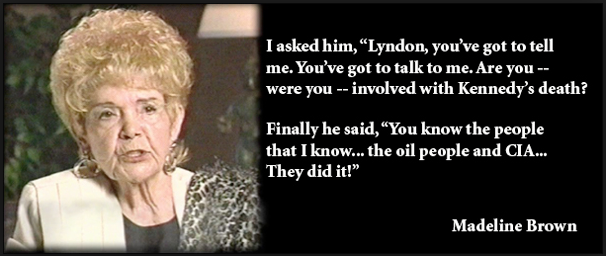
Looking Back: 50 Years after the JFK Assassination

0
They are derisively called “conspiracy theorists”. They carry the torch for the beliefs that sixty to eighty percent of their fellow citizens share since the assassination of President John Kennedy. From October 17 to October 19, several hundred gathered in Pittsburgh for the “Passing the Torch” symposium, a forum devoted to many of the leading investigators discussing alternate visions to the US government’s official version of the murder of Kennedy.
For three days, a group of ordinary-looking, very well-spoken, collegial people discussed and debated the plausibility of conflicting explanations of the Kennedy assassination. Those who have been misled by the corporately-compromised media would be disappointed with the participants: there were no ominous references to the Holy Grail, Area 51, or Roswell, except in jest. Rather, the atmosphere of the gathering was more akin to a convention of neurosurgeons without the glamor of a glitzy destination. The few cranks– anti-Federal Reserve exponents and religious zealots– saw their comments politely dismissed.
Questions and Answers
Broadly speaking, there are two research methodologies that engage assassination investigators. One group of researchers develop, examine, analyze, and debate the physical evidence. The objects of their study are the familiar artifacts: the Zapruder film, the so-called “pristine bullet,” the rifle associated with Oswald, autopsy photos, etc. Of course not all physical evidence is either direct or clearly relevant. Photos, personal accounts, audio tapes, documents, etc. may be merely suggestive and open to broad interpretation. While physical evidence may count as “hard” data, it virtually never fills all of the narrative space between the premeditation to murder and the completion of the act. The judicial system recognizes this oft-occurring opening by placing the “hard” evidence before a jury with the hope that they will have the collective judgment to satisfactorily fill the gaps and arrive at a well-considered conclusion.
But it would be naive to press the idealized courtroom analogy too hard. The court of public opinion, like the real judicial system, allows of differential resources, bias, and clandestine influence. But where honest people recognize that the courts are “overly” fair to the rich, and that the poor suffer a surfeit of fairness, the court of public opinion dispenses entirely with the notion of fairness. With the Kennedy assassination, the government and its agencies have invested overwhelmingly in the Warren Commission/Oswald-did-it-alone version. The US government has resisted, at every step, revealing relevant evidence that might shed new light on the case; it has even denied access to evidence developed to support the conventional view; and it has actively interfered with independent investigations of the assassination. Now-public documents show that the security agencies spied on and interacted with the Garrison investigation in New Orleans. Recent revelations demonstrate that the CIA established their former (1963) chief of covert operations in Miami as their liaison with the 1976 House Select Committee on Assassinations… without revealing this relevant fact (the Joannides affair). This revelation has belatedly driven the formerly compliant final head of that investigation, G. Robert Blakey, into uncharacteristic fits of indignation:
I am no longer confident that the Central Intelligence Agency co-operated with the committee…. I was not told of Joannides’ background with the DRE [Revolutionary Student Directorate], a focal point of the investigation. Had I known who he was, he would have been a witness who would have been interrogated under oath by the staff or by the committee. He would never have been acceptable as a point of contact with us to retrieve documents. In fact, I have now learned, as I note above, that Joannides was the point of contact between the Agency and DRE during the period Oswald was in contact with DRE. That the Agency would put a ‘material witness’ in as a ‘filter’ between the committee and its quests for documents was a flat out breach of the understanding the committee had with the Agency that it would co-operate with the investigation.
Given that researchers face a hostile government and its lap-dog media, it is truly amazing that researchers have advanced the study as far as they have. Of course hostile intelligence agencies and a media with blinders only reinforce the suspicions that the truth remains to be uncovered.
Blending into the physical evidence and further filling the evidentiary gaps are the circumstances and personal ties of the key players in the murder– so-called “circumstantial evidence.” For example, the bizarre trajectory of Lee Harvey Oswald’s brief adult life is breathtaking and complex. He crosses paths with a wide variety of diverse and contradictory characters while taking on equally contradictory personae.
Apologists for the Warren Commission want us to believe that these oddities reflect an isolated, but unstable personality. But the narrative fails the “credible-movie-script” test: No one would believe this tale if it were a movie.
Further, Oswald’s Mexico trip the month before the assassination is a surreal saga fraught with confusion, misidentification, and mystery.
Beyond Circumstances
Is there anything that a Marxist could add to nearly fifty years of skepticism over the Warren Commission and the account of the assassination defended by the security agencies, US elites, and the corporate media?
Certainly a strong case could be made for the account offered by the former head of Cuban counterintelligence, Fabian Escalante. His book, JFK: The Cuba Files, based on his careful review of Cuban evidence, presents many new elements of the days, events, and personalities leading up to the assassination, though no citation of his work arose during the three-day symposium in Pittsburgh. In fact, I inquired of a lobby bookseller with a trove of assassination and associated books why he failed to offer Escalante’s book in his extensive collection. He muttered something about how youthful Escalante looks in his pictures despite his retirement– clear recognition of Escalante’s work, but an evasion of its absence.
It is unfortunate that investigators ignore his book because he untangles much of the Mexico City puzzle. And his profiles of likely suspects add much to the existing biographies. But one senses a hesitance to accept a contribution from a Cuban official, a remnant of Cold War distrust. Moreover, the investigators, with only a few exceptions, own a rather conventional, naive politics. At the end of the symposium, a panelist posed what proved to be an embarrassing, but revealing question: How many here would welcome a Kennedy Presidency today?
The participants and audience demonstrated resounding approval with an enthusiasm betraying frenzied devotion to a fallen martyr rather than mere respect for a murdered President.
Perhaps it is here that a Marxist can make a modest contribution to our understanding of the Kennedy assassination by adding an element of political realism and historical context.
Regard Oswald’s strange course from his adolescence in the mid 1950s through his death in November of 1963. Many point to the incredible twists and turns taken by him through this period. They argue that other forces must be at play: Oswald must have been a puppet. Opponents dismiss this as only indicative of his instability.
But these arguments miss the point.
The real conundrum is in reconciling that bizarre path with the known, demonstrable behavior of the US security services. It was in that period that their covert and overt surveillance reached unparalleled heights. And it was in that time frame that their suppression and prosecution of the left was at its pinnacle. It is simply impossible for Oswald, posturing as a Communist or Marxist militant, to have escaped their constant attention and, indeed, harassment, if anyone in the higher echelons of the many bureaus and agencies believed that posture. Consequently, it would be beyond comprehension that Oswald would have been where he was alleged to be at the moment of the assassination without those many security offices discounting his “leftist” credentials.
Reflect on the following:
● Oswald was allegedly a self-proclaimed Communist in his adolescence before his Marine Corps enlistment and remained so during his 35 months in the Corps (Oct. 1956-September 1959), often sharing his politics with fellow Marines. Despite his openness, he was given at least a “confidential” security clearanceand assigned to a secret U-2 base in Japan. He was trained in sophisticated radar tracking and had access to much sensitive information.
At the same time, hundreds of Communists and thousands of liberals were under surveillance, lost their jobs, or were in jail. Communist leader Claude Lightfoot was sent to jail in 1956 when Oswald joined the Marines. A year earlier, copywriter Melvin Barnet was fired from his job at the New York Times for his political views. The infamous FBI COINTELPRO, a program of active measures against Communists and other leftists, began in 1956. Leaders of the ACLU were informing to the FBI in that period. A Professor at the University of Michigan, Chandler Davis, went to jail for his views in 1959, at a time Oswald was espousing Communism to his fellow Marines.
Is Oswald’s story credible? Did he escape the net that captured liberals who were victimized by snitches and liars? What accounts for his immunity?
● Upon discharge, Oswald set off within 10 days on his voyage to the Soviet Union and defection. Investigators quibble over the formalities of the defection, but no one questions that Oswald made the strongest political statement by surrendering his passport and taking residence in the USSR from late 1959 until June of 1962. After stating his misgivings about the USSR, he was smoothly integrated into a nest of anti-Bolshevik Russians living in arguably one of the most rabidly reactionary, anti-Communist cities in the US, Dallas, Texas (the other candidate being Miami, Florida). Oswald and his young wife quickly find friends who would, by inclination, stand off from his politics, social status, and manners. At no time does this produce a backlash commensurate with the tenor of the times.
It wasn’t until late 1962 that Junius Scales, a district functionary of the Communist Party in North Carolina, was released from prison for merely being a Communist. The Smith Act, The Internal Security Act, the Immigration and Nationality Act, and the Communist Control Act remained in full force in this period, all aimed at suppressing and repressing Communists. Spanish Civil War vet and Communist Archie Brown was arrested in 1961 under the Communist Control Act. In 1962 and 1963, Jack O’Dell was forced out of his leading role in the Southern Christian Leadership Conference by the Kennedy administration for his alleged Communist affiliation. The US government pressed again to revoke Paul Robeson’s passport in 1962. The Berlin Crisis, the Bay of Pigs invasion of 1961 and the October Cuban missile crisis of 1962 brought anti-Communism in the US to a boil.
It was in the midst of this atmosphere that Oswald brought his crackpot leftist ideas to Dallas and into the arms of anti-Communist fanatics. While working at an enterprise engaged in classified military work, Oswald contacted both the Communist Party and the Socialist Workers Party– he had maintained subscriptions to their respective newspapers since his return to the US. Unlike thousands of people who were denied employment, experienced harassment, or found their names on watch lists, Oswald enjoyed a charmed life within a cesspool of right-wing intrigue and anti-Red hysteria.
●The spring of 1963 brought Oswald to New Orleans where he mounted a one-man campaign to establish left credentials while blatantly drawing attention to his activities, a bizarre goal for an authentic leftist in a hostile environment and with no allies. Warren Commission apologists like Gerald Posner answer that these actions only prove that Oswald was unbalanced and unpredictable.
But that evades the pertinent question.
Where were the security services that were systematically hunting, harassing, and persecuting everyone in the US with even a pinkish tint? How does Oswald escape their net? Did anyone in the US leave such a trail of provocative left-wing foot prints as did Oswald?
Before, during, and after Oswald’s pro-Cuban adventure in the deep South, critics were threatened, beaten, and even killed for opposing segregation. And yet Oswald’s television notoriety earned by defending revolutionary Cuba brought a violent reaction only when Oswald provoked one. Lee Harvey Oswald was perhaps the only self-proclaimed leftist in the US who traveled, lived, and acted with impunity during this repressive era.
● Immediately before leaving for Mexico in September of 1963, Oswald telephoned the head of the Texas Socialist Labor Party to mention that he wanted to meet before he left for Mexico City, a conversation that was surely overheard by authorities. What would be the likelihood that the correspondence between two public Marxists would not be the subject of interest in these repressive times and in the paranoid South?
Border crossings were, as they are today, designed to filter those worthy of scrutiny or detention. Yet Oswald went on his merry way to Mexico City with his passport and visa intact. For years, Mexico had been a haven for political expatriates and fleeing victims of the blacklist. All were under constant attention from US and Mexican authorities. Like Portugal and Spain in World War II, Mexico was to the Cold War a hot bed of spying and intrigue where all the antagonists maintained robust stations. Enter Lee Harvey Oswald. Flashing his leftist credentials, Oswald visited and revisited the Cuban and Soviet embassies loudly touting his desires to travel to Cuba and the Soviet Union. Without doubt, these plans were exposed to US authorities, who, uncharacteristically, did virtually nothing. Should his plans have been actuated, he could have been the US’s first double-defector! No one seemed too alarmed in the higher echelons of the CIA and FBI.
This tortured history could easily be dismissed as the expression of an unstable, twisted mind. But that dismissal would only strengthen the oddness of the lack of action on the part of the US security services that would have had to curiously dismiss Oswald’s vocal leftism and uncommonly audacious expression of that postured leftism.
Viewed from the Marxist left, Oswald’s showy exhibition with a gun in one hand and a copy of The Worker and The Militant in the other smells of a provocation. Even a newcomer to the culture of the left knows that Trotskyists and Communists are water and oil. Thus, for a “veteran” of the left like Oswald to go to some lengths to make such a display is only intelligible if he were seeding evidence for some unrevealed purpose. Was the carefully posed picture meant to impress the left? Of course not. Was it meant to make a different impression?
Oswald was likely the only “leftist” in the US to never make first-hand, direct contact with other leftists, to never attend a meeting, to never join an organized demonstration or vigil in 6-8 years of off-and-on “activism.” He was well known as a “leftist” to non-left acquaintances and co-workers as well as much of the general public. But the broad left only knew him through correspondences.
In the end, it is impossible to reconcile Oswald the “leftist” with the unlikely indifference of the US intelligence and police establishment. At the same time, it is impossible to accept the authenticity of that leftism.
But if Oswald was not genuine, if he was only posing as a leftist, what was he really?
Since the intelligence and police agencies ignored Oswald as though they knew he were not a leftist, since he slipped easily through the net that captured thousands of the faintly pink, who did they think he was? He certainly did plenty to deserve their attention, attention that they seemed determined not to give.
Until we know who Oswald really was, we will never solve Kennedy’s assassination.
Zoltan Zigedy
zoltanzigedy@gmail.com

North Texas Drivers Stopped at Roadblock Asked for Saliva, Blood

0

Scott Gordon
NBC DFW
November 19, 2013

Some drivers along a busy North Fort Worth street on Friday were stopped at police roadblock and directed into a parking lot, where they were asked by federal contractors for samples of their breath, saliva and even blood.

It was part of a government research study aimed at determining the number of drunken or drug-impaired drivers.

“It just doesn’t seem right that you can be forced off the road when you’re not doing anything wrong,” said Kim Cope, who said she was on her lunch break when she was forced to pull over at the roadblock on Beach Street.

This article was posted: Tuesday, November 19, 2013 at 4:09 pm

Tags:


Source: Infowars

Government Is Taking Steps to Regulate Bitcoin

1

Senators attending this week’s hearing entitled “Beyond Silk Road: Potential Risks, Threats and Promises of Virtual Currencies” being held by the Senate Homeland Security and Governmental Affairs Committee likely could have predicted what they were going to hear. The Securities and Exchange Commission (SEC) made the case that the increasingly popular cryptocurrency, the Bitcoin, was actually a security and should be regulated; the Department of Homeland Security (DHS) had already adopted an “aggressive posture” to address the “emerging threat and criminal exploitation of virtual currency systems”; and the Treasury Department had recently produced two rules on how exchanges should handle the Bitcoin.

Two government agencies missing at the hearing were the Internal Revenue Service (IRS) and the Commodity Futures Trading Commission (CFTC). The IRS apparently can’t figure out how to tax private transactions between people who may reside in different countries doing business in the ether, while the CFTC is still trying to determine if the Bitcoin is a commodity to regulate.

The Department of Justice (DOJ) warned about how the Bitcoin enables money laundering, illicit tax shelters, and anonymous purchasers of illegal drugs, child pornography, and stolen credit card information. Said Mythili Raman, a DOJ assistant attorney general, the growth in the use of the Bitcoin “inevitably will be accompanied by an increase in illicit transactions, which makes it critical that virtual currency [exchanges] understand their legal obligations and requirements.”

Other supporters of regulating the Bitcoin were also heard, including Jeremy Allaire, founder and CEO of Circle Internet Financial, whose company would benefit in its quest to make Bitcoin transactions easier and consequently more popular if the budding industry were only more closely regulated. Said Allaire:

Criminals and terrorists will seek to employ digital currency if it remains unregulated, leaving Bitcoin operators to operate without stringent controls and effective systems to verify identities, monitor transactions and report suspicious activity.

Allaire’s company would be only too happy to provide to the various regulatory agencies salivating over the Bitcoin opportunity all of that information, for a small fee of course.

The senators also heard from Patrick Murck of the Bitcoin Foundation. Murck pointed out the potentially enormous benefits such a digital currency could bestow on customers and clients worldwide:

Whether [the Bitcoin] brings people into existing financial-services systems, or if it secures peoples’ wealth better outside of formal systems, we believe the Bitcoin has tremendous potential to improve the capacity of people around the world to build and store wealth.

What the senators didn’t hear was how nearly impossible it is going to be for those regulatory agencies to track, follow, monitor, regulate, and punish those breaking laws because the developing and expanding Bitcoin system has no central office, no buildings to be surrounded by gun-toting enforcers, no individuals to arrest and incarcerate, and no storage facilities to shut down. It operates on the Internet through private person-to-person exchanges without a bank, without PayPal, without credit cards or any central banking authority such as the Federal Reserve.

Mike Adams of Natural News noted that the Bitcoin threatens the “very foundation of monetary control that underlies all the corrupt governments of the world,” thus making it increasingly attractive to freedom lovers in a world of increasing government monitoring and regulating.

Popular vendors such as WordPress, OkCupid, Reddit, and the Chinese Internet giant Baidu are already accepting Bitcoins and their number of users continues to grow daily. At present, the most popular use for the Bitcoin is gambling sites such as SatoshiDice.com. The budding industry is drawing capital from investors and venture capitalists such as the Founders Fund and the Winklevoss twins, and a Bitcoin exchange-traded fund (ETF) is in the offing.

Jerry Britto, a senior research fellow at George Mason University, spelled out how the Bitcoin is gaining legitimacy while leaving regulators increasingly behind the curve and trying to play catch-up:

At its core, Bitcoin is a completely decentralized ledger system. It can be thought of as a massive online version of an accountant’s book….

Because Bitcoin is decentralized, these applications … exist largely outside regulators’ reach.

While the development of the Bitcoin through computer algorithms that limit the number of Bitcoins ultimately in circulation makes it an attractive alternative to manipulated currencies constantly being inflated by central banks, the real revolution is its decentralized design. As Britto noted:

This design has two important ramifications: First, because the ledger is decentralized, the Bitcoin protocol leaves governments with no intermediary to shut down. Second, the technology is potentially useful for many other types of transactions….

There is no Bitcoin company to subpoena, no headquarters to raid, not even a server to shut down. Add to that its pseudonymous nature and Bitcoin becomes a real challenge to the state’s ability to restrain or keep track of financial transactions….

While the state may be able to uncover the identity and punish the parties to a Bitcoin transaction … it will no longer be able to prevent those transactions from happening in the first place…

Regulators and law enforcement will have to come to terms with the fact that the Bitcoin protocol is beyond their reach, and while they may be able to spy on the vast majority of consumer transactions by regulating third-party Bitcoin businesses, they will not be able to stop individuals from transacting [business] with each other directly on the network…

That genie is out of the bottle.

A graduate of Cornell University and a former investment advisor, Bob is a regular contributor to The New American magazine and blogs frequently at www.LightFromTheRight.com, primarily on economics and politics. He can be reached at This email address is being protected from spambots. You need JavaScript enabled to view it. .

Source: The New American

Hot Tub Aquaponics: November Update

0

RevtosTV
Planet Infowars
November 19, 2013

Another update. The tomatoes have started to flower, the strawberries are trimmed up and the lettuce is doing great. The tank is still clear and the fish are loving the tank. The updated filter has been working great and a tree frog has made it its home.

This post appeared in the Outdoors category.

All of the views expressed are not necessarily endorsed by Infowars.com.

This article was posted: Tuesday, November 19, 2013 at 3:59 pm

Tags: ,


Source: Infowars

At COP19, Corporations Welcome, Climate Justice Advocates Not

0

Climate justice advocates protest at the UN climate talks in Warsaw Monday morning (Photo: EcoWatch)The 19th Conference of the Parties to the United Nations Framework Convention on Climate Chang, or COP19, in Warsaw have been slammed for welcoming corporations—including fossil fuel industry giants—while slamming the door on climate justice advocates from around the world.

Corporate sponsors of the climate talks include coal, steel, and oil companies, as well as car manufacturers, Democracy Now! reports from Warsaw Monday. Major backers include General Motors, French energy conglomerate Alstom and European mega-polluter ArcelorMittal, Jonas Bruun and Robbie Watt report for the Institute for Policy Studies. “An entire floor in the stadium has been dedicated to private companies peddling ‘solutions’ to the climate crisis in the form of false-hope technologies such as pumping pollution underground and burning trash,” Bruun and Watt point out.

The Ecologist reports:

The United Nations Framework Convention on Climate Change (UNFCCC)’s yearly talks have become a “must attend” event for huge numbers of business and industry lobbyists, all eager to promote their preferred “solution” to tackling climate change — solutions which protect their business interests, provide them with new opportunities to profit and most importantly of all, allow them to continue polluting the climate and destroying the environment for everyone.

In addition to the heavy corporate presence at the climate talks, the global coal industry gets its own summit November 18 and 19 alongside the UN one, with the full partnership of the Polish government, as Common Dreams previously reported.

Yet, Democracy Now! reports from Warsaw that the reception for climate justice advocates is not so warm. After Philippines lead climate negotiator Naderev Saño gave a rousing speech Monday, he was met by youth activists donning signs demanding action on global warming and a large banner that read, “2012, 1,000 dead; 2013, 10,000-plus dead? How many more?”

Despite being embraced by Saño, the group that staged this action was promptly informed that they were banned by the UN climate talks.

“I don’t understand why civil society isn’t welcome here and corporations are,” said Clémence Hutin, one of the activists who participated in the action, in an interview with Democracy Now! “And I think it’s a very wrong message to be sending right now.”

This Democracy Now! segment has more:

_____________________

This work is licensed under a Creative Commons Attribution-Share Alike 3.0 License.

Source: Common Dreams

Obama asks senators to ignore Israel

3

As Iran and the six world powers resume the next round of nuclear talks in Geneva on Wednesday, US President Barack Obama pleads with American senators to ignore the aggressive lobbying campaign by Israel and delay new sanctions against Tehran.

During a two-hour White House meeting on Tuesday, Obama called on senators to give more time for diplomacy with the Islamic Republic, The Hill reports.

Sen. Bob Corker (R-Tenn.), the top Republican on the Senate Foreign Relations Committee told reporters after the meeting that the Obama administration believes a preliminary deal with Iran may be at hand.

�œThey are very explicit about what they think they may be able to achieve,” Corker said.

Members of Congress in both parties have been somewhat skeptical toward the nuclear talks.

On Tuesday, lawmakers in both the House and Senate sent the administration bipartisan letters urging President Obama to adopt a tougher stance with Iran when negotiators meet again on Wednesday.

�œWe feel strongly that any easing of sanctions along the lines that [the international community] is reportedly considering should require Iran to roll back its nuclear program more significantly than now envisioned,” six senators wrote in a letter to Secretary of State John Kerry.

The letter, signed by Sens. Chuck Schumer (D-N.Y.), Lindsey Graham (R-S.C.), Bob Menendez (D-N.J.), John McCain (R-Ariz.), Bob Casey (D-Penn.) and Susan Collins (R-Maine), urges US negotiators to demand that Iran suspend all uranium enrichment and reprocessing activities.

White House press secretary Jay Carney acknowledged Tuesday that there was �œobvious diversity of opinion in the room” about the necessity of holding off on new sanctions.

Obama assured the senators that �œthe relief that we are considering as part of a first rep is limited, temporary, and reversible,” Carney said.

Israeli Prime Minister Benjamin Netanyahu has been struggling in recent weeks to persuade US senators to buck Obama and consider new sanctions against Iran at a time when negotiators from both sides are saying a deal is �œquite possible” over Tehran�™s nuclear energy program.

�œI think you should not only keep up the pressure; I think you should increase the pressure,” Netanyahu said in an interview with CNN on Sunday.

Netanyahu�™s economy and trade minister, Naftali Bennett, visited Washington last week, actively lobbying US lawmakers to act against Tehran. Israeli ambassador to the US Ron Dermer will also meet with congressional Republicans and Democrats this week over Iran.

The Republican-controlled House of Representatives passed an anti-Iran sanctions bill in July by a 400-20 vote seeking to cut Iran�™s oil exports by one million barrels a day for the next year. The Senate Banking Committee is currently looking at a similar version of the bill.

HJ/HJ

Source: Press TV

As Yemeni Addresses Congress, Drone Strikes Near Village

As Yemeni Faisal Jabar prepared to address U.S. lawmakers Tuesday about the drone strike that killed two members of his family, media reports confirmed new casualties following a U.S. airstrike near his village.

At least three men were killed when an airstrike hit a car traveling in the Ghayl Bawazir area of Hadramout. Local witnesses told the Associated Press that the strike came from a U.S. drone aircraft and a Yemeni official confirmed that their government had not carried out any strikes in the area.

Witnesses told Xinhua that “fire engulfed the vehicle soon after the attack” and a “powerful explosion was heard after the attack.” Reportedly the identities of those killed were “unclear.”

The attack occurred hours before a delegation from Yemen prepared to appear before a Congressional briefing Tuesday to testify on the impact U.S. drone strikes have had on their families, their communities and “their efforts for a democratic transition in Yemen.”

Faisal bin Ali Jaber–whose brother-in-law and nephew were killed by a US drone strike on August 29, 2012–will be joined by Entesar al Qadhi, a leading female politician and youth representative at the National Dialogue Conference in Yemen, and Baraa Shiban, the Yemen project coordinator for the legal group Reprieve.

The hearing is only the second time victims of drone strikes have appeared before Congress. Last month, the Rehman family gave their account to a nearly-empty room of a U.S. drone attack that killed their grandmother and injured the two children in the remote tribal region of North Waziristan, Pakistan last October.

Organized by CODEPINK and hosted by Representatives Barbara Lee (D-Calif.), Alan Grayson (D-Fla.), and Jan Schakowsky (D-Ill.), the hearing will begin at 4 PM EST. A live stream can be viewed here and followed on Twitter below.

Reporting on drone strikes in what she calls the “the second most deadly hotspot in the clandestine US drone program, after Pakistan,” RT correspondent Lucy Kafanov recently traveled to the Hadramout region to speak with community members whose “sleepy farming village” was “thrust into the war on terror” after an anonymous airstrike.

You can watch her special report below:

_____________________

This work is licensed under a Creative Commons Attribution-Share Alike 3.0 License.

Source: Common Dreams

The Fallout from Fukushima in the Global Nuclear Industry

0

Arnie Gundersen of Fairewinds.com joins us to discuss the fallout from Fukushima in the global nuclear industry.

Arnie brings his 39 years of experience in the nuclear industry to bear to give his assessment of what the nuclear crisis means for an industry that has long controlled the “regulators” who are supposedly watching over it.

What is the future of nuclear power, and have the nuclear priesthood been defrocked? Find out in this important GRTV Feature Interview, which was originally aired in October 2011.

http://www.youtube.com/watch?v=yQQt3k2NeYI

Source: Global Research

Parent Fined After School Adds ‘Supplemental Ritz Crackers’ to Child’s Lunch

0

Kristen Bartkiw was fined $10 after sending her children to school with a lunch that didn’t include grains, a perceived deficiency that the Manitoba Child Care Association addressed by giving her children “supplemental Ritz crackers.”

Via Weighty Matters:

It’s quite possible that the single stupidest school lunch policy on the planet comes courtesy of a strange interpretation of the Manitoba Government’s Early Learning and Child Care lunch regulations (an earlier version of this article incorrectly pointed at the Manitoba Child Care Association as the source of the strangely interpreted policy).

Apparently if a child’s lunch is deemed “unbalanced“, where “balance” refers to ensuring that a lunch conforms to the proportions of food groups as laid out by Canada’s awful Food Guide, then that child’s lunch is “supplemented“, and their parent is fined.

Blog reader Kristen Bartkiw received just such a fine.

She sent her children to daycare with with lunches containing leftover homemade roast beef and potatoes, carrots, an orange and some milk.

She did not send along any “grains”.

As a consequence the school provided her children with, I kid you not, supplemental Ritz Crackers, and her with a $10 fine.

Keep reading.

H/T: BoingBoing.net

The post Parent Fined After School Adds ‘Supplemental Ritz Crackers’ to Child’s Lunch appeared first on disinformation.

Source: Disinfo

EU Leaders Start ‘Drone Club’ for a ‘European Generation’

0

A Predator B unmanned aircraft taxis at the Naval Air Station in Corpus Christi, Texas, in 2011 (Eric Gay, AP)European leaders are banding together to form the world’s first “drone club” in a bid to stay up-to-snuff on the lethal technology now pervasively used by the United States on battle fields and neighborhoods across the world.

France, Germany and several other European countries said the “drone users club” would welcome any European Union country that currently has drones or plans to have them in the near future, in order to close the military-industrial “gap” between European states and the U.S. and Israel.

French Defense Minister Jean-Yves Le Drian said the group’s ultimate goal is to create a “European generation” of drones within a decade.

Agence France-Press reports:

EU defense ministers meeting in Brussels approved a series of projects to develop Medium Altitude Long Endurance (MALE) pilot-less aircraft from 2020.

Heads of state and government will formally green-light the projects at an EU summit next month focusing on defense cooperation. […]

Three big industrial groups, EADS, France’s Dassault Aviation and Italy’s Finmeccanica offered in June to work together to develop a MALE if given the go-ahead by governments.

“Many aerospace experts believe the days of piloted fighter aircraft are numbered,” The Associated Press reports.

France, Germany, Greece, Italy, Netherlands, Poland and Spain are so far the first to sign up.

_______________________

This work is licensed under a Creative Commons Attribution-Share Alike 3.0 License.

Source: Common Dreams

Only rich Americans ‘deserve to live’

0

American journalist Gordon Duff says the US economic problems have turned it into a country where only rich people deserve to live decent lives.

�œPeople who have money no matter how they got it, dealing drugs, prostitution, kidnapping children off the street, taking kickbacks from contractors….you deserve to live,” Duff told Press TV on Tuesday.

�œIf you don�™t, you deserve to die, you don�™t deserve medical care, the Affordable Care Act has to be squat and stops, your children… they deserve third-rate schools,” he said.

�œThis country is an island of frightened starving poor who are totally and absolutely oppressed by police and the frightened starving poor used to be the uneducated,” he added. But now �œthe starving poor in the United States are people with college education and families whose factories have moves away, who lost their homes.”

�œThe starving poor in the United States is about 60 percent of the United States now,” he noted, saying �œpolice keep them away” from the rich.

The statistics on poverty in America are getting more alarming than ever. Four out of 5 US adults struggle with joblessness, near poverty or reliance on welfare for at least parts of their lives.

According to The Associated Press, the trend has been attributed to �œan increasingly globalized US economy, the widening gap between rich and poor and loss of good-paying manufacturing jobs.”

According to some estimates a staggering number of Americans, over 146 millions, are either �œpoor” or �œlow income.”

Critics say the number of Americans living in poverty is even much more than what official statistics reveal.

AT/HJ

Source: Press TV

US not in a position to dictate to Iran

0

The United States as the only country that has ever used nuclear weapons is not in a position to dictate to Iran not to enrich uranium for peaceful purposes, American activist Don DeBar says.

�œThe United States has the largest nuclear arsenal in the world and as a matter of fact as large as the rest of the world combined,” he told Press TV on Tuesday.

�œThe United States is the only power, the only nation that has ever used atomic weapons on people and they did twice just to make the point,” DeBar added.

He said that Israel, which �œaccording to most knowledgeable speculation maybe 200 nuclear weapons” does not have the �œmoral authority to talk about the possibility of proliferation” in the Middle East.

DeBar also said �œthe legal environment in which Iran is acting essentially defines the objective circumstances. Iran has the right to enrich uranium and as a matter of fact Iran has the right to build nuclear weapons if they so chose.”

Iran and the five permanent members of the UN Security Council — the US, Britain, France, Russia and China — plus Germany ended nuclear negotiations without a deal in Geneva.

The two sides will resume their next round of talks in Geneva on Wednesday under intense lobbying efforts by Israel to prevent a deal between Iran and the six world powers.

AT/HJ

Source: Press TV

Authorities See the Worth of BitCoin

0

Authorities are taking a second look at BitCoin, but what will this mean for those who use the currency?

Wall Street Journal:

U.S. authorities, appearing Monday at the first-ever congressional hearing on virtual currencies, outlined the pitfalls and promises of bitcoin amid concern the anonymity and decentralized nature of some virtual currencies can help facilitate crimes. The hearing provided a financial lift to bitcoin as U.S. officials, who have previously highlighted the currency’s role in money laundering and other illicit activities, called it a “legitimate” financial service.

Keep reading.

The post Authorities See the Worth of BitCoin appeared first on disinformation.

Source: Disinfo

Roast Beef, Potatoes, and Carrots Don’t “Meet Nutrition Guidelines” but GMOs, HFCS, and Trans Fats Do

0

ritz-crackers

The school lunch drama continues, this time in Manitoba, Canada.

Close on the heels of a federally sponsored preschool in Virginia disallowing homemade lunches without a doctor’s note, a mom in Manitoba was given this note and a $10 fine when her children’s preschool felt that the lunch she sent from home required “supplemental” Ritz Crackers.

ritz lunch

(source: Weighty Matters Blog)

The lunch that didn’t meet the Canadian Food Guide  requirements?

Leftover roast beef, potatoes, and carrots, with an orange for dessert, and a container of milk.

The horror!

Natalie and Logan’s mom, Kristin Bartiw, wrote of her dismay:

[If the lunch contained]  ”microwave Kraft Dinner and a hot dog, a package of fruit twists, a Cheestring, and a juice box” those lunches would have sailed right through this idiocy. But her whole food, homemade lunches? They lacked Ritz Crackers.

So what say you? Have you come across a more inane school lunch policy? Because I sure haven’t. (source)

This particular brown bag hullabaloo is based on a policy of the Manitoba provincial government’s  Early Learning and Child Care  lunch regulations, which require children’s lunches to be checked against the Canadian Food Guide and then “supplemented” by the workers of the school.  The “supplementation” comes with fine of $5 per child, which is taken directly from the parent’s account.

Now, generally speaking, grains are encouraged because they contain fiber.  But check out the nutritional information on Ritz Crackers.  What seems to be missing from this “grain supplement”? Also note which vitamins are present…pretty much NONE of them.

Ritz nutrition facts

So…Ritz Crackers, of $5 add-on fame, contain no fiber, no protein, and no vitamins, but this ticks the boxes required by the government of the province of Manitoba?

This leads to the question, “What do Ritz Crackers contain?”  I’m glad you asked.

ritz-ingredients

Wow – what parent could object to these GMO-laden “grains”?  Loaded with High Fructose Corn Syrup (a GMO-sourced poison linked to obesity, diabetes, and containing unregulated toxic contaminants), partially hydrogenated oils (this is a trans fat and currently on the verge of becoming a banned ingredient in the US), sugar (because HFCS just doesn’t make it sweet enough), and chemicals, it’s a great addition to a healthy lunch…please note my sarcasm.

The government is stepping in to replace the parents.  They are overriding parental authority by teaching the kids their version of nutrition, based on vitamin-deficient processed foods over whole foods.  Then, to add insult to injury, they’re charging the parents money to do this.

Don’t look at this story and say, “Oh, it happened in Canada – it could never happen here.”  It could and it has and it will continue unless we stand up to it.  Our school systems are disastrous.  Common Core, a curriculum intent on churning out little worker bees, is making them even worse. – they are about “habit-training” rather than teaching.  Todd Walker of Survival Sherpa lists some unwritten lessons of forced schooling:

  • Never question authority – rulers are right

  • School nutrition is healthy

  • Teachers are experts

  • College is the only ‘real’ choice for success after high school

  • History taught in schools is accurate: “God cannot alter the past, but historians can.”  – Samuel Butler

  • Faux hero-worship is encouraged

  • Regurgitate answers rather than solve problems — (State Standardized testing is a money-making scam to pad pockets while keeping the masses dazed and confused. Of course, this isn’t openly taught, but true none the less.)

  • Give up your right to privacy in exchange for security in a world filled with boogie-men

  • Understand that the State owns your child and there will be no negative consequences when you transfer your authority over your children to that of government force

  • Individualism is not tolerated and will be squashed with great force

  • Students are lumps of clay that need to be molded to be useful to the collective

  • Guns are evil — knifes too

  • Schools incubate a mini police state in every child to forcefully mold compliant subjects

  • Learning through play is no longer allowed

Politicians like to bandy about the phrase that “it takes a village to raise a child.”   Unfortunately, it seems to be the idiots who are in charge of this village.   Don’t let them raise your children.

Illegal immigrants blockade Atlanta office to halt deportations

1

Stephen Dinan
Washington Times
November 19, 2013

Illegal immigrants blockaded a federal office that handles deportations in Atlanta Tuesday morning, and soon after a group of 12 illegal immigrants in Chicago chained themselves to the wheels of a bus they said was headed to the airport to finish deport people.

The moves mark the latest escalation in a campaign by activists to pressure President Obama to use his executive authority to stop almost all deportations. They argue he’s targeting rank-and-file illegal immigrants rather than those with criminal records.

The activists said the Chicago bus includes one father who was put into deportation proceedings after being arrested in a traffic stop, and another father with two U.S. citizen daughters.

This article was posted: Tuesday, November 19, 2013 at 2:04 pm

Tags:


Source: Infowars

Illegal Alien Was on ‘Supervised Release’ When He Killed Border Patrol Agent

1

Brandon Darby
Breitbart
November 19, 2013

Marcos Rodriguez-Perez was previously given “supervised release” by U.S. authorities for illegally smuggling human beings into the US. While on supervised release, the illegal alien participated in the 2009 killing of U.S. Border Patrol Agent Robert Rosas, Jr., along with three other Mexican nationals who had also entered the U.S. illegally or otherwise played a role in the killing. The four admittedly took advantage of the unsecured U.S./Mexico border and lured, trapped, and murdered the young Border Patrol agent for the purpose of stealing his night-vision goggles.

Rodriguez-Perez will serve 56 years in a U.S. prison cell for his participation in the crime. He pleaded guilty to “conspiracy to commit robbery and kidnapping, robbery of personal property of the United States, and use and carrying of a firearm during the commission of a crime of violence,” according to the U.S. Attorney’s Office.

In a Breitbart news exclusive, National Border Patrol Council Vice President Shawn Moran stated: “The fact that this killer was on supervised release for alien smuggling compounds this tragedy. We need to take alien smuggling and immigration crimes seriously. This case belies the commonly held notion that illegal aliens are good people just coming to the US to look for work.”

Moran also honored Border Patrol Agent Rosas and stated: “Robert Rosas is what every Border Patrol agent should aspire to be. A hard worker, a loving husband, and devoted father.” He added: “He served the nation he loved and fought with tenacity until his final moment. He serves now as a Border Patrol legend and will never be forgotten by his brothers and sisters in green.”

The death of Border Patrol Agent Rosas and the circumstances surrounding the ordeal have highlighted a number of recent issues facing the men and women of the U.S. Border Patrol. Many of them are alone in desolate areas where their radios do not work; they faceconstant threats from left-of-center efforts to prevent them from defending themselves; and U.S. authorities routinely decline to prosecute illegal aliens who attack Border Patrol agents, according to the National Border Patrol Council.

Massive Volcano Discovered Under Antarctic Ice

0

Looks like the Elder Things are getting ready to throw a barbecue. You’re invited. We’re all invited. Set a place at the table for unexpected shoggoths.

Via National Geographic:

A newly discovered volcano found buried beneath a thick layer of ice in Antarctica could speed up ice loss and raise global sea levels when it erupts, scientists say.

The finding, detailed in the current issue of Nature Geoscience, marks the first time that an active volcano has been discovered under the ice of the frozen continent.

When it erupts—which no one can predict—the volcano “will create millions of gallons of water beneath the ice—many lakes full,” study leader Doug Wiens, professor of earth and planetary science at Washington University in St. Louis, said in a statement.

Keep reading.

The post Massive Volcano Discovered Under Antarctic Ice appeared first on disinformation.

Source: Disinfo

Border Patrol International: “The American Homeland Is the Planet”

1

It isn’t exactly the towering 20-foot wall that runs like a scar through significant parts of the U.S.-Mexican borderlands. Imagine instead the sort of metal police barricades you see at protests. These are unevenly lined up like so many crooked teeth on the Dominican Republic’s side of the river that acts as its border with Haiti. Like dazed versions of U.S. Border Patrol agents, the armed Dominican border guards sit at their assigned posts, staring at the opposite shore. There, on Haitian territory, children splash in the water and women wash clothes on rocks.

One of those CESFRONT (Specialized Border Security Corps) guards, carrying an assault rifle, is walking six young Haitian men back to the main base in Dajabon, which is painted desert camouflage as if it were in a Middle Eastern war zone.

If the scene looks like a five-and-dime version of what happens on the U.S. southern border, that’s because it is. The enforcement model the Dominican Republic uses to police its boundary with Haiti is an import from the United States.

CESFRONT itself is, in fact, an outgrowth of a U.S. effort to promote “strong borders” abroad as part of its Global War on Terror. So U.S. Consul-General Michael Schimmel told a group from the Columbia Law School Human Rights Clinic in the Dominican Republic back in 2008, according to an internal report written by the law students along with the Dominican immigrant solidarity organization Solidaridad Fronteriza. The U.S. military, he added, was training the Dominican border patrol in “professionalism.”

Schimmel was explaining an overlooked manifestation of U.S. imperial policy in the post-9/11 era. Militarized borders are becoming ever more common throughout the world, especially in areas of U.S. influence.

CESFRONT’s Dajabon commander is Colonel Juan de Jesus Cruz, a stout, Napoleonic figure with a booming voice. Watching the colonel interact with those detained Haitian teenagers was my first brush with how Washington’s “strong borders” abroad policy plays out on the ground. The CESFRONT base in Dajabon is located near the Massacre River that divides the two countries. Its name is a grim reminder of a time in 1937 when Dominican forces slaughtered an estimated 20,000 Haitians in what has been called the “twentieth century’s least-remembered act of genocide.” That act ensured the imposition of a 227-mile boundary between the two countries that share the same island.

As rain falls and the sky growls, Cruz points to the drenched young Haitians and says a single word, “ilegales,” his index finger hovering in the air. The word “illegals” doesn’t settle well with one of the teenagers, who glares at the colonel and replies defiantly, “We have come because of hunger.”

His claim is corroborated by every report about conditions in Haiti, but the colonel responds, “You have resources there,” with the spirit of a man who relishes a debate.

The teenager, who will undoubtedly soon be expelled from the Dominican Republic like so many other Haitians (including, these days, people of Haitian descent bornin the country), gives the colonel a withering look. He’s clearly boiling inside. “There’s hunger in Haiti. There’s poverty in Haiti. There is no way the colonel could not see that,” he tells Cruz. “You are right on the border.”

This tense, uneasy, and commonplace interaction is one of countless numbers of similar moments spanning continents from Latin America and Africa to the Middle East and Asia. On one side, a man in a uniform with a gun and the authority to detain, deport, or sometimes even kill; on the other, people with the most fundamental of unmet needs and without the proper documentation to cross an international boundary. Such people, uprooted, in flight, in pain, in desperate straits, are today ever more commonly dismissed, if they’re lucky, as the equivalent of criminals, or if they aren’t so lucky, labeled “terrorists” and treated accordingly.

In a seminal article “Where’s the U.S. Border?,” Michael Flynn, founder of the Global Detention Project, described the expansion of U.S. “border enforcement” to the planet in the context of the Global War on Terror as essentially a new way of defining national sovereignty. “U.S. border control efforts,” he argued, “have undergone a dramatic metamorphosis in recent years as the United States has attempted to implement practices aimed at stopping migrants long before they reach U.S. shores.”

In this way, borders are, in a sense, being both built up and torn down. Just as with the drones that, from Pakistan to Somalia, the White House sends across national boundaries to execute those it has identified as our enemies, so with border patrolling: definitions of U.S. national “sovereignty,” including where our own borders end and where our version of “national” defense stretches are becoming ever more malleable. As Flynn wrote, although “the U.S. border has been hardened in a number of ways — most dramatically by building actual walls — it is misleading to think that the country’s efforts stop there. Rather the U.S. border in an age dominated by a global war on terrorism and the effects of economic globalization has become a flexible point of contention.”

In other words, “hard” as actual U.S. borders are becoming, what might be called our global, or perhaps even virtual, borders are growing ever more pliable and ever more expansive — extending not only to places like the Dominican Republic, but to the edges of our vast military-surveillance grid, into cyberspace, and via spinning satellites and other spying systems, into space itself.

Back in 2004, a single sentence in the 9/11 commission report caught this changing mood succinctly: “9/11 has taught us that terrorism against American interests ‘over there’ should be regarded just as we regard terrorism against Americans ‘over here.’ In this same sense the American homeland is the planet.”

New World Border

Washington’s response to the 2010 Haitian earthquake provides one example of how quickly a mobile U.S. border and associated fears of massive immigration or unrest can be brought into play.

In the first days after that disaster, a U.S. Air Force cargo plane circled parts of the island for five hours repeatedly broadcasting in Creole the prerecorded voice of Raymond Joseph, Haiti’s ambassador to the United States.

“Listen, don’t rush [to the United States] on boats to leave the country,” he said. “If you do that, we’ll all have even worse problems. Because I’ll be honest with you: if you think you will reach the U.S. and all the doors will be wide open to you, that’s not at all the case. And they will intercept you right on the water and send you back home where you came from.”

That disembodied voice from the heavens was addressing Haitians still stunned in the wake of an earthquake that had killed up to 316,000 people and left an additional one million homeless. State Department Deputy Spokesman Gordon Duguid explained the daily flights to CNN this way: “We are sending public service messages… to save lives.” Meanwhile, the Department of Homeland Security (DHS) quickly dispatched 16 Coast Guard cutters to patrol Haitian waters, blocking people from leaving their devastated island. DHS authorities also cleared space in a 600-bed immigration detention center in Miami, and at the for-profitGuantanamo Bay Migrations Operation Center (run by the GEO Group) at the infamous U.S. base in Cuba.

In other words, the U.S. border is no longer static and “homeland security” no longer stays in the homeland: it’s mobile, it’s rapid, and it’s international.

Maybe this is why, last March, when I asked the young salesmen from L-3 Communications, a surveillance technology company, at the Border Security Expo in Phoenix if they were worried about the sequester — Congress’s across-the-board budget cuts that have taken dollars away from the Pentagon and the Department of Homeland Security — one of them simply shrugged. “There’s the international market,” he said as if this were almost too obvious to mention.

He was standing in front of a black globular glass eye of a camera they were peddling to security types. It was draped with desert camouflage, as if we were out in the Arizona borderlands, while all around us you could feel the energy, the synergy, of an emerging border-industrial complex. Everywhere you looked government officials, Border Patrol types, and the representatives of private industry were meeting and dealing in front of hundreds of booths under the high ceilings of the convention center.

On the internationalization of border security, he wasn’t exaggerating. At least 14 other countries ranging from Israel to Russia were present, their representatives browsing products ranging from miniature drones to Glock handguns. And behind the bustle of that event lay estimates that the global market for homeland security and emergency management will reach $544 billion annually by 2018. “The threat of cross-border terrorism, cyber-crime, piracy, drug trade, human trafficking, internal dissent, separatist movements has been a driving factor for the homeland security market,” the market research company MarketsandMarkets reported, based on a study of high-profit security markets in North America, Europe, and Asia.

This booming business thrives off the creation of new border patrols globally. The Dominican Republic’s CESFRONT, for instance, did not exist before 2006. That year, according to Dominican Today, a group of “U.S. experts” reported that there were “a series of weaknesses that will lead to all kinds of illicit activities” on the Haitian-Dominican border. The U.S. team recommended that “there should be helicopters deployed in the region and [that] there be a creation of a Border Guard.” A month after their report appeared, that country, by Dominican presidential decree, had its own border patrol.

By 2009, the new force had already received training, funding, and resources from a number of U.S. agencies, including the Border Patrol itself. Somehow, it seems that what the U.S. consulate calls “strong borders” between the Dominican Republic and the hemisphere’s poorest country has become an integral part of a terror-obsessed world.

When I met with Colonel Orlando Jerez, a CESFRONT commander, in the border guard agency’s headquarters in the Dominican capital Santo Domingo, I noticed that on his desk he had a U.S. Border Patrol model car, a replica of the one that agency sponsored on the NASCAR circuit from 2006 to 2008 in an attempt to recruit new agents. Along the side of the shiny box that held it was this mission statement: “We are the guardians of the nation’s borders, we are America’s frontlines.”

When I asked Jerez whether CESFRONT had a relationship with our Border Patrol, he replied without a second’s hesitation, “Of course, they have an office in the U.S. embassy.”

Jerez is not alone. Washington’s global boundary-building, its promotion of those strong borders, and its urge to preempt “terrorism against American interests ‘over there,’” as the 9/11 commission report put it, are spreading fast. For example, the Central American Regional Security Initiative, a $496 million U.S. counter-drug plan launched in 2008, identifies “border security deficiencies” among Central American countries as a key problem to be dealt with ASAP. So the U.S. Border Patrol has gone to Guatemala and Honduras to help train new units of border guards.

As in Central America, border patrolling’s most vibrant markets are in places that Washington sees as far too chaotic, yet where its economic and political interests reside. For six years now, U.S. Customs and Border Protection (CBP) has sent its agents, clad in brown jumpsuits, to Iraq’s borderlands to assist that government in the creation of a force to police its “porous” borders (where chaos has indeed been endemic since the 2003 U.S. invasion and subsequent occupation of the country). U.S. boundary-building efforts began there in 2004 with an operation labeled“Phantom Linebacker” in which 15,000 border guards were trained to patrol in — as the name of the operation indicates — the spirit of American football.

In 2012, agent Adrian Long told Frontline, the CBP’s in-house magazine, that his agency trains Iraqis “in Border Patrol techniques like cutting sign, doing drags, setting up checkpoints and patrols.” Long was repeating the same lingo so often heard on the U.S.-Mexican border, where agents “cut sign” to track people by their trail marks and do “drags” to smooth out dirt roads so they can more easily see the footprints of any “border intruders.” In Afghanistan, Border Patrol agents are similarly training forces to police that country’s 3,436 miles of frontiers. In 2012, during one training session, an Afghan policeman even turned his gun on two CBP agents in an “insider attack,” killing them and seriously injuring a third.

Around soccer’s World Cup, which South Africa hosted in 2010, CBP assisted that government in creating a Customs and Border Control Unit tasked with “securing South Africa’s borders while facilitating the movement of goods and people,” according to CBP’s Africa and Middle East branch country manager for South Africa Tasha Reid Hippolyte. South Africa has even brought its military special forces into the border patrolling process. Near the Zimbabwean border, its militarized guards were using a triple barrier of razor wire and electric fencing that can be set to offer shocks ranging from mild to deadly in their efforts to stop border crossers. Such equipment had not been used in that country since the apartheid-era.

In many cases, the U.S. is also training border forces in the use of sophisticated surveillance systems, drones, and the construction of fences and barriers of various kinds, largely in attempts to clamp down on the movement of people between poorer and richer countries. More than 15,000 foreign participants in more than 100 countries have taken part in CBP training sessions since October 2002. It is little wonder, then, that an L-3 Communications sales rep would shrug off the constraints of a shrinking domestic national security budget.

Meanwhile, U.S. borders are functionally being stretched in all sorts of complex ways, even across the waters. As Michael Schmidt wrote in the New York Timesin 2012, for example, “An ocean away from the United States, travelers flying out of the international airport here on the west coast of Ireland are confronting one of the newest lines of defense in the war on terrorism: the United States border.” There, at Shannon International Airport, Department of Homeland Security officials set up the equivalent of a prescreening border checkpoint for air travelers.

Whether it is in your airports or, as in Haiti’s case, in the international waters around your country, the U.S. border is on its way to scrutinize you, to make sure that you are not a threat to the “homeland.” If you don’t meet Washington’s criteria for whatever reason, you will be stopped, forcibly if necessary, from entering the United States, or even in many cases from travelling anywhere at all.

CBP attachés are now detailed to U.S. embassies in Brazil, Mexico, Kenya, South Africa, Italy, and Canada, among many other countries. According to an agency publication, Customs and Border Protection Today, they have been tasked with the mission of keeping “terrorists and their weapons from our shores,” as well as providing technical assistance, “fostering secure trade practices, and strengthening border authority principles.” The anonymous writer then typically, if floridly, describes “our country’s border” as “the armor of the body politic; it protects the systems and infrastructures that function within. Knives pierce armor and can jeopardize the body — so we sheath them; keep them at bay; and demand accountability from those who use them.”

As CBP Commissioner Robert Bonner put it in 2004, the U.S. is “extending our zone of security, where we can do so, beyond our physical borders — so that American borders are the last line of defense, not the first line of defense.”

Perhaps this is why few here batted an eye when, in 2012, Assistant Secretary of International Affairs and Chief Diplomatic Officer for the Department of Homeland Security Alan Bersin flatly declared, “The Guatemalan border with Chiapas is now our southern border.”

On the Edge of Empire

As dusk falls and the rainstorm ends, I walk along the river’s edge where those Dominican border patrol agents are still sitting, staring into Haiti. Considering that U.S. forces occupied the Dominican Republic and Haiti numerous times in the previous century, it’s easy to imagine why Washington’s border chieftains consider this sad, impoverished spot part of our “backyard.” Not far from where I’m walking is the Codevi industrial free trade zone that straddles the border. There, Haitian workers churn out jeans mainly for Levi Strauss and the North American market, earning less than three dollars a day.

I approach one of the CESFRONT guards in his desert camouflage uniform. He’s sitting with his assault rifle between his legs. He looks beyond bored — no surprise since being suspicious of people who happen to be on the other side of a border can be deadly tedious work.

Diaz, as his name patch identifies him, tells me that his shift, which runs from 6 p.m. to midnight, is normally eventless because Haitians rarely cross here. When I explain where I’m from, he wants to know what the U.S.-Mexico border looks like. I tell him about the fencing, the sensors, the cameras, and the agents everywhere you look. I ask if he has ever met agents of the U.S. Border Patrol.

“Of course!” he says in Spanish, “there have been training sessions.”

Then I ask if terrorists are crossing this border, which is the reason the U.S. consulate in Santo Domingo gives for supporting the creation of CESFRONT.

Diaz looks at me as if I’m nuts before offering an emphatic “No!”

No surprise there either. CESFRONT, like similar outfits proliferating globally, isn’t really about terrorism. It’s all about Haiti, one of the poorest countries on the planet. It is a response to fears of the mass movement of desperate, often hungry, people in the U.S. sphere of dominance. It is the manifestation of a new vision of global geopolitics in which human beings in need are to be corralled, their free movement criminalized, and their labor exploited.

With this in mind, the experimental border control technologies being tested along the U.S.-Mexican boundary line and the border-industrial complex that has grown up around it are heading abroad in a major way. If Congress finally passes a new multi-billion dollar border-policing package, its effects will be felt not only along U.S. borders, but also at the edges of its empire.

Todd Miller, a TomDispatch regular, has researched and written about U.S.-Mexican border issues for more than 10 years. He has worked on both sides of the border for BorderLinks in Tucson, Arizona, and Witness for Peace in Oaxaca, Mexico. He now writes on border and immigration issues for NACLA Report on the Americas and its blog “Border Wars,” among other places. His first book, Border Patrol Nation, will be published in spring 2014 for the Open Media Series of City Lights Books.

Follow TomDispatch on Twitter and join us on Facebook or Tumblr. Check out the newest Dispatch Book, Ann Jones’s They Were Soldiers: How the Wounded Return From America’s Wars — The Untold Story.

Source: Global Research

Bjork Explains Television

0

Wondering about the mechanical intricacies of how televisions function? It likely will never be better explained than in this mysterious clip that looks to have been filmed circa-1990, in which everyone’s favorite Icelander deconstructs a TV set to reveal what is really occurring inside:

The post Bjork Explains Television appeared first on disinformation.

Source: Disinfo

Big US budget deal still elusive

0

The administration of US President Barack Obama says budget negotiators in Congress would probably fail to strike a far-reaching deal unless Republicans agree to raise revenues and overhaul the tax code.

A 29-member bipartisan congressional committee, which includes House and Senate budget negotiators, is working to come up with a proposal for 2014 budget. The talks are centered on finding ways to cut spending and special interest tax breaks to replace automatic across-the-board spending cuts.

�œI don’t want to get ahead of the budget conferees,” Treasury Secretary Jack Lew told a business panel, saying the lawmakers could produce something �œsmall, medium or large,” according to Reuters. But if Republicans don’t embrace tax reform and higher revenues, �œthen something large is not likely,” Lew has said.

The negotiators have about a month to write a compromise federal budget they are saying they’re not close to an agreement with Republicans rule outing tax increases while Democrats saying any major entitlement reform is not an option.

US was on the verge of a debt default in October but its politicians reached at last-deal to end, temporarily, a dilemma over raising the debt ceiling after fierce bipartisan fight over the country�™s budget. The deal ended a political crisis that partially shut down the federal government. It only offered a temporary fix by extending the debt ceiling until February 7. Meanwhile, the government�™s spending extension will expire on January 15, raising the threat of another government shutdown.

The Paris-based Organization for Economic Co-operation and Development (OECD) has warned that a possible US government default �œwould have extremely severe effects.” The Organization�™s chief economist, Pier Carlo Padoan, has said �œBrinkmanship over fiscal policy in the United States remains a key risk and uncertainty.”

DB/DB

Source: Press TV

New Media Wars: The Empire Strikes Back

0

Establishment seeks to assimilate or eliminate independent media

Paul Joseph Watson

The dinosaur media is in terminal decline but it will not go down without a fight, which is why the establishment is relying on a number of different techniques to remain relevant while strangling its competition.

Recent polls show that trust in mainstream media is hovering at record lows. Print journalism is fast becoming a distant memory as the establishment press rapidly loses its audience to independent media outlets on the Internet.

Far from accepting its fate meekly, the system has rolled out the big guns in a desperate bid to either eliminate or assimilate the burgeoning alternative press.

The latest example is buried within the secretive Trans-Pacific Partnership agreement (TPP) and concerns “intellectual property enforcement.” Put simply, the agreement will mandate ISPs to remove online content without the need for a burden of proof or any kind of legal process, greasing the skids for aggressive and disproportionate censorship-driven takedowns.

“If instituted, the TPP’s IP regime would trample over individual rights and free expression, as well as ride roughshod over the intellectual and creative commons,” reads a Wikileaks statement. “If you read, write, publish, think, listen, dance, sing or invent; if you farm or consume food; if you’re ill now or might one day be ill, the TPP has you in its crosshairs.”

Another way the mainstream media is trying to strangle alternative voices that might challenge its narrative is by phasing out or banning article comments altogether.

Studies confirm that article comment sections — for better or worse — are heavily swaying public opinion.

Popular Science and BoingBoing.net recently announced their decision to kill comment sections on their website. The New York Times alsorecently indicated that it is scaling back comments and removing them from some articles altogether.

As an excellent Daily Tech piece highlights, Popular Science admitted that its decision to pull the comment section was in order to preach a “scientific doctrine” on global warming without being challenged.

The move to kill off comments altogether comes after a largely failed attempt on behalf of major companies and governments around the world to hire armies of paid employees to troll comments by disseminating pro-establishment positions in a bid to shift popular perceptions.

In 2010, the Canadian government announced it would, “monitor online chatter about political issues and correct what it perceives as misinformation.”

Turkey, Israel, China, are just some of the governments openly hiring paid trolls to steer public opinion, while the Pentagon announced earlier this year that it is stepping up its public relations efforts in order to counter scandals about the U.S. government emerging on huge but non-establishment news outlets like the Drudge Report.

In 2011 it was also revealed that the U.S. government, “contracted HBGary Federal for the development of software which could create multiple fake social media profiles to manipulate and sway public opinion on controversial issues by promoting propaganda.”

Another way the establishment media will look to re-assert itself is by posing as alternative media — funding news outlets that purport to be independent yet are backed by government or corporate cash.

Large mainstream news organizations like ITN are busy creating offshoot platforms that present themselves as “citizen journalism” yet are ultimately bankrolled and controlled by the establishment media itself.

Meanwhile, large news organizations that initially operated somewhat outside of the influence of the establishment media, like the Huffington Post, are being quickly swallowed up by giant corporations like AOL.

The mainstream media will attempt to use all of these methods and more to either supplant or destroy independent voices that are not controlled by the establishment, which is why independent media needs to be more watchful than ever if the Internet is to remain a bastion of free speech and continue to provide a genuine alternative to the corporate press.


Source: Infowars

Census ‘faked’ 2012 election jobs report

John Crudele
New York Post
November 19, 2013

In the home stretch of the 2012 presidential campaign, from August to September, the unemployment rate fell sharply – raising eyebrows from Wall Street to Washington.

The decline – from 8.1 percent in August to 7.8 percent in September – might not have been all it seemed. The numbers, according to a reliable source, were manipulated.

And the Census Bureau, which does the unemployment survey, knew it.

Just two years before the presidential election, the Census Bureau had caught an employee fabricating data that went into the unemployment report, which is one of the most closely watched measures of the economy.

And a knowledgeable source says the deception went beyond that one employee – that it escalated at the time President Obama was seeking reelection in 2012 and continues today.

“He’s not the only one,” said the source, who asked to remain anonymous for now but is willing to talk with the Labor Department and Congress if asked.

The Census employee caught faking the results is Julius Buckmon, according to confidential Census documents obtained by The Post. Buckmon told me in an interview this past weekend that he was told to make up information by higher-ups at Census.

Ironically, it was Labor’s demanding standards that left the door open to manipulation.

Labor requires Census to achieve a 90 percent success rate on its interviews – meaning it needed to reach 9 out of 10 households targeted and report back on their jobs status.

Census currently has six regions from which surveys are conducted. The New York and Philadelphia regions, I’m told, had been coming up short of the 90 percent.

Philadelphia filled the gap with fake interviews.

“It was a phone conversation – I forget the exact words – but it was, ‘Go ahead and fabricate it’ to make it what it was,” Buckmon told me.

Census, under contract from the Labor Department, conducts the household survey used to tabulate the unemployment rate.

Interviews with some 60,000 household go into each month’s jobless number, which currently stands at 7.3 percent. Since this is considered a scientific poll, each one of the households interviewed represents 5,000 homes in the US.

Buckmon, it turns out, was a very ambitious employee. He conducted three times as many household interviews as his peers, my source said.

By making up survey results – and, essentially, creating people out of thin air and giving them jobs – Buckmon’s actions could have lowered the jobless rate.

Buckmon said he filled out surveys for people he couldn’t reach by phone or who didn’t answer their doors.

But, Buckmon says, he was never told how to answer the questions about whether these nonexistent people were employed or not, looking for work, or have given up.

But people who know how the survey works say that simply by creating people and filling out surveys in their name would boost the number of folks reported as employed.

Census never publicly disclosed the falsification. Nor did it inform Labor that its data was tainted.

“Yes, absolutely they should have told us,” said a Labor spokesman. “It would be normal procedure to notify us if there is a problem with data collection.”

Census appears to have looked into only a handful of instances of falsification by Buckmon, although more than a dozen instances were reported, according to internal documents.

In one document from the probe, Program Coordinator Joal Crosby was ask in 2010, “Why was the suspected … possible data falsification on all (underscored) other survey work for which data falsification was suspected not investigated by the region?”

On one document seen by The Post, Crosby hand-wrote the answer: “Unable to determine why an investigation was not done for CPS,” or the Current Population Survey – the official name for the unemployment report.

With regard to the Consumer Expenditure survey, only four instances of falsification were looked into, while 14 were reported.

I’ve been suspicious of the Census Bureau for a long time.

During the 2010 Census report – an enormous and costly survey of the entire country that goes on for a full year – I suspected (and wrote in a number of columns) that Census was inexplicably hiring and firing temporary workers.

I suspected that this turnover of employees was being done purposely to boost the number of new jobs being report each month. (The Labor Department does not use the Census Bureau for its other monthly survey of new jobs – commonly referred to as the Establishment Survey.)

Last week I offered to give all the information I have, including names, dates and charges to Labor’s inspector general.

I’m waiting to hear back from Labor.

I hope the next stop will be Congress, since manipulation of data like this not only gives voters the wrong impression of the economy but also leads lawmakers, the Federal Reserve and companies to make uninformed decisions.

To cite just one instance, the Fed is targeting the curtailment of its so-called quantitative easing money-printing/bond-buying fiasco to the unemployment rate for which Census provided the false information.

So falsifying this would, in essence, have dire consequences for the country.

Brittany Murphy and Husband Poisoned to Death By Government Spooks, Father Claims

David Gardner
Daily Mail
November 19, 2013

Brittany Murphy’s father has sensationally claimed that the tragic ‘Clueless’ actress was poisoned to death by after offering her celebrity backing to a whistleblower fighting the government.

Angelo Bertolotti, 87, alleges that at the time of her death his daughter was under surveillance from shadowy government operators who wiretapped her phone and terrorized her after she spoke out in support of a Department of Homeland Security whistleblower.

Julia Davis, who claims to have once worked as a stunt double for Angelina Jolie, says Brittany was being persecuted for standing up for her.

Davis claimed she was branded a ‘domestic terrorist’ after she exposed security flaws that were allowing terrorists to sneak into the U.S. while she was working as a border security guard in California.

Davis claimed she was branded a ‘domestic terrorist’ after she exposed security flaws that were allowing terrorists to sneak into the U.S. while she was working as a border security guard in California.

The extraordinary claims are what drove Brittany’s father to campaign to have a separate toxicology test conducted on the star. 

The new report found rat poison may have caused the shock death – in stark contrast to the official coroner’s report that concluded it was natural causes.

The latest twist to the growing mystery over the actress’s death came as relatives called on police in Los Angeles to re-open the investigation.

‘I called it two weeks after it happened,’ one family member told MailOnline. ‘You just don’t have two people die like that under those circumstances.’

Officials insist there is no evidence to support a more sinister motive behind 32-year-old Brittany’s sudden death in the bathroom of her Los Angeles home on December 20, 2009.

Her husband, British screenwriter Simon Monjack, 40, died in similar circumstances five months later.

The Los Angeles coroner ruled the deaths were due to pneumonia and anemia.  Health officials later reportedly suggested toxic mold in the house could have played a role in the tragedy.

But the actress’s father is steadfast in his belief foul play was behind the mysterious deaths and launched a lawsuit last year demanding the release of hair samples from Brittany’s body to carry out the new tests.

Although the legal action — which named arsenic as a possible cause of death — was dismissed, the father was given hair, blood and tissue samples to carry out the independent laboratory tests.

Read more

US to Afghanistan: ‘Security’ Deal Means We Continue Raiding Your Homes

0

The U.S. Army’s Bravo Company, 1st Battalion, 36th Infantry Regiment on patrol in Maiwand District, Kandahar Province, Afghanistan (Photo: Reuters/Andrew Burton)Days before the so-called bi-lateral security agreement heads to an Afghan council of elders and political leaders for a final decision, the U.S. is attempting to force through a stipulation that would allow U.S. troops to continue raiding Afghan homes, in addition to measures giving U.S. troops and contractors immunity from Afghan law and extending U.S. military presence far beyond Obama’s 2014 pullout date.

“If you reduce the amount of occupation forces but keep them there forever, then the occupation continues and the war on people’s everyday lives is not actually over — no matter what the US government or mainstream media tells us.” –Kimber Heinz, WRL

Critics charge that the U.S. is giving itself the green light for open-ended occupation at the expense of the Afghan people. “Occupation is not defined by how many occupiers are policing someplace,” said Kimber Heinz of the War Resisters League in an interview with Common Dreams. “If you reduce the amount of occupation forces but keep them there forever, then the occupation continues and the war on people’s everyday lives is not actually over — no matter what the US government or mainstream media tells us.”

The U.S. is pushing for the right to enter Afghan homes over the apparent objection of Afghan negotiators. “We believe it is not only the violation of the Afghan sovereignty, but also of the basic rights of the Afghan people,” said President Hamid Karzai’s spokesperson Aimal Faizi on Monday, referencing the U.S. demand to be allowed to enter Afghan homes.

This latest sticking point comes after attempts on the part of U.S. negotiators to ram through immunity for U.S. troops and independent contractors from Afghan law. According to The Washington Post, the U.S. appears to have succeeded in including this immunity in an accord reached Saturday.

A draft of the agreement will head on Thursday to Afghanistan’s loya jirga, a gathering of 3,000 elders and political leaders who will spend days deliberating over whether to accept the agreement. An Afghan official told The New York Times that Karzai is willing to try to convince the loya jirga to accept this immunity, but not U.S. entry into Afghan homes.

The issue of immunity for U.S. troops has long been a point of contention for the Afghan people, who have faced a staggering civilian death toll, as well as a spate of high-profile massacres, including the 2012 Panjwai massacre, in which 16 Afghan civilians were gunned down and killed, and 6 wounded by U.S. Army Staff Sgt. Robert Bales.

The Washington Post reports that a draft text of the agreement does not specify how many U.S. troops will be allowed to remain in Afghanistan, giving the U.S. unilateral power to determine this number. Furthermore, the document does not prohibit the U.S. from using Afghan territory to launch drone strikes against nearby Pakistan.

The U.S. has framed the raids and continued troop presence as part of an ongoing special operations force to hunt down “terrorist” cells. Yet critics charge that this is just occupation by another name. “The ‘counter-insurgency’ and paramilitary tactics employed in Afghanistan that require fewer ground forces are also being developed for use by armed forces and militarized police units all over the world, including in the U.S., making resistance to the U.S.’s latest strategy for global dominance imperative,” said Heinz.

_____________________

This work is licensed under a Creative Commons Attribution-Share Alike 3.0 License.

Source: Common Dreams

State Rep. Smashes Homeless Peoples’ Stuff With a Sledgehammer

0

The Rep. roams the streets and looks for homeless people in order to literally smash their possessions.


Much like Batkid, Hawaii has found its own superhero. Except that instead of protecting the powerless from harm, he roams the streets with a sledgehammer and looks for homeless people in order to literally smash their possessions.

Remarkably, this vigilante isn’t just some random Hawaiian, but five-term State Rep. Tom Brower (D).

Noting that he’s “disgusted” with homeless people, Brower told the Honolulu Star-Advertiser about his own personal brand of “justice”: “If I see shopping carts that I can’t identify, I will destroy them so they can’t be pushed on the streets.” Brower has waged this campaign for two weeks, estimating that he’s smashed about 30 shopping carts in the process.

“I want to do something practical that will really clean up the streets,” he explained to Hawaii News Now as he showed off his property destruction skills:

Uncontent to just destroy homeless people’s items, Brower is also on a mission to wake those he finds sleeping and tell them to sleep somewhere else. “If someone is sleeping at night on the bus stop, I don’t do anything, but if they are sleeping during the day, I’ll walk up and say, ‘Get your ass moving,’” he said.

It’s no stretch to assume that if Brower were found roaming middle-class neighborhoods and smashing items in people’s homes, he would find himself both out of office and behind bars. But segments of society view homeless people as less important and undeserving of the dignity of having their possessions kept safe.

One homeless person in Honolulu, Edward Ferreira, witnessed Brower in action. “To see someone banging on stuff like that, it was very scary for me,” he told Hawaii News Now.

Without a home, homeless people often have nowhere to store their possessions. A shopping cart can be very useful in both its storage space and mobility. Some localities, including New York, San Francisco, Chicago, and others have tried to address this problem by offering free storage space to homeless people.

Hawaii, on the other hand, is garnering a reputation for a less-than-compassionate approach to its homeless population, and it’s not just because of Brower. It’s got the highest rate of homelessness in the country, but rather than build more shelters or offer more services for the poor, lawmakers approved $100,000 over the next two years to offer one-way flights off the islands to any of the state’s estimated 17,000 homeless persons.

Related Stories

Source: Alternet

Meeting Mandelbrot: Short Film on the Father of Fractals

0

Via Animal New York:

Benoît Mandelbrot was a research fellow initially hired by IBM during the 1960s put on the task of removing excess noise from telephone calls, but more importantly, he was the “father of fractal geometry.” In the short film above, Mandelbrot speaks in great depth about his intense love of mathematics, which led to his discovery of fractals, the never-ending patterns which are seen in both complex systems and in nature. Though Mandelbrot passed away in 2010, his work continues to live on today through further innovations in science, design, telecommunications and medicine

The post Meeting Mandelbrot: Short Film on the Father of Fractals appeared first on disinformation.

Source: Disinfo

Talk Nation Radio: Stephen Kinzer on The Dulles Brothers

0

https://soundcloud.com/davidcnswanson/talknationradio-20131120

Stephen Kinzer’s latest book, which he discusses, is called The Brothers: John Foster Dulles, Allen Dulles, and Their Secret World War.

Total run time: 29:00

Host: David Swanson.
Producer: David Swanson.
Music by Duke Ellington.

Download from Archive or LetsTryDemocracy.

Pacifica stations can also download from AudioPort.

Syndicated by Pacifica Network.

Please encourage your local radio stations to carry this program every week!

Please embed the SoundCloud audio on your own website!

Past Talk Nation Radio shows are all available free and complete at
http://davidswanson.org/talknationradio

read more

Walmart Intimidation, Firings an ‘Illegal’ Attack on Workers: NLRB

0

(Reuters)Walmart’s intimidation and firing of employees who participated in strikes and protests against the retail giant were illegal, the National Labor Relations Board announced on Monday.

According to the NLRB, Walmart has “unlawfully threatened, disciplined, and/or terminated employees” in 13 states for protesting their employer and taking part in strikes. In four states those charges also included the surveillance, discipline, and/or termination of employees “in anticipation of” planned strikes.

On two occasions Walmart spokesperson David Tovar had illegally threatened workers on national television, saying “there would be consequences” for workers who partook in the year’s Black Friday strikes.

The NLRB said that if the parties cannot reach settlements in these cases, which covers striking employees who partook in the “Black Friday” protests of 2012 as well as protests in June at a shareholder meeting in Bentonville, Ark., the board will take action in favor of the ousted workers. That may include forcing Walmart to rehire as many as 117 employees with back pay, according to Bloomberg.

The move bodes well for the Walmart workers and organizers who have been ramping up their campaign for better wages and working conditions with planned strikes and protests building up to this year’s nation-wide Black Friday day of action.

Those actions have gained increasingly widespread support from “local, state and national groups representing tens of millions of Americans” who have now “pledged to join Walmart workers demanding change at the country’s largest retailer and employer on Black Friday,” labor organizer OUR Walmart, which has spearheaded the employees’ struggle, said Monday.

“The scale of support and nationwide activity being planned for Black Friday is unlike anything we’ve seen in recent history,” said Peter Dreier, politics professor and chair of the Urban & Environmental Policy Department at Occidental College. “Black Friday is becoming a labor day of action for working families.”

“The Board’s decision confirms what Walmart workers have long known: the company is illegally trying to silence employees who speak out for better jobs,” said Sarita Gupta, executive director of Jobs With Justice and American Rights at Work. “Americans believe that we have the responsibility – and the right – to speak out against corporate abuses of workers, and this proves we’re finally being heard, and making kinks in Walmart’s armor.”

“Working at the largest employer in the country should mean making a decent living. Those days are long gone,” said Tiffany Beroid, a Walmart worker from Laurel, MD. “Walmart continues to show that it’s afraid to have real conversations about creating better jobs, but would rather scare us into silence. But change at Walmart is too important to our economy and for our families for us to stop speaking out.”

“As income inequality climbs to historic levels and families are increasingly pushed to the margins, working families are coming together to demand better,” added Dreier. “This year, the day after Thanksgiving will be remembered not as the biggest shopping day of the year, but as the day Americans took action to demand the country’s largest employer pay workers livable wages and play a part in improving our economy.”

_______________________

This work is licensed under a Creative Commons Attribution-Share Alike 3.0 License.

Source: Common Dreams

Rand Paul Hints At 2016 Presidential Run

5

Americans are looking for “someone like myself”

Steve Watson

Kentucky Senator Rand Paul gave the first iron clad hint that he is gearing up for a 2016 Presidential campaign, stating Monday that he thinks Americans are looking for “someone like myself” to vote for.

“I think they want someone outside of, you know, what’s been going on.” Paul said, referring to the political sideshow in Washington.

“For example, someone like myself who has been promoting term limits,” Paul told Fox News Monday. “Someone who says we shouldn’t have, you know, decade after decade longevity up here.”

The Senator left many believing that he was offering himself as a potential candidate to Republican voters as well as the party leadership, noting that he feels he is still “perceived as an outsider… should that be the choice at sometime in 2016.”

Watch the latest video at video.foxnews.com

Clearly referring to New Jersey Gov. Chris Christie, Paul also stated that “I don’t know that a governor is necessarily an outsider. A governor can be an insider as much as anybody else.”

When asked if he thinks Christie is a “true conservative”, following the Governor’s support for Medicaid expansion under Obamacare, Paul replied “You know, depends on how you define that; if you have a very loose definition, probably.”

“If you look at a lot of issues like on whether or not we should accept Obamacare, bring it to our state, expand Medicaid: those would be, I think at best, moderate positions.” Paul added.

The comments are sure to appeal to voters who believe Christie, a former attorney and lobbyist, to be an establishment backed ringer.

Paul also stated that he feels it is imperative to have forged a real profession before entering politics, prompting Charles Krauthammer to quip “Like being an eye doctor, for example?”

Paul has previously stated that he is not yet considering a 2016 run. However, the Paul family is clearly preparing for the eventuality.

In further comments during the interview, Paul spoke about the Obamacare debacle, expressing concern that Americans are going to see rates skyrocket under the new healthcare law.

“If young people don’t buy it the price in a year is going to be higher for the unhealthy people and it will essentially be a high risk pool which is very expensive to cover. and the prices go higher and higher and the only fix becomes more mandates,” said Paul.

The Senator noted that many Americans are beginning to realise that the push for the new law is less about healthcare and more to do with infringing liberty.

“It’s about freedom of choice versus coercion. The president is coercing you into four plans and he’s telling you exactly what you can buy.” Paul stated.


Source: Infowars

Judge won’t allow Holder appeal now in contempt case

0

Josh Gerstein
Politico
November 19, 2013

A federal judge has refused Attorney General Eric Holder’s request that he be allowed to proceed now with an appeal in a case where the House of Representatives is seeking to enforce subpoenas for documents related to the controversial Operation Fast and Furious gun investigation.

In a ruling Monday afternoon, U.S. District Court Judge Amy Berman Jackson said her September 30 ruling rejecting Holder’s request to dismiss the lawsuit was not such a close call that it deserved immediate review from the U.S. Court of Appeals for the D.C. Circuit.

“While the Court agrees with defendant’s characterization of the matter as significant, that is not the test,” Jackson wrote in her new four-page decision (posted here). ”

This article was posted: Tuesday, November 19, 2013 at 12:35 pm

Tags:


Source: Infowars

Florida city uproots couple’s 17-year-old garden over new ordinance

0

William Patrick
Fox News
November 19, 2013

A sunset on the beach by Miami Shores, Florida.
Credit: miamism via Flickr

Few things in life are as benign as a home vegetable garden.

But for the residents of Miami Shores, Fla., growing veggies can land you a fine — the type you eventually can’t afford.

That’s what happened to Hermine Ricketts and her husband, Tom Carroll. For the past 17 years they’ve grown a garden in the front yard of their modest South Florida home. The backyard, they say, doesn’t get enough sunlight.

This article was posted: Tuesday, November 19, 2013 at 12:46 pm

Tags:


Source: Infowars

DHS Still Hasn’t Fired Black Supremacist Who Called for Mass Murder of Whites

0

Alex Seitz-Wald
National Journalism
November 19, 2013

The black-nationalist Department of Homeland Security employee who was placed on leave almost four months ago for running a website that espouses the mass murder of whites has still not been fired, an agency spokesperson told National Journal.

The Southern Poverty Law Center first exposed Ayo Kimathi in August, prompting a small media firestorm that led DHS to place the procurement officer on administrative leave with pay pending review. DHS deputy press secretary Gillian Christensen confirmed that his status has not changed and that he is still on leave pending review.

Kimathi, using the online nom de guerre “the Irritated Genie,” called for “ethnic cleansing” of “black-skinned Uncle Tom race traitors” on his website, which envisioned a massive race war on the horizon. “In order for Black people to survive the 21st century, we are going to have to kill a lot of whites—more than our Christian hearts can possibly count,” he wrote.

This article was posted: Tuesday, November 19, 2013 at 12:30 pm

Tags:


Source: Infowars

Following Arctic 30 Clarion Call, Oil Expert Warns Arctic Spill ‘Inevitable’

0

Greenpeace International activist Ana Paula Alminhana Maciel at a bail hearing at Primorskiy Court in St. Petersburg. (Photo: Vladimir Baryshev/ Greenpeace)As the fate of the Arctic 30 protesters has become a point of international outcry, their message—when they staged their peaceful action atop a Russian drilling platform—lives on: We must “Save the Arctic.”

Validating the environmentalists’ warning that gas and oil drilling in Arctic waters is a clear threat to the pristine wilderness, an oil spill expert told the Guardian Tuesday that should drilling continue there, a major spill is “inevitable” and would cause untold damage to the ecosystem.

“It is inevitable you will get a spill – a dead cert,” Simon Boxall, an oil spill expert from the University of Southampton, told the paper. “I would expect to see a major spill in the not too distant future. I would be astonished if you did not see a major spill from this.”

As Boxall explains, compounding any spill are the frigid temperatures, which prevent the oil from naturally breaking down as it does in more temperate waters where bacteria help digest the oil. “In the Arctic the oil does not break down in this way – it can take decades before it breaks down,” he warns. “Nature will not help us.”

Further, Boxall notes, the drilling industry is one fraught with mistakes. “Corners are cut, money is saved in small ways. Then it can go wrong and end up costing a huge amount of money, like in the Gulf of Mexico,” he adds.

Boxall’s warning confirms the message of the 28 Greenpeace activists and 2 journalists who defied Russian authorities in September when they boarded a Gazprom oil platform in an act of civil disobedience against Arctic drilling.

“Peacefully protesting for the protection of the pristine Arctic is not a crime, it is a great service to mankind,” said Ben Ayliffe, Greenpeace International Arctic campaigner, in a statement condemning their imprisonment.

The protesters were hoping to bring awareness to the devastation caused by an “inevitable” spill as well as the additional 520 million tons of carbon pollution the drilling would add to the atmosphere each year.

“In an age of cynicism and political apathy in many countries, the activists did something about an issue they care passionately about,” Ayliffe added. “They saw that oil platform as a threat to a fragile, beautiful environment. They protested peacefully, driven by their convictions, and for that they are being unjustly punished.”

After two months of detention, a St. Petersburg court ruled Tuesday that 9 of the Arctic 30 can be freed on bail following the release on bail of three Russian activists Monday.

The Guardian reports:

New Zealander David Haussmann and Brazilian Ana Paula Maciel were granted release from pre-trial detention on payment of a 2m rouble (£38,000) bail surety on Tuesday morning, and as the day progressed activists from Finland, France, Italy, Argentina, Poland and Canada had bail requests approved on the same conditions.

On Wednesday two of the six British citizens among the detainees, activist Alexandra Harris and freelance videographer Kieron Bryan, will have their bail requests heard.

However, on Monday 59-year-old Australian citizen Colin Russell had his detention extended following the rejection of his bail application on the grounds that he could flee the country or interfere in an investigation—a ruling Greenpeace’s Mads Christensen called a “scandal” that “bears no relation to the administration of justice.”

In a statement following the news of Russell’s rejected application, Kumi Naidoo of Greenpeace said:

In the space of two mornings we have had good news and bad, and the good news comes with a warning. We still have no idea what conditions our friends will endure when they are released from jail, whether they will be held under house arrest or even allowed outside.

What we do know for certain is that they are still charged and could spend years behind bars if they are convicted for a crime they did not commit. And we remain baffled and heartbroken that our colleague Colin was refused bail and sent back to prison for three months.

The Arctic 30 will not be free until every last one of them is back home with their families.

Greenpeace is providing live updates as the hearings progress.

Those named as being bailed on Tuesday are: Ana Paula Maciels, 31, from Brazil; Miguel Hernan Perez Orsi, 40, Argentina; David Haussmann, 49, New Zealand; Sini Saarela, 31, Finland; Paul Ruzycki, 48, Canada; Camila Speziale, 21, Argentina; Tomasz Dziemianczuk, 36, Poland; Francesco Pisanu, 38, France; Cristian D’Alessandro, 32, Italy.

And the three Russian detainees granted bail Monday are Andrey Allakhverdov, Ekaterina Zaspa and freelance photographer Denis Sinyakov.

_____________________

This work is licensed under a Creative Commons Attribution-Share Alike 3.0 License.

Source: Common Dreams

Beirut Bombing: Attacks Target Iranian Embassy, 23 Killed, 146 Injured — “An Act of War by Saudi Arabia Against Iran”

0

Two blasts near the Iranian embassy in Beirut killed at least 23 people, injuring 146 and causing havoc and a massive fire in the Lebanese capital. Six buildings were reportedly destroyed in the embassy compound.

The harrowing scene was primarily caused by 100lb (50kg) of explosives loaded into a car, according to AP. Security sources on the ground said there were two blasts – the first caused by a person on a motorbike carrying some 4.4lbs (2kg) of explosive, while the second was by a suicide bomber who tried to ram the compound with the car.

However, there are conflicting reports as to how the initial blast unfolded. Eyewitnesses claimed that a man was mounted on a motorbike, while a Lebanese official told Reuters that the man wearing an explosives belt was seen rushing towards the embassy’s outer wall before blowing himself up.

Witnesses at the scene reported that the explosions occurred within one or two minutes of each other.

Injured people and destroyed buildings were seen on very disturbing pictures circulated by Lebanese media in the immediate aftermath.

A soldier (in green, 2nd L) and policeman gesture at the site of the explosions near the Iranian embassy in Beirut November 19, 2013.(Reuters / Mahmoud Kheir)

Witnesses speaking to Al Arabiya reported seeing smoke rising from the battered embassy compound, while footage from the bloody scene showed raging fires, with the death toll rising by the minute.

It is not clear who was behind the attack at this time, but the area where the blasts occurred is significant in two ways: it is considered to be a stronghold for the Lebanese Shiite faction, Hezbollah. And secondly, it is a popular area and a home to many families of Iranian diplomats working in Lebanon.

Army soldiers, security police officers and civilians gather around a body at the site of explosions near the Iranian embassy in Beirut November 19, 2013.(Reuters / Mahmoud Kheir)Army soldiers, security police officers and civilians gather around a body at the site of explosions near the Iranian embassy in Beirut November 19, 2013.(Reuters / Mahmoud Kheir)

The Iranian ambassador to Lebanon reacted promptly to the situation, saying that it was beyond any doubt that the embassy was the target of the attack and placing blame on a “Zionist entity.” He added that such attacks only “keep us strong and proves the righteousness of our stances.” Minutes before it was reported that the Iranian cultural adviser for Lebanon was wounded in the blast, but shortly thereafter succumbed to his injuries.

Later in the day Al-Manar found out that the Yemeni ambassador was lightly injured in the blasts.

Iran’s foreign ministry subsequently added that the blast was the work of Israeli mercenaries. Syrian information minister Omran Zoabi to Al-Manar has come out with a similar opinion, saying that Israeli and Saudi intelligence are behind the explosions. Later in the afternoon Reuters reported that Al-Qaeda-linked Abdullah Azzam brigades have claimed responsibility for the double suicide bombing.

Lebanon and Iran enjoy close relations, both having a large Shiite population. This is not the first attack that has occurred in the area. Hezbollah compounds have come under frequent fire before, especially as Sunni-on-Shia tensions have begun to mirror each other across the Middle East.

Civil Defence personnel transport a body at the site of explosions near the Iranian embassy in Beirut November 19, 2013.(Reuters / Mahmoud Kheir)Civil Defence personnel transport a body at the site of explosions near the Iranian embassy in Beirut November 19, 2013.(Reuters / Mahmoud Kheir)

While an ally of Iran, Hezbollah is also a strong supporter of neighboring Syria’s President Bashar Assad, who is currently fighting his own terrorist threat.

Political bombings in Lebanon are a frequent occurrence. One of the more severe recent ones took place in late August, when 42 people lost their lives, while literally hundreds were injured in twin explosions in the city of Tripoli. Similarly, a blast near Hezbollah’s headquarters just days before, on August 15, killed 27 people, injuring 150.

Sunni radicals claimed responsibility.

In June, the same location was targeted, when a car bomb blast injured 53 people.

Civil defence personnel carry a wounded man at the site of explosions near the Iranian embassy in Beirut November 19, 2013.(Reuters / Hasan Shaaban)

Civil defence personnel carry a wounded man at the site of explosions near the Iranian embassy in Beirut November 19, 2013.(Reuters / Hasan Shaaban)

Civil Defence personnel extinguish a fire on cars at the site of explosions near the Iranian embassy in Beirut November 19, 2013.(Reuters / Mahmoud Kheir)

Civil Defence personnel extinguish a fire on cars at the site of explosions near the Iranian embassy in Beirut November 19, 2013.(Reuters / Mahmoud Kheir)

Soldiers, policemen and medical personnel gather at the site of explosions near the Iranian embassy in Beirut November 19, 2013.(Reuters / Hasan Shaaban)

Soldiers, policemen and medical personnel gather at the site of explosions near the Iranian embassy in Beirut November 19, 2013.(Reuters / Hasan Shaaban)

Soldiers, policemen and medical personnel gather at the site of explosions near the Iranian embassy in Beirut November 19, 2013. (Reuters / Hasan Shaaban)

Soldiers, policemen and medical personnel gather at the site of explosions near the Iranian embassy in Beirut November 19, 2013. (Reuters / Hasan Shaaban)

Source: Global Research

Graham: Bad Iran deal will lead to war

1

Sen. Lindsey Graham

Hawkish Republican Senator Lindsey Graham says that a bad nuclear agreement between Iran and the five permanent members of the UN Security Council plus Germany would lead to war.

�œA bad deal will lead to war and a bad deal is allowing the Iranians the capability to produce a nuclear weapon,” Graham told Fox News on Tuesday.

Iran says it is not seeking nuclear weapons and the UN nuclear watchdog, the IAEA, has reported in its reports that there is no evidence of any diversion in Iran�™s nuclear program. At the same time, Iran�™s nuclear facilities are under IAEA�™s inspection.

Senator Graham also lashed out at US President Barack Obama for planning to ease economic sanctions against Iran.

�œIf you back off the sanctions, which the president wants us to do… the international community is going to say, �˜Aha, sanctions are behind us�™ and they�™re going to race to do business with Iran,” he said.

Iran and the US, Britain, France, Russia as well as China — plus Germany will begin a new round of talks in Geneva, Switzerland on Wednesday.

The White House said President Obama will meet with Senate leaders from both parties later on Tuesday in order to persuade the lawmakers not to impose new sanctions against Iran.

Last week, White House press secretary Jay Carney warned that imposing tougher sanctions against Tehran could lead to war.

“This is a decision to support diplomacy and a possible peaceful resolution to this issue,” Carney said. “The American people do not want a march to war.”

AGB/DB

Source: Press TV

U.S.-Afghan deal would keep American troops in Afghanistan for years

0

Richard Engel
NBC News
November 19, 2013

While many Americans have been led to believe the war in Afghanistan will soon be over, a draft of a key US-Afghan security deal obtained by NBC NEWS shows the United States is prepared to maintain military outposts in Afghanistan for many years to come, and pay to support hundreds of thousands of Afghan security forces.

The wide-ranging document, still unsigned by the United States and Afghanistan, has the potential to commit thousands of American troops to Afghanistan and spend billions of US taxpayer dollars.

The document outlines what appears to be the start of a new, open-ended military commitment in Afghanistan in the name of training and continuing to fight al-Qaeda. The war in Afghanistan doesn’t seem to be ending, but renewed under new, scaled-down US-Afghan terms.

This article was posted: Tuesday, November 19, 2013 at 12:08 pm

Tags: , ,


Source: Infowars

Texans to Protest Censorship of Free Speech in Dallas JFK Events

0

Alex Jones to lead demonstrations against censorship of First Amendment in Dallas

Adan Salazar
Infowars.com
November 19, 2013

The anniversary of the death of John Fitzgerald Kennedy, the nation’s 35th president, occurs this Friday in the north Texas city where the shadow government silenced him fifty years ago.

Since his death, countless people have sought answers and disagreed with the government’s portrayal of what took place that day, chiefly that former marine Lee Harvey Oswald was a lone wolf assassin and that he used a “magic bullet” to kill the president.

Now in an unprecedented effort to squelch free speech, the City of Dallas has moved to cordon off huge areas of the city and has attempted to prohibit citizens from carrying signs with messages countering the official narrative, and even filming in certain downtown areas.

“Due to construction, renovations and preparations for the 50th JFK Anniversary event, extensive filming will not be allowed in Dealey Plaza area from September 1st through November 24, 2013,” a memo from the City of Dallas states.

The moves to cordon off the city and prohibit filming are outrageous in light of polls showing a clear majority still don’t buy the official story. Even Secretary of State John “Skull and Bones” Kerry has come forward professing his doubts.

When Chinese citizens stood up in Tiananmen Square in defense of free speech, they were admired around the world. But when the evisceration of that right happens in the supposed land of the free, home of the brave, it’s not even an issue.

The state run media’s propaganda mechanisms are also in high gear reinforcing the establishment’s view and running sniveling headlines demonizing “conspiracy theorists,” claiming all the Dallas mayor wants is to keep order and decorum.

But under threats of lawsuit by different groups like COPA, the city has caved to numerous concessions like allowing the handing out of leaflets and t-shirts, and hanging banners… but only in designated areas, when all of these activities are clearly free speech.

In attempting to control the events, which will be televised for billions worldwide, the social engineers in Dallas hope to suppress and reverse the huge awakening taking place to the fact that a shadow government and rogue elements within the military industrial complex engaged in a coup d’état, exactly what Dwight D. Eisenhower warned of just two years previous in his farewell address. It’s also imperative to recognize that the real power structure is the private run-for-profit Federal Reserve.

On Wednesday, Alex Jones will kick off three days of demonstrations and protests at the Federal Reserve building at the corner of Pearl and Woodall Rodgers Freeway, a location he has previously demonstrated at three separate times with other Americans.

From 8 to 9PM on Wednesday night, Jones and his crew will hand out thousands of free fliers exposing the violations of free speech. Activist patriots can then descend on downtown Dallas Thursday, and of course the 50th anniversary on Friday, with the powerful, unfiltered information and alert the sleeping citizenry to the attempted censorship.

We’re also planning a First Amendment march on Thursday, which will soon be announced, and on the key day of Friday.

These demonstrations are all about the First Amendment, the freedom of the press, expression and free speech, and we’re going to be there.

“The system would have been wise not to try to assassinate the First Amendment like they did JFK,” states Alex Jones. “But because they did this, their efforts will be used instead to further awaken the sleeping giant that is the American people and people of the world.”

We need everyone out Wednesday night to get the fliers, and to participate in these demonstrations whenever they can, whether it’s all three days or one hour.

We’re calling on people from all over the planet to come down and get those fliers and get them out to people in the downtown area.

This article was posted: Tuesday, November 19, 2013 at 12:07 pm

Tags: , , , ,


Source: Infowars

Virginia state senator ‘stabbed by son’

0

Gus Deeds took a semester off from college to work on his dad’s campaign for governor in 2009.

Virginia State Senator Creigh Deeds is in critical condition after he was reportedly stabbed by his son Austin (Gus) Deeds Tuesday morning at his home in Bath County.

After attacking his father, the son, whose age is unknown, reportedly shot himself. He died from a gunshot wound, sources told WRC-TV.

Law enforcement sources are investigating what led to the violence.

Police were called to Deeds’ home at 7:25 a.m., according to the local news station.

The 55-year-old local politician is being treated at the University of Virginia Medical Center in Charlottesville, Va.

Deeds, a Democrat, previously ran for attorney general of Virginia in 2005 and governor of Virginia in 2009.

In 2009, when Deeds was running against Republican Bob McDonnell, Gus Deeds and his sister Amanda helped out with their dad’s campaign and were among Deeds’ entourage when he visited college campuses across the state to drum up support among the youth vote.

According to a family profile at the time of the race, Gus was listed as a 20-year-old junior at William & Mary. The Washington Post reported Gus took a semester off school to help with his dad’s campaign.

That same year, Gus was busted in May 2009 for underage drinking, according to The Virginian-Pilot.

A father of four, Deeds has served as a Virginia state senator since 2001.

Deeds’ former opponent, Gov. McDonnell, issued a statement Tuesday, calling the incident “utterly heartbreaking.” NY Daily News

AGB/DB

Source: Press TV

‘Fight Far From Over’ After First Nation Loses Bid to Stop Fracking in New Brunswick

0

‘Look at this photo. These are the women RCMP snipers are aiming rifles at. This is Canada #Fracking #Elsipogtog (Photo & caption via Twitter: Sophia Banks/ ‏@sophiaphotos) First Nations anti-fracking protestors have vowed to regroup and continue the wave of resistance after losing their legal big on Monday to stop shale gas exploration on their land in New Brunswick.

Last week, the Elsipogtog First Nation filed an application for an injunction to stop SWN Resources Canada from conducting seismic testing for shale gas. The “urgent” application called for a suspension of SWN operations under oil and gas licenses, and said that it was

required to preserve the peace and rights of the First Nation. It says the exploration by SWN is illegal and unconstitutional because it violates aboriginal and treaty rights.

“On the other hand, there is credible evidence that outside radical elements are converging in significant numbers on New Brunswick [in] the vicinity of the shale gas exploration work that the respondents SWN proposes to recommence,” the application says.”

Canada’s CBC reports that in

her decision Monday, Justice Judy Clendening said it was an “odd request” for the First Nation to seek an injunction against SWN due the risk of violent protests.

“The respondents [SWN and the province] are not inciting this reaction and there is no evidence that the respondents will interfere with a peaceful protest,” she wrote.

“The threat of radical elements converging is not a reasonable factor to be considered.”

Following the ruling, Elsipogtog Chief Aaron Sock said, “It is a small step backward, I guess. But in the big picture we’re going to be regrouping and coming back with a different strategy.”

“The fight between Elsipogtog First Nation and the government of New Brunswick concerning the lack of consultation is far from over,” added T.J. Burke, the lawyer representing Sock and band council of the community.

Opposition to fracking in the province is widespread.

“New Brunswickers aren’t going to give up – not those of us who are intent on sending this industry packing,” said Shawnee Main, a Fredericton resident and one of the many allies of the protesters . “And our indigenous people have a lot of people standing up behind them in this cause.”

Resistance to fracking in New Brunswick has been raging for weeks, despite SWN’s failed attempt to get a permanent injunction against protests.

Just four days ago, First Nations protesters attempted to blockade SWN trucks from conducting seismic testing.

And in mid-October, a paramilitary-style assault on an Elsipogtog blockade of SWN’s fracking activity sparked protests that swept the nation.

“SWN is violating our treaty rights. We are here to save our water and land, and to protect our animals and people. There will be no fracking at all,” said Louis Jerome, a Mi’kmaq sun dancer of the Gesgapegiag community, in a statement earlier this month. “We are putting a sacred fire here, and it must be respected. We are still here, and we’re not backing down.”

_________________

This work is licensed under a Creative Commons Attribution-Share Alike 3.0 License.

Source: Common Dreams

McDonald’s Advice To Underpaid Employees: Break Food Into Pieces To Keep You Full

The “advice” was published on the “McResource” website, meant to give tips to fast-food workers.

The latest friendly advice from McDonald’s to their low-wage workers includes tips on how to better handle stress–as well as how to fill yourself up better with dinner. The fast-food corporation instructs workers that breaking food “into pieces” will keep you full.

The advice was published on the “McResource” website, meant to give tips to fast-food workers. While you need to be a McDonald’s worker to log-in to the website, details of the advice have been publicized by the group Low Pay Is Not OK, a union-backed group seeking to organize low-wage workers at McDonald’s. The effort is part of the larger campaign to push for living wages, benefits and the right to organize among low-wage workers across a variety of industries.

A video published by Low Pay Is Not OK shows the website’s advice to workers. One piece of advice given is for workers to take two vacations a year–an impossible task given that many employees work two low-wage jobs. It tells workers to “sing away stress” because it “can lower your blood pressure.” And it tells McDonald’s employees to break “food into pieces,” which “results in eating less and still feeling full.”

McDonald’s had previously come under fire for telling workers to apply for food stamps while being employed by a fast-food corporation raking in billions annually. Many McDonald’s workers make minimum wage. The federal minimum wage rate is $7.25 an hour.

The McDonald’s advices comes as more and more corporations undergo scrutiny for paying workers low-wages. Yesterday, a Wal-Mart store in Cleveland made headlines after a newspaper reported that the store encouraged employees to donate food for other, less fortunate workers at Wal-Mart for Thanksgiving.

Watch the Low Pay Is Not OK video here:

Source: Alternet

“The Whistleblower”

0

Last Friday, November 15, Richard C. Cook appeared on NPR: Virginia Conversations for a one-hour discussion around his experience as a whistleblower following the Challenger disaster when he worked for NASA. Here is the link: http://virginiapublicradio.org/2013/11/18/virginia-conversations-the-whistleblower/

Woman Hailed by President as Obamacare Success Story Now Can’t Afford Obamacare

0

Daniel Halper
The Weekly Standard
November 19, 2013

CNN reports that a woman the president hailed as an Obamacare success story just realized she won’t be able to afford Obamacare because it’s too expensive:

“Jessica Sanford was cited by the president as an Obamacare success story at a health care event he had here at the White House in the Rose Garden on October 21,” says a reporter for CNN from the White House.

This article was posted: Tuesday, November 19, 2013 at 11:43 am

Tags: ,


Source: Infowars

80 is the new 60 when it comes to retirement

0

John Aidan Byrne
New York Post
November 19, 2013

American business has become a gray area. As in hair color.

Call it the new American nightmare: Running out of money in retirement is scaring the hell out of record numbers of older workers, forcing them to stay in the workforce.

Now 80 is the new 60 when it comes to retirement. Many older workers who finally clock out have sharply underestimated their financial needs in retirement, raising the specter of personal financial disaster.

This article was posted: Tuesday, November 19, 2013 at 11:48 am

Tags: ,


Source: Infowars

Brace Yourself: Ragnarok is Coming in February

0

With the Mayan apocalypse behind us, it’s time to focus on Ragnarok, the Viking apocalypse.

Via Unexplained Mysteries

According to Norse mythology the Vikings have their own version of doomsday and it is fast approaching.

The end of the world has come and gone several times over the last few years, from the turn of the millennium to the Mayan apocalypse, mankind seems obsessed with the fear of armageddon and the demise of all life as we know it.

The next such event, known as Ragnarok, is based on Norse mythology and tells of events leading up to the end of days. The countdown begins with the blowing of the horn of the Norse god Heimdallr to signify the world’s impeding destruction which is allegedly due to happen on February 22nd 2014.

Keep reading.

The post Brace Yourself: Ragnarok is Coming in February appeared first on disinformation.

Source: Disinfo

JFK Assassination and Boston Marathon Bombing: A Tale of Two Manhunts

0

Two very different manhunts occurred in this nation 50 years apart. One was in 1963 in response to the assassination of a president of the United States (image shown on right); the other followed a pair of bomb explosions that killed three people and injured an estimated 264 others at the 2013 Boston Marathon (image shown on left). Viewed together, these two manhunts illustrate how much law enforcement has strayed from its strong constitutional principles and moved toward a police state in the last 50 years.

Assassination of President John F. Kennedy

President Kennedy was shot at approximately 12:29 p.m. on November 22, 1963. The Dallas police, aided by the FBI and Secret Service, immediately initiated a manhunt. The police began seeking information from witnesses in the vicinity, which focused their attention on the Texas School Book Depository building.

According to the Warren Commission Report:

Several eyewitnesses in front of the building reported they saw a rifle being fired from the southeast corner window on the sixth floor of the Texas School Book Depository. One eyewitness, Howard L. Brennan, had been watching the parade from a point on Elm Street directly opposite and facing the building. He promptly told a policeman that he had seen a slender man, about 5 feet 10 inches, in his early thirties, take deliberate aim from the sixth-floor corner window and fire a rifle in the direction of the President’s car.

The report went on to say:

When the shots were fired, a Dallas motorcycle patrolman, Marrion L. Baker, was riding in the motorcade at a point several cars behind the President. He had turned right from Main Street onto Houston Street and was about 200 feet south of Elm Street when he heard a shot. Baker, having recently returned from a week of deer hunting, was certain the shot came from a high-powered rifle. He looked up and saw pigeons scattering in the air from their perches on the Texas School Book Depository Building.

The police had no need to obtain a search warrant because they were in hot pursuit involving a crime that had just occurred and some of the police officers were witnesses to the details. Officer Baker parked his motorcycle and ran into the building. Baker, accompanied by building manager Roy Truly, looked for suspects. They encountered Lee Harvey Oswald in the vicinity of the lunchroom on the second floor. Truly identified Oswald to Baker as an employee who worked in the building. Oswald did not show any outward appearances that would make him a suspect. He was not out of breath, nor was he showing any signs of anxiety. Oswald walked calmly out the building about a minute later.

Shortly after that Dallas police officer W. E. Barnett posted himself at the front door of the building. Oswald didn’t return after lunch. His absence was noticed about 1:00 p.m. By that time the rifle had already been found, and Oswald was now a suspect. Police were notified to be on the lookout for a man matching Oswald’s description. Within minutes the public was notified via radio and television.

About 1:15 p.m. Dallas police officer J. D. Tippit saw a man matching Oswald’s description. As Tippit got out of his car and approached the man, the man opened fire, killing Tippit instantly. Numerous witnesses were in the vicinity, including Domingo Benavedes, who used Tippit’s car radio to report the killing to the Dallas police. Taxi driver William Scoggins and used car lot manager Ted Calloway, acting as concerned citizens, bravely attempted to chase the suspect in Scoggins’ taxi, Calloway having armed himself by picking up Tippit’s gun. They were unsuccessful in catching the suspect, but may have contributed greatly to the eventual arrest by hindering the suspect’s ability to walk calmly.

Shoe store manager Johnny Brewer, who had heard on the radio of the assassination of the president and the killing of the police officer, noticed a man acting suspiciously in front of his store. Brewer followed him a short distance to the Texas Theater, where the suspect ducked into the outer lobby. Mrs. Julia Postal, who worked in the box office selling tickets, also noticed the suspect enter the lobby. Brewer and Postal discussed what they saw. Postal noted that the suspect didn’t buy a ticket. Unable to find him, they assumed correctly that he must have slipped into the theater. Postal called the police.

Seven police officers entered the theater with Brewer. Brewer stepped on the stage with at least one of the police officers. The movie continued as the projectionist gradually raised the house lights under the direction of detective Paul Bentley. Brewer quickly spotted Oswald sitting by himself and pointed him out to police. Oswald, when being searched, drew a gun and attempted to shoot, but patrolman M. N. McDonald overpowered Oswald, and detective Bob K. Carroll seized the gun.

A crowd was gathering outside the theater. Chants of “Kill him! Kill him!” were heard as the seven police officers emerged with Oswald in custody about 1:50 p.m. The manhunt was over in about an hour and 20 minutes. Oswald had fired on police officer J. D. Tippit and attempted to fire on the seven police officers who captured him in the theater. The police didn’t fire a shot.

Boston Marathon Bombings of 2013

On Monday, April 15, 2013, two bombs exploded about 13 seconds apart near the finish line of the Boston Marathon shortly before 3:00 p.m. Local police, state police, and federal law enforcement immediately began a manhunt.

On April 17 CNN online reported that authorities had “pinpointed two men as ‘possible suspects’ who were seen in images near the finish line of this week’s Boston Marathon — moments before twin bombs there exploded.” The CNN report went on to say that “authorities had not yet identified the two men by name” and that “the photographs were not being released to the public for fear of impeding the investigation.” This is a major difference from the JFK assassin manhunt, where the suspect’s description was disseminated to the public immediately by authorities, asking for the cooperation of law-abiding citizens.

On Thursday, April 18, the two suspects’ names, Tamerlan Tsarnaev and Dzhokhar Tsarnaev, and their photos were released. About 10:30 p.m. that night Massachusetts Institute of Technology Police Officer Sean Collier was on duty near Kendall Square in Cambridge. Two suspects matching the descriptions of the Tsarnaev brothers were filmed on a surveillance camera creeping up on Collier and shooting him. Many observers have marveled at how Massachusetts gun laws do an excellent job of disarming law-abiding citizens, but aren’t nearly as good at disarming criminals.

In the early morning hours of Friday, April 19, the two suspects allegedly hijacked a car and temporarily held the driver hostage. After a police chase, suspect Tamerlan Tsarnaev was killed and Transit police officer Richard H. Donohue was wounded.

Later that morning Massachusetts Governor Deval Patrick issued the followed the statement:

We’re asking people to shelter in place. In other words, to stay indoors with their doors locked and not to open the door for anyone other than a properly identified law enforcement officer.

While the governor’s words sounded polite and benign, at least one YouTube video of how it happened paints a very different story. See video here.

Former Congressman Ron Paul described the aftermath of the bombing as follows:

Forced lockdown of a city. Militarized police riding tanks in the streets. Door-to-door armed searches without warrant. Families thrown out of their homes at gunpoint to be searched without probable cause. Businesses forced to close. Transport shut down.

These were not the scenes from a military coup in a far off banana republic, but rather the scenes just over a week ago in Boston as the United States got a taste of martial law.

Ron Paul was criticized for using the word “tanks” when “armored police vehicles” would have been more correct. What is more important than this technicality is the violation of the constitutional rights of innocent persons. A door-to-door search could have been accomplished without violating anyone’s constitutional rights. Consider the following alternative:

It was not necessary to shut down businesses and public transportation, or to order people to stay at home.

In the door-to-door search for the bombers, it was not necessary to order people out of their homes at gunpoint POW-style. The police could simply have knocked on the doors of the homes, distributed pictures of the suspects, and asked the citizens if they had seen them.

The police could have asked the person who came to the door to step outside while being asked these questions. Such a move would have given the police a chance to quietly tell the resident that if the suspect was inside the house and possibly holding hostages, to signal this to the police. One way to signal this would be by the person touching his chin with two fingers. With the person’s back to the door, someone inside holding a hostage out of sight wouldn’t see the signal.

This kind of door-to-door search would proceed quickly and quietly, and would reinstate the traditional partnership of law-abiding citizens helping the police catch criminals.

The police lifted the shelter-in-place order shortly after 6:00 p.m. Once the law-abiding citizens regained some of their freedoms, they were able to assist the police in finding the suspect. That’s when David Henneberry of Watertown, now free to leave the confines of his house, noticed something wasn’t right with his boat parked in his backyard. When he realized the suspect was probably hiding in his boat, he promptly called the police. According to the timestamp on the police helicopter’s thermal image posted on nydailynews.com, the arrest of Dzhokhar Tsarnaev was in progress at about 7:36 p.m.

The New American’s Thomas Eddlem wrote:

On the evening of April 19, 2013, police investigation revealed that there was an individual in a covered boat located at 67 Franklin Street in Watertown. After a stand-off between the boat’s occupant and the police involving gunfire, the individual was removed from the boat and searched.

While it was technically true that Tsarnaev’s apprehension “involved” gunfire, Tsarnaev was not among those who had fired any of the guns that night. The FBI later admitted that Tsarnaev had been unarmed in the boat. All of the dozens — possibly hundreds — of rounds fired off in the moments before the arrest were by arresting officers or their back-up units, not by Tsarnaev. After that cowboy-like melee, the wounded Tsarnaev was arrested.

Another point largely ignored by the liberal news media is that Dzhokhar Tsarnaev was captured just outside the 20-block area of the most intensive part of the search. The noise made by the unconstitutional military-style operation probably aided the suspect in staying hidden from police, because he was able to monitor the police movements just by remaining silent and listening to the commotion. Contrast this to the capture of Lee Harvey Oswald, where the police acted in a low-key manner. Once Oswald lost his calm demeanor, he became an obvious suspect outside the shoe store, and a pair of law-abiding citizens reported him to police. Even though Oswald regained his composure while hiding out in the Texas Theater, it was another citizen cooperating with police who pointed him out.

The purpose of law enforcement in a constitutional republic is to gather evidence and arrest criminals, not to violate the rights of law-abiding citizens in the name of security. Once the accused person is arrested, he is turned over to the courts for a speedy public trial. That’s where a jury decides if he is guilty, and the public nature of the evidence-based process not only ensures a fair trial for the accused, but also enables the American people to learn how it was done and be aware of any conspiracies operating in the country.

Is there a Russian connection to the Boston Marathon bombing or the JFK assassination? How many undesirables are coming into our country as legal immigrants as well as illegal aliens? A speedy public trial in the Boston Marathon bombing case may lead to answers to these questions.

The American people were robbed of their right to a public trial of Lee Harvey Oswald when he was killed by Jack Ruby two days later while in custody. It is to be hoped that the Boston Marathon bombing trial will take place shortly, not only for the protection of the rights of the accused, but also for the American people’s right to be informed.

Source: The New American

Obama claims ’100 million’ have enrolled in Obamacare

0

David Martosko
Daily Mail
November 19, 2013

President Barack Obama told a conference-call audience of progressive volunteers on Monday evening that ‘more than 100 million Americans’ — in a nation of less than 314 million — have successfully signed up for health insurance via the Affordable Care Act.

And at a time when his signature legislative initiative’s website has made the White House the butt of jokes, the website hosting the conference call was plagued with its own connection errors and other malfunctions.

A weary-sounding Obama made his gaffe during the call, hosted by Organizing For Action, the nonprofit successor to his campaign organization Obama For America. The group claimed 200,000 people managed to listen, aided by an RSVP process that included a fundraising solicitation.

‘I just wanted to take a few minutes to speak to everybody because you guys are the ones who are in the trenches, day-in, day-out,’ Obama said, complaining of ‘misinformation’ that has circulated about his health insurance overhaul law.

But ‘problems with the website … have created and fed a lot of this misinformation,’ he admitted.

Boasting of his administration’s skill in encouraging taxpayers to buy health insurance policies through public marketplaces, he claimed that ‘in the first month alone, we’ve seen more than 100 million Americans already successfully enroll in the new insurance plans.’

That number is att odds with reality, but Obama didn’t skip a beat or make any effort to correct himself, and his next comments did little to clear up the mistake.

‘You’ve got a million Americans who’ve completed an application for themselves or their families,’ he continued. ‘And that represents about a million-and-a-half people.’

‘And of those million-and-a-half people, you’ve already got a whole bunch of folks who have successfully signed up to get coverage, and you’ve got almost 400,000 folks who could gain access to Medicaid under the Affordable Care Act.’

‘So effectively, in a month,’ he said, ‘we’ve already got half a million Americans who will likely have the security of health care — for the first time, in some cases, in their lives — as soon as January 1.’

It’s likely Obama meant to initially take credit for 100,000 success stories, rather than 100 million. But his mangling of the statistics put him off-track by a factor of 1,000.

Read more

Gettysburg Address: "these dead shall not have died in vain"

0

*cross-posted from Assoluta Tranquillita*


In November 1863, President Abraham Lincoln was invited to deliver remarks, which later became known as the Gettysburg Address, at the official dedication ceremony for the National Cemetery of Gettysburg in Pennsylvania, on the site of one of the bloodiest and most decisive battles of the Civil War. Though he was not the featured orator that day, Lincoln’s 273-word address would be remembered as one of the most important speeches in American history. In it, he invoked the principles of human equality contained in the Declaration of Independence and connected the sacrifices of the Civil War with the desire for “a new birth of freedom,” as well as the all-important preservation of the Union created in 1776 and its ideal of self-government.


Of the five known copies of the “Gettysburg Address” in Abraham Lincoln’s handwriting (all a little different), this version named after Col. Alexander Bliss has been the most often produced in the 150 years since Lincoln signed and dated it, according to abrahamlincolnonline.org. 

Four score and seven years ago our fathers brought forth on this continent, a new nation, conceived in Liberty, and dedicated to the proposition that all men are created equal. 


Now we are engaged in a great civil war, testing whether that nation, or any nation so conceived and so dedicated, can long endure. We are met on a great battle-field of that war. We have come to dedicate a portion of that field, as a final resting place for those who here gave their lives that that nation might live. It is altogether fitting and proper that we should do this. 


But, in a larger sense, we can not dedicate — we can not consecrate — we can not hallow — this ground. The brave men, living and dead, who struggled here, have consecrated it, far above our poor power to add or detract. 


The world will little note, nor long remember what we say here, but it can never forget what they did here. It is for us the living, rather, to be dedicated here to the unfinished work which they who fought here have thus far so nobly advanced. It is rather for us to be here dedicated to the great task remaining before us — that from these honored dead we take increased devotion to that cause for which they gave the last full measure of devotion — that we here highly resolve that these dead shall not have died in vain — that this nation, under God, shall have a new birth of freedom — and that government of the people, by the people, for the people, shall not perish from the earth. 


— Abraham Lincoln

Nov. 19, 1863

There is an old cliche: Those who ignore history are doomed to repeat it.  Today, 150 years after Lincoln gave this speech, America needs to remind themselves of the truth of the contents of this speech.  


These are most certainly the times that test men’s souls, but I do have absolute faith that American patriots will continue to dedicate themselves to “a new birth of freedom — and that government of the people, by the people, for the people, shall not perish from the earth.”


God bless America.

Police Shoot at a Minivan Filled With Kids

0

Oriana Farrell bolted from law enforcement officers in New Mexico twice–leading cops to shoot at her minivan before finally pulling her over and arresting her.


What started as a routine traffic stop in Taos, New Mexico has blown up into a scandal. The driver and her son are facing charges, while the police officers who fired at a minivan full of children are being investigated, according to the news outlet KRQE.

On October 28th, a New Mexico state police officer pulled over a woman named Oriana Farrell for speeding. Farrell was driving with her five kids, who range in age from 6 to 18.

Video of the incident published by KQRE shows that Farrell, the mother, and the police officer were talking. Farrell couldn’t decide whether to contest the ticket she received for speeding. The officer then instructs Farrell to turn off her car. But she doesn’t listen, and drives off.

So the officer had to pull her over again. The state law enforcement official told Farrell to get out the car, but she refused to. Then, Farrell’s 14-year-old son got out of the car and approached the officer, who pulled out his Taser and pointed it at him. At one point, Farrell agreed to get out of the car to talk to the officer. But the conversation didn’t last long, and Farrell bolted back towards her minivan.

Then, chaos ensued. The 14-year-old got out of the car again and rushed up to the officer. After the boy went back into the minivan, Farrell sped off, but not before an officer smashed a window with his baton. Another officer fired shots at the minivan full of children.

A high speed chase ended with Farrell giving herself up. She and her 14-year-old son were arrested. She’s charged with child abuse, fleeing officers and possessing drug paraphernalia–marijuana pipes. The 14-year-old is being charged with battery of an officer.

Related Stories

Source: Alternet

State Rep. Smashes Homeless Peoples’ Stuff With a Sledgegammer

14

The Rep. roams the streets with a sledgehammer and looks for homeless people in order to literally smash their possessions.


Much like Batkid, Hawaii has found its own superhero. Except that instead of protecting the powerless from harm, he roams the streets with a sledgehammer and looks for homeless people in order to literally smash their possessions.

Remarkably, this vigilante isn’t just some random Hawaiian, but five-term State Rep. Tom Brower (D).

Noting that he’s “disgusted” with homeless people, Brower told the Honolulu Star-Advertiser about his own personal brand of “justice”: “If I see shopping carts that I can’t identify, I will destroy them so they can’t be pushed on the streets.” Brower has waged this campaign for two weeks, estimating that he’s smashed about 30 shopping carts in the process.

“I want to do something practical that will really clean up the streets,” he explained to Hawaii News Now as he showed off his property destruction skills:

Uncontent to just destroy homeless people’s items, Brower is also on a mission to wake those he finds sleeping and tell them to sleep somewhere else. “If someone is sleeping at night on the bus stop, I don’t do anything, but if they are sleeping during the day, I’ll walk up and say, ‘Get your ass moving,’” he said.

It’s no stretch to assume that if Brower were found roaming middle-class neighborhoods and smashing items in people’s homes, he would find himself both out of office and behind bars. But segments of society view homeless people as less important and undeserving of the dignity of having their possessions kept safe.

One homeless person in Honolulu, Edward Ferreira, witnessed Brower in action. “To see someone banging on stuff like that, it was very scary for me,” he told Hawaii News Now.

Without a home, homeless people often have nowhere to store their possessions. A shopping cart can be very useful in both its storage space and mobility. Some localities, including New York, San Francisco, Chicago, and others have tried to address this problem by offering free storage space to homeless people.

Hawaii, on the other hand, is garnering a reputation for a less-than-compassionate approach to its homeless population, and it’s not just because of Brower. It’s got the highest rate of homelessness in the country, but rather than build more shelters or offer more services for the poor, lawmakers approved $100,000 over the next two years to offer one-way flights off the islands to any of the state’s estimated 17,000 homeless persons.

Related Stories

Source: Alternet

JFK: The ‘Official’ Conspiracy Theory

0

Who are the real conspiracy theorists?

Paul Joseph Watson
Infowars.com
November 19, 2013

Why is the establishment so desperate to reinforce the official narrative behind the assassination of JFK 50 years later?

If the lone gunman conspiracy theory is so watertight, as the establishment argues, then why, five decades after the event, are thousands of pages concerning the investigation into the assassination of JFK still classified?

Facebook @ https://www.facebook.com/paul.j.watson.71
FOLLOW Paul Joseph Watson @ https://twitter.com/PrisonPlanet

*********************

Paul Joseph Watson is the editor and writer for Infowars.com and Prison Planet.com. He is the author of Order Out Of Chaos. Watson is also a host for Infowars Nightly News.

This article was posted: Tuesday, November 19, 2013 at 10:30 am

Tags:


Source: Infowars

A Review of National Geographic’s Docudrama “Killing Kennedy”

0

National Geographic Channel’s movie Killing Kennedy (based on the book Killing Kennedy: The End of Camelot by Bill O’Reilly and Martin Dugard) premiered on November 10. It reran on November 15 and will air again on December 30.

The docudrama presents a dual timeline — one depicting the presidency of John Kennedy and a parallel dramatization about the life of Lee Harvey Oswald, who, the Warren Commission concluded, killed the president. It stars Rob Lowe as President John F. Kennedy, Will Rothhaar as Lee Harvey Oswald, Michelle Trachtenberg as Marina Oswald, and Ginnifer Goodwin as Jacqueline Kennedy.

The movie credibly presents Oswald’s pro-Soviet, pro-communist background. We first encounter him at the U.S. Embassy in Moscow (an incident that took place on October 31, 1959), where he told embassy officer Richard Snyder that he wanted to renounced his U.S. citizenship and remain in the Soviet Union.

The movie follows Oswald to Minsk, where — after being granted permission to work in the Soviet Union — authorities had assigned him to work at the Gorizont Electronics Factory. It was in Minsk where Oswald met his future Russian wife, Marina, at a trade union dance.

Oswald’s disenchantment with life in Minsk is presented more as his dislike of the severe winters than with the Soviet system per se, and after the United States generously agreed to allow his return to America, he was unappreciative and continued to harbor pro-Soviet, pro-Cuban, and pro-Marxist sentiments.

There is little reason to dispute the movie’s depiction of the FBI’s interest in Oswald’s time spent in the Soviet Union, as well as his status upon returning home in 1962. The FBI’s questions (e.g., Why did you go to Russia? Are you now or have your ever been a Communist?) are just the type of questions that diligent FBI agents should have asked.

During the Kennedy segments of the docudrama, much attention is paid to the administration’s policy towards Cuba, including the 1961 Bay of Pigs invasion and the 1962 Cuban Missile Crisis. The rationale for devoting much attention to these two events, apparently, is to portray Kennedy as strongly anti-Castro, and since Oswald was a great admirer of Cuban dictator Fidel Castro, they fueled his resentment against President Kennedy.

This explanation is actually quite reasonable, given that Oswald was not nearly so politically sophisticated as he supposed himself to be, and in all likelihood believed whatever spin the mass media presented concerning these two events. He might well have believed that Kennedy was being “tough on Communism” and, consequently, as a Communist sympathizer, decided that Kennedy had to go.

Another public figure who aroused the ire of Oswald was Major General Edwin A. Walker, a 30-year, heavily decorated Army veteran who was an outspoken anti-communist and defender of states’ rights. Walker had utilized anti-communist John Birch Society material in his Pro-Blue (meaning, “anti-Red”) educational program for the troops under his command in Germany.

Though not mentioned in the movie, Walker very likely came to Oswald’s attention after a front page story about the general appeared in the October 7, 1962, issue of the Communist Worker newspaper to which Oswald subscribed warned “the Kennedy administration and the American people of the need for action against [Walker] and his allies.”

A scene in Killing Kennedy portrays Oswald asking a Russian friend about Walker at a backyard barbecue:

Oswald: “Joe, you’ve heard of this General, Edwin Walker?”

Russian (Joe): “Of course. He’s the crazy racist John Bircher who caused all that trouble at Old Miss.”

Oswald: “Now he wants the United States to invade Cuba. And he’s going all over the country attacking Communism….”

Russian: “And Castro. You know, Walker lives right here in Dallas.”

Oswald: “No he doesn’t.”

Russian: “Yes, he does.”

Oswald: “Really? [pause] What if someone killed Hitler before he came to power? I ask you, how many lives could have been saved?”

Russian: “Anybody who does that b*****d off will be doing the world a favor.”

Oswald then fantasizes how he would answer reporters asking him about why he killed General Walker.

Oswald’s wife, Marina, would say later that he chose Wednesday evening, April 10, 1963, to shoot Walker because the neighborhood would be crowded with worshipers attending services in a church adjacent to Walker’s home, and he could mingle with the crowds if necessary to make his escape. Walker was sitting at a desk in his dining room when Oswald fired at him from less than a hundred feet away. However, the bullet struck the wooden frame and broke apart. Walker was injured in the forearm by bullet fragments. The Warren Commission report later concluded that in March 1963, Oswald used the alias “A. Hidell” to purchase a Carcano 6.5 mm rifle by mail from Klein’s Sporting Goods in Chicago and that Oswald used that weapon to shoot at Walker in April and kill the president in November.

As for the Russian’s implication that The John Birch Society is racist (“crazy racist John Bircher”), the Russian, if he actually existed, was echoing the propaganda line of the Communist Party, which has long viewed The John Birch Society as an enemy and has maligned it as “racist,” “fascist,” etc.

But how about Walker? The way the media portrayed his participation in protests against the use of federal troops to enforce integration at the University of Mississippi — a clear violation of the Tenth Amendment — undoubtedly led many to the conclusion that he was a racist. Walker filed several libel lawsuits against media outlets whose reporting distorted his participation, and in 1964 a Texas trial court found the newspaper statements false and defamatory and awarded Walker over $3 million.

While Killing Kennedy’s compilation of the historic events related to the Kennedy assassination was generally credible, the references to the two Cuban crises followed the establishment media’s line (i.e., that the U.S. government had strongly opposed Fidel Castro’s rise to power and continued to oppose him once he consolidated power) and, therefore, missed the mark.

While refuting the many instances of misreporting that prevented most Americans from learning the whole truth about Castro’s rise to power, the Bay of Pigs invasion, and the Cuban Missile Crisis would take several articles, consider just the following examples of how the reported stories departed from the truth:

An important point generally overlooked is the U.S. government’s denial of Castro’s Communist background and not-so-passive acquiescence to his seizure of power. Michael E. Telzrow noted in his article for The New American: “In close cooperation with New York Times reporter Herbert Matthews, the State Department kept up Castro’s noncommunist appearance. It was a deception that worked amazingly well in the halls of Congress and on the American street.”

Among the actions that the U.S. government took to aid Castro’s revolution, notes Telzrow: “In March 1958, U.S. Secretary of State John Foster Dulles dealt a death blow to the [pre-Castro] Batista government by refusing to ship 1,950 Garand rifles legally purchased by the Cuban government. It was a mortal blow from which Batista failed to recover. Dulles claimed that he took this action in the interest of ‘nonintervention,’ but here again the United States was essentially providing aid to Castro’s forces by subverting the efforts of the national government.”

Killing Kennedy depicted the president as being taken completely off-guard at the failure of the Bay of Pigs invasion, but nobly willing to accept responsibility for the failure, as any commander-in-chief should.

However, in his critical analysis of the Kennedy administration, Kennedy’s 13 Greatest Mistakes In The White House, Malcolm E. Smith asserted that President Kennedy played a proactive role in suspending the air support that doomed the Bay of Pigs invasion: “The order came from the President. It did not mince words. There was to be no second air strike that morning. The B-26’s were to stand down. The rest of Castro’s planes were not to be attacked and the men fighting for their lives on the ground were to be left without air support that had been promised them.”

If the Kennedy administration’s handling of the Bay of Pigs invasion indicated that the administration was not as stridently anti-Castro as most Americans (including Oswald) thought, his concessions to the Soviets to settle the Cuban Missile Crisis reinforces that position.

In his review of Robert Kennedy’s book, Thirteen Days: A Memoir Of The Cuban Missile Crisis, in the March 1969 issue of American Opinion magazine (the predecessor to The New American) Professor Medford Evans noted:

The Bay of Pigs served as an enormous practical discouragement to any and all who might dream of overthrowing the Russian puppet Fidel Castro by invasion; the agreement with Khrushchev which ended the “missile crisis” put the United States Government in the position of legally guaranteeing Castro protection by American armed force if necessary against invasion from any quarter.

The point that Evans made is little known: Aside from removing our own missiles from Turkey (a member of NATO) in exchange for the Soviet removal of missiles from Cuba, a key part of the agreement was that the United States agreed to use U.S. naval power in the Straits of Florida to intercept any invasions of Cuba by Cuban exiles or anyone else. The resolution of the crisis was hardly a triumph of U.S. strength over Communist aggression.

While Killing Kennedy may have accurately reflected President Kennedy’s undeserved reputation as a strong opponent to Castro’s Communist regime — and the role that reputation played in fomenting Lee Harvey Oswald’s hatred of Kennedy — unlike the late radio commentator Paul Harvey, the movie failed by a long shot to tell us “the rest of the story.”

Graphic: movie poster

Related article:

50th Anniversary of Castro’s Rise to Power in Cuba

Source: The New American

Lawmakers Introduce Articles of Impeachment Targeting AG Holder

2

A coalition of Republican lawmakers formally introduced Articles of Impeachment against Obama’s disgraced Attorney General Eric Holder, who stands accused of perpetrating multiple high crimes and misdemeanors. The widely anticipated measure to force the Justice Department boss into early retirement – and potentially open him up to criminal prosecution for contempt of Congress – argues that Holder refused to comply with congressional subpoenas on “Fast and Furious” gun-running, lied under oath to lawmakers about targeting journalists, has failed to uphold his oath of office, and more.

Introduced by Rep. Pete Olson (R-Texas) late last week, the measure outlines a litany of crimes allegedly committed by the Obama administration’s chief law enforcement officer. According to news reports, at least 20 other GOP lawmakers have signed on so far. Before the Articles of Impeachment were introduced, over 130 members of Congress had also joined a resolution calling on Holder to step down from his post. That measure came in the wake of a successful, bi-partisan push to hold the attorney general in civil and criminal contempt, the latter being punishable by jail time.

“For nearly five years, we have witnessed Mr. Holder repeatedly deceive Congress and degrade the credibility of the Justice Department in the eyes of the American people,” lawmakers wrote in a memo cited in media reports. “Last year, the House of Representatives took the unprecedented step of holding Mr. Holder in contempt of Congress, making him the first sitting cabinet official ever to hold this distinction.” For now, the attorney general has escaped prosecution because the Justice Department he leads refuses to prosecute its own boss.

However, in the memo, lawmakers argue that the lawlessness has only continued, and that Congress and the American people can no longer tolerate it. “Unfortunately, Mr. Holder has continued to act in a manner unbefitting of a cabinet official; he has failed to perform his constitutional duties and violated the law on a number of occasions,” a group of resolution co-sponsors wrote. “The House of Representatives should not stand by as he continues to undermine the office of Attorney General.”

The resolution includes four separate articles that lawmakers say merit impeachment of the attorney general on behalf of Congress and the American people. “Eric H. Holder, Jr., Attorney General of the United States, is guilty of high crimes and misdemeanors and should be removed from office and disqualified to hold and enjoy any office of honor, trust, or profit under the United States,” the resolution says after outlining each specific allegation. If the House votes to impeach, Holder must also be convicted by the Senate.

The first charge deals with the Obama administration’s arming of Mexican cartels and the ongoing cover-up – especially Holder defying a congressional subpoena obligating him to hand over documents about the scheme to Congress. The second article focuses on his failure to uphold U.S. laws, including the Defense of Marriage Act (DOMA) and federal drug-prohibition statutes. Article III highlights Holder’s disregard for his oath of office, as exemplified by his failure to prosecute IRS officials who targeted conservatives. The final article deals with Holder’s lies, under oath, surrounding the Justice Department’s targeting of journalists.

Rep. Olson, who introduced the resolution and is reportedly leading the impeachment charge in the House, told various media outlets that he did not make the decision lightly. “Since the House voted in 2012 to hold Attorney General Eric Holder in contempt, the pattern of disregard for the rule of law and refusal to be forthright has continued,” the Texas Republican said in a statement. “The American people deserve answers and accountability. If the attorney general refuses to provide answers, then Congress must take action.”

Co-sponsor Rep. Scott DesJarlais (R-Tenn.) also released a statement about the effort, saying it was “unfortunate” that the matter had reached this point, but that Holder left Congress with no other option. Despite being held in contempt, DesJarlais said, the attorney general has “continued to show an utter disregard” for his oath. “It seems Mr. Holder has confused his job to enforce the law with a permission to disobey it,” the congressman said, citing perjury before Congress and defying subpoenas.

“The conduct displayed by the attorney general would lead to criminal charges being filed against any other American. Mr. Holder should not receive special consideration solely based on his title,” noted Rep. DesJarlais, a medical doctor. “President Obama has shown time and time again he is unwilling hold anyone in his administration responsible for their actions. This sends the troubling message that he is either complicit in these wrongdoings or feels his administration is unaccountable to the American people — both of which are unacceptable.”

Incredibly, especially considering the historic nature of the impeachment effort and the seriousness of the allegations against Holder, the establishment media has remained almost completely silent about the resolution after it was introduced. While a few so-called “mainstream” press outlets covered the explosive news early last week when Rep. Ted Yoho (R-Fla.) first revealed the upcoming push, it appears that only MSNBC and Fox News reported on the fact that articles of impeachment had been formally introduced. The deafening silence is particularly bizarre considering that one of the allegations deals with Holder’s lawless targeting of a journalist and his subsequent lies about it.

Among the most serious offenses detailed in the resolution is Holder’s ongoing attempt to unlawfully cover up incriminating information about the federal “Fast and Furious” plot. The Obama administration program, which put thousands of high-powered weapons in the hands of Mexican drug cartels, has been one of the most explosive scandals to rock the administration – a remarkable feat considering the seemingly never-ending parade of major scandals that have plagued Obama since his inauguration.

First exposed by ATF whistleblowers after dead bodies started piling up – including the murder of U.S. law enforcement officers and hundreds of Mexicans – the scandalous operation involved arming criminal syndicates in Mexico under the guise of an “investigation.” Documents later revealed that the drug lords allegedly being “investigated” were already on the federal government’s payroll and could not be prosecuted. Other official documents also exposed an administration plot to exploit the resulting violence in a bid to assault American gun rights – a ploy that had long been suspected by lawmakers and investigators.

In a half-baked response to the serious allegations of criminal activity, Holder brushed it all off with more wildly inaccurate falsehoods, deceptively attempting to portray the impeachment push as “meaningless partisan” politics stemming merely from differences of opinion. “To the extent that there are concerns about policy differences that I might have with certain members of Congress, I’m not certain that rises to the level of impeachment,” the attorney general was quoted as saying, adding that he is not devoting much time to the “allegations.”

While trying to deflect attention from the building impeachment effort, Holder is simultaneously battling to escape justice on yet another front. According to news reports, the attorney general is seeking to get his contempt case heard before an appeals court after a federal judge refused to dismiss it, but before any final rulings are issued in the case. In other words, Holder and the administration are hoping the courts will help them continue avoiding accountability and defying the American people’s representatives in Congress.

Of course, some Democrats have publicly opposed the impeachment effort. However, the opposition to the move, like the establishment press, has been largely quiet as well, perhaps hoping to avoid drawing any extra attention to the historic resolution. With the movement to impeach Obama himself growing louder from the halls of Congress to highway overpasses, though, trying to avoid further public scrutiny is unlikely to succeed in the long term. The ball is now in House Speaker John Boehner’s court, and the clock is ticking.

Photo of Attorney General Eric Holder: AP Images

Alex Newman is a correspondent for The New American, covering economics, politics, and more. He can be reached at This email address is being protected from spambots. You need JavaScript enabled to view it. .

Source: The New American

Republican Medina Vies for Texas’ Key State Comptroller Post

0

On November 13, Texas Republican Debra Medina (shown in front) announced her candidacy for the state comptroller’s office in 2014. She ran as a dark horse in the 2010 gubernatorial race opposing Governor Rick Perry, is wildly popular among constitutionalists and fiscal conservatives, and is expected to give establishment types a real run for their money.

After considering a second shot at the governor’s office earlier this year, Medina decided to stick with her original plan to win the seat being vacated by Comptroller Susan Combs, who is not seeking reelection.

Although Medina is called a Tea Party activist and has a solid support base among the more independent-minded, she has an impressive pedigree in the Republican Party, having garnered 19 percent of the 2010 primary vote against Rick Perry and former Senator Kay Bailey Hutchison. Her run could still cause serious heartburn for the establishment, though, as her platform is based on sound fiscal and common sense.

Democrats in the state vowing to Turn Texas Blue — starting with Democratic State Senator Wendy Davis, who is running for governor — still face significant opposition. Some parts of the state are soundly Republican; however, Democrats in other areas, such as Davis’ Fort Worth, are confident of victory. And the 2014 races could polarize the state. U.S. Senator Ted Cruz, U.S. Representative Steve Stockman, and a contingent of educated Ron Paul followers who rejected big government for a return to sound fiscal policy and limited government pitted against Blue-Staters make this election an important one. Medina’s win could put yet another burr under their saddles, strengthening the conservative base if other constitutionalists snag seats.

Texas resident and political observer Bill Cherry noted,

Debra Medina will be very good. She has a good mind for figures, and is a constitutionalist. She’s very honest, and will be astute and diligent in seeing that the budget is adhered to and no unscrupulous things take place that would increase spending.

The office has the power to blow the whistle if spending violates Texas law.

And Texans have seen many such spending proposals in recent years, from the highly controversial Trans-Texas Corridor (a key part of the NAFTA Super Highway, a major step in uniting Mexico, the United States, and Canada and eroding American sovereignty) to the recently adopted water bill that robs the Texas Rainy Day fund for risky water project funding.

Lone Star conservatives believe that having a whistleblower in the office of comptroller in a state the size of Texas would be highly significant and is long overdue.

Cherry continued,

Debra has always been guided by principles of liberty and honesty. The latest polls show she’s leading right now, and a victory could be a definite encouragement for other liberty-minded folks.

Medina’s no slouch when it comes to riding herd on expenses. A business owner in Wharton, Texas, she’s well versed in making a payroll, and has impressed both friend and foe with her principled approach, honesty, and fairness. She declared,

If elected, I promise to resist growth in government spending which takes money away from honest private enterprises and places money in the coffers of the politically connected. Simply put, Texas cannot continue on a path of prosperity without reducing the debt burden being placed on the citizens of Texas.

Medina has asserted that as comptroller she would further a statewide conversation on abolishing the property tax of Texas, which she argues “distorts the free market.”

In the Republican primary, Medina is running against State Senator Glenn Hegar, State Representative Harvey Hilderbran, and State Representative Raul Torres. At a meeting of the Texas Taxpayers and Research Association the day following Medina’s announcement, Hegar, Hilderbran, and Medina all said in their speeches that they were “interested in working to continue the state’s ongoing economic success.” But Medina gained particular attention with her look at the state tax system. She stated,

It’s important that we begin to look at taxes more appropriately, not as reward and punishment, not as carrot and stick, but as a means of equitably sharing in the cost of local and state government.

And Medina has put action behind those words. She’s developed a comprehensive tax reform proposal that is transparent, and will not only put costs and accountability back at the local level, but will restore private property rights to owners by eliminating the property tax. Medina has declared that the issue of property rights is not about taxes, but about liberty.

A significant part of the office of comptroller for Medina is the potential to educate and inform Texans about the proper role of government, and its role in taxation, including how her plan fits in. Her tax reform proposal, which is daily gaining traction, promises to be a remarkable model for other states if implemented.

Next to the biennial convention of the Texas Legislature, nothing promises more of a show than the mid-terms. In 2014, Texans will want to grab the popcorn and get a good seat toward the front.

Source: The New American

Egypt as a Space of Resistance

0

Cairo.

This Saturday 16th November, the Egypt International Crimes Investigation Team (EICI) of solicitors Irvine, Thanvi, Natas (ITN) instructed by Egypt’s Freedom and Justice Party (FJP), and represented by their partner Tayab Ali, announced the beginning of the formal stages of the prosecution of a specific list of persons in Egypt accused of murder, torture, arbitrary detention, and the persecution and the incitement to persecute specified groups within Egyptian society. The group in question as we know is the Muslim Brotherhood, and the charge of persecution extends to media personalities in the Egyptian Junta media such as Lamees al-Hadidi, Amr Adeeb, Yusef al-Husseini, Wael Ebrashi and Khairi Ramadan and clerics such as Ali Gomaa, who, in a televised speech to the military, called for the killing of protesters as ‘infidels’.

At a press conference at the Hilton Metropole in London, the ITN representatives judged these crimes against humanity, based on the evidence that they have collected so far, to have been and to continue to be ‘widespread and systematic’. The massacres at the Republican Guard Building (8th July), at Rab’a al-‘Adawiyya and al-Nahda (14th August), and Ramses Street and al-Fath Mosque (16th August), are only some of the instances listed. Numerous other cases such as the killing on August 18th of 38 detainees during a transfer by Junta authorities to Abu Zaabal prison outside Cairo, are also being considered.

To execute the coming prosecutions ITN have instructed a team of barristers including human rights lawyer Michael Mansfield QC, who first became known for his instrumental role in the freeing of the Guildford Four, the Maguire Seven, and the Birmingham Six from wrongful convictions in the British Courts, and former Director of Public Prosecutions in the UK, Lord Ken Macdonald QC, as well as South African International Lawyer and former UN Human Rights Special Rapporteur, Professor John Dugard SC.

After Tayab Ali’s statement of the legal case at the press conference, Michael Mansfield described the international jurisdictional nature of the prosecution, making quite clear that all avenues are being pursued at once. In respect of the International Court of Justice (ICJ) at The Hague, its role now extends beyond just arbitrating in national disputes, to giving legal opinions upon demand not only of the United Nations Security Council (UNSC), but also of any NGO’s, and technically therefore now on the part of any group. In a relatively recent case in July 2004, the ICJ found that the construction by Israel of a wall in the Occupied Palestinian Territory and its associated régime are contrary to international law.

When it comes to the International Criminal Court (ICC), a completely separate legal avenue is to be followed by the EICI and their barristers, for redress against the Egyptian Junta, on behalf of the people of Egypt. Although Egypt never ratified its participation in the ICC, it is nevertheless still a signatory.

A third powerful source of redress is ‘Absolute Universal Jurisdiction’, to be pursued everywhere in local courts. Another legal term for this is ‘erga omnes’ (Lat.: towards all), which involves rights or obligations which are owned towards all, and are statutory rights distinguished for instance from a right based on contract, which is only enforceable against the contracting party. In international law this becomes a legal term describing obligations owed by states towards the community of states as a whole, expressing its need to prevent the breach of critical rights, typically including matters of piracy, genocide, slavery, torture, and racial discrimination.

The concept was recognized in the ICJ’s decision in the Barcelona Traction case in 1970, although Richard Falk, United Nations Special Rapporteur on Palestine, acting as an advisor to the EICI and present at the Hilton Metropole press conference, pointed out that it was at the Nuremberg Trials (1945/46) against the Nazi régime, that the international community first established the philosophical basis of such actions against war criminals.

Many aspects of this law are to be found automatically embedded in national legislation, as, for instance, the case of torture in the UK Criminal Justice Act. It was on this basis that, after the 2008 Gazan Massacre by Israel, otherwise known as ‘Operation Cast Lead’ (27th December 2008- 18th January 2009), a group of Gazan victims issued arrest warrants in the UK against all senior members of the Israeli Defence Force (IDF). In fact, during that period, lawyers representing the IDF advised its officers not to visit the UK, Spain, Belgium or Norway because of the risk of arrest, and the Israeli Minister Tzipi Livni, had to cancel a visit to the UK amid fears she would be arrested.

Pressure by Israel on British politicians subsequently led to the British Parliament seeking to legislate to give oversight to the Director of Public Prosecutions in respect of any arrest warrants that were being issued suspected war criminals. This was fiercely contested by the London legal community, including by Michael Mansfield QC, and ITN partners, Tayab Ali and Simon Natas. Whatever legislation was passed, the right nevertheless clearly remains for individuals to bring charges against war criminals in the UK, despite the new risk of political interference.

On a not dissimilar legal basis, dictator Augusto Pinochet was indicted for human rights violations committed in Chile by Spanish magistrate Baltasar Garzón on 10 October 1998, who arrested Pinochet in London to be tried in Spain. It was in fact the Pinochet case which substantially strengthened the commitment of the international community and its justice system to pursue war crimes cases in the framework of ‘erga omnes’. We find in fact that the bloody coup by the Algerian military after the cancellation of parliamentary elections held in Algeria on 26 December 1991, which were won by Islamic parties, and which led to a civil war whose effects are still being felt, was never brought into question in international courts, although it might clearly have been so in today’s legal environment.

Richard Falk insisted that these cases that will be brought against the Egyptian Junta and its cheerleaders are crucial not only to support the Egyptian people who continue to protest peacefully in their millions on a daily basis, whilst being absurdly and unjustifiably branded as ‘terrorists’, but also for the Gazan people, who are now suffering almost terminal strangulation, as Egyptian Junta joins hands with Israel in their siege.

Abdel-Mawgoud Dardery, the FJP member and head of the Shura Council Foreign Affairs Committee, also leading the panel at the Hilton Metropole press conference with ITN partner Tayeb Ali, wanted to reassure the Egyptian people that their efforts will not be in vain and that there are indeed many people of conscience throughout the world working day and night to defeat the depraved idea at the heart of the Nasserite state of Egypt that ‘might is right’.

Michael Mansfield pointed out in a subsequent interview on the same day, that Afghanistan, Guantanamo Bay, Iraq and Palestine, are territories where hegemonic world powers have been trying to construct as spaces of exception, where international law does not apply and crimes against humanity take place with impunity. Where Egypt has now joined this list, the effort to deny people their basic rights is being met with strong resistance in Egypt.

Omar Kassem can be reached through his website: http://different-traditions.com/.

Source: Counterpunch

Israel becoming ‘real problem’ for US

0

The United States is facing a �œreal problem” during nuclear negotiations with Iran and that is Israeli Prime Minister Benjamin Netanyahu, an American analyst says.

�œIsrael is becoming a real problem for the US,” Leader of the United National Antiwar Committee Joe Iosbaker told Press TV on Tuesday.

�œNetanyahu is openly opposing the US negotiations with Iran now and it seems determined to ruin them,” he added.

On Monday, US Secretary of State John Kerry said he had “great respect” for concerns by Netanyahu.

“The prime minister should express his concerns and he has every right in the world to publicly state his position and defend what he believes is his interest,” Kerry said.

However, Kerry said that Washington intends to negotiate in good faith to try to reach a deal with Iran over the country�™s nuclear energy program.

According to Iosbaker, the Obama administration has no choice but to talk with Iran.

�œThe United States is close to completing negotiations with Iran to lift some sanctions in exchange for limits on Iran�™s nuclear program. This development has angered Israel which eagerly wants a war,” he said.

�œThe US was compelled to talk with Iran because of the isolation it found itself around Syria. When the US wanted to go to war with Syria, they could find none of their allies were willing to support them,” the analyst noted.

Iran and the five permanent members of the UN Security Council — the US, Britain, France, Russia and China — plus Germany will begin new round of nuclear talks on Wednesday.

�œIsrael lives on stolen land and borrowed time. They want a US war on Iran to guarantee their future no matter how many deaths and how much destruction it causes.”

AGB/DB

Source: Press TV

UK Prime Minister Covers Up Crimes Against Humanity — Lectures Sri Lanka on Crimes Against Humanity.

3

“Hypocrisy, the most protected of vices.” Moliere (Jean-Baptiste Poquelin, 1622-1673.)

Last week a little more was learned as to the circumventions in Whitehall and Washington delaying the publication of the findings of Sir John Chilcot’s marathon Inquiry in to the background of the Iraq invasion.

The UK’s Chilcot Inquiry, was convened under then Prime Minister Gordon Brown, to establish the decisions taken by the UK government and military, pre and post invasion. It ran from 24th November 2009 until 2nd February 2011 and cost an estimated £7.5 million. The as yet unpublished Report is believed to run to 1000,000 words.

The stumbling block – more of an Israeli-style “separation barrier” in reality – has been the correspondence between Tony Blair and George W. Bush, prior to an invasion and occupation, which former UN Secretary General Kofi Annan finally told the BBC was: “illegal” and that: “painful lessons” had been learned. (BBC 16th September 2004.) “Lessons” clearly not learned by the current British government.

The communications, in Sir John Chilcot’s words to former Cabinet Secretary Lord O’Donnell related to: “The question when and how the Prime Minister (Tony Blair) made commitments to the US about the UK’s involvement in military action in Iraq, and subsequent decisions on the UK’s continuing involvement, is central to its considerations.”(Guardian 17th July 2013.)

Further: “Chilcot said the release of notes of the conversations between Blair and Bush would serve to ‘illuminate Mr Blair’s position at critical points’ in the run up to war.”

The Inquiry had also been seeking clarification from O’Donnell’s successor Sir Jeremy Heywood regarding inclusion of references to: “the content of Mr Blair’s notes to President Bush, and to the records of discussions between Mr Blair and Presidents Bush and Obama.” The wall remains in place.

Sir Jeremy Heywood, now the country’s most senior civil servant, was Tony Blair’s Private Secretary during the period of the trans-Atlantic lies that led to the Iraq war and during the creation of the Blair regime’s “dodgy dossiers.”

Interestingly too: “O’Donnell had consulted Blair before saying the notes must remain secret.” Effectively, one of the accused, in an action which has destroyed a country, lynched the President, murdered his sons and teenage nephew and caused the deaths of perhaps one and a half million people, decides what evidence can be presented before the Court. Chilcot, has seen the documents but seemingly needs the accused permission to publish them.

A stitch-up of which any “rogue” or “totalitarian” regime, would surely be proud.

Center to the dispute between the Inquiry, Cameron and his ennobled gate keepers is material requested for inclusion in the final Report: “to reflect its analysis of discussions in Cabinet and Cabinet Committees and their significance.”

The documents being denied to the Inquiry include twenty five pieces of correspondence sent by Tony Blair to George W. Bush and one hundred and thirty documents relating to conversations between these lead plotters of Iraq’s destruction. Additionally: “dozens of records of Cabinet meetings.”(i)

Ironically on 31st October 2006, David Cameron voted in favour of a motion brought by the Scottish National Party and Wales’ Plaid Cymru (“The Party of Wales”) calling for an Inquiry into the Blair government’s conduct of the Gulf war.

On 15th June 2009, in a parliamentary debate, the terms of the Chilcot Inquiry were presented in detail, duly recorded in Hansard, the parliamentary records.(ii.)

Prime Minister Gordon Brown, Blair’s successor stated: “In order that the committee is as objective and non-partisan as possible, the membership of the committee will consist entirely of non-partisan public figures acknowledged to be experts and leaders in their fields. There will be no representatives of political parties from either side of this House.”

David Cameron, then Leader of Opposition stated piously:

“The whole point of having an Inquiry is that it has to be able to make clear recommendations, to go wherever the evidence leads, to establish the full truth and to ensure that the right lessons are learned … in a way that builds public confidence.”

Cameron was particularly concerned about: “openness.” How times change.

Further, said Cameron:

“The inquiry needs to be, and needs to be seen to be, truly independent and not an establishment stitch-up … The Prime Minister was very clear that the inquiry would have access to all British documents and all British witnesses. Does that mean that the inquiry may not have access to documents from the USA … On the scope of the inquiry, will the Prime Minister confirm that it will cover relations with the United States …”

Cameron concluded with again a demand for “openness and transparency.”

In response, Gordon Brown stated:

“ … I cannot think of an Inquiry with a more comprehensive, wider or broader remit than the one that I have just announced. Far from being restricted, it will cover eight years, from 2001 to 2009. Far from being restricted, it will have access to any documents that are available, and that will include foreign documents that are available in British archives. (Emphasis mine.)

However, four years is a long time in politics and last week, as David Cameron traveled to Sri Lanka for the Commonwealth Heads of Government meeting, it transpired that the documents Sir John Chilcot had been pursuing and been denied for six months have been also blocked by: “officials in the White House and the US Department of State who have refused to sanction any declassification of critical pre-and post-war communications between George W. Bush and Tony Blair.”

David Cameron is apparently also blocking evidence: “ … on Washington’s orders, from being included in the report of an expensive and lengthy British Inquiry.”(iii) Confirmation, were it ever needed, that Britain is the US 51st State, whose puppet Prime Ministers simply obey their Master’s voice.

However, “shame” clearly not being a word in Cameron’s lexicon, he landed in Sri Lanka (formerly Ceylon, a British Colony 1815-1948) as the above shoddy details broke, in full colonial mode.

Spectacular welcoming ceremonies barely over, he launched in to an entirely undiplomatic, public tirade, at this gathering of the “Commonwealth family of nations” alleging that his host, President Mahinda Rajapaksa was guilty of war crimes during the civil war with the Tamil Tigers. Not disputed is, as any conflict, that terrible crimes were committed on both sides. But these are accusations from the man both covering up the genesis of massacres of genocidal magnitude – and who enjoined in the near destruction of Libya, the resultant lynching of the country’s leader, the murder of his sons and small grand children and uncounted others in another decimation of a country who had threatened no other.

Cameron’s Libya, is Blair’s Iraq. As Iraq, the dying continues daily.

The pontification also from a Prime Minister backing funding for the cannibalistic orientated insurgents in Syria, the beheading, dismembering, looting, displacing, kidnapping, chemical weapons lobbying, child killing, infanticide-bent crazies, including those from his own country.

In Sri Lanka he demanded the country ensure: “credible, transparent and independent investigations into alleged war crimes” and said if this did not happen by the March deadline he arbitrarily imposed, he would press the UN Human Rights Council to hold an international inquiry. Further: “truth telling”, he said, was essential. To cite hypocrisy of breathtaking proportions has become a redundant accusation, but words are failing.

In the event Cameron: “ … left Colombo having failed to secure any concessions from President Rajapaksa or persuade fellow leaders to criticise Sri Lanka’s record in a communique”, reported the Guardian (16th November.)

As the Prime Minster slunk out, President Mahinda Rajapaksa delivered an apt, withering reaction: “People in glass houses shouldn’t throw stones”, he responded.

Ironically, in spite a tragic recent past, Sri Lanka is the only country in South Asia rated high on the Human Development Index. The UK and “allies” recent victims, Iraq, Libya, Afghanistan barely make it to the bottom.

David Cameron returned to Britain still having to grapple with how to evade delivering truth to the Chilcot Inquiry.

Hopefully he will read a letter from writer Lesley Docksey (Independent, 18th November 2013.)

“It was British taxpayers’ money that funded the Chilcot Inquiry, and this taxpayer wants her money’s worth. All the British government papers concerning the sorry affair of an invasion of another country belong to this nation, not to the United States, not to Tony Blair, not to the current government. Taxpayers aren’t here to save the faces of politicians.

“Nor is it, in the words of the Cabinet Office, ‘in the public’s interest’ that exchanges between the UK Prime Minister and the US President are kept secret’ – sorry, ‘privileged’ – from those who are paying their wages. The phrase ‘in the public interest’ only ever means the interests of the government of the day.

“Unless Sir John Chilcot and his team can publish a full and honest report, no lessons will be learnt by future governments. But then, if those lessons were learnt, and we the public knew (as in fact we do) what they were, this country would find it difficult to ever invade anywhere ever again.

“So, Sir John, in the words of a former PM, the Duke of Wellington, ‘Publish and be damned!’

Oh, and as David Cameron was lecturing Sri Lanka on “transparency”, the Conservatives were removing: ‘ a decade of speeches from their website and from the main internet library – including one in which David Cameron claimed that being able to search the web would democratise politics by making “more information available to more people.” ‘.

“The party removed records of speeches and press releases from 2000 until May 2010. The effect will be to remove any speeches and articles during the Tories’ modernisation period …” (iv.)

Comment again redundant.

Notes

i. http://www.informationclearinghouse.info/article36879.htm

ii. http://www.publications.parliament.uk/pa/cm200809/cmhansrd/cm090615/debtext/90615-0004.htm

iii. http://www.independent.co.uk/news/uk/politics/exclusive-us-blocks-publication-of-chilcots-report-on-how-britain-went-to-war-with-iraq-8937772.html

iv. http://www.theguardian.com/politics/2013/nov/13/conservative-party-archive-speeches-internet

Source: Global Research

JFK Assassination: Coverup Continues

2

But New Evidence And Testimony Still Emerging

Almost everything we know about the assassination of John F. Kennedy has been planted in our minds over years of mainstream media (MSM) programming. Virtually every theory advanced has been either conjured up or promoted by those who control the MSM. Therefore, just like all the false leads which were published during November of 1963, much of this ‘official’ information is highly suspect.

However, as far as the much more expansive JFK assassination coverup is concerned, many of those accused parties had either a direct or indirect hand. No matter what the degree of participation, a conspiracy of silence is always the most deafening. And always the most successful over the long term.

MO of the JFK Assassination

The most obvious hallmark of the ‘execution’ of the assassination plot is that it was a classic CIA implementation plan. Whoever it was necessary to directly involve in the conspiracy to murder JFK was inserted into this extremely compartmentalized operation, and done so on a strictly need-to-know basis. This same modus operandi applies to the coverup as well.

Therefore, it can be stated with absolute certainty, that certain elements within the CIA, Secret Service, FBI and Dallas Police Department had to have had a direct hand in both the assassination plot and following coverup. Over the course of time, there were other law enforcement agencies which were drawn into the coverup phase by necessity. All law enforcement agencies are run according to military-style pyramidal hierarchies, so it was very easy for them to control the flow of information over the many intervening decades.

Lyndon B. Johnson had both the motive and the power.

There is no question that Lyndon Baines Johnson (LBJ) had both the incentive and the position of power to ensure a relatively seamless operation. He also enjoyed the protection and influence of the southern good-ole-boy network. Both Big Oil and the Military-Industrial Complex money stood squarely behind him. So did the entire Texas political machine. After all, isn’t that why Dallas why chosen as the site of the very public execution. Simply put, LBJ and his many cronies had “the whole place wired” right down to Dealey Plaza and the Texas School Book Depository.

It was common knowledge at the time of John Kennedy’s election that LBJ was chosen as Vice President only because of his political prowess in Congress and his ability to deliver Texas. However, what is less well known is that the level of animosity between the Kennedy and Johnson camps was as intense as it was toxic with a capital “T”. The personal animosities likewise ran so deep that many wondered how the sentiments would play out in the day-to-day outworking of the Kennedy Administration.

Quite unfortunately, the disdain that each side had for each other fed the silent participation in the JFK assassination as much as it did the subsequent coverup. Which is exactly how this whole sordid scenario played out from beginning to end. It is also how many other rogue elements were co-opted or associated with the assassination, whether there was any involvement or not.

JFK did have many enemies in high places, because of his plans for world peace.

For instance, the list of alleged conspirators includes everyone from Cuban exiles to Russin KGB agents, from Fidel Castro to Nikita Khrushchev. Did these accused parties have an axe to grind with JFK, or were they purposely offered up to the MSM as red herrings? Would either of them ever attempt an assassination of a sitting US president? Not very likely at all. However, just like these examples, there are many others who have been proposed as co-conspirators because of having been on the wrong side of the fence with the Kennedy brothers, both John and Attorney General Robert F. Kennedy.

When you examine the list below of the “disaffected” you quickly grasp how easy it would be for LBJ et al. to oversee a coverup with great ease by way of a conspiracy of enforced silence.

• CIA — JFK fired Director Allen Dulles
• FBI — JFK was spied on by J. Edgar Hoover
• Chicago Mafia — JFK had a run in with Sam Giancana; RFK took on organized crime
• Roman Catholic Church — JFK refused to follow their ‘orders’
• Israel – JFK rebuffed David Ben Gurion’s request for nuclear weapons
• Federal Reserve — JFK issued an executive order which re-established the Treasury’s power to print money
• Military-Indusrtial Complex — JFK was intent on winding down the Viet Nam War
• Republican Party — They believed that JFK’s father stole the 1960 presidential election
• Secret Societies — JFK revealed their existence in a high profile speech

This list goes on, but what we have here is a group of extremely formidable foes of the Kennedy clan. Not only are ALL of them natural friends in the political world; in JFK they saw a common enemy. His policies were quite contrary to their shared desire and notion of the perpetual war economy. Consequently, there was but one solution.

Cui bono?

Not only did all the aforementioned parties gain by the coup d’etat which abruptly removed Kennedy from power, so did many other silent powerbrokers and influence peddlers, financiers and bankers, industrialists and corporate magnates. All told, the political/economic bloc of players who would rather see JFK gone was so large and extensive that the conspiracy of silence really needed no enforcement. Who, after all, would want to leave the reservation knowing that they would never get back on it. That is, if they even lived to tell their story.

When the global power structure is so heavily weighted toward an outcome, there is no stopping it. Such was the case with JFK’s unseemly dismissal. Those in power at the time, who were sympathetic to the war economy cause, were enlisted to what ever degree appropriate depending on their official positions. In the case of LBJ, he controlled all the right assets to ensure an efficient and wrinkle-free coup d’etat. His contacts throughout Congress, the state of Texas, industry and commerce, as well as law enforcement guaranteed that he would get off scot-free. And so it appears that he did, until Nixon aide Roger Stone appeared on the scene.

Nixon aide Roger Stone’s claim: LBJ arranged the murder of JFK

There is perhaps no more damning and believable evidence of a personal LBJ motive than Stone’s quotes from the mouth of Richard Nixon.

“Stone said Nixon described the Warren Commission as “the greatest hoax ever perpetrated”, telling him: “The difference between LBJ and me was we both wanted to be president but I wouldn’t kill for it.”

Stone has also asserted that:

“Johnson, Stone claims, was facing media and Senate corruption investigations that threatened to end his career and land him in jail, which he avoided by becoming president. “The assassination cut him free from all of his previous sins.”

Clearly, LBJ had all the motivation in the world to eliminate his competition in the political marketplace. Doing things “Texas-style” was quite natural for him, as his behavior following the assassination boldly demonstrated. What has been observed is that not only LBJ, but there were many others who were operating completely without conscience, so intent were they to change the game of personal enrichment in their favor.

The man to the left in the bowtie is Congressman Albert Thomas, winking at LBJ

This analysis is not without other very serious backup. For instance, the father of George W. Bush’s press secretary Scott McClellan further exposed the truth about LBJ with an unprecedented and convincing perspective on the whole matter. As follows:

“The father of the White House press secretary claims in his upcoming book, “Blood, Money & Power: How L.B.J. Killed J.F.K.,” that former President Lyndon B. Johnson was behind the assassination of President John F. Kennedy.

Barr McClellan, father of White House press secretary Scott McClellan and Food and Drug Administration Commissioner Mark McClellan, is preparing for a Sept. 30 release of a 480-page book by Hannover House that offers photographs, copies of letters, insider interviews and details of fingerprints as proof that Edward A. Clark, the powerful head of Johnson’s private and business legal team and a former ambassador to Australia, led the plan and cover-up for the 1963 assassination in Dallas.”[1]

In the same article the author is further quoted:

“[Johnson] had the motive, opportunity and means,” said McClellan, 63, who was a partner in an Austin law firm that served Johnson. The book, McClellan said in an exclusive interview at his Orange Grove home, is about “[Johnson’s] role in the assassination. He was behind the assassination, how he was and how it all developed.”[1]

Then you have Phillip F. Nelson weighing in on the matter with an equally compelling account with his book “LBJ: The Mastermind of JFK’s Assassination“.

LBJ: The Mastermind of JFK’s Assassination by Phillip F. Nelson

“The premise of the book, and the term “Mastermind”, is that there had to have been one key person who was the single most important catalyst behind the JFK assassination who would have provided the “critical mass” required to bring all other elements together and held them together throughout the planning and execution of the 1963 coup d’etat. That person would have necessarily been someone who had the power to assure the others that they would succeed and be protected from discovery and prosecution afterwards; he would have to be someone who recruited and marshaled all the others and he would had to have influence across the federal government bureaucracy as well as the Texas state and local judicial and law enforcement agencies. Lyndon Johnson was uniquely positioned to fulfill all of these requirements and be able to provide the unifying “driving force” required to pull of “The Crime of the 20th Century.”[2]

In fact, LBJ’s long list of actions and inactions immediately before and following the assassination tell a story that has rarely been told before in the MSM.

“The day after Kennedy’s funeral, on November 26, 1963, Lyndon Johnson signed national security resolution no. 273, which completely reversed Kennedy’s plan for a withdrawal from Vietnam. Then Johnson fraudulently used the gulf of Tonkin resolution as a blank check to fund the massive military buildup in Vietnam, an agreement Johnson apparently made with the CIA in exchange for them taking out Kennedy, and handing the presidency to him.”[3]

There is much anecdotal evidence that has found its way into the public domain regarding LBJ’s involvement in the assassination of John F. Kennedy. So much has come to light that it is truly a wonder that the MSM has either actively suppressed it or ignored it altogether. Perhaps the following quote sums up what many were aware of at the time, but chose to ignore for their own safety and the protection of their families.

Madeleine Brown, Lyndon Johnson’s mistress and mother of his illegitimate son, Steven, made the following statements:

“Lyndon Johnson told me, because he was angry,
that the Kennedy’s would never embarrass him again.
That is not a threat. That is a promise.”

He hated them with a passion. They were stumbling blocks to him.
He had always seeked the presidency of the United States
and John Kennedy definitely had become a stumbling block to him.”
(Per jfktruth.org)

Screen Shot 2013-11-18 at 6.45.08 AM

“The arc of the moral universe is long, but it bends toward justice.” ~ MLK

As Martin Luther King implies with these words of wisdom, justice will be always served in the end. In the final analysis, as this nation moves further away from the tragic events of November 22, 1963, a more objective and unjaundiced eye will be used to view them. As the great majority of individuals who were a part of the original plot pass on to other realms, it will be more difficult for those who continue to disseminate the false narrative to maintain the ‘official’ lie.

This article is just one more exposé which has unveiled, once and for all, the coup d’etat which occurred in broad daylight in Dallas, Texas in the fall of 1963. May these revelations contribute to a new atmosphere of full disclosure on the part of the US Government. The federal government is now viewed with unparalleled and deep distrust. Perhaps now is the time for it to come clean concerning so many government secrets and clandestine programs which do not serve the best interests of the American people.

Michael Thomas
State of the Nation

Author’s Note:

Because of the degree of obfuscation perpetrated by the actual assassination plotters, it is impossible to say with absolute certainty who exactly did what, when and where. The level of interference, which has been run incessantly for 50 years, is both intensely deliberate and misleading. Therefore, the actual incriminating conduct on the part of LBJ with respect to the JFK execution is difficult to pin down.
However, the coverup is an altogether different matter. Because of LBJ’s actions and inactions regarding the Warren Commission, it can be stated categorically that he directly participated in the coverup. Whether this occurred due to his complicity, or because he was forced to support the coverup by TPTB, is known only by those few individuals at the very peak of the decision-making process.
Could LBJ have been set up to become an eventual fall guy as has now happened? Yes!
Nevertheless, he chose at some point to fully participate in the coverup and never look back. In either case, there is no question that his very life depended upon it.

Editor’s Note:

The following quote from Robert F. Kennedy may be the most
compelling evidence of all where it concerns the culpability of
LBJ in the eyes of the Kennedy family.

Robert F. Kennedy to Lyndon B. Johnson:
“Why did you have my brother killed?”


Special Note:

Here we are at the very end of an article on the assassination of John F. Kennedy and still no mention of the Lee Harvey Oswald, the officially named assassin by the US Government?!

“The Last Words Of Lee Harvey Oswald”

References:
Warren Commission Report: The Most Absurd Investigation In US History

CTKA: Citizens for Truth about the Kennedy Assassination

A LOOK AT THE MYSTERIOUS DEATHS OF THOSE INVOLVED

Endnotes:

[1] LBJ Behind JFK Killing – New Book – Remember ‘The Wink’ By Hye Jeong; Knight Ridder Newspapers (8-21-3)

[2] LBJ: The Mastermind of JFK’s Assassination by Phillip F. Nelson

[3] THE TRUTH BEHIND THE JFK ASSASSINATION by R.J. Erickson (hnstarzone.com)

© 2013 State of the Nation

Permission is granted to post this essay as long as it is linked back to the following url:
http://stateofthenation2012.com/?p=2613

The post JFK Assassination: Coverup Continues appeared first on Storyleak.

Source: Storyleak

Why Hillary?

0

Hillary Clinton has been coroneted as the presumptive next President of the United States – by the celebrity mongers, by the chic Hollywood set, by the media, by the pundits, by the big donors, by Congressional Democratic leaders like Nancy Pelosi and Charles Schumer and by the Las Vegas odds-makers. The crystallization of a consensus three years before the event is as intriguing as the questions about what sort of president she would make. There is an obvious story line to the phenomenon that provides a sort of tabloid summary. First woman to reach the threshold of the White House, wronged wife of a legendary if flawed Chief Executive, tough professional who has broken through the stereotypical glass ceiling, high flying Secretary of State, top-notch brain, etc. That provides more than enough material for the mythic image that today is a prerequisite for being taken seriously as a presidential aspirant. The modern day equivalent of garnering the status of “presidential timber.”

Electability

Before buying tickets for the inaugural ball, we should cast a skeptical eye at the prophecy and what its realization portends. For liberals especially, there is the risk of being lured into yet another relationship that leads to disillusionment and betrayal. First, the issue of electability. The popular impression that Hillary is a shoo-in for the nomination and a heavy favorite to snare the gold ring is made of floss. This is the same woman who blew a sure win in 2008 despite huge advantages in money, visibility, organization and widespread public sympathy. The man who beat her out looks in retrospect like anything but the irresistible charismatic figure of legend. Barack Obama, in fact, owed his eventual victory in the general election to Sarah Palin and the financial meltdown. As of now, Hillary still has high negatives in the polls and slipping favorables. The mock contests against possible Republican rivals are pretty meaningless given their relative obscurity and the election’s being three years down the road.

Her high recognition factor, and passionate core of supporters, boosts her for now. A long stint in the limelight could also be a liability, though. At a time of widespread disaffection with the country’s political elites, she may be past her prime “elect by” date. Fresh ideas and a beacon of optimism have never been her strong suit. Just what Hillary stands for other than herself will be even more obscure in 2016 than it is today.

Then there is the Bill factor. He made her presidential aspirations possible in a number of senses. Her First Lady status endowed her with a measure of credibility as a national political personality. That allowed Hillary to win the New York Senatorial seat. Clinton money and network of contacts were placed at her disposal. Too, there was the wave of sympathy (empathy on the part of many women) because of her public humiliation. Her toughing it out has won generally positive reviews. From another perspective, it was less a sign of strong character than a cold blooded calculation of personal advantage. One might think that a self respecting professional woman would dump the guy who had so mistreated her. To do so, however, would have deprived her of the assets – tangible and intangible – that brought her ambitions into the realm of the possible. Without those assets, a run for the presidency would have been inconceivable. Some people realize that.

Presidential Credentials

What of her credentials? They actually are quite thin – if scrutinized honestly. Hillary’s one major engagement as First Lady was the ill-starred attempt at devising a health care plan. The effort was an abject failure. Its conception behind closed doors made it suspect from the outset, its unveiling was politically maladroit and the plan itself was so complicated as to put it in contention with Barack Obama’s baroque creation for the Rube Goldberg prize. There was little else – a reality that forced her to concoct the tale of running across the Tuzla airport tarmac under sniper fire.1 In the Senate, she did not distinguish herself by initiation of progressive legislation. Nor did she place herself in the forefront of Democratic critics of the retrograde Bush policies at home and wild adventures abroad. Hillary backed the Iraq fling without qualification. Indeed, by her own admission, she voted in favor of the enabling resolution without ever reading the National Intelligence Report on Iraq that presented many caveats about the White House’s case for war. Not an example of “smart power” in either sense.2

As for her tenure as Secretary of State, Hillary’s most remarkable accomplishment has been the fawning attention that she has been given by the press. She was covered as a celebrity rather than as a stateswoman with heavy responsibilities. That continues in the spate of laudatory retrospectives. The image of the undaunted lady representative of American power and prestige going toe-to-toe with the world’s movers and shakers is what has been etched on the public consciousness. Yet, the record is devoid of diplomatic achievement. She was the co-author and main executor of the Obama administration’s foreign policies that have trailed behind them a string of failures while leaving the United States strategically at sea in a world that has ceased to conform to our wants and expectations. American influence is at an all-time low. That may be due, at the root of things, to historic changes in the structure of world politics. But the inability to recognize them and to make the appropriate adaptations should be placed at the doorstep of Hillary et al.

Judging Hillary on foreign policy, therefore, is relatively simple. If you are satisfied with what has been done over the past five years, then you will welcome more of the same. If not, you should look elsewhere. More of the same means, inter alia: an unbending confrontational stance toward Iran; giving the Israeli government of Bibi Netanyahu a free hand to bury any prospect for a settlement of the Palestinian issue; an on-going commitment to Afghanistan that foresees the presence of 15,000 troops in the country indefinitely and an open-ended fight against all elements there hostile to the United States; prevaricating as to what the United States’ attitude should be toward Mr. Maliki’s Iran friendly regime in Iraq, toward the civil war in Syria, toward the Egyptian military coup, and toward our Gulf allies’ crackdown on all forms of opposition; irresolution as to where our dedication to promoting democracy figures in the disjointed ad hoc responses to the above; diplomacy by sloganeering: “leading from behind,” “pivoting to China;” an unrelenting “war on terror” that involves the presence of American Special Forces across the Islamic world and beyond at considerable political cost; and massive spying on friends and allies world-wide at even greater political cost. Continuity means a President who sits in the Oval Office checking off the names on a list for assassination by drone; who notes with equanimity that “I have become good at killing people.”

That unqualified “war on terror” also entails comprehensive surveillance of the electronic communications and transactions of Americans at home by a juggernaut of intelligence agencies. This last forms part of an unsettling program that has degraded constitutionally grounded civil liberties, e.g. the government’s declaration of a right to seize and hold indefinitely American citizens without judicial authority or disclosure. The jettisoning of habeas corpus. Hillary Clinton has not offered a word of serious criticism of these activities or recommendations for reining them in.

More of the same foreign policy also means undermining elected governments throughout Latin American who are committed to social reform. It means a futile, corrupting “war on drugs” that blames others for America’s social ills. It means a diplomatic style high on hectoring and lecturing and low on building multilateral mechanism for cooperation. It means presuming to dictate the affairs of the world at a moment in time when that pretension is out of step with history.

The Domestic Front

What of social and economic issues on the domestic agenda? Hillary has been silent since 2009 but Bill has been vocal. There is no evidence that they differ at all on these matters – as witness her conduct in the Senate and her performance on the campaign trail in 2008. Bill Clinton’s presidency was responsible for the drastic deregulation of the financial world that led directly to the great crash. It also has led to the greatest concentration of wealth and financial power in the hands of a few since the pre-income tax 1890s. Both Clintons have fully backed the Obama administration’s Wall Street friendly approach to the financial crisis. They are intimates of the very same people (Robert Rubin, Larry Summers, Hank Greenberg, et al) who brought us to ruin and who have shaped the Obama policies. They buzz around on the private jets of hedge fund sycophants.

We should recall that Bill and Hillary have been apostles of the globalization creed. They have been true believers in the dogma that unleashing the powers of the free market worldwide will usher in an age of unprecedented prosperity, opportunity, progress and peace. This chimera of the market fundamentalists and Thomas Friedman wet dreams is now exposed as a utopia only for the financial operators and the most ruthless entrepreneurs. It is quite the opposite for wage-earners in the United States who have been hit by a combination of unbridled competition from low wage countries, systematic off-shoring and outsourcing of jobs, and the failure of Washington to take mitigating and compensatory measures at home.

As to the cutting issues of budgets and deficits, the Clinton’s are charter members of the deficit hawk contingent within the Democratic Party. They promote the Simpson-Bowles assault on Social Security and Medicare. Bowles was Clinton’s Chief of Staff. Bill’s stirring speech to the 2012 Democratic convention included a plea to act on the Bowles-Simpson recommendations – something forgotten in the praise heaped on the address. The only issues where Hillary positions herself firmly on the progressive side of the divide are abortion rights, gay marriage, and a few other family friendly measures – as is nearly every other Democrat. Doing something about Medicare, Social Security, Medicaid, the free fall in working class wages and benefits does not figure on that short list of family friendly measures. Nor does gun control.

So, is you liked Barack Obama’s “moderate Republican” philosophy and agenda, Hillary is the ticket.

The Establishment Candidate

The rush to judgment in pronouncing Hillary Clinton the presumptive next occupant of the White House raises the suspicion that she is the de facto Establishment candidate of choice. The New York Times has assigned a reporter to cover the Clintons full-time (is a Kardashian style reality show next?) This ensures that Hillary’s name will stay in the limelight between now and the start of the primary season. Interestingly, there are even some encouraging noises from the business community, the more reasonable members of which know from their long-time association with the Clintons that there is nothing to fear. Moreover, the dalliance with the Tea Party has spawned a monster they cannot control.

Hillary’s hardline foreign policy views along with unstinting support of both the Pentagon and the intelligence community has assured those pillars of the Establishment that they, too, will have a friend in the White House. With that line-up of support, and today’s political constellation of political forces, she has no reason to cultivate the traditional constituencies of teachers, civilian servants, and trade unionists who have no other place to go. Barack Obama has demonstrated how easy it is to marginalize them in the pursuit of bigger game with deeper pockets.

Alternative

Alternatives? Certainly not Joe Biden who offers nothing different. Progressives will have to bestir themselves from their complacency and wishful thinking if they are to restore themselves as a force in national politics. Why is there not a movement to promote the candidacy of Elizabeth Warren, Senator from Massachusetts and the staunchest advocate of serious financial reform in her capacity as Chair of the Congressional Oversight Panel created to oversee the Troubled Asset Relief Program (TARP). She had been a Professor at the Harvard Law School. Warren is a person who stands out in the Washington environment for her conviction, her guts and her brains. The first two have been sorely lacking among self styled progressive Democrats. That is what attracts people; that is what scares other people – including Hillary Clinton. Warren is becoming the repository of honest liberals’ beliefs and hopes that the Democratic Party can free itself from the fatal embrace of moneyed interests. She herself is a proven money raiser – indeed, the only Democrat who can do so without compromising herself.

Of course, a Warren candidacy would be the longest of long shots.

Even were it to fail, though, the campaign itself would influence our public life by sharpening issues and offering a superior narrative for Democrats. And the surprising truth is that on the full span of national issues, Warren’s positions are closer to the locus of sentiment among Democrats (and perhaps the country) than are Hillary’s. Then, there is the chance that she may just decide to run out of duty and dedication – another alienating trait among the party establishment.

Michael Brenner is a Professor of International Affairs at the University of Pittsburgh.

NOTES

1. Hillary promoted this fabricated story on the campaign trail in March 2008. It was a staple line in her stump speeches. When confronted with the contradictory testimony of reporters who were with her in Tuzla, she first claimed poetic license and then admonished her critics “to lighten up.”

2. “Smart Power,” a term coined by Professor Joseph Nye at Harvard that was in vogue at the time, was used by Hillary at her confirmation hearings and a number of times thereafter. Her neglect of the documentary basis for the Iraq invasion was in line with the behavior of most of her Senatorial colleagues. Hillary’s speech on the Senate floor in favor of the resolution was given on October 1, 2002. 23 Senators voted against it.

Source: Counterpunch

Partially Black White Supremacist Arrested for Patrolling Town with Guns

0

You might recall Craig Cobb, a white supremacist who moved to the small town of Leith, North Dakota intent on creating a haven for his fellow racists – the same Craig Cobb whose DNA was revealed to be 14% sub-Saharan African. Well, he still hasn’t gotten the message that he and his gun-toting thugs are not welcome.

Via The Bismarck Tribune:

LEITH, N.D. – Craig Cobb and Kynan Dutton were taken to jail in handcuffs Saturday afternoon, after Leith citizens called 911 for help because the two men were confronting them with guns in a threatening and intimidating manner.

The two men are neo-Nazis and moved in take over Leith’s government, posting new signs with ugly racial slurs and flying swastika flags on Cobb’s property in town.

Their use of guns with Leith residents raises three months of tension to its highest level yet, and Grant County Sheriff Steve Bay said residents should feel at ease at least for now that the men are in custody at the Mercer County jail in Stanton.

Keep reading.

The post Partially Black White Supremacist Arrested for Patrolling Town with Guns appeared first on disinformation.

Source: Disinfo

Pablum and Propaganda in New York Magazine

1

There’s something a little fishy about the excerpt of Double Down, the new book by Mark Halperin and John Heilemann, which appeared in the November 11th edition of New York magazine. The book, dubbed a “fast, fun, and gossipy read” by the Salt Lake Tribune, gives a behind-the-scenes account of the 2012 general election; the excerpt zeros in on Obama’s comeback after being trounced by Mitt Romney in the first presidential debate:

The debate was only a few minutes old, and Barack Obama was already tanking. His opponent on this warm autumn night, a Massachusetts patrician with an impressive résumé, a chiseled jaw, and a staunch helmet of burnished hair, was an inferior political specimen by any conceivable measure. But with surprising fluency, verve, and even humor, Obama’s rival was putting points on the board. The president was not. Passive and passionless, he seemed barely present.

From here, Halperin and Heilemann take us on a melodramatized tour of the next several days, chronicling the terse mock debates between Obama and John Kerry, a last-minute intervention on behalf of his advisors (David Axelrod, Anita Dunn, David Plouffe, and Ron Klain), and the President’s candid confession that he is “…wired in a different way than this event requires.” The pair’s reportage seems decent enough (they purportedly interviewed over 400 sources, treating them with “…alcohol in a private suite or restaurant to get them to open up.”), but lacks a certain skepticism where the motives of politicos are concerned, especially when said politicos are given an opportunity to reframe a narrative to suit their interests.

For instance, after a “disengaged and pedantic Obama” snaps on John Kerry in a mock debate, we read that,

“For the past six years, [Axelrod, Plouffe, et al] had watched Obama struggle with his disdain for the theatricality of politics—not just debates, but even the soaring speeches for which he was renowned. Obama’s distrust of emotional string-pulling and resistance to the practical necessities of the sound-bite culture: These were elements of his personality that they accepted, respected, and admired.”

Obama’s “distrust of emotional string-pulling…”? His “disdain for the soaring speeches for which he was renowned”? Hmmmm. Given that the preponderance of his professional time is/was spent engaging those very “necessities”, one might suspect he rather enjoys them—or is at least comfortable deploying them. Does the empty sloganeering of the “Hope and Change” campaign not ring a bell? What about the pathos-charged appeal to wage war with Syria under the thinly-veiled pretext of humanitarianism?

Following the ‘Mock From Hell’ debate, his advisors arrange an intervention:

“We’re here, Mr. President,” Klain began, “because we need to have a serious conversation about why this isn’t working and the fundamental transformation we need to achieve today to avoid a very bad result tomorrow night.”

At which point Obama opens up:

“Guys, I’m struggling,” he says somberly…. “It’s against my instincts just to perform. It’s easy for me to slip back into what I know, which is basically to dissect arguments…. I am wired in a different way than this event requires…. I just don’t know if I can do this.”

Really. Against his instincts “just to perform.” This from the guy who, even after the NSA is revealed to be running the single largest spying operation of all time, is able to call his administration, “the most transparent in history.” This from the guy who with a straight face can claim he supports immigration reform while his administration deports more immigrants per annum than George W.

As for the “I am wired in a different way than this event requires” bit, well, gee, Mr. Prez, when you promote insidious pacts like the Trans Pacific Partnership, the implementation of which would permit corporations to sue governments for the loss of “expected future profits”, it sort of feels like you’re wired just fine, thank you.

After Obama’s almost-believable disclosure of genuine sentiment, Halperin and Heilemann regale us with the following didactic summation:

All through his career, Obama had played by his own rules. He had won the presidency as an outsider, without the succor of the Democratic Establishment…. He had ignored the traditional social niceties of the office, and largely resisted the media freak show, swatting away its asininities…. Now he was faced with an event that demanded an astronomical degree of fakery, histrionics, and stagecraft—and while he was ready to capitulate, trying to capitulate, he found himself incapable of performing not just to his own exalted standards but to the bare minimum of competence. Acres of evidence and the illusions of his fans to the contrary, Barack Obama, it turned out, was all too human.

Excuse me while I throw up into my mouth.

Firstly, Obama was not an Establishment Outsider: The top contributors to his’08 campaign included JP Morgan Chase, Goldman Sachs, Microsoft, Google, and Citigroup, for crying out loud. Secondly, not only did Obama not resist the media freak show, he was its prime attraction, its Elephant Man, its bearded lady. Like all shrewd politicians, he secretly welcomed the attention while paying lip-service to his displeasure with it. Thirdly, how was this debate any less devoid of “fakery, histrionics, and stagecraft?” than any other? And fourthly: “Acres of evidence… to the contrary, Barack Obama… was all too human”? Come on, guys. Everyone knows full well that the “acres of evidence” point to one thing and one thing only: Obama, like nearly every President before him, is a pathological liar, a warmonger, an enemy of Democracy, a defender of state secrecy, an ardent promoter of wealth stratification, and an unabashed power whore. “All too human”, my ass.

Maybe it did not occur to Halperin and Heilemann that, the drinks and private suites notwithstanding, politicians and their advisors will almost always feed you whatever line they think best serves their brand. Or maybe the five million dollar advance they received for their kitschy potboiler rendered such considerations quaint. Or maybe it’s just easier to stay squarely within the lines of the establishment narrative, to recycle hackneyed “Comeback Kid” plotlines, and to challenge no one and nobody.

Maybe New York magazine would be better served by eschewing the Democrats-Are-Basically-Good-Guys-And-Republicans-Are-Mainly-A-Holes boilerplate and sticking to what they do best: snarky critiques of Slavoj Zizek and chic photologues of NYC’s nightclubs of yore.

Maybe when presented with the contrived-sounding testimonials of Obama’s coterie, the authors should have said, “I just don’t know if I can do this.”

Jeremy Tucker can be reached at: jeremytucker99@gmail.com.

Source: Counterpunch

Iran and the Axis of Anxiety

0

As US-Iran rapprochement inches toward at least partial consummation in Geneva, I wish to offer a few observations:

1) The Iran nuclear weapons threat has always been a McGuffin, an excuse for various powers to advance an anti-Iran agenda.

2) Chief among the usual suspects is, of course, Israel under PM Netanyahu. If the Israeli government is able to spin Iran as a nuclear (almost) capable existential threat to Israel, then Israel can make an absolute claim on US sympathy, support, and protection. If Iran returns to good relations with the United States, the US will arguably become less willing to bear the sizable political, diplomatic, and economic cost of deferring to Israel’s priorities—on the Palestinian question, on regional security, and its obstinate refusal to acknowledge its nuclear arsenal and integrate it into the international arms control regime.

3) The other regional power most interested in thumping the Iran-threat drum is Saudi Arabia. However, I would argue that the high-profile anti-Iran stance of the Kingdom (probably symbolized but not necessarily created by the notorious Prince Bandar) has little to do with the threat of “Iran hegemonism” (a canard frequently retailed in the big-name press) and a lot to do with Saudi Arabia’s decision to go pro-active against the popular democratic agitation expressed by the Arab Spring uprisings by supporting conservative Sunni theology and governance, not just in Shi’ite inflected countries like Bahrain, Iraq, Lebanon, and Syria, but also in nations like Libya (where Saudi Arabia and its creature, the Gulf Co-Operation Council were the primary motive force in demanding intervention against Gaddafi) and Egypt. It’s easy for Saudi Arabia to piggyback on the anti-Iran campaign promoted by the US and Israel and cite Iranian subversion as a pretext for the campaign of conservative Sunni rollback; if Iran is removed from the league table of existential enemies subverting the Sunni heartland, Saudi Arabia is left in the exposed position of protecting Wahhabi obscurantism against liberal democracy. That’s not a happy place to be.

4) Western observers have been rather surprised by France’s unapologetic sabotage of the Iran nuclear negotiations in Geneva at Israel’s behest. I saw some left-of-center complaining that France’s motivation was the greedy desire to muscle in on the lucrative Saudi arms business. Perhaps, but I think the strategic nature of French involvement should be emphasized. Recall that France’s traditional sphere of influence in the Middle East has been the Levant—that chunk of coastline that includes southern Turkey, Syria, and Lebanon. France claims a paternal interest in the bloody, fascistic and pro-Israeli antics of the Lebanese Maronite community, a Catholic grouping whose origins date back to the Crusades that is perhaps the most conspicuous legacy of the French enthusiasm for meddling in the Middle East. Before Syria blew up, France was at the center of an initiative to install Bashar al-Assad in the affections of the West. Also, recall that the Libyan adventure was a creature of French enthusiasm; that France was also easily the most eager advocate of a US military strike on Syria after somebody crossed President Obama’s gas warfare red line. With the United States displaying a desire to tilt toward Iran, if only a little bit, the Middle East jigsaw puzzle has been shaken up and France has the best potential of any Western power to shape and profit from the new alignment. We can justifiably bitch about France carrying Israel’s water, but if the US pivots toward Asia, as it has promised, there is a strong case for redefining the Arab Middle East as a Mediterranean construct, with France playing the role of keystone (and Iran scolder-in-chief). If Iran wants a European ally, well, Germany is probably there for the asking.

Peter Lee edits China Matters. His ground-breaking investigation into the NSA, The NSA and Its Enablers, appears in the October issue of CounterPunch magazine. He can be reached at: chinamatters (at) prlee. org.

Source: Counterpunch

Pentagon money in contractors pockets

1

Former Pentagon official Michael Maloof says the unaccounted $8.5 trillion dollars money by the US Department of Defense has gone into “the pockets of contractors.”

“The money has evaporated or its gone into the pockets of contractors,” Maloof said in a phone interview with Press TV on Tuesday.

“A lot of money of course went to wars and each of which cost 2 to 3 trillion by themselves and then when you do so-called reconstruction, the pay-offs that go on down the line, all that is off the table and its never accounted for. Its off the books,” he added.

A new investigation revealed that the US Department of Defense has failed to account for $8.5 trillion dollars of taxpayer money Congress has allocated toward the Pentagon since 1996.

The report by Reuters found that military agencies failed to supply a clear monthly account of the money they spent.

“I think eight trillion is probably conservative,” Maloof said. “The amount of waste is just horrendous. It’s incalculable in many respects and you never see a true figure.”

The former Pentagon official said the new finding would have a long-term impact on the Pentagon.

“It’s also having a long-term impact on what our readiness is going to be for any potential, other conflicts, hopefully that won’t be any more for a very very long time,” he said.

Defense Secretary Chuck Hagel declined to comment for the Reuters article.

In an August message to the Defense Department, Hagel said: “The Department of Defense is the only federal agency that has not produced audit-ready financial statements, which are required by law. That’s unacceptable.”

AGB/DB

Source: Press TV

Britain’s Noxious History of Imperial Warfare

1

In his recent widely praised Unfinished Empire: The Global Expansion of Britain, John Darwin, Professor of History at Oxford University, complains that even today there are historians of empire who “feel obliged to proclaim their moral revulsion against it, in case writing about empire might be thought to endorse it.” Apparently, he laments, there are still historians who consider it “de rigueur to insist that for them, empire was evil.” And, even more incredibly, there are some historians who “like to convey the impression that writing against empire is an act of great courage,” as if the supporters of the empire were lying “in wait to exact their revenge.” The mistake these anti-imperialists make is to assume that “empires are abnormal, a monstrous intrusion in the usually empire-free world.”1

It is, of course, difficult to call to mind any particular historian who actually believes that the world has usually been “empire-free,” but there you go. Indeed competition between empires is more generally seen as one of the driving forces of this dreadful history, that in the last century consumed millions of lives. More to the point though, Darwin seems to believe that his new book is responding to some sort of anti-imperialist consensus, that the belief that the British Empire was a criminal enterprise has actually won the day and this has to be challenged.

This will come as something of a surprise to most people who are under the distinct impression that the exact opposite is the case—that there is a pro-imperialist consensus very much in place. The few thousand copies sold of the handful of books arguing an anti-imperialist case are completely swamped by the massive sales of the books of Niall Ferguson and company, some of which have been conveniently accompanied by successful television series. At Westminster senior politicians from both the Conservative Party and the Labour Party happily proclaim that the British Empire was a good thing and the time for apologizing is over. These same politicians are still absolutely addicted to intervening in other people’s countries, with Afghanistan and Iraq now having been joined by Libya and Mali.

Far from an anti-imperialist consensus, what we have actually seen in recent years is a revival in the celebration of empire very much inspired by British participation in U.S. imperial wars. The context for contemporary studies of the British Empire is the fact that, even as I write, British troops are killing and being killed in Afghanistan. It is these wars of occupation in Afghanistan and Iraq and the celebration of empire that has accompanied them that have prompted those few histories attempting to mount the sort of fundamental indictment of the British Empire that Darwin finds so ill-judged. The problem is not that there is too much anti-imperialist history, but that there is not enough. The fact remains that imperial history is still taught, researched, and written about within a comfortable consensus that extends from celebratory apologetics to the supposedly realistic “this is the way the world is” mode of apology. This consensus has to be challenged.

A useful test for any general history of the British Empire is its treatment of the Bengal Famine of 1943–1944. How does Darwin deal with this catastrophe in a book of over 400 pages? On page 346 it is referred to in passing thus: “(the Bengal Famine of 1943 may have killed more than 2 million people).” Hardly adequate! But this is still an improvement on his award-winning The Empire Project: The Rise and Fall of the British World System 1830–1970, which does not mention it at all in over 600 pages of text. And similarly with his earlier Britain and Decolonisation: The Retreat from Empire in the Post-War World. Once again the famine escapes attention.2 To be fair, Darwin is far from alone in this neglect; indeed he is typical. Professor Denis Judd, for example, is the author of Empire, an acclaimed general history of the British Empire. In this volume he does not so much as mention the Bengal Famine. More surprisingly perhaps, he does not mention it in his history of the British Raj, The Lion and the Tiger, but most astonishingly, he does not even mention it in his biography of the Indian nationalist leader Nehru—who described the famine as “the last judgement on British rule.”3 Even the prestigious Oxford History of the British Empire: The Twentieth Century, the summation of Anglo-American scholarship, fails to acknowledge the famine.4 It is worth remembering that this catastrophe was described by Lord Wavell, who took over as viceroy in the middle of the famine, as “one of the greatest disasters that has befallen any people under British rule.” It was, indeed, the worst disaster to inflict the subcontinent in the twentieth century, but one would never know this from any history of the British Empire. Why?

The neglect is neither accidental nor idiosyncratic, because too many good historians are guilty of the same offence. Rather it derives from the sheer enormity of what happened. It is incompatible with any benign interpretation of the British Empire, whether of the “celebratory” or “realist” kind, because to give it the attention it demands inevitably shifts the centre of gravity of any general history in an anti-imperialist direction. Consequently the Bengal Famine is written out of the record. This neglect is no better than the conduct of those Soviet historians who ignored or denied the terrible Ukrainian Famine of the early 1930s, although they at least had the excuse that they were working under the watchful eye of Stalin’s secret police! It seems fair to say that many of the historians who have neglected or ignored the Bengal Famine would not hesitate to condemn as criminal any other twentieth-century regime that presided over the deaths from starvation of so many of the people under its rule. What we confront here obviously goes beyond any notion of individual failings on the part of particular historians. What we are looking at is the systematic repression of one of the British ruling class’s guilty secrets.

This repression can no longer be tolerated. Since the original publication of The Blood Never Dried in 2006 Madhusree Mukerjee has published her Churchill’s Secret War, providing us with a powerful account of the famine and the British response. She argues that the generally accepted death toll of 3.5 million has to be revised upwards to over 5 million people. As she points out, throughout the famine India continued to export food. If this food had been used for famine relief, perhaps 2 million lives could have been saved. And, on top of this, the British did not ship emergency foodstuffs in sufficient quantity to India to alleviate the situation in Bengal. The British priority, she argues, was to ensure that there were no food shortages in Britain and to stockpile food ready for the liberation of Europe. As Churchill put it, Indians were used to starving. It is hard to avoid the conclusion that Churchill’s attitude was informed by “a will to punish” the Indian people for whom he made clear his loathing on numerous occasions. In just about every War Cabinet discussion of India in 1943 Churchill displayed what she describes as an “inchoate rage.”5 His attitude seriously alarmed some of his colleagues. Churchill’s role in this catastrophe has, of course, gone unremarked by his many biographers. At the very least, one would have expected Churchill’s Secret War to have provoked debate and controversy, but, at least at the time of writing, one expected in vain.

While historians of the British Empire have so far remained relatively unmoved by any stirrings of anti-imperialism, there have been some significant developments in the history of recent British colonial warfare. The British military failures in Iraq and Afghanistan have led to a major reassessment of British post–1945 counterinsurgency. As recently as 2004 the military historian John Keegan, in his The Iraq War, could claim that counterinsurgency was an area of military activity at which the British were “without equal.” Thirty years of experience in Northern Ireland had apparently given the British “mastery of the methods of urban warfare” and he insisted that what “had worked in Belfast could be made to work also in Basra.” The British had fifty years experience of the battle to win “hearts and minds” and such a battle “was about to begin” in Basra.6 The battle was lost in the most humiliating way, dealing a serious blow to the British army’s reputation for counterinsurgency expertise and for restraint in such operations. The torturing to death of the Iraqi hotel receptionist Baha Mousa was merely the latest episode in a long history of such conduct.7

For many years it was claimed that an essential element of British counterinsurgency operations was that they were waged with minimum force. This was in marked contrast to the French and the Americans and was, it was argued, one of the main reasons why the British were so successful in defeating insurgency. In a special double issue of the academic journal Small Wars and Insurgencies, devoted to British counterinsurgency and published at the end of 2012, the editor, Matthew Hughes, states quite bluntly that the British “never employed minimum force in their imperial policing and counterinsurgency campaigns.” Indeed, the British use of force “is best viewed from a maximal and not a minimal position.”8 A new study of the suppression of the Kenyan Mau Mau rebellion, Huw Bennett’s Fighting the Mau Mau, similarly argues that whereas the doctrine of minimum force was once seen as underpinning British counterinsurgency operations, such a view is no longer tenable. What he describes as “the triumphalist orthodoxy” failed because of its inability to explain “the difficulties encountered in Basra and Helmand.” The idea that the British used minimum force he dismisses as “little more than romantic self-delusion.” Instead he argues that British counterinsurgency operations were informed by the “notion of exemplary punitive force, characterised by a rapid and harsh response to rebellion which punished the general population.”9

This view has been endorsed by David French, the foremost historian of the twentieth-century British army, in what is likely to become the standard history of British counterinsurgency, The British Way in Counter-Insurgency 1945–1967. According to French, far from “being determined only to use minimum force,” the British “readily committed the maximum possible force they could deploy.” Indeed, he argues that the way British counterinsurgency campaigns have generally been portrayed is “at best ill-informed, and at worst almost the opposite of what actually happened.” He quotes a senior officer in Kenya in early November 1952 insisting that the Kikuyu had to be shown “that the government is much more to be feared than Mau Mau.” There was complete success in achieving that objective. This is all very different from “winning hearts and minds.” Instead the British employed exemplary force that was intended to intimidate the civilian population. The talk of “hearts and minds” was really just “good public relations. It helped disguise the sometimes unpalatable reality from the British public and the wider international community.” This, it seems fair to say, is now the consensus among academics researching and writing in this field.

What about the use of torture? As French points out, there were “no manuals detailing how these techniques should be employed. They were taught at the Intelligence Corps training centre by word of mouth.” He quotes one former soldier remembering his 1949 Intelligence Corps training: “The tortures that were described to us had the advantage of leaving none of the visible traces that might be noticed…beating the prisoner after his body had been wrapped in a wet blanket, filling his body with water, and holding him against a hot stove.”10 Of course, recognizing the realities of British counterinsurgency does not necessarily lead to anti-imperialist conclusions; it can lead to the “realist” conclusion that if that is how an empire has to be ruled then so be it. But this is not something that most people are prepared to countenance, which is why so much effort is put into hiding the evidence and denying the truth.

Certainly the use of torture by the British has a much higher profile today than when The Blood Never Dried was first published. Of crucial importance here are the Mau Mau cases that are the still the subject of ongoing legal action. Four Kenyan victims of torture, Ndiku Mutwiwa Mutua, Paulo Muoka Nzili, Wambugu wa Nyingi, and Jane Muthoni Mara, are suing the British government for what was done to them when they were in detention in the 1950s. Mutua and Nzili were both beaten and castrated; Nyingi was regularly beaten, subjected to water torture, and nearly beaten to death during the Hola Camp massacre (he was thrown on the pile of detainees who had been killed but then found to still be alive); and Jane Mara was regularly beaten and on one occasion raped with a heated bottle that a guard forced into her vagina with his boot. Three other women detainees received the same treatment after her. Their case has led to the “discovery” of the Hanslope Park archive of “mislaid” colonial documents, which included 294 boxes containing 1,500 files of Kenyan materials. According to David Anderson, one of the historians given limited access to the files:

Many of these documents contain discussion of torture and abuse and the legal implications for the British administration in Kenya of the use of coercive force in prisons and detention camps, by so-called “screening teams” and in other interrogations carried out by all members of the security forces…. Many of the documents provide copious detail on the administration of torture and substantive allegations of abuse…our listing of individual notified cases now stands at close to 500 examples…. This included the burning alive of detainees.11

The files have revealed such gems as the letter Eric Griffiths-Jones, the Attorney General in Kenya, wrote to the colony’s governor, Evelyn Baring, in June 1957. He recommended that when Mau Mau suspects were beaten care should be taken that “vulnerable parts of the body should not be struck, particularly the spleen, liver or kidneys,” and that “those who administer violence…should remain collected, balanced and dispassionate.” This remarkable opinion from the colony’s senior law officer was, of course, widely ignored in practice, with prisoners beaten to death by men who were anything but “balanced and dispassionate.” Still, as he sagely warned the governor, “If we are going to sin we must sin quietly.”12

We British, of course, know how to deal with torturers. Take the case of the former Black and Tan and Palestine Police officer, Douglas Duff. In his memoir, Bailing with a Teaspoon, he wrote quite cheerfully of how during the 1920s:

I witnessed…many scores of cases where the “hoist”, or the “water-can” was employed. This latter method had the merit, from the investigators’ viewpoint, of leaving no traces for doctors to detect. The victim was held down, flat on his back, while a thin-spouted coffee pot poured a trickle of water up his nose, while his head was clamped immovably between cushions that left no marks of bruising…. Usually, we British officers remained discreetly in the background, not wishing to have the skirts of our garments soiled….

Not that Duff was without standards. Even he disapproved of a gloating British policeman he met in Nablus early in his career who “produced an old cigarette-tin containing the brains of a man whose skull he had splintered with his rifle-butt.”13 What became of Douglas Duff? He went on to become a minor TV celebrity, appearing as a panelist on the popular BBC quiz show What’s My Line?

None of the issues raised here are academic, of purely historical interest. The Blood Never Driedwas written very much as a response to British participation in the Iraq war and although British troops have been withdrawn from that country, at the time of writing they remain in Afghanistan. Only recently British aircraft have been employed to bomb Libya, the country that has the dubious honor of being the first country to ever experience aerial bombardment, at the hands of the Italians, in 1911. Indeed, the aerial bombardment of 2011, in which the Italians participated, was an unwitting marking of that anniversary. And there are colonial wars still to come which our rulers will dress up as humanitarian interventions or as reluctant responses to “mortal threats” posed by a variety of “enemies,” yesterday Communists, today Islamists, tomorrow….

But in reality, these will be wars fought for different reasons altogether, for economic and strategic reasons that cannot be admitted in public for fear that popular opinion will rebel. They will, of course, be U.S. wars, waged with British support and participation. Public opinion will be against them, as was the case in both Afghanistan and Iraq, but the politicians will be enthusiastically in favor. This book hopes to contribute to the opposition to these future wars.

Notes

  1. ↩John Darwin, Unfinished Empire: The Global Expansion of Britain (London: Allen Lane, 2012), xi, 6–7.
  2. ↩John Darwin, The Empire Project: The Rise and Fall of the British World System 1830–1970 (Cambridge: Cambridge University Press, 2009); John Darwin, Britain and Decolonisation: The Retreat from Empire in the Post-War World (Basingstoke: Palgrave Macmillan, 1988).
  3. ↩Denis Judd, Empire: The British Imperial Experience (London: Fontana, 1996); Denis Judd, The Lion and the Tiger (Oxford: Oxford University Press, 2004); Denis Judd,Jawaharlal Nehru (Cardiff: GPC Books, 1993).
  4. ↩Judith Brown and William Roger Louis, eds., The Oxford History of the British Empire: The Twentieth Century (Oxford: Oxford University Press, 1999).
  5. ↩Madhusree Mukerjee, Churchill’s Secret War: The British Empire and the Ravaging of India during the Second World War (New York: Basic Books, 2010), 126, 128.
  6. ↩John Keegan, The Iraq War (London: Pimlico, 2004), l75, l82.
  7. ↩See A.T. Williams, A Very British Killing: The Death of Baha Mousa (London: Jonathan Cape, 2012).
  8. ↩Matthew Hughes, “Introduction: British Ways of Counter-insurgency,” Small Wars and Insurgencies 23, no. 4–5 (2012): 583.
  9. ↩Huw Bennett, Fighting The Mau Mau: The British Army and Counter-Insurgency in the Kenya Emergency (Cambridge: Cambridge University Press, 2013), 4, 83, 90.
  10. ↩David French, The British Way in Counter-Insurgency 1945–1970 (Oxford: Oxford University Press, 2011), 5, 7, 66, 162, 251.
  11. ↩David Anderson, “Mau Mau in the High Court and the ‘Lost’ British Empire Archives: Colonial Conspiracy or Bureaucratic Bungle?,” Journal of Imperial and Commonwealth History 39, no. 5 (2011): 710. See also in the same issue of the journal: Caroline Elkins, “Alchemy of Evidence: Mau Mau, the British Empire and the High Court of Justice,” and Huw Bennett, “Soldiers in the Courtroom: The British Army’s Part in the Kenya Emergency Under the Legal Spotlight.”
  12. ↩Ian Cobain and Richard Norton Taylor, “Sins of Colonialists Lay Concealed for Decades in Secret Archive,” Guardian, April 18, 2010, http://theguardian.com.
  13. ↩Douglas Duff, Bailing With a Teaspoon (London: J. Long, 1953), 46, 168.

Source: Global Research

Swedish Police, Racism and Resistance

0

Sweden is often depicted in the international media as a bastion of pluralism, tolerance and progress. This image stands in stark contrast to the lived realities of marginalized people in Sweden who face an increasingly violent and desperate state.

Reports of inner border controls in the Stockholm public transportation system have caused anger, fear and outrage. This inner border controls campaign, bearinng the Orwellian designation REVA (“Rättssäkert och effektivt verkställighetsarbete,” meaning “Legally Certain and Efficient Enforcement”), uses disguised police officers to perform ID checks of people they think might be in Sweden “illegally.” This “might,” based on little more than apparent ethnicity, has severely curtailed the freedom of movement of Stockholm’s people of color.

The ID checks in the Stockholm subway are only one aspect of an intensified war on undocumented immigrants. REVA plagues people of color all over the country, especially those without documentation. In the Skåne region, deportations have risen 25% after only a few months of the project being active. Many of the stories — for example one about children too scared to go see the psychologist trying treating their PTSD, because police were staking out the psychologist’s office — have caused public outcry. Police spokespeople, confronted with the barbarity of these scare tactics, keep to the same tired mantras of “rule of law,” “following orders,” and “democratic mission.” The message to activists and citizens is clear: “If you don’t like it, vote for another ruler in the next election.”

Now comes the revelation that the in Skåne have an extensive register of 4,029 Romani people. The document titled “Travelers,” makes no reference to criminal activities, has the shape of a huge family tree and includes not only people long dead but over one thousand children.

Additionally a whistle-blower from within the Skåne police department confirms that the document was known internally as a “Gypsy Register.” Despite the overwhelming evidence that police are engaging in large scale registration on grounds of ethnicity, that many of those listed have no connection with Skåne, live across the country or have no association with people who have criminal records, the police dismiss the allegations and insist the document was nothing more than a register of criminal people and their associates used for fighting crime in Skåne. The only common denominator for people on the list is being or being married to a Romani person.

Philosopher Karim Jebari argues, backed up by empirical research, that for marginalized people in Sweden — the poor, the homeless, people of color, users of illicit drugs, the mentally ill – Sweden is a police state since whatever their formal democratic rights, they have no de facto rights in their encounters with police.

Indeed it is striking how agents of the state hypocritically refer to the “democratic process” and “legal procedure” as the only legitimate means of fighting racism, authoritarianism, deportations, institutionalized violence and power abuses, while breaking the state’s own laws through blatant racial profiling and registration — infractions that then invariably disappear in the police’s investigations of itself. The verdict is always the same: “We did nothing wrong.”

Again and again, the police face allegations of racism, brutality and misconduct. And, again and again, we are told to be patient, to be complacent and to vote the problem away. As an anarchist, I believe we should reject the notion that the state is the only legitimate means of social agency and progress. States have shown from their inception that they are unable and have little incentive to combat these manifestations of brutality that fly in the face what “democracy” is supposed to stand for. We need to stop giving them second chances.

Does this mean that all reforms are pointless? No. There is sometimes progress as a result of social pressure and opportunist or actually caring politicians. But all these small steps are negligible compared to the unparalleled benefits that would come from a move toward a culture where calling the police is not the go-to solution when faced with a conflict, where communities started taking safety and solidarity in their own hands and where voting is not seen as the central responsibility we have towards other people. A move, in short, toward anarchy.

This is why it is invigorating to see some of the ways ordinary people in Sweden have responded to the racist ID checks and deportations. Countless users on Facebook and Twitter are updating others on the whereabouts of police. Organizations such as No Human is Illegal, Action Against Deportations and the feminist and anti-racist Ain’t I a Woman? have pushed on in their practical and activist work providing undocumented immigrants with housing and subsidence, hiding them from the state and bringing their stories to the eyes of the public. As a result of the huge negative public reaction, the police announced that the subway ID controls would cease. But other aspects of REVA are still active. Children and adults are still being deported, often to dangerous circumstances and sometimes to countries they’ve never even visited. And the police responsible for the registration of Romani people are still wearing their uniforms — the struggle continues.

David Grobgeld is a contributing author at the Center for a Stateless Society (c4ss.org).

Source: Counterpunch

Without Fear, Without Favor

0

The Words “lifetime achievement” have a certain undertone. There is a hint that the work is finished.

I have just been told that the 90-year-old Shimon Peres, who is three weeks older than I, has announced that he is about to start a new political career. If he can, why can’t I?

Ten years ago you were so kind as to award me the Sokolov Prize for journalistic excellence. I remarked on that occasion that you had spoiled a boast of mine: that I had received several prizes abroad, but never a prize in Israel. Now you have done it again.

First of all, I want to thank Yossi Bar-Mokha, the chairman of this impressive conference, and Shalom Kital, who initiated this award. I also want to thank my late wife, Rachel, who had a very major part in my life’s work.

For ten years I was both a member of the Knesset and the editor of the news magazine Haolam Hazeh. At the time I was often asked which of the two jobs I thought was more important. I always answered without hesitation: the journalistic one. The journalist carries out the more important task and he has a greater impact. This is my view now, too.

A short publicity break: In one or two months, the first half of my memoirs is about to appear. I still have no title. If anyone of you has an idea, please give it to my lector, Rami Tal, who is present here.

To the matter in hand:

On the morrow of the 1948 war, a small group of ex-combat soldiers took possession of Haolam Hazeh.

They wanted to carry out two simultaneous revolutions: a political and a journalistic one.

In the political arena, we completely rejected the regime David Ben-Gurion had set up in our new state. Not in one field, but in all fields. We rejected his entire model. We had another model in mind.

We rejected his definition of Israel as a “Jewish state”. We wanted an Israeli state. A state rooted in the country. A state that belongs to its citizens.

We rejected Ben-Gurion’s attitude towards the Arab world. We said that there exists a Palestinian nation, that we must make peace with it, and that to this end, a State of Palestine must come into being. Nowadays they call this “the two-state solution”.

We rejected his social agenda. We wanted a policy of equality, of social justice, of solidarity.

We rejected the role he accorded to religion in the state. We wanted a complete separation between state and religion.

We rejected the contemptuous and discriminatory attitude towards the new Jewish immigrants from Islamic countries. At the time we published an unforgettable headline: “They Screw the Orientals”.

We rejected the racist attitude towards the Arab minority in the state. And so on.

All these opinions were sheer heresy, in total opposition to the prevailing national consensus.

This created a problem.

There are mass-circulation papers in this world. But they are always super-patriotic, super-nationalistic papers, which flatter the national consensus and flow with the stream.

There are papers in the world which fight against the consensus, which swim against the stream. But they are always fringe papers, small and marginal.

But we wanted to create a magazine that would fight against the national consensus and also reach the masses, so as to have an impact on their consciousness.

Our solution was the two-tier approach. There was no other magazine in the world like it. A part of the magazine was deadly serious, expressing views that were completely non-conformist. The other part was much lighter, devoted to social trends, gossip and ladies who were not entirely clad.

At the same time, we created a journalistic revolution. When we appeared on the scene in 1950, the Israeli press was incredibly boring. Almost all the many newspapers belonged to political parties. The pages were full of long articles written in an old-fashioned style, and the gaps between them were filled with uninteresting photos. If you look today at one of those papers, you will not believe your eyes.

We wanted to propel our media from the world of Pravda and Izvestia into the world of the New York Times. Pravda embodied the principle that the public must be told only things that are good for them. The New York Times promised to publish “all the news that’s fit to print”.

To fulfill the task we had taken upon us, we invented a new Hebrew journalistic language, the language all of you use now. A well-known writer once described it as “lean and muscular”. We created a new kind of press photography. We created a new sort of headline – provocative and sensational.

By now, the entire Israeli media have adopted the Haolam Hazeh style.

I want to pose a question: Why are you journalists?

Not for the money. There are better paying professions. Not for the honor. We are defamed on every occasion.

The real journalist is a person addicted to his mission, a person who is involved, an inquisitive person, a person who has the quest for the truth in his bones.

For us, there is no life without democracy. There is no democracy without a free press, aggressive, investigative, exposing. Without it, how would the citizen know for whom and for what to vote?

Thomas Jefferson, a founding father of the USA, said more than two hundred years ago that if he had to choose between a government without a press and a press without a government, he would choose a press without a government.

In this conference, many speakers lamented the state of the media and doubted their survival. They foresaw a dark future, or no future at all.

I am not a partner to these lamentations. I believe that the media will always survive. Without it, woe to the country!

I hope that all of us shall carry out our mission in the spirit of the slogan we adopted in Haolam Hazeh some 63 years ago: Without Fear, Without Favor.

URI AVNERY is an Israeli writer and peace activist with Gush Shalom. He is a contributor to CounterPunch’s book The Politics of Anti-Semitism.

Source: Counterpunch

Militant Christian Rails Against “Effeminate” Jesus

0

The retired general turned right-wing evangelical activist made the remarks at a Men’s Prayer Breakfast.


A former American general turned right-wing evangelical activist recently told an audience that the mainstream narrative about Jesus was all wrong.

According to Jerry Boykin, vice president of the Family Research Council, Jesus is not weak and effeminate, as the modern-day church teaches today. Boykin said that he was a “man’s man” and a “tough guy,” according to Right Wing Watch, which posted video of Boykin’s speech.

Boykin made the remarks a few months ago at a Men’s Prayer Breakfast hosted at William Jessup University, a Christian school in California. The former general told the crowd that Jesus got strong by being a carpenter and stone mason. All the lifting he had to do, Boykin said, gave him “big, bulging biceps, big ole veins popping out of his arms, thin waist, [and] strong shoulders.”

“He was a man’s man, but we feminized him in the church … He was a tough guy and that’s the Jesus that I want to be like. That’s the side that I want to be like,” Boykin added. “But we’ve feminized Jesus in the church and the men can’t identify with him anymore; not the kind of men that I want to hang out with, they can’t identify with this effeminate Jesus that we’ve tried to portray. He was a tough guy. He was a man’s man.”

Boykin first burst into the national spotlight in 2003, while he was serving as Undersecretary of Defense for Intelligence in the Bush Department of Defense. He courted controversy when he said that the war on terror was a religious war, and that the enemy’s God was “Satan.” Since retiring from the military, he has become an ardent right-wing Christian activist who is actively involved in fomenting Islamophobia.

Watch the video of Boykin’s speech on Jesus here, via Right-Wing Watch:

Related Stories

Source: Alternet

Fukushima Fallout Damaged the Thyroids of California Babies

0

A new study of the effects of tiny quantities of radioactive fallout from Fukushima on the health of babies born in California shows a significant excess of hypothyroidism caused by the radioactive contamination travelling 5,000 miles across the Pacific. The article will be published next week in the peer-reviewed journal Open Journal of Pediatrics.

Congenital hypothyroidism is a rare but serious condition normally affecting about one child in 2,000, and one that demands clinical intervention – the growth of children suffering from the condition is affected if they are left untreated. All babies born in California are monitored at birth for Thyroid Stimulating Hormone (TSH) levels in blood, since high levels indicate hypothyroidism.

Joe Mangano and Janette Sherman of the Radiation and Public Health Project in New York, and Christopher Busby, guest researcher at Jacobs University, Bremen, examined congenital hypothyroidism (CH) rates in newborns using data obtained from the State of California over the period of the Fukushima explosions.

Their results are published in their paper Changes in confirmed plus borderline cases of congenital hypothyroidism in California as a function of environmental fallout from the Fukushima nuclear meltdown. The researchers compared data for babies exposed to radioactive Iodine-131 and born between March 17th and Dec 31st 2011 with unexposed babies born in 2011 before the exposures plus those born in 2012.

Confirmed cases of hypothyroidism, defined as those with TSH level greater than 29 units increased by 21% in the group of babies that were exposed to excess radioactive Iodine in the womb [*]. The same group of children had a 27% increase in ‘borderline cases’ [**].

Contrary to many reports, the explosion of the reactors and spent fuel pools at Fukushima produced levels of radioactive contamination which were comparable with the Chernobyl releases in 1986. Using estimates made by the Norwegian Air Laboratory it is possible to estimate that more than 250PBq (200 x 1015) Bq of Iodine-131 (half life 8 days) were released at Fukushima.

This is also predicted by comparing the Caesium-137 estimates with I-131 releases from Chernobyl, quantities which caused the thyroid cancer epidemic in Byelarus, the Ukraine and parts of the Russian Republic.

More on this later. At Fukushima, the winds generally blew the radioactive iodine and other volatile radionuclides out to sea, to the Pacific Ocean. The journey 5,000 miles to the West Coast of the USA leaves a lot of time for dispersal and dilution. Nevertheless, small amounts of I-131 were measured in milk causing widespread concern.

The authorities downplayed any risk on the basis that the “doses” were very low; far lower than the natural background radiation. The University of Berkeley measured I-131 in rainwater from 18th to 28th March 2011 after which levels fell. If we assume that mothers drank 1 litre of rainwater a day for this period (of course they didn’t) the current radiation risk model of the International Commission on Radiological Protection (ICRP) calculates an absorbed dose to the adult thyroid of 23 microSieverts, less than 1/100th the annual background “dose”. The foetus is more sensitive (by a factor of about 10 according to ICRP) but is exposed to less as it is perhaps 100 times smaller.

So this finding is one more instance of the fact that the current radiation risk model, employed by the governments of every nation, is massively insecure for predicting harm from internal radionuclide exposures or explaining the clear observations.

The Fukushima catastrophe has been dismissed as a potential cause of health effects even in Japan, let alone as far away as California. And on what basis? Because the “dose” is too low.

This is the mantra chanted by the International Atomic Energy Agency (IAEA), the World Health Organization (WHO, largely the same outfit), and the United Nations Scientific Committee on the Effects of Atomic Radiation (UNSCEAR). And let’s not forget all the nuclear scientists who swooped down on Fukushima with their International Conferences and placatory soothing presentations.

This chant was heard after Chernobyl, after the nuclear site child leukemias; in the nuclear atmospheric test veterans cases; and in all the other clear situations which in any unbiased scientific arena would long ago have blown away the belief that low level internal exposures are safe.

But this one-size-fits-all concept of “dose” is the nuclear industry’s sinking ship. It provides essential cover for the use of uranium weapons, whether fission bombs or depleted uranium munitions; for the development of nuclear power stations like Hinkley Point; the burying of radioactive waste in landfills in middle England; releases of plutonium to the Irish Sea from Sellafield (where it drifts ashore and causes increases in cancer on the coasts of Wales and Ireland); and most recently, for the British Governments denial of excess cancers among nuclear test veterans.

This new study is not the first to draw attention to the sensitivity of the unborn baby to internal fission products. In 2009 I used data supplied to me when I was a member of the UK government Committee Examining Radiation Risks from Internal Emitters (CERRIE) to carry out a meta-analysis of infant leukemia rates in five countries in Europe: England and Wales, Germany, Greece, and Byelarus.

There had been an unexpected and statistically significant increase in infant leukemia (age 0-1) in those children who were in the womb during the (whole body monitored) increased levels of Caesium-137 from Chernobyl. The beauty of this study (like the TSH study) is that, unlike the Sellafield child leukemias, there is really no possible alternative explanation.

It was the low “dose” of Caesium-137 that caused the leukemias. And the dose response trend was not a straight line: The effect at the very low “dose” was greater than at the very high “dose”. Presumably because at the high doses the babies perished in the womb and could not, therefore, develop leukemia. I published the results and drew attention to the failure of the ICRP model in the International Journal of Environment and Public Health in 2009.

I had published a paper on this infant leukemia proof of the failure of the risk model inEnergy and Environment in 2000, and also presented it in the same year at the World Health Organisation conference in Kiev. It was there that I first really came up against the inversion of science deployed by the chiefs of the IAEA and UNSCEAR. The conference was videofilmed by Wladimir Tchertkoff and you can see his excellent documentary, which made it to Swiss TV, Atomic Lies, re-released in 2004 as Nuclear Controversies (link to youtube, 51 minutes).

For what is done by these people is to dismiss any evidence of increased rates of cancer or any other disease by shouting at it: “the doses were too low”. In this way, reality is airbrushed away. What is this quantity “dose”? It is a simple physics-based quantity which represents the absorption of energy from radiation. One Sievert of gamma radiation is one Joule per kilogram of living tissue.

This might work for external radiation. But it doesn’t work for internal exposures to radioactive elements which can produce huge effects on cellular DNA at low average “doses”. It is like comparing warming yourself in front of the fire with eating a hot coal. Or comparing a punch to stabbing. Same dose, same energy. Very different effects.

This “dose” scam has been used to dismiss real effects since it was invented in 1952 to deal with the exposures from nuclear weapons development and testing. For those who want to dig deeper into the science there is a recent book chapter I wrote in the book New Research Directions in DNS Repair.

The most scary instances of the sensitivity of the foetus to radiation are the sex ratio studies of Hagen Scherb, a German biostatician and member of the European Committee on Radiation Risk (ECRR). With his colleague Christina Voigt he has published a series of papers showing a sudden change in the sex ratio of newborns after various radiation exposure incidents.

Sex ratio, the number of boys born to 1,000 girls is a well accepted indicator of genetic damage and perturbations in the normal ratio of 1,050 (boys to 100 girls) are due to the deaths before birth of radiation damaged individuals of one sex or the other depending on whether the father (sperm) or mother (egg) was most exposed.

We found such an effect (more girls) in our study of Fallujah, Iraq, where there was exposure to Uranium weapons. But Scherb and Voigt have looked at the major catastrophes, Chernobyl, the weapons tests fallout, near nuclear sites in data from many countries of the world. Huge datasets.

They estimate that millions have babies have been killed by these subtle internal radiation exposures. The nuclear military project is responsible for an awful lot of deaths. In years to come I believe this will eventually be seen as the greatest public health scandal in human history.

Of course, the exposure to radio-Iodine is associated with thyroid cancer in children. There was a big rise of thyroid cancer in Byelarus, the Ukraine and the Russian Republic after Chernobyl. The situation at Fukushima seems set to echo this, despite the reassurances from the authorities that there will be no effects.

Our paper reports 44 confirmed thyroid cancer cases in 0-18 year olds in Fukushima prefecture in the last six months (a figure that has since risen to 53). In the hypothyroidism paper we discuss the 44 cases relative to the population and calculate that this represents an 80-fold excess based on national data prior to the Fukushima Iodine releases.

This presents a severe challenge to Dr Wolfgang Weiss of the UN and WHO, who stated last year that no thyroid cancers could result from the Fukushima disaster as the “doses were too low”. How does he explain the 80-fold increase in this normally rare condition?

Or rather, when will he admit that the entire scientific model that underpins his views is fraudulent? And that nuclear radiation is – roughly speaking – 1,000 times more dangerous to human health than he is letting on?

Chris Busby is the Scientific Secretary of the European Committee on Radiation Risk. For details and current CV see www.chrisbusbyexposed.org. For accounts of his work see www.greeenaudit.org, www.llrc.org and www.nuclearjustice.org. This article originally appeared in The Ecologist.

For statisticians:

* RR 1.21, 95% CI 1.04-1.42; p = .013
** RR 1.27, 95% CI 1.2-1.35; p = .00000001.

Source: Counterpunch

Will the Afghan Jirga Reject American Commands?

0

The US wants to maintain a military presence in Afghanistan after it withdraws most combat troops next year and gets out, having lost yet another war. One sticking point about an agreement to have soldiers stay there is reluctance on the part of the Kabul government to grant exemption to US troops.

Many years ago I served in the British army in Cyprus where our soldiers occasionally enjoyed themselves excessively and created mayhem. (Officers, too, sometimes; and I recollect, at a sidewalk restaurant table, thumping a Greek Cypriot youth who gave a stray dog a piece of meat dipped in a hideously hot sauce; but we’ll pass over that.) On the night of one such incident I happened to be regimental orderly officer and was telephoned by the military police who said that one of our chaps had been arrested by the Cypriot police for being even more obstreperous than usual.

It was reported that the hostelry in which he had been socially engaged was now a shattered remnant of its former self and the local police had clapped him inside. So, said the MP corporal, would I please give the usual legal permission to take Gunner Lorimer out of the hands of the civilian police and bring him to our regimental guardroom? It was, of course, in any British colony, quite unthinkable that a soldier might be dealt with by the natives, no matter how civilized they might be — and no matter in how uncivilized a manner he may have conducted himself.

As it happened, Gunner Lorimer was one of my own troop, and, while a good fellow, rather needed to be taught a lesson about behaving himself, so I said — No, I wouldn’t give the order, and it would do him good to spend a night in a horrible Cypriot nick; then next day they could pick him up and deliver him to face army justice in due course. The MP corporal laughed and said words to the effect that “Cor, Mr Cloughley, you are a one; that’s great; it’ll serve him right – but you’ll cop it, Sir.”

And, as usual for an MP corporal, he was accurate in his prediction: it served Lorimer right, because his cell-dwelling hangover diet next day was fish heads, unripe olives and tummy-running water in a lockup whose amenities would have attracted the approval of a masochistic Spartan. He was brought back to the regiment in a chastened condition, and word got round the garrison that if you were a bit naughty down town you might not be taken to the comparative comfort of your regimental guardroom but could spend some time in a Cypriot slammer, and there was a fall in the number of incidents of extreme exuberance.

But that was yet to come, and the corporal was also right in saying that I would ‘cop it’, because, standing to attention in front of the Adjutant next day, I was told that British soldiers could not possibly be subjected to local legal processes (“Do you realize what you’ve done, you fool?”) and that I would perform an extra week’s duty as orderly officer to ensure that I would bear this in mind, which I have done for all these years.

It was rather like the present absurdity about jurisdiction over US soldiers in Afghanistan, if much less serious. But, just like the colonial Brits, Washington insists that if a US soldier is alleged to have committed a crime in Afghanistan, no matter its gravity, he must be taken out of the country’s jurisdiction and tried under US law. (If he is prosecuted at all, of course.)

In justification of this contention, US Secretary of State John Kerry said that, “We have great respect for Afghan sovereignty . . . But where we have forces in any part of the world . . . wherever our forces are found, they operate under the same standard. We are not singling out Afghanistan for any separate standard. We are defending exactly what the constitutional laws of the United States require.”

He was talking utter garbage. (And I’m sad to say that because I admire him. I don’t know him, of course, but we served in Vietnam at the same time and I respect his later stance on the futility of that war.) And it’s garbage because in March this year two US sailors were sent to prison by a Japanese court for raping a woman in Okinawa, so there is no question of it being ‘constitutional law’ for members of the US armed forces to be exempt from local trial when they commit crimes in foreign countries.

After the US invaded Iraq and destroyed the country it had subjected to vicious sanctions for so long, it then sought to maintain a military presence there indefinitely, but the Iraqi government refused to allow a Status of Forces Agreement that would, as defense secretary Leon Panetta put it, “provide the appropriate immunity for our soldiers.”

Why should Iraq have signed any such agreement? Why should it be ‘appropriate’ for US soldiers to be protected from justice in Iraq or anywhere else? Just why should US soldiers be exempt from prosecution under the national laws of any country? Or any soldiers, anywhere, for that matter? But this is what America wants in Afghanistan, through a ‘bilateral security agreement.’

When he was put to the test of resolving the problem, President Karzai dodged making a decision, saying it “is beyond the capacity of the Afghan government, and only the Afghan people maintain the authority to decide on it”, which is nonsense, because he could easily have said yes or no. So he has left the decision to a loya jirga, a meeting of thousands of prominent Afghans, the so-called ‘Elders’, holding a jamboree in Kabul this week.

And what will happen if the CIA hasn’t been able to bribe a majority of the 3,000-plus jirga representatives to vote in favor of surrendering their national pride? The spooks have been trying hard to do so: the amounts involved are large, and I’ve heard that at least one trusted intermediary has vanished with a shrink-wrapped dollar-bill package rather than passing it to a well-known potential supporter voter.

I have to admit to a laugh about that, if only because I wonder under whose law the package-interceptor might be prosecuted in Dubai, where he already owns a nice apartment. But the questions remain: will the jirga play the American game? Will it agree to US special forces continuing their unaccountable midnight blitzes on Afghan houses in which deaths, casualties and illegal detentions are never reported, as demanded by Washington?

And will it, above all, approve the passage of an Afghan law that says that Afghan law does not apply to US soldiers who break laws that apply to Afghans?

Now what would you do, if you were voting on such a matter in your country? — But of course you don’t have an apartment in Dubai.

Brian Cloughley’s website is www.beecluff.com

Source: Counterpunch

Genocide Charges against the State of Israel: Kuala Lumpur War Crimes Tribunal

0


88, Jalan Perdana,
Taman Tasek Perdana,
50480 Kuala Lumpur
(T): +603 2092 7248
(F): +603 2273 2092
(E): [email protected]
www.criminalisewar.org

PRESS RELEASE
FOR IMMEDIATE RELEASE


TRIBUNAL HEARING AGAINST ISRAEL AND YARON TO COMMENCE


KUALA LUMPUR, 19 November 2013
– The Kuala Lumpur War Crimes Tribunal (KLWCT) will be hearing genocide and war crimes charges against the State of Israel and Amos Yaron, a retired Israeli army general from November 20 to 25, 2013 in Kuala Lumpur.

This is the first time that genocide charges will be heard against the State of Israel and the retired Israeli army general in compliance with due legal process. The Kuala Lumpur War Crimes Commission (KLWCC), having received complaints from victims from Palestine (Gaza and West Bank) and the Sabra – Shatila refugee camps in Lebanon, in 2012, investigated these complaints resulting in the institution of formal charges against the accused.

The suffering of the Palestinian people have been well documented over the decades without any legal recourse being open to these people. Legal obstacles are placed in their path denying them the right to be heard. The international community too has failed to recognise their fundamental human right to be heard. The KLWCC founded in 2008 was established to fill this void and act as a peoples’ initiative to provide an avenue for such victims to file their complaints and let them have their day in a court of law.

Witnesses are scheduled to testify against the accused during the course of the tribunal hearing. Eyewitnesses of the Sabra – Shatila massacre will be testifying at the hearing and one of them include prominent surgeon and author Dr Ang Swee Chai. Other witnesses at the hearing will also include those from Gaza during the Operation Cast Lead 1 that resulted in the loss of numerous civilian lives and destruction of property where even children were victims. Expert witness Paola Manduca, a retired Professor at University of Genoa, Italy who is an expert Geneticist will testify on the impact of weapons on reproductive health arising from the attacks in Gaza, especially to children. There will also be witnesses from the West Bank to testify on alleged Israeli state violence and atrocities against the Palestinian people.

The charge against the State of Israel for the Crime of Genocide and War Crimes, is as follows:

From 1948 and continuing to date, the State of Israel (hereafter ‘the Defendant’) carried out against the Palestinian people a series of acts namely killing, causing serious bodily harm and deliberately inflicting conditions of life calculated to bring about physical destruction.

The conduct of the Defendant was carried out with the intention of destroying in whole or in part the Palestinian people. These acts were carried out as part of a manifest pattern of similar conduct against the Palestinian people. These acts were carried out by the Defendant through the instrumentality of its representatives and agents.

Such conduct constitutes the Crime of Genocide under international law including the Convention on the Prevention and Punishment of Genocide 1948 (‘the Genocide Convention’) in particular Article II and punishable under Article III of the said Convention. It also constitutes the crime of genocide as stipulated in Article 10 of the Charter of the Kuala Lumpur War Crimes Commission.

Such conduct by the Defendant as an occupying power also violates customary international law as embodied in the Hague Convention of 1907 Respecting the Laws and Customs of War on Land, and the Fourth Geneva Convention of 1949.
Such conduct also constitutes War Crimes and Crimes against Humanity under international law.
The charge against Amos Yaron for War Crimes, Crimes Against Humanity, and Genocide is as follows:


The defendant Amos Yaron perpetrated War Crimes, Crimes Against Humanity, and Genocide in his capacity as the Commanding Israeli General in military control of the Sabra and Shatila refugee camps in Israeli occupied Lebanon in September of 1982 when he knowingly facilitated and permitted the large-scale Massacre of the Residents of those two camps in violation of the Hague Regulations on Land Warfare of 1907; the Fourth Geneva Convention of 1949; the 1948 Genocide Convention; the Nuremberg Charter (1945), the Nuremberg Judgment (1946), and the Nuremberg Principles (1950); customary international law, ‘jus cogens’, the Laws of War, and International Humanitarian Law.

The judges of the Tribunal will be headed by retired Malaysian Federal Court judge Tan Sri Dato Lamin bin Haji Mohd Yunus Lamin, who also served as an ad litem judge at the International Criminal Tribunal for the former Republic of Yugoslavia. The other judges in the Tribunal include notable names such as Tunku Sofiah Jewa, practising lawyer and author of numerous publications on International Law, Prof Salleh Buang, former Federal Counsel in the Attorney-General Chambers and prominent author, and Prof Emeritus Datuk Dr Shad Saleem Faruqi, prominent academic and professor of law, Dato’ Shaari Yusof, former Appeal Court judge, Mr John Philpot, a senior litigation lawyer from Canada and Tunku Intan Mainura from the Faculty of Law, UiTM and a specialist in international law.

The Tribunal will adjudicate and evaluate the evidence presented as in any court of law. The judges of the Tribunal must be satisfied that the charges are proven beyond reasonable doubt and deliver a reasoned judgement.

In the event the tribunal convicts any of the accused, the only sanction is that the name of the guilty will be entered in the Commission’s Register of War Criminals and publicised worldwide. The tribunal is a tribunal of conscience and a peoples’ initiative.

The prosecution for the trial will be lead by Prof Gurdial S Nijar, prominent law professor and author of several law publications and Tan Sri Dato’ Sri Abdul Aziz Bin Abdul Rahman, senior barrister, and assisted by a team of lawyers.

The trial is open to the public and will be held on November 20-25, 2013 at the premises of the Kuala Lumpur Foundation to Criminalise War (KLFCW) at 88, Jalan Perdana, Kuala Lumpur.

-ends-

For further information, please contact

Dato’ Dr Yaacob Merican
Secretary General of the KLWCC Secretariat
Tel: +6012-227 8680

About Kuala Lumpur War Crimes Commission (KLWCC)
The KLFCW established the Kuala Lumpur War Crimes Commission (The Commission), to investigate cases of war crimes that have been neglected by established institutions such as the International Criminal Court. The Commission seeks to influence world opinion on the illegality of wars and occupation undertaken by major Western powers.

The aim of The Commission is thereby to hold perpetrators of war crimes accountable for their actions especially when relevant international judicial organs fail to do so.

The Commission
The commission’s function is to:
i) receive complaints from any victim(s) of any conflict on:

(a) Crimes against peace
(b) Crimes against humanity
(c) Crimes of genocide
(d) War crimes

ii) investigate the same and prepare a report of its findings. To further call for more evidence or where The Commission is satisfied to recommend prosecution

The Legal Team
The legal team’s aim is to present the complaints of victim(s) of any conflict and to act on the recommendation of The Commission’s report and to frame charges and prosecute accused person(s).

The Tribunal
The Tribunal shall adjudicate on the charges filed against the accused person(s) The applicable standard of proof shall be beyond reasonable doubt.


About the Kuala Lumpur Foundation to Criminalise War (KLFCW)
Malaysia’s fourth Prime Minister Tun Dr Mahathir Mohamad founded the Kuala Lumpur Foundation to Criminalise War (KLFCW), a non-governmental organisation established under the laws of Malaysia on 12 March 2007.

The main objectives of the Foundation, as stated in its Statutes are, inter alia:

1. To undertake all necessary measures and initiatives to criminalise war and energise peace;

2. To provide relief, assistance and support to individuals and communities who are suffering from the effects of war and armed conflict wherever occurring and without discrimination on the grounds of nationality, racial origin, religion, belief, age, gender or other forms of impermissible differentiations;

3. To promote the education of individuals and communities suffering from the effects of war or armed conflict;

4. To foster schemes for the relief of human suffering occasioned by war or armed conflict;

5. To provide for mechanisms or procedures in attainment of the above purposes.


“
WHY is it that the murder of one man is considered a criminal act whereas the killing of hundreds of thousands of innocent people committed in wars, is not considered so?
-Tun Dr Mahathir Mohamad

Source: Global Research

Former Treasury Sec. Geithner to Lead Private Equity Firm Warburg Pincus

0

Former Treasury Secretary Timothy Geithner (shown) announced his plans to join the Wall Street private equity firm Warburg Pincus in March 2014 where he will serve as president and managing director.

Geithner is the proto-typical insider with establishment ties that follows almost exactly the script laid out by James Perloff in his treatise, The Shadows of Power: The Council on Foreign Relations and The American Decline. Wrote Perloff:

In the public mind, the American Establishment is probably most associated with big business and with wealthy, old-line families. The sons of these families have long followed a traditional career path that begins with private schools….

From there they have typically proceeded to Harvard, Yale, Princeton or Columbia….

From academia they have customarily progressed to Wall Street….

As they have matured, a few have found themselves on the boards of vast foundations: Rockefeller, Ford and Carnegie….

Ultimately some have advanced into “public service”: high positions in the federal government. For [them] there has long been a requisite: membership in … the Council on Foreign Relations … the Establishment’s chief link to the U.S. government.

Geithner’s time line uncannily follows Perloff’s script. He is the son of Peter Franz Geithner, who was a director at the Ford Foundation. His mother’s father, Charles Frederick Moore, Jr., served as a vice president at the Ford Motor Company. After completing high school at the International School Bangkok, a private school for the children of United States diplomats, Geithner went on to attend Dartmouth College, getting his BA in government in 1983. From there he attended Johns Hopkins University, graduating in 1985 with an advanced degree in international studies.

Without skipping a beat, Geithner went to work for the secretive Kissinger Associates as a research assistant for three years, moving on from there to the U.S. Treasury’s International Affairs division. From there he became Undersecretary of the Treasury under two successive treasury secretaries, Robert Rubin (former chairman of Wall Street’s infamous Goldman Sachs and now serving as co-chairman at the Council on Foreign Relations) and Lawrence Summers.

In 2001 he left the Treasury to become a senior fellow in the International Economics department at the Council on Foreign Relations, and two years later became a director at the International Monetary Fund (IMF). In 2003 he became president of Federal Reserve Bank of New York where he served as Vice Chairman of the Fed’s Open Market Committee.

In 2006 he joined the Group of Thirty consisting of the heads of major private and central banks, founded in 1978 at the insistence of the Rockefeller Foundation, which funded the group. The Group of Thirty’s first chairman was the managing director of the IMF.

His legacy at the Treasury and the New York Federal Reserve included arranging bailouts for companies such as Citigroup, General Motors, and American International Group (AIG). He supervised the Troubled Assets Relief Program (TARP) and became President Obama’s point man in promoting the Dodd-Frank financial overhaul law. He arranged the sale of Bear Stearns to Bank of America and bailed out AIG (a prime lender to Goldman Sachs) while letting Lehman Brothers fail and descend into bankruptcy.

He has been criticized for his handling of those bailouts, especially those that kept AIG afloat with infusions of some $170 billion of taxpayers’ money while AIG simultaneously paid out massive bonuses to its top executives. Geithner found himself in trouble when it was learned that he had advised AIG not to include mention of those bonuses either publicly or in its SEC filings.

His new firm, Warburg Pincus, has ties to the establishment as well. The private equity firm, with some $35 billion in assets, buys up faltering companies and then sells them after they have recovered, taking management fees along the way and 20 percent of profits upon final sale. Eric Warburg of the Warburg banking family founded the company in 1939, and located its offices (appropriately) in the Kuhn Loeb building on William Street in New York City. In 1966 it was merged with Lionel I. Pincus & Co. to become Warburg Pincus.

Recent sales have included the buyouts of Bausch & Lomb, Neiman Marcus, and stadium concessionaire Aramark. Geithner hopes to manage and grow the firm, using his extensive A-list Rolodex of contacts gained from years of working at the very top of the American and international establishments. Said Geithner: “When they approached me, they clearly wanted me to play a substantive role in helping them manage the firm … [it is] culturally very compatible with what I was looking for.”

Howard Marks, another insider whose connections allowed his company, Oaktree Capital Group, to earn outsized returns during the Great Recession, said this about fellow insider Geithner:

Hopefully he can provide leadership for the firm, spiritual leadership if you will. What Geithner did for his country — to have committed this much of his life to government service — is a wonderful thing.

You can’t penalize him further by saying “and now you can’t go out and get a profitable job.”

While details on his compensation in his new position weren’t available, it’s clear that, according to the path Geithner has been following since birth, he will now, at age 52, begin to reap the material rewards for his “government service.”

Photo of former Treasury Secretary Timothy Geithner: AP Images

A graduate of Cornell University and a former investment advisor, Bob is a regular contributor to The New American magazine and blogs frequently at www.LightFromTheRight.com, primarily on economics and politics. He can be reached at This email address is being protected from spambots. You need JavaScript enabled to view it. .

Source: The New American

The NSA and Its Enablers

0

Peter Lee’s cover story on the NSA and Its Enablers is ground-breaking and disturbing; the irrepressible Andre Vltchek contributes a vivid dispatch from the streets of Cairo; Ron Jacobs conducts a probing interview with BillAyers; Lee Ballinger compares and contrasts James Brown and Jay Z; the wonderfully astute eye of Kim Nicolini surveys the films of the great director Andrea Arnold; Kristin Kolb continues her meditation on the politics of body parts; JoAnn Wypijewski reappraises the Occupy Movement; Mike Whitney charts how the bankers routed the regulators; Chris Floyd takes a heart-breaking trip into the Deep South to lay his mother’s ashes to rest; and Jeffrey St. Clair reports on the torture of Gitmo hunger strikers.

Source: Counterpunch

Prada Revolutionaries: Confessions of a Recovering Solutionist

0

Pic: Robert Scoble (CC)

I wrote a personal retrospective on Bruce Sterling’s Viridian Design movements, along with the Bright Green tech and socially responsible business movements, for the five year anniversary of the end of the Viridian Design mailing list.

Via Technoccult:

Today we have garbage continents and ocean acidification. The latest ICC report tells us that even if we do manage to gouge our emissions, we’re still in for some rough climate change. And cutting emissions still looks as unlikely as it did to me in 2003 and as it did to Sterling in 1998.

Any sane person would look at the evidence and say the Virdian/Bright Green movement failed miserably. But here’s the thing: The Viridian Design movement may have failed in its goals, but accomplished its objectives.

Green is hip. Green is sexy. And the more affluent you are the greener — and therefore hipper — you can afford to be. “The task of this avant-garde is to design a stable and sustainable physical economy in which the wealthy and powerful will prefer to live,” Sterling wrote.

Virdians eschewed politics. “CO2 emission is not centrally a political or economic problem,” Sterling wrote. “It is a design and engineering problem. It is a cultural problem and a problem of artistic sensibility.”

In other words, it was a “solutionist” movement, meaning that it tried to “route around” politics and provide purely technical solutions to hard problems. The term has been popularized by Evgeny Morozov in the context of tech pundits who, but its origins are, appropriately enough, in architecture.

But in a capitalist society, an aesthetic movement is ultimately a consumerist movement. That’s why punk ended up as a lifestyle you can buy at the mall. It’s why the sharing economy is anything but. And just as the personal computer business became just another consumer electronics industry and the internet became an ad network with an NSA backdoor, Bright Green became just another way to move product. Worse, it became an excuse to use consumption as an alternative to politics and self-discipline. It’s the forfeiture of environmentalism to the market.

The post Prada Revolutionaries: Confessions of a Recovering Solutionist appeared first on disinformation.

Source: Disinfo

OECD: US threat to global recovery

1

Some experts warn the US economy has entered a “permanent slump”.

The uncertain future of monetary and central bank policies in the US poses a growing risk to a global economic recovery, the Organization for Economic Co-operation and Development (OECD) has warned.

It said a US debt default would create significant confusion in financial markets and could prove as catastrophic as the failure of Lehman Brothers in 2008.

The Paris-based advisory body warned in its twice-yearly Economic Outlook that “an outright default would have extremely severe effects,” adding that America’s debt ceiling should be abolished, and replaced by “a credible long-term budgetary consolidation plan with solid political support.”

“It would be likely to create large confusion and uncertainty in financial markets given the importance of U.S. government bond rates in pricing financial instruments worldwide and the widespread use of U.S. government bonds as collateral in many financial operations, and trigger a systemic flight to liquidity that could prove as catastrophic and costly as that in the day following the Lehman failure in 2008.”

US was on the verge of a debt default in October but its politicians reached at last-deal to end, temporarily, a dilemma over raising the debt ceiling after fierce bipartisan fight over the country’s budget. With the debt ceiling extended until February 7 and funding approved until January 15, talks are set to resume next year.

“Brinkmanship over fiscal policy in the United States remains a key risk and uncertainty,” Pier Carlo Padoan, the OECD’s chief economist has said.

The report shows the OECD’s focus of concern has shifted from the euro zone’s economic woes to the US.

While some people like the president of the Federal Reserve Bank of New York, William Dudley, say they are optimistic about the prospect of the US economic recovery some economists like Nobel Prize winner Paul Krugman argue that the US economy has entered a “permanent slump” as the result of the 2008-2009 financial crisis.

DB/DB

Source: Press TV

US Census: Mobility Among Young Adults at 50-Year Low — One in Five Neither Working Nor in School

0

According to new 2013 figures from the US Census Bureau, the mobility for adults aged 25-29 is at a 50-year low. This is largely a result of the Great Recession of 2007-2009 and the ongoing economic slump.

Only 4.9 million, or just 23.3 percent, of this age group moved between March 2012 and March 2013, down from 24.6 percent a year before. This figure has had a steady downward trend since at least 1965, when this value peaked at 36.7 percent.

The decline in migration has largely been caused by a drop of local moves within a county, which is currently at its lowest level on record, according to the Associated Press . Census data also shows that only 3.4 percent of 25 to 29-year-olds moved out of state, a decline from the previous year’s 3.8 percent. It is still higher than the 2010 low of 3.2 percent.

Home ownership from 2007 to 2012 has also fallen in the 25-29 age bracket, from 40.6 percent to 34.3 percent. The decline across all age groups was from 68 percent to 65 percent.

These figures are indicators that more and more, the young adults who came of age when the financial crisis first set in have not recovered. According to the Bureau of Labor Statistics, in July 2009, the unemployment rate for persons aged 16-24 was 18.5 percent. Four years later, the “recovery” of the economy has not made the oldest members of this age group financially stable.

On the contrary, young adults who normally would have been getting ready to live on their own have been forced to stay with parents, other relatives or friends. Even among with bachelor’s degrees, half are either unemployed or underemployed. This has caused delays in pursuing careers, starting long-term relationships and having children. The birthrate in the US has somewhat reflected this. For all women of childbearing age, the rate of births was 63 per 1,000 women, statistically unchanged from the year before.

The lives of these young people are essentially on hold. Put another way, approximately one in five adults aged 25-34 are disconnected from society, neither working nor in school. They are simply trying to survive day by day.

Mark Mather, an associate vice president at the private Population Reference Bureau, told the Associated Press, “Young adulthood has grown much more complex and protracted, with a huge number struggling to reach financial independence. Many will get there, but at much later ages than we’ve seen in the past. More and more we’re seeing many young adults routinely wait until their 30s to leave the parental nest.”

William H. Frey, a demographer at the Brookings Institution, also spoke to AP, saying, “Many young adults, especially those without college degrees, are still stuck in place. For them, low mobility might be more than a temporary lull and could turn into the ‘new normal.”’

Indeed, this trend will most likely continue. According to a study by the Center for American Progress earlier this year, the unemployment rate for those aged 16-24 in the US stands at 16.2 percent. However, as the report points out, a decline in the youth unemployment rate does not mean more jobs have been found, but rather that young people have simply stopped looking for work because no jobs are available. Furthermore, the percentage of those young people who are not in the labor force (thus not counted in the unemployment figures) but who want a job is 11 percent. The percentage of those of all ages who are not counted as being in the labor force but want a job is 7.1 percent.

The decline in young adult migration also speaks to the crushing student loan debt felt by young people. The latest findings from the Consumer Financial Protection Bureau show that total student loan debt surpassed $1.2 trillion in May 2013, up from $1 trillion 15 months previous. Now, fully $1 trillion of student loan debt is either guaranteed or held by the federal government, while $200 billion is held by private borrowers.

This is a 20 percent increase in student loan debt, far higher than other lines of credit. In fact, credit card debt only increased from $843 billion to $857 billion, or by 2 percent. Student debt in the US is now only surpassed by home mortgages.

The increase of student loan debt has largely been a result of increasing tuition costs at public and private universities. Average fees for public universities for in-state residents is $8,400 for the 2013-2014 school year and $19,100 for out-of-state tuition. For private institutions, the average cost has soared to $30,500.

As a result, someone graduating with a bachelor’s degree has on average around $28,000 in student loan debt, with one in eight having more than $50,000 in debt. Nearly 7 million of these loans are in default. The two-year default rate was 10 percent in 2011, while the three-year default rate rose to 14.7 percent in 2010.

Source: Global Research

Gates Foundation Repeatedly Breaks Promise Not to Support Abortion

1

President Obama is not the only one with a Pinnochio problem these days. Melinda Gates, the wife of billionaire Bill Gates and co-chair (along with her husband) of the Bill and Melinda Gates Foundation, is under fire again for funding pro-abortion activities, after making emphatic statements that the Gates Foundations does not and would not support abortion.

President Obama promised: “If you like your health-care plan, you’ll be able to keep your health-care plan, period. No one will take it away, no matter what.” It was a promise he repeated dozens of times – before his ObamaCare program started causing millions of Americans to have their healthcare plans taken away.

Melinda Gates told Newsweek: “From the very beginning, we said that as a foundation we will not support abortion, because we don’t believe in funding it.”

But pro-life organizations are pointing to the recent Gates-funded international population control conference in Addis Ababa, Ethiopia, as the latest example of the Gates’ promotion of abortion. In a November 15 posting on C-FAM.org, Dr. Rebecca Oas and Wendy Wright reported on the November 11-15 conference in Ethiopia:

When world leaders pledged over $2.6 billion to Melinda Gates’ global family planning campaign, she assured them, “This is not about abortion.” The wife of billionaire Bill Gates branded her campaign “No Controversy.”

Yet this week the Gates Foundation is hosting an international conference in Ethiopia on the campaign and a significant number of workshops focus on abortion. An estimated 3,000 people are expected to attend the meeting designed to build on last year’s London Summit where governments, corporations and wealthy foundations pledged political and financial commitments to increase family planning in developing countries. Melinda Gates is scheduled to speak.

“Some people think when we talk about contraception, that it’s code for abortion, which it’s not,” Melinda Gates said in April 2012 when she launched the campaign. “We’re not talking about abortion.”

But the initiatives that Bill and Melinda Gates fund do more than just “talk about” abortion. As we reported here on October 24 (“Gates Foundation Pushing Dangerous Contraceptives on Black Populations”), leaders of Black organizations and human rights groups are calling the Gates Foundation out for foisting the dangerous drug Depo Provera, an abortifacient, on women in Africa and developing countries. Concerning the latest event in Addis Ababa, Oas and Wright report:

On the agenda for the family planning conference in Ethiopia are sessions titled “Efforts to Implement Policies that Expand Access to Safe Abortion,” “Access to Safe Abortions,” “Abortion and Quality of Care,” and “Abortion: Before and After.” These feature representatives of the world’s top abortion providers – Ipas, Planned Parenthood, and Marie Stopes – as well as other pro-abortion groups.

Abortion is also the topic of two of the five poster exhibits and several “topical roundtables,” including an Ipas-chaired discussion promoting the World Health Organization’s problematic guidelines on how to do abortions.

Ipas is not as infamous as Planned Parenthood (PP), but it is militantly pro-abortion, as a quick perusal of the Ipas website easily confirms. In its report on Ethiopia’s “progress,” Ipas claims that “two notable trends in this country – increases in women’s access to medical abortion and to post-abortion contraception services – serve as examples of the progress that is possible when comprehensive abortion care is integrated into government family planning programs.”

Ipas boasts that through its collaborative work with the Ethiopian Ministry of Health “more than 400 public and private health facilities across four regions of the country and in the capital city Addis Ababa, women’s access to comprehensive abortion care and integrated contraceptive services is expanding.”

Ipas, together with Planned Parenthood, UNFPA, and the other population-control advocates, are carrying out a global campaign to repeal all national and local laws that restrict abortion.

According to C-FAM’s Oas and Wright:

A key aim of the [Ethiopia] conference is keeping pressure on national governments. Gates’ campaign partners, such as Planned Parenthood and Population Action International (PAI), have promised to increase their advocacy to keep money flowing from donor and recipient countries. A “lot of our work in sub-Saharan Africa is really around holding those country governments to account” for their pledges, said PAI’s president.

Gates & Friends: Serial Offenders

It’s not like the Ethiopian conference is the first time the Gates’ have supported programs larded with blatant, militant abortion advocates and providers. In June, Nadja Wolfe, writing for the Charlotte Lozier Institute, reported on the Gates’ sponsorship of the United Nations’ Women Deliver conference in May in Malaysia. In addition to prominent participation by Ipas, PP, and UNFPA, speakers included infamous abortionist Dr. Leroy Carhart and notorious Princeton ethicist Peter Singer. Nadja Wolfe notes:

Dr. Carhart has been in the news in the past year for the death of a patient attributed to complications following the abortion and for a video in which he describes a late-term unborn child as “meat in a crock pot.” One of the most prominent late-term abortion providers in the U.S., he has sued against legal restrictions on abortion. In many countries and some U.S. states the late-term service he is known for is illegal. If “safe and legal” abortion is the goal, Carhart is a poor representative of it.

Peter Singer has also been no stranger to controversy for many years. While pioneering expansive notions of animal rights, Singer has also championed population control, abortion and even infanticide. His appointment at Princeton was met with protests by advocates for the disabled objecting to the hiring of someone to teach ethics who suggested that those with disabilities have less of a right to life than those without them. At Women Deliver 2013, Singer suggested contraception will not solve the overpopulation problem he sees, given that women can still choose to have more children than he considers ecologically responsible. “I hope we don’t get to a point where we do have to override” a woman’s freedom to have as many children as she likes, he stated, but he clearly considered it an option. At least one other speaker at the Gates event mentioned forcible population control.

“Gates was not merely a guest at the conference; the foundation she leads sponsors it and has a visible presence,” noted Wolfe.

Like Nancy Pelosi, Joe Biden, Jerry Brown, Andrew Cuomo, and the late Ted Kennedy, Melinda Gates claims to be a Roman Catholic and to be personally opposed to abortion. But claims that her foundation does not support abortion are about as honest and credible as President Obama’s promise that “you’ll be able to keep your health-care plan, period.”

Source: The New American

Typhoon Haiyan Exposes Flaws in US Food Aid

0

Emergency relief supplies flown into the airport are trucked to a nearby warehouse at Tacloban Task Force Headquarters and sorted on Nov. 17, 2013. (Credit: Carol Han, OFDA)WASHINGTON – Even as Washington has mounted a strikingly robust response to the humanitarian crisis in the Philippines, the ongoing effort is highlighting important gaps in the United States’ emergency relief capability – gaps that could start to be addressed through legislative reforms currently under debate in the U.S. Congress.

Shortly after the Nov. 8 landfall of a massive typhoon in the central Philippines, the U.S. government announced that it would be providing an initial 20 million dollars in humanitarian assistance to survivors. A U.S. military aircraft carrier and fleet of supply ships have also moved into the area, offering significant technical capacity for rescuers and humanitarian groups.

“The shipping lobby remains staunchly opposed, and they bear a lot of the responsibility for the failure of the movement on reform.” — Eric Munoz

According to USAID, the government’s main foreign aid arm, half of that 20 million dollars would go to getting food to communities devastated by Typhoon Haiyan (or Yolanda, as it’s known in the Philippines). Yet while an initial 55 metric tonnes of food was to be immediately flown in from the United States, the bulk of this shipment – an additional 1,020 tonnes of rice – isn’t slated to arrive by boat in the Philippines until the first week of December, according to a USAID factsheet.

That’s despite the fact that this rice had been prepositioned in Sri Lanka, specifically to respond to emergencies of this type in Asia. The lag in delivery is the result of a peculiarity in U.S. law, requiring that foreign food aid be grown primarily in the United States and transported primarily on U.S.-flagged ships.

“What’s happening in the Philippines should be a touchstone for members of Congress and the response that USAID has provided, in thinking about what is necessary in addressing natural disasters,” Eric Munoz, a senior policy advisor with Oxfam America, a humanitarian group, told IPS.

“Congress runs the risk of ignoring the fact that good humanitarian response requires different tools than Congress has wanted to give USAID to run operations. Haiyan demonstrates the tools that USAID and aid groups need to run these operations, and this now needs to be taken care of [legislatively].”

For years, advocates have been pushing for changes that would allow for greater flexibility in responding to humanitarian crises by providing cash – which can be provided almost immediately and used for local procurement of food and other supplies – rather than “in kind” provisions, which have to be physically lugged to crisis zones.

Such changes have been stymied by special interests, however, despite government auditors (including here and here) having repeatedly warned that the process is highly inefficient, impacting most negatively on the communities U.S. aid is trying to help.

USAID officials, too, have recognised the need for greater flexibility. According to a USAID fact sheet released Saturday, U.S. funding is now helping the World Food Programme (WFP) to locally procure an additional 10,000 tonnes of rice.

“Of the 10 million dollars the U.S. has provided [for food aid], more than 75 percent was for local and regional procurement,” Munoz says. “This clearly demonstrates that USAID thinks it sensible that the vast majority of current aid go towards local procurement.”

Indeed, USAID has been able to tap a contingency fund to make much of this cash available. Yet doing so will now make a significant dent in that fund for the rest of the fiscal year, which began only last month.

“Because USAID is using this money now to buy locally, it will have far less money to use in Syria,” Timi Gerson, advocacy director at American Jewish World Service (AJWS), a development group, told IPS.

“A similar dynamic took place when the Syria conflict began and USAID was suddenly forced to choose between using these funds for Syria or the Democratic Republic of the Congo, as you couldn’t physically truck food supplies into either country. Once again, the situation in the Philippines is putting in stark relief why reform of this system is necessary.”

Political sea change

After years of mounting criticism of the U.S. system of food aid delivery, this past spring President Barack Obama proposed a full overhaul.

For decades the U.S. Congress has considered food aid policy and funding under multi-year agricultural legislation known as the farm bill. The president’s proposal would have changed this (among multiple other reforms), forcing Congress to consider food aid instead as a foreign aid issue and thus delinking food aid from domestic agricultural interests.

Although receiving significant bipartisan support, the president’s proposal failed to receive the necessary backing. Nonetheless, important scaled-back changes have lived on in a Senate version of the farm bill, and many are optimistic these will now make it into law. (Differences between the Senate and House versions of the farm bill are currently being hammered out in a special committee.)

The Senate bill would make permanent a pilot project started in 2008, funding a tool to facilitate local purchasing at around 350 million dollars. It would also step up USAID’s ability to engage in local procurement by an additional 20 percent.

AJWS’s Gerson says these smaller-bore reforms are important “political statements”.

“Politically, we’ve really seen a sea change,” she says. “In 2008, this issue was so controversial that we couldn’t even get it to a vote. This time we lost by just 10 votes. Policy will take a little while to catch up, but we see these changes now as first steps.”

An important part of the changed political landscape has to do with the groups – particularly the implementing NGOs, the farming and shipping lobbies – that had long opposed tweaks to U.S. food aid policy. Gerson says this “iron triangle has been irrevocably broken”.

Several of the largest global humanitarian NGOs, including CARE and Save the Children, have now decided to support reforms. So too have some of the most prominent voices in the U.S. agriculture sector, including the agribusiness giant Cargill and the National Farmers Union (NFU).

Indeed, these latter two supported President Obama’s ambitious overhaul proposal. “[T]here is, and must continue to be, a clear, continuing role for American agriculture in food aid. However, our modern globalized food system makes the case for greater flexibility in our aid programs,” Roger Johnson, the NFU’s president, wrote in May.

As yet, however, the shipping groups continue to support requirements that half of U.S. food aid be transported on U.S.-flagged ships.

“The shipping lobby remains staunchly opposed,” Oxfam America’s Munoz says, “and they bear a lot of the responsibility for the failure of the movement on reform.”

© 2013 IPS North America

Source: Common Dreams

Deadly Bombs Explode Outside Iranian Embassy in Beirut

0

Two men at the scene of two explosions near the Iranian embassy in Beirut on Tuesday. (Photo: Hussein Malla/Associated Press)Explosions rocked the area outside the Iranian Embassy in Beirut, Lebanon on Tuesday morning with early reports saying as many as 23 people have been killed and close to 150 injured.

Two suicide bombings struck Tuesday near the Iranian Embassy in the Lebanese capital of Beirut, killing 23 people, including the Iranian cultural attaché. (Photo: Reuters) As the Associated Press reports:

Twin suicide bombers detonated explosions outside the Iranian Embassy in a mainly Shiite district of the Lebanese capital on Tuesday, killing 23 people, including the Iranian cultural attaché, apparently in retaliation for the Lebanese group Hezbollah’s support of Syrian President Bashar Assad.

The bombings appeared to be another strike in an intensifying proxy battle over Syria’s civil war that is rattling its smaller neighbor Lebanon. An al-Qaida-linked Sunni extremist group claimed responsibility for the attack, saying more would follow unless the Iranian-backed Shiite Hezbollah withdraws fighters that have helped Assad’s military score key victories over Syrian rebels.

The mid-morning blasts hit the upscale neighborhood of Janah, a Hezbollah stronghold, leaving bodies and pools of blood on the glass-strewn street amid burning cars. More than 140 people were wounded, officials said.

A Lebanese security official said the first suicide attacker was on a motorcycle that carried two kilograms (4.4 pounds) of explosives. He blew himself up at the large black main gate of the Iranian mission, damaging the three-story facility, the official said.

Less than two minutes later, a second suicide attacker driving a car rigged with 50 kilograms (110 pounds) of explosives struck about 10 meters (yards) away, the official said. He spoke to The Associated Press on condition of anonymity in line with regulations.

And the New York Times adds:

Lebanese media reported that responsibility for the embassy attack was claimed by the Abdullah Azzam Brigades, an offshoot of Al Qaeda with branches in several countries in the region, including Lebanon. The claim could not immediately be confirmed.

The Iranian ambassador appeared on news channels blaming Israel for the blast, which Israeli officials denied. More broadly, though, Lebanese officials and residents alike placed the bombing in the context of the Syrian war, which Lebanon’s political factions have fueled even as they call on citizens to keep the fighting outside of Lebanon.

Hezbollah members blamed what they call an alliance between Israel, the West and Islamic extremists that they accuse of targeting Hezbollah, Syria and Iran in retaliation for their anti-Israel stance. Members of the Future Movement, Hezbollah’s chief rival, said the bombing was provoked by Hezbollah’s involvement in Syria.

Hassan Nasrallah, the leader of Hezbollah, which is also Lebanon’s most powerful political party, declared in a speech last week that the group would continue to fight in Syria for as long as necessary. Hezbollah says it is fighting in Syria to protect the region from an insurgency it says is dominated by takfiris, a reference to radical Islamic groups, usually Sunni, that declare Shiites and other opponents apostates.

On Twitter:

______________________________

This work is licensed under a Creative Commons Attribution-Share Alike 3.0 License.

Source: Common Dreams

Court Order That Allowed NSA Surveillance is Revealed for First Time

A secret court order that authorised a massive trawl by the National Security Agency of Americans’ email and internet data was published for the first time on Monday night, among a trove of documents that also revealed a judge’s concern that the NSA “continuously” and “systematically” violated the limits placed on the program.

The order by the Fisa court, almost certainly its first ruling on the controversial program and published only in heavily redacted form, shows that it granted permisson for the trawl in part beacause of the type of devices used for the surveillance. Even the judge approving the spying called it a “novel use” of government authorities.

Another later court order found that what it called “systemic overcollection” had taken place.

Transparency lawsuits brought by civil liberties groups compelled the US spy agencies on Monday night to shed new light on the highly controversial program, whose discontinuation in 2011 for unclear reasons was first reported by the Guardian based on leaks by the former NSA contractor Edward Snowden.

In a heavily redacted opinion Colleen Kollar-Kotelly, the former presiding judge of the Fisa court, placed legal weight on the methods of surveillance employed by the NSA, which had never before collected the internet data of “an enormous volume of communications”.

The methods, known as pen registers and trap-and-trace devices, record the incoming and outgoing routing information of communications — traditionally phone calls made between individual users. Kollar-Kotelly ruled that acquiring the metadata, and not the content, of email and internet usage in bulk was harmonious with the “purpose” of Congress and prior court rulings — even though no surveillance statute ever authorized it and top officials at the justice department and the FBI threatened to resign in 2004 over what they considered its dubious legality.

“The court recognizes that, by concluding that these definitions do not restrict the use of pen registers or trap-and-trace devices to communication facilities associated with individual users, it is finding that these definitions encompass an exceptionally broad form of collection,” wrote Kollar-Kotelly in an opinion whose date is redacted.

The type of data collected under the program included information on the “to”, “from” and “bcc” lines of an email rather than the content. According to the government’s declaration to Kollar-Kotelly the NSA would keep the internet metadata “online” and available to analysts to search through for 18 months, after which it would be stored in an “‘offline’ tape system” available to relatively few officials. It would have to be destroyed four and a half years after initial collection.

Metadata, wrote Kollar-Kotelly, enjoyed no protection under the fourth amendment to the US constitution, a precedent established by the supreme court in 1979 in a single case on which the NSA relies currently.

Still, Kollar-Kotelly conceded that she was blessing “a novel use of statutory authorities for pen register/trap and trace surveillance”.

While at times Kollar-Kotelly appeared in her ruling to be hesitant about granting NSA broad authorities to collect Americans’ internet metadata, “deference”, she wrote, “should be given to the fully considered judgment of the executive branch in assessing and responding to national security threats and in determining the potential significance of intelligence-related information.”

James Comey FBI Confirmation Hearing

The legal status of the internet metadata program was highly controversial. In March 2004 several justice department and FBI individuals threatened to resign — including James Comey, George W Bush’s deputy attorney general and now Barack Obama’s FBI director — if the Bush White House and NSA persisted in authorizing the program over their objections that the internet metadata bulk collection was insufficiently legally grounded.

An internal NSA draft history, first reported by the Guardian, noted that the program paused in March 2004, while the White House quelled the secret rebellion, but resumed in July after then NSA director Michael Hayden sought to reassure Kollar-Kotelly, who “signed the first” so-called Pen Register/Trap and Trace Order on 14 July 2004.

It is unclear if the order from Kollar-Kotelly released on Monday is her order of 14 July 2004 as the date is redacted.

Systemic overcollection

A later opinion on the internet metadata program, by Kollar-Kotelly’s successor, John Bates, states that the “NSA exceeded the scope of authorized acquisition continuously” after Kollar-Kotelly’s initial approval.

Bates wrote that subsequent NSA reporting to the court revealed that “systemic overcollection” had taken place from almost the beginning of the program. “Virtually every” record generated by the program “included some data that had not been authorized for collection”. A footnote suggests that Kollar-Kotelly grew worried that the content of communications was collected at times despite her initial confidence that the collection methods of the pen registers and trap and trace devices could not permit that.

“The government has provided no comprehensive explanation of how so substantial an overcollection occurred,” Bates wrote in another undated opinion, whose redactions suggest the NSA blamed “noncommunication with the technical personnel directly responsible”.

A senior intelligence official, Shawn Turner of the Office of the Director of National Intelligence, told the Guardian in July that the Obama administration shut down the bulk internet metadata collection program in 2011 “for operational and resource reasons” and it had not been restarted.

Senator Ron Wyden, a member of the Senate intelligence committee, who has campaigned against the scope of NSA domestic surveillance, has suggested in several statements that the program was wasteful, violated Americans’ privacy and did not lead to useful counterterrorism information.

Hundreds of pages

The NSA also released hundreds of pages of documents on Monday related to training on use of its vast data troves; its certifications to Congress and the court about its bulk phone records collections on Americans; and its internal checks to prevent abuse.

The release was prompted by a lawsuit sponsored by the ACLU and the Electronic Frontier Foundation. Monday’s disclosure represented the final round of court-compelled document disclosures as part of the civil liberties organization’s attempts to learn more about what they contend is legally dubious mass surveillance on Americans phone records.

“On the logic of these opinions almost every digital footprint we leave behind can be vacuumed up by the government — who we talk to, what we read, where we go online,” said Patrick Toomey, an attorney with the ACLU. “Like previous releases these materials show the danger of a government that sidesteps public debate and instead grounds its surveillance powers in the secret opinions of a secret court. The more we learn the clearer it is that our surveillance laws and oversight rules are in dramatic need of reform.”

The release comes at the beginning of an important week in Washington for the NSA’s bulk phone records collection. On Thursday the NSA deputy director is scheduled to testify before a Senate panel that is considering a bill to strip the surveillance agency of its power to collect phone data from Americans without individual warrants. Legislators are also discussing attaching surveillance restrictions to an annual defence authorization bill that the Senate is taking up this week.

Monday was also a busy day for the NSA’s bulk surveillance in the courts. The supreme court declined to take a case about the bulk phone records collection, while a judge on a lower federal court considered an injunction against the NSA.

“I don’t know, frankly, how I’m going to come out,” said Judge Richard Leon, who heard arguments for and against an injunction on the bulk phone records surveillance on Monday brought by the conservative group Judicial Watch in his US district court for the District of Columbia.

“It’s going to the court of appeals and probably to the supreme court — one way or the other,” news organizations quoted Leon saying after the hearing.

At least one document related to bulk surveillance was not released.

The Fisa court announced on Monday afternoon that the intelligence agencies and the justice department decided that it would not declassify a court opinion from 19 February 2013 related to the court’s interpretation of Section 215. It is unclear if the opinion refers to bulk phone records collection or to the other sorts of records that the government contends the Patriot Act provision allows it to collect — such as financial data of the sort the Obama administration disclosed last week to the New York Times and Wall Street Journal that the CIA gathers.

The document disclosures came the same day that the US supreme court declined a request by the Electronic Frontier Foundation to review the legality of the bulk phone records collection.

A terse statement announcing several court orders did not address the reasons the court denied the review, brought by the Electronic Privacy Information Center, which argued that the Fisa court had no right to order telecoms to turn over customer data in bulk to the government.

Several other legal challenges to the bulk phone records collection are pending before lower federal courts. One of them, brought by the ACLU, will begin oral arguments on Friday in the Southern District of New York.

Marc Rotenberg, the executive director of Epic, said in a statement that he was “disappointed” in the supreme court’s decision as he called the bulk surveillance order “clearly illegal”.

Source: Common Dreams

Ancient Hunting Spear Predates Humans By 85,000 Years

1

Do the origins of civilization on Earth reach back significantly farther than we have realized? Discovery reports:

Remains of the oldest known stone-tipped throwing spears, described in a new paper, are so ancient that they actually predate the earliest known fossils for our species by 85,000 years.

There are a couple possible implications, and both are mind-blowing. The first is that our species could be much older than previously thought, which would forever change the existing human family tree.

The second, and more likely at this point, is that a predecessor species to ours was extremely crafty and clever, making sophisticated tools long before Homo sapiens emerged.

The new paper, published in the latest PLoS ONE, focuses on the newly identified stone-tipped spears, which date to 280,000 years ago. They were found at an Ethiopian Stone Age site known as Gademotta.

The post Ancient Hunting Spear Predates Humans By 85,000 Years appeared first on disinformation.

Source: Disinfo

Off Duty Cop Almost Beaten To Death In NY (Disturbingly Graphic Video)

13

On off-duty NYPD officer was brutally beaten on the street, in front of his wife and the only thing worse than the disturbingly graphic video of the beating is the reaction of the spectators as they cheering the man beating the cop on.

The officers name is Sgt. Mohammed Deen and he is an 18-year veteran with the NYPD. His attacker has been named as Hayden Holder and the incident occurred in Queens South Richmond Hill neighborhood on Sunday night.

Deen is stable but in a medically induced coma, according to TheBlaze.

The man filming the graphic incident says, “that (n-word’s) dead!” Deen, on the pavement, doesn’t move.

Holder moves on to punch the driver’s side window of the car where Deen’s wife has protected herself, before going back to Deen, picking up his head and slamming it back on the pavement.

The video below is extremely difficult to watch, there is extreme language and graphic violence and it is suggested this not be watched with any children in the room.


Mark Levin Rips MSNBC ‘Hateful, Vile, Character Assassinating Outlet’ (Video)

2

Mark Levin rips MSNBC a new one, so to speak, calling them a “hateful, vile, character assassinating outlet,” after the controversial and disgusting remarks by Martin Bashir who suggested that men should “take a crap” in Sarah Palin’s mouth while “urinating in her eyes“.

Levin also expresses amazement more in the MSM did not speak up and speak out against such revolting remarks.

Via TheBlaze:

“Well, time will tell, and that is a remarkable statement,” Levin began, after airing Bashir’s apology in full.

“And I hope his colleagues over there at MSLSD are listening. You listening Chrissy Matthews? How about you Scarborough? You’re a real piece of work. Lawrence O’Donnell, how about you pal? You listening? Ed Schultz – talk about a low-life, there he is. And of course [Al] Sharpton. I guarantee you he’s not listening.”

Levin also hit MSNBC host Rachel Maddow, who he says “dresses up her vitriol in pseudo-intellectualism.”

“That MSNBC, ladies and gentlemen, is a hateful, vile, character assassinating outlet. That’s what it is. That’s what they do,” he added. “And it should tell you plenty that the personnel, many of them from MSNBC, cross-pollinate as we like to say, with NBC News.”

Listen to the entire Levin segment below:

Ten Mega Corporations Control Everything You Buy

A great graphic from Australia’s Herald Sun demonstrates why you really should try not to buy processed foods, Big Pharma drugs and cosmetics … or pretty much anything else! The companies to avoid: Coca Cola; Pepsico; Johnson & Johnson; P&G; Nestlé; Kraft; General Mills; Unilever; Mars; and Wrigley.


Source: NewsComAu

Source: NewsComAu

The white terror — Déjà vu about fascism and the reactionary turn of our time.

0

In the summer of 1980, Italian fascists blew up the central station in “red” Bologna. 85 people were killed, more than 200 were wounded. The terrorists had close ties to the Italian military intelligence and NATOs secret stay-behind groups. In Norway in the summer of 2011, two fascist lone wolf terrorist attacks were carried out against the government square block and the Youths Labor party summer camp, claiming the lives of 77 people and wounding more than 300. August 2nd in Italy and July 22nd in Norway are both markers of the worst terrorist acts in post-war Western Europe. In this guest post, Idar Helle, a member of the Transnational Labour Project in Oslo, reviews the book by Eystein Kleven 22. juli-terroren: Angrepet pÃ¥ arbeiderbevegelsen [The terror of 22nd of July: The attack on the labor movement] (Marxist publishing 2011, 42 pages).

After the 22nd of July 2011 most of the literature has focused on the victims and the personality of Anders Behring Breivik, the man who carried out the two acts of terror in Norway. But this text is different. Instead, the cultural and ideological conditions for fascist mass violence in our time are brought to the surface. More than what we are used to from the Norwegian left, the author Eystein Kleven at Marxist publishing uncompromisingly proceeds to take action about what he sees as a strengthened reactionary political tendency in the European deep culture. With a little defined labor movement safely positioned in the role as the hero of history, the pamphlet from the fall of 2011 pounces on bourgeois society:
“That is how the reactionary becomes the particular in the bourgeois at the same time as the general in fascism. This is true even though the reactionaries, and not at least fascisms, have the habit to dress up with creations of the past, be it kings’ men, crusaders, the pope’s church supremacy or the caliphate of the East. Among the bourgeois theories or ideologies, fascism is the ideology that most consequently and brutally substantiates the fight against the labor movement” (P.41).

The pamphlet has weaknesses making it vulnerable to the author’s opponents among liberals and authoritarian anti-Marxists.  Eystein Kleven’s way of reasoning and phrasing in a direct way has something sober about it, but just as much belongs to a time before 1960, when the faith in Marxism as the consummation of science was considered a state religion in the East, and a plausible point of view at the universities in the West. The text seems to have been created in a strange closed universe, without any references to public debate or scientific literature at all. It is thus up to the reader to seek other texts within and outside of the Marxist mainstream to supplement Kleven, and to create a more effective political synthesis.

“The White Terror” is a term used about the harsh behavior of the French restoration monarchy after the fall of Napoleon and the last breath of the revolution in 1815. It is at this point that we arrive at last at the most insisting pinprick: “in history the reactionary violence has consistently been considerably more cruel and violent than the violence carried out by progressive forces during revolutions” (P.21). From here the author moves on to an uncompromising statement that on a strategic level capital will at any time be prepared to form alliances with fascism against social counterforces to avoid change of the economic system.
To fully understand this, it might be suitable to be specific about the implications this analysis has for the political forecast in Europe: The statement implies that the dominating financial interests today seeking to transform the European Union into a more complete plutocracy and corporate power structure, will have less to fear from neo-fascist governments than in a social Europe. And if the Troika and the creditors on Wall Street and at the Frankfurt stock exchange would have to choose, they would — every day throughout the whole year — prefer Golden Dawn’s mob rule to Syriza and the attempt to organize the Greek and the European community against the interests of capital. The leading theorist of the Frankfurt School, Max Horkheimer, expressed the essential point like this in the 1930s: “Whoever is not prepared to talk about capitalism should keep quiet about fascism”.  

Idar Helle is a researcher in the field of contemporary history, with a special focus on labour movements and industrial relations in Norway and Europe.

TSA ‘Detention Pods’ Have Biometric, Object Detection Capabilities

4

Promo video shows user scanning fingerprint to leave containment area

Paul Joseph Watson

TSA ‘detention pods’ currently being rolled out at major airports across the U.S. have biometric and object-detecting capabilities, according to promotional material from Eagle Security Group, the company that manufactures the devices.

As we reported yesterday, the pods, which critics have likened to cattle grids, are currently in place at Syracuse International Airport as well as Atlantic City International Airport terminal exits.

Travelers enter the pod where they are briefly detained before a green light shows and they are allowed to leave the terminal.

http://www.youtube.com/watch?v=g1G3nY7XopI

People who suspected the devices may be performing some kind of x-ray scan may not be far off the mark. Although such procedures are not currently in place, the pods do have the capability to incorporate “human/threat object detection/containment,” according to the official brochurefor the ‘Access Control & Exit Lane Breach Control Systems’. The brochure also brags that the devices can detect “threat objects as small as a dime.”

The pods can also function as biometric scanners. A video demonstration shows a user biometrically scanning his fingerprint before he is allowed to leave the containment area.

“The identity of the user is guaranteed via fingerprint, iris or facial recognition scans before they are allowed to complete their passage from non-secure to secure areas. The Eagle ACP (Access Control Portal) with integrated biometrics of your choice is a complete solution,” statesthe company’s website.

The pods can also be monitored by HD surveillance cameras which “can be configured and accessed remotely, enabling multiple, authorized users to view live and recorded video at any time and from virtually any networked location in the world.”

Critics complain that the pods are just another expensive attempt by the TSA to treat the traveling public like prisoners. According to Karen De Coster, the pods are a way “to remind you that you are a captive” and are “meant to make you feel like a prisoner who cannot leave.”

Watch a video breakdown below of the system’s capabilities by blogger Linc Austin.


Source: Infowars

The October 2012 Pre-Election Jobs Report Was Faked

0

On Friday October 5, 2012, the BLS released what was arguably the most important report of Obama’s first term: the final jobs number, and unemployment rate before the November 2012 presidential election. As so many predicted, it “plunged” from 8.1% to 7.8% allowing the president to conduct countless teleprompted speeches praising the success of his economic recovery. It also served as the basis for the infamous Jack Welch tweet: “Unbelievable jobs numbers..these Chicago guys will do anything..can’t debate so change numbers” and prompted the pro-Obama media to quickly brand all those who questioned it as conspiracy theorists. The Atlantic did perhaps the most exemplary job in its task to discredit the “random anonymous cranks” who challenged the bullshit spewed by the administration’s manipulative economic data reporting apparatus. From The Atlantic’s Unemployment Plummets To 7.8%.

Not only has the unemployment rate gone down, but the report also undercut one of the key criticisms of previous drops in the number—that it was because the “participation rate” went down. That rate has actually gone back up, which means unemployment is down because people are actually getting work, not because they’ve stopped looking. Public sector jobs also went up, as did the average number of hours worked per week.

This report looks so good for President Obama that conspiracy theorists are already alleging that the fix is in. And not just random anonymous cranks, but supposedly serious business people, like former General Electric CEO Jack Welch.

He wasn’t alone:

Rick Santelli of CNBC, noting that the rate has dropped below the magical number of 8 percent, said, ”You can let America decide how they got there.” When one side is convinced that something smells rotten, you know it’s good news for the other guy.

As we noted his comment at the time…

“the current trend of these [jobs] numbers is so different from the current trend of any other numbers. If you were looking for conspiracies (and I’m not), you only need to change a certain number.”

Of course, who cares if the “conspiracy theories” were substantiated by actual data. Such as the following from the same day:

An Odd Arima-X-12 Statistical Aberration?

Here’s a peculiar statistical aberration:

  • Household Survey people employed: +873,000 (source)
  • Part-time jobs for economic reasons: +582,000 (source)

-> 582,000 divided by 873,000 = 0.666666666666*

Aka: precisely two thirds. Whatever are the odds… Goalseeking much Arima-X-12?

Or this also from the same day:

Reason For Today’s Unemployment Rate Plunge: Part-Time Jobs For Economic Reasons Surge Most Since QE1 Announcement

We already noted the absolutely stunning surge in reported Household Survey jobs which “added” 873,000 jobs, or the most since 2003 and the second most in the past decade, which was just a little bit off the Household Survey used in the monthly NFP jobs changes, which came at 114,000, or about 8 times less. But what was the reason for this epic jump in Household survey jobs? Simple, and those who have read our series on America’s transition to a part-time worker society know the answer. The reason is that the number of part-time people employed for economic reasons soared by 582,000 to 8,613,000, the most since October 2011, and the largest one month jump since February 2009, when “restoring” confidence in the economy was all the rage… and just before the Fed announced the full blown QE1 in March of 2009. Odd symmetry.

So putting it all together, what does this mean for the true state of the US economy? Recall back in September one of our Charts of the Day was the number of Unemployed and Underemployed for the month of August, which was 25.8 million. Readers may be surprised to learn that when putting it all together, in September this number increased to 26.2 million.

Or this also from the same day:

The Strangest Number In Today’s Jobs Number

While we already presented the explanation for the dramatic drop in today’s unemployment report (almost entirely driven by the surge in part-time jobs for economic reasons, hardly a thing to be proud of as more and more full time jobs, especially those on Wall Street, are a thing of the past, while the transition to a part-time worker society has been documented extensively in the past here), there is another number that is by far the most perplexing in today’s NFP dataset: that showing the employment of workers in the 20-24 year age category (bothseasonally adjusted and unadjusted). See if you can spot the outlier in the chart below.

And many more other such reports posted on this site on the same day, alleging fabrication which as it turns out courtesy of the just released stunning disclosure by the Post, were absolutely spot on since the number was, you guessed it, manipulated.

The Post’s John Crudele reveals the details on a data manipulation scandal, which we exposed back in October 2012, but this time with the actual “dirty details” that has the potential to be so big, Obama will need to start another YouTube-fabricated, false flag war just to distract from this latest scandal.

From The Post’s ”Census ‘faked’ 2012 election jobs report“

In the home stretch of the 2012 presidential campaign, from August to September, the unemployment rate fell sharply — raising eyebrows from Wall Street to Washington.

The decline — from 8.1 percent in August to 7.8 percent in September — might not have been all it seemed. The numbers, according to a reliable source, were manipulated.

And the Census Bureau, which does the unemployment survey, knew it.

Just two years before the presidential election, the Census Bureau had caught an employee fabricating data that went into the unemployment report, which is one of the most closely watched measures of the economy.

And a knowledgeable source says the deception went beyond that one employee — that it escalated at the time President Obama was seeking reelection in 2012 and continues today.

“He’s not the only one,” said the source, who asked to remain anonymous for now but is willing to talk with the Labor Department and Congress if asked.

The Census employee caught faking the results is Julius Buckmon, according to confidential Census documents obtained by The Post. Buckmon told me in an interview this past weekend that he was told to make up information by higher-ups at Census.

Don’t hold your breath: the reason is that this particular instance manipulation is merely the tip of the iceberg – since virtually all data out of the BLS is manipulated and fabricated, as we report each and every month, the last thing the legislative and certainly the executive want is to offer the general public a glimpse of just how deep the rabbit hole goes. Because it goes very, very deep.

One can only hope this forces at least some more people to wake up about the sad farce this once great nation has devolved to in its quest to destroy the middle class.

The only real good news, as noted above, is that yet another conspiracy theory is forever cast into the void, and going forward the only thing the random, but manipulated, number generator out of the Bureau Of Lies And Subterfuge will be good for, is to prod the just as pathetic HFT algos into a buying frenzy when month after month the economy is painted with rosy brushes, even as millions forever drop out of the labor force, never to return.

This article was posted: Tuesday, November 19, 2013 at 5:38 am

Tags: ,


Source: Infowars

Scientists: We Can’t Do Anything About The Antibiotic-Resistant Superbugs That Will Soon Kill Millions Of Us

0

Michael Snyder
American Dream
November 19, 2013

The “wonder drugs” that we have been using since the middle of the last century are rapidly losing their effectiveness, and medical authorities are warning that the emergence of very powerful antibiotic-resistant superbugs represents “one of the gravest threats in the history of medicine“. Of course the “wonder drugs” that I am talking about are known today as antibiotics. These drugs attack bacteria, and when they first began to be developed back in the 1950s and 1960s they were hailed as “miracles” that would save countless numbers of lives. Well, it turns out that nature is having the last laugh. All over the planet bacteria are developing resistance to these drugs, and scientists are warning that they can’t really do anything to stop these superbugs. With each passing year these superbugs are gaining ground, and there appears to be not much hope on the horizon of being able to fight them. In fact, no new classes of antibiotics have been invented since 1987, and none are being developed right now. Meanwhile, scientists are telling us that many current antibiotic treatments will be completely obsolete by the year 2030. Are you starting to understand why so many high profile members of the scientific community are using the words “catastrophic threat” to describe this crisis?

An article about these superbugs that appeared in the Independent the other day got a lot of attention all around the world. That article claims that prominent British doctors are warning that these superbugs could undo “a century of medical advances”…

Drug-resistant “superbugs” represent one of the gravest threats in the history of medicine, leading experts have warned.

Routine operations could become deadly “in the very near future” as bacteria evolve to resist the drugs we use to combat them. This process could erase a century of medical advances, say government doctors in a special editorial in The Lancet health journal.

That sounds quite serious.

So what would life be like without antibiotics?

Well, before antibiotics were invented if you scraped your knee and got an infection, there was a good chance that they would cut off your leg…

In the period before World War II … people that got infections, they had to cut it out. They had to cut off limbs, cut off toes, because there weren’t antibiotics. And oftentimes, when people talk about the fact that we might have to go back to a pre-antibiotic age, that’s what they mean – that a simple scrape on the playground could be fatal.

Are you ready to go back to such a time?

You might not have to wait long. According to one very prominent doctor quoted by the Daily Mail, we have already reached the end of the age of antibiotics…

A high-ranking official with the Centers for Disease Control and Prevention has declared in an interview with PBS that the age of antibiotics has come to an end.

‘For a long time, there have been newspaper stories and covers of magazines that talked about “The end of antibiotics, question mark?”‘ said Dr Arjun Srinivasan. ‘Well, now I would say you can change the title to “The end of antibiotics, period.”’

And all over the world the number of people becoming infected with these superbugs is rapidly growing.

In fact, right now 23,000 people a year are being killed by these superbugs in the United States alone…

More than two million people are infected by drug-resistant germs each year, and 23,000 die of their infections, federal health officials reported Monday. The biggest killer by far is C. difficile, the Centers for Disease Control and Prevention reports in its first big overview of a growing problem.

Doctors have been warning of the problem for decades, yet up to half the prescriptions written for antibiotics are unnecessary, the CDC report says. And all these unneeded antibiotics are making the superbug problem worse.

Most Americans have never even heard of many of these superbugs, but they can be extremely deadly…

C. difficile has become a scourge of hospitals and infection is often made possible when patients are heavily treated with antibiotics to fight other infections. It can cause unstoppable diarrhea and the latest treatment doesn’t even involve antibiotics, but a transplant of so-called good bacteriafrom healthy patients.

CREs are a group of bacteria that resist even the strongest antibiotics. They include Klebsiella pneumoniae, which saw its infection rate jump 550 percent between 2001 and 2011.

“CRE is a nightmare bacteria we reported on in March, bacteria that can resist virtually all antibiotics,” Frieden said.

Gonorrhea may not be immediately life-threatening, but it’s developing resistance to the drugs that used to easily treat it. Patients can be left infertile, and, in January, Canadian researchers reported that seven percent of patients weren’t cured by the only pill left to treat gonorrhea.

And this is just the tip of the iceberg. Experts are warning that we could soon see millions of people a year die from these superbugs all around the globe.

So why haven’t we heard more about this?

Why is this not being widely publicized?

Some are suggesting that some of the governments of the western world are engaged in an effort to keep this under wraps. For example, just check out what has been going on in Canada…

The federal government is hobbling efforts to control antibiotic-resistant microbes by sitting on reports about bacteria that sicken and kill thousands of Canadians each year, several doctors say.

Infectious disease experts say Ottawa is treating national microbial surveillance reports like “sensitive government documents.” And the doctors are so frustrated, they are releasing the data they can obtain on their own website.

“Otherwise, it’s years before we see it on the federal website,” says Dr. Mark Joffe, president of the Association of Medical Microbiology and Infectious Disease Canada (AMMI), which represents physicians, clinical microbiologists and researchers.

What would the motivation be for doing this?

Are they trying to avoid panic?

Or is a more sinister motive at work here?

Ultimately, this is a crisis that is only going to get worse as time goes by.

Antibiotic-resistant superbugs are rapidly spreading and becoming more powerful.

Meanwhile, scientists all over the world are telling us that there is not a thing that they can do to stop them.

The era of antibiotics has come to an end, and nobody is quite sure what is going to happen next.

Voices from the drone summit in US

0

Medea Benjamin (L), co-founder of the anti-war group CodePink, places flowers on mock graves of drone victims in Afghanistan, Pakistan and Yemen, in front of the White House in Washington on November 15, 2013 ahead of the Global Drone Summit.

Last weekend, I participated in a panel on the illegality of drones and targeted killing off the battlefield at the conference, �œDrones Around the Globe: Proliferation and Resistance,” in Washington DC.

Nearly 400 people from many countries came together to gather information, protest, and develop strategies to end targeted killing by combat drones. I found the most compelling presentations to be first-hand accounts by those victimized by US drone attacks, and a former military intelligence analyst who helped choose targets for drone strikes.

Members of a delegation from Yemen provided examples of the devastation drones have wrought in their communities. Faisal bin Ali Jaber is an engineer. For some time, one of his relatives had been giving public lectures criticizing drone attacks. In August 2012, family and friends were celebrating the marriage of Jaber�™s son. After the wedding, a drone struck Jaber�™s relative, killing him instantly. Jaber lost a brother-in-law who was a known opponent of Al Qaeda, and a 21-year-old nephew in the attack.

Baraa Shaiban, a human rights activist who works with REPRIEVE, revealed that 2012 was a year that saw �œdrones like never before” in Yemen. He described the death of a mother and daughter from a drone strike. �œThe daughter was holding the mother so tight, they could not be separated. They had to be buried together.”

Two members of Al Qaeda were in Entesar al Qadhi�™s village, one of the most oil rich areas of Yemen. Villagers were negotiating with the two men. A drone killed the chief negotiator, scuttling the negotiations and leaving the village vulnerable to Al Qaeda. �œThe drones are for Al Qaeda, not against Al Qaeda,” al Qadhi said.

Air Force Col. Morris Davis (ret.) is a professor at Howard University Law School. He was chief prosecutor at the Guantanamo military commissions until he was reassigned due to his disagreement with the government�™s policies. Davis had been assigned to a chain of command below Defense Department General Counsel William Haynes, who favored the use of evidence gained through waterboarding. “The guy who said waterboarding is A-okay I was not going to take orders from. I quit,” Davis said at the time. At the Drone Summit, Davis related the case of Nek Muhammad, who, Davis noted, �œwas not a threat to us. He was killed as a favor to the Pakistani government so they would look the other way when we wanted to kill our targets.”

Daniel Hale helped choose targets for drone attacks. The former intelligence analyst with the Joint Special Operations Command in Afghanistan delivered a riveting talk. Hale utilized surveillance data for drone attacks. He would tell the sensor operator – who sits next to the �œpilot” of the unmanned drone thousands of miles from the target – where to point the camera. This information would guide the �œpilot” in dropping the bomb.

Every day, a slideshow of the most dramatic images from 9/11 and George W. Bush �œlooking somber” would be projected in the room in which Hale worked. On the wall in the main facility, there were television screens, each showing �œa different bird [drone] in a different part of the country.” Every branch of the US military and foreign militaries monitored �œall of Afghanistan.” Hale would be assigned a mission �œto go after a specific individual for nefarious activities.” He fed his intelligence to a sensor operator �œso they would know where to look before a kinetic strike or detention” of an individual.

On one occasion, Hale located an individual who had been involved with Improvised Explosive Devices (IEDs). The man was riding a motorcycle in the mountains early in the morning. He met up with four other people around a campfire drinking tea. Hale relayed the information that led to a drone strike, which killed all five men. Hale had no idea whether the other four men had done anything. Hale had thought he was part of an operation protecting Afghanistan. But when the other four men died – a result of �œguilt by association” – Hale realized he �œwas no longer part of something moral or sane or rational.” He had heard someone say that �œterrorists are cowards” because they used IEDs. �œWhat was different,” Hale asked, �œbetween that and the little red joy stick that pushes a button thousands of miles away”?

AGB/AGB

Source: Press TV

Collecting Donations For Wal-Mart Employees That Cannot Afford Thanksgiving Dinner?

2

Michael Snyder
Economic Collapse
November 19, 2013

You may find what is happening at one Wal-Mart in Ohio very hard to believe. At the Wal-mart on Atlantic Boulevard in Canton, Ohio employees are being asked to donate food items so that other employees that cannot afford to buy Thanksgiving dinner will be able to enjoy one too. You can see a photo of the donation bins that has been posted on Twitter right here. On the one hand, it is commendable that someone at that Wal-Mart is deeply concerned about the employees that are so poor that they cannot afford to buy the food that they need for Thanksgiving. On the other hand, this is a perfect example that shows how the quality of the jobs in this country has gone down the toilet. Wal-Mart is the largest employer in the United States and it had operating income of 26.5 billion dollars last year. Wal-Mart is not required to pay their employees a decent wage, and it is very unlikely that anyone will force them to. But they should. Because Wal-Mart does not pay decent wages to their employees, the rest of us end up with the bill. As you will see below, huge numbers of Wal-Mart employees end up on Medicaid and other government assistance programs. Meanwhile, those that control Wal-Mart continue to enjoy absolutely massive profits.

The following is a short excerpt from a local news story about the donation bins that have been set out at the Wal-Mart in Canton, Ohio. As the story notes, this does not appear to be a nationwide program, and the donation bins are only available in an employee-only area…

The storage containers are attractively displayed at the Walmart on Atlantic Boulevard in Canton. The bins are lined up in alternating colors of purple and orange. Some sit on tables covered with golden yellow tablecloths. Others peer out from under the tables.

This isn’t a merchandise display. It’s a food drive — not for the community, but for needy workers.

“Please Donate Food Items Here, so Associates in Need Can Enjoy Thanksgiving Dinner,” read signs affixed to the tablecloths.

It just seems really crazy that the largest employer in the country pays so little that some of their employees cannot even afford to eat Thanksgiving dinner.

Is this what the future of America is going to look like?

According to official Wal-Mart numbers, more than half of their hourly workers make less than $25,000 a year.

That breaks down to about $2,000 a month before taxes.

Could you survive on that?

Could you afford to support a family on that?

It turns out that a lot of Wal-Mart employees simply cannot get by without financial help from the government, and the numbers are staggering. A recent Businessweek article discussed one study that found that 300 employees at just one Wal-Mart in Wisconsin actually receive a combined total of nearly a million dollars a year in public assistance…

“A decent wage is their demand–a livable wage, of all things,” said Representative George Miller (D-Calif.). The problem with companies like Wal-Mart is their “unwillingness, not their inability, to pay that wage,” he said. “They hand off the difference to taxpayers.” Miller was referring to a congressional report (PDF) released in May that calculated how much Walmart workers rely on public assistance. The study found that the 300 employees at one Supercenter in Wisconsin required some $900,000 worth of public assistance a year.

And according to Politifact, in many states Wal-Mart employees represent the largest single group of people enrolled in the Medicaid program…

In Florida, Wal-Mart topped all companies operating in Florida with the largest number of employees and family members (12,300) eligible for Medicaid, according to a 2005 Tampa Bay Times story. Wal-Mart also ranked highly (No. 2) for dependents enrolled in Florida Healthy Kids or KidCare, trailing Miami-Dade County employees.

In Missouri, where Wal-Mart is the largest employer behind state government, the state’s social services department determined Walmart employees outnumbered all others with employees and family members enrolled in MO HealthNet, the state’s Medicaid plan, in the first quarter of 2011. However, at almost 14 percent, it did not represent the highest percentage of workers enrolled or responsible for an enrollee (Dollar General, for instance, was much higher at 42 percent).

And in Pennsylvania, a 2006 PhiladelphiaInquirer investigation revealed the company had the highest percentage of employees enrolled in Medicaid. One in six of Walmart’s 48,000 Pennsylvania employees were enrolled in Medicaid, costing the state about $15 million a year (it’s likely higher because the Inquirer‘s story did not cover employees’ dependents on Medicaid, or any other public assistance such as food stamps).

This is a disgrace.

Your taxes and my taxes are going to subsidize Wal-Mart.

The government has to take more money from all the rest of us because Wal-Mart will not pay their workers a decent wage. Because Wal-Mart will not support them, we end up supporting them.

Meanwhile, the six heirs of Wal-Mart founder Sam Walton have as much wealth as the bottom one-third of all Americans combined.

So why do people still work there?

Well, because there is a huge shortage of jobs in this country. As I noted yesterday, the total number of working age Americans without a job has increased by 27 million since the year 2000.

Right now we have a growing unemployment crisis in this country that is being seriously downplayed by the mainstream media.

According to John Williams of shadowstats.com, if long-term discouraged workers were still included in the official government employment figures like they were back in 1994, then the broadest measure of unemployment would now be approaching 25 percent. In fact, according to his charts unemployment in the U.S. is now worse than it was at any point during the last recession.

And even the New York Times is admitting that long-term unemployment in America is up by 213 percent since 2007.

At this point, there are millions upon millions of desperate Americans that will take just about any job that they can get.

Meanwhile, the quality of the jobs in this country continues to go downhill very rapidly.

For example, did you know that about 40 percent of all U.S. workers actually make less than what a full-time minimum wage worker made back in 1968?

And did you know that 65 percent of all American workers make less than $40,000 a year before taxes?

For much more on this, please see my previous article entitled “15 Signs That The Quality Of Jobs In America Is Going Downhill Really Fast“.

At the same time, the good paying high tech jobs that our politicians have been promising us continue to disappear. For instance, 19,507 biopharma jobs were eliminated between January 1, 2013 and October 31, 2013. That is a 68 percent increase over the pace of biopharma job losses during the same period last year.

So are there any areas of the country that are actually doing well right now?

Well, yes there is. In fact, the Washington D.C. region has added more “1 percent households” over the past decade than anyone else has…

The winners in the new Washington are not just the former senators, party consiglieri and four-star generals who have always profited from their connections. Now they are also the former bureaucrats, accountants and staff officers for whom unimagined riches are suddenly possible. They are the entrepreneurs attracted to the capital by its aura of prosperity and its super-educated workforce. They are the lawyers, lobbyists and executives who work for companies that barely had a presence in Washington before the boom.

During the past decade, the region added 21,000 households in the nation’s top 1 percent. No other metro area came close.

I used to live in the D.C. area, and I can tell you that the folks out there are living the high life at your expense.

In one recent article, I noted that the average federal employee living in the Washington D.C. area received total compensation worth more than $126,000 in one recent year.

Of course you and I are paying the bill for this too. The U.S. national debt is on pace to more than double during the eight years of the Obama administration, and our politicians seem to have no trouble continuing to steal about 100 million dollars from our children and our grandchildren every single hour of every single day.

Meanwhile, thousands of other communities all over the nation are slowly being transformed into rotting, festering hellholes. The following is an excerpt from a recent CNBC article that discussed what is happening to Trenton, New Jersey…

When a city is badly broken, it can be very tough to fix.

Just ask Darren Green, president of a coalition of community groups in Trenton, N.J., where deep budget cuts in 2011 forced the city to lay off a third of its police force.

“We’re at a place now where it’s very dangerous to walk the streets,” he said, his thoughts periodically interrupted by the distant sound of passing sirens. “The school system is dysfunctional and not working. You have young people who are robbing elders. Young people who are destroying communities. With no leadership and the community in disarray, there’s a lot of bad here.”

So what is happening in your neck of the woods?

And what do you think of the fact that donations are being collected for Wal-Mart employees that cannot afford Thanksgiving dinner?

Please feel free to share your opinion by posting a comment below…

Black-Clad Einsatzgruppen Confiscate Guns in California

0

William Norman Grigg
Lew Rockwell Blog
November 19, 2013

Einsatzgruppen are special paramilitary task forces, the most notorious of which were the death squads deployed by Germany’s National Socialist regime. The contemporary American soyuz is lousy with einsatzgruppen, some of which — such as the Pima County, Arizona SWAT team, which murdered Jose Guerena in his Tucson home – behave in a fashion almost indistinguishable from their German antecedents.

The State of California’s Armed Prohibited Persons System (APPS) has created aneinsatzgruppe dedicated exclusively to gun confiscation. Using gun registration lists, the APPS stormtroopers, “arriving in SUVs and dressed in black tactical uniforms … regularly sweep through California cities” to seize firearms from people the state has designated “prohibited persons,” reports the Fresno Bee. A criminal conviction is not necessary for enrollment on the civilian disarmament register; all that is necessary is an official finding by the state’s Welfare bureaucracy that the gun owner is “a danger to himself or others.”

The searches are conducted without warrants — unless the targeted individuals refuse to cooperate, in which case the raiders will “seek a warrant and lock down the house until they get results.” California Governor Jerry Brown recently signed a bill that will use a $24 million surplus from firearms purchase fees to hire 36 new jackboots for the squad.

So far, California is the only state to deploy a dedicated gun confiscation team — but it isn’t the only one to engage in pre-emptive civilian disarmament. In 1999, the Connecticut legislature enacted a measure permitting police to confiscate firearms from any individual believed to pose “a risk of imminent personal injury to himself … or to other individuals.” All that is necessary for the seizure to occur is a sworn complaint “by any state’s attorney or assistant state’s attorney or by any two police officers to any judge of the Superior Court.” The confiscated firearms can be held for up to a year, without any criminal charges or civil action being taken against their owner. Thousands of firearms have been seized under that provision, which famously did not prevent the Sandy Hook Massacre.

In the People’s Republic of Massachusetts, police and prosecutors didn’t even bother pretending that they were enforcing a law permitting the pre-emptive disarmament of Gregory Girard, a resident of Manchester-by-the-Sea, after his estranged wife — who apparently is a temporally displaced subject of East Germany — called health and welfare officials to report that her husband held eccentric political views. Specifically, Mr. Girard believed that martial law, complete with gun confiscation, is imminent. Since it is impermissible for people to believe that government agents will carry out paramilitary raids to confiscate firearms, a paramilitary squad was sent to Girard’s home to confiscate his firearms.

California’s roving gun confiscation squad will be the template from which numerous anti-gun einsatzgruppen will be struck.

This article was posted: Tuesday, November 19, 2013 at 5:21 am


Source: Infowars

Obama, Netanyahu battle in Congress

0

US President Barack Obama is to host top senators from the two major parties at the White House on Tuesday in a bid to ask them not to pass a bill imposing new sanctions on Iran, while Israeli Prime Minister Benjamin Netanyahu is bent on pressing US lawmakers to buck Obama.

�œIt’s the president’s view that it’s the right thing to do for Congress to pause,” said White House spokesman Jay Carney on Monday.

Netanyahu however, disagrees. He has been struggling in recent weeks to get US senators to consider new sanctions against Iran at a time when negotiators from Iran and the P5+1 – the five permanent member of the UN Security Council plus Germany – are saying a deal is �œquite possible” over Tehran�™s nuclear energy program.

�œI think you should not only keep up the pressure; I think you should increase the pressure,” Netanyahu said in an interview with CNN on Sunday, referring to a series of sanctions that Israel and the West hope will affect the Iranian nuclear civil program.

Netanyahu�™s economy and trade minister, Naftali Bennett, visited Washington last week, actively lobbying US lawmakers to act against Tehran. Israeli ambassador to the US Ron Dermer will also meet with congressional Republicans and Democrats this week over Iran.

The Israeli efforts come as representatives from Iran and the six world powers are set to meet again in Geneva on November 20. The meeting will be the third round of talks that began in October after new Iranian President Hassan Rouhani appointed a new negotiating team headed by Foreign Minsiter Mohammad Javad Zarif.

The Senate Banking Committee is currently looking at a new anti-Iran sanctions bill passed by the Republican-controlled House of Representatives in July by a 400-20 vote. The House bill seeks to cut Iran�™s oil exports by one million barrels a day for the next year and includes threats of military force against Iran.

The Senate Banking Committee�™s chairman, Sen. Tim Johnson (D-South Dakota), has indicated that he will honor Obama�™s request by sitting on the bill.

However, some Republicans have vowed to bring the sanctions bill up as an amendment to the National Defense Authorization Act, which the Senate voted 91-0 on Monday to advance and Senate Majority Leader Harry Reid (D-Nevada) wants to be passed before the Senate�™s Thanksgiving break.

ISH/ARA

Source: Press TV

‘US occupation of Afghanistan must end’

0

Disagreements over a security deal between the US and Afghan governments can never �œbe brought to a just resolution as long as the US occupation continues, it must be ended,” says an American political commentator.

Afghans in Kabul held a demonstration on Monday to express opposition to the Bilateral Security Agreement. The protesters also called for an immediate withdrawal of the US forces from the country.

Washington is insisting that any US troops left in Afghanistan after the 2014 withdrawal deadline must enjoy legal immunity from Afghan courts.

�œOf course, there�™s nothing that makes a population under occupation more angry than these kind of practices,” said Richard Becker of the A.N.S.W.E.R. Coalition in a phone interview with Press TV on Monday.

The issue of whether or not to grant legal immunity to US forces remains a sticking point. The US says there will be no deal without immunity while Kabul considers it as violation of its sovereignty.

�œThe demand that the United States is making, [that] Secretary of State Kerry expressed to Afghan President Hamid Karzai remains the same and that is that US troops should not be subject to the jurisdiction of Afghan courts if they commit crimes,” said Becker.

�œEven if the number of US troops is reduced, the US troops who remain in Afghanistan, according to Kerry, must have the so-called right to conduct night raids, razing the homes of Afghan civilians,” he noted.

Thousands of Afghan civilians, including a large number of women and children, have been killed during night raids by foreign forces and CIA-run assassination drone strikes in the country since the US invasion in 2001.

ISH/ARA

Source: Press TV

JFK Conspiracy Fact #3: The Incredible George DeMohrenschildt: The Man Who Knew Everyone In The JFK Case

0

If you want to know how and why Lee Harvey Oswald was set up to take the fall in the assassination of JFK, and if you want to know who are the most likely suspects to have pulled off THE crime of the 20th century, all you have to do is trace the actions of one George DeMohrenschildt, CIA covert asset, oil geologist, Russian royalty, and international man of mystery. It can be said, with only the slightest bit of exaggeration, that DeMohrenschildt knew everyone involved in The Big Hit. In fact, for a time he was Lee Harvey Oswald’s best friend in Dallas, and he was also good friends with the Bush family. But I get ahead of myself. Let’s start in the beginning.

Descended from Russian royalty, DeMohrenschildt came to the U.S. when his family was exiled during the Revolution. When the czar was kicked out, so were all his cronies–George’s family among them. Accordingly, DeMohrenschildt grew up with an abiding hatred of Communism, and early on associated himself with fringe right-wing groups and causes in America. And in the meantime he got himself an advanced degree in geology, with a specialty in underground exploration for oil. This made him a valuable asset to American oil millionaires who needed to know where to drill. It did not hurt that George’s politics were quite agreeable to oil tycoons like H.L. Hunt, Clint Murchison, Syd Richardson, and D.H. Byrd for whom he worked at various times.

DeMohrenschildt made some advantageous contacts as a favorite of oil boomers. One of them was George H.W. Bush. It was through Bush that DeMohrenschildt became a CIA covert asset. Traveling the world to find oil gushers for the wealthy was good cover for a CIA asset to spy on friendlies and unfriendlies around the globe. Bush knew all the right people to get DeMohrenschildt hooked up with the spy agency. The Bushes and the Dulleses went way back, and Allen Dulles was CIA Director from 1953-1961. George Bush denies having known DeMohrenschildt more than just as a passing acquaintance, but there is ample evidence to prove otherwise.

DeMohrenschildt was well acquainted with the Bush family. DeMohrenschildt’s nephew, Eddie Hooker, had been George H.W. Bush’s prep school roommate at Phillips Academy in Massachusetts. DeMohrenschildt and Hooker went into the oil business in West Texas in the 1950s, the same time that Bush was working there as a Dresser Industries employee. Speaking of Dresser Industries, it was closely aligned with a fashion/sportwear business in Dallas called Nardi’s. DeMohrenschildt’s wife Jeanne worked at Nardi’s in the 1950s alongside Abraham Zapruder. Yes, that Zapruder…the man who made the most infamous home movie of all time. While Jeanne designed the clothing, Abe cut the patterns. Think about that for a moment. The man who filmed the murder of JFK worked closely with the wife of the accused assassin’s best friend. My head hurts. And the only people in the world who think this was just an incredible coincidence worked for either the Warren Commission or the American media.

The DeMohrenschildt family was steeped in an intelligence background. George’s older brother Dmitri worked, on many occasions, with Allen Dulles of the OSS/CIA. George himself knew, and did business with, the Rockefellers, George Brown of Brown and Root, and the William F. Buckley family which owned Pantepec Oil. When DeMohrenschildt moved to Dallas in 1952 he joined the Dallas Petroleum Club and the Council on Foreign Relations; both organizations’ memberships lists read like a who’s who of Kennedy assassination suspects. (Incredibly, DeMohrenschildt was also friends with the Bouviers, JFK’s in-laws, though this seems to be the one true coincidental connection in this matter.)

One of DeMohrenschildt’s most dangerous CIA assignments (one that he certainly would have refused had he known the consequences) was “shepherding” or “setting up” Lee Harvey Oswald in Dallas in 1962-63. DeMohrenschildt was chosen for the job because of his fluency in the Russian language and his knowledge of Russian culture. Oswald, having lived in Russia on a low-level, false-defector mission for the CIA, was naturally drawn to DeMohrenschildt’s acumen in all things Russian. DeMohrenschildt advised Oswald on all important matters before eventually passing off the patsy Oswald to Ruth Paine, another member of the White Russian community in Dallas with CIA ties. Paine let Marina and the Oswald kids board in her home, which Lee visited on weekends. Paine went out of her way to implicate Oswald in JFK’s murder.
Meanwhile, DeMohrenschildt flew off to Haiti to do CIA business with dictator Papa Doc Duvalier. This move also distanced DeMohrenschildt from the events of November 22, 1963.

Inevitably, DeMohrenschildt’s name came up in the Warren Commission hearings. If Oswald’s associates had not been questioned, the Commission would have been exposed as the sham that we now know it was. It was hardly a rough interrogation, though, as DeMohrenschildt was asked about his remarkable suntan and then dismissed. Warren Commission member Allen Dulles, who certainly knew DeMohrenschildt, cleverly steered the questioning away from the most dangerous areas.

That would have been the end of it, and the trail would have gone cold, except that a couple of FBI memos addressing George H.W. Bush’s involvement in the aftermath of the assassination surfaced. The memos refer to “George Bush” of the CIA having reported on anti-Castro community activity post-assassination and having named a suspect to be questioned. But Bush has always denied being a CIA employee in 1963. Oops…Bush got caught practicing spycraft (plausible deniability for being in Dallas the day Kennedy was murdered and snooping on a group of likely suspects). Naturally serious investigators raised the suspiciousness of the Bush-DeMohrenschildt-Oswald connection.
According to author Russ Baker (Family of Secrets: The Bush Dynasty, America’s Invisible Government, And The Hidden History Of The Last 50 Years), “…in the spring of 1963, immediately after his final communication with Oswald, DeMohrenschildt had traveled to New York and Washington for meetins with CIA and military intelligence officials. He even had met with a top aide to Vice President Johnson. And the [Warren] commission certainly did not learn that one meeting in New York included Thomas Devine, then Poppy Bush’s business colleague in Zapata offshore, who was doing double duty for the CIA.”

After JFK’s murder, Bush, for obvious reasons, claims to have barely known DeMohrenschildt, but DeMohrenschildt did not reciprocate these feelings. When he was being hounded about his associations with Lee Harvey Oswald in Dallas, DeMohrenschildt wrote a letter to his old pal Bush, who just happened to be head of the CIA at the time. The letter reeks of desperation. DeMohrenschildt claimed his phones were bugged and he was being followed by “vigilantes.” “Either the FBI is involved in this or they do not want to accept my complaints; I tried to write stupidly and unsuccessfully about Lee Harvey Oswald,” writes DeMohrenschildt. At the time, he knew he was in trouble because he was threatening to expose what he knew about JFK’s assassination.

Just a few months later DeMohrenschildt was found shot to death on the very day he was scheduled to be interviewed by the House Select Committee on Assassinations in 1977. The death was ruled a “suicide by shotgun blast.” Found in DeMohrenschildt’s belongings was the address and phone number of “Bush, George H.W., 1412 W. Ohio also Zapata Petroleum, Midland, Texas.” I guess Bush answered DeMohrenschildt’s letter after all.
It is noteworthy that DeMohrenschildt was acquainted with most, if not all, the major suspects in the JFK assassination. He befriended Dallas oil barons, he worked as a covert asset for the CIA, he set up Lee Harvey Oswald, and he even knew Lyndon Johnson.

I am still trying to make a connection between DeMohrenschildt and the Joint Chiefs, specifically Curtis LeMay (This is not so far-fetched; recall DeMohrenschildt’s meeting with military intelligence officials in Washington in the spring of 1963.); then his association with the suspect list would be complete. In Watergate, Deep Throat advised Woodward to follow the money. In the JFK murder case, one need only follow George DeMohrenschildt to track the outline of the plot.

http://www.amazon.com/gp/product/ASIN/098882907X
Follow me on Facebook and Twitter @tpfleming

Pentagon concealed fraud for years

0

The Pentagon is the only federal agency that has yet to submit its records for proper auditing.

For nearly two decades, the US Department of Defense has concealed waste and fraud totaling $8.5 trillion, according to a new report by Reuters.

Since 1996, the American taxpayer money that Congress has allocated towards the Pentagon has never been accounted for, the investigation found. Military agencies failed to supply a clear monthly account of the money they spent. Instead, provided fake numbers that would match up accordingly with what the Treasury department expected to see.

The Defense Finance and Accounting Services (DFAS) found that �œa lot of times there were issues of numbers being inaccurate,” said former DFAS employee Linda Woodford.

Reuters�™ investigation found that of the $565 billion Congress budgeted for the Pentagon in 2012, it is �œimpossible to determine” how much of that money was spent the way it was intended to be.

The 2013 budget for the Defense Department after sequestration is $565.8 billion.

In August 2013, Defense Secretary Chuck Hagel released a video to the Pentagon in which he said, �œThe Department of Defense is the only federal agency that has not produced audit-ready financial statements, which are required by law. That’s unacceptable.”

The Pentagon is the only federal agency that has yet to submit its records for proper auditing. So, Congress passed legislation in 2009 that required the department to be ready to do so by 2017.

The investigation shows part of the books is scheduled for audits in 2014, but due to the agency�™s reliance on thousands of different accounting systems, it is expected to miss the deadlines.

The Pentagon has not yet responded to the report, which is the second in a series titled “Unaccountable. After the release of the first report in July, Sen. Tom Carper said that he would examine the issue of Pentagon payroll problems in a hearing later this year.

ARA/ARA

Source: Press TV

Climate Change Saboteurs

0

The climate change saboteurs are mucking in with their bits of devastating advice. Australia, as it promised to do with its new conservative government, has taken the lead against carbon pricing as a mechanism of curbing pollution. Its newly elected Prime Minister, Tony Abbott, is a minted climate change denialist. Even as continents burn, and typhoons rage, expediency is too sacred a calf to sacrifice. In the Australian context, mining corporations touch the status of the divine.

Australia has other cheer leaders to add to its pro-mining, anti-climate change squad. Last week, the Canadian government released a formal statement via Paul Calandra, parliamentary secretary to the Canadian Prime Minister Stephen Harper, celebrating the Australian stance. “Canada applauds the decision by the prime minister Abbott to introduce legislation to repeal Australia’s carbon tax. The Australian prime minister’s decision will be noticed around the world and sends an important message.” The statement was certainly right on the second point.

The decision by the Abbott government to repeal the carbon tax on the country’s 300 biggest polluters has been considered an act of environmental lunacy. The mining lobby is chortling. In the case of Canada, it already started chortling in 2011, when Canada withdrew from the Kyoto protocol on climate change. Its report card on the subject of reductions is bleak, having failed to meet its own international emission targets. The culprit there has been mining in the Alberta tar sands.

Harper’s government is certainly pulling no punches about its polluting credentials. It is the bully in the ring, treating the science of climate change with a disdain similar to Abbot’s denialist posture. On Wednesday, it decided to describe the European Union’s decision to class carbon-heavy Alberta crude dirty fuel as “unscientific” (Guardian, Nov 14). It should know – this is a government with a rather lax approach to scientific protocols.

Even as Calandra’s statement of congratulation claimed that green house gas emissions were, in fact, being reduced under Harper’s wise management, Environment Canada was claiming the opposite. By current calculations, Canada’s emissions are projected at 734 mega tonnes, 122 mega tonnes higher than the target of 612 set by the international accord of 2009. The accord placed Canada in line with the US goal of reducing greenhouse gas emissions by 17 percent from 2005 levels by 2020. The current pace of reduction, however, will amount to a mere 3 percent drop.

Japan has similarly announced that it will modify its pledge to reduce its emission cuts from 25 percent to 3.8 percent by 2020. The Japanese case is complicated by the fact that 50 of the country’s working nuclear reactors remain offline after the March 2011 Fukushima nuclear plant disaster. Heavy reliance is placed on gas and coal-fired power. The wealthy, in short, are reneging and repudiating. The sleepwalkers of history are in the ascendancy.

The gulf between an accepted policy of approaching climate change by targeting carbon, and those against any pricing mechanism to deal has become a yawning one. The UN Framework Convention on Climate Change, or the Conference of the Parties (COP) 19 session in Warsaw has drawn it out starkly, and it is striking that Australia does not even have a delegate at the talks. Enraged, impassioned, and upset, Yeb Sano of the Philippines claimed at the Warsaw climate change conference that the devastation wrought by Typhoon Haiyan demanded his own sacrifice: a hunger strike. As thousands are feared dead, Sano claimed that he would fast for the duration of the conference till a “meaningful outcome is in sight.”

The Filipino advocate, in an impassioned speech, reminded delegates about the pressing problems of climate change. “We can fix this. We can stop this madness. Right now, right here.” While it is true that environmental catastrophes do provide invaluable propaganda fodder that sometimes excludes science at the behest of political motives, there is little doubt that the statement of change is unmistakable. Scientists continue to ponder the links between hurricane activity and anthropogenic links to climate change. Countries more sympathetic to commodities and hostile to renewable energy sources are grabbing any chance to deny any links.

But when the future of the planet is entrusted to an unqualified caretaking approach to miners, the plundering advocates who make stripping resources, rather than replacing them, a priority, we are in a sorry state indeed. When developing countries are being burdened with efforts to reduce emissions, while wealthy states increase their polluting credentials, the tables have been given their perverse turn.

This is not to suggest that efforts, some of time arguably more productive, are being undertaken outside the multilateral efforts of the UNFCCC. Bi-lateral agreements, notably those between China and the US, have been made to reduce emissions. But the UNFCCC remains the only forum of its type, despite lingering questions about long-term finance for developing economies and the wording of a draft treaty.

The fury of the developing world will not abate. According to Munjurul Hannan Khan, representing the 47 least affluent countries at COP 19, “They are behaving irrationally and unacceptably. The way they are talking to the most vulnerable countries is not acceptable.” Australia, Canada and Japan are doing their level best to claim otherwise.

Binoy Kampmark was a Commonwealth Scholar at Selwyn College, Cambridge. He lectures at RMIT University, Melbourne. He ran for the Australian Senate with Julian Assange for the WikiLeaks Party. Email: bkampmark@gmail.com

Source: Counterpunch

Sabotaging Rapprochement with Iran

0
Sabotaging Rapprochement with Iran
by Stephen Lendman
Multiple previous rounds of nuclear talks failed. Washington orchestrated failure. Israel exerted enormous behind the scenes pressure. So did AIPAC.
On November 20, negotiators on both sides meet again. Will this time be different? It remains to be seen what happens. 
Prospects aren’t promising. Iran’s been offered little in return for major concessions. More on the resumed talks below.
US/Israeli anti-Iranian sentiment is longstanding. Both countries want Iran’s government toppled. France is a willing co-conspirator. So are Saudi Arabia and other Gulf states.
Nuclear talks are a convenient distraction. Iran’s program is entirely legitimate. It’s peaceful. It has no military component. Western negotiators know it. So does Israel. 
It doesn’t matter. They claim otherwise. Doing so furthers their agenda. It reflects longstanding hostility. It continues unabated.
Sanctions define them. Imposing, maintaining and tightening them reflect longterm economic and political war on Iran.
Its 1979 revolution ended a generation of repressive Mohammad Reza Shah Pahlavi rule. Washington installed him. He was a convenient pro-Western stooge.
On November 14, 1979, Jimmy Carter reacted. His Executive Order 12170 blocked Iranian government property.
Carter lied saying “the situation in Iran constitutes an unusual and extraordinary threat to (America’s) national security, foreign policy and economy.”
He “declare(d) a national emergency to deal with that threat.”
He “blocked all property and interests in property of the Government of Iran, its instrumentalities and controlled entities and the Central Bank of Iran which are or become subject to the jurisdiction of the United States or which are in or come within the possession or control of persons subject to the jurisdiction of the United States.”
He seized $12 billion in Iranian government bank deposits, securities, gold, and other properties. They included $5.6 billion held by overseas branches of US banks.
In early April 1980, Carter severed diplomatic relations with Iran. A full trade embargo followed. 
In January 1981, it was lifted under provisions of the Algiers Accords. Most Iranian assets were unblocked. Iranian Assets Control Regulations remained in effect.
They target Iran’s economy and people ruthlessly. On October 29, 1987, Reagan’s Executive Order 12613 prohibited imports from Iran.
He lied claiming “Iran is actively supporting terrorism as an instrument of state policy.” 
“…Iran has conducted aggressive and unlawful military action against US-flag vessels and merchant vessels of other non-belligerent nations engaged in lawful and peaceful commerce in international waters of the Persian Gulf and territorial waters of non-belligerent nations of that region.” 
On March 17, 1995, Clinton’s Executive Order 12957 prohibited US involvement with Iranian oil development. His May 9, 1995 EO 12959 substantially tightened sanctions further. 
His August 19, 1997 EO 13059 prohibited virtually all trade and investments with Iran.
In 1996, the Iran and Libya Sanctions Act (ILSA) became law. In 2006, it was renamed the Iran Sanctions Act (ISA).
It prohibited US and foreign oil development investments. Violators face stiff penalties. They include denial of Export-Import Bank of the United States help, rejection of export licenses, and a ban on all or some violating company imports.
In 2008, banks and other US depository institutions were prohibited from processing transfers between Iranian and non-Iranian banks.
In 2010, America’s Comprehensive Iran Sanctions, Accountability, and Divestment Act (CISADA) became law. It extended sanctions imposed by the 1996 Iran Sanctions Act. It punishes companies doing business with Tehran’s oil sector. It went further.
Section 103 prohibits importing certain Iranian foodstuffs and carpets. Other provisions ban Iranian product and service imports directly or through third countries
Exporting goods, technology, or services are prohibited, including from offshore locations. Some humanitarian related exceptions were made. They were too few to matter.
Overall, US individuals and companies located anywhere are prohibited from engaging in dealings of any kind. 
They include purchases, sales, transportation, swaps, financing, or brokering transactions related to goods or services of Iranian private or government origin.
Other sanctions target financial institutions, insurers, and shippers involved in helping Iran sell oil. Previous loopholes were closed. An illegal embargo was tightened.
On July 1, 2012, an EU oil import embargo took effect. It covers crude oil, petroleum and petrochemical products, oil related businesses, natural gas, equipment and technology, selling Tehran’s refined products, new investments, and dealing with its central bank.
On October 9, 2012, Obama’s EO 13628 headlined “Executive Order from the President regarding Authorizing the Implementation of Certain Sanctions Set Forth in the Iran Threat Reduction and Syria Human Rights Act of 2012 and Additional Sanctions with respect to Iran.”
Section 218 covers non-US companies incorporated and operating outside America. They include ones owned or controlled by US corporations. 
Foreign US subsidiaries henceforth are administered by the Treasury Department’s Office of Foreign Assets Control (OFAC).
Draconian sanctions were further tightened. US companies can be sanctioned for foreign subsidiary violations. Henceforth, they’re required to assure compliance.
Section 219 requires “issuers” disclose information in either annual or quarterly SEC filings pertaining to prohibited Iranian transactions. If discovered, one or more US government agencies must investigate.
US financial institutions are prohibited from making Iranian loans or providing credits. Foreign exchange transactions, subject to US jurisdiction, are barred.
Transfers of credit or payments between or through financial institutions, subject to US jurisdiction, are prohibited.
Property and interests in property in America are blocked. They may not be “transferred, paid, exported, withdrawn, or otherwise dealt in.” Foreign branches are included.
Americans are prohibited from “investing in or purchasing significant amounts of equity or debt instruments of a sanctioned person.”
Prohibitions were enacted against companies involved in mining uranium with Iran; selling, leasing or providing oil tanker services; or offering insurance to the National Iranian Tanker Company.
On July 1, 2013, new sanctions were imposed. They affect Iran’s currency, the rial. They prohibit foreign financial institutions from conducting “significant” transactions using it. At issue is making it “useless” abroad.
Iran’s shipping and shipbuilding sectors are affected. Selling, supplying, or transferring “significant” goods or services by non-US companies is prohibited.
Trade in precious metals, graphite, aluminum, steel, metallurgical coal and software for integrating industrial processes is restricted.
Iran’s auto sector is affected. It includes light and heavy vehicles, passenger cars, trucks, buses, minibuses, pick-up trucks and motorcycles. 
Anti-Iranian congressional sentiment is longstanding. Israel wants sanctions stiffened. Its lobby exerts enormous pressure.
On July 31, House members passed the Nuclear Iran Prevention Act of 2013. They did so overwhelmingly (400 – 20). It tightens sanctions further. 
It imposes a near oil embargo. It limits Obama’s ability to lift sanctions if a deal is struck. 
It prohibits companies or individuals from doing business in America if it conducts or facilitates significant financial transactions through Iran’s central bank.
It includes other draconian provisions. A similar Senate bill may follow. Israel and AIPAC demand it.
The UN Charter’s Chapter VII deals with “action with respect to threats to the peace, breaches of the peace, and acts of aggression.” Under Article 41:
“The Security Council may decide what measures not involving the use of armed force are to be employed to give effect to its decisions, and it may call upon the Members of the United Nations to apply such measures.” 
“These may include complete or partial interruption of economic relations and of rail, sea, air, postal, telegraphic, radio, and other means of communication, and the severance of diplomatic relations.”
Article 42 goes further stating:
“Should the Security Council consider that measures provided for in Article 41 would be inadequate or have proved to be inadequate, it may take such action by air, sea, or land forces as may be necessary to maintain or restore international peace and security.” 
“Such action may include demonstrations, blockade, and other operations by air, sea, or land forces of Members of the United Nations.”
Article 43 permits force to maintain peace and security.
Iran isn’t at war. It threatens no one. It seeks rapprochement. It prioritizes peace. Sanctions imposed are for political reasons. They have no legitimacy.
They harm ordinary Iranians most. They’re imposed for that reason. Doing so violates international law.
Ron Paul calls Iranian sanctions an act of war. The New England Journal of Medicine calls them “a war against public health.” 
Imposing them violates World Trade Organization (WTO) provisions. WTO members may curb trade with other nations for security reasons. None whatever exist. Iran is nonbelligerent. 
Blockades are acts of war. Punishing sanctions impose a limited one. In July 2012, Francis Boyle urged Iran to sue America, Britain and France. Do so at the International Court of Justice (ICJ) if crisis conditions escalate, he said.
“The restraining order would be to prevent a military attack on Iran, to prevent any type of blockade of Iran to prevent the imposition of further economic sanctions by these three states against Iran, and also their pursuit of more sanctions against Iran at the United Nations Security Council,” he stressed.
In his book titled “The Grand Chessboard,” former Carter National Security Advisor Zbigniew Brzezinski said “it is not in America’s interest to perpetuate American-Iranian hostility.”
Both countries share numerous regional strategic and economic interests, he added. “Any eventual reconciliation should be based on the recognition of a mutual strategic interest in stabilizing what currently is a very volatile regional environment for Iran.”
Both sides should pursue it, Brzezinski said. Iran wants it. President Hassan Rohani seeks rapprochement. America and Israel remain hardline. So does France.
Flynt and Hillary Leverett said the US president “should reorient American policy toward Iran as fundamentally as President Nixon reoriented American policy toward the People’s Republic of China in the early 1970s.”
“(D)ecades of US policy toward Iran emphasizing diplomatic isolation, escalating economic pressure, and thinly veiled support for regime change have damaged the interests of the United States and its allies in the Middle East,” they added.
It’s “clearly time for a fundamental change of course in the US approach to the Islamic Republic.”
Washington/Israeli/French policy remains hardline. On November 20, nuclear talks resume in Geneva. 
French President Francois Hollande colludes with Israel. He deplores rapprochement. He expressed four demands. They may be tougher than reported.
He wants strict daily international supervision of all Iranian nuclear facilities. He wants uranium enrichment to 20% halted.
He wants Iran’s enriched stockpile reduced. He wants construction of its Arak heavy water reactor terminated. He may have other unannounced demands.
They’re over-the-top. Perhaps they’re intended to sabotage upcoming talks. 
Last minute French amendments prevented a reported November 9 agreement. Israel exerted enormous behind the scenes pressure. 
Washington went along. Russia wasn’t informed. Foreign Secretary Sergei Lavrov said he opposed the changes.
Senior Iranian lawmaker Mohammad Hassan Asafari said if Congress imposes new sanctions, Tehran will cease negotiating.
Nuclear Non-Proliferation Treaty (NPT) provisions permit uranium enrichment. President Rohani calls doing so “our redline.”
He seeks rapprochement. So do other senior Iranian officials. They won’t surrender their sovereign rights to get it. 
Israel demands it. So does Washington. France is a willing partner. Future prospects look grim. 
Regardless of what emerges from this week’s talks, don’t expect longstanding anti-Iranian hostility to end.
Stephen Lendman lives in Chicago. He can be reached at lendmanstephen@sbcglobal.net. 
His new book is titled “Banker Occupation: Waging Financial War on Humanity.”
http://www.claritypress.com/LendmanII.html
Visit his blog site at sjlendman.blogspot.com. 
Listen to cutting-edge discussions with distinguished guests on the Progressive Radio News Hour on the Progressive Radio Network.
It airs Fridays at 10AM US Central time and Saturdays and Sundays at noon. All programs are archived for easy listening.
http://www.progressiveradionetwork.com/the-progressive-news-hour

http://www.dailycensored.com/sabotaging-rapprochement-iran/

Israeli Rabbinical Scandals

0
Wrongdoing is commonplace. Crimes in high places happen often. Politicians commit them. So do corporate CEOs and top officials.
Wall Street crooks transformed America into an unprecedented money making racket. They make it the old fashioned way. They steal it.
They do it through fraud, grand theft, market manipulation, front-running, scamming investors, pumping and dumping, bribing politicians, writing legislation, securing top administrations posts, and getting bailed out when needed.
Rabbis have their own schemes. Apparently they believe God helps those who help themselves and then some. The idea is don’t get caught.
Yona Metzger is Israel’s former chief Ashkenazi rabbi. His counterpart was chief Sephardi rabbi Shlomo Amar. In early September, rabbi Yitzhak Yosef replaced him.
Metzger’s 2003 appointment was considered controversial. He’s not  a Talmudic authority. He never served as a religious judge.
Ashkenazi and Sephardi chief rabbis alternate as presidents of Israel’s Rabbinical Supreme Court. They serve for five years. Each then switches to head the Chief Rabbinate Council.
Metzger’s troubles began years earlier. At the same time, allegations never stuck. In February 2005, Israeli police investigated him on suspicion of fraud and bribery. Then Attorney General Menahem Mazuz decided not to prosecute.
He claimed insufficient evidence. He urged Metzger to take responsibility for his actions. He recommended he be removed from his post. In February 2008, the Rabbinical Court Judge Selection Committee chose not to so.
Earlier reports suggested Metzger sexually harassed other men. Then Attorney General Elyakim Rubenstein ducked the issue.
In 2003, documents surfaced relating to suspicions of misconduct. At the time, Metzger was chief Tel Aviv rabbi. It was in the late 1990s.
He was suspected of forgery, extortion, threatening rabbi Shlomo Dichovsky not to compete with him for chief Tel Aviv rabbi, sexual harassment, and more.
Obeying religious and civil law isn’t his long suit. On November 18, Haaretz headlined “Israel’s former chief rabbi arrested on suspicion of accepting millions in bribes.”
Monday morning he was arrested. An earlier imposed gag order was lifted. He’s suspected of bribery, extortion, money laundering, fraud, obstructing justice, and more. According to Haaretz:
“Police suspect that Metzger had accepted bribes of money and goods from the heads of various nonprofit associations in return for advancing their interests.”
Amounts reportedly totaled millions of shekels. Israeli national fraud police began investigating Metzger months earlier.
Strong evidence warranted his arrest. Other suspects were detained for questioning. The latest suspicions surfaced in June. At the time, he was questioned and placed under house arrest for five days.
In 2005, he was investigated on allegations of receiving tens of thousands of shekels from Jerusalem hotels.
They accommodated him and his family during the high holidays. They did it despite his nearby state-financed luxury apartment.
Previous allegations against Metzger didn’t stick. Will this time be different? A previous article discussed whitewashing crime in Israel.
Absolving it in high places doesn’t surprise. Foreign Minister Avigdor Lieberman’s acquittal on serious charges is the latest example.
He’s a right wing extremist. He’s a serial felon. Serious accusations forced his resignation. He remained a Knesset member.
Clear evidence showed him guilty of bribery, embezzlement, money laundering, obstruction of justice, and breach of trust.
Israeli Attorney General Yehuda Weinstein dropped major charges. Fraud and breach of trust remained.
On November 6, a three-judge panel acquitted him unanimously. On November 10, he was reinstated as foreign minister. He was sworn in the next day. He’s arguably the worst FM in Israeli history.
He belongs in prison, not high office. He’s not the only one. Former Prime Minister Ehud Olmert faced serious corruption charges.
On January 5, 2012, he and 17 others were indicted for allegedly giving and/or receiving bribes related to various real estate deals.
He was Jerusalem mayor at the time. Haaretz called the so-called Holyland case “an extravagant memorial to municipal corruption, riches to entrepreneurs, fringe benefits to elected officials, and kickbacks to go-betweens.”
It reflected business as usual for crooked profiteers and complicit politicians. Bribes, kickbacks and cronyism persist. Olmert was up to his ears in it.
He was implicated in earlier financial crimes. In 1988, he was involved in forging Likud party campaign donation receipts. Others were convicted. He got off scot-free.
In July, he was acquitted of major charges. He was convicted only of one minor breach of trust accusation. It was for failing to disqualify himself from oversight from various transactions.
He still faces other charges. Odds favor exoneration. Crime in high places pays. Metzger may avoid prosecution. If indicted, he’ll likely get off like Lieberman and Olmert.
Earlier chief rabbis had their own scandals. Metzger’s predecessor, Yisrael Meir Lau, was accused of sexual harassment.
Eliyahu Bakshi-Doron was chief Sephardi rabbi from 1993 – 2004. He was prosecuted for issuing fake rabbinic ordination certificates. He did it to let security guards get pay raises.
Rabbi Shmuel Pappeheim called Metzger’s alleged crimes unsurprising. At the same time, he said:
“When there’s a desecration of God’s name like this, it’s a disgrace.” Allegations against Metzger, Lau and others “pushed the rabbinate down to a nadir.”
Rabbi Yoram Abergel reflects it. On November 10, he was arrested on suspicion of extorting rival rabbi Ya’akov Yisrael Ifergan. Both men have large followings in Netivot. It’s in southern Israel.
At issue were October 22 elections. Abergel supported Mayor Yehiel Mesika’s reelection. He won. Ifergan supported his challenger.
Police suspect he used crime boss Shalom Domrani’s organization to influence the election’s outcome through threats and extortion.
Exceptions prove the rule. Rabbi Mordechai Elon was charged with two counts of indecent assault against a minor.
Last August, he was convicted on one count. Potentially he faces seven years in prison.
His lawyer expressed disappointment with the decision. He said it’s only “the first battle.” The campaign to dismiss charges continues.
Elianna Yolkut is a New York-based freelance rabbi, teacher, speaker and blogger. In January, she headlined “Rabbis misbehaving: Lessons from sex abuse scandals in the Jewish community.”
“Rabbis have the responsibility to stand up for what is right when no one else does,” she said.
“In a world where it is easy to claim we are innocent bystanders, to skate by fulfilling our minimum obligations, we are required by our tradition to rise up and be the voice of humanity.”
Often it’s not the case. Scandals involving sexual and physical abuse make headlines. So do other disturbing issues involving members of the clergy and other so-called respected societal member.
Yolkut cited an incident involving at least two rabbis and teachers. Boys accused them of “inappropriate behavior.”
In the 1970s and 80s, improper sexual activity charges against a staff member occurred at Manhattan-based Yeshiva University high school.
Nearly two dozen boys were abused. Then president/now chancellor Norman Lamm didn’t notify enforcement officials. He quietly dismissed the offender.
What happened was shocking, said Yolkut. Equally disturbing was that “no rabbi or authority figure thought reporting it was necessary.”
“Children claim abuse at a religious institution and no one thinks to alert authorities to the possibility that there might be a repeat offender. Who was standing up for these children? Who was protecting them?”
These type incidents aren’t isolated. In May 2012, The New York Times headlined “Ultra-Orthodox Shun Their own for Reporting Child Sexual Abuse.”
A disabled teenager was molested at a Brooklyn Jewish ritual bathhouse. Other incidents occurred. Orthodox Jews reporting them “encounter intense intimidation from” neighbors and rabbinical authorities. They’re pressured to drop their charges.
Abuse victims and families are expelled from religious schools and synagogues. They’re shunned by other Orthodox Jews.
Sixty-four-year-old Pearl Engelman said;
“There is no nice way of saying it. Our community protects molesters.”
Catholic church pedophilia is commonplace. In 2004, John Jay College of Criminal Justice’s (JJCCJ) Professor Karen Terry and others published a report based on Catholic diocese surveys.
They covered the period 1950 – 2002. They showed under age 18 molestation occurs in:
“more than 95% of dioceses and approximately 60% of religious communities.”
“Of the 195 dioceses and eparchies that participated in the study, all but seven have reported” at least one offending priest.
“Of the 140 religious communities” surveyed, “only 30 reported” no abuses. Doing so doesn’t mean they don’t exist. Given the reluctance of victims to come forward, it’s virtually certain many other incidences took place.
Thousands of children were harmed. Most were 11 – 17-aged boys. Hundreds of priests were involved.
The problem is global. It’s much more than a Catholic or Orthodox Jewish issue. Coverup is commonplace. Abuse is routinely swept under the rug.
Pedophilia is a crime against humanity. Young children are defenseless against strong-willed adults. Even less so against members of the clergy.
The Vatican has centuries of skeletons in its closet. Other religions have their own.
A previous article quoted from Michael Parenti’s “God and His Demons.” He confronted Old and New Testaments, saying:’
“The god of the Holy Bible – so much adored in the United States and elsewhere – is ferociously vindictive, neurotically jealous, intolerant, vainglorious, punitive, wrathful, sexist, racist, xenophobic, homophobic, sadistic and homicidal.”
“As they say, it’s all in the Bible. Beware of those who act in the name of such a god.”
“Were we to encounter these vicious traits in an ordinary man, we would judge him to be in need of lifelong incarceration at a maximum-security facility.”
“At the very least, we would not prattle on about how he works his wonders in mysterious ways.”
The Bible deals with sexuality in broad terms. Incest, adultery, homosexuality and rape are addressed. Children are most vulnerable.
Crimes in high places are commonplace. They occur in many forms. Prosecutions rarely follow. Convictions are few and far in between. Longterm sentences are almost unheard of.
Most often, influential felons remain free to sexually abuse, extort, embezzle, and otherwise enrich themselves lawlessly.
At times, they even get away with murder. It’s part of the system. It works for them at the expense of most others.
Stephen Lendman lives in Chicago. He can be reached at lendmanstephen@sbcglobal.net.
His new book is titled “Banker Occupation: Waging Financial War on Humanity.”
http://www.claritypress.com/LendmanII.html
Visit his blog site at sjlendman.blogspot.com.
Listen to cutting-edge discussions with distinguished guests on the Progressive Radio News Hour on the Progressive Radio Network.
It airs Fridays at 10AM US Central time and Saturdays and Sundays at noon. All programs are archived for easy listening.
http://www.progressiveradionetwork.com/the-progressive-news-hour

US media propaganda about Iran

0

Understanding media propaganda about recent talks over Iran�™s nuclear program

The recent round of talks between Iran and the Sextet was held in the Swiss city of Geneva on November 7-10.

There are a couple points worth noting about recent reporting on the recent talks between the U.S. and its Western allies and Iran over its nuclear program.

1) The first is that the media effectively accepts the U.S. government�™s framework that Iran�™s rights derive from Washington, D.C. Here�™s the New York Times this week:

As Secretary of State John Kerry and foreign ministers from other world powers sought to work out an interim agreement to constrain Iran�™s nuclear program, the Iranian government�™s insistence on formal recognition of its �œright” to enrich uranium emerged as a major obstacle, diplomats said Sunday…. Iran has asserted repeatedly that it has the right to enrich uranium, a necessary step in producing nuclear fuel both for power plants and, at a much higher level, for weapons…. The Obama administration is prepared to allow Iran to enrich uranium to the low level of 3.5 percent as part of an interim agreement, as long as Iran agreed to other constraints on its nuclear activity. But the administration is not prepared to acknowledge at this point that Iran has a �œright” to enrich…. �œThe United States does not believe there is an inherent right to enrichment, and we have said that repeatedly to Iran,” a senior administration official said before the latest round of talks in Geneva.

The Times uncritically parrots the government position, leaving readers with the impression that Iran�™s claim lacks any basis. Naturally, there�™s not one word in the article about the nuclear non-proliferation treaty (NPT), to which Iran is a party. How can this be? How can the Times report about the issue of Iran�™s right to enrich uranium and the U.S.�™s rejection of that right without presenting readers with a discussion of what the NPT has to say about it? There�™s only one explanation, which is that the Times is, as usual, like most of the rest of the mainstream media, playing the role of propaganda outlet to manufacture consent for U.S. foreign policy. Here�™s what the NPT says about it:

Nothing in this Treaty shall be interpreted as affecting the inalienable right of all the Parties to the Treaty to develop research, production and use of nuclear energy for peaceful purposes….

Needless to say, that includes enrichment of non-weapons grade uranium. But the U.S. isn�™t trying to engage Iran on the basis of the NPT. Instead, it is trying to issue orders to Iran to surrender its rights recognized under the treaty. Under Washington�™s framework, uranium enrichment isn�™t a right other countries have. Instead, while the U.S. considers this a right it has, other countries do not have an equal right to do so, but may only do so with the U.S.�™s permission. Hence the statement about the Obama administration being �œprepared to allow” Iran to enrich only to 3.5%. That is to say, Iran must surrender its right, guaranteed under the NPT, to enrich to 20% for peaceful purposes.

A Times editorial repeats:

One primary obstacle involves Iran�™s insistence that it has a right to enrich uranium (which can be used for nuclear power plants or weapons), something Washington is not ready to concede.

Once again, no mention that the NPT in fact guarantees Iran�™s right to enrich uranium. Then the editors opine:

The best way to prevent Iran from developing a nuclear weapon is through a negotiated deal that limits uranium enrichment….

What does that mean? Well, there are already limits on Iran�™s uranium enrichment under the NPT. Iran is forbidden under the treaty from using nuclear technology for military purposes. Iran has never enriched and is not enriching uranium to weapons-grade. So the Times is here simply adopting the U.S. government�™s standard and parroting its policy of the need to force Iran to surrender its treaty-protected rights.

Another Times piece this week contains the following propaganda:

Iran�™s stockpile of its most worrisome category of uranium – enriched to nearly 20 percent, close to bomb grade – increased only modestly. Since the last quarterly accounting, Iran has added roughly 10 kilograms, or about 22 pounds, of uranium enriched to 20 percent purity to its stockpile, bringing its total of the medium-enriched material to roughly 196 kilograms, or about 432 pounds. Iran is turning most of that uranium into fuel for reactors, which diminishes its threat as a bomb fuel.

The report also found that Iran had performed only minor work on the heavy-water reactor at Arak, a facility that has raised alarm because it could eventually produce plutonium, giving Iran a second source of bomb fuel.

First, 20% isn�™t �œclose to bomb grade”, since weapons-grade is 90% enriched uranium. What the Times means is that for Iran to have the technological capability to enrich to 20% means it is �œclose” to having the capability to enriching to 90% if it wanted to. But they don�™t put it that way, because that wouldn�™t serve the propaganda purpose. Second, uranium converted into fuel plates for reactors can�™t be used to build a bomb. Third, if Iran wanted to use plutonium to make a nuclear weapon, it would have to build a whole other production facility, which it couldn�™t likely do without detection. Even if Iranian leaders ever did decide that they want to make a bomb, they would have to first kick out the IAEA inspectors who are in the country monitoring their program, as per Iran�™s safeguards agreement with the agency under the NPT.

The propaganda continues in the op-ed pages, where one may read Thomas L. Friedman declaring:

It goes without saying that the only near-term deal with Iran worth partially lifting sanctions for would be a deal that freezes all the key components of Iran�™s nuclear weapons development program, and the only deal worth lifting all sanctions for is one that verifiably restricts Iran�™s ability to breakout and build a nuclear bomb.

It goes without saying? No, it does not. First of all, this statement is based on the false premise that Iran has a �œnuclear weapons development program”. Friedman must know this is false. It is not plausible that he does not know, for example, that the U.S. intelligence community has continued to assess that Iran has no nuclear weapons program, or that the International Atomic Energy Agency (IAEA), the nuclear watchdog organization that ensures compliance with the NPT, has continued to monitor and verify that it has not diverted any nuclear materials to any military aspect of its nuclear program.

That he knows this is implicitly confirmed when he refers to a �œbreakout” ability (he repeats further down the page that Iran must relinquish �œthe ability to breakout with a nuclear weapon”), which is to say that Iran doesn�™t currently actually have a weapons program, but it is approaching achieving the technological know-how and capability to produce a nuclear weapon if it decided to. Friedman, like his editors, is simply parroting the U.S. government position that Iran must surrender its �œinalienable right to develop research, production and use of nuclear energy for peaceful purposes”. If Iran continues to enrich uranium under any agreement approved by the U.S., it will not be because Iran has an �œinalienable right” to do so, as per the NPT, but because the U.S. is �œprepared to allow” it.

This is the U.S.�™s framework for negotiations. This is why the talks will fail. International law is simply irrelevant. Rights are irrelevant. The law comes from the United States government, and the rest of the world may only exercise privileges bestowed upon them by the Masters of the Universe in Washington, D.C.

2) The second point to note about recent reporting is how meaninglessly the word �œdiplomacy” is being used. The full spectrum of opinion on the subject ranges from support for the Obama administration�™s efforts to bully Iran into surrendering its rights to criticisms of Obama for not doing even more to punish the Iranians into submission. That�™s it. That�™s the entire spectrum of debate about the matter.

So within that framework for debate, we have the Times reporting:

Secretary of State John Kerry and Vice President Joseph R. Biden Jr. pressed senators on Wednesday to give the Obama administration some breathing room to reach an accord with Iran to freeze its nuclear programs, warning that a new round of sanctions could mean war instead of diplomacy.

This creates a false portrait of critics in Congress as hawks and members of the administration as doves. More sanctions would mean a rejection of �œdiplomacy”, implying that what the administration is doing is actually �œdiplomacy”. Another Times piece repeats this nonsense:

[T]he president made a strong case for diplomacy, trying to quell an effort in Congress to ramp up sanctions against Iran rather than modestly ease them, in return for a six-month halt in the progress of the nuclear program.

Obama made a strong case for �œdiplomacy”? In the third-to-last paragraph of that first article, one may read:

Treasury officials also briefed senators on Wednesday, assuring them that any sanctions relief offered in an interim accord to freeze nuclear development would be dwarfed by the amount of revenue Iran would continue to lose under the sanctions still in place. They noted that Iran had turned down the initial offer, and they told lawmakers that �œno one is suggesting an open-ended delay for new sanctions,” according to a Treasury official

That is, all the administration has offered to Iran is to ever-so-slightly ease its policy of collectively punishing its civilian population for the crime of their government of disobeying Washington in return for an agreement to cease legal uranium enrichment for peaceful purposes. This proposal, naturally, has nothing to do with concern for the welfare of the Iranian people:

Administration officials also argue that the imposition of new sanctions by Congress might prompt the United States�™ allies to conclude that Washington, not Tehran, is responsible for any strains in the talks. That could backfire, State Department officials insist, by undermining international support for new sanctions.

That is, the administration shares the goal of even more severely punishing Iran for its disobedience, but wishes to go through the charade of pretending to engage Iran in talks to be able to say that it tried �œdiplomacy” and that didn�™t work, and so it is necessary to use the stick. Getting backing for an escalation of the U.S.�™s policy of collective punishment shouldn�™t be risked by appearing completely unwilling to engage in so-called �œdiplomacy”, euphemistically used by the media to refer to the U.S.�™s policy of using the threat of force and coercion to get Iran to behave and follow orders.

ISH/ARA

Source: Press TV

American-Israeli Obstructionism

0

It was not always so—presently, America thrives on war, the preparation for war, the militarization of the national consciousness (and the political economy of advanced capitalism, of which it is a part), as though intuitively recognizing that in no other way can the US maintain its position of global leadership in an increasingly multipolar world-power system. Leadership here refers to, not the paragon of moral virtue, beacon to the world championing human rights, but quite the opposite, unilateralism, vehicle for the expansion and security of a capitalistic system which has seen better days and is now witnessing the atrophy of manufacturing, the utter scurrilousness of market behavior, the growing disparities in wealth, income, power, reflected in bubbles, unemployment, foreclosures, hardship, in sum, a system in decline in spite of, or even because of, its military power.

The historical-structural context for America has all of the makings of a society, fearing the loss of its supremacy, which is willing to bring the world down with it, contrariwise, the grand assertion of hegemony, via the narrowing focus on militarism, to sustain the no-longer sustainable: global political-economic-financial-cultural-ideological dominance in the face of all comers, notably, China, but also an EU restive under US influence, a reawakening Russia, Brazil, exemplifying the industrial potential of formerly Third World economies and regional power-centers, and, of course, Japan, India, and the Far East in general as Obama’s capitalist area of expansion of choice (the Pacific-first strategy, as in days of yore, as the presumed future for successful market penetration).

Poor Iran, easily lost sight of in America’s cosmic framework of Superpowerdom, except for one thing: the Empire’s consolidation is only as good as the nitty-gritty details shaping its content, all of which must necessarily pull in the same direction. Not surprisingly, the term “credibility” is on everyone’s lips of the national-security establishment, POTUS on down. Give an inch, and the Giant evaporates into thin air, or, as is the case with the victims of Obama’s drone attacks, becomes a blood splat. This must not be allowed to happen on his watch, the guiding assumption from the Cold War years on and given special recognition with Vietnam in the more articulated versions of the falling-domino theory. That is precisely where Iran is now, in the cross-hairs of a geopolitical strategy in which any loss is held non-negotiable. If Iran falls, the sphere of influence America has carved out in the Middle East is endangered, and with it, beyond Israel’s protection, support for Egypt’s military rule and arrest of the autonomous strivings of the Arab Spring—the region a test case, as also in Latin America, of the US posture of counterrevolution wherever potential democratization rears its supposed ugly head.

The dynamics of the domino-effect become unstoppable: as the Middle East goes (assuming America fails in its effort to isolate and contain Iran), every other region is in danger of shucking off US power and influence, a particularly alarming state of action as American capitalism, exhibiting problems of its own, finds that its defense sector, ever enlarging, is becoming an insufferable burden (yet one gladly accepted because existing in tandem with the shrinkage and weakening of the social safety net—a sought-for goal in reinforcement of capitalist tendencies in America). From maintenance of the domino theory abroad to its implementation at home comprises a unitary psychological cluster: the existing class system must not be upset nor that of its ideological underpinnings, else the deferential treatment of wealth and the wealthy goes out the window, and with it, the widespread deregulation of a monopolistic business-and-banking structure and the social policies keeping in place a to all intents and purposes underclass as well as obfuscatory political consciousness.

Of course, not having our way in Iran will not inaugurate an end-of-times scenario. But the darkness of the foreboding, really the psychopathology of hegemony, in which each step becomes an all-or-nothing proposition, guides the American policy-making mindset (and has for some time, making for a bipartisan similitude and continuity in all matters of fundamental importance). Here Sec. Kerry can be depended on to add last-minute demands which torpedo the negotiations, which the Lavrov news conference in Cairo this week appears to bear out, and which Israel is determined to ensure through applying pressure on POTUS and Congress. As I wrote earlier, the interim nature of the agreement sought is a sure way of providing breathing space for the buildup of opposition, and that the quid pro quo of reducing selected elements of the sanctions regime is also a sure way, here of rubbing salt in the wounds of an illegal act in the first place. Sanctions equal bullying. An honorable settlement is not wanted, and rather, a one-sided victory, making the Iranians eat crow.

My New York Times Comment on the editorial deploring the piling on of further sanctions (Nov. 16) follows:

Israel is leading America by the nose. The editorial’s basic point is the matter of blowback: failure of negotiations will lead to unraveling the sanctions regime, in turn creating divisions among the G5+1. Obama and Netanyahu prefer stalemate, as vindication of the hawkish posture. In the long-term, US-Israeli intransigence is perhaps a good thing, from the standpoint of world peace, because it will result in checking US unilateral global power, its implied militarism, and penchant for intervention.

Once again, FM Lavrov of Russia, as in preventing American bombing in Syria, has exposed US actions extremely damaging to itself (as well as the intended victim) before the world community. Obama-Netanyahu wouldn’t know DIPLOMACY if it hit them face-on. Only war, power, hurting others–for the sanctions indeed hurt and impoverish people, not governments, and therefore should be thought war crimes.

G5+1, as a mini-Security Council, reveals here the extent of America’s flirting with fragmentation of international politics, all to what end? “Hegemony,” granted, is an overworked word, but a correct one, with Obama personally authorizing assassination via drone warfare, and mounting a military show of force in confrontation with China.

Iran in all of this is a sideshow given prominence, because failure to win on this, the US fears, will in domino-theory fashion, diminish US power globally. Hence, tough-it out, at the risk of becoming a pariah nation.

Norman Pollack is the author of The Populist Response to Industrial America (Harvard) and The Just Polity (Illinois), The Humane Economy, The Just Polity, ed. The Populist Mind, and co-ed. with Frank Freidel, Builders of American Institutions. Guggenheim Fellow. Prof. Emeritus, History, Michigan State. He is currently writing The Fascistization of America: Liberalism, Militarism, Capitalism. E-mail: pollackn@msu.edu.

Source: Counterpunch

Con Against Women Continues

0

How serious the 2009/2010 swine flu outbreak was portrayed by academics had a lot to with whether or not they were funded by Big Pharma says an article this week in the Journal of Epidemiology and Community Health on bmj.com. An analysis of 425 articles between April and July of 2009 showed that the academics who promoted the use of antiviral drugs for swine flu were eight times more likely to have financial links to drug companies. Ties included grants, honorariums, speakers’ fees, consultancies, advisory roles, employment and company directorship or stock ownership, says the article.

In the US, the value of hormone replacement therapy was also conflated by researchers funded by Big Pharma. At least 50 articles in medical journals that convinced women and doctors of estrogen benefits were ghostwritten by Pfizer/Wyeth’s marketing company. Because of the hired guns, hormone replacement therapy was considered a right of passage for US women approaching menopause. It was supposed to prevent heart disease, dementia and conditions associated with aging–except that it didn’t. In 2002 hormone therapy was found to contribute to breast cancer, heart disease, strokes, blood clots and dementia. Oops. The same thing had happened in the 1970s and 80s when hormone therapy was found to cause endometrial cancer.

The iatrogenic harm caused by hormone therapy was so widespread, when women quit in 2002, the incidence of US breast cancer fell 15 percent among women with estrogen-fed cancer. 14,000 women who were expected to get breast cancer didn’t because they eliminated the source. The occurrence in women of heart disease also fell and ovarian cancer risks returned to normal when women got off the drugs. Few women or their doctors realized it but the same thing had happened with endometrial cancer rates in the 1970′s–they dropped when women quit hormone therapy. (H, Jick et al, “Replacement Estrogens and Endometrial Cancer,” New England Journal of Medicine, Volume 300:218-222 February 1, 1979 Number 5)

My book about US food and drug marketing, safety and regulation, Born with a Junk Food Deficiency, (Random House) reports drug industry promotion of hormone therapy benefits long after its risks were revealed in 2002. In 2010, the New York Times magazine ran a pro-hormone piece called “The Estrogen Dilemma,” by Cynthia Gorney, relying on five Wyeth-linked researchers whose conflicts of interest were not disclosed.

Claudio Soares, Louann Brizendine,Thomas Clarkson, Sanjay Asthana and Roberta Diaz Brinton (Endocrinology, July 2009, 150(7):3186 -3196) were all financially linked to the hormone maker Wyeth, now Pfizer.

When I was interviewed on CSPAN2′s Book TV by Stephanie Beasley of FDA Week last summer, she read a statement from Cynthia Gorney about the omitted financial conflicts of interest. Gorney, who teaches at University of California Berkeley Graduate School of Journalism, admitted the missing disclosures, citing disorganization and “deadline” pressure for the errors. What?

The only thing worse than a journalist “forgetting ” to mention financial links of sources in an article that casts the sources’ product in a favorable light is the publication’s publisher allowing the errors to stand. Repeated letters to the New York Times and its public editor resulted in no corrections or clarifications. Chalk one up for Big Pharma writing health news.

Martha Rosenberg is an investigative health reporter. She is the author of Born With A Junk Food Deficiency: How Flaks, Quacks and Hacks Pimp The Public Health (Prometheus).

Source: Counterpunch

Think the Tea Party Is Crazy? Europe’s Rising Neo-Fascism Is a Taste of What’s Coming If Austerity Prevails in America

0

Cutting social programs and government investment is a recipe for the growth of fascism.


American political dysfunction looks pretty bad — but just take a look at what’s going on across the Atlantic. A poisonous wave of right-wing, neo-fascist parties is emerging in response to the continent’s ongoing austerity and hugely ineffectual policy response to the resulting jobs crisis.

The U.S. could be headed in the same direction if the austerity-pushers have their way. Europe is a case study in what happens when mainstream parties on both the right and the left fail to deliver relief to the people. Extremists seize the opportunity to assert themselves, and things get ugly very fast.

Bringing countries together in the European Union was supposed to make violent nationalist conflict a thing of the past. Member countries were supposed to prosper economically. But now countries like Greece and Spain are fracturing politically and falling into a downward economic spiral.

The creators of the euro were like parents fixing an arranged marriage. They knew that they were locking together countries with very different economies and political cultures. But they hoped that, over time, the new partners would grow together and form a genuine bond.

The European Union was banking on three forms of convergence: economic, political and popular. At the time the euro was launched, there was much hopeful talk that a surge in trade and investment between the euro zone nations would create a truly unified European economy, in which national levels of productivity and consumption would converge on each other.

It was also assumed—or perhaps just hoped—that the euro would create political unity. Once Europeans were using the same notes and coins, they would feel how much they had in common, develop shared loyalties and deepen their political union. The designers of the single currency were also hoping that elite and popular opinion would come together. They knew that in certain crucial countries, in particular Germany, the public did not share the political elite’s enthusiasm for the creation of the euro. But they hoped that in time, this would change.

Enter reality. At first, people saw most regulations and orders coming from Brussels as annoying and occasionally inconvenient. Rulings on things like what kind of fat chocolate may contain seemed objects of ridicule, not the stuff of revolution. The European Commission was seen as something distant with little day-to-day relevance for the lives of most citizens living within the European Union. But everything changed with the Great Recession of 2008. Ruinously destructive austerity policies took hold in the councils of Europe, notably in the form of economic austerity packages demanded of Greece, Spain, Ireland, Portugal, etc. The consequences have been monstrous.

Politically, the implementation of the euro-zone’s stability pact has been largely left in the hands of unelected bureaucrats—the so-called “Troika,” in particular the IMF and European Central Bank, operating out of institutions that are devoid of any kind of democratic legitimacy. They implement “fiscal rules” on the basis of some arbitrary numbers that have no foundation in economic theory or reality.

Here’s a perfect example. A former senior budget ministry official in the government of former French president François Mitterrand was recently revealed as being the inventor of a phony “rule” repeated by governments both right or the left that the public deficit should not exceed 3 percent of the national wealth. The French official had this to say when asked about the origins of the 3 percent rule:

“We came up with the 3% figure in less than an hour. It was a back of an envelope calculation, without any theoretical reflection. Mitterrand needed an easy rule that he could deploy in his discussions with ministers who kept coming into his office to demand money… We needed something simple. 3%? It was a good number that had stood the test of time, somewhat reminiscent of the Trinity.”

So highly paid unelected bureaucrats in Brussels pull magic numbers out of the air, and then policy makers use them to call for nations to cut welfare, wages, jobs and the like. The result? People have already started dying in riots in Athens, Madrid and Rome. Backlash in France produced Marine Le Pen’s surprisingly successful candidacy in the last French presidential election for the Front Nationale (FN). If the name sounds familiar, it’s because fascism runs in the family: She is the youngest daughter of the French politician Jean-Marie Le Pen, former president of the FN and currently its honorary chairman. In last year’s French presidential election, she polled some 18 percent in the first round and finished in third position behind winner François Hollande and the previous incumbent president Nicolas Sarkozy.

Anti-EU parties of the sort Le Pen represents are on the rise across continental Europe. They are growing precisely because the mainstream parties conspicuously continue to ignore the prevailing social disasters they are imposing on their respective electorates. As the New York Times recently reported, the far right is quickly gaining ground:

“In France, according to a recent opinion poll, the far-right National Front has become the country’s most popular party. In other countries — Austria, Britain, Bulgaria, the Czech Republic, Finland and the Netherlands — disruptive upstart groups are on a roll.”

While the European leaders are now talking about moving to a fully fledged political union (a “United States of Europe”) they are doing so within a culture of austerity, which simply exacerbates the prevailing social stresses and leads to further populist challenges to the mainstream.

Time is not on the side of Europe’s policy makers. The stock of private debt remains very high and policy makers are beginning to fret about the possibility of a genuine Great Depression-style debt deflation leading to another lost decade. That was the hidden message behind the ECB’s recent cut in interest rates, although the real answer must surely lie in a fiscal response that will break the fall in incomes and preserve living standards.

That’s the main reason America has not seen a comparable rise in fascism. In this country, we still have institutions, such as Social Security and Medicare, which were designed during the New Deal and the Great Society and by and large work extremely well. Europe, unfortunately, seems determined for now to go in an opposite direction, reviving old historic enmities and rivalries in the process. That could be in store for us if we follow a similar route, which would make the Tea Party seem like a tea party in comparison.

Related Stories

Source: Alternet

NYC School Officials Agree That Kindergarten Through Second Grade Is Too Young for Standardized Tests

0

Now the question is how to get them out of schools.


When it comes to getting rid of standardized testing in early grades, the city and the teachers union are on the same page — both want them eliminated from their teacher evaluation plans.

But the two sides, whose toxic relationship seems to have reached new highs in Mayor Bloomberg’s final year in office, are taking different approaches toward achieving the same end goal.

The United Federation of Teachers ratcheted up its latest critique of teacher evaluations [Friday] by joining a statewide coalition that wants to ban standardized tests in any class below third grade. UFT President Michael Mulgrew first raised the issue two weeks ago, arguing that they are developmentally inappropriate because some students can barely hold a pencil, let alone fill in bubble sheets.

“To be using it at these young ages is just ridiculous,” Mulgrew said [Friday] on a conference call with reporters.

In New York City, a small fraction of the city’s roughly 800 elementary schools is supposed to administer the bubble tests this year because of how the city’s evaluation plan was written, though parents at some schools are rebelling against the mandate.

Officials at the Department of Education agree with Mulgrew, but they are hoping a quieter discussion with state education Commissioner John King will lead to a solution. There is optimism that the strategy is working.

“The commissioner has indicated a willingness to look at this issue and consider some flexibility for the current school year,” Polakow-Suransky said.

Polakow-Suransky said he first has to submit an official legal request, which is required whenever the city or the UFT wants the state to interpret or adjust the evaluation plan that King imposed for New York City back in June.

It’s an approach that apparently the union isn’t interested in being a part of, according to Polakow-Suransky.

“We have invited the UFT to jointly submit this clarification and have not heard back,” he said in an email.

Update: The department sent a letter to the state with its request, a copy of which is below.

The issue has its roots in King’s decision, which became necessary because New York City was the lone district in the state unable to negotiate a plan with its local teachers union.

King required all schools to use performance-based reading and math assessments developed by the city for the evaluations. But Polakow-Suransky said he withheld the math assessments for early grades because they were brand new and would have been an unreasonable burden for schools in a school year that was already full of changes.

Most elementary schools had a “default” option to use average growth scores from state tests taken by students in higher grades, but the small number of K-2 schools in New York City were left with the standardized tests as a last-ditch fix.

“Without possibly intending to, [King’s decision] created a situation where we had, at the K-2 level, to make a choice between essentially putting out a test that would be mandated for every elementary school in the city, or not putting anything out at all,” Polakow-Suransky said earlier this month.

The state coalition says that a solution for just New York City wouldn’t be good enough because some districts outside of the city were also using the tests. On the conference call, a first grade teacher from Suffolk County said that her evaluation plan required her to administer online tests that were similarly inappropriate.

King said in a statement [Friday] that he agreed with Mulgrew and Polakow-Suransky on the early testing. A spokesman didn’t respond specifically to whether King was open to adjusting the plan for the city’s K-2 schools, but King’s statement suggested it was possible.

“We support the drive to prohibit standardized testing of pre K through 2nd grade students,” King said in an emailed statement. ”We look forward to working together to make sure that children are protected from more testing than is necessary at the local school district level.”

Letter to King

Related Stories

Source: Alternet

Boston’s New Labor Mayor: Could His Win Be Progressive Blueprint for America?

0

Marty Walsh’s victory proves that blue-collar workers, African Americans and Hispanics can unite to win.


Last week, following the midterm elections, pundits burned up the airwaves discussing the implications of Chris Christie’s landslide reelection as governor of New Jersey, Terry McAuliffe’s narrow win in the Virginia gubernatorial race and Bill de Blasio’s capture of City Hall in New York.

But what happened in Boston was as important as any of these.

Marty Walsh, for many years an officer of Laborers’ Local 223, won the Boston mayoral race by putting together a coalition of groups that hardly spoke to one another a generation ago: blue-collar workers, African Americans and Hispanics. He did it with a lot of outside help from other unions around the country, including a big influx of campaign funds, and a powerful ground game from local unions.

His win represents a dramatic break from labor’s recent history of political futility. Much of labor’s muscle has been focused on the state and national level, where its impact is far less than it was in the days of George Meany and Walter Reuther. A smaller percentage of the work force are union members; many of them are public employees; many union members work for relatively low wages; some are not even American citizens. But with a labor leader taking over in the city of Puritans and Brahmins, analysts are rubbing their eyes and asking if labor’s success in Boston might be repeatable in other cities.

A look at how Walsh did it suggests that the answer could be yes. Walsh is a member of the Laborers’ Union, an official of Local 223, a former head of the Building Trades Council of Greater Boston and a longtime state representative known for building bridges across his racially and culturally diverse district. He is also immensely popular among his colleagues and other people in public life, and perhaps most importantly, has a compelling life story including surviving cancer at a young age and being a recovering alcoholic for over 20 years.

Taking advantage of a vacancy in the mayor’s seat, labor stepped up big time, funding advertisements and paid organizers through America’s Working Families and other groups.

The Citizens United decision impacts more than the Tea Party. It liberates groups and individuals on the left just as it affects Sheldon Adelson and the Koch brothers. It may also make traditional campaign finance laws almost irrelevant. Labor spent at an unprecedented level and put 4,000 to 5,000 people on the street on Election Day in a city where approximately 140,000 people voted. Neither current mayor Tom Menino nor former mayor Kevin White ever assembled such an army. Marty Walsh prevailed by a margin of under 5,000. If each campaign worker on Election Day delivered one vote, that constituted the margin of victory.

Without organized labor’s financial backing and ground troops, Walsh probably wouldn’t have won. His district encompasses only about 6 percent of the city, and he was one of 12 candidates in a very large field in a preliminary election in September. Without all those bodies and all that money, he may not have even won the primary.

Walsh’s coalition included blue-collar voters of almost every possible background. Those who have been on opposite teams in the electoral battles for which Boston has been famous for at least the last 50 years were united in supporting his candidacy, which arguably, has now created a new political map for the city.

The victory is highly significant: Boston has never had a “labor mayor,” at least to my knowledge. Boston has had city councilors, lawyers, a Secretary of State, and a city clerk, but never a mayor who is actually a member of a labor union, nor certainly one who is an officer of a local.

A coalition government is always interesting to watch from a distance and agonizing to endure from the inside, whether in Israel or Italy or Boston. Walsh will have to balance his obligations to the minority legislators and unsuccessful mayoral candidates who endorsed him, as well as his brothers and sisters in organized labor. Some believe that since Marty Walsh is trusted by the unions, he will be able to negotiate contracts which are fair and which do not break the municipal piggy bank, and ensure that Boston will continue to have a robust local economy, a balanced city budget and the highest bond rating of any major city in the country.

Boston and the national union movement will be watching carefully. The rest of America should be watching, too.

Organized labor in other cities across America could follow this new political model: Find a respected elected official with a heartwarming life story who is also an active union member. Pass the hat among the unions not only locally, but also nationally, to fund the campaign. Encourage a massive volunteer effort among union members and others sympathetic to progressive causes. In short, outspend and outwork the opposition. Unlike in statewide contests and the quadrennial election of the president, cities the size of Boston are bite-sized chunks of electoral activity. A few million dollars and a few thousand bodies, whether local or from elsewhere, can make a big difference.

Perhaps San Francisco or Seattle could be next.

Related Stories

Source: Alternet

How Shockingly Little We Know About How Oil Spills Affect Our Health

0

We know how to sponge oil off pelicans. But when it comes to human health, we’re alarmingly clueless.


More than 2.6 million miles of oil and gas pipelines currently snake through the U.S., overseen by only 135 inspectors from the Transportation Department’s regulatory agency—a safety system the top pipeline safety official recently described as “kind of dying.” That’s particularly alarming considering plans for new pipelines such as the Keystone XL, which, if approved, will increase the mileage of oil-bearing pipes in the U.S. by 1,700 miles and carry millions of gallons of particularly toxic tar sands oil right through the heartland of America. A spate of U.S. pipeline ruptures in recent years underscores how ill-prepared we are to address the health needs of residents following oil spills, and how poorly we document the health impacts so as to develop better responses to future spills.

When ExxonMobil’s Pegasus pipeline ruptured last March and flooded a Mayflower, Ark., neighborhood with an estimated 210,000 gallons of heavy crude oil, our National Contingency Plan (NCP) for responding to hazardous substances, including oil spills, was set into motion.

In a nutshell, this is how the plan operates: The company that spilled the oil works with federal, state and local agencies to stanch the flow, and then eventually begins the daunting task of cleaning up the mess. All parties work in concert to monitor air and water quality, which is supposed to limit residents’ exposure to toxic and carcinogenic chemicals found in the oil. The Environmental Protection Agency is the official on-scene coordinator for inland areas, the Coast Guard for coastal or major navigable waterways.

You may notice what’s missing from this plan: what happens when people actually get sick. The plan doesn’t prioritize responding to the acute, chronic and long-term medical health of exposed local populations—including prompt screening for baseline signs of disease, which public health experts say is crucial for both proper medical treatment and effective research on human health effects. That’s left largely up to state and local agencies, which invariably don’t have the expertise or the resources to adequately carry out the task. So in spill after spill, emergency responses vary, citizens often suffer the health consequences with little or no recourse, and there continues to be a dearth of data on the health impacts.

Public health experts with experience in oil spill response who spoke with In These Times stressed the need for the NCP to utilize the type of specialized medical teams that are sent to areas during such disasters as catastrophic storms or infectious disease outbreaks.

“That’s where the gap is,” said Aubrey Miller, a senior medical advisor and captain in the U.S. Public Health Service who helps coordinate intergovernmental relations on health and medical matters, and who is an expert on the inner workings of the NCP.

Asked by In These Times to comment on the medical and scientific gaps in its plan, the EPA replied in a statement: “An On-Scene Coordinator leading and/or supporting an oil spill response can access assets such as those available through HHS [Health and Human Services] and its agencies, including the Centers for Disease Control, U.S. Public Health Service, and Disaster Medical Assistance Team.”

In other words, the EPA could bring in medical teams with specialized knowledge of the health risks associated with oil spills. But according to Miller, “in reality” that’s not in the plan’s budget. On the rare occasion that medical emergency teams are brought in, he says, they do not comprehensively and systematically attend to the medical health needs of exposed populations or provide timely screening of disease markers for research purposes.

Shockingly little research exists in the U.S. on the long-term health effects from oil spills. This may come as no surprise considering that traditionally much of the funding for studies related to oil spills is provided by oil companies, who can influence everything from a study’s parameters to its timeliness.

“So if you have exposures with an oil spill,” said Miller, “and you’re really worried about the long-term health effects—in kids or women or old people or people with lung conditions—there currently is no federal funding for long-term health research that addresses those issues.”

That’s a problem for researchers like Edward Trapido, associate dean for research and professor of epidemiology at Louisiana State University Health Sciences Center, who is overseeing two separate National Institute of Environmental Health Sciences (NIEHS) studies related to the Deepwater Horizon spill. Both studies have to be performed without any baseline information because, under the NCP, Gulf Coast residents were not effectively screened for early biomarkers of disease. Nor was baseline screening conducted after the 2010 oil spill in Salt Lake City, Utah, and the July 2010 spill in Michigan’s Kalamazoo River.

Nowhere to turn

Research isn’t the only place health interventions fall short; immediate and long-term medical care also falls through the cracks.

Talk to the Arkansas Department of Health (ADH), the agency charged with public health in Mayflower after the oil spill, and they will assure you that they and local officials handled the evacuation of residents and addressed their related health needs in an “appropriate” fashion. Twenty-two households in the Northwood subdivision, through which the oil flowed, were evacuated after the spill and put up in hotels by ExxonMobil. Multiple ongoing air sampling was conducted by various agencies, including an ExxonMobil independent contractor, and the ADH analyzed all air samples for any discrepancies between the results, of which they found none. A Poison Control Center hotline was set up for 24-hour access.

But this response failed to protect exposed residents who weren’t evacuated but lived as close as 350 yards from the impact zone or from where the spill had pooled in a retention pond. These residents weren’t entitled to medical attention, short- or long-term, under the plan if they fell ill.

Nor were they provided information on the potential dangers of remaining in their homes, or access to a central health clinic to be screened by physicians trained to diagnose, treat and monitor petrochemical exposure. Instead, if they happened to spot the Poison Control Center hotline number in fine print on the bottom of an ExxonMobil flyer, they could call it—but even that led to little help.

April Lane of the Faulkner County Community Advisory Group—who went knocking door-to-door to check on exposed nearby residents—noted that the Poison Control Center, when called, would merely direct residents to visit their primary care physician, rather than a specialist who is trained to recognize oil exposure symptoms.

The ADH confirmed and defended this protocol, saying that having a medical problem “addressed in a careful fashion” with a primary care physician is the proper course of action. “Because sometimes,” said Dr. William Mason, chief of preparedness and emergency response for the ADH and an expert in treating chemical exposure, “medical problems that people call about may or may not be related to a chemical spill.”

Mason also defended the lack of evacuation of those residents, saying that the results of the air sampling didn’t warrant it. “We felt comfortable that these individuals did not need to be evacuated, that there was not a threat to their health,” he said. Yet as InsideClimateNews reported, the ADH allowed acceptable levels of certain chemicals in the air—such as benzene, a known carcinogen—at exposures that experts agreed were “alarmingly high.” Additionally, federal guidelines for acceptable chemical exposure in oil spill areas can vary dramatically and are based on the general population rather than on the most vulnerable, such as pregnant women, children, elderly and those with suppressed immune systems.

James Diaz, director of environmental and occupational health sciences at Louisiana State University Health Sciences Center, notes that benzene can cause acute and chronic respiratory, dermatologic, ocular and neurological effects. In the long-term, the toxic stew of chemicals found in conventional crude and tar sands oil—polycyclic aromatic hydrocarbons and volatile organic compounds—can cause multiple forms of cancer, including cancer of the lungs, liver, kidney, blood and colon. Benzene is a VOC of particular concern from air inhalation and has been linked to leukemia and other blood disorders.

Several Mayflower residents outside the evacuation zone who became ill after the spill with precisely the types of petrochemical effects that Diaz and other public health experts describe say that they struggled with primary care physicians to take them seriously if they suggested their symptoms appeared to be from the oil spill.

When Ann Jarrell’s 3-month-old grandson began having trouble breathing, she sent him and her daughter off to his pediatrician with the Material Safety Data Sheet, which describes the chemicals in the type of crude oil that spilled and their potential health impacts. “His pediatrician wouldn’t even look at them,” said Jarrell, 55, who lived with her grandson and daughter right behind the subdivision, 350 yards from where the pipeline ruptured. “He just said, ‘Oh, he’s got a cold.’”

Two weeks later, her grandson became worse, wheezing and choking when he coughed. This time, she told her daughter to take him to the emergency room, but not to mention the spill. There, says Jarrell, he was diagnosed with a severe upper respiratory infection and sinus infection and put on antibiotics and an electronic suction device, and later, an asthma inhaler mask, without which the doctor said he could contract pneumonia and die.

Linda Lynch, 65, whose home also lies right behind the Northwood subdivision, said she got a similar runaround. When she went to the emergency room for symptoms, including shortness of breath, migraines, a hacking cough and rapid heartbeat—none of which she said she had experienced before—her doctors said they didn’t know anything about the oil spill. After Lynch voiced direct concerns about the effects of the fumes from the spill, the head emergency room doctor said she called the ADH but was told, “Everybody still in Mayflower is in no danger.” Lynch was then sent home.

‘This is a no-brainer’

So what if our national response plan started treating oil spills like the human health disasters that they are? What if it dispatched specialized medical teams to effectively screen and monitor, and diagnose and treat, local populations for petrochemical exposure in the short- and long-term, addressing and documenting the full scope of human health impacts? Experts note that it would not be in the best interest of the company that spilled the oil. The lack of timely biomarkers and adequate diagnoses weakens the causality not only for an exposed citizen seeking medical support or legal recourse down the road, but also for the scientific research that may provide more direct links back to the petrochemicals.

“This is a no-brainer,” noted Diaz, pointing out that related diseases such as cancer, as well as other lung and neurological diseases, “have long latency periods over decades, are expensive to treat and have bad outcomes.”

This is why oil companies tend to follow the same course of action regarding health effects and culpability, Diaz continued: “Offer settlements for obvious confirmed health effects—acute symptoms like skin rashes or even depression or a heart attack in a cleanup worker—but require indemnification against any further health effects down the line.”

Miller agreed that this current hole in our national response to spills is a win-win for oil companies.

“Only work that’s done to document individuals’ health status pre, post and over the long-term affords them the opportunity to make a case with regards to culpability,” he said.

In September, five months after the oil spill in Mayflower and under pressure from the local community, Mason and the ADH started to offer free health assessments to residents. But these assessments entail first being screened by a nurse with no experience diagnosing exposures from oil spills and then, only if recommended, being referred to meet with specialists from University of Arkansas Medical Sciences for “telemedicine” via videoconferencing. No community-wide, door-to-door health assessments or long-term studies on Mayflower residents are currently planned by the ADH.

Some residents believe this is too little too late and question the motives of the ADH. “If you close your eyes, Exxon’s statement that all visible oil has been removed from the community becomes accurate,” Emily Harris, of the Faulkner County Community Advisory Group, told the Arkansas Times in August. “This may be an attempt for the ADH to make the same sort [of] statement with a report in six months claiming all assessed individuals were found to be healthy.”

Related Stories

Source: Alternet

A Brave Hacker Willing to Spend a Decade in Prison for Exposing the Workings of the Corporate State

0

The powers that be are rapidly losing credibility and legitimacy, is lashing out like a wounded animal. Hacker Jeremy Hammond’s sentencing for 10 years is the latest sign.


NEW YORK—I was in federal court here Friday for the sentencing of Jeremy Hammond to 10 years in prison for hacking into the computers of a private security firm that works on behalf of the government, including the Department of Homeland Security, and corporations such as Dow Chemical. In 2011 Hammond, now 28, released to the website WikiLeaks and Rolling Stone and other publications some 3 million emails from the Texas-based company Strategic Forecasting Inc., or Stratfor.

The sentence was one of the longest in U.S. history for hacking and the maximum the judge could impose under a plea agreement in the case. It was wildly disproportionate to the crime—an act of nonviolent civil disobedience that championed the public good by exposing abuses of power by the government and a security firm. But the excessive sentence was the point. The corporate state, rapidly losing credibility and legitimacy, is lashing out like a wounded animal. It is frightened. It feels the heat from a rising flame of revolt. It is especially afraid of those such as Hammond who have the technical skills to break down electronic walls and expose the corrupt workings of power.

“People have a right to know what governments and corporations are doing behind closed doors,” Hammond told me when we met in the Metropolitan Correctional Center in Manhattan about a week and a half before his sentencing.

I did not hope for justice from the court. Judge Loretta A. Preska is a member of the right-wing Federalist Society. And the hack into Stratfor gave the email address and disclosed the password of an account used for business by Preska’s husband, Thomas Kavaler, a partner at the law firm Cahill Gordon & Reindel. Some emails of the firm’s corporate clients, including Merrill Lynch, also were exposed. The National Lawyers Guild, because the judge’s husband was a victim of the hack, filed a recusal motion that Preska, as chief judge of the U.S. District Court for the Southern District of New York, was able to deny. Her refusal to recuse herself allowed her to oversee a trial in which she had a huge conflict of interest.

The judge, who herself once was employed at Cahill Gordon & Reindel, fulminated from the bench about Hammond’s “total lack of respect for the law.” She read a laundry list of his arrests for acts of civil disobedience. She damned what she called his “unrepentant recidivism.” She said: “These are not the actions of Martin Luther King, Nelson Mandela … or even Daniel Ellsberg; there’s nothing high-minded or public-spirited about causing mayhem”—an odd analogy given that Mandela founded the armed wing of the African National Congress, was considered by South Africa’s apartheid government and the United States government to be a terrorist and was vilified, along with King and Ellsberg, by the U.S. government. She said there was a “desperate need to promote respect for the law” and a “need for adequate public deterrence.” She read from transcripts of Hammond’s conversations in Anonymouschat rooms in which he described the goal of hacking into Stratfor as “destroying the target, hoping for bankruptcy, collapse” and called for “maximum mayhem.” She admonished him for releasing the unlisted phone number of a retired Arizona police official who allegedly received threatening phone calls afterward.

The judge imposed equally harsh measures that will take effect after Hammond’s release from prison. She ordered that he be placed under three years of supervised control, be forbidden to use encryption or aliases online and submit to random searches of his computer equipment, person and home by police and any internal security agency without the necessity of a warrant. The judge said he was legally banned from having any contact with “electronic civil disobedience websites or organizations.” By the time she had finished she had shredded all pretense of the rule of law.

The severe sentence—Hammond will serve more time than the combined sentences of four men who were convicted in Britain for hacking related to the U.S. case—was monumentally stupid for a judge seeking to protect the interest of the ruling class. The judicial lynching of Hammond required her to demonstrate a callous disregard for transparency and our right to privacy. It required her to ignore the disturbing information Hammond released showing that the government and Stratfor attempted to link nonviolent dissident groups, including some within Occupy, to terrorist organizations so peaceful dissidents could be prosecuted as terrorists. It required her to accept the frightening fact that intelligence agencies now work on behalf of corporations as well as the state. She also had to sidestep the fact that Hammond made no financial gain from the leak.

The sentencing converges with the state’s persecution of Chelsea Manning, Edward Snowden, Julian Assange and Barrett Brown, along with Glenn Greenwald, Jacob Appelbaum, Laura Poitras and Sarah Harrison, four investigative journalists who are now in self-imposed exile from the United States. And as the numbers of our political prisoners and exiled dissidents mount, there is the unmistakable stench of tyranny.

This draconian sentence, like the draconian sentences of other whistle-blowers, will fan revolt. History bears this out. It will solidify the growing understanding that we must resort, if we want to effect real change, to unconventional tactics to thwart the mounting abuses by the corporate state. There is no hope, this sentencing shows, for redress from the judicial system, elected officials or the executive branch. Why should we respect a court system, or a governmental system, that shows no respect to us? Why should we abide by laws that serve only to protect criminals such as Wall Street thieves while leaving the rest of us exposed to abuse? Why should we continue to have faith in structures of power that deny us our most basic rights and civil liberties? Why should we be impoverished so the profits of big banks, corporations and hedge funds can swell?

No one will save us but ourselves. That was the real message sent out by the sentencing of Jeremy Hammond. And just as Hammond was inspired to act by the arrest of Chelsea (then Bradley) Manning, others will be inspired to act by Hammond and the actions taken against him. And we can thank Judge Preska for that.

Hammond is rooted in the Black Bloc. As he was escorted out of the courtroom on the ninth floor of the federal courthouse at 500 Pearl St. on Friday he shouted to roughly 100 people—including a class of prim West Point cadets in their blue uniforms—gathered there: “Long live Anonymous! Hurrah for anarchy!” In a statement he read in court he thanked “Free Anons, the Anonymous Solidarity Network [and] Anarchist Black Cross” for their roles in the fight against oppression.

Hammond has abandoned faith not only in traditional institutions, such as the courts, but nonviolent mass protest and civil disobedience, a point on which he and I diverge. But his analysis of corporate tyranny is correct. And the longer the state ruthlessly persecutes dissidents, the more the state ensures that those who oppose it will resort to radical responses including violence. “Those who make peaceful change impossible make violent change inevitable,” John F. Kennedy said. And the corporate state is not only making peaceful change impossible but condemning it as terrorism.

In late October I spent an afternoon with Hammond in New York’s Metropolitan Correctional Center, where he had been held for 20 months. He said during our conversation, parts of which his lawyer requested be published only after his sentencing, that he believed that the sole way the people will now have any power is to rise up physically and seize it. My column last week was about that interview, and now I am including previously withheld parts of the conversation.

Hammond defines himself as “an anarchist communist.” He seeks to destroy capitalism and the centralized power of the corporate state. His revolutionary vision is “leaderless collectives based on free association, consensus, mutual aid, self-sufficiency and harmony with the environment.” He embraces the classic tools of revolt, including mass protests, general strikes and boycotts. And he sees hacking and leaking as part of this resistance, tools not only to reveal the truths about these systems of corporate power but to “disrupt/destroy these systems entirely.”

He participated in the Occupy movement in Chicago but found the politics of Occupy too vague and amorphous, a point on which I concur. He said Occupy lacked revolutionary vigor. He told me he did not support what he called the “dogmatic nonviolence doctrine” of many in the Occupy movement, calling it “needlessly limited and divisive.” He rejects the idea of acts of civil disobedience that protesters know will lead to their arrest. “The point,” he said, “is to carry out acts of resistance and not get caught.” He condemns “peace patrols,” units formed within the Occupy movement that sought to prohibit acts of vandalism and violence by other protesters—most often members of the Black Bloc—as “a secondary police force.” And he spurns the calls by many in Occupy not to antagonize the police, calling the police “the boot boys of the 1 percent, paid to protect the rich and powerful.” He said such a tactic of non-confrontation with the police ignored the long history of repression the police have carried out against popular movements, as well as the “profiling and imprisonment of our comrades.”

“Because we were unprepared, or perhaps unwilling, to defend our occupations, police and mayors launched coordinated attacks, driving us out of our own parks,” he said of the state’s closure of the Occupy encampments.

“I fully support and have participated in Black Bloc and other forms of militant direct action,” he said. “I do not believe that the ruling powers listen to the people’s peaceful protests. Black Bloc is an effective, fluid and dynamic form of protest. It causes disruption outside of predictable/controllable mass demonstrations through ‘unarrests,’ holding streets, barricades and property destruction. Smashing corporate windows is not violence, especially when compared to the everyday economic violence of sweatshops and ‘free trade.’ Black Bloc seeks to hit them where it hurts, through economic damage. But more than smashing windows they seek to break the spell of ‘law and order’ and the artificial limitations we impose on ourselves.”

I disagree with Hammond over tactics, but in the end this disagreement is moot. It will be the ruling elites who finally determine our response. If the corporate elites employ the full force of the security and surveillance state against us, if corporate totalitarian rule is one of naked, escalating and brutal physical repression, then the violence of the state will spawn a counter-violence. Judge Preska’s decision to judicially lynch Hammond has only added to the fury she and the state are trying to stamp out. An astute ruling class, one aware of the rage rippling across the American landscape, would have released Hammond on Friday and begun to address the crimes he exposed. But our ruling class, while adept at theft, looting, propaganda and repression, is blind to the growing discontent caused by the power imbalance and economic inequality that plague ordinary Americans at a time when half of the country lives in poverty or “near poverty.”

“The acts of civil disobedience and direct action that I am being sentenced for today are in line with the principles of community and equality that have guided my life,” Hammond told the courtroom. “I hacked into dozens of high-profile corporations and government institutions, understanding very clearly that what I was doing was against the law, and that my actions could land me back in federal prison. But I felt that I had an obligation to use my skills to expose and confront injustice—and to bring the truth to light.”

“Could I have achieved the same goals through legal means?” he said. “I have tried everything from voting petitions to peaceful protest and have found that those in power do not want the truth to be exposed. When we speak truth to power we are ignored at best and brutally suppressed at worst. We are confronting a power structure that does not respect its own system of checks and balances, never mind the rights of its own citizens or the international community.”

“My first memories of American politics was when Bush stole the election in 2000,” he told me at a metal table as we met at the prison in a small room reserved for attorney visits, “and then how Bush used the wave of nationalism after 9/11 to launch unprovoked pre-emptive wars against Afghanistan and Iraq. In high school I was involved in publishing ‘underground’ newsletters criticizing the Patriot Act, the wars, and other Bush-era policies. I attended many anti-war protests in the city [Chicago] and was introduced to other local struggles and the larger anti-corporate globalization movement. I began identifying as an anarchist, started to travel around the country to various mobilizations and conferences, and began getting arrested for various acts.”

He said that his experience of street protest, especially against the wars in Afghanistan and Iraq, was seminal, for he saw that the state had little interest in heeding the voices of protesters and others in the public. “Instead, we were labeled as traitors, beaten and arrested.”

“I targeted law enforcement systems because of the racism and inequality with which the criminal law is enforced,” he admitted in court. “I targeted the manufacturers and distributors of military and police equipment who profit from weaponry used to advance U.S. political and economic interests abroad and to repress people at home. I targeted information security firms because they work in secret to protect government and corporate interests at the expense of individual rights, undermining and discrediting activists, journalists and other truth seekers, and spreading disinformation.”

An FBI informant, Hector Xavier Monsegur, posing as an Anonymous member and using the online name “Sabu,” prodded Hammond to break into Stratfor and informed him of technical vulnerabilities in websites of the company.

“Why the FBI would introduce us to the hacker who found the initial vulnerability and allow this hack to continue remains a mystery,” Hammond said as he faced the judge.

“As a result of the Stratfor hack, some of the dangers of the unregulated private intelligence industry are now known,” he said. “It has been revealed through WikiLeaks and other journalists around the world that Stratfor maintained a worldwide network of informants that they used to engage in intrusive and possibly illegal surveillance activities on behalf of large multinational corporations.”

At Sabu’s urging, Hammond broke into other websites, too. Hammond, at Sabu’s request, provided information to hackers enabling them to break into and deface official foreign government websites, including some of Turkey, Iran and Brazil. The names of these three countries are technically under a protective court order but have been reported widely in the press.

“I broke into numerous sites and handed over passwords and backdoors that enabled Sabu—and by extension his FBI handlers—to control these targets,” Hammond said.

“I don’t know how other information I provided to him may have been used, but I think the government’s collection and use of this data needs to be investigated,” he went on. “The government celebrates my conviction and imprisonment, hoping that it will close the door on the full story. I took responsibility for my actions, by pleading guilty, but when will the government be made to answer for its crimes?”

“The hypocrisy of ‘law and order’ and the injustices caused by capitalism cannot be cured by institutional reform but through civil disobedience and direct action,” Hammond told the court. “Yes, I broke the law, but I believe that sometimes laws must be broken in order to make room for change.”

© 2013 TruthDig.com

Related Stories

Source: Alternet

How the Wounded Return from America’s Wars

0

I often write essays that try to shed light on – and warn about – some of America’s too-big-to-allow-them-to-fail (or even criticize) institutions that are often given undeserved respect. Wall Street, Big Pharma, Big Food, Big Chemistry, Big Agriculture, Big Medicine are some of my targets.

An equally important one is the US military, an institution that has been known to harass, prosecute, imprison and even execute its conscientious whistle-blowers and conscientious objectors to criminality who have tried, in the interest of truth and justice – to expose the secret international war crimes and corruption that they – as insiders – had witnessed. (Google and watch the banned 12 minute “Collateral Murder” video for just one particularly egregious example – made available thanks to Bradley Manning and WikiLeaks at http://vimeo.com/63389575.)

15 years ago the advertising budget just for Pentagon recruitment cost taxpayers $8 billion per year (an item that has probably doubled or tripled by now). Those recruitment ads never mention the common, and often permanent – and often incurable – mental and physical health consequences of participating in war that therefore violate the “Truth in Advertising” laws in this country.

The pro-war propaganda that pervades American culture and media has been so thorough over the past half-century that average US citizens no longer seem to act the least bit concerned about blatant war atrocities – when they actually manage to hear about them. What may even be worse was that most citizens of most war-mongering nations (like Germany in the pre-Nazi and Nazi eras) didn’t even want to hear about their military’s dark underbelly. And the media usually were happy to not report anything that might shame its “uber-patriotic” war industries.

Today I offer an extended excerpt from a powerful and very sobering essay titled “A Trail of Tears”. It was written by author and women’s rights activist Ann Jones and published earlier this month on TomDispatch.com. Her most recent book, from which, I believe, the following excerpt is taken, is titled, “They Were Soldiers: How the Wounded Return from America’s Wars: The Untold Story” In 2010, Jones wrote a book about the costs of war on women. It was titled “War Is Not Over When It’s Over: Women Speak Out from the Ruins of War”. Jones wrote an earlier book, entitled “Kabul in Winter” which, if read with an open mind, will make even uber-patriotic “true believers” in American foreign policy cringe.

If America had any real interest in fully informed consent at the armed forces recruitment centers, Jones’ last book would be required reading – if not for the potential recruit, at least for the loved ones of any person who is thinking of enlisting. It could prevent a lot of misery, expensive war wounds, PTSD, TBIs, amputations, alcohol and drug addictions, suicidality, homicidality, permanent disabilities, broken marriages, under-employment, homelessness, chronic medical treatments and even criminality. Jones writes:

“In 2010, I began to follow U.S. soldiers down a long trail of waste and sorrow that led from the battle spaces of Afghanistan to the emergency room of the trauma hospital at Bagram Air Base, where their catastrophic wounds were surgically treated and their conditions stabilized. Then I accompanied some of them by cargo plane to Ramstein Air Base in Germany for more surgeries at Landstuhl Regional Medical Center, or LRMC (pronounced Larm-See), the largest American hospital outside the United States.

“Once stabilized again, those critical patients who survived would be taken by ambulance a short distance back to Ramstein, where a C-17 waited to fly them across the Atlantic to Dover Air Base in Delaware. There, tall, multilayered ambulances awaited the wounded for the last leg of their many-thousand-mile journey to Walter Reed Army Medical Center in Washington D.C. or the Naval Hospital at Bethesda, Maryland, where, depending upon their injuries, they might remain for a year or two, or more.

“Now, we are in Germany, halfway home. This evening, the ambulance from LRMC heading for the flight line at Ramstein will be full of critical-care patients, so I leave the hospital early and board the plane to watch the medical teams bring them aboard. They’ve done this drill many times a week since the start of the Afghan War. They are practiced, efficient, and fast, and so we are soon in the air again. This time, with a full load.

“Two rows of double bunks flank an aisle down the center of the C-17, all occupied by men tucked under homemade patchwork quilts emblazoned with flags and eagles, the handiwork of patriotic American women. Along the walls of the fuselage, on straight-backed seats of nylon mesh, sit the ambulatory casualties from the Contingency Aeromedical Staging Facility (CASF), the holding ward for noncritical patients just off the flight line at Ramstein.

“At the back of the plane, slung between stanchions, are four litters with critical care patients, and there among them is the same three-man CCAT (Critical Care Air Transport) team I accompanied on the flight from Afghanistan. They’ve been back and forth to Bagram again since then, but here they are in fresh brown insulated coveralls, clean shaven, calm, cordial, the doctor busy making notes on a clipboard, the nurse and the respiratory therapist checking the monitors and machines …

“Here again is Marine Sergeant Wilkins, just as he was on the flight from Afghanistan: unconscious, sedated, intubated, and encased in a vacuum spine board. The doctor tells me that the staff at LRMC removed Wilkins’s breathing tube, but they had to put it back. He remains in cold storage, like some pod-person in a sci-fi film. You can hardly see him in there, inside the black plastic pod. You can’t determine if he is alive or dead without looking at the little needles on the dials of the machines…

Flight Risk

“The CCAT team has three other critical patients to think about. They are covered with white sheets and blankets, but it’s easy to see that the second patient is missing both legs. His right hand is swathed in thick bandages, almost as fat as a football. His face is ripped and torn so that his features appear to be not quite where they belong, but pushed up and to one side — his nose split and turned askew. He’s sedated and on a ventilator meant to assist his breathing, but his chest convulses as he struggles with the job.

“The respiratory therapist hovers, checking monitors, adjusting a breathing tube, and the man quiets. But not for long. The IED blast that took off both his legs above the knee bypassed his pelvis to slam into his chest. He must have been doubled over, crouching, when he walked onto the bomb. The impact damaged his lungs in ways not yet fully understood, so that now when he breathes on his own, every breath costs him more than he has to give.

“The CCAT team confers. To stop the convulsive effort to breathe, the doctor can paralyze him and let the ventilator do the work of respiration, but that means removing from his intestine the feeding tube pumping in the calories he needs to heal these catastrophic wounds. It’s a fine line, and the team walks it for the next hour until it’s clear the man needs rest more than nourishment. Then the doctor administers a drug, the body grows still as stone, and the soldier inside sleeps softly while the ventilator steadily breathes in and breathes out.

“Patient number three is breathing on his own and fast asleep, a saline drip feeding into his arm. He looks okay, but for the flattening of the blanket. He’s lost both legs, but both below the knee. He has his hands. He has his junk. Of these four patients, he’s the one the military and the media will call ‘lucky.’ But the doctor doesn’t call him that. He says, ‘You can’t assess his injuries in comparison to those of other soldiers who happen to be on the same plane. You have to assess them in comparison to who he was before.’ He is a boy who used to have legs and now he doesn’t.

Quadruple Amputee (two legs, one hand + genitals)

“The fourth CCAT patient is a darkly handsome kid who lost both legs to an IED. His right arm ends in a bulbous bandage, but something about its shape suggests the hand might still be all there. He’s conscious and breathing on his own, vaguely gazing at a thin woman in blond boots and a light jacket who stands next to his litter and clutches at the rail as if to hold herself upright.

“She was called to LRMC because her son was close to death, but she is now taking him home, what’s left of him, alive. In the dim light, she looks dazed, but she leans over him and speaks into his ear and soon he sleeps. The doctor tells me that the boy, a Marine, lost one leg below the knee, and the other very high up — too high for him to wear a prosthetic leg.

“’He’ll be in a wheel chair,’ the doctor says. ‘It’s doubtful he’ll ever walk. His right arm is all there, but the hand is blasted. He’ll probably lose his fingers at least, but he may have enough of a hand left to power a wheel chair on his own. It’s hard to say. He lost one testicle, too, and part of the penis and urethra. But he could still be fertile. There’s a chance.’

Boys don’t know any better

“An older Army officer calls me over and gestures toward the empty seat by his side. He sits ramrod straight, wrapped in his blanket, and speaks through tight lips as if he fears what might come out of his mouth. ‘I’ve been in the Army twenty-six years,’ he says, ‘and I can tell you it’s a con.’

“He doesn’t think much of military bosses or politicians or Americans in general who send the lowliest 1% to fight wars that make the other 1%, on the high end, ‘monu-fuckin-mentally rich.’

“He says he’s going home for ‘psych reasons’ caused by ‘life,’ and he is never going to deploy again. He has two sons, 21 and 23, in college, ‘They won’t have to serve,’ he says. ‘Before that happens, I’ll shoot them myself.’

“I ask if he has any particular reason to dislike the military so intensely. ‘War is absurd,’ he says. ‘Boys don’t know any better. But for a grown man to be trapped in stupid wars — it’s embarrassing, it’s humiliating, it’s absurd.’”

And here are some reader comments about this Tom Dispatch essay.

1) “…Military bosses or politicians or Americans in general who send the lowliest 1% to fight wars that make the other 1%, on the high end ” IS the agenda of the 1%.The 1% make, KEEP the poor desperate so they join the armed forces….What the real “threat” to the 1% is, is that “subversives” may cause the 1% to realize that they, the 1%, are emotionally lacking in meaning in their lives, because all the 1% lives for is money, fame, power. If the 1% ever realised how EMOTIONALLY impoverished all their money, fame & power makes them, they, the 1%, might seek alternatives to their limited emotional existence!

2) Meanwhile the General Public is kept from knowing this dreadful situation and the Department of Defense (War) and Veterans Admin aren’t talking; in fact JUST TODAY Chuck Hagel announced that veterans are going to have to “make sacrifices” due to budget restraints. ARE YOU KIDDING ME!?? And then you have these ignoramASS Teaparty types who are all “whoo hoo, hooorah! yay war!”. I have never in all my life seen people support policies that work so much against their own best interests. The absolute dumbing down of America. We must actively DISSUADE young boys from joining the military…one way to do it would be to take them to Walter Reed or Bethesda…

3) A sad tale, very sad. But just how many stories have there been of the 500,000+ innocent Iraqi civilians who were killed, of the hundreds of thousands who were injured and did not have the facilities to help them as these men have, and the millions who fled their homes to escape the fury of an illegal war. Who feels sorry and writes about them? Not to mention the millions still alive and trying to live in a broken society – just because our grand and glorious leaders wanted retribution for the 9/11 fake terrorist attack… I wonder if the American people will ever pull the wool from over their eyes and start acting like decent human beings and rein in the empire builders so we can, once again, stand tall.
I wonder…

4) It is hard to feel any sympathy for soldiers. Why can’t the military take care of its own messes? The generals in the Pentagon with all the medals on their chests should be marched out into the parking lot and hanged. They are the cause. When they actually do something to help the people they have destroyed, then the rest of us can begin to care.

Source: Global Research

Exposed: American Doctors and Psychologists Engaged in Frightening Torture Programs Since 9/11

0

Turning the idea of health professional upside down.


If you thought the U.S.’s involvement in the torture of prisoners detained in the “war on terror” was limited only to U.S. military personnel, intelligence officers, wrongheaded prison guards, or, through “extraordinary rendition,” handled by foreign proxies, think again. A new report from The Task Force on Preserving Medical Professionalism in National Security Detention Centers has found that since 9/11, “Military and intelligence-agency physicians and other health professionals, particularly psychologists, became involved in the design and administration of that harsh treatment and torture — in clear conflict with established international and national professional principles and laws.”

According to the recently issued Ethics Abandoned: Medical Professionalism and Detainee Abuse in the War on Terror, medical practitioners were involved in such activities as “designing, … and enabling torture and cruel, inhumane and degrading treatment” of detainees. And while the DoD has claimed that it has taken steps to remediate the problems, “including instituting a committee to review medical ethics concerns at Guantanamo Bay Prison,” the report’s authors say that these efforts fall far short of being meaningful.

The report pointed out that in 2010, the institute on Medicine as a Profession (IMAP) and the Open Society Foundations convened the Task Force on Preserving Medical Professionalism in National Security Detention Centers “to examine what is known about the involvement of health professionals in infliction of torture or cruel, inhuman, or degrading treatment of detainees in U.S. custody and how such deviation from professional standards and ethically proper conduct occurred, including actions that were taken by the U.S. Department of Defense (DoD) and the CIA to direct this conduct.”

“The American public has a right to know that the covenant with its physicians to follow professional ethical expectations is firm regardless of where they serve,” said Task Force member Dr. Gerald Thomson, Professor of Medicine Emeritus at Columbia University. “It’s clear that in the name of national security the military trumped that covenant, and physicians were transformed into agents of the military and performed acts that were contrary to medical ethics and practice. We have a responsibility to make sure this never happens again.”

A broad array of “health professionals” and/or “medical personnel,” including physicians, psychologists, registered nurses, nurse practitioners, physician assistants, corpsmen (U.S. Navy or Marine-trained enlisted medical personnel), medics (U.S. Army-enlisted medical personnel), and technicians, participated in, or enabled, torture of detainees.

The Task Force found that post-9/11, U.S. government actions included “three key elements affecting the role of health professionals in detention centers”:

1.“The declaration that as part of a ‘war on terror,’ individuals captured and detained in Afghanistan, Pakistan, and elsewhere were ‘unlawful combatants’ who did not qualify as prisoners of war under the Geneva Conventions. Additionally, the U.S. Department of Justice approved of interrogation methods recognized domestically and internationally as constituting torture or cruel, inhuman, or degrading treatment.”

2. “The DoD and CIA’s development of internal mechanisms to direct the participation of military and intelligence-agency physicians and psychologists in abusive interrogation and breaking of hunger strikes. Although … the military and the CIA, … facilitated that involvement in similar ways, including undermining health professionals’ allegiances to established principles of professional ethics and conduct through reinterpretation of those principles.”

3. In 2004-2005, “leaked documents began to reveal those policies” that had previously been secret. “Secrecy allowed the unlawful and unethical interrogation and mistreatment of detainees to proceed unfettered by established ethical principles and standards of conduct as well as societal, professional, and nongovernmental commentary and legal review.”

To set the U.S. government’s torture policy into motion, it disregarded previous established interrogation guidelines, and violated the Geneva Conventions and the Convention Against Torture and Other Cruel, Inhuman or Degrading Treatment and Punishment, treaties that the U.S. was “bound to follow.”

According to Ethics Abandoned, “officials at the highest levels of the government rejected these guidelines, however, stating that they believed traditional methods of interrogation were too time-consuming to prevent feared imminent attacks. As a result, almost immediately after 9/11, the U.S. government adopted abusive methods of interrogation.”

Torture of prisoners began in earnest in late 2001, when those detained “at detention facilities at Bagram Air Base and in Kandahar, [were subject] to beatings, exposure to extreme cold, physical suspensions by chains, slamming into walls, sleep deprivation, constant light, and forced nakedness and others forms of humiliating and degrading treatment.”

What started as trial by torture – a little of this and a little of that – soon developed into “a theory of interrogation … that was based on inducing fear, anxiety, depression, cognitive dislocation, and personality disintegration in detainees to break their resistance against yielding information.”

While torture methods were being experimented with and developed, Bush Administration officials began laying “the legal groundwork for a policy that would abandon restrictions on torture and cruel, inhuman, or degrading treatment imposed by treaty obligations and U.S. criminal law.” By early 2002, in a monumental decision, ”the White House counsel declared that the Geneva Conventions did not apply to detainees at Guantánamo.”

A secret memorandum from the Justice Department’s Office of Legal Counsel, issued in response to a CIA request, “claimed that an initial core set of 10 ‘enhanced’ methods could be used legally as part of the interrogation program designed for Abu Zubaydah, a designated high-value detainee. The memorandum restricted the definition of severe mental or physical pain or suffering in a manner that permitted draconian interrogation methods, including attention-grasping (grasping a detainee with both hands and drawing him toward the interrogator), throwing a detainee repeatedly against a wall, facial holds (forcibly holding the head immobile), facial slaps, cramped confinement, wall-standing (forcing a detainee to support his weight on his fingers against a wall), stress positions, sleep deprivation, use of insects, and waterboarding.”

The limited role for health professionals during CIA-run torture sessions grew. By 2005, the initial set of 10 “enhanced” methods grew to 14. Time for sleep deprivation increased from no more than 48 hours to 180 hours: “Detainees were kept awake by being shackled in a standing position, hands to the ceiling and feet to the floor, fed by detention personnel and diapered so that nothing interfered with the standing position.”

The detainees were nude; cold water-dousing of nude prisoners, not included in the 2002 memo, was now allowed; and waterboarding “described only briefly in 2002, [as aiming] … to induce the feeling and threat of imminent death,” was described in 2005 “as causing the sensation of drowning and carrying risks of aspiration, airway blockage, and death from asphyxiation.”

From the early round up of prisoners in Afghanistan and Iraq to the establishment of Guantanamo, medical care, particularly mental health care was woefully inadequate: In Iraq and Afghanistan, evidence shows that clinical medical personnel were not isolated from interrogations as at Guantánamo; they engaged in various aspects of interrogation as well as other security functions. Physicians reportedly monitored interrogations and psychiatrists signed off on interrogation plans involving sleep deprivation.”

Prisoner abuse went routinely unreported by medical personnel. The report points out that “Even as the use of torture by the military began to decline in 2005 and 2006 when a new DoD interrogation field manual was issued that prohibited the use of many (but not all) highly coercive methods, physicians and nurses became involved in unethical force-feeding and use of restraint chairs in breaking hunger strikes.”

The Department of Defense instituted three “changes in ethical standards and policies to rationalize and facilitate medical and psychological professionals’ participation in interrogation.” Do no harm descended into avoid or minimize harm. Another DoD change “involved conflating ethical standards for health professionals involved in interrogation with general legal standards.”

As hunger strikes — defined as total fasting with only water ingested for more than 72 hours by a mentally competent, non-suicidal person for the purpose of obtaining an administrative or political goal rather than self-harm – became a weapon of the detainees, more health professional became involved in force-feeding sessions.

Ethics Abandoned points out that “International ethical standards and guidelines for treatment established by the World Medical Association and U.S. national medical practice standards guide both physicians and detention facilities responses to hunger strikes. Physicians have the ethical responsibility to determine if a prisoner’s action is indeed a hunger strike; ensure the hunger striking individual’s well-being; determine the individual’s competence to make informed decisions; counsel the individual regarding the consequences and risks of extended food refusal and the options he or she has; determine whether the individual’s decisions are made freely and without coercion; and see to the medical care of the individual during the hunger strike.”

Instead of advocating for the hunger strikers, many of the health providers became involved with force-feeding in restraint chairs, an often violent and painful method. According to the report’s authors, “the force-feeding policies undercut necessary, ongoing physician-patient relationships and independent medical judgment,” and as of the writing of the report, they had not been able to ascertain current policy of hunger strikes, which are continuing.

“We now know that medical personnel were co-opted in ways that undermined their professionalism,” said Open Society Foundations President Emeritus Aryeh Neier. “By shining a light on misconduct, we hope to remind physicians of their ethical responsibilities.”

Related Stories

Source: Alternet

America’s Permanent State of War: Abroad and At Home, In Our Hospitals and In Our Streets

0

Sacrifice to institutions waging war against an unresolved racial history has become a routine requirement for black and brown life.


Charged, finally: Theodore Wafer has been charged with second-degree murder, involuntary manslaughter and felony with a firearm. Renisha McBride was 19 years old when he shot her in the face on his front porch in Dearborn Heights, Michigan. The average age of the soldiers who signed up to fight in the Vietnam War was also 19. The lyrics of Paul Hardcastle’s 1985 musical track, “19,” repeat this fact.

Those 19-year-old soldiers participated in declared wars that targeted specific lands, nations and peoples under the guise of national security and building a stronger America. There have been many other wars post-Vietnam, including illegal wars like Iraq and “just” wars like Afghanistan. These wars were all declared, all announced to a nation that was expected to support its troops.

Every year we have Veterans Day in honor of those who fought in wars declared in the name of national security and honor. This year, President Obama spoke of warriors and heroes slain on battlefields defending the nation, as is typical of American exceptionalism.

“As more than a million troops return to civilian life, we’re going to have to work even harder because the skill, dedication and courage of our troops is unmatched. And when they come home we all benefit from their efforts to build a stronger America and a brighter future for our kids. So to all our veterans on behalf of the entire nation, thank you for everything you’ve done and continue to do for our country. As your commander in chief I am proud of your service and grateful for your sacrifice. And as long as I’m president I will make it my mission to make sure that America has your back—not just on one day or one weekend, but 365 days per year.”

The ritual of honoring veterans is ensured with banners and ceremonies, sports events and TV specials. The focus is especially on the healthy and the handsome soldiers and not everyone who is in a hospital, mentally wrecked on drugs, or severly depressed and suicidal. Jets fly overhead, color guards stand at attention. In these declared wars, resources are invested, training is given and weapons are carried. Coffins with flags draped over them are signifiers of the somber ceremony surrounding the burying of bloodied heroes slain on battlefields for a grateful nation. We use words such as honor, sacrifice and noble struggle.

Because foreign battlefields become domestic ones when wars travel home, with soldiers navigating the minefields of finding healthcare for injuries sustained protecting you and me. These are the remnants of war, fragmented and untold.

On Democracy Now, Amy Goodman did a segment for V-Day that reported on the increasing numbers of soldiers facing high levels of unemployment, committing suicide, and negotiating the landmines of trauma from these declared wars. The numbers were chilling: since 2000, nearly 6000 soldiers have had traumatic amputations; nearly 1 million active service members have been diagnosed with at least one mental disorder, and nearly half of those have been diagnosed with two or more according to the Veterans’ Administration.

Last year more US military personnel died by their own hands than by the hands of others, and on any given night, nearly 63,000 veterans are homeless. Many veterans suffer debilitating chronic problems. During the segment, Goodman spoke with author and photographer Ann Jones about her new book, They Were Soldiers: How the Wounded Return from America’s Wars—The Untold Story, which, in part, documents the profound and sometimes fatal wounds these recent declared wars have produced for many of its soldiers.

What about those fatally wounded in undeclared wars? These are the stories that often stay untold or only get revealed after protests, rallies and outrage. They emerge from neighborhoods transformed into battlefields when black and brown bodies of men and women find themselves in what for them becomes enemy territory. Routine becomes deadly: a call for help turns into a bullet in the face, burying the dreams of a 19-year-old black teenage girl. That girl now lies in a grave marked justifiable homicide, put there by a fellow American citizen.

On Wednesday, November 13, a bond hearing for Marissa Alexander took place. The hearing determined that Alexander will remain in jail. Another hearing is scheduled to take place before the March 31 re-trial of the case that landed the Florida mother with a 20-year jail sentence. Though her initial sentence was overturned, Marissa Alexander, whose warning shot hit no one and hurt no one, remains incarcerated. Meanwhile, Theodore Paul Wafer, who shot Renisha McBride in the face and killed her, walked free for 13 days. Today the killer of 17-year-old Trayvon Martin also walks free.

Due process is its own battle for black and brown bodies because America has a relationship with violence that is at once intimate and contradictory. The nation sanctions violence against such bodies, especially because of the reasons given—it is committed out of fear or in the interest of “neighborhood safety.”

Trayvon Martin’s jurors were white women for whom the facts of a strange man following a teenaged boy should have rung alarm bells, should have created connection, should have elicited empathy. For any woman being followed by a strange man is cause for fear; for any mother a strange man following a child elicits empathy for that child and fear about that man. That the body being followed was a black male meant that race trumped any empathy or connection the circumstances might have elicited. America’s relationship with violence means that black and brown bodies are constantly expected to feed on diets of injustice and to absorb courtroom verdicts that result from white fears masquerading as facts. Fear is a fact of these undeclared wars. This is how our politics of emotionality operates—a nation legitimizes and institutionalizes emotionality around race, fear and black bodies.

There was a time when white fear of black male and female bodies meant a free pass to abuse, maim and kill without repercussions. Now, this history of legitimized injustice gets hidden by the rhetoric of due process and the “fairness” of verdicts delivered by juries composed of “peers.” Still, too often, the verdict is the same: black and brown beings become battlefields, their presence in neighborhoods treated as enemy combatants. They have wandered across enemy lines into neighborhoods where their presence is unwelcome, deemed foreign and declared guilty. Their humanity is simply collateral damage. Their weapon is the skin they are wrapped in—their melanin. Undeclared wars make strategic resistance a universal weapon.

The dreams, futures and lives of black and brown young people are being sacrificed for a nation that refuses to go to war with the legacy of the untreated trauma it suffers in relation to race, fear and safety. To be sure, it was that triple whammy that killed Renisha McBride. For McBride, the war was the porch of a fellow American from whom she sought help after a car crash. For Trayvon Martin, the war was responding to a sugar itch and venturing to purchase Skittles and iced tea in his father’s gated community. For Marissa Alexander, the war was a hostile courtroom in which a woman’s right to defend her body was deemed illegitimate by a jury of her supposed peers.

Sacrifice to institutions waging war against an unresolved racial history has become a routine requirement for black and brown life. These more common, undeclared wars are now an intimate part of the everyday reality for far too many black and brown citizens. What does resistance look like in a war undeclared but so devastatingly real for the citizens in those bodies? How does a nation navigate that resistance when millions of its citizens are asked to survive on such a steady diet of injustice? What does it mean when your black body is a battlefield, a site of undeclared war in this land you call home?

Related Stories

Source: Alternet

Religious Extremism and Right-Wing Deep Pockets Try to Brainwash Away the Realities of Disasters Like the Philippines Typhoon

0

There are obvious links to the calamity in the Philippines that killed over 2,500 to ocean warming and rising sea levels, but America won’t confront it.


I’m not a fan of Piers Morgan. There’s something awfully hacky and uncomfortable in the way he fawns over whatever celebrity guest takes his fancy. That said, I experience my favorite of all human emotions—schadenfreude—whenever a guest verbally backhands him, as was the case when Mark Hertsgaard, an environmental columnist for theNation, called out the CNN host for presenting a false equivalency on climate change. Hallelujah!

Hertsgaard tied the calamity in the Philippines to ocean warming and rising sea levels, but of course, CNN had little difficulty in finding another guest to take the opposite view—that global warming is voodoo science. Frustrated, Hertsgaard ripped into Piers Morgan accusing the host of journalistic malpractice: “Piers, I repeat, journalistically this is malpractice to have on somebody pretending that this is 50 percent and 50 percent when nobody in the scientific community takes the view that climate change is not related to stronger storms.”

Morgan intervened: “I think it’s actually journalistically malpractice to not have a fair debate actually, with all respect to you, Mark Hertsgaard.”

Wait, what? What debate, where? There’s no longer a debate within the scientific community on climate change. In fact, the UN’s Intergovernmental Panel on Climate Change (IPCC) recently put the debate to bed. The “groundbreaking” report shows that nearly 100 percent of high-level climate scientists are “unequivocal” when it comes to man-made global warming and its threats. If there’s a debate, it’s exclusively between those who endorse science and fact versus those who are peddling Big Oil-sponsored propaganda. Thus the media, and in this instance, Piers Morgan, is complicit in disseminating pro-corporate agenda-driven misinformation to suggest climate change is a gay, liberal conspiracy theory to make Al Gore rich.

On one side of this “debate” stands the world’s entire climate science community. On the other side stands Big Oil/Gas in cahoots with the people who do their bidding—the Republican Party—and the people who do their bidding—the Christian Right.

The disconnect between reality and the Right could not be starker. More than 90 percent of the Republican leadership in both the House and Senate believe climate change is a hoax to, presumably, help Tesla sell more electric cars, but many House Republicans are paid by the Koch brothers and Exxon to believe that. For their most reliable and agitated ballot box pullers, however, more than 85 percent of the Christian Right denies climate chance. Their rigid conformity and open hostility to free enquiry makes them the perfect water carrier for Big Oil and the ideal political cover for the GOP to hammer away at state and federal environmental safeguards under the guise that climate change is a myth.

Buoyed by corporate finances and a radical “dominion theology,” the Christian Right has become increasingly aggressive in its defense of corporations and its denial of climate change. The GOP’s evangelical base is working to misrepresent environmentalism as a dangerous liberal hoax that is harmful to the poor and a threat to Christianity.

The “think tank” for this pro-corporate anti- environmental agenda is the Cornwall Alliance for the Stewardship of Creation. E. Calvin Beisner, who believes that since God granted humans dominion over the earth, humans have a right to exploit the planet by whatever means they see fit, leads the group, which is a political front for the Committee for a Constructive Tomorrow. CFACT is an anti-environmental group funded by the usual suspects—ExxonMobil, Chevron, Gulf Oil, and the Koch brothers. Cornwall also receives funding from right-wing political action committee groups including the Competitive Enterprise Institute, Americans for Tax Reform and Americans for Prosperity.

In 2012, the Cornwall Alliance released a documentary titled, Resisting the Green Dragon. The film opens with Janet Parshall, a conservative radio talk show host, claiming that, “The green movement is deadly to the gospel of Jesus Christ.” Tony Perkins of the Family Research Council says, “Environmentalists are pointing people away from God and into humanism and support of an unbiblical worldview.” Bryan Fisher, who earlier in the year compared homosexuality to pedophilia, says, “Environmental movement is a threat to the Christian faith.”

These Big Oil talking points of the Christian Right then make their way into the right-wing echo chamber. Glenn Beck recently accused the green movement of holding “anti-human beliefs” and “worshipping the ancient god of Babylon.” Rush Limbaugh told his 30 million listeners, “If you believe in God, you cannot intellectually believe in man-made global warming.”

A study conducted by the Yale Project on Climate Communication found that regular exposure to right-wing media explains why less than 25 percent of Tea Party Republicans agree that human activity is causing global warming, despite universal consensus among the climate science community. The study depicted five tactics right-wing media outlets use to erode trust in scientists:

  1. Present contrarians as “objective” experts.
  2. Denigrate peer-reviewed science and scientific institutions.
  3. Equate science with simply being a liberal opinion.
  4. Claim scientists distort data in order to obtain funding.
  5. Characterize climate science as a “religion.”

If the GOP had its way, and it suited their pro-corporate agenda, they’d vote to repeal gravity. Yes, that’s funny but it’d be no more ridiculous than its unscientific and agenda-driven denial of climate change.

The media needs to cease its continual pandering to the know-nothings. More than 2,500 people were killed in the Philippines from a storm with record wind speeds. The warming of the world’s ocean temperatures is turning the velocity up on typhoons and hurricanes. Either the media facilitates a sensible discussion, so that we can tackle this critical issue, or it continue to engage in “journalistic malpractice,” which will ensure the country remains an intellectually two-speed nation.

Related Stories

Source: Alternet

Eerie and Depressing — Why Ordering a Big Mac Comes With a Side of Impatience

0

Exposure to fast-food logos lessens our ability to slow down and savor life’s pleasures.


Are you feeling impatient right now? Do you find it difficult to slow down long enough to enjoy life’s simple pleasures, such as a sunset or a beautiful piece of music?

Perhaps you passed too many fast-food outlets—or billboards promoting them—on the way to work.

A newly published study finds a link between impatience and exposure to fast-food logos, which are arguably the most pervasive reminders of our instant-gratification culture. A research team led by the University of Toronto’s Sanford DeVoe reports seeing such symbols “undermines people’s ability to experience happiness from savoring pleasurable experiences.”

hose golden arches may be screwing with your attention span.

In the journal Social Psychological and Personality Science, DeVoe and his colleagues Julian House and Chen-Bo Zhong describe several experiments providing evidence for their thesis. In one, the 257 participants (average age 35) first looked at a series of photographs, purportedly so they could rate their suitability for advertising purposes.

Two of the five pictures were of food items: One featured a cup of coffee, the other a hamburger and French fries. For half the participants, these items were presented in ceramic tableware; for the others, they were shown in “standard McDonald’s packaging.”

Afterwards, “half of the participants immediately rated their happiness on a seven-point scale, while the other half were presented with 10 photographs of scenic natural beauty before rating their happiness.”

Overall, those who looked at the nature photos reported higher levels of happiness. But among that group, those who had seen the fast-food logos reported feeling significantly less happy than those who had seen the generic food photos.

“This reveals that fast food … impairs individuals’ savoring of pleasant stimuli,” the researchers write.

Another experiment used the same format, except a beautiful piece of music—the famous Flower Duet from the opera Lakme—was used in place of the nature photos. After listening to an 86-second excerpt of the piece, the 122 participants (average age 31) were asked to describe their level of happiness. They also reported their level of patience or impatience, both directly and indirectly (by estimating how long they had been listening).

The results: Those who had seen the McDonald’s logos reported feeling more impatient for the (exquisitely beautiful) number to end so they could complete the survey. Consistent with this finding, they also felt the music “had lasted for a longer time,” the researchers report. “This suggests that participants primed with fast food experienced the same period of time as passing more slowly.”

Given the ubiquity of such symbols, the notion that merely seeing them puts us in an impatient frame of mind helps explain our high irritation levels. As DeVoe and his colleagues note, impatience “hampers people’s ability to fully experience and enjoy pleasurable moments in life—‘smelling the roses,’ so to speak.”

The implications of this troubling dynamic are certainly worth thinking about. But I’m itching to move on to my next piece.

Related Stories

Source: Alternet

Why Qatar’s Vagina-Shaped New World Cup Stadium Is a Wonderful Accident

0

The resemblance of the Al-Wakrah World Cup stadium to the female genitalia can only be a good thing – sport and vaginas are not always such public bedfellows


Have you ever heard of the Vagina Building? If you’re not from Chicago, it’s unlikely – but if you are, it’s a precious part of local folklore and a celebrated shape on the skyline. Towering amid the clustered phallic skyscrapers, the Crain Communications Building (its slightly more official name) was completed in 1983 with a prominent vertical slit in the front. Urban legend – for sadly, that is all it is – states that the building was designed by a woman sick to her back teeth of phallic architecture as a big feminist middle finger to the men who had made her live in the shadow of their huge metal penis replacements for decades. The truth is that the vaginal resemblance is accidental, and the architect behind it very much male. But the story persists, and is still told with a sense of pride.

Luckily for all of us who enjoy a good story involving construction and genitalia, this week has proven that Chicago’s Vagina Building will soon be rubbing, er, shoulders with another case of “accidental vagina representation”. The design for Qatar’s new Al-Wakrah sports stadium has quickly gone viral: with its shiny, pinkish tinge, its labia-like side appendages and its large opening in the middle, the supposedly innocent building (“based upon the design of a traditional Qatari dhow boat”) was just asking for trouble. And trouble came, in the form of Buzzfeed and thousands of Twitter fans. Surely a well-populated Facebook group is only hours away.

As those who have tried to keep alive the tale of the Chicago tale of the Vagina Building know, there is something quite pleasing about a building shaped like a fanny. Look out on to the London skyline and penises are everywhere: the Gherkin, for instance, might even be visible from your office window right now, thrusting itself into the grey autumn sky among wisps of cloud, a proud red light shining at its very tip. And that’s without even going into the phallic implications of Big Ben. The world even has an ode to the wonky boner, that lopsided erection that is the Leaning Tower of Pisa. Penile structures were just as abundant in the ancient world, of course – and while the humble yoni once had its heyday in certain parts of Asia, it still usually took a backseat wherever ornamental penises were involved.

The Qatari stadium’s resemblance to a woman’s private parts may be unintentional, but I for one applaud it. Perhaps the bigwigs behind the design (no doubt all male) should embrace this so-called faux pas and rebrand it as a deliberate nod towards the increasingly liberal Qatari policies concerning women in sport. In a world where sport and vaginas very rarely come together with such prominence (see: every UK female footballer’s salary versus every UK male footballer’s salary), this can only be a good thing. And after all, why not have 45,000 people crammed inside a woman’s reproductive system? It’s not like they haven’t been there before.

Related Stories

Source: Alternet

Outrageous: Young Conservatives of Texas Campus Group Launches Their Own Undocumented Immigrant ‘Sting’

0

They didn’t think their affirmative action bake sale went over well enough.


Updated 4:04 p.m., eastern: The YCT chapter president, Lorenzo Garcia, has created a Facebook event for the sting, which will actually be called “Catch an Illegal Immigrant.” The Facebook page also reflects information that has recently come to light about Garcia’s “nonpartisan” political affiliation with Texas Attorney General and Republican gubernatorial candidate Greg Abbott, for whom he works as an intern.

After their wildly successful affirmative action bake sale earlier this fall, a conservative campus group at the University of Texas has come up with a competitively–if not equally–offensive stunt to tackle immigration reform. On Wednesday, the Young Conservatives of Texas will host a mock immigration sting, during which other students will have the opportunity to “catch” an undocumented immigrant in exchange for a $25 gift card.

YCT will rely on volunteers bearing name-tags that say “illegal immigrant,” and not simply on participants’ suspicions of their classmates. According to a brief statement from the group’s chairman, Lorenzo Garcia, the event is meant to “spark a campus-wide discussion about the issue of illegal immigration and how if affects our everyday lives.” Neither he nor YCT’s executive director, Jenna White, has offered any additional comments about the event.

Immigration reform is, obviously, a hot topic in Texas, which is home to over 1 million undocumented immigrants. It’s also a major issue with regard to higher education at the state’s public universities, where there is ongoing debate over a state law that allows undocumented immigrants to pay in-state tuition if they graduated from a Texas high school. YCT–a self-proclaimed nonpartisan organization–supports measures to eliminate the law. While it’s great if the group hopes to open a dialogue about immigration as it pertains the university as a whole, it’s already pretty clear where the young conservatives stand.

Related Stories

Source: Alternet

The “Progressive Left Anti-War” Movement: Bowing before the Inquisitors on Syria

0

One of the problems for the left is the desperate need of too many of its best and brightest to maintain legitimacy “in the mainstream”. In practice, those who could be advancing radical new agendas or ways of thinking to deal with the catastrophic problems we face end up spending too much time watching their backs, toning down their message and trying to promote their careers.

Rather than forging broad coalitions with others on the left, they bow before inquisitions – and not only inquisitions initiated from the left itself (bad enough), but inquisitions imposed on them from those with reactionary agendas.

So it has proved with the Stop the War conference in London on Nov 30, which was designed to ward off the pressures for more military “intervention” in Syria.

Two of the biggest-name speakers due to attend, Jeremy Scahill and Owen Jones, both pulled out after a campaign of intimidation from the “humanitarian (sic) interventionists”, led by the Pulse website. The not-so-concealed agenda of the interventionists, even of the fork-tongued variety at Pulse, is a military attack on Syria as a way to … well, I’m not sure even they know what they would achieve by dropping bombs indiscriminately on Syria. (And if they still believe in precision bombing, they obviously haven’t been following the news of our earlier interventions.)

The supposed justification for this campaign of intimidation was the participation of a nun based in Syria, Mother Agnes. (Actually Pulse simply don’t want a Stop the War conference in any form but they don’t have the honesty to admit that.) Mother Agnes is supposedly a supporter of Bashar Assad, though no one seems to be able to offer any definitive proof. We’re just supposed to rely on Pulse’s word, it seems.

Mother Agnes has now pulled out, in what looks like an effort to save the conference.

Rather than producing clear reasons for why Mother Agnes’ views were beyond the pale and why they could not participate were she present, Scahill and Jones simply ran for cover, fearful that Pulse and the Syria war cheerleaders would be able to exploit the mainstream agenda to make them look bad by association.

Scahill and Jones have not done something principled or progressive here. They are trying to stay “onside” with the corporate media, the main political parties and the Syria war-mongers. In short, they are looking out for their careers.

Not that one can necessarily blame them. But we should be honest about identifying what is going on here. They are looking to keep their credibility within a wider political system that, they otherwise seem to acknowledge, is deeply compromised and corrupt. In this episode, they are not chiefly worrying about countering moves towards an attack or saving Syrian lives, even while they claim this is exactly what their participation is about.

The two excellent pieces below set out the ironies and problems of the decisions taken by Scahill and Jones, and are well worth reading.

http://johnhilley.blogspot.co.uk/2013/11/nun-speak-none-speak-jones-scahill-and_18.html

http://interventionswatch.wordpress.com/2013/11/16/on-owen-jones-and-the-stop-the-war-coalition/

UPDATE:

Some readers have pointed me to sites suggesting that Mother Agnes’ role in Syria may be a negative one. I want to make it clear that this post is not about Mother Agnes; it is about the obligation on prominent leftists to behave responsibly in matters that concern life-and-death issues for whole nations.

If there is clear evidence that Mother Agnes is a malign influence in Syria, then the duty was on Scahill and Jones to marshall that evidence and set it out to the conference organisers. If the conference organisers hadn’t responded appropriately, then the pair would have been entirely justified in bowing out. But what they did was simply to bolt from the conference after tweeting vaguely about their concerns, undermining the general good the conference is trying to achieve.

What Scahill and Jones implied, intentionally or not, through their actions – by precipitously leaving – was that the case against Mother Agnes was so open and shut the StW conference organisers must have been acting in bad faith, secretly promoting a pro-war agenda by including Mother Agnes. The reality is – and this is the point of my post – that wasn’t their reasoning at all: they were covering their arses, under pressure from the war-mongers.

UPDATE 2:

Helpfully someone has sent me a post just up from Louis Proyect, a Pulse ally, that rather makes my point about Scahill and Jones’s behaviour. Proyect claims that Mother Agnes’ role “as a liar and a warmonger is so well known” that the conference organisers must have been aware of what they were doing in inviting her. (This, as I point out in my earlier update, is the implication of Scahill and Jones’ act of bolting the conference.)

Then Proyect subverts his own argument by explaining how Scahill came to withdraw from the conference. A Syria blogger “tweeted Jeremy Scahill, urging him to look closer at Mother Agnes’s record, which he did.” The blogger’s posts “I am sure helped Scahill make up his mind.”

So Scahill and Jones – like many others of us – obviously didn’t know much about Mother Agnes. Which brings me back to my repeated point: responsible leftists don’t tweet their concerns and then bolt. They engage, explain and try to persuade. If they fail, then they are entitled to act.

http://louisproyect.org/2013/11/18/a-tale-of-two-conferences/

Source: Global Research

Flesh eating drug spreading across US

0

The first confirmed case of Krokodil in the United States was observed a year ago, according to a new report.

Arizona may be the “epicenter” of the drug’s possible uprising in the US, according to a story published on Saturday by AZ Family. But the cases in Arizona have not been confirmed.

In September, at least two possible cases of the drug were reported by Banner Good Samaritan Poison Control Center in Phoenix.

Other potential cases have appeared in Illinois, Ohio and Oklahoma, though, as the Daily Beast notes, confirmed cases are much harder to come by.

Physicians who spoke with the online news outlet said the more likely culprit for the flesh rotting symptoms are dirty needles that infect heroin users with HIV, Hepatitis and Methicillin-resistant Staphylococcus aureus. This can lead to “gangrenous skin, deep abscesses, and loss of limbs.”

But, as Raw Story reported this week, two doctors from Missouri told the American Journal of Medicine that they treated a patient last year “whose skin was rotted away from using krokodil.” That report marks the first official case of the drug making its way to America, according to KTVI.

�œWe saw that his finger fell off and we saw a severe looking ulcer and sores on his thigh and it did really fit the picture of krokodil,” Doctor Dany Thekkemuriyil said. �œOur case is the first case that�™s been published in a recognized medical journal.” The Huffington Post

ISH/ARA

Source: Press TV

Google to pay $17mn for spying

0

Google has not acknowledged any wrongdoing saying the violation has been an accidental side effect of efforts to make it easier for people to recommend ads.

US technology giant Google is paying $17 million to 37 states and the District of Columbia for spying on users of a Web browser developed by Apple Inc.

The settlement was announced on Monday after it was revealed that DoubleClick, a Google subsidiary that develops and provides Internet advertising services, manipulated a technological loophole to spy on millions of people using Safari Web browsers in 2011 and 2012.

Tracking online activities of Safari users, Google�™s DoubleClick could figure out what kinds of ads were more appealing to various Safari users.

The spying was being practiced while Apple Inc. prohibited tracking what Safari users were doing online without their permission.

The violation of Safari�™s privacy policies was first reported in February 2012 and Google had assured users of the Web browser that they were not being tracked until the loophole was revealed by a graduate student at Stanford University.

Google has not acknowledged any wrongdoing saying the violation has been an accidental side effect of efforts to make it easier for people to recommend ads.

�œWe work hard to get privacy right at Google and have taken steps to remove the ad cookies, which collected no personal information, from Apple�™s browsers,” said Google in a statement on Monday. �œWe�™re pleased to have worked with the state attorneys general to reach this agreement.”

Wisconsin Attorney General J. B. Van Hollen, however, says assuring users that their privacy rights would not be violated while their online activities are being monitored �œis unacceptable, as this settlement emphasizes.”

ISH/ARA

Source: Press TV

Sri Lankan SEP announces workers’ inquiry into Weliweriya water pollution

0

By the Socialist Equality Party
19 November 2013

The Socialist Equality Party (SEP) is launching a workers’ inquiry into the pollution of the local water supply by the Venigros Dipped Products Company in Sri Lanka’s Western Province.

On August 1, the government ordered the military and police to suppress ongoing protests by villagers from Weliweriya over water pollution. Two students and a young worker were killed in the crackdown and dozens of others were injured.

The killings provoked widespread public outrage, forcing the government to promise investigations into the high acidity levels in the local ground water and establish a military court of inquiry into the deaths. These are nothing but a sham designed to deflect public anger, buy time for the Venigros Company and cover up for the security forces.

In August, President Mahinda Rajapakse told local villagers that the Government Analyst would test the local water supplies. Defence secretary Gotabhaya Rajapakse promised that a committee of experts drawn from government bodies, including the Industrial Technology Institute (ITI), would analyse water samples.

The ITI announced that it found high levels of acidity in the water where the factory is located, but has not disclosed the source. Not a single report has been made public.

As for the army’s court of inquiry, its outcome is already clear. Individual officers and soldiers are being singled out as scapegoats in order to whitewash the role of the government in ordering the August 1 violence.

In opposition to these cover ups, the SEP is convening a workers’ inquiry to examine the following:

* The Venigros Company’s pollution of the local water supply and the dangers posed to the health of villagers and workers.

* The exploitative working conditions facing workers in the company’s factory.

* Who was responsible for the August 1 killings.

* The solution to the scourge of industrial pollution that endangers the health of workers and residents alike.

The SEP has formed an inquiry committee to collect oral and written evidence and will carry out its own investigations. We call on workers and villagers, as well as scientific and technical experts and anyone with knowledge of these issues, to come forward.

The SEP specifically appeals to Venigros workers and Weliweriya residents to reject all attempts to drive a wedge between them.

Venigros and its subsidiaries, Royal Enterprises and Olga Enterprises, have shut their factories amid the protests. About 600 contract workers have not received their wages since August and some 60 permanent workers are only receiving their basic salary.

The government and the company are seeking to whip up hostility against the villagers, blaming them for the threat to workers’ jobs. But it is the Venigros company, aided and abetted by the government, that refuses to take any action to halt the water pollution.

The company treats local residents and its workforce alike with contempt. Its factory, which produces non-medical rubber gloves, emits about 15,000 litres of waste water every day. Inside the plant, most workers are employed on contract at low wages. In March, Venigros sacked some 120 workers for forming a union in a bid to improve wages and conditions.

Yet the company is reaping huge profits. Pre-tax profits for the financial year to March 2012 were 2.38 billion rupees, a three-fold rise over the previous year. The trend continued in 2012-13, with a pre-tax profit of 2.1 billion rupees.

Rajapakse’s government is hell-bent on protecting the Venigros Company. As the worsening global crisis of capitalism impacts on Sri Lanka, the government wants to send a signal to big business and foreign investors that it is ready to do anything to defend their interests. The military crackdown on August 1 was a warning that the repressive methods developed during 26 years of civil war will be used to crush any resistance by working people.

The opposition United National Party (UNP) has latched onto the Weliweriya protests to boost its chances in provincial elections scheduled for early next year. It is being assisted by its pseudo-left allies—the Nava Sama Samaja Party (NSSP) and the United Socialist Party (USP)—that promote this rightwing capitalist party as a defender of democracy and ordinary working people.

In the Weliweriya area, the UNP, NSSP and Siyane Water Protection Movement (SWPM), headed by a local UNP councillor, are organising meetings confined to the most parochial demand—to shift the factory to another area where it can damage the health of other residents and workers.

The water pollution at Weliweriya is just the tip of the iceberg. On October 9, a burst chlorine pipeline from a tank owned by a government institution resulted in the hospitalisation of hundreds of plantation workers at Avissawella. On October 21, nearly 350 villagers were affected by an ammonia leak from the S&D factory at Kesbawa.

Industrial pollution affects the lives of working people around the world. Cases are frequently reported in countries like China, Pakistan, India and Bangladesh, which are major cheap labour platforms for global corporations. It is the product of a social order that subordinates all the basic needs of working people to the relentless drive for profit.

The establishment of a workers’ inquiry to expose the operations of the Venigros Company, in league with the Rajapakse government, will be an important first step in the fight to end industrial pollution and guarantee decent jobs and living standards for all. The SEP calls on workers, villagers, students, young people and professionals to take part in the campaign to build the inquiry.

Source: WSWS

Reps warn against another shutdown

0

The House Appropriations Committee urged budget negotiators to agree on spending levels for two years.

Top Republicans on the House Appropriations Committee on Monday warned that Congress should agree on a temporarily budget deal by December 2 or face another possible government shutdown.

Members of the committee urged budget negotiators to agree on spending levels for two years.

“If a timely agreement is not reached, the likely alternatives could have extremely damaging repercussions,” the lawmakers said in a letter to House Budget Committee Chairman Paul Ryan and Senate Budget Chairwoman Patty Murray.

According to Reuters, Ryan and Murray are currently holding closed-door talks to reach an agreement on easing automatic spending cuts that would reduce 2014 federal spending by $91 billion. They need to reach consensus by January 15, when spending authority for federal programs expires.

After a 16-day government shutdown in October, lawmakers eventually agreed to refund the government until January 15.

Observers say reaching a two-year deal, as proposed by Republicans, would require massive savings and would be difficult to reach. Republicans refuse to consider increased tax revenues and Democrats resist cuts to Medicare, Medicaid, and Social Security.

The Appropriations Committee Republicans said that Congress should address funding for fiscal 2015 to avoid a major logjam in the passage of spending bills next year due to automatic “sequester” cuts, according to Reuters.

The committee warned that “failure to agree on a common spending cap for FY 2015 will guarantee another year of confusion.”

Since 2009, Congress has not passed normal spending bills to fund the government. Instead, it has taken temporary measures known as continuing resolutions, often with shutdown threats.

ARA/ARA

Source: Press TV

US Census: Mobility among young adults at 50-year low

0

By Bryan Dyne
19 November 2013

According to new 2013 figures from the US Census Bureau, the mobility for adults aged 25-29 is at a 50-year low. This is largely a result of the Great Recession of 2007-2009 and the ongoing economic slump.

Only 4.9 million, or just 23.3 percent, of this age group moved between March 2012 and March 2013, down from 24.6 percent a year before. This figure has had a steady downward trend since at least 1965, when this value peaked at 36.7 percent.

The decline in migration has largely been caused by a drop of local moves within a county, which is currently at its lowest level on record, according to the Associated Press . Census data also shows that only 3.4 percent of 25 to 29-year-olds moved out of state, a decline from the previous year’s 3.8 percent. It is still higher than the 2010 low of 3.2 percent.

Home ownership from 2007 to 2012 has also fallen in the 25-29 age bracket, from 40.6 percent to 34.3 percent. The decline across all age groups was from 68 percent to 65 percent.

These figures are indicators that more and more, the young adults who came of age when the financial crisis first set in have not recovered. According to the Bureau of Labor Statistics, in July 2009, the unemployment rate for persons aged 16-24 was 18.5 percent. Four years later, the “recovery” of the economy has not made the oldest members of this age group financially stable.

On the contrary, young adults who normally would have been getting ready to live on their own have been forced to stay with parents, other relatives or friends. Even among with bachelor’s degrees, half are either unemployed or underemployed. This has caused delays in pursuing careers, starting long-term relationships and having children. The birthrate in the US has somewhat reflected this. For all women of childbearing age, the rate of births was 63 per 1,000 women, statistically unchanged from the year before.

The lives of these young people are essentially on hold. Put another way, approximately one in five adults aged 25-34 are disconnected from society, neither working nor in school. They are simply trying to survive day by day.

Mark Mather, an associate vice president at the private Population Reference Bureau, told the Associated Press, “Young adulthood has grown much more complex and protracted, with a huge number struggling to reach financial independence. Many will get there, but at much later ages than we’ve seen in the past. More and more we’re seeing many young adults routinely wait until their 30s to leave the parental nest.”

William H. Frey, a demographer at the Brookings Institution, also spoke to AP, saying, “Many young adults, especially those without college degrees, are still stuck in place. For them, low mobility might be more than a temporary lull and could turn into the ‘new normal.”’

Indeed, this trend will most likely continue. According to a study by the Center for American Progress earlier this year, the unemployment rate for those aged 16-24 in the US stands at 16.2 percent. However, as the report points out, a decline in the youth unemployment rate does not mean more jobs have been found, but rather that young people have simply stopped looking for work because no jobs are available. Furthermore, the percentage of those young people who are not in the labor force (thus not counted in the unemployment figures) but who want a job is 11 percent. The percentage of those of all ages who are not counted as being in the labor force but want a job is 7.1 percent.

The decline in young adult migration also speaks to the crushing student loan debt felt by young people. The latest findings from the Consumer Financial Protection Bureau show that total student loan debt surpassed $1.2 trillion in May 2013, up from $1 trillion 15 months previous. Now, fully $1 trillion of student loan debt is either guaranteed or held by the federal government, while $200 billion is held by private borrowers.

This is a 20 percent increase in student loan debt, far higher than other lines of credit. In fact, credit card debt only increased from $843 billion to $857 billion, or by 2 percent. Student debt in the US is now only surpassed by home mortgages.

The increase of student loan debt has largely been a result of increasing tuition costs at public and private universities. Average fees for public universities for in-state residents is $8,400 for the 2013-2014 school year and $19,100 for out-of-state tuition. For private institutions, the average cost has soared to $30,500.

As a result, someone graduating with a bachelor’s degree has on average around $28,000 in student loan debt, with one in eight having more than $50,000 in debt. Nearly 7 million of these loans are in default. The two-year default rate was 10 percent in 2011, while the three-year default rate rose to 14.7 percent in 2010.

Please enable JavaScript to view the comments powered by Disqus.

Source: WSWS

New Zealand-US military exercise rehearses for Pacific war

0

By Tom Peters
19 November 2013

The New Zealand province of South Canterbury is currently hosting the country’s largest ever international military exercise. Operation Southern Katipo, an amphibious war game being staged throughout November, involves 2,000 NZ troops, along with forces from the United States, Australia, Britain, Canada, France, Malaysia, Papua New Guinea, Singapore and Tonga.

The operation cements the complete restoration of New Zealand’s military alliance with the US as part of the Obama administration’s strategic “pivot” or “rebalancing” to the Indo-Pacific to encircle China, which the US views as a threat to its dominance in the region. Smaller exercises were held with the US last year, marking the first time American troops had trained in NZ since a partial rift during the 1980s over Wellington’s anti-nuclear policy.

Washington is moving 60 percent of its navy into the Indo-Pacific, has stationed Marines in northern Australia, and has encouraged countries such as Vietnam, the Philippines and Japan to escalate their territorial disputes with China.

The New Zealand exercise follows July’s US-Australian “Talisman Saber” war games, at which NZ observers were present. A report released this month by the US think tank, the Centre for Strategic and Budgetary Assessments, which has close ties with the Pentagon, emphasised the strategic importance of Australian bases and intelligence infrastructure in the event of war with China.

Operation Southern Katipo is further evidence that New Zealand’s ruling elite is dragging the country into Washington’s preparations for war—without any democratic discussion and behind the backs of the population. Despite the exercise’s scale, it has received little coverage in the media.

While the National Party government claims that military “interoperability” with the US is needed to provide humanitarian relief, combat piracy and join “peacekeeping” operations, Southern Katipo is explicitly preparing for aggressive military interventions.

A NZ Defence Force statement explained that in the operation’s scenario, South Canterbury is a fictional South West Pacific country in which an ousted prime minister, “backed by a militia,” was “refusing to recognise election results.” A coalition of countries formed an “International Stability Mission” to “restore law and order.”

Local media reports indicate that the district of Timaru, population 42,000, was “invaded” by heavily armed troops. The Timaru Herald urged its readers not to panic “if you are suddenly confronted by the sight of troops swarming ashore or planes dropping parachutists.”

Operation Southern Katipo follows a visit by Defence Minister Jonathan Coleman to Washington last month, where he reaffirmed his government’s support for the US “pivot.” In a joint press conference with US Defence Secretary Chuck Hagel, Coleman declared: “Our troops have fought together in many theatres around the world, most recently in Afghanistan, and … we are looking forward to future cooperation with the US.” Coleman added that he and Hagel “talked extensively about the US rebalance to our part of the world. New Zealand certainly welcomes that.”

Coleman also indicated support for the US National Security Agency’s (NSA) global spying, exposed by whistle-blower Edward Snowden. Asked if he was concerned that the NSA could be monitoring Wellington, following revelations it spied on at least 35 world leaders, Coleman replied: “New Zealand’s not worried at all about this … quite frankly, there’d be nothing that anyone could hear in our private conversations that we wouldn’t be prepared to share publicly.”

As part of the US-led “Five Eyes” spy network, New Zealand’s Government Communications Security Bureau (GCSB) shares vast amounts of intelligence with the NSA, as well as the security agencies of Britain, Canada and Australia. The GCSB’s Waihopai spy base is an integral part of the NSA’s global X-Keyscore intelligence gathering program.

Following Snowden’s revelations last month that Australian embassies throughout Asia function as listening posts for the NSA, New Zealand Prime Minister John Key refused to comment on whether NZ embassies were involved.

Key insisted that any NZ spying was “legal,” but earlier this year it was revealed that, under successive National and Labour governments, the GCSB illegally spied on New Zealand residents, including Internet entrepreneur Kim Dotcom. In the face of overwhelming public opposition, the government passed laws to legalise the domestic spying and expand GCSB’s powers to intercept private communications.

While the entire political establishment supports the military and intelligence alliance with the US, sections of the NZ ruling elite have warned the government to avoid alienating China, which is the country’s number one trading partner. Commenting on Coleman’s trip, a New Zealand Herald editorial noted that Obama’s “rebalancing” to Asia was “viewed with some alarm in Beijing.” It stated: “New Zealand wants to build its relationship with Washington, a natural ally, but it must do this while at the same time retaining good relations with Beijing.”

The government has repeatedly declared that it does not need to “take sides” between the US and China. This position is becoming increasingly difficult to maintain, however, particularly with US involvement in an exercise on the scale of Operation Southern Katipo.

Labour and the Greens fully support the US alliance. The 1999-2008 Labour government restored ties by dispatching troops to assist the illegal occupations of Iraq and Afghanistan. Labour and the Greens both stated their support for a US bombing of Syria. In April, when Prime Minister Key declared that he would support a US-led attack on North Korea, Greens co-leader Russel Norman told Radio NZ that such a war would need to be “within the UN charter.”

None of the opposition parties has in any way criticised Operation Southern Katipo and have been silent about its implications for the working class in New Zealand and throughout the Asian region.

Source: WSWS

Manhunt in Paris after gunman wounds photographer at Libération offices

0

By Antoine Lerougetel
19 November 2013

A police manhunt was ongoing as of last night in Paris for a gunman who broke into the reception area of the office of the centre-left newspaper Libération at 10.15am yesterday. He fired two shots, severely wounding a young photographer, and left without speaking.

A police guard was subsequently placed in front of all the main media buildings in the city.

Then, at 11.40am, a man of similar appearance—with stocky build, aged between 40 and 45, wearing a long, dark overcoat—fired shots at the Société Générale bank in the La Défense business district, smashing a window but not wounding anyone. Eye witnesses said he did not enter the bank, but walked down some stairs away from the building.

Just before 1pm, a motorist reported that he had been hijacked in Nanterre, close to La Défense, by a gunman in possession of several grenades, who forced him to take him to the Champs Elysées and drop him near the luxury George V hotel. The hotel is close to the offices of the Europe 1 and RTL radio stations and to the presidential palace.

A police helicopter was dispatched to the area, and people were encouraged to stay indoors. Interior Minister Manuel Valls said, “As long as this person is still on the loose and we do not know the motives, this represents a threat. We must move fast.”

As of last night, however, no suspects had been caught, even after the media published extensive security camera footage of the person believed to be the shooter. Police apparently lost his trail after he went into a subway station.

Paris prosecutor Francis Molins said the “most likely possibility” was that a lone gunman was behind the attacks and the hijacking. He said the suspect had not yet been identified, and that while the police had been actively searching all the western areas of Paris since the late morning, the motive was still unclear.

A possible link is being suggested between these events and an incident last Friday, when a man opened fire in the lobby of the BFM TV/RMC building without wounding anyone. Cartridges of the sort used for hunting wild boars that were found there are similar to those found at the Libération offices. The gunman had walked into BFM TV building and emptied the chamber of his gun in the reception area. Libération reported images of the suspect corresponded with those of the attacker at BFM-TV, where the man told an editor, “Next time, I will not miss you.”

While on a state visit to Israel, French President François Hollande commented on the Paris shooting, saying: “An arrest as quickly as possible, that is the only order that has been given. There were two media outlets that were targeted … freedom of information is being targeted.” Libération also reported a cyber-attack at 3:37 p.m. on its web site, without stating the origin of the attack. “We have been the target of a denial of service attack since just under a half an hour. We are working with our service provider to deal with this issue. Concretely, our site is still online and visible, but we cannot update it.”

Source: WSWS

Far-right parties forge alliance for the European elections

0

By Christoph Dreier
19 November 2013

On Wednesday, the leader of France’s Front National (FN), Marine Le Pen, and the head of the Dutch Freedom Party (PVV), Geert Wilders, held a press conference in the Dutch parliament. The two far-right politicians announced that their parties will participate jointly in the European elections in May 2014 as the Alliance of Freedom. Other right-wing parties have signalled their support.

Le Pen and Wilders will place their opposition to the EU at the centre of the campaign. “It is a historic day, because freedom begins today,” Wilders said at the press conference. “Liberation from Europe’s elites. Liberation from the monster from Brussels. We want to bring back sovereignty from Brussels and return it to the nation states.”

Le Pen said the EU meant we had ended up in a sort of “slavery.” Countries should again be able to decide on their own currency, their own laws, their own borders. She called for France to withdraw from the EU, or for a referendum that will decide the issue. The EU will collapse, and France must be prepared, according to Le Pen. The PVV will examine what an EU collapse would cost the Netherlands.

The Alliance of Freedom is to expand, with other members joining. Late last week, the Austrian Freedom Party (FPÖ) held a private meeting with the FN, the Belgian Vlaams Belang, the Italian Lega Nord , the Sweden Democrats and the Slovak National Party (SNS).

According to FPÖ chair Heinz-Christian Strache, the meeting witnessed an “intensive exchange of ideas on common goals and policies for cooperation at European level.” The central points of a common programme were the fight against immigration, the threat of “Islamization”, and the “faulty design of the euro”. The representatives of the six parties agreed that the euro should be replaced by national currencies in the long-term.

The new alliance will seek faction status in the European Parliament, which would require 25 MEPs from at least seven countries.

The right-wing Alternative for Germany declined an invitation. “Both parties do not come in question for us, now or in the future,” party leader Bernd Lucke told the broadcaster n-tv. “We will have nothing to do with the extreme right.”

The UK Independence Party (UKIP) also distanced itself from the Alliance. Collaboration with the overtly fascist British National Party (BNP) and the Hungarian Jobbik, however, was rejected by the Alliance for Freedom . Differences also exist between the potential members of the Alliance. While the FN has clearly anti-Semitic roots, Wilders PVV has so far taken a strong pro-Israel stance. Earlier combinations of right-wing parties in the European Parliament, such as the Identity, Tradition, Sovereignty faction founded in 2007, quickly disintegrated as a result of national tensions.

Now the extreme right senses a change in their fortune. Five years of intense social attacks in almost every European country have discredited the EU and its institutions among broad layers of the population. The far right want to exploit this massive opposition to impose their own reactionary agenda.

For several years, the individual far-right parties have sought to combine their reactionary positions with social demagogy. Wilders has pushed his extreme neo-liberal economic policy demands into the background and now is aiming his fire primarily against the EU. He had dubbed the 2012 Dutch elections a “referendum on Europe, the euro, the ESM bailout fund and the dictates of Brussels and its bureaucrats.”

The FN is increasingly criticizing the austerity measures of the French government, calls for the nationalization of flagging enterprises and speaks about higher social benefits for French-born workers.

The far right’s opposition to the EU has nothing in common with the interests of workers. The Alliance of Freedom articulates the interests of a section of the bourgeoisie and well-off upper middle class who, in the face of growing national conflicts, are looking for a return of the national currency and national economic policy. This is aimed directly against the workers.

Economic protectionism and a return to national currencies, as demanded by the Alliance, would have just as catastrophic consequences for workers as the EU’s austerity measures and the euro.

With the FPÖ, the Lega Nord, the SNS and PVV, a majority of the seven potential Alliance members have already participated in national governments. All these coalitions distinguished themselves by vicious attacks on workers’ social rights. From October 2010 to 2012, the PVV supported the Dutch government, which implemented brutal laws against migrants and stepped up state powers against the protests of the workers.

Other right-wing parties that have not been involved in national governments are being courted in ruling circles. For example, for quite some time, France’s conservative UMP has been wooing the FN, and is discussing possible cooperation.

In Greece, the openly fascist Golden Dawn has been systematically built up by the state to terrorize workers and suppress their resistance.

Despite this clear record, the far-right parties use their anti-EU stance and social demagogy to win votes from desperate elements of the petty bourgeoisie and even confused workers. According to current opinion polls, the PVV with 21 percent of the vote in the Netherlands and the FN in France with 24 percent would emerge as the largest parties in their respective countries in the European elections.

The ultra-right can pose as opponents of the EU’s social attacks and win a certain influence because all the establishment parties and organizations defend the EU and its institutions. Across Europe, the social democratic parties are at the forefront of imposing social cuts; and the unions help impose mass sackings and wage cuts in the factories.

Ostensibly left-wing organizations such as the Left Party in Germany or the Coalition of the Radical Left (SYRIZA) in Greece defend the EU and make every effort to tie the workers to the old bureaucratic apparatus and prevent any independent movement of the workers. This prepares the ground for the far right.

The more social contradictions intensify, the further to right the pseudo-lefts move, clinging to the state. They react to the growing opposition of the working class to the EU by defending the EU’s reactionary institutions.

The European Left grouping has recently called for the direct election of the EU Commission president by the population, lending this completely undemocratic institution a democratic veneer. The Commission is primarily responsible for the social attacks of the EU. SYRIZA leader Alexis Tsipras is being talked about as a candidate for the office of EU Commission president.

The chair of the German Left Party, Katja Kipping, has lined up behind the EU and claims this can be transformed into an instrument to improve workers’ social conditions by agreeing the European social pact.

Under these conditions, the right can grow and appeal to the hostility towards the EU. A struggle against the far-right threat is therefore inseparable from a struggle against the pseudo-left tendencies and for the independent mobilization of the working class. It must be directed against the EU, the banks and corporations, and fight for the United Socialist States of Europe.

Please enable JavaScript to view the comments powered by Disqus.

Source: WSWS

Egypt, Russia discuss closer military cooperation

0

By Johannes Stern
19 November 2013

Last week, a Russian delegation headed by Foreign Minister Sergei Lavrov and Defence Minister General Sergey Shoygu visited Cairo for bilateral talks with their Egyptian counterparts, Defence Minister and de facto military junta leader General Abdel Fatah al-Sisi, and Foreign Minister Nabil Fahmy.

The “2+2 talks” marked the highest-level meeting between Egypt and Russia for decades. While Lavrov has been in Egypt several times before, Shoygu was the first Russian defence minister to visit Egypt since 1971.

Egypt and Russia praised the visit as “historic,” vowing to re-establish closer economic and military ties. Shoygu announced that both countries have agreed to hold joint military drills to fight “terrorism and piracy” and “to step up exchange of delegations and expand cooperation between the Navies and Air Forces.”

Lavrov said Russia is “ready to help Egypt in all fields where it seeks co-operation,” particularly pointing to the “military and military-technical field.” Russia has reportedly offered to sell Egypt MiG-29 fighter jets, attack helicopters, anti-tank missiles and low-range air-defence systems worth at least US$2 billion.

The Egyptian side was keen to stress the past close relationship with Russia. According to the official Egyptian news agency MENA, Sisi said the visit marked the continuation of “historic strategic relations” and the beginning of “a new era of constructive, fruitful cooperation on the military level.”

After a meeting with Lavrov, Fahmy proclaimed: “We want to give a new impetus to our relations and return them to the same high level that used to exist with the Soviet Union.”

Egypt and Russia had a close partnership during the 1950s and 1960s, when former Egyptian president Gamal Abdel Nasser—after initially flirting with Washington—established close economic and military ties with the Soviet Union.

From the 1970s on, relations between the two countries cooled rapidly. In 1972, then-Egyptian president Anwar al-Sadat evicted more than 15,000 Soviet advisors from Egypt and subsequently broke with the Soviet Union and realigned Egypt with the US after the 1973 Arab-Israeli War. Since the 1979 Peace Treaty with Israel, Egypt has become one of the staunchest US allies in the Middle East, receiving US$1.3 billion in US military aid yearly.

Russia’s economic and military ties to Egypt pale in comparison to those of the United States. Russia is the second-largest supplier of weapons to Egypt with 19.4 percent of the arms trade, far behind the US’s 71.8 percent. On trade, Russia ranks only seventh, with a 2.8 percent share of Egypt’s foreign trade. This is after the European Union (23 percent), China (8 percent), the US (7 percent), and Turkey and Saudi Arabia (both 4 percent).

Moscow currently leads only in two fields: it is Egypt’s largest wheat supplier and also provides most of its tourists.

While Egyptian officials stressed that they are not seeking to replace Egypt’s close alliance with the US “with another party,” the Russian visit highlights increasing tensions between Cairo and Washington and the deepening crisis of US imperialism in the Middle East.

Commenting on the high-level talks between Russia and Egypt, Russian foreign policy and security experts declared that they were part of a move by Moscow to exploit the current weakness of US foreign policy in the Middle East.

The Financial Times quoted Ruslan Pukhov, a member of the Russian defence ministry’s advisory board, saying that strained relations between the US and Egypt had created “a loophole in the regional architecture. Now we are going to use this loophole to restore Russia’s influence in the region.”

Another scholar close to the Russian foreign ministry said: “Look at Syria – it is in shambles. Look at Libya—it is falling apart. We want not only to be listened to but also to see our interests and wishes to be taken into consideration.”

Since the revolutionary ouster of its long-time stooges Zine Abedine Ben Ali in Tunisia and Hosni Mubarak in Egypt in early 2011, US foreign policy in the Middle East lies increasingly in shambles. Washington’s initial attempts to block the radicalisation of the working class and defend its hegemony over the Middle East have had disastrous consequences.

The NATO war against Libya has produced an unstable puppet regime in Tripoli under attack from the Islamist militias and rival gangs that NATO unleashed to topple the Gaddafi regime. In Syria, against which Washington nearly launched a full-scale war in September, the Obama administration has backed a deadly Islamist-led insurgency that has cost tens of thousands of lives and forced millions to flee their homes.

In Egypt, the US had to drop Islamist president Mohamed Mursi after mass protests erupted against his rule. Although Washington backed the July 3 military coup as a pre-emptive strike against mass protests in the working class, the Obama administration repeatedly criticised the Egyptian junta for failing to reach a deal with the Muslim Brotherhood regime that it toppled in the coup.

In an unprecedented step last month, Washington declared that it would cut some of its military aid to Egypt. The Egyptian junta criticised the decision as “wrong in terms of content and time,” and some Egyptian officials declared that Egypt could look for other countries for military aid—specifically mentioning China and Russia.

Following the Russian visit to Egypt, there were no reports that any deal has been signed yet. A number of international observers are questioning if the crisis-ridden Egyptian regime could finance such a major arms deal at all. However other political analysts expect that a considerable deal is under way. The US think tank Stratfor indicated that it expected “certainly the largest and most important between the countries since the 1970s”.

Any such deal would have not only vast implications for Egypt-Russia relations but for international politics of the entire Middle East, throwing into question the strategic partnership between Egypt and the US and thus Egypt’s peace deal with Israel.

According to Ruslan Pukhov, a member of the Russian Defence Ministry’s advisory board, “a package of this size would have to be not just equipment sales but go hand in hand with a broader cooperation, including on foreign policy goals.”

In an unabashed challenge of US-Israeli positions, Russia and Egypt announced having a common view on Palestine and Syria. Fahmy declared that “we both agree on having a Palestinian state based on the pre-1967 borders, and a political, not military, solution in Syria.”

Following the talks, Egypt’s interim president, Adly Mansour, held a phone conversation with Russian president Vladimir Putin inviting him to visit Cairo later this month. A statement issued by the Kremlin declared on Saturday that “both sides praised results of the talks between the defence and foreign ministers of Russia and Egypt held on November 13 and 14 in Cairo,” and intend to develop the Russian-Egyptian bilateral cooperation.

Highlighting Russia’s increasing weight in Egypt, the Russian missile cruiser Varyag, the 11,490-ton flagship of the Pacific Fleet, docked in Egypt’s Mediterranean port city of Alexandria last week, accompanying the Russian delegation.

Source: WSWS

Dow hits new record amid deepening world slump

0

By Andre Damon
19 November 2013

The Dow Jones Industrial Average stock index broke 16,000 for the first time Monday before falling back slightly to a new record close of 15,976. The index has set new records in six of the last seven trading sessions and is up by 26 percent over the past year, having doubled since 2009.

As the Wall Street Journal noted, “It took the Dow 136 trading days to notch its latest 1,000-point gain. That is the sixth-fastest rally of that magnitude in history.”

The other major US stock indexes are likewise booming. The Standard & Poor’s 500 Stock Index broke 1,800 for the first time ever in intraday trading Monday and is up by 31 percent over the past year. The NASDAQ has gained even more, rising 38 percent over the same period.

Throughout the world, stocks are surging. The FTSE All-World Index hit its highest levels since 2007 on Monday. Over the past year, Japan’s Nikkei is up by 67 percent, Germany’s DAX has climbed 33 percent, and Britain’s FTSE 250 has soared 32 percent.

The most remarkable aspect of this bull market is that it occurs in the context of stagnant economic growth or recession in the US and Europe and signs of a slowdown in much of Asia and Latin America. Just last week, the European Union published figures showing that growth in the euro zone was essentially flat in the third quarter of this year, while consumer prices rose at the slowest level since 2009, pointing to major deflationary pressures.

More than five years after the financial crash of September 2008, the real economy in most of the world remains mired in slump and mass unemployment. There is no recovery for the vast majority of the planet’s population.

How is the unprecedented stock market boom to be explained? It is the intended outcome of a policy being pursued by the governments and central banks of the major powers to pump virtually unlimited quantities of cash into the financial markets, in order to bail out and further enrich the financial elite.

Earlier this month, the European Central Bank announced that it would slash its benchmark interest rate from 0.5 percent to a record low of 0.25 percent, and hinted that it might seek to drive the rate below zero.

On the other side of the Atlantic, the nomination of Janet Yellen to replace outgoing Federal Reserve Chairman Ben Bernanke, which is moving through Congress with virtually no opposition, has sent a clear message that the US central bank intends to continue and possibly expand its trillion-dollar-per year money-printing operation.

To pay for the historically unprecedented subsidy to the banks—in the form of cash bailouts, near-zero interest rates and the money-printing operation known as “quantitative easing”—national treasuries are being looted and the full burden of the resulting budget and debt crisis is being imposed on the working class, in the form of austerity measures, mass layoffs, wage-cutting, and the destruction of pensions, health care and public education.

A redistribution of wealth from the bottom to the very top is taking place on a scale never before seen in history. But the resulting financial bubble, resting on an almost dormant real economy and growing poverty and inequality, is unsustainable. In response to the financial crash of 2008, produced by the bursting of a massive housing and credit bubble, the ruling class has engineered an even bigger bubble.

No one can say for certain when this bubble will burst, but it is certain that when it does, the economic consequences will be catastrophic. The drunken orgy of greed on Wall Street will turn overnight into a spectacle of fear and panic.

Already, the central banks’ policies are exacerbating global tensions and creating rifts between major powers. Money-printing and near-zero interest rates in the US and Europe are undermining global currency relations, fostering competitive devaluations and igniting trade conflicts. Within Europe, the recent interest rate cut by the European Central Bank provoked a split between Germany, the Netherlands and Austria, on the one side, and France and the southern European countries on the other.

Tensions between the US and Europe are mounting. Earlier this month, the US Treasury took the extraordinary step of denouncing Germany’s export-driven policy and its trade surpluses in the Treasury’s semi-annual report on currency policy, which usually focuses its fire on China.

Despite the Federal Reserve’s talk of seeking to foster a “robust recovery” and lower unemployment, the cash it is handing out is going directly into the coffers of the banks and the super-rich. The Fed is underwriting record stock prices, record corporate profits, and record CEO pay.

The combined net worth of the world’s billionaires has doubled since 2009, according to a report published earlier this month by UBS Bank and Wealth-X, and the total number of billionaires has grown from 1,360 to 2,170. This has taken place even as the incomes of the bottom 95 percent of the US population have dropped in real terms.

The chasm between the rich and super-rich at the top and the rest of mankind is growing ever wider, the inevitable result of the policies of the Obama administration in the US and capitalist governments—whether nominally “left” or conservative—all over the world.

The other side of the diversion of public resources to the financial elite is a policy of social counterrevolution toward the working class. The impoverishment of the workers in Greece has set the standard for attacks against workers internationally.

The US government has just carried out the first-ever nationwide reduction in food stamp benefits and imposed tens of billions of dollars in “sequester” cuts. It is preparing to end extended unemployment benefits at the end of this year, followed by historic cuts in the basic social programs left over from the New Deal of the 1930s and the Great Society of the 1960s—Social Security, Medicare and Medicaid.

The ever-widening gap between the super-rich and the broad mass of working people—summed up in the rise in stock prices and corporate profits alongside record poverty and continuing mass unemployment—is a socially combustible situation. It is preparing the eruption of a new period of revolutionary class struggles.

The burning issue for the working class is the need to build a new leadership—entirely independent of and opposed to the old trade union apparatuses and all of the parties of the ruling class—that will arm the coming struggles with a socialist program to reorganize economic life to meet social needs, not private profit.

Please enable JavaScript to view the comments powered by Disqus.

Source: WSWS

Deadly storm system hits multiple US states

0

By Kristina Betinis and George Marlowe
19 November 2013

An unusually strong fall storm system swept through 12 US states on Sunday, affecting some 53 million people. According to the National Weather Service (NWS), the storms caused 81 tornadoes that leveled hundreds of homes. High winds also damaged buildings, took down power lines, and felled trees. Six people are reported dead in Illinois, and two in Michigan, and at least 47 are reported injured. Significant sections of the Midwest were still without power.

Areas in Illinois around the towns of Pekin and Washington were hit by a line of tornadoes on Sunday morning. Entire city blocks have been flattened and reduced to rubble.

Many roads remain impassable and high winds and the leveling of buildings has made damage difficult to estimate. This afternoon, search and rescue, and road clearing efforts were still underway.

A very strong low-pressure system caused the unusually severe November thunderstorms to develop alongside a cold front that began in the Midwest and moved eastward. Bill Bunting, forecast branch chief at the NWS Storm Prediction Center, compared the storm to the fast-moving derecho storm that knocked out power to more than 4.2 million people and killed 22 in the Midwest and mid-Atlantic regions in June 2012.

Speaking to the WSWS, Illinois Office of Emergency Management spokesperson Patti Thompson said an estimated 500 to 700 people in Illinois have been displaced or made homeless. The actual number is likely far higher.

“Life safety has been our focus primarily,” she said. “Figuring out how many homes are gone is hard. That there was such total destruction in places like Washington makes it very hard.”

Gary Manier, mayor of Washington, reported between 250 and 500 houses have been destroyed. He told the Chicago Tribune, “I can’t imagine people walked away from these places.”

At least 50 mobile homes were destroyed in Brookport, located in the southern portion of Illinois, bordering Kentucky. NBC reports that police with dogs were going door to door in the town and a dusk-to-dawn curfew was in place. A curfew was also imposed on the town of Washington, where the Illinois National Guard deployed firefighters for search and rescue.

The storm system also created tornadoes in Bone Gap and Miller City, Illinois, in Mount Carmel, Noblesville, and Vincennes in Indiana, and in Paducah, Kentucky, according to the NWS.

Towns in southwestern and central Indiana have sustained significant damage and 12 counties have reported either tornado touchdowns or major storm damage. Tornadoes were also spotted in eight Kentucky counties, a spokesman for the Kentucky Emergency Management said.

On Monday morning, a total of about 800,000 residences and businesses were without power in the US Midwest and the province of Ontario, Canada. In Michigan alone, 500,000 were without power. More than 100 schools are closed in Detroit, in addition to those closed in central and western Michigan. Power to some residents in the Detroit area is not expected to be returned for several days.

Over 83,000 customers were without power in Illinois. Around 37,000 power outages were reported in Missouri, mostly in the St. Louis area, according to Ameren, the Missouri electricity company. Over 11,000 have been affected by power outages in Indiana as well. In Ohio, over 38,000 are estimated to be without power as heavy winds rolled through and caused damage to buildings and infrastructure.

Last night’s fast-moving line of storms compounded the already deep social crisis in rural areas of Illinois and Michigan, where the population is dispersed, infrastructure is decayed, and it is common for people to live in trailers or other insubstantial housing. Around 33 percent of the population of Illinois live in poverty or near poverty, and 7 percent of the state live in extreme poverty. Michigan’s official poverty rate stands at 17.5 percent.

There is little doubt that many lives could have been saved if adequate infrastructure existed, including tornado-safe homes and buildings. As it is, many hundreds of people have lost everything, with little hope of receiving more than a pittance in state aid.

Source: WSWS

Berlusconi’s party splits in Italy

0

By Marianne Arens
19 November 2013

A split took place over the weekend within Silvio Berlusconi’s party People of Freedom (PDL). The media billionaire and his supporters are going into opposition, while a minority led by Angelino Alfano, formerly Berlusconi’s handpicked successor, intends to keep the government of Prime Minister Enrico Letta (Democratic Party, PD) in power until elections due in 2015.

At the same time as Berlusconi announced that his party would adopt its former name Forza Italia at a meeting on Saturday in the congress palace of the Roman district of EUR, Alfano declared the founding of a new party, New Centre-Right, at a press conference.

Three quarters of the party followed Berlusconi, and the remainder went with Alfano. Alfano, the current deputy prime minister, took 27 deputies, 30 senators and all five PDL ministers in the government. This is sufficient to secure Letta a parliamentary majority.

Berlusconi had been threatening for months to bring down the government if the Senate revoked his parliamentary immunity due to his conviction for tax evasion. At the beginning of October, he announced the withdrawal of the PDL from the government. Letta won a vote of confidence after Alfano’s supporters backed the government, abandoning Berlusconi at the last minute.

With the rehabilitation of Forza Italia, with which he began his political career in 1994, Berlusconi was seeking to strengthen his control over the party. He has been unsuccessful, however. On November 27, the date at which the Senate is set to vote on Berlusconi’s immunity, he will not control enough votes to force new elections.

Both Berlusconi and Alfano have attempted to avoid severing all relations, in order to leave open the possibility of future cooperation.

Alfano insisted he had only reached his decision “with bitterness and out of love for the fatherland.” He was indebted to Berlusconi for everything, who would remain the undisputed leader of the centre-right camp. Alfano promised that his deputies would vote decisively against Berlusconi’s expulsion from the Senate.

For his part, Berlusconi declared in an hour-long, emotional speech that Alfano was “like a son” to him, and there would be cooperation with his party in the future. He fainted on stage and required medical treatment. Later, he asserted that the defectors were not “traitors” but part of a big family.

At the same time, he announced his party’s exit from the government. It was difficult to imagine how a party could cooperate in a cabinet with a prime minister who was seeking the political death of its leader, Berlusconi stated.

The split was welcomed in the Italian and international press. The feeling was that Letta now had a year to implement social spending cuts against the workers, without the constant threat that his government would collapse over the trials against Berlusconi.

Alfano reassured the press that the country would now be stable for a year. He suggested to Letta that he take twelve months “to lead the country out of the crisis.”

Guglielmo Ipifani, General Secretary of the PD, was also happy and relieved about the split. The long-time chairman of the CGIL trade union confederation said on television on Saturday that the government could now work more effectively.

“All of this creates clarity, clarity for the country, clarity for the government. It has the conditions to work better and more effectively,” he stated.

After it survived the vote of confidence, the Letta government presented the 2014 budget to parliament and referred it for review to the European Union (EU). Although it proposes spending cuts of €12 billion in 2014, EU Commissioner for Economic and Monetary Affairs Olli Rehn criticised it sharply last week. The budget was insufficient to eliminate Italy’s high state debt, he said.

Although Letta rejected the criticism on Italian television, stating that cuts alone would mean death, he has promised to redraft the budget together with his Economic and Finance Minister Fabrizio Saccomanni. Saccomanni was previously chair of the Italian central bank, and is a non-party minister.

The current draft already proposes measures which will lead to widespread social misery. In the public sector, wages will be frozen and vacant jobs will go unfilled. The increase in VAT, rubbish collection charges and other indirect taxes will hit working people particularly hard. The government intends to raise €20 billion by privatising public companies, including ENI, Alitalia, and the postal service. This threatens the loss of thousands of jobs. .

Currently 6 million people in Italy are without a job, a record high. The sustained recession over recent years has been especially catastrophic for the youth. Youth unemployment officially surpassed 40 percent in September.

Poverty is also rampant among pensioners. Last year’s pension reform by the Monti government robbed an entire generation of workers who retired early of an income.

Last week, there were demonstrations, strikes and protests across Italy against the austerity policies of the government. In Rome, thousands of students demonstrated for the right to education. Another large demonstration took place in Naples, in opposition to the deadly consequences of the scandal over garbage collection, which implicates not only the local administration, but all of the governing parties.

By contrast, relatively few responded to calls to protest against the “stability pact” (budget 2014) by the country’s main trade union organisations, the CGIL, CISL and UIL. They were mainly older trade unionists, who have been in the organisations for many years. It is well known that the trade unions work closely with Letta’s PD, ultimately support its economic course and have called protests only to let off steam. In order to prevent damage to the economy, they limited a general strike by transport workers on Friday to just four hours.

The trade unions and pseudo-left organisations, which act as cheerleaders for the bureaucracy, are all fully behind the EU and want to avoid the toppling of Letta’s government. In a joint document, the three trade union confederations criticised the current budget draft for not carrying out changes in economic policy necessary for the country to return to growth. Those are the same terms employed by the government and business on a daily basis.

Source: WSWS

50 dead in plane crash in Russia

0

By Clara Weiss
19 November 2013

All 50 passengers on board a Boeing 737-500 were killed on Sunday when the plane crashed in Kazan, the capital of the Russian republic of Tatarstan. The 23-year-old airliner started off from Moscow and crashed in good weather, apparently due to technical problems. In addition to six crew members and two children, the head of the Federal Security Service of the Republic of Tatarstan, as well as the 23-year-old son of the president of the republic, were on board. A Ukrainian and a British citizen were also among the victims.

The first attempt to land the aircraft failed for reasons that remain unknown. On the second landing attempt the aircraft crashed at a sharp angle to the runway and burst into flames. The fire was eventually extinguished after several hours. According to an airport spokesman, landing conditions were good despite light snowfall: “Visibility was 5,000 meters, the runway was dry. One could hardly imagine better conditions.”

According to media reports the Boeing 737-500 had been in operation since 1990 and was involved in a serious accident in Brazil in 2001, which did not involve casualties. Since 2008 the plane had been operated by Tatarstan Airlines, which belongs to the government of the Republic of Tatarstan.

In postings online, a number of passengers who had flown on the aircraft noted serious technical problems during the flight. A journalist who had flown Saturday on the same aircraft reported on Russian television of “incredible vibrations” during the flight. On Twitter a former passenger commented: “This plane shook its passengers like a washing machine.” Grigori Busarev, who had flown on the same jet Sunday morning from Kazan to Moscow wrote that the aircraft almost crashed during landing and had to make an emergency landing.

Following instructions from the Kremlin the authorities have pledged to hold an investigation into the causes of the disaster. For its part the government of the Republic of Tatarstan held the crew responsible for the crash. The hypocritical expressions of grief by government officials, including President Vladimir Putin, and the proposed investigation are all aimed at concealing the real causes of the disaster.

The plane crash on Sunday is the latest in a long line of similar catastrophes which have their source in the ailing state of Russian infrastructure—a direct product of the restoration of capitalism in the Soviet Union .

In December last year, five people died when a plane at Moscow’s Vnukovo airport overshot the runway. In May 2012, all 50 occupants were killed over Indonesia during a test flight of the Russian Sukhoi Superjet 100. A month earlier, 33 people died in a plane crash in Siberia. Forty-four members of Russia’s leading professional ice hockey team, Lokomotiv Yaroslavl, were killed at the end of 2011 when their Yakovlev Yak 42 crashed shortly after takeoff.

The aviation infrastructure has been in an advanced state of decay since the collapse of the Soviet Union 22 years ago. The privatization of state-owned airlines and aviation facilities in the late 1990s, with the approval of the trade unions, has brought the airline industry in the country to the brink of collapse. Prior to the reintroduction of capitalism the Soviet Union produced about a quarter of the world’s aircraft. By 2000, however, Russia produced just a dozen machines per year. The technological standards for aircraft production continue to remain far behind international standards.

Under conditions of an economic boom fueled by high oil prices the Russian government has invested heavily in aviation in an attempt to make Russian companies competitive on the international market. Government investment in the aerospace industry increased twenty-fold between 2005 and 2010. The country’s largest air carrier, Aeroflot, which is majority owned by the state, grew rapidly during this period.

In 2011 Aeroflot doubled its net profits year on year to $491 million. Between 2009 and 2013 Aeroflot rose to fifth place (from a rank of nine) in the list of the most profitable airlines in Europe prepared by Airline Business magazine. The revenue of the airline group has increased six-fold over the past 10 years.

With these figures, Aeroflot is indeed far ahead of most other Russian airlines. But the latter were also able to increase their profits in recent years, the same period that saw one disastrous plane crash after another.

While aviation companies have posted record profits, flight crews have been reduced and the aviation infrastructure continues to decay. The safety standards and infrastructure are among the worst in the world. In 2011, Russia took last place in the world ranking for air safety, trailing behind developing countries like Congo and Indonesia. While aircraft produced in the United States remain in operations for an average of 13 years, most Russian planes are expected to fly an average of 25 to 30 years. Those without access to a private jet take a considerable risk with every flight in a Russian plane.

As part of its comprehensive privatization of the economy in the summer of this year, the Putin government announced an opening up of the aircraft market to foreign low-cost carriers, together with the sell off of the state-owned majority stake in Aeroflot in 2020. These measures will only further worsen the already dismal state of the country’s aviation infrastructure.

Source: WSWS

150 years since Lincoln’s Gettysburg Address

0

19 November 2013

One hundred and fifty years ago today, Abraham Lincoln delivered the Gettysburg Address. He spoke at the dedication of a national cemetery on the site of the bloodiest battlefield of the Civil War, where less than five months earlier some 46,000 soldiers had been counted dead, wounded or missing.

In just 271 words, comprising ten sentences, in remarks lasting scarcely over two minutes, Lincoln placed the battle, the war and history itself in the context of the struggle for human equality.

It is politically significant that President Barack Obama has spurned invitations to the event being held today at Gettysburg National Cemetery commemorating the historic and beloved speech. This follows his decision not to attend the July gathering marking the 150th anniversary of the battle itself.

Obama, after all, attempted to attach his name to that of Lincoln in his first campaign for the presidency, and he seldom misses the chance to drape himself in the mantle of “military glory—that attractive rainbow that rises in showers of blood,” to borrow a phrase from a speech Lincoln delivered in 1848 opposing American military aggression against Mexico.

The words of the Gettysburg Address, however, cannot settle comfortably in the ears of a president who has done more to advance inequality and eviscerate democratic rights than any other in American history.

Lincoln was acutely aware of the importance of summing up the democratic and revolutionary significance of the Battle of Gettysburg and the war as a whole. Though the battle, fought on July 1, 2 and 3 of 1863, had been a victory, forcing Confederate General Robert E. Lee and his Army of Northern Virginia to abandon its invasion of the North, the commander of the Union forces in Pennsylvania, Gen. George Meade, had failed to pursue Lee’s shattered forces, then trapped in Maryland above the flooded Potomac River.

Meade’s folly ensured that the war would drag on for nearly two more years. An exasperated Lincoln penned the general a letter he ultimately decided not to mail. “I do not believe you appreciate the magnitude of the misfortune involved in Lee’s escape,” Lincoln wrote. “He was within your easy grasp, and to have closed upon him would, in connection with our other late successes, have ended the war. As it is, the war will be prolonged indefinitely.”

What gives the Battle of Gettysburg its transcendent quality is, in large measure, Lincoln’s speech, which appeared on the dedication program that day under the unassuming heading “Dedicatory Remarks, by the President of the United States.” Lincoln’s “remarks” were given second billing. They were delivered only after the keynote speaker, Edward Everett, had given a two-hour oration.

There have been bloodier battles, but none has become so closely identified with progressive ideals as Gettysburg. For the most part, their meaning has resided precisely in the senselessness of the carnage. The slaughters at Somme and Verdun in World War I come to mind.

All of this makes somewhat ironic Lincoln’s assertion in the address that “the world will little note, nor long remember, what we say here, but it can never forget what they [‘these honored dead,’ who gave ‘the last full measure of devotion’ to the cause of freedom and equality] did here.”

Lincoln had not initially been invited to the dedication, and it was no accident that Everett, the nation’s most famous orator, got top billing. The poets Bryant, Longfellow and Whittier turned down opportunities to speak. But so interested was Lincoln in the event that he countermanded his secretary’s travel schedule, giving himself an extra day so as to be certain to arrive on time. This was wise. The train system was choked with the thousands of people arriving for the dedication. The governor of Minnesota, who had left a week early, failed to make it at all.

Lincoln was, in the period of Romanticism, precocious in prose style, anticipating Twain and later Hemingway in his generally spare and studied use of words. Not a syllable in the Gettysburg Address was there by chance. This makes all the more intriguing the speech’s lack of detail. Lincoln mentioned no dates, proper names or places. He never even said “Gettysburg.”

This was intentional. Lincoln was lifting Gettysburg above its time and place and locating the Civil War in the sweep of American and world history. He invoked the American Revolution and the Declaration of Independence, though neither by name—“Four score and seven years ago, our fathers brought forth on this continent a new nation, conceived in liberty, and dedicated to the proposition that all men are created equal”—and immediately bound them to the Civil War and to the worldwide struggle for equality: “Now we are engaged in a great civil war, testing whether that nation, or any nation so conceived and so dedicated, can long endure.”

The struggle to defeat the slave owners’ rebellion had begun in 1861 as a war to preserve the Union and return it to the status quo ante. On January 1, 1863, with Lincoln’s issuance of the Emancipation Proclamation, the Civil War became a revolution to destroy slavery and the old social order in the South. The Gettysburg Address places the war on a still higher and more global level. It was a war for “a new birth of freedom,” fought in order “that government of the people, by the people, for the people, shall not perish from the earth.”

By destroying chattel slavery, the Civil War did indeed give freedom a new birth. It would also bring the class struggle to a new and higher stage.

“In the United States of North America, every independent movement of the workers was paralyzed so long as slavery disfigured a part of the Republic,” Karl Marx wrote. “Labor cannot emancipate itself in the white skin where in the black it is branded. But out of the death of slavery a new life at once arose. The first fruit of the Civil War was the eight hours’ agitation that ran with the seven-leagued boots of the locomotive from the Atlantic to the Pacific, from New England to California.”

Marx wrote Lincoln one year after the Gettysburg Address, on behalf of the First International, to congratulate him on his reelection: “The workingmen of Europe felt instinctively [that when] an oligarchy of 300,000 slaveholders dared to inscribe, for the first time in the annals of the world, ‘slavery’ on the banner of Armed Revolt, when on the very spots where hardly a century ago the idea of one great Democratic Republic had first sprung up, whence the first Declaration of the Rights of Man was issued, and the first impulse given to the European revolution of the eighteenth century… their hopes for the future, even their past conquests, were at stake in that tremendous conflict on the other side of the Atlantic.”

Though Lincoln did not, and could not, recognize the class struggle, he did believe that the Declaration of Independence’s assertion of human equality was “put there for future use.” Thomas Jefferson had included it, even though it would have “no practical use in effecting our separation from Great Britain.”

For what future use did Lincoln see in the Declaration? It provided, he said, “a rebuke and a stumbling block to the very harbingers of reappearing tyranny and oppression.”

This must have been his overriding aim in the Gettysburg Address, so clearly in dialogue with Jefferson and the Declaration, just as the Civil War—the Second American Revolution—moved to complete the first.

In warning of “reappearing tyranny and oppression,” Lincoln could never have predicted the America of 2013, in which a tiny layer of aristocrat billionaires, whose obscene wealth puts in the shade that of the old slavocracy, rules by means of lies, conspiracies, theft, spying and military terror.

While Lincoln spoke as a representative of the bourgeois democratic revolution, his words and ideals resonate today.

But government of, by and for the people is incompatible with degenerate capitalism. The democratic ideals have been repudiated. The American financial aristocracy of today has much in common with the old slavocracy. It despises the very notion of social equality.

Today, the realization of Lincoln’s ideals is possible only under socialism. The new revolution that will be fought in the interests of mankind will be directed against the capitalist system.

Tom Mackaman

The author also recommends:

The contemporary significance of the Declaration of Independence and the Battle of Gettysburg
[1 July 2013]

150 years since the Battle of Gettysburg
[1 July 2013]

Please enable JavaScript to view the comments powered by Disqus.

Source: WSWS

The Government and “Balanced” Meals

0

The lunch-and-grains nazis are not only a nuisance in the US – it seems they have a foothold in Canada as well. A mom sent her child to Manitoba Government’s Early Learning and Child Care with an “unbalanced” meal consisting of meat, vegetables, fruit, and dairy, and that earned her a $10 fine and a stern warning from the jackasses who declare that all children’s lunches should accord to Canada’s standards for nutrition policy. Additionally, the child’s meal was supplemented with the industrial food, Ritz Crackers, in order to supply the child with her shot of sugar grains. Hat tip to the several people who FYI’d me with this story.

lunch menu

Alkaline Diet with Vegetable Protein Decreases Risk of Kidney Failure

0
kidney disease and vegetable protein

By Case Adams, Naturopath

Multiple studies have recently confirmed that eating an alkaline diet with plenty of vegetable protein reduces the risk of kidney failure and chronic kidney disease.

In one study, researchers from the University of Utah followed 1,104 patients with chronic kidney failure using the 1988-1994 National Health and Nutrition Examination Study. They continued to follow those patients until 2006.

They found that each additional 10-grams of vegetable protein eaten per day — in place of animal protein — resulted in a 14% reduction of death during the study.

The researchers cancelled out factors related to age, BMI and smoking among the subjects.

The new study, presented at this year’s ASN Kidney Week conference, is entitled, “Higher Intake of Vegetable Protein Is Associated with Lower All-Cause Mortality in Chronic Kidney Disease.”

The study illustrated the potential damage produced by toxins from the consumption of animal-based protein foods. The article in Nephrology News stated:

“Due to poor kidney function, toxins that are normally excreted in the urine can build up in the blood of individuals with chronic kidney disease. Research shows that compared with animal protein, vegetable protein intake in patients is linked with lower production of such toxins.”

Certain food choices render greater amounts of toxins. A healthy person will be able to excrete many of these toxins, but a person with chronic kidney disease has reduced abilities. This produces a build up of toxins, overloading the kidney.

Alkaline diet better for the kidneys

This adds to the burden created by the acidic nature of animal proteins, especially those from red meats. Vegetable proteins, in contrast, produce alkalinity within the system.

This factor was illustrated in another recent study, from Texas A&M College of Medicine. Here the researchers, led by Nimrit Goyaya, M.D., conducted a clinical trial of 71 patients with high blood pressure and kidney disease (nephropathy).

For one year, the researchers gave 23 patients extra fruits and vegetables and 23 patients an alkaline medication. The remaining 25 patients received no treatment. In this latter group, their kidney disease worsened, while the other two groups improved over the year.

This effect was confirmed in another study from Tokyo Kyosai Hospital and another from Johns Hopkins School of Medicine. Both clinical studies found that those with greater acidic diets had a greater incidence of kidney failure, while those who ate a more alkaline diet had a reduced risk.

Because plant proteins also come with a variety of phytonutrients, they present an alkaline source of protein. Animal-based proteins are particularly high in complex proteins without the buffering effects of phytonutrients. So these diets tend to be more acidic.

Other research has found that albuminuria — which accompanies a build up of protein within the urine — also referred to as proteinuria — often indicates the existence of kidney disease, as the ability to filter out albumin and proteins is decreased. Some scientists have proposed testing albumin levels to determine the health of the kidneys.

In a study of 17 patients with diabetes and albuminuria, switching from red meat to other protein sources decreases the urinary albumin excretion rate and thus decreases the risk of kidney failure.

Learn about the ultimate alkaline diet

REFERENCES:

Consuming more vegetable protein may help kidney disease patients live longer. Nephrology News and Issues. Retr November 18, 2013, http://www.nephrologynews.com/articles/109849

Acid levels in the diet could have profound effects on kidney health. Nephrology News and Issues. 2013. Nov 11; Retr November 18, 2013, http://www.nephrologynews.com/articles/109862

Crews DC, Sozio SM, Liu Y, Coresh J, Powe NR. Inflammation and the paradox of racial differences in dialysis survival. J Am Soc Nephrol. 2011 Dec;22(12):2279-86. doi: 10.1681/ASN.2011030305.

de Mello VD, Zelmanovitz T, Perassolo MS, Azevedo MJ, Gross JL. Withdrawal of red meat from the usual diet reduces albuminuria and improves serum fatty acid profile in type 2 diabetes patients with macroalbuminuria. Am J Clin Nutr. 2006 May;83(5):1032-8.

Crews DC, Boulware LE, Gansevoort RT, Jaar BG. Albuminuria: is it time to screen the general population? Adv Chronic Kidney Dis. 2011 Jul;18(4):249-57. doi: 10.1053/j.ackd.2011.06.004.

Big brother’s always been watching US

0

As revelations from whistleblower Edward Snowden continue to mount, Americans have been shocked by the NSA’s incredible invasions of privacy – some more so than others.

There has been a noticeable difference between the reactions of minority groups and that of white and privileged Americans. While both have been incredibly vocal-calling for an immediate restoration of our Fourth Amendment protections-minority groups have been far less stunned by our government’s “new” invasions of privacy.

And this should come as no surprise.

The United States government has a long history of circumventing constitutional protections to spy on its citizens. And while whites and non-whites have all been victims of these practices, minority communities have always been harder hit. One of the most infamous covert, unconstitutional projects – FBI Director J. Edgar Hoover’s COINTELPRO – was used to crack down on peaceful political dissent of all races nationwide. But Hoover was particularly obsessed with organizations he associated with the civil rights movement.

In the 1960s, the FBI targeted groups it labeled “Black Nationalists,” including the NAACP, Southern Christian Leadership Conference, Student Non-violent Coordinating Committee, and the Black Panthers. In the name of national security, the bureau planted illegal wiretaps, sabotaged communications in order to cause distrust among allies, conducted warrantless physical searches, and a variety of other dirty tricks. In addition to African American organizations, the FBI disproportionately targeted groups involved in the growing American Indian Movement as well as Arab-American populations.

While federal regulations have been put in place to guard against investigations based on race or ethnicity, the FBI has found its way around such protections. After the September 11th attacks, the FBI began “mapping” Muslim communities and spying on mosques based on unfounded and prejudiced concepts like “radicalization.” And, in a disturbing relapse of the illegal investigations of the 60s, recent FBI training materials have warned against a “Black Separatist” threat.

At the local level, police tactics-such as the New York Police Department’s “Stop and Frisk” policy and its own Muslim mapping program-that clearly target minorities are debated instead of immediately outlawed.

Furthering the insult, while all of these programs are defended by officials as protecting Americans’ “security,” none of them work to protect minority communities. While the Department of Homeland Security pours billions into dubious airport security, arbitrary border fences, and massive Internet spy programs, communities of color continue to be terrorized by local crimes which remain unsolved. Imagine if the billions in homeland security dollars were spent instead solving murders, rapes, and property crimes.

All Americans deserve the protection of the Bill of Rights. As the movement to hold the NSA accountable continues to grow, we must be particularly vigilant in protecting the rights of those who are historically the first to be targeted. No one deserves to be spied on unless there’s a reasonable suspicion of wrongdoing. Safeguarding our privacy rights for everyone makes our democracy stronger.

It shouldn’t need to be said: Police practices that focus on criminal activity-not our race, religion, or protected political beliefs and associations-keep us all safer.

AHT/AGB

Source: Press TV

America’s Failing Infrastructure

0

Related content:

Disclaimer: The contents of this article are of sole responsibility of the author(s). The Centre for Research on Globalization will not be responsible for any inaccurate or incorrect statement in this article. The Center of Research on Globalization grants permission to cross-post original Global Research articles on community internet sites as long as the text & title are not modified. The source and the author’s copyright must be displayed. For publication of Global Research articles in print or other forms including commercial internet sites, contact: [email protected]

www.globalresearch.ca contains copyrighted material the use of which has not always been specifically authorized by the copyright owner. We are making such material available to our readers under the provisions of “fair use” in an effort to advance a better understanding of political, economic and social issues. The material on this site is distributed without profit to those who have expressed a prior interest in receiving it for research and educational purposes. If you wish to use copyrighted material for purposes other than “fair use” you must request permission from the
copyright owner.

For media inquiries: [email protected]

Source: Global Research

“12 Years a Slave”: New Film Illustrates the Horrors of the United States Slave System

0

“12 Years a Slave” is based on a true story written by an African who escaped bondage

Africans were enslaved by Britain and the United States in continental North America for nearly 250 years (1619-1865). The profits accrued from the Atlantic Slave Trade led to the rise of industrial capitalism and the worldwide exploitative system of imperialism. (See Capitalism and Slavery by Eric Williams, 1944)

A new film directed by Steve McQueen, a Caribbean British filmmaker of Grenadian descent, captures the horrors of slavery in the U.S. in his depiction of an autobiography, “12 Years a Slave”, written by Solomon Northup in 1853. Northup was legally a free African living in Saratoga Springs, New York who was lured to Washington, D.C. and kidnapped into slavery in Louisiana.

Northup’s life in New York was portrayed as a successful one with a loving wife and two children.

A skilled carpenter and violinist, he was invited by two white men in 1841 to come to the nation’s capital to negotiate the terms of a performance tour. He was then drugged, chained to the floor of a ship and transported to Louisiana where he became a slave.

It would take twelve years for Northup to escape the slave masters. He was subjected to enslavement by three plantation owners, the final one of which tormented and tortured him along with other Africans.

Although Northup’s skills were exploited by the plantation owners, his treatment illustrated the lack of humanity on the part of the slave masters. Africans are portrayed in the film as not only victims of the racist and exploitative system but also as resisters who defied their captors through slowing down work production, running away and fighting against brutality by the overseers and owners.

Northup was played by Chiwetel Ejifor, an acclaimed African British actor who was born in London to Nigerian parents in 1977. He began acting during his school years at the age of 11.

Ejifor has received numerous acting awards and nominations, including the 2006 BAFTA Awards Rising Star, three Golden Globe Awards’ nominations, and the 2008 Laurence Olivier Award for Best Actor for his performance in Othello. He played Okwe in Dirty Pretty Things (2002), The Operative in Serenity (2005), Lola in Kinky Boots (2005) and Luke in Children of Men (2006).

One of the most compelling performances in the film was the depiction of “Patsey”, an African slave woman who was subjected to horrendous abuse by the plantation owner Edwin Epps. The owner attempts to rationalize his abusive behavior through a false interpretation of the Bible that supposedly justifies the torture and rape of the enslaved.

“Patsey” was brilliantly portrayed by Kenyan actress Lupita Nyong’o. This film represented her debut in films in the U.S.

Nyong’o is the daughter of Kenyan politician Peter Anyang Nyong’o, who had previously served as the Minister of Medical Services and was elected to the national parliament in the recent 2013 elections to represent Kisumu County in the Senate. Lupita’s cousin, Isis Nyong’o was named by Forbes magazine in 2012 as one of the most powerful women in Africa.

Lupita Nyong’o graduated from Hampshire College after studying film production and theater. She has worked on various films and would later attend Yale Drama School where she graduated in 2012.

The plight of Solomon Northup portrayed in this film was by no means an isolated incident. There were many Africans who were considered “free” that later wound up on plantations.

The narratives and autobiographies of enslaved Africans have made a tremendous contribution to the exposure of the exigencies of the slave system. These accounts are taken directly from those impacted by the exploitative and oppressive system.

This film makes a monumental contribution to the popularization of consciousness about the political, social and economic origins of the U.S. capitalist system. Slavery was not only a moral issue but its existence was indispensable to the development of the ruling class as the dominant force in world imperialism.

The impact of slavery is still very much in evidence in the U.S. today. Racism and national oppression have not been overthrown and the government has consistently refused to recognize the contributions of slavery to the political and intellectual culture of the country.

Moreover, the U.S. government and capitalist corporations have refused to pay reparations to the descendants of enslaved Africans. Even current President Barack Obama, whose father was born in Kenya, stated during his initial presidential race in 2008 that he opposed the payment of reparations to African descendants in the U.S.

Nonetheless, many African Americans are continuing to demand reparations for slavery and remain in the forefront of the struggle against racism and national oppression. The U.S. will never become a truly democratic and just society until it comes to grips with the legacy of slavery through the realization of full equality and the right to self-determination for African people.

Abayomi Azikiwe Editor, Pan-African News Wire

Source: Global Research

Establishment Proposes: “Have the Government Give Every Adult a Basic Income”

0

With government intervention now becoming the only viable solution being touted for everything from individual health care and the economy to our personal safety and how we educate our children, it would only make sense that officials in Washington also figure out a way to use their power of confiscation and redistribution to equalize the income playing field.

It’s no secret that 48 million Americans require nutritional assistance just to put food on the table, or that over 100 million of us are living in or at the very edge of poverty, or that nearly one in three of us is currently without any meaningful labor.

This is a major problem, and if we stay on our current trajectory those numbers are going to continue to rise. The American people are broke, and so are the businesses that employ them, which means that we’ll continue to shed jobs, decrease wages and further impoverish an already dwindling middle class.

Enter the idea of a Universal Basic Income, to be distributed by the Federal government on a monthly basis to every adult in America.

You read that right.

It’s a proposal being floated by members of the establishment media at The Atlantic, the New York Times, and Business Insider, and based on their research, would put a decisive end to poverty and income inequality in America.

According to the “experts,” this is how it would work:

A simple idea for eliminating poverty is garnering greater attention in recent weeks: automatically have the government give every adult a basic income.

…

It’s exactly how it sounds. The government would mail every American over the age of 21 a check each month. That’s it. Everyone is free to do what they like with it.

…

Giving each working-age American a basic income equal to the poverty line would cost $2.14 trillion. For some comparison, U.S. GDP was almost $16 trillion in 2012 and the defense budget was $700 billion.

But a minimum income would also allow us to eliminate every government benefit as well. Get rid of SNAP, TANF, housing vouchers, the Earned Income tax credit and many others.

…

The clear [benefit] is that no American would live below the poverty line. The U.S. has been waging the War on Poverty for a generation now and still nearly 50 million Americans are below the line. This would end that war with a decisive victory.

First, the assumption being made here is that when you send every person in America a paycheck, they will then use that money to purchase food and the basic essentials they need for survival. They wouldn’t spend that money on new smart phones, or vacations, or home upgrades, or any of that stuff that drove our consumer-based society into a mountain of debt to begin with. Once the government starts doling out the checks, everyone is going to be responsible with their newly found wealth and use it on the things they really need.

Second, injecting $2.1 trillion dollars of cash into the U.S. economy on a yearly basis is only going to be positive for the consumer, right? Are we to assume that when more money is chasing the same amount of goods that the price of those goods will remain the same? That there will be no direct inflationary impact as consumers race to spend their monthly stipend on goods they couldn’t have bought before? Prices are already rising at a rate of nearly 10% a year. What do you think will happen when two trillion new dollars are introduced into the economy on an annual basis?

Third, and probably the most important aspect of all this is how, exactly, are we going to fund this?

To spread the wealth around we have one of two choices.

We can either increase taxes on working Americans to offset the payments going to those who make less than them, or we can borrow it from our creditors by raising our debt ceiling an additional $2.1 trillion on a yearly basis (on top of the existing increase requirements).

Raising taxes isn’t going to work simply because those who generate an income in this country just had their financial futures destroyed by the Patient Affordable Care Act, which promises to triple their monthly mandated health payments. They’ve got nothin’ left after mortgage, car payment, food, utilities and forced health insurance at the barrel of a gun.

Printing money, we suppose will work. For a short while, at least, until our foreign creditors realize there is absolutely no way our country can pay back the trillions of dollars we’re adding to our balance on a yearly basis.

Thus, in the end, we either go broke through taxation, rendering all of us to living on the edge of poverty or below it, or, the Federal Reserve will be forced to make up the difference by printing trillions upon trillions of dollars that will have the effect of rising prices for goods that people will no longer be able to afford, like food, electricity, and other essentials.

Both options lead to essentially the same result.

Margaret Thatcher once warned that socialism only works until you run out of other peoples’ money

We’re just about out.

Take a guess what happens next.

Source: SHTF Plan

Poll: Obama down, Congress down further

0

Just 9 percent of those polled approved of Congress’s performance.

The percentage of Americans who disapprove of both the US Congress and President Barack Obama have reached new highs, a new poll shows.

According to the latest Allstate/National Journal Heartland Monitor Poll, 84 percent of those polled say they disapprove of the performance of the Congress.

Only nine percent of Americans approve Congress�™ performance — down from 21 percent last November.

The poll also shows that Obama�™s approval ratings continue to decline. Just 38 percent of the respondents approved of his job performance, while 55 percent disapproved.

That’s the lowest approval and highest disapproval ratings the Heartland Monitor poll has ever recorded for Obama in the 19 times it has measured his standing since April 2009.

Moreover, just 23 percent said Obama’s agenda would increase opportunity for people like them to get ahead, while 47 percent said it would diminish their opportunities.

Obama�™s low poll standing are attributed to a number of setbacks since the summer, including allegations of spying by the National Security Agency, the debate over military action in Syria, the government shutdown and the intense scrutiny over the problems with the federal healthcare law.

Meanwhile, optimism about the US system of government is at 30 percent, the lowest in 40 years, according to a NBC News/Wall Street Journal poll released last month.

In that poll, just 29 percent said their congressional representative deserved re-election, while nearly three-quarters said Congress was contributing to the problems in Washington instead of working to solve them.

AHT/AGB

Source: Press TV

Fact Check: Native Americans and Alcohol

0

As I grew up in a family of alcoholics with not terribly distant Native American roots, I heard a lot of things about North America’s indigenous people and alcohol. As it turns out, none of it was true. I never claimed any kind of American Indian identity, considering such disingenuous coming from a white guy from the suburbs who draws his heritage from plenty of sources both known and unknown. Anyway, here’s an interesting piece about Native Americans and alcohol, courtesy of Today I Found Out:

It is a sad truth that Native Americans suffer from alcoholism at rates far higher than those of other ethnic groups. While many causes likely contribute to this problem, some of those most commonly espoused, including lack of prior exposure to alcohol and genetic predisposition, are oft-repeated misconceptions. In fact, well before Europeans began to colonize the Americas, Native Americans were putting on a nice, polite buzz.

Keep reading.

The post Fact Check: Native Americans and Alcohol appeared first on disinformation.

Source: Disinfo

Volcano discovery hints at fire below ice in Antarctica

0

Geoffrey Mohan
Los Angeles Times
November 18, 2013

A volcano may be stirring more than a half-mile beneath a major ice sheet in Antarctica, raising the possibility of faster base melting that could ultimately affect climate.

Seismologists working in a mountainous area of Marie Byrd Land in western Antarctica detected a swarm of low-magnitude earthquakes in 2010 and 2011 similar to those that can precede volcanic eruptions, according to a study published online Sunday in Nature Geoscience.

The area of activity lies close to the youngest in a chain of volcanoes that formed over several million years, and the characteristics and depth of the seismic events are consistent with those found in volcanic areas of Alaska’s Aleutian Islands, the Pacific Northest, Hawaii and Mt. Pinatubo in the Philippines, the study concludes.

This article was posted: Monday, November 18, 2013 at 6:10 pm

Tags:


Source: Infowars

Vietnam banker sentenced to death for fraud

0

Al Jazeera
November 18, 2013

A Vietnamese former banker and his business associate have been sentenced to death for their part in the embezzlement of $25 million, state media has reported.

The pair were among 11 defendants in the nine-day trial in Ho Chi Minh City, state media reported on Saturday, in a case that has highlighted Vietnam’s efforts to show it is stamping out corruption in the face of widespread public anger over the issue.

Vu Quoc Hao, 58, the one-time chief of a finance subsidiary of the state-owned Vietnam Agribank and building firm boss Dang Van Hai, 56, were sentenced to death on Friday, according to state television.

This article was posted: Monday, November 18, 2013 at 6:04 pm

Tags: , , ,


Source: Infowars

US Border Patrol agents conduct arrests while drunk weekly — report

0

Voice of Russia
November 18, 2013

US Border Patrol Chief Michael Fisher describes an “alarming” and “detrimental” alcohol problem within the federal police agency, according to a report by ABC Team 10.

“The Border Patrol is averaging almost two alcohol-related arrests per week,” Fisher writes. “This continued level and rate of alcohol-related arrests within our agency is alarming and detrimental to the overall well-being of our workforce.”

According to the report by ABC Team 10, the agents also receive automatic weapons while they are intoxicated.

“People are showing up to work drunk,” said one agent who spoke with Team 10 under the condition of anonymity. “I want to see this addressed and to end the secrecy of what’s going on.”

This article was posted: Monday, November 18, 2013 at 6:13 pm

Tags:


Source: Infowars

Mission Managers Hail Successful MAVEN Launch

0

NASA.gov
November 18, 2013

Nov. 18, 2013 — The United Launch Alliance Atlas V rocket lifts off from Space Launch Complex-41 at Cape Canaveral Air Force Station carrying the Mars Atmosphere and Volatile Evolution, or MAVEN, spacecraft on a 10-month journey to the Red Planet. Liftoff was at 1:28 p.m. EST. / Photo credit: NASA

NASA’s Mars Atmosphere and Volatile Evolution (MAVEN) mission began with a smooth countdown and flawless launch from Cape Canaveral Air Force Station’s Space Launch Complex 41. The United Launch Alliance Atlas V rocket carrying the 5,400-pound spacecraft lifted off at 1:28 p.m. EST, the mission’s first opportunity. MAVEN’s solar arrays deployed and are producing power.

“We’re currently about 14,000 miles away from Earth and heading out to the Red Planet right now,” said MAVEN Project Manager David Mitchell of NASA’s Goddard Space Flight Center.

MAVEN Principal Investigator Bruce Jakosky joined Mitchell in praising the mission team for its drive and commitment. NASA Goddard in Greenbelt, Md., manages the project and provided two of the science instruments for the mission. Lockheed Martin built the spacecraft and is responsible for mission operations. The University of California at Berkeley’s Space Sciences Laboratory provided science instruments for the mission. NASA’s Jet Propulsion Laboratory in Pasadena, Calif., provides navigation support, Deep Space Network support, and Electra telecommunications relay hardware and operations. Jakosky is with the Laboratory for Atmospheric and Space Physics at the University of Colorado at Boulder.

“We’ve managed to work together as a team in a way I never would have imagined possible,” Jakosky said.

Jakosky added that while the launch is a big milestone, MAVEN must get to Mars and complete a check-out period before it can finally begin collecting science data. It will take the spacecraft 10 months to reach the Red Planet, with arrival scheduled for Sept. 22, 2014.

“Safe travels, MAVEN,” Mitchell said. “We’re with you all the way.”

This article was posted: Monday, November 18, 2013 at 6:17 pm

Tags:


Source: Infowars

Holding Border Patrol Accountable: Terry Bressi on Recording his 300+ Checkpoint Interactions

0

Tracy Oppenheimer
Reason.com
November 18, 2013

“This is not increasing our security, in fact, it’s making us less secure. It’s just feeding an empire building, it’s feeding agency budgets, and job security for various law enforcement agencies,” says the University of Arizona’s Terry Bressi of in-country immigration checkpoints.

Bressi sat down with ReasonTV’s Tracy Oppenheimer to discuss these checkpoints and their implications for civil liberties. Bressi estimates that he has been stopped by border patrol between 300-350 times. After his first encounter, he started carrying cameras and audio recording equipment, and has since been videotaping his checkpoint interactions. He says this holds officers accountable for their actions, and he hopes that by posting these videos online, citizens will become more aware of their rights.

This article was posted: Monday, November 18, 2013 at 6:08 pm

Tags: ,


Source: Infowars

Japan’s Fukushima nuclear plant begins fuel rod removal

0

BBC
November 18, 2013

Workers at Japan’s stricken Fukushima nuclear plant have begun removing fuel rods from a storage pond at the Unit 4 reactor building.

The delicate operation is seen as a necessary step in stabilising the site.

It will take about two days to remove the first 22 fuel rod assemblies, plant operator Tepco says.

Overall, more than 1,500 assemblies must be removed in what correspondents describe as a risky and dangerous operation set to take a year.

This article was posted: Monday, November 18, 2013 at 5:54 pm

Tags:


Source: Infowars

American “war on terror” goes to Germany

0

Voice of Russia
November 18, 2013

Photo: EPA

US intelligence agents can perform arrests at German airports. So, if you’re one of a million people cited on American No Fly, Selectee and the Terror Watchlist, then you should better not even try to use Germany even as a transit point of your trip.

Due to diplomatic immunity more than 50 agents from Homeland Security, the Secret Service and immigration and transportation services work alongside the CIA and NSA in Germany. And these people decide your fate, not German customs. They decide who can board planes, which containers are loaded onto cargo ships—sometimes they even make arrests, apparently.

Airport workers say, they got no idea who’s cited on these lists and it’s also unclear to them how many passengers are prevented from boarding planes on account of these lists.

This article was posted: Monday, November 18, 2013 at 5:53 pm

Tags: ,


Source: Infowars

Blackwater’s Founder Blames U.S. for Its Troubles

0

Dion Nissenbaum
Wall Street Journal
November 18, 2013

Blackwater founder Erik Prince personifies the hidden hand in America’s terror wars. His company secretly armed and maintained drones in Pakistan, trained CIA hit teams, and collected $2 billion as a government security contractor.

Mr. Prince said he looks back on that adventure as “13 lost years.” The billions of dollars are gone now, and he blames the U.S. government.

After a series of federal investigations, government contract battles and critical congressional hearings, Mr. Prince sold Blackwater in 2010. Following continued controversy over his most recent pursuits while based in Abu Dhabi, Mr. Prince has returned to Virginia to write a new chapter of his life—as an entrepreneur buying oil, land and minerals in Africa.

This article was posted: Monday, November 18, 2013 at 5:49 pm

Tags: , ,


Source: Infowars

US-Afghan security deal ‘up in the air’

0

An agreement between the US and Afghanistan that would allow American troops to remain in the country beyond 2014 is �œup in the air,” a scholar at the Middle East Institute in Washington says.

The Afghan government has rejected a key proposal of a deal with the US, putting the entire deal in doubt days before Afghan tribal leaders gather in Kabul to consider the matter.

The government in Kabul is refusing to allow US forces to enter Afghan homes after combat operations end next year.

�œAt the moment, the agreement is very much up in the air as to whether there will be finally what they call BSA, Bilateral Security Agreement,” Marvin G. Weinbaum told Press TV on Monday.

�œThe major sticking point which had been over immunity for American forces, something that the US requires wherever its troops are, has now been pretty much settled but what is not been settled is the issue about whether American forces that remain behind will be able to enter Afghan homes,” Weinbaum said.

�œThis seems to be were [Afghan] President [Hamid] Karzai has drawn the line,” he added.

Afghans have repeatedly staged rallies to show their opposition to the possible security deal with Washington.

They are calling for a swift US military pullout, saying that there is no need for the deal, which, if signed, would require American forces to remain in Afghanistan for years to come.

Thousands of Afghan civilians, including a large number of women and children, have been killed during night raids by US-led foreign forces and CIA-run assassination drone strikes.

AHT/AGB

Source: Press TV

West architect of terrorism in Syria: M. Chossudovsky

0

Press TV
November 18, 2013

Press TV has conducted an interview with Michel Chossudovsky of the Centre for Research on Globalization in Montreal about the issue of the Western proxy war in Syria and the fresh advances being made by the army of the Syrian government in its fight against insurgents backed by the West, Israel and some Persian Gulf states.

The following is an approximate transcript of the interview, which appears on video after a short Press TV interview with retired Lebanese army general, Hisham Jaber.

Press TV: How do you see the situation in Syria? Which side has the upper hand?

Chossudovsky: It appears from the reports that the insurgency has been defeated. This is something we’ve known for quite some time. It’s been a progressive and continuous process.

And we should emphasize that this insurgency is a US-NATO-Israeli-sponsored terrorist operation, which is being defeated. And we should understand that this is a proxy entity of the Western military alliance recruited by NATO and its allies including of course Saudi Arabia, Qatar and Turkey.

We have a severe opposition and an insurgency, which is largely a Western construct – it’s a fake opposition and the military arm of this entity are the terrorists, which are supported covertly by Western intelligence, supplied and so on.

So the question we have to ask ourselves now, which is of course very crucial: Do we need a peace plan or do we need peace?

Because in essence Syria has achieved the goal of laying the grounds for peace through the defeat of these terrorists.

Press TV: With regards to the plan to destroy Syria’s chemical weapons… Belgium, France and Albania were chosen as host countries.

Firstly, is there any significance as to why these countries; and secondly, what are the side effects of chemical weapons destruction for these host countries?

Chossudovsky: With regards to the chemical weapons issue pertaining to Syria, this has been, on the part of the United States and its allies, it has been a mechanism in a sense to divert attention from the real conflict.

It has been used as a mechanism also to divert attention from the fact that the weapons of mass destruction are held essentially by the Western military alliance and its…ally, Israel, which threatens the entire region.

At the same time, putting aside the chemical weapons issue, we must establish the record of what has happened.

This has been a criminal undertaking of unleashing terrorists against a sovereign State.

We must declare an unconditional moratorium on support to these mercenary forces, [though] the Western military alliance will attempt to rebuild them.

We have to raise the issue of war reparations because essentially this is a criminal war and those responsible for that war must pay reparations. Incidentally the United States has in fact destroyed several countries in the post-World War Two period, starting with Korea, Vietnam, of course Afghanistan and Iraq; they‘ve never paid war reparations.

But here we have a situation where the war criminals should be exposed and indicted under international humanitarian law.

The actors of this undertaking are not the al-Qaeda-affiliated terrorists; these are the foot soldiers of the Western military alliance. The architects are in Brussels, Washington, London, Ankara, Tel Aviv, Doha and Riyadh.

This article was posted: Monday, November 18, 2013 at 5:44 pm

Tags: , ,


Source: Infowars

Common Core: Obama Education Plan Sparks Nationwide Protest

0

Audrey Hudson
NewsMax
November 18, 2013

U.S. Secretary of Education Arne Duncan says that some of the opposition to the controversial Common Core state education standards is coming from wealthy “white” mothers upset to learn their children are not as bright as they thought.

Opposition has been building to President Barack Obama’s new federal school standards for several months.

But Duncan dismisses the reaction against the standards, calling opponents disgruntled parents who blame the new standards for lowering their children’s grades.

“All of a sudden, their child isn’t as brilliant as they thought they were and their school isn’t quite as good as they thought . . . and that’s pretty scary,” Duncan said at an event Friday, Politico reported.

This article was posted: Monday, November 18, 2013 at 5:40 pm

Tags:


Source: Infowars

George Zimmerman arrested for assault

0

George Zimmerman, who was acquitted this summer of murdering teenager Trayvon Martin, was arrested on domestic violence charges Monday after pointing a shotgun at his girlfriend, breaking a table and pushing her out of her Seminole County home, deputies said.

Zimmerman is being held without bail at the Seminole County Jail, charged with aggravated assault with a weapon – a felony – domestic violence battery and criminal mischief.

Deputies received a call from 27-year-old Samantha Scheibe around 12:30 p.m. Monday and when they responded to the home three minutes later, Zimmerman was there and was not armed.

Zimmerman was arrested and booked, said Chief Deputy Dennis Lemma of the Seminole County Sheriff’s Office.

Lemma said Scheibe told deputies that Zimmerman pointed a shotgun at her. He also broke a table, pushed her out of the home and barricaded the door with furniture.

Zimmerman offered no resistance when he was taken into custody, Lemma said. Scheibe did not suffer any injuries, he said. “She was concerned for her safety, certainly from having the weapon pointed at her,” Lemma said.

According to an arrest report released late Monday, Scheibe called police after she and Zimmerman got into a “verbal dispute,” at her home on Topfield Court in western Seminole County. She asked Zimmerman to leave, and he “began packing his items, which included a Shotgun and a AR Assault Rifle,” the report said.

Zimmerman, 30, is the former Neighborhood Watch volunteer who was acquitted in July on a charge that he murdered 17-year-old Trayvon Martin last year.

Since then, Zimmerman has had a string of run-ins with law enforcement. In September he was handcuffed by Lake Mary police but released after his estranged wife, Shellie, and her father accused him of threatening them with a gun while they were moving her belongings out of a house the couple shared until Shellie Zimmerman filed for divorce. Orlando Sentinel

AHT/AGB

Source: Press TV

Study: Cheating students more likely to want government jobs

0

Emily Alpert Reyes
Los Angeles Times
November 18, 2013

Students who cheated on a simple task were more likely to want government jobs, Harvard University and the University of Pennsylvania study finds. / image via Wikimedia Commons

College students who cheated on a simple task were more likely to want government jobs, researchers from Harvard University and the University of Pennsylvania found in a study of hundreds of students in Bangalore, India.

Their results, recently released as a working paper by the National Bureau of Economic Research, suggest that one of the contributing forces behind government corruption could be who gets into government work in the first place.

For instance, “if people have the view that jobs in government are corrupt, people who are honest might not want to get into that system,” said Rema Hanna, an associate professor at the Kennedy School of Government at Harvard. To combat that problem, governments may need to find new ways to screen people seeking jobs, she said.

This article was posted: Monday, November 18, 2013 at 5:23 pm

Tags:


Source: Infowars

Iran Unveils Attack Drone With ’2,000-Kilometer’ Range

0

Defense News
November 18, 2013

Iran on Monday unveiled a missile-equipped drone with a range of 1,200 miles (2,000 kilometers), the official IRNA news agency reported.

“The Fotros drone has an operational range of 2,000 kilometres and can fly at an altitude of 25,000 feet, with a flight time of 16 to 30 hours,” Defence Minister Mohammad Dehgan was quoted as saying.

Dehgan said the new drone could carry out reconnaissance missions or launch air-to-surface missile strikes.

This article was posted: Monday, November 18, 2013 at 5:08 pm

Tags: , ,


Source: Infowars

Philadelphia Police Deny Brutally Beating 14-Year-Old Boy

0

The mother of a 14-year-old boy who was arrested for shoplifting last week has accused several Tullytown police officers of brutally beating her son, claims the department denies.

After the boy and his 19-year-old cousin Jordan Gibson were stopped by Walmart Asset Protection, police were called to the scene to arrest both for retail theft.

“What he did was wrong. He was coerced by a 19-year-old. He does know better,” said Marissa Sargeant, the boy’s mother.

According to police, after the boy was handcuffed he immediately took off running before police could place him in a police cruiser.

The Bucks County District Attorney claims that police, fearing for the boy’s safety after several warnings to stop were ignored, fired a Taser, allegedly hitting the boy in the face. The boy then, handcuffed and unable to brace his fall, fell forward and struck his face into the ground. Sargeant says the markings on her son’s face tell a different story.

“That doesn’t sound right. There’s no way, if he was running from behind, that he would get hit with a taser in the front of his face,” said Sargeant. “The picture speaks a thousand words.”

Sargeant believes the officers must have punched or kicked her son in the face and demanded he not tell anyone. According to Sargeant’s Facebook page, the incident not only left her son with 2 swollen eyes, but a broken nose as well.

Following the arrest, Sargeant claims she was told she was not allowed to come visit her son at the police station. Fearing for her son’s safety, Sargeant drove to the station anyway where she was allegedly denied access and told everything was alright because police “ordered her son pizza.”

“I’m so hurt… he’s 14, he never deserved this,” Sargeant said.

The District Attorney has reviewed the department’s report and have no plans to open an investigation “unless asked.” The boy’s family is currently debating filing suit.

This is not the first incident of police shocking a young child while simultaneously fearing for their well being. A naked 11-year-old autistic girl was tasered by Oregon police after she was found helplessly wandering a freeway last June. Similarly, police denied any wrongdoing in the incident as well.

The post Philadelphia Police Deny Brutally Beating 14-Year-Old Boy appeared first on Storyleak.

Source: Storyleak

Obama Plotting to Train Islamic Libyan Forces as Chaos Mounts

0

As Libya continues its deadly spiral into lawlessness and bloodshed — most recently illustrated when Islamist militias gunned down protesters in the capital city of Tripoli last week, or when the “prime minister” was kidnapped last month — the Obama administration has a new plan to bring order out of chaos. After having handed the smoldering ruins of Libya to a gaggle of radical Islamists and al Qaeda-linked fanatics by helping oust and summarily execute despot Moammar Gadhafi, the U.S. government is now working on a scheme to train Libyan “troops” and “security forces.” All of it will help the embattled Muslim Brotherhood-linked Islamic regime cement its loose grip on power as it enforces sharia law.

Critics of the controversial scheme are warning that it risks further empowering Islamic terrorists with advanced U.S. military training. Of course, other problems with the missions include the absence of any constitutional authority to train foreign forces, as well as the fact that Washington, D.C. is already on the verge of drowning U.S. citizens in odious debts that can never be repaid. However, with the disastrous effects of the Obama administration’s United Nations-approved unconstitutional war on Libya becoming clearer by the day, the surge in violence and chaos is being seized upon by policymakers as an excuse to justify further foreign intervention.

According to Adm. William McRaven, commander of the U.S. Special Operations Command, the U.S. government plans to train between 5,000 and 7,000 Libyan “security” personnel. The scheme will include both conventional troops and “counterterrorism forces.” Speaking during a terror-war panel discussion at the Reagan National Defense Forum, however, Adm. McRaven acknowledged that there would be “risks” inherent in boosting the capabilities of Libyan forces — particularly the very real prospect that U.S. taxpayer dollars will again be used to arm and train al Qaeda-linked jihadists.

“As we go forward to try and find a good way to build up the Libyan security forces so they are not run by militias, we are going to have to assume some risks,” McRaven said at the event, referring to the lawless bands of Islamist militants armed and trained by the Obama administration amid the war on Gadhafi. “Right now we have the authorities to do that training, and I think as a country we have to say there is probably some risk that some of the people we will be training with do not have the most clean records. But at the end of the day it is the best solution we can find to train them to deal with their own problems.”

Other than dealing with the nightmare unleashed in the wake of Obama’s recent UN-backed “regime change” scheme against former U.S. terror-war ally Gadhafi, it was not immediately clear why American taxpayers and troops should be responsible for helping Libyans “deal with their own problems.” Also unclear was what purported “authorities” the Obama administration believes it has to further train Libyan forces — though the lack of legitimate authority has proved unable to restrain the warmongering thus far. How much the scheme will cost also remains a mystery at this point.

What other governments might participate in building up the Libyan regime’s monopoly on force has not yet been decided either, according to officials cited in media reports. A Carnegie Endowment associate who supports deepening U.S. government involvement in the Libyan fiasco, however, writing at the Council on Foreign Relations’ publication, reported that authorities from Turkey, Italy, and the United Kingdom have committed their populations and forces to the effort.

As far as what “authority” purports to justify U.S. government involvement, proponents point to executive-branch machinations recently discovered by lawmakers aimed at easing U.S. anti-terrorism protections. “We still haven’t gotten to the bottom of the Benghazi terrorist attacks and continue to face additional terrorist threats from Libya, yet the Obama administration is preparing to lift a long-standing ban that protects Americans and our interests,” noted House Judiciary Committee Chairman Bob Goodlatte (R-Va.). “The Obama administration should focus its attention on getting answers to the lingering questions surrounding the Benghazi terrorist attacks and ensure that Americans are kept safe and sound.”

Even though Adm. McRaven said top U.S. military leaders were aware of the “risks,” he told the Washington Free Beacon that the plot was already in its “early phases.” The controversial program will reportedly be carried out through the relatively new “U.S. Africa Command,” also known as Africom, with support from the U.S. Embassy in Tripoli. Apparently much of the training, however, will take place on European soil — possibly owing to fear stemming from the Benghazi attack that left the U.S. ambassador and several other Americans dead. Another reason for setting up the schemes outside of Libya could be a recent raid on U.S. military supplies that resulted in militias stealing advanced American weaponry.

Ironically, perhaps, though hardly surprising: The controversial training announcement came just a week after Libyan “Justice Ministry” documents exposed the creation of a “council” to ensure that the new regime’s laws were strictly adhering to Islamic sharia. In other words, following a long pattern that has accelerated quickly under the Obama administration, American taxpayers will again be financing the imposition of sharia law by force on a hapless population — large swaths of which were, to some extent at least, better off under the tyrannical but largely secular rule that preceded Obama, NATO, and al-Qaeda’s “regime change” scheme. Among other changes, women will be relegated to second-class citizenship, along with non-Muslims.

In addition to the looming U.S. training for Libyan “security,” functionaries serving the emerging European Union super-state are reportedly already on the ground in Libya training paramilitary forces under the “Defense Ministry.” Supposedly part of an effort to prevent the nation from becoming a so-called “failed state” — a development that analysts say occurred years ago — the EU claims the plot is a “civilian” effort to support Libyan border guards and maritime forces. The controversial EU mission will also be supported by military experts and “public relations” (propaganda) operations paid for by taxpayers, according to media reports.

As The New American and, more recently, media outlets around the world have been documenting, with the ouster of Libya’s brutal strongman, the Libyan people now find themselves under the bloody reign of a patchwork of revolutionary Islamist warlords with perpetually shifting alliances. Many of the “militias” have been put on the new regime’s payroll in an apparent effort to purchase loyalty, but the chaos throughout Libya continues to grow. On November 15, for example, heavily armed Islamist gunmen fired on anti-militia protesters in Tripoli, reportedly killing several dozen and wounding almost 500.

In early October, meanwhile, a U.S. government raid captured alleged al-Qaeda operative “Abu Anas al-Libi.” Ironically, the jihadist, who could live openly in Tripoli after the regime-change operation, was in hot water partly for possession of a terrorist manual outlining a scheme to overthrow “apostate” strongmen such as Gadhafi and Syria’s Bashar al Assad — well before the Obama administration and other foreign powers openly joined the effort. In what reportedly may have been a response to Libyan regime cooperation in the seizure of al Libi, militias then proceeded to kidnap Libyan “Prime Minister” Ali Zeidan. The chaos and death toll in Libya are still on the rise.

Unsurprisingly, the establishment’s Council on Foreign Relations (CFR), the UN, the Obama administration, and other forces are working hard to get American taxpayers and troops more deeply involved in the Libyan fiasco that the establishment was largely responsible for producing in the first place. In the CFR’s Foreign Affairs journal, for example, Carnegie Endowment senior associate Frederic Wehrey calls on Washington to “heed those who argue that the mission [to train new Libyan regime forces] should be accompanied by broader assistance designed to help Libya work through the economic and political challenges that underlie its insecurity.”

A much better plan, though, would be for the U.S. government to stop meddling in the affairs of foreign nations. Washington, D.C.’s history of lawless and anti-constitutional interventionism speaks for itself: bloodshed, massacres, chaos, empowering future enemies, supporting dictators, and more. Each round of intervention, meanwhile, always seems to require more intervention to deal with the consequences. With American taxpayers already on the hook for some $17 trillion in debts, not to mention the thousands of U.S. troops killed, it is past time for policymakers to try a new approach.

Photo of Libyan soldiers: AP Images

Alex Newman, a foreign correspondent for The New American, is normally based in Europe. He can be reached at This email address is being protected from spambots. You need JavaScript enabled to view it. .

Related articles:

Libya: Now What?

Abduction of Prime Minister Highlights Obama’s Libya Fiasco

Chaos Reigns After Obama Gave Libya to Jihadists; Syria May Be Next

U.S. Captures al-Qaeda Leader in Libya

Missing the Marque: The Usefulness of a Forgotten Constitutional Clause

Libya Rulers Vow “Integration” with Sudan Terror Regime

Christian Massacres: A Result of U.S. Foreign Policy

Al-Qaeda and NATO’s Islamic Extremists Taking Over Libya

Al-Qaeda Flag Flies in Libya As Conflict Rages

Gadhafi’s Gold-money Plan Would Have Devastated Dollar

Source: The New American

23 Famous Obama Quotes That Turned Out To Be Broken Promises Or Cold-Hearted Lies

2

How many lies can one president tell and still retain any credibility? What you are about to see is absolutely astounding. It is a long list of important promises that Barack Obama has broken since he has been president. If he had only told a few lies, perhaps the American people would be willing to overlook that. After all, pretty much all of our politicians our liars.

Unfortunately, many of the lies that Obama has told appear to have been quite cold-hearted in nature. For example, Barack Obama repeatedly made the promise that “you will be able to keep your health care plan” under Obamacare. But now we are learning that he knew that this was a lie all along.

Not only that, the Democrats in Congress knew that this was a lie all along too. In fact, U.S. Senator Kirsten Gillibrand, a Democrat, said the following when she was asked about Obama’s promise to the American people recently: “He should’ve just been specific. No, we all knew.” You can see video of her making this statement right here. The truth is that they all knew that millions upon millions of Americans would lose their current health care policies under Obamacare. They deliberately lied just so that they could get the law passed.

And of course this is far from the only major lie that Obama has told in recent years. The following is a list of 23 famous Obama quotes that turned out to be broken promises or cold-hearted lies…

#1 “If you like your doctor, you will be able to keep your doctor. Period. If you like your health care plan, you will be able to keep your health care plan. Period. No one will take it away. No matter what.”

#2 “My administration is committed to creating an unprecedented level of openness in government.”

#3 “We agree on reforms that will finally reduce the costs of health care. Families will save on their premiums…”

#4 “I don’t want to pit Red America against Blue America. I want to be the president
 of the United States of America.”

#5 “We’ve got shovel-ready projects all across the country that governors and mayors are pleading to fund. And the minute we can get those investments to the state level, jobs are going to be created.”

#6 “And we will pursue the housing plan I’m outlining today. And through this plan, we will help between 7 and 9 million families restructure or refinance their mortgages so they can afford–avoid foreclosure.”

#7 “I will sign a universal health-care bill into law by the end of my first term as president that will cover every American and cut the cost of a typical family’s premium by up to $2,500 a year.”

#8 “We reject the use of national security letters to spy on citizens who are not suspected of a crime.”

#9 “For people with insurance, the only impact of the health-care law is that their insurance is stronger, better, and more secure than it was before. Full stop. That’s it. They don’t have to worry about anything else.”

#10 “We will close the detention camp in Guantanamo Bay, the location of so many of the worst constitutional abuses in recent years.”

#11 “Allow Americans to buy their medicines from other developed countries if the drugs are safe and prices are lower outside the U.S.”

#12 “We will revisit the Patriot Act and overturn unconstitutional executive decisions issued during the past eight years.”

#13 “Will ensure that federal contracts over $25,000 are competitively bid.”

#14 “We reject sweeping claims of ‘inherent’ presidential power.”

#15 “Will eliminate all income taxation of seniors making less than $50,000 per year. This will eliminate taxes for 7 million seniors – saving them an average of $1,400 a year— and will also mean that 27 million seniors will not need to file an income tax return at all.”

#16 “We support constitutional protections and judicial oversight on any surveillance program involving Americans.”

#17 “If we have not gotten our troops out by the time I am president, it is the first thing I will do. I will get our troops home, we will end this war. You can take that to the bank.”

#18 “Will not sign any non-emergency bill without giving the American public an opportunity to review and comment on the White House website for five days.”

#19 “The President does not have power under the Constitution to unilaterally authorize a military attack in a situation that does not involve stopping an actual or imminent threat to the nation.”

#20 “We have a choice in this country. We can accept a politics that breeds division and conflict and cynicism…. That is one option. Or, at this moment, in this election, we can come together and say, ‘Not this time….’”

#21 “We’ve got to spend some money now to pull us out of this recession. But as soon as we’re out of this recession, we’ve got to get serious about starting to live within our means, instead of leaving debt for our children and our grandchildren and our great-grandchildren.”

#22 “[T]oday I’m pledging to cut the deficit we inherited in half by the end of my first term in office. This will not be easy. It will require us to make difficult decisions and face challenges we’ve long neglected. But I refuse to leave our children with a debt that they cannot repay — and that means taking responsibility right now, in this administration, for getting our spending under control.”

#23 “I, Barack Hussein Obama, do solemnly swear that I will execute the office of president of the United States faithfully, and will to the best of my ability, preserve, protect, and defend the constitution of the United States.”

About the author: Michael T. Snyder is a former Washington D.C. attorney who now publishes The Truth. His new thriller entitled “The Beginning Of The End” is now available on Amazon.com.

How Secretive Global Trade Talk Will Destroy the Internet

0

Pic: Gavin Schaefer (CC)

Patrick Smith of the Fiscal Times lays out how exactly the secretive Trans-Pacific Partnership will effectively neuter the Internet as a bastion of free expression.

Via Fiscal Times

Wikileaks got a hold of this document after the 19th round of talks held in Brunei last August. What we have is what will be on the table in Salt Lake this week.

The U.S. and Japan will propose that a product can be patented even if it is just a clever twist on other products and “does not result in improved efficacy.” Everyone else at the table opposes that proposal (Article QQ.E.1). Australia wants marketing approval of agricultural chemicals in one country to count in other countries; the Chileans and Mexicans are tough talkers on this point (Article QQ.E.XXX).

The big stuff on the IP side concerns the internet and digital technology. And it does not come out well by the look of the draft. Service providers are to be held responsible for the content of what subscribers upload, identify transgressions such as copyright infringement, kick the stuff off the system, report the offenders, and stand liable for punishment if they miss anybody (Enforcement, Section 1).

Several problems here. Costs are one, service delays another. My big gripe is the incessant habit, evident in many places, of blurring what is private and what is public. Silicon Valley people, in my view, are challenged in matters of civic consciousness; it will not do if they are patrolling blogs, web sites, and the like. At the vanishing point, the web will turn to pablum.

.

Hat tip: Josh Stelzer.

The post How Secretive Global Trade Talk Will Destroy the Internet appeared first on disinformation.

Source: Disinfo

Make Harper pay for his environmental crimes

0

Will Supertyphoon Haiyan serve as a wake-up call for Canadians? Can environmental activists connect the dots between Harper’s climate crimes and the death and destruction caused by the most powerful storm ever recorded?

In response to the thousands who have died and hundreds of thousands who have been left without shelter on a number of islands in the Philippines, aid agencies, rescue services and many countries’ militaries have been mobilized, while many Canadians are making donations. But rather than simply provide aid after a disaster occurs, doesn’t it make sense to also deal with root causes?

At the UN climate talks currently taking place in Poland, Filipino negotiator Naderev Sano explained, “What my country is going through as a result of this extreme climate event is madness. The climate crisis is madness. We can stop this madness.” Simultaneously, Sano announced he would fast until there is progress at the negotiations towards reducing greenhouse gas emissions.

For years the World Meteorological Organization has warned of the links between climate change and the growing number of natural disasters. Discussing the recent disaster in the Philippines, the agency’s chief Michel Jarraud, noted “Although individual tropical cyclones cannot be directly attributed to climate change, higher sea levels are already making coastal populations more vulnerable to storm surges.”

But Typhoon Haiyan or Hurricane Sandy are simply the most visible face of anthropogenic global warming. Loss of crops and increases in various diseases linked to climate change are already taking a toll on millions of people around the world. The Climate Vulnerability Monitor has estimated that climate disturbances are responsible for some 400,000 deaths per year, a number expected to hit one million by 2030.

In an oddly unjust twist, most of the victims live in countries that discharge few greenhouse gasses. While Canada and the U.S., for instance, emit among the most GHG’s per capita, places like Bangladesh and Ethiopia are being hit hardest by climate change.

Despite a growing human toll and scientific consensus on climate change, the Harper Conservatives have pushed to grow the “carbon bomb.” This week they applauded a move by Australia’s new rightwing government to eliminate the country’s carbon tax. A Guardian headline noted, “Canada reveals climate stance with praise for Australian carbon tax repeal: Canada discourages other industrialized nations from following through on their own climate change commitments.”

At every turn, Harper’s government has blocked progress on setting minimally serious targets for reducing CO2 emissions. They made Canada the first country to withdraw from the Kyoto Protocol, an international agreement that commits the leading industrial economies to reducing their CO2 emissions below 1990 levels. For five years running they’ve received the Colossal Fossil given out by hundreds of environmental groups for being the country that’s done the most to undermine different international climate negotiations.

In a bid to advance tar sands interests, Ottawa has lobbied aggressively against efforts to reduce carbon emissions from fuel sources. They’ve worked feverishly to undermine the European Union’s Fuel Quality Directive and have targeted California’s Low Carbon Fuel Standard and Section 526 of the U.S. Energy Security and Independence Act, which effectively forbids government agencies, including the heavy consuming U.S. military, from buying oil with a high carbon footprint.

In addition to undermining international climate negotiations and other countries’ modest efforts to reduce GHGs, the Conservatives are ignoring their own reduction commitments. In 2009 Ottawa committed to reducing carbon emissions 17 per cent by 2020 (from the level that existed in 2005). But now Environment Canada is admitting that there will only be a 3 per cent drop.

To the extent that some sectors of the economy are seeing GHG reductions it’s mostly because provincial governments, especially Ontario, are phasing out coal use for electricity. GHG emissions from electrical generation are set to drop 41-million tonnes between 2005 and 2020, but this reduction will be more than wiped out by soaring emissions from the tar sands, which are expected to increase by 61-million tonnes from 2005 to 2020.

The economic interests behind tar sands growth basically guarantees that Canada will oppose or flout international agreements to reduce greenhouse gas emissions. Former environment minister Peter Kent made this point forcefully in December 2011 when he described the Kyoto Protocol as “one of the biggest blunders the previous Liberal government ever made.”

But the public is not on board with this type thinking. According to a recent Leger Marketing poll sponsored by Canada 2020 and the Université de Montréal, most Canadians don’t know the Harper government pulled Canada out of the Kyoto Protocol. Incredibly, 59 per cent of respondents were unaware that the Conservatives had withdrawn from the Kyoto Protocol.

Once aware, they aren’t happy. The poll showed that nearly 60 per cent of Canadians want climate change to be a top issue for the government and 76 per cent say Canada should sign on to a new international agreement to limit greenhouse gas emissions.

This combination of ignorance at what the government has done and desire for action suggests there’s a great deal of potential for activism on this issue. One way for the climate justice movement to exert itself could be to choose a half-dozen ridings where Conservative MPs are vulnerable and mount an aggressive popular education campaign. We could flood the specific ridings with tens of thousands of posters and leaflets denouncing Harper’s climate crimes.

If done properly this type of campaign could contribute to some Conservative MPs losing their seats and be a warning to politicians that there is a price to pay for policies that destroy humanity’s ability to survive.

Omen for Americans: Malnutrition Doubles in the UK as the Economy Collapses

0

A report in the UK Daily Mail says that hospitalization cases for treatment of malnutrition have doubled over the past 5 years. The increase is linked to Britain’s crippling economic downturn.

Easington MP Grahame Morris, who sits on the House of Commons health select committee, told the Chronicle that the figures should be an alarm bell.

He said: ‘I certainly think the Government’s policies on austerity with cuts in public services and welfare benefits have been a contributory factor.

‘I suspect, with increasing fuel bills, many low-income households in the North East, especially older people, are having to choose between heating and eating.’

Ministers have previously argued that a surge in demand has in part been fuelled by jobcentre staff being allowed to refer the unemployed to food banks for help.

Cuts to benefits, frozen or falling wages and rising living costs have been blamed in part for some people struggling to make ends meet.

The figures come as the Archbishop of Canterbury has urged Christmas shoppers to give money to Britain’s expanding network of food banks rather than splash out on expensive presents.

The Most Reverend Justin Welby made the appeal in reaction to news of a shocking increase in the number of impoverished Britons now relying on food handouts. (source)

This is our future.

As the US economy continues to collapse and the processed food industry continues to churn out ever-cheaper, ever-more-toxic garbage, we are going to see malnutrition cases increase dramatically in our own country.  The poor are targeted by advertisers selling the most chemical-laden, GMO-filled substances masquerading as food, while simple, nutritious organic foods are out of reach for the average American.  Those of us who prioritize real food are painted as “snobs” and “elitists” while marketers try to make fast food and packaged food the first choice for lower-income consumers.

Of course, those of us in the know realize that looking after our health by filling our bodies with what was meant to nourish us is just good sense, and not an exercise in snobbery.

We can easily compare our own financial situation to that of the UK, who can compare their situation to that of Greece.  The pattern is the always the same when economies crumble, and we’d be wise to use the information trickling out of Europe to serve as a guide to our preparedness steps.

As a measure for the future, it is vital  for the health of your family to stock up now on the most nutritious foods you can. Also purchase good quality vitamin supplements, heirloom seeds, and the necessary items from producing and preserving as much of your own food as possible.

If we can’t learn from history, we’re doomed to make the same mistakes that others did. People who were formerly middle class are now in line at food banks and recipients of government benefits. As things collapse further, food bank donations will slow down and benefits will get slashed again and again until they are gone. Watch closely the situations in Europe  and the UK, because as their events unfold, we can see our own future.

empty food bank

Boy Found Handcuffed to Front Porch Wearing Dead Chicken Necklace, CPS Supervisor Arrested

0

Chicken inexplicably tied around boy’s neck

Adan Salazar
Infowars.com
November 18, 2013

A Child Protective Services supervisor was arrested this past week after police found an 11-year-old boy shivering and handcuffed to the front porch of her home with a dead chicken tied around his neck.

While responding to a call in the area, a Union County, North Carolina sheriff’s deputy says he took the initiative to investigate what appeared to be a child cuffed to the porch of a run-down home.

The approaching officer was confronted Friday morning by foster parent and emergency room nurse Dorian Lee Harper, 57, who offered no explanation as to why the boy was handcuffed at the ankles, nor why the dead chicken.

Police arrested Harper, and proceeded inside the home where they encountered extreme living conditions unfit for wildlife, let alone a family.

“It was filthy, feces on the floor, holes in the wall,” said Union County Sheriff Eddie Cathey describing the house’s substandard sanitation to local news crews. “The bathroom, you could see from outside of the hall into the bathroom. Sink was trashed. No running water.”

The outside of the home was littered with trash, old bicycles and rusty, broken appliances, basically looking like a scene out of Hoarders, and smelled like urine and feces, according to CNN’s Nick Valencia, but it was arguably in better condition than the home itself, says Sheriff Cathey. “As bad as you think that house was on the outside, that’s probably the cleanest part of that place.”

Four other foster children found living at the property, ages 8, 9, 13 and 14, were all deemed malnourished, and placed in protective custody. Police also had to feed several animals roaming the yard, including a horse and two llamas penned up behind the home.

Sheriff Cathey said all five children slept in the same room on blankets laid out on the floor, and that the 11-year-old boy was kept handcuffed to a 3-foot piece of railroad to keep him from running away.

Left, CPS supervisor Wanda Sue Larson, right, male nurse Dorian Lee Harper

Additional foster parent Wanda Sue Larson, 57, a supervisor with the Union County Department of Social Services, was not home when Harper was arrested, but did reportedly get charged later that day with child abuse inflicting serious injury and false imprisonment, as well as animal cruelty. Larson was also charged with willful failure to discharge her duty as a public official.

Neighbors were surprised to learn of Harper and Larson’s squalid living conditions, and said they’d only seen children one time last summer when one came running to their home asking for something to eat.

Harper and Larson are both currently jailed on a more than $1 million bond and were due in court today.

This article was posted: Monday, November 18, 2013 at 4:15 pm


Source: Infowars

US Patriot missiles will remain in Turkey

0

A Patriot missile launcher of the 3rd Battalion, 2nd Air Defense Artillery sits on a hill overlooking Gaziantep, Turkey.

US Defense Secretary Chuck Hagel says the United States will continue its deployment of two Patriot missile batteries in Turkey for another year.

Hagel told Turkey’s Foreign Minister Ahmet Davutoglu on Monday that the missiles will remain in Turkey.

The Pentagon said that the surface-to-air patriot missiles are intended to bolster Turkey�™s air defense against Syria amid the ongoing unrest in the country.

Washington has decided to continue its contribution of two Patriot batteries �œunder NATO command and control for up to one additional year,” Pentagon spokesman Carl Woog said in a statement.

The United States, the Netherlands and Germany have provided a total of six Patriots along the Turkish border with Syria.

Earlier this year, Turkish protesters rallied against the presence of NATO forces and its Patriot missile batteries in Turkey, expressing solidarity with the people of Syria.

Turkey was once an ally of Syrian President Bashar al-Assad, but now backs the foreign-backed militants fighting the Syrian government.

According to reports, the Western powers and their regional allies — especially Turkey, Qatar and Saudi Arabia — are supporting the militants operating inside Syria.

Syria has been gripped by deadly unrest since 2011. According to the United Nations, more than 100,000 people have been killed and millions displaced in the violence.

On October 7, the UN said over four million other Syrians will be forced out of their homes in 2014 due to the escalating conflict in the country.

AHT/AGB

Source: Press TV

Revealed: The Surveillance Industrial Complex

0

A slide from a private firm boasts technologies to monitor targets and communications. (Image: The Surveillance Industry Index/ Privacy International)Not wanting to leave anyone out of the spy game, a Guardian exclusive revealed Monday that private firms are peddling the latest in surveillance technologies to smaller governments and regimes interested in conducting NSA-level operations on their own citizenry.

Research watchdog Privacy International has compiled an online database entitled the Surveillance Industry Index (SII) which documents how private firms offer governments a “range of systems that allow them to secretly hack into internet cables carrying email and phone traffic.”

According to the report, hawking these technologies with brochures and sales pitches at “private trade fairs,” the largely-Western firms specifically target “repressive regimes” from nations in Africa, Asia and the Middle East offering them the same “powerful capabilities” as the NSA and GCHQ as a means of “political control.”

“What we found, and what we are publishing, is downright scary,” writes Matthew Rice, research consultant with Privacy International.

He adds that a number of the products revealed in the SII have been used to target pro-democracy activists, journalists and political opposition. Further, he notes that the firms frequently maintain “relationships” with the regimes by “upgrading their systems” and making customer service representatives available “for dictators and their cronies should anything go awry with their products.”

“By its very nature, mass surveillance is neither necessary nor proportionate, meaning that these technologies enable the violation of human rights, particularly the right to privacy and freedom of expression,” continues Rice. “With the opportunity of mass interception and mass retention at its fingertips, governments are being outfitted with enormous powers, meaning that the technologies are ripe for abuse.”

The firms boast capabilities as varied as social network monitoring, voice analysis, mass communication interception and other “James Bond-style” spy gear.

The Guardian reports:

Overall, the index has details from 338 companies, including 77 from the UK, offering a total of 97 different technologies which cover vast spectrum.

One firm says its “massive passive monitoring” equipment can “capture up to 1bn intercepts a day”.

Others offer the latest James Bond-style paraphernalia, including cameras hidden in cola cans, bricks, children’s carseats and boxes of tissues. One manufacturer customises car or vans, turning them into state-of-the art mobile surveillance control centres.

The research was done as part of Privacy International’s Big Brother Incorporated project, which is an ongoing investigation into the international surveillance trade. They are hoping the Index brings to light the complicity of private surveillance firms in this form of repression.

“There is a culture of impunity permeating across the private surveillance market, given that there are no strict export controls on the sale of this technology, as there on the sale of conventional weapons,” said Rice. “This market profits off the suffering of people around the world, yet it lacks any sort of effective oversight or accountability.”

Reporting on a number of the firms in question, the Guardian writes:

The documents include a brochure from a company called Advanced Middle East Systems (AMES), which is based in Dubai.

It has been offering a device called Cerebro, which is a DIY system similar to the Tempora programme run by GCHQ – which taps information from fibre-optic cables carrying internet traffic.

AMES describes Cerebro as a “core technology designed to monitor and analyse in real time communications … including SMS (texting), GSM (mobile calls), billing data, emails, conversations, webmail, chat sessions and social networks.”

The company brochure makes clear this is done by attaching probes to internet cables. “No co-operation with the providers is required,” it adds.

Privacy International analysts reportedly went undercover, posing as potential buyers, to gain access to the spy conventions which were held in Dubai, Prague, Brasilia, Washington, Kuala Lumpur, Paris, and London.

_____________________

This work is licensed under a Creative Commons Attribution-Share Alike 3.0 License.

Source: Common Dreams

“$8.5 TRILLION In Taxpayer Money Doled Out By Congress To The Pentagon Since 1996 … Has NEVER Been Accounted For”

0

Military Waste and Fraud Are the Main Cause of Our Problems

We’ve repeatedly documented that military waste and fraud are the core problems with the U.S. economy.

For example, we’ve noted that we wouldn’t be in this crisis of hitting the debt ceiling in the first place if we hadn’t spent so much money on unnecessary wars … which are horrible for the economy.

But it goes far beyond actual fighting. We could easily slash the military and security budget without reducing our national security.

For example, homeland security agencies wasted money on seminars like “Did Jesus Die for Klingons Too?” and training for a “zombie apocalypse” instead of actually focusing on anti-terror efforts.

Republican Senator Tom Coburn notes that the Department of Defense can reduce $67.9 billion over 10 years by eliminating the non-defense programs that have found their way into the budget for the Department of Defense.

BusinessWeek and Bloomberg point out that we could slash military spending without harming our national security. Indeed, we could slash boondoggles that even the generals don’t want.

BusinessWeek provides a list of cost-cutting measures which will not undermine national security. American Conservative does the same.

Moreover, we’ve shown that the military wastes and “loses” (cough) trillions of dollars. See this, this,this, this, this, this, this, this, this, this, this and this.

The former Secretary of Defense acknowledged in May 2012 that the DOD “is the only major federal agency that cannot pass an audit today.” The Pentagon will not be ready for an audit for another five years, according to Panetta.

Reuters quantifies these numbers today:

The Pentagon is the only federal agency that has not complied with a law that requires annual audits of all government departments. That means that the $8.5 trillion in taxpayer money doled out by Congress to the Pentagon since 1996, the first year it was supposed to be audited, has never been accounted for. That sum exceeds the value of China’s economic output last year.

Source: Global Research

Albuquerque Set to Vote on Landmark Abortion Ban

0

Voters in Albuquerque will head to the polls for a special election on Tuesday to decide whether to ban abortions after 20 weeks.

(Photo: Shreyans Bhansali/cc/flickr) If it passes, Albuquerque will be the first city in the nation to enact a 20-week ban.

The municipal ordinance, as the Los Angeles Times notes, would “have statewide impact because the only late-term abortion providers in the largely rural state are in Albuquerque.”

As Salon reported, “It should also be noted that the measure, called the Pain Capable Unborn Child Protection Ordinance, is based on medically refuted pseudoscience about fetal pain.”

The ordinance, which voters will be able to read in its entirety, has no exceptions for rape, incest, deformities, or “psychological or emotional conditions” suffered by the pregnant woman.

As Ms. Magazine noted, “Only about 1 percent of abortions take place after 20 weeks, and the vast majority of those are due to fetal abnormalities. Comprehensive fetal testing that can reveal major birth defects such as brain malformations and missing organs aren’t usually performed until just before 20 weeks into a pregnancy.”

NARAL Pro-Choice America said the proposed ban is “part of a larger strategy to criminalize abortion.”

“It is a new strategy,” conceded Troy Newman, president of Operation Rescue, an anti-abortion group that helped get the measure on the Albuquerque ballot and moved its aggressive campaigning to New Mexico after the assassination of Dr. Tiller, whom they had targeted with their activism. “There is more than one way to close an abortion clinic.”

Reproductive rights groups have been sounding alarm over the potential threat the ban would bring to women’s healthcare.

“This measure will put politics into the personal, complex, health care decisions that belong to New Mexican women and their doctors,” NARAL Pro-Choice America President Ilyse Hogue said in a statement.

In a similar statement, Vicki Cowart, Planned Parenthood New Mexico CEO, said, “When a woman seeks an abortion later in pregnancy, it’s often the result of heartbreaking and unusual circumstances—the kind of situation where she and her doctor should have every medical option available.”

Efforts the one in Albuquerque are a “deliberate effort to overturn Roe v Wade” that “have nothing to do with protecting women,” Cowart continued. “They will not promote health care. They are dangerous, they are over-reaching, and women are already paying the price in states where they have been enacted.”

___________________

This work is licensed under a Creative Commons Attribution-Share Alike 3.0 License.

Source: Common Dreams

Iran deal would not put Israel at risk: US

0

US Secretary of State John Kerry says an agreement between Iran and major powers during the upcoming negotiations in Geneva would not put Israel at risk.

“Nothing that we are doing here, in my judgment, will put Israel at any additional risk – in fact, we believe it reduces risk,” Kerry told reporters at a press conference with Turkish Foreign Minister Ahmet Davutoglu in Washington on Monday.

“We believe it helps all of us move closer to this goal of achieving a comprehensive agreement,” he added.

The top US diplomat also noted that he had “great respect” for concerns by Israeli Prime Minister Benjamin Netanyahu.

“The prime minister should express his concerns and he has every right in the world to publicly state his position and defend what he believes is his interest,” Kerry said.

According to Kerry, Washington intends to negotiate in good faith to try to reach a deal with Iran over the country�™s nuclear energy program.

“I have no specific expectations with respect to the negotiation in Geneva except that we will negotiate in good faith and we will try to get a first-step agreement,” he said.

“Iran will understand the importance of coming there prepared to create a document that can prove to the world this is a peaceful program,” Kerry added.

He also refused to discuss details of a proposal under discussion.

“I am not going to negotiate this in public. We all need to be respectful of each others’ processes here and positions – and so it’s best to leave that negotiation to the negotiating table,” he said.

Iran and the five permanent members of the UN Security Council — the US, Britain, France, Russia and China — plus Germany ended nuclear negotiations without a deal in Geneva, but they are set to meet again on November 20.

On Friday, a senior Obama administration official said a nuclear deal is “quite possible.”

“I don’t know if we will reach an agreement. I think it is quite possible that we can, but there are still tough issues to negotiate,” the official, who spoke on condition of anonymity, said.

AGB/AGB

Source: Press TV

Scientology’s “Super Power” Training Compound Opens In Florida

0

Think of it as an expensive, snobby private gym for training your abilities of extrasensory perception. As reported by the New York Daily News:

The stunning 377,000-square-foot center in Clearwater, Fla., will reserve its top floors for ‘super power’ counseling services to its members. A similar program in Los Angeles utilized an anti-gravity simulator, various exercise machines, and a gyroscope-like apparatus that spins blindfolded riders around, according to one Scientologist.

The Church of Scientology plans to dedicate its stunning 377,000-square-foot center in Clearwater, Fla., on Sunday. According to the new-age religion’s website, “The top floors of the new building are reserved for ‘Super Power,’ a series of Scientology counseling services offered nowhere else.”

“Super Power,” first unveiled by Scientology founder L. Ron Hubbard, is one’s ability to hone in on 57 senses called “perceptics” [beyond] the original five senses. “Perceptics” the programs aim to help members master are personal size, blood circulation, fields/magnetic, sound direction, and emotional state of groups.

The post Scientology’s “Super Power” Training Compound Opens In Florida appeared first on disinformation.

Source: Disinfo

Bill Nye, Brian Greene, Neil deGrasse Tyson and Lawrence Krauss on the Limitations of Mathematics

0

via chycho
Math lovers and aficionados will find the following discourse both entertaining and informative.

Below you will find the video and partial transcript of Arizona State University’s Origins Project‘s Q&A segment from their ‘The Storytelling of Science’ panel discussion, featuring “well-known science educator Bill Nye, astrophysicist Neil deGrasse Tyson, evolutionary biologist Richard Dawkins, theoretical physicist Brian Greene, Science Friday’s Ira Flatow, popular science fiction writer Neal Stephenson, executive director of the World Science Festival Tracy Day, and Origins Project director Lawrence Krauss.”

The first question asked of the panel was:

Q: “If you could give us all a one word piece of advice for our own science storytelling, what would it be?”

Bill Nye was the first to reply with, “Algebra, learn algebra.” Neil deGrasse Tyson follows with, ‘Ambition’. Lawrence Krauss with, ‘Passion’. Neal Stephenson with, ‘Empathize’. Richard Dawkins states that since empathize has already been taken, he will choose ‘Poetry’. While Ira Flatow states that ”you should be able to tell it so that your mother can understand it.”

The second question asked by the audience is what kicks off the fireworks:

Q: “I’ve always wanted to be an astronautical engineer, but I am horrible at math, but I’ve got lots of passion. Can this dream ever be a reality and where do I start?”

The dialogue of the panelists was as follows:

Q&A Segment – The Great Debate: THE STORYTELLING OF SCIENCE (Part 2/2)

[Continued at chycho]

The post Bill Nye, Brian Greene, Neil deGrasse Tyson and Lawrence Krauss on the Limitations of Mathematics appeared first on disinformation.

Source: Disinfo

Watch Nancy Pelosi (If You Can Stomach It): “When People See What’s in the Bill They Will Like It”

0

If you want to see a true dirt-bag politician in action watch Nancy Pelosi attempt to backtrack on her comments about the Affordable Care Act on this week’s Meet the Press.

You might want to have a barf bag handy, because this one is chock full of platitudes, deceptive doublespeak and flat-out lies, with Pelosi going so far as to say that not only is Obamacare legislation affordable for every American as originally promised, but that Americans will be jumping for joy at her and President Obama’s fundamental transformation of our health care system.

Oh, and just in case you’re wondering, according to the distinguished Congresswoman, you do, in fact, get to keep your pre-Obamacare health insurance plan!

I stand by what I said… when people see what is in the bill they will like it… and they will…

And the fact is… it doesn’t matter what we’re saying here.

What matters is what happens at the kitchen tables of the American people… and how they will have more affordability, more accessibility, better quality care, prevention, wellness, a healthier nation… honoring the values of our founders… of life, a healthier life, liberty to pursue their happiness…

Watch… if you dare:


(video via Infowars)

The scary version?

This woman actually believes what she is saying. Not only that, she and millions of other Americans continue to peddle the notion that Obamacare is going to improve not only Americans’ health care, but our economic viability as well.

Nothing could be further from the truth. As noted recently, the numbers simply do not add up, meaning that more people will be taking from the system than putting into it, leading to the real possibility of a total detonation of the U.S. economy and health care system in less than one year’s time.

What’s happening at the kitchen tables of Americans, and what will happen as a result of this legislation, is that they’ll be able to put less and less food on it.

But the real question is one few Americans are asking: Will the Patient Affordable Care Act also cover plastic surgery and face-lifts for every American so that we can all be botox-beautiful like Nancy?

Source: SHTF Plan

As Swiss Vote Against Corporate ‘Fat Cats’ Nears, Big Money Pours In

0

(1:12 Initiative for Fair Play poster via Facebook)Corporate ‘fat cats’ in Switzerland are pouring in money to sway the result of an upcoming referendum that could turn the tide on income inequality in the country.

Up for a nation-wide vote next Monday, the “1:12 Initiative for Fair Play” would legally limit the monthly income of high earning CEOs to no more than what a company’s lowest-paid employee earns in 12 months. In other words, no top executive could make more in a month than what the company’s lowest-paid workers make in a year.

The initiative, introduced by the youth wing of Switzerland’s Socialist Party (JUSO) and backed by the Social Democrat and Green parties and unions across the country, gained support and momentum very quickly, with a successful petition drive of over 130,000 signatures to get it on the ballot.

Rising income inequality in the county has fueled the support. As JUSO’s campaign has pointed out, the average salary among Swiss CEOs compared to the average wage has risen from six to one in 1984 to 43 to one in 2011.

But as voting time has drawn closer, the super rich have turned up the heat against the campaign to protect their profits, Sam Pizzigati at Inequality.org reports, with donations to the ‘no’ vote camp now likely well into the millions and up to 50 times the amount donated to the ‘yes’ campaign.

The spending seems to be taking its toll. A recent poll taken by the Swiss market research institute gfs.bern showed 36 percent of those questioned were in favor of the 1:12 initiative, down from 44 percent in October when the polls were split.

As Pizzigati writes, the messages coming from Swiss corporations such as Nestle and Novartis, as well as many corporate friendly lawmakers, have painted the picture that the initiative is “a frontal attack on freedom” — and “prosperity,” as declared by SwissHoldings, a federation of Swiss-based multinationals.

In another sampling of the rhetoric coming from the no campaign, Swiss lawmaker Ruedi Noser said the 1:12 proposition would turn Switzerland into the “North Korea of Europe.”

The fear-inducing tactics seem to be working, if the polls are any indication.

Meanwhile, “No major Swiss newspaper is supporting the 1:12 initiative,” said JUSO activist Mattea Meyer.

However, the game is far too early to call, Pizzigati notes. In a very similar showdown earlier this year, “Swiss corporate execs unleashed a similar political blitz,” he reports, “when corporate gadfly Thomas Minder, a successful entrepreneur, led a campaign to give shareholders more say over top executive pay — and ban executive new-hire and ‘golden parachute’ bonuses.” That initiative passed with an overwhelming 67.9 percent voting against the “fat cats” in favor of the regulations.

“I’m optimistic,” said JUSO’s David Roth in an interview last week. “We have our chance. We’re up against the big companies who spend millions. I can tell you that our opponents are nervous.”

_______________________

This work is licensed under a Creative Commons Attribution-Share Alike 3.0 License.

Source: Common Dreams

Ads Use Casual Sex, Drinking to Promote ObamaCare to Young People

0

Supporters of ObamaCare have resorted to what some critics say is sleazy advertising in an effort to convince young people to sign up for the socialized healthcare program. In one ad, produced by ProgressNow Colorado and the Colorado Consumer Health Initiative, a young woman holding a packet of birth control pills can be seen standing next to a young man. The ad includes the tagline “Let’s Get Physical,” and has the woman thinking: “OMG, he’s hot! Let’s hope he’s as easy to get as this birth control. My health insurance covers the pill, which means all I have to worry about is getting him between the covers.”

A similar ad shows two young people dressed for a night out, with the man thinking: “Hey girl, you’re excited about easy access to birth control, and I’m excited about getting to know you.” Both ads end with the line, “Thanks Obamacare,” and a referral to the website, doyougotinsurance.com, which features an entire array of similar ads, along with the lead-in text: “Thanks to Obamacare, Colorado has a new online insurance marketplace called ‘Connect for Health Colorado.’ This new marketplace is where you can easily compare health insurance plans, find financial assistance that could help you purchase coverage, and get the plan that’s right for you.”

The obvious intent of the ad campaign is to attract young people not inclined to consider the ramifications of the impending disaster of the federally mandated “affordable” healthcare. Critics say that among other problems, the ads variously demean women and promote irresponsible behavior such as alcohol abuse and casual sex.

One particularly low-minded ad features a trio of young men who should already have outgrown the party scene, posing around a beer keg, glasses raised, with the lines: “Keg stands are crazy. Not having health insurance is crazier. Don’t tap into your beer money to cover those medical bills. We got it covered. Now you can too. Thanks, Obamacare!” (Here another with the same theme.)

Amy Runyon-Harms of ProgressNow Colorado defended the advertisements, explaining that the “whole intention of these ads is to raise awareness, and that’s what we’re doing. It’s great that more and more people are talking about it.”

Adam Fox of the partner Colorado Consumer Health Initiative quipped that “it’s been fun to watch how it all plays out. We’ve seen both positive and negative reactions, but if people are seeing the ads and purchasing health insurance, that’s a good thing.” He explained that in creating the strategy his group “wanted to come up with a campaign that would attract attention and inject a bit of humor, and try to approach educating people about health insurance a little bit differently. It was really just brainstorming, ‘OK, what are some of those risky activities we could work with that would tie it all together?’”

Referring to the ad featuring the woman holding the birth control pills and thinking about a one-night-stand, Fox insisted that “birth control and reproductive health care in general are really fundamental components of health care coverage and it’s really important for people of reproductive age, and in particular, some of the young adults that we’re trying to target with this campaign. The ad really just shows a woman making a choice that’s right for her and taking control of her health care.”

But Kelly Maher of Compass Colorado, a conservative group which promotes limited government and free enterprise, said the ads were little more than an effort to distract from the fact that many Coloradans are losing good insurance under the train wreck of ObamaCare. “This ad campaign is desperately trying to distract from the fact that exchange sign-ups have essentially ground to a halt,” Maher said in a statement. “While nearly a quarter of a million Coloradans have had their plans cancelled, ProgressNow Colorado and Colorado Consumer Health Initiative are demeaning and belittling women with shallow sexual caricatures and making light of serious women’s health issues.”

Referring to the ad campaign’s assumption that a majority of young women in Colorado want insurance that offers free birth control so they can engage in casual sex, Nathan Harden of National Review pointed out that “the Obamacare ads reveal what a low estimate of intelligence the left has for young women. The Obama administration and its supporters should be aware that there are millions of American women who want affordable health insurance that works and doesn’t rob them of choices.”

Harden added that what most Colorado women (along with tens of millions of other hard-working Americans) don’t want “is a broken down wreck of a law, sold with lies that you could keep your insurance but that in fact has led to the cancellation of millions of people’s insurance policies and produced a non-functional $700-million website supported by a bunch of ads that limit a woman’s horizons to a goofy grin over a pack of pills and the desperate hope that some guy will be easy to get ‘between the covers.'”

Source: The New American

Developing: Earthquake Hits Japan Amid Fukushima Fuel Rod Removal

An image from the U.S. Geological Survey shows the approximate location of the earthquake.Developing:

A strong earthquake has struck Japan’s coast south of the Fukushima nuclear plant currently undergoing a dangerous removal of highly radioactive Unit 4 fuel rods, according to online reports.

The U.S. Geological Survey reports that a 5.7 magnitude earthquake has struck Japan 25 kilometers southeast of Toba, releasing the following tweet:

Reports of the earthquake are still emerging.

_____________________

This work is licensed under a Creative Commons Attribution-Share Alike 3.0 License.

Source: Common Dreams


The West is the Architect of Terrorism in Syria

0

Press TV has conducted an interview with Michel Chossudovsky of the Centre for Research on Globalization in Montreal about the issue of the Western proxy war in Syria and the fresh advances being made by the army of the Syrian government in its fight against insurgents backed by the West, Israel and some Persian Gulf states.

The following is an approximate transcript of the interview, which appears on video after a short Press TV interview with retired Lebanese army general, Hisham Jaber.

http://www.youtube.com/watch?v=rZPHi-6Tnk8

Press TV: How do you see the situation in Syria? Which side has the upper hand?

Chossudovsky: It appears from the reports that the insurgency has been defeated. This is something we’ve known for quite some time. It’s been a progressive and continuous process.

And we should emphasize that this insurgency is a US-NATO-Israeli-sponsored terrorist operation, which is being defeated. And we should understand that this is a proxy entity of the Western military alliance recruited by NATO and its allies including of course Saudi Arabia, Qatar and Turkey.

We have a severe opposition and an insurgency, which is largely a Western construct – it’s a fake opposition and the military arm of this entity are the terrorists, which are supported covertly by Western intelligence, supplied and so on.

So the question we have to ask ourselves now, which is of course very crucial: Do we need a peace plan or do we need peace?

Because in essence Syria has achieved the goal of laying the grounds for peace through the defeat of these terrorists.

Press TV: With regards to the plan to destroy Syria’s chemical weapons… Belgium, France and Albania were chosen as host countries.

Firstly, is there any significance as to why these countries; and secondly, what are the side effects of chemical weapons destruction for these host countries?

Chossudovsky: With regards to the chemical weapons issue pertaining to Syria, this has been, on the part of the United States and its allies, it has been a mechanism in a sense to divert attention from the real conflict.

It has been used as a mechanism also to divert attention from the fact that the weapons of mass destruction are held essentially by the Western military alliance and its…ally, Israel, which threatens the entire region.

At the same time, putting aside the chemical weapons issue, we must establish the record of what has happened.

This has been a criminal undertaking of unleashing terrorists against a sovereign State.

We must declare an unconditional moratorium on support to these mercenary forces, [though] the Western military alliance will attempt to rebuild them.

We have to raise the issue of war reparations because essentially this is a criminal war and those responsible for that war must pay reparations. Incidentally the United States has in fact destroyed several countries in the post-World War Two period, starting with Korea, Vietnam, of course Afghanistan and Iraq; they‘ve never paid war reparations.

But here we have a situation where the war criminals should be exposed and indicted under international humanitarian law.

The actors of this undertaking are not the al-Qaeda-affiliated terrorists; these are the foot soldiers of the Western military alliance. The architects are in Brussels, Washington, London, Ankara, Tel Aviv, Doha and Riyadh.

Source: Global Research

Drones, Tanks, and Grenade Launchers: Coming Soon to a Police Department Near You

0

“The argument for up-armoring is always based on the least likely of terrorist scenarios. Anyone can get a gun and shoot up stuff. No amount of SWAT equipment can stop that.”–Mark Randol, former terrorism expert with the Congressional Research Service

Why does a police department which hasn’t had an officer killed in the line of duty in over 125 years in a town of less than 20,000 people need tactical military vests like those used by soldiers in Afghanistan?  For that matter, why does a police department in a city of 35,000 people need a military-grade helicopter? And what possible use could police at Ohio State University have for acquiring a heavily-armored vehicle intended to withstand IED blasts?

For more on this pressing issue, read A Government of Wolves: The Emerging American Police State, available online and in bookstores.

Why are police departments across the country acquiring heavy-duty military equipment and weaponry? For the same reason that perfectly good roads get repaved, perfectly good equipment gets retired and replaced, and perfectly good employees spend their days twiddling their thumbs–and all of it at taxpayer expense. It’s called make-work programs, except in this case, instead of unnecessary busy work to keep people employed, communities across America are finding themselves “gifted” with drones, tanks, grenade launchers and other military equipment better suited to the battlefield. And as I document in my book, A Government of Wolves: The Emerging American Police State, it’s all being done through federal programs that allow the military to “gift” battlefield-appropriate weapons, vehicles and equipment to domestic police departments across the country.

It’s a Trojan Horse, of course, one that is sold to communities as a benefit, all the while the real purpose is to keep the defense industry churning out profits, bring police departments in line with the military, and establish a standing army. As journalists Andrew Becker and G. W. Schulz report in their insightful piece, “Local Cops Ready for War With Homeland Security-Funded Military Weapons,” federal grants provided by the Department of Homeland Security (DHS) have “transformed local police departments into small, army-like forces, and put intimidating equipment into the hands of civilian officers. And that is raising questions about whether the strategy has gone too far, creating a culture and capability that jeopardizes public safety and civil rights while creating an expensive false sense of security.” For example, note Becker and Schulz:

In Montgomery County, Texas, the sheriff’s department owns a $300,000 pilotless surveillance drone, like those used to hunt down al Qaeda terrorists in the remote tribal regions of Pakistan and Afghanistan. In Augusta, Maine, with fewer than 20,000 people and where an officer hasn’t died from gunfire in the line of duty in more than 125 years, police bought eight $1,500 tactical vests. Police in Des Moines, Iowa, bought two $180,000 bomb-disarming robots, while an Arizona sheriff is now the proud owner of a surplus Army tank.

Small counties and cities throughout the country are now being “gifted” with 20-ton Mine Resistant Ambush Protected (MRAP) vehicles. MRAPs are built to withstand IED blasts, a function which seems unnecessary for any form of domestic policing, yet police in Jefferson County, New York, Boise and Nampa, Idaho, as well as High Springs, Florida, have all acquired MRAPs. Police in West Lafayette, Indiana also have an MRAP, valued at half a million dollars.

Universities are getting in on the program as well. In September 2013, the Ohio State University Department of Public Safety acquired an MRAP, which a university spokesperson said will be used for “officer rescue, hostage scenarios, bomb evaluation,” situations which are not increasingly common on OSU’s campus. In reality, it will be used for crowd control at football games.

Almost 13,000 agencies in all 50 states and four U.S. territories participate in the military “recycling” program, and the share of equipment and weaponry gifted each year continues to expand. In 2011, $500 million worth of military equipment was distributed to law enforcement agencies throughout the country. That number jumped to $546 million in 2012. Since 1990, $4.2 billion worth of equipment has been transferred from the Defense Department to domestic police agencies through the 1033 program, in addition to various other programs supposedly aimed at fighting the so-called War on Drugs and War on Terror. For example, the Department of Homeland Security has delivered roughly $34 billion to police departments throughout the country since 9/11, ostensibly to purchase more gear for their steady growing arsenals of military weapons and equipment.

The Coffee County Sheriff’s Department added this OH-58 helicopter to the county fleet as part of the Coffee Airborne Law Enforcement Unit, which is now in commission. According to Coffee County Sheriff Dave Sutton, the helicopter was received from the Dale County aviation unit under the Federal Government 1033 Program at no cost to the county or sheriff’s department.

While police departments like to frame the acquisition of military surplus as a money-saving method, in a twisted sort of double jeopardy, the taxpayer ends up footing a bigger bill. First, taxpayers are forced to pay millions of dollars for equipment which the Defense Department purchases from megacorporations only to abandon after a few years. Then taxpayers find themselves footing the bill to maintain the costly equipment once it has been acquired by the local police. It didn’t take the residents of Tupelo, Mississippi, long to discover that nothing comes free. Although the Tupelo police department was “gifted” with a free military helicopter, residents quickly learned that it required “$100,000 worth of upgrades and $20,000 each year in maintenance.”

Police departments are also receiving grants for extensive surveillance systems in order to create microcosms of the extensive surveillance systems put in place by the federal government in the years since 9/11. For example, using a $2.6 million grant from the DHS, police in Seattle purchased and setup a “mesh network” throughout the city capable of tracking every Wi-Fi enabled device within range. Police claim it won’t be used for surveillance, but the devices are capable of determining “the IP address, device type, downloaded applications, current location, and historical location of any device that searches for a Wi-Fi signal.” Police have already been testing the network.

It doesn’t look like this trend towards the militarization of domestic police forces will be slowing down anytime soon, either. In fact, it seems to have opened up a new market for military contractors. According to a December 2011 report, “the homeland security market for state and local agencies is projected to reach $19.2 billion by 2014, up from an estimated $15.8 billion in fiscal 2009.”

In addition to being an astounding waste of taxpayer money, this equipping of police with military-grade equipment and weapons also gives rise to a dangerous mindset in which police feel compelled to put their newly high-power toys and weapons to use. The results are deadly, as can be seen in the growing numbers of unarmed civilians shot by police during relatively routine encounters and in the use of SWAT teams to carry out relatively routine tasks. For example, a team of police in Austin, Texas broke into a home in order to search for a stolen koi fish. In Florida, over 50 barbershops were raided by police donning masks and guns in order to enforce barber licensing laws.

Thus, while recycling unused military equipment might sound thrifty and practical, the ramifications are proving to be far more dangerous and deadly. This is what happens when you have police not only acquiring the gear of American soldiers, but also the mindset of an army occupying hostile territory. In this way, the American citizen is no longer seen as an employer or master to be served by public servants like police officers. With police playing the part of soldiers on the battlefield and the American citizen left to play the part of an enemy combatant, it’s a pretty safe bet that this particular exercise in the absurd will not have a happy ending. — John W. Whitehead

Muckraking and the American Dream

0
As a teenager, my political epiphany came through literature. Although already leaning toward a liberal perspective, I had no core philosophy with which to connect my instincts until I began studying Jack London, the muckrakers, and the “Lost Generation” of the 1920s. Suddenly, I was immersed in business and government corruption, post-war expatriate society, surrealism and socialism. 
 On the record, it was English class. In reality, it was Political Science 101.
One of my early “teachers” was David Graham Phillips, who apprenticed as a reporter in the late 19th century for The New York Sun and New York World and subsequently wrote about the quest for success, his characters usually finding the empty rewards of power and social prestige. Success, he concluded darkly, was “the accumulation of riches enough to make a stir even among the very rich.”
I also learned from Robert Herrick, who looked with passion at attempts to reach humane values in an industrio-capitalistic society. His heroes and heroines struggled through the “rat race,” their antagonists not just individuals but the coarsening of competition for materialistic success. Idealism and materialism — those were the underlying values he dramatically juxtaposed in The Common Lot. His next novel, Memoirs of an American Citizen, published in 1905, traced the rise, work and character of a self-made executive and capitalist he named Edward Van Harrington. That early anti-hero’s belief was that the strong must rule. His methods included ruthless competition and bribery without scruples, remaining faithful only to a personal code of individual responsibility and productive work. The reading public naturally made comparisons with two famous tycoons, John D. Rockefeller and Andrew Carnegie.
 Herrick’s later books, published between 1924 and 1933, were even more cynical about humanity. In Waste, engineer Jarvis Thornton finds the progressive movement of his time a sham. His marriage is shattered by property-mad society. In this world, he realizes “a sense of corruption working at the very roots of life, turning it into some obscene joke, a meaningless tale told in the void – waste. All waste.”
 The author’s lost faith in Western civilization was mitigated only by his hope for a future in which “men will begin the search for the good life not by accumulating possessions, but by building personalities at once governable and creative.”
The first two decades of the twentieth century were riddled with indictments of corrupt, materialists and their destructive works. Upton Sinclair chronicled the exploitation of workers by corporate capitalism, beginning with The Jungle, his 1906 Chicago stockyard nightmare, and climaxing in Oil, a vision of the Harding era oil scandals, industrial warfare and corruption that was adapted for the powerfully atmospheric film There Will Be Blood.
 Frank Norris focused public attention on railroad control of rural life, Winston Churchill described large city business-political machines, and Ida Tarbell examined the Rockefeller system in her History of the Standard Oil Company.
 My personal touchstone was Lincoln Steffens, who told the sad story of the American cities in the pages of McClure’s Magazine from 1902 to 1904. Perhaps the most philosophical and consistent of the muckrakers, Steffens had studied in Europe in the late nineteenth century, most notably in the laboratory of Wilhelm Wundt. Upon returning to New York he became a journalist. But by the time he began to unravel “the shame of the cities,” his intention was clearly not the presentation of facts for public judgment.
 

 “This is all very unscientific,” he wrote, “but then, I am not a scientist. I am a journalist. I did not gather with indifference all the facts and arrange them patiently for permanent preservation and laboratory analysis. I did not want to preserve, I wanted to destroy the facts. My purpose was no more scientific than the spirit of my investigation and reports; it was….to see if the shameful facts, spread out in all their shame, would not burn through our civic shamelessness and set fire to American pride. That was the journalism of it. I wanted to move and to convince. That is why I was not interested in all the facts, sought none that was new, and rejected half those that were old.”

 As the country drifted on a sea of expedience, Steffens realized that fact-finding alone would not change the direction that the emerging “American Dream” was taking. He looked at the world through eyes of zealous advocacy, and concluded that the “master methods” of “despised businessmen” and “braggart politicians” were practiced also by the population at large. 
 “The boss is not a political, he is an American institution,” he claimed, “the product of a freed people that have not the spirit to be free. And it’s all moral weakness; a weakness right where we think we are strongest….We are responsible, not our leaders, since we follow them. We let them divert our loyalty from the United States to some ‘party’; we let them boss the party and turn our municipal democracies into autocracies and our republican nation into a plutocracy.”
 Steffens moved from city to city — St. Louis, Minneapolis, Pittsburg, Philadelphia, Chicago, New York. Some of them had already acquiesced under competition, power-brokering and the success and excess of the most unscrupulous. His characters weren’t fantasy visions; they were pillars of city life, still in power when he wrote about them. 
In St. Louis, for example, he learned the history of Edward R. Butler and saw the indifference of residents to his “boodling.” Colonel Butler was an Irish horseshoer who had transitioned from handling mules to arranging elections. His “boodling” involved influential citizens, capitalists and great corporations, Steffens wrote, “for the stock-in-trade of the boodler is the rights, privileges, franchises and real property of the city, and his source of corruption is the top, not the bottom of society.” Working with corporate managers, the colonel “organized and systematized” the special-interest capitalism of his city.
 When circuit attorney Joseph Folk exposed the Butler system, the people of St. Louis remained silent: “When Butlerized tickets were announced, there was no audible protest. It was time for an independent movement. A third ticket might not have won, but it would have shown the politicians how many honest votes there were in the city, and what they would have to reckon with in the force of public sentiment. Nothing of the sort was done. St. Louis, rich, dirty and despoiled, was busy with business.” 
 In a postscript, written only a year later, Steffens reported the Supreme Court’s reversal of the “boodle” convictions Folk had obtained. “The whole machinery of justice,” he wrote, “broke down under the strain of boodle-pull.”
 As a study of interest-group dynamics, Steffens’ reporting demolished the myths that corruption came from the bottom of society, that it was merely a sign of “growing pains,” that the immigrant was lawless, the politician innately bad and the businessman innately good. The Shame of the Cities was a devastating progress report on the American Dream.
 While the business manager emerged as villain, the reform politician appeared as potential savior. Theodore Roosevelt was Steffens’ model leader in the opening days of the century, and his program of reform looked like a way out of shame. The nationwide adoption of Roosevelt reforms, he wrote, “would result in a revolution, more radical and terrible to existing institutions, from the Congress to the Church, from the bank to the ward organization, than socialism or even anarchy.”
 A century ago progressive journalists made an articulate case for government intervention and regulation. However, Roosevelt’s attempts to challenge the power of business met with resistance in Congress. Steffens eventually labeled it a “chamber of traitors,” and along with other advocates turned his eye toward corruption at the Federal level. Ultimately, the journalists and the President parted company when Roosevelt found himself and his congressional allies under fire.
 In February, 1906, David Graham Phillips’ new series of articles on political corruption began to appear in Cosmopolitan. It was called “The Treason of the Senate.”
President Roosevelt fired back. “In Pilgrim’s Progress,” he noted, “the Man with the Muckrake is set forth as the example of him whose vision is fixed on carnal instead of on spiritual things. Yet he also typifies the man who in this life consistently refuses to see aught that is lofty, and fixes his eye with solemn intentness only on that which is vile and debasing. There is filth on the floor, and it must be scraped up with the muckrake; and there are times and places where this service is the most needed of all the services that can be performed. But the man who never does anything else, who never thinks or speaks or writes save of his feats with the muckrake, speedily becomes, not a help to society, not an incitement to good, but one of the most potent forces of evil.”
 As Steffens saw it, Roosevelt the reformer had become a “careerist on the side of the people.” A revolution in moral concern, he decided, would not come from the White House or Congress. By 1908 he had turned away from muckraking journalism. It seemed to him like pointless shouting, and offered no viable solutions. Instead, he moved toward a form of socialism founded on Christian ethics, and began a series of personal trials which took him through World War I, brief optimism about the Russian Revolution, and finally back to advocacy journalism in the 1930s.
 Steffens’ change was paralleled by the shift in American literary sensibilities. After World War I altruism gave way to skepticism. Idealism had failed, and many writers and artists, those who didn’t physically leave the continent, began to openly sneer at capitalism and its elite competitors.
Part three of “In the 60s: Education of an Outsider.” Originally published April, 2008

Do Dolphins And Humans Share A Special Bond?

0

Are the dolphins trying to tell us something, if we would only listen? Via Aeon Magazine, Justin Gregg ponders:

The science makes one fact undeniably clear: wild dolphins of some species are noted for seeking out social encounters with humans. The phenomenon of lone sociable dolphins — for whom human contact appears to substitute for the company of their own kind — is documented extensively in the scientific literature. Among the better-known examples are Pita from Belize, Davina from England, Filippo from Italy, Tião from Brazil, and JoJo from Turks and Caicos.’

But should this kind of social contact also be considered friendly? There, the record is more ambiguous. Of the 29 well-studied dolphins just mentioned, 13 of them exhibited ‘misdirected sexual behaviour’. A number of these dolphins made a habit of abducting people — dragging them out to sea, preventing them from returning to shore, even pinning them to the seabed.

What about the long tradition of wild dolphins helping to save human swimmers from drowning — an act that seems as friendly as it gets? Alas, accounts of such episodes are almost entirely anecdotal in nature. But there is not enough evidence to evaluate the true nature of these encounters.

Perhaps the homicidal-dolphin phenomenon is more prevalent than we know. As Kathleen Dudzinski, my research supervisor at the Dolphin Communication Project, used to say: ‘You never hear from the people that the dolphins didn’t save.’

The post Do Dolphins And Humans Share A Special Bond? appeared first on disinformation.

Source: Disinfo

UN Climate Chief Slammed for Pushing Coal as Solution in Poland

0

Protesters donned Christiana Figueres facemasks outside of the Polish financial ministry building Monday, November 18. (Photo: FOE Scotland/ Flickr)Speaking before an assembly of lobbyists and corporate heads at a global coal industry conference in Warsaw, Poland Monday, United Nations Climate Chief Christiana Figueres has spurred the ire of environmentalists as she characterized the leading greenhouse gas emitters as possible leaders in a clean energy future.

“The coal industry has the opportunity to be part of the worldwide climate solution,” Figueres said in her keynote address before the summit of the World Coal Association.

Complimenting the “knowledge and experience” of the gathered coal executives as an asset to be utilized in the effort to keep global warming beneath the two degree Celsius limit agreed to by the international community, Figueres vowed that her position was not “a call for the immediate disappearance of coal.”

Figueres’ address defied the request of green groups who asked that she boycott the summit. As Sophie Yeo of RTCC.org reports, climate campaigners have repeatedly said the presence of the coal groups is a provocation and a distraction from the COP19 UN climate conference that is also being held in Warsaw this week.

During the address, Figueres recommended a set of “fundamental parameters” for what she described as “green” transition for coal. Her recommendations included closing all existing “subcritical” plants and implementing “safe” Carbon Capture Use and Storage (CCUS) technology on all new plants, which environmental groups have been long-critical of.

In a turn that environmentalists such as 350.org spokesperson Jamie Henn heralded as a step in the right direction, during the speech Figueres also called upon the coal industry to leave “most existing” reserves of coal in the ground.

“The good news about the speech is that if you read it closely, it basically spells the end of coal,” Henn told Common Dreams in an emailed statement. “The Secretary told the industry to shutdown dirty plants and keep coal in the ground. The bad news is she softened the blow with fantasies about carbon capture and so-called ‘clean coal.'”

Henn added that her presence at the coal summit legitimized what he called an “industry greenwashing extravaganza” in an “unnecessary way.”

Following the speech, John Gummer, chair of the UK government’s climate advisers and former UK environment minister, tweeted:

And outside the summit, protesters donned face masks of Figueres’ image and held banners reading, “There is no such thing as clean coal.” They also carried a pair of large, inflatable lungs to highlight the “huge health impacts and costs to climate.”

“The conference is a desperate attempt by the coal industry to greenwash their industry,” writes 350.org’s Hoda Baraka, who took part in the action along with representatives from groups including the Polish Youth Climate Network, CEE Bank Watch, Corporate Europe Observatory, Klima Allianz, 350.org, Tools For Action, and the #Cough4Coal Initiative.

“Our movement’s demand is clear: an immediate phase out of all coal technologies and a shift of investments towards energy technologies that respect peoples’ health, the climate and environment,” Baraka continued. “Dirty fuel sources like coal have no place in a 21st century clean energy economy; this reality can no longer be ignored.”

The protest was part of a day of action in Warsaw which began with Greenpeace dropping a banner which read, “Who rules the world? Fossil Industry or the People?” on the Polish Ministry of Economy building where the coal industry summit is being held.

_____________________

This work is licensed under a Creative Commons Attribution-Share Alike 3.0 License.

Source: Common Dreams

Wal-Mart Asks Workers To Donate Food To Its Needy Employees

3

Wal-Mart logic: instead of paying workers a living wage, we can encourage low-wage workers to donate to less well-off workers.


Wal-Mart doesn’t pay its employees enough of a wage so that they can afford to buy quality food for Thanksgiving. So one store in Cleveland had a novel idea: launch a food drive for its own employees. It’s targeted at the low-wage workers who could afford to donate food to other, even more low-wage workers.

The Cleveland Plain Dealer first reported on the story, and now it’s being picked up by a number of outlets, including Business Insider. “Please Donate Food Items Here, so Associates in Need Can Enjoy Thanksgiving Dinner,” read a sign advertising the drive affixed to a tablecloth.

“That Wal-Mart would have the audacity to ask low-wage workers to donate food to other low-wage workers — to me, it is a moral outrage,” Norma Mills, who lives near the Wal-Mart in Cleveland, told the Plain Dealer. Some workers at Ohio Wal-Marts went on strike today.

Wal-Mart has defended the food drive as way of helping their employees. “This is part of the company’s culture to rally around associates and take care of them when they face extreme hardships,” said a company spokesperson.

Supporters of Wal-Mart workers who have been periodically striking say it’s proof of the need for their movement. Some Wal-Mart workers have joined the growing low-wage worker movement for better wages and benefits. The majority of workers at the corporation earn less than $25,000 a year.

While some workers said they appreciated the food drive, others had a different take. One employee named Scott Stringer said he plans to go on strike. He makes only $9.30 an hour.

The food drive “captures Walmart right there,” Cornell’s Kate Bronfenbrenner told the Cleveland Plain Dealer. “Walmart is setting up bins because its employees don’t make enough to feed themselves and their families.”

Related Stories

Source: Alternet

5 Christians Who Make Their Living Telling Kids Outrageous Lies About Sex

0

They might be coming to a school near you.


The following article first appeared on MotherJones.com. Click here to subscribe to Mother Jones magazine.

I went to public high school in Montana, where at least once a year we were shuffled into the gymnasium for lectures from abstinence-only educational speakers on how to make “good choices.” Young, sprightly twentysomethings, who often resembled Ken and Barbie, would dance around the auditorium playing Christian rock and trying to convince us that having sex wasn’t cool. In between all the jokes and music, I learned that condoms cause cancer and that sex is a bad deal for women. Turns out, I wasn’t alone. Across the the United States, public schools—even ones that teach comprehensive sex education—invite religious abstinence speakers to come in to talk to students about sex, and sometimes spread information that is factually inaccurate in the process. Here are five such speakers, many of whom have generated local headlines for their controversial presentations. And they might be coming to a school near you—they’re all still active on the sex-is-bad circuit.

1. Justin Lookadoo: “God made guys as leaders.”

Lookadoo is a spiky-haired Christian lecturer who bills himself as a “professional Speaker who CONNECTS with the audience.” He is on the road 200 days a year and on his website, he lists his age as “legal in every state.” Lookadoo’s presentations can be paid for “under many federal programs, including Safe and Drug Free Schools, Campus Improvement, Title I [and] Title IV.” Last week, he caused controversy at Richardson High School in Texas when he gave a presentation for teenagers in which he said: “Girls, the reason it’s so hard for you to succeed these days is not because of guys…You’re doing it to yourselves,” according to theDallas Morning News. His online dating recommendations have also drawn ire from students and parents: “Men of God are wild…They keep women covered up” and “dateable girls know how to shut up.” The Richardson High School principal apologized to students and parents, promising that “we will not invite this speaker back to RHS.” Responding to the widespread media criticism, Lookadoo wrote on his Facebook page that “the complaints are based on relationship stuff [posted] on a website that I don’t even talk about in schools.”

Lookadoo.com


2. Jason Evert: “Girls…only lift the veil over your body to the spouse who is worthy.”

Evert has two theology degrees and tours the country promoting abstinence with his wife, Crystalina Evert, with whom he runs the Chastity Project. According to Evert’s bio, he speaks to over 100,000 teens each year. Evert tells Mother Jones he speaks to “lots of public schools” and his upcoming schedule shows that he’s speaking next month at several in Texas. He says, however, that he removes all religious content from his public school presentations and is not paid personally for these events. Half of his honorarium for each event is spent on giving the students free copies of his pro-abstinence books and CDs.

Evert is passionate about women dressing modestly (or as he puts it, “Girls…only lift the veil over your body to the spouse who is worthy to see the glory of that unveiled mystery.”) In this 2008 YouTube video, he says: “A culture of immodest women will necessarily be a culture of uncommitted men.” He elaborated on those remarks for Mother Jones, saying that “true feminine liberation isn’t about having the ‘freedom’ to dress like Miley Cyrus”​ and that that his views “could be judged as misogynist, but I think this would be an unfair assessment.” He adds, “It’s a joke to think the girl needs to be the chastity cop…but to reach [a] level of mutual respect in society, I don’t think Daisy Duke shorts are going to expedite the process.” Evert also maintains that birth control pills cause abortions. (In reality, they prevent conception, and if an egg is fertilized, they make the uterine lining inhospitable for implantation. The Code of Federal Regulations and the American College of Obstetricians and Gynecologists define pregnancy as beginning at implantation.)


3. Pam Stenzel: “If you take birth control, your mother probably hates you.”

Stenzel is a lecturer who, according to her bio, “provide[s] a structured and unambiguous message of abstinence that will mobilize and empower adolescents to make responsible choices​” and claims to speak in-person to about 500,000 young people annually. She makes about $4,000 to $6,000 per appearance and has an extensive line of DVDs. She was also consulted for President George W. Bush’s abstinence programs. This April, at George Washington High School in Charleston, West Virginia, a public school, she allegedly made some female students cry by “slut-shaming” them. According to the Charleston Gazette, she said, “If you take birth control, your mother probably hates you” and claimed she could tell which teenagers are promiscuous by looking at them. Stenzel told LifeSiteNews that she never said those things, but acknowledged that her presentation was “a little tough.” In her YouTube videos, Stenzel tells students that sex is worse for girls (because they “are much easier to infect and easier to damage”). She also asserts that the HPV vaccine “only works on virgins,” and that chlamydia—even when treated—is likely to make women infertile, with a 25 percent chance of infertility the first time it’s contracted and a 50 percent chance the second time. Her HPV claim is 100 percent false, and her chlamydia statement is mostly false. (Of women with chlamydia who go untreated, about 10 percent will develop pelvic inflammatory disease, which in some cases may cause infertility.)


4. Joi Wasill: “According to your health textbook, and all of the medical textbooks, and science textbooks, and biology texts, conception is when life begins.”

Wasill is the founder and executive director of Decisions, Choices & Options, Inc., a Tennessee-based organization with strong Christian and Republican ties that has provided educational programs that have reached about 40,000 high school students (her organization is currently available for public school bookings.) For speaking gigs outside of the Nashville area, the organization charges for travel fees and a per diem. In May, she spoke at Hillsboro High School, a public school in Nashville, Tennessee, along with Beth Cox, a presenter for Wasill’s organization. One student recorded her presentation and leaked it to the press. RH Reality Check, a daily publication covering sexual health, noted the talk included a host of inaccurate information.

The speakers claimed that condoms have holes in them and a failure rate of 14 percent (it’s actually less than 3 percent); that first-trimester abortions can cause infertility (the National Abortion Federation says they’re one of the “safest” medical procedures); and that the morning-after pill is a “chemical abortion” (nope, it delays and prevents ovulation). They also said that “according to your health textbook, and all of the medical textbooks, and science textbooks, and biology texts,” life begins at conception. Wasil tells Mother Jones that her curriculum is “based upon information obtained from the Center[s] for Disease Control, SEICUS [Sexual Information and Education Council of the United States], National Center for Health Statistics, the health textbooks adopted by the state, and other sources such as these.” Teaching “sexual risk avoidance” is in accordance with the law, she says, adding, “the avoidance of the risky behavior that leads to infection, disease, and teenage pregnancy is the best outcome for all students and enables them to live healthy, productive and successful lives.”

Pro Life in TN


5. Shelly Donahue: “Girls are more feelings-oriented, and boys are more facts-oriented.”

Donahue is a speaker for the Colorado-based Center for Relationship Education, an abstinence-only education program that works with students in 42 states and has receivedmillions in federal funds. In 2006, Donohue caused controversy at Natrona County High School, a public school in Casper, Wyoming, when she gave a religious-themed abstinence presentation. According to the Casper Star-Tribune, she asked students, “Do you get closer to your God or do you get farther away when you have sex?” (The answer she wanted: “Farther away.”) She also said that boys are “wired” to like math, science, and numbers, and girls are wired to be more feelings-oriented. She held up a bag of noodles to indicate that girls “are like spaghetti, with their feelings about parts of their lives entangled,” according to the Star-Tribune. (She told the paper: “The outpouring and the positive was so much greater than this one kid’s complaint.”) In a training video posted by the Denver Westword in 2011, Donahue tells students that if a guy gets sperm anywhere near a girl’s vagina, it will turn into a “little Hoover vacuum” and she will become pregnant. (No. Vaginas don’t vacuum sperm off the couch.) In another 2011 video, she says, “the boys want to love and respect these girls, and the girls won’t let them. The girls are backing up the booty, the girls are being assertive, these girls are emasculating these boys.” She continues to conduct sex-ed training programs for teachers on public Title V funds and is holding one this month in Greeley, Colorado.

Related Stories

Source: Alternet

Iran’s Nuclear Program: Political Interlopers Step in to Scuttle Peace with Iran

0
One of the most important reasons why hostility between Iran and outside powers over its nuclear program has never been conclusively settled is the fact that for far too many actors, it is not at all in their strategic interest. And now that an interim agreement with Iran is perhaps more tangible than ever before, a whole host of parties are coming out of the woodwork and voicing their dismay at the prospect of peace.Last weekend, negotiations in Geneva between Iran and the U.S., UK, France, Germany, Russia, and China ran down the clock without any substantial agreement between the parties. According to subsequent reports, it was France that had blocked a last-minute deal. However, a litany of groups, both inside and outside the negotiating room, will ultimately stand against the inking of any agreement with the beleaguered Iranian nation.

The general outline of the deal being negotiated is that in return for Iran temporarily ceasing sections of its nuclear program and consenting to more rigorous inspections, the international sanctions regime leveled against the country would be slowly rolled back and it would be allowed access to a portion of its frozen funds.

Apparently oblivious to the ongoing state of negotiations, the U.S. Congress has threatened to put in place a new set of sanctions that would further tighten the noose around the country’s neck. The Senate Banking Committee is considering letting these new sanctions move forward, a strategy which would prove extremely detrimental to the negotiations. As the State Department spokeswoman has said, “The American people justifiably and understandably prefer a peaceful solution … So as this legislation is being considered, members of Congress need to ask themselves: Do they believe diplomacy should be the first resort, or should we open the door to confrontation?” [1] Although the negotiating countries have said they will not roll back sanctions during this preliminary agreement, [2] instituting new sanctions now would effectively neuter the ongoing negotiations.

Secretary of State Kerry has pointed out that new sanctions “could be viewed as bad faith by the people we’re negotiating with, it could destroy the ability to be able to get agreement, and it could actually wind up setting us back in a dialogue that’s taken 30 years to be able to achieve.” [3] As one commentator has wisely noted, “At a time when Congressional ineptitude is at an all-time high, I’d like to see as little Congressional influence over the highest echelons of U.S. national security policy as possible.” [4] Still, Congressional leaders such as Eric Cantor have gone as far as insisting that, “a Geneva deal would fall short if it did not entirely halt Iran’s nuclear program.” [2] Unrealistic or even harmful beliefs on the part of Congress could end up being the biggest obstacle at this historic juncture.

The immediate butcher of the deal was reportedly France and her foreign minister, Laurent Fabius. Looking at previous instances, it becomes clear that France’s foreign policy vis-à-vis Iran “is often defined in opposition to that of Washington.” [5] However, Secretary of State Kerry attempted to pin the blame on Iran, later saying that, “The French signed off on it, we signed off on it. There was unity but Iran couldn’t take it.” [6] A war of words ensued, when Iranian Foreign Minister Mohammad Zarif then said in a series of tweets, “Mr. Secretary, was it Iran that gutted over half of U.S. draft Thursday night? And publicly commented against it Friday morning? No amount of spinning can change what happened within 5+1 in Geneva. But it can further erode confidence.” [7] Whatever the case may be, France potentially represents another actor that could recklessly derail future negotiations, being that the country is now recognized by many as “the most hawkish Western nation on matters involving the Middle East and neighbouring areas.” [8] Following the breakdown of negotiations in Geneva, Senator John McCain even tweeted “Vive la France.”

Israel has undoubtedly been the most vocal of those that fancy themselves conscientious objectors to a deal with Iran. This is not at all surprising, given the historical enmity between it and the Islamic Republic. Israeli Prime Minister Netanyahu has argued to Kerry and other participating European foreign ministers that Iran would be making off with the “deal of the century” [2] if even these paltry negotiations are successful. The possibility of an agreement between Iran and the West would come at enormous financial and geopolitical costs to Israel, so naturally it would prefer to see the continuation of hostilities.

In the words of one analyst, ”If you’re an Israel who’s built your national defense strategy on having this large external threat and positioned yourself in a way that brings the American industrial base and their military prowess to come boost your own limited capabilities, you need that Iranian threat there.” [9] Netanyahu has stepped up his demagoguery, warning that the U.S. would eventually be a nuclear target as well. “Coming to a theater near you — you want that?” he asked a crowd of American Jewish leaders. “Well, do something about that!” [10]Regional states that identify as ideological or strategic rivals of Iran also have a stake in the failure of negotiations — Saudi Arabia chief among them. These Sunni Arab states would ideally like to see the current Iranian regime’s destruction. In the eyes of the Saudis, “You have their historical competitor in the region coming to some sort of deal or negotiation with the United States, and Saudi Arabia has built its post-Cold War identity as being that partner to the United States in the region.” [9] “Tehran remains the sole serious external threat on the horizon,” to Riyadh, “particularly with the rise of the Shia.” [5] Secretary Kerry has also met with leaders of the United Arab Emirates to allay their concerns that more power would be ceded to Iran during any agreement. [11]

Finally, despite Moscow’s assertions to the contrary, Russia is having to walk a tightrope during the negotiations, between maintaining stability in the Middle East and preserving its own economic interests. ”Besides leaving Russia on the margins, the Iran deal threatens to impact the global oil market, shaving perhaps $10 from the oil price. This would deliver a severe blow to the petro-rent-dependent Russian economy.” [12] Russia, if not working towards a deal which favors Iran, is likely to remain a passive observer in the negotiations and follow the lead of the United States.

In the interest of peace, it is now more crucial than ever that these parties temporarily put aside their reservations, lest they spoil a much-needed détente between Iran and the international community. Only then can an accord be clinched that is sound but also pragmatic. During the week ahead, it is in everyone’s interest that cooler heads in Geneva prevail.

Bryce White is an independent geopolitical analyst and student of political science residing in San Diego, and writes at warandbryce.wordpress.com.

Notes

[1] “Daily Press Briefing – November 13, 2013.” U.S. Department of State. The Office of Website Management, Bureau of Public Affairs, 13 Nov. 2013. Web. 17 Nov. 2013.
[2] Charbonneau, Louis, and Yeganeh Torbati. “Iran Nuclear Deal Unlikely as Split Emerges in Western Camp: Diplomats.” Reuters. Thomson Reuters, 09 Nov. 2013. Web. 17 Nov. 2013.
[3] ”US Congress Pulling the Strings on Iran Sanctions.” YouTube. GlobalResearchTV, 14 Nov. 2013. Web. 17 Nov. 2013.
[4] Panda, Ankit. “The Congressional Threat to an Iran Deal.” The Diplomat. The Diplomat, 16 Nov. 2013. Web. 17 Nov. 2013.
[5] Delpech, Thérèse. Iran and the Bomb: The Abdication of International Responsibility. Trans. Ros Schwartz. New York: Columbia UP, 2007. Print.
[6] Landler, Mark. “Kerry Tries to Reassure Mideast Allies on Iran.” The New York Times. The New York Times Company, 11 Nov. 2013. Web. 17 Nov. 2013.
[7] Cowell, Alan. “Iranian Official Faults Kerry and France for Breakdown in Talks.” The New York Times. The New York Times Company, 12 Nov. 2013. Web. 17 Nov. 2013.
[8] ”From Africa to the Middle East, France’s New Hawkishness.” NDTV. Agence France-Presse, 17 Nov. 2013. Web. 17 Nov. 2013.
[9] ”Conversation: The State of Negotiations With Iran.” YouTube. STRATFORvideo, 15 Nov. 2013. Web. 17 Nov. 2013.
[10] Gordon, Michael R., Mark Landler, and Jodi Rudoren. “Iran Balked at Language of Draft Nuclear Deal, Western Diplomats Say.” The New York Times. The New York Times Company, 10 Nov. 2013. Web. 17 Nov. 2013.
[11] Landler, Mark. “After Near Miss on Iran, Kerry Says Diplomacy Is Still the Right Path.” The New York Times. The New York Times Company, 11 Nov. 2013. Web. 17 Nov. 2013.
[12] Baev, Pavel K. “Iran’s New Flexibility Exposes Russia’s Arrogance and Irrelevance.” The Jamestown Foundation. The Jamestown Foundation, 11 Nov. 2013. Web. 17 Nov. 2013.

Source: Global Research

Researcher Makes Bombs, Guns Using Airport Gift Shop Items

0

Exploits huge security flaw proving TSA’s ineffectiveness

Adan Salazar
Infowars.com
November 18, 2013

A resourceful researcher has successfully demonstrated how easy it is for anyone to build an arsenal of weapons solely using items found beyond TSA airport checkpoints, proving once again how the bloated federal agency charged with “protecting travelers” is conducting little more than security theater at taxpayer expense.

Security researcher Evan Booth set out this year to answer one question: “Can common items sold in airports after the security screening be used to build lethal weapons?”

“As it turns out, even a marginally ‘MacGyver-esque’ attacker can breeze through terminal gift shops, restaurants, magazine stands and duty-free shops to find everything needed to wage war on an airplane. Just how easy is it to build these weapons?” Booth’s site TerminalCornucopia.com asks.

Booth’s research proves the answer is that it’s rather easy.

Exploiting gift shop souvenirs and other random objects, Booth spectacularly demonstrates how determined attackers armed with nothing but knowledge can assemble blowguns, firearms and even incendiary devices using common objects regularly found after TSA screening checkpoints.

One improvised explosive device, nicknamed the FRAGGuccino, for instance, is assembled using a stainless steel coffee mug, a double AA battery, a condom and Axe Body Spray, among other materials. As Booth shows, the grenade’s explosion would be enough to cause someone serious bodily injury.

Booth demonstrates FRAGGuccino.

In another demo, Booth brings about the swift demise of a coconut using nunchucks fashioned out of magazines and dental floss.

Other easily assembled, but destructive weapons include remote explosive detonators, spiked clubs and even deadly crossbows.

Booth says he’s not trying to give anyone ideas, but merely wants to demonstrate what “terrorists” could already know. “All of these findings have been reported to the Department of Homeland Security (TSA) to help them better detect these types of threats,” Booth’s site claims.

He also prefaces his discoveries with a disclaimer noting the items were produced in a controlled environment and not in airports.

The security researcher’s work reinforces the popular notion that TSA pat downs and body scanners are effectively futile, there merely to shake down travelers and encourage compliance to authority figures.

By showing how easily pretty much anything can be turned into a weapon, Booth has not only exposed huge flaws in the national security state, but has also proven that the TSA’s presence is unnecessary as anyone determined to create airport chaos can readily do so at a whim.

This article was posted: Monday, November 18, 2013 at 1:28 pm

Tags: ,


Source: Infowars

Detroit and the Ravages of American Capitalism. Mass Organization and the Intensifying Class Struggle

0

The following is an address delivered at the National Conference of Workers World Party held in New York City on November 16-17, 2013.

Detroit has been and will continue to be at the forefront of the struggle against the ravages of capitalism in the contemporary period. In looking at the situation in Detroit and throughout the state of Michigan illustrates clearly that the so-called economic recovery championed by the Obama administration and the corporate media does not exist.

Our view is that there is no real recovery for the working class and the oppressed under capitalism. The only real solution to the economic crisis is the overthrow of the capitalist system and the construction of socialism.

This position has been articulated through Sam Marcy in his “High Tech, Low Pay” thesis advanced during the mid-1980s and continued in the last five years through Fred Goldstein in “Low-Wage Capitalism” and “Capitalism at a Dead End.”

Detroit, which was the heartland of industrial capitalism from the early 20th century through the middle and latter decades of the century, poses profound challenges for the organization and mobilization of the people based a revolutionary program. How do we organize workers, many of whom are from the oppressed nations, when their jobs, schools, houses and communities are being systematically destroyed through capitalist restructuring?

Where do we begin in this period and what is to be done in light of the fact that the traditional basis for the organization of the proletariat has undergone monumental changes?

We have no other choice accept to go where the workers and the oppressed are toiling and living. We must approach our struggle based upon the concrete conditions in existence during this period.

Wherever the workers and oppressed are we must be among them learning from their thinking and actions and engaging the masses with a revolutionary ideology and program that addresses their needs and aspirations.

Mass Organization and Revolutionary Ideology

Consequently our approach has been rooted in the most obvious aspects of the capitalist crisis. Through the Michigan Emergency Committee Against War & Injustice (MECAWI) we sought to not only advance and maintain an anti-imperialist stance on the United States military interventions in Afghanistan, Iraq, Haiti, Somalia, Libya and Syria but to also stress that the Pentagon budget, the attacks on the Middle Eastern and Muslim communities represents the continuation of war even within the domestic confines of the U.S.

MECAWI’s slogan of “Money for Our Cities, Not for War!” appealed directly to the instinctive opposition to imperialist war among the oppressed and the working class. This same programmatic approach led us to seriously address the “Housing Question” when in 2007 tens of thousands of working class families in metropolitan Detroit were being thrown out of their homes.

The Moratorium NOW! Coalition to Stop Foreclosures, Eviction, and Utility Shut-offs took the most logical step by working directly with families to save their homes but to also demand a general halt to foreclosures and evictions.

These efforts won limited victories for individual homeowners and have extended the struggle to encompass both the role of the banks and the government agencies of Fannie Mae and Freddie Mac. Today broader forces in Detroit and across the country are involved in the movement against foreclosures and evictions.

Sections of the UAW, the United Steelworkers, the Service Employees International Union (SEIU) and numerous community organizations have taken up this fight freeing us up to address the looming crisis of the cities which threatens pensions, healthcare, municipal services, public education and the right to self-determination among the nationally oppressed.

The Intensifying Class Struggle

These developments are a reflection of what the banks and corporations are attempting to carry out in Detroit and it portends much for the future status of the working class and oppressed across the U.S. and indeed the world. What people need to know around the country and globally is that Detroit did not file for bankruptcy, but this illegal action is being implemented by an imposed so-called “emergency manager” who, through the Michigan governor, is working on behalf of finance capital to steal every gain won through protracted struggles over the last 80 years.

We have intervened in the Detroit economic crisis as well as the bankruptcy. Our slogan is “Cancel the Debt!” The banks claim that Detroit owes $18-22 billion in obligations to the same financial institutions that stole our jobs, houses, city services and educational system. Our position is we owe the banks nothing, that the banks owe us.

As Fidel Castro advocated over 30 years ago, the international debt crisis was not the creation of the majority of people throughout the world. Consequently, we have no responsibility to pay for a crisis that was not created by us but by the capitalists and the imperialists.

On October 23 in Detroit over 1,000 workers, retirees and community activists surrounded the federal courthouse at the opening of the bankruptcy eligibility trial chanting “Hands off Our Pensions, Healthcare, City Services and Art: Make the Banks Pay.” We are certain that this unprecedented fight back will spread across the U.S.

There must be a national coalition of the cities to fight the banks and ensure that they pay for damages done to the overwhelming majority of people in the U.S.

Our struggle here in the U.S. must align itself with the workers’ movements in Greece, Portugal, Spain, Belgium, Italy and other states in Europe which are facing the same crisis. The escalating militancy among the South African workers is a reflection of the world capitalist crisis where the South African Communist Party (SACP) through its Red October Campaign focused as well on the role of the banks.

Source: Global Research

UN Economic and Finance Committee Demands Israel End Occupation of Arab Lands, Including Syrian Golan, and Cease Violations International Law

3

New York, The UN Economic and Finance Committee (ECOFIN) demanded that Israel end its occupation of Arab lands including the occupied Syrian Golan and cease its violations of human rights and international law including the Fourth Geneva Convention.

During a session on Saturday, ECOFIN voted with a greater majority in favor of the resolutions related to articles 51 and 52, including the one on the occupied Syrian Golan submitted by Cuba and Indonesia.

The aforementioned resolutions calls upon Israel to end its occupation of the Golan and occupied Palestinian territories, withdraw to the June 4th 1967 line, cease its exploitation and endangerment of natural resources, put an end to the infringements committed by settlers, applying relevant Security Council resolutions, and consider the apartheid wall and settlements a clear violation of international law.

In a speech before ECOFIN, Syria’s Permanent Representative to the UN Dr. Bashar al-Jaafari said that by their wide support for these resolutions, the member countries sent a clear message to Israel to end its occupation of Arab lands and immediately cease all violations of human rights and international law including the Fourth Geneva Convention.

Al-Jaafari said that the greater majority vote on the occupied Syrian Golan reaffirms that the Israeli occupation’s attempts to annex the Golan are null and void and have no legal effect in the eyes of the international community, noting that Israel’s violation of international law isn’t limited to the occupation of the Golan, as it also issued arbitrary laws like the decision to annex it.

He said that the fact that only Israel voted against the resolution has important significance, as it sends a blatant message to the attending delegations that Israel and its rulers and politicians don’t care about international consensus, the UN or international law.

Al-Jaafari voiced considerable relief over the fact that very few delegations refrained from voting on the resolution on the occupied Syrian Golan, appealing to these delegations to vote in favor of the resolution later at the UN General Assembly.

Syria’s Representative said that any hesitation in condemning and rejecting the Israeli occupation and annexation encourages the perpetuation of wars and instability in the region, sending a message to outlaws telling them that the law of the jungle is a replacement for law and that Israel’s outlaw actions are a legitimate exception.

Al-Jaafari stressed that the Israeli occupation supports terrorists in Syria and that it doesn’t respect the principles and basis of international law and the UN Charter.

He noted that the Israeli occupation’s decision to annex the Syrian Golan brings to mind the actions of Hitler and Nazism who annexed Czechoslovakia’s Sudetenland and Poland’s Danzig at the dawn of WWII, pointing out to the irony that Israel, whose rulers always claimed that their occupation of Palestine is a result of the Nazi persecution of Jews in Europe, practices the same policies that Hitler and the Nazis used, including annexing lands by force, violating the Geneva Conventions of 1948, wholesale violations of international laws, and criminal settlement that doesn’t respect mosques, churches or graveyards nor people’s right to living in their land, cities and villages and enjoy their natural resources.

Al-Jaafari concluded by affirming that the Israeli occupation policies in the occupied Arab lands exceeded all colonialist practices in the history of humanity.

Source: Global Research

Obama Zealots: Obamacare Critics Are ‘Racists’ Who Support Slavery

0

Even in the face of its utter failure and destruction, some of the most zealous Obama fans have continued to cling to the notion that Obamacare is really just a major success. And if you don’t agree, then you’re obviously a racist who condones slavery. I was truly amazed to see such statements when skimming through the comments on the recent CNN article detailing the House decision to extend healthcare plans through 2014 that would have otherwise been canceled by the completely failed Obamacare standards.

The top comment for example, which is featured prominently at the top of the CNN article, says that those who don’t want to lose their plans under Obamacare are simply racists who want to see Obama and his family be ‘slaves again’. Overall, it reads like a very poorly written MSNBC teleprompter script of some kind:

Amazingly, ‘suzie669′ is among a small crowd of Obama fans who really do seem to think that anyone who is against Obamacare (which now includes large numbers from the democratic party and 55% of the entire nation according to polls) is entirely racist. It can’t possible be due to anything else. We find a slew of such comments in response to an article on The Nation entitled ‘Racism and Cruelty: What’s Behind the GOP’s Healthcare Agenda?’, where the readers continue to assert that opposition to the bill really comes down to racism:

Taking a stand against paying more into a failed system also apparently signifies that the ‘reign of the white man is over’, and that is why citizens of all races and creeds are now against it:

But what about the facts? What about the reality that the entire Obamacare system, from the actual website disaster to major hospitals suing over the threat to children’s health posed by the legislation? Well, according to another Obama fanatic, that is simply the fault of the conservatives. The CNN reader says that because conservatives kept saying that Obamacare wouldn’t work even before it was implemented, that’s what actually happened. If they had instead bowed down to Obama, then everything would quite simply be fine, it appears:

As you are likely aware, I am not a member of the Democratic or Republican party. Instead, I am a member of the ‘third party of Reality’, which is guided by seeking the truth on a grand scale that supercedes left vs. right political sabotage. And as many Americans are now realizing, it truly is only the Obama fanatics that are still clinging to the sad promise of Obamacare.

The post Obama Zealots: Obamacare Critics Are ‘Racists’ Who Support Slavery appeared first on Storyleak.

Source: Storyleak

Haiti: November 18, 1803, Remembering the First Successful Slave Revolution for Freedom

0

“As for your male and female slaves whom you may have: you may buy male and female slaves from among the nations that are around you. You may also buy from among the strangers who sojourn with you and their clans that are with you, who have been born in your land, and they may be your property. You may bequeath them to your sons after you to inherit as a possession for ever”.Leviticus 25: 44-46 (Word of the Judeo-Christian god, according to its chosen people’s religious books)

There was a time, not so long ago, when popes, kings and queens enriched themselves and built vast empires on the profits made with the sweat and blood of kidnapped men, women and children loaded on ships, stacked like sardines and reduced to slavery on plantations of coffee, sugar, cotton, cocoa, all over the Americas. From the 1444 Portuguese attacks against the coast of Africa, followed by the 1452 papal bull of pope Nicholas V which invited Christians to attack and enslave non-Christians, to the faithful year of 1791, millions of human beings had already been kidnapped, terrorized, thrown to sharks in the middle of the Atlantic Ocean.

Pope Nicholas V issued the papal bull Dum Diversas on 18 June, 1452 which reads as follows:

“We weighing all and singular the premises with due meditation, and noting that since we had formerly by other letters of ours granted among other things free and ample faculty to the aforesaid King Alfonso — to invade, search out, capture, vanquish, and subdue all Saracens and pagans whatsoever, and other enemies of Christ wheresoever placed, and the kingdoms, dukedoms, principalities, dominions, possessions, and all movable and immovable goods whatsoever held and possessed by them and to reduce their persons to perpetual slavery, and to apply and appropriate to himself and his successors the kingdoms, dukedoms, counties, principalities, dominions, possessions, and goods, and to convert them to his and their use and profit”.

The Jesus of Lubeck – Slave Ship provided by Queen Elizabeth I to John Hawkins.

It is within such an atmosphere of unparalleled terrorism and human decadence that a remarkable gathering of men and women took place on the small Caribbean island of Haiti, the evening of August 14-15, 1791.

Known as the Bwa Kay Iman Ceremony, it is said that this revolutionary meeting brought together representatives of twenty-one displaced African nations who vowed to revolt against the powers that had unleashed against their people such a relentless campaign of terror; a genocide that was expertly conceived and implemented, state-sponsored and financed, justified with numerous literary works and blessed by the most powerful and influential religious institutions of the day.

Singular only in its successful conclusion, Bwa Kay Iman counts among its main leaders a lady named Cecile Fatiman and a gentleman called Boukman. The lady, herself a former slave and a Vodou Priest, was said to be born of an African mother and a European father (a Corsican Prince). Boukman, also a Vodou Priest, was said to have been formerly enslaved on the island of Jamaica, before being sold to a plantation in Haiti.

The following prayer has been attributed to Boukman officiating at the Bwa Kay Iman ceremony:

“The god who created the earth; who created the sun that gives us light. The god who holds up the ocean; who makes the thunder roar. Our God who has ears to hear. You who are hidden in the clouds; who watch us from where you are. You see all that the white has made us suffer. The white man’s god asks him to commit crimes. But the god within us wants to do good. Our god, who is so good, so just, He orders us to revenge our wrongs. It’s He who will direct our arms and bring us the victory. It’s He who will assist us. We all should throw away the image of the white men’s god who is so pitiless. Listen to the voice for liberty that speaks in all our hearts.”

Thus, Boukman, the world’s first known liberation theologian evoked “Bondye”, a truly good and universal creator. Boukman admonished his people to throw away the portraits of the malevolent and deceitful god of Napoleon, Elizabeth and John Newton because he realized the damage these images were causing to the kidnapped and displaced African’s psyche. So, he invited them to instead listen to the voice of the true creator of the universe who sends a song of freedom to their hearts. His theology was very precise and was clearly diametrically opposed to Eurochristianity.

“Servants, be in subjection to your masters with all fear; not only to the good and gentle, but also to the wicked. 19 For it is commendable if someone endures pain, suffering unjustly, because of conscience toward God”. 1 Peter 2:18-19 (Word of the Judeo-Christian god, according to its chosen people’s religious books)

Honoring their Bwa Kay Iman pledge, the Africans of Haiti launched an all-out war against the armies of France, Britain and Spain which they would eventually defeat, thanks to the military savvy of the maroons and the apt leadership of Generals Toussaint Louverture, Jean-Jacques Dessalines, Alexandre Pétion and Henry Christophe. The revolted Africans also counted among them fierce women warriors like Sanite Bélair, Marie-Jeanne Lamartinière and the aged Toya Mantou, aunt of General Jean-Jacques Dessalines.

Remembrance Day: November 18

Twelve years after the Bwa Kay Iman uprising, General Dessalines would outwit French Generals Leclerc (Napoleon Bonaparte’s brother-in-law ) and his particularly unscrupulous successor Donatien Rochambeau. Dessalines would successfully chase the last European slave makers out of the island, on November 18, 1803. The resounding victory achieved by the revolted Africans would force Napoleon to abandon his dream of building a French empire (fueled by racial slavery) in the Americas.

Constitution of Haiti, 1805

“The people inhabiting the island formerly called St. Domingo, hereby agree to form themselves into a free state sovereign and independent of any other power in the universe, under the name of empire of Hayti” – Article 1

“Slavery is forever abolished” – Article 2

Barely days after the creation of the Republic of Haiti, Jean-Jacques Dessalines published a decree in which he announced his intention to devote part of the nation’s meager post-war budget to securing the emancipation of formerly enslaved human beings.

Many American slave ship captains collected the 40 dollars payment Dessalines had reserved for the release of each formerly enslaved person who sets foot on Haitian soil.

Dessalines also offered Haitian citizenship to soldiers from Poland and Germany who were brought to Haiti as part of Napoleon’s army but who chose to side with the abolitionist African freedom fighters.

Contrast Dessalines’ benevolent behavior towards the Poles and the Germans with the ungrateful attitude adopted towards the Africans who, decades later, would help liberate several European cities of Nazi tyranny:

BBC’s Document programme has seen evidence that black colonial soldiers – who made up around two-thirds of Free French forces – were deliberately removed from the unit that led the Allied advance into the French capital. http://news.bbc.co.uk/2/hi/europe/7984436.stm

As U.S., French and British troops were traveling to Rome, Pope Pius XII dispatched his Secretary of State, Cardinal Luigi Maglione to present an amazing query to the Ambassador of Great Britain to the Holy See, Sir Francis Godolphin d’ Arcy Osborne. “The Pope hopes that there will be no soldiers of color among the Allied troops to be deployed in Rome after the liberation “.

The God Of Dessalines

“As well in our name as in that of the people of Hayti, who have legally constituted us faithfully organs and interpreters of their will, in presence of the Supreme Being, before whom all mankind are equal, and who has scattered so many species of creatures on the surface of the earth for the purpose of manifesting his glory and his power by the diversity of his works, in the presence of all nature by whom we have been so unjustly and for so long a time considered as outcast children…

…Do declare that the tenor of the present constitution is the free spontaneous and invariable expression of our hearts, and the general will of our constituents, and we submit it to the sanction of H.M. the Emperor Jacques Dessalines our deliverer, to receive its speedy and entire execution…

…We recommend it to our successors, and present it to the friends of liberty, to philanthropists of all countries, as a signal pledge of the Divine Bounty, who in the course of his immortal decrees, has given us an opportunity of breaking our fetters, and of constituting ourselves a people, free civilized and independent.

In Haitian Kreyòl, there can be no ambiguity as to the nature of the creator of the universe, as envisaged by Boukman and Dessalines. She is inescapably good because she is BON-DYE! Therefore, by definition, she must always be on the side of good, not evil; freedom, not bondage; justice, not injustice. However, the same cannot be said of the gods of EuroChristianity (aka gods of Israel), be it Yaweh, Jehovah or Elohim. As described for instance in the EuroChristian Bible, the god of Israel had forever been an ethnocentric deity who has no qualms siding with violent invaders of other peoples lands. Justice has never been a paramount value for this deity. The only thing that counts for it is the victory of its own clan – by any means necessary. That deity, rather than condemning slavery, gives specific directives to its preferred clan to enslave other human beings whom he considers less deserving of freedom (Leviticus 25) and he goes as far as joining them in barbaric acts of thievery (Joshua 10).

This is precisely why our beloved Boukmann felt it necessary to contrast the justice-loving Bondye of the surviving Africans in opposition to that other entity, the partial and ethnocentric god who enjoys injustice and greed and who thirsts for African blood and tears – as he had also enjoyed the tears and the blood of the Amorites, the Malechites or other victims of Abraham, Joshua, David, Moses…all violent invaders of other peoples lands and possessions.

Thankfully, the historical record also points us to intelligent human beings of all shades who have consistently denounced the utter stupidity of these dangerous, ethnocentric theologies. One such blessed soul is perhaps the most famous scientist of modern history, brother Albert Einstein.

In his “God letter”, Einstein describes the Bible as ”a collection of honorable, but still primitive legends which are nevertheless pretty childish”. Brother Einstein continues…

No interpretation no matter how subtle can (for me) change this. These subtilised interpretations are highly manifold according to their nature and have almost nothing to do with the original text. For me the Jewish religion like all other religions is an incarnation of the most childish superstitions. And the Jewish people to whom I gladly belong and with whose mentality I have a deep affinity have no different quality for me than all other people. As far as my experience goes, they are also no better than other human groups, although they are protected from the worst cancers by a lack of power. Otherwise I cannot see anything ‘chosen’ about them.

http://www.richarddawkins.net/news_articles/2012/8/15/albert-einstein-s-historic-1954-god-letter-handwritten-shortly-before-his-death

Haitians were never xenophobes and shall never become so. However, we will always stand against white supremacist tyranny on this earth. That is our collective destiny and we have espoused it with courage and passion. Happy Remembrance Day to one and all!

Jafrikayiti (Jean Saint-Vil) self-describes as a devout student of things pertaining to Haiti, history, science and religion. The author of “LAFIMEN: Listwa Pèp Ayisyen Depi Nan Ginen” lives in Canada. He will be at Miami’s Liberi Mapou, December 8, 2013 to deliver a talk titled: “God and the devil in Haitian history”.

Source: Global Research

The Neo-Imperialist Corporatist Order and the “Men Behind the Curtain”

0

Vincent Harlow once wisely observed, “Men’s minds indeed conceive new thoughts and plan new projects, but out of ancient thinking and under potent influence of long-established characteristics.” This has been reflected in reality for both the positive but also for the negative.

A critical modern-day “negative” that is threatening humanity as we know it is the emergence of an increasingly transparent “neo-imperialist” order that is currently subverting the world and seeking to control the destiny of humanity in manners not unlike to what imperialism has done throughout the ages. This “empire”, unlike previous ones, is not serving the interest of a specific country or nationality but an international cabal of corporate-financier, self-proclaimed “globalist” elite operating from the Wall Street-London axis of power along with international bankers, the International Monetary Fund (IMF), and related financial and political institutions.

A false political theater has been crafted by the corporate media serving as the public relations arm of this agenda. It is about time people escaped the media “matrix” marketing a singular agenda under different political labels and it is time to understand the international gambles this empire is playing with our collective destiny.

The Nature of the Empire

Contrary to misconceptions by many well-intentioned and aware people, this empire is not strictly an “American empire” in the sense that it is being done for the mere glory of America as a nation although the historical Anglo-American political and financial center of power is the driving factor. Rather, it is an empire that seeks the subversion of both the American people and the world by the creation of an international corporatist order where power is centralized in hands of a collective, privileged few expanding their control through the means of co-opted governments and force. The mechanisms of this modern empire are parallel to the mechanism of the British Empire historically and can be demonstrated in various sources of both scholarly and general analysis.

The parallel is found in manners such as the function of empires in general (albeit under different historical contexts), the role of “system administrators”, and also the manner in which the modern-day “empire” can be dismantled similar to the British Empire’s dismantling from the American colonies, all of which will be noted.

What cannot be understated is the role of this empire as an international corporatist order. Michael Snyder defines a corporatist order as one where:

Most wealth and power is concentrated in the hands of giant corporations and big government is used as a tool by these corporations to consolidate wealth and power even further. In a corporatist system, the wealth and power of individuals and small businesses is dwarfed by the overwhelming dominance of the corporations.

Snyder’s excellent article “Corporatism Is Not Capitalism: 7 Things About The Monolithic Predator Corporations That Dominate Our Economy That Every American Should Know” discusses everything that is wrong with the system including an increasing wealth disparity perpetuated by the disingenuous means in which corporations conduct themselves in the global economy and the concentration of undue wealth and power into the corporation’s collective system through dubious means of manipulation. Also mentioned is a University of Zurich study demonstrating that a handful of 147 corporations which interlock with various other corporate fronts own 40% of the world’s wealth among which were the American megabanks Barclay, Morgan Stanley, JP Morgan Chase and Co., Bank of America, Wells Fargo, and Goldman Sachs.

Those who have followed the workings of this collective group would note how these individuals at the highest level of the pyramid are the chief architects of human misery with their financing of various think-tanks and fronts to articulate their agenda and enforce it globally. In my recent article, “High Finance, Geopolitical Leverage, and the Rise of the New World Order”, I detailed the specifics in how high finance exploits ideologies from across the political spectrum to hammer together a structure of control wherever it convenient to do so. I also examined the historical manner in which this was done in the creation of the Federal Reserve as well as the historical role of international communism in serving high finance’s geopolitical ambitions of creating “captive economies” as Dr. Anthony Sutton explains. Regardless of whatever political tool is manipulated and spun in the modern political theater, a single agenda marches forward.

The Function of the Empire

The function of an empire is often reduced in the minds of the general population to simply the military force which serves as the muscle of the empire but this is often done at the expense of neglecting the underlying “skeleton”, namely the role of financial administrators, networks, and interests. In the case of the British Empire, these networks worked in London to ensure the flow of money and resources into the hands of the financial elite. This was done by various methods such as the tightly-controlled mercantilist economic system that existed during the American colonial era which was specifically set up to ensure British dominance over American resources and prevent competition at the expense of individuals.

British imperial economic networks on the global stage, especially in Asia, would often work in tandem with military power such as in the strategy of “gunboat diplomacy” where the empire would place gunboats off the coast of a capital and threaten bombardment if certain economic concessions were not made as was the case of the Bowring Treaty of 1855 with Thailand. The Bowring Treaty is presently credited by historians as spurring the industrialization and modernization of Thailand’s economy, including greater economic liberties.

However, it was a geopolitically unfair treaty in the sense that it was coerced by the neighboring British military might stationed in India and for the benefit of the expansion of British financial hegemony. The treaty stipulated, among other points both positive and negative that, “The import duty was fixed at 3 percent for all articles, with two exceptions: opium was to be free of duty, but it had to be sold to the opium farmer; and bullion was to be free of duty.” One can see how this would have bolstered Britain’s financial ambitions of competition in the region and one of the most disingenuous provisions was the opium stipulation, considering the previous “First Opium War” in China and the British means to capitalize on opium addiction for maximizing their profits.

Industrialization and modernization is not always the byproduct of western ambitions in the third world. In the case of Thailand, industrialization occurred because of capital investment by the west which built up Thailand but for the benefit of western hegemony and Thailand was able to be kept “under control” by western military might to prevent it becoming a rival. However, the new “modus operandi” has become to PREVENT the industrialization of the third world so as to not provide an alternative center for economic power and geopolitical competition, something China and Russia are currently being noted as doing, hence slated for western subversion.

The primary center of focus in this has become Africa and with Chinese and Russian interests seeking bilateral economic agreements with various nations in Africa, by implication leading into development and productivity outside the orbits of the Wall Street/London casino economy establishment, Africa has become a prime target of western destabilization to leverage development into their hands and prevent it all together. Libya’s Gaddafi was leading various initiatives to build up and strengthen Africa though investment, trade, and constructing national institutions which were seen as rivals to western interests, hence his removal through the premeditated, so-called “humanitarian”-war in 2011 (see “The Top Ten Myths in the War Against Libya”).

Gaddafi was working to modernize Africa and make it self-sufficient and his “economic crimes” in the eyes of the west, including the African Satellite Project, African Monetary Fund, and the African Investment Bank, is what led to him being slated for western-assisted overthrow. Amidst the violence and civil war the ravaged the country, peaceful negotiations were purposely thwarted in violation of the “Responsibility to Protect” in order to further western geopolitical designs. The Libyan war was a western psy-op 30 years in the making.

Former Science advisor to the White House Dr. John P. Holdren and current advisor Dr. Paul Ehrlich not only openly call for a “planetary regime” and global government in their book “Ecoscience” but openly express their contempt of the industrialization of the third world, justifying it through pseudo-science premised on false environmentalist concern. They openly state their pro-sterilization, pro-eugenics “Malthusian” outlook on society and slander those who view science and technology as the key to solving humanity’s problems (see Dr. Webster Tarpley’s expose here). Industrialization is not their goal but rather industrialization within their interests where only they can control development and the third world becoming an impoverished heap to be exploited as feudal lands for high finance and western hegemony.

This function of empire, fomenting geopolitical conflicts to expand regional hegemony, had a precedent in diamond-rich “Zululand” in southern Africa whose subversion in the “Anglo-Zulu War” of 1879 was a landmark victory for imperialism in Africa. The British had been following a “forward policy” in what is now South Africa to bring various regions, including Dutch Boer settlements, under their consolidate control. The independent, self-sufficient and powerful Zulu kingdom was seen as a threat, leading to an invasion in Zululand which would end up being deliberately carved into 14 proxy states and its resources exploited. The British would take care to maintain rivalries in Zululand in order to prevent a unified Zulu opposition to British control which was the primary reason for the division.

“Divide and conquer” politics as seen in Zululand is not unlike the manner in which British colonists in North America during the 17th and 18th centuries would also cultivate and exploite rivalries between Native American tribes in order to capitalize on the slave and deerskin trade and maintain their domination politically and economically (Tindall 88-89). Nor is it unlike the current “foreign policy blunders” and civil wars purposely orchestrated and capitalized on by NATO in order to justify continued military occupation and geopolitical leveraging for specific hegemonic goals from Libya to Central Asia.

Central Asia, Pipeline Politics, and the “Grand Chessboard”

Similar “gunboat diplomacy” and “divide and conquer” politics would reemerge with the current actions of the modern-day imperialists of militarized corporatism targeting nations that have resisted their plans for global integration such as Iraq and Libya. False pre-texts were invented to invade Iraq by the same interests in order to commence its plundering. Iraq’s economy would end up being “reformed” according to a blueprint drawn up by a Council on Foreign Relations (CFR) fellow Paul Bremer that amounted the absorption of its economy into the global corporatist system along with stipulations architected by the IMF. The Economist noted this with their intentions transparent in the title, “Let’s all go to the yard sale: If it all works out, Iraq will be a capitalist’s dream:” where it is noted that Iraq’s economy was opened up to multinational exploitation including the provisions of “100% ownership of Iraqi assets, full repatriation of profits, equal legal standing with local firms, and foreign banks being allowed to operate or buy into local banks”. Under the guise of this being a “capitalist” venture (as opposed to the more proper term “corporatist”), the Economist attempted to justify the foreign usurpation of Iraqi sovereignty and the plundering and dictation of their resources according to western interests.

Iraq’s purpose is not to be underestimated as it is a significant lynchpin in the geopolitical endeavors of western hegemony in central Asia and in geopolitically strangling Iran’s opposition to western designs across the Middle East with US allies Saudi Arabia, Qatar, and Israel as the primary beneficiaries. Renowned analysts and journalists like Pepe Escobar have noted the vital role natural gas has in regional geopolitics, especially with regards to the emerging “Shiite crescent” and the proposed Syria-Iraq-Iran pipeline. This pipeline’s construction would offset western/NATO aligned Saudi-Qatari-Israeli-Turkish gas initiatives in the region. The U.S. invasion of Iraq was initially intended to install a viable western proxy but regional designs for western interests have been increasingly faltering as the current Iraqi PM Nouri Al-Maliki moves closer into the Iranian economic orbit. The term “Shiite crescent” itself is a sectarian-motivated term coined in the west and aimed at bolstering in the mind of the population a premeditated divide between Sunni and Shiite Muslims to further western geopolitical objectives in Syria and beyond.

This drive for hegemony is not merely conjecture or “conspiracy theory” as this geopolitical point is admitted by Zbigniew Brezinzski, the former National Security Advisor under President James Carter who organized the Afghanistan mujahidin in the 1980s. He clearly enumerates in his book, The Grand Chessboard, the American geostrategic doctrine of perpetuating global supremacy and pre-eminence by dominating central Asia and its vital resource and logistical center. Central Asia is seen as the grand chessboard upon which U.S. global domination would be established. Especially noted in the disingenuous book is central Asia’s global value in terms of natural resources, economic activity and population. According to Brzezinski, the person who could dominate central Asia can claim global hegemony. While he has supposedly “sharply criticized Bush’s foreign policy”, he nonetheless architected the very policy points that Bush’s policy would serve with the invasion and occupation of Iraq and Afghanistan. The war on terror was a bloody and exploitative fraud for all involved.

Brzezinski’s vision beholds a unipolar world order dictated by one center of economic, political, and military power as opposed to the vision of a multipolar world order of global collaboration as envisioned by Russia’s Vladimir Putin at the 43rd Muich Security Conference in 2007. Recently emerging supranational economic blocs operating outside the Wall Street/London consensus such as BRICS and the Shanghai Cooperation Organization has begun to offer a viable counterbalance to the west/NATO’s global preeminence and empowering regional players to become economic competitors instead of pawns for western corporate interests.

The Men Behind the Curtain

It must be noted that “global American pre-eminence” is not a strictly “American” venture or ideal. Rather it is the collective manifestation of the special-interests and agendas of the corporate-overlords who have hijacked and dominated America’s economy, political system, and media. While this is not a popular concept in the establishment’s halls of academia and politics, this did not stop MSNBC’s Dylan Ratigan from making the following statement in 2008:

The biggest contributor to Barack Obama’s presidential campaign is Goldman Sachs [also a heavy contributor to Republican candidates]. The primary activities of this president relative to banking have been to protect the most lucrative aspect of that business, which is the dark market for credit default swaps and the like. That has been the explicit agenda of his Treasury Secretary. This president is advocating trade agreements that allow enhanced bank secrecy in Panama, enhanced murdering of union members in Colombia, and the refunding of North Korean slaves… But I guess where I take issue is, this president is working for the bad guys. The Democrats are working for the bad guys. So are the Republicans. The Democrats get away with it by saying, ‘Look at how crazy the Republicans are; and the Democrats pretend to care about people.’ BUT THE FACT IS THE 2-PARTY POLITICAL SYSTEM IS UTTERLY BOGUS. (emphasis added).

The two-party system is indeed UTTERLY BOGUS. America’s foreign and economic policies, while fed to the public under the cover of presidential administrations, are actually the byproducts of US foreign policy think-tanks funded by corporate-financier interests in order to perpetuate their collective agenda which politicians merely rubber-stamp into law. Prominent think-tanks include the Council on Foreign Relations, which frequently calls for a unipolar world order, the International Crisis Group, which includes Brzezinski as an advisor, the “Neo-Con” ‘Project for the New American Century” (PNAC), and London’s “Chatham House” which represents corresponding British corporate-financier interests. Other groups include the RAND Corporation and the not-to be-neglected Brookings Institute within whose halls, according to Tony Cartalucci, can be found the blueprints for most prominent international conflicts for the last 30 years.

Many prominent U.S. politicians from across the artificial political lines are affiliated with these groups. Dick Cheney (a former director), Hillary Clinton, and Defense Secretary Chuck Hagel (who also served on numerous boards of directors including Chevron) among other politicians are Council on Foreign Relations (CFR) members along with most self-serving US politicians. A list of the CFR’s corporate-financiers can be found here. Former CIA analyst and National Security Council member Kenneth Pollack is a Brookings Institute member. A simple visit to these think-tank’s websites can be very insightful with regards to who’s funding who and who is doing what. None of this is cryptic, “top secret knowledge” but is simply the prevailing reality that can be easily verified with a search engine by those who know what to look for. Follow the money.

The Iranian and Syrian Dilemmas

The Brookings Institute is of particular concern among these think-tanks as it has been the primary facilitator in the drive for war against Iran founded on distortion and geopolitically-motivated propaganda. Much commotion has been recently circulating in the media about the Iranian nuclear negotiations and the leader of Hezbollah, Hassan Nasrallah, best captured the reality by emphasizing the significance of these negotiations and pointing out that the only other alternative would be war. He alleged that Israel’s Netanyahu was acting as a representative for dubious Arab regimes, implying western puppet-states Saudi Arabia and Qatar, and stated that there was a deliberate attempt to see no solution reached for reasons that will become apparent.

Contrary to media reports portraying Iran as an immediate, existential threat to US and Israeli security, the Brookings Institute released a policy report in 2009 that was basically a blueprint for overthrowing nations, in this case specifically for Iran, titled Which Path to Persia? (.PDF). It was written by six prominent analysts within establishment circles, including Kenneth Pollack, admitting that Iran poses not a threat to the survival of the United States and Israel’s security but their collective regional and geopolitical hegemony and interests across the region. It was noted that Iran was playing a strategy of firmness and even aggressiveness but not recklessness in combating western hegemony and imperialism as can be seen in its recent economic endeavors in the pipeline and gas politics of the region. It was also noted that Iran was deliberately avoiding a conflagration with the west and that any possible nuclear weapons capability for Iran (which is noted as unconfirmed and nonexistent in other reports) would be used as a deterrence for attack and protecting regional ambitions Iran has for the region as opposed to the propaganda of using such weapons to attack the U.S. and to “wipe Israel off the map” (pg. 24-25).

This is reconfirmed by the recent 2013 RAND Corporation report Iran After the Bomb which, while noting that no evidence exists that Iran is pursuing nuclear weapons according to the US intelligence community, envisions a post-nuclear scenario of Iran. RAND is another “globalist” think-tank that hosts compromised interests but manages to give an honest synopsis of the Iranian reality. It is also noted that Iran’s “supreme leader” Ayatollah Khamenei has issued religious decrees labeling nuclear weapons as “against Islamic principles.” Contrary to recent reports circulation by MEMRI TV and mainstream media, these fatwas are not fake and actually do exist. And contrary to some critics, they are not an example of taqiyya (deception). One thing that is very revealing is the following statement by RAND which sums up their insightful report:

The Islamic Republic [of Iran] is a revisionist state that seeks to undermine what it perceives to be the American-dominated order in the Middle East. However, it does not have territorial ambitions and does not seek to invade, conquer, or occupy other nations. Its chief military aim is to deter a U.S. and/or Israeli military attack while it undermines American allies in the Middle East [which includes the economic interests of the totalitarian kingdoms of Saudi Arabia and Qatar whose atrocities in human rights dwarfs anything Iran is guilty of]… Iran’s possession of nuclear weapons will lead to greater tension between the Shi’a theocracy and the conservative Sunni monarchies [Saudi Arabia, Qatar, etc.] However, Iran is unlikely to use nuclear weapons against other Muslim countries…The Islamic Republic views Israel in ideological terms. However, it is very unlikely that Iran would use nuclear weapons against Israel, given the latter’s overwhelming conventional and nuclear military superiority. (pg. vii)

The Brookings Institution not only enumerates transparently the similar points that Iran is not an existential threat but goes further to enumerate a list of strategies for US provocations against Iran to initiate a war that, according to the report, Iran does not want. It is even noted that an Iranian retaliation in the case of American airstrikes would not be inevitable and that Iran may deliberately refrain from retaliation in order to strategically “play the victim” (pg. 84-85, 95) Let it not be forgotten how the US and Britain staged the CIA “Operation Ajax” in 1953 to oust the democratically-elected Iranian president Mohammad Mosaddegh, who nationalized the country’s oil, in favor of the pro-American Shah who ruled as a brutal dictator. Similar plans for regime change are enumerated in the Brookings Institute report where it is admitted that the opposition “Green Movement” in 2009 was orchestrated by the US government through “civil society and NGOs” in order to provoke Iranian belligerence through regime change operations, capitalizing on internal dissent. This is not to deny any legitimate aspirations and calls for reform in Iran which are prevalent among student groups but merely to point out how such ambitions are co-opted and used by western interests for their own agenda (103-105, 109-110). See this excellent summary of all these critical points.

Other means proposed included playing upon sectarian and ethnic divisions inside Iran to destabilize the country and even funding radical Sunni militant groups, specifically the MEK, which has killed Americans in the past and is labeled by the U.S. state department as a “foreign terrorist organization”. Its ideology is described by analysts as radical “left-wing” Islamic-Marxism which makes it interesting to consider the US plans to fully employ this group as political assets. MEK has also collaborated with Saddam Hussein’s forces in guerilla warfare against Iran in the Iran-Iraq War of the 1980s (113, 117-118). The group is against the dominant Iranian establishment and it is noted that the US has worked covertly with them in the past and that in order to work overtly with them, the group had to be removed from the terrorist list (118).

The compounded criminality of western and Israeli collaboration with MEK is emphasized here. It should be noted that the MEK has recently been removed from the US list of terrorist organizations as part of the next phase of using them as a proxy. MEK claims to have killed 40,000 Iranians in the past and has been trained on U.S. soil in a secret base in Nevada, published on the Huffington Post and cited here by Kurt Nimmo in an excellent and well-sourced article emphasizing the coordinated western agenda against Iran.

In culminating these abhorrent proposals, Brookings further notes the option of a military invasion and conventional war against Iran if the above proposals failed to accomplish western interests. This is the most alarming option especially in context to the following admission:

If the United States were to decide that to garner greater international support, galvanize U.S. domestic support, and/or provide a legal justification for an invasion, it would be best to wait for an Iranian provocation, then the time frame for an invasion might stretch out indefinitely. ..However, since it would be up to Iran to make the provocative move, which Iran has been wary of doing most times in the past, the United States would never know for sure when it would get the requisite Iranian provocation. In fact, it might never come at all (65)… it would be far more preferable if the United States could cite an Iranian provocation as justification for the airstrikes [as a catalyst for an invasion] before launching them. Clearly, the more outrageous, the more deadly, and the more unprovoked the Iranian action, the better off the United States would be. Of course, it would be very difficult for the United States to goad Iran into such a provocation without the rest of the world recognizing this game, which would then undermine it (85).

In all this certified criminality, which has obviously been at play even as the report was being published in 2009, it must not be forgotten that the Brookings Institution is of, for, and by big business and their collective agenda of integrating Iran into their international consensus and exploiting its 76 million population for their unipolar order. This is opposed to Iran’s attempts to foster national self-sufficiency and develop ties with nations strategic to western interests including India, Thailand, China, and Russia. Brookings Institution is funded by the likes of the Rockefeller Foundation, Ford Foundation, The Carnegie Foundation, Goldman Sachs, and the Carlyle Group among others; their report even includes a special acknowledgement of financial support from the Smith Richardson Foundation upon which Zbigniew Brzezinski sits as an active governor.

Such international criminality is magnified when Pulitzer-Prize winning journalist Seymour Hersh revealed in his article “Preparing the Battlefield” that the U.S. is cooperating with their anti-Iranian terrorist asset, Saudi Arabia, in order to fund radical, Al Qaeda-linked, Sunni-groups like the Jundallah to destabilize and destroy Iran as a viable geopolitical opponent. Al Qaeda, directed by the Saudis in cooperation with western geopolitical objectives, has been leveraged as a “Swiss army knife of destabilization” across the Middle East in the fake “war on terror” as Seymour Hersh exposed in another report titled “The Redirection” published in 2007.

In that report, Hersh reveals that the U.S. and Saudi Arabia have been working since 2007 to destabilize Syria and Lebanon with a proxy-war wave of sectarian-extremists currently being marketed in the media as a “political uprising” and a “revolution”. This is different from the legitimate internal political opposition in Syria that maintains distinctiveness from the extremist and terrorist elements that clearly constitute the bulk of the “Syrian rebels” supported by the west. In “The Redirection”, Seymour Hersh states:

To undermine Iran, which is predominantly Shiite, the Bush Administration has decided, in effect, to reconfigure its priorities in the Middle East. In Lebanon, the Administration has coöperated with Saudi Arabia’s government, which is Sunni, in clandestine operations that are intended to weaken Hezbollah, the Shiite organization that is backed by Iran. The U.S. has also taken part in clandestine operations aimed at Iran and its ally Syria. A by-product of these activities has been the bolstering of Sunni extremist groups that espouse a militant vision of Islam and are hostile to America and sympathetic to Al Qaeda…[Saudi Arabia’s Prince] Bandar and other Saudis have assured the White House that “they will keep a very close eye on the religious fundamentalists. Their message to us was ‘We’ve created this movement, and we can control it.’ It’s not that we don’t want the Salafis [Al Qaeda] to throw bombs; it’s who they throw them at—Hezbollah, Moqtada al-Sadr, Iran, and at the Syrians, if they continue to work with Hezbollah and Iran.

NGOs and “System Administrators”: Trojan Horses for International Subversion

The role of “system administrators” was a crucial element in both the British Empire and the current globalist system when coming from the “humanitarian” angle. During the days of the British Empire, system administrators were networks created by the financial ruling class of the empire that served to further the empire, sometimes under the guise of altruistic or religious covers. A case study of this can be found in the invaluable work of Trevor Reese’s book Colonial Georgia: A Study in British Imperial Policy in the Eighteenth Century which documents the foundation of what is now the U.S. State of Georgia in 1733 in context to British imperial policy and mercantilism. The “Georgia Trustees” group was pivotal in the founding of Georgia by mobilizing insolvent debtors from London prisons to Georgia on behalf of the empire. In the study by Trevor Reese, it is demonstrated that those behind groups such as the Georgia Trustees were always the financial elite in London using such fronts to dictate people’s destinies on their behalf, regardless of the outcomes. Reese notes that, “The dependence of Georgia on the continual assistance of the United Kingdom was some justification for regarding it more as British property than as an individual entity within itself.

There was never any idea of the colony’s being other than subordinate and contributory to the welfare of its mother-country.” (Reese 38). Modern-day empire treats its global “civil society” networks throughout various countries in a similar manner. Georgia also lacked manufacturing which made it foundationally dependent on the mother country as was to be expected in the mercantilist system, thus curtailing their freedom through the absence of self-sufficiency and imperial dependency (121).

The modern reincarnation of the “Georgia Trustees” is seen in the role of corporate-financier funded, western-tied international “non-governmental organizations” (NGOs). NGOs serve as networks of intrusion into sovereign nations’ institutions with the intent of absorbing those nations into the agenda of the international consensus of Wall Street and London. This is not merely a cynical analysis born of speculation but openly admitted by Pentagon strategist Thomas Barnett at 2008 TED talk. He talks of reforming the U.S. military force into the “U.S.-enabled Leviathan force” which includes military assets to tear down targeted institutions and also creating an army of “system administrators” like NGOs, international organizations, and contractors to “build in the swath of destruction” a network favorable to western interests. NGOs have been prominent in triggering the U.S. engineered Arab Spring as an admitted geopolitical stunt designed to contain Russian and Chinese economic interests and establish a front of proxy governments as geopolitical analysts like William Engdahl have noted; this modus operandi has been documented and dubbed the “ The Revolution Business” by Journeyman Pictures. It utilizes subversive NGOs like CANVAS, run by Srdja Popovic, to train hordes of activists to target and dismantle governments of various natures that do not comply with the prevailing corporatist geopolitical interests, in conjunction with a treasonous US State Department. The “Arab Spring” is an overtly documented case of such machinations under the pretext of nonviolent resistance and in Syria and Libya’s case, armed terrorist insurrection.

That is not to say that there were not legitimate grievances throughout the Arab world that led well-intentioned people to protest but the collective energies of these people were siphoned off and directed as a “Swiss army knife” of destabilization not in pursuit of their own interests but in the interests of the disingenuous leaders who lorded over them. In Egypt, that leader was Mohammad ElBaradei who feigned anti-American and anti-Israeli sentiments while being part of the International Crisis Group (ICG), the previously-mentioned US foreign policy think-tank funded by the Fortune-500 and notorious for international subversion of many shapes and for the same policies of America and Israel he criticized for political leverage. It is funded by people from the Carnegie Corporation, Morgan Stanley, Open Society Institute, Deutsche Bank Group, and McKinsey & Company to Chevron and Shell. The ICG also hosts the likes of the previously mentioned Zbigniew Brzezinski and General Wesley Clark

ICG has been involved in fomenting street violence in Thailand (full history here) in an attempt to reinstall renegade criminal Thaksin Shinawatra into office on behalf of his Fortune-500 backers, exploiting “socialist” ideology to build a support base among Thai peasants through populist handouts. This is not to mention his attempt to push through the Thai parliament without approval a “US-Thailand Free Trade Agreement” written in a manner that would open up Thailand’s indigenous markets to corporate plundering. Thaksin was also the imperialist proxy-of-choice to remake Thailand as a bulwark against Chinese interests in Southeast Asia and create an environment favorable to western interests.

In the wake of the Arab Spring, a similar maneuver would be conducted against Tunisia and Egypt. Tunisia’s “activist” leader and later president, Moncef Marzouki, would be directly tied to the Soros funded “International Federation for Human Rights (FIDH)” and also the US state department through the National Endowment for Democracy (NED) which is the closest modern equivalent to the “Georgia Trustees” and would toe the line of western policy against Syria as well as providing a doorway into his nation for western interests. This is only scratching the surface of the crisscrossing and interlocking lines of compromised interests who, from Tunisia to Thailand, sought full spectrum dominance in Eurasia.

While such groups like NED, FIDH, and their many outlets thrive on the basis of humanitarian concerns and altruism, they always end up being funded by disingenuous corporate-interests and individuals like George Soros, who was found to be behind the NGOs writing Egypt’s post-“revolution” constitution. Not everyone involved at the lower level of western-tied activist groups is disingenuous in intention but the efforts of well-intentioned people are exploited to push forward an agenda in the makings of its financial masters and leaders and not the people. As in the case of Amnesty International, blatant factual manipulation is used to demonize, for example, Russia’s stance on Syria; Amnesty International has been used as a tool to bolster western geopolitical objectives, irrespective of the facts on the ground and with glaring and deliberate omissions on who truly is commandeering the bulk of atrocities around the world. Such groups end up interlocking with other corporate-funded foundations and think tanks from the Council on Foreign Relations to the Brookings Institute just like the Georgia Trustees and colonial networks interlocked with the Board of Trade in London during the height of the British Empire.

Self-Sufficiency and Technology: The Keys to Lasting and Active Liberty

A final point of comparison revolves around the manner in which the British Empire was dismantled and the promise that it holds to dismantling the current imperialist system. The key lies in boycotting the corrupt system and its corporate backbone and building self-sufficient communities outside of it. The American Revolution was more than simply the war that made it possible. Rather, the colonists realized the oppressiveness of the British imperialist system and refused to play into both its economic and political game. The colonialists boycotted the exploitative imperialist racket of mercantilism during what was called the “nonimportation movement.” Communities collaborated locally to produce “homespun” clothing and build up their own economic dependence, causing much ire for the Crown and British merchants (Tindall 186). The First Continental Congress adopted the Continental Association of 1774 which sought to galvanize communities into forming committees dedicated to the absolute boycott of British goods, enraging King George III. It was these drives of the colonists to free themselves from the imperialist system that truly granted the Americans victory. As George Brown Tindall and David Emory Shi eloquently note in their book America: A Narrative History:

Such efforts to gain economic self-sufficiency helped bind the diverse colonies by ropes of shared resistance. Thousands of ordinary men and women participated in the boycott of British goods, and their sacrifices on behalf of colonial liberties provided the momentum leading to revolution. For all the attention given to colonial leaders such as Sam Adams and Thomas Jefferson, it was common people who enforced the boycott, volunteered in “Rebel” militia units, attended town meetings, and increasingly exerted pressure on royal officials in the colonies. The “Founding Fathers” (a phrase coined in 1916) could not have led the Revolutionary movement without such widespread popular support. As the people of Pittsfield, Massachusetts, Declared in a petition, “We have always believed that the people are the fountains of power.” (193)

Tony Cartalucci capitalizes on this point in his ideologies against the current system of globalization and corporatist-driven economic interdependency and relates these principles to the modern era and the destructive nature of centralized big retail. He notes that the “founding fathers did not drink British tea” and that by declaring their independence, the colonialists were already free and independent men and that the coming war was the means by which they would defend their independence, not achieve it. The colonists invested in their own infrastructure and sought to assert their independence through will and effort.

Likewise, we must individually recognize the corporations perpetuating global subversion and imperialism as well as exploiting low-wage labor oversees and actively work to boycott and replace them with viable, local, decentralized options. Technology now exists to make any nation self-sufficient and independent as opposed to the corporate-financier alternative of existential interdependency and unipolar control. We need an alternative economic model with emphasis on individual enterprise and technological investment being used locally and in politically-conscious, self-sufficient communities leveraging such technology to break their dependence on destructive monopolies and tip the balance in their favor.

That is not to say that we must start making our own cloths and revert back to pre-industrial habits. On the contrary, this vision involves the active leveraging of the latest cutting-edge of technology by both communities and nations as a whole to build educated people and use that technology to solve local problems and national problems pragmatically instead of relying on the illusions of parasitic corporations and endless, co-opted political “theaters”. There is the growing “personal fabrication” movement as envisioned by MIT’s Dr. Neil Gershenfeld that could revolutionize production and enterprise. Gershenfeld states that, “the other 5 billion people on the planet aren’t just technical ‘sinks,’ they are ‘sources.’ The real opportunity is to harness the inventive power of the world to locally design and produce solutions to local problems”. He notes how this has been legally impeded by corporate-interests seeking to preserve their influence.

The “Do-It-Yourself” movement is spurring individual and community-centered enterprise and development and is prodding humanity along into a new industrial revolution, one where power will be decentralized by the means of technology and wealth redistributed, not through government subsidies, but through “individual enterprise” and “entrepreneurship and collaboration” (see “Decentralize Big Retail”). We must cut off the “globalists” from their support base among the misguided masses, stop playing into their media propaganda game, and build up our own infrastructure and communities to answer to our own demands and not that of the Fortune 500.

Reality demonstrates the truth of Vincent Harlow’s observation, especially with regards to the subversive role empire has played and continues to play in the world today. Whether it is through the function of empire, the role of system administrators or even the keys to its dismantling, reality echoes the same theme.

Enslavement is the end game of imperialism but truth is present among the constant lies fed to humanity by a compromised mass media. Truth offers the key to freedom and that freedom is what comes when one is able to recognize the lies and workings of a rebranded form of empire. People must unite in knowledge and concern for the affairs of their nation and actively work to expose establishment lies, invest in their communities, and build the backbones of a self-sufficient nation in the image of the people.

Source: Global Research

US to train Libyan security forces

3

Libya has been gripped by lawlessness following the 2011 uprising against the rule of the former dictator, Muammar Ghaddafi.

The United States is considering a decision to train 8,000 security forces in Libya as violence has increased in the country in recent days, according to a top officer at the United States Special Operations Command.

Speaking on Saturday at the Reagan National Defense Forum at the Ronald Reagan Presidential Foundation and Library, Commander, Adm. William H. McRaven said a final decision is yet to be made on the issue.

The US military�™s Africa Command, AFRICOM, will organize the overall mission, but it is not yet decided which countries would participate or where the trainings would take place, according to the New York Times.

Admiral McRaven and other officials noted that military trainings in a country like Libya can have unwanted consequences.

�œThere is probably some risk that some of the people we will be training with do not have the most clean record,” Admiral McRaven said. �œAt the end of the day, it is the best solution we can find to train them to deal with their own problems.”

�œWe�™re in discussions with Libyans on the exact number [of troops], but we�™re prepared to provide training for 5,000 to 8,000 personnel,” Spokesman Col. Steven Warren told reporters at the Pentagon. �œThis is essentially basic training.”

Some specialists have been sent to Libya to assess the situation from North Atlantic Treaty Organization, the alliance officials said. Bulgaria and Italy are possible choices for the location of training.

Libya has been gripped by lawlessness following the 2011 uprising against the rule of the former dictator, Muammar Ghaddafi.

AN/ARA

Source: Press TV

Fiery Pro-Wrestler Smacks Down TSA

0

Libertarian ‘Kane’ shines in LPAC speech
Steve Watson
Prisonplanet.com
Nov 18, 2013

Pro-wrestler Glenn Jacobs, aka Kane, slammed the TSA (pun intended) in a recent speech before the Liberty Political Action Committee (LPAC), stating that the idea the government agency protects the nation is a complete joke.

Pro-wrestling and politics don’t often mix, but when they do it tends to get interesting, as Jesse Ventura will attest to. Jacobs pinned his Libertarian leanings to the mast some years ago, declaring his support for former Congressman Ron Paul. But recently, Jacobs has become more vocal concerning fierce protection of liberty from big government.

“Since I just flew in last night and it’s fresh on my mind, I thought that I would start with the TSA,” Jacobs told the group in a keynote speech from September that appeared on the LPAC website this weekend.

“TSA is such low hanging fruit, I mean, anybody can bash the TSA.” Jacobs added, before launching into several of his own personal experiences at the hands of America’s Blue goon squad.

“I could talk about the time I tried to give a TSA agent a pocket constitution from the Young Americans for Liberty. He had to ask permission from his supervisor to accept it, despite the fact that as a federal agent, he’s sworn to uphold the thing,” Jacobs said.

“They always tell you to start your speech with a joke, and the idea that the TSA actually upholds the constitution, that’s the best joke I could possibly do, right?”

“In Australia, I bought a balsa wood toy boomerang as a souvenir,” Jacob said, referring to another incident.

“As I’m going back through security at [Los Angeles International Airport], I was informed that could not bring my balsa wood toy boomerang back on the plane because it was a weapon. So let me get this straight, they sell weapons at the Melbourne Australia Airport?”

Jacobs also spoke at length about Austrian economics and his research regarding the proposed internet sales tax, which he described as an unbelievable threat to freedom and personal privacy.

While Jacobs hinted earlier in the year that he was considering challenging Sen. Lamar Alexander (R-Tenn.) in the 2014 primaries, he appeared to rule that idea out in his LPAC speech, noting “I am not going to do that… I like hanging out at places like this way too much.”

“I like to show people that at least there is a ‘red pill’.” Jacobs noted, after saying that for him discovering Austrian economics was like waking from a Matrix style sleep and going very deep down a rabbit hole.

“There is an alternative,” Jacobs said, adding “lately I have found that more and more people are being attracted to the message of liberty.”

—————————————————————-

Steve Watson is the London based writer and editor for Alex Jones’ Infowars.com, and Prisonplanet.com. He has a Masters Degree in International Relations from the School of Politics at The University of Nottingham, and a Bachelor Of Arts Degree in Literature and Creative Writing from Nottingham Trent University.

This article was posted: Monday, November 18, 2013 at 12:57 pm

Tags:


Source: Infowars

Dem. Rep.: Obama Lacks ‘Legal Underpinning’ for Obamacare Fix

0

Daniel Halper
Weekly Standard
November 18, 2013

Democratic congressman Nick Rahall says he voted for the Keep Your Health Plan Act because President Obama’s Obamacare fix lacked the “legal underpinning” he believes is necessary:

“Did you vote yes because you think that the president didn’t go far enough?” a CBS reporter asked the congressman.

“I voted yes, perhaps that was part of the reason,” said Rahall. “But the main reason was, I’m not sure he had the legal underpinning to do what he did.”

The Keep Your Health Plan Act was introduced in the House by Fred Upton, a Republican from Michigan.

This article was posted: Monday, November 18, 2013 at 12:58 pm


Source: Infowars

Canadian Justice, The Rule of Law and the Rob Ford Affair

0

Rob Ford, now universally referred to as “the crack-smoking mayor of Toronto,” continues to astonish us—not just because he can’t open his mouth in public without bullying, lying, confessing to some further crime, or saying something obscene about his wife—but also because of what his ongoing saga suggests about the state of Canadian justice.

It seems that if you’re white, male, rich, and powerful, you can do outdoor drug deals in front of police surveillance teams without fear of interruption, let alone arrest. Ford doesn’t even bother now to dismiss police summaries of his lawbreaking as “allegations”; he calls them “revelations.”1

But amid the fuss around these Fordian slips, a concurrent story that also reveals something about Canada’s present-day problems with legality has gone almost unnoticed. On October 21, the Toronto Transit Commission (TTC) announced that it was refusing to carry advertisements from a human rights group, Canadians for Justice and Peace in the Middle East, which show the accelerating disappearance since 1947 of land held by Muslim and Christian Palestinians in historic Palestine.2

The ad copy apparently suggested that the ongoing taking of Palestinian land by the state of Israel has involved unfairness and illegality. After consulting its lawyers, the TTC declared that the land taking hasn’t been illegal, and that no court ever said it was—therefore, no ads.

This statement rivals Mayor Ford in its mendacity. For in July 2004 the International Court of Justice found Israel’s theft, colonization, and settlement of occupied land to be in violation of the UN Charter, the Fourth Geneva Convention, and five other charters of international law, as well as repeated UN Security Council resolutions. An interesting story, one might think: but the Toronto media buried it with unseemly haste.3

Why should Canada’s political class and mainstream media not want Canadians to be informed about an overseas instance of land theft and settlement (one which our present government, by the way, supports with particular vehemence)? Two other recent events may suggest an answer.

The first is the visit to Canada of James Anaya, the United Nations Special Rapporteur on the Rights of Indigenous Peoples, which ended on October 15. The second is the RCMP’s October 17 assault on the non-violent anti-fracking blockade by the people of Elsipogtog near Rexton, New Brunswick—an attack which looks uncannily like an ‘up-yours’ response by the Harper government to Anaya’s parting remarks. Both events raise important issues of legality.

The statement Anaya issued on concluding his visit included mention of “the frustration expressed to me uniformly by aboriginal leaders that their self-governance capacity and economic development […] remain impeded by multiple legacies of the history of colonization, treaty infringements, assault on their cultures, and land dispossession suffered by their peoples.”

Adding that negotiations are often undermined by rapid resource development “within lands that are the subject of protracted negotiations,” Anaya recommended that the government adopt a “less adversarial” and “more generous and flexible approach,” one which would acknowledge that “the public interest is not opposed to, but rather includes, aboriginal concerns.” He proposed that “resource extraction should not occur on lands subject to aboriginal claims without adequate consultations with and the free, prior and informed consent of the aboriginal peoples concerned.”4

On the very next day, Stephen Harper borrowed rhetoric from the era of the fifty-year-old TV series Wagon Train for a Throne Speech that re-stated a settler-colony view of Canada excluding any aboriginal perspective: “This is Canada’s moment; together we will seize it. And as we do, we draw inspiration from our founders, leaders of courage and audacity. [….] They were undaunted. They dared to seize the moment that history offered. Pioneers, then few in number, reached across a vast continent. They forged an independent country where none would otherwise have existed.”5

As Corey Snelgrove has remarked, Harper’s words evoke the doctrine of terra nullius, a Latin term used by early colonizers of the Americas to define the lands they coveted as legally empty and their inhabitants as non-persons.6

One day later, on October 17, the federal police force, the RCMP, was ordered to attack the Elsipogtog blockade—the legal basis for this action being a provincial court injunction that was rescinded five days later.7

The actual standing of this issue in Canadian law is precisely the opposite of what most Canadians believe it to be. Those who have been in violation of the highest law are the New Brunswick government, the Harper government, the RCMP, and SWN Resources, the would-be frackers.

Why do Canadians not know this? Because, once again, Canada’s political class and much of the mainstream media have been (to put it charitably) economical with the truth.

One important exception to the mainstream media’s combination of silence and misinformation is a recent article by Métis writer Chelsea Vowel in the Toronto Star (“The often-ignored facts about Elsipogtog,” November 14, 2013), which explains two essential judgments of the Supreme Court of Canada.8

The first of these, the Supreme Court’s 1997 Delgamuukw decision, determined that under Canadian law, Aboriginal title to most of British Columbia had never been extinguished—meaning that other parts of the country where no treaties giving up land ownership were ever signed had likewise never been acquired by the Crown. The second, the 1999 Marshall decision, determined both that Mi’kmaq fishers in Atlantic Canada retained their right to make a living by fishing, and confirmed that the Mi’kmaq and Maliseet Peace and Friendship Treaties of 1760-1761 did not involve any surrender of land or resources.

As Vowel writes, “This cannot be emphasized strongly enough: the Mi’kmaq never gave up legal right to their land or resources. Canada does not own the land that the people of Elsipogtog are defending. This is not conspiracy theory, or indigenous interpretation. This is Canadian law, interpreted by the Supreme Court of Canada, applying Canadian constitutional principles.”9

Legal experts have no trouble understanding this. Michael McClurg, a specialist in natural resources law with the Toronto firm Olthuis Kleer Townshend, has written that “the rule of law in this case would arguably dictate that the protesters have every right to be on their traditional land and that in fact, others, including the Crown and resource extraction companies, are trespassers.”10

Bill Gallagher, a lawyer in the same field, notes that First Nations groups have won more than 180 recent victories in Canadian courts. In a recent CBC Radio interview he remarks that in New Brunswick, “There are seven high-level court cases that have been sitting on shelves through previous governments. These are appellate level decisions, Supreme Court of Canada level decisions, that are declaratory: the natives have won on a very profound point of law, [and] the parties that have lost, governments and interveners and industry, have been given a series of admonitions….”11

Governments have not merely ignored these admonitions; they have often directly violated them. In 2000, for example, Mi’kmaq people at Burnt Church who asserted their rights according to the Marshall decision “were subject to racist violence,” Dru Oja Jay writes, “from both the Department of Fisheries and Oceans, which literally ran over boats of people trying to fish, and non-Native mobs, who attacked people trying to fish and destroyed [lobster] traps and boats.”12

Michael McClurg observes that people in government can learn—from the Report of the Royal Commission on Aboriginal Peoples, for example, or the Ipperwash Inquiry Report—how to behave in “conflicts over resources, including appropriate police responses.” But their reactions to Elsipogtog give one, he says, “a strong sense of history repeating itself.”13

It’s time for politicians like Prime Minister Stephen Harper and New Brunswick Premier David Alward to grow out of their Wagon Train mentality, and start obeying Canadian law.

Notes

2Tess Kalinowski, “TTC rejects controversial Middle East as campaign,” Toronto Star (21 October 2013), http://www.torontostar.com/news/gta/2013/10/21/ttc_rejects_controversial_middle_east_ad_campaign.html.

3See my article “Toronto Transit Commission (TTC) Rejects Ads Concerning the ‘Disappearance of Palestine’,” Centre for Research on Globalization (2 November 2013), http://www.globalresearch.ca/toronto-transit-commission-ttc-rejects-ads-concerning-the-disappearance-of-palestine/5356515.

5“Seizing Canada’s Moment: Prosperity and Opportunity in an Uncertain World,” Speech From The Throne (16 October 2013), http://www.speech.gc.ca.

6See Corey Snelgrove, “Rex Murphy and the Frames of Settler Colonial War,” Corey Snelgrove: Musings: Generally of the Political and Social Variety (21 October 2013), http://coreysnelgrove.wordpress.com/2013/10/21/rex-murphy-and-the-frames-of-settler-colonial-war/.

10Michael McClurg, “Do we need the ‘rule of law’ in New Brunswick to deal with native protestors?” Olthuis Kleer Townshend – LLP (23 October 2013), http://www.oktlaw.com/blog/do-we-need-the-rule-of-law-in-new-brunswick-to-deal-with-native-protestors/.

Source: Global Research

Russia protects sovereignty by Glonass

0

Russia�™s Glonass, Global Navigation Satellite System, has been met with deep suspicion on Capitol Hill.

An American intelligence expert says the Russians should not be blamed for wanting to run their own Global Navigation Satellite System (Glonass) as they are trying to protect their own �œsovereignty” against the American-British spying empire.

�œI don�™t blame them,” Scott Rickard, activist and former American Intelligence linguist, said in a phone interview with Press TV. Russians are just �œtrying their best” to technologically �œprotect their sovereignty,” he added.

The Central Intelligence Agency (CIA) and the Pentagon have been waging a campaign to prevent a major Russian space agency from building what they perceive to be spying structures on US soil.

�œI�™m sure the American�™s find that to be … potentially dangerous,” for the Russians to deploy a competitive GPS satellite system around the world, Rickard said, �œbecause GPS systems are used for guiding smart intelligent weaponry to their targets” and since the Americans control the GPS system around the world, �œthose particular components could be thrown off by manipulating the GPS system”.

American intelligence and military officials have been calling on the US State Department to stop allowing Russia�™s Roscosmos to build �œmonitor stations” on US soil for fears they could help Moscow spy on the United States, The New York Times reported, citing several American officials.

Russia has rejected the structures have anything to do with surveillance operations, contending they are designed to improve the accuracy of the country�™s version of the Global Positioning System (GPS), the American satellite network that steers guided missiles to their targets and helps passengers with navigation.

The relations between Russia and the US took a severe hit in August when Moscow granted temporary asylum to American fugitive Edward Snowden who disclosed Washington�™s global surveillance programs.

Russia�™s global positioning network has also been met with deep suspicion on Capitol Hill.

AN/ARA

Source: Press TV

VIDEO: New Xbox One Can See Your Penis

0

Camera so sensitive it depicts outline of genitals

Paul Joseph Watson

The new Xbox One — set to be released this week — can see your penis — that’s the shocking discovery made by Fast Company Design’s Mark Wilson.


Source: Infowars

Kuwait: Twitter user gets 5 years for religious insult

0

Al-Jazeera
November 18, 2013

Twitter users in two Gulf Arab states have been sentenced to prison, according to reports, in the latest sign of widening crackdowns in the region on those using social media.

The Al Hamra Tower in Kuwait City. Credit: robef via Flickr

A Kuwait court sentenced Musaab Shamsah to five years in prison on Monday for a Twitter message posted in May that authorities said insulted the Prophet Muhammad.

The post, since taken down, made references to the Prophet’s descendants, reported the Associated Press news agency.

In the second case, Waleed al-Shehhi was jailed for two years and fined $137,000 in the United Arab Emirates for a message posted in May about the trial of 94 men accused of links to an armed group.

Authorities said the message violated state security.

In July, 69 of the defendants were convicted of trying to overthrow the state.

There was no immediate comment from authorities in either country on the cases.

Meanwhile in Saudi Arabia, three lawyers are facing trial over social media posts allegedly criticizing authorities.

This article was posted: Monday, November 18, 2013 at 12:05 pm

Tags:


Source: Infowars

Rutgers University Bus Driver Fired After Praying With Student

0

Another bus driver has apparently paid the price for praying with one of his passengers. New Jersey media sources reported that Stan McNeil, who drove bus for a company serving Rutgers University, was fired after he prayed with a wheelchair-bound student on his bus in early November. McNeil, a retired Newark fireman, had been driving a bus around the Rutgers campus since 2011, and was well-known and loved by students for his inspirational and faith-filled speeches from behind the wheel.

But in a nearly nine-minute YouTube video McNeil explained how he was terminated by First Transit, the bus company that contracts with Rutgers, after he placed his hand on a woman in a wheelchair who was riding his bus, and prayed for her to be healed. “I prayed for the lady. I put my hand on her and I prayed,” McNeil, who is a Christian, said in the video posted shortly after his dismissal. “They said, ‘We don’t need your services anymore.’ They said, ‘We don’t do that here.’”

A spokesperson for the bus company claimed that McNeil was not fired, but was warned that he had violated one of the company’s safety protocols, after which he chose to leave. The company would not specify what the violation was. “This case is about safety, which is a core value of First Transit,” said the First Transit spokesperson in a statement. “All of our vehicle operators are instructed, ‘If it can’t be done safely, don’t do it.’ Unfortunately, a full internal review revealed that Mr. McNeil had failed to follow a critical safety protocol that was cause for immediate termination. When advised of his violation, Mr. McNeil chose to resign.”

McNeil, however, told NJ.com, a New Jersey news source, that a bus company official told him that a video recorded on the bus showed that he had not used the required number of straps to secure the disabled student’s wheelchair. Despite the claims of First Transit officials, McNeil insisted that he was pressured to resign because of the prayer for the student, adding that he had been warned previously about his religious expression while on duty.

“The married father of two said he had a strong faith in God and regularly shared his motivational speeches with students on the LX bus route traveling between Rutgers’ College Avenue campus in New Brunswick and the Livingston campus in Piscataway,” reported NJ.com.

In response to McNeil’s departure, Rutgers students have taken to Facebook and other social media outlets to lobby for his return. McNeil has been so popular that last year students even launched a Facebook page, LX Bus Driver, that includes videos of McNeil’s inspirational speeches during his route. The Facebook page calls McNeil “the most inspirational, supportive and reassuring person many of us have ever met.”

Most students insist that McNeil never pushed his religious beliefs on others, and merely encouraged people with positive words. In one video posted by a student, McNeil can be seen encouraging his passengers while glancing from time to time in the rearview mirror of the bus. “You’re one thought away from greatness, people!” he is heard telling his passengers. “You got to continue to do well, do good, keep doing good, keep getting knowledge. And at the right time, that knowledge will explode and it will put you into greatness.”

In his own YouTube view explaining his departure from the job, McNeil defended his faith-filled actions, including praying for many of his passengers. “I don’t regret none of it,” he said. “I said this is who I am. I ain’t going to back down from who I am. I will not compromise. I am all about God, brother.”

NJ.com noted that one Rutgers student, Hannah Young, “said she e-mailed the university’s transportation department to say she was ashamed to go to a school where a man could lose his job over a prayer. ‘You will never know how much Stan helped his students,’ Young said. ‘He was an inspiration, but he was also that one ray of sunshine that many students will never admit to desperately needing.’”

On November 10, The New American reported on a Minneapolis school bus driver who was fired after someone complained about his practice of praying with students on his route. After changing his route and warning him about talking about faith to students, the bus company fired George Nathaniel, who is also a Minneapolis-area pastor, with a letter reading in part: “There have been more complaints of religious material on the bus as well as other complaints regarding performance. In accordance with the previous final written warning you received, your employment is hereby terminated.”

The bus company that employed Nathaniel reportedly expressed concern over possible violations of the “separation of church and state” supposedly enforced in the First Amendment, since it was contracting with public school systems. For his part, Nathaniel defended his actions, saying that he saw his job as an opportunity to encourage children in their faith. “We got to get Christians to be able to be Christians and not have to be closet Christians,” he said. “If you have something good, you are going to share it with somebody.”

Source: The New American

Graham Hancock & Joe Rogan: Back Together Again

0

Graham Hancock returns to the Joe Rogan’s podcast show. Turn On, Tune In… and get comfortable because it’s nearly a three hour Experience.

The post Graham Hancock & Joe Rogan: Back Together Again appeared first on disinformation.

Source: Disinfo

Supreme Court blocks challenge to NSA phone tracking

0

RT
November 18, 2013

The Supreme Court announced Monday morning that it would not be considering at this time a complaint filed months earlier that challenged the legality of the National Security Agency’s dragnet telephone surveillance program.

Gavels have been used by courts since perhaps the middle ages.
Credit: Jonathunder via Wikimedia

The high court issued a notice early Monday without comment acknowledging that it would not be weighing in on a matter introduced this past June by a privacy watchdog group after NSA leaker Edward Snowden revealed evidence showing that the United States intelligence agency was collecting metadata pertaining to the phone calls of millions of American customers of the telecommunications company Verizon on a regular basis.

That disclosure — the first of many NSA documents leaked by Mr. Snowden — prompted the Washington, DC-based Electronic Privacy Information Center, or EPIC, to ask the Supreme Court to consider taking action that would end the collection of phone records on a major scale.

When EPIC filed their petition in June, they wrote, “We believe that the NSA’s collection of domestic communications contravenes the First and Fourth Amendments to the United States Constitution, and violates several federal privacy laws, including the Privacy Act of 1974 and the Foreign Intelligence Surveillance Act of 1978 as amended.”

“We ask the NSA to immediately suspend collection of solely domestic communications pending the competition of a public rulemaking as required by law. We intend to renew our request each week until we receive your response,” EPIC said.

Five months later, though, the Supreme Court said this week that it would not be hearing EPIC’s plea. A document began circulating early Monday in which the high court listed the petition filed by the privacy advocates as denied.

With other cases still pending, however, alternative routes may eventually lead to reform of the NSA’s habits on some level. Lower courts are still in the midst of deciding what action they will take with regards to similar lawsuits filed by other groups in response to the Snowden leaks and the revelations they made possible. The American Civil Liberties Union, the Electronic Frontier Foundation and conservative legal activist Larry Klayman have filed separate civil lawsuits in various US District Courts challenging the NSA’s program, all of which are still pending.

Cindy Cohn, the legal director of the EFF, told the Washington Post only weeks after the first Snowden leak appeared that the disclosures had been a “tremendous boon” to other matters being litigated, and pointed to no fewer than five previously-filed complaints challenging various government-led surveillance programs.

“Now that this secret surveillance program has been disclosed, and now that Congressional leaders and legal scholars agree it is unlawful, we have a chance for the Supreme Court to weigh in,” EPIC lead counsel Alan Butler told The Verge on Monday.

This article was posted: Monday, November 18, 2013 at 11:42 am

Tags: , , ,


Source: Infowars

As Students Drown in Debt, Gov’t Rakes in $42 Billion in Profit

0

Education Secretary Arne Duncan. (Associated Press)Arne Duncan’s Department of Education is making a killing from student debt.

A report in Monday’s Huffington Post reveals that, in the fiscal year ending September 30th, 2013, the DoE raked in $42.5 billion in profit from federal student loans—marking its second highest profit margin ever.

The DoE appears to have become dependent on this windfall from student loans to pad its coffers. According to The Huffington Post,

In a sign of just how important student loan profits have become for the Education Department’s bottom line, its reported gains off lending to students and their families over the last year comprised nearly half of the agency’s total outlays, the biggest share since at least 1997.

Last year, profits from student loans surpassed funding for the Pell Grant given to low-income college students.

Education Secretary Arne Duncan has come under fierce criticism shielding the country’s largest private lender to students—Sallie Mae— from accusations of breaking federal law and contracts, including lobbying with ALEC to block student loan reform. He has also been slammed for supporting a bipartisan student loan bill that critics charge does nothing to address the spiraling student debt crisis or the high principle they are forced to pay.

As Matt Taibbi writing for Rolling Stone explains, following the Great Recession of 2008, states slashed funding to higher education, yet costs for students kept rising. The average student today graduates 27,000 dollars in debt. This is in an economy where, according to a 2012 analysis by the Associated Press, 50 percent of college graduates under the age of 25 are either unemployed or working jobs that don’t require a college degree.

“This is fundamentally about our values and what kind of country we want to be,” said Sen. Elizabeth Warren (D-Mass.) speaking previously about the student debt crisis. “With college costs exploding and students being crushed by more than a trillion dollars in debt, I believe we should invest in our students — not make obscene profits off them.”

_____________________

This work is licensed under a Creative Commons Attribution-Share Alike 3.0 License.

Source: Common Dreams

The bloody disaster of Libya, Iraq and Afghanistan is laid bare

0

Simon Jenkins
The Guardian
November 18, 2013

Forty-three people died on Friday in clashes between militias in Libya, as did 22 on Sunday from bombs in Iraq. In Helmand, a return of the Taliban to power is now confidently expected. Why should we care? Why should it feature on our news?

The answer is that we helped to bring it about. Britain’s three foreign wars in the past decade were uninvited military interventions to topple installed governments. All have ended in disaster.

In each case – Libya, Iraq and Afghanistan – it was easy to see evil in the prevailing regime. These are bad guys that we need to go after, said the Americans. Yet the removal of law and order from a nation is devastating, however cruel that order may have been. Iraqis today repeat that, whatever the ills of Saddam Hussein, under his rule most ordinary citizens and their families could walk the streets at night without fear of murder or kidnap. Religious differences were tolerated. Iraq should have been an oil-rich modern state. Even the Kurds, scourged by Saddam in the past, enjoyed autonomy and relative peace.

This article was posted: Monday, November 18, 2013 at 11:31 am

Tags:


Source: Infowars

Chicago Law Professor Claims No Privacy In Your Emails, As Long As The Content Isn’t Used To Detain Or Harass You

2

from the oh-really? dept

Mike Masnick
Tech Dirt
November 18, 2013

Eric Posner, a law professor in Chicago and a full-blown supporter of extreme authoritarian governments (he’s even written a book about why the US presidency needs more power and less respect for the Constitutional separation of powers), is, not surprisingly, a big fan of the NSA’s surveillance efforts. In the past, he’s mocked Snowden and Manning, and talked up why a government that keeps secrets is better than one that’s actually accountable to its public. In other words, he’s the perfect stooge to try to come up with a justification for Rep. Mike Rogers’ ridiculous claims that your privacy isn’t violated if you don’t know about it.

His latest article isn’t directly a justification for that statement – in fact, it doesn’t even mention it – but it’s clearly cut from the same cloth. He makes the argument that the NSA should keep spying on all foreigners in part because they spy on us (and also because he thinks we’re good at it). However, he also has a rather unique interpretation of privacy:

Mass surveillance–where emails and other communications are vacuumed up, stored in databases, and then searched for keywords–doesn’t harm anyone in itself. The problem only arises when the information is used to detain, interrogate, or harass people.

He’s using this bizarre and laughable line of argument to suggest that it’s okay when governments spy on citizens in other countries because their “intelligence agents do not have the time or inclination to harass random Americans, nor the capability as long as Americans remain in the United States.” So, in his mind: no privacy violation happens.

He doubles down on this thinking later, arguing again that if there’s no known “harm” to the individual, there’s no privacy issue at all.

Suppose that the NSA collects the emails of foreigners and conducts searches of them for keywords. Occasionally a false positive turns up, and an analyst reads someone’s email to his lover, therapist, or doctor, ascertains that the email contains no information that identifies terrorists or other security threats, and deletes it. The writer of the email never finds out, and the analyst of course has no idea who this person is. Has a human right been violated? It is hard to identify an affront to human dignity, or even a harm, any more than if a police officer overhears a snatch of personal conversation on the bus.

Of course, how hard is it to reword that paragraph just slightly, to demonstrate the insanity of Posner’s claim?

Suppose that some hackers collect the emails of Eric Posner, and conducts searches of them for keywords. Occasionally a really embarrassing one turns up, and the hacker reads about Posner’s sexual proclivities, financial difficulties, medical problems or similar such things, ascertains that the email contains no information that identifies crimes that Posner is planning to commit and deletes it. Or maybe he saves it for use at a later date. Or to share with a friend. Or a lot of friends. Posner never finds out, and even though the hacker knows who Posner is, he’ll never see him in person. Has a human right been violated? It is hard to identify an affront to human dignity, or even a harm, any more than if a police officer overhears Eric Posner talking on a bus.

Posner’s basic assumption is flat out crazy. He’s arguing that there’s no privacy violation until something bad happens with the information, not when it was seized, and not even when it was perused by human eyes – but only when something nebulously bad happens with it. That makes no sense. The violation comes much earlier. There is real harm in having your information exposed, even if you don’t know about it.

Beyond the fact that Posner is simply wrong about when the privacy violation occurs, even if we accept his wacky argument, he’s still wrong. That’s because he’s making two giant assumptions. First, that such information isn’t abused. He pretends that “national borders” protect spying on foreigners because you can’t do something legally to a person in another country. I would imagine that people killed by US drone strikes might disagree with that assessment. He also argues it’s unlikely that there would be many abuses of this information, because any abuses would harm the spying country and its spies once they came out. Pretty much all of civilized human history suggests that’s wrong. Give people power, as Posner is aching to do, and they abuse it. Over and over again. But, I guess he’s okay with that, just as long as he never finds out about it. Dictatorships and ignorance are bliss!

Bill Clinton On NSA Spying: “We Are On The Verge Of Having The Worst Of All Worlds: We’ll Have No Security And No Privacy”

0

Washington’s Blog
November 18, 2013

Former Presidents and Vice Presidents Agree: Mass Surveillance Is Destroying Our Country

Bill Clinton said (via Agence France-Presse):

“The question is when, if ever, is the government justified in going beyond the patterns to listen to telephone calls, read emails, read text messages, and who’s supposed to decide that?”

***

The fact that Snowden was able to receive a top-secret security clearance despite having only been a contractor for several months “made me think that we are on the verge of having the worst of all worlds: We’ll have no security and no privacy” ….

He’s right. Top security experts say that mass spying interferes with U.S. counter-terror efforts (morehere and here) and harms web security.

And it is totally destroying our privacy.

Clinton isn’t the only former president to slam mass surveillance. Jimmy Carter said that NSA spying on Americans meant that “America has no functioning democracy”. And Clinton’s VP — Al Gore — says it constitutes “crimes against the Constitution of the United States”.

Behind the Pentagon’s doctored ledgers, a running tally of epic waste

0

Scot J. Paltrow
Reuters
November 18, 2013

Linda Woodford spent the last 15 years of her career inserting phony numbers in the U.S. Department of Defense’s accounts.

Every month until she retired in 2011, she says, the day came when the Navy would start dumping numbers on the Cleveland, Ohio, office of the Defense Finance and Accounting Service, the Pentagon’s main accounting agency. Using the data they received, Woodford and her fellow DFAS accountants there set about preparing monthly reports to square the Navy’s books with the U.S. Treasury’s – a balancing-the-checkbook maneuver required of all the military services and other Pentagon agencies.

And every month, they encountered the same problem. Numbers were missing. Numbers were clearly wrong. Numbers came with no explanation of how the money had been spent or which congressional appropriation it came from. “A lot of times there were issues of numbers being inaccurate,” Woodford says. “We didn’t have the detail … for a lot of it.”

This article was posted: Monday, November 18, 2013 at 11:23 am

Tags: ,


Source: Infowars

In ‘Win for Social Movements,’ Student Leader Camila Vallejo Wins Seat in Chile’s Congress

0

Student leader, activist and communist Camila Vallejo, who became the face of a populist uprising calling for a free and quality education for all, was elected to a seat in Chile’s Congress on Sunday.

Camila Vallejo. (Photo: Paulo Slachevsky/cc/flickr) Ahead of the election results, the 25-year-old told the UK’s Observer that the movement that began in 2011 was key in breaking “the cultural hegemony of the neoliberal model imposed on Chile during the military dictatorship,” and said, “The rightwing is in intensive care. You can see it in the polls and in the streets.”

In addition to Vallejo, three others who helped lead the student uprising were elected to Congress: fellow communist Karol Cariola, Giorgio Jackson of the Democratic Revolution, and Gabriel Boric, representing the Autonomous Left.

Cariola told CNN Chile that more than a victory for the student movement it was a victory for the social movement they had worked for.

Jackson also said that their electoral success marked “very good news for social movements.”

Some youth, however, are wary of embracing the former student leaders’ electoral success. “The possibility for change isn’t in Congress,” Melissa Sepulveda, the new head of the Universidad de Chile’s student body, told Reuters.

Also on Sunday, former president Michelle Bachelet won the first round of voting and now faces a runoff.

Democracy Now! reports:

Former Chilean president Michelle Bachelet is poised to return to office after winning the first round of presidential elections. Bachelet took close to 47 percent in Sunday’s vote, more than 20 points ahead of her closest rival, but just short of the 50 percent needed to avoid a run-off. That vote will be held next month. Bachelet served from 2006 to 2010 as Chile’s first female president. She has run on a platform of tackling income inequality and reforming a constitution dating back to the regime of General Augusto Pinochet, when she herself was a political prisoner.

_______________________

This work is licensed under a Creative Commons Attribution-Share Alike 3.0 License.

Source: Common Dreams

We Don’t Wanna Hear It: Supreme Court Rejects Challenge to NSA’s Bulk Collection Program

0

The Supreme Court on Monday refused to consider a challenge to the National Security Agency’s global sweep of telephone and communications. (File)The U.S. Supreme Court unceremoniously denied a legal challenge brought against the National Security Agency for its domestic spying program that has allowed for the bulk collection of the phone data of millions of U.S. cell phone users.

The challenge, brought by the Electronic Privacy Information Center (EPIC), was unique in that it was the first of its kind to reach the Supreme Court by bypassing lower federal courts.

That was necessary, according to EPIC, because no other federal court would have the authority to challenge the secrecy inherent in the NSA program or weigh in on the closed-door authorization the spy agency received from the Foreign Intelligence Surveillance Court (FISC) which approved the process by which Verizon was compelled to hand over all of its customer records—which number in the tens of millions—to the government.

The existence of the program only came to public light after a FISC order was leaked by NSA whistleblower Edward Snowden and published in a newspaper article by journalist Glenn Greenwald in June.

As Wired reported on Monday following the court’s decision:

The court’s inaction means that the there isn’t likely to be any court resolution to constitutional challenges to the metadata program for years. Legislation, however, is pending to gut the program.

What’s more, several cases challenging the snooping are pending in federal courts across the country. EPIC’s petition was unusual in that it went directly to the Supreme Court without first being litigated in the lower courts.

The Washington, D.C. based non-profit privacy group went straight to the justices after Snowden’s leak because of the gravity of the phone spying, which includes telephone companies having to provide the NSA the phone numbers of both parties involved in all calls, the International Mobile Subscriber Identity (IMSI) number for mobile callers, calling card numbers used in the call, and the time and duration of the calls.

In its briefs, EPIC claimed that all calling records cannot be relevant to an investigation.

“The ongoing collection of the domestic telephone records of millions of Americans by the NSA, untethered to any particular investigation, is beyond the authority granted by Congress to the FISC …” according to EPIC’s petition.

Amie Stepanovich, an attorney who works with EPIC, responded to the Court’s decision by tweeting:

And Lyle Denniston, writing at ScotusBlog, explains:

The EPIC plea was filed directly in the Court, without prior lower court action. The group requested that the Justices direct a judge of the secret Foreign Intelligence Surveillance Court to vacate an order he issued in April requiring a branch of the telephone giant Verizon to turn over to the government a vast array of data, including sweeps of U.S. telephone calls and Internet exchanges. The Court very rarely grants such a “writ of mandamus or prohibition.”

EPIC had contended that no other court was open to hear a challenge to orders of the FISA Court, so the Supreme Court should consider its case now. The Justice Department had answered that EPIC could attempt to pursue its case in lower courts first, although the government has attempted to thwart review of previous challenges.

Among the other challenges making their way through the lower courts, the ACLU will be presenting its challenge to the NSA in a federal court in Manhattan at the end of this week. Like EPIC, ACLU is specifically challenging legality of the bulk spying on the telephone communications of U.S. citizens and residents.

“This kind of dragnet surveillance is precisely what the Fourth Amendment was meant to prohibit,” said ACLU Deputy Legal Director Jameel Jaffer, one of two ACLU lawyers who will argue in court Friday. “The Constitution does not permit the NSA to place hundreds of millions of innocent people under permanent surveillance because of the possibility that information about some tiny subset of them will become useful to an investigation in the future.”

______________________________

This work is licensed under a Creative Commons Attribution-Share Alike 3.0 License.

Source: Common Dreams

How public relations led the GMO-labeling movement astray

0

It apparently started with polls.


The men who wanted to bankroll ballot initiatives mandating GMO labeling hired pollsters.


The question was, what message would resonate with voters?


The original pollsters (perhaps as early as 2011) tested all sorts of messages: “you have a right to know what’s in your food” was one of them.


Other messages were tougher. For example, they mentioned the effects of GMOs on health.


In every poll, the one message that came out far ahead was “you have a right to know what’s in your food.”


In 2012, the Mellman Group ran a poll for the group, Just Label It.. 91% of the 1000 voters surveyed said they wanted GMO labeling, which was interpreted as “consumers have a right to know what’s in their food.”


So that became the single mantra in California and the state of Washington, and the ballot measures in both places lost.


I have questions about the Mellman survey. Obtaining 91% agreement on anything under the sun should raise doubts. Who were the voters that were polled? What questions did the pollsters ask? How did they ask them? How many of the voters actually understood what GMOs are? Most importantly, how solid was that 91% when it came time for a barrage of TV ads during a political campaign?


Polls can test people’s reactions to bland questions, but these reactions give you no clue about how they would respond if the issue were presented forcefully.


For example, you could ask people, “Are you concerned that GMO crops will affect small farmers?” Assuming these people even understand the connection between GMOs and farmers’ livelihoods is a major stretch.


So the people say, “No, I’m not motivated by that issue.”


But suppose you ran a TV ad in which a salt-of-the-earth farmer was standing on a barren piece of land, the camera zoomed in on him, and he showed his callused and worn hands to the audience and said:


“I am an American farmer. I’ve been on this land forty years. My family has been on this land every day for a hundred and fifty years. I’m a human being just like you. My relationship with Monsanto and their genetically engineered food ruined my farm, my future, and my life…”


You could make that ad (conveying the truth) knock people off their couches.


Then, if you asked those television viewers whether they thought GMO food and farmers’ livelihoods was an important issue, you’d get a completely different answer.


On an issue like GMO food, polls don’t really tell the story.


Suppose you had this TV ad: a mother and her little child stand on their lawn in front of the camera. The mother says, “See the rashes and lesions on my son’s body? Do you know where he got them? From the weed killer we sprayed out of a bottle. It’s called Roundup. It’s made by Monsanto. Do you want this for your child?”


You’ve got the beginning of a powerful and true piece of information, delivered in a way that goes beyond the impact of any poll question about chemicals and food.


Unfortunately, the men who bankrolled Prop 37 and 522 in CA and WA took the poll data at face value. They settled for “the right to know what’s in your food” and stopped there.


They thought they had a winner, the only winner.


They need to go back to the drawing board. They have to knock off those bland TV ads they ran in CA and WA and realize they have the opportunity to achieve something much greater.


They can show people the truth about Monsanto and cause the kind of outcome they’ve been hoping for.


If they have the courage for that kind of fight.


GMO labeling alone is not going to add up to a victory in the struggle against Monsanto. Some proponents of labeling admit this. They say, “But you see, we’re educating people about GMOs in the process.”


Well, do you want to really make an impact on people or do you just want to mess around? If you’re serious, forget the polls and the pollsters. Start producing TV ads that bite. Bite hard.


Use your money to detonate a real explosion in consciousness.


Here is the bottom line. The issue of food has two sides. On the one hand, you build an alternative universe in which people grow and sell and buy food that is sustaining and healthy. On the other hand, you attack the criminals who are degrading and poisoning the food supply.


One without the other doesn’t work.


TV ads must, and I mean must, attack Monsanto and the other big food-tech giants.


Gary Hirshberg, the CEO of Stonyfield Organic, is a founding partner of the Just Label It group which commissioned the Mellman poll. Of all the leaders in the labeling movement, Hirshberg is the most overtly political.


During the 2008 presidential campaign season, his home in New Hampshire was a mandatory stop for candidates. Hirshberg’s first choice for the Democratic nomination was Tom Vilsack until he dropped out of the race. Hirshberg hosted gatherings for John Edwards and Barack Obama, and eventually decided to support Obama.


Vilsack, of course, became the Secretary of Agriculture under President Obama. Vilsack is a staunch supporter of GMO food. During his term as governor of Iowa, Vilsack was given a Governor of the Year award by the Biotechnology Industry Organization.


Vilsack was an odd choice for Hirshberg to support for president, to say the least.


Hirshberg is the author of Stirring It Up: How to Make Money and Save the World. It’s safe to say he views revolution-by-the-consumer as an exceedingly powerful force.


I’m sure the Mellman poll confirmed his position that “right to know what’s in your food,” and GMO labeling, could tilt the marketplace against Monsanto.


It may be pretty to think so, but giving American consumers a clear choice about whether to buy GMO or non-GMO food, through labeling, isn’t, all by itself, going to push Monsanto up against the wall.


For that, an all-out attack is necessary. And it doesn’t doesn’t take a genius to pick the medium: TV ads.


The objective? To make Monsanto’s threat to health and life and liberty very real and very personal. To make that threat as imminent as it was when millions of students, in the 1960s, saw the military draft as their ticket to going to Vietnam to die.


After you’ve aired a few thousand plays of such attack ads against Monsanto, then you can do polls. Then you’ll see what people believe and think and feel in a new light.


Hirshberg serves as a co-chairman of an organization called AGree. Its objective is to “build consensus around solutions” to “critical issues facing the food and agriculture system.” As researcher Nick Brannigan has pointed out, AGree includes, among its foundation partners: the Bill and Melinda Gates Foundation, the Ford Foundation, and the Rockefeller Foundation.


It would be hard to find foundations more friendly to big corporate agriculture and GMOs. No doubt Hirshberg would say somebody has to walk into the lions’ den and try to change the system from the inside.


If that is his mission, it’s not surprising that he would support watered-down political ads that encourage GMO leveling, while failing to make a deeper impact on the public mind.


The labeling movement should be enlisting artists of all kinds to make ads that move people, that attack the poisoners of the food supply, that hold up to ridicule the corporate agenda of monopolizing and degrading the food of this planet.


Jon Rappoport

The author of two explosive collections, THE MATRIX REVEALED and EXIT FROM THE MATRIX, Jon was a candidate for a US Congressional seat in the 29th District of California. Nominated for a Pulitzer Prize, he has worked as an investigative reporter for 30 years, writing articles on politics, medicine, and health for CBS Healthwatch, LA Weekly, Spin Magazine, Stern, and other newspapers and magazines in the US and Europe. Jon has delivered lectures and seminars on global politics, health, logic, and creative power to audiences around the world. You can sign up for his free emails at www.nomorefakenews.com


Filed under: Uncategorized

‘Superbugs could erase a century of medical advances,’ experts warn

Charlie Cooper
Independent.co.uk
November 18, 2013

Drug-resistant “superbugs” represent one of the gravest threats in the history of medicine, leading experts have warned.

Routine operations could become deadly “in the very near future” as bacteria evolve to resist the drugs we use to combat them. This process could erase a century of medical advances, say government doctors in a special editorial in The Lancet health journal.

Although the looming threat of antibiotic, or anti-microbial, resistance has been known about for years, the new warning reflects growing concern that the NHS and other national health systems, already under pressure from ageing populations, will struggle to cope with the rising cost of caring for people in the “post-antibiotic era”.

In a stark reflection of the seriousness of the threat, England’s deputy chief medical officer, Professor John Watson, said: “I am concerned that in 20 years, if I go into hospital for a hip replacement, I could get an infection leading to major complications and possible death, simply because antibiotics no longer work as they do now.”

About 35 million antibiotics are prescribed by GPs in England every year. The more the drugs circulate, the more bacteria are able to evolve to resist them. In the past, drug development kept pace with evolving microbes, with a constant production line of new classes of antibiotics. But the drugs have ceased to be profitable and a new class has not been created since 1987.

Writing in The Lancet, experts, including England’s chief medical officer, Dame Sally Davies, warn that death rates from bacterial infections “might return to those of the early 20th century”. They write: “Rarely has modern medicine faced such a grave threat. Without antibiotics, treatments from minor surgery to major transplants could become impossible, and health-care costs are likely to spiral as we resort to newer, more expensive antibiotics and sustain longer hospital admissions.”

Strategies to combat the rise in resistance include cutting the amount of antibiotics prescribed, improving hospital hygiene and incentivising the pharmaceutical industry to work on novel antibiotics and antibiotic alternatives.

However, a leading GP told The Independent on Sunday that the time had come for the general public to take responsibility. “The change needs to come in patient expectation. We need public education: that not every ill needs a pill,” said Dr Peter Swinyard, chairman of the Family Doctor Association.

“We try hard not to prescribe, but it’s difficult in practice. The patient will be dissatisfied with your consultation, and is likely to vote with their feet, register somewhere else or go to the walk-in centre and get antibiotics from the nurse.

“But if we go into a post-antibiotic phase, we may find that people with pneumonia will not be treatable with an antibiotic, and will die, whereas at the moment they would live.

“People need to realise the link. If you treat little Johnny’s ear infection with antibiotics, his mummy may end up dying of pneumonia. It’s stark and it’s, of course, not direct, but on a population-wide level, that’s the kind of link we’re talking about.”

There are no reliable estimates of what resistance could cost health systems in the future, but the European Centre for Disease Prevention and Control believes that €1.5bn (£1.2bn) a year is already being spent on health problems associated with antibiotic resistance in Europe.

Joanna Coast, professor of health economics at the University of Birmingham, said that the problem of resistance had the potential to “affect how entire health systems work”.

Professor Coast added: “We don’t know how big this is going to be. It’s like the problems with planning for global warming. We know what the costs are now but we don’t know what the costs will be into the future.

“Much of what we do in modern health system relies on us having antibiotics. We need them for prophylaxis for surgery, for people having chemotherapy for cancer. The worry is that it might make big changes to how we run our health system.”

Antibiotics are also used in vast quantities in agriculture, fisheries and by vets, the resulting environmental exposure adding to bacterial resistance, with further consequences for human health.

Experts say that to meet demand without increasing resistance, drug companies will need to find new ways of financing antibiotic development that are not linked to expectations of large volume sales. Global health authorities such as the World Health Organisation have also warned that global drives to reduce antibiotic use must not harm access to life-saving drugs in poorer countries.

Writing in The Lancet, Professor Otto Cars of Uppsala University in Sweden, and one of the world’s leading experts on antibiotic resistance, said: “Antibiotic resistance is a complex ecological problem which doesn’t just affect people, but is also intimately connected with agriculture and the environment.

“We need to move on from ‘blaming and shaming’ among the many stakeholders who have all contributed to the problem, towards concrete political action and commitment to address this threat.”

New York Times Suggests Repeal of Obamacare Is Possible

0

Joel B. Pollak
Breitbart
November 18, 2013

The New York Times building at night.
Credit: alextorrenegra via Flickr

On Oct. 14, Breitbart News recalled that Congress once repealed Ronald Reagan’s “signature” health law.

The article was inspired by the spurious arguments then being made by Democrats that President Barack Obama could not accept any changes to his own “signature” legislation. One month later, Democrats are desperate to change Obamacar–and the New York Times is exploring repeal, citing the Reagan precedent.

Monday’s article by Carl Hulse covers old ground but draws a new “lesson”: that Obamacare will not be as easy to repeal because it provides widespread benefits–unless “you get a few white-haired women to jump on the hood of someone’s car.”

This article was posted: Monday, November 18, 2013 at 10:59 am

Tags: , ,


Source: Infowars

NSA sees 888% increase in FOIA requests

Yamiche Alcindor
USA Today

Fueled by the Edward Snowden scandal, more Americans than ever are asking the National Security Agency if their personal life is being spied on.

And the NSA has a very direct answer for them: Tough luck, we’re not telling you.

Americans are inundating the NSA with open-records requests, leading to an 888% increase in such inquiries in the past fiscal year. Anyone asking is getting a standard pre-written letter saying the NSA can neither confirm nor deny that any information has been gathered.

“This was the largest spike we’ve ever had,” said Pamela Phillips, the chief of the NSA Freedom of Information Act and Privacy Act Office, which handles all records requests to the agency. “We’ve had requests from individuals who want any records we have on their phone calls, their phone numbers, their e-mail addresses, their IP addresses, anything like that.”

Spy shoes to drones: How U.S. surveillance changed

News reports of the NSA’s surveillance program motivates most inquirers, she said.

During the first quarter of the NSA’s last fiscal year, which went from October to December 2012, it received 257 open-records requests. The next quarter, it received 241. However, on June 6, at the end of NSA’s third fiscal quarter, news of Snowden’s leaks hit the press, and the agency got 1,302 requests.

In the next three months, the NSA received 2,538 requests. The spike has continued into the fall months and has overwhelmed her staff, Phillips said.

Joel Watts, 35, of Charleston, W.Va., put in an open-records request in June, days after learning about Snowden’s leaks and the NSA’s surveillance tactics. Some three weeks later, he received a letter telling him the agency wouldn’t say if they had collected information on the health and safety administrator.

“It’s a sign of disrespect to American citizens and the democratic process,” he said. “I should have the right to know if I’m being surveyed if there’s no criminal procedures in process.”

Watts said he understands the need for secrecy when dealing with terrorism but thinks the NSA is violating constitutional rights by withholding information it might have on the American public. He also said the NSA’s non-responses highlight problems with FOIA requests.

“We should not have to fill out forms and pay money for the government to be transparent,” he said. “It’s just a way for them to legally say no.”

The spike in requests, a large backlog in responses and lack of information illustrates the limits of open-records requests and the determination of NSA to remain mum despite Snowden’s historic leaks, experts say.

“People are legitimately troubled by the idea that the government is monitoring and collecting information about their e-mail traffic, phone calls and who knows what else,” said Anne Weismann, chief counsel at Citizens for Responsibility and Ethics in Washington, a watchdog group. “There is a growing sense of horror every time there is a new report about the data.”

She said the NSA’s failure to provide people with answers shows that the agency is burying its head in the sand despite Snowden’s huge document dump. The tactic is successful, she said, because most people don’t have the resources to fight for information through appeals or in court.

And even if people do fight, courts often side with intelligence agencies who say they want to protect national security, Weismann said.

Last fiscal year, the NSA spent close to $4.8 million processing FOIA requests, appeals and dealing with litigation in connection with the requests. However, Phillips said, because of sequester cuts the agency spent less money last fiscal year than in previous ones.

Some requests simply state that a person wants any and all information the NSA has about them. Others, however, go into detail and ask for specifics about how the NSA is run, how its surveillance program works as well as how the NSA has gone about collecting information.

While the NSA is hearing mostly from the public, journalists and civil rights organizations like the American Civil Liberties Union, Electronic Frontier Foundation and the Electronic Privacy Information Center are also digging, Phillips said.

Her 19-person staff is grappling to deal with the boom in requests, she said. More than 900 are still pending, although the NSA tries to get back to people in the 20 days required by law, she said.

Sometimes it can take months, even years, to get a response.

Even after a long wait, the agency for the most part is sharing nothing about the topic people want the most information about.

That frustrates Weismann.

“They can monitor in the most sophisticated way, and they say they are getting overwhelmed. I think that’s facially ludicrous,” she said.

Meanwhile, Phillips said her staff doesn’t do searches on the majority of requests.

Workers don’t look for any information when people request data on themselves because the NSA FOIA office doesn’t have access to surveillance files, she said. She also explained that the agency doesn’t confirm or deny if they have records on individuals because it doesn’t want to tip off surveillance targets.

“We know we’re dealing with frustrated people and people who are upset by what they’re hearing,” Phillips said. “But that’s the only response that we’re able to provide them on that topic.”

Phillips estimates that her office will continue to get a lot of requests.

In 2006, the office saw a two-week spike of 500 or 800 requests with news of the NSA’s terrorist surveillance program, she said. A year and half ago, there was a 200-request spike when a TV program mentioned a NSA surveillance program.

This time, Snowden’s leaks have caused a months-long spike that seems only to be intensifying. The NSA has declassified some information and is working on releasing more, Phillips said.

“It just confirms that in the case of the NSA, leaks work,” said Nate Jones, FOIA coordinator with the National Security Archive, a non-profit research institution. “They don’t release anything through normal means. The only way the public really learns about them is through leaks.”

Canada: Challenging Stephen Harper’s Imperialist Agenda

0

It has become commonplace to observe that the Conservative government of Stephen Harper has been re-making the symbols and practices of the Canadian state. Canada, in this view, was once the social democratic heartland of North America. But under Harper, Canada has been transformed into a hyper-regime of neoliberal market fundamentalism. Nowhere, it is argued, is this makeover more evident than in Canada’s dealings with the rest of the world. Canada was once the pre-eminent middle-power, peace-keeping nation. But now Canada operates like a renegade state: abandoning peace-keeping; deploying troops in combat missions across several continents to discipline wayward states; attacking the United Nations (UN); money-wrenching climate change negotiations; and on it goes.

There is, indeed, something to these charges. Neoliberal regimes like Harper’s have been strengthening their military and security apparatuses. They have been deploying their international economic policy to undergird the internationalization of capital. But the view of a pre-Harper internationalist and just Canada spins illusions about Canada’s past. Canada has been long time engaged as an ally of British and American imperialism (going back to the era of the Atlantic slave trade triangle). More tellingly: it fails to situate Canada properly as an imperialist state in its own right advancing and protecting the international interests of Canadian and Western capital.

The Harper regime did not invent Canadian imperialism. It has long been a central feature of the governance and organization of Canada’s foreign policy. It is necessary to avert misplaced hopes that a Liberal or NDP government might usher in a new era of cosmopolitan enlightenment in Canada. The Harper government administers a core capitalist state, with particular imperial interests, secured and cultivated through its foreign policy and international branches.

What Kind of Imperialist Power?

Imperialism cannot be dispensed with by a simple shift in foreign policy. Capitalism is a social system with an essential contradiction between the locally specific production and appropriation of value, the global accumulation of capital and the territorially based states. These states simultaneously protect domestic investments and facilitate the internationalization of capital in the world market. The inter-state system forms into a hierarchy of dominant core states and peripheral zones in an imperialist chain. Hegemonic states like the U.S., and international institutions like the World Bank, the IMF, NATO and the UN Security Council, politically enforce and manage the inequalities of the world market.

As the global accumulation of capital increases in its extent and complexity, foreign policy, as well as the defence and security apparatuses of the state, becomes ever more drawn into defending economic interests as geo-political imperatives. This forms an ‘uneven interdependence’ between states: competitive rivals over markets but cooperative allies in sustaining global capitalism. Political projects for alternate world orders, whether socialist or nationalist giving priority to democratic and territorial sovereignty, have to be confronted and subordinated.

Canada has played a critical role in modern imperialism. It has done so as a ‘secondary imperialist power,’ allied with the dominant empires of the UK and now the U.S., while protecting its own economic interests. It has done so through a foreign policy strategy of ‘cooperative specialization.’ Canada cooperates closely with the lead imperialist power. Over the Cold War period, this meant specializing in diplomacy, peace-keeping and soft power. But in the period of neoliberalism, this has meant specializing in diplomatic coverage for foreign intervention, advancing free trade agreements and the hard power of ‘disciplinary militarism’ of foreign combat missions.

Canadian Foreign Policy and Imperialism

Like the other core capitalist states, the Liberal government of Jean Chretien reorganized Canada’s military and foreign policy apparatuses after September 11, 2001. The new geo-political context established by the U.S. under the Bush Doctrine radically affirmed American primacy in international relations and its willingness and capacity to act unilaterally outside of international legal restraints.

President Obama has never repudiated the approach established by the ‘war on terror.’ He makes constant referral to the U.S. as the ‘indispensible nation’ and, for another example, continually deploys drone attacks outside any international framework. This is a strategy of ‘disciplinary militarism’: the use of armed force to compel states, if their domestic capitalist classes and political elites are not already doing so, to adhere to the neoliberal world order under U.S. hegemony. The U.S. state under Bush-Obama has pursued, moreover, international policies for free trade, capital mobility, the re-capitalization of the banking system, and the re-building of international derivatives markets as the framework for exit to the economic crisis. These policies can be labelled the ‘new imperialism’ for their particular military, diplomatic and economic shaping world order.

A massive restructuring of the Canadian state followed 2001. This was to secure the economic integration of NAFTA, on the one hand; and to expand military and diplomatic capacities for direct foreign intervention in defence of the neoliberal world order, on the other. In short hand, this was a vision of a homeland defence of ‘Fortress North America,’ a particular ideological combination of nativism and aggressive imperialism. It is a discourse and vision that the Harper Conservatives, as a coalition of the old Reform Party reactionaries, neoliberals and Tories, was ideally suited to fashion after the Chretien and Martin governments had already undertaken the heavy architectures of re-positioning Canada within the ‘new imperialism.’

Several features stand out. First, over the last decade the Canadian state has been re-designed to extend its security capacities. This is, in part, comprised of: establishing a new set of security doctrines; forming a Ministry of Public Safety and a new Cabinet Committee on security matters; an extensive re-haul of all the branches of the Canadian state to enhance the priority of security and protecting the interests of Canadian capital internationally; and developing new doctrines and operational procedures for Arctic security. Second, from the International Policy Statement and the Security and Prosperity Partnership of 2005, the Canadian state has systematically aligned its institutions and practices in border security and economic concerns with the USA. This has been part of building a Fortress North America. It includes: increased coordination of policing and security; transforming border and airport administration into a more common set of policies, including the ‘smart borders’ initiative; increased inter-departmental coordination in all areas of international overlap; and closer alignment with the U.S. on the diplomatic front, especially with respect to the Middle East and Latin America.

Third, the Canadian military has transformed its military capabilities away from peace-keeping toward flexibility for overseas deployment. This has meant: re-writing Canada’s military doctrines; building operational capabilities for overseas deployment including ‘networked joint capabilities’ for ‘multi-force, multi-country’ actions; overhauling military hardware; renovating the training of troops for overseas combat, particularly urban guerilla wars; and improved functionality to operate in support of U.S. military operations. Fourth, both the foreign and economic policy branches of the state have been restructured to give priority to the internationalization of capital. This is for foreign direct investment circulating into Canada and especially for Canadian capital expanding internationally, such as mining and financial capitals. This has involved: bolstering international institutions like the WTO, the IMF and the G20; opposing international regulation constraining finance; expanding the exploitation of Canadian raw materials in Northern Canada for export; and seeking out free trade agreements, following the NAFTA framework, in Asia, Latin America and Europe.

Since first coming to power in a minority government in February 2006, Harper had mainly to steer aggressively down the path laid out by the Liberals (and accommodated by the NDP). He has methodically done so. Harper has seized whatever openings events provided to harden Canada’s foreign policy. This meant marginalizing Canada’s prior mediating role between imperialist powers of the peace-keeping period, and adopting a more aggressive posture. It is not possible to catalogue all the foreign policy shifts, small or even large, that have transpired. But listing some key elements illustrates the Canadian state’s belligerent imperialist role under the Harper regime.

Fortress North America:

  • The U.S. Homeland Security Department and Public Safety Canada issued a ‘joint threat assessment’ report in 2010.
  • The 2011 ‘Beyond the Border Action Plan’ to enhance security cooperation and trade between Canada and the USA.
  • In 2011, a new accord with the U.S. reached: ‘Beyond the Border: A Shared Vision for Perimeter Security and Economic Competitiveness.’
  • In 2011, a new regulatory agreement with the U.S. forming a bilateral ‘Regulatory Co-operation Council.’

Free Trade and the Internationalization of Capital:

  • A significant upgrading of Latin American issues in DFAIT and CIDA to pursue bilateral trading agreements and the internationalization of Canadian capital, particularly in the mining sector. Under Harper, FTAs signed with Colombia, Honduras, Panama and Peru.
  • FTAs also signed under Harper with Jordan, Madagascar and the European Free Trade Area, and ongoing negotiations moving toward agreement with China (Foreign Investment Promotion and Protection – FIPA), India, Korea, the EU (Comprehensive Economic and Trade Agreement – CETA), and others.
  • Increased coordination and integration of the auto sector with the U.S. through the 2009 auto bailouts; cooperation with the U.S. in attempting to develop the Keystone pipeline project from the Tar Sands to the U.S.; and increased coordination with the U.S. over energy supplies.
  • The repositioning of CIDA project funding to give priority to support for the internationalization of Canadian mining capital.

Rejecting Multilateral Negotiations, Expanding Foreign Interventions:

  • Under Harper, Canada has set aside Canada’s Kyoto Accord commitments to climate change, and actively scuttled international negotiations in Copenhagen, Mexico City and Durban on new international accords. Instead Harper has attempted to forge a ‘cap and trade’ system for carbon emissions with the USA.
  • Continued involvement in the post-coup, post-earthquake governance in Haiti, particularly in security and policing matters.
  • The Harper regime has aggressively backed the militantly right-wing regime in Colombia, while supporting the coup in Honduras and supporting destabilization efforts through civil society organizations in Venezuela.

Military Strategy and Deployment:

  • Harper’s ‘Canada First Defence Strategy’ of 2008 laid out its defence and foreign policy, proposing further modernization of the Canadian military for foreign interventions and wars, and stronger commitments to military alliances.
  • Continued support for military commitments in Afghanistan and the Middle East.
  • In 2011, Canada participated in the military intervention in Libya, while supporting Mubarak in Egypt to the end and the reactionary Arab gulf states. This has extended to providing military training to the Saudis, while deploying war ships to assist in the isolation of Iran.
  • Harper has continued to expand special military forces such as ‘Joint Task Force 2′ and the ‘Special Operations Regiment’ deployed in ‘asymmetric theatres’ but also used for anti-guerilla training.
  • The Harper government has moved to establish Canadian base operations through ‘Operational Support Hub’ around the world including in Germany, Jamaica and Kuwait, while negotiating others.

Recasting Diplomatic Power:

  • As part of the effort to re-style Canada in nationalist and militarist garb, Harper has brought back royalist designations and symbols, expanded war memorials and glorified war-making in citizenship guides and popular histories.
  • Harper has attempted ‘to reset’ Canada’s international relations with the U.S. through closer diplomatic and economic alignment at the UN and other international agencies.
  • Complete re-alignment of Canadian Middle East policy behind the U.S. in support of Israel including: support for the Israeli wars on Gaza and Lebanon; shifting various UN votes from abstention to direct defence of Israel; deepening trade and military linkages; being the first country to cut off relations with the Palestinian Authority and the Hamas government; eliminating funding for several NGOs doing Palestinian support and relief work; among other diplomatic signals.

Oppositions

The imperialist agenda of the Harper regime has widened the gulf between foreign and economic policy objectives of the Canadian state and the vision of a more democratic and just world order of the Canadian people. The Canadian capitalist class and political elites have been on one side of this divide; and the union and social movements on the other. These movements are diverse in their origins – Palestine solidarity, anti-war campaigners, climate change activists, anti-globalization militants, and others.

Across these movements, there have been a few core points of convergence. These comprise something like transitional campaign demands for an alternate world order and of Canada’s place within it.

  • The re-ordering of relations with the Middle East beginning with a just settlement for the Palestinian people.
  • Supporting a diversity of development models and multi-polarity in the world order.
  • Withdrawal from international military alliances such as NATO and NORAD, and the supportive role in international interventions.
  • Developing a new international economic architecture that places control on capital movements, plans trade, transfers technology and resources, and internationally coordinates a transition to low-carbon economies.

This platform has parallels in other countries across the inter-state system. They are part of a growing anti-imperialist and anti-capitalist movement insistent on the need for an alternative world order. Their success will also require imagining a socialism relevant for the 21st century. This is a necessary – if not sufficient – political condition for ending imperialism. It is, as well, an essential to overturning the Harper and the neoliberal agenda in Canada. •

Greg Albo is co-editor of Empire’s Ally: Canada and the War in Afghanistan. He is an associate professor in the Department of Political Science at York University.

This article was originally published as part of the Canadian Dimension Toolkit for a New Canada.

Source: Global Research

Wayne Madsen: British Intelligence Operation to Kidnap Snowden? Number One MI-6 Officer Working Undercover in Moscow Embassy

2

Britain’s spy-infested embassy in Moscow has taken the lead among the “FIVE EYES» signals intelligence allies to locate the whereabouts of National Security Agency whistleblower Edward Snowden in Russia. In fact, the British government is more avid in its desire to locate and possibly rendition Snowden to the United Kingdom or United States than is either the U.S. or the other governments of the FIVE EYES signals intelligence (SIGINT) partnership, which also includes Canada, Australia, and New Zealand.

Britain’s desire to bag Snowden has more to do with the alleged damage his revelations caused British electronic surveillance operations around the world than any desire to ingratiate Britain’s Government Communications Headquarters (GHCQ) and Secret Intelligence Service (MI6) with their American counterparts, the NSA and CIA, respectively.

The government of Prime Minister David Cameron has made it clear that it views Snowden, as well as those who have assisted him in the publication of NSA’s and GCHQ’s most closely-guarded espionage secrets as “terrorists».

Britain’s apoplectic reaction to Snowden’s disclosures was on display during testimony before the British Parliament when Britain’s top three intelligence chiefs — John Sawers of MI-6; Andrew Parker of MI-5; and Iain Lobben of the Government Communications Headquarters (GCHQ), the British counterpart of NSA — accused Snowden and those who published his leaked documents of aiding Al Qaeda… Former British Defense Secretary Liam Fox, presently a Conservative MP, went even further, accusing those who publish the leaked NSA and GCHQ secrets, including The Guardian staff, of being terrorists. Fox asked Britain’s Director of Public Prosecutions to investigate whether The Guardian, its editor Alan Rusbridger, its former reporter Glenn Greenwald, and Greenwald’s partner David Miranda were in breach of British anti-terrorism laws.

Miranda was detained by British authorities on August 18 as he was transiting through Heathrow airport en route from Berlin to Rio de Janeiro. British authorities claimed it seized from Miranda’s computer equipment 58,000 digital documents appropriated by Snowden while he was working as an NSA contractor in Hawaii.

In July, the presidential plane carrying Bolivian President Evo Morales from an energy summit in Moscow back to La Paz was forced to land in Vienna after the FIVE EYES partners of the United States and Britain, as well as the NINE EYES and FOURTEEN EYES “Third Parties» of France, Spain, Italy, and Portugal all closed their airspace to Morales’s plane. The SIGINT allies mistakenly believed that Morales was taking Snowden to Bolivia from Moscow. The Spanish ambassador to Austria even searched Morales’s plane looking for Snowden. This operation had the full support of the British embassy in Moscow which had earlier conducted a surveillance operation of the transit lounge of Sheremetyevo airport, as well as the Moscow embassies of Bolivia, Venezuela, and Ecuador.

Ever since he was granted temporary political asylum by Russia after being held in transit limbo at Moscow’s Sheremetyevo International Airport after his arrival from Hong Kong, Snowden’s location in Russia has been a closely-guarded secret. Snowden is believed to have the protection of a combination of private security guards and agents of the Russian Federal Security Bureau (FSB). There have been reports that Snowden is running low on cash even though he was recently hired by a Russian information technology company.

In October, Snowden met with four other American national whistleblowers — Ray McGovern, formerly of the CIA; Colleen Rowley, formerly with the FBI; former NSA official Tom Drake, and former Justice Department prosecutor Jesselyn Radack — met with Snowden at an undisclosed location in Moscow. The four Americans traveled to Moscow to present Snowden with the Sam Adams Award for Integrity and Intelligence.

After the receipt by Snowden of the award, British MI-6 case officers assigned to the British embassy at Smolenskaya Naberezhnaya 10 in Moscow began using NSA and GCHQ “contact chaining» intelligence gathered from surveillance of Facebook and other social networking systems to identify Snowden’s location. The contact chaining began with the Facebook, Twitter, as well as phone call metadata, information derived from the four American visitors to Moscow. In turn, their contacts in Moscow were identified, thus expanding the chain used to determine Snowden’s location and daily schedule.

Thanks to Snowden’s disclosure of documents on contact chaining, it is now known that SID Management Directive (SMD) 424 (SIGINT Development — Communications Metadata Analysis), signed on November 29, 2010, permits NSA and its partners, including GCHQ, to permit contact chaining, and other analysis, from and through any selector, irrespective of nationality or location, in order to follow or discover valid foreign intelligence targets».

The new directive permits GCHQ and NSA to share contact chaining intelligence against foreign targets, including “U.S. communicants» as long as there is a “foreign intelligence (FI) justification». In Snowden’s case, a foreign intelligence justification was recognized and approved.

Contact chaining using Facebook, Twitter, email address books, and other sources is then used to develop “large-scale graph analysis on very large sets of communications metadata without having to check foreignness of every node or address in the graph». Such nodes and addresses would include, in Snowden’s case, every person with whom he has come into contact digitally and, in turn, every node or address that those nodes or addresses have come into contact with, and so forth.

As with its embassies in Berlin and other capitals, the roof of the British embassy in Moscow is rife with antennas and other eavesdropping equipment, including a dome that clearly hides a satellite communications antenna. One rooftop green radome, housing a satellite dish, keeps the embassy’s MI-6 agents, working under diplomatic as security officers, maintenance men, and British Council employees, as well as GCHQ signals intelligence operators, in constant contact with MI-5 headquarters at Vauxhall Station in London; GCHQ in Cheltenham, England; NSA headquarters in Fort Meade, Maryland, the CIA in Langley, Virginia, and the massive NSA surveillance station in Menwith Hill, England. Local British embassy SIGINT assets have been trained on the communications of Snowden and his Russian support personnel and foreign visitors, including the four American whistleblowers and German Green Party legislator Hans-Christian Ströbele.

The operation to locate Snowden is one of the highest priority operations for the embassy, even eclipsing the recent “thaw» in relations between the British and Russian security and intelligence services. The operation is known to involve the number one MI-6 officer at the embassy, whose diplomatic cover is “director of regional security».

Capturing Snowden through a kidnapping, known as “rendition,» is more problematic for the British. However, Russian security services, including the FSB, are devoting much of their attention to the Winter Olympics, which begin on February 7, 2014 in Sochi. The tactic of MI-6 may be to wait for a lapse in the security provided by FSB to Snowden to arrange for an operation to capture him and spirit him out of Russia during a time when Moscow and the rest of Russia will be playing host to tens of thousands of foreign visitors to the Olympics.

Adhering to diplomatic “niceties» will not dissuade the British spy contingent in Moscow from trying to capture and rendition Snowden. Unlike the Cold War and Finland’s sole egress border for Western spies, there are now many routes to spirit someone out of Russia, including through the Baltic States, Belarus, and Ukraine.

The first NSA whistleblower, Perry Fellwock, who used the pseudonym Winslow Peck after revealing NSA surveillance operations in 1972, recently came out of obscurity and semi-retirement to comment on the recent revelations from Snowden. Fellwock told Gawker.com that the NSA and its FIVE EYES partners are independent of their governments, “an entity unto itself». This entity will stop at nothing to capture Edward Snowden regardless of international law and diplomatic protocols.

Source: Global Research

U.S. war readiness in jeopardy as pilots flee

0

F. Michael Maloof
World Net Daily
November 18, 2013

A badge worn by Bret Luedke, a F-22 test pilot. Credit: Charles Atkeison via Flickr

As if to dramatically illustrate repeated claims top generals have made to WND of a purge of senior officers and a degradation of military readiness under President Obama’s leadership, stunning testimony at a recent Senate committee hearing shows America may soon be unable to fight and win a war.

The Air Force is having problems retaining its pilots, even though they are being offered big bonuses to remain, senators learned at the Nov. 7 Senate Armed Services Committee hearing.

The problem appears to be partly from sequestration, which has imposed budget limitations on pilots’ ability to get in both the requisite flying time and the training needed to fly the next generation of aircraft, according to Air Force Secretary Eric Fanning.

This article was posted: Monday, November 18, 2013 at 10:33 am

Tags: ,


Source: Infowars

Voices From the Drone Summit

0

Last weekend, I participated in a panel on the illegality of drones and targeted killing off the battlefield at the conference, “Drones Around the Globe: Proliferation and Resistance,” in Washington DC. Nearly 400 people from many countries came together to gather information, protest, and develop strategies to end targeted killing by combat drones. I found the most compelling presentations to be first-hand accounts by those victimized by U.S. drone attacks, and a former military intelligence analyst who helped choose targets for drone strikes.

Members of a delegation from Yemen provided examples of the devastation drones have wrought in their communities. Faisal bin Ali Jaber is an engineer. For some time, one of his relatives had been giving public lectures criticizing drone attacks. In August 2012, family and friends were celebrating the marriage of Jaber’s son. After the wedding, a drone struck Jaber’s relative, killing him instantly. Jaber lost a brother-in-law who was a known opponent of Al Qaeda, and a 21-year-old nephew in the attack.

Baraa Shaiban, a human rights activist who works with REPRIEVE, revealed that 2012 was a year that saw “drones like never before” in Yemen. She described the death of a mother and daughter from a drone strike. “The daughter was holding the mother so tight, they could not be separated. They had to be buried together.”

Two members of Al Qaeda were in Entesar al Qadhi’s village, one of the most oil rich areas of Yemen. Villagers were negotiating with the two men. A drone killed the chief negotiator, scuttling the negotiations and leaving the village vulnerable to Al Qaeda. “The drones are for Al Qaeda, not against Al Qaeda,” al Qadhi said.

Air Force Col. Morris Davis (ret.) is a professor at Howard University Law School. He was chief prosecutor at the Guantanamo military commissions until he was reassigned due to his disagreement with the government’s policies. Davis had been assigned to a chain of command below Defense Department General Counsel William Haynes, who favored the use of evidence gained through waterboarding. “The guy who said waterboarding is A-okay I was not going to take orders from. I quit,” Davis said at the time. At the Drone Summit, Davis related the case of Nek Muhammad, who, Davis noted, “was not a threat to us. He was killed as a favor to the Pakistani government so they would look the other way when we wanted to kill our targets.”

Daniel Hale helped choose targets for drone attacks. The former intelligence analyst with the Joint Special Operations Command in Afghanistan delivered a riveting talk. Hale utilized surveillance data for drone attacks. He would tell the sensor operator – who sits next to the “pilot” of the unmanned drone thousands of miles from the target – where to point the camera. This information would guide the “pilot” in dropping the bomb.

Every day, a slideshow of the most dramatic images from 9/11 and George W. Bush “looking somber” would be projected in the room in which Hale worked. On the wall in the main facility, there were television screens, each showing “a different bird [drone] in a different part of the country.” Every branch of the U.S. military and foreign militaries monitored “all of Afghanistan.” Hale would be assigned a mission “to go after a specific individual for nefarious activities.” He fed his intelligence to a sensor operator “so they would know where to look before a kinetic strike or detention” of an individual.

On one occasion, Hale located an individual who had been involved with Improvised Explosive Devices (IEDs). The man was riding a motorcycle in the mountains early in the morning. He met up with four other people around a campfire drinking tea. Hale relayed the information that led to a drone strike, which killed all five men. Hale had no idea whether the other four men had done anything. Hale had thought he was part of an operation protecting Afghanistan. But when the other four men died – a result of “guilt by association” – Hale realized he “was no longer part of something moral or sane or rational.” He had heard someone say that “terrorists are cowards” because they used IEDs. “What was different,” Hale asked, “between that and the little red joy stick that pushes a button thousands of miles away”?

Marjorie Cohn is a professor at Thomas Jefferson School of Law, past president of the National Lawyers Guild, and deputy secretary general of the International Association of Democratic Lawyers. Her book, “Drones and Targeted Killing: Legal, Moral, and Geopolitical Issues,” will be published next year by University of California Press.

Source: Counterpunch

Kids to Skip Meals After Food Stamp Cuts

A map published by Stateline highlights the impact of $5 billion in food stamp cuts across the country.

On November 1, the U.S. fell off the “food stamp cliff.” Food stamp benefits were cut by $5 billion on that day, which marked the end of a funding increase that was part of the 2009 stimulus package.

A new interactive food stamp map published by Stateline and featured on NPR highlights this problem starkly by looking at how each state will be hit by the cuts.

Oregon is one state that will be hit hard. One out of every five Oregon residents relies on food stamps, and now that large population has to cope with food stamp cuts. That could mean, in practical terms, buying less milk or having one less meal during the day. In total, 304,000 children and 159,000 senior citizens will see their benefits cut.

Other states will also be hit hard. The benefit decrease will greatly impact Mississippi, for instance. 22% of the state’s population rely on food stamps every day. But the “food stamp cliff” means that $70 million dollars for the Supplemental Nutrition and Assistance Program (SNAP_–the technical name for food stamps–will be cut. That will impact an estimated 307,000 children, and 119,000 elderly or disabled people, according to the Stateline map.

As NPR points out, it is red states like Mississippi that that are most reliant on SNAP. 20 percent of the population in GOP strongholds like Georgia and Louisiana use the SNAP program. But it was the Republican Party which lead the way towards cutting food stamp benefits.

Source: Alternet

The Terrifying Future Envisioned By Libertarians

0

What a libertarian Social Darwinist paradise would look like.


I’ve written often before about how much of the war between the American left and right is essentially the building of sand castles in the face of the oncoming tide of globalization, deskilling and mechanization of the workforce accompanied by catastrophic climate change. Much of what constitutes public policy battles in this country are fought between the one-percenters simply trying to loot what’s left before it all crashes and burns, and neoliberals desperately trying to pump up asset prices and force everyone into engineering programs to disguise the destruction the of the regular wage economy. The far right and progressive left, meanwhile, are each trying to bring back the social and economic norms of the 1950s and late 1960s, respectively, in efforts of utter futility.

It’s rare to find columnists who are asking themselves the right questions. It’s rarer still to find ones who have the right answers. But it’s when conservatives and libertarians ask the right questions and come up with their honest responses that we see the crippling danger of allowing them anywhere near the levers of power. Consider the example of Tyler Cowen, conservative/libertarian economist and pundit, writing in POLITICO Magazine, celebrating a future in which a few technically skilled “economic winners” in cities will lord it over a mass of rubes left behind in an era of mass mechanization:

Less acknowledged, perhaps, is what all this technological change portends: nothing short of a new political order. The productivity gains, the medical advances, the workplace reorganizations and the myriad other upheavals that will define the coming automation age will create new economic winners and losers; it will reorient our demographics; and undoubtedly, it will transform what we demand from our government.

The rise of the machines builds on deeper economic trends that are already roiling American society, including stagnant growth since 2001 and a greater openness to trade and foreign outsourcing. But it’s the rapid increase in machines’ ability to substitute for intelligent human labor that presages the greater disruption. We’re on the verge of having computer systems that understand the entirety of human “natural language,” a problem that was considered a very tough one only a few years ago. We’re close to the point when we can fit the (articulable) knowledge of the entire world into the palm of our hands. Self-driving cars are making their way onto streets in California and Nevada. Whether you are a factory worker or an accountant, a waitress or a doctor, this is the wave that will lift you or dump you.

He’s right about this. As I have written, soon the machines will come for the doctors and lawyers, too. My prediction is that there will be a collective hysteria in elite circles once white collar jobs fall prey to mechanization and deskilling as blue collar jobs have done, and that in turn will necessitate a rethinking of the social contract after a period of intense political acrimony.

Cowen sees it similarly, but instead of a rethinking of the social contract, he sees a glorious libertarian Social Darwinist paradise:

The rise of intelligent machines will spawn new ideologies along with the new economy it is creating. Think of it as a kind of digital social Darwinism, with clear winners and losers: Those with the talent and skills to work seamlessly with technology and compete in the global marketplace are increasingly rewarded, while those whose jobs can just as easily be done by foreigners, robots or a few thousand lines of code suffer accordingly. This split is already evident in the data: The median male salary in the United States was higher in 1969 than it is today. Middle-class manufacturing jobs have been going away due to a mix of automation and trade, and they are not being replaced. The most lucrative college majors are in the technical fields, such as engineering. The winners are doing much better than ever before, but many others are standing still or even seeing wage declines.

These trends will only accelerate in the years to come, rewriting America’s social contract in the process. We will move from a society based on the pretense that everyone is given a decent standard of living to one in which people are expected to fend for themselves. I imagine a world in which, say, 10 to 15 percent of the citizenry (or more, in due time) is extremely wealthy and has fantastically comfortable and stimulating lives, equivalent to those of current-day millionaires, albeit with better health care.

Much of the rest of the country will have stagnant or maybe even falling wages in dollar terms, but they will also have a lot more opportunities for cheap fun and cheap education. Many of these people will live quite well—especially those who have the discipline to benefit from all the free or nearly free services that modern technology makes available. Others will fall by the wayside.

The slogan “We are the 85 percent!” probably won’t sound as compelling as the Occupy Wall Street version. It will become increasingly common to invoke “meritocracy” as a response to income inequality—whether you call it an explanation, a justification or an excuse is up to you. Since the self-motivated will find it easier to succeed than ever before, a new tier of people from poor and underprivileged backgrounds will claw their way to the top—Horatio Algers for the automation age.

This new digital meritocracy will prove self-reinforcing. Worthy individuals will rise from poverty on a regular basis, but that will only make it easier to ignore those left behind. The wealthy class will grow larger over time, and more influential. And the increasingly libertarian values of the wealthy will shape the public debate, strengthening the upper class’s grip on the commanding heights of the economy and society, and pulling policy in their favor.

You might think the 85 percent would rise up in protest. Many commentators, influenced by widening income inequality and the Occupy Wall Street and Tea Party movements, are predicting exactly that scenario: an America torn by unrest and maybe even political violence. I do think we’ll see some outbursts of trouble, but in the long run the picture will be fairly calm and indeed downright ordinary. Expect a society that will be more conservative, both politically and in the more literal sense of that term.

Cowen goes on to argue that all the poors will simply fight and eat each other rather than focus their gaze on the 1%, and that a new dawn of libertarianism tingned with slight neoliberalism will rise in America’s technocratic urban centers. It’s well worth reading his piece in full to appreciate the giddiness with which he anticipates this Malthusian nightmare.

I don’t, however, think it will end that way. The history of middle class societies that lose their footing in an age of mass inequality and labor destabilization suggests that a more progressive social contract will emerge under the threat of revolution. The other, only slightly less likely possibility is a fascist regime that attempts to lay all the blame on “The Other”. A slow, comfortable descent into class-based Social Darwinism seems less likely than either option, though it’s certainly possible.

But these are indeed the questions we will be compelled to answer. The fact that we will have to confront this decision one way or another makes it hard to take seriously the massive fights over, say, Obamacare. In 15 years a natural unemployment rate of 15% accompanied by unimaginable devastation due to climate change will necessitate the sorts of programs, solutions and political turmoil that will render most of today’s arguments utterly obsolete.

The future will belong to those who prepare public policy for that eventuality, and who work to put politicians in power who are ready to enact that policy when the time comes, and when the demographics of the nation have altered enough to make it possible.

Whatever happens, the libertarian fairy dreams of men like Tyler Cowen must not be allowed to become realities.

Related Stories

Source: Alternet

Marc Faber Fears “The End Of The Capitalist Economic System As We Know It”

Zero Hedge
November 18, 2013

“We already live in a financial economy in which the debt and capital markets exceed the value of the real economy by far,” Marc Faber explains to Germany’s Finanzen100, “and that’s before the current formation of bubbles.”

Silver is an excellent store of wealth.

His most ominous warning, and one that fits perfectly with the seeming insanity of Federal Reserve (and all developed market central banks) is that “the next time a bubble bursts, then the capitalist economic system as we know will falter.”

Via Finanzen100 (Google Translate),

The numbers speak for themselves: In 1980, the market capitalization of the U.S. stock market was less than 40 percent of gross domestic product (GDP). The debt, measured in credit markets, was about 130 percent of GDP. Today these figures are higher, according to Marc Faber many times: The market capitalization has reached over 100 percent of GDP, the debt about 300 percent. This is consistent with figures from the consulting firm McKinsey. After calculation, the global debt still stood in 2010 at 158 ??trillion. In 2012, there were already $ 200 trillion — and rising. This makes for a worldwide economic power of slightly more than $71 trillion about three times.

It is a powder keg on which we sit. In a normal real economy, said Marc Faber, the debt and equity markets are small — and there in order to steer the accumulated capital into investments. Net interest acts as a regulator. That is, there are only those made with the capital investment that is truly an attractive return, so a higher yield than fixed-income investments bring.

Speculative bubbles encourage innovation

However, it can also come here to the formation of speculative bubbles, as Faber points out. They are there but small, focused on little damage. On the contrary, you might even be necessary because they enabled quantum leaps in progress and can only increase the production capacity. Such a bubble bursts, then prices will fall, and so more consumers can benefit from the development. Examples give it enough: Whether the railroad boom in the twenties of the last century, the Internet boom in the late nineties or real estate bubbles. When prices dropped after the bursting of a speculative bubble, it benefited from broad sections of the population.

Such bubbles are therefore an integral part of the capitalist system. They promote the progress and increase productivity. But the decisive factor: In a real economy, the amount is limited to credit, as much as the real economic performance. Otherwise, with quasi unlimited credit available, investment is driven purely by liquidity — not real economics. And this is even more true when the market interest rate is distorted, as explained Cindy Sweeting of Franklin Templeton. The capital costs are no longer currently being determined by the market, but distorted by the intervention of central banks. Short-term financing costs are close to zero in nominal terms and negative in real terms.

Central banks override market mechanisms

The seemingly favorable debt financing and the affects it also on the decisions of the company.Incorrect or depressed capital costs can prevent new growth and lead to business transactions operate on, which should give it better. Insolvency and bankruptcies are mechanisms to ensure capitalism that no capital flows in companies that do not use it effectively. This mechanism is, however, set by the central banks suspended.

“The unintended consequences of the current artificial reduction and manipulation of interest rates and finance charges are potentially very serious,” Sweeting explained: “The risk of asset price bubbles by cheap credit financing, the resolution of leveraged carry trades and the continued preference for cheap, financed on credit, investment in existing systems instead of productive and. because the capital costs are no longer determined by the market growth-enhancing investment in the creation of new facilities, many companies are able to finance subsidized low quality. ”

Too much speculative and leveraged capital

…in an economy driven by liquidity accept this very different proportions. The benefit that instigate these bubbles can then be significantly lower than the destroyed by the bursting of such bubbles prosperity. Because there is too much speculative and leveraged capital within the game. There are just too many white elephant ‘investments made.

The crises of the past decades due to Faber’s view on interest rates too low. In every crisis, but the banks increased the dose they took a more expansionary monetary policy. The patient, however, the real economy, more and more immune to it. So the doctor increased the dose and on. Although the medicine brings temporary relief, but it does not eliminate the cause. The liquidity-driven economy, it is growing like a cancer, according to Faber and on. And that will, as Karl Marx predicted, lead to the ultimate collapse that will put the foundations of our capitalist society on fire.

How it will actually go out is open. Investors should nevertheless take the warning seriously, because the end result will be a violent crash in the capital markets.

Supreme Court denies bid against NSA

1

EPIC’s case against the NSA was the only one to go directly to the Supreme Court.

The US Supreme Court has rejected a bid to prevent the National Security Agency from collecting records on all US phone calls.

According to The Hill, the court declined to hear the case brought by the Electronic Privacy Information Center (EPIC) without providing any comment.

The case was the only one to go directly to the Supreme Court. It claimed that the Foreign Intelligence Surveillance Court (FISC) overstepped its authority when it granted the NSA permission to collect the phone records in bulk.

The Patriot Act only authorizes the super spy agency to collect business records only that are “relevant” to a “terrorism” investigation. EPIC argued that the FISC has violated the law by allowing the NSA to collect records on millions of Americans without any ties to “terrorism”.

Observers say EPIC has little chance to win.

The American Civil Liberties Union and the Electronic Frontier Foundation have also filed lawsuits against the NSA spying program in federal court. The lawsuits argue that the program violates constitutional rights and the Patriot Act.

British newspaper The Guardian and The Washington Post first revealed about the NSA surveillance program in June. The reports were based on revelations from the leaks by Edward J. Snowden, a former NSA contractor subsequently was then granted temporary asylum in Russia. Snowden is wanted in the US for espionage charges.

Following the outrageous revelations, the NSA is now facing a staggering number of inquiries with an increase of 988 percent, according to the USA Today.

On June 6, which was the end of the NSA’s third fiscal year and when its confidential documents were disclosed, it received 1,302 requests. In the following three months, about 2,538 people sent their requests to the agency and this continued into the recent months.

ARA/ARA

Source: Press TV

Power Shift in Chile

0

Santiago, Chile.

Champagne. Cumbia music. Street parties. The Chilean student leaders who upended their nation’s political agenda in 2011 with dozens of street protested on Sunday transformed their activist power into a mini bloc of student activists. Four of the young students – Giorgio Jackson, Camila Vallejo, Karol Cariola and Gabriel Boric — won congressional seats and will take seats in the Chilean congress in March.

“We have battled for some time for our ideals for what we think chile deserves and the transformations that Chile needs,” said Vallejo, the 25 year old former student body president as she celebrated on Sunday evening. “It has been a long fight to open up the [political] spaces to win this via the elections process and the street fight. In those two environments we have advanced and won.”

“It is time for big changes in the economic model and the political system,” said Vallejo who first came to fame as the charismatic leader of massive street protests calling for free university education for all Chilean students. “The right wing is in the Intensive Care Unit. You can see it in the polls and in the streets,” said Vallejo. “They are unleashing pure propaganda in an attempt to salvage the low turnout they maintain. It’s sad…they could have taken the high road and formed a series debate and a discussion about political platforms.”

With four student leaders now holding power in congress and tens of thousands of students ready to march and protest for free and quality public education, Chile is now recovering the spirit of community organizing long smashed by the Pinochet dictatorship. In peaceful and clean campaigns using thousands of college-aged volunteers, the 4 young leaders are still stunned by their victory. Giorgio Jackson, the former Catholic University student union president, sprayed champagne into the crowd then a few minute later, as he prepared his first press conference to CNN was seen dancing in the hallways while rock music blasted around him. As he grabbed a beer and leaned out the window, the crowd roared and the jubiliant street party continued below. In Chile, the balance of power has shifted.

“Our country has started to live a new [political] era…as youth and student leaders we were the protagonists of this new political era,” said Karol Cariola, a 26-year-old nurse who came to fame during her organization of student protests in 2011. “We are part of this social movement that shook up and awoke this country. In some ways it is necessary that we arrive in Congress to shake up a Congress that has been tremendously hermetic and conservative over the years.” Asked about the agenda for the young leaders, Cariola, cited free university education, tax reform, a full overhaul of the Pinochet era constitution and reform of election laws that are tailored to protect pro-Pinochet right wing political parties

While economic growth in Chile over the past quarter century has been phenomenally stable – often topping 5% a year – key social institutions including public education and prisons are widely seen as failures. An invigorated populace is now demanding a radical overhaul of Chile’s market oriented ideology.

Chilean Senator Victor Perez of the right wing UDI party is vocally opposed to these new political forces. Perez called on party loyalists to defend what he called the “Christian values” that has allowed Chile to develop “a moral and ethical model which has allowed us to have an orderly society…and that today are at risk by the programs of a leftist government that promotes abortion and same sex marriages.” Perez argued that the priority of the Chilean state was “the protection and promotion of the family, which is formed when a man and a woman opt for a common life and have children, that is not possible with same sex couples.” He described marriage as “an institution designed to form families.”

It was exactly those type of retro concepts that caused Perez’s UDI party to lose 8 congressional seats and highlighted a strong progressive grass roots movement that will only be more emboldened after Sunday’s string of victories.

Presidential Candidate Michelle Bachelet who supports gay marriage, abortion and free daycare is expected to win the second round of voting on Dec 15 in a landslide. Governing the now-enervated Chilean electorate, however, will remain a challenge. “There is this very successful country that we see in the news, but that is not always what we see in our own homes,” said Bachelet during her final campaign rally. She called on supporters to “confront the inequality” and vote for the “New Majority” coalition that she heads up. “We have to vote for a new Constitution, that is much more than a text,” said Bachelet who recognized the challenges of pushing her agenda through a congressional system still ruled by arcane procedures from the Pinochet dictatorship. “Some changes we can complete, others we will launch” said Bachelet who recognized the “challenges” facing Chilean political leaders and called on citizens to vote for those “who measure up to the challenges” now facing Chilean political leaders.

Jonathan Franklin writes about South America for the Guardian and CounterPunch.

Source: Counterpunch

The Improbable Victory of Kshama Sawant

0

Sunday was a well-deserved victory party. Her challenger, Richard Conlin, a four-time incumbent with all the money of the 1% behind him, had officially conceded . To celebrate the remarkable come-from-behind win, 300+ of the hard-core faithful – campaign volunteers, activists, veterans of the anti-war movement and other past struggles made some noise at a local union hall for our candidate, Kshama Sawant, a socialist with a 99% platform . And she made sure we knew what the score was. “The power lies in our hands – we make the change.” The crowd responded with roars, cheers, whoops of joy. For most of them understood that in this election, they’d overturned the Seattle electoral model of corporate toadies masquerading as nice-guy liberals.

Seattle is a one party town if ever there was one, the blue center of Washington State. There are tried and true ways to get elected here, invariably by making yourself useful to those in power while mouthing some progressive platitudes. There are two consistent liberal council members, but the model of consensus voting by the council keeps them polite in the face of corporate power. A hearing here, a contested vote there, and business as usual rolls on – until now.

But now we have a socialist as City Councilperson, and she’s not beholden to any of the usual suspects. Not Paul Allen and his aptly named Vulcan, not Burlington Northern Sante Fe, the railroad promising 18 coal trains a day, not commercial construction giants like Wright Runstad, all major Conlin contributors. No, the only people this Kshama Sawant is beholden to are the poorly paid, the foreclosed, the unemployed, and the overly indebted. All of who helped her to smash the conventional rules of Seattle politics, and gain a seat on the Seattle City Council with a current vote tally of 51%-49%, despite the election night predictions of defeat by her opponent and the corporate press.

So how did she do this, and what can we learn from it? Here’s some of the best take-aways:

In a Democratic Party-run town, you can successfully run against the Democrats.

This seems odd, almost counterintuitive. Since it’s a one party town, you would assume they’re stronger, not weaker. Yet Kshama defied that wisdom not once, but twice. And how did she do it? By simply pointing out in a one-party town, that party must by its nature serve the interests of the corporate elite that runs the place – and then proving it. She stated “the Democratic Party machines…totally run these cities in the interests of the rich and powerful.”…declaring Conlin to be a “corporate-pandering politician.” Which in fact, as the campaign wore on, became increasingly obvious. Conlin garnered donations from every single corporate real estate interest, downtown law firm, commercial construction magnate, railroad honcho, and so on. And the more money he raised from them, the more her central argument was made flesh. In the final month of the campaign, with corporate cash tapped out, and small donors surging for Kshama, she actually raised more money than he did. Which brings us to the second lesson:

Defense wins battles – offense wins wars.

Other candidates have campaigned on social justice issues, some quite good. But for the most part, they’ve been defending the political turf they’re given. More money for homeless shelters. Tax breaks for developers so they might build a smidgen more of affordable housing. A budget that doesn’t cut social services too much. A little better environmental policy, reinforced with carrots not sticks. Making the current economic and political realities a bit more palatable through Potemkin-style public input exercises.

Kshama blew right through that by setting her own agenda, and then going on the offensive with it every chance she got. A $15/hour minimum wage. A tax on millionaires. Rent control. A platform that was thought to be “unrealistic” and “too hard left for Seattle.” She didn’t care, she didn’t budge, she didn’t moderate her platform, and every debate she had with Conlin, every speech, every media article was laser focused on that platform, especially the $15/hr. It paid off. By the end of the campaign, Conlin was forced to at least pretend he was in favor of it, and, incredibly, both mayoral candidates had to sign on as well.

  • Traditional endorsements no longer make much difference.
  • Conlin got the usual endorsements that all incumbents usually get: Democratic Party district committees, the Seattle Times, several labor unions, and “big green” organizations like the Washington Conservation Voters, along with a raft of endorsements from other elected officials. Kshama got two union locals, and the Stranger, a community newspaper that appeals to the young, the radical, and the gay. But like sapping a castle, the longer the campaign went on, the more traditional support was undermined. First came the defection of some key Democrats, people who had spent decades running and supporting the machinery of the Democratic Party at the district level. Nor were they cowed when Conlin’s allies cried foul. Then the endorsement vote at King County Labor Council , normally a shoo-in for liberal incumbents, came up with a 28-21 vote for her – not enough for the 2/3 endorsement, but enough to make yet another set of headlines, and prove Conlin’s impotence. By election night, nobody was predicting anything but a very close race.

Money only gets you so far.

Although Conlin still outspent Kshama in the general election, his advantage faded as she was able to use the combination of a small-donor $120,000 war chest and massive media attention to keep her campaign front and center, and Conlin on the defensive. If you’ve been marked as a servant of the corporations as he was, at a certain point, paying for another mailing only reminds people of who you really are.

Occupy is dead; Long Live Occupy!

We all remember after the encampments ended that the mainstream politicians and press gloated that the Occupy activists had no lasting impact, fading away like dew in the morning sun. Apparently not. In Seattle, these are the people who formed the base not only for the Sawant campaign, but a host of other fronts as well, including work against coal trains and anti-foreclosure work. They may be working on several issues at once, but they’re plenty busy.

Party organization tied to mass enthusiasm wields results

As the campaign wore on, several analysts tried to point out either that her steadily mounting support had nothing to do with her organization, Socialist Alternative, or that she was popular in spite of it. The truth is somewhat more complicated. On the one hand, Sawant ran on a platform that any working person could identify with – you certainly didn’t have to be a socialist to support a $15/hr minimum wage, rent control, or taxing millionaires. And she used every bit of good will she could generate among the broad ranks of political liberals, ordinary trade unionists, and youth.

At the same time, having a party behind her enabled her campaign to be well organized and disciplined at its core. Key SA members held important positions in the campaign, and performed well in the face of steep odds early on, pulling in volunteers, strategically using electronic media, and soliciting early donations. That core became 50, then 100, and eventually 200 + activists of all stripes. But the early SA core was at least partly responsible for that.

The Struggle Ahead

So now what? Well, here’s what’s not going to happen. The new Mayor has said he would take action on the demand for $15/hr – by the end of his four-year term. Nobody’s waiting for that, especially given that his “transition team” has, at its core, the Seattle 1%. Kshama told them she’s happy to write the ordinance for it. They’re planning on studying the issue. Yeah, thanks.

What’s actually is going to happen is an historic mass campaign for a $15/hr minimum wage in Seattle. Starting off with a rally this Spring that will be the kick-off for an initiative, passed in November of this year, by vote of the people. This will take a lot of work, by a lot of people. As good as the volunteers that elected Kshama were, we’ll need ten times that. The people that run this town will throw everything at us they have. From personal attacks on Kshama, to similar sounding counter-initiatives, to pleas of bankruptcy by every small businessperson they can lay their hands on. Because they understand the stakes. Which is not only paying the thousands of working poor in this town something close to a living wage. It’s something even more important. Which is having the working people decide what should happen, and when. See you at the rally.

Tom Barnard has been an activist and organizer in Seattle for many years, especially the movement against the war in Iraq. He donated time and money to the Sawant campaign.

Source: Counterpunch

Dems push to extend jobless benefits

0

The typical cut off for benefits at the state level is 26 weeks. The federal program wants to extend that threshold to 27 weeks or beyond.

Democratic lawmakers in both the House and Senate are saying that they will push for an extension of unemployment benefits for those who have been out of work for 27 weeks or longer, and the White House threw its support behind an extension on Friday.

Without Congressional action before the end of the year, 1.3 million long-term unemployed workers will lose the unemployment insurance they currently receive from the federal Emergency Unemployment Compensation (EUC) program. The typical cut off for benefits at the state level is 26 weeks, so the federal program extends them past that threshold, but it will disappear if isn�™t reauthorized. The program has been reauthorized 11 times since it was first enacted in June 2008 to deal with skyrocketing unemployment during the recession.

House Democrats have indicated that during the budget conference that was begun as part of the deal to re-open the government in October, they will not just push for an end to sequestration, but also for investment in infrastructure and a reauthorization of the EUC program. �œWe�™re going to be focused on stepping up our investment in infrastructure, on replacing the job killing sequester, and on extending unemployment,” Rep. Chris Van Hollen (D-MD) told the Washington Post�™s Greg Sargent. �œIf we don�™t address that issue, more than a million Americans who are still looking for work will have no means of supporting their families.” Senior Senate Democratic aides also told The Nation�™s George Zornick they would push for an extension during the negotiations.

In backing this push, White House spokesman Jay Carney said, �œThese benefits are crucial for maintaining incomes of the unemployed and their families, and it has been shown to reduce poverty and increase the chances of returning the unemployed worker to a good job.”

There are 4.1 million people who have been out of work for 27 weeks or more, only 8,000 lower than a year ago, and the figure has stayed above 4 million for more than four years. They account for about 37 percent of all unemployed workers, a higher level than at any time during the recession. Benefits not only help people who are out of work get by, they also encourage them to find another job, as recipients actually work harder to get reemployed than those who aren�™t in the program.

Even so, benefits are not cushy, as the United States has one of the stingiest programs in the developed world. Checks have also been lopped off by sequestration, cut by 15 percent or more depending on the state. North Carolina has been dropped from the program altogether.

Long-term unemployment doesn�™t just mean a lack of income for an unbearably long time, it also can be a barrier in and of itself to getting another job. Being out of work for six months has such an impact on how a worker is viewed by a potential employer that applicants will get called for an interview less often than those who have a job but lack the right experience. Being out of work for nine months is the equivalent to losing four years of experience from a worker�™s resume. Yet the long-term unemployed look a lot like other jobless workers – the most defining characteristic is that they have struggled to find a job in such a slack market. Think Progress

AN/ARA

Source: Press TV

Obamacare and poison of party loyalty

0

US members of Congress join Tea Party at anti-Obamacare rally at Washington September 10, 2013.

Four years ago, countless Democratic leaders and allies pushed for passage of Barack Obama�™s complex healthcare act while arguing that his entire presidency was at stake. The party hierarchy whipped the Congressional Progressive Caucus into line, while MoveOn and other loyal groups stayed in step along with many liberal pundits.

Lauding the president�™s healthcare plan for its structure of �œregulation, mandates, subsidies and competition,” New York Times columnist Paul Krugman wrote in July 2009 that the administration�™s fate hung in the balance: �œKnock away any of the four main pillars of reform, and the whole thing will collapse-and probably take the Obama presidency down with it.” Such warnings were habitual until Obamacare became law eight months later.

Meanwhile, some progressives were pointing out that-contrary to the right-wing fantasy of a �œgovernment takeover of healthcare”-Obama�™s Affordable Care Act actually further enthroned for-profit insurance firms atop the system. As I wrote at the time, �œThe continued dominance of the insurance industry is the key subtext of the healthcare battle that has been raging in Washington. But that dominance is routinely left out of the news media’s laser-beam concentration on whether a monumental healthcare law will emerge to save Obama’s presidency.”

Today, in terms of healthcare policy, the merits and downsides of Obamacare deserve progressive debate. But at this point there�™s no doubt it�™s a disaster in political terms-igniting the Mad Hatter Tea Party�™s phony populism, heightening prospects for major right-wing electoral gains next year and propagating the rancid notion that the government should stay out of healthcare.

That ominous takeaway notion was flagged days ago on the PBS NewsHour by commentator Mark Shields, who worried aloud that �œthis is beyond the Obama administration. If this goes down, if … the Affordable Care Act is deemed a failure, this is the end-I really mean it-of liberal government, in the sense of any sense that government as an instrument of social justice, an engine of economic progress… Time and again, social programs have made the difference in this country. The public confidence in that will be so depleted, so diminished, that I really think the change-the equation of American politics changes.”

At this pivotal, historic, teachable moment, progressives should not leave the messaging battle about the ACA to right wingers and Obama loyalists. While critiquing the law for its entanglement with the profit-voracious insurance industry, we should fight for quality healthcare for everyone-definitely including the people who live in states where right-wing officials are blocking expansion of Medicaid coverage. (In a recent Nation article, historian Rick Perlstein cited a grim example of a chronic mentality: �œthe policy wizards in the Obama White House build a Rube Goldberg healthcare law that relies on states to expand Medicaid and create healthcare exchanges, and then are utterly blindsided when red-state legislatures and governors decline.”) We should challenge all efforts to deny the human right of healthcare.

What we should not be doing is what MoveOn.org is now doing-proclaiming that the Obamacare law is just fine. In a November 14 email blast, subject-lined �œObamacare in serious trouble,” MoveOn acknowledged that the rollout �œhas been badly botched” but flatly declared: �œObviously, the law itself is still really good.”

Huh?

The problems with Obamacare involve far more than simply bad website coding. They�™re bound up in the enormous complexity of the law�™s design, wrapped around a huge corporate steeplechase for maximizing profits. As a Maine physician, Philip Caper, wrote this fall, the ACA �œis far too complicated and therefore too expensive to manage, full of holes, will be applied unevenly and unfairly, be full of unintended consequences, and be easily exploited by those looking to make a quick buck.” The ACA is so complicated because it has been so relentlessly written for the benefit of-and largely written by-insurance companies.

Along the way, the �œindividual mandate” cornerstone of the ACA-required by government yet actually enriching the private insurance industry-is a tremendous political boost to demagogic GOP leaders. I�™m not engaging in hindsight here. Like many others, I saw this coming before the ACA became law, writing in March 2010: �œOn a political level, the mandate provision is a massive gift to the Republican Party, all set to keep on giving to the right wing for many years. With a highly intrusive requirement that personal funds and government subsidies be paid to private corporations, the law would further empower right-wing populists who want to pose as foes of government �˜elites�™ bent on enriching Wall Street.”

Obamacare is a mess largely because it builds a revamped healthcare system around the retrenched and extended power of insurance companies-setting back prospects for real healthcare reform for a decade or more. Egged on by corporate media and corporate politicians, much of the public will blame higher premiums on government intervention and not on the greedy insurance companies which, along with Big Pharma, helped write the law in the Obama White House and on Capitol Hill.

It should now be painfully obvious that Obamacare�™s little helpers, dutifully reciting White House talking points in 2009 and early 2010, were helping right-wing bogus populism to gather steam. Claiming that the Obama presidency would sink without signing into law its �œlandmark” healthcare bill, many a progressive worked to throw the president a rope; while ostensibly attached to a political life preserver, the rope was actually fastened to a huge deadweight anvil.

In the process, the political choreography included a chorus of statements by Congressional Progressive Caucus members before ultimate passage of the Affordable Care Act. Having previously removed the words �œsingle payer” and �œMedicare for all” from their oratorical vocabulary while retaining the laudatory language-and after later excising the words �œpublic option” in a similar way-those legislators still pretended that passage of the ACA would be an unalloyed positive triumph. Like the president, they resolutely oversold Obamacare and made believe it would bring about an excellent healthcare system.

With such disingenuous sales pitches four years ago, President Obama and his Democratic acolytes did a lot to create the current political mess engulfing Obamacare-exaggerating its virtues while pulling out the stops to normalize denial about its real drawbacks. That was a bad approach in 2009. It remains a bad approach today.

AN/ARA

Source: Press TV

Israel’s Mossad and Saudi Arabia Plan to Attack Iran

0

Tehran’s research reactor centre (AFP Photo)

Israel’s Mossad, along with Saudi officials, is working on contingency plans that could include an attack on Iran if its nuclear program is not curbed enough during the negotiations in Geneva this week, a new report has revealed.

Both powers have expressed concern that restrictions on Iran’s nuclear program will not be enough. According to The Sunday Times newspaper, Saudi Arabia already gave Israel the green light to use its airspace in the case of an attack on Iran.

It was also revealed that the Saudis were willing to assist an Israeli attack by cooperating with the use of drones, rescue helicopters, and tanker planes. “Once the Geneva agreement is signed, the military option will be back on the table. The Saudis are furious and are willing to give Israel all the help it needs,”an unnamed diplomatic source told the paper.

Tehran has been negotiating sanction relief in Geneva with the P5+1 countries – consisting of the US, Britain, France, Germany, Russia, and China – in exchange for assurances that it will not develop a nuclear weapon. Exact terms on offer from both sides have not been made public, but no agreement was made last weekend. The sides will sit down for a new round of talks on November 20.

Israeli Prime Minister Benjamin Netanyahu has warned that lifting sanctions on Iran without demanding sufficient concessions in return will only encourage Tehran on its path to nuclear armament and lead to future conflict.

Israel has been lobbying hard against appeasement, with Netanyahu himself claiming that Iran is about to clinch “the deal of the century.”

On Saturday, Netanyahu spoke to French daily Le Figaro about the situation, stating that Israel and the “leading states in the Arab world” agree when it comes to Tehran and its nuclear capabilities.

“We all think that Iran should not be allowed to have the capacities to make nuclear weapons,” he said.“We all think that a tougher stance should be taken by the international community. We all believe that if Iran were to have nuclear weapons, this could lead to a nuclear arms race in the Middle East, making the Middle East a nuclear tinderbox.”

The prime minister’s comments were made just before French President Francois Hollande was scheduled to arrive in Israel for talks on Iran on Sunday. French objections reportedly caused an obstacle in the Iran talks last weekend.

An attack would be an ‘economic catastrophe’

Iranian political analyst Seyed Mohammad Marandi told RT that an imminent joint attack on Iran was unlikely given the serious ramifications it could provoke for the region.

“It is highly unlikely that the Saudis and Israelis would want to attack Iran because at the end of the day both countries would be losers, they would be seen as aggressors and obviously the Iranians would retaliate,” Marandi told RT.

Although he consented that the Saudis and Israelis have been moving closer together lately, neither of them stood to gain from attacking Iran.

“It would create an economic catastrophe for the world and only the Saudis and the Israelis would be to blame,” said Marandi.

Source: Global Research

The EuroZone Profiteers: How European Bankers and Bureaucrats Brought the EuroZone to the Point of Collapse — Report

0

A new CorpWatch report shines a light on the role of six major banks in Greece, Ireland and Spain in the EuroZone crisis. “The EuroZone Profiteers” profiles Commerzbank, Depfa and Westdeutsche Landesbank from Germany; Crédit Agricole and Société Générale from France; together with Dexia – a Franco-Belgian financial institution.

There has been much debate among economists on how the creation of the Euro without supportive infrastructure like a banking union triggered the economic crisis in Europe. This report will add to that discussion by analyzing how these banks helped fuel the credit boom in the EuroZone before the property bubble burst, first in the U.S. and then across the Atlantic, leaving borrowing countries deep in debt. Over the last two decades, banks across Europe have come under increasing pressure to compete internationally – from bureaucrats like Mario Monti, the former by European Union Competition Commissioner, who mistakenly believed that greater efficiency would be the result. As Germany withdrew state guarantees for regional banks and France privatized nationalized banks, these banks took advantage of their high credit ratings to flock to countries on the periphery of the EuroZone with cheap and easy loans after the launch of the single currency.

Countries like Greece, Ireland and Spain who had struggled with high interest rates and unemployment for decades, jumped at this opportunity. The ensuing cash influx created an economic bubble characterized by a boom in risky public and private sector projects.

When borrowing countries were unable to pay back their debts, international lenders put the blame for the economic crisis on lazy workers, bloated social services, and unwise borrowings by foolish governments. In return for financial support, these lenders required that the borrowers impose ‘austerity’ which cut social-spending “luxuries” such as school books and subsidized health care in order to generate savings to pay off the loans.

“Wealthy countries and international lenders claim that the recent bailouts rescued rash and wasteful borrowers in Greece, Ireland and Spain. In reality, they were often repaying foolish loans that Belgian, French and German banks made in an effort to pump up their own profits which helped cause the crisis in the first place,” says Pratap Chatterjee, executive director of CorpWatch. “ ‘The EuroZone Profiteers’ is intended to raise serious questions about the role of European bankers and bureaucrats in bringing the EuroZone to the point of collapse.”

A PDF of the report is available at:

https://s3.amazonaws.com/corpwatch.org/downloads/EuroZoneProfiteers.pdf

Press Contact: Pratap Chatterjee +1 202 580 8393, “pratap AT corpwatch.org”

The EuroZone Profiteers

Summary

Introduction

• Welcome to the Casino
• Who Owes Whom?

German Banking: Parochial and Overbanked, or Small Is Beautiful?

• Westdeutsche Landesbank: A Jumbo with Engines on Fire and Nowhere to Land
• Depfa and Hypo Real Estate: One-Eyed Man Becomes King in the Land of the Blind
• Commerzbank: Property Lending Can Be a Mug’s Game

French Banking: Less State = Less Happiness

• Société Générale: Arrived with a Swagger, Brought Down by a Gamble
• Crédit Agricole: Ready to Forget Cautious Lessons About Banking
• Dexia: Using Public Funds to Support a Casino

Lending Frenzy

• Spain: An Airport Without Planes, and the Never-Ending Property Boom
• Greece: Of Disappearing Debt and Illegal Loans
• Ireland: From Miraculous Beast to Failed Civilization

Conclusion

• Odious Debt
• Time to Investigate the Bankers and Bureaucrats

Source: Global Research

Celebrating Fifty Years Of Conspiracy Theories

0

Expect to see many more Greatest Hits of Conspiracy Theory compilations as we’re in the month of the 50th Anniversary of the JFK Assassination. New York Magazine does a decent job with a packed compendium of articles, links below:

Introduction: A Greatest-Hits of Out-There Theories

Oswald Didn’t Kill Kennedy (Alone, Anyway)

Communists Have Been Poisoning Our Water Supply

The NBA Draft Is Fixed

Harry Truman Ordered an Alien Cover-up

The Illuminati Is Our Governing Body

Gangster Rap Was a Favor to the Prison Industry

The Lockerbie Bombing Was Not a Bombing

9/11 Was an Inside Job

“They” Killed Marilyn Monroe, Malcolm X, and…

TWA Flight 800 Was Hit by a Missile

The Government Is Planning to Seize Your Property

Stephen King Killed John Lennon

We Are “Sheeple,” and Our Overlords Lizard Aliens

A Global Government Is Waiting in the Wings

Or Under the Denver Airport

Time Travel Is Possible

Recessions Are Created by the Federal Reserve

Bill Clinton Killed 50 People

The Moon Landing Was a Hoax

Towers Control the World’s Weather

Woodstock Never Happened and Tupac Shakur Is Alive

These Things Really Did Happen

AIDS Is a Bioweapon

Crack Is a Bioweapon

Gentrification Is a Race War

The CIA Can Do Mind Control

The Nazis Came From Middle Earth

The Government Staged These Mass Casualties

All Conspiracy Theories Are Connected

Conspiracy Theory Is a Hoax Gone Wrong

Or a Hoax Gone Right?

The Rupert Murdoch Pie Attack Was an Inside Job

Snapple Is Owned By the KKK

Don’t Trust Tsunamis

The Many Theories of the Book of Revelation

Plus: Alex Jones Speaks!

The post Celebrating Fifty Years Of Conspiracy Theories appeared first on disinformation.

Source: Disinfo

Taleb Blasts Bernanke & Greenspan, Warns “Debt Raises The Risk Of Catastrophe”

0

Zero Hedge
November 18, 2013

“Debt increases tail-risk,” warns anti-fragility expert Nassim Taleb, “whether it’s personal, corporate, or governmental.”

Nassim Nicholas Taleb, scholar and statistician. Credit: Agathe via Flickr

A rise in debt, he warns, implies nothing less than a rise in “the risk of catastrophe,” and Taleb chides, governments “should be focused in risk-management… instead of creating these risks.” This brief Bloomberg TV clip cuts to the chase as the normally circumlocutory Taleb unloads on the perils of central banks, “Mr. Greenspan created tail risk by eliminating the business cycle,” and since then tail-risks have accumulated with debt the “number one creator of these risks.” In a fascinating phrase, Taleb notes, “corporate debt is benign,” since in failure it turns into equity, “but government debt is another matter… for it turns into inflation or worse invasion…”

Reflecting on his “skin in the game” approach to risk management (forecast and over-confidence)…

“Mr. Greespan and Mr. Bernanke are unharmed by their mistakes… but who is harmed – you, me, all taxpayers.“

On models ignorant of tail-risks

“borrowing money to ‘create growth’ is an incorrect thesis – take all the ‘spurts’ of growth from the Industrial Revolution onwards, debt has been used to finance wars – not a good thing…

On Keynes…

“Keynes understood uncertainty all too well and would have encouraged borrowing like this”

“Even Keynes would not have encouraged quantitative easing”

“There is no excuse to accumulate debt on the grounds of growth”

What are the elements that create the framework for the next crisis…

Simply put, Taleb says governments are “painting the tape” as headline numbers may look good but the middle class is being destroyed

Take 8 minutes and watch/listen to Taleb…

And the infamous Black Swan of Cairo article that repressing ‘normal volatility’ for long enough creates an ever-increasing likelihood of ‘catastrophic volatility’…

ForeignAffairs

This article was posted: Monday, November 18, 2013 at 9:41 am

Tags: , ,


Source: Infowars

Actor Lennix Coy On Claims He Trained Obama

0

“You’d have to ask him”

Paul Joseph Watson
Infowars.com
November 18, 2013

Actor Harry Lennix reacted coyly to claims by Chicago radio host Eric ‘Mancow’ Muller that he trained Barack Obama to copy his mannerisms, denying the story as “hearsay,” yet cryptically adding, “you’d have to ask him.”

As we reported last week, Muller told the Alex Jones Show that Lennix — star of TV’s The Blacklist – reacted to seeing a cut out of Obama in Muller’s studio by proclaiming, “He mimicked me, he followed me for years, and they wanted me to train him and teach him how to act….like a an educated south side African-American.” Lennix added that he thought Obama was “very stupid” and had “been taught to act like this.”

http://www.youtube.com/watch?v=YxGcP5JxX9k

Mancow’s producer Nathan also confirmed that he saw the conversation take place.

After an event at which Lennix appeared, a blogger asked the actor if the claims were true.

“Those are not my words,” said Lennix, who admitted he knew of the controversy, labeling the matter “hearsay.”

However, when asked, “Did Obama train to be like you or is that not true?,” Lennix coyly responded, “You’d have to ask him.”

“I knew him a long time….I have no idea what he did,” added Lennix, who was obviously being guarded with his words.

“I don’t like Barack Obama or his policies but I never said I trained him or anything of the kind,” added Lennix, who said he heard of the controversy surrounding the interview but not the interview itself.

Whereas Lennix was reportedly more candid with Muller — calling Obama a “rat bastard” — in the clip above he admits only to not being a supporter of the president.

Lennix’s body language and demeanor is remarkably similar to Barack Obama’s, which is why many have called for Lennix to play the president in a biopic. The actor has also been pictured with Obama in numerous photos.

However, the fact that Lennix reportedly turned down such a role suggests that he is aware of the irony of playing a character who mimics his own behavior — meaning Lennix would essentially be playing himself.

Watch the original interview with ‘Mancow’ Muller below, during which he outlines what Lennix reportedly told him about training Obama to act presidential.

Facebook @ https://www.facebook.com/paul.j.watson.71
FOLLOW Paul Joseph Watson @ https://twitter.com/PrisonPlanet

*********************

Paul Joseph Watson is the editor and writer for Infowars.com and Prison Planet.com. He is the author of Order Out Of Chaos. Watson is also a host for Infowars Nightly News.

This article was posted: Monday, November 18, 2013 at 9:50 am

Tags: ,


Source: Infowars

The Obamacare Disaster

0

Four years ago, countless Democratic leaders and allies pushed for passage of Barack Obama’s complex healthcare act while arguing that his entire presidency was at stake. The party hierarchy whipped the Congressional Progressive Caucus into line, while MoveOn and other loyal groups stayed in step along with many liberal pundits.

Lauding the president’s healthcare plan for its structure of “regulation, mandates, subsidies and competition,” New York Times columnist Paul Krugman wrote in July 2009 that the administration’s fate hung in the balance: “Knock away any of the four main pillars of reform, and the whole thing will collapse — and probably take the Obama presidency down with it.” Such warnings were habitual until Obamacare became law eight months later.

Meanwhile, some progressives were pointing out that — contrary to the right-wing fantasy of a “government takeover of healthcare” — Obama’s Affordable Care Act actually further enthroned for-profit insurance firms atop the system. As I wrote at the time, “The continued dominance of the insurance industry is the key subtext of the healthcare battle that has been raging in Washington. But that dominance is routinely left out of the news media’s laser-beam concentration on whether a monumental healthcare law will emerge to save Obama’s presidency.”

Today, in terms of healthcare policy, the merits and downsides of Obamacare deserve progressive debate. But at this point there’s no doubt it’s a disaster in political terms — igniting the Mad Hatter Tea Party’s phony populism, heightening prospects for major right-wing electoral gains next year and propagating the rancid notion that the government should stay out of healthcare.

That ominous takeaway notion was flagged days ago on the PBS NewsHour by commentator Mark Shields, who worried aloud that “this is beyond the Obama administration. If this goes down, if … the Affordable Care Act is deemed a failure, this is the end — I really mean it — of liberal government, in the sense of any sense that government as an instrument of social justice, an engine of economic progress… Time and again, social programs have made the difference in this country. The public confidence in that will be so depleted, so diminished, that I really think the change — the equation of American politics changes.”

At this pivotal, historic, teachable moment, progressives should not leave the messaging battle about the ACA to right wingers and Obama loyalists. While critiquing the law for its entanglement with the profit-voracious insurance industry, we should fight for quality healthcare for everyone — definitely including the people who live in states where right-wing officials are blocking expansion of Medicaid coverage. (In a recent Nation article, historian Rick Perlstein cited a grim example of a chronic mentality: “the policy wizards in the Obama White House build a Rube Goldberg healthcare law that relies on states to expand Medicaid and create healthcare exchanges, and then are utterly blindsided when red-state legislatures and governors decline.”) We should challenge all efforts to deny the human right of healthcare.

What we should not be doing is what MoveOn.org is now doing — proclaiming that the Obamacare law is just fine. In a November 14 email blast, subject-lined “Obamacare in serious trouble,” MoveOn acknowledged that the rollout “has been badly botched” but flatly declared: “Obviously, the law itself is still really good.”

Huh?

The problems with Obamacare involve far more than simply bad website coding. They’re bound up in the enormous complexity of the law’s design, wrapped around a huge corporate steeplechase for maximizing profits. As a Maine physician, Philip Caper, wrote this fall, the ACA “is far too complicated and therefore too expensive to manage, full of holes, will be applied unevenly and unfairly, be full of unintended consequences, and be easily exploited by those looking to make a quick buck.” The ACA is so complicated because it has been so relentlessly written for the benefit of — and largely written by — insurance companies.

Along the way, the “individual mandate” cornerstone of the ACA — required by government yet actually enriching the private insurance industry — is a tremendous political boost to demagogic GOP leaders. I’m not engaging in hindsight here. Like many others, I saw this coming before the ACA became law, writing in March 2010: “On a political level, the mandate provision is a massive gift to the Republican Party, all set to keep on giving to the right wing for many years. With a highly intrusive requirement that personal funds and government subsidies be paid to private corporations, the law would further empower right-wing populists who want to pose as foes of government ‘elites’ bent on enriching Wall Street.”

Obamacare is a mess largely because it builds a revamped healthcare system around the retrenched and extended power of insurance companies — setting back prospects for real healthcare reform for a decade or more. Egged on by corporate media and corporate politicians, much of the public will blame higher premiums on government intervention and not on the greedy insurance companies which, along with Big Pharma, helped write the law in the Obama White House and on Capitol Hill.

It should now be painfully obvious that Obamacare’s little helpers, dutifully reciting White House talking points in 2009 and early 2010, were helping right-wing bogus populism to gather steam. Claiming that the Obama presidency would sink without signing into law its “landmark” healthcare bill, many a progressive worked to throw the president a rope; while ostensibly attached to a political life preserver, the rope was actually fastened to a huge deadweight anvil.

In the process, the political choreography included a chorus of statements by Congressional Progressive Caucus members before ultimate passage of the Affordable Care Act. Having previously removed the words “single payer” and “Medicare for all” from their oratorical vocabulary while retaining the laudatory language — and after later excising the words “public option” in a similar way — those legislators still pretended that passage of the ACA would be an unalloyed positive triumph. Like the president, they resolutely oversold Obamacare and made believe it would bring about an excellent healthcare system.

With such disingenuous sales pitches four years ago, President Obama and his Democratic acolytes did a lot to create the current political mess engulfing Obamacare — exaggerating its virtues while pulling out the stops to normalize denial about its real drawbacks. That was a bad approach in 2009. It remains a bad approach today.

Norman Solomon is co-founder of RootsAction.org and founding director of the Institute for Public Accuracy. His books include “War Made Easy: How Presidents and Pundits Keep Spinning Us to Death.” Information about the documentary based on the book is at www.WarMadeEasyTheMovie.org.

Source: Counterpunch

Activist Hacker Hammond Slams Government Crimes at Sentencing

0

Hacker Jeremy Hammond, a so-called “hacktivist,” or an activist who uses hacking to further a cause, was sentenced to 10 years in federal prison on Friday for his role in stealing documents and financial data from the private intelligence-gathering outfit Stratfor and handing the material he obtained to WikiLeaks – part of an effort he says was aimed at exposing government criminality to the world. Hammond accepted responsibility for his actions by pleading guilty to the charges against him, but despite an outpouring of support, the federal judge overseeing the case handed down the maximum possible sentence.

Apparently, the fact that an FBI operative, Hector Xavier Monsegur, known online as “Sabu,” allegedly stood beside and directed Hammond throughout the hacking exploits was not enough to avoid a lengthy prison term. However, like his legions of followers and supporters across the political spectrum and around the world, Hammond is now publicly wondering how long it will take for the government to be held accountable for its own crimes.

“The acts of civil disobedience and direct action that I am being sentenced for today are in line with the principles of community and equality that have guided my life,” Hammond said in a prepared sentencing statement offered to media outlets and widely published across the web. “I took responsibility for my actions, by pleading guilty, but when will the government be made to answer for its crimes?”

Perhaps the most significant article produced by The New American so far based on the material obtained through Hammond’s “hacktivism” involved the revelation that the U.S. government was deliberately allowing Mexican cartel assassins into the United States. According to senior law enforcement sources cited in stolen Stratfor e-mails, U.S. Immigration and Customs Enforcement (ICE) was letting its “informants” cross the border knowing full well that they planned to murder.

“They [ICE] were handling big hit men from Juarez and letting them kill in the U.S.,” explained the federal law enforcement supervisor quoted in the e-mail, a claim the agency would neither confirm nor deny in a statement to The New American. The Stratfor source, identified only as “US714,” whom the firm described as a “US law enforcement officer with direct oversight of border investigations,” also confirmed that U.S. troops were in Mexico working with Mexican forces in a variety of controversial schemes.

Other explosive revelations from the massive hack included more evidence that federal authorities in the United States have been quietly supporting certain Mexican criminal empires – especially the Sinaloa drug cartel. According to Stratfor e-mails from a U.S.-based Mexican diplomat, the goal was to solidify the syndicates’ reign as dominant powerbrokers in particular territories. If cartel chiefs cooperate with authorities, “governments will allow controlled drug trades,” the diplomatic source added in the leaked document.

Hammond’s rhetoric against what he apparently sees as the products of “capitalism” and “imperialism” has dampened support among conservative and libertarian elements, though his supporters come from across the political spectrum. In his statement, Hammond said he hacked into dozens of high-profile corporations and government institutions for what he believed in: Exposing the truth.

All of it was done even though Hammond understood “clearly” that it was against the law and that the actions could land him back in prison, he said. “But I felt that I had an obligation to use my skills to expose and confront injustice – and to bring the truth to light,” he added in the statement, quoting Frederick Douglass. “Yes I broke the law, but I believe that sometimes laws must be broken in order to make room for change.”

In his sentencing remarks, Hammond also wondered rhetorically whether or not he could have achieved the same goals through legal means. His short answer appears to be a resounding “no.” Noting that he had already tried voting, petitions, peaceful protests, and more, Hammond said he consistently found that “those in power do not want the truth to be exposed.”

“When we speak truth to power we are ignored at best and brutally suppressed at worst,” Hammond continued. “We are confronting a power structure that does not respect its own system of checks and balances, never mind the rights of its own citizens.” More specifically, he slammed the U.S. government’s unconstitutional wars and the fact that protests against the lawlessness were allegedly met with beatings, arrests, and accusations of treason.

While his rage was originally focused on the crimes of the George W. Bush administration, Hammond soon realized that the problem was actually bipartisan in nature. “The Obama administration continued the wars in Iraq and Afghanistan, escalated the use of drones, and failed to close Guantanamo Bay,” he said in the sentencing statement.

Soon, Hammond said, he became inspired by WikiLeaks, the loosely knit “Anonymous” hacktivist network, and convicted leaker Pfc. Manning, who publicly released hundreds of thousands of State Department cables and other official documents to expose war crimes and other criminality. So, despite his previous run-ins with the law, Hammond decided to target law enforcement, the military-industrial complex, and more.

“I targeted information-security firms because they work in secret to protect government and corporate interests at the expense of individual rights, undermining and discrediting activists, journalists and other truth seekers, and spreading disinformation,” he said. While Hammond had never heard of Stratfor, the FBI informant “Sabu,” who had been arrested and apparently coerced into government service, proposed and facilitated the hacking operation, he argued.

After successfully breaking into the Texas-based intelligence firm’s systems, Hammond stole millions of its e-mails, “which is where all the dirty secrets are typically found,” he said. Eventually, Stratfor customers’ hacked credit card details were used to donate huge sums of money to charities around the world, causing major disruptions for the company, its customers, and the non-profit organizations involved. The e-mails were published by WikiLeaks as part of what it called the “Global Intelligence Files.”

Working with the FBI informant, and allegedly at the government’s insistence, Hammond was also inadvertently manipulated into helping to hack multiple foreign governments, he said. While U.S. authorities had imposed a “protective order” forbidding disclosure surrounding the targets, Hammond alleged that they included the regimes in Brazil, Iran, Turkey, and others before being cut off by the judge.

According to Hammond’s backers and Hammond himself, who collaborated with “Anonymous” and has been in detention for 20 months, the government criminality uncovered in recent years is infinitely more serious than hacking computers to expose official lawlessness. In sentencing, however, U.S. District Court Judge Loretta Preska disagreed.

Blasting Hammond as a self-styled “modern-day Robin Hood,” the federal judge said his actions could not be compared with Pentagon Papers whistleblower Daniel Ellsberg, who has been an outspoken supporter of Hammond and other high-profile transparency activists. The sentencing judge, citing Hammond’s comments, also claimed there was “nothing high-minded or public spirited about causing ‘mayhem.’”

At the November 15 sentencing hearing, with the courtroom reportedly packed with his supporters, Hammond also noted that his activities were aimed only at exposing the truth. He also apologized to innocent victims caught in the crossfire whose privacy he invaded. “I believe in the individual right to privacy – from government surveillance, and from actors like myself, and I appreciate the irony of my own involvement in the trampling of these rights,” he said.

Hammond claimed in his note that, even though he is committed to making the world “a better place for all of us” and he still believes in the “importance of hactivism as a form of civil disobedience,” he plans to seek other avenues for change going forward. The now-notorious 28-year-old hacker had already found himself in legal trouble before the latest incidents, but he now says he understands that he is needed at home. “Stay strong and keep struggling,” his sentencing statement concluded.

In a Twitter post, WikiLeaks argued that the 10-year sentence was part of a pattern. “Hammond is just the latest to be targeted in [a] global witch-hunt against brightest minds of a generation,” the transparency group said. Indeed, as The New American has been documenting, the Obama administration and the U.S. government more broadly have fiendishly pursued leakers and whistleblowers with unprecedented ferocity. Hammond, former NSA contractor Edward Snowden, and Pfc. Manning are simply among the most high-profile recent targets.

Despite their contributions to public awareness, all of the whistleblowers – or leakers from critics’ point of view – have stirred controversy in their choice of methods. However, with out-of-control governments around the world perpetrating ghastly crimes every day while acknowledging no limits on their power, it is hard to legitimately compare the actions of some hackers and whistleblowers with the gross abuses perpetrated under the guise of legitimate authority. Plus, if governments have nothing to hide, transparency should be welcomed.

Photo of Hammond supporters outside a courthouse in 2012: AP Images

Alex Newman is a correspondent for The New American, covering economics, politics, and more. He can be reached at This email address is being protected from spambots. You need JavaScript enabled to view it. .

Source: The New American

#Fuku: Tokyo Evacuation Considered If Sustained Nuclear Reaction Occurs (Video)

0
Fukushima plant operators have begun removing spent nuclear fuel from the damaged #4 reactor which is causing dire warnings from experts about the possibility of a “sustained nuclear reaction,” and even an uncontrolled nuclear conflagration causing a large scale evacuation of Tokyo.

Via ENENews from AFP:

Each rod contains uranium and a small amount of plutonium. If they are exposed to the air […] they would start to heat up, a process that, left unchecked, could lead to a self-sustaining nuclear reaction — known as “criticality”. […] Sceptics say with so many unknowables in an operation that has never been attempted under these conditions, there is potential for a catastrophe. Government modelling in the immediate aftermath of the Fukushima disaster […] suggested that an uncontrolled nuclear conflagration at Fukushima could start a chain reaction in other nearby nuclear plants. That worst-case scenario said a huge evacuation area could encompass a large part of greater Tokyo […]

These possibilities are so concerning because of the damage already sustained to the units making it unlikely that all the units can be removed in one piece.

This also comes just days after Dr. Shigeru Mita called for an evacuation of Japan due the the high levels of radiation, as shown in the Alex Jones Channel video below.


Child Found With Dead Chicken Around Neck, Handcuffed & Cold (Video)

0

By Susan Duclos


A sickening story of abuse but what is more disgusting and should concern every feeling human being is that one of the abusers of the 11-year-old foster child, works for the Department of Social Services,which regulates the state’s foster care program, in Union County, North Carolina.

The child was found shackled to the porch with a dead chicken hanging from his neck.

When I first read and saw the title of the Paul Begley video below, I actually mimicked him with the “are you serious, whaaaaat???”

Dorian Lee Harper and his wife, Wanda Sue Larson have been arrested and four foster children removed from the couple’s custody.


Cross posted at Before It’s News

Trans-Pacific Partnership (TPP): A Corporate Coup d’Etat — Handcuffs Governments, Gives New Powers to Corporations

0

The Trans-Pacific Partnership (TPP) is a trade deal from hell. It’s a stealth corporate coup d’etat.

It’s a giveaway to banksters. It’s a global neoliberal ripoff. It’s a business empowering Trojan horse. It’s a freedom and ecosystem destroying nightmare.

The Electronic Frontier Foundation (EFF) calls it “a secretive, multi-national trade agreement that threatens to extend restrictive intellectual property (IP) laws across the globe and rewrite international rules on its enforcement.”

More on TPP below. New York Times editors support it. Two decades ago, they endorsed NAFTA.

On January 1, 1994, its destructive life began. It’s anti-labor, anti-environment, anti-consumer and anti-democratic.

Corporate giants love it. Why not? They wrote it. Hundreds of pages of one-size-fits-all rules benefit them.

They override domestic laws. A race to the bottom followed. NAFTA was a disastrous experiment. In November 1993, New York editors headlined “The ‘Great Debate’ Over NAFTA,” saying:

“The laboriously constructed agreement to phase out trade barriers among the US, Mexico and Canada, which this page has strongly supported, is likely to have a positive, though small, impact on US living standards and provide a modest boost to the Mexican economy.”

“Some American jobs would be lost to cheaper Mexican labor, other jobs would be gained because American exports would increase as Mexico’s high tariffs gradually disappeared.”

“Economics aside, Nafta’s defeat would suggest that the US had abandoned its historical commitment to free trade and would thus discourage other Latin and South American countries that have moved toward more market-oriented economies in the expectation of freer world trade.”

So-called “free trade” is one-sided. It isn’t fair. NAFTA proponents promised tens of thousands of newly created US jobs.

Ordinary famers would export their way to wealth. Mexican living standards would rise. Economic opportunities would reduce regional immigration to America.

NAFTA’s promises never materialized. Reality proved polar opposite hype. A decade later, about a million US jobs were lost.

America’s Mexican trade deficit alone cost around 700,000 jobs by 2010.

Official government data show nearly five million US manufacturing disappeared since 1994.

NAFTA alone wasn’t responsible. It reflected broken promises, lost futures, and other trade deals from hell to follow. TPP stands out. It’s NAFTA on steroids.

Since 2008, multiple negotiating rounds were held. They continue secretly. Twelve nations are involved.

They include America, Australia, Brunei, Canada, Chile, Japan, Malaysia, Mexico, New Zealand, Peru, Singapore, and Vietnam. Others are invited to join.

At issue is agreeing on unrestricted trade in goods, services, rules of origin, trade remedies, sanitary and phytosanitary measures, technical barriers, government procurement and competition policies, and intellectual property (IP).

It’s about eliminating fundamental freedoms. It’s circumventing sovereign independent rights. Corporate power brokers want unchallenged control.

They want global rules and standards rewritten. They want supranational powers. They want them overriding national sovereignty. They want investor rights prioritized over public ones.

They already rule the world. Imagine giving them more power. Imagine no way to stop them.

Imagine a duplicitous president. Obama’s in lockstep with their wish list. He intends giving them everything they want.

Public Citizen is independent. It’s our voice. Its work entails “ensur(ing) that all citizens are represented in the halls of power.”

Its Global Trade Watch (GTW) monitors TPP developments. It calls it “a stealthy policy being pressed by corporate America. (It’s) a dream of the 1%.” It’ll:

  • “offshore millions of American jobs,
  • free the banksters from oversight,
  • ban Buy America policies needed to create green (and many other) jobs (as well as) rebuild out economy,
  • decrease access to medicine,
  • flood the US with unsafe food and products,
  • and empower corporations to attack our environment and health safeguards.”

Hyped benefits are fake. Reality is polar opposite what corporate shysters claim. Everything accruing from TPP benefits them. It does so by undermining what matters most to ordinary people.

Lori Wallach heads GTW. Ben Beachy is research director. Last June, they headlined their New York Times op-ed “Obama’s Covert Trade Deal.”

He’s committed to open government, he claims. His policies reflect otherwise. He’s negotiating TPP secretly.

It’s “the most significant international commercial agreement since the” World Trade Organization’s 1995 creation, said Wallach and Beachy.

Congress has exclusive “terms of trade” authority. Obama systematically refuses repeated congressional requests to release the entire draft agreement being negotiated.

He “denied requests from members to attend (sessions) as observers.” He “revers(ed) past practice” snubbing them.

He “rejected demands by outside groups” to release the draft text. George Bush never went that far.

Obama’s “wall of secrecy” had one exception. About “600 trade ‘advisors,’ dominated by representatives of big business,” got access to what Congress was denied.

TPP overrides American laws. It requires changing them. Otherwise trade sanctions on US exports can be imposed.

Wall Street loves TPP. It prohibits banning risky financial products. It lets banksters operate any way they want without oversight.

Congress has final say. Both houses will vote on TPP. Ahead of doing so, they’ll have access to its full text.

Why later? Why not now? Why not earlier? Why not without enough time for discussion and public debate?

Members won’t get enough time to examine TPP carefully. Maintaining secrecy as long as possible prevents public debate.

Obama wants TPP fast-tracked. He wants it approved by yearend. Until March, Ron Kirk was Obama’s trade representative.

He was remarkably candid. He said revealing TPP’s text would raise enormous opposition. Doing so might make adopting it impossible.

According to Wallach and Beachy:

“Whatever one thinks about ‘free trade,’ (TPP secrecy) represents a huge assault on the principles and practice of democratic governance.”

“That is untenable in the age of transparency, especially coming from an administration that is otherwise so quick to trumpet its commitment to open government.”

On October 30, a newly formed Friends of TPP caucus was formed. Four House co-chairman head it. They include Reps. David Reichert (R. WA), Charles Boustany (R. LA), Ron Kind (D. WI) and Gregory Meeks (D. NY).

They sound like earlier NAFTA supporters. They claim TPP is important for US jobs, exports and economic growth. They lied saying so.

Wallach commented separately. TPP is hugely hugely destructive, she said. It’s more than about trade. It’s a “corporate Trojan horse.” It has 29 chapters. Only five relate to trade.

The others “either handcuff our domestic governments, limit food safety, environmental standards, financial regulation, energy and climate policy, or establish new powers for corporations.”

They promote offshoring jobs to low-wage countries. They ban Buy America. Corporations can do whatever they please. Instead of investing domestically, they can use “our tax dollars” to operate abroad.

They can exploit national resources freely. They’ll have “rights for min(ed) (commodities), oil, gas” and others “without approval.”

TPP includes all sorts of “worrisome issues relating to Internet freedom.”

It provides a back door to earlier failed legislation. It resurrects SOPA, PIPA, ACTA and CISPA provisions. It tramples on fundamental freedoms and national sovereignty.

“Think about all the things that would be really hard to get into effect as a corporation in public, a lot of them rejected here and in the other 11 countries, and that is what’s bundled in to the TPP,” said Wallach.

“And every country would be required to change its laws domestically to meet these rules.”

“The binding provision is each country shall ensure the conformity of domestic laws, regulations and procedures.”

Negotiations are secret. Nothing is discussed publicly. Details leaked out. TPP includes hugely unpopular policies. It forces them on member countries.

It overrides domestic laws protecting people and ecosystems. It’s predatory capitalism at its worst writ large. Obama fully supports it. Lawmakers hadn’t seen it until last year.

They got access to a single chapter. Examining it is severely restricted. Their office is denied a copy. They alone can read it. Their staff is denied permission.

They can’t take detailed notes. They can’t publicly discuss what’s in it. Technical language makes it hard to understand what they read.

Congressional approval is likely. Lobby pressure is intense. “Everything is bought and sold,” said Wallach. “Honor is no exception.”

The reason there’s no deal so far “is because a lot of other countries are standing up to the worst of US corporate demands,” Wallach explained.

For how long remains to be seen. If TPP is adopted, public interest no longer will matter. The worst of all possible worlds will replace it. Corporate rights will supersede human ones. A global race to the bottom will intensify.

Signatory countries will be legally bound to support loss of personal freedoms. Sovereign laws won’t protect against poisoned food, water and air.

Ecosystems will be destroyed. Millions more jobs will shift from developed to under or less developed nations.

Corporate power will grow more exponentially. Fundamental human and civil rights may erode altogether. Not according to Times editors.

On November 5, they headlined “A Pacific Trade Deal.”

A dozen nations want a deal by yearend, they said. They want it to “help all of our economies and strengthen relations between the United States and several important Asian allies.”

It bears repeating. TPP is a trade deal from hell. It’s a stealth corporate coup d’etat. It’s a freedom and ecosystem destroying nightmare. Times editors didn’t explain.

They lied to readers. They betrayed them. They repeated their 1993 duplicity. Millions affected understand best.

An October 8 White House press release lied. It called TPP “a comprehensive, next-generation model for addressing both new and traditional trade and investment issues, supporting the creation and retention of jobs and promoting economic development in our countries.”

“The deepest and broadest possible liberalization of trade and investment will ensure the greatest benefits for countries’ large and small manufacturers, service providers, farmers, and ranchers, as well as workers, innovators, investors, and consumers.”

Times editors endorsed what they haven’t read. TPP provisions remain secret. Leaked information alone is known.

Times editors willingly accept Obama misinformation as fact. Twenty years ago, they got NAFTA wrong. Here they go again.

They’re mindless about secret negotiations. Public concerns don’t matter. Corporate interests alone count.

Subverting national sovereignty is OK. So is empowering transnational giants without oversight. They’ll be able sue countries for potentially undermining future profits.

Times editors support the worst of corporate excess. Doing so shows which side they’re on.

Fundamental freedoms aren’t important. Corporate rights drive The Times’ agenda. Its editors explained nothing about fast-track authority.

Max Baucus (D. MT) chairs the Senate Finance Committee. He supports fast-tracking. Doing so hands congressional authority to Obama.

Proper hearings are restricted. Debate is limited. Amendments can’t be introduced. The Senate can’t filibuster. Congress can only vote up or down.

It can happen virtually out of sight and mind. It can happen with scant media coverage. It can happen with none at all. It can become law with practically no public awareness.

Imagine corporate America getting coup d’etat authority with hardly anyone knowing what happened. Imagine the consequences if it does. Imagine today’s America becoming worse than ever.

Times editors stressed how Obama wants TPP to be “an example for the rest of the world to follow.”

Imagine one more than ever unfit to live in. Imagine a president promising change to believe in promoting it.

Imagine Times editors endorsing what demands condemnation. Imagine not explaining what readers most need to know.

Imagine substituting misinformation for truth and full disclosure. Imagine all the news they call fit to print not fit to read.

A Final Comment

On November 13, Public Citizen headlined “Leaked Documents Reveal Obama Administration Push for Internet Freedom Limits, Terms That Raise Drug Prices in Closed-Door Trade Talks.”

“US Demands in Trans-Pacific Partnership Agreement Text, Published Today by WikiLeaks, Contradict Obama Policy and Public Opinion at Home and Abroad.”

TPP’s leaked text reveals Obama demands limiting Internet freedom. He wants restricted access to lifesaving medicines.

He wants all TPP signatory countries bound the the same deplorable rules.

He lied claiming TPP reduces health care costs. It has nothing to do with advancing online freedom as he promised. It’s polar opposite on both counts.

According to Public Citizen:

“It is clear from the text obtained by WikiLeaks that the US government is isolated and has lost this debate.”

“Our partners don’t want to trade away their people’s health. Americans don’t want these measures either.”

Obama’s in the pocket of Big Pharma. He’s a Wall Street tool. He represents other corporate interests. He spurns popular ones. He lies claiming otherwise. He repeatedly avoids truth and full disclosure.

He lied about Obamacare. It’s an abomination. It’s a scam. It’s a scheme to enrich insurers and other healthcare giants.

TPP is a global scam. It’s an assault on fundamental freedoms.

Reports indicate around half the House members strongly oppose it. Others lean that way. According to Lori Wallach:

“This could be the end of TPP.”

“All these other countries are like, ‘Wait, you have no trade authority and nothing you’ve promised us means anything. Why would we give you our best deal?’ Why would you be making concessions to the emperor who has no clothes?”

It bears repeating. TPP is a trade bill from hell. It’s a stealth corporate coup d’ etat. Killing it is essential.

The alternative is losing fundamental freedoms. It’s destroying national sovereignty. It’s making healthcare less affordable. It’s undermining what ordinary people value most.

Stephen Lendman lives in Chicago. He can be reached at [email protected].

His new book is titled “Banker Occupation: Waging Financial War on Humanity.”

http://www.claritypress.com/LendmanII.html

Visit his blog site at sjlendman.blogspot.com.

Listen to cutting-edge discussions with distinguished guests on the Progressive Radio News Hour on the Progressive Radio Network.

It airs Fridays at 10AM US Central time and Saturdays and Sundays at noon. All programs are archived for easy listening.

http://www.progressiveradionetwork.com/the-progressive-news-hour

http://www.dailycensored.com/tpp-nafta-steroids/

Source: Global Research

Cruz: Other shoe hasn’t dropped; what’s next for Obamacare is worse

0

Michael Dorstewitz
bizpacreview.com
November 18, 2013

Earlier this week, U.S. Sen. Ted Cruz, R-Texas, described a few additional unintended consequences that we can expect with the Affordable Care Act‘s rollout, and as he describes it, as bad as it’s been so far, we’ve only seen the tip of the iceberg.

“The five million who have lost their health care now is just the beginning of this,” he begins. You’re going to see more and more people who can’t keep their doctor.”

For example, he noted that Texas Oncology, which he described as “one of the very best cancer centers in Texas,” will not be accepting Obamacare patients.

This article was posted: Monday, November 18, 2013 at 9:32 am

Tags: ,


Source: Infowars

The Coronation of Janet Yellin

0

“As a first line of defense, we have a variety of supervisory tools, micro- and macro-prudential, that we can use to attempt to limit the behavior that is giving rise to those asset price misalignments.” Janet Yellen’s circular, Greenspan-like response to a simple question about How the Fed should deal with “asset bubbles”.

On Thursday, the Senate Banking Committee conducted hearings to decide whether Janet Yellen would be confirmed as the next chairman of the Federal Reserve. Yellen, who was nominated by President Obama, is in line to replace acting Fed chairman Ben Bernanke in January 2014.

Despite the controversy surrounding the Fed’s unconventional monetary programs, which have buoyed stock prices to record highs but failed to pull the economy out of the doldrums, the hearings were largely uneventful. For the most part, senators were civil and reserved, while Yellen was courteous and attentive. Aside from some predictable grandstanding, there were no hardball questions, no hectoring, and no impassioned denunciations of Central Bank policy. The Committee’s performance was as perfunctory as any ever given on Capital Hill. Yellen was never in trouble nor was her confirmation ever in doubt. She breezed through the 3 hour confab without as much as a scratch.

Yellen is as slippery as they come. She skillfully dodges tough questions by poring over arcane economic theory that sounds like an answer, but really doesn’t reveal anything about how she plans to lead. She also has a good sense of how her diminutive appearance works in her favor making it impossible for male senators to be too tough on her without being seen as “sexist” or “bullies”. Also, she’s already mastered the opaque language of the Fed, that is, she knows how to use circuitous, jargon-laden koans and pompous-sounding gibberish to conceal the Central Bank’s real agenda which is to shift more wealth to its constituents on Wall Street.

On the two questions that were on everyone’s mind–QE and asset bubbles–Yellen was characteristically evasive. While she opined that she would continue to “support the recovery” (in other words, keep the money flowing to Wall Street.) she obliquely added, “the program cannot continue forever.”

How’s that for clarity? In other words, “We’re going to keep doing the same thing, but we’re going to stop, too…. probably.”

To no one’s surprise, the Committee found this answer entirely satisfying.

Yellen was also asked whether the Fed would cut the rate it pays on excess reserves at the banks, to which she replied, “It certainly is a possibility.”

Yes, Janet, we know it’s a possibility. We also know that’s not an answer. What the Committee wants to know is what you plan to do as Fed chairman. At least, that’s what one would expect elected representatives to ask if they had even minimal critical thinking skills …which they don’t.

Instead of grilling the candidate on conspicuously-flawed policies that have failed to produce a sustainable recovery after 5 years, ingratiating senators, like Chuck Schumer, felt their time would be better spent congratulating Yellen and singing her praises.

“I think you’ll make a great chair, and your Brooklyn wisdom shines through,” beamed the Senator from New York.

Thanks for that, Chuck. You’re a great American.

Yellen’s finest moment —if you can call it that–was her “bubble-denial” performance which makes her a shoo-in for this year’s Oscar awards. Yellen dismissed the idea that the Fed’s $3 trillion liquidity surge had made markets more frothy.

“I don’t see evidence at this point, of asset prices, misalignments. Although there is limited evidence of reach for yield, we don’t see a broad buildup in leverage, where the development of risks that I think at this stage poses a risk to financial stability.”

“Limited evidence of reach for yield or buildup in leverage”? No asset bubbles? Are you kidding me?

Is Yellen aware that margin debt on the NYSE (the money that investors borrow to buy stocks) is now at its highest level EVER. ($401 billion) That’s higher than 2008 before the crash! Wouldn’t you think that would send off a few alarms at the Central Bank where regulators are supposed to be monitoring these things?

And what about corporate stock buybacks which are up by nearly 20 percent this year and are on track to beat their previous peak in 2007. In fact, stock buybacks–which are just a way for corporations to juice their stock prices without adding any real value to their companies–is leaps and bounds higher than real non-residential fixed investment. In other words, corporate fatcats are swapping paper to make bigger profits instead of investing in factories, equipment or improvements which add tangible value. It’s all a big paper chase which has been amplified many times over due to the Fed’s low rates and the ocean of liquidity that’s been pumped into the system.

But Yellen says she doesn’t see any of this. (“I see nothing. Nooothing.”) How credible is that?

Then there’s this from the Testosterone Pit:

“Bubble data keep piling up relentlessly. IPOs (Initial Public Offerings) so far this year amounted to $51 billion, the highest for the period since bubble-bust year 2000, the Wall Street Journal reported. Of them, 62% were for companies that have been losing money, the highest rate on record…..

It’s even crazier in the land of bonds….. So far this year, $911 billion in bonds were issued, also a Dealogic record. Emerging-market bond issuance hit $802 billion, a notch below their all-time record last year…”(“The Day The Bubble Became Official, And Everyone Was Happy”, Testosterone Pit)

Everything is bubbly. Everything. Which is what happens when you pump $3 trillion into financial assets. (The Fed’s balance sheet has exploded to nearly $4 trillion mainly due to QE.)

And did you catch that part about investors dumping $51 billion into companies that ARE LOSING MONEY. Chew on that for a minute. This is just like the dot.com craze when rates were so low that speculators loaded up on everything they could get their hands on. It didn’t matter what you bought, because the loose-goosy monetary policy and uber-leverage kept driving stocks higher by the day. Then–without notice– Greenspan pulled the rug out from under the markets by raising rates which sent equities into the shi**er. Remember that? And now we’re seeing the same thing all over again. It’s like Back to the Future 2.

But Yellen sees none of it, in fact, she wants to keep the money flowing for as long as possible, until the bubble is so humongous that the slightest pin-prick puts the financial system into a death spiral and the real economy slumps back into recession.

It’s madness. Just like it’s madness for the committee to even consider a candidate with Yellen’s dodgy resume. Do we really want someone running the Fed who argued “against” deflating the housing bubble because she thought it would only be “a good-sized bump in the road, but that the economy would be able to absorb the shock”?

How’s that for poor judgment? By my estimate, that “bump in the road” amounted to more than $8 trillion in home equity losses, 5 million foreclosures, 14 million jobs, and a thoroughly decimated US economy. That was a bad call on Yellen’s part, and in a sane world it would have disqualified her from contention. But we don’t live in a sane world. We live in a world where failing upwards is a reality and where the best jobs go to the apple-polishers who nose their way to the front of the line by doing what they’re told and keeping their mouths shut.

And that’s why “punch bowl” Janet is going to get the Chairman’s Suite in the Eccles Building. Because she knows how the game is played.

MIKE WHITNEY lives in Washington state. He is a contributor to Hopeless: Barack Obama and the Politics of Illusion (AK Press). Hopeless is also available in a Kindle edition. He can be reached at fergiewhitney@msn.com.

Source: Counterpunch

Princeton University Confronts Meningitis Epidemic Preventable in Cuba

0

Princeton University students have a problem, one not of their own making. Since March, seven of them have contracted bacterial meningitis due to the type B form of the meningococcal microorganism. Vaccines that work against microbes causing the vast majority of cases of bacterial meningitis are readily available in the United States but not a vaccine capable of preventing type B meningococcal meningitis. As a result, Princeton students are at risk. Yet 55 million doses of a type B vaccine have been administered in 15 other countries, mostly in Latin America.

The vaccine’s name is VA-MENGOC-BC, and it comes from Cuba. Under the anti-Cuban U.S. economic blockade, Cuban exports to the United States are forbidden.

Panic at Princeton induced the U. S. Food and Drug Administration to authorize the Centers for Disease Control and Prevention to import enough BEXSERO Type B vaccine developed by Switzerland’s Novartis Corporation to vaccinate 8000 Princeton students. BEXSERO is new and was recently been cleared for use in the European Union and Australia.

Meningitis means inflammation of the lining of a victim’s brain and spinal cord. Without treatment for bacterial meningitis, damage to underlying structures is likely and many survivors end up with disastrous handicapping conditions. Even with treatment, 10 percent of infected persons die. The same causative bacterial agents can be responsible for life threatening blood stream infections. In 2000 meningococcal disease caused 171,000 deaths worldwide, according to the World Health Organization.

Vaccines exist for preventative use against the three microorganisms most commonly associated with bacterial meningitis, meningococcal bacteria among them. Vaccines are available in the United States for warding off four types of the meningococcus. There is no vaccine directed at the fifth, the type B form. Currently Type B disease accounts for one third of all U.S. meningococcal cases.

Cuba’s public health system encompasses not only curative and preventative care but also bio-medical research and manufacture. In response to an epidemic of type B meningococcal meningitis that began in 1976, Cuba’s Finley Institute, led by Dr. Conception Campa, developed VA-MENGO-BC, carried out trials, and readied the vaccine for use beginning in 1991.

At the epidemic’s height, the general incidence of Type B meningitis was 14.4 victims per 100,000 people. The rate for children under age six exceeded 160 per 100,000. The general infection rate in 1989 prior to the vaccine’s introduction was 6.5 per 100,000. It fell to 0.8 per 100,000 in 1993, to 0.2 per 100,000 in 2006. Observers worldwide concur that the vaccine protects individuals and keeps the illness from spreading. Epidemiologists documented comparable success in other countries, notably in Brazil where millions have received the Cuban vaccine. Adverse effects have been minimal. Consistent with its design, the vaccine has been shown to protect also against type C meningitis.

Scientists have experienced difficulties in arriving at a useful Type B vaccine, mainly because material in the microorganism’s polysaccharide coat used as potential antigens are often not recognizable as foreign material by the human host. Consequently they fail to stimulate production of protective antibodies. Novartis touts its BEXSERO vaccine for the broad spectrum of type B protection it provides, the result of four new antigenic components used in its manufacture. Cuban scientists, however, were pleased with what looked like protection their vaccine offered against type B strains “that differ from the vaccine strain.”

Apart from technical difficulties necessitating extra time and money and the lack of an epidemic to address, why the United States never developed an anti –type B meningococcal vaccine is not obvious. But why Cuba did so is clear from Dr. Concepción Campa’s explanation in 2007.

Campa told an interviewer that, “Cuba has a research approach that doesn’t only take into account the Cuban population’s health, but also global population health, especially the poor of the world … In many countries, including the United States, children of all ages die from meningitis B.”

The interviewer asked, “What countries have been using the Cuban vaccine? Is it sold, donated or traded?” According to Campa, “The vaccine has been donated to countries in Africa, to Uruguay when there was an outbreak there, and is used in vaccination campaigns in Brazil, Colombia, and other countries. Regarding vaccine sales, we generally take into account where a vaccine will be administered. It’s not the same to sell a vaccine to the private sector, where they charge an arm and a leg, as to a public health system for vaccination campaigns or when there’s an epidemic … Cubans in general have a very special connection with other countries because wherever there’s pain it’s our pain… [D]eveloping countries have fewer possibilities for easing that pain.”

Source: Counterpunch

Atheist Church Trying To Win Over Bible Belt

0

Photo: Jeffrey M Dean (CC)

Jerry DeWitt, the former pastor turned atheist preacher, is trying to spread the word on atheism in the evangelical South. Good luck Jerry! From Daily Beast:

Last Sunday, several hundred atheists gathered in a Hollywood auditorium for the inaugural meeting of the Los Angeles Sunday Assembly, the latest blossoming of the atheist “church” movement slowly spreading across the country. Thanks to a fundraising tour by the British comedy duo who launched Sunday Assembly in the U.K., America is suddenly hearing about new “atheist megachurches” that have cropped up in several major cities.

But far away from the hype cycle of social media and the cultural freedom of metropolitan America, a former Louisiana pastor is struggling with a similar project deep in the small towns of the evangelical South. On June 23, Jerry DeWitt led the first service of the Community Mission Chapel in Lake Charles, Louisiana—a product of his own painful journey from beloved local pastor to abandoned outcast. His decision to stay in a hostile rural environment sets him apart from most other clergy members who embrace atheism—and from the burgeoning atheist church movement.

“Everyone else who did what I did left where they lived,” DeWitt said, referring to other Christian pastors he’s met who took public positions of atheism. “Someone had to stop that. Someone had to be the first not to move, so that the next person doesn’t have to move.”

DeWitt served as a pastor for two churches in DeRidder, Louisiana, but could not overcome the inescapable questions of doubt that haunted him after realizing there was no theological explanation or justification for the suffering of innocent people, the triumph of science over superstition, and the divisiveness of dogmatic doctrine. Reading the popular books of atheistic argumentation by Christopher Hitchens and Richard Dawkins was like throwing gas on the fire of his internal transformation…

[continues at Daily Beast]

The post Atheist Church Trying To Win Over Bible Belt appeared first on disinformation.

Source: Disinfo

The Frauds of the Gettysburg Address

0

Tomorrow is the 150th anniversary of Lincoln’s Gettysburg Address, perhaps the most famous speech in American history, and a towering example of how that never-truthful man used fraud and deception to promote the dangerous and ultimately destructive causes of his Presidency. His language was so eloquent, and the speech so short, that few people then or now were aware of the three monstrous frauds he perpetrated.

First, what Lincoln did at Gettysburg was to create a brand new purpose for the war that the North was fighting against the Confederacy. No longer was it to be for the preservation of the union, as he had declared many times in the previous two years, nor for the restoration of forts and armories and customhouses, as he declared in his declaration of war, but now it was to be for the banners of equality and liberty that he has unfurled eleven months earlier in the cause of black emancipation.

He began his transformation of purpose with a distortion of history that claimed that the United States had been committed to equality and liberty in its original form and the present conflict was to preserve a nation “so conceived and so dedicated.” For this purpose he had to invent the notion that the nation began “four score and seven years ago”—that would be 1776—which is rank and utter nonsense. There was no nation when the colonies issued a Declaration of Independence to explain their rebellion and there didn’t become one until the Constitution was ratified thirteen years later.

Moreover, that Constitution, and the nation that it created, had nothing to do with being “dedicated to the proposition that all men are created equal,” a complete absurdity, for in fact it makes no mention of equality at all—and indeed explicitly endorses the institution of slavery, permits the slave trade for another two decades, and demands the return of fugitive slaves.

The preamble does make a slight passing reference to “secure the blessings of liberty,” though of course not for the black population, and nowhere in the document are there any articles or enumerated powers relating to liberty in any guise. Indeed the aristocratic Founding Fathers would have thought the idea of governmental machinery dedicated to liberty, much less equality, would be ludicrous—neither of them can be legislated—and they had no intention of setting up a nation that would try to achieve those undefinable and unachievable goals.

Second, furthering his distortion, Lincoln declared that the cause for which the Union soldiers “gave their last full measure of devotion” was “a new birth of freedom,” when we can be sure that this was the farthest thing from their minds, since no one had ever suggested before that was why they were fighting and dying. They certainly weren’t fighting for the freedom of the North, since that was never threatened. They were obviously not fighting for the freedom of the South, since that is precisely what they were against. They were not even fighting for a new birth of freedom for the slaves of the South, since that too had not previously been declared a cause for the war, not even after the publication of the Emancipation Proclamation back in January. They were presumably fighting for the Union, or because they had been ordered to, but they were all white men and they had no notion of giving their lives for a world of free blacks.

Third, as for the idea with which Lincoln ended his speech—that ours was a government of, by, and for the people—I’m afraid that too would have seemed a peculiar idea to the Fathers. The government they created was very careful to limit the powers of “the people,” making sure that the senior house, the Senate, was not to be elected by the general populace, of whom they tended to have a very dim view, but by the state legislatures. And even the voters for the House of Representatives were limited according to state regulations, in which a majority of the states had various property requirements, as they did for candidates to the Electoral College.

We may get some idea of how the Fathers regarded “the people” from an 1813 letter that Jefferson, one of the most democratically inclined crafters of the Constitution, wrote to John Adams. He hoped, he said, that “the natural aristocracy” of this country, of which he considered himself a part, “may safely and advantageously reserve to themselves wholesome control over their public affairs,” and hoped that “the mobs of great cities” and “the class of artificers as the panderers of vice” never have a say in those matters. Government was certainly not, and not meant to be, of or by the people, though it was surely for them, as any natural aristocracy would provide.

An entirely fraudulent address, then, that Abraham Lincoln created, and especially important because it served not only to give the war a new direction and purpose (and a new high moral ground from which to unsheathe a “terrible swift sword” against the South) but also in a sense to give the nation that he was hoping to create, which was to be centralized and Washington-centered as never before, a central purpose. I suspect few with any knowledge of the intervening 150 years would think it wise to have set this land on a course for 150 years of trying to achieve equality, an impossible abstract that requires an ever-more-powerful government to try to accomplish, and to do so by depending not on the states but on an amorphous thing called “the people.”

Of course that didn’t stop Obama from proclaiming exactly that as the goal of his second term. But as we know, his goal was not really equality but a continued expansion of an already bloated government.

Kirkpatrick Sale is the author of After Eden: The Evolution of Human Domination and eleven other books. This essay is adapted from Sale’s recent book: Emancipation Hell: the Tragedy Wrought by the Emancipation Proclamation. He is the director of the Middlebury Institute.

Source: Counterpunch

ObamaCare Driving Doctors and Patients to Direct Pay

0

UnitedHealth Group has dropped thousands of doctors from its networks due to falling reimbursements, leaving patients wondering what their options are. So are those physicians.

One of those physicians, Dr. Josh Umbehr in Wichita, Kansas, has opened his own “direct pay” practice as an answer to both. On his website he notes the following benefits for patients who are looking for alternatives to ObamaCare. For a small monthly fee, ranging from $10 a month (for children under 20) to $100 (for adults over 65), one becomes a member of his Atlas MD, and enjoys these benefits:

• Personalized care tailored to your comfort level.

• A physician who knows your story inside and out.

• The choice to be seen at our office or at your home (house calls….yep, we do that too!)

• The knowledge that you are one of only about 500 patients each physician is giving their attention to.

• Same-day scheduling with absolutely no wait and extended visits of an hour or more if you’d like.

• Quality time with your doctor; ask all the questions you want…we actually want you to!

• Your doctor’s cell phone number. That’s what we call around-the-clock service.

• Inexpensive and direct service. We work directly with you instead of hassling with insurance.

What’s driving people to Dr. Umbehr’s office is not only the increasing pressure on physicians to perform more duties in addition to practicing medicine and the resulting increasing declines to patient access, but also a little known provision in the Affordable Care Act (ACA): Section 1301 and amendment Section 10104. This allows practices such as Dr. Umbehr’s to compete with traditional health insurance options under ObamaCare when they are combined with a high-deductible, lower premium plan designed to cover catastrophic medical costs.

What’s invisible to Dr. Umbehr’s patients, and others who use direct pay or direct primary care (DPC) practices, is that each of them is one of only about 500 or fewer patients the doctor is seeing, instead of being just one of 3,000 to 4,000 or more in the usual medical practice. It’s win-win all around: The doctor can spend much more of his time seeing patients, and taking more time with each one, while the patient is able to get much quicker access to him and also closer personal attention from him.

Dr. Samir Qamar had a “concierge” practice in Monterey, California, where he charged a few very wealthy patients as much as $30,000 a month to keep him on retainer. But last year he changed his business model drastically, taking advantage of what he saw happening to healthcare in the United States. In an interview with Mary Pat Whaley, Qamar explained:

I became obsessed with finding other models that would not necessitate daily high-volume traffic which, in my opinion, led to poorer quality care….

I wanted to design an affordable membership model for those [patients] with little or no health insurance…. I realized that this model [also] appealed to employers as well, and our company began to grown.

His company, MedLion, now has 16 offices located in five states, and is negotiating a contract with a large employer with 9,000 employees to open a facility close by to serve as its primary care physician. Qamar explained his “model”:

“Direct Primary Care” is when individuals or employers pay “directly” for “primary care.” Because of this “direct” care, excessive overhead, such as insurance claim processing costs, prior authorizations, billing and coding, extra office space, and unnecessary staff is removed from the business equation.

The savings attained are passed on to the patients in the form of lower fees. Doctors are less dependent on third party payers, and end up working in the best interests of patients, not insurance companies…

Direct Primary Care is able to make primary care relatively affordable, and thus eliminate the need for costly insurance. Health insurance is reserved for rare, expensive events, like in all other industries…. [As a result] costs are driven down.

Just the costs of managing the paperwork involved in insurance claims, billing and obtaining approval for procedures can run up to 40 percent of a practice’s revenues. It’s a treadmill that the traditional physician finds himself on: running harder and harder just to stay in place. With ObamaCare, the treadmill is speeding up and many physicians are falling behind, leaving patients with more delays, poorer care, and a lower overall quality of medical care.

Business is so good for Scott Borden’s Direct Pay Consulting business which helps doctors make the transition from traditional treadmill practices to direct pay that he is limiting himself to helping just 20 practices at a time. He is on the cutting edge of dissatisfaction with medical care in the United States, driven by at least three forces: decreasing reimbursements, more and more time spent writing letters and filing claims rather than practicing medicine, and increasing demand from more and more patients. What Borden is finding is that more and more people are willing to pay a little extra to get a lot more.

The potential market is large and could be immense. As ObamaCare falters and ultimately fails to cover the millions originally promised back in 2009, citizens will be more and more willing to pay a little more for direct access to a doctor who can now spend more time with them. When they are forced to buy insurance through one of the ObamaCare exchanges, the low-premium high-deductible plans will likely make the most sense. With a $5,000 annual deductible that most citizens might face, they will promptly discover that rather than paying that deductible out of pocket, it makes more economic sense to pay $100 a month or so to cover ordinary medical costs such as office visits, blood tests, urinalysis, and the like.

Last year there were an estimated 4,400 physicians who had already made that jump to direct pay, while current estimates place that number at more than 5,500 — an increase of 25 percent in just one year. But making that jump can be unnerving for the doctor, who could face a serious, although temporary, decline in his income. As Mary Pat Whaley asked Borden:

Is it scary for physicians to take the “leap of faith” necessary to make the switchover from fee-for-service to Direct Payment Care?

Borden: Actually I think the scary option would be to remain in the current system allowing insurance companies and government bureaucrats to take over virtually every business and patient decision!

The primary expenses that go away are those related to coding and filing for payment from insurance providers and government agencies. Rarely are there any new expenses. For many practices, this can eliminate one or two clerical positions.

The largest market could be those already covered under Medicare. As fewer and fewer doctors are willing to take on new patients covered by Medicare, those eligible but unable to find a doctor might just be willing to go direct. In 2010 those enrolled in Medicare numbered 47.5 million.

Sean Parnell, the author of the soon-be-released The Self-Pay Patient, said:

There’s a very substantial free market in health care. Pretty much anything somebody might need in health care can be found in the free market.

It’s not just about Lasik and plastic surgeries. The free market is functioning quite well and there is plenty of affordable health care.

Not only is the free market responding to the interventions of ObamaCare into the delivery of healthcare services in the country, it may also cause ObamaCare’s demise. If enough of those forced to buy insurance through exchanges decide to opt out and “go direct,” then all the actuarial assumptions insurance companies have been making to calculate their premiums go out the window. Insurance premiums will continue to increase, as will pressure to end ObamaCare.

Wouldn’t it be the height of irony if history records that it was the free market in healthcare known as direct pay that ended socialized medicine in the United States?

A graduate of Cornell University and a former investment advisor, Bob is a regular contributor to The New American magazine and blogs frequently at www.LightFromTheRight.com, primarily on economics and politics. He can be reached at This email address is being protected from spambots. You need JavaScript enabled to view it.

Source: The New American

Why I Represent the New Orleans Immigrant Workers Who Committed Civil Disobedience

0

In the thirty six-years I have been a lawyer, I have seen many people take brave moral actions. I have represented hundreds in Louisiana and across our country who have been arrested for protesting for peace, civil rights, economic justice, and human rights for all. It is amazing to see people put their freedom on the line when they risk jail for justice.

None are braver than the seventeen immigrant workers arrested in New Orleans at the office of Immigration and Customs Enforcement (ICE). These mothers and fathers, members of the Congress of Day Laborers at the New Orleans Workers’ Center for Racial Justice, are standing up for justice and risking being deported from the U.S. They risk being separated from their children, many of whom are U.S. citizens.

These workers simply ask for the right to remain in the city they helped rebuild. I was in New Orleans before, during, and after Katrina. Thousands of immigrant workers arrived and labored to help us rebuild our communities. They often did the dirty work, the unsafe work, for minimal wages. They stood with us in our time of need. Now it is our time to stand with them.

The workers and families who helped rebuild New Orleans live in terror today. One of them is Irma Esperanza Lemus. Irma is married with three children, two of whom are U.S. citizens. One morning, while Irma and her husband were getting ready to take their children on a fishing trip, ICE agents with bulletproof vests and guns stormed up to their door. The ICE agents forced Irma to put her baby down, fingerprinted and handcuffed her, and led her away while her husband and two children watched. Irma is now scheduled to be deported, and has to wear an electronic monitoring bracelet at all times.

Another is Jimmy Barraza, who lives with his wife and stepson Carlos. One night, while Jimmy and his wife were unloading groceries in their apartment parking lot, ICE agents surrounded them, guns drawn. They immediately handcuffed Jimmy and questioned his wife. When Carlos came out of the house, hoping to translate for his parents, ICE agents pinned him against a wall, cuffed him, and threw him to the ground in front of his mother. “For God’s sake, let him go,” his mother said.

An ICE agent answered: “There is no God here. I’m the only one in charge here.”

Immigrant workers and family members like these live in constant fear. If they leave their homes to walk their children to school, if they go to the laundromat or the barber shop or the grocery store, they will be targeted for nothing more than looking Latino, and their families will never see them again.

Stories like Irma’s and Jimmy’s, and there are hundreds of them in New Orleans alone, are the reason that we need an end to the raids and comprehensive immigration reform with strong worker protections. Until we do, people like these will have to continue standing up for justice: immigrants, people of faith, civil and labor rights leaders, and ordinary people from all walks of life who believe in that all workers deserve dignity and all families belong together.

I volunteered to represent these mothers and fathers because they are struggling for human dignity, human rights, and for social justice for their children and for others. I am a Catholic social justice lawyer. How could I not stand in solidarity with these mothers and fathers? I am inspired by their courage and passion for justice. It is an honor to defend them.

Bill Quigley is a human rights lawyer, professor of law at Loyola University New Orleans, and a volunteer advocate with the Center for Constitutional Rights. You can contact him atquigley77@gmail.com

Source: Counterpunch

Shocking Glimpse Inside Guantanamo: Prisoner Detained Without Charge Since 2002 — “You Cannot Walk even Half a Metre Without Being Chained”

3

Shaker Aamer can, for the first time, be heard speaking from his prison cell in Guantanamo Bay as part of a recording made by a US news channel.

Mr Aamer, one of 84 cleared men still detained in the US prison (more than half the total population of 164), was recorded by a crew filming for the CBS show 60 Minutes. Mr Aamer is not pictured on camera but is heard saying: “Tell the world the truth…Please, we are tired. Either you leave us to die in peace – or either tell the world the truth. Let the world hear what’s happening.” Shaker goes on to say, “you cannot walk even half a metre without being chained. Is that a human being? That’s the treatment of an animal”.

It is extremely rare for any recording which can identify an individual detainee to survive censorship by authorities at the prison who screen everything which goes in and out of Guantanamo. This unique recording probably survived review only because the military authorities were concerned that the consequences of censoring America’s most powerful news program would outweigh the embarrassment of allowing a prisoner to tell the world what is happening there. On Sunday night Mr Aamer and his attorney Clive Stafford Smith, from the legal human rights charity Reprieve, appeared on 60 minutes to discuss his client’s case.

Mr Aamer has been held in Guantanamo since 2002 and been cleared for release by both the Bush and Obama administrations, yet remains detained without charge. He has British residency, and his British wife and their four children all live in South London. Earlier this year, Prime Minister David Cameron raised Mr Aamer’s case with President Obama at a G8 Summit and the British government has repeatedly stated that they want Mr Aamer returned to the UK. However, US authorities have repeatedly threatened to send Mr Aamer to his birthplace of Saudi Arabia in complete contravention to his stated wishes.

Clive Stafford Smith said: “CBS’ show gives a very rare and very shocking glimpse inside Guantanamo Bay. Everyone in the prison — the guards and the men — is suffering horribly, day after day. Obama must fulfil his promise to close the prison and Shaker Aamer must come home to his family in the UK, which is what David Cameron has said he wants.”

Source: Global Research

TIME WOUNDS ALL HEELS: WHAT TORONTO’S ROB FORD FIASCO IS ABOUT AND WHAT WE CAN LEARN FROM IT

0

TIME WOUNDS ALL HEELS: WHAT TORONTO’S ROB FORD FIASCO IS ABOUT AND WHAT WE CAN LEARN FROM IT

John Chuckman

For most of its history Toronto was a quiet and law-abiding place, up until a couple of decades ago bearing the nick-name, Toronto the Good, a name which actually had a double meaning, the second one being dull. And the city was rather dull, but it was also safe and decent, a place of quiet neighborhoods and corner green-grocers. In the 1960s, street cleaners carried the motto, Keep Toronto Clean and Tidy. Its mayors ranged from dull and honest to earnest and green. Toronto has grown greatly since that time and has gone from having a largely British-Scottish population to a cosmopolitan one with a great diversity of national origins, but it remains a relatively peaceful and quiet place which rarely intrudes on the world’s headlines.

So how did it end up making news around the world with a mayor whose behavior is insulting, laughable, embarrassing, and, in a number of cases, illegal? I think the answer is to be found in the behavior of his predecessor, David Miller, a man fixated by all things superficial and yuppie-fluffy.

Miller ignored real problems in the city for two terms while he went for Don Quixote charges like his long campaign to kill the city’s island airport, an attractive and useful facility on the waterfront, but one to which some waterfront condo owners objected. Basic urban housekeeping suffered badly, from pot holes in the streets and a crumbling downtown expressway to a growing cancerous and destructive bureaucracy in everything the city does (e.g., if you repair parts of your home near a tree on your property, you will be charged two thousand dollars or better to protect the tree with a temporary wooden structure), all while raising taxes annually by substantial amounts and never tiring of saying how Toronto’s people valued services and didn’t mind paying for them. Toronto is traditionally a city of homes (apartment buildings only starting to appear in numbers in the late 1960s), and many of its homes are extremely modest row- or semi-detached houses from a century or more ago belonging to people of modest means. Miller ignored them, and Ford came along to an unhappy electorate and promised, with a burst of pseudo-populism, to do things differently. Well, they had no idea how differently he meant.

Rob Ford is simply “Montezuma’s revenge” for two terms of David Miller. As it turned out, Ford not only had a closet bulging with skeletons, he truly did not understand much about cities. Several newspaper reports tried warning voters about Ford’s past: his 1999 arrest for drunk driving in Florida or his being led away by police in handcuffs after a 911 call from his wife five years ago or his charge of assault at a hockey game when he was younger. But the facts no more registered with many voters than early revelations in the United States about George Bush’s scandalous life before politics, and besides the opposition in the mayoral election tried rallying around a man whom many regarded as an abject failure in provincial politics. Ford’s claim to merit, parroted almost daily by his brother Doug, has been saving taxpayers money, but that claim has proved as phony as so much else about Ford, advocating, as he does, a money-wasting (but vote-getting) subway to a lower-density former suburb instead of a sensible LRT, something that will cost more than a billion unnecessary dollars.

Rob Ford’s public behavior reminds me somewhat of the literary character, Father Karamazov, in Dostoevsky’s The Brothers Karamazov, a man who would do the most absurd and embarrassing things and then act as though nothing of the kind ever happened. It is a trait which in Rob Ford superficially resembles lying but surely reveals something deeper, for the original acts themselves are often tasteless and there are many witnesses to them, yet there appears to be absolutely no sense of shame felt.

We learn now there is no straightforward way to remove a mayor in Toronto, no mechanism such as recall ever having been anticipated as being needed in Toronto the Good. Rob Ford has appeared drunk in public several times with slobber or drink or perspiration wetting his shirt front. He has made rude suggestions to women. He gave the finger to an old lady who called him out about his texting while driving. He tried to pass the open door of a streetcar and when the driver rebuked him, Ford reported the driver for leaving his seat to the head of Toronto transit. Ford was photographed reading papers while at the wheel on a busy highway. He always rejected suggestions that he have a full-time driver. He disappeared from city hall for long periods of time day after day with no explanations. He used city staff on some of his personal charitable work. He used city letter head to solicit funds for his football charity. He sometimes used a friend, a man twice convicted of violent acts and since arrested for drug dealing, as a driver, and he wrote letters of recommendation for this character, again on city letterhead.

The cracks really started to show when a mysterious man approached reporters of the city’s largest newspaper and tried selling a video from a cellphone. The video appeared to show the mayor smoking a crack pipe in the company of some shady men, one of whom was later murdered. It is also reported to have Ford using nasty language towards some groups. The newspaper did not buy the video, and the mayor called the newspaper’s careful (and as it proved, accurate) reportage of events “ridiculous,” one of his favorite glibly-mumbled words, and many were willing to give him the benefit of the doubt, even though a still from the video was published of the mayor with the shady characters, but the mayor insisted he posed for hundreds of pictures with people he didn’t know. The mayor upped the ante on the video by telling reporters he could not comment on something that does not exist (use of that word causing many to fear that he may have obtained or destroyed it). The city’s other major newspaper, not to be outdone, ran a well-researched story on the mayor’s confidant, political ally and brother, Doug Ford and his other brother, Randy. It told of their days in the 1980s working as dealers selling hashish, and included the tale of a man who was kidnapped, driven off, and held in isolation for not paying a drug bill. This, as usual, was met with “ridiculous” and “lies.” Suddenly, some unknown person gave another video of the mayor in unknown circumstances to a newspaper. It shows him in a drunken rant, flailing his arms, shouting obscenities, and threatening to kill some unknown person.

Since that time we learn the police conducted an extensive surveillance on the mayor owing to his association with known criminal types. They also conducted a large drug raid in the neighborhood where Ford seems to have been photographed in the first video, a place said to be a known crack house. Bit by bit, the press has managed to get the court to release some of the records relating to these events as being in the public interest, and it has just been one bombshell after another. Night pictures of the mayor at a gas station going to the washroom while his questionable friend uses an open passenger-side door to place a package in the mayor’s parked car, the fact that the “non-existent” video was discovered by police in the raid and that his friend has been charged with extortion, confirmation of the general nature of that video, phone records showing the mayor calling his shady friend about 250 times, the fact that there is still another video of some kind yet unknown, long texts of police interrogations of people who worked in the mayor’s office containing testimony about drunkenness, drugs, possible prostitutes, and more.

One suspects that the extortion charge relates to secret efforts to obtain the video with the great flurry of phone calls, all during public denials of the video’s existence. One can imagine the police offering a plea bargain to the mayor’s friend in return for testimony against the mayor, but that is only speculation.

Suggestions have been made over and over by allies and opponents that Ford take a leave of absence to seek treatment or quit, but they are all stubbornly ignored and the mayor says he enjoys his job (an assertion which raises the question of which aspects of the job he means). One can almost picture a children’s book about Robby the Runaway Bulldozer continuing to smash things with a smile on his chubby, perspiring face despite efforts by every worker on the construction site to jump aboard and apply the brakes.

But the city’s councillors are so ashamed of his latest behavior, they’ve begun stripping him of authorities by overwhelming majority votes, the intention being to leave him as mayor in name only so that he either quits in frustration or lives out the remaining ten months of his term without smashing anything more. The determination for this approach came after Robby suddenly appeared at city hall before television cameras and uttered some utterly filthy words, the kind you generally only hear at a drunken table of puking college freshmen.

A short time later Ford reappeared to apologize, and I don’t know what number of his “sincere, sincere apologies” this one was simply because everyone in the city has lost count. This one proved less an apology than another bizarre stunt when he dragged his wife with him before the cameras, a woman who is virtually unknown, having avoided public light much as the late Nikita Khrushchev’s wife used to do. Robby didn’t literally drag her of course, but if you watch the video of his bizarre statement, you will see what I mean: Mrs. Ford does not stand by his side, turned to look up at him speaking the way American politicians well-trained prop-wives are so often seen doing during campaigns, hanging on every banality uttered as though listening at the feet of Jesus. No, Mrs. Ford takes several distinct steps away from him, and she stands, face towards the audience, looking what I can only call grim. But she doesn’t just stand there looking grim, she rolls her eyes up once and turns them down several times, rubs her ring finger nervously, and gives out several almost-audible deep breathes in the fashion most people might use to silently express exasperation or fear.

It was a performance by the pair of them such as I have never seen in politics. So why did he insist on exposing this private woman? Well, it was completely in keeping with his own apology for having said words earlier on camera along the lines of “I never said to [a woman] I want to eat her pussy because I have plenty to eat at home.” First he told us how shattered he was over the last six months since the death of his father, and then how upset he was that court-released police transcripts told of a former associate of his who thought the mayor had a sex worker with him on one occasion.

The transcript includes a lot of other stuff by other former associates, including drunk-diving, taking OxyContin and doing lines of cocaine, sending employees out to buy him flasks of vodka which he drank when driving, but it was the one about the supposed sex-worker that seems to have sent Robby into a ballistic trajectory. No, she wasn’t a sex-worker, said Robby, but a friend, and he was very upset over that description. By a logic which eludes me, this all got blurred into a supposed attack on him as a husband and father. Presumably, that logic was the key to his bringing his wife with him to exhale and look down and rub her finger several feet away as he explained his reasons for using grotesque obscenity on camera shortly earlier.

He left the podium after this statement and proceeded down the hall with his wife in tow, much resembling Robby the Bulldozer pushing aside newsmen gasping and gawking, one radio commentator saying he’d never seen anything like it.

There was one thing clearly explained by this performance, and that was that Ford was not just the drunken buffoon and regular liar so many now took him for but a man with genuine and serious problems, seemingly a mental disorder of some kind. So which came first, in chicken-and-egg fashion, the mental problems as a result of excessive drink and drugs or the drink and drugs being used as an effort at self-medication for a mental problem? The answer is, of course, we don’t know, and I doubt Rob Ford does either, but in the end it doesn’t really matter: he is a totally unfit person for any office.

The delightful coda to all this was a series of announcements by various organizations who let Ford know they did not want to be associated with him. The Toronto Argonauts football team, whose jersey he had worn earlier to root for them in a playoff game, let it be known he could not attend the game in his official capacity. Best of all was the organizers of the city’s Santa Claus Parade asking the mayor not to attend in his traditional capacity, walking in the parade and handing out lollipops.

Rob Ford’s political career is all but over, but it will take some time before the door to city hall can be closed on his back. His lawyer is making sounds about an injunction to stop city council from meeting to vote on more stripping of authorities, and Ford has threatened to sue everyone, including the people who were quoted in court-released documents being interrogated by police (who generally hold people responsible for the truthfulness of statements). While the likelihood of success in such acts seems extremely low, Ford is a rich man (his late father having built a company which has kept the Ford brothers going in comfortable style), as well as a stubborn one and an angry one.

I do have a couple of fears. One is that his true believers, and he still has some, will promote a stab-in-the-back myth. That will be divisive and poisonous in a city politics which has not traditionally been so, indeed a city politics which does not even have political parties, but that is precisely what happens when any politician chooses to abuse truth and transparency and ignore responsibility. My other fear is that the next government of the city will not learn from the Robby the Runaway Bulldozer experience and, feeling they are leaving a brief, bad nightmare behind, go ahead in the Mayor Miller fashion of focusing on the superficial and grandiose. That way likely lies more madness.

List of Guantanamo detainees

0

The list of remaining Guantanamo detainees which was released by the Pentagon earlier this year has recently been updated by The Associated Press.

After more than a decade of secrecy, the Pentagon released the full list of current Guantanamo Bay detainees as of January 2010 under a Freedom of Information Act lawsuit.

The list which was released earlier this year, three years after the FOIA request, has been updated by The Associated Press and includes all the 164 remaining detainees at the US-run prison in Cuba. All the detainees that have been released or died were removed.

The information on the list includes home country, names and spellings as provided by the Pentagon.

An Obama administration Task Force in 2010 identified 48 of the prisoners in Guantanamo as �œindefinite detainees”, thus ineligible for release, transfer or prosecution. Their formal classification is �œcontinued detention pursuant to the Authorization for Use of Military Force (2001), as informed by principles of the laws of war.” These captives�™ names are different on different documents.

One of the two below lists is the list of �œindefinite detainees” which was released to Miami Herald under the Freedom of Information Act, and contains prisoners�™ internment serial number, ISN, names and nationalities.

Two of the mentioned �œindefinite detainees” have died since the list was released, one of a suicide and another of a heart attack. The names of the two deceased prisoners are marked with an asterisk and the notation deceased on the second list.

List of remaining Guantanamo detainees

1. Mullah Mohammed Fazl – Afghanistan

2. Haji Wali Muhammed – Afghanistan

3. Karim Bostan – Afghanistan

4. Ahmid AI Razak – Afghanistan

5. Muhammad Rahim – Afghanistan

6. Abdul Haq Wasiq – Afghanistan

7. Mullah Norullah Noori – Afghanistan

8. Khairullah Said Wali Khairkhwa – Afghanistan

9. Mohammad Nabl Omari – Afghanistan

10. Mohammed Kamin – Afghanistan

11. Abdul Sahir – Afghanistan

12. Obaidullah – Afghanistan

13. Haroon al-Afghani – Afghanistan

14. Shawali Khan – Afghanistan

15. Abdul Ghani – Afghanistan

16. Khi Ali Gul – Afghanistan

17. Mohammed Zahir – Afghanistan

18. Said bin Brahlm bln Umran Bakush – Algeria

19. Sufylan Barhoumi – Algeria

20. Bensayah Belkecem – Algeria

21. Ahmed Bin Saleh Bel Bacha – Algeria

22. Djamel Saiid Ali Amezlane – Algeria

23. Yousef Abbas – China

24. Saidullah Khalik – China

25. Hajiakbar Abdul Ghuper – China

26. Tariq Mahmoud Ahmed AI Sawah – Egypt

27. Zayn al-lbidin Muhammed Husayn – Gaza

28. Encep Nurjaman (Hambali) – Indonesia

29. Nashwan abd al-Razzaq abd alBaqi (Hadl) – Iraq

30. Mohammed Abdul Malik Bajabu – Kenya

31. Fawzl Khalid Abdullah Fahad AI Odah – Kuwait

32. Faez Mohammed Ahmed Al-Kandari – Kuwait

33. Khalid Sheikh Mohammed – Kuwait

34. Jihad Deyab – Lebannon

35. Omar Khalif Mohammed Abu Baker Mahjour Umar – Libya

36. Ismael Ali Faraj Ali Bakush – Libya

37. Mustafa Faraj Muhammad Masud al-Jadid al-Uzaybi – Libya

38. Salem Abdu Salam Ghereby – Libya

39. Mohd Farik bin Amin – Malaysia

40. Bashir bin Lap – Malaysia

41. Mohamedou Ould Slahi – Mauritania

42. Ahmed Abdel Aziz – Mauritania

43. Abdul Latif Nasir – Morocco

44. Younis Abdurrahman Chekkouri – Morocco

45. Saifullah Paracha – Pakistan

46. Abdul Rabbani – Pakistan

47. Mohammed Rabbani – Pakistan

48. Ali abd al Aziz Ali – Pakistan

49. Majid Khan – Pakistan

50. Mohammed Tahanmatan – Palestine

51. Ravil Mingazov – Russia

52. Abd Al Rahman Shalbi Isa Uwaydah – Saudi Arabia

53. Mohammed Abd Al Rahman Al Shumrant – Saudi Arabia

54. Mohammed Al Zahrani – Saudi Arabia

55. Mohamed Mani Ahmad al Kahtani – Saudi Arabia

56. Abdullah AI Sharbi – Saudi Arabia

57. Jabran al Qahtani – Saudi Arabia

58. Ahmed Al-Darbi – Saudi Arabia

59. Hassan Bin Attash – Saudi Arabia

60. Mustafa Ahmad al Hawsawi – Saudi Arabia

61. Mohammed al Nashiri – Saudi Arabia

62. Saad Muhammad Husayn Qahtani – Saudi Arabia

63. Shaker Aamer – Saudi Arabia

64. Guleed Hassan Ahmed – Somalia

65. Noor Uthman Muhammed – Sudan

66. Ibrahim Othman Ibrahim Idris – Sudan

67. Ali Hussein Muhammed Shaban – Syria

68. Ahmed Adnan Ahjam – Syria

69. Abd Al Hadi Omar Mahmoud Faraj – Syria

70. Omar Hamzayavich Abdulayev – Tajikistan

71. Ridah Bin Saleh al Yazidi – Tunisia

72. Hasham Bin Ali Omar Siiti – Tunisia

73. Abdul Bin Mohammed Abis Ourgy – Tunisia

74. Abdullah Bin Ali Al Lufti – Tunisia

75. Adel Al Hakeemy – Tunisia

76. Mjuayn Al-Din Jamal Al-Din Abd Al Fadhil Abd Al-Sattar – United Arab Emirates

77. Fahed Abdullah Ahmad Ghazi – Yemen

78. Ahmed Umar Abdullah al-Hikimi – Yemen

79. Mohammed Al-Adahi – Yemen

80. Abdel Qadir Al-Mudafarl – Yemen

81. Samir Naji AI Hasan Moqbil – Yemen

82. Adham Mohamed Ali Awad – Yemen

83. Abdel AI Saleh – Yemen

84. Abdul Rahman Mohammed Saleh Nasir – Yemen

85. Mukhtar Anaje – Yemen

86. Adil Said AI Haj Ubayd Al-Busayss – Yemen

87. All Yahya Mahdl – Yemen

88. Abu Bakr ibn AN Muhammad ai Ahdal – Yemen

89. Tariq AN Abdullah Ba Odah – Yemen

90. Mahmoud Omar Muhammad Bin Atef – Yemen

91. Abd al-Rahman Sulayman – Yemen

92. Abd al-Razaq Muhammed Salih – Yemen

93. Abdallah Yahya Yusif AI Shibli – Yemen

94. Muhammad Said Salim Bin Salman – Yemen

95. Ahmed Yaslam Said Kuman – Yemen

96. Muhammad Ali Abdallah Muhammad Bwazir – Yemen

97. Abd al Rahman al-Qyati – Yemen

98. Mohammed Ahmen Said Haider – Yemen

99. Mohammed Khalid Salih al-Dhuby – Yemen

100. Mohammed Nasir Yahi Khussrof Kazaz – Yemen

101. Umar Said Salim Al-Dini – Yemen

102. Walid Said bin Said Zaid – Yemen

103. Abdul al-Aziz Abduh Abdullah Ali AI Suwaydi – Yemen

104. Fahmi Abdullah Ahmed al-Tawlaqi – Yemen

105. Abdul Muhammad Nassir al-Muhajari – Yemen

106. Tawfiq Nasir Awad Al-Bihani – Yemen

107. Uthman Abd al-Rahim Muhammad Uthman – Yemen

108. Mohammed al-Ansi – Yemen

109. Aii Ahmad al-Rahizi – Yemen

110. Saeed Ahmed Mohammed Abdullah Sarem Jarabh – Yemen

111. Yassim Qasim Mohammed Ismail Qasim – Yemen

112. Zahar Omar Hamis bln Hamdoun – Yemen

113. Omar Mohammed Ali Al-Rammah – Yemen

114. Abd Al-Salam Al-Hilah – Yemen

115. Moath Hamza Ahmed AI-AIwi – Yemen

116. Mahmud Abd AI Aziz AI Mujahid – Yemen

117. Abdel Malik Ahmed Abdel Wahab AI Rahabl – Yemen

118. Majid Mahmud Abdu Ahmed – Yemen

119. Muhammed Rajab Sadiq Abu Ghanim – Yemen

120. Ghaleb Nassar AI Blhanl – Yemen

121. Salem Ahmad Hadi Bin Kanad – Yemen

122. Khalid Ahmed Qaslm – Yemen

123. Mashur Abdullah Muqbil Ahmed Al-Sabri – Yemen

124. Mustafa Abd al-Qawi Abd al-Aziz al-Shamiri – Yemen

125. Abdul Rahman Ahmed – Yemen

126. Salman Yahya Hassan Mohammad Rabei’i – Yemen

127. Ayub Murshid AN Salih – Yemen

128. Bashir Nasir AN Al-Marwalah – Yemen

129. Shawqi Awad Balzuhair – Yemen

130. Musab Omar AN Al-Mudwani – Yemen

131. Hail Aziz Ahmed Al-Maythall – Yemen

132. Said Salih Said Nashir – Yemen

133. Ali Hamza al-Bahlul – Yemen

134. Suhayl Abdul Anam al Sharabi – Yemen

135. Sanad Al Kazimi – Yemen

136. Sharqawi Abdu Ali Al Hajj – Yemen

137. Ramzi Bin Al Shibh – Yemen

138. Walid Mohammed Bin Attash – Yemen

139. Salah Mohammad Salih al-Dhabi – Yemen

140. Hamood Abdulla Hamood – Yemen

141. Sabri Muhammad Ibrahim al-Qurashi – Yemen

142. Fadhel Hussein Saleh Hentif – Yemen

143. Husayn Salim Muhammad alMatari Yafai – Yemen

144. AI Khadr Abdallah Muhammad AI Yafi – Yemen

145. Idris Ahmad Abd AI Qadir Idris – Yemen

146. Asim Thahit Abdullah Al-Khalaqi – Yemen

147. Fayiz Ahmad Yahia Suleiman – Yemen

148. Khalid Abd AI Jabbar Muhammad Uthman AI Qadasi – Yemen

149. Sharaf Ahmad Muhammad Mas’ud – Yemen

150. Abd Al-Rahman Abdullah All Shabatl – Yemen

151. Muhammed Abdullah AI Hamiri – Yemen

152. Muhammad Ali Husayn Khanayna – Yemen

153. Said Muhammad Salih Hatim – Yemen

154. Sulaiman Awath Silaiman Bin Agell Al Nahdi – Yemen

155. Abdul Khaled Al-Baydani – Yemen

156. Fahmi Salem Said Al-Asani – Yemen

157. Jalal Salam Awad Awad – Yemen

158. Mansour Mohamed Mutaya Ali – Yemen

159. Saa’d Nasser Moqbil al-Azanl – Yemen

160. Emad Abdallah Hassan – Yemen

161. Abdel Ghaib Ahmad Hakim – Yemen

162. Mohammed Ahmed Salam – Yemen

163. Abdul AI Qader Ahmed Hassain – Yemen

164. Muhammad Ali Salem AI Zarnuki – Yemen.

List of �˜indefinite detainees�™

ISN 004, Abdul Haq Wasiq (Afghanistan)

ISN 006, Mullah Norullah Noori (Afghanistan)

ISN 007, Mullah Mohammed Fazl (Afghanistan)

ISN 027, Uthman Abd al-Rahim Muhammad Uthman (Yemen)

ISN 028, Moath Hamza Ahmed al-Alwi (Yemen)

ISN 029, Mohammed al-Ansi (Yemen)

ISN 031, Mahmud Abd Al Aziz Al Mujahid (Yemen)

ISN037, Abdel Malik Ahmed Abdel Wahab al Rahabi (Yemen)

ISN041, Majid Mahmud Abdu Ahmed (Yemen)

ISN042, Abd al Rahman Shalbi Isa Uwaydah (Saudi Arabia)

ISN044, Muhammed Rajab Sadiq Abu Ghanim (Yemen)

ISN045, Ali Ahmad al-Rahizi (Yemen)

ISN128, Ghaleb Nassar al Bihani (Yemen)

ISN131, Salem Ahmad Hadi Bin Kanad (Yemen)

ISN195, Mohammed al-Shimrani (Saudi Arabia)

ISN232, Fawzi Khalid Abdullah Fahad al Odah (Kuwait)

ISN235, Saeed Ahmed Mohammed Abdullah Sarem Jarabh (Yemen)

ISN242, Khalid Ahmed Qasim (Yemen)

ISN244, Abdul Latif Nasir (Morocco)

ISN324, Mashur Abdullah Muqbil Ahmed al-Sabri (Yemen)

ISN434, Mustafa Abd al-Qawi Abd al-Aziz al-Shamiri (Yemen)

ISN441, Abdul Rahman Ahmed (Yemen)

ISN508, Salman Yahya Hassan Mohammad Rabei�™i (Yemen)

ISN522, Yassim Qasim Mohammed Ismail Qasim (Yemen)

ISN552, Faez Mohammed Ahmed al-Kandari (Kuwait)

ISN560, Haji WaH Muhammed (Afghanistan)

ISN576, Zahar Omar Hamis bin Hamdoun (Yemen)

ISN579, Khairullah Said Wali Khairkhwa (Afghanistan)

ISN695, Omar Khalif Mohammed Abu Baker Mahjour Umar (Libya)

ISN708, Ismael Ali Faraj Ali Bakush (Libya)

ISN713, Mohammed al Zahrani (Saudi Arabia)

ISN782, Awal Gul (Afghanistan) * deceased

ISN832, Mohammad Nabi Omari (Afghanistan)

ISN836, Ayub Murshid Ali Salih (Yemen)

ISN837, Bashir Nasir Ali al-Marwalah (Yemen)

ISN838, Shawqi Awad Balzuhair (Yemen)

ISN839, Musab Omar Ali al-Mudwani (Yemen)

ISN840, Hail Aziz Ahmed al-Maythali (Yemen)

ISN841, Said Salih Said Nashir (Yemen)

ISN975, Karim Bostan (Afghanistan)

ISN1017, Omar Mohammed Ali al-Rammah (Yemen)

ISN1045, Mohammed Kamin (Afghanistan)

ISN1119, Ahmid al Razak (Afghanistan)

ISN1463, Abd al-Salam al-Hilah (Yemen)

ISN10023, Guleed Hassan Ahmed (Somalia)

ISN10025, Mohammed Abdul Malik Bajabu (Kenya)

ISN10028, Inayatullah (Afghanistan)* deceased

ISN10029, Muhammad Rahim (Afghanistan)

AN/ARA

Source: Press TV

Deflation, Stagnation and Vast Money-Printing Operation Fueling Tensions, Creating Conditions for Another Global Financial Crisis

1

Further evidence emerged last week that the pumping of money into the financial system by the world’s major central banks is doing virtually nothing to promote global economic growth. Instead, there are mounting warnings that the vast money-printing operation is creating the conditions for another global financial crisis.

Amidst the general stagnation, moreover, tensions between the major economic powers are intensifying.

The Financial Times noted on Friday that “disappointing growth figures” for Europe and Japan had “dashed hopes that a global economic recovery would gather pace in the second half of the year.”

Growth in Germany, the main economy of the euro zone, increased by only 0.3 percent in the three months to the end of September, while the French economy shrank by 0.1 percent, after growing by 0.5 percent in the previous quarter.

In Japan, the initial boost given to the economy by so-called Abenomics—the push by the Bank of Japan to double the country’s money supply—appears to be running out of steam. The rate of growth halved in the third quarter, falling to an annualised rate of 1.9 percent after hitting 3.8 percent in the second quarter, mainly due to a fall in consumption, which dropped from 0.6 percent growth to 0.1 percent, and a decline in exports, which contracted by 0.6 percent.

In the face of slower growth, the US Federal Reserve’s policy of “quantitative easing” is likely to continue. In her testimony before the Senate Banking Committee, Janet Yellen, nominated by President Obama to take over from Ben Bernanke as Federal Reserve (Fed) chairman in January, said the American economy and the US labour market were performing “far short of their potential” and had to improve before the Fed would reduce monetary stimulus.

The official reason advanced by the Fed and other central banks for the provision of ultra- cheap money to the banks and financial institutions is that it is needed to boost the economy. The real reason, however, is that low inflation rates, and even deflation, cause major problems for large holders of debt, especially financial institutions. With low levels of inflation and falling prices, the real value of debt and debt repayments starts to rise under conditions of economic stagnation.

This prospect was clearly on the mind of European Central Bank (ECB) chief Mario Draghi when he announced a surprise cut in the ECB refinancing rate from 0.5 percent to 0.25 percent earlier this month. Draghi said the economic outlook had changed abruptly over previous weeks and the euro zone faced a “broad-based and prolonged” situation in which inflation was running well below the target rate of around 2 percent.

Draghi said the ECB was “technically ready” to reduce the interest rate to below zero if necessary. Falling inflation is adding to the debt burden in a number of euro zone countries. It has been estimated, for example, that for every 1 percent fall in the inflation rate, Italy has to cut government spending by a further 1.3 percent of gross domestic product (GDP). Despite the austerity measures of the past two years, Italian government debt has increased from 119 percent of GDP to 133 percent. Spain, Greece and Portugal are in a similar situation.

Announcing the interest rate decision, Draghi claimed that the governing council of the bank was “wholly in agreement about the need to act,” differing only on the question of timing. This assertion is belied by the fact that representatives of Germany, the Netherlands and Austria on the ECB board voted against the move.

There are accusations that Draghi has been operating in the interests of Italy and other countries, including France, which have been demanding action to bring down the value of the euro in order to boost exports. While all central bankers deny that rate cuts are aimed at reducing currency values, in line with commitments by members of the G-20 to refrain from competitive devaluations, the rate cuts threaten to ignite a currency war.

Central banks in a number of countries have cut rates in the recent period. Earlier this month, the Czech National Bank took action to drive down the value of the koruna against the euro, pledging to keep selling the currency “for as long as needed” to boost growth. The Australian and New Zealand central banks would like to see the value of their currencies decline—Reserve Bank of Australia governor Glenn Stevens has said the value of the Australian dollar is “uncomfortably high”—but are fearful that rate cuts will lead to the growth of a bubble in housing markets.

In the United States, there are fears that the Fed’s ultra-cheap monetary policy could be leading to another crisis. There are warnings that the activities of real estate investment trusts, which borrow short-term to invest long-term in packages of mortgage bonds, could be a source of financial instability if interest rates start to rise. In its Global Financial Stability Report published in October, the International Monetary Fund warned of “sizeable disruptions in secondary mortgage markets” that could have “macroeconomic implications”—i.e., a destabilising impact on the US financial system.

The ongoing stagnation in the world economy, with no end in sight, is leading to a ferocious struggle for markets and rising tensions between the major economic powers. Laurent Freixe, the executive vice-president of Nestlé, the world’s largest food company, has pointed to the buildup of “deflationary tensions.” He recently said, “There is no growth in the marketplace, so everyone is fighting for a share of a shrinking pie.”

These tensions have been manifested in a number of areas. Earlier this month, The US Treasury criticised Germany for the deflationary impact on the world economy of its continued drive for export surpluses, bringing a sharp retort from the German side.

There are also widening divisions within the euro zone. In the wake of the split on the ECB governing council, the president of the European Commission, José Barroso, announced an inquiry into whether Germany’s current account surplus was harming the European economy.

While he insisted that the “in-depth review” was not intended to criticise the competitiveness of German industry, the decision brought a sharp response from all major German parties. A spokesman for the ruling Christian Democratic Union said German exports were a “cornerstone of our prosperity.” Representatives of the Greens and the Social Democratic Party made similar statements. Bundesbank president Jens Weidman, one of those who voted against the ECB interest rate cut, said, “You cannot strengthen Europe by weakening Germany.”

Rising economic tensions, deflation, currency wars, the slowdown in economic growth and contracting markets, coupled with fears of a new financial crisis provoked by the policies of the Fed and other central banks, all point to the fact that there is no “economic recovery” in sight, and that the breakdown of the world capitalist economy, set off in 2008, is accelerating.

Source: Global Research

‘Who Rules the World? Fossil Fuel Industry or the People?’

0

Protesters gather outside Poland’s Ministry of Economy. (Source: RTCC)As the COP19 UN climate conference entered its second week in Warsaw, Poland on Monday, a global coal conference that kicked off just down the road was met with protest by environmental activists upset with the high-profile presence of the very industry they say is largely driving the global warming crisis.

As dawn broke over the city, an international team of Greenpeace campaigners represented at least twenty countries took to the roof of the government’s finance ministry building in order to hang a larger banner that read: “Who rules the World? Fossil industries or the people?” Above the banner, the activists displayed flags from the US, Canada, Germany, Brazil, Australia and many other countries.

“Hosting a PR event for the coal industry during a climate conference is a slap in the face to all the people suffering from the catastrophic impacts of climate change,” declared Martin Kaiser, Head of the COP19 Delegation for Greenpeace International, in a statement. “New investments in fossil fuels, like coal and oil, need to be stopped and transferred into renewable energy.”

Polish members of Greenpeace dropped a second banner in protest of their own government’s decision to allow the coal conference to take place alongside the COP19 summit. Carrying a similar same message, their banner read: ““Who rules the Poland? The Coal Industry or the people?” Poland continues to be Europe’s leading consumer of coal despite repeated warnings about its destructive climate impact.

“Politicians are elected to stand up for the will of the people, not for the financial interests of an aging, dirty coal industry,” said Maciej Muskat, Director of Greenpeace Poland. “Prime Minister Tusk must listen to the people and initiate a shift towards renewable energies.”

As the banner dropped, other protesters gathered below calling it a sham to allow coal corporations and other industry lobbyists to continue their push to extract and burn more carbon-based fuels while the planet’s atmosphere and oceans are quickly deteriorating from humanity’s over-consumption of fossil fuels.

Agence France-Presse adds:

Police used a giant fire engine crane to remove the protesters, several of whom used climbing gear to dangle from the facade of the economy ministry.

Other anti-coal protestors outside the venue touted a massive set of pumped up plastic lungs.

One of Poland’s most notorious coal problems is smog, especially in the southern tourist city of Krakow, which plans to outlaw coal-burning household stoves this month.

The two-day coal conference is being organised by an industry group, the World Coal Association, at the economy ministry. It is just miles from the Warsaw stadium hosting a second week of UN talks on curbing Earth-warming fossil fuels.

Environmentalists dressed in colourful traditional Polish costumes also unfurled a huge banner outside the stadium saying: “Stop dirty energy, empower the people”.

Meanwhile, as Sophie Yeo reports for RTCC.org, a coalition of climate and energy scientists released a joint statement saying that new, more efficient power plants—or “clean coal”—are not a solution to the world’s climate crisis.

___________________________________________________

This work is licensed under a Creative Commons Attribution-Share Alike 3.0 License.

Source: Common Dreams

Israel’s ‘exceptionalism’ and the UN

1

Al-Jazeera — 18 November 2013

Israel is again at the centre of moves to challenge key agencies at the United Nations, as it lobbies to prevent the Palestinian leadership from gaining more of a foothold in global forums.

Israel ended a 20-month boycott of the UN Human Rights Council (UNHRC) in Geneva last month, under pressure from Western allies that it should return to a review process designed to monitor the human rights situation in Israel and the occupied Palestinian territories.

However, Israel did so only after securing promises of reforms that human rights groups fear will further weaken international efforts to hold Israel accountable for its illegal occupation.

The UNHRC has regularly and harshly criticised Israel’s human rights record in both the occupied territories and inside Israel. It has also set up several fact-finding missions, including the Goldstone inquiry into Israel’s attack on Gaza in winter 2008-09, that have accused Israel of war crimes.

The Israeli government is reported to be celebrating its success in dictating the terms of its return to the UNHRC. Its ambassador to the UN in Geneva, Eviatar Manor, stated last month at Israel’s hearing: “Israel’s unfair treatment must come to an end. I hope our appearance here today will go a long way to restore equality and fairness regarding Israel in Geneva.”

Palestinian human rights groups fear that, in practice, this will mean significantly diminished scrutiny of Israel’s occupation.

“The mechanisms for holding Israel to account were already weak but now these changes are weakening them even further,” said Gavan Kelly, a spokesman for Addameer, an organisation supporting Palestinian prisoners in Israeli jails.

“All indications are that behind the scenes an agreement has been reached to ensure Israel is not heavily criticised at the next session of the UNHRC in March. From the point of view of defending Palestinian rights, things are not looking good.”

Overdue

Meanwhile, the US and Israel last week ignored a final deadline to pay their membership dues to another UN organisation, thereby surrendering their voting rights in educational, scientific and cultural matters.

The pair suspended their contributions two years ago in protest at the decision by the Paris-based UN Educational, Scientific and Cultural Organisation (UNESCO) to allow the Palestinians to accede.

Washington’s $80 million annual contribution had covered nearly a quarter of UNESCO’s budget, and its retaliatory action has plunged the organisation into financial crisis, undermining many of its projects worldwide.

Kelly and other human rights workers argue that Israel is seeking to “intimidate” other international forums to deter them from giving the Palestinians a high-profile platform.

Brad Parker, a lawyer with the Palestine branch of Defence for Children International, said Israel was demanding a policy of “exceptionalism”.

“The international community is not treating Israel unfairly. Israel is simply being treated and recognised as the persistent human rights violator that it is,” he said.

The latest moves at the UN come in the wake of an agreement by Israel and the Palestinians to revive peace talks. Under US pressure, Palestinian President Mahmoud Abbas promised he would not turn to international bodies for the duration of the negotiations, which are due to end in April next year.

International recognition

Israel and the US have viewed with alarm the possibility that the Palestinians may seek to join other international bodies in addition to UNESCO. They are entitled to do so after Palestine was recognised a year ago as a non-member state by an overwhelming majority at the UN General Assembly.

Abbas was forced to pursue that route after the US made clear it would exercise its veto on any application to the Security Council for full UN membership.

According to various media reports, both Israel and the US are especially worried that the Palestinians might apply to become a party to the International Criminal Court at The Hague, an independent judicial body the UN helped to establish.

They could then refer Israel to the ICC for allegations of war crimes to be investigated. That could include Israel’s repeated attacks on Gaza, but the Palestinians are most likely to seek a ruling against Israel on the issue of its continuing settlement construction in the West Bank and East Jerusalem.

Israeli settlement-building has become a key point of contention during the peace talks, with announcements from Israel of plans to build thousands of new homes.

Last week the Palestinians’ chief negotiators, Saeb Erekat and Mohammed Shtayyeh, were reported to have submitted their resignations to Abbas, accusing Israel of “an unprecedented escalation of colonization and oppression against Palestine and the Palestinian people”.

Israel severed its ties with the UNHRC in March last year after the council decided to establish a fact-finding mission to investigate Israel’s settlement-building.

An earlier mission, under Judge Richard Goldstone, infuriated Israel by investigating Operation Cast Lead, its attack on Gaza in winter 2008-09 that led to the deaths of more than 1,400 Palestinians. The final report by Goldstone accused Israel of war crimes and possible crimes against humanity.

Israel also refused to cooperate with another UNHRC fact-finding mission into Israel’s attack on an aid flotilla to Gaza in 2010, in which nine human rights activists were killed by Israeli commandos in international waters. The mission concluded that the Israeli military broke international law and that there was evidence to begin prosecutions for breaches of the Geneva Convention.

Stymying investigations

Similarly, Israel denied entry to the mission investigating settlements, forcing Palestinian human rights groups to travel to Amman in Jordan to meet the UN team.

The final report, released last January and adopted by the UNHRC in March, warned that Israel could be brought before the International Criminal Court for transferring its citizens into occupied Palestinian territory.

The Human Rights Council, which was established by the UN in 2006, has appointed Richard Falk, a professor emeritus of international law at Princeton University, as special rapporteur on the human rights situation in the occupied territories.

Falk, who has described Israel’s policies as “apartheid” and “ethnic cleansing”, has been repeatedly blocked by Israel from gaining access to the territories.

Israel failed to attend the session of the UNHRC reviewing its human rights record last January, becoming the first state ever to refuse to appear.

Each of the 193 UN member states is obliged to submit to an examination by other states of its human rights record — known as the Universal Periodic Review — every four-and-a-half years.

After a series of delays, Israel agreed to appear at the end of last month. Western states, especially the US and Germany, strenuously lobbied Israel to persuade it to submit to the review, fearing that Israel’s non-cooperation would set a precedent other states might follow.

“The problem is that Israel was not sanctioned for its failure to appear in January, as it should have been,” said Fadi Quran, a lawyer with al-Haq, a Palestinian human rights organisation in Ramallah. “Instead it made demands to the UNHRC for changes, and our fear is that it will get its way.”

Palestinian human rights groups note that Israel appears to have secured two concessions from Western member states in the UNHRC that threaten to further erode its accountability.

First, Israel has demanded that it be allowed to join the group representing Western states in Geneva, apparently in the belief that this will provide it with the collective protection of the US and European states. Among the group’s members, only Turkey is believed to be holding out against Israel’s inclusion.

“For Israel, it is a public relations tool to be with the liberal democratic countries,” said Quran. “It wants to be seen as ‘Western’, not to be viewed as an occupying state imposing apartheid and colonial rule on the Palestinians.”

‘Item 7′

More significantly still, Israel has also insisted that the US and Europe not participate in a standing agenda at UNHRC sessions known as “Item 7″, designed to maintain continuous scrutiny of Israel’s occupation.

“Item 7″ was the basis for establishing the three recent fact-finding missions, and Palestinian human rights organisations fear that if Western states withdraw their support it will undermine what little international oversight currently exists of Israel’s occupation.

John Dugard, a South African professor of international law and Falk’s predecessor as special rapporteur, said Israel had been trying to have Item 7 removed for years because it “rightly gives Israel a status akin to that of apartheid. I hope the Western states will not give in to Israel’s blackmail as this will give Israel a legitimacy it so richly does not deserve.”

Kelly said Palestinian human rights organisations had also heard that Israel would be given “an easy ride” at the next session of the UNHRC in March, when it is due to be presented with recommendations to improve its human rights record.

“In 2008, when Israel faced its first review, it received lots of recommendations and basically it ignored them all. Israel is already doing whatever it wants and with impunity.”

At Israel’s UNHRC hearing on October 29, the Palestinian envoy, Ibrahim Khraishi, said Israel’s renewed participation had “no value” and that Israel wanted to be able to pick and choose when to accept scrutiny.

New York-based Human Rights Watch has also expressed concern at Israel’s continuing refusal to recognise its obligations to uphold international law in the occupied territories.

Sarah Leah Whitson, the group’s Middle East director, called Israel’s appearance at the UNHRC a “positive step” but said Israel needed to do more.

“Israel should now … start working with the UN’s human rights team in the West Bank and stop blocking visits from UN rights experts,” she said.

The US, meanwhile, sought to downplay Israel’s human rights violations towards the Palestinians at the UNHRC hearing.

The deputy ambassador to the UN, Peter Mulrean, praised Israel for its “strong commitment and track record in upholding human rights, political freedom and civil liberties”. His chief criticism was levied at religious coercion inflicted on secular Jewish citizens by the Orthodox rabbinate.

Jafar Farah, the director of Mossawa, an advocacy group for the fifth of the Israeli population who are Palestinian, said Israel’s human rights record had deteriorated towards Palestinians in Israel, as well as the occupied territories since the last review in 2008.

“The general political drift rightwards and the dramatic increase in discriminatory legislation initiated by the Benjamin Netanyahu government have contributed to making things much worse.”

Dem Admits Knowing Obama Lied – BONUS Pelosi Tries To Rewrite HER Obamacare Lies (Video)

0

Democratic politicians that backed Obamacare, passed it against the opposition of the majority of Americans without any GOP cover,  are in a panic mode after the incompetent rollout of Obamacre and they attempting to do damage control but they keep getting caught up in Obama’s lies and in Nancy Pelosi’s case, her own lies.

Two videos below, one is of New York Senator Kirstin Gillibrand, who when asked about people losing the health coverage after obama promised if they liked it they could keep it, says “we knew” then goes on to try to justify taking coverage away from people who were happy with what they had.

The second video is three minutes of Nancy Pelosi being hammered on her own lies over obamacare as she attempts to rewrite history and the look on her face when they play her own promises back to her, is priceless.


‘Rare, Late, & Dangerous’: Army of Tornadoes Rip Through Midwest

0

Damage along Devonshire Road. in Washington, Ill. after a tornado tore through the area on Sunday, Nov. 17, 2013. (Zbigniew Bzdak, Chicago Tribune)A string of tornadoes tore through the mid-western states on Sunday cutting a path of destruction and leaving at least six people dead in Illinois alone.

The storms were particularly dangerous for several reasons. Meteorologist Jeff Masters, called it “a rare and very dangerous late-season severe weather outbreak,” because the tornadoes that landed were moving very fast, giving people very short warning to find safe shelter.

The National Weather Service put the total number of twisters that touchdowned at nearly 80, with storms ripping across Illinois, Indiana, Iowa, Michigan, Missouri, Ohio and Wisconsin. The most severe damage was seen in the town of Washington, Illinois where homes were flattened and debris was strewn in every direction for miles.

According to the New York Times:

At least five deaths were reported by Sunday evening. An 80-year-old man and his 78-year-old sister were killed when a tornado struck their farm outside New Minden, Ill., about 50 miles east of St. Louis. The man was found in a field about 100 yards from the home, and the woman was found under a pile of rubble, according to the Washington County coroner’s office.

A third person was killed in Washington, Ill., one of the hardest-hit towns, and two others were killed in Massac County in Southern Illinois, according to Melaney Arnold, a spokeswoman for the Illinois Emergency Management Agency. The details of the deaths were not available late Sunday.

Dozens of people were also injured in the town, which has 15,000 residents and is about halfway between Chicago and St. Louis. At least 35 people were taken to a hospital with injuries, according to a statement from OSF Saint Francis Medical Center in Peoria. There was also extensive damage in the nearby city of Pekin, which has about 34,000 people.

In Indiana, tornadoes and storm damage were reported in 12 counties, according to Gov. Mike Pence. In Missouri, the utility company Ameren reported that more than 35,000 customers had lost power, mostly in the St. Louis area.

The Chicago Tribune put the state-wide death toll at six as of Monday morning. And the paper reports:

Meteorologists had predicted the violent storms days ahead of time, anticipating volatile atmospheric conditions that are freakish for a season when tornadoes are a relative rarity. “Weather doesn’t get more extreme than this in Illinois very often,” said Matt Friedlein, a National Weather Service meteorologist.

The storms exploded over Illinois when gusting winter jet streams from the northwest collided with the unusually warm and moist air that had arrived Saturday.

“You’ve got wintertime winds in the atmosphere above summertime moisture,” Friedlein said. “While unusual, when that happens, you’re going to have very strong storms that move very quickly.”

Photos:

A fireman searches through devastation along Devonshire Road in Washington, Illinois. (Photo: Zbigniew Bzdak, Chicago Tribune, Nov. 17, 2013)From CNN iReport: “Anthony Khoury says he and his family were in their home in Washington, Illinois, when his father thought he heard a helicopter flying overhead. Khoury and his parents turned to look out the window only to see a tornado barreling through their neighborhood.” (Anthony Khoury, Nov. 17, 2013)Tornado damage in Washington, Ill. (Photo: Anthony Khoury, Nov. 17, 2013)[Pin It] People walk along North Main Street in Washington, Ill., hours after a tornado tore through the area.(Photo: Zbigniew Bzdak, Chicago Tribune, Nov. 17, 2013)On Twitter:

___________________________________

This work is licensed under a Creative Commons Attribution-Share Alike 3.0 License.

Source: Common Dreams

Adelson to fight Internet gambling

0

American billionaire casino magnate Sheldon Adelson is trying to persuade Congress to ban internet betting, with critics arguing that Adelson�™s effort is aimed at controlling his rivals using the Internet as a way to make more profit.

Adelson�™s record-breaking campaign spending in 2012 made him an icon of the new super-donor era. He is best known for building upscale casino resorts in Nevada and more recently in Asia.

The billionaire argues that the online gambling is a danger to society and could tarnish the industry�™s traditional business model, The Washington Post reported. Adelson is preparing a public campaign to portray online gambling as a danger to children, the poor and others who could be exploited by easy access to Internet betting, the Post added.

His competitors however, disagree. Rival firms view Adelson�™s initiative as a major threat saying the billionaire�™s push against Internet gambling is related to his business.

Adelson has already hired lobbyists and public relations experts to press his case in Washington and in state capitals nationwide.

�œIn my 15 years of working with him, I don�™t think I have ever seen him this passionate about any issue,” the Post quoted Andy Abboud, Adelson�™s top political adviser, as saying.

Adelson has about two dozen experts working nearly full time on the issue.

A coalition of advocacy groups, representing women, African Americans and Hispanics, are expected to start a campaign in January against online betting.

Three US states have moved to legalize online gambling, and over a dozen others are expected to consider it next year.

ARA/ARA

Source: Press TV

The Future of the World Food Supply is Logical, Well Known and Wrong

0

Jonathan Foley, Director of the Institute on the Environment, is looking to change the dominant narrative on the global food supply. He writes for ensia:

There’s a powerful narrative being told about the world’s food system — in classrooms, boardrooms, foundations and the halls of government around the world. It’s everywhere. And it makes complete sense when you listen to it. The problem is, it’s mostly based on flawed assumptions.

You’ve probably heard it many times. While the exact phrasing varies, it usually goes something like this: The world’s population will grow to 9 billion by mid-century, putting substantial demands on the planet’s food supply. To meet these growing demands, we will need to grow almost twice as much food by 2050 as we do today. And that means we’ll need to use genetically modified crops and other advanced technologies to produce this additional food. It’s a race to feed the world, and we had better get started.

To be fair, there are grains of truth in each of these statements, but they are far from complete. And they give a distorted vision of the global food system, potentially leading to poor policy and investment choices.

To make better decisions, we need to examine where the narrative goes off the rails.

Changing Diets, Not Population Growth, is the Dominant Driver of Food Demand

While we often hear that population growth, and the need to feed 9 billion people by 2050, is the driving issue for agriculture in the coming decades, the math doesn’t add up.

There are more than 7 billion people on Earth today, and we’re expected (if current demographic trends continue unabated) to reach 9 billion by mid-century. Two billion more people in the next 40 years — that’s roughly a 28 percent increase. If those additional 2 billion people were to eat the average diet (which is actually unlikely, since most of these people will be added to the poorest regions of the world, where diets are very minimal) that would mean we need roughly 28 percent more food. It’s just simple math.

It’s crucial to note that we’re talking about the world’s choices, not a predetermined path. What we choose to do about population growth, and especially what we do about diets, will determine how much food the world ultimately needs.

So where does the “twice as much” idea come from? Mostly from assumptions about changing diets, not population growth alone.

In fact, ecologist David Tilman, a friend of mine, and his colleagues have shown that changes in diet will likely be the dominant driver of future food demand. The reason is simple: While population is projected to grow by 2 billion between now and 2050, there are about 3 to 4 billion people on Earth already who are getting richer — mainly in China, India and some other countries — and, if recent history is a guide, these richer people are expected to eat richer diets. That means 3 to 4 billion more people eating more meat, more dairy products, and other rich foods, putting tremendous pressure on the global food system…

[continues at ensia]

The post The Future of the World Food Supply is Logical, Well Known and Wrong appeared first on disinformation.

Source: Disinfo

Why They Really Hate Toronto Mayor Rob Ford

0

Daniel McAdams
Lew Rockwell Blog
November 18, 2013

The media is full of revelation after revelation of the latest “evil-doing” of embattled Toronto mayor Rob Ford. But there are no doubt dozens of mayors and other local officials in the US and Canada who are awash in corruption and bad personal habits. Why no wall-to-wall coverage of their foibles? Why do the media and the elites really hate Rob Ford so much?

Image: Wikimedia Commons.

One clue is buried in yet another article otherwise filled with salacious details of his latest brouhaha:

Part of that building has been a heavy emphasis on being accessible to constituents: Mayor Ford even gives out his cell phone number to voters, to call him any time about problems with city services or taxes.

He eschews a chauffeur and other city perks, all in the name of keeping spending down for the average taxpayer. He’s even been photographed reading work documents while driving on an expressway.

“I don’t believe in wasting taxpayer’s money,” he later said about the controversial photo.
…
Upon winning his first election, Rob Ford immediately garnered a reputation for keeping taxes and city expenses down. In 2001, he advocated cutting limousines as a city perk and slashing each councilor’s $200,000 budget, used for travel and club memberships. “If we wiped out the perks for council members, we’d save $100 million easy,” he said, according to the Toronto Globe and Mail.
…
In 2006, then-Councilor Ford offended the gay community when he questioned $1.5 million for an anti-AIDS program: “It is very preventable,” Ford said about the disease, according to City News Toronto. “If you are not doing needles and you are not gay, you wouldn’t get AIDS probably, that’s bottom line.”

This article was posted: Monday, November 18, 2013 at 5:21 am

Tags: ,


Source: Infowars

Obamacare: The Final Nail In The Coffin For The Middle Class

Michael Snyder
Economic Collapse
November 18, 2013

If there were any shreds of hope left that the stunning decline of the middle class could be turned around, Obamacare has absolutely destroyed them. Over the past decade or so, the middle class in the United States has been absolutely eviscerated.

The number of working age Americans without a job has increased by 27 million since the year 2000, median household income in the U.S. has fallen for five years in a row, and the poverty numbers in this country are spiraling out of control. And now here comes Obamacare. As you will see below, Obamacare is causing millions of Americans to lose their current health insurance policies, it is causing health insurance premiums to explode to absolutely ridiculous levels, and it is systematically killing jobs even though the employer mandate has been delayed for a while. All of this is creating a tremendous amount of stress for millions of middle class families that are already stretched extremely thin financially. According to CNN, a survey that was conducted earlier this year found that 76 percent of all Americans are living paycheck to paycheck. Most of those families simply cannot afford to pay much higher health insurance premiums for new policies that also come with much larger deductibles and significantly increased out-of-pocket costs. Millions of those families will ultimately end up choosing to do without health insurance altogether, and that will create a whole host of new problems. This is a disaster that is so enormous that it is really hard to put into words. If the U.S. health care system was a separate country, it would be the 6th largest economy on the entire globe all by itself. And now Obamacare is going to bring the entire U.S. health care system to its knees.

Obamacare: Since October 1st, The Number Of Americans With Health Insurance Has Fallen By Nearly 4 Million

Last week, Barack Obama decided to allow Americans to keep their current health insurance plans for one more year.

Isn’t that generous of him? Especially considering the fact that he promised us over and over that if we liked our current health insurance policies that we would be able to keep them permanently.

The funny thing is that Obama is not actually changing the law. So if your health insurance company allows you to stay on your current health insurance plan that does not meet the requirements of Obamacare, it is technically breaking the law.

And if you continue to stay on that current health insurance plan that does not meet the requirements of Obamacare, you are technically breaking the law.

It is just that Obama has promised not to enforce what the law says for one year.

For a president to just blatantly disregard the rule of law is a very dangerous precedent. Do we really want the president to have the power to decide what laws are going to be enforced and what laws are not going to be enforced?

That sounds dangerously close to a dictatorship to me.

And in any event, there are many Americans that are not going to be able to keep their current policies no matter what Obama says. For example, just two hours after Obama announced his plan last week, the state of Washington announced that they would not be allowing insurance companies to extend their old health insurance plans if they don’t comply with Obamacare under any circumstances…

State Insurance Commissioner Mike Kreidler has rejected President Obama’s proposal to allow insurance companies to extend health insurance policies for people who have received notices that their policies will be cancelled at the end of the year.

Within two hours of President Obama’s news conference announcing the proposed administrative fix for Americans upset by their policy cancellations, Kreidler issued a statement rejecting the proposal.

“I understand that many people are upset by the notices they have recently received from their health plans and they may not need the new benefits [in the Affordable Care Act] today,” he said. “But I have serious concerns about how President Obama’s proposal would be implemented and more significantly, its potential impact on the overall stability of our health insurance market.”

“I do not believe his proposal is a good deal for the state of Washington,” Kreidler’s statement continued. “We will not be allowing insurance companies to extend their policies.”

How do you think the people of the state of Washington will respond to that?

Things are getting crazy out there, and the number of people that are losing their health insurance policies is absolutely stunning.

According to the Wall Street Journal, so far 106,185 Americans have enrolled in Obamacare since October 1st. Most of those that have successfully enrolled have done so through the state insurance exchanges. So far, only 26,794 Americans have signed up for health insurance using the federally run exchanges on HealthCare.gov.

Meanwhile, during that same time frame, 4.02 million Americans have had their health insurance policies cancelled.

So that means that the number of Americans with health insurance has actually decreased by 3,918,205 since October 1st.

Wasn’t Obamacare supposed to result in more Americans being covered?

And according to U.S. Senator Rand Paul, Obama not only knew that this would happen, he actually wrote the regulation that caused this to happen…

“I’m still learning about it. It’s 20,000 pages of regulations. The Bill was 2,000 pages and I didn’t realize this until this week, the whole idea of you losing or getting your insurance cancelled wasn’t in the original Obamacare. It was a regulation WRITTEN BY PRESIDENT OBAMA, three months later. So we had a vote, this is before I got up there. The Republicans had a vote to try to cancel that regulation so you COULDN’T BE CANCELLED, to grandfather everybody in. You know what the vote was? Straight party line. EVERY DEMOCRAT VOTED TO KEEP THE RULE THAT CANCELS YOUR INSURANCE.”

So now millions of Americans, including women battling cancer, are losing health insurance plans that they were depending upon.

Thanks Obama?

Obamacare: Skyrocketing Health Insurance Premiums

How much more are you willing to pay for health insurance than you are paying right now?

10 percent?

20 percent?

30 percent?

Well, according to one study health insurance premiums for men are going to go up by an average of 99 percent under Obamacare and health insurance premiums for women are going to go up by an average of 62 percent under Obamacare.

And of course some groups are going to see increases that are much larger than that. For example, it is being projected that health insurance premiums for healthy 30-year-old men will rise by an average of 260 percent.

Ouch.

And there are some families out there that have already been hit with health insurance premium increases that are absolutely jaw-dropping. In a previous article, I included the example of one family down in Texas that has been hit with a 539% rate increase…

Obamacare is named the “Affordable Care Act,” after all, and the President promised the rates would be “as low as a phone bill.” But I just received a confirmed letter from a friend in Texas showing a539% rate increase on an existing policy that’s been in good standing for years.

As the letter reveals (see below), the cost for this couple’s policy under Humana is increasing from $212.10 per month to $1,356.60 per month. This is for a couple in good health whose combined income is less than $70K – a middle-class family, in other words.

Obamacare: Enormous Deductibles And Huge Out-Of-Pocket Expenses For All

It isn’t just health insurance premiums that are going up either. Deductibles are going up too. In fact, just check out what one survey of Americans living in seven different states recently discovered…

Expenses for some policies can reach $6,350 for a single person and $12,700 per family, the most allowed by the health-care law, according to a survey by HealthPocket Inc. of seven states, including California and Ohio. That’s 26 percent higher than the average deductible in the seven states, and a scenario likely repeated across the country, said Kev Coleman, head of research and data at Sunnyvale, California-based HealthPocket.

That same article has a great quote from an elderly New Jersey resident. 82-year-old Larry Saphire thinks that if you have to pay a $5,000 deductible up front, “you might as well not have any insurance at all”…

“If you have to pay $5,000 upfront” when illness hits, “you might as well not have any insurance at all,” said Larry Saphire, 82, of West Orange, New Jersey, who shopped for coverage for his wife and two children, ages 16 and 21. “That’s not insurance.”

On California’s state-run exchange site, the standard low-premium “bronze” plan carries a $5,000 deductible per person, a $60 co-pay to see a doctor and a 30 percent fee, known as coinsurance, on hospital care. In Rhode Island, Blue Cross Blue Shield’s bronze plan has a $5,800 deductible while Missouri’s U.S.-run exchange offers plans by Anthem Blue Cross with the maximum-allowable $6,350 in out-of-pocket costs.

Obamacare: The Quality Of Care Is Going To Go Into The Toilet

A lot of Americans that are signing up for Obamacare are going to be in for a huge shock. Many of the best hospitals and many of the best doctors are not covered by their plans…

Meanwhile, sometime between March and June, the other shoe drops: People who bought exchange policies realize that the restricted networks insurers created to keep the premium costs low cut out the best hospitals and doctors. A newly insured child with cancer cannot get into a top pediatric hospital because her insurance has zero coverage for out-of-network emergency care. Tearful Mom goes on the evening news and says that she thought when they went on Obamacare, that meant they were safe, and why can’t I take my baby to Philadelphia Children’s Hospital, Mr. President?

Can you imagine being a parent in that situation?

In response, some hospitals are already filing suit over this. For instance, check out what is happening over in Seattle…

Seattle Children’s Hospital filed suit against Washington State’s Office of the Insurance Commissioner this week, after Obamacare implementation caused the hospital to be cut from four of the six insurance plans offered by the new Washington Health Benefit Exchange.

And even if you are on Medicare that does not mean that the quality of your care is going to stay the same either. As Reuters just reported, UnitedHealth is dumping “thousands of doctors” from their Medicare Advantage plans for the elderly because of Obamacare…

UnitedHealth Group dropped thousands of doctors from its networks in recent weeks, leaving many elderly patients unsure whether they need to switch plans to continue seeing their doctors, the Wall Street Journal reported on Friday.

The insurer said in October that underfunding of Medicare Advantage plans for the elderly could not be fully offset by the company’s other healthcare business. The company also reported spending more healthcare premiums on medical claims in the third quarter, due mainly to government cuts to payments for Medicare Advantage services.

In the United States, we already pay much more for health care than everyone else in the world, and we typically have to wait longer to see a doctor than most of the rest of the industrialized world does.

Now Obamacare is going to make all of this even worse, and the quality of the care that we receive is going to go downhill fast.

Obamacare: The Jobs Killer

A while back, Obama unilaterally made the decision to delay the implementation of the employer mandate until 2015.

That was probably a good political decision, because it would have been a huge political issue in the 2014 elections.

But the truth is that we won’t have to wait until 2015 for Obamacare to start killing jobs. In fact, according to CNBC it is already happening…

Approximately one-third of business decision-makers at companies with between 40 and 500 employees, say the health-care law has already increased their costs due to hikes in both the cost of insurance and compliance, according to a recent report from political-research firm Public Opinion Strategies. As a result, many business leaders say they are already making personnel decisions based on the Affordable Care Act.

Among franchised businesses, 27 percent report their company has replaced full-time workers with part-time workers and 31 percent have reduced worker hours. Among non-franchised businesses, 12 percent are replacing full-time workers with part-time workers or reducing hours. This is happening now, with more than a year before the mandate goes into effect; and undoubtedly, these numbers will rise as we approach next July’s “look back” period for tabulating workers’ hours.

It is kind of startling that we are already seeing employers make such big changes even though the employer mandate does not come into effect until 2015. You can find a very long list of some of the employers that have already either eliminated jobs or cut hours because of Obamacare right here.

Remember, this is just the tip of the iceberg. Once we get closer to the deadline things are going to get much, much worse.

At a time when the middle class desperately needs jobs, Obamacare is going to slaughter them.

And even if you are able to keep your current job, that does not mean that your health plan will remain the same. In fact, Forbes is projecting that a staggering 51 percent of all employment-based health insurance plans will be canceled and replaced with new ones.

Overall, Forbes is projecting that an astounding 93 million Americans will eventually lose their current health insurance policies due to Obamacare.

Obamacare: Providing Huge Incentives For Many Americans To Work Less And Make Less Money

Did you know that Obamacare is going to cause millions of Americans to want to keep their incomes under certain levels?

If you make too much money under Obamacare, you will miss out on some absolutely massive health care subsidies. The following is an excerpt from one of my previous articles…

–—

The figures that you are about to see were calculated using the Kaiser Family Foundation subsidy calculator. These numbers apply to a husband and a wife that are both 62 years old.

A non-smoking, married couple living in San Francisco, California earning $63,000 a year will have to pay $20,318 a year for a silver plan under Obamacare and $12,647 a year for a bronze plan.

At $63,000, that couple would be making too much money to be eligible for a subsidy, so that couple will have to pay the total cost of whatever plan they choose by themselves.

But if that couple only made $62,000 a year, things would dramatically change.

The plans would still cost the same, but the couple would now be eligible for an Obamacare subsidy of $14,428.

So a silver plan would end up costing them only $5,890, and they would ultimately pay nothing for a bronze plan.

In other words, by reducing their income by $1,000, that couple would save $14,428 if they got a silver plan or they would save $12,647 if they got a bronze plan.

Isn’t that bizarre?

–—

In the end, millions upon millions of middle class families will decide to go without health insurance entirely for one reason or another.

This will work great until they get into an accident or become seriously ill.

As I have discussed previously, approximately 60 percent of all personal bankruptcies in the United States are related to medical bills. And most of those bankruptcies actually happen to people that are supposedly “covered” by health insurance.

Obamacare is going to make all of this so much worse. Millions of middle class families will end up with no health insurance at all, and because so many of them are living paycheck to paycheck a single health emergency will be enough to send them hurtling down the path to financial oblivion.

If you get into an accident, a visit to the emergency room and a single night in the hospital can easily cost tens of thousands of dollars in many areas of the country.

If you get a serious illness such as cancer, the medical bills can be absolutely astronomical. For instance, there are many cancer patients that rack up medical bills well in excess of a million dollars by the time that they die.

Something desperately needs to be done about our horrible health care system. Unfortunately, Obamacare is going to make just about everything that is bad about our current system much, much worse.

And the American people are becoming increasingly disgusted and frustrated with Obamacare. According to Real Clear Politics, an average of recent opinion polls shows that the American people are opposed to Obamacare by an average margin of 14.2 percentage points.

So what do you think about Obamacare?

Please feel free to share your opinion by posting a comment below, and please share this information with as many people as you possibly can.

NBC confronts Pelosi with ‘pass it to see what’s in it’ clip; hot mess follows

0

Joe Saunders
bizpacreview.com
November 18, 2013

Confronted by “Meet the Press” host David Gregory on Sunday about her famous Obamacare statement of 2010 — “We have to pass the bill to find out what’s in it.” — the San Francisco congresswoman didn’t give an inch.

“I stand by what I said there: When people see what’s in the bill, they will like it, and they will,” Pelosi said, in utter defiance of reality.

“It took a great deal for us to pass the bill. I said, ‘If we go up to the gate and the gate is locked, we’ll unlock the gate. If we can’t do that, we’ll climb the fence. If the fence is too high, we’ll pole-vault in.’”

Set aside for a second the fact that Pelosi might have thought she was talking about the Democratic approach to immigration. The former House speaker had no visible qualms about defending the handiwork she and Senate Majority Leader Harry Reid produced during the disastrous years, from 2008-2010, that Democrats held both houses of Congress.

“It doesn’t matter what we’re saying here,” Pelosi nattered. “What matters is what happens at the kitchen table of the American people.”

Actually, what matters is what’s been happening with congressional Democrats who aren’t lucky enough to be from San Francisco and who abandoned President Obama Friday by voting for the “Keep Your Health Plan Act,” sponsored by Rep. Fred Upton, R-Ill.

What matters is what’s going to happen to Democrats who don’t start listening to their constituents when election time rolls around in November.

What matters is that the American people are seeing what’s in the bill. It’s what conservatives have been saying was in the bill for three years now.

They’re seeing it. And, no matter what Nancy Pelosi says, they don’t like it at all.

This article was posted: Monday, November 18, 2013 at 5:22 am

Tags: ,


Source: Infowars

Law Enforcement Ankle Bracelets Have Built in Phone to Transmit Audio

0

The Crime Report
November 18, 2013

When defense lawyer Fermín L. Arraiza-Navas sat down with a prospective client in San Juan, Puerto Rico last April, he casually asked the man about the Global Positioning System (GPS) ankle bracelet that he was wearing as a condition for his bail.

Image: Wikimedia Commons.

The reply was just as casual.

“They speak to me through that thing,” the man said.

It wasn’t the first time the lawyer encountered GPS bracelets with apparently extraordinary powers. He told the Puerto Rico Center for Investigative Reporting (CPIPR) that a previous defendant’s GPS ankle bracelet started to vibrate during a meeting with him.

But Arraiza-Navas decided this was more than a coincidence. He cancelled the meeting and filed a motion at the Puerto Rico State Superior Court in San Juan to have the device removed.

During the court hearing on the motion, his worst suspicions were confirmed.

A Corrections Department agent, who works at the Puerto Rico Pretrial Services Office’s monitoring center for defendants free on bail, placed a GPS ankle bracelet on the court podium and made a call from the device to a technician of the SecureAlert company, which provides them at a facility in Sandy, Utah.

The technician, who was addressed through the GPS ankle bracelet—which has a phone feature—testified that, although the device is supposed to vibrate when activated from Utah, the feature could be turned on without warning.

This article was posted: Monday, November 18, 2013 at 5:20 am

Tags: ,


Source: Infowars

Is Monsanto’s RoundUp (Glyphosate) the New Agent Orange?

Christina Sarich

Monsanto has been in the poison game for a long time. All the propaganda in the world can’t erase the fact that they first poisoned thousand of Vietnamese, Thai, and Koreans as well as countless American soldiers with Agent Orange, who only now receive compensation for the effects of Monsanto’s bio-warfare decades later. The proof is finally so pervasive that the company can no longer just sweep away evidence of their evil-doing.

Image: Wikimedia Commons.

While it was our own government who did the spraying, they colluded with Monsanto, one of the nine government contractors who made the toxic combination of 2,4-D and 2,4,5-T, which came to be called Agent Orange. Many people don’t know this, but after decades of research proving that Agent Orange is lethal and tens of millions of dollars paid to victims in settlements — it is still being used in many Asian countries.

The company has switched to using it’s best-selling herbicide RoundUp predominately now, yet another innocent product constructed of poisons even the most stalwart farmer would wince at should they really understand its fallout. RoundUp is made of glyphosate, the primary active ingredient and Agent Orange of our time. Even the RoundUp label warns not to get the stuff in your eyes or on your skin, and to wear gloves when handling it — so what makes it o.k. to eat?

RoundUp “ kills weeds because glyphosate (a salt compound) inhibits enzyme pathways, preventing plants from synthesizing amino acids necessary for growth. It basically stops plants from eating, so they die.” It is probable that Monsanto and other companies who use this substance under other names besides RoundUp are now dumping more than 300 million pounds of this toxic poison into our soil annually. It’s use has at least tripled since 1990.

This calls into question some of the arguments posted by anti-labeling and pro-GMO propagandists who say that “the science isn’t conclusive that GMO herbicides are dangerous.” Meanwhile, hundreds of scientists, many being former pro-GMO, are speaking up about the ineffectiveness and potential dangers surrounding GMOs. The idea is similar to how the tobacco industry lied to citizens for decades about the ill-effects of cigarettes and how they cause lung cancer, among other problems.

This is why countless people continue to rail against Monsanto. It’s why Monsanto and their nefarious crew of poison mongers (the Grocery Manufacturer’s of America) spend millions of dollars illegally to try to defeat GMO labeling bills.

The truth is that RoundUp, in the form of glyphosate, is just another product of the military industrial complex, and an evolution of Agent Orange. If we don’t wake up and fight, en masse, then Monsanto and its government connections will completely destroy our food supply and our planet.

This post originally appeared at Natural Society

TSA Rolls Out ‘Detention Pods’ at Airport Terminal Exits

2

Making you feel like a prisoner who cannot leave

Paul Joseph Watson

The TSA is funding the rollout of exit pods at major airport terminals across the country that temporarily detain passengers before they are allowed to leave, another example critics say of how the federal agency’s policies treat travelers as prisoners.

Travelers are forced to be bottlenecked through the pods as they leave the airport terminal. A robotic voice gives instructions to wait inside the pod until a green light is shown and the door opens.

The pods have already been installed at Syracuse International Airport as part of a $60 million dollar renovation and are likely to make their way into other major airports soon. Once travelers exit the pods, they are unable to re-enter the terminal.

Some of the passengers exiting through the pods at Syracuse thought the machines were performing x-ray body scans, according to CNY Central.

“It was odd, I was like — where did they come up with this?” asked Patricia Goodrich.

“We need to be vigilant and maintain high security protocol at all times. These portals were designed and approved by TSA which is important,” said Syracuse Airport Commissioner Christina Callahan.

The justification for installing the pods is that they replace police or security guards who would normally stand at the exit, therefore saving money, something which the TSA isn’t normally concerned about given how it is now selling abandoned naked body scanners to prisons for 10 per cent of their value.

According to Karen De Coster, the pods are a way “to remind you that you are a captive” and are “meant to make you feel like a prisoner who cannot leave.”

The prison inmate feel of the devices compliments numerous other TSA policies which critics have charged serve little other purpose than making travelers feel like they are under constant suspicion.

Last week, a Government Accountability Office investigation revealed that the TSA’s $1 billion dollar “chat down” program has been a complete failure in that it is “no better than chance” at identifying genuine security threats.

While threatening to arrest passengers who make jokes about airport security, the federal agency has also instituted a ludicrous “freeze” policy whereby travelers are ordered to stand in place like statues while TSA agents resolve some unexplained security threat.

Another policy that has provoked questions is the TSA’s random testing of passengers’ drinks for explosives after they have already passed through security and purchased beverages inside the secure area of the airport.

Source: Infowars

DC official fired for slamming Obamacare

1

Washington, D.C. Insurance Commissioner William P. White was dismissed from his post one day after releasing a statement that criticized President Barack Obama’s proposed fix to the botched Obamacare rollout, the Washington Post reported.

White was replaced by Chester A. McPherson, deputy commissioner of market operations at the Department of Insurance, Securities and Banking, on Sunday.

After Obama announced that insurers could extend current plans into 2014 last Thursday, White said he hadn’t determined whether he would allow D.C. residents to keep those plans.

�œThe action today undercuts the purpose of the exchanges, including the District�™s DC Health Link, by creating exceptions that make it more difficult for them to operate,” White said in a Thursday statement. He agreed with reports that Obama’s order “threatens to undermine the new market, may lead to higher premiums and market disruptions in 2014 and beyond.”

White told the Washington Post that he was never explicitly told that he was being let go for his critical statement, but that it was hard to ignore the timing. White said he was �œbasically being told, �˜Thanks, but no thanks.�™”

White realized he’d made “a misstep,” and told the Wall Street Journal that he issued an apology to Mayor Vincent Gray on Thursday evening.

�œIf I had to do it all over again, I would be certain my communications spokesman had gotten some sign-off before we got it out there,” White told the Journal. �œI was looking at it purely from the standpoint of the marketplace and what needed to be done. The mayor was looking at it from another standpoint.” The Huffington Post

AT/HJ

Source: Press TV

US mine accident kills 2, injures 20

0

Colo. mine accident kills 2, injures 20

Ambulances and emergency personnel prepare to travel to the Revenue-Virginius Mine outside Ouray to collect the bodies of two deceased miners who died in the accident.

An accident in a mine in southwestern Colorado left two miners dead and injured 20 others, authorities reported.

The miners who were underground suffocated after they were poisoned by carbon monoxide and were confirmed dead on Sunday afternoon.

The injured were hospitalized and ten of them received treatment for carbon monoxide exposure.

However, it was not immediately clear if the other 10 also were exposed to the gas.

It was also reported that a blast happened on Saturday but investigations are still underway to determine if the explosion played a role.

Although the cause of the accident has not been determined, it was not related to a cave-in or mine collapse, according to Quray Watch newspaper.

The last mining catastrophe in Colorado happened at the Mid-Continent Dutch Creek No. 1 Mine near Redstone in 1981 when an explosion killed fifteen people.

So far, there have been ten mining deaths in Colorado since 2002 including the two who were killed on Sunday, the mine safety agency reported.

In 2011, at the West Elk Coal Mine in Somesrset, western Colorado, a New Mexico worker was killed after being hurt in the mine. He slipped and fell from a beam at a tower construction site.

Also in 2012, a truck driver died after losing control of his vehicle at Colowyo Mine in Moffat Country.

AT/HJ

Source: Press TV

JFK Conspiracy Fact #4: The Suspects’ Own Words And The Words Of Others Indict The Guilty

0

What follows is my list of the prime suspects in the murder of President Kennedy and the incriminating statements by them or others who knew them very well–
1)The CIA and the Pentagon
”…as Kennedy’s [peace] speech reached out to Kruschev, it opened a still wider chasm between the president and his own military and intelligence advisers. To the Pentagon and the CIA, the president’s words of peace at American University seemed to put him on the enemy’s list.”
–from JFK And The Unspeakable, by James Douglass

“One very high American official here, a man who has spent much of his life in the service of democracy, likened the CIA’s growth to a malignancy, and added he was not sure even the White House could control it any longer.

Unquestionably Mr. McNamara and Gen. Maxwell Taylor both got an earful from people who are beginning to fear the CIA is becoming a Third Force co-equal with President Diem’s regime and the U.S. Government – and answerable to neither. If the U.S. ever experiences a military takeover, it will come from the CIA, and not the Pentagon.”
–from an article by Richard Starnes Washington Daily News, October 2, 1963
2) Lyndon Johnson and John Connally
“He [Yarborough] described how Connally and Johnson were screwing him; worse, he said they’d be after John Kennedy in a minute if they thought they could get away with it.”
–from Advance Man, by Jerry Bruno
3) Allen Dulles
“That little Kennedy, he thought he was a god.”

–spoken by Allen to Willie Morris of Harper’s
4) David Atlee Phillips, Frank Sturgis, David Morales, Lucein Sarti, William Harvey
All implicated in E. Howard Hunt’s deathbed confession.
–from Rolling Stone article of April 2007
5) George H.W. Bush and George DeMorhrenschildt
“Maybe you will be able to bring a solution into the hopeless situation I find myself in. My wife
and I find ourselves surrounded by some vigilantes; our phone bugged; and we are being
followed everywhere…I tried to write, stupidly and unsuccessfully, about Lee H. Oswald and must
have angered a lot of people. Could you do something to remove this net around us? This will
be my last request for help and I will not annoy you any more.”
–letter from George DeMohrenschildt to his good friend George H.W. Bush
who was Director of the CIA at the time. DeMohrenschildt was Oswald’s
best friend in Dallas. Shortly after this letter was written, DeMohrenschildt
was found shot to death on the very day he was scheduled to testify to the
House Select Committee on Assassinations .

6) Curtis LeMay
“Those goddamn Kennedys are gonna destroy this country if we don’t do something about this!”
–from the movie “Thirteen Days”

David Icke Responds to Mainstream Media Smear Attempt

25

Mick Meaney
RINF Alternative News

In what appears to be an increasing trend across the western corporate media, another researcher investigating the globalist agenda has become the target of yet another smear campaign.

Today David Icke, the UK’s most prominent and outspoken activist, is the subject of a report in The Daily Mirror tabloid over the death of a young man, Luke Monrose, who tragically drowned in Cornwall last May.

Yes, you read that correctly, the incident happened in May but only now 6 months on is David Icke’s name being mentioned in conjunction with the death – and only by the corporate media, suspiciously just days before he launches a revolutionary new web TV and radio station that is, coincidentally, dedicated to exposing the corruption of the ruling elite and their subservient media.

On the 17th May 2013 Luke Monrose attempted a well known, but extreme, Yoga meditation technique. Wearing a life jacket and goggles he walked into a flooded clay pit in St Austell, Cornwall and submerged himself.

He frequently practiced the Yoga technique in the bath.

Despicably, Daily Mirror reporter Emily Retter used the death of this young man as nothing more than opportunity to attack Icke and ignored the fact that the cold water meditation technique is common practise in Yoga.

Speaking to RINF Alternative News, David Icke said:

“This is a blatant personal attack written for no other reason than to discredit me and my work and, even worse, it is a cold and callous exploitation of this man’s family in pursuit of that end.

“I ask the Mirror to produce any quotes from any of my books with regard to astral projection or anything relevant to what happened to Luke.

“They will not find any because they are not there and the article is clearly an open and shut case of malicious libel.

“This disgrace to journalism, Emily Retter, would not have read a word of any book I have written because never let the facts spoil a good hatchet job. She is the personification of why the mainstream print media is dying and why The People’s Voice is so desperately needed.”

Bathing in the ocean was practiced by the Kumu Hula (master teachers) as a means of purification. It is also practiced all over Japan, Turkey, India, Africa, and Australia, just to name a few countries with bathing purification traditions or rituals. (source)

In fact, Mr. Monrose’s dedication to Yoga is only mentioned once in the article and I cannot find any reference to bathing in cold water in any of David Icke’s books.

This is not the first time the corporate media has used a tragic event to smear researchers and activists. Earlier this month ABC News implicated American pro-freedom activist Alex Jones  and suggested that he was responsible for motivating the LAX shooter.

This is a weak tactic from the corporate media designed to discredit and defame prominent activists as the growth of an independent media continues to threaten the corporate stranglehold on information.

TPP: NAFTA on Steroids

0
TPP: NAFTA on Steroids
by Stephen Lendman
The Trans-Pacific Partnership (TPP) is a trade deal from hell. It’s a stealth corporate coup d’etat. 
It’s a giveaway to banksters. It’s a global neoliberal ripoff. It’s a business empowering Trojan horse. It’s a freedom and ecosystem destroying nightmare.
The Electronic Frontier Foundation (EFF) calls it “a secretive, multi-national trade agreement that threatens to extend restrictive intellectual property (IP) laws across the globe and rewrite international rules on its enforcement.”
More on TPP below. New York Times editors support it. Two decades ago, they endorsed NAFTA. 
On January 1, 1994, its destructive life began. It’s anti-labor, anti-environment, anti-consumer and anti-democratic.
Corporate giants love it. Why not? They wrote it. Hundreds of pages of one-size-fits-all rules benefit them. 
They override domestic laws. A race to the bottom followed. NAFTA was a disastrous experiment. In November 1993, New York editors headlined “The ‘Great Debate’ Over NAFTA,” saying:
“The laboriously constructed agreement to phase out trade barriers among the US, Mexico and Canada, which this page has strongly supported, is likely to have a positive, though small, impact on US living standards and provide a modest boost to the Mexican economy.” 
“Some American jobs would be lost to cheaper Mexican labor, other jobs would be gained because American exports would increase as Mexico’s high tariffs gradually disappeared.”
“Economics aside, Nafta’s defeat would suggest that the US had abandoned its historical commitment to free trade and would thus discourage other Latin and South American countries thathave moved toward more market-oriented economies in the expectation of freer world trade.”
So-called “free trade” is one-sided. It isn’t fair. NAFTA proponents promised tens of thousands of newly created US jobs.
Ordinary famers would export their way to wealth. Mexican living standards would rise. Economic opportunities would reduce regional immigration to America.
NAFTA’s promises never materialized. Reality proved polar opposite hype. A decade later, about a million US jobs were lost. 
America’s Mexican trade deficit alone cost around 700,000 jobs by 2010.
Official government data show nearly five million US manufacturing disappeared since 1994. 
NAFTA alone wasn’t responsible. It reflected broken promises, lost futures, and other trade deals from hell to follow. TPP stands out. It’s NAFTA on steroids.
Since 2008, multiple negotiating rounds were held. They continue secretly. Twelve nations are involved. 
They include America, Australia, Brunei, Canada, Chile, Japan, Malaysia, Mexico, New Zealand, Peru, Singapore, and Vietnam. Others are invited to join.
At issue is agreeing on unrestricted trade in goods, services, rules of origin, trade remedies, sanitary and phytosanitary measures, technical barriers, government procurement and competition policies, and intellectual property (IP). 
It’s about eliminating fundamental freedoms. It’s circumventing sovereign independent rights. Corporate power brokers want unchallenged control.
They want global rules and standards rewritten. They want supranational powers. They want them overriding national sovereignty. They want investor rights prioritized over public ones.
They already rule the world. Imagine giving them more power. Imagine no way to stop them. 
Imagine a duplicitous president. Obama’s in lockstep with their wish list. He intends giving them everything they want.
Public Citizen is independent. It’s our voice. Its work entails “ensur(ing) that all citizens are represented in the halls of power.”
Its Global Trade Watch (GTW) monitors TPP developments. It calls it “a stealthy policy being pressed by corporate America. (It’s) a dream of the 1%.” It’ll:
  • “offshore millions of American jobs,
  • free the banksters from oversight,
  • ban Buy America policies needed to create green (and many other) jobs (as well as) rebuild out economy,
  • decrease access to medicine,
  • flood the US with unsafe food and products,
  • and empower corporations to attack our environment and health safeguards.”
Hyped benefits are fake. Reality is polar opposite what corporate shysters claim. Everything accruing from TPP benefits them. It does so by undermining what matters most to ordinary people.
Lori Wallach heads GTW. Ben Beachy is research director. Last June, they headlined their New York Times op-ed “Obama’s Covert Trade Deal.”
He’s committed to open government, he claims. His policies reflect otherwise. He’s negotiating TPP secretly.
It’s “the most significant international commercial agreement since the” World Trade Organization’s 1995 creation, said Wallach and Beachy.
Congress has exclusive “terms of trade” authority. Obama systematically refuses repeated congressional requests to release the entire draft agreement being negotiated.
He “denied requests from members to attend (sessions) as observers.” He “revers(ed) past practice” snubbing them.
He “rejected demands by outside groups” to release the draft text. George Bush never went that far.
Obama’s “wall of secrecy” had one exception. About “600 trade ‘advisors,’ dominated by representatives of big business,” got access to what Congress was denied.
TPP overrides American laws. It requires changing them. Otherwise trade sanctions on US exports can be imposed.
Wall Street loves TPP. It prohibits banning risky financial products. It lets banksters operate any way they want without oversight.
Congress has final say. Both houses will vote on TPP. Ahead of doing so, they’ll have access to its full text. 
Why later? Why not now? Why not earlier? Why not without enough time for discussion and public debate?
Members won’t get enough time to examine TPP carefully. Maintaining secrecy as long as possible prevents public debate.
Obama wants TPP fast-tracked. He wants it approved by yearend. Until March, Ron Kirk was Obama’s trade representative.
He was remarkably candid. He said revealing TPP’s text would raise enormous opposition. Doing so might make adopting it impossible.
According to Wallach and Beachy:
“Whatever one thinks about ‘free trade,’ (TPP secrecy) represents a huge assault on the principles and practice of democratic governance.” 
“That is untenable in the age of transparency, especially coming from an administration that is otherwise so quick to trumpet its commitment to open government.”
On October 30, a newly formed Friends of TPP caucus was formed. Four House co-chairman head it. They include Reps. David Reichert (R. WA), Charles Boustany (R. LA), Ron Kind (D. WI) and Gregory Meeks (D. NY).
They sound like earlier NAFTA supporters. They claim TPP is important for US jobs, exports and economic growth. They lied saying so.
Wallach commented separately. TPP is hugely hugely destructive, she said. It’s more than about trade. It’s a “corporate Trojan horse.” It has 29 chapters. Only five relate to trade.
The others “either handcuff our domestic governments, limit food safety, environmental standards, financial regulation, energy and climate policy, or establish new powers for corporations.”
They promote offshoring jobs to low-wage countries. They ban Buy America. Corporations can do whatever they please. Instead of investing domestically, they can use “our tax dollars” to operate abroad.
They can exploit national resources freely. They’ll have “rights for min(ed) (commodities), oil, gas” and others “without approval.”
TPP includes all sorts of “worrisome issues relating to Internet freedom.” 
It provides a back door to earlier failed legislation. It resurrects SOPA, PIPA, ACTA and CISPA provisions. It tramples on fundamental freedoms and national sovereignty.
“Think about all the things that would be really hard to get into effect as a corporation in public, a lot of them rejected here and in the other 11 countries, and that is what’s bundled in to the TPP,” said Wallach.
“And every country would be required to change its laws domestically to meet these rules.” 
“The binding provision is each country shall ensure the conformity of domestic laws, regulations and procedures.”
Negotiations are secret. Nothing is discussed publicly. Details leaked out. TPP includes hugely unpopular policies. It forces them on member countries.
It overrides domestic laws protecting people and ecosystems. It’s predatory capitalism at its worst writ large. Obama fully supports it. Lawmakers hadn’t seen it until last year. 
They got access to a single chapter. Examining it is severely restricted. Their office is denied a copy. They alone can read it. Their staff is denied permission.
They can’t take detailed notes. They can’t publicly discuss what’s in it. Technical language makes it hard to understand what they read.
Congressional approval is likely. Lobby pressure is intense. “Everything is bought and sold,” said Wallach. “Honor is no exception.”
The reason there’s no deal so far “is because a lot of other countries are standing up to the worst of US corporate demands,” Wallach explained.
For how long remains to be seen. If TPP is adopted, public interest no longer will matter. The worst of all possible worlds will replace it. Corporate rights will supersede human ones. A global race to the bottom will intensify. 
Signatory countries will be legally bound to support loss of personal freedoms. Sovereign laws won’t protect against poisoned food, water and air.
Ecosystems will be destroyed. Millions more jobs will shift from developed to under or less developed nations. 
Corporate power will grow more exponentially. Fundamental human and civil rights may erode altogether. Not according to Times editors.
On November 5, they headlined “A Pacific Trade Deal.”
A dozen nations want a deal by yearend, they said. They want it to “help all of our economies and strengthen relations between the United States and several important Asian allies.”
It bears repeating. TPP is a trade deal from hell. It’s a stealth corporate coup d’etat. It’s a freedom and ecosystem destroying nightmare. Times editors didn’t explain. 
They lied to readers. They betrayed them. They repeated their 1993 duplicity. Millions affected understand best. 
An October 8 White House press release lied. It called TPP “a comprehensive, next-generation model for addressing both new and traditional trade and investment issues, supporting the creation and retention of jobs and promoting economic development in our countries.”  
“The deepest and broadest possible liberalization of trade and investment will ensure the greatest benefits for countries’ large and small manufacturers, service providers, farmers, and ranchers, as well as workers, innovators, investors, and consumers.”
Times editors endorsed what they haven’t read. TPP provisions remain secret. Leaked information alone is known.
Times editors willingly accept Obama misinformation as fact. Twenty years ago, they got NAFTA wrong. Here they go again. 
They’re mindless about secret negotiations. Public concerns don’t matter. Corporate interests alone count. 
Subverting national sovereignty is OK. So is empowering transnational giants without oversight. They’ll be able sue countries for potentially undermining future profits.
Times editors support the worst of corporate excess. Doing so shows which side they’re on. 
Fundamental freedoms aren’t important. Corporate rights drive The Times’ agenda. Its editors explained nothing about fast-track authority.
Max Baucus (D. MT) chairs the Senate Finance Committee. He supports fast-tracking. Doing so hands congressional authority to Obama.
Proper hearings are restricted. Debate is limited. Amendments can’t be introduced. The Senate can’t filibuster. Congress can only vote up or down. 
It can happen virtually out of sight and mind. It can happen with scant media coverage. It can happen with none at all. It can become law with practically no public awareness.
Imagine corporate America getting coup d’etat authority with hardly anyone knowing what happened. Imagine the consequences if it does. Imagine today’s America becoming worse than ever. 
Times editors stressed how Obama wants TPP to be “an example for the rest of the world to follow.”
Imagine one more than ever unfit to live in. Imagine a president promising change to believe in promoting it. 
Imagine Times editors endorsing what demands condemnation. Imagine not explaining what readers most need to know. 
Imagine substituting misinformation for truth and full disclosure. Imagine all the news they call fit to print not fit to read.
A Final Comment 
On November 13, Public Citizen headlined “Leaked Documents Reveal Obama Administration Push for Internet Freedom Limits, Terms That Raise Drug Prices in Closed-Door Trade Talks.”
“US Demands in Trans-Pacific Partnership Agreement Text, Published Today by WikiLeaks, Contradict Obama Policy and Public Opinion at Home and Abroad.”
TPP’s leaked text reveals Obama demands limiting Internet freedom. He wants restricted access to lifesaving medicines.
He wants all TPP signatory countries bound the the same deplorable rules.
He lied claiming TPP reduces health care costs. It has nothing to do with advancing online freedom as he promised. It’s polar opposite on both counts.
According to Public Citizen:
“It is clear from the text obtained by WikiLeaks that the US government is isolated and has lost this debate.”
“Our partners don’t want to trade away their people’s health. Americans don’t want these measures either.”
Obama’s in the pocket of Big Pharma. He’s a Wall Street tool. He represents other corporate interests. He spurns popular ones. He lies claiming otherwise. He repeatedly avoids truth and full disclosure.
He lied about Obamacare. It’s an abomination. It’s a scam. It’s a scheme to enrich insurers and other healthcare giants. 
TPP is a global scam. It’s an assault on fundamental freedoms.
Reports indicate around half the House members strongly oppose it. Others lean that way. According to Lori Wallach:
“This could be the end of TPP.”
“All these other countries are like, ‘Wait, you have no trade authority and nothing you’ve promised us means anything. Why would we give you our best deal?’ Why would you be making concessions to the emperor who has no clothes?”
It bears repeating. TPP is a trade bill from hell. It’s a stealth corporate coup d’ etat. Killing it is essential. 
The alternative is losing fundamental freedoms. It’s destroying national sovereignty. It’s making healthcare less affordable. It’s undermining what ordinary people value most.
Stephen Lendman lives in Chicago. He can be reached at lendmanstephen@sbcglobal.net. 
His new book is titled “Banker Occupation: Waging Financial War on Humanity.”
http://www.claritypress.com/LendmanII.html
Visit his blog site at sjlendman.blogspot.com. 
Listen to cutting-edge discussions with distinguished guests on the Progressive Radio News Hour on the Progressive Radio Network.
It airs Fridays at 10AM US Central time and Saturdays and Sundays at noon. All programs are archived for easy listening.
http://www.progressiveradionetwork.com/the-progressive-news-hour

http://www.dailycensored.com/tpp-nafta-steroids/

Anti-Iranian Israeli-Saudi Alliance

0
Anti-Iranian Israeli/Saudi Alliance
by Stephen Lendman
A previous article discussed an unholy Israeli/Saudi alliance. It’s an axis of evil. They’re strange bedfellows. They have no formal relations.
It’s believed Saudi Prince Bandar ibn Sultan visited Israel covertly. Doing so broke a decades long taboo. 
Both countries have common regional interests. They include toppling Syria’s Assad. They want Iran’s government replaced.
Reports suggest both countries formed an anti-Iranian military alliance. On November 17, the London Sunday Times headlined “Two old foes unite against Tehran,” saying:
“Convinced that Iran is tricking the world over nuclear weapons, Israel and Saudi Arabia may work together to curb its ambitions.” 
None exist. Both countries know it. At issue is eliminating a regional rival. More on that below.
Multiple rounds of Iranian nuclear talks failed. On November 20, another attempt begins. The myth about Iran pursuing nuclear weapons persists.  Israel wants America’s Iran policy toughened. AIPAC wants new sanctions enacted.
According to an unnamed senior State Department official:
“We are going to send teams around the world to make sure the sanctions stay in place, (so) that the whole sanctions regime will not collapse.”
Treasury Under Secretary for Terrorism and Financial Intelligence, David Cohen added:
“The relief we are considering as part of an initial phase would be limited, temporary, targeted and reversible.”
“We will continue to monitor Iran’s financial activity and take action, as we always have, to target Iranian attempts to evade sanctions.” 
“The overwhelming economic pressure from our sanctions will remain in place, and we will continue to leverage these sanctions until we have a full, verifiable and peaceful resolution to international concerns surrounding Iran’s nuclear program.”
So-called concerns are contrived. Expect no letup in Washington’s longstanding anti-Iranian agenda.
In July, House members overwhelmingly passed new sanctions 400 – 20. They target Iran’s mining and construction sectors. They call for banning Iranian oil sales by 2015.
Similar Senate legislation is expected. It may be tougher. It may prohibit international investments in more economic sectors.
It may block Iran’s foreign accounts entirely. It may restrict Obama’s ability to unilaterally waive requirements for allies and key trading partners.
Israel’s US ambassador Ron Dermer, its Economy Minister Naftali Bennett, and AIPAC are exerting enormous pressure on US lawmakers. They’re spreading false information.
Over the past few days, they’ve gone all out to discredit whatever emerges from upcoming Iranian nuclear talks.
According to the Sunday Times, Saudi Arabia and Israel are preparing contingency plans to attack Iran. A diplomatic source was quoted saying:
“Once the Geneva agreement is signed, the military option will be back on the table. The Saudis are furious and are willing to give Israel all the help it needs.”
Riyadh allegedly offered Israel tactical support. Included is use of its air space, drones, rescue helicopters and tanker planes.
Mossad and Saudi officials are reportedly cooperating. On November 17, Netanyahu appeared on CNN’s State of the Union. He lied saying:
“I’m the prime minister of Israel, and I have to care for the survival of my country. Iran maintaining its nuclear weapons capability – that is the capacity to produce nuclear weapons threatens directly the future of the Jewish state.”
The Jerusalem Post discussed his November 16 Le Figero interview.
“We all think that Iran should not be allowed to have the capacities to make nuclear weapons,” he said. 
“We all think that a tougher stance should be taken by the international community. We all believe that if Iran were to have nuclear weapons, this could lead to a nuclear arms race in the Middle East, making the Middle East a nuclear tinderbox.”
“We live here. We know something about this region. We know a great deal about Iran and its plans. It’s worthwhile to pay attention to what we say.”
He claimed a “meeting of the minds” between Israel and “leading states in the Arab world” on Iran. He called it “one of the few cases in memory, if not the first case in modern times.”
So-called “leading states” include rogue regional monarchies Saudi Arabia, Bahrain, Qatar, UAE, Kuwait and Jordan. 
So is Egypt’s coup d’etat regime. A potential regional war looms. Launching one could spread globally. 
In July 2013, Michel Chossudovsky reposted his August 2010 article. It’s relevant today. It headlined “Global Warfare. Preparing for World War III, Targeting Iran.”
“Humanity is at a dangerous crossroads,” he said. It remains so today. “War preparations to attack Iran are in ‘an advanced state of readiness.’ “
“Hi tech weapons systems including nuclear warheads are fully deployed. This military adventure has been on the Pentagon’s drawing board since the mid-1990s.” 
War is America’s strategy of choice. Israel operates the same way. They’re partnered against regional rivals. They want pro-Western puppet governments replacing them.
They want unchallenged regional dominance. They’re willing to risk global war to get it.
“Since 2005, the US and its allies, including America’s NATO partners and Israel, have been involved in the extensive deployment and stockpiling of advanced weapons systems,” said Chossudovsky. 
“The air defense systems of the US, NATO member countries and Israel are fully integrated.”
America’s permanent war agenda is longstanding. Post-9/11, Dick Cheney warned of wars that won’t end in our lifetime.
Former CIA director James Woolsey said America “is engaged in World War IV, and it could continue for years.”
In summer 1990, America headed for war on Iraq. On September 11, then President GHW Bush addressed a joint session of Congress.
He delivered what’s known as his “Toward a New World Order” address.
He discussed Saddam’s August 2 Kuwait incursion. He omitted explaining how Washington duped him.
At issue was a dispute over Kuwait cross-drilling into Iraqi territory. Washington’s dirty hands encouraged it.
Then US Iranian ambassador April Glaspie OK’d Saddam’s retaliation. It was after diplomacy to do so failed.
Saddam was deceived. Nearly 23 years of war, mass killing and destruction, sanctions, occupation, violence, disease, deep poverty, puppet governance, and unspeakable human misery followed.
In his September 11, 1990 address, Bush said “(w)e stand today at a unique and extraordinary moment. The regional “crisis offers a rare opportunity (for) a new world order.”
He called it one “freer from the threat of terror, stronger in the pursuit of justice, and more secure in the quest for peace.” 
“An era in which the nations of the world, East and West, North and South, can prosper and live in harmony.”
“A world in which nations recognize the shared responsibility for freedom and justice. A world where the strong respect the rights of the weak.”
He lied. He hid America’s true intentions. Plans then and now involve replacing all sovereign independent governments with pro-Western vassal ones.
Iraqi and Libyan ones were toppled. Both countries remain cauldrons of violence and instability. 
War rages against Assad. Sudan and Lebanon are targeted. Iran is regional enemy number one.
At issue is unchallenged dominance. It’s the oil, stupid. Iran has huge resources. It ranks fourth after Venezuela, Saudi Arabia and Canada.
It ranks second after Russia in gas reserves. January 2013 estimates put them at 33.6 trillion cubic meters. Huge additional amounts remain to be developed. 
Washington covets control of Iran’s energy and other resources. It’s willing to wage war to get them.
In September 1990, GHW Bush signaled what lay ahead. He said “our involvement in the Gulf is not transitory…Long after all our troops come home, there will be a lasting role for the United States” in the region.
He lied saying why America intends to stay. He claimed it’s “to deter future aggression to help our friends in their own self-defense, (and) to curb the proliferation of chemical, biological, ballistic missile and, above all, nuclear technologies.”
Israel is the region’s sole nuclear power. Its arsenal includes formidable nuclear, chemical and biological weapons. It uses banned weapons in all its conflicts.
American nuclear and other weapons of mass destruction infest the region. Israel and Washington represent the key Middle East threat.
Iran threatens no one. It hasn’t attacked another country in centuries. It’s nuclear program is peaceful. Longstanding US/Israeli plans call for regime change.
Wars rage without end. The Pentagon calls it a “long war.” Obama is America’s latest warrior president. He exceeds the worst of his predecessors. He follows a long tradition.
America glorifies war in the name of peace. Historian Charles Beard (1874 – 1948) once called it “perpetual war for perpetual peace.” Imagine what he’d say now.
Waging war requires selling it. Pretexts are easy to fabricate. Against Iraq, it was nonexistent WMDs. War on Libya followed a litany of lies.
Iran is falsely accused of pursuing nuclear weapons. Multiple negotiating rounds to resolve differences failed. On November 20, another begins.
At issue is Iranian sovereign independence. On October 18, Channel News Asia (CNA) headlined “US to sell US$10.8b in missiles, bombs to Saudis, UAE.” 
Plans include so-called deep-penetrating “bunker-buster” bombs. “The move follows a series of US weapons deals in recent years that have bolstered the air power and missile arsenals of Gulf states, which view Iran as a menacing rival with nuclear ambitions,” said CNA.
“The pending sale comes as the United States and five other major powers pursue high-stakes diplomacy on Iran’s disputed nuclear program.”
“Officials said the Defense Department notified Congress this week of the planned deal that will provide a thousand bunker-buster GBU-39 bombs to the Saudis and 5,000 to the UAE.”
“The sale will also include sophisticated air-launched cruise missiles that can hit targets from a long distance.”
“The weapons are designed for use by US-made F-15 and F-16 fighter jets previously purchased by Saudi Arabia and the UAE, according to the Defense Security Cooperation Agency (DSCA).”
“In 2010, Israel bought the same bunker-buster ‘precision-guided glide bombs,’ fueling speculation that it was preparing for potential pre-emptive air strikes against underground nuclear sites in Iran.”
“The Saudis and the UAE will purchase hundreds of Standoff Land Attack missiles, or SLAM-ERs, and Joint Standoff Weapons.” 
“These advanced missiles will enable their warplanes to hit radar installations and other targets from beyond the range of air defense systems.”
Washington, Israel, key NATO partners and rogue regional allies are preparing for war. Timing depends on strategically deciding when. 
Perhaps another false flag pretext will precede it. If wrongheaded economic policies trigger crisis conditions, expect war as a diversionary tactic. Fear distracts people from less pressing concerns.
Peace remains elusive. Washington deplores it. So does Israel. Humanity’s survival hangs in the balance.
A Final Comment
On Sunday, French President Francois Hollande arrived in Israel. It’s his first official visit as head of state. 
Foreign Minister Laurent Fabius accompanied him. Netanyahu warmly welcomed them. 
He lied telling Hollande he’s leading “a courageous stand against Iran’s attempts to acquire nuclear weapons.”
“Israel sees France as a true friend. France, like Israel, aspires for a stable Middle East that lives in peace and security.”
Both counties deplore it. They thrive on violence, conquests and dominance. Recent polls show Hollande’s popularity at a record low. 
In October, it was 26%. Survey numbers published on November 14 had him at 15%. 
At issue are mass layoffs, tax increases and force-fed austerity. Don’t expect allying with Israel against Iran to change things. 
He’s widely detested. Perhaps he’ll drop to single digits. Anti-Hollande sentiment is explosive.
Both leaders commented on Iran. Netanyahu said “a good deal is an agreement that dismantles (its) ability to get fissile material for a nuclear bomb.”
Israel won’t be bound by “a bad agreement.” He called the proposed deal “bad and dangerous.”  
Hollande said “(w)e will never accept Iran’s possessing nuclear weapons. This is a threat to the security of Israel and a threat to the entire world.”
“A true agreement will be possible only if Iran gives up on nuclear weapons forever.”
France and Israel are nuclear armed and dangerous. Both leaders know Iran’s nuclear program is peaceful. It has no military component. They lied claiming otherwise.
According to Mossad connected DebkaFile, Hollande and Netanyahu may form “a joint French-Israeli-Arab front against Iran.”
At issue is whether they have war in mind. The fullness of time will tell.
Stephen Lendman lives in Chicago. He can be reached at lendmanstephen@sbcglobal.net. 
His new book is titled “Banker Occupation: Waging Financial War on Humanity.”
http://www.claritypress.com/LendmanII.html
Visit his blog site at sjlendman.blogspot.com. 
Listen to cutting-edge discussions with distinguished guests on the Progressive Radio News Hour on the Progressive Radio Network.
It airs Fridays at 10AM US Central time and Saturdays and Sundays at noon. All programs are archived for easy listening.

http://www.progressiveradionetwork.com/the-progressive-news-hour

Chile Votes

0

Last September Chile marked the 40th anniversary of the coup, which brought the dictator Augusto Pinochet to power. Despite the decades that have passed, the legacy of the dictatorship still holds a powerful grip on contemporary Chile. This legacy is reflected in the major candidates for the November 17 presidential election.

Michelle Bachelet, previous president from 2006 -2010, won over her main rival the conservative Evelyn Matthei. Initial returns signify Ms. Bachelet did not reach the fifty percent needed to avoid a runoff and will likely go head to head against Ms. Matthei again on December 15.

These candidates’ personal histories, like those of many in the country, are deeply entwined with the history the dictatorship.

Ms. Bachelet is the daughter of General Alberto Bachelet, who was tortured and died in prison during the Pinochet dictatorship. Ms. Matthei is the daughter of General Fernando Matthei, who was part of Pinochet’s governing junta.

Ms. Matthei’s conservative Alianza coalition has taken heat from its association with the farther right UDI party (Unión Demócrata Independiente) and its defense of the dictatorship. Ms. Matthai herself campaigned for a ‘yes’ vote in the plebiscite in 1988, which would have kept Pinochet in power for 8 more years. It was the ‘no’ vote’s victory, which compelled Pinochet to step down in 1990.

In many ways the country has still yet to fully recover from the damage inflicted on it throughout the years of the dictatorship. The dictatorship, which kicked off with a US sponsored coup in 1973, resulted in a harsh military regime that killed and disappeared thousands, tortured tens of thousands, and engaged in terror against dissidents. During the dictatorship the country served as “an international terror center”, which played a role in bringing about similar brutal regimes throughout Latin America. As if that weren’t enough the “Chicago Boys” used Chile to experiment on with their dark vision of privatization. This led to an all too predictable economic collapse.

Despite the accolades from the U.S. business press calling Chile’s current day economy “A Latin American Tiger” and an “economic miracle”, any reasonable look at both the economy and society shows major problems. Chile’s has the fifth-worst income inequality in Latin America, a region itself with extremely high income inequality. The income inequality is so severe that between 2000 and 2009 the richest 20 percent of the population received 58 percent of the country’s income, while the poorest 20 percent received just over 4 percent.

“Chile has the most neoliberal model in the world,” says Mario Waissbluth, head of Educación 2020, a non-profit organization. “The UK and the US, bastions of capitalism, look socialist compared to [Chile].”

The pension system is one example of policy with its roots in the period of the dictatorship. Chilean workers are also forced to pay into private pension funds, which ‘most people see as unfair‘, and which provide huge profits for the companies that manage the funds. The current conservative president Sebastián Piñera evenconceded, “half of Chileans have no pension coverage, and of those who do, 40 percent are going to find it hard to reach the minimum level.”

But it’s the education system which has galvanized the population to participate in large scale protests first in 2006 and again starting in 2011 .The education system, which also fell prey to the destruction of the dictatorship, is the most expensive in the world after the U.S., and has low outcomes.

Ninety percent of university education and fifty-five percent of secondary schools are run by the private sector. Middle-class families spend nearly 40 percent of their income, per child, on higher education, and tuition has increased by 60 percent over the last decade. Yet during this same period the Chilean economy grew at an average of 4 percent a year. In a 2009 OECD Program for International Student assessment Chile scored 64 out of 65 countries in segregation across social classes.

As a result of these systemic problems in education the student protest movement mobilized hundreds of thousands of people and garnered the support of 80 percent of Chileans. The student movement was also instrumental in dramatically dropping president Sebastián Piñera’s approval ratings and forcing his policies to the left. Even The Wall Street Journal, in its typical over the top rhetoric, accused Piñera, one of the richest people in Chile, of “becoming a leftist”.

As the student movement gained power it brought in other progressive movements, which both deepened and broadened the movement’s goals. A multitude of issues became important elements of the movement. These issues included access to public healthcare, establishing a labor code to codify worker’s rights, ending the private pension system, raising wages, raising business taxes, and nationalizing the enormous copper mining sector. The student movement has played a large role in bringing about the resurrection of progressive civil society in Chile after it had been destroyed by the dictatorship.

But now as the “socialist”, Ms. Bachelet, is expected to take back the presidency and prominent figures from the student movement have been elected to congress are we to assume that “Chile is poised to move sharply left,” as The Wall Street Journal’s Mary O’Grady stated?

A glance at history should make one skeptical. During the 2006 student movement, known as the penguin revolution, Ms. Bachelet initially ignored the student’s demands stating the occupying of schools is unacceptable. When she finally did make concessions the student movement widely saw her proposal as vastly insufficient.

In fact, Ms. Bachelet is already scaling back her campaign promises, which had led many to assume her second term would be much more progressive than her first. She had proposed a new more democratic constitution, free university, a public pension system, a more progressive tax system, and more progressive social policies.

Patrico Navia of NYU stated,”Her program is much less ambitious than what she promised in the early part of her campaign. It’s calling for negotiations, commissions, dialogue, debate, but she’s not really committing herself to any dramatic transformations.” Ms. Bachelet has even said, “You can be popular without being populist.”

Lest anyone believe Ms. Bachelet is about to crackdown on corporations JP Morgan Latin American Equity Research released a report stating it was “positively surprised” by Ms. Bachelet’s “moderate” policy platform, and that she presents “a lot of pro-market ideas”.

Even if Ms. Bachelet’s Nueva Mayoria coalition holds a majority in the senate, and even if Ms. Bachelet holds the political will to enact progressive changes, the electoral system, which was created by Pinochet, is designed to reach stalemate.

The only factor that could ensure Ms. Bachelet enacts the most progressive policies is outside of the official political sphere, namely the social movements. Should the student movement continue to mobilize as they have been doing since 2011 they could force Ms. Bachelet to listen to the will of the people. It’s up to the social movements to force the politicians to dismantle the neoliberal project in Chile. This is the only way the ghost of Pinochet can ever truly be laid to rest.

It took the CIA, the executive branch of the U.S. government, the Chilean military, and University of Chicago economists to bring misery and destruction to Chile beginning on 9-11-1973, but it was ordinary people in the social movements and especially the student movement, which played a large role making the “No to Pinochet” vote successful in 1988, thus bringing about the end of the dictatorship.

On November 17, Election Day, student protestors occupied Ms. Bachelet’s electoral headquarters holding a sign that said, “The change is not at the Moneda (the Presidential Palace), if not at the big Alamedas (Santiago’s main avenue). If the people of Chile hold on to this message the country could make significant strides in healing itself from the damage of the dictatorship and begin to lay the foundations of a more equitable and just society in Chile.

Paul Gottinger is a writer from Madison, WI. He edits whiterosereader.org and can be reached at paul.gottinger@gmail.com

Source: Counterpunch

California Voters Acted to Save $100 Billion

0

A report just out from the Consumer Federation of America found that, over the past 25 years, auto insurance expenditures in the United States have increased by a sharp 43 percent — despite all the advancements in auto safety and new players entering the auto insurance market.

Only one state saw insurance prices fall — California. For that, we can thank the consumer advocates who pushed for the 1988 passage of Proposition 103, which enabled voters to enact the strongest pro-consumer insurance regulations in the nation.

Proposition 103 was a response to a 1984 law that required California drivers to have auto insurance. The insurance companies jumped on this by drastically raising their rates to squeeze as much profit from motorists as possible. Consumers were obviously not pleased. Prop 103 advocates fought back by drafting an initiative proposal requiring insurers to roll back their rates by 20 percent as well as provide an additional 20 percent discount for drivers with good safety records, as well as other vital regulations to keep the insurance industry in check and eliminate ways in which insurers took advantage of policyholders.

As one might expect, the large auto insurance companies used every obstructive and deceptive tactic in the book to oppose this law — spending upwards of $80 million fighting it. Up until that point, the powerful insurance lobby had never lost a major battle with state or federal agencies. Most state legislators were firmly under industry control or locked in neutral. Big money and political connections had provided them an aura of invincibility. So when Consumer Watchdog’s Harvey Rosenfield and I launched the drive to pass Prop 103, many people thought the effort was hopeless.

But big money and powerful connections were not enough to quell the voices of California consumers who loudly proclaimed that “Prop 103 is the one for me.” The passage of Prop 103 was a monumental accomplishment and an example of what can happen when people band together for a cause and show up at the polls. Hopelessness is merely a sentiment for the apathetic.

Rosenfield, who was the author of the measure, recently said: “Proposition 103 proves that when citizens join together, they are an unstoppable force.”

The recent report by Consumer Federation of America’s J. Robert Hunter, an insurance actuary, and his colleagues titled “What Works? A Review of Auto Insurance Rate Regulation in America” documents the spectacular successes of Prop 103.

Since 1988, over 100 billion dollars have been saved by California consumers which equals “an average annual savings of $345 per household, or $8,625 per family over the entire period.” Under Proposition 103′s rate rollback requirement, refunds totaling $1.3 billion were paid back to consumers. It banned discriminatory practices such as credit scoring and rating based on prior insurance coverage. It provided consumer intervenor funding which allows public challenges to rate hikes. All these benefits and more equal more consumer peace of mind and a more competitive but still profitable auto insurance industry — indeed, California insurers made higher than average profits compared to insurance companies in other states during the study period.

“When I was asked by the California legislature in 1986 to draft a report telling them how to fix the auto insurance price skyrocket, the leaders of the legislature scoffed at our ideas (and collected millions in campaign money from the insurers to reject the plan out of hand). But then the people spoke,” said Hunter. When government is captive to special interest it fails to act, crushing good ideas. But ideas soar into full bloom when the people take over and, not blinded by corruption, do what is right.”

A California’s Prop 103-type reform should be enacted in other states that still allow insurance companies to gouge, irritate and arbitrarily discriminate against their policyholders. According to Hunter, Americans could save $350 billion over the next decade without any serious repercussions for the insurance industry. He said: “When it comes to regulating an industry as large as the auto insurance industry that impacts so many millions of Americans who are required to purchase insurance, we ask of policymakers and regulators the same question we asked when we first began reviewing auto insurance systems around the country more than a decade ago: Why not the best?”

Let the success of Proposition 103 serve as the ultimate counterpoint to big industry lobbyists who regularly bad-mouth regulation as an undue burden on profitable business. When the system works and the companies become more efficient and less capricious — it benefits everyone.

Ralph Nader is a consumer advocate, lawyer and author of Only the Super-Rich Can Save Us! He is a contributor to Hopeless: Barack Obama and the Politics of Illusion, published by AK Press. Hopeless is also available in a Kindle edition.

Source: Counterpunch

The Hero and the Villains: The Jeremy Hammond Sentence

0

This past Friday, Internet activist Jeremy Hammond stood in a federal courtroom and told Judge Loretta A. Preska why he released a trove of emails and other information uncovering the possibly illegal and certainly immoral collaboration of a major surveillance corporation called Stratfor with our government.

He also stressed what followers of his case already knew: that his activities were encouraged, organized and facilitated by an FBI informant turned operative. In short, his partner in these “violations of United States law” was the government of the United States.

He acknowledged that the Judge could sentence him to 10 years in jail but he never apologized for his actions or questioned their validity as political activism. And, in a statement remarkable for his courage and political principle (after 20 months in jail on this case), he established himself as one of the heroes of the struggle over for freedom and justice.

In a world in which people often seek to defend themselves in court by questioning whether they did what they are accused of, Hammond defended himself by saying that he did what they said he did and more — and that he was right to do it.

“The acts of civil disobedience and direct action that I am being sentenced for today are in line with the principles of community and equality that have guided my life,” he told the court. “I hacked into dozens of high profile corporations and government institutions, understanding very clearly that what I was doing was against the law, and that my actions could land me back in federal prison. But I felt that I had an obligation to use my skills to expose and confront injustice–and to bring the truth to light.”

Expecting justice from Judge Preska was probably a stretch. She had previously refused to recuse herself from the trial after it was learned that her husband was one of the targets of Hammond’s Stratfor hacks. But when she hit him with the maximum jail sentence, a decade, and then churlishly hit him with three extra years of probation upon release during which he can’t use encryption on the Internet — which essential forbids him from living a modern life — she put the exclamation point on the statement this case makes about our government. While conducting surveillance on all its citizens (and using drones and agents and wars to trample on the human rights of people world-wide), it also uses elaborate stings and agent strategies to lure Internet activists into gathering information it wants but can’t legally obtain and then puts them in jail to shut them up.

It is, without question, a chilling story.

At the age of 29, Hammond is already a seasoned, experienced and “struggle-weathered” political activist. He was an anti-war activist in High School at 18 when he launched the legendary website HackThisSite [2], “a free, safe and legal training ground for hackers to test and expand their hacking skills” that remains one of the most popular and respected hacking education on-line communities.

His history during the last decade is sprinkled with a series of arrests during protests against the Iraq war, the trampling of gay rights, the erosion of democratic rights and the disruptive activities of extreme right-wing groups. He’s been beaten and arrested on more than a half dozen occasions for these actions.

In fact, in 2007, Hammond was imprisoned for hacking into the website of the right-wing group Protest Warrior, known for attacking anti-war demonstrations. The hack captured all kinds of information and brought the website down. Some of that info included credit card numbers for contributors to Protest Warrior and, although no card was ever used or charged to as a result, the government charged Hammond with what amounts to card theft and jailed him to two years.

When he was released he returned to protest but, he told the court, “The Obama administration continued the wars in Iraq and Afghanistan, escalated the use of drones, and failed to close Guantanamo Bay.” Believing more direct action was needed, he returned to hacking and began targeting police departments and law enforcement agencies “because of the racism and inequality with which the criminal law is enforced” and hitting military and police equipment manufacturers as well as surveillance and security contractors.

Then he met Sabu.

Hector Xavier Monsegur (known on-line as Sabu) was the most visible figure in LulzSec, a hacker collective known for several high-profile hacks of of government and corporate sites. Monsegur, who lived in the Jacob Riis Projects of New York’s Lower East Side, had a reputation among activists as a prankster who seemed to hack power sites more for enjoyment and rebellious “rush” than for principled politics. His statements and tweets were, in fact, never that political. It’s safe to say that many on-line activists were wary of Sabu and that was well-founded because Sabu was working for the FBI.

As Assistant U.S. Attorney James Pastore said at a secret bail hearing on Aug. 5, 2011 about a month after Sabu was arrested by the FBI, “Since literally the day he was arrested, the defendant has been cooperating with the government proactively.” Sabu wasn’t just a snitch (although he appears to have given the FBI every name, email and detail about hackers and activists he knew), he was an active provocateur, using his LulzSec “cover” to ensnare other Internet activists in criminal acts.

Using FBI servers, he coordinated hacker projects that would land Internet activists, including almost the entire LulzSec collective, in jail — the equivalent of committing crimes in the FBI’s offices. He targeted dozens of other activists and even tried to involve Nadim Kobeissi [3], the respected Canadian technologist and author of the secure communication software Cryptocat, but Kobeissi rebuffed those overtures and that ensnarement project was dropped.

In December, 2011, Sabu hit the jackpot. He obtained exploits (programs that allowed entrance into a server) to the credit card database of Statfor, a security and surveillance contractor that works for a literal who’s who of corporations. Under FBI supervision, Sabu logged onto a private chatroom run by the hacker collective AntiSec (of which Hammond was a member) and began distributing links and passwords to Statfor’s servers. Hammond got involved, spending a week attempting access to Stratfor’s email systems and then loading the information he and others gleaned onto servers owned and run by the FBI.

The resulting information, mostly released by Wikileaks, was stunning.

The emails showed that Stratfor had spied on movements in other countries, movements and organizations in the U.S. and individual activists. It targeted PETA, the political “prankster” organization the YesMen and activists involved in the campaign against Dow Chemical over the catastrophic Bhopal, India gas leaks. It conducted, in cooperation with the government, a remarkable campaign of intense surveillance and infiltration of the Occupy movement. “And,” as journalist Chris Hedges said in an interview with the Real News Network [4], “we also found from those email exchanges that there was a concerted attempt on the part of security officials, both inside the government and within the private security contracting agency, to link, falsely, nonviolent dissident groups with terrorist groups so that they could apply terrorism laws against these groups.”

According to his statement, after the Statfor hack, Hammond continued using Sabu’s information to hack corporate sites and several official government sites. He also supplied Sabu and other hackers with information similarly used. “I don’t know how other information I provided to (Sabu) may have been used,” Hammond says, “but I think the government’s collection and use of this data needs to be investigated.”

Part of his statement, stricken by the Judge after Prosecution objections but made available at the Pastebin site [5], reads like a spy novel:

“Sabu also supplied lists of targets…At his request, these websites were broken into, their emails and databases were uploaded to Sabu’s FBI server, and the password information and the location of root backdoors were supplied. These intrusions took place in January/February of 2012 and affected over 2000 domains, including numerous foreign government websites in Brazil, Turkey, Syria, Puerto Rico, Colombia, Nigeria, Iran, Slovenia, Greece, Pakistan, and others. A few of the compromised websites that I recollect include the official website of the Governor of Puerto Rico, the Internal Affairs Division of the Military Police of Brazil, the Official Website of the Crown Prince of Kuwait, the Tax Department of Turkey, the Iranian Academic Center for Education and Cultural Research, the Polish Embassy in the UK, and the Ministry of Electricity of Iraq.”

According to Hammond, Sabu also infiltrated a group of hackers that had access to hundreds of Syrian systems including government institutions, banks, and ISPs. “The FBI took advantage of hackers who wanted to help support the Syrian people against the Assad regime, who instead unwittingly provided the U.S. government access to Syrian systems, undoubtedly supplying useful intelligence to the military and their buildup for war.”

“All of this happened under the control and supervision of the FBI.” he adds. “…However, the full extent of the FBI’s abuses remains hidden. Because I pled guilty, I do not have access to many documents that might have been provided to me in advance of trial, such as Sabu’s communications with the FBI. In addition, the majority of the documents provided to me are under a ‘protective order’ which insulates this material from public scrutiny…I believe the documents will show that the government’s actions go way beyond catching hackers and stopping computer crimes.”

Sometimes the stunning nature of a story actually blinds us to its real meaning and this may be one such case. What shines here is, of course, that the U.S. government engaged in criminal behavior. One of its agents facilitated Hammond’s “crime” by giving him necessary information, then encouraging him to use it and supporting him as he did. The government itself helped Hammond load the huge amount of information by giving him access to government servers. The FBI then encouraged and facilitated Hammond’s continued hackactivism against many other sites including those of other governments — there’s no way of telling how much information on other governments it ended up with but, given recent NSA surveillance revelations, nothing would surprise.

If you did what the government did, you would be in jail. After doing what it did, the government is throwing someone else in jail. But the more important issue is why.

It’s clear that the U.S. government was using Hammond and other progressive activists to spy and gather data on other governments world-wide. Coupled with recent revelations about the NSA’ Muscular and Prism programs, these facts paint a picture of a government that conducts surveillance on the world through the Internet circumventing the normal channels of law and courts that are built to restrict this kind of activity.

While information providers like Chelsea Manning and Edward Snowden have demonstrated how the government uses information technology to spy on the world (and its own citizens), Hammond’s revelations show that it uses Internet activists to do the same and then, to shut them up, punishes them for doing it.

What’s more, Hammond’s case exposes the almost non-existent lines between intelligence agencies of this government and the network of contractors it hires to do some of its work. While the government can be slapped for ignoring the laws of privacy that it has consistently violated, these companies are immune to such criticism because they don’t operate under those laws.

Finally, though, it’s not what Hammond did but what he is and what he represents. Other well-known whistle-blowers are often people working for governments or involved in Internet data work who suddenly see the sins of the United States’ immoral and destruction policies — and then act on those light-bulb moments. But Jeremy Hammond is an activist first and foremost, a person whose activities have been as much “on the streets” as in front of a computer. In that sense, he is much more representative of the Internet activists who serve the progressive movement of this country and others throughout the world: people who believe in democracy and justice and then use their computer skills as a logical extension of those beliefs.

To a repressive government likes ours involved in a frenzied search for a way to maintain its control over a decaying and dismantling system, they are the greater danger. Whether through hack work like Hammond’s or through the facilitating of movement communications and organizing on-line, these are the people who manage, design and protect the tools of movement communication.

Jeremy Hammond’s arrest and conviction appear to be a chilling message to us but the most powerful message is the warming one he gave us in his court statement.

“I took responsibility for my actions, by pleading guilty, but when will the government be made to answer for its crimes?” he told the court. “The U.S. hypes the threat of hackers in order to justify the multi billion dollar cyber security industrial complex, but it is also responsible for the same conduct it aggressively prosecutes and claims to work to prevent. The hypocrisy of ‘law and order’ and the injustices caused by capitalism cannot be cured by institutional reform but through civil disobedience and direct action. Yes I broke the law, but I believe that sometimes laws must be broken in order to make room for change.”

A person who makes that statement facing ten years in jail is a “hero”…without qualification.

(Disclaimer: I am proud to serve on the May First/People Link Leadership Committee with attorney Gráinne O’Neill who is one of Jeremy Hammond’s lawyers.)

Alfredo Lopez writes about technology issues for This Can’t Be Happening!

Source: Counterpunch

Blackwater blames US govt. for atrocities

1

Blackwater founder “unapologetic” for atrocities, blames US govt.

The founder of America’s most notorious mercenary firm, Blackwater, Inc., says he is “unapologetic” for the company’s contentious record during the US war in Iraq and blames the government for the atrocities.

Erik Prince, whose company collected $2 billion in government contracts, is releasing a memoir, “Civilian Warriors: The Inside Story of Blackwater and the Unsung Heroes of the War on Terror”, in an attempt to defend his work against a government he says made him a scapegoat in its wars.

In an interview on ABC “This Week,” Prince, a former Navy SEAL, discussed the company’s rapid rise and the controversial end to its operations in Iraq.

“The anti-war left went after the troops during an unpopular Vietnam War. This time they went after the contractors. Blackwater was a very easy whipping boy for them,” he said.

“If I sound unapologetic, I guess I am. Because the company did exactly what it was asked to do,” Prince said. “It did it well. Every diplomat, bureaucrat and member of Congress that visited Iraq came home alive under our guys’ care.”

Blackwater guards were infamous for applying aggressive tactics when defending American diplomats and visiting officials in Iraq.

They were involved in a series of deadly shooting incidents that infuriated Iraqi citizens and the government.

In September 2007, Blackwater guards killed 17 Iraqis in Baghdad’s Nisour Square, prompting the Iraqi government to expel the infamous security firm.

A number of Blackwater members now face manslaughter charges related to the shootings.

“If the amount of scrutiny paid to that event was paid to every other shooting of any U.S. forces or other contractor forces, it would tie up the Justice Department for the next decade,” Prince said.

The security company was involved in America’s assassination drone program. Former company officials said that a few dozen employees maintained drones armed with Hellfire missiles in Pakistan preparing them to launch attacks.

Blackwater mercenaries also trained “hit teams” for the Central Intelligence Agency (CIA) for operations across the world.

After a series of federal investigations and critical congressional hearings, Prince sold Blackwater in 2010.

HJ/HJ

Source: Press TV

Medical Marijuana Can be a Much-Needed Miracle for Vets With PTSD

0

Staff Sargent Mike Whiter says prescription drugs are contributing to veteran suicides—and marijuana saves lives.


After Staff Sargent Mike Whiter returned home from serving his country, he tried to kill himself three times.

Whiter served in the US Marines for 11 years, including combat tours in Kosovo and Iraq. After his medical discharge, Whiter sought help from the Veterans Administration for his Post Traumatic Stress Disorder (PTSD) as well as his physical injuries.

“They put me on 36 different medications in 6 years,” recalls Whiter. “I was on methadone and morphine, benzos, klonopin, xanax, SSRIs…You name a drug, I’ve been on it. I couldn’t sleep, I was having nightmares, I couldn’t leave my house – I was afraid to leave my house.”

Whiter believes that prescription drugs, particularly SSRIs, are contributing to veteran suicides. “SSRIs have suicide listed as a side effect,” Whiter explains. “And they’re giving these pills to people who are already suicidal.”

Photo: Staff Sargent Mike Whiter

According to a study released by the Department of Veterans Affairs in February of 2013, 22 veterans take their own lives every day – one suicide every 65 minutes. A 2013 survey by the Iraq and Afghanistan Veterans of America showed that 30 percent of service members have considered or attempted suicide, and 45 percent reported that they know an Iraq or Afghanistan veteran who has attempted suicide. In recent years, there have been significantly more US veteran and military deaths by suicide than in combat.

Hope for Veterans

Mike Whiter’s life today is very different than it was a few years ago. After learning about medical marijuana and PTSD on the Discovery Channel, Whiter believed it might help him.

Mike Whiter speaking in Philadelphia Photo: Ed Roper

Photo: Mike Whiter speaking in Philadelphia

Photo by: Ed Roper

Since he started using marijuana, Whiter has been able to stop taking all of his prescription medications. No more sleepless nights, no more flashbacks, no more isolation in his home – in fact, Whiter is now the co-director of Philadelphia NORML and the founder of Pennsylvania Veterans for Medical Marijuana. He has been a featured speaker at numerous public events and rallies, unimaginable during the time he suffered from crippling social anxiety due to his PTSD.

“Marijuana saved my life,” Whiter says. “And when I say that, I’m not exaggerating at all. Those medications would have killed me if I hadn’t taken my own life first. The medications that the VA prescribes are killing veterans.”

In addition to relieving his PTSD symptoms, Whiter credits marijuana for enabling him to survive the trauma of withdrawal from numerous medications. “Marijuana got me through opiate withdrawal, it got me through benzo withdrawal, and it got me through SSRI withdrawal,” he recalls. “It’s my medicine.”

Whiter’s experience is reflected in the results of a 2012 study of suicide rates in medical marijuana states. From the study:

“Using state-level data for the period 1990 through 2007, we estimate the effect of legalizing medical marijuana on suicide rates. Our results suggest that the passage of a medical marijuana law is associated with an almost 5 percent reduction in the total suicide rate, an 11 percent reduction in the suicide rate of 20- through 29-year-old males, and a 9 percent reduction in the suicide rate of 30- through 39-year-old males.

We conclude that the legalization of medical marijuana leads to an improvement in the psychological wellbeing of young adult males, an improvement that is reflected in fewer suicides.”

Sadly, many veterans still do not have the opportunity to use medical marijuana legally. Currently, PTSD is a qualifying condition in only 7 of the 20 US states with medical marijuana programs. This means that in 43 states, veterans who use marijuana to combat PTSD are considered criminals.

Mike Whiter speaks at a PA hemp rally Photo: Ed Roper

Photo: Mike Whiter speaks at a Pennsylvania hemp rally

Photo by: Ed Roper

Even veterans who qualify in their states often face conflicts between their medical marijuana use and their treatment at VA hospitals. A 2010 directive issued by the US Veterans Administration changed VA rules to allow medical marijuana use for veterans who are registered medical marijuana patients. However, many VA hospitals have reportedlychosen to ignore the directive, citing that federal law classifying cannabis as an illegal Schedule I substance overrides VA and state policies. As a result, even veterans who are state-legal medical marijuana patients are routinely turned away from VA hospitals and their medications are denied if they test positive for marijuana use.

But in spite of conflicting policies, ambiguous legalities, and sobering statistics, there is hope: in many states, organizations like Pennsylvania Veterans for Medical Marijuana are actively lobbying for change. In the past few years, lobbying efforts have led to amendments to include PTSD as a qualifying condition in medical states including New Mexico, Oregon, and Maine. But with every passing day, more veterans are taking their own lives.

“A lot of people don’t know about this, and that’s why it’s so important to me to speak. As hard as it is for me to do this, I do it because I know it helps other people,” says Whiter. “I’ve had veterans come up to me and tell me that they’ve done the same thing but they’re afraid to speak out about it.”

Many advocates, including Whiter, believe that full legalization of marijuana is the only sure way to effectively change policy. Whiter encourages veterans across the country to contact him to learn ways to spread the word.

“It’s just a plant,” sighs Whiter. “It should be legalized. It saves lives.”

Related Stories

Source: Alternet

US police shoot teen with fake gun

1

Battle Creek Police provided this photo of what they said was the plastic gun a 14-year-old boy was holding when he was shot by an officer Saturday afternoon.

A 14-year-old Battle Creek boy was being treated Saturday afternoon after being shot once by a police officer.

Battle Creek police said the youth was holding a replica of a semi-automatic handgun when he was shot.

Deputy Chief James Saylor said the boy was shot once when the officer, called to investigate a man with a gun outside a convenience store near the intersection of South Washington Avenue and Grove Street, confronted the teen, who was crouched down outside the store.

The teen was ordered by an officer to show his hands. When he did so, the officer saw that he was holding what appeared to be a large-caliber handgun, police said. The officer fired one shot, which struck the teen, who ran from the scene. Officers chased him and called for medical assistance.

Saylor said they don�™t believe the injuries are life-threatening. The boy�™s name and his condition were not released Saturday afternoon. Saturday evening, police said they believed the boy would make a full recovery.

Saylor gave this account of the events in the shooting late Saturday afternoon:

He said officers were called at 11:57 a.m. for a man with gun. The caller told a 911 dispatcher a white man was walking on Upton Avenue near Washington Avenue with a woman and was carrying a gun.

Officers arrived in the area at 12:01 p.m. and reported the male was running through some bushes toward the Drive Thru Party Factory at 250 S. Washington Ave. near Grove Street and was carrying what appeared to be handgun.

The male entered the store but then came out and was crouching near the drive-through area of the store.

The officer arrived, saw the person, and called for him to show his hands. Saylor said the investigation thus far shows that the teen produced what appeared to be a large-caliber handgun from his clothing.

The officer fired a single shot and the teen dropped the gun and ran. Officers found him a short distance away and called for an ambulance.

The officer, with the department for 21 years, has been placed on paid administrative leave and the Michigan State Police have begun an investigation.

The officer, whom Saylor declined to identify, was not injured. Freep.com

AT/HJ

Source: Press TV

Prozac, Arsenic and Beer in Your Turkey? 9 Creepy Things To Know About Your Holiday Meal

0

The extreme production methods used to deliver plump turkeys in time for Thanksgiving are enough to make you lose your appetite.


With Thanksgiving days away, U.S. turkey growers are probably relieved that no arsenic, salmonella or cruelty stories have yet surfaced like they have in other years. But that doesn’t mean the turkey on your holiday table is exactly wholesome. In fact, the chemicals, food additives and extreme production methods used to deliver the nation’s plump, affordable turkeys just in time for Thanksgiving are enough to make you lose your appetite.

1. Extreme Cruelty To Animals

If you think of Butterball as a trusted name that operates a help line for Thanksgiving Day cooks, then the turkey giant has succeeded at its PR job. Less than a year ago, workers at Butterball turkey operations in North Carolina were videotaped kicking and stomping birds, dragging them by their wings and necks and slamming them into tiny transport crates. It was a year after Butterball workers were charged with criminal cruelty for the same actions!

Butterball is “taking steps to help ensure that all new and existing associates have a clear understanding of our animal well-being policies,” Butterball CEO Rod Brenneman claimed after the first offenses. Maybe employees don’t know they aren’t supposed to kick, drag and bash birds. After the second offenses, Butterball launched a audacious radio campaign about its convenient holiday help line with no mention of the criminal abuse. Twenty percent of U.S. turkeys on the Thanksgiving table come from Butterball, but it is hardly the only abuser. Shocking cruelty has also been documented at Aviagen Turkeys in West Virginia and House of Raeford in North Carolina.

2. Resistant Salmonella and Other Superbugs

Two years ago, huge recalls of salmonella-contaminated ground turkey from Cargill and Jennie-O/Hormel sickened many and one person died. While the food giants say they have cleaned up their acts, that’s not whatConsumer Reports found in March. Five percent of 257 samples of raw ground turkey that was bought at grocery stores around the country and tested, harbored salmonella, 67 percent of which was resistant to more than one antibiotic. The government admitted that 81 percent of ground turkey it tested is contaminated with antibiotic-resistant bacteria. The superbugs result from the routine use of human antibiotics on commercial U.S. farms so operators can grow the animals faster and with less feed. Seventy percent of the farm antibiotics are not for sick animals but to maximize profits and prevent infections.

3. Antibiotics

The U.S. turkey industry doesn’t try to hide the stew of antibiotics it depends on for cheap turkeys—it brags about them. “The increased costs to raise turkeys without antibiotics is real,” said the National Turkey Federation’s Michael Rybolt at Capitol Hill antibiotics hearings in 2008. “Today at retail outlets here in the D.C. market, a conventionally raised turkey costs $1.29 per pound. A similar whole turkey that was produced without antibiotics costs $2.29 per pound. With the average consumer purchasing a 15-pound whole turkey, that would mean there would be $15 tacked onto their grocery bill.”

The industry claims that antibiotics are also “green.” Without them, more land would be needed to grow crops because the birds would eat more—requiring 175,550 more tons of feed and causing “an increase in manure” said Rybolt. More land would also be required from the “decrease in density” because the birds couldn’t be squeezed in together the way they are now.

4. Clostridium difficile or “C Diff”

C. difficile is an intestinal bacteria that is increasingly antibiotic-resistant, consigning thousands of Americans in healthcare settings and the community to a life of chronic pain, diarrhea and expensive treatments. (C. Diff is why “fecal transplants” are in the news these days—they are thought to replenish intestinal bacteria.) Glenn Songer of Iowa State University College of Veterinary Medicine says 40 percent of beef, pork and turkey products tested had the C. diff strains found in humans, raising the possibility of a foodborne source for human illnesses.

C. Diff “has been isolated from retail pork, turkey and beef products and reported associated with human illness,” says an February article in the Journal of Food Protection. It was found in 44 percent of US turkey products tested, says Food Poison Journal.

5. Human Drugs…and Drinks

This month the Associated Press reported that some U.S. turkeys are being fed beer to make them “fatter, more flavorful and juicier.” After drinking the alcohol, one bird “appeared rather dazed, with eyes narrowed to slits and beer dribbling out of its beak,” reported AP. Getting birds drunk may sound innocuous, but other human fare turkeys are fed is not as amusing. Researchers at the Johns Hopkins Bloomberg School of Public Health and Arizona State University examined feather meal from U.S. chickens and turkeys and found traces of the pain reliever acetaminophen (the active ingredient in Tylenol), the antihistamine diphenhydramine (the active ingredient in Benadryl) and the antidepressant fluoxetine (the active ingredient in Prozac). Turkey producers are even looking at giving turkeys statins like Zocor.

6. Arsenic and Other Feed Additives

Like antibiotics, arsenic has been routinely used in turkey and other livestock feed to prevent disease, increase feed efficiency and promote growth. Last month, the FDA announced it was rescinding three of four arsenic products that few even knew were used in turkey production. One drug, Nitarsone, is still in use, though, for the “first six weeks of a turkey’s 20-week life span” says the National Turkey Federation to treat a disease called histomoniasis.

In fact, the Code of Federal Regulations for turkey drugs reveals a long list of permitted drugs with long names that don’t make you want to reach for the cranberry sauce. Halofuginone, given to turkeys to kill pathogens, “is toxic to fish and aquatic life” and “an irritant to eyes and skin,” says the Federal Code. “Avoid contact with skin, eyes, or clothing” and “Keep out of lakes, ponds, and streams.” Bon appetit.

7. Diseases From Fast Growth Production

Food risks in turkey don’t just happen. They come from drugs and contaminants used by turkey growers to produce the maximum amount of fat turkeys with as little feed as possible in as little time as possible. The chemically induced fast growth puts turkeys at risk for “sudden death from cardiac problems and aortic rupture,” (diagnosed by the presence of large clots of blood around the turkey’s lungs) hypertensive angiopathy and pulmonary edema.

Growth drugs in turkeys may also “result in leg weakness or paralysis,” says the Federal Code, a side effect that a turkey slaughterhouse worker at the House of Raeford, in Raeford, NC reported firsthand. Turkeys arrive with legs broken, dislocated and limp, he told the press. Slowing the rapid growth by reducing the excessive energy and protein in the turkeys’ diets strengthens their bones, say poultry scientists—something most turkey growers don’t want to hear or do.

8. More Diseases From Fast Growth Production

Turkeys do not just arrive at the slaughterhouse with broken legs. According to veterinary journals they are also likely to arrive with painful footpad lesions, swelling and dermatitis, deviated toes, arthritis, feathering picking and breast blisters. “Overcrowding, aggressive birds, poor-wet litter, decreased down time, a contaminated environment including feed and water, poor hygienic conditions, and contaminated vaccines and vaccine equipment” also produce the new emerging turkey diseases of Clostridial dermatitis and cellulitis.

“The disease is characterized by reddish to dark or greenish discoloration of the skin around the thighs, abdomen, keel, tail region, back, and wings,” says another veterinary journal. “The lesions can extend into the underlying muscles, and there can be gas bubbles under the skin which result in crepitation. Some cases present with dead birds having ‘bubbly tail,’ fluid-filled blisters associated with broken feather follicles around the base of the tail.” Pass the gravy.

9. Degraded Meat Quality From Fast Growth Production

“In response to high consumer demand, turkeys have been intensively selected for rapid growth rate and breast muscle mass and conformation,” begins another disturbing article in a veterinary journal. “The success in breeding selection has coincided with an increasing incidence of pale, soft and exudative (PSE) meat defect, especially in response to heat stress.” (A similar defect called PSE, Pale, Soft, Exudative, is seen in mass produced pork which affects marketability.)

Ractopamine, the asthma-like growth enhancer marketed as Topmax in turkey also changes the quality of meat, according to its manufacturer’s own data. Turkey meat produced with ractopamine has “alterations” in muscle such as a “mononuclear cell infiltrate and myofiber degeneration,” says drug information from Elanco on which the drug was approved. There was “an increase in the incidence of cysts,” and differences, some “significant,” in the weight of organs like hearts, kidneys and livers. Yum.

Related Stories

Source: Alternet

Religion in America Is Dramatically Different for the Children of Baby Boomers

0

The children of Baby Boomers are the children of divorce and war—but how does that influence their life choices?


The following is an excerpt from Families and Faith: How Religion is Passed Down Across Generations by Vern L. Bengston with Norella m. Putney and Susan Harris (Oxford University Press, 2013):

How have the dynamics of intergenerational relationships about religion changed over the thirty-five years since the beginning of this study [which began with Baby Boomers, their parents, and their grandparents in 1970]? In the context of the many demographic and cultural changes that have occurred during the time between then and now—increases in marital instability and single parenting, a growing cultural emphasis on individualism, declining adherence to religious traditions, media-driven youth cultures—has there been a significant change in the degree to which families exert influence in the religious orientations of younger generation members?

Changes in American Society

During the 117 years represented by the birth dates of family members in this study, many events have combined to change the nature of American Society. Wars, disruptive economic trends, globalization and technological innovations, changes in culture and political values—these and more have altered the lives of successive generations of study participants. Many of the oldest immigrated to the United States at the beginning of the twentieth century; subsequently, they experienced the massive cultural and economic ups and downs of World War I, the Roaring Twenties era of prosperity, and the subsequent economic devastation of the Great Depression.

Then came World War II and the dislocations it created for everyone involved in the war effort, including most young men and women. The economic prosperity and stability of the postwar period provided an era of seemingly inexhaustible growth and expansion. This soon gave way to the political and cultural changes of the 1960s when the first wave of Baby-Boomer youth launched protests challenging the politics, values, and lifestyles of their elders. The term “generation gap” became a byword for the social unrest during this decade, since it appeared that American society was becoming divided along lines that separated the younger generation from their parents and grandparents.

About this time, in the 1960s, social commentators began calling attention to the growing secularization of American society, prompting heated public debates about the role of religion in education, politics, and mass communication. In the decades to follow, collective and humanistic values appeared to give way to an ethos of individualism and self-fulfillment and a devaluation of community. This was a trend that seemed to be leading to what Robert Putnam famously called “bowling alone”—from collective, community-based activities to those pursued by solitary individuals acting almost in relative isolation compared to their peers in earlier decades. In the years following 2000, it appeared that stock market and real estate speculation, predatory lending, political polarization, and a growing gap between the very wealthy and the middle and working classes were symptoms of a decline in communal values and the rise of self-interest to new heights. Because of this, many people today assume that the value accorded in the past to intergenerational continuity has eroded, a casualty of cultural changes involving greater individualism. But is this the case? Throughout Western history, during times of rapid social change, two social institutions have often served to buffer individuals from the uncertainties resulting from unanticipated events: the family and religion. Does this hold true today?

Changes in American Families

Since World War II, there has been unprecedented change at the most intimate level of American society: family life. The rate of divorce increased slowly through the first half of the twentieth century and then rose dramatically over the next few decades. By 1990, one out of every two marriages ended in divorce, and by the end of the century, almost as many children lived in single-parent households—most headed by mothers—as in dualparent households. Of those children in two-parent households, one-quarter lived in “blended” families with stepparents and stepsiblings.

Statistics like these led to a chorus of public concern in the late 1980s about the “decline of the American family.” Particularly vocal were conservative politicians and religious leaders who saw moral decline related to a decrease in traditional family functions. Among sociologists, the most articulate proponent of this view was sociologist David Popenoe. Most dismaying to Popenoe was the negative effects of high divorce rates on effective family functioning with respect to children, such as providing them with emotional, educational, and moral foundations. All this, he argued, fragmented family effectiveness and dissipated the positive influence of parents on the young.

The message of declining family influence continues to this day. Psychologist Jeffery Arnett finds little evidence for family influences in the lives of young adults, emphasizing “how little relationship there is between the religious training they received [from parents] through childhood and the religious beliefs they hold by the time they reach emerging adulthood.” Paul Vitz, a psychologist with the Catholic Youth Council, says, “When one puts the big picture together, the decline of the American family is obvious.”

The “family decline” argument has, however, been rebutted by other scholars. Family historian Stephanie Coontz has pointed to the fallacy of romanticizing families of the past, noting that high maternal mortality rates left even more children in single-parent or blended family households in the nineteenth century than is the case with children from divorced families today. Scott Myers, in a longitudinal study comparing young adults with their parents twelve years earlier, concluded that “parents’ religiosity is the primary influence on the religiosity of their adult offspring.” Christian Smith and Melinda Denton, on the basis of their groundbreaking National Study of Youth and Religion data, say, “Contrary to misguided cultural stereotypes and frequent parental misperceptions, we believe that the evidence clearly shows that the single most important social influence on the religious and spiritual lives of adolescents is their parents.”

Changes in American Religion

While in many families the religious practices and beliefs of parents greatly affects those of their children, in the broader society American religion itself has changed over the past few decades. Involvement in churches increased sharply following World War II, hitting a peak in

1950–1959. Then starting in the 1960s church attendance gradually declined, with the sharpest decrease occurring in the period from 1970 to 1980. Attendance then increased until 1986 but made a sharp downturn in the 1990s, followed by participation creeping up and then down in the 2000s. Membership in both mainline Protestant and Roman Catholic churches reflected these trends, growing through World War II but seeing sharp declines in the 1970s and 1980s, though with the influx of Hispanic immigrants the number of Catholics has remained stable in the past two decades, offsetting losses among non-Hispanic whites. Evangelical Protestant churches experienced significant growth during this time, growing considerably from 1974 to 1993, but then their numbers declined slightly until 2004, followed by a small increase, and then began declining again. Mormons emerged in the 1990s as the fastest-growing Christian community in America, although there are signs the rate of Mormon growth may be softening.

But what seems most remarkable is the increase in the numbers of “nones” in American society—those who say they are “none of the above,” who claim no traditional religious affiliation. By 2012 the unaffiliated represented almost 20% of the U.S. adult population, having doubled in just one decade. The religiously unaffiliated are a varied group, as we discuss in chapter 8. Some are explicitly antireligious, articulate in their discomfort with any institutional form of religion such as churches, creeds, priests, ministers, or rabbis. Others are skeptical about God or have only vague beliefs about religion, while some define themselves as “spiritual but not religious.” Many of the unaffiliated think of themselves as being religious, but they just don’t go to religious services. Still others say they are still looking to find a religion they feel meets their needs.

In analyzing these trends, a number of religious researchers have described a rapid diversification of faith in our society, what Wade Clark Roof terms a growing “religious pluralism.” Others suggest that American religion has become culturally individualistic and subjectivist or point to the growth of religious “seekers” who have consumer mentalities about faith. Related to this is the observation that a religion of “place,” located in church traditions and creeds that characterized much of the twentieth century, has been supplanted by a religion of seekers who shop around for those elements of religious experience deemed more promising or fulfilling. Still others argue that American religion is losing its meaning and coherence as individuals create their own personal belief systems by mixing and matching spiritual practices from diverse faiths. Finally, many scholars see a growing separation between “spirituality” and “religion” and increased individuation of religion, as linked to the increased diversity characterizing America’s emerging adults, leading to what Jeffery Arnett and Lena Jensen have called “a congregation of one.”

Changes in American Youth

The nature and characteristics of the young adult population in American society have changed significantly over the past few decades. In 1970 when we began this study the Early Boomers, born between 1946 and 1954, represented a huge addition to the population, the product of the sharp increase in births following World War II. At the time of our first survey, these teenagers and young adults represented a larger proportion of the American population than those in their teens and twenties today. They also turned out to be an advantaged cohort in adult life, achieving higher levels of education and higher average incomes than any previous age group in American history.

There are a number of ways that the “emerging adults” of today, ages 18 to 30, differ from the Early Boomers. Perhaps the greatest difference is that today’s young adults, compared to earlier-born cohorts, are more likely to experience life course events, such as marriage and parenthood, later and outside of “traditional” family contexts. Comparing the demographic characteristics of youth in 1970 and youth in 2005—corresponding to the two bookends of data we report in this book—we can see that:

• In terms of marriage, in 1970, 38% of women age 20 to 24 had not married; in 2005 the figure was almost 40 percentage points higher at 76%.

Furthermore, the average age at which marriage occurred in 2005 had increased by about four years for men and five years for women.

• Today’s youth are staying in school longer and completing their education later by an average of almost three years compared to 1970.

• For those who do marry, although the overall divorce rate has not changed much since the 1960s and 1970s, divorce rates have diverged by education level: They have increased for those without high school diplomas while decreasing for the college-educated, for whom the age at marriage is considerably higher.

• While in 1950 only 5% of all births occurred outside marriage, in 2006, 38% of births did.

• The percentage of children living in single-parent households was about 25% in 1970; it was 44% in 2005.

Thus, there are striking differences in demographic characteristics between today’s twenty-somethings and those of thirty-five years ago. Other contrasts between them have been drawn in terms of political involvement and what has been called “generational consciousness.” Then there is the issue of diversity. America’s emerging adults today reflect a greater extent of within-age-group differences than did the youth of the 1960s and 1970s. There is greater diversity in age at marriage, numbers of children, years and timing of schooling, ethnic and gender identities, partnerships and living arrangements than perhaps any other cohort in American history. This diversity is reflected also in emerging adults’ religion and spirituality.

The spiritual and religious orientations of emerging adults have been the focus of many recently published books—some based on social science surveys of youth and religion, others reflecting concerns of religious leaders and youth ministers, and still others analyzing more general aspects of “delayed” adulthood. The many ways in which these writers characterize the religious beliefs and practices of today’s young adults is a study in diversity. Some describe how American youth, alienated from traditional religious expression, are constructing more authentic versions of spirituality for themselves—with many becoming part of the growing number of religious nones. Several others see a trend in which youth are increasingly returning to religious tradition, orthodoxy, and conservative certainty. Still others have identified a self-oriented, instrumental religious style emerging among contemporary American teenagers—what Christian Smith and his colleagues in their survey of youth and religion have named the “Moralistic Therapeutic Deism” brand of religion that is based only loosely on Christian theology or church tradition. Perhaps, as Robert Wuthnow has suggested, many twenty-and thirty-somethings today can best be labeled “spiritual shoppers.”

Awareness of such religious complexity among emerging adults has led to creative attempts to label this diverse generation in religious terms. Princeton Theological Seminary professor Kenda Creasy Dean developed a manual titled OMG: A Youth Ministry Handbook to help church youth leaders become more conversant about young people’s spiritual growth.

In her book, Almost Christian: What the Faith of our Teenagers Is Telling the American Church, Dean describes teens as “worshipping at the church of benign whatever-ism.” In Generation Ex-Christian: Why Young Adults Are Leaving the Faith . . . and How to Bring Them Back, author Drew Dyck calls attention to what he calls the “postmodern leavers.” David Kinnaman, president of the Barna Group, an Evangelical polling and consulting group, looks at perceptions of what he calls the “outsiders”—the 24 million nonChristians in the United States who are sixteen-to twenty-nine-years-old— in his book, unChristian: What a New Generation Really Thinks about Christianity . . . And Why it Matters. Richard Flory and Don Miller, two of the well-respected social scientists documenting the sweeping, worldwide Pentecostal movement, have also described the spiritual quest of the Post-Boomer generation. Carol Howard Merritt writes about what she sees emerging in the Tribal Church: Ministering to the Missing Generation.

And in Googling God: The Religious Landscape of People in Their 20s and 30s, Catholic Youth Ministry director Mike Hayes discusses contemporary young adults’ belief that “instant gratification is merely a click of a mouse away,” a view they apply “to every area of their life, including religion.”

Some important studies have pointed to religious differences between age groups that have become pronounced since World War II. Wade Clark Roof, in his pioneering work on the role of Baby Boomers as religious trendsetters, calls them “a generation of seekers” because of their contrast to older Americans who held firmly to more traditional expressions of religiosity. In a follow-up study, Spiritual Marketplace: Baby Boomers and the Remaking of American Religion, Roof describes how the Boomers created a market for diverse religious and spiritual practices that, he felt, represents the wave of the future in American religion. In a similar vein, Robert Wuthnow, another giant in the sociology of religion, titled his 2007 best-seller After the Baby Boomers: How Twenty- and Thirty-Somethings Are Shaping the Future of American Religion. His thesis is that “the religion and spirituality of young adults is a cultural bricolage [French for mosaic or patchwork constructed improvisationally from the increasingly diverse materials at hand.”

Reprinted from Families and Faith: How Religion is Passed Down Across Generations by Vern L. Bengtson with Norella M. Putney and Susan Harris with permission of Oxford University Press. © Oxford University Press 2013

Related Stories

Source: Alternet

The Living-in-the-Basement Generation

0

How young adults are faring in America’s twenty-five biggest metro areas.


With housing prices and job numbers rising, many commentators have begun to talk about the “recovery,” with the “crisis” relegated to the past. But a crisis certainly remains, according to new research by the Social Science Research Council’s Measure of America project, for our nation’s 5.8 million “disconnected youth”—the one in seven Americans between the ages of sixteen and twenty-four who are neither working nor enrolled in school. This cohort, whose numbers were stable for a decade, surged by 800,000 after the Great Recession and includes not only children from poor and minority families but significant numbers of white, middle-class youth as well.

The consequences are dire for these young Americans. They’re not only more likely to have a hard time in the job market; researchers have found that disconnection has scarring effects on health and happiness that endure throughout a lifetime. Unemployed, uneducated youth are at greater risk for criminality and incarceration, and they often go on to become unreliable spouses and improvident parents.

The costs to society are also considerable. The direct support expenses and lost tax revenues associated with disengaged young people cost U.S. taxpayers $93 billion in 2011 alone—a bill that will only compound as the years progress.

But youth disconnection differs substantially across the country. The table below, based on data from the

“…” Means data unavailable because there are too few 16- to 24-year-olds to allow for reliable calculations. Youth disconnection rates have been rounded to one decimal place. In several instances, the values may therefore appear to be tied but the rankings reflect the original values that result from calculation of the rate. Source: Measure of America

There is a close connection between youth disconnection and education levels or human capital, according to the study. Sun Belt metro areas have fewer highly educated adults and have tended historically to attract people with relatively lower levels of education. In contrast, the metro areas with the highest percentage of college-educated adults—places like Boston, Washington, D.C., Denver, and San Francisco—have smaller shares of disconnected youth.

This positive association between low human capital and youth disconnection stems from several mechanisms. Adults with college degrees are better able to contribute to their children’s success. College-educated parents not only provide positive role models, they also earn more money than non-college-educated parents on average. Public schools tend to be better funded in more affluent neighborhoods, and parents can afford to invest in enrichment activities outside of school. Parents with high human capital exert indirect effects on their local economies, too. Because degree holders earn more, they tend to spend more in stores, restaurants, and other businesses and thus support entry-level jobs in the local community.

Youth disconnection varies considerably by race and ethnicity, according to the report. Overall, African American youths are roughly twice as likely to be disconnected than whites, with Latinos somewhere in the middle. Asian Americans are the least disconnected.

Again the pattern varies considerably by metro area. For instance, black youth in Boston are less disconnected (14.2 percent) than white youth in San Bernardino (17.5 percent), Charlotte (16.7 percent), and Portland, Oregon (16 percent). The geographic variation in youth disconnection rates is associated with a range of factors, according to the report, including the levels of unemployment and poverty experienced by adults and the degree to which poorer neighborhoods are isolated from key institutions of mainstream society. Again, human capital or education levels play a key role.

Take Seattle and Boston, for example. Both are hotbeds of innovative industries and magnets for talent. Both have relatively low unemployment rates—Seattle is at 5.8 percent, Boston at 6.6 percent (the national rate is 7.4 percent). Both have relatively modest-sized black populations—Boston’s is 7.4 percent and Seattle’s is 6.8 percent, versus a national average of 13.1 percent. But Seattle’s overall youth disconnect rate is nearly 4 percentage points higher than Boston’s, and its disconnect rate for blacks is 7 points higher.

Though it holds its youth to some of the nation’s toughest education standards, Massachusetts does a better job of keeping its students from dropping out of high school than Washington State does. And according to Measure of America codirectors Sarah Burd-Sharps and Kristen Lewis, greater Boston has one of the nation’s highest rates of school enrollment—81.4 percent—for the population aged three to twenty-four. Seattle’s school enrollment for that group is just 75.5 percent, almost 6 percentage points lower. The gap is even larger if we look at just the African American populations in the two metro areas: 83.4 percent of African American children and young adults are enrolled in school in Boston, compared to 69.2 percent in Seattle.

What can be done? One strategy that offers considerable payback is early childhood education. Creating better entry-level jobs is also important. For that, we need to upgrade low-skill, low-wage service work. The fastest-growing job categories—and the jobs that are the most available to young people, especially those with limited education—are low-pay, low-skill service jobs, in food preparation, retail sales, and the like. Those jobs can be made better—not just by mandating higher minimum wages, but by harnessing the creativity, knowledge, and initiative of workers to boost productivity and hence wages. We also need policies that are directly targeted at youth entering the job market. The more marketable skills young people have and the more practical experience they have accumulated in actual workplaces, the better their chances of finding and keeping work over the long term.

That’s an initiative that would benefit all workers, not just young ones—and their employers as well.

Richard Florida is author of Rise of the Creative Class (recently reissued as Rise of the Creative Class Revisited), winner of the Washington Monthly’s Political Book Award for 2002. He is director of the Martin Prosperity Institute at the University of Toronto’s Rotman School of Management and Global Research Professor at NYU. He is senior editor with the Atlantic and editor at large of Atlantic Cities.

Related Stories

Source: Alternet

Why Americans Are Still Scared of Female Bosses

0

Even in 2013, many people still prefer men in charge. It’s a bias problem that doesn’t have any objective reality.


Who would you rather work for: a man or a woman?

According to a recentGallup poll, just over half of Americans say they don’t have a preference, but those who do strongly lean towards men. Forty percent of women and 29% of men say they prefer a male boss to a female one, and the results are even more skewed when broken down by political affiliation – Republicans, unsurprisingly given their socially conservative views, strongly prefer male bosses, while Democrats are about evenly split. That political divide helps to shed some light on why, in 2013, so many people still prefer to have men in charge. It’s a problem of worldview and stereotypes, not of inherent characteristics or lady-boss bitchiness.

The good news is that the preference for female bosses is the highest it’s been since Gallup started polling on this question in the 1950s. Back then, only 5% of respondents preferred a female boss, while 66% wanted to work for a man. But while the radical increase of women in the workforce has shifted views, we’re still not living in a society that sees women and men as equally competent, likeable and authoritative. Americans don’t prefer male bosses because men carry some sort of boss-gene on their Y chromosome; Americans prefer male bosses because male authority is respected while female authority is unbecoming, and because the expectations are set so high for women in power that it’s nearly impossible for any mere mortal to meet them.

Even among ostensibly liberal, equality-supporting people, “that one horrible female boss I had” is a staple story in the work-and-gender debates. It’s an anecdote that gets trotted out for little discernible reason other than as a suffix to an “I’m-not-sexist-but” grimace; a way to demonstrate the speaker’s supposed honesty about the real problems with women in charge. And it’s not a story that people are just making up – lots of us have, in fact, had female bosses who are less than stellar. The complaints vary, but are usually some combination of: she was bitchy; she was demanding; she wasn’t nice or understanding; she didn’t engage in enough mentorship of younger women; she worked unreasonable hours and expected everyone else to; she cut out too early to be with her kids; she was scary.

The problem isn’t the fact that some female bosses suck, it’s that if you have a crappy boss and he’s a man, the conclusion is “I had a crappy boss”. If you have a crappy boss and she’s a woman, the conclusion is “I had a crappy female boss, so female bosses are crappy.” No one sees a bad male boss as a reflection on all men everywhere, or emblematic of male leadership capabilities. But bring up women at the head of the table and every bad female co-worker or supervisor suddenly becomes Exhibit A for what’s wrong with female bosses.

I saw this too often when I worked at a large corporate law firm. Younger female associates felt put out when the small number of female partners weren’t there to adequately mentor and guide them, feeling it was the responsibility of the more senior women to take the younger ones under their wings in female solidarity and sisterhood. Of course, many of the female partners and senior associates did mentor the younger women, but women in law firms become fewer as you move up the ranks – we vastly outnumber men in the secretarial staff, are about even with them in the junior associate classes, and then become fewer and fewer up the seniority chain. By the time you reach the tippy-top, fewer than 1 in 6 are women. It’s a gendered seniority structure – pyramidal for women, tower-like for men.

Men, of course, can mentor young women, and many do. But they’re more likely to mentor junior male associates, not out of intentional bias but because they simply see themselves reflected in those young men, and can interact without any hint of impropriety. And the many men in power who don’t offer mentorship aren’t really noticed. But if women aren’t actively helping out other women every step of the way, we’re selfish and failing our gender.

When we do succeed, we’re also considered less likeable, while the inverse is true for men – successful men gain in likability. In one study, students evaluated the story of a successful entrepreneur, half the time described as “Heidi” and the other half as “Howard”. Even though the stories were identical, Howard was perceived as effective and likeable, while Heidi was deemed selfish and a less desirable colleague. In another, the simple change of a name from female to male on application materials led evaluators to judge the male candidate as more competent and hireable; male candidates were also offered higher starting salaries and more mentorship opportunities than female candidates with identical credentials.

From the time we’re little, girls are taught toplay nicely, and the opinionated or determined ones are derisively called “bossy” – when was the last time you heard the word “bossy” applied to a little boy?

And even – especially – the most ardently feminist among us pin our hopes on the very few women at the top, and are even more spectacularly disappointed and angry when they don’t meet all of our ideals.

Those facts, widely publicized by Facebook COO Sheryl Sandberg in her book Lean In, were ironically illustrated in the response to Sandberg’s book. When male CEOs write best-selling books on how to succeed in business, they’re roundly lauded. When Sandberg does it, she’s not adequately representing all women everywhere, and she’s an out-of-touch rich lady telling the less privileged what to do. She’s a know-it-all goody two-shoes and she doesn’t know my life. She’s bossy.

The take-away from the weight of the social science research on gender and power is that while you might truly believe your female boss was a real bitch or that your male boss was just better at his job, your views are colored by your boss’s gender. Your assessment of him or her might say more about your own unrecognized biases than it does about any objective reality.

In the course of my career, the majority of my most committed mentors, champions and door-openers have been women. I’ve had great female bosses, as well as great male bosses. I’ve also worked for total jerks, and the jerks have been fairly apportioned by gender – I’ve worked for more male jerks than female jerks, but I’ve also worked for more men generally. But even as a professional promoter of gender equality, I’ve caught myself making unfair and gender-influenced assessments of my superiors – the tone of her email was bitchy while his was just direct.

That’s the trouble with battling these forms of insidious, unintentional bias: most of us think we’re fair-minded people who don’t let things like gender, skin color, age or other factors influence our assessment of others’ skills or character, but that’s simply not the case. For the overwhelming majority of us who are not as fair-minded as we think we are, standard anti-discrimination policies and laws aren’t going to get to the root of the problem. What needs to shift is awareness – individual commitments to checking in and taking a step back to assess your own thoughts. It also takes institutional commitments to countering unintentional bias, both by ensuring diversity in hiring and promotion and by effective education about how bias actually works.

It’s heartening to see that more Americans than ever before state no preference for the gender of their boss. Now, we’ve just got to make sure that those stated preferences actually translate into the workplace.

Related Stories

Source: Alternet

Time for a Mass Upheaval Against the Perpetrators of Global Destruction

3

None of us can predict the future, but we can see a glimmer of the coming ‘Green Energy Revolution.’


To stay on top of important articles like these, sign up to receive the latest updates from TomDispatch.com here.

A week after the most powerful “super typhoon” ever recorded pummeled the Philippines, killing thousands in a single province, and three weeks after the northern Chinese city of Harbin suffered a devastating “airpocalypse,” suffocating the city with coal-plant pollution, government leaders beware! Although individual events like these cannot be attributed with absolute certainty to increased fossil fuel use and climate change, they are the type of disasters that, scientists tell us, will become a pervasive part of life on a planet being transformed by the massive consumption of carbon-based fuels. If, as is now the case, governments across the planet back an extension of the carbon age and ever increasing reliance on “unconventional” fossil fuels like tar sands and shale gas, we should all expect trouble. In fact, we should expect mass upheavals leading to a green energy revolution.

None of us can predict the future, but when it comes to a mass rebellion against the perpetrators of global destruction, we can see a glimmer of the coming upheaval in events of the present moment. Take a look and you will see that the assorted environmental protests that have long bedeviled politicians are gaining in strength and support. With an awareness of climate change growing and as intensifying floods, fires, droughts, and storms become an inescapable feature of daily life across the planet, more people are joining environmental groups and engaging in increasingly bold protest actions. Sooner or later, government leaders are likely to face multiple eruptions of mass public anger and may, in the end, be forced to make radical adjustments in energy policy or risk being swept aside.

In fact, it is possible to imagine such a green energy revolution erupting in one part of the world and spreading like wildfire to others. Because climate change is going to inflict increasingly severe harm on human populations, the impulse to rebel is only likely to gain in strength across the planet. While circumstances may vary, the ultimate goal of these uprisings will be to terminate the reign of fossil fuels while emphasizing investment in and reliance upon renewable forms of energy. And a success in any one location is bound to invite imitation in others.

A wave of serial eruptions of this sort would not be without precedent. In the early years of twentieth-first century, for example, one government after another in disparate parts of the former Soviet Union was swept away in what were called the “color revolutions” — populist upheavals against old-style authoritarian regimes. These included the “Rose Revolution” in Georgia (2003), the “Orange Revolution” in Ukraine (2004), and the “Pink” or “Tulip Revolution” in Kyrgyzstan (2005). In 2011, a similar wave of protests erupted in North Africa, culminating in what we call the Arab Spring.

Like these earlier upheavals, a “green revolution” is unlikely to arise from a highly structured political campaign with clearly identified leaders. In all likelihood, it will erupt spontaneously, after a cascade of climate-change induced disasters provokes an outpouring of public fury. Once ignited, however, it will undoubtedly ratchet up the pressure for governments to seek broad-ranging, systemic transformations of their energy and climate policies. In this sense, any such upheaval — whatever form it takes — will prove “revolutionary” by seeking policy shifts of such magnitude as to challenge the survival of incumbent governments or force them to enact measures with transformative implications.

Foreshadowings of such a process can already be found around the globe. Take the mass environmental protests that erupted in Turkey this June. Though sparked by a far smaller concern than planetary devastation via climate change, for a time they actually posed a significant threat to Prime Minister Recep Tayyip Erdogan and his governing party. Although his forces eventually succeeded in crushing the protests — leaving four dead, 8,000 injured, and 11 blinded by tear-gas canisters — his reputation as a moderate Islamist was badly damaged by the episode.

Like so many surprising upheavals on this planet, the Turkish uprising had the most modest of beginnings: on May 27th, a handful of environmental activists blocked bulldozers sent by the government to level Gezi Park, a tiny oasis of greenery in the heart of Istanbul, and prepare the way for the construction of an upscale mall. The government responded to this small-scale, non-violent action by sending in riot police and clearing the area, a move that enraged many Turks and prompted tens of thousands of them to occupy nearby Taksim Square. This move, in turn, led to an even more brutal police crackdown and then to huge demonstrations in Istanbul and around the country. In the end, mass protests erupted in 70 cities, the largest display of anti-government sentiment since Erdogan’s Justice and Development Party came to power in 2002.

This was, in the most literal sense possible, a “green” revolution, ignited by the government’s assault on the last piece of greenery in central Istanbul. But once the police intervened in full strength, it became a wide-ranging rebuke to Erdogan’s authoritarian impulses and his drive to remake the city as a neo-Ottoman showplace — replete with fancy malls and high-priced condominiums — while eliminating poor neighborhoods and freewheeling public spaces like Taksim Square. “It’s all about superiority, and ruling over the people like sultans,” declared one protestor. It’s not just about the trees in Gezi Park, said another: “We are here to stand up against those who are trying to make a profit from our land.”

The Ningbo Rebellion

The same trajectory of events — a small-scale environmental protest evolving into a full-scale challenge to governmental authority — can be seen in other mass protests of recent years.

Take a Chinese example: in October 2012, students and middle class people joined with poor farmers to protest the construction of an $8.8 billion petrochemical facility in Ningbo, a city of 3.4 million people south of Shanghai. In a country where environmental pollution has reached nearly unprecedented levels, these protests were touched off by fears that the plant, to be built by the state-owned energy company Sinopec with local government support, would produce paraxylene, a toxic substance used in plastics, paints, and cleaning solvents.

Here, too, the initial spark that led to the protests was small-scale. On October 22nd, some 200 farmers obstructed a road near the district government’s office in an attempt to block the plant’s construction. After the police were called in to clear the blockade, students from nearby Ningbo University joined the protests. Using social media, the protestors quickly enlisted support from middle-class residents of the city who converged in their thousands on downtown Ningbo. When riot police moved in to break up the crowds, the protestors fought back, attacking police cars and throwing bricks and water bottles. While the police eventually gained the upper hand after several days of pitched battles, the Chinese government concluded that mass action of this sort, occurring in the heart of a major city and featuring an alliance of students, farmers, and young professionals, was too great a threat. After five days of fighting, the government gave in, announcing the cancellation of the petrochemical project.

The Ningbo demonstrations were hardly the first such upheavals to erupt in China. They did, however, highlight a growing governmental vulnerability to mass environmental protest. For decades, the reigning Chinese Communist Party has justified its monopolistic hold on power by citing its success in generating rapid economic growth. But that growth means the use of ever more fossil fuels and petrochemicals, which, in turn, means increased carbon emissions and disastrous atmospheric pollution, including one “airpocalypse” after another.

Until recently, most Chinese seemed to accept such conditions as the inevitable consequences of growth, but it seems that tolerance of environmental degradation is rapidly diminishing. As a result, the party finds itself in a terrible bind: it can slow development as a step toward cleaning up the environment, incurring a risk of growing economic discontent, or it can continue its growth-at-all-costs policy, and find itself embroiled in a firestorm of Ningbo-style environmental protests.

This dilemma — the environment versus the economy — has proven to be at the heart of similar mass eruptions elsewhere on the planet.

After Fukushima

Two of the largest protests of this sort were sparked by the reactor meltdowns at the Fukushima Daiichi nuclear power plants on March 11, 2011, after a massive tsunami struck northern Japan. In both of these actions — the first in Germany, the second in Japan — the future of nuclear power and the survival of governments were placed in doubt.

The biggest protests occurred in Germany. On March 26th, 15 days after the Fukushima explosions, an estimated 250,000 people participated in anti-nuclear demonstrations across the country — 100,000 in Berlin, and up to 40,000 each in Hamburg, Munich, and Cologne. “Today’s demonstrations are just the prelude to a new, strong, anti-nuclear movement,” declared Jochen Stay, a protest leader. “We’re not going to let up until the plants are finally mothballed.”

At issue was the fate of Germany’s remaining nuclear power plants. Although touted as an attractive alternative to fossil fuels, nuclear power is seen by most Germans as a dangerous and unwelcome energy option. Several months prior to Fukushima, German Chancellor Angela Merkel insisted that Germany would keep its 17 operating reactors until 2040, allowing a smooth transition from the country’s historic reliance on coal to renewable energy for generating electricity. Immediately after Fukushima, she ordered a temporary shutdown of Germany’s seven oldest reactors for safety inspections but refused to close the others, provoking an outpouring of protest.

Witnessing the scale of the demonstrations, and after suffering an electoral defeat in the key state of Baden-Württemberg, Merkel evidently came to the conclusion that clinging to her position would be the equivalent of political suicide. On May 30th, she announced that the seven reactors undergoing inspections would be closed permanently and the remaining 10 would be phased out by 2022, almost 20 years earlier than in her original plan.

By all accounts, the decision to phase out nuclear power almost two decades early will have significant repercussions for the German economy. Shutting down the reactors and replacing them with wind and solar energy will cost an estimated $735 billion and take several decades, producing soaring electricity bills and periodic energy shortages. However, such is the strength of anti-nuclear sentiment in Germany that Merkel felt she had no choice but to close the reactors anyway.

The anti-nuclear protests in Japan occurred considerably later, but were no less momentous. On July 16, 2012, 16 months after the Fukushima disaster, an estimated 170,000 people assembled in Tokyo to protest a government plan to restart the country’s nuclear reactors, idled after the disaster. This was not only Japan’s largest antinuclear demonstration in many years, but the largest of any sort to occur in recent memory.

For the government, the July 16th action was particularly significant. Prior to Fukushima, most Japanese had embraced the country’s growing reliance on nuclear power, putting their trust in the government to ensure its safety. After Fukushima and the disastrous attempts of the reactors’ owner, the Tokyo Electric Power Company (TEPCO), to deal with the situation, public support for nuclear power plummeted. As it became increasingly evident that the government had mishandled the crisis, people lost faith in its ability to exercise effective control over the nuclear industry. Repeated promises that nuclear reactors could be made safe lost all credibility when it became known that government officials had long collaborated with TEPCO executives in covering up safety concerns at Fukushima and, once the meltdowns occurred, in concealing information about the true scale of the disaster and its medical implications.

The July 16th protest and others like it should be seen as a public vote against the government’s energy policy and oversight capabilities. “Japanese have not spoken out against the national government,” said one protestor, a 29-year-old homemaker who brought her one-year-old son. “Now, we have to speak out, or the government will endanger us all.”

Skepticism about the government, rare for twenty-first-century Japan, has proved a major obstacle to its desire to restart the country’s 50 idled reactors. While most Japanese oppose nuclear power, Prime Minister Shinzo Abe remains determined to get the rectors running again in order to reduce Japan’s heavy reliance on imported energy and promote economic growth. “I think it is impossible to promise zero [nuclear power plants] at this stage,” he declared this October. “From the government’s standpoint, [nuclear plants] are extremely important for a stable energy supply and economic activities.”

Despite such sentiments, Abe is finding it extremely difficult to garner support for his plans, and it is doubtful that significant numbers of those reactors will be coming online anytime soon.

The Explosions Ahead

What these episodes tell us is that people around the world are becoming ever more concerned about energy policy as it affects their lives and are prepared — often on short notice — to engage in mass protests. At the same time, governments globally, with rare exceptions, are deeply wedded to existing energy policies. These almost invariably turn them into targets, no matter what the original spark for mass opposition. As the results of climate change become ever more disruptive, government officials will find themselves repeatedly choosing between long-held energy plans and the possibility of losing their grip on power.

Because few governments are as yet prepared to launch the sorts of efforts that might even begin to effectively address the peril of climate change, they will increasingly be seen as obstacles to essential action and so as entities that need to be removed. In short, climate rebellion — spontaneous protests that may at any moment evolve into unquenchable mass movements — is on the horizon. Faced with such rebellions, recalcitrant governments will respond with some combination of accommodation to popular demands and harsh repression.

Many governments will be at risk from such developments, but the Chinese leadership appears to be especially vulnerable. The ruling party has staked its future viability on an endless carbon-fueled growth agenda that is steadily destroying the country’s environment. It has already faced half-a-dozen environmental upheavals like the one in Ningbo, and has responded to them by agreeing to protestors’ demands or by employing brute force. The question is: How long can this go on?

Environmental conditions are bound to worsen, especially as China continues to rely on coal for home heating and electrical power, and yet there is no indication that the ruling Communist Party is prepared to take the radical steps required to significantly reduce domestic coal consumption. This translates into the possibility of mass protests erupting at any time and on a potentially unprecedented scale. And these, in turn, could bring the Party’s very survival into question — a scenario guaranteed to produce immense anxiety among the country’s top leaders.

And what about the United States? At this point, it would be ludicrous to say that, as a result of popular disturbances, the nation’s political leadership is at any risk of being swept away or even forced to take serious steps to scale back reliance on fossil fuels. There are, however, certainly signs of a growing nationwide campaign against aspects of fossil fuel reliance, including vigorous protests against hydraulic fracturing (“fracking”) and the Keystone XL tar sands pipeline.

For environmental activist and writer Bill McKibben, all this adds up to an incipient mass movement against the continued consumption of fossil fuels. “In the last few years,” he has written, this movement “has blocked the construction of dozens of coal-fired power plants, fought the oil industry to a draw on the Keystone pipeline, convinced a wide swath of American institutions to divest themselves of their fossil fuel stocks, and challenged practices like mountaintop-removal coal mining and fracking for natural gas.” It may not have achieved the success of the drive for gay marriage, he observed, but it “continues to grow quickly, and it’s starting to claim some victories.”

If it’s still too early to gauge the future of this anti-carbon movement, it does seem, at least, to be gaining momentum. In the 2013 elections, for example, three cities in energy-rich Colorado — Boulder, Fort Collins, and Lafayette — voted to ban or place moratoriums on fracking within their boundaries, while protests against Keystone XL and similar projects are on the rise.

Nobody can say that a green energy revolution is a sure thing, but who can deny that energy-oriented environmental protests in the U.S. and elsewhere have the potential to expand into something far greater? Like China, the United States will experience genuine damage from climate change and its unwavering commitment to fossil fuels in the years ahead. Americans are not, for the most part, passive people. Expect them, like the Chinese, to respond to these perils with increased ire and a determination to alter government policy.

So don’t be surprised if that green energy revolution erupts in your neighborhood as part of humanity’s response to the greatest danger we’ve ever faced. If governments won’t take the lead on an imperiled planet, someone will.

Related Stories

Source: Alternet

How Privatizers Are Killing Our Schools

Apparently working together as a community is anti-American ‘Communism’ now.

Heartland Institute President Joseph Bast called the public school system a “socialist regime.” Michelle Rheecautions us against commending students for their ‘participation’ in sports and other activities.

Privatizers believe that any form of working together as a community is anti-American. To them, individual achievement is all that matters. They’re now applying their winner-take-all profit motive to our children.

We’re Sliding Backwards, Towards “Separate and Unequal”

In 1954, the Supreme Court decision in Brown vs. the Board of Education seemed to place our country on the right track. Chief Justice Earl Warren said that education “is a right which must be made available to all on equal terms.” Thurgood Marshall insisted on “the right of every American to an equal start in life.”

But then we got derailed. We’ve become a nation of inequality, worse than ever before, worse than during the racist “separate but equal” policy of Plessy vs. Ferguson in 1896. The Civil Rights Project at UCLA shows that “segregated schools are systematically linked to unequal educational opportunities.” The Economic Policy Institute tells us that “African American students are more isolated than they were 40 years ago.”

The privatizers clamor for vouchers and charters to improve education, but such methods generally don’t serve those who need it most. According to a Center on Education Policy report, private schools serve 12 percent of the nation’s elementary and secondary students, but only one percent of disabled students. Forty-three percent of public school students are from minority families, compared to 24% of private school students.

Meanwhile, as teachers continue to get blamed, the Census Bureau tells us that an incredible 38 percent of black children live in poverty.

The Underprivileged Have Been Cheated Out Of Taxes

A Center on Budget and Policy Priorities (CBPP) report revealed that total K-12 education cuts for fiscal 2012 were about $12.7 billion.

Almost 90 percent of K-12 funding comes from state and local taxes. But in 2011 and 2012, 155 of the largest U.S. corporations paid only about half of their required state taxes. That comes to $14 billion per year in unpaid taxes, more than the K-12 cuts.

Untaxed and Unqualified Foundations Want To “Save Our Schools”

The “starve the beast” mentality allows the privatizers to claim that our “Soviet-style” schools don’t work, and that a business approach must be used instead. Philanthropists like Bill Gates and Eli Broad and Michael Bloomberg and Rupert Murdoch and the Walton family, who have little educational experience among them, and who have little accountability to the public, are promoting “education reform” with lots of standardized testing.

But according to the National Research Council, “The tests that are typically used to measure performance in education fall short of providing a complete measure of desired educational outcomes in many ways.” Diane Ravitch notes that the test-based Common Core standards were developed by a Gates-funded organization with almost no public input. Desperate states had to adopt the standards to get funding.

Bill Gates may be well-intentioned, but he’s a tech guy, and his programming of children into educational objects is disturbing. One of his ideas is to videotape teachers and then analyze their performances. The means of choosing ‘analysts’ is unclear. Another Gates idea is the Galvanic Skin Response bracelet, which would be attached to a child to measure classroom engagement, and ultimately gauge teacher performance. It all sounds like a drug company’s test lab.

As noted by Ravitch and others, philanthropic organizations tend to contribute to “like-minded entities,” which are likely to exclude representatives of the neediest community organizations. They are also tax-exempt. And when educational experiments go wrong, they can just leave their mess behind and move on to their next project.

Getting Past Our “Exceptionalism”

If we’re willing to look beyond our borders for help, we will see the short-sightedness of our educational “reforms.” Finland’s schools were considered mediocre 30 years ago, but they’ve achieved a remarkableturnaround by essentially challenging their teachers before they’re entrusted with the welfare of the children. Most Finnish teachers are unionized, and they undergo rigorous masters-level training to ensure proficiency in the teaching profession, which is held in the same high esteem as law and medicine. In keeping with this respect for learning, government funding is applied equally to all schools, classes in the arts are available to all students, and tuition is free.

As a result, Finnish students, who are not subjected to standardized testing, finish at or near the top of international comparisons for reading, math, and science.

It’s not just Finland with such impressive results. Research at the National Center on Education and the Economy has confirmed that educational systems in Japan, Shanghai, and Ontario, Canada have prospered with an emphasis on the preparation of teachers for the essential task of instructing their young people.

A Strong Community Leads To Individual Success

George Lakoff summarizes: “The Public provides freedom…Individualism begins after the roads are built, after individualists have had an education, after medical research has cured their diseases…”

Public education is vital to the promise of equal opportunity for all. But it will only succeed if we work together as a community, and stop listening to the voices of profit and inexperience.

Source: Alternet

The Craziest OkCupid Date Ever

0

Jeff and I traveled to eight countries in 21 days without changing clothes. It sure beat meeting for coffee.


We’re standing on the side of a highway in Budapest, trying to hitch a ride. I’m elegantly dressed for a proper afternoon at the National Gallery in a green embroidered dress and a knotted cotton scarf. Jeff appears to have just walked off the set of a western shot in Brooklyn. His grandfather’s 1950s Stetson, cocked lazily to the side, is accompanied by a pair of fiery red chinos and a striped navy sweater. Both ensembles are looking a little threadbare and with good reason: We’ve worn them every day since we left the Houston airport nearly three weeks ago.

This is not your average OkCupid date.

“Should we start walking?” asks Jeff. Hungarian drivers are passing us by with expressions of bewilderment, and we’re determined to get to Sarajevo by nightfall. So, after an hour of no takers, we decide to test the gods by beginning the 350-mile journey on foot. We make it about 10 steps before a Good Samaritan in a rusty red Peugeot takes mercy on us and pulls off the highway.

He plays a game of Tetris with the 15 strawberry crates in his trunk, eventually resulting in two narrow canyons of space, just big enough for our bodies. He waves to us and we gratefully wedge ourselves in, only to find him looking at us with a furrowed brow. He appears to be hosting an internal wrestling match with the English lexicon. Finally, he finds the words, “Where are bags!”

This is Jeff’s favorite question and his reply is delivered with practiced flair. “You ever met anyone traveling with no stuff?”

Budapest, Hungary

My grasp on good, old-fashioned reality is not terribly robust. I wouldn’t be surprised to wake up inside a Salvador Dalí painting or an interplanetary episode of “Doctor Who.” Yet, despite my surrealist leanings, even I was a bit startled to find myself hurtling toward the Croatian border with no bags, no change of clothes and no clue what was going to happen next. What bizarre chain of events had led to this scenario?

In some ways I blame Jeff. The warning indicators were flashing red-alert red from the moment I saw the oversize Mexican mariachi bow tie in his OkCupid profile picture three months ago. This guy was trouble of the best variety.

On the surface, we appeared to be sure candidates for “World’s Most Unlikely Pair.” He’s a wildly energetic university professor who is always on the move. I’m a reclusive writer who spends hours identifying new constellations in the ceiling paint. He can strike an insta-friendship with any human not in a coma. I often pretend I don’t recognize people at the grocery store. Somehow our personality differences are offset by the fact that the same mad scientist blood flows through both of our veins. We live for the unexpected, the experimental and the subtly disruptive.

Never one to waste time, Jeff set an experimental trap weeks before he knew my real last name or whether I actually looked like the pictures in my OkCupid account. His third email was coy: “Do you have any ideas for travel experiments? I have a few things I dabble in, and I’m going to push one of these experiments to the nth limit in June.”

“Dabbling” referred to his traditional method of travel, which involved booking an outbound flight to one international airport and an inbound flight out of some other port-of-calling a few countries away. Beyond visas and flight details his trips were completely unstructured. No hotels and no itineraries.

Oh yeah, and the newest nth limit twist: no stuff.

Dubrovnik, Croatia

No stuff? As far as habits go, I’m a pretty standard American woman. I shower regularly, I like clean clothes, and it’s a rare occasion where you can find me looking disheveled. I’m not gonna lie: The thought of ultra-minimalist travel was initially disturbing. I imagined myself stumbling through Byzantine masterpieces with greasy hair and a foul, beer-stained dress equipped with the power to repel all tourists in a 10-foot radius. Hell no. And yet, the idea of moving completely unencumbered through space and time was tantalizing. Even nightmares of unkempt leg hair couldn’t completely banish the thought. What would it be like to say no to heavy backpacks full of coordinating outfits, Lonely Planet travel guides, and cheap souvenirs? What would happen if I navigated all of my needs in real time?

In the end, I succumbed to curiosity and signed my name to the no-carry-on dotted line. I was in. Exactly one month and two weeks after meeting online, Jeff and I nervously booked two luggage-free flights to Istanbul. This was either the best idea ever or the beginning of a brutal, three-week long demise. As Mark Twain so aptly put it, “There ain’t no surer way to find out whether you like people or hate them than to travel with them.”

“What will you wear when you’re washing your clothes?” The flight attendant’s concern cycled through my head on repeat as we touched down in Atatürk Airport. She had whispered it dubiously, like a disapproving mother. The truth was, I had no idea what I would wear when I was washing my clothes. I didn’t even have soap, let alone a modesty backup.

The night before we left Jeff and I had painstakingly cataloged the items we deemed crucial for our 21-day journey. Passports, credit cards and iPhones made the cut, as did a small notebook, a toothbrush and a clipped map of the Balkans. Jeff stuffed his core items in his pockets. My dress lacked adequate pocket space, so I substituted with a small shoulder purse that allowed me space for a few additional toiletries, an iPad Mini, and the awkward-looking retainer I’ve been wearing since my braces came off 10 years ago.

That was it.

Jeff packed in 2 minutes and 31 seconds flat. I inched along at the slothly rate of 8 minutes. With a combined prep time of 10 minutes, we were off to the George Bush International airport. Jeff and I are both experienced travelers, but neither one of us was prepared for how surreal it would feel to stroll into an international terminal with no itinerary and nothing to hold on to. I swear I experienced phantom shoulder pain from past heavy-laden backpack adventures. It was liberating. It was terrifying.

Our no-luggage journey began with the buzzing protest energy of Istanbul and from there it zigzagged wildly across the European continent. There were no plans. With no stuff, moving to the next destination was as simple as getting out of bed and pointing to a dot on the map. We jumped from city to city using almost every mode of transportation on earth: an old train along the Turkish coast, a giant ferry across the Aegean, a cramped bus through the Balkans, a series of hitches through Croatia, a flight to Edinburgh, and a pair of bikes in London. From baristas and dancers to investment bankers and Cambridge professors, we wandered the streets with guides who were as varied as the urban landscapes we were moving through.

Sarajevo, Bosnia-Herzegovina

In the end, Jeff and I didn’t make it to Sarajevo by nightfall. We did, however, make it by 1 a.m. Strawberry Samaritan dropped us at a rural Croatian border crossing where we walked across, papers in hand. Soon after we were picked up by a Sean Connery look-alike who informed us that he worked with wines. Wines turned out to be a mistaken translation of mines. We discovered the error when he parked his Subaru and walked us to a barbed-wire fence laced with warning signs that left no room for mistranslation. Sobered by the minefield tour, we continued our journey south with a meditative tank driver named Igor, his name a literal remnant of the Soviet era.

Igor put us on a bus to Sarajevo after an approaching wall of clouds clearly signaled the end of hitchhiking. From the rainy bus window we watched the pastoral fields of Croatia abruptly shift to the unearthly, shelled-out landscape of northern Bosnia-Herzegovina. The bus, which should have been retired in the Cretaceous Age, waited until darkness had settled before repeatedly flat lining in the middle of the road. No one balked. In fact, the distinctive camaraderie of strangers emerged. Laughter rippled through the seats each time the lights flickered and the engine died. A round of cheers followed when the driver cranked it back to life. Surreptitious bottles of beer were passed from seat to seat and chocolates emerged from nowhere. I have no idea how we made it to Sarajevo, but I do know that that day embodied everything we set out to learn from our experiment.

We ended our journey after eight countries, 3,500 miles and 21 days in the same clothes. Our romantic relationship intact, Jeff and I boarded the Heathrow return flight as closer friends than ever (despite the questionable state of our undergarments). Materially speaking I was as empty-handed as the day we started, but I actually carried a great deal back home across the Atlantic. Traveling with no luggage and no plans was much more than a minimalist lesson in living well with less. It was an intense, in-your-face invitation to the unknown. There’s a truly magnificent side to the unknown, but we aren’t taught how to welcome it, let alone explore the breadth of its possibilities.

Did our luggage-less dance with uncertainty lead to some kind of travel nirvana? Yes and no. We careered through time and space at a fiendish pace and experienced all the blood, sweat and exhaustion that might be expected. At the same time, we were vividly present in the midst of a disorienting cloud of city grids, metro stops and incomprehensible dialects that shape-shifted with every border crossing. We were alive. And every so often the intensity was punctuated with time-crushing moments that were so staggeringly beautiful and strange that even now I’m not sure they occurred at all.

NSA faces 988% rise in records requests

0

Hundreds of Americans protest NSA surveillance in Washington DC on October 26.

More American citizens than ever are asking the National Security Agency if it is spying on their personal lives.

Following the outrageous revelations by whistleblower Edward Snowden, the NSA is now facing a staggering number of inquiries with an increase of 988 percent, The USA Today reports.

“This was the largest spike we’ve ever had,” said Pamela Phillips, the chief of the NSA Freedom of Information Act and Privacy Act Office, which handles all records requests to the agency.

“We’ve had requests from individuals who want any records we have on their phone calls, their phone numbers, their e-mail addresses, their IP addresses, anything like that,” Phillips noted.

From October to December, the first quarter of the NSA fiscal year, the spying agency received 257 open-records requests and during the next quarter it received 241 requests.

On June 6, which was the end of the NSA�™s third fiscal year and when its confidential documents were disclosed, it received 1,302 requests.

In following three months, about 2,538 people sent their requests to the NSA and this continued into the recent months.

However, the inquirers are receiving a standard pre-written letter saying that the agency can neither confirm nor deny that any information has been collected.

The USA Today cited Joel Watts, a health and safety administrator who sent an open-records request in June but three weeks later he received a letter saying that the NSA would not tell him if it had collected any information on him.

“It’s a sign of disrespect to American citizens and the democratic process,” he said. “I should have the right to know if I’m being surveyed if there’s no criminal procedures in process.”

Anne Weismann, chief counsel at Citizens for Responsibility and Ethics in Washington, a watchdog group, says, “People are legitimately troubled by the idea that the government is monitoring and collecting information about their e-mail traffic, phone calls and who knows what else.”

Weismann added that, “there is a growing sense of horror every time there is a new report about the data.”

AT/HJ

Source: Press TV

‘Obama won’t cave to Israel pressure’

0

American author Dean Henderson believes that President Barack Obama will not bow to Israel�™s pressure to discredit nuclear talks between Iran and the six major world powers.

�œI don�™t think Obama is going to cave this time to the Zionist lobby,” Henderson told Press TV on Sunday when asked about efforts being made by Israeli officials to disrupt the upcoming nuclear negotiations.

He added that the rift between the United States and Israel, which is under the control of the global �œbanking cartel”, were widening.

�œBut the right-wing element in the United States is mad about it because they get a lot of money from AIPAC (The American Israel Public Affairs Committee), and they get a lot of money from these guys, so they�™ll raise a fuss that we are not hawkish enough on Iran,” he noted.

Israel began its lobbying efforts after it found out that Iran and the five permanent members of the UN Security Council and Germany were close to an agreement in the latest round of talks in Geneva.

Last week, Israeli Economy Minister Naftali Bennett pressed US lawmakers to pass tough new sanctions on Iran.

The White House, however, is resisting the increasing pressure from Congress over Iran sanctions. White House press secretary Jay Carney warned that imposing tougher sanctions against Tehran could lead to war.

Henderson said he believes Secretary of the State John Kerry is �œnegotiating with faith” over Iran�™s nuclear program.

He said Kerry has ignored Britain and France which are trying to derail the nuclear talks. �œKerry just kind of rode over that and we�™re still negotiating and it�™s going to get done.”

France �œthrew a monkey wrench” into a nuclear deal between Iran and world powers in Geneva under the influence of the Israeli regime and oil-rich Saudi Arabia.

On November 9, French Foreign Minister Laurent Fabius said �œIsrael�™s concerns” must be taken into consideration in the course of the negotiations.

AT/HJ

Source: Press TV

Former Australian PM Rudd quits parliament

0

By Peter Symonds
18 November 2013

Former Australian Prime Minister Kevin Rudd announced last Wednesday evening, on the first full parliamentary sitting day of the new Abbott government, that he was quitting parliament. In a move that was sudden, but not entirely unexpected, his departure produced an outpouring of nauseating accolades from his own Labor Party, the Greens and the ruling Liberal National Coalition. Numerous media commentaries dissected his career, but left the most obvious question unanswered: why was Rudd retiring from the parliamentary stage?

Relegated to the backbench after losing the September 2013 federal election, Rudd’s own explanation was that there was no point “being here for the sake of being here.” That only begs another question: why had Rudd become so marginalised just six years after winning a clear victory over the Coalition government of John Howard in 2007? According to conventional political wisdom, such a win should have assured Rudd at least two terms in office. Yet, in an unprecedented inner party coup, Rudd was ousted in June 2010 and replaced by his deputy Julia Gillard before even serving out his first term, setting the stage for three years of leadership infighting.

The media explanations for this turmoil focus entirely on Rudd’s “egocentric” personality, his “flawed” leadership style and political “bastardry,” as well as Gillard’s overweening ambition. These traits, however, are hardly out of the ordinary for bourgeois politicians and, in normal times, would have largely remained in the background, at least in Rudd’s first term. But the past six years have been far from normal. The upheavals in the Labor leadership have been the manner in which the deepening global crisis of capitalism, sharpening geo-political rivalries—especially between the US and China—and developing working class opposition to the agenda of austerity have been refracted in Australia.

Rudd has not been sidelined because he failed to carry out the economic dictates of the corporate elite. During the 2007 election campaign, he positioned himself as a “fiscal conservative,” echoing the criticisms of the corporate media that Howard had failed to press ahead with pro-market restructuring and had squandered the opportunities provided by booming mineral exports to China. Moreover, Rudd was the first Labor leader to openly embrace the legacy of the 1983-1996 Hawke-Keating Labor governments that ruthlessly deregulated the economy and presided over a massive shift of wealth up the income scale.

Labor, Coalition and Greens parliamentarians hailed what Treasurer Joe Hockey described, during Wednesday night’s parliamentary session, as Rudd’s “magnificent” apology to the Aboriginal people in February 2008. In fact, the “apology” was a cynical ploy designed to cover up the Labor government’s continuation of Howard’s military-police “intervention” into Aboriginal communities in the Northern Territory, aimed at enforcing punitive measures such as welfare quarantining. The “apology” epitomised the Labor government’s modus operandi—“progressive” window-dressing to implement the regressive policies of the corporate establishment.

When Rudd’s government was rapidly overtaken by the global financial meltdown that erupted in September 2008, he provided an open-ended guarantee to the banks and implemented stimulus measures designed to prevent a slide into recession. Speaking for sections of finance capital, former Treasury secretary Ken Henry last week paid tribute to the Labor prime minister. Rudd “was so far ahead of where the world was, and a long way ahead of where we were in the Treasury,” Henry declared. Moreover, in early 2010, as the demands of global capital shifted from stimulus to austerity, Rudd signalled that his government would rein back the public spending measures that were coming increasingly under fire in the media.

The real reason for Rudd’s decision to quit parliament lies in the growing tensions between the United States and China in the Indo-Pacific region. But the great unmentionable in Australian politics is the war preparations being made by the US, in collaboration with its allies, most particularly Australia, against China. That is why the past week’s commentary has totally ignored Rudd’s foreign policy. As a former career diplomat and fluent Mandarin-speaker, Rudd envisaged himself as a significant player on the international stage. But he took office as the worsening global economic crisis was producing sharp shifts in world politics. Significant sections of the American ruling elite, frustrated that President Bush had bogged the US down in unwinnable wars in Iraq and Afghanistan amid rising Chinese economic and political influence, backed Obama as the means for reasserting US dominance in Asia.

What became known as Obama’s “pivot to Asia”—a comprehensive diplomatic and military build-up against China—quickly came into conflict with Rudd’s own initiatives. Rudd enunciated a “middle power” role for Australia in mediating rising tensions between the US and China through the establishment of an Asia Pacific Community. The proposal was an attempt to resolve the basic dilemma facing Australian imperialism, increasingly dependent economically on China, but completely reliant on the US military alliance to prosecute its own interests in the Pacific.

Rudd in no way opposed the US alliance, even telling US Secretary of State Hillary Clinton that war against China might be necessary if all else failed. The Obama administration, however, was intent on confronting, not appeasing, China, and was not prepared to brook any vacillation from a key American ally. Rudd’s ousting in June 2010 was orchestrated behind the scenes by Labor and union factional bosses, who, as WikiLeaks cables later revealed, were “protected sources” of the US embassy in Canberra. Immediately after her installation, Gillard emphasised her loyalty to Washington, holding a meeting with the American ambassador and a 20-minute phone conversation with Obama. In November 2011, Obama used the Australian parliament to formally announce the “pivot” in the Australian parliament and signed a deal with Gillard, behind the backs of the Labor party, the parliament and the Australian population, to station US Marines in Darwin.

Rudd returned to the cabinet as foreign minister in the unstable Greens-backed minority Labor government that emerged from the August 2010 election. But Gillard set the foreign policy orientation. Rudd patched up relations with the Obama administration, but he never resiled from his concerns that Washington and Beijing were heading toward a conflict that had to be avoided. Rudd continued to mount leadership challenges to Gillard—testimony to the continuing divisions within ruling circles over Australia’s close integration into the US war preparations against China. Rudd also forged relations with political figures internationally, such as former US secretary of state Henry Kissinger, similarly worried about the lurch toward a catastrophic war.

Rudd stood down as foreign minister in February 2012 in a failed bid to wrest the leadership from Gillard. In March 2013, another abortive leadership attempt collapsed ignominiously. In both cases, the factional heavyweights who installed Gillard stood firm. By June 2013, the Labor Party was facing electoral oblivion. Reviled for her role in Rudd’s anti-democratic ousting and her government’s anti-working class policies, Gillard’s poll ratings plunged to historic lows. With a chorus of voices in the media warning of the collapse of the two-party system, Labor re-installed Rudd, the only political figure with any public standing, largely because of his status as the martyr of the 2010 coup.

The media and political establishment backed Rudd’s reinstallation, but only to retain the Labor Party as a viable opposition. The press, with the Murdoch newspapers in the lead, campaigned to ensure that Rudd had no prospect of winning the September election. Bill Shorten, head of the “praetorian guard” that ousted Rudd in 2010, and a trusted figure in Washington, was installed as Labor leader.

In Shorten and Prime Minister Abbott, the Obama administration has two leaders committed to the “pivot” to Asia. Former Labor ministers supportive of Rudd’s foreign policy have either quit parliament or been relegated to relatively insignificant posts. Ex-foreign minister Bob Carr, who was critical of Obama’s speech to the Australian parliament, has retired. Former defence minister Joel Fitzgibbon is shadow agriculture spokesman.

Since Rudd was ousted in mid-2010, US-China tensions throughout the Indo-Pacific have sharpened dramatically. Just how central Australia is to US war plans against China was underlined by a recent report by the US-based thinktank, the Center for Strategic and Budgetary Assessments (CSBA). The report details the basing requirements and military support that Washington requires from Canberra for its naval and air operations in the Indian and Pacific oceans. It comments on the divisions in Australian ruling circles over the US “pivot” and concludes that the debate is all but over, because Gillard “crossed the strategic Rubicon” by agreeing to position US Marines in Darwin.

This conclusion is somewhat premature, not least because the discussion has been made largely behind closed doors. The working class—the overwhelming majority of the population—is yet to speak. Nevertheless, Rudd is quitting parliament precisely because he no longer has any significant open support within the ruling establishment for his foreign policy orientation. While praising Rudd in parliament this week as “an extraordinary person,” Abbott put the nail in his coffin by flatly ruling out appointing him to a diplomatic post, ensuring that Rudd has no official government platform from which to advocate his views.

Source: WSWS

Washington’s puppet regime in Libya teeters on the brink

0

By Jean Shaoul
18 November 2013

Libya’s capital city Tripoli was at a virtual standstill yesterday. Most of Tripoli’s businesses, schools and public sector workers went out on strike, demanding that militias leave the city.

A 48-hour state of emergency was declared Saturday. Tripoli saw some of the bloodiest fighting since the overthrow of Colonel Muammar Gaddafi in 2011, with at least 45 people killed in demonstrations on Friday and Saturday. Residents set up checkpoints and barricades of metal, wood and tires to protect their neighbourhoods.

There is growing anger towards both the Islamist proxies the United States used topple the Gaddafi regime—which have used extortion, assassination, kidnappings, imprisonment and torture to enrich themselves—and the neo-colonial government of Prime Minister Ali Zeidan.

On Friday, the Misrata militia fired on thousands of demonstrators, including women and children, killing 43 and wounding over 500. The demonstrators were calling for the government to rein in the militias as they marched to the Misrata brigades’ headquarters at Ghargour. The central government’s weak forces only arrived long after the violence erupted.

Witnesses said anti-aircraft weapons were fired at peaceful demonstrators carrying white flags and placards. Sadat al-Badri—the president of Tripoli’s city council, which called the protest—said the demonstrators were unarmed and had been shot at from inside the militia headquarters.

Taher Basha Agha, the Misrata militia’s chief at Ghargour, replied that the protesters were armed and that snipers on rooftops fired first, suggesting action by agent provocateurs. He rejected calls to leave the capital before the General National Council (GNC) had agreed a new constitution and a new state had been established.

At first Zeidan said that armed demonstrators were involved in the clashes and that security forces had not intervened “so as not to complicate the situation,” causing enormous anger. He later retracted this, stating that the protest march was “peaceful.”

Subsequently, armed men, including a militia called the Shield of Libya, arrived, set fire to the Misrata brigade’s headquarters and premises, and evicted them.

On Saturday, clashes broke out between local militias and the Misrata brigades in Tajoura, a Tripoli suburb, when armed reinforcements from Misrata attempted to enter the city from the east. Misrata fighters attacked an army barracks, setting off clashes in which one person was killed and eight wounded.

These events followed armed clashes in Tripoli last week between rival militias that killed three people and wounded 20.

The events highlight the Washington-installed government’s political isolation, its inability to control the hundreds of armed militias, and mounting political and economic problems on all fronts.

The lavish funding of Islamists by Saudi Arabia, the Gulf States, and NATO to overthrow the Gaddafi regime has left Libya awash with weapons and heavily armed militias, turning the country into a base of regional terrorist groups and an exporter of arms and “Jihadists” to Syria.

It has led to constant clashes between rival ethnic and tribal based militias as they fight over land and resources. With some members of the tribes living across the southern border in Niger and Chad, the violence has spread to Libya’s neighbours.

Lacking a real national army, the government cannot control its borders, which criminal gangs trading narcotics, arms and desperate Africans seeking sanctuary in Europe cross with impunity. Libya’s vast deserts have become a sanctuary for Al Qaeda-linked outfits fleeing French forces occupying Mali.

Oil production has plummeted from 1.6 million bpd to 150,000 bpd, and exports to just 80,000 bpd. More than $6.43 billion in revenues have been lost due to violence, strikes demanding jobs and higher wages, and the blockading of the oil ports by militias. This threatens Europe’s oil security, as Libya is Europe’s largest single oil supplier.

The eastern city of Benghazi, centre of the oil industry, is a no-go area for Americans, British and French following the assassination of US Ambassador Chris Stevens in September 2012. Libya’s military prosecutor, Colonel Yussef Ali al-Asseifar, was blown up by a car bomb last August. Benghazi has now set up an autonomous regional government and announced the establishment of their own petroleum marketing and sales company, Libya Oil and Gas Corp, bypassing Tripoli.

Protesters shut Libya’s gas export pipeline for two weeks to Italy, its only customer, in the Mellitah complex 100 kilometres west of Tripoli, blocking oil exports from there as well. They cut gas supplies, hitting the electricity network.

The government is charged with drafting a new constitution before the end of its term on February 7 and faces a hostile General National Council. The Muslim Brotherhood dominated opposition has boycotted the GNC, as have a number of the legislators from the minority tribes such as the Berbers, Toureg and Tubu, over disagreements over the constitution, in order to bring down the government.

This has made it impossible for the government to agree a budget. With a quarter of a million fighters from hundreds of uncontrollable militias on its payroll, the government will run out of money to pay wages and salaries by the end of the year.

The government is unable to provide the most basic services. At least one third of the workforce is unemployed. One million Gaddafi supporters are internally displaced, while hundreds of thousands have sought refuge overseas.

Under the banner of the November 9 movement, hundreds of people protested last week in Tripoli and a number of other cities—demanding that the General National Council’s mandate not be extended beyond February 7, as Zeidan has indicated, and calling for early elections.

This has prompted Zeidan to warn of a possible “intervention of foreign occupation forces” to protect civilians under the UN Charter’s Chapter VII, because “the international community cannot tolerate a state in the middle of the Mediterranean that is a source of violence, terrorism and murder.” This was the same pretext for the NATO intervention that has caused the crisis in the first place.

Zeidan’s warning presages a possible return of NATO forces to Libya. The accelerating collapse of Zeidan’s puppet regime refutes any attempt by the Obama administration to depict the 2011 war for regime change in Libya as progressive. The war was neither a revolution, nor a struggle for democracy, but a bloody imperialist adventure in which the US, Britain, and France allied with right-wing tribal leaders, criminals, and Islamist thugs in order to topple the Gaddafi regime.

While these forces were hailed as “revolutionaries” by fake-left outfits such as the International Socialist Organisation, Britain’s Socialist Workers Party and France’s New Anti-Capitalist Party, they were running a campaign to loot Libya and divide up its resources with US and European imperialism. A revolution in Libya and the region can develop only from a united struggle of the working class and oppressed masses of North Africa against the imperialist intervention and its pseudo-left defenders.

Germany alone has spent €25 million ($34 million) in Libya since the autumn of 2011. Most of this was devoted to the destruction of weapons and mines, with €3.2 million going to NGOs to “boost democracy and civil society.”

France is most likely to intervene. Last week, Foreign Minister Laurent Fabius said on the sidelines of a regional border security conference in the Moroccan capital, Rabat, that France was considering giving Libya more aid to fight terrorism, including training more police. France has already agreed to train 1,000 Libyan police in counter-terrorism and plans to train another 1,500.

Fabius said, “Our action in Mali was so spectacular, but we need to continue to be there for the Malians, the Libyans and the whole region.”

Source: WSWS

US Supreme Court hears oral arguments in union “neutrality agreements” case

0

By Tom Carter
18 November 2013

The US Supreme Court heard oral arguments last Wednesday in the case of Unite Here Local 355 v. Mulhall, which involves the legality of certain terms of so-called “neutrality agreements” betweens unions and management. A neutrality agreement is a contract in which a company agrees to work with union executives to unionize the workforce.

The neutrality agreement in this case, which dates from 2004, involves the Mardi Gras Gaming company, which operates casinos in Florida, and the Unite Here union. A lawsuit was filed on behalf of Martin Mulhall, a Mardi Gras employee, to prevent unionization on the basis of the neutrality agreement.

The terms of the neutrality agreement between Mardi Gras and Unite Here give a sense of the backroom quid-pro-quo arrangements that typify contemporary union-management relations. The Unite Here union agreed to spend $100,000 campaigning for a ballot initiative that would authorize slot machines at Mardi Gras casinos in Florida. (The union campaigned and spent the money, and the ballot initiative passed in 2006.) In return, Mardi Gras agreed to provide the union access to its facilities, turn over lists of employee names and addresses, and remain neutral during the organizing campaign. Unite Here also promised not to “engage in a strike, picketing, or other economic activity” during the period of the agreement.

After the union succeeded in its political initiative to legalize slot machines, Mardi Gras reneged on the agreement, distributing anti-union flyers and withholding the promised lists of employee names. Mardi Gras argued that the agreement was unenforceable under the Taft-Hartley Act.

Section 302 of the Labor Management Relations Act (commonly known as the Taft-Hartley Act of 1947) is designed to prohibit corrupt practices by union bureaucrats. The Act makes it a felony for unions to ask for or accept a “thing of value” from the employer. The issue in the case is whether the agreement between Mardi Gras and Unite Here violates Section 302.

During the oral arguments on November 13, 2013 (transcript available here), Attorney Richard G. McCracken argued for Unite Here, contending that neutrality agreements “avoid the hard feelings that come in many contested organizing campaigns and thereby create a good environment for collective bargaining.” Justice Anthony Kennedy intervened to point out that the union had paid $100,000 to campaign for the slot machine initiative, and that the union must have expected something in return.

McCracken observed that unions “help[ing] the employer in business” is “something that happens a great deal in labor relations,” and that the $100,000 expense should not be considered corrupt.

During oral arguments, the Obama administration’s deputy solicitor general supported Unite Here, arguing that the neutrality agreement did not involve a “thing of value” within the meaning of Section 302. Before oral arguments, the administration had filed a brief downplaying Unite Here’s neutrality agreement, characterizing it as merely setting forth “ground rules for an organizing campaign.”

William L. Messenger, the attorney for Mulhall, argued that the “$100,000 political campaign and agreement not to strike” was clearly a “payment.” Messenger went on to take the position—apparently to the surprise of even the right-wing justices—that all organizing agreements violate the Taft-Hartley act.

Justice Ruth Bader Ginsburg asked, “Then may I ask you, Mr. Messenger, to clarify, because I thought you told me before that some organizing agreements are okay. Are you taking the position that all organizing agreements [are invalid]?” Messenger replied, “Yes,” going on to argue that previous court decisions upholding organizing agreements should be overruled.

The outcome of the case is by no means clear, but it likely depends on Justice Kennedy’s vote. Kennedy, who is a consistent right-winger, nevertheless often occupies the middle ground among the justices.

There are no official statistics on neutrality agreements, but there is every indication that the practice has become more and more widespread in recent decades.

Neutrality agreements commonly provide for “captive audience” meetings, where the unions and management share the platform and work together to pressure workers to join the union, often under slogans of a “partnership.” Neutrality agreements also provide unions with access to workers’ personal information, give union organizers access to company premises and waive procedures such as secret ballots.

Instead of a secret ballot, neutrality agreements may provide for card check procedures for or against unionization, often with the union “organizers” looking over their shoulders. (This coercive aspect of the “card check” procedure was criticized by some of the Supreme Court’s right-wing justices on Wednesday.)

The phenomenon of neutrality agreements is a concentrated expression of the entire strategy and function of the union bureaucracies. A long time has passed since labor unions actually entered workplaces to organize workers in opposition to management. Now, the first people the union bureaucrats meet with when they arrive are not the workers, but the bosses. In these meetings, the bureaucrats offer their services to management as labor contractors, promising advantages in return for a cut of the workers’ pay. The exact quid-quo-pro is negotiated behind the backs of workers—often, as in this case, accompanied by a healthy dose of backstabbing on both sides.

The interests of workers are not represented by any party in the ongoing Supreme Court litigation over neutrality agreements.

In the final analysis, disagreements in the Supreme Court in the Unite Here Local 355 v Mulhall case represent divisions within the ruling class over the best methods of imposing its will on the working class in the context of the developing economic crisis. Those defending the neutrality agreements consider the unions to be an essential instrument in the political suppression of workers and in the imposition of concessions, wage cuts, and give-backs.

This perspective has been the majority position in the ruling class over the previous several decades, and is associated in general with the Democratic Party. The union bureaucracies contribute huge sums each year to the Democratic Party in return for protection and the maintenance of their privileges. This perspective was reflected, for example, in the Obama administration’s intervention in the 2008 auto bankruptcies, during which it collaborated with the unions to shred workers’ pensions, pay, and benefits.

Those attacking the neutrality agreements in the Supreme Court do so from the right, taking advantage of the corrupt practices of Unite Here to advance the “rights” of employers. This faction, today associated with sections of the Republican Party, favors dispensing with the unions altogether and returning to the “laissez faire” doctrines that predominated in the American legal system a hundred years ago. Under these doctrines, any collective activity of workers whatsoever is considered illegitimate and unfair.

The litigation over neutrality agreements confirms once again that organized workers’ opposition within the US and around the world cannot develop within the corrupt trade unions, which function as management partners in the exploitation and suppression of workers. Opposition must develop outside of the trade unions and against them, and against the entire system of capitalist exploitation in which the unions play an essential role.

Source: WSWS

Unrestrained jingoism to characterise UK’s marking of World War I anniversary

0

By Julie Hyland
18 November 2013

Who would believe that anyone, save a sociopath, would propose that the upcoming 100th anniversary of World War I should be cause for national celebration?

That is exactly what Prime Minister David Cameron has suggested, calling for next year’s anniversary to be turned into a “commemoration like the Diamond Jubilee”.

July 28, 1914 saw the start of a war that was to involve 70 million military personnel worldwide, and was to claim the lives of 16 million people by the time it ended on November 11, 1918.

Yet Cameron proposes it is fitting to mark its outbreak with a commemoration that captures “our national spirit”, that “says something about who we are as a people”. To this end, some £50 million has been allocated for “national commemorative events”, along the lines of this year’s Queen’s Diamond Jubilee, which was accompanied by bunting, Union flag waving and street parties.

His proposal is extraordinary even by the jingoist standards of Britain’s ruling elite. While World War II has long been a patriotic staple in Britain, 1914-1918 has occupied a different position. Unable to cite any democratic or moral imperative in its justification, it is synonymous with the horrors and senselessness of war—made even more poignant by the fact that the “war to end all wars” did nothing of the sort.

This sentiment was encapsulated by the Great War poets, such as Wilfred Owen whose famous verse described as “the old lie” the Latin exhortation Dulce et decorum est pro patria mori (How sweet and right it is to die for one’s country).

Owen’s poem dealt with a chemical gas attack on British soldiers, such as occurred during the Battle of the Somme between July-November 1917. In those few months, over a million troops from all sides were killed or wounded, with more than 50,000 British casualties on a single day, July 1.

His disavowal of patriotism, however, spoke to the experience of every nationality in that war, as underscored by some of the most well-known of the military campaigns.

July 1, 1917 is on record as the bloodiest day in the history of the British army, and the total number of British or Commonwealth killed at the Somme stands at 419,654. The total dead or wounded German soldiers from the Somme as a whole is estimated as similar, if not greater. The number of French casualties are recorded as 204,253.

The first Battle of Ypres between October and November 1914 claimed an estimated total of 300,000 killed or wounded. It would be followed by a further four battles for control of the same strategic Belgium town by the war’s end, with more than a million casualties.

In the Battle of Gallipoli, April 1915-January 1916, the estimated dead or injured stands at 500,000, and in the Battle of Verdun, February-December 1916, the estimated dead or injured was 900,000.

The demand of the Russian masses for an end to the slaughter and for peace, and the inability of the bourgeoisie to provide it, played a central role in the Bolshevik revolution of October 1917.

It is with justification that BBC presenter Jeremy Paxman said he was “troubled” to hear Cameron comparing the anniversary to celebrations for the Diamond Jubilee. Only “a complete idiot would celebrate such a calamity”, he said, explaining, “Three quarters of a million men never came back to this country. Millions of men served. Millions of men were wounded mentally and physically. No one would celebrate that. It was just Cameron’s clumsy use of language”.

Paxman’s remarks brought a furious response from Downing Street, with Cameron aide Rob Wilson writing a letter to the BBC Director General to insist that he make the Newsnight presenter apologise.

Cameron’s remarks were not “clumsy”. They were deliberately calculated as part of the efforts by Britain’s ruling class to rewrite history.

This was underscored by a comment in the TES (Times Educational Supplement) by John Blake, a history teacher in a London school. Timed to coincide with Armistice Day, Blake’s article appeared under the disingenuous heading, “The first casualty: truth”. Disingenuous because it claims that previous presentations of World War I are false, and includes as one of the new “truths” now being invented that “many young men serving on the Western Front were happy with their lot”.

Blake describes as “profoundly dangerous” the attitude—held by 84 percent of those surveyed in one poll—that the purpose of “remembering the First World War is to learn about the horrors of war”.

He singles out three “myths” that must now be challenged. “[F]irst, that it was, without question, an unjust and imperialist war; second, that war poets such as Siegfried Sassoon and Wilfred Owen provide a representative response of soldiers to the conflict; and third, that the generals of the First World War were ignorant and callous butchers who had no regard for their men”.

Blake cites how recent historians have “re-evaluate[d] the traditional villains of the piece”—Austria-Hungary and imperial Germany. Far from them acting menacingly against a “tiny, helpless Serbia”, it was they who faced an “aggressive, posturing, expansionist Serbia”.

Blake concedes that such presentations may not be “entirely correct”, but he introduces them in order to argue that the “causes of the war were much more complicated than a narrative of imperialist states seeking expansion suggests”.

He continues by suggesting that the war should be evaluated by the fact that it enabled British imperialism to perfect its techniques. British generals were “instinctively cautious with their men’s lives”, he writes. The waves of soldiers sent over the top together, was so as to “ensure that they arrived at the German lines together and thus were not slaughtered one by one…” (sic)

The Somme is “not the defining example of British tactics and strategy”, he asserts. Rather, by the war’s end, “the British Army was one of most sophisticated war machines ever developed, deploying tanks, aircraft and extraordinarily accurate artillery fire in support of precise infantry advances that smashed German lines. Even on the Somme, more German soldiers were killed or wounded than British ones”.

His comments make clear that the First World War is now up for “reinterpretation” precisely because it was an imperialist conflict—one in which, as Lenin explained, the major capitalist powers sought to redivide the globe among them.

By trying to extract the First World War from the blood and filth in which it is covered, the aim is to justify the contemporary reality of new imperialist wars of expansion.

The fact that Blake is the Chairman of Labour Teachers make clear that this is an undertaking agreed on by the British bourgeoisie as a whole.

This is underscored by the planned festivities for next year’s Armed Forces day. A manufactured celebration of Britain’s military, first initiated in 2006 under the Blair Labour government, it will take place on June 28 in Stirling, Scotland.

That is the same day and place that supporters of Scottish independence in the referendum later that year will celebrate the 700th anniversary of the Battle of Bannockburn and the victory of Scotland’s King Robert Bruce over King Edward II of England.

Amid the intended competing celebrations of British and Scottish nationalism, entirely ignored, is the fact that June 28 is also the 100th anniversary of the 1914 assassination of Archduke Franz Ferdinand of Austria in Sarajevo by student Gavriol Princip, which provided the pretext for the outbreak of hostilities.

The recklessness with which the ruling elite and its political representatives now rush to rehabilitate imperialist militarism is in no small part dictated by popular opposition to war.

A November 2012 study by a Ministry of Defence (MoD) think tank, the Development, Concepts and Doctrine Centre (DCDC), is entitled Risk: The Implications of Current Attitudes to Risk for the Joint Operational Concept. In it, the DCDC bewails the lack of public support for military interventions, especially following Afghanistan and Iraq, which has meant that “the need to run military risks has become more difficult”. In response, it proposes greater efforts to mould public opinion to accept further and bloodier military conflicts, combining the already servile efforts of the media to this end with a state war propaganda agency.

Blake’s article in the TES is in line with this imperative. Accompanied by a section “Sign up and join the war effort”, it is aimed at influencing how the First World War should be taught in schools in the approach to its 100th anniversary.

Source: WSWS

US sequester cuts cause 185,000 families to lose housing assistance

0

By Khama Sikham
18 November 2013

Up to 185,000 families will lose housing assistance by December 2014 as a result of the “Sequester budget cuts,” which slashed the subsidies by $1.7 billion, according to a report issued earlier this month by the Center on Budget and Policy Priorities.

More than 2.1 million low-income households use the Housing Choice Voucher Program (HCVP) to offset the cost of paying for private housing. The program pays a section of rent directly to landlords, and the renters pay the difference. Only one in four households eligible for assistance received vouchers, and wait times for assistance can be months or even years.

As a result of the sequester cuts, between 40,000 to 65,000 fewer people will be using housing vouchers by the end of this year compared to December 2012, the CBPP reported. The report observed that “many of the 2,300 state and local housing agencies that administer housing vouchers are reducing the number of families that receive assistance, by no longer reissuing vouchers when current families leave the program.”

In order to be eligible for the program, a household must have an income below the poverty line and have housing costs amounting to over half its income. The average family receiving vouchers through the Housing Choice Voucher Program makes $12,500 per year.

Low-income families are often forced to choose between paying for essentials such as food and electricity, and are at high risk of finding themselves unable to pay rent, resulting in eviction and possible homelessness.

As a result of the budget cuts, agencies have been forced to either lower assistance payments or attempt to negotiate with landlords to lower rent. While the housing agencies have some leeway to negotiate rents with landlords, “if housing agencies pursue such reductions too aggressively, owners may refuse to rent units to tenants using vouchers,” the report noted.

“Either scenario could bring additional hardship to these families, who by definition are our communities’ lowest income families, either because of increased rent burden or by their landlords choosing not to participate in the voucher program in the future”, said Linda Couch, Vice President for Policy and Research for the National Low Income Housing Coalition, speaking to the WSWS on Thursday.

“Families struggling to pay rent will continue to shoulder what should be unimaginable proportions of their extremely low incomes for shelter as any prospect of receiving housing assistance is now more unlikely than ever,” she added.

Housing choice vouchers have faced a shortfall of around one percent per year since 2009, but housing agencies are slated to “receive 6 percent less funding than they need to continue to assist the same number of families in 2013 as in 2012,” according to an earlier report by the CBPP.

More than one million school children in the US are homeless or highly mobile each year, a 32 percent increase since 2007, according to the National Association for the Education of Homeless Children and Youth.

Almost 16 million children in the US, or 22 percent, live with families whose income is below the federal poverty line, according to the National Center for Children in Poverty. Earlier this year, the United Nation’s Children’s Fund released a report showing that, among developed countries, the United States ranks 26 out of 29, behind Greece and just above Lithuania, Latvia and Romania, in terms of the percentage of children living in poverty.

In July, the Associated Press reported that four in five Americans were “economically insecure,” having struggled with near-poverty or unemployment, or relying on government programs for at least a year of their lives. The report added that, based on the current growth rate of poverty, 85 percent of all working-age adults will experience economic insecurity at some point in their lives by 2030.

The cuts to housing assistance are part of the overall assault on social programs that benefit working people and the poor. This month, benefit payments for the Supplemental Nutrition Assistance Program (SNAP) program were slashed by $5 billion for more than 45 million recipients. The federal Emergency Unemployment Compensation program, which provides extended unemployment benefits beyond the 26-week cutoff for most state unemployment assistance programs, is scheduled to expire in December.

The sequester budget cuts, which totaled $85 billion in 2013 alone, represent a savage attack on the social conditions of the working class, including $9.9 billion in cuts to Medicare, $840 million in cuts to special education programs, and $400 million in cuts to Head Start, in addition to the nearly $2 billion slashed from housing aid.

Far from seeking to end these cuts, both the Democrats and Republicans are using them as the baseline for even further attacks on social programs, including drastic cuts to Medicare, Medicaid, and Social Security.

Source: WSWS

This week in history: November 18-24

0

18 November 2013

This Week in History provides brief synopses of important historical events whose anniversaries fall this week.

25 Years Ago | 50 Years Ago | 75 Years Ago | 100 Years Ago

25 years ago: Soviet court rehabilitates Trotsky’s son Sergei Sedov

The Soviet state newspaper Izvestia announced on November 21, 1988, the judicial rehabilitation of the youngest son of Leon Trotsky, Sergei Sedov. The Soviet Supreme Court action was an admission that Sedov’s execution during Stalin’s purges of 1937-1938 was an act of state murder.

A talented engineer who published works on thermodynamics and diesel engines, Sergei Sedov became a professor at the Moscow Institute of Technology while in his twenties. He was not active in politics.

Though his only “crime” was that he was the son of Trotsky, the main defendant in the Moscow Trials, Sedov was arrested, first in early 1935 with the first purges, and was sentenced to five years of administrative exile in Siberia. He was subsequently re-arrested in 1936 and sent to a labor camp in Vorkuta.

As Stalin’s second round of purges began in 1937, the NKVD, the Soviet secret police, charged Sedov with trying to poison factory workers. His death sentence is believed to have been carried out on October 29, 1937. He was just 29 years old.

The rehabilitation was in response to the written appeal of Sedov’s daughter, Yulia Akselrod, to President Mikhail Gorbachev. Akselrod, who had immigrated to the US in 1979, asked questions about the circumstances of her father’s death and sought to clear his name.

The Izvestia announcement of Sedov’s rehabilitation was just two sentences, giving few details.

Trotsky was assassinated in 1940, and his older son, Leon Sedov, in 1938. They both conducted a relentless political struggle against the counterrevolutionary betrayals of Stalin. Neither was ever rehabilitated by Stalin’s political successors.

[top]

50 years ago: US President Kennedy assassinated

On November 22, 1963, John Fitzgerald Kennedy, the 35th president of the United States, was shot dead in Dallas, Texas, at 12:30 p.m., as his presidential motorcade made its way around Dealey Plaza. Kennedy suffered wounds to the upper back and the throat, and a fatal shot to the head. Texas governor John Connally, who was travelling with Kennedy in the top-down convertible, was also wounded.

Lee Harvey Oswald, who was initially arrested for the killing of police officer J.D. Tippit, was arraigned on the night of November 22 on the charge of killing Kennedy. Earlier, as he was walked by police past media, Oswald was asked about the assassination. He responded, “I’m just a patsy.” Oswald was never able to testify, because two days later, amidst a heavy police escort, in the basement of the Dallas Police Headquarters, he was gunned down by Dallas nightclub owner Jack Ruby as millions watched live on television.

Oswald had been a US Marine in 1959 when he defected to the Soviet Union. He requested and received his US passport, along with a loan from the State Department, enabling him to return to the US in 1962. He settled in Dallas where he cultivated relations with right-wing Russian émigrés, and in 1963 he moved to New Orleans where he became the sole member there of the Fair Play for Cuba Committee, an allegedly pro-Castro organization heavily infiltrated by the FBI.

Ruby died of cancer in 1967 as he awaited a retrial for the killing of Oswald. He had earlier requested of the Warren Commission, the official investigation of the Kennedy assassination, that he be transferred to Washington, D.C., claiming “my life is in danger here” and that “I want to tell the truth, and I can’t tell it here.” The request was denied.

[top]

75 years ago: Daladier moves against French workers

On November 22, 1938, France’s Radical Party prime minister, Edouard Daladier, instructed prefects throughout the country to break factory and workplace occupations.

Resistance from the working class emerged because of the plans by Daladier’s Radical Party and Finance Minister Paul Reynaud for economic austerity and deregulation to rescue the falling franc, rein in public debt and increase production in the defense industries.

Working class opposition was strongest among industrial workers in the cities of Lille and Valenciennes, but by November 24, strikes had spread to the Paris region and involved the workers at Renault motor plant and workers at the Caudron and Bloch aircraft factories. Police soon cleared the Bloch premises without major incident, but at the Renault factory, police fired tear gas, injured 10 workers, and arrested 200.

Fortunately for the government, the workers’ opposition was dominated by the thoroughly Stalinist French Communist Party (PCF). Secretary General Maurice Thorez, speaking in Noisy-le-Sec, outlined his party’s wholly opportunist political line: “The workers are ready to work all the time required in order to manufacture the arms necessary to checkmate Hitler, on condition that Daladier goes.” When the PCF eventually called a single-day general strike at the end of the month, Daladier’s administration had its measure and easily faced it down.

The Executive Committee of the Confederation Generale du Travail, the Stalinist-led union body, unanimously decided to recommend all its membership walk out for a limited protest against the Daladier-Reynaud decrees. The terms of a general strike were fixed on November 25. In response, the Daladier government issued a ban on all open-air meetings or demonstrations in the Paris region organized for November 26.

The London Times summed up the thinking of the union leadership, which was focused on suppressing the working class. “Responsible trade union leaders are not unduly anxious to carry opposition to the decrees too far,” it observed, “but at the same time they are naturally apprehensive lest too great a moderation on their part should tempt the rank and file to take matters into their own hands.”

[top]

100 years ago: General strike in New Zealand

On November 23, 1913, a strike committee in Auckland voted to call off the general strike that had paralyzed New Zealand’s largest city for two weeks and other towns and cities since the beginning of October. Strike leaders had been arrested for sedition and striking waterside workers replaced by scab labor. In December, the United Federation of Labour (UFL) ordered a general resumption of work.

The “Great Strike” of 1913 was part of an international upsurge of the working class prior to World War I. It began when employers in Huntly and Wellington provocatively sacked miners and shipwrights who were members of the UFL, or the “Red Federation,” which had refused to register under the Reform Party government’s oppressive Arbitration Act.

Wharfies and miners around the country struck in support and were joined by drivers, laborers, seamen and firemen, all of whom raised their own demands. The UFL leadership, which sought to settle the dispute, was unsuccessful in either limiting the strike or bargaining with the employers. One striker later recalled: “The rank and file were the leaders.” Some 16,000 workers, a quarter of the total union membership, took part. Australian waterside workers and seamen boycotted New Zealand ships.

Prime Minister William Massey used the Farmers’ Union to mobilize thousands of special constables, known as “Massey’s Cossacks,” to brutally suppress the strike wave. Pitched battles erupted on the streets of Wellington. Troops with bayonets and machine guns were sent to the waterfront. The Sydney Morning Herald reported a “sort of modified civil war” in New Zealand, while entry of the specials into Auckland provoked the citywide general strike, in which the Industrial Workers of the World (IWW) played a prominent role.

Without a perspective to prosecute a political struggle against the government, beset with growing hardships and state repression, the strike was worn down and defeated. Unregistered unions were stripped of immunity from penalties for striking, and a more punitive arbitration regime put in place.

While the working class emerged from the bitter struggle more unified and militant, key UFL leaders—Harry Holland, Peter Fraser and Bob Semple—sought to steer the class hostility to the government into parliamentary channels. In 1916, they were instrumental in founding the NZ Labour Party.

[top]

Source: WSWS

The SPD party congress and the Left Party

0

By Ulrich Rippert
18 November 2013

The party congress of the Social Democratic Party (SPD) in Leipzig, which began on Thursday and concluded on Saturday, provided the disgusting spectacle of a right-wing state party preparing massive social attacks and the undermining of democratic rights. The congress’ main tasks were to commit the SPD to a “grand coalition” with the Christian Democratic Union/Christian Social Union (CDU/CSU) and to integrate the Left Party into its plans.

Important issues affecting the lives of millions of workers, pensioners and youth across Europe played no visible part in the debates at the congress. There was no mention of the European-wide recession, the increase in lay-offs and social attacks, the growth of far-right and fascist organisations, or the mass protests in France or Greece.

As the congress began, European Union (EU) statistics agency Eurostat presented shocking figures on the extent of the social crisis in Europe. Economic output is stagnant or declining sharply. In the 28 EU member states, almost 27 million people are without a job. In Italy and Spain, youth unemployment is 40 percent and 60 percent, respectively. Entire regions are sinking into poverty.

This failed to make any impression on the 600 SPD delegates, who almost without exception hold well-paying jobs in government, the state or the trade union apparatus. They debated the necessity of a grand coalition to continue and intensify the policies which have led to social and political catastrophe in Europe.

The SPD’s right-wing, pro-business policies led to its second-worst electoral result in its history in September. In his speech to the congress, SPD leader Sigmar Gabriel stated that the reason for the result was that the party had focused too strongly on the issue of taxes. The electorate had not understood the complexity of this matter, he said.

In its election rhetoric, the SPD had promised more justice in the tax system and higher taxes for the rich. In the coalition talks with the CDU/CSU, this demand now plays no role. Gabriel declared before the congress that the coalition talks would not fail due to any insistence on the part of his party on tax increases.

During the election campaign, SPD leading candidate Peer Steinbrück appeared as a lackey of the wealthy and met with widespread rejection. In a cynical speech at the congress, he warned against a left turn in the party. With the remark that the party had lost the election but not its wits, he concluded his temporary role as Chancellor candidate; he will return to his place in the salons and clubs of the super-rich. The delegates gave him a standing ovation lasting several minutes and a large bunch of red roses.

The SPD made important overtures towards the Left Party at the congress. On the first day, a central motion of the party executive, allowing future coalitions with the Left Party, was passed with only one vote against. Until now, the SPD leadership had categorically excluded governing in a coalition with the Left Party at the federal level. The motion only opposed cooperation with right-wing populists and the far right.

The resolution referred to cooperation with all democratic parties in order to achieve a stable government majority. Above all, this required a binding coalition agreement. In addition, the SPD demanded that “a responsible European and foreign policy must be guaranteed, in the framework of our international obligations.”

This was directed at the Left Party in particular, as the SPD has justified its former opposition to cooperation by pointing to the Left Party’s foreign policy positions. The Left Party was an unreliable partner on the issues of operations by the German army and the funding of bailouts for European states, and this did not represent a responsible foreign policy, the SPD claimed.

Both party General Secretary Andrea Nahles and Gabriel made clear that they expected a clear signal from the Left Party acknowledging the interests of German imperialism. Gabriel told a press conference, “The decision over future collaboration does not reside in the SPD headquarters, but in Karl Liebknecht House”—the headquarters of the Left Party.

Left Party head Gregor Gysi responded immediately. He welcomed the SPD’s decision and valued it as a “step towards political and European normality.” As always with the SPD, the decision had come late, “almost too late,” he added. He called on the SPD to hold detailed talks immediately.

The Left Party has been working for this outcome for some time. In the election campaign, it repeatedly offered its services as a partner to the Greens and SPD to implement their right-wing programme. Now they are going a step further and supporting the SPD as it enters a grand coalition.

It is no accident that the Left Party has redefined its position on war in recent weeks. This summer, Gysi wrote the foreword to a collection of essays titled “Left foreign policy: perspectives for reform,” in which leading Left Party politicians openly argued for German military interventions, the defence of imperialist alliances and agreements, close transatlantic cooperation with the United States, and a greater role for Germany.

The Left Party claims that it is supporting the SPD to include as many social-democratic values in the coalition agreement with the CDU/CSU as possible. In fact this list of social democratic values include vicious attacks on incomes and social rights, such as the Hartz IV anti-welfare laws, the Agenda 2010 program, retirement at 67, bank bailouts, and drastic social attacks across Europe.

The coming together of the Left Party and the SPD amid talks over a grand coalition is aimed less at the preparation of an alternative coalition of the Greens, Left Party and SPD, than at integrating the Left Party into preparations for the grand coalition. The Left Party will be desperately needed to protect and defend the government against the growing opposition of broad layers of the population.

The Left Party is working closely with the trade unions, which are the most important advocates of a grand coalition along with the business associations. The outgoing head of the German Confederation of trade unions (DGB), Michael Sommer, spoke at the congress to urge immediate support for a grand coalition.

In the face of the intensification of the global capitalist crisis and the coming social struggles, the entire political establishment is moving ever closer together and participating in the preparation of a government dedicated to major attacks on the population.

Source: WSWS

Staggering out-of-pocket costs shock consumers on Obamacare exchanges

0

By Kate Randall
18 November 2013

As the disastrous rollout of the Affordable Health Care (ACA) online exchanges drags into its eighth week, Americans are facing another rude shock about the health care overhaul known as Obamacare. The cheapest coverage sold on the online marketplaces comes with out-of-pocket costs in many cases totaling $6,350 a year for an individual. Included in these costs are deductibles in some states topping $5,000 for an individual and $10,000 for a family, which must be paid in full before insurance coverage even kicks in.

The Obama administration is still dealing with the fallout over the cancellation of insurance policies for some four million Americans in the individual insurance market, putting the lie to the president’s oft-repeated promise that “if you like your health care plan, you can keep your health care plan.”

Last Thursday, President Obama announced an executive “fix” in an effort to address this problem, allowing insurers to continue coverage for a year for current policyholders whose insurance coverage would otherwise be canceled because it does not meet ACA standards. It is still unclear in many states whether insurers will reinstate the policies, and what they will charge for premiums if they do.

The staggering deductibles for the lowest-priced Obamacare insurance coverage, the so-called bronze plans, are shocking consumers shopping for coverage at the federal HealthCare.gov site and the sites set up by 14 states and the District of Columbia. A survey of seven states by HealthPocket found that the average medical deductible was $4,509 for an individual, 26 percent higher than in the current individual market.

In California, the standard bronze plan offered on the state-run exchange site carries a $5,000 deductible per person, a $60 co-pay to see a doctor and a 30 percent coinsurance fee on hospital care. Blue Cross Blue Shield’s bronze plan in Rhode Island has a $5,800 deductible, while in Missouri HealthCare.gov offers a bronze plan by Anthem Blue Cross with the maximum-allowable out-of-pocket costs: $6,350.

The Detroit Free Press reports that in Southeast Michigan, deductibles in most of the 14 bronze plans listed at HealthCare.gov come with deductibles topping $5,000 for an individual and $10,000 to $12,000 for a family. The Free Press quotes former police officer Alfred Goode, who his losing his retiree insurance in the Detroit bankruptcy and is being forced onto Obamacare. “I’m not a poor man, but I can’t afford this,” he said. “That’s like another house note and a car note.”

In the inferior bronze plans, private insurers are only required to cover 60 percent of medical costs, and to limit out-of-pocket costs to $6,350 for an individual and $12,700 for families. The policies must carry 10 “essential services,” including preventive care and prescription drug coverage. It is clear that the insurance companies intend to pass on the costs of these required medical services to the consumer, pushing out-of-pocket costs to the limit of the law in order to maximize their profits. They will undoubtedly raise premiums if their profit goals are not achieved.

Under Obamacare, people without insurance coverage through their employer or a government program such as Medicare or Medicaid must obtain insurance or pay a penalty. Individuals and families that can only afford the “affordable” bronze plans will be saddled with huge out-of-pocket expenses if they face any significant health care event.

Many people with the inferior coverage will have no choice but to forgo needed medical care because they cannot afford to pay the deductible. A June 2013 HealthPocket survey asked the question: “Would a $50 copayment affect how often you visit a doctor?” Forty-one percent of respondents said that they would see the doctor less frequently, with rates highest for lower-income people.

In a visit last week to a Detroit community health center, Health and Human Services Secretary Kathleen Sebelius admitted that the cheapest plans through Obamacare offer only an empty shell of coverage masquerading as health insurance. “For most people,” she said, “even if you don’t have all of your day-to-day medical bills paid for, you have the protection that you won’t go bankrupt if you get sick.” Such cynical comments are cold comfort for millions now discovering they will have to either shell out thousands of dollars for a hospital stay, or to visit the doctor, or go without medical care altogether.

In addition to deductibles, private insurers are jacking up other out-of-pocket costs under Obamacare. In the HealthPocket study, copayments for doctor visits averaged $41 for bronze plans, compared to $28 in the current individual market. Coinsurance fees for doctor visits, where a percentage of costs is borne by the patient instead of a flat fee, average 13 percent higher in the bronze plans compared to the current market. Some plans carry coinsurance rates for doctor visits as high as 50 percent.

In the face of these exposures of staggeringly high out-of-pocket costs on Obamacare’s cheapest plans, the Obama administration and its Democratic Party promoters continue to promote the ACA as a genuine social reform.

In an appearance Sunday on NBC’s “Meet the Press” aimed at damage control over Obama’s “if you like your plan, you can keep your plan” fiasco, House Minority Leader Nancy Pelosi piled one lie upon another. “We have to completely step back and see the bigger picture,” she stated, adding, “The Affordable Care Act is right up there with Social Security, Medicare; affordable care for all Americans as a right, not a privilege.”

Pelosi’s lies aside, the Obama administration’s health care overhaul has been designed to strip tens of millions of Americans of decent health care and to ration it along class lines. The Obamacare legislation has been largely authored by the insurance and health care industry to boost their profits by depriving people of doctor visits, medical tests and procedures.

The high out-of-pocket costs for bronze plans on the exchanges are one way this scheme will work in action to deprive millions of people of vitally needed medical care, resulting in needless hardship, suffering and deaths.

Source: WSWS

Philippine typhoon victims desperate for aid

0

By Peter Symonds
18 November 2013

More than a week after Super Typhoon Haiyan hit the central Philippines, towns and villages in remote areas are only starting to receive assistance. According to Philippine authorities, the death toll yesterday reached 3,974. At least 11 million people have been affected, the number of homeless has climbed to four million and 2 million need food.

Philippine President Benigno Aquino, who has been under fire for the inadequacy of the emergency response, yesterday flew into the devastated city of Tacloban on the island of Leyte. In a bid to revive his political standing, Aquino grandly declared that he would remain in the city to personally supervise the government’s efforts.

Congressman Barry Gutierrez, an Aquino ally, told the South China Morning Post: “He’s the president, he has to be the one on top; whether he personally takes charge, it’s going to be laid at his doorstep, particularly if the government handling is not that good.” He admitted that in the first five days after the disaster, “there was a growing dissatisfaction with everyone I talked to.”

Journalist Ledrolen Manriquez, who was in the disaster zone, was more blunt. “Facebook is more toxic than Tacloban,” he wrote. Film director Peque Gallaga declared in his Facebook post that “this man [Aquino] is totally unprepared for the most difficult job in the country.”

Aquino’s attempt to play down the extent of the disaster backfired. He announced last week that the final death toll would be 2,500 and suspended a local official who predicted it would rise to 10,000. The official figure is now much higher and other estimates are even greater.

There is a vast disparity between the government tally of the number of missing—just 1,179—and a Philippine Red Cross statement that it has received 25,000 “tracing requests.” While some requests might be duplicates, the Red Cross figure indicates that the final death toll could be significantly worse.

In Tacloban, most of the city’s buildings have been damaged or destroyed. An estimated 30 to 40 percent of the population of 235,000 has left for other areas. According to Associated Press: “Electricity is available only in small pockets through diesel generators. There is no running water, and people must manage with water supplied by tankers. Many don’t even have that.”

In more remote areas, the situation is worse. The Guardian reported that the village of Cabungaan in Leyte’s Tananuan district received its first outside assistance on Sunday when a US helicopter arrived. Residents were living on one meal a day, one villager said. As many as 1,200 people were killed, according to the report.

The UN said some mountainous areas still needed food, with 60 percent of people in towns across the northeast part of the island of Panay going hungry. “I remain concerned about the health and wellbeing of the millions of men, women and children who are still in desperate need,” UN humanitarian chief Valerie Amos said.

On the island of Samar, the New York Times reported that members of an American medical team touched down in Homonhon, a fishing village of 1,500, which was one of the first to bear the brunt of the typhoon. Spokeswoman Margaret Aguirre described a range of injuries and diseases, including advanced infections, among residents who had lived without shelter for a week. “They were in desperate shape,” she said.

Aid is being ferried into Samar via an airport at Guiuan, where people from surrounding areas have come seeking food. Henry Afable, mayor of the coastal town of Maydolong, told the Times he had received only enough food for 400 out of a population of 13,000. “We have run out of everything, so we just divide up everything into small amounts,” he said.

Quinapondan mayor Nedito Campo told the newspaper: “My people are starving … Yesterday someone died of hunger.” After receiving limited aid, he had to buy 400 bags of rice from a government warehouse at $30 each. The warehouse manager, who was told not to give rice away, said: “It’s hard because people are hungry, but I have to follow orders.”

The International Labour Organisation estimated that at least 3 million people, or almost half the workforce in the three worst-hit regions, have lost their livelihoods. The Philippine National Disaster Risk Assessment and Management Council yesterday conservatively estimated agricultural losses at 900 million pesos, or $US20 million.

Many of the devastated areas depended on coconut plantations that have been flattened. Congressman Ben Evadone from eastern Samar told Voice of America that 80 percent of his constituents relied on coconuts and all the trees were uprooted. He explained that trees took five to 10 years to regrow and he had no idea how people would survive in the meantime.

The US military has established a massive navy presence in Leyte Gulf with the arrival of the nuclear-powered aircraft carrier, the George Washington, and its associated Strike Group, which includes two guided-missile cruisers, two guided-missile destroyers, a cargo ship, an oceanographic survey ship and a submarine tender. These warships are to be joined by a hospital ship.

Helicopters from the USS George Washington have been ferrying aid to more remote towns and villages on Leyte and Samar. The New York Times reported that American naval commanders took control of Guiuan airport and on Saturday afternoon turned away at least two Philippine planes carrying supplies, in order to make way for other aircraft.

In the first instance, the US navy operation is a public relations exercise for the American military, a “huge photo op,” as one academic commentator described it, to remind everyone of the Pentagon’s unparalleled capacity to deploy forces quickly throughout the region.

The intervention is also meant to provide a much-needed political boost for close US ally President Aquino. The Obama administration will no doubt exploit the opportunity to press Manila to conclude negotiations over a new basing arrangement for US forces, which stalled last week, just before the arrival of Typhoon Haiyan.

Please enable JavaScript to view the comments powered by Disqus.

Source: WSWS

Irish hospitals warn that spending cuts threaten “quality and safety”

0

By Jordan Shilton
18 November 2013

Government health care spending in Ireland has been slashed by 5 percent since 2008, and Health Minister James Reilly has committed to eliminate 8 percent of the health budget between 2012 and 2015. This has included cuts to funding for essential services, a reduction of personnel and wage cuts for health workers.

On November 5, the chief executives of four of Ireland’s largest hospitals wrote to the director general of the Health Service Executive (HSE), Tony O’Brien, warning that government-imposed cuts “had begun to seriously threaten the quality and safety of patient services.”

The letter, which was signed by the heads of Tallaght Hospital, St James’s Hospital, Mater Hospital and Our Lady’s Hospital for Sick Children, cited evidence showing that children had been denied chemotherapy treatment for cancer for four days as a result of budget cuts. This had earlier been brought to public attention by Owen Smith, an oncologist at the Crumlin Hospital in Dublin.

The budgets of the four hospitals have been cut by €206 million since 2009, more than 20 percent of their total budget.

In a separate report, the Irish Medical Organisation pointed to “chaos” in the General Practice service, due to reduced resources and mounting workloads. The report stated that only 2 percent of the health budget was set aside for General Practice services.

The budget unveiled by the coalition government last month is seeking to cut an additional €666 million in health care spending for 2014. To follow through on this pledge, which is being demanded by the troika of the European Union (EU), European Central Bank (ECB) and International Monetary Fund (IMF), Reilly has asked officials in the HSE to prepare a detailed service plan by November 15 laying out where the axe will fall next year.

Concerns have already been raised that cutting budgets on such a scale will inevitably result in the elimination of some frontline services. The budget abolished more than 35,000 medical cards for those over 70, which granted them free treatment, and increased prescription charges by more than 60 percent from €1.50 per item to €2.50.

Reilly added that the budget could be revisited in the future, implying that the cuts could be intensified if targets were not reached. Last year, an emergency health budget slashed several hundred million euros in additional costs on top of the initial cuts in the 2012 budget.

Following the announcement that the HSE would not make the savings laid out under the Haddington Road pay agreement for 2013, last month’s budget unveiled plans to allow the department of the Taoiseach (prime minister) and the department for public expenditure to carry out an audit of health spending.

Brendan Howlin, the minister for public expenditure, has been one of the leading figures in the government, along with Fine Gael finance minister Michael Noonan, who has driven the imposition of devastating budget cuts under the bailout programme since the coalition came to power in 2011. His assumption of more-direct control over health spending is a sign that deeper cuts are to come.

The troika insists that further cuts are necessary for Ireland to comply with its budget targets. In a statement released as part of Ireland’s final review under its bailout programme, they attacked the high levels of spending on medication. They also called for action to be taken to strengthen financial management by the HSE so that it can keep a tighter control over costs. The IMF implemented an arrangement with the government earlier this year to have oversight of health spending, requiring the government to provide monthly updates on the state of finances in the health sector.

A “voluntary” redundancy programme has been introduced to cut staff costs. According to Barry O’Brien, the HSE’s head of human resources, “increased action is now required to accelerate the delivery of further reductions in the current overtime and agency costs.”

As well as targets to reduce staff numbers by not replacing those who leave voluntarily, the HSE has abolished an arrangement allowing health workers to opt for shorter workweeks. Instead, everyone will have to work the 40-hour week set out in the Haddington Road deal agreed on between the government and trade unions over the summer.

O’Brien commented bluntly on the previous arrangement, which had required workers to take a pay cut just to maintain their previous working pattern, saying, “This concession is no longer viable and with effect from 1st January 2014 all staff should be working the additional hours required under the agreement. This should facilitate a further reduction in agency and overtime costs.”

The health trade unions have sought to pose as opponents of the latest cuts to health care spending and changes to working arrangements, even though they have played a central role in their imposition. The Services, Industrial, Professional and Technical Union (SIPTU) responded to the voluntary redundancy scheme by telling its members not to cooperate with the government proposal.

The chair of the staff panel of the health sector unions, Phil Ní Sheaghdha, called upon the Haddington Road Agreement oversight committee to be convened to look into the government’s proposal, which she labelled a “direct breach of the agreement.”

This committee is a fraudulent attempt to give the appearance of impartial oversight. It is headed by Kevin Foley, a member of the Labour Relations Commission (LRC), a state-created arbitration body that has been critical to the negotiation and implementation of cost-saving agreements in the public sector and at numerous private firms. In the talks on Haddington Road, it was the LRC that brokered the final deal between the government and the trade unions, which were able to force the agreement through in spite of widespread opposition from workers.

Responding to the redundancy plan, the SIPTU’s health organiser, Paul Bell, declared that it was necessary to “clarify” what the HSE meant by targeted redundancies. “I suppose if we had discussions with the HSE and Department of Health up to this point we would have understood what they meant,” he added. “But what we’re not prepared to accept is that health services that we offer are going to be in any way compromised.”

The unions are not only willing to “compromise” health and other social services, but to participate fully in their destruction. It is not possible to explain the disastrous conditions in the health system today without acknowledging the tireless efforts of the union bureaucracy, first through the Croke Park Agreement and now through Haddington Road, to suppress all opposition from workers to the devastating attacks of the government.

When struggles have broken out, such as the strike by junior doctors at hospitals across the country last month, they have been conducted by the unions on the most restricted basis in order to prevent the anger of the workers from exploding out of their control. Thus, the doctors’ strike was confined to the demand for the implementation of an upper limit of 48 hours per week, and no appeal was made to any other section of health workers even though their working conditions are deteriorating and jobs are at risk.

Source: WSWS

Global deflation, slowing growth fuel economic tensions

0

18 November 2013

Further evidence emerged last week that the pumping of money into the financial system by the world’s major central banks is doing virtually nothing to promote global economic growth. Instead, there are mounting warnings that the vast money-printing operation is creating the conditions for another global financial crisis.

Amidst the general stagnation, moreover, tensions between the major economic powers are intensifying.

The Financial Times noted on Friday that “disappointing growth figures” for Europe and Japan had “dashed hopes that a global economic recovery would gather pace in the second half of the year.”

Growth in Germany, the main economy of the euro zone, increased by only 0.3 percent in the three months to the end of September, while the French economy shrank by 0.1 percent, after growing by 0.5 percent in the previous quarter.

In Japan, the initial boost given to the economy by so-called Abenomics—the push by the Bank of Japan to double the country’s money supply—appears to be running out of steam. The rate of growth halved in the third quarter, falling to an annualised rate of 1.9 percent after hitting 3.8 percent in the second quarter, mainly due to a fall in consumption, which dropped from 0.6 percent growth to 0.1 percent, and a decline in exports, which contracted by 0.6 percent.

In the face of slower growth, the US Federal Reserve’s policy of “quantitative easing” is likely to continue. In her testimony before the Senate Banking Committee, Janet Yellen, nominated by President Obama to take over from Ben Bernanke as Federal Reserve (Fed) chairman in January, said the American economy and the US labour market were performing “far short of their potential” and had to improve before the Fed would reduce monetary stimulus.

The official reason advanced by the Fed and other central banks for the provision of ultra- cheap money to the banks and financial institutions is that it is needed to boost the economy. The real reason, however, is that low inflation rates, and even deflation, cause major problems for large holders of debt, especially financial institutions. With low levels of inflation and falling prices, the real value of debt and debt repayments starts to rise under conditions of economic stagnation.

This prospect was clearly on the mind of European Central Bank (ECB) chief Mario Draghi when he announced a surprise cut in the ECB refinancing rate from 0.5 percent to 0.25 percent earlier this month. Draghi said the economic outlook had changed abruptly over previous weeks and the euro zone faced a “broad-based and prolonged” situation in which inflation was running well below the target rate of around 2 percent.

Draghi said the ECB was “technically ready” to reduce the interest rate to below zero if necessary. Falling inflation is adding to the debt burden in a number of euro zone countries. It has been estimated, for example, that for every 1 percent fall in the inflation rate, Italy has to cut government spending by a further 1.3 percent of gross domestic product (GDP). Despite the austerity measures of the past two years, Italian government debt has increased from 119 percent of GDP to 133 percent. Spain, Greece and Portugal are in a similar situation.

Announcing the interest rate decision, Draghi claimed that the governing council of the bank was “wholly in agreement about the need to act,” differing only on the question of timing. This assertion is belied by the fact that representatives of Germany, the Netherlands and Austria on the ECB board voted against the move.

There are accusations that Draghi has been operating in the interests of Italy and other countries, including France, which have been demanding action to bring down the value of the euro in order to boost exports. While all central bankers deny that rate cuts are aimed at reducing currency values, in line with commitments by members of the G-20 to refrain from competitive devaluations, the rate cuts threaten to ignite a currency war.

Central banks in a number of countries have cut rates in the recent period. Earlier this month, the Czech National Bank took action to drive down the value of the koruna against the euro, pledging to keep selling the currency “for as long as needed” to boost growth. The Australian and New Zealand central banks would like to see the value of their currencies decline—Reserve Bank of Australia governor Glenn Stevens has said the value of the Australian dollar is “uncomfortably high”—but are fearful that rate cuts will lead to the growth of a bubble in housing markets.

In the United States, there are fears that the Fed’s ultra-cheap monetary policy could be leading to another crisis. There are warnings that the activities of real estate investment trusts, which borrow short-term to invest long-term in packages of mortgage bonds, could be a source of financial instability if interest rates start to rise. In its Global Financial Stability Report published in October, the International Monetary Fund warned of “sizeable disruptions in secondary mortgage markets” that could have “macroeconomic implications”—i.e., a destabilising impact on the US financial system.

The ongoing stagnation in the world economy, with no end in sight, is leading to a ferocious struggle for markets and rising tensions between the major economic powers. Laurent Freixe, the executive vice-president of Nestlé, the world’s largest food company, has pointed to the buildup of “deflationary tensions.” He recently said, “There is no growth in the marketplace, so everyone is fighting for a share of a shrinking pie.”

These tensions have been manifested in a number of areas. Earlier this month, The US Treasury criticised Germany for the deflationary impact on the world economy of its continued drive for export surpluses, bringing a sharp retort from the German side.

There are also widening divisions within the euro zone. In the wake of the split on the ECB governing council, the president of the European Commission, José Barroso, announced an inquiry into whether Germany’s current account surplus was harming the European economy.

While he insisted that the “in-depth review” was not intended to criticise the competitiveness of German industry, the decision brought a sharp response from all major German parties. A spokesman for the ruling Christian Democratic Union said German exports were a “cornerstone of our prosperity.” Representatives of the Greens and the Social Democratic Party made similar statements. Bundesbank president Jens Weidman, one of those who voted against the ECB interest rate cut, said, “You cannot strengthen Europe by weakening Germany.”

Rising economic tensions, deflation, currency wars, the slowdown in economic growth and contracting markets, coupled with fears of a new financial crisis provoked by the policies of the Fed and other central banks, all point to the fact that there is no “economic recovery” in sight, and that the breakdown of the world capitalist economy, set off in 2008, is accelerating.

Nick Beams

Source: WSWS

Commonwealth summit heightens Western pressure on Rajapakse government

0

By Deepal Jayasekera
18 November 2013

The Commonwealth Heads of Government Meeting (CHOGM) held in Colombo from November 15 to 17, underscored the pressure being applied by the Western powers on the host government of President Mahinda Rajapakse, ostensibly over its mass killings of Tamil civilians in 2009 and ongoing abuses of basic democratic rights.

Rajapakse wanted to use the CHOGM summit to counter the campaign by Washington and its allies, as well as India, to exploit the issue of human rights in order to insist that his government distance itself from China, with which it developed close ties during the final stages of its war against the separatist Tamil Tigers.

In an attempt to prevent any dissent, the Rajapakse government banned all anti-government protests during the summit. A bid by journalists from Britain’s Channel 4 to visit the war-ravaged north of the island was stopped by pro-government mobs that blocked their train at Anuradhapura, in North Central province, and blockaded all the stations between Anuradhapura and Kilinochchi.

However, decisions by the Indian and Canadian prime ministers, Manmohan Singh and Stephen Harper, to boycott the summit were a major blow to Rajapakse’s efforts. This was compounded when Mauritius Premier Navin Ramgoolam joined the boycott, and British Prime Minister David Cameron attended, but utilised his presence to raise the human rights and war crimes issues.

Both Harper and Ramgoolam cited the Rajapakse government’s violation of human rights, particularly in relation to Tamils, as their reason for staying away. Singh, in a letter to Rajapakse, regretted his inability to attend CHOGM for “various reasons,” which he did not specify. However, his decision was made to appease political parties in India’s southern Tamil Nadu state and some ministers of his own Congress party. Tamil Nadu-based parties demanded an Indian boycott, citing Colombo’s war crimes and its subsequent failure to strike a power-sharing deal with the Tamil elite in Sri Lanka’s north.

Rajapakse’s government desperately wanted Singh’s participation, as the leader of the main regional power, in order to boost its image regionally and internationally. The government calculated that if Singh attended it would help counter Western criticism of its treatment of Tamils.

The actions of Singh, Harper, Ramgoolam and Cameron have nothing to do with defending the democratic rights of Sri Lanka’s Tamils. Harper decided to line up with the US to exploit the human rights issue to put pressure on Rajapakse, as part of the Obama administration’s “pivot” to the Indo-Pacific to counter China’s growing influence. Harper is also seeking to boost his government’s electoral support in Canada’s large Tamil exile community.

Cameron’s intervention, driven by similar pro-US strategic considerations, caused the greatest trouble for the Colombo government. Following the inaugural CHOGM session on Friday, Cameron visited Jaffna, the capital of the Tamil-majority northern province, where he was mobbed by about 250 Tamil protesters who said their relatives had been murdered by the Sri Lankan authorities.

In Jaffna, Cameron also went to the office of Uthayan, a Tamil daily, which has been subjected to several violent attacks by pro-government thugs, including arson and the killing of staff. He later met the newly elected Northern Provincial Chief Minister C.V. Wignewaran, who represents the Tamil National Alliance (TNA), the main party of the Tamil elite. Cameron was accompanied by journalists from British media outlets, including Channel 4, the BBC and ITV.

Channel 4 had broadcast three documentaries exposing the war crimes carried out by the Sri Lankan military in 2009 during the final stages of its war against the Liberation Tigers of Tamil Eelam (LTTE). On the eve of CHOGM, the TV network released its latest film, which stated that 40,000 Tamil civilians had been killed and documenting the military’s slaying of Shoba, alias Isaipriya, a high profile female presenter on the LTTE’s TV channel. Video footage shows that she was captured alive, appearing to have no physical injuries.

Cameron described the documentary, No Fire Zone, as “chilling.” It also exposed the lie, published, on the Sri Lankan Ministry of Defence web site, that Shoba was killed, along with 31 other LTTE leaders, during an “offensive” by the Sri Lankan Army commanded by Major General Kamal Gunaratne.

At a Saturday press conference, Cameron demanded “a credible mechanism to investigate the [war crime] allegations” and warned that if Sri Lanka failed to respond by next March, Britain would use its position on the UN Security Council to call on the UN Human Rights Council to launch “an international investigation.” He added that he had told Rajapakse: “I don’t think this particular issue will go away. It is now in the international domain.”

In a defiant response, Rajapakse told the closing media conference: “He can say whatever he wants. People living in glass houses must not throw stone at others.” Responding to a question on whether Cameron was mounting pressure on Sri Lanka, Rajapakse declared: “Pressure won’t do anything … It’s much better to wait rather than demand or dictate.”

The Colombo government has continuously denied any civilian killings during the war, despite obvious evidence to the contrary, and conducted its own sham inquiry, called the Reconciliation and Lessons Learnt Commission.

Colombo’s stance was openly supported at CHOGM by Australian Prime Minister Tony Abbott, who praised the Rajapakse government in his summit speech, saying: “Sri Lanka’s willingness to host this Commonwealth [meeting] shows its commitment to democratic pluralism and freedom based on law and ought to reassure all its citizens that just as today is better than yesterday, tomorrow will be better than today.”

Commenting on reports of alleged torture by Sri Lankan security forces, Abbott blatantly condoned torture, telling journalists that while his government “deplores the use of torture we accept that sometimes in difficult circumstances difficult things happen.” In his closing media conference, Rajapakse thanked Abbott for his support.

Abbott’s praise is directly related to the strategic and economic interests of Australian imperialism. The Rajapakse government has been closely collaborating with Canberra in stopping Sri Lankan asylum seekers from trying to reach Australia by boat. Abbott said he wanted to strengthen that “good and close co-operation.” On the final day of the meeting, he announced that Australia would give two naval patrol boats to Sri Lanka and sign a memorandum of understanding on combating “people smuggling.”

This move, following a similar agreement made by the previous Australian Labor government, amounts to further assisting the Rajapakse government in capturing Tamils and other Sri Lankans trying to flee its persecution and oppression.

Likewise, New Zealand Foreign Minister Murray McCully, who attended CHOGM, pursued the interests of his country’s dairy industry. He said New Zealand would not support an independent investigation into the war crimes allegations. During a visit to the island’s north, he laid the foundation stone for a milk chilling plant in Mullaitivu and later signed a dairy co-operation agreement involving an investment of $2 million.

Despite this backing from two US allies, CHOGM was a major embarrassment for the Rajapakse government, highlighting its police-state methods of political and media repression, as well as its systemic cover up of its war crimes.

Source: WSWS

Billionaire head of SAC Capital prunes his art collection

0

Art market breaks records in New York

By Jeff Lusanne
18 November 2013

On November 4 US prosecutors imposed a $1.2 billion fine on hedge fund SAC Capital Advisors for engaging in insider trading “on a scale without known precedent.” The hedge fund is owned and managed by Steven A. Cohen, who has become enormously wealthy through SAC’s operations. His 2012 net worth was estimated at $9.4 billion.

Cohen is the sole owner of SAC, so the fine will slightly diminish his wealth, but no charges have been filed against him. Even as the financial penalty was levied, Cohen was dipping his toes into the art market to see what profit might be made by placing $80 million of his $700 million worth of artwork up for sale.

In case there was any confusion about his financial status, the New York Times noted that “people close to Mr. Cohen, who were not authorized to speak, say that the art sales from his fabled collection are not an effort to raise money for his mounting fines and legal fees. Even after his fines are paid, Mr. Cohen will still have billions of dollars in the bank.”

His art adviser, Sandy Heller, told the Times, “We’re in a robust market, and we are actively managing the collection.”

For the superrich, the art market is a prestigious and often lucrative way to play with a portion of their fortunes. Cohen netted a nice profit at a Sotheby’s auction in New York on November 13, getting $87 million for an estimated $80 million worth of art.

On this occasion, he wasn’t involved in the top-selling item, which was Andy Warhol’s “Silver Car Crash (Double Disaster).” The latter sold for $104.5 million, the highest price ever paid at auction for Warhol’s work and the second highest price ever for contemporary art. Cohen still got a portion of that sale, though, as SAC owns between 4.7 and 5.9 percent of Sotheby’s stock.

The art market is reaching stratospheric heights, as the financial aristocracy searches for some place to invest its ill-gotten gains. A November 12 auction at Christie’s in New York set records for ten individual artists and was the most expensive auction in history, with $691.5 million paid for the 69 lots. Francis Bacon’s triptych, “The Studies of Lucian Freud,” sold for the highest price of any artwork in history, $142 million.

The bidding on Bacon’s painting began at $80 million, then rose to $100, $110 and $120 million. According to Blouin Artinfo: “Remarkably, there were still three bidders when the price climbed to $120 million, including a young Asian gentleman near the front of the salesrooms. When the bid increased another million dollars … auctioneer Jussi Pylkkanen quipped, ‘Of course, a million dollars is a lot of money,’ drawing bursts of laughter from the packed salesroom.”

The Christie’s auction also saw the highest price ever paid for a work by a living artist, $58.4 million for “Balloon Dog (Orange),” by the dreadful Jeff Koons.

The next night’s auction at Sotheby’s, in which Cohen’s work was up for sale, was the most expensive auction ever held by that firm, with sales of $394.1 million. Some $1.1 billion was paid by investors for art in two nights. Wall Street Journal reporter Kelly Crow tweeted from the Christie’s auction that “millions are just pouring spigot-style” into contemporary art. Crow also commented: “Whenever the wealth boom really began to kick in around 2003 or 2004, the art world went from being kind of a clubby, gentile [sic] atmosphere to really being a global litmus test for world wealth. For the first time arguably in history, you no longer just had the Europeans and the Americans jockeying for the world’s most expensive western artists, but now you also have Russians and Ukrainians and folks from Dubai, China, India, Brazil all combining and fighting for a handful of the few hundred top works that come up to the market at any given year.”

SAC’s Cohen is familiar with high art prices, having bought Picasso’s “Le Rêve” from casino owner Stephen A. Wynn for $155 million in March, and a Willem de Kooning painting from David Geffen for $137.5 million in 2006. “Le Rêve” has been in private hands since 1941.

Cohen regularly sells art from his collection, reaping handsome profits at auction. In 2011, he sold a Warhol portrait of the actress Elizabeth Taylor two days after her death, netting a multi-million profit (the sale was said to have been arranged two weeks earlier).

The vast sums of money available to financiers, speculators and assorted Wall Street crooks provide some sense of what the Detroit Institute of Arts (DIA), the population of Detroit and would-be museum-goers everywhere are up against when it comes to efforts to maintain public access to works of art.

In Detroit, unelected Emergency Financial Manager Kevin Orr is proposing the sale or “monetization” of the DIA’s collection. Officials assert that the money is need to save pensions, but in reality Orr and the political establishment are focused on satisfing the demands of the financial industry for repayment of bonds.

The DIA’s collection is one of the most remarkable in the country, containing about 66,000 works spanning the ancient world to modern times. A centerpiece of the museum is Diego Rivera’s stunning Detroit Industry fresco, which depicts the city’s auto industry and working class.

Within the galleries are many other significant works, such as Pieter Bruegel the Elder’s “The Wedding Dance,” “Madonna and Child” by Giovanni Bellini and Vincent van Gogh’s “Portrait of Postman Roulin.”

Christie’s has been conducting an appraisal of the collection, while the market estimates that those three works alone would each net over $150 million. Adding in roughly 100 masterpieces in the collection and thousands of other significant works, claims are being made that the collection could have a multi-billion dollar value on the market.

No doubt Cohen and other billionaires are giddy with anticipation at the possibility of snapping up such works. Cohen reportedly has built a private museum at (one of his) mansions, housing the work of Manet, Pollock, Monet, Warhol, Damien Hirst and Roy Lichtenstein.

Rather than facing jail for widescale theft and fraud at SAC Capital, Cohen remains free and his fortune stands more or less intact, threatening the fate and accessibility of public art.

Please enable JavaScript to view the comments powered by Disqus.

Source: WSWS

The TSA Wants to Remind You That You Are A Captive

2

The new “exit” portals gulags at Syracuse Hancock Airport are bulletproof pods that are meant to make you feel like a prisoner who cannot leave.

They’ve been called pods, bubbles, capsules, even Willy Wonka’s glass elevator, and they have caused confusion and frustration.

Adam Hayes, who was traveling from Fort Worth Texas, said “I’ve never see those before, so I travel quite a bit through many airports and I don’t understand the purpose of that right there. So it bottlenecks you coming out, when they should want you to leave.”

A futuristic voice gives the captive instructions on how to handle the temporary imprisonment. And yes, these new “portals” were designed and approved by the TSA. We are told to expect these to spread to airports all over the US in the near future. Some really bloody, sick tyrants came up with this contraption.

Illinois tornados kill three people

0

An Ameren Illinois worker walks past homes looking for gas and electrical hazards in Washington, Ill., Sunday, Nov. 17, 2013.

At least three people have been killed and dozens others injured after damaging tornados struck central and southern Illinois.

Illinois Emergency Management Agency chief Jonathon Monken said on Sunday three people were killed in the city of Washington.

Monken warned that “the numbers will climb significantly,” saying �œit’s not entirely over, we want to make sure that everybody stays safe.”

“The most important thing is to remind people to stay indoors. Stay away from windows and, at this point, just make sure that you’re paying close attention to the news, you’re watching the weather and you’re staying aware of what can happen.”

The storm destroyed buildings and threatened residents in northern Illinois.

A resident in Washington said a tornado wiped out his house and his entire neighborhood in a matter of seconds.

The storm followed warnings by the weather service that the storm was simply moving too fast for people to wait until they saw it to get ready.

“Our primary message is this is a dangerous weather system that has the potential to be extremely deadly and destructive,” said Laura Furgione, deputy director of the National Weather Service National Oceanic and Atmospheric Administration. “Get ready now.”

AGB/AGB

Source: Press TV

YouTube User Shows Futility of TSA ‘No Liquids’ Policy By Exploding ‘Fragguccino’

0

Via RawStory:

In a video on YouTube, contributor Evan “treefort” Booth at Terminal Cornucopia takes common items found in most airport terminals at retail kiosks and creates an explosive from them.

Using a stainless steel coffee mug, a Li-ion AA battery, a small canister of Axe Body Spray, a condom, and a bottle of water, the poster creates a “Fragguccino” that explodes when thrown. Water contained in the condom breaks, allowing the battery to heat up enough inside the mug to ignite the pressurized body spray canister.

The post YouTube User Shows Futility of TSA ‘No Liquids’ Policy By Exploding ‘Fragguccino’ appeared first on disinformation.

Source: Disinfo

GOP “Keep Your Health Plan Act” to the Left of Bill Clinton’s Stance

0

The House of Representatives passed the “Keep Your Health Plan Act” by a 261-157 vote November 15. The legislation would allow millions of Americans whose healthcare plans were cancelled under ObamaCare to renew their plans for one year. But the Republican-backed bill is actually to the left of the position held by former President Bill Clinton, who has called for a permanent repeal of this part of ObamaCare.

Clinton, despite having supported Obama’s Affordable Care Act (ACA), said in a November 12 interview that the federal government should not use minor changes in existing plans as an excuse to cancel existing healthcare plans. “I personally believe, even if it takes a change in the law, the President should honor the commitment the federal government made to those people and let them keep what they got.” The House-passed bill — which included 39 Democrats who broke ranks to vote for the GOP-written bill — would only delay implementation of the ObamaCare regulations for pre-existing policies by one year. Four Republican congressmen voted against the House bill, saying the legislation did not go far enough in protecting people with existing insurance plans.

For his part, President Obama continues to claim that old policies are not being canceled, and that people can keep their old plans if they like them. He said in a White House fact sheet released November 14 that “Health plans that consumers had when the law was passed in 2010 are ‘grandfathered’ in and do not have to adopt most of the new consumer protections.” But Obama’s statement is misleading at best. The “grandfathering” is very limited in scope, and even minor changes in existing policies — such as even a small change in co-payments or deductibles — force ObamaCare regulations to kick in and existing policies to be canceled.

Obama has even caught flak from his most loyal leftist supporters in the establishment media for this false claim. “The Fact Checker” at the Washington Post reviewed Obama’s promises on keeping health care coverage at the time Congress was passing the ACA, and gave Obama’s promises four “Pinocchios,” the newspaper’s worst rating reserved for lies it calls “whoppers.”

In order to head off a Republican-led rebellion against the massive cancellation of existing healthcare plans, President Obama has proposed an autocratic solution: changing the law by presidential fiat, without getting approval from Congress. “HHS is using its administrative authority to … allow insurers to renew their current policies for current enrollees without adopting the 2014 market rule changes. This will give consumers in the individual and small group markets the choice of staying in their plan or joining a new Marketplace plan next year. HHS will consider the impact of this transitional policy in assessing whether to extend it beyond 2014.”

But it’s unclear if the text of the law gives the president any power to use these kind of “administrative authority” in the absence of a new act of Congress. Under the U.S. Constitution, the president has no power to make law, and “all legislative Powers herein granted shall be vested in a Congress.” And the Supreme Court has ruled that Congress may not delegate away its legislative powers to the executive branch.

President Obama — while denying he was canceling existing plans — has also made statements justifying the cancellation of these same existing plans. Obama charged November 7 that “what we know is, before the law was passed, a lot of these plans people thought they had insurance coverage and then they’d find out that they had huge out-of-pocket expenses.” But the reality is that ObamaCare-approved plans include huge “out-of-pocket expenses” every year — not just during those years when families use medical services — in the form of skyrocketing premiums to subsidize the high risk pool under Obamacare. Some people — especially healthy young men in the self-insurance market — have seen their premiums triple, with no corresponding changes in co-pays or deductibles. Obama’s administrative proposal would not allow insurance companies to sell grandfathered policies to new customers on the open market, while the House bill would allow insurance companies to seek out new customers with grandfathered plans. Because of this difference, the Obama administration has pledged to veto the House bill if it ever gets to the president’s desk (which is unlikely because of the Democratic-controlled Senate).

The unfolding Obamacare debacle is making the most vocal critics of the ObamaCare law look prophetic. Michigan Republican Congressman Justin Amash quipped back on September 15 on ABC’s This Week With George Stephanopoulos that delaying ObamaCare would be a favor to Obama. The ABC News panel laughed at Amash at the time. One has to wonder if they are laughing now. Likewise, Texas Republican Senator Ted Cruz’ September 25 filibuster against Obamacare also looks like prophesy in hindsight.

Photo of former President Bill Clinton: AP Images

Source: The New American

Drone victims take on Washington DC

0

In August 2012 Faisal bin Ali Gaber lost his nephew and brother-in-law in a drone strike in Hadhramout, Yemen.

Faisal bin Ali Gaber is a soft-spoken engineer from Yemen. After he lost his cousin and brother-in-law in a drone strike in August 2012, he published an open letter to President Obama and Yemeni President Hadi.

He said his brother-in-law was an imam who had strongly and publicly opposed al-Qaeda, and that his young cousin was a policeman. “Our town was no battlefield. We had no warning. Our local police were never asked to make any arrest,” he wrote to the presidents. “Your silence in the face of these injustices only makes matters worse. If the strike was a mistake, the family — like all wrongly bereaved families of this secret air war — deserve a formal apology.”

Now Faisal Gaber will get a chance to appeal directly to the American people. This weekend for the first time ever, a Yemeni delegation of drone strike victims’ family members, human rights experts and grassroots leaders will be visiting Washington as part of the Global Drone Summit.

While the CIA and US military have been using lethal drones for over a decade, this will be only the second time that drone victims have gotten visas to come to the United States to tell their stories. The first visit was just a few weeks ago when, on October 29, the Rehman family — a father with his two children — came all the way from the Pakistani tribal territory of North Waziristan to the US Capitol to tell the heart-wrenching story of the death of the children’s beloved 67-year-old grandmother. The hearing, convened by Congressman Alan Grayson, had the congressman, the translator and the public in tears. The Rehman family’s story is documented in the new film Unmanned: America’s Drone Wars by Robert Greenwald of Brave New Foundation, which was released at the time of their visit.

Just as the visit and the film have put real faces on drone victims, new reports by prestigious institutions have brought the covert drone wars out of the shadows. Amnesty International issued a report on drone strikes in Pakistan. Human Rights Watch issued a report on the civilian cost of US targeted killings in Yemen, the new focal point of the US drone wars. Also just released are two UN reports: one by Christof Heyns, the UN’s special rapporteur on extrajudicial, summary or arbitrary executions, and the other is by Ben Emmerson, the special rapporteur on human rights and counter-terrorism. Both question the US legal framework in light of international law and decry the lack of transparency and accountability. The UN reports engendered the first-ever UN discussion on remote-controlled killing at the General Assembly when, on October 26, representatives from a broad swath of nations took turns denouncing US drone policies.

The US government is feeling the pressure. It has taken steps to reduce civilian casualties and has reduced the actual number of strikes, but certainly not eliminated them. In fact, there was a drone strike in Somalia on October 28, one in Pakistan on October 31, and yet another one in Yemen on November 7.

While the reduction in the number of strikes is a partial victory, it cannot erase the hundreds of innocent lives lost over the years. Also, with the global proliferation of drones (thanks to the easing of restrictions on overseas sales and the introduction of domestic drones into US skies by September 2015), their usage will inevitably increase.

That’s why the Global Drone Summit on November 16-17 will bring together hundreds of people from across the US and around the world to discuss strategies to stop the proliferation of drones used for killing and spying. It is organized by the peace group CODEPINK, along with the Institute for Policy Studies, The Nation Magazine, Center for Constitutional Rights, and the National Lawyers Guild.

In addition to the Yemeni delegation, the Summit will include drone pilots, legal experts, human rights advocates, authors, technology experts, artists and grassroots activists. Their hope is to build a global movement to rein in the use of drones for the purposes of killing and spying. With the FAA mandated to open up US airspace to drones by 2015, and police departments around the country anxious to purchase drones with Homeland Security grants, the issue of drones for domestic surveillance is of grave concern to civil liberty and privacy activists.

It seems that the more Americans know about the effects of killer drones, the less likely they are to support them. Polls show a precipitous decline in support from 83 percent in 2012 to 61 percent one year later. Hearing directly from the victims will continue to erode the support.

As Predator drones are forced out into the light of day, the veneer about their pinpoint precision and effectiveness in fighting terrorism is being peeled away. What gets exposed is the innocent lives destroyed and the blowback that keeps us in a state of perpetual war.

AGB/AGB

Source: Press TV

What If Feels Like to Be Suicidal

0

Interesting piece on suicidal ideation in Scientific American.

Scientific American:

In considering people’s motivations for killing themselves, it is essential to recognize that most suicides are driven by a flash flood of strong emotions, not rational, philosophical thoughts in which the pros and cons are evaluated critically. And, as I mentioned in last week’s column on the evolutionary biology of suicide, from a psychological science perspective, I don’t think any scholar ever captured the suicidal mind better than Florida State University psychologist Roy Baumeister in his 1990 Psychological Review article , “Suicide as Escape from the Self.” To reiterate, I see Baumeister’s cognitive rubric as the engine of emotions driving deCatanzaro’s biologically adaptive suicidal decision-making. There are certainly more recent theoretical models of suicide than Baumeister’s, but none in my opinion are an improvement. The author gives us a uniquely detailed glimpse into the intolerable and relentlessly egocentric tunnel vision that is experienced by a genuinely suicidal person.

Keep reading.

The post What If Feels Like to Be Suicidal appeared first on disinformation.

Source: Disinfo

Woodward: Obamacare not Watergate, but it ‘is going to get worse’

0

Reid J. Epstein
Politico
November 17, 2013

President Barack Obama’s mishandling of the Affordable Care Act rollout has been incompetent, Washington Post journalist Bob Woodward said, but it doesn’t rise to past president-dooming scandals.

“What this is, it’s a mess, clearly, but what it isn’t, and I think you have to look at the question of motive. And the president’s motive here, even though there were deep problems with the implementation, he wants to do something good for 30 million people and get them health insurance,” Woodward said on “Fox News Sunday.” “So this isn’t Watergate, this isn’t [Bill] Clinton and Monica Lewinsky.”

This article was posted: Sunday, November 17, 2013 at 5:26 pm

Tags: ,


Source: Infowars

Obamacare could hurt Dems in 2014

0

Republican strategist Karl Rove says President Barack Obama’s healthcare law, the Affordable Care Act, could hurt Democrats in the 2014 midterm elections.

“In 2014, it’s likely to be a bigger, more obvious and equally deadly issue for Democrats, especially incumbent Democrats in red, even purple states and districts who voted for the monstrosity,” Rove told Reuters.

The 100-member Senate is controlled by Democrats by a margin of 55-45, meaning a six-seat swing would tilt the chamber to Republicans.

Of the 33 Senate seats that will be on the ballot next November, 20 are held by Democrats, and many of them are seen as vulnerable.

Head of the House Republican campaign committee Representative Greg Walden said “2014 will be a referendum on the failures of this administration.”

Republican strategist Charlie Black has called on Republicans to play smart.

“We can shift the focus to our own vulnerabilities if we participated in another government shutdown or resisted extending the debt limit,” Black said.

Meanwhile, House Minority Leader Nancy Pelosi on Sunday defended the Obamacare and insisted Democrats will stand by the healthcare law in the 2014 elections.

AGB/AGB

Source: Press TV

The Healthcare Fix: The Obama Apology That Is Needed

0

My fellow Americans,

tonight I want to apologize for the results of my efforts in reforming US healthcare. It is now evident from the roll-out and the technical problems that have been exposed that we have created a complex system in which these types of problems will exist, not just at the beginning in the setting up of a website to sell health insurance, but as the law takes full effect. Therefore, tonight I am announcing my intent to work for a major but simple change in direction.

First, I apologize because these problems should have been evident before we passed the Affordable Care Act. Prior to the ACA, the existence of the insurance industry created tremendous bureaucracy for consumers, doctors, health providers and hospitals as well as for business and the government. It also resulted in millions of Americans not being able to get the healthcare they needed, even if they had insurance. After the ACA we now see these problems persist. This is not surprising.

The ACA requires each state as well as Washington, DC and Puerto Rico to have an exchange to sell health insurance. Each exchange has four levels of insurance – platinum, gold, silver and bronze. Within each level there are multiple insurance companies and each insurance company puts forward multiple insurance plans. Each state has its own regulatory system for health insurance and the federal government has thousands of pages of regulations as well. This is a very complex system not only for the purposes of selling insurance, but will remain complex throughout the system. Doctors, health providers and hospitals will continue to need to spend more time and money managing payments for healthcare; businesses will continue to need to spend a lot of overhead figuring out what kind of insurance to have and government will have to create bureaucracy to manage thousands of insurance policies.

Second, I want to apologize for stifling the debate we should have had in developing a national healthcare system. When we began this process we had the opportunity to look at three very distinct systems currently operating in the United States – a market-based system dominated by the insurance industry with healthcare provided for-profit; a single payer system, Medicare, where the government is the only funder of healthcare and private providers deliver healthcare services; and, a completely government-run healthcare system for Veterans (VA) where the doctors, hospitals and healthcare providers all work for the government. This would have been a great debate that would have resulted in the United States putting in place the best national health plan based on our experience, and the empirical evidence, of what has worked and what has not, in US healthcare. I suspect if we had that debate the market-based system would have been shown to be the weakest of the three alternatives and a combination of Medicare and the VA would have been the most cost-effective way to provide healthcare for every person in the United States.

As a former advocate for single payer I knew this, but put aside the empirical evidence. Instead, I allowed those with the most money to decide what kind of healthcare we should have. Even though single payer had the support of more than 60 percent of Americans, two-thirds of doctors as well as nurses, I ignored the desires of the people and instead worked with the insurance industry, pharmaceutical industry and for-profit hospitals. This was a terrible mistake and a missed opportunity that would have resulted in the United States getting on the path to becoming the most efficient and effective healthcare system in the world; instead we remain the most expensive system that produces mediocre results.

Today, I am announcing the drop two words campaign. Rather than producing a law of more than one thousand pages and thousands of pages of regulations, I am going to work to drop “over 65” from the Medicare law so that Medicare will serve everyone. After we pass this law, future administrations can work to make the law better as even the best health systems in the world constantly work to improve themselves. My hope is that Medicare covers more health services and ends out-of-pocket costs for healthcare, but for now we are merely seeking to drop two words and provide healthcare to all.

People will say this is a politically unrealistic goal, which is why I am calling this a campaign. Rather than counting votes in Congress, I will work to build the movement that is needed to force members of Congress to do the people’s will. If Members refuse, I will work to remove them from office no matter whether they are Democrats or Republicans. Providing healthcare to every American is more important than either political party or any politician.

While I am apologizing for the healthcare law, I need to apologize for something else that became evident this week. A chapter of the Trans-Pacific Partnership was made public by Wikileaks. This chapter on intellectual property rights showed that my administration has been doing the bidding of transnational corporations throughout the nearly four years we have secretly negotiated this agreement. And, the documents leaked also show that my government has been the most aggressive in the world in pushing a corporate agenda even if it would undermine Internet Freedom, healthcare and other essential aspects of people’s lives. The root cause of these actions by my administration are the same as the root cause of the problems with the ACA – I have allowed Wall Street and other big money interests to dominate the direction of trade negotiation. I apologize for putting their profits ahead of the needs of the people and ahead of the necessity of protecting, and even enhancing the environment.

Tonight I am announcing that we are erasing what has been done so far and re-starting the TPP negotiations. For the last four years we have negotiated in secret with more than 600 corporate advisors helping to draft the text. This text cannot be saved and must be started anew. It is evident from the experience of the last 15 years that negotiating trade agreements that are rigged for big business interests does not work and is not supported by the people. We cannot continue to use trade negotiations as an end-around democracy. The World Trade Organization has been stopped from making progress since the 1990s and 14 trade agreements have been stopped over that time because people do not support rigged trade for transnational corporations. Obviously, the approach we are taking is not working and is not serving the people and planet.

The new approach to trade needs to be transparent and inclusive. We want the participation of civil society in all the countries that are part of the negotiations. I have learned that the public interest is best met when the views of the people are heard. And, we need to set a new framework going forward. Trade needs to build a new economy for the 21st Century. This needs to be the century we end poverty, meet basic necessities and lift the wealth of all people as well as develop economic relationships that help make diplomacy by war a thing of the past. The framework I am putting forward tonight begins with putting the necessities of the people and the protection of the planet before excessive profits by corporations.

Finally, while my administration has been at odds with Julian Assange and Wikileaks, as well as other whistleblowers, tonight I want to say thank you to them. Before becoming president I said that I believed in transparent government and that whistleblowers play an important role in getting out the truth. As president I have learned that sometimes these truths are ones of which I am not even fully aware. I am directing the Department of Justice and Department of Defense to review all prosecutions and convictions of whistleblowers. In addition, the issues they have exposed will now be reviewed by people independent of the government. We will not have the NSA and members of the intelligence establishment reviewing the spying on Americans. We will have critics of the NSA making such a review and recommendations. This is the model we will use on a host of issues that have been exposed.

I realize many Americans are already well-aware of the corruption of government by big business interests that has been created by the rule of money. And, I know that as the candidate who has set two records in campaign spending, that I have been part of that problem. I pledge in my remaining time in office that I will do all I can to end the rule of money and empower people – not only in our electoral system but also in the running of government on a day-to-day basis. I cannot do this without the help and participation of the American people, so this will not be the last message to you on these important matters.

Thank you all for listening tonight.

President Barack Obama

Authors note: If President Obama really wanted to apologize to the American people he would not be focused on the fact that some have been required to drop poor insurance plans, but would apologize for the ACA requiring them to buy poor insurance plans that leave them paying 30 percent to 40 percent of the cost of healthcare if they get the most common silver and bronze plans. He would be apologizing that the ACA is a symptom of his administration which is dominated by Wall Street and other big business interests like Monsanto serving as food czar, the outsourcer General Electric serving as jobs czar and the Attorney General coming from a corporate law firm that represents the big banks and other business interests. We are not holding our breath expecting President Obama to apologize for these actions, but hope that others will work with us to build a mass popular resistance that can change the direction of the government and the economy. Change has always come from the bottom up, so we are not waiting for the top to acknowledge their own corruption.

Kevin Zeese is an organizer at Popular Resistance.

Source: Global Research

Sen. Mike Lee Creates “Sovereignty First” Feedback Web Page

0

Senator Mike Lee (R-Utah) seems determined to get himself promoted to the top of the Obama administration’s “public enemy number one.”

Lee has set up a new section of his official Senate website called “Sovereignty First” that encourages visitors to contact him and share their “thoughts about the United Nations, treaties that are being considered by the Senate, and what aspects of American sovereignty need to be vigorously defended.”

Senators, Lee explains on the site, are responsible for considering treaties signed by the president and then deciding on ratification. As part of this responsibility, Lee is determined to “ensure that treaties that are not good for the United States of America do not get ratified.”

This commitment to the protection of sovereignty comes as at a very important time, as there are several treaties that President Obama either has signed or intends to sign in the very near future. Among these, as mentioned by Lee, are: The United Nations the Law of the Sea Treaty (LOST), the Convention for the Rights of Persons with Disabilities (CRPD), the Arms Trade Treaty (ATT), and the New START treaty with Russia.

Each of these agreements are to one degree or another an attempted globalist grab on the rights and the right to rule of the American people and their elected representatives. Each them has also been the subject of articles published by The New American as warnings to citizens to let their senators know they are aware of the threat and will expect them to address it.

Mike Lee, for one, seems to get that. He rightly recognizes that these treaties “put international interests above the interests and sovereignty of our country.”

To his credit, Ted Cruz’s filibuster tag team partner also realizes that the loudest and most foresighted warning voices come from outside of Washington, D.C. “Some of the best arguments against these treaties have come from the numerous Americans who have contacted me to express their concerns,” Lee says.

As an assist to those who are familiar with the various assaults on sovereignty contained within the provisions of these would-be international agreements, Lee offers citizens a fill-in form for contacting him with information about the unconstitutional treaties that could soon come before the Senate for ratification. The form begins:

I believe that it is our duty vigilantly scrutinize the treaties that are brought before the Senate for ratification. That way we can guarantee that only treaties that prioritize the interests of the United States will be ratified. I have found that many Americans care passionately about the role we play in the world, and I want to hear your thoughts about the United Nations, treaties that are being considered by the Senate, and what aspects of American sovereignty need to be vigorously defended.

Readers concerned about the Constitution and protecting the United States from becoming a mere subordinate to the internationalists at the United Nations are encouraged to visit the site and share these sentiments with Senator Lee.

Graphic of U.S. and UN flags: http://www.lee.senate.gov/public/index.cfm/sovereignty-first

Joe A. Wolverton, II, J.D. is a correspondent for The New American and travels frequently nationwide speaking on topics of nullification, the NDAA, and the surveillance state. He is the host of The New American Review radio show that is simulcast on YouTube every Monday. Follow him on Twitter @TNAJoeWolverton and he can be reached at This email address is being protected from spambots. You need JavaScript enabled to view it.

Source: The New American

Pelosi defends Obama healthcare law

0

House Minority Leader Nancy Pelosi (D-Calif.) forcefully defended the Affordable Care Act on Sunday and insisted Democrats will stand by the healthcare law in the 2014 midterm elections.

Pelosi was asked about the growing frustration among Democrats over the botched rollout of the Obamacare website. Healthcare.gov is still not fully functional, creating tremendous difficulties for consumers shopping for plans through the new healthcare exchanges. Millions of Americans have also received cancellation notices because their insurance plans didn’t meet the Affordable Care Act’s standards for benefits and financial protections, despite prior assurances from President Barack Obama and other Democrats that people who liked their plans could keep them.

“This is an issue that will have to be dealt with, but it doesn�™t mean, oh, this is a political issue so we�™re going to run away from it,” Pelosi said on NBC’s “Meet The Press.” She added that the rollout of the national website had been “terrible,” but would be fixed, and that in states such as Kentucky and California that set up their own websites, the exchanges were “working very well.”

“You can�™t be knocked for a loop just because somebody is playing politics,” Pelosi said.

The minority leader also downplayed Friday’s vote on the proposal from Rep. Fred Upton (R-Mich.) to extend current plans into the next year even if they don’t meet the new coverage standards. The bill passed the House 261-157, with the support of 39 Democrats, despite facing a veto threat from the White House.

“I have full confidence [in Obamacare], as do my members, however they voted on this,” Pelosi said. “This is political; they respond politically.”

Pelosi and other Democratic leaders slammed the Upton proposal, which they said would not only allow current enrollees to keep their healthcare plans but also enable insurance providers to continue selling “junk plans” to new customers. On Thursday, the president announced an administrative fix that would permit health insurance companies to renew for one year plans that had been canceled under Obamacare, but would bar them from enrolling new customers under these extended policies. Insurers would also be required to explain the alternatives available through Obamacare’s exchanges and to disclose that the extended plans would not include new consumer protections provided by the healthcare law.

Despite the president’s announcement, Democrats up for reelection in 2014 continued to call for a legislative fix to the canceled health plans.

Rep. Greg Walden (R-Ore.), chairman of the National Republican Congressional Committee, said Friday that going into the midterm elections, Democrats were in “real trouble” over Obamacare. “Now that it has become a category 5 political hurricane, it is not just causing havoc in certain regions of the country,” Walden said at a Christian Science Monitor breakfast with reporters. “It is ripping apart every region of the country.”

On Sunday, Pelosi disputed the notion that Democrats might lose their seats over Obamacare in 2014 and were thus running away from the law.

“I don�™t think you can tell what will happen next year, but I will tell you this: Democrats stand tall in support of the Affordable Care Act,” Pelosi said. “We have great candidates who are running who are concerned about our economy and are concerned that government was shut down because of a whim on the part of the Republicans, costing us $25 billion to our economy and 0.6 percent of our GDP growth.”

She added that Democrats were aware that an “overwhelming number” of voters care about policies Democrats support, like comprehensive immigration reform, expanded background checks, for gun purchases, and the proposed Employment Non-Discrimination Act. The Huffington Post

AGB/AGB

Source: Press TV

Rep. Rogers: Crazed al-Qaeda Terrorists Coming to America

0

Jihadist Frankenstein made in the U.S.A

Kurt Nimmo
Infowars.com
November 17, 2013

Rep. Mike Rogers, the Michigan Republican who heads up the House Intelligence Committee, is worried about al-Qaeda finding its way into America.

“Most of the more than 1,000 jihadists who have poured into Syria to fight alongside Al Qaeda carry passports from North America and Europe, raising the possibility that they could easily bring terror back to the west, according to a key lawmaker who receives regular briefings on the issue,” Catherine Herridge wrote for Fox News last week.

“The number now exceeds 1,000 western jihadists who have shown up, so they’ll have passports, good passports, allows them to travel around Europe, maybe get to the United States,” Rogers warned. “That’s concerning.”

Lost in the endless terror war hysteria is the fact the CIA and the State Department are responsible for moving terrorists around and issuing them passports and visas. It’s something they’ve done since the early 1980s, well before al-Qaeda was a household name.

The former head of the visa bureau in Saudi Arabia, Michael Springman, told Greg Palast and Alex Jones more than a decade ago the CIA freely issued visas to terrorists who regularly entered the United States.

“In Saudi Arabia I was repeatedly ordered by high level State Dept. officials to issue visas to unqualified applicants,” Springman said. “These were, essentially, people who had no ties either to Saudi Arabia or to their own country. I complained bitterly at the time there. I returned to the US, I complained to the State Dept. here, to the General Accounting Office, to the Bureau of Diplomatic Security and to the Inspector General’s office. I was met with silence.”

The Afghanistan Mujahideen — who would morph into al-Qaeda and the Taliban — were trained by Navy Seals and Green Beret officers at the CIA’s Camp Peary, near Williamsburg, Virginia, and at Fort Bragg, North Carolina, Harvey Point, North Carolina, and Fort A. P. Hill, Virginia. According to journalist John Cooley, the terrorists were trained how to use remote-controlled mines and bombs as well as sophisticated timers and explosives. Cooley said no Afghan-Arabs were trained by the CIA, but this is disputed by Springman who ran the visa mill in Jeddah. Springman said many Arabs from countries in the Middle East were receiving visas and entering the United States.

Springman would later learn that a large number of Arabs fighting for Osama bin Laden against the Soviets in Afghanistan passed through the CIA’s Jeddah visa mill. The alleged 9/11 hijackers also moved through the CIA’s visa operation in Saudi Arabia. The operation reportedly continued after the 9/11 attacks.

Bin Laden’s brother-in-law, Mohammed Jamal Khalifa, also entered the United States with the help of the CIA. According to author Richard Labeviere, after Khalifa was expelled from the Philippines in 1994 the CIA expedited his visa through its operation in Jeddah. It was later be claimed the CIA made a mistake and Khalifa’s visa “was issued, despite his notoriety, because of a computer error.”

The fact of the matter is that the United States supports al-Qaeda in Syria and its offshoots, including the brutal al-Nusra Front. The U.S. pretends to oppose their introduction to unseat Syrian leader Bashar al-Assad and instead claims to support an ineffectual and factionalized alternative, the Free Syrian Army. The FSA was created by Col. Riad el-Asaad and a few other Syrian military defectors in July 2011 with the help of Turkish intelligence. It was “infiltrated” by Jabhat al-Nusra and many of the mercenaries who fought with it defected.

“Illustrating their plight, FSA commanders say that entire units have gone over to al-Nusra while others have lost a quarter or more of their strength to them recently,” the Guardian reported in May.

FSA commanders said the defections occurred because al-Qaeda aligned groups have superior weapons and training. In other words, according to the FSA, the downfall of the secular group can be directly attributed to a lack of resolve by western nations to support them.

In fact, the United States is secretly supporting al-Qaeda in Syria. The takeover of the foreign inspired rebellion against the Shi’ite al-Assad by radical Sunni jihadists is gaining ground, as planned. If the Syrian Army is defeated without the military intervention of the United States, Syria will soon become a carbon copy of Libya where radical Sunni militias are killing Libyans who oppose them.

The so-called “color revolution” spanning the Arab world from Africa to the Middle East is not intended to liberate the people from dictators such as Hosni Mubarak (who was formerly a client of the United States). It is designed to balkanize and turn the region into a cauldron of sectarian and religious violence that will last for a century or more. It is a classic order of chaos technique based on the British Empire’s divide and conquer strategy.

This article was posted: Sunday, November 17, 2013 at 3:15 pm

Tags: ,


Source: Infowars

FBI entrapped Anonymous and Spied on World Governments

0

In this video Luke Rudkowski breaks down the latest developments in the Jeremy Hammond case that shows how the FBI entrapped anonymous members while spying on governments of the world

Via WeAreChange

US forces staying in Asia over typhoon?

0

The US Department of Defense says it is not increasing its military presence in Asia by sending American troops to the Philippines over Typhoon Haiyan.

The Pentagon sent about 1,000 Marines from 31st Marine Expeditionary Unit along with a fleet of warships and aircraft in the Visayas region of the Asian country for humanitarian operations in the wake of the disaster.

“I’m not sure I would draw a direct linkage between our [increased] presence in the region and our ability to respond to these kinds of crises,” former Pentagon Press Secretary George Little was quoted as saying by The Hill.

He added that the Pentagon already has “thousands of forward-deployed American service members” across the Asia-Pacific region.

“So I would not draw a direct causal connection between” the relief mission and bolstering American troop numbers in the Philippines, he said.

The US Navy has dispatched the nuclear-powered aircraft carrier George Washington, cruisers Cowpens and Antietam, and destroyers Lassen, Mustin and McCampbell.

USS Germantown and USS Ashland are also on the way to join American and Philippine forces.

The disaster happened while the two countries are discussing a new agreement that could lead to an increased US military presence in the Philippines.

In line with the Obama administration�™s plans for increasing military presence in Asia, the US boosted the amount of military funding to the Philippines last year.

The Asian country will receive $30 million in foreign military funding from Washington this year. The funding was $11.9 million in 2011.

The Pentagon official also pointed to “rotational presences” of American forces in the Asia-Pacific, “so that we can work together with allies and partners… address problems like humanitarian assistance and disaster relief.”

“We realize there is a deficit in places and we’re absolutely game to fill the gap,” Little said. “But it’s something that we think is important to continue to work with our partners.”

AGB/AGB

Source: Press TV

What San Francisco’s Bat Kid Tells Us About America

0

A fascinating watermark in America’s obsession with superhero culture, and geek culture.


The following first appeared on Think Progress:

It used to be that the Make-A-Wish Fund would hook up a chronically or terminally-ill child with a trip to Disney World or a meeting with one of their favorite celebrities. Now, in a sign that times–and culture–have changed, something much more ambitious has happened. At the request of a five-year-old named Miles, who has leukemia that’s gone into remission, and with the help of many, many volunteers, including San Francisco Police Chief Greg Suhr and the San Francisco Giants, big parts of San Francisco will be turned into a fantasy of Gotham so that Miles can pretend to be Batman for the day, while his younger brother is dressed up as Robin.

The event’s gone viral, prompting tweets from as high up as President Obama, and some questions about the allocation of resources. “#SFBatKid’s gonna be all right. A lot of poorer kids won’t be. Give here to change that: http://www.givewell.org/international/top-charities/amf/donate …,” tweetedthe Washington Post’s Dylan Matthews, pointing readers towards a malaria eradication charity. And The Information Diet’s Clay Johnson joked that: “I hope some 5 year old with leukemia wishes for “Comprehensive IT Procurement Reform” next. #SFBatKid”

But even if you wish you could mobilize thousands of people for your pet project, the willingness of San Franciscans to turn out in large numbers to make Miles’ wish come true, and the avid viewership the event’s garnered across the country is revealing. This is a fascinating watermark in America’s obsession with superhero culture, and in our relationships to various aspects of geek culture.

First, let’s acknowledge that Bat Kid is on the run in San Francisco, a city famous for its status as a locus of tech industry, and as a generally geek-friendly place. But even granted that San Francisco seems like the sort of city that’s primed to turn Bat Kid into a phenomenon, the levels of turn-out still speak to the mass appeal of Miles’ fantasy.

Americans like participating in viral charitable efforts, whether they’re donating to a bullied school bus monitor or doing something kind waitresses who have been stiffed and insulted by bigoted customers. But while pitching in for causes like these, or ponying up for disaster relief may feel satisfying, and on a small level, make the donor feel like they’re part of something larger, Miles’ wish offered San Franciscans the opportunity to participate in an act of kindness in person. And the specific nature of Miles’ request gives participants something more than warm fuzzies: it’s an opportunity to participate in a fantasy of their own on a grand scale, or to excuse indulging in a fantasy on the grounds that it’s philanthropic.

The vast expansion of comics and gaming conventions have provided fans of genre fiction with more opportunities to and spaces in which to cosplay, or to dress up as their favorite characters. But there’s an understanding that the convention floor is special space to assume a different identity that you can’t carry with you out of the center, at least not very far. And cosplaying is often relatively stagnant, an opportunity to pose for pictures, and maybe engage in a casual lightsaber duel. As much as individuals might dream of turning into an entire city into a canvas for their dreams of living out their identification with certain characters, it’s almost impossible to imagine having the clout to step into not just the clothes from a piece of fiction you love, but scenarios that could possible happen in the world where it’s set.

Miles’ request to Make-A-Wish provides an exceptionally rare opportunity not just for him to dress up as Bat Kid and liberate Lou Seal, the San Francisco Giants’ mascot, from the clutches of The Penguin, but for people who aren’t ill to jump in on the game. You don’t have to be sick or rich to offer yourself up as a victim who gets tied to trolley car tracks for Bat Kid to rescue (a scenario that’s prompted comment on how persistent the gendered tropes of comics are). You don’t even have to dress up or have props to join in a crowd warning him that the Penguin’s on the loose. And if you’re working in Washington at, say, the Justice Department, you can find creative ways to get in on the act from thousands of mile away. Bat Kid’s wish isn’t just serving him. It’s a chance for everyone who’s ever loved superhero movies to get in on the action, whether they’re embracing a chance to do things they’ve done before on a larger scale, or grateful for the opportunity to engage in an activity they might find too geeky to admit to in real life.

It’s no secret that superheroes are popular: you only have to look at the weekend box-office, the pace at which superhero movies are released, or Netflix’s four-show deal with Marvel that will culminate in a mini-series bringing four new superheroes together. But Bat Kid’s experience, and the mobilization around his wish, is a reminder of just how powerful that fantasy is. Maybe we don’t want to live in a world where incredibly strong people rage through our cities, toppling buildings as if they were individual stalks in the Kents’ cornfield. But the desire to believe a man can fly, or that a billionaire might devote himself to saving a city–and not just by banning smoking and giant sodas–is a compelling one. And even if we can’t imagine ourselves landing punches or inventing super suits, there’s a real charm to the dream of tipping off a superhero, or even just watch one rush by.

Related Stories

Source: Alternet

I Thought the U.S. Was the Land of Gold– Now I See It as Rude and Disrespectful

5

American foreign policy limits interactions with countries like Ghana. This leads to arrogant interactions and generalizations


“Is it all right to say that?” He said this looking at me questioning.

“Yeah, yeah it’s all right”, I responded – even though I hadn’t quite heard what he had said.

“Ah. I was asking because Ghanaians can get very defensive.” Now he had my full attention.

“Yes”, I agreed. “We get defensive because people like you come here and just spend all your time criticizing us. If Ghana was such a bad place would you have come here?”

He responded: “This is exactly what I’m talking about. You’re getting defensive now”. The conversation fizzled to a stop, and the American man walked away.

While talking to Americans and other expatriates, I’ve found myself playing the role of the defensive Ghanaian – a role I hate being cast in – a few too many times for my liking. A few weeks ago an American woman I had recently met invited me to a girls night out. The venue was a private bar in one of Accra’s recently constructed ultra-modern block of flats.

Before I entered the premises, the security guard had to call and make sure I was expected. I didn’t blame him. I don’t think anyone with the type of car I drive lives in a flat like that. The girls I ended up hanging out with that night were American and British. Somehow the conversation turned to a discussion about the attitudes of Ghanaian employees. As the only person in the group who was seen as “authentically Ghanaian”, the others seemed to be looking to me as some sort of expert.

One American woman said, “there is no local talent. Companies are dying to hire local talent and they can’t find anyone”. I was shocked. I thought of all the “smart, local talent” in my networks and couldn’t help but say, “Well you know people tend to hire people within their networks. Maybe you are just not plugged into the right networks”. One or two other women nodded knowingly, and then another American woman said, “Well I think that we don’t respect local talent. My company pays Ghanaians very little but the American expats get great salaries, with accommodation and other perks”.

When I was in 6th form my dream was to attend an Ivy League university in the United States. That was also the dream of virtually every other student in my 6th form college. A few of us succeeded in making that dream come true.

Others made it to lesser-known colleges in the States, while a few others continued their education in other parts of the world. Needless to say, the word “privileged” was an accurate description of many of my schoolmates and I.

In my adult years, I’ve had several opportunities to visit the US – New York, Atlanta, Washington, Maryland, Florida and Massachusetts – and it didn’t take me too long to realize that America wasn’t the land with streets paved of gold that the 18-year-old me had thought it was. Some parts of America looked downright horrible. I didn’t recall that being portrayed in any of the American movies I had seen at the time. And the one time I ventured to take public transport in Tampa, Florida, I had to wait over an hour for a bus, whereas in Ghana a trotro would have whizzed by every five minutes. Suddenly, America didn’t seem “all that” to me, and definitely not the land of gold that I, and many Ghanaians, had grown up dreaming about.

Fast-forward to 2013 and Accra is now full of Americans (and other non-Ghanaians) who live in the posh parts of the city – Cantonments, Labone, Airport Residential – cheek by jowl with communities that border these rich areas including Nima and Labadi. Rent in Accra’s exclusive residential communities are quoted in USD with landlords demanding at least a year’s rent upfront.

Some of the Americans here are expatriates – they get paid in dollars, have their rent covered by their employers and get to fly home for holidays. Some have Ghanaian or African-American heritage. They are here to “discover” their roots, and are searching for a sense of belonging.

This latter group tends to “hustle” more than the expatriates – they also deal with “lights off” (electrical load shedding outages), “water shortage” and take trotros. Yet they also share commonalities with the expats – they don’t understand the Ghanaian.

They look to Ghanaians like myself to translate the “ordinary Ghanaian” for them, and that drives me up the wall. I can sense that, to them, I am the “acceptable Ghanaian”, the one who is well travelled and for that reason recognized as a “local talent”.

There is an upside to having travelled, such as developing the ability to recognize the many sides of a prism. For me, this can mean seeing Americans not as the saviors of the world as the American movie industry – a prominent source for cultural perceptions of Americans – inevitably portrays, but as people who collectively exert incredible power and privilege in other parts of the world.

Part of this power is demonstrated in America’s role as the “world’s policeman”. In this context the popular Ghanaian musician Wanlov, one half of the FOKN Bois who made the tongue in cheek song, “Help America“, says:

Americans are being deceived. They are being told that they are the good guys, which is why they go into wars. But they do not fight wars in countries where there is no money to be made.

One has only to drive past the US Embassy in Cantonments, Accra, to see the disconnect from America’s disconnect from the less-affluent world: with people sitting at a nearby roundabout on conveniently placed tree stumps, under Ghana’s scorching sun.

These are invariably people waiting for their visa appointments – with visas costing $160 USD and upwards, virtually equal to the minimum wage of GHC 350. The vast majority of these visa applicants will be refused under Section 214b, part of the United States Immigration and Nationality Act which states:

Every alien shall be presumed to be an immigrant until he establishes to the satisfaction of the consular officer, at the time of application for admission, that he is entitled to a non-immigrant status …

Most Ghanaians are unable to prove their intention not to immigrate to the consular officers.

For many Ghanaians, especially those from lower socio-economic backgrounds who do not get the chance to travel far outside of their countries borders, consular officers and expatriates may be the only Americans who they directly interact with and determine what they think of the wider American populace: arrogant, rude and disrespectful. This is far from what foreigners tend to associate with their positive expectations of Ghanaians: “hospitable”, “welcoming”, and “friendly” – unless, of course, the Ghanaians stand up for themselves and their country, garnering the label “defensive”.

Related Stories

Source: Alternet

Highly Dangerous Fukushima 4 Fuel Removal Begins Monday

The highly dangerous and unprecedented removal of the highly radioactive nuclear fuel rods in Fukushima Unit 4 will begin on Monday, November 18.

The Unit 4 fuel rod removal is like to trying to pull cigarettes from a crushed pack.The Japanese Nuclear Regulation Authority (NRA) had previously said the process would begin in mid-November but kept the exact date secret ‘for security reasons.’ TEPCO has now confirmed that the operation will begin Monday.

The NRA said that it will provide ‘enhanced oversight’ to TEPCO as the company begins the hugely delicate process of removing 1,331 spent fuel assemblies and 202 unused assemblies. The fuel rods are brittle, potentially damaged, and still located high above the ground in a badly damaged building that has buckled and tilted and could collapse if another quake strikes.

The fuel assemblies are in a 32 x 40 feet concrete pool, the base of which is on the fourth story of the damaged reactor building. The assemblies – which contain plutonium, one of the most toxic substances known – are under 23 feet of water.

If the fuel rods – there are 50-70 in each of the assemblies, which weigh around 661 pounds and are 15 feet long – are exposed to air or if they break, catastrophic amounts of radioactive gases could be released into the atmosphere.

Arnie Gundersen, a veteran U.S. nuclear engineer and director of Fairewinds Energy Education, says the Unit 4 fuel rod removal is like to trying to pull cigarettes from a crushed pack.

The 1,331 used fuel rod assemblies contain radiation equivalent to 14,000 times the amount released in the atomic bomb attack on Hiroshima.

“Full release from the Unit-4 spent fuel pool, without any containment or control, could cause by far the most serious radiological disaster to date,” say independent consultants Mycle Schneider and Antony Froggatt in a recent World Nuclear Industry Status Report.

This work is licensed under a Creative Commons Attribution-Share Alike 3.0 License.

Source: Common Dreams