UN official decries weakening of press freedom

pressfreedom.jpgDawn | UN High Commissioner for Human Rights Louise Arbour has decried weakening of press freedom world over, saying that governments are becoming more secretive and offering propaganda disguised as objective information – especially when alleged security-related issues are on the table.

In a message on the occasion of Press Freedom Day, Ms Arbour noted that harassment and secrecy laws were weakening press freedom. “It is a sad fact that many governments across the world persist in undermining the freedom of the press to report facts and opinions and, by extension, the right of people in general to be informed about events and policies that are shaping our world,” Louise Arbour said.

The proliferation of new or strengthened secrecy laws meant that the media were forced to resort to speculation, which can then be used against them to further undermine their credibility, or even as a justification for initiating legal proceedings against them, she said.

“When information flows freely, people are equipped with tools to take control of their lives,” Secretary-General of the UN Ban Ki-moon noted in his message for the day. “When the flow of information is hindered — whether for political or technological reasons – our capacity to function is stunted.”

Mr Ban stressed that a free, secure and independent media was one of the foundations of peace and democracy. “Attacks on freedom of the press are attacks against international law, humanity, and freedom itself – everything the UN stands for,” he said.

Alarmed at the increasing targeting of journalists around the world, and the failure to thoroughly investigate and prosecute such crimes, he called on all societies to spare no effort in bringing to justice the perpetrators of such attacks.

He paid tribute to all who work in difficult and dangerous conditions to provide the world with free, unbiased information.

The head of the UN Educational, Scientific and Cultural Organisation (Unesco), Koichiro Matsuura, stressed that press freedom and access to information served the wider development objective of empowering people by giving people the information that could help them gain control over their own lives.

“Access to information is primordial to the exercise of the basic human right of freedom of expression,” Mr Matsuura added. To be free, the media need to have access to information. Such access is also indispensable in fighting corruption, which has been defined as the primary obstacle to development.

The winner of this year’s Unesco World Press Freedom Prize is a Mexican reporter, Lydia Cacho Ribeiro, who has been a target of death threats, sabotage and police harassment because of her work uncovering prostitution and child pornography networks.

DNA database solves 1 in 800 crimes

0

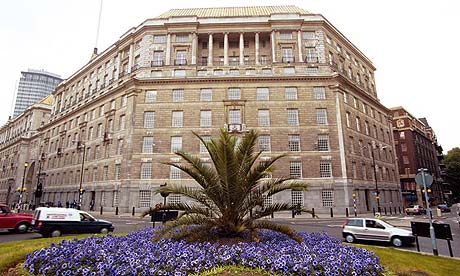
1-800.jpgA massive expansion in the Government’s DNA database has brought fewer than a thousand criminals to justice, it was revealed last night. For every 800 DNA samples being added by the police – including those taken from innocent people – only one crime is being solved.The revelation undermines Labour’s case for the expansion of the controversial database, which contains the details of more than a million innocent people.

Ministers claim storing samples taken from those who are never convicted or charged has proved a crucial weapon in the fight against crime.

But figures to be published in the annual DNA database report, due later

this month, will show a huge increase in the size of the database has had very little impact on the number of offences being solved.

In 2006/7 661,433 samples were added – which amounts to 75 genetic records being created every hour.

But the number of crimes detected

using the DNA entries increased by only 839 from 2005/6, to 41,148. It is the equivalent of only one extra crime being solved for every 788 new samples entered on the database.

Opponents said it was proof that holding on to the DNA records of people who had done nothing wrong was not the answer. Questions were also raised about whether the database is providing value for money. Storing more than 660,000 extra samples last year cost around £3million – or £3,575 for each extra crime detected.

The cash could have provided training, equipment and salaries for 60 extra police officers.

Phil Booth, of the NO2ID civil liberties campaign, said: “This utterly blows away the myth that the DNA database is the perfect detection tool. It is, in fact, creating-a nation of suspects.”

Shadow Home Secretary David Davis said: “This demonstrates that the Government’s arbitrary and haphazard approach to the DNA database has done little to make the public safer.

“The Government should answer our call to take a more focused approach – putting the database on statutory footing, and targeting those who have committed crime.

“It is absurd that, on the one hand, there are over a million innocent people on the DNA database, yet on the other hand the government does not hold the records of every serious offender in our jails or terrorist suspects subject to control orders.”

The database, which has been expanding since 2000 and is the biggest in the world, contains 4.5million samples. There are 150,000 children aged 16 or under on the system, with another 334,000 aged between 16 and 18.

In the past, police could take DNA samples only from suspects who were charged with a criminal offence and these were destroyed if they were subsequently cleared or a prosecution dropped.

But under reforms introduced in 2000 officers no longer have to erase innocent people’s entries.

A further change in 2004 gave police the power to take DNA swabs from anyone arrested for a recordable crime, which includes minor public order offences.

Ministers are awaiting a European Court of Human Rights ruling on the inclusion of innocent people’s details against their will.

Two British men argue their human rights have been infringed by the decision to keep their details on the database.

Michael Marper and an unnamed teenager, both from Sheffield, had their DNA and fingerprints taken after they were arrested in 2001 but neither was convicted. If they win the appeal, up to 560,000 samples could be destroyed.

A Home Office spokesman said: “The DNA database has revolutionised the way the police can protect the public through identifying offenders and securing more convictions.

“It is a key intelligence tool, providing the police with on average around 3,500 matches each month. The number of matches more than doubled between 1998/99 and 2006/07.”

DM

3.5 Million Tons of Plastic Floating in the Pacific

1

plastics.jpgDavid Gutierrez | A mass of plastic debris twice the size of Texas is still growing in the Pacific Ocean, fueled primarily by plastic trash generated on the land. The Great Pacific Garbage Patch consists of 3.5 million tons of trash, 80 percent of it plastic, floating in a rarely-traveled portion of the Pacific Ocean between Hawaii and San Francisco.

“With the winds blowing in and the currents in the gyre going circular, it’s the perfect environment for trapping,” said Marcus Eriksen, director of research and education at the Algalita Marine Research Foundation in Long Beach, Calif. “There’s nothing we can do about it now, except do no more harm.”

According to Chris Parry, public education program manager for the California Coastal Commission in San Francisco, the garbage patch has been growing tenfold every decade since the 1950s. This corresponds with an equivalent increase in worldwide ocean debris.

The debris is highly dangerous to ocean life. Birds and marine animals may injure themselves by swallowing hard, indigestible shards of plastic. Animals like sea turtles, which mistake plastic bags for jellyfish, may also eat plastic that is less immediately harmful but just as fatal in the long term.

“These animals die because the plastic eventually fills their stomachs,” said Warner Chabot, vice president of the Ocean Conservancy. “It doesn’t pass, and they literally starve to death.”

Plastic, which is synthesized from petroleum, can persist for decades before beginning to degrade, making it nearly impossible to get rid of once it is produced.

Parry and Chabot agree that the best way to keep the Great Pacific Garbage Patch from growing is to reduce production of plastic waste and use fewer plastic products at the consumer level as well.

“What we can do is ban plastic fast food packaging,” Chabot said, “or require the substitution of biodegradable materials, increase recycling programs and improve enforcement of litter laws.”

Al Jazeera Cameraman Freed From Guantánamo

0

sami-al-haj.jpgRHC | Al Jazeera cameraman Sami al-Haj has been released from the U.S.-run military prison at Guantánamo. Arrested in Pakistan in December 2001, al-Haj had spent nearly six-and-a-half years at Guantánamo without charge or trial. He had been on a more than a year-long hunger strike to protest his imprisonment.

Earlier today, al-Haj landed in his hometown of Khartoum, Sudan, where he was immediately rushed to a hospital. After a tearful reunion with his family, al-Haj said he worried for the prisoners he left behind at Guantánamo. He told reporters that he was happy to be released, but concerned about the situation of his brothers who remain in Guantánamo. Al-Haj said that the conditions at the U.S. prison are “very, very bad, and they get worse by the day” — adding that the prisoners’ human dignity is constantly being violated.

Sami al-Haj was flown into Sudan on a U.S. military aircraft along with two other Guantánamo prisoners. They told Al Jazeera they were blindfolded, handcuffed and chained to their seats during the flight home. According to Al Jazeera Director General Wadah Khanfar, the U.S. military tried to coerce al-Haj into spying on his employers at the network.

Obama and Wright: Different Worldviews

0

obama1.jpgBy Ted Glick | “We did not have to go through any of the violent upheavals that Europe was forced to endure as it shed its feudal past. Our passage from an agricultural to an industrial society was eased by the sheer size of the continent, vast tracts of land and abundant resources that allowed new immigrants to continually remake themselves.” Barack Obama, The Audacity of Hope, p. 55

Jeremiah Wright summarized the difference between him and Obama in his interviews last weekend as, “I do what pastors do. He does what politicians do. I am not running for office.”

But there is more to it than this.

Rev. Wright is an unapologetic African American preacher who has no hesitation speaking the truth in the best of the religious prophetic tradition. He uses the word “imperialism.” He talks about “oppressors” and “oppressed” and “God’s desire for a radical change.” He says, accurately, that “you cannot do terrorism on other people and expect it never to come back on you.”

Barack Obama, as is clear from a close reading of “The Audacity of Hope” and a review of his Democratic Party political career, is all about rising up within the world of the Democratic and Republican parties, the corporate duopoly. And if you are committed to that political world and becoming President through it, it is not surprising that you would do things like whitewash U.S. history, as the quote above does. Genocidal policies toward Indigenous people, the hideous reality of slavery and Jim Crow, the invasion of Mexico and takeover of much of its territory, even the Civil War and Reconstruction: nowhere in Obama’s book does he address these truths of our history.

Obama said at his April 29th press conference where he broke with his pastor of 20 years that, “What became clear to me was that he was presenting a world view that contradicts who I am and what I stand for. And what I think particularly angered me was his suggestion that my previous denunciation of his remarks were somehow political posturing. . . so where I start hearing comments about conspiracy theories and AIDS and suggestions that somehow Minister Farrakhan has been a great voice in the 20th century, then that goes directly at who I am and what I believe this country needs.”

It is true that a handful of statements made by Wright in response to questions from the press at the National Press Club gave them an opening to caricature him as too radical, too out of touch with the U.S. political mainstream, the political mainstream that Obama has been laboring mightily, for years, particularly over the past 16 months, to steer in a somewhat more progressive direction.

It is also true that, faced with near-certain, continued media attention on the Obama/Wright relationship, Obama needed to address the “worldview” differences between them, which are real. But was it really necessary for him to use words like these in doing so: “divisive and destructive,” “the spectacle that we saw yesterday,” and “a bunch of rants that aren’t grounded in truth”?

Obama said that “when you start focusing on the plight of the historically oppressed, you lose sight of what we have in common. . . it doesn’t describe properly what I believe, in the power of faith to overcome but also to bring people together.”

If he truly believes that he’s different in this way than Wright, then he didn’t read all of Wright’s National Press Club speech, or he deliberately discounted major parts of it, like this conclusion:

“The prophetic theology of the black church has always seen and still sees all of God’s children as sisters and brothers, equals who need reconciliation, who need to be reconciled as equals. . . Reconciliation means we embrace our individual rich histories, all of them. We retain who we are, as persons of different cultures, while acknowledging that those of other cultures are not superior or inferior to us; they are just different from us. We root out any teaching of superiority, inferiority, hatred or prejudice. And we recognize for the first time in modern history, in the West, that the other who stands before us with a different color of skin, a different texture of hair, different music, different preaching styles and different dance moves; that other is one of God’s children just as we are, no better, no worse, prone to error and in need of forgiveness just as we are. Only then will liberation, transformation and reconciliation become realities and cease being ever elusive ideals.”

Barack Obama has made a genuine effort to run a different kind of campaign, one which is more issue-oriented and less about the divisive and dishonest personal attacks that often characterize what passes for “political debate” in this country. But in this case, the case of Rev. Wright, Obama has failed his own test. The corporate media has made him bend his principles.

If Obama wins the Democratic nomination and if he wins the Presidency, which I continue to hope he does as the best candidate when compared with Clinton and McCain, we can expect to see more examples of Obama rejecting consistently progressive positions. Hopefully, he will feel that it is incumbent that he follows through on much of his generally progressive campaign rhetoric and fights for generally progressive government policies. But like Jeremiah Wright, we need to be prepared, no matter who is elected President, “November 5th, I’m [we’re] coming after you, because you’ll be representing a government whose policies grind under people.”

Government of, by and for the people: that must be the objective. We aren’t going to get it on November 4th, 2008, but if we don’t lose our critical consciousness, if we don’t defend indefensible positions, if we speak truth to power, whether Democrat or Republican, and if we keep working to find the ways to come together into a powerful, grassroots-based, multi-cultural independent progressive movement, we can make progress this year toward that long-term objective.

Ted Glick is active in the climate movement. He is a supporter of Cynthia McKinney’s Power to the People/Green Party Presidential campaign. He can be reached at indpol@igc.org

America’s Chemically Modified 21st Century Soldiers

0

chensol.jpgBy Clayton Dach | Amphetamines and the military first met somewhere in the fog of WWII, when axis and allied forces alike were issued speed tablets to head off fatigue on the battlefield.

More than 60 years later, the U.S. Air Force still doles out dextro-amphetamine to pilots whose duties do not afford them the luxury of sleep.

Through it all, it seems, the human body and its fleshy weaknesses keep getting in the way of warfare. Just as in the health clinics of the nation, the first waypoint in the military effort to redress these foibles is a pharmaceutical one. The catch is, we’re really not that great at it. In the case of speed, the U.S. Drug Enforcement Agency itself notes a few unwanted snags like addiction, anxiety, aggression, paranoia and hallucinations. For side-effects like insomnia, the Air Force issues “no-go” pills like temazepam alongside its “go” pills. Psychosis, though, is a wee bit trickier.

Far from getting discouraged, the working consensus appears to be that we just haven’t gotten the drugs right yet. In recent years, the U.S., the UK and France — among others — have reportedly been funding investigations into a new line-up of military performance enhancers. The bulk of these drugs are already familiar to us from the lists of substances banned by international sporting bodies, including the stimulant ephedrine, non-stimulant “wakefulness promoting agents” like modafinil (aka Provigil) and erythropoietin, used to improve endurance by boosting the production of red blood cells.

As the chemical interventions grow bolder and more sophisticated, we should not be surprised that some are beginning to cast their eyes beyond droopy eyelids and sore muscles. Chief among the new horizons is the alluring notion of psychological prophylactics: drugs used to pre-empt the often nasty effects of combat stress on soldiers, particularly that perennial veteran’s bugaboo known as post-traumatic stress disorder syndrome. In the U.S., where roughly two-fifths of troops returning from combat deployments are presenting serious mental health problems, PTSD has gone political in form of the Psychological Kevlar Act, which would direct the Secretary of Defense to implement “preventive and early-intervention measures” to protect troops against “stress-related psychopathologies.”

Proponents of the “Psychological Kevlar” approach to PTSD may have found a silver bullet in the form of propranolol, a 50-year-old beta-blocker used on-label to treat high blood pressure, and off-label as a stress-buster for performers and exam-takers. Ongoing psychiatric research has intriguingly suggested that a dose of propranolol, taken soon after a harrowing event, can suppress the victim’s stress response and effectively block the physiological process that makes certain memories intense and intrusive. That the drug is cheap and well tolerated is icing on the cake.

Propranolol has already been dubbed the “mourning after pill,” largely by those who argue that its military use amounts to medicating away pangs of conscience. For the time being, though, we can set aside our dystopian visions of zombies with guns, since the tranquilizing effects of beta-blockers are unlikely to permit their widespread use on the battlefield. But pharmacology moves more swiftly with each passing year — especially when helped along by defense-research dollars — and we may need to revive those visions sooner than we think.

The Mediated Soldier

In the new model army, brute force and viscera are out. Cutting edge gadgetry, omniscient surveillance and precision long-distance termination is in. What motivates it all is the type of war we fear we’ll be fighting.

On this, the strategists have spoken: with Iraq and Afghanistan as the testing grounds, the conflicts of the future will be guerrilla wars, open-ended, with no battle lines, no rules of engagement and ambivalent or openly hostile civilian populations in which any man, woman or child can turn combatant.

In breeding a future soldier for these future wars, we will inevitably leave behind the mere rectification of human weakness and enter into the realm of the superhuman. Glimpses of this realm have already become commonplace in the form of ceramic-Kevlar body armor and night-vision goggles — wizardry that transforms squishy pink men into bullet-proof creatures of the night.

Such magic will continue apace under the auspices of dozens of military development initiatives across the globe, creating a species known variously as the Future Force Warrior by the U.S., FIST by the British Army, Félin by the French. All are merely the human components of broader visionary projects for what has been called “the army after next,” the most noteworthy of which being the U.S. Army’s Future Combat Systems. With a budget clocking in at $160 billion or so, FCS is not just one of history’s most costly weapons programs; it is an all-encompassing modernization program, one that will usher in a total re-imagining of the armed forces. What FCS and its kin have imagined for soldiers is a battlefield experience increasingly mediated by technology, insulated in a cocoon of “force multipliers” — military parlance for anything that allows you to accomplish more with fewer personnel. In concrete terms, that translates into an array of tools designed to enhance lethality and survivability: next-generation sidearms; headsets that provide live command and control, detailed geographic data and the ability to fire around corners; smart suits equipped with ultralight nanotech armor, micro-climate conditioning, real-time health monitoring and even automated medical care like CPR and drug delivery. Also on the docket are robotic exoskeletons that allow the soldiers wearing them to carry hundreds of pounds — even while running — without breaking a sweat, as well as handheld imaging equipment that grants the ability to see targets through walls.

None of these are sci-fi pipe dreams. The DARPA-developed Radar Scope is already in limited deployment, detecting human breathing through a foot of concrete on two AA batteries. Utah-based robotics company Sarcos is expected to deliver its prototype exoskeletons to the Army this year, at roughly the same time that many of the other Future Force Warrior components begin field testing. Full-scale production of a number of the systems is scheduled for early in the next decade.

The Absent Soldier

It is tempting to say that military technology is steadily transforming war into a video game. Yet there’s a strange irony in the works: as the games claw themselves even closer to the look and feel of real, down-and-dirty warfare, real warfare is fluttering away into strategic and technological abstraction, effectively taking a step back from its own reality.

For all the PlayStation sexiness of the ultra lethal, force-multiplied warrior, the true fate of the in-the-flesh soldier is to vanish into the abstraction.

The explicit purpose of Future Combat Systems is to progressively supplement, to the point of ultimately displacing, the human soldier with a whole array of automated, autonomous and remote technologies — things like unmanned surveillance drones, long-range and non-line-of-sight precision-guided munitions, and unmanned air and ground combat vehicles. Though the latter group may never look anything like Schwarzenegger minus skin, make no mistake that what we are talking about here is weaponized robots.

An oft-quoted U.S. Joint Forces Command study from 2003 (rather candidly titled Unmanned Effects: Taking the Human Out of the Loop) predicted that autonomous, networked robots — faster and more lethal than human combatants — could become the norm by 2025. That may prove overly confident, but a congressional mandate has already called for one-third of all U.S. military land vehicles to be unmanned by 2015, increasing to two-thirds by 2025.

If the idea of autonomous, homicidal robots dashing into troubled Third-World slums sends a major chill down your spine, you’re certainly not alone. Well aware of the nightmarish optics, defense contractors and military brass alike have been presenting a united front, noting that this is about moving soldiers out of harm’s way, not about deleting humans from the “kill chain” entirely.

While there is little doubt that protecting soldiers is the central motivation, shifting troops into a distant pixel-pushing role also performs a secondary purpose: it neatly removes obstacles for those looking to wage war overseas while expending as little of their domestic political capital as possible. You can call it a by-product, or you can call it an ulterior motive, depending upon how dismal your outlook is.

Whatever the reasons, as we lose ourselves in the lovely fantasy of sidestepping the maimed veterans and crying widows, we could be walking right into an even nastier pile of shit. During the bombing campaign that accompanied the 2003 coalition invasion of Iraq, satellite-guided munitions caused scores of accidental civilian deaths. If these people had perished at the barrel of coalition rifles, their deaths would have been called massacres; as it stands, they are mere technical glitches and failures of intelligence.

The moral here is straightforward: once the human presence in the kill chain is diluted, so too is accountability. The future’s soldier could be one surrounded by an inveigling haze of pharmaceuticals, decision-making robots, errant bombs and faulty surveillance data; the only thing to emerge from this haze will be an exhilarating sense of our own guiltlessness. Alas, the populations against which we use our fancy toys are unlikely to share in the feeling.

We’ve been given a yellow card – Labour

0

yellowcard.jpgPatrick Wintour and Nicholas Watt | Gordon Brown is planning to help hard-pressed families in the wake of Labour’s drubbing in the elections with a package including the expansion of shared equity schemes to boost the housing market, the shelving of plans for council rubbish taxes, and putting more pressure on supermarkets to contain food price rises.

But the prime minister has ruled out rushing through a compensation package for the abolition of the 10p tax rate ahead of the Crewe and Nantwich byelection on May 22, fearing that it would turn the vote into a referendum on the issue.

He is also to consider shelving the proposed rise in fuel duty in October, but has no plans to reverse the unpopular increases in vehicle excise duty on some polluting cars announced in the March budget.

The disclosure of the essential elements of Brown’s fightback plan came as he took personal responsibility for the local elections debacleby admitting that his obsession with policy detail may have obscured the communication of big messages.

He also tried to assure voters that he was fully aware of their feelings over rising food and fuel prices. “I do understand this and I feel the hurt they feel,” he told the BBC’s Andrew Marr Show.

He went on to insist that he was not remote from the concerns of ordinary people. “You know I come from a pretty ordinary background … we as a family felt under pressure when the economy was going through difficult times.

“I understand what people are thinking and I understand what people are feeling. And I believe that I’m the right person to lead people through this.”

The deputy leader, Harriet Harman, said the party had to make its language more understandable. She said: “We have to have more of a focus on family finances as well as on the overall economic strategy of keeping the economy stable.”

Some of his closest allies in the cabinet are urging Brown to take greater risks and show greater definition by taking on enemies.

Despite despair at the party’s performance, and Brown’s plunging popularity, there was no sign of a challenge to the leadership from inside the cabinet.

The foreign secretary, David Miliband, said Brown was “the right man to take us forward into the next general election”, but said the electorate were seeking a greater sense of order in society, and greater power. Even the Labour leftwinger John McDonnell issued a statement insisting he was not going to act as a stalking horse candidate.

But Gisela Stuart, MP for Birmingham Edgbaston, said: “While Gordon Brown himself has probably a far clearer vision as to where he wants to take the country than Tony Blair had, I think Tony Blair was better in the telling of the story … Gordon has got the story, but he has lost the knack of telling it.”

Brown is also on probation with parts of his cabinet over the way in which he is communicating his message.

One cabinet member said: “We have been given an almighty yellow card with bright red lights flashing at the edges. It is entirely up to Gordon to decide whether it will turn fully red. He has until the end of the year to do it and he must show within the next three months that he is heading in the right direction.

“That will determine whether these results turn out to be our 1991, the moment John Major recovered, or our 1995, the moment Tony Blair became undefeatable. At the moment everything is up for grabs. It could easily go either way.

“The problem with these young cabinet ministers is that they don’t have teenage children who can tell them they’re sounding or looking prats. They’re at the stage with their children of just telling them to go to bed when they’re awkward. You can’t do that with the electorate”.

Brown insisted he was not going to be shifted only 10 months into the job saying: “I am resolute and determined, and I’ve got convictions and ideas, and I’m not going to be put off by a few days’ headlines from the job that I’m determined to do for this country.

He also touched on the possible reasons for the election debacle. “Perhaps I’ve spent too little time thinking about how we can get our arguments across to the public,” he told the Andrew Marr Show. “And now of course I think people are saying, look can you show us that you can come through these difficult situations. And I believe we will.”

Downing Street hopes the plan to reinvigorate the housing market by expanding shared equity ownership schemes – so far limited to a small number of key workers – will increase the take-up by making buying easier for first-timers. The government has already announced two new Open Market HomeBuy products allowing those who sign up to buy as little as 50%of the property, with a low interest loan on the remainder. However, critics say the government has spent £350m on a scheme that has helped just 700 families.

No 10 also signalled that it would reject an extension of rubbish or bin taxes when five pilots, not due to be completed in 2012, are completed. “Punitive rises in council taxes is not what we need” said one source.

The third element of the plan – action on rising food prices – will comprise backing efforts from the competition commission to pressure supermarkets to restrain price rises at a time of high profits.

Renditions Ruin the EU Case

0

renditions.jpgBy David Cronin | Collusion between European Union governments and a secret U.S. torture and kidnapping programme has damaged the EU’s efforts to promote human rights throughout the world, an internal paper drawn up by Brussels officials has admitted.

In 2001, the EU approved guidelines on how diplomats representing it should raise concern over the ill-treatment of detainees with the authorities in foreign countries. These guidelines stemmed from a stated commitment to “carry out systematic and sustained action in the fight against torture.”

A new EU assessment of how the guidelines are being applied acknowledges that some governments have accused the Union of double standards because some of its member states have been implicated in the so-called extraordinary rendition scheme operated by the Central Intelligence Agency of the U.S.

The internal paper, seen by IPS, recommends special efforts to “strengthen EU credibility”.

It says that “coherence needs to be assured” between the EU’s stance against torture during its foreign policy work and its own track record on protecting human rights within the Union’s own borders. “Full respect” for human rights should be guaranteed when formulating policies designed to fight terrorism, and expulsion of foreigners should not occur in cases where there is a likelihood they will be tortured, persecuted or murdered once they return to their home countries, the paper adds.

David Miliband, the British foreign secretary, confessed in February that two CIA planes used in the kidnapping and torture programme had landed in Diego Garcia, a British-controlled island in the Indian Ocean, in 2002. This was a reversal of previous denials by the London government that CIA flights had landed on British territory.

Several other EU governments, including Germany, Sweden, Portugal, Ireland and Italy have been accused of allowing their countries be used by the CIA for covert operations. Poland and Romania have both been criticised by the European Commission for their reluctance to provide information about claims that the CIA ran secret detention centres on their soil.

A 2007 report by an inquiry committee in the European Parliament concluded that at least 1,245 CIA flights passed through European airspace or stopped at the continent’s airports between the end of 2001 and the end of 2005.

Claude Moraes, a British Labour politician who sat on the Parliament’s committee, said that the result of the EU’s collusion with the CIA is “a credibility gap when we lecture other countries about torture.

“The allegations are not going away,” he added, referring to reports in late April that the British security service MI5 had “outsourced” torture of United Kingdom citizens to Pakistan’s Inter-Services Intelligence agency (ISI).

Several British nationals arrested in Pakistan have been quoted as saying they were severely beaten by ISI agents before being interrogated by men believed to work for MI5.

Chloe Davies from Reprieve, an organisation that has carried out detailed research into the CIA’s activities, said that Europe’s reputation as a defender of human rights has been tarnished.

“Little by little European powers’ collusion in the kidnap, rendition and torture of terrorist suspects is coming to light,” she said. “We now know that the CIA operated ‘black sites’ in Poland, Romania and apparently even on British territory in Diego Garcia.

“On many occasions CIA aircraft have been allowed to land on or cross European territory, en route to the kidnap and rendition of ghost prisoners to torture in secret prisons in countries like Syria, Jordan and Egypt. In addition European governments have allowed hundreds of prisoners to be ferried through their jurisdiction to illegal imprisonment, torture and cruel, inhuman and degrading treatment in Guantanamo Bay (the U.S.-run camp in Cuba).”

The internal EU paper also recognises that there has been criticism of flaws in the EU rules aimed at preventing the export of equipment used for torture or the death penalty.

While these rules were introduced in 2005, a report by Amnesty International published last year found that loopholes in them meant that spiked batons known as ‘sting sticks’ used by the Chinese police and ‘hanging ropes’ used for executions in Sri Lanka, India, and Trinidad and Tobago could still be traded.

Since the Amnesty report was issued, the British government has undertaken to ban export of spiked batons and to work with other EU governments to curb the export of torture tools not explicitly covered by the 2005 rules. Amnesty had cited examples of British-made hanging ropes being used to execute prisoners in Trinidad and Tobago and of handcuffs engraved ‘made in England’ used to shackle detainees in Guantanamo Bay to walls and ceilings.

Hundreds killed by Burma cyclone

0

burma.jpgBBC News | A tropical cyclone has killed at least 351 people in Burma and damaged thousands of buildings, according to state television. Parts of the Irrawaddy region were hit particularly badly, with three out of four buildings reportedly blown down in one district.

Burma has declared Irrawaddy and four other regions, including the main city Rangoon, to be disaster areas.

Rangoon has been without power and water, its streets full of debris.

Winds of about 190km/h (120mph) battered the Irrawaddy, Rangoon, Bago, Karen and Mon regions.

The latest death toll of 351 includes at least 109 people who lived on Haing-gyi island, off the south-west coast, officials say.

About 20,000 homes have been destroyed and 90,000 people made homeless on the island alone, a government official said.

The death toll is expected to rise further, as the situation is remote areas becomes clear.

Military and police personnel have been carrying out rescue operations.

In Irrawaddy’s Labutta township, 75% of buildings collapsed and 20% had their roofs ripped off, state TV said.

Cyclone Nargis has since moved towards Thailand where storm warnings have been issued. However, it appears to be lessening in force.

In Rangoon, internet and phone connections have been down since the storm drew near, making it difficult to confirm the extent of the damage.

Official media report that four people were killed and four vessels sank in the former Burmese capital’s harbour.

One Rangoon resident described the damage in the city for the BBC Burmese service: “Everything was wrecked. Roofs of the houses and satellite dishes were blown away.”

A Rangoon-based diplomat quoted by Reuters news agency described the city as an “utter war zone”.

Anthony Craig, a regional official of the UN World Food Programme based in Thailand, said that judging from the damage caused to solid buildings in Rangoon, damage elsewhere was likely to be extensive.

“We’re seeing a lot of trees down, a lot of billboards blown away, roofs of houses gone, so that is worrying when you consider the type of construction that is there, compared to the type of construction that is elsewhere,” Mr Craig told the BBC.

A trishaw driver in Rangoon, who did not want to be identified, complained that the security forces were not doing enough to help.

“Where are all those uniformed people who are always ready to beat civilians?” he asked.

“They should come out in full force and help clean up the areas and restore electricity.”

Bush backs modified crops

gmctops.jpgBy Andrew Ward and Daniel Dombey | George W. Bush on Thursday stepped up pressure on the European Union and other governments to lift restrictions on genetically modified crops to help ease the crisis in global food supplies.

The US president said modified crops offered a ­partial solution to the food crisis gripping some parts of the world because of their high yields and resistance to drought and disease.

“These crops are safe,” he said, “and they hold the promise of producing more food for more people.”

The remarks came as Mr Bush proposed a fresh $770m (€498m, £390m) in food aid, in addition to the $200m in emergency aid announced two weeks ago.

If approved by Congress, the funds would increase total US food aid this year to $2.3bn, up from $2.1bn last year.

“We’re sending a clear message to the world: that America will lead the fight against hunger for years to come,” said Mr Bush.

Global food prices have increased by 43 per cent over the past year because of soaring demand from developing countries and droughts in Australia and other crop growing countries, according to the White House.

Decreased supply and rising prices have led to food shortages from Haiti to the Philippines.

The White House rejected criticism that its support for the development of ethanol for fuel had contributed to the crisis by increasing pressure on corn supplies.

Officials said that the use of corn to produce ethanol accounted for just 2-3 per cent of the increase in food prices, and a third of the increase in corn prices.

However, the White House acknowledged the need to develop alternative sources of ethanol to reduce pressure on corn supplies — pointing to the $1bn committed for research into the use of grasses, wood chippings and agricultural waste to produce energy.

Dan Price, the US national security adviser for international economic affairs, said that most of the aid would go to Africa, with some of the funds earmarked for technical assistance to help countries grow more food.

He said GM crops would allow poor countries to ­produce larger, more resilient harvests but said restrictions in Europe and elsewhere provided a deterrent to investment in GM crops.

The US last year provided more than $2.1bn of food aid to 78 developing countries, with more than $1.8bn dispersed by Food for Peace, the agency that is the main provider of US food aid to the rest of the world.

English village to be invaded in spybot competition

0

village.jpgBy Ceri Perkins | A village in south-west England will shortly be swarming with robots competing to show off their surveillance skills. The event is the UK Ministry of Defence’s (MoD) answer to the US DARPA Grand Challenge that set robotic cars against one another to encourage advances in autonomous vehicles.

The MoD Grand Challenge is instead designed to boost development of teams of small robots able to scout out hidden dangers in hostile urban areas.

Over 10 days in August, 11 teams of robots will compete to locate and identify four different threats hidden around a mock East German village used for urban warfare training, at Copehill Down, Wiltshire (see image, top right).

The robots must find snipers, armed vehicles, armed foot soldiers, and improvised explosive devices hidden around the village, and relay a real-time picture of what is happening back to a command post.

Urban hazards

The robots will need to negotiate the complexity of an urban environment to find the threats. Hazards include unfamiliar terrain and buildings, trees, near-invisible overhead wires and other urban clutter.

Teams will earn points based on how many threats they locate in one hour, and how autonomous they are. For example, a team will lose points if they use remote control to direct their vehicles at any stage of the trial.

The teams that score highest will be rewarded with the potential of a lucrative contract with the MoD, which hopes to see the best ideas rapidly developed to the point they can be deployed by UK forces in places such as Afghanistan and southern Iraq.

“We are in no doubt that this is a difficult challenge,” says Grand Challenge programme leader, Andy Wallace.

Software control

Of the 23 initial entries from teams made up of private companies and universities, 11 were selected to take part in the final, with six thought promising enough to receive MoD funding.

One funded team, the Stellar Consortium, uses two aerial robots and one ground-based one.

A 3m wing-span unmanned air vehicle (UAV) will fly 65 metres above the village and use cameras to gather wide-area surveillance used by software to direct a smaller, 1m UAV flying at 20 metres, and an unmanned ground vehicle (UGV), (see image, middle right).

Those two vehicles use thermal, visual, and radar sensors to make more detailed observations that can be reported back to the base station.

“Physically, the vehicles all have to be launched by someone,” explains Julia Richardson, Director of Stellar Research, “but after that, the mission-planning software hosted at the ground station takes full control.”

Owl swarm

A team called Swarm Systems uses more robots. “We need to gather as much sensory information as possible,” says team leader Stephen Crampton, “so we’re using eight vehicles. And we’re going by air because it gives you more viewing angles.”

Dubbed “Owls”, their battery-powered, Frisbee-sized vehicles weigh under a kilogram and have four small propellers (see image, right). Able to hover and dart like birds, they are GPS-guided and communicate with one another, and the base station, using Wi-Fi. Each Owl carries a trio of 5 megapixel cameras.

“Without giving too much away, the processing power on board each of these vehicles is pretty impressive,” adds Crampton. “They could run full-blown Windows Vista.”

User-friendly tech

A third team, Silicon Valley, has opted to rely less heavily on autonomous vehicles. They have used off-the-shelf technology for the hardware as much as possible, and focused more development onto image recognition and analysis software.

“If you can automate that part, then you have a useful tool,” explains team leader, Norman Gregory. “What we intend to do is deploy various platforms, depending on what the scenario is.”

The team will use a mixture of ground and air-based vehicles, although the team is not yet releasing the exact details. The main ground vehicle is the size of a ride-on lawnmower (see image, bottom right) and can be GPS-guided or remotely directed by a human.

Worldwide Support for Free Media

worldwide-support.jpg

By Mick Meaney – RINF | A new major survey of world nations has found the majority of people support a free media and strongly object to government control on both traditional and Internet news organisations.

The poll was conducted by WorldPublicOpinion.org and involved 18,122 respondents in 20 of the world’s largest nations including the United States, Great Britain, China, Russia, India, Egypt, Indonesia, Nigeria, Argentina, Azerbaijan, France, Iran, Jordan, Turkey, Mexico, Peru, Poland, South Korea, Ukraine, and the Palestinian Territories.

“The principle that the media should be free of government control receives robust support from all corners of the world. With few exceptions, people think that the Internet should be free of government control as well” said WPO and PIPA director, Steven Kull.

However, an average of 36 percent of respondents from nations such as Russia and Muslim countries support regulation of news that could be potentially damaging to the government.

The survey also focused on Internet censorship. In China 71 percent of the public said “people should have the right to read whatever is on the Internet” with just 21 percent endorsing the government’s right to censorship.

Freedom House, a group that has been monitoring the press for 30 years has concluded that global freedom of the press is in “a clear decline”.

Jennifer Windsor, the group’s executive director, said: “For every step forward in press freedom last year, there were two steps back.”

In a statement the World Public Opinion said:

“The biggest area of controversy is over whether the government should have the ‘right to prevent the media from publishing information that it thinks will be politically destabilizing’. In the majority of countries the dominant view is that it should not and on average 55 percent have this view.

“However, in six-majority Muslim countries plus Russia substantial numbers think the government should have the right to restrict politically sensitive information. Majorities favor government controls in Jordan (66%), the Palestinian Territories (59%), and Indonesia (56%) while a plurality does in Iran (a plurality – 45 to 31%). Views are evenly divided in Egypt, Turkey and Russia.

“But this does not mean that these publics favor greater government regulation. In four of these countries, majorities think the media should have more freedom: Egypt (64%), the Palestinian Territories (62%), Jordan (56%) and Indonesia (53%). In the others, most want the media to have the same amount or more freedom, with only small minorities saying it should have less: Iran (9%), Russia (17%), Turkey (30%) and India (32%).”

The survey is being released as part of a series of international polls related to the Universal Declaration of Human Rights.

A recent report suggests the public are becoming tired of traditional news and are turning to the alternative media which is predominately found on the Internet.

The full results of the survey are:

Poll conducted and compiled by worldpublicopinion.org

Banksy throws London stencil party

1

banksy.jpgBy Raphael G. Satter | Graffiti impresario Banksy and airbrush-wielding guerrilla artists blanketed the walls of an abandoned London tunnel with offbeat murals as part of a three-day stencil-art street party this weekend.Banksy marshaled more than three dozen international artists for what he’s calling the “Cans Festival” – and is encouraging visitors to contribute their own graffiti starting Saturday.

“I’m hoping we can transform a dark forgotten filth pit into an oasis of beautiful art – in a dark forgotten filth pit,” Banksy was quoted as saying in the Times of London, which carried a preview of the exhibition Friday.

Festival spokeswoman Jo Brooks said work will be featured from 40 international artists and collectives, which sport names such as Bandit, Schhh, Pure Evil and Orticancvoodles.

Among Banksy’s pieces are security cameras growing from a tree, a hooded figure cutting itself with a knife and a worker spraying over ancient cave drawings. Other work includes an image of the pope pushing down his fluttering robes in an imitation of Marilyn Monroe by Norwegian artist Dolk.

Armed with aerosol cans and paint rollers, artists were still touching up the walls of the damp archway tunnel Friday.

Unlike many of Banksy’s previous stunts, the exhibition was approved by Eurostar, which manages the site under its old train platform at Waterloo Station.

It’s a sign of how far the artist – who has refused to give his real name – has come since he began his graffiti career in the 1980s and 1990s. Most of his work had a wickedly ironic and strongly anti-authoritarian bent. (His graffiti of two uniformed policemen locked in a passionate kiss is a longtime favorite.)

But although his identity has never been fully confirmed, critical success has made him something of an establishment figure. Banksy’s work commands hundreds of thousands of dollars at auction, and Brad Pitt and Angelina Jolie are among his fans.

The event, which is free, will be held in the tunnel Saturday through Monday.

Nepal police detain 100 Tibetan protestors

0

tibetan-protestors.jpgAFP | More than 100 Tibetan exiles, mostly young monks and nuns, were detained Friday at a pro-Tibet protest in front of a Chinese embassy building in the Nepalese capital, police said.

“More than 100 Tibetans have been taken to various police stations and will be freed by nightfall,” Kathmandu police officer Hom Jung Chauhan told AFP.

Demonstrators shouted slogans such as “China liars,” “We want a free Tibet,” “We want justice,” an AFP reporter at the scene said.

Kathmandu has seen almost daily protests since unrest erupted in March in the Tibetan capital Lhasa, prompting a crackdown by Chinese security forces.

The US ambassador to Nepal on Thursday voiced concern about the treatment of exiled Tibetans by Kathmandu police who have baton-charged, punched and kicked protesters.

In a meeting with Prime Minister Girija Prasad Koirala, “Ambassador (Nancy) Powell .. expressed official US concern about the treatment of Tibetans by Nepali authorities,” the embassy said in a statement

She “urged the prime minister to ensure that the right to peaceful protest was maintained and that the human rights of Tibetans in Nepal are respected.”

Nepal officially acknowledges Beijing’s “One China” policy that sees Tibet and Taiwan as integral parts of China.

Nepal is home to more than 20,000 Tibetan refugees and around 2,500 still arrive annually in Kathmandu before heading to Dharamshala in northern India, home of the Dalai Lama and the Tibetan government-in-exile.

Ex-Guantanamo man: “Torture is terrorism”

0

gitmo-torture.jpgBy Opheera McDoom – KHARTOUM | Reuters – Al Jazeera journalist Sami al-Haj returned home to Sudan on Friday after more than six years in the U.S.-run Guantanamo Bay prison, urging Washington to respect human rights and branding torture as terrorism.

Haj said he and the other Guantanamo detainees had been subjected to all kinds of torture, but the worst had been when his jailers insulted Islam or desecrated the Koran in front of prisoners.

“Security and human rights are inseparable issues — you cannot have one without the other,” he told Reuters in an interview.

“Human rights are not only for times of peace — you need to hold onto them always even during difficult times and times of war,” he added.

“My last message to the U.S. administration is that torture will not stop terrorism — torture is terrorism.”

Haj looked frail but visibly stronger than 12 hours earlier, when he arrived in chains aboard a U.S. military plane from the U.S. prison in Cuba, where he spent the last 16 months on hunger strike in protest at his illegal detention.

Lying on his hospital bed he barely had enough strength to greet President Omar Hassan al-Bashir and the dozens of ministers and well-wishers ecstatic at his return.

His brother Asim collapsed with exhaustion on his arrival after the years of campaigning for his release finally drew to an end.

Al-Haj met his eight-year-old son Mohamed for the first time since his son was a year old in an emotional reunion. The cameraman was arrested near the Afghan border in 2001 and later taken to the highly criticised U.S. military base in Cuba.

“His mother was constantly sending me pictures of him … but even if I had not seen the picture I would have known him among thousands of children by my strong sense of fatherhood,” he said.

Haj will spend the next few days undergoing tests in the hospital after his hunger strike and months of force feeding twice a day left him weak and with many ailments.

“God willing our happiness and celebrations will be complete once our brothers left in Guantanamo prison are released,” he said. Four Sudanese prisoners remain in Guantanamo. (Editing by Jon Boyle)

Why Gordon Brown should halt ID cards

0

idcard.jpgGeraint Bevan | Government departments cannot be trusted to keep citizens’ personal data secure. It is not only in Italy that tax records are not as confidential as people might have expected.

Treasury minister Jane Kennedy has admitted that last year, 192 staff at HM Revenue & Customs were disciplined for inappropriate access to personal or sensitive data. This brings to 600 the number of staff facing disciplinary proceedings since 2005 when the agency was created; the same agency that managed to lose unencrypted copies of the entire child benefit database last November.

Despite six years and millions of pounds wasted on consultants, the government has still failed to make a convincing case for collecting even more personal data on a National Identity Register.

advertisement

Home Office assurances that the data will be safe from prying eyes look increasing ludicrous as we learn more about the abysmal insecurity of existing databases.

The notion behind Transformational Government – that promiscuous data sharing is a good in its own right – is fundamentally flawed.

While the Prime Minister ponders the latest message from the electorate in England and Wales, he should halt the ID scheme and start considering how the government could better respect our privacy.

Sex offender DNA files expanded

0

dna-scotland.jpgBBC | Police in Fife have become the first in Scotland to fully manage DNA samples from non-registered sex offenders. The force has started collecting swabs from people convicted before 1997 or who hold no record for sex crimes but are considered a potential danger.

Legislation only requires that DNA samples are kept on a database for registered sex offenders.

Officers have no power to force people to give their DNA but said they have had high levels of co-operation.

The system of managing the data is the same one used to keep track of registered sex offenders.

Eliminating suspects

Swabs are taken from the volunteer’s cheek and samples are stored in a forensic laboratory in Dundee.

Officers said that when a crime occurs, having a broader range of samples allows them to eliminate suspects more quickly.

Det Sgt Nigel Orkney, from the offender management unit, said: “Most importantly, it sends a powerful message to these offenders that they are more likely to be caught, proving an effective deterrent.

“We also hope it reassures the public that we are doing all we can to effectively manage our offenders and keep the risk of reoffending to a minimum.”

Fife Constabulary started gathering the DNA samples last year but now has in place a fully integrated system of managing registered and non-registered sex offenders.

Officers are continuing to collect DNA swabs to enter into the database.

Secret Bush “Finding” Widens War on Iran

0

bush-iran.jpgBy Andrew Cockburn | Six weeks ago, President Bush signed a secret finding authorizing a covert offensive against the Iranian regime that, according to those familiar with its contents, “unprecedented in its scope.”

Bush’s secret directive covers actions across a huge geographic area — from Lebanon to Afghanistan — but is also far more sweeping in the type of actions permitted under its guidelines — up to and including the assassination of targeted officials. This widened scope clears the way, for example, for full support for the military arm of Mujahedin-e Khalq, the cultish Iranian opposition group, despite its enduring position on the State Department’s list of terrorist groups.

Similarly, covert funds can now flow without restriction to Jundullah, or “army of god,” the militant Sunni group in Iranian Baluchistan — just across the Afghan border — whose leader was featured not long ago on Dan Rather Reports cutting his brother in law’s throat.
 
Other elements that will benefit from U.S. largesse and advice include Iranian Kurdish nationalists, as well the Ahwazi arabs of south west Iran. Further afield, operations against Iran’s Hezbollah allies in Lebanon will be stepped up, along with efforts to destabilize the Syrian regime.
 
All this costs money, which in turn must be authorized by Congress, or at least a by few witting members of the intelligence committees. That has not proved a problem. An initial outlay of $300 million to finance implementation of the finding has been swiftly approved with bipartisan support, apparently regardless of the unpopularity of the current war and the perilous condition of the U.S. economy.

Until recently, the administration faced a serious obstacle to action against Iran in the form of Centcom commander Admiral William Fallon, who made no secret of his contempt for official determination to take us to war. In a widely publicized incident last January, Iranian patrol boats approached a U.S. ship in what the Pentagon described as a “taunting” manner. According to Centcom staff officers, the American commander on the spot was about to open fire. At that point, the U.S. was close to war.  He desisted only when Fallon personally and explicitly ordered him not to shoot. The White House, according to the staff officers, was “absolutely furious” with Fallon for defusing the incident.

Fallon has since departed. His abrupt resignation in early March followed the publication of his unvarnished views on our policy of confrontation with Iran, something that is unlikely to happen to his replacement, George Bush’s favorite general, David Petraeus.

Though Petraeus is not due to take formal command at Centcom until late summer, there are abundant signs that something may happen before then. A Marine amphibious force, originally due to leave San Diego for the Persian Gulf in mid June, has had its sailing date abruptly moved up to May 4. A scheduled meeting in Europe between French diplomats acting as intermediaries for the U.S. and Iranian representatives has been abruptly cancelled in the last two weeks. Petraeus is said to be at work on a master briefing for congress to demonstrate conclusively that the Iranians are the source of our current troubles in Iraq, thanks to their support for the Shia militia currently under attack by U.S. forces in Baghdad.

Interestingly, despite the bellicose complaints, Petraeus has made little effort to seal the Iran-Iraq border, and in any case two thirds of U.S. casualties still come from Sunni insurgents. “The Shia account for less than one third,” a recently returned member of the command staff in Baghdad familiar with the relevant intelligence told me, “but if you want a war you have to sell it.”

Even without the covert initiatives described above, the huge and growing armada currently on station in the Gulf is an impressive symbol of American power.

Armed Might of US Marred By Begging Bowl to Arabs

Sometime in the next two weeks, fleet radar operator may notice a blip on their screens that represents something rather more profound: America’s growing financial weakness. The blip will be former Treasury Secretary Robert Rubin’s plane commencing its descent into Abu Dhabi. Rubin’s responsibility these days is to help keep Citigroup afloat despite a balance sheet still waterlogged, despite frantic bail out efforts by the Federal Reserve and others, by staggering losses in mortgage bonds. The Abu Dhabi Sovereign Wealth Fund injected $7.5 billion last November (albeit at a sub-prime interest rate of eleven percent,) but the bank’s urgent need for fresh capital persists, and Abu Dhabi is where the money is.

Even if those radar operators pay no attention to Mr. Rubin’s flight, and the ironic contrast it illustrates between American military power and financial weakness, others will, and not just in Tehran. There’s not much a finding can do about that.

Denying Palestinians Free Movement in the West Bank

palestinian.jpgBy Stephen Lendman | RINF – This article summarizes an August 2007 B’Tselem report now available in print. It’s one of a series of studies it conducts on life in Occupied Palestine to reveal what major media accounts suppress. This one is titled: “Ground to a Halt – Denial of Palestinians’ Freedom of Movement in the West Bank.”B’Tselem has a well-deserved reputation for accuracy and integrity. It’s the Jerusalem-based independent Israeli Information Center for Human Rights in the Occupied Palestinian Territories (OPT). It was founded in 1989 by prominent academics, attorneys, journalists and Knesset members to “document and educate the Israeli public and policymakers about human rights violations in (Occupied Palestine), combat (the Israeli public’s) denial, and create a human rights culture in Israel” to convince government officials to respect human rights and obey international law.

Its work is detailed, wide-ranging, carefully researched, and based on hundreds of testimonies and dozens of on-the-ground observations. For verification, it’s also cross-checked with relevant documents and other government sources. Work on this report was completed over a six month period in 2007. It included information from other reports, statements from political and military officials, petitions to Israel’s High Court of Justice, and media accounts.

B’Tselem states: “For the past seven years (since the September 2000 Second Intifada began), Israel has imposed restrictions and prohibitions on Palestinian movement that are unprecedented in scope and duration.” It refers to hundreds of permanent and temporary checkpoints, other obstacles, physical barriers, and Israel’s Separation Wall (ruled illegal by the World Court) on confiscated Palestinian land.

Free movement in the West Bank is severely restricted and nearly always entails “intolerable and arbitrary delays, much uncertainty, friction with soldiers, and often substantial expense.” B’Tselem stresses that throughout 2008, it will continue to focus on this topic – with new maps, short videos, and various “public education and advocacy activities to highlight” Israel’s unnecessary, outlandish and illegal restrictive measures. People need to know, and B’Tselem intends to tell them.

This is its 14th report on this topic since September 2000. Previous ones covered specific type restrictions like checkpoints, for-Jews only roads, and the Separation Wall. The one is comprehensive. It surveys all of them and their collective effects on Palestinians’ lives.

The measures aren’t new or restricted to the West Bank. They’ve been ongoing since the early 1990s and have undergone expansion and refinement ever since. Until 1991, Palestinians (except small numbers designated security threats) could move freely throughout the Territories and were able to enter and stay in Israel during daytime hours. It helped Palestine establish social, cultural and commercial ties to its neighbor, Israeli Arab citizens in it, as well as between Gaza and the West Bank.

During the January 1991 Gulf war, everything changed. General permits were cancelled and replaced by new restrictive policies. Thereafter, all Palestinians needed (selectively authorized) permits to enter Israel and East Jerusalem. Checkpoints and barriers were erected for enforcement. They’ve restricted movement ever since, and at times, like the 1993 killings of nine Israelis, became a general closure policy. All free movement was halted, Palestinians lost their jobs in Israel, few opportunities at home could replace them, and the Territories suffered great economic and social harm.

Closure also split the OPT into three areas: East Jerusalem, the remaining West Bank and Gaza. After September 2000, Israel tightened free movement further and continues harassing and containing relentlessly. Two main factors explain how:

— Israel’s “ever-expanding settlement enterprise….along the length and breadth of the West Bank;” they’re on strategically chosen and most valued lands; in areas designed to contain Palestinian city expansions; further harmed by Israel’s (for-Jews-only) bypass roads that constrict, isolate and divide West Bank areas; and

— the effects of the Oslo Accords; they split the West Bank into three areas – Area A under Palestinian Authority (PA) security and civil affairs control; Area B under Israel security and right to restrict free movement; and Area C under total Israeli control, including on matters relating to land, planning and building; Areas B and C comprise 80% of the West Bank, including its main roads, so that lets Israel restrict movement how, when, for as long, and for whatever purpose it wishes over most of the Territory.

After September 2000, its measures were hardened. It clamped down on free movement, isolated Palestinians in cantonized enclosures, and made a fundamental human right a privilege to grant or withhold as it pleases. Its pretext is security but, in fact, that’s false. The real aim is harassment, land grab, and a state-sponsored expulsion plan so Israel can seize all the land it wants for Jews only. It’s gone on for decades and so far unchallenged by the world community. B’Tselem wants to stop it along with all other law violations so Palestinians can have their long denied justice they deserve and should get.

Israel’s Means to Control Movement

B’Tselem divides Israeli control into three categories reflecting “different layers” of restrictive policy. They, in turn, build on each other and are interrelated:

— physical means to divert movement to certain passageways and roads and prevent access to others;

— restrictions and prohibitions that first layer physical tools enforce; and

— the means to ease or tighten, selectively and under careful monitoring, second layer restrictions and prohibitions.

The essential idea is that in combination these layers represent a single control mechanism, all parts operate together, and determining their impact requires evaluating the combined effect of four types of control:

(1) obstructions to deny access to main roads; they divert Palestinians to checkpoints where the army (IDF) supervises movement from one area to another or can deny it altogether; obstructions are in different forms – dirt mounds, concrete blocks, boulders, trenches, fences and iron gates; their numbers have gradually increased and in mid-2007 totaled 455 throughout the West Bank; they limit pedestrian and vehicular movement, and especially affect the elderly, the ill, pregnant women and small children; they’re even more restrictive in winter when water accumulation turns dirt areas muddy;

(2) permanent staffed checkpoints; they’re fairly constant in number, and Israel has used them to some degree throughout 41 years of occupation; they gained prominence, however, after Israel cancelled general-entry (free movement) permits in 1991; they were then expanded during the Second Intifada; over time, they’ve become the most conspicuous occupation symbol and one of its most hated;

— in mid-2007, 80 were in place of which 33 were the last inspection point before entering Israel along the Green Line; the other 47 lie inside the West Bank, some with control towers; seven are to transfer goods; they’re called “back-to-back” because merchandise is unloaded on one side, checked, then reloaded on another truck on the other side; operating times vary – many open at 6AM and close at night; others are staffed around the clock but limit crossings to “urgent humanitarian” cases;

— movement restrictions vary from one checkpoint to another and always at Israel’s discretion; to pass, travelers must show proper ID or crossing permits; searches may be conducted; procedures are at the discretion and mood of soldiers; some checkpoints are for pedestrians only; others are restricted to commercial and public transportation.

(3) so-called flying checkpoints; they’re temporary, may be erected anywhere, and remain for hours or longer; in recent years, they’ve increased in numbers – from a weekly average of 73 in late 2005 to 136 in 2006 to about 150 in 2007 and at times up to 200. Again, the pretext is security, their real aim is to harass, and no one does it better than Israelis.

Consider the effects of all checkpoints. Since September 2000, they’ve become “the main (source of) friction (between) Palestinians and Israeli security forces.” They generate tension, create uncertainty, deny or delay passage, humiliate and overall makes things intolerable. They’re also degrading by demanding that males expose their upper bodies in public simply as a way to harass them.

It gets worse by selective detentions in so-called “positions” – isolated holding areas for additional “security” checks that, in fact, are to punish and further humiliate; they can last hours, in exposed heat or cold, without food or water, and at times include physical abuse; many Palestinians are affected daily; Israel’s high command has full knowledge; the government does as well; nominal recommendations are made to stop it, yet abuse continues and few offenders are ever punished.

(4) the Separation Wall; in June 2002, Israel decided to build it; again the claim was security; in fact, it was separation and theft of over 10% of Palestinian land, including for-Jews only roads to connect settlements with Israel and other settlements; most of the Wall is completed; its planned length is 721 kilometers; only 20% of it lies along the Green Line; most of it runs deep inside the West Bank; near Jerusalem, it surrounds the Ma’ale Adumim settlements about 14 km into the West Bank on stolen Palestinian land;

— its route creates two kinds of Palestinian enclaves – villages and farmland between the Wall and Green Line (in the “seam zone”) on the Israeli side of the barrier; another area comprises villages on the Palestinian side that are surrounded on three or more sides because of the route’s winding path or that the Wall meets roads on which Palestinian movement is forbidden or physical obstructions prevent it.

Physical restrictions and movement prohibitions give Israeli security forces more latitude, and they take full advantage through a fourfold layer of control:

(1) by imposing a siege to completely or partially prevent Palestinians from crossing to or from a certain area as well as isolating the area from other parts of the West Bank; it’s done with physical obstructions to block access and force residents to pass through staffed checkpoints; closing off the area facilitates sweeping movement prohibitions on specific classifications of people by gender, age or place of residence; the IDF claims their “risk profile” makes them “potential terrorists;” targeting them by siege is a frequently used post-September 2000 tactic; large areas of the West Bank have been affected; their degree of harshness varies; and areas like the Jordan Valley, Area A and cities like Nablus, Jenin, Tulkarm and Hebron have been especially impacted.

— in December 2001, the West Bank IDF commander signed the Proclamation Regarding the Closure of Area (Encirclement) (Area A); it classified it as a closed military area, was unlimited in duration and still remains in force; in April 2007, a separate order was issued for Nablus restricting entry to and exit from the city to certain checkpoints; again the army claims it’s a security measure “to prevent terrorists and materiel from leaving Palestinian towns in Judea and Samaria….”

(2) the “seam zone;” Israelis say it’s the enclosed area between the Green Line and Separation Wall; when its first section was completed (in October 2003), the IDF declared this section a closed military area with entry into it forbidden; later areas may also be closed off, but even ones that aren’t will have severe movement restrictions the way they’re imposed throughout the West Bank; all Palestinians are affected; Jews and foreigners have permits permitting easy entry and exit.

(3) prohibiting travel on certain roads for Jews only; on some roads, no Palestinian vehicles are allowed; on others, travel is allowed for ones with special permits; the Oslo Accords set the rules; most often (but not always), Palestinians may travel on Areas A and B roads but prohibited or restricted in Area C; they’re excluded from about 311 km of West Bank roads for Jews only; they connect settlements to Israel or other settlements.

— rules are so harsh and convoluted that further restrictions are imposed on some roads Palestinians may use; an example is forbidding Palestinian vehicles from crossing a road, requiring passengers to leave their vehicles on one side, cross on foot, and get other transportation on the other side; this creates great hardship, is only to harass, and in cases of passenger illness or mothers in labor it may be life-threatening; in addition, Israeli security forces have great enforcement latitude; orders are issued verbally, not in writing, and soldiers at checkpoints can pretty much do as they please, depending on their mood.

(4) harsh travel laws act as deterrence; they impose high fines and/or insurance requirements; Palestinian violators are treated discriminatorily; and a high percentage of drivers are affected.

To counter public criticism, Israel issued two selective easing measures; they help some Palestinians but tighten movement restrictions for others:

(1) the permits regime; since 1991, Israel required Palestinians to have personal entry permits to enter its territory and East Jerusalem; after 1996, Palestinians also needed permits to enter West Bank jurisdictional areas; post-September 2000, rules were further tightened; some Palestinians must have permits to enter, remain in, or leave large areas inside the West Bank, including the “seam zone” and areas under siege; other permits are needed to arrange (passenger and commercial) vehicular checkpoint crossings; a limited number are allowed based on the capacity of security forces to inspect vehicles, goods and passengers;

— B’Tselem lists nine different type permits for passenger vehicles – commercial ones; public ones for taxis and buses; movement in areas under encirclement; humanitarian ones; for permanent “seam zone” residents; for daily “seam zone” entry; “seam zone” entry for farming or work; and to enter the Jordan Valley;

— movement restrictions and prohibitions are so onerous and for so many reasons that Israelis consider permits a privilege; for Palestinians, they’re essential to meet daily needs; West Bank District Coordination Offices (DCOs) issue them, but procedures are unclear and lack transparency; B’Tselem believes “two general and sweeping criteria must be met” to get one:

(a) “lack of ‘prevention,’ either for security or police-related reasons relating to the applicant,” and

(b) having documents to show justification for the request.

Quotas exist in all cases; when they’re filled, many qualified residents are left out; in addition, other qualifying procedures exist but are unstated; ultimately DCO officials have total discretion in awarding or denying permits and can be pretty arbitrary about it; “seam zone” residents provide an example of what all Palestinians endure; to get a permit to their own home area, they must prove they reside there from their ID card address on the day the declaration of closed military area was made or in some other way show their center of life is there; those getting one are allowed entry via one checkpoint only;

(2) So-called “fabric of life” roads for Palestinians only; the West Bank’s main roads are only for Jews; initially, those for Palestinians passed through villages and city centers, but because of criticism an alternate plan was developed – creating a separate, contiguous road network running north-south in the West Bank; it’s based on separate levels in places where Israeli and Palestinian roads meet; bridges and interchanges achieve separation with Israelis able to travel on top at high speed; lower level “fabric of life” roads comprising 20% of the West Bank’s total are for Palestinians; elements of the plan have been implemented and “fabric of life” roads are being built; they represent another part of Israel’s repressive apartheid scheme.

Splitting the West Bank

Article 13 of the 1948 Universal Declaration of Human Rights states:

(1) “Everyone has the right to freedom of movement and residence within the borders of each state.

(2) Everyone has the right to leave any country, including his own, and to return to his country.”

Israel is a serial international law and human rights abuser. For Palestinians, it believes allowing free movement is a privilege, denying it is the norm, and actions no matter how outlandish require no explanation or justification.

Israel divided the West Bank into three control areas – A, B and C. For purposes of restricting movement, it further split the Territory into six geographical units:

— North that includes the Jenin, Tulkarm, Tubas and Nablus districts, except for those in the Jordan Valley and Separation Wall enclaves; about 840,000 Palestinians lived in this area as of summer 2007; today the number is somewhat higher;

— Central that includes the Salfit, Ramallah, and Jericho districts, except for parts in the Separation Wall enclaves; in summer 2007, the Palestinian population exceeded 400,000;

— South that includes the Hebron and Bethlehem districts, except for the northern Dead Sea and Separation Wall enclaves; Palestinians here number over 700,000;

— the Jordan Valley and northern Dead Sea that includes the eastern strip of the West Bank, except for Jericho and nearby refugee camps; the Palestinian population is around 10,000;

— the Separation Wall-created “seam zone” and inside the West Bank “internal” enclaves; when the Wall is completed, the “seam zone” Palestinian population will number about 30,000; an additional 25,000 will be in “internal” enclaves; the “seam zone” also contains thousands of Palestinian farmland dunams (a dunam equals about one fourth of an acre) and 39 settlements; unlike the other geographical units, the enclaves are dozens of non-contiguous sections that are separated from the rest of the West Bank; and

— East Jerusalem that includes all the area Israel annexed in 1967 and is attached to the Jerusalem Municipality, except for the Shu’afat refugee camp and Kfar Aqeb that the Wall separates from the city; around 200,000 Palestinians live in this section.

All geographical units are constricted by Israel’s rigid control system explained above. Below are the checkpoints that control movement from one section to another:

— Za’tara (Tupuah) Checkpoint controls North to Central sections movement; in addition, the IDF directs to this checkpoint all west and east traffic along the Trans-Samaria highway and from Route 60 from Nablus in the north and Ramallah in the southwest and south; Palestinians may generally pass freely heading north; those traveling south encounter ID and sometimes vehicle checks; delays are common; males aged 16 – 35 often aren’t allowed to go south.

— Container Checkpoint almost totally controls movement between the South and Central sections; Border Police staff it round the clock; from 2002 to February 2007, passenger cars were prohibited without a special permit; it’s now cancelled; since September 2000, Palestinians have been prohibited from using Route 398 that runs from the checkpoint to the Ma’ale Adumim and Qedar settlements; Palestinians are diverted to other worn roads of nearby villages; Palestinian traffic passing through the checkpoint are subjected to lengthy delays and at times searches; when Israel declares a comprehensive closure, it applies to this checkpoint; it severs the southern West Bank from the rest of the Territory and requires Palestinians traveling to or from the South to do it by foot.

— Tayasir, Hamra, Gittit and Yitav checkpoints control movement to and from the Jordan Valley. In May 2005, Israel instituted sweeping Palestinian movement prohibitions here, except for residents with ID cards and persons with special permits. They were cancelled in April 2007, it affects only pedestrians and those using public transportation (that also requires a permit), and applies only to the Tayasir and Hamra crossings.

— Almog Checkpoint that controls movement to and from the northern Dead Sea; generally only Palestinians with work permits for nearby settlements and/or to enter Israel may pass; since May 2007, the latter category was cancelled.

— the Separation Wall directs movement between the “seam zone” enclaves and the rest of the West Bank to several gates in the Wall; only Palestinians with special entry permits may pass; 38 gates are in place; only six operate daily from 12 to 24 hours continuously; 17 others open two or three times a day for 30 minutes to two hours; 13 additional ones operate during farming season; two other gates allow movement of residents of a few houses that are enclosed by the Wall and separated from their village; still other crossings are for Israeli travel between the West Bank and Israel; they operate round the clock.

— the Separation Wall also directs movement between East Jerusalem and the rest of the West Bank; this section is called the “Jerusalem envelope” and has 12 checkpoints; crossing (permitted only through four of them) requires a valid ID and permit and submitting to stringent checks; they include exiting vehicles, having them searched, and passing through a revolving gate equipped with a metal detector; the remaining eight checkpoints are for settlers, Israeli residents and East Jerusalem Palestinians with Israeli IDs.

In addition to area to area restrictions, Israel tightens them further with others within areas by breaking them into sub-areas and controlling movement between them. Nablus in the North is separated from nearby villages and from other northern West Bank districts.

The Nablus area includes the city, three refugee camps and 15 villages that contain over 200,000 Palestinians combined. It’s been under siege for seven years; entry and exit is through four surrounding checkpoints; passage through them entails stringent personal and vehicle checks, including for all merchandise in both directions; and special permits are required for passenger vehicle entry.

Collective Nablus movement prohibitions are harsh and unique in the Territory. Males between 16 and 35 are especially affected, but they overall disrupt life for everyone. The restricted male population alone affects 26,000 persons. If the age is lowered to 15, it rises to 36,000, and if females are included (as sometimes happens) it totals 73,000. This group is the area’s main work force, its entire economic life depends on them, and prohibiting their movement brings it to a halt.

When it’s in force, siege conditions vary by checkpoint for those allowed through. The two main Beit Iba and Huwara ones inflict the longest and most burdensome delays and restrictions. In addition, all persons having a “risk profile” because of age are forbidden to leave the area and need a “movement permit in area under encirclement” if they want to exit. However, it’s not easy getting one with a convoluted system in place that requires a party permitted to cross to apply for persons who aren’t and even they can’t do it easily. In addition, permits aren’t issued for “ordinary” needs, such as work, family visits or school. Those considered are only for “humanitarian” reasons like needed medical care. Few overall are issued.

The Nablus siege also restricts movement in the Jenin Tulkarm and Tubas districts. Nablus is vital for them and for years was the West Bank’s economic and industrial center. Now these districts are separated, and major roads between them are blocked. In the past, traveling from Jenin to Nablus took about 40 minutes on the main road. It now takes one to three hours on narrow, winding roads plus a long wait at one of the Nablus area checkpoints.

Over the past two years especially, accessing Nablus has been hard and complicated for villagers located to its north. Checkpoint access is limited, some are closed to traffic, and those that operate have delays running up to hours. In addition, soldiers at times block road traffic for several hours, no advance notice is given, and it causes undue hardship for travelers having to wait or use alternate routes. The IDF is also at times punitive. It sets up indiscriminate flying checkpoints, uses them for punishment, and makes it harsher with instances of violence and confiscation of permits and identity cards that can only be redeemed at a permanent checkpoint that may or may not be operating.

The Central Section splitting caused much the same type hardships. It created two principal sub-areas around Salfit and Ramallah. It detached some of these cities’ villages and separated them from their residents’ farmland.

After the IDF blocked Salfit’s main entrance road from the north, alternate routes became necessary, and they lengthened travel times considerably. It created great hardship for travelers who rely on Nablus for basic services and also for villagers who are blocked from their farmland. Sixty-six thousand people are affected.

It’s even worse for the 300,000 Ramallah district residents in a city that’s the West Bank’s seat of government because Israel denies East Jerusalem that status. In addition, after undo restrictions and hardships caused many Palestinian entrepreneurs to leave Nablus and the northern West Bank, Ramallah developed into the Territory’s cultural and economic center. Obstructions, checkpoints and the Separation Wall demarcate the area and combined make movement just as hard as throughout the rest of the West Bank.

It’s the same for Jericho’s 40,000 residents. In addition, for 10,000 of them in the north in the besieged Jordan Valley, they’re separated from the city, and for those in the east there’s another obstacle – 19 km of trenches and land east of it that’s a closed military area.

The South section’s splitting has been less conspicuous, but it hasn’t made movement easier. Most notably since September 2000, have been restrictions in Route 60’s southern section that runs the entire length of the southern West Bank and is this subsection’s principal roadway. Access roads to the Route are now blocked, over time some have been eased, but use of the road remains limited.

Most harmed are residents in towns and villages in Hebron’s southern area. To reach the city, they must use long, winding, beat-up roads that are no substitute for decent ones. Once the Separation Wall is completed east of the Efrat and Gush Atzion settlements, Route 60’s northern quarter in the South section will be on the Wall’s Israeli side and completely off-limits to Palestinians. As a result, Bethlehem will be separated from Jerusalem as well as the main road to Hebron with all the hardships that will create.

Consider how they affect Hebron. It’s the only Palestinian West Bank city (other than East Jerusalem that Israel annexed in 1967) with an Israeli settlement in its center. Because of it, the IDF created a contiguous strip of land through the city over which Palestinian vehicles are prohibited. It runs from the Kiryat Arba settlement in the east to the Palestinian Tel Rumeida neighborhood in the west, and in many sections along its center, Palestinian pedestrians are banned. The main Shuhada Street is most affected. In addition, the strip blocks Hebron’s main north-south artery harming the entire Palestinian population.

Jordan Valley and northern Dead Sea restrictions involve the use of Route 90 that runs the entire length of the section. Israel operates five checkpoints here for control. Only public transportation and vehicles with special permits may pass. That frees the Route for settlers and Israelis traveling between Jerusalem and the Beit She’an Valley, the Sea of Galilee, or the Galilee area in the north. It also allows the IDF to use large Jordan Valley sections as fire-exercise zones and close off much of their water and grazing areas to Palestinians.

Dozens of non-contiguous “seam-zone” enclaves are also affected. The Separation Wall separates them by winding back and forth between the Green Line and deep into the West Bank. They all contain Palestinian farmland on the barrier’s Israeli side. Some also include villages where 30,000 Palestinians live. Because they aren’t connected, crossing from one subsection to another at best is hard and at worst impossible. It forces travelers to cross the Wall twice with all the hardships that entails. Further, since permits are for one enclave only, entering another one requires a second permit.

The Separation Wall then can be divided into five sections plus the Jerusalem area, and each one contains separate enclaves. Combined they form a crazy quilt isolation pattern with physical obstacles and human repression used against a defenseless civilian population.

Internal community and farmland enclaves are affected as well but not by having to pass through the Wall or obtain permits. However, roads that used to connect them have been closed making travel times longer and more complicated. When completed, the Wall’s route will create 13 non-contiguous internal enclaves for about 240,000 Palestinians in dozens of towns and villages.

East Jerusalem is the final section. Israeli Arabs with identity cards may move about fairly freely with one notable exception. It’s the use of temporary checkpoints (so-called “collection” ones) to collect resident tax debts. They operate a few hours at a time on main neighborhood roads where Israeli Police (usually Border Police) provide security along with tax officials to do the collecting. Police stop cars, collectors do the rest, but never to Jerusalem’s Jewish residents.

Harm to Palestinians’ Fabric of Life

West Bank separation and division inflicts great harm to Palestinians’ fabric of life in the short and longer term. This section examines how.

First consider health as a fundamental human right and how restricting movement affects it. Ill persons needing treatment are greatly impeded reaching medical centers. The quality and availability of service is hampered as well by delaying or restricting physicians and staff. First aid crews also aren’t able to reach the sick and injured quickly. Even when situations aren’t life threatening, movement restrictions increase morbidity chances and may shorten a life span.

Overall, West Bank Palestinians have limited or no access to medical care, and residents of villages and outlying areas are most gravely affected. Then consider so-called “risk profile” people being denied passage through checkpoints. Another example is persons needing a permit for access to Jerusalem hospital treatment. To get one, patients must provide medical documents testifying to their illness and confirming their appointment at a specific hospital.

The situation is especially problematic for pregnant women when their time to deliver approaches and their hospital is in Jerusalem. Permits are valid only for one or two days, as it is for all ill persons, but the moment when it’s needed is uncertain. They must thus be continually renewed, and there are times when it’s impossible. It thus forces mothers to give birth at checkpoints because they’re denied passage through them.

In 1996, the Physicians for Human Rights petitioned the State Attorney’s office for relief and nominally got it – to allow passage through checkpoints without permits in cases of medical emergency so ill persons can be treated. All checkpoint locations are supposed to comply, but it turns out they don’t. Soldiers don’t treat Palestinians kindly, are unresponsive to their needs, and are untrained medically to recognize emergencies.

Patients encounter other obstacles as well. Their travel is slowed by having to use long, winding and worn roads; they’re sometimes blocked causing long delays; they have no access to ambulances or other transportation; must pass through checkpoints when they do or by foot; be up against closed ones; be forced to wait at open ones; and undergo searches.

These problems make people more dependent on first aid that can’t cope in emergency cases where special expertise is required. At times, long distances are involved, and when need is greatest, it means lives are endangered. This is what Palestinians endure daily.

Movement restrictions also affect hospitals, especially East Jerusalem ones that are considered the OPT’s best because they provide services unavailable elsewhere in the Territories. East Jerusalem’s separation from the rest of the West Bank and needing a permit to enter is the problem. It affects staff and patients with the situation at al-Makassed Hospital typical. Twelve of its workers live outside the city and are classified “prevented entry.” They have no permits. Even workers with them face long checkpoint delays or their closure when Israel wishes.

Restricting free movement also impacts health care professionals from developing their skills through in-service training. Students as well are affected, are unable to complete their studies or receive a lower professional training degree. It places Palestinians needing medical care in a hopeless situation. They’re unable to move freely or receive expert care if they can.

B’Tselem’s report is on the West Bank. Gaza is another matter, and since Israel’s June 2007 siege, 130 in the Territory have died because they couldn’t be treated. Their deaths are in addition to the hundreds of others from near daily incursions that continue without letup.

Movement restrictions also greatly affect the OPT’s economy and trade. Post-September 2000, it’s been in deep depression. GDP has declined around 40%, unemployment stands at about 80%, and the poverty level is punishing. It’s how Israel and Washington planned it to bring the Territories to their knees and demand surrender as the price for relief.

At present, look how working conditions and transport of goods are affected. Palestinians could once travel freely outside their communities to jobs. No longer, and many lost out and have no means of employment. Employers as well are affected. They lost workers, had to scale back their operations or shut them down entirely.

The same hardships apply to transporting goods. They can no longer move freely, permits are required, they’re hard to get, travel times are longer even with them, at much greater cost, and an example is trade between Nablus and Ramallah. The cost is fourfold what it was in 2002, the result is greatly reduced trade, it’s forced merchants to concentrate more on their own communities and those nearby, and the result is far less commerce overall that severely impacts everyone.

Here’s what’s involved to move goods between Nablus and East Jerusalem:

— permits are needed;

— a quota restricts the number;

— goods allowed to be transported endure the so-called “back-to-back” method; at point of shipment they’re loaded; then stopped at a checkpoint; unloaded; inspected by mechanical scanner, manually, and/or by dogs; they’re then reloaded on another truck for delivery;

— damage is frequent because of extra handling and Israelis aren’t too gentle about it;

— delays are the rule and they’re costly;

— transport requires passing through other checkpoints and repeating the whole procedure again that may be more or less stringent depending on the whims of inspectors;

— when the Separation Wall is completed, transport will be even harder and its cost greater.

Tourism is also affected. Between the Oslo Accords and September 2000, cities like Bethlehem were desired destinations. No longer because of difficulties getting there and how hard it is to move around. The result is privately owned tourist sites throughout the West Bank have closed or have greatly cut back. An example is the Barahameh family’s park in al-Badhan, a village 10 km north of Nablus. Getting there from Ramallah means passing through four permanent checkpoints plus whatever flying ones are up for the day. The result is wasted hours to spend a day at the park, and most tourists won’t do it.

Small businesses like stores, souvenir shops and restaurants are also impacted. Many close down or operate at a fraction of their former levels. A World Bank West Bank report cites movement restrictions and their costs as two major obstacles affecting a healthy Palestinian economy.

They affect farming as well in areas like the Jordan Valley and “seam zone.” Agriculture is an important source of Palestinians’ income. Farmers need permits for it in these areas. Many are denied and their livelihoods destroyed or greatly impacted. Farm workers are also affected. They, too, need permits, but even having them means putting up with long travel times and exhausting days. Many workers won’t do it it so farmers lose a vital work force and the ability to grow their crops productively.

Farmer and merchant Husni Muhammad ‘Adb a-Rahman Sawafteh is an example of what others like him endure:

— he lives, works and farms in Tubas; he and his brothers have a house and 250 dunams of land in Bardala, a northern Jordan Valley village; they also have livestock;

— to reach Bardala, they must pass through Tayasir checkpoint; doing it involves “much difficulty;” it affects their workers as well;

— to sell their produce, they need to reach Bardala, but the hardship forces Sawafteh to manage things by phone; it’s inadequate because it’s vital to be current on prices and dealer payments that requires being in Bardala to do it;

— sometimes he can’t be for a month; the result is dealers send “payment on account” and pay less than the amount owed; their back due debts accumulate; being there is essential to handle things; when he can’t do it, he hasn’t enough money for materials to fertilize the land and grow crops;

— caring for the livestock is another problem; they need daily care; Sawafteh had to build a new Tubas farm to do it, but it was lacking; Tubas hasn’t enough grazing land so the flock can’t do it daily as they need to; he thus has to buy them food; it’s an additional expense he can’t afford;

— he and other farmers have an additional problem as well; they need permits for themselves but also for their tractors and farm vehicles; it forces most of them to go long distances on foot or donkeys;

— it also restricts what crops can be grown; restrictions forced farmers like Sawafteh to forgo higher revenue-generating ones like tomatoes and cucumbers and switch to less labor intensive ones like wheat;

— some farmers give up altogether and let their land lie fallow rather than risk economic failure or work under onerous conditions.

Family and social life are also affected. Palestinian community life is based on extended familial ties even though members don’t often live in the same towns and villages. Movement restrictions and inability to get permits prevent their ability to see each other, and it’s especially felt in the “seam zone,” Jordan Valley and Nablus under siege.

Ni’ma ‘Ali Salameh Abu Sahara from Nablus is a case in point:

— her daughter married and moved to the Jordan Valley;

— no one has been able to see her, not even during holidays, because “the army doesn’t let us cross the Hamra checkpoint;”

— she wasn’t able to visit her first grandson and only saw him two months after his birth when her daughter visited her;

— her daughter just had a second child by Caesarean section; Abu Sahara went to the checkpoint to get through to see her; soldiers refused to let her pass; she begged them; they still refused; Abu Sahara “went home and cried.”

This story and many others like it are commonplace, and it’s caused the splitting up of nuclear families. Students leave parents to be near school. Wage earners and tradesmen leave families to be close to work. The ill live in cities to be near essential medical care facilities. From the time they leave homes to whenever they try to return, they encounter problems. For most Palestinians, they’re painful to impossible.

Restrictions prevent routine family gatherings as well as special ones like weddings, funerals, and caring for the sick. Palestinians once could take vacations, and a favorite spot was the northern Dead Sea area with its 25 km of coastline. No longer. The ‘Ein Fascha nature reserves there (one of the most popular recreational sites) are now operated by Israel’s Nature Reserves and Parks Authority for Jews only.

Movement restrictions affect all facets of daily life, including basic services and law enforcement – urban infrastructure, social services, mail, governance, rescue operations, electricity and gas, water, and locally-based security. When breakdowns occur and repairs are needed or other vital services have to be performed, district government employees get no preferential treatment crossing checkpoints to handle them. The result is long delays fixing essential public services or dealing with problems like medical emergencies.

“Fabric of life” roads for Palestinians are also affected, including the way they were built. They’re on expropriated private land, inefficiently use public property, and take other Palestinian land for the Separation Wall. An example is a road Israel built between the village of Shufa (south of Tulkarm) and a-Ras, northeast of the Sal’it settlement. Israel took village lands for it – from Far’on, a-Ras and ‘Izbat Shufa. To connect the two district seats, Israel seized private land, destroyed olive and citrus orchards on them, asked no permission to do it, and paid no compensation for the losses.

Israel unilaterally chooses routes for new roads, Palestinians’ interests aren’t considered, and injuries and losses they incur get no redress. They’re also harmed in other ways. Roads often demarcate villages, they limit their ability to build and expand for their growing populations, their costs outweighs their benefits, the harm affects whole communities, and it’s long-term.

Restrictions on Free Movement from the Perspective of International Law

Besides Article 13 of the Universal Declaration of Human Rights and other international humanitarian law, the UN’s International Covenant on Civil and Political Rights is very clear about free movement. Its Article 12 states:

1. “Everyone lawfully within the territory of a State shall, within the territory, have the right to liberty of movement and freedom to choose his residence.

2. Everyone shall be free to leave any country, including his own.

3. The above-mentioned rights shall not be subject to any restrictions except those which are provided by law, are necessary to protect national security, public order, public health or morals or the rights and freedoms of others, and are consistent with the other rights recognized in the present Covenant.

4. No one shall be arbitrarily deprived of the right to enter his own country.”

Besides legitimate national security and military necessity, restricting free movement must meet another requirement – proportionality. Under Israeli administrative law as well, the state must prove the legitimate necessity of restrictions, that security can’t be achieved by less harmful means, and that the end result justifies the cost under international law. The UN Human Rights Committee states that the principle of proportionality requires that movement restrictions be incorporated in clear and justifiable legislation. Failure to do so violates international law under which Israel is accountable.

Israel claims justification for its occupation policies – that they’re vital to secure its West Bank settlers as well as Israelis traveling on the Territory’s roads. Clearly, the threat is real, but unasked is why. It’s because of Israel’s longstanding belligerency forcing Palestinians to respond in self-defense and at times take Israeli lives. There’s no secret how to stop it, but Israel abjures – stop attacking Palestinians so they stop fighting back. Long ago it was that way before Palestine became Israel. Arabs and Jews lived peacefully at a time the population imbalance heavily favored Palestinians and the great Jewish immigration wave hadn’t begun.

Today, it’s another matter, Israel manufactures its own security problem, then unjustifiably claims the right to react, and in the process, inflict great harm on a mostly-civilian population. Its actions are unrelated to security, are entirely political and stem from its annexation aims – to seize the West Bank’s most valued areas, remove the Palestinian population, and resettle them in isolated cantons unconnected to the others except by a crazy quilt patchwork of obstructive checkpoints, barriers, and hard to traverse road network.

Israel acts illegally on occupied lands, and its draconian restrictions follow as a result. They’re less for security and mainly to let settlers (on stolen land) move around freely. They’re heavily protected, isolated from their Arab neighbors, able to travel on for-Jews only roads, live in Jewish-only communities, and get all the conveniences of a modern state that denies them to non-Jews in a country claiming to be a model democracy.

All West Bank settlements are illegal under international law. So is the main road network forbidden to Palestinians that’s built on annexed land. Israel’s justifications are unfounded. Security is a non-starter. So is the claim that it’s to protect against terrorist attacks that are, in fact, self-defense measures in an unfair fight. Palestinians are matched against the world’s fourth most powerful military that flexes its muscles by attacking civilians and claims its occupation is just. International law says otherwise, but Israel ignores it.

It also acts disproportionately. It fails the test by all measures:

— there’s no rational connection between the harm restrictions cause and Israel’s declared security objective; independent security and human rights experts concur on this; their view is that there’s a converse relationship between restrictions imposed and security desired; the greater the former, the less of the latter;

— a second failure is the lack of an alternative that causes less harm to achieve a security goal; in some instances, Israel admitted it hasn’t used other methods that would have caused less harm; the Separation Wall is the clearest example of a measure causing great harm with little payback except for confiscated land; after that, the Wall is purely punitive and the Palestinian response justifiable anger;

— a third failure is the lack of a proper relationship between the harm caused and security benefit gained; whatever reasons Israel claims for its policy, it must still justify that it acted in proper proportion to the benefit achieved; sweeping and protracted West Bank restrictions clearly fail the test; they affect all aspects of Palestinians’ lives, infringe on their human rights and deny them the right to family life, health, education, work, and all else Israelis take for granted and get; and in cases of Nablus under siege, the effects are much worse on a locked-down population; there’s no justification for causing so much harm for whatever benefits Israel claims to be getting; they’re disproportionately way out of whack.

Israel also imposes its might without military legislation or written orders. For measures this far-reaching and causing so much harm, orders are merely passed down the chain of command verbally with lots of latitude on their implementation on the ground no matter how harsh. Such a system begs for abuse, and that’s exactly what happens repeatedly.

Without official restrictions in writing, it’s near impossible to monitor how the IDF administers them or judge what’s right or wrong. By its policy, Israel has, in fact, given the army unlimited latitude, made it unaccountable, and instituted a system guaranteed to punish and abuse.

Under international humanitarian law, it’s a system of strictly prohibited collective punishment. Article 50 of the Hague Regulations states: “No general penalty, pecuniary or otherwise, shall be inflicted upon the population on account of the acts of individuals for which they cannot be regarded as jointly and severally responsible.”

Article 33 of the Fourth Geneva Convention also states: “No protected person may be punished for an offense he or she has not personally committed. Collective penalties and likewise all measures of intimidation or of terrorism are prohibited.” The UN’s International Covenant on Civil and Political Rights (quoted above) concurs. So do all independent human rights experts.

Israel claims it acts to deter, not collectively punish, but evidence on the ground proves otherwise. The vast majority of Palestinians affected are innocent civilians, they’re suspected of nothing, they’re made to endure great suffering, and Israel’s actions have been imposed continuously and repressively for over seven and a half years plus the punitive effects of 41 years under occupation.

These are actions of one ethnic group against another, thus constituting another international law violation. It’s prohibited by the 1966 (UN General Assembly-adopted) Convention on the Elimination of All Forms of Racial Discrimination that Israel ratified in 1979. Article 1.1 defines racial discrimination as follows:

“Any distinction, exclusion, restriction or preference based on race, color, descent, or national origin which has the purpose or effect of nullifying or impairing the recognition, enjoyment or exercise, on an equal footing, of human rights and fundamental freedoms in the political, economic, social, cultural or any other field of public life.”

Article 5(d)(1) gives every person the right of free movement within the borders of the state without discrimination. Article 4 of the International Covenant on Civil and Political Rights prohibits all measures that discriminate solely on the basis of race, color, sex, language, religion, or social origin. Israel violates all of the above. Its claims otherwise hold no water and are, in fact, convoluted. It denies legitimate citizens their legal rights on their own land, but provides preferential treatment for illegal settlers in stark breach of the law.

Conclusion

Israel’s repressive measures force West Bank Palestinians to live in a constant state of uncertainty, prevent them from making plans, deny them their basic rights, harm them when emergencies arise, and overall consign their lives to the will and whims to an illegal occupier.

Beyond the immediate harm that’s considerable, the West Bank’s geographical division causes severe long-term detriment to the entire Palestinian fabric of life – affecting their economic, political and social welfare. The result is an entire nation locked down, punished for being unwanted and in the way, and denied their right of self-determination and free movement on their own land.

Israel’s justification is fraudulent on its face, yet goes unchallenged by the world community as well as by neighboring Arab states. Shamefully and willfully, they turn a blind eye to a human calamity they won’t confront and denounce publicly as illegal and unacceptable.

B’Tselem has no such hesitancy. It ends its report by calling on Israel to:

— “immediately remove all the permanent and sweeping restrictions on movement inside the West Bank (including the Separation Wall ruled illegal by the International Court of Justice). In their place, Israel should” protect its citizens along the Green Line and inside the Jewish state according to the rule of law;

— “act immediately to evacuate all the settlements in the West Bank. Until this is done, Israel” has every right to protect its settlers security, but not to the detriment of the Palestinian people who are the lawful occupants of their own land; and

— “verify, before any temporary restriction….is approved (while settlements remain in place),” that it’s “needed for a legitimate security purpose and that the resultant harm to the Palestinian population will be proportionate,” according to international law. Restrictions in place “must be incorporated in a written order that specifies the nature of the restriction and the period of time it will remain in force.”

Until Israel takes these measures and begins ending its 41 year occupation, it will continue violating international law and remain in violation of dozens of UN resolutions condemning it for its actions, deploring it for committing them, and demanding they be ended. So far, Israel shows no signs of complying and continues acting with impunity, arrogance and defiance of the rule of law it disdains.

RINF Forums Now Online

0

forum.jpgAfter a year long year hiatus due to security problems, the RINF Forums are back online and starting from scratch. Unfortunately the original database was damaged on our old server but now after rigorous software testing we are all set. We take daily back ups so if an attack does happen again it will not keep us offline for long.

You can create an account here and view the forums here.

The forums have many networking tools and should be easy to use. We expect things to be a little slow at the start as it exists on its own domain name (http://forums.rinf.com) and will take a while for the search engines to properly index it.

We hope you enjoy the new addition and let us know what you think.

Pentagon Documents Highlight Torture Methods

0

torturevic.jpgBy Adam Goldman | New York – The military continued to use abusive interrogation methods on detainees after a 2003 directive meant to end such practices, the American Civil Liberties Union said Wednesday after reviewing newly released documents.The Department of Defense documents shed light on the use of psychologists in military interrogations and the failure of medical workers to report abuse of detainees, the ACLU said.

“The documents reveal that psychologists and medical personnel played a key role in sustaining prisoner abuse – a clear violation of their ethical and legal obligations,” ACLU attorney Amrit Singh said.

A Pentagon spokesman said medical workers understood the responsibility to provide humane medical care to detainees.

The ACLU obtained the documents – newly unredacted data from what is known as the Church Report – in connection with a Freedom of Information Act lawsuit filed in 2004. The government did not release details on the interrogation methods that continued to be used after 2003, she said.

The documents also show “the use of some of the techniques … continued even until July 2004, despite the fact that many were retracted by the October 2003 memorandum, and some were subsequently prohibited by the May 2004 memorandum.”

The report says, “The relatively widespread use of these techniques supports our finding that the policy documents were not always received or thoroughly understood.”

The Pentagon says it conducted a thorough review of prisoner interrogation policies after the Abu Ghraib prison abuse scandal. The Church Report concluded that no uniformed or civilian leaders directed or encouraged the prisoner abuses committed in Iraq, Afghanistan and Guantanamo Bay, Cuba.

Humane treatment of detainees “is and always has been the Department of Defense standard,” Pentagon spokesman Lt. Col. Mark Ballesteros said Wednesday.

“The Church Report is one of a dozen major reviews, assessments or investigations related to detention operations,” he said. “None of them found that there was a governmental policy directing, encouraging or condoning abuse.”

The report was largely disclosed in 2005, and a declassified version of the review was made public last year. Some of the documents were initially redacted because they were classified, Singh said. The government claimed that if the information were released it would cause serious damage to national security. The newly released documents are part of the Church Report not previously released.

Singh called the government’s argument bogus, saying it furthered a pattern “of claiming national security as pretext for withholding information to cover up embarrassing information.”

The ACLU has been highly critical of the report, saying the Pentagon didn’t analyze all open abuse cases at the time. The ACLU says the report shows “enlisted medics witnessed obvious episodes of detainee abuse apparently without reporting them to superiors.”

Singh said the documents make it clear that the psychologists were employed in the context of military operations. They were not there to serve as mental health providers, she said.

Ballesteros pointed to the executive summary of the report, which states that medical personnel “understood their responsibility to provide humane medical care to detainees, in accordance with U.S. Military medical doctrine and the Geneva Conventions.”

He said the report also discusses the role of behavioral science workers, who were not involved in detainee medical care or permitted access to detainees’ medical records for purposes of developing interrogation strategies.

“More than 600 criminal investigations have been initiated into allegations of detainee mistreatment. More than 250 servicemembers have been held accountable for their roles in those cases,” he said.

The ACLU submitted a freedom of information request in October 2003 and sued in June 2004 demanding immediate disclosure of records relating to prisoners held in facilities abroad. The litigation is ongoing.

Poll: Bush most unpopular in modern history

1

bushpoll08.jpgCNN |  A new poll suggests that George W. Bush is the most unpopular president in modern American history. A CNN/Opinion Research Corporation survey released Thursday indicates that 71 percent of the American public disapprove of how Bush his handling his job as president.”No president has ever had a higher disapproval rating in any CNN or Gallup poll; in fact, this is the first time that any president’s disapproval rating has cracked the 70 percent mark,” said CNN Polling Director Keating Holland.

“Bush’s approval rating, which stands at 28 percent in our new poll, remains better than the all-time lows set by Harry Truman and Richard Nixon (22 percent and 24 percent, respectively) but even those two presidents never got a disapproval rating in the 70s,” Holland added. “The previous all-time record in CNN or Gallup polling was set by Truman, 66 percent disapproval in January 1952.”

CNN Senior Political Analyst Bill Schneider adds, “He is more unpopular than Richard Nixon was just before he resigned from the presidency in August 1974.” President Nixon’s disapproval rating in August 1974 stood at 67 percent.

The poll also indicates that support for the war in Iraq has never been lower. Thirty percent of those questioned favored the war while 68 percent opposed the conflict.

“Americans are growing more pessimistic about the war,” Holland said. “In January, nearly half believed that things were going well for the U.S. in Iraq; now that figure has dropped to 39 percent.”

The numbers on the Iraq war come on the five-year anniversary of President Bush’s “mission accomplished” moment onboard the aircraft carrier USS Abraham Lincoln, when Bush proclaimed that “major combat operations in Iraq have ended.”

The record low support for the war in a CNN poll could be one reason behind the president’s unpopularity, but it probably is not the only one.

“Support for the war, the assessment of the economy and approval of Mr. Bush are all about the same – bad,” Schneider said.

The CNN/Opinion Research Corporation poll was conducted by telephone from Monday through Wednesday, with 1,008 adult Americans questioned. The poll’s sampling error is plus or minus 3 percentage points.

Labour facing its worst losses in a generation

0

labour.jpgBy Andrew Porter and James Kirkup | Gordon Brown is set for punishing losses in his first electoral test as Prime Minister after the Conservatives made key gains across the country. With more than 1 million votes counted, a BBC projection based on results in key wards forecast Labour will record 24 per cent of the national vote, its worst result in a generation. The Tories were projected to win 47 per cent.

However, the official Conservative HQ projection put the party’s final share on 43 per cent.

The Tories won control of a series of target councils, including Bury and Southampton, and by have gained almost 70 council seats.

Labour by contrast, has lost more than 60 council seats and control of four councils.

Conservative strategists are predicting the party was on course to gain more than 200 council seats, while Labour officials admitted they were likely to lose that number. The Tory leader David Cameron is likely to claim the results are his party’s biggest electoral boost while in opposition.

A spokesman said: “Gordon Brown has had his Life on Mars moment. He went to sleep in 2008 and today he’s waking up with support back to the worst his party has seen since records began in 1973.”

As the results came in, the Minister for London Tessa Jowell, who masterminded Labour’s campaign in the capital, conceded “this is likely to be tough”.

John Denham, the Universities Secretary and Labour MP for Southampton Itchen, said the Government now had to listen to the fears of middle class southern voters.

He said: “There have been some disappointments tonight. We have to go back to voters and say we are listening, we will get back to what people have enjoyed in the south in the past 10 years.”

Shadow chancellor George Osborne said it looked like it was going to be “a very good night” for the Conservatives.

The results suggested Mr Brown will face a summer of discontent as his own MPs consider whether there is any possibility that he can lead Labour to a general election success. Labour insiders feared the results would be even worse than Tony Blair’s poor showing at last year’s local elections.

Only a win today for Ken Livingstone in London over Boris Johnson would save any face for Labour. The results are not expected until this evening and last night the result still appeared on a knife edge.

The Conservatives unexpectedly picked up wards in Swansea, Sunderland, Durham and Wigan.

In perhaps the biggest surprise of the early declaration, the Tories also won control of Southampton from its ruling Labour-Lib Dem coalition.

The last time the Tories held control in the city was 1984. The party also won control of Bedworth, Harlow and West Lindsey councils.

All had been considered possible but not probable gains for Mr Cameron’s party, and the results fuelled expectations of a dismal night for Labour.

The Liberal Democrats meanwhile claimed they had taken control of Hull, once a Labour stronghold.

Labour was resigned to lose Reading, a council it has held since 1986 and its last southern foothold outside London.

There were 4,023 seats up for election on 137 English councils and 22 Welsh ones.

London voters were also choosing a mayor, with the results of the race between Mr Livingstone and Mr Johnson due to be declared this evening.

The elections are the first real test of Gordon Brown’s standing among voters.

David Chaytor, Labour MP for Bury North, said many voters were unconvinced by Gordon Brown’s record to date.

He said: “Floating voters are still uncertain about the Government and how it has performed over the past six months. We knew this was going to be a difficult night.”

”Our aim has been to limit the damage and hold on to what we have got.”

However, the biggest Conservative hope for gains in the north, North Tyneside, will not declare until this afternoon.

And Labour was preparing to take some cold comfort from the Tories’ continued troubles in bid northern cities.

After several dismal weeks and the damaging Labour rebellion over the 10 p tax rate, senior Labour sources believe disillusioned voters have delivered a severe reprimand to his Government.

Based on private reports from Labour activists, the party was projecting a “spread” of 25 Â 27 per cent of the vote, against 44 Â 47 per cent for the Tories.

Turn out is thought to be up throughout the country and in London.

Labour strategists plan to blame bad results on popular worries about the economy and the global credit crunch.

”These are elections being fought against a difficult economic backdrop,” said Ed Miliband, the Cabinet Office minister and a key confidante of Mr Brown.

Labour figures are taking limited comfort in their projections that the Tories will not make major gains in the North of England, suggesting the Conservatives will not realise their ambitions to take councils like North Tyneside and Bury.

Mr Brown will “take it on the chin” and come out in a string of media appearances on Sunday to say he understands the anger and concern of voters, and promise to respond over the coming months and years.

Key to the Labour recovery strategy is an optimistic view of the UK economy. The Bank of England on Wednesday said that the worst of the global credit crunch could be over and Mr Brown is betting on a significant up-turn.

Yet an ICM poll for BBC Newsnight shows that the economy is, for now, a major Labour vulnerability.

The poll, showed the share of voters who trust to run the economy is 32 per cent, down from 48 per cent a year ago.

The Tories meanwhile scored 46 per cent, up from 36 per cent.

Labour’s long-term strategy is to meet such concerns by drawing a sharp contrast between Mr Brown’s decade at the Treasury with Mr Cameron’s lack of significant government experience.

In the Commons on Wednesday, Mr Brown derided his opponent as a “shallow salesman” who lacks substance.

Speaking on BBC Newsnight last night, Mr Miliband said personal credibility will be decisive.

He said: “In difficult economic times, Gordon Brown is absolutely the right person to lead Britain.”

The ICM poll showed that

42 per cent of voters believe the Prime Minster is an electoral asset for Labour, and 52 per cent said he is a liability

Mr Cameron’s ratings were 68 per cent against 24 per cent.

Leader: US spreading insecurity, terrorism

0

khamenei.jpgPress TV | The Leader of the Islamic Revolution has said that Iran’s armed forces are like a strong fortress that defends people’s security and tranquility. Addressing the armed forces commanders and officers in Fars province, Ayatollah Seyyed Ali Khamenei said that Iran’s military should become stronger everyday through its innovations.

Referring to the US invasion of Iraq and Afghanistan, the Leader opined that although the occupiers said that they wanted to establish security in Iraq and Afghanistan, they have made both places the most insecure states in the world.

Ayatollah Khamenei termed US President George W. Bush as the worst president in that country’s contemporary history.

“Although Bush will leave the White House several months from now, everyone will remember him for the spread of terrorism and insecurity around the world,” he added.

US officials: Decision on confronting Iran up to Iraq

0

iran-iraq.jpgBy Robert Burns | Iraqi leaders have been given the latest U.S. evidence of Iranian support for militias inside Iraq, and Baghdad will decide what to do about it, two senior Pentagon officials said Wednesday.Marine Lt. Gen. John Sattler, director of strategy, plans and policy for the Joint Chiefs of Staff, said Prime Minister Nouri al-Maliki possesses the evidence, which other officials said contradicts Tehran’s stated commitment to stop providing arms, weapons technology and training to Shiite militias inside Iraq.

“It’s in Prime Minister al-Maliki’s hands right now, the evidence as to whether or not he’s been lied to – bald-faced lied to – by the Iranian government,” Sattler told a Pentagon news conference.

“The evidence inside Baghdad has been shared with the Iraqi leadership, and that’s where it stands right now,” he added.

The Iraqi leaders are hoping to pressure Iran to stop aiding militias by presenting Tehran with the latest evidence, another senior defense official said. The official, speaking on condition of anonymity because of the sensitivity of the information, said it’s not clear whether the Iranians have agreed to meet to discuss the evidence. But the official said the Iraqis want to press the Iranians to stop.

CIA Director Michael Hayden said Wednesday that Iran’s policy is to help kill Americans in Iraq. Hayden made the statement in response to a student question while speaking at Kansas State University.

“It is my opinion, it is the policy of the Iranian government, approved to highest level of that government, to facilitate the killing of Americans in Iraq,” Hayden said.

U.S. military officials have said its evidence that Iran is aiding Iraqi militias includes caches of weapons that have date stamps showing they were produced in Iran this year. The weapons include mortars, rockets, small arms, roadside bombs and armor-piercing explosives – known as explosively formed penetrators, or EFPs – that troops have discovered in recent months, according to another senior military official who spoke on condition of anonymity because the evidence has not yet been made public.

According to one official, plans for U.S. officials to publicly present the evidence of Iranian support for the militias have been delayed to give the Iraqis time to speak directly to Tehran about the problem.

Defense Secretary Robert Gates and other U.S. government officials have asserted that Iranian-trained Iraqi Shiite militiamen are carrying out attacks in Baghdad and elsewhere in Iraq – using weapons supplied by Iran – that are killing not only Iraqis but U.S. troops as well.

Appearing with Sattler at the Pentagon was the Joint Chiefs’ operations chief, Army Lt. Gen. Carter Ham, who said the Iraqis will play “a leading role” in determining how to deal with the problem.

“The government of Iran … made a commitment to stem the flow of fighters and material from Iran into Iraq,” Ham said, adding that U.S. military commanders in Baghdad “have stated that they’re not seeing evidence that that is, in fact, the case. I think it now is a matter for the government of Iraq.”

Asked more directly what the U.S. government intends to do about the Iranian actions in Iraq, Ham replied, “Clearly the Iraqis have a leading role, but it is necessarily an international effort to which the United States clearly is a significant factor in this.”

Adm. Michael Mullen, chairman of the Joint Chiefs of Staff, said last week that U.S. officials in Baghdad planned to publicly release evidence of continuing lethal Iranian assistance to militias inside Iraq. That plan is on hold to give the Iraqis time to speak directly to Tehran about the problem, one official said.

Gates said Tuesday that the U.S. is not laying the groundwork for an attack against Iran.

Addressing the same issue, Sattler said he knows of “no order or stepped-up effort to plan” for military action against Iran, adding that in his position as head of planning for the Joint Chiefs, he would know.

The U.S. briefly had two Navy aircraft carriers in the Persian Gulf this week – a move that Gates said Tuesday could be seen as a “reminder” to Iran. The Pentagon has routinely said that moving ships to the Gulf is a way of showing countries there that the U.S. remains committed to the region.

The USS Abraham Lincoln entered the Gulf in a normal rotation of forces, and the USS Harry Truman and its battle group began heading toward their home base at Norfolk, Va., officials said. Ham said the two carriers were together in the Gulf for only a day, and that they conducted joint air exercises in the northern Gulf.

–––

Associated Press writer Lolita C. Baldor, traveling with Defense Secretary Robert Gates in Mexico City and Texas, contributed to this report.

Five Years Since Mission Accomplished

0

missionacc.jpgIt has been five years since the President declared victory in the battle for Iraq. Since that day, more than 3,900 American troops have been killed — bringing the total to more than 4,000. There are still 150,000 American troops in Iraq, just as in May 2003 — but the number of soldiers from other countries fighting alongside them has fallen by more than half, to just 9,800. Under the strain of repeated deployments, two-thirds of Army brigades are rated “not combat ready.” The cost to the American economy has reached $1.3 trillion ($16,500 per family of four) and in the end will likely rise to $3 trillion ($35,000 per family of four). Iraqi civilian casualties are in the hundreds of thousands, and four and a half million Iraqis have been forced from their homes. The Iraqi economy is stagnant with oil production and electricity below prewar levels.

The Military Commitment: No End in Sight

“I believe that we can win an overwhelming victory in a very short period of time.” — John McCain, 9/29/02

“The idea that it’s going to be a long, long, long battle of some kind I think is belied by the fact of what happened in 1990. Five days or five weeks or five months, but it certainly isn’t going to last any longer than that . . . It won’t be a World War III.” – Donald Rumsfeld, 11/15/02

“It’s hard to conceive that it would take more forces to provide stability in post-Saddam Iraq than it would take to conduct the war itself and to secure the surrender of Saddam’s security forces and his army. Hard to imagine.” – Paul Wolfowitz, 3/27/03

The Iraq War has lasted longer than World War II. It has been 61 months since military operations in Iraq began. As of May 1, 2008 American troops have been in Iraq for 1,870 days, 267 weeks. World War II lasted 45 months.

Five years in, American troop levels in Iraq are where they were when Bush declared “mission accomplished.”
There were 150,000 American troops in Iraq in April 2003. Today there are 155,000 troops in Iraq. [Brookings Institution, 4/21/08]


Source: Brookings Institution [4/21/08]

Costs are Rising

“Well, the Office of Management and Budget has come up come up with a number that’s something under $50 billion for the cost.” – Donald Rumsfeld, 1/19/03

The direct cost of the war in Iraq is more than 10 times what the Bush Administration said it would be. Roughly $525 billion have been allocated to fight the war in Iraq, with no end in sight. Once the fiscal year 2008 funding process is complete, the cost will go above $600 billion. [Brookings Institution, 3/10/08]

Even the White House’s most realistic analysis was far lower than the actual costs of the war. White House Economic Adviser Lawrence Lindsay’s aggressive pre-war estimate stated that the war would cost $100 billion to $200 billion. He was asked to resign. [MSNBC, 3/17/06]

The war has cost the overall economy $1.3 trillion ($16,500 per family of four) thus far and Nobel Prize winning economist Joseph Stiglitz estimates that it could rise to $3 trillion ($35,000 per family of four). The cost of war estimate from Stiglitz, unlike conventional estimates, calculates the value of losses in military readiness, increased recruitment costs, the cost of medical treatment for returning veterans, and other impacts on the economy. [Congressional Joint Economic Committee, 2/28/2008]

Violence Continues Unabated

“The level of activity that we see today from a military standpoint, I think, will clearly decline. I think they’re in the last throes, if you will, of the insurgency.” – Vice President Cheney, 06/20/05

“Overall, I think a year from now, we will have made a fair amount of progress if we stay the course.” – John McCain, 12/05


Last year was the deadliest yet for American troops in Iraq.
901 Americans were killed in Iraq in 2007, the most of any year of the war. [Iraq Coalition Casualty Count]

While violence has dropped from its late 2006 peak, the 2008 level is still unacceptable and because of intra-Shi’a violence has risen to its highest level since August 2007.
According to the Department of Defense, attacks have risen over the past few months, returning to mid-2005 levels of roughly 500 attacks per week. Meanwhile, according to Iraq’s interior, defense and health ministries, 923 civilians were killed in March 2008, making it the most violent month since August 2007. [DOD, 3/7/08. Reuters, 4/1/08.]

Civilian casualties appear to be well over 200,000 — roughly one percent of Iraq’s population. The World Health Organization (WHO) concludes that 150,000 Iraqi civilians were killed between April 2003 and the summer of 2006. Trend lines from other data suggest that today’s casualty figure is well over 200,000 people and more than one percent of Iraq’s total pre-war population. [New England Journal of Medicine, 1/31/08. Financial Times, 1/10/2008 . Brookings Institution, 4/21/08]

4.7 Million Iraqis have been forced from their homes.
2 million have fled the country. 2.7 million are displaced inside of Iraq. [UNHCR]

Little Progress on Politics and Reconstruction

“The bulk of the funds for Iraq’s reconstruction will come from Iraqis” — Donald Rumsfeld, 10/03


There has been little substantive political progress.
“Iraq’s political transition remains stuck where it was in 2005, with no real advances on constitutional reform and worrisome unanswered questions on the implementation of three recently passed laws. The laws cited by supporters of keeping U.S. troops in Iraq indefinitely as remarkable legislative achievements–de-Baathification reform, a provincial powers law, and an amnesty law for detainees–do not by themselves represent a major step forward. As we know from the experience of our own country, the passage of legislation does not guarantee implementation.” [Center for American Progress, 4/08]

Five years later, Iraqi oil production remains below prewar levels. Despite the assertion that Iraqi oil production would pay for the war, production is at 2.23 million barrels per day compared to 2.5 before the war. [Brookings Institution, 4/21/08]

Baghdad is getting only 9.7 hours of electricity per day — a fraction of what it was getting before the war. Without a steady supply of power businesses have suffered. The original goal was to increase nationwide electrical output to 6,000 megawatts per day by mid-2004. Instead electricity is currently at 4,100. “Last July and August, massive blackouts stretched across parts of Baghdad. This summer could be worse because drought has cut in half power generated by hydroelectric plants. Add war, attacks on transmission lines, antiquated equipment, overdue maintenance and local corruption or bureaucracy and reliable electricity remains out of reach for most Iraqis.” [Brookings Institution, 4/21/08. USA Today, 4/27/08]

Iraq is experiencing a windfall in oil revenue, but Iraq’s leaders fail to spend on reconstruction.
Special Inspector General for Iraq Stuart Bowen estimated that Iraqi oil revenues for 2007 would likely rise to about $60 billion, yet the Iraqi government has failed to draw on these soaring revenues for reconstruction. Meanwhile, the United States spent $8.6 billion on Iraq’s reconstruction in 2007. [AP, 3/11/08. NY Times, 1/16/08. Congressional Research Service, 11/07/07 ]

Military Strain

“As you know, you go to war with the Army you have. Not the Army you might want or wish to have at a later time.” — Donald Rumsfeld, 12/04/04

“I don’t think Americans are concerned if we’re there for 100 years or 1,000 years or 10,000 years.” — John McCain, 1/6/08

Army Chief of Staff: Iraq is hurting the Army’s ability to sustain itself and plan for future incidents around the world. Gen. George Casey stated that “The cumulative effects of the last six-plus years at war have left our Army out of balance, consumed by the current fight and unable to do the things we know we need to do to properly sustain our all-volunteer force and restore our flexibility for an uncertain future.” [Reuters, 2/26/08]

Iraq War poses “significant risk” to all-volunteer army.
Vice Chief of the Army Gen. Cody said that the “heavy deployments are inflicting ‘incredible stress’ on soldiers and families and that they pose ‘a significant risk’ to the nation’s all-volunteer military. ‘When the five-brigade surge went in, that took all the stroke out of the shock absorbers for the United States Army,’ Cody testified. ‘Our readiness is being consumed as fast as we build it. Lengthy and repeated deployments with insufficient recovery time have placed incredible stress on our soldiers and our families, testing the resolve of our all-volunteer force like never before.’” [Washington Post, 4/2/08. NY Times, 4/6/08 ]

The U.S. military is overstretched, understaffed and under-equipped. “It will take years for the Army and Marine Corps to recover from what some officials privately have called a “death spiral,” in which the ever more rapid pace of war-zone rotations has consumed 40 percent of their total gear, wearied troops and left no time to train to fight anything other than the insurgencies now at hand.” “The combat readiness of the total Army (active units, the National Guard, and the Army Reserve) is in tatters… The simple fact is that the United States currently does not have enough troops who are ready and available for potential contingency missions in places like Iran, North Korea, Pakistan, or anywhere else.” [Lawrence Korb, Testimony Before House Armed Services Committee, 7/27/07 . Washington Post, 3/19/07 ]

The Real Costs of the Iraq War

Copyright National Security Network

British troops to stay in Basra ‘for the long term’

0

basra.jpgRichard Norton-Taylor – The Guardian | Britain will maintain a garrison of 4,000 troops at Basra airport for the forseeable future, whatever the pressures on the armed forces, defence officials said last night. They described the British garrison as being there “for the long term” after talks in London yesterday between General David Petraeus, commander of US forces in Iraq, Des Browne, the defence secretary, and Sir Jock Stirrup, chief of the defence staff.

It was said that the troops were needed to continue their task of training Iraqi forces and also to maintain what officials called “political credence” with the US.

After an hour’s meeting at Downing Street with Gordon Brown, Petraeus said British forces had been “invaluable” in providing intelligence, air and logistics support for Iraq troops engaged in the recent Charge of the Knights operation against Mahdi army militia elements supporting the Shia cleric Moqtada al-Sadr.

Asked how long the US wanted 4,000 British troops stationed outside Basra, Petraeus responded: “The answer right now is we don’t know … We need to work [it] out in the next month or two as we look at the so-called troop-to-task analysis.”

British defence sources said that did not mean a decision would be taken then to reduce the number of UK troops in Iraq. The hope expressed by Gordon Brown late last year that the number could be reduced to 2,500 this spring clearly has been dashed. Petraeus said the immediate focus was on helping Iraqi forces in their operation against Mahdi army and criminal elements in Basra. He said more than 1,000 Iranian-made mortar and artillery rounds as well as rockets had been found in the city. British officials said that though private polls suggested the people of Basra were relatively optimistic about the future, the situation in Basra remained “fragile”. About 800 US troops, including special forces, are helping a combined force of 30,000 Iraqi army and police. About 150 British troops are involved. The British and US military troops involved were advisers, officials said.

Petraeus, who was accompanied by Ryan Crocker, US ambassador to Iraq, said the supplies of Iranian weapons into Iraq were a “huge concern”. British forces are not getting involved in these disputes in what ministers call their “overwatch” role, providing air support, including helicopter supplies and surveillance, to Iraqi forces in the city.

They are also training the Iraqi army’s 14th division based in Basra. British military planners and commanders hoped that by now they could have substantially reduced the number of British troops in Iraq, and are frustrated by the time it has taken the Iraqi army to develop into an effective force. Petraeus admitted that Iraqi forces in the recent operation in Basra had got off to a “shaky start. Some were not equal to the task,” he said.

Iraq’s interior ministry said yesterday that more than 1,000 Iraqis had been killed in April, 968 of them civilians.

Justice Department faulty torture justification exposed

justicedep.jpgBy Stephen Soldz | Brian Tamanaha at Blakinization dissects the letters from the Justice Department to Senator Wyden that were reported in the New York Times last Saturday and that I wrote about here, and demonstrates the completely faulty and dishonest nature of the reasoning involved. According to Tamanaha , the trick used by DoJ is to find an obscure court decision and use a distorted representation of what it says to make a claim completely incompatible with that source. Fortunately, Tamanaha went and read the obscure decision.

DoJ attempted to demonstrate in their letter that whether interrogation behavior violates the Geneva Conventions ban on “outrage upon personal dignity” depends partly upon why the interrogator is engaging in the behavior. Thus, actions intended to prevent terrorism are subject to a higher threshold before becoming violations than are those for lesser reasons.

Accordingly, it might not be an “outrage upon the personal dignity” of a prisoner–for example, subjected to extreme cold, extreme periods of standing, or water boarding–when we have an urgent need for the information, while those same actions might well be a violation if we don’t have an urgent need for the information.

The problem is, as Tamanaha demonstrates, the decision does not even remotely make the argument attributed to it. Here is the key section:

Benczkowski is right that a judgment about the “degrading” nature of the treatment must take into consideration “all the circumstances of the case.” This is the key point in his argument. He asserts that the “reasonable observer…would take into account the circumstances surrounding the conduct, including what justifications might exist.” That final clause—what justifications might exist—is what makes the (claimed) urgent need for the information a relevant factor in evaluating the conduct.

Benczkowski cites Section 53 of the Court’s opinion for this proposition. Here is the entire paragraph 53, so judge for yourself:

“It is also instructive to recount the general definition of the term ‘inhuman treatment’ propounded by the ECHR, which to date is the only human rights monitoring body that defined the term: “ill-treatment must attain a minimum level of severity if it is to fall within the scope of Article 3 (ECHR). The assessment of this minimum is, in the nature of things, relative: it depends upon all the circumstances of the case, such as the duration of the treatment, its physical or mental effects and, in some cases, the sex, age, and state of the heath of the victim, etc. The test offered by this definition is the level of suffering endured by the victim.”

The court makes it absolutely clear that the phrase “all the circumstances” relates entirely to (and is bounded by) the “level of suffering endured by the victim.”

For Benczkowski to claim that this language in any way includes consideration of “what justifications might exist” for the ill-treatment is an outrageous distortion.

Tamanaha concludes:

It is disgraceful that Justice Department lawyers would supply such deceptive legal analysis to a Senator.

The bottom line: whether an act is “torture” or an “outrage on personal dignity” has nothing to do with (is not in the least diminished by) how urgently we feel we need the information.

We non-lawyers are left to wonder if the legal profession has any sanctions for such egregious malpractice in a matter of such great importance.

Anti-War T-Shirter Sued for $40B

7

bushlied.jpgAP – PHOENIX | A Tennessee couple who lost their son in Iraq want an Arizona merchant to pay more than $40 billion in damages to survivors of soldiers whose names are on the anti-war shirts he is selling online.

A complaint seeking class-action status for the lawsuit by Robin and Michael Read says Dan Frazier of Flagstaff has no right to profit from commercial sale of products that use the dead soldiers’ names without permission.

The change, requested Tuesday in federal court in Tennessee, would cover the heirs of all U.S. service members killed in the Middle East since Sept. 11, 2001, and seek $4 billion in compensatory damages and $36.5 billion of punitive damages.

The Reads’ original lawsuit named only themselves as plaintiffs and sought $10 million in compensatory and punitive damages.

Frazier’s “Bush lied – They died” T-shirts, sold at his site CarryaBigSticker.com, list Iraq war casualties’ names, and Frazier contends he is covered by First Amendment free-speech protections.

“We think it will be clear that this is political expression and not done for profit,” said Lee Phillips, Frazier’s attorney.

The Reads’ amended complaint says Frazier has no right to make a profit from the commercial sale of products using the casualties’ names without permission.

Frazier will ask that the lawsuit be transferred to the federal court in Arizona, which has already begun considering his challenge to an Arizona law barring use of slain service members’ names for commercial purposes without permission, Phillips said.

A federal judge in Arizona said in a preliminary ruling that a portion of that state’s law making violations a misdemeanor crime violates the First Amendment to the U.S. Constitution which guarantees freedom of speech and the press Arizona is among several states that have enacted similar laws.

The Reads’ attorney, Frank Santore, said in an e-mail that court rules barred him from comment.

Olympic Torch Back in China After Protest-Filled Trip

0

olymtorch.jpgCNS | Back on Chinese soil after a troubled trip around the world, the Olympic torch relay’s journey through Hong Kong Friday will be a test of Beijing’s willingness to allow free expression in the semi-autonomous territory.

The torch’s Hong Kong visit kicks off a three-month trip through China, including a controversial planned stop in Tibet in June, before the Olympic Games open in Beijing in August.

China has responded with outrage to public protests — many relating to repression in Tibet — that have dogged the six-week-long international leg of the relay, and officials want to keep the Hong Kong visit incident-free.

The former British colony reverted to Chinese rule in 1997 under a “one country, two systems” agreement that promised the enclave a measure of autonomy. Although political rights have been limited over the years since, Hong Kong authorities have allowed public demonstrations against government policies on a scale that would never be permitted elsewhere in China.

But with the sensitivities over the Olympics and Tibet, the government appears to be taking no chances.

This week, at least three high-profile Tibet activists were detained on entry into Hong Kong and deported.

Students for a Free Tibet (SFT) said two of its members, both Canadian citizens, had been questioned for three hours at Hong Kong International Airport before being deported. A press officer for the Free Tibet Campaign was also stopped and deported.

SFT said the campaigners had planned a press conference to coincide with the torch relay on Friday, focusing on calls for the International Olympic Committee to cancel the Tibet leg of the torch relay.

The group says it fears that the torch visit will spark “further protests and another violent crackdown by Chinese authorities in Tibet.”

At the weekend, the Hong Kong government’s Secretary for Security Ambrose Lee Siu-kwong was quoted by local media as saying the authorities would not allow “Tibetan separatists” into Hong Kong.

Tibet isn’t the only focus of protestors taking advantage of China’s hosting of the Olympics. A Chinese writer living in Sweden and three Danes were also denied entry to Hong Kong in recent days, after being invited to take part in a two-day seminar on freedom of expression seminar, timed to coincide with the torch visit and World Press Freedom Day on Saturday.

“We have come to Hong Kong to call upon China to fulfill its guarantee to open media access on the mainland, and now we must be certain to include freedom of expression in Hong Kong,” said Joanne Leedom-Ackerman, vice-president of International PEN, an association of writers involved in organizing the seminar.

Hollywood actress and human rights activist Mia Farrow was scheduled to arrive in Hong Kong on Thursday to deliver a speech at the Foreign Correspondents’ Club Friday entitled “Darfur and the Olympics.”

A pro-democracy lawmaker in Hong Kong, Emily Lau, expressed concern in a radio interview earlier that Farrow may also be deported, a move she said would turn Hong Kong into “an international laughing stock.”

Farrow and others campaigning for an end to the humanitarian crisis in Darfur want China, a key economic partner and arms supplier to the Sudanese government, to exert more pressure on Khartoum to help bring about a resolution.

The U.N. estimates that as many 300,000 people have died in Darfur since fighting erupted there in 2003 between rebel groups and government-backed militias.

Chinese officials have said repeatedly in recent months that there is no link between Darfur and its hosting of the Olympics.

Beijing Foreign Ministry spokeswoman Jiang Yu said Tuesday that “Farrow should deepen her knowledge and understanding of China’s active and constructive role in handling the Darfur issue.”

China had provided aid, sent peacekeepers and appointed a special envoy who was in contact with the various parties concerned in the conflict, she said.

“The Darfur issue was not brought about by China, but China has played a great active role in promoting the proper resolution of the issue.”

BAE Systems To Build Mini Spy Robots

0

bea.jpgEFY | The company has partnered with the US Army Research Laboratory to build miniature robots for military use.

BAE Systems has signed a $38 million agreement with the US Army Research Laboratory to build miniature robots for military use. The Micro Autonomous Systems and Technology (MAST) Collaborative Technology Alliance consists of four primary research areas: BAE Systems will lead microsystems integration, the University of Michigan will lead microelectronics, the University of Maryland will lead microsystem mechanics, and the University of Pennsylvania will lead processing for autonomous operation.

The alliance will research and develop advanced robotic equipment for use in urban environments and terrain such as mountains and caves. The alliance aims to create an autonomous, multi-functional collection of miniature intelligence-gathering robots that can operate in places inaccessible or dangerous for humans.

The contract is for five years with an option to extend for an additional five years. MAST will focus on some of the key areas that include small-scale aeromechanics and ambulation, propulsion, sensing, processing and communications, and navigation and control, microdevices and integration, platform packaging and systems architectures.

“The technologies that will be developed under MAST represent capabilities and techniques that will influence nearly all of the products that BAE Systems will develop and produce in the future,” said Steve Scalera, MAST programme manager, BAE Systems in Merrimack, New Hampshire. “We and our alliance partners have committed our brightest minds to make the MAST programme a success.”

Aviation companies point fingers over 9/11

1

911.jpgNEW YORK — Aviation companies sued by the families of Sept. 11 victims for failing to safeguard air travel are in turn blaming federal investigators — arguing the Federal Aviation Administration was not alerted that al-Qaida was poised to launch attacks.In court documents filed this week in U.S. District Court in Manhattan, aviation companies are seeking to force five FBI employees to provide testimony that may help defend against claims the companies share blame in the attacks.

“The aviation parties anticipate that the FBI witnesses’ testimony will demonstrate that the FBI had information before Sept. 11 indicating that al-Qaida may have been about to launch terrorist attacks on civil aviation, which it did not timely pass along to the Federal Aviation Administration,” lawyers wrote.

The airlines and aviation companies are defending themselves against lawsuits seeking billions of dollars in damages for injuries, fatalities, property damage and business losses related to the Sept. 11, 2001, terrorist attack.

The companies in turn filed separate lawsuits against the CIA and the FBI last August to force terrorism investigators to tell whether the aviation industry was to blame for the Sept. 11 attacks.

The latest documents filed by the airlines, airport authorities, security companies and an aircraft manufacturer argue that if the FAA had known about an FBI investigation of Zacarias Moussaoui weeks before the Sept. 11 attacks, it could have amended security measures to guard against the type of terrorist attack Moussaoui was planning.

The companies in the lawsuit against the CIA including American Airlines Inc., United Airlines Inc., US Airways Group Inc., Delta Air Lines Inc., Continental Airlines Inc. and The Boeing Co.

10 US diplomats ordered to leave Belarus

3

starsnstripes.jpgReuters | Ten US diplomats were ordered to leave Belarus within 72 hours on Wednesday, intensifying a row over sanctions and human rights. US charge d’affaires Jonathan Moore, talking to reporters after being summoned to the foreign ministry, said the embassy would abide by orders from the ex-Soviet state’s authorities.

Belarussian President Alexander Lukashenko, in power since 1994, has long been accused of suppressing freedom of speech and assembly. He has been barred from both the United States and European Union on allegations he rigged his 2006 re-election.

Moore said he believed new sanctions would be introduced if Belarus did not release all detainees deemed to be political prisoners. “Yes. I believe it will be soon,” he said. Belarussian authorities said Washington had failed to comply with a demand to reduce its embassy’s staff, the second this year.

“The foreign ministry provided a list of 10 diplomats which must leave the country in the course of 72 hours,” Moore said.

He said 15 diplomats were now in Minsk.

“We will do everything possible so that the US diplomats leave the country within the required time limit.”

Belarus’ foreign ministry earlier said it had issued a list of US diplomats it said had to leave over Washington’s failure to cut staff at its embassy.

The United States ambassador left the country last month at the urging of authorities and another diplomat had also gone.

US officials have said a resumption of dialogue is possible only if Belarus releases its most prominent detainee, academic Alexander Kozulin, jailed for five and a half years for helping stage mass protests against the president’s re-election.

Lukashenko ruled out any release of Kozulin on Tuesday in his annual state-of-the-nation address to parliament.

Kozulin turned down an offer last year to go to Germany for treatment of his ailing wife on the grounds it amounted to going into exile. His wife has since died.

Scholar Says There’s No Freedom of Speech in the U.S.

1

speech.jpgSAN FRANCISCO – Sing Tao Daily | More than 3,000 Chinese Americans gathered Saturday in front of CNN’s San Francisco bureau to protest Jack Cafferty’s April 9 comments calling Chinese “basically the same bunch of goons and thugs they’ve been for the last 50 years,” reports the Sing Tao Daily.

The protest garnered heavy coverage from the Chinese-language media but “hasn’t been covered in the mainstream media,” according to Ling-chi Wang, associate professor of Asian American Studies at UC Berkeley. Wang asserted that there is no freedom of speech in the United States and that the mainstream media is racist. “From the Tibet issue to the Olympics, the English-language media is filled with criticisms of China.

I believe the media looks down on China.” Wang compared this to the 1960s, when the mainstream media hadn’t covered African Americans’ peaceful protests until they became violent, Sing Tao Daily reports.

Cheney accused of war crimes

69

accused.jpgBBC | A top aide to former Secretary of State Colin Powell has launched a stinging attack on US Vice-President Dick Cheney over abuse of prisoners by US troops. Col Lawrence Wilkerson accused Mr Cheney of ignoring a decision by President Bush on the treatment of prisoners in the war on terror.

Asked by the BBC’s Today if Mr Cheney could be accused of war crimes, he said: “It’s an interesting question.”

“Certainly it is a domestic crime to advocate terror,” he added.

“And I would suspect, for whatever it’s worth, it’s an international crime as well.”

This is an extraordinary attack by a man who until earlier in the year was Mr Cheney’s colleague in the senior reaches of the Bush team, the BBC’s Justin Webb in Washington says.

Col Wilkerson has in the past accused the vice-president of responsibility for the conditions which led to the abuse of prisoners.

But this time he has gone much further, appearing to suggest Mr Cheney should face war crimes charges, our correspondent adds.

Intelligence questions

He said that there were two sides of the debate within the Bush administration over the treatment of prisoners.

Mr Powell and more dovish members had argued for sticking to the Geneva conventions, which prohibit the torture of detainees.

US Vice-President Dick Cheney

Dick Cheney has been accused of advocating the use of terror

Meanwhile, the other side “essentially wanted to do away with all restrictions”.

Mr Bush agreed a compromise, that “Geneva would in fact govern all but al-Qaeda and al-Qaeda look-alike detainees”.

“What I’m saying is that, under the vice-president’s protection, the secretary of defence [Donald Rumsfeld] moved out to do what they wanted in the first place, even though the president had made a decision that was clearly a compromise,” Col Wilkerson said.

He said that he laid the blame on the issue of prisoner abuse and post-war planning for Iraq “pretty fairly and squarely” at Mr Cheney’s feet.

“I look at the relationship between Mr Cheney and Mr Rumsfeld as being one that produced these two failures in particular, and I see that the president is not holding either of them accountable… so I have to lay some blame at his feet too,” he went on.

In the BBC interview, Col Wilkerson also developed his views on whether or not pre-war intelligence was deliberately misused by the White House.

He said that he had previously thought only honest mistakes were made.

But recent revelations about doubts in the intelligence community that appear to have been suppressed in the run-up to the war have made him question this view.

A barrage of US threats against Iran

0

threats.jpgBy Peter Symonds | During a press conference on Tuesday, US President George Bush spelled out the threat to Iran contained in last week’s release of CIA intelligence on an alleged Syrian nuclear reactor. As well as warning Syria and North Korea, which purportedly helped construct the building, he declared that the US was “sending a message to Iran, and the world for that matter, about just how destabilising a nuclear proliferation would be in the Middle East”.

While Bush did not explain what the “message” was, the context makes it abundantly clear. Last September, Israeli warplanes demolished the building in an unprovoked act of aggression that had the potential to trigger a wider war. The US administration, which undoubtedly gave the green light for the attack, presented uncorroborated intelligence last week that the building housed an uncompleted reactor and that Syria was trying to build a nuclear weapon. The unstated threat to Tehran was: the US and Israel are prepared to destroy Iranian nuclear facilities as well.

None of the Israeli and US intelligence made public last week implicated Tehran in Syria’s alleged plans for a nuclear reactor. So why single Iran out for special mention? As far as nuclear proliferation is concerned, Israel is the only country in the region with a stockpile of nuclear weapons, and US regional allies–Saudi Arabia, Egypt and Turkey–have all announced plans for nuclear reactors. By naming Iran, Bush not only underscored the hypocritical character of his stance, but confirmed Tehran is at the top of the list of US targets.

The “message” to Iran came on the same day as a second American aircraft carrier–the USS Abraham Lincoln–arrived in the Persian Gulf. The accompanying battle group includes two guided-missile destroyers–the USS Momsen and USS Shoup. The USS Harry Truman has moved out of the Gulf, but remains in the area covered by the US Central Command, which covers the Middle East and Central Asia.

Defence Secretary Robert Gates played down the deployment, saying it had been planned for a long time. “I don’t think we’ll have two carriers there for a protracted period of time. So I don’t see it as an escalation,” he said, but pointedly added that it could be seen as “a reminder” to Iran. Just last Friday, the chairman of the US Joint Chiefs of Staff, Admiral Michael Mullen, branded Tehran as an “increasingly lethal and malign influence” in Iraq and stressed that “it would be a mistake [for Iran] to think that we are out of combat capability”.

The potential for a US naval provocation in the Persian Gulf was highlighted in January when the Bush administration deliberately inflated an encounter between US warships and Iranian speedboats. On the basis of a highly dubious American account of the incident, President Bush accused Iran of “a provocative act” and warned of “dangerous consequences” if US warships were attacked.

Last Friday, a US naval security team aboard a cargo vessel–the Westward Venture, hired by the military–fired warning shots at two unidentified boats that approached the vessel. The boats left the area after what the US Navy described as “a few bursts” of machine gun fire. Earlier this month, the US military claimed that three small Iranian boats had approached the patrol ship USS Typhoon in a “taunting manner”–one to within 200 metres–before being warned off. Iranian authorities have rejected US allegations.

Mullen’s remarks about Tehran’s “lethal and malign influence” in Iraq are another unsubstantiated US allegation being recycled repeatedly as a possible pretext for an attack on Iran. While Washington denounces Iran for arming and training so-called special groups to attack US and Iraqi forces inside Iraq, the only evidence made public to date are displays of Iranian-made weapons, allegedly provided by Quds Force of the Iranian Revolutionary Guard Corp (IRGC).

Several US newspapers have now reported that the top American commander in Iraq, General David Petraeus, has ordered the compiling of a new “dossier” on Iranian interference in Iraq. From what is described, however, the new evidence will be no more conclusive than the old–a display of recently manufactured Iranian-made weapons that hardly proves the direct involvement of the Iranian regime in a region awash with illegal arms markets.

It was announced last week that General Petraeus will replace Admiral William Fallon as head of the US Central Command. Fallon stepped down last month after displaying thinly disguised opposition to the Bush administration’s continuing threats of military action against Iran. Petraeus, who has been central to the US “surge” strategy in Iraq, made clear his belligerent attitude when he agreed in congressional testimony earlier this month that Iran was “responsible for killing hundreds of American soldiers”.

Last Friday’s Asia Times reported that Petraeus has been effectively acting as Central Command head for months. He has made trips to five Middle Eastern countries since last September–Jordan, Kuwait, Bahrain, Turkey and the United Arab Emirates–a job that normally would have been done by Fallon.

A chorus of threats
There has been a growing chorus of US accusations and threats against Iran over everything from “meddling” in Iraq and its supposed nuclear weapons program to Tehran’s ties with groups such as the Lebanese Shiite organisation Hezbollah and the Palestinian group Hamas, which are branded by Washington as “terrorists”. Everyone in the Bush administration and at the Pentagon appears to be singing from the same song sheet.

On Sunday, in Iraq, US military spokesman Rear Admiral Patrick Driscoll again accused Iran of arming and training groups that were firing rockets from the suburb of Sadr City in Baghdad. Without providing a shred of evidence, he declared: “The Iranians continue to train Iraqis and finance their networks and over time that is going to build… So over time if they continue to do this activity it will create bigger influence and that’s going to lead to more interference in the internal affairs of Iraq.”

On Monday, CIA director Michael Hayden raised the spectre of a nuclear-armed Syria to justify last September’s Israeli strike. No conclusive proof has been made public demonstrating that the destroyed building was a reactor or that it was nearing completion. The CIA has not explained where Damascus was going to get nuclear fuel or provided any evidence that Syria wanted to build a bomb. Yet, according to Hayden, “in the course of a year after they got full up [fuelled the reactor] they would have produced enough plutonium for one or two weapons.” The remark was aimed not so much at Syria but at Iran which has refused to comply with US demands to shut down its uranium enrichment facilities and end construction on a research reactor.

On the same day, in a report to the UN Security Council, US ambassador Zalmay Khalilzad again demanded that “Iran and Syria… stop the flow of weapons and foreign fighters into Iraq, and their malign interference in Iraq”. He repeated allegations that the Quds Force was continuing “to arm, train and fund illegal armed groups in Iraq,” saying “this lethal aid poses a significant threat to Iraqi and multinational forces and to the stability and sovereignty of Iraq”.

On Tuesday, in comments to the American Jewish Committee, US Secretary of State Condoleezza Rice stood fully behind Israel’s refusal to negotiate with Hamas, declaring: “[O]f deepest concern, the leaders of Hamas are increasingly serving as the proxy warriors of an Iranian regime that is destabilising the region, seeking a nuclear capability and proclaiming a desire to destroy Israel.” She took aim at a “belt of extremism” stretching from Hamas and Hezbollah to Iraq and Afghanistan, which was “supported overwhelmingly by Iran and to a certain extent Syria, but particularly Iran. “[It] gives this conflict a regional dimension it has not had before,” Rice warned.

On Wednesday, the US State Department released a report branding Iran as the world’s “most active” and “most significant” state sponsor of terrorism. While also listing Syria, North Korea, Cuba and Sudan, the report highlighted Iran’s alleged support for “terrorism”, claiming it was aimed at “deterring the US or Israeli attacks, distracting and weakening the US, enhancing Iran’s regional influence through intimidation, and helping to drive the US from the Middle East”.

The escalating barrage of American propaganda bears an ominous resemblance to the falsehoods told to justify the illegal invasion of Iraq in 2003. The technique of the big lie–the endless recycling of unsubstantiated accusations as fact–is again being employed. A CIA dossier on Syria’s nuclear reactor is to be followed by another on Iranian interference in Iraq. The Bush administration’s vocal right-wing allies are already proclaiming that the White House must respond to Iran’s “proxy war” against the US in Iraq.

War plans are being dusted off and redrawn. In his comments last Friday, Joint Chiefs of Staff chairman Admiral Michael Mullen revealed that the Pentagon was planning for “potential military courses of action” against Iran. An article in Saturday’s New York Times reported that “the administration has, in fact, discussed whether to attack training camps, safe houses and weapons storehouses inside Iran” used to train Iraqi insurgents. The newspaper claimed that US strikes on Iran were off the agenda “for now”.

CBS News issued a chilling report on Tuesday, however, indicating that the time frame for strikes on Iran may be quite short. Citing an unnamed US officer, the article stated that the Pentagon had given orders to develop new options for attacking Iran. “Targets would include everything from the plans where weapons are made to headquarters of the organisation known as the Quds Force which directs operations in Iraq,” it added.

According to CBS: “Later this week Iraqi Prime Minister Nouri al-Maliki is expected to confront the Iranians with evidence of their meddling and demand a halt. If that doesn’t produce results, the State Department has begun drafting an ultimatum that would tell the Iranians to knock it off–or else.”

A Pentagon spokesman officially denied the report. However, there is no doubt that the current propaganda campaign against Iran points in the one direction: the danger that the Bush administration will launch another criminal war of aggression in the Middle East in a desperate bid to shore up American economic and strategic interests in the energy-rich region.

Abu Ghraib Film Obscures Truth

abu-ghraib.jpgBy Sam Provance | Former Army Sgt. Sam Provance was the only uniformed military intelligence officer at Abu Ghraib who broke the code of silence surrounding the infamous prisoner abuses. He spoke out during the Army’s internal investigation, at a congressional hearing and in press interviews.For his brave integrity, Provance was punished and pushed out of the U.S. military, clearing the way for the Pentagon to pin the blame for the sadistic treatment of Iraqi detainees on a handful of poorly trained MPs. Now, history is repeating itself in Errol Morris’s supposedly hard-hitting documentary on the scandal:

Representatives for film director Errol Morris told me during pre-production that “Standard Operating Procedure” would be the very best documentary on the abuses of Iraqi detainees at Abu Ghraib — the one that would tell the whole truth.

I had pinned great hope on that. It didn’t turn out that way.

My perspective on the Abu Ghraib scandal came from spending from September 2003 to February 2004 at the Iraq prison as a sergeant in Army Intelligence. Working the 8 p.m.-to- 8 a.m. night shift, it was impossible not to notice who was directing the operation. And I shared all this with Morris.

But now I’ve seen the film and I’m disappointed. Morris does little to get to the bottom of what happened. He muddies already opaque waters regarding who was actually responsible for the abuse of prisoners.

The film focuses on the awful photos, the people in them and those who took them. This perspective plays right into the hands of the cover-up artists. It perpetuates the myth that the abuses are rightfully laid at the feet of those impressionable, but very human, young soldiers.

Morris should have been looking up the chain of command; at the civilian and military officials actually responsible for ordering these Military Police Reservists to rough up prisoners.

A no-holds-barred documentary? Give me a break.

Finally, the Whole Truth!

I was first put into contact with the makers of “SOP” while I was still in the Army. From the beginning, I was told this was going to be a huge project with the production support of Sony Pictures Entertainment; and that Morris, who had won an Oscar with his documentary, “The Fog of War,” would be at the helm.

This was to be the breakthrough investigation into what really happened at Abu Ghraib, who was responsible for the abuse and why it was ordered — the project that really got people’s attention, going where previous investigators and media had feared to tread.

Call me gullible but, believing this was to be a groundbreaking work, I fully cooperated with Morris. I assisted him in his quest for documents, videos, photos, notes and helped him contact fellow soldiers who were at Abu Ghraib and knew what happened.

When I was discharged from the Army in October 2006, I went to Boston for a two-day interview.

Morris asked me to sign several contracts before and after the interviews, and I did as he asked without paying much attention to them. I do remember however, that in one contract Morris agreed to pay me one dollar.

In any event, I never got the dollar, but was reminded of this last week when I read in the New York Times that others got paychecks for their participation.

I have never asked for or taken money for media interviews. To me, that undermines the process and trivializes the importance of the issues of torture and prisoner mistreatment and their meaning for the moral atmosphere in our country as a whole.

When the film was finished, Morris told me he had intended to use some of the footage from my two days of interviews and the materials I provided, but decided in the end to “narrowly focus” on the Military Police. This, of course, is what so many others have done and is in the worst tradition of a Nixon-style “modified, limited hangout.”

Chain of Command?

Here’s the oddest thing: Even though Morris’s lens is trained on the Military Police, he does find room for a civilian interrogator, Tim Dugan, who worked at Abu Ghraib for CACI, a contractor factory for civilian interrogators.

I witnessed for myself how civilian personnel, like Dugan, corrupted the military. Indeed, they were the genesis of the break from conventional interrogation techniques into what Vice President Dick Cheney hinted at when he spoke of the “dark side” of intelligence.

It was they who ordered the Military Police and some of my own unit’s Military Intelligence soldiers to “soften” the detainees for interrogation, and encouraged the behavior depicted in the photographs. I know; I was there. And, of course, I told Errol Morris.

So I was surprised, to say the least, to see Morris giving Dugan a place to contend that, essentially, the abuses were all the military’s fault.

Odd indeed. Even Maj. Gen. George Fay, whose investigation of Abu Ghraib left much to be desired, reported the pernicious effect civilian interrogators had on the impressionable and inexperienced soldiers.

Fay reported, for example that Daniel Johnson, one of Dugan’s CACI interrogator colleagues, whom I knew at Abu Ghraib, was using Spc. Charles Graner as “muscle” for his interrogations.

And yet, Morris describes Dugan as “remarkable.” Remarkable, indeed, Errol.

Did no one tell you that CACI, Dugan and several of his fellow interrogators were sued by their victims in Abu Ghraib, seeking to hold them accountable for their behavior?

In the civil case brought by the Center for Constitutional Rights on behalf of Abu Ghraib prisoners, the lawsuit implicates Dugan in the abuse.

“CACI interrogator Timothy Dugan also tortured plaintiffs and other prisoners,” the lawsuit alleges. “For example, he physically dragged handcuffed plaintiffs and other prisoners along the ground to inflict pain on them. He struck and beat plaintiffs and other prisoners. He bragged to a non-conspirator about scaring a prisoner with threats to such a degree that the prisoner vomited.

“When a young non-conspirator directed him to cease the torture and comply [with] Army Field Manual 34-52, Dugan scoffed at his youth and refused to follow the direction.”

The lawsuit further alleges that Dugan took part in a CACI cover-up of when a detainee died by going through “the charade of interrogating a prisoner who was already dead as part of the conspiracy’s efforts to conceal a murder.” Dugan is accused, too, of threatening a fellow CACI employee who talked to investigators.

CACI has denounced the lawsuit as baseless, and the individual defendants were dismissed out on a technicality. However, on Nov. 6, 2007, U.S. District Court Judge James Robertson in Washington denied CACI’s motion for summary judgment and ordered a jury trial against CACI.

A criminal investigation also is pending in the Eastern District of Virginia concerning some of the CACI employees.

In “SOP,” Dugan presents himself as a whistleblower who tried to stop the abuses. He claims that he reported to his “section sergeant” that two Army female interrogators were stripping detainees naked as an interrogation technique, and how shocked he was to see this.

Dugan claims he got the brush-off; was told not to get involved. So who was this “section sergeant?” And is he/she above the law?

Why did Dugan not offer himself as a witness in any of the various investigations? Where has he been if he felt then the way he now says he did? Again, why sport the good-guy badge now?

I came away with the impression that Morris was unprepared for the interview and was being taken for a ride.

CACI’s Defense

For obvious reasons, CACI has gone to extraordinary lengths to separate itself from the horrors of Abu Ghraib, arguing that the military alone was at fault.

CACI recently announced the release of a book, Our Good Name: A Company’s Fight To Defend Its Honor And Get The Truth About Abu Ghraib.

CACI contends strongly that its interrogators adhered to the military chain of command, something it has been feverishly trying to establish in the lawsuits against it.

And so, the behavior captured in the photos? That was the military’s responsibility, not CACI’s.

That is not what I observed from my ringside seat.

I told Morris that the reality was that the civilian contractors paid little heed to the military chain of command, and that they were the ones actually running the show. That didn’t make it into the final version of “SOP.”

Even though it is now an established fact that between 70 to 90 percent of detainees at Abu Ghraib were completely innocent, something I learned directly on site, Dugan implies that the harsh interrogation practices applied there were legitimate — except of course for the failings of the military.

This myth-making is intended to hold CACI harmless and help it maintain its very lucrative government contracts. CACI International had $1.6 billion in revenues in 2005. Folks have always told me it all has to do with money; I suppose they’re right.

But Congress should be asking some simple questions. It should start by asking why civilian contractors are being employed in connection with the interrogation of persons under detention in wartime, a function which previously has been entirely in the hands of the uniformed military?

This could yield some interesting answers. Indeed, evasion of military rules and discipline as well as avoidance of congressional oversight might be at the heart of the answers.

Morris takes pride in calling “SOP” a horror movie and — with the mood music and the needless slow-motion reenactments — he makes sure of that.

However, “SOP” does little more than humanize some of the “bad apples” (a good thing, I suppose), while gratuitously absolving the civilian interrogators actually responsible for fouling those apples.

But, wait. Abu Ghraib is not primarily about Military Police — or civilian interrogators. It is about the many thousands of wrongfully detained Iraqis — many of them abused, tortured and even killed. It is also about their families. What about their story?

Morris has called “SOP” just “the tip of the iceberg,” citing the unused volumes of material he’s collected since production began. But Morris owed his viewers a glimpse of the whole iceberg, not just the small misleading piece that bobbed above the surface.

He has announced his next film project: a comedy. Go figure.

Sam Provance, a former Army sergeant specializing in intelligence analysis, refused to remain silent about the torture of Abu Ghraib, where he served for five months at the height of the abuses. He was punished for refusing to take part in the cover-up, and pushed out of the Army. For his sworn testimony to Congress, click here.

Brown admits mistake in abolishing 10p rate

1

borwn10p.jpgBy Patrick Wintour, Nicholas Watt and Allegra Stratton | Gordon Brown yesterday admitted making “mistakes” in abolishing the 10p rate of income tax as the Conservatives ratcheted up the pressure on the eve of the local elections by challenging ministers to publish the Treasury advice on the issue at the time of the 2007 budget.

Both the cabinet secretary, Sir Gus O’Donnell, and the Treasury permanent secretary, Nick Macpherson, separately told select committees earlier this week that the then chancellor would have been briefed on the impact of the abolition of the 10p rate.

“The decision to reform the income tax system and reduce the basic rate to 20p, and abolish the 10p rate … reflected considerable analysis and was taken on that basis,” Macpherson told the public accounts committee.

The Conservatives yesterday put in a request to the Treasury for that analysis under the Freedom of Information Act, in the hope that they can then claim that Brown did not make a mistake, but was aware of the consequences of what he was doing.

The former welfare minister Frank Field spent four months in 2007 trying to extract details of the impact of the 10p tax rate abolition in parliamentary written answers.

In his frankest admission of error, the prime minister yesterday said the government “didn’t cover as well as we should have” losses to low earners without children and pensioners aged 60 to 64. He also said he was “listening” and “learning” as prime minister, adding that “hundreds of things pass your desk every week”.

“We made two mistakes, I will be honest about it. We didn’t cover as well as we should that group of low-paid workers who don’t get the working tax credits and we weren’t able to help the 60- to 64-year-olds who didn’t get the pensioner’s tax allowance.”

He told the BBC’s Today programme that the government had tried to rectify these failings in the 2007 pre-budget report and in the 2008 budget.

At the time of the 2007 budget ministers insisted there would no losers, and the prime minister’s spokesman yesterday said it would have been very difficult to calculate how many people might be adversely affected by the complex changes made in the 2007 budget.

In a separate development, Sunder Katwala, general secretary of the Fabian Society, the left-of-centre thinktank, accused the government of “neurotic under-confidence”.

Strong and radical leadership was needed because Labour was “badly stuck” over how to win the next general election, he said.

His attack led to sharp criticism from a senior executive member and MP who wrote to him last night saying: “Sometimes it has been hard for the activists who have been out on the door knocker at a time when voters are angry about 10p tax etc.

“They have taken it on the chin, and by doing that have left people feeling that it is still worth voting Labour because we engage with them and are prepared to argue our case.

“It has been hard, and the headlines your piece will garner on the day they are going out to knock up thousands more will dishearten them and make it harder. Frankly the internal debate could have remained stuck for a further 22 hours until the polls close, without in any way harming your case.”

On the eve of polling in the local elections David Cameron told the Guardian that the race for the London mayor was not his only focus.

The Conservative leader said: “The rest of the country is important, because it is how you rebuild your organisation. In the north-west we genuinely did make a breakthrough last year.

“We really did suddenly [go] from a situation where we had patchy representation to having more councils than Labour and taking outright control of some places. The organisation is bigger and better. I put a lot of effort into the local elections, because it is actually about how you build the Conservative party across the country.”

He added that he was prepared for a downturn in his fortunes, saying: “Anyone who has followed American politics recently will see that anything is possible. Yes, of course I had a difficult time last summer over byelections and grammar schools and what have you.

“In a way, it is how you come through the difficult times that shows whether your party is sorting itself out. I think the Conservative party really rose to the challenge last year.”

Cameron said Boris Johnson deserved to win in London and freely admitted that a loss would be “bad”.

Police reject tougher action on cannabis

0

The Association of Chief Police Officers (Acpo) confirmed last night that the current policy of “confiscate and warn” would continue, despite Gordon Brown’s determination to reclassify the drug in an attempt to “send a tough message” to young people about its use.

Chief constables are debating whether or not fixed penalty fines should be available alongside cannabis warnings. But the basic approach of saving police time by not making an arrest and taking the offender to the police station to be charged, introduced four years ago, will remain.

Before cannabis was downgraded to class C in 2004, 58% of possession cases formally dealt with by police ended in arrest and formal caution, while 42% were taken to court.

Campaigners for drug law reform last night questioned the relevance of the drug classification system, which dates back to 1971, and its ability to send a message.

Roger Howard, chief executive of the UK Drug Policy Commission, and a former government drugs adviser, said: “There will be no new powers or resources for policing if cannabis is made class B, and cannabis warnings can still be issued instead of arrest.”

He said this underlined the muddle at the heart of government over the purpose of a drug classification system which was unlikely ever to be able to “send a message to young people”. Since cannabis had moved from class B to class C, the number of schoolchildren who think it is fine to try cannabis had halved, he said.

It is expected that Acpo guidance to police officers will use different language from existing guidelines to stress the discretion that is available to constables to take more robust action in cases involving repeat offenders or aggravating factors such as disorder or evidence of organised crime.

An Acpo spokesman last night: “The key will be the discretion for officers to strike the right balance. We do not want to criminalise young people who are experimenting.” However, he stressed that cases involving “aggravating factors” were more likely to see an arrest and prosecution.

When the police announced their support for regrading cannabis as a class B drug this year, Simon Byrne, Merseyside’s assistant chief constable and the Acpo lead on policing cannabis, entered a little-noticed but crucial caveat to the police position. He said that since cannabis had been downgraded there had been growing concerns over increased potency, the rise of “homegrown” cannabis farms and a perception that its legal status meant it was seen as a low policing priority.

But he added that the police had supported the decision to downgrade the drug four years ago because of “the disproportionate time spent by frontline police officers in dealing with offenders in possession of small amounts of cannabis for personal use. Should the decision be taken to reclassify cannabis to a class B, Acpo believes the service should retain this flexibility in dealing with instances of possession on the street, including the discretion to issue warnings in appropriate circumstances”.

The 2005 Serious and Organised Crime and Policing Act introduced new criteria for making an arrest which emphasised that it had to be necessary because, for example, the officer doubted whether he had been given a real name or a valid address by the offender. The number of cannabis warnings issued has spiralled to more than 100,000 since its legal status was downgraded; that forms an important part of the ability of the police to meet their national target for the number of offences brought to justice.

In legal terms, the move back to class B means the maximum prison sentence for possession will be increased from two to five years.

151 Congressmen Profit From War

congress.jpgWho profits from the Iraq war? More than a quarter of senators and congressmen have invested at least $196 million of their own money in companies doing business with the Department of Defense (DoD) that profit from the death and destruction in Iraq.

According to the latest reports, 151 members of Congress invested close to a quarter-billion in companies that received defense contracts of at least $5 million in 2006. These companies got more than $275.6 billion from the government in 2006, or $755 million per day, according to FedSpending.org, a website of the watchdog group OMBWatch.

Congressmen gave themselves a loophole so they only have to report their assets in broad ranges. Thus, they can be off as much as 160 percent. (Try giving the IRS an estimate like that.) In 2004, the first full year after the present Iraq war began, Republican and Democratic lawmakers–both hawks and doves–invested between $74.9 million and $161.3 million in companies under contract with the DoD. In 2006 Democrats had at least $3.7 million invested in the defense sector alone, compared to the Republicans’ “only” $577,500. As the war raged on, so did the billions of profits–and personal investments by Congress members in war contractors, which increased 5 percent from 2004 to 2006.

Investments in these contractors yielded Congress members between $15.8 million and $62 million in personal income from 2004 through 2006, through dividends, capital gains, royalties and interest. Sen. John Kerry (D-Mass.) and Rep. James Sensenbrenner (R-Wis.), who are two of Congress’s wealthiest members, were among the lawmakers who garnered the most income from war contractors between 2004 and 2006: Sensenbrenner got at least $3.2 million and Kerry reaped at least $2.6 million.

Members of the Senate Foreign Relations and Armed Services committees which oversee the Iraq war had between $32 million and $44 million invested in companies with DoD contracts.

War hawk Sen. Joe Lieberman (IConn.), chairman of the defense-related
Senate Homeland Security and Governmental Affairs Committee, had at least $51,000 invested in these companies in 2006.

Sen. Hillary Clinton (D-N.Y.), who voted for Bush’s war, had stock in defense companies, such as Honeywell, Boeing and Raytheon, but sold the stock in May 2007.

Of the 151 members whose investments are tied to the “defense” (war)
industry, as far as we know, not one of them offered to donate their bloodstained profits to the national treasury to offset the terrible debt they have imposed. Has one of them even offered to donate one cent of their war profits to lessen the debt that increases more than $1 million a minute?

When our boys and girls are wounded the government bills them to return their reenlistment bonus. They have to return any pay they received while they were hospitalized. They have to pay for their helmets and uniforms that are destroyed in the hell of war. But they keep on fighting for these politicians’ right to keep their war profits.

– Sen. John Kerry (D-Mass.) $3,001,006 to $5,015,001
– Sen. Tom Harkin (D-Iowa) $250,001 to $500,000
– Rep. Kenny Ewell Marchant (R-Tex.) $162,074 to $162,074
– Rep. Carolyn B. Maloney (D-N.Y.) $115,002 to $300,000
– Rep. Rodney Frelinghuysen (R-N.J.) $115,002 to $300,000
– Rep. Shelley Berkley (D-Nev.) $100,870 to $100,870
– Rep. James Sensenbrenner Jr. (R-Wis.) $65,646 to $65,646
– Sen. Jeff Bingaman (D-N.M.) $50,008 to $227,000
– Rep. Sam Farr (D-Calif.) $50,001 to $100,000
– Rep. Stephen Ira Cohen (D-Tenn.) $45,003 to $150,000

# 

With thanks to http://www.roguegovernment.com/

Bush official forced to resign

1

doan.jpgPolitico | Lurita Doan, head of the General Services Administration, was forced to offer her resignation tonight, according to an e-mail she sent out this evening. Doan was appointed in late May, 2006, becoming the first woman to serve as GSA Administrator. With 12,000 empioyees and a $20 billion annual budget, GSA has responsibilty for overseeing the thousands of building and properties owned by the federal government.

Doan became the subject of congressional scrutiny last year for allegedly using GSA to help Republican lawmakers win re-election. Doan denied the allegation, but her appearance before the House Oversight and Government Reform Committee was disastrous. Rep. Henry Waxman (D-Calif.), chairman of the panel, called on Doan to resign over the allegations, but Doan refused to do so.

Here is the text of the e-mail that Doan sent out earlier this evening announcing her forced resignation:

“Dear Friends and Colleagues at GSA,

Early this evening I was asked to submit my resignation, and I have just done so. It has been a great privilege to serve with all of you and to serve our nation and a great President.

The past twenty-two months have been filled with accomplishments: together, we have regained our clean audit opinion, restored fiscal discipline, re-tooled our ability to respond to emergencies, rekindled entrepreneurial energies, reduced bureaucratic barriers to small companies to get a GSA Schedule, ignited a building boom at our nation’s ports of entries, boldly led the nation in an aggressive telework initiative, and improved employee morale so that we were selected as one of the best places to work in the Federal government.

These accomplishments are made even more enjoyable by the fact that there were lots of people who told us they could never be done.

Best of luck to all of you, it has been a true honor.”

Rice: Hamas Iran’s proxy warrior

0

rice-iran.jpgPress TV | US Secretary of State Condoleezza Rice has characterized Palestinian Hamas fighters as the “proxy warriors” for the Islamic Republic.

Rice made the statement in a speech to the American Jewish Committee in Washington that underscored growing US concerns about Tehran.

The US secretary of state claimed that Iran is not just a threat to the Palestinian territories, but also in Lebanon, Iraq and even in Afghanistan, AFP said.

Rice vowed to pursue US efforts to isolate Hamas which she said refused to renounce violence, recognize Israel’s right to exist and respect all previous Palestinian agreements with Israel.

“But perhaps of deepest concern, the leaders of Hamas are increasingly serving as the proxy warriors of an Iranian regime that is destabilizing the region, seeking a nuclear capability and proclaiming its desire to destroy Israel,” Rice told the group’s annual meeting.

The Untied States accuses Iran of providing military support to the Hamas movement, a claim that has been recurrently dismissed by Iranian officials. The Islamic Republic condemns the Israeli regime’s atrocities in Palestine and insists that its support for the Palestinian nation is only moral.

Government accused of “pimping”

0

jobcenter.jpgBy David Barrett | Women and girls may be lured into prostitution by adverts placed in Jobcentres, MPs were warned today. A charity which helps females rescued from the sex trade said the Government was acting as a “pimp” by accepting ads for strippers, escort girls, lap dancers and adult show hostesses.

Director of the Poppy Project, Denise Marshall, told the Commons’ Home Affairs Select Committee: “We have had contact with two 17-year-olds who have gone into the Jobcentre and it brought up a number of vacancies.

“Their mother and older sister contacted us because they were so distressed that this had happened.”

The computer system in the labour exchanges does not ask applicants to confirm their age, she added.

“Because no-one is monitoring it, you don’t know who is using it.

“And when you are offering £20 an hour to be a webcam stripper to a 17-year-old, the chances are they may be naive,” she said.

Outside the hearing, Ms Marshall said: “It’s the Government as pimp. It’s just dreadful.

“I’m appalled that the Government is giving women entree into the commercial sex industry.”

Ms Marshall said she was not aware of any examples of women becoming involved in prostitution as a result of the vacancies being advertised in Jobcentres.

“It hasn’t happened yet, but it will,” she said.

“The jobs included stripper, webcam stripper, adult show hostess, lap dancing and work with an escort agency.”

A member of staff from the Poppy Project had accessed the adverts in a number of Jobcentres around London, she said, despite the organisation’s protests to the Department for Work and Pensions (DWP), which runs the network.

News of the explicit job ads first emerged last year.

The DWP insisted that it was legally obliged to carry the vacancies after a test case brought by the Ann Summer sex shop chain in 2003.

A High Court judge ruled that Jobcentres must carry advertisements for legal work in the “sex and personal-services industries”.

Osama bin Laden’s driver walks out on Guantanamo trial

0

gitmo-pris.jpgGUANTANAMO BAY NAVAL BASE, Cuba – AP | Osama bin Laden’s former driver walked out on his war-crimes tribunal Tuesday, saying he did not believe justice was possible at the U.S. military base where he has been held for nearly six years.

Salim Ahmed Hamdan, a Yemeni, is the fourth alleged al-Qaida operative at Guantanamo Bay to refuse to participate in America’s first U.S. war-crimes courts since World War II – a system that he says lacks the fairness of traditional U.S. courts.

“I do not want to come to this court because there is no such thing as justice here,” said Hamdan, who smiled as he explained his reasoning in a polite, 40-minute exchange with the judge.

The judge, Navy Capt. Keith Allred, said he empathized with Hamdan’s frustrations over his prison conditions and the delays in a trial that has been derailed twice by legal challenges. But he encouraged Hamdan not to fire his attorneys, noting they won a 2006 Supreme Court verdict with his case that struck down an earlier tribunal system.

“You beat the United States once in our system with these attorneys that are here with you today,” Allred said.

After a short recess, the pretrial hearing reconvened without Hamdan at this U.S. Navy base in southeast Cuba.

Hamdan’s defense attorneys said they hoped Hamdan would eventually return to the courtroom. He threatened a boycott Monday but stayed for the hearing.

Hamdan was captured at a roadblock in southern Afghanistan in November 2001, allegedly with two surface-to-air missiles in the car. He faces up to life in prison if the tribunal convicts him of conspiracy and supporting terrorism. The defense says Hamdan was just a low-level bin Laden employee, not a hard-core terrorist.

Earlier Tuesday, Hamdan’s lead defense attorney said that a second military prosecutor has accused a Pentagon official of manipulating the prosecution of war crime suspects.

The Pentagon official, Air Force Brig. Gen. Thomas Hartmann, allegedly told the prosecutor that certain cases against Guantanamo prisoners should be pursued over others to sway public opinion, military defense lawyer Navy. Lt. Cmdr. Brian Mizer said.

The prosecutor, Army Lt. Col. William Britt, made the allegation in an affidavit submitted in an internal Pentagon investigation of the Office of Military Commissions, which is in charge of prosecuting the Guantanamo prisoners.

Mizer read a portion of the affidavit in court as he sought dismissal of the charges against Hamdan on the grounds that improper meddling by senior officials has tainted the tribunals.

Britt told the investigators that Hartmann, whose role is to give legal advice to the military commissions, directed him to pursue certain cases that would “seize the imagination of the American public,” Mizer said in court.

The allegation is significant because Britt would be the second senior member of the prosecution to accuse the Pentagon of manipulating the prosecutions at Guantanamo, where more than 275 men are still held on suspicion of terrorism or links to al-Qaida or the Taliban.

On Monday, a former chief prosecutor, Air Force Col. Morris Davis, testified that Pentagon officials stressed that charging high-profile detainees could have political value for U.S. elections and pushed for speedy convictions to keep the system from “imploding.”

Three other detainees earlier indicated they will boycott the Guantanamo trials. Other military judges have said the trials would continue without the detainees, but defense lawyers have indicated they will challenge orders to defend their clients without consent.

Fourth Briton accuses MI5 of torture

0

The demand came as a fourth Briton alleged that British officials “outsourced” his torture to Pakistan’s Inter-Services Intelligence agency in an attempt to extract information about a planned al-Qaida attack against the UK.

Amnesty International said the British government needed to explain what steps are taken to ensure suspects are not tortured after they are detained in Pakistan at the request of British counter-terrorism officials. In a letter to the Guardian, Kate Allen, Amnesty’s UK director, added: “Complicity in torture is a crime and you don’t defeat terrorism by committing further crimes.”

Andrew Tyrie, Conservative MP for Chichester and chair of the all-party parliamentary group on extraordinary rendition, said he would be raising the matter in the Commons. “Allegations of UK involvement in torture or extraordinary renditions are extremely serious,” he said. “All such allegations must be properly investigated by the government. The public must have confidence that British officials are not complicit in torture.”

The fourth man to claim that he was tortured after being detained in Pakistan during a British-led counter-terrorism investigation is an alleged al-Qaida terrorist from the West Midlands. He says that for several months the ISI kept him in a pitch-black cell not much bigger than a coffin, and that he was brought out to be beaten, whipped and subjected to electric shocks. On one occasion, he alleges, he was kept hooded and interrogated by people speaking English, with both British and American accents.

The man, who is not being named for legal reasons, made the allegations to family members and to a lawyer in Islamabad who was eventually allowed to see him. The allegations cannot be corroborated, and Pakistani authorities claim the man’s whereabouts are unknown now that he is no longer in their custody. However, his claims follow similar allegations made by three other British citizens of Pakistani origin. These men all say they suffered severe torture at secret ISI interrogation centres shortly before receiving questioning by British counter-terrorism officials.

The latest man to allege British collusion in his torture had been living in Pakistan for almost four years when he was picked up by the ISI two years ago, during a British-led counter-terrorism operation. Shortly after his arrest the Agence France-Presse news agency quoted an unnamed Pakistani official as saying he had been “broken” during interrogation.

When he was eventually taken from the ISI interrogation centre to a prison, and saw a lawyer, he said he had been interrogated by westerners as well as Pakistanis, and alleged he had been mistreated. “He said he had been interrogated by westerners, but didn’t specify whether they were British or American,” said his lawyer. “He was not well treated during interrogation.”

The 27-year-old’s family say he gave a detailed account of mistreatment after being brought to court on a number of occasions. His brother said: “He described being dragged off a bus and having the living daylights beaten out of him. At first he was held in what he called a ‘grave cell’. It was like a coffin: there was so little room that when he was lying down if he brought up his knees they touched the roof.

“He told me that one time, when he was being beaten, he could hear English and American accents in the room with him. He had a hood over his head but he knows what an English accent sounds like.”

A court in Pakistan eventually ruled that there was insufficient evidence to convict the man on terrorism charges.

Zimbabwe: Army behind new wave of human rights abuses

1

zim.jpgThe Zimbabwean army is responsible for a new wave of rights violations throughout Zimbabwe, Human Rights Watch said today. Military forces are providing arms and trucks to so-called ‘war veterans’ who have been implicated in numerous acts of torture and other violence against opposition Movement for Democratic Change (MDC) members and supporters.‘The army and its allies — ‘war-veterans’ and supporters of the ruling party ZANU-PF — are intensifying their brutal grip on wide swathes of rural Zimbabwe to ensure that a possible second round of presidential elections goes their way,’ said Georgette Gagnon, Africa director at Human Rights Watch. ‘The African Union and UN Security Council should take immediate steps to help prevent a further escalation in violence.’

Human Rights Watch called on the African Union and the UN Security Council to intervene in the crisis to protect Zimbabweans at increasing risk of violence. They should publicly and privately press the government to stop the violence, take action against those responsible, and take steps to ensure that the police and army remain impartial and act to protect all Zimbabweans. They should also urge the government to permit international human rights monitors and the media unfettered access to the country.

In the aftermath of general elections that took place on March 29, 2008, Human Rights Watch has documented serious abuses in the worst-affected areas of Zimbabwe — the capital Harare, and the provinces of Mashonaland East, West, and Central, Manicaland, and Masvingo. Members and supporters of the Zimbabwe African National Union Patriotic Front (ZANU-PF), the army, police, and ‘war veterans’ have organized and carried out a brutal campaign of torture and intimidation against anyone perceived as supporting the MDC. According to scores of victims and eyewitnesses interviewed by Human Rights Watch, ZANU-PF supporters and ‘war veterans’ are drawing up lists of MDC activists who are then systematically targeted for abuse. These ZANU-PF allies are also forcing people to attend meetings to swear allegiance to ZANU-PF and denounce those remaining MDC supporters.

For example, Human Rights Watch investigations in Manicaland province indicate that ZANU-PF supporters are collaborating with the army in unleashing a campaign of terror and violence against MDC members and supporters. Eyewitnesses told Human Rights Watch that ‘war veterans’ have set up camp at an army base called ‘Three Brigade,’ which is the official military barracks in Manicaland. Sources told Human Right Watch that the army had given the ‘war veterans’ guns and army trucks to carry out raids on the homes of known MDC supporters and members. Military officers are also directly involved in these raids.

On April 23, in Manicaland, a group of ‘war veterans’ and ZANU-PF supporters fired at a group of 22 MDC activists who had enquired about the whereabouts of 12 MDC supporters. Earlier the ‘war veterans’ had abducted the 12 MDC supporters and taken them to Chiwetu Rest Camp — an informal torture center set up by the ‘war veterans’ and ZANU-PF youth in Makoni West, Manicaland province. When the MDC activists arrived at the camp they found up to 50 ‘war veterans’ and ZANU-PF supporters — 12 of whom were armed. The ‘war veterans’ ordered the activists to sit on the ground and then fired shots into the air. As the MDC activists tried to flee, the war veterans fired another round of shots, this time at the group, hitting three of them. One activist, Tabeth Marume, was shot in the stomach and died of her wounds on the way to the hospital. Two other activists were also injured during the incident.

One of the victims of the shooting told Human Rights Watch that the man who fired the shot that killed Tabeth Marume was a known ‘war veteran.’ When the victims informed the local police about the incident, the police refused to take action, claiming that such an incident could not have happened since they had no knowledge of any civilians in the area who were allowed to keep firearms.

The current whereabouts of the 12 abducted MDC supporters are not known. The activists who went to the camp told Human Rights Watch that they saw their colleagues at the camp with their hands tied behind their backs, lying on their stomachs. They said the 12 activists were badly bruised and injured. The activists also reported to Human Rights Watch that they later saw the ‘war veterans’ bundle their colleagues into pickup trucks and drive off.

The lack of arrests and investigations into this and other incidents of organized political violence carried out by ZANU-PF and its allies contrasts starkly with the arrest of 215 people last Friday accused of committing reprisal attacks against ZANU-PF, Human Rights Watch said. Human Rights Watch expressed concern that those arrests were politically motivated (http://hrw.org/english/docs/2008/04/25/zimbab18653.htm).

‘With increasing incidents of politically motivated, state-sponsored violence in Zimbabwe it is essential the African Union and the UN Security Council work together to press for the protection of civilians,’ said Gagnon. ‘Getting international human rights monitors and the media on the ground provides Zimbabweans some protection in the face of the escalating crackdown by the army and police.’

© Copyright, Human Rights Watch 350 Fifth Avenue, 34th Floor New York, NY 10118-3299 USA

Labour revolt over ID cards

1

no2id1.jpgBy Tom Shepherd | Campaigners fighting the Government’s plans for ID cards are claiming a victory after four Labour candidates seeking election to Oxford City Council on Thursday opposed the scheme.

And today, city councillor and Lord Mayor John Tanner, who is seeking re-election in his Littlemore seat, told Oxford campaign group NO2ID he also did not support the Government’s proposals.

NO2ID contacted each of the 101 candidates fighting for election to half the city council’s 48 seats to find out where they stood on the controversial issue.

NO2ID chairman Chris Rimmer, from Kennington, said although the scheme was a national one, it seemed likely local authorities would end up footing much of the bill.

He said candidates from the Conservative Party, Liberal Democrats and Green Party opposed the scheme, but five Labour candidates also said they were against the idea of a compulsory ID card system.

Mr Rimmer said: “When we carried out a similar exercise at the last local elections, there was a deafening silence from Labour candidates.

advertisement

“This time it appears they have seen how unpopular the policy is and are not afraid to declare themselves against it.

“With even grass-roots Labour activists turning against it, surely now the time has come for Gordon Brown to scrap this highly intrusive, expensive and potentially damaging scheme.”

In March, home secretary Jacqui Smith set out changes to the planned system.

Most people will not now have to give their fingerprints when getting a passport until 2011/12 – three years later than previously planned.

Plans to force passport applicants to get an ID card were also dropped, except for workers in security sensitive jobs who would need a card by 2009.

Students are also encouraged to get ID cards from 2010, while non-EU migrants applying for leave to enter or remain in the UK, such as students of spouses, would need ID cards from November.

The Government’s aim is that by 2015, 90 per cent of foreign nationals will have to hold ID cards.

Mr Tanner said ID cards would be expensive and ineffective.

He said: “There are better and cheaper ways of tackling terrorism, stopping identity theft and controlling immigration.

“The Government is right to delay the introduction of ID cards.

Labour’s Mr Tanner is standing against Fionn Stevenson (Green), Yvonne Lowe (Conservative) and Neil Fawcett (Liberal Democrat).

Obama’s Break With Ex-Pastor Sets Sharp Shift in Tone

0

obamasbreak.jpgNY Times | Senator Barack Obama broke forcefully on Tuesday with his former pastor, the Rev. Jeremiah A. Wright Jr., in an effort to curtail a drama of race, values, patriotism and betrayal that has enveloped his presidential candidacy at a critical juncture.

At a news conference here, Mr. Obama denounced remarks Mr. Wright made in a series of televised appearances over the last several days. In the appearances, Mr. Wright has suggested that the United States was attacked because it engaged in terrorism on other people and that the government was capable of having used the AIDS virus to commit genocide against minorities. His remarks also cast Louis Farrakhan, the leader of the Nation of Islam, in a positive light.

In tones sharply different from those Mr. Obama used on Monday, when he blamed the news media and his rivals for focusing on Mr. Wright, and far harsher than those he used in his speech on race in Philadelphia last month, Mr. Obama tried to cut all his ties to – and to discredit – Mr. Wright, the man who presided at Mr. Obama’s wedding and baptized his two daughters.

“His comments were not only divisive and destructive, but I believe that they end up giving comfort to those who prey on hate, and I believe that they do not portray accurately the perspective of the black church,” Mr. Obama said, his voice welling with anger. “They certainly don’t portray accurately my values and beliefs.”

One week before Democratic primaries in Indiana and North Carolina, contests that party officials are watching as they try to gauge whether Mr. Obama or Senator Hillary Rodham Clinton would be the stronger nominee, the controversy surrounding Mr. Wright again erupted into a threat to Mr. Obama’s ability to show that he could unify the Democratic Party and bring the nominating contest to a quick and clean end. With Mrs. Clinton having shown particular strength among working-class white voters in recent big-state primaries, the racial overtones of Mr. Obama’s links with Mr. Wright have been especially troublesome for the Obama campaign.

Asked how the controversy would affect voters, Mr. Obama said: “We’ll find out.”

At a minimum, the spectacle of Mr. Wright’s multiday media tour and Mr. Obama’s rolling response grabbed the attention of the most important constituency in politics now: the uncommitted superdelegates – party officials and elected Democrats – who hold the balance of power in the nominating battle.

Eileen Macoll, a Democratic county chairman from Washington State who has not chosen a candidate, said she was stunned at the extent of national attention the episode has drawn, and she said she believed it would give superdelegates pause.

“I’m a little surprised at how much traction it is getting, and I do believe it is beginning to reflect negatively on Senator Obama’s campaign,” Ms. Macoll said. “I think he’s handling it very well, but I think it’s almost impossible to make people feel comfortable about this.”

It was the second straight day that Mr. Obama had responded to Mr. Wright, a former pastor of Trinity United Church of Christ in Chicago whose derisive comments about the United States government have become a fixture of cable television. Saying that he had not seen or read Mr. Wright’s remarks when he responded to them on Monday, Mr. Obama said he was “shocked and surprised” when he later read the transcripts and watched the broadcasts, and he felt compelled to respond more forcefully.

“I’m outraged by the comments that were made and saddened over the spectacle that we saw yesterday,” Mr. Obama said. He added: “I find these comments appalling. It contradicts everything that I’m about and who I am.”

The press conference came in what may well be the toughest stretch of Mr. Obama’s campaign as he grapples with questions about Mr. Wright as well as the fallout from his defeat last week in Pennsylvania. He set out this week to reintroduce himself but instead found himself competing for airtime with Mr. Wright and trying to bat away suggestions that he shared or tolerated Mr. Wright’s views.

As he answered question after question here, Mr. Obama appeared downcast and subdued as he tried to explain why he had decided to categorically denounce his minister of 20 years. His decision to address reporters not only stretched the Wright story into another day but also marked at least the third time he has sought to deal with the issue, including his well-received speech on race last month in Philadelphia.

“The fact that Reverend Wright would think that somehow it was appropriate to command the stage for three or four consecutive days in the midst of this major debate is something that not only makes me angry, but also saddens me,” Mr. Obama said.

Even amid the wall-to-wall news coverage about Mr. Wright, Mr. Obama won the support of two more superdelegates, including Representative Ben Chandler of Kentucky. Meanwhile, Representative Ike Skelton of Missouri and Gov. Michael F. Easley of North Carolina announced their support for Mrs. Clinton.

The first real evidence of whether the controversy has extracted a political price could come on Tuesday. Superdelegates suggested that they would watch closely to see how voters respond in the Indiana and North Carolina primaries and beyond.

Bob Mulholland, a superdelegate from California, said the difficulties Mr. Obama had experienced put a premium on results in the remaining contests.

“We’ve got nine elections to go through June 9,” Mr. Mulholland said in an interview. “I’ve never been involved in a successful presidential race where the candidate had no trouble in the primary. It’s challenging to him. He is a young man, and this is the first time he’s run for president. I see this as a learning experience.”

Asked how he thought Mr. Obama was doing, Mr. Mulholland paused before responding. “Getting better,” he finally said.

The appearances by Mr. Wright, which began Friday and concluded Monday, were anticipated by the Obama campaign, but aides said they were taken aback by the tenor of the remarks. His first interview, with Bill Moyers on PBS, offered few hints of what he intended when he arrived at the National Press Club on Monday.

“At a certain point, if what somebody says contradicts what you believe so fundamentally, and then he questions whether or not you believe it in front of the National Press Club, then that’s enough,” Mr. Obama said. “That’s a show of disrespect to me. It’s also, I think, an insult to what we’ve been trying to do in this campaign.”

Mr. Obama became a Christian after hearing a 1988 sermon of Mr. Wright’s called “The Audacity to Hope.” Joining Mr. Wright’s church helped Mr. Obama, with his disparate racial and geographic background, embrace not only the African-American community but also Africa, his friends and family say.

Mr. Obama had barely known his Kenyan father; Mr. Wright made pilgrimages to Africa and incorporated its rituals into worship. Mr. Obama toted recordings of Mr. Wright’s sermons to law school. Mr. Obama titled his speech at the 2004 Democratic National Convention “The Audacity of Hope,” and gave his next book the same name.

As Mr. Wright’s more incendiary statements began circulating widely, Mr. Obama routinely condemned them but did not disassociate himself from Mr. Wright. In his speech in Philadelphia, Mr. Obama tried to explain his pastor through the bitter history of American race relations.

Five weeks later, the men seem finished with each other.

“Whatever relationship I had with Reverend Wright has changed as a consequence of this,” Mr. Obama said Tuesday. “I don’t think that he showed much concern for me. More importantly, I don’t think he showed much concern for what we’re trying to do in this campaign and what we’re trying to do for the American people.”

Man freed by DNA testing after 27 years in prison

0

dna-testing.jpgAP | A Dallas man who spent more than 27 years in prison for a murder he didn’t commit was freed Tuesday, after being incarcerated longer than any other wrongfully convicted U.S. inmate cleared by DNA testing.

James Lee Woodard stepped out of the courtroom and raised his arms to a throng of photographers. Supporters and other people gathered outside the court erupted in applause.

“No words can express what a tragic story yours is,” state District Judge Mark Stoltz told Woodard at a brief hearing before his release.

Woodard, cleared of the 1980 murder of his girlfriend, became the 18th person in Dallas County to have his conviction cast aside. That’s a figure unmatched by any county nationally, according to the Innocence Project, a New York-based legal center that specializes in overturning wrongful convictions.

“I thank God for the existence of the Innocence Project,” Woodard, 55, told the court. “Without that, I wouldn’t be here today. I would be wasting away in prison.”

Overall, 31 people have been formally exonerated through DNA testing in Texas, also a national high. That does not include Woodard and at least three others whose exonerations will not become official until Gov. Rick Perry grants pardons or the Texas Court of Criminal Appeals formally accepts the ruling of lower courts that have already recommended exoneration.

Woodard was sentenced to life in prison in July 1981 for the murder of a 21-year-old Dallas woman found raped and strangled near the banks of the Trinity River.

He was convicted primarily on the basis of testimony from two eyewitnesses, said Natalie Roetzel, the executive director of the Innocence Project of Texas. One has since recanted in an affidavit. As for the other, “we don’t believe her testimony was accurate,” Roetzel said.

Like nearly all the exonorees, Woodard has maintained his innocence throughout his time in prison. But after filing six writs with an appeals court, plus two requests for DNA testing, his pleas of innocence became so repetitive and routine that “the courthouse doors were eventually closed to him and he was labeled a writ abuser,” Roetzel said.

“On the first day he was arrested, he told the world he was innocent … and nobody listened,” Jeff Blackburn, chief counsel for the Innocence Project of Texas, said during Tuesday’s hearing.

He even stopped attending his parole hearings because gaining his release would have meant confessing to a crime he didn’t do.

“It says a lot about your character that you were more interested in the truth than your freedom,” the judge told Woodard after making his ruling.

Blackburn and prosecutors hailed Tuesday’s hearing as a landmark moment of frequent adversaries working together.

Since the DNA evidence was tied to rape and Woodard was convicted of murder, Innocence Project attorneys had to prove that the same person committed both crimes. They said they couldn’t have done that without access to evidence provided by Dallas County District Attorney Craig Watkins’ office.

“You’ve got to have very good lawyers with a lot of experience and skill … working on both ends of this case, hard,” Blackburn said. “And you’ve also got to have government power behind what you do.”

Under Watkins, Dallas County has a program supervised by the Innocence Project of Texas that is reviewing hundreds of cases of convicts who have requested DNA testing to prove their innocence.

While the number of exonerations on Watkins’ watch continues to grow, he said this one was a little different.

“I saw the human side of it, and seeing the human said of it just gives you more courage to advocate for issues like this,” said Watkins, who had breakfast with Woodard on Tuesday morning. “It gives me that resolve to go even further to find out who (the killer) is so that we can get him into custody.”

Woodard said his family was “small and scattered,” although he pointed out a niece in the courtroom. He said his biggest regret was not being with his mother when she died.

“I can tell you what I’d like to do first: breathe fresh, free air,” Woodard said during a news conference in the courtroom after the hearing. “I don’t know what to expect. I haven’t been in Dallas since buses were blue.”

National “DNA warehouse” bill passes

1

dna-database.jpgAAPS | Passing the House of Representatives on a voice vote, S. 1858 has been sent to President Bush for signature. The Newborn Genetic Screening bill was passed by the Senate last December. The bill violates the U.S. Constitution and the Nuremberg Code, writes Twila Brase, president of the Citizen’s Council on Health Care (CCHC). “The DNA taken at birth from every citizen is essentially owned by the government, and every citizen becomes a potential subject of government-sponsored genetic research,” she states. “It does not require consent and there are no requirements to inform parents about the warehousing of their child’s DNA for the purpose of genetic research. Already, in Minnesota, the state health department reports that 42,210 children of the 780,000 whose DNA is housed in the Minnesota ‘DNA warehouse’ have been subjected to genetic research without their parents’ knowledge or consent.”The federal government lacks the Constitutional authority as well as the competence to develop a newborn screening program, states Rep. Ron Paul, M.D. (R-TX). He states that all hospitals will probably scrap their own newborn testing program and adopt the federal model, whatever its flaws, to avoid the loss of federal funding.

“Drafters of the legislation made no effort to ensure that these newborn screening programs do not violate the privacy rights of parents and children,” Dr. Paul noted.

Ms. Brase has called on President Bush to veto the bill.

Is it Google or China censoring Carrefour?

0

google.jpgBy Garett Rogers | I guess either way, the answer is ultimately China, but this latest news on Google’s censorship in China is a bit strange. Chinese people are very upset with the French due to an attack on a wheelchair bound Olympic torch carrier. The act caused many Chinese people to call for a boycott on Carrefour – a French supermarket chain.

Today, one of Philipp’s readers discovered that searching for Carrefour on google.cn brought back a very strange result – an almost blank Google page. Google may be censoring search results for this query on behalf of China, but some have even speculated that it could be the Chinese government altering the response to the search without Google being involved at all. The copyright notice on the bottom of the page says 2006, and the HTML itself looks very hacky – there is even some missing code (There is no at the end of the content).

There has been no official word from Google about what is happening.

According to “www” on the Blogoscoped forum, the censored information is not to support the boycott, but to try and derail it.

THe government tries to stop the boycotte,it orders all search engine not to show results about carrefour boycott,because Nationalists post “do not go to carrefour ” everywhere,and it makes the government worried.

What do you think?

TV Networks Silenced Anti-War Voices

tvnews.jpgBy Jeff Cohen | In the fall of 2002, week after week, I argued vigorously against invading Iraq in debates televised on MSNBC. I used every possible argument that might sway mainstream viewers — no real threat, cost, instability. But as the war neared, my debates were terminated.

In my 2006 book Cable News Confidential, I explained why I lost my airtime:

“There was no room for me after MSNBC launched Countdown: Iraq — a daily one-hour show that seemed more keen on glamorizing a potential war than scrutinizing or debating it. Countdown: Iraq featured retired colonels and generals, sometimes resembling boys with war toys as they used props, maps and glitzy graphics to spin invasion scenarios.

“They reminded me of pumped-up ex-football players doing pre-game analysis and diagramming plays. It was excruciating to be sidelined at MSNBC, watching so many non-debates in which myth and misinformation were served up unchallenged.”

It was bad enough to be silenced. Much worse to see that these ex-generals — many working for military corporations — were never in debates, nor asked a tough question by an anchor. (I wasn’t allowed on MSNBC unless balanced by at least one truculent right-winger.)

Except for the brazenness and scope of the Pentagon spin program, I wasn’t shocked by the recent New York Times report exposing how the Pentagon junketed and coached the retired military brass into being “message-force multipliers” and “surrogates” for Donald Rumsfeld’s lethal propaganda.

The biggest villain here is not Rumsfeld nor the Pentagon. It’s the TV networks. In the land of the First Amendment, it was their choice to shut down debate and journalism. 

No government agency forced MSNBC to repeatedly feature the hawkish generals unopposed. Or fire Phil Donahue. Or smear weapons expert Scott Ritter. Or blacklist former attorney general Ramsey Clark.

It was top NBC/MSNBC execs, not the Feds, who imposed a quota system on the Donahue staff requiring two pro-war guests if we booked one anti-war advocate — affirmative action for hawks.

I’m all for a Congressional investigation into the Pentagon’s Iraq propaganda operation — which included an active-duty general exhorting ex-military-turned-paid-pundits that “the strategic target remains our population.”

Network Villains

But I’m also for keeping the focus and onus on CNN, FOX, NBC, ABC, CBS, even NPR — who were partners in the Pentagon’s mission of “information dominance.”

And for us to see that American TV news remains so corrupt today that it has hardly mentioned the Times story on the Pentagon’s pundits, which was based on 8,000 pages of internal Pentagon documents acquired by a successful Times lawsuit.  

It’s important to remember that at the same time corporate TV outlets voluntarily abandoned journalistic ethics in the run-up to Iraq, independent media boomed in audience by making totally different journalistic choices.

Programs like Democracy Now! featured genuine experts on Iraq who — what a shock! — got the facts right. Independent blogs and Web sites, propelled by war skepticism, began to soar.

As for the major TV networks, they were not hoodwinked by a Pentagon propaganda scheme. They were willingly complicit, and have been for decades.

As FAIR’s director, I began questioning top news executives years ago about their over-reliance on non-debate segments featuring former military brass. After the 1991 Gulf war, CNN and other networks realized that their use of ex-generals had helped the Pentagon dazzle and disinform the public about the conduct of the war.  

CNN actually had me debate the issue of ex-military on TV with a retired U.S. Army colonel. Military analysts aren’t used to debates, and this one got heated:

Cohen: “You would never dream of covering the environment by bringing on expert after expert after expert who had all retired from environmental organizations after 20 or 30 years and were still loyal to those groups. You would never discuss the workplace or workers by bringing on expert after expert after expert who’d been in the labor movement and retired in good standing after 30 years. . . . When it comes to war and foreign policy, you bring on all the retired generals, retired secretaries of state.”

The Colonel (irritably): “What do you want, a tax auditor to come in and talk about military strategy?”

Cohen: “You hit it on the nail, Colonel. What you need besides the generals and the admirals who can talk about how missiles and bombs are dispatched, you need other experts. You need experts in human rights, you need medical experts, you need relief experts who know what it’s like to talk about bombs falling on people.”

Before the debate ended, I expressed my doubts that corporate media would ever quit their addiction to unreliable military sources:

“There’s this ritual, it’s a familiar pattern, a routine, where mainstream journalists, after the last war or intervention, say, ‘Boy, we got manipulated. We were taken. But next time, we’re going to be more skeptical.’ And then when the next time comes, it’s the same reporters interviewing the same experts, who buy the distortions from the Pentagon.”

Experts, Not Advocates?

A few years later, during the brutal U.S.-NATO bombing of Serbia, Amy Goodman of Democracy Now! interviewed CNN vice-president and anchor Frank Sesno:

Goodman: “If you support the practice of putting ex-military men, generals, on the payroll to share their opinion during a time of war, would you also support putting peace activists on the payroll to give a different opinion in times of war, to be sitting there with the military generals, talking about why they feel that war is not appropriate?”

Sesno: “We bring the generals in because of their expertise in a particular area. We call them analysts. We don’t bring them in as advocates.”

It’s clear: War experts are neutral analysts; peace experts are advocates. Even when the Pentagon helps select and prep the network’s military analysts.

Shortly after the Iraq invasion, CNN’s news chief Eason Jordan acknowledged on-air that he’d run the names of potential analysts by the Pentagon: “We got a big thumbs-up on all of them. That was important.”

Of all the excruciating moments for me — after having been terminated by MSNBC along with Phil Donahue and others — the worst was watching retired Gen. Barry McCaffrey, NBC’s top military analyst, repeatedly blustering for war on Iraq.

Undisclosed to viewers, the general was a member (along with Lieberman, McCain, Kristol and Perle) of the pro-invasion “Committee for the Liberation of Iraq.”

A leading figure in the Pentagon’s pundit corps, no one spewed more nonsense in such an authoritative voice than McCaffrey — for example, on the top-notch advanced planning for securing Iraq:

“I just got an update briefing from Secretary Rumsfeld and his team on what’s the aftermath of the fighting. And I was astonished at the complexity and dedication with which they’ve gone about thinking through this.”

After the invasion began, McCaffrey crowed on MSNBC: “Thank God for the Abrams tank and the Bradley fighting vehicle.”  

No federal agency forced NBC and MSNBC to put McCaffrey on the air unopposed. No federal agency prevented those networks from telling viewers that the general sat on the boards of several military contactors, including one that made millions for doing God’s work on the Abrams and Bradley.

Genuine separation of press and state is one reason growing numbers of Americans are choosing independent media over corporate media.

And independent media don’t run embarrassing promos of the kind NBC was proudly airing in 2003:

“Showdown Iraq, and only NBC News has the experts. Gen. Norman Schwarzkopf, allied commander during the Gulf War. Gen. Barry McCaffrey, he was the most decorated four-star general in the Army. Gen. Wayne Downing, former special operations commander and White House advisor. Ambassador Richard Butler and former UN weapons inspector David Kay. Nobody has seen Iraq like they have. The experts. The best information from America’s most watched news organization, NBC News?”
  
Jeff Cohen is the founding director of the Park Center for Independent Media at Ithaca College. His latest book is Cable News Confidential: My Misadventures in Corporate Media. He founded the media watch group FAIR in 1986.

Murdoch accused as top US editor resigns

0

A five-strong committee established as a condition of the Bancroft family’s $5bn (£2.5bn) sale of the paper’s Dow Jones parent company to Murdoch has complained that it was kept in the dark over the resignation of the Journal’s top editor.

Committee members say they were not told until after the event about the controversial resignation last week of the managing editor, Marcus Brauchli, which has prompted fevered rumours of a rift over the direction of the paper.

“Although our charter does not directly envision a process for dealing with a resignation, committee members expressed the view that learning of the Brauchli matter after the fact failed to meet the letter and the spirit of the agreement,” a statement released last night said.

The committee, chaired by the former Detroit News comment editor Thomas Bray, is supposed to be consulted over any changes in personnel among the top echelons of the Journal. Staff at the newspaper say that Brauchli, 46, quit because he felt he was being frozen out of decisions – particularly after Murdoch’s appointment of the former Times editor Robert Thomson as publisher of the Journal.

Some staff are upset at efforts to curtail lengthy news features and to change the balance of coverage from business news to politics and general news. Brauchli was reportedly incensed that he was not told that the paper intended to begin printing its US edition in London.

In its statement, the committee said it was left powerless to intervene: “The committee met subsequently and decided there was no practical way to ‘unresign’ Brauchli and start the process over.”

Members include the former Associated Press chief executive Louis Boccardi.

In spite of his resignation, Brauchli has accepted a job as a consultant to Murdoch’s News Corporation. He told the Journal’s website last night that he did not view it as necessary to report his “voluntary resignation” to the committee, but he added: “I regret that they first learned of my resignation late in the process.”

A spokesman for the Journal declined to comment.

Murdoch’s purchase of Dow Jones was agreed after a lengthy struggle among members of the Bancroft dynasty, some of whom feared that the Australian-born billionaire would not respect the paper’s traditions. The committee was one of several concessions made by Murdoch. He also agreed to pay the Bancrofts’ advisory fees and offered a seat on News Corp’s board to a Bancroft family representative.

John Morton, a media analyst, said Murdoch had shown an adroit hand in circumventing the committee: “We knew from the beginning that the man who owns the place will end up doing what he wants.”

The Journal’s weekday circulation rose by 0.4% over the six months to March to 2.07m, which is second only to USA Today among American papers. Murdoch has made little secret of his desire for the Journal to take on the New York Times.

US Oil Major Complicit in Abuses – Rights Lobby

chvron.jpgBy Marwaan Macan-Markar – IPS | An environmental group is warning U.S. energy giant Chevron to clean up its act in Burma or face legal proceedings where the multinational’s links to gross human rights violations in the military-ruled country could be exposed.

There has been little relief for villagers living in the Yadana pipeline region in southern Burma since the Chevron Corporation became a partner to this natural gas venture in 2005, states the Washington D.C.-based EarthRights International (EI) in a report released here Tuesday.

‘’Chevron and its consortium partners continue to rely on the Burmese army for pipeline security and those forces continue to conscript thousands of villagers for forced labour, and to commit torture, rape, murder and other serious abuses in the course of their operations,’’ revealed the 76-page report, ‘The Human Cost of Energy’.

Chevron should act on ‘’its moral and legal obligations to human rights rather than profit from human rights abuses,’’ the report added of this project that earned the Burma’s junta about 1.1 billion US dollars in 2006, over half of its total earnings from the sale of gas to neighbouring Thailand, which was 2.16 billion dollars that year.

‘’Chevron can be sued by villagers from Burma if it does not stop the human rights violations,’’ Naing Htoo, EI’s Burma Project coordinator, said during a press conference at the launch of the report. ‘’The violations are happening every day.’’

‘’Chevron is aiding and abetting the pattern of abuse that is going on,’’ added Katie Redford, U.S. director of EI. ‘’Chevron is liable for the forced labour. They are liable for the torture and rape the (Burmese) security forces are committing in the furtherance of the contract.’’

EI’s report comes at a time when Chevron has been trying to give itself a positive twist as a responsible corporate citizen, committed to helping the world achieve its energy needs in a cleaner manner. This slick campaign on television and in newspapers was launched last September in the U.S. One report put Chevron’s ‘’green marketing campaign’’ at 15 million dollars.

In addition, Chevron has been trying to distance itself from the reports of human rights violations in the pipeline region of Burma, which the junta has renamed Myanmar, says Redford. ‘’Regardless of the slick marketing campaigns, if you have a contract with the Burmese junta, you are its business partner. They cannot try to distance themselves from the accusations, which they are doing.’’

Total, Chevron’s French partner in the Yadana project, is facing similar criticism, but it has opted to admit to some of the accusations reported in southern Burma. ‘’Total has noted on its website that forced labour is going on,’’ Joelle Brohier, editor of a French website on corporate social responsibility in developing countries, told IPS. ‘’They have learnt from past criticism that they need to provide some transparency.’’

But France’s only extractive company involved in natural gas projects cannot side-step reports of human rights abuse, she added. ‘’It cannot ignore these kinds of reports. It has to try and offer answers to deal with these problems that are still going on.’’

The main abusers are the Burmese military battalions assigned to protect the pipeline,’’ Naing Htoo said in an interview. ‘’The soldiers confiscate the lands owned by the villagers and force them to grow rice. They also force the villagers to carry military supplies for the camp and have other forms of forced labour. Then there is rape and torture.’’

Two battalions, the light infantry battalion 282 and 273, have been given the duty ‘’to handle security for the pipeline,’’ he revealed. Each of these military units has a strength of 300 soldiers. But in all, 14 battalions operate in the area, making it one of the more heavily militarised parts of the South-east Asian country.

The Yadana pipeline has been dogged by controversy since its inception in 1991. This venture, to extract offshore natural gas in the Andaman Sea and have it flow along an overland pipe to Thailand, was backed by a consortium that included the U.S. company Unocal, French company Total and a subsidiary of Thailand’s state-owned gas and oil company. The local partner was the Myanmar Gas and Oil Enterprise, an affiliate of Burma’s energy ministry.

The mounting human rights violations at the time was documented by EI, resulting in the latter’s first report, ‘Total Denial’, in 1996. Subsequently, several victims of the Yadana project, assisted by EI and a team of lawyers, filed a lawsuit in an U.S. federal court against Unocal, accusing it of ‘’complicity in their injuries.’’

Nine years later, in March 2005, the Burmese victims emerged victorious, when Unocal decided to settle this lengthy legal battle and compensate the villagers. Shortly thereafter, Chevron bought Unocal’s stake in the Yadana pipeline.

That legal outcome was a major milestone in international human rights law. ‘’The case came to be the big test case in terms of corporate responsibility, because till then there was uncertainty over how the courts will handle cases of companies linked to human rights violations in a foreign country,’’ says Doug Sanders, a retired Canadian law professor who is on the visiting faculty at Bangkok’s Chulalongkorn University. ‘’Traditionally, international human right law applied to only countries and not individuals or companies.’’

That result has ‘’opened the way for big companies who fail to meet their corporate social responsibilities in foreign countries to feel the heat in court,’’ Sanders said in an interview. ‘’It affirmed that corporations have to bear certain responsibilities under human rights law that can be enforced in local courts.’’

The legal victory in the Unocal case was not lost on Redford this week. ‘’We have done it before, even if it took us nearly 10 years,’’ she said of the potential lawsuit against Chevron.

We Must Imagine a Life Without Oil

withoutoil.jpgBy Mark Hertsgaard – The Nation | It used to be that only environmentalists and paranoids warned about running out of oil. Not anymore. As climate change did over the past few years, peak oil seems poised to become the next big idea commanding the attention of governments, businesses and citizens the world over. The arrival of $119-a-barrel crude and $4-a-gallon gasoline this spring are but the most obvious signs that global oil production has or soon will peak. With global demand inexorably rising, a limited supply will bring higher, more volatile prices and eventually shortages that could provoke — to quote the title of the must-see peak oil documentary — the end of suburbia. If the era of cheap, abundant oil is indeed coming to a close, the world’s economy and, paradoxically, the fight against climate change could be in deep trouble.

Though largely unnoticed by the world media, a decisive moment in the peak oil debate came last September, when James Schlesinger declared that the “peakists” were right. You don’t get closer to the American establishment and energy business than Schlesinger, who has served as chair of the Atomic Energy Commission, head of the CIA, Defense Secretary, Energy Secretary and adviser to countless oil companies. In a speech to a conference sponsored by the Association for the Study of Peak Oil, Schlesinger said, “It’s no longer the case that we have a few voices crying in the wilderness. The battle is over. The peakists have won.” Schlesinger added that many oil company CEOs privately agree that peak oil is imminent but don’t say so publicly.

One who does is Jeroen van der Veer, CEO of Royal Dutch Shell. Without using the term “peak oil,” van der Veer warned in January, “After 2015, easily accessible supplies of oil and gas probably will no longer keep up with demand.”

Of course, peak oil could arrive sooner than 2015; columnist George Monbiot has claimed in the Guardian that a Citibank report calculates the date at 2012. But even 2015 leaves a very short time in which to prepare, because modern societies were built on cheap, abundant oil.

“The world has never faced a problem like this,” warned a 2005 study funded by George W. Bush’s Energy Department. “Previous energy transitions (wood to coal and coal to oil) were gradual and evolutionary; oil peaking will be abrupt and revolutionary.”

The United States, with its two-hour commutes, three-car families, atrophied mass transit and petroleum-based food system, is most vulnerable to an oil shock. But similar vulnerabilities exist in most industrial societies, not to mention the roaring economies of China and India, where oil consumption is rising faster even than GDP as newly middle-class consumers buy the cars they have long dreamed of.

At first glance, one might think that peak oil would help the fight against climate change. After all, less available oil should translate into less oil consumption and lower greenhouse gas emissions. But modern civilization, to borrow George W. Bush’s term, is addicted to oil. If peak oil arrives before the addiction is treated, the junkie will seek even more dangerous ways to get his fix.

Indeed, this is already happening. In Canada, energy companies are mining so-called tar sands — a mix of sand, water and heavy crude oil that can be refined into usable petroleum. But burning tar sands is about the worst thing to do if we want to avoid catastrophic climate change because the resulting petroleum has a much greater carbon footprint than conventional oil. Currently, a dozen such projects are under way; projects awaiting approval would quadruple the emissions those projects generate. One encouraging sign: in response to a lawsuit filed by Ecojustice, the top federal court in Canada has temporarily blocked a tar sands project proposed by an ExxonMobil subsidiary on climate change grounds. “This is something which will clearly apply to every single oil-sands project that comes before environmental assessment of any kind,” said Sean Nixon, a lawyer for Ecojustice Canada.

More encouragement: some high-level government officials recognize the danger of peak oil and may be contemplating action. British Foreign Secretary David Miliband wants his country to consider creating “a post-oil economy.” New York Governor David Paterson has spoken in detail about the imminence of peak oil and what government can do about it: invest in greater energy efficiency in the short term and new low-carbon energy sources in the medium to long term. Plug-in hybrid cars, for example, can get more than 100 miles per gallon — double that of today’s generation of hybrids. And if the plug-in hybrids rely on electricity generated by solar, wind or other green energy sources, they fight climate change and peak oil at the same time.

Finally, activists in scores of towns and cities around the world are trying to prepare their communities for the transition to a post-oil economy. Rather than wait for national governments and multinational corporations to save them, these ordinary citizens are examining how their communities can produce their own energy, food, buildings and other essentials using local resources rather than materials that arrive from afar via oil-based transport. “Economic relocalization will be one of the inevitable impacts of the end of cheap transportation fuels,” argues peak oil theorist Richard Heinberg. In Britain this movement has taken the form of “transition towns,” which seek, in the words of organizer Rob Hopkins, “to design a conscious pathway down from the oil peak.” Drawing on the experience of his hometown of Totnes, in Devon, Hopkins has just published The Transition Handbook, which explains how other towns can also begin preparing for the post-oil future.

Some of the transition movement’s ideas — printing local currency, forming solar buying clubs, building “cob” houses made of mud — may seem quaint, inconvenient or naïve. But nothing is more naïve than assuming that the endless oil that modern societies grew addicted to over the past fifty years will last forever. The day of reckoning appears imminent, and as Hopkins says, “it is better to plan for it than be taken by surprise.”

The Iraq War Morphs Into The Iranian War

1

iran-war.jpgBy Paul Craig Roberts | It is 1939 all over again. The world waits helplessly for the next act of naked aggression by rogue states. Only this time the rogue states are not the Third Reich and Fascist Italy. They are the United States and Israel.

The targeted victims are not Poland and France, but Iran, Syria, the remains of the Palestinian West Bank and southern Lebanon.

The American mass media is overjoyed. War coverage attracts viewers and sells advertising.

The neoconservatives are ecstatic. Hegemony uber alles is back on track.

The US Air Force can’t wait “to show what it can do.”

Defense contractors see no end of the profits.

Under cover of the mayhem and propaganda, Israel can grab the remains of the West Bank and have another go at grabbing the water resources of southern Lebanon.

Unlike the US and Israel, Iran is neither occupying any other country’s territory nor threatening to invade another country. Nevertheless, propaganda against Iran is spouting from US and Israeli mouths at an increasing rate. Lie after lie rolls off the tongues of leaders of the “two great democracies.”

On April 27 Admiral Mike Mullen, chairman of the joint chiefs of staff, blamed Iran for “increasingly lethal and malign influence” in Iraq. Has Admiral Mullen forgot that it is the US, not Iran, that is responsible for as many as one million dead Iraqis and four million displaced Iraqis, the “collateral damage” of a “cakewalk war” now into its sixth year?

On April 26 the Washington Post reported that “the Pentagon is planning for potential military courses of action” against Iran.

The Bush Regime’s national security advisor says Iran is a threat in Iraq, an accusation echoed endlessly by secretary of defense Robert Gates, secretary of state Rice, vice president Cheney, and president Bush. The US, which has 150,000 troops in Iraq, is not a threat. The US troops are protecting Iraq from Iran, al Qaeda, and the Taliban. Just ask Fox “News.”

Doing its part to egg on war with Iran, the US TV news program, “60 MInutes,” gave air time to the commander of the Israeli Air Force, General Eliezer Shkedi, who declared in a special interview that Iranian president Ahmadinejad was the new Hitler and that we must not again make the mistake of disbelieving a Hitler.

There are better candidates for the role than Ahmadinejad.

Gen. Shkedi himself sounds like Hitler blaming Poland for the outbreak of the second world war. Ahmadinejad has attacked no country, whereas Israel repeatedly invades its neighbors and continues 40-year occupations of Syrian and Palestinian territory.

As Noam Chomsky has written, the US government thinks that it owns the world (Chomsky could have added that Israel thinks it owns the Middle East and America). Americans can wallow in indignation over China’s occupation of Tibet, but be perfectly content with America’s occupation of Iraq and Afghanistan. Israel can wax eloquently about “Palestinian terrorism” while its military and Zionist settlers terrorize Palestinians.

Americans see no hypocrisy in “their” government’s damning of Russia for opposing the incorporation of former Russian satellites and constituent parts in a US military alliance.

Americans see manifest destiny, not US aggression, when “their” government drops bombs on Serbia, Iraq, Afghanistan, Sudan, and Pakistan. Americans do not think it is aggression for them to develop war plans to attack Iran or China or N. Korea or whomever, or to maintain hundreds of military bases all over the globe. The same Americans work themselves into hysterical frenzies over “Iranian influence in Iraq” and “al Qaeda plans to bring the war to America.”

As Chomsky says, we own the world. No one else counts.

Except Israel.

Israel counts so much that every presidential candidate has declared his and her willingness to expend whatever American blood and treasure are necessary “to protect Israel.” There are no limits on the promise “to defend Israel,” no matter what Israel does, no matter if Israel initiates (yet again) war with its neighbors, no matter if it continues to force Palestinians out of their homes and villages in order to “create living room” for Israelis.

With this sort of promise, why should Israel ever settle for anything less than “greater Israel”?

Just as the US government launched its illegal invasion of Iraq on the back of lies about weapons of mass destruction and mushroom clouds, the US government claims it must attack Iran or Iran will build a nuclear weapon. The Bush Regime has learned never to discard a lie as long as it works.

The lie works for the US Congress, the US media and much of the US public, but it is breaking down abroad. On April 27 the British newspaper, the Independent, responded to the recent US government claim that the Syrian facility attacked last September by Israel in an act of naked aggression was a nuclear reactor built by N. Korea:

“There is no independent way to verify any of this, especially since the installation has now been destroyed. We must rely on the integrity of the Israeli and US intelligence. That is where we hit a problem. The former US Secretary of State Colin Powell presented similar evidence to the United Nations Security Council in February 2003 showing what we were told was strong evidence of Iraqi storage of weapons of mass destruction. As we all know, that intelligence turned out to be bogus.”

A needless war, a country destroyed, all for bogus intelligence. Why must we repeat our crime in Iran?

Why do we persist in our crime in Iraq? On April 27 McClatchy Newspapers reported that 50 Iraqi political leaders representing numerous political groups including Sunnis went to Sadr City to protest the siege by the US military. Why is al Sadr under seige? He called for a halt to bloodshed between Iraqis, for a “liberation of ourselves and our lands from the occupier,” for “a real government and real sovereignty.” However, for the Bush Regime, rhetoric about “freedom and democracy” is but a mask behind which to impose a US puppet government. Real Iraqi leaders like al Sadr are “terrorists” who must be eliminated.

Why do the American people and “their” representatives in Congress continue to tolerate a criminal Bush Regime that uses lies and propaganda to mask its acts of naked aggression, war crimes under the Nuremberg standard?

Why does the rest of the world continue to receive political representatives from a war criminal government?

What if the rest of the world told the US to close its bases, its embassies, its CIA operations and to go home?

Self-righteous Americans would regard such demands as effrontery! We own the world.
Paul Craig Roberts was Assistant Secretary of the Treasury in the Reagan administration. He was Associate Editor of the Wall Street Journal editorial page and Contributing Editor of National Review. He is coauthor of The Tyranny of Good Intentions.He can be reached at: PaulCraigRoberts @ yahoo.com

Amnesty accuses Moz police of torture

0

zpolice.jpgAFP | Police in Mozambique are killing and torturing people with near total impunity, according to a report by Amnesty International released on Tuesday.

“Police in Mozambique seem to think they have a licence to kill and the weak police accountability system allows for this,” Michelle Kagari, deputy director of Amnesty International’s Africa Programme, said in the report.

“In almost all cases of human rights violations by police – including unlawful killings – no investigation into the case and no disciplinary action against those responsible has been undertaken, nor has any police officer been prosecuted,” it added.

The report, entitled ‘Licence To Kill’, also noted that Mozambican police faced “numerous challenges stemming from high crime rates, a backlog of criminal cases in the judicial system, and occasional violence against police by criminal elements”.

It noted that these had led to the police dealing with suspects and criminals violently and at times killing suspects.

The report mentioned the killing of protesters in February 2008, who were demonstrating in Maputo against hikes in transport fees.

At least three people were killed while 30 others were injured, some of them seriously, with stray bullets.

“The police have generally been unresponsive to the public, providing very little information to those who have lodged complaints against the police for human rights violations. Victims virtually never receive compensation for these violations,” the report said.

Kagari said it was vital that any officer suspected of involvement in human rights violations be held to account.

“Police officers must be made aware that they cannot torture, beat and kill with impunity,” she said.

“They must be held responsible for their actions if policing is ever going to change for the better in Mozambique.”

Amnesty’s report comes one day after the president of Mozambique’s leading human rights organisation, Liga dos Direitos Humano (LDH, the League for Human Rights), Alice Mabota told reporters at a press conference in Maputo that the human rights situation in Mozambique had deteriorated in the past few months.

The Mozambican police refused to comment on the report. – Sapa-AFP

Increasing use of council surveillance powers

0

phone.jpgSurveillance powers which allow local authorities to follow people and access their phone records have been used by Northamptonshire County Council 10 times in the past year.


Legislation brought in by the Regulation of Investigatory Powers Act (Ripa) means councils and police forces can use “covert human intelligence sources”, for example, following suspected criminals. They can also demand to see bills and phone records.

Figures released through the Freedom of Information Act showed the county council had used the powers 10 times in the past 12 months.

MP Brian Binley (Con, Northampton South), who is also a member of the county council, condemned the powers and demanded to know what reasons the authority had for the surveillance.

He said: “These powers would have been unacceptable in many Eastern European countries 30 years ago.

“To my mind, if someone has broken the law, the people who should do this sort of work are the police and no-one else. It worries me deeply and I would hope it worries every other law-abiding person in the county.

“I would have to ask what sort of society we are creating. It is totally unacceptable and I would like to know who gave permission for this private-eye attitude, and whether it was cleared by political leadership.”

In the past year, seven requests were made by the council to have access to someone’s bills or phone records, while three cases of physical surveillance have taken place.

The council has not yet released the reasons behind the applications.

Liz Tavener (Con, New Duston), the county council’s cabinet member for community safety, said she trusted the authority’s ability to use the powers properly.

She said: “I have no doubt at all the council is using the powers sensibly and I’m sure people have nothing to be concerned about.

“I would be worried about these kinds of powers if it was discovered they were being used not in the spirit of the law.”

The Regulation of Investigatory Powers Act 2000 was originally designed to combat terrorism and allows councils and police forces to catch rogue traders, fly-tippers and off-licences which sell alcohol to children under the age of 18.

©2008 Johnston Press Digital Publishing

Green Scare State Terrorism

green.jpgBy Stephen Lendman – RINF | In May 2005, FBI Deputy Assistant Director for Counterterrorism John Lewis told a Senate panel that ecoterrorism is “one of today’s most serious domestic terrorism threats.” Then the FBI’s James Jarboe estimated that two organizations (the Earth Liberation Front – ELF and Animal Liberation Front – ALF) committed over 600 criminal acts since 1996, causing over $43 million in damage. For his part, Lewis said both groups committed more than 1100 such acts since 1976, “conservatively” resulting in around $110 million in damages.

What’s going on, and is there anything to these charges? Coming from FBI sources makes them highly suspect, especially when there are two types of documented cases:

— people guilty of non-violent offenses called “terrorism” and given excessively harsh sentences; and most disturbing

— innocent people targeted, accused, convicted and sentenced to hard time for environmental activism or supporting animal rights; and that’s on top of hundreds of other political persecutions and many thousands of innocent people (or petty criminals) in US prisons.

This behavior isn’t new in America, but things heated up after 9/11 with the administration wasting no time getting going. That evening, George Bush addressed the nation and declared a “war against terrorism,” asked for world support, and began the government’s “emergency (preventive war strategy) response plans.” It was planned and ready before 9/11 as a “war of terrorism” to defile the law, wage aggressive wars, usurp unprecedented powers, destroy our civil liberties, and convince the public to sacrifice freedom for the security they never got. In addition, the October 2001 USA Patriot Act (written well before 9/11) created the federal crime of “domestic terrorism” that broadened the definition and applied it to US citizens as well as aliens.

When John Lewis addressed another Senate panel in May 2004, he stated that “the FBI divides the terrorist threat facing (the country) into two broad categories, international and domestic….and during the past decade we have witnessed dramatic changes in the nature of the domestic terrorist threat.” For a while “right-wing extremism” (loosely defined as the militia movement) overtook left-wing terrorism (but in) the past several years….special interest extremism (from groups like) the Animal Liberation Front (ALF), the Earth Liberation Front (ELF), and related extremists, has emerged as a serious domestic terrorist threat.” That view is amplified on the FBI’s web site that states the Bureau “is part of a vast national and international campaign dedicated to defeating terrorism” with ecoterrorism a key part of it.

The FBI defined it in 2002 to mean: “the use or threatened use of violence of a criminal nature against innocent victims or property by an environmentally-oriented, subnational group for environmental-political reasons, or aimed at an audience beyond the target, often of a symbolic nature.”

Activists refer to a tactic called “monkeywrenching” from the 1985 Dave Foreman/Bill Haywood-edited book “Ecodefense: A Field Guide to Monkeywrenching.” It describes it as:

— “nonviolent resistance to the destruction of natural diversity and wilderness (and) never directed against human beings or other forms of life;

— strategic….thoughtful (and) deliberate in order to succeed;

— individual or very small (group actions) of people who have known each other for years (and have) trust and a good working relationship;

— targeted (because) mindless, erratic vandalism is counterproductive as well as unethical;

— timely (and) not….when there is a nonviolent civil disobedience action;

— dispersed (to) hasten overall industrial retreat from wild areas;

— fun (even though it’s) serious and potentially dangerous;

— not revolutionary….to overthrow any social, political, or economic system;

— simple (with) elaborate commando operations generally avoided; and

— deliberate and ethical (by being) the most moral of all actions: protecting life, defending Earth.”

The Earth First Journal defines the practice as: “Ecotage (environmentally-motivated sabotage), ecodefense, billboard bandit(ry by sawing offensive ones down), road reclamation (to remediate environmental damage), tree spiking (with nails to discourage destructive logging), even fire.” These are unlawful sabotage acts “of industrial extraction and development equipment, as a means of striking at the Earth’s destroyers where they commit their crimes and hitting them where they feel it most – in their profit margins.” It goes “beyond civil disobedience. It is nonviolent, aimed only at inanimate objects. It is one of the last steps in defense of the wild….by an Earth defender when almost all other measures have failed.”

In May 2004, Republican George Nethercutt targeted them by introducing the Ecoterrorism Prevention Act of 2004, but it didn’t pass. If it had, it would have made a federal crime: “certain violent, threatening, obstructive, and destructive conduct that is intended to injure, intimidate, or interfere with plant and animal enterprises, and for other purposes.”

Republicans tried again in July with the Terrorism Against Animal-Use Entities Prohibition Improvement Act that would have amended the 1992 Animal Enterprise Protection Act and made it harsher. It also failed to pass, but defeat was only temporary.

On November 27, 2006, the Animal Enterprise Terrorism Act (AETA) amended the 1992 act and became law with very harsh provisions. It’s language is broad and vague, but it criminalizes First Amendment activities that advocate for animal rights like peaceful protests, leafleting, undercover investigations, whistleblowing and boycotts.

The new law updates the earlier act with penalties far exceeding comparable offenses under other laws. It also goes much further. It allows expanded surveillance of animal rights organizations, including criminal wiretapping, and makes it easier for a court to find probable cause for the vague crime of economic damage or disruption than for one requiring hard evidence a person or group plans to commit these acts.

The bill exempts “lawful public, governmental or business reaction to the disclosure of information about an animal enterprise,” but that only applies to economic disruption claims, not damage, and makes it hard to distinguish between the two. It also:

— expands the kinds of facilities covered by adding ones that use or sell animals and animal products;

— covers any person, entity or organization connected to an animal enterprise;

— applies to any form of advocacy;

— criminalizes threatening conduct and protected speech as well as communication with anyone engaging in these practices;

— protects corporate animal abusers with a vested interest in silencing dissent; and

— targets any form of civil disobedience or protest activity and designates animal advocates as terrorists even when they cause no physical harm; in addition, the bill’s language is so broad and vague (by design), it’s hard to know the difference between legal and illegal behavior; it’s an act of green scare state terrorism that, in fact, can be used against anyone.

Green Scare – A Definition

Activists equate it to earlier Red Scare periods after WW I and II when the government used various schemes to incite fear, sanction witch hunt prosecutions, and win widespread public approval for them. The term may first have been used in 2002 and refers to legal and extralegal government actions against animal liberation and environmental activists. The Spirit of Freedom prisoner support network defines it as “tactics the government and (their enforcement agencies use) to attack the ELF/ALF (Earth Liberation Front and Animal Liberation Front) and specifically those who publicly support them.”

The term also refers to the 2005 arrests, indictments and convictions from the FBI’s Operation Backfire against alleged ELF/ALF activists. It charged them with damaging property, conspiracy, arson and using destructive devices.

The Operation was the FBI’s code name for its ten year domestic “war on terrorism” that’s, in fact, a war on dissent. It resulted in 17 Pacific Northwest arson indictments with evidence that was very suspect. It came from a heroin-addicted self-professed serial arsonist whose former girl friend mentioned him in a grand jury proceeding. On December 7, 2005, it culminated when federal and local law enforcement agents began the largest ever roundup of alleged environmental and animal liberation activists. Seven arrests were made in four states, others got grand jury subpoenas, and people seized were charged with various acts of destroying property as part of ELF and ALF efforts.

Those arrested faced potential unprecendented sentences for non-violent acts from which no one was harmed. In some cases, they could be mandatory 30 year periods and in others life if found guilty on all counts. That compares to a median sentence of five years for arson.

With that as a threat, all but four defendants testified against the others in return for leniency. The remaining four struck plea bargains to admit responsibility but incriminate no one else. At sentencing in June 2007, the presiding judge was harsh. He included Terrorism Enhancements (TE) that are used when the justice department decides a crime aimed to influence or coerce government policy. It means sentences may be longer, and the Bureau of Prisons gets greater latitude in assigning prisoners that may be to “supermax” facilities for the most violent offenders.

In this case, sentences ranged from three years, one month to 13 years with most defendants getting added TEs. In addition, on October 26, 2007, FBI informant and serial arsonist Jacob Ferguson pleaded guilty to one count of arson and an additional count of attempted arson. According to his plea bargain, he won’t be charged for his other offenses. Further, he’s required to make no restitution, his formal sentencing keeps being postponed, it may come up ahead, but prosecutors recommend he spend no time in prison, receive no fines, and be able to keep the $50,000 or more he was paid for cooperating.

That’s the state of things today where anything goes in the “war on terrorism” and publicizing arrests and convictions takes precedence over justice. Unless stopped, things will only get worse.

ELF and ALF – A Brief Description

On its web site, ELF describes itself as “an underground movement with no leadership, membership or official spokesperson” and uses its site “to inform and chronicle issues related to ELF.” It further states:

— “Any individuals who committed arson or any other illegal acts under the ELF name….choose to do so….and do so only driven by their personal conscience;

— These choices are not endorsed, encouraged, or approved of by this web site’s management, webmasters, affiliates, or other participants;

— The intention of this web site is journalistic in intent only to inform and chronicle issues related to ELF;

— The owners, management, webmasters, affiliates, or other participants of this website are not spokespersons, members, or affiliates of The Earth Liberation Front in any way; nor do the opinions of anyone acting in the name of The Earth Liberation Front or ELF, represent the opinions of” those affiliated with this site.

Others refer to the ELF as a collective of autonomous individuals or cells that use “economic sabotage and guerrilla war to stop the exploitation and destruction of the natural environment.” The organization was founded in Brighton, England in 1992, spread across Europe by 1994, and is now an international movement in over a dozen countries. The FBI designated ELF its top domestic terror threat in March 2001 and called the group “ecoterrorists.”

The ALF is an international animal liberation organization with roots in the 19th century and with no formal membership or leadership. Its web site defines “animal rights” as “the philosophy of allowing nonhuman animals to have the basic rights that all sentient beings desire; freedom to live a natural life, free from human exploitation, unnecessary pain and suffering, and premature death.” It believes animals aren’t property any more than humans are and asks if animal rights will become the “next great social justice movement.” It cites President of the Australian Law Reform Commission (ALRC) David Weisbrot saying treating animals is increasingly becoming a social and legal issue as well as an important economic one.

Its members engage in direct action on behalf of animals, including removing them from laboratories and fur farms (they call liberation, not theft) and sabotaging animal testing and industry animal-based facilities. Its statements affirm it supports any acts that further animal liberation where reasonable precautions are taken not to endanger life. Its covert cells operate in dozens of countries clandestinely and independently of each other. In January 2005, the Department of Homeland Security (DHS) designated ALF a domestic terrorist threat.

Examples of Witch Hunt Convictions

Many can be cited, but Jeff Luers’ case is typical. In June 2001, he was sentenced to 22 years, eight months for burning three SUVs to raise awareness of global warming and how these gas-guzzlers contribute to it. No one was hurt, $40,000 in damages resulted, and the vehicles were refurbished and subsequently sold. Jeff is a political prisoner, and his sentence exceeds that for murder, kidnapping and rape under Oregon law where he resides. He appealed in January 2002, the hearing was held in November 2005, and on February 14, 2007 the Appeals Court remanded his case to the Circuit Court for resentencing. The case was heard on February 28, 2008 after which his sentence was reduced to 10 years.

Josh Harper is another political prisoner who committed no crime. He’s an activist believer in animal liberation, preserving the wilderness, and participated in human freedom projects for over 10 years. In 1997, he co-created Breaking Free Video magazine and went on speaking tours in 1999. He also sabotaged a whale hunt, defied grand juries, and contributed to confrontational protest campaigns. It made him a target and got him indicted for violating the Animal Enterprise Terrorism Act (AETA).

Evidence at his trial was mostly from two of his speeches in 2001 and 2002. He spoke about already committed political sabotage acts as well as European anti-vivisection campaigns he supported. He also ended one speech by demonstrating how to participate in a form of electronic civil disobedience called “black faxing” that involves sending multiple black paper sheets through an opponent’s fax machine. It got him arrested, charged and convicted.

He was one of six animal rights activists in the so-called SHAC 7 (Stop Huntingdon Animal Cruelty) case. Charges against one of the original 7 were dropped. SHAC is an international animal rights campaign against Huntingdon Life Sciences (HLS) – one of the world’s largest contract research organizations, UK based, and operating on three continents. It’s also Europe’s largest contract animal-testing laboratory and uses around 75,000 animals each year in its operations.

UK-based activists established SHAC in 1999 and successfully closed down two animal-testing operations in their country. It’s now a worldwide campaign, the first of its kind, and it operates in the UK, US, the Netherlands, Germany, Italy as well as many other countries. It calls its campaign “innovative” and states it doesn’t “encourage or incite illegal activity.”

On March 2, 2006, Harper and his co-defendants were charged and convicted of conspiracy to violate AETA (and several other charges) and got sentences of from four to six years. The case was an appalling miscarriage of justice for violating the defendants’ First Amendment rights that AETA repealed for these activists. The defendants weren’t charged with violent or threatening acts. Instead, the case was based on the notion that animal rights organizers are responsible for actions others take that the prosecution equated to a global conspiracy.

Briana Waters is another example of gross injustice. She’s an innocent woman charged and convicted. On March 30, 2006, she was arrested and accused of being a lookout in connection with an alleged 2001 arson at the University of Washington Center for Urban Horticulture. Waters is a California resident, violin teacher and mother of a young child. She was indicted, then reindicted with other defendants on May 10 on charges that included using a destructive device that carries a mandatory 30 year sentence.

On December 26, 2007, her lawyers filed a motion accusing the Justice Department of concealing vital exculpatory information as well as producing a fraudulent FBI report. The agency is infamous for creating “evidence” out of whole cloth and getting manipulated informants to state it. Nonetheless, a hostile federal judge denied defense’s motion and went further as well. He ruled against allowing a defense expert to rebut government “evidence” that a delayed incendiary device was a bomb.

One of Waters’ attorneys expressed outrage over a common federal practice of “The government hand-picking (the) judge (and) manipulating court procedures. This is a classic case of a corrupt prosecution, and a judge who apparently chooses to look the other way.” It’s no surprise at a time two-thirds of all federal judges are from or affiliated with the extremist Federalist Society. It advocates rolling back civil liberties; ending New Deal social policies; opposing reproductive choice, government regulations, labor rights and environmental protections; and subverting justice in defense of privilege.

Waters was up against this when her trial began on February 11, 2008. She was further disadvantaged by the government’s case being based on two informants who struck a plea bargain by pleading guilty to conspiracy, arson and destructive devices in return for leniency. On March 6, Waters was convicted on two arson counts, but the jury deadlocked on the more serious charges of a destructive device and conspiracy. Despite prosecution claims, no devices were found nor was there evidence of conspiracy. That raises serious questions of the government’s falsifying evidence and lying to the jury about it. Again, no surprise under witch hunt justice with innocent people like Briana being harmed.

Her case also featured circumstantial evidence, including a folder containing radical pamphlets with a note on the cover from Waters to one of the informants. She testified that she didn’t write them or subscribe to their views. The prosecution claimed otherwise. Her defense also argued that Waters knew nothing about the materials, they were substituted for ones she put in the folder, and her fingerprints weren’t on the ones in it for proof.

Civil rights attorney Ben Rosenfeld said the “government’s case was primarily based on character assassination and guilt by association (and that) evidence of other people’s writings should never have been allowed to be used against her.” He also denounced former Attorney General Gonzales for proclaiming Waters guilty in the media after she was indicted. He harmed her chances at the outset and showed convictions count more than justice, especially when charges of terrorism are raised. Waters strongly defends her innocence and will likely appeal the verdict. Sentencing is on May 30.

A Look Ahead

Post-9/11, future prospects look grim with fear prevailing over reason, a bipartisan effort exploiting it, and convictions more important than justice. If friends of the earth and animal rights champions are targeted, so can anyone. Governments today won’t protect us and neither do courts that defer to their lawlessness. As a result, expect lots more innocent people hurt because those in power want unlimited amounts of it and won’t let anyone stop them from getting it. It means hard times ahead when the law won’t protect us, dissent is a crime, and the greater good is sacrificed to benefit the privileged.

What to do? Get active, organize, speak out, resist, and use the law for whatever justice is still under it. Things are very dire, change isn’t coming next year, and, more than ever, apathy isn’t an option. In America’s “war on terrorism,” we’re all potential targets.

Stephen Lendman lives in Chicago and can be reached at lendmanstephen@sbcglobal.net. Also visit his blog site at sjlendman.blogspot.com.

Lawmaker Threatens Subpoenas for Aides

0

lawmaker.jpgBy Carrie Johnson | The chairman of the House Judiciary Committee threatened yesterday to subpoena Bush administration officials who have refused to appear at a hearing on torture and interrogation policies.

Rep. John Conyers Jr. (D-Mich.) said he would “have no choice but to consider compulsory process” if current and former officials, including vice presidential chief of staff David S. Addington, reject the panel’s requests for testimony next week.

Former attorney general John D. Ashcroft and John C. Yoo, a former Office of Legal Counsel deputy have rebuffed the committee’s request. Yoo cited Justice Department instructions that he not discuss the “deliberative communications” he had with other administration officials.

Their refusal marks the latest skirmish in a lengthy battle over the scope of presidential authority and the administration’s treatment of detainees. Under Attorney General Michael B. Mukasey and his predecessor, Alberto R. Gonzales, the Justice Department has refused to enforce congressional subpoenas for testimony.

Addington, the top aide to Vice President Cheney, played a critical role in developing and drafting anti-terrorism strategies after the Sept. 11, 2001, attacks, and drafted several key memos on detainee policy. But in response to the committee’s request, his lawyer suggested lawmakers instead contact aides to President Bush.

“The chief of staff to the vice president is an employee of the vice president, and therefore is not in a position to speak on behalf of the president,” wrote Kathryn L. Wheelbarger, counsel to the vice president, in an April 18 letter made public yesterday.

Addington is asserting “legalistic and argumentative” claims about his immunity from congressional oversight, Conyers said.

Yoo, now a law professor at the University of California at Berkeley, wrote several controversial memos underpinning the administration’s use of coercive interrogation techniques. His lawyer said in a letter that Yoo’s testimony would present “difficult issues of executive privilege and attorney-client privilege.”

Ashcroft left the Justice Department in 2005 and now leads a lobby and consulting firm. He cited in his refusal to testify his workload and the likelihood that Congress would ask questions that would breach attorney-client privilege and executive privilege. Ashcroft and Yoo also noted they are defendants in lawsuits filed by civil liberties groups over the administration’s national security policies.

New CSI Tool Analyzes Antibodies

0

crimescene.jpgAP | Federal researchers say they’ve developed a human identification test that’s faster and possibly cheaper than DNA testing. It would be a handy new weapon in the arsenal for detectives, forensic experts and the military, though no one expects it to replace DNA analysis – and its promoters say it is not intended to.

The new method analyzes antibodies. Each person has a unique antibody bar code that can be gleaned from blood, saliva or other bodily fluids. Antibodies are proteins used by the body to fend off viruses or perform routine physiological housekeeping.

“DNA is a physical code that describes you … and in many ways so are your antibodies,” said Dr. Vicki Thompson, a chemical engineer at the Idaho National Laboratory who’s been working with other researchers to perfect the test for the past 10 years.

The scientists say an antibody profile can yield results faster and more cheaply and be performed in the field with minimal training. National lab administrators have licensed the technology exclusively to Identity Sciences LLC in Alpharetta, Ga.

The Georgia startup plans to begin rolling out test kits and training to law enforcement, the military and forensic and medical labs around the globe by fall of 2009. Ken Haas, vice president of marketing, says the test is not intended to supplant DNA testing, the recognized gold standard in human identification.

But Haas says the value of antibody profiling is as a screening tool to help make sense of a crime scene, sort out the blood trails or spatter from multiple victims or more quickly identify body parts on a battlefield or at the scene of a disaster like the Sept. 11, 2001 attacks.

It may also reduce the number of DNA tests required in an investigation, potentially saving time and money and easing the growing backlog, he said. Results from tests on blood serum or dried blood can be ready in two hours, a fraction of the time it takes to run similar tests for DNA matches.

However, a major drawback for now is the lack of a national antibody database. That’s one of the reasons antibody testing is not likely to be used at the outset of an investigation to link suspects to crimes or establish probable cause to justify issuing an arrest warrant.

Company officials say beta testing by forensic scientists at simulated crime scenes at seven locations across the country has produced positive results and reinforced the notion that an eager market awaits. The company declined to say where the testing occurred, citing nondisclosure agreements with participants.

The company has not yet put a price tag on the field kits. But executives say their product will be significantly cheaper than DNA analysis, which can run anywhere from $500 to $3,000 per sample because it requires sophisticated equipment and lab time.

“We don’t see this yet as a product to take to court,” said Gene Venesky, vice president of Identity Sciences. “But we do see this as a way to get the case moving forward toward a final, legal resolution.”

Still, some forensics experts say that kind of scrutiny may be unavoidable, especially if the test takes on a bigger crime-fighting role.

“There is a lot of potential here,” said Lawrence Kobilinsky, a DNA expert and chairman of the Department of Forensic Science at John Jay College of Criminal Justice in New York. “Any time you can develop a quick and easy screen for something … that is a good thing.”

But Kobilinsky and others caution that it takes time for any new forensic test to gain acceptance where it matters most – state and federal courthouses. If the new tests begin appearing in police reports, defense attorneys can be expected to challenge their validity.

“If these tests are going to get to the courtroom, which I think is inevitable, they are not going to be admissible as evidence until they can be proven reliable, accurate” and trustworthy, Kobilinsky said. “My bet is that a crime scene unit is going to be very careful about using this if it’s not going to be of any benefit in litigation.”

U.S. reveals way to get off terror list

2

airport-security.jpgUPI | The U.S. Department of Homeland Security announced a way for people who don’t belong on terrorist watch lists to be spared extra scrutiny at the airport.

Under the new program, tens of thousands of travelers who are stopped repeatedly because their names match those of suspected terrorists will be permitted to register with the airlines, USA Today reported Monday.

Homeland Security chief Michael Chertoff said once their names and date of birth have been added to company records, they will be treated like the rest of the flying public.

“After that, they will get their boarding pass just like everyone else does,” Chertoff said.

The downside is that travelers will have to provide their personal information to each airline they use and it is up to the airline to decide whether it wants to participate in the program.

“The airlines need to learn more about the program to determine to what extent they can use it,” said David Castelveter, a spokesman for the Air Transport Association.

Corporate America

4

corpamerica.jpgBy Chris Hedges | The corporate state is our shadow government. Candidates who aspire to higher office get corporate money if they promote corporate interests. They are shut out of the national debate–look at Dennis Kucinich and Ralph Nader–if they do not. Defy the corporate state and you get handed a ticket to oblivion. You become invisible. Work for it and you are showered with tens of millions of dollars and the possibility of political power.

Barack Obama’s campaign message, filled with lofty promises of change and hope, is also filled with repeated reassurances to the corporate elite. Pick up a copy of Obama’s book “The Audacity of Hope.” The subtext is clear. It is a steady reminder to corporate America, a reminder bolstered by Obama’s voting record, that corporations would have nothing to fear from an Obama presidency. 

“Of course,” he writes, “there are those within the Democratic Party who tend toward similar zealotry. But those who do have never come close to possessing the power of a Rove or a DeLay, the power to take over the party, fill it with loyalists, and enshrine some of their more radical ideas into law. The prevalence of regional, ethnic, and economic differences within the party, the electoral map and the structure of the Senate, the need to raise money from economic elites to finance elections–all these things tend to prevent Democrats in office from straying too far from the center. In fact, I know very few elected Democrats who neatly fit the liberal caricature; the last I checked, John Kerry believes in maintaining the superiority of the U.S. military, Hillary Clinton believes in the virtues of capitalism, and just about every member of the Congressional Black Caucus believes Jesus Christ died for his or her sins.”

He praises the “recognizably progressive” Bill Clinton, whose disastrous welfare reform he lauds, for showing that “government spending and regulation could, if properly designed, serve as vital ingredients and not inhibitors to economic growth, and how markets and fiscal discipline could help promote social justice. He recognized that not only societal responsibility but personal responsibility was needed to combat poverty.” Obama excoriates “those who still champion the old-time religion, defending every New Deal and Great Society program from Republican encroachment, achieving ratings of 100 percent from the liberal interest groups. But these efforts seem exhausted, a constant game of defense, bereft of energy and new ideas needed to address the changing circumstances of globalization or a stubbornly isolated inner city.”

“Our Constitution places the ownership of private property at the very heart of our system of liberty,” he writes. “Our religious traditions celebrate the value of hard work and express the conviction that a virtuous life will result in material reward. Rather than vilify the rich, we hold them up as role models, and our mythology is steeped in stories of men on the make–the immigrant who comes to this country with nothing and strikes it big, the young man who heads West in search of his fortune. As Ted Turner famously said, in America money is how we keep score.”

The corporations have gotten the message. The same Beltway lobbyists, corporate donors and public relations firms, the same weapons manufacturers, defense contractors, nuclear power companies and Wall Street interests that give Clinton and John McCain money, give Obama money. They happen, in fact, to give Obama more. And the corporate state, which is carrying out a coup d’état in slow motion, believes it will prosper in Obama’s hands. If not, he would not be a viable candidate. We have come full circle, back to the age of the robber barons and railroad magnates of the late 19th century who selected members of corrupt state assemblies to be their pliable senators and congressmen and sent them off to Washington to do their bidding. 

There have been some important investigations into Obama’s links with major corporations, including Ken Silverstein’s November 2006 article “Barack Obama Inc: The Birth of a Washington Machine” in Harper’s magazine. Newsweek has also detailed many of Obama’s major corporate contributors. Obama’s Leadership PAC includes John Gorman of Texas-based Tejas Securities, a major supporter of Senate Democrats as well as the Bush presidential campaigns. It includes Winston & Strawn, the Chicago-based law and lobbying firm. It also includes the corporate law firms Kirkland & Ellis, and Skadden, Arps, where four attorneys are fundraisers for Obama as well as donors. Goldman Sachs, JPMorgan Chase, and Henry Crown and Co., an investment firm that has stakes in industries ranging from telecommunications to defense, are all funding the Illinois senator. 

Individual contributors to Obama come from major lobbyist groups such as those of Jeffrey Peck (whose clients include MasterCard, the Business Roundtable and the U.S. Chamber of Commerce) and Rich Tarplin (Chevron, the American Petroleum Institute and the National Association of Manufacturers). Exelon, a leading nuclear plant operator, based in Illinois, is a long-time donor to the Obama campaign. Exelon executives and employees have contributed at least $227,000 to Obama’s campaigns for the United States Senate and for president. Two top Exelon officials, Frank M. Clark, executive vice president, and John W. Rogers Jr., a director, are among his largest fundraisers. Obama has also accepted more than $213,000 from individuals (and their spouses) who work for companies in the oil and gas industry, and two of Obama’s bundlers are senior oil company executives who have raised between $50,000 and $100,000. I could go on, but you get the point.

Obama, as you will see if you examine his voting record, has repeatedly rewarded those who reward him. As a senator he has promoted nuclear energy as “green.” He has been lauded by the nuclear power industry, which is determined to resume building nuclear power plants across the country. He has voted to continue to fund the Iraq war. He opposed Rep. John Murtha’s call for immediate withdrawal. He refused to join the 13 senators who voted against confirming Condoleezza Rice as secretary of state. He voted in July 2005 to reauthorize the Patriot Act. He did not support an amendment that was part of a bankruptcy bill that would have capped credit card interest rates at 30 percent. He opposed a bill that would have reformed the notorious Mining Law of 1872. He did not support the single-payer health care bill HR676, sponsored by Reps. Dennis Kucinich and John Conyers. He supports the death penalty. He worked tirelessly in the Senate in 2005 to pass a class-action “reform” bill that was part of a large lobbying effort by financial firms, which make up Obama’s second-biggest single bloc of donors. The law, with the Orwellian title the Class Action Fairness Act (CAFA), would effectively shut down state courts as a venue to hear most class-action lawsuits. This has long been a cherished goal of large corporations as well as the Bush administration. It effectively denies redress in many of the courts where these cases have a chance of defying powerful corporate challenges. It moves these cases into corporate-friendly federal courts dominated by Republican judges. Even Hillary Clinton voted against this naked effort to allow corporations to carry out flagrant discrimination, consumer fraud and wage-and-hour violations.

Obama likes to paint himself as an opponent of the war. He reminds voters of his one–and only one–speech opposing it. But he swiftly changed his mind. Obama told the Chicago Tribune on July 27, 2004, that “there’s not that much difference between my position and George Bush’s position at this stage. The difference, in my mind, is who’s in a position to execute.” Obama added that he “now believes U.S. forces must remain to stabilize the war-ravaged nation, a policy not dissimilar to the current approach of the Bush administration.” Obama wants to leave an estimated 50,000 troops in Iraq to protect our superbases and the Green Zone, our imperial city, to fight terrorism, and to train Iraqi forces. He traveled to Connecticut to campaign on behalf of Sen. Joseph Lieberman, a leading proponent of the war and an advocate of airstrikes against Iran, when Lieberman was challenged by the anti-war candidate Ned Lamont. And when Obama talks about the Palestinians he reads dutifully from the script handed to him by Lieberman and the Israel lobbying group AIPAC, the American Israel Public Affairs Committee.

Obama’s policy director is Karen Kornbluh, who as a senior aide to Robert Rubin, the head of the Treasury Department during the Clinton administration, pushed through NAFTA and other free-trade policies that unleashed the assault on organized labor and devastated the country’s manufacturing sector. And Obama’s senior economic adviser, Austan Goolsbee, who teaches economics at the University of Chicago, privately assured Canada’s consul general in Chicago in February that Obama’s NAFTA-bashing “should be viewed as more about political positioning than a clear articulation of policy plans,” according to a leaked memo of the meeting. Most of Obama’s senior advisers, including Penny Pritzker, a member of one of America’s richest families and the current finance chair of the campaign, have a long history of oiling the government apparatus for corporate interests and personal enrichment. Pritzker was the chair of Superior Bank of Chicago. The bank collapsed in 2001 with over $1 billion in insured and uninsured deposits, and 1,406 people lost nearly all their savings. The bank owners, who fabricated profit reports, made much of their money promoting risky subprime home mortgages. Those around Obama are as wedded to corporate interests as those around Clinton and McCain. 

Obama is an articulate, intelligent and attractive politician, but he is also a corporate figurehead. A vote for Obama is a vote for the corporate state. Under an Obama administration, the corporations would continue their ruthless drive to disempower the citizens, to protect an entrenched American oligarchy and to subvert what is left of our faltering democracy. 

Iraq mass graves yield 100 bodies

0

massgrave.jpgReuters | Iraqi security forces have found more than 100 bodies in two mass graves, military officials said on Sunday. Fifty bodies were found in a mass grave in central Iraq on Sunday, a military source in the area said, and another team said it had discovered more than 50 bodies in a grave south of Baghdad on April 17.

The grave found on Sunday was in the village of al-Guba, 80 km north of Baghdad, in the troubled Diyala province, where al Qaeda Sunni Arab militants have regrouped after being driven out of other parts of the country.

Most of the bodies had their hands bound and gunshot wounds in the head. Some were decomposed, according to the military source, who declined to be named.

A senior security spokesman in Baghdad, Major-General Qassim Moussawi, said police and Iraqi military had uncovered 51 bodies in a grave on April 17 in Mahmudiya, a town 30 km south of Baghdad.

“We received information from some citizens that there are bodies in the al-Askari neighborhood in Mahmudiya. We searched the neighborhood and found the bodies,” Moussawi said.

He added that security forces had taken them to the morgue of a local hospital and some families had already identified the victims as their relatives.

(Reporting by Aseel Kami; Writing by Tim Cocks)

Iraqi political leaders protest U.S. siege of Sadr City

0

iraqprotest.jpgBy Hussein Kadhim and Raviya H. Ismail | About 50 leaders representing a variety of Iraqi political blocs took to Baghdad’s Sadr City on Sunday, a stronghold of fiery religious leader Muqtada al Sadr, to protest the U.S.-led siege of that area.The leaders promised to work together with Sadrists to remove insurgents and weapons in the area. But they also had six other demands of the government, including that it immediately suspend military activity in the city, supply basic services to residents and prioritize peaceful solutions over military conflicts.

“Whatever point the crisis reaches we will keep our efforts to put an end to it,” said Ahmed Radhi, a member of the Iraqi Accordance Front, the largest Sunni Muslim bloc. Radhi said the leaders formed a committee to meet with Prime Minister Nouri al Maliki to solve problems plaguing Sadr City.

“We have a delegation meeting with Maliki to let him know the real situation going on in the city,” said Nassar al Rubaie, a Sadrist. “We have lawmakers from different blocs and parties to come and watch the situation on the ground.”

Lawmakers representing the Iraqi National Accord, the Iraqi Front for National Dialogue and the Kurdish alliance also were present. The leaders said they were moved by pictures of civilian casualties as well as the health crisis plaguing residents in Sadr City.

The protest came just days after Sadr instructed his Mahdi Army militia to stop fighting the mostly Shiite Iraqi security forces in Sadr City and the southern port city of Basra. The U.S.-backed Iraqi forces have continually battled with insurgents in both areas since Maliki led a siege of Basra at the end of March.

Sadr’s latest message, delivered during Friday prayers, called for the bloodshed between Iraqis to stop, yet asked for a united force against the U.S. occupation of Iraq.

“We want liberation of ourselves and our lands from the occupier,” part of the message read. “To have a real government and have real sovereignty.”

There has been relative calm in the east Baghdad slum of Sadr City in the past few days after weeks of pitched battles and bombings between Iraqi security forces and insurgents.

In other areas of Baghdad violence continued. Up to five people were killed in separate bomb attacks and gun battles in the Mansour, Zayuna and Bayaa areas Sunday. Insurgents also fired rockets and mortars into the Green Zone, the heavily fortified compound that houses U.S. and Iraqi administration offices. No casualties were reported.

But the U.S.-backed Iraqi forces in Sadr City are not only fighting Mahdi Army militiamen, said Lt. Col. Steve Stover, the U.S. military spokesman for Baghdad.

“I don’t think it’s all Muqtada al Sadr (followers) and I don’t think everyone is listening to him,” Stover said. Insurgents are “continuing to attack us now even since Sadr’s last message.”

Stover said that while the areas of Rashid and Karrada are fairly quiet, there has been some violence in Sadr City, particularly the southern part of the city. Security forces have provided food, water, medical supplies, generators and stoves to residents there, he said.

“You are going to see life get a lot better for Iraqis in the south part of Sadr City,” he said.

Iraqi Brig. Gen. Qassim Atta echoed Stover’s comments, saying security forces are focused on providing services for residents in Sadr City.

“There is no siege in Sadr City,” Atta said during a press conference Sunday. “The movement is normal, except in areas where there are still military operations.”

(Ismail reports for the Lexington (Ky.) Herald-Leader. Shashank Bengali and special correspondent Jinan Hussein contributed.)

Top brands in OFT price-fixing probe

2

pricefix.jpgBy James Hall and Richard Fletcher | About 100 leading household brands, including PG Tips, Coca-Cola and Aquafresh, are at the centre of an investigation into allegations of price-fixing, The Daily Telegraph can disclose.

They are included on a hit list of grocery products and toiletries drawn up by investigators from the Office of Fair Trading, which runs to five sheets of A4 paper.

Andrex toilet paper, Anadin Extra, Cadbury Highlights and Warburtons bread are among the dozens of everyday items.

Several leading supermarkets – including Tesco, Asda, Morrisons and Sainsbury’s – were raided last week by OFT investigators and lawyers amid suspicion that retailers had conspired to fix the price of household products.

Some of the largest multinationals are also involved in the OFT investigation.

The suppliers – including Procter & Gamble, Coca-Cola, GlaxoSmithKline, Unilever and Andrex’s US owner Kimberly-Clark – have been told to supply pricing information to the investigators. Any found guilty could be fined up to 10 per cent of their annual sales, which would be hundreds of millions of pounds.

It could also mean consumers had paid hundreds of millions of pounds more for their shopping than they should have at a time when food price inflation has already increased the average family’s annual shopping bill by almost £800.

Consumer groups fear that supermarkets and their suppliers have taken advantage of the recent boom in global food costs to inflate their prices.

That suggestion will be of particular concern to millions of households struggling not only with rapidly rising grocery bills – but also increased mortgage and energy costs.

Philip Cullum, the acting chief executive of the National Consumer Council, the Government’s consumer watchdog, said: “Consumers spend many millions of pounds on these everyday items and shoppers will be alarmed to see the OFT is investigating the relationship between some of the country’s best known companies.

“The NCC is watching the OFT’s investigation with great interest.”

Suppliers and retailers have been given until June to provide the OFT with the pricing information they have requested.

There are also suggestions that the watchdog seized emails between retailers and suppliers. It is believed that some suppliers on the hit list have yet to be contacted by the OFT.

The disclosure that the pricing of some of Britain’s most popular brands is being examined demonstrates just how wide-ranging the regulator’s new investigation is.

It is also running a separate investigation into price-fixing allegations surrounding dairy products and cigarettes.

John Bridgeman, a former OFT director general, said: “Supermarkets account for a huge amount of consumer expenditure. It is a £100 billion sector of the economy.

“There is no smoke without fire. The OFT is not going to go big on this unless it has something to go on.”

MySupermarket.co.uk, the comparison website, said supermarkets sell commonly-purchased goods at almost identical prices to each other.

At the same time, prices have risen substantially. Research by The Grocer magazine showed that a trolley-load of 150 items costs £241.50, a £10 increase on last year.

Prices in supermarkets have risen by 5.5 per cent since last April, according to official government data. For example, a 250g packet of mild cheddar cheese has gone up 17 per cent while a 500g packet of dried spaghetti has increased by 51 per cent.

The price of butter has risen by more than 50 per cent.

However, some health and beauty products are cheaper. The Grocer estimates that Fairy Liquid, made by Procter & Gamble, now costs 7 per cent less.

Other brands understood to be on the OFT list include Colgate Total toothpaste and Dove Moisturiser.

Biscuits manufactured by Northern Foods, one of the largest food producers and a major supplier to Marks & Spencer, are also there.

All the supermarkets and food manufacturers involved have vehemently denied any wrongdoing.

Senior retailers have dismissed the OFT’s latest probe as a “fishing expedition” and have reacted angrily to what they see as yet another high-profile OFT probe.

Shares in Tesco, Sainsbury and Morrison fell on news of the OFT investigation.

Its allegations contrast with the findings of the Competition Commission which will publish the results of its study of the grocery sector tomorrow.

Ominous Signs That White House Wants More Wars

eagle.jpgBy Jim Lobe | Are the latest accusations and tough language leveled against Iran, Syria, and North Korea evidence of a resurgence by the remaining hawks in the administration of President George W. Bush hoping for a final confrontation against one or more members of the revised ‘axis of evil’ before his term next January?

That’s the big question here this week, particularly following Thursday’s long-awaited intelligence briefings to Congress about alleged North Korean involvement in the construction of a ‘covert nuclear reactor’ in Syria that was destroyed in a raid by Israeli warplanes in September last year.

According to some interpretations, the briefing’s timing and content appeared deliberately designed to raise tensions between Washington, on the one hand, and Pyongyang and Damascus, on the other, potentially derailing ongoing long-running negotiations between the State Department and North Korea and Turkish-mediated peace feelers between Israel and Syria.

That Vice President Dick Cheney, whose opposition to engaging both North Korea and Syria and support for ‘regime change’ in both countries is both well known and of long standing, had pushed hard for the briefing to take place has added to speculation that a major power play by the hawks to reverse the diplomacy that has dominated Bush’s second term is underway.

Rumours that the State Department’s point man on North Korea, Assistant Secretary of State Christopher Hill — whose latest accord with Pyongyang negotiated in Singapore earlier this month has been the target of fierce right-wing attacks led by Cheney chum, former U.N. Amb. John Bolton — has told associates that he will resign next month have added to concerns that the hawks have regained the initiative, at least on that front.

Add the promotion of Gen. David Petraeus, the U.S. commander in Iraq who has overseen the past year’s ‘surge’ of U.S. troops, to take over the U.S. Central Command (Centcom) this summer, as well as the increasingly harsh charges against Iran’s alleged interference in Iraq that have been coming out of the Pentagon in recent days.

All these developments are seen by some as an answer to the prayers of neo-conservatives, in particular, who had largely given up hopes that Bush could be persuaded to attack Iran’s nuclear facilities before leaving office.

In his testimony about the surge earlier this month, Petraeus had repeatedly blamed allegedly Iranian-sponsored and directed Shi’a ‘Special Groups’ for attacking Iraqi government and U.S. forces in Basra and Baghdad, describing them as ‘the greatest long-term threat to the viability of a democratic Iraq’.

And on Friday, the chairman of the Joint Chiefs of Staff, Adm. Michael Mullen, who has generally resisted Iran-bashing, conceded that he was ‘extremely concerned’ about Iran’s ‘increasingly lethal and malign influence’ in Iraq, as well as in other parts of the region.

At the same time, Pentagon officials announced that it will brief reporters next week on newly discovered arms caches in Iraq which they said proved that Iran has not abided by pledges made by President Mahmoud Ahmadinejad to Iraqi Prime Minister Nouri al-Maliki last fall to curb any cross-border weapons shipments.

Indeed, there appears little question that the rhetoric here has become considerably harsher in recent weeks. The shift became particularly evident in February, when the former Centcom commander and the man whom Petraeus will replace, Adm. William ‘Fox’ Fallon, abruptly announced his resignation following the publication of a profile in Esquire magazine that depicted him as opposing key administration policies and as the one man standing between Bush and war with Iran.

The blunt-spoken admiral had pushed for diplomatic engagement with Iran and aggressively supported efforts to engage North Korea while serving as head of the Pacific Command (Pacom) earlier in the decade. He was in many ways the point man for the ‘realist’ faction in the administration led by Pentagon chief Robert Gates and, to a somewhat lesser extent, Secretary of State Condoleezza Rice.

That faction, which had been almost entirely marginalised by the hawks after the 9/11 attacks — at least insofar as the Middle East and North Korea were concerned — has gradually clawed its way back into influence, largely at the hawks’ expense, during Bush’s second term.

But the latest turn of events has raised the question of whether the hawks have reversed the tide or, at the very least, regained enough influence to stymie additional efforts by the realists to reduce tensions with Iran and Syria and keep advancing the de-nuclearisation process with North Korea and the Six-Party Talks, however haltingly.

While few question that the rhetoric has indeed clearly hardened, it remains unclear how much or even whether the most recent developments will translate into major policy changes.

On North Korea, for example, much will depend both on the reaction by Pyongyang to Thursday’s briefing and on the results of a State Department mission — yet to be reported — to follow up on the Singapore accord negotiated by Hill.

If the two key issues on which Hill has been attacked by the hawks — his failure to get a North Korean accounting for an its alleged uranium-enrichment programme and its involvement with the Syrian plant — are adequately addressed in the view of at least some of the critics, the process is likely to go forward.

Indeed, some in the administration itself have argued that the briefing was designed to clear the air on the second issue, and thus set the stage for Congressional appropriation of money needed to provide Pyongyang with energy and food supplies and aid in dismantling its nuclear facilities and thus advancing the Six-Party process.

Some analysts believe that Cheney and his associates had hoped — and Hill had feared — that the briefing itself would provoke such a belligerent reaction from Pyongyang, which has denied supplying Syria with any nuclear-related assistance, that it would effectively torpedo the process. But those hopes have yet to materialise.

As for Syria, which has denied even building a nuclear plant, President Bashar al-Assad’s disclosure this week that Turkey has been mediating between Jerusalem and Damascus for more than a year and had been told by the Israelis that they were prepared to return the Golan Heights appeared designed to help insulate it from the anticipated outrage caused by the briefing. The fact that neither Turkey nor Israel denied Assad’s account makes it that much more credible.

And while the administration’s hawks clearly hoped that the briefing would further isolate and embarrass Damascus, most analysts agree that, given Bush’s own strong hostility toward Syria due to its alleged intervention in Lebanon and Iraq, even the realists had long ago given up on the prospect of improving bilateral ties during his administration.

Finally, despite harsher rhetoric against Iran, observers here note that it falls short of the kind of threats that Bush and Cheney were making against Tehran as recently as last fall. Moreover, as recently as a week ago, Mullen reiterated Fallon’s exhortations in favour of dialogue with Iran, noting at the right-wing Heritage Foundation, no less: ‘We’ve done that in the past with our enemies. We should be able to do that (with Iran) as well.’

Indeed, some analysts believe that Petraeus’ promotion to Centcom was actually engineered by Gates and Mullen not only because he is likely to enjoy exceptional influence with Bush, but also because, despite his championship by neo-conservative hawks, they consider him a fellow-realist who shares the conviction that war with Iran would be a major strategic error.

Brown wants tougher policy on cannabis

2

cannabis-leaf.jpgBy Alan Travis | Gordon Brown’s decision to overturn the advice of his own group of drug experts by pressing ahead with a tougher policy on cannabis could face a high court challenge from campaigners.

As the report from the 23-strong Advisory Council on the Misuse of Drugs (ACMD) recommending that cannabis should remain a class C drug was delivered yesterday to the home secretary, Jacqui Smith, it was widely reported that Gordon Brown would ignore its findings.

“Whitehall sources” were reported as indicating that the prime minister would formally respond to their report after the local elections next week.

“Mr Brown has made clear that, notwithstanding the scientific evidence, there are other considerations,” a Whitehall source was quoted as saying.

Cannabis leaf 
Cannabis leaf. Photograph: Mykel Nicolaou / Rex Features

“These include expressing concern about the involvement of serious crime in the cannabis trade and sending a signal, as a government and as a society, that this drug is a danger to health.”

This is not the first time the prime minister has let his intentions be known over the issue of cannabis. When the home secretary asked the council to examine the legal status of cannabis for the third time in recent years, Smith had to write to the committee assuring its chairman, Sir Michael Rawlins, that ministers did not intend to pre-empt its findings.

The Misuse of Drugs Act 1971, which established the current framework for controlling illegal drugs in Britain, placed a legal obligation on ministers to consult the ACMD before they make any changes under the legislation.

ACMD sources indicated yesterday that while council resignations are unlikely if Brown ignores their advice, it was possible that a legal challenge could be mounted by others. For a high court challenge to succeed, it would have to demonstrate that ministers took the decision without fully considering the ACMD’s report. The repeated Downing Street briefings on Brown’s intentions could be expected to feature strongly in any such case.

At stake is the treatment handed out by the police to more than 100,000 people a year found in possession of cannabis. Reported use has gone down since the drug was downgraded to class C by David Blunkett when he was home secretary in January 2004, and the police have had the power to confiscate the drug and issue an on-the-spot warning.

Last year police warnings on cannabis had soared by 20% to 120,000 a year, bringing many more cannabis users within the scope of police enforcement action. A decision to regrade the drug could actually backfire by leading to fewer users facing police action, as a decision to arrest them will be more time consuming.

A decision to return cannabis to class B will again make possession an arrestable offence, which will mean the offender would be taken to the police station and could face prosecution with the possibility of a prison sentence in a few cases.

The ACMD held an unprecedented three-day meeting in February to consider concerns about links between the growing potency of the drug available on the streets and its potential mental health effects. The experts heard evidence that 85% of what is available on the streets is herbal cannabis – two to three times stronger than the previously ubiquitous imported Moroccan cannabis resin.

But they were also told that the incidence of new schizophrenia cases reported to GPs had gone down, not up, between 1998 and 2005, indicating a weak link between increased use and potency in the past two decades and mental health problems. Some papers suggested that users are simply moderating their use of the higher potency cannabis.

Chris Huhne of the Liberal Democrats said the government should stop playing politics and publish the ACMD report as soon as possible. But the Conservatives back Brown, saying reclassification would not come a moment to soon.

MI5 accused of colluding in torture of terrorist suspects

1

mi5.jpgBy Ian Cobain | Officers of the Security Service, MI5, are being accused of “outsourcing” the torture of British citizens to a notorious Pakistani intelligence agency in an attempt to obtain information about terrorist plots and to secure convictions against al-Qaida suspects.

A number of British terrorism suspects who have been arrested in Pakistan at the request of UK authorities say their interrogation by Security Service officers, shortly after brutal torture at the hands of agents of Pakistan’s Inter-Services Intelligence agency (ISI), has convinced them that MI5 colluded in the mistreatment.

The London headquarters of MI5 
The London headquarters of MI5. Photograph: Frank Baron

Those men have given detailed accounts of their alleged ordeals at the hands of the ISI over the last four years. Some of them appear to have been taken to the same secret interrogation centre in Rawalpindi, where they say they were repeatedly tortured before being questioned by MI5.

Tayab Ali, a London-based lawyer for two of the men, said: “I am left with no doubt that, at the very worst, the British Security Service instigates the illegal detention and torture of British citizens, and at the very best turns a blind eye to torture.”

One man from Manchester says that in 2006 he was beaten, whipped, deprived of sleep and had three fingernails slowly extracted by ISI agents at the Rawalpindi centre before being interrogated by two MI5 officers. A number of his alleged associates were questioned in Manchester at the same time and two were subsequently charged. This man’s lawyers say his fingernails were missing when they were eventually allowed to see him, more than a year after he was first detained. They say they have pathology reports that prove the nails were forcibly removed.

A second man, from Luton, Bedfordshire, alleges that two years earlier he was whipped, suspended by his wrists and beaten, and threatened with an electric drill, possibly at the same torture centre. His interrogation was coordinated with the questioning of several associates at Paddington Green police station, west London, and the questioning of a further suspect in Canada.

MI5 does not dispute questioning him several times during his 10 months’ detention in Pakistan. At his trial, the judge accepted he had been mistreated but said he believed the claims were exaggerated.

No attempt was made to extradite either man to be questioned by police officers in the UK, and they received no assistance from British consular officials. They were eventually arrested on arrival in Britain after being placed aboard aircraft and flown in without extradition hearings.

The accusation that MI5 is at the very least turning a blind eye to the torture of British citizens – and may have actually colluded in their torture – is to surface in a number of forthcoming court cases, including the trial of the man who lost his fingernails, an appeal lodged by the man from Luton after he was convicted of terrorism offences, and a separate civil action being pursued on his behalf.

MI5 is thought to be considering a defence based on its officers’ insistence that they had no reason to know that the ISI might have been torturing the men – a position that Pakistani lawyers and human rights activists in Pakistan and the UK say beggars belief. Even a high-ranking Scotland Yard counter-terrorism detective has conceded privately that there is little doubt that the Luton man was tortured.

The Guardian is aware of claims by a number of other British citizens that they were tortured after being detained as terrorism suspects in Pakistan.

The allegations being made by these men and their lawyers, which are detailed in today’s Guardian, are expected to be raised by human rights groups. Andrew Tyrie, Conservative MP for Chichester and a campaigner against the abuse of the human rights of terrorism suspects, is considering asking a series of questions about the matter in the Commons.

Under the Criminal Justice Act 1988 it is an offence for British officials to instigate or consent to the inflicting of “severe pain or suffering” on any person, anywhere in the world, or even to acquiesce in such treatment. Any such offence could be punished by life imprisonment.

Last week it was disclosed that eight men freed from US custody at Guantánamo Bay had issued writs against MI5 and the Secret Intelligence Service, MI6, alleging they were complicit in their illegal detention and subsequent abuse.

The Security Service declined to comment on the allegations, but pointed to recent reports by the all-party Intelligence and Security Committee, which said all MI5 officers receive training about possible mistreatment of detainees held by foreign intelligence agencies.

The Foreign Office said it was aware of five British citizens being detained in Pakistan over the last four years for questioning about alleged terrorism offences, but would not say how many were detained before 2004. It admitted it had attempted to seek consular access to only two of these people, but declined to say how many had been seen by other British officials.

The FO also declined to say how many had complained of mistreatment, saying: “We have a duty to respect the privacy of the individuals concerned.”

Wolfowitz: ‘The Occupation Of Iraq Ended In June 2004′

wolfowitz.jpgThinkProgress | At a Hudson Institute event today, Iraq war architects Paul Wolfowitz and Doug Feith, as well as Dan Senor and Peter Rodman, reconvened to celebrate Feith’s new book, War and Decision, which tries to explain the failures of the Iraq war as just failures of other people.Wolfowitz said Feith’s book is “valuable” because it “demolishes” the “well-nurtured myths” about the Pentagon’s execution of the war. In his book, Feith claims the “chief” mistake in Iraq was “maintaining an occupation government for over a year.” Wolfowitz agreed, adding that the “occupation” in fact ended in 2004:

The fact is, however, that we did end up with an occupation authority for a full nine months, and I’m afraid that the label occupation sticks to us even to this day, although the occupation ended in June of 2004. Doug considers that the biggest mistake we made.

Watch it:

 [youtube]http://www.youtube.com/watch?v=GwtpCguAQlM[/youtube]

Wolfowitz was presumably referring to the June 2004 act of “officially” transferring sovereignty to the Iraqis when Paul Bremer, who ruled the country for 14 months, “snuck out of the country.” Left out of Wolfowitz’s definition of occupation are the over 150,000 troops still in Iraq who are, to this day, helping the Iraqi government squash its political enemies.

Wolfowitz also agreed with Feith in saying the level of resistance to coalition forces was “not anticipated by any office”:

As Doug does write: “What was not anticipated by any office as far as I know was the Iraqi regime’s ability to conduct a sustained campaign against coalition forces after it was overthrown.” … “I never saw,” Doug says, and I never saw either, “a CIA assessment to the Baathists after their ouster would be able to organized, recruit for, finance, supply, command, and control an insurgency let alone an alliance with foreign jihadists.

Wolfowitz’s memory seems selective. In May 2007, Walter Pincus reported that two pre-war intelligence assessments were produced by the National Intelligence Council titled “Principal Challenges in Post-Saddam Iraq” and “Regional Consequences of Regime Change in Iraq,” predicting that an occupation of Iraq “could lead to internal violence and provide a boost” to extremists and terrorists in the region.

But a senior Pentagon official reportedly dismissed them, saying the reports were “too negative” and that the papers “did not see the possibilities” the removal of Hussein would present.

What the world thinks of Bush and his war

frontline.jpgAfter Downing Street | To kill one man is to be guilty of a capital crime, to kill ten men is to increase the guilt ten-fold, to kill a hundred men is to increase it a hundred-fold. This the rulers of the earth all recognize and yet when it comes to the greatest crime-waging war on another state-they praise it!

It is clear they do not know it is wrong, for they record such deeds to be handed down to posterity; if they knew they were wrong, why should they wish to record them and have them handed down to posterity?

If a man on seeing a little black were to say it is black, but on seeing a lot of black were to say it is white, it would be clear that such a man could not distinguish black and white. Or if he were to taste a few bitter things were to pronounce them sweet, clearly he would be incapable of distinguishing between sweetness and bitterness. So those who recognize a small crime as such, but do not recognize the wickedness of the greatest crime of all-waging war on another state-but actually praise it-cannot distinguish right from wrong. So as to right or wrong, the rulers of the world are in confusion.

– Mozi, China, circa 470-391 B.C.

If the force of arms is considered the only means of authority, it is not an auspicious instrument.

– Lao Tsu, the Tao te ching, fifth century B.C.

[We call for peace] in the name of God, since without peace no one will see God.

– Peace meeting at Le Puy, 994

How he would have lashed out against anyone who dared to eat pork on a Friday, and yet now he cannot make the shedding of men’s blood a matter of conscience…

– Petr Chelcicky on his 1420 debate in Prague with Jakoubek of Stribro

We abhor fighting for Freedom. Freedom gotten by the sword is an established bondage to some part or other of the creation. Victory that is gotten by the sword is a victory that slaves get one over another.

– Gerrard Winstanley, leader of the Diggers, 1650

The professed object of war generally is to preserve liberty and produce a lasting peace; but war never did and never will preserve liberty and produce a lasting peace, for it is a divine decree that all nations who take the sword shall perish with the sword. War is no more adapted to preserve liberty and produce a lasting peace than midnight darkness is to produce noonday light.

– David Low Dodge, War Inconsistent with the Religion of Jesus Christ, 1815

We expect to prevail through the foolishness of preaching.

– William Lloyd Garrison, Declaration of Sentiments adopted by the Peace Convention of Boston, 1838

Our country is the world, our countrymen are all mankind. We love the land of our nativity only as we love all other lands. The interests, rights, liberties of American citizens are no more dear to us than are those of the whole human race. Hence, we can allow no appeal to patriotism, to revenge any national insult or injury.

– William Lloyd Garrison, Declaration of Sentiments adopted by the Peace Convention of Boston, 1838

The governments of the earth have built up a structure that exists only by the power of money. The head of the land-the Queen-is honored in proportion to the pomps and vanities of her immediate attendants. Her governors all hold out their hands for their wages, without which their patriotism would shrivel up.

– Te Whiti, Maori chief, 1879

I find it so difficult not to hate; and when I do not hate I feel we few are so lonely in the world.

– Bertrand Russell, Letter to Colette, 1918

The kind of pacifism that does not actively combat the war preparations of the governments is powerless and will always stay powerless. Would that the conscience and common sense of the people awaken!

– Albert Einstein, speech in New York, December 14, 1930

Whether mankind will consciously follow the law of love, I do not know. But that need not perturb us. The law will work, just as the law of gravitation will work whether we accept it or no. And just as a scientist will work wonders out of various applications of the laws of nature, even so a man who applies the law of love with scientific precision can work greater wonders.

– Mahandas Gandhi, published in Young India, October 1, 1931

———–
From Nonviolence: Twenty-Five Lessons From the History of a Dangerous Idea by Mark Kurlanskey publish by The Modern Library, New York, 2006.

The Bush team’s Geneva hypocrisy

6

geneva.jpgNewly released U.S. government documents, detailing how Bush administration officials punched legalistic holes in the Geneva Conventions’ protections of war captives, stand in stark contrast to the outrage some of the same officials expressed in the first week of the Iraq war when Iraqi TV interviewed several captured American soldiers.

Then Defense Secretary Donald Rumsfeld, President George W. Bush and other administration officials orchestrated a chorus of outrage, citing those TV scenes as proof of the Iraq’s government contempt for international law in general and the Geneva Convention in particular.

“It is a blatant violation of the Geneva Convention to humiliate and abuse prisoners of war or to harm them in any way. As President Bush said yesterday, those who harm POWs will be found and punished as war criminals,” Pentagon spokeswoman Victoria Clarke said on March 24, 2003.

That same day, Deputy Defense Secretary Paul Wolfowitz told BBC that “the Geneva Convention is very clear on the rules for treating prisoners. They’re not supposed to be tortured or abused, they’re not supposed to be intimidated, they’re not supposed to be made public displays of humiliation or insult, and we’re going to be in a position to hold those Iraqi officials who are mistreating our prisoners accountable, and they’ve got to stop.”

At a March 25, 2003, press briefing about progress in the U.S.-led invasion, Secretary Rumfeld said, “This war is an act of self defense, to be sure, but it is also an act of humanity. . . . In recent days, the world has witnessed further evidence of their [Iraqi] brutality and their disregard for the laws of war. Their treatment of coalition POWs is a violation of the Geneva Conventions.”

The U.S. corporate news media also assisted in this one-sided indictment by uncritically reporting the administration’s complaints while staying silent on the fact that just days earlier, American TV had run scenes of captured Iraqi soldiers, some forced to kneel down at gunpoint to be patted down by U.S. soldiers.

This behavior of the U.S. corporate news media during the early phase of the Iraq War fit with its lack of skepticism in the months leading up to the March 19, 2003, invasion as Bush administration officials spoon-fed the press false intelligence alleging secret Iraqi WMD stockpiles and covert links to al-Qaeda terrorists allegedly responsible for the 9/11 attacks.

So, perhaps it should have come as no surprise when the U.S. corporate news media treated the TV footage of American POWs as further evidence that Iraq was run by a lawless regime with no respect for the rules of war.

Stunning hypocrisy

In retrospect — now with much more of the documentary record available — the disparity between the administration’s outrage toward the Iraqis for showing the video and the abuse inflicted by the U.S. government on captives from the Iraq and Afghan wars is stunning.

Declassified documents reveal that the Bush administration concocted legal theories to justify sidestepping the Geneva Conventions when it came to prisoners incarcerated at Guantanamo Bay, at secret CIA prisons and at various locations in Iraq, including Abu Ghraib where shocking photos were leaked of sexual and physical abuse in 2004.

Indeed, while U.S. government officials were preaching to Iraqis about the rules of war, the Bush administration was seven months into a secret interrogation program that authorized CIA interrogators to question Afghan and al-Qaeda detainees using brutal methods.

The techniques included painful “stress positions,” forced nudity in cold conditions and the simulated drowning of waterboarding, practices that human rights organizations say violated Geneva and anti-torture laws.

The Bush administration also ordered the CIA to engage in “extraordinary renditions,” which involved kidnapping terror suspects and shipping them to countries that are known to practice torture.

If held to the same standards that the Bush administration demanded of the Iraqi military, U.S. officials implicated in these policies would be guilty of violating the Geneva Conventions, said Claire Tixeire, a human rights attorney with the Center for Constitutional Rights in New York.

“They clearly knew that the laws of war were supposed to apply to prisoners apprehended by the United States in Afghanistan and Iraq, but they found every legal loophole to find ways it didn’t apply to the U.S. side,” Tixeire said in an interview.

Tixeire, whose organization is defending some of the prisoners at Guantanamo Bay, said that while U.S. officials may have had a point in accusing the Iraqi military of violating the Geneva Conventions over the TV interviews, the way the U.S. treated Iraqi captives was much worse.

“It’s clear to me these actions came down from the very top,” Tixeire said. “Denying prisoners of war humane treatment is the greatest breach of the Geneva Convention. It’s a war crime. They put U.S. troops at risk for being treated inhumanely if they were captured.”

When asked recently about the past statements about Iraqi violations of the Geneva Conventions, representatives for Clarke, Wolfowitz and Rumsfeld said the now-former officials would not comment for this story.

Anti-torture laws

The actions of the Bush administration also flouted the 1984 “Convention Against Torture and Other Cruel, Inhuman or Degrading Treatment or Punishment,” which was approved by 145 nations, including the United States. It declares that: “No exceptional circumstances whatsoever, whether a state of war or a threat of war, internal political instability or any other public emergency, may be invoked as a justification of torture.”

Moreover, the convention says individuals who resort to torture cannot defend their actions by saying they were acting on orders from superiors and it mandates that torturers be prosecuted wherever they are found.

The United States signed the Convention Against Torture in 1988 under President Ronald Reagan, who hailed it as “a significant step” in preventing torture, which he called “an abhorrent practice unfortunately still prevalent in the world today.”

In a May 20, 1988, message to the U.S. Senate, Reagan noted that “the core provisions of the Convention establish a regime for international cooperation in the criminal prosecution of torturers relying on so-called ‘universal jurisdiction.’”

According to that provision, “each state party is required either to prosecute torturers who are found in its territory or to extradite them to other countries for prosecution.”

It was this convention, ratified by the Senate in 1994, that Bush administration officials sought to bypass with legal memos, many drafted by John Yoo of the Justice Department’s Office of Legal Counsel.

The administration memos argued that the Geneva Conventions did not apply to detainees in the “war on terror” and that President Bush’s commander-in-chief powers allowed him to ignore laws in the interest of protecting the nation.

The record now shows that during the same week in March 2003 — when Rumsfeld was publicly berating Iraq for violating the Geneva Conventions by broadcasting footage of American POW’s — he was engaged in drafting a top-secret plan that would give military interrogators at Guantanamo wide latitude to use harsher techniques to obtain information from prisoners.

Rumsfeld signed off on the plan on April 2, 2003, according to documents declassified and turned over to the American Civil Liberties Union last month in response to a Freedom of Information Act lawsuit.

Though some of the more extreme techniques were dropped as the list was winnowed down to 24 from 35, the final set of interrogation methods Rumsfeld approved still included tactics for isolating and demeaning a detainee, known as “pride and ego down.”

Such degrading tactics would appear to contravene the Geneva Conventions, which bar abusive or demeaning treatment of captives.

Reports of abuse

Weeks after the Iraq invasion, human rights groups started receiving information about the abuse of dozens of Iraqi prisoners at Camp Cropper, Camp Bucca and Abu Ghraib, and the deaths of two prisoners, one of whom died from a crushed larynx, and the other from a hard blow to the head.

Amnesty International sent a letter to the head of the U.S. occupation, Paul Bremer, on June 26, 2003, raising concerns about abuses during house searches, treatment during arrest and detention, people being forced to lie face down on the ground; use of hoods or blind folds, exposure to sun and heat for hours, limited amount of water supplied, and lack of proper washing and toilet facilities.

One month later, Amnesty International released a report, “Iraq: memorandum on concerns relating to law and order,” warning of allegations of torture and abuse in U.S. prisons, including Abu Ghraib.

“Regrettably, testimonies from recently released detainees held at Camp Cropper and Abu Ghraib Prison do not suggest that conditions of detention have improved,” the report said.

There are “a number of reports of cases of detainees who have died in custody, mostly as a result of shooting by members of the Coalition forces.” A Saudi national “alleged that he was subjected to beatings and electric shocks.”

Photographs backing up these allegations would surface a year later in two investigative news reports, one by Seymour Hersh of The New Yorker and the other by “60 Minutes II,” which detailed the systematic abuse of Iraqi prisoners at Abu Ghraib.

Months before the worldwide condemnation of the treatment of the Abu Ghraib prisoners, Rumsfeld sent Maj. Gen. Geoffrey D. Miller to Baghdad from Guantanamo Bay to “hit back at the [Iraqi] insurgents . . . through unorthodox means,” according to a May 10, 2004, front-page story in the Washington Post.

“He came up there and told me he was going to ‘Gitmoize’ the detention operation,” turning it into a hub of interrogation, said Brig. Gen. Janis L. Karpinski, then commander of the US military prison system in Iraq, according to the Post.

Hersh wrote in The New Yorker’s May 24, 2004, issue that “the roots of the Abu Ghraib prison scandal lie not in the criminal inclinations of a few Army reservists but in a decision, approved last year [2003] by Secretary of Defense Donald Rumsfeld, to expand a highly secret operation, which had been focused on the hunt for Al Qaeda, to the interrogation of prisoners in Iraq. . . .

“The solution, endorsed by Rumsfeld and carried out by Stephen Cambone, was to get tough with those Iraqis in the Army prison system who were suspected of being insurgents. . . . Rumsfeld and Cambone went a step further, [bringing] unconventional methods to Abu Ghraib. . . . The male prisoners could be treated roughly, and exposed to sexual humiliation.”

Tarnished image

Amrit Singh, a staff attorney at the ACLU’s Immigrant Rights Project and the co-author of Administration of Torture, added that Rumsfeld and other top Bush administration officials by “holding up the Geneva Convention and saying it did not apply to some prisoners have tarnished the image of the U.S. throughout the world.”

Even after the programs governing interrogations were exposed, Rumsfeld made sure that a loophole in a new Defense Department policy issued in November 2005, which barred torture and called for the “humane” treatment of detainees, gave him and his deputy the authority to override it.

“Intelligence interrogations will be conducted in accordance with applicable law, this directive and implementing plans, policies, orders, directives, and doctrine developed by DoD components and approved by USD (I), unless otherwise authorized, in writing, by the secretary of defense or deputy secretary of defense,” the policy says. “USD (I)” refers to the undersecretary of defense for intelligence.

Rumsfeld resigned in November 2006.

Jason Leopold is the author of “News Junkie,” a memoir. Visit www.newsjunkiebook.com for a preview.

US air force calls for mission to combat climate change

0

climatechange.jpgBy David Adam | The US air force will this week call for the world’s top scientists to come together in a 21st-century Apollo-style programme to develop greener fuels and tackle global warming. It wants universities, governments, companies and environmental groups to collaborate on a multibillion-dollar effort to work out greenhouse gas emissions of existing and future fuels.

William Anderson, an assistant secretary of the air force, said the project aimed to calculate the overall carbon footprint of the world’s energy sources, rather than merely measure their direct emissions.

He said controversy over the environmental impact of biofuels showed such an effort was needed to avoid making the situation worse: “If you look at the situation with bioethanol from corn, a lot of people saw that as a panacea, but now it seems that if you include the lifecycle greenhouse gas emissions, the carbon footprint may be worse than people realised.

“If the world wants to get serious on greenhouse gas emissions, we have to figure out where they’re coming from.”

Anderson said the effort required was the modern equivalent of the Apollo missions to put a man on the moon, “and the US air force knows something about that”. The project will be discussed on Wednesday at a meeting in Washington DC organised by the Connecticut Centre for Advanced Technology. Anderson said the project aimed to combine research already under way across the world, and to encourage governments and companies to release “billions of dollars” of funds.

US officials have already met the Royal Air Force and French air force to discuss ways to make their activities more environmentally friendly. A second meeting is scheduled for Paris in June.

Anderson said the military could learn from civilian airlines, which have studied how to reduce weight and increase fuel efficiency. He said: “What everybody sees is the fighter aircraft, but the predominant part of what we do is transporting people and stuff around. And so do British Airways, so do Virgin and so do Fed Ex.”

Concerned about future supplies of oil, the US air force plans to switch its aircraft to a synthetic liquid fuel made from coal. It has tested the new fuel in aircraft such as the B-52 bomber, and is encouraging the British and French to follow. Anderson said: “Energy demand is going to outstrip any gains from renewables. As oil starts to diminish, coal is going to play big.”

Environmental campaigners have criticised such fuels, which they say have overall carbon emissions about double those from oil. But Anderson said much of the carbon pollution could be trapped and stored underground. He insisted the air force would not switch to new technology unless it “has a greener carbon footprint” than existing fuels.

A Million Palestinians Threatened with Starvation

5

woman.jpgThe Israelis already have the Gaza Strip under military siege, carefully controlling what and who goes in and out of it. They have now cut off most fuel, and the United Nations has been forced to stop distributing food aid.

This Israeli government action is an unvarnished war crime. It is known as collective punishment. There was already hunger and malnutrition among Palestinian children, which will now be worsened.

Hamas told Jimmy Carter it was ready to negotiate.

The Olmert government is not interested in negotiating, apparently, even though nothing the Likud and the Kadima “Likud Light” has done since 2001 has diminished the salience of the Gaza Muslim fundamentalist party, including a concerted campaign of murder, kidnapping, assault and collective punishment. Despite the violent groups on its margins, Hamas itself has at various points indicated a willingness to play ordinary politics, but Olmert will be satisfied with nothing less than destroying it. So far it isn’t going well for him.

Cutting off fuel to the Gazans and provoking a cut-off of UN food aid is not only criminal but also stupid. It is difficult to imagine such mean-spirited sanctions against civilians having any policy effect whatsoever, so they are just making Israel look bad.

Israeli ambassador to the UN Dan Gillerman called Carter a bigot for his diplomacy.

Gillerman called Hizbullah, an Arab party, “animals” in summer of 2006. Would he like to expand the reference to include other races? How many of us exactly are Untermenschen in his view? For Likudniks to call Jimmy Carter a “bigot” is sort of like the Ku Klux Klan denouncing Nelson Mandela for racial insensitivity.

Informed Comment

Investigators: Millions in Iraq contracts never finished

2

iraq2.jpgAP | Millions of dollars of lucrative Iraq reconstruction contracts were never finished because of excessive delays, poor performance or other factors, including failed projects that are being falsely described by the U.S. government as complete, federal investigators say.

The audit released Sunday by Stuart Bowen Jr., the special inspector general for Iraq reconstruction, provides the latest snapshot of an uneven reconstruction effort that has cost U.S. taxpayers more than $100 billion. It also comes as several lawmakers have said they want the Iraqis to pick up more of the cost of reconstruction.

The special IG’s review of 47,321 reconstruction projects worth billions of dollars found that at least 855 contracts were terminated by U.S. officials before their completion, primarily because of unforeseen factors such as violence and excessive costs. About 112 of those agreements were ended specifically because of the contractors’ actual or anticipated poor performance.

In addition, the audit said many reconstruction projects were being described as complete or otherwise successful when they were not. In one case, the U.S. Agency for International Development contracted with Bechtel Corp. in 2004 to construct a $50 million children’s hospital in Basra, only to “essentially terminate” the project in 2006 because of monthslong delays.

But rather than terminate the project, U.S. officials modified the contract to change the scope of the work. As a result, a U.S. database of Iraq reconstruction contracts shows the project as complete “when in fact the hospital was only 35 percent complete when work was stopped,” said investigators in describing the practice of “descoping” as frequent.

“Descoping is an appropriate process but does mask problem projects to the extent they occur,” the audit states.

Responding, USAID in the report said it disagreed that its descoping of the hospital project was “effectively a contract termination,” but that it had changed the work because of escalating costs and security problems. Mark Tokola, the director of the Iraq transition assistance office, also responded that the database the IG’s office reviewed of Iraq reconstruction contracts was incomplete.

Bowen’s office said its review was preliminary and that it planned follow-up reviews to investigate descoping more closely. Investigators said they were also looking into whether contractors whose projects were terminated by the U.S. government due to inadequate performance might have been awarded new contracts later despite their poor records.

Investigators said the database they reviewed lacked full data on projects such as those done by USAID, the State Department, and those completed before 2006. But they said the figures cited in the report offered a baseline in terms of unfinished Iraq reconstruction contracts.

“Adding contract terminations from these (other) sources would certainly raise the number of terminated projects,” the report states.

The audit comes amid renewed focus in recent months on potential abuse in contracting government-wide, such as Iraq reconstruction. Last year, congressional investigators said as much as $10 billion – or one in six dollars – charged by U.S. contractors for Iraq reconstruction were questionable or unsupported, and warned that significantly more taxpayer money was at risk.

In recent weeks, Sen. Ben Nelson, D-Neb., has been working with Sen. Evan Bayh, D-Ind., and Susan Collins, R-Maine, on legislation that would restrict future reconstruction dollars to loans instead of grants; require that Baghdad pay for fuel used by American troops and take over U.S. payments to predominantly Sunni fighters in the Awakening movement.

Danielle Brian, executive director of the watchdog group Project on Government Oversight, said the latest audit report points to significant U.S. taxpayer waste in current reconstruction efforts.

“The report paints a depressing picture of money being poured into failed Iraq reconstruction projects – contractors are killed, projects are blown up just before being completed, or the contractor just stops doing the work,” she said.

Bush Administration Policies Making Work Less Safe

bandage.jpgBy Leo W. Gerard | In the heart of Pennsylvania, while the media still relentlessly plagued Senators Obama and Clinton about flag pins and memory lapses just before the primary, a machine at an ArcelorMital plant in Steelton crushed Roger H. Prichard to death. He was 58.

It was April 18, three days before the Pennsylvania primary. It occurred just five days after piping crushed Jaren T. Hoover to death at the Dura-Bond Pipe factory, also in Steelton. He was 19.

Life went on. Jaren’s father, a Pennsylvania common pleas judge, found dozens of his son’s friends at the funeral, mourning, and doing what kids do now, which is post memorials on MySpace. Roger Prichard’s wife told a local reporter that her husband was a good father and husband and loving person, before she was too overcome to continue speaking. His grandchildren will never get to know him.

As the presidential candidates are repeatedly forced to focus on the frivolous — whether Hillary faked crying or laughed too loud or whether Obama once served on a board of directors with an unsavory character — real issues like federal enforcement of workplace safety are completely ignored.

Monday, April 28, however, is one day set aside to concentrate on saving workers’ lives. It is Workers Memorial Day. It is an occasion on which we mourn the dead and strive for better conditions for the living.

Under the Bush Administration, this has been nothing but a struggle.

Here’s a telling statistic: the number of workplace deaths increased from 2005 to 2006, the last full year for which figures are available. By 106. The total for 2005 was 5,734 dead in the U.S. The next year, it rose to 5,840.

During the six years of the Bush administration for which there are statistics, the number of deaths rose four times. The deaths climbed so high from 2003 to 2004 that the rate actually increased, the first time that has occurred — during either a Republican or a Democratic administration — since 1970 when Congress passed the act creating the Occupational Safety and Health Administration (OSHA) to improve workplace safety.

Each day in 2006, 16 workers died on the job. This was not from heart attacks or strokes. This was from traumatic workplace injuries — because they suffocated when pits they were digging collapsed with sides not properly shored up, or because they plummeted from construction sites lacking safety gear to stop the fall, or because dust that should not have been accumulating in the factory air exploded.

Workplace safety has the same problem as car safety. No one much pays attention to individuals like Jaren T. Hoover and Roger H. Prichard, just like they don’t pay much attention to single car accidents killing a person here and there on the highway. The public does notice, however, when a plane crashes or when a crane topples over in Manhattan, killing six construction workers all at once, or when a disaster in a mine in West Virginia suffocates 12 Sago workers.

Unfortunately, the vast majority of deaths occur one-by-one, and so, in the resulting lack of public outrage and uproar afterward, the Bush Administration has, over the past seven years, managed to de-fund OSHA, the agency responsible for keeping workers safe and dismantle its regulation structure.

Since George W. Bush took office and decided that a policy of government and business cooperating like good ‘ole boys to enforce rules should replace the former inspection structure, OSHA’s budget has been cut by $25 million and its staff by nearly 200 positions.

A report by the AFL-CIO Safety and Health Office, called, “Death on the Job, The Toll of Neglect” calculates that with OSHA’s current number of inspectors, it would take the agency 133 years to examine each workplace under its jurisdiction just once. So don’t expect OSHA to show up to check your employer real soon, no matter how bad things are.

The report puts the situation this way: “When it comes to job safety enforcement and coverage, it is clear that OSHA lacks sufficient resources to protect workers adequately.”

Well, surely then, when something happens, like a workplace crushing death, OSHA responds by smacking down the recalcitrant employer with a big fine to get them in line, right? Wrong.

In 2007, serious violations of the act — an infraction is deemed serious if it poses a substantial probability of death or major physical harm — carried an average fine of $909.

For a fatality, the average penalty was $10,133. And that number is unusually high. In the previous four years, the fines averaged $6,100. The AFL-CIO report authors expect the 2007 number to shrink after companies successfully appeal larger fines levied against them.

Barring good use of inspections and fines, there’s another enforcement tool that could keep workers safe. That would be criminally prosecuting employers whose engage in egregious behavior, like removing or disabling safety devices on dangerous equipment.

In Canada, workers will toll a bell during their Workers Memorial Day commemorations for Steve L’Ecuyer, a 23-year-old crushed to death by a machine after his employer, Transpave, Inc. deliberately disabled a safety device intended to prevent such an accident. There, Transpave was found criminally negligent and fined $110,000.

Here, the Department of Labor referred ten cases to the Justice Department for criminal prosecution in 2007. The number is limited because the kinds of cases are restricted under current U.S. law. They may only be instances in which Labor found that an employer’s willful violation of regulation resulted in a worker’s death or where false statements were made. If there’s a conviction, the penalties are also limited — a maximum of six months in jail.

Even so, the Justice Department has taken action on none of the referred cases.

Not one.

No wonder 106 more people failed to come home from work in 2006 than in 2005.

Work is less safe. Monday is the day to protest that. It is the day to demand safety in the names of Roger H. Prichard and Jaren T. Hoover and all of the others who did not come home.

Use of Secret Spy Law is Widespread

1

spylaw.jpgBy Michael Howie | NEW spy laws are being used by Scottish councils to track people suspected of housing-benefit fraud, selling cigarettes to children and environmental-health offences. Campaigners are now calling for a “root-and-branch review” into the Regulation of Investigatory Powers Act (Ripa), after the scale of its use by local authorities across the UK was revealed.

Ripa was introduced in 2000, primarily giving the police, security services and HM.

Revenue and Customs wide powers to spy on people and their communications.

The main objectives of the Act were to help in the fight against crime and terrorism. But in 2002, the powers were controversially extended to councils, offering the opportunity to carry out surveillance.

An investigation has now revealed that councils have even used the Act to track dog-foulers and litterbugs, with some local authorities using the powers more than 100 times in the last 12 months.

Among the Scottish local authorities that confirmed using Ripa in the past year was Aberdeen City Council, which admitted covert surveillance on eight occasions to investigate benefit fraud, environmental-health and trading-standards issues.

The council did not specify which environmental-health offences were involved, but this can include flytipping, littering and noisy-neighbour disputes.

Glasgow City Council carried out physical surveillance 24 times in criminal investigations, over trading-standards offences and illegal money-lending.

Thirteen requests to access phone billing information — another power granted under the Act — were used in the same investigations.

In Perth, the Act was used to investigate whether cigarettes and fireworks were being sold to under-18s.

Earlier this month, it emerged that a family in Poole in Dorset had been covertly tracked for nearly three weeks to check if they lived in a school catchment area.

The investigation has also revealed that the law was used in at least seven cases to find out about people who let their dogs foul; a breach of planning law; an animal-welfare case; and an instance of littering.

The findings have fuelled the debate on the surveillance culture in Britain and whether councils are using Ripa — which has been dubbed “a snoopers’ charter” — proportionately.

Privacy International director Simon Davies called for a “root- and-branch review” of Ripa and questioned the huge cost to the taxpayer of the council surveillance.

“There have to be hard limits on the scope of surveillance by local authorities who do not work within the spirit of the Act or indeed the letter,” he said.

“Ripa put physical surveillance on a legal basis but that doesn’t make it right or morally right — it just covers the backs of local authorities but at huge expense.

“Local authorities can be very petty and vindictive and they can become obsessed with issues like dog fouling and there can be a lack of judgment.

“There need to be measures in place to make sure they do not go overboard in regard to surveillance. In the case of dog-fouling, it’s almost morally justifiable to bring these people to book but you have to ask the question is the response an overkill?

“There are better ways to achieve the objectives without using counter-terrorism laws.

“Peer pressure to make such things unacceptable works but takes longer.”

Sir Simon Milton, chairman of the Local Government Association, called for a national debate to balance people’s worries about crime and antisocial behaviour with their privacy.

“Councils are committed to putting local people first and will use every weapon in their arsenal to catch the rogue traders, doorstep criminals and scam artists who cheat the taxpayer and prey on the vulnerable and the elderly,” he said.

The NSA, personal data and you

0

nsa.jpgBy Mitch Ratcliffe | Here’s a simple rule for preventing totalitarian rule in any nation: Don’t build the systems for monitoring people’s daily lives closely in the first place, and you will not be at risk of totalitarian rulers using those systems to overwhelm individual choice. The Wall Street Journal today has a long piece on the various ways that the National Security Agency has expanded its ability to monitor individuals within the United States without a warrant. It’s a must-read, whether you think we need this kind of police agency or not.

Originally set up by President Truman to facilitate signals intelligence (wiretapping, radio monitoring and so forth) conducted against foreign governments, the NSA today can gain access to your personal communications without any need to ask permission, including:

Email, such as the to- and from-addresses, subject line content and time sent;

Web sites visited and the content of your searches;

Wireless calling, from your location and that of the person receiving the call to the length and account numbers;

Wired phone calling, including account numbers and length of call (there have been rumors for years that the first minute of calls are monitored for keywords, but this is not confirmed, because, as a national security matter, citizens aren’t supposed to know);

Financial transactions, such as your credit card use, wire transfers and deposits and withdrawals on your checking and savings accounts,

as well as the content of any transaction recorded by a computer that the NSA deems necessary for its pattern recognition analyses.

The NSA has always insisted it works scrupulously within the limits of the laws governing its behavior, but it has, like all human institutions, had lapses in its judgment. For example, during the year immediately after 9/11, NSA attempted to set up a Total Information Awareness network, which was meant to grab all data about people and their transactions and communication for analysis, but Congress prohibited any further spending on the program over civil liberties concerns. Nevertheless, the program has continued in pieces that, in total, add up to the same level of access to domestic civilian communications, as the Journal article makes clear.

Technologists must be aware of this ever-expanding net that can trap and hold their customers’ and colleagues’ data, because it is reshaping the potential for public discourse about what our country and government can and should do, as well as how we may act as individuals.

Sure, there will be commenters on this posting who write that “it’s nothing to worry about if you don’t do anything wrong.” And that may be true, but the problem with these institutions is that they will not go away when the threat of terrorism passes. Maybe you think that threat will never end, but then we must ask whether this approach to fighting terrorism has any merit. Let’s assume, for argument’s sake, that terrorism can be handled within the scope of normal police activity, as it has been since before 9/11.

Human sources of information are known to be far more valuable than data-driven analysis of massive amounts of transactional data. Yes, after an agency has a human source those data analyses can be very useful in assembling a case, though it is perfectly reasonable and very easy to get a warrant from a judge for that information based on the human source–there is no need for unbridled warrantless monitoring of the people of the United States.

You see, if we assume that most of us are law-abiding citizens, the need for unrestricted monitoring is obliterated by the logic of focused pursuit of known and suspected bad guys based on established legal procedures. Warrants before monitoring is more efficient, faster and not just an ACLU talking point, but the very foundation of limited government.

If we allow our nation to be shot through with monitoring systems, we’ll be monitored forever, because people and institutions that have been granted power seldom give it up, as we all know. They even fall prey to the temptation to abuse those powers. In Cincinnati back in the late 1980s, the power to use wiretaps overcame the good judgment of police officers who used them to listen to their spouses’ conversations and to conduct surveillance on businesses. During the 1970s, the abuse of national surveillance powers was so rife that Congress established the Foreign Intelligence Surveillance Act and a system of courts for providing law enforcement legal access to communications with a warrant. Today, the FISA system is under attack by those who believe we need unrestricted surveillance of Americans, as well as of potential terrorists abroad.

The trajectory of the NSA’s existence is the proof we face a serious threat to our ability to live and decide for ourselves. An agency originally chartered to monitor the communications of “foreign governments” is now monitoring individual American citizens. It is a classic case of over-reaching by government.

The NSA has worked around the decision of Congress to build its total awareness network. It is time the people made fighting that unrestricted access to their lives a campaign issue. If we don’t stop the vast spending on domestic surveillance today, it will bankrupt our government, morally and financially. We’ll be giving increasing power to bureaucrats to peak into our lives to ensure that we are living according to their whims, as every comprehensive system of public monitoring in history has produced in the past.

Facial recognition is same as tossing coin

1

facerecog.jpgBy Geraint Bevan – NO2ID | After all the rhetoric about securing our borders, the Home Office has now announced its intent significantly to weaken passport control in the UK. Starting this summer, border guards will gradually be replaced at UK airports by machines performing automatic facial recognition, comparing digital photographs to the data stored on passport chips.

Four years ago, the Home Office ran biometric enrolment trials in Glasgow, Newcastle and Leicester. The trials revealed plainly the fallibility of state-of-the-art biometric authentication. The worst performing biometric technology was facial recognition, which failed 31% of the time for able-bodied participants and a farcical 52% of the time for disabled participants. Problems were also encountered with the elderly, and the system did not cope well with changes to appearances.

Meanwhile, cryptographic researchers working with NO2ID have demonstrated the ability to clone UK passport chips remotely, without even removing passports from the sealed packaging in which they are delivered to recipients. Now all that will stand between imposters with cloned passports and entry to Britain will be a flawed authentication system that performs no better than tossing a coin.

The government is clearly keen to save money. There are much better savings to be made than firing the border guards at airports.

The Sick Science Tobacco Companies Pursue

0

cig.jpgBy Scott Thill | Those who complain about how the internet or advances in technology haven’t done enough to make us smarter or better may not truly remember what life was like before either. For one, digging up any type of public or private information took loads more work, especially when offending parties, from governments to free-marketers, were allowed to hide behind arbitrary legalese and the lawyers who enforce it. Before the internet, offenders worked in the shadows while their consumers and citizens were overexposed in the light.

But with organizations like the non-profit Center for Media and Democracy (CMD) and their various exercises in citizen journalism, those unhappy days have thankfully passed. Check out one of their more interesting wiki projects called Maximum Weirdness, which rifles through declassified files from University of California, San Francisco’s Legacy Tobacco Documents Library and posts both the boring and bizarre results on a wikipedia dedicated strictly to Big Tobacco’s metaverse. It might sound like wonk work on paper, but the right mixture of keyword searches can produce some eye-opening, lung-crushing laughs. Or is that cries? You decide.

Consider the machines with electrostatic traps used to conduct analysis of tobacco smoke. On the surface it may read like science, but pulled roughly from a library file it feels like something out of the Terminator:

The machine is equipped with special controls for parameters such as puff duration, interval between puffs, number of puffs, automatic interruption of the puffs at a given butt length, expulsion of the butt, control of puff volume … At the same time up to twenty cigarettes from different samples can be smoked … The machine is suitable for both restricted and free smoking and a change between these two conditions can mechanically be achieved in a few seconds.

Whatever floats your boat, dude. That’s tame compared to trying to give cats hard-ons, which is what scientists at Tulane University did while trying to study the effects of nitric oxide on erections. At least they gave the cats some Special K before slicing and needling their manhood: “Twenty-six mature male cats … were sedated with ketamine hydrochloride…and anesthetized with sodium pentobarbital. A vertical, circumcision-like incision was made to expose the two ventral corpora cavernosa and the dorsal corpus spongiosum. A 30-gauge needle was placed into the right corpus to permit administration of the drug into the penis. A 25-gauge needle was placed midway into the left corpus for the measurement of intracavernous pressure.”

Normally, nitric oxide is a free radical pollutant belched from cars and factories, but who knew that having it mainlined into your penis from a couple of needles would give you an erection? Well, Tulane evidently, and now you. It’s may be a urologist’s dream, but most likely it’s a cat’s worst nightmare.

Of course, there are more damning documents. Brown and Williamson’s 1967 brainstorming session suggesting cocaine-enhanced cigarettes or signing on Fonzi from Happy Days as a celebrity endorsement is a good one. One interesting British American Tobacco Company document puts nicotine’s lethality into perspective, as its suits try to figure out ways to compete with harder drugs like heroin, cocaine and, yes, glue, all the while rationalizing that cigarettes might one day become as passe as pipes. Punch in some marketing keywords and you’ll find everything from proposals for celebrity smokers programs to cigarettes defiantly named after Death, or even the Black Death. The latter’s brainstorming one-sheet, courtesy of Philip Morris, is especially tactical in turning tolerance on its head with a four-point Bill of Rights for people who may be able to indirectly kill you if you’re near them while they’re smoking. “Black Death cigarettes are a direct protest from smokers against the strongly increasing intolerant anti-smoke movement,” it clumsily proclaims without irony about its ironically titled product. “Black Death smokers want to maintain their rights and they do not want to be socially discriminated by arbitrary legal measures.”

Word for word, the grammatically challenged pitch alone says more about the tobacco industry than all the Joe Camel ads you’ll ever read and throw away. After all, who else but the tobacco industry could complain with a straight face about intolerance and discrimination over a proposed product literally called the Black Death?

But there’s a wiki full of these in Maximum Weirdness, with room for more and with our best interests in mind. The opensourcing movement has changed the way information is compressed, computed and compiled, as well as how it is valued. Information may want to be free, as the internet maxim goes, but it takes public participation in citizen journalism through projects like this to make it happen.

Vote fraud threatens to wreak chaos on London

1

The electoral system is close to breaking point and the mayoral and local elections on Thursday are vulnerable to large-scale fraud, Gordon Brown is warned today.

Efforts to improve turnout by increasing postal voting have raised the risk of fraud and undermined confidence in the electoral process, a damaging report from the Joseph Rowntree Trust concludes.

The report criticises the state of the country’s electoral registers, which often include voters who are dead, fictitious or have a vote registered elsewhere. In some areas, particularly those with many migrants, up to a third of eligible voters may be missing from the roll.

The trust calls for an urgent overhaul, including making voters show photographic ID to get a ballot paper. It also calls for the cleansing of electoral registers to ensure that all names are legitimate. Thousands of “phantom” voters have just been removed or have disappeared from the register in Peterborough after the council drew up a new electoral roll.

The Electoral Commission has repeatedly demanded tougher laws to improve integrity. The Council of Europe said in January that British elections had become “childishly simple” to rig. The Government is resisting further reforms.

“It is very concerning that ministers tend to focus on ‘quick fixes’ to solve declining turnout and ignore genuine concerns about how easy it is to cheat the system,” the report’s author, Stuart Wilks-Heeg, says.

The document claims the Government has effectively turned a blind eye to electoral fraud, dismissing evidence as largely anecdotal.

The Times exposed allegations of widespread postal vote rigging in the 2004 local and European elections but Labour waited until it had won the 2005 general election before acting. Its Electoral Administration Act 2006, which introduced modest changes, is described by the trust as having “proved deficient in combating electoral fraud”.

Three men, including a former mayor, were jailed in Peterborough this month for attempted postal and proxy vote fraud. More election fraud trials are pending around the country.

The Rowntree trust calls for new safeguards against voting fraud that have been introduced in Northern Ireland to be extended to the rest of the UK.

The Electoral Commission said that more reforms were needed. “We continue to urge the Government to replace the system of household registration with individual voter registration,” a spokesman said. “In many parts of the UK, structures for delivering elections are stretched to breaking point.”

The Ministry of Justice said that the Government had taken significant steps to protect the electoral process, including new penalties for vote fraud.

Blair thought Brown a liar, says Levy

2

gordonbrown.jpgBy Patrick Wintour | The foreign secretary, David Miliband, warned yesterday that disloyalty to the prime minister would be fatal after a former Labour party fundraiser claimed that Tony Blair regarded Gordon Brown as a liar who has no chance of defeating David Cameron at the next general election.

The claims, made by Lord Levy in his autobiography, A Question of Honour, which is being serialised by the Mail on Sunday, were hotly denied by Blair’s office. But the allegations mirror past accounts the peer has given to friends of Blair’s attitude towards Brown. Levy has previously reported that Blair believed Brown could win only if he made significant changes, but doubted his capacity to do so.

In the serialised extracts, Levy claims Blair regarded Brown as dishonest in assuring him he had no role in organising the plotting that led to his enforced announcement in 2006 that he would step down as Labour leader the following year. “He kept saying that he had never realised how duplicitous Gordon was, and what ‘a liar’,” Levy writes. “I know he was convinced that Gordon saw the cash for peerages crisis as a further weapon in getting him out of Downing Street.”

Levy claims that party treasurer Jack Dromey’s sudden explosive attack on the use of loans to fund the 2005 election was part of an attempt by Brown to weaken Blair before a vote in the Commons on his education reforms.

He also contends that Brown played a major private role in party fundraising, attending fundraising functions as chancellor, but slipping away before the formal dinner. Levy suggests Brown’s then special adviser, Spencer Livermore, and probably Brown himself, were informed by email that the 2005 election was being funded by loans.

Levy also reports that Blair “told me on a number of occasions he was convinced Gordon ‘could never beat Cameron'”. He says the former prime minister felt he could have won a fourth term had he not stood down last summer.

“But Gordon? ‘He can’t defeat Cameron,’ Tony told me. Blair believed Cameron had major strengths: political timing, a winning personality and a natural ability to communicate to Middle England that Gordon would be unable to match,” Lord Levy adds.

The peer also discloses that he made recommendations about honours to those responsible for them at No 10 , but stresses he was never involved in the final selection meetings.

He recounts sections of the note made by Ruth Turner, Blair’s political aide, after a meeting between Levy and Turner on May 24 2006. The note, the police hoped, might lead to charges of a conspiracy to pervert the course of justice.

In it, Turner said that while Levy had made “suggestions that several people would make good Labour peers”, Levy “did not put pressure, push or follow up on any of these suggestions. I will confirm what Michael says, that I did not tell him who was on the list until after the decision was taken by Tony Blair.”

With just three days until the local elections, No 10 is likely to be relieved Levy’s revelations were not more specific, though they raise questions about Brown’s character.

Faced by the peer’s allegations and two weekend opinion polls showing Labour trailing the Tories by more than 10%, Miliband, seen by many as a future leadership contender, urged the party to be more disciplined.

“This is a test of character really, as well as a test of policy for the Labour party. We know what’s fatal: if we fail to defend the leader, if we lose sight of our core convictions, if we don’t follow through on what we started.”

Endorsing the decision to offer compensation to voters who lost out from the 10p tax band’s abolition, he said it was vital that the party stayed close to the voters, and recognised they were being hit by rising petrol and food prices.

Peter Mandelson, the EU trade commissioner and a close ally of Blair, insisted yesterday that Brown should remain Labour leader, but issued a thinly coded attack on the prime minister’s failure to provide a coherent message. “I think the party has got to [pull] itself together and refocus. It must make sure it presents itself, and what it stands for, in a way the public can understand,” he said.

In a reference to the way in which Brown appears to endorse political campaigns by rightwing newspapers, Mandelson warned: “Jumping on passing bandwagons, hobby horses or marginal issues is not the way, in my view, for any government to present itself if it is going to sustain its support in the country.”

Extracts

He literally jumped up and down like a small kid who had been let out of school for the day, and shouted, laughing out loud, “I really did it. Can you believe it? I’m prime minister, I’m prime minister! I’m prime minister!”

Gordon was friendly, at least until I explained my mission. “Make up with Peter?” he hissed in an angry whisper. Then as his voice gradually rose from dispatch box volume to a near shout, he exclaimed: “Peter? He’s been going round telling everyone I am gay and I am not gay!”

The main worry was Tony, specifically gossip within Number 10, concerning visits Carole Caplin was making to Chequers to give an increasingly stressed prime minister long massages. When I went to see Tony, I told him there was a real danger that Carole could become an issue not just for Cherie but for you. Tony went bright red.

Insects using plants as telephones

3

leaf.jpgBy Roland Piquepaille | A team of Dutch ecologists has found that subterranean and aboveground herbivorous insects use plants to communicate. ‘Subterranean insects issue chemical warning signals via the leaves of the plant. This way, aboveground insects are alerted that the plant is already occupied.’ This means that by using ‘green telephone lines,’ the two kinds of insects can avoid to compete for the same plant, allowing for faster growth for both species. Fascinating, but read more…

Insects communicating via plants

You can see above an example of interaction between aboveground and belowground insects, using plant leaves as ‘green phone lines.’ (Credit: Roxina Soler, NIOO-KNAW) Here is a link to a larger version of this picture.

Let’s look first at the short Netherlands Organisation for Scientific Research (NWO) news release. “In recent years it has been discovered that different types of aboveground insects develop slowly if they feed on plants that also have subterranean residents and vice versa. It seems that a mechanism has developed via natural selection, which enables the subterranean and aboveground insects to detect each other. This avoids unnecessary competition. Via the ‘green telephone lines’, subterranean insects can also communicate with a third party, namely the natural enemy of caterpillars. Parasitic wasps lay their eggs inside aboveground insects. The wasps also benefit from the volatile signals emitted by the leaves, as these reveal where they can find a good host for their eggs.”

This research work has been conducted at the Netherlands Institute of Ecology (NIOO-KNAW) in the Department of Multitrophic Interactions (MTI) of the Centre for Terrestrial Ecology. For those of you who don’t know what ‘multitrophic’ means, please read this page at Wikipedia. You’ll discover that ‘trophic’ comes from a Greek word meaning food or nutrition. “Multitrophic interactions are those which involve more than two trophic levels in a food web. The term is most often applied to interactions among plants, herbivores and predators.”

This particular project was led by Roxina Soler Gamborena, a PhD student at NIOO. Here is how she describes her expertise in plant-insect multitrophic interactions. “Plants and insects are part of a complex multitrophic environment, in which they closely and actively interact. However, a systematic tendency to study mainly aboveground insect interactions limited the ability to develop more predictive models to achieve a better understanding of ecology and evolution in a more realistic frame. In the project I am working in, we are interested in study the interactions between below and aboveground insects, and how they can affect each other.”

Her project, “A multitrophic approach linking below and aboveground organisms,” is described in the MTI’s student subjects page. Here is one part of the introduction. “Recently, there is an increasing interest in studying the interaction of aboveground and belowground compartments as a whole, rather than isolated aboveground studies. It is now acknowledged that insects can interact even when they feed on the host plant in different moments and parts of the plant, and some experiments had been carried out to study the interactions between belowground and aboveground insect herbivores. The main aim of this study is to determine if the oviposition behaviour of aboveground hyperparasitoids (and parasitoids) is affected by feeding damage by herbivores in the soil, as these affect parasitoid host and plant quality, using the follow multitrophic system as target for the study.” The above figure has been picked from this document.

For more information, you can read one of the technical paper co-authored by Soler and published in Functional Ecology under the title “Foraging efficiency of a parasitoid of a leaf herbivore is influenced by root herbivory on neighbouring plants” (Volume 21, Issue 5, Pages 969-974, October 2007). Here is an excerpt from the abstract. “Our results show that the interaction between an above-ground foliar feeding insect and its parasitoid can be influenced by the presence of non-host herbivores feeding on the roots of neighbouring conspecific plants.”

You also can read a paper published in Oikos, another Blackwell Publishing journal, under the title “Root herbivores influence the behaviour of an aboveground parasitoid through changes in plant-volatile signals” (Volume 116, Number 3, Pages 367-376, March 2007). Here is the last paragraph of the abstract. “Our results provide evidence that the foraging behaviour of a parasitoid of an aboveground herbivore can be influenced by belowground herbivores through changes in the plant volatile blend. Such indirect interactions may have profound consequences for the evolution of host selection behaviour in parasitoids, and may play an important role in the structuring and functioning of communities.”

Sources: The Netherlands Organisation for Scientific Research (NWO), April 11, 2008; and various websites

Pentagon cuts ties with mouthpieces

0

pentagonmouth.jpgThe Pentagon has temporarily stopped feeding information to pundits who generate ‘favorable’ war coverage for the Bush administration. According to The New York Times, the Defense Department had been giving information to retired military officers serving as pundits for various media organizations in a bid to garner favorable media coverage of the White House wartime performance.

“Analysts have been wooed in hundreds of private briefings with senior military leaders, including officials with significant influence over contracting and budget matters, records show,” the Times article read.

In return, they echoed President Bush’s talking points, ‘sometimes even when they suspected the information was false or inflated’.

“Following the allegations, the story that is printed in the New York Times, I directed my staff to halt, to suspend the activities that may be ongoing with retired military analysts to give me time to review the situation,” said Principal deputy assistant secretary of Defense for public affairs Robert Hastings in an interview with Stripes.

While mainstream US media has chosen to ignore the newfound information, the revelation has caused widespread anger among some high ranking US officials

“There is nothing inherently wrong with providing information to the public and the press,” Democratic US congressional representative Ike Skelton said.

“But there is a problem if the Pentagon is providing special access to retired officers and then basically using them as pawns to spout the administration’s talking points of the day,” continued the chairman of the House Armed Services Committee.

MD/HGH

CIA torture given legal cover, newspaper says

1

interrogation.jpgReuters | Recent letters from the U.S. Justice Department to Congress state that intelligence agents working on counterterrorism can legally use interrogation techniques that might otherwise be banned by international law, The New York Times reported in its Sunday editions.

The Justice Department’s interpretation shows the Bush administration is contending that the boundaries should have a degree of latitude, the Times said, despite the president’s order last summer that he said meant the CIA would hew to international norms on the treatment of detainees.

The United States has faced heavy criticism from rights groups and some allies for its use of a simulated form of drowning known as “waterboarding” during interrogations and for holding hundreds of suspected militants in a prison camp at a U.S. naval base at Guantanamo Bay, Cuba.

A March 5 letter from the Justice Department to Congress makes clear the Bush administration has not set boundaries for which interrogation methods might violate the ban in the Geneva Conventions on “outrages upon personal dignity,” the Times reported.

“The fact that an act is undertaken to prevent a threatened terrorist attack, rather than for the purpose of humiliation or abuse, would be relevant to a reasonable observer in measuring the outrageousness of the act,” Brian Benczkowski, a deputy assistant attorney general, wrote in one letter.

The Times said the letters were provided by the staff of Sen. Ron Wyden, an Oregon Democrat and member of the Senate Select Committee on Intelligence.

The committee had received classified briefings on the matter and Wyden had requested further information, which yielded the letters, the paper said.

A senior Justice Department official, speaking to the Times on condition of anonymity, said of the classified information: “I certainly don’t want to suggest that if there’s a good purpose you can head off and humiliate someone.”

But he said “the fact that you are doing something for a legitimate security purpose would be relevant.”

“There are certainly things that can be insulting that would not raise to the level of an outrage on personal dignity,” the official said.

Emails suggest cover-up of Vets suicide rate

4

emails.jpgBy Naomi Spencer | Internal emails from the Department of Veterans Affairs (VA) turned over to a federal district court in San Francisco this week reveal that the agency’s mental health unit saw a staggering 1,000 suicide attempts every month among veterans receiving government care last year. emails also indicated that among all US veterans, the VA was aware of a suicide rate of 6,570 per year, or 18 suicides every day on average.

This figure–which corresponds to the suicide estimate CBS News arrived at independently last fall and which VA officials vehemently contested–further underscores the social costs of the occupations of Iraq and Afghanistan. The emails also reveal the attitudes and policies of Bush administration and military officials regarding the suffering of veterans and the public’s right to know.

The emails were reviewed by the federal District Court of Northern California on Monday, where a lawsuit against the VA is being heard. The suit, brought by the veterans’ advocacy groups Veterans for Common Sense and Veterans United for Truth, is seeking to force a restructuring of the veterans’ medical system in light of an enormous backlog of healthcare claims, large numbers of suicides and cases of untreated mental trauma among military personnel returning from Iraq and Afghanistan.

One of the most damning emails, made available by CBS on its web site April 21, was written by VA Mental Health director Ira Katz and headed with the subject line “Not for the CBS News Interview Request.”

Katz sent the message to the agency’s media relations chief February 13: “Shh! Our suicide prevention coordinators are identifying about 1,000 suicide attempts per month among the veterans we see in our medical facilities. Is this something we should (carefully) address ourselves in some sort of release before someone stumbles on it?”

Everett Chasen, the VA’s chief communications officer, replied: “I think this is something we should discuss among ourselves, before issuing a release…. It might be something we drop into a general release about our suicide prevention efforts, which (as you know far better than I) prominently include training employees to recognize the warning signs of suicide.”

In November, CBS News published the results of a study it commissioned of state-by-state death statistics for 2005. Among the 45 of 50 states for which data was returned, the study found that at least 6,256 veterans had committed suicide that year.

By the network’s calculations, 120 veterans took their own lives each week on average, or about 17 every single day.

At the time of the CBS report, Katz insisted that “Their number is not, in fact, an accurate reflection of the rate.” According to the network, three days after making this statement, Katz admitted in an email, “there are about 18 suicides per day among America’s 25 million veterans,” or about 6,570 per year. This figure, Katz wrote, “is supported by the CBS numbers.”

In contrast, when asked by CBS why the military had not conducted a national study of suicides, Katz told the network, “There is no epidemic of suicide in the VA, but suicide is a major problem.”

Another email exchange turned over to the court, between Katz and VA undersecretary Michael Kussman from December 15, further confirms that top VA officials knew the suicide rate they publicly disclosed was far lower than the actual rate. Kussman wrote, “McClatchy [news agency] alleges that 18 veterans kill themselves everyday and this is confirmed by the VA’s own statistics. Is that true? Sounds awful but if one is considering 24 million veterans.”

In his reply, Katz confirmed the validity of the reports and added that “VA’s own data demonstrate 4-5 suicides per day among those who receive care from us.”

Yet on February 5, VA Secretary James Peake issued a letter to Congress stating that between October 2001 and December 2005, VA records indicated only 144 combat veterans of Iraq and Afghanistan had committed suicide. In March, the VA provided CBS data suggesting that among recently treated VA patients, there were 790 attempted suicides for 2007.

The disparity between the content of internal correspondence and public statements of VA officials suggests a cover-up. Indeed, in one email reviewed by the court, dated March 10, communications officer Chasen commented, “I don’t want to give CBS any more numbers on veterans suicides or attempts than they already have–it will only lead to more questions.”

Since Veterans for Common Sense and Veterans United for Truth filed suit against the government last July, the Bush administration has sought to have the case dismissed. According to the Justice Department, the advocacy groups did not have the right to sue because they were associations rather than individuals. The Justice Department further declared that veterans were not legally entitled to bring a class action lawsuit against the government. These arguments were rejected in district court, but it is likely that the administration will challenge any unfavorable ruling.

In court this week, VA officials were defensive about the agency’s mental health management system. In an opening statement Tuesday, Justice Department lawyer Richard Lepley told the court that medical claims have increased at the VA by 25 percent since 2001, from 675,000 to 838,000 in 2007. The defense maintained that this increase was mainly attributable to aging Vietnam veterans seeking medical care.

Because of this increase, Lepley said, the VA had failed to reduce the long waiting period for claims processing as it had pledged to do last year. The agency had announced it would shorten the average processing time to 125 days. According to Gordon Erspamer, an attorney representing the veterans’ groups, the VA takes as long as 15 years before compensating veterans for psychological disorders.

Lepley told the court the VA currently took 185 days on average to attend to medical claims. The defense called this processing time “reasonable.”

Kerri Childress, a spokesperson for the California VA in attendance at the trial, told the New York Times Tuesday that, in the newspaper’s words, “News coverage from the current wars has also led to new mental health problems among Vietnam veterans.” Referring to the war in Iraq, Childress told the Times, “I don’t think anybody had any idea how long the war was going to go on,” adding that, as the paper put it, “there was no way to fully anticipate the demand for medical care from Vietnam veterans.”

The connection between the brutality of war, especially colonial war, and psychological trauma is historically well established. Moreover, it is widely acknowledged among sections of the military brass that current US forces are being stretched to the breaking point, and the entire political establishment agrees that the so-called “war on terror” and particularly the occupation of Iraq are intentionally open-ended.

A multitude of social problems and military policies account for the large number of suicides among returning Iraq and Afghanistan veterans: the recruitment of soldiers with preexisting psychological problems, long and repeated deployments, widespread reliance upon anti-depressants and other drugs to dull mental trauma, as well as the underfunding of post-deployment mental health care and the stigmatization of mental illness within the military. Fundamentally, however, both the mounting social crisis among returning veterans and the VA’s negligence have their source in the nature of the war itself.

In light of the publication of the VA internal emails, Senate Democrats have called for the resignation of Mental Health director Katz. On Wednesday, during a Veterans’ Affairs committee hearing, Washington Democratic Sen. Patty Murray told VA officials that the agency faced a credibility crisis. “The culture of the VA has to change…. The whole culture is repressing information. We are not your enemy. We are your support system.”

Katz was not present at the hearing. Deputy VA secretary Gordon Mansfield offered to “apologize for the implications here,” but denied that the agency made any effort to stonewall or obfuscate suicide data.

VA personnel undersecretary David Chu suggested that although suicides have increased, it was “good news” that the rate was lower than the national average. This is a gross distortion. The CBS News survey found that among veterans aged 20-24, the suicide rate was between 2.5 and 4 times higher than for non-veterans of the same age. For a subgroup of the population that is young, fit and ostensibly screened for mental problems, the suicide rate is alarmingly high–between 23 and 33 per 100,000 young veterans killed themselves in 2005.

On April 17, the RAND Corporation think-tank released a study that found symptoms of post-traumatic stress disorder (PTSD) or major depression among 300,000 returned military personnel–nearly a fifth of all those who have served in Iraq and Afghanistan.

Based on interviews of 1,965 service members from 24 areas throughout the US, the study found that of those reporting PTSD or depressive symptoms, only 53 percent have sought treatment for their trauma.

The RAND survey also found that 19 percent of returned veterans–320,000 individuals–had experienced possible traumatic brain injury (TBI), called the “signature wound” of the Iraq occupation because of the frequency of improvised explosive devices, the primary cause of active-duty troop brain injuries. According to the report, “Of those reporting a probable TBI, 57 percent had not been evaluated by a physician for brain injury.”

Despite the fact that the VA has handled some 300,000 cases from Iraq and Afghanistan, the RAND findings suggest that the majority of mentally traumatized veterans go without care. Furthermore, the report notes, “Even when individuals receive care, too few receive quality care. Of those who have a mental disorder and also sought medical care for that problem, just over half received a minimally adequate treatment. The number who received quality care (i.e., a treatment that has been demonstrated to be effective) would be expected to be even smaller.”

‘Western Leaders Are War Criminals’

war-criminals.jpg

By Mick Meaney – RINF |

The former Prime Minister of Malaysia, Mahathir Mohamad, has echoed calls for Western leaders to be charged with war crimes over the invasion of Iraq.

Speaking at Imperial College in London Mahathir, who was in office from 1981 to 2003, singled out US President George Bush, former British Prime Minister Tony Blair and Australia’s former prime minister John Howard as he wants to see them tried “in absence for war crimes committed in Iraq”.

The event was organised by the Ramadhan Foundation which is a leading British Muslim youth organisation working for peaceful co-existence and dialogue between communities.

Mohammed Shafiq, spokesman for the group said: “It was an opportunity for students to put a range of questions about war crimes and the international situation. He said that people have to stop killing each other and use arbitration, negotiation and discussion as an alternative to violence, war and killing.”

Speaking about the Iraq war, Mahathir focused on “the thousands dying, the economic war, the power of oil and how we could utilise some of these tools to have a leverage against the people who commit countries to war”, Shafiq said.

The event was incredibly well attended with over 450 people and 200 more had to be turned away.

Among the mountain of war crimes Western leaders are guilty of include:-

The illegal use of napalm and other chemical weapons

Intentionally torturing and abusing detainees

Blocking aid convoys

Killing unarmed civilians, including shooting into family homes

Western leaders are also guilty of many other violations of the Geneva Convention, the Charter of the United Nations, the Nuremberg Charter, International Law and the Constitution of the United States, including crimes against peace and crimes against humanity.

International law professors have called the attack against Iraq “a fundamental breach of international law (that) would seriously threaten the integrity of the international legal order that has been in place since the end of the Second World War.”

Mahathir Mohamad’s statement appears to be valid as the International Criminal Court defines the following as international crimes:

(a) Crimes against Peace:

Namely, planning, preparation, initiation or waging of a war of aggression, or a war in violation of international treaties, agreements or assurances, or participation in a common plan or conspiracy for the accomplishment of any of the foregoing:

(b) War Crimes:

Namely, violations of the laws or customs of war. Such violations include, but not be limited to, murder, ill-treatment or deportation to slave labor or for any other purpose of civilian population of or in occupied territory, murder or ill-treatment of prisoners of war or persons on the seas, killing of hostages, plunder of public or private property, wanton destruction of cities, towns or villages, or devastation not justified by military necessity:

(c) Crimes against Humanity:

Namely, murder, extermination, enslavement, deportation, and other inhumane acts committed against any civilian population, before or during the war, or persecutions on political, racial or religious grounds in execution of or in connection with any crime within the jurisdiction of the Tribunal, whether or not in violation of the domestic law of the country where perpetrated.

Democracy supporters arrested in Zimbabwe

2

demsup.jpgUPI | Riot police in the capital of Zimbabwe have arrested nearly 400 supporters of the Movement for Democratic Change, a U.N. information network said. The United Nations Integrated Regional Information Networks said Friday the supporters had been attempting to seek refuge at the opposition party’s offices when they were arrested.

The party’s supporters were among those attempting to flee Zimbabwe’s rural areas, where state-sponsored violence has reportedly been occurring since the recent parliamentary elections.

The Zimbabwe African National Union — Patriotic Front government lost in those elections and has since initiated a “Who did you vote for?” operation in the areas around the capital of Harare.

An anonymous political analyst said the nearly 400 MDC supporters were among those being arrested for allegedly causing the post-election violence.

MDC officials have claimed their leader, Morgan Tsvangirai, defeated Zimbabwean President Robert Mugabe in the first round of presidential elections, IRIN reported. The official results of the first round have yet to be announced.

Bush’s disapproval worst of any president in 70 years

5

bush4.jpgBy Susan Page |

President Bush has set a record he’d presumably prefer to avoid: the highest disapproval rating of any president in the 70-year history of the Gallup Poll.

In a USA TODAY/Gallup Poll taken Friday through Sunday, 28% of Americans approve of the job Bush is doing; 69% disapprove. The approval rating matches the low point of his presidency, and the disapproval sets a new high for any president since Franklin Roosevelt.

The previous record of 67% was reached by Harry Truman in January 1952, when the United States was enmeshed in the Korean War.

Bush’s rating has worsened amid “collapsing optimism about the economy,” says Charles Franklin, a political scientist at the University of Wisconsin-Madison who studies presidential approval. Record gas prices and a wave of home foreclosures have fueled voter angst.

Bush also holds the record for the other extreme: the highest approval rating of any president in Gallup’s history. In September 2001, in the days after the 9/11 attacks, Bush’s approval spiked to 90%. In another record, the percentage of Americans who say the invasion of Iraq was a mistake reached a new high, 63%, in the latest poll.

Assessments of Bush’s presidency are harsh. By 69%-27%, those polled say Bush’s tenure in general has been a failure, not a success.

Low approval ratings make it more difficult for presidents to maneuver, limiting their ability to get legislation passed or boost candidates in congressional elections.

“The president understands war and the slowdown in the economy weigh down public opinion, but the situation in Iraq is improving and the economy is about to get a big boost from the stimulus package,” said White House spokesman Scott Stanzel.

Bush has had dismal ratings through most of his second term. His approval rating hasn’t reached as high as 50% since May 2005. He’s been steadily below 40% since September 2006.

Views of Bush divide sharply along party lines. Among Republicans, 66% approve and 32% disapprove. Disapproval is nearly universal – 91% – among Democrats. Of independents, 23% approve, 72% disapprove of the job he’s doing.

Bush Secrecy Policies Transforming U.S. Government

1

secrecy.jpgBy Sherwood Ross |

President George W. Bush has transformed an open federal government in Washington into one of “pervasive secrecy,” a distinguished authority on communications and First Amendment rights says.

Since his inauguration, Bush has overseen changes that suggest “a dramatic growth of government secrecy, far beyond the secrecy occurring during the Clinton Administration,” writes Susan Dente Ross,(no relation) an Associate Professor in the Edward R. Murrow School of Communication at Washington State University at Pullman.

“Through executive agency opinions, executive orders, statutory changes, and aggressive litigation, the Bush Administration has effectively limited the power of FOIA(Freedom of Information Act) and reversed the presumption that government records should be available to the public absent demonstrable proof showing that secrecy is needed,” Ross writes in The Long Term View, a journal of opinion published by the Massachusetts School of Law at Andover.

“The administration’s sweeping expansion of the power of federal government to classify records, and so hide them from public view, increases the range of information that may be classified and extends the lifetime of such secrecy,” Ross says. She noted that:

# Bush has increased the number of federal agencies authorized to designate information as secret and exempt them from public disclosure.

# The Department of Homeland Security removed the agency’s entire classification of information process from public scrutiny. The secretaries’ of Health and Human Services and Agriculture and the administrator of the Environmental Protection Agency, have been granted the right to classify information “for purposes of national security and national defense.”

# The Defense Department has adopted a new policy that imposes strict limits on discussion of all its “critical research” from the “idea phase” onward.

# Bush has placed his own papers, and those of his father, the former president, “outside the public eye and empowered himself to keep Congress in the dark about intelligence matters.

# Bush has increased the authority of the Central Intelligence Agency to empower its director to block declassification of CIA information unless disclosure is authorized by the president.

# Bush has extended time that information can be kept classified from 10 to 25 years and this period may be extended even longer.

“Blanket closures of INS(Immigration and Naturalization Service) proceedings and absolute gags on disclosure of related information eviscerate the time-honored constitutional protection of open public trials,” Ross writes.

She noted the federal government “arrested and refused to identify hundreds of aliens who either may be connected to terrorism as material witnesses or who may have visa or other INS infractions.”

An INS directive issued promptly after September 11, 2001, mandated absolute closure of all deportation hearings in cases the agency determined to be of “special interest” to the war on terrorism, Ross said.

The INS judges could gag aliens from disclosing anything learned in closed proceedings and an INS regulation requires states and localities housing federal detainees to withhold all information about them.

Ross noted, though, a U.S. Court of Appeals judge struck down the INS closures and a U.S. District Court Judge in Washington ordered the Justice Department to disclose the names of more than 1,100 non-U.S. citizens detained at some point in connection with terrorism.

Ross asserts, “Legislation championed as essential to protect the nation against terrorist threats allows the federal government to spy on its citizens, to detain them in secret without charges, to prosecute them based on secret evidence, and to prohibit parties to the trial from discussing related information.”

Ross writes the merest perusal of some Bush initiatives shows it has reversed the presumption of open government: “Although the now prevailing presumption of closed government is masked in subtle nuances of language and interpretive guidelines, we may liken the shift to the sea change that would occur in our criminal justice system if we moved from a presumption of innocent until proven guilty to an assumption of guilty until proven innocent.”

Granting the Bush administration has imposed its sweeping secrecy policies in the name of national security, Ross contends this exchange is “unacceptable.”

“The trade-off, secrecy for security, is a sham,” she writes. “The citizenry gives up its vital check on abuse of government power and gains little in return.”“A shadow government that operates in secrecy,” Ross continues, “does not advance the security of its citizens. Ignorance is not security. Safety is not increased when citizens are blinded by government deception and distortion. Government does not better serve its electorate when it operates with impunity.”

The Massachusetts School of Law, publishers of the Long Term View, is purposefully dedicated to the education of minorities, immigrants, and students from low- and middle-income backgrounds that would otherwise be unable to attend law school and enter the legal profession. Views expressed in the publication are not necessarily those of the law school.

(Sherwood Ross, media consultant to Massachusetts School of Law. Reach him at sherwoodr1@yahoo.com )

Sherwood Ross has worked as a publicist for the City of Chicago and Nassau County, N.Y., governments; as a news director for the National Urban League; as a reporter for the Chicago Daily News; as a workplace columnist for Reuters; as a media consultant to colleges, universities, law schools and more than 100 national magazines including The New Yorker, The Atlantic, Business Week, and Foreign Policy; as a speechwriter for mayors, governors and presidential candidates, and as a radio news reporter and talk show host at WOL, Washington, D.C. He holds an award for “best spot news coverage” for Chicago radio stations in 1963. His degree from the University of Miami was in race relations and he has written a book, “Gruening of Alaska,” a number of national magazine articles and several plays, including “Baron Jiro,” produced at Live Arts Theatre, Charlottesville, Va., and “Yamamoto’s Decision,” read at the National Press Club, where he is a member. His favorite quotations are from the Sermon on The Mount.

Syrian ambassador says CIA fabricated photos

1

nr.jpgReuters | Syria’s ambassador to the United States said Friday that the CIA fabricated pictures allegedly taken inside a secret Syrian nuclear reactor and predicted that in coming weeks the U.S. story about the site would implode from within.

“The photos presented to me yesterday were ludicrous, laughable,” Ambassador Imad Moustapha told reporters at his Washington residence.

He refused to say what the building in the remote eastern desert of Syria was used for before Israeli jets bombed it in September 2007.

Senior U.S. intelligence officials said Thursday they believe it was a secret nuclear reactor meant to produce plutonium, which can be used to make high-yield nuclear weapons. They alleged that North Korea aided in the design, construction and outfitting of the building.

Syria bulldozed the building’s ruins a month after it was bombed and
constructed a new, larger building in its place, leaving little or no evidence of what had been on the site.

Moustapha would not explain the purpose of the new building. But he said the lack of military checkpoints, air defenses or barbed wire fences around either building should show that it was not a sensitive facility.

So far, Syria has not allowed the International Atomic Energy Agency to
inspect the area.

Syria’s ambassador to the United Nations, Bashar Ja’afari, pledged on Friday to cooperate with the IAEA and suggested that the main target of the American CIA allegations against Syria is to justify the Israeli attack against the Syrian side.

In a message to employees, CIA Director Michael Hayden praised the agency’s outstanding work, calling it a case study in rigorous analytic tradecraft, skillful human and technical collection.

But some outside nuclear experts were questioning some of the CIA’s analysis, though not disputing its conclusions.

David Albright, president of the nonprofit Institute for Science and
International Security, analyzed commercial satellite imagery of the bombed facility last fall and surmised then it was a nuclear reactor. He questioned the intelligence agencies’ conclusion that the reactor was within months or weeks of completion.

“It’s not clear-cut it was ready to turn on,” Albright said.

He also took issue with the Bush administration’s assertion that the reactor was solely intended to support a nuclear weapons program. Officials said Thursday the reactor was ill-suited for electrical generation, lacking distribution wires or substations, and did not bear the hallmarks of a research reactor. They concluded the plutonium was therefore meant for weapons but acknowledged they had no direct evidence of that.

“Almost all reactors produce plutonium, even those dedicated to peaceful
purposes,” Albright said.

Civilian uses are possible and cannot be dismissed out of hand, he said. I think the CIA and the White House have not shown that the only possibility for this reactor is that it was to make plutonium for nuclear weapons.

It very well could be true, he said, but it is far less than ironclad, absent other information.

According to the CIA, the Syrian reactor was modeled on a small North Korean reactor built at Yongbyon. That facility produced a small amount of plutonium for nuclear weapons. Albright said that facility also was a research effort to determine whether the North Koreans could scale up the model to produce electricity efficiently.

Siegfried Hecker, co-director of Stanford University’s Center for
International Security and Cooperation, said the evidence strongly suggests Syria’s intention was to produce plutonium. He agreed with the assessment that the plant was not well-suited for generating electricity.

On the other hand, it was the best path to bomb-grade plutonium, he said. That was most likely the primary purpose of this facility.

One piece of evidence that casts doubt on Syrian intentions to produce
plutonium for weapons was the absence of a reprocessing facility, necessary to extract plutonium from spent nuclear fuel.

But Anthony Cordesman, a military expert with the Center for Strategic and International Studies, said that may not have been a serious impediment. Syria could quickly build such a reprocessing capability, he said.

Cordesman also said the CIA undercut its case against Syria by not explaining how a plutonium-producing reactor would fit into Syria’s long history of suspicious activities that suggest it is trying to develop nuclear, chemical and biological weapons.

Police Taser Claims Another Life

2

taser.jpgBy Shamus Toomey – Chicago Sun-Times |

A 24-year-old Lake View man died Thursday, five days after suburban Cincinnati police shocked him with a Taser outside a bar there.

Kevin Piskura, 24, of the 800 block of West Fletcher, had been hospitalized since the incident at 2 a.m. Saturday outside a bar in Oxford, Ohio, and he died Thursday afternoon at University Hospital in Cincinnati, his family said.

Piskura was surrounded by loved ones at the time of his death, and the family issued a written statement later in the day: “Today, we lost a son, a brother, a family member and a friend.”

Video was captured by the camera atop the Taser X26 stun gun used by the Oxford police officer who scuffled with Piskura early Saturday outside a bar near Miami University. Piskura graduated from the school in 2006 before moving to Chicago.

Piskura’s Lake View roommate, Steven G. Smith, 24, was being thrown out of the bar and began fighting with employees. A police officer ordered Smith to stop, but Piskura joined in and started fighting with the officer, who drew his Taser and warned them to stop, police said.

Smith backed off, but Piskura was hit in the chest by the Taser’s barbs — after Officer Geoff Robinson shouted “Taser” three times, per department policy, police said.

The dramatic, 69-second video of the incident shows Piskura rolling on the ground while being shocked for about 10 seconds. The incident is being investigated by the local county sheriff.

The officer who fired the Taser had been on the police force for two years. He was trained on the Taser in September and completed a refresher course April 12, police said.

Piskura’s father is a former interim police chief in suburban Cleveland, according to the Cleveland Plain Dealer.

In the statement, Piskura’s family also noted: “No one feels this loss more deeply than we do, however we still request that people refrain from rash judgment.”

‘Sustainable’ bio-plastic can damage the environment

1

bioplastic.jpgBy John Vidal |

The worldwide effort by supermarkets and industry to replace conventional oil-based plastic with eco-friendly “bioplastics” made from plants is causing environmental problems and consumer confusion, according to a Guardian study.

The substitutes can increase emissions of greenhouse gases on landfill sites, some need high temperatures to decompose and others cannot be recycled in Britain.

Many of the bioplastics are also contributing to the global food crisis by taking over large areas of land previously used to grow crops for human consumption.

The market for bioplastics, which are made from maize, sugarcane, wheat and other crops, is growing by 20-30% a year.

The industry, which uses words such as “sustainable”, “biodegradeable”, “compostable” and “recyclable” to describe its products, says bioplastics make carbon savings of 30-80% compared with conventional oil-based plastics and can extend the shelf-life of food.

Concern centres on corn-based packaging made with polylactic acid (Pla). Made from GM crops, it looks identical to conventional polyethylene terephthalate (Pet) plastic and is produced by US company NatureWorks. The company is jointly owned by Cargill, the world’s second largest biofuel producer, and Teijin, one of the world’s largest plastic manufacturers.

Pla is used by some of the biggest supermarkets and food companies, including Wal-Mart, McDonald’s and Del Monte. It is used by Marks & Spencer to package organic foods, salads, snacks, desserts, and fruit and vegetables.

It is also used to bottle Belu mineral water, which is endorsed by environmentalists because the brand’s owners invest all profits in water projects in poor countries. Wal-Mart has said it plans to use 114m Pla containers over the course of a year.

While Pla is said to offer more disposal options, the Guardian has found that it will barely break down on landfill sites, and can only be composted in the handful of anaerobic digesters which exist in Britain, but which do not take any packaging. In addition, if Pla is sent to UK recycling works in large quantities, it can contaminate the waste stream, reportedly making other recycled plastics unsaleable.

Last year Innocent drinks stopped using Pla because commercial composting was “not yet a mainstream option” in the UK.

Anson, one of Britain’s largest suppliers of plastic food packaging, switched back to conventional plastic after testing Pla

in sandwich packs. Sainsbury’s has decided not to use it, saying Pla is made with GM corn. “No local authority is collecting compostable packaging at the moment. Composters do not want it,” a spokesman said.

Britain’s supermarkets compete to claim the greatest commitment to the environment with plant-based products. The bioplastics industry expects rising oil prices to help it compete with conventional plastics, with Europe using about 50,000 tonnes of bioplastics a year.

Concern is mounting because the new generation of biodegradable plastics ends up on landfill sites, where they degrade without oxygen, releasing methane, a greenhouse gas 23 times more powerful than carbon dioxide. This week the US national oceanic and atmospheric administration reported a sharp increase in global methane emissions last year.

“It is just not possible to capture all the methane from landfill sites,” said Michael Warhurt, resources campaigner at Friends of the Earth. “A significant percentage leaks to the atmosphere.”

“Just because it’s biodegradable does not mean it’s good. If it goes to landfill it breaks down to methane. Only a percentage is captured,” said Peter Skelton of Wrap, the UK government-funded Waste and Resources Action Programme. “In theory bioplastics are good. But in practice there are lots of barriers.”

Recycling companies said they would have to invest in expensive new equipment to extract bioplastic from waste for recycling. “If we could identify them the only option would be to landfill them,” said one recycler who asked to remain anonymous. “They are not wanted by UK recycling companies or local authorities who refuse to handle them. Councils are saying they do not want plastics near food collection. If these biodegradable [products] get into the recycling stream they contaminate it.

“It will get worse because the government is encouraging more recycling. There will be much more bioplastic around.”

Problems arise because some bioplastics are “home” compostable and recyclable. “It’s so confusing that a Pla bottle looks exactly the same as a standard Pet bottle,” Skelton said. “The consumer is not a polymer expert. Not nearly enough consideration has gone into what they are meant to do with them. Everything is just put in the recycling bin.”

Yesterday NatureWorks accepted that its products would not fully break down on landfill sites. “The recycling industry in the UK has not caught up with other countries” said Snehal Desai, chief marketing officer for NatureWorks. “We need alternatives to oil. UK industry should not resist change. We should be designing for the future and not the past. In central Europe, Taiwan and elsewhere, NatureWorks polymer is widely accepted as a compostable material.”

Other users said it was too soon to judge the new technology. “It’s very early days,” said Reed Paget, managing director of Belu. “The UK packaging industry does not want competition. It’s shortsighted and is blocking eco-innovation.” Belu collects its bottles and now sends them to mainland Europe.

“People think that biodegradable is good and non-biodegradable is bad. That’s all they see,” said Chris Goodall, environmental analyst and author of How to Live a Low-carbon Lifestyle. “I have been trying to compost bags that are billed as ‘biodegradable’ and ‘home compostable’ but I have completely failed. They rely on the compost heap really heating up but we still find the residues.”

Bioplastics compete for land with biofuels and food crops. About 200,000 tonnes of bioplastics were produced last year, requiring 250,000-350,000 tonnes of crops. The industry is forecast to need several million acres of farmland within four years.

There is also concern over the growing use by supermarkets of “oxy-degradable” plastic bags, billed as sustainable. They are made of conventional oil-based plastic, with an additive that enables the plastic to break down. The companies promoting it claim it reduces litter and causes no methane or harmful residues. They are used by Wal-Mart, Pizza Hut and KFC in the US, and Tesco and the Co-op in the UK for “degradable” plastic carrier bags.

Some environmentalists say the terminology confuses the public. “The consumer is baffled,” a Wrap briefing paper said. “It considers these products degradable but … they will not degrade effectively in [the closed environment of] a landfill site.”

A spokesman for Symphony Plastics disputed that. “Oxy-bioplastic can be re-used and recycled, but will degrade and disappear in a short timescale”, he said.

NY police cleared in 50-bullet wedding day shooting

1

justice.jpgReuters | Three New York City detectives were found not guilty on Friday in the shooting death of an unarmed black man killed in a hail of 50 bullets on his wedding day, prompting angry reactions and a federal review of the case.

A New York state judge cleared two police officers of manslaughter and other charges and a third of reckless endangerment in the death of Sean Bell, 23. Bell was shot, along with two friends, after a bachelor party at a strip club in November 2006.

But federal authorities said they would consider civil rights charges in the case in a review to be conducted by the Justice Department, federal prosecutors and the FBI.

They will “take appropriate action if the evidence indicates a prosecutable violation of federal criminal civil rights statutes,” the Justice Department said in a statement.

After the verdict, hundreds of demonstrators yelled angrily, and there was pushing and shoving in the crowd as police, reporters and spectators packed the sidewalk.

Civil rights leader Al Sharpton, who has been highly critical of police and is influential in New York’s black community, called for wider protests.

“They want us to act crazy so they would have an excuse to do more,” Sharpton told the audience of his radio show. “We are going to be strategic. We are going to close the city down in a nonviolent effective way.”

Mayor Michael Bloomberg called for calm after the verdict, saying, “We don’t expect violence or law-breaking, nor is there any place for it.”

The case had generated outrage in New York’s black community, though police said they did not expect violence because numerous demonstrations against the perceived police brutality had remained peaceful.

“It shows that there is no justice in America for the black man. This is telling us the cops can do whatever they want and get away with it,” said B.M. Marcus, a community organizer.

APOLOGY

The acquitted officers gave brief statements thanking their friends and family.

“I’d like to say sorry to the Bell family for the tragedy,” said detective Marc Cooper, who had been charged only with reckless endangerment.

The other two detectives, Gescard Isnora and Mike Oliver, were charged with manslaughter.

All three defendants waived their right to a jury trial and decided to have the judge decide guilt or innocence. The defense lawyers said jurors in the borough of Queens were likely to be biased against the policemen due to the intense media coverage generated by the case.

State Supreme Court Judge Arthur Cooperman said the charges could not be proved beyond a reasonable doubt, noting that some prosecution witnesses contradicted themselves from prior statements and may have had motivation to lie.

“At times the testimony just didn’t make sense,” Cooperman said.

After the verdict, loud sobs were heard in the courtroom.

The judge gave credibility to the detectives’ statements that they believed they were in danger but also offered, “Questions of carelessness and incompetence must be left to other forums.”

The eight-week trial centered on whether the detectives had reason to believe they faced imminent danger and whether they made it clear to Bell and the two survivors that they were police officers.

On the night of the shooting, Isnora, the undercover officer who fired first, followed Bell and his two friends to Bell’s car believing they went to fetch a gun to settle a dispute at the club. He opened fire after being grazed by Bell’s car as Bell attempted to drive away.

The other officers reached Bell’s car after the initial confrontation and said they believed Isnora was being fired at from inside the vehicle.

(Reporting by Edith Honan; Editing by Jackie Frank)

FBI wants widespread monitoring of ‘illegal’ web activity

1

fbi.jpgBy Anne Broache |

The FBI on Wednesday called for new legislation that would allow federal police to monitor the Internet for “illegal activity.” The suggestion from FBI Director Robert Mueller, which came during a House of Representatives Judiciary Committee hearing, appears to go beyond a current plan to monitor traffic on federal-government networks. Mueller seemed to suggest that the bureau should have a broad “omnibus” authority to conduct monitoring and surveillance of private-sector networks as well.

The surveillance should include all Internet traffic, Mueller said, “whether it be .mil, .gov, .com–whichever network you’re talking about.” (See the transcript of the hearing.)

In response to questions from Rep. Darrell Issa, a California Republican, Mueller said his idea “balances on one hand, the privacy rights of the individual who are receiving the information, but on the other hand, given the technology, the necessity of having some omnibus search capability utilizing filters that would identify the illegal activity as it comes through and give us the ability to preempt that illegal activity where it comes through a choke point.”

In response, Issa said: “Can you have someone on your staff designated to work with members of Congress on trying to craft that legislation?”

If any omnibus Internet-monitoring proposal became law, it could implicate the Fourth Amendment’s guarantee of freedom from unreasonable searches and seizures. In general, courts have ruled that police need search warrants to obtain the content of communication, and the federal Wiretap Act created “super warrant” wiretap orders that require additional steps and judicial oversight.

In addition, it’s unclear whether “illegal activity” would be limited to responding to denial-of-service attacks and botnets, or would also include detecting other illegal activities, such as online gambling, the distribution of “obscene” images of adults engaged in sexual acts, or selling drugs without a license.

Robert Mueller

Robert Mueller

(Credit: FBI )

To be fair, Wednesday’s discussion of the plan was geared toward cybercrime and the Bush administration’s classified “cyberinitiative,” which includes a shadowy program known as Einstein.

Some politicians have already raised concerns that even Einstein, which is described as dealing only with government networks and not private ones, could infringe upon the privacy rights of American citizens. It’s already in place at 15 federal agencies, but Homeland Security has said it’s still preparing the necessary privacy impact assessments for a proposed $293 million governmentwide Einstein expansion.

Issa, for his part, referred on Wednesday to malicious attacks being undertaken by foreign and domestic hackers who want to “take control of computers” and harvest the national-security secrets and private information of government agencies, private companies, and individual Americans.

“What authorities do you need to monitor, looking for those illegal activities, and then act on those, both defensively and, either yourselves or certainly other agencies, offensively in order to shut down a crime in process?” Issa asked.

In response, Mueller said he would be happy to have his legislative staff work with members of Issa’s committee on creating a bill for a broader-reaching surveillance system.

Issa suggested that perhaps the FBI already has the power to seek voluntary private-sector partners that would like to be “defended” by its agents, provided that they give the FBI their consent. Mueller, however, wasn’t so sure, saying, “that’s going to require some thought.”

[6:00 pm: Updated story with additional quotations from transcript of the hearing.]

CNET News.com’s Declan McCullagh contributed to this report.

Iraqi oil pipeline blown up again

0

pipeline.jpgBBC News | An oil pipeline south of Baghdad has been blown up, wounding at least eight security guards, Iraqi police say. The blast, near the town of Iskandiriya, caused a large fire and disrupted the flow of crude oil to refineries in the south of Iraq.

The pipeline carries fuel south from Baghdad’s Doura oil refinery.

It was the second time in the past year the pipeline had been hit and the latest in a series of attacks on Iraqi oil refineries, blamed on insurgents.

Pumping from the refinery was stopped because of the explosion, and production was likely to be affected, according to an official speaking anonymously.

A police officer, also speaking on condition of anonymity, said “the bombing has caused a huge fire”.

He added that at least 16 firefighting units had been sent to the area to deal with the explosion.

Iraq has the world’s third-largest oil reserves, consisting of more than 115 billion barrels.

But oil pipelines have often been targeted around the country by insurgents or saboteurs.

Senate votes unanimously to protect watchdogs

0

caphill.jpgAP | Facing a possible White House veto, the Senate has passed a watered-down version of legislation that would protect government watchdogs from political pressure.But Senate lawmakers say the measure, approved unanimously on April 23, still offers strong protection to shield inspectors general from undue influence by the government agencies they are charged with investigating and makes reports and audits more accessible to the public.

“This bill is key to preserving the IGs’ role as government watchdogs and making sure they can do their job of rooting out waste in this country,” said Sen. Claire McCaskill, D-Mo., one of the authors of S. 2324.

The Senate bill leaves out several provisions contained in a similar bill passed in the House last year. The Bush administration threatened a veto over constitutional concerns it had with the House-passed version.

Under the House measure, inspectors would be appointed to seven-year terms and could only be removed from office for cause, such as neglect of duty, inefficiency, conviction for a felony or other inappropriate conduct. The House version also would require the independent watchdogs to submit their budgets directly to Congress in addition to the White House.

The White House complained that those requirements would encroach on the president’s constitutional authority to oversee executive branch employees and requests.

The new Senate bill includes no term limits for inspectors and would require the president’s budget to include how much money each inspector general requested and the amount recommended by the agency. The disclosure would allow Congress to see whether agencies are trying to hamstring inspectors by restricting budget funds.

It also requires Congress to be notified of any effort to remove an inspector general and establishes a new council to review any allegations of wrongdoing made against inspectors or staff members. Inspectors would be prohibited from accepting a bonus and would receive the same pay level as other senior agency executives.

“This bill is good government legislation at its best,” said independent Sen. Joseph Lieberman of Connecticut. “It will strengthen the role of inspectors general as an independent investigative force, making sure that taxpayers’ dollars are spent efficiently and effectively while also guaranteeing that IGs themselves be held accountable.”

Despite the changes, House lawmakers are expected to be amenable to compromise. The House measure passed 404-11 in October, well above the level needed to override a veto.

“We’re happy they passed it and we’re going to work to pass that into law,” said John Spragens, a spokesman for Rep. Jim Cooper, D-Tenn., the bill’s House sponsor. “Whether it’s that version or a compromise version remains to be seen.”

Inspector general offices were created in the late 1970s to investigate waste, fraud and corruption. Audits and investigations in 2006 alone helped recover $6.8 billion in misspent funds and identified nearly $10 billion in potential savings, according to a House Oversight and Government Reform Committee report.

In recent years, inspectors at several government agencies came under attack after investigations uncovered poor performance or wasteful spending.

Half of the 58 inspector general offices are appointed by the president with Senate confirmation. The other half are appointed by agency heads.

US prepping military options against Iran

1

iranoptions.jpgBy Mike Sheehan |

Adm. Michael Mullen, chairman of the Joint Chiefs of Staff, said that the Pentagon is planning “potential” military actions against Iran, reports The Washington Post.

Mullen criticized Iran’s “‘increasingly lethal and malign influence’ in Iraq,” writes Ann Scott Tyson for the Post.

Addressing concerns about the US military’s capability of dealing with yet another conflict at a time when forces are purportedly stretched thin, Mullen said war with Iran “would be ‘extremely stressing’ but not impossible for U.S. forces, pointing specifically to reserve capabilities in the Navy and Air Force,” Tyson notes.

“It would be a mistake to think that we are out of combat capability,” she quotes the U.S.’s top military leader at a Pentagon news conference.

Mullen’s assertion comes a day after American forces reportedly fired warning shots at Iranian speedboats in the Persian Gulf, a confrontation that Iran denies took place.

A prior incident involving U.S. forces in the Strait of Hormuz and Iranian speedboats in January of this year–which Republican White House candidates used (with the notable exception of Ron Paul) as a saber-rattling opportunity during a nationally-televised debate–was later discredited as a virtual fabrication.

Excerpts from the Post article, available in full here, follow…

#

…Mullen made clear that he prefers a diplomatic solution to the tensions with Iran and does not foresee any imminent military action. “I have no expectations that we’re going to get into a conflict with Iran in the immediate future,” he said.

Mullen’s statements and others by Defense Secretary Robert M. Gates recently signal a new rhetorical onslaught by the Bush administration against Iran, amid what officials say is increased Iranian provision of weapons, training and financing to Iraqi groups that are attacking and killing Americans.

In a speech Monday at West Point, Gates said Iran “is hell-bent on acquiring nuclear weapons.” He said a war with Iran would be “disastrous on a number of levels. But the military option must be kept on the table given the destabilizing policies of the regime and the risks inherent in a future Iranian nuclear threat.”

Army Gen. David H. Petraeus, the top U.S. commander in Iraq, who was nominated this week to head all U.S. forces in the Middle East, is preparing a briefing soon to lay out detailed evidence of increased Iranian involvement in Iraq, Mullen said. The briefing will detail, for example, the discovery in Iraq of weapons that were very recently manufactured in Iran, he said.

#

China is world’s largest Internet-using population

0

China has overtaken the US as the world’s biggest user of the internet, thanks to a rise of more than 61 per cent of people in the country using the web in the past year. More than 221 million Chinese were online at the end of February compared with 137 million at the start of 2007, tying for first place with the United States. But experts say that the number is sure to have risen steeply in the past few weeks, placing China in the undisputed number one position.

Despite the substantial increase, internet penetration in China remains low given the size of the population. Only 16 per cent of the country’s 1.3 billion are online compared with a world average of 19 per cent.

Experts say that the number will swell rapidly in the next few years as hundreds of millions of Chinese still toiling as low-paid farmers or labourers experience a rise in their incomes that will enable them to go online. BDA China, a Beijing technology company, estimates that China’s web population will grow by about 18 per cent a year, putting the total at 490 million by 2012 — more than the population of the United States.

For the Chinese, the internet is becoming their preferred means of communication, their top source of information and their favourite for entertainment. Sites that offer video-sharing have become among the most popular in China over the past year, commanding as many as 100 million visitors a day — equal to the entire audience for the biggest state television channels.

The carefully policed Great Firewall of China, which blocks searches for content considered subversive or pornographic, has also turned its spotlight on these sites. Last month the Government said that it would shut down 25 video sites and punish 32 others for violating new rules against carrying content deemed pornographic, violent or a threat to security.

The most commonly blocked searches are for words such as Taiwan independence, Tibet, the Dalai Lama or the Falun Gong, the banned quasi-religious sect. These are topics of less interest to most Chinese than detailed news of the torch relay, results of the latest Manchester United match or gossip about Brad Pitt.

Another reason for the mushrooming popularity of the internet has been a regulatory quirk. Fixed-line phone companies are losing potential new customers to mobile phone services but are barred from entering that market themselves. So they are trying to bring in new revenues by promoting low-cost broadband internet access. This has brought high-speed service to millions more Chinese.

It has been a powerful tool for communication in the past few days when internet users — backed by mobile phone text messaging — tried to mobilise a nationwide boycott of Carrefour, the French supermarket accused of supporting the Dalai Lama.

Pentagon Propaganda Worse Than We Thought

pentagon-propaganda.jpgBy John Stauber and Sheldon Rampton – PR Watch |

David Barstow of the New York Times has written the first installment in what is already a stunning exposé of the Bush Administration’s most powerful propaganda weapon used to sell and manage the war on Iraq: the embedding of military propagandists directly into the TV networks as on-air commentators. We and others have long criticized the

widespread TV network practice of hiring former military officials to serve as analysts, but even in our most cynical moments we did not anticipate how bad it was. Barstow has painstakingly documented how these analysts, most of them military industry consultants and lobbyists, were directly chosen, managed, coordinated and given their talking points by the Pentagon’s ministers of propaganda.

Thanks to the two-year investigation by the New York Times, we today know that Victoria Clarke, then the Assistant Secretary of Defense for Public Affairs, launched the Pentagon military analyst program in early 2002. These supposedly independent military analysts were in fact a coordinated team of pro-war propagandists, personally recruited by Secretary of Defense Donald Rumsfeld, and acting under Clarke’s tutelage and development.

One former participant, NBC military analyst Kenneth Allard, has called the effort “psyops on steroids.” As Barstow reports, “Internal Pentagon documents repeatedly refer to the military analysts as ‘message force multipliers’ or ‘surrogates’ who could be counted on to deliver administration ‘themes and messages’ to millions of Americans ‘in the form of their own opinions.’ … Don Meyer, an aide to Ms. Clarke, said a strategic decision was made in 2002 to make the analysts the main focus of the public relations push to construct a case for war.”

Clarke and her senior aide, Brent T. Krueger, eventually signed up more than 75 retired military officers who penned newspaper op/ed columns and appeared on television and radio news shows as military analysts. The Pentagon held weekly meetings with the military analysts, which continued as of April 20, 2008, when the New York Times ran Barstow’s story. The program proved so successful that it was expanded to issues besides the Iraq War. “Other branches of the

administration also began to make use of the analysts. Mr. Gonzales, then the attorney general, met with them soon after news leaked that the government was wiretapping terrorism suspects in the United States without warrants, Pentagon records show. When David H. Petraeus was appointed the commanding general in Iraq in January 2007, one of his early acts was to meet with the analysts.”

Barstow spent two years digging, using the Freedom of Information Act and attorneys to force the Bush Administration to release some 8,000 pages of documents now under lock and key at the New York Times. This treasure trove should result in additional stories, giving them a sort of “Pentagon Papers” of Iraq war propaganda.

In 1971, when the Times printed excerpts of the Pentagon Papers on its front page, it precipitated a constitutional showdown with the Nixon Administration over the deception and lies that sold the war in Vietnam. The Pentagon Papers issue dominated the news media back then. Today, however, Barstow’s stunning report is being ignored by the most important news media in America — TV news — the source where most Americans, unfortunately, get most of their information.

Joseph Goebbels, eat your heart out. Goebbels is history’s most notorious war propagandist, but even he could not have invented a smoother PR vehicle for selling and maintaining media and public support for a war: embed trusted “independent” military experts into the TV newsroom. As with most propaganda, the key to the success of this effort was the element of concealment, as these analysts and the Bush administration hid the fact that their talking points and marching orders were coming directly from the Pentagon.

The use of these analysts was a glaring violation of journalistic standards. As the code of ethics of the Society of Professional Journalists explains, journalists are supposed to:

* Avoid conflicts of interest, real or perceived.

* Remain free of associations and activities that may compromise integrity or damage credibility.

* Refuse gifts, favors, fees, free travel and special treatment, and shun secondary employment, political involvement,

public office and service in community organizations if they compromise journalistic integrity.

* Disclose unavoidable conflicts.

* Be vigilant and courageous about holding those with power accountable.

* Deny favored treatment to advertisers and special interests and resist their pressure to influence news coverage.

* Be wary of sources offering information for favors or money.

The networks using these analysts as journalists shamelessly failed to vet their experts and ignored the obvious conflicts of hiring a person with financial relationships to companies profiting from war to be an on-air analyst of war. They acted as if war was a football game and their military commentators were former coaches and players familiar with the rules and strategies. The TV networks even paid these “analysts” for their propaganda, enabling them to present themselves as “third party experts” while parroting White House talking points to sell the war.

Now that Barstow has blown their cover, the TV networks have generally refused to comment about this matter. Further compounding their violations of the public trust, they are blacking out coverage of the New York Times exposé, no doubt on advice of their own PR and crisis management advisors.

Since the 1920s there have been laws passed to stop the government from doing what Barstow has exposed. It is actually illegal in the United States for the government to propagandize its own citizens. As Barstow’s report demonstrates, these laws have been repeatedly violated, are not enforced and are clearly inadequate. The U.S. Congress therefore needs to investigate this and the rest of the Bush propaganda campaign that sold the war in Iraq.

The attack and occupation of Iraq continues, with no end in sight. Estimates of the number of Iraqi dead range from the hundreds of thousands to more than a million. The cost to American taxpayers will eventually be in the trillions of dollars. More than 4,000 US soldiers have lost their lives, and this is just a part of the horrific toll of mental and physical disability that the war is taking on hundreds of thousands of troops and their families.

This war would never have been possible had the mainstream news media done its job. Instead, it has repeated the Big Lies that sold the war. This war would never have been possible without the millions of dollars spent by the Bush Administration on sophisticated and deceptive public relations techniques such as the Pentagon military analyst program that David Barstow has exposed. It should come as no surprise to anyone that Victoria Clarke, who designed and oversaw this Pentagon propaganda machine, now works as a commentator for TV network news. She may have changed jobs and employers since leaving the Pentagon, but her work remains the same.

John Stauber is the Executive Director of the Center for Media and Democracy.

UN targets US over delay in Syrian nuclear evidence

2

un.jpgBy Anne Penketh |

The head of the United Nations nuclear watchdog has reacted with fury at the United States’ delay in passing on intelligence, after Washington accused North Korea of helping Syria to build secretly a nuclear reactor.

According to the Central Intelligence Agency the reactor, which may have been part of a nuclear weapons programme, was destroyed by an Israeli air raid months before its completion.

Mohamed ElBaradei, the International Atomic Energy Agency chief, issued a stiffly worded statement in which he criticised the US and Israel, as well as Syria, which should have informed the IAEA if it was building a nuclear reactor.

Noting that the IAEA was only informed by the Bush administration about the nuclear reactor claim on Thursday, seven months after the Israeli raid, he deplored the fact that the information had not been provided to the agency in a “timely” manner.

Mr ElBaradei also pointed out that, according to the information provided by the US, “the reactor was not yet operational and no nuclear material had been introduced into it”. According to a Western diplomat in Vienna, that meant that if the UN inspectors had been alerted earlier, they would have been able to verify the facts on the ground. “Now nobody is ever going to know for sure,” the diplomat said. In his statement, Mr ElBaradei criticised Israel for its “unilateral use of force” which undermined the “due process of verification”.

Mr ElBaradei was said to be incensed by the American failure to inform the UN watchdog about the possible risk of nuclear proliferation when the Americans became aware of the nature of the site in 2006. “What kind of non-proliferation regime is this, when they come to the IAEA months after it’s been bombed?” the diplomat said. The IAEA chief pledged to investigate the US information “with the seriousness it deserves”.

The images that were released to the press after a closed-door briefing to US Congressional panels raised new questions as the date of the alleged reactor pictures was not clear.

The head of the Syrian nuclear commission was shown standing next to a car with a Syrian number plate with the head of North Korea’s Yongbyon reactor, which has made weapons grade plutonium. But there was no indication of the date. American officials told reporters that their suspicions were raised because of the secrecy surrounding the project, in comments that had echoes of the Iraq weapons of mass destruction fiasco.

Israel, the only nuclear power in the Middle East, refused to comment on the matter. Syria continued to deny the charges as “ridiculous”, although the reactor images were described as “compelling” by the American nuclear expert David Albright. But he added that the lack of other facilities “has to give pause before accusing Syria of having an active weapons programme”.

Syria accused the Bush administration of having been “apparently party to the execution” of the air raid. An American official said Washington did not give Israel any “green light” to strike the area, although The New York Times reported that there had been extensive discussions between the US and Israel before the raid on 6 September last year.

“It’s sheer fabrication,” said the spokesman for the Syrian embassy in London, Jihad Makdissi, adding that the reactor images showed a deserted military building. “The CIA giving testimony is the same CIA that briefed Colin Powell who spoke at the UN Security Council about Iraqi weapons of mass destruction.”

Asked about the photograph of the scientists, Mr Makdissi pointed out that “Syria and North Korea have economic relations. This person was not smuggled into Syria — did you see a nuclear rocket in his hands?”

The impact on North Korea’s nuclear disarmament commitments at six-party talks remained unclear last night. The chief US negotiator, Christopher Hill, said that the co-operation between Syria and North Korea was no longer active, suggesting that the Bush administration had already turned the page.

The need for more answers

*Questions for Syria and N Korea

Why does Syria continue to deny that a reactor was being built despite the images presented to Congress?

Why does North Korea deny the accusations?

Where and why did the head of the Syrian atomic energy commission meet the North Korean nuclear scientist?

Why did Syria not keep the International Atomic Energy Agency informed of the reactor progress in line with IAEA regulations?

Why did Syria not respond after the Israeli strike?

Why did Syria continue its back-channel talks with Israel after the raid?

*Questions for the US and Israel

Why did the US wait until last Thursday to inform the IAEA about the reactor when it had been aware of the site possibly as early as 2006?

Why did it take the CIA seven months to reveal this information to Congress?

Does the intelligence show any intention to build a weapon?

Is there any directevidence of North Koreans actually at the site? The photograph of the Syrian and North Korean nuclear scientists was taken at another location

Why did Israel act unilaterally to destroy the site before IAEA inspectors had a chance to visit?

To what extent was the US involved in the Israeli air strike?

When did Syria and North Korea stop their nuclear co-operation, which the US says has been halted?

Gitmo Detainees’ Mental Health Is Latest Legal Battle

0

latestbattle.jpgBy William Glaberson |

Next month, Salim Ahmed Hamdan, a Yemeni who was once a driver for Osama bin Laden, could become the first detainee to be tried for war crimes in Guantánamo Bay, Cuba. By now, he should be busily working on his defense.

But his lawyers say he cannot. They say Mr. Hamdan has essentially been driven crazy by solitary confinement in an 8-foot-by-12-foot cell where he spends at least 22 hours a day, goes to the bathroom and eats all his meals. His defense team says he is suicidal, hears voices, has flashbacks, talks to himself and says the restrictions of Guantánamo “boil his mind.”

“He will shout at us,” said his military defense lawyer, Lt. Cmdr. Brian L. Mizer. “He will bang his fists on the table.”

His lawyers have asked a military judge to stop his case until Mr. Hamdan is placed in less restrictive conditions at Guantánamo, saying he cannot get a fair trial if he cannot focus on defending himself. The judge is to hear arguments as soon as Monday on whether he has the power to consider the claim.

Critics have long asserted that Guantánamo’s climate-controlled isolation is a breeding ground for madness. But turning that into a legal claim marks a new stage for the military commissions at Guantánamo. As military prosecutors push to get trials under way, they are being met with challenges not just to the charges, but to Guantánamo itself.

Pentagon officials say that Guantánamo holds dangerous men humanely and that there is no unusual quantity of mental illness there. Guantánamo, a military spokeswoman said, does not have solitary confinement, only “single-occupancy cells.”

In response to questions, Cmdr. Pauline A. Storum, the spokeswoman for Guantánamo, asserted that detainees were much healthier psychologically than the population in American prisons. Commander Storum said about 10 percent could be found mentally ill, compared, she said with data showing that more than half of inmates in American correctional institutions had mental health problems.

With their filings, Mr. Hamdan’s lawyers are setting the stage for similar challenges to the procedures of Guantánamo in some 80 expected war crimes cases, lawyers for other detainees say. “The issue of mistreatment of prisoners, the miserable lives they live in these cells, will come up in every case,” said Clive Stafford Smith, a lawyer for 35 detainees.

The case of Salim Hamdan is already a landmark because the Supreme Court used an earlier case against him to strike down the Bush administration’s first military commission system in 2006. But that case, like most of the legal battles over Guantánamo, did not affect conditions there.

Detainees lawyers argue that the effects of intense isolation have gradually turned the prison camp into something of a highly fortified mental ward. Mr. Hamdan’s lawyers say his place as one of the best-known detainees has not spared him.

In more than six years of detention, Mr. Hamdan has had two phone calls to his family and no visits. He has been disciplined, legal filings say, for having a Snickers bar that was given to him by his lawyers and for possessing too many socks.

“Conditions are asphalt, excrement and worse,” he wrote his lawyers in February. “Why, why, why?”

At Guantánamo, there are no family visits, no televisions and no radios. A new policy will for the first time permit one telephone call a year.

In the cells where Mr. Hamdan and more than 200 of Guantánamo’s 280 detainees are now held, communication with other detainees is generally by shouting through the slit in the door used for the delivery of meals. Mail is late and often censored, lawyers say.

Conditions are more isolating than many death rows and maximum-security prisons in the United States, said Jules Lobel, a law professor at the University of Pittsburgh who is an expert on American prison conditions.

The military prosecutors declined to comment on the claims about Mr. Hamdan’s condition. As is common at Guantánamo, their legal filings were not made public before the scheduled court date. But defense filings released by Mr. Hamdan’s lawyers recited some of the prosecution arguments.

The prosecutors argued that the way that Mr. Hamdan was being held did not constitute solitary confinement in part because “detainees can communicate through the walls.” They said that Mr. Hamdan had denied having mental problems and that he was no model detainee, spitting at guards, threatening assault and throwing urine.

Speaking generally, Commander Storum, said, detainees are enemy combatants held safely. “We are holding the right people,” she added, “in the right place, for the right reasons, and doing it the right way.”

Prosecutors have said Mr. Hamdan, now about 39, helped Mr. bin Laden elude capture after the 2001 terror attacks. He is charged with transporting weapons for Al Qaeda and being a bin Laden bodyguard and driver.

In recent weeks, his case has drawn wide notice because the defense asserted that senior Pentagon officials exerted improper influence over military prosecutors and pressed cases for political reasons.

Hearings on that issue, also scheduled for next week, may expose the internal workings of the military commissions. The former chief Guantánamo prosecutor, Col. Morris D. Davis, who has become a critic of the way the war crimes system is run, is slated to testify for Mr. Hamdan.

But the claim about Mr. Hamdan’s mental health could expose the workings of Guantánamo. According to military statistics, three-quarters of the detainees have been held recently in two “camps” that look much like American prisons. Camp 5 and Camp 6, heavily guarded concrete buildings, hold men who have yet to face trial. Behind a heavy door, each cell has a handful of sanctioned items including a cup and a Koran.

Officials concede that the daily two hours of recreation in a chain-link pen is sometimes offered in the dark. From inside their cells, detainees cannot see the outdoors. From the exercise pens they sometimes can see only a sliver of sky.

Michael E. Mone Jr., a Boston lawyer, visited a client last month in Camp 5, where Mr. Hamdan is held. Mr. Mone said his client, an Uzbek detainee, asked why he could not be held in a place where he could see the sun.

This winter, lawyers for Abdulghappar Turkistani, a detainee in Camp 6, received a letter describing life there. “Losing any contact with anyone,” he wrote, “also being forbidden from the natural sunlight, natural air, being surrounded with a metal box all around is not suitable for a human being.”

Reporters are not permitted to interview detainees, and some international groups, like Amnesty International, have been denied access to detainees.

In leaked reports in 2004 investigators for the International Committee of the Red Cross, who do see detainees, said their treatment, including solitary confinement, amounted to torture. But the Red Cross usually keeps its conclusions private.

As a result, much of what is known about current conditions at Guantánamo comes from lawyers, who visit regularly under tight restrictions. Many describe the men as depressed or delusional. Some, they say, show obvious signs of what some of them call Guantánamo psychosis.

Four detainees are believed to have committed suicide in 2006 and 2007, but the military has never released the official details.

Some of the men are increasingly paranoid and some are losing touch with reality, said Rebecca P. Dick, a Washington lawyer who visited two Afghan detainees in March. “One client said, ‘I’m talking to the ceiling now,’ ” Ms. Dick recalled.

Six detainees, according to military officials, are now on hunger strikes. They are fed liquid nutrition through tubes inserted in their nostrils daily.

Mr. Stafford Smith said one of his clients, a hunger striker, was fixated on a mathematical formula that he believed proves that he will be the next to die.

Another detainee, Mr. Stafford Smith said, has smeared feces on his cell walls. “When I asked him why he was doing it, he told me he had no idea,” Mr. Stafford Smith said.

Last month a lawyer for nine detainees who are members of China’s Uighur ethnic minority told a Congressional committee that one of them, Huzaifa Parhat, said that life at Guantánamo was like having already died. The lawyer, P. Sabin Willett, said Mr. Parhat asked the lawyers to pass on a message. He told them to tell his wife to remarry.

Military officials often dismiss such descriptions as accounts by gullible lawyers manipulated by terrorists trained to make false claims of mistreatment.

Detainees’ lawyers say the military methodically understates the mental illness at Guantánamo for public relations reasons.

In military commission proceedings in recent weeks, there have been hints that some of the men facing charges may be deteriorating psychologically.

A military lawyer for a Sudanese detainee said her client appeared frantic and asked that he be evaluated.

When a judge asked a Saudi detainee the name of a lawyer, the detainee’s answer was: “I have been here for six years. Thank God I can even still remember the names of my own family.”

But Mr. Hamdan’s case is the first in the current military commission system to try to air fully the claim that Guantánamo is warping the minds of the men held there.

Commander Mizer said Mr. Hamdan talked unendingly about his desire to moved to Camp 4, the only place at Guantánamo where detainees are permitted to live communally. Camp 4 is believed to house 50 or fewer detainees who officials classify as highly compliant.

Mr. Hamdan blames his lawyers for failing to get him out of Camp 5, Commander Mizer said, and will talk only about that. “He refuses to talk about his case,” he said.

The trial is now set to begin on May 28. But twice in recent months, Commander Mizer said, Mr. Hamdan has said he was dismissing Commander Mizer from the case. “He said, ‘I don’t ever want to see you again,’ ” Commander Mizer said.

There is only one subject, he said, that Mr. Hamdan discusses: Getting out of his cell in Camp 5 at Guantánamo Bay.

The legal evils of Guantanamo Bay

4

legalevils.jpgAlasdair Palmer reviews Torture Team: Deception, Cruelty and the Compromise of Law by Philippe Sands. Torture Team centres on a single document: a memo, signed by the former Defense Secretary Donald Rumsfeld, authorising the use of additional methods of interrogation on those interned at Guantanamo Bay. Taken together, Philippe Sands believes these amount to torture.

He believes that the memo holds the key to unlocking the Bush administration’s policy on the treatment of the non-American citizens it suspected of involvement in al-Qa’eda-inspired terrorism.

He thinks this policy, which involved torture and a retreat from the Geneva Convention, is both unique and uniquely evil.

It seems to me, however, that what is different this time isn’t the fact of torture: it is the attempt to make it legal. That attempt left a paper trail and it is the release to the public of that trail that has made this book possible.

It is based around Sands’s interviews with some of the key people involved. Not surprisingly, he was unable to get to Donald Rumsfeld or George Bush. Predictably, those lower down the hierarchy say that what happened wasn’t their fault: ‘Oh no, Sir, it wasn’t me. I didn’t do it’, seems to be the most common response.

But his interviews are none the less fascinating and reveal both the extraordinary openness of many Americans and Sands’s ability to sympathise with the dilemmas faced by the officials who had to implement the decisions taken by those at the top.

Still, Sands never lets his capacity for empathy get the better of his indignation at what he sees as the morally outrageous nature of the decisions taken.

He draws a comparison between the lawyers in the Bush administration and the Nazi lawyers who worked for Hitler. He recognises that there are significant differences between the two, but it is a measure of his passionate opposition to the Bush administration that he is willing to entertain the parallel.

In this case, his passion may have got the better of his judgment. Sands says that the Bush administration’s lawyers justified their advice (for example: the Geneva Convention does not apply to enemy combatants) by saying that it was necessary to protect national security. He points out that Nazi lawyers used ‘national security’ to justify the ‘evacuation’ of Jews.

But this of course does nothing to show that the Bush administration’s lawyers were or are like Nazis, unless it shows that all lawyers, who ever work for any government, are like Nazis, because they all, at some point, invoke ‘national security’ to justify government policy.

Is there any merit at all in the idea that protecting national security can legitimately change the policies it is reasonable for the government to endorse?

Almost everyone thinks that the exigencies of war require some changes to what the state is legally entitled to do: pacifists take the ‘absolutist view’, but then they do not believe that it is ever justified for a state, or an individual, to get involved in war.

Curiously, Sands does not address this critical question directly. But he assumes that anyone who thinks that there can be a trade-off between security and justice must be guilty of either bad faith or moral badness.

That’s why he believes the lawyers who advised President Bush that the Geneva Convention did not apply to ‘captured enemy combatants’ should face prosecution for war crimes.

The absolutist position, however, is very hard to defend in theory, let alone to adopt in practice. The lawyers who believe that 9/11 was a declaration of war by a new kind of enemy, and that there need to be changes in the way the American state operates if it is to protect its people, do not have to be malign.

Many would say that a government that did not take a similar position was criminally neglecting its most important duty: to protect the people.

It is difficult, therefore, to accept that the ‘Rumsfeld memo’ authorising additional techniques of interrogation has the totemic significance that Sands gives it. It was rescinded within weeks of being signed, and of the 24,000 interrogations conducted at Guantanamo, only one was conducted in accordance with its provisions.

Do the techniques that the Rumsfeld memo endorsed amount to torture? That is a matter of definition, and torture, as Sands points out, does not have a hard and fast definition, despite the attempts of lawyers and doctors to give it one.

The real issue is not whether depriving someone of sleep or pouring water on his head or ‘mild non-injurious poking’ (to quote one permitted technique) amount to torture, but whether it would ever be acceptable to endorse such techniques if they do.

I am not sure that even Sands would give an absolutely negative answer to that question. There surely could be circumstances in which such techniques were justified.

Whether they were justified in the only case Sands records them as being used is much harder to decide. He concludes that they were not, principally because he follows international law’s absolute prohibition on torture.

But that prohibition does not make much sense when international law unambiguously allows the state to kill people in order to ‘protect national security’. Thus, according to international law, if the state kills people to protect national security, it does nothing wrong, whereas if it merely injures them (by subjecting them to ‘mild non-injurious poking’ for example, or depriving them of sleep), it does something unforgivable – a result many think is absurd.

That and other absurdities may have been what motivated Bush’s lawyers to look for ways round international law.

Sands insists that any such attempt threatens the rule of law itself. He attaches great importance to the adage ‘the rule of law, not of men’. But his reliance on that adage conceals the reality that all rule is of men: the law does not implement itself, and there is no divine revelation as to what the law is. People have to interpret the law.

We have a procedure for saying whose interpretation will count – but that does not alter the fact that ‘the law’ does not solve our ethical problems for us, nor absolve us from the task of deciding which parts of it are wrong. I heartily recommend reading this book. But bear that point in mind when you do so.

Rights Groups Wrangle with CIA over “Ghost Prisoners”

0

ghost.jpgIPS | The U.S. Central Intelligence Agency has refused to release more than 7,000 documents related to its programmes of secret detentions, renditions, and torture, and is asking a federal judge to dismiss a Freedom of Information lawsuit demanding disclosure.

The refusal came last week in the CIA’s response to a lawsuit brought by three human rights groups, Amnesty International USA (AIUSA), the Centre for Constitutional Rights (CCR) and the International Human Rights Clinic at New York University School of Law (NYU IHRC).

The CIA filed a motion with the court for a summary judgment to end the lawsuit and avoid turning over more than 7,000 documents related to its secret “ghost” detention and extraordinary rendition programmes.

The CIA claimed that it did not have to release the documents because many consist of correspondence with the White House or top George W. Bush administration officials, or because they are between parties seeking legal advice on the programmes, including guidance on the legality of certain interrogation procedures. The CIA confirmed that it requested — and received — legal advice from attorneys at the Department of Justice Office of Legal Counsel concerning these procedures.

The case is significant for a number of reasons. Among them, said CCR Executive Director Vincent Warren, it marks the first time the CIA “has acknowledged that it has well over 7,000 documents that relate to the torture and disappearance of men”.

And Curt Goering, AIUSA senior deputy executive director, said, “Given what we already know about documents written by Bush administration officials trying to justify torture and other human rights crimes, one does not need a fertile imagination to conclude that the real reason for refusing to disclose these documents has more to do with avoiding disclosure of criminal activity than national security.”

He called on the CIA to “stop stonewalling congressional oversight committees and release vital documents related to the programme of secret detentions, renditions, and torture.”

The three human rights organisations will file their response brief in court next month.

The groups filed their Freedom of Information Act (FOIA) requests last June with several U.S. government agencies, including the CIA. These requests sought information about individuals who are — or have been — held by the U.S. government or detained with U.S. involvement, and about whom there is no public record.

The requests also sought information about the government’s legal justifications for its secret detention and extraordinary rendition programme. Comprehensive information about the identities and locations of prisoners in CIA custody — as well as the conditions of their detention and the specific interrogation methods used against them — has never been publicly revealed.

Emi MacLean, a CCR attorney, told IPS, “The CIA has been running a programme of enforced disappearance and torture. What we are asking for is fundamental to a democratic society — some essential transparency and accountability. We need to know what is being done in our name. Indeed, the documents withheld by the government demonstrate that this basic accountability is what they have been worried about from the very beginning.”

“The CIA has employed illegal techniques such as torture, enforced disappearances, and extraordinary rendition,” said Meg Satterthwaite, director of the NYU IHRC. “It cannot use FOIA exemptions as a shield to hide its violations of U.S. and international law.”

In its legal filings, the CIA acknowledged that this programme “will continue”. Some prisoners have been transferred to prisons in other countries for proxy detention where they face the risk of torture and where they continue to be held secretly, without charge or trial. Human rights reports indicate that the fate and whereabouts of at least 30 people believed to have been held in secret U.S. custody remain unknown.

In September 2006, President Bush publicly acknowledged the existence of CIA-operated secret prisons. At the same time, 14 detainees from these facilities were transferred to Guantánamo and several more have arrived since. The administration has admitted to using so-called “alternative interrogation procedures” on those held in the CIA programme, including waterboarding. The international community and the United States, in other contexts, have unequivocally deemed these techniques torture.

One of the detainees of particular interest in this case is a CCR client, Majid Khan. Khan emigrated from his native Pakistan to the U.S. in 1996 and is a legal U.S. resident. On a trip to Pakistan to visit his wife, Khan was abducted by Pakistani officials and transferred to one of the CIA’s secret prisons. Among those transferred to Guantanamo Bay to be tried before a Military Commission, he was the first of the so-called “high value” detainees to have legal representation.

Congress has also been unable to obtain CIA records. The few documents released in the human rights groups’ lawsuit demonstrate a pattern of withholding information from Congress.

In a pointed 2003 bipartisan letter, then-Chair and Ranking Member of the House Select Committee on Intelligence requested that the then CIA Director George Tenet provide senior level briefings on the treatment of, and information obtained by, three men known to be held in secret CIA detention.” He told the CIA that their committee was “frustrated with the quality of the information” provided in past briefings.

The CIA appears to have avoided answering detailed requests for specific information, responding instead with form letters and references to briefings. In 2005, these practices led to a forceful letter from Michigan Democratic Senator Carl Levin, now the Chairman of the Senate Armed Services Committee, who was attempting to investigate CIA involvement in detainee deaths. In his letter, Levin noted that “The lack of CIA cooperation with the investigations to date has left significant omissions in the record.”

The Freedom of Information Act (FOIA) was signed into law by President Lyndon B. Johnson in 1966. It allows for the full or partial disclosure of previously unreleased information and documents controlled by the U.S. Government. The Act defines agency records subject to disclosure, outlines mandatory disclosure procedures, but grants a number of exemptions to Federal agencies.

Use of DNA results is expanding

0

dna-swab.jpgBy Don Thompson – Associated Press |

SACRAMENTO – California Attorney General Jerry Brown said Thursday he is changing state policy to expand the use of DNA results, a shift he said could rekindle some cases where other leads have gone cold.

Under current policy, the state notifies law enforcement agencies only when a DNA test shows a complete match with someone who is in the state’s criminal database. But investigators have said they want to know when the state finds even a partial match, which could indicate that a relative committed the crime.

Releasing partial matches raises privacy and due-process issues that have yet to be tested in the courts, Brown acknowledged in an interview with the Associated Press. Doing so has the potential to focus a criminal probe on an individual who did not commit the crime.

But he said there are protections built into the state Department of Justice’s new policy. It would be used rarely, only after extensive double-testing and when all other leads have been exhausted, he said.

“It’s a step forward in prosecuting very serious cases,” Brown told a meeting of the California District Attorneys Association conference, referring to the use of DNA analysis.

Later Thursday, he announced the policy shift in a bulletin to law enforcement agencies statewide.

California’s collection of 1 million DNA samples is the world’s third largest DNA database of criminal offenders, after the national databases in the United States and Great Britain. It will greatly expand next year, when DNA will be collected from anyone arrested for a crime, regardless of whether they are convicted.

The state’s database has produced more than 5,000 matches, when all DNA collected from a crime scene matches the 26 markers from a particular individual’s DNA.

Under the new policy, local law enforcement investigators also would be told when 15 or more of the 26 genetic markers match.

An additional test would then be performed on the DNA’s Y chromosome, a requirement that limits the tests only to males. A statistical analysis would be used to predict whether the suspect is likely to be a close relative – a brother, father, son or grandfather.

The policy permits using an even lower standard than 15 matches in cases such as serial killings or rapes in which investigators have exhausted other leads.

The name linked to the partial match would be revealed to investigators only if Brown’s office concludes they have no other clues. The number of such cases is likely to be quite limited.

The new California policy meets the standards for the release of partial DNA recommended last month by an FBI advisory group, Chief Assistant Attorney General Dane Gillete said in an interview.

Still, the policy is likely to face a legal challenge.

“This essentially expands the database to all family members who have a relative who may have been arrested sometime in the past,” said Michael Risher, a staff attorney with the American Civil Liberties Union of Northern California.

The policy also raises questions of racial discrimination because blacks and Hispanics make up a disproportionate share of the DNA database, he said.

Defense attorneys challenge the statistical analysis Brown’s office uses to predict the degree of certainty of a DNA match. The analysis for a partial match is even more suspect, said Jennifer Friedman, forensic science coordinator with the Los Angeles County Public Defenders Office.

Matching as few as 15 of the 26 DNA markers “does not necessarily mean it is a relative. They may be going off on many, many false leads,” she said.

Interrogating Abu Ghraib

abu.jpgTony Diaz, a former military-police sergeant who served at Abu Ghraib, stares into Errol Morris’ camera and speaks in baffled tones about being called into a shower room at that notorious Baghdad prison where CIA interrogators were beating an Iraqi detainee to death. Diaz says he did not participate in the man’s interrogation and did not beat him; he was ordered to hold the man up and help secure his arms, and he followed those orders. While he was doing that, drops of blood fell from the detainee’s battered face onto Diaz’s uniform, and that troubled him. He hadn’t done anything wrong, he told Morris, yet the blood made him feel responsible.

LISTEN TO THE INTERVIEW

I don’t mean to demonize Tony Diaz. Virtually alone among the interviewees in Morris’ new film “Standard Operating Procedure,” an artful, meditative investigation of the infamous Abu Ghraib photographs and the circumstances that produced them, Diaz seems to be wrestling with his conscience, after his own bewildered and evasive fashion. (Morris has also co-authored a book of the same title with New Yorker staff writer and Paris Review editor Philip Gourevitch, to be published next month.)

Everybody else who was there, from former Brig. Gen. Janis Karpinski, who commanded the M.P.’s at Abu Ghraib, down to the specialists and privates who took the fall for the abuses committed there — including Megan Ambuhl, Sabrina Harman and Abu Ghraib poster-child Lynndie England — enthusiastically points fingers and passes the buck: Dick Cheney and Donald Rumsfeld did it; I fell in love with the wrong guy; there were black-hat government agents I couldn’t control; I was just following orders.

As Morris said to me in our recent interview, welcome to the human species. But at the risk of sounding like a terrorist-coddling America-hater, the human species in our country, circa 2008, has some issues with moral clarity. If I believed that there was any public appetite for a movie like “Standard Operating Procedure,” I might also believe that it would spark a public conversation about responsibility for the crimes and abuses committed in our name — some we know about and a great many more, one suspects, that we don’t. If we’re honest with ourselves, which is a pretty tall order, we might find ourselves in Tony Diaz’s position: We didn’t do anything wrong, so how did that blood get on our clothes?

But it’s evident, as Morris has observed elsewhere, that the American people don’t care about torture. We don’t mind it, in fact, as long as we don’t have to see it or think about it. If it’s called something else, like “harsh treatment” or “stress positions” or “special tactics,” so much the better, although I doubt the euphemisms are fooling anybody. Morris’ mission in “Standard Operating Procedure,” in part, is to restore human dimensions to people like Ambuhl and England and Harman who have arguably committed evil and contemptible acts. Some critics have suggested that Morris is justifying their conduct by placing it in the broader context of the paranoia, conformity and oppression that afflicted the military campaign in Iraq and Abu Ghraib in particular.

I don’t see it that way. Intentionally or not, Morris’ interviews with these confused, vacuous and morally rudderless people felt to me like a sweeping indictment of those of us who are their fellow citizens and who share the culture that produced them. Lynndie England, in particular, is pretty hard to take. Out on parole after three years in prison, she looks battered and puffy, closer to 40 than 25, and remains completely without insight into how her affair with former Cpl. Charles Graner (the alleged mastermind of many of the abusive acts shown in the photos) led her to collaborate in the sexual humiliation and ritual degradation of Iraqi detainees.

Listening to her talk, I felt only contempt and disgust — contempt for this beaten-down, dull-witted woman for the things she has done and disgust with myself for being unable to muster more than a faint flicker of compassion. Unfortunately, the people who really deserve our compassion, the Iraqi men brutalized at Abu Ghraib and other places, are absent from Morris’ film. He says he tried to find the men in the photographs, but many remain unidentified and others have disappeared. (As for Charles Graner, he remains in prison, and Morris’ requests to interview him were refused.)

To some degree, Morris is motivated by a Susan Sontag-style epistemological critique of photography: We think a photograph offers us the unvarnished truth, and all it really gives us is a moment, divorced from context and history. While this does not strike me as the most urgent element of “Standard Operating Procedure,” he makes a persuasive case that many of the Abu Ghraib photos don’t show us what we think they do, and that some of the episodes depicted were staged specifically to be photographed (and might not otherwise have occurred).

One especially shocking set of photos shows Sabrina Harman, wearing an awkward smile and giving the thumbs-up signal, next to the corpse of Manadel al-Jamadi, the man Tony Diaz saw beaten to death in the shower room. Despite the grotesque inappropriateness of her gesture, Harman had nothing to do with his death, and at least in her mind she was helping to expose the crime. Morris makes the valid point that without her photographs, al-Jamadi would simply be another Iraqi who disappeared into U.S. custody and never came back.

I don’t think Morris is arguing that Graner, England, Harman, et al., are morally blameless, but he is suggesting that they were scapegoated for revealing the systematic torture that was already happening on a broad scale at Abu Ghraib and elsewhere, rather than covering it up. They were unprepared, poorly trained soldiers sent into a frightening and lawless “Lord of the Flies” environment, and they were unable or unwilling to resist it. There’s enough blame there to pass around.

Perhaps the most chilling moment in the film arrives when Brent Pack, a former special agent with the Army’s Criminal Investigations Division who analyzed the Abu Ghraib photos, discusses the most famous ones. Naked men piled in a human pyramid, forced to masturbate, or pulled around on a dog collar? Yes, those incidents count as torture. But a naked man shacked to a steel bed frame with women’s panties over his head? Or, most famous of all, the hooded man known only as “Gilligan,” standing on a box with fake electrical wires on his fingers? Those things are not torture. That’s standard operating procedure.

In person at a New York hotel, Errol Morris was alternately friendly and argumentative, and nearly as evasive as some of his interviewees. As a way of lampooning his critics, he badgered me into apologizing for my prejudices about the Sabrina Harman photos — prejudices that, with the luxury of hindsight, I’m not sure I ever held. As you can probably tell, the apology was not heartfelt or authentic at the time, but now that I look at the interview again, I won’t retract it. I’ve got plenty of things to atone for. Hey, what the hell is this stain on my shirt?

You know, in terms of the Abu Ghraib photographs — how they came about, who is to blame and the climate in which all of it happened — I find myself almost more bewildered having seen your film than I was before. Is that a good thing?

You have to explain that a little bit more to me. Why are you bewildered?

Well, the question that a lot of people are going to want answered is about who is to blame for the things we saw in the Abu Ghraib photographs. In a sense, your film really isn’t about that, is it?

No, it’s not. Everybody is, of course, fascinated by that question. Who can I blame? Who can be blamed for this? Who is responsible? Whose fault is it? Questions really not so easy to answer. Part of the problem with this whole story is the photographs seemingly gave us someone to blame. I believe Bush won reelection in 2004 because of the photographs. The day that the Abu Ghraib photographs became public, he could say, “This is the worst day of my presidency.” But on the flip side, he had someone to blame for the failure of the Iraq war effort.

The so-called seven bad apples.

The so-called bad apples. You want to know why the war is going south? You want to know why the insurgency is growing? You want to know why the Arab world hates our guts? These guys.

A few people who did a few bad things.

These guys and the photographs that they took that made America look bad. It became an odd blame game. Doesn’t matter if you’re on the left or on the right — Salon, I know, is an extreme right-wing publication.

That’s right.

It doesn’t matter whether you’re on the left or the right, these guys are monsters. If you’re on the left, you say they’re monsters because of Bush and Cheney and Rumsfeld. If you’re on the right, they’re monsters because they’re monsters, they’re bad apples. On their own initiative, they chose to do these things that you see depicted in the photographs. What I’ve tried to do is go beyond that. One of the things that fascinates me about the story is that no one looked beyond the pictures. They saw the pictures and that stopped everybody dead in their tracks. Everyone had an opinion about them. Everyone thought that they knew what was being shown in the photographs, everybody thought they knew what these photographs were about. I felt I didn’t.

It surprised me then that no one had ever really talked to any of the people who took the photographs about, “Hey, what did you think you were doing? What’s shown in this photograph? What’s this photograph about?” Any of that. So that’s the genesis of the film; it’s trying to contextualize photographs that everybody in the world has seen but nobody knows anything about.

As you develop more and more testimony and interview a lot of people who were present when those photographs were taken, the situation becomes murkier and murkier. I think that’s fair to say. All these people who weren’t trained for the job were being told to extract information, or make it possible for others to extract information. One of the things that disturbed me greatly is the idea that there were prisoners in Abu Ghraib who were never officially registered, and mysterious people from “other government agencies” whose status was not understood by the soldiers.

Yes, the OGAs.

What the hell was going on there? That’s verging on nightmarish fiction about the clandestine operations of the U.S. government.

I would not say verging on nightmarish fiction. I would call this an actual nightmare. I have often described the movie as a nonfiction horror movie. And it is. It was a descent into nightmare. In many ways, I think the entire country is descending into a kind of nightmare because — big surprise — I think these photographs have something to say about the entire war effort and something to say about us as a country.

Not something good.

Well, I will allow you to decide. How about this? Something potentially not good.

You interview, among others, the infamous Lynndie England, the young woman who was seen in many of the photographs, and took a lot of the photographs. Also Megan Ambuhl, Sabrina Harman and others who were there. It seems as if you’ve tried to humanize these people, make them appear as familiar, ordinary Americans. Is that fair?

Yes, it is. It’s taking people that everyone looks at as monstrous and bringing them back into the world of people, like you and me. That in itself is going to be controversial.

It already is. I know people who are saying, “He’s trying to exonerate them, to say they’re blameless because it was Cheney and Rumsfeld that created the situation …”

That is not true. I do not see these people as lily-white, as blameless, as devoid of responsibility or choice. But I do think that many of the pictures have been misunderstood. That’s not the same thing as saying that I think that they share no responsibility for what happened there. I don’t believe that.

Going beyond that question that we talked about at the beginning, of who is ultimately to blame, the question of responsibility kind of tortured me as this movie moved forward because …

Good!

Because there isn’t a single person in your film who seems willing to take responsibility for their role, be it large or small.

Well, this is, by the way…

Everybody is passing the buck to someone else.

Yeah, well, welcome to the human species. [Laughter.] What interests me is that we look at things and we want them instantly simplified for us. We want to be told that this person did X, Y and Z and now they’re sorry for it and they’d like to apologize, they’d like to ask your forgiveness. When I made “The Fog of War” …

Your film about Robert McNamara, the former secretary of defense, which won an Academy Award.

Yes. I was asked repeatedly, “Is he sorry? Did he express remorse? Why didn’t he say he was sorry and express remorse in the film?” Of course, the whole film is about Robert McNamara’s feelings of remorse and regret. But people want a certain kind of morality play. They want their feelings of right and wrong to be unambiguously affirmed. And if it isn’t done they tend to get pretty goddamn nasty. I don’t see it as my job to get people to say they’re sorry. Well, maybe I could try it on you. This is an opportunity I could avail myself of, that I haven’t done so far. Are you sorry for this interview?

Not yet.

Would you like to apologize to me right now and get it over with?

I’ll save that for another occasion.

I think you should do it now. I know it’s going to be very, very difficult for you.

But you think it will be therapeutic in the long run?

I think it’s going to help you even more than it’s going to help me.

I think I’ll pass.

And I’m your friend!

Will you be more my friend if I apologize to you?

I think I’m going to be your friend regardless, I want to say that upfront. But I would like to see you become more of who you are by apologizing to me now.

So this is what people wanted you to do to Lynndie England, for example?

I don’t know what the hell people wanted me to do. I know I don’t want to do that. Also I had these fantasies — OK, McNamara is described as the chief architect of the Vietnam War. Now, whether you buy into this or not, let’s say he is for the sake of argument. You want to blame someone for the Vietnam War? Let’s pick this guy.

So I guess the goal of the interview was, Robert S. McNamara at some point says to me, “Errol, I’d like to apologize for the death of the 2.5 million Vietnamese in the Vietnam War.” I ask myself, do I want to hear him say this to me? And my answer? No! I don’t want to hear this. First of all, who in the hell am I? I’m a Jew from Long Island. I am not a Catholic priest. I don’t want to hear your confession, I don’t want to hear you apologize, I don’t want to hear you say, “I’m really, really, really sorry.” I just want you to tell me your story. I just want to have some kind of access to your skull, as it were. I want to be able to see how you see the world, how you think. If part of that is the excuses you’ve made for yourself for your behavior, fine. That’s part of the deal. I welcome that information.

But by the way, if at any time during the interview you feel the need to apologize to me, you can interrupt at any time and just say you’re sorry.

I’ll bear that in mind. I wanted to ask you about the question of photography, which plays a big role in this film. You’ve said …

Are you sorry about photography?

I’m very sorry about photography. I’m sorry that I trusted photography, apparently. One key to your film is the idea that photographs don’t always tell us what we think they tell us. We jump to conclusions about them that may not be supported by the evidence, once we know more.

Yeah, that’s correct. They tear a piece of reality away, you don’t see anything more than the picture. It’s kind of obvious but it’s forgotten. You don’t see above and below, to the left and to the right. You don’t see before and after. You don’t see all those things that weren’t photographed. You see a photograph, you think, “I’ve seen everything,” when you have seen very, very, very little. In fact, you may not even see what’s in the frame of the picture. The Sabrina Harman picture of the smile and the thumbs up [with al-Jamadi’s body]. Good lord, I’m talking to Salon. You have outed more of these pictures over the years than anyone else. It’s kind of part of the Salon brand, the photographs of Abu Ghraib. This picture, easily found on your site, of Sabrina with her thumbs up and the smile.

Next to a dead guy.

Next to a dead guy, al-Jamadi. Now, people, OK, here’s a chance for you to say you’re sorry. I’ve been looking for it. You looked at that photograph, and what did you think?

I was horrified by it, of course.

Go on.

I was horrified because the expression on her face is one of apparent enjoyment. She seems to be relishing this moment, standing next to someone who appears to have died a violent death.

OK, do you think that she’s responsible for his violent death?

One asks oneself that question. I didn’t know for sure.

But isn’t there the assumption? You see this . . .

Sure, you could look at it and assume, probably. I can’t tell you what I thought at the time.

It’s hard to remember what I thought when I first saw the photograph, because now I know so much more about it. I remember this argument that I had with one of my editors. We were editing that section on al-Jamadi, and he was saying to me, “How can you get past that smile? She’s a monster.” And I said, “I can get beyond it very easily.” What are we looking at in this photograph? We’re looking at a man who was murdered by the CIA, by a CIA officer who has never been charged with any wrongdoing in connection with this man’s death. He was brought in by Navy Seals and CIA operatives early in the morning of Nov. 4, 2003. Within two and a half hours of his arrival at Abu Ghraib, he was dead. He walked in under his own power, and two and a half hours later he was dead. The various officers conspired to find a way to sneak the body out of the prison without anyone knowing that a murder had occurred. They wanted to pose him as a heart attack victim.

Sabrina had been told by her commanding officer that this man had died of a massive heart attack. Sabrina’s father and her brother are cops. She herself wanted to be a forensic photographer. She went into the Army because she thought she would get money for an education and she could pursue this career. She and [Ivan] Frederick and [Charles] Graner got the extra key, stole into the shower room and took these pictures. Most people don’t remember the pictures of the corpse, the forensic photographs that she took, over a dozen of them, showing the nature and extent of al-Jamadi’s injuries. She was in no way involved with the coverup, she was in no way involved with the murder, she was lied to by her commanding officers and she imagined herself as exposing the military and the crime that occurred there by taking the photographs. The way I look at it is, under a different set of circumstances, she would be given a Pulitzer Prize in photography and not a year in military prison. And what is her crime? No one else was ever in prison in connection with al-Jamadi’s death. What is her crime?

Exposing it.

Her crime is exposing a murder! It’s actually even worse than that, her crime is embarrassing America, the administration and the military. The crime isn’t murder! God forbid the crime should be murder. Now, here’s your opportunity: You thought certain things about that photograph. I’d like you, right now, to apologize to me for having thought those things!

I apologize for having those thoughts cross my mind. I’m deeply sorry.

It’s a deal.

“Standard Operating Procedure” opens April 25 in New York, Los Angeles and other major cities, with wider release to follow.

‘Terror’ asset-grab absurd and unjust

brown.jpgBy Gerri Peev |

ANTI-TERRORISM legislation drawn up by Gordon Brown to allow the Treasury to seize assets from suspects has been ruled unlawful by a High Court judge. The practice, which was dubbed “Britain’s financial Guantanamo” by campaigners, was condemned by the judge as absurd and unfair, breaching the human rights of individuals.

Mr Justice Collins said asset-freezing sanctions, introduced by Mr Brown when he was chancellor, had a “drastic” impact on the lives of the suspects. “Since the possible penalty on conviction is severe, the concerns are understandable and the effect on the applicant and his family, whose human rights are also in issue, is severe,” he said.

Five men who brought the case had been designated terror suspects, but had not been charged and were not told what offences they were meant to have committed.

The designation meant they had limited spending power and had to have every receipt scrutinised by civil servants. If they breached the tough rules, they could have faced up to seven years in jail.

The Treasury said last night it was “disappointed” with the judgment and would appeal.

Solicitors for the five men, who were accused of facilitating terrorism but were not allowed to know the specific charges against them, said their treatment had been “devastating and humiliating”.

One man blamed his marriage failure on the order. None had convictions for terrorism and all denied any links with terrorism.

Solicitors said in a statement: “We have the madness of civil servants checking Tesco receipts; a child having to ask for a receipt every time it does a chore by running to the shops for a pint of milk; and a neighbour possibly committing a criminal offence by lending a lawnmower.”

Blackwater wants to use N.C. airport

backwater.jpgBy Connie Sage |

The town is negotiating with Blackwater to allow the private security company to lease space at Northeastern Regional Airport to use for its driver training program. Blackwater would instruct defensive driving techniques on a paved, abandoned runway at the Edenton airport, said Town Manager Anne-Marie Knighton.

The company, headquartered in Moyock, would use the airport to supplement its own training site.

Blackwater is reviewing a proposed $14,000 a year land-lease arrangement and could begin using the property as early as next month, according to Knighton.

College of The Albemarle has used the runway for its Basic Law Enforcement Training classes for years at no charge, she said.

“This would be the first time we’d be getting revenue for the land,” she said.

Blackwater gave demonstrations of its driver training program last month to town and airport officials at both its Moyock location and at the Edenton airport.

The runway, located at the northeast corner of the airport, hasn’t been used for aircraft since the town took over the property from the Marines in 1959, said airport manager Harry Davis.

“We need as many revenue sources at the airport as possible,” Davis said. “The more revenue we can generate and the more the airport is self-supporting, the fewer taxes are required.”

Knighton said the runway would be used once or twice a month for two days at a time and would be limited to driver training for law enforcement agencies that contract with Blackwater.

The town also is looking at a program Blackwater developed in conjunction with the North Carolina State Highway Patrol to teach defensive driving to newly licensed teenage drivers, Knighton said.

Brain-plug weapons could provide war crime immunity

brain.jpgBy Lewis Page |

An American law student has published an analysis of international law regarding war crimes that might be committed using future brain-interface-controlled weapon systems.

Stephen White, studying at Cornell Law School, had his paper Brave New World: Neurowarfare and the Limits of International Humanitarian Law published (pdf) in the current issue of the Cornell International Law Journal. The paper has been picked up here and there on the tech net. In it, White makes particular reference to the various “Brain-Machine Interface” ploys being pursued by DARPA, the Pentagon mad-science outfit that loves a long shot.

An example of such kit is the famous mind-probe hat, intended to monitor a soldier’s brainwaves as he eyes the situation around him and throw up a threat marker on his visor before his conscious mind has even realised there is danger there.

DARPA reckon this could sometimes provide a useful speed advantage, as White notes:

One of the justifications for employing a brain-machine interface is that the human brain can perform image calculations in parallel and can thus recognize items, such as targets, and classify them in 200 milliseconds, a rate orders of magnitude faster than computers can perform such operations. In fact, the image processing occurs faster than the subject can become conscious of what he or she sees…

White looks forward to a day where such a system, rather than simply flagging up a subconsciously-spotted danger and perhaps training a weapon on it, actually opens fire without further ado. That would be fine if the soldier’s brain had correctly spotted a legitimate target, but obviously less so if instead a noncombatant got smoked. That would be a war crime. But would the soldier be guilty? All he or she did was think a bad thought, White argues, and:

Anglo-American criminal law has refused to criminalize someone solely for his or her bad thoughts… This fairness concern reflects the awareness… that punishing bad thoughts might have perverse social consequences… criminal law has refused to stigmatize those who contemplate bad deeds but do not actually perform them.

A layman might argue that in fact certain areas of bad thought are often punished by the criminal law; but we’ll skip over that. White says that to bust someone for a war crime you need to show that he or she consciously chose to commit it, and presumably he knows what he’s on about.

In summary, a brain-interface guided weapon could circumvent the pilot’s normal volitional processing signals and rely solely on the recognition activity, thereby making it impossible for courts to determine whether a volitional act occurred before weapon targeting… a prosecutor could never definitively prove anything more than the most attenuated guilt for misdirected attacks on protected persons.

According to bonce-boffins cited by White, the conscious mind – especially in situations such as combat, where a lot of subconscious instincts are in play – tends to operate mainly by vetoing actions, rather than by thinking of them itself. The bloodthirsty subconscious tends to work on the “kill ’em all and let God sort them out” principle, but the more civilised part of the mind can suppress these impulses if it wants to. Under this theory, a human being doesn’t so much exercise free will as “free won’t”.

So what’s to be done? It would be silly to try and prohibit brain-shortout weapons altogether, says White. He reckons that if people had prohibited the smartbomb and the target-seeking weapon, for instance, we’d still be stuck with horrible messy cluster bombs.

Such a prohibition… might create the unintended consequence of hindering research into weapon systems that may prove more accurate than existing weapons…International humanitarian law, therefore… should create incentives to produce maximally predictable and accurate weapons and to clarify the lines of authority in wartime in order to make criminal accountability easier to determine.

But then White suddenly executes a neck-snapping volte face, and starts arguing for wholesale technology suppression.

[This] would likely require prosecution of high-level civilian developers… Many high-level weapon designers have escaped prosecution for design of indiscriminate or disproportionate military systems… For instance, after World War II, the Nazi engineer Wernher von Braun evaded war crimes charges because the United States sought his expertise in designing rockets that were critical for military dominance in the Cold War.Putting engineers on notice of their potential liability may create incentives for them to create less indiscriminate and disproportionate weapons. A view of command responsibility would also create de facto liability for those most responsible for sanctioning the use of such weapons.

Frankly, White seems to have gone off the rails altogether here. So the US should have executed Von Braun because his weapons were used to randomly bombard London? They’d have morally been bound to round up and shoot every boffin at the Manhattan Project, too – the A-bombs produced by Oppenheimer and his crowd were vastly more indiscriminate and deadly than the V-2s.

In any case, the successors to Von Braun’s V-2s did allow the West not to lose the Cold War – which many would say was a good thing in itself, well worth amnestying him. Prosecutors can let people off in exchange for testimony, after all – why not for crucial help in preserving the very legal system they represent?

Furthermore, in the end the ballistic rockets turned into ICBMs accurate enough to take out individual hardened silos, in the process spawning various technologies including integrated circuits and then GPS. GPS is a major part of the precision weaponry that White approves of.

Getting back to brain-machine interfaces, there aren’t that many military applications where milliseconds count so much that you might shortcircuit the human brain – even if you really could. Mostly it just wouldn’t make sense.

For instance, quicksilver brain-directed weapons could conceivably be handy for close quarter gunfighting one day. But if the system is going from subconscious assessment to shooting without further ado, it must be aiming the gun itself as well as firing it – this thing is mainly an automated weapons turret on a robot, now. Why not put the operator and his wired-up brain off the battlefield via remote link, then? At which point the need to be really quick so as to keep him safe has vanished, so you may as well just give him a normal, consciously operated firing switch.

Etc, etc.

The brain-machine legal point is mildly interesting, but realistically brain jumpwire systems are probably never going to be a big deal; not ones with firing authority, anyway. The fact that DARPA is looking at an idea doesn’t mean that it’s likely to come into service – quite the reverse, actually. It could be that the international war-crimes judiciary has rather more serious issues to worry about.

As for “Putting engineers on notice of their potential liability” – oh dear. So, we’ll hang rocket engineers in case they make ICBMs? Why not lock up Sir Frank Whittle, inventor of the jet engine, while we’re at it. Jets have allowed far more indiscriminate ordnance to be dropped since 1945 than ever was before. Of course, that all means no space programme, no airliners, no silicon chips, no computers. No fertilisers; you might invent nerve gas by accident, so just try to eat less. Actually, moving on back in history, no technology at all – inventing the stone axe would be a crime under potential-liability rules of this sort.

Alternatively, how about putting lawyers on notice of their countervailing liability in cases of stifling progress and so condemning the human race to prolonged and unnecessary death and suffering? ®

Civil rights groups sue state officials

0

voter.jpgBy Adam Jadhav | Voting-rights activists filed a federal lawsuit Wednesday against Missouri public aid officials and election authorities in St. Louis and Kansas City, saying that agencies have failed to help poor people stay active on the voter rolls.The suit, filed in Kansas City by the Association of Community Organizations for Reform Now, focuses on a 1993 federal law that requires voter registration to be offered at drivers license facilities and government assistance offices – those that offer aid such as food stamps, Medicaid and welfare. But although registering at drivers license offices is now commonplace, activists claim the Missouri Department of Social Services has shirked its obligations.

ACORN, represented by lawyers from national groups Project Vote, Demos and the Lawyers’ Committee for Civil Rights Under Law, also says election authorities need to better instruct local public aid offices.

The lawsuit carries all the overtones of a traditional political brawl, pitting groups allied with minorities and the poor – who typically lean Democratic – against a key department of a Republican administration.

Secretary of State Robin Carnahan, Missouri’s highest authority on elections and a Democrat, is not named as a defendant. The plaintiffs say Carnahan has been helpful on the issue.

Missouri is only the latest battleground for the voting groups, who have worked with Michigan, North Carolina and New Mexico. In 2006, Project Vote and others sued officials in Ohio.

Voter registration applications from drivers license offices have remained steady in recent years. But registrations at public aid agencies around the country have fallen, according to the U.S. Election Assistance Commission. In Missouri, those offices handled more 143,000 registration applications in the 1996 election cycle. By the 2006 cycle, that figure had decreased almost 90 percent to fewer than 16,000.

“Those people belong in the electoral process,” said Brian Mellor, a lawyer with Project Vote. “That was the point of the federal law – involve everybody.”

Missouri Social Services Director Deborah Scott, the top official named in the suit, maintains that the state’s public aid offices were in compliance with federal rules. Scott’s assistant Jan Carter suggested Wednesday that a successful registration campaign years ago led to the decrease now.

“Once you’ve fished in a pool and caught most of the fish, the remaining fish are going to be limited,” Carter said.

Carter also said aid offices see lower foot traffic today – and register fewer people – because clients can apply for services online and over the phone.

Mellor countered that the federal law didn’t distinguish between public aid services offered in person or online. And activists say they spot-checked almost a dozen offices in the St. Louis and Kansas City area and found that none offered voter registration materials with applications for public aid. Three didn’t even provide registration forms when asked, the activists said.

The lawsuit also contends that local election authorities should be stepping in. Jerry Wamser, an attorney for the St. Louis Elections Board, and Charles Renner, an attorney for the Kansas City board, both said they would review the suit but declined to comment further.

Charlene Davis, the Republican elections director for Jackson County, argued that her office had no authority to oversee public aid agencies. “Within their offices, we have no control,” Davis said.

She said her office did conduct initial training sessions with social service workers, who resisted the federal requirements.

“There was a definite attitude problem,” Davis said. “They felt that they were doing our work.”

The dispute goes back to 2006, when Project Vote lawyers and others first approached Carnahan, who followed up in meetings, phone calls and e-mails with the public aid agencies.

In response to the lawsuit, Carnahan spokesman Ryan Hobart issued a statement: “It’s disappointing that, despite the wide-ranging efforts we have taken, all eligible Missourians might not have been given their legally required opportunity to register to vote.”

Attorneys for the activists also wrote directly to Scott in August 2007 with their complaints, offering to meet with state officials. Alternatively, they warned they could file a lawsuit, according to letters provided to the Post-Dispatch.

Scott wrote back denying the allegations, defending the department and asking for more specifics; she also referred future contact to a state lawyer.

Carter, Scott’s assistant, suggested the lawsuit was an insincere way to achieve that goal. She also questioned ACORN’s credibility, noting that several employees were indicted last year on allegations involving bogus registrations.

Mellor said ACORN shouldn’t be held responsible for the misconduct of low-paid contractors.

U.S. Islamic group argues against warrantless wiretaps

1

eavesdropping.jpgAP | An Islamic charity group is challenging the Bush administration’s record use of the so-called state secrets privilege, dubbed a “killer bullet” to the group’s case over warrantless wiretapping.

Lawyers for the Oregon-based U.S. arm of the Al-Haramain Islamic Foundation on Wednesday urged a federal judge to toss out the government’s use of the privilege and let their lawsuit proceed.

The now-defunct foundation argues it was caught up in the National Security Agency’s Terrorist Surveillance Program, which intercepted phone calls and e-mails on U.S. soil without warrants. It contends that wiretapping in 2004 was the basis on which the Treasury Department that same year formally labeled the group a terrorist organization.

At the heart of the challenge is a top secret call log that the Treasury Department accidentally turned over to Al-Haramain’s lawyers, who say it shows government terrorist hunters listened to their telephone conversations with foundation officials living in Saudi Arabia.

Last year, the 9th U.S. Circuit Court of Appeals barred the foundation lawyers from using the log as evidence after the Bush administration invoked the state secrets privilege, arguing that to do so would harm national security interests by publicly disclosing spying techniques. Foundation lawyers concede that their lawsuit dies if they can’t use the call log to show government surveillance.

A presidential administration has never lost such a court challenge since the privilege was enshrined into law by the U.S. Supreme Court in 1953, according to a political science professor who studies the issue.

But the San Francisco-based appeals court kept the lawsuit on life support by asking U.S. District Court Judge Vaughn Walker to determine the technical question of whether the state secrets privilege conflicts with the Foreign Intelligence Surveillance Act, known as FISA, the issue that was debated Wednesday. FISA, passed by Congress in 1978, requires government investigators to obtain a warrant from a secret court in Washington D.C. to conduct electronic eavesdropping of suspected terrorists inside the United States.

Government lawyers argued Wednesday that presidents are given extraordinary powers to protect national security, including the ability to eavesdrop without warrants.

The judge wondered if that argument, if true, made the FISA law requiring warrants unconstitutional.

Justice Department lawyer Anthony Coppolino declined to answer that question directly by saying “it was too simplistic” and “conflating two issues.”

Coppolino said that the only way a victim of a warrantless wiretap could sue is if the government acknowledged the eavesdropping. Coppolino and other federal officials have steadfastly refused to confirm or deny investigators wiretapped Al-Haramain. Coppolino said to do so would harm national security by disclosing spying techniques.

Al-Haramain lawyer Jon Eisenberg argued that to kick out the lawsuit and validate that a president’s state secrets privilege power to authorize warrantless wiretaps “subvert the power of Congress” in passing the FISA statute.

Presidential administrations have invoked the privilege about 55 times since the U.S. Supreme Court enshrined the notion into law in a 1953 ruling and Sept. 11, 2001, according to research done by University of Texas, El Paso political science professor William Weaver.

Weaver’s research found that the Bush administration has used it 39 times since 2001 to unilaterally withhold court documents from the court system, the most of any president.

At the height of Cold War tensions between the United States and the former Soviet Union, U.S. presidents used the state secrets privilege six times from 1953 to 1976.

Weaver said the privilege has never been successfully challenged in court.

“Courts are really afraid to confront the executive branch on this issue,” Weaver said.

A separate lawsuit against telecommunications companies that have cooperated with the government is pending in the 9th U.S. Circuit Court of Appeals. The companies filed court papers in the Al-Haramain case urging the judge to dismiss that lawsuit.

The U.S. Supreme Court last year rejected a decision by a federal judge in Detroit that declared the spying program unconstitutional in 2006, saying it violated the rights to free speech and privacy and the separation of powers.

The Terrorist Surveillance Program began after the Sept. 11 terrorist attacks and continued until Jan. 17, 2007, when the White House resumed seeking surveillance warrants.

Watchdog ruling – Iraq dossier was sexed up

ruling.jpgBy Chris Ames |

The government is attacked as “dodgy” after a ruling that criticises the way in which author of the September 2002 Iraq dossier has effectively been allowed anonymity.

The Information Tribunal has today criticised the government for the absence of any audit trail showing the true authorship of its September 2002 dossier on “Iraq’s weapons of mass destruction”. In a new ruling, the tribunal has accepted the Cabinet Office’s position that it has no record of which officials or spin doctors made “substantial changes” to the dossier’s executive summary. The Liberal Democrats have already condemned this position as “dodgy”.

The case represents another blow to the government’s claim that the dossier was the work of the intelligence services, following the publication in February of the first draft, written by Foreign Office spin doctor John Williams. The existence of the Williams draft was first revealed in the New Statesman in November 2006.

In this latest freedom of information act case, I asked the Cabinet Office to state who re-wrote the dossier’s executive summary between the drafts of 10 and 16 September 2002. It initially claimed that evidence to the Hutton Inquiry by Joint Intelligence Committee (JIC) chairman John Scarlett covered this, but the Tribunal rejected that claim. Scarlett had told Hutton that he and his team of JIC assessments staff had been responsible for compiling the dossier but did not state that they had done all the drafting.

The Tribunal stated that it is clear “that substantial changes were made” between the two drafts and suggested that it was common ground that officials outside the JIC “may have gone as far as proposing particular forms of words”. These officials included Williams and other spin doctors such as Alastair Campbell, the government’s former director of communications.

The dossier’s executive summary included “judgements”, which Tony Blair presented to Parliament as having been “made by the JIC alone”. The judgements in the 10 September draft were themselves revealed to have originated in John Williams’ document. But the next version included a number of new ones. The government’s inability to account for these changes raises the possibility that none of the judgements in the published dossier originated from within the JIC machinery.

Campbell later had a further “judgement” added to the summary, after the JIC’s oversight of the document had ended. This was the claim that Saddam would use weapons of mass destruction against his own Shia population.

The Tribunal accepted the Cabinet Office’s case that it had no record either of who had drafted the summary or who had made changes to it. But in doing so, it criticised the absence of a proper audit trail, particularly given the significance of the dossier. In its ruling it observed: “we are not very impressed by the quality of the record keeping… this was on any view an extremely important document and we would have expected, or hoped for, some audit trail revealing who had drafted what.”

The dossier formed the basis of the government’s case to Parliament for invading Iraq. It subsequently emerged that Iraq did not have WMD at that time and that the dossier’s claims were expressed with significantly more certainty than the intelligence on which they were said to be based.

The new judgements included the claim that Iraq could deploy WMD within 45 minutes and another false claim that it was continuing to produce chemical and biological agents. Both were opposed by intelligence experts at the Defence Intelligence Staff (DIS). The Butler Inquiry later criticised the government’s failure to make the intelligence behind the latter claim available to the DIS: “The fact that it was not shown to them resulted in a stronger assessment in the dossier in relation to Iraqi chemical weapons production than was justified by the available intelligence.”

Liberal Democrat foreign affairs spokesman Ed Davey told the New Statesman: “The absence of any audit trail for the substantial changes to the Iraq dossier is perhaps not surprising. The government’s spin doctors must have known what they were doing was dodgy and would not be approved by the intelligence experts. No wonder they left no fingerprints.”

NewStatesman source

Scientists Uncover Secrets at Centre of Black Holes

1

blackhole.jpgSalford Online |

Scientists say they have moved one step closer to understanding the processes occurring in supermassive black holes. Black holes are thought to be the feature at the rotational centre of most galaxies.

For the first time astronomers have observed a blazer in action — one of the most energetic objects in the universe that is fuelled by supermassive black holes.

Periodically these black holes emit jets of high-energy plasma at almost the speed of light.

The astronomers, based at Boston University and the University of Michigan (U-M), discovered that the jets were propelled by magnetic fields that were twisted by the gravity of the black hole and the materials falling into it.

The sighting was made by a variety of telescopes aimed at the blazar BL Lacertae, about 950 million light-years away from Earth.

Optical, X-ray and radio telescopes monitored the galaxy at different electromagnetic wavelengths periodically for several years.

“What we’ve observed is the mechanism by which the acceleration of relativistic particles in the emanating jets occurs,” said Hugh Aller, a professor in the U-M Department of Astronomy.

“Knowing that mechanism enhances our understanding of the physics that goes into the acceleration process.”

Margo Aller, a research scientist and lecturer in the U-M Department of Astronomy, added: “This is the first observational evidence that really fits with the picture that the theoreticians have had.

“The reason we have this evidence is a very fine sampling of a large number of instruments.”

The discovery is published in the journal Nature.

Fallout from New York Times “Pentagon Pundits” Story

0

nytimes.jpgIPA |

The recent New York Times front-page article “Behind TV Analysts, Pentagon’s Hidden Hand” discloses Pentagon records which “reveal a symbiotic relationship where the usual dividing lines between government and journalism have been obliterated.

“Internal Pentagon documents repeatedly refer to the military analysts [on TV] as ‘message force multipliers’ or ‘surrogates’ who could be counted on to deliver administration ‘themes and messages’ to millions of Americans ‘in the form of their own opinions.'”

PETER HART
ISABEL MacDONALD
Hart and MacDonald are with FAIR, the media watch group. Hart said today: “This Pentagon propaganda operation took advantage of the corporate media’s long-standing preference for using retired military officials as ‘independent’ experts. The biggest scandal here is the media’s disgraceful conduct. As the Times reported, the outlets showed little interest in monitoring the myriad conflicts of interest of their military analysts, many of whom worked off-camera to secure contracts for weapons manufacturers and corporations looking to do business with the U.S. military. Nor did the outlets seem interested in knowing how the analysts were getting their information about Iraq.

“The Times also points out that some of these military analysts held back information about the Iraq insurgency and the search for Iraq’s weapons of mass destruction. In fact, one former Fox analyst recalls being briefed in 2003 that the U.S. did not have ‘hard evidence’ of Iraq’s banned weapons. The Pentagon pundits kept quiet about this. One wonders what would have happened if they hadn’t.”

LORETTA ALPER
Alper is the producer and co-director of “War Made Easy: How Presidents and Pundits Keep Spinning Us to Death,” a documentary that spotlights the close working relationships between the Pentagon and major TV networks. She said today: “I thought I was looking at a still from the ‘War Made Easy’ film when I picked up the Sunday New York Times. The so-called ‘hidden-hand’ of the Pentagon in shaping news coverage is nothing new. In the process of researching the film, we found ample evidence to make the case that much of the information about U.S. military actions — from the Vietnam War to the present day — has been passed through the Pentagon spin machine before it comes to us as news.

“The network’s use of retired military personnel to provide on-air commentary is only a recent example of pro-war bias passing as independent, expert analysis. While the Times story was impressive in its investigative detail, it’s several years and many thousands of lives too late to sound the alarm about what we and many others have been saying for years — that the news media, including the New York Times, and the Pentagon double-teamed us on selling Bush’s war.”

NORMAN SOLOMON
The documentary film “War Made Easy” is based on the book of the same name by Norman Solomon. A video section of the film that explores the Pentagon’s clearance of on-air CNN military analysts for coverage of the invasion of Iraq is available online.

An article by Solomon about the response to the documentary from former CNN top news executive Eason Jordan is also available.

Solomon is executive director of the Institute for Public Accuracy.

For further background, see FAIR’s “They Cannot Tell a Lie: Bush’s deceptions are not to be named.”

The recent New York Times report stated:
“Some analysts said that even before the war started, they privately had questions about the justification for the invasion, but were careful not to express them on air.

“Mr. Bevelacqua, then a Fox analyst, was among those invited to a briefing in early 2003 about Iraq’s purported stockpiles of illicit weapons. He recalled asking the briefer whether the United States had ‘smoking gun’ proof.

“‘”We don’t have any hard evidence,”‘ Mr. Bevelacqua recalled the briefer replying. He said he and other analysts were alarmed by this concession. ‘We are looking at ourselves saying, “What are we doing?”‘

“Another analyst, Robert L. Maginnis, a retired Army lieutenant colonel who works in the Pentagon for a military contractor, attended the same briefing and recalled feeling ‘very disappointed’ after being shown satellite photographs purporting to show bunkers associated with a hidden weapons program. Mr. Maginnis said he concluded that the analysts were being ‘manipulated’ to convey a false sense of certainty about the evidence of the weapons. Yet he and Mr. Bevelacqua and the other analysts who attended the briefing did not share any misgivings with the American public.

“Mr. Bevelacqua and another Fox analyst, Mr. Cowan, had formed the wvc3 Group, and hoped to win military and national security contracts.

“‘There’s no way I was going to go down that road and get completely torn apart,’ Mr. Bevelacqua said. ‘You’re talking about fighting a huge machine.'”

For more information, contact at the Institute for Public Accuracy:
Sam Husseini, (202) 347-0020; or David Zupan, (541) 484-9167

More than 100 MPs employ family members on expenses

1

100mps.jpgBy Ben Russell and Nigel Morris |

More than a hundred MPs — including two cabinet ministers — employ family members as taxpayer-funded assistants, the House of Commons has disclosed. The first official list, published in the wake of the scandal which cost the former Tory MP Derek Conway his political career, showed that MPs of all parties have close relatives on the public payroll. It includes senior figures such as the Home Secretary, Jacqui Smith, the Environment Secretary, Hilary Benn, the Housing minister, Caroline Flint, the shadow Home Secretary, David Davis, and the former Tory leader Michael Howard.

Five MPs employ more than one member of their family. The new Democratic Unionist Party leader, Peter Robinson, and his wife Iris, who is also an MP, employ all three of their children as well as a daughter-in-law.

Others included on thelist are the Tory MP Sir George Young, chairman of the Commons Standards and Privileges Committee, and Sir Stuart Bell, the Labour MP who is among the senior politicians reviewing Commons expenses.

The current register is voluntary, and there are indications that many MPs have yet to declare their family employees. In February, David Cameron said more than 70 Conservative MPs employed family members, but yesterday’s list showed only 39 Conservatives registering their relatives’ employment.

It has been voluntary for MPs to name the family members that they employ since 1 April, although party leaders have urged them to do so. Registration will be compulsory from August.

The register was released late yesterday afternoon when many MPs had left Westminster for the week. Its publication was agreed earlier this year after Mr Conway was suspended from the Commons and stripped of the Conservative whip for misusing public money to pay his son tens of thousands of pounds as a researcher while he was a full-time student in Newcastle.

Ms Smith is the most senior cabinet minister on the list. She employs her husband, Richard Timney, as a senior research/parliamentary assistant. He will be earning between £27,780 and £40,052. Her cabinet colleague Hilary Benn employs his wife, Sally Clark, as a research/parliamentary assistant. The pay range for such a post is between £14,212 and £34,240.

Ms Flint, who attends the Cabinet, employs her husband, Phil Cole, as her office manager on a salary of between £21,320 and £40,052. Mr Howard discloses that his wife, Sandra, acts as a part-time secretary, while Mr Davis employs his wife, Doreen, as executive secretary.

Liberal Democrats on the register include Malcolm Bruce, Paul Burstow and David Heath, who all employ their wives.

There is no suggestion that employing family members breaks any parliamentary rules. Many MPs insist that close family members are well suited to the awkward hours and highly personal nature of political work. MPs say their relatives often work far longer hours than other employees would be prepared to accept.

Some backbenchers privately argue that their marriages have been strengthened by working alongside their spouses in the highly stressful environment of the Westminster village.

But Matthew Elliott, chief executive of the TaxPayers’ Alliance, said: “This is a completely outdated practice that raises people’s suspicions about politicians’ motives. To ordinary taxpayers, Parliament is an excessively generous gravy train at the best of times, but the fact that so many MPs employ family members is simply unacceptable. To dispel any suspicion that they are taking advantage of taxpayers’ generosity, this practice should be banned once and for all.”

The Biofuels Scam and Food Shortages

2

biofuels.jpgBy Mike Adams |

It was one of the dumbest “green” ideas ever proposed: Convert millions of acres of cropland into fields for growing ethanol from corn, then burn fossil fuels to harvest the ethanol, expending more energy to extract the fuel than you get from the fuel itself! Meanwhile, sit back and proclaim you’ve achieved a monumental green victory (President Bush, anyone?) all while unleashing a dangerous spike in global food prices that’s causing a ripple effect of food shortages and rationing around the world.

I think politicians need to spend less time bragging about their latest greenwashing schemes and more time studying The Law of Unintended Consequences. Because while growing fuel on cropland initially sounds like a great idea, any honest assessment of the total impact leads you to the inescapable conclusion that biofuels are largely a government-sponsored scam. With a few exceptions (see below), biofuels produce no net increase in energy output, and they cause food shortages while creating strong economic incentives for the destruction of the very rainforests we desperately need to stabilize the climate!

And now we’re just starting to see the early signs of the economic and social insanity that has been unleashed by this foolish pursuit of biofuels around the world: Food rationing in Sam’s Club stores in the U.S., rapidly-rising prices on bread, rice and corn, and price spikes at cafeterias and restaurants that depend on these staple ingredients. The price of rice has tripled globally, unleashing riots in Haiti and Bangladesh, and the United Nations has issued warnings that millions of people around the world now face starvation because they can’t afford to buy food. Americans are even starting to hoard food once again, after years of avoiding basic preparedness measures. (One benefit to all this, however, is that farmers are actually getting paid decent prices for their crops now, after years of operating on the verge of bankruptcy…)

Most biofuel efforts are a sham

Not all of these price spikes are due to the conversion of croplands to biofuel fields, but much of it is. As a result, it’s suddenly becoming obvious to nearly everyone that the pursuit of biofuels, as currently structured, is a grand greenwashing hoax. It doesn’t produce more fuel than it consumes, and it drives up food prices to boot!

Now, there are biofuels programs that really do work. The growing and harvesting of sugar cane in Brazil, for example, provides an 8-to-1 return on energy investment. But even that pursuit is tarnished by claims of unsafe work environments and massive environmental pollution (the sugar cane fields are burned before being harvested, a process that releases massive amounts of CO2 into the environment).

The only truly promising biofuels technology available today is based on microalgae. Feed CO2 to a vat of algae, and you can produce biofuels cheaply and responsibly, without destroying the environment. But these programs are only in experimental phases. Nobody is producing biofuels on a large scale from algae farms (not yet, anyway).

And that leaves the great American breadbasket: The corn and wheat fields. It is here that food is now being displaced by crops grown for biofuel processing. So where a farmer used to grow corn as a food source, he’s now growing it to sell to a biofuel processing facility which turns the corn into ethanol. Obviously, the laws of economics come into play here, meaning that every bushel of corn used for biofuels production means one less bushel of corn available for food. Factor in the laws of supply and demand, and you can see that the more crops we use for biofuels, the higher the prices will rise for food.

Politicians, it seems, have no understanding of economics. They need to study the basics as they are presented in Henry Hazlitt’s Book, Economics in One Lesson, which is a Libertarian-oriented guide that explains basic economics to anyone willing to learn. Economics is focused on the study of human behavior, or more precisely, consumer choice. Now, it seems, consumers are about to be faced with a choice they never wanted to have to make: Should I buy fuel, or food?

In other words: Do I want to drive my car, or do I want to eat?

You can have fuel or food, but not both

Under a biofuels-focused agricultural policy, the same limited resources (soil, sunlight and water, essentially) can be used for only one thing at a time. You can’t use the corn twice, obviously (you can’t eat the corn and process it for biofuels at the same time), so you’ve got to make a choice: Will you grow the corn for fuel, or for food?

The more you grow for fuel, of course, the less food you have, and that drives up food prices. But if you swing back the other way and grow more corn for food to ease food prices, the fuel prices go up. Trying to solve both problems at once is a bit like trying to pick up a wet watermelon seed with your fingers: It keeps slipping to the side.

One thing that has become abundantly clear in all this is that the era of cheap food and cheap fuel is over. I’ve written about this on NaturalNews, where I use the term “food bubble” to describe the most recent era of cheap food. As it turns out, cheap food is only made possible by cheap oil, and with oil now approaching $120 a barrel (a price that virtually no one thought possible just two years ago), food prices are simultaneously skyrocketing. (Modern farming practices use a lot of fossil fuel. So does transporting food across the country or around the world. Eat local, folks!)

Add to this the fact that global climate change is already underway, altering weather patterns and creating floods, droughts and other agricultural calamities, and you start to get the picture of just how bad things might get. That’s not even to mention the very serious problem of collapsing honeybee populations due to a mysterious condition called colony collapse disorder that’s devastating honeybee populations across North America right this minute. Honeybees, in case you didn’t know, pollinate plants that represent about 30% of all the calories consumed by Americans. That’s about one out of every three bites of your dinner, and it all depends on the “free” work performed by honeybees — bees who are apparently going on strike by refusing to keep working for us.

Prepare for mass global starvation

So, to repeat, the food bubble is now starting to implode. What does it all mean? It means that as these economic and climate realities unfold, our world is facing massive starvation and food shortages. The first place this will be felt is in poor developing nations. It is there that people live on the edge of economic livelihood, where even a 20% rise in the price of basic food staples can put desperately-needed calories out of reach of tens of millions of families. If something is not done to rescue these people from their plight, they will starve to death.

Wealthy nations like America, Canada, the U.K., and others will be able to absorb the price increases, so you won’t see mass starvation in North America any time soon (unless, of course, all the honeybees die, in which case prepare to start chewing your shoelaces…), but it will lead to significant increases in the cost of living, annoying consumers and reducing the amount of money available for other purchases (like vacations, cars, fuel, etc.). That, of course, will put downward pressure on the national economy.

But what we’re seeing right now, folks, is just a small foreshadowing of events to come in the next couple of decades. Think about it: If these minor climate changes and foolish biofuels policies are already unleashing alarming rises in food prices, just imagine what we’ll see when Peak Oil kicks in and global oil supplies really start to dwindle. When gasoline is $10 a gallon in the U.S., how expensive will food be around the world? The answer, of course, is that it will be triple or quadruple the current price. And that means many more people will starve.

Fossil fuels, of course, aren’t the only limiting factor threatening future food supplies on our planet: There’s also fossil water. That’s water from underground aquifers that’s being pumped up to the surface to water crops, then it’s lost to evaporation. Countries like India and China are depending heavily on fossil water to irrigate their crops, and not surprisingly, the water levels in those aquifers is dropping steadily. In a few more years (as little as five years in some cases), that water will simply run dry, and the crops that were once irrigated to feed a nation will dry up and turn to dust. Mass starvation will only take a few months to kick in. Think North Korea after a season of floods. Perhaps 95% of humanity is just one crop season away from mass starvation.

The carrying capacity of planet Earth has reached its apex

The truth about all this, folks, is that the resources on our planet can only support a limited population, and I think we’ve over-populated the planet to a point where we’re wiping out non-renewable resources at an alarming rate. This means a population correction is due. When there are too many people consuming too much food, using up too much water and burning too much oil, you can get away with a rapid expansion for a little while (a few decades, perhaps), but eventually reality kicks in and there’s a global population correction that brings the population size back down to levels that can be sustained on the planet.

It’s not a pretty picture. We’re talking about the loss of a billion human lives, perhaps more. This is what’s coming. It’s as predictable as the laws of gravity. When you over-populate a planet and use up all the resources, the population eventually finds itself in a resource panic, and mass death ensues. You can observe the same thing with colonies of bacteria on a nutrient-rich petri dish: They will expand at an accelerating rate, multiplying their numbers until there’s no more food left in the petri dish, and then they will experience a massive die-off. You might say that human beings are smarter than bacteria, and that’s true, but as current events are clearly demonstrating, they’re not much wiser! They still doom themselves to the same stupid fate by refusing to look at the long-term implications of their actions.

Humans are really good at making babies and eating food, but they’re terrible at thinking even ten years ahead about the implications of their present-day decisions. That’s why the global population control masterminds call people “feeders and breeders,” by the way. Those are the two things human beings do extremely well: Fornicate and clean their plate. (Not necessarily in that order, though…)

The economies of our world have, sadly, been based on economic models that strongly encourage this kind of consumption and growth. We live in a “throwaway economy,” where people are encouraged to consume and expend as much as possible. No corporation makes money teaching people how to use less. And so we’ve pushed for aggressive expansion since about the 1950’s: Build more, eat more, consume more. We’ve turned farm lands into housing tracts, and rainforests into biofuel fields. We’ve over-fished the oceans, over-farmed the soils and over-extended ourselves to the point where a population correction is inevitable. We, the human race, have painted ourselves into a desperate corner, and the simple fact of the matter is that unless we quickly discover some new energy technology that provides the world with cheap, plentiful energy, we are headed straight towards a global population implosion that will leave a billion or more people dead.

And biofuels, of course, are no answer for this problem. You cannot grow enough corn to solve the problems of an expansionist, imperialistic race of beings (that’s us humans) who have taken over the planet like a cancer tumor, wiped out countless species, destroyed huge swaths of natural rainforests, poisoned the oceans and rivers, polluted the skies and, at every opportunity, betrayed the very Earth that has given us a home in the first place. Humans can betray Mother Nature for a while, but in the end, we will pay a dear price for our own arrogance, greed and lack of vision. The human race is being sent back to kindergarten, where it needs to learn some basic lessons about living in harmony with the planet. Lessons like: Don’t use up all the resources in a few generations. Don’t think you’re smarter than nature. And never forget how much Mother Nature does for us all for free! (Like pollinating the crops, producing oxygen, cleaning the air, water, etc. Read the book Mycelium Running to learn more…)

In time, we will either learn these lessons, or we will perish. It’s really as simple as that. And all these suddenly-popular “save the planet” efforts we’ve seen by corporations recently are just a joke. We can’t save the planet. The planet will be fine after we’re gone, folks. What we’re trying to save here is human civilization. The very idea that we think we can “save the planet” is arrogant all by itself. All we can do is respect the planet and find ways to live with it as polite guests living on a generous host.

Whether humans survive the next hundred years or not, planet Earth certainly will. And frankly, the planet will do much better without us. With humans gone, the Earth would quickly be restored to a vibrant, pristine state, full of life and abundance. The Earth doesn’t need us, folks. But we, of course, certainly need the Earth. The real question is this: Can we learn to play nice and treat the Earth with respect? If not, we won’t be around much longer to worry about it.

Nature needs to be granted legal standing

One final thought: I am an advocate of the idea that Mother Nature needs to be granted legal standing. I believe that humans do not automatically “own” nature, and that we cannot simply cut down forests, bulldoze mountainsides, fish the oceans, build dams and engage in other highly disruptive activities without first getting permission and paying royalties to a global Mother Nature Authority that stands up for the rights of the planet. Nature is not ours to own or destroy. We, as the guests on this planet, have no right to simply assume ownership over other living systems on this planet and exploit them for our own financial gain. The “destroy and consume” model of free market enterprise is simply not sustainable, folks. It does not lead us to a happy future; it leads to our own destruction.

Or, put another way, over the last hundred years or so, mankind has committed countless acts of violence against nature. It has pursued a policy of committing atrocities against Mother Nature — a kind of genocide against anything non-human (animals, plants, fish, etc.). Humans have proven themselves to be, by far, the most violent and destructive life forms to ever exist on this planet. And yet paired with that violence, humans are an infant species, with little or no foresight, with virtually no ability to see the future implications of their own actions. We are, in a sense, the dumbest intelligent creatures ever to walk the face of this Earth.

We can land a man on the moon, but we can’t even prevent our own rainforests from being clear-cut by soybean farmers and cattle ranchers. We can develop high-tech medicines, but we can’t even openly recognize the more powerful medicines found in a simple dandelion plant. We can create amazing computers and televisions and internet technologies the beam information across the globe at the speed of light, but we pollute those information pathways with corporate ads for useless stuff and dangerous medicines that only make our fellow humans beings less enlightened. We are capable of so much, and yet we have accomplished so little. We are, by any honest assessment, a race of little children, running around the planet with far too much power and not nearly enough maturity. We’re like a band of infants with flamethrowers.

Frankly, we don’t deserve this planet, and Mother Nature is about to take it away from us. It’s time for us to either grow up, or perish. And all these people who say “we have to protect the economy, not the environment” should probably just be rounded up and shipped off to Mars where they can play with the Martian dust all they want until they finally get the picture.

###

About the author: Mike Adams is a holistic nutritionist with a mission to teach personal and planetary health to the public He is a prolific writer and has published thousands of articles, interviews, reports and consumer guides, reaching millions of readers with information that is saving lives and improving personal health around the world. Adams is an honest, independent journalist and accepts no money or commissions on the third-party products he writes about or the companies he promotes. In 2007, Adams launched EcoLEDs, a maker of energy efficient LED lights that greatly reduce CO2 emissions. He also founded an environmentally-friendly online retailer called BetterLifeGoods.com that uses retail profits to help support consumer advocacy programs. He’s also the CEO of a highly successful email newsletter software company that develops software used to send permission email campaigns to subscribers. Adams is currently the executive director of the Consumer Wellness Center, a 501(c)3 non-profit, and enjoys outdoor activities, nature photography, Pilates and adult gymnastics. Known on the ‘net as ‘the Health Ranger,’ Adams shares his ethics, mission statements and personal health statistics at www.HealthRanger.org

Is Rice the New Global Currency?

0

rice2.jpgBy Otto Spengler |

China is exchanging its depreciating reserves of the greenback for things of value, notably rice, with deadly consequences for U.S. foreign policy. The global food crisis is a monetary phenomenon, an unintended consequence of America’s attempt to inflate its way out of a market failure. There are long-term reasons for food prices to rise, but the unprecedented spike in grain prices during the past year stems from the weakness of the American dollar. Washington’s economic misery now threatens to become a geopolitical catastrophe.

Months ago, I offered that China, Russia and other cash-rich nations held the antidote to the incipient credit crisis: “If the US wants to remain the magnet for world capital flows it became during the 1990s, it will have to allow the savers of the world to become partners in the US economy, that is, to buy into its first-rank companies.”

No such thing occurred, of course, as Washington has made it clear that it would not allow sovereign funds to own the likes of Citicorp. What are the world’s investors doing with the trillion dollars a year they used to invest in American securities, including subprime derivatives and various forms of collateralized obligations that turned out to have more obligation than collateral? They aren’t buying American companies because they are not permitted to. They are buying food and other stores of value instead.

Washington has weakened the value of the dollar as a palliative for the credit crisis, so much so that “nobody seems to doubt that the US dollar will lose its status as the world’s reserve currency”, as journalist Amity Shlaes wrote in an April 9 Bloomberg News column entitled “Monks may hold clue to dollar’s future”.

“Perhaps the dollar won’t surrender its anchor role so soon,” Shlaes continued. “And perhaps that loss, if it comes, will happen because of events that take place nowhere near men in suits at a central bank. Maybe the answer to the dollar’s riddle can be found in the cellphone photo image of a Tibetan monk in crimson and orange squaring off with a Chinese soldier China might recede into years of ethnic chaos. In any of these cases, the new Chinese government won’t be forced to deliver the same growth, and therefore won’t spend commensurate energy tending the dollar The flash of orange in the robe of the monk is important enough to change the picture for the greenback.”

Misguided is not the word for this sort of thinking. However unlikely it might be, one cannot exclude the possibility that “ethnic chaos” will afflict China at some future point. The one thing that can be stated with certainty is that long before chaos reaches China, it will have shattered a great deal of the rest of the world.

China is exchanging its depreciating reserves of US dollars for things of value, notably rice, with frightening consequences for dependent countries, and deadly consequences for American foreign policy.

The chart below shows the price of 100 pounds of rice against the euro’s parity against the US dollar during the past 12 months. The regression fit is 90%. There is an even tighter relationship between the price of rice and the price of oil, another store of value against dollar depreciation.

Rice price vs Euro/US$ rate, April 15, 2007 to April 15, 2008

As the chart makes clear, the ascent of the cost of rice to $24 from $10 per hundredweight over the past year tracks the declining value of the American dollar. The link between the declining parity of the US unit and the rising price of commodities, including oil as well as rice and other wares, is indisputable. China has bid aggressively for rice all year, and last week banned rice exports, along with Vietnam and several other producers.

Euro/US$ rate vs rice and oil, April 16, 2007 to April 16, 2008

For developing countries whose currencies track the American dollar and whose purchasing power declines along with the American unit, this is a catastrophe, as World Bank president Robert Zoellick warned the Group of Seven industrial nations in Washington last week. Food security suddenly has become the top item on the strategic agenda.

Never before in history has hunger become a global threat in a period of plentiful harvests. Global rice production will hit a record of 423 million tons in the 2007-2008 crop year, enough to satisfy global demand. The trouble is that only 7% of the world’s rice supply is exported, because local demand is met by local production. Any significant increase in rice stockpiles cuts deeply into available supply for export, leading to a spike in prices. Because such a small proportion of the global rice supply trades, the monetary shock from the weak dollar was sufficient to more than double its price.

It is not only rice, of course, that the cash-rich countries of the world are buying as a store of value; the price of wheat, soy and other grains has risen almost as fast. This might deal the death-blow to America’s hapless efforts to stabilize the Middle East, where a higher proportion of impoverished people eat off state subsidies than in any other part of the world. Egypt has been the anchor for American diplomacy in the Arab world since the Jimmy Carter administration (1977 to 1981), and is most susceptible to hunger. Food prices have risen by 145% in Lebanon and by 20% in Syria this year. Iraqis depend on food subsidies financed by American aid.

Reduced to essentials, America’s foreign policy sought two unattainable objectives: to stabilize the Middle East and destabilize China. That is an exaggeration, of course, for Washington hoped not to sow instability, but only to put China in its place over the Tibetan affair.

The George W. Bush administration might as well have used the State Department as a set for the Jackass reality show. American arrogance has eroded the ground under many of the governments on which its foreign policy depends. It is hard to characterize what will come next, except, like the stunts on Jackass, that it is going to hurt.

Copyright 2008 Asia Times Online Ltd.

RINF is making this material available in accordance with Title 17 U.S.C. Section 107: This article is distributed without profit to those who have expressed a prior interest in receiving the included information for research and educational purposes.

Bush And Sharon Had Secret Deal To Expand West Bank

0

bush3.jpgBy Glenn Kessler |

A letter that President Bush personally delivered to then-Israeli Prime Minister Ariel Sharon four years ago has emerged as a significant obstacle to the president’s efforts to forge a peace deal between the Israelis and Palestinians during his last year in office.

Ehud Olmert, the current Israeli prime minister, said this week that Bush’s letter gave the Jewish state permission to expand the West Bank settlements that it hopes to retain in a final peace deal, even though Bush’s peace plan officially calls for a freeze of Israeli settlements across Palestinian territories on the West Bank. In an interview this week, Sharon’s chief of staff, Dov Weissglas, said Secretary of State Condoleezza Rice reaffirmed this understanding in a secret agreement reached between Israel and the United States in the spring of 2005, just before Israel withdrew from Gaza.

U.S. officials say no such agreement exists, and in recent months Rice has publicly criticized even settlement expansion on the outskirts of Jerusalem, which Israel does not officially count as settlements. But as peace negotiations have stepped up in recent months, so has the pace of settlement construction, infuriating Palestinian officials, and Washington has taken no punitive action against Israel for its settlement efforts.

Israeli officials say they have clear guidance from Bush administration officials to continue building settlements, as long as it meets carefully negotiated criteria, even though those understandings appear to contradict U.S. policy.

Many experts say new settlement construction undermines the political standing of Palestinian Authority President Mahmoud Abbas — who is to meet with Bush today at the White House — and adds to Palestinian cynicism about the peace process. Palestinians view the settlements as an Israeli effort to claim Palestinian lands, and in a meeting yesterday with Rice, Abbas said settlement construction was “one of the greatest obstacles” to a peace deal.

U.S. and Israeli officials privately argue that Israel has greatly restricted settlement growth outside the settlements it hopes to retain in a peace deal with the Palestinians, and Olmert has said Israel has stopped building new settlements and confiscating Palestinian lands.

Housing starts — not counting the Jerusalem settlements — have declined 33 percent since 2003, according to the Israeli Central Bureau of Statistics. But officials say it is politically damaging for Olmert to admit that, so instead he publicly emphasizes that he is adding to the settlements, which now house about 450,000 Israelis.

“It was clear from day one to Abbas, Rice and Bush that construction would continue in population concentrations — the areas mentioned in Bush’s 2004 letter,” Olmert declared in an interview with the Israeli newspaper Yedioth Ahronoth, published Sunday. “I say this again today: Beitar Illit will be built, Gush Etzion will be built; there will be construction in Pisgat Ze’ev and in the Jewish neighborhoods in Jerusalem,” referring to new settlement expansion plans. “It’s clear that these areas will remain under Israeli control in any future settlement.”

In a key sentence in Bush’s 2004 letter, the president stated, “In light of new realities on the ground, including already existing major Israeli populations centers, it is unrealistic to expect that the outcome of final status negotiations will be a full and complete return to the armistice lines of 1949.”

In a companion letter to “reconfirm” U.S.-Israeli understandings, Weissglas wrote Rice that restrictions on the growth of settlements would be made “within the agreed principles of settlement activities,” which would include “a better definition of the construction line of settlements” on the West Bank. A joint U.S.-Israeli team would “jointly define the construction line of each of the settlements.”

Weissglas said that the letter built upon a prior understanding between then-Foreign Minister Shimon Peres and then-Secretary of State Colin L. Powell, which would allow Israel to build up settlements within existing construction lines. But Powell denied that. “I never agreed to it,” he said in an e-mail.

Daniel Kurtzer, then the U.S. ambassador to Israel, said he argued at the time against accepting the Weissglas letter. “I thought it was a really bad idea,” he said. “It would legitimize the settlements, and it gave them a blank check.” In the end, Kurtzer said the White House never followed up with the plan to define construction lines. “Washington lost interest in it when it became clear it would not be easy to do,” he said.

National security adviser Stephen J. Hadley, at a news briefing in January, suggested that Bush’s 2004 letter was aimed at helping Sharon win domestic approval for the Gaza withdrawal. “The president obviously still stands by that letter of April of 2004, but you need to look at it, obviously, in the context of which it was issued,” he said.

Weissglas said that in 2005, when Sharon was poised to remove settlers from Gaza, the Bush administration made a secret agreement — not disclosed to the Palestinians — that Israel could add homes in settlements it expected to keep, as long as the construction was dictated by market demand, not subsidies. He said the agreement was necessary because Sharon needed the support of municipal leaders in the main West Bank settlements. The settlement leaders, he said, focused on the “inner contradiction” of Bush’s letter, mainly that it made no sense to have a settlement freeze in places that Bush said would become part of Israel.

Weissglas said he then negotiated a “verbal understanding” with deputy national security adviser Elliott Abrams that would permit new construction in those key settlements; Rice and Sharon then approved the Weissglas-Abrams deal. “I do not recall that we had any kind of written formulation,” Weissglas said.

“There is no understanding,” said White House National Security Council spokesman Gordon Johndroe.

Indeed, as settlement starts soared after the Middle East peace conference in Annapolis in November, Rice said “the United States doesn’t make a distinction” among settlement locations.

Powell said that in 2004, he did not anticipate that Bush’s letter would be perceived as a green light by Israel for adding to the settlements. “I consistently spoke against settlement growth, but as you know all I could do is talk against it,” Powell said. “There would be no consequences and there still aren’t.”

Face scans for air passengers to begin in UK

2

facescans.jpgBy Owen Bowcott |

Airline passengers are to be screened with facial recognition technology rather than checks by passport officers, in an attempt to improve security and ease congestion, the Guardian can reveal.

From summer, unmanned clearance gates will be phased in to scan passengers’ faces and match the image to the record on the computer chip in their biometric passports.

Border security officials believe the machines can do a better job than humans of screening passports and preventing identity fraud. The pilot project will be open to UK and EU citizens holding new biometric passports.

But there is concern that passengers will react badly to being rejected by an automated gate. To ensure no one on a police watch list is incorrectly let through, the technology will err on the side of caution and is likely to generate a small number of “false negatives” – innocent passengers rejected because the machines cannot match their appearance to the records.

They may be redirected into conventional passport queues, or officers may be authorised to override automatic gates following additional checks.

Ministers are eager to set up trials in time for the summer holiday rush, but have yet to decide how many airports will take part. If successful, the technology will be extended to all UK airports.

The automated clearance gates introduce the new technology to the UK mass market for the first time and may transform the public’s experience of airports.

Existing biometric, fast-track travel schemes – iris and miSense – operate at several UK airports, but are aimed at business travellers who enroll in advance.

The rejection rate in trials of iris recognition, by means of the unique images of each traveller’s eye, is 3% to 5%, although some were passengers who were not enrolled but jumped into the queue.

The trials emerged at a conference in London this week of the international biometrics industry, top civil servants in border control, and police technology experts. Gary Murphy, head of operational design and development for the UK Border Agency, told one session: “We think a machine can do a better job [than manned passport inspections]. What will the public reaction be? Will they use it? We need to test and see how people react and how they deal with rejection. We hope to get the trial up and running by the summer.

Some conference participants feared passengers would only be fast-tracked to the next bottleneck in overcrowded airports. Automated gates are intended to help the government’s progress to establishing a comprehensive advance passenger information (API) security system that will eventually enable flight details and identities of all passengers to be checked against a security watch list.

Phil Booth of the No2Id Campaign said: “Someone is extremely optimistic. The technology is just not there. The last time I spoke to anyone in the facial recognition field they said the best systems were only operating at about a 40% success rate in a real time situation. I am flabbergasted they consider doing this at a time when there are so many measures making it difficult for passengers.”

Gus Hosein, a specialist at the London School of Economics in the interplay between technology and society, said: “It’s a laughable technology. US police at the SuperBowl had to turn it off within three days because it was throwing up so many false positives. The computer couldn’t even recognise gender. It’s not that it could wrongly match someone as a terrorist, but that it won’t match them with their image. A human can make assumptions, a computer can’t.”

Project Semaphore, the first stage in the government’s e-borders programme, monitors 30m passenger movements a year through the UK. By December 2009, API will track 60% of all passengers and crew movements. The Home Office aim is that by December 2010 the system will be monitoring 95%. Total coverage is not expected to be achieved until 2014 after similar checks have been introduced for travel on “small yachts and private flights”.

So far around 8m to 10m UK biometric passports, containing a computer chip holding the carrier’s facial details, have been issued since they were introduced in 2006. The last non-biometric passports will cease to be valid after 2016.

Home Office minister Liam Byrne said: “Britain’s border security is now among the toughest in the world and tougher checks do take time, but we don’t want long waits. So the UK Border Agency will soon be testing new automatic gates for British and European Economic Area [EEA] citizens. We will test them this year and if they work put them at all key ports [and airports].”

The EEA includes all EU states as well as Norway, Switzerland and Iceland.

Coming Soon – The Summer of Strikes

1

Britain faces a wave of industrial unrest this summer as unions, emboldened by Gordon Brown’s climbdown after the 10p tax revolt, ballot millions of members on strike action. Workers in local government, the health service, the Civil Service, the Royal Mail and even the Sellafield nuclear site could join teachers in an escalating confrontation with the Government over pay.

There was further bad news for the Prime Minister as a poll showed that the Conservatives had opened up an 18-point lead over Labour. The YouGov survey put the Tories on 44 per cent, Labour on 26 per cent and the Liberal Democrats on 17 per cent.

Ministers around Mr Brown, determined to restore his battered authority, warned union leaders last night not to try to exploit the Government’s difficulties.

But Mark Serwotka, of PCS, the Civil Service union, said: “The 10p tax U-turn has shown that the Government can change its mind and it needs to change its mind on public sector pay. People on the minimum wage are facing rising fuel, mortgage and food costs and are being expected to take a pay cut in real terms. The Government has to act quickly to stem unrest.”

Yesterday teachers staged their first national strike for 21 years, 100,000 civil servants in Jobcentres and benefits offices walked out over pay and workers at Grangemouth oil refinery prepared to strike over changes to pensions. Teachers are expected to set more dates for strike action.

More than 1.25 million workers in local government are being asked by their unions whether they will accept a 2.45 per cent pay offer. The unions, including Unison, the GMB and Unite, have recommended that the offer be rejected. If their members throw out the deal and no further acceptable offer is made they will be balloted for strike action.

More than 550,000 health workers are also being balloted on a three-year pay offer that starts with a 2.75 per cent increase in the first year. Next month civil servants in the PCS union will decide whether to have a ballot for action across all their 200,000 members in the Civil Service — doubling yesterday’s walkout.

The Royal Mail is locked in talks with the Communication Workers Union and Unite over changes to the pension scheme. Both Royal Mail’s workers and their line managers have already rejected the pension changes in consultative ballots.

At Sellafield, engineers and workers are being balloted to reject a 2 per cent pay offer, with another 2 per cent possible only through cost savings.

One senior source said: “In unions, as with Labour backbenchers, there is a growing mood of impatience and a desire for change. The pressure that built up during the dark days of Blair is now coming to a head and Brown will squander the opportunity if he doesn’t respond.” Brendan Barber, the TUC General Secretary, said: “Public sector workers cannot be expected to suffer cuts in their living standards with repeated pay rounds that fail to keep up with inflation, particularly when private sector pay is moving ahead and energy and housing costs are soaring. The Government needs public servants to be ambassadors for the undoubted improvements and increased spending in many of our public services. Pay below inflation is not the way to do this.”

Pat McFadden, the Cabinet Office minister, issued a warning to unions. “I have been campaigning in Bilston with the Prime Minister today and it’s absolutely clear that he is determined to stick to his task of leading Britain by maintaining economic stability and not being diverted by industrial action.

“It’s in the interests of teachers, civil servants and other public sector workers that Britain keeps to its economic course of high employment and low inflation. That’s what the PM is doing.”

The YouGov survey for The Daily Telegraph was conducted between Monday and Wednesday.

Winter Blues

The Winter of Discontent developed from the Government’s failure to impose penalties on Ford Motors after a strike by 60,000 workers led it to defy a 5 per cent pay cap. A “Day of Action” was supported by 1.5 million people, including gravediggers in Liverpool, who continued striking for weeks

Sources: Chronicle of the Twentieth Century; Times archives

Breaking the Silence – Israeli Soldiers Speak Out

israelsol.jpgBy Stephen Lendman – RINF | 

They’re called “Refuseniks” but not for refusing to serve. They’ve done it proudly and courageously, and here’s how “Courage to Refuse” members state their position:

“We, reserve officers and soldiers of the Israel Defense Forces (IDF)….have always served in the front lines….were first to carry out any mission, light or heavy, (and we did it) to protect the State of Israel and strengthen it.

We….served….long weeks every year, in spite of dear cost to our personal lives, have been on reserve duty all over the Occupied Territories, and were issued commands and directives that had nothing to do with the security of our country (but were only given to perpetuate) our control over the Palestinian people. We(‘ve)….seen the bloody toll this Occupation exacts from both sides.

….the commands issued to us in the Territories (have) destroy(ed) all the values (we learned) growing up in this country.

….the (way) the Occupation (undermines the) IDF’s human character and (exposes) the corruption of the entire Israeli society.

We….know that the Territories are not Israel, and that all settlements are bound to be evacuated in the end.

We hereby declare that we shall not continue to fight this War of the Settlements.

We shall not continue to fight beyond the 1967 borders to dominate, expel, starve and humiliate an entire people.

We hereby declare that we shall continue serving the Israel Defense Forces in any mission that serves Israel’s defense.

The missions of occupation and oppression do not serve this purpose – and we shall take no part in them.”

These are courageous men and some women, hundreds of them. Their “Courage to Refuse – Combatant’s Letter” web site lists 550 by name. There are hundreds more as well. Their numbers are growing, and their resistance is firm. There are five separate refusenik groups. They’re listed below. Courage to Refuse is one of them.

Yesh Gvul (There is A Limit)

Yesh Gvul combats the “misuse of the IDF for unworthy ends” that includes the occupation of Palestine. It was established during Israel’s 1982 Lebanon invasion that they denounced as a “naked (act of) aggression in which they wanted no part.” It supports imprisoned members and their families, holds vigils where they’re held, informs the public of their status, and embraces a peace agenda. They state that “as responsible citizens (they) declare that (they) will take no part in the continued oppression of the Palestinian people (nor will they) participate in policing actions or in guarding the settlements.”

They further say that as “an Israeli peace group” they oppose the occupation and support soldiers who refuse to be part of it. They call the Israeli army’s role “brutal” and “subjugating.” It places servicemen “in a grave and moral and political dilemma (because it requires them) to enforce policies they deem illegal, immoral and ultimately harmful to Israeli interests.” Many of their members are combat officers, they’ve served with distinction, and they rank from sergeant to major. They hold different political views, support peace but no one specific program, and they back a “two-state” solution they believe is “key to (peacefully resolving) the Israeli-Palestinian conflict.”

The Shministim

The Shministim is made up of high school seniors approaching age 18 after which Jewish and Druze men and women face mandatory military service, except for exemptions on religious, health and other accepted grounds. The organization no longer maintains a web site.

Courage to Refuse (The Combatants Letter)

The organization was founded in 2002 by a group of 50 combat officers and soldiers after its members realized that their missions had nothing to do with defending Israel. They’re to colonize Palestine and oppress its people. They further believe that many commands issued them harm Israel’s strategic interests and they refuse to obey them.

They’ve served their country and support it, but they determined that “fighting in Gaza and….West Bank (was counterproductive): by obeying orders they would not be protecting the lives of their dear ones.” They believe “the Occupation poses a threat to the security of Israel.” They stated their beliefs openly in “The Combatant’s Letter.” Hundreds of IDF members signed it and joined “Courage to Refuse.” New members join weekly, and Yaffee Center for Strategic Studies surveys show that over 25% of Israelis sympathize with their struggle.

They continue to perform reserve duty, but won’t serve in the Occupied Territories. Over 280 of them have been court-martialed and jailed for up to 35 days. Yet they’ve “won a warm place for the movement in the hearts of many Israelis” who support their self-sacrifice and willingness to be imprisoned for their beliefs.

Hundreds of Israeli professors signed petitions for them. Sami Michael is acting chairman of the Israeli Association for Human Rights. He said that refusing the occupation is not just a moral act, it’s the purest form of patriotism in Israel today. Their reasons for not serving are stated above.

The Pilots Group

The Pilots Group maintains a web site in Hebrew only, so it can’t be monitored by non-Hebrew readers. In September 2003, 27 of their members (including reserve Brigadier General Yiftah Spector) published their statement for the first time. It declared they would no longer fly missions against West Bank and Gaza civilians, that doing so is illegal and immoral, and they denounced targeted assassinations.

On Israeli television, one pilot said: “We veteran pilots and active pilots alike….are opposed to carrying out illegal and immoral attacks, of the type carried out by Israel in the Territories. We….love the State of Israel (but) refuse to take part in air force attacks in civilian populations centers. We refuse to continue harming innocent civilians.”

They knew they could be punished for their stance and for their “illegitimate” and “forbidden” statement, according to Israel’s chief of army staff, Moshe Ya’alon. Israeli Air Force (IAF) chief Dan Halutz downplayed their action, said announcing it on national television was “inappropriate,” and called it “the mother of all dangers to our people.”

Because of it, they were expelled from the IAF, denounced as traitors, and went public again two months later to explain further. One captain’s comment was typical: “In the beginning, we were pilots who believed our country would do all it could to achieve peace. We believed in the purity of our arms and that we did all we could to protect unnecessary loss of life. Somewhere in the last few years it became harder and harder to believe that is the case.”

A single incident changed them. It was the bombing of Hamas military leader Salah Shehade’s home that killed him and 14 members of his family, nine of whom were children. One pilot called it “murder,” another “state terrorism,” still another “vengeance,” and all agreed they could no longer perform these missions.

Lt. Colonel Avner Raanan was one of them. He’s one of Israel’s most respected and decorated pilots. He signed the letter and stated: “If you look at the past three years, you see that, if we had a suicide bombing, the Israeli air force made a big operation in which civilians were killed, and that looks to innocent eyes like revenge. You hear it in the streets of Israel; people want revenge. But we should not behave like that. We are not a mafia.”

Referring to an attack on Gaza’s Nuseirat refugee camp, another pilot added: “Is it legitimate to take F-15s and helicopters designed to destroy enemy tanks, and use them against cars and houses in one of the most heavily populated places in the world….we have become blinded by the blood on our own faces. We cannot see that on the other side….is a whole nation of innocent people.”

The pilots’ action and statements shook Israeli society. Their superiors condemned them, but over 500 supportive letters disagreed, including one from a holocaust survivor and others from fellow pilots. In addition, former left wing cabinet ministers also praised their courage.

Sayeret Matkal

This is an elite IDF commando unit that maintains no web site. In December 2003, 13 of its reservists and officers (including one major) wrote the Prime Minister declaring their refusal to serve henceforth in the Territories. Their statement read: “We say to you today, we will no longer give our hands to the oppressive reign in the territories and the denial of human rights to millions of Palestinians, and we will no longer serve as a defensive shield for the settlement enterprise.”

Members of this commando group carried out the 1976 Entebbe, Uganda airport raid that rescued 100 hostages on an Air France hijacked plane. They rarely serve in the Territories, but their announcement was significant because of the group’s standing in Israeli society. Former Prime Minister Ehud Barak once commanded them and led a raid against a 1972 hijacked Sabena plane at Tel Aviv airport. He asked the signers to reconsider, called their letter a grave mistake, and said “it’s not too late to correct it….” Other officials also condemned them, but Meretz Knesset Member (MK) Roman Bronfman believed they acted bravely, and Labor MK Ophir Pines said it requires that serious discussion be held.

In May 2004, Haaretz journalist Gideon Levy was supportive. He urged more soldiers to speak out, discuss their actions in the Territories, and ask why they serve there “to protect groups of delusional settlers (and) what their systematic abuse of the Palestinians has to do with security….how many innocent people (have) they killed and (keep on) killing.”

He noted that Israelis don’t know what goes on in the Territories, so it’s up to soldiers to “lift this screen….The Palestinians aren’t believed, the Israeli press (keeps) its distance from the Territories and the international press is perceived as hostile. Only the soldiers can break the vicious circle….No one (can) deny their accounts….it’s time (for them) to stand up and speak out….how they killed and jailed and humiliated for no good reason.”

Excerpts From Soldiers Breaking the Silence

Breaking the Silence (Shovrim Shtika) dedicates itself to two purposes:

— exposing IDF oppression in occupied Palestine; and

— providing discharged Israeli soldiers and reservists a platform to explain what they were ordered to do on the ground.

In their own words, hundreds of their testimonies tell shocking stories – the ordeal they faced, its moral price, and the corrupting erosion it had on their values. They focus on orders gotten, rules of engagement and operational procedures that include frequent illegal commands:

— firing at civilians posing no risk;

— revenge operations for collective punishment; and

— intentionally attacking Palestinian rescue forces, including ambulances.

Their accounts are disturbing. They portray institutionalized moral corruption, universal contempt for Arabs, and how it affects everyone from new recruits to commanders. Rules of engagement are unrestrained, government oversight is non-existent, so reporting abuse is urgent. They want it stopped and demand an independent body to do it.

It goes on everywhere in occupied Palestine with Hebron a prominent example because it’s the only Palestinian city with an Israeli settlement in its center. Sixty-four soldiers from the Nachal brigade spoke out, they were there during the Second Intifada, and their testimonies recount horrors on the ground they were ordered to commit.

They call their experiences “shocking” with photos for confirming evidence. Their collective statement says: “In coping daily with the madness of Hebron, we couldn’t remain the same people beneath our uniforms. We saw our buddies and ourselves slowly changing….

We were exposed to the ugly face of terror….an innocent family killed while at the Sabbath table. Countless engagements, bereaved families, innocent civilians injured, chase and arrests.

The settlers….rioted, occupied houses, and confronted the police and army….The constant curfew made Hebron into a ghost town….The school in Jebl Ju’ar has been an army post….We asked ourselves why an army platoon prevents children from going to school. We found no answers.

We decided to speak out….to tell….Hebron isn’t in outer space….But it’s light years away from Tel Aviv….Come, see, hear and understand what’s happening there.”

Here are more paraphrased comments:

We man checkpoints, stop people from going somewhere, humiliate them, but “I’m doing my duty (and) inflicting pain on people, harming them unnecessarily.” It affects your mind, your sleep the longer you serve there. Jews do as they please. There are no laws. Anything goes, breaking into shops, occupying Palestinian homes. Your judgment gets impaired when everyday your enemy is an Arab. You don’t look at them as people. But they’re not dogs, not animals, not inferior, yet they simply don’t count, and since they’re your enemy you can kill them.

At checkpoints, our job was don’t let them pass. It was absurd, there were old ladies who had to get through to go home. Why was it forbidden to pass? It was collective punishment. “You’re not allowed to pass because you’re not allowed to pass.” Then there are the curfews. “I’m certain that 80% of the time there was a curfew.” We closed all the stores and sent everyone home.

I’m ashamed of myself because I realized I enjoy the feeling of power. I’m the Law. It’s a mighty feeling. It’s because you have a weapon, because you’re a soldier, it’s addictive. You can do whatever you want, unsupervised, enter people’s homes, conduct random searches. Tell them what you want and they’ll do it because they’re afraid. Palestinians feel you don’t let them walk in the streets, work, live or breathe.

I have a machine gun, it’s loaded, the safety catch is off. I can shoot you any time, for any reason, split your head open with the gun butt and my commander will pat me on the back and say good job. It’s crazy, I’m just a kid, but Hebron hardens you. I say to myself I’m doing something I don’t believe in, and I’m putting myself in a position where someone wants to kill me because of it. You see things that couldn’t possibly happen in your own home and shouldn’t happen. But here everything is different.

Any time of day or night, whenever we feel like it, we pick a house, any house, and we go in. We move all the men into one room, the women in another, and place them under guard. We can do whatever we want. There’s no justification for it. It shouldn’t be happening.

Then there are the settlers. They run wild. There’s no law. They do what they please. So they burn another shop, trash another home, occupy another one, no big deal, happens all the time. We just watch and do nothing.

If someone is sick and needs to go to the hospital, I ask my commander if I can let her pass. No way if there’s a curfew. She’s not going anywhere no matter how sick. All these stories are my daily routine for over six months. When it ended, I questioned whether I protected myself or my country. I began watching out for myself because I didn’t believe in the ideology.

Serving in Hebron made me feel there’s something different about being a Jew. I can’t explain it. I’m supposed to guard the settlers who don’t have the kind of morality I was raised to believe. I reached a point where I didn’t know who the enemy was anymore, Jews or Arabs. Maybe I need to protect the Arabs, not the Jews who attack them. I feel emotionally injured. If someone’s caught breaking curfew, we can let them have it aggressively. Hold them, make them wait eight hours with no water, sit and wait. “Why? Because he walked outside. Because he dared go buy something. Because he dared send his kid to school.” We can even shoot them.

Selected Israeli Organizations Supporting Refuseniks

Several important ones are covered below:

New Profile

New Profile is a pluralistic feminist organization that includes men and women. It’s goal is to transform Israel from a militaristic to a civil society. It opposes occupation and supports all conscientious objectors – from pacifists opposed to war to refuseniks who won’t serve in occupied Palestine. Its charter states that “Israel is capable of a determined peace politics. It need not be a militarized society.” It understands that “the words ‘national security’ have often masked calculated decisions to choose military action for the achievement of political goals.”

It no longer is “willing to take part in such choices. We are no longer willing to go on being mobilized, raising our children for mobilization….while those in charge of the country go on deploying the army easily, rather than building other solutions.”

It’s “hard to express this type opinion in Israel today….An attitude that dares question the fundamental principle of willing enlistment is almost incomprehensible in a soldiers’ state.” We reject perpetuating war. We prioritize and protect life.

“We oppose the use of the army, police, (and) security forces in the ongoing oppression and discrimination of the Palestinian citizens of Israel (and in the Occupied Territories),” in demolishing their homes, “denying them building and development rights, (and) using violence” against them. Thousands of young Israelis are opting out and refuse to serve. They reject military service in Israel today. The IDF states that only one-third of reserve forces in fact serve actively.

Israeli law doesn’t recognize conscientious objection. “We regard Israeli conscription law as discriminatory and non-democratic, and call for” recognizing every person’s right to act according to his or her conscience. They should have the right to fulfill their social commitment by alternative civic or community means, including through non-governmental, voluntary organizations.

The Refuser Solidarity Network (RSN)

It was founded in 2002 to support Israel’s growing “Refuser Movement.” RSN supports Courage to Refuse, Combatants for Peace, Yesh G’vul, the Shiministim, New Profile and other Israeli organizations advocating peaceful conflict resolution in Occupied Palestine.

Its original 2002 “Call to Action” declaration said: “The time has come” to act against growing violence. Increasing numbers of Israeli soldiers reject serving in Occupied Palestine. They’ve seen what goes on, it has nothing to do with security, and its sole purpose is “perpetuating our control over the Palestinian people.” They now declare they no longer will help “dominate, expel, starve and humiliate an entire people.”

The time has come “to listen to our consciences,” summon our courage, and publicly support them. Israel can never have peace and security unless it withdraws from Occupied Palestine. This is a “crucial moment, a potential turning point.” Their campaign was initiated from Chicago, but it resonates across the country as a “portal” in support of the Refuser Movement in Israel.

Combatants for Peace

Former Palestinian and Israeli cycle of violence participants are the founders – IDF soldiers and Palestinian resistance fighters. They believe their actions were futile, decided another way is crucial, and now work together for peace. Henceforth, they “refuse to take part (in further) bloodletting.” They will only act non-violently through dialogue and reconciliation and work together cooperatively to understand each other’s aspirations.

Their goal – end the occupation, halt the settlement project, and establish a Palestinian state with its capital in East Jerusalem alongside the State of Israel. They want to raise consciousness, educate both sides, and create political pressure to establish a constructive dialogue for resolution.

They hold meetings, conduct educational lectures and public forums, undertake joint projects, have bi-national media teams to get out their message, and participate in non-violent demonstrations against the occupation. It’s motto reads: “Only by joining forces, will we be able to end the cycle of violence.”

Israeli Laws Affecting Conscientious Objection and Refuseniks

Conscription existed since Israel became a state in 1948. Today, its legal basis comes under the country’s 1986 National Defence Service Law. It requires all Israeli citizens and permanent residents (men and women) to serve. However, the Ministry of Defence has discretion under Article 36 to exempt all non-Jews, except the Druze. Israeli Arabs may volunteer, but they’re not encouraged, and very few do it. Reserve service is also required up to age 51 for men and 24 for women.

Exemptions are possible for reasons of:

— educational requirements,

— religion (orthodox Jews are exempted),

— health,

— family considerations,

— married or pregnant women or those with children,

— persons convicted of crimes,

— the undereducated (until they complete at least eight years of school), and

— other considerations at the Ministry of Defence’s discretion.

Israeli law rejects conscientious objection rights for men and only partly accepts them for women on the basis of religion. Those who cite it and refuse to serve are in trouble. They’re subjected to unfair procedures and hearings that may, and most often do, recommend prosecution and imprisonment.

Israel signed the United Nations Charter and must, under its provisions, comply with the UN International Covenant on Civil and Political Rights. Its Article 18 guarantees everyone “the right to freedom of thought, conscience and religion.” So does the Universal Declaration of Human Rights under Article 18 where it repeats that “Everyone has the right to freedom of thought, conscience and religion…” By denying refuseniks this right, Israel violates international law and a fundamental human right afforded everyone under it.

No official figures exist, but refusenik numbers have grown since the Second Intifada began in September 2000. Most opt out in the Territories, and estimates of their numbers range from 1100 well-documented cases to as many as double that number. Here’s what they face.

Article 35 (a) (2) of the National Defence Service Law states that:

— failure to fulfill a duty under the law is punishable by up to two years imprisonment;

— evading military service is subject to five years in prison;

— refusing to perform reserve duties calls for up to a 56 day sentence that’s renewable if the objector refuses repeatedly;

— helping someone avoid military service is punishable by a fine and up to two years in prison;

— disobeying call-up orders means facing up to five years imprisonment, although most often sentences rarely exceed 12 months.

Refuseniks are generally sentenced on one of the following charges:

— refusing to obey an order;

— absence without leave;

— desertion; or

— refusing to be mobilized.

Where exemption applications are denied, individuals are ordered to perform military or reserve duty. Continued refusal can mean discipline or court-martial, and repeat offenders face re-imprisonment in violation of Article 14, paragraph 7 of the International Covenant on Civil and Political Rights. It states: “No one shall be liable to be tried or punished again for an offence for which he (or she) has already been finally convicted or acquitted in accordance with the law and penal procedure of each country.”

Summary Comments

Peace activists, people of conscience and most notably Israeli refuseniks are in the front lines of a valiant struggle:

— to free Palestinians from 41 illegal occupation years,

— end decades of abuse,

— achieve a just and lasting peace, and

— protect everyone’s fundamental human rights and freedoms that are guaranteed by the Universal Declaration of Human Rights for “all members of the human family….”

Israel must no longer be exempted from international law, from being allowed to flaunt it brazenly, from ignoring over five dozen UN Resolutions going back decades. Peace activists and refuseniks condemn the Jewish state for its actions, deplore it for committing them, and demand, call on and insist Israeli governments end them. Its lawlessness must end, and collective resistance can achieve it. It’s no longer an option. It’s an obligation to assure that everyone has equal dignity and the right to life, liberty, security and freedom under universal international law.

May 14 is the 60th anniversary of Israel’s founding. Commemorations there and in the West will celebrate it. People of conscience won’t participate. Refuseniks may not either. Use this time to demand an illegal occupation end and that Israel no longer be allowed a pass on the international law it disdains.

Teachers threaten more strikes

3

more-strikes.jpgBy Graeme Paton and Sophie Borland |

Teachers have threatened further industrial action as a national strike hit up to 9,500 schools across England and Wales on Thursday.

Members of the National Union of Teachers said they “felt no guilt” following the walkout that saw more than one million children turned away from lessons.

Some picketed outside schools in protest at the Government’s 2.45 per cent pay offer this year, which they claim is a real-terms cut following a huge rise in the cost of living.

Others marched through cities including London, Birmingham, Cardiff, Manchester and Liverpool as part of official rallies.

Activists said they were prepared to walk out again unless the Government caved in to their demands for more pay. One said another strike could take place this term, although it is believed to be unlikely.

Members of other classroom unions, who refused to back the strike, said it could herald a return to 80s-style militancy, when a wave of industrial action caused widespread resentment among parents.

John Dunford, general secretary of the Association of School and College Leaders, said: “This strike puts the teaching profession into a corner that we have not been in for 20 years’.”

Ed Balls, the schools secretary, said the timing of the strike – days after the Easter holidays and as pupils are preparing for exams – was “unfortunate”.

Visiting a school in Dartford, Kent, Mr Balls said: “I don’t think it’s supported by most teachers.”

Only one in 10 of the country’s 400,000-plus teachers actually voted to strike, the Government said.

Further education colleges were also forced to close or operate on reduced timetables after members of the University and College Union joined the strike.

Rank-and-file NUT members insisted they would be prepared to walk out again.

Up to 7,000 members of the NUT, UCU and the Public and Commercial Services union, marched through Westminster.

Alex Kenny, an NUT delegate from east London, said: “We are not ruling out further strikes and indeed could see another one this term. If the Government don’t listen this time round we’ll just have to do it all over again. If the other teaching unions begin balloting their members about a further strike then the NUT will do the same and teachers will strike.”

Christine Spragg, a teacher at Andrew Ewing Primary School, Hounslow, west London, added: “Everything is going up except our wage. Unless it changes we will all come out here in force again.”

Teachers picketed the City Academy School, Bristol, to stop staff working.

Keith George, a science teacher, said: “We have already turned several teachers away. It has been very satisfying that our message appears to be getting through.

“If parents want the best teaching for their children then this strike is essential.”

Paulette North, the NUT’s assistant divisional secretary, said: “We do not feel guilty at all. In fact we feel that if we do not have these strikes then we will lose even more teachers than we are already.”

Despite union guidance requesting teachers not to picket outside schools, some members also protested at the entrance to Lawnswood School, Leeds.

Dennis Gibbons, an NUT official from Leeds, said: “There is a recruitment crisis looming in the teaching profession.”

Phillippa Arnell, an English teacher at Park Community School, Leigh Park, Havant, Hants, said 21 NUT members were on strike – a third of the teaching staff. Lessons were being covered by support staff, she said.

“I did feel guilty when I explained to my pupils about going on strike but we just want to be treated fairly,” she said.

FBI: We Warned About Torture of Detainees

0

mueller.jpgAP |

FBI Director Robert Mueller on Wednesday recalled warning the Justice Department and the Pentagon that some U.S. interrogation methods used against terrorists might be inappropriate, if not illegal.

Mueller’s comments came under pointed questioning by House Democrats demanding to know if the Federal Bureau of Investigation tried to stop interrogations in 2002 that critics define as torture.

Mueller said the FBI does not use coercive techniques when questioning suspects or witnesses, and he reportedly pulled his agents out of CIA or military interrogations several years ago to protect them from legal consequences.

FBI protocol “wouldn’t engage in torture,” said Rep. Stephen Cohen, a Democrat. “But if you find out that other agencies may engage in torture, that you believe is illegal – does your protocol include informing those agencies that you believe their actions are illegal?”

“Yes,” Mueller answered.

“Who did you inform?” Cohen asked.

“At points in time, we have reached out to DoD, DoJ, in terms of activity that we were concerned might not be appropriate, let me put it that way,” Mueller said. DoD refers to the Department of Defense and DoJ to the Department of Justice.

Mueller said some of the FBI’s concerns dated back to 2002, when top al Qaeda detainees were waterboarded by CIA interrogators. Waterboarding involves strapping a person down and pouring water over his or her cloth-covered face to create the sensation of drowning. Critics call it a form of torture.

Asked how the Justice Department and Pentagon responded to the FBI’s advice, Mueller declined to discuss it publicly, citing concerns about releasing classified information. He also referred to the Justice Department’s legal guidance at the time that waterboarding and other harsh interrogation methods were legal as long as they did not result in organ failure or death.

That guidance, contained in a series of memos by the department’s Office of legal Counsel, since has been rescinded.

“If you could give us a response as to which agencies did not listen to you, Director, and engaged in torture, I think that would be very important for this committee to know,” Cohen said. “If there’s departments – of Defense and Justice, or CIA – that don’t listen to the director of the FBI.”

The brief exchange came during a House Judiciary Committee hearing. It highlighted Congress’ interest in whether the Bush administration violated international laws against torture when allowing waterboarding against terror suspects in the years following the Sept. 11, 2001, terrorist attacks against the United States.

The Justice Department is investigating internally whether its attorneys crossed a line in authorizing the tactics. Both the CIA and the Pentagon banned personnel from using waterboarding in 2006.

Committee Chairman John Conyers, a Democrat, said he was “shocked” that the FBI’s refusal to coerce suspects during interrogations was not followed by the CIA or Pentagon

“The FBI deserves credit for those standards,” Conyers said, “but they should be followed by all federal government agencies, not just the FBI.”

US ‘war on terror’ backfiring, says thinktank

0

wot.jpgBy Mark Tran |

The US “war on terror” has backfired, strengthening extremists in Afghanistan and Somalia and turning them into legitimate political actors in the eyes of their local populations, a thinktank said today.

The Senlis Council, which has strongly criticised US policy in Afghanistan in the past, is particularly scathing of the Bush administration’s “abject policy failures” in Somalia.

It said air strikes, support for Ethiopian troops that attacked Somalia last year and the ill-timed designation of a radical Islamist group, al-Shabab, as a terrorist group had been successfully exploited by the insurgency to boost recruitment.

“The lack of strategic acumen present in the ‘war on terror’ in Somalia and Afghanistan is in fact enabling the spread of the insurgencies present throughout both countries,” said Norine MacDonald QC, the council president.

“The US is the common denominator in both countries — instead of containing the extremist elements in Somalia and Afghanistan, US policies have facilitated the expansion of territory that al-Shabab and the Taliban have psychological control over.”

Ethiopian soldiers in Mogadishu, Somalia, guard a cache of ammunitions they said were used by insurgents during two days of heavy fighting

Ethiopian soldiers in Mogadishu, Somalia, guard a cache
of ammunitions they said were used by insurgents during
two days of heavy fighting. Photograph: Mustafa Abdi/AFP/Getty

Aid groups say Somalia, wracked by anarchy and violence for decades, is suffering its worst humanitarian crisis since 1993.

Militias linked to the former Islamic Courts authority, which controlled Mogadishu in the latter half of 2006, are waging a guerrilla war against the occupying Ethiopian troops and the weak central government. With a small African Union peacekeeping force reduced to the role of bystander, several thousand civilians have been killed in the crossfire since early 2007.

The UN, which considers a wider peacekeeping mission too dangerous, says 700,000 people fled Mogadishu last year. A 10-mile stretch of road outside the city now hosts more than 200,000 people, humanitarian groups say – perhaps the biggest concentration of displaced people anywhere in the world. According to Phillippe Lazzarini, the UN head of humanitarian affairs for Somalia, 2.5 million people are in need of food or other aid.

Against this grim backdrop, the Senlis Council, in its 79-page report, directly accused the US of undermining reconciliation efforts by backing the hardline president, Abdullahi Yusuf, instead of the more moderate prime minister, Nur Hassan Hussein.

According to the security thinktank, the US government in February disrupted negotiations with opposition parties – including hardline Islamists – by exerting pressure on the prime minister to exclude certain groups and individuals from a reconciliation process, particularly those on a US list of designated terror suspects.

The council urged Bush to end all bombing operations in Somalia, back a phased withdrawal of Ethiopian troops who are shoring up Yusuf, and create a UN stabilisation force to neutralise the power of Yusuf’s transitional federal government.

“President Bush has the perfect opportunity to adorn the twilight of his final term in office with a success story in his self-proclaimed war on terror — a fast track ‘surge for peace’ to end the current Somali crisis,” the council said.

Yusuf personally heard calls to lead a reconciliation effort during a visit to the US. Norm Coleman, a rightwing Republican senator, yesterday urged the Somali leader to reach out to “all stakeholders not associated with terrorism”.

“The president said he took my words very seriously, and would maintain his commitment to reconciliation,” said Coleman, who represents Minnesota, a northern state where more than 10,000 Somalis have settled.

Last month, the Bush administration granted Somalis living in the US under temporary protected status an extra 18 months as conditions in Somalia remained “dire”.

As for Afghanistan, the Senlis Council said the resurgent Taliban provided a bleak example of how the US-led war on terror had failed there as well.

It said: “The Taliban and al-Shabab are successfully exploiting policy mistakes such as aerial bombings, ongoing poverty, and aggressive foreign military presence to the extent that they are increasingly viewed by local populations as representatives of their legitimate political grievances.”

White House Influence Is Cited in Corruption Trial

1

whitehouse.jpgBy Eric Lipton |

A prominent Illinois Republican Party leader may have tried to use his friendship with the former White House political aide Karl Rove to push for the ouster of the United States attorney in Chicago, a federal prosecutor said in court on Wednesday.

The accusation came in the trial of a Chicago-area political fund-raiser and businessman, Antoin Rezko, who is facing bribery charges as part of a wide-ranging corruption investigation that has been a source of embarrassment to both Democrats and Republicans in Illinois.

Mr. Rezko’s former business partner is cooperating with the authorities and is expected to testify that Mr. Rezko told him in 2004 that the Illinois Republican Party official was “working with Mr. Rove to have Mr. Fitzgerald removed so that someone else can come in,” and perhaps terminate the investigation, an assistant United States attorney, Carrie Hamilton, said in court on Wednesday, referring to Patrick J. Fitzgerald, the United States attorney in Chicago.

The Republican official who is accused of seeking Mr. Fitzgerald’s ouster, Robert Kjellander, is a longtime friend of Mr. Rove.

Reached by telephone on Wednesday, Mr. Kjellander denied having tried to orchestrate Mr. Fitzgerald’s ouster. “I never have discussed with Karl Rove or anyone on the White House staff the proposition that U.S. Attorney Patrick Fitzgerald should or could be removed from his office,” he said.

A lawyer for Mr. Rove, Robert D. Luskin, said Mr. Rove had no recollection of a conversation with Mr. Kjellander about Mr. Fitzgerald’s possible fate. Even had it taken place, Mr. Luskin said, Mr. Rove took no steps to orchestrate the ouster.

Mr. Fitzgerald has garnered both respect and animosity since he arrived in Chicago from New York in 2001, pursuing high-profile corruption cases that have resulted in the indictment or conviction of dozens of state and local officials, up to former Gov. George Ryan, a Republican.

Mr. Fitzgerald’s appointment was an end to the tradition in which a prominent local lawyer – typically with longstanding friends among local officials – tended to go easy on questionable practices among his peers, said Steven J. Rauschenberger, a former Republican state senator.

“The power brokers under indictments and under continuing scrutiny here – both Republicans and Democrats – obviously don’t like what Patrick Fitzgerald is doing,” Mr. Rauschenberger said. “He has upset the apple cart.”

Disdain among certain Republicans for Mr. Fitzgerald escalated in late 2003, when the Justice Department chose him as a special counsel to lead the White House investigation into the disclosure of the identity of Valerie Wilson, the former C.I.A. operative. That inquiry resulted in the conviction last year of I. Lewis Libby Jr., Vice President Dick Cheney’s former chief of staff, on perjury and obstruction of justice charges.

Mr. Kjellander, a prominent Illinois businessman and lobbyist who first met Mr. Rove in the 1970s when they were active in college Republican groups, was regional chairman of the Bush-Cheney campaigns in 2000 and 2004. He is a Republican National Committee member from Illinois.

Mr. Kjellander has not been charged in any of Mr. Fitzgerald’s inquiries. But one criminal case called attention to a $4.5 million finder’s fee Mr. Kjellander was paid in 2002 after he helped line up a $500 million deal between the Illinois teachers’ pension fund and a private equity firm in Washington. The state has since prohibited such fees.

Mr. Kjellander’s reported appeal to Mr. Rove to remove Mr. Fitzgerald was said to have taken place just before the White House and the Justice Department initiated an effort in early 2005 to remove several United States attorneys.

Mr. Fitzgerald, at least briefly, was among those who were considered for removal, D. Kyle Sampson, the attorney general’s former chief of staff, testified last year. But Mr. Sampson also testified that, as far as he could remember, it was not Mr. Rove who had pushed for Mr. Fitzgerald’s ouster.

Mr. Luskin, Mr. Rove’s lawyer, said Wednesday that Mr. Rove would never have taken such a step while the White House leak investigation was under way, as he was also a potential target in the inquiry.

But Mr. Luskin said Mr. Rove had heard calls at Republican social events over the years for Mr. Fitzpatrick’s removal, particularly from Republicans frustrated with his zeal as a prosecutor.

“But he never responded or acted on those requests,” Mr. Luskin said.

Spokesmen for Mr. Fitzpatrick and the Justice Department would not comment Wednesday.

———–

Catrin Einhorn contributed reporting from Chicago.

Promotion an ominous sign of possible war with Iran

petraeus.jpgBy Farrah Hassen |

The promotion of Gen. David Petraeus is another ominous sign that the Bush administration may attack Iran.

President Bush is nominating Petraeus, Commanding General of the Multi-National Force in Iraq, to replace Adm. William Fallon as head of Centcom: U.S. Central Command, which oversees the wars in Afghanistan and Iraq.

Fallon was forced to resign last month after his outspoken opposition to an attack on Iran. Petraeus, by contrast, has been heating up the rhetoric against Iran.

“Iran has fueled the violence in a particularly damaging way through its lethal support to the special groups,” Petraeus testified to Congress in early April. Those special groups (meaning, the militias) pose the biggest threat to the United States, he added.

He blamed Iran for the rocket attacks on the Green Zone, and he warned, “We should all watch Iranian actions closely in the weeks and months ahead.”

Petraeus’ boss issued a warning of his own. “The regime in Tehran also has a choice to make,” Bush said on April 10. “If Iran makes the right choice, America will encourage a peaceful relationship between Iran and Iraq. If Iran makes the wrong choice, America will act to protect our interests, and our troops and our Iraqi partners.”

But neither Petraeus nor Bush mentioned the role Iran played in mediating a ceasefire between the Iraqi government and Shiite militias in Basra last month. Rather than blaming Iran, they should have been thanking it.

Bush has also continued to hype Tehran’s nuclear threat. Instead of acknowledging the December 2007 National Intelligence Estimate, which concluded that Iran had suspended its nuclear weapons program, Bush criticized the report. In a March 20 interview with U.S.-funded Radio Farda, which broadcasts into Iran, Bush insisted that President Mahmoud Ahmadinejad’s government seeks “a nuclear weapon to destroy people – some in the Middle East.”

If the run-up to the Iraq War serves as an example, with the administration dismissing facts about Iraq that contradicted its case for regime change, Americans should remain concerned about a possible U.S. strike on Iran.

Bush could justify an attack on Iran’s military or nuclear facilities by claiming to protect U.S. troops in Iraq against Shiite militias with links to Tehran. Iran could retaliate by not only threatening those troops, but also by inspiring Hezbollah in Lebanon to mobilize jihadists against Israel and the United States.

The United States cannot afford to be bogged down in another war. The projected cost of the Iraq War has reached $3 trillion. To date, more than 4,000 Americans have been killed there.

Meanwhile, Afghanistan remains unstable, and any attack by the United States on Iran would distract the Pentagon from its task of controlling Afghanistan and tracking down Osama bin Laden.

Such an attack would also inflame anti-American sentiment throughout the Muslim world. Already, according to a recent Arab Public Opinion poll, 83 percent of those polled in Saudi Arabia, Egypt, Jordan, Lebanon, Morocco and the United Arab Emirates hold an unfavorable view of the United States.

A more constructive U.S. posture should elevate diplomacy and negotiations with Iran. Bush, along with the current presidential aspirants, should review the Iraq Study Group’s recommendations.

Here’s one worth testing out: The United States should “engage directly” with Iran to “obtain their commitment to constructive policies toward Iraq and other regional issues.”

The alternative is just too hazardous.

Farrah Hassen, a Syrian-American, is the Carol Jean and Edward F. Newman Fellow of the Institute for Policy Studies in Washington, D.C. She can be reached at pmproj@progressive.org.

Students Skip Class For Obama Event, Get Suspended

1

obama1.jpgBy Jason Linkins |

 Joey Daniel and Colin Salter, two high school students in Dunmore, Pennsylvania, showed tremendous audacity yesterday when they skipped their gym class to attend an Obama event across the street from their school. But, upon their return, they did not KNOW HOPE because their principal suspended them for a day. The pair did manage to wrangle a pair of excuses, signed by the candidate, but school officials, being strict Constitutional constructionists, saw this as an unlawful federal encroachment upon the rights of local government. Will Senator Obama promise to forswear such unitary executive powers in the future, or does he remain in the pocket of Big Hall Pass? Ha, ha…levity! All right, everyone can go back to yelling at each other now!

REPORTER: You don’t do it. You don’t leave campus. But things have changed. These guys are getting suspended for a day, no big deal. I am joined by Joey Daniel and Colin Salter. You explain the story, they left campus, you guys left campus because you saw Barack Obama was going to be at the diner across the street and you got those signed notices, I would think the signed notices would get you back into class just fine. Show everybody at home. These are the little notices that he signed. Joey to class, excuse Joey, Barack Obama. Colin to class, excuse Colin, signed by Barack Obama. Didn’t work out that way. What happened when you got back on campus?
DANIEL: Well when we got back, the principal didn’t see Barack Obama, you know, as a valid excuse and we were suspended for today.

SALTER: Which is I guess justifiable because you are not supposed to leave grounds. So you break the rules, there are consequences, so, we got suspended and that’s what happens.

REPORTER: But would you do it again? Because I think a lot of people at home and hear this story and think you know what? Good for them.

SALTER: Absolutely. Maybe a little differently, though.

DANIEL: I would do it in a heartbeat, the same way.

REPORTER: You said you would ask your mom next time. I’m sure she is happy to hear that but, I mean, really, you have to make a snap decision, you are going to do it, right?

SALTER: Snap decision, I did it. As we can see, that’s the position we are in today but probably throw the call in maybe afterwards…make it legal as opposed to the way we did it yesterday.

DANIEL: I would probably do the same way. It added character to the day, and clearly it was a big hit.

REPORTER: What was it like to be in there and be right up and close and have a chance, I guess you got a chance to talk to him right?

SALTER: A little bit. He came in, greeted him. Hey, we are here, we are skipping gym class to be here.

DANIEL: Can you write us a pass? Yeah, sure!

REPORTER: Full disclosure, the guys did miss gym class but one of them actually also ended up missing an English test, I won’t tell you which one ended up missing the English test, but we are told that he will be able to make it up.

Olympic protest movement turns its sights on to sponsors

1

olymp.jpgBy Tania Branigan and Paul Kelso |

The linked rings on every Chinese Coke bottle and the leaping athletes on each McDonald’s paper bag testify to the power the world’s biggest corporations believe this summer’s Olympics wields.

But having spent huge sums, the companies sponsoring the Beijing games are about to find themselves the targets of a new, more vigorous war on China’s human rights record by campaigners boosted by the success of protests along the torch relay route.

Yesterday a coalition of Tibetan groups warned Coca-Cola that it would be “complicit in a humanitarian disaster” unless it used its influence to ensure Tibet was dropped from the torch route. And tomorrow, Dream for Darfur will launch a critical “report card” on sponsors of the games.

Campaigners are urging companies to press the International Olympic Committee and Beijing itself for change – or risk damaging their brands. “Companies [who do not act] will get physical protests; they will get letters; we will ask people to turn off their adverts,” said Ellen Freudenheim, director of corporate outreach at Dream for Darfur, which argues that they should press China to put pressure on Sudan as its major oil buyer.

An advertisement showing China's football captain Zheng Zhi in Beijing 
An advertisement showing China’s football captain
Zheng Zhi in Beijing. Photograph: Claro Cortes/Reuters

“Sponsors don’t make policy and we understand that. But combined they have about the equivalent of the GDP of Canada, the world’s eighth largest economy; they have government affairs offices; they have lobbying firms; they have international presences – and they all do engage in politics.”.

Canny activists are targeting the stars who represent the brands too: George Clooney has already said he has raised the issue of Darfur with Omega, the Olympic sponsor and watch manufacturer which he advertises. The aim is to create a domino effect as spokespeople or consumers pressure sponsors, who in turn push the IOC into lobbying China.

Each of the 12 global partners for this year’s event have paid £30-40m for a four-year deal. An IOC spokeswoman said yesterday: “A number of companies engage in partnerships with the IOC and the Olympic Movement to help us fund the work we do and spread the Olympic values. Their support is key not only to the success of the Olympic Games but also to the sustainability of the Olympic Movement.

In the period 2001-2004, sponsors contributed $1,459m, 39% of the IOC’s revenue.

Activists believe their protests are already having an effect. The angry reception afforded the Beijing torch relay in London, Paris and San Francisco earlier this month caused acute discomfort to the relay sponsors Coca-Cola, Lenovo and Samsung. Last week, Human Rights Watch accused “cowardly” partners of “remaining “largely silent” in the face of abuses; just a few days earlier the media freedom body Reporters Without Borders disrupted Coca-Cola’s annual general meeting.

Campaigners say some sponsors are raising concerns privately.

“Realistically, everyone who signed up for Beijing knew there were various risks involved,” said Damien Ryan, a Hong Kong-based media consultant advising several sponsors. He acknowledged that this “risk factor has escalated”. Activists are well aware that multinationals hope sponsoring the Beijing games will give them privileged access to 1.3 billion increasingly wealthy people without entrenched purchasing habits.

“Almost all of the top level sponsors want to leverage the games to a better market position in China,” said David Wolf, president of Beijing-based corporate advisers Wolf Group Asia.

Olympic sponsors argue it is simply unfair to hold them responsible for every action by the Chinese authorities.

The sportswear giant Adidas, a Beijing rather than IOC partner, said in a statment it was “conscious of the exceptional importance of the protection of human rights”. “Sponsors, however, should not be expected to solve political issues. We clearly see the limits of our influence.”

A Coca-Cola spokesperson pointed out that the soft drinks giant had supported the Olympics since 1928, expressed “deep concern” for the situation in Tibet and cited its support for charities working in Sudan.

Amnesty has asked all Beijing games partners to raise human rights concerns directly with the IOC and Beijing.

“The universal declaration on human rights calls on every individual and organ of society, which includes corporations, to ensure human rights are respected. Corporations do have influence, and we would call on them to exert it publicly,” said Robert Gooden, Amnesty’s Asian-Pacific campaign co-ordinator.

Gitmo Torture Orders Came From The Top

2

gitmotorture.jpgBy

British writer and international lawyer Philippe Sands is the author of The Torture Team , in stores May 5, which chronicles the role lawyers played in the introduction of the Bush administration’s program of coercive interrogation techniques. Here, Scott Horton talks to Sands about his findings.

TNR: In The Torture Team, you focus on a single document, Donald Rumsfeld’s December 2, 2002 approval of extraordinarily aggressive interrogation techniques. You give us the document’s genesis, and the revolt within the Pentagon that led to its being formally withdrawn. But what you show is a process as much as a document, and that process appears to me to be a conscious, studied circumvention of the normal procedure followed by the U.S. military. Do you agree?

Sands: When the administration released the December 2002 and other memos, it told a story that essentially said this: The new interrogation techniques came from the bottom up and had nothing to do with policy decisions driven from the top. I wanted to explore the truth of that account, by trying to talk to as many of the people involved in the decision as I could. I journeyed around America, tracking down the key players–amongst many others, Diane Beaver and Mike Dunlavey at Guantánamo; General Tom Hill at SOUTHCOM; General Dick Myers at Joint Chiefs and his lawyer, Jane Dalton; Doug Feith at the Pentagon; and Jim Haynes at the general counsel’s office. I racked up hundreds of hours of interviews with them, from which emerged a clear account of the process that was actually followed–though, of course, there are many more points of detail still to come out. The pressure for the new techniques came from the top and there was input from the top into the identification of the techniques. In pushing forward the decision-making process normal approval process was circumvented, as General Dick Myers at Joint Chiefs confirmed to me, saying, “This was not the way this should have come about.” Jim Haynes is one of the key players in this story. He was general counsel at the DoD throughout the period, Donald Rumsfeld’s Harvard Law School-trained lawyer who, it turned out, was intimately involved in the key decisions from a far earlier stage than his public accounts suggest. He may not have been the “brains” behind the whole operation–that designation must surely go to David Addington, Vice President Cheney’s lawyer at the time, and Haynes’ mentor. But Haynes was deeply and constantly involved.The man likely to go down in the history books as “Rumsfeld’s general” is Richard Myers, who served as chairman of the Joint Chiefs of Staff from 2001-05. You are impressed with his candor, and seem to like him personally, yet you write that he was “well and truly hoodwinked” in connection with the introduction of the torture techniques.

I spoke with General Myers for several hours, and I was grateful to him for meeting with me. He struck me as a man of decency and integrity, but one who was out of his depth on these issues and seemed not to have turned his mind to crucial points of detail. It was painfully clear that he had failed to understand the implications of President Bush’s February 7, 2002, decision on the Geneva Conventions (a decision that removed from all detainees at Guantnanamo the right to invoke any rights under those conventions and which removed constraints on interrogation). It was equally clear that he thought the new techniques of interrogation had come from the U.S. Army Field Manual. In fact, the Field Manual plainly prohibited all the techniques recommended by Haynes on November 27, 2002 and approved by Rumsfeld on December 2, 2002, reflecting President Lincoln’s determination, dating back to 1863, that the

U.S. military would never engage in cruelty. These were two of the more surprising–shocking, actually–moments during hundreds of hours of interviews that I conducted. I was astonished that the most senior military man in the U.S., perhaps in the world, could have had so little grasp of the import of what had been decided.

The administration’s narrative has been that a harsh set of interrogation techniques, including waterboarding and stress positions, was introduced in response to demands from interrogators in the field who concluded that what they had didn’t work. How did you reach the conclusion that, in fact, the pressure for the new techniques came from high up in the administration and worked its way down?

I have no doubt about the early, close, and active involvement of the upper echelons of the administration in the decision to request, approve and then use harsh techniques of interrogation on “Detainee 063,” Mohammed Al Qahtani. The story that emerged from the interviews was clear and it was consistent (plus, I had the opportunity to put my findings to Jim Haynes, who was the final piece of the jigsaw). The administration’s ‘bottom-up’ narrative–as spun by Mr. Haynes and others–is false, inaccurate, and misleading, and I believe it was knowingly intended to be so. The administration has scapegoated individuals who were on the ground at Guantánamo in order to protect itself. Names that could have been blacked out were not. That is deplorable, and the cover-up of what really happened will likely expose those who engaged in it to even greater difficulty.  

The lawyer whose legal analysis underpins the Rumsfeld memo is Diane Beaver, whom you describe as completely out of her depth dealing with a complex set of international law questions. But you also note, rather amazingly, how Beaver’s description of plot points from the TV show “24” directly influenced the introduction of new techniques at Guantánamo, techniques that later were replicated by American interrogators around the world. How could that happen?

The administration told a story which claimed that Diane Beaver’s legal advice was the basis for the Haynes recommendation and the Rumsfeld approval of the new techniques. That is false. When Jim Haynes wrote his memo of November 27, 2002, recommending blanket approval for 15 new techniques of interrogation, and leaving three others open for future use (including waterboarding), he had knowledge of the contents of the Department of Justice legal memo from August 1, 2002, signed by Jay Bybee and written with the assistance of John Yoo. That document provided Jim Haynes with the cover he sought, not Diane Beaver’s legal advice. She was hung out to dry by Jim Haynes, in a manner that was unbecoming of his office, deeply unfair to her and reflected what will look to many like a deliberate effort to cover up what actually happened.

Even if I don’t agree with her October 11, 2002 legal memo, I found Diane Beaver to be straight and honest. I met with her for many, many hours. In the course of our conversations it emerged that “24” had played an important role, in the sense of contributing to a climate in which the governing assumption was that ‘torture works.’ The second season of “24” went to air–and was broadcast around

Guantanamo–at the very moment in which the new techniques of interrogation were being authorized. It sent out the signal that “torture works”. She told me the program had “many friends” at Guantánamo. Of course, it turns out it also had many friends in D.C.

One of the lawyers you focus on is Doug Feith–though he makes clear in his interview with you that he was not functioning in the Pentagon as a lawyer. The exchange you record with Feith suggests he was distant from the decision process, and that he had a high opinion of and supported application of the Geneva Conventions. I remember speaking with military lawyers in 2003 repeatedly and hearing of their concern about Feith: his heavy hand, his pressure tactics, and his contempt for the Geneva Conventions and anyone who attempted to stand up for their application. What’s your assessment of Feith and his claims?

In our system of modern democratic societies, lawyers have a key role to play. They are the guardians–the gatekeepers–of legality. The rule of law requires lawyers to exercise independent judgment, and to give dispassionate, professional advice. That did not happen, at least in the upper echelons of the administration, in the Departments of Justice and Defense. Politically appointed lawyers–not the military, not the career civil servants–could be relied upon by the politicians to do what was needed, reflecting an unhappy convergence of ideology, incompetence, and weakness.

Doug Feith is a lawyer, although he was not serving the administration in that capacity. He has a helpfully dodgy memory. During our conversation he spoke with pride of his role in ensuring that none of the Guantánamo detainees should be able to rely on

Geneva. He also recalled only having become involved in the new interrogation techniques late on, when Haynes’ memo reached Rumsfeld. I pointed out to him that the memo itself said that its author had already consulted Feith. His reaction? Merely to point out that I had mispronounced his name. Following a lengthy conversation–which was recorded and makes remarkable listening because of his well-developed sense of self–my perception was clear: Doug Feith was deeply involved in the decision-making process, fully supported it, and failed to address the basic questions that one would have expected the Pentagon’s head of policy to be preoccupied with.

If there was a “station master” for the process of introducing the torture techniques, your book suggests that was Jim Haynes. Clearly, his role was more focal to the process that John Yoo or any other lawyer. Clearly, he also saw his role as that of an implementer, not as someone giving detached professional advice. The most devastating pages of your book are devoted to Haynes. You clearly feel that he lied to–or at least consciously misled–Congress when he testified about the Yoo-Bybee torture memoranda and how they were used. Did you feel that Haynes lied to you when you interviewed him?

Jim Haynes emerges as a central player in The Torture Team. He was involved throughout, at each stage of the decision-making. I have come to appreciate that he has–at best–a semi-detached relationship with truth. His propensity to mislead was evident from his first public intervention on the issues I have addressed, in June 2004, when the administration relied on him and Alberto Gonzales to spin a false narrative on the beginnings of the abuse at Guantánamo, and its relationship to Abu Ghraib. The catalogue of untruths was added to during his appearance before the Senate Judiciary Committee, in July 2006, when he was still trying to get himself nominated to a federal Court of Appeals. It is an interesting exercise to compare the account he offered on that day–as to the circumstances in which he wrote his November 2002 memo–with what actually happened. You might focus, for example, on when he first became involved and what he did when the materials were at the Joint Chiefs. It will be for others to form a view as to whether, and if so to what extent, he perjured himself.

I met with Jim Haynes on two occasions, in June 2007 and then in September 2007. He was under no obligation to meet with me. We talked openly and frankly, and I presented him with many of the most important facts as I then saw them, including the circumstances of his visit to Guantánamo in the period before he wrote his November memo. Did he lie to me? That is a question that might be put to him. If it ever is, his memory of our two meetings might be jogged by directing him to the information set out at page 99 of The Terror Presidency, the book written by Jack Goldsmith, who served as his special counsel from September 2002 until October 2003. On that page is confirmation of what I was told before I first met with Mr. Haynes, namely that he joined a delegation of the most senior lawyers in the Administration (accompanied by Messrs. Addington and Gonzales, and a senior CIA lawyer, John Rizzo, amongst others) that visited Guantánamo in late September 2002. That meeting confirmed Mr. Haynes’ early involvement in the process that led to the adoption of new techniques of interrogation, far earlier than his public narrative has indicated. Professor Goldsmith’s confirming account was published in the period between my two meetings with Mr. Haynes.

New York attorney Scott Horton teaches at Columbia Law School.

Feds to require visitors’ fingerprints when they leave US

1

fedstakefingrpriny.jpgAP |

The Bush administration would require commercial airlines and cruise-line operators to collect information such as fingerprints from international travelers and send the information to the Homeland Security Department soon after the travelers leave the country, according to a proposed rule.

The proposal, which will be announced Tuesday, will close a security gap identified after the 9/11 attacks and identify which visitors have overstayed their visas.

Airlines and cruise ship operators must already provide the department with biographical information on international passengers before they leave the country. But this rule would require biometric information — such as fingerprints — to be collected and then transmitted within 24 hours of a visitor leaving the U.S., according to a Homeland Security official who spoke on condition of anonymity because the announcement had not yet been made.

Over 10 years, officials estimate it will cost air and sea carriers about $2.7 billion to carry out the requirement. The department plans to enforce the rule by June 30, 2009. Some air carriers have complained the federal government should cover the cost of implementing this rule.

U.S. officials already collect fingerprints from visitors when they come into the country, but the administration has yet to complete the exit portion of the tracking program — known as US-VISIT.

Lawmakers, including Rep. Bennie Thompson, D-Miss., have pressed the department to roll out its biometric exit system for more than a year.

“Any uncertainty about who is entering and leaving our country is an unacceptable risk that must be addressed,” Thompson, chairman of the House Homeland Security Committee, said in a statement Monday.

There will be a 60-day comment period for the proposed rule. Copyright 2008 Associated Press. All rights reserved. This material may not be published, broadcast, rewritten, or redistributed.

Police: DNA database ready as early as next year

1

dnadatabaseb.jpgBy Elizabeth Roberts |

Bermuda could have its own DNA database within a couple of years, to aid the Police in cracking more crimes. Radical reforms through the Police and Criminal Evidence Act (PACE) mean more DNA samples, fingerprints and photographs will be collected when people are taken into custody from August this year.

Eventually, the DNA samples will form part of a national database. According to Mark Crampton, a former UK Chief Inspector implementing the reforms: “We’re being given the tools to bring the Bermuda Police Service into the 21st century world of technology in forensic crime detection techniques.”

Currently, fingerprints, photographs and DNA mouth swabs can only be taken with the consent of the person in Police custody – and this is generally only done when the Police are going to charge them, he explained.

From this summer, they can legally be collected from all persons taken into custody for “recordable offences” – those for which they could get a term of imprisonment if convicted – whether they consent or not. This does not include those arrested on warrant, which accounts for around 40 percent of detainees.

The Police will also be entitled to take these samples from persons after they are convicted of a recordable offence, if not taken already.

Mr. Crampton said: “Bermuda does not have a DNA database in place yet, but we’re working with the Department of Health to look at bringing in a database within the foreseeable future. The Police would be looking to at least take the samples and store them, pending the arrival of a database next year or the year after.”

DNA evidence is already used in Bermuda’s courts for serious crimes – but experts have to fly in from overseas at great expense. Their evidence is typically along the lines that databases for the black/white population for Canada/the US show that only X number of persons in X number of billion would have such a DNA profile.

This type of evidence has been challenged by defence lawyers, who have said overseas statistics are irrelevant because closer family ties in Bermuda mean DNA could be more closely matched.

Mr. Crampton acknowledged that Bermuda has its own unique genetic infrastructure. While it will be an expensive and complicated process to set up a DNA database, which will need hundreds of local samples before useful statistics on profiling can be gleaned, he has no doubt that it will be rewarding.

Having the Island’s own database would mean such evidence would be less open to challenge. It would also make it easier for DNA profiling to be used in everyday crimes rather than reserved for matters such as rape and murder, he said.

“DNA in my view is the best evidence to link someone to a crime. It puts them at a certain place, in contact with some property or a person that’s almost unquestionable. We’re trying to move Bermuda into that forensic capability to help solve crime. Our detection rate will improve, that’s what we’re aiming for.”

Reacting to the news, defence lawyer and Shadow Attorney General Mark Pettingill said: “It’s a potentially useful tool. For defendants that are innocent too – it can set you free.”

However, he cautioned: “DNA is circumstantial evidence that may tie a person in with a crime, but you’ve still got to have other evidence. There’s no doubt that DNA has changed the face of things but it’s also been a huge detriment to prosecutions. Jurors have all watched CSI and these days they want to know ‘where’s the hair fibres?’ If you don’t have it, they almost think you don’t have a case.

“It has to be looked at in a very narrow light. It’s not a panacea to solving crimes or getting conviction, but it’s a useful scientific tool to support a case in a circumstantial way. If we create a DNA database here we’ll still have to go through the same processes in the court for admissibility (of evidence). It’s not about the DNA, it’s about the gathering of the evidence and we’ve had times here where the evidence has been gathered appallingly.”

Murdoch to buy New York rival

2

murdoch.jpgTHE US publishing company Tribune has agreed in principle to sell the New York newspaper Newsday to Rupert Murdoch’s News Corp for about $US580 million ($616million).

Under the terms of a deal, Newsday would be part of a joint venture with the New York Post and other News Corp assets, The Wall Street Journal reported.

News Corp would own most of the company and Tribune would keep less than 5 per cent.

Selling the paper would be key to the plans of Sam Zell, the Tribune chief executive and Chicago real estate magnate, to help slash debt at the company, which he took private in an $US8.2 billion buyout last year.

The Newsday deal is expected to wipe out as much as $US50million in annual losses that News Corp now incurs on the Post, with the combined Newsday and Post operation earning roughly $US50 million a year, one person familiar with the situation reportedly said.

Regulatory issues could slow the sale, particularly media ownership issues that could restrict the number of properties that News Corp could own in the New York area.

An announcement of a deal could be some time away.

Other parties to express interest in Newsday include Mortimer Zuckerman, who owns the Post’s rival, the New York Daily News, and Cablevision Systems Corp, the Wall Street Journal reported. Reuters has previously reported that Mr Zuckerman had bid on Newsday.

The pending agreement was fashioned largely by Mr Murdoch, Mr Zell and a senior banker, the Journal reported, adding that it was believed that Mr Murdoch and Mr Zell met directly several times during negotiations.

The structure of the deal is in part designed to meet Tribune’s demand that it be as tax-efficient as possible, with Tribune getting cash from the deal by guaranteeing debt raised by the joint venture, the Journal reported.

In addition to its stake, it is believed that Tribune will receive $US540 million to $US560million in cash.

As part of the agreement, News Corp would not be able to unwind the joint venture for at least 11 years, the Journal said.

Tribune officials declined to comment.

Reuters

Chertoff Says Fingerprints Aren’t ‘Personal Data’

19

fingerprint-scan.jpg 

By Peter Swire |

Homeland Security Secretary Michael Chertoff has badly stumbled in discussing the Bush administration’s push to create stricter identity systems. Chertoff was recently in Canada discussing, among other topics, the so-called “Server in the Sky” program to share fingerprint databases among the U.S., Canada, the U.K., and Australia.

In a recent briefing with Canadian press (which has yet to be picked up in the U.S.), Chertoff made the startling statement that fingerprints are “not particularly private”:

QUESTION: Some are raising that the privacy aspects of this thing, you know, sharing of that kind of data, very personal data, among four countries is quite a scary thing.

SECRETARY CHERTOFF: Well, first of all, a fingerprint is hardly personal data because you leave it on glasses and silverware and articles all over the world, they’re like footprints. They’re not particularly private.

Many of us should rightfully be surprised that our fingerprints aren’t considered “personal data” by the head of DHS. Even more importantly, DHS itself disagrees. In its definition of “personally identifiable information” – the information that triggers a Privacy Impact Assessment when used by government – the Department specifically lists: “biometric identifiers (e.g., fingerprints).”

Chertoff’s comments have drawn sharp criticism from Jennifer Stoddart, the Canadian official in charge of privacy issues. “Fingerprints constitute extremely personal information for which there is clearly a high expectation of privacy,” Stoddart said.

There are compelling reasons to treat fingerprints as “extremely personal information.” The strongest reason is that fingerprints, if not used carefully, will become the biggest source of identity theft. Fingerprints shared in databases all over the world won’t stay secret for long, and identity thieves will take advantage.

A quick web search on “fake fingerprints” turns up cheap and easy methods for do-it-at-home fake fingerprints. As discussed by noted security expert Bruce Schneier, one technique is available for under $10. It was tried “against eleven commercially available fingerprint biometric systems, and was able to reliably fool all of them.” Secretary Chertof either doesn’t know about these clear results or chooses to ignore them. He said in Canada: “It’s very difficult to fake a fingerprint.”

Chertoff’s argument about leaving fingerprints lying around on “glasses and silverware” is also beside the point. Today, we leave our Social Security numbers lying around with every employer and numerous others. Yet the fact that SSNs (or fingerprints) are widely known exposes us to risk.

There have been numerous questions raised about how this Administration is treating our personal information. Secretary Chertoff’s comments show a new reason to worry – they don’t think it’s “personal” at all.

MEPs to keep audit of wage abuse secret

2

euparl.jpgBy Sadie Gray |

Members of the European Parliament have voted to keep secret an audit report the could reveal evidence of widespread abuse of staff wage allowances.

The document exposes the huge end-of-year bonuses paid to those working for MEPs, allowances spent by members who claimed not to employ anyone and allowances paid to companies or individuals closely linked to an MEP.

It also mentions payments to relatives who do not appear to be qualified to act as official employees of MEPs, who each receive almost £160,000 a year to spend on staff.

But in a series of votes in Strasbourg yesterday, members not only refused to allow the release of the report but also rejected calls from the Ombudsman for the publication of the names of 407 MEPs who are enrolled in a voluntary pension fund subsidised by the taxpayer.

The parliament pays more than €25,000 (£20,000) a year into the pension funds of the subscribing MEPs, after which they are required to contribute a further €13,860 (£11,100). The Liberal Democrat MEP Chris Davies said that without transparency there was no way of checking suspicions that some members were using other parliamentary allowances to cover their contribution, which he said amounted to “embezzlement”.

Members did, however, agree to ban themselves from employing close relatives at taxpayers’ expense. The vote has no legal force but will be considered in discussions on updating regulations covering payments.

Mr Davies, who is calling for the release of the audit report, said: “These votes bring discredit and dishonour upon the entire parliament. Taxpayers could be forgiven for believing there are more honest people to be found in prison than sit in the European Parliament.

“Far from cleaning up their act, a majority of MEPs seem intent on allowing greed and self-interest to triumph over the proper financial management of public money.

“The MEPs who voted today to keep their citizens in the dark about the way taxpayers’ money is used should face a brouhaha in their own countries.”

DOD data: More forced to stay in Army

1

forced.jpgBy Tom Vanden Brook |

The Army has accelerated its policy of involuntary extensions of duty to bolster its troop levels, despite Defense Secretary Robert Gates’ order last year to limit it, Pentagon records show.

Gates directed the chairman of the Joint Chiefs of Staff and the service secretaries to minimize mandatory tour extensions, known as “stop loss,” in January 2007. By May, the number of soldiers affected by the policy had dropped to a three-year low of 8,540.

Since then, the number of soldiers forced to remain in the Army rose 43% to 12,235 in March. The reliance on stop loss has increased as the military has sent more troops to Iraq and extended tours to 15 months to support an escalation in U.S. forces ordered by President Bush. The increase last month was driven by the need to send more National Guard soldiers to Iraq.

Soldiers affected by stop loss now serve, on average, an extra 6.6 months, Pentagon press secretary Geoff Morrell said. Key leaders at the small-unit level – sergeants through sergeants first class – make up 45% of those soldiers. Soldiers typically enlist for four-year stints.

“Secretary Gates understands the hardship stop loss poses to our troops and their families, but he also understands the need to maintain cohesive units on the battlefield throughout deployment,” Morrell said. “Troops who have trained together and fought together should remain together.”

The trend is alarming, said Rep. Christopher Shays, R-Conn., who wrote a letter on April 17 to Gates urging him “in the strongest terms” to limit stop loss.

Last year, Shays and three other House members wrote Gates a similar letter saying they were concerned about using the policy to bolster forces for the so-called surge. It hurts morale, burdens troops’ families, damages the credibility of military leaders and threatens recruiting, they wrote.

Stop loss can keep a soldier in the service if his or her unit deploys within 90 days of the end of the soldier’s commitment. It is necessary, the Army says, to maintain the integrity of units headed to war. In all, 58,300 soldiers have been affected by stop loss since 2002, according to the Army. That’s about 1% of active duty, Reserve and National Guard troops. For the 3rd Infantry Division, which is responsible for a portion of Iraq south of Baghdad, about 1,500 of its 22,500 soldiers is serving under stop loss, according to Maj. Alayne Conway.

Shays said the nation needs a bigger Army. In the meantime, he urges the Pentagon to press more personnel from the Air Force and Navy into Army jobs.

PENTAGON MEMO:Army’s response to minimizing stop loss (pdf)

The policy shows the Army is “unraveling a bit” while “under tremendous strain,” said Rep. Joe Sestak, a Pennsylvania Democrat and retired vice admiral. Sestak, a member of the House Armed Services Committee, said relying on stop loss could be masking problems the Army is having with recruiting.

“We don’t have the individual in terms of quality or quantity to take that next individual’s place so that he could finish his tour and go home,” Sestak said. “This is five years into the war. I don’t think this is insignificant.”

James Martin, a social work professor at Bryn Mawr College and retired Army colonel, said stop loss is the result of an Army that’s too small to meet its commitments in Iraq, Afghanistan and elsewhere. Sergeants are often most affected.

“These are the guys who bear the brunt of it,” Martin said. “They just get put back into the grinder continually.”

In January 2007, Gates wrote to secretaries of the services and the chairman of the Joint Chiefs of Staff that included a directive to submit plans to “minimize the use of Stop Loss.” In reply, then-Army secretary Francis Harvey wrote that the Army would pay soldiers facing stop loss $300 extra per month “to extend their enlistment to complete their deployment.”

PENTAGON MEMO: Gates addresses stop loss (pdf)

Harvey wrote that the plan “could reduce the number of soldiers affected by (stop loss) by as much as 50%.” Soldiers who didn’t take the pay, he added, would still be subject to involuntary extension.

Lt. Gen. James Thurman, Pentagon deputy chief of staff for operations, said Monday he hoped the Army could put a stop to mandatory extensions by fall 2009.

Although some soldiers say they understand the reasons for stop loss, it doesn’t boost morale, said Robert Sauder, 24, a staff sergeant who was involuntarily retained in 2006 when he was preparing to leave the service. By then, he’d spent 13 months in Afghanistan. Then he spent 15 months in Iraq.

Sauder, of Baroda, Mich., said he “was pretty sour about the whole situation.”

Near Kirkuk, he and his comrades dodged rockets, mortars and roadside bombs. “It ended up pretty good for me and my guys. We made it back alive.”

Government authority is crossing a line

2

crossingline.jpgBy Raul Reyes |

Last week, Eloisa Tamez, 73, lost the latest round in her ongoing fight with the U.S. government. A judge ordered her to let Washington survey her land near Brownsville, Texas. It lies in the path of a proposed border fence. Now, Tamez, heir to an original Spanish land grant dating to the 1700s, fears that her property will be seized with good reason.

Homeland Security Secretary Michael Chertoff recently waived more than 30 laws in order to expedite construction of the border fence. He did so with little regard for the concerns of residents, local officials and environmentalists.

And though the proposed path would cut through the properties of many citizens, it would bypass land owned by the wealthy and politically connected. The Texas Observer reported that the fence would detour around the River Bend Resort and golf course, as well as developments owned by the Hunt family, whose members are major supporters of President Bush. The fence would also cause irreparable damage to wildlife; two Texas nature preserves would wind up in Mexico. They’d likely have to close.

Chertoff maintains that the fence is necessary because Americans have been adamant about border security. Yet two recent polls by CBS and CNN show that Americans rank illegal immigration lowest on their short list of the most pressing national problems.

The fence wouldn’t solve our immigration crisis. It would simply divert crossings to other places along the 2,000 mile border. It would do nothing about the 12 million unauthorized migrants already here. In fact, nearly half of all illegal immigrants entered the country legally and overstayed their visas, according to the Pew Hispanic Center. Texas Gov. Rick Perry is right in assessing the fence as a waste of money.

Moreover, Congress has ceded too much power to Chertoff. In 2005, it granted him the authority to waive laws while prohibiting federal appeals courts from reviewing his decisions, undermining the system of checks and balances enshrined in our Constitution. Defenders of Wildlife and the Sierra Club have filed petitions with the Supreme Court challenging the legality of the waiver. I hope the court accepts the case and voids the grant of power. Alternatively, Congress should revoke this power because it is being abused.

In the meantime, Chertoff has free rein to destroy fragile ecosystems, flout our laws and trample on the rights of citizens like Tamez. How sad that we are willing to undermine our Constitution for an expensive, wasteful monument to American insecurity.

Raul Reyes is an attorney in New York and a member of USA TODAY’s board of contributors.

Proposal to create EU-wide “troublemakers” database

1

eu-database.jpgStatewatch |  

To “prevent individuals or groups who are considered to pose a potential threat to the maintenance of public law and order and/or security from travelling to the location of the event”

– and to put in place: “The necessary arrangements for a quick and efficient implementation of the potential expulsion measures”

– EU Security Handbook: “The scope of the manual is now such that it applies to the security (both from a public order point of view as well as counter-terrorism) of all major international events, be it political, sporting, social, cultural or other.”

At the Article 36 Committee meeting (high-level EU interior ministry officials) on 22-23 October 2007 a proposal from the German government was on the agenda concerning the options for “sharing information on violent troublemakers at large events” (EU doc no: 15079/07). It was agreed that the Council’s (the governments) working party on the SIS/SIRENE (Schengen Information System) should examine the possibility of “using the SIS for this exchange of information”. On 4 December 2007 under the heading: “Troublemakers” at the SIS/SIRENE Working Party:

“The Presidency explained that at its meeting on 22 and 23 October 2007, CATS had instructed the SIS/SIRENE group to examine the possibility of using SIS for the exchange of information on troublemakers.

COM argued that although the alerts pursuant to Article 99 were not designed to this end, this kind of alerts could prove helpful in locating troublemakers.

However, some delegations argued that this type of alerts neither met the legal (Art. 99 regards extremely serious criminal offences or serious threats) nor the operational needs (there was no possibility of arresting persons) referred to by CATS.

Since this question had already been discussed some years previously in this forum, the Council Secretariat was asked to retrieve any documents issued between 2000 and 2003 on this subject.” (EU doc no: 16585/07)

Article 99 (for the SIS) concerns the surveillance of people suspected of extremely serious criminal offences. See: Schengen Information System Article 99 report

On 14 March 2008 the Council Presidency circulated a paper to the SIS/SIRENE Working Party on the Subject of:

“Troublemakers” (EU doc 7544/08)

The paper refers to the Conclusions of the special Justice and Home Affairs Council on 13 July 2001 (EU doc no: 10916/01) following the Gothenburg protests on 14-16 June 2001) and to Conclusions on the development of SIS II (EU doc no: EU doc 9808/03) where “a certain interest exists” in a new category in the SIS on “violent troublemakers”. These Conclusions also referred to the need for a “feasibility study” (which has not been done) and for Council working parties to discuss the issue and bring foward proposals “when they find sufficient support”. The only indirectly related development was the Council Resolution on security at European Council meetings and other comparable events on 3 November 2003, See: EU doc no: 13815/03

In effect four and a half years past before “troublemakers” were put back on the agenda again by the German government in October 2007 in the wake of the Heiligendamm G8 Summit (see below).

The Council Presidency paper says that the SIS/SIRENE Working Party discussed the issue on 29 January 2008 (though no “Outcomes”/Minutes of this meeting have yet been produced) and:

“several delegations reflected the idea that the persons enviaged could be inserted under Article 99. Other delegations raised doubts about the usefulness of Article 99 alerts for violent troublemakers since arrest cannot be carried out under this Article.”

The Presidency paper says that data would concern:

“persons to be barred from certain events, such as European summits or similar venues, international sports or cultural events or other mass gatherings because they are a threat to public order and public security at such events.”

But:

“This proposal begs questions as the right of free movement, other civil liberties and data protection, as these persons should therefore not be permanently visible or included in the SIS, requiring a very careful management of such alerts.”

On 18 March 2008 at the SIS/SIRENE Working Party, under the heading: Troublemakers the above document was discussed and:

“After some discussion, it was concluded that before undertaking any feasibility study as referred to in the Annex to the Council Conclusions on SIS II (7178/4/03 REV 4 SIRIS 28 CATS 16 ASIM 16 COMIX 141, point II.2, page 6) on the possible creation of a new type of SIS-alert, attention should be given to the definition of “troublemakers” and the exact goals. To that end, the Presidency of the SIS/SIRENE WP would establish contacts with the Presidency of the WP on Police Cooperation.”

German government Note


So on 7 April 2008 the German delegation – who raised the issue – circulated a Note on: “Improving exchange of information on violent offenders active internationally” (EU doc no: 8204/08). This might have been expected to clarify exactly who is a “troublemaker” at “mass events”/International gatherings in the EU – instead the German delegation Note widens the scope to cover:

“violent offenders active internationally”

which apparently covers “violent offenders” (does this mean convicted?) or “violent troublemakers”.

The Note states that in Germany it is permissible to enter an alert to “prevent violent confrontations and other criminal offences” at major international political or sporting events and to:

“avert dangers arising from gatherings of individuals prone to violence”

Given the German police reaction to the Heilgendamm G8 Summit 6-8 June 2007 (See Statewatch report: Heiligendamm G8 Summit: a chronology of protest and represssion) it would appear that any protest can be defined as “gatherings of individuals prone to violence”.

“Alerts” are entered on people on

“whom certain facts give reason to believe that they will in future commit significant criminal offences using violence or the threat of violence. A “significant criminal offence” is one which falls into a category higher than that of petty crime, noticeably disturbs the public peace and is likely to have a considerable effect on the public’s sense of security.”

To define “significant criminal offence” to include one that “disturbs the public peace” is absurdly wide – this would include non-violent protesters sitting down in the street. And any large-scale gathering to protest could be interpreted by police as having “a considerable effect on the public’s sense of security”.

Apparently “concrete grounds” for a “negative prognosis” are:

“the individual concerned has been suspected, accused or convicted of a significant criminal offence.”

“Suspected” by whom?

“Accused” by whom?

Moreover alerts can be entered against a person from whom “weapons or other dangerous objects have been seized or confiscated” – again this depends on how it is interpreted as banner poles are seized by police on the grounds that they could be used a weapons.

The German delegation Note then goes on to maasively extend the scope of the proposal.

We are given examples of “significant criminal offences” which include:

“(a) Offences involving use of force against – life and limb
(b) coercion
(c) aiding and abetting the escape of a prisoner
(d) material damage to property
(e) serious trespass
(f) breach of the public peace
(g) formation of or participation in an armed group
(h) formation of or support for a criminal or terrorist organisation
(i) robbery
(j) arson
(k) causing an explosion
(l) breach of the laws on weapons
(m) incitement to hatred (insofar as the nature of the act clearly shows that the perpetrator is liable to be violent)”

Are “armed groups” and “terrorist organisations” to be defined as “troublemakers”?

What do “coercion”, “aiding and abetting the escape of a prisoner”, “robbery”, “arson” and “causing an explosion” have to do with protests at major international meetings in the EU?

This is a dangerous conflation of questionable offences (depending on the context) which might arise at protests such as “breach of the public peace” or “serious trespass” with clearly criminal and terrorist acts endangering life and limb.

Back to 2001-2003


The idea of putting “troublemakers” on a database was discussed and rejected back in 2001. It is often forgotten in the wake of 11 September 2001 that the EU was in a “crisis” earlier in the summer of 2001 following the mass protests in Gothenburg at the EU Summit on 14-16 June – See for full background Statewatch’s Observatory on protests in the EU A special meeting of the Justice and Home Affairs Council was called on 13 July 2001 from which emanated Conclusions adopted by the Council and the representatives of the Governments of the Member States on 13 July 2001 on security at meetings of the European Council and other comparable events (pdf). Amongst it conclusions were the:

“use of police or intelligence officers able to identify persons or groups likely to pose a threat to public order and security, provided by the Member States from which such persons or groups come”

No sooner was the ink dry and there were mass protests at the EU Summit in Genoa (19-22 July 2001) during which Carlo Guillani was killed. See: Genoa 19-21 July 2001: An Italian view of “public order policing” Italian style: 482 people injured; 280 arrests; 2,093 people turned back at the borders; Carlo Giuliani shot dead by police. See also: EU plans to extend the Schengen Information System (SIS) and The Enemy Within II (pdf).

During the discussions on the specially called Justice and Home Affairs Council (JHA) after protests in the EU Summit in Gothenburg, Sweden on 14-16 June 2001 when hundreds were arrested and excessive police reaction widely reported: Statewatch’s Observatory on protests in the EU See Gothenburg: Public order policing in Europe – policy backlash expected: EU public order) it emerged that seven EU governments – Germany, Sweden, Portugal, Italy, Belgium, Luxembourg and the United Kingdom – wanted to go even further and create an explicit EU-wide database of “troublemakers ” and to introduce travel bans on suspected “troublemakers ” across the EU. See Statewatch analysis The Enemy Within (pdf)

Later in the autumn of 2001 the German government put forward a Proposal to create EU para-military police units to counter protests: Report

Policing of demonstrations 2003-2008


Since 2001 there have been many protest and demonstrations at which there has been a discernable shift in the aggressiveness of polcing tactics which is a reflection of both the growth in para-military policing and the conflation in EU ideology of security to deal with terrorism and public order policing.

In 2007 the Council of the European Union (representing the 27 governments) agreed that the two, separete handbooks on public order at EU events and that on counter-terrorism should be combined:

“The scope of the manual is now such that it applies to the security (both from a public order point of view as well as counter-terrorism) of all major international events, be it political, sporting, social, cultural or other.”

As regards public order and cross-border demonstrations, the agencies should:

“prevent individuals or groups who are considered to pose a potential threat to the maintenance of public law and order and/or security from travelling to the location of the event”

and for those who have entered make:

“The necessary arrangements for a quick and efficient implementation of the potential expulsion measures”

Source: Security handbook for the use of police authorities and other agencies at international events

Here are some examples from the last five years of the policing of protests:

2003: Greece: The “Soloniki 8” and Simon Chapman
2003: Spain: Legal action against policing of demonstrations

2003: Expulsion from Belgium and Schengen bans for anti-war protestors – SIS used to curb dissent; Schengen framework used to curb free movement

2004: UK: Fairford coach: Protestors “virtually prisoners” rules Court of Appeal

2005: UK-G8: Gleneagles: Statement on the Policing of the G8 Protests (indymedia, link)

2006: Spain: 59 held after demonstration against detention centres

2006: Swiss Police face jail for Nearly Killing Two Activists in Evian 2003

2007: After the Heilgendamm G8 Summit in June 2007 the G6 group of EU states (France, Germany, Italy, Poland, Spain and the UK meeting in Poland issued a: Joint Declaration by the Ministers of Interior of G6 States Sopot, 18 October 2007 including a direct reference to the mass protests at the G8 Heiligendamm Summit earlier this year. G6 refers to the “acts of violence” at “mass events” which affected the “security of participants” and want to “continue the discussion” on “providing security and public order”. See Statewatch report: Heiligendamm G8 Summit: a chronology of protest and represssion

2008: Policing protests in Switzerland, Italy and Germany (from Statewatch bulletin) 1. Switzerland: Policing of the anti-WEF demonstration in Davos; 2. Italy: Demonstrators convicted for G8 clashes; 3. Switzerland: 200 arrests at peaceful street party; 4. Germany: 60 per cent of G8 investigations dropped.
2008: ROMANIA-NATO: Police actions against anti-NATO protests in Bucharest On 2 April 2008, hundreds of police raided the convergence centre of the anti-NATO gathering in Bucharest and arrested an estimated 46 people. All the arrests were made inside the convergence centre, no demonstration was taking place at the time. Many police reportedly wore ski masks and were hostile to journalists trying to access the scene. Police arrested and detained people arbitrarily. Once detained, the police appear to construct “offences”, such as interpreting the carrying of a pocket-knife as arms possessions. The detained are interrogated, photographed and fingerprinted in police stations, and held for up to 24 hours. At the Romanian border several groups of activists have been denied entry into the country.

Sources:

Indymedia report in English: http://www.indybay.org/newsitems/2008/04/02/18490151.php
Indymedia report in German:
http://de.indymedia.org/2008/04/212209.shtml
English summary:
http://gipfelsoli.org/Home/Bukarest_2008/4906.html
Indymedia Romania

Tony Bunyan, Statewatch editor, comments:

“We can now see a pattern emerging across the EU where people who exercise their democratic right to attend cross border protests are confronted by aggressive para-military policing, surveillance, preventive detention and expulsion.

This is a reflection of the EU’s definition of “security” at international events which is now defined as covering both “counter-terrorism” and “public order”.

Back in 2003 the bilateral exchange of information on “suspected troublemakers” between EU states for international events was agreed. What is proposed now is not the one-off exchange of information related to a specific event but a permanent EU-wide database of suspected “troublemakers”, this is utterly unacceptable in a democratic Europe.”

Exit polls suggest Clinton win in Pennsylvania

0

clinton2.jpgBy Ewen MacAskill and Suzanne Goldenberg |

Hillary Clinton is expected to keep her slim hopes of the White House alive after exit polls suggested she would beat Barack Obama in the key Pennsylvania primary. The Fox News Channel and ABC, on the basis of the exit polls, projected Clinton would emerge the winner.

This means the long, drawn-out battle for the Democratic nomination is set to continue for at least several more weeks and possibly even into June or August.

Even before a single vote had been counted, Clinton supporters in Philadelphia were celebrating and Clinton was scheduled to hold a lavish victory party in the city, though the campaign is in debt. But Obama, anticipating defeat, had left the state for Indiana, where the next contest will be held on May 6.

Her supporters are hoping that a win will help bring in new funding for her cash-strapped campaign.

Pennysylvania, the largest state left in the contest, was the first primary since Mississippi six weeks ago.

A win in Pennsylvania would help her case for remaining in the race, in spite of Obama having established an almost unassailable lead with only nine contests left.

In a record turnout, she was helped by a large turnout of older voters and women, both of whom tend to vote for her. Younger voters, who tend to support Obama, made up a smaller proportion than in previous contests.

There was a clear cultural divide, with a majority of churchgoers, gun-owners and those living in rural areas and small towns opting for Clinton.

He may have suffered from the controversy over the views of his pastor, Jeremiah Wright, but especially his apparently derogatory remarks about those living in small towns.

The balance in Pennsylvania was held by white male votes, a majority of whom backed Clinton by 55% to 45%. Reflecting the racial divide that has dogged the primary contests, African-Americans threw their weight overwhelmingly behind Obama, by 92% to Clinton’s 8.

Obama began the night with a substantial lead in delegates, who will choose the party’s nominee: 1,648 to 1,509. But the proportional system used by the party means the 158 delegates at stake in the Pennsylvania primary will be divided between them and that she will make no real impression on his lead.

Election officials reported record turnouts across the state – in Philadelphia and its environs, which Obama is expected to dominate as well as in the small towns of western and central Pennsylvania where Clinton is believed to have an advantage.

Joe Sestak, a former navy admiral now serving his first term in Congress, and a Clinton supporter, told reporters he believed that Clinton would win by at least 5% – a clear victory, but still short of the margin needed to alter the dynamics of the race.

But in central Philadelphia it appeared as if the day belonged to Obama. His supporters were out in force on street corners, handing out leaflets and holding up signs. One volunteer said the campaign had gone to the extent of leafleting lockers in local sports clubs.

The next contests are North Carolina and Indiana on May 6, with Obama expected to take the first and the second too close to call according to polls. She expects to take West Virginia and Kentucky while he hopes to take Oregon and South Dakota. Montana is too close to call.

PRISON SLAVERY ABOLITION UNITED FRONT PLATFORM

By by Lee Wood |

This 2008 Abolitionist Plank is provisional. We humbly seek and request like-minded recommendations and participation. Tell us what additional structural, material conditions, and/or points you believe are necessary for abolishing slavery. prisonslavery [at] yahoo.com

· 1. Removal of the EXCEPTION for slavery and involuntary servitude in the
Thirteenth Amendment of the United States Constitution, and in the
various State Constitutions with the return of citizenship, labor,
economic, and human rights.

Thirteenth Amendment of the United States Constitution:
(12/18/1865)

“Neither slavery nor involuntary servitude, EXCEPT AS A PUNISHMENT FOR CRIME WHEREOF THE PARTY SHALL HAVE BEEN DULY CONVICTED, shall exist within the United States, or any place subject to their jurisdiction.” (Caps added)

To Read:

“Neither slavery nor involuntary servitude shall exist within the
United States, or any place subject to their jurisdiction.”

· 2. Abolish the slave master’s ultimate punishment, the Death Penalty.
· 3. Immediate removal of Mentally Ill Prisoners to appropriate Care,
Habilitation facilities and programs.
· 4. Union Scale Wage, and Union Worker Rights for prisoners and guards.
· 5. Abolition of ALL for-profit Contract Lease Systems for prisoner, convict,
inmate labor; and other schemes to profit from the misery of
human suffering.
· 6. Abolition of all State, and Federal For-Profit Prisons, Corrections
Contracts & Services.
· 7. Abolish ALL Slavery, including all slave torture, punishments, negative
conditions, institutions; and abolition of both economic systems and classes of both slave and slaveholder. (http://www.un.org/apps/news/story.asp?NewsID=24877&Cr=Ban)
· 8. Immediate return of the Right to Vote for All Prisoners and Ex-Prisoners.
· 9. Prison Abolition with Community Reconstruction, Habilitation,
Emancipation, and Reentry programs.
· 10. Abolition of War as slavery.
· 11. Abolition of Poverty as slavery.
· 12. The removal of all vestiges of slavery and the slave trade, and all
vestiges of slavery or involuntary servitude as a punishment.
· 13. Reparation Legislation and/or Legislation for Reparation of past, present
and future convicts/prisoners/inmates and their families who have suffered and/or continue to suffer under slavery and/or involuntary servitude…as a punishment…”

HISTORY

Ninety-six years ago, the National Committee on Prison Labor (NCPL) presented the following opening and defining statement in Prison Labor (1912) by Ernest Stagg Whitin:

“CHRISTIANITY has brought no greater change into the world than the overthrow of slavery. The greatest war of modern times had human slavery as its inciting cause, yet behind the dark bastilles we call our prisons, penitentiaries, reformatories, workhouses and refuges there still hides the enemy of our social progress, the economically vicious slave system. The abolition of the evils inherent in this system, comprising as they do the exploitation of the helpless, the perversion of state functions, the gnawing of graft and the corrupting of politics, appears no limited task, even to the most light-hearted of reformers; to undertake to work out the reconstruction, the peaceful reformation of this system throughout the length and breadth of this land is at least to grapple with fundamental issues.”

That same year, the NCPL distributed their 10-cent, 25 page pamphlet, Prison Labor in the Party Platform of 1911-1912, by F. S. Deibler.

Three basic planks in their platform were widely accepted and implemented:
· “The abolition of the CONTRACT (for-profit lease) SYSTEM of employing convicts,”
· “The payment of the earnings of the prisoner to his dependants, or… to the
prisoner himself at the expiration of his term.”
· In place of the contract system some form of state use is recommended, as the building of public roads, or the production of such articles as are used by the state, county or municipal institutions.”

Note: The context of this third recommendation, for the “state use” system (of working prisoner labor) was presented as an alternative to the most vicious, vile and murderous “convict lease system” where corporate contractors would routinely beat and work their convict slaves to death. The high morbidity rates were so extremely high that both the general public and organized labor united behind the alternative “state use” labor system.

This temporary change was a great victory for humanitarian, labor, slavery abolition, and reconstruction goals. However, over short time periods, most of these successes (within the various state prison systems) have now reverted back to newly reenacted convict/inmate lease systems in 30 plus states with their ‘gnawing sound of graft’, and the present “corrupting of politics”.

The practice of prison slavery’s forced and/or coerced labor continues today, and rather than being a new form of slavery or for-profit corporate structure, it is rather an alternative parallel to chattel slavery.

The point is, it is not new. Even with the passage of the Thirteenth Amendment of the United States Constitution in 1865, the EXCEPTION for convict/inmate/prisoner slavery existed back in the Ordinance of 1787. Today, slavery and involuntary servitude…”to punishment crime” is at a minimum 221 years old.
This history of the “convict” lease system shows it was halted by the NCPL and replaced by the “state use” system. Now it’s back, (not that it ever completely left) in true slave master profit making forms. This blog article illustrates the point.
(http://www.endgame.org.uk/?p=42) “Thanks to prison labor, the United States is once again an attractive location for investment in work that was designed for Third World labor markets. A company that operated a maquiladora (assembly plant in Mexico near the border) closed down its operations there and relocated to San Quentin State Prison in California. In Texas, a factory fired its 150 workers and contracted the services of prisoner-workers from the private Lockhart Texas prison, where circuit boards are assembled for companies like IBM and Compaq.
Oregon State Representative Kevin Mannix recently urged Nike to cut its production in Indonesia and bring it to his state, telling the shoe manufacturer that “there won’t be any transportation costs; we’re offering you competitive prison labor (here).”
So we have an economic system that impoverishes the masses with little or no safety net, criminalizes those who turn to drugs (including self-medicating by those who can’t afford the high price of medicines), locks people up for life if they commit 3 crimes no matter how minor, and then uses those prisoners as cheap labour for corporations.

Land of the free, huh?”
(Land of the Slave, Home of the Brave.)

CONCLUSIONS

While the Inside Prison Slave Community urgently needs outside community and legal interventions on their behalf; they are likewise concerned for us – their outside family, friends, and loved ones, community members, and their outside world. They oppose war as slavery where innocent civilians are intentionally targeted. They/we oppose poverty and unemployment. Together, we further seek to abolish poverty as economic slavery; and unite organized and unorganized labor: domestic workers, farm worker, female slave, child slave soldiers, sweat-shop slave labor, military involuntary servitude — anywhere slavery exists is where we seek to unite with other Abolitionists, Peace and Poverty organizations, Slaves and Workers.

We further seek to unite with all likeminded organizations in developing a United Front to advance these platform points or planks. The potential strength and resolve for great reconstruction was straight when Whitin asked:

“What are the conditions in your community ?
What are you doing to improve them ?
Do you realize that as a citizen of a state that continues the slavery of
its convicts you join in the responsibility for its existence ?”

With this writing, we follow the NCPL precedent by presenting this list of provisional United Front Platform Planks to Abolish Prison Slavery with it’s labor relations of involuntary servitude “as a punishment”; and to Abolish ALL Slavery.

Following NCPL’s example, this Plank will be presented to a variety of community, like minded, religious, constitutional, civil and human rights, anti war, anti poverty, death penalty abolitionists, labor organizations; and various Democratic, Green, Socialist, Progressive, Libertarian, Constitution and other Platforms for 2008 National, State, and International implementation.

Towards Abolition,
CAPS
prisonslavery [at] yahoo.com

ATTACHMENTS AND SOURCES:

1. United Nations: eradicating modern forms of slavery
http://www.un.org/apps/news/story.asp?NewsID=24877&Cr=Ban

2.Prison Labor in the Party Platform of 1911-1912,
http://links.jstor.org/sici?sici=0885– 173%28191311%294%3A4%3C627%3APLITPP%3E2.0.CO%3B2- %23

3.Prison Labor,
http://links.jstor.org/sici?sici=1548-7237%28191207%292%3A4%3C159%3APL%3E2.0.CO%3B2-8

4. (http://www.endgame.org.uk/?p=42)

RECOMMENDED READING:

5. SJR 8212 and the Prison Slave Plantation: Dismantling the Profit Motive for Incarceration, (http://www.washblog.com/story/2007/10/20/122942/79) for-profit corporations in Washington, and in other states, are exposed to show the threatening convict/inmate Lease System. Lea Zengage, Organizer with Justice Works (http://www.justiceworks.info/)

6. Washington State’s New Convict/Inmate Lease System Legislation (passed)
http://www.leg.wa.gov/pub/billinfo/2007-08/Pdf/Bill%20Reports/Senate%20Final/8212.FBR.pdf

7. The prison industry in the United States: big business
or a new form of slavery?
by Vicky Pelaez, Global Research, March 10, 2008
El Diario-La Prensa, New York Note: The above two powerful articles, by Lea Zengage/Justice Works, and Vicky Pelaez/ Global Research, are powerful, noteworthy and deserving of respect in this arena of knowledge and struggle. Their good works need greater exposure.
xxxxxxxxxxxxxxxxxxxxxxxxxxxxxxxxxxxxxxxxxx

1. U.N.

On Int’l Day, UN chief calls for eradicating modern forms of slavery
UNITED NATIONS, Dec 3 (APP): UN Secretary-General Ban Ki-moon has called for redoubling efforts to wipe out the contemporary forms of the practice of slavery under which millions of people around the world continue to suffer.“Millions of our fellow human beings continue to live as contemporary slaves, victims of abominable practices like human trafficking, forced labour and sexual exploitation,” Ban said in a message marking the International Day for the Abolition of Slavery, observed annually on December 2.Countless children are forced to become soldiers, work in sweat shops or are sold by desperate families, and women are brutalized and traded like commodities, he added.“The fact that these atrocities take place in today’s world should fill us all with shame,” Ban stated, adding that, above all, “the needs of the enslaved must inspire us to action.”He stressed that no individual, community or country can remain silent in the face of this scourge, calling for action at the national, regional and global levels.In this regard, he noted that the UN Human Rights Council this year established a new Special Procedures mandate and appointed a Special Rapporteur on Contemporary Forms of Slavery. “This mandate will play a leading role in confronting slavery in close collaboration with UN Member States, our civil society partners, and victims’ groups,” he stated.Ban also emphasized the need to understand why and how slavery is so common in so ‘civilized’ age. “We have to recognize that endemic poverty, social exclusion and widespread discrimination allow this practice to fester,” he said. “Slavery’s practitioners thrive on the desperate, the dispossessed and the disadvantaged.”He called for reaffirming the inherent dignity of all men, women and children, adding “let us redouble our efforts to build societies in which slavery truly is a term for the history books.”end“Fascism should more properly be called corporatism because it is the merger of state and corporate power.” — Benito Mussolini http://www.publiceye.org/fascist/corporatism.html

The Reality of the War on Drugs

1

trippy-leaf.jpgDrug War Chronicle |

With the Democratic Party presidential contenders offering little more than tepid reforms on the margin of drug policy and the Republican nominee largely promising more of the same old drug war (look for an article next week on major party contender crime and drug policies), people seeking radical reforms in US drug policy are looking beyond the two major parties. Last week, Drug War Chronicle examined the alternative on the right, the Libertarian Party, and its presidential campaign. This week, we turn our view to the left, to the Green Party and the independent campaign of Ralph Nader.

While third-party alternatives like the Greens or Libertarians have not succeeded in winning large percentages of the popular presidential vote — the 2000 Nader Green candidacy garnered only 2.7% of the national vote, and the 2004 competing Nader and Green candidates combined for little more than half a million votes nationally — in a close election, third parties could throw a state’s electoral votes to one or the other of the major party candidates. Just to take one example, countless Democrats are still fuming that the 2000 Nader campaign cost them the election by garnering slightly under 100,000 votes in Florida.

“A third-party campaign could make a difference in a tight race,” said Bill Piper of the Drug Policy Action Network, the lobbying arm of the Drug Policy Alliance. “In this election, it could come from either side of the political spectrum.”

While conservatives and libertarians interested in drug reform have the Libertarian Party, for liberals and progressives, the Green Party comes closest to a palatable drug policy. In its most recent social justice platform, adopted at the 2004 national convention, the party calls for — among other things — repealing “Three Strikes” laws and mandatory sentencing, an end to asset forfeiture for unconvicted suspects, a moratorium on prison construction, the decriminalization of victimless crimes including marijuana possession, the legalization of industrial hemp, and “an end to the war on drugs.”

“Law enforcement is placing too much emphasis on drug-related and petty street crimes, and not enough on prosecution of corporate, white collar, and environmental crimes,” said the platform. “At the same time, we must develop a firm approach to law enforcement that directly addresses violent crime, including trafficking in hard drugs. Violence that creates a climate of further violence must be stopped. Police brutality has reached epidemic levels in the United States and we call for effective monitoring of police agencies to eliminate police brutality.”

While the Green Party platform has its contradictions — it calls for marijuana decrim and an end to the drug war, but also defines selling drugs as “violent crime” — it is miles ahead of the major parties on drug policy. And the current crop of Green Party presidential candidates appear to be ahead of the party platform.

Former Democratic Georgia Congresswoman Cynthia McKinney looks to be the front-runner for the party nomination at this stage, primarily because of her high name recognition and national reputation. On her web site, McKinney says bluntly, “We want to end the war on drugs now!”

In addition to targeting communities of color, “the War on Drugs has become a war on truth, taxpayers, civil liberties, and higher education for the poor and middle class, and sadly, it has also become a war on treatment, addicts, and reason,” says her statement. It also “provides cover for US military intervention in foreign countries, particularly to our south, and that this increased militarization is used to put down all social protest movements in countries like Mexico, Colombia, Peru, Ecuador, and elsewhere.”

“This is a big issue for Cynthia, especially as it impacts communities of color and regarding the prison industrial complex,” said John Judge, a McKinney press spokesman.

It’s also a big issue for other Green candidates. “Drug policy is a big issue for me, it affects my daily life,” said contender Kat Swift, a San Antonio-based political activist and former co-chair of the Texas Green Party. “I work at a homeless center, and we deal with drug issues all the time. We’re across the street from a park with a lot of illegal drug sales. I’ve also had friends and family members arrested for having a joint.”

Swift said she is looking to long-time drug reform activist and former Connecticut Green Party gubernatorial candidate Cliff Thornton, and his group, Efficacy for guidance on drug policy issues. “Cliff has submitted an amendment to our drug policy plank that would call for legalizing and regulating all drugs, and I don’t know that I differ with him on this at all,” she said.

For Swift, drug policy is a pivotal issue. “This is an area where race and class and even how we treat women and children is at play,” she said. “This is about the prison-industrial complex and keeping people in their class.”

“I am opposed to the war on drugs,” said contender Kent Mesplay, who came up in California Green Party politics and now serves as a delegate to the Green National Committee. Calling the drug war a “vestige of Puritanism,” he added that “it is, in effect, a war on poor people with terror for us all when we realize how completely the US government attempts to micro-manage our lives. It would be far better to have governmental agencies put money and effort into actually educating people as to the science of drug use.”

And just in case that wasn’t clear enough, Mesplay added, “Yes, I have smoked marijuana and I favor its decriminalization.”

Neither the other Green Party presidential contender, Jesse Johnson, nor the Nader campaign responded to Chronicle requests for information on their drug policy positions. Johnson’s campaign web site does not mention drug policy, nor does Nader list it among his “Twelve Issues that Matter in 2008,” although his web site says it is open for more issues and he has embraced drug reform in past campaigns.

According to the Green Party web site, McKinney stands alone at the head of the pack in the delegate count, but that’s with only three states having decided. The contest for the party’s nomination will be on until the party national meeting later this summer.

Once again, people for whom drug reform is a major issue will have a choice, whether on the left or the right. They can vote for parties and candidates who support their drug policy positions, but who have little to no chance of winning, or they can vote for a Democrat in hopes of obtaining reforms on the margins, or they can vote for the Republican despite their drug policy convictions.

[This article was published by StoptheDrugWar.org’s lobbying arm, the Drug Reform Coordination Network, which also shares the cost of maintaining this web site. DRCNet Foundation takes no positions on candidates for public office, in compliance with section 501(c)(3) of the Internal Revenue Code, and does not pay for reporting that could be interpreted or misinterpreted as doing so. Writing staff attempted to craft this article with full journalistic integrity as we do with our 501(c)(3) publishing.]

Is It Impossible to Protect Your Privacy?

1

privacy-ket.jpgBy Alexandra Marks |

Individuals might treasure their personal data like Social Security and credit-card numbers, but identity thieves can buy them cheap and in bulk online. Credit-card numbers can now go for as little as 40 cents each. A matching name, Social Security number, address, and date of birth cost just $2.00, according to security experts.

Even as the incidences of identity theft reach record highs, the government and private institutions continue to collect record amounts of personal, private data.

And despite all of the rules, regulations, and software innovations in place to ensure that information doesn’t fall into the wrong hands, it does, and regularly.

In just the past month, State Department employees were disciplined for snooping through presidential candidates’ passport files, and hospital workers have been charged with selling the personal information of tens of thousands of patients as well as rifling through the patient records of top stars. And in Hollywood a private detective to the stars is accused of bribing police and telephone company officials so he could scour their confidential databases.

Then there’s the Internal Revenue Service. A week before tax day, its inspector general warned that the computer systems that contain the private tax returns of every taxpayer in America are vulnerable to disgruntled employees and hackers.

The problem, say security experts, is that the world’s ability to collect data has far outstripped its ability to protect it.

“Lots of organizations and institutions, governmental and private both, are really good at collecting data, but don’t have the practices and technologies in place to make sure [they’re] well housed and secure,” says Jim Harper, a security expert at the libertarian CATO Institute in Washington. “That’s why people are able to dip into databases they shouldn’t dip into.”

So what’s a privacy-conscious person to do? Cut up all credit cards and use just cash? Forgo a passport and foreign travel?

“The only real protection the public can have in this arena is to deny the government the information in the first place,” says Tim Sparapani, senior legislative counsel at the American Civil Liberties Union. “Despite all of the bells and whistles, the government has proven itself to be miserably poor at controlling and limiting access to the information that it’s gathered about the public.”

It’s not that the government doesn’t try. There are reams of regulations that people with access to confidential information are sworn to follow. Agencies such as the Department of Homeland Security have their own privacy offices that spawn their own committees which study and address both the regulatory and technological ways of protecting all the information that government has in its databases.

But as history has shown, there are the genuinely malicious among us, and even the most meticulous people can err. The recent dust-up over contract employees peering into the passport files of the presidential contenders was blamed on “imprudent curiosity.”

Still, two workers were fired and another was disciplined. The inspector general of the State Department is investigating the incidents. It includes a thorough “review of the internal control processes and other aspects of managing the passport data,” according to a spokesman for the inspector general. That should be completed by the end of May.

In the meantime, privacy experts like Mr. Harper see a “glimmer” of hope in the incident. First, that it was discovered, since many such incidents go unnoticed, security experts say. Second, that the State Department had digital “flags” on the files of prominent people that alerted superiors when their data were accessed by an unauthorized person.

Harper says such “flags” should be on everyone’s files, not just those of important people, so that the government can keep an accurate record, called an “audit log” on the files. “That’s a very small, but important, protection, and … it will be recognized soon enough as standard operating procedure,” he says. “If you hold personally identifiable data, then you’ll have audit logs so you can have records of who accessed it and when.”

Software experts are coming up with an array of such programs that could help protect the privacy of data. For instance, one allows a person to compare two different files — say a Federal Bureau of Investigation’s list of suspected criminals and a travel agent’s list of its customers. The program will sort the information in each and reveal data that both files have in common. That way either side can only see the information in the other file that matches their own. That’s also the only data that the person or institution comparing the information can see.

Other programs allow people to interact in cyberspace “pseudonomously,” in other words, using a different name. It’s similar to the way eBay and PayPal now work. But in this security-conscious world, there are drawbacks to such systems as well.

“It would be especially hard to get established in the post-9/11 environment where there’s this idea that you have to have control of the financial system in order to control terrorism,” says Harper.

Private security experts say the best protections in place come from companies that have a financial stake in individuals’ private data, like banks and credit-card companies.

“They pay a lot of attention to protecting that information, not because of consumer privacy, but because banks don’t want to lose money: that’s what’s driving it, the big financial incentive,” says Avivah Litan, vice president of Gartner, a technology consulting firm in Stamford, Conn. “But with other information, like my passport file, what’s the incentive to fix my privacy? There isn’t one unless there’s a consumer revolution and that doesn’t look like [it’s] coming.”

That is one of the things prompting the ACLU to continue to fight government efforts to collect even more data on individuals, including the REAL ID Act. That requires states to issue standard driver’s licenses and give the federal government access to information about those licenses. Some government security experts want to combine those state files with the databases that DHS already keeps on Americans’ international travel, the State Department’s passport files, the Social Security’s E-Verify database, and the FBI’s criminal records. They argue that those combined files could then be mined to ferret out terrorists. But many privacy experts object, saying such information remains too vulnerable to attack.

“We believe the better way to ensure security is to do actual physical security checks, like screening all the bags that go in the belly of a plane and being sure weapons don’t get on,” says Mr. Sparapani. “Instead we have all of these data sets that are being created and collected by the government and all of which are vulnerable to hacking and malicious attack and being stolen by identity thieves and terrorists.”

Other security experts note that mining such databases can be very helpful in identifying fraud or other patterns of criminal behavior. But they, too, are wary of the privacy implications.

“There really are good reasons for analysts to look at lots of phone records and call detail if you’re putting it to the right use: You’re not going to find needles in a haystack without a lot of data aggregation and data mining,” says Ms. Litan. “But we’re always going to be behind the eight ball [on privacy], there’s a ton of data on all of us out there and a lot of unauthorized abuse of it. I’m not really sure what the solution is.”

VA confirms 18 vets attempt suicide every day

0

vet.jpgBy Jason Leopold |

VA Tried to Conceal Extent of Attempted Veteran Suicides, Email Shows. Top officials at the Veterans Administration tried to conceal information from the public about the sudden increase of attempted suicides among veterans that were treated or sought help at VA hospitals around the country, a previously undisclosed internal VA email indicates.

The email was disclosed Tuesday in a federal trial at a courthouse in Northern California where two veterans advocacy groups filed a class-action lawsuit against the VA alleging that a systematic breakdown at the VA has led to an epidemic of suicides among war veterans. These groups claim the VA has turned away veterans who have sought help for posttraumatic stress disorder and were suicidal. Some of the veterans, the lawsuit claims, later took their own lives.

The organizations who filed the lawsuit, Veterans for Common Sense and Veterans United for Truth, want a federal judge to issue a preliminary injunction to force the VA to immediately treat veterans who show signs of PTSD and are at risk of suicide and overhaul internal system that handles benefits claims. PTSD is said to be the most prevalent mental disorder arising from combat.

The Feb. 13., 2008, email, disclosed in federal court Tuesday, was sent to Ira Katz, the VA’s mental health director by Ev Chasen, the agency’s chief communications director.

Chasen sought guidance from Katz about interview queries from CBS News, which reported extensively on veterans suicides last year.

“Is the fact that we’re stopping [suicides] good news, or is the sheer number bad news? And is this more than we’ve ever seen before? It might be something we drop into a general release about our suicide prevention efforts, which (as you know far better than I) prominently include training employees to recognize the warning signs of suicide,” Chasen wrote Katz in an email titled “Not for CBS News Interview Request.”

Katz’s response is startling. He said the VA has identified nearly 1,000 suicide attempts per month among war veterans treated by the VA. His response to Chasen indicates that he did not want the VA to immediately release any statistical data confirming that number, but rather suggested that the agency quietly slip the information into a news release.

“Shh!” Katz wrote in his response to Chasen. “Our suicide prevention coordinators are identifying about 1000 suicide attempts per month among the veterans we see in our medical facilities. Is this something we should (carefully) address ourselves in some sort of release before someone stumbles on it?”

The February email was sent shortly after the VA gave CBS News data that showed only a total of 790 attempted suicides in 2007 among veterans treated by the VA. In an email sent to the network Monday after Katz’s email was disclosed in court, he denied a “cover-up” and said he did not disclose the true figures of attempted suicides because he was unsure if it was accurate.

In a December email Katz sent to Brig. Gen. Michael J. Kussman, the undersecretary for health at the Veterans Health Administration within the VA, that roughly 126 veterans of all wars commit suicide per week. He added that data the agency obtained from the Center for Disease Control showed that 20 percent of the suicides in the country are identified as war veterans.

The “VA’s own data demonstrate 4-5 suicides per day among those who receive care from us,” Katz said in the email he sent to Kussman.

Pehaps underscoring just how underprepared the VA was for the number of PTSD cases to emerge from the Iraq and Afghanistan wars, documents released to support the plaintiffs’ allegations show that prior to the U.S. Invasion of Iraq the VA believed it would likely see a maximum of 8,000 cases where veterans showed signs of PTSD.

Last week, the RAND Corporation released a study that said about 300,000 U.S. troops sent to combat in Iraq and Afghanistan are suffering from major depression or PTSD, and 320,000 received traumatic brain injuries. Since October 2001, about 1.6 million U.S. troops have deployed to the wars in Iraq and Afghanistan. Many soldiers have completed more than two tours of duty meaning they are exposed to prolonged periods of combat-related stress or traumatic events.

“There is a major health crisis facing those men and women who have served our nation in Iraq and Afghanistan,” said Terri Tanielian, a researcher at RAND who worked on the study. “Unless they receive appropriate and effective care for these mental health conditions, there will be long-term consequences for them and for the nation. Unfortunately, we found there are many barriers preventing them from getting the high-quality treatment they need.”

Those are statistics Paul Sullivan, the executive director of Veterans for Common Sense, has been warning lawmakers about for several years.

“The scope of PTSD in the long term is enormous and must be taken seriously. When all of our 1.6 million service members eventually return home from Iraq and Afghanistan, based on the current rate of 20 percent, VA may face up 320,000 total new veterans diagnosed with PTSD,” Sullivan told a Congressional committee in July 2007. If America fails to act now and overhaul the broken DoD and VA disability systems, there may a social catastrophe among many of our returning Iraq and Afghanistan war veterans. That is why VCS reluctantly filed suit against VA in Federal Court…Time is running out.”

Sullivan has urged Congress to enact legislation to immediately overhaul the VA.

“Congress should legislate a presumption of service connection for veterans diagnosed [with] PTSD who deployed to a war zone after 9/11,” Sullivan told lawmakers last year. “A presumption makes it easier for dedicated and hard-working VA employees to process veterans’ claims. This results in faster medical treatment and benefits for our veterans.”

Yet despite Sullivan’s dire predictions and calls for legislative action the issue has not been given priority treatment by lawmakers. Instead, Congress continued to fund the war in Iraq to the tune of about $200 billion and will likely pour another $108 billion into Iraq later next month. Meanwhile, a backlog of veterans’ benefits claims continue to pile up at the VA.

The VA said it has hired more than 3,000 mental healthcare professionals over the past two years to deal with the increasing number of PTSD cases, but the problems persist.

VA Says Vets Not ‘Entitled’ to Healthcare

In opening statements Monday, Richard Lepley, a Justice Department attorney, said the VA runs a “world-class health care system.”

But Gordon Erspamer, the lead attorney representing the two veterans groups, said the VA has arbitrarily denied coverage to thousands of vets, that it takes nearly a year to decide whether it will provide coverage to veterans suffering from PTSD, and takes as long as four years for the VA to address veterans appeals cases.

“Seeking help from the Department of Veterans’ Affairs… involves a two-track system,” says a copy of the plaintiff’s trial brief filed in federal court last week.
“A veteran will go to the Veterans’ Health Administration for diagnosis and medical care; and a veteran goes to the Veterans’ Benefits Administration to apply for service-connection and disability compensation….

“VA is failing these veterans as they move along both of these parallel tracks. They are not receiving the healthcare to which they are entitled (and where they do receive it, it is unreasonably delayed) and they are not able to get timely compensation for their disabilities, which means that they have no safety net. These two problems combine to create a perfect storm for PTSD veterans: they receive no treatment, so their symptoms get worse; and they receive no compensation, so they cannot go elsewhere for treatment. The failings of these two separate but interrelated systems are what this action seeks to address.”

The lawsuit the groups filed alleges that numerous VA practices stemming from a 1998 law violate the constitutional and statutory rights of veterans suffering from PTSD by denying veterans mandated medical care.

Justice Department attorneys had argued in court papers filed last month that Iraq and Afghanistan veterans were not “entitled” to the five-years of free healthcare upon their return from combat as mandated by Congress in the “Dignity for Wounded Warriors Act.” Rather, the VA argued, medical treatment for the war veterans was discretionary based on the level of funding available in the VA’s budget.

But during a court hearing hearing last month before U.S. District Court Judge Samuel Conti, Dr. Gerald Cross, the Principal Deputy Under Secretary for Health, Veterans Health Administration, said that veterans of Iraq and Afghanistan were not only entitled to free healthcare, but he said “there is no co-pay.”

Soldier’s Suicide Warnings Ignored

Chris Scheuerman, a retired Special Forces masters sergeant, testified before a Congressional committee last month that there is an urgent need for mental health reform in the military.

Scheuerman said his son, Pfc. Jason Scheuerman, went to see an Army psychologist because he had been suicidal.

The Army psychologist wrote up a report saying Jason Scheuerman “was capable of (faking) mental illness in order to manipulate his command,” according to documents the soldiers father turned over to Congress.

“Jason desperately needed a second opinion after his encounter with the Army psychologist,” Chris Scheuerman testified in mid-March before the Armed Services Committee’s Military Personnel Subcommittee.

“The Army did offer him that option, but at his own expense. How is a PFC (private first class) in the middle of Iraq supposed to get to a civilian mental health care provider at his own expense?” he said. “I believe a soldier should be afforded the opportunity to a second opinion via teleconference with a civilian mental health care provider of their own choice.”

Jason Scheuerman shot himself with a rifle on July 30, 2005. The 20-year-old’s suicide note was nailed to the close in his barracks. It said, “Maybe now I can get some peace.”

eBay sues craigslist; cites dilution

0

ebay.jpgBy Larry Dignan |

EBay said Tuesday that it is suing craigslist, Craig Newmark and Jim Buckmaster to “safeguard its four-year financial investment.”

The auction giant bought a 28.4 percent stake in craigslist in 2004, but alleges that in January that Newmark and Buckmaster “adopted measures that, among other things, unfairly diluted eBay’s economic interest in craigslist by more than 10 percent.” I have emailed craigslist to find out what exactly Newmark and Buckmaster did. My guess: craigslist issued more shares to dilute eBay’s stake.

eBay’s Kijiji already competes with craigslist. In a statement, eBay said (Techmeme):

By taking these unilateral actions, eBay believes that Newmark and Buckmaster breached their fiduciary duties in violation of Delaware corporate law.

Unfortunately, the complaint is sealed due to confidentiality restrictions.

THE DEBATE: UK Passports – Interview or Interrogation?

4

passport1.jpgRINF | 


Can the Home Office justify raising passport costs to over £70 while spending nearly £100 million on interview centres that have zero effect in combating identity fraud or terrorism?

Convicted terrorists have obtained and used fraudulent passports such as  al-Qaida plotter, Dhiren Barot, who planned a series of UK attacks which involved the use of a “dirty bomb.

Are passport interviews just a necessary inconvenience in the war on terror – or are they “interrogation centres” which collect personal data in an ever growing surveillance society?

Below are two reports from opposing sides of the debate.

Where do you stand?

#

Report from the BBC

Millions of pounds are being wasted on a scheme aimed at combating passport fraud, the Conservatives have said. The party voiced its concern as the BBC learned that out of 90,000 applicants given compulsory face-to-face interviews, none had been turned down.

Interviews for all new passport applicants were introduced in April 2007 as part of a crackdown on fraud.

The Identity and Passport Service said the interview system deterred people from making bogus applications.

Fraudsters apply

The Home Office estimated 10,000 passports had been issued on the basis of fraudulent information last year, half of them being given to first-time applicants.

Since then the Identity and Passport Service has carried out nearly 90,000 interviews with first-time adult applicants at its new, multi-million pound network of centres.

The centres cost £50m to set up and £30m a year to run.

But so far nobody has been refused a passport because of their interview, which focuses on information such as previous addresses and bank details, BBC Breakfast has learned.

About £12.50 of the £72 passport fee goes towards paying for these interviews.

Shadow immigration minister Damian Green said the interview process and its charges were a waste of money.

“Every hardened criminal, organised gang and international terrorist are not going this route to get their fake British passports, they’ll be doing [it] other ways.

“A significant chunk of the cost of a passport is now going on these interviews, which so far are proving to be completely useless.”

‘Deterrent effect’

But Bernard Herdan, of the Identity and Passport Service (IPS), said the lack of refusals was not a sign of failure.

“I’m satisfied this is a very successful programme,” he said.

Mr Herdan continued: “Interviews and tough fraud prevention systems are designed to deter identity fraud and pick out fraudulent passport applications before interview. To claim interviews are not working misses the point.”

He said the fact of being asked to attend an interview deterred many potentially fraudulent applicants.

The IPS estimated there had been about 10,000 successful fraudulent passport applications last year and was “committed to reducing this number”, he added.

From 2010/11, citizens will be able to decide whether they want an identity card or a passport.

Both will contain fingerprint identification data. 

 #

Report from Kable’s Government Computing

The Home Office has confirmed that compulsory interviews for first time passport applicants have not led to a single rejected application

The face to face interviews, introduced in June 2007 as a precursor to the interviews intended for all applicants for identity cards, cost £50m to set up with an annual budget of £30m. They add around £12.50 to the £72 price of a passport.

Bernard Herden, executive director of the Identity and Passport Service, said the interviews were part of its work to deter and detect fraud. “This in particular is a deterrent factor,” he told BBC1’s Breakfast programme on 21 April 2008.

“People will have faded away and not come to us, because we’ve asked them things that show that we are on to them,” he added. “By the time we come to the interview, we wouldn’t expect many cases to be fraudulent.”

He added that the interviews will be better assessed in 12 months’ time, when a statistical analysis of their abilities as a deterrent will be available, and that 350 cases had been referred to its fraud unit of which some are ongoing.

The Home Office said that no passport applications had been refused from the 87,765 interviews held up to the end of March.

Conservative shadow immigration minister Damian Green told the BBC: “A significant chunk of the cost of a passport is now going on these interviews, which so far are proving to be completely useless.”

Detainees Allege Being Drugged To Coerce Confessions

needle.jpgBy Joby Warrick  |

Adel al-Nusairi remembers his first six months at Guantanamo Bay as this: hours and hours of questions, but first, a needle.

“I’d fall asleep” after the shot, Nusairi, a former Saudi policeman captured by U.S. forces in Afghanistan in 2002, recalled in an interview with his attorney at the military prison in Cuba, according to notes. After being roused, Nusairi eventually did talk, giving U.S. officials what he later described as a made-up confession to buy some peace.

“I was completely gone,” he remembered. “I said, ‘Let me go. I want to go to sleep. If it takes saying I’m a member of al-Qaida, I will.'”

Nusairi, now free in Saudi Arabia, was unable to learn what drugs were injected before his interrogations. He is not alone in wondering: At least two dozen other former and current detainees at Guantanamo Bay and elsewhere say they were given drugs against their will or witnessed other inmates being drugged, based on interviews and court documents.

Like Nusairi, other detainees believed the injections were intended to coerce confessions.

The Defense Department and the CIA, the two agencies responsible for detaining terrorism suspects, both deny using drugs as an enhancement for interrogations, and suggest that the stories from Nusairi and others like him are either fabrications or mistaken interpretations of routine medical treatment.

Yet the allegations have resurfaced because of the release this month of a 2003 Justice Department memo that explicitly condoned the use of drugs on detainees.

Written to provide legal justification for interrogation practices, the memo by then-Justice Department lawyer John C. Yoo rejected a decades-old U.S. ban on the use of “mind-altering substances” on prisoners. Instead, he argued that drugs could be used as long as they did not inflict permanent or “profound” psychological damage. U.S. law “does not preclude any and all use of drugs,” Yoo wrote in the memo.

The memo has prompted new calls for the Bush administration to give a full accounting of its treatment of detainees, and to make public detailed prison medical records. Legal experts and human rights groups say that forced drugging of detainees for any non-therapeutic reasons would be a particularly grave breach of international treaties banning torture.

“The use of drugs as a form of restraint of prisoners is both unlawful and unethical,” said Leonard Rubenstein, an expert on medical ethics and the president of Physicians for Human Rights. “These allegations demand a full inquiry by Congress and the Department of Justice.”

So far, the evidence is limited to the accounts of detainees who describe similar episodes in which they were forcibly given drugs and experienced unnatural physical effects ranging from extreme drowsiness to hallucinations. U.S. military officials have acknowledged using only therapeutic drugs, such as vitamins and vaccines, on Guantanamo Bay detainees.

“Our policy is, and always has been, to treat detainees humanely,” said Navy Cmdr. J.D. Gordon, a Pentagon spokesman. “The use of medication to manipulate a detainee has never been an approved DOD interrogation technique.” While declining to comment on specific claims, Gordon said medical care was provided “based solely upon a detainee’s need,” adding that the interrogations did not affect or influence medical treatment.

Former U.S. intelligence officials have acknowledged using sedatives to subdue some terrorism suspects as they were being transported from one facility to another, but likewise insist that drugs were never used as interrogation tools.

Several former military and intelligence officials familiar with the detention program said they were unaware of any systematic use of drugs to manipulate behavior. Alberto J. Mora, a former Navy general counsel who opposed the Bush administration’s decision to use aggressive interrogation tactics, said he recalled no discussions about the use of drugs.

But Mora said he understood why some detainees are concerned. “They knew they were being injected with something, and it is clear from all accounts that some suffered severe psychological damage,” Mora said.

The injections left a searing impression among some former detainees, said Emi MacLean, a lawyer for the Center for Constitutional Rights, which represents dozens of current and former detainees. She said the stories merit investigation in light of the Yoo memo and the record of previous CIA experiments with truth serums as well psychotropic drugs.

“Many speak about forced medication at Guantanamo without knowledge about what medication they were being forced to take,” MacLean said. “For some released [military] detainees, the forced medication they experienced was the most traumatic part” of their captivity.

Nusairi is among a handful of former detainees who directly allege the use of drugs in interrogations at the military prison in Guantanamo. Others described being forcibly given sedatives that knocked them out or made them groggy before being transferred, or being forced to take pills or receive shots for unclear reasons and suffering unusual symptoms afterward.

Detainees, in interviews or in statements provided by their attorneys, described pills and injections being forcibly administered for reasons that were not always clear to them.

Mourad Benchellali, a French national who was held for three years at Guantanamo Bay, said that prison workers sometimes described the medications as antibiotics or vitamins, yet they frequently left him in a mental fog.

J. Wells Dixon, another Center for Constitutional Rights attorney who represents detainees, said the government appears to have administered drugs to detainees whose extended captivity made them distraught or rebellious.

“Many of these men have become desperately suicidal,” Dixon said. “And the government’s response has been to administer more medication, often without the consent of the prisoners.”

London ANPR mass surveillance snooping

1

eye.jpgBy SpyBlog |

Just in case you thought that Spy Blog has not tried the available, alleged “checks and balances” which are supposed to prevent the disproportionate abuse of our privacy and freedoms, you might be interested in our brief correspondence with the Office of the Surveillance Commissioners, regarding the function creep of what were supposed to have been “save the environment” schemes: the London Congestion Charge and the London Low Emission Zone, but which have now mutated into a secretive, unaccountable, mass surveillance snooping scheme.

Rt. Hon. Sir Christopher Rose
Chief Surveillance Commissioner
Office of Surveillance Commissioners
PO Box 29105,
London, SW1V 1ZUCopy via email: oscmailbox@osc.gsi.gov.uk

20th September 2007

Dear Sir Christopher,

I am writing to you in respect of the current Automatic Number Plate Recognition mass surveillance scheme, which was announced by Home Office Minister Tony McNulty on 17th July 2007, involving “real time” “bulk data transfers” between the London Congestion Charge system run by Transport for London and the Metropolitan Police Service.

Link

” The Minister of State, Home Department (Mr. Tony McNulty): I would like to inform the House that my right hon. Friend the Home Secretary has signed a certificate to exempt Transport for London (TfL) and the Metropolitan Police Service (MPS) from certain provisions of the Data Protection Act 1998 to facilitate the bulk transfer of Automatic Number Plate Recognition (ANPR) data from TfL to the MPS. The Commissioner of the Metropolitan Police believes that it is necessary due to the enduring, vehicle-borne terrorist threat to London. The MPS requires bulk ANPR data from TfL’s camera network in London specifically for terrorism intelligence purposes and to prevent and investigate such offences. The infrastructure will allow the realtime flow of data between TfL and the MPS.As one of the conditions of this certificate, the MPS will provide an annual report to the Information Commissioner so that he can satisfy himself that the personal data processed under the certificate is required for the purposes of safeguarding national security, and that any processing that is undertaken other than under an exemption set out in the certificate is carried out in compliance with the Data Protection Act 1998.

My right hon. Friend the Home Secretary will review the operation of the certificate in three months time when the Commissioner of the Metropolitan Police provides her with a separate, interim report so that she can be personally satisfied that the certificate is being operated in accordance with the agreement and that the privacy of individuals is protected. In the coming months, proposals will be developed and discussed across Government to ensure that bulk ANPR data-sharing with the police is subject to a robust regulatory regime which ensures reasonable transparency and scrutiny.”

This is obviously far more than a simple Data Protection Act section 29 Notice request for details about a particular suspect vehicle. The use of Ministerial Certificates must mean Mass Surveillance, presumably on a 24/7 basis, outside of the normal Congestion Charge enforcement period i.e. also at night, at weekends and on public holidays, to cover what would otherwise be “excessive data processing” for a purpose other than which the data was originally collected, without explicit personal consent, thereby flouting the fundamental Principles of Data Protection.

I note that there is no mention in the Ministerial Statement of the Regulation of Investigatory Powers Act 2000, which surely must also apply to this Mass Surveillance project, especially in the light of your comments on Automatic Number Plate Recognition in your first Annual Report,

“11.3 Improvements in technology continue to enhance the capability of those charged with the responsibility of tackling crime. But, as indicated in last year’s report, the speed of change often surpasses the limitations of current legislation. With regard to Automatic Number Plate Recognition, my position is the same as that of my predecessor and I adhere to the view that legislation is necessary to resolve some issues arising from enhanced technological capability.”

Were any of the Surveillance Commissioners consulted about this project before it was announced ?

Have you given your permission for this Mass Surveillance scheme to go ahead, which must catch vast numbers of innocent people and vehicle movements, contrary to the principle of narrowly targeted, proportionate, lawful surveillance under RIPA ?
Yours Sincerely,

[name]
[address]

The short reply was frustrating and depressing – we are obviously “little people”, whose concerns and worries, are simply ignored by the bureaucracy and the politicians:

Office of Surveillance Commissioners[name] [address]

1 October 2007

Dear [name]

Thank you for your letter of 20 September about the Automatic Number Plate Recognition mass surveillance scheme.

The Chief Surveillance Commissioner has seen your letter and asked me to reply on his behalf. He notes your interest in these matters but does not think it appropriate to answer your questions.

I am sorry I cannot be more helpful.

Yours sincerely

[name of secretary]
Secretary to the Office of the Surveillance Commissioners

Office of the Surveillance Commissioners
PO Box 29105
London, SW1V 1ZU
Telephone: 020 7828 3421
Facsimile: 020 7952 1788
Web: www.surveillancecommissioners.gov.uk
email: oscmailbox@homeoffice.gsi.gov.uk

How is this supposed to represent adequate or proper “independent scrutiny” of the vast powers, and function creep of secret state surveillance snooping, which is increasingly and wastefully being directed at millions of innocent people, rather than being targeted proportionately and narrowly at actual terrorist suspects or serious organised criminals ?

Is it any wonder that people are frustrated by, and resentful of, the people and systems which purport to “protect” the public, whilst maintaining their freedoms and liberties, but which do not do so in practice ?

British government lied about Persian Gulf incident

2

gulf.jpgBy Paul Mitchell |

Secret Ministry of Defence documents released to the Times newspaper reveal that the British government lied about the circumstances surrounding the capture of 15 sailors and marines from HMS Cornwall in the Persian Gulf by Iran’s Islamic Revolutionary Guards (IRG) in March 2007.

The navy personnel were part of Britain’s contingent in a US-led naval force mustered by the Bush administration aimed against Tehran, demanding that Iran end its nuclear programme and alleged sponsorship of the insurgency in Iraq. The US, with two aircraft carrier battle groups, had built up its largest naval presence in the region since it launched the invasion of Iraq in 2003. Britain had doubled the size of its naval presence over the preceding six months.

At the time, Des Browne, the Defence Secretary, claimed, “There is no doubt that HMS Cornwall was operating in Iraqi waters and that the incident itself took place in Iraqi waters … I do not think that even they [the Iranians] sustain the position that the incident took place anywhere other than in Iraqi waters.”

Browne’s statement was backed up by Vice Admiral Charles Style, the Deputy Chief of the Defence Staff, who told a press conference that the UK “unambiguously contest” allegations that the sailors were inside Iranian waters and produced photographs and charts that purported to back up his claim.

First Sea Lord Admiral Sir Jonathon Band denied allegations that HMS Cornwall had been involved in intelligence-gathering operations against Iran. “We are certainly not spying on them,” he said. “The Iranians in that part of Iraqi territorial waters are not part of the scene.”

What Browne, Style and Band never revealed, according to the MoD documents, was that the US-led coalition in Iraq had unilaterally decided to draw a dividing line between disputed Iraqi and Iranian waters in the Persian Gulf before the incident, without telling the Iranian government where it was.

One of the reports, “Why the incident occurred,” dated April 13, 2007, sent to Air Chief Marshal Sir Jock Stirrup, the Chief of the Defence Staff, a week after the navy personnel were released says, “Since the outset of the Iraq-Iran War there has been no formal ratified TTW [territorial waters] agreement in force between Iraq and Iran … While it may be assumed that the Iranians must be aware of some form of operational boundary, the exact coordinates to the Op Line have not been published to Iran.”

The communications log between HMS Cornwall and its two boarding vessels also discloses that Revolutionary Guard patrols were crossing the line (unaware of the change), three times a week before the incident and that it appears the British forces raised their weapons first.

The MoD still refuses to make known the precise location of the incident, claiming it would jeopardise “operational tactics, routines and capability” of British forces operating in the Persian Gulf.

At the time there were fears that the US would utilise the incident as an excuse for launching military action against Tehran. The US navy launched a major military exercise within days of the capture of the sailors. Prime Minister Tony Blair condemned Iran’s actions as “completely unacceptable, wrong and illegal” and warned, “It is now time to ratchet up international and diplomatic pressure in order to make sure that the Iranian government understands their total isolation on this issue.”

Blair had acted as Washington’s key ally in seeking to isolate the Iranian regime and impose the strictest sanctions possible, alongside making preparations for a possible military assault.

Britain demanded a United Nations Security Council resolution against Iran that placed the blame squarely on Tehran, but even so right-wing British newspapers denounced Blair for failing to take tougher action against the Iranian regime. The Times itself condemned “the pusillanimous timidity of British officials and politicians, who have failed disgracefully to confront Iran with the ultimatum this flagrant aggression demands.”

The Daily Telegraph called for intensified sanctions against Iran unless “it stops lying to us about the details of its nuclear program, [stops] arming and directing insurgents in southern Iraq, and [stops] violating Iraqi territorial waters … We wait anxiously to see whether this weakened and discredited Prime Minister has the necessary spine to do what is required, or whether Britain will persist in presenting its weakest aspect to a potential enemy.”

Neo-conservative circles within the US declared the detention of the British personnel to be an act of war on a NATO country and demanded other members of the alliance support the UK. Several top US military personnel made clear that had American sailors been involved in such an incident they would have fired on the Iranian forces. Lieutenant Commander Erik Horner, second in command of the USS Underwood in the Gulf declared, “We not only have the right to self-defence, but also an obligation to self-defence.”

Senator Joseph Biden of Maryland, chairman of the Senate Foreign Relations Committee, called on the Bush administration to make plans to cut off Iran’s “importation of refined oil and affect their export of crude oil. You can hit them very, very badly. But I don’t think you talk about that publicly. Were I president, I wouldn’t be talking about that. I’d be planning that while I was moving on every front diplomatically.”

However, whilst Bush called Iran’s action “inexcusable behaviour” and called on the country’s leaders to “give back the hostages,” the administration kept a relatively low profile over the incident. Within American ruling circles, there remained significant opposition to a military attack on Iran, particularly under conditions where the US was still bogged down in Iraq and Afghanistan and was politically isolated internationally.

In the event, the Persian Gulf incident resulted in a humiliation for the Blair government, epitomising the gap between Britain’s pretensions as a world power and its actual capabilities. London was only able to secure the most limited formal censure of Iran’s actions at the UN and from the European Union. Foreign Secretary Margaret Beckett was forced to tone down her rhetoric at a European Union summit saying, “I think everyone regrets that this position has arisen … What we want is a way out of it.”

A subsequent all-party parliamentary inquiry described the incident as a “national disaster” for the UK.

The capture of the sailors was a propaganda coup for the Iranian regime, which ended with President Mahmud Ahmadinejad announcing that they would be released as a “gift” to Britain in order to mark both the Prophet Muhammad’s birthday and the Easter holiday.

The British government’s cover-up immediately began to unravel once Captain Chris Air, who headed the operation, admitted, upon his release, that his crew was on an intelligence-gathering mission–a fact deliberately suppressed during the incident in order to portraying Iran as having carried out an unprovoked act of aggression.

The fact that military action faced serious opposition among working people meant that neither Bush nor Blair was in a position to simply push for an immediate attack on Iran. Both faced popular hostility to their warmongering and a belief that they were habitual liars. Even a poll by the Daily Telegraph found that only a tiny seven percent of those surveyed had been convinced by the jingoistic media campaign demanding military action against Iran.

Even so, the incident contains warnings that another pretext may be sought for military action against Iran. The Bush administration is determined to effect “regime change” in Iran in order to gain control over the country’s vast oil resources, as they have done in Iraq. Earlier this year an incident involving US warships and small, high-speed Iranian craft as they passed through the Strait of Hormuz some three miles outside Iranian waters led to a series of high-level US warnings describing their action as a “reckless and dangerous and potentially hostile act.”

The Democrats have adopted the same belligerent tone towards Iran, with leadership challenger Hilary Clinton stating during a televised debate on April 16 that an Iranian attack on Israel “would incur massive retaliation from the United States.” Responding to questions, she added that the US should “do the same with other countries in the region” and “create an umbrella of deterrence that goes much further than just Israel.”

Her rival, Barak Obama, did little to distance himself from this warlike rhetoric, stating that an attack on Israel would be “an attack on our strongest ally in the region” and that “the United States would take appropriate action.”

Amnesty unveils shock ‘waterboarding’ film

0

torture2.jpgBy Nigel Morris |

An American expert in torture techniques has denounced his government for allowing “waterboarding” to be practised against terror suspects, just as a graphic advertisement showing the brutal reality of the technique is unveiled to British cinema-goers.

Malcolm Nance, who trained hundreds of US servicemen and women to resist interrogation by putting them through “waterboarding” exercises, demanded an immediate end to the practice by all US personnel.

He said: “They seem to think it is worth throwing the honour of 220 years of American decency in war out of the window. Waterboarding is out-and-out torture, and I’m deeply ashamed President Bush has authorised its use and dragged the US’s reputation into the mud.”

Mr Bush faced criticism recently when he vetoed a Bill that would have outlawed such methods of “enhanced interrogation” — the White House refuses to describe it as torture.

Mr Nance said: “You have a purpose-built table with straps in a pattern so that people can be strapped and unstrapped quickly. The head is strapped down in such a way so they cannot resist the water. The head is elevated so the water goes down the oesophagus.

“The water is poured very carefully over the nose — you keep a constant pour. You are drowning in water but you don’t have the ability to hold your breath. You feel the water going in, you understand that water is filling your lungs.”

Mr Nance, who is now an independent consultant, said the technique was also futile, as well as barbaric, as the prisoner would say anything to survive — regardless of its truth.

Amnesty International is leading the campaign to persuade the US to abandon the practice — a form of torture used as long ago as the Spanish Inquisition — and is stepping up its efforts with the release of a graphic and disturbing advertisement.

The broadcast begins with images of glistening clear liquid, suggesting it could be promoting a new brand of vodka or gin. But the camera pulls back to show water is being poured over the face of a desperate man strapped to a table.

Kate Allen, the UK director of Amnesty International, said: “Our film shows you what the CIA doesn’t want you to see — the disgusting reality of half-drowning a person.

“For a few seconds, our film-makers did it for real. Even for those few seconds, it’s horrifying to watch. The reality — in a secret prison with no one to stop it — is much, much worse.”

The advertisement can be seen at www.unsubscribe-me.org from today and at 50 cinemas from next month onwards.

Earth Day: Is the impact worth the build-up?

1

earth-day.jpgBy Heather Clancy |

At the high-tech industry conference where I spent most of my day holed up in meetings on Monday, there was nary a mention of Earth Day. Surprised? I was, but that’s naive little ole me. Then again, I spent the day with VARs and integrators, companies that rarely exercise the marketing might of their vendor partners.

When I finally got to my e-mail this evening, of course there was a fresh deluge of communiques from the green marketing types. I had sworn not to succumb, but there’s definitely some worthy stuff to report. In the spirit of my previous Earth Day post, however, I’ve filtered out quite a bit of the greenwashing and tried to focus on the efforts that seemed most tech-focused from some of the green tech giants.

– The list from Cisco is several pages long (yes, I printed it, so one black mark against me), with individual activities depending on the geography. Many are very good feel-good worthy, such as the Cisco Bike to Work Day, which actually is the day AFTER Earth Day on April 23. But what really intrigues me is the company’s E-Scrap Event, which is in its sixth year. Last year, Cisco collected 141.3 tons of various household electronics and Cisco-brand electronics from both Cisco employees and contractors (There are a lot of the latter. I should know, as I am technically classified as one.) This year, 53 sites are supposed to participate. Three of the other more unusual programs being planned around the world: In Germany, the company will bring in representatives from local renewable energy companies and hybrid vehicle companies to discuss alternatives to existing technology and energy options. In Austin, the facility will focus on organic gardening and other sustainable practices that encourage the use of local resources. And in Bangalore, Cisco will set up vehicle emissions tests and rainwater harvesting presentations.

– Xerox also is supporting a number of individualized efforts. One worth noting is the ongoing program in Cincinnati to reclaim and remanufacture Xerox systems that are coming off lease. More on remanufacturing and reuse in a different post. Meanwhile, here’s the complete list of the Xerox Earth Day activities.

– Web referral and personalization network StumbleUpon hopes to build its membership by promising to plant a tree for every click on this link. It also is running an auction until May 2 for a New York trip with New York Giants football legend Tiki Barber on the eBay Giving Works site at this link. The auction includes NBC television studio tours with Barber, lunch in the Rainbow Room and Tiki’s tickets for the Sunday New York Giants game, and the proceeds will benefit the National Forest Foundation.

– Yahoo is hoping to entice more visitors to Freecycle by randomly placing prizes such as a Smart Car, green cleaning services and eco-trips within the various Freecycle communities. (The groups are organized by local towns and neighborhoods.) It also has created a microsite dedicated to talking up Earth Day information.

– Videoconferencing pioneer Polycom is using the Earth Day event as the opportunity to launch a green services program called Going Green With Polycom. The program will actually be offered through Polycom’s VARs, resellers and other channel partners and will include specific ways of helping demonstrate to companies how video applications can specifically reduce their carbon emissions. The metrics include: Video Benchmark Readiness, Green Rollout Planning and Implementation, and Tracking and Measurement. (This one is on the edge because it’s very obviously self-serving, but I like the fact that Polycom is helping its channel partners spread the green gospel.) Plus, Polycom believes that about 54 percent of businesses are willing to use videoconferencing to get greener. Who can argue with that?

– Finally, here’s the Google green gossip. First off, like Yahoo!, they have a complete Earth Day site at this link to get people thinking and talking. It is using its mapping applications for various campaigns, including adding more cities to Google Transit, which helps you plan a trip in certain metropolitan using public transportation options. I’m sure Google will update its blog throughout the day, so check it out.

However you choose to honor Earth Day, or ignore, I hope you spend at least one moment reflecting about green tech isn’t just about being green, it’s about better business. At least that’s the way I look at it. So, in the face of tremendous economic uncertainty, I’m relieved that there’s this much energy being put into reducing our world’s energy emissions profile.

China police “shoot two” in village land protest

0

chinapolice.jpgHONG KONG (Reuters) |

Chinese police opened fire during a clash over land use between villagers and employees of China’s number two gold miner, killing two and wounding more than 20, a Hong Kong newspaper said on Tuesday.

Beijing, terrified of social unrest ahead of the Olympics in August, has cracked down on recent protests over the arbitrary use of land by powerful local interests.

Ming Pao cited unidentified sources as saying riot police in the southwestern province of Yunnan were sent in on Sunday after almost 100 villagers clashed with Zijin Mining workers.

The villagers were angry with offers of compensation and relocations when Zijin was trying to buy up small mines in the area, the newspaper said.

An unidentified police official told the newspaper the shooting was in self-defense and that just one person was killed.

The paper quoted a Zijin Mining official as saying the company’s investments in the area were in accordance with local rules and regulations. He was unaware of the exact situation in Yunnan.

(Reporting by Donny Kwok; Editing by Nick Macfie)

DNA samples taken from polygamists’ kids

0

dna-sample.jpgBy Michelle Roberts |

SAN ANGELO, Texas – Using cotton swabs and cameras, lab technicians began taking DNA samples Monday from hundreds of children and mothers – wearing long, pioneer-style dresses – in hopes of sorting out the tangled family relationships within the West Texas polygamist sect.

A judge ordered last week that the genetic material be taken to help determine which children belong to which parents.

Authorities need to figure that out before they begin custody hearings to determine which children may have been abused and need to be permanently removed from the sect compound in Eldorado, and which ones can be safely returned to the fold.

State social workers have complained that over the past few weeks, sect members have offered different names and ages. Also, the children refer to all of their fathers’ wives as their “mothers,” and all men in the community as “uncles.”

The testing went on behind closed doors at the crowded coliseum where the children seized in the raid earlier this month on the Fundamentalist Church of Jesus Christ of Latter Day Saints compound are staying.

The collecting of DNA is likely to take 10 technicians most of the week, and it will be a month or more before the results are available, said Janiece Rolfe, a spokeswoman for the Texas attorney general’s office.

Rod Parker, an FLDS attorney, acknowledged that family names within the sect can be confusing, but said: “No one is trying to deceive anyone. … It’s not sinister.” Instead, he said that because many of the sect’s marriages are not legal, adults and their children may legally have one name but use another within the community.

The April 3 nighttime raid on the 1,700-acre compound probably frightened the children, said Ken Driggs, who has studied the sect extensively. “If somebody had taken the time to approach them in a way that was respectful, they probably would have gotten the information they needed,” Driggs said.

The children will be placed in group homes or other quarters until individual custody hearings can be completed by early June. Officials said they will try to keep siblings together when possible, though some polygamous families may have dozens of siblings.

The testing will involve 437 children and possibly hundreds of adults. State authorities revised their count of the children from 416 as they developed better lists and discovered that not all the female members who claimed to be adults were over 18.

The testing will be more far complicated than that of the typical custody or support case.

In a typical custody case, “maternity is already established,” Rolfe said, but in this case, researchers will have to determine the identity of both parents.

Each person who submits to a test will be photographed, and the inside of his or her cheek will be swabbed to remove cells for analysis.

The DNA sampling is an enormous undertaking for a state that typically tests only 1,000 children a year.

Some of the adults have ordered by the state of Texas to submit to testing. Others are being asked to do so voluntarily. But how many will do that is unclear.

Parker said he is afraid authorities secretly intend to use the DNA to build criminal cases. But state Child Protective services spokesman Greg Cunningham said: “We’re not involved in the criminal investigation. That’s not our objective.”

Authorities believe the sect forces underage girls into marriages with older men. No one has been arrested, but a warrant has been issued for member Dale Barlow, a convicted sex offender who has said he has not been to the Texas site in years.

Attorneys for the children and the adults have complained that they haven’t had enough access to their clients at the coliseum. Texas District Judge Barbara Walther ordered Monday that the women and children in the be allowed to use newly installed phone lines to contact their attorneys.

The judge also asked the attorneys to look for a Mormon volunteer to help watch over twice-daily prayers after attorneys for the women who remain with young children at the coliseum complained they weren’t given enough freedom to hold their usual prayer service. CPS has said it has no intention of infringing on their religious rights but wants to be sure the women aren’t conspiring to tamper with witnesses in the custody case.

“The way our clients pray is sacred to them, but it becomes less sacred when they feel people from the department are monitoring them,” said Andrea Sloan, a lawyer for some of the women.

Walther suggested that volunteers from the mainline Mormon church – of which FLDS is a renegade sect – might be able to provide monitoring without undermining the sacredness of the services.

The attorneys for the mothers and children agreed to look for someone at a local stake who would be willing to help.

Hunger Plagues Haiti and the World

worldhunger.jpg

By Stephen Lendman |

Consumers in rich countries feel it in supermarkets but in the world’s poorest ones people are starving. The reason – soaring food prices, and it’s triggered riots around the world in places like Mexico, Indonesia, Yemen, the Philippines, Cambodia, Morocco, Senegal, Uzbekistan, Guinea, Mauritania, Egypt, Cameroon, Bangladesh, Burkina Faso, Ivory Coast, Peru, Bolivia and Haiti that was once nearly food self-sufficient but now relies on imports for most of its supply and (like other food-importing countries) is at the mercy of agribusiness.

Wheat shortages in Peru are acute enough to have the military make bread with potato flour (a native crop). In Pakistan, thousands of troops guard trucks carrying wheat and flour. In Thailand, rice farmers take shifts staying awake nights guarding their fields from thieves. The crop’s price has about doubled in recent months, it’s the staple for half or more of the world’s population, but rising prices and fearing scarcity have prompted some of the world’s largest producers to export less – Thailand (the world’s largest exporter), Vietnam, India, Egypt, Cambodia with others likely to follow as world output lags demand. Producers of other grains are doing the same like Argentina, Kazakhstan and China. The less they export, the higher prices go.

Other factors are high oil prices and transportation costs, growing demand, commodity speculation, pests in southeast Asia, a 10 year Australian drought, floods in Bangladesh and elsewhere, a 45 day cold snap in China, and other natural but mostly manipulated factors like crop diversion for biofuels have combined to create a growing world crisis with more on this below. It’s at the same time millions of Chinese and Indians have higher incomes, are changing their eating habits, and are consuming more meat, chicken and other animal products that place huge demands on grains to produce.

Here’s a UK April 8 Times online snapshot of the situation in parts of Asia:

— Filipino farmers caught hoarding rice risk a life in jail sentence for “economic sabotage;”

— thousands of (Jakarta) Indonesian soya bean cake makers are striking against the destruction of their livelihood;

— once food self-sufficient countries like Japan and South Korea are reacting “bitterly (as) the world’s food stocks-to-consumption ratio plunges to an all-time low;”

— India no longer can export millions of tons of rice; instead it’s forced to have a “special strategic food reserve on top of its existing wheat and rice stockpiles;”

— Thailand is the world’s largest rice producer; its price rose 50% in the past month;

— countries like the Philippines and Sri Lanka are scrambling for secure rice supplies; they and other Asian countries are struggling to cope with soaring prices and insufficient supply;

— overall, rice is the staple food for three billion people; one-third of them survive on less than $1 a day and are “food insecure;” it means they may starve to death without aid.

The UN Food and Agricultural Organization (FAO) reported that worldwide food costs rose almost 40% in 2007 while grains spiked 42% and dairy prices nearly 80%. The World Bank said food prices are up 83% since 2005. As of December, it caused 37 countries to face food crises and 20 to impose price controls in response.

It also affected aid agencies like the UN’s World Food Program (WFP). Because of soaring food and energy costs, it sent an urgent appeal to donors on March 20 to help fill a $500 million resource gap for its work. Since then, food prices increased another 20% and show no signs of abating. For the world’s poor, like the people of Haiti, things are desperate, people can’t afford food, they scratch by any way they can, but many are starving and don’t make it.

Haiti – the World Hunger Poster Child

The Haitain crisis is so extreme it forces people to eat (non-food) mud cookies (called “pica”) to relieve hunger. It’s a desperate Haitian remedy made from dried yellow dirt from the country’s central plateau for those who can afford it. It’s not free. In Cite Soleil’s crowded slums, people use a combination of dirt, salt and vegetable shortening for a typical meal when it’s all they can afford. A Port-au-Prince AP reporter sampled it. He said it had “a smooth consistency (but it) sucked all the moisture out of (my) mouth as soon as it touched (my) tongue. For hours (afterwards), an unpleasant taste of dirt lingered.” Worse is how it harms human health. A mud cookie diet causes severe malnutrition, intestinal distress, and other deleterious effects from potentially deadly toxins and parasites.

Another problem is the cost. This stomach-filler isn’t free. Haitians have to buy it, and “edible clay” prices are rising – by almost $1.50 in the past year. It now costs about $5 to make 100 cookies (about 5 cents each), it’s cheaper than food, but many Haitians can’t afford it:

— 80% of them are impoverished in the hemisphere’s poorest country and one of the world’s poorest;

— unemployment is rampant, and two-thirds or more of workers have only sporadic jobs; and

— those with them earn 11 to 12 cents an hour; the country’s official minimum wage is $1.80 a day, but IMF figures show 55% of employed Haitians receive only 44 cents daily, an impossible amount to live on.

Here’s what it’s like for poor Haitians. They have large families, live in cardboard and tin homes, there’s no running water and little or no electricity, and life inside and around them is horrific. Bed sheets can be thick with flies, there’s no sanitation, and outside garbage is everywhere. Children are always hungry, there’s never enough food, often it’s for one meal a day, illness and disease are common, life expectancy very low, and so-called Blue Helmet “peacekeeper” and gang violence plague communities like Port-au-Prince’s Cite Soleil.

Now with a food crisis, Haitians are in the streets over prices for essentials that tripled in the past year and a president, prime minister and government doing practically nothing about it. For days, they were everywhere, throughout the country, and numbered in the thousands. They protested in Port-au-Prince, carried empty plates to signify their plight, smashed windows, set buildings and cars alight, looted shops, looked for food, tried to storm the presidential palace, shouted “we are hungry,” and demanded President Rene Preval resign.

UN Blue Helmets (MINUSTAH) responded viciously the way they always do against peaceful or protest demonstrations. They shot and killed at least five Haitians (some reports say more), wounded many others, and that was just in downtown Port-au-Prince.

In Les Cayes (Haiti’s third largest city) in the southwest, demonstrators stormed and tried to burn the local MINUSTAH offices. Others barricaded streets, looked for food, and shouted “Down with the high cost of living.” Similar protests went on throughout the country:

— in northern cities like Cap-Haitien and Gonaives;

— Jacmel in the south;

— Jeremie in the southwest where at least two deaths were reported; and

— smaller towns like Petit Goave, Miragoane, Aquin, Cavaillon, Saint-Jean du Sud, Leogane, Vialet, Anse-a-Veau and Simon.

It’s a familiar pattern in Haiti. Anger over injustice builds and then explodes with Haitians reacting in the streets en masse against intolerable conditions that are compounded by a repressive and hated UN occupation. It’s there to protect privilege, not secure peace. It’s the first time ever that the UN Security Council authorized so-called “peacekeepers” to enforce a coup d’etat against a democratically elected president (by a 92% majority).

Haiti’s current president can’t deal with the situation and has gone along with the state of things. He’s been ineffective since his February 2006 reelection, hasn’t alleviated the present crisis, instead ordered protests to stop, and here’s how he put it in a shameful April 9 televised address: “The demonstrations and destruction won’t make the prices go down or resolve the country’s problems. On the contrary, this can make the misery grow and prevent investment in the country” that, of course, does nothing for most Haitians and Preval knows it.

After a week of protests, an uneasy calm followed, but things can break out any time without relief that’s not forthcoming beyond some far too small proposed measures. Dismissively, Preval’s prime minister, Jacques Edouard Alexis, blamed the problem on “global forces” and the high cost of oil saying there’s no “quick fix,” case closed. He also claimed the protests were manipulated by provocateurs, including angry drugs dealers reacting to a supposed closure of one of their transshipment points.

Alexis is now out, elitists debate over who’ll replace him, Haitians in the meantime are starving, the IMF keeps extracting $1 million a week in mandated tribute to the rich, and only countries like Cuba (training Haitians to be doctors) and Venezuela (donating money, cheap oil, and over 600 tons of food aid sent April 13, more than first reported) seem to care. Chavez cares about all Latin America and last year donated about $8.8 billion in aid or four times the amount America provides the region.

For its part, the World Bank pathetically plans $10 million in “emergency aid” for a country with over eight million starving people. It also plans to double its African agricultural lending next year to $800 million and thus make a bad situation worse. It’ll go to hugely indebted nations, unable to help feed their people as a consequence, and World Bank policy always is opposite of what these countries need.

UN Secretary-General Ban Ki-moon barely commented, made merely pro forma statements about the crisis and its seriousness, was as dismissive as Alexis, offered no remedial aid, is as uncaring as World Bank officials, and never forgets that his bosses are in Washington. Instead of doing his job and helping, he called on Haiti’s leaders to restore stability because the country’s security is threatened. Starving poor people aren’t his concern. Let ’em eat mud cookies.

That’s apparently Rene Preval’s solution as well. Belatedly (on April 12), he announced a plan to cut rice prices 15%. It will do nothing to relieve the crisis, and Reuters (on April 15) reported that vendors still demand the higher price for supplies already in stock. It provoked new clashes on the streets, Haitians continue to starve, and “government officials were not immediately available for comment.”

Raj Patel’s new book explains the state of things today. It’s titled “Stuffed and Starved: The Hidden Battle for the World Food System.” In an April 14 statement, he said: “What’s happening in Haiti is an augury to the rest of the developing world. Haiti is the poster child of an economy that liberalized its agricultural economy and removed the social safety nets for the poor….” Two conditions create food riots:

— “price shocks (and) modern development policies” (tariffs, corporate subsidies, grain reserve policies) make food unaffordable for many millions; and

— “riots (then) happen when there are no other ways (to make) powerful people listen….” They’ll continue to happen “with increasing frequency until governments realize that food isn’t a mere commodity, it’s a human right.”

World Hunger – A Growing Problem for All Nations

The situation is so dire, protests may erupt anywhere, any time, and rich countries aren’t immune, including America. Poverty in the world’s richest country is growing, and organizations like the Center for Economic Policy Research (CEPR) and Economic Policy Institute (EPI) document it. They report on a permanent (and growing) underclass of over 37 million people earning poverty-level wages and say that official statistics understate the problem. They note an unprecedented wealth gap between rich and poor, a dying middle class, and growing millions in extreme poverty.

It affects the unemployed as well in times of economic distress, but official government data conceals to what extent. If employment calculations were made as originally mandated, the true rate would be around 13% instead of the Department of Labor’s 5.1%. The same is true for inflation that’s around 12% at the retail level instead of the official 4% that’s hooey.

Under conditions of duress, hunger is the clearest symptom, it’s rising, and current food inflation threatens to spiral it out of control if nothing is done to address it. It’s the highest in decades with 2007 signaling what’s ahead – eggs up 25% last year; milk 17%; rice, bread and pasta 12%, and look at prices on the Chicago Board of Trade (CBOT):

— grains and soy prices are at multi-year highs;

— wheat hit an all-time high above $12 a bushel with little relief ahead in spite of a temporary pullback in price; the US Department of Agriculture forecasts that global wheat stocks this year will fall to a 30 year low of 109.7 million metric tons; USDA also projected US wheat stocks by year end 2008 at 272 million bushels – the lowest level since 1948;

— corn and soybeans are also at record levels; soybeans are at over $15 a bushel; corn prices shot above $6 a bushel as demand for this and other crops soar in spite of US farmers planting as much of them as possible to cash in on high prices.

Growing demand, a weak dollar, but mostly another factor to be discussed below is responsible – the increased use of corn for ethanol production with farmers diverting more of their acreage from other crops to plant more of what’s most in demand. Forty-three per cent of corn production is for livestock feed, but around one-fifth is for biofuels according to the National Corn Growers Association (NCGA). Other estimates are as high as 25 – 30% compared to 14% two years ago, and NCGA estimates one-third of the crop in 2009 will be for ethanol, not food. It’s fueling US and world food inflation with five year forecasts of it rising even faster.

In the world’s poorest countries, people starve. Here, they go on food stamps with a projected unprecedented 28 million Americans getting them this year as joblessness increases in a weak economy. However, many millions in need aren’t eligible as social services are cut to finance foreign wars and tax cuts for the rich, with poor folks at home losing out as a result. A family of four only qualifies now if its net monthly income is at or below $1721 or $20,652 a year. Even then, it gets the same $542 monthly amount recipients received in 1996 to cover today’s much higher prices or around $1 dollar a meal per person and falling.

This is the UN’s World Food Program (WFP)’s dilemma worldwide at a time donations coming in are inadequate. Its Executive Director, Josette Sheeran, said “Our ability to reach people is going down just as needs go up….We are seeing a new face of hunger in which people (can’t afford to buy food)….Situations that were previously not urgent” are now desperate. WFP’s funding needs keep rising. It estimates them at $3.5 billion, they’ll likely go higher, and they’re for approved projects to feed 73 million people in 78 counties worldwide. WFP foresees much greater potential needs for unseen emergencies and for far greater numbers of people in need.

People (who aren’t poor) in rich countries can manage with food accounting for about 10% of consumption. In ones like China, it’s around 30%, but in sub-Saharan Africa and the poor in Latin America and Asia it’s about 60% (or even 80%) and rising. It means food aid is vital, and without it people will starve. But as food prices rise, the amount forthcoming (when it’s most needed) falls because not enough money is available and too few donors offer help.

Agencies that can are doing less with ones like USAID saying it’s cutting the amount of food aid it provides but won’t say why. It’s mission is to help the rich, not the poor, or as it states on its web site: as a US government agency, it “receives (its) overall foreign policy guidance from the Secretary of State (and its mission is to) further America’s foreign policy interests (in the areas of) economic growth, agriculture and trade….” That leaves out the poor.

Oxfam worries about what USAID ignores. It called for immediate action by donors and governments to protect the world’s poor against rising food prices. One spokesperson said: “Global economic uncertainty, high food prices, drought (and other factors) all pose a serious threat to (the) vulnerable.” Another added: “More and more people are going to be facing food shortages in the future. (Because of) rising food prices we need to think (of its) impact on (the world’s poor) who are spending up to 80% of their incomes on food.”

The UN Special Rapporteur on the Right to Food, Jean Ziegler, also expressed alarm. In comments to the French daily Liberation he said: “We are heading for a very long period of rioting, conflicts (and) waves of uncontrollable regional instability marked by the despair of the most vulnerable populations.” He noted that even under normal circumstances hunger plagues the world and claims the life of a child under age 10 every five seconds. Because of the present crisis, we now face “an imminent massacre.”

Besides the usual factors cited, it’s vital to ask why, but don’t expect Brazil’s Lula to explain. Biofuel production is the main culprit, but not according to him. Brazil is a major biofuels producer. Last year it signed an R&D “Ethanol Pact” with Washington to develop “next generation” technologies for even more production.

In an April 16 Reuters report, the former union leader was dismissive about the current crisis and rejected criticisms that biofuels are at fault. In spite of protests at home and around the world, he told reporters: “Don’t tell me….that food is expensive because of biodiesel. (It’s) expensive because” peoples’ economic situation has improved and they’re eating more. It’s true in parts of China and India, but not in most other countries where incomes haven’t kept pace with inflation.

Biofuels – A Scourge of Our Times

The idea of combustible fuels from organic material has been around since the early auto age, but only recently took off. Because they’re from plant-based or animal byproduct (renewable) sources, bio or agrofuels are (falsely) touted as a solution to a growing world energy shortage with a huge claimed added benefit – the nonsensical notion that they’re clean and green without all the troublesome issues connected to fossil fuels.

Biofuel is a general term to describe all fuels from organic matter. The two most common kinds are bioethanol as a substitute for gasoline, and biodiesel that serves the same purpose for that type fuel.

Bioethanol is produced from sugar-rich crops like corn, wheat and sugar cane. Most cars can burn a petroleum fuel blend with up to 10% bioethanol without any engine modifications. Some newer cars can run on pure bioethanol.

Biodiesel is produced from a variety of vegetable oils, including soybean, palm and rapeseed (canola), plus animal fats. This fuel can replace regular diesel with no engine modifications required.

Cellulosic ethanol is another variety and is made by breaking down fiber from grasses or most other kinds of plants. Biofuels of all types are renewable since crops are grown in season, harvested, then replanted for more output repeatedly.

In George Bush’s 2007 State of the Union address, he announced “It’s in our vital interest to diversify America’s energy supply (and we) must continue investing in new methods of producing ethanol (to) reduce gasoline usage in the United States by 20% in the next 10 years. (To do it) we must (set) a mandatory fuels (target of) 35 billion gallons of renewable and alternative fuels in 2017 (to) reduce our dependence on foreign oil.”

Congress earlier passed the Energy Policy Act of 2005 that mandated ethanol fuel production rise to four billion gallons in 2006 and 7.5 billion by 2012. It already reached 6.5 billion barrels last year and is heading for nine billion this year.

The 2007 Energy Independence and Security Act gave added impetus to the Bush administration scheme with plenty of agribusiness subsidies backing it. Its final version sailed through both Houses in December, and George Bush made it official on December 19. It upped the stakes over 2005 with one of its provisions calling for 36 billion gallons of renewable fuels by 2022 to replace 15% of their equivalent in oil. It represents a nearly fivefold increase from current levels, and new goals ahead may set it higher as rising oil prices (topping $117 a barrel April 21) make a case for cheaper alternatives, and some in the environmental community claim biofuels are eco-friendly.

Hold the applause, and look at the facts. In a nutshell, organic fuels trash rainforests, deplete water reserves, kill off species, and increase greenhouse emissions when the full effects of producing them are included. At least that’s what Science Magazine says on the latter point. It reviewed studies that examined how destruction of natural ecosystems (such as tropical rain forests and South American grasslands) not only releases greenhouse gases when they’re burned and plowed but also deprives the planet of natural sponges to absorb carbon emissions. Cropland also absorbs less carbon than rain forests or even the scrubland it replaces.

Nature Conservancy scientist Joseph Fargione (lead author of one study) concluded that grassland clearance releases 93 times the greenhouse gases that would be saved by fuel made annually on that land. For scientists and others concerned about global warming, the research indicated that biofuel production exacerbates the problem and thus should be reconsidered. Others disagree and so far the trend continues with Europe and America both setting ambitious goals that pay little attention to the consequences they ignore.

Eric Holt-Gimenez, executive director of the Food First/Institute for Food and Development Policy, pays close attention and wrote about it in an article published last June by Agencia Latinoamericana de Informacion (ALAI) and thereafter widely distributed. It’s headlined “Biofuels: The Five Myths of the Agro-fuels Transition.” As he puts it: “the mythic baggage of the agro-fuels transition needs to be publicly unpacked.”

1. Agrofuels aren’t clean and green. As cited above, they produce far greater greenhouse gas emissions than they save and also require large amounts of oil-based fertilizers that contribute even more.

2. Agrofuel production will be hugely destructive to forests in countries like Brazil where vast Amazon devastation is well documented and is currently increasing at nearly 325,000 hectares a year. By 2020 in Indonesia, “palm oil plantations for bio-diesel (will continue to be) the primary cause of forest loss (in a) country with one of the highest deforestation rates in the world.”

3. Agrofuels will destroy rural development. Small farmers will be forced off their land and so will many thousands of others in communities to make way for Big Oil, Agribusiness, and Agribiotech to move in and take over for the huge profits to be extracted in the multi-billions.

4. Agrofuels increase hunger. The poor are always hurt most, the topic is covered above, and Holt-Gimenez quotes another forecast. It’s the International Food Policy Research Institute’s estimate that basic food staple prices will rise 30 – 33% by 2010, but that figure already undershoots based on current data. FPRI also sees the rise continuing to 2020 by another 26 to 135% that will be catastrophic for the world’s poor who can’t afford today’s prices and are ill-equipped to raise their incomes more than marginally if at all.

5. Better “second-generation” argofuels aren’t around the corner. Examples touted are eco-friendly fast-growing trees and switchgrass (a dominant warm season central North American tallgrass prairie species). Holt-Gimenez calls the argument a “bait and switch-grass shell game” to make the case for first generation production now ongoing. The same environmental problems exists, and they’ll be hugely exacerbated by more extensive GMO crop plantings.

Holt-Gimenez sees agrofuels as a “genetic Trojan horse” that’s letting agribusiness giants like Monsanto “colonize both our fuel and food system,” do little to offset a growing demand for oil, reap huge profits from the scheme, get them at taxpayers’ expense, and that’s exactly what’s happening with Big Oil in on it, too, as a way to diversify through large biofuel investments. More on this below.

The Ghost of Henry Kissinger

Kissinger made a chilling 1970 comment that explains a lot about what’s happening now – “Control oil and you control nations; control food and you control the people.” Combine it with unchallengeable military power and you control everything, and Kissinger likely said that, too.

He said plenty more in his classified 1974 memo on a secret project called National Security Study Memorandum 200 (NSSM 200) for a “world population plan of action” for drastic global population control. He meant reducing it by hundreds of millions, using food as a weapon, and overall reorganizing the global food market to destroy family farms and replace them with (agribusiness-run) factory ones. It’s been ongoing for decades, backed since January 1995 by WTO muscle, and characterized now by huge agribusiness giants with monstrous vertically integrated powers over the food we eat – from research labs to plantings to processing to the supermarket and other food outlet shelves around the world.

But it’s even worse than that. Today, five agribusiness behemoths, with little fanfare and enormous government backing, plan big at our expense – to control the world’s food supply by making it all genetically engineered with biofuels one part of a larger scheme.

By diverting crops for fuel, prices have exploded, and five “Ag biotech” giants are exploiting it – Monsanto, DuPont, Dow Agrisciences, Syngenta and Bayer CropScience AG. Their solution – make all crops GMO, tout it as a way to increase output and reduce costs, and claim it’s the solution to today’s soaring prices and world hunger.

In fact, agribusiness power raises prices, controls output to keep them high, and the main factor behind today’s situation is the conversion of US farmland to biofuel factories. With less crop output for food and world demand for it growing, prices are rising, and rampant commodity speculation exacerbates the problem with traders profiting hugely and loving it. It’s another part of the multi-decade wealth transfer scheme from the world’s majority to the elite few. While the trend continues, its momentum is self-sustaining, and it works because governments back it. They subsidize the problem, keep regulations loose, give business free reign, and maintain that markets work best so let them.

As mentioned above, about 43% of US corn output goes for animal feed, but growing amounts are for biofuels – now possibly 25 – 30% of production compared to around 14% two years ago, up 300% since 2001, and today the total exceeds what’s earmarked for export, with no slowing down of this trend in sight. The result, of course, is world grain reserves are falling, prices soaring, millions starving, governments permitting it, and it’s only the early innings of a long-term horrifying trend – radically transforming agriculture in humanly destructive ways:

— letting agribusiness and Big Oil giants control it for profit at the expense of consumer health and well-being;

— making it all genetically engineered and inflicting great potential harm to human health; and

— producing reduced crop amounts for food, diverting greater quantities for fuel, allowing prices to soar, making food as dear as oil, ending government’s responsibility for food security, and tolerating the unthinkable – putting hundreds of millions of poor around the world in jeopardy and letting them starve to death for profit.

This is the brave new world neoliberal schemers have in mind. They’re well along with their plans, marginally diverted by today’s economic distress, well aware that growing world protests that could prove hugely disruptive, but very focused, nonetheless, on finding clever ways to push ahead with what’s worked pretty well for them so far, so they’re not about to let human misery jeopardize big profits.

If they won’t reform, people have to do it for them, and throughout history that’s how it’s always worked. Over time, the stakes keep rising as the threats become greater, and today they may be as great as they’ve ever been.

What better time for a new social movement like those in the past that were pivotal forces for change. Famed community organizer Saul Alinsky knew the way to beat organized money is with organized people. In combination, they’ve succeeded by taking to the streets, striking, boycotting, challenging authority, disrupting business, paying with their lives and ultimately prevailing by knowing change never comes from the top down. It’s always from the grassroots, from the bottom up, and what better time for it than now. It’s high time democracy worked for everyone, that destructive GMO and biofuels schemes won’t be tolerated, and that “America the Beautiful” won’t any longer just be for elites and no one else.

Clinton on Iran Attack: ‘Obliterate Them’

hillarry.jpgBy Jake Tapper |

One day before Pennsylvania primary voters go to the polls, Sens. Hillary Clinton, D-N.Y., and Barack Obama, D-Ill., spent the day trying to reach undecided voters, and rally their supporters to the polls.

For the last six weeks they have battled and bickered and both have unleashed a barrage of negativity in television ads that have aired thousands of times in the state.

Clinton Ad Features Osama bin Laden

In an ad that began airing in Pennsylvania Monday morning, Clinton implies she is tougher than Obama.

“Who do you think has what it takes?” the narrator asks in an ad depicting historical images of crises that presidents have had to deal with: Osama bin Laden, headlines about the stock market crash of 1929, long gas lines from the 1970s oil-shocks, images of the Cold War, Hurricane Katrina and soldiers. It features the first image of Osama bin Laden to be used in a TV ad this political season.

“It’s the toughest job in the world,” says the ad’s narrator. “You need to be ready for anything  especially now, with two wars, oil prices skyrocketing and an economy in crisis.”

The ad quotes President Harry Truman’s famous line: “If you can’t stand the heat, get out of the kitchen,”  to cast Obama as complaining about last week’s ABC News presidential debate.

Responding to the ad, Obama spokesman Bill Burton accused the New York senator of engaging in scare tactics.

Clinton on an Iran Attack: ‘Obliterate Them’

Clinton further displayed tough talk in an interview airing on “Good Morning America” Tuesday. ABC News’ Chris Cuomo asked Clinton what she would do if Iran attacked Israel with nuclear weapons.

“I want the Iranians to know that if I’m the president, we will attack Iran,” Clinton said. “In the next 10 years, during which they might foolishly consider launching an attack on Israel, we would be able to totally obliterate them.”

Watch the full interview with Sen. Hillary Clinton on “GMA” Tuesday.

Obama, for his part, has to be worried about obliterating his repeated promise of a “new kind of politics.” But he told ABC News’ Robin Roberts on “Good Morning America” his attacks are necessary.

“You’ve always got to measure if somebody throws an elbow at you, and after three or four times of gettin’ elbows in the ribs, you know, at what point do you sort of say, ‘OK, you know, we, we, we’ve gotta put a stop to that’?” Obama said.

Washington a ‘Miserable Place’

In Obama’s latest ad airing Monday in Pennsylvania, the ad accuses, “Sen. Clinton has internalized a lot of the strategies, the tactics that have made Washington such a miserable place.”

Campaigning in Bethlehem, Pa., Monday, Clinton fired back, accusing Obama of running a campaign that is just as negative.

“He has consistently, and including in Pennsylvania, he has sent out mailers, he has run ads misrepresenting what I have proposed,” Clinton said.

The negativity continued this week with Pennsylvania voters receiving automated phone calls.

“Why would Barack Obama vote for a Bush-Cheney energy bill?” said a robotic call for the Clinton campaign.

“I don’t trust Sen. Clinton as much on issues that are important to sportsmen,” said a call for the Obama campaign.

Going Negative, Going to the Mat

Fittingly, both candidates recorded messages Monday night for WWE pro wrestling.

“This election is starting to feel a lot like ‘king of the ring.'” Clinton said in the message. “The only difference? The last man standing may just be a woman.”

“To all the forces of division and distraction that has stopped us from making progress for the American people, I’ve got one question: Do you smell what Barack is cooking?” Obama said in his message.

In a sign of how much party officials are worried about the damage this intense fight is doing to the Democrats, the North Carolina Democratic Party has canceled a proposed debate, and one of the reasons for the cancelation is a reluctance to further highlight the fighting between the two candidates.

ABC News’ Richard Coolidge, Eloise Harper, and Sunlen Miller contributed to this report.

‘US cannot win in Afghanistan’

1

col-thomas-lynch.jpgPress TV |

The US-led coalition is not winning the war in Afghanistan and now is the time to make a fundamental correction, says a US serving officer.

NATO and coalition forces are “stumbling toward failure” in Afghanistan and no amount of military success against the Taliban will bring an end to the war without a fundamental change in political policy, says Col. Thomas Lynch.

In his provocative article in the latest edition of The American Interest, a Washington-based policy journal, Lynch says the US and NATO cannot win in Afghanistan without convincing both Afghans and Pakistanis that economic support and Western military are there to stay.

Lynch in his article titled “Afghan Dilemmas: Staying Power” says only a permanent NATO force – of the kind that guaranteed the security of western Europe after the Second World War – can bring about peace and stability in Afghanistan.

Lynch served as special assistant to the US ambassador to Kabul in 2004. For the past four years he was stationed with the US army in Afghanistan, Iraq and Qatar, and is now on a temporary fellowship with the Brookings Institution, a Washington think-tank.

In an e-mail interview with Canwest News Service, Lynch also said Canadian forces should consider leaving Kandahar and take on a new “stability” mission in the less volatile areas of northern or western Afghanistan.

Lynch says Canada, like most European allies, lacks the equipment and resources – helicopters, close-air support, logistics and “economic support tools” – to take charge of the tough, counter-insurgency work required in southern Afghanistan.

He says the US “miscalculated” when it gave NATO control of the counter-insurgency mission in southern Afghanistan in 2006, thinking that peacekeeping and stability work would follow.

Instead, the Taliban insurgency flared up, forcing Canada and other NATO members into a combat role they were not expecting.

Lynch says the key to success lies in the politics of Pakistan, which has long viewed Afghanistan as a source of strategic depth against India: fear of India in the east, and fear of losing control of Afghanistan on its western frontier, have been a driving force in Pakistan since independence.

That is why Pakistan helped create the Taliban as a puppet government in Kabul – and why elements of the Pakistan government still support them, he claimed.

Ending Slavery for Pennies

1

slavery.jpgBy Katrina vanden Heuvel and Greg Kaufman |

The slave-like conditions in the agriculture industry would shock most Americans. On April 15, at a packed Senate hearing on working conditions for tomato workers, Senator Bernie Sanders asked Detective Charlie Frost, investigator for the human trafficking unit at the Collier County Sheriff’s Office, “Do you believe that there is human trafficking happening in Florida agriculture as we speak right now?”

“It’s probably occurring right now while we sit here,” Frost said. “Almost assuredly it’s going on right now.”

“Detective, would you agree that in these slavery cases, there are people higher up the economic chain who are complicit and who benefit financially from what goes on?” Sanders asked. “[And if so,] do you believe we need to change the law to prevent the growers from shielding themselves from responsibility?”

“They isolate themselves from what is occurring, and they benefit from what’s going on,” Frost said. “We have to do something. We have to hold them accountable. This is occurring in their backyard, this is occurring in our fields, this is occurring in our country.”

Not a single Republican committee member was on hand to hear this or any of the other testimony that described slavery in the US in 2008; worker conditions that are — as Eric Schlosser put it – “like something you might encounter in the year 1868, not 2008″; or the loopholes in labor laws which allow systemic exploitation to continue. The “party of Lincoln” was simply MIA, while Sen. Sanders was joined by his Democratic colleagues, Senators Edward Kennedy, Richard Durbin, and Sherrod Brown.

Mary Bauer, Director of the Immigrant Justice Project at the Southern Law Poverty Center, testified that “for every [slavery] case we hear about, there are hundreds of other cases with similar kinds of power relationships… less dramatic but still incredibly oppressive circumstances that in effect amount to forced labor that are extremely common, and in fact close to the norm in many industries…. I do not believe that the American people would be comfortable if they knew how their food is being produced. They would not want to eat food that had been produced in this way.”

The hearing revealed that even when multibillion-dollar corporations like McDonald’s and Yum! Brands (whose subsidiaries include Taco Bell, Pizza Hut, KFC, Long John Silver’s and A&W) attempt to do the right thing – and pay the workers more – powerful agribusiness interests have stood in the way. These corporations agreed to supplement the workers at a rate of an additional penny per pound for the tomatoes they purchase. Doesn’t sound like much – and it isn’t for the corporations – but it would result in about a 75 percent salary increase for workers who a 2001 US Department of Labor report described as “a labor force in significant economic distress… [with] low wages, sub-poverty annual earnings, [and] significant periods of un- and underemployment.”

As some growers began to implement the Yum/McDonald’s agreement – an extra paycheck cut to the farmworkers by the buyers, not the growers, mind you – the Florida Tomato Growers Exchange (FTGE), representing 90 percent of the state’s growers, said any members who adopted this policy would be fined $100,000 per worker benefiting from the agreement.

Reginald Brown, Executive Vice President of the FTGE, was at the hearing trying, desperately, to justify opposition to the agreement as stemming from legal concerns.

Sen. Sanders entered into the record a letter from 26 legal professors specializing in labor law, including antitrust dimensions of labor standards, writing that “the ostensible legal concerns of the Growers Exchange are utterly without merit.” (In fact, the experts concluded, the only real antitrust issue might be several growers agreeing amongst themselves to reject the deal.) He noted that McDonald’s and Yum! Brands also entered letters into the record stating that there are no legal problems with the extra penny deal and that they want it implemented.

“I gather that McDonald’s and Yum have some money to hire some pretty good attorneys,” Sen. Sanders told Brown. “You might want to reconsider the attorneys you are using and rethink this issue.”

Then Brown argued that it wasn’t just the legal argument, but also that buyers would look to Mexico for cheaper tomatoes (even though it’s the buyers who are offering to pay the extra penny). Brown said that the “tomato industry will go away, and Florida’s economy will suffer.”

It was as if Brown were acting out the very analogy that Lucas Benitez – a former tomato worker, co-founder of the Coalition of Immokalee Workers (CIW), and recipient of the 2003 RFK Human Rights Award – drew in his testimony between the opposition farmworkers rights advocates face today and that which confronted abolitionists 200 years ago. (These early 19th century abolitionists were the predecessors to those who later founded The Nation in 1865.)

“Exactly 200 years ago, near this very spot, men in your position voted to outlaw the importation of slaves into the United States,” Benitez testified through a translator. “That little known act did not end slavery, but it was an important step toward the eventual abolition of a brutal institution. At the time, passing that piece of legislation was complex, controversial and courageous. Those who supported the status quo argued that most slaves were happy with their lot, that they were certainly better off than where they came from, and that the economic collapse of US agriculture would surely follow.”

Indeed, it’s not too much of a stretch to view Brown and his cohorts as 21st century George Wallaces or Bull Connors, standing in the way of the progress of human rights in our own nation. Brown boasted of the workers who continue to return to the fields; of the “entry level job” tomato picking represents on the way towards achieving the American dream; of the “shock” that FTGE felt in response to the slavery cases – cases Schlosser pointed out were never uncovered by the growers who work with the labor contractors, but by CIW – in the relatively small town of Immokalee; and, time and again, Brown pointed to Socially Accountable Farm Employers (SAFE) – “an independent third party” that is auditing growers to make sure workers are treated with respect and paid fair wages. But Sanders revealed that two of the five members of the SAFE Board of Directors are Brown himself and Mike Stuart, President of the Florida Fruit and Vegetable Association (FFVA). FFVA lists helping growers meet their labor needs while keeping costs down as one of its key responsibilities. Further, neither Brown nor Stuart reveal their positions in the industry on the SAFE website.

It’s in this environment that a worker picks an average of two tons of tomatoes a day for about $50, or $10,000 – $12,500 annually (a Department of Labor figure inflated by including supervisory personnel); where much if not all of their salaries go towards paying for trailers where 8 – 10 workers live together; where complaints are met with threats, beatings or worse. And when these workers – whether US citizens or immigrants, and witnesses testified that these issues apply to both – are enslaved, or forced into debt-servitude, or beaten, or sexually harassed, or not paid, or having their families back home threatened, their access to help is far more limited than that of other workers. Bauer noted that they have no right to organize; no overtime pay; no federal minimum wage law on smaller farms or in short harvest seasons; exemptions to child labor laws; and state health and safety laws that exclude farmworkers. She said this isn’t a Florida-only problem, it’s the widespread result of “agriculture exceptionalism.” Schlosser said that as recently as the 1950’s Florida police would prosecute African-Americans under vagrancy laws and send them to the fields to work off the fines.

Both Senators Kennedy and Sanders said this is just the beginning of investigating these injustices. In his concluding statement, Sen. Sanders said a GAO audit of wage and hour records of the growers is needed; agriculture workers need to be covered under both the Fair Labor Standards Act and the National Labor Relations Act; changes need to be made to the federal trafficking statutes to address growers and others who are avoiding prosecution by remaining willfully blind to the abuses around them; anti-trust implications of the FTGE activities need to be examined; and “we need to make sure that slavery, servitude and other abuses in the Florida tomato industry continue to receive the attention both in and outside Congress that they deserve so that it is stopped once and for all.”

As for Benitez, he’s been a part of this struggle for decades. He recalled during a 1997 worker hunger strike a grower saying that they would never meet the workers’ single demand for dialogue. “‘Let me put it to you like this,’” the grower said. “‘The tractor doesn’t tell the farmer how to run a farm.’” Benitez continued, “That’s how they’ve always seen us, just another tool and nothing more. But we aren’t alone anymore. Today there are millions of consumers with us willing to use their buying power to eliminate the exploitation behind the food they buy. And a new dawn for social responsibility in the agriculture industry is on its way. With the help of Congress and with the faith that the complicated will be made clear under the purifying light of human rights, today, just as it was 200 years ago, we will witness the dawn of that new day.”

The most potent weapon wielded by Murdoch and China

0

monbiot.jpgBy George Monbiot |

If you want to know how powerful Rupert Murdoch is, read the reviews of Bruce Dover’s book, Rupert’s Adventures in China. Well, go on, read them. You can’t find any? I rest my case. Dover was Murdoch’s vice-president in China, and took his orders directly from the boss. His book, which was published in February, is a fascinating study of power, and of a man who could not bring himself to believe that anyone would stand in his way. So why aren’t we reading about it?

Murdoch, Dover shows, began his assault on China with two strategic mistakes. The first was to pay a staggering price – $525m – for a majority stake in Star TV, a failing satellite broadcaster based in Hong Kong. The second was to make a speech in September 1993, a few months after he had bought the business, which he had neither written nor read very carefully. New telecommunications, he said, “have proved an unambiguous threat to totalitarian regimes everywhere … satellite broadcasting makes it possible for information-hungry residents of many closed societies to bypass state-controlled television channels”.

The Chinese leaders were furious. The prime minister, Li Peng, issued a decree banning satellite dishes from China. Murdoch spent the next 10 years grovelling. In the interests of business the great capitalist became the communist government’s most powerful supporter.

Within six months of Li Peng’s ban, Murdoch dropped the BBC from Star’s China signal. His publishing company, HarperCollins, paid a fortune for a tedious biography of the paramount leader, Deng Xiaoping, written by Deng’s daughter. He built a website for the regime’s propaganda sheet, the People’s Daily. In 1997 he made another speech in which he tried to undo the damage he had caused four years before. “China,” he said, “is a distinctive market with distinctive social and moral values that western companies must learn to abide by.” His minions ensured, Dover reveals, that “every relevant Chinese government official received a copy”.

But the satellite dishes remained banned, so he grovelled even more. He described the Dalai Lama as “a very political old monk shuffling around in Gucci shoes”. His son James claimed that the western media were “painting a falsely negative portrayal of China through their focus on controversial issues such as human rights”. Rupert employed his unsalaried gopher Tony Blair to give him special access: in 1999 Blair placed him next to then Chinese president, Jiang Zemin, at a Downing Street lunch. To secure some limited cable rights in southern China, News Corporation agreed to carry a Chinese government channel – CCTV-9 – on Fox and Sky. Murdoch promised to “further strengthen cooperative ties with the Chinese media, and explore new areas with an even more positive attitude”.

Most notoriously, he instructed HarperCollins not to publish the book that it had bought from the former governor of Hong Kong, Chris Patten. Dover reveals that Murdoch was forced to intervene directly (he instructed the publishers to “kill the fucking book”) because his usual system of control had broken down. “Murdoch very rarely issued directives or instructions to his senior executives or editors.” Instead he expected “a sort of ‘anticipatory compliance’. One didn’t need to be instructed about what to do, one simply knew what was in one’s long-term interests.” In this case HarperCollins executives had failed to understand that when the boss objected to Patten’s views on China, it meant that the book was dead.

Anticipatory compliance also describes Murdoch’s approach to Beijing. Dover shows that the Chinese leadership never asked for Chris Patten’s book to be banned: they didn’t even know it existed. But when Murdoch killed it, “our Beijing minders were impressed and the Patten incident marked a distinct warming in the relationship”.

The strategy failed. Murdoch was astonished that he couldn’t replicate “the cosy relationship he enjoyed with Britain’s political establishment”. For the first time in his later career, he had encountered an organisation more powerful and more determined than he was. He has now retreated from China after losing at least $1bn.

This is a riveting story about two of the world’s most powerful forces. Dover’s British publisher told me: “I thought this was a natural for serialisation. We had the author primed and prepared to come over here. But we had to cancel as we could not raise enough interest. We’ve hit brick walls and we don’t understand why.” The book has been reviewed in the Economist and the Financial Times, but neither other British newspapers nor broadcasters have touched it.

As far as I can discover, the book has been reviewed by only one Murdoch publication anywhere on earth – the Australian Literary Review – and that was an article of such snivelling sycophancy that you wonder why they bothered. The editor of another News Corporation title, the Far Eastern Economic Review, commissioned a review, then admitted to contracting “cold feet” and spiked it.

But what of the other papers? Why should they appease Murdoch? “When you see the reaction of the British media to the book,” Dover tells me, “one can better understand why in some respects the Chinese so admired Murdoch – an emperor who inspires fear in his followers need not raise a hand against them.” He might be right, but I think there is also a general bias against relevance in the review sections. When I worked in faraway countries, my books about the tribulations of obscure peoples were comprehensively reviewed. When I came home and wrote Captive State: The Corporate Takeover of Britain, it was ignored. There appears to be an inverse relationship between how hard a book hits and how well it is covered.

Oddly for a publication that inspires such fear, Dover’s story sometimes steps back from the brink. He observes that News Corporation never promised the Chinese government favourable coverage; Murdoch undertook only to be “fair”, “balanced” and “objective”. Dover takes these terms at face value, though it is obvious from his account that they were being used as code for sympathetic treatment. His book does not contain News Corporation’s most direct admission: the statement by Murdoch’s spokesman Wang Yukui that “we won’t do programmes that are offensive in China … If you call this self-censorship then of course we’re doing a kind of self-censorship”. He is wrong to suggest that “Murdoch very rarely issued directives or instructions”. As the testimony by Andrew Neil (a former editor of the Sunday Times) before the House of Lords communications committee shows, the paramount leader micromanages the editorial content of the newspapers he owns that swing the greatest political weight.

But I am sure it is true that anticipatory compliance is Murdoch’s most powerful weapon. I doubt he needed to tell all 247 of his editors to support the invasion of Iraq, but they did. He might not even have had to lean on Tony Blair to ensure – as Blair’s former spin doctor Lance Price reveals – that no British minister said “anything positive about the euro”. Power is sustained not by force but by fear, as everyone seeks to interpret the wishes of his master and to meet them even before he asks.

Judges poised to deliver new blow on terror

0

police.jpgBy

Gordon Brown is facing a new battle over key anti-terrorism laws this week with the High Court set to rule against powers to freeze suspects’ bank accounts. Five men who deny any link to terrorism and have no previous convictions are challenging the Government’s powers to freeze bank accounts, stop benefit payments and control the spending of people it has designated terror suspects.

The judgment is to be delivered on Thursday by Mr Justice Collins. If the Government loses, The Times has learnt that it is considering rewriting the Counter-terrorism Bill to include asset-seizing powers.

Thursday’s ruling could exacerbate the tension between the Government and judiciary. Last week the High Court ruled that the extremist cleric Abu Qatada could not be deported to Jordan because he would be at risk of torture.

The counter-terrorism legislation is already at the centre of controversy over proposals to lengthen the time that a suspect can be detained without charge to 42 days.

The power to designate people as terror suspects and freeze their finances was introduced without parliamentary debate by Mr Brown when he was Chancellor. He has declared that the Treasury has become a “department for security”.

Treasury officials maintain two lists of suspects – thought to number around 70 people in total – and have frozen bank accounts containing around £500,000 in all.

Mr Justice Collins indicated his concern this month during a hearing when he described elements of the sanctions as “unfair and not proportionate”. He criticised the requirement for designated suspects to apply to the Treasury for a licence before they could get legal advice about the designation.

The judge said that it was “totally unacceptable” that a suspect “needed a licence from the Executive and body imposing the sanctions”.

The challenge to the sanctions regime has been brought by five men identified in court only as A, K, M, Q and G. They were notified of their designation in identical letters that stated: “The Treasury has reasonable grounds to suspect that you are, or may be, a person who facilitates the commission of acts of terrorism. In the light of the sensitive nature of the information on which this decision was taken we are unable to give you further details.”

Under the sanctions, the men must apply for basic expenses licences from the Treasury to get spending money of £10 per week.

Officials in the Treasury monitor the suspects’ grocery bills and decide whether they are allowed to accept gifts. Anyone found to have given a designated suspect an “economic resource” is liable to prosecution and a jail term of seven years. Lawyers for the men say that the orders — Britain’s interpretation of two United Nations Security Council resolutions — are unlawful on several grounds.

They argue that it is unconstitutional for the Government to have accrued the powers to freeze assets through Orders in Council rather than parliamentary legislation. The effect was to give the Government power to impose stringent sanctions on individual citizens without parliamentary debate.

Similarly, the men argue that the introduction of a criminal offence of assisting a designated person should not have been carried out without proper parliamentary scrutiny.

They also claim that the Government acted illegally by going farther in its measures than the UN intended and may have exceeded its powers under the United Nations Act 1946. Another argument is the lack of an appeal mechanism through the courts.

The suspect G was told that he had been designated by the UN Sanctions Committee and would have to appeal to it if he wanted his name removed.

He has found it impossible to appeal because he is not allowed to see the evidence that led to his designation, and he cannot discover who sits on the committee. He has also learnt that the Government, through which he is expected to lobby the UN, is the body that recommended that he be designated as a terror suspect.

Controversial council tax database

0

database.jpgBy Tomos Livingstone |

A CONTROVERSIAL database that calculates council tax bands according to features like parking space and the view from the front room is to be used in Wales. The database is run by the Valuation Office Agency, the Government body that decides which homes fall into which council tax bands.

It is already in use in England, which has yet to undergo the “rebanding” process which landed many Welsh homes in a higher council tax bracket in 2005.

Conservatives have seized on the revelation as evidence that another rebanding was already being planned in Wales.

The Assembly Government said there were “no plans” for such a move, although Ministers have expressed a desire to reband properties more frequently — the 2005 change was the first for 14 years — to make the tax fairer.

With local elections just 10 days away, the Tories are hoping to turn the rise in council tax bills over the past decade to their advantage.

Use of the database will mean “every house with a nice view… faces the prospect of higher taxes”, said Shadow Welsh Secretary Cheryl Gillan.

But a Government source insisted the database, know in Whitehall jargon as the “automated valuation model”, was simply being used to keep the 2005 lists up to date.

The model uses a computer programme to calculate the value of a property — and by extension its council tax band — by assessing a number of factors including size, access to shops and location.

The Western Mail revealed earlier this month that thousands of homes face a higher council tax bill because the Valuation Office Agency claims it placed properties in the wrong bands during the 2005 exercise.

In total 18,000 households made formal complaints about their new council tax bands after the revaluation.

In a parliamentary answer Jane Kennedy, the Financial Secretary to the Treasury, said: “The Valuation Office Agency is currently developing automated valuation model capabilities to support work in connection with the maintenance of the current (2005) council tax lists in Wales. This will increase both the overall efficiency of the agency’s work, and will deliver further improvements in customer service for taxpayers in Wales.”

Cheryl Gillan, Shadow Secretary of State for Wales, said: “Households across Wales face being sized up by Government inspectors for every sign of improvements to their property.

“Every house with a nice view, or close to local shops, is going to be recorded on a state-run database and faces the prospect of higher taxes.

“Hard-working families, pensioners and individuals across Wales are already struggling to cope with soaring council tax bills. Only Labour could think to penalise them even further for living in a nice neighbourhood or for taking care of their properties.

She added: “With higher bills and poorer local services, people are asking ‘where has all our money gone?’.”

A spokesman for Welsh Labour said last night: “The Tories are complete hypocrites on council tax. The fact is that council tax in Wales went up much faster when the Tories were in office. Since 1997 Welsh local government has enjoyed record levels of funding from the Assembly Government. Council tax rises have been kept down year on year, so that the average band D council tax in Wales is around three quarters of the latest estimated figure of £1,374 for England.

“People in Wales will judge the parties on their record. And this year the Tories imposed a double whammy, with the highest council tax rise in Conservative-controlled Monmouthshire and the second highest in Conwy, where they share power.”

A spokeswoman for the Assembly Government said no date had been fixed for the next revaluation of domestic properties in Wales but the Local Government Act 2003 required it to done within 10 years of the last one in 2005.

Irish Peace Activist Denied Entry into the United States

0

irish-peace-activist.jpgBy Matthew Rothschild |

Damien Moran got stuck at O’Hare. And it wasn’t because of all the planes that are being inspected for defects. No, it was because of his politics. On Sunday, April 6, Moran flew into Chicago.

He was coming to the United States to meet his brother in Virginia, to give at talk a couple days later at a public library in Colorado Springs, sponsored by Citizens for Peace in Space, and to speak at the 16th annual Space Organizing Conference in Omaha, sponsored by the Global Network Against Weapons in Space.

But he didn’t get to see his brother, and he wasn’t allowed to attend either event.

In fact, he never got past the guards at O’Hare.

“I was immediately detained and questioned by Homeland Security,” he wrote in a press release.

Evidently, Homeland Security had information in its computers on Moran.

“When the Homeland Security agent scanned my passport something popped up on their computer screen that alerted him to call over another, more elderly agent,” Moran tells The Progressive. “He asked me had I ever been arrested and I said, ‘Yes, but I was acquitted 2 years ago.’ I didn’t say for what and they didn’t ask. They asked me to stand aside. Three minutes later another agent accompanied me to the Homeland Security office. Another agent then processed my details.”

Moran had, in fact, participated in an action five years ago in Ireland where protesters had entered Shannon Airport in Ireland and damaged a U.S. Navy jet. (www.warontrial.net.) Moran and four others were charged with causing criminal damage to the aircraft, but they were acquitted of the charge.

One officer Moran describes as “gung-ho” found out the details about his initial arrest and said, “Nice one, Shannon Airport.” But he didn’t believe Moran about the acquittal.

“We have no proof of that,” he told Moran.

“He then said, ‘Give me your phone,’ after I asked to call my brother in Virginia and tell him I was going to miss my connecting flight.”

Moran said he wanted to speak to a superior officer first, and Bock said, “I’m as senior as you’re going to speak to,” and, “You either give me that phone or I’m going to take it from you.”

Moran said that Officer Bock got belligerent: “You’re going nowhere. There is no way that you are getting into this country. Deportation is the least of your problems.”

At that point, Moran said he “decided there was no point in pushing his buttons too far.”

After a five hour wait, he got his phone back and was put on a one-way flight to Warsaw, Poland, where he is currently teaching and where he is involved in protests against the placement of U.S. missile defense systems.

The Transportation Security Administration and Homeland Security did not return phone calls for comment.

The Global Network Against Weapons in Space is outraged that Moran was not allowed to come to the conference it was holding.

“Damien is an incredible activist, and we were very eager to hear the story about what’s going on in Poland right now,” said Mary Beth Sullivan, outreach coordinator for the group. “He would have been speaking right now at this rally at Stratcom,” she added on Friday afternoon from Omaha.

“Why on earth wouldn’t this government of ours allow an Irish citizen to share the reality of what’s going on in Poland is just appalling. What are we afraid of?”

For his part, Moran wrote: “There is no room for dissenters’ perspectives in America.”

Zimbabwe ballot box seals broken

4

ballot.jpgBy Peta Thornycroft |

Zimbabwe’s regime has been accused of a “concerted effort” to rig the election for Robert Mugabe as it emerged that seals protecting ballot boxes have been broken. A partial recount of the election – which was held on March 29 – is now taking place in 23 constituencies.

A source at the recount at the Bulilima East constituency said: “There are 57 ballot boxes from 57 polling stations. We examined all the boxes from the presidential election and the seal on every one is slit.

“There is a foreign observer here so we hope this has been noted.”

The seals guard the keys to the padlocks on the boxes, which contain all the voting materials from a polling station, including the voters’ roll and ballot papers.

A Zimbabwe police officer looks on as ballot boxes are pilled up on a table at the Domboshava training centre, Zimbabwe
A partial recount of the Zimbabwe election is taking place

Diane Kohler-Barnard, an election observer from the Southern African Development Community and an MP in South Africa’s opposition Democratic Alliance, spent three days monitoring the recount.

“From what I have seen and experienced in Zimbabwe over the past three days, it is clear that the process of recounting the contested wards from the recent elections is fatally flawed,” she said.

“The process had been marred by delays, administrative problems and the clear political intent of blaming the opposition Movement for Democratic Change (MDC) for all the problems associated with the recount.

“Of particular concern was the evidence of ballot box tampering that I witnessed personally, which points to a concerted effort to rig the election results in order to bring about a Mugabe ‘victory’.”

She said Zimbabwe’s Electoral Commission had tried to obstruct outside monitoring by “deliberately” giving false information about the venues for the recount.

“There is no doubt that the situation in Zimbabwe is at breaking point as anger over the Zimbabwe Electoral Commission’s failure to release the results of the presidential election escalates,” she said.

Under the Electoral Act, a second round should have been held last Saturday if – as is almost certain – neither Mr Mugabe nor Morgan Tsvangirai, the opposition leader, gained above 50 per cent of votes.

David Miliband, the Foreign Secretary, said the conduct of the recount “only serves to fuel suspicion that President Mugabe is seeking to reverse the results that have been published, to regain a majority, and to amplify his own count”.

In a parliamentary statement, Mr Miliband called on African leaders not to recognise Mr Mugabe as Zimbabwe’s legal president.

Bush Using NAFTA to Eliminate Laws

4

bush-using-nafta-to-elimina.jpgBy Greg Palast |Psst! George Bush has a secret. While you Democrats are pounding each other to a pulp in Pennsylvania, the President has snuck back down to New Orleans for a meeting of the NAFTA Three: the Prime Minister of Canada and the President of Mexico.

You’re not supposed to know that — for two reasons:

First, the summit planned for the N.O. two years back was meant to showcase the rebuilt Big Easy, a monument to can-do Bush-o-nomics. Well, it is a monument to Bush’s leadership: The city still looks like Dresden 1946, with over half the original residents living in toxic trailers or wandering lost and broke in America.

The second reason Bush has kept this major summit a virtual secret is its real agenda. More important, the agenda-makers, the guys who called the meeting, must remain as far out of camera range as possible: The North American Competitiveness Council.

Never heard of The Council? Well, maybe you’ve heard of the counselors: the chief executives of Wal-Mart, Chevron Oil, Lockheed-Martin and 27 other multinational masters of the corporate universe.

And why did the landlords of our continent order our presidents to a three-nation pajama party? Their term is “harmonization.”

Harmonization has nothing to do with singing in fifths like Simon and Garfunkel. Harmonization means making rules and regulations the same in all three countries. Or, more specifically, watering down rules — on health, safety, labor rights, oil drilling, polluting and so on – in other words, any regulations that get between The Council members and their profits.

Take for example, pesticides. Wal-Mart and agri-business don’t want to reduce the legal amount of poison allowed in what you eat. Solution: “harmonize” US and Canadian pesticide standards to Mexico’s.

Can they do that? Can Bush just say, “Eat your peas — even if they’re radioactive?” Under NAFTA, at least the way George Bush reads it (or has it read to him), he can. At any rate, he does.

The three chiefs of state will meet privately with the thirty corporate chiefs where they are also expected to legally erase more of our borders, to expand the “NAFTA highway.” Technically, the NAFTA highway is a set of legal rules governing transcontinental shipment. Some fear NAFTA highway expansion will allow a new flood of cheap Mexican products into the US and Canada. Not so. Their hunger to expand the NAFTA highway is to bring in even cheaper Chinese goods.

Say what?

As trade expert Maud Barlow explained to me, the new “NAFTA highway” will allow Chinese stuff dumped into Mexico to be hauled northward as duty-free “Mexican” products. That’s one of the quiet agendas of this “Summit for Security and Prosperity,” the official Orwellian name for this meet. Think of the SSP “harmonization” as the Trojan Taco of trade.

Barlow is Chairwoman of the Council of Canadians. She is known as the “Ralph Nader of Canada” (not Nader version 2.0, The Spoiler Candidate, but Nader version 1.0, the consumer advocate). Because Americans are too distracted by the Punch-and-Judy primaries to complain about this lobby-fest on the bayou, Canadian Barlow is leading street protests against this greed-grab.

I caught up with this courageous Canadian (I’ve seen her face down corporate bullying we can’t imagine in the US) on her way down to New Orleans. Barlow’s particular concerns are first, the NSS agreement promotes a five-fold increase in the mining of Canadian tar sands for import, as liquid crude oil, into the USA, an idea filthier than a re-make of Debbie Does Dallas. “This is an insane model of development,” she says, especially given Bush’s recent claim that he wants to slow global warming.

Bush himself is pushing his Canadian and Mexican counterparts to adopt US-style “Homeland Security” measures so that, says Barlow, “we’ll all be zip-locked together in one security bag.”

There will be other anti-SSP protesters in New Orleans as well, from America’s populist Right. They are concerned that the Security and Prosperity Summit is worse than the “NAFTA on steroids” that Barlow fears. The populists see in the SPP a nascent “North American Union,” and the elimination of the good old US of A.

They’re wrong, of course. The U.S. of A. has been long eliminated, at least economically. The Competitiveness Council is a multinational crew, with one shared set of country clubs, beach homes, art collections, union busters and lobbyists knowing no borders.

The populist radio hosts railing against the coming North American Union don’t realize that these CEOs won’t take away their flags or Fourth of July or Star-Spangled Banner. The rags and flags will always be kept around to con the schmucks along the Yahoo Belt into donating their children to the Iraq Occupation or other misadventures. A billionaire like Carlos Slim, the richest man on the planet (sorry, Mr. Gates), didn’t buy the Mexican government to “protect” his nation from Gringos but to protect his media monopoly.

So there is no United States of America nor Canada nor Mexico – at least as we like to imagine ourselves in our national fairy tales: self-governing democracies run by we the people or nosotros el pueblo. There’s just the diktats of the North American Prosperity Council. Get used to it.

Barlow said that the US Ambassador to Canada told her the legal changes wrought in New Orleans will not be put before the three national Congresses for a vote. “We don’t want to open up another NAFTA.” So, they’ll skip the voting stuff. Democracy is so, like, 20th Century.

Is Bush just a reluctant participant in this “harmonizing” of our economic fate? The meetings are secret, so I can’t say for sure. But I note that, at the opening ceremony, if you read his lips, you can see our president singing the national anthem as, “José, can you see?”

***********
Greg Palast is the author of the New York Times bestsellers, The Best Democracy Money Can Buy and Armed Madhouse: Sordid Secrets and Strange Tales of a White House Gone Wild. Sign up for Palast’s investigative reports for BBC on RSS feed at http://feeds.feedburner.com/gregpalast-articles

Make a donation to the not-for-profit Palast Investigative Fund and receive a DVD of the untold story of the drowning of New Orleans, Big Easy to Big Empty, made for Democracy Now! at http://www.PalastInvestigativeFund.org.

Note: On May 1, in New York, Palast will speak at the international conference of the victims of Barrick Gold mining operations, the Canadian-American company whose board members included the former Prime Minister of Canada Brian Mulroney and the former President of the United States, George Bush Sr. Information soon at www.GregPalast.com

The US Economy and the Costs of War

cost-of-war.jpgBy Dave Lindorff |

Is the Iraq War to blame for America’s long-term economic decline and for the current economic crisis? Martin Neil Baily, a chair of the Council of Economic Advisers under President Bill Clinton, and now director of the business initiative at the Brookings Institution, in an opinion piece that ran Sunday in the New York Times, says no. Claiming to be opposed to the Iraq War, he nonetheless suggests that the nearly $500 billion spent on Iraq to date–all of it borrowed money–cannot be blamed for the credit crisis, or for high oil prices.

But Baily is looking at things way too narrowly. First of all, as Joseph Stiglitz, a Nobel economist and chief economist at the World Bank, has noted, the real cost of the Iraq War is probably now closer to $3 trillion, in terms of future costs of veterans benefits, replacement of equipment, and payment on the debt that has been piling up because of the government’s unwillingness to make the public pay for the war in real time. That whopping bill is in the minds of the international investors who have been deserting the dollar in droves, causing it to approach Third World status as a currency.

But there are other links too, between the war and US economic crisis and decline.

One is the misdirection of much of the nation’s remaining industrial strength into war production. The late industrial engineer Seymour Melman long ago demonstrated how the military-industrial complex, by producing things not on a competitive but rather a cost-plus basis, destroys economic competitiveness, sucks up research and development talent and resources, and investment capital, and ends up producing nothing of use either for society or for the national trade account. Melman (who was a professor of mine when I studied at Columbia University), went further to argue that military production has a kind of viral impact across the economy, that sickens the whole system. One example: if investors see higher returns in military industries, they will shift their investments away from other industries, leaving them starved for capital.

We can see the results of this military-industrial virus in the failure of Boeing to produce its next generation jet, the Dreamliner, on schedule, in the pathetic performance of the nation’s dying domestic automotive industry, and in the failure of the country’s once vibrant entrepreneurial economy to do anything significant to tackle the challenge of global warming and the crying need for non-polluting, renewable energy sources.

The nation’s universities have no problem winning massive grants for defense projects, but academic researchers are hard-pressed to get grants for alternative energy research. There certainly is no federal money available for scholarships to students who want to go into environmental or energy majors, but there’s no lack of money for students who want to sign up for ROTC programs.

One could argue that at least the war is providing jobs for some of the nation’s growing army of the unemployed, but that would be to ignore the wastefulness of the work, and the enormous needs facing the nation. How much better to use federal funds to employ people at projects like reforestation, wetlands restoration, teaching, highway repair, school construction, slum renovation, etc., than at jobs involving killing overseas. It is ludicrous to assert that there is no connection between the hundreds of billions of dollars a year being spent on the military, and the fact that Philadelphia’s school district, the fifth largest in the nation, is bankrupt and run by the state, and that even so, many of its students, packed 40 to a classroom, have to sit on classmates’ desks and study from science and history textbooks printed in the 1980s, because of lack of funds.

I just went for a run in Philadelphia’s Fairmount Park yesterday, along Wissahickon Creek. The beautiful running path takes one past a covered bridge, a cabin, scenic stone bridges, and other visual delights, all constructed by workers funded by the Civilian Conservation Corps. a New Deal public works program that hired the unemployed during the depths of the Great Depression.

No such program exists today, because this government is in the killing business.

Nor can oil prices and commodities prices, which Baily suggests are soaring in price not because of the Iraq War, but because of increasing demand from places like India and China, be so casually separated from America’s warmongering.

Firstly, even oil traders will acknowledge that there is a premium on oil in part because of the threat to 20 percent of the world’s oil posed by the Bush/Cheney administration’s growing belligerence towards Iran, and its threats to attack the world’s number-two oil producer, a move which would effectively close off the Persian Gulf as an oil-producing venue indefinitely. The Iraq War hasn’t just reduced oil production in Iraq, the world’s third-biggest oil producing nation; it has led to fears of a much wider disruption in oil supplies from Iran, Kuwait and Saudi Arabia–and oil investors make their price decisions based on future prospects, not on current usage.

Second, the administration’s obsession with waging a vastly unpopular war has led it to avoid doing anything that might cause the American public to feel pain from that conflict. That would include trying to mandate any kind of reduction in oil demand in the US, by for instance increasing the tax on gasoline, or mandating improved mileage standards for automobiles and trucks.

Much of the rise in oil prices, of course, is only being felt by Americans, because it is an increase in the dollar price for oil. For Europeans and Asians, whose currencies are appreciating against the dollar, oil prices are not rising, and may even be falling. So to the extent that the massive US spending on a war funded on credit is contributing to the dollar’s collapse, so is that spending leading to the soaring oil prices that are dragging down the domestic economy.

There is another problem with Baily’s argument too, and it is one that many American economists, with their almost religious faith in markets and the identification of people as simply consumers, make. Specifically it is that people are worried by all this war and fear mongering, and people who are fearful do not invest and spend the way people who are confident about the future do.

This is an intangible thing, but I think it’s a good bet that many Americans are putting off investments, whether in a new house or a new car, or even in a new business venture, because of fears of a wider war in the Middle East, or of an economic collapse here at home, or because of another jump in oil prices. Many people may not even be aware that they are making such calculations, and yet they are.

In short, Baily is wrong. The Iraq War is certainly having a profound negative effect on the US economy, in both short, and in long-term ways.

The worst of these effects will show up when, a decade or more hence, as the oceans are rising, coastal cities are being devastated by storm surges, and croplands are being parched, we will look back at the lost opportunities to act decisively on climate change that were squandered by an administration obsessed with making war on a group of Third World nations, and with grabbing control of a resource–oil–that it should have been working hard to replace altogether as an energy source.

DAVE LINDORFF is a Philadelphia-based journalist and columnist. His latest book is “The Case for Impeachment” (St. Martin’s Press, 2006, and now available in paperback edition). His work is available at www.thiscantbehappening.net

Prince William allegedly misused copter

2

prince-harry.jpgUPI — The propriety of Britain’s Prince William using a military helicopter to visit his girlfriend is being questioned, a political party spokesman said.

Liberal Democrat defense spokesman Nick Harvey said the accusations the prince used Kate Middleton’s backyard for a two-hour series of spins, turns, landings and takeoffs will undoubtedly be seen as a public relations nightmare for the 25-year-old member of the royal family, The Mail on Sunday reported.

“The prince will look back on this and realize it was a PR own goal,” Harvey said, meaning he would see it as a public relations black eye.

“It’s going to leave a lot of people wondering where the sense of priority lies if very serious helicopters are being made available for this sort of thing at a time when they are in such extreme need.”

A Defense Ministry spokesman said Saturday the prince had permission to land in the field behind his girlfriend’s house in the county of Berkshire this month.

“Battlefield helicopters routinely practice landing in fields and confined spaces away from their airfields as a vital part of their training for operations,” the unidentified spokesman told the Mail.

“These highly honed skills are used daily in conflict zones such as Iraq and Afghanistan.”

What if 5.3 Million More Americans Could Vote?

vote.jpgBy Erika Wood |

Millions of people in the U.S. can’t vote because of felony convictions. Restoring their right to vote means restoring democracy. This is a big year for American democracy. Hundreds of thousands of new voters are not only registering, but are actually showing up at the polls. States whose primary races have never counted before are suddenly the center of attention. Voters in Wyoming, Mississippi, North Carolina, and Kentucky, who have long gone ignored during primary season, finally find themselves with a voice and a vote. This year they matter.

Despite this, our democracy still falls far short of its promise to be a government that truly represents the will of its citizens. Across the country there are 5.3 million Americans who are denied the right to vote because of a felony conviction in their past. Nearly 4 million of these people are not in prison; they live, work, pay taxes, and raise families in our communities, but remain disenfranchised for years, often for decades, and sometimes for life.

States vary widely on when they restore voting rights to former prisoners. Maine and Vermont do not disenfranchise people with convictions; even prisoners may vote there. Thirteen states and the District of Columbia disenfranchise people only while they are incarcerated; five states disenfranchise those who are incarcerated or on parole, but allow people on probation to vote; 20 states disenfranchise people in prison, on parole, and on probation; and 10 states permanently disenfranchise some categories of people who have completed their correctional supervision. Kentucky and Virginia are the last two remaining states that permanently disenfranchise all people with felony convictions, unless they apply for and receive individual, discretionary clemency from the governor.

Jim Crow Roots

To fully appreciate how these laws compromise our democracy, it is important to understand their deep roots in the troubled history of American race relations. In the late 1800s these laws spread as part of a larger backlash against the adoption of the Reconstruction Amendments — the Thirteenth, Fourteenth, and Fifteenth Amendments of the U.S. Constitution — which ended slavery, granted equal citizenship to freed slaves, and prohibited racial discrimination in voting.

Over time, Southern Democrats sought to solidify their hold on the region by modifying voting laws in ways that would exclude African-Americans from the polls. Despite their newfound eligibility to vote, many freed slaves remained effectively disenfranchised.

Violence and intimidation were rampant. The legal barriers employed — including literacy tests, residency requirements, grandfather clauses, and poll taxes — while race-neutral on their face, were intentional barriers to African-American voting.

Felony disenfranchisement laws were a key part of this effort. Between 1865 and 1900, 18 states adopted laws restricting the voting rights of criminal offenders. By 1900, 38 states had some type of felon voting restriction, most of which disenfranchised convicted felons until they received a pardon. At the same time, states expanded the criminal codes to punish offenses that they believed targeted freedmen, including vagrancy, petty larceny, miscegenation, bigamy, and receiving stolen goods. Aggressive arrest and conviction efforts followed, motivated by the practice of “convict leasing,” whereby former slaves were convicted of crimes and then leased out to work the very plantations and factories from which they had ostensibly been freed. Thus targeted criminalization and felony disenfranchisement combined to produce both practical re-enslavement and the legal loss of voting rights, usually for life, which effectively suppressed the political power of African Americans for decades.

The disproportionate impact of felony disenfranchisement laws on people of color continues to this day. Nationwide, 13 percent of African-American men have lost the right to vote, a rate that is seven times the national average. In eight states, more than 15 percent of African-Americans cannot vote due to a felony conviction, and four of those states — Arizona, Iowa, Kentucky, and Nebraska — disenfranchise more than 20 percent of their African-American voting-age population.

These statistics mirror stark racial disparities in the criminal justice system. A recent study by the Pew Center on the States revealed that 1 in 100 Americans is now behind bars. That figure is startling enough, but the study also reports that 1 in 9 African-American men between the ages of 20 and 34 is in prison.

The Ripple Effect of Disenfranchisement

Felony disenfranchisement laws do not only impact those who lose their voting rights. Entire communities lose their political capital when their citizens cannot vote. Denying the vote to one person has a ripple effect, dramatically decreasing the political power of urban and minority communities.

Evidence suggests that disenfranchising the head of a household can discourage his or her entire family from civic participation. Many people’s first experience with voting or political engagement comes through their parents — by joining them at a town meeting, attending a school board hearing, or accompanying them into the voting booth. A parent can a>, including such basics as how to register and where to vote. In fact, of the various factors included in the study, the parent’s political participation had the greatest effect on the child’s initial decision to vote.

Andres Idarraga, who recently had his right to vote restored by a recent change to Rhode Island’s law, explained, “coming from a family in which voting had rarely, if ever, been discussed, this was a new beginning.”

Throughout the country, minority communities have lost political influence thanks to felony disenfranchisement laws. In the last 25 years, as incarceration rates skyrocketed and African-Americans were sent to prison at a rate seven times that of whites, the political power of minority communities has been decimated. It’s a simple

equation: communities with high rates of people with felony convictions have fewer votes to cast. Consequently, all residents of these communities, not just those with convictions, lose their political influence.

What’s more, even when people with felony convictions are eligible to vote, they are often de facto disenfranchised due to bureaucratic barriers. In 2003, Alabama could not process more than 80 percent of applications within statutory time limits, and completely failed to respond to dozens of applications. And in New York, Brennan Center surveys have repeatedly uncovered widespread confusion and misinformation among elections officials. In 2005, one third of local election boards mistakenly advised that people could not vote while on probation, and many illegally required unnecessary documentation before allowing people to register.

Dispelling Disenfranchisement Myths, Restoring Democracy

Fortunately, there are signs of progress. Advocates, policy-makers, and some unusual allies have made great strides towards restoring voting rights, and have built significant national momentum towards building a more just and inclusive democracy.

Critics of voting restoration argue that disenfranchisement is an appropriate punishment for breaking the law. But in fact, many in law enforcement have come to believe that felony disenfranchisement laws do more harm than good. The American Probation and Parole Association recently released a resolution calling for restoration of voting rights upon completion of prison, finding that “disenfranchisement laws work against the successful reentry of offenders.” Many realize that, in terms of public safety, bringing people into the political process makes them stakeholders, helping to steer former offenders away from future crimes. As one Kentucky prosecutor wrote, “Voting shows a commitment to the future of the community.” Branding people as political outsiders by barring them from the polls disrupts reentry into the community and does not do anything to keep people from re-offending. There is absolutely no credible evidence showing that continuing to disenfranchise people after release from prison serves any legitimate law enforcement purpose. Disenfranchisement has nothing to do with being “tough on crime.”

Since 1997, 16 states have reformed their laws to expand the franchise or ease voting rights restoration procedures. Recent reforms include an executive order signed by then-Governor Tom Vilsack in Iowa which restored voting rights to 80,000 Iowa citizens on Independence Day, 2005. On Election Day 2006, Rhode Island voters were the first in the country to approve a state constitutional amendment authorizing automatic restoration of voting rights to people as soon as they are released from prison. The Rhode Island Department of Corrections became a voter registration agency, and now every individual is handed a voter registration form on the day they leave prison. In April 2007, Florida Governor Charlie Crist issued new clemency rules ending that state’s policy of permanent disenfranchisement for all felony offenders. Also in April 2007, Maryland Governor Martin O’Malley signed a law streamlining the state’s complicated restoration system by automatically restoring voting rights upon completion of sentence.

This law also eliminated the a> that people in Maryland pay off any court-imposed fees and fines before being able to register to vote.

And just last month, Kentucky Governor Steve Beshear eliminated some of the burdensome requirements his predecessor imposed on people trying to get their voting rights restored. People with felony convictions are disenfranchised for life in Kentucky and can only regain their right to vote by receiving clemency from the governor.

Beshear’s predecessor had required all applicants to provide three character references and write an essay explaining why they should get their right to vote back. While Kentucky still has a long way to go, Beshear’s executive action was certainly an important step.

Still, millions of U.S. citizens continue to be denied the right to vote. This year, Congress has decided to address the issue on a national level. Senator Russ Feingold and Representative John Conyers will soon introduce the Democracy Restoration Act, a bill that seeks to restore voting rights in federal elections to all Americans who have been released from prison and are living in the community. In February, Senator Feingold, joined by former Republican Congressman and Bush I cabinet member, Jack Kemp, wrote, “once the criminal justice system has determined that [people] are ready to return to the community, they should receive the rights and responsibilities that come with that status, and should not continue to be relegated to second-class citizenship.”

The energy and optimism spreading across our country this election season is palpable. But our democracy stands for nothing if not the fundamental tenet that each citizen is entitled to one vote, and each vote counts the same regardless of who casts it. The promise of our democracy will never be realized if 4 million Americans remain disenfranchised. It is time to end this last blanket barrier to the ballot box.

Pentagon Institute Calls Iraq War ‘a Major Debacle’

iraq-child.jpgBy Jonathan S. Landay and John Walcott |

The war in Iraq has become “a major debacle” and the outcome “is in doubt” despite improvements in security from the buildup in U.S. forces, according to a highly critical study published Thursday by the Pentagon’s premier military educational institute.

The report released by the National Defense University raises fresh doubts about President Bush’s projections of a U.S. victory in Iraq just a week after Bush announced that he was suspending U.S. troop reductions.

The report carries considerable weight because it was written by Joseph Collins, a former senior Pentagon official, and was based in part on interviews with other former senior defense and intelligence officials who played roles in prewar preparations.

It was published by the university’s National Institute for Strategic Studies, a Defense Department research center.

“Measured in blood and treasure, the war in Iraq has achieved the status of a major war and a major debacle,” says the report’s opening line.

At the time the report was written last fall, more than 4,000 U.S. and foreign troops, more than 7,500 Iraqi security forces and as many as 82,000 Iraqi civilians had been killed and tens of thousands of others wounded, while the cost of the war since March 2003 was estimated at $450 billion.

“No one as yet has calculated the costs of long-term veterans’ benefits or the total impact on service personnel and materiel,” wrote Collins, who was involved in planning post-invasion humanitarian operations.

The report said that the United States has suffered serious political costs, with its standing in the world seriously diminished. Moreover, operations in Iraq have diverted “manpower, materiel and the attention of decision-makers” from “all other efforts in the war on terror” and severely strained the U.S. armed forces.

“Compounding all of these problems, our efforts there (in Iraq) were designed to enhance U.S. national security, but they have become, at least temporarily, an incubator for terrorism and have emboldened Iran to expand its influence throughout the Middle East,” the report continued.

The addition of 30,000 U.S. troops to Iraq last year to halt the country’s descent into all-out civil war has improved security, but not enough to ensure that the country emerges as a stable democracy at peace with its neighbors, the report said.

“Despite impressive progress in security, the outcome of the war is in doubt,” said the report. “Strong majorities of both Iraqis and Americans favor some sort of U.S. withdrawal. Intelligence analysts, however, remind us that the only thing worse than an Iraq with an American army may be an Iraq after a rapid withdrawal of that army.”

“For many analysts (including this one), Iraq remains a ‘must win,’ but for many others, despite obvious progress under General David Petraeus and the surge, it now looks like a ‘can’t win.’”

The report lays much of the blame for what went wrong in Iraq after the initial U.S. victory at the feet of then-Defense Secretary Donald H. Rumsfeld. It says that in November 2001, before the war in Afghanistan was over, President Bush asked Rumsfeld “to begin planning in secret for potential military operations against Iraq.”

Rumsfeld, who was closely allied with Vice President Dick Cheney, bypassed the Joint Chiefs of Staff, the report says, and became “the direct supervisor of the combatant commanders.”

” … the aggressive, hands-on Rumsfeld,” it continues, “cajoled and pushed his way toward a small force and a lightning fast operation.” Later, he shut down the military’s computerized deployment system, “questioning, delaying or deleting units on the numerous deployment orders that came across his desk.”

In part because “long, costly, manpower-intensive post-combat operations were anathema to Rumsfeld,” the report says, the U.S. was unprepared to fight what Collins calls “War B,” the battle against insurgents and sectarian violence that began in mid-2003, shortly after “War A,” the fight against Saddam Hussein’s forces, ended.

Compounding the problem was a series of faulty assumptions made by Bush’s top aides, among them an expectation fed by Iraqi exiles that Iraqis would be grateful to America for liberating them from Saddam’s dictatorship. The administration also expected that “Iraq without Saddam could manage and fund its own reconstruction.”

The report also singles out the Bush administration’s national security apparatus and implicitly President Bush and both of his national security advisers, Condoleezza Rice and Stephen Hadley, saying that “senior national security officials exhibited in many instances an imperious attitude, exerting power and pressure where diplomacy and bargaining might have had a better effect.”

Collins ends his report by quoting Winston Churchill, who said: “Let us learn our lessons. Never, never believe any war will be smooth and easy, or that anyone who embarks on the strange voyage can measure the tides and hurricanes he will encounter. … Always remember, however sure you are that you can easily win, that there would not be a war if the other man did not think that he also had a chance.”

© 2008 McClatchy Newspapers

British dealers supply arms to Iran

0

iran.jpgBy Mark Townsend |

Customs probe reveals sanctions-busting sales of arms, missile technology and nuclear components. Investigators have identified a number of British arms dealers trading with Tehran, triggering alarm among government officials who fear Iran’s nuclear programme may be receiving significant support from UK sources.

The probe by customs officers suggests that at least seven Britons have been defying sanctions by supplying the Iranian air force, its elite Revolutionary Guard Corps, and even the country’s controversial nuclear ambitions.

Officials say they are perturbed by the number of British dealers who appear to be trading with Tehran, despite a third round of restrictions being recently imposed by the United Nations on exporting arms and components to Iran. However, investigators argue that it is the generous riches being offered by Iran, not any shared ideology, that is seducing the dealers.

Among the examples uncovered is the case of a UK businessman caught smuggling components for use in guided missiles through a front company that proved to be the Iranian Ministry of Defence. Another case involves a group that included several Britons which, investigators alleged, attempted to export components intended to enhance the performance of Iranian aircraft.

Other examples involve a British millionaire arms dealer caught trading machine-guns used by the SAS and capable of firing 800 rounds a minute with a Tehran-based weapons supplier.

Customs offers are also working on a number of ‘active investigations’ which include several Britons and breach sanctions aimed at curbing Iran’s military strength.

At least two other UK nationals are also being investigated over claims they are working, or have worked with, Iran to import components for the country’s alleged nuclear weapons programme. These individuals are understood to have long-standing links to nuclear scientist Abdul Qadeer Khan, Pakistan’s ‘father of the bomb’, who has admitted helping North Korea, Iran and Libya to develop nuclear weapons.

A Foreign Office source said evidence that Iranian authorities are contacting British companies as it tries to circumvent sanctions ‘through the backdoor’ was a concern. ‘We shouldn’t be naive enough to know that [Iran] will not try to get these items,’ he added.

Among those identified are London businessman Mehrdad Salashoor, who was caught shipping hi-tech navigation equipment adaptable for missile guidance systems to the Iranian military. When the 56-year-old asked British authorities about the licences required to export 11 ‘gyrocompass’ devices worth £650,000 to Azerbaijan he was informed that he would require a special export licence.

Undeterred, he sent the consignment without licence to Malta with instructions for an onward shipment to an Iranian company. British investigators later discovered that the ‘firm’ was the Iranian Ministry of Defence. Other paperwork uncovered by officials revealed that Salashoor had also received arms orders from the Iranian air force and navy. The operation was conducted under the auspices of the missile technology control regime, an arrangement involving 34 countries and aimed at tackling ‘weapons of mass destruction’. Salashoor has been jailed for 18 months and told to surrender more than £430,000 in assets. Anxiety mounted recently after satellite imagery appeared to indicate a previously unknown facility in its long-range missile programme.

Another Briton, John Knight, one of Britain’s most experienced arms dealers, has also been jailed for four years after trying to sell 130 machine guns in an Iranian deal. Millionaire Knight, who lived in a gated community in Kent and was regarded by neighbours as a normal businessman, traded through an offshore company, Endeavour Resources, based in the British Virgin Islands.

U.S. to Expand Collection Of Crime Suspects’ DNA

0

dna.jpgBy Ellen Nakashima and Spencer Hsu | Washington Post Staff Writers |

The U.S. government will soon begin collecting DNA samples from all citizens arrested in connection with any federal crime and from many immigrants detained by federal authorities, adding genetic identifiers from more than 1 million individuals a year to the swiftly growing federal law enforcement DNA database.

The policy will substantially expand the current practice of routinely collecting DNA samples from only those convicted of federal crimes, and it will build on a growing policy among states to collect DNA from many people who are arrested. Thirteen states do so now and turn their data over to the federal government.

The initiative, to be published as a proposed rule in the Federal Register in coming days, reflects a congressional directive that DNA from arrestees be collected to help catch a range of domestic criminals. But it also requires, for the first time, the collection of DNA samples from people other than U.S. citizens and legal permanent residents who are detained by U.S. authorities.

Although fingerprints have long been collected for virtually every arrestee, privacy advocates say the new policy expands the DNA database, run by the FBI, beyond its initial aim of storing information on the perpetrators of violent crimes.

They also worry that people could be detained erroneously and swept into the database without cause, and that DNA samples from those who are never convicted of a crime, because of acquittal or a withdrawal of charges, might nonetheless be permanently retained by the FBI.

“Innocent people don’t belong in a so-called criminal database,” said Tania Simoncelli, science adviser for the American Civil Liberties Union. “We’re crossing a line.”

She said that if the samples are kept, they could one day be analyzed for sensitive information such as diseases and ancestry.

Justice Department spokesman Erik Ablin said the collection of DNA samples “will provide an additional form of biometric identification from persons who would normally be fingerprinted.” FBI rules preclude using DNA samples to determine a person’s genetic traits, diseases or disorders.

The database expansion was authorized by Congress as an amendment to the Violence Against Women Act and was billed primarily as a way to track down serial rapists, murderers and other offenders. “We know for a fact that the proposed regulations will save the lives of many innocent people and will prevent devastating crimes,” said Sen. Jon Kyl (R-Ariz.), a sponsor of the legislation. “These regulations are long overdue — we should have done this 10 years ago.”

The proposed rule applies to all federal agencies with the authority to arrest or detain, including the FBI, the Border Patrol and the Internal Revenue Service. Although details of the policy have not been announced, officials said they expect the bulk of the new DNA samples to be collected through cheek swabs.

U.S. officials said that when the measure is fully implemented, roughly 1.2 million people a year could be added to the national database. About 140,000 of those would be people arrested for federal crimes. Many of the rest would be foreigners detained for being in the United States illegally.

Immigration rights advocates note that most illegal immigrants are detained for administrative violations, not federal crimes. By adding their DNA to the database, “it casts them all as criminals,” said Paromita Shah, associate director of the National Immigration Project of the National Lawyers Guild.

The rule’s scope is still being negotiated, officials said, but it will not cover illegal immigrants picked up at sea; people being processed for legal admission to the United States, such as asylum seekers; and people undergoing secondary screening at ports of entry. It was unclear yesterday whether Mexican border-crossers who are briefly detained and then released in Mexico will be covered. The Border Patrol made 877,000 apprehensions in 2007, most of them of Mexicans.

The move comes as 13 states — including Virginia and, recently, Maryland — have passed laws to include many arrestees in their DNA databanks. California, which has more than 1 million profiles, will begin collecting DNA from all felony arrestees next year. The information will be uploaded to the national database, which today houses more than 5.9 million samples, making it the largest forensic DNA databank in the world.

The National DNA Index System (NDIS) was created by the DNA Identification Act of 1994 to store profiles of people convicted of serious violent crimes, such as rape and murder. A 2004 amendment expanded the collection to people convicted of any felony offense, and it allowed states to upload DNA profiles from people convicted of misdemeanors and from arrestees charged with a crime. In 2006, the law was changed again, enabling states to upload data from arrestees who had not been charged.

Over the years, the NDIS has yielded 66,750 hits in 67,285 investigations, FBI officials said. “I think by any measure, the program has been a success,” said Thomas Callaghan, head of the database, adding that the best way to increase its effectiveness is to add DNA samples from arrestees.

Jayann Sepich of Carlsbad, N.M., said she applauds the federal rule change. In August 2003, after Sepich’s 22-year-old daughter, Katie, was raped and killed, investigators found her attacker’s skin and blood under her fingernails. But no samples in the state’s database matched the evidence.

In 2006, moved by Katie Sepich’s death, the New Mexico legislature passed “Katie’s Law,” requiring the collection of arrestees’ DNA. That December, authorities arrested the man who had killed her — a DNA sample had been taken from him when he was arrested on a charge of aggravated burglary. Jayann Sepich is now a prominent advocate of similar laws in other states.

The new federal rule will conform to current law, which requires the removal of DNA profiles from the database when a conviction is reversed or when an arrest does not result in conviction. An individual must petition for expungement, Ablin said. Civil liberties advocates say removal should be automatic.

In Virginia, which in 2003 adopted one of the first arrestee laws, about 51 percent of arrestee profiles are eventually removed from the state database because charges are dropped or a case is dismissed, said Pete Marone, director of the Department of Forensic Science. He said it is the forensic lab’s duty to remove the profiles, something that can take a year or two. “As long as the case is in process, they’re still there,” he said.

Jim Harper, director of information policy studies at the libertarian Cato Institute, warned of mission creep. “The natural path is to move from the dangerous criminals down the chain, to anybody who has contact with law enforcement, and after that you’ll have DNA taken when people are born or first enter the country legally,” he said.

The proposed rule will be subject to a 30-day public comment period, Ablin said.

Top Bush aides pushed for Guantánamo torture

torture.jpgBy Brad DeLong | OGMB sends us to:

Top Bush aides pushed for Guantánamo torture: Senior officials bypassed army chief to introduce interrogation methods by Richard Norton-Taylor The Guardian, Saturday April 19 2008: America’s most senior general was “hoodwinked” by top Bush administration officials determined to push through aggressive interrogation techniques of terror suspects held at Guantánamo Bay, leading to the US military abandoning its age-old ban on the cruel and inhumane treatment of prisoners, the Guardian reveals today. General Richard Myers, chairman of the US joint chiefs of staff from 2001 to 2005, wrongly believed that inmates at Guantánamo and other prisons were protected by the Geneva conventions and from abuse tantamount to torture. The way he was duped by senior officials in Washington, who believed the Geneva conventions and other traditional safeguards were out of date, is disclosed in a devastating account of their role, extracts of which appear in today’s Guardian.

In his new book, Torture Team, Philippe Sands QC, professor of law at University College London, reveals that:

  • Senior Bush administration figures pushed through previously outlawed measures with the aid of inexperienced military officials at Guantánamo.
  • Myers believes he was a victim of “intrigue” by top lawyers at the department of justice, the office of vice-president Dick Cheney, and at Donald Rumsfeld’s defence department.
  • The Guantánamo lawyers charged with devising interrogation techniques were inspired by the exploits of Jack Bauer in the American TV series 24.
  • Myers wrongly believed interrogation techniques had been taken from the army’s field manual.

The lawyers, all political appointees, who pushed through the interrogation techniques were Alberto Gonzales, David Addington and William Haynes. Also involved were Doug Feith, Rumsfeld’s under-secretary for policy, and Jay Bybee and John Yoo, two assistant attorney generals. The revelations have sparked a fierce response in the US from those familiar with the contents of the book, and who are determined to establish accountability for the way the Bush administration violated international and domestic law by sanctioning prisoner abuse and torture. The Bush administration has tried to explain away the ill-treatment of detainees at Guantánamo Bay and Abu Ghraib prison in Iraq by blaming junior officials. Sands’ book establishes that pressure for aggressive and cruel treatment of detainees came from the top and was sanctioned by the most senior lawyers.

Myers was one top official who did not understand the implications of what was being done. Sands, who spent three hours with the former general, says he was “confused” about the decisions that were taken. Myers mistakenly believed that new techniques recommended by Haynes and authorised by Rumsfeld in December 2002 for use by the military at Guantánamo had been taken from the US army field manual. They included hooding, sensory deprivation, and physical and mental abuse. “As we worked through the list of techniques, Myers became increasingly hesitant and troubled,” writes Sands. “Haynes and Rumsfeld had been able to run rings around him.”

Myers and his closest advisers were cut out of the decision-making process. He did not know that Bush administration officials were changing the rules allowing interrogation techniques, including the use of dogs, amounting to torture. “We never authorised torture, we just didn’t, not what we would do,” Myers said. Sands comments: “He really had taken his eye off the ball … he didn’t ask too many questions … and kept his distance from the decision-making process.”

Larry Wilkerson, a former army officer and chief of staff to Colin Powell, US secretary of state at the time, told the Guardian: “I do know that Rumsfeld had neutralised the chairman [Myers] in many significant ways. The secretary did this by cutting [Myers] out of important communications, meetings, deliberations and plans. At the end of the day, however, Dick Myers was not a very powerful chairman in the first place, one reason Rumsfeld recommended him for the job”. He added: “Haynes, Feith, Yoo, Bybee, Gonzalez and – at the apex – Addington, should never travel outside the US, except perhaps to Saudi Arabia and Israel. They broke the law; they violated their professional ethical code. In future, some government may build the case necessary to prosecute them in a foreign court, or in an international court.”

Impeach George W. Bush. Impeach Richard Cheney. Impeach all present and former members of their personal staffs. Impeach Gonzales, Addington, Haynes, Feith, Bybee, and Yoo. Impeach every present and former cabinet and subcabinet official in the Bush administration.

Do it now.

Newshiggers Report Below:

The former chairman of the joint chiefs of staff, General Richard Myers, was bypassed and given the runaround by Bush administration officials keen to implement torture of detainees but worried that Myers would object, according to the Guardian today.

General Richard Myers, chairman of the US joint chiefs of staff from 2001 to 2005, wrongly believed that inmates at Guantánamo and other prisons were protected by the Geneva conventions and from abuse tantamount to torture.

The way he was duped by senior officials in Washington, who believed the Geneva conventions and other traditional safeguards were out of date, is disclosed in a devastating account of their role, extracts of which appear in today’s Guardian.

In his new book, Torture Team, Philippe Sands QC, professor of law at University College London, reveals that:

· Senior Bush administration figures pushed through previously outlawed measures with the aid of inexperienced military officials at Guantánamo.

· Myers believes he was a victim of “intrigue” by top lawyers at the department of justice, the office of vice-president Dick Cheney, and at Donald Rumsfeld’s defence department.

· The Guantánamo lawyers charged with devising interrogation techniques were inspired by the exploits of Jack Bauer in the American TV series 24.

· Myers wrongly believed interrogation techniques had been taken from the army’s field manual.

Philippe Sands Q.C. isn’t just any professor of law dabbling in instant punditry, by the way. He’s Director of the Centre of International Courts and Tribunals at University College London and a member of the internationally renowned form of Matrix Chambers – definitely the A-Team. He also personally interviewed most of the main players in the Bush administration for his book, including Myers.

The first big decision was Geneva. For historic, cultural and training reasons, Myers insisted that the Geneva conventions should apply, even to a rogue, lawless actor such as al-Qaida. It became clear to me that Myers was a little confused about the decision that was actually taken. He claimed to be satisfied with the president’s decision of February 7 2002. “After all the arguments were done, the decision was, we don’t think it applies in a technical sense, but we’re going to behave as if it does.” That wasn’t what the president decided.

The actual decision distinguished between the Taliban – to whom Geneva applied, although detainees could not invoke rights under it because they were not wearing uniforms or insignia – and al-Qaida, to whom it didn’t apply at all because they were not a state. Had Myers understood what had been decided? Did he appreciate the consequences for interrogation techniques? If the chairman of the joint chiefs of staff was confused, then inevitably soldiers in the field would also be confused. As one seasoned observer of military affairs put it to me, Myers was “well and truly hoodwinked”.

So what did Myers think about the new techniques? “We thought, OK, all the techniques came out of the book, there weren’t any techniques invented.” I stopped him.

“Out of which book?” I asked.

“Out of 34-52,” he replied. “I think all of these are in the manual.” They were not – not one of them. “They aren’t?” he asked, surprised. Not only that, but most of them violated Geneva’s Common Article 3. Such an answer from the chairman of the joint chiefs surprised me.

As we worked through the list of techniques, Myers became increasingly hesitant and troubled. At forced grooming and dogs he became defensive. “Dogs were only to be present, never to be…” his words tailed off. “When you see this, you say, holy mackerel,” he exclaimed. “We never authorised torture, we just didn’t. Not what we would do.” Little by little, my understanding of Myers’s role was becoming more focused. He hadn’t pushed for these new techniques, but he didn’t resist them, either. He didn’t inquire too deeply.

That’s just one part of a long excerpt from Sand’s book at The Guardian backing their main story. It ends with a little bit of hope for those who would preserve the rule of law even against the most powerful politicians on earth – the incumbents of the American White House.

Parties to the international Torture Convention are required to investigate any person who is alleged to have committed torture. If appropriate, they must then prosecute – or extradite the person to a place where he will be prosecuted. The Torture Convention is also more explicit than Geneva in that it criminalises any act that constitutes complicity or participation in torture. Complicity or participation could certainly be extended not only to the politicians and but also the lawyers involved in the condoning of the 18 techniques.

We may yet see these criminals in court one day – but not in America.

(Hat tip – Kat, our intrepid researcher)

Update Oh look – the NYT editorial board finally noticed that their President bragged about authorising torture.

Should flawed war-crimes court be scrapped?

0

gitmotrials.jpgMcClatchy-Tribune News Service | The following editorial appeared in the Miami Herald on Thursday, April 17:  The boycotts of hearings by terror suspects is the latest challenge to the war-crimes court at Guantanamo Bay, Cuba. So many issues have cropped up, you would think that this court was charting unknown territory. It is not. Look no further than the case of Zacarias Moussaoui. 

   In 2006, Moussaoui was convicted on terrorism charges and sentenced to life in prison. He represented himself, was at times incoherent, and insulted the judge. In the end, though, the fairness of that trial was widely acknowledged, including by Mousaoui himself. This is what happens in a judicial system that has proven legitimacy and time-tested procedures, such as U.S. federal court.

   What happens in the military tribunals at Guantanamo is another thing altogether. Suspected al-Qaida foot solders face life sentences if convicted. Even if found not guilty, they still would be subject to indefinite detention under Bush administration guidelines. It is heads I win, tails you lose.

   The three captives who have refused military defense lawyers have little to lose. The defense lawyers themselves face an ethical dilemma: How do you represent a client who has fired you? If you do represent the them, do you put your license at risk?

Six captives charged in the 9/11 conspiracy have more at stake: They could get the death penalty. Obviously, many questions remain about the fairness of these war-crime tribunals. Contrary to traditional U.S. legal standards, the tribunal allows evidence obtained by coercion, hearsay testimony and secret proceedings. If a captive has been tortured by waterboarding, it is apparently of no consequence to the tribunal.

   Security rules at the prison also make it difficult for defense attorneys to see clients. It still is uncertain if the lawyers have the resources they need to provide a vigorous defense.

   This is the Pentagon’s second try at war-crimes proceedings at Guantanamo. The first was ruled unconstitutional by the Supreme Court. The current untested process keeps running into new problems and delaying justice. It is not working and should be scrapped.

   Ideally, terror cases would be tried in U.S. federal court, which has procedures for handling everything from classified information to allegations of torture. As a civilian court, it has more independence from government authorities. Another option would be to apply the Uniform Code of Military Justice.

   Convicted terrorists must pay for their crimes. But justice requires that defendants at least get a fair hearing. For the United States to do less invites doubt and cynicism. When that happens, terrorists are emboldened and America is threatened.

Peace Activist Faces up to 6 Months in Prison

peace-sign.jpgBy PeteinDC |

David Barrows challenged Gen. Petraeus During September 2007 Hearing. Sentencing this Wednesday, April 23, at 9:30 a.m. in Courtroom 220 of D.C. Superior Court, 500 Indiana Avenue N.W.

Challenged Gen. Petraeus During September 2007 Hearing

Washington — Last September General David Petraeus sold the continued illegal and immoral war of Iraq to Congress, and they bought it. Washington activist David Barrows was arrested for rising and speaking during Petraeus’ testimony before during a congressional hearing in order to bring attention to the general’s lies and the possible expansion of the criminal war and occupation into Iran.

Barrows faces sentencing this Wednesday, April 23, at 9:30 a.m. in Courtroom 220 of D.C. Superior Court, 500 Indiana Avenue N.W.

On September 11, 2007 Barrows was arrested by the U.S. Capitol Police and charged with “Disrupting Congress.” Earlier this month he had a jury trial in D.C. Judge Robert S. Rigsby’s courtroom. After a two-day trial, the jury returned a guilty verdict and Barrows, an artist and a nonviolent peace and justice activist faces up to six months in prison.

“I continue to believe that we, the people, should not allow Congress to insulate itself from us, and that it’s our duty to end this war and occupation,” Barrows said. “When I spoke out, it was clear that General Petraeus was suggesting an expansion of the war into the nation of Iran; he was blaming problems in Iraq on it neighbor.”

This month Congress is expected to pass an additional $170 billion more for the military occupations and operations of Iraq and Afghanistan.

Judge Robert S. Rigsby is a reactivated colonel in the U.S. Army Reserves.

America can now spy on British motorists

1

spycam.jpgBy Toby Helm and Christopher Hope |

Routine journeys carried out by millions of British motorists can be monitored by authorities in the United States and other enforcement agencies across the world under anti-terrorism rules introduced discreetly by Jacqui Smith.

The discovery that images of cars captured on road-side cameras, and “personal data” derived from them, including number plates, can be sent overseas, has angered MPs and civil liberties groups concerned by the increasing use of “Big Brother” surveillance tactics.

 
Images captured by road-side cameras will be made available to foreign authorities
Images of private cars, as well as registration numbers, could be sent outside to countries such as the USA

Yesterday, politicians and civil liberties groups accused the Home Secretary of keeping the plans to export pictures secret from Parliament when she announced last year that British anti-terrorism police could access “real time” images from cameras used in the running of London’s congestion charge.

A statement by Miss Smith to Parliament on July 17, 2007, detailing the exemptions for police from the 1998 Data Protection Act, did not mention other changes that would permit material to be sent outside the European Economic Area (EEA) to the authorities in the US and elsewhere.

Her permission to do so was hidden away in an earlier “special certificate” signed by the Home Secretary on July 4.

The certificate specifically sets out the level of data that can be sent to enforcement authorities outside the European Economic Area (the EU plus Iceland, Liechtenstein and Norway) by anti-terrorist officers from the Metropolitan Police. It says:

“The certificate relates to the processing of the images taken by the camera, personal data derived from the images, including vehicle registration mark, date, time and camera location.”

A spokesman for Richard Thomas, the information commissioner, confirmed that the certificate had been worded so that the images of private cars, as well as registration numbers, could be sent outside to countries such as the USA.

Officers from the Metropolitan Police have been given the right to view in “real time” any CCTV images from cameras that are meant to be enforcing the congestion charge.

Sources said that officers would access the cameras on behalf of overseas authorities if they were informed about a terrorism threat in the UK or elsewhere. They would then share the images, which can be held for five years before being destroyed, if necessary.

Last night, Nick Clegg, the Liberal Democrat leader, said: “This confirms that this Government is happy to hand over potentially huge amounts of information on British citizens under the catch-all pretext of ‘national security’.”

Civil liberties campaigners said they were appalled that images of innocent people’s journeys could end up in the hands of the British police, let alone foreign investigators.

They feared that it was a move towards the US-style system of “data mining” – in which powerful computers sifted millions of pieces of information as they tried to build patterns of behaviour and match them to material about suspects.

Gus Hosein, who runs Privacy International, said he was making a complaint to the information commissioner having obtained a copy of the certificate.

However, the Home Office defended the powers in the certificate, which was signed specifically for the purposes of counter terrorism and national security.

A spokesman declined to say how many times images had been sent from London to other countries.

However, he added: “We would like to reassure the public that robust controls have been put in place to control and safeguard access to, and use of, the information.”

Drink-drive offenders could keep licences

0

crash.jpgBy

Those caught driving over the new limit would be subject to a “two strikes and you’re out” rule under which they would receive six penalty points for the first offence and only be disqualified from driving if they reoffended within five years.

Road safety groups fear that abolishing the automatic ban will send a confusing message to motorists and encourage some to risk drinking and driving because the consequences of being caught would be less serious than they are now.

The Times disclosed last year that ministers were planning to lower the limit to 50milligrams of alcohol per 100millilitres of blood, from the existing limit of 80mg.

Research by University College London found that lowering the limit would save 65 lives and 230 injuries a year. It would also save the economy £119 million a year by reducing medical costs and lost working time resulting from accidents.

But the Government is concerned that, if it maintains the automatic 12-month driving ban for breaching the lower limit, thousands more drivers could lose their licences and therefore risk losing their jobs.

Some drivers, depending on their size and metabolism, would breach the 50mg limit after just one drink. Under the 80mg limit, almost everyone is legally fit to drive after one drink even though studies have shown their driving ability would be impaired.

Under the proposal, the automatic ban for breaching the 80mg level would be maintained but offenders having alcohol levels between 50mg and 80mg would be penalised only with points on their licences and a fine, or possibly be instructed to attend an alcohol awareness course.

A consultation paper due to be published within weeks will offer a number of options and will invite comments on the impact of removing the automatic ban.

In 2006, 540 people were killed in drink-drive crashes, up from a low of 460 in 1999. About 95,000 drivers a year are banned for at least 12 months for failing a breath test or refusing to be tested.

Britain has the highest drink-drive limit of any large European country. Most countries have adopted 50mg and some, including Poland and Sweden, have a 20mg limit.

In most countries, drivers found to be slightly over the limit are either fined or banned from driving for short periods. In France, drivers caught between 50mg and 80mg are fined and given six penalty points.

Two thirds of AA members favour a reduction in the alcohol limit, according to a survey published today.

Women were more likely to support a lower limit, with 75 per cent in favour compared with 62 per cent of men, according to the Populus survey of 17,500 AA members.

Cathy Keeler, head of campaigns at Brake, the road safety charity, said: “We will save the most lives by reducing the limit and keeping the automatic ban. We must not distort the simple message that being caught over the limit results in disqualification.”

The influential Parliamentary Advisory Council for Transport Safety said it was undecided about whether to support the ending of the automatic ban.

Rob Gifford, the council’s director, said: “If it resulted in double the number of people losing their licences for breaching the lower limit, it could clog up the courts and create more of a problem because people would just drive while disqualified.”

In another tightening of the drink-drive law, motorists caught well over the limit will have to resit their driving test after serving their ban. The Government is also considering giving police the power to stop drivers at random and breath test them. At present, police can only stop a driver if they have reason to believe that an offence has been committed.

Drivers are less likely to be breath-tested in Britain than in most other European countries. A study in 2004 found that only 9 per cent of drivers in Britain had been tested in the previous three years, compared with 64 per cent in Finland, 41 per cent in Sweden and 32 per cent in France. The EU average was 29 per cent.

The Hidden Battle to Control the World’s Food Supply

1

coffee-bean.jpgBy Amy Goodman |

Food riots are breaking out across the planet. We must re-examine corporate control of the food supply.

The rise in global food prices has sparked a number of protests in recent weeks, highlighting the worsening epidemic of global hunger. The World Bank estimates world food prices have risen 80 percent over the last three years and that at least thirty-three countries face social unrest as a result. U.N. Secretary-General Ban Ki-moon has warned the growing global food crisis has reached emergency proportions.

In recent weeks, food riots have also erupted in Haiti, Niger, Senegal, Cameroon and Burkina Faso. Protests have also flared in Morocco, Mauritania, Ivory Coast, Egypt, Mexico and Yemen. In most of West Africa, the price of food has risen by 50 percent — in Sierra Leone, 300 percent. The World Food Program has issued a rare $500 million emergency appeal to deal with the growing crisis.

Several causes factor into the global food price hike, many linked to human activity. These include human-driven climate change, the soaring cost of oil and a Western-led focus on biofuels that critics say turns food into fuel.

Raj Patel is a writer, activist and former policy analyst with Food First, which is based in the Bay Area. He has worked for the World Bank, World Trade Organization, the United Nations, and he’s also protested them on four continents. He has just come out with a new book called Stuffed and Starved: The Hidden Battle for the World Food System. He recently joined me in San Francisco to talk about the book and the food-price crisis.

Raj Patel: There are two kinds of stories that we can tell about the food prices. One is an economic story, and that’s a story about a perfect storm of poor harvests and a demand for meat in developing countries, which is diverting grain, and the high price of oil, which is driving up food — farm inputs, and at the same time, the biofuels boom, the process of growing fuels in order — sorry, growing food in order to burn it rather than eat it. All of these are economic factors that are driving up the price of food.

But at the same time, there’s a political story here, and it’s a longer-term political story about how countries have been forced to abandon their support for farmers and to abandon things like grain supplies and grain stores. And this is a longer-term story, and it involves organizations like the World Bank and the World Trade Organization that have a fairly iron control over the economies of most of the poorest countries in the world. And what the World Bank and what the WTO and, to some extent, the International Monetary Fund have done is force these countries to tie their hands behind their back, effectively, and to bind them very firmly to an international economy in food. And the consequence of that is that when the price of food goes up, these economies have very little recourse and very little possibility of defending themselves economically.

Amy Goodman: Raj, you worked at these institutions that you’re now critiquing. You worked at the World Bank. You worked at the World Trade Organization. How much contact do you have with people at the other end — for example, the people who are now rising up all over the world, the most destitute?

Well, I mean, I certainly don’t have any contact with anyone at the World Bank or the World Trade Organization. I was there when I was doing my doctoral work. I did some research for the World Bank. It was a disaster. And I interned at the World Trade Organization just to find out what it was like.

But my allegiances are and always have been with the people on the streets. And I’m working right now with shack dwellers in Durban in South Africa. But also I’m connected to groups of peasants and of landless people around the world by occasionally doing some research for Via Campesina, the international peasant movement, that by some estimates has over 100 million members. So I’m definitely more connected and more supportive of their efforts to develop a more positive and more genuine food democracy.

In your work there, even as a researcher, what was — how much understanding did people who work there have of what was going on and what their institutions were doing?

I mean, to some extent, there’s a lot of creative denial about the suffering that these organizations cause. I mean, certainly within the World Bank, when I worked there, there was a banner, sort of five stories high, as you enter into the World Bank building, with a beautiful African child on it and beneath it the slogan, “Our dream is a world free of poverty.” And certainly, there’s a sort of myth-making enterprise within the World Bank that everything they were doing was for the benefit of the poor, whether the poor liked it or not. So I certainly think that there’s a sense that when things are tough, it’s tough love that comes from the World Bank.

But I don’t think that they’re terribly connected to the movements of poor people around the world, who are very articulately saying that what the World Bank is doing is actively destructive. And that’s, in fact, one of the reasons that Via Campesina, the international peasant movement, started, was because the World Bank was introducing agricultural policy throughout the developing world, but they were doing it without any reference to the farmers’ movements that existed or the movement of landless people that existed. And those movements got together to fight back against the World Bank. And they continue to fight back against the World Bank, and the World Bank has very little, if any, contact with them at all.

Raj, talk about coffee.

The price of coffee is absolutely a function of the way the food system works today. If you look at the path that coffee takes from the field to our cups, you will see that the farmers get paid a pittance. The processors get paid a little bit more, sort of twenty, thirty cents a kilo. The grain exporters get paid a little bit more, sort of fifty, sixty cents a kilo. But by the time it gets processed and turned into instant coffee, it’s nearer $30 a kilo. And the people who make the most money out of that process are the coffee processors, the big international coffee traders, companies like Nestle, for example. And that’s indicative of the way the food system works in general.

I mean, if you imagine a sort of hourglass, at the top there are the millions of farmers who grow the food that we eat, and at the bottom there are billions of us consumers, and in the middle there are just a handful of corporations that mediate between the people who grow our food and us. And those corporations, in many cases — it’s usually four corporations controlling more than 50 percent of the market. I mean, in tea, for example, one company, Unilever, controls 90 percent of the market.

Now, when you’re in that position of market power, you’re able to do a great deal. First, you’re able to drive prices down for farmers. And of course the irony there is that farmers and farm workers are the poorest people on the planet. So you’re paying the poorest people on the planet the least. And then you’re processing the food so that what we end up with is food that is rich in salts and fats and sugars, food that tends to make us want to buy more, food that makes us obese. And that’s why you’re having a situation where there are six billion people in the world, a billion of whom are now overweight.

Explain that further, that connection that you actually start your book with. A billion people overweight, 800 million people who are starving, who are hungry, who are not fed enough — explain the connection.

Well, I mean, in the past, it used to be that the people who were overweight were rich — excuse me — and the people who were hungry were poor. Today, hunger and obesity are both signs that people are unable to control their diets. They’re unable to control, not in a sort of willpower way, but unable to control in terms of being able to access fresh fruits and vegetables, access food that is healthy. I mean, in the United States, for example, it’s much harder for communities of poor people and people of color, in particular, to access fresh fruits and vegetables. In West Oakland, for example, near where I live, you have a situation where there’s just one supermarket in West Oakland and dozens and dozens of liquor stores where there are no fresh fruits and vegetables, but there are these highly processed industrial foods. Now, that’s a sign that in fact — I mean, it would be wonderful for all of us to be able to access these fresh fruits and vegetables, but at the moment, particularly for people on low incomes, that’s pretty tough to do. And so, the environments in which poor people find themselves and which are being built around poor people are more conducive to being overweight and to be unhealthy in the cities, and for poor people in the fields, those kinds of prices that come from the industrial food system are driving them out of business.

Soy. Can you talk about soy?

Soy is the ingredient — I mean, it’s weird. It’s the perfect crop in so many ways. It’s rich in proteins. It’s great for the soil. It’s really robust. But because the way that we grow soy is through industrial agriculture and monoculture, that process of growing it takes these biological virtues and turns them into social ills. Soy is now in three-quarters of everything — of processed foods on the supermarket shelves and in almost everything that the fast-food industry brings us. Now, soy is — and it’s in these foods because it’s very flexible. It can be used as a vegetable oil. It can be used as an emulsifier. It can be used as an additive in meat, for example.

But the trouble is, of course, that a lot of the soy that’s grown in the world comes from Brazil. Brazil is, by some measures, the world’s largest soy exporter. And those soy plantations have been encroaching on the Brazilian cerrado and also on the rainforest. Soy farmers are going into the rainforest, chopping it down and growing soy. And worse yet, Brazil is home to, according to the International Labour Organization, home to 50,000 slaves, slaves who work on soy plantations, and also the majority work in biofuels plantations and sugarcane plantations. And it’s through the exploitation of these people that we’re able to have cheap meat, that we’re able to have these sort of food additives that shave a couple of cents off the price of our food. So, yeah, I mean, that — soy becomes emblematic of everything that’s wrong about the way we produce food and offers hope about the way we might reconnect to food in a different way.

Raj, can you talk about the corporations that have so much control over the food supply? Give us a history from, oh, United Fruit to, well, Duane Andreas’s company, Archer Daniels Midland, that sponsors so much of the media that we watch today.

Yes. I mean, of course, the history of industrial capitalism and food is very long indeed. I mean, the East India Company, for example, the British East India Company was responsible for driving the colonization of India and of the subsequent imposition of markets in food.

But in the twentieth century, the poster child for corporate malfeasance is the United Fruit company. The United Fruit Company controlled vast swathes of Central America, and it’s for their control of that part of the world for growing bananas that we have the term “banana republic.” And “banana republic” is a sort of abject case of blaming the victim. These banana republics existed because the tin-pot dictators who ran them were in the thrall and responsible to the United Fruit Company, rather than actually to the people over whom they ruled. Now, the United Fruit Company found itself in Guatemala, where a democratically elected president wanted to institute just a basic fair system of taxation. And so, he wanted — this was Jacobo Guzman, I believe, who wanted to tax the land at a fair market value. Now, rather than allow that, the United Fruit Company called its friends in the CIA, who instigated a coup. And as a result of that coup, there was a bloody civil war for forty years; 200,000 people died; and also, we could have cheap bananas. Now, that kind of utter manipulation of international economies is something that isn’t just happening in the global south; it’s happening right here in the United States.

Raj Patel, author of Stuffed and Starved: The Hidden Battle for the World Food System, based here in the Bay Area.

Guantánamo torture records lost

0

records-lost.jpgBy Elana Schor

The former head of interrogations at Guantánamo Bay found that records of an al-Qaida suspect tortured at the prison camp were mysteriously lost by the US military, according to a new book by one of Britain’s top human rights lawyers.

Retired general Michael Dunlavey, who supervised Guantánamo for eight months in 2002, tried to locate records on Mohammed al-Qahtani, accused by the US of plotting the 9/11 attacks, but found they had disappeared.

The records on al-Qahtani, who was interrogated for 48 days – “were backed up … after I left, there was a snafu and all was lost”, Dunlavey told Philippe Sands QC, who reports the conversation in his book Torture Team, previewed last week by the Guardian. Snafu stands for Situation Normal: All Fucked Up.

Saudi-born al-Qahtani was sexually taunted, forced to perform dog tricks and given enemas at Guantánamo.

The CIA admitted last year that it destroyed videotapes of al-Qaida suspects being interrogated at a secret “black site” in Thailand. No proof has so far emerged that tapes of interrogations at Guantánamo were destroyed, but Sands’ report suggests the US may have also buried politically sensitive proof relating to abuse by interrogators at the prison camp.

Other new evidence has also emerged in the last month that raises questions about destroyed tapes at Guantánamo.

Cameras that run 24 hours a day at the prison were set to automatically record over their contents, the US military admitted in court papers. It is unclear how much, if any, prisoner mistreatment was on the taped-over video, but the military admitted that the automatic erasure “likely destroyed” potential evidence in at least one prisoner’s case.

The erased tapes may have violated a 2005 court order to preserve “all evidence [of] the torture, mistreatment and abuse of detainees” at Guantánamo. The order was retroactive, so it also applies to the 2003 loss of al-Qahtani’s records.

Lawyers representing other Guantánamo detainees are asking whether tapes of their clients’ treatment may also be erased. “You can’t just destroy relevant evidence,” said Jonathan Hafetz, of the Brennan Centre for Justice in New York.

David H Remes, a lawyer for 16 Guantánamo prisoners, said the CIA’s destruction of interrogation videos shows the US government is capable of getting rid of potentially incriminating evidence.

“[In Guantánamo] the government had a system that automatically overwrote records,” Remes told the Guardian. “That is a passive form of evidence destruction. If a party has destroyed evidence in one place, there’s no reason to assume it has preserved evidence in another place.”

More than 24,000 interrogations were videotaped at Guantánamo, according to a US army report unearthed by researchers at Seton Hall University in New Jersey.

The US military office at Guantánamo did not return a request for comment from the Guardian about its taping policies.

Teachers’ strike could shut 1,000 schools

1

By Polly Curtis | The Guardian

Rush to inform parents of closures before Thursday as holiday ends.

More than 1,000 schools in England and Wales could be closed and most will have to send some children home when teachers take the first national strike action in 21 years on Thursday, figures obtained by the Guardian suggest.

Schools in the urban heartlands of the National Union of Teachers will be particularly affected but most parents have not yet been informed of closures because of school holidays.

The Guardian has surveyed 83 local authorities since Friday. Sixty-two responded and of those 25 could say how many schools would close, giving a total of 136. If the pattern is repeated across the country, nearly 2,000 schools could turn students away on Thursday.

John Dunford, general secretary of the Association of School and College Leaders, said: “Most secondary schools will be partially closed; a thousand could close. It will be very, very difficult for schools which have been on holiday to organise themselves this week.”

Two out of three schools return from their Easter holiday today, leaving headteachers under pressure to establish how many staff will be absent on Thursday, how much of the timetable they can offer, or whether to start informing parents immediately to make other arrangements for their children. One local authority was “desperately” trying to establish how widespread the action would be in order to inform parents before Thursday.

The uncertainty is compounded by the fact that not all the NUT’s 200,000 members back the strike, which is over a 2.45% pay offer – above the 2% limit the prime minister wants on public sector pay increases this year to control inflation, but well below the NUT’s original 10% claim.

The survey reveals:
· Suffolk and Cheshire could be the worst affected, with 28 closures each confirmed
· 12 schools will close in Cambridgeshire and nine schools in Brighton and Hove
· 10 schools in Bedfordshire are closing
· In Barnet four schools are earmarked for closure but plans are being drawn up to expand class sizes to keep more open
· Two schools in Hammersmith and Fulham will close but local authorities have only received notification from four of their 40 schools so far
· Bournemouth will close three schools and whole year groups in 11 others will be turned away
· Hounslow will close 10 schools and restrict lessons in 10 others
· Kingston upon Thames is closing four schools

A spokesman for Buckinghamshire said there were 1,800 NUT members in their schools but had no idea how many would strike: “We are desperately hoping headteachers will tell us whether they are closing early [in the] week but the NUT representative only has to give 24 hours’ notice. We’re expecting a deluge on Monday.”

Other teaching unions said they had received more inquiries about new membership than normal in the run-up to the strike. The Association of Teachers and Lecturers said that since the action had been announced they had had a three-fold increase in applications for membership. “The numbers are in the thousands,” a spokesperson said.

Christine Blower, acting general secretary of the NUT, said: “We would expect that in London very large numbers would close on the basis of the information we have … We don’t expect any schools to be unaffected.”

Defending the strike, she said: “Since 2004 teachers’ pay has been cut year-on-year. We’re beginning to see that it’s harder to recruit young people into teaching.”

More than 100,000 members of the Public and Commercial Services Union working across 10 government departments and agencies will also strike over pay on Thursday.

Jim Knight, schools minister, said: “I am disappointed by the decision to strike. We believe that all teachers should be teaching and talking, and not walking out.”

Additional research by Fay Schlesinger and Alan Gardner

Exposed: the great GM crops myth

3

gm.jpgBy Geoffrey Lean

Major new study shows that modified soya produces 10 per cent less food than its conventional equivalent.

Genetic modification actually cuts the productivity of crops, an authoritative new study shows, undermining repeated claims that a switch to the controversial technology is needed to solve the growing world food crisis.

The study — carried out over the past three years at the University of Kansas in the US grain belt — has found that GM soya produces about 10 per cent less food than its conventional equivalent, contradicting assertions by advocates of the technology that it increases yields.

Professor Barney Gordon, of the university’s department of agronomy, said he started the research — reported in the journal Better Crops — because many farmers who had changed over to the GM crop had “noticed that yields are not as high as expected even under optimal conditions”. He added: “People were asking the question ‘how come I don’t get as high a yield as I used to?'”

He grew a Monsanto GM soybean and an almost identical conventional variety in the same field. The modified crop produced only 70 bushels of grain per acre, compared with 77 bushels from the non-GM one.

The GM crop — engineered to resist Monsanto’s own weedkiller, Roundup — recovered only when he added extra manganese, leading to suggestions that the modification hindered the crop’s take-up of the essential element from the soil. Even with the addition it brought the GM soya’s yield to equal that of the conventional one, rather than surpassing it.

The new study confirms earlier research at the University of Nebraska, which found that another Monsanto GM soya produced 6 per cent less than its closest conventional relative, and 11 per cent less than the best non-GM soya available.

The Nebraska study suggested that two factors are at work. First, it takes time to modify a plant and, while this is being done, better conventional ones are being developed. This is acknowledged even by the fervently pro-GM US Department of Agriculture, which has admitted that the time lag could lead to a “decrease” in yields.

But the fact that GM crops did worse than their near-identical non-GM counterparts suggest that a second factor is also at work, and that the very process of modification depresses productivity. The new Kansas study both confirms this and suggests how it is happening.

A similar situation seems to have happened with GM cotton in the US, where the total US crop declined even as GM technology took over. (See graphic above.)

Monsanto said yesterday that it was surprised by the extent of the decline found by the Kansas study, but not by the fact that the yields had dropped. It said that the soya had not been engineered to increase yields, and that it was now developing one that would.

Critics doubt whether the company will achieve this, saying that it requires more complex modification. And Lester Brown, president of the Earth Policy Institute in Washington — and who was one of the first to predict the current food crisis — said that the physiology of plants was now reaching the limits of the productivity that could be achieved.

A former champion crop grower himself, he drew the comparison with human runners. Since Roger Bannister ran the first four-minute mile more than 50 years ago, the best time has improved only modestly . “Despite all the advances in training, no one contemplates a three-minute mile.”

Last week the biggest study of its kind ever conducted — the International Assessment of Agricultural Science and Technology for Development — concluded that GM was not the answer to world hunger.

Professor Bob Watson, the director of the study and chief scientist at the Department for Environment, Food and Rural Affairs, when asked if GM could solve world hunger, said: “The simple answer is no.”

Alistair Darling in £50bn gamble to aid banks

4

alistairdarling.jpgBy Robert Winnett

Alistair Darling will unveil an unprecedented scheme to offer £50 billion in taxpayer-backed loans to high street mortgage lenders today in an attempt to solve the credit crisis.

The Chancellor hopes that the cash injection – the biggest ever by the Bank of England – will lead to cheaper mortgage deals and stop the housing market slipping further.

 
Bank of England to offer an unprecedented 50 billion pounds to help solve the credit crisis
Since the global credit crisis began last summer, banks have become wary about lending to one another

Under the controversial scheme, the Bank will loan money to banks and building societies in return for potentially risky mortgage debts. If the housing market fell and borrowers defaulted on their mortgages, taxpayers could be left nursing losses.

The total size of the loans is expected to be £50 billion but officials said they were prepared to lend more, prompting fears that the taxpayers’ exposure may rise.

Ministers believe the scheme is essential and will allow lenders to offer more competitive deals for borrowers. Gordon Brown has been closely involved in drawing up the package.

The loans are intended as a short-term measure lasting for up to three years and government sources say the banks “have to guarantee the money is returned”.

The scale of the bailout alarmed some opposition MPs and comes just months after the nationalisation of Northern Rock, which exposed the taxpayer to as much as £100 billion in liabilities.

Vince Cable, the Liberal Democrat Treasury spokesman, said: “It is necessary for action to be taken to unblock the mortgage market and to break the crippling effects of the credit crunch.

“However, we cannot have a situation where the banks are able to privatise their profits and nationalise their losses. Since the mortgages from the banks are of inferior quality and higher risk than the government bonds, the implication must be that taxpayers are shouldering the risks and losses of the banks. This cannot be right.”

The Conservatives support the proposal in principle but George Osborne, the shadow chancellor, said: “Unblocking the financial system and getting the Bank of England to do this swap, where it is basically taking on some mortgages in return for the equivalent of cash from the bonds, is a good idea but we have got to make sure the taxpayer is protected.”

Under the plans, to be unveiled this morning, the Bank of England will swap Treasury bills for mortgage debts and other collateral from the banks. The total size of the loans will be dictated by demand.

Since the global credit crisis began last summer, banks have become wary about lending to one another and have called on the Bank of England to provide large amounts of extra money in the form of Government loans.

Previously, the Bank has agreed to lend money only in return for high-quality assets such as Government gilts. However, it has extended the collateral it will accept for the scheme to mortgages and even credit card debts.

Mr Darling will make a statement to Parliament this afternoon and will meet the country’s main mortgage lenders tomorrow, when he is expected to urge them to build on the Government’s intervention.

He will discuss the possibility of people at risk of defaulting being offered “mortgage holidays” or flexible mortgages allowing them to underpay for a few months before compensating with higher payments when conditions improve.

In an interview with the BBC yesterday, Mr Darling said the economic turmoil had created an “unprecedented shock to the system”.

“What it [the scheme] will do is effectively lend banks money to un-freeze the situation,” he said.

“We are trying to un-bung that situation so that the Bank will be making money available to the British banking system. It’s got to be repaid, and we will take securities in return for it.

“The idea is that it will open up the market and begin the process of opening up the mortgage market, which will help householders. We believe that this will be an essential step in trying to get the financial market stabilised.”

Last week, it emerged that Royal Bank of Scotland, Britain’s second biggest lender, would seek to raise up to £12 billion from its shareholders in a “rights issue”. Mr Darling indicated that he expected to see “much, much more of that”.

He said he wanted banks to “pass on the benefits of the three interest rate cuts” following criticism that the costs of mortgages had risen despite reductions in the base rate.

The loans to be unveiled today, which will have interest attached to them, will be repayable in a year, although the arrangement can be rolled over for up to three years. There will be a “haircut” between the value of the government loan and the value of the mortgages offered in return. For example, the Bank may offer £1 in taxpayer-backed loans for every 80p or 90p in mortgage debt. The gap will vary depending on the perceived quality of the mortgages being offered. Banks would have to put up greater amounts for credit card and sub-prime mortgage debt.

Research published today by the Ernst and Young Item Club, the economic forecasting group, predicts that house prices will fall by 10 per cent and the number of people moving home will fall by 40 per cent in the next two years.

Another study found that asking prices for properties fell in two-thirds of England and Wales in the past month.

The average asking price fell by just 0.1 per cent to £239,521 but this figure disguised severe price cuts in some parts of the country, according to Rightmove, the property website.

In Bedfordshire, for instance, sellers had to knock off £7,529 on average and those in Essex chopped £8,289 from their asking price.

The falls are significant as it is the first time since Rightmove started its survey six years ago that it recorded a fall in April – a month that usually heralded the start of the house-selling season.

Questions No One Is Bothering to Ask about Iraq

1

By Tom Engelhardt, TomDispatch

Can there be any question that, since the invasion of 2003, Iraq has been unraveling? And here’s the curious thing: Despite a lack of decent information and analysis on crucial aspects of the Iraqi catastrophe, despite the way much of the Iraq story fell off newspaper front pages and out of the TV news in the last year, despite so many reports on the “success” of the President’s surge strategy, Americans sense this perfectly well. In the latest Washington Post/ABC News poll, 56% of Americans “say the United States should withdraw its military forces to avoid further casualties” and this has, as the Post notes, been a majority position since January 2007, the month that the surge was first announced. Imagine what might happen if the American public knew more about the actual state of affairs in Iraq — and of thinking in Washington. So, here, in an attempt to unravel the situation in ever-unraveling Iraq are twelve answers to questions which should be asked far more often in this country:

1. Yes, the war has morphed into the U.S. military’s worst Iraq nightmare: Few now remember, but before George W. Bush launched the invasion of Iraq in March 2003, top administration and Pentagon officials had a single overriding nightmare — not chemical, but urban, warfare. Saddam Hussein, they feared, would lure American forces into “Fortress Baghdad,” as Secretary of Defense Donald Rumsfeld labeled it. There, they would find themselves fighting block by block, especially in the warren of streets that make up the Iraqi capital’s poorest districts.

When American forces actually entered Baghdad in early April 2003, however, even Saddam’s vaunted Republican Guard units had put away their weapons and gone home. It took five years but, as of now, American troops are indeed fighting in the warren of streets in Sadr City, the Shiite slum of two and a half million in eastern Baghdad largely controlled by Muqtada al-Sadr’s Mahdi Army militia. The U.S. military, in fact, recently experienced its worst week of 2008 in terms of casualties, mainly in and around Baghdad. So, mission accomplished — the worst fear of 2003 has now been realized.

2. No, there was never an exit strategy from Iraq because the Bush administration never intended to leave — and still doesn’t: Critics of the war have regularly gone after the Bush administration for its lack of planning, including its lack of an “exit strategy.” In this, they miss the point. The Bush administration arrived in Iraq with four mega-bases on the drawing boards. These were meant to undergird a future American garrisoning of that country and were to house at least 30,000 American troops, as well as U.S. air power, for the indefinite future. The term used for such places wasn’t “permanent base,” but the more charming and euphemistic “enduring camp.” (In fact, as we learned recently, the Bush administration refuses to define any American base on foreign soil anywhere on the planet, including ones in Japan for over 60 years, as permanent.) Those four monster bases in Iraq (and many others) were soon being built at the cost of multibillions and are, even today, being significantly upgraded. In October 2007, for instance, National Public Radio’s defense correspondent Guy Raz visited Balad Air Base, north of Baghdad, which houses about 40,000 American troops, contractors, and Defense Department civilian employees, and described it as “one giant construction project, with new roads, sidewalks, and structures going up across this 16-square-mile fortress in the center of Iraq, all with an eye toward the next few decades.”

These mega-bases, like “Camp Cupcake” (al-Asad Air Base), nicknamed for its amenities, are small town-sized with massive facilities, including PXs, fast-food outlets, and the latest in communications. They have largely been ignored by the American media and so have played no part in the debate about Iraq in this country, but they are the most striking on-the-ground evidence of the plans of an administration that simply never expected to leave. To this day, despite the endless talk about drawdowns and withdrawals, that hasn’t changed. In fact, the latest news about secret negotiations for a future Status of Forces Agreement on the American presence in that country indicates that U.S. officials are calling for “an open-ended military presence” and “no limits on numbers of U.S. forces, the weapons they are able to deploy, their legal status or powers over Iraqi citizens, going far beyond long-term U.S. security agreements with other countries.”

3. Yes, the United States is still occupying Iraq (just not particularly effectively): In June 2004, the Coalition Provisional Authority (CPA), then ruling the country, officially turned over “sovereignty” to an Iraqi government largely housed in the American-controlled Green Zone in Baghdad and the occupation officially ended. However, the day before the head of the CPA, L. Paul Bremer III, slipped out of the country without fanfare, he signed, among other degrees, Order 17, which became (and, remarkably enough, remains) the law of the land. It is still a document worth reading as it essentially granted to all occupying forces and allied private companies what, in the era of colonialism, used to be called “extraterritoriality” — the freedom not to be in any way subject to Iraqi law or jurisdiction, ever. And so the occupation ended without ever actually ending. With 160,000 troops still in Iraq, not to speak of an unknown number of hired guns and private security contractors, the U.S. continues to occupy the country, whatever the legalities might be (including a UN mandate and the claim that we are part of a “coalition”). The only catch is this: As of now, the U.S. is simply the most technologically sophisticated and potentially destructive of Iraq’s proliferating militias — and outside the fortified Green Zone in Baghdad, it is capable of controlling only the ground that its troops actually occupy at any moment.

4. Yes, the war was about oil: Oil was hardly mentioned in the mainstream media or by the administration before the invasion was launched. The President, when he spoke of Iraq’s vast petroleum reserves at all, piously referred to them as the sacred “patrimony of the people of Iraq.” But an administration of former energy execs — with a National Security Advisor who once sat on the board of Chevron and had a double-hulled oil tanker, the Condoleezza Rice, named after her (until she took office), and a Vice President who was especially aware of the globe’s potentially limited energy supplies — certainly had oil reserves and energy flows on the brain. They knew, in Deputy Secretary of Defense Paul Wolfowitz’s apt phrase, that Iraq was afloat on “a sea of oil” and that it sat strategically in the midst of the oil heartlands of the planet.

It wasn’t a mistake that, in 2001, Vice President Dick Cheney’s semi-secret Energy Task Force set itself the “task” of opening up the energy sectors of various Middle Eastern countries to “foreign investment”; or that it scrutinized “a detailed map of Iraq’s oil fields, together with the (non-American) oil companies scheduled to develop them”; or that, according to the New Yorker’s Jane Mayer, the National Security Council directed its staff “to cooperate fully with the Energy Task Force as it considered the ‘melding’ of two seemingly unrelated areas of policy: ‘the review of operational policies towards rogue states,’ such as Iraq, and ‘actions regarding the capture of new and existing oil and gas fields'”; or that the only American troops ordered to guard buildings in Iraq, after Baghdad fell, were sent to the Oil Ministry (and the Interior Ministry, which housed Saddam Hussein’s dreaded secret police); or that the first “reconstruction” contract was issued to Cheney’s former firm, Halliburton, for “emergency repairs” to those patrimonial oil fields. Once in charge in Baghdad, as sociologist Michael Schwartz has made clear, the administration immediately began guiding recalcitrant Iraqis toward denationalizing and opening up their oil industry, as well as bringing in the big boys.

Though rampant insecurity has kept the Western oil giants on the sidelines, the American-shaped “Iraqi” oil law quickly became a “benchmark” of “progress” in Washington and remains a constant source of prodding and advice from American officials in Baghdad. Former Federal Reserve chief Alan Greenspan put the oil matter simply and straightforwardly in his memoir in 2007: “I am saddened,” he wrote, “that it is politically inconvenient to acknowledge what everyone knows: the Iraq war is largely about oil.” In other words, in a variation on the old Bill Clinton campaign mantra: It’s the oil, stupid. Greenspan was, unsurprisingly, roundly assaulted for the obvious naiveté of his statement, from which, when it proved inconvenient, he quickly retreated. But if this administration hadn’t had oil on the brain in 2002-2003, given the importance of Iraq’s reserves, Congress should have impeached the President and Vice President for that.

5. No, our new embassy in Baghdad is not an “embassy”: When, for more than three-quarters of a billion dollars, you construct a complex — regularly described as “Vatican-sized” — of at least 20 “blast-resistant” buildings on 104 acres of prime Baghdadi real estate, with “fortified working space” and a staff of at least 1,000 (plus several thousand guards, cooks, and general factotums), when you deeply embunker it, equip it with its own electricity and water systems, its own anti-missile defense system, its own PX, and its own indoor and outdoor basketball courts, volleyball court, and indoor Olympic-size swimming pool, among other things, you haven’t built an “embassy” at all. What you’ve constructed in the heart of the heart of another country is more than a citadel, even if it falls short of a city-state. It is, at a minimum, a monument to Bush administration dreams of domination in Iraq and in what its adherents once liked to call “the Greater Middle East.”

Just about ready to open, after the normal construction mishaps in Iraq, it will constitute the living definition of diplomatic overkill. It will, according to a Senate estimate, now cost Americans $1.2 billion a year just to be “represented” in Iraq. The “embassy” is, in fact, the largest headquarters on the planet for the running of an occupation. Functionally, it is also another well-fortified enduring camp with the amenities of home. Tell that to the Shiite militiamen now mortaring the Green Zone as if it were… enemy-occupied territory.

6. No, the Iraqi government is not a government: The government of Prime Minister Nouri al-Maliki has next to no presence in Iraq beyond the Green Zone; it delivers next to no services; it has next to no ability to spend its own oil money, reconstruct the country, or do much of anything else, and it most certainly does not hold a monopoly on the instruments of violence. It has no control over the provinces of northern Iraq which operate as a near-independent Kurdish state. Non-Kurdish Iraqi troops are not even allowed on its territory. Maliki’s government cannot control the largely Sunni provinces of the country, where its officials are regularly termed “the Iranians” (a reference to the heavily Shiite government’s closeness to neighboring Iran) and are considered the equivalent of representatives of a foreign occupying power; and it does not control the Shiite south, where power is fragmented among the militias of ISCI (the Badr Organization), Muqtada al-Sadr’s Mahdi Army, and the armed adherents of the Fadila Party, a Sadrist offshoot, among others.

In Afghanistan, President Hamid Karzai has been derisively nicknamed “the mayor of Kabul” for his government’s lack of control over much territory outside the national capital. It would be a step forward for Maliki if he were nicknamed “the mayor of Baghdad.” Right now, his troops, heavily backed by American forces, are fighting for some modest control over Shiite cities (or parts of cities) from Basra to Baghdad.

7. No, the surge is not over: Two weeks ago, amid much hoopla, General David Petraeus and Ambassador Ryan Crocker spent two days before Congress discussing the President’s surge strategy in Iraq and whether it has been a “success.” But that surge — the ground one in which an extra 30,000-plus American troops were siphoned into Baghdad and, to a lesser extent, adjoining provinces — was by then already so over. In fact, all but about 10,000 of those troops will be home by the end of July, not because the President has had any urge for a drawdown, but, as Fred Kaplan of Slate wrote recently, “because of simple math. The five extra combat brigades, which were deployed to Iraq with the surge, each have 15-month tours of duty; the 15 months will be up in July… and the U.S. Army and Marines have no combat brigades ready to replace them.”

On the other hand, in all those days of yak, neither the general with so much more “martial bling” on his chest than any victorious World War II commander, nor the white-haired ambassador uttered a word about the surge that is ongoing — the air surge that began in mid-2007 and has yet to end. Explain it as you will, but, with rare exceptions, American reporters in Iraq generally don’t look up or more of them would have noticed that the extra air units surged into that country and the region in the last year are now being brought to bear over Iraq’s cities. Today, as fighting goes on in Sadr City, American helicopters and Hellfire-missile armed Predator drones reportedly circle overhead almost constantly and air strikes of various kinds on city neighborhoods are on the rise. Yet the air surge in Iraq remains unacknowledged here and so is not a subject for discussion, debate, or consideration when it comes to our future in Iraq.

8. No, the Iraqi army will never “stand up”: It can’t. It’s not a national army. It’s not that Iraqis can’t fight — or fight bravely. Ask the Sunni insurgents. Ask the Mahdi Army militia of Muqtada al-Sadr. It’s not that Iraqis are incapable of functioning in a national army. In the bitter Iran-Iraq War of 1980-88, Iraqi Shiite as well as Sunni conscripts, led by a largely Sunni officer corps, fought Iranian troops fiercely in battle after pitched battle. But from Fallujah in 2004 to today, Iraqi army (and police) units, wheeled into battle (often at the behest of the Americans), have regularly broken and run, or abandoned their posts, or gone over to the other side, or, at the very least, fought poorly. In the recent offensive launched by the Maliki government in Basra, military and police units up against a single resistant militia, the Mahdi Army, deserted in sizeable numbers, while other units, when not backed by the Americans, gave poor showings. At least 1,300 troops and police (including 37 senior police officers) were recently “fired” by Maliki for dereliction of duty, while two top commanders were removed as well.

Though American training began in 2004 and, by 2005, the President was regularly talking about us “standing down” as soon as the Iraqi Army “stood up,” as Charles Hanley of the Associated Press points out, “Year by year, the goal of deploying a capable, free-standing Iraqi army has seemed to always slip further into the future.” He adds, “In the latest shift, the Pentagon’s new quarterly status report quietly drops any prediction of when local units will take over security responsibility for Iraq. Last year’s reports had forecast a transition in 2008.” According to Hanley, the chief American trainer of Iraqi forces, Lt. Gen. James Dubik, now estimates that the military will not be able to guard the country’s borders effectively until 2018.

No wonder. The “Iraqi military” is not in any real sense a national military at all. Its troops generally lack heavy weaponry, and it has neither a real air force nor a real navy. Its command structures are integrated into the command structure of the U.S. military, while the U.S. Air Force and the U.S. Navy are the real Iraqi air force and navy. It is reliant on the U.S. military for much of its logistics and resupply, even after an investment of $22 billion by the American taxpayer. It represents a non-government, is riddled with recruits from Shiite militias (especially the Badr brigades), and is riven about who its enemy is (or enemies are) and why. It cannot be a “national” army because it has, in essence, nothing to stand up for.

You can count on one thing, as long as we are “training” and “advising” the Iraqi military, however many years down the line, you will read comments like this one from an American platoon sergeant, after an Iraqi front-line unit abandoned its positions in the ongoing battle for control of parts of Sadr City: “It bugs the hell out of me. We don’t see any progress being made at all. We hear these guys in firefights. We know if we are not up there helping these guys out we are making very little progress.”

9. No, the U.S. military does not stand between Iraq and fragmentation: The U.S. invasion and the Bush administration’s initial occupation policies decisively smashed Iraq’s fragile “national” sense of self. Since then, the Bush administration, a motor for chaos and fragmentation, has destroyed the national (if dictatorial) government, allowed the capital and much of the country (as well as its true patrimony of ancient historical objects and sites) to be looted, disbanded the Iraqi military, and deconstructed the national economy. Ever since, whatever the administration rhetoric, the U.S. has only presided over the further fragmentation of the country. Its military, in fact, employs a specific policy of urban fragmentation in which it regularly builds enormous concrete walls around neighborhoods, supposedly for “security” and “reconstruction,” that actually cut them off from their social and economic surroundings. And, of course, Iraq has in these years been fragmented in other staggering ways with an estimated four-plus million Iraqis driven into exile abroad or turned into internal refugees.

According to Pepe Escobar of the Asia Times, there are now at least 28 different militias in the country. The longer the U.S. remains even somewhat in control, the greater the possibility of further fragmentation. Initially, the fragmentation was sectarian — into Kurdish, Sunni, and Shia regions, but each of those regions has its own potentially hostile parts and so its points of future conflict and further fragmentation. If the U.S. military spent the early years of its occupation fighting a Sunni insurgency in the name of a largely Shiite (and Kurdish) government, it is now fighting a Shiite militia, while paying and arming former Sunni insurgents, relabeled “Sons of Iraq.” Iran is also clearly sending arms into a country that is, in any case, awash in weaponry. Without a real national government, Iraq has descended into a welter of militia-controlled neighborhoods, city states, and provincial or regional semi-governments. Despite all the talk of American-supported “reconciliation,” Juan Cole described the present situation well at his Informed Comment blog: “Maybe the US in Iraq is not the little boy with his finger in the dike. Maybe we are workers with jackhammers instructed to make the hole in the dike much more huge.”

10. No, the U.S. military does not stand between Iraq and civil war: As with fragmentation, the U.S. military’s presence has, in fact, been a motor for civil war in that country. The invasion and subsequent chaos, as well as punitive acts against the Sunni minority, allowed Sunni extremists, some of whom took the name “al-Qaeda in Mesopotamia,” to establish themselves as a force in the country for the first time. Later, U.S. military operations in both Sunni and Shiite areas regularly repressed local militias — almost the only forces capable of bringing some semblance of security to urban neighborhoods — opening the way for the most extreme members of the other community (Sunni suicide or car bombers and Shiite death squads) to attack. It’s worth remembering that it was in the surge months of 2007, when all those extra American troops hit Baghdad neighborhoods, that many of the city’s mixed or Sunni neighborhoods were most definitively “cleansed” by death squads, producing a 75-80% Shiite capital. Iraq is now embroiled in what Juan Cole has termed “three civil wars,” two of which (in the south and the north) are largely beyond the reach of limited American ground forces and all of which could become far worse. The still low-level struggle between Kurds and Arabs (with the Turks hovering nearby) for the oil-rich city of Kirkuk in the north may be the true explosion point to come. The U.S. military sits precariously atop this mess, at best putting off to the future aspects of the present civil-war landscape, but more likely intensifying it.

11. No, al-Qaeda will not control Iraq if we leave (and neither will Iran): The latest figures tell the story. Of 658 suicide bombings globally in 2007 (more than double those of any year in the last quarter century), 542, according to the Washington Post’s Robin Wright, took place in occupied Iraq or Afghanistan, mainly Iraq. In other words, the American occupation of that land has been a motor for acts of terrorism (as occupations will be). There was no al-Qaeda in Mesopotamia before the invasion and Iraq was no Afghanistan. The occupation under whatever name will continue to create “terrorists,” no matter how many times the administration claims that “al-Qaeda” is on the run. With the departure of U.S. troops, it’s clear that homegrown Sunni extremists (and the small number of foreign jihadis who work with them), already a minority of a minority, will more than meet their match in facing the Sunni mainstream. The Sunni Awakening Movement came into existence, in part, to deal with such self-destructive extremism (and its fantasies of a Taliban-style society) before the Americans even noticed that it was happening. When the Americans leave, “al-Qaeda” (and whatever other groups the Bush administration subsumes under that catch-all title) will undoubtedly lose much of their raison d’être or simply be crushed.

As for Iran, the moment the Bush administration finally agreed to a popular democratic vote in occupied Iraq, it ensured one thing — that the Shiite majority would take control, which in practice meant religio-political parties that, throughout the Saddam Hussein years, had generally been close to, or in exile in, Iran. Everything the Bush administration has done since has only ensured the growth of Iranian influence among Shiite groups. This is surely meant by the Iranians as, in part, a threat/trump card, should the Bush administration launch an attack on that country. After all, crucial U.S. resupply lines from Kuwait run through areas near Iran and would assumedly be relatively easy to disrupt.

Without the U.S. military in Iraq, there can be no question that the Iranians would have real influence over the Shiite (and probably Kurdish) parts of the country. But that influence would have its distinct limits. If Iran overplayed its hand even in a rump Shiite Iraq, it would soon enough find itself facing some version of the situation that now confronts the Americans. As Robert Dreyfuss wrote in the Nation recently, “[D]espite Iran’s enormous influence in Iraq, most Iraqis — even most Iraqi Shiites — are not pro-Iran. On the contrary, underneath the ruling alliance in Baghdad, there is a fierce undercurrent of Arab nationalism in Iraq that opposes both the U.S. occupation and Iran’s support for religious parties in Iraq.” The al-Qaedan and Iranian “threats” are, at one and the same time, bogeymen used by the Bush administration to scare Americans who might favor withdrawal and, paradoxically, realities that a continued military presence only encourages.

12. Yes, some Americans were right about Iraq from the beginning (and not the pundits either): One of the strangest aspects of the recent fifth anniversary (as of every other anniversary) of the invasion of Iraq was the newspaper print space reserved for those Bush administration officials and other war supporters who were dead wrong in 2002-2003 on an endless host of Iraq-related topics. Many of them were given ample opportunity to offer their views on past failures, the “success” of the surge, future withdrawals or drawdowns, and the responsibilities of a future U.S. president in Iraq.

Noticeably missing were representatives of the group of Americans who happened to have been right from the get-go. In our country, of course, it often doesn’t pay to be right. (It’s seen as a sign of weakness or plain dumb luck.) I’m speaking, in this case, of the millions of people who poured into the streets to demonstrate against the coming invasion with an efflorescence of placards that said things too simpleminded (as endless pundits assured American news readers at the time) to take seriously — like “No Blood for Oil,” “Don’t Trade Lives for Oil,” or “”How did USA’s oil get under Iraq’s sand?” At the time, it seemed clear to most reporters, commentators, and op-ed writers that these sign-carriers represented a crew of well-meaning know-nothings and the fact that their collective fears proved all too prescient still can’t save them from that conclusion. So, in their very rightness, they were largely forgotten.

Now, as has been true for some time, a majority of Americans, another obvious bunch of know-nothings, are deluded enough to favor bringing all U.S. troops out of Iraq at a reasonable pace and relatively soon. (More than 60% of them also believe “that the conflict is not integral to the success of U.S. anti-terrorism efforts.”) If, on the other hand, a poll were taken of pundits and the inside-the-Beltway intelligentsia (not to speak of the officials of the Bush administration), the number of them who would want a total withdrawal from Iraq (or even see that as a reasonable goal) would undoubtedly descend near the vanishing point. When it comes to American imperial interests, most of them know better, just as so many of them did before the war began. Even advisors to candidates who theoretically want out of Iraq are hinting that a full-scale withdrawal is hardly the proper way to go.

So let me ask you a question (and you answer it): Given all of the above, given the record thus far, who is likely to be right?

Tom Engelhardt, who runs the Nation Institute’s Tomdispatch.com, is the co-founder of the American Empire Project. His book, The End of Victory Culture (University of Massachusetts Press), has been updated in a newly issued edition that deals with victory culture’s crash-and-burn sequel in Iraq.

[Tomdispatch recommendations: For another numbered piece on Iraq, check out Gary Kamiya’s eminently sane reprise of the Ten Commandments as applied to the launching of the 2003 invasion — to be found at Salon.com. (“Commandment I, “Thou shalt not launch preventive wars…”; Commandment VI: “Do not allow neoconservatives anywhere near Middle East policy… Special Bill Kristol Sub-commandment VI a: Stop giving these buffoons prestigious jobs on newspaper-of-record Op-Ed pages, top magazines and television shows. They have been completely and consistently wrong about everything. Must we continue to be subjected to their pontifications?”). Also let me offer a Tomdispatch bow of thanks to Cursor.org’s daily “Media Patrol” column. Someone at that site with a keen eye for the less noticed but newsworthy pieces of any day (and an always splendid set of links) makes my life so much easier, when gathering material for essays like this one.]

Copyright 2008 Tom Engelhardt

Decriminalising Pot Would Save $10 Billion a Year

1

nug.jpgBy Justin Hartfield

Jeffery A. Miron finds that by decriminalizing cannabis, the federal government would generate $2.4 billion in federal tax revenue annually, and that an additional $7.7 billion would be saved as the cost of incarceration, policing, and processing offenders. Now, that’s too much money to for the human brain to fully conceptualize, given the air quality around April 20th, so your friends at the Prometheus Institute have provided this handy quantitive index in order to show exactly how much the U.S. can earn each year from cannabis decriminalization. The math: $2.4 billion per year + $7.7 billion per year = $10.1 billion gained in total per year. You’re welcome.

legalize

The $10.1 billion dollars could, for those who are interested, do any of the following:

– Subsidize a school voucher system for half of the U.S., for good reason
– Build three nuclear reactors, because Greenpeace will be high and won’t notice
– Extend health insurance to one million uninsured Americans, and doesn’t that make everyone happy?
– Purchase eight Stealth Bombers, or 2 Minitz class aircraft carriers, because we can
– Pay for 1,337,748 children to attend Head Start preschool, where they would all learn to say no to drugs, and listen, just like they do now
– According to the UN, it would “mount an effective, comprehensive AIDS response in low- and middle-income countries”, which is effectively translated as a “fleet of new Gulfstreams for Robert Mugabe”
– Provide 40% of the tax revenues provided by the estate tax, because potheads are an even more attractive political tax scapegoat than old, rich people
– Provide XM radios for 36 million radio listeners, liberating them from FCC regulation and its paternalistic moralist oversight
– Immunize every child in the developing world for at least three years, a.k.a. global medical marijuana
– Buy each American over 19 a gym membership for a year, to either work off the munchies or to vaccinate against the self-inflicted “epidemic” of American obesity
– Provide over half of the necessary capital to avert an economic crisis on the scale of the East Asian Financial Crisis of 1997
– Purchase 12,000 Tesla Roadsters, to help reduce the carbon footprint of those environmentally intransigent car enthusiasts
– Provide a basic income for 15,000 poor Americans through the Prometheus Institute’s (and Milton Friedman’s) negative income tax policy proposal
– Treat drug and alcohol abuse for the entire country for two years
– Buy each American household a Nintendo Wii

Behind Analysts, the Pentagon’s Hidden Hand

In the summer of 2005, the Bush administration confronted a fresh wave of criticism over Guantánamo Bay. The detention center had just been branded “the gulag of our times” by Amnesty International, there were new allegations of abuse from United Nations human rights experts and calls were mounting for its closure.

The administration’s communications experts responded swiftly. Early one Friday morning, they put a group of retired military officers on one of the jets normally used by Vice President Dick Cheney and flew them to Cuba for a carefully orchestrated tour of Guantánamo.

To the public, these men are members of a familiar fraternity, presented tens of thousands of times on television and radio as “military analysts” whose long service has equipped them to give authoritative and unfettered judgments about the most pressing issues of the post-Sept. 11 world.

Hidden behind that appearance of objectivity, though, is a Pentagon information apparatus that has used those analysts in a campaign to generate favorable news coverage of the administration’s wartime performance, an examination by The New York Times has found.

The effort, which began with the buildup to the Iraq war and continues to this day, has sought to exploit ideological and military allegiances, and also a powerful financial dynamic: Most of the analysts have ties to military contractors vested in the very war policies they are asked to assess on air.

Those business relationships are hardly ever disclosed to the viewers, and sometimes not even to the networks themselves. But collectively, the men on the plane and several dozen other military analysts represent more than 150 military contractors either as lobbyists, senior executives, board members or consultants. The companies include defense heavyweights, but also scores of smaller companies, all part of a vast assemblage of contractors scrambling for hundreds of billions in military business generated by the administration’s war on terror. It is a furious competition, one in which inside information and easy access to senior officials are highly prized.

Records and interviews show how the Bush administration has used its control over access and information in an effort to transform the analysts into a kind of media Trojan horse – an instrument intended to shape terrorism coverage from inside the major TV and radio networks.

Analysts have been wooed in hundreds of private briefings with senior military leaders, including officials with significant influence over contracting and budget matters, records show. They have been taken on tours of Iraq and given access to classified intelligence. They have been briefed by officials from the White House, State Department and Justice Department, including Mr. Cheney, Alberto R. Gonzales and Stephen J. Hadley.

In turn, members of this group have echoed administration talking points, sometimes even when they suspected the information was false or inflated. Some analysts acknowledge they suppressed doubts because they feared jeopardizing their access.

A few expressed regret for participating in what they regarded as an effort to dupe the American public with propaganda dressed as independent military analysis.

“It was them saying, ‘We need to stick our hands up your back and move your mouth for you,’ ” Robert S. Bevelacqua, a retired Green Beret and former Fox News analyst, said.

Kenneth Allard, a former NBC military analyst who has taught information warfare at the National Defense University, said the campaign amounted to a sophisticated information operation. “This was a coherent, active policy,” he said.

As conditions in Iraq deteriorated, Mr. Allard recalled, he saw a yawning gap between what analysts were told in private briefings and what subsequent inquiries and books later revealed.

“Night and day,” Mr. Allard said, “I felt we’d been hosed.”

The Pentagon defended its relationship with military analysts, saying they had been given only factual information about the war. “The intent and purpose of this is nothing other than an earnest attempt to inform the American people,” Bryan Whitman, a Pentagon spokesman, said.

It was, Mr. Whitman added, “a bit incredible” to think retired military officers could be “wound up” and turned into “puppets of the Defense Department.”

Many analysts strongly denied that they had either been co-opted or had allowed outside business interests to affect their on-air comments, and some have used their platforms to criticize the conduct of the war. Several, like Jeffrey D. McCausland, a CBS military analyst and defense industry lobbyist, said they kept their networks informed of their outside work and recused themselves from coverage that touched on business interests.

“I’m not here representing the administration,” Dr. McCausland said.

Some network officials, meanwhile, acknowledged only a limited understanding of their analysts’ interactions with the administration. They said that while they were sensitive to potential conflicts of interest, they did not hold their analysts to the same ethical standards as their news employees regarding outside financial interests. The onus is on their analysts to disclose conflicts, they said. And whatever the contributions of military analysts, they also noted the many network journalists who have covered the war for years in all its complexity.

Five years into the Iraq war, most details of the architecture and execution of the Pentagon’s campaign have never been disclosed. But The Times successfully sued the Defense Department to gain access to 8,000 pages of e-mail messages, transcripts and records describing years of private briefings, trips to Iraq and Guantánamo and an extensive Pentagon talking points operation.

These records reveal a symbiotic relationship where the usual dividing lines between government and journalism have been obliterated.

Internal Pentagon documents repeatedly refer to the military analysts as “message force multipliers” or “surrogates” who could be counted on to deliver administration “themes and messages” to millions of Americans “in the form of their own opinions.”

Though many analysts are paid network consultants, making $500 to $1,000 per appearance, in Pentagon meetings they sometimes spoke as if they were operating behind enemy lines, interviews and transcripts show. Some offered the Pentagon tips on how to outmaneuver the networks, or as one analyst put it to Donald H. Rumsfeld, then the defense secretary, “the Chris Matthewses and the Wolf Blitzers of the world.” Some warned of planned stories or sent the Pentagon copies of their correspondence with network news executives. Many – although certainly not all – faithfully echoed talking points intended to counter critics.

“Good work,” Thomas G. McInerney, a retired Air Force general, consultant and Fox News analyst, wrote to the Pentagon after receiving fresh talking points in late 2006. “We will use it.”

Again and again, records show, the administration has enlisted analysts as a rapid reaction force to rebut what it viewed as critical news coverage, some of it by the networks’ own Pentagon correspondents. For example, when news articles revealed that troops in Iraq were dying because of inadequate body armor, a senior Pentagon official wrote to his colleagues: “I think our analysts – properly armed – can push back in that arena.”

The documents released by the Pentagon do not show any quid pro quo between commentary and contracts. But some analysts said they had used the special access as a marketing and networking opportunity or as a window into future business possibilities.

John C. Garrett is a retired Army colonel and unpaid analyst for Fox News TV and radio. He is also a lobbyist at Patton Boggs who helps firms win Pentagon contracts, including in Iraq. In promotional materials, he states that as a military analyst he “is privy to weekly access and briefings with the secretary of defense, chairman of the Joint Chiefs of Staff and other high level policy makers in the administration.” One client told investors that Mr. Garrett’s special access and decades of experience helped him “to know in advance – and in detail – how best to meet the needs” of the Defense Department and other agencies.

In interviews Mr. Garrett said there was an inevitable overlap between his dual roles. He said he had gotten “information you just otherwise would not get,” from the briefings and three Pentagon-sponsored trips to Iraq. He also acknowledged using this access and information to identify opportunities for clients. “You can’t help but look for that,” he said, adding, “If you know a capability that would fill a niche or need, you try to fill it. “That’s good for everybody.”

At the same time, in e-mail messages to the Pentagon, Mr. Garrett displayed an eagerness to be supportive with his television and radio commentary. “Please let me know if you have any specific points you want covered or that you would prefer to downplay,” he wrote in January 2007, before President Bush went on TV to describe the surge strategy in Iraq.

Conversely, the administration has demonstrated that there is a price for sustained criticism, many analysts said. “You’ll lose all access,” Dr. McCausland said.

With a majority of Americans calling the war a mistake despite all administration attempts to sway public opinion, the Pentagon has focused in the last couple of years on cultivating in particular military analysts frequently seen and heard in conservative news outlets, records and interviews show.

Some of these analysts were on the mission to Cuba on June 24, 2005 – the first of six such Guantánamo trips – which was designed to mobilize analysts against the growing perception of Guantánamo as an international symbol of inhumane treatment. On the flight to Cuba, for much of the day at Guantánamo and on the flight home that night, Pentagon officials briefed the 10 or so analysts on their key messages – how much had been spent improving the facility, the abuse endured by guards, the extensive rights afforded detainees.

The results came quickly. The analysts went on TV and radio, decrying Amnesty International, criticizing calls to close the facility and asserting that all detainees were treated humanely.

“The impressions that you’re getting from the media and from the various pronouncements being made by people who have not been here in my opinion are totally false,” Donald W. Shepperd, a retired Air Force general, reported live on CNN by phone from Guantánamo that same afternoon.

The next morning, Montgomery Meigs, a retired Army general and NBC analyst, appeared on “Today.” “There’s been over $100 million of new construction,” he reported. “The place is very professionally run.”

Within days, transcripts of the analysts’ appearances were circulated to senior White House and Pentagon officials, cited as evidence of progress in the battle for hearts and minds at home.

Charting the Campaign

By early 2002, detailed planning for a possible Iraq invasion was under way, yet an obstacle loomed. Many Americans, polls showed, were uneasy about invading a country with no clear connection to the Sept. 11 attacks. Pentagon and White House officials believed the military analysts could play a crucial role in helping overcome this resistance.

Torie Clarke, the former public relations executive who oversaw the Pentagon’s dealings with the analysts as assistant secretary of defense for public affairs, had come to her job with distinct ideas about achieving what she called “information dominance.” In a spin-saturated news culture, she argued, opinion is swayed most by voices perceived as authoritative and utterly independent.

And so even before Sept. 11, she built a system within the Pentagon to recruit “key influentials” – movers and shakers from all walks who with the proper ministrations might be counted on to generate support for Mr. Rumsfeld’s priorities.

In the months after Sept. 11, as every network rushed to retain its own all-star squad of retired military officers, Ms. Clarke and her staff sensed a new opportunity. To Ms. Clarke’s team, the military analysts were the ultimate “key influential” – authoritative, most of them decorated war heroes, all reaching mass audiences.

The analysts, they noticed, often got more airtime than network reporters, and they were not merely explaining the capabilities of Apache helicopters. They were framing how viewers ought to interpret events. What is more, while the analysts were in the news media, they were not of the news media. They were military men, many of them ideologically in sync with the administration’s neoconservative brain trust, many of them important players in a military industry anticipating large budget increases to pay for an Iraq war.

Even analysts with no defense industry ties, and no fondness for the administration, were reluctant to be critical of military leaders, many of whom were friends. “It is very hard for me to criticize the United States Army,” said William L. Nash, a retired Army general and ABC analyst. “It is my life.”

Other administrations had made sporadic, small-scale attempts to build relationships with the occasional military analyst. But these were trifling compared with what Ms. Clarke’s team had in mind. Don Meyer, an aide to Ms. Clarke, said a strategic decision was made in 2002 to make the analysts the main focus of the public relations push to construct a case for war. Journalists were secondary. “We didn’t want to rely on them to be our primary vehicle to get information out,” Mr. Meyer said.

The Pentagon’s regular press office would be kept separate from the military analysts. The analysts would instead be catered to by a small group of political appointees, with the point person being Brent T. Krueger, another senior aide to Ms. Clarke. The decision recalled other administration tactics that subverted traditional journalism. Federal agencies, for example, have paid columnists to write favorably about the administration. They have distributed to local TV stations hundreds of fake news segments with fawning accounts of administration accomplishments. The Pentagon itself has made covert payments to Iraqi newspapers to publish coalition propaganda.

Rather than complain about the “media filter,” each of these techniques simply converted the filter into an amplifier. This time, Mr. Krueger said, the military analysts would in effect be “writing the op-ed” for the war.

Assembling the Team

From the start, interviews show, the White House took a keen interest in which analysts had been identified by the Pentagon, requesting lists of potential recruits, and suggesting names. Ms. Clarke’s team wrote summaries describing their backgrounds, business affiliations and where they stood on the war.

“Rumsfeld ultimately cleared off on all invitees,” said Mr. Krueger, who left the Pentagon in 2004. (Through a spokesman, Mr. Rumsfeld declined to comment for this article.)

Over time, the Pentagon recruited more than 75 retired officers, although some participated only briefly or sporadically. The largest contingent was affiliated with Fox News, followed by NBC and CNN, the other networks with 24-hour cable outlets. But analysts from CBS and ABC were included, too. Some recruits, though not on any network payroll, were influential in other ways – either because they were sought out by radio hosts, or because they often published op-ed articles or were quoted in magazines, Web sites and newspapers. At least nine of them have written op-ed articles for The Times.

The group was heavily represented by men involved in the business of helping companies win military contracts. Several held senior positions with contractors that gave them direct responsibility for winning new Pentagon business. James Marks, a retired Army general and analyst for CNN from 2004 to 2007, pursued military and intelligence contracts as a senior executive with McNeil Technologies. Still others held board positions with military firms that gave them responsibility for government business. General McInerney, the Fox analyst, for example, sits on the boards of several military contractors, including Nortel Government Solutions, a supplier of communication networks.

Several were defense industry lobbyists, such as Dr. McCausland, who works at Buchanan Ingersoll & Rooney, a major lobbying firm where he is director of a national security team that represents several military contractors. “We offer clients access to key decision makers,” Dr. McCausland’s team promised on the firm’s Web site.

Dr. McCausland was not the only analyst making this pledge. Another was Joseph W. Ralston, a retired Air Force general. Soon after signing on with CBS, General Ralston was named vice chairman of the Cohen Group, a consulting firm headed by a former defense secretary, William Cohen, himself now a “world affairs” analyst for CNN. “The Cohen Group knows that getting to ‘yes’ in the aerospace and defense market – whether in the United States or abroad – requires that companies have a thorough, up-to-date understanding of the thinking of government decision makers,” the company tells prospective clients on its Web site.

There were also ideological ties.

Two of NBC’s most prominent analysts, Barry R. McCaffrey and the late Wayne A. Downing, were on the advisory board of the Committee for the Liberation of Iraq, an advocacy group created with White House encouragement in 2002 to help make the case for ousting Saddam Hussein. Both men also had their own consulting firms and sat on the boards of major military contractors.

Many also shared with Mr. Bush’s national security team a belief that pessimistic war coverage broke the nation’s will to win in Vietnam, and there was a mutual resolve not to let that happen with this war.

This was a major theme, for example, with Paul E. Vallely, a Fox News analyst from 2001 to 2007. A retired Army general who had specialized in psychological warfare, Mr. Vallely co-authored a paper in 1980 that accused American news organizations of failing to defend the nation from “enemy” propaganda during Vietnam.

“We lost the war – not because we were outfought, but because we were out Psyoped,” he wrote. He urged a radically new approach to psychological operations in future wars – taking aim at not just foreign adversaries but domestic audiences, too. He called his approach “MindWar” – using network TV and radio to “strengthen our national will to victory.”

The Selling of the War

From their earliest sessions with the military analysts, Mr. Rumsfeld and his aides spoke as if they were all part of the same team.

In interviews, participants described a powerfully seductive environment – the uniformed escorts to Mr. Rumsfeld’s private conference room, the best government china laid out, the embossed name cards, the blizzard of PowerPoints, the solicitations of advice and counsel, the appeals to duty and country, the warm thank you notes from the secretary himself.

“Oh, you have no idea,” Mr. Allard said, describing the effect. “You’re back. They listen to you. They listen to what you say on TV.” It was, he said, “psyops on steroids” – a nuanced exercise in influence through flattery and proximity. “It’s not like it’s, ‘We’ll pay you $500 to get our story out,’ ” he said. “It’s more subtle.”

The access came with a condition. Participants were instructed not to quote their briefers directly or otherwise describe their contacts with the Pentagon.

In the fall and winter leading up to the invasion, the Pentagon armed its analysts with talking points portraying Iraq as an urgent threat. The basic case became a familiar mantra: Iraq possessed chemical and biological weapons, was developing nuclear weapons, and might one day slip some to Al Qaeda; an invasion would be a relatively quick and inexpensive “war of liberation.”

At the Pentagon, members of Ms. Clarke’s staff marveled at the way the analysts seamlessly incorporated material from talking points and briefings as if it was their own.

“You could see that they were messaging,” Mr. Krueger said. “You could see they were taking verbatim what the secretary was saying or what the technical specialists were saying. And they were saying it over and over and over.” Some days, he added, “We were able to click on every single station and every one of our folks were up there delivering our message. You’d look at them and say, ‘This is working.’ ”

On April 12, 2003, with major combat almost over, Mr. Rumsfeld drafted a memorandum to Ms. Clarke. “Let’s think about having some of the folks who did such a good job as talking heads in after this thing is over,” he wrote.

By summer, though, the first signs of the insurgency had emerged. Reports from journalists based in Baghdad were increasingly suffused with the imagery of mayhem.

The Pentagon did not have to search far for a counterweight.

It was time, an internal Pentagon strategy memorandum urged, to “re-energize surrogates and message-force multipliers,” starting with the military analysts.

The memorandum led to a proposal to take analysts on a tour of Iraq in September 2003, timed to help overcome the sticker shock from Mr. Bush’s request for $87 billion in emergency war financing.

The group included four analysts from Fox News, one each from CNN and ABC, and several research-group luminaries whose opinion articles appear regularly in the nation’s op-ed pages.

The trip invitation promised a look at “the real situation on the ground in Iraq.”

The situation, as described in scores of books, was deteriorating. L. Paul Bremer III, then the American viceroy in Iraq, wrote in his memoir, “My Year in Iraq,” that he had privately warned the White House that the United States had “about half the number of soldiers we needed here.”

“We’re up against a growing and sophisticated threat,” Mr. Bremer recalled telling the president during a private White House dinner.

That dinner took place on Sept. 24, while the analysts were touring Iraq.

Yet these harsh realities were elided, or flatly contradicted, during the official presentations for the analysts, records show. The itinerary, scripted to the minute, featured brief visits to a model school, a few refurbished government buildings, a center for women’s rights, a mass grave and even the gardens of Babylon.

Mostly the analysts attended briefings. These sessions, records show, spooled out an alternative narrative, depicting an Iraq bursting with political and economic energy, its security forces blossoming. On the crucial question of troop levels, the briefings echoed the White House line: No reinforcements were needed. The “growing and sophisticated threat” described by Mr. Bremer was instead depicted as degraded, isolated and on the run.

“We’re winning,” a briefing document proclaimed.

One trip participant, General Nash of ABC, said some briefings were so clearly “artificial” that he joked to another group member that they were on “the George Romney memorial trip to Iraq,” a reference to Mr. Romney’s infamous claim that American officials had “brainwashed” him into supporting the Vietnam War during a tour there in 1965, while he was governor of Michigan.

But if the trip pounded the message of progress, it also represented a business opportunity: direct access to the most senior civilian and military leaders in Iraq and Kuwait, including many with a say in how the president’s $87 billion would be spent. It also was a chance to gather inside information about the most pressing needs confronting the American mission: the acute shortages of “up-armored” Humvees; the billions to be spent building military bases; the urgent need for interpreters; and the ambitious plans to train Iraq’s security forces.

Information and access of this nature had undeniable value for trip participants like William V. Cowan and Carlton A. Sherwood.

Mr. Cowan, a Fox analyst and retired Marine colonel, was the chief executive of a new military firm, the wvc3 Group. Mr. Sherwood was its executive vice president. At the time, the company was seeking contracts worth tens of millions to supply body armor and counterintelligence services in Iraq. In addition, wvc3 Group had a written agreement to use its influence and connections to help tribal leaders in Al Anbar Province win reconstruction contracts from the coalition.

“Those sheiks wanted access to the C.P.A.,” Mr. Cowan recalled in an interview, referring to the Coalition Provisional Authority.

Mr. Cowan said he pleaded their cause during the trip. “I tried to push hard with some of Bremer’s people to engage these people of Al Anbar,” he said.

Back in Washington, Pentagon officials kept a nervous eye on how the trip translated on the airwaves. Uncomfortable facts had bubbled up during the trip. One briefer, for example, mentioned that the Army was resorting to packing inadequately armored Humvees with sandbags and Kevlar blankets. Descriptions of the Iraqi security forces were withering. “They can’t shoot, but then again, they don’t,” one officer told them, according to one participant’s notes.

“I saw immediately in 2003 that things were going south,” General Vallely, one of the Fox analysts on the trip, recalled in an interview with The Times.

The Pentagon, though, need not have worried.

“You can’t believe the progress,” General Vallely told Alan Colmes of Fox News upon his return. He predicted the insurgency would be “down to a few numbers” within months.

“We could not be more excited, more pleased,” Mr. Cowan told Greta Van Susteren of Fox News. There was barely a word about armor shortages or corrupt Iraqi security forces. And on the key strategic question of the moment – whether to send more troops – the analysts were unanimous.

“I am so much against adding more troops,” General Shepperd said on CNN.

Access and Influence

Inside the Pentagon and at the White House, the trip was viewed as a masterpiece in the management of perceptions, not least because it gave fuel to complaints that “mainstream” journalists were ignoring the good news in Iraq.

“We’re hitting a home run on this trip,” a senior Pentagon official wrote in an e-mail message to Richard B. Myers and Peter Pace, then chairman and vice chairman of the Joint Chiefs of Staff.

Its success only intensified the Pentagon’s campaign. The pace of briefings accelerated. More trips were organized. Eventually the effort involved officials from Washington to Baghdad to Kabul to Guantánamo and back to Tampa, Fla., the headquarters of United States Central Command.

The scale reflected strong support from the top. When officials in Iraq were slow to organize another trip for analysts, a Pentagon official fired off an e-mail message warning that the trips “have the highest levels of visibility” at the White House and urging them to get moving before Lawrence Di Rita, one of Mr. Rumsfeld’s closest aides, “picks up the phone and starts calling the 4-stars.”

Mr. Di Rita, no longer at the Defense Department, said in an interview that a “conscious decision” was made to rely on the military analysts to counteract “the increasingly negative view of the war” coming from journalists in Iraq. The analysts, he said, generally had “a more supportive view” of the administration and the war, and the combination of their TV platforms and military cachet made them ideal for rebutting critical coverage of issues like troop morale, treatment of detainees, inadequate equipment or poorly trained Iraqi security forces. “On those issues, they were more likely to be seen as credible spokesmen,” he said.

For analysts with military industry ties, the attention brought access to a widening circle of influential officials beyond the contacts they had accumulated over the course of their careers.

Charles T. Nash, a Fox military analyst and retired Navy captain, is a consultant who helps small companies break into the military market. Suddenly, he had entree to a host of senior military leaders, many of whom he had never met. It was, he said, like being embedded with the Pentagon leadership. “You start to recognize what’s most important to them,” he said, adding, “There’s nothing like seeing stuff firsthand.”

Some Pentagon officials said they were well aware that some analysts viewed their special access as a business advantage. “Of course we realized that,” Mr. Krueger said. “We weren’t naïve about that.”

They also understood the financial relationship between the networks and their analysts. Many analysts were being paid by the “hit,” the number of times they appeared on TV. The more an analyst could boast of fresh inside information from high-level Pentagon “sources,” the more hits he could expect. The more hits, the greater his potential influence in the military marketplace, where several analysts prominently advertised their network roles.

“They have taken lobbying and the search for contracts to a far higher level,” Mr. Krueger said. “This has been highly honed.”

Mr. Di Rita, though, said it never occurred to him that analysts might use their access to curry favor. Nor, he said, did the Pentagon try to exploit this dynamic. “That’s not something that ever crossed my mind,” he said. In any event, he argued, the analysts and the networks were the ones responsible for any ethical complications. “We assume they know where the lines are,” he said.

The analysts met personally with Mr. Rumsfeld at least 18 times, records show, but that was just the beginning. They had dozens more sessions with the most senior members of his brain trust and access to officials responsible for managing the billions being spent in Iraq. Other groups of “key influentials” had meetings, but not nearly as often as the analysts.

An internal memorandum in 2005 helped explain why. The memorandum, written by a Pentagon official who had accompanied analysts to Iraq, said that based on her observations during the trip, the analysts “are having a greater impact” on network coverage of the military. “They have now become the go-to guys not only on breaking stories, but they influence the views on issues,” she wrote.

Other branches of the administration also began to make use of the analysts. Mr. Gonzales, then the attorney general, met with them soon after news leaked that the government was wiretapping terrorism suspects in the United States without warrants, Pentagon records show. When David H. Petraeus was appointed the commanding general in Iraq in January 2007, one of his early acts was to meet with the analysts.

“We knew we had extraordinary access,” said Timur J. Eads, a retired Army lieutenant colonel and Fox analyst who is vice president of government relations for Blackbird Technologies, a fast-growing military contractor.

Like several other analysts, Mr. Eads said he had at times held his tongue on television for fear that “some four-star could call up and say, ‘Kill that contract.’ ” For example, he believed Pentagon officials misled the analysts about the progress of Iraq’s security forces. “I know a snow job when I see one,” he said. He did not share this on TV.

“Human nature,” he explained, though he noted other instances when he was critical.

Some analysts said that even before the war started, they privately had questions about the justification for the invasion, but were careful not to express them on air.

Mr. Bevelacqua, then a Fox analyst, was among those invited to a briefing in early 2003 about Iraq’s purported stockpiles of illicit weapons. He recalled asking the briefer whether the United States had “smoking gun” proof.

“ ‘We don’t have any hard evidence,’ ” Mr. Bevelacqua recalled the briefer replying. He said he and other analysts were alarmed by this concession. “We are looking at ourselves saying, ‘What are we doing?’ ”

Another analyst, Robert L. Maginnis, a retired Army lieutenant colonel who works in the Pentagon for a military contractor, attended the same briefing and recalled feeling “very disappointed” after being shown satellite photographs purporting to show bunkers associated with a hidden weapons program. Mr. Maginnis said he concluded that the analysts were being “manipulated” to convey a false sense of certainty about the evidence of the weapons. Yet he and Mr. Bevelacqua and the other analysts who attended the briefing did not share any misgivings with the American public.

Mr. Bevelacqua and another Fox analyst, Mr. Cowan, had formed the wvc3 Group, and hoped to win military and national security contracts.

“There’s no way I was going to go down that road and get completely torn apart,” Mr. Bevelacqua said. “You’re talking about fighting a huge machine.”

Some e-mail messages between the Pentagon and the analysts reveal an implicit trade of privileged access for favorable coverage. Robert H. Scales Jr., a retired Army general and analyst for Fox News and National Public Radio whose consulting company advises several military firms on weapons and tactics used in Iraq, wanted the Pentagon to approve high-level briefings for him inside Iraq in 2006.

“Recall the stuff I did after my last visit,” he wrote. “I will do the same this time.”

Pentagon Keeps Tabs

As it happened, the analysts’ news media appearances were being closely monitored. The Pentagon paid a private contractor, Omnitec Solutions, hundreds of thousands of dollars to scour databases for any trace of the analysts, be it a segment on “The O’Reilly Factor” or an interview with The Daily Inter Lake in Montana, circulation 20,000.

Omnitec evaluated their appearances using the same tools as corporate branding experts. One report, assessing the impact of several trips to Iraq in 2005, offered example after example of analysts echoing Pentagon themes on all the networks.

“Commentary from all three Iraq trips was extremely positive over all,” the report concluded.

In interviews, several analysts reacted with dismay when told they were described as reliable “surrogates” in Pentagon documents. And some asserted that their Pentagon sessions were, as David L. Grange, a retired Army general and CNN analyst put it, “just upfront information,” while others pointed out, accurately, that they did not always agree with the administration or each other. “None of us drink the Kool-Aid,” General Scales said.

Likewise, several also denied using their special access for business gain. “Not related at all,” General Shepperd said, pointing out that many in the Pentagon held CNN “in the lowest esteem.”

Still, even the mildest of criticism could draw a challenge. Several analysts told of fielding telephone calls from displeased defense officials only minutes after being on the air.

On Aug. 3, 2005, 14 marines died in Iraq. That day, Mr. Cowan, who said he had grown increasingly uncomfortable with the “twisted version of reality” being pushed on analysts in briefings, called the Pentagon to give “a heads-up” that some of his comments on Fox “may not all be friendly,” Pentagon records show. Mr. Rumsfeld’s senior aides quickly arranged a private briefing for him, yet when he told Bill O’Reilly that the United States was “not on a good glide path right now” in Iraq, the repercussions were swift.

Mr. Cowan said he was “precipitously fired from the analysts group” for this appearance. The Pentagon, he wrote in an e-mail message, “simply didn’t like the fact that I wasn’t carrying their water.” The next day James T. Conway, then director of operations for the Joint Chiefs, presided over another conference call with analysts. He urged them, a transcript shows, not to let the marines’ deaths further erode support for the war.

“The strategic target remains our population,” General Conway said. “We can lose people day in and day out, but they’re never going to beat our military. What they can and will do if they can is strip away our support. And you guys can help us not let that happen.”

“General, I just made that point on the air,” an analyst replied.

“Let’s work it together, guys,” General Conway urged.

The Generals’ Revolt

The full dimensions of this mutual embrace were perhaps never clearer than in April 2006, after several of Mr. Rumsfeld’s former generals – none of them network military analysts – went public with devastating critiques of his wartime performance. Some called for his resignation.

On Friday, April 14, with what came to be called the “Generals’ Revolt” dominating headlines, Mr. Rumsfeld instructed aides to summon military analysts to a meeting with him early the next week, records show. When an aide urged a short delay to “give our big guys on the West Coast a little more time to buy a ticket and get here,” Mr. Rumsfeld’s office insisted that “the boss” wanted the meeting fast “for impact on the current story.”

That same day, Pentagon officials helped two Fox analysts, General McInerney and General Vallely, write an opinion article for The Wall Street Journal defending Mr. Rumsfeld.

“Starting to write it now,” General Vallely wrote to the Pentagon that afternoon. “Any input for the article,” he added a little later, “will be much appreciated.” Mr. Rumsfeld’s office quickly forwarded talking points and statistics to rebut the notion of a spreading revolt.

“Vallely is going to use the numbers,” a Pentagon official reported that afternoon.

The standard secrecy notwithstanding, plans for this session leaked, producing a front-page story in The Times that Sunday. In damage-control mode, Pentagon officials scrambled to present the meeting as routine and directed that communications with analysts be kept “very formal,” records show. “This is very, very sensitive now,” a Pentagon official warned subordinates.

On Tuesday, April 18, some 17 analysts assembled at the Pentagon with Mr. Rumsfeld and General Pace, then the chairman of the Joint Chiefs.

A transcript of that session, never before disclosed, shows a shared determination to marginalize war critics and revive public support for the war.

“I’m an old intel guy,” said one analyst. (The transcript omits speakers’ names.) “And I can sum all of this up, unfortunately, with one word. That is Psyops. Now most people may hear that and they think, ‘Oh my God, they’re trying to brainwash.’ ”

“What are you, some kind of a nut?” Mr. Rumsfeld cut in, drawing laughter. “You don’t believe in the Constitution?”

There was little discussion about the actual criticism pouring forth from Mr. Rumsfeld’s former generals. Analysts argued that opposition to the war was rooted in perceptions fed by the news media, not reality. The administration’s overall war strategy, they counseled, was “brilliant” and “very successful.”

“Frankly,” one participant said, “from a military point of view, the penalty, 2,400 brave Americans whom we lost, 3,000 in an hour and 15 minutes, is relative.”

An analyst said at another point: “This is a wider war. And whether we have democracy in Iraq or not, it doesn’t mean a tinker’s damn if we end up with the result we want, which is a regime over there that’s not a threat to us.”

“Yeah,” Mr. Rumsfeld said, taking notes.

But winning or not, they bluntly warned, the administration was in grave political danger so long as most Americans viewed Iraq as a lost cause. “America hates a loser,” one analyst said.

Much of the session was devoted to ways that Mr. Rumsfeld could reverse the “political tide.” One analyst urged Mr. Rumsfeld to “just crush these people,” and assured him that “most of the gentlemen at the table” would enthusiastically support him if he did.

“You are the leader,” the analyst told Mr. Rumsfeld. “You are our guy.”

At another point, an analyst made a suggestion: “In one of your speeches you ought to say, ‘Everybody stop for a minute and imagine an Iraq ruled by Zarqawi.’ And then you just go down the list and say, ‘All right, we’ve got oil, money, sovereignty, access to the geographic center of gravity of the Middle East, blah, blah, blah.’ If you can just paint a mental picture for Joe America to say, ‘Oh my God, I can’t imagine a world like that.’ ”

Even as they assured Mr. Rumsfeld that they stood ready to help in this public relations offensive, the analysts sought guidance on what they should cite as the next “milestone” that would, as one analyst put it, “keep the American people focused on the idea that we’re moving forward to a positive end.” They placed particular emphasis on the growing confrontation with Iran.

“When you said ‘long war,’ you changed the psyche of the American people to expect this to be a generational event,” an analyst said. “And again, I’m not trying to tell you how to do your job…”

“Get in line,” Mr. Rumsfeld interjected.

The meeting ended and Mr. Rumsfeld, appearing pleased and relaxed, took the entire group into a small study and showed off treasured keepsakes from his life, several analysts recalled.

Soon after, analysts hit the airwaves. The Omnitec monitoring reports, circulated to more than 80 officials, confirmed that analysts repeated many of the Pentagon’s talking points: that Mr. Rumsfeld consulted “frequently and sufficiently” with his generals; that he was not “overly concerned” with the criticisms; that the meeting focused “on more important topics at hand,” including the next milestone in Iraq, the formation of a new government.

Days later, Mr. Rumsfeld wrote a memorandum distilling their collective guidance into bullet points. Two were underlined:

“Focus on the Global War on Terror – not simply Iraq. The wider war – the long war.”

“Link Iraq to Iran. Iran is the concern. If we fail in Iraq or Afghanistan, it will help Iran.”

But if Mr. Rumsfeld found the session instructive, at least one participant, General Nash, the ABC analyst, was repulsed.

“I walked away from that session having total disrespect for my fellow commentators, with perhaps one or two exceptions,” he said.

View From the Networks

Two weeks ago General Petraeus took time out from testifying before Congress about Iraq for a conference call with military analysts.

Mr. Garrett, the Fox analyst and Patton Boggs lobbyist, said he told General Petraeus during the call to “keep up the great work.”

“Hey,” Mr. Garrett said in an interview, “anything we can do to help.”

For the moment, though, because of heavy election coverage and general war fatigue, military analysts are not getting nearly as much TV time, and the networks have trimmed their rosters of analysts. The conference call with General Petraeus, for example, produced little in the way of immediate coverage.

Still, almost weekly the Pentagon continues to conduct briefings with selected military analysts. Many analysts said network officials were only dimly aware of these interactions. The networks, they said, have little grasp of how often they meet with senior officials, or what is discussed.

“I don’t think NBC was even aware we were participating,” said Rick Francona, a longtime military analyst for the network.

Some networks publish biographies on their Web sites that describe their analysts’ military backgrounds and, in some cases, give at least limited information about their business ties. But many analysts also said the networks asked few questions about their outside business interests, the nature of their work or the potential for that work to create conflicts of interest. “None of that ever happened,” said Mr. Allard, an NBC analyst until 2006.

“The worst conflict of interest was no interest.”

Mr. Allard and other analysts said their network handlers also raised no objections when the Defense Department began paying their commercial airfare for Pentagon-sponsored trips to Iraq – a clear ethical violation for most news organizations.

CBS News declined to comment on what it knew about its military analysts’ business affiliations or what steps it took to guard against potential conflicts.

NBC News also declined to discuss its procedures for hiring and monitoring military analysts. The network issued a short statement: “We have clear policies in place to assure that the people who appear on our air have been appropriately vetted and that nothing in their profile would lead to even a perception of a conflict of interest.”

Jeffrey W. Schneider, a spokesman for ABC, said that while the network’s military consultants were not held to the same ethical rules as its full-time journalists, they were expected to keep the network informed about any outside business entanglements. “We make it clear to them we expect them to keep us closely apprised,” he said.

A spokeswoman for Fox News said executives “refused to participate” in this article.

CNN requires its military analysts to disclose in writing all outside sources of income. But like the other networks, it does not provide its military analysts with the kind of written, specific ethical guidelines it gives its full-time employees for avoiding real or apparent conflicts of interest.

Yet even where controls exist, they have sometimes proven porous.

CNN, for example, said it was unaware for nearly three years that one of its main military analysts, General Marks, was deeply involved in the business of seeking government contracts, including contracts related to Iraq.

General Marks was hired by CNN in 2004, about the time he took a management position at McNeil Technologies, where his job was to pursue military and intelligence contracts. As required, General Marks disclosed that he received income from McNeil Technologies. But the disclosure form did not require him to describe what his job entailed, and CNN acknowledges it failed to do additional vetting.

“We did not ask Mr. Marks the follow-up questions we should have,” CNN said in a written statement.

In an interview, General Marks said it was no secret at CNN that his job at McNeil Technologies was about winning contracts. “I mean, that’s what McNeil does,” he said.

CNN, however, said it did not know the nature of McNeil’s military business or what General Marks did for the company. If he was bidding on Pentagon contracts, CNN said, that should have disqualified him from being a military analyst for the network. But in the summer and fall of 2006, even as he was regularly asked to comment on conditions in Iraq, General Marks was working intensively on bidding for a $4.6 billion contract to provide thousands of translators to United States forces in Iraq. In fact, General Marks was made president of the McNeil spin-off that won the huge contract in December 2006.

General Marks said his work on the contract did not affect his commentary on CNN. “I’ve got zero challenge separating myself from a business interest,” he said.

But CNN said it had no idea about his role in the contract until July 2007, when it reviewed his most recent disclosure form, submitted months earlier, and finally made inquiries about his new job.

“We saw the extent of his dealings and determined at that time we should end our relationship with him,” CNN said.

Guantanamo Bay eight sue British secret service

1

The three men from Tipton launched a lawsuit against the American authorities two years ago, alleging they were mistreated during their time in captivity. The US Court of Appeal dismissed their action earlier this year but they are appealing to the Supreme Court.

Military Police at camp X-Ray on the Naval Base at Guantanamo Bay, Cuba
The eight men were detained in Afghanistan and Pakistan at various times

Eight men freed from Guantanamo Bay are suing the British Government for millions of pounds, claiming that it was complicit in the process in which they were detained and sent for interrogation at the detention camp.

The group have issued writs against MI5 and MI6 and said that the British authorities had knowledge of their illegal abduction, treatment and interrogation.

The eight men were detained in Afghanistan and Pakistan at various times. It is understood that they claim that the British authorities were aware that they would be removed to Guantanamo but nonetheless continued to co-operate with the Americans. The Daily Mail last night reported that two separate writs had been lodged by the group, with five Britons and three foreign citizens naming “The Security Services”, “The Secret Intelligence Agency” and “The Attorney-General” as defendants.

The first writ was issued at the High Court in London by lawyers acting for Omar Deghayes, a Libyan, Jamil el-Banna, a Jordanian – both released last December – and Bisher al-Rawi, an Iraqi, released this year. All three men live in Britain but are foreign nationals.

The second names five Britons as claimants: Moazzam Begg, released in 2005, Richard Belmar, and the so-called “Tipton Three” – Ruhal Ahmed, Shafiq Rasul and Asif Iqbal. All were released in previous years.

The newspaper reported that one of the eight men claimed that the group were put on CIA “torture flights” to the prison camp in Cuba.

The Government has faced calls recently to order an independent inquiry into the process, known as “extraordinary rendition”, in which terrorism suspects are sent for interrogation in states where they have no legal protection.

Irene Membhard, a solicitor with Birnberg Pierce, confirmed that writs had been issued on behalf of the men. She told the Daily Mail: “Service is not imminent but watch this space within the next two months.”

Mr Begg, who was arrested by the CIA in Pakistan in 2002, said that the case would centre on the “general behaviour and complicity in the abuse of British citizens” by MI5 and MI6.

Mr Begg, from Birmingham, told the newspaper: “It is actual involvement in some cases, in the process of interrogation, in the process of us being handed over. It is culpability by the British authorities in being involved in most of the process, their presence on every step of the journey before we got to Guantanamo.”

The eight men were all re-arrested when they returned to Britain but freed without charge.

News of the lawsuits came as it was reported that America’s most senior general was “hoodwinked” by officials in the Bush Administration in relation to interrogation procedures at the prison.

The Guardian reported that General Richard Myers, chairman of the US Joint Chiefs of Staff from 2001 to 2005, wrongly believed that inmates at Guantanamo were protected by the Geneva conventions. It said that he was duped by senior officials in Washington who believed that the Geneva conventions and other traditional safeguards were out of date.

The disclosures were contained in a new book by Philippe Sands, QC, a professor at University College London. The book, Torture Team, also claims that the Guantanamo lawyers charged with devising interrogation techniques were inspired by the character Jack Bauer, from the television series 24.

Scientology, the Metropolitan Police, and Number 10

0

Temple of Xenu

Indymedia

Recently an e-petition was submitted to the UK government calling for the prohibition of the use of Narconon by the police force. The petition text read as follows:

The Times detailed, on the 20th Jan 2008, that the “Church” of Scientology is exploiting the British Police to distribute materials with no basis in fact. I quote: “Officers have been handing out booklets that praise the science fiction writer L Ron Hubbard, the church’s founder, and describe both prescription and illegal drugs as “poison”.” This is irresponsible at best, and at worst, manipulating the Police to promote a commercial organisation. These “anti-drug leaflets” are nothing of the sort- the charity DrugScope said “These booklets… should not be allowed in schools.” The booklets went so far as to claim that Scientology’s version of drug “therapy” was “the safest, most effective – and only – detoxification procedure of its kind”. This is, of course, a complete untruth. In conclusion, leave drugs policies to the experts, and sever any future links between the Police and any other commercial organisations.

This is a reference to the article “Scientologists enlist police to push antidrugs drive in school,” published in The Times on 20th January of this year, not exactly a lifetime away. The government responded today, as follows:

You have signed an e-Petition about severing links between the Church of Scientology and the British Police.

The day-to-day management, use of resources, policies and deployment of staff are operational matters, and so they are the responsibility of the Chief Constable of each individual police force.

Your petition may relate to news reports about the City of London Police using scientologist drugs literature, or supporting a scientologist drugs campaign. In response to these reports, the City of London Police issued the follow statement:

“The City of London Police has not given any support to drugs campaigns, nor have we endorsed their drugs education and rehabilitation programmes. There are no plans for the Force to work with Scientologists on any programme in the future.”

You will see, therefore, that there are in fact no ‘links’ that need to be severed.

There are two major problems with this response:

1. The petition did not refer to any one police force, but instead to “British police”.
2. The article in question referred not to the City of London police, but to the Metropolitan police, making only a passing reference to the City at the end in reference to a previous scandal in which the cult was revealed to be bribing police officers.

In short, the “response” does not respond to anything at all, but combines a brushoff with false information.

One can only hope this is simple government inefficiency.

Links:
– The petition (and response),  http://www.pm.gov.uk/output/Page15283.asp
– The Times article,  http://www.timesonline.co.uk/tol/news/uk/education/article3216965.ece
– Previous incident with the City of London police,  http://www.guardian.co.uk/uk/2006/nov/22/freedomofinformation.religion

Vets of recent wars have stress disorder

0

By Sara A. Carter

About 300,000 service members who returned home from wars in Afghanistan and Iraq now suffer from post traumatic stress disorder or depression, according to an unprecedented national study released today by the RAND Corp.

Another 320,000 service members reported suffering a traumatic brain injury during deployment. However, most of the service members who reported the injuries, of which many were mild concussions, have not sought treatment or are not aware of the severity of their injuries.

Terri Tanielian, the project’s co-leader and a researcher at RAND told reporters at a news teleconference that this is “a major health crisis” for service members, both men and women.

Miss Tanielian said the study reveals the need for more service providers who know how to deliver appropriate care, including longterm future medical needs, for service members returning from war. Service members should not be limited to seeking care at Defense Department or Veterans Affairs (VA) facilities, she said. They should be able to get care within the private sector as well, since some don’t live close enough to veterans’ hospitals.

Lisa Jaycox, RAND senior behavioral scientist and co-leader of the study, said it is difficult to estimate how many mental health care service providers will be needed to fulfill the demand because “we already have a shortage of mental health professionals in the U.S. health care system.”

“This is not a problem unique to the DOD or VA but many individuals who are seeking mental health care in the U.S. have difficulty finding a provider,” she said.

The Defense Department covers the medical needs of active duty and reservists. Veterans Affairs is responsible for the care of veterans who are no longer active.

The research included a survey of 1,965 current and former service members from all military branches across the country. It is the first to comprehensively assess the current needs of returned service members from all branches of the military.

Israeli Troops Kill Reuters Cameraman

Democracy Now!

Among the dead was twenty-three-year-old Fadel Shana, a cameraman for the Reuters news agency. He was killed when an Israeli tank shell struck his clearly marked jeep. Shana was filming at the time of his death. Reuters released the video from his camera. It shows the shell being fired from a distance and then moments later the camera goes black. Reuters editor-in-chief David Schlesinger called Shana’s death tragic.

David Schlesinger: “What’s clear to me is that we need a thorough and immediate investigation by the Israeli Defense Forces into what happened. This is a tragic incident, one that really shows the risks that journalists take every day around the world. But all organizations, governments included, have an obligation to let professionals do their job without fear of death.”

Danny Seaman, an Israeli government spokesperson, said the shooting of the journalist was not intentional and that Israel should not be blamed for what happened.

Danny Seaman: “The tragic loss of life today of a Reuters photographer in Gaza is the direct result of the cynical behavior of the Hamas army. This army, which chooses to fire against Israeli civilians, also uses the Palestinian civilians as a shield.”

Bush Replaced REX84 With New Martial Law EO

4

Ted Twietmeyer

In May 2007, Bush signed executive new orders NSDP51 and HSDP20 to replace REX84. The older order REX84 was an older directive to establish martial law in the event of a national emergency. Everything done in government is done for a reason, and these two new orders are no exception.

These new directives surprised and alarmed many real conservatives and true patriots at the time. These two orders established that the White House administration would take over all local governments under a national state of emergency, instead of Homeland Security.

In May 2007, The Washington Post apparently saw nothing wrong with it and placed the story back on page 13 (a fitting unlucky number for it), according to a CSPAN television interview with well known author and writer Jerome Corsi:

Page 13 of Washington Post from May 2007 reports that Bush claims he will run the “Shadow Government”

Close-up of page 13

A contradiction appears to exist here. It cites a nuclear attack or a decapitating event in Washington as the reason for this, according to security analysts. If all the leaders and the administration in Washington are dead from a nuclear attack, who will be left to take over leading the nation under executive orders NSDP51 and HSPD20?Who would be left to sign the martial law orders? This implies that martial law must be activated BEFORE an attack takes place while the administration is out of town, which clearly implies a false-flag operation by traitors of the worst kind. The administration was in Florida on 9-11, too.

As of this writing in April 2008, we are coming up on a year since these two directives was written and signed. There have been many rumors of false-flag attacks being prepared for 2008. Are these repeated rumors designed to destroy the credibility of whistle blowers, so when the real event is announced by a whistle-blower no one will listen? This question doesn’t appear to have been asked by anyone, but it must be. This many not be unlike the proverbial story of the boy who cried wolf. But in this case the wolf isn’t coming – he’s already inside. Now it’s a question of when the wolf will make his move.

Hitler took power through completely legal means. Laws were previously established in plain view of the German people before he made his dictatorial power grab. We appear are witnessing the very same thing happening today some seventy years later. Apparently no one on Capitol Hill has learned a thing from history as it repeats itself. They also have clearly forgotten Bush’s words in December 1999 – “This job would be a heck of a lot easier if this were a dictatorship…just so long as I’m the dictator”. He meant what he said, he’s acting exactly like one and it’s happening right now.

America’s case for a repeat of a Hitler type power grab is clearly underway. First there was the infamous 1200 page Patriot Act that appeared a few days after 9-11 but almost no one on Capitol Hill took time to read, but almost everyone signed off on it anyway. Some on Capitol Hill have said that soldiers with machine guns were in the hallways on Capitol Hill the night the Patriot Act was signed, and many felt intimidated they must sign it without reading it. If true, then it implies that martial law may have already been declared in secret. Soldiers in hallways have no place on Capitol Hill in civilian government. Again, another sign of a dictatorship IN ACTION.

Technically, Congress could nullify the Patriot Act overnight by claiming it was signed under duress.

There have been other draconian follow-on homeland security type acts which simply were given less intimidating names. All are good examples of political BS at work.

Are NSDP51 and HSPD20 the last of them all? Most likely they are not. We have no idea how many other orders have been signed in secret, such as the torture orders which were leaked to the media. When confronted about the torture order, Bush simply has shrugged his shoulders about in total disregard and boldly claimed he signed off on it.

Like paving stones, all the pieces have come together in plain sight to pave the highway to a completely legal totalitarian police state, with all of America to be controlled by the White House. But is this legal? Bush has abused his executive order powers countless times like previous presidents. Executive orders were originally created by Congress to establish relatively harmless laws without the need for Congressional approval, such as new legal holidays. Congress can revoke that privilege at any time that is, up until the time when martial law is declared. Military troops will send Congress home making them powerless. At that point we shall have passed the point of no return. That is, if we haven’t already.

A look at the history of numerous third world countries around the globe proves one common thread exists once the military takes control of its home country, it usually doesn’t return control to civilian authorities once a war or threat to security is over. And today America has been reduced to the status of a third world country as well. American manufacturing is now almost totally defense industry-driven, which makes the return of government to civilian hands after war ends even less likely in the foreseeable future.

With a 100 year war boldly proclaimed by the administration, civilian control will never be returned to Congress – for at least FIVE GENERATIONS.

Martial law will require the full support of US military personnel to enforce it. Foreign troops are called into enforce martial law will still require both direct and indirect support from US military personnel, or a military-military civil war could ensue. But in the end, that may be what’s needed to end the madness.

Here is the REAL acid test – will military personnel voluntarily turn America into a police state virtually overnight? Will these same military personnel do nothing while they watch their friends and loved ones crushed under absolute law and absolute terror? Bread lines and soup kitchens will return, but most likely only within the confines of American POW camps on American soil. This will force people to voluntarily turn themselves in to eat. Perhaps a “guns-for-food” type program will be established to encourage the American people to disarm themselves, even though the door kickers will be sent out anyway.

In military history it’s well known that if you control the food supply, you control the people. Few people know that a secure area inside Wal-Mart headquarters in Bentonville, AR has a sign declaring that secured area belongs to Homeland Security. Wal-Mart will become the food distributor for America under a rationing program. There is no other larger food store chain that can provide the required logistics that store can. In the 1990’s, the military quietly did walk-throughs of all the major food store chains around the country taking notes. Somewhere there is a document detailing what the plans are. Certainly at the very least, it will entail securing ALL the grocery stores of any size. Small corner grocery stores will be cleaned out in a day or two, and would be of no interest to the military.

To believe such horrors could never happen in America, when it’s now down on its knees already economically would be pure stupidity at the very least. Those in real estate swore for decades that real estate prices would always go up, too. Now these same people are panicking and on they are on their knees, too. So much for greed, as they have earned their reward. But what about innocent, hard working people that have always lived within their incomes? Do they deserve to suffer as well?

We live in a time when absolutely anything is possible. A military coup is now required to prevent declaration of martial law, kick the foreign troops out of America and restore true civilian government. Dangerous centralized dictatorship laws must also be nullified and this time, the lesson learned once and for all.

No civilian militia can restore American law at this point. They would only be labeled as terrorists and dealt with under new laws already in place. We have reached the point where restoration to civilian law and government checks/balances can only come from the inside.

But time is quickly running out.

Canada Likely to Label Plastic Ingredient ‘Toxic’

0

By IAN AUSTEN

OTTAWA – The Canadian government is said to be ready to declare as toxic a chemical widely used in plastics for baby bottles, beverage and food containers as well as linings in food cans.

A Nalgene brand bottle, which is made with bisphenol-a.

A person with knowledge of the government’s chemical review program spoke on the condition he not be named because of a confidentiality agreement. He said the staff work to list the compound, called bisphenol-a, or B.P.A., as a toxic chemical was complete and was recently endorsed by a panel of outside scientists.

A public announcement by Health Canada may come as early as Wednesday but could be delayed until the end of May. Canada would be the first country to make a health finding against B.P.A., which has been shown to disrupt the hormonal systems of animals. The department’s decision was first reported in The Globe and Mail, a Toronto newspaper, on Tuesday.

Also on Tuesday, a draft report from the United States Department of Health and Human Services’ National Toxicology Program endorsed a scientific panel’s finding that there was “some concern” about neural and behavioral changes in humans who consume B.P.A.

B.P.A. is widely used to make polycarbonate plastics, which are rigid and transparent like glass but very unlikely to shatter. Polycarbonates have many uses that pose no risk, like the cases of some iPod models. Because animal tests have shown that even small amounts of the chemical may cause changes in the body, however, researchers have focused on food- and drink-related applications of B.P.A., like the popular Nalgene brand beverage bottles.

“If the government issues a finding of toxic, no parent in their right mind will be using products made with this chemical,” said Rick Smith, the executive director of Environmental Defence, a Canadian group that has been campaigning against B.P.A. “We will be arguing strongly for a ban on the use of this chemical in food and beverage containers.”

The public and industry will have 60 days to comment on the designation once it is released, setting into motion a two-year process that could lead to a partial or complete ban on food-related uses of plastics made using B.P.A.

Alastair Sinclair, a spokesman for Health Canada, said, “When the minister has an announcement to make, he will make it.” Mr. Sinclair declined to answer any questions.

A spokeswoman for the Canadian Plastics Industry Association referred a request for comment to the American Chemistry Council in Arlington, Va. The council did not respond to interview requests.

Some scientists question the significance to humans of studies indicating that even very small amounts of B.P.A. can induce changes in animals. There is also some dispute about how much of the chemical is released by plastics.

Jack Bend, a professor of pathology at the University of Western Ontario in London and one of the Canadian government’s outside scientific advisers, declined to comment on what action Health Canada would take. But he said he was concerned about the widespread use of B.P.A.

“The first thing is that it’s an endocrine disrupter, there’s no question about that,” Professor Bend said, referring to the chemical’s impact on the hormonal system. “Should people that are exposed to these low levels of this chemical be outrageously concerned? I’d err on the side of not creating panic. We simply don’t know. But we should find out.”

Professor Bend added that the impact of B.P.A. on the development of human fetuses was worrisome. It may prove to cause damage in much the same way as early exposure to mercury, he said.

But Warren G. Foster, director of the center for reproductive care and reproductive biology at McMaster University in Hamilton, Ontario, is more skeptical.

“In my experience working with bisphenol-a, it’s a relatively benign chemical,” said Professor Foster, who once headed the reproductive toxicology group at Health Canada. “There’s room here for a lot more research.”

He added that substances could be declared toxic under Canada’s chemical management system if they had the potential for adverse effects in animals but not humans.

“If I was a fish and there was bisphenol-a in the water, I’d be concerned,” he said. “If I was a fetus and my mother was using a plastic water bottle, I wouldn’t be bothered.”

While the Canadian plastics association referred a reporter to Professor Foster, he said that he had no ties to it or the chemical industry.

The draft report released in the United States is effectively a call for further research on the chemical.

Michael D. Shelby, the director of the toxicology program’s center for the evaluation of risks to human reproduction, said he wanted to see further confirmation that the test results could be repeated and more data about the long-term consequences of exposure to the chemical.

But he said that research strongly suggested that polycarbonate food and beverage containers and food cans were the main source of human exposure to B.P.A. When asked if people should stop using them, Dr. Shelby replied: “That becomes kind of a personal choice. These are certainly two things people can get around.”

In a statement, the American Chemistry Council said the draft report “affirms that there are no serious or high-level concerns for adverse effects of bisphenol-a on human reproduction and development.”

FDA Accused of Intentionally Creating Drug Monopolies

0

By David Gutierrez

The outgoing chief executive officer of pharmaceutical giant Wyeth has accused the FDA of “establishing monopolies” by requiring new drugs to prove that they work better than products currently on the market.

“If you’re the first company to get approved in a certain area and competitors can’t get on the market, the FDA is now establishing monopolies. And that’s certainly not their mandate,” Bob Essner said.

Essner said that the FDA might have overstepped the bounds of its legal mandate, which is only to determine if drugs are safe and effective. “It could well be legally challenged,” Essner said. “Although that may not be a formal standard, it does appear to be a growing practice.”

The FDA denies that it is forcing new drugs to prove that they are more effective than old ones, but acknowledges that it does make such comparisons. “[The FDA] does not have what is called a ‘comparable effectiveness’ standard for drugs,” the agency said. “We do consider other products already available as we make benefit/risk decisions for new products.”

Dan Vasella, chief executive officer of Novartis, agreed with Essner’s comments. “The discussion on what this [drug] brings over and above what’s on the market is a question that’s being asked,” he said. “The FDA doesn’t seem to trust the physicians any more.”

Both Wyeth and Novartis have had drugs approved through FDA assessments that included a comparison of the drug’s effectiveness or place in the market relative to already-approved treatments. Three Wyeth drugs have been rejected or had their approval delayed in 2007: the osteoporosis drug Viviant, the antidepressant and menopause treatment Priztiq, and the schizophrenia medication bifeprunox.

Wyeth’s bifeprunox and Novartis’ Prexige, a painkiller, were the drugs subjected to market comparisons.

How Psychiatry Is Medicating a Nation

1

By Onnesha Roychoudhuri

Author Charles Barber discusses Americans’ unrealistic notions about happiness. We’ve medicalized a lot of life issues that aren’t mental illnesses.

While we’ve now become accustomed to the barrage of prescription drug commercials on prime-time TV, it’s jarring to learn that this advertising is legal only in the United States and New Zealand. The pharmaceutical industry doesn’t just target Americans directly, but also spends roughly $25,000 per physician per year. With the aid of information from data mining companies, a pharmaceutical representative knows exactly how many prescriptions for what medication a doctor has written, allowing the industry to individually target them.

How Americans came to this fraught relationship with the pharmaceutical industry and its drugs — particularly antidepressants — is the subject of Charles Barber’s new book, Comfortably Numb. A veteran of mental health programs in homeless shelters and a lecturer in psychiatry at the Yale University School of Medicine, Barber trains his eye to the confluence of science and culture that have led to the widespread prescribing of medications once reserved for the most serious cases.

While the field of neuroscience continues to churn out new data about the way our brains work, Barber is quick to remind us how much more is yet to be understood. Barber recently spoke with AlterNet about how less sexy treatments like social interventions and therapies can be just as effective in changing the brain.

Onnesha Roychoudhuri: What led you to write the book?

Charles Barber: When I started in the mental health field in the late ’80s there wasn’t really a name for what I did. If I talked to professional, educated people, they didn’t understand psychiatric diagnoses or medications. Then, 10 years later, people were very up on diagnoses, they were sympathetic to what I was doing, and there was now a name for the field: mental health. Many of them were taking the same medications that my clients were. There was a series of events over the late ’80s and early ’90s that set all that up. The main thing being Prozac and its cousins Paxil and Zoloft, which became totally mainstream; the TV advertising of drugs in the mid-’90s, well-known figures going public with their clinical depression, and a lot of subsequent pop culture stuff: The Sopranos and A Beautiful Mind, for example. All of this brought psychiatry, particularly medications, into the fore.

OR: Can you talk about your involvement in the mental health field and what it has enabled you to observe?

CB: I fell into the field for a lot of different reasons. I worked in psychiatric homeless shelter programs for about 10 years in New York — Bellevue being the most well-known. So I was working with the really seriously mentally ill, many of whom had been in and out of prisons and state psychiatric facilities and homeless shelters. What I found was that psychiatry, at least for certain diagnoses, has confused the really serious forms of the illness with the far lesser forms. The best example is depression. Many of the folks that I worked with suffered from severe depression. I make the distinction in the book between big “D” depression and small “d” depression. In its severe forms, it’s an absolutely brutal, horrific and malevolent illness where people are at dire risk of hurting themselves.

It’s jarring to go to a cocktail party and hear people talking about being bummed out or hear that they’re going through a divorce, and their family doctor put them on an antidepressant. There has been a confusion and conflation of this diagnosis that confuses serious disorders with far lesser conditions or, in many cases, life problems. We’ve medicalized a lot of life issues that are not mental illnesses.

OR: Just to be clear, this book is not about medication as a “bad” thing.

CB: Absolutely not. I think I make clear in the book that for serious disorders, I’ve seen the medications work really, really well. However, there are often side effects that the field has overlooked and is becoming more aware of these days. And these medications still don’t work a good percentage of the time for people with serious disorders. My critique is that the further you get away from serious or moderate disorders, where you’re treating nondisorders or marginal disorders with medication, the risk/reward calculus of the medications becomes more iffy — particularly antidepressants.

When the SSRI (selective serotonin reuptake inhibitor) antidepressants like Prozac and Zoloft and Paxil first came out, they were considered pretty much side-effect-free, largely because the previous generation of antidepressants had a lot of side effects. But in the past few years, people have become more aware that they have more side effects. These effects are seen most when people are getting on and off the drugs.

OR: You write that, in 2002, more than 11 percent of American women and five percent of American men were taking antidepressants. I was struck by the high percentages, but also the fact that more than 1 in 10 women are on these medications.

Continue

Pentagon records prisoner abuse by US military

0

By LARA JAKES JORDAN, AP

WASHINGTON (AP) – Military interrogators assaulted Afghan detainees in 2003, using investigation methods they learned during self-defense training, Pentagon documents released Wednesday show.

Detainees at the Gardez Detention Facility in southeastern Afghanistan reported being made to kneel outside in wet clothing and being kicked and punched in the kidneys, nose and knees if they moved, according to the documents.

A 2006 Army review concluded that the detainees were not abused but that the incident revealed “misconduct that warrants further action.”

The documents, which were turned over Wednesday evening to the American Civil Liberties Union, focus on the 2003 death of Afghan detainee Jamal Nasser, who died in U.S. custody at the Gardez facility.

The documents detail interrogation techniques used on eight detainees, including Nasser, who were suspected of weapons trafficking.

The Army review found that abuse did not cause Nasser’s death. But the documents include interviews with some interrogators who acknowledged slapping the detainees – a technique they learned during survival training at the Army’s SERE school. SERE stands for Survive, Evade, Resist and Escape.

“You say you gave permission for (redacted) to hit detainees during interrogations; did you have a memorandum or order from your higher headquarters authorizing that?” a military criminal investigator asked one of the interrogators, according to a November 2004 transcript among the more than 300 pages of documents.

“No, I did not have a memorandum and had not seen one,” the interrogator answered, according to the transcript. “I used tactics that were used in SERE.”

The investigator continued: “Did you see (redacted) hit detainees during the interviews?”

“Yes, open or closed slaps, not punches,” the interrogator answered.

In another interview that day, according to the documents, the Army investigator asks whether “you ever heard of a tactic of pouring cold water or a water and snow mix on persons captured?”

“They do spray cold water on prisoners,” the interrogator answered, referring to SERE lessons. That interrogator was unaware, however, of men in his unit pouring cold water over the detainees, as the Afghans later complained.

ACLU attorney Amrit Singh said such interrogation techniques are taught at SERE schools only to show soldiers how to withstand them from enemy captors. She called the methods, when used together, a form of torture.

“They were intended to be defensive methods, not offensive methods,” Singh said. “This raises serious questions about the interrogation methods that were being applied in Afghanistan.”

SERE methods were also used on detainees by military interrogators in Iraq and at Guantanamo Bay, Cuba, Singh said.

The Pentagon and the Army did not immediately respond to requests for comment Wednesday evening.

The 2004 criminal inquiry of Nasser’s death was among a string of probes into alleged abuse of prisoners in U.S. jails in Afghanistan.

Trying to deflect the kind of scandal that followed the abuse of prisoners at the Abu Ghraib prison in Iraq, the commander of U.S. forces in Afghanistan ordered a review of their secretive network of about 20 jails at bases across Afghanistan.

Nasser was among eight detainees who were held at Gardez for between 18 and 20 days. The Army concluded he died of a stomach ailment.

Associated Press writer Lolita C. Baldor contributed to this report.

McCain’s Rightwing Economics

0

By Matthew Rothschild | The Progressive

So John McCain, who admitted a while back that he didn’t know jack about economics, proved it again on Tuesday when he unveiled his economic plans.

He said, “It will not be enough to simply dust off the economic policies of four, eight, or 28 years ago.”

But he not only is dusting them off, he’s putting them up on the mantelpiece.

He would make permanent the Bush tax cuts and eliminate the Alternative Minimum Tax. By doing so, he would cost the Treasury $4 trillion over the next ten years, according to Aviva Aron-Dine, policy analyst at the Center on Budget and Policy Priorities.

“It’s a massively expensive tax plan,” she says.

It’s also massively maldistributive.

These tax breaks would go disproportionately to the very rich. “Half goes to people making over $200,000 a year–that’s the top 4 percent,” Aron-Dine says. “A little more than a quarter goes to the top 1 percent.”

This is redistribution of income–from bottom to top.

McCain also said he favored a “flatter” tax code. That means one that is less progressive, one that lets the rich keep more of their money. Since the days of Dwight D. Eisenhower, the tax rates have pancaked. In the 1950s, the marginal tax on the wealthiest Americans was 70 percent. Now it’s half that much. And McCain wants to bring it even lower.

And despite his populist talk about “no more corporate welfare” and about the “extravagant salaries and severance deals of CEOs,” McCain announced he would “lower the business income tax for every employer that pays it.” This would be a giveaway to businesses of about $90 billion a year, says the Center on Budget and Policy Priorities. McCain then added another $70 billion a year deduction for corporate investment and equipment and a $10 billion credit for R&D. That hardly constitutes ending corporate welfare as we know it.

He said he’d pay for these corporate giveaways by freezing discretionary spending programs–the very kind of programs that could help people most in need, as well as jumpstart the economy.

Here McCain exposed himself as a pre-Keynesian economist.

Ever since the Great Depression, economists have understood that domestic government spending stimulates the economy much faster than business bennies and that such spending is crucial to get out of a recession. But rather than increase domestic government spending, McCain is going to throttle it.

Nor did he advocate a crucial policy to revive the economy and spare people suffering: and that is, to increase federal revenue sharing with the states, which are facing huge budget shortfalls and are required to have balanced budgets. “At least 20 states have made or proposed budget cuts that threaten vital services for many residents, including some of the state’s most vulnerable residents,” according to a new study by the Center on Budget and Policy Priorities.

These include cuts to education, health care for poor people, and programs for the elderly and the disabled. Tennessee, for instance, “has cut community-based services for the mentally retarded.”

Not only are state budget cuts savage. They are economically destructive. By strangling state spending, McCain would create a rolling recession from one state to another.

And this is where his attack on “earmarks” is so counterproductive. Many earmarks go for positive things: bridges and roads, university expansions, urban housing, etc. By vowing to veto each and every “earmark,” McCain will end up choking the states all the faster. They will have less money for public works, therefore higher unemployment, less state income tax revenue, and then a bigger budget shortfall. Thus does the circle become vicious.

As much as he tried to paint himself as an innovator, McCain revived the old Reagan proposal for a line-item veto (one that Bill Clinton, a true Republican, gave the Heimlich to when he was President).

But the last thing we need is more Executive Branch power–especially in the hands of an economic ignoramus.

Judge denies request to subpoena Cheney

0

Judge denies attorney’s request to subpoena Vice President Cheney in lawsuit over man’s arrest.

AP News

A judge denied a request to subpoena Dick Cheney in a lawsuit filed by a man who claims he was wrongfully arrested for comments he made to the vice president about the Iraq war.

Steve Howards’ attorney, David Lane, had argued that Secret Service agents involved in Howards’ arrest in Beaver Creek in June 2006 told different versions of the incident and that only Cheney could clear up what happened.

In denying Lane’s motion Tuesday to have U.S. marshals serve Cheney with a subpoena, U.S. Magistrate Judge Craig Shaffer said Lane had “not made a sufficient showing to warrant a deposition at this time.”

Howards claims in his lawsuit that he was arrested and his constitutional rights violated when he happened upon Cheney and his security detail at a mall and took the opportunity to tell him: “Your policies in Iraq are disgusting.”

Lane said Shaffer’s rulings, including those blocking the release of videotapes that Lane said show the agents accusing each other of lying and trying to cover up what happen, have been very protective of the government.

“It’s a temporary setback, but he’s basically saying come back and try again,” Lane said.

Howards said he approached Cheney in a crowd in the resort town two hours west of Denver when he saw him shaking hands and posing for photos. He said he made the comment about the Iraq War and then left.

Howards alleges that Secret Service agent Virgil D. “Gus” Reichle Jr. questioned him minutes later, “badgering” him about whether he touched or assaulted Cheney. Howards said Reichle handcuffed him and told him he would be charged with assault.

At the jail, Reichle told Eagle County deputies to issue Howards a summons on a state charge of harassment, according to the lawsuit. The district attorney later dismissed the charge.

“Only the vice president can tell us whether he believed he had been `assaulted’ as Reichle contended, or harassed as the Eagle County charge indicated,” Lane argued.

In his ruling, Shaffer said Lane hadn’t shown that the information he’s seeking can only come from Cheney, a legal requirement when seeking testimony from high-ranking officials.

VIDEO: Food shortages threaten 100 million

0

Major funding needed to fight rapidly escalating crisis.

[youtube]http://youtube.com/watch?v=SuDsG4WN9GM[/youtube]

‘Truthers’ blame US and Britain for the Holocaust

0

Andrew Anthony

In Salman Rushdie’s soon-to-be-published novel, The Enchantress of Florence, one of the characters is Niccolò Machiavelli, the original dark prince of power politics. Il Machia, as he is called, is portrayed as a committed opponent of the obvious. ‘He believed in… hidden truth the way other men believed in God or love, believed that truth was in fact always hidden, that the apparent, the overt, was invariably a kind of lie.’

No doubt all of us have come across individuals with what might politely be termed an ultra-sceptical outlook. The kind of people who use phrases like ‘the powers that be’ without a sniff of irony. Certainty, not doubt, is actually their defining trait, their sure knowledge that the mysterious, omniscient ‘they’ are always responsible. Left to its own devices, this sort of mentality can appear almost charmingly eccentric. But two developments have in recent years helped turn an essentially harmless sensibility into something approaching a sinister ideology.

The first was the postmodern assault on the notion of objective truth that found academic favour in the 1980s and 1990s. A generation of humanities and social sciences students went through the theory mill and learned that reality is simply a cultural construction, a media confection. As very few academics, let alone undergraduates, ever ‘got’ deconstructionism, a bite-sized variety gained popularity: ‘problematising’.

This simplification encouraged the belief that, as George Walden once put it, the exception no longer proves the rule, it is the rule. If you could ‘problematise’ a single stress point of contention, then the whole narrative of objectivity would collapse.

The second development was the internet, which, for all its manifold benefits, has also helped flatten the hierarchy of evidential truth into one vast mass of competing perceptions. Out there on the limitless vistas of the web, empirical fact and wild rumour often appear to share equal billing.

Put these two trends together, add a widespread suspicion of Western governments and a growing boredom with liberal democracy, and you get the ideal conditions for what amounts to intellectual nihilism. Perhaps the most egregious example of this mushrooming cult are the 9/11 ‘Truthers’, that barmy army of opinion which holds that the official version of events leading up to that day is a government conspiracy.

The Truthers pride themselves on merely asking rather than answering questions. To which end, they ignore everything that supports the accepted version and concentrate on what they claim are its weak points – for example, the rapid collapse of the towers – to cast doubt on the overall story. Thus the exception becomes the rule.

But in fact the Truthers play host to various counterfactual theories – some of the more restrained hypotheses propose that it was an inside job, the planes were not passenger jets, and the Pentagon was not hit by a plane.

At the impressionable end of the scale, where rank naivety and fashionable cynicism merge, Charlie Sheen has promoted such theories and the Oscar-winning French actress Marion Cotillard has suggested that the destruction of the World Trade Centre was a ‘money-sucker’ designed to avoid the cost of rewiring the towers. At the (only slightly) more sophisticated end, writers like Gore Vidal, and the Labour MP Michael Meacher, have speculated that some within the US administration may have had cause to turn a blind eye to the hijackers.

But it’s one thing to blame America for the attack on America. That’s hardly radical. No, if you really want to lay waste to the notion of historical truth and the fundamental principles on which Western democratic society is based, then you need to go one step further. You need to blame America for the attack on Nazi Germany.

Even within the liberal arts world, where America has long been a byword for injustice, bellicosity and corruption, Nazi Germany has remained the ultimate example of evil. And that presents a philosophical problem for the most zealous Bush-haters within the arts. If America helped stop a more depraved regime once, is it not at least theoretically possible that it could do the same again?

The common answer is to point out that Iraq and Afghanistan were hardly superpowers bent on global domination. The drawback to that response is that it’s a limited, pragmatic position – a politician’s argument – that lacks the kind of moral righteousness that appeals to a certain artistic imagination.

The bold solution, then, is to reposition Nazi Germany as the victim, and America (and Britain) as the aggressors. This, in essence, is the job the novelist Nicholson Baker appears to have taken on in his new non-fiction book Human Smoke. Baker, who in his novel The Fermata explored the erotics of excreting, seems here to immerse himself in its politics. He is the outrider for paranoid revisionism.

According to Adam Kirsch, writing in the New York Sun, Baker sets out to ‘convince the reader that America should not have fought Germany or Japan; that Franklin Roosevelt connived to get us into the war at the behest of the arms manufacturers, and probably knew about the bombing of Pearl Harbor in advance; that Winston Churchill was a proto-fascist; that in Japan’s invasion of China, China was the aggressor; that after the fall of France, Churchill was culpable in vowing to fight on, and not acceding to Hitler’s “peace” terms; that the Holocaust was, at least in part, Hitler’s response to British aggression, and that the only people who demonstrated true wisdom in the run-up to the war were American and British pacifists.’

Again, Baker’s method, according to Kirsch, is to ignore the overwhelming wealth of material that contradicts the above claims and to focus on any seeming anomalies or exceptions that support his case, no matter what the source. So, for example, in seeking to offload at least some of the blame for the Holocaust on to the British, Baker cites the mayor of Hanover’s reason for deporting Jews to the East, namely that the British bombing campaign had created a housing shortage.

There is much to be said against the British bombing of German cities, and indeed much has been said and written of a critical nature. But it can never be argued that it precipitated the Holocaust, quite simply because it did not, as any self-respecting historian would confirm, supported by a mountain of empirical evidence.

It’s essential for healthy intellectual debate that conventional wisdom is challenged. However, that requires an engagement with reality, not its negation. The mentality that sees 9/11 and 7/7 as government conspiracies, and the Second World War as a singular tale of Allied guilt, refuses to see what’s staring it in the face, so has no choice but to search for buried clues. Sometimes, though, the apparent is true because the only thing hidden is lies.

Washington ‘speechless’ after 9/11 comments

1

WASHINGTON (AFP) – The United States said Wednesday it was “speechless” after Iranian President Mahmoud Ahmadinejad voiced doubts about the accepted version of the September 11, 2001 attacks on New York and Washington.

“I am not sure what you say about a statement like that. It leaves one speechless,” said State Department spokesman Sean McCormack.

“It is just misguided, misinformed rhetoric,” McCormack said.

“I cannot tell whether or not it is something that he truly believes or if this is just an attempt to try to shake up public opinion in Iran or elsewhere,” McCormack said.

Earlier Wednesday, Ahmadinejad called the 9/11 attacks a “suspect event” in a speech at a public rally in the holy city of Qom.

“Four or five years ago a suspect event took place in New York,” Ahmadinejad said, in an address carried live on state television.

“A building collapsed and they said that 3,000 people had been killed, whose names were never published.”

“Under this pretext they (the United States) attacked Afghanistan and Iraq and since then a million people have been killed,” said the Iranian president.

This was the third time in just over a week that Ahmadinejad has publicly raised doubts about the September 11 airborne attacks on New York and Washington carried out by Al-Qaeda militants which killed nearly 3,000 people.

He raised the theme for the first time at a ceremony on April 8, Iran’s national day marking its disputed nuclear program, which the West fears could be used to make nuclear weapons.

The president of Iran at the time of the 9/11 attacks, Mohammad Khatami, strongly condemned the assault. Tehran did not oppose the US-led invasion of Afghanistan that toppled the Taliban regime, which was hostile to the Iranian government.

Iranian President: 9/11 ‘suspect event’

0

BBC

Iranian President Mahmoud Ahmadinejad has described the 9/11 attacks on the Twin Towers in New York as a “suspect event” and queried the death toll.

“A building collapsed and they said 3,000 people had been killed but never published their names,” he said in a speech in the holy city of Qom.

He did not mention the planes hijackers flew into the twin skyscrapers.

On the fifth anniversary last year, the names of 2,749 people killed in New York were read out at a ceremony.

“Four or five years ago a suspect event took place in New York,” President Ahmadinejad said.

“Under this pretext they [the United States] attacked Afghanistan and Iraq and since then a million people have been killed only in Iraq,” he said in the speech broadcast on state-run television.

Estimates of the number of lives lost in Iraq vary.

A World Health Organization survey in January this year suggested that 151,000 civilians had died between March 2003 and June 2006.

This was roughly in line with Iraqi government estimates, although one study in the Lancet medical journal put the toll at 655,000, while a UK-based polling agency suggested in September 2007 that up to 1.2m people may have died because of the conflict.

The Iranian president made similar remarks about 9/11 last week, on the country’s national nuclear day.

“How is it possible that with the best radar systems and intelligence networks, the planes could crash undetected into the towers?” he asked.

Mr Ahmadinejad did not say on Wednesday who he believed had been behind the attacks.

In November 2001, his predecessor as Iranian president, Mohammad Khatami, condemned “the horrific terrorist attacks” of 9/11 in a speech to the UN General Assembly in New York.

They had, he said, been carried out by “a cult of fanatics who had self-mutilated their ears and tongues”.

FBI manufactured evidence

0

FBI Caused Delay in Terror Case Ahead of Senate Testimony.

By Ryan Singel | Wired

Counterterrorism officials in FBI headquarters slowed an investigation into a possible conspirator in the 2005 London bombings by forcing a field agent to return documents acquired from a U.S. university. Why? Because the agent received the documents through a lawful subpoena, while headquarters wanted him to demand the records under the USA Patriot Act, using a power the FBI did not have, but desperately wanted.

When a North Carolina State University lawyer correctly rejected the second records demand, the FBI obtained another subpoena. Two weeks later, the delay was cited by FBI director Robert Mueller in congressional testimony as proof that the USA Patriot Act needed to be expanded.

The strange episode is recounted in newly declassified documents obtained by the Electronic Frontier Foundation under the Freedom of Information Act. The documents shed new light on how senior FBI officials’ determination to gain independence from judicial oversight slowed its own investigation, and led the bureau’s director to offer inaccurate testimony to Congress. The revelations are likely to play a key role in Capitol Hill hearings Tuesday and Wednesday on the FBI’s use of so-called national security letters, or NSLs

At issue is the FBI’s probe of a former chemistry graduate student at North Carolina State University who was then suspected aiding the deadly attack. The student has since been cleared of any involvement.

The agent investigating the student in the Charlotte, North Carolina field office obtained a grand jury subpoena demanding some university records on the student. But he was then advised by superiors in Washington DC to return the papers and draft an NSL demanding the documents instead.

Under the USA Patriot Act, FBI counterterrorism investigators can self-issue such letters to get phone records, portions of credit reports and bank records, simply by certifying that the records are relevant to an investigation. Unlike subpoenas, NSLs do not require probable cause, and at the time obliged the recipient to not discuss the demand with anyone, ever. In contrast, gag orders attached to grand jury subpoenas have expiration dates.

FBI agents have relied heavily on the power, issuing more than 100,000 NSLs in 2004 and 2005 combined. The first audit of the FBI’s use of the power found the agents became sloppy in their use of the power and one HQ office went rogue and issued hundreds of fake emergency requests for phone records.

The problem in the bombing case: the NSL demanded the university’s health records on the student. Even under the USA Patriot Act, which greatly expanded the NSL’s reach, university records and health records are exempt, making the order from headquarters a sure-fire path to delay.

The FBI even has sample letters for each of the 11 kinds of records NSL can be used to obtain. To comply with the demand from Washington, the Charlotte agent had to modify a sample letter intended for internet records.

The university, which had readily turned over the records in response to a subpoena, rejected the illegal NSL. Two weeks later, Mueller, testifying before the Senate Judiciary Committee, portrayed the university as intransigent and said the incident showed the FBI needed the power to force the turnover of all sorts of records without having to involve the court system.

“Now in my mind, we should not, in that circumstance have to show somebody that this was an emergency,” Mueller testified on July 27, 2005. “We should’ve been able to have a document, an administrative subpoena that we took to the university and got those records immediately.”

Some of the declassified documents suggest that Mueller was himself misled by underlings, and wasn’t told that the records had already been turned over in response to a subpoena.

Additionally, no one reported the overreaching subpoena to the Intelligence Oversight Board until 2007, when the Inspector General started asking questions. Oversight rules require officials to report any possible violations within 14 days.

This week, the House and Senate Judiciary committees are holding new hearings on NSLs. Over the past two years, the Justice Department’s Inspector General has issued two damning reports on the agency’s sloppiness in using the letters. Additionally, several courts have struck down some aspects of the NSLs as unconstitutional, and reports have surfaced that intelligence and military units are using them for domestic investigations.

Congressman Jerrold Nadler (D-New York) has introduced legislation to rein in the use of national security letters, and provide penalties for abuses.

UPDATE: FBI General Counsel Valerie Caproni responded to questions about the incident from Rep. Nadler in a hearing Tuesday, essentially saying it wasn’t a big deal since the FBI was entitled to the records, anyhow:

“I am not quite sure why the direction was give to issue an NSL in that case,” Caproni said. “As I look at what I believe they were seeking from the university, an NSL was not the way to go. It’s unclear why HQ chose the wrong tool.”

Secrecy Surrounds Death Penalty

0

At least 1,200 people were executed in 2007 and many more were killed by the state, in secret, in countries including China, Mongolia and Viet Nam.

The figures come from Amnesty International’s yearly statistics, Death Sentences and Executions in 2007, issued on Tuesday, which say that at least 1,252 people were executed in 24 countries and at least 3,347 people were sentenced to death in 51 countries. Up to 27,500 people are estimated to be on death row across the world.

The figures also show an increase in executions in a number of countries. Iran executed at least 317 people, Saudi Arabia 143 and Pakistan 135 — in comparison to 177, 39 and 82 executions respectively in 2006.

Eighty-eight per cent of all known executions took place in five countries: China, Iran, Saudi Arabia, Pakistan and the USA. Saudi Arabia had the highest number of executions per capita, followed by Iran and Libya. Amnesty International has been able to confirm at least 470 executions by China — the highest overall figure. However, the organization has said that the true figure for China is undoubtedly much higher.

China, which the report refers to as the world’s top executioner, classifies the death penalty as a state secret. As the world and Olympic guests are left guessing, only the Chinese authorities know exactly how many people have been killed with state authorization.  

“The secretive use of the death penalty must stop: the veil of secrecy surrounding the death penalty must be lifted. Many governments claim that executions take place with public support. People therefore have a right to know what is being done in their name,” said Amnesty International.

During 2007, many countries continued to execute for crimes not commonly considered criminal, or after unfair procedures. Among them:

  • Ja’Far Kiani, father of two, was stoned to death for adultery in Iran in July.
  • A 75 year-old North Korean factory manager was shot by firing squad in October for failing to declare his family background, investing his own money in the factory, appointing his children as its managers and making international phone calls.
  • Mustafa Ibrahim, an Egyptian national, was beheaded in Saudi Arabia in November for the practice of sorcery.
  • Michael Richard was executed in Texas, USA, on 25 September after a state courthouse refused to stay open an extra 15 minutes to allow the filing of an appeal based on the constitutionality of lethal injections. Richard’s attorneys had been unable to file the appeal on time because of computer problems; problems they had already brought to the court’s attention. The US Supreme Court then refused to stop the execution. Earlier in the day, however, it had agreed in a Kentucky case to review the lethal injection issue, a decision that led to a de facto moratorium on all other lethal injection executions around the country. The Supreme Court’s ruling is expected later this year.

Three countries — Iran, Saudia Arabia and Yemen — carried out executions for crimes committed by people younger than 18 years of age, against international law.

However, 2007 was also the year where there was good news about the death penalty. The United Nations General Assembly voted — by 104 to 54, with 29 abstentions — to end the use of the death penalty.

“The UN General Assembly took the historic decision to call on all countries around the world to stop executing people. That the resolution was adopted in December with such a clear majority shows the global abolition of the death penalty is possible,” said Amnesty International.  

“The taking of life by the state is one of the most drastic acts a government can undertake. We are urging all governments to follow the commitments made at the UN and abolish the death penalty once and for all.”

Fighting dirty wars: spying for the arms trade

0

By Eveline Lubbers

The Campaign Against Arms Trade (CAAT) is a well respected Quaker and Christian-based pacifist group, which believes in non-violent protest. In the mid 1990s the group was stepping up a campaign against the £500m sale of BAe jets to Indonesia. The campaigners protested that the aircraft would be used to crush resistance in East Timor, which was seeking independence. The Sunday Times revealed in September 2003 that British Aerospace used a private intelligence company to spy on CAAT, since that time. Evelyn Le Chêne, a woman with considerable intelligence connections, sent daily reports on activists’ whereabouts to Britain’s largest arms dealer. The intelligence company was called Threat Response International.

This article is based on a detailed analysis of these secret reports. The files show how the Campaign Against the Arms Trade was subverted by infiltrators passing on information and manipulating the activists.

Evelyn Le Chêne was identified by the Sunday Times as a key player in a vast private intelligence-gathering network that gathered intelligence on the identities and confidential details of nearly 150,000 activists. This information was collated and marketed to British industrial companies. BAe was only one of her clients. It paid her for at least four years — from 1996 to 1999 — to spy on opponents of the arms trade. CAAT appears to have been her main target. Six to eight agents infiltrated the group over a period of time; there is reason to believe the spying went on until the date of the exposure in the Sunday Times in September 2003.

Previous research into the intelligence company had been conducted by Dutch grass-roots organisation buro Jansen & Janssen . I was involved in an investigation in 1998 that resulted in the exposure of an infiltrator. Adrian Franks had attracted attention when he tried to extend his connections with Dutch activist groups, such as the anti military research collective AMOK and the environmental network Aseed. The then 39-year-old Frenchman from Equihen Plage in Normandy used several surnames, and our investigation discovered he was the owner of a private intelligence company that collected information on activists. The name of this company was Risk & Crisis Analyses, whose parent company was registered in Rochester, UK.

This left us with a story, but also quite a few loose ends. It was established that Franks crossed the Channel regularly so buro Jansen & Janssen tried to interest British activist groups in the investigation. Although CAAT and Corporate Watch as well as other organisations (like Enaat) that Adrian claimed to be affiliated with had received warnings about Adrian from their Dutch counterparts, none of them followed up the leads. Our resources were tight. For the Dutch activists exposing Adrian was enough. The internet was in its infancy and there was no data on line relating to Risk & Crisis Analyses. Nor would it have been cheap to cross the Channel and carry on the investigation abroad. Not without the help, or the stimulus, of worried grass roots groups. If only we had known how close we were…

Five years later, in September 2003, David Connett of the Sunday Times found an account of the Jansen & Janssen investigation on the internet. He urgently needed confirmation that Adrian Franks, who also used the name Le Chêne, was related to Evelyn Le Chêne. Connett was investigating Threat Response International, a company which advised corporations on security threats. Evelyn Le Chêne was on the board. When she was first approached by British Aerospace to carry out surveillance work in the mid-1990s, she had been running a company named R&CA Publications from an office in an industrial estate in Rochester,UK. This was the same company that closed down and disappeared shortly after the Dutch exposure of one of its directors as a spy.

Adrian turned out to be Evelyn’s son, and was still working for her company, now called Threat Response International.
Because of my earlier involvement in the case the Sunday Times granted me access to the spy files. The files we examined — about 500 pages — basically consisted of printed reports to BAe, made by Evelyn Le Chêne, calling herself “Source P”.

This was a rare opportunity to investigate corporate spying and anti-activist infiltration from the inside. What follows in an analysis of the spy files, an assessment of the history and practices of both Adrian and Evelyn Le Chêne and some observations on what can be learned from this episode.

Daily reports

In late 1995, when John Major’s Conservative government was deciding whether to grant licences for the Hawk contract, the intelligence reports on CAAT’s activities were flowing into BAe’s offices at Farnborough, Hampshire on an almost daily basis.

The accounts of meetings are pretty detailed. They describe people, their habits and their willingness to participate in CAAT. They report people not having much time to engage themselves in campaign activities and cite familiar reasons such as illness, study, family and work commitments:

”A. is recovering from influenza and is not participating at all for the moment. She is still interested in doing CAAT ‘things’… However, this year she has been crying off sick or as being too tired or that she has something else to do when she is asked to participate in meetings and liaisons.”
“B. is increasingly tied up with writing a research dissertation for a degree and since her hernia operation has not been very active. She has been seldom at home when contact has been attempted.” [9 June 1997]

Le Chêne initially sent her briefings on an encrypted fax to BAe security offices on the ground floor of Lancaster House at Farnborough airfield. Later BAe set up software on her office computer so the company could access reports directly from her database. A Sunday Times’ source claimed the firm paid her £120,000 a year .

Le Chêne recruited at least half a dozen agents to infiltrate CAAT’s headquarters at Finsbury Park, north London, and a number of regional offices. During the four year infiltration that these records cover Le Chêne submitted thousands of pages of reports to BAe, which kept the company fully briefed on CAAT’s meetings, demonstrations and political contacts.

Some of the information was gathered by spies attending CAAT meetings posing as activists. However, the files also show that Le Chêne’s agents gained access to CAAT’s IT system and databases. Le Chêne reports to BAe that diskettes full of information from within CAAT have been acquired. One agent downloaded the entire contents of a CAAT headquarters computer including a membership list, personal folders and details of private donations.

Another striking aspect of the files is the repeated offer by one of the infiltrators to install a new computer system at CAAT’s offices and members homes.
Bank accounts were accessed, and Evelyn Le Chêne traced back anonymous donations to the bank where they were made. “A legacy has come through for Treat [Trust for Research and Education on Arms] for £4,000. The legacy money was anonymously donated through Draper, Crellings, Solicitors, Weybridge. This has gone into the Treat account which now stands at £4,000”. [22 August 1997]

Desks were rifled, diaries were read and address books photocopied so information could be passed to BAe. CAAT members were often followed. One such target was Anna B., described in one report as a “good-looking” 25-year-old, who was a key activist and networker for CAAT and student groups. The Sunday Times heard a tape recording of a phone conversation between Le Chêne and a senior officer in BAe group security which reveals that they discussed having Anna B. followed. Reports on Anna B. give details of her addresses, housemates, hairstyles, the contents of her diary and her alleged habit of smoking marijuana in the corridor.

Lessons to be learned

Given the level of infiltration and surveillance of CAAT on behalf of BAe what are the likely consequences for the activities of the organisation? Below I will try to explain how the information was used to counter and undermine CAAT’s campaigning work.

Lobbying

The Sunday Times wrote that Le Chêne’s agents were instructed to take a particular interest in connections between anti-arms trade pressure groups and the House of Commons. Meetings and correspondence with MPs of all three parties was closely monitored and advance warnings of any parliamentary events were forwarded to BAe.

According to a Sunday Times source, the agents collected a series of letters, many private, which were supplied to BAe. They included correspondence discussing British policy on the sale of arms to Indonesia with a number of leading Labour politicians such as David Clark, then shadow defence secretary, Jeremy Hanley, then Foreign Office minister, and Jack Straw, then home secretary.

When CAAT and two other pressure groups hired solicitors Bindman and Partners to seek a judicial review of the granting of export licences for arms companies, BAe was alerted to the contents of a letter sent by the firm to the then trade minister, Ian Lang.

BAe’s security department filtered the information and passed it on to their in-house government relations teams so they could be one step ahead of the campaigners when lobbying in parliament.

Direct action

Information on demonstrations and actions planned by CAAT was also highly prized by BAe. Often the reports detailed plans for upcoming demonstrations by activists at BAe’s sites. At one point the files give precise information on how a small group planed an ‘incursion’ of a BAe plant. They intended to walk through the site, leaving behind some signs or traces of their action (varying from symbols of protest to the destruction of a Hawk). In one case, the files outline where the group was to assemble, the route of their walk, who was taking part, and what they would bring. A map with the planned route to take was attached to the report.

In other cases Evelyn Le Chêne provided BAe with elaborate advice on how to deal with certain situations. In March 1996 CAAT set up a Rapid Response Network to organise a ‘die-in’ outside Parliament on the first Thursday after BAe announced the delivery of Hawk-fighters to Indonesia. Le Chêne’s advice was to carefully plan the timing of the announcement, counselling that the longer BAe delayed the announcement the more effective the CAAT protest would be. Le Chêne suggested that BAe announced the delivery to coincide with the Parliamentary recess. That way, the effect of the ‘die-in’ — lying dead in front of the Parliament — would be reduced to zero.

By infiltrating CAAT so thoroughly BAe were well placed to ‘respond’ to activists’ protest tactics.
Every occasion required a different tactic. Where it was activists’ strategy to have themselves arrested in order use the resulting court case to draw more attention to their cause, Le Chêne suggested that BAe pressure the police to make as few arrests as possible.

A similar pattern is evident in the BAe response to CAAT’s ‘snowball’ strategy, which planned that each direct action that resulted in arrests would lead to further and larger actions. The resulting court cases were to be used to argue that activists were committing a crime (criminal damage) in order to prevent a greater crime (genocide) and that they were therefore not guilty. This defence was successful for Chris Cole in his 1993 ‘BAe Ploughshares’ protest, and Evelyn Le Chêne was afraid that it would work for the four women activists awaiting trial for ‘disarming’ a Hawk fighter with hammers on 29 January 1996.

Le Chêne advised that the corporate response to these actions ought to be framed with reference to its effects on the longer-term protest.

When two protesters went to a BAe site seeking to be arrested, the police merely confiscated their wire cutters. They were reported to be annoyed, not least because they failed to generate publicity. “It is therefore difficult not to conclude that arresting activists does play into their hands and leads ultimately to larger protests in the future. On the other hand one does accept that to offer no counter would be unsustainable from a company point of view. Alternatives need to be discussed.” [8 March 1996] BAe also used Le Chêne’s insider knowledge to manage larger protests. Demonstrations outside more than 60 UK BAe sites were thwarted by tip-offs from infiltrators, a key tactic being the ambush of trespassers who were then served injunctions preventing them from returning.

Counterwork

CAAT’s work was opposed and stymied by BAe on other levels. When Evelyn Le Chêne heard that CAAT always received BAe press releases immediately after they were sent out through the BBC, her advice was to stop that procedure immediately: “Don’t send them or leave them to the last when it no longer matters.” [11 June 1997]

When CAAT campaigners requested a copy of the Defence Manufacturers Association (DMA) members list Evelyn Le Chêne was consulted by the Director General of DMA. She advised him not to cooperate. In her report to BAe she comments: “ My reply was that having such a comprehensive and up-to-date listing of all the defence support industries would cut down their own research time by 100% and likewise their expenditure for it by 200%. We are of the opinion that the recommendation was not heeded.” [14 May 1997]

According to the Sunday Times, the sophistication of BAe’s management of the activist threat was such that the names and addresses of activists were routinely run through the BAe computers to check if any were shareholders. In addition, the BAe switchboard was configured to flag up any calls from telephone numbers associated with the activists.

Disinformation

On several occasions Evelyn Le Chêne proposed feeding CAAT disinformation in order to cast them in a bad light. In February 1996 she referred to the climb-down Greenpeace made over the Brent Spar (when they mistakenly overstated the damage to the environment of dumping the oil platform into the ocean):
“On the question of sighting Hawks in the sky above Indonesia, we discussed an idea or two I had some weeks ago. You will recall that Greenpeace had an embarrassing climb-down recently because they cried wolf too often. It might be time now to have another think on the idea I had about discounting the Hawks in Indonesia story.” [20 February 1996]

By the end of January 1997, CAAT had joined the Clean Investment Campaign, which targeted organisations owning shares in military hardware production companies. CAAT prepared a public document with the help of — amongst others — Corporate Watch. Le Chêne commented: “Interestingly, they still appear not to have all their facts correct which could be a point worth encouraging” [27 January 1997]. The strategy appears to have been to encourage CAAT to make claims (in good faith) which could later be used to discredit the campaign. It would be interesting to know what became of these suggestions, and what other disinformation operations have been taken into effect. A fuller analysis of the Threat Response files may be able to shed more light on this matter.

Agent provocateur

Adrian Franks/ Le Chêne made a habit of proposing more radical actions than other campaign members. He repeatedly tried to incite people towards using more violence than they intended (given the pacifist origins of the group they tend to eschew violence). This was one of the reasons why he was not trusted by various people in different activist groups back in 1998.
The account in the files of one occasion when Adrian irritated other activists with his proposals for a more radical approach, showed his disappointment about the fact that there was “no sign of any interest” for his suggestions. This “assessment” (marked “Addressee — eyes only”) revealed he was sent there with a purpose.

“As at time of writing this report there would appear to be NO sign of any action taking place at the Paris Air show against any company including your own… The issue of doing something was raised three times. To have pressed harder would have been impolitic from a security point of view.” [19 May 1997]
He knew he risked his cover by pushing the issue, but he kept trying. One can only guess the strategy behind this. It could have been a tactic to provoke police action at a picket line and thus disturb the peaceful character of the protest. However, Adrian’s proposals had a disturbing influence on the ‘spadework’ of CAAT: people got irritated and vital coalition building, with organisations like Amnesty International, was thwarted due to an alleged lack of agreement on basic issues such as the character of direct action. In that sense, Adrian was more than an infiltrator; we could call this the work of an agent provocateur.

True Spy

The most important informer working for Evelyn Le Chêne was Martin Hogbin, referred to as her ‘excellent source’. Hogbin was an active volunteer with CAAT from spring 1997 before joining the staff in November 2001. He resigned and left early October 2003, as soon as the initial internal investigation implicated him as a suspect of spying.

Neither Hogbin nor Le Chêne co-operated to the investigations carried out by CAAT Steering Committee and the Information Commissioner. .
The Information Commissioner confirmed that Martin Hogbin was forwarding information by email to a company with links to Le Chêne. Ironically, the Data Protection Act 1998 prevented the Information Commissioner from giving CAAT details of the company concerned.
Research by the CAAT Steering Committee comparing the spy files with events that Hogbin had taken part in, confirmed that he started his surveillance work soon after he became actively involved with CAAT as a volunteer in spring 1997. A report on a trip to Farnborough attributed to Hogbin was dated 19 June that year. It was dated one day after the event, and it was a long and detailed report.

Administering professional reports so soon in his activist career within CAAT implicates Hogbin was brought in as an infiltrator, as opposed to someone who was ‘turned’ c.q. persuaded to secretly pass on information. The Threat Response files cover the period between June 1995 and December 1997; no spy reports are available that document the period after that. But since it was proven that he continued to forward emails until the exposure in the Sunday Times in September 2003, it can be assumed that he also filed his reports detailing CAAT activities until that date. This leads to the tentative conclusion that Martin Hogbin was a spy from beginning to end.

The fact that he was one of the few paid staff campaigners meant that Hogbin had access to almost anything that past through the office. This could be reports, plans, correspondence and other paperwork, but also address books, contact files, computers, diskettes and banking details.
As national campaigns and events co-coordinator Martin Hogbin was involved in much if not all campaigning against arms trade. He was the main organiser of protests at BAe annual meetings. CAAT supporters bought token shares in BAE so that they could attend the annual meeting and publicly challenge directors on arms sales to repressive regimes. He was involved in organising protests against BAe plants and arms fairs, his work varying from mobilising to the practical preparations, such as taking part in ‘recces’ to explore the terrain of action or organising the transport of fellow activists to demonstrations.

Hogbin also was a key networker in the movement, both in the UK as on the European level. He usually represented CAAT at the on meetings of the European Network Against Arms Trade and coordinated the mobilising against EuroSatory in the UK. (Many ENAAT meetings in 1997 and 1998 were attended by Adrian and Martin, both working for Evelyn Le Chêne) . Martin also played an important role in mobilising against the DSEi Arms Fair, considered the hugest anti militaristic event in the UK

At the CAAT office Hogbin was a well respected colleague and a very much liked member of the small staff. People thought they knew him well, including his family and children. Martin, in his fifties, seemed like an open and honest person, devoted to the cause. He made no secret of his past career at the South African arms manufacturer Denel; his apparent change of views only added to his credibility.
The fact that he was trusted not only complicated the investigations against him. Hogbin continued to come to anti-arms trade events since he left CAAT. The fact that the Privacy Commissioner linked him to Evelyn Le Chêne, didn’t stop people from other campaigns, both anti-arms trade and environmental from working with Martin Hogbin. In July 2005 he was reportedly still working for the Disarm DSEi campaign.

Remaining questions

It is important that there is some understanding of the difficult and painful choices the CAAT Steering Committee has recently faced. Hopefully there will be a time for further research. The opportunity to investigate a case from both sides does not arise very often. There is a lot left to be learned as so many questions remain unanswered. CAAT has started procedures against one of the alleged spies, but what happened to the five (perhaps seven) others? Who else was identified? Did they play a minor role within the organisation, or have they left CAAT since? Does that make it less important to find out where they have gone? Or is it too difficult to trace them after all these years?

It would surely be worth making a formal damage assessment and issuing a report that other groups could benefit from. How did CAAT deal with the internal frictions the exposure caused? How much damage was done, or rather, how did they find the resilience to continue their work? These questions relate to security issues that many activist groups need to deal with. How can openness be balanced against sensible caution? Do activist groups facing powerful and well-resourced opponents need to screen every volunteer and newcomer, and if so, how? How can activists avoid paralysis and live with the fact that they may be under surveillance?

From what we have seen above, it is shocking to realise how much time, effort and resources British Aerospace invested in undermining CAAT. That so many people infiltrated this relatively small network suggests that BAe were very concerned by the potential consequences of CAAT’s activism.
CAAT’s campaigning work signified a threat to BAe’s reputation. In addition, a successful campaign could mean the loss of large orders. Dick Evans, BAe’s then chief executive, received regular verbal briefings on the contents of Le Chêne’s reports from Mike McGinty, an ex-Royal Air Force officer who headed security, the Sunday Times was told. This tells us something about the importance of the intelligence material for BAe.

Le Chêne also claimed to target other groups such as Earth First! and Reclaim the Streets. The close connections and mixed membership of such groups meant she acquired information on Friends of the Earth, the Green Party, the Campaign for Nuclear Disarmament, the World Development Movement and animal rights charities, to name just a few. So, how close was the surveillance of these groups? Le Chêne herself boasted a database of 148,900 “known names” of CND, trades unions, activists and environmentalists (and this was back in 1996!). The most relevant to BAe was a ‘hardcore grouping’ of about 200 on whom she developed full biographies and profiles including national insurance numbers and criminal records where possible. To what other parties did she offer this information? And who accepted?

Road Protests

CAAT was not the only group Treat Response spied upon. The road protests against the Newbury Bypass for instance, receive more than average attention in the surveillance reports. Important events are reported on in great detail, apparently to warn BAe against the danger of an involvement of the anti defence groups with the environmental movement.

In the late 1990s the Newbury bypass became the focus of anti-roads groups when thousands occupied woodland were earmarked for destruction. The 8_-mile bypass finally opened in 1998 after years of protests delayed completion. The total cost of the project was £74m, of which nearly a third, £24m, was spent on security. Group 4 carried out work on behalf of the Highways Agency as well as construction companies such as Costain and Tarmac. This helped police many of Britain’s most controversial road-building projects.

The Sunday Times heard tape-recorded conversations involving Le Chêne reveal that she regularly passed information from her network of agents to Group 4. She said she had agents posted permanently at Newbury and passed on highly confidential personal information about protesters to the company. These included accommodation addresses, vehicle registration details, National Insurance numbers, unemployment benefit details and income support information.

The Spy Files reflect this work for Group 4. The detailed reports show that advanced warnings about the road protesters’ plans had been forwarded to the police and the private security forces involved. Much to her frustration, Le Chêne’s information was not used in the most adequate way — or rather: the way she thought was best:

“The policing level was low for the amount of people present and the security guard reaction was insufficient. In fairness to the latter, it has to be said that there were not enough of them to reasonably expect control of the situation with even half the protesters present. In addition the company concerned lacks a background of control to such groups and it showed. For protesters, this is an ideal double situation. On the police site it was evident that they tried to make up for the lack of numbers by the use of horses — environmentalists being animal lovers. But this showed as well and when the police, on the second occasion, charged the oncoming handslinked protesters, the horses naturally bumped them and this let to an increase in tension and the rest is history.”

The eviction of the protesters camp ended in an extremely violent confrontation with the police, now remembered as the Third Battle of Newbury (the first two took place in the 17th Century). Had the authorities listened to Le Chêne’s advise, it wouldn’t have come that far — or so it seemed:

“The numbers expected and what they would be doing and how they would do it, was known well in time and notified. It was apparently a decision on the part of the Highways Authority on how to deal with the situation that led to the low manning of police and security guards, although we are of opinion that where security guards were concerned, it was more a case of penny-scrimping by cash-strapped Costain.”

Le Chêne claimed she had at least two people infiltrated in the Newbury Bypass camp:

“According to two sources at Newbury on Saturday — neither of whom knows the other — the incident that led to the arsons was the police rush with horses. This would not explain, however, the police discovery of petrol-can-type Molotovs although this latter can be made up fast anyway.”

This last quote also reveals how easily Le Chêne assumed the discovered molotovs may just as well have been planted evidence.

Why a report to BAe would include such a detailed coverage of police dealing with anti road protests is not entirely clear. With anti-defence groups increasingly involved in the anti-road protest movement, Evelyn Le Chêne tried to promote herself and her knowledge of both movements. “Exactly who can be anyone’s guess who has a good knowledge of the background to both BAe’s problems and the anti-road protest movements.”

Group 4

An unnamed Group 4 spokesman admitted buying information on protesters. He told the Sunday Times: “We’ve certainly been obtaining information about protests at our customers’ sites. It is the sort of information that would be obtained in the pub about activities that may affect our customers; people or property”, he said. “We were getting information about where protesters would be and what times in advance. We would have paid for that information.”

On the board of Threat Response from the very beginning, was Barrie Gane, who also worked for Group 4, Britain’s largest security firm whose clients range from the prison service to the royal family and the government, and advertises its ability to guard its customers against espionage, sabotage and subversion. . Barrie Gane is a former deputy head of MI6, tipped to succeed Sir Collin McColl. However, he decided to leave the Service on early retirement after a rationalisation in 1993, and open up his knowledge and network for privatised intelligence companies. Corporate Watch called Barrie Gane one of the most important former intelligence men now working for the private branch of the business. At the time The Times concluded the appointment of Mr. Gane signals an upgrading of its international operation. “Mr Gane can bring the company knowledge of international terrorism, commercial espionage and risk assessment.” [3]

Was Group 4 the only party involved in the Newbury Bypass buying information from Threat Response International? In her reports, Evelyn Le Chêne claimed the police was well informed about the numbers of activists and their plans, and that she had agents posted permanently in Newbury.
Many environmental campaigners long suspected they were the subject of spying operations.

The Highways Agency explained in the Sunday Times that the government had funded security operations around road-building sites but it was the responsibility of the contractors involved. “Clearly we worked closely with the police and the contractors to ensure that this was carried out in a lawful way,” a spokesman told the paper in 2003.

The transport department working on orders from Treasury solicitors, spent more than £700,000 in the early 1990s employing the Southampton-based detective agency Bray’s to help them identify protesters. Private detectives were seen filming people and noting down public conversations. “Despite this, campaigners believed this type of surveillance alone could not account for some of the information contained in the dossiers issued by the department to support legal injunctions against them.”

In 2002, BBC Two reporter Peter Taylor made a series of documentaries called True Spies. In one of the issues he revealed how a hired spy stopped the Newbury protest. On TV, Sir Charles Pollard, then Chief Constable of Thames Valley Police, explained why Newbury was a line in the sand. The protesters could not be allowed to win once the government had approved the building of the bypass the previous year. “The ones who were planning and tried to carry out seriously illegal acts are very subversive in a sense of subversive to democracy,” he says. On the BBC website summarising the documentary, Peter Taylor also wrote: “Special Branch resorted to their usual methods of gaining information on the opposition’s plans. They recruited informers and paid them anything from £25 to larger sums of money — even up to £1,000 a week.

Such sums may seem breathtaking but they’re a drop in the ocean compared to the cost of policing such a protest. A piece of vital intelligence might, for example, save tens of thousands ds. Despite this, stalemate still loomed and costs were rising, Thames Valley took the unprecedented step of recruiting an agent outside normal procedures. They’d heard of a particular individual who worked for a private security company with unique skills and a perfect pedigree to infiltrate the protesters. The police normally keep such private security companies at arm’s length as they’re in the business of making money from intelligence they gain.

Despite these reservations, Thames Valley decided to bite the bullet and hire the agent. The Chief Constable gave the go-ahead for a contract to be drawn up with the individual and the security company for which he worked, calculating that the value of his intelligence would far outweigh the cost of hiring him.
With the contract agreed, the agent’s main task was to get as close as possible to the leaders and in particular to let his handlers know of the best time to take the main tunnel that was holding up the contractors’ operations.”

Whether the company involved in this particular infiltration operation was indeed Threat Response International proved next to impossible to verify.
Peter Taylor went through his old notebooks, and came back with three other companies involved in the road protests: “Reliance Security plus Brays and Pinkertons both of whom apparently ran their own agents.” A Freedom of Information request about the possible involvement of Evelyn Le Cheyne with Thames Valley Police came back negative. Nor was it possible to “trace or locate any specific records or documents to answer the question whether or not Thames Valley Police hired an agent to infiltrate the protest groups during the building of the Newbury bypass”. The chief constable who confirmed contracting the private agent on BBC television in 2002, Charles Pollard now claims he can’t remember any details. He is however not surprised no paper trail can be found: “Of course at the time it was a very closely-guarded secret….so secret in fact that the company was only referred to within the few people who knew about it under a codeword!”

Whatever happened to the Newbury agent? “His cover was so good and his information so accurate, that Special Branch then directed him to infiltrate the animal rights movement”, BBC‘s Peter Taylor wrote. This correlates with the interests Adrian voiced at the time. But then again, Adrian was interested in everything that involved radical activism.

Conclusion

This case, The Threat Response Spy Files, reveals the need for a new cartography to map the shifting grounds of so-called corporate intelligence, as the boundaries between government surveillance and corporate intelligence have become blurred. Once a group is seen to pose a serious threat to powerful commercial or political interests it is at risk of special operations orchestrated by its opponents, whether or not such assessments are factually based.

In the past state intelligent programmes have tried to undermine successful campaigns or destabilize activist groups. Now private or privatised spy shops can access the same tools, sometimes with the support of state intelligence agencies. Though their goals may differ depending on their clients’ needs, corporate and state intelligence agencies often use the same methods of surveillance. Wider exposure, discussion and awareness of such tactics are necessary if public interest groups and campaigners are to protect themselves and the causes to which they are committed. The Threat Response Files offer us a rare and important opportunity to open up this debate.

Guerilla art protest against ‘surveillance society’

1

Jon Land


A Banksy-style stunt in the heart of London protests against Britain’s surveillance society – just feet away from a CCTV camera.

The huge graffiti, which would have taken some time to paint, standing several stories high, bears the slogan: “One nation under CCTV” in white capital letters.

The slogan is depicted being painted by a person on a ladder in a red hooded jacket, as a uniformed official with a barking dog films the action.

The guerilla artwork is located just off Oxford Street but Banksy has yet to say whether he was responsible.

A spokeswoman for the secretive artist said that she had not had official confirmation that the work was Banksy’s, but said it looked like one of his pieces.

A Banksy painting showing two children pledging allegiance to a Tesco carrier bag flying on a mast recently appeared on the wall of a chemist.

Union attacks Big Brother CCTV plan for exams

2

PLANS to use CCTV to spy on students sitting exams have been branded as Orwellian.

The Examination Officers’ Association is planning to test the move in a small number of exam halls to stamp out cheating.

Chief executive Andrew Harland said devices like pens fitted with voice recorders were making invigilators’ jobs harder. He also believes it would protect members against unfound complaints of harassment.

However, Eileen Orriss, Association of Teachers and Lecturers Oldham branch secretary, likened the proposals to Big Brother.

The branch is concerned about the cost and the right to privacy in the workplace, and she added: “My personal feeling is it is the thin edge of the wedge. The ATL has already stated that we don’t want CCTV in classrooms.”

Graeme Hollinshead, head teacher at Grange School, Oldham, said schools employing outside staff, who don’t know the pupils, as invigilators may want to use CCTV.

This is not the case at Grange which has no interest in the move.

Oldham Sixth Form College also has no plans to spy on its 2,200 students during exams and vice-principal Mick Walsh said: “The use of CCTV is simply not an issue for us.

“All of our invigilators are chosen for their integrity and honesty and receive thorough training for the role. We’ve never received any complaints or had any issues raised about their conduct during exams, and we don’t envisage that would change.”

And John Ramsden, public relations manager for Huddersfield University, said that has been no calls to introduce the move in its exam halls, including at its University Centre Oldham campus.

“We would wait and see the outcome of the trial and then decide if it was appropriate. It might be that universities take it in board all told or it is left to individual universities to decide,” he said.

Enhanced Tracking Technology May Help RFID

0

By DON CLARK

A Los Angeles start-up says it has developed a way to dramatically expand the range of a popular wireless tracking technology, opening up many new applications for low-cost identification tags.

Closely held Mojix Inc. says its enhancements to a technology known as RFID — for radio frequency identification — sharply reduce the cost of setting up wireless networks that can cover entire warehouses, stores, distribution centers and yards where heavy equipment is stored.

Such networks can be used to quickly locate goods and track their movements without having to be close to a scanning device. Networks with similar capabilities today typically require sophisticated RFID tags that cost anywhere from around $4 to more than $1,000 each, said John Fontanella, an analyst at AMR Research. Mojix says its hardware uses simpler tags that cost as little as 10 cents each.

“I think this could have significant impact,” said Michael Liard, an analyst at ABI research, of Mojix’s technology.

RFID, a more-sophisticated successor to bar codes, is used for applications such as preventing shoplifting of garments in stores and handling payments at bridge toll gates. Applying identification tags to pallets and boxes of goods has been touted as a better way to track inventories at retailers, manufacturers and other companies. But adoption has been slower than some companies expected, because of conversion costs and other issues.

The least-expensive form of the technology uses what the industry calls “passive” RFID tags, which have no power source or means to transmit data on their own. They are activated by radio signals from a device called a reader, which allows the tags to answer by sending information such as product identification numbers.

Readers for passive tags typically have a maximum transmission range of about 30 feet, said Ramin Sadr, Mojix’s chief executive. Partly as a result, companies often only deploy RFID networks in limited locations, such has around loading docks so they can track goods entering and leaving warehouses.

But in the late 1980s, Mr. Sadr and other Mojix engineers worked at NASA’s Jet Propulsion Laboratory on technology used in long-range communications to spacecraft. They attempted to apply some of those concepts to RFID. The system they developed uses a grid of low-cost transmitters to provide radio energy to nearby RFID tags, which respond by sending signals to an unusually sensitive central receiver, Mr. Sadr said.

Each of the company’s receivers can manage signals from 512 transmitters — each as far as 600 feet away, Mr. Sadr said. The resulting coverage area can be up to 250,000 square feet, or about 100 times the coverage area of previous systems based on conventional tag readers, he added. Mojix isn’t disclosing exact pricing, but estimates that a network based on its technology will cost 20% to 25% less than other typical RFID systems as well as offer more-sophisticated capabilities.

Mojix isn’t likely to lack for competition. Ronny Haraldsvik, vice president of marketing and industry relations at Alien Technology Corp., a maker of RFID tags and readers in Morgan Hill, Calif., said Mojix appears to be targeting long-range applications now served by companies that use active RFID tags. “They are very entrenched,” he said.

Home Secretary accused of breaching election rules

0

By David Barrett, PA

The Home Secretary Jacqui Smith was accused of breaching election rules today by making a major anti-terrorism announcement during the run-up to local polls.

Ministers and government departments are supposed to observe a period of silence – or “purdah” – in the weeks before a vote.

The system is designed to prevent the party which is in power from having an unfair advantage during an election campaign.

But Ms Smith today announced 300 new police officers, community support officers and back-room staff will be moved to new duties combating radicalisation.

Conservative shadow communities and local government secretary Eric Pickles reported Ms Smith and other Labour ministers to the Cabinet Secretary for breach of Whitehall election rules.

A Tory spokesman said: “The announcement by the Home Office on police staff… breaks both the convention and official rules that official Civil Service resources should not be used to attempt to influence elections in the three weeks up to elections.”

Mr Pickles said: “It is clear that Labour ministers have intentionally broken Cabinet Office rules in an attempt to create a political smokescreen.

“They are trying to hide the fact that police authorities across the country are now axing the number of police officers, whilst hiking the police levy on council tax bills.”

Electors go the polls in some English and Welsh councils, as well as the London Mayor and Assembly, on May 1.

Purdah officially began on April 10 for Whitehall departments, and as far back as March 20 for the Mayoral elections.

It comes two weeks after Tories levelled similar accusations at Prime Minister Gordon Brown for promoting his party’s law and order policy on the day the Home Office ran £150,000 of adverts on neighbourhood policing in national newspapers.

Mr Pickles said: “This latest incident follows the abuse of the Government advertising budget by the Home Office.

“I fear that this is growing evidence of the politicisation of the Civil Service under Labour, as ministers desperately try to salvage a sinking election campaign.”

A Tory spokesman added: “The issue of police officers is of particular political sensitivity, given police authorities across the country are now cutting the number of police officers and hiking the police levy on council tax bills by way above inflation.

“Conservatives are accusing ministers of trying to grab headlines and mislead the public, as the Labour Party panics over their local elections and London Mayoral prospects.”

A Home Office spokeswoman said: “The Home Office attaches great importance to adherence to the rules governing elections, and gave this issue careful consideration, including discussing with the Cabinet Office.

“The Home Secretary’s speech today is about the prevention of terrorism, an issue of fundamental national importance and on which the Government has a duty to act.

“It is on this basis that the Home Secretary made her speech.

“As she made clear in her radio interview this morning, she believes that this is an issue which transcends party lines and is a response to a serious and urgent threat to our national security.

“Specifically, her speech gave further detail on how the key Prevent element of the UK-wide counter-terrorism strategy – the strand that deals with countering radicalisation at home – would be implemented.

“The Home Office took the view that it was appropriate that an announcement on an issue of national importance should be made.”

In a speech later today, Ms Smith is expected to say: “We recognise that we can neither arrest our way out of the problems we face nor protect ourselves to the point where the threat disappears.

“We need to dissuade that very small minority of people who wish to harm our communities from becoming or supporting terrorists. That is the long-term challenge.”

She will add: “I believe the resources allocated now to preventing terrorism work will enable us to develop a new kind of counter-terrorist policing, building upon and alongside your existing work.”

The Conservatives and Liberal Democrats also questioned whether new money was being made available for the 300 new staff or whether it would be diverted from existing Home Office budgets.

Ms Smith said it was being funded by an extra £11 million this year announced in the Comprehensive Spending Review.

The move comes amid debate over controversial plans to extend the time limit for holding terror suspects without charge to 42 days.

Under the proposals, the Home Secretary would be able to immediately extend the limit to 42 days if a joint report by a Chief Constable and the Director of Public Prosecutions backed the move.

At the weekend, Ms Smith warned critics of the plans that as many as 30 active plots against the UK were now being probed.

Interviewed on the BBC Radio 4 Today programme, she also denied she was “picking a political fight” over the 42-day issue.

“The legislation we are taking through Parliament in my view, in the view of senior police officers, is important to cover the risk in the future that in very exceptional cases 28 days might not be enough to fully investigate those plots.

“If other people are happy to take that risk, that’s up to them.”

Director of Liberty Shami Chakrabarti said: “The Home Secretary rightly wants to prevent radicalisation, but locking up innocents for 1,000 hours without charge isn’t going to help.

“If she wants to promote ‘mainstream voices’, how about those on her own backbenches who say that the right to know the charges against you before lengthy imprisonment was Britain’s greatest export to the democratic world?”

Shadow security minister Baroness Pauline Neville-Jones said the new measures announced today would have “limited impact”.

“The Government’s track record in countering radicalisation is weak,” she said.

“The Government delayed for far too long to prosecute those inciting violence like Abu Hamza.

“It has failed to deliver on its pledge to ban radical groups like Hizb ut-Tahrir. And it continues to let into Britain extremists like Hizbullah frontman Ibrahim Moussawi.

“We need long-term, concerted action across all of these areas and more direct involvement of moderate voices in British Muslim communities in the task of preventing radicalisation.”

Brain scanner predicts your future moves

1

Ewen Callaway
New Scientist

Long before you decided to read this story, your brain may have already said “click that link”.

By scanning the brains of test subjects as they pressed one button or another — though not a computer mouse — researchers pinpointed a signal that divulged the decision about seven seconds before people ever realised their choice. The discovery has implications for mind-reading, and the nature of free will.

“Our decisions are predetermined unconsciously a long time before our consciousness kicks in,” says John-Dylan Haynes, a neuroscientist at the Bernstein Center for Computational Neuroscience in Berlin, who led the study. It definitely throws our concept of free will into doubt, he adds.

This is by no means the first time scientists have cast doubt on conscious free will. In the early 1980s, the late neuroscientist Benjamin Libet uncovered a spark of brain activity three tenths of a second before subjects opted to lift a finger. The activity flickered in a region of the brain involved in planning body movement.

But this region might perform only the final mental calculations to move, not the initial decision to lift a finger, Haynes says.

Brain decides

Haynes’s team delved deeper into the brain with a technique called functional magnetic resonance imaging (fMRI) that can measure brain activity while a subject carries out a task.

In this case, 14 volunteers lay in a brain scanner and were told to tap a button with a finger of the left or right hand whenever they felt the urge.

While the subject waited to make a choice, a screen flashed a random letter every half second. After a subject finally pushed a button, they were asked to indicate which letter had on the screen at the moment the decision was made. There is usually half second a lag between thought and action, Haynes says.

When Hayne’s team later analysed the fMRI scans, they found that the prefrontal cortex — a part of the brain that is involved in thought and consciousness — lit up seven seconds before the subjects pressed the button.

Unconscious will

By deciphering the brain signals with a computer program, the researchers could predict which button a subject had pressed about 60% of the time — slightly better than a random guess.

“It seems that the brain is making the decision before the person themselves,” he says.

Although we make some choices in a heartbeat, Haynes thinks his experiment captures the dawdling tempo of daily life.

“In most cases, we decide internally in a self-paced way: ‘Now I want to get some orange juice’ or ‘I’m going to get some apple juice instead’,'” he says

Our brains might pick beverages long before we realise, but Haynes thinks such decisions are still a matter of choice. “My conscious will is consistent with my unconscious will — it’s the same process,” he says.

Mind-reading

Chris Frith, a neuroscientist at University College London, also questions whether the experiment puts a dagger in the concept of free will.

Getting volunteers to lie in brain scanner and waiting to press a button could affect their brain activity in way normal decision-making doesn’t, he says.

And what if we don’t like our brain’s decision? Experiments to test whether a choice can be reversed are in the works, Haynes says. “We can’t rule out that people might be able to change their minds.”

Anticipating a person’s decision might one day find use in devices that wire our brains directly to a machine, he adds. A mind-reading car might anticipate lane changes and turns well before the driver ever knows his intentions.

“It’s good if the technology knows what the user is going to want — potentially before the user even knows what they are going to want,” he says.

Journal reference: Nature Neuroscience (DOI: 10.1038/nn.2112)

The Human Brain – With one hundred billion nerve cells, the complexity is mind-boggling. Learn more in our cutting edge special report.

Immigrant crime wave is a myth – police study

0

A wide-ranging police study has concluded that the surge in immigrants from eastern Europe to Britain has not fuelled a rise in crime, the Guardian has learned.

The findings will be presented to the home secretary, Jacqui Smith, tomorrow when she meets chief constables to discuss the issue. Several of them had complained that they needed more money to deal with increases in migrant populations in their areas. However, the study prepared for the Association of Chief Police Officers challenges claims that up to 1 million people from EU accession countries have caused a rise in criminality.

The report finds that, despite newspaper headlines linking new migrants to crime, offending rates among mainly Polish, Romanian and Bulgarian communities are in line with the rate of offending in the general population.

A senior source with close knowledge of the report said: “Any rise has been broadly proportionate to the number of people from those communities coming into this country. People are saying crime is rising because of this influx. Given 1 million people have come in, that doesn’t make sense as crime is significantly down.”

The fall in the annual crime rate in England and Wales is accelerating, with a drop of 9% recorded by police in the year to September 2007, according to Home Office figures published earlier this year.

The report by Grahame Maxwell, chief constable of North Yorkshire, and Peter Fahy, who leads the Cheshire force, says that “resentment and misunderstanding” about why new migrants are coming to Britain has stoked tensions. It calls for businesses benefiting from the new workers to do a better job of explaining the economic benefit of migrant workers.

The report says: “While overall this country has accommodated this huge influx with little rise in community tension, in some areas sheer numbers, resentment and misunderstanding, have created problems.” It adds that the immigration from eastern Europe has been different to previous arrivals, because it happened much more quickly. The report says that new migrants may be more likely to commit certain types of offences. Polish people are linked to drink-driving, and problems have arisen in central London with some Romanian children being used by adults to commit petty robberies.

There are also problems with people trafficking and exploitation, but while these may be more likely in some migrant communities, other types of offences are less likely to occur.

The reports calls for new agreements with east European countries to share intelligence and information on less serious crimes, such as domestic violence and serial theft.

It also calls for immigration authorities, schools and the health service to share information with police about new nationalities in their areas.

The report is primarily based on intelligence gathered by detectives about crime patterns in different areas of England and Wales. Police recording codes only contains the category “white Europeans” covering people originating from France to the Urals. The report says more analysis is needed.

The source with close knowledge of the report said: “Given the number coming into the country, the problems have been very few in terms of criminality, increases in crime or community tensions.

“Most are coming here to earn money, most are professionals with qualifications, and they work then go home.”

The report says areas that have faced most demands include Cambridgeshire and Lincolnshire because of the demand for agricultural workers, as well as Slough. Cambridgeshire’s chief constable, Julie Spence, has warned of increased demands on her force and Kent’s chief constable, Mike Fuller, also reportedly wrote to ministers saying that the government’s failure to give his force more money was not taking account of the extra demands on his officers.

F.A.C.K. YOU

0

SchNews

WORKPLACE DEATHS CONTINUE, TEN YEARS AFTER THE MURDER OF SIMON JONES

“FACK grew out of the campaigning around Simon Jones’ death which had a magnificent effect, especially the direct action. It woke people up to the fact that we could take on the companies that kill people and do something about it. There’s over 20 families of people killed at work involved with FACK, campaigning against unfettered and unregulated greed of business. People build struggles on past stuggles, it’s important to learn lessons from past campaigns – it’s how we get stronger” – Hilda Palmer of Families Against Corporate Killers (FACK)

Ten years ago, on 24th April 1998, Simon Jones was killed at a Shoreham dock on his first day at work unloading a ship. His death sparked a campaign of direct action against the corporate killers. Ten years on and despite lip service from Neo-Labour, businesses still get away with the murder of employees and families are forced to fight for justice. Families against Corporate Killing (FACK) were formed as an umbrella group to help people who lose loved ones to workplace accidents.

Eventually bowing to the pressure from both campaigns and large scale corporate safety failures like the (ironically named) Herald of Free Enterprise ferry disaster and the Hatfield train crash, an offence of corporate killing has finally made it on to the books – just last week in fact, following a government consultation paper published way back in 2000.

The long-standing promise to punish directors who allow their companies to kill people resulted in nothing of the sort. The Corporate Manslaughter and Corporate Homicide Act has just become law to universal condemnation from safety activists and unions. The building industry union Ucatt’s general secretary Alan Ritchie said, “This Act will not save the life of a single construction worker. Only by creating the possibility that directors will go to jail will there be a change of culture in the construction industry.” He should know — last year 77 workers died in the building industry.

But despite all the tragedies, how does the workplace safety record shape up now?

In fact, the Health and Safety Executive (HSE) is worse than ever. Between 2006 and 2007, UK deaths at work went up from 217 to 241, an increase of 11%. In the same period HSE inspections of workplaces decreased by 24%, to the point where a workplace could expect the man from the HSE to call once every 14.5 years. Since 2002, the HSE has lost over 1,000 posts as a result of cuts. Go get them cowboys!

In Britain, a worker between 16 and 24 years old suffers a reported workplace injury requiring more than 3 days off work every 12 minutes of every working day. A young worker is seriously injured at work every 40 minutes. Workplace fatalities in this age range occur at a rate of more than one a month. And year on year, the number of accidents rises.

So the ability to more easily extract a few fines from those companies able to be unequivocally proven guilty won’t come as any consolation to the family of Simon Jones – or Steven Burke, a 17-year-old scaffolder who fell to his death from inadequately constructed ‘birdcage’ scaffold inside a giant sewage reclamation tank in 2005. His case was finally dealt with in February this year. Despite a damning verdict that showed the scaffold he was assigned to was a staggering 2,500 tubes short, his employers 3D Scaffolding Ltd were fined a mere £80,000 (and given 18 months to pay). His family stated, “No amount of money would bring Steven back or hurt the defendants whose actions and inactions led to his death, but the family feel fines should be much greater to bring home the full seriousness of what they have done.”

* For more see Families Against Corporate Killers www.fack.org.uk


Anonymous protests Scientology corporation

0

InfoBomb
Indymedia

More than 70 protestors gathered on Ethel Street in central Birmingham on Saturday 12th, wearing distinctive masks and costumes to protest against the abusive policies of the Church of Scientology

This was the third global protest organised by Anonymous in response to the Church of Scientology’s attacks on internet free speech [1]. The theme this time was the Disconnection policy, which requires Scientologists to break off communication with family or friends who criticise their involvement [2].

A march along New Street was ruled out by police, apparently because there were not enough officers on-duty to police it.

Most protestors hid their identities because of the Church’s reputation for harassing opponents [3]. During the six hour demonstration, they waved placards urging Scientology members to reconnect with their families. They also handed out leaflets, shared cake and bombarded the Scientology recruitment centre with songs and chants. A contingent of protestors offered “free hugs” to passing shoppers.

Press statements from the Church of Scientology have called Anonymous a “terrorist group” [4]. A spokesman was quoted in the Birmingham Mail saying “Anonymous is perpetrating religious hate crimes against Churches of Scientology and individual Scientologists for no reason other than religious bigotry.”[5]

Local people who had been affected by Scientology came forward to talk to Anonymous, including one ex-member whose mother – still a Scientologist – disconnected from the rest of her family in 1989 and has not spoken to them since. Another man who had formerly been involved in the Church claimed that he had been subjected to “training routines” where he had to yell at and insult a complete stranger. He considered these techniques to be “brainwashing”.

Some debate did take place between the protestors and Scientologists [6]. Anonymous has announced plans to protest again on Saturday May 10th and activism discussion boards can be found through britlulz.com .
———
Photo credit: greenleavesANON

[1]  http://www.enturbulation.org/
[2]  http://en.wikipedia.org/wiki/Disconnection
[3]  http://en.wikipedia.org/wiki/Fair_Game_%28Scientology%29
[4]  http://youtube.com/watch?v=K4BQdr0kHK8 (YouTube upload of local news coverage from February)
[5] “Demo Against Church Move” Birmingham Mail  http://www.birminghammail.net/2008/04/14/demo-against-church-move-97319-20761404/
[6]  http://youtube.com/watch?v=rHFRbNH71pQ video footage from the protest

The theme of the protest was
The theme of the protest was “Operation Reconnect”

Protestors on New Street

Police Harass a Peaceful Protest

0

Alex Cabb
Indymedia

Eye-witnesses state that the biofuels demonstration was peaceful, friendly and party-like atmosphere.

Witnesses also state that the Clowns were friendly and entertaining, creating a comical and amusing ambiance for the protest.

Witnesses say that the Clowns gave no grounds for the police to charge them with a breach of the peace.

Police moved in in large numbers, surrounding the Clowns, filmed them, and took them one by one into the back of a police van.

They were taken to St Leonards Police Station for questioning, at which point they were charged with a breach of the peace.

The protest was part of the biofuels day of action, and took place at the BP garage in the Bruntsfield area of Edinburgh.

People who attended the demonstration are shocked and angered by the treatment the Clowns have received from the police.

This latest move from the police is part of an ongoing campaign of harassing peaceful demonstrators over the last six months. Three environmental campaigners were detained for questioning at 7.30 in the morning last month, including one of the Clowns who were targeted by the police on Tuesday.

They are due in court tomorrow, Wed 16th, and the friends and relatives of those arrested will be turning up to support them.

Friends and relatives of those Clowns who were arrested urge the media to provide the pictures and videos that will help prove that they have been wrongfully arrested.

From –  http://scotland.indymedia.org/newswire/display/5536/index.php

Notes:

(1) A comical and entertaining activist group that use humour and ridicule to challenge the status quo.  http://en.wikipedia.org/wiki/Clandestine_Insurgent_Rebel_Clown_Army
(2) The protest was called by Biofuels Watch to raise awareness about the negative impacts this fuel source has: calling for a an EU moratorium on agrofuels from large-scale monocultures. Agroenergy monocultures are linked to accelerated climate change, deforestation, the impoverishment and dispossession of local communities, bio-diversity losses, human rights abuses, water and soil degradation, loss of food sovereignty and food security.  http://www.biofuelwatch.org.uk/

Defiant Brown defends his economic record

0

By Andrew Porter, Robert Winnett and Myra Butterworth

Gordon Brown has been forced to defend his premiership and in particular his economic record as he faced mounting criticism over the credit crisis.

As Britain’s biggest mortgage lenders snubbed his calls to cut the cost of borrowing, the Prime Minister gave a series of interviews to insist he was only “starting” the job.

Amid criticism from opposition politicians and business leaders over his handling of the economy, Mr Brown disclosed that he had turned to his predecessor, Tony Blair, for advice on how to turn around his premiership.

The Prime Minister spoke out following a Downing Street summit with executives from Britain’s top banks ahead of a visit to New York.

His comments came on a day when further evidence emerged of the worsening economic condions facing householders:

  • Despite Mr Brown’s plea for cheaper home loans, it emerged Halifax and Abbey National – the country’s two biggest mortgage lenders – would be increasing the costs for popular schemes including two-year fixed rate mortgages.

  • There were fears the price of petrol could rise as the cost of crude oil hit a record high of more than $110 a barrel.

  • Analysts forecast that as many as 40,000 jobs could be lost in the City as a result of the credit crisis.

    Concern is also growing that unemployment figures to be published on Wednesday may reveal an increase in jobless workers in the last month.

    Mr Brown faced widespread political criticism over the credit crisis.

  •  

    David Cameron accused the Prime Minister of being arrogant and out of touch and said he had wasted public money on a “gargantuan scale”.

    The head of the CBI, Richard Lambert, launched a personal attack on Mr Brown accusing him of jeopardising the country’s entrepreneurial culture.

    David Blunkett, the previously loyal former Home Secretary, warned Mr Brown that scrapping the 10p rate of income tax would “crucially” affect lower earners.

    And Lord Jones, the trade secretary who is expected to resign before the next election, was forced to pledge his support to the Prime Minister.

    Also on Tuesday, the Bank of England released another £15 billion of taxpayer-backed loans for British banks in an attempt to ease the credit crisis.

    And ahead of his trip to America – where it is feared he may be overshadowed by a visit from the Pope – the Prime Minister repeatedly tried to show that he was capable of pulling Britain through the economic crisis.

    His comments followed a series of poor poll ratings and unrest from some Labour backbenchers about his ability to show clear leadership.

    In one interview, he insisted: “I’m starting a job that I mean to continue.”

    In another he even admitted that he had spoken to Mr Blair about the problems. He said: “I have worked with Tony for years and we’re very good friends. We talk often about some of these things. I think after ten years of one party in government, you’ve obviously got to be able.”

    Following criticism that he was increasingly out of touch with the economic concerns of ordinary people, Mr Brown also used the media appearances to empathise with voters.

    He said: “I wake up in the morning thinking what can we do to help homeowners, to help those people who have got small businesses, people looking for jobs, people wanting opportunities so they can have better jobs for the future.”

    He added: “And we will do everything in our power to make sure we’re on the side of ordinary hard-working families who need a government on their side, that we will take the action necessary.”

    Mr Brown insisted he “recognised” the financial difficulties facing families. But he said he was prepared to risk unpopularity in order to make the right “long-term” decisions for the country.

    “What people would not thank me for is taking the wrong long-term decisions,” he said. “The right long-term decisions are to keep inflation low and keep interest rates low.”

    The Prime Minister’s comments have been attacked by both his own backbenchers and opposition politicians as they were not accompanied by firm policy initiatives.

    Banks, building societies and leading City institutions were summoned to a meeting at Downing Street with Gordon Brown to discuss ways of easing the credit crunch. Mr Brown and Alistair Darling, the chancellor who leaves for China later this week, have called on banks to cut interest rates in a bid to help hard-pressed homeowners.

    However, following the meeting, Halifax, the country’s biggest mortgage lender, announced it will increase the cost of its two-year fixed rate mortgages. Abbey will also increase some of its rates.

    Melanie Bien, director of independent mortgage broker Savills Private Finance, said ‘The decision by the two biggest lenders to edge up the rates on some of their most popular mortgages less than a week after a reduction in base rate illustrates the pressure on competitive deals. It suggests the two lenders have been inundated with applications. Putting up rates is a way of deterring borrowers while further enhancing their margins.”

    At the Downing Street meeting, the Prime Minister was told by the banks that they wanted the Bank of England to offer more assistance and to accept mortgages as collateral for state-backed loans.

    The Bank is understood to be considering the request, but the Conservatives accused Mr Brown of failing to adequately address the crisis.

    George Osborne, the shadow Chancellor, said: “In typical Gordon Brown style, the only concrete decision that came out of his meeting with bankers was the promise of another meeting – this time with his understudy, Alistair Darling.

    “With more gloomy news on housing it is time for the government to stop dithering. We need to unfreeze the mortgage market. That way we can help thousands of families facing higher mortgage bills as a result of the credit crunch.”

    Torturers in the White House

    8

    rice.jpg

    By Ruth Conniff

    The biggest news of the last week went virtually uncovered by the mainstream, print media. ABC News first reported last Wednesday that top Bush Administration officials, including Dick Cheney, Condoleezza Rice, John Ashcroft, and George Tenet, Colin Powell, and Donald Rumsfeld met to discuss which particular torture techniques should be used against Al Qaeda suspects in U.S. custody.

    The group signed off on specific techniques, including sleep deprivation, slapping, pushing, and waterboarding, and gave instruction “so detailed . . . some of the interrogation sessions were almost choreographed, down to the number of times CIA agents could use a specific tactic.”

    If John McCain is seriously considering Condoleezza Rice as a running mate, the former POW should keep in mind that Rice not only condoned torture, but chaired the National Security Council’s “Principals Committee” meetings to plan the details of torture of prisoners in U.S. custody.

    Then-Attorney General John Ashcroft was so troubled by the meetings, he was moved to object: “Why are we discussing this in the White House?” he asked, according to ABC. “History will not judge this kindly.”

    On Friday, ABC added this blockbuster: Bush himself was aware of the meetings. Unlike Ashcroft, he had no compunctions. There was nothing “startling” about the revelations that his top advisers were directing the waterboarding of individual prisoners, Bush told ABC’s Martha Raddatz. “And yes, I’m aware our national security team met on this issue and I approved,” Bush said.

    Why is this not bigger news?

    Remember when the nation was brought to a virtual standstill over Bill Clinton’s affair with a White House intern?

    We now have confirmation that the President of the United States gave the OK for his national security team to violate international law and plot the sordid details of torture. The Democrats in Congress should be raising the roof.

    House Judiciary Committee Chair John Conyers, to his credit, has suggested subpoenaing the members of the Principals Committee, calling their actions “a stain on our democracy.”

    Conyers also threatened last week to subpoena John Yoo, the former Justice Department lawyer whose recently declassified 2003 torture memos attempted to give legal cover to practices such as waterboarding.

    Such techniques, as long as their sole purpose wasn’t sadism, were acceptable, Yoo wrote. Being a sadist was presumably necessary but not sufficient qualification for employment in the Bush White House.

    In his new book The Terror Presidency, Yoo’s colleague Jack Goldsmith writes about his evolution from friend and supporter of the officials who brought us to this pass to a conscientious objector to their illegal and morally corrupt practices.

    Back when he worked for Rumsfeld at the Pentagon, Goldsmith wrote a memo warning that Bush Administration officials could be indicted by the International Criminal Court for their actions in the war on terror.

    After he went to work for Justice, Goldsmith began standing up to the torture cabal at the White House–to his enduring discomfort. In one incident, recounted in his book and in a September profile by Jeffrey Rosen of the New York Times Magazine, he knocked heads with Dick Cheney’s advisor (now his chief of staff) David Addington. Goldsmith delivered the bad news that terror suspects were, in fact, covered by the Fourth Geneva Convention against torture of civilians: “’The president has already decided that terrorists do not receive Geneva Convention protections,’” Addington replied angrily, according to Goldsmith. ‘You cannot question his decision.’”

    Goldsmith also criticized the torture memos for their “extremely broad and unnecessary analysis of the President’s Commander-in-Chief power” and for their extremely loose definition of torture as limited to causing a level of pain akin to organ failure.

    Pointing out that the Administration was violating the War Crimes Act of 1996, the Geneva Conventions, and the Uniform Code of Military Justice, Goldmith withdrew Yoo’s torture memos–and promptly resigned his post.

    Even after losing that flimsy legal cover, Bush and the other members of the Principals Committee appear unrepentant and undeterred.

    Goldsmith, who now teaches law at Harvard, is no civil libertarian, but like John Ashcroft and John McCain, he has spoken out against executive lawlessness.

    No doubt he would have plenty to tell the House Judiciary Committee. And perhaps the International Criminal Court as well.

    Make Gordon Brown pay

    0

    The next fortnight offers two golden opportunities to shape the future of politics in Britain.

    The mass walkout by thousands of public sector workers on Thursday of next week will strike a huge blow against Gordon Brown’s pay limits.

    Just one week later Left List candidates will contest crucial elections for the London mayor and assembly and for councils across England and Wales.

    Together these events can transform the political landscape of Britain.

    The UCU union announced on Monday of this week that up to 30,000 further education lecturers will join 250,000 teachers in walking out on strike on 24 April — a day activists have dubbed “Fightback Thursday”.

    And the PCS union announced last week that its members in the Department for Work and Pensions will also join the action, bringing the total number of civil service workers on strike that day to over 100,000.

    In Birmingham up to 20,000 council workers are set to strike.

    The action will bring many cities and towns to a standstill. Joint rallies and protests will provide a focus for unity and for other workers to show support.

    All this will take place as the skies darken in the world economy and Brown’s political fortunes plummet. Even previously loyal Labour backbenchers are panicking and talking of ditching Brown before the next general election.

    This week saw yet another slew of panic in the economy, with the British housing market bubble beginning to burst and “factory gate inflation” — the increase in the cost of manufactured goods — rising to an annual rate of 6.2 percent.

    The insecurity and low pay felt by millions of workers and the privatisation and profiteering that have characterised New Labour’s approach to public services all have a common root.

    They are linked to Brown’s commitment to the free market and his insistence on running the country in the interests of the rich elite, rather than for the mass of ordinary people.

    That is why the struggles over pay have an inescapable political dimension — they are about challenging the direction of this government.

    But the Labour Party has demonstrated that it is incapable of relating to working class anger over pay and services.

    The Labour left couldn’t muster a challenge to Brown when he became leader of the party. London mayor Ken Livingstone, one of the few people on the Labour left to wield any power, has shackled himself to Brown and is heading rightwards with him.

    That is why as well as throwing themselves into building support for the strikes, Left List activists are also fighting to win the biggest possible vote on 1 May.

    The election is part of a wider project of building a movement against neoliberalism and war that can feed into trade union struggles and help to break the debilitating links between union leaders and the Labour Party hierarchy.

    Conversely, the strikes on 24 April will take place in the context of a sharpened political awareness.

    Socialists must seize the chance to deepen resistance to Brown’s neoliberal agenda and to build a radical political alternative to New Labour.

    http://www.socialistworker.org.uk/art.php?id=14676

    Bush’s Torture Quote Undercuts Denial

    0

    By Jason Leopold

    President George W. Bush’s comment to ABC News — that he approved discussions that his top aides held about harsh interrogation techniques — adds credence to claims from senior FBI agents in Iraq in 2004 that Bush had signed an Executive Order approving the use of military dogs, sleep deprivation and other tactics to intimidate Iraqi detainees.

    When the American Civil Liberties Union released the FBI e-mail in December 2004 — after obtaining it through a Freedom of Information Act lawsuit — the White House emphatically denied that any such presidential Executive Order existed, calling the unnamed FBI official who wrote the e-mail “mistaken.”

    President Bush and his representatives also have denied repeatedly that the administration condones “torture,” although senior administration officials have acknowledged subjecting “high-value” terror suspects to aggressive interrogation techniques, including the “waterboarding” — or simulated drowning — of three al-Qaeda detainees.

    But the emerging public evidence suggests that Bush’s denials about “torture” amount to a semantic argument, with the administration applying a narrow definition that contradicts widely accepted standards contained in international law, including Geneva and other human rights conventions.

    The FBI e-mail — dated May 22, 2004 http://www.aclu.org/torturefoia/released/FBI.121504.4940_4941.pdf— followed disclosures about abuse of Iraqi detainees at Abu Ghraib prison and sought guidance on whether FBI agents in Iraq were obligated to report the U.S. military’s harsh interrogation of inmates when that treatment violated FBI standards but fit within the guidelines of a presidential Executive Order.

    According to the e-mail, Bush’s Executive Order authorized interrogators to use military dogs, “stress positions,” sleep “management,” loud music and “sensory deprivation through the use of hoods, etc.” to extract information from detainees in Iraq.

    The FBI e-mail was put into a new light by news reports last week that senior White House officials — including Vice President Dick Cheney and then-National Security Adviser Condoleezza Rice — did meet secretly to discuss specific interrogation methods that could be used against detainees.

    “The most senior Bush administration officials repeatedly discussed and approved specific details of exactly how high-value al-Qaeda suspects would be interrogated by the CIA,” ABC News reported http://abcnews.go.com/TheLaw/LawPolitics/Story?id=4635175&page=1, citing unnamed sources.

    “The high-level discussions about these ‘enhanced interrogation techniques’ were so detailed, these sources said, some of the interrogation sessions were almost choreographed — down to the number of times CIA agents could use a specific tactic.

    “These top advisers signed off on how the CIA would interrogate top al-Qaeda suspects — whether they would be slapped, pushed, deprived of sleep or subjected to simulated drowning, called waterboarding, sources told ABC News.”

    On Friday, President Bush confirmed the report, stating matter-of-factly: “I’m aware our national security team met on this issue. And I approved”

    FBI E-Mail

    The May 2004 FBI e-mail stated that the FBI interrogation team in Iraq understood that despite revisions in the Executive Order that occurred after the furor over the Abu Ghraib abuses, the presidential sanctioning of harsh interrogation tactics had not been rescinded.

    “I have been told that all interrogation techniques previously authorized by the Executive Order are still on the table but that certain techniques can only be used if very high-level authority is granted,” the author of the FBI e-mail said.

    “We have also instructed our personnel not to participate in interrogations by military personnel which might include techniques authorized by Executive Order but beyond the bounds of FBI practices.”

    One month after the e-mail was sent to FBI counterterrorism officials in Washington, then-White House counsel Alberto Gonzales held a news conference in an attempt to contain the fallout from the Abu Ghraib scandal.

    Gonzales told reporters that the abuses, which included sexual humiliation of Iraqi men, were isolated to some rogue U.S. soldiers who acted on their own and not as result of orders being handed down from high-level officials inside the Bush administration.

    “The President has not directed the use of specific interrogation techniques,” Gonzales said on June 22, 2004. “There has been no presidential determination necessity or self-defense that would allow conduct that constitutes torture.

    “There has been no presidential determination that circumstances warrant the use of torture to protect the mass security of the United States.”

    Prior to the news conference, the White House selectively declassified and released documents to reporters, including one dated Feb. 7, 2002, and signed by President Bush, that cited the Geneva Convention’s rules about humane treatment of prisoners during conflicts.

    Describing the contents of the Feb. 7, 2002, memo, Gonzales said, “This is the only formal, written directive from the President regarding treatment of detainees. The President determined that Geneva does not apply with respect to our conflict with al-Qaeda. Geneva applies with respect to our conflict with the Taliban. Neither the Taliban or al Qaeda are entitled to POW protections.”

    Gonzales added: “But the President also determined — and this is quoting from the actual document, paragraph 3; this is very important — he said, ‘Of course, our values as a nation, values that we share with many nations in the world, call for us to treat detainees humanely, including those who are not legally entitled to such treatment. Our nation has been, and will continue to be, a strong supporter of Geneva and its principles. As a matter of policy, the Armed Forces are to treat detainees humanely, and to the extent appropriate and consistent with military necessity, in a manner consistent with the principles of Geneva’.”

    But the FBI e-mail’s reference to an Executive Order describing specific harsh interrogation techniques, allegedly approved by President Bush, appeared to contradict Gonzales’s assertions.

    Yoo’s Memo

    The issue surrounding U.S. interrogation methods and whether they amount to torture resurfaced two weeks ago when the Defense Department released an 81-page document in response to the ACLU’s ongoing FOIA lawsuit.

    John Yoo, then a deputy in the Justice Department’s Office of Legal Counsel, drafted the document, dated March 14, 2003. It essentially provided military interrogators with legal cover if they resorted to brutal and violent methods to extract information from prisoners.

    “If a government defendant were to harm an enemy combatant during an interrogation in a manner that might arguably violate a criminal prohibition, he would be doing so in order to prevent further attacks on the United States by the al-Qaeda terrorist network,” Yoo wrote.

    “In that case, we believe that he could argue that the Executive Branch’s constitutional authority to protect the nation from attack justified his actions.”

    The legal opinion for military interrogators was virtually identical to an earlier memo that Yoo had written in August 2002 for CIA interrogators. Widely called the “Torture Memo,” it provided CIA interrogators with the legal authority to use long-outlawed tactics, such as waterboarding, when interrogating so-called high-level terrorist suspects.

    In declaring that the United States does not engage in torture, Bush administration officials appear to be relying on a narrower U.S. definition of torture than that is accepted under international law, such as the 1984 Convention Against Torture that was signed by the Reagan administration in 1988 and ratified by the U.S. Senate in 1994.

    “The threshold for torture is lower under international law: acts that do not amount to torture under U.S. law may do so under international law,” wrote Philippe Sands, law professor at University College London, in a column published in the Dec. 9, 2005, edition of The Financial Times.

    “Waterboarding — strapping a detainee to a board and dunking him under water so he believes that he might drown — plainly constitutes torture under international law, even if it may not do so under U.S. law. …

    “When the U.S. joined the 1984 convention it entered an ‘understanding’ on the definition of torture, to the effect that the international definition was to be read as being consistent with the U.S. definition The administration relies on the ‘understanding.’

    “So, when Ms. Rice says the U.S. does not do torture or render people to countries that practice torture, she does not rely on the international definition. That is wrong: the convention does not allow each country to adopt its own definition, otherwise the convention’s obligations would become meaningless. That is why other governments believe the U.S. ‘understanding’ cannot affect U.S. obligations under the convention.”

    At the June 22, 2004, news conference, Gonzales said the White House defined torture as a “a specific intent to inflict severe physical or mental harm or suffering. That’s the definition that Congress has given us and that’s the definition that we use.”

    However, on March 8, 2008, President Bush vetoed congressional legislation that called for a specific ban on waterboarding and other abusive interrogation techniques, including stripping prisoners naked, subjecting them to extreme cold and staging mock executions.

    “This is no time for Congress to abandon practices that have a proven track record of keeping America safe,” the president said in a radio address http://www.cnn.com/2008/POLITICS/03/08/bush.torture.ap/ explaining his veto.

    “We created alternative procedures to question the most dangerous al-Qaeda operatives, particularly those who might have knowledge of attacks planned on our homeland.” Bush said. “If we were to shut down this program and restrict the CIA to methods in the [Army] field manual, we could lose vital information from senior al-Qaeda terrorists, and that could cost American lives.”

    Investigative reporter Jason Leopold is the author of News Junkie, a memoir Visit http://www.newsjunkiebook.com for a preview.

    At least 40 dead in Iraq car blast

    0

    Iraqi police said a car bomb that exploded Tuesday in Baqouba killed at least 40 people and wounded dozens of others. According to the AP, a police officer said the explosives-laden car was parked near a restaurant across the street from the courthouse and provincial government offices in the city center. It exploded just before noon, when the area is crowded with people visiting government offices and eating lunch at the restaurant.

    A surge of violence killed 28 people on Monday, among them 12 members of the Kurdish peshmerga forces who died in a bomb blast near the Syrian border. In addition, two American troops were killed by roadside bombs in separate incidents in Iraq on Monday, the American military said.

    One soldier died of wounds sustained when his vehicle hit a roadside bomb while on combat patrol in northeastern Baghdad around 4:45 pm Monday, a US military statement said. The military earlier in the day announced the death of another soldier, also by a roadside bomb, in the central province of Salaheddin.

    http://www.albawaba.com/en/news/225607

    Benedict to Confront Skeptics, Scandal in U.S. Trip

    0

    By Nadine Elsibai

    Pope Benedict XVI has a lot of catching up to do with the U.S. and its 69 million Roman Catholics as he begins his first official visit to the country.

    The trip marks the first by a pope to the U.S. since the Sept. 11 terrorist attacks, the American invasion of Iraq, and the revelations that, over a span of decades, Catholic clergymen had sexually abused minors. Benedict, upon arriving at Andrews Air Force Base today, was greeted by President George W. Bush and his wife, Laura.

    While Benedict’s reserved public persona contrasts with the celebrity status of the last papal visitor, John Paul II, he has confronted all three issues head on. He triggered riots among Muslims by speaking out against Islamic extremism, criticized the war, and forced the church to begin facing up to the sex scandal. The pope, en route to Washington today, said he felt “deeply ashamed” over the scandal, according to the Associated Press, which cited Italy’s ANSA news service.

    “Benedict XVI is willing to defy the conventions when he thinks the truth is at stake,” said George Weigel, a theologian and author of 20 books on Catholicism. “You sometimes have to shake things up to get a serious conversation started.”

    Benedict, who will turn 81 tomorrow, is coming three years after assuming leadership of the world’s 1.1 billion Roman Catholics.

    First Meeting

    A motorcade drove Bush to Andrews, the first time he’s met a head of state there. Bush and Benedict will discuss human rights and combating extremism in the Muslim world, White House spokeswoman Dana Perino told reporters in Washington today. They will also discuss Lebanon and efforts to fight hunger and disease in Africa.

    The pope’s five-day trip, with a dozen scheduled events in Washington and New York, will also feature a United Nations address, a talk to the nation’s bishops, and Mass for more than 40,000 at the Washington Nationals baseball stadium.

    Benedict’s stops in New York, which he will visit on April 18, include the site of the 2001 terrorist strikes, the first visit by a pope to a U.S. synagogue and Mass at Yankee Stadium.

    Americans will see “a strikingly different figure” in Joseph Alois Ratzinger than his predecessor, who reigned for 26 years and last visited the U.S. in 1999, said Stephen Pope, a theology professor at Boston College.

    `A Rock Star’

    “John Paul II was very much a celebrity, almost a rock star in some ways, and he tended to call a lot of attention to himself,” he said. “Benedict XVI is much more shy.”

    He’ll be greeted by a church whose membership is expanding by more than 1 percent a year, said Mary Gautier, a demographer affiliated with Georgetown University, although that growth is mostly fueled by immigrants. Hispanics now make up almost one- third of American Catholics.

    He’ll also be met with skepticism: On many social issues, American Catholics part ways with the Vatican, with 63 percent believing that same-sex couples should have access to the same legal protection as heterosexuals, and 62 percent saying abortion should be legal in all or most cases, according to Washington Post-ABC News surveys.

    Still, the man once known as the Vatican’s “watchdog of orthodoxy” is popular among American Catholics: Almost three- quarters hold positive views of Benedict, according to a March 24-29 Pew poll.

    Not Blindly Following

    “Clearly, they like the pope, but that doesn’t mean they’re going to do everything he tells them,” said Father Thomas Reese of Georgetown’s Woodstock Theological Center. “People ultimately are going to do what they think is right.”

    The biggest strain in relations is over what many American Catholics say has been the church’s reluctance to deal with the child-abuse scandal, in which more than 5,000 U.S. clergymen have been accused of molesting some 12,000 victims, according to data compiled by the U.S.

    “Pedophilia is completely incompatible with the practice of ministry,” the pope said today during his flight to the U.S., AP said, citing ANSA.

    Within months of his papacy, he began confronting what he had called a culture of “filth” in the church. Men showing “deep-seated homosexual tendencies” can’t be priests, decreed the Vatican body in charge of seminaries, in 2006. Priests have been dismissed, and settlements with victims reached.

    Many Catholics say the pope hasn’t done enough: Voice of the Faithful, a 35,000-member group, ran a full-page advertisement in the New York Times on April 8 calling on Benedict to meet with abuse survivors and create more transparency in the church hierarchy.

    Muslim Uproar

    The uproar over Benedict’s bluntness has sometimes forced him to retreat.

    In September 2006, he sparked Muslim protests when he implicitly linked Islam to violence, during a lecture in his native Germany. Vandals threw firebombs at churches, gunmen killed a nun in Somalia, and adherents of al-Qaeda threatened to assault Rome.

    He apologized and fostered the creation of a Muslim- Catholic forum. As a result, Imam Hassan al-Qazwini, head of the Islamic Center of America in Dearborn, Michigan, said Benedict can help head off a “clash of civilizations” between Muslims and Christians.

    “The pope is in a perfect position” to “narrow the gap that exists between the disenchanted Muslim world and the West,” said Qazwini, who will attend an interfaith meeting with Benedict in Washington.

    The pontiff’s visit is unlikely to narrow the gap with the White House over Iraq.

    As cardinal, Benedict said “there were not sufficient reasons to unleash a war.” Last month, he appealed for an end to violence in Iraq, saying the war “has provoked the disruption of its civil and social life.”

    Ministers under pressure to reopen BAE investigation

    0

     Pressure was mounting last night on the government to allow the reopening of the criminal investigation into secret payments by arms company BAE to Saudi Arabia following a high court judgment that made clear the inquiry should never have been dropped.

    Ministers have to decide in the next two weeks over what to do about the ruling from Lord Justice Moses, who with Lord Justice Sullivan, delivered a damning verdict on the behaviour of the former prime minister, Tony Blair, and his government in forcing a halt to the long-running investigation.

    The judges rejected claims that the inquiry had to be closed down for security reasons because “lives were at risk”, and said the success of Saudi blackmail attempts had been unlawful. The judgment named Saudi Prince Bandar as the man behind what they characterised as an attempt to pervert the course of justice.

    The judges said: “We fear for the reputation of the administration of justice if it can be perverted by a threat … No one, whether within this country or outside, is entitled to interfere with the course of our justice. The rule of law is nothing if it fails to constrain overweening power.”

    The court said that the Saudis should have been made to understand “the enormity of the interference with the UK’s sovereignty, when a foreign power seeks to interfere with the internal administration of the criminal law. It is not difficult to imagine what they would think if we attempted to interfere with their criminal justice system”.

    The high court will reconvene in a fortnight to decide what remedy to award the two groups of anti-corruption campaigners who brought the judicial review of the Serious Fraud Office decision to end the inquiry.

    Among those waiting to see what Gordon Brown will do is the anti-bribery committee of the OECD, who spent last week in London grilling British officials about the apparent flouting of an international treaty. Investigators in Switzerland and the US Department of Justice, who took up the Saudi case when Britain abandoned it, will also be awaiting the government’s next move. Ministers have so far refused to assist the US which has made requests for documents under a mutual legal assistance treaty.

    Campaigners and MPs yesterday called for Brown to distance himself from his predecessor and allow the BAE inquiry to restart. Susan Hawley, of Corner House, one of the two groups of campaigners who brought yesterday’s case, said: “The judges have stood up for the right of independent prosecutors not to be subjected to political pressure and they have made sure that the government cannot use national security arrangements just because a prosecution is not in their interests.”

    Symon Hill, of the Campaign Against Arms Trade, added: “This judgment brings Britain a step closer to the day when BAE is no longer calling the shots. It has been clear from the start that the dropping of the investigation was about neither national security nor jobs. It was due to the influence of BAE and Saudi princes over the UK government.”

    The embarrassment caused by the high court’s uncompromising judgment was reflected yesterday in the official silence from Westminster, Whitehall, and BAE itself. Although advance copies of the judgment were supplied in confidence to all parties, neither Downing Street nor the attorney general had anything to say.

    The SFO’s director, Robert Wardle, whose decision to bow to pressure was at the heart of the case, also remained silent.But a source close to the police and SFO investigating team said: “This is a beautifully written landmark judgment, which in its re-statement of principle reads as though it came from the US supreme court.”

    Labour backbencher Bob Marshall-Andrews said the judgment meant “a new inquiry is inevitable”, a view backed by Sir Menzies Campbell, the former Liberal Democrat leader. “These rulings will be a test for Baroness Scotland in her new role [as attorney general] on whether the government will take the case forward,” he said. “It is also a test for the PM on whether he will take a different line from his predecessor, who intervened to halt the investigation in the first place.”

    ID card consultants cost us £150m

    0

    JAMES SLACK

    Spending on consultants by the Home Office has rocketed by 2,000 per cent under Labour to almost £150m a year.

    The total amount lavished on management consultants and other so-called experts over the past decade is £545m.

    One of the major reasons for the expenditure is trying to get the controversial ID cards project of the ground.

    The cash could otherwise have been spent putting 10,900 extra police on streets for a year.

    Shadow Home Secretary David Davis, who unearthed the figures, said: “The Home Office has had its worst period in its 200-year history, stumbling from crisis to crisis.

    “Despite spending £150m last year on consultants – things are getting worse.

    “Violent Crime has doubled, immigration has tripled and police now spend more time on paper work than patrol.

    “After 10 years of failure, its time for the Government to ditch the spin and bluster. The public deserve better.”

    In 1997/98, the Home Office’s total spending on consultants was £7.6m. By last year, it had rocketed to £147.9m.

    Spending by the Identity and Passport Service – the arm of the department in charge of the ID cards project – has gone up in the same period from £237,000 to £30m.

    Matthew Elliott, chief executive of the TaxPayers’ Alliance, said: “Mismanagement, political meddling and poor organisation have resulted in chaos across our public services – trying to patch up the holes with expensive consultants clearly isn’t the solution.

    “Too often ministers and civil servants turn to consultants in a panic when things are going wrong and effectively sign a blank cheque, paid for by the taxpayer.

    “Even the best consultant can’t do more than tinker around the edges of a system which is fundamentally flawed.

    “If we really want to solve the high costs and poor performance of public services then we need radical reform to eliminate political meddling, involve people with management experience in service delivery and give the public choice in how their money is spent.”

    Last week, it emerged the Home Office has paid out nearly £22m in staff bonuses in the last five years.

    The figures, unearthed by the Liberal Democrats, showed the amount paid out each year has doubled since 2002, despite a string of serious failures by the department.

    Labour is blowing more than £2 billion-a-year on an army of Whitehall advisers – the equivalent of adding 1p onto the basic rate of income tax.

    The total amount being spent across Whitehall on consultants is more than £2 billion a year – the equivalent of 1p on income tax.

    The influential Public Accounts Committee (PAC) last year found that around £500 million-a-year of the money was being wasted and that Whitehall departments often hire advisers without checking if they are suitable for the job.

    Some of the consultants charge £2,000 a day for a bewildering range of services. They include advising departments on how to “manage change”, buying new computer systems and carrying out surveys.

    Edward Leigh, chairman of the PAC, said: “It is impossible to believe that the public are receiving anything like full value for money from this expenditure.

    “In fact, a good proportion of it looks like sheer profligacy. The consultancy firms are truly on to a good thing.”

    Bush halts Iraq troop cuts but shortens tours

    0

    By Tabassum Zakaria

    WASHINGTON (Reuters) – President George W. Bush said on Thursday he would suspend U.S. troop withdrawals from Iraq this summer but cut the length of tours of duty, as he defended his war policy that will leave any resolution of the conflict to his successor.

    Bush endorsed a recommendation by his commander in Iraq, Gen. David Petraeus, to complete a limited withdrawal of combat forces by July but then impose a 45-day freeze on the total number of troops at about 140,000 to assess the security situation before considering more cuts.

    “I’ve told him he’ll have all the time he needs,” Bush said.

    Petraeus had told a contentious congressional debate on the costly and unpopular war this week that progress was “fragile and reversible” and a renewed outbreak of violence had killed 20 U.S. troops so far in April.

    Under Bush’s plan, the military will complete a withdrawal in July of some 20,000 extra combat troops deployed in the last year but then pause before deciding whether more can be pulled out.

    Bush has repeatedly said his decisions on U.S. troops in Iraq would be based on advice from commanders on the ground and he has opposed setting timetables for withdrawal.

    His decision means that more than 100,000 U.S. troops will almost certainly be in Iraq when Bush’s successor takes over in January. Iraq has again become a major issue in the campaign for the November elections.

    The president, under pressure over strains on the U.S. military created by the demands of Iraq, said the tour of duty for troops in Iraq and Afghanistan will be reduced to one year from 15 months. 

    “To ease the burden on our troops and their families, I have directed the secretary of defense to reduce deployment lengths from 15 months to 12 months,” Bush said.

    The changes would be effective for troops deploying starting August 1, Bush said at the White House before leaving for a long weekend at his ranch in Crawford, Texas.

    AP poll: Bush public approval at new low

    0

    WASHINGTON – Public approval of President Bush has dipped to a new low in the Associated Press-Ipsos poll, driven by dissatisfaction with his handling of the economy.

    A survey released Thursday showed 28 percent approve of the overall job Bush is doing. That was statistically tied with his previous low in the poll of 30 percent last month and in February.

    Only 27 percent are happy with his job on the economy, which threatens to enter a recession and which many national surveys show is voters’ top worry. That was worse than his previous low of 29 percent approval for handling the economy set in February, and down 4 percentage points from last month.

    Congress was rated positively by 23 percent, a point above its worst mark. It has been mired in poor ratings since last summer, with many Democrats complaining it has not challenged Bush strenuously enough on Iraq and other issues and Republicans generally unhappy with its Democratic leaders.

    Highlighting Bush’s broad unpopularity, 60 percent of Republicans approved of his overall job, his weakest showing yet with members of his own party. Just 7 percent of Democrats and 17 percent of independents approve.

    On the economy, 54 percent of Republicans approve of Bush’s efforts, another low.

    His approval by all adults for handling domestic matters like health care fell 7 points to 27 percent, his steepest drop this month. His ratings for dealing with Iraq and other foreign policy issues were low but stable.

    Overall, 24 percent said the country is heading in the right direction, about the same gloomy assessment the public has had for months.

    The AP-Ipsos poll began in December 2003. The all-time low presidential approval in the Gallup Poll was President Truman’s 23 percent in 1952 during the Korean War.

    The AP-Ipsos poll was taken from April 7-9 and involved telephone interviews with 1,005 adults. The margin of sampling error is plus or minus 3.1 percentage points.

    ___

    AP Director of Surveys Trevor Tompson and AP News Survey Specialist Dennis Junius contributed to this report.

    How Brown makes the poor pay more tax

    3

    Socialist Worker

    And widens the gap between the rich and the rest of us

    LOSER: Call centre worker

    Abolition of bottom rate tax band will hit a 24 year old who earns less than £18,000 a year, but must now pay £232 more tax a year

    WINNER: Big business

    Corporation tax has been reduced again — to just 28 percent — ensuring that Barclays’ £7 billion profits stay with the rich

    LOSER: Pensioner

    Like more than 1.9 million other people, a pensioner whose income is £6,500 a year pays more than 40p in tax for every extra £1 they earn

    The government likes to talk big about how it is lifting “millions out of poverty” but the abolition of the 10p starting rate of tax speaks volumes about its real agenda.

    Under New Labour the gap between the rich and poor has widened to a gulf. And Gordon Brown has continued the trend started by Tony Blair.

    Taxation policy is one of the main ways in which a government can start to reverse inequality.

    By setting low rates of tax for the less well-off and higher rates for the wealthy, the government could improve living standards for millions of people.

    Yet Brown has committed New Labour to precisely the opposite. Some of the lowest paid workers in Britain are being punished by tax changes at the same time that corporation tax is being slashed.

    Britain’s bosses, who are already lining their pockets with Brown’s handouts, are laughing all the way to the bank.

    ###

    Brown’s tax changes hit the poorest the hardest

    by Simon Basketter

    Gordon Brown has declared war on many of his own voters by abolishing the 10p starting rate of tax.

    While some of the poorest workers in Britain are now forced to pay hundreds of pounds more in tax, in the London boardrooms of the world’s richest companies there was joy as corporation tax was slashed.

    This is Labour’s third cut to the tax on profits since 1997. Under Margaret Thatcher’s Tory government, corporation tax was 52 percent. This week Brown reduced it from 30 percent to 28 percent — the lowest of the G7 leading industrialised countries.

    New Labour’s double standards make a mockery of its claim to be “lifting people out of poverty” and has sent a wave of anger among Labour supporters, even those who think of themselves as loyal to the party.

    Millions of Labour voters rightly believe that the tax system should be used to help the poorest by redistributing wealth from the rich to the poor.

    They think that those at the bottom end of the income scale should be paying a lower rate of tax, while those at the top should be paying the highest. This week’s changes reveal that Brown’s government is determined to do the opposite.

    The abolition of the starting rate will hit young workers without families particularly hard. Those earning less than £18,500 a year stand to lose up to £232 a year — a lot of money when you are scrimping to put food on the table while paying the rent.

    But it is not just the young and single who will be out of pocket. Around 1.2 million double income couples with no children and 700,000 double income couples with children will also be paying more. As will 300,000 women aged between 60 and 64.

    Brown’s startled response to the political furore over tax has been to claim that his regime of tax credits and child tax credits will make up for the shortfall. But he knows this is a lie.

    Lack of information and a cumbersome application process means that only 40 percent of those entitled to tax credits claim them — dropping to just a quarter of single people on low incomes. Those under 25 without children are not even eligible.

    Those who do manage to obtain tax credits often find that they become caught in a trap where any extra money they earn can be wiped out by taxes.

    The Treasury’s own figures show that 1.9 million people — including about half of all pensioners — whose income exceeds £6,500 a year are allowed to keep just less than 40p of every extra £1 they earn.

    When the total of all deductions, including national insurance, are taken into account those people are paying rates of tax on extra earnings of between 60 and 90 percent.

    This week’s tax changes will mean a million more people are caught in this trap. The number affected is equivalent to more than the population of Birmingham and Manchester combined.

    However Gordon Brown’s world is full of stark contrasts. Multi-millionaire Labour donor Lord Sainsbury showed how New Labour is working for the rich. Last week he transferred most of his 8 percent stake in the Sainsbury’s supermarket to a company he controls, in the process avoiding a £27 million tax bill.

    Yet even Brown’s new 28 percent corporation tax is too much for some top firms to bear. The top 50 companies in Britain have an average effective corporation tax of just 22 percent.

    Already those at the bottom end of the economic scale are struggling as they pay a bigger proportion of their wages on essentials such as food and fuel, which have shot up in price.

    By limiting pay rises for public sector workers to below inflation the government is making the pain far worse, creating a seething political anger.

    Last week the Experian credit agency revealed that 5.1 million households are close to not being able to pay all their bills, including mortgages. Three out of four of those are in Labour constituencies. That’s around eight million voters.

    No wonder that even the government’s junior ministers last week made “dangerous murmurings” about the abolition of the 10p rate of tax and the need for fairness.

    However the “rebellion” was short-lived and government whips brought MPs back into line without offering the slightest concession.

    The cold reality that most Labour MPs understand is this — loyalty to Labour means loyalty to Brown, and in turn loyalty to Brown means loyalty to the rich.

    Bush Hypes Threat from Iran

    5

    Matthew Rothschild
    The Progressive

    In his speech on Thursday, Bush wasted little time before getting to the ominous subject of Iran.

    Time and time again, he lumped the alleged threat from Iran in the same breadth as the one from Al Qaeda, once again fusing enemies in the minds of the American people.

    “Serious and complex challenges remain in Iraq, from the presence of Al Qaeda to the destructive influence of Iran,” he said, even before declaring that the surge has “renewed and revived the prospect of success.”

    A little later, he said, “Iraq is the convergence point for two of the greatest threats to America in this new century: Al Qaeda and Iran.” (Bush has now elevated Iran over China as the looming threat of the century!)

    And in the next paragraph, he said, “If we succeed in Iraq after all that Al Qaeda and Iran have invested there, it would be a historic blow to the global terrorist movement and a severe setback for Iran.”

    Al Qaeda-Iran, Al Qaeda-Iran, Al Qaeda-Iran. That is the chant emanating from the White House.

    But Bush was not content to be subtle about his belligerence toward Iran.

    Listen to the saber rattle:

    “The regime in Tehran also has a choice to make,” Bush said. “It can live in peace with its neighbor, enjoy strong economic and cultural and religious ties. Or it can continue to arm and train and fund illegal militant groups, which are terrorizing the Iraqi people and turning them against Iran. If Iran makes the right choice, America will encourage a peaceful relationship between Iran and Iraq. Iran makes the wrong choice, America will act to protect our interests, and our troops, and our Iraqi partners.”

    By “America will act,” Bush is making damn clear that he intends to go ahead and bomb Iran.

    We can keep telling ourselves that Bush wouldn’t be so foolish as to widen the war to Iran when the one in Iraq is going so badly. But foolishness has never stopped him before.

    Regard his words.

    They put not only Tehran on notice.

    They put Congress and the American people on notice.

    This man is planning on waging another illegal war, and we need to do all that we can, nonviolently, to stop him.

    Justice Department And Corporate Prosecutions

    0

    Democracy Now

    The Justice Department has put off prosecuting more than fifty companies suspected of wrongdoing over the last three years. The decline in prosecutions is seen as a deliberate and dramatic shift in policy. While the news reported in a front-page article in the New York Times surprised many, the Justice Department’s use of so called “deferred prosecution agreements” is nothing new. Back in 2005, a report released by the Corporate Crime Reporter profiled dozens of these cases and warned against their use. We speak with Russell Mokhiber, editor of the Corporate Crime Reporter.

    Real Video Stream

    Real Audio Stream

    MP3 Download

    Why is the Justice Department increasingly avoiding corporate prosecutions? In a front-page article yesterday, the New York Times

    Another failure for the U.S. in Iraq

    0

    NICOLE COLSON reports on the aftermath of the Iraqi government’s offensive against Moktada al-Sadr’s Mahdi Army. Socialist Worker

    SECURITY FORCES of the U.S.-backed Iraqi government may have carried out summary executions of members of rebel cleric Moktada al-Sadr’s Mahdi Army, according to media revelations that have once again exposed the scale of brutality in “liberated” Iraq.

    At the end of March, Prime Minister Nuri al-Maliki ordered a halt to the government’s assault on Mahdi fighters, following days of intense combat in which at least 500 people in Basra and in the Sadr City section of Baghdad are said to have been killed. The offensive was an attempt to crack down on the Mahdi Army and force it to disarm.

    According to a report by National Public Radio, audiotape of police radio transmissions reveal what appears to be the execution of detained Shiite militia members. On the tape, intercepted from an Iraqi police radio channel in the city of Karbala, an Iraqi policeman reportedly asked his commander what to do with a wounded militia fighter.

    “Do not bring him over, do not bring him over here,” a supervisor says on the tape. “As I told you before, kill him, do not make him reach here.” A policeman replies, “Clear sir, clear.”

    According to NPR, the family of the militia member referred to in the transmissions, Aqueel al Hez-ali, said that he was later found dead with multiple bullet wounds in his head and torso.

    – – – – – – – – – – – – – – – –

    AT THE start of the assault on Sadr’s forces, George Bush praised the operation as proof that the U.S. has been able to shore up the strength of Iraqi government to the point that it can take on the militias. Calling Maliki’s move “a bold decision,” Bush added, “I would say this is a defining moment in the history of a free Iraq.”But accounts of the fighting indicate that government forces relied on support and firepower from the U.S. military.

    “Two senior American military officers–a member of the Navy Seals and a Marine major general–were sent to Basra to help coordinate the Iraqi planning,” the New York Times reported. “Soldiers from the 82nd Airborne Division were pressed into service as combat advisers, while air controllers were positioned to call in air strikes on behalf of beleaguered Iraqi units. American transport planes joined the Iraqis in ferrying supplies to Iraqi troops.”

    According to NPR, in heavily Shiite East Baghdad, the defection rate more among Iraqi police forces during the fighting was 40 percent or more. One senior Iraqi official told the Times that more than 1,000 Iraqi soldiers and police officers deserted during fighting. The desertions reportedly included more than 100 officers, among them the commander and deputy commander of an entire brigade.

    In the midst of the assault, the U.S. stepped in, putting entire populations under siege and unleashing a brutal air barrage. Britain also contributed air power to the Iraqi government offensive in Basra.

    Many residents in Basra were trapped inside their homes, without food, electricity, water or medical care. Humanitarian aid was halted due to security concerns.

    One resident, Nur Muhammad, stood by helplessly as her 4-month-old son fell ill with a fever and later died. The family wasn’t able to leave their home because of the fighting.

    Student Assad Hassan Alawi told Britain’s Guardian, “My uncle and cousin were killed in an air strike in Sadr City…The U.S. says it is just attacking militants, so how can they explain how two innocent people, who were hard workers and far from politics and social issues, are now dead?

    “They left women and children without anyone to bring them food. Maybe they are going to be the next victims–not from an air strike, but from hunger caused by the unfair Iraq invasion.”

    Despite the U.S. attacks, according to one New York Times reporter who got into Basra during the fighting, the Mahdi Army remained in control during and after the siege. “There was nowhere the Mahdi either did not control or could not strike at will,” the reporter wrote.

    U.S. Ambassador to Iraq Ryan Crocker later claimes to reporters that the siege by the Maliki government wasn’t what the U.S. expected. “I had the understanding that this was going to be an effort to get down, show they were serious with additional forces, put the squeeze on, develop a full picture of conditions and then act accordingly,” Crocker said. “I was not expecting, frankly, a major battle from Day One.”

    Despite a truce, brokered largely on Sadr’s terms with the help of the Iranian government, the U.S. air strikes continued as Socialist Worker went to press. On April 3, six people were killed and 15 wounded when U.S. forces engaged Shia militants in Hilla.

    “They were innocent people who worked on transporting the wounded from a place that had been targeted by U.S.-led forces,” one resident told Democracy Now! “At the time they were taking the wounded to the hospital, the U.S.-led forces bombed the area, killing a number of our brothers, bodyguards in Babil health office, soldiers and policemen in Babil.”

    Last weekend, fighting broke out in the Sadr City section of Baghdad, where U.S. forces unsuccessfully attempted to crack down on militants firing rockets into the heavily fortified Green Zone. Two U.S. soldiers were killed and 17 wounded in the Green Zone, and at least 20 Iraqis were killed, mainly in Sadr City.

    The government assault came in spite of a seven-month freeze on armed operations observed by the Mahdi Army. As one Iraqi government official told the Los Angeles Times, “We are now locked in a battle. I think this will be a hot summer in Iraq.”

    Though the U.S. media continue to talk about the success of the “surge” in Iraq, the latest fiasco for the occupation proves just how shaky Iraq’s central government remains.

    As Robert Dreyfuss commented in the Nation, Maliki “staked his prestige on the offensive. If indeed it has failed, Maliki has lost face. That the ceasefire ending the fighting was worked out in Qom, Iran, and mediated by Tehran, is doubly embarrassing for him.

    “But it’s far worse for the United States. President Bush strongly backed Maliki since the Battle of Basra started. According to Steve Hadley, the president’s national security adviser, the decision to act in Basra was taken jointly between Washington and Baghdad…

    “Adding to Bush’s utter humiliation, the Iranian-negotiated truce was mediated by the commander of the so-called Quds Force of Iran’s Revolutionary Guard Corps, Brigadier General Qassem Suleimani…The Quds Force, you will recall, was only last year designated as a ‘terrorist’ entity by the U.S. government.

    “So President Bush’s ‘defining moment’ is this: the head of an Iranian ‘terrorist’ force has brokered a deal between the two leading Shiite parties in Iraq.”

    The BBC as an Imperial Tool?

    Stephen Lendman
    RINF Alternative News

    At a time of growing public disenchantment with the major media, millions now rely on alternate sources. Many online and print ones are credible. One of the world’s most relied on is not – the BBC. It’s an imperial tool, as corrupted as its dominant counterparts, been around longer than all of them, now in it for profit, and it’s vital that people know who BBC represents and what it delivers.

    It was close but not quite the world’s first broadcaster. Other European nations claim the distinction along with KDKA Pittsburgh as the oldest US one. BBC’s web site states: “The British Broadcasting Company Ltd (its original name) was formed in October 1922….and began broadcasting on November 14….By 1925 the BBC could be heard throughout most of the UK. (Its) biggest influence….was its general manager, John Reith (who) envisioned an independent British broadcaster able to educate, inform and entertain the whole nation, free from political interference and commercial pressure.”

    That’s what BBC says. Here’s a different view from Media Lens. It’s an independent “UK-based media-watch project….offer(ing) authoritative criticism” reflecting “reality” that’s free from the corrupting influence of media corporations and the governments they support.

    Its creators and editors (Davids Cromwell and Edwards) ask: “Can the BBC tell the truth….when its senior managers are appointed by the government” and will be fired if they step out of line and become too critical. It notes that nothing “fundamentally changed since BBC founder Lord Reith wrote the establishment: ‘They know they can trust us not to be really impartial.’ ” He didn’t disappoint, nor have his successors like current Director-General and Chairman of the Executive Board Mark Thompson along with Michael Lyons, Chairman, BBC Trust that replaced the Board of Governors on January 1, 2007 and oversees BBC operations.

    On January 1, 1927, BBC was granted a Royal Charter, made a state-owned and funded corporation, still pretends to be quasi-autonomous, and changed its name to its present one – The British Broadcasting Corporation. Its first Charter ran for 10 years, succeeding ones were renewed for equal fixed length periods, BBC is in its ninth Charter period, and is perhaps more dominant, pervasive and corrupted than ever in an age of marketplace everything and space-age technology with which to operate.

    It’s now the world’s largest broadcaster, has about 28,000 UK employees and a vast number of worldwide correspondents and support staff nearly everywhere or close enough to get there for breaking news. It’s government-funded from revenues UK residents pay monthly to operate their television receivers – currently around 22 US dollars, and it also has other growing income sources from its worldwide commercial operations supplementing its noncommercial ones at home.

    Most important is how BBC functions, who it serves, and Media Lens’ editors explain it best and keep at it with regular updates. They argue that the entire mass media, including BBC, function as a “propaganda system for elite interests.” It’s especially true for topics mattering most – war and peace, “vast corporate criminality,” US-UK duplicity, and “threats to the very existence of human life.” They’re systematically “distorted, suppressed, marginalized or ignored” in a decades-long public trust betrayal by an organization claiming “honesty, integrity (is) what the BBC stands for (and it’s) free from political influence and commercial pressure.”

    In fact, BBC abandoned those notions straight away, and a glaring example came during the 1926 General Strike. Its web site says it stood up against Chancellor of the Exchequer Winston Churchill who “urged the government to take over the BBC, but (general manager) Reith persuaded Prime Minister Stanley Baldwin that this would be against the national interest” it was sworn to serve.

    Media Lens forthrightly corrects the record. Reith never embraced the public trust. He used BBC for propaganda, operated it as a strikebreaker, secretly wrote anti-union speeches for the Tories, and refused to give air time to worker representatives. It got BBC labeled the “British Falsehood Corporation,” and proved from inception it was a reliable business and government partner. It still is, of course, more than ever.

    Consider BBC’s role during WW II when it became a de facto government agency, and throughout its existence job applicants have been vetted to be sure what side they’re on. Noted UK journalist John Pilger explains that independent-minded ones “were refused BBC posts (and still are) because they were not considered safe.”

    Only “reliable” ones reported on the 1982 Falklands war, for example, that Margaret Thatcher staged to boost her low approval rating and improve her reelection chances. Leaked information later showed BBC executives ordered news coverage focused “primarily (on) government statements of policy” and to avoid impartiality considered “an unnecessary irritation.”

    This has been BBC practice since inception – steadfastly pro-government and pro-business with UK residents getting no public service back for their automatic monthly billings to turn on their TVs – sort of like force-fed cable TV, whether or not they want it.

    Back on BBC’s web site, it recounts its history by decades from the 1920s to the new millennium when post-9/11 controversies surfaced. BBC only cites one of them rather pathetically. This critique gives examples of its duplicity across the world.

    Misreporting on Iraq – Deception over Truth

    The controversy BBC mentioned was the so-called Hutton Inquiry into the death of Ministry of Defense weapons expert Dr. David Kelly. On July 18, 2003, reports were he committed suicide, but they were dubious at best. Here how BBC explained it: “a bitter row with Government” emerged after a “Today programme suggested that the Government ‘sexed up’ the case for war with Iraq in a dossier of evidence about weapons of mass destruction in Iraq. (BBC governors) backed the report, rejecting (PM) Tony Blair’s (demands) for a retraction.”

    “The row escalated over the following weeks when editorial flaws became evident.” Then came Kelly’s “suicide.” It made daily headlines because he was the source of the BBC report. “The Hutton Inquiry followed, and on January 28, 2004 chairman Gavyn Davies resigned when Lord Hutton’s findings were published. The following day the remaining governors accepted the resignation of Director-General Greg Dyke.”

    True to form, BBC suppressed the truth, so here’s what we know. David Kelly, as an insider, accused authorities of faking a claim of Iraq WMDs that could be unleashed in 45 minutes with devastating effects. He then mysteriously turned up dead (three days after appearing before a televised government committee) to assure he’d tell no more tales with potentially smoking-gun evidence for proof. He apparently had plenty.

    What BBC and the Blair government suppressed, a Kelly Investigation Group (KIG) examined and revealed. Consider these facts:

    — Kelly’s death was pronounced suicide without an autopsy;

    — Lord Hutton was aging and never before chaired a public inquiry, let alone one this sensitive making daily headlines;

    — no formal inquest was ordered and was subsumed into the Hutton Inquiry;

    — evidence showed Kelly’s body was moved twice;

    — a supposed knife, bottle of water, glasses, and cap reported by later witnesses weren’t seen by the first ones who found Kelly;

    — hemorrhaging from a left wrist arterial wound was ruled the cause of death, but there was little blood to substantiate it; other suspicious findings also suggested a thorough independent investigation was warranted.

    In fact, evidence became clear that the real agenda was cover-up. Key witnesses weren’t called to testify. An anesthesiologist specialist read two KIG accounts (of known facts) about Kelly’s death and concluded that “the whole ‘suicide’ story (was) phony in the extreme….He was clearly murdered.” Another surgeon confirmed that Kelly couldn’t have died of hemorrhage as reported. It’s impossible to bleed to death from that kind of arterial severing.

    Three other doctors also examined evidence, commented, and concluded that Kelly didn’t commit suicide. The doctors and KIG then wrote an 11 page letter to the Coroner, cited their concerns in detail, and got no response. In a follow-up phone call, the Coroner said that he saw the police report and felt everything was in order.

    In the meantime, the Hutton report came out and was leaked a day early to defuse a possible murder angle. Concurrently, the Coroner refused to reopen the investigation, the Hutton Inquiry was bogus, it never proved suicide and, in fact, was commissioned to suppress Blair government lies, whitewash the whole affair, and end it with considerable BBC help.

    In this instance, things didn’t play out as BBC planned, thanks to correspondent Andrew Gilligan. On May 29, 2003, he delivered what became known as his “6:07 AM dispatch” and said his source (David Kelly) alleged that the government “sexed up” the September dossier with the 45 minute WMD claim knowing it was false. He was immediately reigned in on subsequent accounts, but the damage was done, and Gilligan upped the stakes in a June 1 Mail on Sunday article.

    In it, he quoted Kelly blaming Alastair Campbell (Blair government’s 1997 – 2003 Director of Communications and Strategy) for embellishing the dossier to provide cause for war against Iraq. The fat was now in the fire with Kelly through Gilligan accusing the Blair government of lying and BBC having to find an out and get back to business as usual.

    It wouldn’t be simple with an exposed Campbell diary entry revealing he intended to go after Gilligan and apparently Kelly and do whatever it took to nail them. It all played out for days with Campbell demanding an apology and retraction, BBC wanting it to go away, Kelly’s July death, and other Blair allies defending the government with threats about reviewing BBC’s Charter until it ended predictably and disgracefully.

    BBC cut a deal. Saying they resigned in late January 2004, it fired Gilligan along with Chairman Gavyn Davies and Director-General Greg Dyke. Even they weren’t immune to dismissal at a time of an “aberrant” report that later proved true. For BBC, it was back to business as usual under new management supporting two illegal wars showing no signs of ending or BBC reporting truthfully about them.

    From the start, it championed Tony Blair’s “moral case for war,” was a complicit cheerleader for it with the rest of the media, and found no fault with Washington and London’s blaming Iraq’s regime for what it didn’t cause or could do nothing to prevent. Instead, round the clock propaganda ignored the facts and barely hinted at western responsibility for the most appalling crimes of war and against humanity that continue every day.

    It’s the way BBC reports on everything. Fiction substitutes for fact, news is carefully filtered, wars of aggression are called liberating ones, yet consider what former BBC political editor Andrew Marr wrote in his 2004 book on British journalism: Those in the trade “are employed to be studiously neutral, expressing little emotion and certainly no opinion; millions of people would say that news is the conveying of fact, and nothing more.”

    Even worse (and most humiliating) was his on-air 2003 post-Iraq invasion comment that he’d like to erase: “I don’t think anybody (can dispute) Tony Blair. He said that they would be able to take Baghdad without a bloodbath, and that in the end the Iraqis would be celebrating. And on both these points he has been proved conclusively right. (Even) his critics (must) acknowledge that tonight he stands as a larger man and a stronger prime minister as a result.”

    So much for truth and accuracy and a free and impartial BBC. It continues to call a puppet prime minister legitimate; an occupied country liberated; a pillaged free market paradise “democracy;” with millions dead, displaced and immiserated unreported like it never happened.

    Supporting Aggression in Afghanistan

    BBC was no better on Afghanistan and considered the war largely over when Kabul fell on November 13, 2001. The bombing continues, but it was yesterday’s news, and only Taliban “crimes” matter. Unmentioned was how John Pilger portrayed the country in his newest book “Freedom Next Time.” He called it more like a “moonscape” than a functioning nation and likely more abused and long-suffering than any other.

    Contrast that description with BBC’s reporting that Afghanistan is now free from “fear, uncertainty and chaos” because the US and UK “act(ed) benignly; (their) humanitarian military assault is beneficial (but those) meddlesome (Taliban) are trying (to) undermin(e) our good work.” Unreported is what really lay behind the 9/11 attack and the price Afghans and Iraqis keep paying for it.

    BBC’s Disturbing Balkan Wars Reporting

    BBC’s shame is endless, and consider how it reported on the 1990s Balkan wars that evoked popular support on the right and left. Slobadon Milosevic was unfairly vilified for the West’s destruction of Yugoslavia. Things culminated disgracefully with a 1999 seventy-eight day NATO assault on Serbia. Its pretext was protecting Kosovo’s Albanian population, but its real aim was quite different – removing a head of state obstacle to controlling Central Europe, then advancing east to confront a few others.

    Milosevic was arrested in April 2001, abducted from his home, shipped off to The Hague, hung out to dry when he got there, then silenced to prevent what he knew from coming out that would explain the conflict’s real aim and who the real criminals were.

    The war’s pretext was a ruse, Kosovo is a Serbian province but in 1999 was stripped away. Ever since, it’s been a US-NATO occupied colony, denied its sovereignty, and run by three successive puppet prime ministers with known ties to organized crime and drugs trafficking. It’s also home to one of America’s largest military bases, Camp Bondsteel, and it’s no exaggeration saying the territory is more military base than a functioning political entity.

    Then on February 17, 2008, during a special parliamentary session, Kosovo unilaterally declared its independence. It violated international law but got something more important – complicit western backing (outweighing a one-third EU nation block opposition). It also got one-sided BBC support. Its reporting took great care to ignore an illegal act, leave unmentioned that Kosovo is part of Serbia, or explain the UN’s (1999) Security Council Resolution 1244. It recognizes the “sovereignty and territorial integrity of the Federal Republic of Yugoslavia” and only permits Kosovo’s self-government as a Serbian province. No longer with plenty of BBC help making it possible.

    Targeting Hugo Chavez and Assailing His Democratic Credentials

    BBC misreports everywhere at one time or other, depending on breaking world events and the way power elitists view them. Consider Venezuela and how BBC reported on Chavez’s most dramatic two days in office and events preceding them. Its April 12, 2002 account disdained the truth and headlined “Venezuelan president Hugo Chavez (was) forced to resign by the country’s military. (His) three years in power (ended) after a three-day general strike….in which 11 people died….more than 80 others (were) injured,” and BBC suggested Chavez loyalists killed them. It reported “snipers opened fire on a crowd of more than 150,000 (and it) triggered a rebellion by the country’s military.”

    During anti-Chavez demonstrations, “Mr. Chavez appeared on the state-run television denouncing the protest, (then BBC falsely reported corporate TV channels it called independent ones) were taken off the air by order of the government. (High-ranking) military officers rebell(ed) against Mr. Chavez. (He) finally quit after overnight talks with a delegation of generals at the Miraflores presidential palace.”

    “BBC’s Adam Easton, in Caracas at the time, says there are noisy celebrations on the streets, (and former army general) Guaicaipuro Lameda said Mr. Chavez’s administration had been condemned because it began arming citizens’ committees (and) these armed groups….fired at opposition protesters.”

    In another report, BBC was jubilant in quoting Venezuela’s corporate press. They welcomed Chavez’s ouster and called him an “autocrat,” “incompetent” and a “coward.” They accused him of “order(ing) his sharpshooters to open fire on innocent people (and) betray(ing his) country.”

    BBC went along without a hint of dissent or a word of the truth, but where was BBC when a popular uprising and military support restored Chavez to office two days later? It quietly announced a “chastened….Chavez return(ed) to office after the collapse of the interim government….and pledged to make necessary changes.” In spite of vilifying him in the coup’s run-up, cheerleading it when it happened and calling it a resignation, BBC put on a brave face. It had to be painful saying: “The UK welcomed Mr. Chavez’s return to power, saying that any change of government should be achieved by democratic means.”

    It’s hard imagining Caracas correspondents Greg Morsbach and James Ingham see it that way. Morsbach called the country a “left-wing haven” on the occasion of 100,000 people taking part in the 2006 World Social Forum in the capital. He said the city is “used to staging big events (opposing) ‘neo-liberal’ economic policies,” then couldn’t resist taking aim at Chavez. “Five hundred metres away from the (downtown) Hilton,” Morsbach noted, “homeless people scavenge in dustbins for what little food they can find.” He then quoted a man named Carlos “who spent the last three years sleeping rough on the streets” and felt Bolivarianism did nothing for him.

    It’s done plenty for Venezuelans but Morsbach won’t report it. Under Chavez, social advances have been remarkable and consider two among many. According to Venezuela’s National Statistics Institute (INE), the country’s poverty rate (before Chavez) in 1997 was 60.94%. It dropped sharply under Bolarvarianism to a low of 45.38% in 2001, rose to 62.09% after the crippling 2002-03 oil management lockout, and then plummeted to a low of around 27% at year end 2007. In addition, unemployment dropped from 15% in 1997 to INE’s reported 6.2% in December 2007.

    Morsbach also omitted how Chavez is tackling homelessness. He’s reducing it with programs like communal housing, drug treatment and providing modest stipends for the needy. His goal – “for there (not) to be a single child in the streets….not a single beggar in the street.” It’s working through Mission Negra Hipolita that guides the homeless to shelters and rehab centers. They provide medical and psychological care and pay homeless in them a modest amount in return for community service. No mention either compares Venezuela under Chavez to America under George Bush (and likely Britain under anyone) where no homeless programs exist, the problem is increasing, nothing is being done about it, and the topic is taboo in the media.

    Instead in a BBC profile, Chavez is called “increasingly autocratic, revolutionary (and) combative.” He’s a man who’s “alienated and alarmed the country’s traditional political elite, as well as several foreign governments,” (and he) court(s) controversy (by) making high-profile visits to Cuba and Iraq” and more. He “allegedly flirt(s) with leftist rebels in Colombia and mak(es) a huge territorial claim on Guyana.”

    The account then implies Chavez is to blame for “relations with Washington reach(ing) a new low (because he) accused (the Bush administration) of fighting terror with terror” post-9/11, and in a September 2006 UN General Assembly speech called the president “the devil.”

    Chavez’s December 2007 constitutional reform referendum was also covered. It was defeated, the profile suggested controversial elements in it, but omitted explaining its objective – to deepen and broaden Venezuelan democracy, more greatly empower the people, provide them more social services, and make government more accountable to its citizens. Instead, BBC highlighted White House spokeswoman Dana Perino saying: Venezuelans “spoke their minds, and they voted against the reforms that Hugo Chavez had recommended and I think that bodes well for the country’s future and freedom and liberty.”

    In another piece, Inghram took aim at the country’s “whirlwind of nationalisations, and threats to private companies (are) changing Venezuela’s economic climate and threaten to widen a tense social divide.” It’s part of Chavez’s “campaign to turn Venezuela into a socialist state” with suggestive innuendoes about what that implies, omitting its achievements, and reporting nothing about how business in the country is booming or that Chavez’s approach is pragmatic.

    Instead, Inghram cites his critics saying “his plan is all about power” (and) bring(ing) no benefit to the nation” in lieu of letting business run it as their private fiefdom. It’s how they’ve always done it, Venezuelans were deeply impoverished as a result, and BBC loves taking aim at a leader who wants to change things for the better and is succeeding.

    It refers to his “stepp(ing) up his radical revolution since being re-elected in December 2006.” Venezuela is “very divided” and its president “far too powerful (and) can rule by decree” – with no explanation of Venezuela’s Enabling Law, his limited authority under it, its expiration after 18 months, and that Venezuela’s (pre-Bolivarian) 1961 constitution gave comparable powers to four of the country’s past presidents.

    BBC further assailed Chavez’s refusal to review one of RCTV’s operating licenses and accused him of limiting free expression. Unreported was the broadcaster’s tainted record, its lack of ethics or professional standards, and its lawless behavior. Specifically omitted was its leading role in instigating and supporting the aborted April 2002 coup and its subsequent complicity in the 2002-03 oil-management lockout and multi-billion dollar sabotage against state oil company PDVSA.

    Despite it, RCTV got a minor slap on the wrist, lost only its VHF license, and it still operates freely on Venezuelan cable and satellite. Yet, if an American broadcaster was as lawless, it would be banned from operating, and its management (under US law) could be prosecuted for sedition or treason for instigating and aiding a coup d’etat against a sitting president. BBC ignored RCTV’s offense, assailed Hugo Chavez unjustifiably, and reported in its usual deferential to power way.

    It falsely stated RCTV’s license wasn’t renewed because “it supported opposition candidates (and said) hundreds of thousands of people took to the streets in Caracas….some to celebrate, others to protest.” Unexplained was that pro-government supporters way outnumbered opponents, it’s the same every time, and they gather spontaneously for every public Chavez address. Also ignored is that opposition demonstrations are usually small and staged-for-media events so BBC and anti-Chavistas in the press can call them huge and a sign Chavez’s support is waning. As BBC put it this time: The situation “highlight(s), once again, how deeply divided Venezuela is” under its “controversial” president – who’s popular support is so considerable BBC won’t report it.

    BBC’s War Against Mugabe

    On April 4, The New York Times correspondent Michael Wines wrote what BBC often reports: “New Signs of Mugabe Crackdown in Zimbabwe.” It highlighted “police raids….against the main opposition party, foreign journalists (and) rais(ed) the specter of a broad crackdown (to keep) the country’s imperiled leaders in power.”

    Below is what BBC reported the same day in one of its continuing inflammatory accounts in the wake of Zimbabwe’s March 29 presidential and parliamentary elections. It pitted the country’s African National Union – Patriotic Front (ZANU-PF) President Robert Mugage against two opponents – the misnamed Movement for Democratic Change’s (MDC) Morgan Tsvangirai (a western recruited stooge) and independent candidate Simba Makoni.

    In its role as an unabashed Tsvangirai cheerleader, BBC headlined: “Mugabe’s ZANU-PF prepares for battle” after its parliamentary defeat – MDC winning 99 seats; ZANU-PF 97 (including an uncontested one); a breakaway MDC faction 10 seats and an independent, one, in Zimbabwe’s 210 constituencies with only 206 seats being contested; ZANU didn’t contest one seat, and three MDC candidates died in the run-up to the poll.

    Results for the 60 (largely ceremonial) Senate seats were announced April 5 with ZANU-PF winning 30 and the combined opposition gaining the same number. In addition, ZANU-PF announced 16 parliamentary seats are being contested and ordered recounts for them that could change the electoral balance. Mugabe is also challenging the presidential tally, asked the Zimbabwe Electoral Commission (ZEC) to delay releasing it and wants it retabulated because of what he calls “errors and miscalculations.”

    MDC officials called the move illegal, BBC seems eager to agree, and then went on the attack the way it always does against independent black republics. It can’t tolerate them, but it’s especially hostile to Zimbabwe. It’s the former Rhodesia that British-born South African businessman, politician and De Beers chief Cecil Rhodes founded shortly after Britain invaded in 1893 and conquered Matabeleland. UK soldiers and volunteers were given 6000 (stolen) acres of land and within a year controlled the area’s 10,000 most fertile square miles through a white supremacist land grab. They went further as well, confiscated cattle, and coerced the native Ndebele people into forced labor. Brits also exploited the Shonas, they rebelled, and a year later were crushed at the cost of 8000 African lives.

    Decades of exploitation followed, a 1961 constitution was drafted to keep whites in power, Rhodesia declared its independence in 1965, but Britain intervened to protect white privilege. UN sanctions and guerrilla war followed, Southern Rhodesia declared itself a republic in 1970, then became the independent nation of Zimbabwe (the former Southern Rhodesia, then just Rhodesia in 1964) in April 1980 after 1979 elections created independent Zimbabwe Rhodesia.

    Robert Mugabe was elected president, won overwhelmingly, remained the country’s leader for 28 years, and at age 84 ran again for another term on March 29. He’s called outspoken, controversial, and polarizing but for millions in Zimbabwe (and in Africa) he’s a hero of his nation’s liberation struggle against white supremacist rule.

    America, Britain and other colonial powers, however, don’t view him that way, and therein lies today’s conflict. A racist UK can’t tolerate an independent black republic and uses its state-owned BBC to vilify Mugabe and target him for regime change in a pattern all too familiar.

    In a close March 29 election, vote-rigging is suspected, results days later weren’t announced, and BBC accused ZANU-PF of knowing and concealing them as well as governing dictatorially. With no official totals, it stated “Mugabe….failed to pass the 50% barrier needed to avoid a second-round run-off.” It’s now been announced, by law must be held within 21 days of March 29 (by or before April 19), but AP reports “diplomats in Harare (the capital) and at the UN said Mugabe (wants) a 90 day delay to give security forces time to clamp down.”

    BBC expects trouble, appears trying to incite it, and denounces Mugabe loyalists as hard-line, militant and known for their violence. In battle mode, correspondent Grant Ferret from Johannesburg (BBC’s banned from Zimbabwe because of its anti-Mugabe reporting) states: “Intimidation is….likely to be part of the second round. Offices used by the opposition were ransacked on Thursday night (April 3) (and) two foreign nationals (were) detained (for) violating the country’s media laws.” An NGO worker “promoting democracy” was also detained.

    Correspondent Ian Pannell joins the assault. He stresses a crumbling economy, out-of-control inflation, people unable to cope and talking everywhere about “a struggle to make ends meet.” They “spend hours queuing at the bank or waiting in line at a bakery where lines stretch around the corners. Many shops have as many empty shelves as full ones,” Zimbabweans are suffering, and “80% of the workforce” has no regular job. People survive anyway they can, there’s “a thriving black market,” overseas remittances help, but “fields (are) without crops, shops without goods, petrol stations….low or empty, women at the side of the road begging for food, traders desperate for customers and hard currency.”

    There’s no denying Zimbabwe is under duress, but BBC won’t explain why. It never reported that ever since Mugabe’s ZANU-PF ended white supremacist rule, he’s been vilified for being independent, redistributing white-owned farms, mostly (but not entirely) staying out of the IMF’s clutches, and waging a valiant struggle to prevent a return to an exploited past.

    Doing it hasn’t been easy, however. It’s meant getting little or no outside aid, bending the rules, restraining civil liberties, banning hostile journalism like BBC’s, but up to now (most often) holding reasonably free and fair elections and winning every time. Despite Zimbabwe’s problems, Mugabe’s popular support has been strong, especially from the country’s war veterans who didn’t fight for freedom to hand it back to new colonial masters.

    But it looks like that’s where Zimbabwe is heading. The March 29 election showed weakness. The opposition made it close and forced a runoff (unless a retabulated count shows otherwise). It controls the parliament (barring a retallied change) and has strong western support that smells blood. Behind the scenes, regime change is planned and this time may succeed. An 84 year old Mugabe’s time may be passing – if not now, soon.

    Zimbabwe’s economy has collapsed, drought problems have been severe, food and fuel shortages are acute, 83% of the population lives on less than $2 a day, half the people are malnourished, more than 10% of children die before age five, and the country’s HIV/AIDS rate is the fourth highest in the world. In addition, average life expectancy plunged to 37.3 years, inflation is out of control, conditions are disastrous, and it was mostly engineered by 2002 western-imposed sanctions.

    Fifteen EU member states and Australia support them plus America after passage of the Zimbabwe Democracy and Economic Recovery Act of 2001 (ZIDERA). Its effect has been devastating on an already weakened economy. It cut off the country’s access to foreign capital and credit, denied its efforts to reschedule debt, froze financial and other assets of ZANU-PF officials and companies linked to them, and effectively brought the economy to its knees.

    ZIDERA states that economic and other sanctions will be enforced until the US president certifies that the “rule of law has been restored in Zimbabwe, including respect for ownership and title to property….and an end to lawlessness.” Unmentioned is the Act’s real purpose – restoring white supremacist rule, exploiting the black majority and doing to Zimbabwe what’s happening throughout Africa and in nearly all other developing states.

    If Mugabe goes, the IMF can swoop in with a promised $2 billion (renewable) aid package for a new MDC government with the usual strings attached – sweeping structural adjustments, privatizing everything, ending social services, mandating mass layoffs, crushing small local businesses, escalating poverty, and returning the country to its colonial past under new millennium management under a black stooge of a president to make it all look legitimate.

    BBC has a role in this, and it’s been at it for decades. It’s waged a multi-year anti-Mugabe jihad and seems now to be going for broke. For days, broadcasts practically scream regime change. Reports are inflammatory, visibly one-sided, with correspondents saying (MDC’s) Tsvangirai won, election results are being withheld, no runoff is necessary, and when it’s held Mugabe will use violence to retain power.

    On April 5, BBC quoted Tsvangirai accusing Mugabe of “preparing to go to war against the country’s people (and) deploying troops and armed militias to intimidate voters ahead of a possible runoff….thousands of army recruits are being recruited, militants are being rehabilitated and some few claiming to be war veterans are already on the warpath.”

    Tsvangirai wants the courts to force officials to release the results, Zimbabwe’s High Court is hearing MDC’s petition, but earlier it was claimed “armed police prevented MDC lawyers” from petitioning the Court to get them. BBC quoted one of them saying “police had threatened to shoot them,” then quoted Tsvangirai again saying Zimbabwe’s central bank was printing money for bribes and government-financed violence and intimidation campaigns.

    BBC also suggests that international intervention is needed “to prevent violence if a second round is held (because) violence and intimidation (have) been characteristic of past (Zimbabwe) elections.” It quotes another MDC spokesman saying ZANU-PF will “use a runoff to exact revenge….it’s a strategy for retribution.”

    Its correspondent Peter Biles reports “the ruling party remains divided….many (want) a change of leadership, and believe under Mr. Mugabe, Zimbabwe has no future.” BBC hammers at this daily in a full-court press to force out Mugabe either willingly or with outside intervention, and now is the time.

    A broadcaster is supposed to be neutral, fair and balanced and BBC states “Honesty and integrity (is) what (it) stands for.” BBC is dedicated to “educate (and) inform, free from political interference and commercial pressure.”

    The US-based Society of Professional Journalists states in its Preamble that it’s the “duty of the journalist (to seek) truth and provid(e) a fair and comprehensive account of events and issues. (They must) strive to serve the public with thoroughness and honesty. Professional integrity is the cornerstone of a journalist’s credibility….Seek truth and report it….honestly, fairly, courageously.”

    In serving power against the public interest for 86 years, BBC fails on all counts.

    © 2008 Stephen Lendman

    Top Bush Advisors Approved Torture

    0

    In dozens of top-secret talks and meetings in the White House, the most senior Bush administration officials discussed and approved specific details of how high-value al Qaeda suspects would be interrogated by the Central Intelligence Agency, sources tell ABC News.

    The so-called Principals who participated in the meetings also approved the use of “combined” interrogation techniques — using different techniques during interrogations, instead of using one method at a time — on terrorist suspects who proved difficult to break, sources said.

    Highly placed sources said a handful of top advisers signed off on how the CIA would interrogate top al Qaeda suspects — whether they would be slapped, pushed, deprived of sleep or subjected to simulated drowning, called waterboarding.

    The high-level discussions about these “enhanced interrogation techniques” were so detailed, these sources said, some of the interrogation sessions were almost choreographed — down to the number of times CIA agents could use a specific tactic.

    The advisers were members of the National Security Council’s Principals Committee, a select group of senior officials who met frequently to advise President Bush on issues of national security policy.

    At the time, the Principals Committee included Vice President Cheney, former National Security Advisor Condoleezza Rice, Defense Secretary Donald Rumsfeld and Secretary of State Colin Powell, as well as CIA Director George Tenet and Attorney General John Ashcroft.

    As the national security adviser, Rice chaired the meetings, which took place in the White House Situation Room and were typically attended by most of the principals or their deputies.

    Contacted by ABC News today, spokesmen for Tenet, Rumsfeld and Powell declined to comment about the interrogation program or their private discussions in Principals Meetings. Powell said through an assistant there were “hundreds of [Principals] meetings” on a wide variety of topics and that he was “not at liberty to discuss private meetings.”

    The White House also declined comment on behalf of Rice and Cheney. Ashcroft could not be reached for comment today.

    Critics at home and abroad have harshly criticized the interrogation program, which pushed the limits of international law and, they say, condoned torture. Bush and his top aides have consistently defended the program. They say it is legal and did not constitute torture.

    “I can say that questioning the detainees in this program has given us the information that has saved innocent lives by helping us stop new attacks here in the United States and across the world,” Bush said in a speech in September 2006.

    In interview with ABC’s Charles Gibson last year, Tenet said: “It was authorized. It was legal, according to the Attorney General of the United States.”

    But this is the first time sources have disclosed that a handful of the most senior advisers in the White House explicitly approved the details of the program. According to multiple sources, it was members of the Principals Committee that not only discussed specific plans and specific interrogation methods, but approved them.

    The discussions and meetings occurred in an atmosphere of great concern that another terror attack on the nation was imminent. Sources said the extraordinary involvement of the senior advisers in the grim details of exactly how individual interrogations would be conducted showed how seriously officials took the al Qaeda threat.

    It started after the CIA captured top al Qaeda operative Abu Zubaydah in spring 2002 in Faisalabad, Pakistan. When his safe house was raided by Pakistani security forces along with FBI and CIA agents, Zubaydah was shot three times during the gun battle.

    At a time when virtually all counterterrorist professionals viewed another attack as imminent — and with information on al Qaeda scarce — the detention of Zubaydah was seen as a potentially critical breakthrough.

    Zubaydah was taken to the local hospital, where CIA agent John Kiriakou, who helped coordinate Zubaydah’s capture, was ordered to remain at the wounded captive’s side at all times. “I ripped up a sheet and tied him to the bed,” Kiriakou said.

    But after Zubaydah recovered from his wounds at a secret CIA prison in Thailand, he was uncooperative.

    “I told him I had heard he was being a jerk,” Kiriakou recalled. “I said, ‘These guys can make it easy on you or they can make it hard.’ It was after that he became defiant.”

    The CIA wanted to use more aggressive — and physical — methods to get information.

    The agency briefed high-level officials in the National Security Council’s Principals Committee, led by then-National Security Advisor Rice and including then-Attorney General Ashcroft, which then signed off on the plan, sources said. It is unclear whether anyone on the committee objected to the CIA’s plans for Zubaydah.

    The CIA has confirmed Zubaydah was one of three al Qaeda suspects subjected to waterboarding.

    After he was waterboarded, officials say Zubaydah gave up valuable information that led to the capture of 9/11 mastermind Khalid Sheik Mohammad and fellow 9/11 plotter Ramzi bin al-Shibh.

    Mohammad was also subjected to waterboarding by the CIA. At a hearing before a military tribunal at Guantanamo Bay on March 10, 2007, KSM, as he is known, said he broke under the harsh interrogation.

    COURT: Were any statements you made as the result of any of the treatment that you received during that time frame from 2003 to 2006? Did you make those statements because of the treatment you receive from these people?

    KSM: Statement for whom?

    COURT: To any of these interrogators.

    KSM: CIA peoples. Yes. At the beginning, when they transferred me…

    Lawyers in the Justice Department had written a classified memo, which was extensively reviewed, that gave formal legal authority to government interrogators to use the “enhanced” questioning tactics on suspected terrorist prisoners. The August 2002 memo, signed by then head of the Office of Legal Counsel Jay Bybee, was referred to as the so-called “Golden Shield” for CIA agents, who worried they would be held liable if the harsh interrogations became public.

    Old hands in the intelligence community remembered vividly how past covert operations, from the Vietnam War-era “Phoenix Program” of assassinations of Viet Cong to the Iran-Contra arms sales of the 1980s were painted as the work of a “rogue agency” out of control.

    But even after the “Golden Shield” was in place, briefings and meetings in the White House to discuss individual interrogations continued, sources said. Tenet, seeking to protect his agents, regularly sought confirmation from the NSC principals that specific interrogation plans were legal.

    According to a former CIA official involved in the process, CIA headquarters would receive cables from operatives in the field asking for authorization for specific techniques. Agents, worried about overstepping their boundaries, would await guidance in particularly complicated cases dealing with high-value detainees, two CIA sources said.

    Highly placed sources said CIA directors Tenet and later Porter Goss along with agency lawyers briefed senior advisers, including Cheney, Rice, Rumsfeld and Powell, about detainees in CIA custody overseas.

    “It kept coming up. CIA wanted us to sign off on each one every time,” said one high-ranking official who asked not to be identified. “They’d say, ‘We’ve got so and so. This is the plan.'”

    Sources said that at each discussion, all the Principals present approved.

    “These discussions weren’t adding value,” a source said. “Once you make a policy decision to go beyond what you used to do and conclude it’s legal, (you should) just tell them to implement it.”

    Then-Attorney General Ashcroft was troubled by the discussions. He agreed with the general policy decision to allow aggressive tactics and had repeatedly advised that they were legal. But he argued that senior White House advisers should not be involved in the grim details of interrogations, sources said.

    According to a top official, Ashcroft asked aloud after one meeting: “Why are we talking about this in the White House? History will not judge this kindly.”

    The Principals also approved interrogations that combined different methods, pushing the limits of international law and even the Justice Department’s own legal approval in the 2002 memo, sources told ABC News.

    At one meeting in the summer of 2003 — attended by Vice President Cheney, among others — Tenet made an elaborate presentation for approval to combine several different techniques during interrogations, instead of using one method at a time, according to a highly placed administration source.

    A year later, amidst the outcry over unrelated abuses of Iraqi prisoners at Abu Ghraib, the controversial 2002 legal memo, which gave formal legal authorization for the CIA interrogation program of the top al Qaeda suspects, leaked to the press. A new senior official in the Justice Department, Jack Goldsmith, withdrew the legal memo — the Golden Shield — that authorized the program.

    But the CIA had captured a new al Qaeda suspect in Asia. Sources said CIA officials that summer returned to the Principals Committee for approval to continue using certain “enhanced interrogation techniques.”

    Then-National Security Advisor Rice, sources said, was decisive. Despite growing policy concerns — shared by Powell — that the program was harming the image of the United States abroad, sources say she did not back down, telling the CIA: “This is your baby. Go do it.”

    Attempted citizen’s arrest on Ken Livingstone

    0

    Indymedia

    At 7.15 this evening supporters from Brian Haw’s peace camp attempted to make a citizen’s arrest of Ken Livingstone outside parliament. They were arresting him on suspicion of criminal damage, harrassment, assault, and other charges arising from his authorisation of private security guards and fencing on Parliament Square during last year to remove parts of the peace camp unlawfully.

    Armed police arrived from everywhere and eventually succeeded in releasing Mr Livingstone from the clutches of Barbara Tucker and others. Then they aided and abetted his escape without listening to the charges. No arrests were made.

    Barbara herself refused to submit to police bail this afternoon related to an incident where she was arrested on suspicion of unauthorised demonstration after haranguing Alan Duncan MP outside the gates of parliament back in February (http://publish.indymedia.org.uk/en/2008/03/392788.html)

    She has filed a judicial revue on the incident after she was held at Belgravia police station for nearly 20 hours at that time.

    UN’s Arbour a “war criminal” says Barrister

    3

    The former UN High Commissioner for Human Rights Louise Arbour is responsible for covering up the murder of the deceased President of Rwanda, the President of Burundi and many other persons who were assassinated on April 06 1994, a senior attorney with the UN Tribunal for Rwanda (ICTR) has alleged.

    Lead Counsel Christopher Black who is defending General Augustin Ndindiliyimana, former Chief of Staff of Rwandan Gendarmerie says that Louise Arbour – as Chief Prosecutor of the ICTR conspired with some countries to cover up investigations into allegations against the RPF.

    According to the Canadian Barrister, Ms. Arbour, 61, is a “criminal, corrupt, (and) a shame to all Canadians”. The sooner she is indicted and thrown in prison the better, says Mr. Black – who was reacting to an interview of the former senior UN officer on CBC. Ms. Arbour announced Sunday that she was retiring after years of international service.

    In 1997, Ms. Arbour is said to have been informed by her chief of investigations, Australian Michael Hourigan and his team, including FBI agent Jim Lyons and Canadian police officers assigned to their unit that it was the RPF who had shot down the plane and massacred all those people.

    “But instead of indicting Paul Kagame and the RPF men who had murdered all those people she ordered Hourigan to come to The Hague where she told him to kill the investigation and to burn his notes”, says Mr. Black.

    “This makes her an accessory to mass murder and a war criminal.”

    Barrister Black points fingers at the UN, the US, Canada and Belgium as the culprits in helping the RPF to carry out the alleged assassinations. She did this on the instructions of the US government in violation of her oath to be independent as prosecutor, argues Mr. Black.

    The ill-equipped UN force in Rwanda during the Genocide was incidentally also headed by Canadian Gen Romeo Dallaire.

    Ms. Arbour was the Chief Prosecutor of the ICTR and ICTY between 1996 and 2000. She moved back to the Supreme Court of Canada and in 2004 she became the UN High Commissioner for Human Rights.

    As chief prosecutor, she indicted former Yugoslav and Serbian President Slobodan Milosevic, among others, for war crimes and crimes against humanity for his part in atrocities committed in Kosovo. The indictment of Slobodan Milosevic was the first of a serving Head of State.

    It is during the same period that several senior former officials of the Genocidal government in Rwanda were tracked and brought to book. Their cases have been ongoing at the Tanzania-based court.

    Controversy started when it came to what have become the longest and grueling trails involving senior Ex-government soldiers such Major Ntabakuze, Colonel Theoneste Bagosora, Brigadier-General Gratien Kabiligi, and Colonel Anatole Nsengiyumva in case ‘Military I’.

    Others that are co-accused in trail ‘Military II’ are General Augustin Bizimungu – former chief of staff of the Rwandan army, General Augustin Ndindiliyimana, the former commander of the recognition battalion, Major François-Xavier Nzuwonemeye and Captain Innocent Sagahutu, who commanded a squadron of this elite unit.

    The defense in these cases have held that the RPF rebels – with support from some quarters especially the west are responsible for the death of President Habyarimana and thereby culminating into the Genocide. The defense has also stood by demands that as these officers are tried, those they were fighting against should come to the dock as well.

    “Once she (Arbour) proved her reliability to the Americans, that is that she was corrupt and willing to cover up those responsible for mass murder, she was then used to lay false war crimes charges against Milosevic in order to prolong the war against Yugoslavia”, claims Mr. Black who has worked with the ICTR since 2000.

    Last year Ms. Arbour was in Rwanda and held discussions with top government officials and President Paul Kagame. She was also at the forefront praising Rwanda for abolishing the death penalty last year.

    In January this year she said she would seek another term at the helm of the UN Right body but last month decided otherwise.

    http://mostlywater.org/node/41891
    http://allafrica.com/stories/200804090328.html

    15 years for veteran who executed family

    1

    icWales

    A Gulf War veteran was told today he will spend at least 15 years in jail after a court heard how he executed four members of his family.

    Cannabis-smoking loner David Bradley, 43, shot his uncle, aunt and two cousins at close range with a silenced 7.65mm handgun he had smuggled into the UK from Bosnia while serving in the Army.

    Peter and Josie Purcell, both 70, and their sons Keith, 44, and Glen, 41, were all blasted in the head at close range at their home in Newcastle upon Tyne in 2006.

    Last year Bradley admitted four counts of manslaughter on the grounds of diminished responsibility after two psychiatrists agreed he was mentally ill.

    Today he returned to Newcastle Crown Court to be sentenced and received four life sentences, with a recommendation that he serve at least 15 years imprisonment.

    Psychiatrists agreed that although Bradley was mentally ill, under the law he could not be sent to a psychiatric hospital indefinitely because his condition is not treatable.

    Instead Justice Secretary Jack Straw ordered that Bradley be detained at Rampton for an undetermined period of treatment.

    The massacre happened because Bradley “flipped”, smashed up his bedroom and then had a fight with his cousin Keith when he was confronted.

    It resulted in the ex-soldier killing his family over a five-hour period on the night of July 8 2006 at their home in the West End of Newcastle.

    The former Royal Artillery private shot father-of-six Peter and Keith immediately, before lying in wait for his aunt Josie and cousin Glen to return home.

    Toby Hedworth QC, prosecuting, read to the court a statement Bradley made to the police after the killings.

    “At about 8pm I was feeling jaded and weird and started to freak out. The heat was getting to us. The noise and sh**,” Bradley told detectives.

    “I just started smashing things up in my room.”

    Mr Hedworth said Keith Purcell shouted from downstairs to find out what Bradley was doing after he smashed the upstairs lightbulbs.

    “I was in such a state and ran downstairs and started laying into him. Went upstairs and got my gun and I shot him in the head,” the defendant said.

    “I went straight into the sitting room and saw Peter on the settee. I didn’t hesitate. I just walked clean up to him and popped him.

    “I then went upstairs and put the gun down.”

    Bradley told police that for the next few hours he continued to destroy all his possessions in his room until his aunt Josie returned home.

    “I just automatically picked up the weapon and popped her in the back of the head and then dragged her into the sitting room because she was in the way,” Bradley told police.

    Glen was the last to arrive home and when he walked into the dining room he discovered his brother’s body.

    “I just put one in his face and then put a couple in the back of the head.”

    After the killings, Bradley stayed in the house, had a shower and changed his clothes.

    Then at 5.55am — laden with an arsenal of weapons, including a home-made nail bomb, sawn-off shotgun, silenced pistol and ammunition — he walked to his local police station to surrender to police.

    He told officers: “I have killed four members of my family.”

    Armed police drove to 45 Benwell Grove and at 7.37am they went inside and discovered the bodies.

    Peter and Josie were found in the living room while Keith and Glen’s bodies were in the kitchen. Peter, Josie and Keith had each been shot once in the head, while Glen had been shot four times in the head.

    Later that morning Army bomb disposal experts carried out a controlled explosion in the police station to destroy the thunderflash device, which Bradley left at the counter wrapped in nails.

    During police interviews, Bradley admitted that he felt no emotion about the killings.

    “There’s just nothing there. I’ve always been a cold b****** and a loner,” he told detectives.

    “I didn’t even think about it. I just had to kill them.”

    Psychiatrists for the prosecution and defence said Bradley was a heavy user of cannabis, which might have contributed to his deteriorating mental health.

    They agree Bradley was suffering post-traumatic stress disorder (PTSD) after serving with the Army in Northern Ireland.

    But they agreed that he did not suffer from Gulf War Syndrome, contrary to reports which appeared in the aftermath of his killing spree.

    The Gulf War veteran had lived with his aunt and uncle since moving into their end-terrace house following a row with his mother.

    Paul Sloan QC, defending, said: “When David Bradley was about 17 years of age, Peter and Josie Purcell provided him with a roof over his head, provided him with a home and welcomed him into their family.

    “On the night of July 8 and 9, David Bradley repaid their kindness and generosity by unleashing a maelstrom of violence, destroying four lives and, in the process, devastating a wider family.

    “The events of that night can only be described as both shocking and horrific and simply beggars belief.”

    It later emerged that the loner would lock himself in his bedroom smoking cannabis and hoarding a deadly arsenal of weapons.

    Bradley would waste the hours by watching television and DVDs, and reading his collection of military magazines, spurning invitations to socialise with his family.

    Prior to the massacre, he complained to doctors of being tense, wound-up and wanting to “kill someone”.

    After leaving the Army in 1995, Bradley developed alopecia — caused by his mental breakdown — and all his hair fell out.

    Mr Purcell, a retired roofer, and his wife, a former care worker, were well-known in the local West End community.

    They had six children: Keith, a former roofer who had worked with his father in the family business before an accident left him disabled, Glen, who lived and worked in Cardiff as a glazier, Peter, 50, and Jacqueline, 47.

    Another son, Michael, died as a toddler and second daughter Lorraine died from cancer four years ago at the age of 41.

    Passing sentence, Judge David Hodson, the Recorder of Newcastle, said it was for the parole board to decide if Bradley would ever be released.

    “If your release can be considered by the parole board I express the hope that in this case where there has been multiple killings, the parole board would never contemplate releasing you unless it was completely and utterly satisfied you pose no risk whatsoever to other members of your family or the wider public.

    “From all I have read for this case I am of the opinion that your psychiatric disorder and mental illness are of such a degree it may never be safe for you to be returned to the community.”

    Chief Superintendent Paul Weir, Newcastle Area Commander, said: “This was a terrible case and my sympathy is with the relatives of the Purcell family.”

    ‘Iraq quagmire real threat to US’

    0

    The US is not capable of protecting itself from the threats to its security as far as it is entangled in Iraq, Democratic lawmakers say.

    Democrats criticized the Bush administration’s war policy during the second day of testimony to Congress by Gen. David Petraeus, US commander in Iraq, and Ambassador Ryan Crocker on Wednesday.

    Democratic senators, as well as some Republicans, also expressed frustration that an end to the Iraq deployment did not appear to be in sight.

    “We and the American people must ask: Why should we stay in Iraq in large numbers?” asked Rep. Ike Skelton, the chairman of the House Armed Services Committee.

    Democrats also told Gen. Petraeus and Ryan Crocker that President George W. Bush has failed to focus on the bigger threat of al-Qaeda from the Afghan-Pakistan border.

    Petraeus, however, said al Qaeda leaders “still view Iraq as the central front in their global strategy, (and) send funding, direction and foreign fighters to Iraq.”

    He said relentless pressure must be maintained to keep al-Qaeda from regrouping in Iraq.

    Meanwhile, President George W. Bush met on Wednesday with members of Congress from both parties to discuss Iraq and was to make a speech on the situation there on Thursday morning.

    The US has 160,000 troops in Iraq after boosting the force last year. The Pentagon has begun to pull about 20,000 of those extra combat troops out. Once that pullout is finished in July, the US force in Iraq will stand at 140,000.

    MHE/RE

    Starving Haitians riot as food prices soar

    0

    By Leonard Doyle in Washington
    Thursday, 10 April 2008

    Demonstrators have tried to storm the presidential palace in the Haitian capital, Port-au-Prince, as protests over hunger and rising food prices spread across the developing world.

    Demanding the resignation of President René Préval, the protesters attempted to break through the palace gates before being driven back by a contingent of Brazilian United Nations peacekeepers who used tear gas and rubber bullets.

    The prices of basic foods such as rice, beans, condensed milk and fruit have risen by more than 50 per cent in Haiti, where the poor even rely on biscuits made of mud to get through the day. Even the price of this traditional Haitian remedy for hunger pangs has gone up to more than $5 (£2.50) for 100 biscuits.

    There is now a grave danger of a coup being triggered in what is the poorest country in the western hemisphere. Rising costs of commodities and basic foodstuffs have brought immense hardship to the population, 80 per cent of whom survive on less than £1 a day and only a minority has paid full-time jobs.

    And it’s not just in Haiti where unrest is growing. A combination of high fuel prices, booming consumption of food in increasingly wealthy Asia, the use of crops for biofuels, and speculation on futures markets have driven commodity prices to record levels.

    The rising food prices are causing waves of unrest around the world. In Manila, troops armed with M-16 rifles now oversee the sale of subsidised rice, the latest basic crop to see a spike in prices. In Egypt, Indonesia, Ivory Coast, Mauritania, Mozambique, Senegal, Burkina Faso and Cameroon there have been protests in recent weeks all related to the food and fuel prices.

    Last night a desperate appeal by President Préval, who was elected in 2006, failed to restore order to the shattered capital. “The solution is not to go around destroying stores,” he said. “I’m giving you orders to stop.”

    His first public comments on the crisis came nearly a week into the protests. With his job on the line, he urged congress to cut taxes on imported food.

    But gunfire rang out around the palace after the speech, as peacekeepers tried to drive away people looting surrounding stores.

    Some of the world’s most populous countries are now increasingly vulnerable to higher food prices, with the cost of rice now rising in line with that of other grains such as wheat and corn. As food insecurity spreads, the UN’s Food and Agriculture Organisation (FAO) is warning of tense times ahead because the shortages of basic commodities and high prices are expected to continue. There are only eight to 12 weeks of cereal stocks in the world and grain supplies are at their lowest since the 1980s.

    Jacques Diouf, the director of the FAO, said: “There is a risk that this unrest will spread in countries where 50 to 60 per cent of income goes to food.” The cause, he said, was “higher demand from countries like India and China, where GDP grows at 8 to 10 per cent and the increase in income is going to food”. The UN fears that governments may be toppled and that food riots could spread, fanned by hunger, frustration and global television coverage.

    The UN is helpless in the face of the spreading crisis and it can only advise governments to improve crop irrigation, storage facilities as well as infrastructure.

    Since 2002 there has been a steady surge in global food prices. They rose 35 per cent in the year to the end of January, and since then prices have jumped by 65 per cent. According to the FAO’s world food index, dairy prices rose nearly 80 per cent and grain 42 per cent last year.

    Worldwide wave of protest

    Morocco

    34 people were jailed in January for rioting over the rise in food prices.

    Indonesia

    10,000 demonstrated in Jakarta this week after soya bean prices rose 125 per cent in the past year.

    Cameroon

    24 people died and 1,600 people were arrested during food riots in February. Tax cuts and wage increases followed.

    Egypt

    A wave of protests led to four deaths this month, after food prices rose 40 per cent.

    Pakistan

    Thousands of troops have been deployed to guard rice supplies after rationing was introduced in January.

    Brown urges G8 action on food scarcity

    0

     Gordon Brown raised fresh concerns about the impact of biofuels yesterday, as he put rising food prices on the world agenda by writing to fellow G8 leaders to prepare an international package on food scarcity.

    He wants the issue to be on the agenda of the G8 summit in Japan in July, and said he had concerns about the way in which the rush towards environmentally questionable biofuels might displace much-needed food production.

    He is also likely to discuss the issue with US leaders when he meets them in Washington and New York next week. He wants the IMF and World Bank to engage on the issue this year. The US has taken a more enthusiastic approach to biofuels as a way of tackling climate change.

    In a letter to the Japanese prime minister, Yasuo Fukuda, setting out a plan to address the food crisis, Brown wrote: “There is a growing consensus that we need urgently to examine the impact on food prices of different kinds and production methods of biofuels, and ensure that their use is responsible and sustainable.”

    Britain is introducing subsidies for biofuels, but acknowledged the concerns of environmentalists when the transport secretary, Ruth Kelly, commissioned a review into their impact in February.

    At the EU level, Brown has opposed an increase in biofuel targets, expressing his concern at their impact on deforestation, precious habitats and on food security. The letter from Brown, released today, follows a warning on Tuesday by the UN’s top humanitarian official, Sir John Holmes, that food prices could spark worldwide unrest and threaten political stability.

    Brown’s concern in part stems from advice given by his chief scientific adviser, John Beddington, that the effects of the food crisis would bite more quickly than climate change. Food prices have risen 57% in a year, according to the UN’s food and agriculure organisation. The price of rice has doubled, prompting countries to slow exports. Price rises have been attributed to the speed of growth in countries such as China.

    A World Bank report yesterday claimed that biofuel consumption had helped push global food prices up by 83% in the past three years, and would drive inflation and strain developing economies into the next decade.

    In his letter Brown said: “Rising food prices threaten to roll back progress we have made in recent years on development. For the first time in decades, the number of people facing hunger is growing.” He called for a redoubling of “our efforts for a WTO trade deal that provides greater poor country access to developed country markets”. “Market incentives” would close the gap between world cereal supply and demand in the longer term.

    Proposing “social safety nets for the poorest”, he said: “We may need to increase … the scale of our support for humanitarian programmes.”

    Revolution is the Solution

    1

    By Cindy Sheehan

    One of the founders of the USA, Thomas Jefferson, said that the US should have a revolution every 20 years or so because “lethargy” is the “forerunner to the death of liberty.” Many more wars and the suppression of our liberties later, President John F. Kennedy said: “Those who make peaceful change impossible, make violent revolution inevitable.”

    Exactly a year before his assassination (and 36 years before Casey Sheehan’s death in Iraq), Dr. Martin Luther King, Jr said that our nation needs a “revolution of values.”

    We at Cindy for Congress agree with these statements. We have been first-hand witnesses to the suppression of protest and freedom of speech here in the USA. We have been on the receiving end of police abuse and harassment and we have lost two loved ones to the war machine that Nancy Pelosi supports to enrich two of her major contributors: General Dynamics and Lockheed Martin.

    Nancy Pelosi’s values do not match the values of the people of San Francisco. She was briefed on water-boarding in 2002 and did nothing to restrain BushCo from this inhumane practice that has only fueled violence and hatred and doesn’t even obtain reliable intelligence for which our country has unfortunately paid a heavy price. This is why impeachment is “off the table.” Nancy allowed legislation to proceed that benefited another one of her major contributors: Amgen; of which she is a stockholder.

    Nancy callously accuses the Iraqi government of not paying their fare Share for “Reconstruction”. Reconstruction of the destruction caused by the occupation.

    When are the people of the 8th district finally going to be represented? When Cindy is elected, that’s when! The entire system needs to be overthrown and the transition MUST be peaceful.

    81% in Poll Say Nation Is Headed on Wrong Track
    Americans are more dissatisfied with the country’s direction than at any time since the New York Times/CBS News poll began asking about the subject in the early 1990s, according to the latest poll.

    Please support a true revolution and revolutionary. Cindy will restore true representative democracy to the people of San Francisco and her victory will shake this town and nation up like the quake of ’06!

    We need money to pack Nancy back off (permanently) to her mansion in Pacific Heights. Anything you can send will be put to good use: From paper clips to payroll; your contribution will make a difference!

    Like Emma Goldman, we also like to dance at our revolution! Cindy for Congress needs volunteers and you can do something wherever you are in the country! It is fun to have fun and make a difference at the same time. Go here to volunteer.

    Read Cindy’s historic speech given in Mexico City on NAFTA and compassionate trade policies and leave a comment.

    Be a Part of the Solution, Join the Revolution.

    Support Cindy’s campaign for Congress and help give meaning to the losses we have all suffered in Iraq.
    Get the word out: Forward this message to all of your friends and family & ask them to join you in supporting Cindy’s Revolution.

    Get Active: We are building up our Grassroots Action Center at www.cindyforcongress.org. Check in often and find how you can get involved in our campaign.

    Give Generously: Help us get our message out to the voters in San Francisco. Click here to make a contribution today. Every penny counts, no amount is too small!

    Heathrow Protesters Uncover Spy Plot

    0

    Indymedia

    It has come to light that Oxford-educated Toby Kendall, 24, an employee of aerospace security consultants C2i International, infiltrated and spied on Heathrow campaign groups across London for a year. According to people from Plane Stupid, he was “suspected” and following an investigation he was confronted and exposed. Heathrow owner BAA has now admitted to the Times newspaper that it has been in contact with C2i, having previously claimed it had no involvement in the spying operation.

    C2i International states on its website that its team is “hand-picked from Special Operations at New Scotland Yard”. It is run by self-proclaimed Special Forces Veteran Justin King and says it “delivers tailored advice and solutions to companies in a wide range of industries including Aerospace.”

    Piecing together evidence including photographs, reports from fellow students at Oxford and website profiles, Plane Stupid discovered the agent who was going by the name of ‘Ken Tobias’ is in fact ‘Toby Kendall’ who was captain of the athletics team at Wadham College, Oxford. Kendall went undercover in London Plane Stupid following last year’s Climate Camp at Heathrow. Accoring to Plane Stupid he made “elementary errors” as his career as a secret agent faltered at the first hurdle: “Due to his poorly constructed back-story and appalling acting skills. When Plane Stupid fed Kendall false information it was just 48 hours before sources in the aviation industry confirmed that the plans had been reported back to them”.

    The day after he was confronted, Kendall emailed Plane Stupid saying he “came into the group with a pure heart wanting to make a difference. I still of course hold my principles.” Tamsin Omond, 23, a Church of England parish administrator, said today: “The aviation industry brought its special brand of bumbling incompetence to the task of spying on us. Their secret agent was more Austin Powers than James Bond though the question still remains, who paid the espionage agency?”

    Plane Stupid is publishing a full dossier of evidence, including web links, photographs and more at www.planestupid.com

    Other Spys

    This isn’t the first case of a spy being uncovered by activists in the recent past. The Campaign Against the Arms Trade (CAAT) was infiltrated by Martin Hogbin, see the enemy within from CAAT and BAe Spy Martin Hogbin and Mark Thomas by Mark Thomas and the 2005 CAAT Steering Committee statement on spying.

    In the run-up to the 2005 G8 summit in Scotland, an American woman, known as Anna, contacted anti-G8 medics and various IMC’s claiming she wanted to get involved with the protests. She was later identified in the set-up of the Auburn Three trial and turned out to be an FBI informant/agent. According to the FBI’s own affidavit, “Anna” had been involved in gathering information on 12 separate cases in the anarchist movement.

    Other cases of spys being caught include the case of the Oakland Police Infiltrators taking control of an anti-war group and the case of the Terrorism Task Force operative infiltrating a peace group in Fresno, see the Indybay article, What Have Peace Fresno Members Learned Since the Infiltration.

    Ward Churchill, author of The COINTELPRO Papers, ‘Documents From the FBI’s Secret Wars Against Dissent in the United States’ has documented the history of state infiltration of activists movements in the 1960’s and 1970’s and several of his talks on this matter are available online: [1] | [2] | [3].

    Private spy contractors are very big business – the US spent over $43 billion on spy services in 2007 according to the Christian Science Monitor, “the bulk of money was spent on private contractors” and this figure doesn’t include “billions of dollars spent by military services on intelligence”. For more background information see the feature article Indymedia and British Intelligence Services.

    Spy caught by anti-aviation group was ‘more Austin Powers than 007’
    Ben Webster, Transport Correspondent
    April 8, 2008 
     http://business.timesonline.co.uk/tol/business/industry_sectors/transport/article3701838.ece

    Pandora: Walk the plank, ye scurvy dog!
    By Oliver Duff
    Wednesday, 9 April 2008 
     http://www.independent.co.uk/opinion/columnists/pandora/pandora-walk-the-plank-ye-scurvy-dog-806327.html

    Mystery over who hired mole to dig dirt on Plane Stupid’s environment activists
    · Spy exposed after leaving easy-to-follow trail
    · BAA refused involvement in ‘James Bond’ tactics
    John Vidal and Dan Milmo
    Wednesday April 9 2008
    http://www.guardian.co.uk/environment/2008/apr/09/activists.travelandtransport

    Plane Stupid and the spy who got thrown out into the cold
    Graham Thompson
    Wednesday April 9 2008 
     http://www.guardian.co.uk/environment/2008/apr/09/climatechange.theairlineindustry

    Mole exposed by anti-aviation group
    Tue, 08 Apr 2008 14:06:02 
     http://www.presstv.ir/detail.aspx?id=50740§ionid=351020601

    Bumbling ‘spy’ caught out by protest group
    Tuesday, April 8, 2008 
     http://www.metro.co.uk/news/article.html?in_article_id=137580&in_page_id=34

    Aviation critics out alleged spy
    Published: April 8, 2008 at 5:30 PM 
     http://www.upi.com/NewsTrack/Quirks/2008/04/08/aviation_critics_out_alleged_spy/2905/

    AP photographer wins amnesty from Iraqi panel

    AP

    BAGHDAD – An Iraqi judicial committee has dismissed terrorism-related allegations against Associated Press photographer Bilal Hussein and ordered him released nearly two years after he was detained by the U.S. military.

    A decision by a four-judge panel said Hussein’s case falls under a new amnesty law. It ordered Iraqi courts to “cease legal proceedings” and ruled that Hussein should be “immediately” released unless other accusations are pending.

    The ruling is dated Monday but AP’s lawyers were not able to thoroughly review it until Wednesday. It was unclear, however, whether Hussein would still face further obstacles to release.

    U.S. military authorities have said a UN Security Council mandate allows them to retain custody of a detainee they believe is a security risk even if an Iraqi judicial body has ordered that prisoner freed. The UN mandate is due to expire at the end of this year.

    Also, the amnesty committee’s ruling on Hussein may not cover a separate allegation that has been raised in connection with the case.

    AP President Tom Curley hailed the committee’s decision and demanded that the U.S. military “finally do the right thing” and free Hussein.

    Under Iraq’s two-month-old amnesty law, a grant of amnesty effectively closes a case and does not assume guilt of the accused.

    Hussein has been held by the U.S. military since being detained by marines on April 12, 2006, in Ramadi, about 110 kilometres west of Baghdad. Throughout his incarceration, he has maintained he is innocent and was only doing the work of a professional news photographer in a war zone.

    The amnesty committee’s decision covers various allegations by the U.S. military against Hussein, including claims he was in possession of bomb-making material, conspired with insurgents to take photographs synchronized with an explosion and offered to secure a forged ID for a terrorist evading capture by the military.

    The committee may still be reviewing a separate allegation that Hussein had contacts with the kidnappers of an Italian citizen, Salvatore Santoro, whose body was photographed by Hussein in December 2004 with two masked insurgents standing over Santoro with guns.

    Hussein was one of three journalists who were stopped at gunpoint by insurgents and taken by them to see the propped-up body. None of the journalists witnessed his death, said Santiago Lyon, AP’s director of photography. The AP wrote a story about the incident at the time.

    The AP said a review of Hussein’s work and contacts also found no evidence of any activities beyond the normal role of a news photographer. Hussein, 36, was a member of an AP team that won a Pulitzer Prize for photography in 2005, and his detention has drawn protests from rights groups and press freedom advocates such as the Committee to Protect Journalists.

    “The Amnesty Committee took only a few days to determine what we have been saying for two years. Bilal Hussein must be freed immediately,” said Curley, the AP’s president.

    “The U.S. military has said the Iraqi process should be allowed to work. It has, and the military must finally do the right thing by ending its detention of a journalist who did nothing more than his job. Bilal’s imprisonment stands as a sad black mark on American values of justice and fairness,” Curley added.

    The U.S. military referred the case in December to an investigating judge, who reviewed the evidence and submitted his findings to the Central Criminal Court of Iraq to determine whether the case should go to trial.

    In February, however, parliament approved a law providing amnesty to those held for insurgency-related offences – including detainees such as Hussein who have never been convicted.

    The committee from the Iraqi Federal Appeals Court ruled Monday that allegations against Hussein were covered by the Anti-Terrorist Law and were subject to the amnesty law.

    The order was sent to the Iraqi public prosecutor, but it was unclear if it had been received.

    A lawyer for the AP was provided a copy of the order, but Wednesday was a public holiday in Iraq and government offices were closed.

    The amnesty committee – or any Iraqi institution – cannot force the U.S. military to release or turn over any of the estimated 23,000 detainees it holds in Iraq.

    But a provision in the amnesty law states that the Iraqi government “is committed to take the necessary measures to move the arrested people” from U.S. control.

    Olympic torch route changed and hidden

    0

    San Francisco – The symbolic Olympic torch was lit Wednesday in San Francisco in a bizarre event that saw it taken into hiding in a warehouse and among a convoy of buses and amphibious vehicles. The efforts were a bid to thwart thousands of protestors lining the expected route along the San Francisco waterfront. The flame eventually appeared about an hour later in the hands of two runners, far from the original route and surrounded by a cordon of police on motorbikes and Chinese security officers. The torch relay was preceded by minor skirmishes as Beijing supporters waving huge red flags confronted demonstrators protesting Chinese policies. “Liars, liars, liars,” shouted hundreds of ethnic Chinese at protestors who held a Tibetan flag and signs saying “Save Darfur.” Elsewhere, people draped in Tibetan flags lay in the streets in an attempt to disrupt the torch relay. Police were out in force to keep the opposing groups apart, and there were no immediate reports of arrests as thousands of demonstrators gathered along the San Francisco’s famous waterfront to cheer or jeer the passage of the Olympic flame. Many of the protestors condemned Beijing’s policies in Tibet and curtailment of freedom of speech in China, but there was also a group of nudists calling for a return to the way the ancient Greek games were played. Officials in the famously progressive city were anxious to avoid the scenes of mayhem that dogged the torch’s passage through Paris and London, conferring with French and British authorities to devise a strategy. Adding to the volatile mix is San Francisco’s large Chinese emigre community, many of whom see China’s hosting of the Olympic Games as a source of national pride. “This has been a dream for China to show the world what kind of progress we have made,” said Han Moy, who was born in China but has lived in the United States for 50 years. “We are trying to accomplish two goals here. One is to protect the right to free speech, and the other is to ensure public safety, and here in San Francisco we are good at both of those things,” said Nathan Ballard, a spokesman for Mayor Gavin Newsom. At the same authorities were preparing for the worst. Ambulances were stationed at strategic points along the planned thoroughfare, where police teams placed barriers to control crowds and secure the torch route. Police Chief Heather Fong said that officers, including some who will run with torchbearers, have watched events unfold in Europe and were adjusting their strategies. “What is most important is, at the end of the day the people are peaceful and safe, and it’s a successful situation,” Fong said. “If there’s violence and people get hurt, then it hurts every opinion that is out there.” Most protesters have pledged to act peacefully and not attempt to disrupt the passage of the torch as happened in London and Paris. The tone was set early Wednesday, when groups of Tibetan monks marched across the Golden Gate Bridge. On Tuesday night, actor Richard Gere and Nobel peace laureate Archbishop Desmond Tutu led a peaceful human-rights vigil, after other demonstrators lit what they called the Tibetan Freedom Torch. “It is fantastic what people have been doing,” Tutu told reporters at the Candle Lights for Human Rights vigil at San Francisco’s United Nations Plaza. The scenes of mayhem prompted speculation that future legs of the global torch tour would be cancelled to avoid further anti-China protests. Members of the International Olympic Committee (IOC) said Wednesday that they have ruled out cutting short the protest-plagued international portion of the Olympic torch relay. Mario Vazquez Rana, president of the Association of National Olympic Committees, said after sharing dinner Tuesday night with Rogge that the IOC president was “100-per-cent convinced” not to make any changes to the international relay. IOC vice-president Thomas Bach said he expected “that it will continue,” and Swedish executive board member Gunilla Lindbergh also shared this view.”My opinion is that we have to do exactly what we planned,” she told Deutsche Presse-Agentur dpa. “The torch has to complete its international trip.”

    DPA

    IPS wants ID card service pilots

    0

    The Identity and Passport Service is discussing a round of pilots that use identity cards to join up service delivery.

    James Hall, chief executive of the Identity and Passport Service, told GC News the agency is talking to government departments about how the card may be used to support service delivery. He said the move has the enthusiastic support of the home secretary and that the IPS is aiming to run some early pilots.

    So far none have progressed beyond discussions, but he likened the plan to last year’s trial with the Criminal Records Bureau on using passports and identity cards for online checks on people working with children and vulnerable adults. This showed the potential to speed up turnaround times and reduce data inputting errors.

    Using the card as an enabler for joined up services is an element of the Delivery Plan for the National Identity Scheme, published in March. Hall suggested the next step with trials could involve services for young people.

    “We’re still in the process of thinking through how we might start this with young people,” he said. “One possibility is to start in a geographic area, in which case we might talk with the local authority and get them engaged from day one. But there is nothing in detail yet.”

    He said it is an important element of the plan that will do a lot to promote widespread take-up of the card, but draws a distinction between the use of the card and the National Identity Register (NIR).

    “We want people to accept the card as proof of identity from day one, and I’m sure many will do so, but for departments’ computer systems to use the NIR as a core source of identification will take years. We’re putting in place a piece of national infrastructure for the 21st century, and the full impact will not be felt for five, 10 or 15 years.”

    This article was originally published at Kablenet.

    Clinton pledges: I’ll end war in Iraq

    0

    Hillary Clinton and Barack Obama yesterday, left Washington for the key state of Pennsylvania and promised to fix America’s stumbling economy, which both Democrats say has been badly undermined by the Iraq war.They were in the US capital on Tuesday along with Republican John McCain to question the US commander in Iraq.

    Coming out of the session with General David Petraeus and Ambassador Ryan Crocker, Clinton spoke at a high school near Pittsburgh, telling an audience that included retired US military officers that she would end the war. “One candidate is ready to be commander-in-chief, to end the war and rebuild our military while honouring our soldiers and veterans. And you’re looking at her,” Clinton said.

    Obama reminded his Pennsylvania audience that he had opposed the Iraq war before it began and said it had “piled up a mountain of debt that has weakened our economy”.

    Pennsylvania, holds the next primary contest on April 22, and offers the largest remaining prize of 158 delegates.-AP

    US renews contract with Blackwater

    By Kate Randall

    The US State Department has renewed its contract with Blackwater Worldwide to provide security for American diplomats in Baghdad. The move comes as the FBI is still investigating an incident in September 2007 in which 17 Iraqi civilians were gunned down by guards from the security firm.

    Commenting on the contract renewal, Gregory Starr, acting assistant secretary of state for diplomatic security, said, “I’m not going to prejudge what the FBI is going to find in its investigation. It’s complex. I think the US government needs protective services.” He added, “Essentially I think they [Blackwater] do a very good job.”

    Blackwater’s five-year contract, begun in 2006, must be renewed every year and was set to expire on May 7. The State Department announced last Friday that it would be extended for another year. The Iraq government, which has faced increasing public pressure to ban the security contractor, was not consulted prior to the decision.

    Iraqi Prime Minister Nouri al-Maliki responded angrily to the news. “They committed a massacre against Iraqis and until now this issue has not been resolved,” he told CNN. “No judicial action has been taken, no compensation has been made.”

    He added, “I would say that the US side should not have moved to renew the contract before the outstanding issues with this company are finalized. I feel this decision was taken without the approval of the Iraqi government.”

    State Department spokesman Sean McCormack dismissed Maliki’s remarks, and any concept of Iraqi authority to oversee the operations of the security firms. “First of all, it’s fundamentally a decision for us to take, about how we protect our people,” he said. “The authority and responsibility with making those kinds of decisions has to reside with us.”

    More than six months after the deadly incident in Baghdad’s Nisoor Square on September 16 none of the security guards involved has been charged in connection with the shootings. Under a provision known as “Order 17,” established in 2004 under the Coalition Provisional Authority, foreign contractors are granted full immunity from prosecution in Iraqi courts, the same protection provided to US military personnel.

    This order has been utilized to shield US soldiers and officers involved in atrocities perpetrated against Iraqis–such as the November 2005 massacre of 24 civilians in Haditha–from prosecution in Iraqi courts.

    An Iraqi investigation as well as an American military report released in the aftermath of the Nisoor Square incident determined that the killings were unprovoked. Numerous witnesses to the atrocity described a horrifying scene in which vehicles were shot up with bullets and victims were gunned down as they tried to run away.

    The FBI, which took over the investigation from Diplomatic Security investigators for the State Department, has yet to release its findings. When it does, it will be up to the US Justice Department to determine whether or not to file any charges. FBI officials speaking to the New York Times last November held open the possibility that at least three of the civilian deaths may have been justified.

    It was also revealed late last year that the State Department offered “limited” immunity to the mercenaries involved in the incident in the immediate aftermath of the shootings. This means that any statements they may have made–and any evidence gathered as a result–cannot be used against them in any future prosecutions. As a result, the Justice Department may decide not to charge the security guards, or may be unable to present the evidence needed to convict them.

    Also, while the Military Extraterritorial Jurisdiction Act permits prosecution of contractors working abroad for the US military, it does not necessarily apply to contractors working for the civilian-led State Department, making it unclear from a legal standpoint whether the mercenaries can be prosecuted in US courts.

    In one of the interviews with the State Department’s Diplomatic Security Service in the aftermath of the shootings, obtained by ABCNews.com, agent “Paul,” a turret gunner, described numerous instances in which he opened fire and gunned down civilians. “I engaged the individuals and stopped the threat,” he recounted. He claimed he had come under fire from both small arms and an AK-47.

    Preliminary reports from the FBI probe, however, have confirmed earlier findings that the shootings were unprovoked. Three witnesses interviewed by the FBI, who spoke to the Los Angeles Times after their questioning, said they told the FBI that they did not see anyone fire on the security guards.

    One of those questioned was Mohammed Hafidh Abdul-Razzaq, 37, whose 10-year-old son Ali was killed in the massacre. Hafidh said he never saw anyone fire on the security convoy before his son was shot and killed as he sat in the back seat of his car. He described the shooting rampage to the Christian Science Monitor as “a nightmare. I saw them shoot at people who were dead over and over again.”

    While the events of September 16, 2007 are the most well publicized incident involving private security contractors, they are not an aberration. According to the State Department’s own records, Blackwater guards were deployed on at least 1,873 missions in 2007 alone, and fired their weapons in 56 cases.

    The behavior of these agents is in line with the US military rules of engagement, which call for “escalation of force” to be used against a perceived threat. Countless thousands of Iraqi civilians have been killed at checkpoints, on the streets and in their homes on the basis of this military code of conduct.

    The operations of Blackwater and other security contractors are an essential component of the US occupation of Iraq. Blackwater has government contracts totaling at least $800 million to provide security to US State Department officials.

    An estimated 20,000 to 30,000 mercenaries from Blackwater Worldwide, DynCorp International and Triple Canopy are presently in Iraq. The decision of the State Department to renew Blackwater’s contract underscores US government plans to grant them continued authority to operate with impunity in the occupied country.

    D.C. police set to monitor 5,000 cameras

    0

    D.C. officials are giving police access to more than 5,000 closed-circuit TV cameras citywide that monitor traffic, schools and public housing – a move that will give the District one of the largest surveillance networks in the country.
    “The primary benefit of what we’re doing is for public health and safety,” said Darrell Darnell, director of the city’s Homeland Security and Emergency Management Agency, who announced the initiative along with Mayor Adrian M. Fenty yesterday.
    But the announcement left some civil liberties advocates and a key D.C. Council member concerned.
    “We’ve been sort of sounding the alarm on this stuff for a long time, saying these little pieces – they grow,” said Art Spitzer, legal director for the American Civil Liberties Union of the National Capital Area. “You put a camera here, it’s not so bad, you put a camera there, it’s not so bad. But then it turns out all the sudden, we find out there are 5,200 cameras. That’s a big number.”
    Council member Phil Mendelson, chairman of the Committee on Public Safety and the Judiciary, said that the proposed move was “breathtaking” and that the initiative “has not been thought through.”
    “There is a huge civil liberty implication because they’re talking about a fully [interoperable] system,” said Mr. Mendelson, at-large Democrat. “If it is as big as they are suggesting, this is a major change.”
    The Video Interoperability for Public Safety (VIPS) program will consolidate the more than 5,200 cameras operated by D.C. agencies – including D.C. Public Schools and the D.C. Housing Authority – into one network managed by the city’s Homeland Security and Emergency Management Agency.
    The program will allow agencies to share camera video feeds and provide the city with a network that is actively monitored and that Mr. Darnell said will operate “24 hours a day, 365 days a year.”

    Mr. Fenty, a Democrat, said the initiative will enhance the District’s countersurveillance and public-safety capabilities by increasing the number of cameras available for authorities to monitor.
     

    For example, the mayor said the Metropolitan Police Department currently monitors 92 surveillance cameras in high-crime neighborhoods. The number of cameras available for the department’s use in those neighborhoods will increase to 225 under the initiative, although Mr. Fenty said police and other agencies also will have access to 1,388 outside cameras and 3,874 cameras inside buildings throughout the city.
     

    Nearly 3,500 of the cameras are operated by D.C. Public Schools. The city’s transportation department operates 131 of the devices, which are normally trained on streets but can swivel.
     

    “It is important to note, however, that there are many more cameras that are not in high-crime areas that MPD can also use in either the prevention or fighting of crime,” Mr. Fenty said.
     

    Surveillance camera networks have been used throughout the country and around the world by advocates who say the devices are effective tools for crime prevention.
     

    Chicago, widely seen as the U.S. city that has made the most aggressive use of surveillance technology, has installed more than 2,000 cameras and began linking the devices into a single network in 2004. The camera network in London, referred to as the “Ring of Steel,” is thought to be the most extensive in the world, employing about 500,000 cameras.
     

    In the District, police Chief Cathy L. Lanier testified before the D.C. Council last week that her department’s cameras have caused a 19 percent reduction in violent crime within 250 feet of the devices and a 4 percent violent crime reduction within 1,000 feet.
     

    But camera opponents counter that the devices are not an effective crime deterrent and can result in an intrusion on citizens’ privacy.
     

    “When you look at [police] statistics, the first thing you noticed was that they don’t account for displacement, where you put a camera up on one street and the drug dealer goes to the next street,” said Melissa Ngo, senior counsel and director of the Identification and Surveillance Project at the District-based Electronic Privacy Information Center. “That is not cutting down on crime so much as moving it.”
     

    Mr. Fenty and Mr. Darnell said the District’s program will take an “all-hazards” approach and be used not only for public safety but emergency and traffic safety needs as well. The District is spending an estimated $1.7 million this year to monitor the separate camera programs and will spend an estimated $885,000 in fiscal 2009 after the consolidation.
     

    Officials also hope to receive some federal funding for the program and plan to begin consolidating camera functions for four agencies by May 1. A second phase of the program – which officials expect to be fully implemented by year’s end – will integrate remaining agencies into a central facility.
     

    When the District first implemented its network of surveillance cameras through emergency legislation in 2006, officials said the devices would be passively monitored by police and required that the police chief provide public notice before the cameras are permanently installed, with some exceptions.
     

    Chief Lanier last year allowed officers to actively monitor the cameras. Officials said the new consolidated network will adhere to existing rules until more comprehensive regulations can be developed.
     

    Mr. Mendelson, who questioned Mr. Darnell about the program at an oversight hearing yesterday, was skeptical that the council’s previous camera regulations would be followed.
     

    “We’re going to go from a system where the council is legislating that the system would be passively monitored to a system where 5,000 cameras can be actively monitored by any one of the … agencies,” he said.
     

    BIG BROTHER
     

    D.C. officials yesterday said they plan to link more than 5,000 cameras to form a surveillance network to help combat crime and terrorism. The following city agencies have cameras:
     

    D.C. Housing Authority: 720
     

    D.C. Public Schools: 3,452
     

    Department of Parks and Recreation: 181
     

    Department of Transportation: 131
     

    Metropolitan Police Department: 92
     

    Department of Corrections: 218
     

    Office of Property Management/Protective Services Division: 468
     

    D.C. Homeland Security and Emergency Management Agency: 4
     

    TOTAL: 5,266
     

    Source: D.C. Homeland Security and Emergency Management Agency
     

    THE WASHINGTON TIMES

    Superfast internet may replace world wide web

    0

    By Lewis Carter

    The internet could soon be made obsolete by a new “grid” system which is 10,000 times faster than broadband connections.

  • Web could collapse as video demand soars

    Scientists in Switzerland have developed a lightning-fast replacement to the internet that would allow feature films and music catalogues to be downloaded within seconds.

  • The invention could signal the end of the dreaded ‘frozen screen’, when computers seize up after being asked to process too much information.

    The latest spin-off from Cern, the particle physics centre that created the internet, the grid could also provide the power needed to send sophisticated images; allow instant online gaming with hundreds of thousands of players; and offer high-definition video telephony for the price of a local call.

    David Britton, professor of physics at Glasgow University and a leading figure in the grid project, believes grid technology could change society.

    He said: “With this kind of computing power, future generations will have the ability to collaborate and communicate in ways older people like me cannot even imagine.”

    The power of the grid will be unlocked this summer with the switching on of the Large Hadron Collider (LHC), a new particle accelerator designed to investigate how the universe began.

    The grid will be turned on at the same time to store the information it generates, after scientists at Cern, based near Geneva, realised the internet would not have the capacity to capture such huge volumes of data.

    The grid has been built with fibre optic cables and modern routing centres, meaning there are no outdated components to slow the deluge of data, unlike the internet.

    There are 55,000 grid servers already installed, a figure which is expected to rise to 200,000 within the next two years.

    Professor Tony Doyle, technical director of the grid project, said: “We need so much processing power, there would even be an issue about getting enough electricity to run the computers if they were all at Cern.

    “The only answer was a new network powerful enough to send the data instantly to research centres in other countries.”

    Britain has 8,000 servers on the grid system, meaning access could be available to universities as early as this autumn.

    The Emerging Surveillance State

    Ron Paul

    Last month, the House amended the 1978 Foreign Intelligence Surveillance Act (FISA) to expand the government’s ability to monitor our private communications. This measure, if it becomes law, will result in more warrantless government surveillance of innocent American citizens.

    Though some opponents claimed that the only controversial part of this legislation was its grant of immunity to telecommunications companies, there is much more to be wary of in the bill. In the House version, Title II, Section 801, extends immunity from prosecution of civil legal action to people and companies including any provider of an electronic communication service, any provider of a remote computing service, “any other communication service provider who has access to wire or electronic communications,” any “parent, subsidiary, affiliate, successor, or assignee” of such company, any “officer, employee, or agent” of any such company, and any “landlord, custodian, or other person who may be authorized or required to furnish assistance.” The Senate version goes even further by granting retroactive immunity to such entities that may have broken the law in the past.

    The new FISA bill allows the federal government to compel many more types of companies and individuals to grant the government access to our communications without a warrant. The provisions in the legislation designed to protect Americans from warrantless surveillance are full of loopholes and ambiguities. There is no blanket prohibition against listening in on all American citizens without a warrant.

    We have been told that this power to listen in on communications is legal and only targets terrorists. But if what these companies are being compelled to do is legal, why is it necessary to grant them immunity? If what they did in the past was legal and proper, why is it necessary to grant them retroactive immunity?

    In communist East Germany , one in every 100 citizens was an informer for the dreaded secret police, the Stasi. They either volunteered or were compelled by their government to spy on their customers, their neighbors, their families, and their friends. When we think of the evil of totalitarianism, such networks of state spies are usually what comes to mind. Yet, with modern technology, what once took tens of thousands of informants can now be achieved by a few companies being coerced by the government to allow it to listen in to our communications. This surveillance is un-American.

    We should remember that former New York governor Eliot Spitzer was brought down by a provision of the PATRIOT Act that required enhanced bank monitoring of certain types of financial transactions. Yet we were told that the PATRIOT Act was needed to catch terrorists, not philanderers. The extraordinary power the government has granted itself to look into our private lives can be used for many purposes unrelated to fighting terrorism. We can even see how expanded federal government surveillance power might be used to do away with political rivals.

    The Fourth Amendment to our Constitution requires the government to have a warrant when it wishes to look into the private affairs of individuals. If we are to remain a free society we must defend our rights against any governmental attempt to undermine or bypass the Constitution.

    New Domestic Satellite Surveillance System

    Plans for the Department of Homeland Security to launch a new satellite surveillance system is coming under new criticism on Capitol Hill. Last week, Secretary Michael Chertoff said the satellite surveillance system would be soon ready to go. But now the Wall Street Journal reports Democrats are threatening to shut down the program unless the department does more to address privacy concerns. The satellite program is designed to provide federal, state and local officials with extensive access to spy satellite imagery to assist with emergency response and other domestic security needs. But critics say the Bush administration hasn’t created legal safeguards to ensure that the program won’t be used for domestic spying. – Democracy Now

    Privacy Fears Threaten Satellite Program
    Democrats Assail Surveillance System; Issues With Charter

    By SIOBHAN GORMAN

    WASHINGTON — Homeland Security’s domestic satellite surveillance system is running into fresh opposition from Congress, which is threatening to shut down the program if the department doesn’t more thoroughly address concerns over protecting privacy.

    The satellite program, known as the National Applications Office, is designed to provide federal, state and local officials with extensive access to spy satellite imagery to assist with emergency response and other domestic security needs.

    Lawmakers said the Department of Homeland Security hasn’t created legal safeguards to ensure that the office won’t be used for domestic spying. They also are asking for assurance that it is legal to use military assets such as spy satellites for domestic security.

    Recent classified briefings on the program “did not allay any of our concerns,” said House Homeland Security Committee Chairman Bennie G. Thompson, a Mississippi Democrat. In a letter to Homeland Security Secretary Michael Chertoff on Monday, written with two colleagues, he wrote: “Should you proceed with the [program] without addressing our concerns, we will take appropriate steps to discontinue it.” (Read the letter.)

    Homeland Security spokeswoman Laura Keehner said her department this week will send lawmakers additional documents — a certification that plans for the office to comply with the law, descriptions of how the office will operate, and assessments of the impact on privacy and civil liberties. “These documents, along with the charter we delivered to Congress last week, should answer many of Congress’ remaining questions,” she said in a written statement.

    Ms. Keehner said the office hadn’t been launched, but that DHS “continues to take preparatory steps so that we can stand up to the NAO once the congressional requirements have been met.”

    The clash is the latest in a series of conflicts between Democrats on Capitol Hill and the administration over privacy issues stemming from intelligence and national-security programs.

    As recently as last week, Mr. Chertoff said the program would soon be ready to go. “We’ve fully addressed anybody’s concerns,” he said. The department has already begun to post job openings; one of the first people they are seeking to hire for the satellite program is a lawyer.

    The plan ran into resistance on Capitol Hill shortly after it was announced in August, as lawmakers asked for a legal framework and details of how the program would operate to ensure Americans’ privacy. Homeland officials promised not to begin the program until they answered lawmakers’ concerns.

    For months, the department worked on a document it called the new program’s charter. That document got hung up within the administration last winter because agencies, including the Director of National Intelligence, expressed concerns that it did not untangle legal issues such as how to ensure that state and local privacy guidelines were followed. Plans to provide imagery from the satellite program to state and local law-enforcement officials have been put on hold until legal and privacy issues are resolved. (See the charter.)

    The charter creates a working group to handle policy and legal issues and lists which privacy-related laws will govern the work of the new spy satellite office. It also clarifies that the satellites won’t be used to intercept communications.

    Democratic lawmakers said the charter doesn’t address the requirements they have written into law. Congress said it wouldn’t provide money in 2008 for the program until the department certified that it adhered to privacy laws and the Government Accountability Office reviewed it. Homeland Security hasn’t yet sent GAO a certification for review.

    Rep. Thompson, along with Democratic Reps. Jane Harman of California and Christopher P. Carney of Pennsylvania, wrote to Mr. Chertoff to ask he stop further work until he addresses their concerns. “We are disappointed by [the department’s] continuing pattern of putting the cart before the horse,” they wrote.

    Rep. Thompson said he wants to see, in writing, how existing laws will be applied to safeguard civil liberties and privacy. The charter describes at what points in the process lawyers will evaluate the legality of a request for data from the office, but it doesn’t explain how they will make their determinations.

    Rep. Harold Rogers of Kentucky, the top Republican on the subcommittee that doles out the Homeland Security department’s money, called the spy satellite program “an important tool for domestic counterterrorism operations” and said he will work to ensure the department will meet congressional requirements.

    Homeland Security’s inspector general concluded in a report released last week that the department needs to revise its assessment of the new office’s impact on privacy and civil liberties before launching the spy-satellite program. The department said it has done that.

    Arsenal melt in Anfield furnace

    0

    England is guaranteed at least one representative in the Champions League final for the fourth successive season after another night on which the Barclays Premier League strengthened its claim to being the best in Europe.

    For the third time in four seasons Liverpool will meet Chelsea in the semi-finals of the Continent’s premier club competition after Rafael Benítez’s team produced one of their finest performances of a turbulent campaign to come from behind to beat Arsenal 4-2 at a raucous Anfield for an outstanding 5-3 aggregate victory.

    With Chelsea having overturned a 2-1 deficit to beat Fenerbahçe 3-2 on aggregate at Stamford Bridge, Avram Grant, the first-team coach, will try to succeed where José Mourinho twice failed by overcoming a Liverpool team for whom Europe continues to provide a remarkable sanctuary.

    But there was no doubting who provided the entertainment – and controversy. Having led 1-0 through Abou Diaby’s early strike only to trail 2-1, Arsenal appeared to have settled the tie on away goals with six minutes left when Theo Walcott raced almost the length of the pitch to set up Emmanuel Adebayor, who made amends for a bad miss moments earlier.

    Within two minutes Liverpool, willed on by their magnificent support, had scored a disputed third when Ryan Babel, an inspired substitute, tumbled in the penalty area after tangling with Kolo Touré. Steven Gerrard made no mistake from the spot before Babel added a fourth at the death, but Arsène Wenger was infuriated by the decision of Peter Fröjdfeldt, the referee, to award the penalty.

    The Arsenal manager, who insisted that his team should have been awarded a penalty in the first leg, said: “The game was over – it was down to a dodgy decision and to a lack of concentration at 2-2. Over the two games it’s very difficult to swallow. All the big decisions went against us.”

    Benítez, who praised “the belief and character of our players”, claimed not to have seen the penalty incident, but Gerrard was not about to moan. “It was probably one of the worst performances I have had in a Liverpool shirt, but I was confident I would score the penalty,” the Liverpool captain said.

    “It was a great team performance and when we defend like that, other teams find it impossible. We’ve got some big league games coming up, but we’ll be ready for Chelsea.”

    After Chelsea had overcome Fenerbahçe with goals from Michael Ballack and Frank Lampard, Grant said: “I’ve said all along we can do good things. We can win the competition. We’re very close.” But with Petr Cech out for two weeks, Grant’s joy was tempered by a hamstring injury to Carlo Cudicini, who was replaced by Hilário, the third-choice goalkeeper, in the first half. “It doesn’t look so good,” Grant said of Cudicini’s injury.

    It means that Rhys Taylor, the youth-team goalkeeper who has not made a first-team appearance and turned 18 on Monday, is likely to be involved in three matches in four days next week: on the bench against Wigan Athletic and Everton on Monday and Thursday and playing in the FA Youth Cup final, second leg away to Manchester City on Wednesday. “He’s a good goalkeeper,” Grant said.

    NSA releases new version of Linux software

    0

    WASHINGTON, March 24 (UPI) — The U.S. National Security Agency has released its own version of the open-source computer operating system Linux, which offers enhanced security for users.

    The new software was rolled out earlier this month to an e-mail list for users of Linux — an operating system that many experts believe provides a more secure alternative to the ubiquitous Microsoft Windows. Linux is open-source, which means the core code is available to programmers to improve, as the NSA has done with its latest version of the so-called Security-Enhanced Linux, or SELinux.

    The version provides what experts call Mandatory Access Control, which essentially limits the kind of instructions that software packages and users can issue to the computer, helping guard against hackers compromising it. MAC “confine(s) user programs and system servers to the minimum amount of privilege they require to do their jobs,” says the agency on its Web site.

    “This work is not intended as a complete security solution,” said the agency in a March 5 statement about the latest update. “It is simply an example of how mandatory access controls that can confine the actions of any process, including an administrator process, can be added into a system.”

    The agency added the security features of the system were limited. “The focus of this work has not been on system assurance or other security features such as security auditing, although these elements are also important for a secure system.”

    The release was first reported by Government Computer News. The NSA has been working on SELinux since 2000, and it has been available to Linux users since 2003.

    The NSA is also pushing for MAC to be made an option for Internet servers using the Network File System protocol, according to the Dark Reading IT security Web site.

    The site said the proposal was discussed at a meeting of the Internet Engineering Task Force in Philadelphia earlier this month.

    Uruguay seeks secret US archives on ‘dirty war’

    0

    MONTEVIDEO (AFP) – President Tabare Vazquez has asked US President George W. Bush to declassify US documents on Uruguay’s “dirty war” (1973-1985) for possible clues to a 1978 murder and other crimes, his office said Monday.

    “My government hopes it can count on the cooperation of the US government in clarifying all disappearances and human rights violations during that painful period in Uruguay’s history,” Vazquez told Bush in a letter already sent to the Whited House.

    The letter, Vazquez’ office said, was suggested by the opposition National Party (NP) last month to help an investigaton into the 1978 poison murder of Cecilia Fontana, the wife of then NP leader Mario Heber.

    A PN lawyer who pushed for the case to be reopened, last year had requested the US Central Intelligence Agency for classified documents on Fontana’s murder, but was turned down in June, when the CIA told him the papers were classified.

    In addition to information on Fontana’s murder — she was poisoned with a bottle of wine intended for her husband, Vazquez also asked Bush to declassify all documents dealing with Uruguay when it was under the military dictatorship.

    Meanwhile, Quito on Monday said it would investigate alleged CIA meddling in Ecuador, after Ecuadoran President Rafael Correa at the weekend vowed to put an end to the CIA’s “infiltration” of the nation’s intelligence services.

    The Defense Ministry said in a statement that “a top level civilian committee” would be formed to look into the allegations.

    The complaints against the CIA follow the sacking Thursday of Army Intelligence chief, Colonel Mario Pazmino, for failing to tell the government about the death of an Ecuadoran during Colombia’s March 1 bombing of a Colombian rebel camp inside Ecuador.

    On Saturday, Quito’s El Comercio daily reported that the CIA paid Ecuador’s Army Intelligence 16 million to 18 million dollars a year to “exchange information.”

    Back From Iraq: “I Killed Innocent People”

    “We forget what war is about, what it does to those who wage it and those who suffer from it. Those who hate war the most, I have often found, are veterans who know it.” — Chris HedgesInterview with Marine Sergeant Jimmy Massey

    by Paul Rockwell
    Oakland, California

    For nearly 12 years, Staff Sergeant Jimmy Massey was a hard-core, some say “gung-ho,” Marine. For three years he trained fellow Marines in one of the most grueling indoctrination rituals in military life — Marine boot camp.

    The Iraqi war changed Massey. The brutality, the sheer carnage of the U.S. invasion, touched his conscience and transformed him forever. He was honorably discharged last December 31 and is now back in his hometown, Waynsville, North Carolina. When I talked with Sergeant Massey last week, he expressed his remorse at the civilian loss of life in incidents in which he himself was involved.

    Introduction

    Paul Rockwell: You spent 12 years in the Marines. When were you sent to Iraq?

    Sgt. Massey: I went to Kuwait around January 17th. I was in Iraq from the get-go. And I was involved in the initial invasion.

    Paul Rockwell: What does the public need to know about your experiences as a Marine?

    Sgt. Massey: The cause of the Iraqi revolt against the American occupation. What they need to know is we killed a lot of innocent people. I think at first the Iraqis had the understanding that casualties are a part of war. But over the course of time, the occupation hurt the Iraqis. And I didn’t see any humanitarian support.

    Paul Rockwell: What experiences turned you against the war and made you leave the Marines?

    Sgt. Massey: I was in charge of a platoon that consists of machine gunners and missile men. Our job was to go into certain areas of the towns and secure the roadways.

    There was this one particular incident — and there’s many more — the one that really pushed me over the edge. It involved a car with Iraqi civilians. From all the intelligence reports we were getting, the cars were loaded down with suicide bombs or material. That’s the rhetoric we received from intelligence. They came upon our checkpoint. We fired some warning shots. They didn’t slow down. So we lit them up.

    Paul Rockwell: Lit up? You mean you fired machine guns?

    Sgt. Massey: Right. Every car that we lit up we were expecting ammunition to go off. But we never heard any. Well this particular vehicle we didn’t destroy completely, and one gentleman looked up at me and said: ‘Why did you kill my brother? We didn’t do anything wrong.’ That hit me like a ton of bricks.

    Paul Rockwell: He spoke English?

    Sgt. Massey: Oh, yeah.

    Paul Rockwell: Baghdad was being bombed. The civilians were trying to get out, right?

    Sgt. Massey: Yes. They received pamphlets, propaganda we dropped on them. It said ‘Just throw up your hands, lay down weapons.’ That’s what they were doing, but we were still lighting them up. They weren’t in uniform. We never found any weapons.

    Paul Rockwell: You got to see the bodies and casualties?

    Sgt. Massey: Yea, first hand. I helped throw them in a ditch.

    Paul Rockwell: Over what period did all this take place?

    Sgt. Massey: During the invasion of Baghdad.

    Paul Rockwell: How many times were you involved in check-point “light-ups”?

    Sgt. Massey: Five times.

    “We Lit Him Up Pretty Good”

    There was Rekha. The gentleman was driving a stolen work utility van. He didn’t stop. With us being trigger happy, we didn’t really give this guy much of a chance. We lit him up pretty good. Then we inspected the back of the van. We found nothing. No explosives.

    Paul Rockwell: The reports said the cars were loaded with explosives. In all the incidents did you find that to be the case?

    Sgt. Massey: Never. Not once. There were no secondary explosions. As a matter of fact, we lit up a rally.

    Paul Rockwell: A demonstration? Where?

    Sgt. Massey: On the outskirts of Baghdad. Near a military compound. There were demonstrators at the end of the street. They were young and they had no weapons. And when we rolled onto the scene, there was already a tank that was parked on the side of the road. If the Iraqis wanted to do something, they could have blown up the tank. But they didn’t. They were only holding a demonstration. Down at the end of the road, we saw some RPGs (rocket–propelled grenades) lined up against the wall. That put us at ease because we thought: ‘Wow, if they were going to blow us up, they would have done it.’

    Paul Rockwell: Were the protest signs in English or Arabic?

    Sgt. Massey: Both.

    Paul Rockwell: Who gave the order to wipe the demonstrators out?

    Sgt. Massey: Higher Command. We were told to be on the lookout for civilians because a lot of the Fedayeen and the Republican Guards had tossed away uniforms and put on civilian clothes and were mounting terrorist attacks on American soldiers. The intelligence reports that were given to us were basically known by every member of the chain of command. The rank structure that was implemented in Iraq by the chain of command was evident to every Marine in Iraq. The order to shoot the demonstrators, I believe, came from senior government officials including intelligence communities within the military and the U.S. government?

    Paul Rockwell: What kind of firepower was employed?

    Sgt. Massey: M-16s, 50-cal.machine guns.

    Paul Rockwell: You fired into six or ten kids? Were they all taken out?

    Sgt. Massey: Oh, yeah. Well, I had a ‘mercy’ on one guy. When we rolled up, he was hiding behind a concrete pillar. I saw him and raised my weapon up, and he put up his hands. He ran off. I told everybody ‘Don’t shoot.’ Half of his foot was trailing behind him. So he was running with half of his foot cut off.

    Paul Rockwell: After you lit up the demonstration, how long before the next incident?

    Sgt. Massey: Probably about one or two hours. This is another thing, too. I am so glad I am talking with you, because I suppressed all of this.

    Paul Rockwell: Well I appreciate you giving me the information, as hard as it must be to recall the painful details.

    Sgt. Massey: That’s all right. It’s kind of therapy for me. Because it’s something that I had repressed for a long time.

    Paul Rockwell: And the incident?

    Sgt. Massey: There was an incident with one of the cars. We shot an individual with his hands up. He got out of the car. He was badly shot. We lit him up. I don’t know who started shooting first. One of the Marines came running over to where we were and said: ‘You all just shot a guy with his hands up.’ Man, I forgot about this.

    Depleted Uranium and Cluster Bombs

    Paul Rockwell: You mention missiles and machine guns. What can you tell me about cluster bombs, or depleted uranium?

    Sgt. Massey: Depleted uranium. I know what it does. It’s basically like leaving plutonium rods around. I’m 32 years old. I have eighty-percent of my lung capacity. I ache all the time. I don’t feel like a healthy 32-year old.

    Paul Rockwell: Were you in the vicinity of of depleted uranium?

    Sgt. Massey: Oh, yeah. It’s everywhere. DU is everywhere on the battlefield. If you hit a tank, there’s dust.

    Paul Rockwell: Did you breath any dust?

    Sgt. Massey: Yeah.

    Paul Rockwell: And if DU is affecting you or our troops, it’s impacting Iraqi civilians.

    Sgt. Massey: Oh, yeah. They got a big wasteland problem.

    Paul Rockwell: Do Marines have any precautions about dealing with DU?

    Sgt. Massey: Not that I know of. Well, if a tank gets hit, crews are detained for a little while to make sure there are no signs or symptoms. American tanks have depleted uranium on the sides, and the projectiles have DU in them. If an enemy vehicle gets hit, the area gets contaminated. Dead rounds are in the ground. The civilian populace is just now starting to learn about it. Hell, I didn’t even know about DU until two years ago. You know how I found out about it? I read an article in Rolling Stones magazine. I just started inquiring about it, and I said ‘Holy shit!’

    Paul Rockwell: Cluster bombs are also controversial. U.N. commissions have called for a ban. Were you acquainted with cluster bombs?

    Sgt. Massey: I had one of my Marines in my battalion who lost his leg from a cluster bomb.

    Paul Rockwell: What happened?

    Sgt. Massey: He stepped on it. We didn’t get to training about clusters until about a month before I left.

    Paul Rockwell: What kind of training?

    Sgt. Massey: They told us what they looked like, and not to step on them.

    Paul Rockwell: Were you in any areas where they were dropped?

    Sgt. Massey: Oh yeah. They were everywhere.

    Paul Rockwell: Dropped from the air?

    Sgt. Massey: From the air as well as artillery.

    Paul Rockwell: Are they dropped far away from cities, or inside the cities?

    Sgt. Massey: They are used everywhere. Now if you talked to a Marine artillery officer, he would give you the runaround, the politically correct answer. But for an average grunt, they’re everywhere.

    Paul Rockwell: Including inside the towns and cities?

    Sgt. Massey: Yes, if you were going into a city, you knew there were going to be cluster bombs.

    Paul Rockwell: Cluster bombs are anti-personnel weapons. They are not precise. They don’t injure buildings, or hurt tanks. Only people and living things. There are a lot of undetonated duds and they go off after the battles are over.

    Sgt. Massey: Once the round leaves the tube, the cluster bomb has a mind of its own. There’s always human error. I’m going to tell you. The armed forces are in a tight spot over there. It’s starting to leak out about the civilian casualties that are taking place. The Iraqis know. I keep hearing reports from my Marine buddies inside that there were 200-something civilians killed in Fallujah. The military is scrambling right now to keep the raps on that. My understanding is Fallujah is just littered with civilian bodies.

    Embedded Reporters

    Paul Rockwell: How are the embedded reporters responding?

    Sgt. Massey: I had embedded reporters in my unit, not my platoon. One we had was a South African reporter. He was scared shitless. We had an incident where one of them wanted to go home.

    Paul Rockwell: Why?

    Sgt. Massey: It was when we started going into Baghdad. When he started seeing the civilian casualties, he started wigging out a little bit. It didn’t start until we got on the outskirts of Baghdad and started taking civilian casualties.

    “I Killed Innocent People For Our Government”

    Paul Rockwell: I would like to go back to the first incident, when the survivor asked why did you kill his brother. Was that the incident that pushed you over the edge, as you put it?

    Sgt. Massey: Oh, yeah. Later on I found out that was a typical day. I talked with my commanding officer after the incident. He came up to me and says: ‘Are you o.k?’ I said: ‘No, today is not a good day. We killed a bunch of civilians.’ He goes: ‘No, today was a good day.’ And when he said that, I said ‘oh, my goodness, what the hell am I into?’

    Paul Rockwell: Your feelings changed during the invasion. What was your state of mind before the invasion?

    Sgt. Massey: I was like every other troop. My president told me they got weapons of mass destruction, that Saddam threatened the free world, that he had all this might and could reach us anywhere. I just bought into the whole thing.

    Paul Rockwell: What changed you?

    Sgt. Massey: The civilian casualties taking place. That was what made the difference. That was when I changed.

    Paul Rockwell: Did the revelations that the government fabricated the evidence for war affect the troops?

    Sgt. Massey: Yes. I killed innocent people for our government. For what? What did I do? Where is the good coming out of it? I feel like I’ve had a hand in some sort of evil lie at the hands of our government. I just feel embarrassed, ashamed about it.

    Showdown with the Brass

    Paul Rockwell: I understand that all the incidents — killing civilians at checkpoints, itchy fingers at the rally — weigh on you. What happened with your commanding officers? How did you deal with them?

    Sgt. Massey: There was an incident. It was right after the fall of Baghdad, when we went back down South. On the outskirts of Karbala, we had a morning meeting on the battle plan. I was not in a good mindset. All these things were going through my head — about what we were doing over there. About some of the things my troops were asking. I was holding it all inside. My lieutenant and I got into a conversation. The conversation was striking me wrong. And I lashed out. I looked at him and told him: ‘You know, I honestly feel that what we’re doing is wrong over here. We’re committing genocide. ‘ He asked me something and I said that with the killing of civilians and the depleted uranium we’re leaving over here, we’re not going to have to worry about terrorists. He didn’t like that. He got up and stormed off. And I knew right then and there that my career was over. I was talking to my commanding officer.

    Paul Rockwell: What happened then?

    Sgt. Massey: After I talked to the top commander, I was kind of scurried away. I was basically put on house arrest. I didn’t talk to other troops, I didn’t want to hurt them. I didn’t want to jeopardize them.

    I want to help people. I felt strongly about it. I had to say something. When I was sent back to stateside, I went in front of the regimental Sergeant Major. He’s in charge of 3500-plus Marines. ‘Sir,’ I told him, ‘I don’t want your money. I don’t want your benefits. What you did was wrong.’ It was just a personal conviction with me. I’ve had an impeccable career. I chose to get out. And you know who I blame? I blame the President of the U.S. It’s not the grunt. I blame the president because he said they had weapons of mass destruction. It was a lie.

    This interview first appeared in the Sacramento Bee. Paul Rockwell is a writer in the Bay Area. To set up interviews with Sgt. Massey, contact Paul Rockwell at rockyspad@hotmail.com

    The Next Civil Rights Battle Will Be Over the Mind

    By Clive Thompson
    Wired

    Trolling down the street in Manhattan, I suddenly hear a woman’s voice.

    “Who’s there? Who’s there?” she whispers. I look around but can’t figure out where it’s coming from. It seems to emanate from inside my skull.

    Was I going nuts? Nope. I had simply encountered a new advertising medium: hypersonic sound. It broadcasts audio in a focused beam, so that only a person standing directly in its path hears the message. In this case, the cable channel A&E was using the technology to promote a show about, naturally, the paranormal.

    I’m a geek, so my first reaction was, “Cool!” But it also felt creepy.

    We think of our brains as the ultimate private sanctuary, a zone where other people can’t intrude without our knowledge or permission. But its boundaries are gradually eroding. Hypersonic sound is just a portent of what’s coming, one of a host of emerging technologies aimed at tapping into our heads. These tools raise a fascinating, and queasy, new ethical question: Do we have a right to “mental privacy”?

    “We’re going to be facing this question more and more, and nobody is really ready for it,” says Paul Root Wolpe, a bioethicist and board member of the nonprofit Center for Cognitive Liberty and Ethics. “If the skull is not an absolute domain of privacy, there are no privacy domains left.” He argues that the big personal liberty issues of the 21st century will all be in our heads – the “civil rights of the mind,” he calls it.

    It’s true that most of this technology is still gestational. But the early experiments are compelling: Some researchers say that fMRI brain scans can detect surprisingly specific mental acts – like whether you’re entertaining racist thoughts, doing arithmetic, reading, or recognizing something. Entrepreneurs are already pushing dubious forms of the tech into the marketplace: You can now hire a firm, No Lie MRI, to conduct a “truth verification” scan if you’re trying to prove you’re on the level. Give it 10 years, ethicists say, and brain tools will be used regularly – sometimes responsibly, often shoddily.

    Both situations scare civil libertarians. What happens when the government starts using brain scans in criminal investigations – to figure out if, say, a suspect is lying about a terrorist plot? Will the Fifth Amendment protect you from self-incrimination by your own brain? Think about your workplace, too: Your boss can already demand that you pee in a cup. Should she also be allowed to stick your head in an MRI tube as part of your performance review?

    But this isn’t just about reading minds; it’s also about bombarding them with messages or tweaking their chemistry. Transcranial magnetic stimulation – now used to treat epilepsy – has shown that it can artificially generate states of empathy and euphoria. And you’ve probably heard of propranolol, a drug that can help erase traumatic memories.

    Let’s say you’ve been assaulted and you want to take propranolol to delete the memory. The state needs that memory to prosecute the assailant. Can it prevent you from taking the drug? “To a certain extent, memories are societal properties,” says Adam Kolber, a visiting professor at Princeton. “Society has always made claims on your memory, such as subpoenaing you.” Or what if you use transcranial stimulation to increase your empathy. Would you be required to disclose that? Could a judge throw you off a jury? Could the Army turn you away?

    I’d love to give you answers. But the truth is no one knows. Privacy rights vary from state to state, and it’s unclear how, or even if, the protections would apply to mental sanctity. “We really need to articulate a moral code that governs all this,” warns Arthur Caplan, a University of Pennsylvania bioethicist.

    The good news is that scholars are holding conferences to hash out legal positions. But we’ll need a broad public debate about it, too. Civil liberties thrive only when the public demands them – and understands they’re at risk. That means we need to stop seeing this stuff as science fiction and start thinking about how we’ll react to it. Otherwise, we could all lose our minds.

    Documents prove FBI tracks Internet and phones

    0

    FBI also spies on home soil for military, documents show; Much information acquired without court order

    John Byrne

    The Federal Bureau of Investigation has been routinely monitoring the e-mails, instant messages and cell phone calls of suspects across the United States — and has done so, in many cases, without the approval of a court.

    Documents released under the Freedom of Information Act and given to the Washington Post — which stuck the story on page three — show that the FBI’s massive dragnet, connected to the backends of telecommunications carriers, “allows authorized FBI agents and analysts, with point-and-click ease, to receive e-mails, instant messages, cellphone calls and other communications that tell them not only what a suspect is saying, but where he is and where he has been, depending on the wording of a court order or a government directive,” the Post says.

    But agents don’t need a court order to track to track the senders and recipients names, or how long calls or email exchanges lasted. These can be obtained simply by showing it’s “relevant” to a probe.

    RAW STORY has placed a request to the Electronic Frontier Foundation for the new documents, and will post them upon receipt.

    Some transactional data is obtained using National Security Letters. The Justice Department says use of these letters has risen from 8,500 in 2000 to 47,000 in 2005, according to the Post.

    Last week, the American Civil Liberties Union released letters showing that the Pentagon is using the FBI to skirt legal restrictions on domestic surveillance.

    Documents show the FBI has obtained the private records of Americans’ Internet service providers, financial institutions and telephone companies, for the military, according to more than 1,000 Pentagon documents reviewed by the ACLU — also using National Security Letters, without a court order.

    The new revelations show definitively that telecommunications companies can transfer “with the click of a mouse, instantly transfer key data along a computer circuit to an FBI technology office in Quantico” upon request.

    A telecom whistleblower, in an affidavit, has said he help maintain a high-speed DS-3 digital line referred to in house as the “Quantico circuit,” which allowed an outside organization “unfettered” access to the the carrier’s wireless network.

    The network he’s speaking of? Verizon.

    Verizon denies the allegations vaguely, saying “no government agency has open access to the company’s networks through electronic circuits.”

    The Justice Department downplayed the new documents.

    A spokesman told the Post that the US is asking only for “information at the beginning and end of a communication, and for information “reasonably available” by the network.

    The FBI’s budget for says the collection system increased from $30 million in 2007 to $40 million in 2008, the paper said.

    $3 Trillion May Be Too Low

    0

    Our original estimate of the cost of the Iraq war was too conservative: in reality the cost for the US will be much higher.

    By Joseph Stiglitz and Linda Bilmes
    The Guardian

    President Bush has tried to give the impression that the $3 trillion dollar estimate of the total cost of the war that we provide in our new book may be exaggerated.

    We believe that it is in fact conservative. Even the president would have to admit that the $50 to $60 billion estimate given by the administration before the war was wildly off the mark; there is little reason to have confidence in their arithmetic. They admit to a cost so far of $600 billion.

    Our numbers differ from theirs for three reasons: first, we are estimating the total cost of the war, under alternative conservative scenarios, derived from the defence department and congressional budget office. We are not looking at McCain’s 100-year scenario – we assume that we are there, in diminished strength, only through to 2017. But neither are we looking at a scenario that sees our troops pulled out within six months. With operational spending going on at $12 billion a month, and with every year costing more than the last, it is easy to come to a total operational cost that is double the $600 billon already spent.

    Second, we include war expenditures hidden elsewhere in the budget, and budgetary expenditures that we would have to incur in the future even if we left tomorrow. Most important of these are future costs of caring for the 40% of returning veterans that are likely to suffer from disabilities (in excess of $600 billion; second world war veterans’ costs didn’t peak until 1993), and restoring the military to its prewar strength. If you include interest, and interest on the interest – with all of the war debt financed – the budgetary costs quickly mount.

    Finally, our $3 trillion dollars estimate also includes costs to the economy that go beyond the budget, for instance the cost of caring for the huge number of returning disabled veterans that go beyond the costs borne by the federal government – in one out of five families with a serious disability, someone has to give up a job. The macro-economic costs are even larger. Almost every expert we have talked to agrees that the war has had something to do with the rise in the price of oil; it was not just an accident that oil prices began to soar at the same time as the war began.

    We have been criticised, but for being excessively conservative, for including only $5 to $10 of the $75 to $85 increase in the price of oil since then. Money spent on the war – on a Nepalese contractor working in Iraq – does not stimulate the economy as much as money spent on hospitals or research or schools at home. These contractionary effects were temporarily covered up, hidden, by the flood of liquidity and lax regulations that led to a housing bubble and a consumption boom – with household savings plummeting to zero. But this simply postponed paying these costs – and increased them.

    With the exception of a few lonely surviving supply-siders, most economists believe that deficits matter, and the huge deficits to finance the war will have their toll in the long run. Deficits matter in both the short run and the long. They help crowd out private investment that would have stimulated the economy far more than the war expenditures; and the reduced investments reduce long-run productivity. With 40% of the funds borrowed from abroad, Americans will be sending interest payments abroad – lowering living standards at home. Finally, even Fed Chair Bernanke (formerly the president’s economic adviser) admits that the deficits have reduced the room to manoeuvre – the ability of the government to respond to the looming economic crisis.

    Spending so much on the war has economic consequences, even if you don’t think there is any connection between the war and the economy’s current woes.

    In adding up the quantifiable costs of the war, it is hard not to come up with a number in excess of $3 trillion. In putting a $3 trillion price tag on the war, we believe we have been excessively conservative – a $4 or $5 trillion tag would be more reasonable. And remember – this is just the cost for America.

    Joseph E. Stiglitz is university professor at Columbia University and was the recipient of the 2001 Nobel Prize in economics. Linda Bilmes teaches at Harvard University’s Kennedy School of Government. They are the co-authors of the recently published book The Three Trillion Dollar War: The True Costs of the Iraq Conflict.

    Police custody services may go private

    0

    LUCY ADAMS

    Scottish police forces have been asked to consider privatising custody services and told to improve cells to take greater account of offenders’ human rights.

    A report published today by Her Majesty’s Inspectorate of Constabulary for Scotland says forces need to review their custody facilities with regard to prisoners’ welfare and rights and consult appropriate bodies.

    It also recommends that the Scottish Government and individual forces should consider privatising or centralising police custody and think about whether the Scottish Police Services Authority (SPSA) should oversee this.

    Such a proposal is likely to fuel controversy in the ongoing debate about the breadth of responsibilities which should be passed to SPSA, the body set up a year ago to oversee back-office functions for all eight forces.

    Chief constables have backed the SPSA but warned against drawing too much power to the centre.

    The report states: “As a precursor to replacing existing custody facilities, we believe that forces should consider whether centralising or privatising the custody function would offer benefit.

    “Certainly as an efficiency measure, centralising provision within and across forces merits consideration (with or without privatisation), as does the possible role of the SPSA in managing or procuring this. There is currently a requirement for police officer involvement in the process of accepting prisoners into custody.

    “HMICS would simply offer the Scottish Government and forces the professional view that beyond this role there is no compelling operational reason for the custody and care of people arrested or detained by police to remain within the day-to-day management of police forces.”

    The report also makes a number of suggestions about how police cells should be configured, including proposing that forces “use microwave sensors” to identify the movement of a person breathing and activate an alarm if there is no movement over a defined period.

    The report found that all forces had problems meeting demand for cells at peak times and that many offenders were forced to share cells.

    Strathclyde police, Scotland’s largest force, was held up in the report as an example of best practice. The force is currently undertaking a 20-year review of custody suites.

    Paddy Tomkins, HM Chief Inspector of Constabulary, said: “Our inspection found that the design of force custody suites varied across Scotland, according to age, history and limitations of the site. That’s why we’ve worked to identify good practice and help make sure all forces can learn from the many good examples that exist.

    “The standards expected in terms of the duty of care are properly much higher than they were in the times when these facilities were first built – that means adopting higher standards will cost in terms of capital investment.

    “Police authorities and central government need to be aware of this when projecting capital spend and, for some, this may mean new ways of collaborating or out-sourcing’ will have to be explored.

    “We’d like to see a more joined-up approach across Scotland. At the moment it’s left up to individual forces to decide when and what changes to make or what bids to make for capital budget.”

    5,000 children a month added to DNA database

    1

    Christopher Hope

    One in four people being added to the DNA database is a child, it emerged yesterday.

    The figure provides further evidence that the Government’s “Big Brother” national database is increasingly targeting young people before they are old enough to vote.

    Data obtained by the Liberal Democrats from Parliamentary Questions shows that the proportion of children being added is rising, with 5,000 being included every month.

    Between October and January, 25 per cent of those added were 18 or younger, compared with less than 11 per cent of those already listed on it.

    In total, 152,066 people were put on the database between October and January – 37,818 of whom were 18 or under.

    Forecasts suggest that by next year one in 10 children will be included. The Daily Telegraph revealed last month that 44 children under 10 were on the database.

    The news has prompted concerns from civil liberties campaigners that Britain is a “surveillance state”.

    Liberal Democrat Justice spokesman Jenny Willott said: “There is something horribly Big Brotherish about a society that is adding over 5,000 kids a month to a DNA database when they’re not even old enough to get a National Insurance Number.

    “These shocking figures demonstrate just how many children are being dragged into the criminal justice system by the Government.”

    A Home Office spokesman said people who were innocent had nothing to fear.

    “Under 18s make up approximately a quarter of all arrests, thus a comparable proportion of young persons’ profiles on the [database] should not be unexpected,” it said.

    Fisk: Hizbollah turns to Iran in war on Israel

    0

    By Robert Fisk in Teir Dibba, south Lebanon
    Tuesday, 8 April 2008

    The Shia “martyrs” of this hill village are normally killed in the dangerous, stony landscape of southern Lebanon, in Israeli air raids or invasions or attacks from the sea. The Hizbollah duly honours them. But the body of the latest Shia fighter to be buried here — from the local Hashem family — was flown back to Lebanon last month from Iran.

    He was hailed as a martyr in the village Husseiniya mosque but the Hizbollah would say no more. For when a Lebanese is killed in live firing exercises in the Islamic Republic, his death brings almost as many questions as mourners. Yet it is an open secret south of the Litani river that thousands of young men have been leaving their villages for military training in Iran. Up to 300 men are taken to Beirut en route to Tehran each month and the operation has been running since November of 2006; in all, as many as 4,500 Hizbollah members have been sent for three-month sessions of live-fire ammunition and rocket exercises to create a nucleus of Iranian-trained guerrillas for the “next” Israeli-Hizbollah war.

    Whether this frightening conflict takes place will depend on President Bush’s behaviour. If America — or its proxy, Israel — bombs Iran, the response is likely to be swift and will come from the deep underground bunkers that the Hizbollah has been building in the fields and beside the roadways east and south of Jezzine.

    For months, Sayed Hassan Nasrallah, the Hizbollah leader, has been warning Israel that his organisation has a “surprise” new weapon in its armoury and there are few in Lebanon who do not suspect that this is a new Iranian-developed ground-to-air missile — rockets which may at last challenge Israel’s air supremacy over Lebanon. For more than 30 years, Israel’s fighter-bombers have had the skies to themselves, losing only two aircraft — one to a primitive Palestinian SAM-7 shoulder-fired missile, the other to Syrian anti-aircraft guns — during and after its 1982 invasion.

    After its 1980-88 war with Iraq, Iran introduced a new generation of weapons, one of which — a development of a Chinese sea-to-sea missile — almost sank an Israeli corvette in the last Hizbollah-Israeli war in 2006.

    Can the Hizbollah shoot Israeli jets out of the sky in the event of another conflict? It is a question much discussed within the 13,000-strong United Nations force in southern Lebanon — essentially a Nato-led army, which contains French, Spanish and Italian troops as well as Chinese, Indian and sundry other contingents — which would find itself sandwiched between the two antagonists.

    There are no armed Hizbollah fighters in their area of operations — Nasrallah respects the UN resolution which placed the peacekeepers between the Israeli border and the Litani in 2006 — but the UN mission, along with its soldiers, will be gravely endangered in the event of another war.

    If its aircraft could no longer bomb at will over Lebanon without fear of being destroyed, would Israel stage another costly land invasion — highly unlikely after the bloodying its troops took in 2006 — or use its own ground-to-ground missiles on Lebanon? For if the latter option were chosen, it would bring a whole new dimension to Lebanon’s repeated wars. Long-range missiles have proved hopelessly inaccurate in Middle East conflicts and the Iran-Iraq war. But whatever political sins they still commit, the Lebanese — despite their current crisis — appear to have rejected any return to civil war. In such a war, no one could repeat the old lies about “pinpoint accuracy”.

    The government of Fouad Siniora may be trapped in its own “Green Zone” in central Beirut — it even refused to attend the Arab League summit in Damascus — and parliament is suspended after 17 vain sessions to elect a president. A series of prominent Lebanese MPs and journalists have been murdered or attacked since 2005 but Syrian troops have left and the Lebanese army still manages to keep a form of order on the streets. However, the Syrian intelligence presence has been maintained in Lebanon — and Syria is Iran’s only ally in the Arab world. This does not mean that war is inevitable.

    So the future of Lebanon remains — as it did in 2006 — in the hands of the United States and Iran. Just as the Israelis constantly warn of war, so the Hizbollah still promises revenge for the car-bomb murder of its former intelligence officer Imad Mougnieh in Damascus in February. Regularly, the Israelis warn that they will respond to attacks but that they will “choose the moment and the place and the means”.

    And sure enough — following the Hizbollah’s pattern of using Israel’s own words — Nasrallah said on 24 March that the Hizbollah would “choose the moment and the place and the means” to retaliate for Mougnieh’s death.

    And each month, the Hizballoh improves its new bunkers north of the Litani. Some now sprout aerials but they may be “dummies” for Israel’s pilots to attack. Deep underground telephone land-lines have been laid to those which are visible and to those others which are beneath the surface. The Hizbollah learned a lot from the 2006 war. Then its secret bunkers were air-conditioned with beds and kitchens attached. But when Israeli troops discovered a handful of them, they also found copies of their own Israeli air force reconnaissance photographs, complete with Hebrew markings.

    The Hizbollah had obviously bribed or blackmailed Israeli border guards for the pictures — from which they could tell at once which bunkers the Israelis had identified and which remained unknown to them.

    Which is how, in 2006, its guerrillas sat safely through days of air bombardment in the latter, while allowing the Israelis to blitz the “known” fortresses to their hearts’ content. Who knows if the Hizbollah has not since collected a new batch of photographs for the coming months?

    Secret US plan for military future in Iraq

    0

    A confidential draft agreement covering the future of US forces in Iraq, passed to the Guardian, shows that provision is being made for an open-ended military presence in the country.

    The draft strategic framework agreement between the US and Iraqi governments, dated March 7 and marked “secret” and “sensitive”, is intended to replace the existing UN mandate and authorises the US to “conduct military operations in Iraq and to detain individuals when necessary for imperative reasons of security” without time limit.

    The authorisation is described as “temporary” and the agreement says the US “does not desire permanent bases or a permanent military presence in Iraq”. But the absence of a time limit or restrictions on the US and other coalition forces – including the British – in the country means it is likely to be strongly opposed in Iraq and the US.

    Iraqi critics point out that the agreement contains no limits on numbers of US forces, the weapons they are able to deploy, their legal status or powers over Iraqi citizens, going far beyond long-term US security agreements with other countries. The agreement is intended to govern the status of the US military and other members of the multinational force.

    Following recent clashes between Iraqi troops and Moqtada al-Sadr’s Mahdi army in Basra, and threats by the Iraqi government to ban his supporters from regional elections in the autumn, anti-occupation Sadrists and Sunni parties are expected to mount strong opposition in parliament to the agreement, which the US wants to see finalised by the end of July. The UN mandate expires at the end of the year.

    One well-placed Iraqi Sunni political source said yesterday: “The feeling in Baghdad is that this agreement is going to be rejected in its current form, particularly after the events of the last couple of weeks. The government is more or less happy with it as it is, but parliament is a different matter.”

    It is also likely to prove controversial in Washington, where it has been criticised by Democratic presidential candidate Hillary Clinton, who has accused the administration of seeking to tie the hands of the next president by committing to Iraq’s protection by US forces.

    The defence secretary, Robert Gates, argued in February that the planned agreement would be similar to dozens of “status of forces” pacts the US has around the world and would not commit it to defend Iraq. But Democratic Congress members, including Senator Edward Kennedy, a senior member of the armed services committee, have said it goes well beyond other such agreements and amounts to a treaty, which has to be ratified by the Senate under the constitution.

    Administration officials have conceded that if the agreement were to include security guarantees to Iraq, it would have to go before Congress. But the leaked draft only states that it is “in the mutual interest of the United States and Iraq that Iraq maintain its sovereignty, territorial integrity and political independence and that external threats to Iraq be deterred. Accordingly, the US and Iraq are to consult immediately whenever the territorial integrity or political independence of Iraq is threatened.”

    Significantly – given the tension between the US and Iran, and the latter’s close relations with the Iraqi administration’s Shia parties – the draft agreement specifies that the “US does not seek to use Iraq territory as a platform for offensive operations against other states”.

    General David Petraeus, US commander in Iraq, is to face questioning from all three presidential candidates on Capitol Hill today when he reports to the Senate on his surge strategy, which increased US forces in Iraq by about 30,000 last year.

    Both Clinton and Democratic rival Barack Obama are committed to beginning troop withdrawals from Iraq. Republican senator John McCain has pledged to maintain troop levels until the country is secure.

    Breaking Through the News Filter

    news.jpgPeter Chamberlin 

    If it is true that the power belongs to the people in America, and Congress still answers to the people, then what force prevents the people from rising up to demand that Congress answer to the people’s will? The answer to that question is that the “silent majority” is only silent because they have been kept in the dark; they do not know the truth about the dire predicament we are in.

    The American mainstream media has allowed itself to serve as a disinformation service for the promotion of neoconservative (Likud) propaganda to the American people, under the guise of the “free press.” American media dispenses misinformation which promotes the idea of world war against the Muslims, while systematically censoring international news content to propagate the idea of “bad Muslims.” This effectively insulates Americans from any truth that might leak out of the wire services, guaranteeing that graphic images of Iraqi or Palestinian children being pulled out of the American-made rubble or lying stacked-up like cordwood in a local morgue are not seen by many people. It is the powerful censored images of what is being done that will get ordinary, big-hearted Americans to pay attention to our own war crimes.

    This is the real unseen war being fought mostly in population centers, where powerful bombs and armor rip through communities to flush-out all the proud patriotic young men who would dare to harbor ideas of self-defense or resistance. This is the cold reality of the war, that we are fighting a war against ideas with heavy bombers and tanks. This is what the self-anointed saints (neocons) describe as a “clash of civilizations.” That is the official story line that is fed to the American people by the nightly news, as they create an illusory vision of the war, in order to mislead.

    News about the real war that leaks through the media filter undermines the fake publicity war. The revealed contradictions that seem to undermine “the mission” are written off as “mistakes” by reporters (which politicians immediately deny), even though they showed the real war unfolding according as planned. The war planners counted on chaos and sectarian violence to erupt after the overthrow of regimes. The plan had always been to trigger a series of wars of manageable size, by using local gangsters and mercenaries to foment divisive insurrections. The purpose of this strategy was to target local “extremists,” the official designation of those who would take up arms against the American proxies.

    It is the job of the “news”/propaganda organ to build on this idea of self-defense=terrorism, as the foundation for waging the propaganda war against the American people. The American mercenaries become “linked to al Qaida” in the official deception, as they begin to assassinate the targeted leaders of those who resist the coming occupation. Once begun, any one of these local conflicts could be pumped-up into a real war. Eventually, one of these small wars would explode into the desired regional conflict, which would enable America to use of all the weapons in its arsenal, in a massive campaign to seize all the oil fields and potential supply routes.

    In their pursuit of the imperial agenda, the mainstream media has used the campaign for president in a masterful stroke of misdirection, to distract the people with the “shiny object” (the false hope of our first “people’s president” since JFK). The false hope of our first independent president obfuscated the fact that today all political candidates are beholden to a foreign power (Israel), because of the power accumulated by the agents of that foreign government (AIPAC, the Israel lobby), as demonstrated in the “bi-partisan support” for an attack upon Iran.

    It is because of this illusory national unity for expanding the war, which directly contradicts the common will among the people for shutting-down the war, that the people are becoming aware of the lies. As people begin to awaken to the truth about the war they start to understand that the “war” being described on television by reporters, politicians and military types is not the real war that is unfolding behind the curtain. When enough people awaken to this truth they will represent an irresistible force to the unwanted expansion. Once this new national consensus is created we will demonstrate to Cheney that we really do oppose his war, even though his opinion will once again be “So?”

    Even though the American majority clearly wants this war ended now, that is not the intention of the ruling elite. Cheney’s minions have already set tripwires, beyond our reach in the countries that border Israel, for triggering a larger “defensive” conflict. That is the nature of trip wires; once some careless fool sets such a trap, he has no say about when it is who tripped, or by whom. Our fate has been placed in Israel’s paranoid hands, even though Israel is the only country in the world that has consistently pushed our government to attack Iran or its allies on their behalf.

    This intolerable situation presents us with an overwhelming problem that must be dealt with immediately, if we are to avoid the accompanying military disruption of our lives that will come with it. How do we inspire the dazed American people to rise-up and stop this new aggression from happening in their name, against their will? How can you convince a nation that has buried its own conscience that it is in its own interest to take a stand against state genocide?

    The sleeping sheeple are blissfully unaware that world war may be imminent. They do not know that the day after Cheney visited the royal house, the Saudi Shura Council announced “national plans to deal with any sudden nuclear and radioactive hazards,” because of credible threats to Iran’s Bushehr reactor. Americans will not hear this from the national news, but they will hear every word of Petraeus’ upcoming testimony before Congress, where he will blame everything on Iran once again. This time he may provide the missing catalyst for igniting the war on Iran, since the government has not yet been able to provoke an Iranian misstep to their provocations in Iraq. Somebody has to be forced into fighting back, somewhere, before we can label them “al Qaida” and the use of the really big guns is authorized.

    The forbidden reaction of self-defense (which we define as “terrorism”) is more likely to come from one of Israel’s ongoing military provocations against the feisty freedom-loving Arabs, than from Iran. Our government is deeply involved in supporting these Israeli attacks upon the Palestinians and their neighbors, in the hopes that one of these attacks will bring sufficient Muslim retaliation upon Israel to justify our waging a larger genocidal war against Islam, in defense of Israel. The centerpiece of this strategy is guaranteeing Israel’s security. That is the central rationalization for utilizing nuclear weapons to disarm Iran.

    The fulfillment of the Likud plans of Ariel Sharon for the land of Palestine remains the central foreign policy goal of the Bush Administration. We are the primary diplomatic force pushing the other nations to support the medieval Israeli seige and strangulation of Gaza, as well as the illegal partitioning of the West Bank (Ariel Sharon called it making a “pastrami sandwich” of the territories). Our government has also intervened militarily, by parking the Fifth Fleet off Lebanon’s coast to support the next Israeli attempt to annex southern Lebanon and to eliminate Hezbollah and Syria along with it.

    There is a third world war coming, with consequences for all living things. We have the legal authority under our Constitution to prevent our elected proxies from carrying-out this next planned war in support of Israel, yet the feeble American resistance movement cannot even agree on a common purpose. We all must decide whether we are in this volunteer freedom militia to stop the war machine before it becomes unstoppable, or just to validate our own pet theories and vindicate our own biases. The more time we waste fighting over the divisive questions that keep us apart (and keep us isolated from the American majority), the easier we make it for the enemy to bide their time, until their big opportunity arises.

    For now, we must put aside all other divisive issues which separate us and make our message undeliverable to the American sheeple. This means that all issues that do not directly contribute to blocking the attack should be considered secondary issues. We cannot question our current course, which leads to the destruction of American democracy to save Israeli democracy, if we cannot get past distracting questions concerning 911.

    Identifying the prominence of Israel in our war upon the world, will automatically repel many heavily-indoctrinated Americans, before they ever hear our arguments for opposing this war. It is true that American media is dominated by pro-Israeli interests who regularly censor pro-Palestinian, or pro-Muslim news. This is the nature of our national news filter, the obstacle that must be overcome.

    We cannot deal with the Israeli connections to the “mistakes” we have made in our own war on terrorism if we cannot separate the historical record of Israeli actions from ongoing speculation about Israeli connections made in 911 investigations. Going off on these diversionary tangents merely disrupts the debate about Israeli manipulation of American foreign policy, which is a hostile act that must not go unpunished.

    The war plan which flowed outward from the Vice President’s office, becoming American foreign policy, began in Israel’s Likud Party. Israel’s war on terror became the template followed in America’s terror war, from the Islamaphobic strategy at its core, to its indiscriminate policy of assassinations using large missiles on crowded streets. The placement of hundreds of neocon ideologues, many of them citizens of both the US and Israel, brought the Likud war plans for America directly into the heart of American government. This amounted to the wholesale infiltration of our government by elements of the Israeli government.

    If Congress can be pressured into ignoring calls from the White House to attack Iran, because of the deterioration of Iraq, can the people then produce more pressure than the political pressure generated by the Israel lobby? We don’t have to produce a revolution to take back our country, we just have to be able to generate irresistible political pressure to wrestle control our Congress from the lobby’s hands. You see, they’ve all got it turned all around. It is we the people who control our government, not the other way around.

    Questions like these are all over the Internet, but the answers given to them can only be enacted outside the Web, within the mainstream media. Our small minority cannot affect change of this magnitude without help from the silent majority. The fact remains that we will never reach this mute/deaf majority until we get some of these questions into that controlled media. I believe that we will begin to successfully penetrate that media filter whenever we learn how to simplify our questions so that they fit within the boundaries that have been set by political correctness. If we focus on one all-important line of questioning, carefully choosing the words that we use (aimed at stopping the planned escalation of the war), we may avoid causing reactionary responses.

    Find the right questions and hammer away at people like Brzezenski, or search for the last real newsman, one with a conscience.

     [youtube]http://www.youtube.com/watch?v=q9pDY_ny6Qo[/youtube]

    The point is, the hammering must not stop. There can be no let-up, no peace for the enablers of our dysfunctional government, until they stop their war upon the world.

    Brown hits new low as voters desert Labour

    3

    Gordon Brown’s leadership rating has fallen to its lowest ever level as a third of voters regard him as worse than Tony Blair, a poll for The Times finds today.

    The Prime Minister has also presided over a sharp fall in confidence in the economy as he enters a crucial three weeks of campaigning for the London and local elections.

    The Populus survey will reinforce the gloom among Labour MPs as Mr Brown faces a sizeable backbench revolt over his decision as Chancellor to abolish the lower 10p band of income tax. Some Ministers already accept that concessions will have to be made to avoid a defeat on a Budget measure.

    In the poll, undertaken over the weekend, the Tories have risen two points since a month ago to 39 per cent and Labour has slipped one point to 33 per cent. The Liberal Democrats are down two points at 17 per cent. These are within one point of the average ratings this year. The poll also finds that 31 per cent of voters now regard Mr Brown as worse than Tony Blair.

    Support for Labour is now following a similar path to that of the doomed Conservative Government at the same point in the mid-1990s. The Tories have been in the lead for all but three months of the past two years, although they are well below the level of the Labour Opposition in the 1990s. The number of voters thinking that the economy as a whole will fare well over the next year has dropped by a quarter to 39 per cent since last September.

    This is half the level of three years ago and is the lowest in the five years that the question has been asked. The number thinking that the country as a whole will do badly has risen from 45 to 59 per cent in the past seven months.

    More than two thirds of voters (70 per cent) say that Britain is now heading in the wrong direction. Mr Brown’s leader rating (on a 0 to 10 index) is down again, to 4.50 from 4.59 a month ago. This is the lower than all but one month of Mr Blair’s leadership. Mr Brown’s rating among Labour voters has fallen sharply from 6.72 to 6.26.

    The Prime Minister will play a personal role over the coming two weeks of parliamentary recess in trying to defuse the backbench rebellion. The Government appeared to accept for the first time yesterday that it would have to make changes in order to keep its 2007 Budget intact.

    There is no question of going back on the abolition of the 10p rate, but ministers believe that moves will have to be made to appease MPs and the lower-paid workers, many of them part of Labour’s core vote, who have been hit. Downing Street officials accepted that before the Pre-Budget Report next autumn the Government would have to consider complaints that low-income single people and childless couples would be worse off. Mr Brown’s official spokesman continued to rule out a significant reversal on the ground that the change was part of a “coherent package” that allowed him to cut the basic rate of income tax by 2p a year ago and that losers were compensated elsewhere by rises in child benefit and tax credits.

    David Cameron remains the most highly rated of the three leaders, at 4.96, although this is down from 5.23 previously, and is back to the level of a year ago. Despite all the recent controversy involving him, Nick Clegg’s rating has risen slightly this month from 4.16 to 4.27, but this is still only just above the low point touched by Sir Menzies Campbell in May last year.

    After Mr Brown’s brief honeymoon last summer, voters have become much more critical. Whereas last September 21 per cent believed that he had performed better than expected, now just 5 per cent do. Over the same period the number saying that he has done worse than expected has risen from 6 to 36 per cent. A mere 3 per cent think that Mr Brown had made a real difference to Britain; 33 per cent only a little difference; and 62 per cent no difference at all.

    Two thirds (67 per cent) say that Mr Brown has been all talk and no action, up from 46 per cent last September.

    Most cruel of all for Mr Brown is the increase from 7 per cent to 31 per cent in the proportion who think that he is worse than Mr Blair. Only 14 per cent say that he is better than Mr Blair, down from 24 per cent. More than half (53 per cent) think that he is about the same.

    The proportion regarding Labour as competent and capable has fallen from 56 to 37 per cent since last September and the Conservative rating has risen from 39 to 45 per cent.

    *Populus interviewed a random sample of 1,502 adults aged over 18 by telephone between April 4 and 6. Interviews were conducted across the country and the results have been weighted to be representative of all adults. For more details see www.populus.co.uk

    Olympic Torch Run Halted as Protests Spread

    0

    KATRIN BENNHOLD and ELISABETH ROSENTHAL

    PARIS – What was supposed to be a majestic procession through the French capital for the Olympic torch turned into chaos Monday as thousands of people from around Europe, many with Tibetan flags, massed to protest the relay and deny China the promotional boost it hoped for in the runup to the games.

    The torch went out several times, and police officers had to bring it onto a bus to try to protect it as demonstrators swarmed the security detail. In the end, organizers canceled the final leg of the procession, deciding to have the torch transported by bus.

    Despite heavy security, at least one activist got within a meter of the pack of Rollerblading police officers crowding around the torchbearer. On several occasions, officers were seen tackling protesters. A police official quoted by The Associated Press said 28 people were arrested.

    It was the second time in two days that the torch relay had been disrupted in a European capital. About 3,000 police officers – on foot, horseback, Rollerblades, motorbikes and even boats in the Seine – had been deployed in an attempt to prevent a repeat of the scenes played out in London on Sunday, when the relay turned into a tumult of scuffles and dozens of people were arrested.

    But the Paris leg proved just as chaotic. At the start of the relay, a man identified as a Green Party activist was grabbed by security officers as he headed for Stéphane Diagana, the president of France’s national athletics league and a former world champion in the 400-meter hurdles, who was carrying the torch from the first floor of the Eiffel Tower. The man was tackled before he got close to Diagana.

    An event that was supposed to burnish China’s image around the world has turned into a public relations nightmare – not only for China, but also for the nations along the torch’s route.

    The Summer Games and the torch’s journey have served as rallying points for opponents of the Chinese government, most notably those supporting autonomy or freedom for Tibet.

    The 5:30 Eurostar train from London to Paris on Sunday evening carried a large contingent of activists moving from one protest to the next, including Tibetan nuns who had been jailed in China for 12 years and Tibetan athletes who live in Switzerland and who call themselves Team Tibet.

    The attention has focused public attention on a cause that has languished on the international back burner for many years. At the International Campaign for Tibet the phones have been ringing off the hook – from media outlets, politicians, and people wanting to sign petitions and host events – said Jan Willem den Besten, the campaign coordinator for the Netherlands who was in Paris on Monday morning.

    “What is most dramatic is to see how broad and deep the support has become,” said den Besten, who accompanied the nuns from London. “You almost have to feel sorry for the Chinese because its turned completely against the public image they wanted to present.”

    In Paris, again and again protesters interrupted what was supposed to be a triumphant procession. On a street along the Seine, the police said, protesters forced officers to retreat with the torch onto a bus to continue along the route. Around the same time, the flame went out for a first time – for “technical reasons” unrelated to the protests, a police spokeswoman said, speaking on condition of anonymity in accordance with policy. About an hour later, the flame was being carried out of a traffic tunnel by an athlete in a wheelchair when the procession was again halted by activists who booed and chanted “Tibet,” The Associated Press reported.

    The torch was extinguished for a second time and again put on a bus despite protesters’ apparent failure to get close this time, The AP said, which reported that the flame went out at least four times in total.

    By the time it reached the Arc de Triomphe and descended along the Champs-Elysées, the torch was once again carried by an athlete but was barely visible through the dense escort of officers and police vans. A helicopter circled above as a rival teams of onlookers, cheering supporters waving Chinese flags and protesters responding with chants demanding “freedom” for Tibet, crowded behind metal barriers lined by paramilitary police officers. A small truck decorated in the Olympic logo and carrying a percussion band was almost inaudible.

    In Beijing on Monday, a spokeswoman for the city’s Olympic organizing committee – speaking before the disruptions in France but after the London protests – vowed that the relay would continue on its international tour. “The torch represents the Olympic spirit, and people welcome the torch,” said Wang Hui, the spokeswoman.

    Ms. Wang spoke at a hurriedly organized news conference that was apparently intended to address the protests Sunday in London. “The general public is very angry at this sabotage by a few separatists,” she said. “Some people, they want to disrupt the torch relay. And this will not do any good.”

    The prospect of the Chinese Olympic torch traveling through Europe’s cities – from Athens to Istanbul, St. Petersburg, London and now Paris – has even created a bond between groups of protesters who previously had little in common.

    In Paris, at the Trocadéro opposite the Eiffel Tower, Amnesty International, the human rights group and Reporters Without Borders, which advocates greater press freedom, protested side by side with representatives from a banned underground Chinese democracy party, Taiwan nationalists and proponents of independence for the Uighurs, a Muslim minority group in western China.

    “We all have the same problem,” Can Asgar, a leader of the Uighur diaspora in Munich, yelled into a microphone at Trocadéro. “Freedom for Uighurs. Freedom for Tibet. We must fight together.”

    The range of China’s opponents was so thoroughly covered that Amnesty International has a hard time finding a niche: they protested today on behalf of a blind Chinese human rights lawyer who is in prison in Shandong Provice in eastern China.

    Meanwhile, the chairman of the International Olympic Committee, Jacques Rogge, used a meeting of national Olympic committee representatives in Beijing on Monday to criticize the London protests, but also to call for a rapid and peaceful solution to the confrontations in Tibet.

    “The torch relay has been targeted. The I.O.C. has expressed serious concerns and calls for rapid, peaceful resolution in Tibet,” Rogge said in a speech to the Association of National Olympic Committees, according to Reuters.

    “Violence for whatever reason is not compatible with the values of the torch relay and the Olympic Games,” he said. “Some people have played with the idea of boycotts. As I speak today, there is no momentum for a general boycott.”

    But after the meeting the head of the Norwegian Olympic Committee, Tove Paule, said in an interview that the torch relay should be reconsidered.

    “The International Olympic Committee may have a bigger problem when the torch relay continues, if we get more of these demonstrations,” Paule was quoted as saying by NRK, the Norwegian public broadcaster, Reuters reported. “One will have to look at whether the plans need to be changed.” It was not immediately clear whether she was talking about changing the route or scrapping the relay altogether.

    As the relay began in Paris, the French authorities had appeared determined to try to spare China – and France – the disorder that occurred in London, resorting to measures normally reserved for a visiting head of state.

    Their efforts drew scorn from protesters, who angrily noted the heavy police presence. Armed officers guarded sensitive Metro exits along the 28-kilometer, or 17-mile, route.

    “One would almost think oneself in Lhasa,” said Jean-Paul Ribes, leader of the Support Committee of the Tibetan People in France, who was among the thousands massed on the Trocadéro. “It snowed last night, now the sky is blue – and police are everywhere.”

    Many protesters – demonstrating against China’s human rights policies in general or for a free Tibet, or simply advocating a boycott of the Olympics in Beijing – echoed a headline that was emblazoned across the front page of the leftist daily Libération, under a picture of the Olympic rings restyled as handcuffs: “Liberate the Olympic Games!”

    Protesters came to Paris from all around Europe, including four busloads from Belgium. Lobsang Dechen, a 29-year-old Tibetan refugee who has lived in Belgium for four and a half years, said that Europeans should help the cause of Tibet by boycotting the Games. “China does not deserve to be the host,” she said. “They have to first learn to respect human rights in Tibet.”

    Kevin Khayat, 19, a design student in Paris and a member of the International Federation for Human Rights, said sports should be separated from politics. “I am against a boycott, and in favor of human rights,” he said. He handed stickers to demonstrators urging: “Let’s keep our eyes open.”

    Protests took different forms along the route. A banner calling for human rights across the world was hung on Paris City Hall. Demonstrators hung a banner depicting Olympic rings as handcuffs from Notre Dame Cathedral. Supporter of Reporters Without Borders chained themselves to the Eiffel Tower.

    Lawmakers from the opposition Socialist Party stood outside the National Assembly, France’s lower house of Parliament, wearing Tibetan colors.

    “We cannot miss this opportunity to send a message on human rights,” said Jean-Marc Ayrault, the organizer of the initiative and president of the Socialists’ parliamentary group. He condemned the conspicuous police presence in Paris. “This looks more like a military parade than an Olympic celebration.”

    In London on Sunday, the torch was relayed on a seven-hour journey from the new Wembley soccer stadium in the city’s northwest to the principal site for the 2012 Summer Olympics in Stratford in the east.

    Along the way, numerous protesters seeking to reach the torch were wrestled to the ground by police officers. One man carrying a fire extinguisher narrowly failed to reach the person carrying the torch, but set off the extinguisher anyway, dousing police officers with foam.

    The torch’s London relay was the fourth stop of a global itinerary that began last month in Greece, where pro-Tibetan demonstrators briefly interrupted the torch’s lighting and its subsequent progress through Athens.

    Tibetan organizations have said they plan protests at every stop on the torch’s 21-nation tour. The flame moves to San Francisco on Wednesday, its only U.S. stop. The monthlong tour is scheduled to end in Vietnam; it is to be followed by a six-week, 46-stop tour of China.

    In London, more than 2,000 police officers were deployed; the security cordon around the torch was so dense that the flame and those carrying it were often barely visible to crowds.

    Caught in the middle are foreign governments. Both Britain and France sought to protect delicate trade and diplomatic relations with China while supporting the Games and yet to also placate those who oppose holding the Olympics in a country with a harsh record for punishing dissent.

    The centerpiece of the torch parade Sunday was 10 Downing Street, where the Chinese contingent was greeted by Prime Minister Gordon Brown.

    Brown, like President George W. Bush, has said he plans to attend the Games’ opening ceremonies in Beijing in August. The French president, Nicolas Sarkozy, has hinted he may not attend if China’s recent crackdown on Tibetans does not relent.

    Under pressure from human rights groups in Britain, Brown has voiced sympathy for the Tibetan protests. He has also said that he will meet the Dalai Lama in Britain next month.

    John F. Burns contributed from London and Jim Yardley from Beijing.

    Female detainee tortured; needs medical attention

    1

    Saed Bannoura

    Female detainee Shereen Mohammad Hasan, from Bethlehem city, voiced an appeal to several human rights groups to intervene for her release in order to receive adequate medical treatment, as she is losing her sight and suffering a kidney disease.

    steedfastness.jpg


    Shereen is currently under interrogation in Ha-Sharon Israeli prison. During interrogation, one of the soldiers repeatedly slammed her head against the wall, which caused sharp pain in her eyes and head.

    A prison physician who examined Shereen stated that she needs immediate surgery at a specialized hospital, but the prison administration ignored her condition and have continued to detain and interrogate her.

    In a letter that was smuggled out from the prison, Shereen said that she is concerned that she might lose sight in her left eye, after she already lost sight in her right eye.

    She added that she is suffering from a kidney disease, in addition to being in constant, severe pain.

    Shereen voiced an appeal to several human rights groups to intervene and place pressure on the Israeli prison Administration to allow her to receive surgery at a specialized hospital.

    She added that she should, at least, be examined by ordinary physicians sent by human rights groups in order to determine the needed medical treatment.

    On Sunday, Shereen was sentenced to 45 months imprisonment. In spite of her medical condition, she was sent to the Ofer Israeli military court where she received her sentence for “resisting the occupation”.

    Lawyer of the Palestinian Prisoner Society (PPS) stated that the Israeli prosecution violated an agreement achieved with him. Under the terms of the agreement, Shereen was supposed to be setenced to two years.

    Diana inquest lays blame on driver and paparazzi

    2

    Alan Cowell

    LONDON: After six months of hearings and testimony by 278 witnesses, a jury at a British inquest found Monday that Princess Diana and her lover, Dodi al-Fayed, were unlawfully killed by the negligent driving of their chauffeur and photographers who pursued the couple’s speeding Mercedes into a Paris underpass more than a decade ago.

    Since then, the case has seized attention in Britain and around the world, with rumors, conspiracy theories and allegations about the road crash in August 1997 that extinguished the life of a woman described by Tony Blair, the former prime minister, as the “people’s princess.”

    The 9-2 majority verdict said the crash “was caused, or contributed to, by the speed and manner of the driver of the Mercedes and the speed and manner of the following vehicles.”

    Coming one year after Diana’s divorce from Prince Charles in 1996, her death inspired a wave of soul-searching among Britons that threatened to dissolve the longstanding bonds between them and the monarchy. Indeed, the royal family’s reclusive and stand-offish behavior in the first few days after Diana’s death seemed to set Queen Elizabeth II apart from many of her subjects caught up in an uncharacteristically public display of mass grief.

    Even in death, Diana has remained a focus of fascination and her destiny has been the object not only of books and newspaper articles but also a series of official investigations costing some $20 million.

    A British police inquiry in 2006, for instance, found that Diana and Fayed had died in an accident as they sought to escape the attentions of the paparazzi photographers camped outside the Ritz Hotel in Paris owned by Mohamed al-Fayed, Dodi’s father. On the night they died, Diana and her lover were traveling to Dodi al Fayed’s apartment in a Mercedes driven by Henri Paul, a Ritz employee.

    Fayed long insisted that his son and the Princess had been killed in a conspiracy by the British security services acting under instruction from Prince Philip, the queen’s husband. The judge presiding at the inquest, Scott Baker, had ordered the jury to discount those allegations.

    The jury’s verdict Monday – tantamount to manslaughter – was the toughest judgment available to the panel of six women and five men, who began to deliberate their decision April 2.

    The verdict surprised some people who had forecast that the inquest would confirm the previous police assessment that the crash, which also killed Paul, the driver, had been an accident.

    Among the causes of recklessness, the panel found that Paul’s judgment had been impaired by alcohol. Paul was the deputy head of security at the Ritz and had been off duty for several hours when he was called back to the hotel to drive Diana and Dodi al-Fayed. Evidence at the inquiry showed that he had been drinking when he set out to drive the couple.

    Other contributing factors, the jury found, included the fact that Diana, in the rear of the car with Fayed, had not been wearing a seat belt and that the Mercedes slammed headlong into a pillar when it crashed after entering the Alma underpass at over 95 kilometers per hour, or 60 miles per hour – twice the speed limit for that section of road.

    Mohamed al-Fayed, who had pressed for years for a public inquiry, said he was disappointed at the result of the inquest, insisting that members of the royal family should have been called as witnesses.

    “I have always believed that Prince Philip and the Queen hold valuable evidence that only they know. No one should be above the law,” he said in a written statement that suggested he had not abandoned his belief that Diana was murdered.

    “I’m not the only person who said they were murdered. Diana predicted that she would be murdered and how it would happen,” said Fayed, who owns the Harrods department store in London. The royal family made no immediate comment on the verdict.

    Apart from considering the exact circumstances of Diana’s death, the inquest also shone an unforgiving spotlight into details of her private life that had been previously been kept secret. The jury heard details of Diana’s contraceptive methods, her lovers and purported intimate conversations relayed by her onetime butler, Paul Burrell. The inquest also offered Mohamed al-Fayed a platform to taunt the royal family, calling Prince Charles’ second wife, Camilla Parker-Bowles, a “crocodile wife” and labeling Prince Philip a “Nazi” and “racist.”

    Highly unusually, members of the MI6 secret service were called to testify that they had not mounted a conspiracy to assassinate Diana. Mohamed al-Fayed has frequently insisted that Diana was pregnant by his son and was killed to prevent her from bearing the child of a Muslim. But Lord Scott Baker said the theory was “without substance.”

    The start of the inquest was delayed until French legal processes were complete and the British police inquiry had reached its separate findings. Charges of manslaughter in France were brought against nine photographers who pursued the Mercedes and took photographs after it crashed. None of those paparazzi were found guilty in the manslaughter proceedings but three photographers were convicted in 2006 of invading privacy.

    In December, 2006, a British police inquiry found that the deaths had been an accident. “Our conclusion is that, on the evidence available at this time, there was no conspiracy to murder any of the occupants of the car,” John Stevens, who led the inquiry, told reporters at the time. “This was a tragic accident.”

    On Monday, the jury’s finding raised the question of whether criminal charges against the paparazzi could be revived. However, Stevens said he hoped “everyone will take this verdict as closure.”

    Clinton urges Bush to boycott Beijing Olympics

    WASHINGTON (Reuters) – Democratic presidential candidate Hillary Clinton urged President George W. Bush on Monday to boycott the Beijing Olympics opening ceremonies this summer unless China improves human rights.

    Clinton, in a statement, cited violent clashes in Tibet and the lack of pressure by China on Sudan to stop “the genocide in Darfur.”

    “At this time, and in light of recent events, I believe President Bush should not plan on attending the opening ceremonies in Beijing, absent major changes by the Chinese government,” the New York senator said.

    Bush plans to attend the Summer Olympics ceremonies in Beijing in August and so far has resisted pressure to change his plans in response to a violent crackdown against protesters in Tibet by Chinese authorities.

    China has also been accused of refusing to use its influence on the Sudanese government to get it to stop what the United States calls a genocide in the Darfur region.

    Clinton joined U.S. House of Representatives Speaker Nancy Pelosi of California in calling on Bush to boycott the ceremonies.

    “I encourage the Chinese to take advantage of this moment as an opportunity to live up to universal human aspirations of respect for human rights and unity, ideals that the Olympic games have come to represent,” Clinton said.

    Speaking before Clinton’s statement was released, White House spokesman Tony Fratto said that, “We have a great deal of concern about human rights in China.”

    “We have never been afraid to express those views,” he said.

    He said the Bush administration expects American athletes to participate in the Olympics.

    (Reporting by Steve Holland and Toby Zakaria, editing by Lori Santos)

    Israel threatens Iran with destruction

    20

    An Israeli minister has threatened Iran with destroying the country if the Islamic Republic launches ‘an attack on the regime’.

    “An Iranian attack against Israel would trigger a tough reaction that would lead to the destruction of the Iranian nation,” National Infrastructure Minister Benjamin Ben-Eliezer said, AFP reported Monday.

    The minister, a member of prime minister Ehud Olmert’s security cabinet, stressed however that Iran was unlikely to attack as “they understand the meaning of such an act.”

    The threats come amid speculations that the Israeli regime is preparing for another war in the Middle East.

    Israel has taken steps to isolate Iran in the international community alleging that the country has threatened it with annihilation, after the Iranian President called for the ouster of the regime.

    SB/RE

    Permissible Assaults Cited in Graphic Detail

    0

    Drugging Detainees Is Among Techniques

    By Dan Eggen

    Thirty pages into a memorandum discussing the legal boundaries of military interrogations in 2003, senior Justice Department lawyer John C. Yoo tackled a question not often asked by American policymakers: Could the president, if he desired, have a prisoner’s eyes poked out?

    Or, for that matter, could he have “scalding water, corrosive acid or caustic substance” thrown on a prisoner? How about slitting an ear, nose or lip, or disabling a tongue or limb? What about biting?

    These assaults are all mentioned in a U.S. law prohibiting maiming, which Yoo parsed as he clarified the legal outer limits of what could be done to terrorism suspects as detained by U.S. authorities. The specific prohibitions, he said, depended on the circumstances or which “body part the statute specifies.”

    But none of that matters in a time of war, Yoo also said, because federal laws prohibiting assault, maiming and other crimes by military interrogators are trumped by the president’s ultimate authority as commander in chief.

    The dry discussion of U.S. maiming statutes is just one in a series of graphic, extraordinary passages in Yoo’s 81-page memo, which was declassified this past week. No maiming is known to have occurred in U.S. interrogations, and the Justice Department disavowed the document without public notice nine months after it was written.

    In the sober language of footnotes, case citations and judicial rulings, the memo explores a wide range of unsavory topics, from the use of mind-altering drugs on captives to the legality of forcing prisoners to squat on their toes in a “frog crouch.” It repeats an assertion in another controversial Yoo memo that an interrogation tactic cannot be considered torture unless it would result in “death, organ failure or serious impairment of bodily functions.”

    Yoo, who is now a law professor at the University of California at Berkeley, also uses footnotes to effectively dismiss the Fourth and Fifth amendments to the Constitution, arguing that protections against unreasonable search and seizure and guarantees of due process either do not apply or are irrelevant in a time of war. He frequently cites his previous legal opinions to bolster his case.

    Written opinions by the Office of Legal Counsel have the force of law within the government because its staff is assigned to interpret the meaning of statutory or constitutional language. Yoo’s 2003 memo has evoked strong criticism from legal academics, human rights advocates and military-law experts, who say that he was wrong on basic matters of constitutional law and went too far in authorizing harsh and coercive interrogation tactics by the Defense Department.

    “Having 81 pages of legal analysis with its footnotes and respectable-sounding language makes the reader lose sight of what this is all about,” said Dawn Johnsen, an OLC chief during the Clinton administration who is now a law professor at Indiana University. “He is saying that poking people’s eyes out and pouring acid on them is beyond Congress’s ability to limit a president. It is an unconscionable document.”

    Yoo defends the memo as a “near boilerplate” argument in favor of presidential prerogatives, and says its fundamental assertions differ little from those made by previous presidents of both parties. In comments to The Washington Post and other news organizations, Yoo has also criticized the Justice Department for issuing new legal opinions that do not include detailed discussions of specific interrogation tactics, which he views as crucial to defining the boundaries of what is lawful.

    “You have to draw the line,” Yoo said in an Esquire magazine interview posted online this past week. “What the government is doing is unpleasant. It’s the use of violence. I don’t disagree with that. But I also think part of the job unfortunately of being a lawyer sometimes is you have to draw those lines. I think I could have written it in a much more — we could have written it in a much more palatable way, but it would have been vague.”

    The 2003 memo includes long discussions of the relative illegality of a wide variety of coercive interrogation tactics, including a British technique in which prisoners are forced to stand in a spread-eagle position against a wall and an Israeli technique, called the Shabach, in which a suspect is hooded, strapped to a chair and subjected to powerfully loud music.

    Various courts had declared both tactics to be inhumane, but not torture, Yoo noted. This meant that they were illegal under a provision of the Geneva Conventions that the administration said had no relevance to unlawful combatants in its custody.

    In another passage, discussing the bounds of Eighth Amendment protections involving confinement conditions, Yoo concluded that “the clothing of a detainee could also be taken away for a period of time without necessarily depriving him of a basic human need.” Yoo cited the need to prove “malice or sadism” on the part of an interrogator before he or she could be prosecuted.

    The interrogation memo was considered a binding opinion for nine months until December 2003, when OLC chief Jack Goldsmith told the Defense Department to ignore the document’s analysis.

    In his 2007 book “The Terror Presidency,” Goldsmith, who now teaches law at Harvard University, said that some of the memos written by Yoo and his colleagues from 2001 to 2003 were “deeply flawed: sloppily reasoned, overbroad, and incautious in asserting extraordinary constitutional authorities on behalf of the President.”

    Douglas W. Kmiec, a Pepperdine University law professor who served as constitutional legal counsel for Presidents Ronald Reagan and George H.W. Bush, said Yoo can be faulted “for not writing more narrowly.” It is often better to “brush in hazy gray” rather than “spray paint in black and white,” Kmiec said.

    Food Additives as Damaging as Lead

    0

    British Researchers Find Artificial Colors Harm Children’s Brains, Request Phase-Out

    By Annie Bell Muzaurieta

    A team of British researchers from Southampton University carried out a study to look at seven food additives, and their findings were grim: The additives are doing as much damage to children’s brains as the lead in gasoline.

    According to an article in The Independent, the researchers said children’s intelligence was being damaged by the seven additives, also called E-numbers, which are codes indicating permitted additives in the European Union. The additives included sunset yellow (E110) and tartrazine (E102), and researchers said they caused temper tantrums among normal children.

    Officials at the Food Safety Agency (FSA) in Britain have requested their directors call for additives to be phased out of food products by the end of the year. The European Food Safety Authority (EFSA) has said that while the limited evidence shows some damage to children, the agency said there wasn’t enough proof to change the safety standards.

    One researcher involved wrote an 18-page rebuttal to the criticism of his study. The FSA will meet Thursday to decide what to advise ministers.

    E-numbers have been linked to behavioral problems since the 1970s, according to the article, but the debate has been fueled since the publication of this study.

    Torch carries Tibet debate to UK

    0

    By Jon Kelly With colourfully-dressed groups of rival supporters waving flags and chanting slogans, it had all the ingredients of a major sporting event.

    But athletics became juxtaposed with politics as the Olympic torch made its way through the streets of London en route to the controversial Beijing 2008 games.

    Protesters opposed to China’s human rights record and presence in Tibet made sure that attention was focused on more than just sporting endeavour.

    Like any stadium crowd, they chanted and sang – but their slogans included “Shame on you, China,” and “Stop the killing in Tibet.”

    They were confronted by crowds of pro-Chinese government demonstrators determined to dispel what they described as lies about their country propagated by the western media.

    The incongruous April snowfall might have meant the day at times resembled the Winter Olympics more than springtime in London.

    Teams of police and stewards ringing the torchbearers to prevent the flame being blown out – around 2,000 officers were mobilised to maintain order along the 31-mile route.

    Cmdr Jo Kaye of Scotland Yard said the force faced a difficult task.

    “It would be no good surrounding the torch with a twelve-foot high wall, would it? No-one would enjoy that,” he said.

    “We’ve got to allow people to see it.”

    And though there were arrests and regular grapples between protesters and police, the most serious attempt to disrupt the event – by snatching the torch from former Blue Peter presenter Konnie Huq – was foiled.

    Ms Huq – who had publicly wavered over whether to take part – looked shaken as she recounted the incident to the BBC.

    “I was completely oblivious at first, and before I knew what was happening this guy had lurched towards me.

    “It was quite a violent little tussle, but I guess he wanted his opinions to be known.”

    Further scuffles followed the flame all the way as protesters tried to breach police lines.

    But even when 2,000 demonstrators from both sides faced each other outside the British Library in Bloomsbury, most concentrated on chanting rather than physically confronting their opponents.

    One demonstrator who was determined to make his voice heard was Phuntbok Dalu, 33, from Enfield, Middlesex.

    Born to Tibetan parents in India, he insisted it was impossible to disentangle Chinese government policy from the event.

    “People say that sport and politics shouldn’t mix,” he said.

    “But when the blood of Tibet is smeared all over these games, I don’t see how you can make that argument.”

    Not all had a personal stake in the dispute, however.

    Claudie Whitaker, 44, from Groombridge in Kent took part along with daughter Elizabeth Nicholls, 17, after seeing TV footage of recent protests in Tibet.

    “I’m marching today because the people of Tibet aren’t allowed to do so for themselves,” Claudie said.

    “I’ve never been on a demonstration before, but I felt I had do something positive.”

    Tibet’s government-in-exile said on Tuesday that it could confirm 140 people had died in recent violence. China has reported 19 deaths.

    However, the pro-Beijing contingent along the route – although less noisy – were equally insistent that their side was the victim of injustice.

    “The western media hasn’t been telling the truth,” said Emma Ha, 34, from London.

    “It was Tibetans who attacked Chinese the other week, not the other way round.”

    A fellow Chinese expat in the UK capital, Paul Zhou, 50, added: “These protesters say they want freedom for Tibet.

    “But if the Dalai Lama was in charge, Tibet would be even less free than it is now. I support Beijing.”

    The Free Tibet contingent will argue that it has led the debate about Beijing’s policies right into the heart of London.

    Ecuador slams CIA spy interference

    0

    Ecuadorian President Rafael Correa has blasted the CIA for financing the country’s intelligence agencies to pass information to Colombia.

    “Many of our intelligence agencies have been taken over by the CIA,” the Correa said Saturday during his weekly radio address.

    “Through the CIA, information found here was passed to Colombia to improve their position,” he added.

    A high-ranking intelligence officer has been sacked by the President and he has planned to overhaul the country’s spy agencies, Xinhua reported.

    Diplomatic ties were severed between Ecuador and Colombia following a Colombian cross-border raid into Ecuador to hunt FARC rebels on March 1.

    RB/RA

    Putin rejects Bush’s missile plans

    0

    Russian President Vladimir Putin reaffirms his opposition to controversial US plans to install a missile defense shield in central Europe.

    “Our fundamental attitude toward the American plan has not changed,” Putin said at a news conference with Bush at his vacation house at this Black Sea resort, AP reported. “We got a lot of way to go,” Bush said.

    The declaration came after US president George W. Bush and Putin ended their last face-to-face meeting.

    The US plans to site elements of its planned missile defense shield in Poland and the Czech Republic. Moscow says it could undermine Russia’s strategic nuclear deterrent.

    Bush reiterated his insistence that the plan – designed to intercept and destroy approaching ballistic missiles at high altitudes – should not be viewed as a threat to Russia. In a clear reference to Iran, he said the system would help protect Europe from “regimes that could try to hold us hostage.”

    “I view this as defensive, not offense,” Bush said. “And, obviously, we’ve got a lot of work to convince the experts this defense system is not aimed at Russia.”
    Putin’s remarks referred to offers by the US to give Russian officers access to the sites, and not to activate the system until Iran tests an intercontinental missile capable of reaching Europe and the US.

    Despite the impasse, the two leaders agreed that Moscow and Washington would work together closely in the future on missile defense and other difficult issues.

    The two leaders also signed a nine-page strategic framework aimed at keeping relations between their countries on an even keel.

    MP/RA

    ID card rebels offer £1,000 for Brown’s fingerprints

    Two of Britain’s leading civil liberties groups are to offer a £1,000 reward for the fingerprints of the Prime Minister or Home Secretary – a move that could leave both groups open to prosecution for incitement.

    The anti-ID cards group No2ID and the campaign organisation Privacy International will this week take out spoof ‘Wanted’ posters in tube stations and pub lavatories offering the cash to anyone who can lawfully obtain either the fingerprints of Gordon Brown or Jacqui Smith. An initial print run of 10,000 has been commissioned.

    The posters, resembling those issued by US sheriffs hunting outlaws in the Wild West, are backed by an internet campaign and accuse Brown and Smith of ‘identity theft’. They stipulate that ‘the fingerprint must be obtained lawfully and can be located on a beer glass, doorknob or any object with a hard surface. Corroborating evidence is required to ascertain the identity of these thieves.’ The £1,000 reward will then be paid to the charity of the ‘bounty hunter’s choice’, as the posters put it. The poster continues: ‘As fingerprint technology spreads, this government will essentially have back-door access to your computers, files, wallets and even cars and homes. We are offering this bounty to teach these individuals a lesson about personal information security.’

    Phil Booth, of No2ID, said the campaign was designed to highlight the increasing sensitivity of fingerprinting as a political issue. ‘Having committed the largest data breach in history, the government is about to perpetrate the largest identity theft in history,’ he said.

    ‘I’m sure the government will seek legal advice to see if we can be prosecuted,’ said Simon Davies, director of Privacy International. ‘But it would be a foolish government that would try to charge civil rights groups.’

    More Sharp Words Traded Over Lapsed Wiretap Law

    By ERIC LICHTBLAU

    WASHINGTON – A new round of political sparring erupted Friday over the government’s wiretapping powers, as the Bush administration asserted that the lapsing of a surveillance law a week ago has already led to the loss of important intelligence information and made private phone carriers less willing to cooperate.

    Democrats immediately returned fire over the suggestion that they had compromised national security. The Senate majority leader, Harry Reid of Nevada, accused President Bush of “crying wolf” and said, “These latest scare tactics represent the president at his most unreasonable, irresponsible and misleading.”

    The escalation in tensions appeared to dim hopes of a quick resolution to the weeks-long impasse when Congress returns next week from a break.

    House Democratic leaders last week allowed the temporary surveillance law to expire rather than submit to White House demands that the House pass a Senate version that would have expanded the government’s eavesdropping abilities and given immunity to the phone carriers that helped in the National Security Agency’s program of wiretapping without warrants. The leaders wanted a 21-day extension of the law to allow more time for negotiations, but the White House deemed that idea unacceptable.

    Democratic staff members from the House and Senate met Friday for the second time this week to negotiate a compromise between their competing legislation, but differences remained over immunity and safeguards for civil liberties. The administration and Congressional Republicans have refused to send representatives to the negotiating sessions, angering Democrats.

    “They’re basically saying just pass the Senate bill or we won’t negotiate,” said Brendan Daly, a spokesman for Speaker Nancy Pelosi. “It’s their way or the highway, and that’s an untenable position.”

    Although the surveillance measure has expired, intelligence officials are still able to use wiretapping tools under pre-existing authorities.

    But in a sharply worded letter released Friday, Attorney General Michael B. Mukasey and Mike McConnell, the director of national intelligence, said the return to the older standards for wiretapping had hurt intelligence collection.

    The letter, sent to Representative Silvestre Reyes, Democrat of Texas and chairman of the Intelligence Committee, told Mr. Reyes he had misunderstood important facets of the nation’s intelligence capabilities by suggesting that the expiration of the Protect America Act, approved on a temporary basis last August, would have little practical impact.

    “Our experience in the past few days since the expiration of the act demonstrates that these concerns are neither speculative nor theoretical,” the letter said. “Allowing the act to expire without passing the bipartisan Senate bill had real and negative consequences for our national security. Indeed, this has led directly to a degraded intelligence capability.”

    The letter gave no details on actual intelligence losses.

    Mr. Mukasey and Mr. McConnell said the uncertainty created by the lapse of the law had “reduced cooperation” from some telecommunication providers, causing them to delay or refuse to comply with wiretap requests.

    Generally, the government has the ability to compel the cooperation of private companies and assure them legal immunity with a valid court order. But intelligence officials said compelling cooperation was a cumbersome process that could require litigation, and they predicted that more private companies might resist cooperating if the current impasse and uncertainty over the law continued.

    Democratic leaders blamed the administration for any problems, saying its refusal to agree to a brief extension of the law had caused any lapses.

    “If it is true that the expiration of the P.A.A. has caused gaps in intelligence, then it was irresponsible for the president and Congressional Republicans to block an extension of the law,” the chairmen of the Senate and House Intelligence and Judiciary Committees said in a statement. “Accordingly, they should join Democrats in extending it until we can resolve our differences.”

    Was Killing Iraqi Children Worth It?

    2

    A snapshot of the opening scene in the U.S. invasion of Iraq provides an excellent insight into the immorality and horror of the entire operation, from start to whenever it finally finishes.

    According to an article in yesterday’s New York Times, at the outset of the invasion the U.S. military dropped bombs on a palatial compound in which Saddam Hussein was hiding. The article states:

    “But instead of killing the Iraqi dictator, they had killed Mr. Kharbit’s older brother, Malik al-Kharbit – the very man who had led the family’s negotiations with the C.I.A. to topple Mr. Hussein. The bombings also killed 21 other people, including children, and the fury it aroused has been widely believed to have helped kick-start the insurgency in western Iraq.”

    Now, that episode has at least two important lessons.

    First, prior to the invasion the popular mantra among U.S. officials and many private Americans was the need to “get Saddam.” But as we often pointed out here at The Future of Freedom Foundation, it was never going to be just a question of “getting Saddam.” Instead, it was going to be a question of how many Iraqi people, including children, U.S. forces would have to kill before they “got Saddam.”

    The article doesn’t state whether the U.S. military had actual knowledge that there were innocent people, including children, in the compound that it bombed. But it is a virtual certainty that they did have such knowledge. After all, if their intelligence was sufficiently good to know that Saddam was hiding in the compound, it had to be sufficiently good to know that there were other people living in the compound, including children.

    Thus, when the U.S. military dropped those bombs, it had to be with the full knowledge that they would be killing innocent people in the process, including the children. And even if they didn’t “know” that there were innocent people in the compound at the time they dropped the bombs, they knew that there were dropping the bombs in reckless disregard of whether there were innocent people there or not.

    The fact is that U.S. officials didn’t care whether there were innocents, including children, in that compound. Those children and their parents were obviously considered a small price to pay if Saddam Hussein had been killed at the outset of the war.

    Of course, this attitude would match the attitude taken by U.S. officials throughout the period of the brutal sanctions that were enforced from 1991 to 2003. As tens of thousands of Iraqi children were dying year after year from the sanctions, the U.S. attitude was that those deaths were a small price to pay for ridding Iraq of Saddam Hussein. That’s why UN Ambassador Madeleine Albright, upon being asked whether the deaths of half-a-million Iraqi from the sanctions were worth it, she replied that yes – they were “worth it.” She was expressing the sentiment of the U.S. government, a sentiment that manifested itself again in the bombing of the compound in which those Iraqi children and their families were killed.

    Second, the killing of those children and their families is just one example of how U.S. foreign policy has engendered anger and hatred for the United States, which produces the threat of terrorist retaliation, which brings about the “war on terrorism,” which results in more interventions, more massive military spending, and ever-increasing loss of liberty at home.

    Let me repeat what the Times article said: “The bombings also killed 21 other people, including children, and the fury it aroused has been widely believed to have helped kick-start the insurgency in western Iraq.”

    Now, ask yourself: Why has the U.S. government been occupying Iraq for the past 5 years? Didn’t they already “get” Saddam? Hasn’t he already been executed?

    The answer is that U.S. officials, having “gotten” Saddam must now “get” the “bad guys” in Iraq. And who are the “bad guys?” They’re the Iraqis who are angry over the killing of Iraqis, including women and children, who had to be killed in the process of “getting Saddam.”

    As they continue to bomb all these “bad guys,” they continue to kill more innocents, including more Iraqi children and their families, which then incites more fury, which then causes more “bad guys” to join the insurgency. Those additional “bad guys” are then used as the excuse to continue the occupation of Iraq, an occupation that for obvious reasons will go on indefinitely.

    To state what I consider self-evident moral truths, it was morally wrong and a grave violation of God’s laws to:

    (1) attack a country whose government and citizenry had never attacked the United States;

    (2) kill Iraqis, including children and their families, in order to achieve regime change in Iraq; and

    (3) kill Iraqis, including children and their families, in order to spread “democracy” to Iraq.

    One can only wonder whether the American people, in crises of conscience, will ever confront such issues.

    Jacob Hornberger is founder and president of The Future of Freedom Foundation. Send him email

    © 2001-2007 The Future of Freedom Foundation

    Did BT spy on 36,000 customers?

    1

    By MATTHEW HICKLEY

    BT tested secret “spyware” on tens of thousands of its broadband customers without their knowledge, it admitted yesterday.

    It carried out covert trials of a system which monitors every internet page a user visits.

    Companies can exploit such data to target users with tailored online advertisements.

    An investigation into the affair has been started by the Information Commissioner, the personal data watchdog.

    Privacy campaigners reacted with horror, accusing BT of illegal interception on a huge scale. Yesterday, the company was forced to admit that it had monitored the web browsing habits of 36,000 customers.

    The scandal came to light only after some customers stumbled across tell-tale signs of spying. At first, they were wrongly told a software virus was to blame.

    Executives insisted they had not broken the law and said no “personally identifiable information” had been shared or divulged.

    BT said it randomly chose 36,000 broadband users for a “small-scale technical trial” in 2006 and 2007.

    The monitoring system, developed by U.S. software company Phorm, accesses information from a computer.

    It then scans every website a customer visits, silently checking for keywords and building up a unique picture of their interests.

    If a user searches online to buy a holiday or expensive TV, for example, or looks for internet dating services or advice on weight loss, the Phorm system will add all the information to their file.

    One BT customer who spotted unexplained problems with his computer was told repeatedly by BT helpdesk staff that a virus was to blame.

    Stephen Mainwaring, who runs an online company in Weston-super-Mare, Somerset, has made a formal complaint to the Information Commissioner and is considering legal action.

    Nicholas Bohm, of the Foundation for Information Policy Research, said BT’s actions amounted to illegal data interception.

    He told the BBC: “It seems a clear-cut case of illegal interception of communication.”

    Sir Tim Berners-Lee, the British inventor and founding father of the worldwide web, said a person’s data and web history are private property.

    “It’s mine – you can’t have it,” he added.

    “If you want to use it for something, then you have to negotiate with me. I have to agree, I have to understand what I’m getting in return.”

    Emma Sanderson, head of value-added services at BT, said it had not broken the law.

    “It was completely anonymous and no personally identifiable information was shared. No information was stored or divulged.”

    A further trial is planned in the next few weeks, BT said, but customers will be asked in advance.

    A spokesman said the Phorm system did not record details of which websites a user visited, but only keywords from the content which flagged up topics the customer is interested in.

    Phorm uses anonymous code numbers for each computer, he said, rather than recording individuals’ names.

    – Social networking website MySpace has teamed up with record labels Universal Music Group, Sony BMG Music Entertainment and Warner Music Group to launch a rival to Apple’s music download service iTunes.

    Obama and Hillary Spin a ‘Big Lie’ About Iraq

    0

    The two Dems lie every time they discuss Iraq on the campaign trail, but the media refuse to call them on it.

    By Joshua Holland

    The cable news networks are happy to spend hours on the latest silly campaign squabble but can’t bring themselves to point out the plain fact that the two Democratic nominees are lying, blatantly, to the American people about one of the most important issues facing the country today.

    On the stump, Hillary Clinton and Barack Obama are crystal clear in their rhetoric about Iraq. In a statement released on the occasion of the 4,000th U.S. combat death in Iraq, Clinton said, “I have made [a] promise. And I intend to honor it by bringing a responsible end to this war, and bringing our troops home safely.” Not to be outdone, the Obama campaign piped in with an even more definitive statement: “It is past time to end this war that should never have been waged by bringing our troops home.”

    On the campaign trail, the two candidates often speak of bringing the troops home and ending the war, and Democratic primary voters, 80 percent of whom want U.S. troops out of Iraq within 12 months, reward them with boisterous applause.

    It’s a Big Lie, and everyone who follows the debates over U.S. policy towards Iraq knows it, but refuses to call the candidates on it. Both Clinton and Obama (PDF) have been very clear — in the fine print — about the fact that they will leave a significant number of “residual forces” in Iraq, albeit with a more limited mission than the Bush administration has pursued. They would protect U.S. infrastructure and personnel — Obama says “the U.S. embassy” — train Iraqi forces and retain a rapid-response force to conduct “limited counter-terrorism” missions.

    Although the candidates refuse to specify the exact scope and length of that mission, independent analysts say that it would require at least 40,000 and as many as 75,000 soldiers and marines. When one looks at the big picture, the end game appears to be a significant draw-down of troops — with as many as 100,000 sent home or redeployed to Afghanistan, where thin NATO troops are struggling to contain a re-emergent Taliban — calling a halt to most combat operations and patrols, and dismantling most or all U.S. bases outside of Baghdad.

    They would, however, maintain the infrastructure of the U.S. occupation and provide the forces necessary to do so. As the Nation’s Jeremy Scahill told Amy Goodman,

    Both [candidates] intend to keep the Green Zone intact. Both of them intend to keep the current U.S. embassy project, which is slated to be the largest embassy in the history of the world … And they’re also going to keep open the Baghdad airport indefinitely.

    Calling the massive campus the United States is building in Baghdad an “embassy” is somewhat misleading. The Associated Press described it as a “fortresslike compound rising beside the Tigris River … the largest of its kind in the world, the size of Vatican City, with the population of a small town, its own defense force, self-contained power and water, and a precarious perch at the heart of Iraq’s turbulent future.”

    Obama and Clinton have co-sponsored legislation that would increase accountability for the 180,000 security contractors — some authorized to carry weapons and use deadly force — that have run around Iraq largely unaccountable under U.S. and Iraqi laws and the military justice system (Clinton only did so after coming under pressure from human rights and other activists). Creating accountability is a positive step, but neither Clinton nor Obama have said that they would discontinue the use of mercenaries and other private contractors in Iraq.

    There is a mile-wide gap between the Democrats’ analysis of the war and that of John McCain, and that’s evident in the candidates’ rhetoric. Those differences are significant, in that they would lead to very different political climates in which the issue would be debated after the election.

    But all three candidates have embraced the Catch-22 that assures our enduring presence in Iraq. It can be summed up like this: U.S. forces must remain in Iraq as long as an active insurgency contributes to its instability, and an active insurgency will continue to create instability until the United States makes a commitment to a full withdrawal.

    Having accepted that narrative, the sad reality is that the Democratic candidates’ Iraq policies differ only incrementally from that of John McCain, or from the long-term “cooperation agreement” Bush is attempting to negotiate with the Iraqi government his administration installed in Baghdad.

    McCain, like Bush, speaks only in the vaguest terms about drawing down troops “as the Iraqis stand up,” but, short of implementing a draft, a president McCain would have little choice but to make significant cuts to our current troop levels. So, the difference between the Democratic and Republican candidates is one of numbers, rather than approaches. John McCain will likely draw down fewer troops than the Democrats would, and would have them continue to patrol the streets of Iraq. But all of the presidential candidates share similar assumptions about the United States playing a central role in Iraqi affairs moving forward — all will retain the infrastructure of the occupation for the foreseeable future.

    U.S. troop levels will decrease regardless of who enters the White House in 2009 because of military (and political) necessity, rather than principled opposition to the occupation of Iraq. Defense experts from across the political spectrum agree that the current scope of the U.S. commitment in Iraq is unsustainable over the long run. In testimony before the Senate Armed Services Committee on March 13, Gen. Richard Cody, U.S. Army vice chief of staff, made that point quite clearly:

    The current demand for our forces in Iraq and Afghanistan exceeds the sustainable supply … Given the current theater demand for Army forces, we are unable to provide a sustainable tempo of deployments for our soldiers and families … Equipment used repeatedly in harsh environments is wearing out more rapidly than programmed. Army support systems, designed for the pre-9/11 peacetime Army, are straining under the accumulation of stress from six years at war. Overall, our readiness is being consumed as fast as we build it.

    The United States has already decreased its military footprint in the streets of Iraq — surrendering large swaths of territory to local authorities and Iraqi security forces in an effort to reduce U.S. casualties. Spun as a spontaneous Sunni (and, later, Shiite) “Awakening,” much of that territory is being turned over to whichever armed group holds the most sway in a designated area. Small fiefdoms have been built in communities across Iraq with weapons and cash provided by U.S. taxpayers — there are currently as many as 100,000 militiamen in American employ.

    What’s your favorite part of the last five years?

    If there were truth in advertising, the Democratic candidates would simply argue that their approach would significantly reduce the costs of the occupation (we’re spending $275 million every single day right now), result in far fewer American casualties and, if executed well, might significantly improve the United States’ image in the world. They could argue, convincingly, that a Democratic president and Congress would improve oversight of the contracting practices that have proven so disastrous in the “reconstruction” of Iraq.

    All of that is true, but one can also rest assured that whatever feature one has liked best about the last five years will continue under a U.S occupation with a lighter footprint, even if, in some cases, it would continue to a lesser degree.

    Anti-U.S. insurgency

    The McCain campaign is quite touchy about his now-infamous remark that staying in Iraq for 100 years would be fine with him. They keep pointing out that he was simply comparing Iraq with places like Japan and South Korea, where U.S. troops have been stationed for decades. Their defense is perhaps more frightening than the original statement; it reveals a man hopelessly out of touch with the situation on the ground.

    Unlike Japan or South Korea, there is an active and effective anti-U.S. insurgency in Iraq. It is popular; in a poll conducted last August, almost 6 in 10 Iraqis said that attacks on U.S. troops were “acceptable.” Steven Kull, director of the Program on International Policy Attitudes, told me last fall that more than three-quarters of those he’d polled thought the United States plans to establish permanent bases in Iraq, and “that view is closely related to support for attacks on U.S. troops.” In fact, he said, “among those who believe the U.S. will withdraw, just 34 percent favor attacks against U.S. troops, but among those who believe the U.S. will not withdraw, 68 percent favor attacking coalition forces.”

    By overwhelmingly large margins, Iraqis believe the United States makes the final decisions in the Green Zone, not their nominal “sovereign government”; in late 2006, more than seven of ten Iraqis said that if their government demanded that the U.S. leave their country, we would refuse to do so.

    Last June, when Bush first spoke of a “Korea Model” for Iraq, Raed Jarrar, my frequent writing partner, spoke with several Iraqi lawmakers from across the political spectrum, including Nassar al-Rubaie, the head of the Al-Sadr bloc in Iraq’s parliament, who told us: “There is no Iraqi who will agree to keep permanent U.S. bases. Even the ones who are against the timetable for withdrawal oppose a long-term U.S. presence.”

    As long as there is a walled city-within-a-city in the heart of Baghdad, where Westerners eat Kentucky Fried Chicken and dictate — or are perceived to dictate — the terms of Iraq’s future, the insurgency will continue. Whether that “Emerald City” is guarded by 40,000 U.S. troops or 140,000 is irrelevant to that reality.

    Propping up an unpopular government

    Under a lighter occupation, the United States would continue to prop up, by force when necessary, an Iraqi government with little legitimacy and an agenda that is deeply unpopular with a majority of the Iraqi population.

    The U.S.-backed regime favors an extended American presence; 70 percent of Iraqis want a complete withdrawal of foreign troops within 12 months (PDF). Maliki and his supporters favor a loose federal system in which powerful regional governments oversee most domestic issues; 66 percent of Iraqis favor “one unified Iraq with a strong central government” (PDF). The Maliki regime favors the wholesale privatization of Iraq’s oil sector; two out of three Iraqis want their country’s oil wealth to be controlled by the state (the norm throughout the Middle East).

    Continue…

    Iran torpedoes US plans for Iraqi oil

    In the highly competitive world of international politics, nation states very rarely miss an opportunity to crow about success stories. The opportunity comes rare, mostly by default, and seldom enduring. By any standards of showmanship, therefore, Tehran has set a new benchmark of reticence.

    By all accounts, Iran played a decisive role in hammering out the peace deal among the Shi’ite factions in Iraq. A bloody week of human killing on the Tigris River ended on Sunday. Details are sketchy, however, since they must come from non-Iranian sources. Tehran keeps silent about its role.

    The deal was brokered after negotiations in the holy city of Qom in Iran involving the two Shi’ite factions – the Da’wa Party and the Supreme Islamic Iraqi Council (SIIC) – which have been locked in conflict with Muqtada al-Sadr’s Mahdi Army in southern Iraq. It appears that one of the most shadowy figures of the Iranian security establishment, General Qassem Suleimani, commander of the Quds Force of Iranian Revolutionary Guards Corps (IRGC) personally mediated in the intra-Iraqi Shi’ite negotiations. Suleimani is in charge of the IRGC’s operations abroad.

    US military commanders routinely blame the Quds for all their woes in Iraq. The fact that the representatives of Da’wa and SIIC secretly traveled to Qom under the very nose of American and British intelligence and sought Quds mediation to broker a deal conveys a huge political message. Iran signals that security considerations rather than politics or religion prevailed.

    But the politics of the deal are all too apparent. Iraqi Prime Minister Nuri al-Maliki, who was camping in Basra and personally supervising the operations against the Mahdi Army, was not in the loop about the goings-on. As for US President George W Bush, he had just spoken praising Maliki for waging a “historic and decisive” battle against the Mahdi Army, which he said was “a defining moment” in the history of a “free Iraq”. Both Maliki and Bush look very foolish.

    But why isn’t Tehran in any hurry to claim victory? After all, rubbishing the Bush presidency has been the stuff of Iranian rhetoric. Perhaps, Iranians had shut down over Nauroz new year festivities. They do take the joyful advent of spring very seriously. Or maybe, Suleimani’s involvement makes the subject a no-go area for public discussion. Third, Iranians should know better than anyone that the intra-Shi’ite rivalries are far too deep-rooted to lend themselves to an amicable settlement in a day’s negotiations.

    The turf war in the Iraqi Shi’ite regions has several templates. Iraq’s future as a unitary state; the parameters of acceptable federalism, if any; attitude towards the US; control of oil wealth; overvaulting political ambitions – all these are intertwined features of a complex matrix. Therefore, the fragility of the newfound peace is all too apparent. Tehran will be justified in estimating that it is prudent to wait and watch whether peace gains traction in the critical weeks ahead.

    But the most important Iranian calculation would be not to provoke the Americans unnecessarily by rubbing in the true import of what happened. Tehran would be gratified that in any case it has made the point that it possesses awesome influence within Iraq. Anyone who knows today’s anarchic Iraq would realize that triggering a new spiral of violence in that country may not require much ingenuity, muscle power or political clout.

    But to be able to summarily cry halt to cascading violence, and to achieve that precisely in about 48 hours, well, that’s an altogether impressive capability in political terms. In this case, the Iranians have managed it with felicitous ease, as if they were just turning off a well-lubricated tap. That requires great command over the killing fields of Iraq, the native warriors, and the sheer ability to calibrate the flow of events and micromanage attitudes.

    Conceivably, Tehran would have decided with its accumulated centuries-old Persian wisdom that certain things in life are always best left unspoken, especially stunning successes. Besides, it is far more productive to leave Washington to contemplate over happenings and draw the unavoidable conclusion that if it musters the courage to make that existential choice, Iran can be an immensely valuable factor of stability for Iraq.

    But it wasn’t a matter of political symbolism, either. Tangible issues are involved. Questions of vital national interests. Clearly, Tehran had genuine concerns over the developing situation in southern Iraq close to its border. Tehran viewed the flare-up involving the Shi’ite factions with great disquiet. This was apparent from the speech by Ayatollah Ahmad Jannati, who led the prayer sermon in Tehran on Friday. He bemoaned, “Iraq is currently entangled in many problems.” But Jannati explicitly didn’t take sides between the warring factions.

    On the one hand, he advised the Mahdi Army (“Iraqi popular armed forces”) and Maliki (“Iraqi popular government”) to hold talks. But he also advised the “popular armed forces present in Basra” (read Badr Organization, Da’wa, the smaller Fadhila party, etc.) to intervene with the “Iraqi popular government”. Third, Jannati also called on Maliki to “heed the [popular] forces’ views and solve problems eventually in a way that would be to the interest of all.”

    Curiously, he criticized the silence on the part of the Muslim world – “especially the Organization of the Islamic Conference” (OIC) – over the “enormous brutality and oppression in Iraq”. He said, “It is not clear why Muslim states, especially the OIC, do not show any reaction against so much injustice and oppression in Iraq, while such measures could be easily prevented through unity and solidarity.” The remark contained a barely disguised barb aimed at Saudi Arabia for hobnobbing with the US. (US Vice President Dick Cheney had visited Riyadh and Baghdad barely one week before Maliki launched the offensive in Basra.)

    Yet, all in all, Jannati politely refrained from expressing Iran’s complete disapproval of the conduct of Maliki in carrying out the offensive as part of the US game plan to establish control of Basra, which is the principal artery for American oil majors to evacuate Iraqi oil. The Sadrists oppose the current plans for opening up the nationalized Iraqi oil industry to foreign exploitation.

    However, the day after Jannati spoke, Iranian Foreign Ministry spokesman Mohammad Ali Hosseini came down hard on the Maliki government. He deplored the use of American and British air power against the Sadrist militia – “waves of US-UK air raids on civilians”. He called on the Shi’ite factions to end the fighting as “continued fighting only serves the interests of the occupiers … and give pretexts to occupiers to continue their illegitimate presence” in Iraq.

    Most important, he called for negotiations – which had already commenced in Qom by that time – “in a friendly and goodwill atmosphere”. As for the Maliki government, Hosseini expressed the hope it would “exercise wisdom, cooperation, mutual understanding, patience, calm and contacts with Iraqi political leaders to overcome the current crisis period”. Plainly put, Hosseini asked Maliki not to be dumb enough to sub-serve US interests and to realize where his own political interests lay. He pointedly drew a line of distinction between Maliki and the powerful Iraqi Shi’ite leadership.

    The Iranian accounts of the fighting have shown a distinct sympathy for the Sadrist militia, highlighting that the Mahdi Army was being “unfairly singled out” for attack by government forces; that the Sadrists’ quarrel with Maliki was that he “refused to set a deadline for US and coalition troops to leave”; that US troops were providing the government forces with “intelligence, surveillance and occasional air strikes and raids”; and that Iraqi troops were refusing to obey orders to fight the Sadrist militia. The Iranian official news agency quoted Muqtada as comparing Maliki to Saddam Hussein. “Under Saddam’s rule, we complained about how the government distanced itself from the people and operated under dictatorial terms. Now the government is also dealing with people on such terms,” he was quoted as saying.

    Out of the dramatic developments of the past week, several questions arise, the principal being that the Bush administration’s triumphalism over the so-called Iraq “surge” strategy has become irredeemably farcical, and, two, US doublespeak has become badly exposed. What stands out is that Washington promoted the latest round of violence in Basra, whereas Iran cried halt to it. The awesome influence of Tehran has become all too apparent. How does Bush come to terms with it?

    What has happened is essentially that Iran has frustrated the joint US-British objective of gaining control of Basra, without which the strategy of establishing control over the fabulous oil fields of southern Iraq will not work. Control of Basra is a pre-requisite before American oil majors make their multi-billion investments to kick start large-scale oil production in Iraq. Iraq’s Southern Oil Company is headquartered in Basra. Highly strategic installations are concentrated in the region, such as pipeline networks, pumping stations, refineries and loading terminals. The American oil majors will insist on fastening these installations.

    The game plan for control of Basra now needs to be reworked. The idea was to take Basra in hand now so that the Sadrists would be thwarted from taking over the local administration in elections in October – in other words, to ensure the political underpinning for Basra. All indications are that the Sadrists are riding a huge wave of popular support. They have caught the imagination of the poor, downtrodden, dispossessed masses in the majority Shi’ite community. They are hard to replace in democratic elections. The sense of frustration in Washington and London must be very deep that Basra is not yet fastened. Time is running out for Bush to make sure that his successor in the White House inherits an irreversible process in the US’s Iraq policy.

    Indeed, in his first comments, British Prime Minister Gordon Brown initially refused to say on Tuesday whether the government’s plans to cut the number of troops in Iraq to 2,500 from 4,000 were on course. He simply said British troops were facing “difficulties” in Basra. This was followed by Defense Secretary Des Browne saying that return of 2,500 troops from southern Iraq this spring had been placed on hold indefinitely.

    Bush hasn’t yet spoken. US Secretary of Defense Robert Gates put on a brave face, saying first-hand information was limited, but based on that, “they [Iraqi troops] seem to have done a pretty good job”. To be sure, Cheney must be furious that Tehran torpedoed the entire US strategy for Big Oil. He has had a hard time shepherding the pro-West Arab regimes in the region, especially Saudi Arabia, up to this point.

    Besides, nothing infuriates Cheney more than when US oil interests are hit. Thus, the most critical few weeks in the decades-long US-Iran standoff may have just begun. Last week, five former US secretaries of state who served in Democratic and Republican administrations – Henry Kissinger, James Baker, Warren Christopher, Madeline Albright and Colin Powell – sat at a round-table discussion in Athens and reached a consensus to urge the next US administration to open a line of dialogue with Iran.

    M K Bhadrakumar served as a career diplomat in the Indian Foreign Service for over 29 years, with postings including India’s ambassador to Uzbekistan (1995-1998) and to Turkey (1998-2001).

    British army faces new torture claims

    1

    british-army.jpgThe testament of a respected Shia elder, aged 70, suggests brutal treatment of civilians is still continuing, writes Robert Verkaik.

    The British Army faces new allegations of torture and abuse over the arrest and detention of a Shia tribal leader and his family who claim they were hooded and beaten by soldiers based at Basra airport last year.

    The allegations could prove highly damaging as they come just days after the Government said that abuses committed by British soldiers had been limited to 2003 and 2004 and involved only a “very small minority” of servicemen.

    In the new claims, which are being prepared for legal action in the UK courts, Jabbir Hmoud Kammash, 70, the leader of a sub-division of the Albu-Darraj tribe in southern Iraq, alleges that a group of 20 soldiers raided his home in Al-Gzaizah, Basra, in the early hours of the morning in April last year.

    Mr Kammash, a former Iraq national wrestling champion, says that on the day of the raid, his family were celebrating the birth of his grandchild: “There were over 20 soldiers. They broke into the house through the door and came down from the roof. My wife, daughters and their kids were all screaming in horror. I was very scared for their safety.”

    The Iraqis claim that money and computers were taken during the raid and furniture destroyed. Mr Kammash says he, his two sons and three male house guests were hooded, handcuffed and then driven off to the British military base at Basra airport.

    “Two soldiers sat on my back while I was kneeling, which caused me great pain. I felt I was going to suffocate,” says Mr Kammash in his statement. “I pushed my back up, which made the two soldiers hit the car’s roof. The soldiers started punishing me for it by hitting my head with rifle butts — they only stopped when they noticed blood was gushing out of my head. Then they started beating me heavily in the ribs.”

    Mr Kammash says his head injury later required six stitches at a British military hospital.

    His statement continues: “I was in severe pain and could not walk when they ordered me out of the jeep, so they started kicking and hitting me all over my body till I dropped to the floor.

    “They brought a stretcher and took me to the army clinic in the airport, where I stayed for about four hours.

    “I woke up to see an oxygen mask on my nose. Someone placed a pencil between my fingers and squeezed strongly, which made me scream, then asked whether I agreed to them stitching up my head — I agreed to that.”

    The respected Shia elder, who was still hooded, says he was dragged by two soldiers from the hospital for interrogation.

    The use of hoods, if proven, would be particularly damning. Their use was outlawed by the British government in 1972, but reintroduced in Iraq without any seeming official sanction. When it emerged that prisoners were being hooded in 2004, troops were told formally that the practice should cease.

    Mr Kammash’s tribe has enjoyed significant influence in the south since the days of the Ottoman Empire. Abdul-Hadi Al-Darraji, one of the members of this tribe, is the official spokesman for Muqtada al-Sadr.

    These new claims will increase the pressure on the Government to hold an independent inquiry into the actions of British soldiers in the detention of Iraqi civilians from the beginning of the war right up to the present day.

    Despite dozens of allegations of abuse, only a handful of lower ranks have been found guilty of mistreating prisoners. No officer has been found guilty of any wrongdoing.

    Mr Kammash added: “The interrogator accused me of using my house for terrorist activities and asked me to confess. I explained that I am an elderly man in a house full of women and children, and the thorough search of the house had revealed no weapons at all.

    “They re-hooded me and dragged me back to the open ground, where they made me sit on rough gravel on my knees. Every time I felt sleepy or tired and my back bent forward, a soldier kicked my back with his boots or the rifle butt to keep me awake. They were absolutely merciless considering my age.”

    Sleep deprivation is recognised internationally as a form of torture.

    During the raid Mr Kammash’s son Ammar, 25, claims he was badly beaten in front of his mother because he had tried to reassure her there was nothing to worry about.

    “Soldiers started beating me to stop me talking,” he said. “They were very selective in choosing the areas where they beat me — I was hit on my ribs, stomach, thighs and shoulders. It seemed to me that their intention was not to cause lasting or apparent damage to my body. They used their boots, fists, rifle butts and helmets.”

    He claims that during his interrogation a British officer threatened that if he did not confess “they would bring my wife and sisters and rape them in front of me”.

    He too was treated for his injuries at the army hospital at the airport.

    Mr Kammash was released the next day along with a second son, Alaa. Ammar was released four days later.

    None of the men has been charged. Three other Iraqis held by the British during the same raid claim they were also inhumanely treated and were released without charge.

    The men have all given witness statements to the Iraqi League, a UK-based human rights group that helped uncover evidence leading to the court martial of British troops accused in connection with the killing of Baha Mousa, a 26-year-old hotel receptionist who was beaten to death by soldiers in September 2003.

    Mazin Younis, spokesperson for the Iraqi League, said: “After three visits to Basra and over 70 cases I have investigated of alleged killings or torture, especially that of Baha Mousa and his colleagues, I truly hoped that the MoD had taken serious steps to prevent hooding and abuse of Iraqi prisoners after this horrible crime. Now I am really shocked to learn that these practices may have been adopted as a policy by the British Army that has continued well into 2007.”

    He added: “Mr Kammash and his sons have expressed to the Iraqi League their intention to take legal action against the British government for the abuse they have suffered, and to claim damages for the injuries and losses incurred in the raid. We are now talking to British lawyers regarding this case.”

    Last week Des Browne, the Secretary of State for Defence, admitted that Mr Mousa had been tortured before he died, but said that some of the allegations against British soldiers were exaggerated. In letters sent to the lawyers representing Mr Mousa’s family, the Government said it would resist attempts to hold a wider court inquiry into events surrounding his death.

    In January the Ministry of Defence published its findings into the allegations of mistreatment of civilians detained by troops in 2003 and 2004.

    Brigadier Robert Aitken, the director of army personnel strategy, said soldiers had received only “scant” information on how to treat such civilians and that forces needed to be given “a better understanding between right and wrong”.

    But he said there was no evidence of endemic abuse.

    Martyn Day, senior partner of solicitors firm Leigh Day & Co, which specialises in human rights cases, said he had been asked to investigate the new allegations: “From what I can see, these cases have a very familiar ring to them. It shows we are not just talking about a few rogue soldiers at the beginning of the war. The scale of the abuse clearly goes much further and needs to be fully investigated at an independent public inquiry.”

    Mr Day said the hooding of prisoners, putting them into the stress position and depriving them of food and water were all methods widely employed by the Army.

    A spokesman for the Ministry of Defence said: “We have no record of this incident or any complaints linked to it. However, the Royal Military Police will investigate any allegation of abuse reported to us. We condemn all acts of abuse and brutality and take any allegations of wrongdoing very seriously.”

    Jabbir Hmoud Kammash: A tribal leader draws on personal experience to give damaging evidence against the British Army

    On 1 April 2007 my house was raided by British troops at around 1am. I live in Al-Gzaizah, Basra, the same district where most Camp Breadbasket victims come from. My house was occupied then by 15 members of our family, most of them women and children. One of my daughters had just had a baby on that day.

    There were over 20 soldiers. They broke into the house through the door and came down from the roof. We felt like the whole Army was invading. My wife, daughters and their kids were all screaming in horror.

    They searched the house and found no weapons, though they took all my savings: 2m Iraqi dinars (£812), two golden rings and a computer. None of these items were returned to us.

    They hooded and handcuffed me. I was taken into an Army jeep and made to sit on my knees. Two soldiers sat on my back, which caused me great pain. I pushed my back up which made the two soldiers hit the roof. The soldiers started punishing me for it by hitting my head with rifle butts. They only stopped when they noticed blood was gushing out of my head. I later had six stitches. Then they started beating me in the ribs.

    We were taken to the British base in Basra airport. I was in severe pain and could not walk when they ordered me out of the jeep, so they started kicking and hitting me till I dropped to the floor.

    They brought a stretcher and took me to the Army clinic. Someone placed a pencil between my fingers and squeezed strongly which made me scream, then asked whether I agreed to them stitching-up my head.

    There were non-Iraqi female doctors as well. A female doctor inspected my injuries and bruises and asked whether they were old.

    I was taken away from the hospital by two soldiers who dragged me over rough ground. Then they took me for interrogation. During the interrogation the hood was lifted, and the interrogator asked me to stand up and look into his eyes. I explained that I was could not stand up. I asked him to bring me crutches so that I could stay standing.

    He accused me of using my house for terrorist activities. I explained that I am an elderly man in a house full of women and children, and the search revealed no weapons.

    They re-hooded me and dragged me back to the open ground, where they made me sit on gravel on my knees. Every time I felt tired and my back bent forward, a soldier kicked my back with his boots or the rifle butt to keep me awake. They were absolutely merciless considering my age.

    I was taken a second time to be interrogated, where the officer apologised for my detention and confirmed that I had been detained by mistake. He gave me a $5 note. I told him that I had no need for his $5. He asked me to keep it as a souvenir from the British!

    I was released the next day, along with my 25-year-old son, Alaa’. He had bruises all over his face and body. My other son, Ammar, was released four days later.

    I stayed in bed for about three months after this incident. The wound in my head is still apparent, while the other bruises have since healed.

    During the interrogation they made me hold a piece of paper with a number on it and they photographed me from the front and sides. I felt extremely humiliated. They were treating me like a criminal, while I was a tribe’s chief who had a well-known history as Iraq’s wrestling champion from 1966-68.

    A diary of brutality

    8 May 2003

    Kareem Ali, 16, drowned after allegedly being forced to swim the Shatt al-Arab canal in Basra by British soldiers. Four troops were cleared of manslaughter.

    11 May 2003

    Nadhem Abdullah, 18, died after allegedly being assaulted by British soldiers in southern Iraq. Charges against seven soldiers were dismissed by a court martial in Essex.

    15 May 2003

    Photographs of abuse of Iraqi civilians by British soldiers were taken at Camp Breadbasket, a food distribution camp. They were released to the media two years later, leading to the conviction of four soldiers.

    24 May 2003

    Sa’eed Shabram drowned after also allegedly being forced to swim the Shatt al-Arab canal. No charges were brought.

    15 september 2003

    Baha Mousa, 26, was beaten to death and eight other Iraqi civilians were tortured by British soldiers. Only one soldier was convicted and jailed for a year. Defence Secretary Des Browne last week agreed to pay compensation, which could reach £1m.

    April 2004

    British soldiers were filmed beating youths during a riot at Al-Amarah. No action was taken.

    May 2004

    British troops allegedly executed 20 Iraqis and mutilated their corpses in the army base at Abu Naji. The MoD denies the allegations; legal action continues.

    April 2007

    A Shia tribal leader is beaten, hooded and deprived of sleep after being dragged off, along with two sons and three male house guests, he alleges, in a legal claim under preparation.

    Kanu claims FA Cup treasure

    1

    Paul Wilson at Wembley
    Sunday April 6, 2008
    The Observer

    Harry Redknapp is going to the FA Cup final, Portsmouth have a great chance of their first significant silver for over half a century, and it must be the city’s maritime heritage that prompted the stadium DJ to play the Pirates of the Caribbean theme in celebration.Portsmouth Pirates is perfect. Not because they stole this semi – one-paced West Bromwich were there for the taking – but if Captain Jack Sparrow had joined Redknapp, Tony Adams and Joe Jordan on the Pompey bench he would not have looked wholly out of place.

    And there is definitely a piratical gleam in the eye of Nwankwo Kanu, now lining up an improbable third FA Cup winner’s medal to add to a bulging treasure chest that also includes Champions League and Uefa Cup winner’s medals, titles in Nigeria, Holland and England and an Olympic gold medal. This final hurrah could not be envisaged when the Kanu career was petering out at West Bromwich, though anything is possible for a player who made FA Cup history at the very first attempt. It was Kanu of Arsenal, if you recall, who inadvertently took advantage of a sporting gesture by Sheffield United on his English debut in 1999 to create a situation where Arsène Wenger even more sportingly offered a replay.

    ‘We asked him to play 25 games to earn a new contract, but I’ll give him one anyway,’ Redknapp said, after Kanu’s 26th game of the season. ‘We’ve been relying on Jermain Defoe and I knew we would need someone to weigh in today.’

    Albion have history too. They are still the only team ever to win the ‘double’ of promotion and FA Cup in the same season. They went into this game in a position to repeat their feat of 1931, and ended up sounding as though the promotion part is uppermost in their minds. ‘We were good for 75 yards, but never threatened their goalkeeper enough,’ manager Tony Mowbray said. ‘We showed we could play, though, and if we take that attitude into our next six matches we could be playing in the Premier League next year.’

    Albion were responsible for most of the early attacking without making any impression on the Portsmouth defence. Kevin Phillips had a couple of shots blocked, but only Zoltan Gera appeared to have the guile to outwit defenders. The Hungarian brought the first save of the game from David James, though after keeping Manchester United at bay for 90 minutes at Old Trafford in the last round Pompey were not about to be intimidated by a Championship strike force.

    Instead, Redknapp’s players kept their shape and bided their time, waiting for opportunities to launch Milan Baros on the break. Any Liverpool fan could point out a flaw in that strategy, however, and while Baros had a couple of promising openings it was no great surprise that half time arrived with the game still scoreless. Baros’s most conspicuous contribution before the break was to get himself booked for bringing down the ball with a hand to leave himself a clear shooting chance, and even then he put his shot over the bar. Baros also failed to capitalise when Kanu offered him a half-chance in front of goal after 40 minutes, leaving a 30-yard free-kick from Sulley Muntari that flew straight at Dean Kiely as Portsmouth’s only attempt on target in the first 45 minutes.

    West Bromwich failed to cause James any further palpitations either, though a back header from Glen Johnson had him scurrying when a fumbled pick-up gave James Morrison a glimpse. It was a pity the game was proving so uneventful, since the atmosphere beforehand had been a real throwback.

    For the record, Pompey fans kept up the noise for longer, partly because they have such a good tune and partly because from the 54th minute they had something to sing about. There was no real surprise in Kanu scoring against his former club – such things are written in the stars, like Peter Crouch scoring when Liverpool finally give him a start – though it was doubly ironic that the architect should be Baros. Because while the Czech did well to turn Martin Albrechtsen when Johnson launched a ball into the area, and even better to force a save from Kiely, replays suggested he again used an arm in controlling the ball. This time it was less blatant and was not spotted – if it had been, Portsmouth would have been down to 10 men – and Albion compounded their bad luck when Gera hacked the ball out of Kiely’s clutches to present Kanu with a tap-in. Without Gera’s intervention, Kiely would probably have saved at the second attempt, held the ball on the line or flicked it to safety.

    That opened up the game and in an enjoyable last half-hour there were chances at both ends. Pompey ought to have made the game safe when Nico Kranjcar’s through pass released Baros, though in a reversion to type the striker showed too much of the ball to Kiely. Robert Koren crashed a shot against James’s bar in the best attack Albion had so far managed, then Ishmael Miller wasted a good opportunity by crossing too close to James, with Phillips waiting unmarked at the far post. David Nugent had a shot saved at the other end before Miller passed up perhaps the clearest chance of an equaliser, meeting Carl Hoefkens’s low cross at the near post, but failing to keep his shot on target.

    Right at the death, Nugent had an opportunity to double Portsmouth’s lead, only to waft his shot unconvincingly over the bar. 17 May cannot come quickly enough for Redknapp. After that date Jermain Defoe will no longer be cup-tied.

    Man of the match: Sol Campbell

    Sulley Muntari was the liveliest of Portsmouth’s offensive players but, like the Manchester United encounter, this result was based on defensive solidity. Campbell and Sylvain Distin formed an impenetrable barrier at centre-back, Albion could not get a look-in, and the 33-year-old captain led by example.

    Brown backs army cadet corps plan for schools

    0

    Mark Townsend and Anushka Asthana
    Sunday April 6, 2008
    The Observer

    Controversial plans for pupils in comprehensive schools to sign up for military drills and weapons training are being backed by Gordon Brown in an attempt to improve the relationship between the public and the armed forces.

    A major review of the military’s role in British society says that encouraging more state secondary school pupils to join the cadet corps would improve discipline among teenagers while helping to improve the public perception of the army, navy and air force.

    However, anti-gun campaigners say that teaching teenagers to shoot would exacerbate the growing problem of gun crime among youngsters.

    The government-commissioned review of civil and military relations, led by Quentin Davies, the Labour MP, was ‘alarmed’ at the number of schoolchildren who had no idea of military life. Davies wants secondary school pupils to receive basic military training as a means of developing greater affiliation with the armed forces.

    Davies, who was a Tory MP before defecting to Labour last year, said his controversial proposals to expand the cadet structure throughout the comprehensive system were firmly backed by the Prime Minister, the Children’s Secretary Ed Balls and defence ministers.

    ‘The Prime Minister is very, very keen on the opportunities represented by cadet forces and we will be making a number of recommendations to increase the use of this superb national asset,’ he said.

    Only 60 cadet forces exist among the England and Wales comprehensive system, with just 2 per cent of pupils members. This compares to 200 forces in the grammar and independent school sector, which represent only 10 per cent of schools. Another six military cadets corps were introduced into the state sector during the last year, but the vast majority of the £80m a year Ministry of Defence funding for the Combined Cadet Force goes to funding young people in independent schools.

    Under the new government proposals, state schools who do not set up a cadet system will encourage pupils to attend a community cadet force instead.

    One of the core elements of the cadets’ training is mastering shooting skills and military drill, although advocates including Davies believe the virtues of discipline, physical exercise and team spirit outweigh any concerns over the use of firearms.

    However, the recommendation is contentious for other reasons, with teaching unions last month claiming school-based cadets were merely a questionable tactic of military recruitment. Recently, the army announced a bursary scheme for thousands of school leavers in an effort to boost recruitment amid a projected 10 per cent shortfall in troop numbers.

    Last month the National Union of Teachers pointed to evidence from the Rowntree Trust that suggested the MoD was focusing disproportionately on schools in the most disadvantaged areas and targeting vulnerable pupils without clearly outlining the risks of an army career. However, the union insisted it was not ‘anti-military’.

    Last night, the notion of introducing cadet forces across schools was welcomed by heads and teachers. Mick Brookes, general secretary of the National Association of Headteachers, said: ‘One of the things that these organisations do bring is discipline and order and, in my experience, working with children who have fragmented lives at home, that is something that is missing and something they crave.’

    Brookes said some children had a natural propensity to look for a career in the armed forces and as long as it was a ‘genuine choice’ and not ‘exploitation’ then he welcomed it.

    However, Lyn Costello, co-founder of Mothers Against Murder and Aggression, which campaigns against street violence, said plans to encourage the use of firearms in state schools were perturbing if the controls were not strict enough.

    She said: ‘There would be a problem putting kids onto rifle ranges because that doesn’t teach them that guns are dangerous, but in the army you hope that they will learn that this is a bit of machinery that kills. Obviously they will need strict controls and the guns would have to be monitored very carefully.’

    Police recently warned that officers could soon be forced to shoot a child amid concern about the increasingly lower age of firearms use among young people. Scotland Yard’s ‘blood on your hands’ campaign last year focused on pupils who were getting involved in gun crime. There were eight teenage gun murders in London last year.

    Elsewhere in his review, Davies also recommends that the British military’s portrayal in the school curriculum should be re-examined, although he accepts that the government cannot become involved in such decisions and that teachers by law are required to treat political issues in a balanced way and to avoid partisan views. Other ways to improve relations between youngsters and the armed forces include more school visits from serving soldiers. Davies, whose report also relied on the expert views of Bill Clark, a senior Ministry of Defence civil servant, and Air Commodore Martin Sharp, examined how France teaches the importance of its military legacy within its curriculum.

    The report also unequivocally recommends that soldiers should be encouraged to wear their uniform off-duty, a policy that has been relaxed since British military personnel ceased to be targets of the IRA.

    Davies said: ‘There is a definitive move back in that direction and there is overwhelming support within the military for this.’

    The report singles out Harrods for criticism and condemns the store’s policy of refusing to allow military personnel in uniform to enter its doors as ‘unacceptable’. Other instances cited in the report include an incident on a garage forecourt in which an Asian attendant refused to serve a soldier wearing a uniform and the decision of the RAF to ban personnel from wearing uniforms in the city of Peterborough following abuse.

    A Deeper Look At Drugs In Our Tap Water

    2

    Cathy Sherman

    Picture this: Three guys go into a bar. The batender asks, “What’ll you have?” “A beer”, says the first guy. Second one says, “Whiskey” and turning to the third guy asks, “what about you?” “Oh me, I really need a good strong kick, one with lots of punch to it… Yep, I think this day calls for a big one on tap! Hey bartender, how about some of your tap water!”

    It was hard not to hear about the mess our water supply is in; the March AP (Associated Press) story was picked up by almost every media outlet imaginable. Members of a “National Investigative Team” reviewed reports and talked to over 200 officials and scientists for a five-month period. The AP writers’ conclusions struck fear into many a thirsty American, who was suddenly told he was drinking urine. Not any urine either, but drug-filled urine, possibly from their neighbor up the road.

    The first to feel the effects were the water filter companies, who have received many inquiries from
    consumers. Even though a less widely published story came out in 2000 after the U.S. Geological Survey’s research, apparently few in the industry have run tests on their products to find out if they could filter out pharmaceuticals. Those that did run checks only tested a few drugs.

    The EPA hasn’t responded either, as to this day there are still no minimum standards detailing how many parts per million of drugs to water is tolerable. Nor does anyone know the long-term effects on our bodies from drinking such pharmaceutical cocktails on a daily basis. Research on fish and other animals shows many ill effects, which suggests we will be affected as well, if only by eating the fish.

    It was pointed out that this problem did not only pertain to the U.S., but recent studies have found similar drugs in the water supplies of Canada, Asia, Australia, Europe, and even in Swiss lakes and the North Sea. Other studies have found them in Brazil and South Africa.

    The article also made it clear that bottled water is no solution, as it can pick up the contaminants from the tap water from which it is filtered, or the natural springs from which it is collected. Virtually no water source is safe, since the problem has not yet been thoroughly addressed.

    Many opinions and old surveys no longer relevant are cited, but after a critical look at the article, we aren’t enlightened much. The writers state that when it comes to water filters, reverse osmosis models do the best job. No evidence for this is given, however.

    A little deeper investigation highlighted the problem of antibiotics. Since bacteria can adapt to them and nullify their effectiveness, the constant exposure of antibiotics in the water will give the many bacteria strains ample time to mount their resistance.

    There are additional issues to those highlighted by the AP’s article. Besides the overwhelming conclusion that our world has become too enamored with pharmaceuticals for our own good, the question still should be asked: Why do most local governments prescribe large doses of one drug equally distributed to every man, woman and child without regard to need and without any scientific basis?

    The drug is fluoride. Many readers know it as a chemical waste product of the fertilizer industry that is problematic environmentally in regard to how to dispose of it. So the government and the industry figured out that putting it in our drinking water would solve the problem. For more Natural News articles on fluoride, go to: ((http://www.naturalnews.com/GoogleSearch…) .

    Many states voted to require fluoridated water, but in a few states it is up to the local water company. Oregon Citizens for Safe Drinking Water is an example of one group which has actively opposed the fluoridation. They feel that the fluoride itself is bad enough for health, but its negative effects are multiplied because fluoride compounds are contaminated with lead, arsenic, cadmium, mercury, and other toxins.

    Not only that, but studies have shown that fluoride can pull lead from pipes and add that to the poisonous mix coming from our taps. That might be the reason fluoride also seems to bring copper and aluminum with it as well as the lead.

    Animal studies have demonstrated evidence of fluoride’s toxic effects on brain tissue. These include brain cell damage, reduced lipid content, impairment in anti-oxidant defense systems, increased aluminum uptake, and the formation of beta-amyloid plaques. These are the plaques which are indicative of Alzheimer’s Disease. Maybe this explains why many dogs seem to prefer to drink from puddles than their own tap-filled water dishes.

    Complicating the ability to control the level of fluoride is the presence in many rivers of “naturally
    occurring fluoride”. It has been hard to find research on the source of such “natural” fluoride, but it possibly could come from the same source as the pharmaceuticals, or from fertilized soils along the stream banks.

    It appears that, whatever the agenda of the AP for its wide dissemination of the news that the presence of pharmaceuticals in our water supply is alarming, it would have done us all a service if a result is that citizens become more aware of the problems with fluoride.

    At least, most kinds of water filters will filter out the fluoride and chlorine in the tap water. A more difficult problem is filtering out the other pharmaceuticals.

    In-home filters come in several basic types: Reverse osmosis, carbon filters, and distillation models. Until the levels and standards have been set, comparing the abilities of the different types for filtering out drugs will be difficult.

    The Reverse Osmosis (RO) filters have been very successful at filtering out toxins and contaminants and possibly will work for drugs. The problem with them is that they require good water pressure and a large volume of water, 75% of which is wasted.

    Not only that, but this waste water takes in the contaminants, resulting in a much more highly condensed brew. This water goes back down the drain and into the water supply and the cycle repeats. The best way to deal with this might be to drain this water into a storage tank to be used for irrigation of one’s garden or lawn or drain it directly to an irrigation hose.

    Shane Ellison, an organic chemist and author of The Hidden Truth about Cholesterol Lowering Drugs, (www.thepeopleschemist.com) , favors the five-stage RioFlow Reverse Osmosis filter, priced at about $169. When asked if one could safely run the leftover water out to the garden to irrigate fruit trees or veggies, he stated “Cellulose acts as a pretty good filter, stopping drug uptake. But I’ve never tested this personally. Most plants only take up water and a bit of nitrogen… Using the sun, they then make all the nutritional components ‘in-house’ so to speak… It’s quite miraculous when you consider it…”

    Carbon filters are used in a variety of water filters. A few carbon filter systems, depending on the makeup of their filtering material, have been certified for the removal of lead, asbestos, volatile organic chemicals (VOCs), cysts, and coliform. The inorganic chemicals would not stick to the carbon, however. Another downside is that carbon filters have to be cleaned often and/or replaced to be effective.

    One maker, Aquasana, states “Pharmaceuticals and prescription drugs are virtually all Synthetic Organic Chemicals (SOCs) or Volatile Organic Chemicals (VOCs) and are effectively filtered out by our filters. The coconut shell granulated activated carbon used in all of our filters is recognized by the EPA as the best available technology for the removal of SOCs and VOCs.” They failed to mention what happens to the few inorganic chemicals, however.

    Distillation units work by steaming the water and separating out the contaminants from the water. This type provides very clean water, but a charcoal filter needs to be incorporated, since toxins like chlorine can both vaporize and re-condense along with the water being cleaned. Beneficial liquid trace minerals will be lost in the distilling process, so they will have to be added back in. Electricity is also required for these units.

    The best choice will probably be a combination of reverse osmosis filter augmented by pre- and post-
    activated carbon filters. The filter will definitely need several stages and different kinds of filtering media. There is even a product which adds a special ceramic filter to it and attempts to incorporate the best of all three methods. It is the kind that is used by NASA in our space program.

    Another consideration is whether or not to filter ALL the water in the residence, or just the drinking water. Whole house systems are expensive, but shower filters are also effective in removing chlorine and other toxins. It is even possible to find filters that work with the tub faucet so bath water can also be chlorine-free.

    In the next few months, it can be anticipated that water filter companies will be running tests on the
    abilities of their filters to remove pharmaceuticals. Water companies will be fending off questions from consumers and preparing statements. It is doubtful that water companies and cities will be able to improve water quality very quickly.

    Since the earlier studies, small pilot programs and one-day pickups of unused drugs have popped up in the Northeast, California, Washington, Florida, and elsewhere.

    At least one state, Illinois, is now calling for a testing of water supplies for drugs. Illinois already has a disposal program for unused drugs, in an attempt to cut down the amount disposed of in toilets etc. The Illinois EPA has removed six 30-gallon drums of pharmaceuticals from its pilot program so far.

    In this program, recommended by the EPA, solid waste agencies in four locations collect unused drugs from senior centers, retirement complexes, and convalescent centers in their areas. The state EPA collects unused pharmaceuticals at its twice-yearly household hazardous waste collection events. In addition, many hospitals, pharmacies and police departments offer programs to collect and dispose of unwanted drugs.

    Maine recently started a four-county program in which pharmaceutical buyers will take home prepaid mailers in which they will send drug leftovers to a way station. From there, most will be picked up for transport to incinerators. Organizers intend to eventually extend the program statewide.

    To dispose of unused drugs, the EPA suggests putting them among coffee grounds or kitty litter in a non-permeable container such as a coffee can before bringing them to the collection site. Some drugs should be flushed down the toilet; if so, the label should so indicate.

    Montreal plans to be the first large metropolis in the world to disinfect all its waste water using
    ozonation, a cutting-edge technology that uses high voltages of electricity to charge oxygen molecules. This produces ozone gas which will remove bacteria, viruses, drugs and industrial chemicals dumped into the St. Lawrence River, partly by a large number of pharmaceutical plants. Although many cities already use ozonation, it has not been done with this large a volume.

    In other studies, ozonation with advanced oxidation processes were found effective to reduce or eliminate the drugs in drinking water. Different pharmaceuticals require different levels of ozone applied. Ozonation plus activated carbon filtration is best for more of these. Though ozonation is cheap, the problem with using it alone is that the ozone’s effect wears off quickly.

    For some drugs, like antibiotics, a good alternative is membrane filtration by RO. Nanofiltration and RO filtration were found effective in Arizona and California studies. Other research found that pre-filtration and final RO filtration was effective. Granular activated carbon combined with RO is even better.

    Overall, it can be concluded that ozonation and AOPs (Advanced Oxidation Processes) are promising processes for the efficient removal of pharmaceuticals in drinking water. If all sewage treatment plants added more time for the sludge to sit, the results could be even better, as the sludge-eating micro-organisms would have more time to do their preliminary work.

    If manufacturing companies must pay fines for releasing toxins into our environment, it is logical that the pharmaceutical companies should fund the cleanup of drugs from our water supply. Since the likelihood of that happening is doubtful, the consumer will bear the responsibility for providing their own filtering systems so they can feel they are doing the most possible to ensure the greatest health for their families.

    Local governments will have to adopt programs such as that in Illinois. After all, the problem left untreated will only get worse. Every drug that gets filtered out re-enters the water supply by one route or another, further compounding the problem.

    Researchers have made progress, though more needs to be done to find the least expensive system that will do the necessary job of delivering water that is fit to drink.

    Resources:

    ((http://e-collection.ethbib.ethz.ch/ecol…)

    (http://planet.wwu.edu/articles/gender-bender.html)

    ((http://www.mindfully.org/Water/2003/Pha…)

    (http://books.google.com/books?)

    ((http://lists.dep.state.fl.us/pipermail/…)

    ((http://www.care2.com/greenliving/carbon…)

    (http://www.multipureco.com/appressrelease.pdf)

    ((http://www.mercola.com/2005/nov/17/phar…)

    (http://www.aquaspace.com/)

    (http://www.purefilter.net/USRO5-60-QC.asp)

    About the author

    Cathy Sherman is a freelance writer with a major interest in natural health and in encouraging others to take responsibility for their health. She can be reached through www.devardoc.com.

    Media Tells People To Drink Soda Not Water

    0

    As proof that mainstream health information continutes to become increasingly detached from reality, the mainstream media (MSM) has launched a new wave of misinformation designed to discredit the health benefits of drinking water! Just today, for example, Fox News ran a story entitled, Skip the Water, Have a Soda Instead. ((http://www.foxnews.com/story/0,2933,345…)

    Other news organizations, such as the Chicago Tribune also jumped on the bandwagon, declaring that drinking eight glasses of water a day has no health benefits whatsoever.

    This latest wave of attempts to discredit water comes from — no surprise — the Journal of the American Society of Nephrology. Nephrology means “the study of kidneys,” for all the non-medical folks reading this, and the aforementioned journal caters to medical professionals who earn their living from kidney problems caused by dehydration! Thus, this campaign to tell people to stop drinking water is a fantastic way to boost kidney problems (including kidney stones) and generate more repeat business for kidney specialists. What a coincidence, huh?

    That’s how money is made in the medical industry these days, by the way: Rig some junk science, announce it as scientific fact, and wait for the mainstream media to jump on the bandwagon and declare water to be dangerous, or drugs to be safe, or sunlight to be deadly, or whatever current nonsense they’re spewing that drives more customers into their offices to be poisoned by medication, radiation or chemotherapy.

    Think about it, for a moment. It is now the position of conventional medicine that:

    – Water is bad for you.
    – Sunlight is bad for you.
    – Nutritional supplements are worthless.
    – Herbs are dangerous and might kill you.
    – Meditation and prayer has no medical benefit.

    And what, might you ask, do these doctors recommend that patients do to enhance their health? Here’s what they recommend:

    – Poison your body with chemotherapy.
    – Slather your skin with sunscreen that blocks vitamin D production.
    – Take medications that cause permanent liver damage.
    – Drink processed beverages and eat processed, cooked foods.
    – “Manage” your biochemistry with medication, not nutrition.
    – Have your breasts surgically removed to prevent breast cancer…

    Gee, it’s no surprise, then, to learn about this latest finding that “water has no health benefits.”

    Every living system on Earth needs water

    This hilarious finding comes as quite a shock to the more than one trillion living beings on this planet (animal, human and otherwise), all of which somehow happen to need water as their No. 1 nutrient. Nobody bothered to tell all the deer about this research, it seems, because last time I checked, they were still running to the local stream and drinking some water. They were not waiting in the drive-through at McDonald’s, hoping to order a Coke.

    It’s a good thing these nephrology experts aren’t gardeners. I can’t wait to see the results they’ll get when they stop watering their gardens. Or their lawns. If water has no health benefits, they should avoid drinking all liquids for a few days and see what happens. (Hint: They will go into a coma or die, which will of course help ensure they never publish stupid science articles again.) I wonder whether they give water to their own children, or if they cause them to be dehyrated, too?

    The truth about water

    The truth is that water is a vital substance for your body, and most people are chronically dehydrated. A lack of water causes back pain, poor cognitive function, asthma, inflammation and many other diseases. In fact, I think part of this new attack on water is designed to descredit the work of the Water Cure doctor, Dr. Batmanghelidj, who wrote books like Your Body’s Many Cries For Water and was a genius doctor who really understood the power of naturopathic healing.

    You can download that full report right here, free of charge, at this link: http://www.naturalnews.com/Index-Specia…

    I was one of the last people to interview the late Dr. Batmanghelidj, and I listened in awe as he shared his research and stories about “The Healing Power of Water.”

    In the special report mentioned above, you’ll learn:

    – Which common ailments and “diseases” are actually caused by dehydration

    – Why many doctors use water-regulating antihistamines to alleviate pain

    – How Dr. Batmanghelidj unintentionally discovered water’s healing properties

    – Why most people are chronically dehydrated and suffer from symptoms of dehydration that are labeled “diseases”

    – Which ingredients in soft drinks deplete the body’s water reserves

    – Why thirst is not a reliable indicator of dehydration

    – Why the body produces cholesterol and how water keeps it in balance

    – Why Dr. Batmanghelidj believes the public is being mislead about AIDS

    – How dehydration impairs mental functioning

    – Why some organizations want to withhold alternative health information from the public

    – How lack of water causes depression

    – Why popular beverages are no substitute for water

    – How dehydration causes the vascular system to constrict, leading to hypertension

    – How to recognize signs that your body is starting to dehydrate

    – Why restaurants push you to drink disease-promoting soft drinks

    – Why and how water effectively treats pain and inflammation

    Download it now at:
    http://www.naturalnews.com/Index-Specia…

    The idiocy of modern medicine

    The truth about these latest attacks on water is that conventional medicine doesn’t want people to prevent disease with water, herbs, nutrition, sunlight or anything natural. The more people get healthy, the fewer “customers” there are to rack up profits for drug companies, hospitals, doctors and yes, even kidney experts (who should know better).

    Looking at today’s headlines on water, you just have to laugh: The Chicago Tribune declares, “Water’s benefits questioned by scientists,” for example. It’s a headline that should probably be rewritten to say, “Kidney Doctors Recommend Dehydration!”

    Want kidney stones? Stop drinking water and start drinking soda. That’s what Fox News recommends in their headline.

    You know, when the MSM gets this unbelievably stupid, and mainstream medicine goes to such outrageous lengths to try to discredit natural substances like water, it makes me wonder just how insane this world has really become. Is the public really so stupid that people will believe these fraudulent headlines? I hope not. Then again, one of the side effects of dehydration is a decline in cognitive function. It seems like the journalists have been dehyrated for long time now, huh?

    I can’t wait to see what they’ll come up with next. They’re already attacked water, sunlight, plants and nutrition. What’s next, air? Will tomorrow’s headlines declare, “Breathing is bad for your health?”

    Don’t think it won’t happen. There is no limit to the stupidity of modern medical science.

    ###

    About the author: Mike Adams is a consumer health advocate with a mission to teach personal and planetary health to the public He has authored and published thousands of articles, interviews, consumers guides, and books on topics like health and the environment, reaching millions of readers with information that is saving lives and improving personal health around the world. Adams is an honest, independent journalist and accepts no money or commissions on the third-party products he writes about or the companies he promotes. In 2007, Adams launched EcoLEDs, a maker of super bright LED light bulbs that are 1000% more energy efficient than incandescent lights. He’s also a noted technology pioneer and founded a software company in 1993 that developed the HTML email newsletter software currently powering the NaturalNews subscriptions. Adams is currently the executive director of the Consumer Wellness Center, a 501(c)3 non-profit, and regularly pursues cycling, nature photography, Capoeira and Pilates. He’s also author of numerous health books published by Truth Publishing and is the creator of several consumer-oriented grassroots campaigns, including the Spam. Don’t Buy It! campaign, and the free downloadable Honest Food Guide. He also created the free reference sites HerbReference.com and HealingFoodReference.com. Adams believes in free speech, free access to nutritional supplements and the ending of corporate control over medicines, genes and seeds.

    Chinese police shoot dead eight Tibet protesters

    0

    Chinese paramilitary police have killed eight people after opening fire on several hundred Tibetan monks and villagers in bloody violence that will fuel human rights protests as London prepares to host its leg of the Olympic torch relay this weekend.

    Witnesses said the clash — in which dozens were wounded — erupted late last night after a government inspection team entered a monastery in the Chinese province of Sichuan trying to confiscate pictures of the Dalai Lama.

    Officials searched the room of every monk in the Donggu monastery, a sprawling 15th century edifice in Ganzi, southwestern Sichuan, confiscating all mobile phones as well as the pictures.

    When the inspectors tore up the photographs and threw them on the floor, a 74-year-old monk, identified as Cicheng Danzeng, tried to stop an act seen as a desecration by Tibetans who revere the Dalai Lama as their god king.

    A young man working in the monastery, identified as Cicheng Pingcuo, 25, also made a stand and both were arrested.

    The team then demanded that all the monks denounce the Dalai Lama, who fled China after a failed uprising in 1959. One monk, Yixi Lima, stood up and voiced his opposition, prompting the other monks to add their voices.

    At about 6.30 p.m., the entire monastic body marched down to a nearby river where paramilitary police were encamped and demanded the release of the two men.

    They were joined by several hundred local villagers, many of them enraged at the detention of the 74-year-old monk Cicheng Danzeng, who locals say is well respected in the area for his learning and piety.

    Shouting “Long Live the Dalai Lama,” “Let the Dalai Lama come back” and “We want freedom”, the crowd demonstrated until about nine in the evening.

    Witnesses said that at around that time, as many as 1,000 paramilitary police used force to try to end the protest and opened fire on the crowd. It was not known if the demonstrators had been throwing stones at the police.

    In the gunfire, eight people died, according to a local resident in direct contact with the monastery. These included a 27-year-old monk identified as Cangdan and two women named as Zhulongcuo and Danluo.

    Witnesses said a 30-year-old villager, Pupu Deley, was killed, along with the son of a villager named Cangdan, and the daughter of villager Cuogu. Two other people, whose identities were not available, were also killed and dozens were wounded, the witnesses said.

    They said about ten people were still missing today, including another monk, identified as Ciwang Renzhen.

    Armed paramilitary police patrolled the streets of the village today and surrounded the monastery. All communications had been cut.

    The latest upsurge of violence highlights the difficulties the Chinese authorities are facing in trying to end nearly a month of protests across the Tibetan region and the depth of anti-Chinese sentiment among a deeply Buddhist minority loyal to the exiled Dalai Lama.

    It comes just as the issue of unrest has become a magnet for activists around the world who are criticising China’s human rights record as it prepares to host the Olympic Games in Beijing in August.

    The incident, which will cast a shadow of Beijing plans to reopen the Tibetan capital, Lhasa, to tourists by May 1, came as the authorities appeared to have regained control of the vast parts of China that have large ethnic Tibetan populations.

    In Lhasa, police issued their Number 13 most wanted list, bringing to 79 the number of people still sought for their roles in a deadly riot on March 14 when angry Tibetans rampaged through the streets of the Tibetan capital, stabbing and stoning ethnic Han Chinese and setting fire to hundreds of shops and offices. At least 18 people died in the violence.

    Lhasa authorities today sent out a message by mobile phone to residents, offering a reward of 20,000 yuan (£1,300) to anyone who could offer information leading to the arrest of those wanted for the violence.

    Two monks in the mountainous Sichuan province have committed suicide, according to Tibetan sources. A 32-year-old monk at Kirti monastery hanged himself in his room on March 27, leaving a signed suicide note.

    A 72-year-old from Guomang temple, apparently upset after being detained while en route to a religious ceremony with his disciples, returned to his monastery and killed himself.

    Bush promises more troops for Afghanistan

    0

    George Bush today promised to send more troops to Afghanistan after his departure from the White House next year, whatever the status of troop withdrawals from Iraq.

    The pledge, delivered at a Nato summit in Bucharest, would add a “significant” number of troops in Afghanistan in 2009, the Pentagon chief, Robert Gates, told reporters.

    Gates said he expected the next president – Democrat or Republican – to honour the commitment. “I think that no matter who is elected they will want to be successful in Afghanistan,” Gates said. “I think this was a pretty safe thing for him to say.”

    Gates gave no further details on how many troops would be deployed in Afghanistan. The US has about 31,000 troops in the country.

    The offer comes at a time when attention in Washington is focused on the US military presence in Iraq and there are renewed concerns about the effectiveness of Iraqi government forces.

    General David Petraeus, the commander of US forces in Iraq, is to testify before Congress next week about security on the ground, and whether Iraqi forces are capable of taking over as US forces are reduced.

    He is expected to call for a freeze on withdrawals from Iraq after July, which would mean maintaining at least 130,000 US forces there into early next year.

    That could complicate the Pentagon’s efforts to meet requests from US commanders in Afghanistan for additional forces, as well as yesterday’s commitment from the president.

    US commanders say there are not enough forces on the ground in Afghanistan to fight a resurgent Taliban and train Afghan security forces. The chairman of the joint chiefs of staff, Admiral Mike Mullen, warned this week that it was impossible to consolidate security gains in Afghanistan without more troops.

    Last week’s fighting in Basra has underscored the fragility of recent security improvements in Iraq, and the instability of the government of Nouri al-Maliki.

    More than 1,000 Iraqi army and police deserted or refused to take part in last week’s offensive against followers of the rebel Shia cleric, Muqtada al-Sadr, it emerged today.

    Officials in Basra told the Associated Press that the mutiny in Basra involved a full infantry battalion belonging to the 4th Iraqi Division numbering about 500 soldiers and 400 police. The defectors turned over weapons and vehicles to Sadr’s militias, the officials said.

    Meanwhile, the New York Times, quoting Iraqi military officials, reported that as many as 100 officers refused to join the fighting in Basra. However, it said the majority of deserters were new recruits.

    Also today, Maliki appeared to retreat from Thursday’s threat of a crackdown against Sadr’s Mahdi army, renewing his offer of an amnesty to fighters who gave up their weapons.

    Confessions of an Economic Hit Man

    I’ll admit it: I used to admire John McCain.

    To paraphrase the UFO poster from “The X Files,” I wanted to believe.

    Specifically, I wanted to believe the guy talking tough about campaign finance reform was committed to getting money out of politics. This was the Arizona senator who in 2002 taped a radio ad praising his state’s “clean elections” system. It provides public money to candidates so they don’t have to finance campaigns with corporate contributions — the kind given in exchange for legislative favors. McCain’s support for clean elections, I thought, proved he wanted to end corruption.

    But by the time the senator showed up here in Colorado last week for a fundraiser at Denver’s Petroleum Club, I knew I had been duped.

    As The Washington Post reports, McCain is now “assiduously courting both lobbyists and their wealthy clients, offering them private audiences as part of his fundraising.” He has more lobbyists as fundraisers than any other White House contender, and he allows lobbyists to simultaneously work in his campaign and represent business clients. In fact, the Post reported that his chief adviser “said he does a lot of his [lobbying] work by telephone from McCain’s Straight Talk Express bus.”

    Such antics have run that “Straight Talk Express” into the ditch of hypocrisy. Just look at McCain’s actions on two huge issues: energy and campaign finance reform.

    While McCain prepared his presidential run in 2005, a bill came up to permit drilling in the Arctic National Wildlife Refuge (ANWR). McCain — the “maverick” who voted to prevent ANWR drilling in 2003 — sided with the oil industry and reversed his vote. He has since signed on more than a dozen staffers and fundraisers who have represented energy interests, while his presidential campaign has been rewarded with $393,000 from the oil and gas industry.

    Likewise, Democrats in 2006 authored legislation to implement a version of Arizona’s clean elections system at the federal level. McCain, who previously told PBS the system could be a national model, “dismissed the proposal with a flat ‘no,'” according to The Hill newspaper. As the nonpartisan Public Campaign Action Fund reports, McCain is the only current presidential candidate refusing to support public financing of elections.

    Then again, McCain’s flip-flopping is likely the re-emergence of the real McCain — the longtime corporate crony.

    For example, before voting against Arctic drilling in 2003, McCain voted to support such drilling in 1995 (yes, the “straight talker” was first for it, then against it, then for it again).

    Additionally, McCain may have presented himself in 2000 as the crusader against corruption and in 2002 as a champion of clean elections, but he was originally a member of the Keating Five — the senators involved in an influence-peddling scheme during the savings and loan meltdown of the 1980s.

    Now, rushing to build a war chest, McCain is doing everything short of putting a For Sale sign on his forehead. During a nationwide fundraising tour, he was showered with big donations after defending the lobbyist-written trade policies that have driven down wages. He is sure to raise even more cash as he shows his Keating Five roots when shilling for the financial industry. Last week, approaching the 21st anniversary of that scandal, McCain followed the advice of banking executive-turned-campaign-adviser Phil Gramm and demanded Congress oppose new Wall Street regulations in the wake of the credit crisis.

    Indeed, this reversion to form is McCain’s catharsis of corruption, proving the senator is just another hired gun. In so publicly embracing Big Money, his message has become a series of embarrassing admissions — a campaign version of the book “Confessions of an Economic Hit Man.” There is just one difference: This Arizona hit man expresses absolutely no remorse.

    David Sirota is a nationally syndicated weekly newspaper columnist for Creators Syndicate. He is the New York Times bestselling author of Hostile Takeover: How Big Money and Corruption Conquered Our Government and How We Take It Back (Crown 2006). He is also a senior fellow at the Campaign for America’s Future and a board member of the Progressive States Network. His second book, The Uprising, is due in the Spring of 2008.

    U.S., Europe voice criticism over Chinese activist

    0

    By Jim Yardley

    BEIJING – A Chinese court on Thursday sentenced an outspoken human rights advocate to 3 1/2 years in prison after ruling that his critical essays and comments about Communist Party rule amounted to inciting subversion, his lawyer said.

    The conviction of the advocate, Hu Jia, 34, one of the most prominent human rights activists in China, quickly brought outside criticism of China at a time when the government is already facing international concern over its handling of the Tibetan crisis.

    Hu’s case has been followed closely, especially in Europe, and critics say his conviction is part of a government crackdown to silence dissidents before Beijing plays host to the Olympic Games in August.

    Diane Sovereign, a spokeswoman for the U.S. embassy in Beijing, described the U.S. government’s reaction to the verdict as “dismayed.”

    “Mr. Hu has consistently worked within China’s legal system to protect the rights of his fellow citizens,” Sovereign said. “These types of activities support China’s efforts to institute the rule of law and should be applauded, not suppressed or punished.”

    Hu’s wife, Zeng Jinyan, herself a well-known blogger and rights advocate, was distraught in a telephone interview on Thursday.

    “I feel hopeless and helpless,” said Zeng, who is under house arrest with the couple’s infant daughter in their suburban Beijing apartment, though she was allowed to visit her husband on Thursday.

    Asked why Hu was arrested and convicted, she said: “The fundamental reason is to silence him. He had been speaking up and all he said was plain truth.”

    Earlier this year, Secretary of State Condoleezza Rice raised Hu’s case during a meeting with China’s foreign minister, Yang Jiechi. The European Union presidency has criticized the subversion charge and called for Hu’s release.

    Li Fangping, the defense lawyer, said the court showed leniency by sentencing him to less than the maximum five-year term. Li said the sentence also forbids Hu from making any public political statements for one year following his release from prison.

    “Three and a half years is still unacceptable to us,” Li told a throng of reporters outside the courthouse.

    Prosecutors in China rarely discuss cases after a verdict. But Xinhua, the country’s official news agency, reported that Hu had confessed to the charges.

    In his human rights work, Hu has volunteered to help AIDS patients and plant trees to fight the conversion of land into desert.

    In recent years, he has maintained regular contacts with dissidents and other advocates on issues ranging from environmental protection and legal reform. He has also served as a one-man clearinghouse of information about peasant protests and dissidents, subjects that are often censored in the Chinese media.

    He was detained on Dec. 27 last year and charged with “incitement to subvert state power,” a charge based on six essays and interviews in which he criticized the Communist Party. Hu wrote a long, blistering essay detailing how police had tortured two people who had protested about having their homes illegally seized in Beijing. In that essay, he also criticized the Communist Party’s human-rights record.

    Adbusters’ Ads Busted

    By James H. Ewert Jr.

    Kalle Lasn is a fighter for the right to communicate. A privilege, says the founder of Adbusters magazine, that goes one step farther than the freedom of speech.

    “You can stand on the corner and shout at people as they are going by,” Lasn says. “But if a handful of corporations have media in their pocket, they can totally hoodwink the public.”

    From his home in Vancouver, Lasn himself communicates to the masses on the pages of Adbusters–a 10-year-old culture-jamming magazine published through the Adbusters Media Foundation.

    On Feb. 18, the Supreme Court of British Columbia dismissed a case that Lasn brought forth, which argued that Canadian TV conglomerate CanWest Global was obligated, under the Canadian Broadcasting Act, to sell television advertising time to Adbusters.

    The court’s dismissal reiterated the rulings of North American courts that have found private TV broadcasters under no obligation to allow the public access to public airwaves.

    “This case goes right to the very heart of democracy–[about] who has a voice and who doesn’t,” Lasn says.

    Of the major broadcasters, only CNN has aired Adbusters’ “Buy Nothing Day” commercials (or “subvertisements”) that tell people not to go shopping the Friday after Thanksgiving.

    One of the subvertisements mocks Calvin Klein’s black-and-white underwear ads. This 30-second parody concludes with an ultra-slim model replaced by a more normally proportioned woman bent over a toilet as if giving into a bulimic impulse. “Why are nine out of 10 women dissatisfied with some aspect of their own bodies?” the narrator asks blankly. “The beauty industry is the beast.”

    (The rejected ads, along with the tape-recorded refusals from major media organizations, are available at http://www.adbusters.org.)

    Lasn first filed his suit in 1995, after the Canadian Broadcasting Corporation (CBC) terminated an advertising contract when the automobile industry complained about an Adbusters anti-car ad. The Supreme Court of Canada, however, chose not to hear the case.

    In 2004, following a string of CanWest refusals to air any of Adbusters’ 30-second TV parodies that ridiculed the forestry, fast food, pharmaceutical and high fashion industries, Lasn filed suit against the corporation, which owns three major daily newspapers and a majority of TV stations in Vancouver.

    “We just want this high-minded, legal right to walk into a television station and buy airtime under the same rules and conditions as advertising agencies do,” Lasn says.

    Adbusters is considering an appeal to the Supreme Court of Canada–again.

    “We’re not just trying to win a legal battle,” Lasn says. “We’re trying to create a sort of media literacy lesson for all the people in North America to show the fact that there is no democracy on the public airwaves.”

    “It’s pretty ridiculous that a nonprofit, public interest group can’t buy advertising on the public airwaves,” says Steve Anderson, coordinator of the nonprofit Canadian Campaign for Democratic Media. “What’s interesting is that the CBC, specifically, wouldn’t allow this, because the CBC, unlike PBS [in the United States], runs advertisements.”

    Lasn is optimistic about efforts to democratize the public airwaves, and says he may bring suit against U.S. broadcasters under the North American Free Trade Agreement (NAFTA) rather than on constitutional grounds, where U.S. courts have consistently sided with broadcasters.

    Currently in development is an ad for Adbusters’ Blackspot shoes, which are made at a union factory out of organic hemp and old tires. When the Blackspot ads are finished, Lasn plans to pitch them to MTV. Unlike previous ads, the Blackspot ad will promote a product, and therefore not be restricted by broadcasters’ advocacy ad guidelines.

    “This actually happens fairly frequently [in the United States], that groups try to buy ad time and networks refuse to sell it,” says Angela Campbell, a law professor at Georgetown University and director of its Institute for Public Representation, a program at the school that specializes in Federal Communications Commission (FCC) issues. “The court almost always sides with the broadcasters,” she says.

    Campbell points to the 1973 U.S. Supreme Court decision in CBS v. Democratic National Committee. Major news networks were pressured to air ads opposing the Vietnam War, and the high court ruled that broadcasters can control editorial content, and are thus free to choose what ads they want to run.

    Campbell says the court cited the Fairness Doctrine, which obligated broadcasters to air different perspectives on an issue. And because the networks’ coverage of the Vietnam War was already in accordance with the statute, it was not necessary for the public to see ads against the war.

    “Subsequently, our FCC repealed the Fairness Doctrine,” she says, “and one could argue that today, when we don’t have the Fairness Doctrine as sort of that backstop, it’s questionable if the case would come out the same way.”

    In theory, broadcasters are supposed to serve the public, and that is the standard the FCC uses for granting and renewing broadcast licenses for networks to use the airwaves.

    “The majority of the FCC today takes the attitude that public interest means whatever the marketplace will bear,” Campbell says. “There are some public interests they are concerned about, but they don’t have very many enforceable standards. So the stations can do pretty much whatever they want.”

    Ultimately, Lasn hopes to begin dismantling media conglomerates with antitrust lawsuits, demanding the media devote at least a minute of public airtime for every hour devoted to corporate interests, and establishing a new human right–the right to communicate.

    “How come we the people don’t have access to one of the most powerful social communication mediums of our time, the television?” Lasn asks. “There is this new human right in the information age, this right to communicate, which goes farther than freedom of speech.”

    America leads tributes to Martin Luther King

    0

    Evening Echo

    Americans remembered Martin Luther King’s dream of social justice on the 40th anniversary of the civil rights leader’s assassination today.

    The 39-year-old civil rights leader was gunned down at around 6pm local time as he stood on a balcony of the Lorraine motel in Memphis while trying to mediate a strike on April 4, 1968.

    Dr King, who delivered his “I have a dream” speech at the steps of Washington’s Lincoln memorial in front of 200,000 civil rights activists in 1963, was hit by one bullet and died in hospital, triggering race riots in dozens of US cities.

    In London, a special service at Westminster Abbey, which will be attended by Dr King’s former aide Dr Elbert Ransom Jr, the American Ambassador Robert Tuttle, and Skills Minister David Lammy, will mark the anniversary.

    In the US, presidential candidates John McCain and Hillary Clinton were travelling to Memphis to mark the occasion later today.

    Republican Mr McCain described Dr King as “a great American taken from us all too soon”.

    “Dr King stirred the conscience of our nation to ensure that the self-evident truths of human freedom held true for all Americans,” he said.

    “The power of his work and vision was not ended 40 years ago in Memphis. Across the world, men and women are living Dr King’s dream as they strive to extend the blessings of human liberty and human rights to all.”

    Mrs Clinton said: “Dr King challenged all of us to stay awake during the great civil rights revolution that was sweeping our country.

    “Today, in 2008, there is still a need for us to remain awake, stay focused and work together to address the challenges we face.”

    Aides to Barack Obama, who would be the first African American US president if elected, said he would not be in Memphis for the anniversary.

    Thousands of people are expected to converge on the motel site to lay wreaths and pay their respects.

    Dr King’s son, Martin Luther King III, and civil rights campaigner Reverend Al Sharpton will lead a “recommitment march” through the city, highlighting Dr King’s ideals of social justice, which will be followed by an evening candle-lit vigil.

    Forums, exhibits and other events, many organised by the National Civil Rights Museum which now stands on the site of the motel, will also take place.

    Last night, on the eve of the anniversary, leaders of the US Senate and House of Representatives paid tribute to Dr King’s memory in a series of speeches on Capitol Hill.

    Born on January 15, 1929, in Atlanta, Georgia, Dr King was a Baptist minister who became a civil rights activist early in his career.

    He led the Montgomery Bus Boycott of 1955-56 after Rosa Parks was arrested for refusing to give up her seat on a bus to a white man, and his work led to the 1963 march on Washington, where he delivered his famous “I have a dream” speech on August 28, 1963.

    The speech, in which he spoke of his desire for a future where blacks and whites among others would happily co-exist as equals, helped raise public awareness of the civil rights movement.

    He is widely believed to be one of the greatest speakers in US history, was the youngest person to receive the Nobel Peace Prize in 1964, and was awarded both the Presidential Medal of Freedom and the Congressional Gold Medal posthumously.

    Martin Luther King Day was established as a national holiday in the US in 1986.

    Dr King’s campaign to end segregation and racial discrimination through civil disobedience and other non-violent means inspired millions of others and had far-reaching consequences even after his assassination 40 years ago.

    James Earl Ray, who confessed to the murder during his trial, was arrested at Heathrow Airport in June 1968 after trying to use a forged passport and held in Wandsworth Prison, South London, while he awaited extradition to the US.

    He initially admitted the murder but later retracted the confession and his insistence of his innocence has since been backed by King’s own family.

    But prosecutors said Ray fired the fatal shot from the bathroom of a nearby hotel, using a hunting rifle, and he was sentenced to 99 years in prison.

    He died aged 70 in a Memphis hospital of liver failure from cirrhosis in 1998, without winning his release.

    Records from Ray’s time in Wandsworth, released in March 2001, showed US authorities feared he would be killed in prison.

    They also revealed Ray told prison guards he blamed “Black Moslem” groups and King’s own supporters for the assassination.

    Ex-Kosovo rebel commander acquitted

    0

    By MARLISE SIMONS
    New York Times

    PARIS – The U.N. war crimes tribunal in The Hague on Thursday acquitted a former commander of the rebel Kosovo Liberation Army of all charges of war crimes in a decision that could inflame anti-Kosovo sentiment in Serbia just weeks after Kosovo unilaterally declared independence.

    The commander, Ramush Haradinaj, who also briefly served as prime minister of Kosovo, was found not guilty of murder, persecution, rape and torture of Kosovo Serb civilians and some ethnic Albanians.

    The crimes were said to have been carried out by men under his command in 1998, when the rebels fought to free their largely ethnic Albanian region from Serbian rule.

    Another rebel commander, Idriz Balaj, was also acquitted, while a third defendant, Lahi Brahimaj, was sentenced to six years in prison for torture and cruel treatment of prisoners.

    The two men who were acquitted, who may return home as early as today, are expected to be given heroes’ welcome. The judges said that the trial had been subject to many shortcomings, including vague evidence and widespread fear among witnesses, suggesting that the full version of events had not been told.

    The case against Haradinaj was fraught with difficulties. Western diplomats tried to dissuade Carla Del Ponte, who was chief prosecutor, from an indictment of Haradinaj, arguing that he was a respected political leader who played a necessary role in stabilizing Kosovo.

    Within the prosecutor’s office, some lawyers also warned from the start that the case against Haradinaj was weak because it would be difficult to link him to the crimes.

    Prosecutors complained repeatedly about pressure on the witnesses. Those most afraid, prosecutors said, were former fellow rebel fighters who had been expected to testify as insiders. At least three designated witnesses were killed before the trial, prosecutors said.

    For Serbs, the acquittal of two of the former rebel commanders, whose forces were backed and supported by the West, is likely to be viewed as one more insult.

    Kosovo has long been portrayed as a victim of Serbia. Only one other case at the tribunal has focused on the abuses and killings by fighters of the Kosovo Liberation Army, although human rights groups have documented numerous killings and instances of mistreatment of those not siding with the rebels.

    Oliver Ivanovic, who represents Kosovo Serbs, told the FoNet news agency in Belgrade that the acquittals would make it more difficult to demand that the Serbian government arrest Ratko Mladic and Radovan Karadzic. The two wartime Bosnian Serb leaders remain fugitives more than a decade after the war ended.

    Serbs will see the tribunal as even more of a political, rather than a legal, institution, Ivanovic said. He added, “It will be now very difficult to convince any Serb that this is not an anti-Serb tribunal.”

    Defense lawyers fight DNA sampling on the sly

    0

    By Amy Harmon

    The two Sacramento, California, sheriff detectives tailed their suspect, Rolando Gallego, at a distance. They did not have a court order to compel him to give a DNA sample, but their assignment was to get one anyway – without his knowledge.

    Recently, the sheriff’s cold case unit had extracted a DNA profile from blood on a towel found 15 years earlier at the scene of the slaying of Gallego’s aunt. If his DNA matched, they believed they would finally be able to close the case.

    On that spring day in 2006, the detectives watched as Gallego lit a cigarette, smoked it and threw away the butt. That was all they needed.

    The practice, known among law enforcement officials as surreptitious sampling, is growing in popularity even as defense lawyers and civil liberties advocates argue that it violates a constitutional right to privacy. Gallego’s trial on murder charges, scheduled for May, is the latest of several in which the defense argues that the police circumvented the protection against unreasonable search and seizure guaranteed by the Fourth Amendment to the Constitution.

    Critics argue that by covertly collecting DNA contained in the minute amounts of saliva, sweat and skin that everyone sheds, police officers are exploiting an unforeseen loophole in the requirement to show probable cause that a suspect has committed a crime before conducting a search. “The law cannot tolerate such backdoor methods, which seize something that any reasonable person expects to remain private,” Gallego’s lawyer, David Lynch, wrote in a motion to suppress the DNA evidence extracted from the cigarette butt.

    The privacy implications of surreptitious DNA sampling may extend beyond individual investigations. The police could collect DNA deemed “abandoned” from targeted individuals and monitor their movements even if they are not suspected of committing a serious crime. Innocent people whose DNA turns up unexpectedly may find themselves identified by a database file that they did not know existed.

    “Police can take a DNA sample from anyone, anytime, for any reason without raising oversight by any court,” said Elizabeth Joh, a law professor at University of California, Davis, who studies the intersection of genetics and privacy law. “I don’t think a lot of people understand that.”

    Law enforcement officials say they are just trying to solve crimes.

    Over the last few years, several hundred suspects have been implicated by the traces of DNA they unwittingly shed well after the crime was committed, according to law enforcement officials. Many more have been eliminated from suspicion without ever knowing that their coffee cups, tissues, straws, utensils and cigarette butts were subject to DNA analysis by the police.

    “It’s a great tool,” said Micki Links, a sergeant in the Sacramento sheriff’s homicide division. “Our hands are tied on a lot of things as far as what we can do and what we can search, so when we find something that’s within the law, we’re going to use it.”

    Sometimes the police dupe suspects into relinquishing their genetic identity by offering them a Coke during a routine interview and picking up the can. In Buffalo, New York, last year, undercover police officers waited until Altemio Sanchez, suspected of strangling and raping several women over a quarter-century, had left a local restaurant before confiscating his glass. He later admitted to killing three women and received a life sentence.

    Variations are growing as DNA processing technology lets laboratories derive a full profile from a minute amount of material at a relatively low cost.

    In Gallego’s case, the detectives first checked the DNA extracted from the blood on the towel against the FBI database of some four million convicted offenders. Finding no match, they turned to suspects in the unsolved slaying of Leticia Estores, a Sacramento hairdresser. Gallego, 49, was among them.

    They could have asked a judge for a search warrant to compel him to give them a DNA swab, but there was no guarantee that the judge would agree. Gallego had passed a lie detector test in which he denied any involvement in the killing, and had they asked him to volunteer a sample, he might well have refused.

    Instead, the supervising detective asked for “the surreptitious collection of a DNA sample,” he wrote in his report.

    The U.S. Supreme Court has yet to address whether there are constitutional limits on the covert collection of DNA. But with a few exceptions, lower court judges in more than a dozen recent cases have ruled that DNA clinging to water bottles left in interrogation rooms, on restaurant glassware and on cigarette butts is fair game for police inspection.

    “There is no subjective expectation of privacy in discarded genetic material just as there is no subjective expectation of privacy in fingerprints or footprints left in a public place,” Washington State’s Supreme Court wrote last year in denying an appeal last year by John Athan, whose murder conviction was based on surreptitiously collected DNA.

    Several court opinions on surreptitious sampling cited the U.S. Supreme Court decision in California v. Greenwood, which held that the Fourth Amendment did not apply when the police searched trash bags left on the curb by a suspected narcotics dealer.

    But the Greenwood analogy, critics argue, ignores that most people have no idea that by failing to destroy a used coffee cup, they risk surrendering their genetic identity to scrutiny. Moreover, even if they do realize it, there is no way to avoid abandoning one’s DNA in public, short of living in a bubble.

    “Unlike garbage that can be withheld or destroyed before it is released into the world,” reads the motion to suppress the DNA evidence in the Gallego case, “we cannot do so with our biological tissues.” A few courts have found that certain forms of surreptitious sampling do violate the Fourth Amendment.

    Last year, the North Carolina Court of Appeals ordered a new trial for Blake Reed, a convicted burglar, because a police officer had kicked a cigarette butt off his patio and picked it up later. The judges found that Reed had an expectation of privacy on his patio.

    And suspects may be wising up. After smoking another cigarette on the patio, Reed took apart the butt, removed the filter’s wrapper and shredded it, according to court documents. He told the detective he had seen the television show “CSI,” in which DNA often nails the suspect. Then he placed the remains in his pocket.

    Johnson to take control of England

    0

    Martin Johnson has agreed in principle to take over as England team manager, The Times has learnt. Subject to finalising terms with the Rugby Football Union (RFU), his appointment should be ratified next week. His arrival at Twickenham, which would be after the tour to New Zealand in June, is almost certain to herald the departure of Brian Ashton, the head coach, given that Johnson will have the power to hire and fire as well as control over selection.

    After ten days of mounting speculation and clandestine meetings between the World Cup-winning captain and Rob Andrew, the union’s director of elite rugby, the most recent of which was held this week, Johnson has, after much thought, indicated that he would find the lure of working with England extremely attractive. Negotiations will continue over his exact job description as well as details of his salary and length of contract. Once those have been resolved, the decision to install Johnson, 38, would be put before an emergency meeting of the RFU’s management board for formal approval.

    Johnson is still weighing up the options regarding his coaching team. Ashton could conceivably be asked to stay on in the short term and lead England to New Zealand, but whether he would want to is a different matter. Johnson has indicated that he would not be available for that tour because Kay, his wife, is expecting their second child in June.

    Pat Howard could be a key figure in the new regime. An experienced backs coach, the former Australia international and Leicester director of rugby knows Johnson well from their time together at Welford Road. Howard, who has also been mentioned as a possible successor to Eddie O’Sullivan as Ireland head coach, is available, having last month left the Australian Rugby Union, for whom he had managed their high-performance unit since returning from England last May.

    Graham Rowntree, the former Leicester and England prop, is likely to retain his consultancy role as scrum coach. Whether John Wells, the former Leicester flanker and head coach, stays on as forwards coach is uncertain, creating as it would a Leicester “mafia” at the top of the England coaching hierarchy.

    Johnson, who retired as a player after leading England to World Cup victory in 2003, has had numerous offers of employment since, but has been happy to bide his time, enjoy a successful testimonial year and concentrate on lucrative media and corporate work. Despite reservations in some quarters about his lack of coaching qualifications and experience, he is confident that the time is now right to return to the sport.

    Throughout the discussions between Johnson and Andrew, Ashton has maintained a dignified silence as he prepares for the two internationals against the All Blacks, with the party due to leave in nine weeks. He does feel, though, that he should have had some input into the appointment of a manager and the failure to include him in the process has left him humiliated and bewildered.

    There will be some sympathy for Ashton for the way he has been treated and the circumstances in which he has had to operate. He inherited a coaching team in January 2007 not of his choosing but managed to guide England to the World Cup final in October and second place in this year’s RBS Six Nations Championship.

    US Lawmakers Have $196 Million In “Defense”

    iraq-contracts.jpgWASHINGTON: Members of the U.S.Congress have as much as $196 million (126.2 million) collectively invested in companies doing business with the Defense Department, earning millions since the start of the Iraq war, according to a new study by a nonpartisan research group.The review of lawmakers’ 2006 financial disclosure statements, by the Washington-based Center for Responsive Politics, suggests that members’ holdings could pose a conflict of interest as they decide the fate of Iraq war spending.

    Several members who earned the most from defense contractors have plum committee or leadership assignments, including Democratic Sen. John Kerry, independent Sen. Joseph Lieberman and House Republican Whip Roy Blunt.

    The study found that more Republicans than Democrats hold stock in defense companies, but that the Democrats who are invested had significantly more money at stake. In 2006, for example, Democrats held at least $3.7 million (€2.3 million) in military-related investments, compared to Republican investments of $577,500 (€372,000).

    Overall, 151 members hold investments worth $78.7 million (€50.6 million) to $195.5 million (€125.9 million) in companies that receive defense contracts that are worth at least $5 million (€3.2 million). These investments earned them anywhere between $15.8 million (€10.1 million) and $62 million (€39.9 million) between 2004 and 2006, the center concludes.

    It is unclear how many members still hold these investments and exactly how much money has been made. Disclosure reports for 2007 are not due until this May. Also, members are required to report only a general range of their holdings.

    According to the report, presidential hopefuls Barack Obama and John McCain did not report any defense-related holdings on their filings; Hillary Rodham Clinton did note holdings in such companies as Honeywell, Boeing and Raytheon, but sold the stock in May 2007. All three are members of the Senate.

    Not all the companies invested in by lawmakers are typical defense contractors. Corporations such as PepsiCo, IBM, Microsoft and Johnson & Johnson have at one point received defense-related contracts, the report notes.

    “So common are these companies, both as personal investments and as defense contractors, it would appear difficult to build a diverse blue-chip stock portfolio without at least some of them,” wrote the center’s Lindsay Renick Mayer.

    Still, earning dividends from companies tied to the military “could be problematic” for members that oversee defense policy and budgeting, Mayer adds.

    Kerry, a Democrat, a member of the Senate Foreign Relations Committee, is identified as earning the most at least $2.6 million between 2004 and 2006 from investments worth up to $38.2 million (€24.6 million).

    Spokesman David Wade said Kerry, who staunchly opposes the war in Iraq, is one of many beneficiaries of family trusts which he doesn’t control. Wade also noted that Kerry does not sit on the Appropriations Committee, which has direct control of the defense budget.

    “He has a 24-year Senate record of working and voting in the best interests of our men and women in the military, not of any defense contractors,” Wade said.

    Lieberman, an independent and chairman of the Senate Homeland Security and Governmental Affairs Committee and a member of the Armed Services Committee, held a considerably smaller share at $51,000 (€32,850).

    A spokesman for Blunt, a senior member of House Republican, leadership who held at least $15,000 (€9,660) in Lockheed Martin stock in 2006, said the insinuation that lawmakers’ votes might be affected by their portfolios is “offensive.”

    “I don’t pretend to speak for other offices, but I am fairly certain that no member would consider their personal finances when voting on issues as important as sending our men and women in uniform into harms way,” said Nick Simpson.

    Lieberman and Blunt support continued operations in Iraq.

    AP

    Cameron, Brown and Blair expenses revealed

    0

    Gordon Brown, Tony Blair, the Tory leader, David Cameron, and 16 other MPs are to have their parliamentary expenses published today, after the Commons Speaker, Michael Martin, abandoned a fight to keep them secret. A detailed breakdown of the MPs’ “additional cost allowance” will show for the first time how much the taxpayer has paid towards subsidising mortgages and utility bills for second homes.

    Details of expenses for all 646 MPs, dating back to 2004, will be released in October. This prompted the Commons authorities to declare last night that Martin, who has led attempts to keep MPs’ expenses private, has sanctioned a “vastly increased” extension of transparency.

    Freedom of information campaigners are likely to say the moves do not go far enough, because Martin is pressing ahead with a separate high court challenge to stop the release of a receipt-by-receipt breakdown of the expenses of 14 prominent MPs or former MPs. The Speaker has launched the legal battle after security advice that MPs’ safety could be put at risk by two key demands of the information tribunal: the release of their addresses and the release of receipts which could allegedly help terrorists to draw up a picture of their movements.

    No addresses and no receipts will be released with the expenses claims that are published today. Instead the claims will be published under various category headings, such as claims for mortgage interest payments, utility bills and council tax.

    The expenses to be released today follow freedom of information requests by the BBC relating to seven current or former MPs. In all the expenses of 19 MPs, or ex-MPs, will be released, because the Commons authorities decided to allow the details of the seven MPs or ex-MPs to be included with the expense claims of the 14 MPs involved in the high court challenge. Brown and Blair appear on both lists, which brings the total to 19.

    Other MPs whose expenses will be released today include Cameron, George Osborne, Michael Howard and Charles Kennedy. The Speaker has ruled that details of the claims of all 646 MPs will be released on the same basis in October.

    Nick Harvey, the Liberal Democrat MP who is a member of the Commons commission, said last night: “The house has agreed to disclose information broken down into sub-categories, a principle which was agreed some time ago. This will give far greater transparency to MPs’ expenses claims than anything which has been seen in the past and will be followed by similar disclosure for all MPs in October, once the information has been collated into a digestible form which can be understood.

    “We hope and believe this will show a serious willingness to embrace transparency and will lead to a vastly increased and serious level of disclosure. But we will continue our case in the high court to prevent the disclosure of MPs’ second home addresses and other intrusive details of their personal lives.”

    Cameron, who has made little secret of his belief that the Speaker is undermining trust in parliament by fighting against the disclosure of MPs’ expenses, last night welcomed the decision. A spokeswoman said: “We welcome this. We are pleased that this is being resolved.”

    The Tories have given a flavour in recent weeks of Cameron’s expenses. He claimed £21,359 in 2005-06. Most of this went on mortgage interest payments on his constituency home in Witney.

    Nick Clegg, the Lib Dem leader, has led criticism of the Speaker for opposing attempts to open up MPs’ expenses to scrutiny. He said last month that the delay in releasing details of MPs’ expenses was adding to the public’s distrust in politics.

    Martin closed down any discussion of the matter in the Commons last month. He said the matter was sub judice, a claim challenged by freedom of information campaigners.

    Footballer ‘fixed match to pay off gambling debt’

    1

    How an ‘epidemic’ of addiction is destroying the careers and lives of some of the game’s top players.

    A footballer with a serious gambling problem has admitted accepting a £50,000 bribe to help throw a game in Britain, The Independent can reveal.

    According to a source familiar with the circumstances, the player — who has a Premiership club on his CV — racked up a £50,000 debt with a bookmaker. The bookmaker said he would write off the debt if the player got himself sent off and also persuaded three team-mates to get booked in a specific game.

    The player agreed, and the incidents were fixed as requested. His team lostthe match, which was played in the past two years, the source said. The player subsequently sought professional help for his addiction, and was said to be “ashamed and full of remorse” about what happened. It is not known precisely how the bookmaker profited from the sending-off and bookings, but the assumption is that he either struck or laid “spread bets” relating to the cards, and that the game was at a level significant enough to warrant a sizeable market in this.

    The suggestion that any match has been fixed — or that significant events within it have been rigged — is a nightmare scenario for football’s authorities. It is confirmation that football in Britain is not immune to the corruption that has recently blighted other nations — including Italy, Germany and Poland — albeit with personal addiction as a driving force, as opposed to institutional corruption or large-scale criminal syndicates in those cases.

    But addiction experts say it is illustrative of a wider gambling problem in society that raises issues for government as well as football’s governing bodies.

    The case was among a number of incidents disclosed privately by several sources at a seminar on gambling at the Sporting Chance clinic in Hampshire this week, seeking to highlight the threat of gambling to football’s integrity. Those present included players and former players with personal experience of destructive behaviour caused by addiction.

    Sporting Chance is Britain’s foremost treatment centre for sports people with addictive illnesses. Its chief executive, Peter Kay, declined to confirm any specific details about the player who engineered the red card and who The Independent understands was treated at Sporting Chance.

    Mr Kay said all the cases that the organisation handles were confidential. “Neither I nor Sporting Chance is responsible for what a client or ex-client might say, but if you’re asking whether I’m aware of this case, the answer is yes,” he said.

    Pressed for further details about the “fixed” match, he said: “It doesn’t matter if it is a Premiership player or a Conference player, quite frankly. It highlights that addiction of any sort can lead a person to take grave actions, possibly even attempt suicide.”

    One source at the seminar described a recent suicide attempt by a lower-division player who had a £37,000 gambling debt. Suicide attempts among problem gamblers are not unusual. Another source said they knew of current players — including some in the Premiership – who are fighting cocaine addiction without the knowledge of their clubs. There is an anecdotal link between cocaine and gambling among patients in rehab, according to Dr Henrietta Bowden Jones, one of the experts who addressed the seminar.

    Dr Bowden Jones is a consultant psychiatrist and expert in substance misuse, and is the official spokesperson for the Royal College of Psychiatrists on matters pertaining to pathological gambling. She has worked with footballer addicts at a private London clinic, and has also referred players to Soprting Chance, founded by the former Arsenal player Tony Adams.

    “You heard [in the seminar] from three speakers [all former players, unrelated to the “fix” case] about how lives and careers are destroyed, and how drastic decisions are made when someone is in the grip of addiction,” said Mr Kay. “I don’t believe the card business is widespread. But it has happened, yes, to my knowledge on several occasions.”

    Mr Kay first talked of an “epidemic” of gambling among footballers two years ago in an interview with The Independent. He stands by that description and has data to support it. In 2006, Sporting Chance dealt with about 30 footballers with addictive illnesses, gambling included. New referrals in the past year are twice that figure.

    Mr Kay believes the increase is partly due to awareness of a problem within the game, and players’ greater willingness to seek help. Though problem gambling is an issue for society at large, footballers seem to be disproportionately represented.

    A government study last year — the 2007 Gambling Prevalence Survey — estimated that 0.6 per cent of Britain’s adults are “problem gamblers”. That should equate to about 24 problem gamblers in English football among about 4,000 professionals. But experts believe the real figure could be 10 times that number, equivalent to two or three players per club.

    Football’s authorities have shown contrasting attitudes to gambling. In a survey of players conducted by The Independent in 2000 in association with the Professional Footballers’ Association (PFA), more than a third of players said they bet on football, which at the time was against Football Association rules. Five players said they had been invited to “throw” a match, although all said they declined. But the FA subsequently relaxed its rules to outlaw bets only on games in which a player was involved, or could influence.

    On the flip side, the FA is an active supporter — and funder — of programmes that educate players, especially young players, and provides help to those in trouble. The FA partially funds Sporting Chance, with the PFA the other major backer. No player has been declined treatment, and the provision of care for troubled players — paid for by the PFA and the FA — is not in doubt.

    But there is intense debate about whether the game should take a concerted approach towards preventive education, using expert agencies. Within the Premier League, for example — the richest branch of football’s family, and the league with the most to lose through any tarnishing of its image — there is a theoretical obligation to provide education, including on addiction, to young players. But in practice, central funding for specialist agency assistance remains largely untapped, and there are wide disparities about the level of education provided.

    A wake-up call that games are being fixed might force the pace of change.

    Nick Harris

    VIDEO: Real alternative energy

    Is there an alternative to petroleum?

    Here’s one possibility: Bio-diesel.

    The raw material – used cooking grease – is currently being wasted.

    BioLiberty.Net, a group of Gulf War veterans, is developing a production system that converts grease to a fuel.

    One of the uses of the fuel is to help clear the lots of poor, elderly and handicapped land owners in New Orleans who are unable to clear them themselves and are having their land seized by the city under the new “Good Neighbor” Law.

    [youtube]http://www.youtube.com/watch?v=9cfOTXAXC14[/youtube]
    http://www.brasschecktv.com/page/297.html

    Nato to back US missile defence

    0

    Nato countries have agreed to back US plans to site a missile defence system in Europe, at a summit in Romania.

    Member states will endorse a communiqué backing the plan to position missile defence bases in the Czech Republic and Poland, US officials said.

    Albania and Croatia were invited to join the 26-member alliance.

    But Georgia and Ukraine will not be put immediately on the path to membership, while Macedonia was told it must solve a dispute with Greece before joining.

    The communiqué on missile defence, circulated by US officials, acknowledges ballistic missile proliferation as “an increasing threat to allied forces, territory and populations”.

    It says the US-led system will make a “substantial contribution to the protection of allies”.

    It also calls for steps to be taken to deploy a parallel Nato system to defend any countries not covered by the US scheme

    The BBC’s diplomatic correspondent, Jonathan Marcus, says that consensus on missile defence is a significant achievement for US President George W Bush, who wanted to get full Nato support for the project before he leaves office.

    The alliance had been deeply divided, amid strong Russian objections to the plan.

    The US says the system is needed to counter a potential threat from rogue states like Iran, but Moscow fears it could be used against Russia.

    The agreement emerged as US and Czech officials announced they had reached a deal to site a to base a missile defence radar on Czech soil, while Poland and the US resumed talks in Warsaw on locating 10 interceptor missiles in Poland.

    ‘Not happy’

    Nato has confirmed it will not yet offer membership to Georgia or Ukraine after the 26-member alliance was split on the issue.

    Nato Secretary General Jaap de Hoop Scheffer told a news conference Georgia and Ukraine would become members eventually, something Moscow described as a “huge strategic mistake”.

    Germany and France had been opposed to putting the two former Soviet republics on the path to membership, amid concerns voiced by Russia over Nato’s eastward expansion.

    Georgian diplomats said they were “not happy” with the delay but welcomed the promise of eventual membership.

    Nato officials said Macedonia could begin talks on joining the alliance as soon as it had resolved a dispute with Greece over its name.

    Macedonia’s membership was strongly opposed by Greece, which has a northern province that is also called Macedonia.

    It argued that the former Yugoslav republic’s insistence on being known as Macedonia implied a territorial claim.

    Macedonian officials said their rejection was a “huge disappointment” that would undermine stability in the Balkans, and said they would leave the three-day summit early.

    French deployment

    Our correspondent says the decisions on Georgia, Ukraine and Macedonia are setbacks for President Bush, who had been pushing for membership for all three countries.

    Separately, President Nicolas Sarkozy indicated France would decide next year whether to return to the Nato military command it left in 1966 in protest at the dominance of US commanders.

    He also said a battalion of extra French troops would be deployed to Afghanistan, easing fears of a crisis within the Western coalition there.

    The US says the French move, expected to involve up to 1,000 extra soldiers, will free up some of its troops to move to southern Afghanistan, where Canada had demanded Nato reinforcements be sent.

    Canada’s parliament voted last month to extend its military mission in volatile southern Afghanistan to 2011 – but only if its allies sent reinforcements.

    BBC

    The Forbidden Financial Topic: U.S. National Debt

    Mike Adams

    As we wind our way towards an election between the numerous professional liars who have been put forward as candidates for U.S. President, it seems to be a great time to remind us all about the financial issue being routinely ignored by virtually everyone (except Ron Paul, of course, who was never really embraced by the “please lie to me” mainstream public). To what financial issue am I referring? The national debt, of course.

    Americans don’t want to hear about the national debt. It’s like a family living paycheck to paycheck, maxed out on their credit cards, trying to pretend the collection notices are all being lost in the mail. They don’t want to admit they have no ability to actually pay off the debt they’ve incurred by pursuing a flamboyoant lifestyle, blowing wads of cash on high-priced wines, luxury vehicles, and an occassional line of coke — they desperately want to imagine they can keep living on money that appears from nowhere, regardless of how much they owe to everybody else and the fact that their incomes don’t even come close to matching their expenditures.

    See the related Counterthink Cartoon on this topic at: http://www.naturalnews.com/022931.html

    Too bad every household in America doesn’t have its own Federal Reserve, huh? If it did, we could all just print money to pay off our debt, save our skins, and ignore the fundamentals of economics. But even in Washington today (and New York), the Federal Reserve is too busy bailing out greedy, criminally-operated banks to turn much attention to the much larger issue of the United States’ national debt. Apparently, saving the banks is more important than anything else, and the Fed is now committed to destroying the U.S. dollar through runaway hyperinflation in order to prevent a few rich bankers from facing the consequences of their outrageous sub-prime lending sprees.

    America runs its finances like a crack addict

    But let’s get back to the national debt for a moment. The United States government is broke. The only reason it’s been able to operate for this long is because other nations and foreign central banks have been foolish enough to keep lending the U.S. government more money. It’s like giving cash to a crack addict and hoping he will somehow seek out a drug rehab center on his own.

    This is the person who never gets a job, never makes an honest living, but yet somehow manages to hit up everybody else for cash. You know how it works: “I need to buy a car to get a job,” they say. And then when you pony up the cash for their car, they get drunk and wreck the car, and they never try very hard to get a job in the first place. They keep spending and spending, tossing money down the drain on blows of crack, meth, heroin or booze. They promise to go into rehab someday, if you’ll only help them through “the next month” with a little more cash. This is the life of a drug addict. (Do you know one? Everybody does, it seems…)

    America is that drug addict. It borrows cash from the central banks around the world, blowing it all on Medicare prescription benefits signed into law by Bush (money for drugs, see?). It spends trillions on military campaigns that accomplish nothing positive, yet enrage the global community and recruit lifelong enemies of this nation. Notice how the price of oil has more than tripled since the war with Iraq started? It’s so bad now that truck drivers are going on strike over the price of diesel.

    America spends money not merely like a drunken sailor, but like a crack-addicted sailor with a wheelbarrel piled high with one-hundred dollar bills, locked in a room full of Gov. Spitzer’s favorite hookers and a suitcase spilling over with blow.

    Don’t dare explain the national debt to anyone

    But try to explain the simple workings of finance, debt and economics to the uninformed, and you’ll be accused of being a doomsayer, a pessimist, or — the worst insult in today’s fear-based society — unpatriotic! How dare you point out the economic truths that will soon bring this country’s federal government to its knees! Such blatant truths shall not be tolerated… especially not in a country whose entire financial system is based on a cascade of fictional financial instruments propped up by nothing more than wishful thinking and Enron-style accounting fraud.

    Let me translate all this for you in serious terms: The United States is already broke. The Federal Reserve is destroying the currency. The U.S. dollar will soon be virtually worthless. There is no saving the dollar, and there’s no saving the savings of any U.S. citizen foolish enough to be holding dollars when the music stops. The Federal Reserve has already decided to do anything in its power to save the rich bankers; even if it means destroying the value of all the dollars held by hard-working Americans. The day will come, folks, when your savings accounts will all be “recalibrated” and you’ll be given ten cents on the dollar while the Fed slinks away with 90% of your savings, using it to bail out overpaid bank owners.

    And the federal government? Under a long string of presidential crooks — Democratic and Republican alike — it has decided to pursue a dangerous experiment called, “What happens if we never pay our debtors while running up more debt?” That experiment, not surprisingly, will end in the financial demise of this nation. (But there’s good news: A new, better system may emerge from the dust of the greenback… keep reading…)

    You can’t defy the laws of gravity… nor economics

    These aren’t careless predictions, by the way. These are simple observations the follow the fundamentals. Why are the nations of the world fleeing the U.S. Treasury debt auctions? Why are dollars increasingly worthless everywhere except in the United States itself? The answer is because the Fed is hyperinflating the currency to save the banks, even while the government is snorting yet more crack and spending unprecedented levels of increasingly-worthless dollars on drugs and war (or, as they call it, “medication and defense”).

    Hence the bumper sticker: Annoy everyone. Explain the national debt. People don’t want to hear this. They’d rather imagine none of these problems exist; that debt doesn’t matter; that unlimited dollars can be created out of nothing with zero impact on peoples’ savings; that the U.S. government is wise enough to avert financial disaster. These are the hopes of the deluded. These are precisely the ramblings of Enron’s accountants before the crash, or dot-com stock pushers before that crash. They’re the slobbering blatherings of all the people who said housing prices will never fall, and therefore everyone will get rich off the never-ending housing price booms!

    Important lessons learned the hard way

    I’ve spend many years pointing out the idiocies of the deluded. I publicly predicted the dot-com crash and began warning people to get out of the market in 1998 – 2001. (This is a matter of public record, not some wishful hindsight.) I also publicly predicted the collapse of the housing market right here on this website, beginning nearly two years ago. And now, those predictions that once seemed “radical” are the Wall Street Journal’s front page news. What am I predicting now? Like I said, it’s not a prediction, it’s just an observation.

    It’s like observing gravity. If you toss something into the air, you can be confident it’s going to come falling back to the ground. You don’t have to “predict” gravity; it’s a law of the universe. It works by itself, like clockwork, regardless of what you want it do to (I’m ignoring near-light speed travel, relativity, quantum physics, and all that fun stuff for the purposes of this metaphor, by the way, for those readers who are physicists). Likewise, when you see a nation throw its dollars into the air, spending its way to oblivion, ignoring its debt and ramping up its spending to even higher levels, it doesn’t take much of a prediction to know that it’s all going to fall back to the ground in a grand economic collapse.

    So I’m not even calling the coming collapse of the U.S. government a “prediction.” It’s just common sense. It’s as obvious as gravity. If you don’t believe me, do the math. There is no mathematical solution to the current financial crisis facing not merely the banks and the currency, but the federal government itself. The only unknown factor is WHEN things will happen. Can the Fed help the economy limp along in a state of near-collapse for another year? Perhaps. Five years? Maybe. Ten years? I doubt it.

    Now for the good news: The good news is that the U.S. federal government will eventually go bankrupt. Yes, that’s the good news! Because after the financial chaos passes (which will not be fun, believe me), we have a chance to create a new society, a new currency and a new, honest system of government that actually represents the People for a change. The current cabal of corruption and criminal behavior that sits in Washington and pretends to protect the interests of the voters is about to find itself on the receiving end of an angry mob. The 200+ year experiment called The United States of America is in its final chapter. But out of its failure, we can learn important lessons. We can learn things that will help us create a better future society. Lessons like:

    – Never let a private company (the Federal Reserve) control the money supply.

    – Never let “representative” legislators vote in your place. Insist on a DIRECT Democracy in the next society. (We don’t need Senators and Congresspeople, folks. The whole concept is long since outdated, and most Senators and Congresspeople are crooks.)

    – Never let a government abandon the gold standard for its currency. If you do, that government will inevitably hyperinflate the currency and leave the people broke.

    – Never let corporations run the government. If you do, your government will become a branch of the corporations, and the regulators (like the FDA, USDA, etc.) will become agents of corporate-sponsored terrorism that abandon all ethics and destroy the health and safety of the People.

    – Never allow the centralization of power in one branch of government. For example, do not allow the creation of Executive Orders we’ve seen signed by the President.

    – Never allow one man (the President) to commit acts of war. Didn’t we learn this after Vietnam?

    – Never allow people from industry to take jobs in the government where they become biased, pro-corporate pushers of everything from pharmaceuticals to beef.

    – Never allow politicians to censor scientists.

    – Never allow the population to be dumbed-down through sub-standard public schools that only raise a generation of obedient workers, not skeptical thinkers.

    – Never allow the media to control the population through advertiser-supported propaganda and violent programming.

    – Never allow politicians to destroy citizens’ rights. When they attempt to do so, march on your capitol (in a non-violent way, of course). Arrest the politicians. Prosecute them for crimes against the People.

    – Never allow corporate lobbyists to have access to lawmakers. If you do, you’ll end up with a corrupt government that only protects corporations, not the People.

    – Never allow your government to operate in secret, with secret prisons, secret wiretapping laws and secret war “evidence” that is never made public. Secrecy breeds corruption. Honest societies do not need to conduct their judicial processes in secret.

    – Never allow corporations to play God with the food supply by genetically modifying the crops.

    – Never allow corporations to be granted intellectual property ownership over seeds, genes, animals and medicines. If you do, you will one day wake up impoverished, “homeless on the continent your fathers conquered,” to quote Jefferson.

    – Never allow banks to operate on a fractional reserve system of loans and money creation that’s just begging for a series of cascading failures.

    … I could go on, but you get the point. We have learned some very tough lessons over the last 200+ years, and once this present government collapses, it is crucial that we apply those lessons in creating a new system that abandons tyranny and embraces genuine freedom. We will have this opportunity soon. Many Americans will lose their life savings on the journey towards this new opportunity, but if we maintain our collective vision of a brighter future society, I believe we can create something much better out of the ashes of this failed experiment called the United States of America.

    Please note: In no way do I support violence of any kind in creating a new society in the aftermath of this current one. I only support collaboration, openness, freedom and great respect for all living creatures as well as our sacred planet Earth. I believe the passing of this failed government is a blessing, not a curse, and I believe the collapse of the U.S. dollar will ultimately help awaken many to the tough but rewarding decisions that will face us all in the very near future. We must consciously decide to take back our freedoms, our rights and our futures from a system of corporate and government control that has destroyed our planet, exploited our people, and stolen our savings. But if can make the rights decisions based on creating a more promising future for our children, then the rewards will be unimaginable.

    We the People hold the power to create a new society based on the freedoms and promises once held sacred in this land. Be ready to play your role, a constructive role, in the aftermath of this current society. And do not be surprised when gravity kicks in and this entire fictional government charade comes crashing down along with the fractional reserve banking system, the criminal Federal Reserve, the war-mongering politicians and the endless, endless debt. There is no way out now other than collapse and rebirth.

    I can’t say when it will come, or exactly how it will play out. I only urge us all to remain positive, informed and constructive. The coming chaos will be painful in the short term, but out of the ashes of a failed society, we can work together to rebuilt a new one based on real freedom, honest money, sensible medicine and limited government.

    ###

    About the author: Mike Adams is a natural health author and technology pioneer with a passion for teaching people how to improve their health He is a prolific writer and has published thousands of articles, interviews, reports and consumer guides, reaching millions of readers with information that is saving lives and improving personal health around the world. Adams is a trusted, independent journalist who receives no money or promotional fees whatsoever to write about other companies’ products. In 2007, Adams launched EcoLEDs, a maker of energy efficient LED lights that greatly reduce CO2 emissions. He also founded an environmentally-friendly online retailer called BetterLifeGoods.com that uses retail profits to help support consumer advocacy programs. He’s also a successful software entrepreneur, having founded a well known email marketing software company whose technology currently powers the NaturalNews email newsletters. Adams volunteers his time to serve as the executive director of the Consumer Wellness Center, a 501(c)3 non-profit organization, and practices nature photography, Capoeira, Pilates and organic gardening. Known on the ‘net as ‘the Health Ranger,’ Adams shares his ethics, mission statements and personal health statistics at www.HealthRanger.org

    BAE axes 600 military jobs

    Aerospace giant BAE Systems is to axe almost 600 jobs at two of its military factories, unions were told today.

    Officials expressed shock at the scale of the cuts at the sites in Brough, near Hull and Woodford, near Manchester.

    Unite said it would resist compulsory redundancies among the 450 job losses at Brough, home of the Hawk aircraft, and 134 job cuts at Woodford, the home of Nimrod.

    National officer Bernie Hamilton said: “Only a few days ago the Red Arrows had the Hawks on display to celebrate the RAF’s 90th anniversary. Sadly, the future for the skilled workers that built these state of the art jets is now uncertain.

    “Unite will resist any compulsory redundancies and will be working with management at both sites to find alternatives, including re-skilling, transfers to other operations and work packages from other projects.

    “We have known for some time that we had a challenge on our hands at both sites due to the completion and delivery of current orders for the Fast Jet Trainer and the completion of work cycles at Woodford.

    “Winning new orders in a competitive market is very challenging. At the same time the industry is rising to meet demand for new technologies like the Unmanned Combat Aircraft .

    “In the long term it is imperative that the aerospace industry and the UK Government reaches agreement to safeguard the UK’s large fixed wing capability for future generations.”

    BAE Systems said the job cuts at Brough would affect engineering, manufacturing and business support areas, while those at Woodford would impact on engineers.

    The company said it had been seeking additional work for the Brough site, but it was not able to sustain the current number of jobs.

    A transition plan was being developed to retain “critical capabilities” at Brough, which would include reducing its dependency on the Hawk.

    Brough site and services director Tony Arksey said: “We recognise that this is a difficult period for all employees and their families and we will continue do everything possible to mitigate the number of job losses.”

    BAE said a review last year of the engineering capabilities in its military air solutions business had identified that the workload would reduce as products moved from design and development into the support phase, which had led to the job cuts at Woodford.

    The firm said there was no opportunity for significant transfer of engineering work packages to the site, despite the good reputation of the Woodford team.

    “The workload for the engineering team makes the current staffing level unsustainable, regrettably resulting in the redundancy announcement,” BAE said in a statement.

    Woodford site general manager Jim Welsh said: “We recognise that this is a difficult period for all employees and their families and we will continue to do everything practical to mitigate the number of compulsory job losses.”

    Keith Hazlewood, national officer of the GMB union, said of the Brough job cuts: “This announcement is a devastating blow for the company, the local community and a further blow to UK manufacturing.”

    PA

    Defiant Brown set to tighten law on cannabis

    0

    cannabis.jpgDowning Street today signalled that Gordon Brown remains determined to tighten the law on cannabis, despite reports that the official advisory body is set to recommend against re-classification.

    The Prime Minister’s spokesman sought to play down a BBC report that the Advisory Committee on the Misuse of Drugs (ACMD) had concluded that there was no need to re-classify cannabis again as a class B drug.

    He said that the report appeared to be based on a single presentation and that the committee had yet to reach any final conclusions.

    Mr Brown, he said, stood by his comments at his Downing Street press conference on Tuesday when he said that the Government needed to send out a signal that cannabis use was not just illegal but also unacceptable.

    “With regard to the Prime Minister’s position, I think he made that fairly clear at his press conference,” the spokesman said.

    Mr Brown ordered the committee to carry out a review of the 2004 decision to downgrade cannabis to a class C drug in one of his first acts on becoming Prime Minister last year.

    According to the BBC report, the committee has now concluded there is no need re-classify it again after new research produced no evidence that rising cannabis use in the 1970s, 1980s and early 1990s had led to increases in the incidence of schizophrenia.

    However, the Prime Minister’s spokesman insisted that the committee had not made any final conclusions.

    “Some of these reports seem to be getting ahead of themselves. We are not expecting to receive the report from the Advisory Committee on the Misuse of Drugs for at least another another month or so,” he said.

    “As we understand it, this report is based on one presentation that was given to a meeting. The advisory body themselves are still some way away from making any final conclusions on this.”

    PA

    When the truth the CIA tells us is a lie

    0

    There is an old riddle that goes “I have two coins that total 15 cents and one of them is not a nickel”.

    The answer of course is that the other one is a nickel.

    So we have a perfect example of telling a limited amount of truth with the intent to deceive and the effect is a lie. This brings us to Michael Hayden, the CIA Director.

    He has acknowledged that the CIA has water boarded only three individuals several years ago and the CIA is prohibited from water boarding any more.

    Now that seems like an honorable approach to a controversial activity.

    What he failed to tell Congress was that they have been outsourcing interrogations to civilians who are apparently immune from U.S. laws (as Blackwater was and still is) and they are free to do whatever they please to whomever they please and wherever they please — a totally “results oriented” process not to be cluttered with details that might cause some level of embarrassment to the ostrich mentality of the executive branch.

    Yes indeed, one of those coins is not a nickel, but you can bet your bottom dollar that the other one is.

    James Prescott
    Schaumburg

    © 2008 Daily Herald Inc.

    ‘Terror gang plotted to blow up airliners’

    0

    Eight Islamist terrorists plotted to blow up several transatlantic airliners in mid-air using explosives disguised as soft drinks in what would have brought about a death toll of “almost unimaginable scale”, a court heard today.

    The alleged suicide mission involved the suspects boarding seven Air Canada, United Airlines and American Airlines flights leaving London bound for the United States and Canada on a date to be arranged in late 2006.

    Once on board, homemade bombs would explode on each aircraft, killing all the passengers and causing casualties on an “almost unprecedented” scale.

    At the start of the trial amid high security at Woolwich Crown Court, South London, Peter Wright, QC, for the prosecution said the plot had been foiled when two of the suspects, Abdullah Ali and Assad Sarwar, were arrested on the night of August 9 and 10, 2006, as they were meeting in Walthamstow, East London.

    Documents examined on Mr Ali’s memory stick, which was seized by police, showed details had been recorded of flights going to Montreal, Washington, Chicago, New York, San Francisco and Toronto.

    The court heard that the suspects wanted the flights to be blown up while they were in the air over the Atlantic, meaning none of the other aircraft could be saved after the first exploded.

    “Once the mid-flight explosions began, the authorities would be unable to prevent the other flights reaching a similar fate.”

    The court heard that an address book belonging to Mr Ali, 27, seized by police, contained details that showed the formula to be used in the explosives.

    The prosecution alleges that the formula involved hydrogen peroxide being mixed with tang, a sugary drink, and then coloured so that it looked like a normal refreshment, like Lucozade or Oasis. It would be detonated by a battery attached to a power source, he added. The address book included scrawled references to Lucozade, Oasis and mouthwash, and what colour the mixture should look like. Among other notes, it also referred to the need to select date for the operation.

    Mr Wright said that Mr Ali was asked about the address book when he was arrested, but replied that he “could not remember” why he had written the details down.

    He added that the explosions allegedly planned by the men would have “devastating consequences” and would have been done “all in the name of Islam”.

    “These men were, we say, indifferent to the carnage that was likely to ensue,” he said.

    “Inevitably, such an event would also have fatal consequences for the various passengers and crew who happened, quite by chance, to be flying to North America on the day selected by them to commit their atrocity.

    “These men and others were actively engaged in a deadly plan which, had they been successful, would have brought about a civilian toll from an act of terrorism on an almost unprecedented scale.”

    Mr Ali, also known as Ahmed Ali Khan, 27, of Walthamstow, Mr Sarwar, 24, of High Wycombe, Tanvir Hussain, 27, of no fixed address, Mohammed Gulzar, 26, of Barking, Ibrahim Savant, 27, of Walthamstow, Arafat Waheed Khan, 26, of Walthamstow, Waheed Zaman, 23, of Walthamstow and Umar Islam, aka Brian Young, 29, of High Wycombe, all deny conspiring to murder others and endangering aircraft

    The trial was adjourned for the day, and continues tomorrow at 10am.

    Memo linked to warrantless surveillance

    0

    Associated Press

    WASHINGTON – For at least 16 months after the Sept. 11 terror attacks in 2001, the Bush administration believed that the Constitution’s protection against unreasonable searches and seizures on U.S. soil didn’t apply to its efforts to protect against terrorism.

    That view was expressed in a Justice Department legal memo dated Oct. 23, 2001. The administration on Wednesday stressed that it now disavows that view.

    The October 2001 memo was written at the request of the White House by John Yoo, then the deputy assistant attorney general, and addressed to Alberto Gonzales, the White House counsel at the time. The administration had asked the department for an opinion on the legality of potential responses to terrorist activity.

    The 37-page memo has not been released. Its existence was disclosed Tuesday in a footnote of a separate secret memo, dated March 14, 2003, released by the Pentagon in response to a Freedom of Information Act lawsuit by the American Civil Liberties Union.

    “Our office recently concluded that the Fourth Amendment had no application to domestic military operations,” the footnote states, referring to a document titled “Authority for Use of Military Force to Combat Terrorist Activities Within the United States.”

    Exactly what domestic military action was covered by the October memo is unclear. But federal documents indicate that the memo relates to the National Security Agency’s Terrorist Surveillance Program, or TSP.

    That program intercepted phone calls and e-mails on U.S. soil, bypassing the normal legal requirement that such eavesdropping be authorized by a secret federal court. The program began after the Sept. 11 terrorist attacks and continued until Jan. 17, 2007, when the White House resumed seeking surveillance warrants from the Foreign Intelligence Surveillance Court.

    White House spokesman Tony Fratto said Wednesday that the Fourth Amendment finding in the October memo was not the legal underpinning for the Terrorist Surveillance Program.

    “TSP relied on a separate set of legal memoranda,” Fratto told The Associated Press. The Justice Department outlined that legal framework in a January 2006 white paper issued by the Justice Department a month after the TSP was revealed by The New York Times.

    The October memo was written just days before Bush administration officials, including Vice President Dick Cheney, briefed four House and Senate leaders on the NSA’s secret wiretapping program for the first time.

    The government itself related the October memo to the TSP program when it included it on a list of documents that were responsive to the ACLU’s request for records from the program. It refused to hand them over.

    Late Wednesday, Justice Department spokesman Brian Roehrkasse said department officials believe the October 2001 memo was not about the eavesdropping program, but he did not explain why it was included on requests for documents linked to the TSP.

    Earlier, Roehrkasse said the statement in the footnote does not reflect the current view of the department’s Office of Legal Counsel.

    “We disagree with the proposition that the Fourth Amendment has no application to domestic military operations,” he said. “Whether a particular search or seizure is reasonable under the Fourth Amendment requires consideration of the particular context and circumstances of the search.”

    Roehrkasse would not say exactly when that legal opinion was overturned internally. But he pointed to the January 2006 white paper.

    “The white paper does not suggest in any way that the Fourth Amendment does not apply to domestic military activities, and that is not the position of the Office of Legal Counsel,” he said.

    Suzanne Spaulding, a national security law expert and former assistant general counsel at the CIA, said she found the Fourth Amendment reference in the footnote troubling, but added: “To know (the Justice Department) no longer thinks this is a legitimate statement is reassuring.”

    “The recent disclosures underscore the Bush administration’s extraordinarily sweeping conception of executive power,” said Jameel Jaffer, director of the ACLU’s National Security Project. “The administration’s lawyers believe the president should be permitted to violate statutory law, to violate international treaties and even to violate the Fourth Amendment inside the U.S. They believe that the president should be above the law.”

    “Each time one of these memos comes out you have to come up with a more extreme way to characterize it,” Jaffer said.

    The ACLU is challenging in court the government’s withholding of the October 2001 memo.

    We Are Bad — Bronze Graffiti

    0

    Recognising the high art status of graffiti the We Are Bad Collective have had the letters cut from their stencils cast in Bronze. These Bronze Graffiti plaques reading, “WE ARE BAD — PLEASE KEEP AN EYE ON US”, have been cast with polished text on a green Patina background.

    A spokesperson from the We Are Bad Collective said, “Given the recuperation of Graffiti into a fine art category, and in recognition of its roll as public art, we thought it only fitting that graffiti artists should start using materials that reflect its new found status”.

    On the 2nd April 2008 30 Bronze Graffiti plaques where attached to CCTV camera posts in various London locations.

    eBayers and Treasure hunters be warned the WAB Collectives love of the drift means we have placed these plaques in some of the most obscure London locations, (non in Shordich).

    Take a drift through the hinterlands!!!! Happy Hunting…..

    Wearebad.net

    Pentagon Is Expected to Close Intelligence Unit

    0

    Washington – The Pentagon is expected to shut a controversial intelligence office that has drawn fire from lawmakers and civil liberties groups who charge that it was part of an effort by the Defense Department to expand into domestic spying.    The move, government officials say, is part of a broad effort under Defense Secretary Robert M. Gates to review, overhaul and, in some cases, dismantle an intelligence architecture built by his predecessor, Donald H. Rumsfeld.

        The intelligence unit, called the Counterintelligence Field Activity office, was created by Mr. Rumsfeld after the Sept. 11, 2001, terrorist attacks as part of an effort to counter the operations of foreign intelligence services and terror groups inside the United States and abroad.

        Yet the office, whose size and budget is classified, came under fierce criticism in 2005 after it was disclosed that it was managing a database that included information about antiwar protests planned at churches, schools and Quaker meeting halls.

        The Pentagon’s senior intelligence official, James R. Clapper, has recommended to Mr. Gates that the counterintelligence field office be dismantled and that some of its operations be placed under the authority of the Defense Intelligence Agency, the government officials said.

        Pentagon officials said Mr. Gates had yet to approve the recommendation.

        Mr. Gates, a former director of central intelligence, has promised to improve coordination of the Pentagon’s intelligence collection with other spy agencies and help rebuild some of the relationships bruised under Mr. Rumsfeld’s tenure. Mr. Rumsfeld and some of his aides had expressed deep suspicion toward the Central Intelligence Agency in particular, and some people accused Mr. Rumsfeld of trying to build an intelligence empire of his own.

        Shortly after taking over the Pentagon last year, Mr. Gates ordered a broad review of its intelligence operations and of the Defense Department’s relationships with other spy agencies.

        It is unclear whether Mr. Clapper is also recommending tighter restrictions on Pentagon counterterrorism and counterespionage operations in the United States.

        Some civil liberties groups said they worried that the change might be cosmetic and that the Pentagon might be closing the office to farm out its operations to other agencies that receive less scrutiny.

        Lt. Col. Patrick Ryder, a Pentagon spokesman, said the recommendation to close the office had nothing to do with its troubled history. The move is aimed, Colonel Ryder said, at “creating efficiencies and streamlining” Pentagon efforts to thwart operations by foreign intelligence services and terror networks.

        Representative Silvestre Reyes, Democrat of Texas and chairman of the House Intelligence Committee, called the decision long overdue.

        Mr. Reyes said the office “was a Rumsfeld-era relic that triggered major concern about domestic intelligence gathering by the Pentagon against Americans.”

        The work of coordinating the Pentagon’s various counterintelligence activities would remain important, Mr. Reyes said, but “vigorous oversight” would be needed under the new structure.

        Some current and former Pentagon officials expressed concern that putting the mission of countering foreign intelligence services under the Defense Intelligence Agency could signal a decline in its priority. But Colonel Ryder, the Pentagon spokesman, said the recommendation to close the counterintelligence office was intended to strengthen counterintelligence operations.

        Pentagon officials said that the database that housed information about the war protesters was built to track terrorist threats against domestic military bases and that reports about war protesters were put into it by mistake. Mr. Clapper ordered an end to the database, called Talon, last year.

        The disclosure that the Pentagon was collecting information about citizens in the United States prompted memories of its activities decades ago, when the military used electronic surveillance to monitor civilians protesting the Vietnam War. The Pentagon is traditionally barred from conducting domestic intelligence operations.

        The counterintelligence office was also brought into the scandal surrounding Representative Randy Cunningham, a California Republican, who resigned from Congress in 2005 after pleading guilty to taking bribes from military contractors. Some of the contracts that Mr. Cunningham channeled to Mitchell J. Wade, a longtime friend, were for programs of the counterintelligence office.

        Newly declassified documents released on Tuesday shed more light on another activity coordinated by the Pentagon’s counterintelligence office, issuing letters to banks and credit agencies to obtain financial records in terrorism and espionage investigations.

        The Pentagon has issued hundreds of so-called national security letters, which are noncompulsory, as a tool to examine the income of employees suspected of collaborating with a foreign spy service or international terrorist network.

        The documents, released as part of a Freedom of Information lawsuit brought by the American Civil Liberties Union, include an internal review begun in 2007 that examined the Pentagon’s use of the letters. The review found poor coordination and a lack of standardized training inside the Defense Department about using the letters, but uncovered no instances where the department broke any laws.

        The Pentagon is authorized to issue the letters, sometimes in coordination with the Federal Bureau of Investigation, to obtain financial records of civilian and military Defense Department employees and their families.

        Colonel Ryder said that since the Sept. 11 attacks there had been six cases where the letters were used to obtain records about the family members of Defense Department employees.

    Mark Mazzetti
    The New York Times

    FBI looks at DNA technique

    0

    A DNA police technique used to hunt down a rapist is being lauded in the United States as an example of pioneering detective work.

    Avon and Somerset Police’s first success using familial DNA searches to crack unsolved cases could now be adopted by the Federal Bureau of Investigation.

    In October 2007, 42-year-old Bridgwater man Geoffrey Godfrey was jailed for raping a 36-year-old woman in April 1993. The success of the force’s Cold Case Review Team in bringing Godfrey to justice has been used by the Wall Street Journal to highlight the familial search techniques.

    At present, familial searching has been rarely used in the US because crime labs there do not typically have the sophisticated software for such searches.

    DNA was obtained from the victim following the attack but despite a thorough investigation, the case remained unsolved.

    In 2005 the cold case team secured funding to launch a familial DNA investigation.

    This allowed officer to look at any potential relatives of the offender who might be on the national DNA database.

    Western Morning News

    £26.5m star delighted to be at Liverpool

    0

    Liverpools £26.5 million striker Fernando Torres is delighted that the Anfield faithful have created a song just for him.

    “It is fantastic,” he told liverpoolfc.tv. “For me, Stevie Gerrard is the best player, he is the hero of the fans. So when I hear them sing the song they have for me it makes me feel very pleased.
    “Last week against Man United things did not go well for us but even when we were 3-0 down the fans were still with us and I could hear them singing my name.
    “As a player that makes you feel really good, to know that you have their support, and for that reason my goal in the derby is for them.
    “They were with me when things were going badly so it is good to be able to score a goal that will make them happy.
    “It is very important to me that the fans are happy because if they are happy, I am happy.”


    Source